
Scoring ‘Star Wars Jedi: Survivor’ ★ Bellwether Opens in Downtown L.A. ★ Anderton on ‘Hitting the Ceiling’ > Robert Plant & Alison Krauss Raise The Roof Live >Howard Jones Talks Studio, Tour THE NEW HOME OF REVIEWED • DPA 2012 & 2015 Cardioid Mics • Soundtoys SuperPlate Reverb • Brainworx bx_masterdesk Pro • Erica Synths Zen Delay Virtual • Audio-Technica ATH-M50xSTS Headset August 2023 \\ mixonline.com \\ $6.99 JOSH DUN’S BOOM BOOM ROOM TWENTY ONE PILOTS DRUMMER CREATES SPACE AT HOME TO CAPTURE THE KIT
Scoring ‘Star Wars Jedi: Survivor’ ★ Bellwether Opens in Downtown L.A. ★ Anderton on ‘Hitting the Ceiling’ > Robert Plant & Alison Krauss Raise The Roof Live >Howard Jones Talks Studio, Tour THE NEW HOME OF REVIEWED • DPA 2012 & 2015 Cardioid Mics • Soundtoys SuperPlate Reverb • Brainworx bx_masterdesk Pro • Erica Synths Zen Delay Virtual • Audio-Technica ATH-M50xSTS Headset August 2023 \\ mixonline.com \\ $6.99 JOSH DUN’S BOOM BOOM ROOM TWENTY ONE PILOTS DRUMMER CREATES SPACE AT HOME TO CAPTURE THE KIT
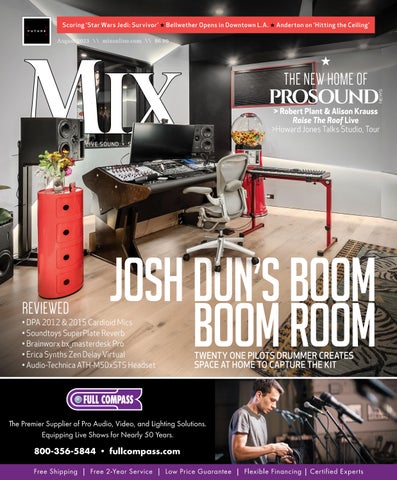
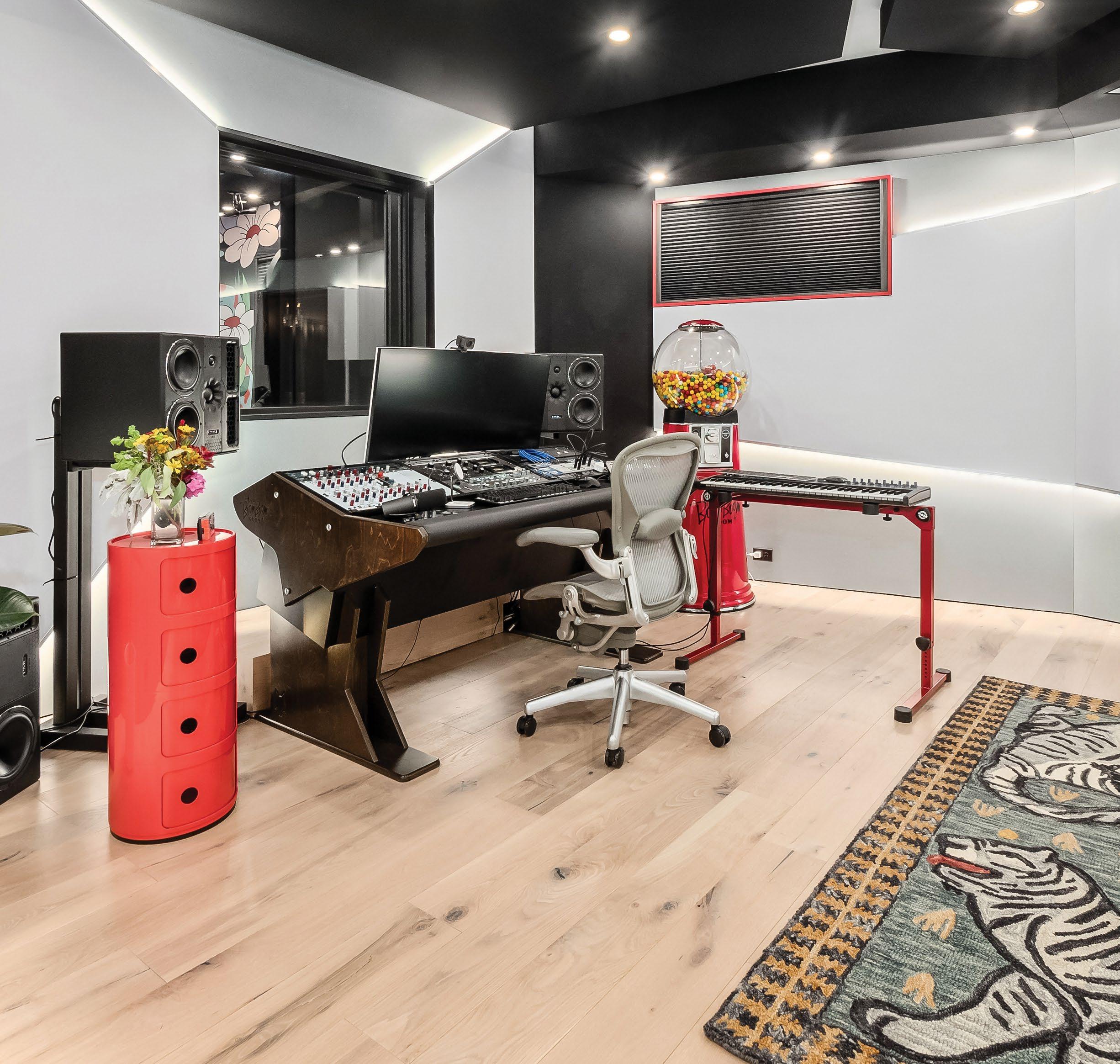
On the Cover: Josh Dun, drummer in the duo Twenty One Pilots, has built a new studio, optimized for drum recording and seamless workflows, in his Columbus, Ohio, home, with acoustic design by Gavin Haverstick of
Designs and systems integration by TJ Bechill, co-founder/senior technician of
16 Robert Plant and Alison Krauss Raise the Roof Live

20 News & Notes: EAW’s Kenton Forsythe Remembered; Clair Global Acquires Sound Image; Inside St. Louis’ revived The Armory; On the Road with Paramore; Capturing Lizard Boy

3 mixonline.com | AUGUST 2023 | MIX MUSIC
Howard Jones: New Waver Rides New Momentum BY CLIVE YOUNG 14 News & Notes: Immersive Music/Media Group; Rik Simpson Remixes Coldplay Film; Capturing the Music of Daisy Jones & the Six
10
LIVE SOUND
BY CLIVE YOUNG
TECHNOLOGY 37 Tech Spotlight: Studio Headphones 39 New Products: Studio and Live Sound 42 Review: DPA 2012 & 2015 Cardioid Mics BY STEVE LA CERRA 44 Review: Soundtoys SuperPlate Reverb BY BARRY RUDOLPH 46 Review: Brainworx bx_masterdesk Pro BY MIKE LEVINE 48 Review: Audio-Technica ATH-M50xSTS Streaming Headset BY CLIVE YOUNG 49 Review: Erica Synths Zen Delay Virtual BY MIKE LEVINE
Audio. Photo: Columbus Pics. Mix, Volume 47, Number 8 (ISSN 0164-9957) is published monthly by Future US, Inc., 130 West 42nd Street, 7th Floor, New York, NY 10036. Periodical Postage Paid at New York, NY, and at additional mailing offices. POSTMASTER: Send address changes to Mix, PO Box 8518, Lowell, MA 01853. One-year (12 issues) subscription is $35. Canada is $40. All other international is $50. Printed in the USA. Canadian Post Publications Mail agreement No. 40612608. Canada return address: BleuChip International, P.O. Box 25542, London, ON N6C 6B2. DEPARTMENTS 6 From the Editor: It’s Getting Hot in Here 8 Current: Best of Show: InfoComm 2023 50 Open Channel: Hitting the Ceiling BY CRAIG ANDERTON 08.23 Contents Volume 47, Number 8 26 Drums Rule! Josh Dun’s Boom Boom Room BY STEVE HARVEY 30 Co-Composers Score Star Wars Jedi: Survivor BY LILY MOAYERI 34 The Bellwether Opens in Downtown Los Angeles BY STEVE HARVEY FEATURES PRESENTED BY 23 16 PHOTO: Denise Truscello / Getty Images
Haverstick
NEAT
MIX SMARTBRIEF
FOLLOW US twitter.com/Mix_Magazine facebook/MixMagazine instagram/mixonlineig


CONTENT
VP/Content Creation Anthony Savona
Content Directors Tom Kenny, thomas.kenny@futurenet.com
Clive Young, clive.young@futurenet.com
Senior Content Producer Steve Harvey, sharvey.prosound@gmail.com
Content Manager Anthony Savona, anthony.savona@futurenet.com
Technology Editor, Studio Mike Levine, techeditormike@gmail.com

Technology Editor, Live Steve La Cerra, stevelacerra@verizon.net
Contributors: Craig Anderton, Barbara Schultz, Barry Rudolph, Robyn Flans, Rob Tavaglione, Jennifer Walden, Tamara Starr
Production Manager Nicole Schilling
Group Art Director Nicole Cobban
Design Directors Will Shum and Lisa McIntosh
ADVERTISING SALES

Managing Vice President of Sales, B2B Tech Adam Goldstein, adam.goldstein@futurenet.com, 212-378-0465
Janis Crowley, janis.crowley@futurenet.com
Debbie Rosenthal, debbie.rosenthal@futurenet.com
Zahra Majma, zahra.majma@futurenet.com
SUBSCRIBER CUSTOMER SERVICE
To subscribe, change your address, or check on your current account status, go to mixonline.com and click on About Us, email futureplc@computerfulfillment.com, call 888-266-5828, or write P.O. Box 8518, Lowell, MA 01853.
LICENSING/REPRINTS/PERMISSIONS

Mix is available for licensing.
Contact the Licensing team to discuss partnership opportunities. Head of Print Licensing: Rachel Shaw, licensing@futurenet.com
MANAGEMENT
SVP Wealth, B2B and Events Sarah Rees
Managing Director, B2B Tech & Entertainment Brands Carmel King
Managing Vice President of Sales, B2B Tech Adam Goldstein
Head of Production US & UK Mark Constance
Head of Design Rodney Dive
FUTURE US, INC.
Future US LLC, 130 West 42nd Street, 7th Floor, New York, NY 10036
in England and Wales. Registered office: Quay House, The Ambury, Bath BA1 1UA. All information contained in this publication is for information only and is, as far as we are aware, correct at the time of going to press. Future cannot accept any responsibility for errors or inaccuracies in such information. You are advised to contact manufacturers and retailers directly with regard to the price of products/services referred to in this publication. Apps and websites mentioned in this publication are not under our control. We are not responsible for their contents or any other changes or updates to them. This magazine is fully independent and not affiliated in any way with the companies mentioned herein.
If you submit material to us, you warrant that you own the material and/or have the necessary rights/ permissions to supply the material and you automatically grant Future and its licensees a licence to publish your submission in whole or in part in any/all issues and/or editions of publications, in any format published worldwide and on associated websites, social media channels and associated products. Any material you submit is sent at your own risk and, although every care is taken, neither Future nor its employees, agents, subcontractors or licensees shall be liable for loss or damage. We assume all unsolicited material is for publication unless otherwise stated, and reserve the right to edit, amend, adapt all submissions.
We are committed to only using magazine paper which is derived from responsibly managed, certified forestry and chlorine-free manufacture. The paper in this magazine was sourced and produced from sustainable managed forests, conforming to strict environmental and socioeconomic standards.
THE
TO STAY ON TOP OF THE PRO AUDIO INDUSTRY You'll receive * A 5x/week snapshot of news from Mix, Pro Sound News and other leading sources. * Summaries of what matters to you, written by expert editors to save you time and keep you informed and prepared. Sign up today at mixonline.com under Newsletter
SMARTER WAY
MIX_Ad_SB_House_3Sq_Mar23.indd 4 4/7/23 12:14 PM Vol. 47 Number 8 August 2023
mixonline.com
All contents ©2023 Future US, Inc. or published under licence. All rights reserved. No part of this magazine may be used, stored, transmitted or reproduced in any way without the prior written permission of the publisher. Future
Publishing Limited (company number 2008885) is registered
From the Editor
It’s Getting Hot in Here
For more than a month now, every morning when I wake up and scan the news sites, there has been some form of front page story involving extreme heat. First it was New York City and much of the Northeast baking in a brief few days of abnormal heat. Then the Bay Area and most of Northern California, on up to Portland and Seattle.
Early in July, West Texas, soon followed by Oklahoma, Nebraska, Missouri, Tennessee, Louisiana and the entire Gulf Coast. During the second week of July, the globe—yes, The Globe—experienced back-to-back records for Hottest Day Ever, or at least since they’ve been measuring those types of things. As I write this, Phoenix is going through its 12th straight day of 110-plus degrees, and warnings have been issued throughout Southern California about the coming extreme-heat event settling in this Saturday.
There is plenty of evidence for why this is happening, of course, and I’m a guy who believes in science. But I’m also a guy who lives a life of words, so when the temperature starts sneaking into the 90s, I mostly just think about the fact that it’s hella hot. And then I start thinking about the word “hot,” and its many and varied usages. A posse can be hot on the heels of an outlaw, a Lothario might be dressed to the nines and hot to trot on a Saturday night, a collection of stolen jewelry is certainly hot if you’re a pawn shop owner. And when Steph Curry gets in the zone and starts raining three-pointers, he is en fuego!
Ultimately, I started thinking about “hot” in the sense of something, someone or some business that is successful, rising, popular and on a roll. In terms of pro audio, a few random observations came to mind….
Headphones: This is such a giant market. Just think about the millions and millions of gamers, all the commuters standing on your morning train, all the teenagers up in their rooms, plus all the engineers, producers and musicians who demand quality. Now the race is on for the Holy Grail of headphone listening: realistic, externalized, individualized, and mind-blowing immersive audio playback. Much more to come.
Artificial Intelligence: Certainly ChatGPT is hot, as is the buzz around its possibilities and implications, from publishing to songwriting, politics to news. But I prefer to dig deeper into this in an upcoming month. Lots and lots going on here….
Speakers (Studio): Much of the recent activity has been driven by immersive audio—more speakers in a room! But it’s also been about speaker systems, setup and control. The options in monitor controllers have expanded greatly in the past three years, at all price points and for nearly any imaginable workflow. Plus, the need for mounts and stands.
Loudspeakers (Live): Meanwhile, there have been dozens of new live sound loudspeakers introduced over the past 18 months, from Bose’s new S1 Pro
portable P.A. to Meyer Sound’s flagship Panther line array system. Much of it seems to be driven by the ever-increasing demand for more power and less weight.
Immersive Music: It’s still hot, even if it seems that the daily news has slowed down. Dolby Atmos, Sony 360RA and Apple Spatial are all continuing to develop and improve systems, and more manufacturers are creating immersive-focused tools every day. Producers, engineers and musicians continue to convert or build personal immersive studios, as do commercial facilities. Spotify will no doubt enter the game before long, which could accelerate consumer demand and acceptance like a second booster rocket. Stay tuned.
Immersive Live: The experiential Sphere at Sonic Shed in New York City; the massive, soon-to-open MSG Sphere in Las Vegas; Broadway and the West End. While the promise of immersive Las Vegas residencies has been slow to get going, rest assured, it’s coming. It will be a different type of immersive audio for the audience, as compared to the experience in recorded music or postproduction playback. It’s more about coverage, bringing each member of the audience a unique surround experience.
Tools for Content Creators: Podcasts were hugely popular long before the pandemic, and pro audio manufacturers responded by developing new lines of much-simplified, often USB-based, high-quality, low-cost gear. Mostly microphones, headphones, and 2- and then 4-channel audio interfaces. Content Creators, for all practical purposes, are next-gen podcasters. Podcasters aren’t going away. Content Creators are simply upping the ante and expanding the productions, and manufacturers are responding.
Nashville: The recording industry is crazy busy in Music City right now. Honorable mention: Miami.
Taylor Swift and Beyonce: With all due respect to Ed Sheeran, Bad Bunny, Juanes and maybe a couple others, when was the last time that the Top Two Megastars of the Music Industry were women? Each has a smash new record, along with a slew of singles. Each is currently out on a massive global tour. And each is simply killing it! These two have such a huge influence on girls and young women. If they inspire even a few to pursue a career in music or recording, we’re all better off for it.
Now go get out of the heat! And while you’re cooling off, if you think of something hot that you’d like to add, please let us know.
Tom Kenny, Co-Editor
MIX | AUGUST 2023 | mixonline com 6 Current
InfoComm 2023 Best of Show Winners
Congratulations to the InfoComm 2023 Best of Show winners and all the product teams that worked on them. A Mix panel of expert judges evaluated—and ultimately awarded— these products on-site from among submitted products.
Hundreds of InfoComm exhibitors submitted products for consideration by Future’s AV Technology, Digital Signage, Installation, Mix, Sound & Video Contractor and Tech & Learning brands, underlining confidence in products and determination to succeed in the months and years ahead.
The Mix Best of Show winners for InfoComm 2024 will take place next summer in Las Vegas from June 8-14 (Exhibits June 12-14) at the everexpanding Las Vegas Convention Center:

• EDC Acoustics Augmented Reality App and Plane Array Steerable Loudspeaker
• Maxhub BM35 Speakerphone
• Meyer Sound Nebra Software Platform
• Music Tribe/Lake Processing LMX 48
• Yamaha DM7 Series Consoles
d&b group Acquired by Providence
U.S.-based private equity firm Providence has acquired d&b group in a buyout from another private equity firm, Ardian, which purchased d&b in 2016. d&b group is the parent company of sound reinforcement manufacturer d&b audiotechnik, as well as service-oriented d&b solutions, which provides audio, video, lighting and xR system planning, installation, maintenance and managed services.
Providence has acquired companies in a number of fields related to sound reinforcement. Among its holdings are audio/ music e-commerce platform Sweetwater; live event/touring engineering solutions provider TAIT; festival and event operator Superstruct Entertainment; events organizer Clairon; and live theater producer Ambassador Theatre Group. Founded in 1989 in Providence, R.I., the private equity company has made 170 investments totaling more than $35 billion in aggregate private equity capital commitments.
In a statement, Robert Sudo, managing director of Providence, noted, “d&b bears the hallmarks of a classic Providence investment— it is a business with innovation at its core,
clear market leadership and loyal customers. d&b’s passionate team has advanced and defined industry standards and exceeded client expectations for the last four decades. We believe d&b will continue its growth trajectory by delivering spectacular experiences to audiences across the globe. With our solid track record of investing in live entertainment and technology companies, we are confident Providence is the ideal partner to support d&b and we look forward to working with Amnon and his hugely talented team to execute our shared vision for the business.”
Amnon Harman, CEO, d&b Group, was also quoted as saying, “We look forward to continuing our successful journey with Providence and cementing our global position as a leader in professional audio and integrated AVLM solutions.”
Details of the transaction were not released other than to note that as part of the transaction, the d&b management team will also acquire a stake in the company in an effort to ensure long-term leadership and strategic continuity. n
MIX | AUGUST 2023 | mixonline com 8 Current // news & notes
Audiotonix Acquires Sonible
Austrian plug-in developer has joined the ranks of Allen & Heath, DiGiCo, SSL and others
Audiotonix may own its share of console manufacturers, but recently, the conglomerate has been branching out with some intriguing acquisitions—the latest of which is software developer Sonible.
Announced in early June, the acquisition sees Sonible, known for its AI-based assistive mixing plug-ins, join the ranks of other Audiotonix brands, including Allen & Heath, Calrec, DiGiCo, DiGiGrid, Group One Limited, Harrison, KLANG:technologies, Slate Digital, Solid State Logic and Sound Devices.
Located in Graz, Austria, the software company’s product portfolio also includes multi-channel amplifiers for high-end audio installations dedicated to science and research, and speaker technology for delivering 3-D immersive soundscapes.
“The Sonible team have spent the last 10 years developing the most advanced assistive AI technologies for mixing and audio creation,” said James Gordon, CEO of Audiotonix, in a statement. “Along with investing in their growth and helping the team expand their current market solutions, we will also look to harness their technology across our other Audiotonix brands. The potential to utilize Sonible’s intelligence in our other brands will be a ground-breaking proposition for all our customers.”
Ralf Baumgartner, CEO and co-founder of Sonible, noted, “It’s been clear from our initial discussions that Audiotonix shares our passion in evolving innovative and disruptive solutions, so I’m sure we have the best environment to continue our journey with the additional knowledge, investment and resources that comes with being part of Audiotonix team.” n
Current // news mixonline.com | AUGUST 2023 | MIX
YOU MAKE AUDIO-VISUAL EXCELLENCE HAPPEN, WE’RE HERE TO HELP. EQUIPPING LIVE SHOWS FOR NEARLY 50 YEARS Your Gear Solution for Every Show –Mixers, Speakers, Spotlights, Projectors, and So Much More. Free Shipping | Free 2-Year Service | Low Price Guarantee | Flexible Financing | Certified Experts 800-356-5844 • fullcompass.com 071023-ls-mix-5X7.indd 1 7/7/23 2:15 PM
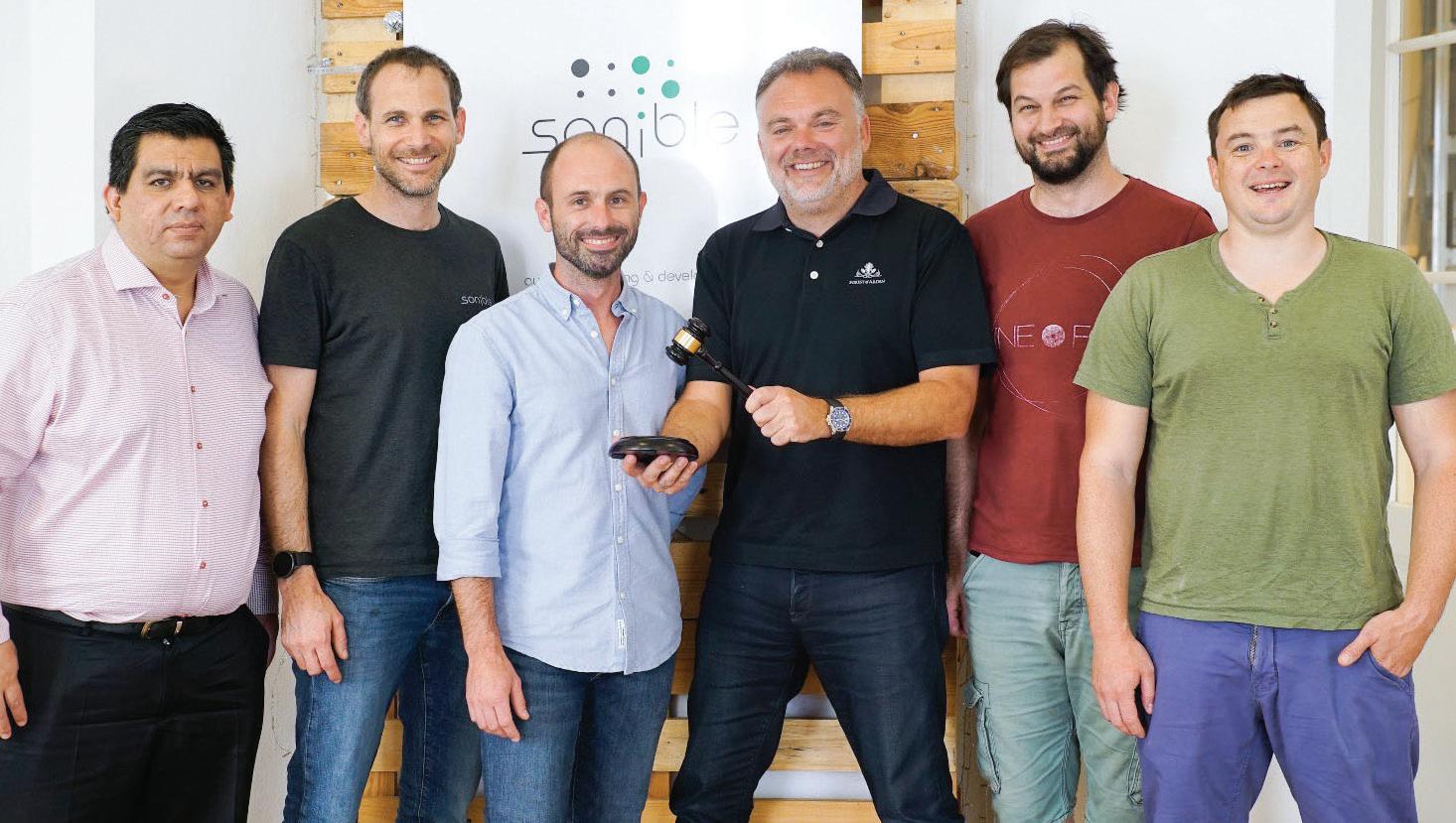
Celebrating the Audiotonix acquisition of Sonible are, from left: Enrique Perez, GM, Solid State Logic; Alexander Wankhammer, CMO, Sonible; Ralf Baumgartner, CEO, Sonible; James Gordon, CEO, Audiotonix; Peter Sciri, CTO, Sonible; and Nicolas Lacombe, MD, Slate Digital France.
Howard Jones Opens Up a ‘Dialogue’
’80s Synth Pop Master Talks New Album, Current Tour, Favorite Gear
By Clive Young
Since he first hit it big in the 1980s, Howard Jones has continually blazed his own trail. While much of that era’s synth-pop traded in images of chilly alienation, nuclear armageddon and a dystopian future, the keyboard whiz carved out his own niche with hits that overflowed with positive energy.
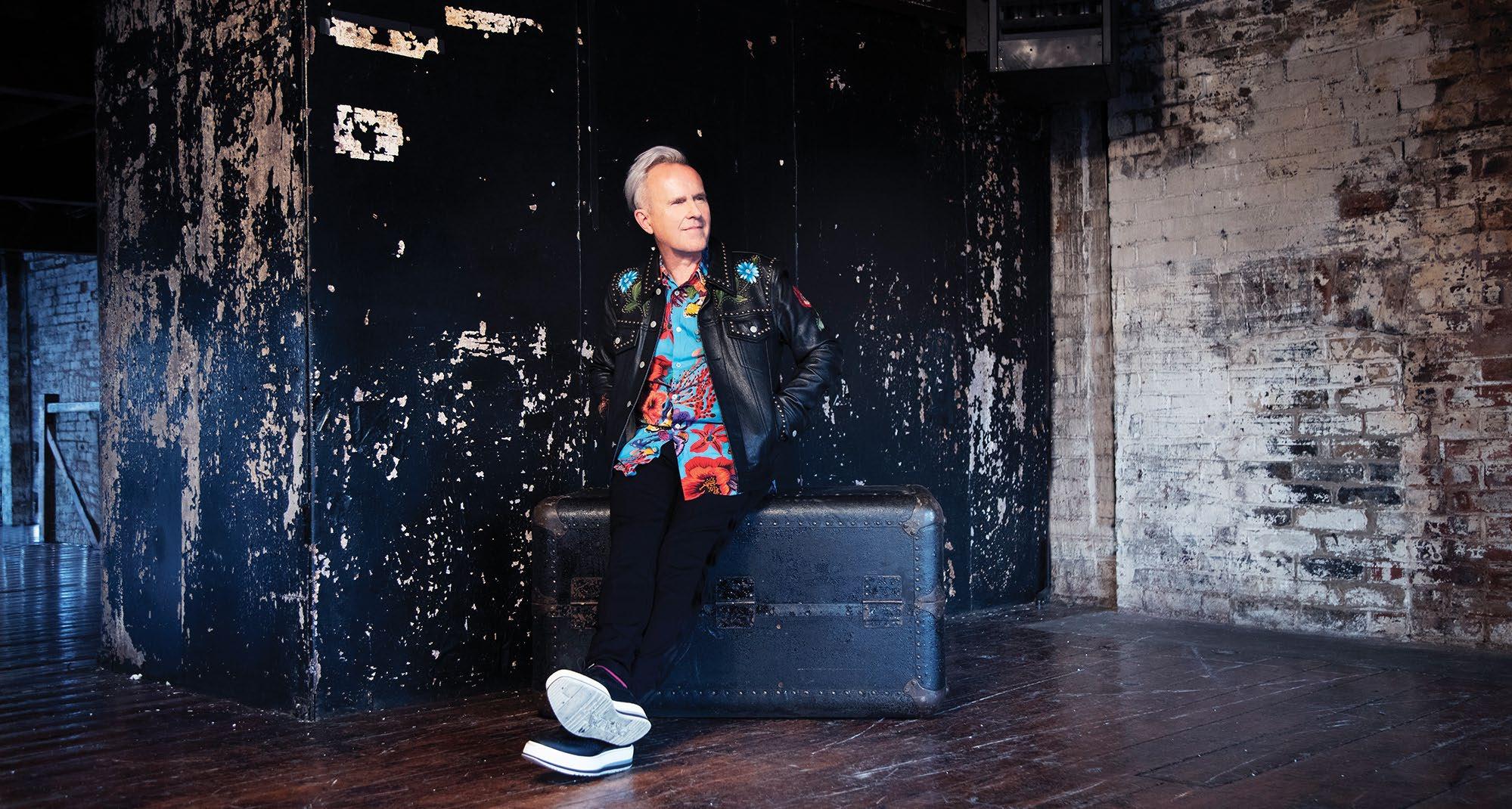
Today, optimistic bangers like “Things Can Only Get Better,” “Everlasting Love,” “Life in One Day” and others remain staples of his live set, and he’s sharing their good vibes with audiences this summer as he tours the U.S. with fellow ’80s vets Culture Club and Berlin on a 25-date amphitheater tour that runs through August 20.
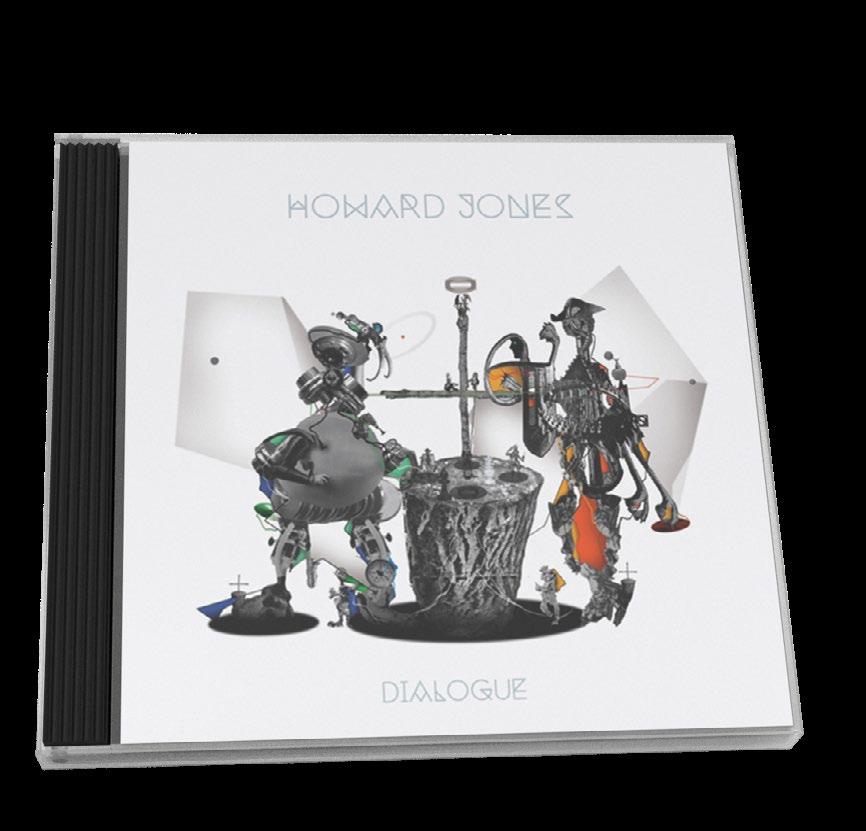
A true road warrior for decades, Jones tours multiple times a year, whether solo or with a band, serving up performances ranging from acoustic to thoroughly electric. When not on the road, he continues to create new music, and this summer’s journey is just the latest in a string of tours supporting 2022’s Dialogue.
Ahead of the tour, Jones sat down with Mix to dialogue about Dialogue, his personal studio, keeping songs fresh on the road and more.
Dialogue is part of a larger series of albums; how did that come about?
It’s a series of four, and each has a theme. The
first one was Engage, which was about not being a bystander and getting involved, while the second one, Transform, was about, “We’re going to change the world, but if we want to do that, we have to change ourselves first.”
Now the third one, Dialogue, is about this thing that we really need—as human beings, we have the unique ability to exchange ideas and have conversations where we can learn from each other and find common ground in each other’s maybe differing views. A song like “Who Do You Really Want To Be?” is really about saying that silence is the thing that’s tearing us apart; we really need to talk, we really need to
MIX | AUGUST 2023 | mixonline com 10 Music
PHOTO: Simon Fowler
communicate.
Musically, it came together during lockdown time, so I was in my studio with not much else to do. We couldn’t really go and see anybody; did a lot of streaming. I waited to do the lyrics until I felt a little bit more positive about the outcome for everyone.
Was that typical for how you write?
No! Normally, once I’ve got a good, strong, musical idea, the lyrics fall out very, very quickly—but not in this case! I parked the musical ideas because I just wasn’t in the right frame of mind. Life was just so extreme being locked away. I waited, and I think that was really good for me, because when I finally did start writing, they all flooded out. It was like they were accumulating behind the scenes.
I had plenty of time to experiment, as you might imagine [laughs], and I was able to come up with some cool sounds. When I sit down at the piano, the chords and then the vocal melodies come pretty much at the same time, but when I’m working with the synths, I’m never sure whether a vocal will actually work over the top of it or not; most of the times it did.
You’ve collaborated for years with Robbie Bronnimann, in both your live band and in the studio. What is that recording process like?
I develop a song, get most of the sounds and the structure, and then send it off to Robbie, who makes it sound even better, because he can do stuff that I can’t do—I’m into the writing and the sound creation, while he’s such a great mixer. Robbie sends back stuff, I write tunes and lyrics over the top, and then we get together to do the final mix and sort everything out. I like being in the same room because we can just fire off each other’s enthusiasm more easily. Our creative collaboration has gone on for 20 years or more, so he really understands what I like and what I’m aiming for, and I really appreciate his talent.
What sorts of gear do you have in your studio these days?
Well, I have quite a collection of hardware synths now; I went through a phase where I was selling them off, but I’ve now been acquiring! I think I’ve been influenced by BT, who’s been telling me there are certain synths I have to have.
I have a Prophet-8 from Rupert Hine, my
great friend who passed away. [Hine produced Jones’ first two albums, Human’s Lib and Dream Into Action.] I used to have two of them, but to have his is really special for me. I also bought a Prophet-5 from someone I used to teach keyboards to when I was struggling to get somewhere about 40 years ago. I got some new ones from a company in Bristol—it’s a UDO Audio Super 6, which is a fabulous new keyboard, and I have a wavetable-type one called the ASM Hydrasynth that I use. I like to buy synths that have really different characteristics to them. There’s also all the software stuff that I use, and everyone will know those. Whatever makes a great sound.
For a DAW, I use Logic, and we mix in Logic as well. I do so much with MIDI, and Logic is very good with that; it’s the program that I’ve invested years of my life learning how to manipulate and there’s still loads I don’t know how to do in it. Robbie probably does!
I just use one mic—the Røde Classic valve
“my mic.” The valve sound just suits my voice, so I stick with what works. I don’t even put a pop shield in front of it anymore, because I use my onstage inears while singing so that I don’t get any extraneous noise caused by headphones creaking.
For studio monitors, I have Dynaudio BM12 monitors. They’re self-powered, and I love this speaker so much. Robbie’s got the new upgrade of them; we used them right at the end of the album to check our mixes, and honestly, I don’t know what they call them, but they just blow your mind, they’re so good.
When you’re putting an album together, whether it’s during the writing process or later on while mixing, are you thinking, “How are we going to make this translate to the concert stage?”
They’re two separate things, really. You’re creating music to be listened to at home and in the car, on earbuds and all that. When we work out how we’re going to do it live, usually we take out a lot of stuff, because you don’t need the amount of information. Live, things sound bigger when there’s less—so we try to remember that! [Laughs] We use Ableton when we transfer it to the live thing.
Touring, we’ve got Nick Beggs [bass guitar, Chapman Stick], Robin Boult [electric and acoustic guitars] and Dan Clarke [keyboards, electronic percussion], and they give it extra power as well. We’ll ditch some of the keyboard parts to allow room for the guitar, but because I’m so passionate about bass, Nick follows what I’ve written and we just keep experimenting with things until it sounds right. During soundcheck, I go out and listen through the big P.A., and we just make little adjustments.
Obviously, when I do shows, it would be really horrible of me not to play the songs that people know and love and that they’ve grown up with. I feel an absolute duty to do that, but for me, what’s important is that you always give them a bit of a fresh look. I’m really committed to doing that—upgrading and reinventing the work but not making it so that people don’t recognize it. That would be a crime because people love to hear certain synth sounds and parts of the structure—so I’m wary of going too far, but I think giving things a nice facelift each time we go out on tour is a really good idea. n

MIX | AUGUST 2023 | 12
Howard Jones still hits the road with a keytar, a focal part of his performances since the 1980s.

Immersive Music and Post With Fairlight
Lancaster, Penn.-based Immersive Music/Media Group has been using Blackmagic Design’s Fairlight software and hardware to mix and master projects for its musician and post-production clientele.
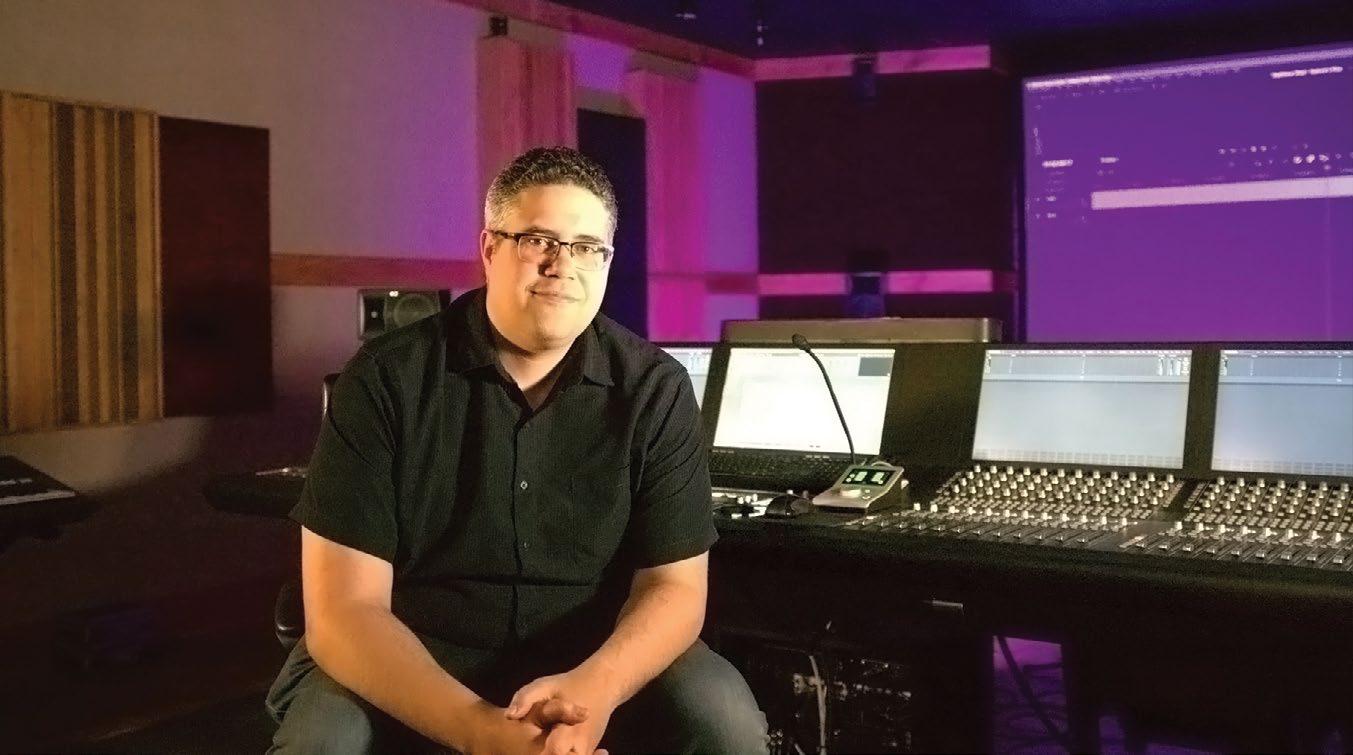
“From Grammy-nominated producers to audio engineers to instrumentalists, Fairlight has met the demands of our spatial workflow and supported our music clientele since we implemented it in 2020,” said Doug Greer, founder of Immersive MMG. The audio and video production facility is using DaVinci Resolve Studio’s Fairlight audio post-production tools and a five-bay Fairlight advanced console.
According to Immersive MMG creative director Ken Mertz, “It’s important for us to work with clients in-house, remotely or a combination of both. For example, we were approached by engineer, songwriter and Grammy-nominated producer Matthew Shell, who was interested in creating Dolby Atmos versions of several of his own projects. Although he was on a tight schedule, he still wanted a hands-on approach to the mixing of his compositions. He sent us his stems ahead of time, and from there, we loaded them into Fairlight and set up Atmos mixes in-house. He came
to our studio and was able to make the final adjustments to five songs and return home with the rendered files the same day, all thanks to the smooth workflow within Fairlight.”
“We can mix with native Atmos integration and patch ins and outs to and from additional in-house hardware, computers and speaker setups, all from within Fairlight’s Patch Input/Output menu,” Immersive MMG engineer Chris Keeney noted. “The ability to swap the order of effects, dynamics and EQ in the Fairlight mixer allows extra control when needed for a greater variety of workflows.”
Additionally, since Immersive MMG’s inception, the facility has used Blackmagic Design video products. “Blackmagic Design technology has allowed us to become a hybrid audio and video studio,” Mertz said. “By utilizing Blackmagic Design hardware and DaVinci Resolve Studio software, lmmersive MMG has been able to expand our creative horizons and become a valuable resource for artists and other industry professionals.” n
Rik Simpson Remixes Coldplay’s Spheres for Cinema
Grammy-winning record producer and mix engineer Rik Simpson was recently tasked with mixing Coldplay in 5.1 surround for the band’s Music of the Spheres: Live from Buenos Aires film.
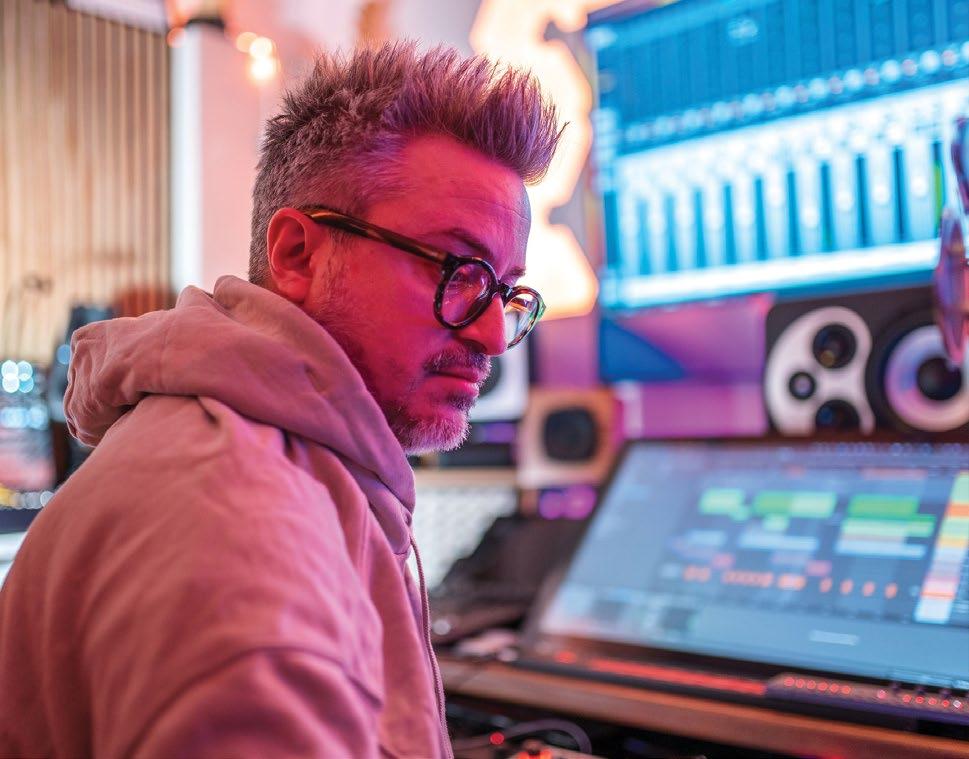
Coldplay brought its Music of the Spheres tour to the big screen, broadcasting a performance in Buenos Aires live to cinemas in 96 countries. The live broadcast was mixed on-site by Simpson alongside industry veteran Toby Allington and his team. Simpson, working at his own studio, was later entrusted with remixing the recording to 5.1 surround for subsequent global theatrical screenings.
“It was a stressful task, but we managed to get a handle on it and the end result was amazing,” says Simpson, whose production credits include Jay-Z, Portishead and PJ Harvey, as well as Coldplay, with whom he has worked since 2002. “Quite often, a live mix is a bit rough around the edges; the energy’s good, but there isn’t as much attention to detail as one would like. I’m glad I had the opportunity to remix and delve deeper
into what makes the songs tick.”
Simpson remixed the live multitrack recording for the cinema using Nugen Audio’s SEQ-S and Stereoizer plug-ins from its Producer bundle. “Nugen’s interfaces are very easy to understand, and they’re fun to work with,” he says. “SEQ-S is a staple for me, and I used it on these 5.1 mixes. Its phase correlation is very
precise, and it sounds fantastic. Stereoizer is also wonderful; I’ve used it on tons of Coldplay studio recordings in addition to this project. It’s probably my favorite spreader.”
Simpson reports that the Halo plug-ins have had the biggest impact on his immersive workflows. “They opened up a whole new world for me,” he says. “I knew that Halo Upmix and Downmix were some of the best tools for 5.1 mixing, so when Halo Vision was released, I got my hands on that, too.”
The harsh frequencies resulting from the buildup of mids and highs from the ambient microphones in the large River Plate Stadium were another major challenge, which Simpson addressed using Halo Downmix. “Once I got into the mix, I put the stereo downmixer across the audience to spread things out, and I loved it,” he says. “It was such a creative way of downmixing and adding ambience, softening the harsh frequencies and making a more pleasurable surround experience for people.” n
MIX | AUGUST 2023 | mixonline com 14 Music // news & notes
Engineer, songwriter and Grammynominated producer Matthew Shell at the Fairlight.
Producer/engineer Rik Simpson
Music // news & notes

Capturing the Musical Sound Design of Daisy Jones
Production mixer Chris Welcker of Catgut Sound and his team built a system around Sound Devices Scorpio and 833 mixer-recorders to capture the dialog and ambience of Amazon Prime Video series Daisy Jones & the Six.
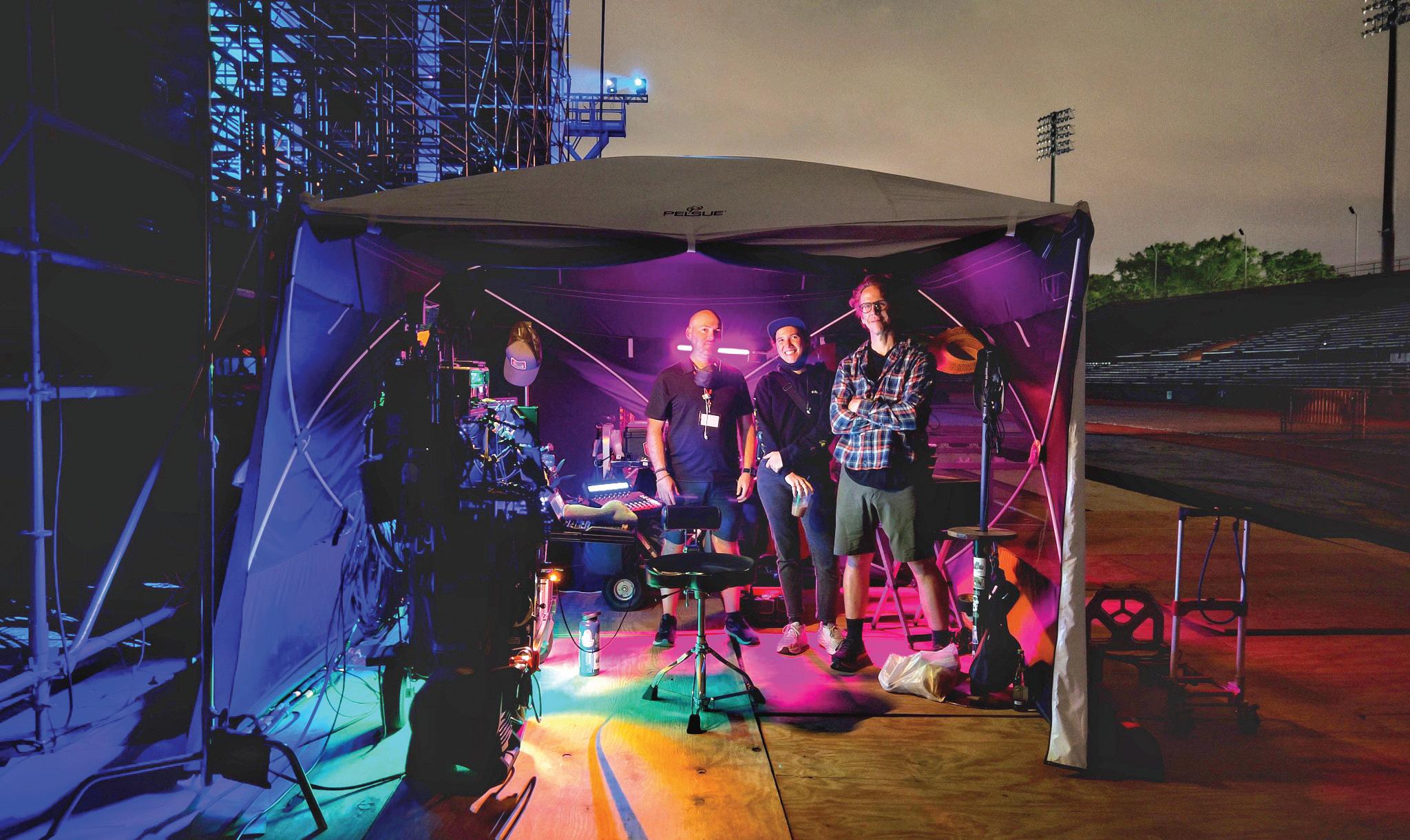
A former music major with ample experience both on stage and running live sound, Welcker says he was immediately intrigued by the sonic possibilities of Daisy Jones & the Six, which is about the 1970s music scene in Los Angeles. “Working in the sound department on a music-focused series brings an added layer of complexity that felt very familiar to me, having been a musician and performer myself,” Welcker said. “My boom operator/music playback operator, Ryan Farris, and I first met playing in bands that shared the stage back when we were in college, so working on this sort of project is exciting for us, as it brings us back to our roots.
“There are all sorts of sound elements that come with performing music that are impossible to re-create from scratch in a convincing way in post-production,” he continued. “The ambient sound picked up by vocal microphones versus boom and lavalier mics in a practice room, for example, or the hum of the amps and crowd sounds during a live performance, are all elements that can be used to create a more natural sound experience so the viewer can just get lost in the story.
“We wanted to capture all of this as well as create a streamlined production workflow for the high audio track count that this series required, so I designed a system around my Sound Devices gear that would allow me to use networked audio via Dante so that we could capture and deliver everything we needed without any delays to production.”
Welcker utilized the Sound Devices Scorpio and 833 mixer-recorders as well as a MixPre-6 for Ambisonics for sound recording on set. Inputs were provided from a pair of Allen & Heath DT168 stage boxes and an Audio Limited A10 rack. They were routed to and from the Scorpio, as well as a set of RME Digiface Dante interfaces. n
YOUR SOURCE
FOR REVIEWS, INFORMATION & MORE

mixonline.com | AUGUST 2023 | MIX
The production sound team on the set of Daisy Jones & the Six.
GEAR CAST
KNOWLEDGE IS POWER, AND WE’RE GIVING IT AWAY FOR FREE.
New products come out every week, and the industries we support are constantly changing. At GearCast, we’re covering it all, from the latest solutions in AV integration to livestreaming tutorials for houses of worship, educational institutions, and businesses large and small. At GearCast, it’s all in one place, so you can find what you need fast! fullcompass.com/gearcast 071023-ls-mix-prod-expert-5X7.indd 1 7/5/23 2:53 PM
Robert Plant & Alison Krauss Raise the Roof on the Road
By Clive Young
On paper, it’s a pairing that might not immediately make sense—the legendary voice at the center of Led Zeppelin’s bombast, teamed up with a respected bluegrass songstress with 27 Grammy Awards to her credit. However, put Robert Plant and Alison Krauss behind some microphones together and bring them to the crossroads where their respective genres meet—Americana—and it all falls into place. Exploring both the rapturous heights and weary depths of living, the duo released 2007’s lauded Raising Sand—a well-curated collection
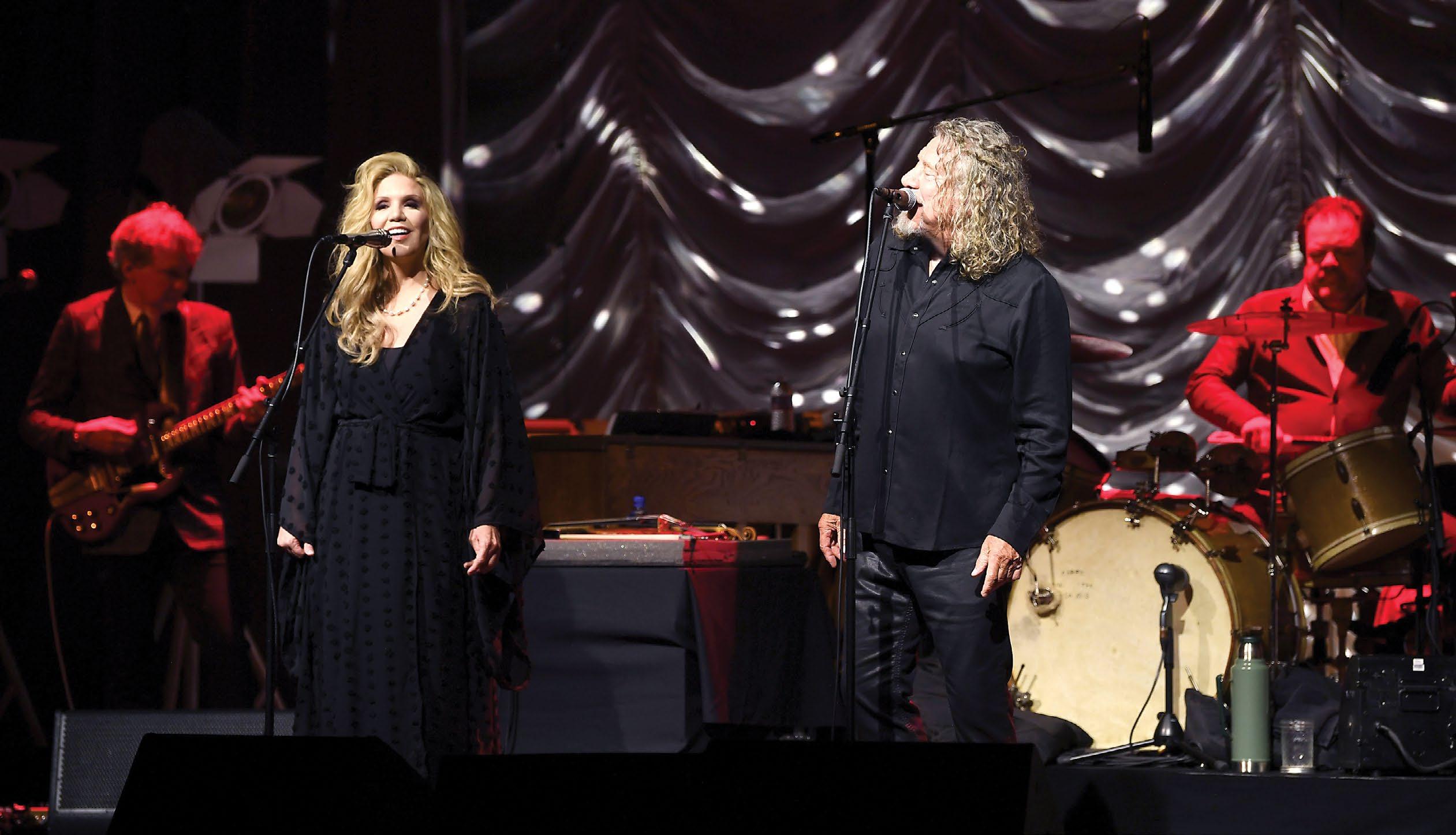
that went platinum and garnered five Grammy Awards—and then reteamed 14 years later for its follow-up, 2021’s Raise the Roof. While their voices entwined are magical on record, the 11-week, early summer Plant/Krauss tour proved that it was no studio trick, as the performers enchanted audiences nightly.
Perhaps it wasn’t too surprising; after all, their original Raising Sand trek took home a 2009 TEC Award for outstanding creative achievement, but then again, that only served to raise something else: expectations. That said, DCR Nashville
provided all audio gear for the production, and in its president Paul Owen’s estimation, the new tour’s artistic success was all but inevitable: “I’ve worked with Robert for close to 20 years now on all his projects, watching this man orchestrate his iconic craft, and when you include Alison Krauss as well? The chemistry obviously works! This collaboration between them is a real pleasure to watch; the live performance is something everyone should experience.”
Adding to that experience was a stellar cast of sidemen that included guitarist JD McPherson,
MIX | AUGUST 2023 | mixonline com 16 Live
PRESENTED BY
PHOTO: Denise Truscello / Getty Images
drummer Jay Bellerose, upright bassist Dennis Crouch, and a pair of intrepid multiinstrumentalists—Stuart Duncan on vocals, banjo, fiddle and mandolin, and Viktor Krauss (the singer’s brother) tackling bass, guitar and keys. As the ensemble toured amphitheaters, arenas and festivals, along for the journey were FOH engineer Mark Kennedy and Chris “Coz” Costello, who were likewise on-hand for the initial American and European legs of the Raise the Roof tour last year.
If the duo’s songs are often about uncertainty, then perhaps it was only appropriate that the production team sometimes dealt with its own measure of wondering what the day would bring, be it the weather, the PA or something else.
“Working indoors today is an awful lot easier than doing some of the amphitheaters,” said Kennedy, speaking inside the 7,700-capacity Harrah’s Cherokee Center in Asheville, NC. “We just did three shows with Willie Nelson’s Outlaw Music Festival tour, and they were hot! They were difficult enough, but we got there— everything was fine. You just deal with whatever comes across your desk; that’s the way it is.”
Kennedy is well-versed in dealing with the challenges of touring, as the Irishman has handled FOH duties for a wide range of artists since the mid-1970s, whether tackling the mix for Van Morrison, Clannad and Chris Rea over the years, or bolstering beats under the likes of UK grime star Tinie Tempah, drum and bass act Pendulum or its EDM spinoff, Knife Party. Since 2017, he’s mixed virtually all of Plant’s live work, whether solo, with The Sensational Space Shifters or with Saving Grace, which will tour southern Europe in late summer. “We’ll be in real amphitheaters—the Greek and Roman ones,” he cracked.
For the Plant/Krauss tour, however, Kennedy brought supple sounds from the stage to the seats nightly through a Solid State Logic L550 digital mixing console. “It’s a fantastic board; it just sounds amazing,” he shared. “I used to mix an English EDM band called Faithless, who were massive in Europe, and I started using the SSL with them in 2015. I’ve been on and off it since then; obviously, you can only take it out on a tour that can afford it, but if you can, it’s well worth the effort.”
With much of the show’s atmospherics already baked into the songs and performances, Kennedy eschewed external plug-ins, instead leaning almost entirely on the desk’s processing. “Because it’s an SSL, the board already sounds
fantastic; running plug-ins not going to make it better,” he said. “The compressors, gates, dynamics and reverbs on-board are all very good as they are, so it’s not going to help me more; it’s just gonna be more things to go wrong. The only outboard I carry is an old tc electronic D-Two delay, which I use on Robert for his big vocal moments; that goes back years. Otherwise, everything else is on board.”
With so much interplay between the performers, Kennedy found himself incessantly
Using locally sourced PAs every day, the shows were heard through everything from current-day d&b audiotechnik GSL hangs to gently aging systems that were cutting-edge a quarter century ago, but regardless of the rig, Kennedy and Currie were focused on ensuring that the crowd got a consistent experience. “This is what the job is, isn’t it?” said Kennedy. “If everything was perfect all the time, it’d be easy and anyone could do it. How you deal with the issues is the most important thing of all. When
riding the faders. While he joked, “Oh, we’ve got 55 channels of playback,” in truth, he spent his nights reacting in real-time to the extremely live music coming off the stage: “They can come in lighter, they can come in heavier; you don’t know what’s going to happen. It depends on their mood and the room, so you end up jumping around out here. There isn’t a moment that you’re not absolutely on top of the whole mix—it’s constant, constant, constant.”
As a result, Kennedy worked in tandem with system tech Dan Currie, who kept an eye on the PA of the day. “We view it very much as being a two-man effort—you couldn’t mix this on your own,” said Kennedy. “Dan is a fantastic system tech, so I stay on the mix and he has his wireless laptop remote for the Lakes; he walks the room and if it’s too much 3K down in the front, for instance, he sorts it out.”
I was working for Brit Row in England, I used to always say that I don’t know everything there is to know about sound—but I have the phone number of the man who does.”
If the speakers above the stage were different every day, the ones on it remained the same, as nearly all of the musicians heard themselves via floor monitors. At stageside, Costello mixed the proceedings on an Avid S6L-32D desk, creating mixes for wedges and Shure PSM1000 in-ear monitors, as Krauss opted for IEMs and multi-instrumentalist Duncan got a bit of both worlds, wearing a single earpiece. The tour carried a varied monitor setup based around d&b audiotechnik M2 stage monitors that were supplemented by L-Acoustics ARCS II sidefills and SB28 subs.
“It does get loud, but not like it’s Metallica,” joked Costello. “I was with Metallica for 10 years
17 mixonline.com | AUGUST 2023 | MIX
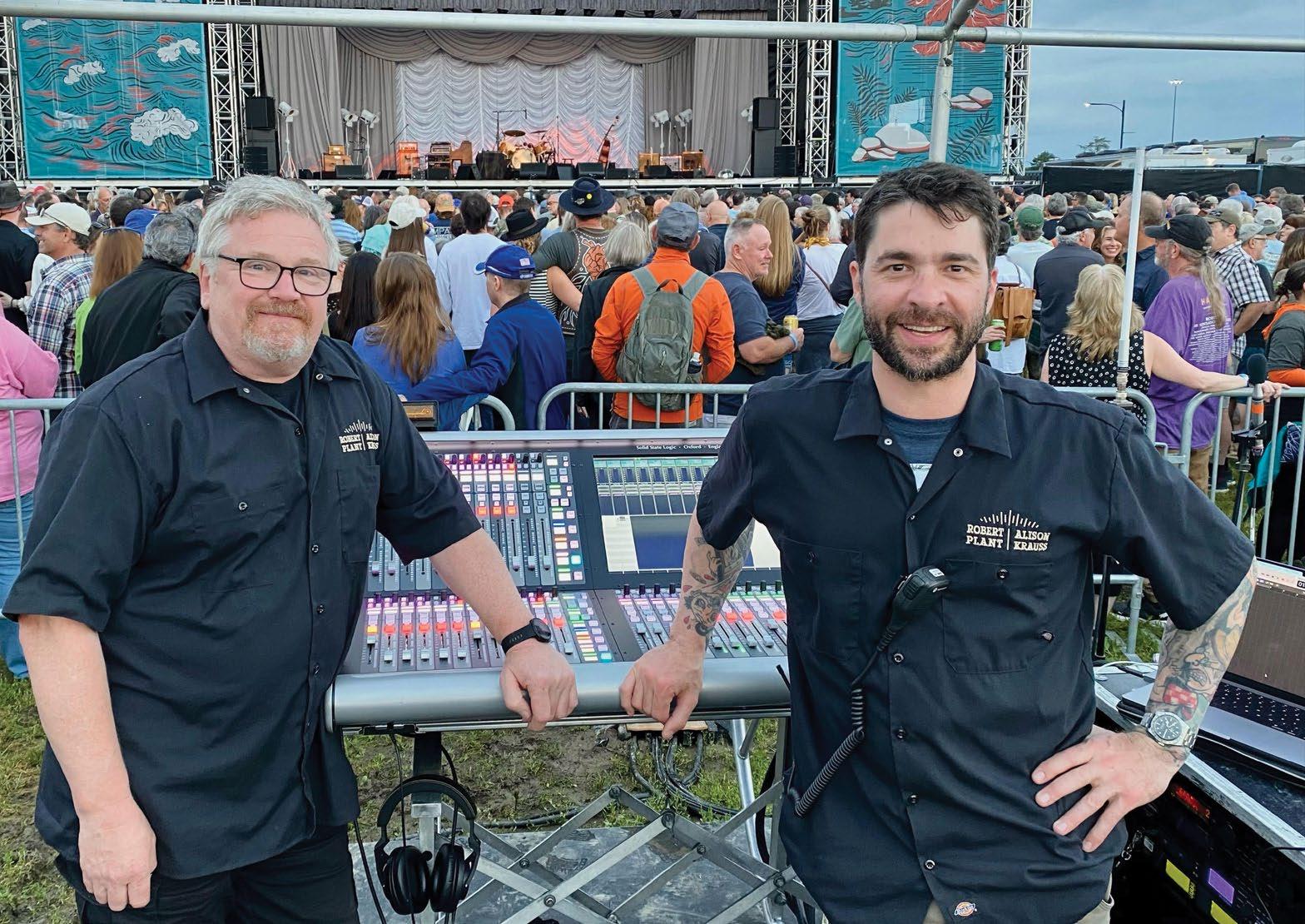
FOH engineer Mark Kennedy (left) worked in tandem with system tech Dan Currie, who kept an eye on the PA of the day.
PHOTO: Mark Kennedy.
and that’s crushing loud—but this does get a healthy amount of volume. Robert likes guitars in his face and a really good chunk of vocal with lots of top end on it. However, Alison likes to hear a pin drop. She has a very quiet stage when she’s with Union Station, where pretty much everything’s on direct boxes and there’s no loud amps on stage, so this is a very delicate balance. It’s not fragile, though—it works and they’re both comfortable with it.”
Keeping that balance may have been a challenge, but it was one that played into Costello’s background as a monitor engineer: “It’s interesting to mix because I wear one earbud where I’m listening to Alison’s mix the entire time—and then I’ve got cue wedges behind me so I can hear Robert’s mix the whole show. It took a while to get used to it, but I could do it because I’m also the monitor engineer on Saturday Night Live. With SNL, I have to listen to and separate so many incoming sources of information, whether it’s processing audio, an A.D. doing countdowns in and out of commercials, the intercom for the audio folks—there’s all kinds of things. I’m used to separating a lot of different sources and on this tour, their mixes are quite different. Alison listens very quietly to the other instruments on stage, and primarily her vocal—and her fiddle into her vocal! She plays fiddle into the vocal mic; she doesn’t use a DI. She knows how to get the exact tone out of it that she wants to hear— and what she wants to hear is pretty much what Mark Kennedy wants to hear out front, so all these things come together very well.”
Krauss’s vocal mic in question was a Shure KSM8, while Plant used a standard SM58, much as he has throughout his entire career. All vocals went directly into Rupert Neve Designs Shelford Channel preamps shared by both mix positions, using gain settings that worked for both engineers. “We take the outputs of that and run it into our desks separately,” said Costello. “The Shelford makes all the difference in the world. Mark has been using them for a long time and they’re working great for me, too; they add all kinds of top end, and that is always the primary thing that Robert is looking for—more level and more top end.”
While capturing Krauss’ violin with the vocal mic might be unusual, there were other alternative miking methods in play elsewhere on the stage, as Kennedy explained: “Jay Bellerose has a very unorthodox drumming style; he’s like a percussionist nearly, as well as a drummer. He
has a 1940s ‘Bomber Kit’ that sounds absolutely amazing, but it’s quite a complicated setup. It was made in America without steel rims because all the metal was being used for the war effort, and there’s also two wooden skull blocks that were made in 1920. I use a Shure VP88 very unusually as a stereo overhead ‘picture mic’ to get all the shakers and different things he’s hitting. Normally people use it as a reporter mic, but myself and our drum tech were just listening to the playback, and with the VP88 open, Sennheiser 421s on the toms and little bit of kick drum, I’d say it’s a perfect drum kit. It’s just amazing how well it works.”
Guitarist JD McPherson had to create a broad variety of tones, depending on his role in a given song, so miking his vintage Fender guitar amps was done with an eye towards enabling as much variety as possible. While the amps were single-speaker models, they were each double-miked and blended after the fact, with the Vibrolux getting a pair of Shure 57s while the Tweed was captured with a pair of SM7Bs. Other guitar amps were nabbed with an AudioTechnica AT4050 and a 57 to get the classic mix of a dynamic and a large-diaphragm condenser together, and elsewhere on stage, a Yamaha rotary speaker Leslie-style guitar amplifier was surrounded by no less than three Shure 58s to capture its wobbling sound.
Helping keep tabs on the stage was Artie Aymong. “As the monitor tech and deck guy, Artie plugged up the stage and the artists absolutely loved him,” said Costello, “but I think one of the most important aspects was the bond we have from Saturday Night Live. He was my deck guy on SNL for years until he took over the head audio position on the floor at The Tonight Show with Jimmy Fallon. We have telepathy in a way because of SNL, so on this tour, I would watch the whole band, but if I was looking one way, he was looking the other way; if there was a cue or somebody needed something, he’d call it in and I was, ‘Yeah, saw it, got it.’ Everything was smooth, and he was so important for making that happen.”
The end result of all the crew and performers’ efforts was an evening of music that checked off all the boxes for the audience, serving up a variety of tracks from the duo’s albums and more. “It does go off on fantastic musical tangents from the basis of the records, but fundamentally, it is faithful to the two albums,” said Kennedy. “Also, we’re doing some stuff like ‘When the Levee Breaks’ and ‘Rock And Roll’ from Led Zeppelin—which are entirely different to the way Led Zeppelin ever played them! Alison and Robert have such complimentary voices that work so well together, it makes for a great show. Every night, they’re just blinding, you know?” n
MIX | AUGUST 2023 | mixonline com 18
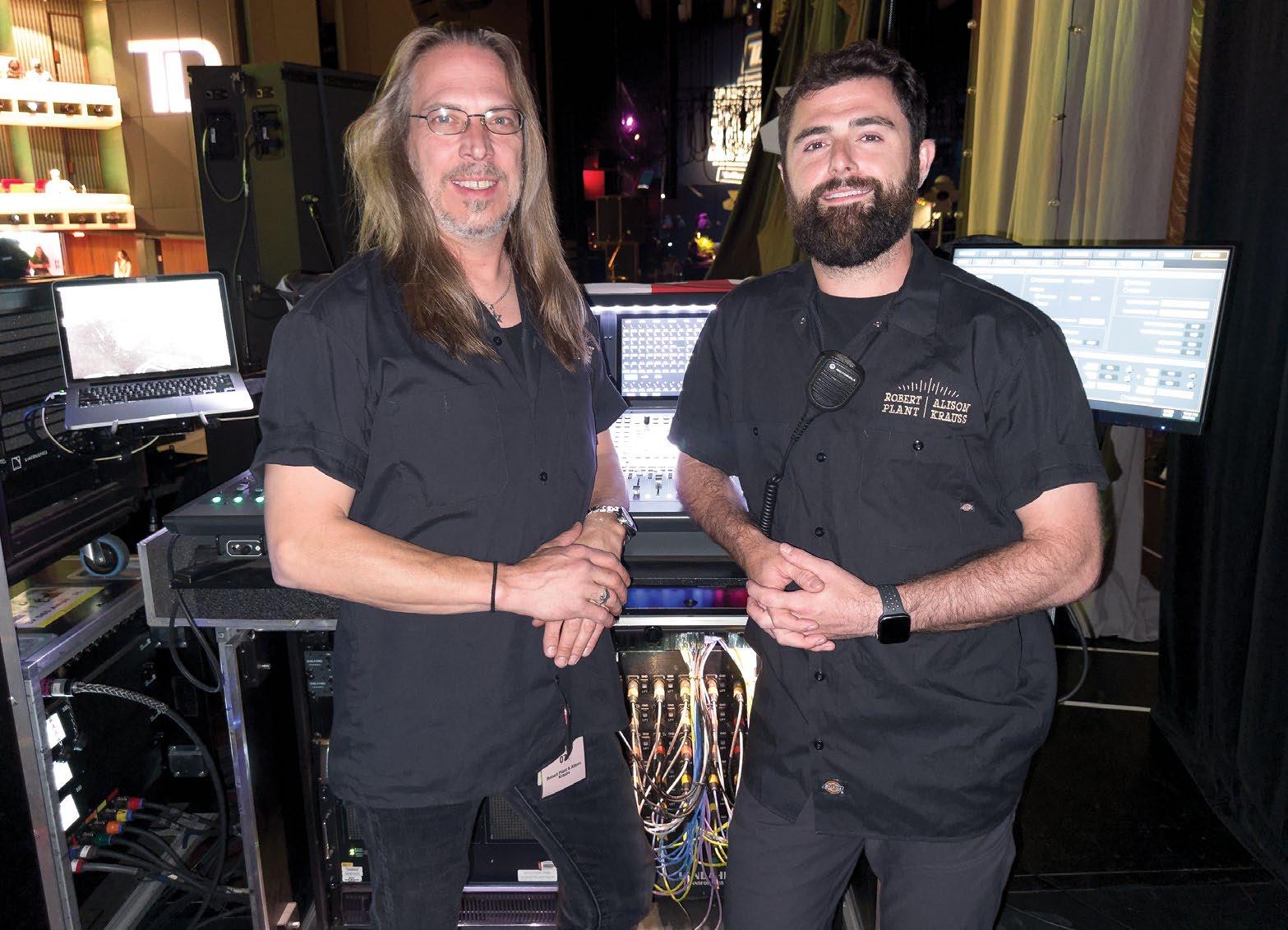
Monitor engineer Chris “Coz” Costello (left) and monitor tech Artie Aymong used a near-telepathy that they first developed while working on Saturday Night Live together.
PHOTO: Kirk Hamann

EAW Co-Founder Kenton Forsythe Passes
By Clive Young
NORTH SMITHFIELD, RI—Kenton
Forsythe, one of the most revered loudspeaker engineers in the field, died Sunday, July 9, at the age of 78. Best known for co-founding mainstay speaker manufacturer Eastern Acoustic Works, Forsythe designed live sound loudspeakers—most notably the venerable KF850—that arguably changed the pro-audio industry forever.
His passing was announced online by his son, Jeremy Forsythe, who noted, “It is with a heavy heart that I have to share the news that my father, Kenton Forsythe, passed away this Sunday, surrounded by family. He lived vibrantly until the end—focused as much on making sure the lawn was mowed as he was on learning about the latest transducer technologies—and will be missed by many people in many different ways. For the legacy he leaves to an industry that he loved, Dad always prioritized his family and friendships first. We will all miss and remember his impact on our lives forever.”
Forsythe first made his presence known to the pro-audio industry in 1975 when he introduced the Forsythe Audio SR215 dual 15-inch bass horn, followed soon after by two-way compact loudspeaker systems and a vented subwoofer that featured an interchangeable tube venting system.
Three years later in 1978, Forsythe and Ken Berger co-founded
EAW inside a former Framingham, MA automotive plant, debuting the new company with the SR109 loudspeaker and BH212 subwoofer as their first products. Nonetheless, it was the KF850, introduced in 1985, that truly made EAW a force to be reckoned with. Taking its name in part from Forsythe’s initials, the threeway, tri-amped, horn-loaded box was a stock touring-level loudspeaker that live sound companies could buy “off the shelf.” At the time, this was still a revolutionary move in an era where concert sound providers usually had to design and build their own PA systems.
The KF850 became a runaway hit for the company and as the years progressed, the KF Series had a substantial impact on both the company’s bottom line and the live sound industry at large. In the 1990s, Forsythe followed that success up with the development of multiple loudspeaker solutions for the stadium market. Through many iterations of the company—and corporate owners—Forsythe remained as EAW’s EVP of Strategic Engineering through his retirement in 2016, though he opted to return part-time to the company three years later.
The Forsythe family is planning a memorial service in late August, but asks that those wishing to remember him consider making a donation to the North Smithfield Public Library in Slatersville, RI. ■
Clair Global Teams with Sound Image
LITITZ, PA / ESCONDIDO, CA—Ending years of industry idle speculation—and pointedly avoiding the word “acquisition”—live event, tour sound and AV integration companies Clair Global and Sound Image announced in a statement that the latter will join the Clair Global Group.
Characterizing the move as a partnership, the companies expect it to enhance both organizations’ live production and systems integration capabilities, while also resulting in more extensive service and product offerings for each entities’ clients.
Sound Image CEO Dave Shadoan, who has led that organization since the late seventies, noted, “As I looked ahead and considered my next steps, I knew that partnering with Clair Global would further safeguard a sustainable and prosperous future for our employees and
our clients. It became clear that Clair was a good fit because of our mutual dedication to fostering meaningful connections in business, coupled with an unwavering commitment to exceptional customer support and service.”
Sound Image will continue to run as it has;
all branding, equipment staff and locations will remain in place. Newly appointed Sound Image President Jesse Adamson said, “I am genuinely thrilled about this opportunity. Our ability to serve our clients to the utmost extent remains intact, and with the support of the incredible Clair Global network, we have an even greater capacity to exceed their expectations. It’s truly a win-win situation that benefits us all.”
The Clair Global team was equally effusive, with Troy Clair, president and CEO of Clair Global, noting in the statement, “Sound Image has a solid reputation in both live events and AV integration. We’re thrilled to welcome their exceptional employees to our team and believe their skills and expertise will seamlessly blend with our group, enhancing the value we provide on a global scale.” ■
MIX | AUGUST 2023 | mixonline com 20 Live
news
//
& notes // presented by
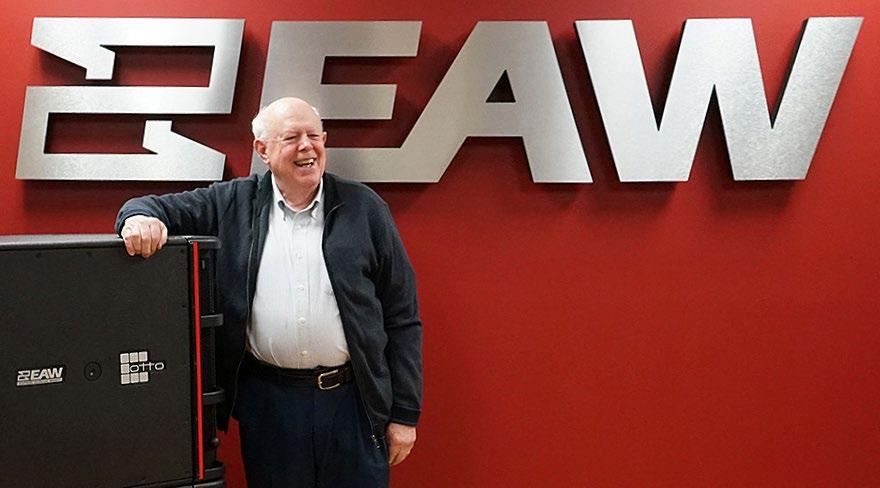
Kenton Forsythe in 2019.
PHOTO: EAW

St. Louis’ Armory Re-Opens Following Massive Renovation
ST. LOUIS, MO—Originally constructed in 1938, St. Louis’ The Armory has had an interesting life…and it’s getting a new lease on one, thanks to a massive renovation that has turned it into a 250,000-square-foot venue complex that includes a 5,200-capacity concert hall.
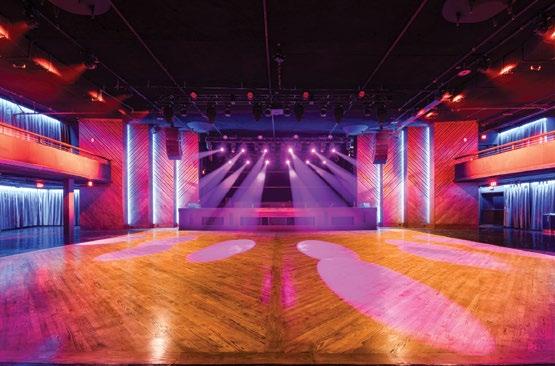
Originally constructed in 1938 as an Armory for the Missouri National Guard—part of the New Deal after the Great Recession—it later became a US tennis HQ before transforming into a concert venue in the 1960s and 1970s, hosting shows by Ike and Tina Turner and the Grateful Dead, among others. The venue eventually shuttered, however, and fell into disrepair for decades until local developers Green Street Real Estate Ventures took it over. Now it’s a revived place to hang out, socialize and have fun, offering everything from concerts to cornhole. The main attraction is The Commons, a huge 85,000-square-foot, 5,200-capacity main concert hall, though additional spaces in the building will open up to the public in phased openings.
Integrator AVI Systems, which had worked with some of the facility’s operational staff over the previous six years, specified Martin Audio’s WPL line array for the space. The Commons sound reinforcement system was designed by AVI’s John VanStipdonk, who spec’d an FOH system comprised of 20 WPL (10 per side), with 12 of the smaller footprint WPS as outfills (six per side), along with flown 12 SXCF118 subwoofers, with a further four SXH218 ground subs. These are all powered and processed with Martin Audio’s dedicated iKON iK42 and iK81 multichannel amplifiers.
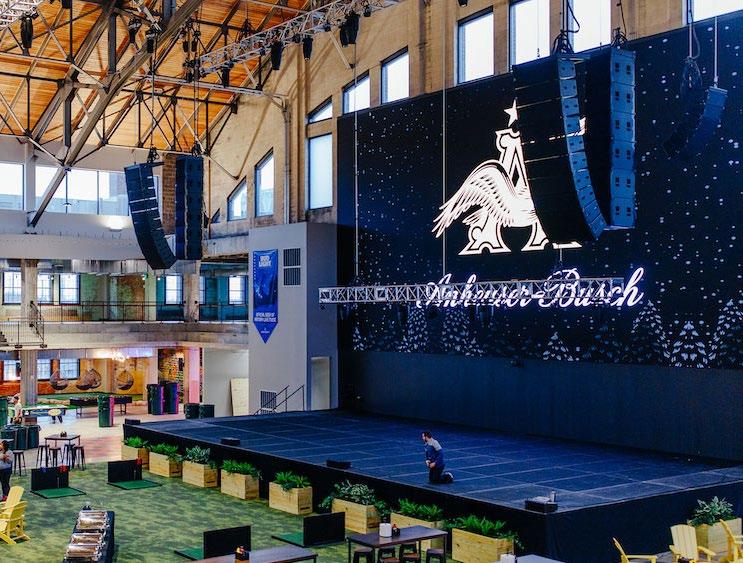
Explaining the subwoofer design philosophy, VanStipdonk said, “We decided to use the cardioid subs for rejection on the stage. There are two hangs of 6-deep behind each main array. Additional SXH ground stack subs are brought in for national artists and most larger shows.”
AVI’s work at the Armory isn’t done, however; there’s more venues in the complex to outfit with systems—an EDM dance hall and a nightclub.
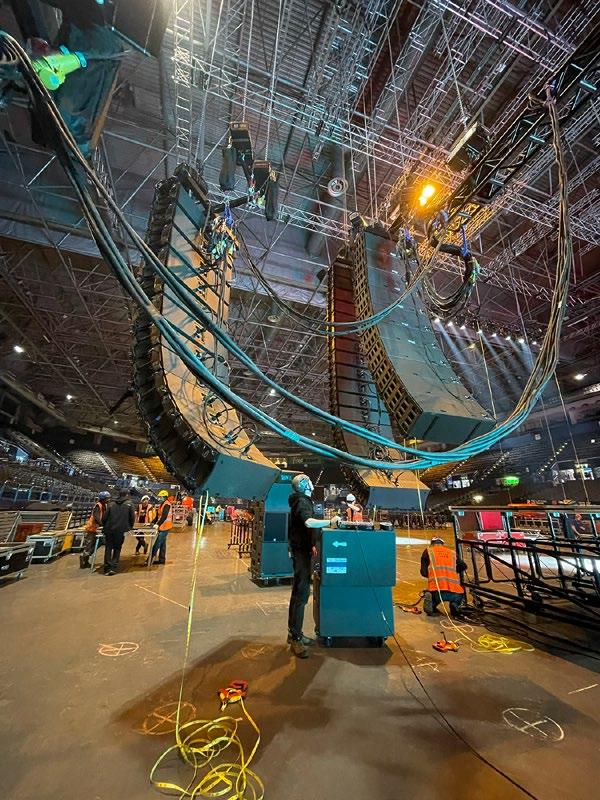
The basement EDM space will be more of a challenge, as the ceiling clearance is 15 feet instead of 80 feet and there are more highly reflective surfaces. Martin systems will be used in both rooms, with four TORUS arrays destined for the EDM room and eight CDD15 and four SX218 subs hung in the other space. ADORN speakers also feature in the ancillary areas, including the restrooms. ■
Paramore Hits the Road with Eighth Day Sound
NASHVILLE, TN—Paramore is back on the road behind its latest album, and while the band is once again carrying audio gear from longtime audio provider Eighth Day Sound (Highland Heights, OH), there’s plenty going on that’s new. Key among the changes is engineer Travis Bing’s move from monitor world to the front-of-house position—where he’s manning an SSL L650 FOH console—and the new addition of an L-Acoustics K2 line array system for the current U.S. tour leg, scheduled to run through August 2. While he’s only been mixing the band’s house mix since 2022, Bing has actually been part of the group’s audio team for 13 years “We did some shows last fall on a brief US tour of smaller venues where we didn’t carry a PA,” he recalled, “and every time I found myself on an L-Acoustics rig, the mix just came together faster and sounded more musical. It could easily handle that back-and-forth between aggressive and dynamic songs that is a huge part of our shows now. That’s when I knew I wanted to carry L-Acoustics for our future tours. I don’t mind mixing on different PAs night to night—it does keep you on your toes—but I’m also very excited to have such great consistency and see where we can push this band’s mix sonically.”
With that in mind, the new tour’s PA centers around 60 L-Acoustics K2 enclosures: 18 flown per side for mains, and 12 per side as side hangs. An additional 32 Kara II, 16 per side, are deployed to cover up to 270°. For reinforced LF, 10 K1-SB are hung behind each of the main arrays for low-frequency extension and are complemented by six KS28 subs ground-stacked per side in a cardioid configuration. Eight A10 Focus are spread out across the stage lip as front-fills. The entire system is driven by 48 LA12X amplified controllers paired with three P1 MILAN AVB processors.
Systems engineer and FOH tech Brian Sankus points out that the band members are all big advocates of performing as close to the crowd as they can, so, with a five-foot-high stage and barricade often five feet or less from the downstage edge, focusing the energy where needed is crucial. “By deploying K2 with K1-SB, we can get a good wrap on the mains to drastically bring that gap between the mains and front-fills down,” he said. “We also try to be low-end conscious for both the front row and the band onstage. Having the flown K1-SB and cardioid KS28 on the ground really helps manage the direction of the low end.” ■
MIX | AUGUST 2023 | mixonline com 22
Live // news & notes // presented by
Paramore is out with an Eighth Day Sound-supplied L-Acoustics K2 line array system on its current U.S. tour leg.
Capturing Lizard Boy Off-Broadway

NEW YORK, NY—You won’t find many lizards in New York City, but the Off-Broadway musical Lizard Boy recently got noticed for its indie rock tale of one reptilian boy against the world. Produced by Prospect Theater Company, the show had sound by designer Kevin Heard, working with Masque Sound.
In envisioning the sound, Heard wanted to make sure that he could get as big of a sound as possible from the budget-conscious equipment package Masque Sound was providing. “Lizard Boy is a shockingly big, little show,” said Heard. “The show features a cast of three people who all sing and play many instruments, including guitar, ukulele, cello, piano and percussion. Even though it’s a small Off-Broadway show and budgets were tight, we still needed the equipment that could deliver a powerful performance capable of capturing my design vision.”
For his microphones, Heard employed DPA 4066 headset mics with Point Source backup elements. Heard also used Sennheiser MKH 40-P48 mics discreetly on the set as well as AKG PCC160 boundary layer mics for amplifying
exciting moments when the floor was used as a percussion element. The wireless microphones used Sennheiser SK 5212 transmitters.
For his PA, Masque Sound supplied a package primarily from Meyer Sound. including UPQs, UPAs, and UPJs, plus UPMs for actor foldback and monitoring. Masque Sound also provided Meyer Sound 900-LFC subwoofers.
At the FOH position, a new Allen & Heath Avantis digital console was put to work. According to Heard, “Scott (Kalata) asked me if I would be interested in checking out a new console. I was intrigued so I went to the shop and played with it, and I was pleasantly surprised. The Avantis is perfect for this scale of show. It has 64 input channels at 96kHz with a ton of on-board effects that I utilized quite a bit. This show has moments where instruments are used as sound effects which coincide with elements of superpowers and the Avantis console’s effects worked well. It was a great choice and I’m glad Scott suggested it.”
In addition, Heard also employed tc electronic M3000 effects processors and QLab multimedia playback software. ■
Live // news & notes // mixonline.com | AUGUST 2023 | MIX
Masque Sound provided audio support for the off-Broadway show.

Drums Rule!
MIX | AUGUST 2023 | mixonline com 26 on the cover
PHOTO: Columbus Pics
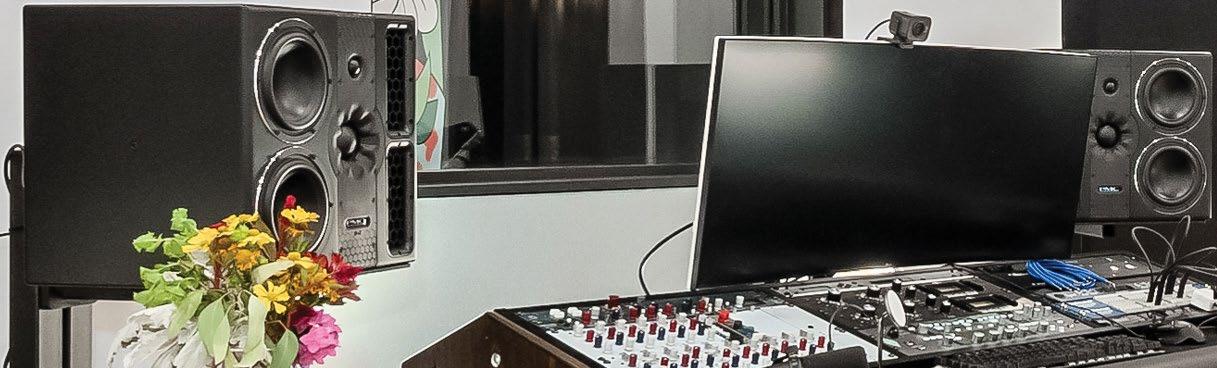
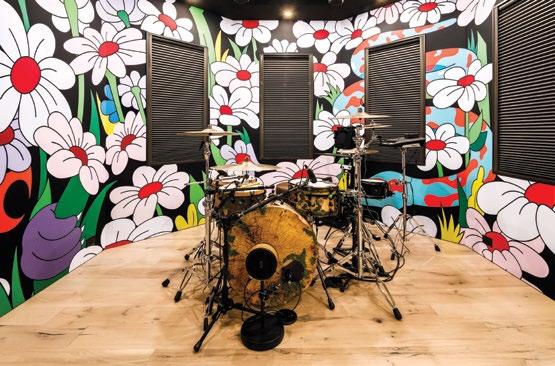
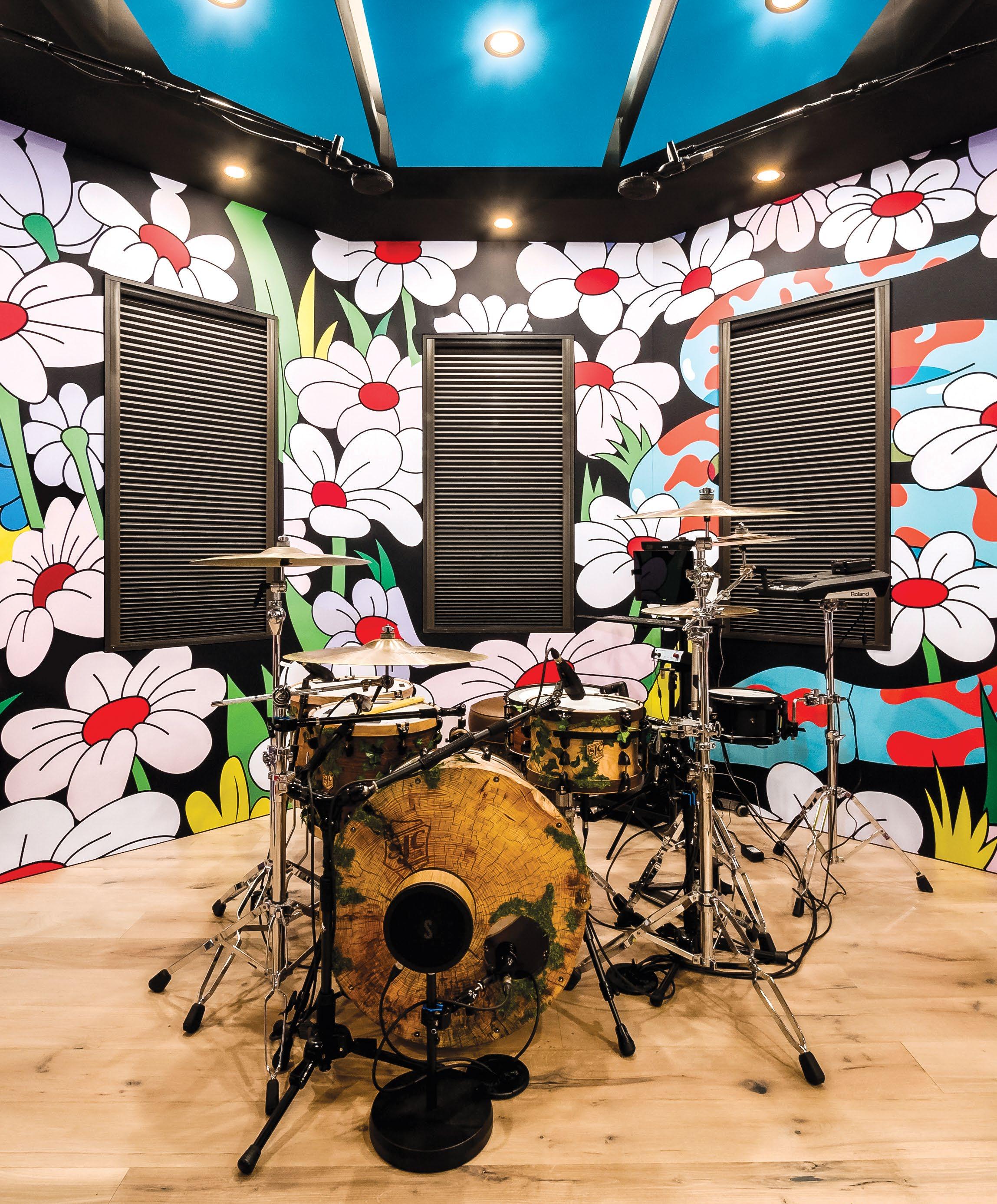
The Boom Boom Room, Twenty One Pilots’ drummer Josh Dun’s studio at his new house in Columbus, Ohio, is a visual treat. The bold aesthetic comes from Dun and his wife, actress, singer and voice artist Debby Ryan, whose quirky and eclectic taste is on display throughout their home.
While fitting in with the home’s overall aesthetic, the studio has been primarily designed as a space where Dun can practice and record his drums, both for band projects and his collaborations with other artists. It’s also set up to accommodate visiting musicians and for Ryan to record voiceovers, ADR for film and television, and her podcast.
If you are unfamiliar with Twenty One Pilots, well, where have you been? Since breaking into the mainstream in 2015 with their fourth studio album, Blurryface, the Grammy-winning twosome—drummer Dun and lead vocalist and multi-instrumentalist Tyler Joseph—have been flying high. In early 2018, Blurryface became the first album in the digital era to achieve RIAA gold, platinum or multi-platinum status for each of the 14 songs. One year later, the album’s 12-song predecessor, 2013’s Vessel, repeated the feat, making the duo the first artists in history to have every song from two separate albums certified at least gold by the RIAA.
The next full-length, 2018’s Trench, became the band’s third consecutive platinum-certified album, cementing their success. Then along came Covid-19, and the hard-touring duo was suddenly grounded. Their most recent album, the low key Scaled and Icy (a play on “scaled back and isolated”), was written and largely produced by Joseph at home in Columbus during the pandemic, while Dun, in a first for the drummer, engineered his contributions in the studio at his and Ryan’s house in Los Angeles.
Which brings us back to the Boom Boom Room. After seven years in L.A., Dun and Ryan made the decision to buy a house in Dun’s hometown of Columbus, where Joseph was also born and still lives. “Josh called me and said, ‘Hey, I just bought a house in Columbus. We should build a studio,’” recalls TJ Bechill, cofounder/senior technician with NEAT Audio.
GETTING THE BAND TOGETHER Bechill
goes way back with Twenty One Pilots. In 2012, working as a studio-focused senior sales engineer at Sweetwater Sound in the artist relations division, he saw the band on
television, tracked down their FOH engineer and introduced himself. To cut a long story short, the relationship snowballed, eventually leading Bechill to set up NEAT (Next Era Audio Technologies), which specializes in redundant live playback rigs. “By the time I left Sweetwater in 2018, I had over 300 national tours that I was either selling or building rigs for,” he reports.
Along the way, Bechill, who also works for Fender, has held a variety of touring and technical positions with the band, has equipped and managed two studio build-outs for Joseph, and supplied all the gear for Dun’s L.A. studio. As a result, when Dun got in touch about building a facility at his house in Columbus, Bechill knew just who to call first—Indiana-based acoustical consultant Gavin Haverstick of Haverstick Designs, who designed and built both of Joseph’s studios, one in a basement, one in a sunroom.
Haverstick recalls walking through the prospective new house with the couple: “I’m in Indianapolis, so I drove over to tour the house
with Josh and Debby. They were wondering if the place would work. Luckily, there was a readymade spot for the studio in the basement.”
You’ve probably seen rooms designed by Haverstick, perhaps without realizing it. He’s built any number of facilities for commercial, educational and HOW clients, as well as musicians such as Tori Kelly, Polyphia’s Tim Henson, Brooklyn Duo, David Crowder and Luca Pretolesi (Studio DMI). However, unlike some acoustic architects, he doesn’t follow a template or impose his aesthetic on his clients. “We love the fact that all of our rooms look different, because every one of our clients is different,” he says. “We create rooms that inspire; that’s our mission statement.”
It follows that one of the first things Haverstick does is find out what inspires his client. “Josh would share Instagram posts with me and say, ‘I like this aspect of this studio,’ or, ‘Do you think we could do the lights like this?’” he says. “The cool part about working with Josh
27 mixonline.com | AUGUST 2023 | MIX
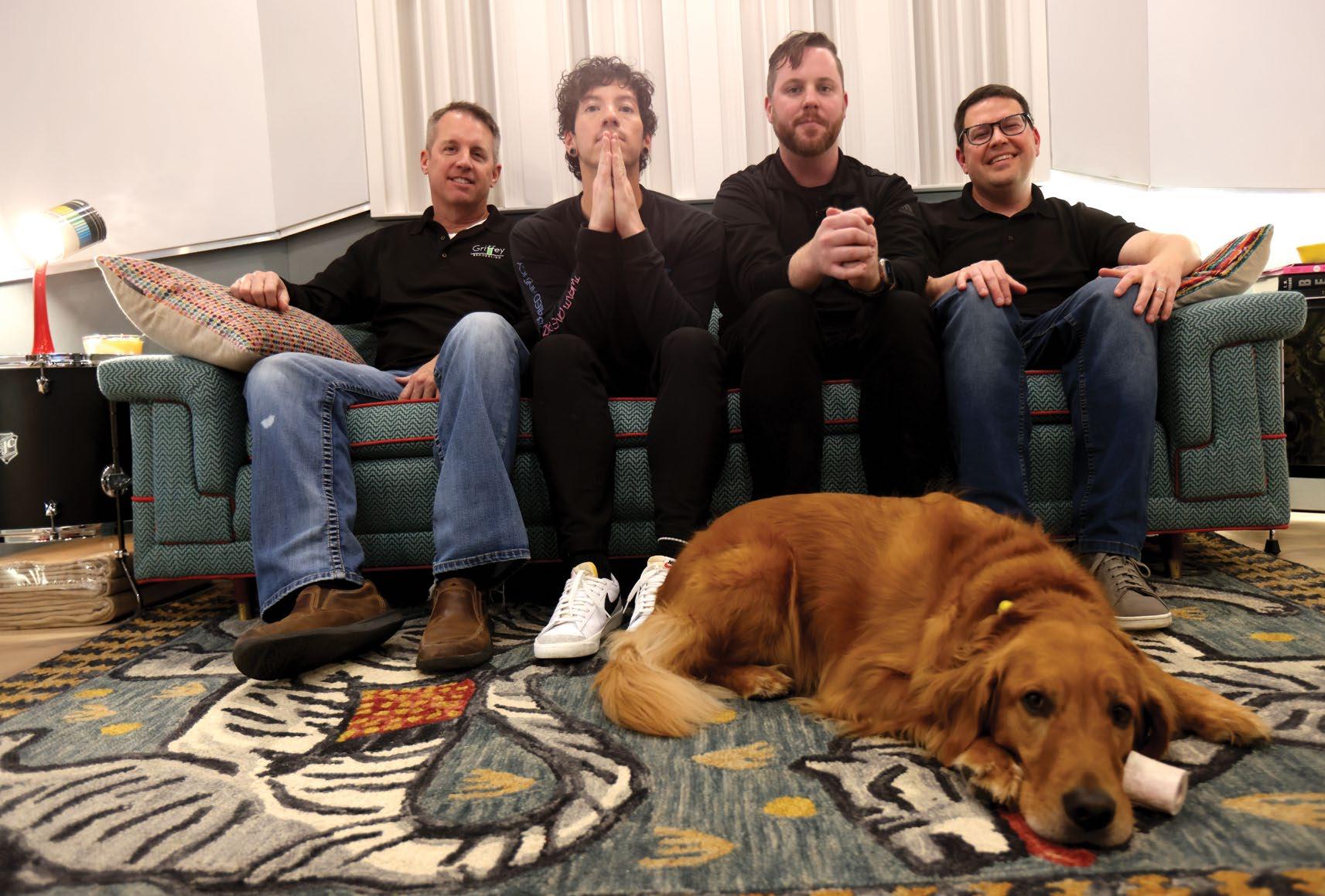
The team behind the Boom Boom Room’s design, from left: Charlie Griffey of Griffey Remodeling, Josh Dun, TJ Bechill of NEAT, and Gavin Haverstick of Haverstick Designs..
The front and back walls of the Boom Boom Room control room.
PHOTO: Columbus Pics
PHOTO: Chad Jenkins
and Debby was that their whole house is unique, kind of out there and quirky. It was fun, because any idea that I had, I knew it wasn’t going to be too over-the-top.”
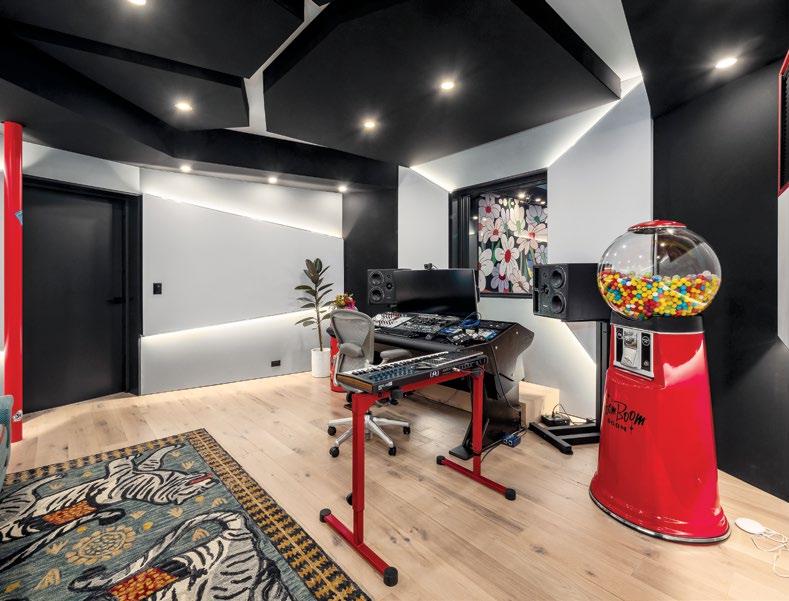
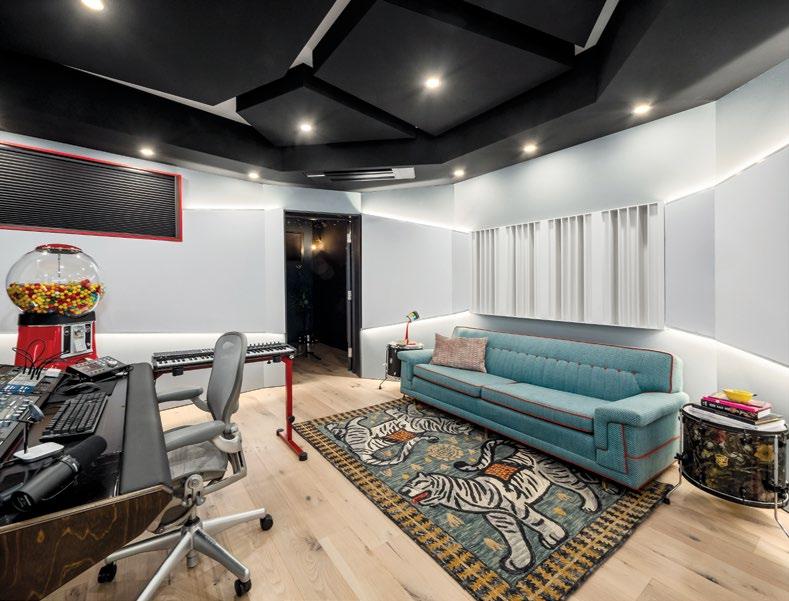
The walk-out basement space was previously a children’s playroom. To create a control room, Haverstick extended the space and canted out the walls for acoustical purposes. “It’s just nice to have a bigger control room, plus it helps with the low-frequency response,” he says.
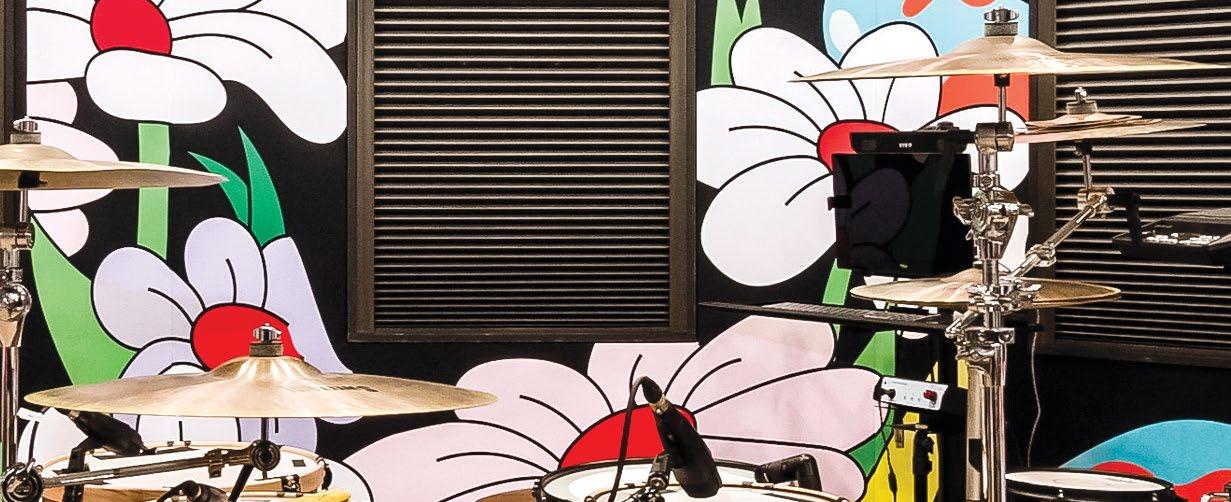
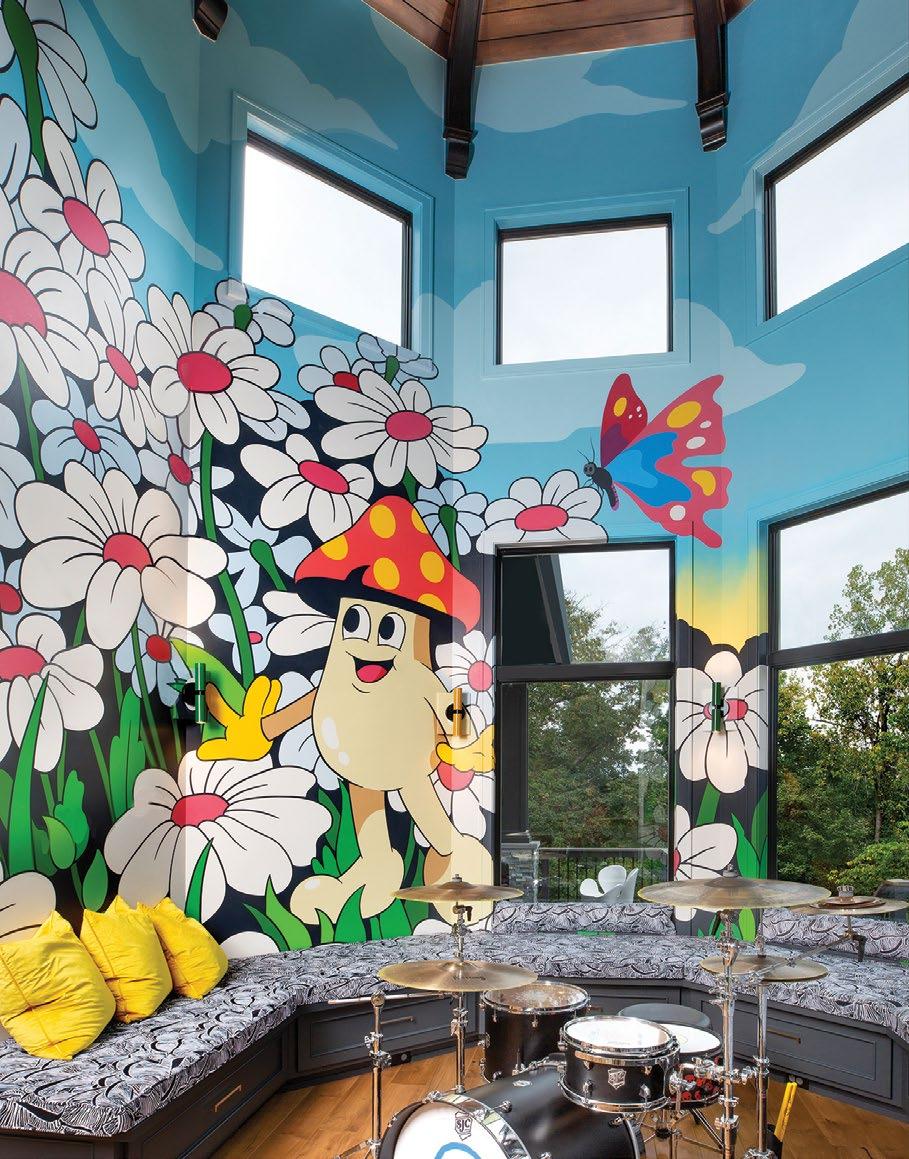
The geometry of the control room’s black and gray wall treatments creates the illusion of a larger space. Lines draw the eye to the studio glass and the live room beyond, where a wall of vibrant flowers, the work of Australian husbandand-wife visual artists DABSMYLA, present a colorful backdrop. Haverstick was inspired by the DABSMYLA mural in the high-ceilinged sunroom directly above the roughly octagonalshaped tracking space.
“I said, ‘Give me 10 extra feet of that image and we can put that on the walls.’ They loved it, and it became a signature part of the live room,” Haverstick says. Matthew Call of Simplified Acoustics handled all the fabric and interior acoustical treatments.
The Boom Boom Room was general contractor Charlie Griffey of Griffey Remodeling’s first recording studio job. Haverstick says Griffey was a joy to work with during the project, which took about a year from start to finish: “Charlie was awesome. He likes to learn, so he would even show up when he didn’t need to be there because he was genuinely curious about how things were going. He took a lot of pride in what he did, and he just nailed it.”
SETTING UP TO RECORD
“Tyler and Josh don’t work with engineers; they work by themselves,” Bechill observes, noting that during his technical design process, he likes to understand an artist’s workflow and what tools they need. “I always build around the concept of the artist being able to walk into a room and ‘put pen to paper’ as quickly as possible.”
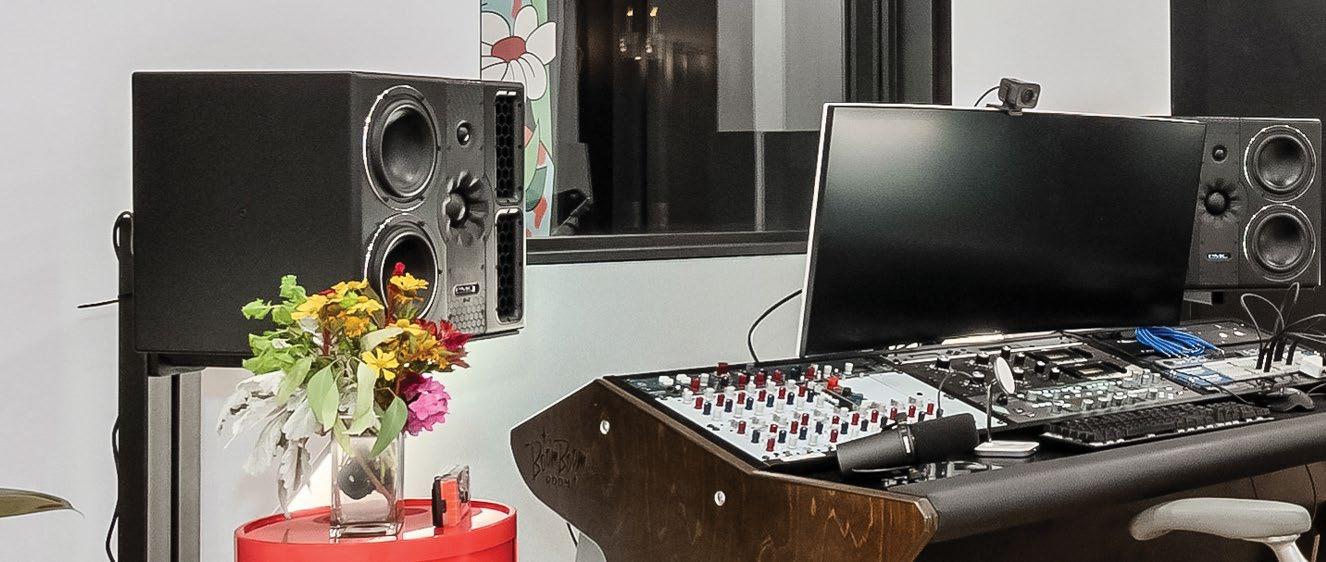
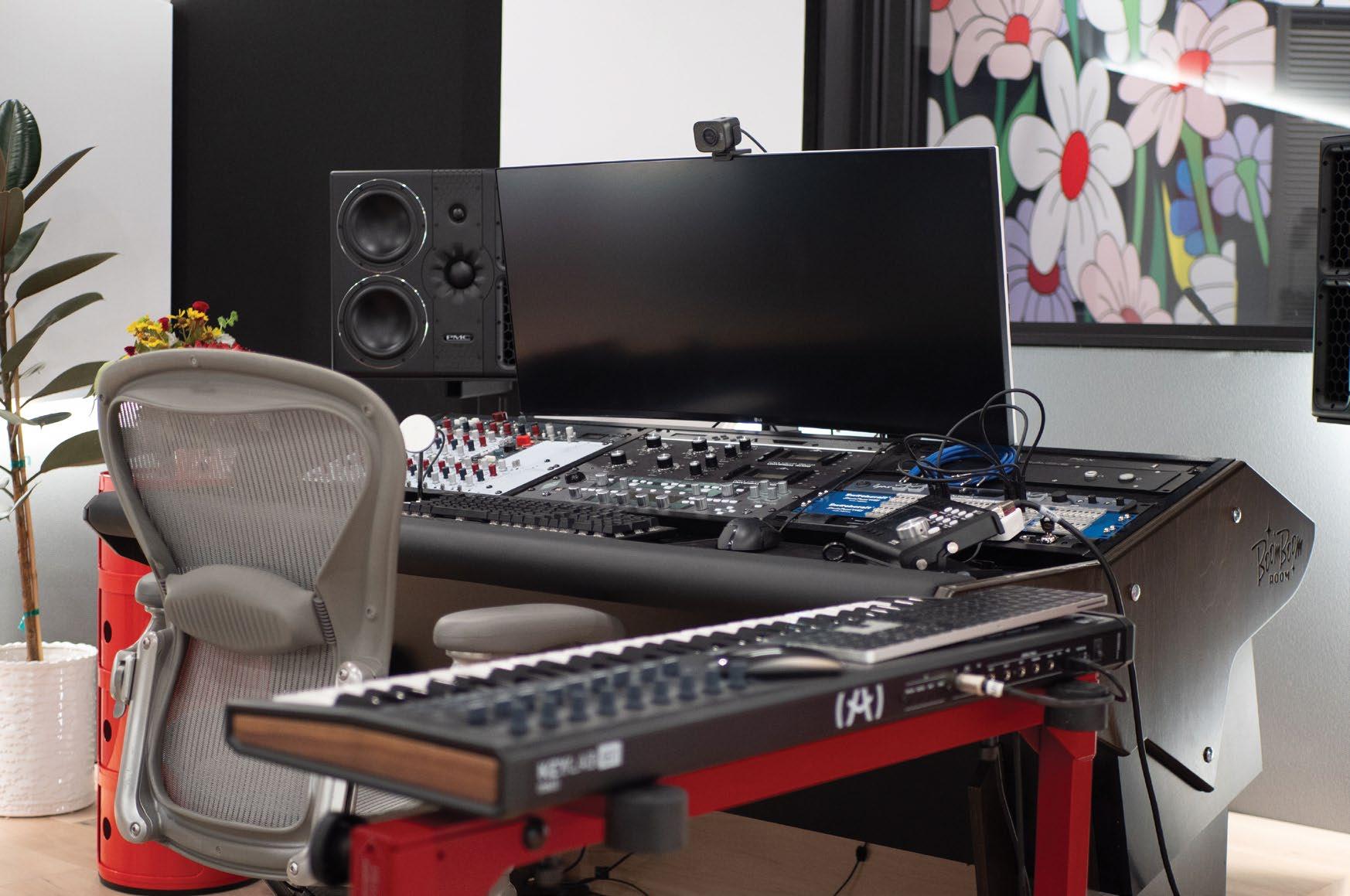
Bechill quizzed Dun about the favorite drum tones he had recorded in his favorite rooms before deciding what gear to load into the control room’s Dangerfox desk. “A lot of them featured vintage Neve consoles,” he recalls. “Josh has API and Audient pre’s in his studio in California, and he said, ‘I want transparency, but I also love the vintage vibe of a Neve console and the glue that you get from the transformers.’” The desk’s lefthand bay houses two Rupert Neve Designs 500 Series racks holding 14 of the manufacturer’s 511 mic pre modules, with variable Silk control. “The Coles 4038 overhead mics go into a pair of 517 preamps, into 1176s and then into the converters,” he adds.
Mike Picotte, senior sales engineer, artist relations at Sweetwater, also consulted on gear choices, then tuned the control room with Smaart and optimized the DSP on the room’s PMC 6-2 main monitors. “PMC checked all the boxes and has been an incredible system,” Bechill says. “We don’t really mix in there, but we wanted an accurate reference. You can do multiple EQ settings, so we created two zones— one for the mix position and a second for the couch, if friends come in to listen to music.”
Picotte also dialed in the drum sounds. “After 15 minutes, Mike leans back and says,
‘Well, there you go,’” Bechill recalls. “There’s no processing on the tracks; it’s just a great room, great microphones, and solid preamps and conversion, so we saved it as a template. We’ve got a Furman sequencer, so now Josh walks in, turns one key and the whole studio turns on. Within seconds, he can press Record and sit down and play.”
Sweetwater sales engineer Patrick Cobley supplied much of the equipment and, with NEAT sales engineer John Krempel, helped assemble the control room during the two-day installation. Ryan’s brother, Chase, who works on the video side, designed the audio patchbay. “I love having a normalized patchbay where I don’t have to use cables if I don’t need to,” Bechill comments.
Speaking of patching, Bechill installed a dedicated Rupert Neve Designs Shelford Channel for Ryan’s voice work so that she didn’t have to disturb Dun’s signal flow. “She’s an absolute professional, but I wanted a channel strip so we could give her dynamic control in case she got too animated or too close to the mic. I really like the FET-style compressor in the Shelford, and I’ve always loved 1073-esque tones.” Haverstick included a small vocal booth in the studio layout, which doubles as an amp closet for visiting guitarists, but Ryan can also take a shotgun or a lav mic into the live room: “She can do ADR in that room if her producers don’t want a completely sterile vocal booth environment.”
TRACKING DRUMS
The tracking space, a room-within-a-room design, looks out onto the woods surrounding the house and features a floating floor. Although
MIX | AUGUST 2023 | mixonline com 28
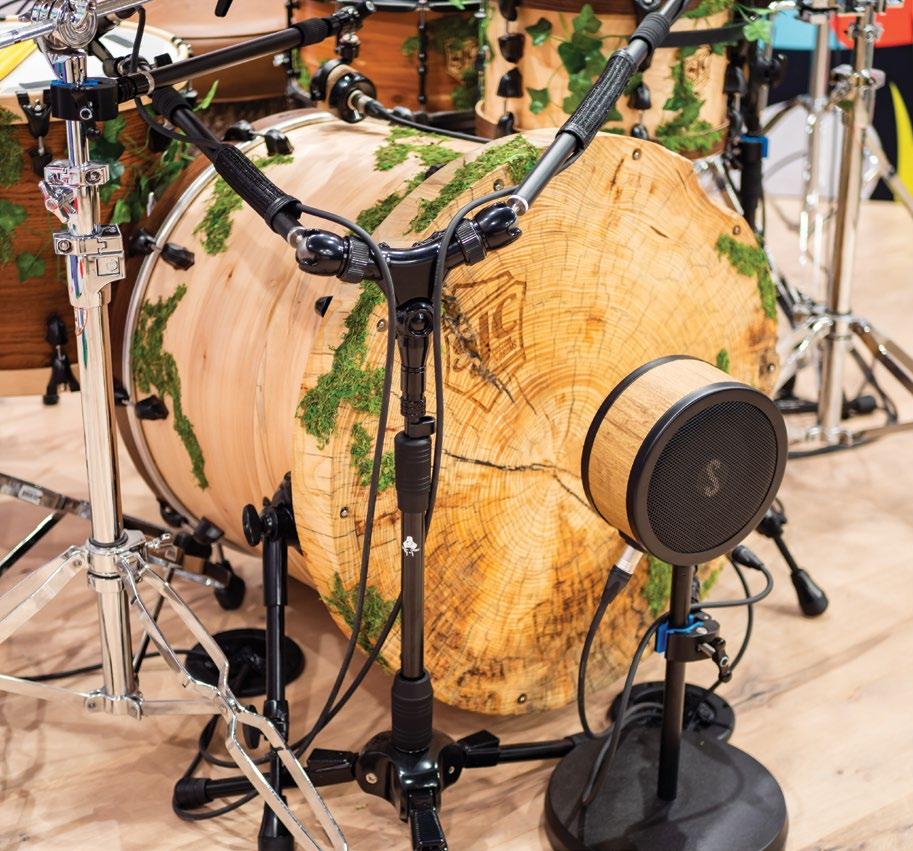
A sense of style applies to the kick drum, which features a completely wooden front head.
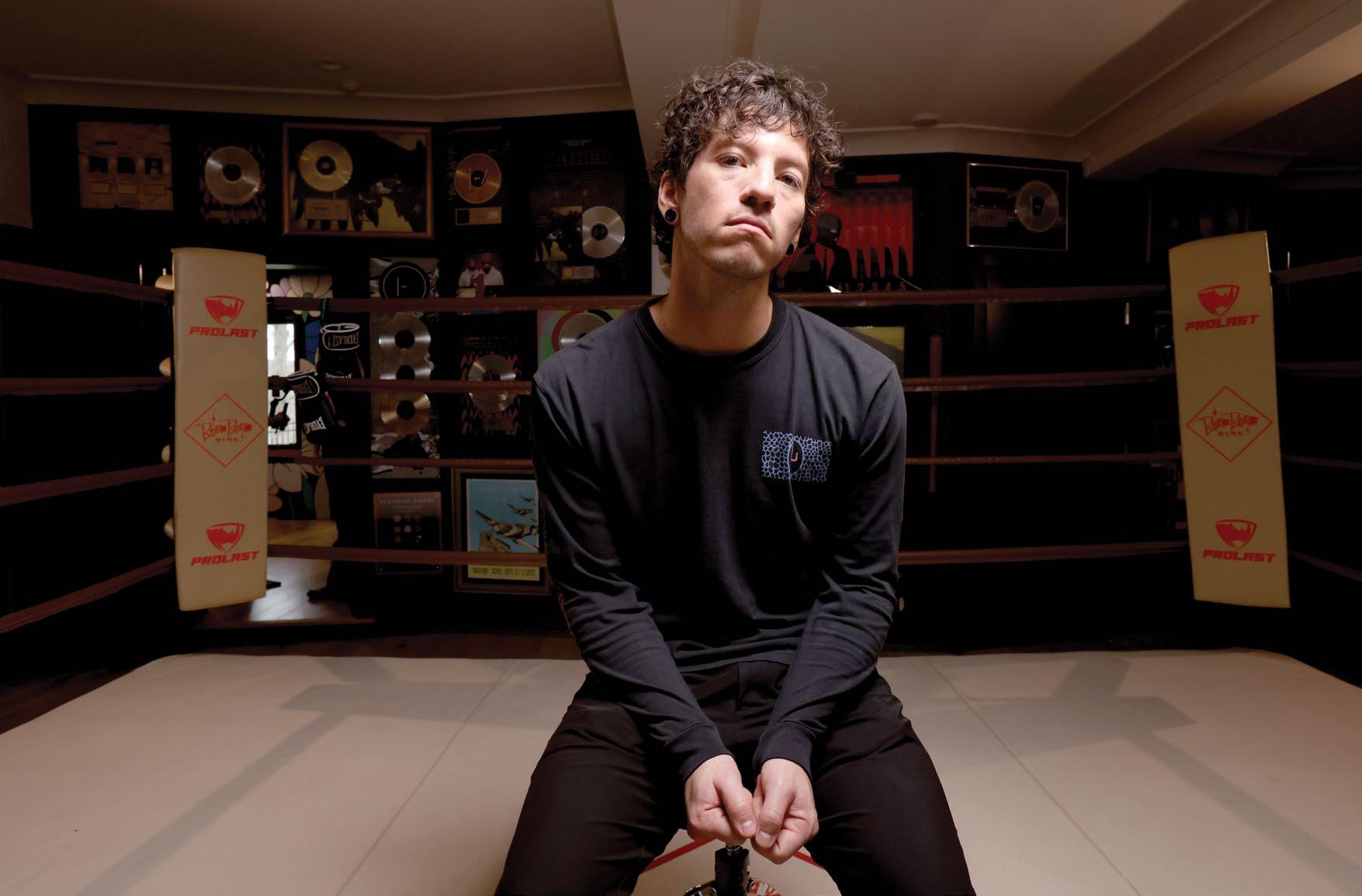
Josh Dun, drummer in Twenty One Pilots, in the boxing ring at his home in Columbus, Ohio.
PHOTO: Chad Jenkins
PHOTO: Columbus Pics
Dun has tracked in big rooms like EastWest in Hollywood, Haverstick says, “He wanted a controlled but not too dead-sounding live room, because Twenty One Pilots do get more of a controlled sound on their drums.”
And what about those drums? Dun wanted something special for his home studio setup, so Mike Ciprari, owner of SJC Custom Drums, his longtime supplier, ran with Dun’s treehouse concept (he proposed to Ryan in a treehouse in New Zealand). The all-wood kit, with moss and leafy accents, uniquely features a completely wooden front head on the kick drum. “No joke, it actually sounds pretty solid; I was shocked,” Bechill laughs.
Bechill’s idea was to mike the drums using just two or three stands, making the most of the design flexibility and weight capacity of Triad-Orbit’s products. An Audix D6 and a Solomon Mics LoFReQ hang off one stand, he reports, with multiple Sennheiser MD 421 tom mics hanging off another. “If you were to try to do that with any other stand, it would just tip over,” he comments. “I spent $1,500 on three mic stands, but we had committed so heavily to an aesthetic that I wanted them.” The Coles overhead mics are supported by two ceilingmounted boom arms.
During construction, after Dun mused about what his drums might sound like in the 20-foothigh sunroom, Bechill had Griffey install a fourinch conduit so that he could run a Whirlwind 24-channel snake to a stagebox upstairs. “John [Kremple] did all the wiring with me, and it took us four hours just to get the W2 mass connect from the second floor down to the studio. I
don’t know if Josh will ever actually track up there, and, if he does, if it’ll ever be used—but for some reason, in the moment, it felt like the most important thing,” he chuckles. “After that, everything else was easy.”
It seems likely that the band’s fans will hear the results of all that hard work soon enough.
Previously, while Joseph could work in his own studios, Dun had to go to a commercial room to track his drums. Now, Bechill says, “Between this studio and Tyler’s two studios, we can track and mix in these rooms—although I believe they’ll still send their sessions out to be mixed— because we have the proper environments.” n
mixonline.com | AUGUST 2023 | MIX
The control center in the Boom Boom Room control room is based around a Dangerfox desk housing Rupert Neve Designs mic preamps, UA 1176 compressors, Arturia MIDI controller and PMC monitoring..
PHOTO: Columbus Pics
PHOTO: Columbus Pics
STAR WARS SURVIVOR JEDI SCORING
Co-composers Gordy Haab and Stephen Barton merge organic and synthetic sounds in eight hours of videogame music
By Lily Moayeri
As video games become increasingly more sophisticated, scoring them has become an increasingly complex task. No one knows this more than Gordy Haab, whose award-winning scores for more than a dozen Star Wars video games have positioned him as the frontrunner to step into the place of composer John Williams, the creator of the iconic scores for the timeless IP.
Stephen Barton, the composer for nearly 10 award-winning video games, is similarly familiar with the multifaceted undertaking. Twice—so far—Haab and Barton have come together as co-composers: once for 2019’s Star Wars Jedi: Fallen Order, and again for this year’s Star Wars Jedi: Survivor.
Haab and Barton see Survivor as their Empire Strikes Back. The timeframe is a few years after Fallen Order, and Survivor doesn’t have the optimism of its predecessor. The characters are barely getting by, and musically, very little of Fallen Order’s palette works for Survivor.

“Doom is inevitable,” says Haab, who has a theme in Survivor that plays every note of the chromatic scale. “It’s ubiquitous and omnipresent throughout the score. In some cues, it’s a third counter line where you might not notice it, but
it’s certainly felt.”
Unlike film and television, video games require many hours of music with different themes, emotions, moods and energy levels. Survivor needed 30 hours’ worth, for which Haab and Barton wrote eight hours of music. “We had to take into consideration how we were going to make that really stretch, and never feel tiring if you hear it multiple times,” says Haab.
TWO TYPES OF MUSIC
Video game music falls into two types: systemic and scripted. Systemic, which is based on the character’s actions and setting, can be beautiful or scary, suspenseful or calming, threatening or scenic. “It is triggered by a logic system that works with playlists,” the composers explain. “For example in Survivor, if you walk around exploring in a certain area, there is an explore playlist that is tailored to that moment and area. This allows for a lot more player flexibility. The challenge is making it feel cohesive and part of the narrative arc—even though it may not play back exactly the same way twice.”
Scripted, which includes cinematics, is a specific
30 MIX | AUGUST 2023 | mixonline com
PHOTO: Courtesy of Lucasfilm Games and EA
moment, action or event to which a single piece of music is attached. Additionally, on Survivor, there were about three-and-a-half hours of cutscenes, which are not about action but pushing the narrative forward by having gamers watch the story like a film. Here, the composers write to locked picture. The key is for the music to move seamlessly between these segments so gamers do not sense any starts-and-stops in their participation.
“Hitting the ‘skip’ button on the cut-scenes is not the greatest course,” says Haab. “A game like this is story-driven, and you need to know the story in order to really play it well,” says Haab. “From every aspect—visual, graphics, story and music—the game has to have a very cohesive feel, like it’s one continuous experience.”
“You don’t want to do anything that wrests control away from the gamer, because it takes them out of the experience,” concurs Barton. “We try to blur the lines so the music runs into different parts of the game. One of the most difficult things to do is stop a piece of intense music. There’s a combat sequence with five stormtroopers and we don’t know how long that’s going to last—but we do know it’s going to end, and the next thing you’re going into is maybe an exploration thing. The key is to write a piece of music that can stop on a dime, but not feel like you’ve needle-dropped a weird break.
“Sometimes,” he continues, “we’ll be playing the game and there’s artwork missing. You don’t know the scale of what’s going in. The entire look of something can change. This one sequence was a conversation between two people. Six months later, an apocalypse is going on in the background that wasn’t in the original version of the animatic. It completely changes the urgency scene. You’re not scoring a conversation. You’re scoring the world coming to an end behind you. It’s a moving target, like trying to dress someone while they’re running.”
CO-COMPOSING AND WORKFLOW
The Los Angeles-based composers work out of their respective home studios, but they come together at Electronic Arts’ Respawn Entertainment, developers of Survivor with Lucasfilm Games, where Barton has a studio.

“The games have gotten so complicated in terms of implementation, you can’t really work with just a video file,” he says. “You can’t even really
verbalize or show it in a video call. You have to see the nature of how it’s being implemented to know what to write. There are times where we have to be sitting in the same room with a controller and just playing it.”
Haab’s studio is set up as a composer’s project studio with everything in the box. Cubase is his DAW, where he has a strong orchestral template. Vienna Ensemble Pro hosts the majority of his samples, which he draws from a variety of sample libraries. He uses Finale for orchestration and notation, and has key commands assigned to iPads so he can work quickly. Haab is known for designing and building instruments, recording and sampling them for use in his scores, including on Survivor.
Barton moves between his home studio and his space at Respawn, which have similar setups. He works on a PC using Steinberg Nuendo for its multi-channel capabilities and Sibelius as his notation software.
These spaces sparked a lot of creativity for the composers while working on Survivor, some of it happenstance. Haab accidentally dropped a plastic water bottle, and the tone when it hit the floor caught his ear. He grabbed a bunch of plastic bottles, tuned them by filling them with different amounts of water, hung them on a rack and played them like a mallet instrument.
The orchestral recording took place at Abbey Road over the course of 30 days with the cherry-picked London Session Orchestra. Both composers did remote recording during the pandemic, from which they learned a lot about analyzing which instruments to separate and which to record together, rather than proceeding in the conventional way of striping. For example, the timpani was recorded with the strings, as what’s written for the former locks into either double bass pizzicato or orchestra techniques. Similarly, mallet percussion was recorded with strings and woodwinds, with about 60 musicians in the studio.
While Haab and Barton appreciated being able to record an orchestra at Abbey Road, they didn’t quite find a prime spot in the room where all the instruments could be heard perfectly, certainly not in the conductor’s position. Barton’s experiences with spatial audio, along with modern recording and production techniques, reimagined the way they approached the score.
When it came to drums, particularly a big bass drum hit, it ended up involving multiple drums. Two would be on gigantic taiko drums and two
31 mixonline.com | AUGUST 2023 | MIX
on orchestra bass drums, hitting them at the same time. “If you hit a bass drum really hard, you’re going to get an awesome crack out of it and no bottom end whatsoever; it just cuts it off,” Barton explains, “but if you hit it really softly and just touch it with the microphone as close as possible, you get this amazing sub that has a ton of room noise on it, because you have to crank the gain.
“If we do several passes of this, we have a bass drum sound within this orchestral sound. The first pass, everyone absolutely beats the living shit out of it. We’ll record the exact same pass absolutely pianissimo. Then we do a mid-layer where they go halfway. We balance them and timeline them so they sound cohesive. You didn’t really have the capability to do that in the 1970s, but I absolutely think if they were recording the original Star Wars score today, they 1,000 percent would have used these techniques because you can get really cool sounds out of them.”
SURROUNDING THE GAMER
Early on, the duo experimented with ambisonic recording, which wasn’t used on Survivor, but based on the concepts they learned and the three-dimensional nature of video games, Haab and Barton discovered a flexibility in their approach to surround sound.
“Effectively, most gamers play nearfield, so our center channel is less important; what’s important is in the 6.0,” explains Barton. “What we try to do musically is have a surround feeling that doesn’t feel like mostly front with some ambient reverberation. It’s a much more 3D surround than TV or film. You wrap the image around you, and at the same time pull away from the dialog in the center.”
They used Sennheiser’s AMBEO cube and square miking techniques with nine MKH
configuration in the main position, usually “around” the conductor, in front of the orchestra. The ninth microphone is on the lower level in the center, as an extra option for the center channel. This technique, which is based on AB stereo, aims to create the sonic image around the gamer.
“It functions like a Decca Tree, in the sense that it is a room-mic array designed to be panned to its respective speakers,” the composers explain, “but it has a huge amount of flexibility for surround and Atmos recording. It also has a great deal of postproduction flexibility because of the Twin Pattern plug-in. You can literally change the polar response pattern of individual mics, or any part of the layers, simultaneously using the plug-in’s internal groups; everything from omni to full cardioid in either direction, or figure-eight. The usual idea is to pan the upper four microphones to a quad .4 height, and the lower five to the speaker positions of a 5.0 as a starting point.
“The height layer is two meters above the main layer, which provides a nice trade-off between coincidence and decorrelation, and a much more accurate sense of height than, say, hanging microphones above pointing down.”
Due to the three-dimensional surround aspect of game music, Haab and Barton reamped music they had recorded with synths, as well as any instruments they had recorded prior to coming to Abbey Road. For this, they set up an array of speakers in Studio 1 and captured the sound of the speakers playing those parts with the same microphones that were used for the orchestra. This “pushing of air” instead of simply DI helped in melding the two sources together.
“There’s a thing about pushing air versus DI where you don’t get the same kind of mojo, particularly with this,” says Barton. “Lucasfilm’s big thing is they want any synthetic element to
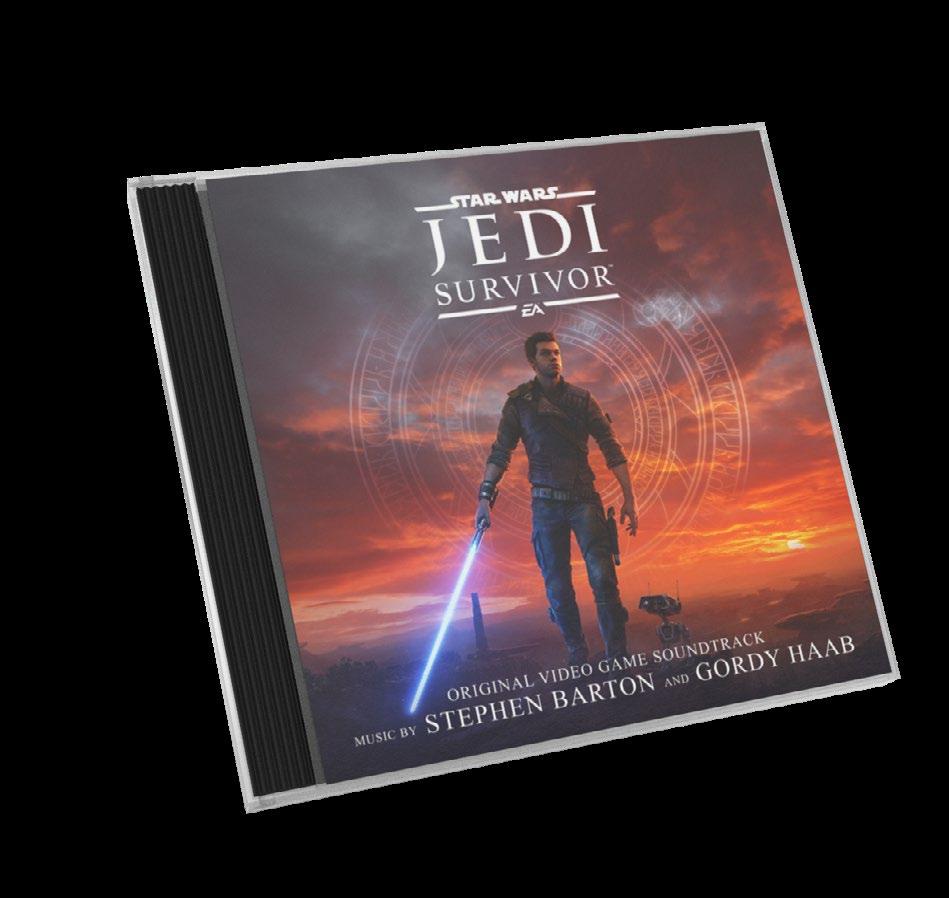



have an organic edge to it—even if it’s a straight sine bass—for it not to feel like an overlaid element. There’s a 1970s Star Wars ethos where ’80s synths don’t necessarily fit within the sound world. A lot of times, we’re looking to make something sound a little dirty, a little analog, a little saturated. There is a jerry-rigged sound to it. You want the synths to sound like the Millennium Falcon looks.”
SYNTHETIC AND ORGANIC
Haab and Barton use layering to process synthetic elements with organic ones. For example, if there is a high ticking sound from a synthesizer or a pulsating sub-bass, to avoid having it sound like an 808, Barton might use sticks. Not unlike what they do with drums, they edit them together so neither sounds too synthetic, or too organic, but has an original orchestral texture. This approach is one the composers borrow from EDM producers who, rather than having a single kick sound, for example, generally have a composite kick from multiple sources generate a new sonic idea that a single source wouldn’t have.
Says Barton, “Thinking about electronic music production techniques has been a really
Jedi Knight Cal Kestis continues his crusade against the Empire in Star Wars Jedi: Survivor
Star Wars Jedi: Survivor was released in April, 2023 to favorable reviews, with The Guardian calling it “the best Star Wars game in 20 years.”
PHOTO: Courtesy of Lucasfilm Games and EA
interesting way of making orchestral music sound fresh.”
Haab treats synthesizers as another section of the orchestra, with a sonic dialog between the two. He explains, “You might have a pulsing synth that’s going through a filter sweep, but then immediately the brass section will answer it by doing a combination of mutes. The low trombones are all in a bucket mute, and then the next two trombones are in cut mute, and then ones are in straight mute, and then the horns are stopped and then trumpets are in harmonies. I pass that repeating note through all those sections of the brass and it sounds like it’s imitating the synths. It’s back and forth, so it’s much more conversational.”
“In quite a few places, you’re doing that almost to imitate delay, played delays,” says Barton, “thinking about orchestral techniques the way you think about synth envelopes. You’re using one section of the orchestra to be the attack. You’re effectively creating ADSR but with orchestral sections or orchestration, and using synths as one aspect of that.”
In many cases, orchestral recordings were processed to create a synth-like sound. For example, they would record only high violins, run those
through a granular editing process to create a synth sound, and what’s heard is an organic violin section that slowly morphs into a synth layered with another organic element. Says Haab, “It’s always tying back to the symphonic sound, but blending in ways that feel natural and conversational.”
Elsewhere, a bass clarinet that had a ton of distortion on it, something not normally heard on a classical-based score, and even organic instruments, like the piano at Abbey Road, were modified to create slightly different sounds than they normally would. For the planet Koboh in Survivor, they wanted a rustic, slightly broken sound to it. Barton bought 200 packs of BluTack, a putty-like adhesive, which was stuck together to create a long tube, that was then stuck inside the piano to alter its sound just enough to represent Koboh’s vibe.
MIXING WITH MEYERSON
Renowned mix engineer Alan Myerson (Dune, The Book of Bobba Fett), whom Haab and Barton worked with on Fallen Order, was on board once again for Survivor. The composers took advantage of his expertise to push their production techniques beyond Williams’ classic and enduring scores.

In instances where the “The Imperial March” is used in Survivor, only the shape of the bass movement is outlined. “It’s hard to get away from it feeling like a march,” says Haab. “I have this poster of Darth Vader in my room that’s just a silhouette, but the outline is as scary as the real thing—if not scarier. That’s where I got the concept of rather than doing it literal, only outlining the shape. We were doing something very dark and brooding, and just that shape is enough.”
The goal was to retain the recognizability of the iconic Star Wars scores, but enhance it by leaning into the immersive aspect of the mix
with Myerson’s skills.
Haab and Gordon credit John Williams for being an innovator and took cues from him not just musically, but also in their production approach—which, in the gaming world, must continuously break new ground.



“What makes [Williams’] scores so great is that they are symphonic in nature,” says Haab. “You can hear the late romanticism/neoclassical era influences in his writing. For us, rather than trying to write like John Williams, the goal was, ‘Why don’t we look to the sources that inspire John Williams: Ravel, Debussy, David Diamond.’ It might not be a direct influence, but it’s symphonic in nature and fits the aesthetic. Playing with those concepts, but putting them through a very modern lens of production. That was where [Myerson] was a key player in this score.”
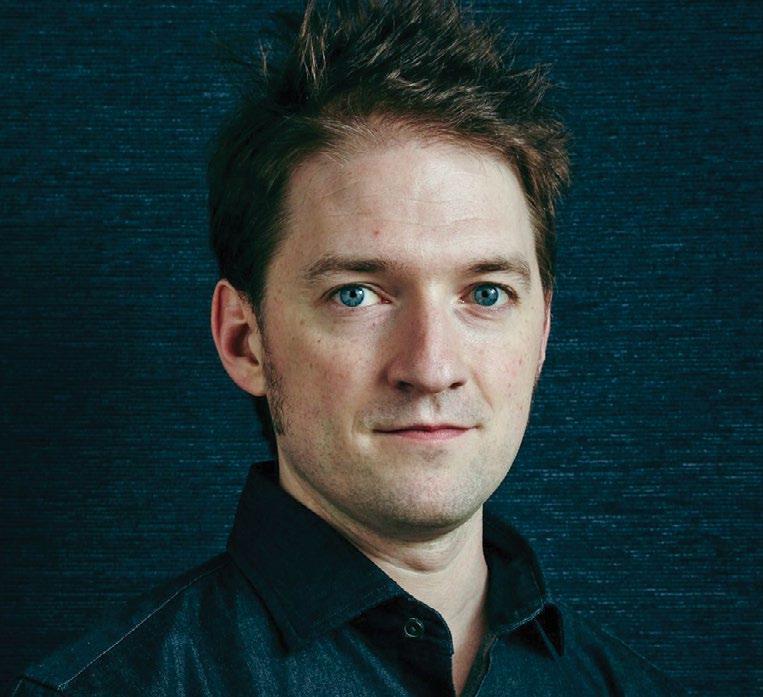
At the same time, there are harmonic and melodic choices they’ve made that aren’t the norm in modern film scores, but they are able to get away with them, so to speak, because of Williams’ original Star Wars sound.
As Haab says, “It’s essentially symphonic score, but it’s hyperrealism in its production.” n
33 mixonline.com | AUGUST 2023 | MIX
Composer Gordy Haab
Composers Gordy Haab and Stephen Barton used music to evoke the atmosphere of multiple planets and environments in the new game.
Composer Stephen Barton
PHOTO: Courtesy of Lucasfilm Games and EA
PHOTO: Courtesy of Lucasfilm Games and EA
PHOTO: Courtesy of Lucasfilm Games and EA
The Bellwether Opens in L.A.

New mid-sized, multi-purpose, independent venue on the edge of Downtown
By Steve Harvey
Back in 2015, as downtown Los Angeles was starting to reawaken, Michael Swier, co-founder of the Bowery Presents in Manhattan, took the opportunity to open his first West Coast venue, Teragram Ballroom, a 600-capacity space in the nearby Westlake neighborhood. Two years later, he launched his second L.A. venue, the 275-cap Moroccan Lounge. Now, Swier has thrown open the doors of the Bellwether, a 1,600-capacity, 45,000-plus-square-foot, multi-room complex right on the edge of downtown L.A.
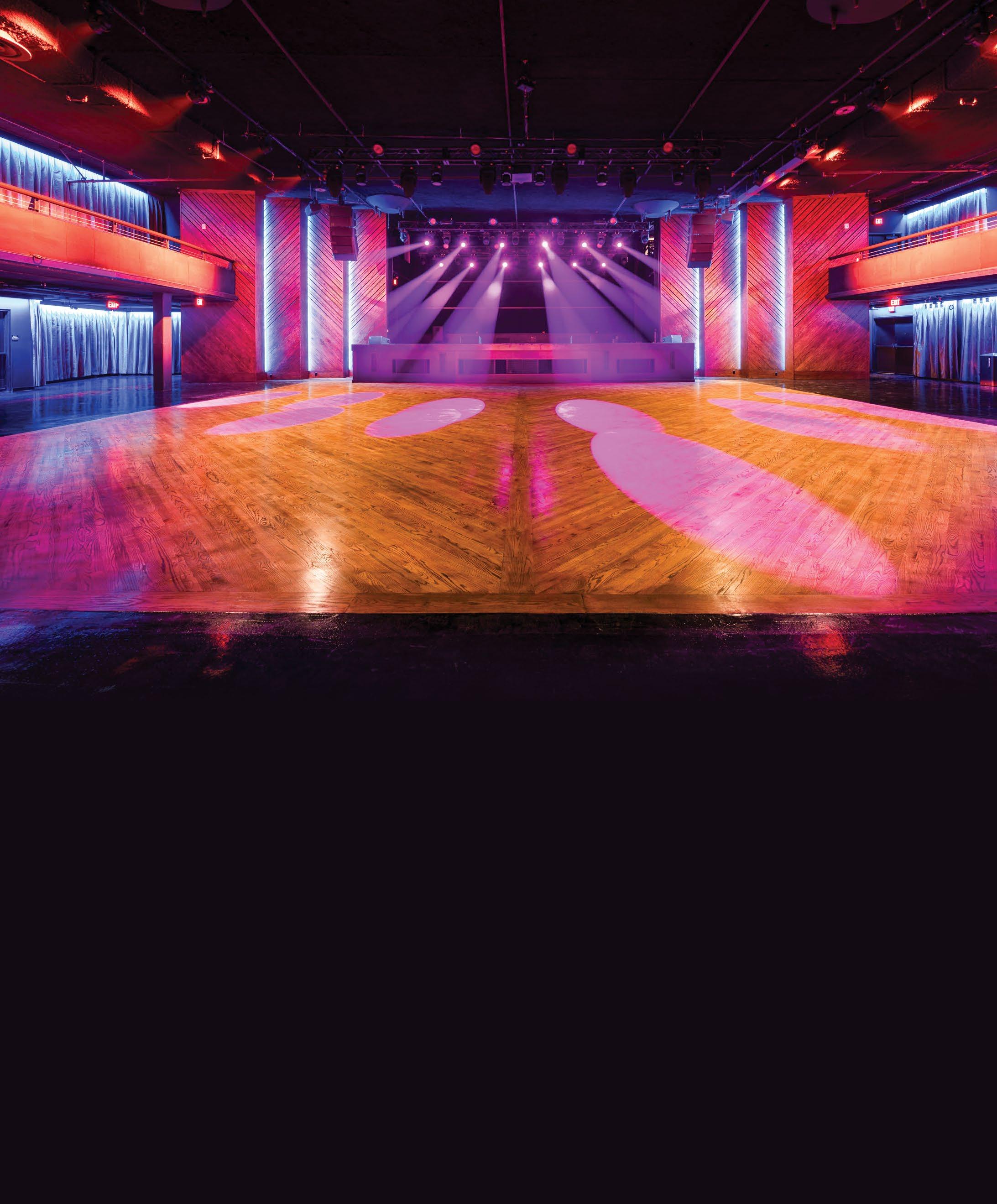
While the origins of the building are lost in the mists of time, it has hosted a succession of nightclubs over the decades, most famously Prince’s
Glam Slam West in the early 1990s. Swier and his team have reworked the previously derelict space to create a large, general admission, live music venue with a 270-degree wraparound balcony and wooden dance floor; a large, multi-use event space with separate outside access; a restaurant, lounge and bar with a small stage; a VIP room with private entrance; and an indoor patio area with one wall that opens onto views of the city. For this latest venture, Swier—co-founder and owner of New York’s Mercury Lounge, Bowery Ballroom, Music Hall of Williamsburg and Webster Hall, among others—has partnered with Gregg Perloff, co-founder and CEO of Bay Area independent concert promoter Another Planet Entertainment,
MIX | AUGUST 2023 | mixonline com 34
which runs San Francisco’s Outside Lands, reportedly the largest independently operated festival in the U.S. Following opening night with Phantogram on July 11, the Bellwether’s busy calendar for August and September includes the likes of Santigold, Carly Rae Jepsen, Sudan Archives, Yo La Tengo and Wilco.
START WITH QUALITY SOUND
Swier’s venues reflect his philosophy that topquality production technology, acoustics and staging are essential to the experience for the artist and audience alike, as he has repeatedly demonstrated since opening the Mercury Lounge in 1993. To that end, he once again called on Jeff Del Bello, president of New Jerseybased design, installation and sales company dB Sound Design, to handle audio and lighting design and integration at this newest location.
Del Bello has been installing d&b audiotechnik speakers in Bowery Presents venues since day one, but the Bellwether’s complement, from the main room to the event space to the lounge and the lobby, may be the largest collection yet. In the main room, Del Bello, assisted by dB Sound Design senior engineer Francis Valentine, installed an array of six d&b XSLi boxes on each side of the proscenium. Five KSLi-GSUB subwoofers have been set into the front of the stage. “I like to have one centered in the middle, so it’s always an odd number,” Del Bello says.
A pair of Yi10P out-fill boxes cover the balcony to either side, with another four providing stage lip fill. There are 10 M4 bi-amped wedge monitors available onstage. Everything is powered by 4-channel D40 class D amps.
When d&b introduced the XSL Series a few years ago, the company touted its performance-to-size ratio, to which Del Bello enthusiastically
attests. “This system will rip your head off; it’s crazy how powerful it is,” he says, “and it sounds really good. We fired it up, and with very little equalization, it was already in the ballpark.”
Swier admits that he initially turned tail and left as soon as he saw the four support pillars in the middle of the dance floor. Happily, his brother and business partner, Brian, an architect, developed a solution to remove the columns and provide unimpeded sightlines from anywhere in the room. “It was not an inexpensive fix,” says Michael Swier, “but a doable one,” involving the construction of a large support truss on the building’s roof parking area.
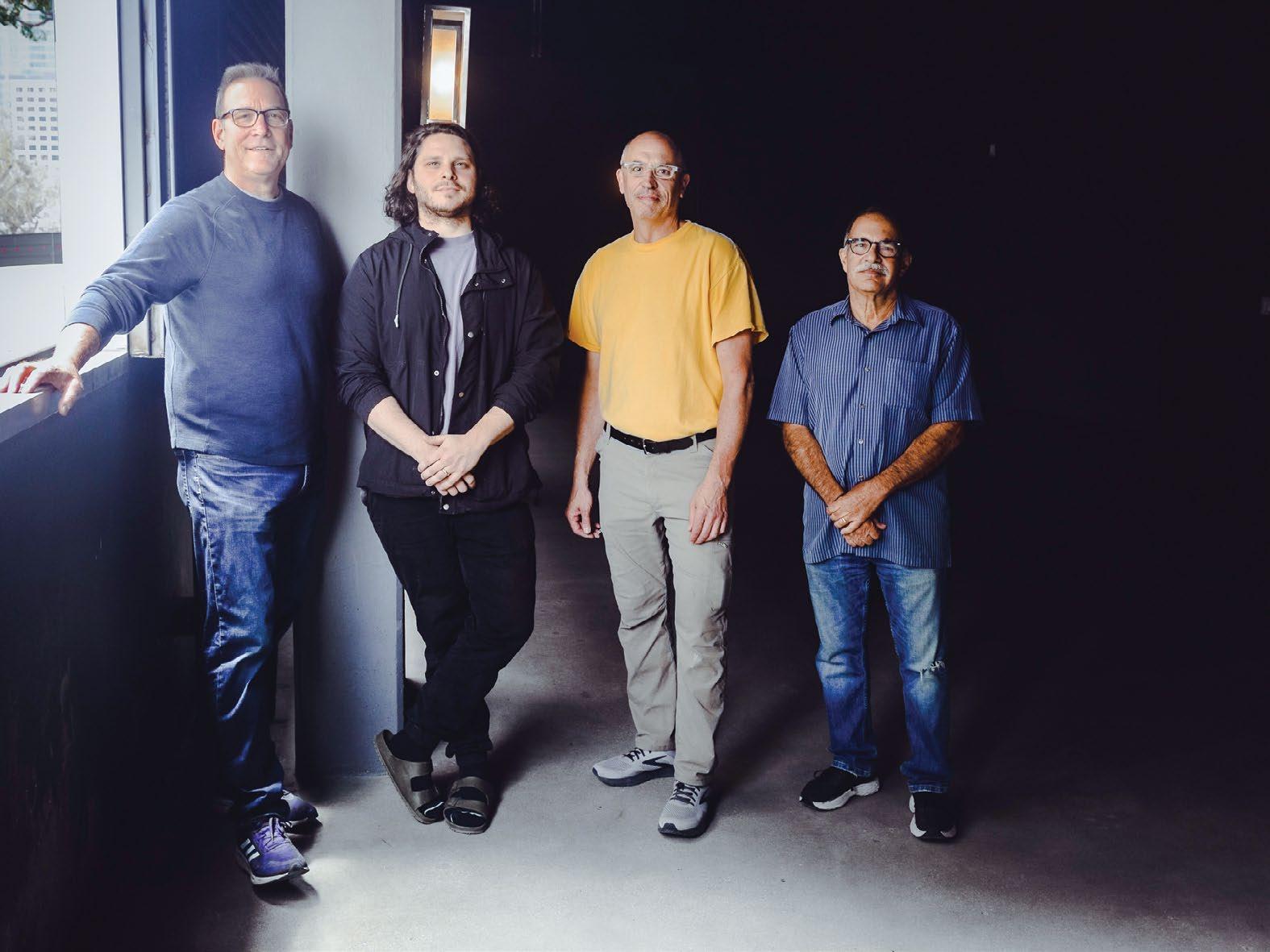
CONSOLE AND CONTROL
Previously, Del Bello would typically specify various digital or analog Soundcraft or Midas consoles at Swier’s venues but has since largely standardized on the more rider-friendly Avid platform. The Bellwether offers a 144-input Avid S6L 32D at FOH with a 112-input S6L 24C at the monitor position.
The FOH console and the lighting desk (dB Sound Design added lighting services five years ago) are in a crow’s nest, about 18 feet wide, that has been built onto the front of the balcony at the rear of the hall. If a tour is carrying its own desk, that’s no problem, says the venue’s production manager, Jon Zott, who has moved over from the Teragram, which is just a few blocks away. “So many people are bringing their own consoles, so I can move the Avid aside,” he says. The monitor mix position and amp racks are also on the balcony level in a room overlooking stage left.
Nowhere in the main hall is further than about 50 feet from downstage center, Zott reports, and the FOH mix position provides an accurate representation of the room. “We’re only talking about 21-foot ceilings, so it does translate really well. The subs translate fantastically well. It’s basically the same mix in the balcony as right in
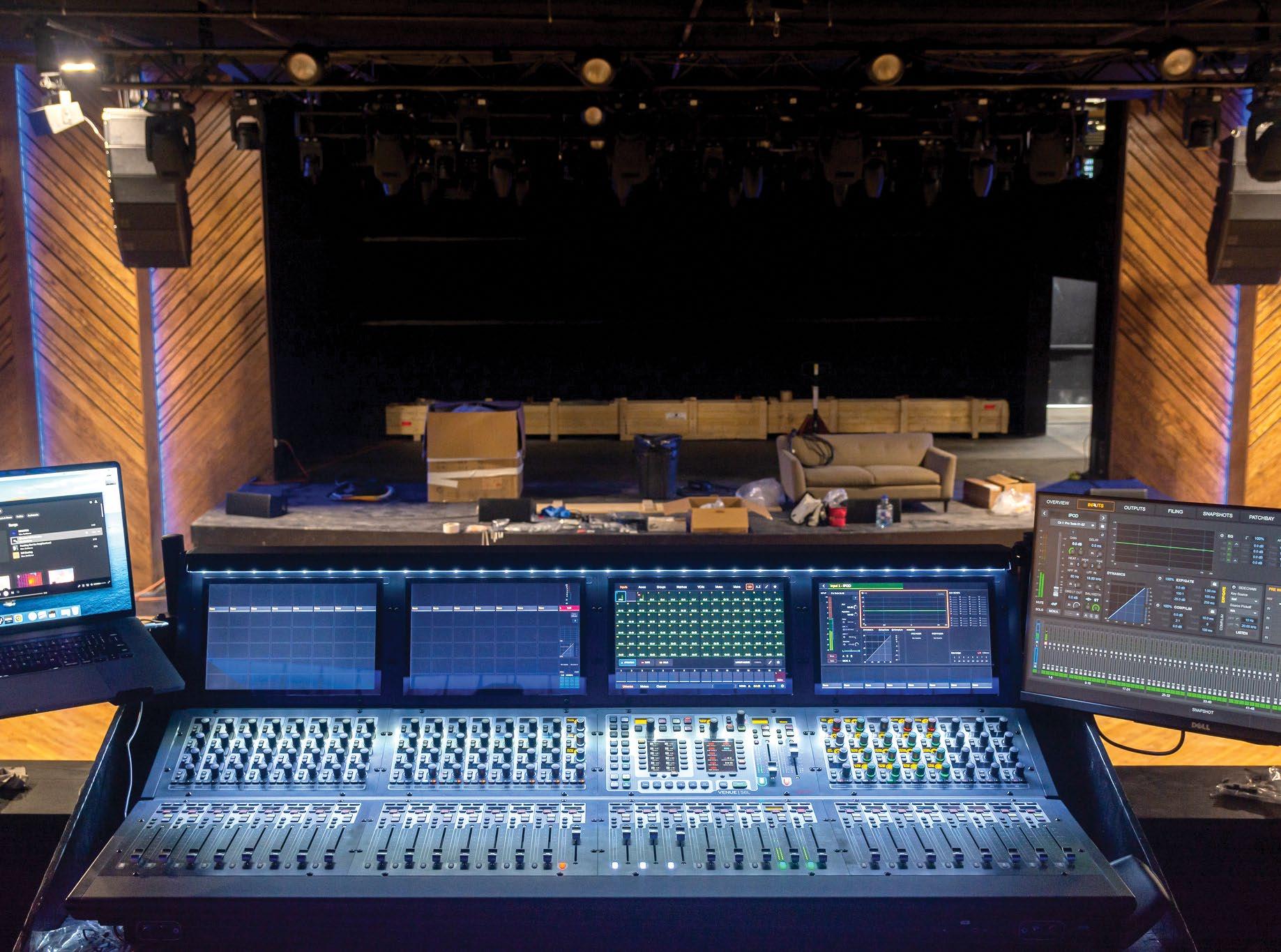
35 mixonline.com | AUGUST 2023 | MIX
the center of the floor.”
The Bellwether features a 144-input Avid S6L 32D at FOH, located at the lip of the balcony in a “crow’s nest.”
The audio team that got The Bellwether ready for opening night, from left: Jeff Del Bello, president, dB Sound Design; Jon Zott, production manager, the Bellwether; Francis Valentine, senior engineer, dB Sound Design; and Michael Panepento, acoustician, Alabama Music and Audio Supervision.
PHOTO: Steve Harvey
PHOTO: Steve Harvey
MORE ROOMS, MORE SYSTEMS
The Bellwether’s event space is a flexible-use room that Del Bello has equipped with a dozen d&b 8S coaxial top/mid boxes on a grid, Bi6 subwoofers at the four corners, and a 21S infra-sub at each end. The amplifier model he preferred wasn’t available, so there are 16 individual cable runs from the d&b 5D amps, leaving the door open for a potential upgrade to an immersive setup, he says.
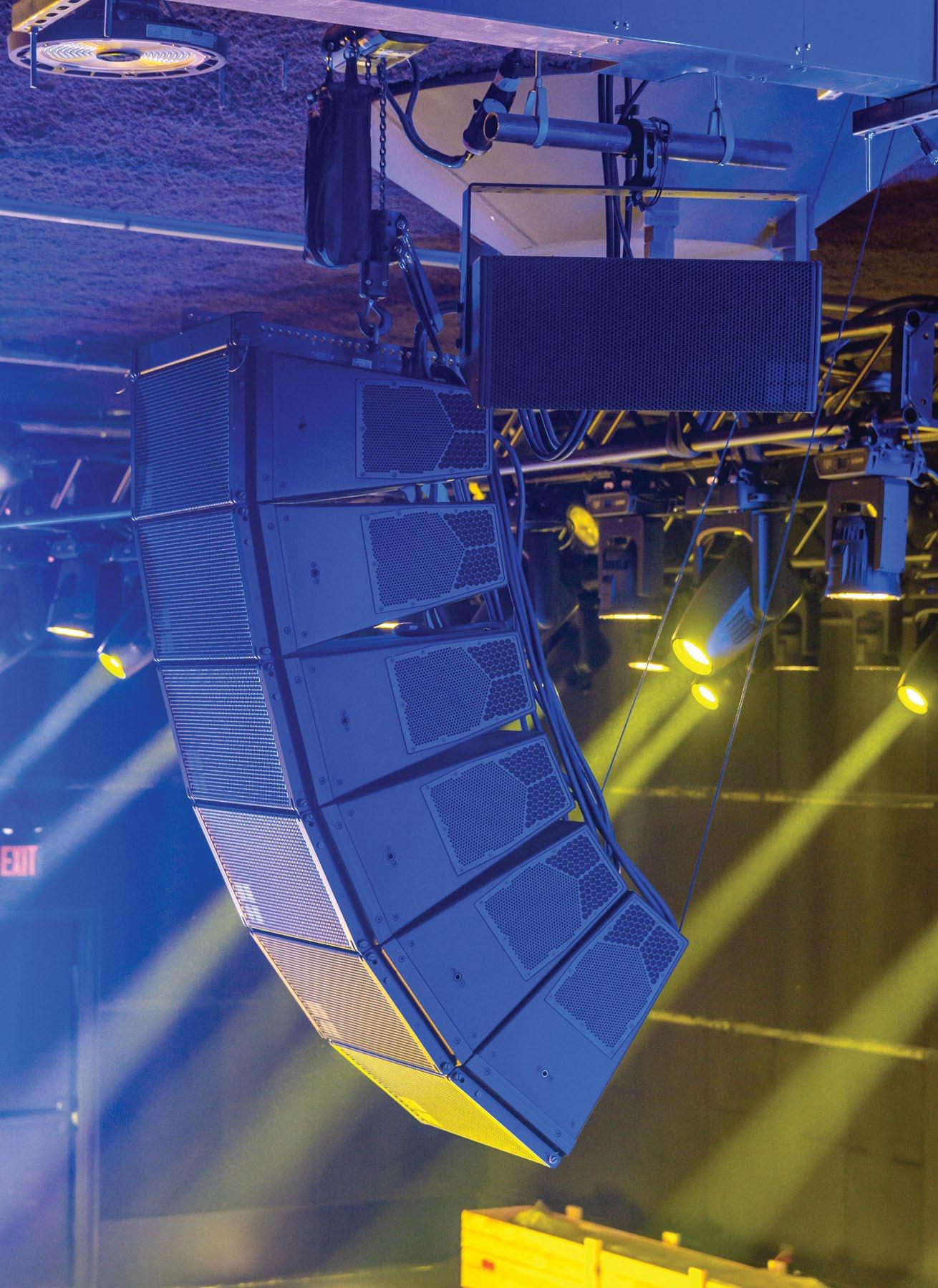
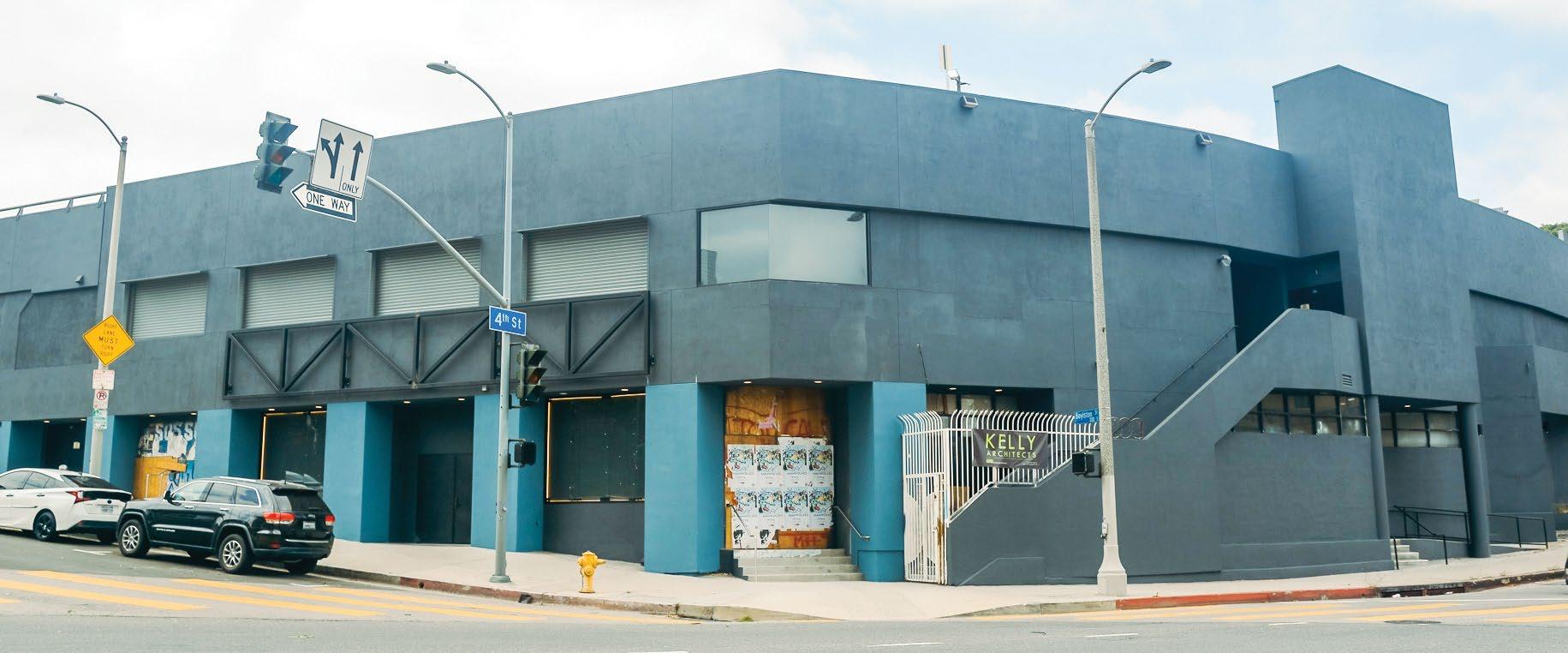
In the lounge, Del Bello has outfitted a small stage with d&b E12-D boxes, Bi6 subs and M6 stage monitors. There are two Midas M32 desks available, but the FOH console may yet be swapped out for the tabletcontrolled rack version, he says.
A significant contribution to the main room’s performance, and a trademark of any of Swier’s venues, is that he always brings in an acoustician to add whatever treatments are necessary. At the Bellwether, acoustician Michael Panepento of Alabama Music and Audio Supervision has installed Owens Corning 703 broadband absorption along the front face of the entire balcony, together with drapes along the back and sides of the balcony level. The ballroom ceiling has also been sprayed with K-13 insulation (that sound-deadening fluffy finish you may have seen in parking garages).
Panepento additionally designed and installed wood paneling on either side of the stage. “It’s basically a Helmholtz-type design, a fullfrequency diffuser and absorber,” he explains. “Whenever I use them, I get great results. Very few people will go to this length to do it, both acoustically and aesthetically, but I love the aesthetics and it does what it’s supposed to do; the room sounds really good.”
Zott agrees. In all his years of touring, he says, he has never encountered another similarly sized venue in the U.S. or Europe that sounds as good as the Bellwether. “You walk into this space, turn it on, and it’s like you’re listening to your monitors at home. I don’t know too many rooms with this capacity that feel and sound like a living room.” n

MIX | AUGUST 2023 | mixonline com 36
The main d&b audiotechnik. speaker system includes six d&b XSLi boxes and a Yi10P on each sid.
The exterior of the Bellwether, on the edge of Downtown Los Angeles. Editor’s note: The photo was taken a month before opening night
PHOTO: Steve Harvey
PHOTO: Steve Harvey
Tech Headphones
drivers operate via a matrix of neodymium magnets that both push and pull from both sides of its thin, ultralight diaphragm across its entire surface area, creating a wavefront with little harmonic distortion and a fast response time; the frequency response extends to 30 kHz. Along with comfortable ear pads, the Planar the II package also comes with a highgrade, removable, 2-meter, noise-free, 3.5mm cable that can be plugged into either side to suit workflow. There’s also an eco-friendly shoulder bag with room for accessories and the cable.
Sony MDR-MV1
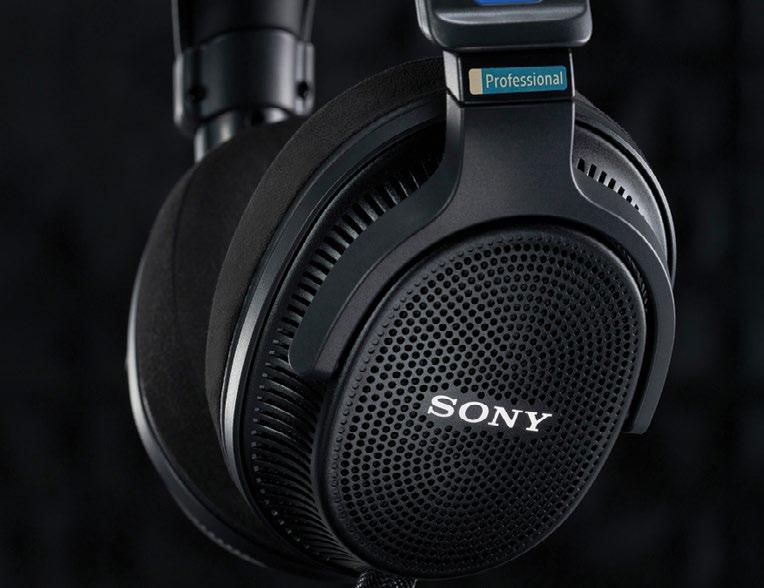
Sony made a big splash at NAMM in April with the launch of its 360 Virtual Mixing Environment service and MDR-MV1 Reference Monitor Headphones. Top engineers have been raving about them ever since. The open-back design, according to the company, helps with the extended spatial sound reproducibility and sound object positioning within a 360-degree space, while also reducing internally reflected sounds and eliminating acoustic resonances. The headphones’ driver units provide wideband playback (5 Hz – 80 kHz) with natural high frequencies, said to help with localization, spaciousness and detailed changes. The openback structure of the headphones reduces internally reflected sounds and eliminates acoustic resonances.
Avantone Pro Planar the II
Avantone Pro introduced its new “Planar the II” headphones in June, updating its original Planar model with a lower-weight edition. The open-back, reference-grade headphones’ planar
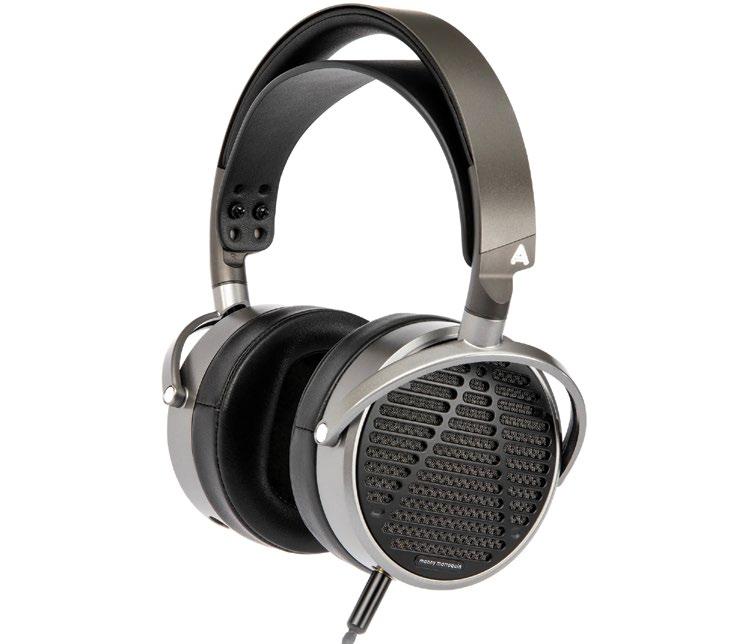
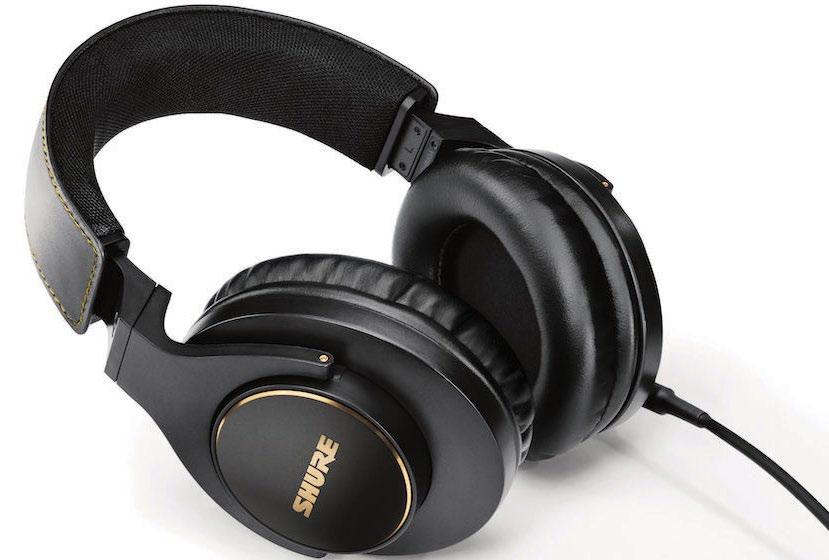
Audeze MM-100
Featuring the same Audeze Planar Magnetic technology behind the MM-500, introduced in 2022 with A-list engineer Manny Marroquin consulting in the development and loaning his initials, the MM-100 is both lighter weight and more affordable. It’s also built for comfort and extended hours of use. The over-ear, open-back design includes a 90mm transducer with an ultrathin Uniforce diaphragm. Frequency response is stated as 20 Hz – 25 kHz, THD of < 0.1% @ 100 dB SPL, 1kHz; sensitivity 98 dB/1mW (at Drum Reference Point); and max sPL is 120 dB. The MM100 comes with a braided headphone cable, 6.3mmto-3.5mm adapter cable and a soft storage bag.
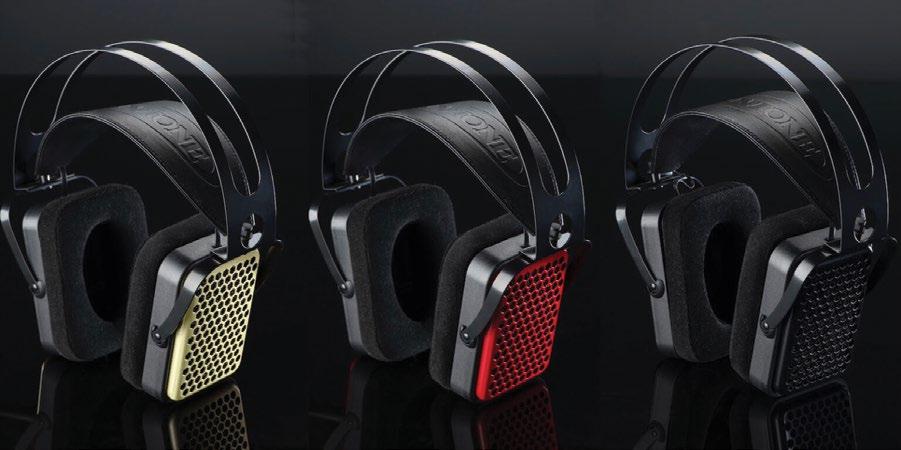
beyerdynamic DT 700 PRO X , DT 900 PRO X
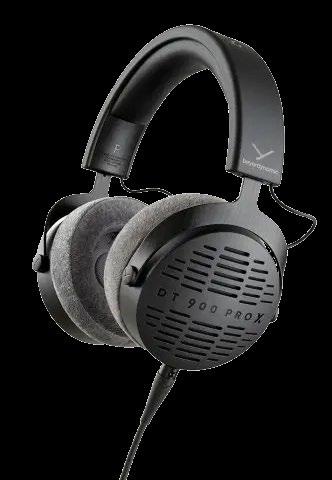
The closed-back DT 700 PRO X can be used for studio or mobile production, while the
circumaural, open-back
DT 900 PRO X is aimed at professional monitoring, mixing and mastering. Each model makes use of the new Stellar.45 driver, based around a strong neodymium magnet and a lightweight voice coil made of copperplated, high-tech wire. Used in conjunction with a newly developed three-layer speaker cone with integrated attenuating layer, the efficient driver system has an impedance of 48 ohms.
Shure SRH840A
The SRH840A, released in 2022, updates the SRH840 and eatures a circumaural (over-ear), closed-back design, making them appropriate for tracking. Shure bills them as “monitoring headphones,” featuring some “nuanced” improvements to the sound, resulting in lower harmonic distortion and more precise left-right driver matching. The frequency response of the 40mm driver is reported as 10 Hz – 22 kHz; impedance is 38 ohms. The SRH840A weighs in at 0.6 pounds, with plush ear cushions, adjustable headband, and both ear cups able to swivel. It comes with a 9.8-foot straight cable.
37 mixonline.com | AUGUST 2023 | MIX
Tech // Headphones
Sennheiser HD-400 Pro
The HD 400 PRO studio reference headphones are built around a lightweight, openback design fitted with soft velour ear pads, the first open studio headphones in the company’s PRO line. Producing a frequency response of 6 Hz – 38 kHz, the in-house-developed 120-ohm transducers include a diaphragm made from a proprietary polymer blend that is said to provide deeper bass. Distortion is below 0.05% (measured at 1 kHz, 90 dBSPL)
Hi-X65 is said to provide excellent stereo imaging and low total harmonic distortion (measured at <0.1% at 1 kHz). Frequency range is stated as 5 Hz – 28 kHz, with 110 dB SPL/V impedance. The Hi-X65 comes with both 3-meter and 1.2-meter detachable cables, with 3.5-mm connectors at both ends.
of 36 ohms. They are rated at 0.1% total harmonic distortion while handling 500mW per driver. Sensitivity on the KNS 8402 is 97 dBSPL @ 1mW, with maximum SPL of 124 dB. Frequency response is specified as 5 Hz – 23 kHz. All the KNS headphones come in matte black only and are made using an impact-resistant plastic material that makes them super lightweight.
Rode NTH-100
Focal Clear Mg Professional
The Clear Mg Professional (Clear Magnesium) Headphones incorporate a magnesium cone for greater dynamics and tonal balance across the full audio spectrum. The circumaural, openback design incorporates 40mm, full-range speaker drivers with Magnesium M-shaped inverted domes, combined with the frameless 1-inch-diameter and ¼ -inch-high copper voice coil. The open grille inside the ear cup is said to extend high frequencies.
Austrian Audio Hi-X65
The Hi-X65 headphones incorporate the company’s Hi-X Drive Technology, which begins with a 44mm driver, a ring magnet system, and a copper-plated aluminum voice coil. The
Neumann NDH 30
Last year, Neumann introduced the new NDH 30 open-back headphone as a reference-class studio headphone for mixing and mastering in both stereo and immersive formats. While the headphone retains the metal construction of the closed-back NDH 20, it features a new acoustic system design, including optimized and positioned dynamic drivers intended to recall planar magnetic transducers. It is said to have a low harmonic distortion and uses frequencyselective absorbers to shape an even response across the audio spectrum.
KRK Systems KNS 8402, 6402
Both models are closed-back, circumaural (over and around the ear) designs with the KNS 8402 aimed at pro studio use. The KNS Series phones use 40mm dynamic drivers with neodymium magnets for a rated impedance
Early in 2022, Rode introduced its firstever headphone: the NTH-100 professional over-ear model, sporting custom-matched 40mm dynamic drivers based around a custom voice coil with a four-layer aluminum alloy as its core, a stiff triple-layer Mylar diaphragm, and a rare-earth neodymium magnet, aiming to provide low levels of distortion and an accurate response across a broad frequency range.
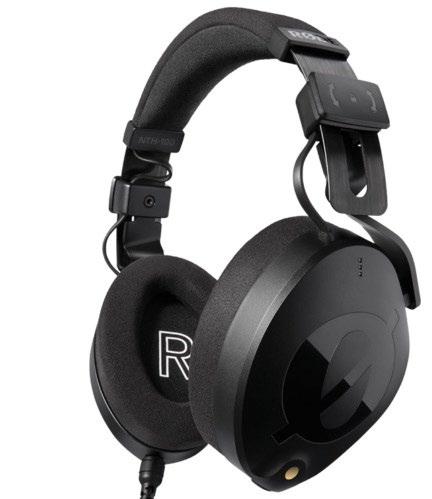
AKG K371-BT Headphones
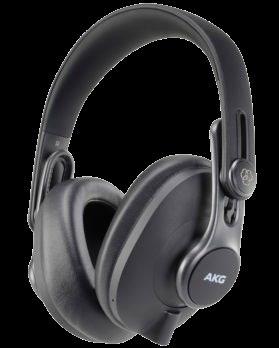
The K371-BT serves double-duty as a wired studio headphone with Bluetooth (5.0) connectivity. The over-the-ear, closed-back model was designed for maximum sound isolation and superior bass response. Hefty 50mm drivers produce an extended frequency range of 5 Hz to 40 kHz. The ear cups are made of memory foam–like material, and both cups swivel 90 degrees, making the K371-BTs also suitable for DJ use. The package includes three connector cables: 9.8-foot and 3.9-foot straight, and a 9.8-foot coiled. n
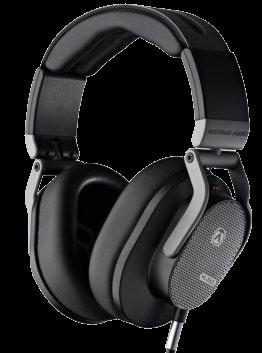
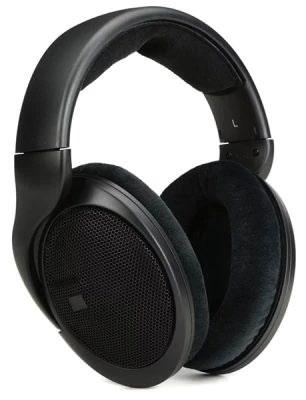

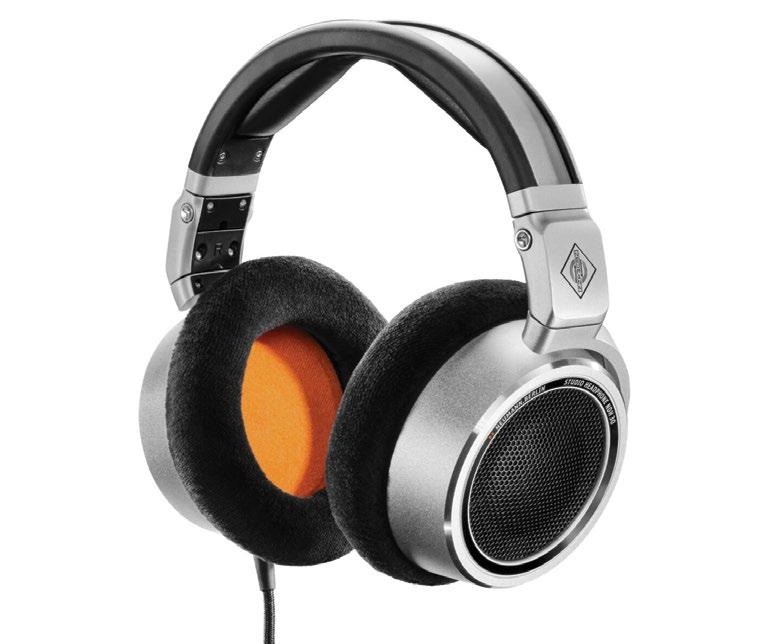
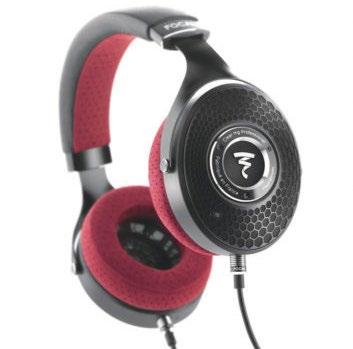
MIX | AUGUST 2023 | mixonline com 38
Tech // new products
Drawmer 1977 Channel Strip
U.S. distributor TransAudio Group has released the Drawmer 1977, reportedly the company’s most versatile channel strip to date. Designed by Ivor Drawmer and his creative team, the 1977 is said to provide “the clarity of an ultraclean preamplifier, the precision of a 3-band parametric equalizer, the silkiness of a soft-knee compressor, and the ability to dial in desired warmth with variable harmonic saturation." The preamp features mic, line, and instrument D.I., with 66 dB of stepped gain. Three bands of fully variable frequency control, a cut and boost of ±12 dB, and fully variable control of the midband allow the user to modify everything from subtle fine tuning to tone sculpting problematic recordings. Another functionality is giving the user control over the order of the signal path operating The output section includes a wet/dry mix for parallel processing controlled by a single knob, while an output control cuts or boosts the level to match high-end audio interface input levels, shown on a large backlit VU meter for accurate monitoring. A preamp direct switch bypasses the EQ, compressor and saturation for microphone output.
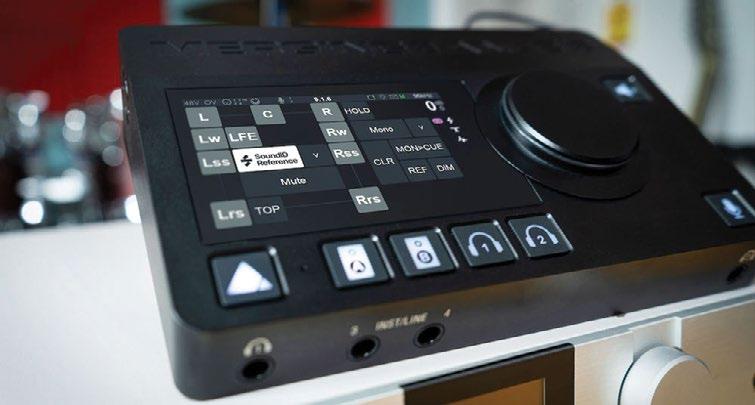
Alcons Audio LR15 Pro-Ribbon Compact Line Array
Alcons Audio has introduced its new LR15, a twoway, “ultra-compact”–format line array system. The LR15 uses Alcons’ pro-ribbon technology for mid and high frequencies, creating a fast impulse response that the company says results in up to 90% less distortion. The cylindrical wavefront of the pro-ribbon transducer with 5-inch voice-coil and the symmetrical component configuration offers pattern control in both the vertical and
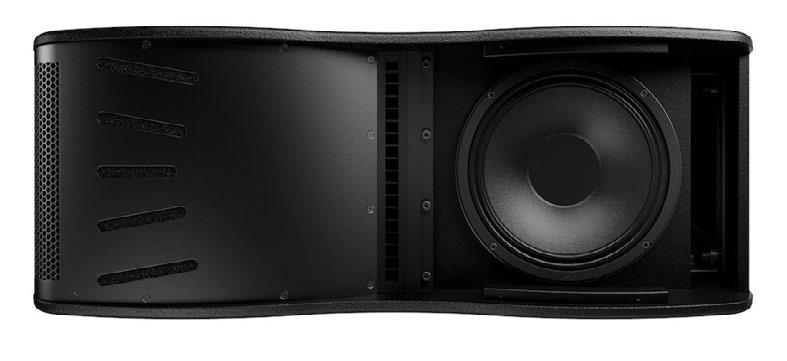
horizontal planes up to the highest frequencies. The pro-ribbon serves up power handling of 1000W and a 1:15 RMS-to-peak ratio. The LF-section consists of two next-gen 6.5-inch transducers—a hybrid of a woofer and midbass driver featuring a 2-inch, dual-coil motor structure with extended excursion. The woofers are loaded by new FlowVent ports, reportedly extending the usable LF response down to 53 Hz. The LR15 is driven by the Sentinel amplified loudspeaker controller, and is available with 90-degree (LR15/90) or 120-degree (LR15/120) horizontal dispersion.
can be used to build Mac-based Dolby Atmos renderers; Atmos metadata and audio can use the same network. VAD also provides a solution for connecting the DAW to the renderer and monitoring system, Merging’s Hapi MkII can be added to provide additional I/O, such as MADI, AES, analog or digilink for connectivity to Avid HDX systems.
Blaze Audio Constant Curvature Array Loudspeaker
Blaze Audio has introduced its new Constant Curvature Array loudspeaker with the CCA10i, a compact, 3-way, arrayable point-source model designed for medium-sized venues. Available either bi-amped or self-powered, the CCA10i features two 10-inch drivers providing bass reproduction down to 52 Hz. The system’s constant curvature waveguide is intended to
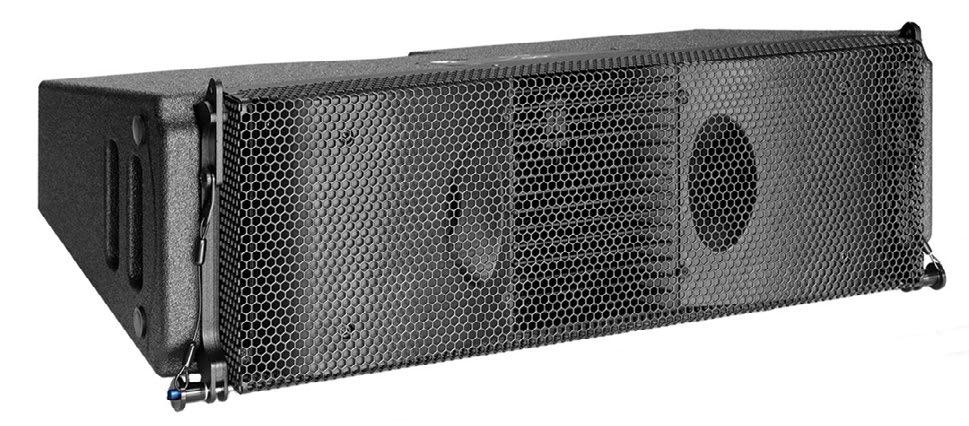
Merging Dolby Atmos Monitoring Bundle
Merging Technologies has introduced a hardware and software control and calibration solution for Dolby Atmos monitoring across a variety of applications. The bundle includes a Merging Technologies Hapi MkII interface with DA8 cards, Anubis Pro SPS and Sonarworks SoundID Reference, which guides the user through an automated measurement to identify room issues and build various correction profiles for different workflows. For acousticians or Dolby consultants calibrating systems manually, Anubis provides trims, delays and 336 EQs. As a monitoring engine with 128 inputs, it can handle sources, stems, speaker sets and cues in a variety of formats. With two headphone outputs, Anubis can feed individual cue mixes, say, for monitoring Atmos binaural mixes with a client or feeding a low-latency cue mix to an actor for ADR, or a musician for tracking. The Hapi MKII headphone output extends this same functionality. The Merging Atmos bundle includes Merging Technologies mic pres and converters, as well as a talkback mic and circuits. The bundle also showcases Merging VAD, which
provide array coherence along with 160-degree symmetrical horizontal pattern control. Featuring a coaxial compression driver that uses separate midrange and high-frequency polymer ring-shaped diaphragms, the compression driver coupled to the company’s stabilized waveguide and constant directivity horn is said to provide response ranging from 420 Hz to 18 kHz.
Lang PEQ-2 Program Equalizer
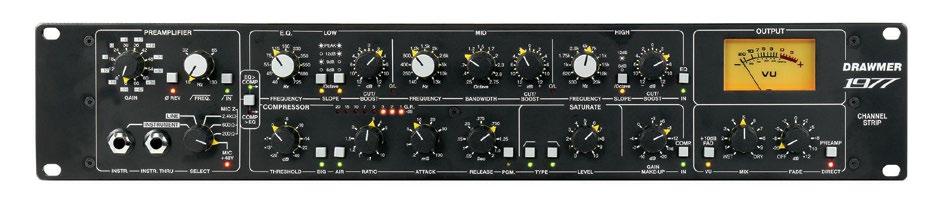
The vintage Lang Electronics pro-audio brand was recently acquired by Heritage Audio, and now the resurrected name’s first “new” product is out—the PEQ-2 Program Equalizer. The
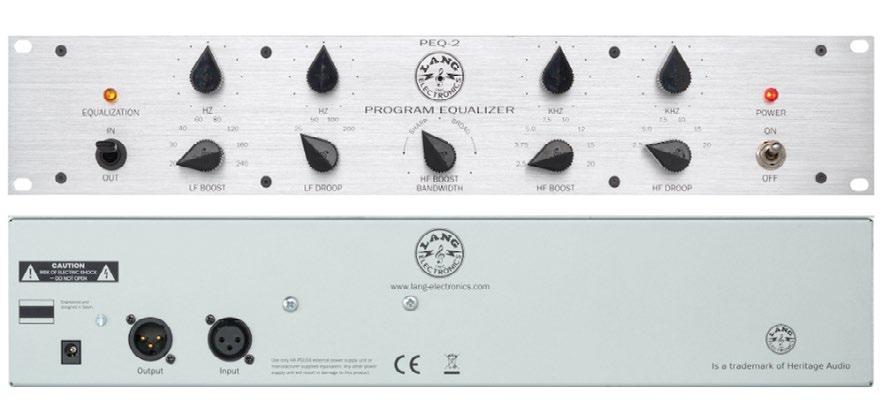
39 mixonline.com | AUGUST 2023 | MIX
new EQ updates the original Model PEQ-2, developed 60 years ago, to reportedly offer a sharper, tighter response. With independent controls for Boost and Droop (Cut) of the High band, users can transform material in creative ways—an HF Boost Bandwidth control adjusts the frequency range covered by the boost. The PEQ-2 includes Low Shelf boost and cut control and High Shelf cut, as well as a High Peak Boost with a completely variable Q (Bandwidth) setting that spans from Sharp to Broad. The Low Shelf Boost offers eight frequencies to choose from: 20, 30, 40, 60, 80, 120, 160 and 240 Hz, with up to 16 dB of boost. The Low Shelf Droop offers four frequencies: 25, 50, 100 and 200 Hz, with up to 18 dB of cut. The High Peak Boost offers eight frequencies: 2.5, 3.75, 5, 7.5, 10, 12, 15 and 20 kHz, with a boost that varies the maximum between 21 and 12.5 dB, depending on the Bandwidth setting. The High Shelf Droop offers six frequencies: 2.5, 5, 7.5, 10, 15 and 20 kHz, with up to 16 dB of cut.
Adamson IS7c IS-Series Coaxial Speaker
Adding to its installation-focused IS-Series of loudspeakers, Adamson Systems Engineering has introduced its new IS7c ultra-compact, lightweight, passive 2-way coaxial speaker. Set to commence shipping in Q4, 2023, the IS7c sports an ND7-C co-axial transducer, which utilizes Adamson’s Advanced Cone Architecture. The IS7c offers a frequency range of 80 Hz to 20 kHz with 130 dB of maximum peak SPL, as well as a nominal concentric dispersion of 90 degrees.
Rigging points are available in the form of top and bottom mini-SLR discs, each containing 3/8-inch threaded insert. A pair of Speakon NL4 connectors and a 2-point barrier strip are available for connection.
incorporating 30 full-range drivers in a singlelayered matrix arrangement. Using the modular Matrix Array principles of X1, X2 can be scaled to handle a variety of spaces. X2 is built to withstand extreme weather conditions, including high temperatures, humidity and water exposure. With the announcement of X2, Holoplot also released a new version of its sound system design software, Holoplot Plan.
Tascam DR-10L Pro Recorder and Lav
Behringer XENYX 1003B Mixer
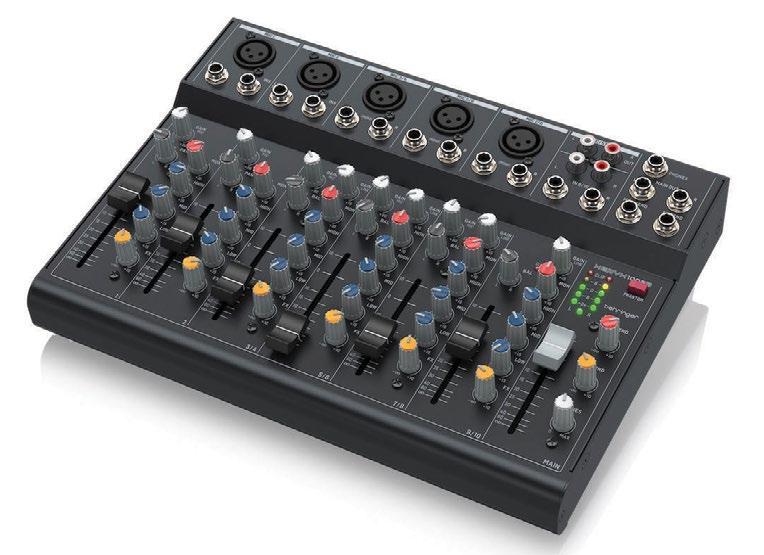
Behringer has unveiled its new XENYX 1003B, a compact analog 10-input mixer with five mic preamps. Able to run on batteries if necessary, the 1003B is aimed at content creators, streamers, podcasters and recordists, but is applicable for live sound, multi-synth setups and general mixing applications as well. The diminutive mixer serves up two mic preamps with inserts for external processing, three mic preamps with stereo line inputs, and a dedicated stereo line input channel. The mixer includes 3-band EQ onboard and sports 60mm faders for accurate level control. An integrated post-fader FX send control per channel lets users plug in any external FX processor; the monitor bus sums up the channel signals before fader and EQ, for creating an independent monitor mix. Monitoring can be handled via headphones or on high-quality RCA and impedance-balanced ¼-inch TRS jack connectors.
Holoplot X2 Loudspeaker System
Holoplot has introduced X2, which puts the company’s speech-based and multi-content intelligibility technology into a smaller form factor. The more compact hardware design employs the same core technologies of 3D AudioBeamforming and Wave Field Synthesis as the company’s X1, while making it more accessible for integration projects across a variety of sectors. Optimized for speech applications, the Modul 30 (MD30) is a Matrix Array loudspeaker,
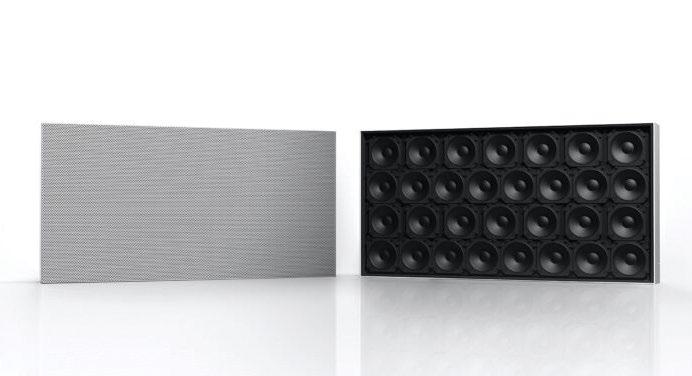
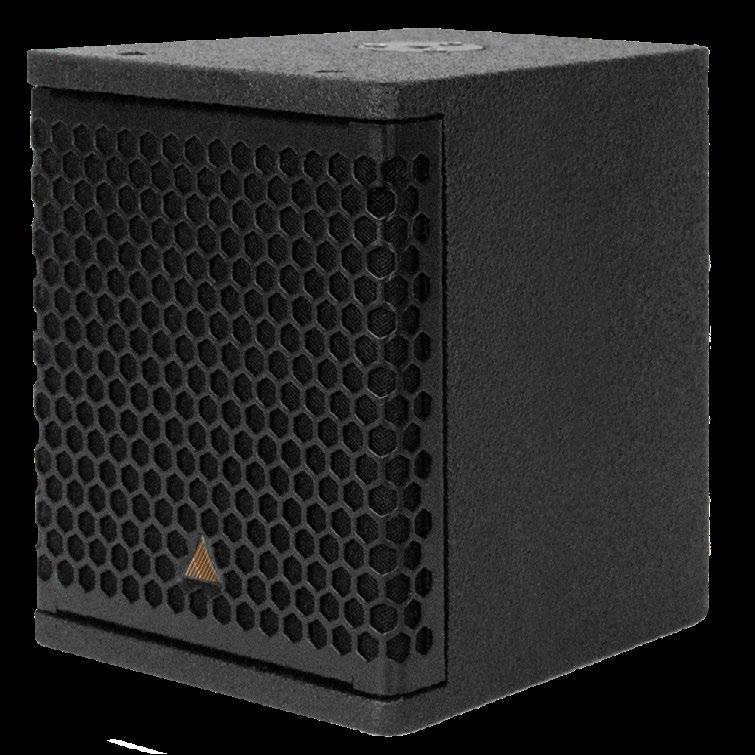
Tascam has launched its new DR-10L Pro 32-bitfloat field recorder and lavalier microphone, intended for recording audio at events such as weddings, cinema shoots, content videos and general interviews. The DR-10L Pro’s default 32bit float recording mode employs dual ADCs to capture sounds. The included TM-10L lavalier microphone can reportedly handle loud sound pressure levels without distorting. The recorder itself compact and lightweight, weighing in at just 65 grams, and is powered by two Lithium AAA batteries (up to 24.5 hours, or 16 hours with alkaline). The recorder also offers support for microSDXC cards up to 512GB. Up to five DR-10L Pro units can be remotely controlled using the optionally available AK-BT1 Bluetooth dongle, with control from iOS, iPadOS and Android devices wirelessly through the DR-10L Pro Connect app. n
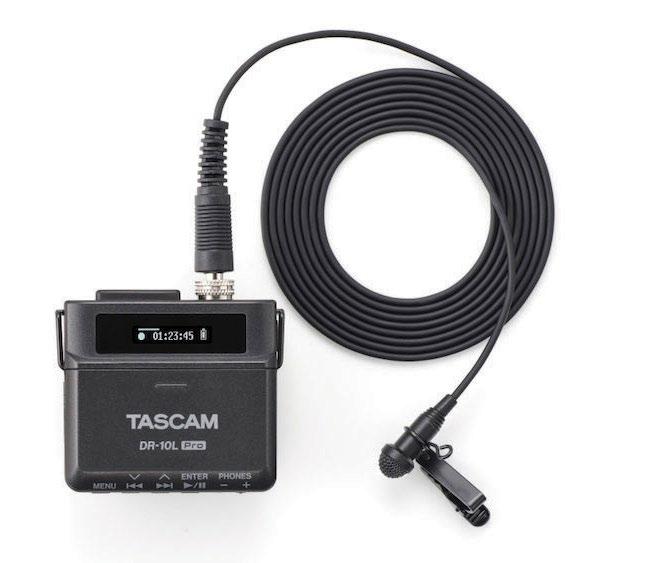
MIX | AUGUST 2023 | mixonline com 40
products
Tech // new
DPA 2012 and 2015 Cardioid Mics
Small-Diaphragm Condensers Designed for the Stage
By Steve La Cerra
Designed specifically with live applications in mind, the 2012 and 2015 from DPA are the latest additions to the company’s 2000 Series of microphones. Intended for use on a variety of instruments, the 2012 and 2015 are small-diaphragm mics utilizing 17mm, pre-polarized, pressure-gradient capsules built into a very compact (.75 x 3.7 inches) housing. For situations where a traditional cardioid pattern is too tight (like overhead on a large drum set), the wide-cardioid pattern of the 2015 is recommended.
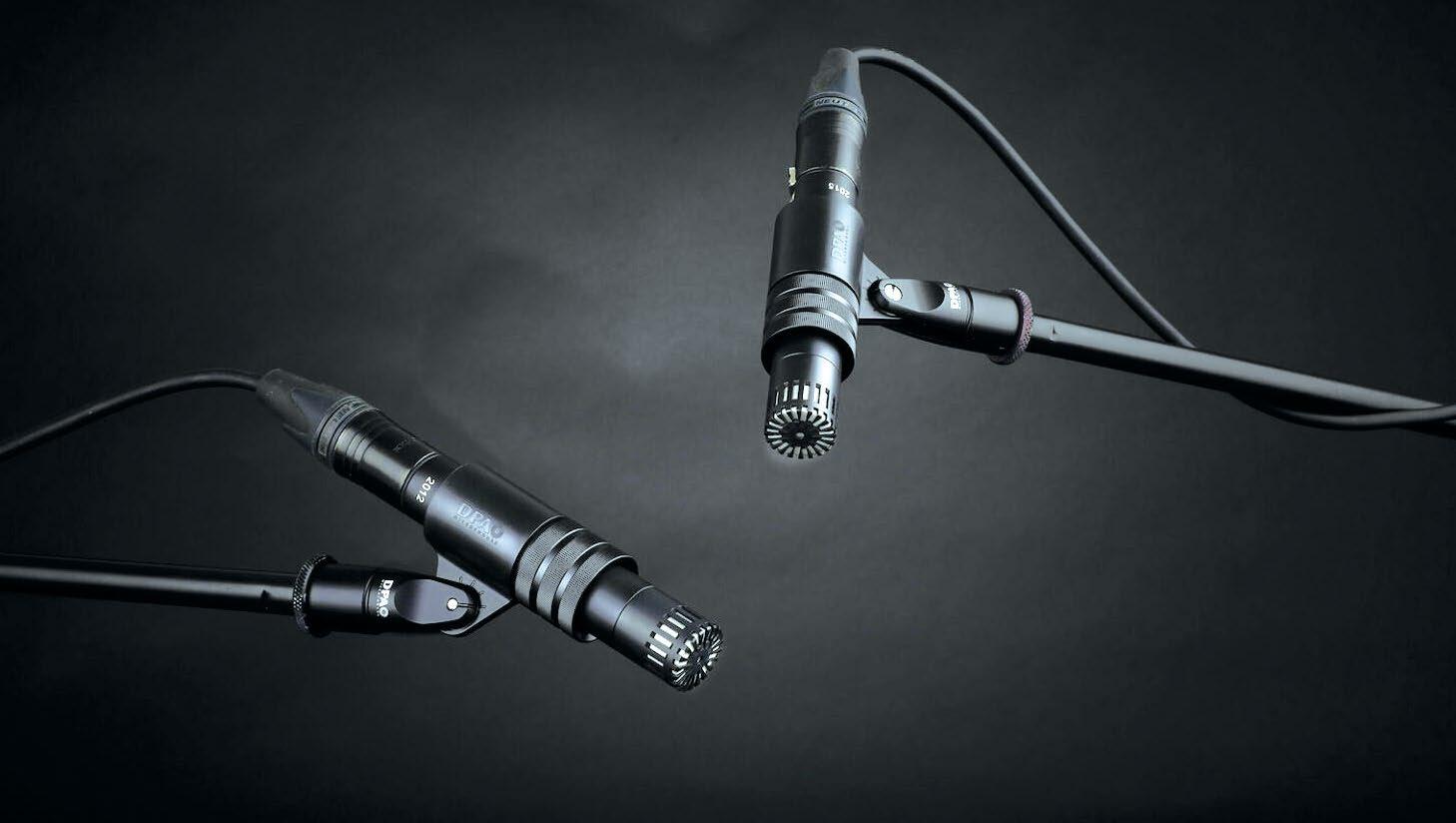
Specs for the 2012 include sensitivity 8 mV/Pa, -42 dB re. 1 V/ Pa; equivalent noise level 20 dBA typical, maximum SPL 153 dB (@10% THD), and dynamic range 131 dB. Specs for the 2015 include sensitivity 12 mV/Pa, -37.7 dB re. 1 V/Pa; equivalent noise level 18 dBA typical, maximum SPL 150 dB (@10% THD), and dynamic range 132 dB.
Both models have an effective frequency range of 40 Hz to 20 kHz (±2 dB at 11.8 inches), and current consumption is 0.7 mA, well
within the 2 mA phantom power spec. Stereo pairs are shipped in a softshell case with compartments for the microphones, mic clips and windscreens, while singles are furnished with a padded zippered pouch, windscreen and clip.
There’s not much to explain about the 2012 and 2015 due to the absence of adjustments or contouring switches, and the mics easily and securely mount in the provided clip: loosen the rotating collar, insert the mic, then tighten the collar to lock the mic into position. It’s a simple yet effective design that allows plenty of flexibility in mic placement, making it easy for me to sneak the 2012s and 2015s into place on toms while avoiding nearby cymbals.
SETTING THEM UP
I used the 2012s and 2015s in a variety of situations on stage and in the studio. During the first outing, I placed the 2012s close-up on toms, and used the 2015s in a spaced-pair configuration for
MIX | AUGUST 2023 | mixonline com 42 Tech // reviews
overheads on a drum kit.
The 2012s did a great job rejecting nearby cymbals, even when the ride cymbal was in close proximity. Timbre of the 2012s on toms was full and round, with a bit more bottom end than I care for (a gentle HPF might have come in handy here), but better to have that bottom end and be able to dial it back with a touch of EQ than for the mic to not capture it (I’d later learn that this was in part due to the 2012’s proximity effect). The 2012 captured a lot of detail in the tom sound, clearly reproducing both stick on head and the pitch bend ”dooooom” of the decay.
Meanwhile, the 2015s that were overhead (about five feet high, five feet apart, pointing straight down) captured cymbals with a natural smoothness that I’ve come to expect from DPA, while providing consistent coverage from one side of the kit to the other. The 2015s added a nice smack to the toms that complemented the mondo low end of the 2012s, and brought presence to the snare drum. One of the things I like about using the wide cardioid pattern for overheads is that you can place them lower in height without getting “hotspots,” and moving a mic closer to the source always helps reduce leakage from other instruments on the stage.
Swapping positions of the mics (2012s overhead, and 2015s close on toms) produced interesting results. The 2015s allowed more leakage from cymbals (though still an acceptable amount) and didn’t exhibit as much proximity effect as the 2012s. As a result, I preferred the 2015s close-up on toms to the 2012s. The 2012s overhead (spaced pair about six feet high, five feet apart) produced more presence from the snare drum than the 2015s, but the difference was subtle. They also, expectedly, captured less of the room sound.
Back in the studio, I was able to do an A/B comparison of the 2012 and 2015, with one of each used as a mono overhead on a drum kit placed six feet high, directly above the snare and pointing straight down.
The 2015 provided the illusion of being brighter on hat and cymbals, but I feel like this perception can be attributed to the fact that the 2015’s wide cardioid pattern maintains the HF response further off-axis. At 60 degrees off-axis, for example, response of the 2015 at 4 kHz falls to around -7 dB, while that of the 2012 is closer to -10 dB—which also explains the 2015’s ability to capture more room tone given the same placement as the 2012. As I anticipated, the 2012
sounded a bit more “tight” than the 2015, and the 2015 captured a tad more in the bottom end. Either microphone, whether mono or paired, yielded a realistic balance of the kit and would be appreciated by engineers who like to mix the kit from the top down (i.e., starting with the overheads).
ON INSTRUMENTS
Recording a Yamaha upright piano gave me the chance to stage a “shootout” of the 2012 and 2015 with pairs of AKG C414s and Neumann KM184s. The front panel was removed from the piano, and the mics were set as closely together as possible in an “over the shoulder” placement— low mics approximately a foot and a half from the hammers where the low and mid strings meet, and high mics approximately the same distance from the hammers, two-thirds of the way up the keyboard.
Using the 2012 on snare drum showed off its ability to reject unwanted sounds. Leakage from toms and hi-hat was very much attenuated, and stage ambience was practically non-existent. The compact size of the 2012 made it easy to place, even when the drummer had the ’hat fairly close to the snare drum. The 2012 produced a lot of energy around 200 Hz (which I didn’t love), but a few dB cut around 200 Hz and a slight bump at 5 kHz gave the drum more presence in the mix.
Used to record acoustic guitar in both stereo and mono, the 2015 and 2012 delivered big time. I first tried pairs of both mics placed in NOS stereo roughly two feet in front of the instrument, and the results were fantastic: very realistic, smooth in the top end and consistent from lows to highs, with a really nice sense of the strumming (preamps were an Audient evo SP8, review forthcoming). The 2015 had a layer of sheen and openness that the 2012 lacked, but when the player started to fingerpick, I preferred the slightly laid-back upper-mids of the 2012.
Switching from stereo pairs to a single mic on the same guitar—placed roughly 10 inches away and pointing toward where the neck meets the body—produced equally beautiful results from either microphone. The 2012 was a bit tighter spatially, and also in terms of frequency extremes, but quite frankly, you can’t go wrong with either microphone.
The 414s produced a nice attack but too much bottom end for my taste. The KM184s were a bit lean compared to the other pairs but had the edge in clarity. The 2012s and 2015s sounded fuller than the KM184s, with the 2015s delivering a slightly subdued attack compared to the 2012s. To me, the 2015s were the most balanced, probably due to the wideness of the pattern, which enabled the mics to cover the span of the instrument.
PRODUCT SUMMARY
COMPANY: DPA Microphones, Inc.
PRODUCTS: 2012 Compact Cardioid and 2015 Wide Cardioid
WEBSITE: www.dpamicrophones.com
PRICE : $849 each; $1595/stereo pair
PROS: Excellent sound quality; low noise floor; easy to place in tight spaces.
CONS: No HPF or pad switches.
Definition was impressive when I used either microphone on bar chimes: They were able to capture the individual “ting” of each bar, as opposed to mushing them all together. In this situation, the mics sounded very much alike.
In general, I found that the 2012 had a more pronounced proximity effect, while the 2015 allowed me to get closer to the source without worrying that proximity effect would become an issue—a trait that also seemed to make the 2015 less sensitive to wind noise when used without the wind screen.
DPA has a couple of winners on its hands with the 2012 and 2015. You’d be hard-pressed to go wrong with either mic, but I feel like the 2015 offers more versatility, as long as you’re okay with the idea that they’ll capture more room tone in applications where the mics will be backed off the instrument. Typical of products from DPA, build quality is first-rate.
If I were shopping for mics in this price range, I’d make it a point to audition the 2012 and 2015, but beware—you may end up buying them! n
43 mixonline.com | AUGUST 2023 | MIX
The 2015s that were overhead captured cymbals with a natural smoothness that I’ve come to expect from DPA, while providing consistent coverage from one side of the kit to the other.
Soundtoys SuperPlate Reverb
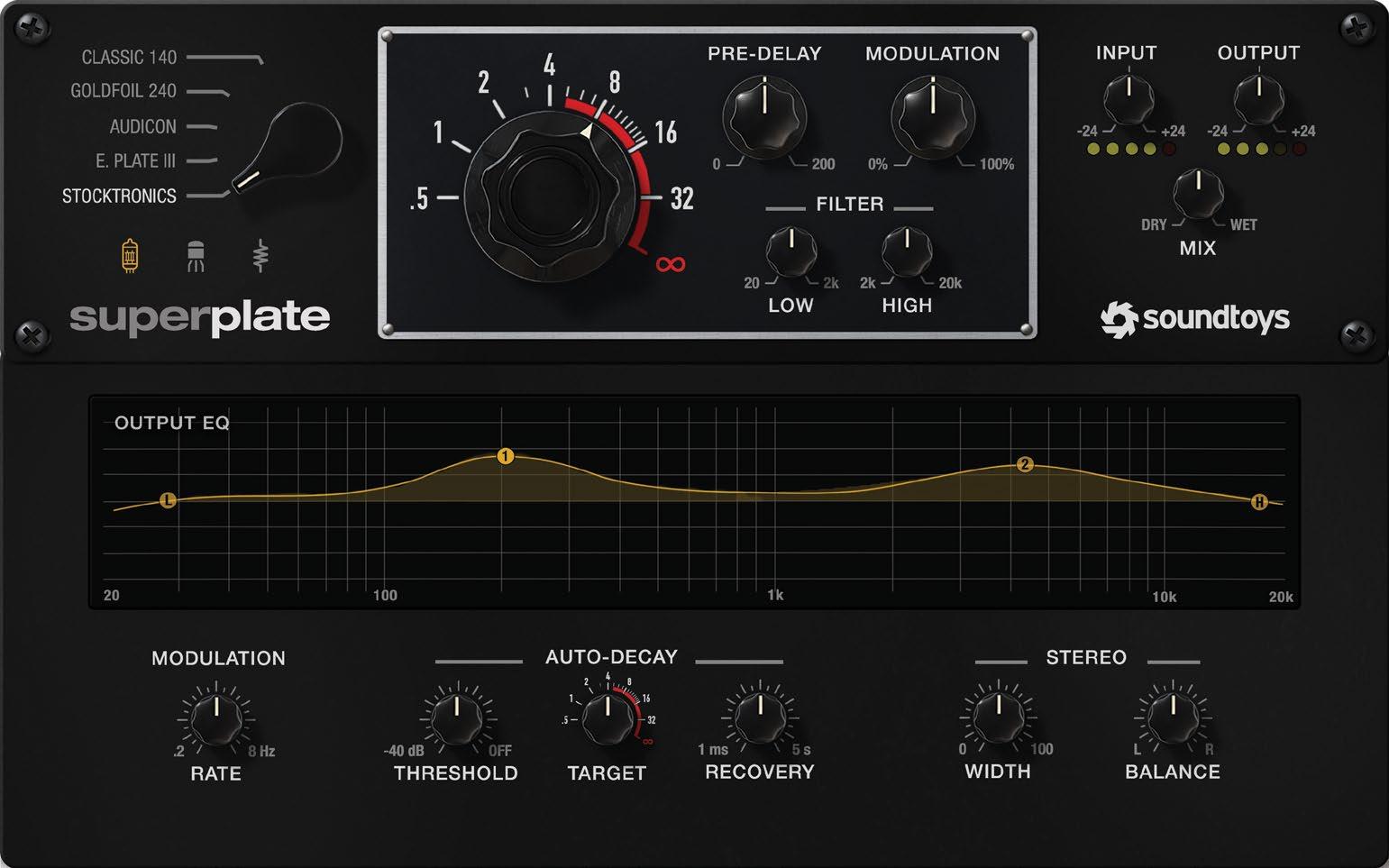
Models of Five Classic Units, With Endless Combinations
By Barry Rudolph
SuperPlate is a reverberation plug-in that includes models or emulations of the five best mechanical plate reverb units ever made, and it is a huge leap over the company’s Little Plate plug-in!
Most recording engineers are familiar with the 600-plus-pound, 4 x 8-foot EMT 140 plate reverb, and also the newer and much smaller, completely differentsounding EMT 240 Goldfoil plate reverb. Less wellknown are the Audicon plate; an E.Plate III preset that is a model of the ’80s EchoPlate III; and the rare Swedish Stocktronics RX4000 plate reverb—only 250 ever manufactured!
I enjoyed the process of learning the five plates in SuperPlate— characterizing their individualized sounds and deciding when, where and on what instruments and vocals they sound best in my music mixes.
Soundtoys makes it easy to switch between and compare the five reverbs; they always come up with the previous RT60 decay time, no matter which particular plate you have chosen beforehand. (RT60 is a standardized way to measure decay times in seconds at 500 Hz). RT60 is seen on the large wheel of the EMT 140 and on the remote control panel’s meter if equipped.
ADVANTAGES OF SOFTWARE MODELS
Being a software emulation, SuperPlate’s Decay time is adjustable to times way beyond the original plate’s hard limit of 5 seconds—in fact, the Decay time control goes to infinity for all five plates, for generating continuous “walls” of reverb that (naturally) darken over time. There is also the ability to “input” or add new sounds to this continuous sustaining reverb at any time.
SuperPlate is a true stereo send/return effect; when first instantiated, it’s at 100 percent Wet, with the Input and Output controls at unity gain. Being a true stereo reverb, there is the ability to “place” the reverb and source anywhere within the stereo field. I found this feature especially important when using SuperPlate as an inserted effect to localize the reverb precisely.
SuperPlate has a simplified GUI with a five-position switch to select one of the five plates, along with the usual controls for: RT60 Decay, separate Input and Output levels, a Wet/Dry Mix control for inline/insert use, Pre-Delay, Modulation Depth (0% to 100%), and
Hi/Lo Filters settings, by selecting one of the three analog styles. Clicking on the GUI’s Tweak button drops down the Tweak Menu—a larger page of controls for a 4-band graphical Output EQ, Modulation rate (Hz), Stereo Width, L/R Balance controls, and the three controls for Auto-Decay.
There are continuously adjustable Low Cut (20 Hz to 1 kHz) and High Cut (1 kHz to 20 kHz) filters with selectable slopes of 6 dB, 12 dB and 24 dB. These filters do not affect the dry source. Modulation is pitch variation of the reverb’s tail to add smoothness and reduce resonances.
Pre-Delay is adjustable from 0 to 250 ms, but strangely, in the interest of simplicity, there is no sync-to-session tempo here.
AUTO-DECAY
Auto-Decay is a unique feature that dynamically controls the length of the selected RT60 decay time based on the amplitude of the input signal. There are three controls in the Tweak Menu: Threshold, Target and Recovery.
Auto-Decay reduces the RT60 decay time depending on both the actual input level and the Threshold setting, and it solves the age-old problem of reverb buildup when using longer RT60 times. It can save time by automating reverb sends/returns, and it can sound better and more natural.
It is a fascinating effect when using a very long reverb on a lead vocal and reducing the reverb’s length whenever the vocal level approaches a preset Threshold setting. The Target control interacts heavily with Threshold to define the changing RT60 time. Recovery Time ranges from 1 ms to 500 ms and sets the time lag for the decay time to return to the Target control’s setting.
Auto-Decay, with its Threshold, Target and Recovery controls, requires spending time listening and learning—I’m still
MIX | AUGUST 2023 | mixonline com 44 Tech // reviews
experimenting and building presets for my own uses. I think that Auto-Decay is an awesome effect, but warrants much more tutorial explanation in the manual.
In addition to the five plate choices, there are three choices of modeled analog input amplifiers that the plate reverbs use to drive the transducers to vibrate the metal plate inside them. Called Analog Styles, there are models of the older tubebased EMT V54 preamp, called Tube; the newer, transistorized EMT 162 with a protective limiter, called Transistor; and a third choice, Clean, that has no input amplifier coloration at all. Tube, transistor and resistor icons are used to indicate the selected style.
USING SUPERPLATE IN A MIX
I started using SuperPlate for a mix in Pro Tools and found its tonality, EQ and the nature of its reverb realistic sounding and very adjustable. SuperPlate always responded to my changes in predictable ways and reminded me why I always like a good plate reverb as compared to an actual echo chamber room.
For comparing the sound of the five reverbs, I used SuperPlate as an inserted processor rather than a send/return effect—the Wet/Dry control works precisely, and as with all Soundtoys plug-ins, you can use the company’s Parameter Lock feature to keep it from changing.
On a snare drum track, the Goldfoil 240 reverb was good and not too fizzy; I managed to “redesign” a snare drum’s sound from basic and dull to a much more stylized sound that the producer loved. With the Output EQ, I boosted 800 Hz and 6 kHz using a broad EQ (holding down the Control key [Mac] broadens the Q), I kept 100% stereo width, RT60 time of 2 seconds and no Pre-Delay.
I discovered the difference between the three analog styles on this particular drum: The Tube setting is slightly darker, while the Transistor position is very slightly brighter. The Clean setting creates a completely different reverb sound altogether, with the internal reflections of the reverb better heard, which made for a longer and more complex-sounding and lovely reverb tail.
When I start a “reverb search,” I always begin by using the Clean style because it sounds more open and wide. I found that the Tube and
Transistor analog amplifier models tended to compress and color the reverb’s sound. I liked it as a choice on certain instruments and vocals.
On full drum kits, the default Classic 140, with the Transistor style sounded epic! It is a bigger plate sound as compared to the EMT 240 Goldfoil. This lines up with my experiences with the original hardware units, which are getting hard to find in good working condition. I like that the Tube color is available on all the plates, even ones that never had a tube preamp, like the EMT 240. Awesome!
VOCALS
Selecting a vocal reverb provided an opportunity to try out Audicon, E.Plate III and the Stocktronics plates. I was working with a young female singer on a pop song and was looking for a quirky reverb effect that fit her music.
I chose the Audicon plate, as its punchy sound
zero time—which can sound like gated reverb, depending on the Threshold and Target settings. There is an orange-colored collar surrounding the RT60 control that indicates the changing decay time based on the Threshold and Target settings. This is not described at all in the manual, but it is very useful for setting up Auto-Decay.
For this singer and song, here is the coolest vocal reverb chain I came up with for a quirky reverb sound. She sings phrases with long gaps in between, and, again, I placed this chain right on the lead vocal channel.
First in the chain, I used Fabrice Gabriel’s Air EQ for extensive tone carving; next was a loosely set noise gate to prevent occasional noises on the vocal track from false-triggering this effect. Next in the chain was SuperPlate using the Stocktronics plate set to a 32-second RT60 decay time! There was 40 ms of Pre-Delay, Hi/Lo filters were flat, and Modulation also not used. The Wet/Dry control was at about 50/50.
Down in the Tweak Menu, the very useful Stereo Width control was set to 100%, and I automated its operation to mono for only the verses. Otherwise, the Balance control was in the center for wide stereo.
was clear and did not cloud up or “muddy” the backing track. I used SuperPlate inserted on the lead vocal track set to a 2-second Decay Time and then boosted the reverb output EQ at 4 kHz, but reduced it a little at 100 Hz. I liked this reverb to brighten up this singer’s voice, but I found the GUI’s parameter values (font size) could be a little bigger and easier to read in the drop-down Tweak menu.
For another singer, Auto-Decay worked wonderfully! I set Recovery to 1 ms—basically
PRODUCT SUMMARY
COMPANY: Soundtoys
PRODUCT: SuperPlate
WEB: www.soundtoys.com
PRICE: $149 MSRP
PROS: Excellent-sounding reverb; Auto-Decay is a winner!
CONS: No tempo sync for pre-delay
I set the Target control full counter-clockwise and Recovery time at 1 ms. The Threshold control has a red ring around it to indicate the input level. I love this feature, but again, it is a small knob with hard-toread graphics. However, you can right-click any control and view its current value for change.
The vocal sound was unique! When she sang, the reverb was short (Target value), and after every phrase, all the gaps were now filled with a very beautiful reverb tail that lasted until the next phrase, when it stopped because of the 1ms Recovery Time that switches it back to the Target value. At the end of the chain, I set up a Sonnox Dynamics plug-in as I would any pop vocal compressor.
AWESOME AND TOTALLY DIFFERENT
I found SuperPlate an excellent new reverb once I learned the controls’ actions and limitations. Luckily, there are plenty of excellent presets to start from, and switching between them with the Tweak window opened will teach you a lot about this great-sounding, easy-to-use, plate reverb plug-in. Highly recommended!!! n
45 mixonline.com | AUGUST 2023 | MIX
The vocal sound was unique! When she sang, the reverb was short (Target value), and after every phrase, all the gaps were now filled with a very beautiful reverb tail that lasted until the next phrase, when it stopped because of the 1ms Recovery Time that switches it back to the Target value.
Brainworx bx_masterdesk
Pro
Dynamics, EQ and Stereo Image, With Tons of New Features
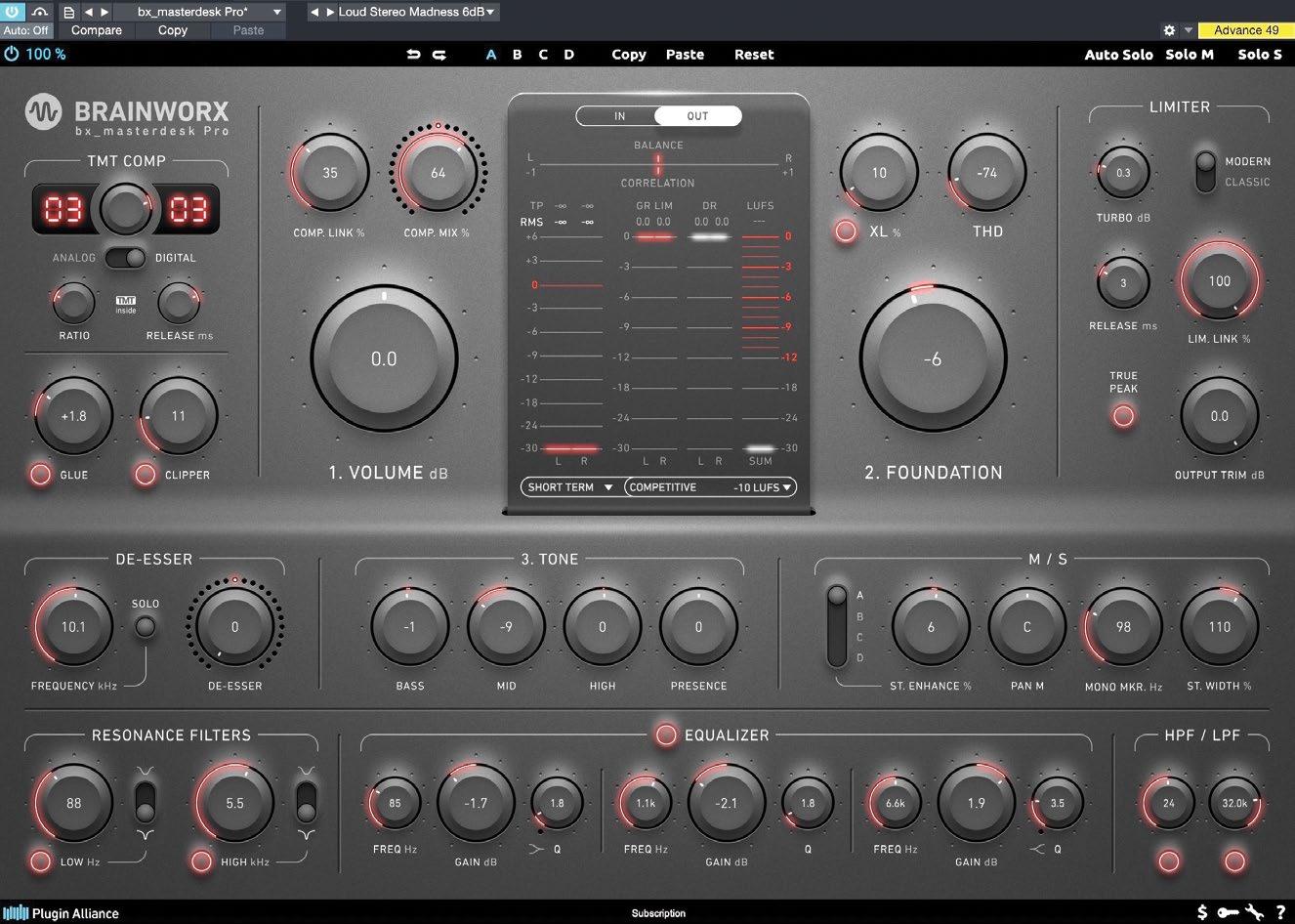 By Mike Levine
With more home-based musicians and producers doing their own mastering, the need for DIY mastering software has increased. Some such products are AIinfused, offering automatic settings based on an analysis of the audio. With its bx_masterdesk line, however, Brainworx takes a different approach, providing a suite of excellent and easy-to-use tools for shaping frequency and dynamics that relies on the user to create the settings.
bx-masterdesk Pro is the latest version and is conceptually similar to its predecessors—bx_masterdesk Classic (a free version), bx_masterdesk, and bx_masterdesk True Peak—but with many more features.
THE LOOK
If you’ve used previous versions, the first thing you’ll notice when you open bx_masterdesk Pro is that the GUI has a new, more modern look featuring a dark gray background with red accents. The single-screen interface is taller to fit the increased number of controls.
Gone is the VU meter, replaced by a more extensive, bar graphstyle metering section containing six different readouts. From left to right are meters for True Peak, RMS, Gain Reduction, Dynamic Range and LUFS. Clicking in any of the meters resets its measurements, which is a handy feature.
For the LUFS meter, I was surprised to find no measurement for Integrated LUFS, just the Short Term and Momentary varieties. Considering that most streaming service targets are expressed in Integrated LUFS (an average LUFS reading over a song or an extended sample), I expected that a tool like bx_masterdesk Pro would include it.
Another metering improvement consists of horizontally oriented stereo balance and correlation meters near the top of the metering section. Also included are buttons to switch the entire metering section from its default, which shows Output levels, to Input.
Helpful as the metering section is, I found it a little challenging to see the small details, particularly on the LUFS meter. Fortunately, Brainworx allows you to increase the GUI to 125 or 150 percent. At either of those settings, everything was perfectly clear.
You can think of bx_masterdesk Pro as having three basic types of processing: dynamics/loudness, EQ and stereo image. For each
type, the software offers more than one processing tool.
LEVELS AND COMPRESSION
I found it helpful to start by selecting a loudness target from the pulldown at the bottom of the meter. Among the choices are Loud (-6 dB), Louder (-8 dB), Streaming (-14 dB), and EU, U.S. or Japanese broadcast (-23 dB, -24 dB and -24 dB, respectively). A Custom setting lets you enter your own target level.
Setting a target doesn’t automatically make the plug-in output at your selected level. Instead, it calibrates the LUFS meter to turn red when the level exceeds your target, so getting that set before you start with other adjustments is best.
Especially when doing LUFS and True Peak measurements, it’s useful to reset the meter to get a more accurate analysis after you’ve made a change. Brainworx makes it easy—you just click inside any meter to reset it.
Brainworx added valuable features to the Compressor and beefed up some existing ones. As in previous versions, the Volume knob lets you adjust input gain. Turning it up will hit the compressor harder, triggering more gain reduction.
Unlike previous bx_masterdesk releases, the new version gives you 10 different TMT (Tolerance Modeling Technology) channels instead of four. (The idea of TMT is that each channel sounds slightly different based on the variations from the tolerance ranges of analog components.) It’s best to audition the different ones to see which sounds best with the song you’re working on.
The compressor now offers a variable ratio control with four preset choices: 3.2:1, 4.5:1, 6.2:1 and 7.9:1. Brainworx also added a variable Release control.
Glue and Clipper are two new compression controls. Each has a knob for dialing in as much of the effect as you want. Glue emulates VCA bus compression (presumably an SSL bus compressor). The Clipper reduces transients that exceed 0dBFS, allowing the audio to sound louder.
I found that the Glue and Clipper processes added highly pleasing analog-like warmth and apparent loudness. I also was impressed with the compressor’s new XL knob. Turning it up
MIX | AUGUST 2023 | mixonline com 46
// reviews
Tech
BX_masterdesk Pro gives you a robust suite of mastering tools in a single screen.
produced third- and fifth-order harmonics for additional richness.
TONING UP
Like the compressor, the EQ controls of bx_ masterdesk Pro are plentiful.
The Foundation knob is an excellent place to start for frequency adjustments. It impacts the overall tonality of a song between bass and treble. At its 12 o’clock default, it has no effect. Turning it to the left increases the bottom end, and turning to the right, the high end. I only used it for minor adjustments, mostly to add extra low end. High settings, particularly toward the treble side, sounded too extreme.
For more subtle EQ tweaks, you can use the Tone Stack (another feature carried over from previous versions), which includes Bass, Mid, Treble and Presence knobs that offer plus-orminus 3 dB adjustments.
New to the Pro version is the Equalizer section, which provides three fully parametric bands. Turning the Q down in the Low or High band switches the EQ to a Low or High Shelving filter.
The Low band ranges from 20 to 2000 Hz. The Mid band is impressively wide, from 20 Hz to 20 kHz. The High band goes from 2 kHz to 22 kHz. A convenient Bypass button lets you toggle the 3-band EQ on and off to compare your settings. Also new are Low and High Pass filters.
Placed at the end of the effects chain, the De-Esser section is designed for taming harsh high end, such as overly loud cymbals. It’s been improved with the addition of a frequencyadjust knob, which allows you to fine-tune the part of the signal where you want to aim the De-Esser.
Brainworx also added adjustable frequency
PRODUCT SUMMARY
COMPANY: Brainworx (Plugin Alliance)
PRODUCT: bx_masterdesk Pro WEBSITE: pluginalliance.com
PRICE: $199 purchase, or included in certain Plugin Alliance Subscriptions.
PROS: Excellent sound quality. Glue, Clipper and XT compressor features add impressive analog-like characteristics. Stereo image adjustment even more powerful. Limiter more adjustable. Manual frequency knobs added to De-Esser and Resonance Filters. Useful preset collection.
CONS: No Integrated LUFS setting on meters. No level matching for comparing with processing on or off.
knobs to the Resonance Control. Pressing the Auto-Solo button allows you to hear only the affected frequencies when you make a change.
BURNISHING YOUR IMAGE
The M/S section, designed for manipulating the stereo image, was significantly upgraded.
In addition to the existing Mono Maker and Stereo Width knobs, Brainworx added a Stereo Enhance section with four different modes.
The Stereo Enhance circuit is a proprietary one that the manual says is designed to “get that extra boost and width for your synths or guitars without boosting unwanted boomy frequencies in your drums or raising the muddy parts of your reverb tails too much.”
It works well. In conjunction with the other controls in the section, I was able to significantly adjust the stereo image without negatively affecting mono-compatibility. Also new is the Pan M (mono) knob, which lets you re-center an unbalanced stereo image.
SETTING LIMITS
The last stop in the signal chain is the Limiter Section, which has also been souped up. The Turbo knob lets you adjust the gain before it hits the Limiter. Choose one of two attack modes: Modern or Classic. The former is faster. Also new and useful is a Release Time knob.
The True Peak button,
when activated, prevents inter-sample peaks, which can cause distortion after analog conversion. The new Limiter Link knob governs whether the Limiter will attenuate both channels independently—which can cause imbalances in the stereo image—or react to the highest peak between the two.
Because mastering decisions are driven mainly by the characteristics of the audio being processed, you might think that using a preset as a starting point wouldn’t be that helpful, but that’s not the case with bx_masterdesk Pro. Its 26 excellent presets—some targeted at specific genres—are a handy way to quickly audition different mastering approaches; you might even like one so much that you use it as the basis for your setting.
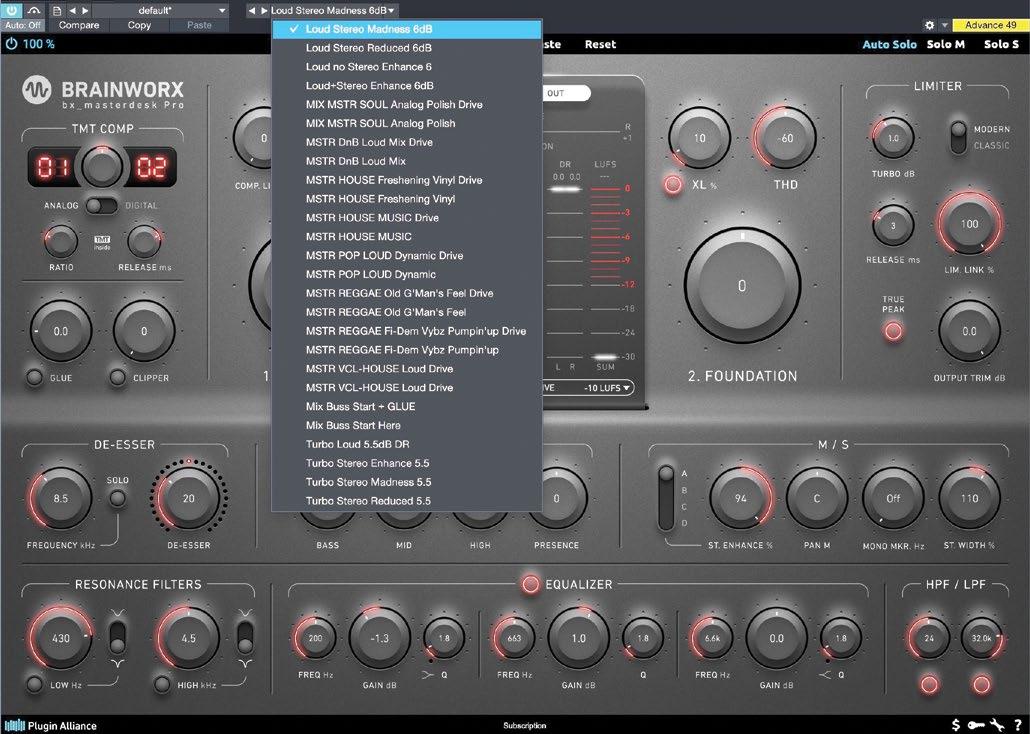
Brainworx didn’t include one feature that would be extremely helpful for A/Bing your new settings against your original file: level matching. Matching the levels when comparing keeps you from getting tricked by the “louder is better” effect.
In order to A/B accurately, I had to reduce the Output knob on the Limiter until I found the setting that matched the level of the unprocessed file before comparing. In a future version, I would love to see level matching built in, and also a facility for loading reference audio files.
GOING PRO
I’ve tried previous versions of bx_masterdesk. While I found them helpful, I usually opted for AI-based mastering software to analyze my audio and create starting-point settings, especially for the EQ adjustments, but bx_masterdesk Pro sounds so good and offers so much control that I’ve been getting excellent results without the AI. Not only is it great for mastering, but it also works well as an insert on the master bus, or even an instrument bus.
I love the sound of the new Glue, Clipper and XL features on the compressor. They work exceptionally well for adding a pleasing, warm sheen to the music. The new Stereo Enhance section provides a level of image control that I’ve not found elsewhere.
The more experienced you are, the more you’ll be able to get from bx_masterdesk Pro, but even if you’re a novice, its simple and intuitive controls will make it easy to get your mixes or masters sounding better and help you adjust them to the desired target level for your intended destination. n
47 mixonline.com | AUGUST 2023 | MIX
Audio-Technica ATH-M50xSTS Streaming Headset
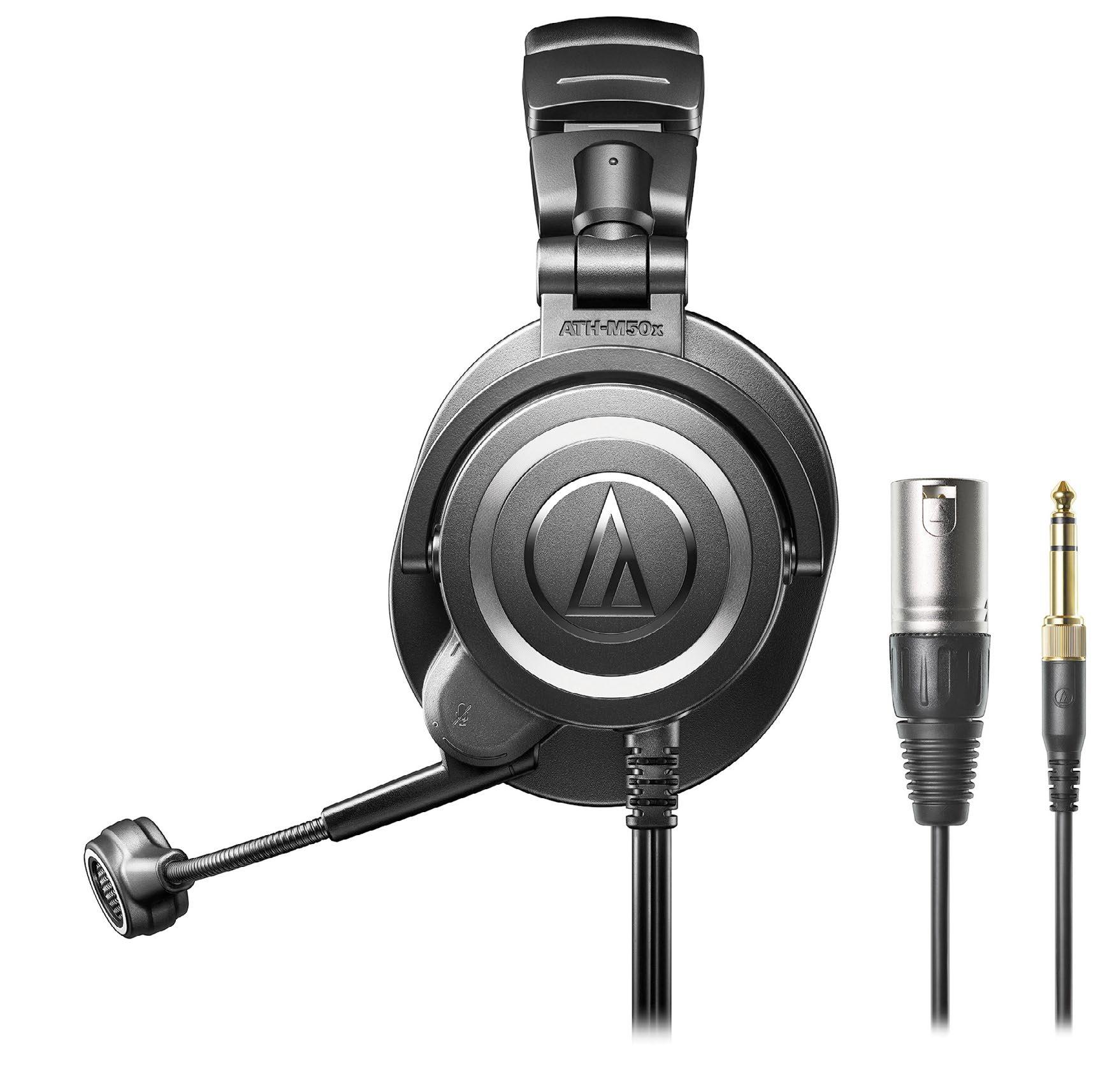 By Clive Young
MOST IMPRESSIVE FEATURE
With the rise of content creation in recent years, perhaps it was only a matter of time until Audio-Technica created what it’s calling a StreamSet—a specialized streaming headset—with the introduction of the ATH-M50xSTS.
I’ve been testing one recently with good results, and while it may be aimed at streamers, the StreamSet is likewise appropriate for podcasting, voice-overs, working from home and other applications where audio quality—both heard and created—is a top priority.
The StreamSet comes in two flavors—the digitalbased ATH-M50xSTS-USB ($229), which sports a thick 6.5-foot cable terminating in a USB-A plug, and the version I tested, the analog-based ATHM50xSTS ($199), where the cable splits to both an XLR output and a 1/4-inch stereo plug. Both editions come with two kinds of earpads—one set intended to highlight fidelity and isolation, and the other set meant to provide more breathability and comfort.
As you might guess from the name, the headset is based around the familiar ATH-M50x closed-back dynamic headphones. Thanks to their proprietary 45 mm large-aperture drivers with rare earth magnets and copper-clad aluminum wire voice coils, I found the sound reproduction to be clear and informative with solid bass response, and to be fair, it’s those qualities that have made ATH-M50x headphones a go-to for ages. Neither cheap nor a budget-buster, A-T cans have become staples in pro-audio work environments because they tend to have accurate sound, respectable durability and a coolly professional look to them. While those are key features for audio experts, increasingly they’re also important to content creators, who not only need quality sound, but often also have to be aware of what their gear looks like on camera.
As it happens, those content creators are usually also in the market for microphones, and Audio-Technica knows a bit about those, too. The StreamSet’s cardioid condenser mic is taken from A-T’s 20 Series, providing a 50-20,000 Hz frequency response at 3 cm. The flexible boom arm stays put—bend it in any direction and it’ll keep that shape—but if you give it a quick flip upward, it mutes the audio while also getting the mic out of your face; pull the arm back down and the mic unmutes.
In real-world testing, I discovered a few things. First of all, using the StreamSet highlighted the fact that I am fed up with my kludgy, unreliable audio interface; more than once, I regretted not reviewing the USB-based StreamSet with its built-in 24-bit/96 kHz A/D converter instead, which would have bypassed the problem altogether. That said, when the interface felt like working (a problem that had nothing to do with the actual product being tested), the StreamSet was a breeze to use—it sounded good, the cans were a comfortable fit and the mic worked well, picking up my voice with no rustles or creaks from the headset itself. While I wish the boom arm was on the right side instead of the left, as I right-hander, it means I can quietly drink some coffee without having to push the mic up into mute position, so ultimately, that’s still a win.
The ATH-M50xSTS passed its biggest challenge with ease. While I used the StreamSet for Zoom meetings and various projects during the review period, the real test came when I had to be interviewed remotely over Cleanfeed for an upcoming iHeartRadio podcast. I didn’t mention I was testing new gear, but nonchalantly asked at the end if the audio was okay; they responded that it sounded perfectly fine for broadcast and thanked me for staying right on the mic. To me, that said Audio-Technica had hit its intended use-case with a bullseye. Providing quality sound, solid durability and an attractive price-point, the ATH-M50xSTS delivers. n
MIX | AUGUST 2023 | mixonline com 48 Tech // shorts
Quality sound, solid durability and an attractive price-point.
Erica Synths Zen Delay Virtual
By Mike Levine
MOST IMPRESSIVE FEATURE
Capable of everything from simple delays to other-worldly effects.
There’s no shortage of delay plug-ins. Most sound fine and do what they’re supposed to, but it’s rare to find one as creatively inspiring as Zen Delay Virtual by the Latvian manufacturer Erica Synths.
The plug-in is a software emulation of a hardware signal processor called the Ninja Tune Zen Delay that Erica Synths created in collaboration with an electronic music label, Liquid Sky Artist Collective/Air Liquide.
ZDV, which comes as a plug-in and a standalone application, contains a delay with a filter, a modulation section, and an authentic-sounding tube-drive emulation. It’s capable of everything from simple delays to other-worldly effects that alter time, pitch and frequency composition. It’s more like a multi-effects processor than a simple delay. Though designed with electronic music in mind, it’s also useful when working in other genres and for sound design.
The left side of the main screen (aka, “Main Controls”) features standard delay controls, including Delay Time (up to 5000 ms), Feedback, Dry/Wet, Tap Tempo and Delay Mode. The Delay Mode is a six-way switch for selecting one of five algorithms: Tape, Tape Pingpong, Digital, Digital Pingpong and Vintage. The first position of the Delay Mode switch turns the delay off but doesn’t affect the Filter, Drive and Modulation processes.
A significant difference between the Digital
PRODUCT SUMMARY
COMPANY: Erica Synths
PRODUCT: Zen Delay Virtual
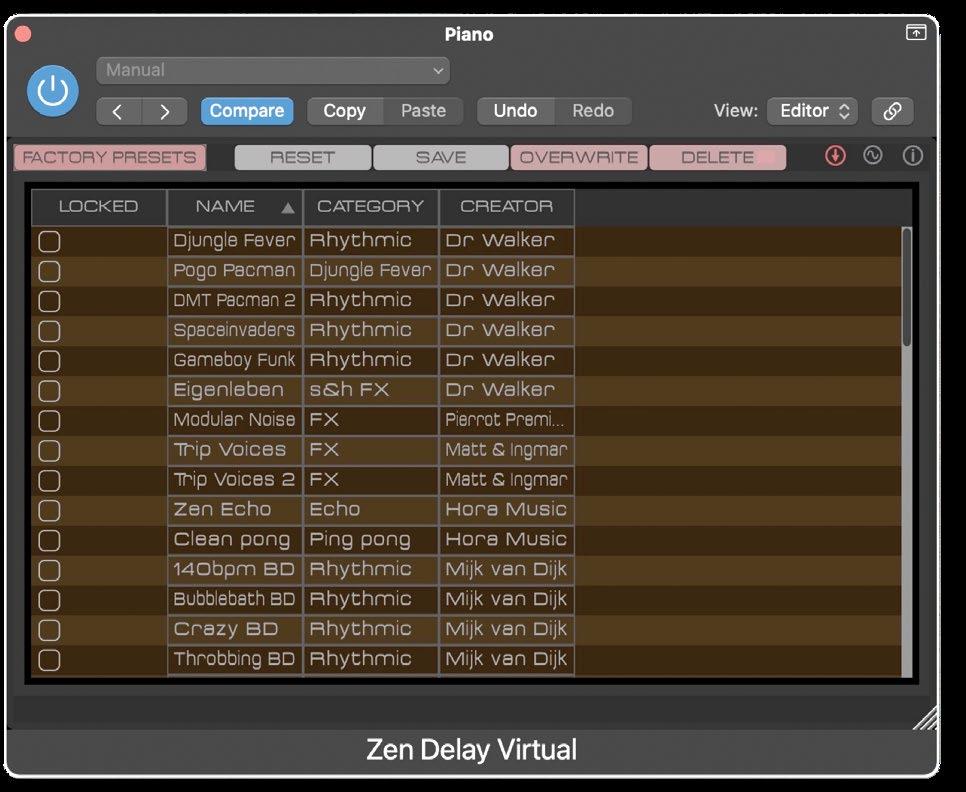
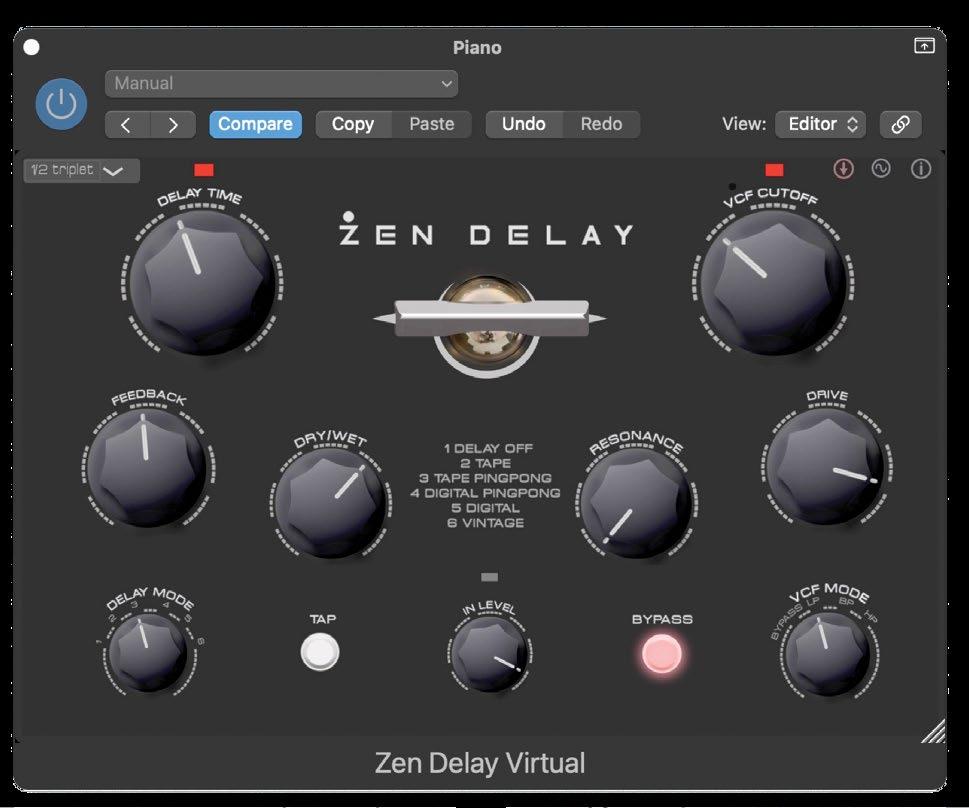
WEBSITE: www.ericasynths.lv
PRICE: $99
PROS: Four delay algorithms; LFO and modulation sections add rhythmic possibilities; excellent factory presets
CONS: Doesn’t support AAX format for Pro Tools
and Tape algorithms is that changing the delay time on the latter causes audible pitch changes.
The knobs and switches for the Filter stage are also in the Main Controls. They include VCF Cutoff, Resonance and VCF Mode. The latter lets you set the filter to low-pass, band-pass or highpass operation. The delay and filter effects can be synched to the host tempo in the plug-in version. If you’re using the standalone application, you can sync it to incoming MIDI clock. A tap tempo button is also included.
Another button near the top right switches the view to the Modulation & Options page. Here, you can modulate the delay time and the bit depth when you’re in one of the digital modes. It’s also possible to route the filter stage so that it’s in the feedback loop.
The factory presets, available on the separate Preset Manager page, do an excellent job of showing off ZDV’s prodigious capabilities. Quite a few of them are pretty extreme. If you want to save one of your own settings, you can do so to a separate user bank.
One significant limitation of the plug-in is that ZDV is only available in VST2, VST3 and AU formats, with no AAX component. You’ll need a wrapper to run it in Pro Tools. Presumably, Pro Tools support isn’t as crucial in the European market, but it would be useful here in the States.
Other than that, I have nothing but praise for Zen Delay Virtual. It’s a well-made and powerful plug-in, and I thoroughly enjoyed experimenting with it. It was perfect for adding excitement and complexity to synth patches, drum and percussion loops, samples and more.
It was also great when applied subtly, such as adding lightly modulated delays to guitar or vocal tracks.
If you enjoy getting creative with sound— either live or in the studio—you’re going to love Zen Delay Virtual. n
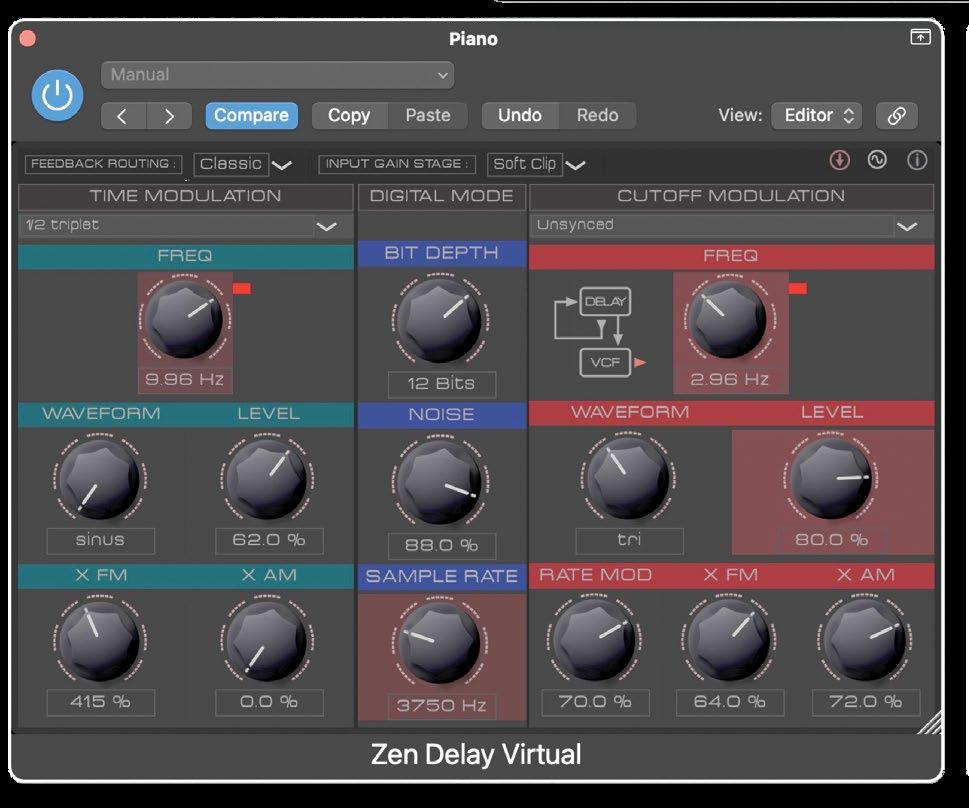
49 mixonline.com | AUGUST 2023 | MIX
Open Channel
Hitting the Ceiling
Let’s talk about the Instant Pot. No, not something you get at a dispensary and dissolve in your vitamin-enhanced water—but the wildly popular kitchen accessory. Modernizing the pressure cooker made the Instant Pot a huge success. It lived up to the hype of creating tasty dishes almost automatically by pressing a few buttons. During the pandemic, it flew off the shelves. But the good times didn’t last forever. Its parent company, Instant Brands, recently filed for Chapter 11 bankruptcy. Why? Among many reasons, several financial analysts cite market saturation and the perils of leveraged buyouts by private equity firms. Are there lessons for the music industry?
By Craig Anderton
The Instant Pot was affordable. It didn’t wear out. If you bought an Instant Pot, you’re probably still using it. However, the current corporate model demands constant growth. With the Instant Pot’s rapid success and long product life, it eventually hit a ceiling. Most people who wanted an Instant Pot had one—and didn’t need another.
In the music industry, today’s DAWs can do much of what a quartermillion-dollar studio used to do. Virtual instruments provide classic and modern sounds at a fraction of hardware’s cost. Everlower microphone prices make personal mic lockers affordable. But perhaps most alarmingly for MI companies, some musicians feel they now have all the gear they need.
The past few years have seen multiple MI company acquisitions. In many cases, these acquisitions weren’t because companies were in trouble. Instead, they were doing well and seemed like a promising investment. Like the Instant Pot.
Problem #1: The timing for buying music companies may not have been ideal. The pandemic gave a distorted view of music sales. People stuck at home thought it would be fun to make music, and the industry assumed they’d buy more products in the future—but it doesn’t work that way. Music is a discipline. Budget musical instruments often end up in the closet once people realize it takes effort to make satisfying music (despite the hype from the companies who want you to buy their “dope hit MIDI loops with dope pro chords, so you can go platinum in just hours by making dope beats on your laptop!”).
Problem #2: When post-pandemic life returned to semi-normal, disposable income—now diminished through inflation and an unpredictable job market—went to vacations, concerts, eating out, and other activities people hadn’t been able to do. It didn’t necessarily go to buying more recording gear or guitars.

Problem #3: Private equity companies prefer investments in “safe” growth areas, like medical electronics, cloud platforms, proxy caching appliances, and so on, but the music industry is a fashion industry. Trends turn on a dime. No one predicted Taylor Swift would inspire a new demographic to buy acoustic guitars. Or GarageBand would be included free with every Apple computer. Or a pandemic would decimate live mixing. Or ukuleles would sell in the millions. Replacing the people who made a company great with people who understand finances, but not the music industry’s gestalt or the company’s soul, usually spells trouble.
Companies try different tactics to maintain growth. One is dumbing down a product line to attract beginners, like creating a lite version of a complex DAW, but then you have a DAW that’s still too complicated for beginners, and not interesting for veterans. It would be better to design a new, beginnerfriendly product from the ground up that uses a different paradigm, but that costs money and takes time. Quarterly profits—coupled with the goal of flipping a company in a few years—are the usual Holy Grail for private equity firms. Slow, profitable, consistent building of a brand, like family and privately owned businesses used to do, is becoming a lost art.
Subscriptions are another tactic to provide steady income while trying to grow a company. Some musicians like them. If not, they hold on to what they have or gravitate to companies that sell perpetual licenses. For subscriptions to work, companies have to be smart, read the room, and disrupt— sometimes drastically—the model that made them successful.
Consider privately held Universal Audio. Its business model had been to tie software to the hardware needed to run the company’s DSPhungry plug-ins, but exponentially more-powerful computers moved the goalposts. Now you can run much of UA’s software without needing to buy hardware (although you can, if you want higher performance than native operation provides). The company also offers perpetual licenses or subscriptions, and as a result, has pivoted successfully to a new business model. Survival in this industry demands agility—which bureaucracyoriented management often lacks.
Maybe some MI companies are hitting an Instant Pot-like ceiling. The innovative ones will balance keeping their user base while investing in the future, but no company can afford to forget that this is a fashion industry. The smart companies are sniffing around for what people will want next, rather than trying to force something on them like multichannel surround speakers for a tiny living room in an apartment they rent for an exorbitant price.
Yes, we may have hit a ceiling—but that simply means it’s time to find a sledgehammer, and bust through the ceiling to a higher floor. ■
MIX | AUGUST 2023 | mixonline com 50
The music industry is a fashion industry. Trends turn on a dime. No one predicted Taylor Swift would inspire a new demographic to buy acoustic guitars. Or GarageBand would be included free with every Apple computer.