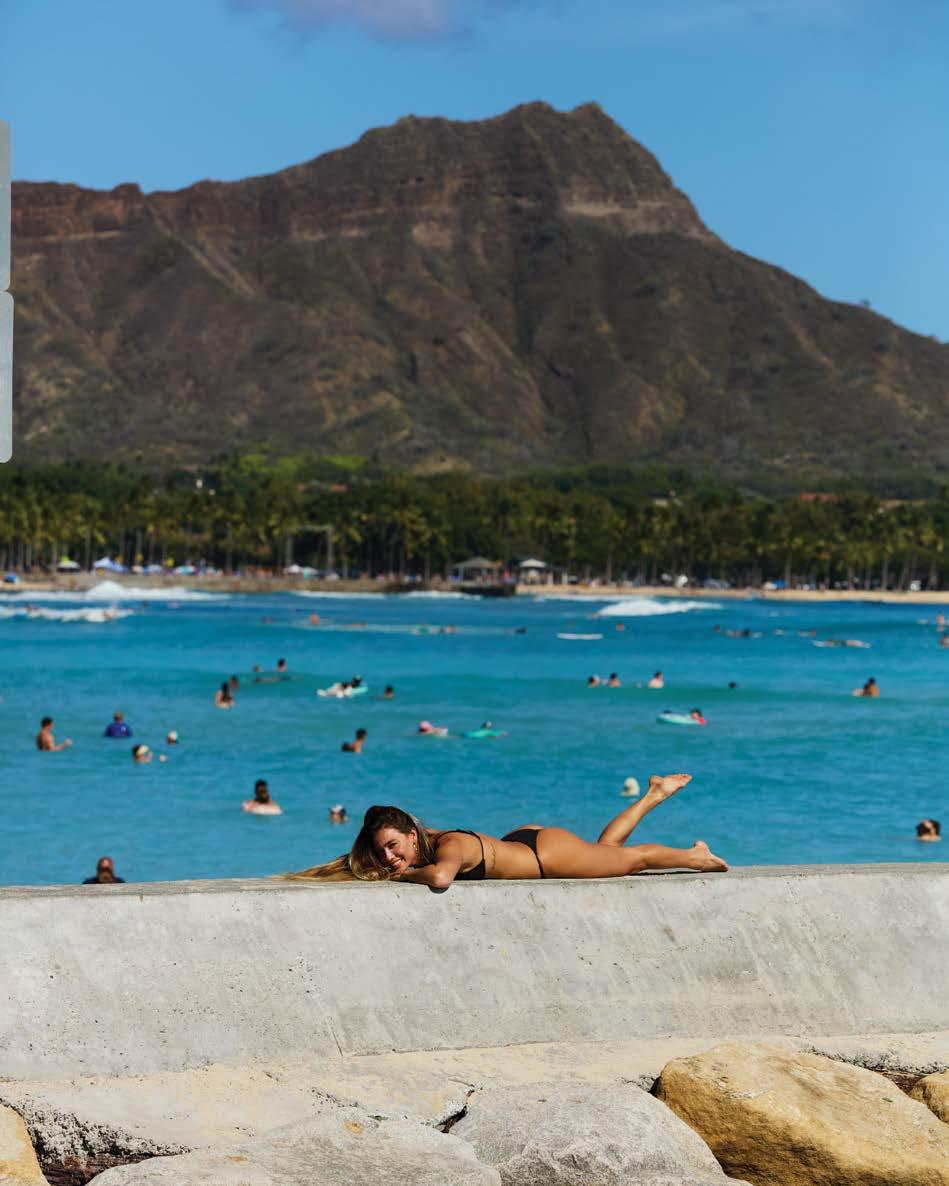
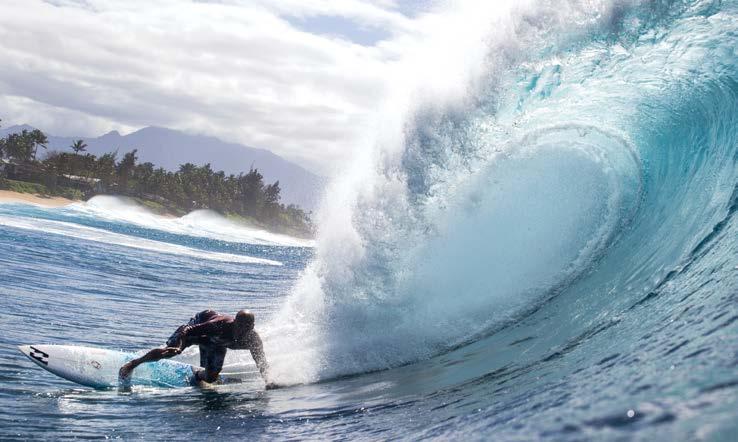
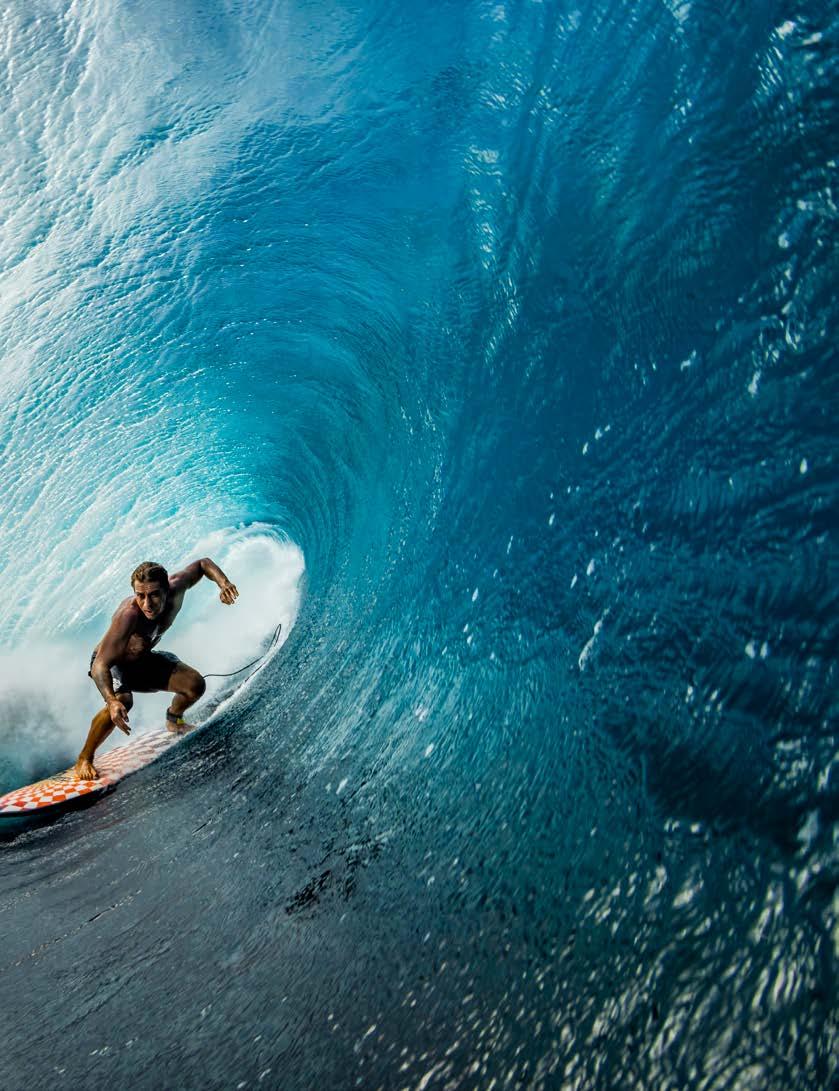
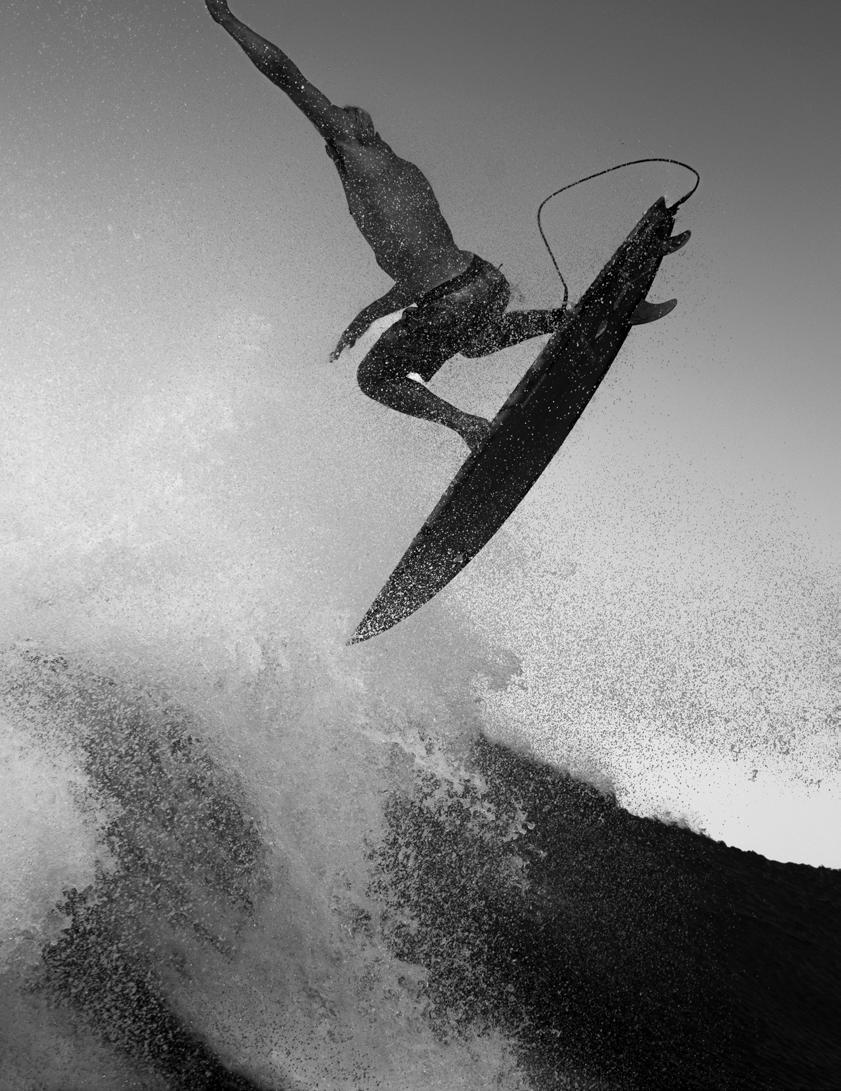
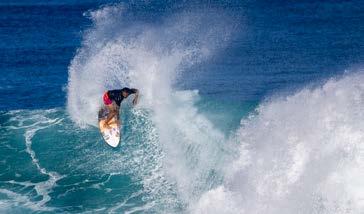
Photo Brian Bielmann
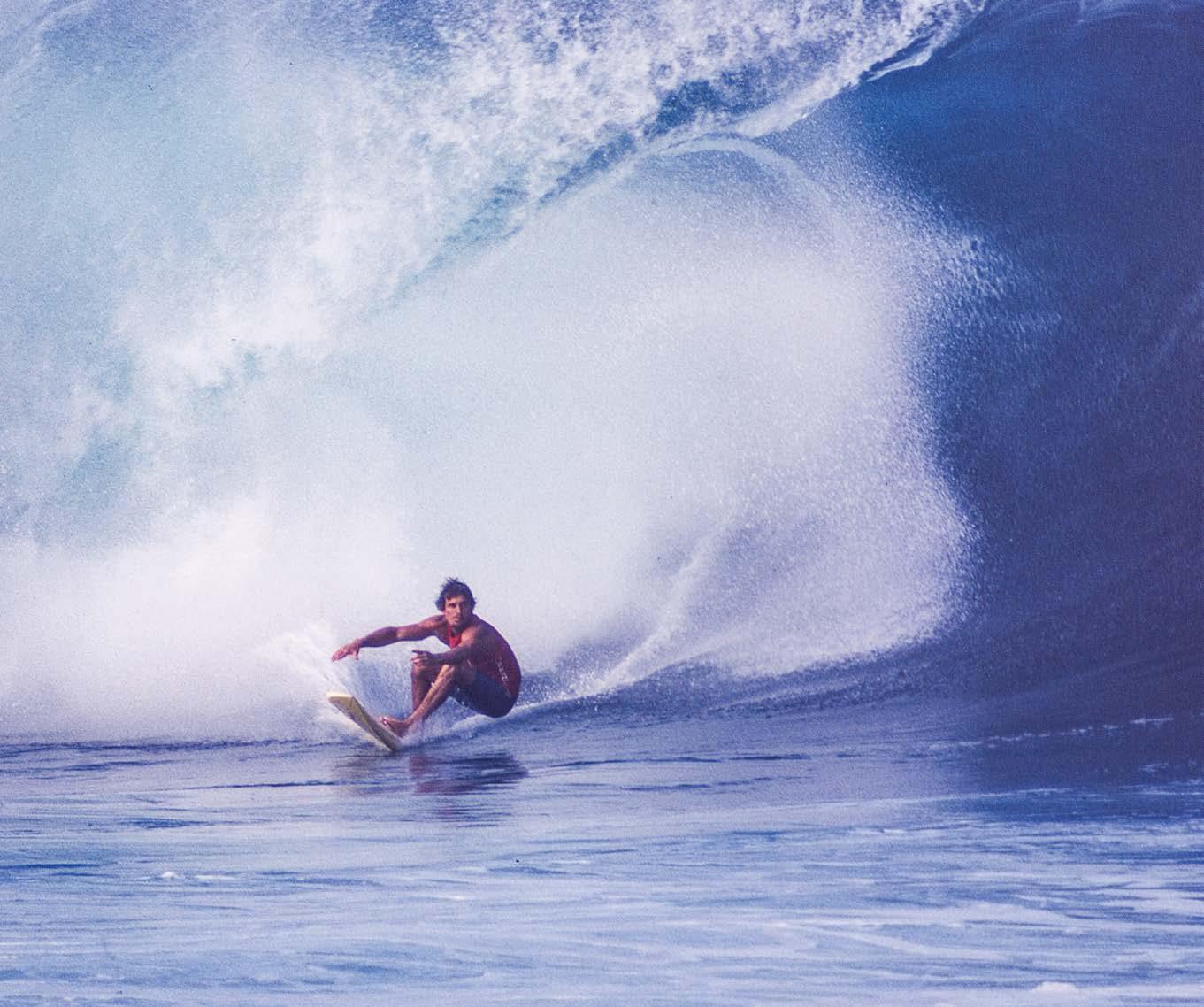
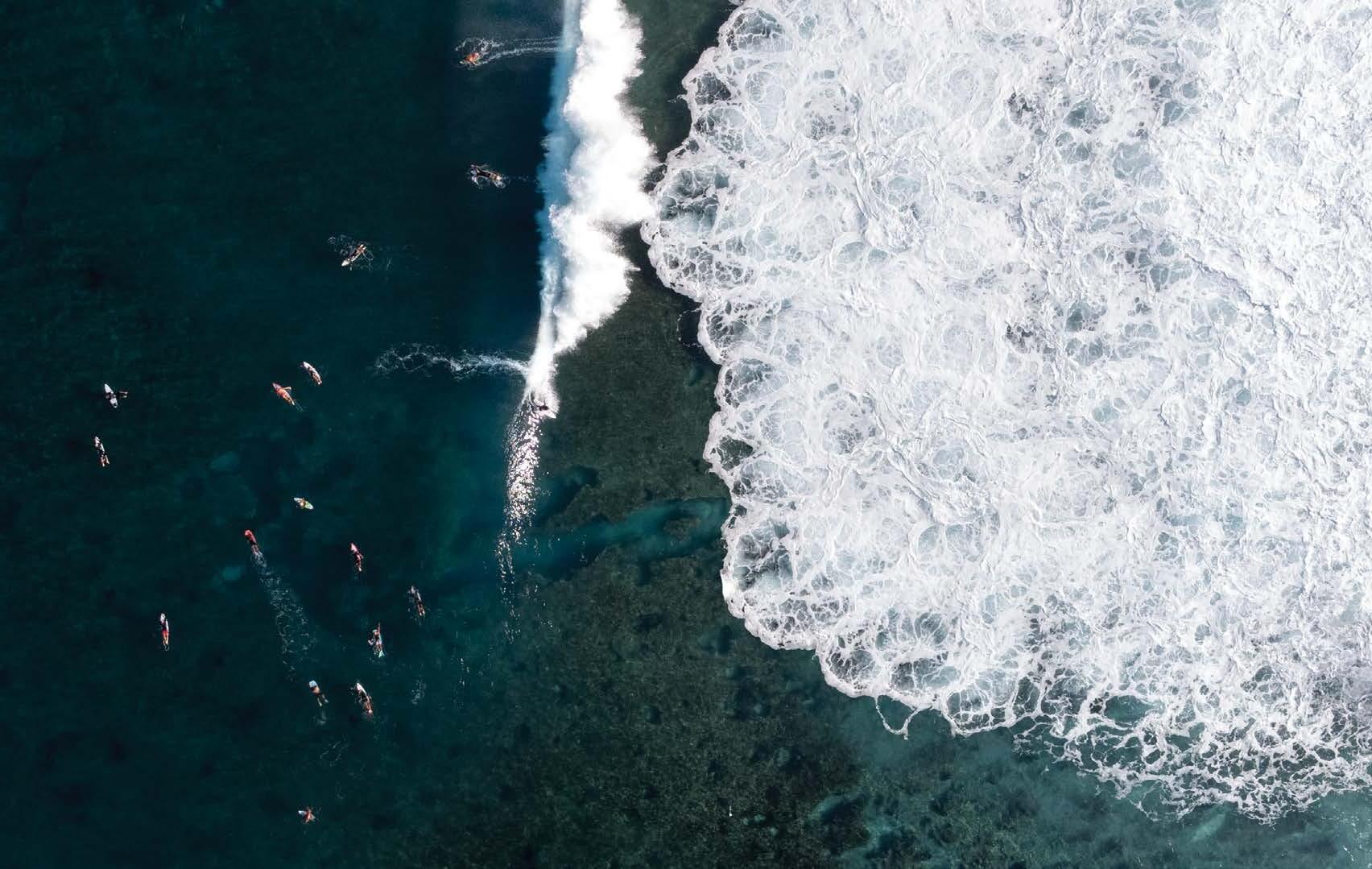
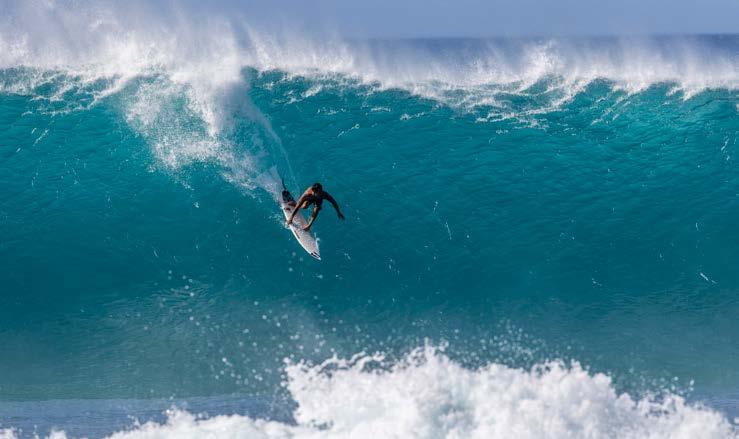
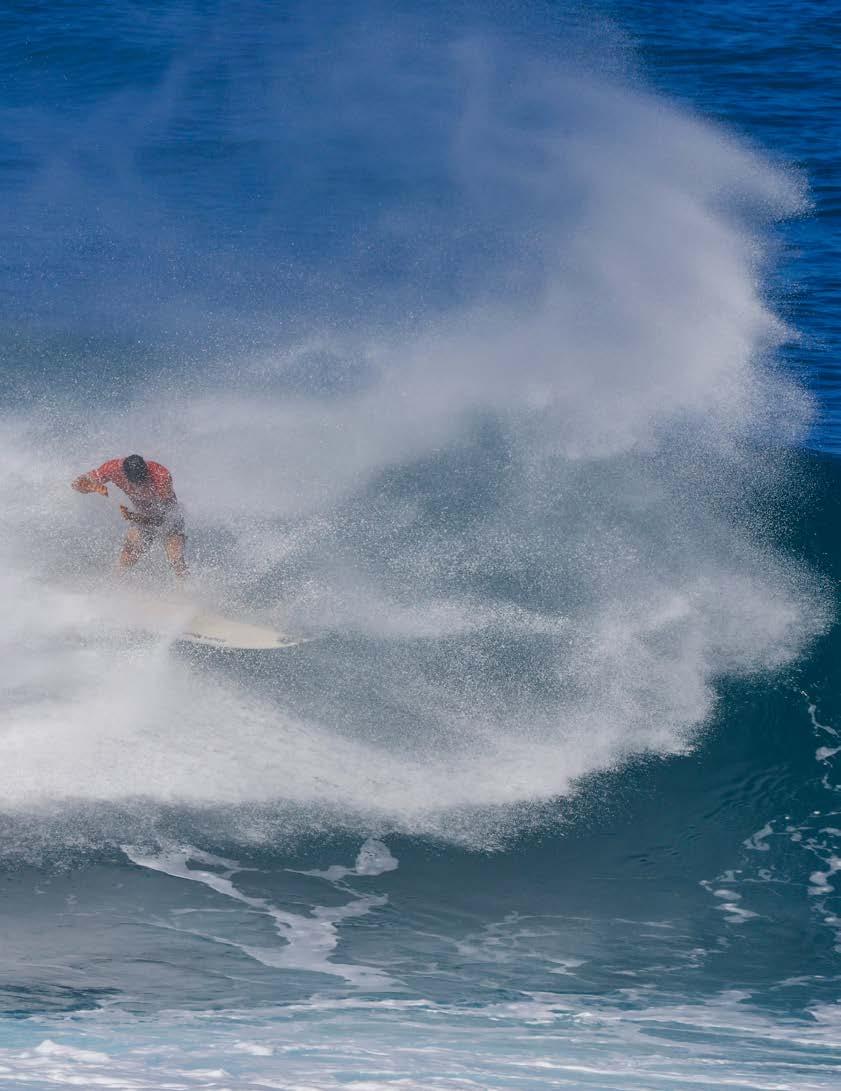
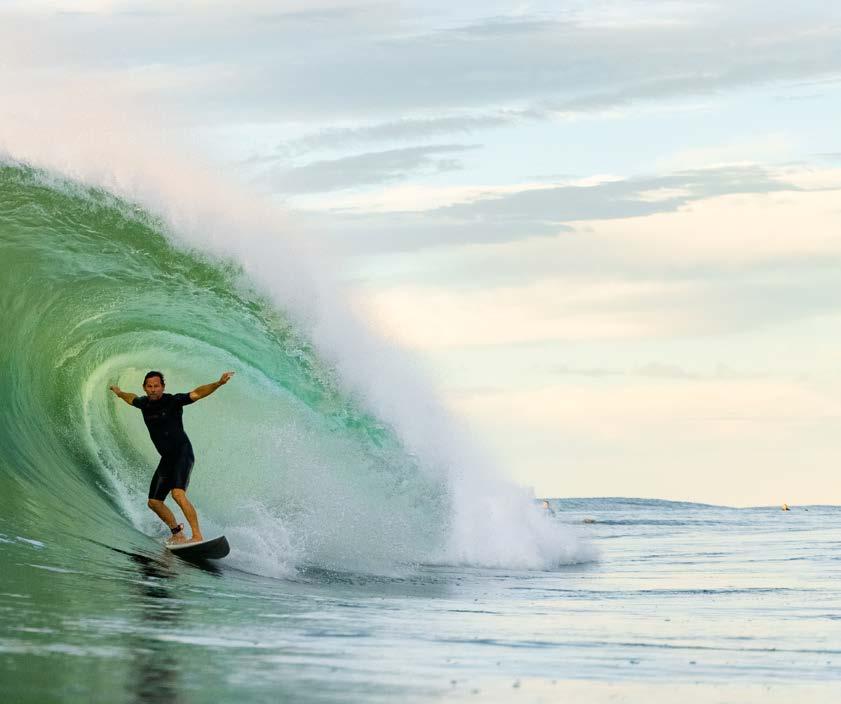
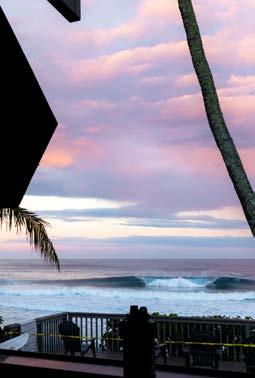
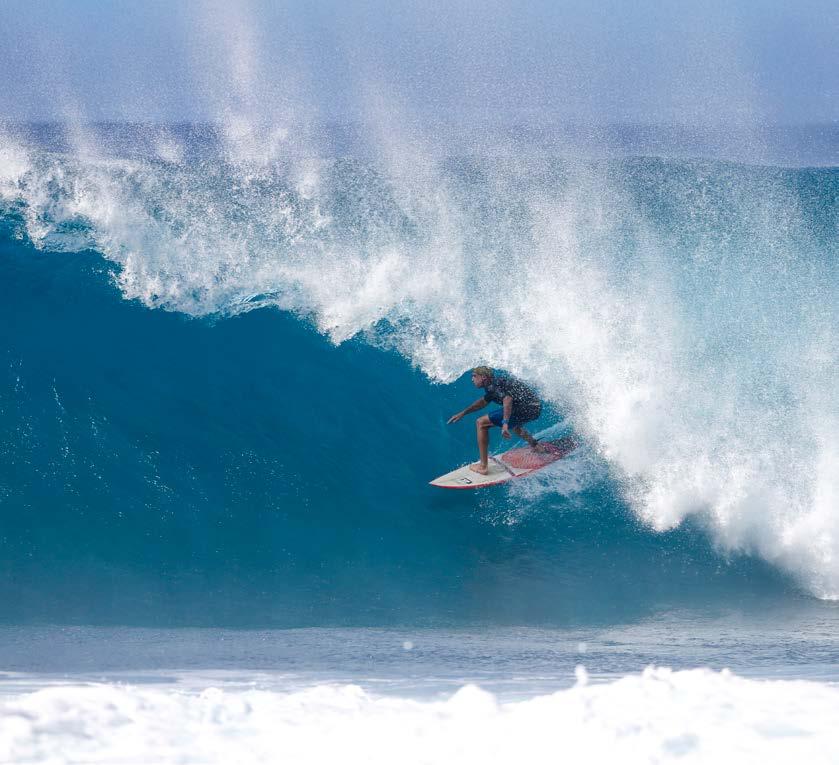
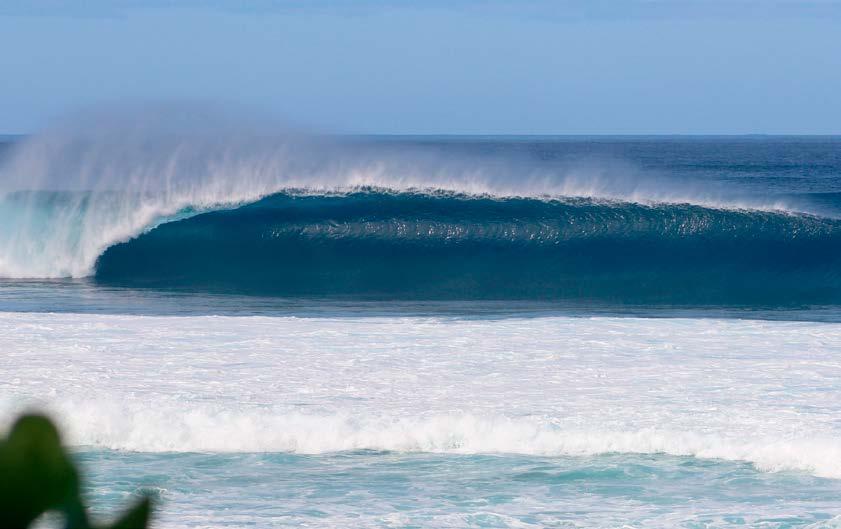
DARRICK DOERNER PIPELINE, NORTH SHORE

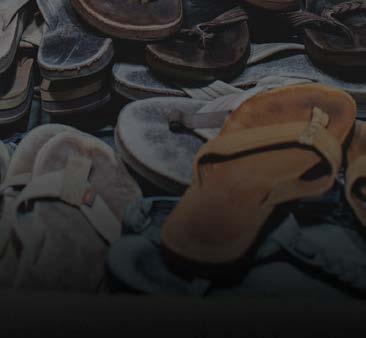
In 1974, after finding yet another broken sandal on the sand, I decided to create something better—comfortable, durable, and built to last. Rainbow® Sandals was born with a mission to make quality products that don’t end up in landfills. Our commitment extends beyond the sale: if your sandals are beyond warranty but still wearable, please return them. We’ll repair and donate them to those in need, from the unhoused to disaster victims. Our philosophy is simple: Repair • Reuse • Recycle and we hope you’ll join us in it.”

Founder / CEO

















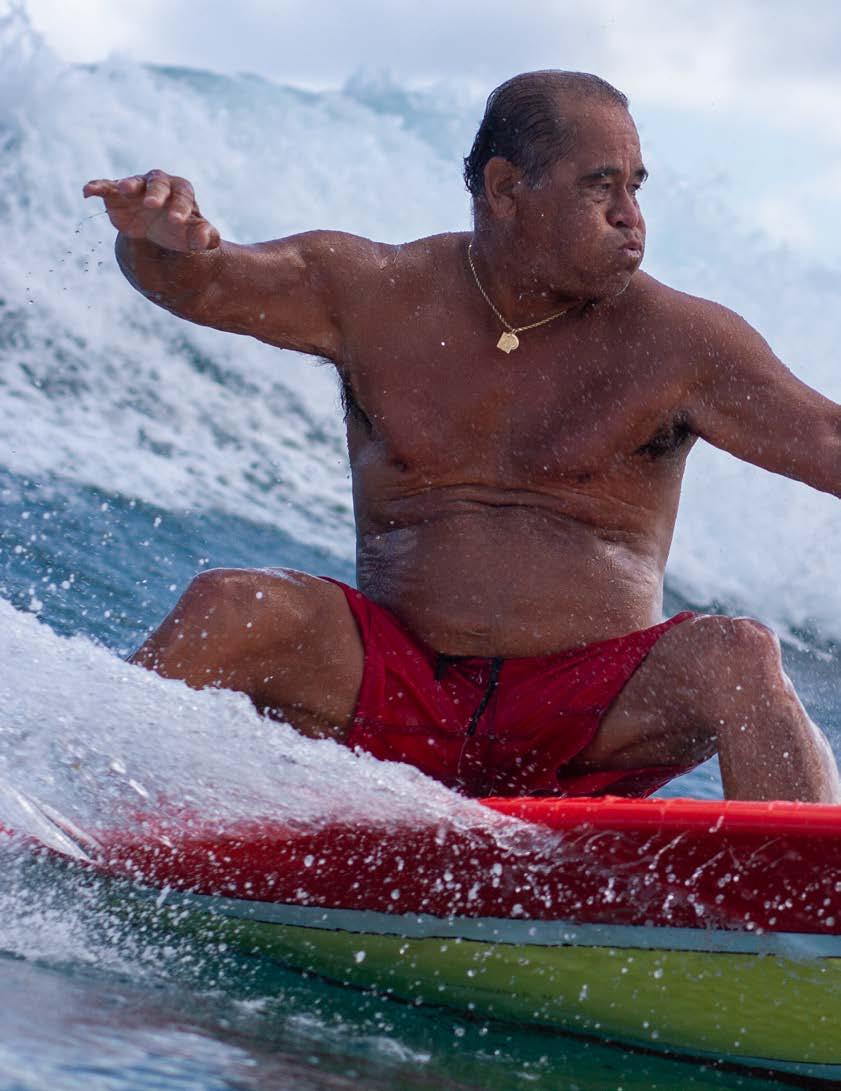
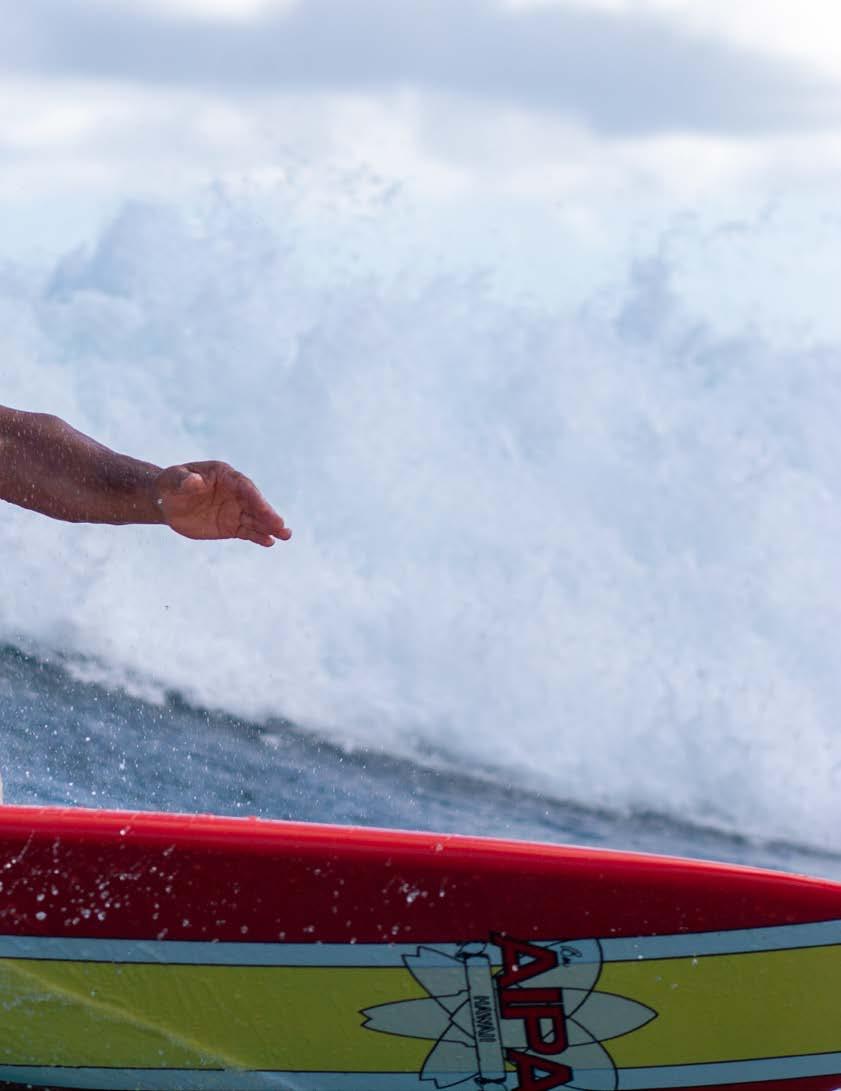
By far, one of the most innovative and influential surfer shapers on the planet, Ben Aipa applied knowledge, creativity and expertise to everything. He was one of Hawaii's original, super coaches and a big influence on our feature personality Rainos Hayes. Did I mention he was also one of the gnarliest power surfers on the planet.

Editor / Publisher
Mike Latronic
Photo Director
Brian Bielmann
Art Director
John Weaver
Staff Shooters
Brent Bielmann, Mike Latronic, Keale Lemos, John Weaver
Staff Writer
Kaea Latronic
Contributing Writers
Tor Johnson, Alexandra Kahn, Daniel Ikaika Ito, Nicole Nason, Amanda Blackwell
Contributing Photographers
Christa Funk, Ryan “Chachi” Craig, Dooma Photos, Dayanidhi Das, Erik Aeder, Mark Rodrigues, Aaron Lynton, Kurt Steinmetz, Mike Ito, Tommy Pierucki, Sean Evans, Stu Soley, Tai Vandyke, Mitch McEwen, Sivar Films, Humanocine, Feistan Rivera, Samuel Rivera
Distribution & Advertising Inquiries
Mike Latronic mlatronic808@gmail.com
Sales & Marketing
Randall Paulson randallpaulson@gmail.com
Business Administration
Cora Sanchez corabooks@freesurfmagazine.com
Hawai'i Distribution & Sales
Keola Latronic keolalatronic808@gmail.com
West Coast Distribution & Sales
Chuck Hendsch (619) 227-9128
FREESURF MAGAZINE is distributed at most fine surf shops and select specialty stores throughout Hawai‘i and Southern California.
We do not accept unsolicited editorial submissions without first establishing contact with the editor. FreeSurf, Manulele Inc. and its associates are not responsible for lost, stolen or damaged submissions or their return.
One-way correspondence can be sent to P.O. Box 1161, Hale‘iwa, HI 96712 E-mail editorial inquiries to info@freesurfmagazine.com A product of Manulele, Inc. 2026







By Mike Latronic
There's a moment, somewhere between the surfboard shaping room and the shoreline, between a kid's first wave and a life changing barrel, where surfing stops being something you do and becomes something you live for.
This issue's feature story is about a man who has spent thirty-plus years living inside that moment and not for himself, but for others. Rainos Hayes is a North Shore original, a former competitive surfer, and quietly, without fanfare or a world title to his name, one of the most influential figures the sport has ever produced. As a coach he has guided World Champions, Olympic gold medalists, and generations of Hawaii's finest. From wide-eyed groms at local contests to the grandest stages in professional surfing, the list reads like a who's who of modern surfing and Rainos had influence on all of them at one point or another. We sat down with him on the North Shore, where he's lived his whole life, to let him tell his story in his own words. It's a good one. Don't skip it.
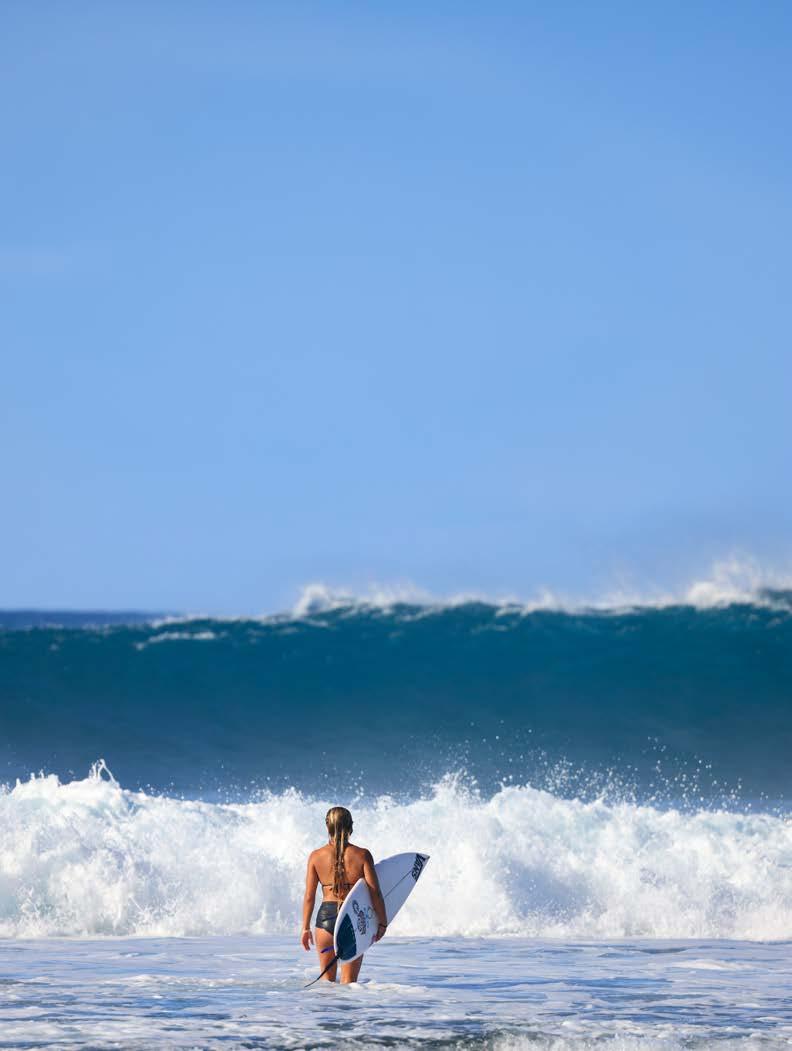
Let's discuss foundations. Some are built by family, handed down through bloodlines. Kiki Kaneshiro is proof of that.
Former competitive "hammah" Isaac Kaneshiro raised a surfer who didn't just inherit talent — she inherited purpose.
And for those of you who want to improve your performance, we're going to break down the most fundamental and most overlooked move in surfing: the pop-up. Like a pilot's takeoff, there's no "mostly successful" version. Get it right, and let the fun begin. Get it wrong and you're either blowing good waves or getting rag-dolled in the violent vortex.
We also have a piece that leaves no grain left behind, a meditation on sand itself. It's the kind of story that signals the coastline is not just a destination, but more so, a conversation between land and sea that never really ends.
There's more inside and as always, we're grateful you picked this magazine up, and grateful to the surfers, shapers, photographers, and storytellers who make it what it is.
Aloha, and mahalo for reading.

By Mike Latronic
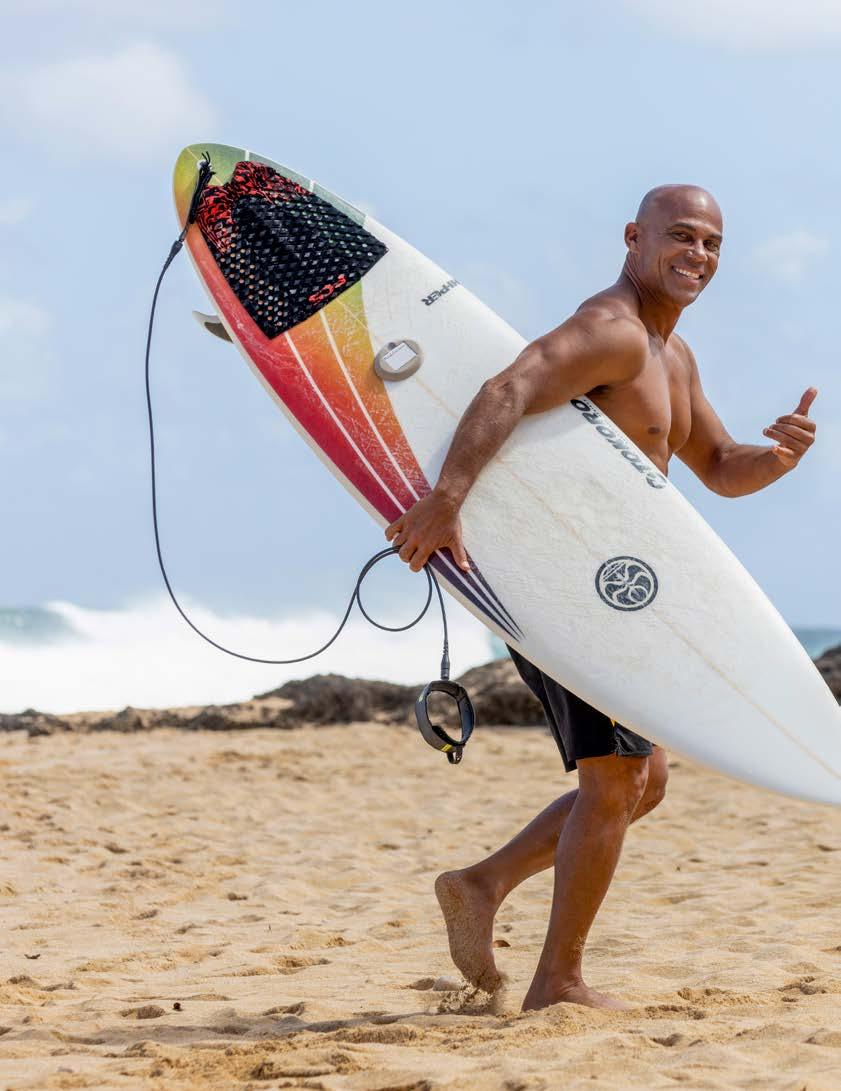
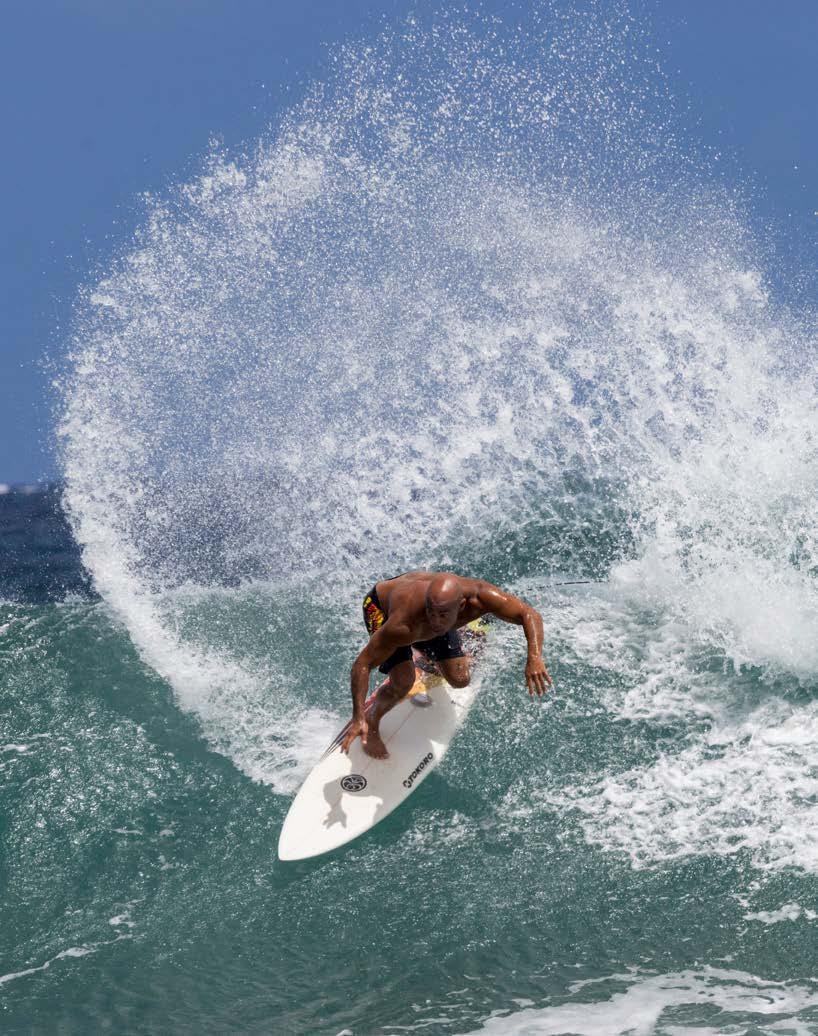
There are athletes who chase trophies and there are athletes who understand what trophies are really made of. Rainos Hayes belongs to both categories, but his true calling is for the latter.
Raised on the raw, powerful stretch of O'ahu's North Shore, Rainos has spent nearly four decades earning a quiet but undeniable place at the center of professional surfing. A solid competitor himself, he was never the headline but he emerged as something rarer: the steady hand and surf coach behind some of the sport's most significant athletes and careers. Ask the World Champions, the Olympic gold medalists, the
groms who came up under his watch — they'll all tell you the same thing. Rainos Hayes showed up for them. Fully. Every time.
As a kid he was a self-described rascal, a North Shore boy with saltwater in his veins who wasn't always walking the straight and narrow. He'll be the first to tell you that. Hard lessons came early, the kind that teach you about consequences, about real trust, and about what it means to have someone genuinely in your corner. What could have derailed him instead shaped him. Those experiences became the very blueprint for how he would one day show up for others.
Somewhere along the way Rainos Hayes found his footing and with it a calling the sport didn't even have a name for yet.
Over thirty years his athletes have collected more than fifteen ISA World Junior titles, three World Team
Championships, and an almost uncountable string of wins and finals across the ASP, WSL, and the North Shore and beyond. He has stood on beaches from Portugal to Brazil, Japan to Pipeline, and delivered the same thing every time: calm, clarity, and an unwavering belief in the person standing in front of him. That consistency, that humility, that genuine investment in people over accolades. That is what has made Rainos Hayes one of the most respected figures in surfing. Not just in Hawaii. Everywhere.
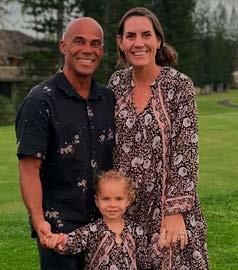
Now, for the first time in decades, he is taking pause. A lovely wife, a toddler, and another baby on the way. The perennial presence on the world stage is coming home for a while — not done, not even close, but recalibrating while he remembers what home feels like.
We caught up with Coach Rainos on the North Shore.
ML: You grew up right here at Sunset Beach. Do you remember your earliest surfing experiences? My first wave was at Earl's Reef on a bodyboard. I remember one time I pearled and went straight to the bottom and hit the reef. I told my uncle, "I hit the reef." He looked at me and laughed — "No, you didn't." That was Earl Morita's reef. Earl was the neighborhood yard man and rode that little 5'0 single fin, Lightning Bolt, yellow with the black lightning bolts on the side.
ML: And who were you watching back then? Who did you look up to?
My peers at the time, and a little older — Aukai Ferguson and Chris Angel. They were the leaders of the pack. Mike Hemperley could do laybacks. Christian Budroe, Ricky Irons would come down and put on a show. And then you'd have yourself, Ronnie Burns, Jason Magers and Noah Budroe roll through the lineup every once in a while on your way in from surfing Sunset out the back.
ML: Was there a moment you realized surfing wasn't just something you did, but something you were going to do for the rest of your life?
All I knew was it was the most fun thing I had ever done. I was instantly attracted to it and all I wanted to do was continue to do it over and over and over. There was nothing else I would have rather done. My first surfboard was this old kneeboard single fin that somebody had glassed at home — they spray painted a lightning bolt on it. The leash was surgical rubber tubing with a string inside. I rode it at Earl's Reef and I fell in love with it.
The first thruster I ever rode was Aukai's Ed Barbera. The minute I tried
that, I realized there was a whole other world of surfing. The board was so much better than anything I'd ever ridden. I really understood that there was something to be said for equipment.
Hayes was a late entrant into competitive surfing — he didn't start finding his way to contests until he was around fifteen, long after peers like Sunny Garcia, the Irons brothers, and others had already built serious amateur résumés. But what he lacked in early reps he made up for in retention. Every tip, every observation, every small piece of competitive wisdom went straight into a mental archive he has drawn from ever since.
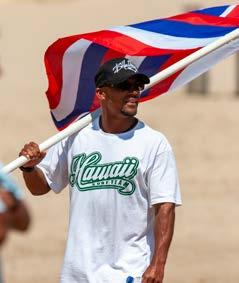
ML: You competed professionally. Was leaving the tour a failure, a choice, or just evolution? It was more of an evolution. I didn't quit surfing competitively because it wasn't enjoyable. What I finally realized was when I was running around the world, my boards weren't really built for that surf and I wasn't used to cold water and wetsuits. Every time I went to another place with super subpar waves, I was trying to surf stuff I never grew up surfing.
What I realized is when I came home, I had the upper hand. I could ride
ten-foot Sunset and understand it completely. And all of a sudden it took the element of competing with the guys out of it and had me focus on what can I do with these waves? How can I position and select and perform in surf of consequence? That made the journey one of my own.
The other thing I found was I hated losing, but I didn't really care if I won or not. It wasn't important for me to feel better than somebody else. I enjoyed seeing other people succeed and I enjoyed helping other people. I knew that because of all the people who had helped me. I was a kid that never really had much guidance. I had to figure it out the hard way. So every time someone gave me a tip — a friend, an adult, someone who saw something in my surfing — it went straight into the memory bank. And I didn't mind sharing it.
ML: So how did coaching actually start? How did you go from competitor to coach?
When I was twenty-four, I was airbrushing boards at Mark Townsend's studio to make money. The surf company Hawaiian Island Creations (HIC) came in and said, would you help the kids on our team? Come to this contest at Sandy Beach. The very first contest I went to, I got to coach this little boy from the Mililani–Ewa Beach area. It was Macy Mullen. The very first time I coached him, he won. And that's when I realized how much I enjoyed giving away everything I had learned the hard way. It made me feel good to watch kids elevate.
I stayed with HIC for seven years. Stephen and Jimmy Sukuyama, Bert Ishimaru, Jan Asuncion, they gave me a home, a house, a place. And we built the brand into something incredible. The team had athletes like Brock
Little, Todd Chesser, Clark Little, Cody Graham, Jason Bogle and ultimately Andy Irons. Later came Joel Centeio, Kekoa Bacalso, Hank Gaskell, Nalu Law, Andrew Oliver and others. I would grab these kids from the outer islands and take them to contests all over the nation, and they would win.
Before moving forward, Rainos pauses to look back. He keeps a list — not of results, but of people. The ones who showed up for him before he ever
finest surf parents he has ever known — who handed his children over with complete trust and wholehearted belief, and watched every one of them grow into champions and, more importantly, into beautiful human beings. Seth and Josh among them. Then came Chris Hefner and Graham Stapleberg at Billabong, who trusted his vision and gave him the platform to build something lasting on the world stage.
him — and what it meant to inherit what they had built.
Before Ben Aipa ever stepped down as Hawaii's ISA coach to enable Rainos the role, he had already spent decades remaking Hawaiian surfing from the inside out. Aipa was a master craftsman and surfboard builder credited with inventing the very popular "Stinger" design and quite an impressive competitive surfer. Aipa took his experience and
showed up for anyone else. Stephen and Jimmy Sukuyama, who gave him his first real footing in the coaching world at HIC. Jan Asuncion, who let him learn by working alongside him. Bert Ishimaru, his closest friend and constant road companion through decades of ISA campaigns, still in his corner to this day. Donald Pahia, whose quiet, selfless example showed a teenage Rainos what it looked like to genuinely support someone without ego or agenda. And Tony Moniz — whom Rainos calls one of the
"I don't feel anybody achieves too much completely by themselves," Rainos says. "There's probably been just as much support given to me as I was ever able to give others. I just want those people to know I haven't forgotten."
It was also during this period that Rainos stepped into a role that would define Hawaiian surfing on the world stage for the next two decades. But to understand how he got there, you have to understand who came before
knowledge and worked with some of the best in the business. Names like Michael Ho, Larry Bertlemann, Sunny Garcia, Kalani Robb, Andy and Bruce Irons — Aipa coached them all, demanding excellence while earning deep loyalty. He was, by most accounts, the original Hawaiian surf coach — the man who first proved that Hawaii's surfers didn't just need great waves. They needed someone who believed in them and held them to a standard worthy of the islands they represented.
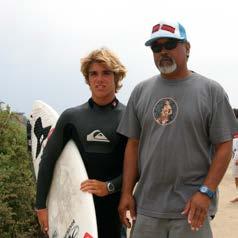
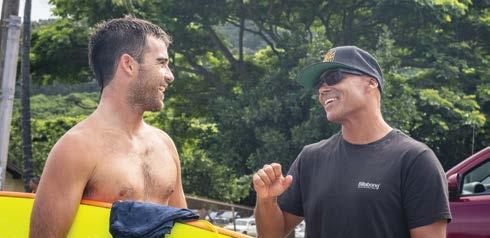
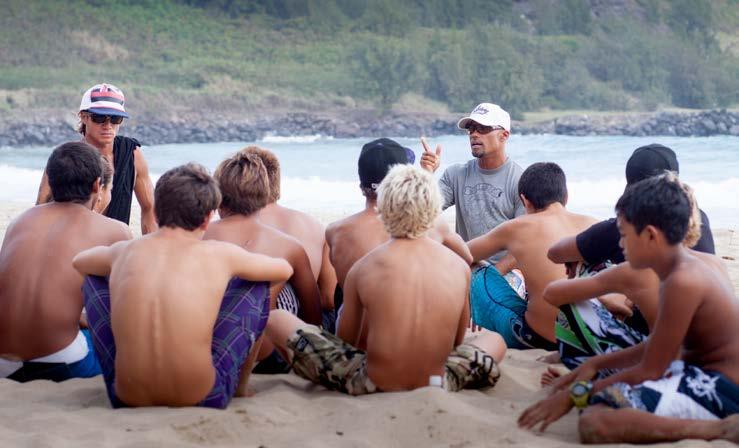
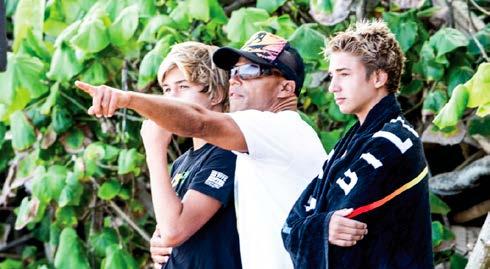
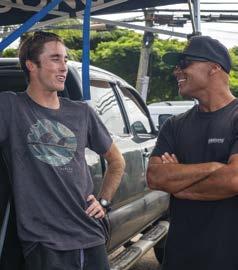
When Aipa eventually stepped back from his role leading the Hawaii ISA Junior team, the shoes left behind were enormous. The person who stepped into them was Rainos Hayes.
There was a path that led to that moment, and Rainos traces it carefully. Before Ben, there was Donald Pahia — a name that won't appear in any surf magazine rankings or contest results, but one that Rainos mentions with genuine reverence.
Then came 1996 and the first ISA World Junior Championships — where Rainos showed up as Ben Aipa's assistant coach alongside Dave Riddle, whose organizational knowledge and understanding of international competition structure gave Rainos the mechanics to complement what Ben was providing in spirit. He was there to learn. He learned everything he could.
us, consistently, and made sure we felt supported and valued. I was a kid who didn't have a lot of that kind of guidance, and watching him operate, the way he carried himself, the way he treated people — that went deep. A lot of how I try to show up for my own athletes traces directly back to him.
And then there's Ben. Ben Aipa taught me the foundation of all of it. He was strict — make no mistake, but he was easy to be with, and you always
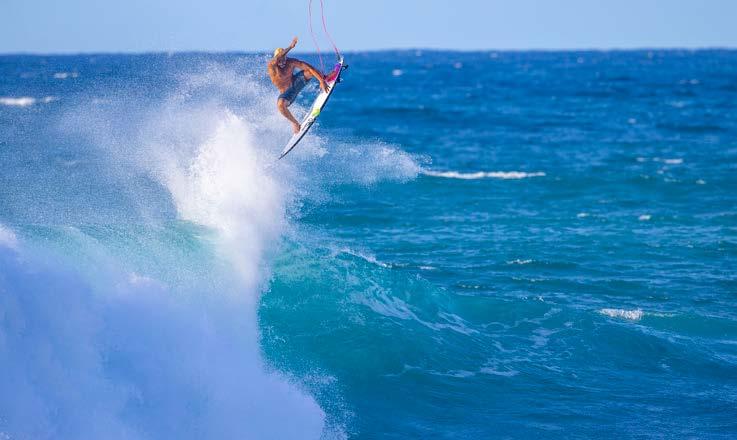
Pahia was the Quiksilver Hawaii team manager during the years a teenage Rainos rode for the brand. Softspoken, deeply caring, and rooted in the Hawaiian values of quiet service, Pahia was the kind of presence a young man with no real roadmap could look to and understand: this is what it means to genuinely support someone. There was no ego in it. Just steady, consistent care. Rainos absorbed that template and never forgot it.
ML: Talk about what Ben Aipa and those early mentors meant to you — and what stepping into that ISA role actually felt like. I have to start with Donald Pahia. People might not know that name, but I do, and I always will. When I rode for Quiksilver at sixteen, seventeen years old, Donald was the team manager. He was one of the most humble, soft-spoken, caring Hawaiian figures I've ever been around. He never made it about himself — ever. He just showed up for
felt like he saw you. He had this rare ability to make you feel like the most important surfer on that beach, and then send you into a heat feeling ten feet tall. I watched how he carried himself with those kids at the ISA worlds in 1996, and I didn't miss a thing. When he couldn't attend in 1998 and I had to step in as head coach in Portugal alongside Bert Ishimaru and Dave Riddle, that was a humbling moment. I felt the full weight of what Ben had handed forward. I didn't want to let him down. I didn't want to let Hawaii down.
Those ISA years meant everything. Hawaii competes as its own nation — separate from the US team — because we are the birthplace of surfing. That's not just a fact, it's a responsibility. Every kid on that team wasn't just representing themselves. They were carrying a legacy that goes back to Duke Kahanamoku. My job was to make sure they understood that, carried themselves with Aloha and then went out and surfed like they believed it. We brought home gold in 2005, 2012, and 2014. More than fifteen individual World Junior titles over the years. But what I'm proudest of isn't the trophies — it's that almost every single kid who came through that program went on to do something significant. The ones who didn't win a title still came home better surfers and better people. That was the standard Ben set. I just tried to honor it.
Ben Aipa taught me the foundation of all of it. I learned from watching him, from the way he carried himself with those kids. I never forgot that.
The HIC and ISA experience established the template. But it was a phone call from a struggling pro named Pancho Sullivan that launched Hayes into the wider professional world. Pancho was on the edge of losing his Rip Curl
Pancho said, I'm going on tour — will you come with me? I said, I'll come, but we need to rally about five guys so everybody can help cover the costs. I said if I get five guys together, one of them is going to make the tour — I can guarantee it. That group was going to be Sean Moody, Fred Patacchia, Joel Centeio, Kekoa Bacalso, and Pancho.
Right as I was getting ready to go, the opportunity to work for Billabong
sponsorship and needed to win the final event of the North Shore season to climb the rankings and save it. He came to Rainos. What followed was one of the most dominant stretches of North Shore surfing in recent memory — Pancho racking up multiple event wins across Sunset and Pipeline, ultimately clinching the 2005 Vans Triple Crown title and earning his spot on the WCT.
ML: That Pancho run was legendary. How did the Billabong opportunity come out of that?
came. Graham Stapleberg was looking for a team manager. I put together a proposal, pitched it to him, and he watched me surf at Pipeline — that kind of solidified my position. They gave me the opportunity to not just support their team on a promotional level, but what was most important to me was the coaching.
And then came Billabong Bloodlines — possibly the most talent-infused coaching and experiential surfing program ever created at that time.
Sasha Stocker — a world junior champion himself — came up with the idea. He said, let's bring the kids from all over the world to Hawaii, because if they don't learn to surf here, they're never going to make it. He knew this. He came up with it and I helped him execute. Eventually it all ended up in my lap. The Liam O'Briens, Ryan Callinans, Felipe Toledos, Kolohe Andinos — they all came through it. Jack Robinson. Keanu Asing, Seth Moniz, Josh Moniz. There really aren't
and stayed close. He was present at virtually every contest Seth entered over the next decade-plus, quietly building the foundation that would eventually take Seth all the way to the Championship Tour.
ML: Seth Moniz is a good example of how long this process really takes. Talk about that journey.
I had Seth since he was seven years old. We took him all the way through
So I went on tour with him. His first event was on the Gold Coast and he reached the quarterfinals. That first year he finished ranked twelfth in the world — rookie of the year. That's not an accident. That's a decade of work paying off all at once.
The thing people don't see is how much coaching happens away from the contest. It's the conversations at dinner, the equipment decisions
too many who came through that program that didn't go on to achieve something.
Of all the athletes Rainos has shepherded, perhaps none illustrates his philosophy more completely than Seth Moniz. Their relationship didn't begin at Billabong or Bloodlines — it began when Seth was just a keiki, at a local contest, at a time when most coaches weren't even looking at kids that young. Rainos saw something
the WSL qualifying process — a second in Japan, a second in Ballito, quarters at Huntington, semis at Haleiwa — and that run secured his spot. When he qualified, I made a decision: I'm not going to hand this kid I love to somebody else who might fumble him. I'd watched that happen before. Coaches who didn't understand what had been built, who unraveled years of work without even realizing it. I wasn't going to let that happen with Seth.
at midnight before a big swell, the phone call when a kid is in his head and needs someone to talk him back to himself. That's the job. The beach work is just the visible part.
ML: You've been coaching for over thirty years. How would you describe what you actually do — the gift, if you call it that?
The gift I have — and I credit my great-grandfather with this — is I can get people to win. I could lift
people. There was no bashing. There was only empowering. And I've never really changed my formula since. There's been no need to.
What I made sure of was that I was never a bad influence in these kids' lives. I realized how fragile that relationship was. My job was always to keep them safe. If there was a hard part of my job, it was making sure that these kids got to come home in one piece to their parents. I held that as the number one thing, regardless of results. And I think that's been a large part of my success — it was nice to be able to be trusted.
ML: You've watched surfing evolve for nearly four decades — from the North Shore rascal days to coaching world champions. Has the performance level really changed that much?
Pound for pound, the athletes and the sport have come a long way. It's become truly a sport — and I mean that in the most respectful way possible. You can't just rock up and be a surfer anymore. You actually have to be an athlete. That's not a criticism of the old days, it's just the reality of what the sport demands now.
Think about what you're watching at a place like Snapper. That's almost a thousand yards of lineup. Surfers are going down the point eighteen times in a single day, doing ten-foot airs and then snapping full rail turns at speed. By the end of a thirty-minute heat, you are physically gassed if you're doing it right. The level is so high that you have to show up — and show up on demand. Not on your best day. Every day.
What's impressed me most in recent years is how the sport has narrowed itself down to pure quality. Not just
who has the best style, not just who has the best flow or rhythm — though those things still matter — but who can consistently produce the highest quality surfing under pressure, in any conditions, on any given day. You can't hide anymore. And in order to deliver at that level, you genuinely have to train for it. All of them are in the gym now. All of them are working on their bodies like the athletes they are.
Style and rhythm alone won't cut it anymore. I say that with love — some of the most beautiful surfing I ever saw was built on style and rhythm. But if you showed up today with style
and family
and rhythm and nothing else, the tour would eat you alive. World champions are not normal people. They are very special individuals who are extraordinarily driven — and on top of all the natural talent they were born with, they apply themselves twenty-four hours a day, seven days a week. The ones who make it and stay there are the ones who understand that the gift isn't enough. You have to do the work.
Italo Ferreira — already a World Champion and Olympic gold medalist — came to you. What was that like?
It was an honor. I knew it was a challenge. And I knew that's my specialty — helping people to reinvent themselves. Something was broken, I knew I could help them find a solution out of it and get to the performance they wanted, if they were willing to climb in and do the work.
What about Andy Irons? You weren't technically his coach but you were both major figures in the Billabong program. Talk about that relationship and his surfing.
I first saw Andy as a young man at the 1996 ISA World Games — the very first worlds I attended with Ben Aipa. I wasn't his coach then, I was just watching. But even at that age, it was obvious. Andy was not there to lose. He had no other vision besides professional surfing, and he was going to win competitions. That was simply who he was.
Our relationship grew over the years through HIC and then Billabong. I think because I was so consistent as a person — I always showed up the same way, no drama, no agenda — Andy grew to trust me. And that trust meant everything, because Andy's world wasn't always simple. What I became for him was what he needed me to be at any given moment — someone he could depend on. Not always as a coach in the formal sense, but as a constant. Someone in his corner who he knew would tell him the truth and be there when it mattered. He came to understand I could be a piece of his puzzle, a part of his entourage that he could genuinely rely on. That relationship was one of the honors of my life.
As for his surfing — Andy's surfing was the most raw I've ever seen. Absolute aggression. His will to be the best he could be and to take on
the gnarliest situations was pretty much unmatched. He was a fierce competitor once he really hit his prime. He would attack things, and if it didn't go his way, he would wrangle it until it did. Some people have a special ability to conjure things in the ocean — Andy had that more than anyone I've ever seen.
There was a moment in Tahiti where it was two feet and flat. Andy was so upset that it was flat, he basically conjured a six-footer out of nowhere, got barreled all the way across the reef, got in the boat, and screamed let's get the F out of here. We all jumped and chased him to the boat as fast as we could. Andy was done. He commanded respect with how willing he was to risk his life in the surf. And he commanded loyalty — mine included — with who he was as a human being when the cameras weren't on.
ML: Last question. If you could give one piece of advice to the kid you were — the rascal from Sunset Beach — what would it be?
Would I change any of it? No. Because it put me in the position I ended up in. I understood how precious life was, and what a gift surfing has been — a place of rest and relaxation and exertion, my mana my whole life.
The thing I've enjoyed about myself is I've always been an ambassador of aloha. That alone helped me build friendships around the world. And it was genuine. It was never fake. There's a fine line between fighting for what we want and hanging on to what we got — and keeping it by sharing it. They can't take away my relationship with Sunset Beach. So I can share it with everybody else and not be afraid of that.
Rainos Hayes has spent his entire adult life standing at the edge of the water, watching other people surf. To the uninitiated, it might look like he stepped back. To anyone who knows the sport, it's clear he stepped forward — into something quieter, more durable, and ultimately more meaningful than any contest result could capture.
The reef is still there. Sunset is still breaking. And for the first time in a long time, Rainos Hayes is home. He has a wife, a young child learning to walk, and another on the way. The world's beaches will be there when he's ready. For now, this stretch of the North Shore — the one that made him — gets to have him back.
Some things you don't give away. You just share them.
Story
& Photos By
Mike Latronic
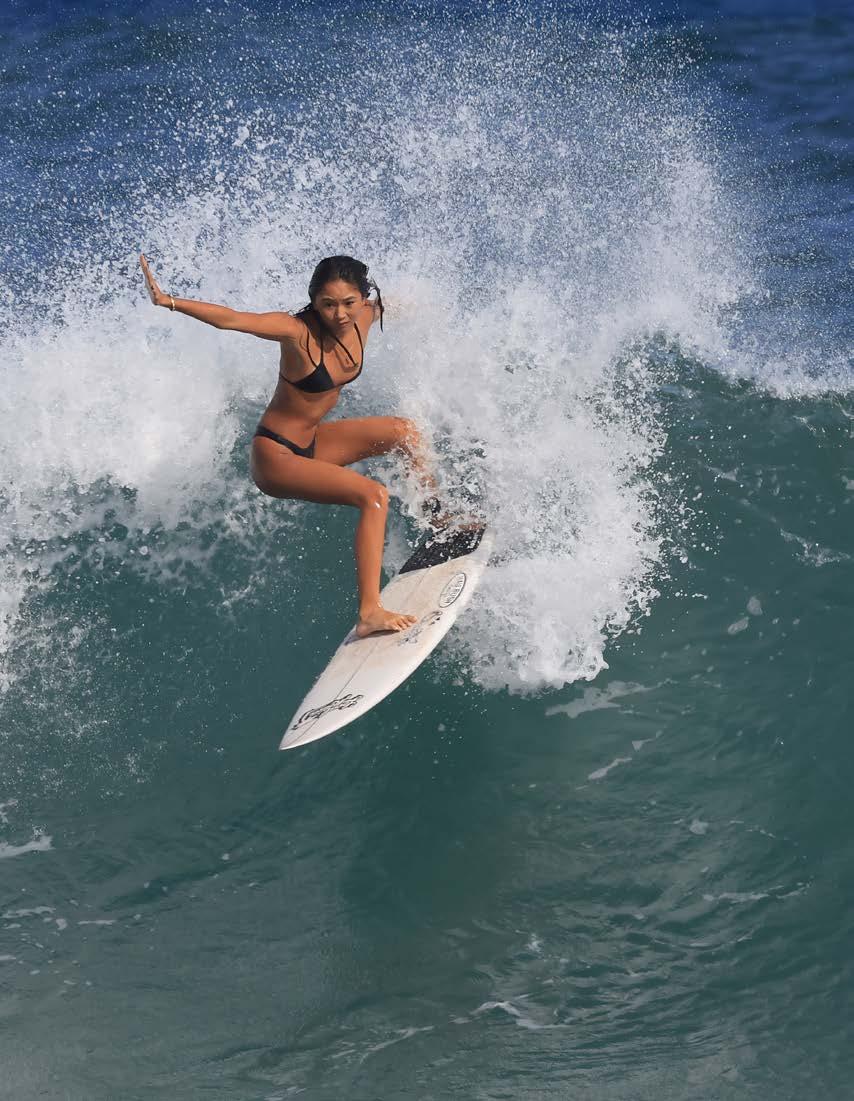
In Hawai‘i, surfing is more than a sport—it’s a cultural and recreational standard for many families and more often than not that energy, bloodline, legacy, passes from one generation to the next. Let me introduce you to Isaac and Kiki Kaneshiro.
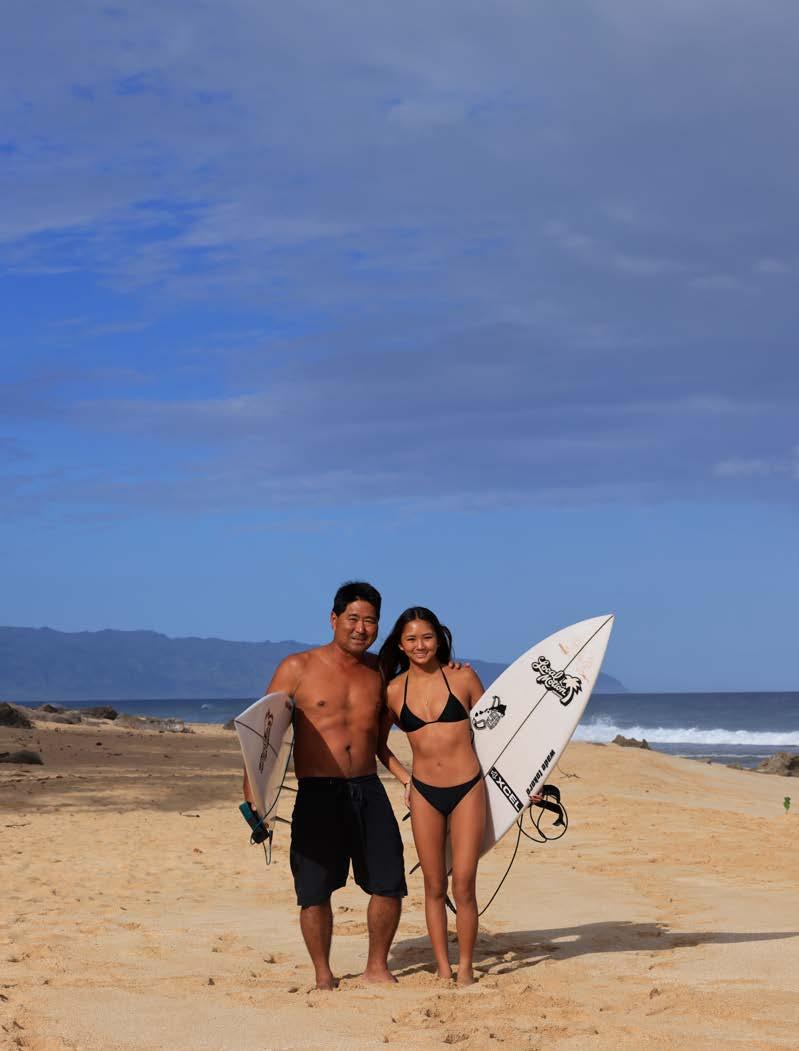
Isaac Kaneshiro was a respected and solid island performer of the 80’s and 90’s. He became a local legend in around the late 1980’s and early 1990’s, when Isaac defeated reigning world champion and winningest surfer ever, Kelly Slater, twice! Once at the US Championships in Oceanside California and next in a head-to-head at the ASP Coke Classic in Narrabeen, Australia.
Now, that same competitive fire runs through the next generation. Enter Kiki Takako Oshiro-Kaneshiro.
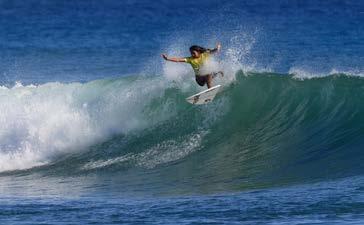
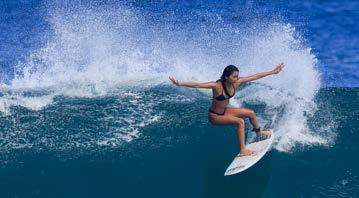
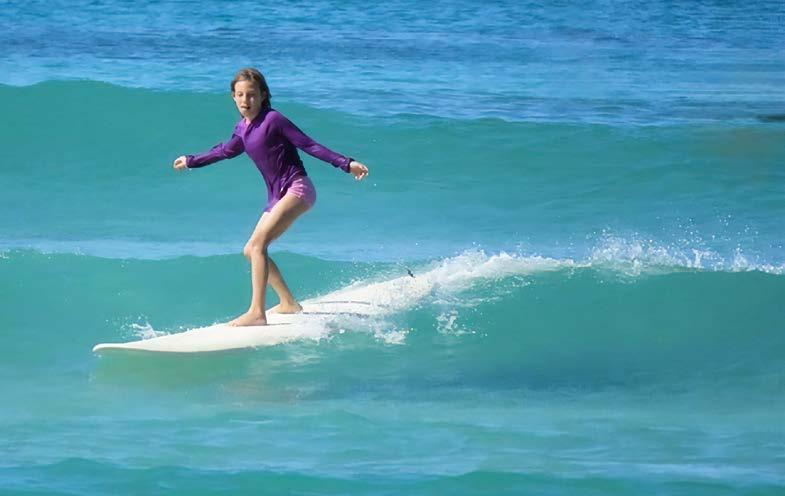
Born February 6, 2011, Kiki is one of Hawai‘i’s brightest rising surf talents. Sponsored by Local Motion Hawaii, with shapes by Wade Tokoro and serving as an Aloha Ambassador for Hau Bush Board Co., she’s already carving her own lane with style, confidence, and that unmistakable island-born water instinct.
She was raised in the ocean—literally. Her dad pushed her into waves from the outside, her mom spotted her from the middle. From the very beginning, surfing wasn’t something she chose—it was simply who she was.
Now homeschooled, dedicated, and surfing every day she can, Kiki represents the perfect blend of old-school surf roots and new-school progression. She carries her father’s fearless DNA, but she’s writing her own story—one wave at a time.
Q: Can you remember the very first time you rode a wave? Who was there? What happened? Vaguely, I was a baby. My Dad would push me from the outside, my Mom would spot me in the middle. I guess I just always grew up on the water. My parents are water people!
Q: What is surfing to you? Sport? Job? Lifestyle? Hobby? Why do you surf? All of the above.
Surfing is my lifestyle. I love the ocean and the beach! The best times of my life are when I’m at the beach with my family.
Hours: 8am - 8pm


Q: How often do you surf? If you didn’t surf, or when you are not surfing, what would you do with your time?
Every day. Unless I’m sick, hurt, or studying… I’m surfing!
When I’m not surfing, I spend time with my dogs, I journal, and I work out.
Q: Let’s talk surf… Is being in the ocean your happy place? What is it like?
Whenever I’m riding a wave, I’m in my happy place. Big or small, clean or junk, shortboard or longboard—I love to ride.
Q: Your dad was a highly influential surfer back in his day. In fact, I think he took on Kelly Slater and beat him. How has your dad influenced you?
Yes, Slater has never bested my dad in a man-on-man heat.
My dad beat him in 1989 at the U.S. Championships in Oceanside, California, and again in 1993 at the Narrabeen Coke Classic in Australia.
My dad proved that no one is unbeatable, and that is something I remember whenever the odds are against me in anything I’m trying to accomplish.
Q: That is awesome!! Anything else?
I’m super thankful for my sponsors and the organizations who support local surfing. Without them, none of us would be living our dreams. Always grateful for my family, especially my mom and dad!
Birthday: February 6, 2011
School: Homeschooled
Favorite Food: My Mom’s cooking!
Sponsors: Local Motion Hawaii, Wade Tokoro Surfboards, FLHI Girls Sports TV, and Aloha Ambassador for Hau Bush Board Co.
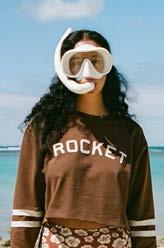
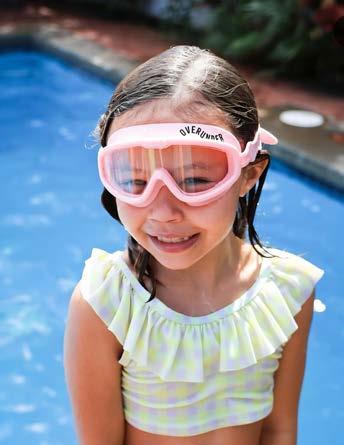
@naniwelchkeliihoomalu w/@penina.vai in @ rocketahuna & Ulua Original


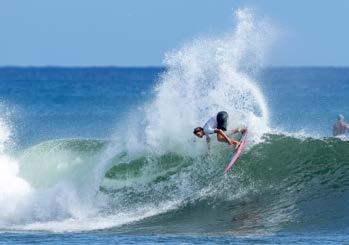
The 2026 HSA State Championship (Presented by HIC & Billabong) wrapped up its run at Ala Moana Bowls from May 6–10, 2026. As the culmination of the Hawaii Surfing Association's amateur surf series, it brought together top-ranking qualified surfers from across the islands to compete at Town's premier south shore break.
The Venue: Ala Moana Bowls provided classic South Shore shape, offering a highly contestable mix of overhead sets and clean faces, even with some light, ruffled trade winds keeping competitors on their toes.
Divisions: The schedule featured intense competition across a wide range of age groups and disciplines, including Open Men's and Women's Shortboard, 17U Boys and Girls Longboard, and technical bodyboard divisions.
The Vibe: Held right in the heart of May's early-season south swells, the event drew solid crowds to the Magic Island vantage points to watch the next generation of Hawaii talent battle for state titles.
Junior Girls S.B. 16–17 — Zoie Zietz
Girls S.B. 14–15 — Leah Turner
Girls S.B. 12–13 — Mana Cazimero
Girls S.B. 11 & Under — Jae Abubo
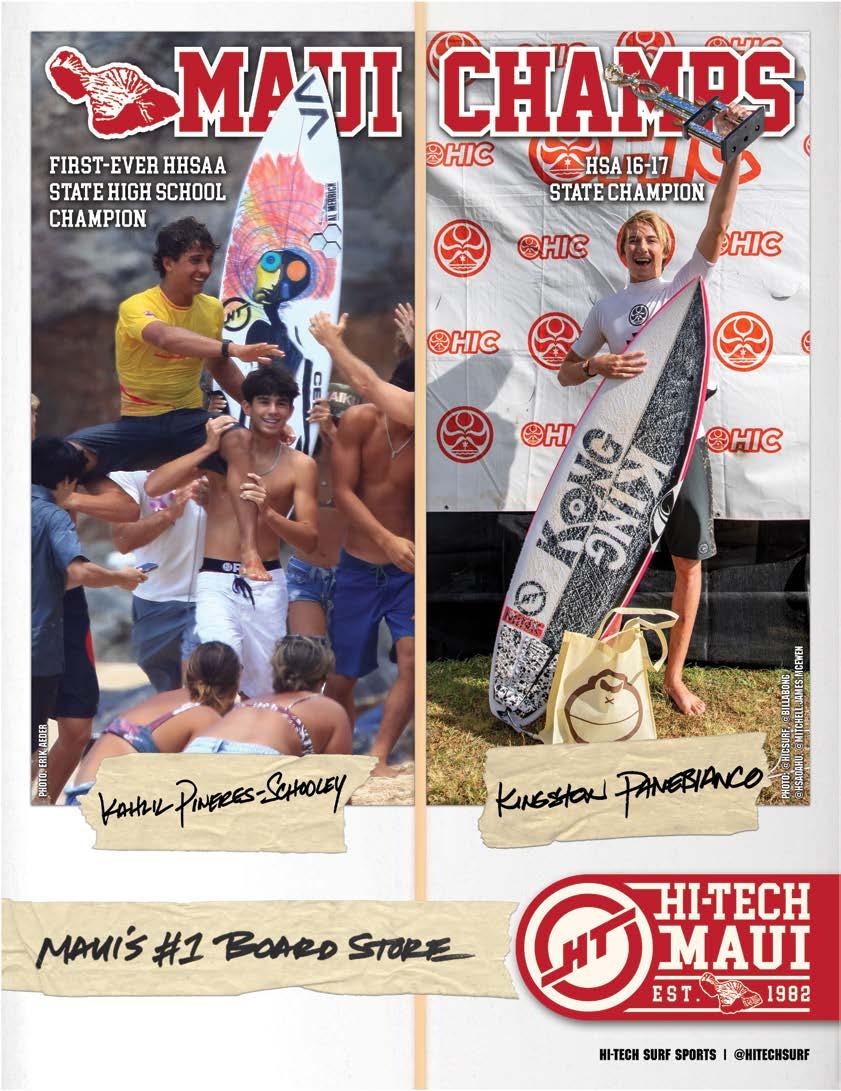
Junior Men S.B. 16–17 — Kingston Panebianco
Boys S.B. 14–15 — Merrik Mochkatel
Boys S.B. 12–13 — Kingston Palakiko
Boys S.B. 11 & Under — Keahi Lee
The 2026 HHSAA Surfing State Championships at Ho’okipa Beach Park marked a historic milestone for Hawaii’s high school athletes. Bringing together the top talent from the OIA, ILH, BIIF, MIL, and KIF, the event showcased the incredible progression of youth surfing across the islands. From powerful shortboard maneuvers to the classic style of longboarding and the high-intensity action of bodyboarding, the tournament highlighted the depth of talent within the state’s interscholastic programs.
A special mahalo to Kim Ball for his vision and tireless work in making this event a reality. His dedication to the sport and the students has provided a vital platform for the next generation of Hawaii’s surfers to shine.
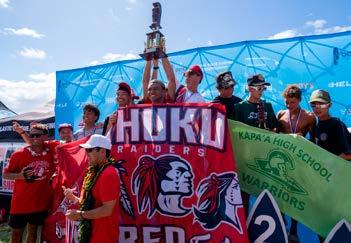
Girls Shortboard: Skai Suitt (Waialua, OIA)
Boys Shortboard: Kahlil Pineres-Schooley (Seabury, MIL)
Girls Longboard: Hanae Rose (Waialua, OIA)
Boys Longboard: Alex Ranne (Hawaii Academy of Arts & Science, BIIF)
Girls Bodyboard: Kaipoi Koa (Kalani, OIA)
Boys Bodyboard: Felix Barton (Hawaii Academy of Arts & Science, BIIF)
Boys Division
Champions: Kahuku High School
Runners Up: Kapa’a High School
Girls Division
Champions: Waialua High School
Runners Up: Kapolei High School
MAHALO MARGARITA is a give-back cocktail program where on premise accounts donate a portion of sales from their MAHALO MARGARITA, made with Tradicional 100% agave tequila, to AccesSurf. Jose Cuervo® will match the proceeds up to $25k. Together, this joint donation of $50k would go to support surf experiences and more for a full year.
OAHU
Kuhio Avenue Food Hall / Waikiki
Kelly O’Neil's / Waikiki
Jorge's / Haleiwa
El Ranchero / Kapolei
El Ranchero / Wahiawa
Mekiko Cantina / Ko’olina
Restaurant 604 / Arizona Memorial
The Beachouse by 604 / Waianae
60 Fore Bar & Grill / Barber’s Point
604 Clubhouse / Leilehua
604 Ale House / Schofield
Mangiamo’s / Navy Marine Golf
OAHU HOTELS
Sheraton Waikiki Hotel
Royal Hawaiian Hotel
Moana Surfrider Hotel
Princess Kaiulani Hotel
Marriott Waikiki Hotel
BIG ISLAND
Huggo's
Lava Lava
Kai Eats
MAUI
Sergio's Cantina
Sheraton Maui
KAUA'I HOTELS
Friendly Waves
Lava Lava Beach Club
In the world of aviation, there is no such thing as a "mostly successful" takeoff. An airplane is either airborne, or it is a high-speed projectile on the ground. The transition from the tarmac to the sky is a non-negotiable moment of physics where thrust, lift, and timing must align perfectly.
Surfing operates on the exact same principle. The popup is your takeoff. It is the instrumental gateway to the rest of the ride. You can be the most stylish carver or the most fearless tube rider in the world, but if your pop-up is sluggish, mistimed, or asymmetrical, the "flight" of your wave is compromised before it even begins. To ride with flow, you must first clear the runway of the wave’s crest with absolute precision.
In sports science, we describe the pop-up as a plyometric burpee executed on an unstable, descending plane. To put that in layman’s terms: it’s an "explosive snap-to-attention." Imagine you are lying flat on a moving sidewalk that is suddenly tilted at a 45-degree angle. In one heartbeat, you have to shove the floor away, suck your knees to your chest, and land like a cat on a tightrope—all while the sidewalk is trying to outrun you. It is a total-body "jolt" that requires every "circuit" in your nervous system to fire at once.
To understand why the pop-up fails—especially as we get older or carry injuries—we have to look at the body parts integrated into this 1.5-second miracle.
1. The Upper Body "Thrusters" (Pectorals and Triceps)
The move starts with the hands. As the wave's energy begins to lift the tail of your board, you plant your palms. You aren't just doing a push-up; you are performing an explosive "shove."
The Muscles: Your Pectoralis Major (chest) and Triceps provide the vertical lift.
The Mechanics: This lift creates the "tunnel" of space between your belly and the wax. Without enough vertical height here, your feet will snag on the deck, leading to a "stumble" takeoff.
2. The Core "Hinge" (Abs and Hip Flexors)
This is the most complex part of the machinery. Once the chest is up, the lower body must "swing" through the tunnel.
The Muscles: The Rectus Abdominis (your core) and the Iliopsoas (hip flexors).
The Mechanics: This is a "snap-and-coil" motion. Your hip flexors act like high-tension springs. When they fire, they pull your heavy lower limbs forward in a fraction of a second.
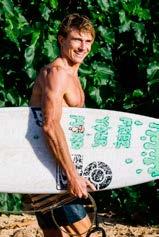

- Lucas Godfrey
Mesiwala,



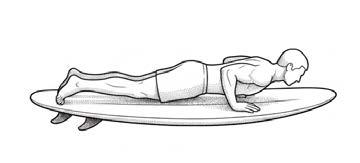
STEP 1: POSITION HANDS
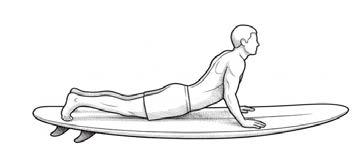
STEP 2: ARCH UP AND ENGAGE
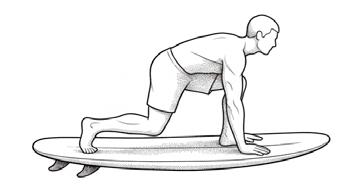
STEP 3: PUSH UP & DROP KNEE
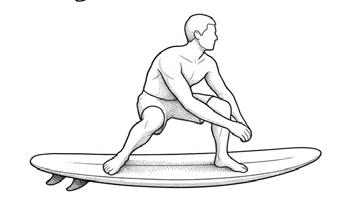
STEP 5: STAND UP AND BALANCE
As your feet make contact, the job changes from speed to stability.
The Muscles: The Gluteus Maximus (butt), Quadriceps (thighs), and the complex stabilizers in the ankles and feet. The Mechanics: You are landing in a compressed, athletic stance. Your legs must act as shock absorbers to handle the "bump" of the wave face while your ankles make micro-adjustments to keep the board on its rail.
The reason the pop-up becomes the "great separator" in the lineup is that it relies on fast-twitch muscle fibers and joint mobility—two things that naturally decline over time.
For the "elder statesman" in the water, or someone recovering from a back or knee injury, the "coil" phase (Phase 2) usually slows down first. If the hip flexors are tight or the lower back is stiff, you can’t "snap" the knees through. Instead, you "climb" up—putting a knee down first or taking two steps to get to your feet.
Mushroom Waves: On a slow-moving, crumbly wave, a "staged" pop-up is fine. You have the luxury of time because the runway is long and the slope is gentle. Steep & Hollow Waves: On a hollow "draining" wave, the runway is disappearing. If you are a millisecond slow, the board remains pointed toward the base of the wave while you are still mid-transition. The result? You "nose-poke" or get pitched over the falls.
Your pop-up efficiency directly dictates your "menu" of rideable waves. If you want to keep riding the highperformance stuff, you have to keep the "engine" tuned.
The good news is that the body is adaptive. You can "rewire" your pop-up with targeted maintenance.
If you can’t arch your back, you can’t create space. The Drill: Spend time in Cobra Pose or "Upward Dog." This stretches the anterior chain (front of the body) and maintains spinal extension. If you can’t get your chest high, your feet have nowhere to go.





2. Sharpen the "Snap" (Plyometrics)
You have to remind your brain how to move fast. The Drill: Box Jumps or Squat Jumps. The goal isn't just strength; it’s "rate of force development." You want to teach your muscles to go from 0 to 100 instantly.
3. Practice on Land (The "Perfect Rep")
Don't wait until you're in the impact zone to practice. The Drill: Draw a string down the center of a yoga mat (representing the stringer of your board). Practice 10 "Perfect Pop-ups" a day. Focus on landing with your feet centered on the line, knees out, and eyes looking "down the line," not at your feet.
To the seasoned surfer, the pop-up might feel like second nature, but it is actually a high-level athletic feat. By respecting the body mechanics involved—and acknowledging where our "machinery" might be rusting— we can make the necessary adjustments to stay "Fit for Surf."
Remember: A successful session starts the moment your hands hit the wax. Make sure your "takeoff" is cleared for flight.

By Kaea Latronic
Sand is the most used resource on Earth, surpassed only by water. Globally, human development consumes fifty billion tons of sand annually to feed the production of concrete and glass. Every high-rise stretching and scraping the sky, every statue to success, and every tunnel for transportation relies on this material. This creates a permanent deficit in Earth’s stores of sediment, turning a once-abundant resource into a global logistical crisis. This breakdown is driven by a precise geometric demand: humanity’s modern development utilizes cement, which in turn requires sharp, interlocking particles— not weathered desert sand, and thus suppliers opt for subaquatic collection. The resulting fallout unbalances hidden structures safeguarding our waterfronts, causing the visible land to slide downward into the deep— driving an urgent pivot into manufactured alternatives and increased worldwide regulatory oversight.
At the root of this lies a mechanical quandary. Two thousand years ago, Romans mixed volcanic sand with lime and ash to construct the Pantheon, creating concrete that grew stronger as the saltwater of centuries ebbed and flowed against it. In the 1800s, the arrival of rapid-setting Portland Cement woke a near-insatiable industrial appetite to build everywhere, high and proud, simply because we could. This is the concrete we know today. Alas, this drooling appetite is also picky. Desert sand is completely useless for construction. Abundant, yes, but spit by the wind and refined for generations— desert grains are perfectly round and smooth.


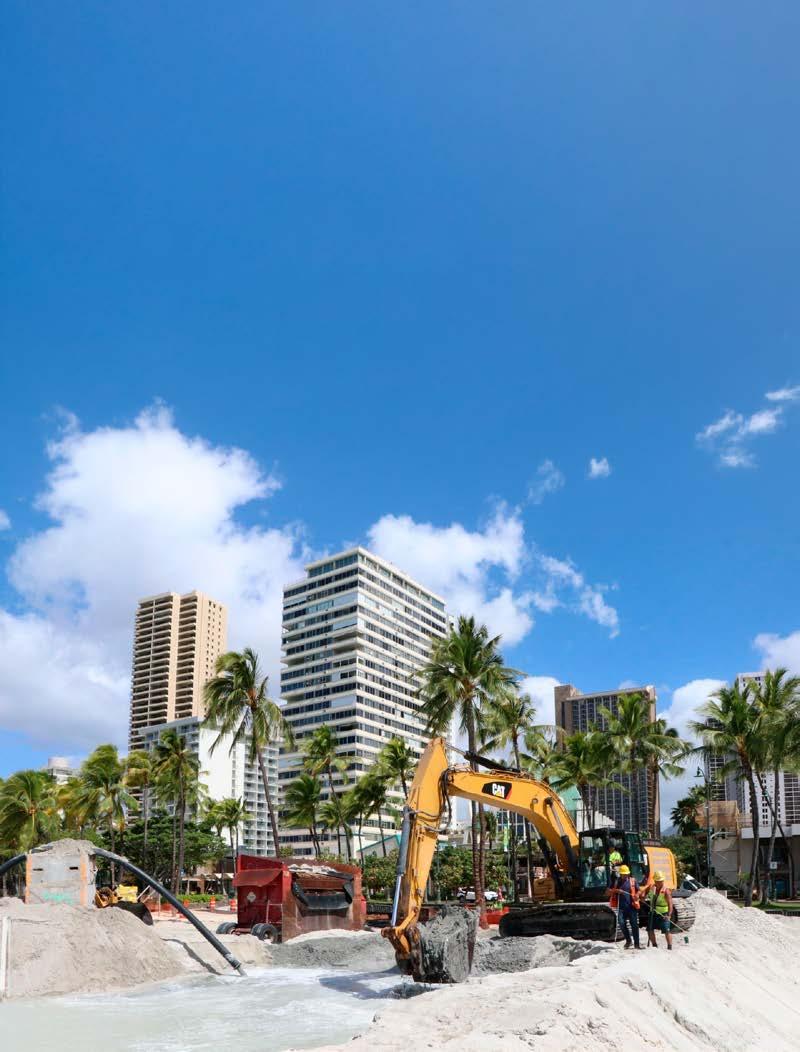
Attempting to mix concrete with these causes it to crumble like a wall built out of marbles, forcing extraction operations to target water-worn environments instead. To feed this commercial machine, dredging operations strip the earth by sucking up sediment from rivers and lakes before it can ever reach the coast. When the rivers run out, industries take to the sea where massive ships insert giant vacuum straws into the seafloor. These do not discriminate, lifting sand, reef, and marine life to be deposited coldly into a steel hold for processing. For coastal ecosystems, this harvesting is an armed home invasion and a form of coastal vandalism disguised as maintenance. Industrial ships suckle the underwater hills that make our waves break, only to spit up that sand on the shore for beach basking. While it indeed creates a temporary beach, it leaves a nasty hole in the seafloor.
mimicry of Nature’s slow tumbling. This substitute sand, technically called amorphous silica, is manufactured by companies like Louisiana's Glass Half Full and Florida's Glass to Sand. It provides a quiet, qualitative offering that gives the coast strength without suffering the ocean floor. Simultaneously, our feverish Promethean pursuit of better, faster technology requires rare earth minerals—this generates vast amounts of mineral mining byproduct. Called ore sand, it is now being diverted to industrial concrete mixers, a swap that staves off the leaking from our natural deposits.
This transition from raw extraction to resource engineering is now governed by an international legal framework. In 2026, the United Nations’ Sand and Sustainability report officially established sand as a strategic resource and
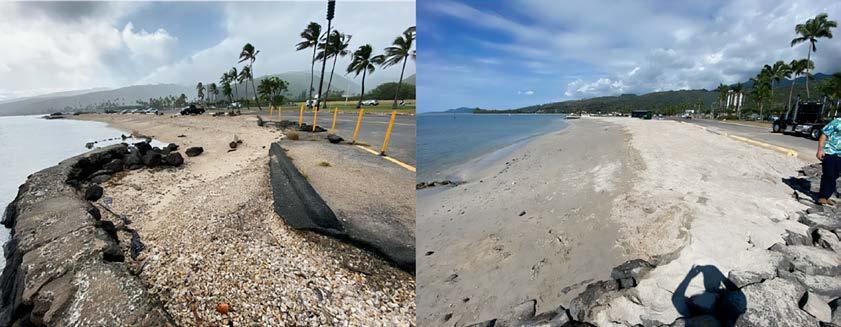
Because nature will always equalize a vacuum, the shore inevitably collapses right back into the man-made gouge, rendering it a literal house built upon sand. Furthermore, during underwater harvesting, massive silt plumes are created, strangling coral reefs and suffocating seagrass beds, further killing the marine life that anchors the food chain.
Scrambling out of this collapsing structure requires a firm push toward circular engineering, which is the scientific practice of repurposing what we already have to allow the regeneration of damaged ecosystems. To offer healing back to these ecosystems, humans are targeting our own mindlessness by collecting discarded glass bottles. These vessels are subjected to a mechanical digestion until the jagged edges are rounded into irregular grains, a keen
mandated strict traceability for every ton of material used in large construction projects. When we legally protect the offshore landscape or declare sensitive coastlines as reserves, we are not just flagging a playground; we erect a boundary and station guards at the gates, honoring the ocean and the machinery of a wave. This enforces a reality where humans must stop treating the Earth as an unregulated quarry. To ensure that the castles stand and the sandbars hold, we must build our monuments from the ashes of our own waste, leaving sand where it belongs so that our future generations can enjoy the same waves we do.
Ride the Wave to




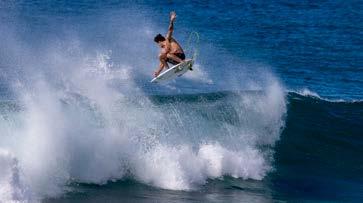
Reigning world champion Yago Dora shocked the industry by ending his 14-year relationship with Volcom to sign a massive head-to-toe deal with Vissla. Rumors of friction peaked last year when Dora briefly stripped Volcom logos from his nose following payment delays tied to parentcompany structural changes. By alignment with Vissla—a core brand proudly operated entirely by surfers—Dora returns to his roots. Rumors are also swirling that Vissla’s parent company, Stokehouse, is preparing an aggressive bid to purchase heritage giant Rip Curl later this year.
The World Surf League officially eliminated its controversial end-of-season "Finals Day" format. Moving forward, the world title will revert to a traditional year-long points-accumulation system, with the world champion crowned at the ultimate event. To raise the stakes further, the tour has officially axed non-elimination opening rounds. Surfers must now survive immediate suddendeath matchups on day one. Additionally, the historic Pipe Masters has been repositioned as the final, heavily weighted 12th stop of the year, carrying 1.5 times the points of a standard Championship Tour event.
The world’s best left-handers are celebrating as the WSL officially swapped out the iconic righthand point break of Jeffreys Bay, South Africa, for the flawless lefts of Raglan, New Zealand. Running under the moniker of the Corona Cero New Zealand, the event marks a historic return to Kiwi shores. This structural calendar shift reshaped the earlyseason Australasian leg, forcing competitors to pivot their equipment strategies from heavy right-hand carves to high-performance backside surfing, altering the early 2026 world title race dynamics completely.
In a massive step forward for competitive equity, the WSL has officially expanded the women's Championship Tour field from 18 to 24 athletes. This expansion accommodates a wave of generational talent emerging from the Challenger Series alongside heavy-hitting seasonal wildcards. The new format structures the women's event to mirror the men’s, utilizing parallel opening qualifying brackets for lower seeds. Industry insiders note that this expansion provides much-needed stability for brands looking to sponsor rising female athletes who previously faced an incredibly narrow qualification bottleneck.
In one of the most significant marketing shakeups of the decade, Nike has officially signed Tokyo Olympic gold medalist Ítalo Ferreira. This blockbuster deal marks the sportswear giant's first major sponsorship of a professional surfer in over ten years. Ferreira, who had been operating without a major clothing sponsor since his departure from Billabong, will anchor Nike’s renewed marketing push into the action sports lifestyle realm, signaling that athletic cross-training and surf-culture crossover appeal still hold immense corporate value.
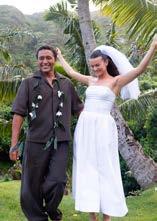
Congratulations to Josh Moniz and Isabella on their beautiful wedding! Here’s to a lifetime of happiness, Mr. and Mrs. Moniz!




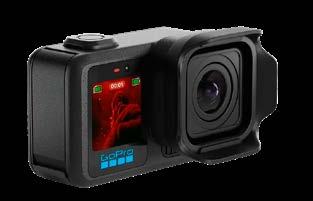
The compact GoPro Mission 1 Pro cinematic camera elevates creator potential beyond action cams. Powered by a GP3 processor and a 1-inch 50MP sensor, it delivers 8K60 video, low-light clarity, and 14 stops of dynamic range. Durable and waterproof, it provides over three hours of 4K runtime.gopro.com
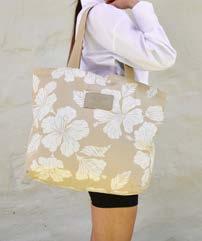
Crafted from lightweight, "Dune" coated Tyvek, this expandable bag is perfect for beach days or travel. Its signature SPLASH-PROOF® material protects gear from light rain, mist, and spills. Featuring interior and exterior zipper pockets, an expandable top, and comfortable 11-inch drop straps, it effortlessly balances island aesthetics with daily functionality.
localmotionhawaii.com
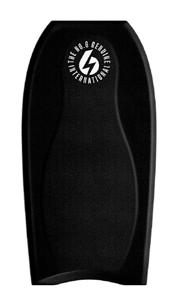
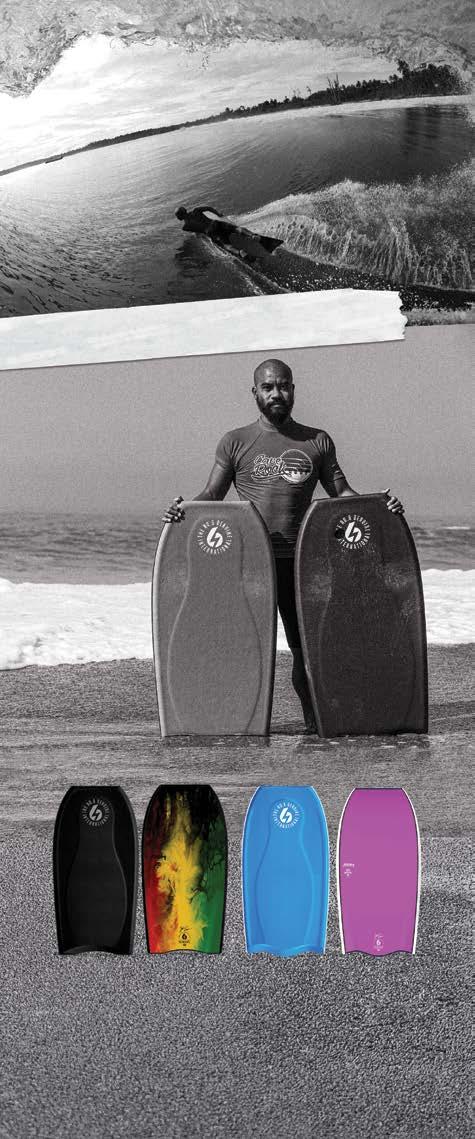
Jacob Romero’s signature No.6 board is built for his explosive, unpredictable style. Featuring a drivey, highly responsive template, its advanced core enhances snap and recoil for rapid turns and maximum aerial hang time. Designed for top-end performance, it includes mesh reinforcement, a 1x stringer, a Surlyn slick, and a contoured deck. Available in Bat or Crescent tail. theno6.com
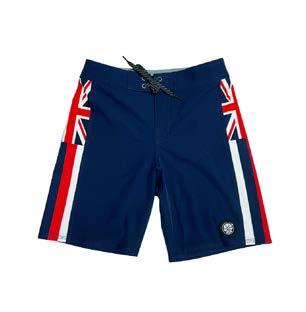
HIC Kapono Boardshort in classic navy delivers island-inspired style with performance in mind. Crafted for comfort and durability, these boardshorts feature a reliable fit that moves with you whether you're catching waves or enjoying the beach. The timeless navy colorway pairs effortlessly with any rashguard or swim top. Built to withstand saltwater and sun, the Kapono is a versatile essential for any water enthusiast's collection.
hicsurf.com



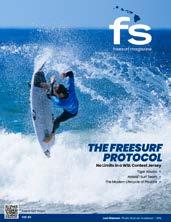
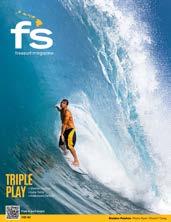
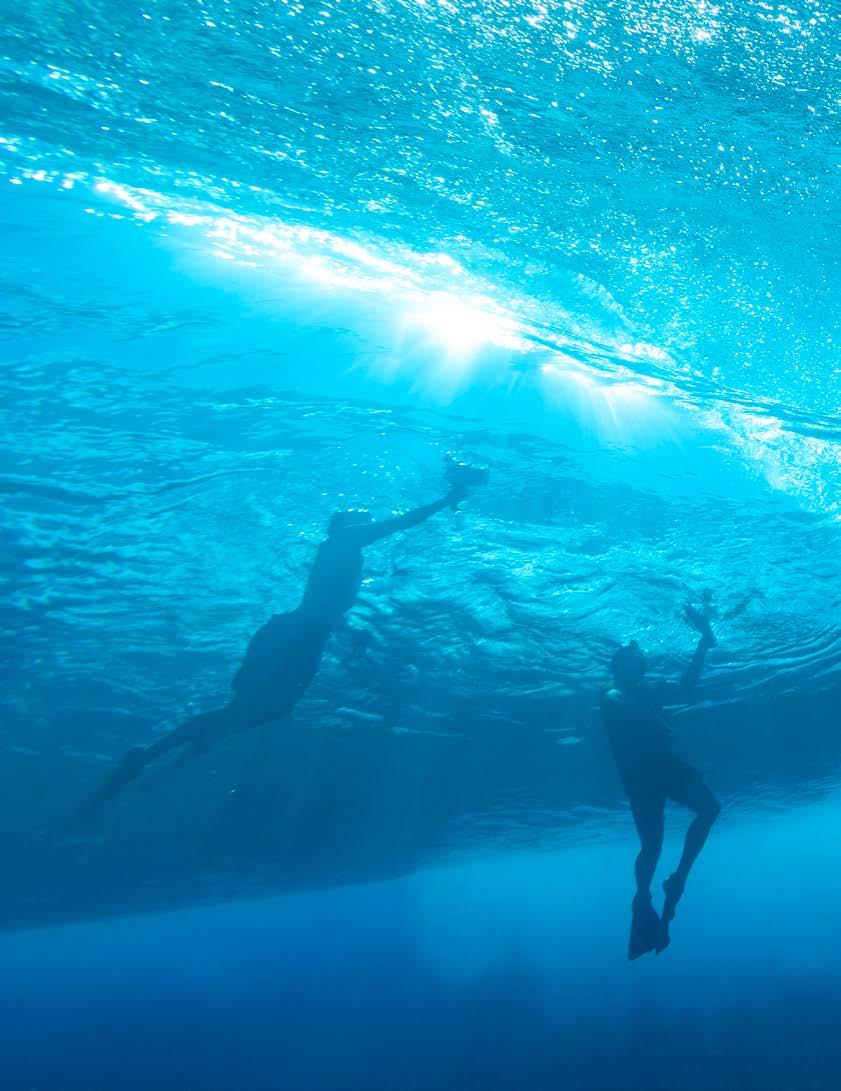
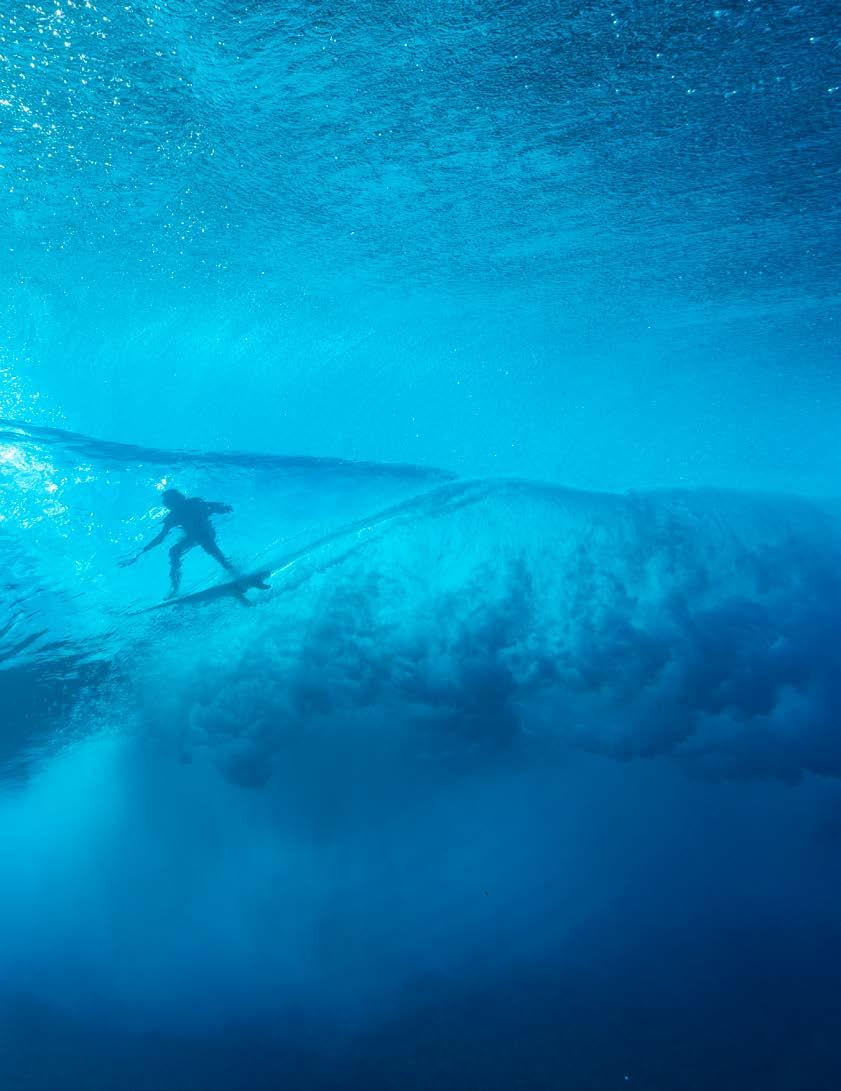
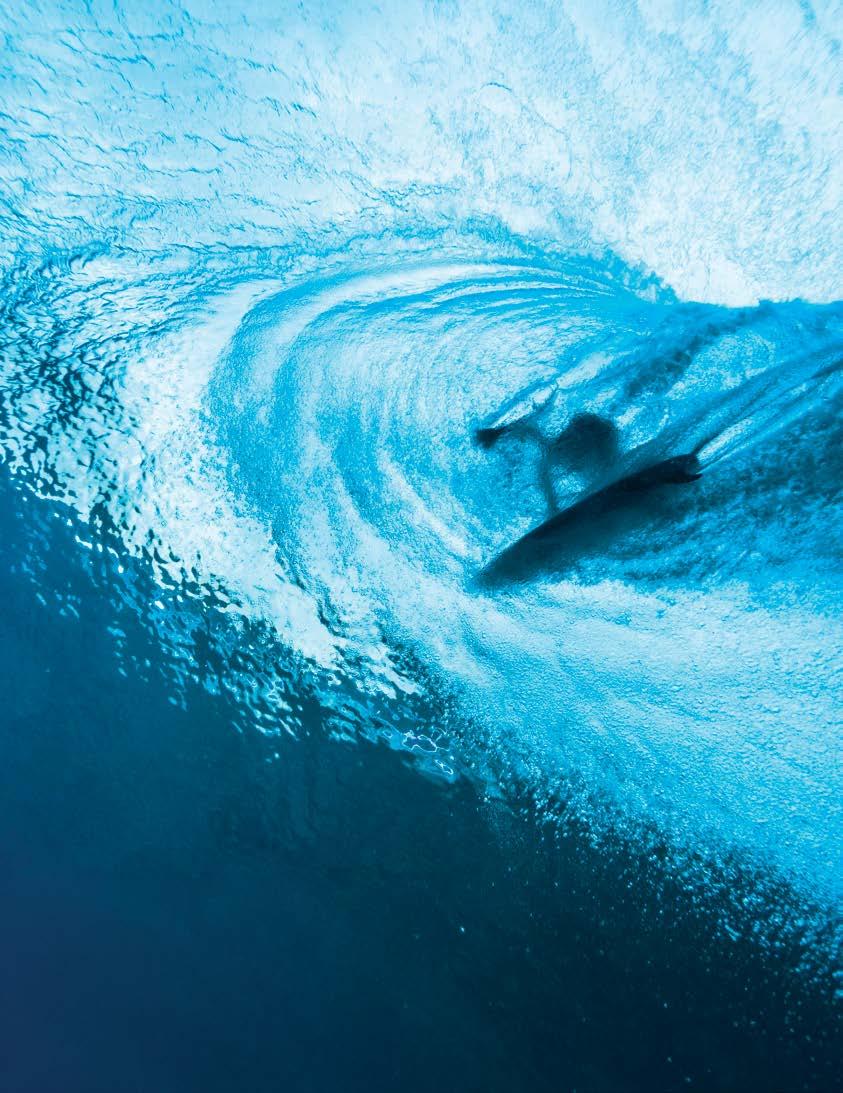
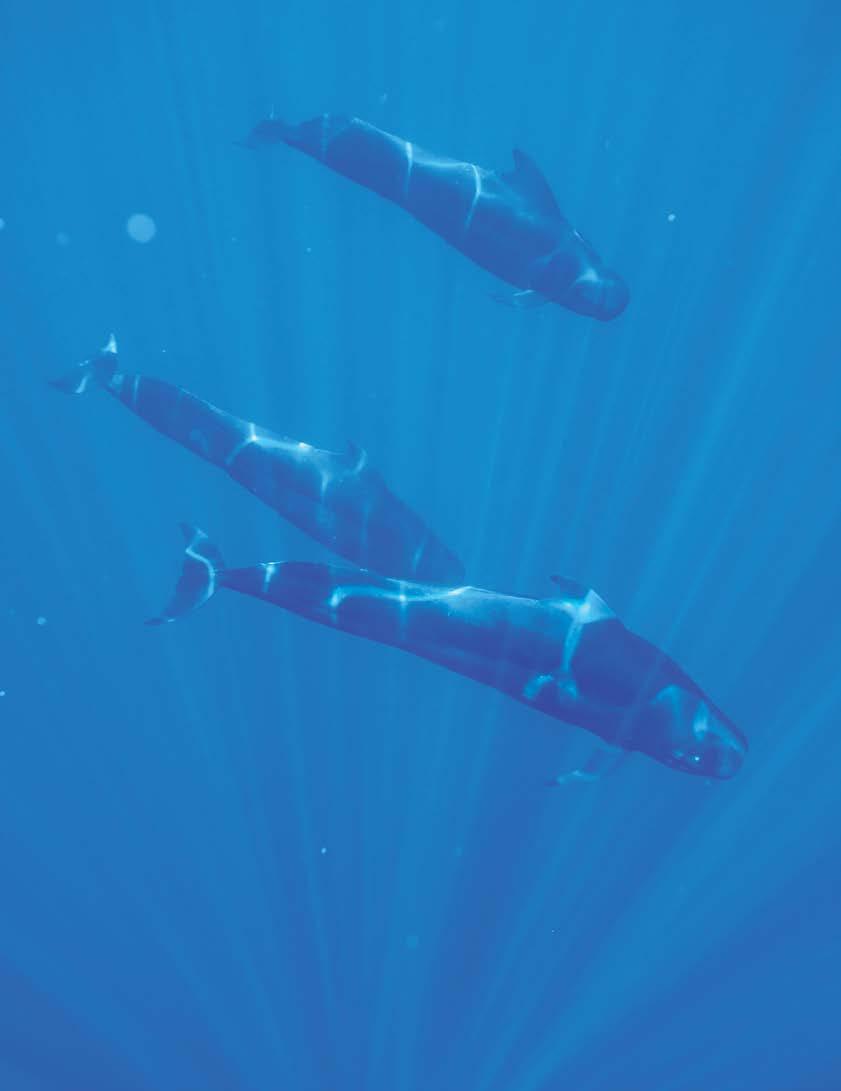
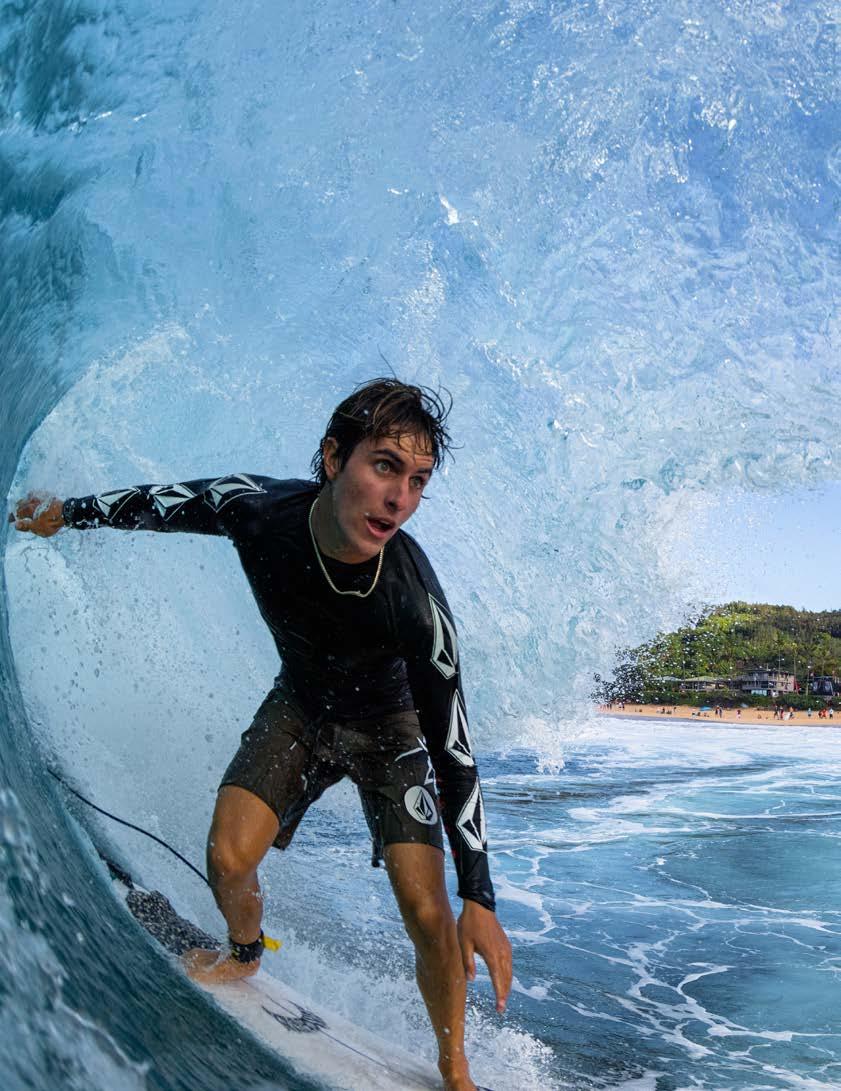
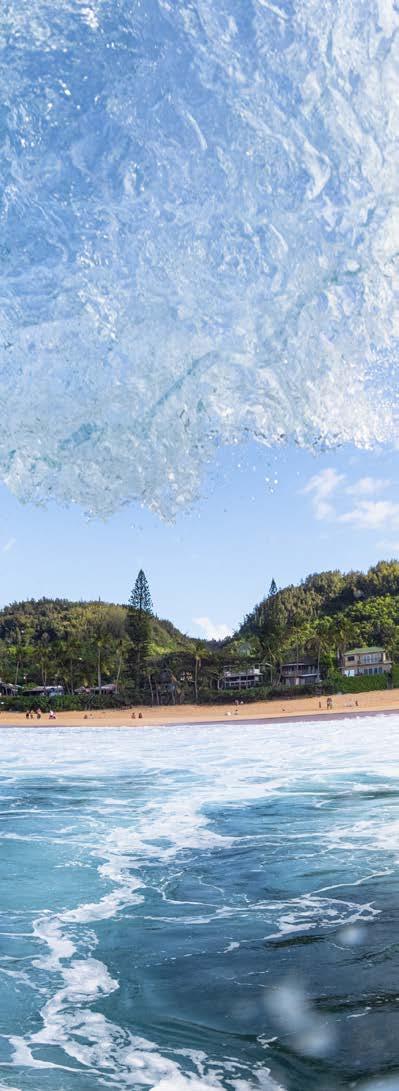
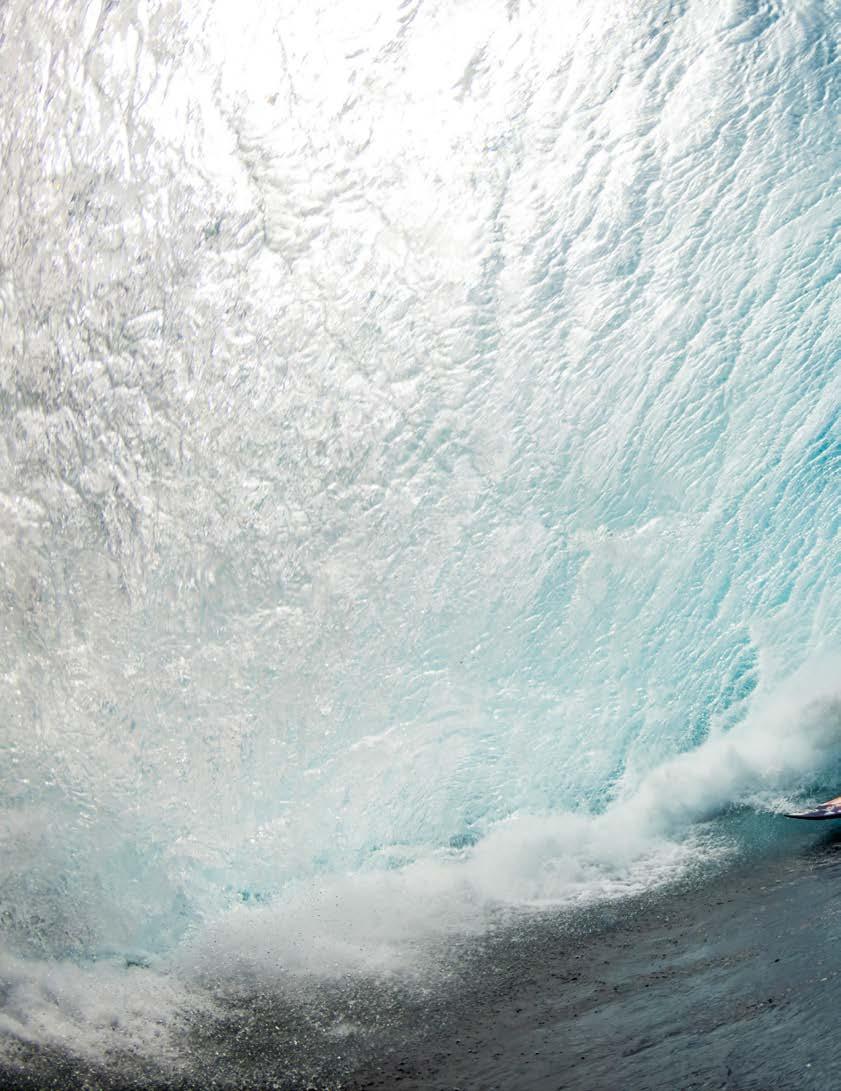
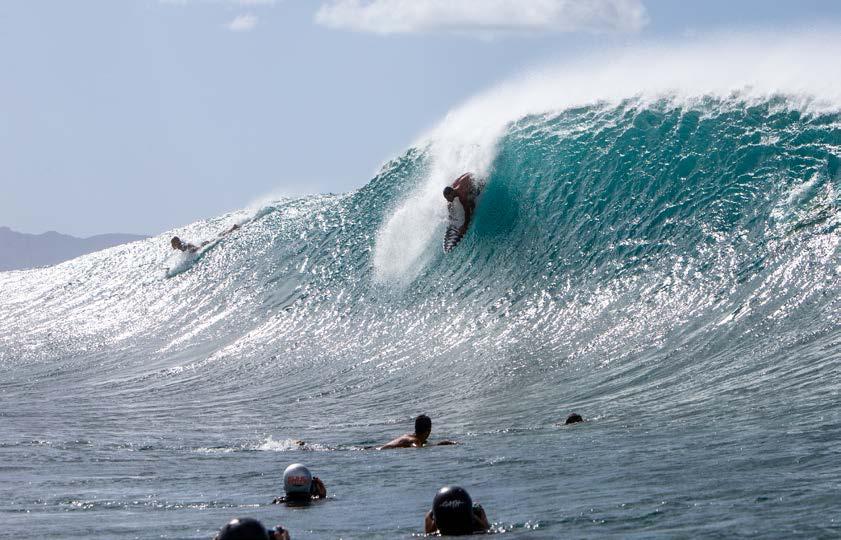
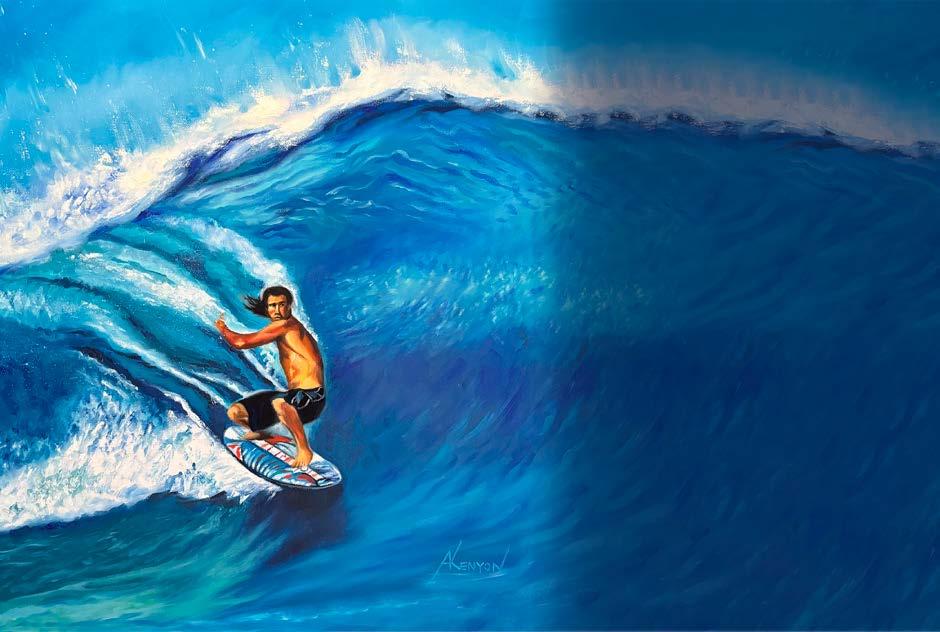
A breathless, subterranean view of