



THE HOCKADAY SCHOOL 11600 WELCH ROAD DALLAS, TX 75229 DECEMBER 14, 2022 VOLUME 73, ISSUE 3 hockadayfourcast.org @hockadayfourcast @fourcastnews @hockadayfourcast Senior volleyball player and Division 1 commit Lauren Ingram earns All-American honors. Page 19 AFFIRMATIVE ACTION CASES Supreme Court cases spark conversation about race and college admissions. Page 2 JRP 2022 Juniors speak on their topics and the process of finishing the traditional 10-page research paper. Page 15 SPOTLIGHT ON LAUREN INGRAM fourcastthe Flip to pp. 12-13 to learn how students deal with income disparities. stackup Tuition,books, uniform,laptop... Educationexpenses
Affirmative action on docket
Supreme Court ruling could affect college admissions
By Caroline Bush | Arts & Life Editor

This term, the Supreme Court was presented with two cases regarding affirmative action and race-conscious college admissions. Both cases were filed by Students for Fair Admissions, one from Harvard and one from the University of North Carolina. The results of these cases could greatly affect future college applicants.
The SFFA, made up mostly of Asian Americans, believes race should not play a part in admissions because affirmative action lowers the proportion of Asian Americans in universities to make space for more underrepresented minorities.
The current Supreme Court has a six to three conservative majority, already giving way to the reversal of some previously set precedents. With the new term well underway and the aftermath of the overturning of Roe vs. Wade, all eyes are on the court as it begins to rule on controversial cases.
According to the Carnegie Mellon University’s student newspaper, the Tartan, all six conservative justices expressed doubt about allowing race to play a part in admissions. This doubt suggests the court might be leaning toward overturning the precedent and ruling affirmative action unconstitutional.
The Supreme Court’s decision is expected to take longer than average and will most likely come out in June. Conservative justices implied that it might be time to stop considering race in college decisions, and while the three liberal justices are firmly against this decision, swaying the majority opinion is unlikely.

Justices Clarence Thomas and Samuel Alito, both in the conservative majority, have expressed concern about considering diversity and underrepresented minorities in admissions as “they felt the terms had little concrete definition,” according to the Tartan.
Liberal justices Sonia Sotomayor and Ketanji Brown Jackson argued race is a key factor in shaping and revealing information about a student's previous experiences and educational background. Brown Jackson said if admissions could consider things like parental, veteran or disabled status, race also should be considered.
Senior Sarah Zhou, president of the First-Gen Student Union, said affirmative action shapes a lot of what her club’s mission surrounds. FirstGen Student Union works to provide resources to students who might not have that support from parents who do not understand the American
Zhou said it is important race play a factor in admissions because different racial groups have different experiences in America. She said colleges should consider factors such as race, gender and socioeconomic status because not everyone grew up with the same resources or opportunities.
“A lot of what we focus on is understanding that not everyone has the same time or resources,” Zhou said. “I think affirmative action sort of does that – it’s not trying to pull other people down, but rather it’s trying to get everyone onto an even playing field because not everyone starts in the same place.”
The debate about affirmative action applies mostly to more prestigious universities since the average acceptance rate for American universities is 68%, according to U.S. News & World Report, meaning most schools do not have to worry about creating a diverse student body.
Less distinguished universities tend to have racial statistics that reflect the general population, while schools like Yale and Carnegie Mellon have disproportionate student body makeups when it comes to race.
If the Supreme Court were to end up overturning
“I think affirmative action sort of does that – it’s not trying to pull other people down, but rather it’s trying to get everyone onto an even playing field because not everyone starts in the same place.”
Sarah Zhou President of
the precedent and ruling affirmative action as unconstitutional, Zhou said this could make it much more difficult for first-generation students who are applying for college.
“Many first-gen students are students of color or students from another underrepresented minority, so I think they would have a more difficult time demonstrating that throughout the college admissions process if it no longer considers factors like race in their application,” Zhou said.
College counselor Elizabeth Jones said in an email that college counseling strives to support all students equally in their college process.
“We believe that higher education should be accessible to every student, and this belief guides the work we do at Hockaday,” Jones wrote.
December 14, 2022 THE HOCKADAY SCHOOL 02 News
Illustration by Meera Thamaran
The Supreme Court’s decision on affirmative action will likely come out by June of next year.
First-Gen Student Union
Graphic by Svenskbygderna via Wikimedia Commons
Map indicates rulings on affirmative action by state. Courts in blue states have ruled affirmative action constitutional while courts in yellow states have deemed it unconstitutional.
Juvenile justice system struggles with reform

Lone Star Justice Alliance advocates for change
By Alexandra Dassopoulos | Staff Writer
Though news outlets recently have shed light on criminal justice reform, they have not highlighted the juvenile justice system nearly as much. On Nov. 10, Texas state lawmakers announced an agreement to modify the Juvenile Justice Department. But what brought about this agreement and what changes should be made to improve the broken juvenile justice system?
In November, Elizabeth Henneke, a juvenile justice advocate, spoke to a Dallas group of about 30 people to spread awareness about reform.
The Texas Juvenile Justice Department “has had the highest injury frequency rate among all reporting entities over the last decade,” according to the State Office of Risk Management.
The Sunset Advisory Commission of the state legislature has reported a 71% turnover rate for juvenile correctional officers. The committee also reported a 35% increase in suicide assessments and a 19% increase in aggressive behaviors following lockdowns at juvenile facilities in fall 2021.
One organization working to reconstruct the failed system is Lone Star Justice Alliance. Henneke founded Lone Star in 2017 to advocate for a justice system that uses appropriate responses for youth, combined with equitable and fair practices. Its stated goal is to provide real justice, combat juvenile re-offending and promote recovery in the juvenile justice system, ending the mistreatment of those in the system.
Henneke, whose father was a juvenile correctional officer in Huntsville, was inspired to start her nonprofit based on experiences during her own childhood. Every summer, at the jail where her father worked, she spent time with female inmates in the kitchen.
“I would hear their stories of how poverty and trauma had combined to lead them into the situations that had led to their convictions,” Henneke said. “I started to be really concerned that we were just cycling people in and out of those doors and not really doing anything to address the underlying condition.”
Striving to reform all aspects of the juvenile justice system, Henneke’s non-profit works in three program areas: Just Sentencing includes the representation of juveniles in court; the Reimagine Justice Institute creates policy change; and Transformative Justice pilots alternative sentencing methods.
Henneke said the pandemic worsened conditions exponentially, with staffing shortages and a high turnover rate. Because of a lack of staff to monitor the youth, detention centers implemented lockdowns,
NEWS SNIPPETS
Social Impact Bazaar
On Nov. 8, students went to Metzger Plaza during conference for the Social Impact Bazaar. Social impact entrepreneurs set up tables to sell baked goods, ceramics and origami to raise money for their businesses.

Spirit night
during which the juveniles are forced to stay isolated in their cells. They can be locked in confinement for 23 hours a day, exacerbating behavioral issues, trauma, and mental illnesses.
Although TJJD's website says "the juvenile correctional system emphasizes treatment and rehabilitation," Henneke said the current conditions do not achieve this goal. She also said the only people to blame for these harmful effects are the adults in charge of the system.
“There are increased concerns about the youth in these facilities, but they're not the ones running them,” Henneke said. “Seventy-six percent of the kids in TJJD have serious mental illness, serious mental illness that requires intensive inpatient medical treatment. Those are the kids we’re locking up for 23 hours a day.”
To address these issues, Henneke said Texas should invest in mental health facilities, diverting children who need counseling, rather than prison, from entering the system. She said these alternatives to incarceration would decrease the recidivism, or reoffending, rate.
Henneke also said Texas should reevaluate juveniles’ culpability and whether some of their crimes actually warrant jail time. Among these are sex-trafficked adolescents escaping their abusers and those who received racially-motivated sentences.
Henneke said Lone Star welcomes Hockaday students to get involved with the juvenile justice effort and join the organization, whether in local advocacy, persuading authorities or going to the Capitol to testify about policy proposals.
“It really is about harnessing the voices of youth,” she said.

NEW ON WELCH
look
Letters of gratitude
Amid the season of gratitude and giving, Upper School students spent their form meetings writing thank you notes to faculty and staff who have positively impacted them. In their mailboxes, educators found multi-colored letters of appreciation from their students.


Self-care form meetings
Hockaday students were encouraged to participate in McDonald’s Week from Nov. 12 to 17 to benefit the Austin Street Shelter. They raised money by buying McDonald’s T-shirts and leaving campus to eat lunch at McDonald’s.

Fall play
The Hockaday Theater Company presented “Squirrel Girl Goes to College” in the LaCerte Family Black Box Theater on Nov. 16 and 17. The play was a Marvel Spotlight with wacky bad guys, female superheroes and comic book sets.

Vibrato bake trade
The Vibrato art and literary magazine staff offered treats like banana bread, hot chocolate, muffins and even gluten-free cookies in exchange for Upper School Students’ submissions of art, literature or photos for the magazine.
fourcast the 03 HOCKADAYFOURCAST.ORG December 14, 2022
Upper School Counselors Ashley Ferguson and Ellen Kaney-Francis treated Upper School Students with a self-care themed form meeting. Therapy dogs, facemasks, fidget spinners, nail painting stations and sticker books scattered the Tarry House premises.
A
at what’s happening on campus
Illustration by Alyssa Anderson
Photo by Alexa Muñoz
Photo by Alex Smith
Juveniles in the Texas state justice system are sometimes held in solitary confinement for days at a time, a practice considered harmful.
Photo by Alex Crosnoe
Photo by Alexa Muñoz
Photo by Melody Tian
Photo courtesy of Tiffany Kocsis
What Texas midterm results mean
Elections set stage for next two years of state policy
By Zoya Haq | Jade Editor
Following the Texas midterms on Nov. 8, student groups have been hosting conversations surrounding the political implications of the midterm elections. The race saw the Republican party secure control of the Texas State Legislature and the office of the Texas Governor.
In the contested gubernatorial race, incumbent governor Greg Abbott surpassed Democrat challenger Beto O’Rourke by about 10 percentage points, securing a third term as Texas Governor.

“Together, we will keep Texas the greatest state in the greatest country and the history of the world,” Abbott said after his win.
of the world and end easy bail policies.”


Across the state, over 8 million voters cast ballots for Texas Governor and for other races like Attorney General and Lieutenant Governor from Oct. 24 through Nov. 8.
About 30% of Dallas County voters voted early, as compared to about 40% in the last midterm election. This downward trend continued in other major counties like Collin and Denton, where early vote numbers dropped by about 10 percentage points, as well.
Students across Upper School participated in the elections in various ways, serving as poll workers, working as political interns and volunteering for campaigns.
On campus, groups like Young Democrats and Young Republicans held special meetings before and after the midterm elections to discuss projections, debrief results and promote action.
Diya Hegde, secretary of the Young Democrats Club, said the club had been working to support members’ goals of engaging politically before the elections.
In his third term, Abbott said in a victory speech in South Texas, he intends to “keep Texas, Texas” as well as to “keep Texas No. 1 for oil and gas production in the U.S., teach students how the United States began with literally nothing and went on to become the best country in the history
“A lot of Young Dems, even outside of the club like myself, were involved in a lot of political campaigns,” Hegde said. “I know some people who would write letters for Beto for Texas campaign and get involved with phone banking and door to door knocking for candidates.”

Hegde said the club has been working to expand its programming this year to include more conversations surrounding political reflection and action.
“We had our first meeting recently, where we discussed the outcomes of the midterm election, and we also took a political ideology test to help our members better understand their political stances,” Hegde said.
Alexa Welch, president of Young Republicans, said the group has been encouraging members to consider candidate’s stances critically both before and after the midterms.

“Instead of doing a meeting in our group, we sent a link to our GroupMe about all the different candidates that were running and then a blurb about each

among Hispanics — did not end up being a reality. Only one victorious U.S. House candidate in South Texas, Monica de la Cruz, was a Republican.
This unexpected upset paralleled other midterm surprises across the country.
Contrary to nearly all predictions, Democrats won a seat in the U.S. Senate, marking the first time since 2002 that a president’s party has not lost any Senate seats during their firstterm midterm election.
Hegde said she thinks this win marks a historic shift in voter alignment nationwide.
“It’s very significant that there’s a new Democratic seat in the Senate, especially after Biden’s presidency, because we’ve seen in the context of the past that the president’s party tends to lose control of the House and the Senate,” Hegde said. “I think that that’s saying a little bit about how it might not be so much of a divided government or divided population as we may think.”
Welch agreed people are voting differently than they have in the past.
“I think it’s just going to be interesting for the future of what’s going to happen for, for example, the
READ MORE ABOUT
Texas color and everything,” she said.
Aubrey Burns, President of Young Democrats, said lower turnout numbers nationally during this year’s midterm elections as compared to 2018 should serve as a call to action for future races.
“Young people have to go out and vote,” Burns said. “We have to be a part of the push forward.”
Welch echoed her sentiments, adding that it is important for young people to educate themselves on both parties and to interpret political media critically.
“I think that it’s really important to remember too that, for the midterms, it’s not all about one party and that different candidates have different opinions that you may associate
December 14, 2022 THE HOCKADAY SCHOOL 04 News
Gov. Abbott
Voter Turnout Election Results
Voter Registration
Photo by Gage Skidmore via flickr
Gov. Greg Abbott gives a speech at FreePac, hosted by FreedomWorks, in Phoenix, Arizona.
“I think it’s really important to remember too that, for the midterms,it’s not all about one party and that different candidates have different opinions that you may associate yourself better with.”
Alexa Welch President of Young Republicans
Graphics by DonkeyHotey via flickr
Frigid fahrenheit
What can Texans expect during winter ’22-’23?
By Amitha Nair | Staff Writer
Blazing winds, sweltering cold, power outages — what can Texans expect from winter this year? Recently, winters have increased in severity, resulting in electricity outages and showing the Texas power grid’s vulnerability.
Texas is known for its quickly changing weather, with temperatures ranging from winter to summer levels in less than 24 hours. But this winter, Texans should expect temperatures to fall
still looking forward to the cold temperatures during the winter of 2022.
For senior Lauren Li, cool tempratures offer a great change from the almost yearround heat Texas receives. And junior Yalda Haghighat said she loves the freezing temperatures throughout Texas’s winter.
into the low 20s, according to the National Weather Service.
AP environmental science teacher Jessie Crowley teaches her students about global warming, which impacts the weather and climate during all seasons.
“The weather we experience day to day, like during our Texas winters, may be harder to predict because of climate change and global warming,” Crowley said.
The 2021 winter storm landed as the top power outage of that year because the power grid struggled to perform under sustained freezing temperatures. Texas has a co-dependent power grid which leads to frequent loss of power and no way to easily transmit electricity to the millions of people across the state.
Residents are taking precautions for the winter by limiting their electricity and natural gas usage, as advised by the Texas government. But there have not been any significant changes to strengthen the grid, according to The Texas Tribune.
Last winter, freshman Zoee Shepherd’s family was among the millions of Texans to lose their electricity during the storm.
Freshman Avery McGowan’s pipes burst, flooding her room and taking months to be fixed.
Although frigid temperatures brought catastrophic effects last winter, some students are


fourcast the 05 HOCKADAYFOURCAST.ORG December 14, 2022
“The weather we experience day to day, like during our Texas winters, may be harder to predict because of climate change and global warming.”
Jessica Crowley
AP environmental science teacher
Illustration by Ava Shipp
Seniors bundle up and enjoy treats in a tent to stay warm during Daisy Day Nov. 18.
Photo by Julia Small
Life
End of year brings festivities
Affinity group leaders share diverse holiday celebrations
By Alexa Muñoz | Staff Writer


Amidst the holiday season, students walk in a winter wonderland of tests and quizzes. Thankfully, the diverse student body can commemorate end-of-year festivities to alleviate the stress of these assignments.
Diwali
Nina Dave, co-president of the South Asian Student Association, kickstarted the holiday season by celebrating Diwali on Oct. 24 this year. Hindus observe Diwali on the 15th day of the month of Kartik in the lunar-solar calendar, which falls yearly between the Western months of October and November.

For Hindus, the holiday honors Lord Rama and his eventual defeat of the evil demon Ravana. Typically, Dave and her family spend time together, eat lots of delicious food and light fireworks and sparklers, as Diwali is also known as the “festival of lights.”
“Diwali is a time to connect with my Indian and Hindu side, and it’s also a holiday to spend time with family and make meaningful memories,” Dave said.
For Isabel Bhasin, one of the two senior presidents of the Multi Racial/ Ethnic Affinity Group, the holiday season is an opportunity for her to embrace her family’s cultural blend. Yearly, her family lights candles to observe Diwali between October and November and goes sledding in Chicago on Christmas day.

“I really enjoy being able to celebrate holidays from multiple cultures,” Bhasin said. “Celebrating both Diwali and Christmas during the holiday season gives me a chance to reconnect with both sides of my family and cultures.”

El Día de los Muertos

Seniors Emma Estrada and Viviana Armendariz, president and vice president of the Latin Hispanic Student Union, begin their season of festivities
with the traditional Mexican holiday “el Día de los Muertos” (the Day of the Dead) on Nov. 1. They set up an “ofrenda,” which is an altar complete with elemental offerings of water, wind, earth and fire. Relatives use ofrendas to guide and welcome family members who have passed away, and the altar serves as a cultural reminder of an eternal life, standing in remembrance of the everlasting love and presence of the departed.
Hanukkah
President of Jewish Student Union, senior Ava Stern, celebrates Hanukkah from Dec. 18 to Dec. 26 this year, but the dates for this eight-night-long festival of lights vary based on the 25th day of Kislev in the Hebrew calendar.
At this time, Ava and her family eat oily foods like fried donuts or potato pancakes called latkes. Oily foods are symbolic of the oil that kept the Temple of Jerusalem’s menorah burning for eight days in 164 BCE. What was consider one day’s worth of oil kept the menorah miraculously burning for eight days, which allowed the beseiged Jews to triumph over the tyrannical king of Damascus.
“To me, it represents coming together as a family and honoring our cultural tradition,” Stern said.
Eid al-Fitr
Sophomores K Irfan and Faiha Khurram, co-presidents of the Muslim Student Association, celebrate Eid al-Fitr, which marks the end of the month-long dawn-to-sunset fasting of Ramadan. While this year’s Eid al-Fitr was celebrated in May, the holiday’s dates vary because Muslims use the lunar calendar, and, occasionally, the holiday will fall during the winter holiday season.
“Growing up in America, you just get used to sometimes not celebrating a holiday at this time,” Irfan said.
LIKE AND COMMENT
Arts & December 14, 2022 THE HOCKADAY SCHOOL 0 6
Photo courtesy of Emma Estrada
Mary Grace Martin ’23 Dallas
Senior Lauren Ingram posts a memorable moment of varsity volleyball’s season to commemorate her four years on the team.
Lauren Ingram ’23 Dallas
Junior Leila Tarighi DJ’s at the Honkytonk mixer the STUCO Activities Committee held in October.
Leila Tarighi ’24 Dallas
Some of our favorite recent social media posts
Seniors Mary Grace Martin and Sydney Hoyl pose together with flowers before the St. Mark’s Homecoming dance.
Senior Emma Estrada’s family creats an “ofrenda” to honor a late relative on el Día de los Muertos.
Seniors Meera Malhotra and Aishu Anbuchezhiyan and junior Tarini Gupta celebrate Diwali.
Senior Isabel Bhasin enjoys sledding in the snow on Christmas day.
Photo courtesy of Isabel Bhasin
Photo courtesy of Tarini Gupta
By Caroline Bush | Arts & Life Editor
With the holiday season right around the corner, restaurants, coffee shops and brands are beginning to roll out festive beverages to get customers in the spirit.
Sprite Cranberry
Every year around Christmas time, Sprite puts a spin on the classic soda with a limited edition version: Sprite Winter Spiced Cranberry – more widely known as Sprite Cranberry. The drink offers a festive twist that combines the traditional lemon-lime flavor with the more unconventional taste of spiced cranberry.

When I tried the drink, it didn’t immediately scream “Christmas” to me but rather was just a more sweetened version of the typical Sprite. I do not consider myself a big Sprite fan, but I did expect more from this drink than just a sweet mix of artificial flavors.
Next time I want something
to quench my thirst during the “thirstiest time of the year,” I will probably grab a different soda instead of the overrated Sprite Cranberry.
Peppermint Milkshake
To me, Chick-fil-A always does dessert well, and the seasonal Peppermint Milkshake certainly did not disappoint. The shake combines the classic vanilla base with a smooth peppermint flavor and the perfect addition of chocolate chips to tie it all together.

From the first sip, the shake immediately transported me to the holiday season. I felt like the milkshake prompted me to finally begin putting up my Christmas decorations now that I was in the festive spirit.
The only complaint about this drink is the fact that I was left shivering once I finished, on which I blame the 40 degree weather. I plan to enjoy my next peppermint milkshake bundled up by the fire with blankets and the heater on.
Toasted White Chocolate Mocha
I’m a big iced coffee fan, so every time Starbucks releases a new menu of items, I run to my nearest location to grab whatever sounds the most enticing to me. This year, the iced Toasted White Chocolate Mocha caught my eye immediately – and for good reason.

The holiday sprinkles and whipped cream were questionable at first, but I loved the added sweetness that was not too overpowering. This drink is perfect for those who love a little flavor but don’t want to lose the taste of coffee. While I wouldn’t pick this drink as my go-to for a holiday spark, I love having a new option to order when I am picking up my morning coffee.
Beverages bring festive fun Companies attract customers with holiday cheer Range of art forms
Li expresses herself through visual, performing arts
By Melody Hu | Editor-in-Chief
Oil painting, ceramics, dance — these are just some of the art forms senior Amber Li practices. Li has been interested in the arts, painting and dancing for as long as she can remember. As she has gotten older, she has been able to further explore her passion for art in a variety of ways.
Li took her first art class when she was 5 years old and has been taking art classes inside and outside of school ever since. Outside of school, she works with a teacher on her painting and drawing skills at a studio and at school she takes AP Art.
For Li, art is a way to destress and take her mind off things in her life. She said art allows her to take a moment to herself and be creative.
“I really think art is an intimate process, and it allows me to learn about myself in a different way,” she said.
Li said she takes inspiration from her daily life and the world around her, and a common theme that runs through her work is taking well known stories and expanding on them. For example, Li creates art inspired by metaphors from Greek mythology while adding her own interpretation. Another one of her greatest sources of inspiration is Iris
ARTIST SPOTLIGHT LI’S ART
van Herpen, a Dutch fashion designer.
“Van Herpen takes an interdisciplinary approach to her designs and pushes the boundaries of art, which really inspires me,” Li said.
the DART Transit Education Student Art Contest, winning a $1,000 prize and having her art printed on a DART bus.
Aside from painting and drawing, Li is also an avid ceramicist and dancer. Li took ceramics as her fine art junior year. Additionally, she has been taking dance classes since she was 5 years old. She is a company member at the Ballet Ensemble of Texas and has played ballet roles including the snow princess in “The Nutcracker,” big swan in “Swan Lake” and the autumn fairy in “Cinderella.”
Recently, Li has looked to combine her passions for visual and performing arts. She brought a canvas to a live ballet class and painted the dancers as they took class. This allowed her to look at movement and dance in a new light.

“For me, dance is a different form of creativity, so being able to combine my two artistic passions was really interesting for me,” Li said.
Li’s artwork has been successful in a number of competitions. She has won the Best in Show Prize at the Young American Talent competition, first in the nation at the State Fish Art Competition and the Grand Prize in

In the future, Li said she hopes to continue dancing and creating art. She would like to pursue art in college through a minor or extracurriculars and is also looking to integrate art into her college major.

fourcast the 07 HOCKADAYFOURCAST.ORG December 14, 2022
Photos by Caroline Bush
Photos courtesy of Amber Li
Li dances Swan Lake onstage in pointe shoes.
Oldies just can’t be beat
Bublé
carols his way into Christmas
By Hanna Asmerom | Web Editor
As a Christmas music aficionado myself, I can tell a good Christmas song from a bad one, and here is a comprehensive review of – spoiler alert – one of the best Christmas albums out there.
Michael Bublé, the jazz romanticist singer-songwriter, came out with a Christmas album in 2011. In the album simply titled “Christmas,” Bublé takes classics like “It’s Beginning to Look a Lot Like Christmas” and “Holly Jolly Christmas” and puts his own spin on them.
Bublé begins his album with “It’s Beginning to Look a Lot Like Christmas.” The song opens with a magical piano sequence, gently leading into his suave vocal accompaniment. The delicate mix of strings and piano creates a calm atmosphere, perfectly matching the energy I want when listening to holiday music.

The song is full of highs, lows and different tempos, keeping you interested but still relaxed. To conclude, the song ends the same way it started, with delicate vocals and a beautiful closing line: “It’s Christmas once more.”
stars
Using a more upbeat tone later in the album, Bublé sings “Holly Jolly Christmas.” This is different from his typical music because it’s not a ballad, and it doesn’t have a lot of long, drawnout syllables. This means the song doesn’t match his voice super well but, the use of a bell sound restores the traditional Christmas flair.
In another high-energy track, Bublé sings “Christmas (Baby Please Come Home).” In this song, he has a choir echoing his words. This differentiates the song from the others on the album and makes it feel like it’s a live performance. Like the other songs, however, his voice complements the lyrics of the song and his additional riffs make it an instant classic.
Finally, Bublé hosts guest artist Shania Twain on his adaptation of “White Christmas.” The song leans a bit more country and is lighter and more playful than the original. This would have been the perfect opportunity for Bublé to display his deep and slow voice, but it is a welcome change from the classic.
As with “Christmas,” he uses a choir that sounds similar to acappella group
Pentatonix, making music vocals alone. This album trumps all other artists’ renditions of classic Christmas albums because Bublé’s jazzy syllables and inherently comforting tone were made for singing nostalgic music. Additionally, his classic, Frank-Sinatraesque voice gives the whole album a warm feeling, completing the ultimate cozy holiday vibe.
So, get a cup of hot cocoa and give this album a listen. It’s an oldie but a goodie!
POP CULTURE WITH HARPER
Features editor Harper Harris is a pop culture fanatic, and she’s here to address what’s trending.
After a two-year hiatus from music, Selena Gomez announced her documentary “My Mind & Me,” which covers an array of topics like growing up in the spotlight, her lupus diagnosis and her mental health.

The Grand Prairie native has expanded her expertise beyond music and acting by producing multiple TV shows and launching her own makeup line.
The documentary spans a fiveyear time period and goes into incredible depth on topics Gomez has lightly touched on her social media.
The documentary is split up into three parts, with part one starting in 2018 with Gomez in her hometown and high school, explaining what life was like as a child star on the Disney Channel.

Part two is set in 2019 after she received her bipolar disorder diagnosis, and she travels to Kenya with the We Foundation, an organization that empowers young Kenyan women.
5The last part is set in 2020 with the release of her new album “Rare” and the beginning of the COVID-19 pandemic. As someone with lupus, Gomez is immunocompromised, and this documentary shows the detrimental effects of her isolation. At the end of the documentary, Gomez returns to her hometown, wanting to connect more with her roots.
Wakanda forever
Black Panther 2 astonishes audiences
By Aadya Kuruvalli | Opinions Editor
“Black Panther 2: Wakanda Forever,” released Nov. 11, is a beautiful tribute to the late Chadwick Boseman, who played the titular character in the original “Black Panther,” as well as an homage to the women of the first movie, who put on the performance of their lives.
“Wakanda Forever” centers around the lives of the supporting cast of “Black Panther” after the death of King T’Challa, the Black Panther.
At the end of the first move, the Black Panther opened up his nation, Wakanda, to the rest of the world. By doing this, he inadvertently unleashed a race between other nations to find vibranium, the most powerful metal on Earth, found only in Wakanda.
In the new movie, Americans discover vibranium under the ocean, away from Wakanda. However, they soon discover a new kingdom under the sea, led by a brutal king named Namor. Namor asks the Wakandans for help protecting his country from other nations seeking vibranium.
The production quality of the movie was one of its most alluring aspects. The cinematography was on par with the first movie’s, and the music was an amazing addition to many of the scenes. I enjoyed hearing Rihanna sing again in the end credits.
Another aspect of the movie I enjoyed was the acting. Angela Bassett brought the character of Queen Ramonda to life so vividly she had the audience grieving right alongside her. Another notable actor in the film was Tenoch Huerta, who delivered a beautiful performance of Namor, a brutal and complex antagonist.
Of course, Letitia Wright stole the
show. Her performance as Shuri was so raw and moving that some of the friends I watched the movie with were in tears.
“Wakanda Forever,” at its core, is about grief and the consequences of revenge, a theme carried on from its prequel. Wright’s portrayal of Shuri beautifully captured the grief of losing a loved one, but also brought to life a strong woman in the princess and carried on the Black Panther’s legacy.
“Black Panther: Wakanda Forever,” is not only an astounding tribute to Chadwick Boseman but also a beautiful depiction of culture and tradition. From Namor’s backstory, set in the age of Columbus, to the funeral traditions of Wakanda, “Wakanda Forever,” puts lesser-known cultures into mainstream media, much like the original “Black Panther” did.

As an avid fan of superhero movies, which tend to be hyper-focused on America and white superheroes, I loved seeing these cultures done justice in a blockbuster film.
“Black Panther: Wakanda Forever,” is a must-watch film and one of the best of the year. The soundtrack, cinematography, acting and storyline make it a movie anyone, Marvel superfan or not, should watch.
I think this documentary had its flaws because it did not answer the question of who Gomez remains close with, but overall, I enjoyed “My Mind & Me” because it gave me an inside look at someone I used to watch and idolize.
I grew up watching and loving Gomez as Alex Russo on Disney’s “Wizards of Waverly Place.” Seeing a child star I used to love speak so openly about her struggles with mental health made her seem so relatable.
As Gomez opens up, viewers feel more connected to her and finish the documentary better understanding their own trauma and struggles. While the normal viewer is not a famous pop or movie star, the last few years have left few of us untouched by crisis, anxiety and suffering. In this vulnerable documentary, Gomez gives us great storytelling that hopefully will move viewers to examine their own power and the depth of their roots as we all work to understand ourselves a bit better.
08 Life Arts & December 14, 2022 THE HOCKADAY SCHOOL
5
REVIEWS
Apple TV
GOING HAM FOR HEB
Is the newly opened supermarket worth the hype?

H-E-B, 6001 Preston Rd Suite 100, Plano, TX 75093

 By Melody Tian | News Editor

TThe noise of squeaking wheels and casual conversation greeted me as I set foot into the newly opened HEB. All around me, lights illuminated the store and products perfectly lined the beige shelves.


On Nov. 2, the Plano HEB finally opened up to the masses. I had heard about HEB ever since the opening of the store in Frisco, so I was excited to see what the hype was all about.
The grandness of HEB was already visible from the outside, with its red logo standing out from the rest of its massive brown building. There was a gas station with a car wash outside of the supermarket and the parking lot was so full the cars spilled out into the surrounding shops’ lots.

Inside the sliding glass doors, aisles upon aisles were filled with people walking about, pushing silver carts with the red label of HEB. At first, I was slightly overwhelmed by the masses of people shopping there, but I soon was distracted by the wide variety of products.
The store provides a diverse range of products
from groceries to school supplies and everyday merchandise. Due to the number of people shopping, every couple of aisles HEB workers were restocking products as they ran out, ensuring the offerings were fresh and plentiful.
The versatility of HEB really makes it stand out from other supermarkets. Beyond the fresh foods area and supplies, it also has a section in front called the Texas Backyard where potted plants lined the walls. There was even a BBQ restaurant near the entrance. The newness of the store only made it all the more appealing and attractive to shoppers from a wide area, not just from nearby neighborhoods.
Though I wish there had been fewer people shopping so I could have roamed more freely and spent less time in line, the advantages of HEB far outweigh the disadvantages. Since HEB is within walking distance of my house, you might just see me walking among the aisles there on a sunny Saturday afternoon.
09 HOCKADAYFOURCAST.ORG December 14, 2022 fourcast the
FUN AND GAMES: DECEMBER DANCE
Photos by Melody Tian
4 STARS Affinity Council Honor Council Michael Buble Dissection Resolution Hallmark Orchestra Diving HEB Black Panther Selena Gomez Milkshake Marathon December Find the December issue-themed words to get in the spirit of the season.
HEB store brands are among those that line the shelves in the massive new shopping venue in Plano.
Journalism students vie for bragging rights
Intro to journalism students and The Fourcast staff sophomores, juniors and seniors took a class period to add personal touches to gingerbread house kits in a competition that applied their best design skills. Which one do you think is this year’s Dream House? Scan the code to place your vote.


Life Arts & Sweet Competition 1 2
3 4 5

VOTE FOR YOUR FAVORITE HERE:
December 14, 2022 THE HOCKADAY SCHOOL 10
Photos by Elle Myers and Kailey Bergstedt
AROUND 1
BOPPIN’ BOUTIQUES
By Elle Myers | Staff Writer

As fall leaves disapear and holiday lights go up, head to these local boutiques for unique gifts.

Mosaic Makers Collection - 401 N. Bishop Ave.
Mosaic Maker Collection is the one-stop shop for gifts and the perfect place for the eclectic shopper. The cute boutique also sells local female-artisan products that range from denim jackets painted with Dolly Parton on the back to cute earrings.

AJ Vagabonds - 336 W. Eighth Street
1 3 2 4
AJ Vagabonds releases your inner traveler, selling camping backpacks, vintage posters and outerwear. As you walk in, you feel instant comfort because of the cabin-like atmosphere.
Society by Jackson Vaughn - 403 N. Bishop Ave.
Walking into the Society by Jackson Vaughn, you are hit with an array of specialty candle scents. Known for their candles, the store also offers home sprays that match their candles and will leave your house smelling like a Hallmark movie.

Dear Hannah - 6717 Snider Plaza
With flamingo wallpaper, Dear Hannah releases your inner preppy. Dear Hannah offers a range of gift ideas such as neon trucker hats with cute patches, seasonal sweatshirts, aesthetic coffee table books and brunch-worthy attire.

HOCKADAYFOURCAST.ORG December 14, 2022 fourcast the 11
2
3 4
Photos by Elle Myers
An inside look at
Paying the price
Like most private schools in the Dallas area, Hockaday prides itself in its rigorous courses and its graduates who go off to prestigious universities. However, the education comes with a hefty price tag.
According to the school’s website, the tuition for a day student in grades five to 12 is $35,465, which does not include the cost of uniforms, books and optional merchandise.

To attend Hockaday for all of Upper School, the cost of tuition would be $141,860. If a student were to attend from pre-kindergarten all the way to senior year, the family would pay around $463,060, again not including the other necessities to attend the school.
Books, a uniform and a laptop can add up to over $1,000 depending on the student’s
grade. New books need to be purchased each year and new uniforms when the student grows out of them.
Senior year comes with expenses of its own. While optional, senior merchandise, a class ring, a white blazer and the graduation hat and dress are heavily encouraged. The famous jade ring can cost up to $1,165 depending on the options a student may choose.

Financial aid can help defray some of the expenses. For the 2022-2023 school year, 13% of students received financial aid, adding up to about $3 million. Factors determining who receives assistance include income, family size and siblings attending independent schools or colleges.


Facing financial pressures

Hockaday has longstanding and appreciated traditions that often place pressure on students struggling with income disparity to participate.
Cristiana Miele, a class of 2022 alum who was on financial aid, saw these pressures manifested on free dress days. Miele appreciated having a uniform because each student wore the same thing.
“No matter how much money you have, it’s all the same, but on free dress days, there’s that big disparity and you can tell,” Miele said. With the high level of competitiveness at the school, she also began stressing about how much money she would have to pay for her college education. Yet smaller things, like the pressure to look nice or wear expensive jewelry as other students did, added extra weight for Miele.
Because Miele was on a higher amount of aid than some students, she was able to have a class ring and some “senior swag” items paid for by the school. However, Miele also worked for $9 an hour at Chick-fil-A the summer of her junior year and throughout her senior year. She was working not only to
pay for gas but also to save up enough money for her white blazer.
“I would walk around and everyone would be wearing senior sweatpants, shorts and T-shirts, and they would have the water bottle,” Miele said. “They had literally everything that was senior merch, and it was a little bit stressful to see that. But I was also grateful because the school paid for some, so I wasn’t completely left out.”
Although the school ensures each student participates in ring day, winter formal and senior prom, other optional expenses can feel essential to a student. Among these are group T-shirts, advisory snacks, gift exchanges and off-campus senior lunch.
Head of Upper School Lisa Culbertson said 26 years ago, during her time as a Hockaday student, students were constantly holding T-shirt sales. Almost three decades later, pressure to participate in sales like these still affects students like Miele.

Focus in December 14, 2022 THE HOCKADAY SCHOOL 12
From an outside view, income levels at Hockaday might not seem like a big issue, but students take an inside look at how financial differences can affect the school experience.
income disparity
 By Harper Harris | Features Editor and Alexandra Dassopoulos | Staff Writer Illustrations by Emily McShane

Although Hockaday comprises a diverse student body, the majority of students come from a higher economic status. Cristiana Miele ’22 said this stereotype prevents people from understanding income disparity and socioeconomic diversity at the school.
“As soon as you get to Hockaday, I think people know that there are students from lower classes, but I don’t think people really register and understand it until they have a conversation like that,” Miele said.
As a student on financial aid, Miele noticed a prominent culture surrounding money at school. One instance included a pajama day when Miele showed up in regular pajamas, but another group wore Gucci.
Despite Miele’s belief students do not outwardly judge those on financial aid, she said she frequently experienced microaggressions.
“I don’t think I’ve ever had anyone say anything outwardly like, ‘Oh, you’re poor.’ But I’ve definitely had it insinuated to me constantly,” Miele said.

As a Ross shopper, Miele said she received judgmental looks when she brought up that she shopped there. She also recognized a double standard because thrifting at resale stores like Goodwill or Plato’s Closet was viewed as “cool.”
“Why is shopping at Ross or Marshall’s considered trashy?” Miele said. “Little things like that are like a microaggression.”
Miele also was frustrated when her classmates assumed everyone traveled during holidays, bragged about their own
The student perspective How Hockaday helps
vacations, or pointed out that she could not afford AirPods. Even if unintentional, these comments have stuck in Miele’s memory.
Affinity Council representative junior Leila Tarighi said last May, the Affinity Council discussed their concerns regarding income disparity at the school.
“Students aren’t very cognizant of those who are on financial aid and the income gap between their peers,” Tarighi said. “Due to this lack of awareness, there is also a lack of empathy and consideration. I think a lot of students feel like they can’t be vulnerable and they can’t open up about finances.”
During the Affinity Council discussion, Tarighi said she recognized there are inherent difficulties when considering financial status and has reflected on her own grappling with varying student lifestyles.
“Finances are an invisible identifier and it’s hard to pinpoint exactly who is struggling,” Tarighi said. “I struggle with not feeling like the Hockaday lifestyle belongs to me, especially since I came from a public school. The pressure of fitting into that lifestyle is honestly immense and I didn’t really realize until recently how it’s weighing on me.”
However, Tarighi believes change can be achieved to make the community more sensitive toward income disparity.
“Hockaday does not belong to one group of people,” Tarighi said. “Hockaday belongs to everybody and we’re all here for a reason. With that mindset and with that approach, we can alleviate a lot of the tension from the income gap.”
Miele said teachers and administration also play a role in making sure all students, no matter their socioeconomic status, feel welcome.
The college counseling team was helpful when it came time for her to start the college application process, she said. The average application fee for college is around $50 per application and sending in standardized test scores costs $12-$16 per school. The price for just applying to schools really adds up, as Hockaday encourages students to apply to around nine colleges, according to members of the class of 2023.
“College counseling did a great job,” Miele said. “I personally got a lot of help from Hockaday. They paid for 10 of my college applications, which was so helpful. They paid for my first ACT test and the AP exams I took.”
Co-Director of College Counseling Micah Lyles said counselors help students find colleges that are the right match for them all around, especially financially.
“Our whole process is built on helping students find colleges that match who they are and what they’re looking for in a college and we look at that in three areas,” Lyles said. “One is the academic match, one is the social, and one
is the financial match. If financial need is a leader in that, then we really help students research schools that provide the most aid.”
Culbertson said she wants to ensure students feel included and welcome regardless of their income.
“If a student shared information with me directly, I would reach out to the financial aid office to see what else might be available,” Culbertson said. “We might not be tapping into everything, and we could see what else we could give students to feel that they could be part of the community entirely.”
Administration also makes events like all games, winter formal and prom free for students to ensure all can go. Culbertson said she also wants the student body to step up and think of ways to make Hockaday more inclusive of all students.
“I would challenge the student body to think about creative ways that we can do things for no cost,” Culbertson said. “I know that as we enter into the holiday season, advisories will do gift exchanges, and that is a chance for students to think about how we can do things for each other at a zero price point. So why not lean on that skill as opposed to lean on money, which can be an easy way out?”
HOCKADAYFOURCAST.ORG December 14, 2022 fourcast the 13
Boulanger writes away Teacher by day, novelist by night works to tell Guinevere’s tale
By Danya Risam-Chandi | Staff Writer
Last summer, Dr. Jennifer Boulanger, Upper School English teacher, took a trip to England for creative inspiration for her novel set in the Medieval time period.
Upper School students have seen Boulanger walking through the halls, conferencing about papers and teaching her many classes. However, while she manages all these things, they may not know she also is writing a novel.
Boulanger began brainstorming during COVID. While many were obsessed with the newest at-home workout or baking banana bread, Boulanger was writing away. Now that school has gone back to normal, Boulanger has to manage teaching two courses, raising a 2-year-old and working on her book.
“Summer and school breaks are super helpful,” she said.
During her breaks, Boulanger ensures she makes the most of her free time.
“I would go out to the Master’s Garden at Christ Church and write there about the space,” Boulanger said. “It was very inspirational.”
Boulanger considers herself lucky to be surrounded by people supporting her throughout her writing journey. From her parents to other English faculty members, Boulanger has a community backing her.

“My husband is my biggest advocate,” Boulanger said. “He is the one who encouraged me to take this trip to Oxford, and he looked after the baby while I was away.”
The book is an adaptation of 12th century medieval romance, “The Knight of the Cart,” by Chrétien de Troyes. The story is a romance
between Guinevere and Lancelot. Guinevere loves Lancelot, but is married to King Arthur and struggles with her conflicting emotions.
Arthurian scholars mentored Boulanger through her higher education. She believes they have opened up the Arthurian time period for her to explore the story. Boulanger credits this to two of her mentors, SJ Murray at Baylor University and Bonnie Wheeler at Southern Methodist University.
Boulanger wants the book to resonate particularly with women and girls.
“I feel like Guinevere has been given the short shrift throughout history, and I really want her to be somebody who women can empathize with and relate to,” Boulanger said.
Boulanger focused on feminist and gender theory and criticism through her doctorate, which gives her insight into Guinevere’s psychological state and relationships.
“What I find intriguing about this story is the tension between what the character’s hearts want and what their duty tells them they need to do,” Boulanger said.
Boulanger brings a different perspective to this conflict through the lens of gender roles. She is trying to explore how this story has portrayed the difference between what women want and desire versus what they are able to attain.
While Boulanger admits she does not have much common ground to sympathize with her characters, she does find some areas where she can connect.
“Guinevere and Arthur don’t have any children, so the idea of wanting children makes sense to me,” Boulanger said.
Boulanger has a 2-year-old, and
remembering how she felt when she was planning to start a family helps her relate to her characters.
Boulanger carries her interest in the Arthurian time period and writing skills over to her career at Hockaday. She teaches a senior King Arthur course every so often and tries to read pieces of Arthurian literature with her freshman and sophomore classes.
While on her trip to Oxford, Boulanger had the chance to catch up with a former student, Maria Katsulos ’17, who is currently pursuing a doctorate at Northwestern.
“She was so enthusiastic in giving me advice on my writing,” Boulanger said.
Boulanger remembers being surprised when one day Katsulos
invited her to a Game of Thrones lecture by an Oxford don.
“She was like ‘you’re going to sit at the high table where the professors sit,’” Boulanger said.
The invitation was unexpected and a great surprise.
“I was like dying,” Boulanger said. “I was like, that’s amazing.”
The evening ended up with Boulanger having a lively conversation after the lecture with the Oxford don about her project.
“The trip was great and had a few unexpected turns,” Boulanger said.
Hopefully, her novel can be described as the same.
Boarders seek homes for the holidays International students find options during school breaks
By Melody Tian | News Editor
W ith Christmas rapidly approaching, students are starting to plan holiday trips and talking about the activities they are most excited for this holiday season. Advisories are decked out in colors of red and green while students self-organize holiday festivities like White Elephant and Secret Santa. Sitting alone on her bed in boarding, junior Yoyo Yuan wishes she could spend the holidays with her family.
Yuan’s family lives in Shanghai, China, where there is a five-day centralized quarantine and a three-day at-home quarantine period for COVID. Because of these restrictions, Yuan has decided not to go back home during the break. Since the beginning of the school year, she has been asking her friends whether they could house another person during the holiday.
“I definitely understand why boarding closes during the holiday break, but it’s just hard for some of us to find a place to stay,” Yuan said. “It was actually kind of stressful and somewhat anxiety-inducing, since I wasn’t sure if I would have a place to stay in the beginning.”
The search for a host family proved difficult since many families travel during the break and others do not have the
accommodations to house another person. However, after weeks of asking around, a friend finally agreed to let Yuan stay with her.
“I am actually very excited to stay with my friend because we plan on going on a mini vacation to Nevada together,” Yuan said.
Yuan said she anticipates going out of state, something she rarely does, to visit the Red Rock Canyon and sightsee.

Junior boarder Kaelyn Lee said she is excited to go back to Korea during the holiday.
“I feel very fortunate that I get to go back to my home since I know firsthand the struggles of trying to find a host family,” Lee said. “I am also very excited since there are definitely days in boarding when I miss my family.”
Lee looks forward to reuniting with her dog, who she hasn’t seen since summer. Though her family constantly sends her pictures, she said it is a different feeling seeing her in person.

“My dog is like my best friend, so it’s always the best feeling to see her after months of separation,” Lee said. “It’s also great to have conversations with my family and catch up on the things we’ve missed out on in each other’s lives.”
Lee said it always feels nostalgic to spend her holidays where she grew up and continue
holiday traditions with her family. She said she cannot wait to decorate her house with peppermint candles and fairy lights.
While Yuan wishes she could see her family, she is grateful for how things turned out.
Welch Rd Featured on 14 December 14, 2022 THE HOCKADAY SCHOOL
Photo courtesy of Kaelyn Lee Yoyo Yuan visits Red Rock Canyon with family friends during Thanksgiving break.
Kaelyn Lee celebrates her dog’s birthday in Korea during last year’s holiday break.
Photo courtesy of Yoyo Yuan
“Though I would have loved to be able to go back home, I am very fortunate to spend the holiday with my friend,” Yuan said. “This is also a great opportunity for me to relax and have new experiences during the holiday break.”
Boulanger writes in her favorite notebook.
Photo by Danya Risam-Chandi
JRP 2022
Juniors finish up traditional research paper
By Juliana Blazek| Jade Editor
Each fall as part of their history course, juniors write a 10-page Junior Research Paper on a historical topic of their choice. The topic can range from the history of music and movies to an analysis of war strategies and social revolutionsall discussing some aspect of American history. Students receive an introduction to
the assignment toward the beginning of the school year and must submit their topic by late September. During the writing process, teachers encourage students to use a variety of resources, including books from the school and public libraries, interviews and published articles. In the months leading up to the deadline, students must
submit various parts of the assignment, such as an annotated bibliography and a four page “mini-draft,” by certain dates so their teachers can give feedback before the final draft. The final JRP is due, per tradition, on the morning before students are let out for holiday break. Here are a few of the topics students chose for their papers.
Eva Spak


Topic: “How Rome affected the founding of America, the similarities between Rome and America that followed, and what America needs to do to avoid the fall that Rome had”
Why I choose this topic: “I chose this topic because I was genuinely interested in learning about all of the
similarities between Rome and America, and I am also curious about the future of America, especially because America is so politically divided right now. I wonder if America is on the same path as Rome, leading to either a corrupt government or the fall of a nation.”
Topic: “I chose to look at the function and fashion of blue jeans throughout U.S. history. I am specifically focusing on their evolution from an indicator of class, movement, cause, etc., to a unifying garment of the American identity.”
Why I chose this topic: “I originally struggled to pick a topic because I came up with a wide range of ideas,
Topic: “How the nuclear family and stricter gender roles failed to pacify America in the 1950s”
Why I chose this topic: “I got interested in it because I
Larisa Pulido
and I didn’t want to limit myself to one point in US history. Since I am very interested in U.S. history as a whole and learning how the different eras relate, I chose the blue jean topic because I could research every major U.S. event since the 1849 Gold Rush through the lens of blue jeans.”
think the ’50s are cool and was intrigued by the myth of the happy housewife”
Topic: “The history of summer camps and how they impacted American society”
Why I chose this topic: “I chose this topic because I go to camp every summer and it is the place where I’m the happiest and able to have fun and be present. I
Jessica Chung

Topic: “How Japanese immigration prior to World War II led to cultural and economic shifts in America.”
Why I chose this topic: “I chose this topic because I was interested in America’s growth as a result of immigrational influences from around the world. I chose Japanese immigration in particular because I
Helen Railsback
thought it would be fun to write about it because camp has been a huge part of my life, and shaped me into the person I am because of the people I have met at camp.”

didn’t know anything about it. This way, I would get to learn new information the entire time and prevent getting bored of topics I already knew. There were also lots of resources on Japanese immigration that I could call on.”
Topic: “How American horror movies act as Christian propaganda.”
Why I chose this topic: “I chose this topic because it is
something that has always annoyed me in the American horror genre that is generally undiscussed.”
HOCKADAYFOURCAST.ORG December 14, 2022 fourcast the 15
Margaret Thompson
Gracie Little
HEARD THROUGH THE HOCKA HALLS
Our favorite overheard quotes from the hallways
By Jane Clark | Editor-in-Chief
Welch Rd
BOARD SPOTLIGHT
Honor Council Social Impact Board
By Elizabeth Truelove | Staff Writer
Buzzing with a notification, a student’s cell phone displays the third GroupMe message of the day from a Social Impact Board representative from their grade.
As the season of giving approaches, the Social Impact Board strives to include more students in community service through various drives, participation in clubs and weekend opportunities with different programs.
“We like bringing our passions into it and we can get our friends involved in ways that are enjoyable for teenagers,” Board Chair Lola Isom said.
Following the recent candy and coat drives, the board plans a week-long gift drive Nov. 29 - Dec 9. Students will bring in gifts for their advisory to fulfill children’s Christmas wish lists.
“It is important for students to get involved during the holidays because lots of kids don’t get to experience our typical Christmas,” sophomore Social Impact Board representative Jordan Lacsamana said.


At the beginning of each year, the Honor Council speaks to the entire Upper School, explaining the measures Hockaday takes when a student violates the honor code.
During each hearing, the Honor Council talks to the student about what happened, how the honor code was violated and how to ensure their actions are not repeated.
“I think it’s important that the Honor Council is run by students,” Board Chair Stella Kozielec said. “Obviously it can be scary to talk to a teacher, so it’s easier to approach the Honor Council first so we can give our advice on how to talk to their teacher.”


Hosted in the spring, Honor Council’s “Honor Week” strives to teach students the honor code in creative and engaging ways. Activities include crosswords, scavenger hunts and other competitions about the honor code.

“The goal is to uphold the values of integrity at Hockaday,” Kozielec said. “It’s a way to promote unification between the teachers and students so that everyone can feel supported in their environment.”
Holly jolly voly Volunteer work focuses on holiday needs and opportunities
By Anjy Fadairo | Staff Writer
As the holidays approach, there are numerous opportunities for students and other members of the Hockaday community to get involved in volunteer work.
Senior Sophia Clavenna, an avid volunteer, said during the holidays, organizations that really depend on their volunteer partnership with Hockaday tend to be in need of more volunteers.

“Options on MobileServe need a lot of volunteers,” Clavenna said.
Laura Laywell, Assistant Director of the Institute for Social Impact, said it’s important for volunteers to volunteer, especially during this time of year with a learning mindset.
Laura Day, Executive Director of the Institute for Social Impact, said the holidays are a time when volunteers are needed the least.
“We've moved our coat drive and food drive out of the holidays because so many people already give at that time,” Day said. “We try to fill gaps that happen in January and February or in the fall.”
Sophia Clavenna said it’s important to volunteer
with an appreciation for the time of year.
“Have fun when you're going in volunteering and trying to form connections with all different types of people,” Clavenna said. “It's so fun to get to know new people and the holidays are such a special time to make an impact in someone's life.”
December 14, 2022 THE HOCKADAY SCHOOL 16
Featured on
“Sometimes I put my phone on my couch and then I lose it because I forget I put my phone on my couch.” - Viviana Armendariz, Form IV
Photos by Elizabeth Truelove
Advisories prepare their gifts for the drive drop off on Dec. 9.
The 2022-2023 Honor Council.
“Taco Bell is the BEST food outlet. ” —Myesa Arora, Form III
Junior Evie Fox paints a face at the Feast of Sharing, a volunteer opportunity during the holidays.
Photo by Hayden Marchant
"I thought Alaska was supposed to be ugly."
- Kate Stevenson, Form IV
"If you close your eyes and think hard enough you can shiver in warmth the of the summer."
-Sunnie Wang, Form II
"The only soup that's good is tomato basil."
- Anika Shah, Form I
Austin, All-Division and more
Orchestra performs in state capitol, all-division concert
 By Bennett Trubey | Arts & Life Editor
Upper School Orchestra traveled to Austin on Nov. 15 to perform at the Texas State Capitol.
The students played their new program, “Stars at Night,” in the rotunda. The program features music inspired by the state of Texas, such as “Baile de Lila.”

“While we have done many social impact performances in the past, we have not traveled outside of Dallas while I have been the orchestra director at Hockaday,” Charlsie Griffiths ‘98, the US director of orchestral music, said.
The students began preparing for the event at the beginning of the school year, practicing their “Stars at Night” and “The Carnival of the Animals” programs.
Orchestra previewed both programs during the US assembly on Nov. 8 and plans to continue performing the music as part of their Social Impact project.
Griffiths said when curating new programs, she typically listens to a large variety of music and then decides on a theme, idea or specific piece to center the selection around.
The environment of the rotunda was unlike any place the students had played in, with balconies full of people and many passersby listening to and watching the performance.
“A lot of people came up to us saying how much they enjoyed it,” senior violinist Riley Yuan said. She shared that a spectator even found them afterwards and took a selfie with the group.
Angela Fan, a junior cellist, said that the majority of the students were nervous leading up to the performance, but that they were more excited than anything. “We were a little concerned just because it was a different setting than we normally play in,” she said.
As a whole, the trip served as a great opportunity for the orchestra to get to know one another better than they can in class.
“I enjoyed the camaraderie of the orchestra members and having time to spend with one another without many other distractions or stresses,” Griffiths said. “It was a great team building experience.”
The three-hour bus ride also allowed members to create many fun memories together on the way to and back from Austin. The group played games, chatted and even made a stop at Buc-ee’s on the way back.
“We have a bunch of different grades in orchestra, so it was nice to be on the bus and have a team bonding experience,” Fan said.
Orchestra also performed in the All-Division Concert on Dec. 8. The concert included performances by the Lower School, Middle School and Upper School orchestras.
“This is our first all-division concert for orchestra,” Griffiths said, “but we have played multi-division concerts in the past. For example, Middle School and Upper School performed together in 2018 and 2019 and traditionally, in the spring, the Lower School performs with the Middle School in a concert.”
Griffiths has worked alongside the lead organizer of the concert, Yung-Fang Hu Ludford, the director of the Middle
School Orchestra Program, and Chérine Chlone, a Middle and Upper School French teacher. Chlone served as a liaison with the National Arab Orchestra – Dallas Chapter, which played in the concert as well.
“The remainder of the school year is very busy for the orchestra,” Griffiths said. She said students will have more performances to look forward to with the North Park Center performance and Winter Concert still to come.
Assembling for change
Affinity Council discussion gives students a voice
By Shreya Vijay | Staff Writer
Students grasp the microphone tightly as they speak on a topic very personal to them, to an audience filled with their fellow Upper School students .

On Nov. 14, the Affinity Council hosted an assembly to highlight students’ personal experiences as members of minority groups at Hockaday. Tiffani Kocsis, assistant head of Upper School, moderated the conversation.
“At 12, I was used to being associated with ISIS,” said sophomore K Irfan, one of many students who spoke at the assembly.
As the Muslim Student Association vice president, her goal was to convey the impact words can have on others.
“It felt a bit frustrating that we had to sit up there and explain why microaggressions are harmful, when it felt obvious to me,” Irfan said.
Before the assembly, Irfan discussed it with the MSA leadership team and volunteered to speak about her experiences as a Muslim student.
The idea for the assembly came from conversations with students during which Kocsis heard about microaggressions. The students and Kocsis had the joint idea to create the assembly.
Kocsis then approached Affinity Council members, Student Diversity Board Members and students who attended the Student Leaders for Inclusion, Diversity and Equity conference in Los Angeles last summer to promote diversity in schools.
The students, along with Kocsis, Upper School Registrar Katy Lake, College Counselors Micah Lyles and Elizabeth Jones and history teacher Aisha Ashraf agreed to a panel format. Panelists signed up to answer questions and met with Kocsis to check that responses stayed on topic.
DAISY STEM
Each issue, The Fourcast highlights a student who has accomplished something in the STEM world or a special event that is STEM-related.
By Caroline Petrikas | Managing Editor
Centered on the function and structure of human and animal body systems, the Comparative Vertebrate Anatomy course emphasizes hands-on learning through its sheep, shark and pig dissections.
In the semester biology class, students explore evolutionary adaptations for all the vertebrate classes, starting with the aquatic origins of life and continuing through terrestrial organisms, including mammals.
“While students are learning human anatomy and physiology, they’re learning about themselves as mammals,” Upper School science teacher Brandi Finazzo said. “Then, they dissect fish to see, feel and understand the differences and similarities of aquatic and terrestrial beings.”
Finazzo said she decided to teach the course because of her passion for anatomy and physiological biology. Since then, she has shaped it to reflect her passions, talents and clinical background.
“When I took over the class, it was a more traditional course where students would do three dissections and then compare them,” Finazzo said. “While dissection was the only hands-on way students learned then, I have tried to incorporate minilabs and demos in with the dissection series to make the course more engaging and to cover more material.”
At the beginning of the semester, the class concentrated on anatomy basics and terminology but then transitioned to full-time dissections.
“We spent a long time nailing down anatomy basics and definitions, but once we got that out of the way, every class has dissections,” senior Jordan Hanna said. “Now, the second we get to class, we get to immediately put on lab coats, resume our dissections and continue examining the organs.”
The course’s emphasis on dissection allows students to compare different creatures from a hands-on perspective and understand different organs’ roles in keeping an organism alive and in homeostasis.

“When you can feel the shape and texture of a shark’s stomach, you can then infer the texture and feel of a human stomach without actually holding it,” Finazzo said. “ It gives us an opportunity in the moment to really compare the two.”
“We made sure to make edits that would keep the assembly feeling like a ‘call in’ to a conversation rather than a ‘call out’ on anyone,” Kocsis said.
Her goal as a facilitator in the assembly was to ensure the student body could hear about others’ experiences and understand how words can have lasting effects. She said she hopes students and faculty members will develop empathy, compassion and perspective for the experiences of others.
“Any time you hear someone tell a story about the ways they are hurting, it’s difficult,” Kocsis said. “We all have space for growth and the ability to do better, and being gifted with such personal stories should encourage us all to do so.”
Currently, students are focusing on the dogfish shark and studying the different cavities in the shark, their functions, and their similarities to human anatomy.
“It was fascinating to dissect the dogfish sharks because we cut open their stomachs and we could see what their last meals were,” Hanna said. “We got to see one that had a giant school of fish and another that had an eel in it.”
The dissections and comparisons are some students’ favorite parts.
“Being able to notice and compare the same systems and organs in different organisms has been really interesting,” junior Mabry Dawson said.
HOCKADAYFOURCAST.ORG December 14, 2022 17 fourcast the
The
Affinity Council members and other students speak about their experiences in an assembly addressing microaggressions and the power of words.
Mabry Dawson and Bennett Trubey bag their shark during dissection.
Photo by Brandi Finnazzo Orchestra students perform in the Texas State Capitol Rotunda.
The orchestra performs during an assembly for Upper School.
Photo by Shreya Vijay
Photos provided by Sally Hudspeth
Sports on the meadow
Fall SPC recap
Three varsity teams finish among top five at tournament
By Kailey Bergstedt | Photo & Graphics Editor
The varsity cross country, volleyball and field hockey teams finished out their seasons after competing in the Southwest Preparatory Conference championships the weekend of Nov. 4–6 in the Houston area.

Cross Country
Starting the race at 9 a.m. on Saturday, the cross country team placed third overall at SPC. Sophomore Jordan Lacsamana finished third with a time of 19:17 and junior Margaret Thompson finished fifth with a time of 19:24. Junior Gracie Little and sophomore Madalena Ritz–Meuret also finished in the top 20. Senior co-captain Brie Johnson set a personal record of 22:08.
“The team finished strong with everyone cheering each other on,” Thompson said. “The runners, parents and coaches acted as a great support system throughout the race.”
The race took place in Tomball, about 30 minutes outside of Houston on a narrow, hilly course surrounded by greenery.
“It was definitely a challenging course,” Johnson said. “It was also a full circle moment for seniors because we raced on that course for SPC during our freshmen year.”
Seniors reminisced about old memories while making new ones. Traveling on the bus together allowed them to bond on the way to the race.
“The night before, we all ate Panera and took an ice bath together,” Johnson said. “Team bonding is always one of the best parts of the trip.”
Overall, Johnson said she considered SPC weekend a success.
“It was a good race and we made a lot of really fun memories,” she said.
Volleyball
Varsity volleyball finished second place in Houston after winning the North Zone championship, ending the season with an overall record of 22–12. They won the first two SPC games against ESD and St. John’s but ultimately lost the championship game to EHS.

“I think we played great,” senior co-captain Payton Arbaugh said. “I’m so proud of our growth throughout the season.”
Not only did members of the team further develop their technical skills and communication throughout the season, they also learned to take on new roles and positions.
“With our 11 total injuries during the season, we really had to learn to adapt,” Arbaugh said. “Everyone was really good about being a team player and being ready to step up into any position.” While learning to work together, players
increased their confidence, settling into their new roles and contributing to the growing team dynamic.
“Throughout the season, people began to feel more confident in their abilities,” senior co-captain Lauren Ingram said. “We were truly giving our best and weren’t afraid to make mistakes because we knew we had each other’s backs.”

Players also grew closer over the course of the season.
“Lauren and I really wanted to work to make the team like a family,” Arbaugh said. “We did lots of team bonding and team dinners.”
Field Hockey
Varsity field hockey finished the season in fifth place in the 4A SPC tournament.

“We played really well,” junior Rachel Manley said. “We fought hard and continued to keep up the hype and spirit throughout the whole weekend.”
The team played three games over the course of the weekend, losing the first and winning the second and third. They played Episcopal High School first, only giving up one goal to finish the game 0–1. Next, they played Awty. As goalie, Manley

DAISY
out what our athletes and fans are up to
2,000 yards swam for swim team

The varsity cross country team gathers before the 9 a.m. race in Tomball, where the team placed third overall.
did not give up any goals in the game, allowing Hockaday to win the game 2–0. Finally, the team defeated Greenhill thanks to two goals from junior Riley Damonte.
“At the end of the Greenhill game we were tied 1–1 but were given a short corner so we had an opportunity to score,” senior co–captain Libby Warren said. “Riley scored an impressive goal to win the game despite the pressure.”
Ending the season with these wins, players created lifelong memories.
“My favorite memory from SPC weekend was when the team did a bonding activity where they wrote their ‘why,’ as in what motivates them to work hard, on their sticks and they all put me as their ‘why’,” Warren said. “The team went on to win the game against Awty and it was such a heartwarming experience.”
13upcoming games in basketball season
December 14, 2022 THE HOCKADAY SCHOOL 18
Photos courtesy of Jennifer Johnson
9th varsity soccer’s ranking in Prep Soccer Fab 50 DOMINATION
Check
Varsity field hockey players celebrate after their 2-0 win against Awty that allowed them to advance in the SPC tournament.
Varsity volleyball places runner-up in SPC after their loss in the finals to the championship team, Episcopal High School.
Photo courtesy of Mary Grace Martin
Photo courtesy of Ashna Tambe
Photo courtesy of Jojo Ma
Correction
A student pictured in sports section of The Fourcast’s November issue was incorrectly identified in the caption. The student dressed as a daisy was junior Dixey Piper Auer. The Fourcast regrets the error.
Students train for Half Marathon
Runners talk preparation, inspiration, motivation for race
By Bennett Trubey | Arts & Life Editor
On your marks, get set, go! The Dallas Half Marathon takes place on Dec. 11. As racers line up on the early December morning, among them will be three students.
Harper Harris, Sarah Connolly and Eva Spak shared how they are preparing for the Half this holiday season.
Field hockey tryouts sparked Junior Harper Harris’ love of running. At the beginning of the fall season, she planned to play field hockey, as she had as both a freshman and a sophomore. During tryouts, however, she quickly realized how much she enjoyed running.

“It’s a sport that I can do by myself, and it’s sort of like therapy,” she said. Harris put field hockey behind her and registered for the Dallas Half Marathon.
“I didn’t want to do cross country, I wanted to do it for myself, so I signed up for the race,” she said.
Harris’ training plan included 12 weeks of running and workouts. She runs four to five times a week – short runs on weekdays and distances on weekends. On the days she isn’t running, she keeps improving with strength training and cross-fit.
Harris also participated in the Turkey Trot on Thanksgiving Day with her mother, to prepare for running the Half Marathon. She looks forward to the Half and having her first race experience under her belt.
“I think the finish is going to be emotional because all the people have spent so long training for the Half,” Harris said, “and to finish with all these people that you
don’t even know, it’s like a bonding experience.”
Like Harris, senior Sarah Connolly only recently began running outside of her sport.
“My dad and I made a bet,” Connolly said. “I’ve never really been a long-distance runner, I was just running short distances because of soccer.”
Because of the little experience she had in running long-distance, Connolly bet her father that she would run in the Half. Connolly’s training began in August, and she has been running short to long distances weekly. One of her most recent runs was seven miles long.

“I didn’t enjoy doing it at first but once you get into the rhythm of it, it’s really enjoyable,” Connolly said. Some of her friends offered to join her in the race, but
Rowing her way to success
Senior leads way for her team
By Elizabeth Truelove | Staff Writer
Ignoring the excruciating pain in her legs and pushing against the footplate in her boat, senior Sophia Clavenna takes the last 10 strokes to finish her second race at Head of the Charles on Oct. 23 in Boston, Mass. After completing her race at the largest regatta in the world, Clavenna collapses out of exhaustion and attempts to regain her breath. In celebration, her boat shares high fives after completing the 4,702 meters of the race.
“Charles is 100% my favorite regatta,” Clavenna said. “It’s like a celebration of the rowing community and everyone’s hard work.”
As a member of the Charles quad for the second year in a row, Clavenna said while racing, she felt motivated to pull for the seniors who had rowed with her the year before. To keep a team’s bid in the regatta, their boat must place in the top 50% of their race. This year, the

quad placed 13th, the best result since Hockaday began racing a quad at the Charles.
“It is really fun to see the legacy continue year after year, especially since I was in the quad last year and we never thought we were going to do so well,” Clavenna said.
Clavenna began her rowing career freshman year, never imagining she would reach this level of competitiveness.
“I was never extremely good at one sport in middle school, so I wanted to try something different,” Clavenna said. “My friend said she was going to try out, and I thought ‘We’ll see what happens.’”
After making the team and excelling throughout her novice year, Clavenna became a vital part of Hockaday Crew, also described as compassionate, strong and a great leader by her teammates and coaches.
CAPTAINS’ CORNER
she declined, opting to run independently.
“I thought it would be a lot more empowering for me if I do it alone,” she said.
Junior Eva Spak also had not run long distances frequently before deciding to participate in the Half Marathon.


“I’ve never done a marathon,” Spak said. “I just finished cross country season — I had run a bunch of 5Ks and liked those, but that was the longest distance I’ve ever run.”
She joined the cross country team for the first time for the 2022 season and has yet to look back.
“I enjoy running,” Spak said. “I think it’s a good place to let all my frustrations out, clear my head and be alone with my thoughts.”
To prepare for the Half, the Spak is continuing her cross country training, working on her speed and endurance. Spak also joined a high school running club, where she practices and runs weekend races.
“I wanted to finish this year out with a bang,” she said.
Spak said the decision to sign up for the race was spontaneous and she wanted to do something different her junior year.
As all three runners take their places the morning of the Dallas Half Marathon. Connolly plans to have friends and family at mile markers to cheer her on, and Spak and Harris both look forward to a feeling of accomplishment once they cross the finish line.
After winning an SPC title last year, varsity soccer looks to take on this year’s challenges and bring home yet another. Recently, the team played against Bishop Lynch and won 2-1. Senior co-captains Jojo Ma and Sarah Connolly are excited to bond with the team. Ma and Connolly draw inspiration from the previous captains and hope to continue the HVS legacy.
“I am really excited to see all that HVS will accomplish this year,” Ma said. “We have a lot to prove and I am confident we can defend HVS’s legacy.”
Following the SPC title last year, the varsity swim team heads into the season eager to continue that momentum. Senior co-captains Lola Isom and Mary Grace Martin both have the goal to keep the team spirit high and make swimming enjoyable for everyone. The first meet was Dec. 1 against Prestonwood Baptist. Isom said she hopes the team members form a strong bond by the end of the season, and looks forward to seeing her classmates cheering on the team.
“Sophia is very supportive and caring for others,” teammate Carmen Duque-Diaz said. “She takes charge and makes sure everyone knows what to do, but she’s not bossy.”
Taking the role as co-captain this year, Clavenna said she hopes to continue the supportive culture among her team. She said the welcoming, united community is why those who join the team want to come back each season.
“My biggest accomplishment in rowing is, with the help of previous captains, I’ve helped the team culture grow into what it is today,” she said.
Varsity basketball gears up for another season with junior co-captains Chloe Johnson and Ashna Tambe excited for the upcoming season. Recently, the team played on Nov. 17 against Milford and won 55-38. Both captains said they are are excited to create a bond the team will share, and cannot wait to see what they accomplish. They have also set goals to win the SPC North Zone championship this year.
“I am so excited for this basketball season with our young team and ready to see what we can accomplish as one united team,” Johnson said.
19 HOCKADAYFOURCAST.ORG December 14, 2022 fourcast the
BASKETBALL
Ma
Lola Isom ’23
Jojo
’23
ATHLETE SPOTLIGHTS
Chloe Johnson ’24
SWIMMING SOCCER
Junior Eva Spak participates in a race to prepare.
Photo courtesy of Eva Spak
Clavenna and her teammates row at the Head of the Charles.
Photo by Helen Liu
Ingram in the spotlight
Duke commit conquers the volleyball court
By Jane Clark | Editor in Chief
Senior Lauren Ingram, volleyball captain and club player, dominates the court coming out of the fall season with an award, D1 commitment and goals for her future in volleyball.
Fall Season
Varsity Volleyball came out of SPC as runner-up after a hard-fought season overcoming numerous setbacks along the way. Ingram said illnesses and injuries took out key players for extended periods of time. One game, they had only eight players because the rest of the team was out sick, yet they still had a successful season, growing closer as a team.
“We battled through a lot of uncertainty, but in the end we came out stronger and got closer than ever before,” Ingram said.
Ingram said the players fought hard all the way to the end despite the tough loss in the finals.
“Even though we fell short, it was a great game and we had so much fun together,” she said “I wouldn’t ask for this season with any other group of girls.”
Through the rest of the school year, Ingram said she will pursue her goals to improve her skills and be a good teammate and player on Skyline, her club volleyball team.
All-Region Recipient
At the end of the season, Ingram was selected to an American Volleyball Coaches Association All Region Team. The coaches chose her from 530 seniors in America for the Region 4 team
that includes players from Louisiana, Arkansas, Mississippi, Oklahoma and Texas.
“The team is composed of all the best players in that specific region who had a really great senior season and performed really well,” Ingram said.
Ingram was able to showcase her talent this year on the team enough to impress the coaches.
“Luckily we were able to go to a lot of big tournaments that gave me a lot of exposure so that I could highlight my skills and show the coaches who were watching and selecting those teams that I deserve to be an all-region recipient,” Ingram said. Division 1 Commitment
Ingram tore her ACL during her sophomore year, and overcoming this injury required extensive physical therapy. After she was back to full strength Ingram began considering collegiate opportunities to continue her
volleyball career. She officially signed her commitment to Duke University Nov. 1 after communicating with coaches, getting to know the team and visiting the campus.
The first time she was contacted by Duke was June 15, 2021 through an email from a former assistant coach, now at another volleyball program, but since Ingram was injured, the recruiting slowed down.
“After this, I didn’t have any communication with them at all until May 2022 when I got an email from the head coach that basically expressed her interest in me and that she had seen me come back from my injury and knew that I’m a great player and she would love to talk with me,” Ingram said.
A short talk turned into a long conversation because of the great connection they made.
“She just made me feel so comfortable on the call, and I’m usually
really nervous when talking to coaches because it is intimidating, but I wasn’t intimidated by her at all – it felt like I was talking to a friend,” Ingram said.
Last summer, the coaches watched Ingram play at nationals and she attended a Duke volleyball camp where she met players and reconnected with coaches. A few days after the camp, she verbally committed to the application process at Duke.
“The players were super nice and welcoming, and I think that ended up being my deciding factor because of the team and how they bonded and their chemistry was really important to me,” Ingram said. “I connected really well with every single person in the program and felt like I had known them for years even though it had only been a couple months.”
Ultimately, Ingram knew it was the place for her with a perfect combination of team camaraderie, athletics at the D1 level and academic prestige.
“I committed to Duke because the opportunity to play at the highest level of volleyball that I could, and receive an education at such a prestigious institution was just an opportunity that I could not pass up,” Ingram said.

Next year, she looks forward to meeting new people and forming bonds with coaches and teammates as well as improving her skills as a player in a new environment.
“Being far from home intimidates but also excites me for the new sense of independence,” Ingram said, “ so I’m excited to see what I can achieve in the Duke program with such a strong group of people supporting me.”
Splashing into the winter season
Sporl reflects on experience with diving team
By Kailey Bergstedt | Photos & Graphics Editor
Senior Maddy Grace Sporl takes a deep breath, stretches her arms above her head, takes a few quick steps forward and leaps off the diving board.

In her second year on the team, Sporl is one of the varsity diving captains.
“I decided to join last year because I realized diving was the best of both worlds for me,” Sporl said. “It combines my love for flipping and swimming into one sport.”
The diving team practices at Jesuit’s natatorium three times a week and conditions after school in Hockaday’s weight room the other two days.
“Diving definitely challenges you mentally, but is a really fun experience,” Sporl said.
Most of the team’s meets also occur at Jesuit. Last year, all of the competitions were intrasquad meets due to a lack of other girls’ diving teams to compete against. This year, the team plans to have some events with Parish Episcopal School to allow them to compete against people other than their teammates.
“I am super excited to be able to compete against people other than the other divers on our team this year because we really only had that opportunity once when we went to SPC
last year,” Sporl said.
Everyone on the team participates in every meet and their scores are added together to determine if the team qualifies at SPC. At each meet, every diver will complete six dives, which are scored on a ten point scale. At the SPC meet however, each diver completes 11 dives. Judges take into consideration both the difficulty level of the dive and the diver’s execution of it. All six scores are multiplied by their degree of difficulty and then added together to create the diver’s final score from the meet.
“We set a team goal for everyone on the team to be able to do all six of their dives by the end of this season,” sophomore Alice Smith said. “The six dives are a front, backward, inward, reverse, twisting and one additional dive from any category.”
Front and back dives are just like they sound — divers will start either facing or turned away from the pool and enter the water facing the same way they started. To do an inward dive, a diver will start by jumping backward off the diving board but rotating forward during the dive. A reverse dive is the opposite. In a reverse dive,
the diver will start facing forward but rotate backward before hitting the water. Finally, any dive that involves both twisting and flipping at the same time is considered a twist dive.
“The reverse dive is probably the hardest to do because divers need to learn to jump forward while diving backward,” Sierra Thain, varsity diving coach, said.
This is Thain’s second year coaching the diving team. She also coaches both Jesuit and Cistercian’s diving teams.
“My favorite thing about coaching is getting to see the progress everyone makes from their first practice to their last practice of the season,” Thain said. “It is also very inspiring to see the team build and see everyone support each other.”
No prior experience or knowledge is needed to join varsity diving and when most people join the team for the first time, they come with little to no diving experience.
“I decided to join diving last year because I hadn’t heard much about it and it sounded like a really fun and interesting sport,” Smith said, “I didn’t have any experience before joining.”
Despite not needing experience to
join, there are typically only six to nine people on the team each season.
“This year we have 12 people, which is definitely more than in past years,” Sporl said. “I think going to SPC with the swim team last year helped people hear about us and created more interest in joining the team.”
Last year, the four divers that accompanied the swim team to SPC were seniors Sporl and Emily Loftus, and Campbell Harris and Fiona Chen, who graduated last spring. They placed sixth, fourth, seventh and third, respectively, and contributed 16 points to the swim team’s total score. The diving team has high hopes going into this season after last year’s SPC victory.
“We set a team goal to finish in the top six at SPC this year,” Smith said.
THE HOCKADAY SCHOOL on the Sportsmeadow December 14, 2022 20
Maddy Grace Sporl completes a series of dives at an intrasquad meet last season.
Photo courtesy of Lauren Ingram
Photo courtesy of Jennifer Johnson
Ingram officially signs to D1 Duke volleyball team.
Much ado about Shakespeare
English 2 classes should continue reading ‘Macbeth’
This year, sophomores will not be reading William Shakespeare’s “Macbeth.” Instead, the English Department switched Shakespeare’s world-famous tragedy for perhaps a lesserknown play – “Much Ado About Nothing.” Additionally, “A Midsummer Night’s Dream” was removed from the English 1 curriculum.

As someone who has been invested in Shakespeare since seventh grade, I am glad the sophomore class is getting to read “Much Ado About Nothing,” but I think it’s unfortunate it had to replace “Macbeth,” which I consider to be one of Shakespeare’s most influential plays.

It’s important to note why the change happened. Cistercian’s Literary Colloquium, is set for Feb. 17. According to the Hockaday English Department, the change was made because the colloquium will be focusing on “Much Ado About Nothing” and to encourage participation and spare students the trouble of reading two plays.
I have read both “Macbeth” and “Much Ado About Nothing,” and I have also seen films based on both plays. Even with the Colloquium in mind, I think Hockaday should have kept “Macbeth” in the reading list, simply because it’s the better play. The nuance of “Macbeth” is what makes it so interesting to read – in my English
class last year we analyzed the play from all sorts of viewpoints: feminist, contemporary and even Shakespearean.
Something else we did in English 2 with “Macbeth” that I don’t think we would be able to do as smoothly with “Much Ado About Nothing” is watch film adaptations. Watching other interpretations of the books we read in English 2 was a huge part of the class and for me, and one of the most entertaining. As we read other books, such as “A Room With A View” and “Jane Eyre,” we watched film versions to gain another perspective.
Last year in English, we specifically took the time to watch many different film adaptations of “Macbeth” to study how different people interpreted the play. Among those were Sir Ian McKellen’s stage version of “Macbeth,” “Macbeth” (2015), “Macbeth (2010), “Macbeth” (1978) and even the version that released last year featuring Denzel Washington.
“Much Ado About Nothing” has noticeably fewer film adaptations, and although the 1993 movie is exciting to watch, it would be difficult to recreate the movie-based learning we did in English 2 last year.
As for “A Midsummer Night’s Dream,” I am glad freshmen no longer have to read it. Although my English 1 class didn’t read “Midsummer” because of timing issues, I studied it in all three
Ho-hum for Hallmark
Aadya Kuruvalli Opinions Editor

years of middle school and even performed it once, in 2017. From this, I can say the play does not carry the same weight “Macbeth” or one of Shakespeare’s other tragedies does.
I think it would be more worthwhile for freshman English classes to read “Romeo and Juliet,” like many other schools do. Despite its popularity, “Romeo and Juliet” is heavier than “A Midsummer Night’s Dream” and it is easier to have open discussion about “Romeo and Juliet” because its plot is common knowledge. Additionally, freshmen could watch a variety of film adaptations, such as “Romeo + Juliet” (1996).
All in all, sophomores would receive an enriched, well-rounded curriculum from reading “Macbeth,” something they couldn’t have to the same extent by reading “Much Ado About Nothing.” I do agree with the decision to take “A Midsummer Night’s Dream” off the freshman reading list, although I think it would be beneficial to replace it with another play.
Movies spark nostalgia but follow same predictable formula
By Anjy Fadairo | Staff Writer
Known for boasting their signature happy endings, hometown happiness, and sappy plot lines, Hallmark movies have remained a staple of many Americans’ Christmas traditions for years.
Though they induce warm feelings, Hallmark holiday movies typically follow a straightforward formula - typically involving workaholic women, typically from small towns in the South, who now work in big cities.
A few days before Christmas, something goes wrong at the company or at home, forcing them to go home and either take a break from their typical work or start a new job in their home town. After moving home, the main characters typically reconnect with a partner they knew during their childhood (often high school) or even fall in love with a colleague.
Then they move back home, or embrace the holiday spirit — happily ever after.
I watched the Hallmark movie ‘Christmas at Dollywood’ and rate it a 7.5/10.

If you’re looking for a typical lighthearted Hallmark movie with a Southern setting, a “rivals to lovers” relationship trope, and the fabulous Dolly Parton, this movie is for you.
Christmas at Dollywood stars one of Hallmark’s favorite actresses, Danica McKellar, as Rachel, a successful event planner and single mother with a gift for writing.
When end-of-year festivities no longer require
her presence in New York, Tennessean Rachel returns to her home state to plan Christmas at Dollywood’s anniversary and soon finds slight trouble with another event planner, Luke.
The two fall in love and begin to realize their true dreams and the love they share.
Rachel decides to stay in Tennessee and pursue a career as a writer while continuing her work as an event planner, and soon, she becomes a published author.
Considering I’d watched and loved numerous
Anjy Fadairo Staff Writer
other Hallmark movies prior to viewing this one, I was able to guess the plot pretty accurately.
I was pleasantly surprised, however, the movie ended on a slightly different note than I had initially anticipated.
While this movie wasn’t the most substantial piece of cinematography, I liked how Hallmark slightly deviated from its regular trope. Rachel not only managed to move back home like usual Hallmark main characters, but she also remained true to her career aspirations.
Because of this, Christmas at Dollywood receives a 7.5 rating on a scale of 10.
21 HOCKADAYFOURCAST.ORG December 14, 2022 the
fourcast
Step into new year, new goals
Lighting gold sparklers, throwing away past mistakes and creating new goals: what better way to step into the new year? New Year’s resolutions give a sense of your intentions for the new year, provide stability and act as motivation to become a better version of yourself.
It is hard to know what could happen in the new year or what you want to accomplish. Forming resolutions allow you to get a better sense of what you want to achieve. Some people only realize what they want once they openly create goals and write them down, following the 4,000-year-old tradition, first made in Babylon to celebrate the equal length of day and night.
Since you don’t know what will be thrown at you as you start a new year, these goals provide a sense of stability as you try to find your way through the unknown year. Resolutions help guide you along the right path when you are unable to make a decision.
Some people believe making resolutions is pointless, but if done correctly, it can be extremely beneficial. When you set these goals always take into account if it is an achievable standard, if it is something that can constantly be worked on and if it will help in the future.
Most goals end up being dropped by the time February hits, but these tips help me extend my ability to follow these goals.
PRO
AMITHA NAIR
In addition, resolutions act as motivation to push you to complete the goal or form a habit. Making resolutions is a great way to focus on yourself and make changes to become someone you are proud of.
I never jump straight into my goal. This is a surefire way to fail. It is important to ease into resolutions and to provide myself with breaks during the year. No one is perfect, so if I end up falling off on my goal, there is always time to quickly get back on top of my progress. A goal is not achieved overnight.
Creating New Year’s Resolutions is a great way to track my progress overall and beneficial in all sorts of ways. It helps me to determine if I’m on schedule to achieve my goal or if I need to speed up my process.
Continuing this tradition is a great tool, and a lot of schools in Texas implement it into their agenda on students’ first day back in the new year.
STAFF STANDOFF
New Year’s resolutions need rework
Every year, after we all have stuffed ourselves with turkey, decorated the Christmas tree and danced merrily, we start the new year. We make resolutions for ourselves.
People always say things like, “I’m going to read 50 classic novels” or “I’m going to start a new workout regimen” or “This is the year I’m going to run a marathon.”
Suddenly, everyone around you has an extraordinary new goal. Teachers even begin the new school year asking everyone their self-improvement plans. Don’t worry though; by February, these resolutions will all be a distant memory. New Year’s resolutions all have one fatal flaw: no one believes they can actually achieve them.
STAFF STANDOFF: NEW YEAR’S RESOLUTIONS CON
DANYA RISAM-CHANDI


While I’m sure she had the best intentions, this taught us it was okay to make goals we did not intend to keep and were sure to forget. As we repeat this cycle every year, we strengthen the habit. Suddenly, we are in high school wondering why we procrastinate on our goals so much, or why we can never meet our own expectations whether it be in sports, hobbies or academics. We need to fundamentally change New Year’s resolutions to keep them around, or otherwise, trash them altogether. Why don’t we follow up with our friends and family on their resolutions?
Since childhood, we have all been trained to create unattainable resolutions. I remember being in the third grade and scribbling “write a pop song” as my New Year’s resolution. Next to me, my best friend wrote “start a business to sell cakes.” Our teacher handed them back with feedback like “great job!” and “cute idea!”.

We should actively encourage each other to continue working on these resolutions instead of accepting the norm. This year, show your friends and family you care - yell at them to get back on the treadmill, pick up the pen or stick to that new novel. Don’t be a quitter, and if you plan to be, do society a solid and don’t make a New Year’s resolution.
DAISIES’ TAKES
HOT
“Mac and cheese is the grossest food to ever exist.”
- Alexa Welch ‘23
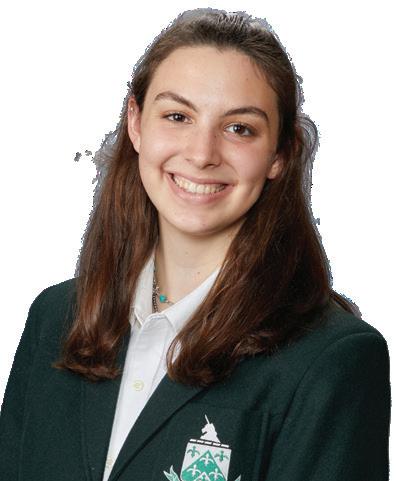
“If you’re going to talk bad about someone, don’t do it in a place where the walls are thin and everyone can hear you.”
- Grace Emanuelson ‘23
“Taylor Swift can sing but she doesn’t anymore. Also, her music sucks.”
- Anisha Sharma ‘24
“The Titanic movie is trash.”
- Natalie Grove ‘23
“Cheez-its and Motts go together. The chewy and crunchy combination is so good.”
- Princess Ogiemwonyie ‘23
22 Opinions December 14, 2022 THE HOCKADAY SCHOOL
STAFF EDITORIAL
Our voices, our future
As the younger generation, it is our responsibility to enact change
EDITORS-IN-CHIEF
Jane Clark & Melody Hu
MANAGING EDITOR
Caroline Petrikas
JADE EDITORS
Juliana Blazek & Zoya Haq
WEB & SOCIAL MEDIA EDITOR
Hanna Asmerom
NEWS EDITOR
Melody Tian
ARTS & LIFE EDITORS
Caroline Bush & Bennett Trubey
FEATURES EDITOR
Harper Harris
SPORTS EDITOR
Ambyr Baker
OPINIONS EDITOR
Aadya Kuruvalli
PHOTO, GRAPHICS & CASTOFF EDITOR
Kailey Bergstedt
STAFF WRITERS
Alexandra Dassopoulos
Anjy Fadairo
Elle Myers
Alexa Munoz
Amitha Nair
Danya Risam-Chandi
Elizabeth Truelove
Shreya Vijay
FACULTY ADVISER
Julia Copeland
EDITORIAL POLICY
The Fourcast is written primarily for students of the Hockaday Upper School, its faculty and staff. The Fourcast has a press run of 1,500 and is printed by Greater Dallas Press. It is distributed free of charge to the Hockaday community. The staff reserves the right to refuse any advertising which is deemed inappropriate for the Hockaday community. Opinions will be clearly marked and/or will appear in the views section. Commentaries are the expressed opinion of the author and do not necessarily reflect that of The Fourcast staff, its adviser or any other member of the Hockaday community. The Staff Stance on the views page reflects the position of The Fourcast staff, but not necessarily the position of the Hockaday administration or community. The Fourcast staff determines the content of each issue and strives to work as independently as possible in producing the student newspaper, but the content is subject to prior review by the head of Upper School, the communications director and other members of the Hockaday leadership team. Letters to the editor and guest columns are welcome and should be addressed to the editor-in-chief. Only signed pieces will be published. Corrections and clarifications from previous issues will be found as designated in the news section. Any questions or concerns should be addressed to Editors-in-Chief Jane Clark at jclark23@hockaday.org or Melody Hu at mhu23@hockaday.org.
Injustices around the world and the aftermath of the midterm election make us, as the younger generation, realize that even though some of us may not be of age to cast our votes, our voices are influential and worth hearing.
We may often feel like small actions cannot effect big changes, but small steps toward progress can impact our communities in big ways. Small steps could add up to change the lives of our peers, friends and families.
Those steps need not include drastic actions. On TikTok, a viral video shows two young people in London throwing a can of tomato soup at a Vincent Van Gogh painting to protest for the Just Stop Oil campaign. To voice our opinions and ideologies, we do not have to throw tomato soup at expensive paintings, but realize that protesting allows sharing of thoughts that could influence public opinion and government policy.
After the summer of 2020, it is easy to paint the picture of protesters as waves of people coming together to march. However, protesting can also take the form of boycotting companies that do not align with your views. As easy as it is to post a story for our friend’s birthday, it is just as easy to post current events that impact your community.

An online presence that informs peers can be just as beneficial. Posting a quick reminder of an upcoming protest on your Instagram casts a wider net to those who will be touched and informed of issues you care about.
As we become inspired to enact change, we must remember that social media makes it easy to believe in the first thoughts and comments posted; however, researching and actively
seeking correct information is an avenue for finding what you are passionate about.
For those who can vote, we encourage you to use your ballot to cast a vote for candidates who support your ideologies. Voter turnout is the lowest among those ages 18-24, meaning that those elected most likely do not represent the ideologies and agendas you support. One vote may seem like a drop in a bucket, but it allows you to exercise your right as a citizen and keeps American democracy running. We may have the impression that our actions are insignificant, especially those of us who are not of voting age. Doubtful voices within ourselves and from others can easily overwhelm our attempts to create a better world. However, even those ineligible to vote can help candidates they support by working in the polls and at phone banks.
As the next generation takes control and realizes decisions we make now will impact our lives 20 years down the road, we must act to make a difference in matters that affect us.
As we grow older and become leaders of a world whose decisions previously were in the hands of our parents, the responsibility will be ours. The impact of that responsibility is dependent on the actions we take now as the generation that is considered “too young.”
THANKSGIVING BREAK WINTER
Everyone looks forward to this time of the year to take a week off, eat some amazing food and enjoy quality time with family. But with the holidays near the end of the first semester, the weeks before and after are a crunch time for classes.
Everyone is excited to get into the spirit and celebrate winter holidays, but not all students think fondly of the chilly weather that comes with the season.
BLACK FRIDAY
Who doesn’t love shopping?? Daisies look forward to buying a bunch of steals after Thanksgiving, but this day also means many stores will be sold out before Christmas. Better get to those lists early!


NEW YEAR’S EVE
A fresh leap into another new year gives us a chance to fully restart all of our activities, but especially for seniors, the incoming spring season brings us closer to our final days at Hockaday.
23 fourcast the HOCKADAYFOURCAST.ORG December 14, 2022
The staff editorial is an unsigned piece representing a consensus of opinion among members of The Fourcast editorial board regarding a current issue.
f
Illustration by Diya Hegde
We love it, We love it not
By Kailey Bergstedt





24 Castoff December 14, 2022 | THE FOURCAST THE HOCKADAY SCHOOL The Fourcast 11600 Welch Road Dallas,
75229 f
Texas
Tracklist: 1- Newsies (Feb. 3-6) 2- ’80s Ski Lodge WinFo (Feb. 19) 3- 108th Commencement (May 14) 4- Class of 2023 Ring Day (May 16) 5- Rocky Mt. Bio Lab (Aug. 14-20) 6- Senior Sunrise (Aug. 29) 7- Honky Tonk Mixer (Oct. 1) 8- Senior Halloween (Oct. 27) 9- US Fall Play: “Squirrel Girl Goes to College” (Nov. 16-17)
Castoff Editor 2022 IN REVIEW Graphics by Carys Braun
