READY OR NOT?
Is it time to boost Saudi Arabia’s emergency preparedness framework?
SAFETY STANDARD
We take a closer look at the CE
mark and its regulatory process

Is it time to boost Saudi Arabia’s emergency preparedness framework?
We take a closer look at the CE
mark and its regulatory process
The personalised approach for fire protection, suppression and detection systems


With the safest, most accurate and e cient equipment in the industry, Hose Monster has built the perfect beast to master your next NFPA-compliant flow test. Go beast, or go home— go to www.hosemonster.com for more .
EDITORIAL
Publisher
Mike Dingle
+44 1752 267330 mike@firemiddleeast.co.uk
Editor Cora Lydon
+44 7834 244613 editor@firemiddleeast.co.uk
ADVERTISING
Worldwide
Ryan Bickerton +44 1752 265802 ryan@firemiddleeast.co.uk
Gareth Driscoll +44 1752 260603 gareth@firemiddleeast.co.uk
Rahul Vara +44 1752 604352 rahul@firemiddleeast.co.uk
Marketing Manager
Paul Riglar +44 7496 377630 paul@firemiddleeast.co.uk
Digital Editor Britt Jones britt@firemiddleeast.co.uk
Production Team
Freya Tucker freya@firemiddleeast.co.uk
PUBLISHED BY
MDC Middle East Ltd
+44 (0)1752 267 330 6 Woodside Lane, Plymouth, Devon, PL4 8QE, UK
This publication may not be reproduced or transmitted in any form in whole or in part without the written consent of the publishers.
©MDC Middle East Ltd. 2024
For subscriptions and advertising enquires, or for further information on the magazine visit our website at: firemiddleeastmag.com

I’m delighted to bring you this issue of Fire Middle East – my first as its new Editor, following the departure of Wendy Otway.
Amongst the features on these pages you’ll find coverage from the first-ever Fire Middle East Conference – which happened in May in Riyadh. We had an exceptional response to this event and much interest in the high-profile speakers and discussions that we facilitated. The day was designed to deliver maximum impact and help advance the sector and we think we have achieved this. Take a look from page 20 to find out more about the day and see the event in action.
On page 34, Teren Tan, the Head of Emergency Services for Saudi Middle East at Serco, considers the need for a new framework for fire and rescue services in Saudi Arabia, recognising the unique challenges they face.
When it comes to the fire sector, regulations are vital. This issue, Len Swantec of Victaulic shares his knowledge of the CE safety mark and
explains in more detail the regulatory process that mandates its use.
We explore the case for very early warning fire detection systems on page 42, with Markus Mueller at Securiton International. Markus covers potential use cases, how they compare with standard detection methods and more.
Finally, Emirates Safety Laboratory –who joined us at the Fire Middle East Conference to share their expertise –comes under the spotlight on page 46. We take a look at the work it does, and the projects it is involved with.
Cora Lydon Editor editor@firemiddleeast.co.uk
firemiddleeast Fire Middle East Magazine
03 Insider’s View
Foreword from the Editor
07 Regional news
The latest fire-related news in the Middle East region
11 International news
A roundup of the latest industry news from across the globe
15 Cover story: Janus Fire Systems
Find out more about Janus Fire Systems and how the company can help ensure your organisation is protected
16 From runway to rescue
John Olav Ottesen, from Dafo Fomtec AB, explores how airports in the Middle East can transition to environmentally responsible firefighting foams
20 Fire Middle East Conference
May’s Fire Middle East Conference 2024 was a resounding success – find out more about the strategic discussions, keynote speakers and networking opportunities that were had
24 Chairperson’s reflections
Bob Rea, Chairperson for the Fire Middle East Conference, looks back at our recent event and the key takeaways our audience gained

34 Strengthening Saudi emergency response
Teren Tan, Head of Emergency Services for Saudi Middle East, Serco, looks at a new framework for fire and rescue services in Saudi Arabia
36 Bringing the CE safety mark into focus
28 From thin coats to big protection
Brett Shinn, Fire Testing Manager, Thomas Bell-Wright International Consultants, uncovers the power of intumescent coatings

Len Swantek, Director of Global Regulatory Compliance at Victaulic, takes a closer look at the CE mark and the regulatory process that mandates this mark be in place
40 Fire safety in the digital age
Peter Stephenson, Director – Fire Safety Division Middle East, Hydrock now Stantec, discusses automatic fire detection systems and the potential for smarter systems for a safer future
42 Talking about… very early warning fire detection systems
With Markus Mueller, Director of Sales Management at Securiton International and Founder of Securiton’s Vertical Application Management section
46 Fire safety leaders focus
We profile Emirates Safety Laboratory (ESL) – a facility for undertaking products/ systems fire testing and conformity assessment body (CAB) certification
48 Protecting aircraft hangars
On behalf of the International Water Mist Association, Christina Linaa Hansen, Marketing Coordinator at VID FIREKILL looks at alternatives to foam fire suppression systems for aircraft hangars

49 On the market
Find out about the latest products to reach the fire sector
50 Diary Diary dates for forthcoming industry exhibitions, conferences and events


TURKEY NEWS
Illegal welding working during unsanctioned renovations to a Turkish nightclub in Istanbul has caused a fire, leading to the deaths of 29 people. The nightclub was in the basement of a residential tower block. No residents have been reported to be injured, it is thought that all the casualties were working on site. Released CCTV
EGYPT NEWS
One of the oldest film studios in the world has been lost to fire. The fire broke out at the Al-Ahram Studio in Cairo’s Giza district, just after a production company had finished filming its Ramadan TV series. Firefighters brought the fire under control, but several buildings nearby had to be evacuated, as the fire spread and damaged other buildings. Ten people were injured, including two firemen who were climbing a crane to put out the flames when it collapsed. In a separate incident, one person was injured when a set caught fire in the Egyptian Media Production City, a complex near Cairo that houses some of the country’s largest television and radio studios. A police report said the fire was caused by an electrical short circuit that set ablaze wooden set pieces which had been doused in paint thinner in preparation for a television scene that was being filmed that day.
footage shows a worker welding a metal object with a blowtorch in the building when flames suddenly erupt and thick smoke billows out into Turkey’s economic capital. Nine people were arrested following the fire, including the owner and manager of the nightclub and the owner of the metalworking company responsible for the work, the Istanbul governorate said.
According to the Oman CDAA, there were more than 1,500 residential fires in the country in 2023, an increase of 14.4% from 2022. Some of the most common causes of fires in residential facilities include not closing the gas cylinder after cooking or when leaving the house. Other causes were listed as naturally curious children playing with matches which had been left unsupervised; improper disposal of cigarettes – such as carelessly tossing butts; and leaving food unattended on a stove meaning fat reaching its flash point without the cook noticing in time. Overloading of electrical sockets is also a major concern, as it can cause short circuits and overheating of the adaptors. Homeowners should observe safety measures and be vigilant, CDAA said.
A building housing 196 foreign workers has been badly damaged by fire. It’s believed that at least 49 people lost their lives in the blaze, with more than a 50 injured. Witnesses reported that the fire started on the lower floors, causing the upper floors to
become engulfed in smoke, trapping people on the upper floors. The interior minister, Sheikh Fahd Al-Yousef, said the building’s owner had been detained for potential negligence, adding that any properties violating safety regulations would be closed immediately.
The Sharjah Civil Defence rushed to the scene of a massive industrial fire at a spare car parts warehouse in industrial area 6. Thick smoke was seen billowing for hours over the nearby area. The Civil Defence was able to bring the fire under control before it spread to neighbouring buildings, but no injuries were reported.
A Filipina expat is amongst five people who died in a residential tower fire in Sharjah. Her husband was treated in the nearby hospital’s ICU according to the Philippine Consulate-General in Dubai. Initial investigations show that some embers got in contact with waste stuck in a hallway, causing the flames to rapidly rise up the 39-storey tower with 750 apartments, the police said. Residents were evacuated quickly and moved to temporary accommodation with the help of the Emirates Red Cross. Many of these people have been found new accommodation. A further 44 others were injured, most being treated for smoke inhalation and then being discharged from hospital. The Filipino Government has offered help to repatriate the bodies of those lost.
A fire at the Qaem Hospital in Rasht, Northern Iran has claimed the lives of nine people; six women and three men, mostly patients in the ICU. Only 142 beds at the hospital were occupied that night, which helped the evacuation. It is not known what caused the fire, and investigations are still underway. It is believed that the fire started in a room on an underground floor of the hospital, where the emergency power generators were located, according to state media. The authorities have not commented on unconfirmed reports that the fire broke out after the extensive use of emergency power generators amid power cuts as Iran endures scorching summer heat.
A fire at The Old Manama Souq has claimed the lives of three people, with nine others injured. The fire raged for more than 30 hours as firefighters battled to bring the flames under control. The business units in the souq are closely packed, meaning fire can spread quickly from unit to unit, but the fire itself started in a residential building. Unregulated electrical installations, and the use of generators for power, could have added to the cause of the fire.

More than 60 officers and personnel were deployed to the scene, as well as 16 vehicles. Twenty-five shops were destroyed, with many others damaged.
MP Hassan has called for the reconstruction of the Old Manama Souq to be done in a manner which preserves the authentic national identity.
An investigation into the cause of explosions and subsequent fire at a gas station in Armenia is underway, after authorities were alerted to the emergency. Twelve fire engines, along with rescue workers and ambulances rushed to the scene on the Yerevan-Sevan highway. According to reports, between five and seven people were injured as the LNG fuel burned off, with the flame reaching tens of metres into the night sky seen in video footage filmed miles away from the site. A criminal investigation has been launched into the cause of the incident.
A fire, likely caused by an electrical short-circuit, broke out at the underconstruction World Trade Centre in Doha. Smoke billowed across the Doha skyline for more than an hour, but the fire is reported to have been under control within 15 minutes. Nearby roads were blocked to allow first responders to get to the location of the fire quickly, and there were no reported injuries. Work continues on the building, which is already late on delivery due to other setbacks.
A huge fire has broken out at an oil refinery in Erbil, Iraq. More than 14 firefighters have been injured while tackling the blaze, four with burns, and the others with smoke inhalation. The cause of the fire is not yet known, but it seems to have spread from one refinery to several others.
The facility seems to have been lacking in many safety features such as fire alarms and fire extinguishers.
More than 150 rescue workers were mobilised to assist with the emergency, with the fire raging for more than 20 hours. The main storage tank that was impacted contained more than 5,000 tonnes of fuel, putting the estimated cost of the damage caused at $8 million.
Ajman Police has arrested a suspect accused of murder and arson within ten minutes of him starting a huge fire in a warehouse in the industrial area of the emirate. The suspect also stabbed several people, killing a woman. The civil defence quickly brought the fire under control. Lieutenant Colonel Saeed Ali Al Madhani, Deputy Director of the Operations Department at Ajman Police, reported that upon receiving the distress call, first responder patrols, special missions units and the National Ambulance were dispatched to the scene.
Diriyah Company and Deutschland Technology have entered into a Memorandum of Understanding to enhance fire safety standards and procedures across various developments, including heritage sites, tourism and cultural destinations in Saudi Arabia. The collaboration addresses construction and development challenges while aligning with the Kingdom’s Vision 2030 goals.
According to a release, in recent years, Diriyah Company has achieved significant safety milestones, such as receiving approval from TUV Austria, an international accreditation authority specialising in testing, inspection, conformity and quality assurance. This recognition affirms that Diriyah Company’s occupational health and safety management system meets ISO 45001 standards.






The new E2S range of globally certified heat detectors provide a comprehensive solution suitable for the harshest of environments.


Featuring the D-A-F rate compensated heat detector elements with stainless steel enclosures and hermetically sealed contacts and certified with the E2S explosion proof and increased safety junction boxes. Approvals include IECEx, ATEX, UL, cUL. Versions include Class I/II Div 1, Ex db explosion proof and flame proof as well as Class I/II Div 2, Ex db eb increased safety and Zone 0 Ex ia intrinsically safe models.
The robust IP66/67, Type 4/4X corrosion proof termination enclosures are available in GRP (glass reinforced polyester), 316L stainless steel and LM6 marine grade copper free aluminium. With innovative features such as the E2S LED indicator module and the multi position mounting bracket, the E2S range of D1xH1, STExH1, GNExH1 and D2xH1 heat detectors offer a robust and reliable source for alarm initiation in the most hazardous and demanding of applications.


A suspected arson attack has left more than 1,200 Rohingya refugees homeless in a Bangladeshi refugee camp. More than 175 shelters, 40 shops and dozens of other facilities were lost in the fire, in the Rohingya Camp No. 13 of Ukhiya of Cox’s Bazar. “There are a number of factions among the Rohingya in the camps over establishing power and they were found involved in such crimes before. Furthermore, overcrowded conditions and built components of the shelter could help the fire spread fast,” said the Bangladesh Refugee Relief and Repatriation Commissioner Mohammed Mizanur Rahman told Anadolu.
Fifty Sydney residents were forced to evacuate their homes after an e-bike burst into flames. The fire started overnight in a bike shop below an apartment building, and firefighters confirmed that the source was a lithium-ion battery which was on charge. The battery was removed from the building and placed in water as the fire was extinguished. Earlier this year, another e-bike battery — left on charge in a bedroom — caused a fire in the Bondi area of the city. In that case, an automatic fire door activated, which helped limit the spread of the fire.
The historic Stock Exchange building in Copenhagen, Denmark has been engulfed by fire. The building had been undergoing restoration work, and the fire was first spotted by a craftsman, who raised the alarm. Members of the public rushed in to help save historic artefacts and paintings, and the Danish Cultural Minister Jakob Engel-Schmidt said that 400 years of Danish cultural heritage had gone up in flames. The cause of the fire in Copenhagen is for the moment unknown but emergency services said the scaffolding made their operation more difficult.
California’s Bay area has seen a huge fire engulf a construction site, leading to more than 100 fire fighters battling a blaze at a six-storey affordable housing structure in Redwood City. More than 50 people were evacuated from the site, as well as students at nearby schools being dismissed. The fire is thought to have started on the 5th storey of the site and was spread quickly due to wind. The height and lack of walls in the building made the fire difficult to control as there was no way to easily provide wind breaks.
Fire teams in Pakistan have been battling forest fires in several areas, including the capital Islamabad. Pakistan has seen temperatures of above 52ºC , with temperatures expected to rise even higher as summer progresses. Plumes of smoke could be seen rising from a raging fire in the hills of Islamabad as temperatures hit 41 degrees centigrade. The remote area of the fires makes access for fire crew extremely difficult. The Islamabad police are investigating the reason behind the fires, as it’s not certain if the fires were heat-related or caused by arson.
GERMANY NEWS
Around 80 firefighters responded to a call from the Humboldt Forum in the rebuilt Stadtschloss in Berlin. The fire had broken out on an upper floor of the vast building in the capital’s museum district. Firefighters said construction materials and two tar kettles had caught fire, causing a propane gas cylinder to explode before around 80 firefighters extinguished the blaze. One person was injured and had to be treated by paramedics. The Humboldt Forum, a museum slated to open in the rebuilt palace in the autumn, said work on the building would not be slowed by the upset.
Around 70 firefighters in 10 fire engines responded to a fire in a block of flats in Canning Town, London. Seven people were taken to hospital after the blaze ripped through the site, another three were treated at the scene by paramedics.
The fire, which broke out in a commercial unit on the ground floor, sent thick plumes of black smoke into the capital’s sky with firefighters ordering local residents to close their windows. One person was rescued by firefighters using a 13.5m ladder as locals looked on. The blaze was in the Hallsville Quarter development, which is under construction opposite Canning Town station. It is a £600m scheme billed as a new town centre eventually expected to provide 1,100 homes.

At least 27 people, mostly children, have died in a fire at an arcade in an amusement park in Rajkot, Gujarat, India. More than 300 people were in the two-storey building at the time, as they enjoyed their summer holiday weekend. A temporary structure near the entrance of the building collapsed, making it difficult for people to escape and for rescuers to gain entry. Footage showed firefighters clearing debris around collapsed tin roof structures that media reports said were used for bowling, go-karting and trampoline attractions. It took nearly an hour to douse the fire, with about a dozen ambulances carrying the injured to hospital. Fire department officials said a short-circuit was suspected as the cause. Fires are common in India due to poor building practices, overcrowding and a lack of adherence to safety regulations.
A shopping centre in Warsaw, Poland has been almost completely lost after a fire tore through it, with the loss of 1,400 businesses. The fire brigade said more than 80% of the centre was on fire, and rescue operations were being carried out by 50 teams, including chemical and environmental rescue specialists. Local authorities advised nearby residents to stay indoors and shut windows to avoid smoke inhalation. The fire happened on a Sunday, which is a band trading day in Poland, meaning no members of the public were in the centre at the time, and there were no reports of casualties. However, security had to stop many shop owners from trying to enter the building to save their stock as more than 200 fire fighters tackled the blaze.
INDONESIA NEWS
The Kilang Pertamina Internasional (KPI) oil refinery in Balikpapan, East Kalimantan on the island of Borneo, has suffered a major fire within the
New Delhi residents are experiencing more air pollution thanks to a fire at a garbage dump in the city. Sections of the Ghazipur landfill burst into flames on Sunday, creating additional menthane and heat to add to the city’s growing climate challenges. Spontaneous combustion at landfill sites in India is not uncommon in summer, when temperatures rise and the Ghazipur site is only one of India’s 3,000 landfill sites. More than 2,300 metric tons of solid waste arrive at the Ghazipur dump every day, according to a July 2022 report by a committee tasked with reducing fires there. The Municipal Corporation of Delhi deploys drones every three months to monitor the size of the trash mountain and is experimenting with ways to extract methane from it, the report said.
refinery area of the facility. Eight fire engines and static firefighting equipment were used to contain the fire, but local residents weren’t affected. The fire comes just weeks after several explosions at the firm’s Dumai and Sungai Pakning refinery in Sumatra.
AUSTRALIA NEWS
A fire in a silo at a food manufacturer in Bomaderry NSW has seen 15 workers evacuated from the site while fire fighters tackled the blaze. The silo, containing 600
tonnes of grain, was monitored with thermal imaging cameras after the smouldering grain was removed in order to prevent further spread of the fire. A 500 meter exclusion zone was put in place due to the risk of dust explosion.
Arrests have been made in Chile after an investigation into the starting of wildfires which killed 137 people. A firefighter and a former forestry worker were arrested for allegedly setting multiple fires that converged and killed 137 in Valparaiso, in February. The fire affected more than 16,000 people and was the nation’s deadliest fire on record. One of the suspects is allegedly linked to six prior fires in the Penuelas Reserve. While searching one suspect’s residence, investigators found an arson device used to start one of the fires, the Valparaiso prosecutor’s office said during a court hearing. “There were approximately four outbreaks equidistant from each other,” Prosecutor Osvaldo Ossandon stated.
The city of Johannesburg is working to repair fire-damaged infrastructure on the M1 highway bridge. The damage to both concrete and electrical infrastructure is estimated to cost nearly $2 million. The damage was caused by an electrical fire, which was the result of vandalism, and caused power outages. At least 450 metres of the 88KV electrical cables were affected by the fire. It took 18 hours for firefighters to put out the blaze, as water wouldn’t stay in the tunnels which the cables run through. Eventually sand bags were used to create a barrier to help flood the tunnels, and foam was used to help cool the area.


Janus Fire Systems provides full service fire protection, suppression, detection and systems solutions
Built on the ideology of excellence, quality and innovation it is committed to the safety and well-being of its employees, a personalised relationship with clients and providing a full range of superior Special Hazard Fire Protection products and services. The dedicated staff of seasoned professionals have over 150 years of collective experience in the field and work diligently to maintain a personalised relationship with clients in the Middle East.
Janus products protect high-value business assets requiring special hazard fire protection where traditional fire protection systems are not sufficient or appropriate. Its suppression systems can be found in more than 40 countries across the globe, with distributors ready to serve your needs around the clock.
Oil and gas, power generation and distribution are vital to growing economies and at the forefront of the global conversation now more than ever. Janus Fire Systems has a great deal of experience protecting valued assets. Knowing that there is an experienced, reliable partner allows your business to focus on serving local and global customers.
A number of fire protection companies have exited the industry while others are in danger of losing their businesses. Providing diverse design capabilities, while upholding the highest level of fire protection engineering principles, is what separates Janus from other fire suppression suppliers. Through global economic turmoil, pandemic and supply chain interruptions Janus Fire Systems remains strong and can support companies with obsolete fire protection systems left wondering where to turn.
There is a co-dependence between oil and gas and the power industry. Neither can exist without the other.
Janus Fire Systems has the product knowledge and expertise to protect:
■ Power generation and distribution facilities
■ Server rooms for IT and industrial users
■ Hazardous storage facilities
■ Desalination plants
■ Food processing facilities
■ Airports
■ Universities
■ Hospitals
Coupled with a local distribution base, the Janus Fire Systems team can provide:
■ Site surveys
■ Hazard analysis
■ Project management
■ System design and engineering
■ On-site project technical support
■ Field commissioning
■ Project integration
■ Fire protection turnkey installations
■ Technical specifications
■ Consulting
■ Training
■ Technical seminars
Janus is a leading manufacturer of Underwriters Laboratories
Listed and FM approved:
■ Clean agent, FK-5112 & HFC 227
■ Engineered dry chemical
■ High-and low-pressure CO2
■ Water mist
■ Control panels are tailored for fire suppression systems and fire alarm signalling
■ Alarm and detection components that will detect fire threats early, alert and activate the extinguishing system when necessary
Typical areas of protection are:
■ Control and switchgear cubicles
■ Oil storage tanks
■ Transformer vaults
■ Combustion turbine enclosures
■ Steam turbine lube oil systems, bearings and pedestals
■ Main and auxiliary transformers
■ GIS substations
■ Traditional substations
■ Transformer rooms
■ Energy storage
■ Control rooms
■ Refrigeration equipment buildings
Members of the Janus staff are NICET certified and select team members serve on numerous National Fire Protection Association technical committees, keeping its staff up-to-date on the latest changes and trends impacting the industry. Janus products and practices are certified compliant to ISO standards. The experienced special hazards fire protection team is laser focused on prioritising customers’ needs to supply the right fire protection solutions on time and on budget.

Your company can depend on Janus for fire systems that are designed in accordance with the applicable NFPA standards.
Contact Janus Fire Systems +1-219-663-1600 janusfiresystems.com


John Olav Ottesen, Managing Director and Founder of Dafo Fomtec AB, explores how airports in the MENA region can transition to environmentally-responsible firefighting foams
Outside the POG industry in the MENA region, one of the largest users of firefighting foam is the aviation sector and at airports we typically see firefighting foams deployed in a number of applications such as: fire & rescue services (ARFF); hangars; and fuel storage.
With each of the above applications we see different design (usage) standards applied and each application presents its own challenges when transitioning from PFAS-containing foam agents. There are a number of issues facing the Fire & Rescue Services as they transition to a Fluorine Free Foam for the ARFF mission.
Fire & Rescue Services (ARFF): Arguably outside of the USA the Fire & Rescue Services is one application where SFFFs have replaced AFFFs and FFFPs without a deadline imposed by legislation on the use of the PFAS-containing foam agents. Air Services in Australia, Heathrow, in the UK, Copenhagen and Dubai transitioned to use SFFF during periods when they still could have used C6-based foam concentrates and in some cases even C8-based foam concentrates, but each chose to move to SFFF for the ARFF mission.
DOC 9137 – AN/898 of the Airport Services Manual Part 1 – Rescue and Fire Fighting – Fourth Edition (2015) covers all aspects of the ARFF mission for those airports outside the USA, including classification of the airport based on the largest aircraft that is expected to use the airport. Under ICAO Aerodrome classification runs from 1 to 10, where regional airports such as Dubai International, Al Maktoum International, Abu Dhabi, Doha, Kuwait and Jeddah are all classified as Category 10 as they all handle the Airbus A 380-800.
Firefighting foams used in the ARFF mission are classified as having ‘Performance Level A, B or C’ achieved through a test protocol which fixes the nozzle (Uni 86) and flow rate but varies the size of the pan so that the application density for testing decreases from Level A (4.1 lpm/m2) through Level B (2.5 lpm/m2) to Level C (1.75 lpm/m2). The classification of the aerodrome and the performance level
of the firefighting foam dictates the minimum usable amounts of extinguishing agents required by the Airport F&RS.
The ICAO Performance Level testing makes no differentiation between PFAScontaining and fluorine-free foams so the transition to fluorine-free foam for the ARFF vehicles in fire performance terms should create no concerns. There are two main considerations relating to performance that need to be considered:
Devices: Although the current DOC 9137 makes no specific reference to SFFFs in chapter 8 we can draw a comparison with the statement in 8.1.7.6 that film-forming foams should aim for expansion ratios of 6 – 10 with 25% drain times in excess of 3 minutes, whereas protein-based foams should have expansion ratios of 8 – 12 with 25% drain times in excess of 5 minutes. As SFFFs are, with the exception of one (claimed) product, non-film forming, that the foam qualities as expressed for protein-based foams are desirable for achieving the best performance with an SFFF. The question that regional fire chiefs will need to ask is whether their discharge devices (Roof Monitors, HRET, Bumper Turrets and handlines) can all achieve those foam qualities.
Viscosity: AFFF and FFFP remain the two types of foam concentrate that we find in use in the regional Airport F&RS and both are low viscosity (Newtonian) and the vast majority of the pumping/proportioning system on the ARFF vehicles are designed to operate with these Newtonian fluids. With some ARFF vehicles adjustment is possible to allow the use of higher viscosity foam concentrates such as the Enviro USP, but for many the pumping/proportioning just cannot handle the viscosity of an SFFF like Enviro USP. Where adjustment is possible or when new ARFF vehicles are bring specified for MENA region airports our recommendation is that proportioning capable of handling higher viscosity foam concentrates be included as the drain time with Enviro USP far exceeds the requirements of ICAO Level B and of the
new US Mil Spec for Fluorine-Free Foam (MIL-PRF-32725). This improved drain time is directly related to foam blanket security which is of critical importance in the ARFF mission.
To meet the market requirements for transition in ARFF vehicles that cannot operate with the Enviro USP Fomtec has developed a low viscosity ICAO product which is marketed under the name Enviro AIR. Enviro AIR in the approval testing by MPA Dresden to ICAO Level B achieved full extinguishment of the fire pan in 75 seconds (120 seconds allowed) and the burnback time was 22 minutes 10 seconds (must be greater than 5 minutes) .
For the US market Fomtec has developed a further low viscosity product to meet and exceed the MIL-PRF-32725 specification and Enviro MIL is currently undergoing the QPL approval testing. As with all Fomtec products Enviro MIL has been developed with what we term ‘in-built safety’, which basically means achieving the critical performance pass numbers of extinguishing and burnback with as much of a safety margin as possible. For Enviro MIL the fire tests with gasoline and jet A1 have pass times for extinguishment of 60 seconds and 30 seconds on the 28 ft2 fires with fresh product and Enviro MIL has achieved 40 seconds and 22 seconds for those fires (approximately 30% safety margin on the pass times).
Tactics & Technique Differences: It was always the case with any foam that performance is improved if we can apply the foam in a gentle manner that limits the disturbance of the fuel, but without the olephobic (oil repelling) characteristic of the fluorinated surfactant in our AFFFs and FFFPs direct plunging of the foam stream into the fuel should be avoided (as much as possible). Foam application techniques known as ‘Roll-On’, ‘Bank-Down’ and ‘Rain-Down’ have been proven from testing carried out on behalf of the FAA to be effective with SFFF. Roll-On and Bank-Down should be primary techniques with non-aspirating discharge devices as found on bumper turrets and hand lines as the impact onto hard surfaces will improve the aspiration and expansion ratio of the finished foam. It is probable that a mixture of foam application techniques will be the best solution for an effective fire attack and foam blanket management. Testing and
practice in the field will be necessary to accomplish the mission in the event of an incident.
Foam Blanket Management: Without the fluorinated surfactant the integrity of the foam blanket is the only means of containing the fuel vapours and preventing reignition. Factors that can impact the blanket quality need to be considered, understood and monitored during foam application at an incident.
■ Proportioning – poor proportioning will impact the blanket quality
■ Application rate – must achieve the proper application rate to build the blanket
■ Presence of hot objects – hot surfaces will degrade the blanket
■ Walking / driving through the blanket – speed or lack of resealing – leading to holes in the blanket
■ Weather – temperature, wind, rain
■ Water streams – dilute or destroy foam blanket
■ Dry chemical agents – will reduce the drain time of the blanket
■ Holes – holes in the foam blanket on a fuel need foam reapplied.
High ambient temperatures in the region, apart from the air temperature, impact firewater temperature and the temperature of concrete and other objects within the airfield. All of these will negatively affect the foam blanket meaning more monitoring and reapplication of foam. This reapplication of foam may in turn mean more equipment and manpower, as well as the stocks of foam concentrate held at the airport.
Training: A recurring theme within the ARFF community since the awareness of issues with PFAS started is the demise of training
on liquid hydrocarbon fires. Many training grounds have moved to propane-based simulations where water is used, and yearly tests on the foam systems are very often limited to the proportioning. In fact, development of test equipment using recycling methods and flow transducers allows the proportioner to be tested with water only. Rarely now do the discharge
Cleaning of existing equipment and disposal of PFAS-containing foam and rinse water: As there is currently no legislation relating to PFAS in the region there will need to be discussions between the airports and the local authorities to determine what are ‘acceptable’ cleaning procedures and how the existing foam concentrates are disposed of.
‘Rarely now do the discharge devices get tested to get foam qualities which again has reduced the training opportunities.’
devices get tested to get foam qualities which again has reduced the training opportunities.
Training operators in the effective use of SFFF for the ARFF mission raises many challenges:
■ Existing facilities that have used PFAS foams where full containment was not possible are likely to have contaminated the surrounding land. Even though the SFFF will only contain very small levels of PFAS (trace contamination) the foam discharge will leach into the ground and assist the transportation of PFAS chemicals into the environment.
■ Existing facilities that have propanebased simulations and have only deployed water will need to be reconfigured (perhaps new algorithms) to simulate SFFF deployment.
■ Clean or new facilities may be required and pits prepared for liquid hydrocarbon fuel burns.
■ Budgets prepared and approved for training of the crews.
■ Ongoing costs for running the training facilities.
■ Evaluation of the improvements in performance.

Dealing first with cleaning there are a number of methods which range from water rinse to cleaning with water + solvent mixtures being promoted by various suppliers. The current science indicates that PFAS chemicals can not only build up on tank material surfaces but can also work their way into imperfections on the tank material. Studies indicate that after cleaning and filling with new SFFF after some time some of these PFAS chemicals leach out of the tank material and into the SFFF. This is not just an issue in the MENA region but many countries have still to address this issue and many end users are hesitant to spend the money on cleaning the ARFF vehicle in the knowledge that some months later the SFFF will again contain a level of PFAS.
Disposal of PFAS-containing foam concentrate and rinse water currently requires incineration at temperatures of 1,100 C or greater. Other technologies are being developed but in the region incineration is currently the only available option for disposal.
In the region, Dubai International, Al Maktoum International and Sharjah International have already made the transition to Fluorine Free Foam and even without similar legislation that exists in Europe and the USA we can expect other airports in the region to follow suit in the coming decade. In terms of fire performance, SFFFs are available with Level B and Level C performance and with most airports in the region operating with Level B foam agent there will be no reduction in performance with the transition. The transition is not without challenges and selection of a high performance foam concentrate is only part of the whole solution. fomtec.com


The inaugural Fire Middle East Conference has been a resounding success, igniting industry collaboration and blazing a trail for the advancement of the fire sector
Held on the 15th of May 2024 in Riyadh, Saudi Arabia, the Fire Middle East Conference roared into existence, leaving a lasting impression on the fire safety industry across the Middle East. This landmark event, the first of its kind, brought together a who’s who of industry leaders, experts and passionate professionals for a day of collaboration, learning and charting a brighter future for fire safety in the region.
A captivated audience of over 200 industry leaders, project directors and fire safety professionals gathered for the event, serving as a platform for uniting the Middle East’s fire protection and rescue sectors.
A strong foundation
The conference commenced with a thought-provoking opening address by Fahad Alghamdi, Chief Operations Officer at The National Security Services Company –SAFE, and a prominent figure in the industry. Alghamdi’s speech underscored the conference’s commitment to fostering a collaborative approach to fire and safety across the Middle East. And of course, his own extensive contributions to the sector and his passion and dedication to advancing the field in the region helped set the tone for an event brimming with expert-led discussions and a strong sense of community.
Following Alghamdi’s welcome, First Lieutenant Mohammed Almessabi from the Abu Dhabi Civil Defence Authority took to the stage for our first keynote. He highlighted the very unpredictable nature of fire incidents, advocating for emergency planning measures to enhance the region’s preparedness.
Tackling the intensive topic of codes, regulations, accreditation and compliance was Sandy Dweik, CEO at Thomas Bell-Wright International Consultants.
She shared her insights into the five-year implementation plan 2018-2023, where new requirements were put into place on Saudi buildings and constructions and advised that “The building code is the minimum that should be followed. Of course, you should go above and beyond.”
Once our guests were rested after a break for coffee, snacks, networking and prayer, Faris Alzahrani, Fire Protection Section Head, at the National Water Company captivated the room with his exploration of the potential impacts and challenges around the introduction of residential sprinklers in private housing in the Kingdom. He explained that there is a notably higher mortality rate for residential fires that occur after 11.30pm, and called for a balanced approach between fire protection and life safety.
Dr Sebastian Ukleja, Testing Manager for Emirates Safety Laboratory, raised some eyebrows as he took to the stage for his keynote… brandishing a frying pan. The prop was used to put across the point that a kitchen fire is a scenario that can happen to anyone, as he discussed fire risks and hazards while pursuing culinary excellence. He also claimed to have the best job in the world – after all, as he explained, he gets paid to burn things in the name of research and fire advancement.
Closing the keynote sessions, was Edward Barnes of Reacton Fire Suppression, who in his speech covered innovative fire suppression technologies and how they should be deployed. He noted: “Innovation is looking at the various different sections, specific to countries’ global standards, to improve them.” He also advised not to disregard the need for education to surround new products and approvals and recommended developing innovative ways to educate.
The conference also boasted a stellar lineup of panellists, each a recognised authority in their respective fields. From seasoned veterans to innovative disruptors, these individuals shared their invaluable knowledge and insights on everything from cutting-edge fire protection technologies to the evolving regulatory landscape.





One such highlight was the panel discussion: Fire & Safety Best Practice, which featured a dynamic group of experts delving into the practical application of best practices in fire safety.
Up on stage our moderator Wendy Otway, former Editor of this magazine, was joined by Mohammed Aldajani – Fire Protection Engineering Consultant; Mustafa Alfakih – Associate Fire Protection Engineer, Jensen Hughes and Murtada Aldarweesh – CEO, Fire & Life Safety Consultant, MAD Consultants.
Their lively exchange explored practical strategies for implementing best practices in building design, construction and ongoing maintenance, ultimately contributing to a safer built environment across the region.
The second panel discussion, moderated by Sandy Dweik, focused on the crucial role of codes, compliance and accreditation in ensuring fire safety across the Middle East. The diverse range of expertise on display provided attendees with a well-rounded perspective on the challenges and opportunities facing the fire safety sector in the Middle East. Sandy was joined on stage by Ghaith Bakir, Senior Regulatory Engineer MEA, UL Solutions; Eng. Abdulaziz Al Sulayyim, Head of HSSE, Academy of Defense Industries; and David Campbell, General Manager, Emirates Safety Laboratory (ESL).
Overall, the panel emphasised the need for a comprehensive approach to fire safety, combining proper code implementation, rigorous product verification and increased knowledge sharing to create a safer future across the Middle East.
We were lucky to have industry luminaries weigh in on a discussion into how we can protect people and assets in high-rise buildings and giga project developments: Mark Fessenden, Managing Director, International Fire Suppression Alliance, Khalid Almandil, Senior Director and Deputy Commissioner at Red Sea Global and Adam Hessel, Marketing Development Manager, EMEA at Temprite. They were joined by our excellent moderator, Peter Stephenson, Fire Safety Division Director, Hydrock. Almandil shared with our audience the strategies he has used at Red Sea Global, while Hessel stated that parts of central Europe are already moving away from concrete which is opening up new opportunities for fire suppression. Fessenden underlined the importance of risk assessment: “you need to understand where are my people? Where are they going to move to?”
Our final panel discussion tackled the need for a collaborative approach to wildland, flooding and aviation firefighting. Discussing the improvements they felt were needed were Mezher Qahtani, VP Fire Protection Advisor, Aramco; Teren Tan, Head of Emergency Services, Serco Middle East; Jacob Junge, Assistant Fire Chief, GDC Middle East; and Lieut Col. Hamdan Almansori, Commander of Operations Department, Abu Dhabi Civil Defence Authority. It was also a chance for our conference
Chairperson, Bob Rea, Lead Facilitator, BR Training Solutions, to join in the discussions as our panel moderator. Qahtani shared his recent experience of the heavy rain in the region: “There has to be community awareness when we respond to modern challenges… I saw people not taking this warning seriously, which impacted things as a responder. Education and awareness are extremely important.”
“There has to be community awareness when we respond to modern challenges”
The entire panel agreed that collaboration was key to ensuring effective fire response, as well as education and awareness for the whole community.
The Fire Middle East Conference recognised that collaboration is the cornerstone of progress in fire safety. Networking opportunities were woven into the programme’s fabric, allowing attendees to connect, share ideas and build lasting relationships. Dedicated networking sessions, pre-event receptions and breakout discussions provided ample space for industry leaders and practitioners to exchange knowledge, explore potential partnerships and collectively drive advancements in the field.
An exhibition area showcased innovative fire safety products and technologies, allowing attendees to discover cutting-edge solutions from leading manufacturers. Additionally, attendees had the

opportunity to access informative resources and engage with industry experts at dedicated product booths. This combination of learning opportunities ensured that attendees left the conference equipped with valuable knowledge and practical tools to enhance fire safety within their individual areas of expertise.
The Fire Middle East Conference resonated deeply with attendees, receiving an overwhelmingly positive response. The event successfully united the industry around a common cause: advancing fire safety standards and practices across the Middle East region. Participants lauded the high calibre of speakers, the diverse range of topics covered and the ample networking opportunities.
The positive feedback from participants across the fire safety spectrum underscores the conference’s impact on uniting the industry and propelling collaborative efforts towards a safer future.
The inaugural Fire Middle East Conference has undoubtedly left its mark. It served as a powerful platform for knowledge exchange, collaboration and positive change. And as our moderator, Bob Rea, said in his closing remarks “take the safety back to the community”. If our audience is able to improve on what they do based on the learnings from this event we’ll have made massive strides forward in improving the sector.
Building upon the momentum generated by the inaugural event, the next iteration promises to be even larger and more comprehensive, featuring additional keynote addresses, a broader range of panel discussions and expanded networking opportunities.
This commitment to continuous improvement ensures that the flame of fire safety awareness will continue to burn brightly across the Middle East.






Following the success of the inaugural Fire Middle East Conference on 15 May 2024 in Riyadh, Fire Middle East magazine asked Bob Rea to reflect on the event, in his capacity as the event’s Chairperson
I was honoured to be asked to chair this prestigious event and wanted to make sure that I fulfilled the duties to the highest level. I am confident on the stage, with a natural ability to link presentations and panel learning together, finding a thread to engage the audience. Previously, I was told by an industry professional that I am a ‘showman’ and I suppose he was right, in that I enjoy the challenge of adding and maintaining energy and drive to an event (my version of keeping the event on schedule).
Ahead of the event, the esteemed Advisory Panel members settled on the four key pillars for the conference:
■ Codes, compliance and regulations
■ Protecting people and assets
■ Emergency response to region-specific issues
■ Protecting high-rise and giga-project developments.
These pillars provided an informative and thought-provoking spine to the event, allowing keynote speakers and panellists
to develop topic areas and explore different avenues to inspire and engage the audience.
The audience was made up of a diverse set of people, who I thank for taking the time to attend. Some travelled considerable distances to be with us and I know that they will have benefitted from attending.
The ballroom entrance hall opened grandly to the attendees, where they were warmly welcomed and directed to the exhibition and networking area. Attendees were provided with access to the key sponsors and suppliers. These exhibitions provided attendees with the opportunity to see cutting-edge technologies in action and engage directly with manufacturers and service providers.
It was fascinating to hear the gentle murmur of conversation swelling in level as more people arrived, making new connections and renewing relationships. One of the key benefits for those attending the Fire Middle East Conference was the opportunity to network with peers and industry leaders. The conference included
several networking activities, such as welcome receptions, networking breaks and lunch. The benefit of networking at these events should not be underestimated as they are designed to facilitate the exchange of ideas, foster collaborations and build professional relationships that can enhance fire safety practices across the region.
The stage was set spectacularly in the ballroom of the InterContinental Hotel, looking back from the stage presented a sea of immaculate white tables, inviting the audience to sit in comfort and enjoy the full conference programme.
With the opening address from Fahad Alghamdi the Chief Operations Officer of SAFE – The National Security Services Company, the strategic conference partner, the conference began in earnest.
It was now my opportunity to set the stage for the remainder of the day, reminding attendees that the conference was such a great networking, learning and innovation opportunity and thank the conference sponsors. Headline sponsor Reacton Fire Suppression, along with Blaze Master Fire Protection Systems, Fire Science Academy of Saudi Arabia, Potter Global Technologies, Swastik Synergy, along with supporters The Society of Fire Protection Engineers, The Institution of Fire Engineers and the Abu Dhabi Civil Defence Authority.

Without these sponsors and supporters, the conference would not have been possible, so thank you.
The first keynote speaker was First Lieutenant Mohammed Almessabi, from Abu Dhabi Civil Defence Authority, who proudly and eloquently presented some of the capabilities within the region, giving attendees an overview of the response capabilities provided against the risk planning and mitigation processes undertaken.
Next to the stage I welcomed personal friend, in her final official duties as part of the Fire Middle East magazine team, Editor Wendy Otway, who understandably was emotional during her panel discussion. Wendy led an insightful discussion on Best Practice and Innovation in Fire Safety Engineering. We heard deep discussion and my resounding takeaway was from panellist Mohammed Aldajani, who stated that having ‘competence’ in your field, is essential as it is both your sword and shield. An analogy I made note of and will be using in the future.
Next to present was Sandy Dweik, from Thomas Bell-Wright International Consultancy who tackled the complex subject Code Compliance from Production to Project Completion. Sandy was able to deliver complex information in an engaging manner. The most valuable points from this presentation for me were when Sandy covered the difficulties in trying to attain and maintain expertise in all the codes applicable to the region and the benefits of educating occupiers and users of the built environment.

Sandy moved straight from presenting to leading a panel discussion on Compliance and Regulations, which because of her engaging presentation was a natural follow-on. The discussion built

on Sandy’s identification of the need to educate building occupiers and users on how their actions or inactions can overcome the safety measures designed and provided. Also covered was the conflict between quality safety provisions and the budget implications. David Cambell from Emirates Safety Laboratory came up with the statement to challenge the concept of cost versus quality by saying “Quality will be remembered long after cost is forgotten”. (I told him I was going to steal the comment and use it in the future, but acknowledge it is his statement here).
We took a well-deserved break after this discussion for attendees to network, drink coffee and visit the exhibitors.
Returning from the break I introduced Faris Alzahrani, the Fire Protection Section Head of the National Water Company, who delivered his keynote presentation Residential Sprinklers: An Investigation, where he shared his detailed research into the effectiveness of residential sprinklers. He continued the theme of education, as occupiers of buildings, especially their homes, fail to recognise the hazards that exist within them and their familiarity of the surroundings makes them more accepting of hazards as the norm.
On stage next was a long-standing friend and colleague Peter Stephenson, who is well respected and experienced in the fire engineering community in the region. He was to lead the discussion on Protecting people and assets in high-rise building and giga-project developments. This huge subject area attracted much detailed discussion, with all the panel members offering great insights into some of the challenges and solutions. Peter opened the discussion with the Risk Assessment approach, which led to links to previous presentations and discussion panels where ‘education’ of occupiers and users of the built environment is essential to maintaining the designed safety provisions.
Also covered were the two prongs of sustainability, which is a key challenge for all, looking at the ‘green’ initiatives and the resilience of the buildings/projects. The next talk was started by Dr Sebastian Ukleja from Emirates Safety Laboratory, who I thought was chasing me from the stage with a Frying Pan. He offered a humorous, interesting and informative presentation on The Hidden Risks of Culinary Excellence: Fire Hazards, covering geographical challenges to highlight how different cultures approach the culinary environment.
The last panel discussion of the day, I led into an area which is of special interest to me, based on my long association with the emergency response community in the region, especially those in the Kingdom of Saudi Arabia. It was through this association that I gained an appreciation of some of the challenges faced by the geography of the region. Emergency response to region-specific issues and threats was the title of the discussion and the challenges this placed not just on the

emergency responders, but industrial, specialist and local authority (Civil Defence) was the thread we discussed. We all appreciated the potential for incidents to develop, including natural disasters, and we agreed that it was an essential part of the risk mitigation strategy that the community should be educated to identify hazards and how to avoid them. Another key discussion element was the need to collaborate within the emergency response community and the potential for supporting each other with specialist resources. The need for a common language (as within the Incident Command System) was seen as a development need, so that in the event of supporting each other at incidents, there could not be any confusion.
The final speaker was Ed Barnes the Chief Technical Officer of Reacton Fire Suppression, who energetically and effortlessly led us through his presentation on Innovative Fire Suppression Technologies and the energy and importance that they as a company place on innovation.

After Ed had finished it was my honour to draw the day to a close and set attendees to the excellent lunch that had been provided, in support of another networking opportunity. Within my closing remarks I reflect on the day and saw that:
■ Shared learning was a key element, as only by reviewing our performances and sharing our learning will we consistently improve across the sector.
■ Education for all was essential, especially the non-fire industry people, who due to their lack of understanding are at a greater risk. Education, education, education helps prepare the fire industry and our community to better understand the hazards and challenges and protect themselves and others.
■ Strong leadership supports innovation, and innovation is the key to overcoming some of the challenges.
My final thoughts were that in order to overcome some of the regional-specific challenges we must follow the 3 Cs:


■ Communication, ■ Collaboration and ■ Cooperation.
Take the safety back to the community to make them safer.
To draw this article to a close I reflect on the conference and its objectives. It aimed to address some of the unique challenges and opportunities in the Middle East; the conference provided valuable insights and fostered collaboration among fire safety professionals. Through its focus on technological advancements, regulatory compliance, emergency preparedness and best practices, the conference I believe has achieved its objective and played a crucial role in enhancing fire safety standards and practices across the region.
Congratulations to the Fire Middle East magazine team, and the Advisory Panel, speakers and sponsors for delivering such an outstanding conference. I’m looking forward to the next Fire Middle East Conference and continuing to build from this great beginning.


FIREMIKS For Industrial and Sprinkler Firefighting
Piston pumps (-PP) are well suited for systems with wide flow range, for example sprinkler systems and Gear pumps (-GP) are particularly suited for working in deluge installations and with large flow monitors.
COMPACT DOSING SYSTEM, NO NEED FOR PRESSURE TANK OR ADDITIONAL ENERGY SUPPLY.
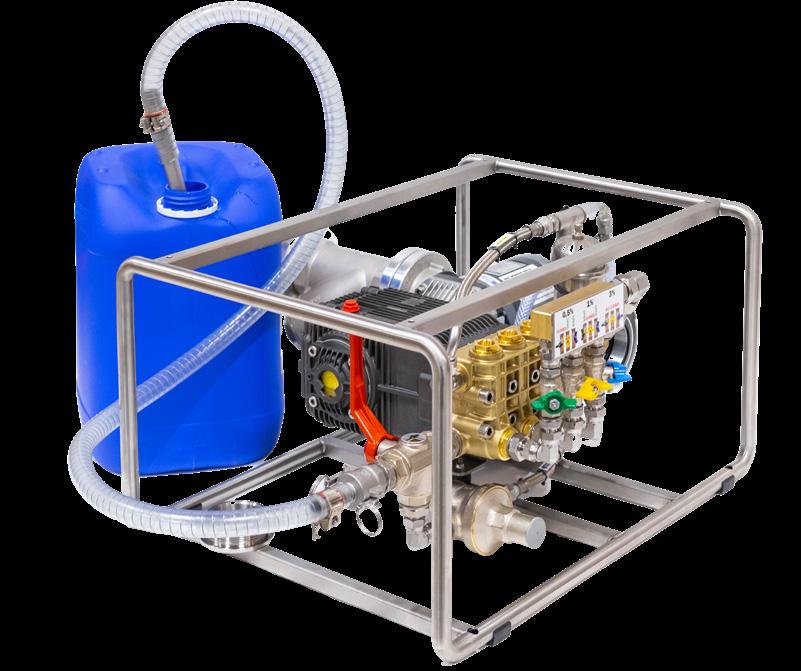
FIREMIKS Mobile unit for Fire Brigades
With a FIREMIKS the firefighters get a flexible resource, easy to adapt to different firefighting situations. FIREMIKS works within a wide pressure and flow range giving a precise and steady dosing rate.
RELIABLE MECHANICAL PROPORTIONER, DRIVEN BY THE WATER FLOW ONLY, NO NEED FOR PRESSURE BALANCING OR CALIBRATION
ECONOMICAL AND ENVIRONMENTALLY BENEFICIAL TESTING WITH A DOSING RETURN VALVE AND TWO SEPARATE FLOW METERS


Don’t let fire steal your building’s strength. Brett Shinn, Fire Testing Manager, Thomas Bell-Wright International Consultants, uncovers the power of intumescent coatings and how vital achieving the necessary thickness of these coatings is
Imagine a fire erupting in a building, but the heat barely penetrates or affects the building’s supporting structural steel beams and columns. One way this firefighting feat is achieved is by protective intumescent coatings applied to the steel, and these innovative paints are the secret weapon in passive fire protection designed to shield steel, wood and other materials when flames come knocking.
Intumescent coatings, in concept, work quite simply: upon exposure to heat, the paint undergoes a dramatic transformation and expands into a thick, insulating char. This char acts as a barrier, significantly delaying the time it takes for the fire to weaken the structure, allowing occupants precious time to evacuate and giving firefighters a fighting chance to extinguish the blaze before any substantial loss of structure or property.
The coatings, quite impressively, can be applied to structural steel members as thin as 1mm, and as thick as required, depending on what may be understood as the thermal mass of the member, and a required thickness is determined through fire-testing.
Understandably, however, this relationship between applied thickness and section factor must be well understood during the design, testing, specification and end-use phases.
Going back to our original building fire, let’s consider a building made primarily of steel beams and columns which are protected with intumescent coatings. These members need protection which is a thickness of intumescent paint applied as a function of the section factor of the member. A section factor is, effectively, the thermal mass of a material and is the ratio of exposed area to the volume of the structural member. A lower section factor means there’s more volume and less surface area (i.e. a big, beefy section), so it’s harder to heat up and requires less protection. A high section factor means less volume and more surface area (i.e. a skinny section) and needs more protection.
Section factors and applied thicknesses may, however, be difficult to visualise. If we consider, for example, a jacket manufacturer for people instead of a paint manufacturer for steel, a considerate jacket maker would need to produce thick, insulated jackets for small people (i.e. people with high section factors) and rather thin jackets for stocky or larger people (i.e. people with low section factors). That is to say, a higher section factor means higher risk and higher protection.
Unfortunately, there’s no universal guide for paint thickness; most test data and information are R&D-based, and tightly held by companies as trade secrets. This, of course, presents a challenge but, fortunately, there are test standards and guides for how to actually test paint thickness to arrive at an optimal relationship between applied thickness and section factor. Additionally, while test information may not be publicly available, industry certification directories provide publicly available design tables
can point you in the right direction.
In a way, it’s really the same as the jacket manufacturer trying out their jacket thicknesses on various sizes of people to see what works for each combination.
Intumescent coatings offer a valuable tool in passive fire protection. By understanding the relationship between section factor and applied thickness, you can ensure these innovative paints provide the necessary protection for your building’s steelwork.

‘ a little planning goes a long way in ensuring your building’s structural integrity during a fire’
which specify a manufacturer’s required thickness for a given section factor, but for their product – and this information can be incredibly useful as reference material when starting your own intumescent testing process.
To explain testing, if we return to our original premise of paint thickness for a given section factor, we must obviously establish that relationship through testing – just as any other manufacturers have. This is, at its core, establishing a minimum and maximum section factor range and a minimum and maximum applied thickness range which one may ever sell in the market, then testing those ranges over a matrix to cover everything in between. It sounds complex, but your local certification body and testing house
While navigating test data and industry certifications can seem complex, local certification bodies and testing houses can be invaluable partners in guiding you towards the optimal coating solution for your specific project. By working with qualified professionals and following established practices, you can ensure the right level of protection for your building. Remember, a little planning goes a long way in ensuring your building’s structural integrity during a fire, giving occupants precious time to evacuate and firefighters the opportunity to extinguish the blaze.
Intumescent coatings are a testament to fire protection’s constant evolution.
These innovative paints offer a lightweight, yet highly effective solution for safeguarding a building’s structural integrity during a fire. By understanding the crucial relationship between a structural member’s section factor and the applied thickness of the coating, you can ensure your building’s steelwork receives the necessary protection.
Looking ahead, the future of intumescent coatings is brimming with promise. Research and development in this field are constantly pushing the boundaries of performance and efficiency. We can expect to see even thinner yet more effective coatings emerge, alongside advancements in application methods and environmental sustainability.
Ultimately, by embracing innovative solutions like coatings, we can create safer and more fire-resistant buildings. This translates to peace of mind for occupants, precious time for evacuation during emergencies, and a fighting chance for firefighters to extinguish blazes before significant structural damage occurs. As fire safety technology continues to evolve, intumescent coatings remain a cornerstone of passive fire protection, offering a crucial line of defence against the devastating effects of fire.
There is certainly a lot to unpackage about intumescent, or other, structural member protection – be it from the point of a protection manufacturer entering the market, someone specifying or purchasing what’s specified for a project, or a testing and certification body working on a test plan – and it can be quite difficult to find someone to clearly explain all the nuances. bell-wright.com


Reacton Fire Suppression are proud to announce they have received a world’s first in Fire Suppression innovation, with UL Listing to UL 2166 for Direct (DLP) Technology on both CE & DOT variants in our Clean Agent Automatic Fire Suppression Systems.
This certification is the latest step in an on-going initiative of global product certification. We strive to develop globally approved products to the highest standards, demonstrating our commitment to superior innovation and quality.
Having a system UL listed against the UL 2166 standard for Halocarbon Clean Agent Extinguishing System Units provides our product with the world’s most recognised and adopted approval for Clean Agent systems. It’s been commonplace for indirect and total flood systems to have UL 2166 listing for some time but Reacton Fire Suppression are now the first company who have successfully developed this for Direct technology. This has been as a result of huge innovation and demanding testing required to prove the technology to the rigorous UL 2166 standard.

previously only accessible by other systems. What this now offers is a globally recognised and well adopted fire test that can be applied to the Direct technology, giving you peace of mind that the product has gone through the most demanding of independent tests and passed.

Reacton have now had their portfolio of pre-engineered products officially tested and certified for the applications
UL 2166 not only allows the Direct systems to be applied to larger volumes than current systems, but it also satisfies the requirements of NFPA 2001 and has performance, construction and operational tests that much larger systems have to endure. This is a massive step forward in showcasing that Detection Tube systems from Reacton not only ensure the safety and reliability of your high value assets but now offer an accessible and approved alternative technology.
With the Reacton Fire Suppression Direct (DLP) Technology system you can protect your critical assets with a cost-effective solution, opening up a high level of protection backed by a globally recognised certification. Reduced insurance premiums are readily available with this Direct technology, contributing to your overall financial savings. These units are typically used for total
flooding of enclosed rooms or structures. The halocarbon agents used in these systems are non-conductive, leaving no residue, making them safe for use in environments containing sensitive equipment. This includes applications such as electrical panels & enclosures, server cabinets, telecommunications, wind turbines, CNC machines and fume cupboards.
Clean Agents are the leading choice for automatic fire suppression when rapid protection & zero clean-up is required for your sensitive equipment. Reacton’s Clean Agent range consists of Reacton 1230 (FK-5-1-12) fire protection fluid and FM-200™ waterless fire suppressant from Chemours™.
Reacton Fire Suppression is a global manufacturer of Fire Detection and Suppression Systems and with offices in the UK, Dubai UAE and Arizona USA, we have you covered.
Protecting your future, today. For supply enquires or for more information please contact us today.
info@reactonfire.com +971 483 572 23 reactonfire.com
Reacton are proud to announce that we have received a world’s first in Fire Suppression innovation, with UL Listing to UL 2166 for Direct (DLP) Technology on both CE & DOT variants utilising Reacton 1230 in our Clean Agent Automatic Fire Suppression Systems.




As The Kingdom of Saudi Arabia continues its remarkable growth, the evolution and scaling of emergency response strategies, particularly within the fire and rescue service (FRS), must become more assertive. This is essential to effectively mitigate region-specific challenges and ensure full preparedness for any emergencies. The Kingdom’s unique geographical and demographic conditions demand a collaborative approach to emergency management, with private-sector
organisations like Serco playing a pivotal role.
By identifying and addressing the unique challenges faced by emergency services in the region and harnessing our collective expertise and global sector knowledge, we can enhance the Kingdom’s crisis response capabilities and redefine safety standards across the region, shaping a safer and more resilient future for the Kingdom. This forward-thinking approach sets the stage for addressing the following specific challenges.
Saudi Arabia covers around 2.15 million square kilometres, making it one of the world’s largest nations. This vast geography significantly impacts the speed and efficiency of emergency response. Even with the extensive expansion of transport infrastructure underway, the long distances between cities and remote areas make pre-emptive measures and strong local partnerships indispensable.
Establishing agreements, or more formal memoranda of understanding (MoUs) between the Saudi Government and private-sector organisations will help to ensure that specialist resources are available for specific risks, such as protracted incidents and large-scale events. This collaboration helps streamline the
deployment of the right equipment and expertise at the right time.
With a rapidly growing population and expanding cities, crisis preparedness must address a wider range of incidents. As urban centres grow and infrastructure scales up, fire and rescue teams need comprehensive training to ensure readiness for more frequent and severe emergencies. Private-sector expertise and inter-agency collaboration will be vital to support this preparedness.
In remote areas, where professional fire and rescue service teams may face delays in reaching an emergency, the role of community response is invaluable. Is it time then to consider training community members in these regions as volunteer fire and rescue personnel? This approach has yielded significant benefits in other countries, for example in Australia where the Country Fire Authority utilises volunteers to support with bushfires and rural emergencies, enhancing local resilience and enabling rapid initial response.
Such preparedness is crucial in ensuring that communities are not solely reliant on distant professional help but are equipped to manage initial response efforts effectively. This model could be tailored to the specific needs and challenges of Saudi Arabia, leveraging the strong community ties and regional knowledge that are characteristic of the Kingdom.
A unified language across agencies is essential for reducing confusion and delays, ensuring seamless coordination critical to effective fire and rescue service operations. Although frameworks like the Incident Command System (ICS) and National Incident Management System (NIMS) standardise communication, they should be customised to fit KSA’s cultural and linguistic landscape. Moreover, they need to be aligned with both government and private sector emergency services, which are crucial participants in such events.
This requirement extends beyond just emergency services workers to include personnel at any high-risk sites. Integrating these standards into both
private and government business continuity and crisis planning enhances overall effectiveness. Roles, responsibilities, communications and alert systems must be benchmarked and aligned with the operational context of the country. What works in America, or any other country, may not be entirely suitable for KSA, underscoring the need for a tailored approach to incident management systems.
While many existing frameworks in emergency services are based on North American standards, these often fail to align with the unique challenges faced by responders in Saudi Arabia. Adhering solely to these standards may also restrict the size of the potential international talent pool, which is crucial for supporting the Kingdom’s ambitious growth objectives. There is a pressing need to develop Saudi-specific certifications and training programmes. This approach will also address the gaps in current practices due to the environmental, cultural and infrastructural factors unique to the Kingdom, but also make Saudi Arabia more attractive to the best international experts in emergency response to impart world-leading knowledge and skills into the national workforce. Thus, supporting the national visions of KSA and impacting a better future for all.
enhancing situational awareness and operational capabilities.
The integration of the Internet of Things (IoT) has further transformed emergency response strategies. In real-time, smart sensors and connected devices can monitor various environmental factors such as temperature, humidity and air quality. By analysing this data, IoT systems can detect anomalies that may indicate fire

risks, allowing for early intervention. Digital twinning technology also plays a critical role in predictive analytics and scenario planning. By creating virtual models of cities, sites and high-risk assets, FRS teams can conduct detailed consequence analysis for severe weather events, fires, attacks and other emergencies. These digital twins provide a dynamic, virtual representation of physical objects or systems, enabling emergency services to simulate various
‘Advanced early detection systems enable real-time identification of fire hotspots, crucial for immediate response even in remote desert areas’
In the face of diverse and challenging landscapes, Saudi Arabia’s Fire and Rescue Service teams increasingly rely on advanced communication technologies to manage threats such as wildland fires and flooding. Advanced early detection systems, such as satellite-based thermal imaging, enable real-time identification of fire hotspots, crucial for immediate response even in remote desert areas. Furthermore, drones equipped with high-resolution cameras and thermal sensors have revolutionised the way FRS teams assess and respond to both fire and flood emergencies. These drones provide not only aerial views of inaccessible areas but can also deliver emergency supplies, significantly
scenarios and assess potential impacts—thus refining risk mitigation strategies and prioritising response measures accordingly.
In conclusion, achieving comprehensive emergency preparedness in Saudi Arabia requires overcoming these unique challenges through collaboration, adapting standardised frameworks for the region, investing in innovation and developing region-specific FRS training. Private-sector organisations like Serco, with global experience and the resources to share that knowledge to drive local ownership, will play a crucial role in supporting the Kingdom’s agencies to ensure the safety and resilience of the region. serco.com/me


Len Swantek, Director of Global Regulatory Compliance at Victaulic, takes a closer look at the CE mark and the regulatory process that mandates this mark be in place in accordance with specific Regulations and Directives
We all see them every day on product labels and packaging; the CE safety mark prominently displayed on thousands of items from consumer electronics and children’s toys to fire extinguishers, power tools and work gloves, just to name a few. But what does this mark mean and why is it displayed on so many different products?
First and foremost, ‘CE’ stands for “Conformité Européenne”, French for European conformity. Equally important to clarify is that CE is not an ‘Approval’. The CE mark serves as a globally recognised symbol for product safety and has become one of the most sought-after designations signifying that a product or system has undergone conformity assessments by either the manufacturer and/or an independent third-party authority in accordance with the governing EU laws and regulations for the safety, health and environmental impact of said products and systems. While some claim the mark should bolster confidence, the CE mark is largely unrecognised and certainly not well understood in most global consumer
markets. However, across many commercial and heavy industries, including fire safety, the CE mark is a mandatory regulatory requirement that can represent compliance with more than one regulation or directive for the same product on which it is applied. It is important to note, that there are fundamental differences in the method for establishing compliance in accordance with the governing Laws, Regulations or Directives, as well as how the CE mark is displayed on the finished product. So, let’s begin with fire protection.
The Construction Products Regulation, CPR (formerly known as the Construction Products Directive), sets forth the Essential Safety Requirements for a wide range of construction products including fire protection components and systems. The CPR is the governing regulation in the EU for safety and performance evaluations of fire safety products in accordance with the Regulation’s detailed requirements. The process involves a conformity

assessment conducted by a registered Notified Body or Technical Assessment Body (TAB) in accordance with harmonised European standards. As an example, fire safety sprinklers must first undergo testing and certification by regional authorities like UL LLC, FM Approvals, VdS Schadenverhütung GmbH (VdS) or The Loss Prevention Certification Board, Ltd. (LPCB), in accordance with existing codes and agency performance standards for these types of products. When the initial Certification has been granted, these same Notified Bodies or TABs are then able to conduct additional assessments in accordance with the CPR and BS EN 12259-1 that also address specific performance and safety protocols. Upon successful completion of this work, the Notified Body will conduct an on-site factory audit to verify all manufacturing processes and quality systems are in place and yielding products conforming to the Essential Safety Requirements of the CPR. The Notified Body then issues an EC Certificate of Constancy of Performance to the manufacturer for specific production locations that have been successfully surveyed. This document is critically important to enable the sprinkler manufacturer to prepare a Declaration of Performance in accordance with Annex Z of the CPR and apply the
CE mark to the finished product at the end of their manufacturing and testing process.
The Notified Body’s four-digit Registration Number is also displayed beneath the CE mark to signify that particular agency conducted the conformity assessment and issued the EC Certificate.
While there are well-established harmonised European standards for a wide range of fire safety products and systems (specifically the BS EN 12259 series), manufacturers may encounter a situation where the product or technology they are developing is not addressed in an existing harmonised standard. For some time, manufacturers of fire safety products and systems were limited on the use of the CE safety mark due to the lack of harmonised acceptance criteria that could be utilised by the various Notified Bodies beyond their own product performance standards. Fortunately, in 2013 an alternate process was implemented by the European Organization for Technical Approvals –EOTA, that opened the pathway to certification and placement of the CE mark on fire safety products and components. Having said this, the evaluation and certification process can be quite involved. Since much of the technical work in the
EOTA process is based on the performance evaluations previously conducted on the product, initiating the process with a number of existing agency certifications in place is a critically important first step. The process begins with the manufacturer filing a formal request for a European Technical Assessment (ETA) with the TAB. This request also includes technical information and test reports as well as factory production information where future audits will occur. The TAB and manufacturer work closely to develop the scope of certifications including the relevant product models, sizes, performance ratings and any special features or characteristics that are considered important for the final certification. Once the scope and final work programme is defined, EOTA initiates a consultation and review of the information provided by the manufacturer with its member TABs. This can be a particularly long exercise depending on the TAB’s level of expertise with the particular product or technology the manufacturer has submitted. When EOTA’s TABs have provided their input, the final work programme can be finalised and drafting of the European Assessment Document (EAD) can begin. The EAD is the harmonised technical specification for the product and becomes the foundation for the ETA.
All of these steps can easily take nine to 12 months to complete, especially considering the time required for the various TABs to complete their reviews as well as that of the European Commission (EC), which follows. Once the EAD is adopted by the EC and cited in the Official Journal of the European Union, the final European Technical Assessment (ETA) is prepared by the TAB and issued to the manufacturer along with the Certificate of Constancy of Performance. It is this Certificate, which again enables the manufacturer to issue a Declaration of Performance and apply the CE safety mark to their finished products. It is important to note here; that without the data from previous technical evaluations and product testing to existing agency

‘The CE mark serves as a globally recognised symbol for product safety.’
standards, the TAB would need to establish a set of criteria for the manufacturer’s product to be evaluated against. This would obviously result in additional time and expense and could pose significant delays to market. Please note, this summary provides a condensed overview of these procedures. The EOTA website at www.eota.eu should be consulted for specific details and requirements along with a complete list of EOTA TABs who provide such evaluation and certification services.
When a single product complies with more than one Directive, application of the CE mark and the accompanying Declarations becomes a bit more complicated. For example, a quarter-turn ball valve designed for use in both fire protection systems and commercial piping systems may comply with both the Construction Products Regulation (CPR) and the Pressure Equipment Directive (PED). The CE mark for both standards is visually the same, and while the conformity assessments may be handled by two different Notified Bodies, the governing rules would prevent the use of two CE marks on the same valve. In such cases, the manufacturer must determine the critical markets where the valve will be used.
In the case of the CPR, regardless of the method by which the valve was assessed, the CE mark will be accompanied by the TAB’s four-digit registration number, and the manufacturer’s Declaration of Performance is specific and unique to the CPR requirements. In the case of the PED, if the valve can be used in Risk Category II or higher service applications (which by definition requires the assessment by a registered Notified Body), the CE mark will be accompanied by that Notified Body’s four-digit registration number. The Declaration of Conformity for this valve is also specific and unique to the PED requirements. Since the CE mark for one Directive does not necessarily take precedence over another, manufacturers will often maintain two separate identification tags for the same product which are controlled by part numbers for each ID tag. One tag is designed for the fire protection market under the rules of the CPR and is CE marked under those rules, while the other is designed for commercial pressure piping systems under the rules of the PED and is CE marked under those rules. Where applicable and per the requirements
in each Directive, the CE mark is also applied to product packaging and labelling.
While this article is mainly focused on the fire safety industry, it is important to note that other European Regulations and Directives also incorporate the CE mark to signify compliance to their safety protocols. The table below illustrates some examples of these Regulations and Directives.
At Victaulic, our compliance initiatives involving the application of the CE safety mark include fire protection sprinklers, valves, and related devices under the Construction Products Regulation (CPR), commercial valves, suction diffusers, and high-pressure manifolds under the Pressure Equipment Directive (PED), tool safety under the Machinery Directive, as well as electrical and electronic controls under the Electromagnetic Compatibility Directive (EMC) and the Low Voltage Directive (LVD). Our Global Regulatory staff manages over 1,200 Declarations of Conformity including multiple language versions in support of global customer requirements for product safety compliance documentation and CE marking of product, packaging and labelling.
victaulic.com
Construction Products Regulation – CPR No. EU 305/2011
Electromagnetic Compatibility Directive – EMC No. 2014/30/EU
Equipment Used in Explosive Atmospheres – ATEX No. 2014/34/EU
Low Voltage Directive – LVD No. 2014/35/EU
Machinery Directive – MD No. 2006/42/EC
Measuring Instruments Directive – MID No. 2014/32/EU
Medical Devices Regulation – MDR No. EU 2017/745
Personal Protective Equipment Directive – PPE No. EU 2016/425
Pressure Equipment Directive – PED No. 2014/68/EU
Toy Safety Directive No. 2009/48/EC


Peter Stephenson, Director – Fire Safety Division Middle East, Hydrock now Stantec, explores automatic fire detection systems and the potential for smarter systems for a safer future
Fire has long threatened lives and property, what has changed is the approach we can take to fire detection. While traditional alarms exist, challenges like human error and nuisance alarms will prevail, impacting on their efficacy. Thankfully, advancements in automatic fire detection systems offer a brighter future. These intelligent systems promise a significant leap forward in fire safety and prevention.
The products of combustion produced during a fire scenario are primary contributing factors to fatalities along with the associated property damage and economic/environmental consequences. To mitigate their impact, the use of innovative and effective early fire and smoke detection/warning technologies is essential. One of the key challenges facing fire detection technology is the drive to decrease unwanted fire alarms, improve sensitivity and dynamic responsiveness, and provide protection for costly and complicated installations.
Enhancements in fire detection focus on the continuous monitoring of variables
such as temperature, flame, gaseous content and smoke. These variables come with respective benefits and drawbacks, measuring standards and parameter measurement spans. Current research directions and challenges related to fire detection technology and future perspectives on fabricating advanced fire sensors are key areas for innovation.
When considering fire safety requirements and objectives, the human interface with the fire detection system must be fully considered. This includes the type of risk profile for the occupancy type, whether persons are awake or asleep, their status of alertness, familiarity with the premises, and the type of asset being protected considering its value and importance to the community.
The risk profile can be used for various building types to assess fire safety requirements based on the occupancy characteristics and fire growth rate.
This typically includes:
■ Occupancy characteristics: Categorisation of a building by occupancy type and use (e.g., residential, office, assembly).
■ Fire growth rates: Indicators of how quickly a fire might develop in the building.
■ Risk profiles: Combinations of occupancy characteristics and fire growth rates guide the minimum fire safety measures needed for the building.
This approach provides a flexible, risk-based method to fire safety, influencing the fire safety measures and the type of fire detection systems appropriate for the risk.
The landscape of fire detection technologies has seen remarkable advancements, particularly in gas, flame and smoke detection. These innovations are driven by the need for more reliable, faster and accurate fire detection systems to mitigate the severe consequences of fires.
Gas
Gas detection is crucial for identifying hazardous environments before they lead to fires or explosions. Recent advancements in this area include the integration of advanced sensors and IoT (Internet of Things) capabilities. Modern gas detectors can now monitor multiple gases simultaneously and offer real-time data transmission to centralised monitoring systems.
As the use of hydrogen as an energy source becomes more prevalent, suitable means for hydrogen detection have become a key area for innovation. These detectors enhance safety by providing early warnings at approximately 50 per cent of the lower explosive limit (LEL) of hydrogen, thus preventing potential explosions in industrial settings.
Gases emitted at every stage of combustion present a challenge for designers to identify unique gas characteristics that can reliably detect fires. The density of CO, CO2, H2, O2, and smoke produced by wood fires, cotton fires, plastic fires, liquid n-heptane and spirit fires have been observed in various
Despite these advancements, fire detection technology still faces challenges such as reducing false alarms, improving the dynamic response of sensors, and ensuring reliable performance in diverse environmental conditions. Future research is expected to focus on enhancing the robustness of fire detection systems, integrating more advanced sensor technologies and further developing AI algorithms for better accuracy and faster response times.
The ongoing development in fire detection technologies aims to create systems that are not only more sensitive and accurate but also more reliable and easier to integrate into existing infrastructure. These technologies are poised to significantly improve fire safety and prevention measures across various industries by leveraging the latest advancements in sensors, AI and IoT.
research projects. CO is the best of the four warning gases, appearing in all six types of fires. CO fire sensors that work at room temperature require low power compared to traditional detectors and can protect against smouldering fires, including the combustion of organic materials where substantial amounts of carbon dioxide are emitted early in the combustion process.
Flame detection technologies
Flame detection technologies have also seen significant improvements. State-of-the-art flame detectors use high-technology multi-spectrum triple IR infrared technology to detect hydrocarbon and non-hydrocarbon hydrogen fires using sophisticated software algorithms and dual microprocessors. This ensures the highest fire detection performance combined with optimal false alarm rejection. This technology is highly effective even in challenging conditions like rain, fog and
smoke, providing critical time to evacuate personnel or activate suppression systems.
Another innovation in flame detection includes the use of multi-spectrum, electro-optical sensors that can identify various types of flames across different environments. These detectors are designed to minimise false alarms while ensuring high sensitivity to actual fire events.
Smoke detection technologies
Smoke detection has evolved from simple photoelectric or ionization sensors to more complex systems that use multiple criteria and advanced algorithms. Modern smoke detectors often incorporate both smoke and heat sensors, and some also include gas detection capabilities to provide a more comprehensive fire detection system.
A key trend in smoke detection is the use of aspirating smoke detectors, where the detectors continuously sample air through a network of pipes, providing early warning even in large, open areas where conventional smoke detectors might not be effective.
Machine learning and artificial intelligence are playing increasingly important roles in fire detection technologies. These systems can analyse data from various sensors to identify patterns that indicate the presence of fire, thereby reducing false alarms and improving detection accuracy. For example, AI algorithms can process data from smoke, heat and gas sensors to distinguish between actual fire events and benign sources of smoke or heat, such as cooking fumes or sunlight. Recent research has focused on improving the datasets used to train these AI models, addressing issues such as class imbalance and misclassification. The application of transfer learning and vision transformers is also being explored to enhance the performance of fire detection systems. stantec.com
TALKING ABOUT…


Markus Mueller, Director of Sales Management at Securiton International and Founder of Securiton’s Vertical Application Management section, explores in closer detail very early warning fire detection
Very Early Warning Fire Detection (VEWFD) is an approach to fire safety that aims to detect fires at the earliest possible stage. By doing so, it allows more time for an orderly evacuation of people, minimises the damage a fire will do and goes a long way to ensuring that businesses can survive a fire on their premises.
There are different definitions, but what I like to focus on is a risk-based approach to fire detection.
The term Very Early Warning Fire Detection is used by the NFPA and jurisdictions which are based on NFPA rules to define a certain prescribed level of early detection. It is the equivalent of Class A detection in the EN nomenclature, and it essentially defines VEWFD based on detection power over a given area. However, what we are often looking at in reality is an approach that goes beyond the regulations, and seeks to detect any
fire early enough that it can be dealt with before it gets out of control and causes significant damage.
To do this, instead of installing detectors based on what is legally prescribed, a clear assessment of potential risks is made and a detection system is designed according to the required performance parameters (Performance-based Design).
Why do we need VEWFD?
Perhaps surprisingly, the answer is often not because regulations aren’t good enough – although sometimes this is arguably the case. Regulations in pretty much all jurisdictions are generally focused on protecting human life, and rightly so. However, this often leaves property and businesses vulnerable when a purely regulatory (Deem-to-Satisfy) approach to fire detection is taken.
Of course, early warning is also very desirable when it comes to evacuating large numbers of people, especially when these people are members of the public
who will not have any prior knowledge of building layouts or evacuation plans. In these cases – for example, transport hubs such as underground or railway stations – VEWFD may be prescribed by regulations, or it may simply be a good idea to allow as much time as possible for an orderly and calm evacuation.
More often, though, we’re talking about protecting assets where there are few or no people present and evacuation is not complicated. Here, VEWFD is usually needed to protect the business and safeguard against knock-on effects that go well beyond what can be insured against.
to standard detection methods?
Standard detection generally involves point-type smoke detectors or, in some cases, heat detection. For VEWFD we usually use aspirating smoke detectors which are both more sensitive than point detectors, and also actively suck smoke from the room for sampling. How much earlier they detect a fire depends on the development of the fire itself, but of course that is the key parameter here: with VEWFD, we design the system to detect fire at an incipient stage. At this stage, a fire can easily be tackled and extinguished before it does significant damage.
So rather than looking at time, I’d say you detect much earlier on the development curve of a fire. This is a very considerable gain because once flames start to develop, that curve swings upwards alarmingly and it’s then very difficult to bring it back under control.
It sounds like the VEWFD approach requires having firefighting staff on site. Is that always realistic?
It doesn’t require it – simply getting the fire brigade moving towards the site a few minutes earlier can easily make the difference between a small incident and a large, destructive blaze. But ideally, we do advocate for a progressive response where, typically, site security are trained to locate and verify the blaze following an early alert. A typical progressive response goes:
■ Verify
■ Fight
■ Get help
■ Evacuate
■ Escape
Our SecuriFire ASD range offers five stages of alert and alarm that correlate to these stages. With standard level detection, however, you are typically getting a first alarm at stage 4 – which only gives time to evacuate.
Presumably, the drawback is that this costs more. Is it difficult to get businesses to subscribe to the VEWFD approach?
Whether it costs more depends on the situation, but often that is the case, at least in terms of up-front costs of installing the detection system. Take-up varies considerably from industry to industry. In the data centre industry, for example, VEWFD is widely adopted because continuity of service is a major selling point and a contractual issue whereby an operator is financially penalised if the system is offline.
A destructive fire, or even a protracted fire alarm and firefighting effort, will put the centre offline, so they seek to detect smoke at very low levels. If it is detected, then a swift intervention can mean shutting down one rack or row and tackling it manually. Even affected servers can hopefully be back online quickly. Other industries are slower to embrace VEWFD but part of our work is to advocate for it. In particular, our Design Guides seek to give fire safety professionals the arguments they need to persuade business
owners that VEWFD is potentially critical for their enterprise. People will say that their warehouse or factory is insured, but I always ask: are your supply contracts insured? Is your reputation for reliability insured? What will your clients do while you are re-building?
What other industries in the Middle East would benefit from VEWFD?
Warehousing is one area we talk about, especially as aspirated smoke detection is a cost-effective choice in such large spaces. Modern warehouses are very
points on belt conveyors – whether this is VEWFD is perhaps open to debate, but it’s certainly a Performance-based Design against a specific risk.
Is your Design Guide library available to everyone, or do you have to be a Securiton customer or affiliate?
All the Design Guides and application Case Studies are available to everyone from the Industries and Applications section of our website. They are free, you just need to register using your email address. Of course, we give detailed

large and the supply-chain implications of losing one can be huge, leaving many factories or construction sites standing idle.
Another area, which we have published a whole series of Design Guides and Case Studies for, is energy. Energy supply is critical to life and economies, and grids often run with little spare capacity.
Are there any industries or places where VEWFD cannot be implemented?
It’s certainly more straightforward to implement in areas where there shouldn’t be any smoke, such as data centres, because you are always balancing sensitivity against reliability. Therefore, early alerts in a smoky factory or even somewhere where car exhaust fumes are present will result in many nuisance alarms.
In our Design Guide library, we do have examples of early detection systems in such environments, for example using heat detector cables at known friction
“It’s certainly more straightforward to implement in areas where there shouldn’t be any smoke, such as data centres, because you are always balancing sensitivity against reliability.”
guidelines for installing our Securiton detection systems, so we hope people will be inspired to use them. But much of the analysis would be relevant to other high-performance ASD systems, for example. securiton.com.
Markus Mueller is a passionate advocate of early warning fire detection, special detection methods and Performance-based Design. He has overseen the creation of a Design Guide library at Securiton offering detailed methods for risk assessment and suitable detection in a variety of challenging fire detection applications.


Effectively protecting people and property from fire can be complex. Advanced simplifies the challenge without compromising on safety.

Whether you need powerful networking, smoke control and fire audio for large-scale UL projects; extinguishing control and fire system redundancy for critical sites; or fast, fuss-free EN solutions for smaller, wireless installations, Advanced brings you fire safety peace of mind.

Sasi Kumar, Commercial Manager at Advanced, explains any loss of fire protection through equipment failure can have financial, technical and reputational consequences
The problem of equpiment failure is heightened in high-risk and complex sites, where system downtime can severely compromise safety, contravene regulations and lead to major losses of money, time and confidence in the fire system.
In these settings, a redundant fire system is the only real option to achieve an acceptable level of protection and business continuity.
However, not all redundant systems are created equal, so it’s important to understand the levels of risk at stake and to choose and plan your redundant system accordingly.
level of redundancy does the system offer?
Some systems provide redundancy via a redundant microprocessor on the motherboard. If a panel or processor stops working, this twin, identically programmed device is ready to take over. However, this approach does not offer true redundancy.
Other manufacturers take a different approach by using a full dual redundant model. In these systems, a redundant fire alarm panel operates in ‘hot standby’ mode. Whenever a system fault is detected, all field wiring circuits automatically change over to the redundant panel.
A true redundant specification consists of a redundant/backup display, backup network 485 port, internal PSU and mains supply backup.
This highly reliable and adaptable method, such as the one used by Advanced, ensures no loss of coverage or performance. It is ideally suited to premises where any aspect of fire system downtime is simply not an option.
Does the system allow you to control where and how you apply redundant control?
It is worth ensuring that the system you choose can be programmed and adapted to meet the varying needs of the areas where redundant operation is specified. It should ideally offer a range of automatic and manual control options too, so that you can fine-tune your redundant system design.
Advanced’s redundant control systems are programmed using intuitive software, making configuration easy. In this way, you can choose to protect only the most vulnerable areas of your system, whilst maintaining system integrity at all times.
Where a need for redundant control arises in established sites, it’s important to choose a system that is easy to retrofit.
Advanced’s redundant controllers can be built into specially designed fire panels or supplied as standalone boxed units giving you system design flexibility. A unique user-friendly key switch allows simple control of automatic, main and redundant operation.
Choosing the right redundant fire system for your site can be a complex business. Selecting a tried and tested supplier with a proven track record helps ensure you invest in a system that affords complete long-term protection and that all-important peace of mind.
The redundancy solution from Advanced is a modular concept which can be used with Axis EN, the EN54 fire alarm system approved by FM, and Axis AX, the UL 10th edition-listed fire alarm system.

M Station in Dubai is the United Arab Emirates’ largest power and desalination plant and plays a critical role in the infrastructure of the region. It can produce over 2 megawatts of electricity and 140 million imperial gallons of desalinated water per day – around 20 percent of Dubai’s current requirements.
Advanced’s Axis AX fire system technology provides fire detection, alarm and control for M Station.
The 89-node fire panel network includes 46 dual redundant panels in 2m high rack enclosures which means in the unlikely event one panel fails, the other takes over operations automatically and with no user intervention.

Emirates Safety Laboratory (ESL) is a facility for undertaking products/ systems fire testing and conformity assessment body (CAB) certification
Strategically located in Al Warsan 3, Dubai, ESL is the pioneering government-controlled facility for fire testing and safety product certification services in the Middle East, North Africa, and Indian sub-continent regions.
Accredited by IAS, EIAC, and GAC, it tests 115 plus standards and product certification to more than 678 standards, serving as a crucial hub for regional fire safety. ESL’s unwavering commitment to global fire safety standards and regulations ensures that stakeholders can trust in the quality and reliability of its services.
In 2017, H.E. Abduljalil Al Blooki and Mr Ahmed Al Blooki Mawarid Holding Investment’s significant collaboration with the Directorate General of Dubai Civil Defence (DCD) was a milestone under the leadership of Lieutenant General Expert Rashid Thani Al Matrooshi and Major General Expert Ali Al Mutawa. This collaboration led to the establishment of Dubai’s first government-controlled facility, the Emirates Safety Laboratory, dedicated to fire testing and product certification services.
ESL’s growth and expansion have been remarkable, particularly in 2022, after the organisation was recognised as a testing and certification body on the UAE-approved list of companies,
laboratories, and expertise houses. This recognition is a testament to ESL’s unwavering commitment to fire safety in the UAE, GCC, the whole Middle East, and beyond, instilling confidence in its dedication and global impact.
With ambitions to be a leading testing, inspection, and certification (TIC) provider, ESL is making Dubai and the UAE a global hub for TIC services. Its collaboration with European entities, like UL Solutions in Europe (UL EU), offers regional-based manufacturers access to CE and UKCA marking for market entry into the European Union’s single market, further solidifying its global impact.
It has one of the most extensive facilities for undertaking products and fire safety systems testing and conformity assessment certification.
The laboratory employs more than 50 local and international technical specialists and experts who originate from the TIC, manufacturing, consulting, construction and government sectors. It also contributes a wealth of knowledge and fire and life safety experience to its customers.
What work does ESL do?
ESL is responsible for all fire and life safety products, construction materials,
interior finishes and furniture, including additional specialities like firefighting foam and some emergency response firefighting equipment.
The company is also working on Solar Panel testing and certification in collaboration with the DEWA lab in Dubai and developing plans with expert industry partners for a research project for EV batteries and vehicles.
ESL not only undertakes fire testing for the UAE but also assists customers with market access and entry to the whole of the Middle East, North Africa and South Asia. Its services empower clients to expand their reach and ensure their products meet international standards.
David Campbell, General Manager at ESL, explained: “We now operate across Europe and for British manufacturers. They are using our facility for product development testing or accessing these markets. We also do a lot of work for our competitor certification bodies.
“We’re also utilising a lot of the labs in Europe for the testing scope that we don’t undertake in our facility. So, we have many expert subcontract labs that we are working with to help deliver product conformance.”

Below:David Campbell, General Manager, ESL

The organisation is currently working on testing, inspecting and certifying bus engine compartment suppression systems.
Recently, the UAE government developed and regulated its own standard bus engine compartment suppression systems regulation. The Ministry of Industry and Advanced Technology (MoIAT) based its research and development primarily on European requirements and added various considerations due to the ME region’s different geographical and climatic conditions. These considerations encompassed what is expected to be normal wear and tear for a bus in this part of the world. Then, they looked at other standards in India and Singapore and revisited the UN standard to understand what they needed to accommodate the geography and the climatic differences.
It is now law in the UAE that all buses must be fitted with a compliant system notified to MoIAT by one of their approved third-party labs and certification bodies. ESL’s unique position as the only local, semi-governmental lab in the UAE capable of carrying out certain types of testing has set it apart. This exclusivity led to ESL being chosen as the sole testing, certification and notification body for
providing services related to the new bus engine compartment suppression systems regulation.
ESL is also working with new innovative curtainwall and cladding systems. According to David: “people, especially architects, are always pushing the design and engineering boundaries. So, there is a lot of testing required for the building envelopes, especially now that they’re embedding LED lighting systems within the panels and integrating with the cladding panel other facade and curtainwall materials such as building integrated photovoltaics (BIPV) for solar power generation.”
ESL has a significant collaboration with the Dubai Electricity and Water Authority (DEWA) laboratory to ensure solar panel compliance. This partnership underscores ESL’s commitment to safety and willingness to collaborate with other industry leaders to achieve its goals.
Solar panels require many safety and durability tests, such as electrical, wind, impact, abrasion (sand), water and fire. DEWA has an accredited lab that performs those tests, collaborating with ESL to provide the fire testing element and certification.
The two labs testing these competencies within the UAE mean that 100 per cent of all solar panel testing is delivered within the UAE, which David commented is very rare.
The company is also working to test and certify materials for hotels and service apartments for curtains, carpets, wallpaper, paint coatings, bed headboards and internal finishing cladding.
mesh detection systems for villas and exterior cladding and roofing systems and their material components.
What is something ESL is currently managing?
ESL is leading the way with Dubai’s DXB Specific UAE CoCs. To have any product registered in the Emirate of Dubai, a business must receive a Dubai-specific CoC, and this must be from ESL.
The process involves ESL reviewing the product documentation and checking that the testing evidence and the certificate comply with the UAE FLS Code product and material requirements before issuing the Dubai-specific CoC.
Another DCD initiative concerns the fire pumps in new Dubai construction projects. From January 1st, 2024, all new buildings in Dubai must have their fire pumps tested and verified by ESL before project completion and handover.
ESL visits each construction site, verifies the pumps’ performances following the NFPA guidance, and identifies any non-conformances so that contractors can rectify and correct them. Then, it issues test reports, verification certificates, and labels so that DCD inspectors can undertake the final acceptance inspection upon project completion.
“People, especially architects, are always pushing the boundaries. So, there is a lot of testing required”
“All of these have to have tests undertaken. The Dubai Civil Defence want all of these revalidated and checked, as safety is number one on their list of priorities. Besides the hotel and serviced apartments requirements, there are also certain product categories of compliance that we did have some trouble with within the UAE that just kept reoccurring,” David added.
This resulted in the DCD passing the requirements for the Emirate of Dubai from 1 January 2024, which requires specific materials to undergo mandatory testing with ESL.
While some materials, like fire doors and fire-rated ducts, must now be tested with ESL, they can be certified with other UAE-recognised certification bodies. Other products and systems must also be tested and certified with ESL, including wireless
These new 2024 requirements have witnessed a remarkable improvement in fire safety management and material compliance. They are contributing to Dubai’s journey to becoming one of the safest cities in the world.
Expanding into the Saudi Arabian market is a crucial focus for ESL as the region continues to innovate at an accelerated pace. David commented that during a trip to the US, Saudi Arabia was a topic of discussion at an event due to its technological and ecological advancements. He shared that the region’s commitment to safety made it an appealing prospect for expansion and that it will become remarkable in the future. emirateslaboratory.com

The aviation industry presents numerous fire hazards, with aircraft hangars being particularly vulnerable due to the presence of flammable fuels and the close proximity of ignition sources to the aircraft. Hangar structures are designed for housing and maintaining aircraft and storing high-value equipment. A fire in an aircraft hangar can be catastrophic, jeopardising both the aircraft and people working there. Having the right fire suppression systems in place is crucial.
For decades, foam fire suppression systems have been used in aircraft hangars to extinguish fires involving flammable and combustible liquids. During recent years there has been a growing focus on these systems due to heightened concerns from aviation operators, insurance companies, and the general public regarding potential life safety hazards associated with their use. While these systems effectively control fires, they are not without risks. Foam discharge can have serious consequences, including damage to high-value aircrafts and their systems, requiring expensive repair or replacement of components, as well as harm to other hangar equipment. An additional consequence is the rapid
discharge of foam, which can quickly fill the hangar and create a dangerous situation for people inside.
Another concern with foam systems is the negative environmental impact. Research has shown that certain firefighting foams used to extinguish fires in hangars contain extremely persistent and harmful chemicals. Firefighting foams rely on a group of synthetic chemicals known as PFAS, also called ‘forever chemicals’, as they are non-degradable. Studies have linked these chemicals to a significant risk of contaminating groundwater and causing long-term health problems, including various types of cancer.
In response to these issues, the 2022 edition of NFPA 409, the standard for aircraft hangars, introduced new alternative fire protection solutions for Group II aircraft hangars. This update has changed the foam requirements and has opened up the options for alternative fire suppression methods, allowing for safer and more environmentally-friendly solutions.
VID FIREKILL, a Danish company and member of the International Water Mist Association (IWMA), specialises in creating
advanced water-based fire protection solutions. With a strong focus on sustainability and environmentally-friendly solutions, VID FIREKILL is positioned as a frontrunner in the industry.
One of the unique solutions offered by VID FIREKILL is the low-pressure water mist system developed for the protection of aircraft hangars. The system features telescopic nozzles designed to suppress and mitigate fires and prevent damage to aircraft surfaces located directly above or adjacent to a fuel fire. “Unlike foambased firefighting systems, the FIREKILL™ system only uses water, effectively suppressing fires without filling the hangar with foam, thereby reducing the environmental impact and avoiding harm to people or high-value aircraft,” said Miguel Martinez CCO at VID FIREKILL.
Martinez explained further: “Lowpressure water mist systems are designed to fight fires by removing heat and oxygen. The small and fine water mist droplets have a larger surface area, allowing for better heat absorption. This enables the mist to suppress a larger fire area without using excessive water. In addition to being safe for people and the environment, the water mist system also allows for easy cleanup after activation, presents a cost-effective solution, and installation during retrofit works in old hangars.”
The FIREKILL™ system, which has undergone full-scale fire testing, is increasingly being used in large commercial and fighter jet hangars worldwide.
Holmatro has unveiled its shoring solution to address challenges in the world of emergency response and to offer a compact and versatile solution that ensures safety and efficiency.
OmniShore can adapt to various emergency situations with a system of six different struts. The solution can be configured to provide support for unstable structures, to deliver the safest method for bracing trench walls, and to enable efficient vehicle stabilisation and controlled lifting.
Mattijn de Graaf, R&D Director at Holmatro, said: “OmniShore is designed to be intuitive, versatile, and above all, safe. Our goal is that no one should be near a moving load, and every connection of struts and accessories is safe to use. Since rescue
Apollo Fire Detectors Ltd has announced its new product, the Soteria Tri-Sensor Detector. With a combination of dual optical sensing, a CO sensor and a heat thermistor, it is set to enhance fire detection accuracy by reducing false alarms.
Designed to address the demand for a reliable fire detection solution, Apollo Fire Detectors’ device boasts a triple detection ability which allows it to distinguish a real threat from a false one. Featuring an integrated isolator and


teams never know what scenario they will face, we designed OmniShore to be multifunctional, saving weight and space without compromising on performance.” holmatro.com
tri-coloured LED light, it allows for easy troubleshooting and maintenance work.
The Soteria Tri-Sensor Detector is compatible with various fire safety systems and can adapt to multiple environments, such as residential buildings or even prisons.
A Double-Knock verification feature requires two sensors to be activated to sound an alarm, which enables it to steer clear of false triggers. apollo-fire.co.uk
Teledyne Gas and Flame Detection’s OLCT 100-XP-MS range of flammable and toxic gas detectors will now feature Micro-Electromechanical Systems (MEMS) sensors.
With the ability to provide poison immunity and an extended operational lifespan, it aims to provide the highest level of precision for a host of ubiquitous combustible gases and gas mixtures.
Régis Prévost, Product Line Manager, Teledyne Gas and Flame Detection said: “Our flammable gas detector with thermal conductivity technology supported by MEMS sensor provides accurate, automatic readings without correction factors, along with automatic gas classification. Delivering unprecedented reliability and accuracy, the device reduces false alarms thanks to integral compensation for environmental parameters that include temperature, pressure and humidity.
“With its robust design and highly engineered construction, our low-maintenance OLCT100-XP-MS comes with a two-year warranty,” added Mr. Prévost. “Indeed, such is our confidence in this innovative flammable gas detector that users can expect many years of reliable and accurate operation in the most demanding industry applications.” teledynegasandflamedetection.com
DUBAI RESIDENTS BENEFIT FROM VELOX’S WIRELESS RANGE
ATEIS Middle East FZCO and VELOX Fire Detection and Alarm Systems have joined forces with Dubai Civil Defense to protect homes from fire with the introduction of a new Wireless Fire Alarm System.
After the government made it mandatory for all villa homeowners to install fire alarm systems in January 2024, VELOX, its parent company, ATEIS and the Dubai Civil Defense partnered to come up with a solution.
In June, the VELOX Fire Alarm System was announced, providing a no drill, no hassle approach to protecting homes.
With a 10-year battery life, it aims to provide
long-lasting peace of mind to residents in Dubai.
Also featuring a patented new technology called Thermal Optical Detection, the VELOX system can detect the heat of smoke and distinguish whether the source is false or true before triggering the alarm.
The TRA-approved 868-megahertz frequency is also compatible with other wireless devices in the home. With the option of incorporating carbon monoxide emission detection, the VELOX system aims to further enhance the safety of UAE residents. velox.ae
14 August
Secutech Vietnam SECC, Ho Chi Minh City
secutechvietnam.tw. messefrankfurt.com

3-7
Please check the event websites for the most up-to-date details as dates can change all the time.
Intersec
intersec-ksa.ae. messefrankfurt.com 8-9 October
30 October — 1 November
Secutech Thailand BITEC, Bangkok
secutechthailand.tw. messefrankfurt.com
Intersec Dubai World Trade Centre
intersec.ae. messefrankfurt.com
Responsible use of C6 Fluorine Chemistry and to providing its products to firefighting foam manufacturers.

As high hazard, flammable liquid emergencies are occurring world-wide, a recap is needed:
C6 AFFFs and AR-AFFFs remain the highest performing firefighting products for flammable liquids.
C6 Foam Concentrates are required for critical uses and major fire events.
C6 Foam Concentrates are proven and e ective with decades of successful extinguishments.
C6 Foam Concentrates should not be used for testing or training. In cases of fire events or accidental release, C6 Foam Concentrate run-o should be controlled and captured. Refer to Dynax SDSs for region specific product use and disposal information.
Universal EU PFAS ban proposal does not cover PFAS in Firefighting Foams.
The proposal for PFAS in Firefighting Foam includes a 10 year derogation for Seveso III sites.


