2
3
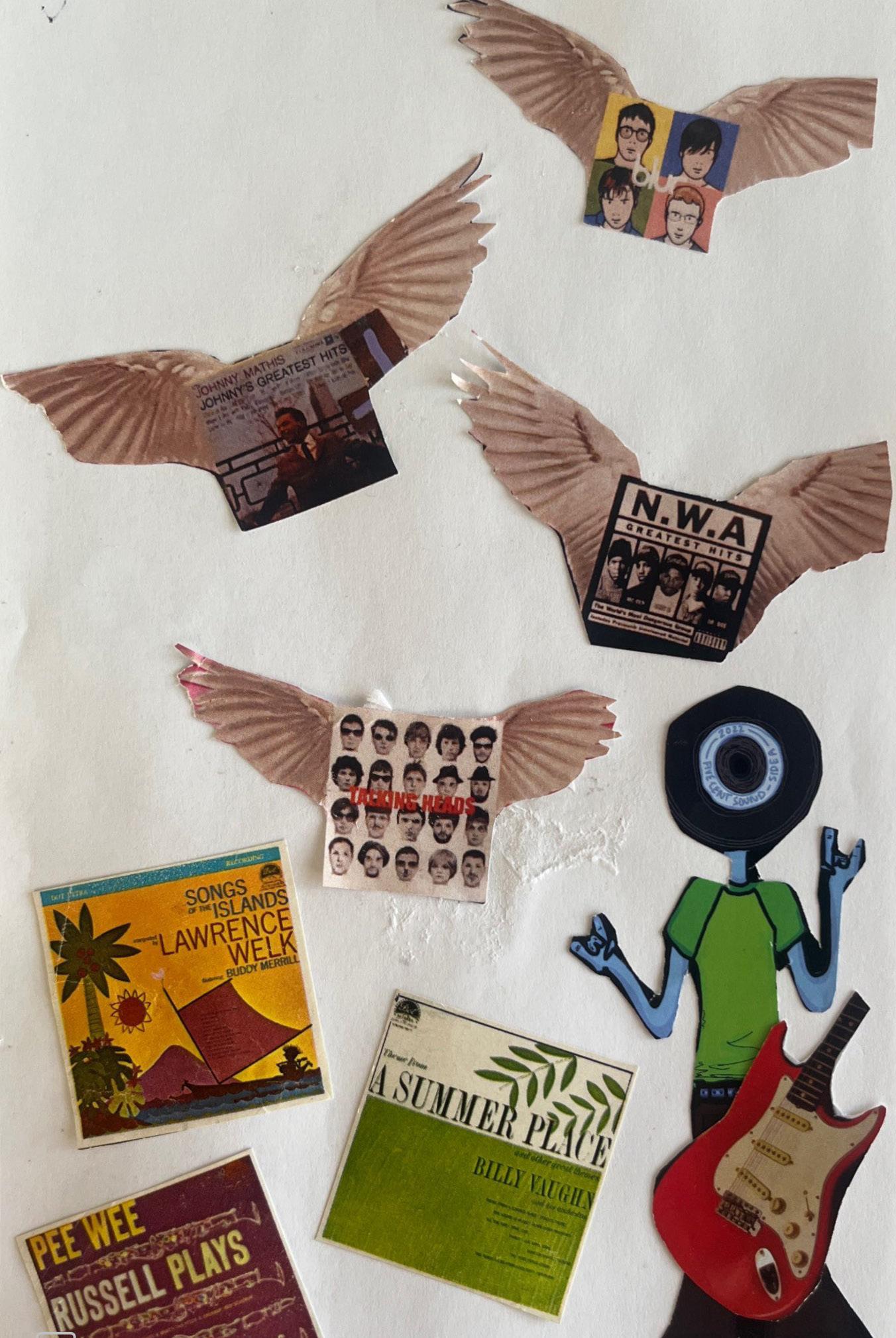
10 years of Five Cent Sound. The magnitude of this sentence is enough to make my whole body shudder. I mull over the ebbs and flows of this magazine since its inception, shouldering a fraction of its evolution and conceptualizing the rest of it.
To grapple with this rift in time, I close my eyes and try to conjure an image of myself at 12 years old. I can’t seem to capture her face in my mind’s eye or recollect the tonalities of her prepubescent voice; I struggle to pinpoint what philosophies she believed in wholeheartedly or the snacks she would reach for without second thought.
It agonizes me to admit how far removed these respective versions of myself are from one another. When I’ve traversed down the rabbit hole of my own contemplation deep enough, I wonder if Five Cent Sound feels the same way that I do: isn’t that the double edge sword of an expansive metamorphosis sprawling across separate semesters? Change is only inevitable, but there is one thing that relates all the voices of Five Cent Sound together (and on an individual level, the younger version of myself): music.
Our collective ability to cherish and connect to a medium so deeply withstands any passage of time. Just like I did in seventh grade, I gravitate towards darkened rooms where my senses are heightened to pulsating vibrations and intricate phrasings. The coos of my favorite artists wrap around me tighter than the warmth of the world’s fluffiest blanket ever could. The muscles of my horizontal body soften as cascading layers of instruments bounce back and forth
between my ears. I am lulled into different worlds and pieces of myself.
I listen to music to indulge in the intensity of an emotion — it’s even empowered me to cheat my way through life, an artist’s words inviting me into circumstances and feelings I have yet to experience firsthand. Whenever I want to recoil in romance and reverb, I queue “Love Songs on the Radio” by Mojave 3. “Forest Lawn” by Better Oblivion Community Center is my celebratory mark to yet another tired triumph. The shimmering guitar chords descending out of “Chop Suey!”’s crashing chorus elicits a petulance harsher than teenage angst, encouraging the stubborn child ingrained in my soul to beam with satisfaction. On days I feel particularly lonely or curious, I remind myself of how individual yet vastly universal music can be.
Five Cent Sound exists to toe this exact line. The magazine bands the music community at Emerson College together, all united by a shared habit to reach for our headphones as a way to navigate and express our love for a city characterized by noise. The subjects inspiring us to create and our headstrong opinions over the years dance circles around each other. Time and time again we crawl back to Five Cent Sound to fulfill a fantasy of being Anthony Fantano or Cameron Crowe. It fills up our lungs as much as it takes the wind out of them, yet generations of writers and readers and creatives continually rely on the outlet to unapologetically rave about music, our shouts resounding through a niche abyss.
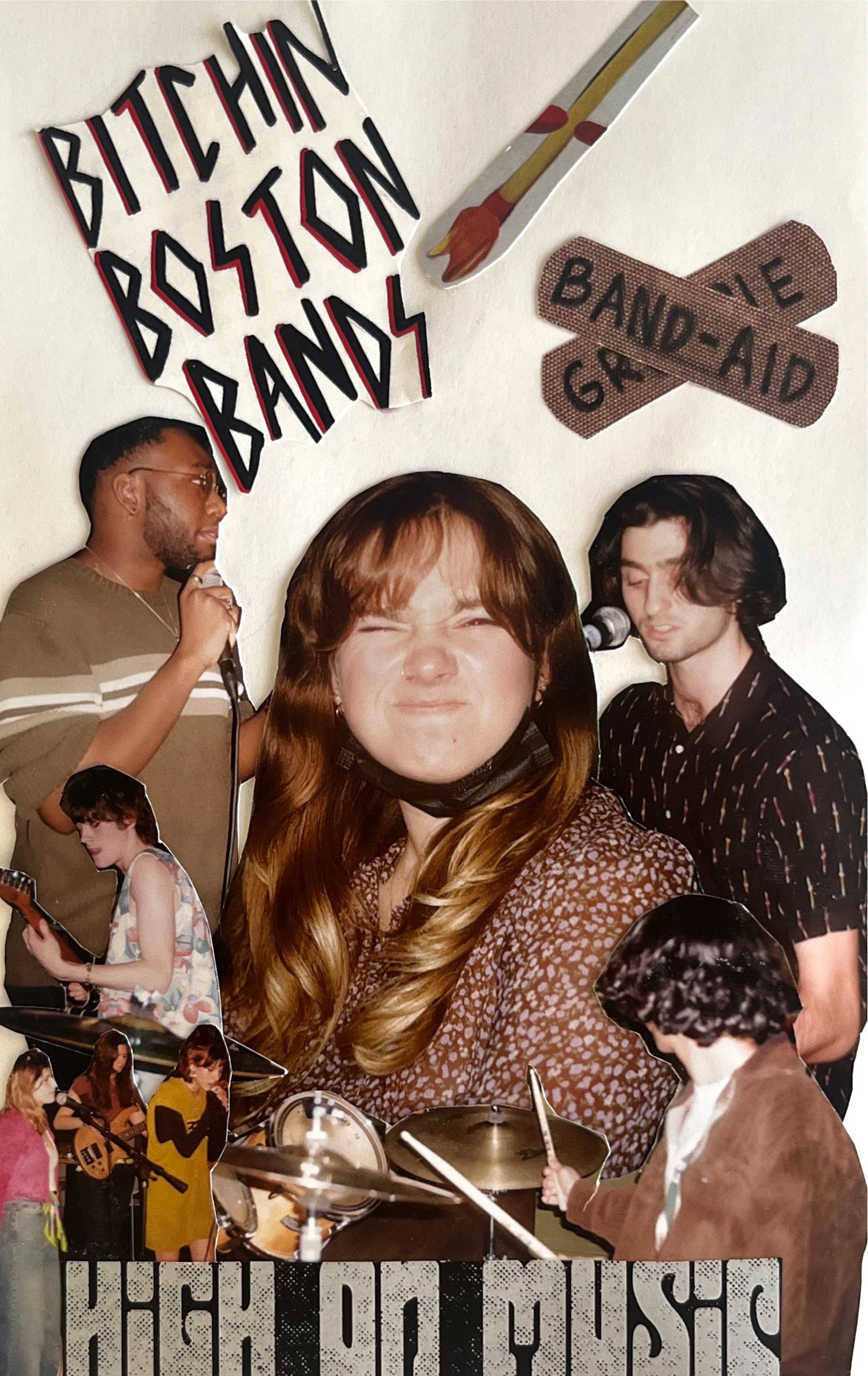
For our tenth anniversary issue, we wanted to unpack how music relates to our connotations of the past, present, and future. Various collages reimagining the artwork and articles featured in our print issues over the past 10 years span throughout the magazine as a way to pay homage to the array of creatives who have graced this publication. We hope this body of work inspires you to delve into the relationship between music and time, dissecting its ability to represent our personalities and speak to the history and culture of society at any given period.
I think of what Five Cent Sound accomplished in 10 years time and how that image will persist and mature with another decade passed. I can’t imagine myself at 32, but I do know
7
the passion of this magazine will live on within me forever. It’s hard for me to let go of something so formative to the fibers of my being, a project I have nourished to a point of worrying and speculating about the lifespan of the publication as if it is a child of my own. I owe so many pieces essential to the mosaic of myself to this magazine and am eternally indebted t to an opportunity that exposed me to so many beautiful minds, examples of taste and the endless possibilities of talent.
To Five Cent, thank you for letting me stand in your sound, even if for just a little while. I’ll close the door but not all the way, leaving a sliver of room to glimpse in on those who have yet to barrel through the hinges.
where anything goes and creativity flows

Editorial
Staff Masthead
Executive Board
Editor-in-Chief // Ashley Onnembo
Managing Editor // Paulina Subia
Creative Director // Ali Madsen
Assistant EIC // Abby Stanicek
Assistant CD // Quinn Donnelly
Head Online Director // Alexa Maddi
General Editors
Jess Ferguson
Thomas Fienan
Brooke Huffman
Alexa Maddi
Claire Moriarty
Abby Stanicek
Diversity and Inclusion Editors
Minna Abdel-Gawad
Daphne Bryant
Sydney Johnson
Shiyang Shao
Copyeditors
Head: Chelsea Gibbons
Sophie Hartstein
Emma Shacochis
Rebecca Zaharia
Creative
Christina Casper
Bella Cubba
Ashley Davis
Samantha Deras
Emma Doherty
Quinn Donnelly
Mo Krueger
Rose Luczaj
Ali Madsen
Ashley Onnembo
Anya Perel-Arkin
Micki Porcaro
Olivia Tran
and many more online !!
OUR (FIVE) CENTS
Nothing More Punk Than An Aerobics Class
By Lucy Spangler // 12
Parental Advisory: How Musicians of the ’80s Refused to be Silenced by the PMRC
By Rose Luczaj //
16
Been There, Heard That
By Nathan Hilyard //
22
The Night-and Day-core of Viral Edits
By Jules Saggio //
29
Electronic Sounds in the Electronic Age
By Basia Siwek //
33
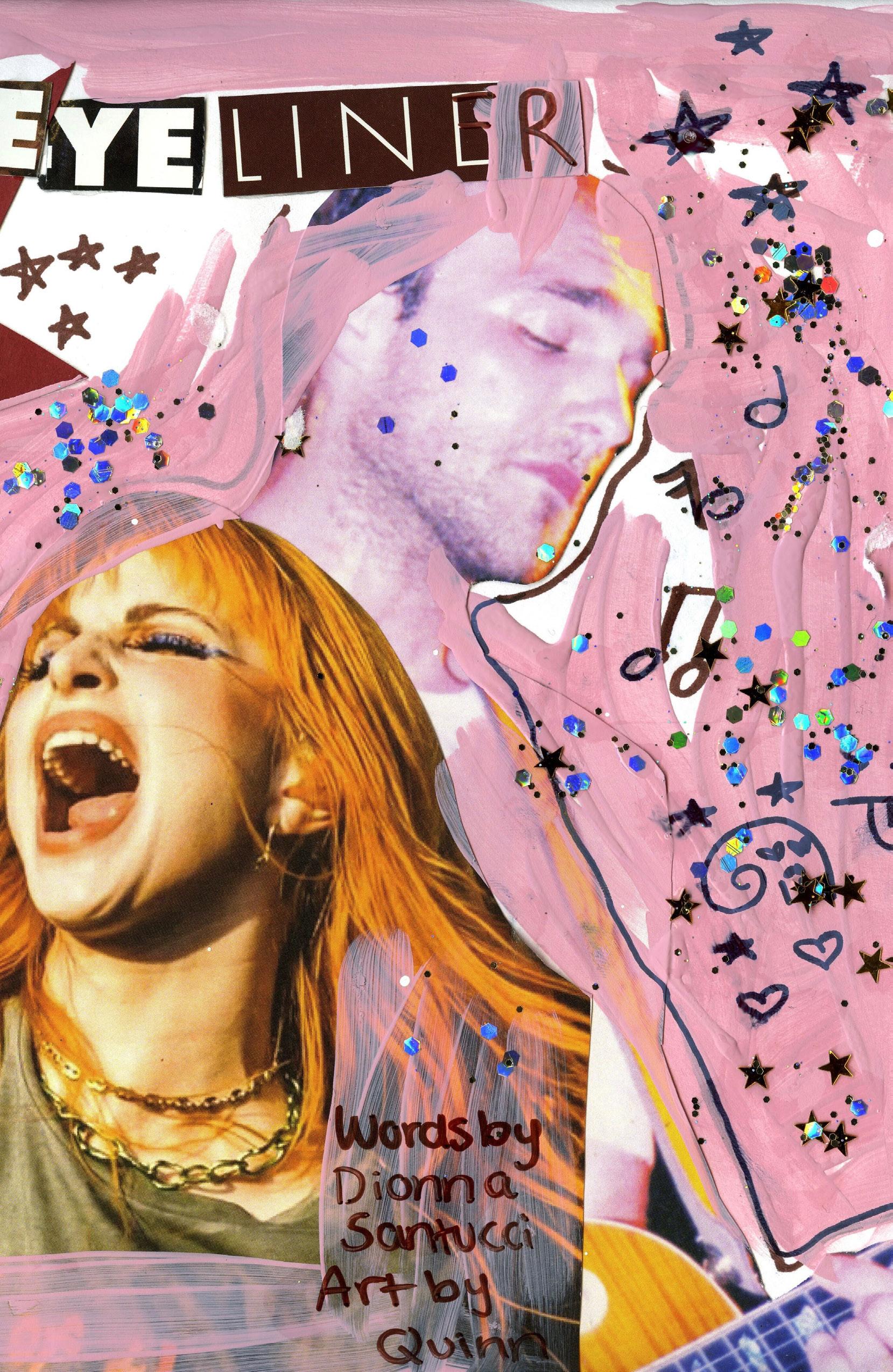
E is for Eyeliner: the ABCs of Emo
By Dionna Santucci // 37
Mario Mood Music: A Deep-Dive into Gaming’s MostInfluential Soundtrack
By Rebecca Zaharia //
Who is Broadway For?
By Daphne Bryant // 53
45
This Is It: An Interview with Gordon Raphael
By Paulina Subia // 58
The Color of Music
By Lily Price // 70
Evergreen Music and the Resurgence of the ’70s
By Minna Abdel-Gawad // 79
Streaming Killed the Video Star: How Music Videos Shaped My Understanding of Music
By Lily Suckow Ziemer //83
The Intimate Distance Between Audience & Artist: A Study of How a Venue Impacts a Live Performance
By Annaliese Baker //89
The Goat Testicle Implanting Doctor Who Changed Country Music Forever
By Ivy Schulte // 94
How My Parents’ High School Reunion Mixtapes Formed My Music Taste
By Abby Stanicek // 98
Gaze Into the Void, and Your Music Might Gaze Back
By Claire Moriarty // 103
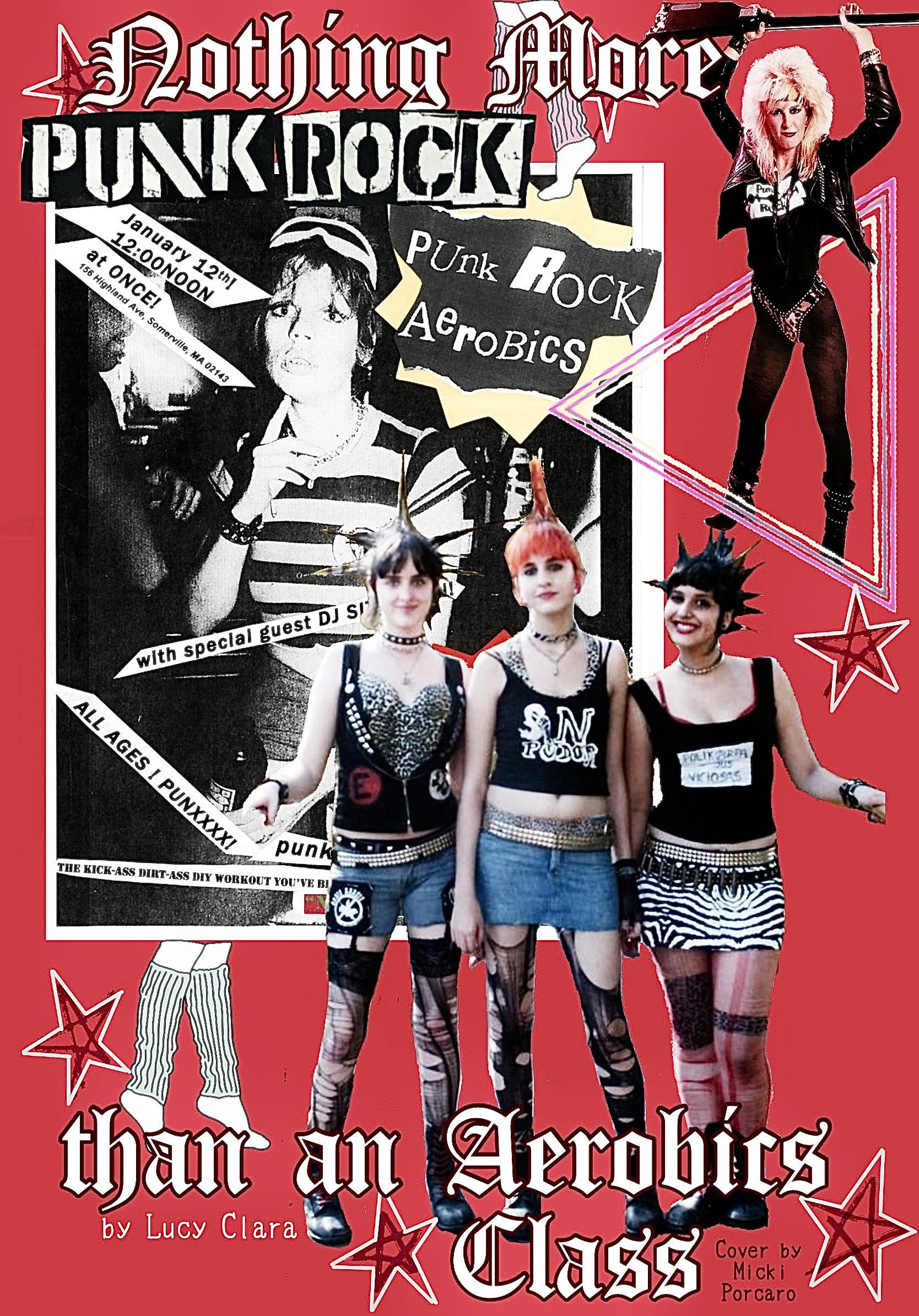
When people asked Johnny Rotten why the Sex Pistols formed, he said it was because “we were sick of all the same old crap and we wanted to do our own thing like any decent human should.” Punk typically draws associations to anarchy or destruction, so the core idea of creating something that fosters a community of likeminded people and outlasts those who established it is overlooked. Punk is really about creating something for misfits, for people who felt like nothing existed for them.
This idea is the crux of what Punk Rock Aerobics co-founder Hilken Mancini wants people to get out of her classes. “Punk Rock Aerobics was created for the misfit, it was created for people who didn’t want to feel like they have to fit into a certain way of being, any category, size or shape,” says Mancini. Following the same structure that formed the Sex Pistols, the class created something that hadn’t been offered to anyone before. And by doing that, they founded a community of people who just want to “show up in their Chuck Taylors and let their freak flag fly, and the music doesn’t suck.”
I was introduced to Punk Rock Aerobics when my dad got tapped to DJ a session and brought me along to take the class. I grew up on punk music, having it spoon fed to me by my parents from the moment I had working ears. Once the first song started playing and Mancini started calling out instructions, I got instantly transported into my kitchen back home, to when my dad would play The Slits on a Saturday night after dinner and my brother and I would throw ourselves around until we almost hurled up our food.
I definitely felt the burn from this class the day after, but the pain couldn’t detract from the reward of trekking out to Jamaica Plain — I could only replay how Manchini weaved between the racks of clothes in her store, her words awakening the creative power of the counterculture within me.
Mancini bought the domain for Punk Rock Aerobics in 2000 with the goal of making the classes a safe space. Sessions take place in both the Greater Boston area and
13
New York, all the while dodging franchisement and sticking to their DIY approach. Music and attitudes aren’t the only aspects of punk that the class draws on: many of the moves reference punk iconography, such as “Never Mind the Buttocks,” a play on the Sex Pistol’s debut album; “The Skank” transcend beyond the pit and iconic cover art of Circle Jerk’s Live at the House of Blues. In 2021, Mancini brought the steps of Punk Rock Aerobics to the screen when producing the music video for Green Day’s single, “Here Comes the Shock.”
According to Mancini, it was never about “making it” when it came to Punk Rock Aerobics. The goal aimed to do something new that wasn’t available to people at the time, and through that, form a community. This mindset is commonplace when it comes to the Boston DIY music scene, a city known mainly for institutions and less for its artists. Musicians in Boston develop a “thick skin,” as she puts it.
“Boston [music scene] has never been monetarily driven,” says Mancini. “If you stay here and you do music, you know you’re never going to make money. You do it because you fucking love it.”
Mancini’s most recognizable contribution to the Boston music scene is the band Fuzzy, which formed in the early ’90s and released their first album in 1993. Currently, she plays guitar for The Monsignors.
“It was a snowstorm, but people would still come and see your show,” recounts Mancini. “It was a community and you can’t buy that. You can’t get that in cities like LA and New York. That’s why I love staying in Boston: it was about the music, supporting each other and developing a community, which is what makes me happy.”
Mancini is always very consciously aware of what her impact and role within this Boston community is and where she can make improvements. One of these improvements stemmed from her experience as a woman involved in the scene. By no means did Boston lack talented female musicians in the 1990s. However, an underlying sense that they existed as a novelty act in a space they should’ve been embraced did.
14
While touring the country with her band Fuzzy, Mancini dealt with everything from passive aggressive comments during soundcheck to being mistaken for a sex worker.
“You’re playing out of those loud amps? I thought you were the singer,” mimics Mancini. “Are you fucking kidding me? No, this is my fucking Marshall stack. It’s 100 watt and I’m playing it really fucking loud. Does it matter that I have a vagina?”
In response to this, Mancini created a nonprofit called “Girls Rock Camp,” an organization dedicated to promoting self-esteem and confidence in girls playing rock music. She recalls how women always upheld the standard of sticking together within the scene, whether it was stepping up to fill in on bass when a band member got sick or showing support to each other’s endeavors.
The common through line between all of these experiences traces back to Johnny Rotten’s words. Punk is so often associated with the destruction of social norms. But what gets neglected when we talk about the history of punk music is the communities that sprang out of the norms it raged against. This cycle is fully on display in the creation of Punk Rock Aerobics and Girls Rock Camp: rejection of the norm, the desire and creative spirit to try and make something new and the community that forms around an idea they didn’t know they needed.
15
“We were in creem magazine, and on the cover it said “Women in Rock” -- you just felt sick to your stomach,” describes mancini. “All these women have been doing rock and roll forever. It’s not a new thing, it’s embarrassing.”
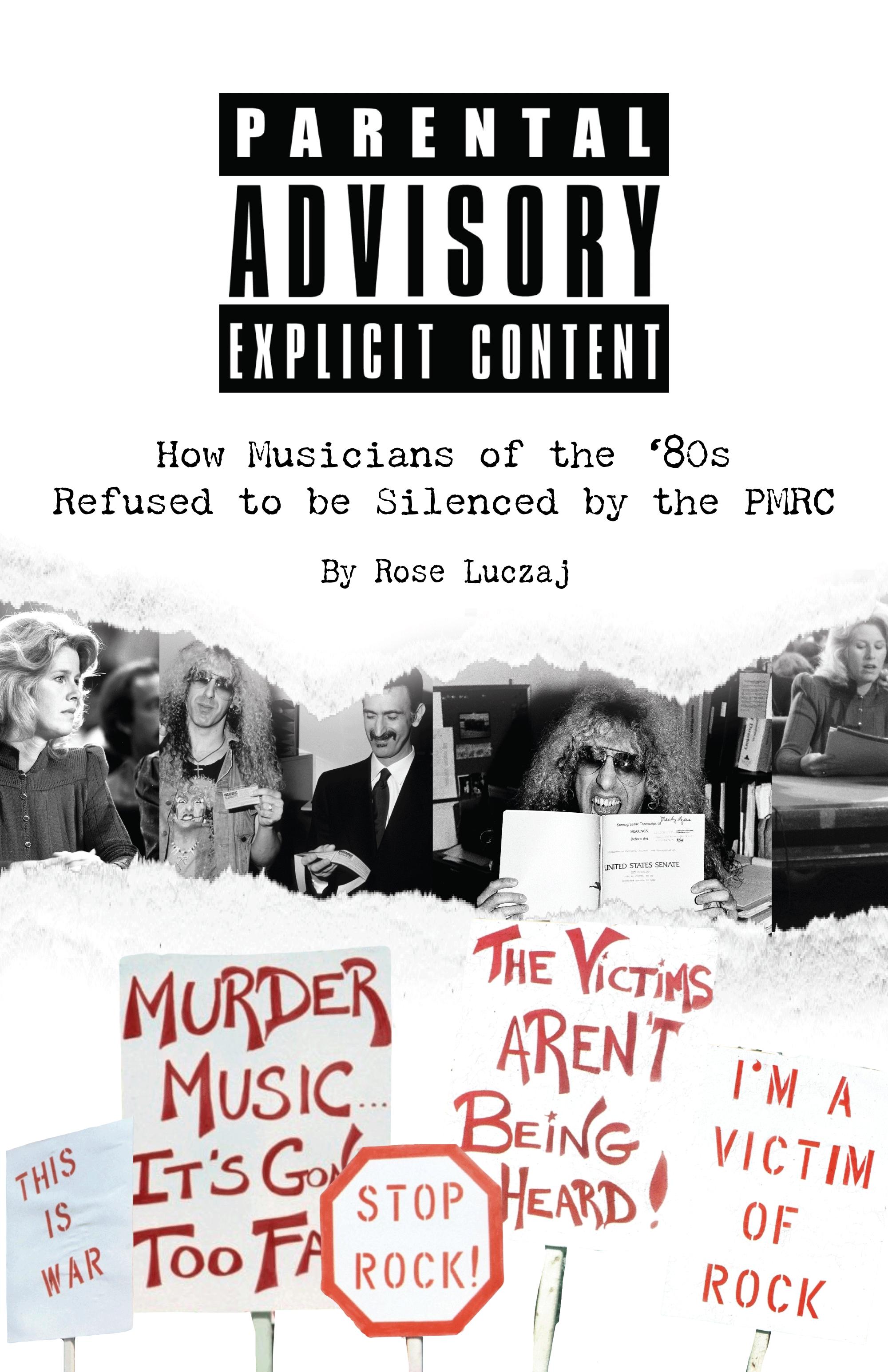
“Rock music destroys kids.”
“Will your child be the next victim?”
“Rock music: public enemy #1”
These phrases marked some of the absurdities that could be read on posters carried proudly by the herd of uniform-clad Catholic school children, planted outside the Senate hearings against rock music on September 19, 1985. On this momentous day in history, the Parents Music Resource Center (PMRC) successfully wormed their way onto the Senate floor and fought against the “devil’s music” in order to protect the nation’s vulnerable children from explicit music. Despite their requests being highly unconstitutional, they garnered a devout following that supported them throughout the hearings — until they didn’t.
In order to understand how all of the PMRC’s efforts came to a head on this fateful day nearly forty years ago, we need to go back to the very beginning of the organization, along with the four self-proclaimed “Washington Wives” who founded it. Susan Baker, Pam Howar and Sally Nevius came together under the leadership of the obstinate Tipper Gore, who felt outraged when she bought her young daughter a copy of Prince’s Purple Rain.
The album contained the provocative song “Darling Nikki,” which made frequent references to masturbation and other sexual content. Highly offended by the lyrics and frustrated by the lack of warning, Gore decided to found the PMRC. The group promptly released a list of the most explicit songs of the time, titled “The Filthy Fifteen” — of which “Darling Nikki” ranked at the top. The PMRC then went on to propose a list of demands to the United States Senate, which included making a rating system much like that of movies and requiring lyrics of explicit songs to be printed on the sleeves of records. This would allow for ample warning of edgy content by ensuring that no surprises hid from the public eye and hyperactive parents.
But here’s the catch: each of the four founding members of the PMRC held ties to prominent figures in Washington
17
D.C. at the time. Susan Baker was the wife of Treasury Secretary James Baker, Pam Howar was married to D.C. realtor Raymond Howar, and Sally Nevius was married to the former Washington City Council Chairman, John Nevius. And of course, Tipper Gore was the wife of Senator and future Vice President Al Gore.
“I always just thought it was political theater,” said Jay Jay French, co-founder and lead guitarist of Twisted Sister, whose 1984 hit “We’re Not Gonna Take It” had ended up on the Filthy Fifteen list. “Like, are they doing that because some statisticians said ‘You’ve got to do this for the next election’?”
The PMRC justified putting “We’re Not Gonna Take It” on the Filthy Fifteen list due to its message of inciting violence, speculating the track ridiculed their organization (even though it came out before their founding).
“The song was another Dee anthem for me. I mean, he writes them all the time,” French explained, speaking of his co-founder Dee Snider, who testified at the 1985 Senate hearings. “It was always an us against them, against the world.” The song never intended to soundtrack the movement against the PMRC, leading the band to oppose its unjust inclusion on the list.
As amused as French felt with the entire ordeal, Snider took a very different approach to the backlash against their music. Alongside progressive rock legend Frank Zappa and Americana artist John Denver, Dee Snider sat in front of the representatives of the Senate and preached about how morally upstanding all of the members of Twisted Sister actually were.
“The fact is [that] we just were businessmen working really hard,” says French of the band’s members. “We didn’t drink, we didn’t do drugs… We traveled in buses that said ‘no fun bus’ because you couldn’t smoke cigarettes on it… and the fact that we were attacked for some moral decay of America was ironic because we were probably the most moral band out there.” However, French did not want people to know that for commercial purposes, noting that “when Dee decided to proclaim his straightness, the record label was horrified that it was going to destroy our reputation.”
18
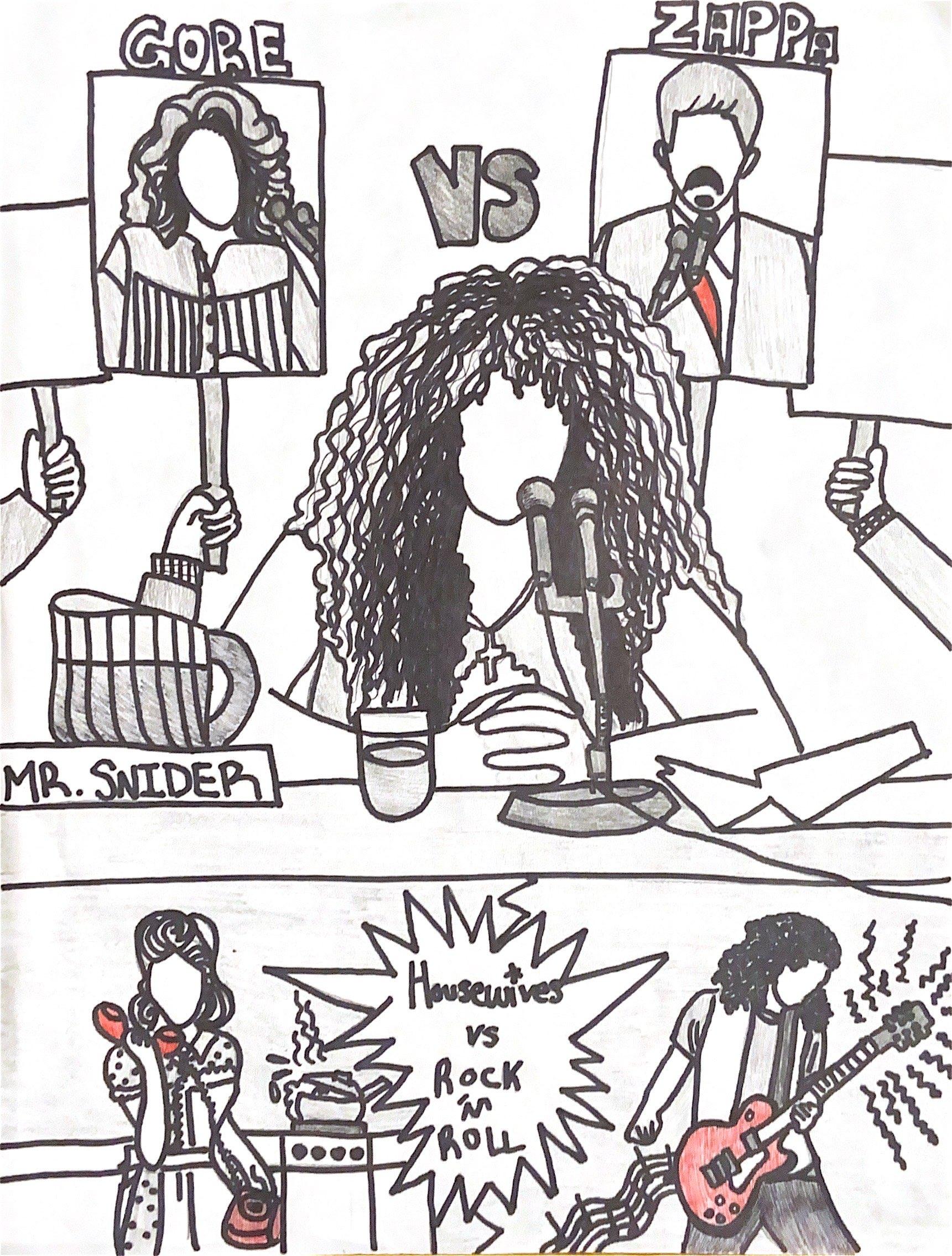
After Zappa, Denver and Snider’s testimonies — and a heated rebuttal from the PMRC representatives in front of what Zappa referred to as a “kangaroo court”— the ruling declared that the PMRC’s requests could not be met due to their violations of the First Amendment rights of the musicians behind the songs. Its outcome veered far from the victory most people thought the rock and roll community earned. Even though the PMRC’s demands weren’t legally satisfied by the Senate, Parental Advisory labels appear on the covers of albums today.
The Parental Advisory sticker sprung out of ulterior motives on behalf of the Record Industry Association of America (RIAA). The RIAA represents approximately 85 percent of all record labels in the United States, including Atlantic, Columbia and Motown, and is responsible for the majority of the commercial success of some of the biggest names in the music industry. However, the RIAA ran into some profiting issues due to the ability of consumers to create their own tapes on blank media. The RIAA pushed to pass H.R. 2911, known as the “Blank Tape Tax,” through to the Senate floor since May of 1985. Up to this point, they failed to capture the attention of the Senators. They decided the best way to get their act through would be to appease the wives of the Senators themselves — unfortunately, their instincts proved themselves correct.
The RIAA began to require all explicit content that they produced to include the labeled Parental Advisory sticker, using their stronghold over the entire music industry to meet the requests of the PMRC. Since artists feared for their careers if they did not adhere to the RIAA’s guidelines, most followed the rule, and thus the era of Parental Advisory: Explicit Content unfolded. The “Blank Tape Tax” passed later that same year.
Though many assumed this as a loss for artists’ rights everywhere, the musicians of the next decade and a half refused to let the Parental Advisory label deter them. They worked to redefine the label throughout the late 1980s and 1990s, transforming it from a mark of shame into a flag of notoriety through immense success.
20
Andre Howard, the head of commerce and digital at the independent music distribution company United Masters, explained the countercultural prominence of the Parental Advisory sticker: “It was making it not as accessible for people to buy it because stores didn’t want to pick it up [...] It also created the allure, right?... It’s like that Pandora’s Box — when they tell you not to open it, you want to.”
And open it they did. Throughout the ’90s, groups such as N.W.A. and 2 Live Crew skyrocketed in popularity despite the suppression of the Parental Advisory label. This also calls attention to the power of BIPOC creators in the industry and their ability to take something as taboo as the sticker and throw it back in the faces of the record executives that put it there to stifle them. Their resilience and persistence not only expanded upon the rebellious legacy of the rock icons from the ʼ80s but inspired many more groundbreaking artists for decades to come.
Today, explicit music is just another part of life that we deal with on a person-to-person basis. In an increasingly digital age, the importance of printed lyrics and a physical sticker on CDs is diminished. As for the PMRC, it lost most of its donations after the 1985 trials and faded into but a memory by the early 2000s.
21
“We’ve got the right to choose, and There ain’t no way we’ll lose it
This is our life, this is our song We’ll fight the powers that be, just Don’t pick on our destiny, ‘cause You don’t know us, you don’t belong”
~ “We’re Not Gonna Take It,” Twisted Sister (1984)
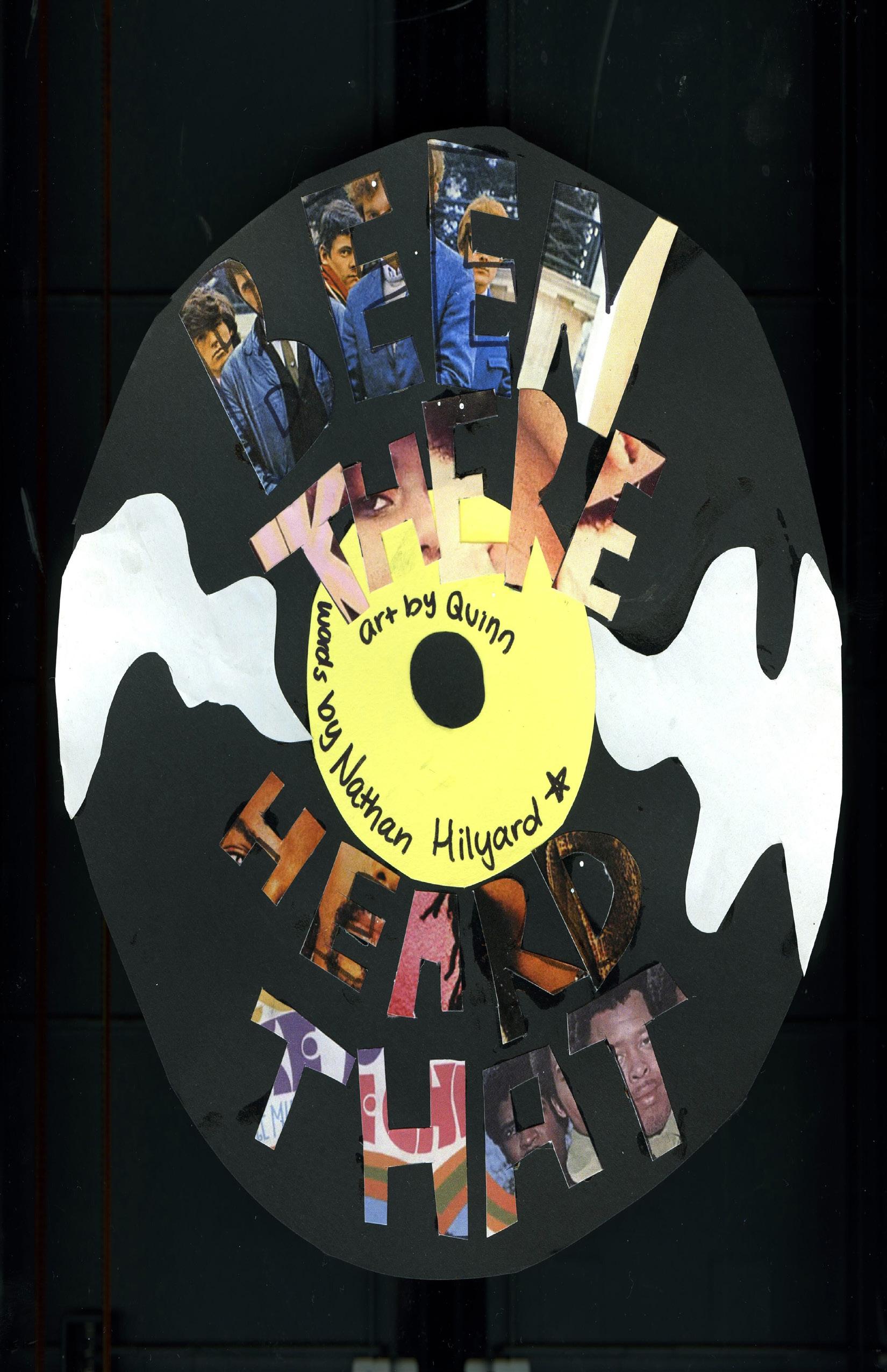
“Since I left you…,” begins the first few moments of the Avalanches’ 2000 debut album, “...I found the world so new.” The opening strains mix with a transplanted glamor of vintage vinyl and old Hollywood movies, whispering in and out through a reconstructed melody: “Welcome to paradise….” Since I Left You is an hour-long collage of songs compiled from roughly 900 samples, picked from piles of old media. The project represents one of the more devoted exercises in sampling, but serves as the perfect allegory for sampling as a concept.
Sampling, in its modern form, is the act of removing a piece of audio from its original position, and placing it into a new context. From its conception, sampling morphed into one of the most widely employed practices in both underground and mainstream music. From cult classic albums to one-of-a-kind DJ mixes and chart topping Hot 100 hits, sampling is the driving force behind the exchange of musical ideas; it serves as a vehicle for pulling former sounds into modern productions.
The first murmurs of sampling began to appear in 1940s Paris through “musique concréte,” a type of composition developed by French composer Pierre Schaeffer, which consists of the elaborate looping of found audio footage to create sound collages. Pieces were long and often shapeless, constructed from a wide array of sources and alluding to a life lived through noise. Through experimentation, musique concréte laid the intellectual and technological groundwork for sampling.
With the advent of more standardized sampling technology in the form of keyboards and monophonic digital samplers, the newest and soon-to-be most influential DJs and musicians began to experiment and develop the practice. Quickly, sampling became a staple in underground music circles, with producers and musicians using sampling as a vital tool in the creation and development of new genres like hip-hop, disco and dance.
Fast forward to the 2000s, and sampling settles into its position as one of the most widely-used tools in both music production and performance. In recent charts, many of the most prevalent pop songs feature some sort of sample, which begs the cyclical question: did the
23
music world evolve to a point where it’s too oversaturated with the practice?
Most primarily, sampling helps infuse a sense of comfort and nostalgia by pulling on past sounds listeners are familiar with. In one instance, Madonna revived a stagnant career with the chart topper “Hung Up,” which samples the equally as acclaimed “Gimme! Gimme! Gimme! (A Man After Midnight)” by Swedish music royalty ABBA. Listeners immediately click into the iconic opening riff, but in place of ABBA’s ’70s glam, Madonna infuses a thumping Y2K dance beat. The interpolation masterfully balances borrowing old sounds and developing them into the modern musical landscape and beyond.
Nearly 20 years past the release of “Hung Up,” Madonna continues to pull from the past when creating her new music, in particular with the new single, “Hung Up on Tokischa” featuring the Dominican rapper. The song spotlights some semblance of ABBA’s iconic riff, but now simplifies it to a referential bass line, with the majority of the song’s identity being the original “Hung Up” chorus infused with a Dominican beat. The song is cute — and at points, very fun — but it serves as a warning for sampling gone too far.
The song attempts to do to “Hung Up” what “Hung Up” once did to “Gimme! Gimme! Gimme! (A Man After Midnight).” In lieu of harvesting nostalgia, the song really only floats on the developments brought by Tokischa. And when Madonna joins the chorus with the classic “Hung Up” melody, she sticks out sorely from the rest of the piece. Madonna, in this way, dually exemplifies sampling as a successful method of infusing fresh songs with a classic nostalgia and sampling as a crutch which stunts creativity.
There is much to be said about some songs which are, in their own right, incredibly recognizable, and are then sampled and used as reference material for newer songs. Take the Italian Europop hit “Blue (Da Ba Dee)” by Eiffel 65, a song which gained quite a bit of global success upon initial release, but now remains recognizable for its annoyingly earworm-able melody. The song presented a perfect hit for European clubs: it’s danceable,
24
goofy and easy to sing along to. So, when modern artists attempt to use the song’s sounds, how can they find the most success?
Two songs in particular took an admirable stab at sampling it: in 2020, GFOTY released “By My Side” which features the melody of “Blue (Da Ba Dee)” amidst a mixture of glitchy production and the signature Europop beats. GFOTY’s interpolation of the original maintains the gluttonous melody then advanced through modern oddball productions. GFOTY’s use of the sample brings the melody from Italian clubs to the modern cooky-electronic realm, adding to the sonic experience while also pulling from the humor of the song to create a giggly, infectious track.
In an alternate example, Bebe Rexha and David Guetta recently released “I’m Good (Blue),” which also borrows “Blue (Da Ba Dee)”’s infamous melody. Rexha’s interpretation is much more literal and focused for release within the mainstream. “I’m Good (Blue)” removes much of the humor from the song and sticks close to a very radio-ready dance sound. While this results in a sonically fun experience, it still feels a bit tired. There is little expanse beyond the original fun of the Italian hit, and consequently the song does nothing to expand the sample. Where GFOTY developed the melody into a humorous advance into new dance sounds, Rexha and Guetta stick close to the original sound, and subsequently fail to pull the sample into newer progression.
Regardless of whether sampling is done well or poorly, the practice is essentially borrowing the creative work of another artist, therefore making it crucial to consider the social responsibility involved with sampling. Sampling is placing someone else’s work into a new sonic context; music, being inherently tied to culture, must be treated with care when moving between artists. Sampling has proved itself to be a vital form of musical communication and collaboration, helping to transplant ideas within different artists’ work. When the cycle continues and samples are separated farther and farther from the original artist (and, in many cases, culture) there is an inherent disrespect.
25
One album of hot debate over the past year is Rosalía’s tour-de-force of multi-cultural expression, Motomami. The album quickly rocketed to the top of global pop charts, taking a specific hold upon Spanish-speaking music markets, but a significant portion of listeners and critics expressed discomfort with Rosalía’s use of Latin American rhythms and aesthetics, as she is a natural born Spaniard. Motomami acts as an amalgam of references, taking inspiration from Disney ballads, bull fighting, her nephew, Asian cuisine, the sakura flower, motorcycles and many other sporadic sources, but the primary sonic experiment is a blend of flamenco, reggaeton and jazz through a danceable pop form.
Rosario Swanson, a professor of Latin American Literature & Culture at Emerson College, points to the commercial success that is key for pop musicians on both sides of the Atlantic.
“There has always been a ‘dialogue’ of influences between the two areas, Spain and Latin America, at the cultural level and also because of the significant markets each area represents for the other,” says Swanson. “I also don’t know how possible it is for sound not to travel across boundaries that were so fixed before. I am not saying that cultural appropriation is correct or anything of that sort, simply that globalization and commodification of some sounds is a fact.”
While Rosalía may not have been born into these sounds, or even have a right to replicate them, she does have the artistic freedom to experiment. Sampling helps to develop a global sound, spreading ideas and influences to new areas where they may not be as accessible, consequently giving the musicians who originally created these sounds much more exposure and global support. Yet, it is imperative that sampling such as this is done with extreme care as to not divorce these sounds from their rightful creators and cultures.
Chelita (any pronouns), a Black Indigenous 2SQ DJ currently working in Boston, shared their opinions on the subject, saying, “I think there’s a very big disconnect with people who want to create the samples and use them to their advantage, and those who made the samples and deserve that respect and honor of creating those beats
26
Essentially those who get those samples and who create those samples, those old school DJs, they understand the power and the worth of those who made that happen. [...] It’s all about respect; we just need to respect the tracks that we sample.”
Chelita’s sentiment reflects sampling as honoring those who have played before, and using sampling as a means of keeping these legacies and cultures alive. The essence of sampling lies in appreciation — admiring and loving an original piece of music so much that you are willing to incorporate it into your own sound.
Beyoncé’s most recent release, Renaissance, proves itself as the masterclass of sampling as an act of love and respect, pulling mementos from queer and BIPOC spaces from the ’70s and ’80s into new contexts. The album’s essence is rooted in the music created by and for queer people of color during this time period, drawing from a deep pool of artists who worked to develop both these genres and modern culture in such an incalculable way. Beyoncé’s hour-long anthem celebrates these influential musicians, all while furthering the advancement of these genres.
On the topic of Beyoncé, Chelita says, “I think bringing out these sounds that have been staples in the underground are essential.”
The final track, “Summer Renaissance,” pulls the opening riff and infamous melody from Donna “Queen of Disco” Summer’s “I Feel Love.” In a satisfying conclusion, Beyoncé proves the essence of sampling and its importance to music in all its forms, ending the album with a sweet reference: “Oooh, It’s so good / It’s so good / It’s so good / It’s so good.”
Sampling helps preserve the greats and infuse new music with a glistening sense of nostalgia, but it is absolutely essential that it is done as an act of tenderness. Only through paying respect to the musicians who paved the way will modern producers and artists be able to continue the work of cultivating sound and culture.
28
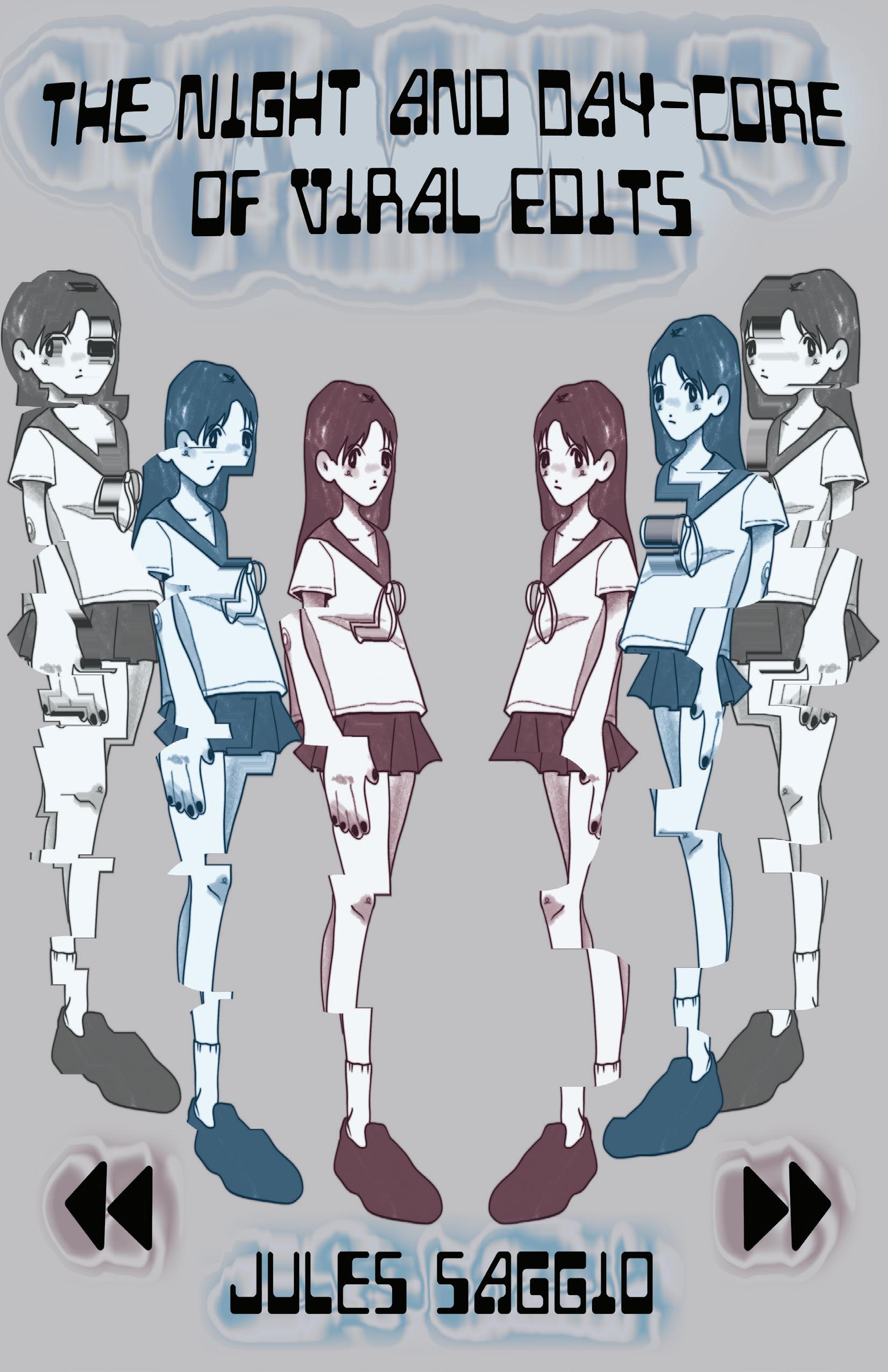
Nightcore and daycore: born from the internet, most know these genres and the stigma that revolves around them. However, why do I open my Spotify “New Releases” to notice that Lana Del Rey released the sped-up version of her 2012 summer hit “Summertime Sadness” a decade after its initial release? Not to mention “slowed and reverb” YouTube edits of songs such as MGMT’s “Little Dark Age” and “sex money feelings die” by Lykke Li.
And, of course, there’s TikTok. While I no longer have the app, I remember viewing people dancing and making edits to both slowed and sped-up versions of viral songs. Did we think “Slow Dancing in the Dark” by Joji could possibly be any more delayed and heartbreaking? Think again. While I believe this is a result of nightcore, which sprung up in the early 2000s, so many new developments in editing the tone of existing songs to emotionally enhance them continue to transpire.
Nightcore originated in Alta, Norway, in 2002, from Thomas S. Nilsen (DJ TNT) and Steffen Ojala Søderholm (DJ SOS). The dual project of these two artists is literally dubbed “Nightcore” and became the origin of the internet genre’s name. Nightcore is the act of taking a widely celebrated song and hyping it up with speed, usually within a range of 160-180 beats per minute. The duo created over four albums, featuring versions of Eurodance bops with the pitch shifted up.
Despite remaining inactive in the public eye, their music trickled down into YouTube culture. Today, TikTok embodies what YouTube originally did: taking a concept or trend and allowing creators to put their own spin on it in various ways. Think back to the Adult Swim “bump” trend that used the sped-up version of the song “Running Away” by VANO 3000, which samples “Time Moves Slow” by BADBADNOTGOOD. Since TikTok’s main source of content is using music clips for trends, this wasn’t originally a copyright issue but rather a mood-setter. “Time Moves Slow” is perfect for a bump on Adult Swim, but, in the case of this trend, the audio moves too slowly to match the speed and mood associated with short clips.
With nightcore speeding up existing music, there’s a similar genre that does the exact opposite: daycore (my
30
personal preference between the two). No clear explanation for its origins exists, leaving most to regard the theory of speeding up and slowing down songs on a record player as a catalyst. I witnessed daycore emerge once Instagram fan pages for different movies and shows soundtracked “thirst trap” edits to this music around 2016.
Nightcore and daycore cannot be attributed to just one genre: daycore embodies an aural, ethereal, and bedroom pop feel, while nightcore exudes energy similar to hyperpop. These styles are heavily associated with anime, but sometimes the correlations specific to nightcore perpetuate harmful stereotypes. Listeners sometimes associate the edits with high-pitched “anime girl voices” and Vocaloid music like Hatsune Miku. The blatantly racist connotations drawn between anime and this music give way to how western audiences fetishize these otherwise fun and alluring pieces of eastern media.
Nightcore and daycore present the possibility of reimagining the original version of a song that seems impossible to stop listening to until it grows tired. Thinking about the amount of times I’ve heard the song “Chanel” by Frank Ocean gives me a mind-numbing headache. Yet, if I’m trying to chill or feel like deriving a different feeling from it, I’ll probably put on the slowed-down version, just for the fact that it sets a more tranquil and ethereal sonic experience.
Slowing down and speeding up a song represent two different ends of the spectrum: slowing a song down can make it feel more hollow and yearning, while speeding it up can make it more chaotic and exciting. The experience is nuanced and sometimes can result in total garbage, similar to meshing songs from different genres together to create a remix: some just don’t work with an altered BPM, especially if it’s sped up.
I believe this phenomenon is so huge because of the empowerment it elicits. According to Spotify, dancing in the bathroom to a playlist called “You’re in an Edit” is more common than you’d think. This feeling of looking as hot, sexy, or badass as your favorite singer, actor, or character is the most intoxicating when you queue the
31
right music. Songs typically sped up for this purpose include “B.O.T.A (Baddest of Them All)” by Eliza Rose, “Stargirl Interlude” by The Weeknd and Lana Del Rey, “Me and Your Mama” by Childish Gambino, “Tek It” by Cafuné and “Jealous” by Eyedress (which is already fast-paced on its own). Admit it, you’ve posed in the mirror and strutted across your room listening to at least one of these songs.
The closest scientific explanation for nightcore and daycore comes from an article called “Effects of Musical Tempo on Musicians’ and Non-musicians’ Emotional Experience When Listening to Music,” which describes tempo, BPM and their psychology devoid of the cultural and contemporary effects that I divulged. Music with a fast tempo arise the most positive emotional reactions due to the activation in the temporal and motor processing areas; medium tempos close to humans’ physiological rhythms arise a strong emotional response by entraining the autonomic neural activation of emotion processes; slow tempos receive the lowest emotional valence and weakest arousal.
The ways this phenomenon impacts us on an individual scale is subjective to the specific song and remix, and many detest altering a track. Some explanations involve legality. Don’t want to get a copyright strike for including a song in your short film? Not interested in making your own music but need some extra bank? Alter an existing song to create a different aura and garner a ton of views from people who will enjoy it just as much as the original. Most importantly, these styles add a simple, personal touch to the music someone enjoys. I’ll admit, I definitely have a “slowed and reverb” playlist saved on my YouTube account for future listening. It’s just that good and will undoubtedly continue to be.
32
Nightcore and daycore present the possibility of reimagining the original version of a song that seems impossible to stop listening to until it grows tired.
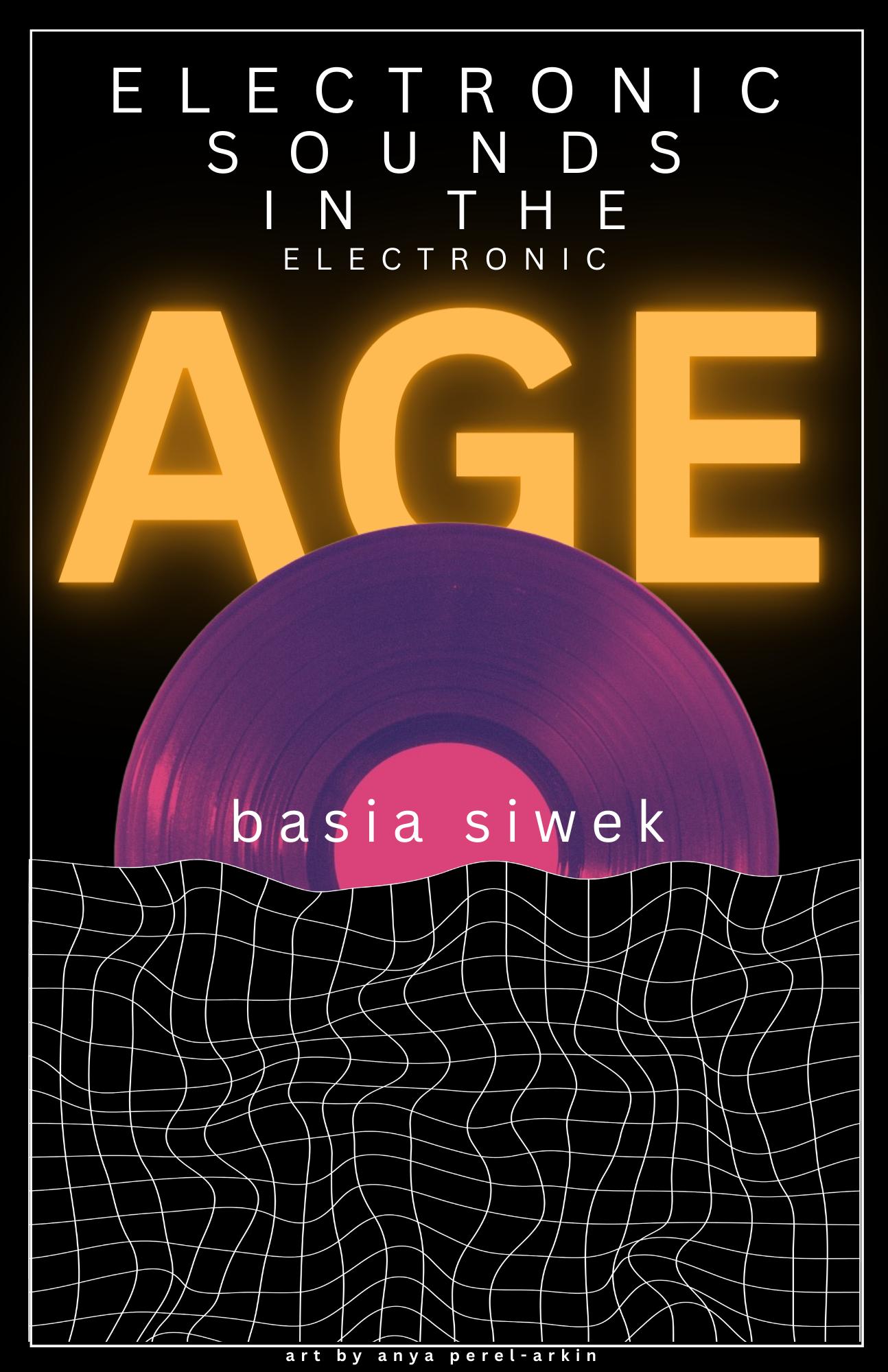

a new sound and vibration to beat with. Bored with the despondent moans of Nirvana, Pearl Jam and Alice In Chains, the 2000s underground scene — much like that of underground punk in the 1970s — craved something new, fresh, and upbeat without the gloss of ’80s pop.
Beginning with James Murphy’s (LCD Soundsystem) creation of DFA Records, the basements of Brooklyn rebirthed the dirty, neon and voltaic sound of DJs and techno artists. Just as the techno, pop, and synthetic sound of the ’80s rejected the radical, raw punk of the ’70s, the 2000s rejected the sound of the ’90s. Yet again, history repeats itself with the rise of electro-punk, house music full of head-pounding beats and crawling rhythms as a rejection of the trap and cloud rap that engulfed the 2010s through iconic artists like Travis Scott, Kendrick Lamar, Lil Yachty, and Future.
This rise in electronically warped music is related to the electronic world we live in today. Due to the development of computer technology and the increase in its efficiency, the heavy equipment and accessories used to create unique, synthetic sounds aren’t needed in the same way; now it’s much more accessible because production can be completed digitally via one or two applications instead. We live in an era of fast-paced movement, constant technological advancements and an overwhelming consumption of technology. Our attention spans are shorter and our thirst for the “next thing” is stronger. What better way to reach us than through music that encourages and encapsulates this sonic, computerized and synthetic way of life?

Chelita is part of a music collective called Clear the Floor, Boston’s only BIPOC-centered collective. “Everyone who is part of Clear the Floor is a person of color. My partner and I created CF knowing the city doesn’t have space for people of color DJs, specifically who play club music,” says Chelita. “There’s absolutely no space for BIPOC to feel safe and play shows that are run by Black people. A lot of people out here feel uncomfortable because of how white the scene can be.”
Chelita defines their craft as a complete genre-bending sound, influenced by Latin and Miami-based artists from
their childhood like Dembow and 2 Live Crew, whose music encourages freedom and community through dance.
“My favorite thing is seeing my audience at the parties and spaces that I play actually move their feet. You see a lot of people swaying and bobbing their heads but I always have people come up to me and say, ‘I haven’t moved that way in years,’” recounts Chelita.
When asked about Boston’s music scene, Chelita shared the sad truth of how much potential lies in the city’s underground electro house scene that just isn’t given the platform to perform. “I wish the city was less gatekept in the nightlife industry. In the underground, we are all working together to make a platform here. We are making sure people know what is coming out of Boston.”
Annie Lew, a sophomore at Northeastern, is an up-and-coming Boston-based DJ integrated in the underground electronic music scene. Originally from Connecticut, Lew says Boston is a hub for music students, home to a wide range of colleges that provide resources and opportunities to perform.
“After moving to Boston I understood that art is more universal. I definitely felt a shift in [my] motivation and drive when I moved here,” she says. “Boston is the best city to become a musician in order to prepare for going out into the music world elsewhere.”
Lew first got into DJing after spending four months in Rome, Italy, and gaining exposure to live electronic music. “You experience this collective unity with everyone, which is such an empowering feeling,” says Lew. She is influenced by the fast and intense sounds of hard techno from artists like MDR, as well as electronic alternative artists like Tame Impala.
Lew says Boston’s music scene is home to a small artist community that allows her to get more bookings and make a name for herself much faster than if she were in New York City.
“[Boston] is not concentrated with as many DJs. I don’t think I could be where I am in Boston today in any other

place,” she says. Province 44, a college-student oriented house and techno music collective based in Boston, is a collective Lew previously worked with. “Because the community is so small, if you’re a versatile DJ, you kind of just play with everyone. The people who are going to the techno events go for the music, not for the party,” she says.
Being a younger girl in the DJ scene, Lew is pushed to work harder than other artists. “A lot of people see you as a sexual object or don’t take you seriously, but I think being a girl gives me more motivation because I haven’t met anyone like me doing this,” asserts Lew. “ I want people to know me as Annie Lew and know me as someone who has done it by herself. I want to prove to people that you can do it if you really want to.”
Lew is a Resident DJ for the music collective Infra Boston, as well as a Booking and Business Administrator for their agency. “Infra is one of the main hard techno collectives, bringing in the big names from Europe,” says Lew. DJ Chelita also worked with Infra, characterizing the underground community as one that’s actually pushing the boundaries of the electronic scene in the city.
Lew feels motivated to bring Infra to the next level. “Infra has so much power right now because they are doing so many good things for the city,” she says. Right now, Infra is drawing in the impressive crowds similar to that of the same basements in New York from the 2000s electro scene, which cultivated names like the Yeah Yeah Yeahs, the Strokes, and the Rapture. Infra is the precursor to the music that will define the electronic age we are living in.
Growing up in an era headlined by the echoes and intonations of music characterized by the lo-fi, hazy and relaxed beats of cloud rap meshed with the grimy, more rhythmic rap of the trap genre, I see the thirst for a new, crisp energy and tune. That tune is electronic.

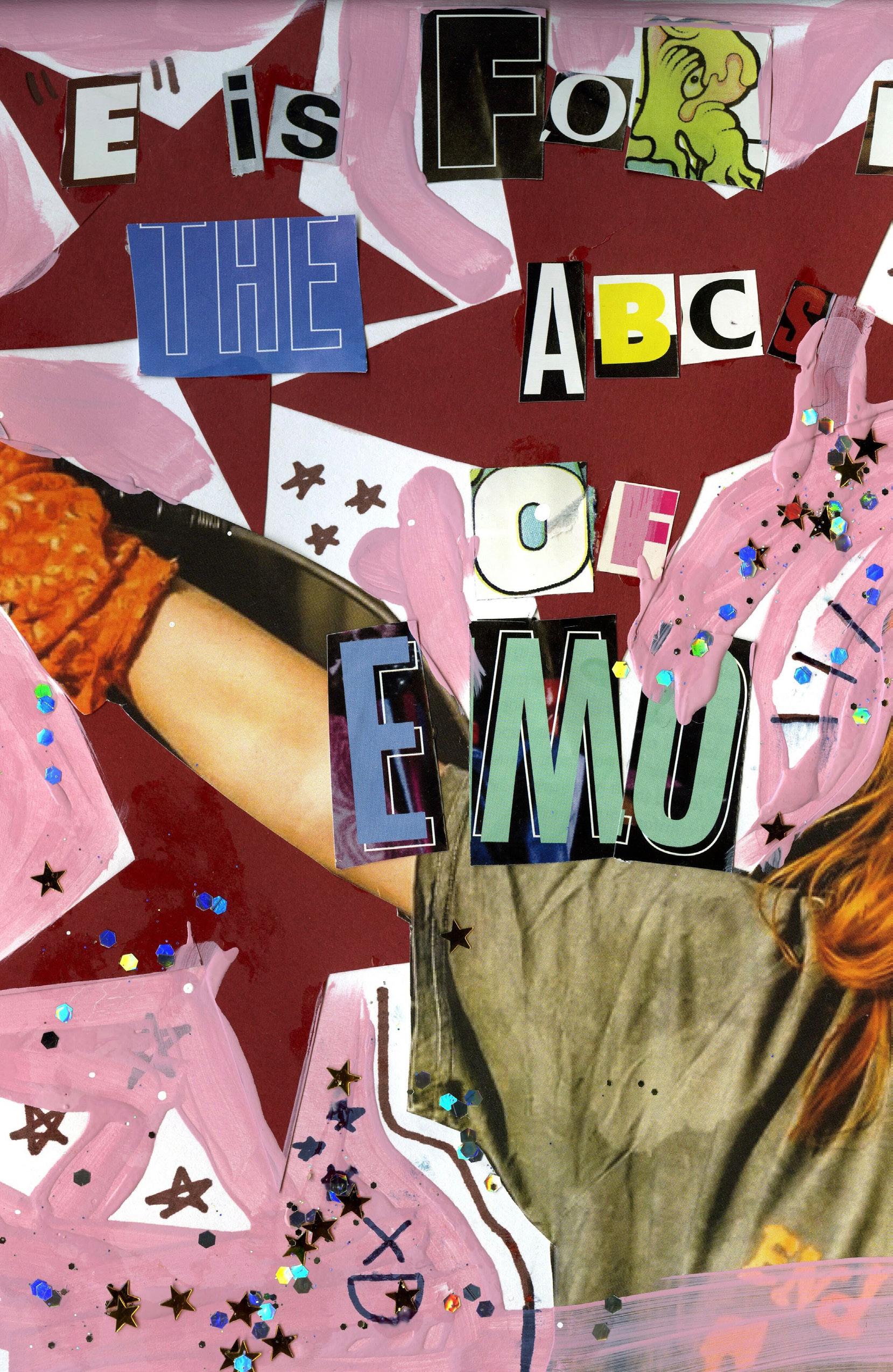
proclaimed the angst-ridden words that breathed emo music into life almost 40 years ago. Before the belt chains, the smudged eyeliner, and the dyed-black hair, there was “Deeper Than Inside” by Rites of Spring.
Washington D.C., 1985: alternative subcultures overruled the city, and acid-wash jeans are about to become more in style than ever. The 9:30 Club, D.C.’s home for punk music, is the place to be, and Rites of Spring frontman Guy Picciotto just blessed the airwaves with his impassioned voice exploding over the climaxes of their debut album, End on End. Rites of Spring introduced the world to a new outlet for musical expression. They possessed all the frenzy of punk music with a newfound twist through deeply personal and emotional lyrics — a level largely unseen in the hardcore movement. Following the formation of Rites of Spring, the band and others who followed founded a new social movement by 1985 that ascended to the come up: Revolution Summer.
Revolution Summer represented the punk scene’s response to the violence and racism erupting in D.C. by 1984. The movement embraced feminism, animal rights and vehemently (sometimes violently) opposed the presence of skinheads— a subculture that, while originating from “apolitical” working-class youths in the UK, devolved into a community running rampant with far-right, neo-Nazi rhetoric. While white hardcore bands mainly spearheaded the movement, its philosophy and core beliefs drew upon others that came prior to it, such as the Black Panther Party and the Black Liberation Movement.
Rites of Spring reigned in the foreground of Revolution Summer, along with bands like Beefeater and Embrace. Out of the bands that formed during the movement and gave way to music groups to come, Ian MacKaye’s newly formed band Embrace became an important standout. By following the blueprint of singing vulnerable lyrics to the point of exhaustion over an industrial-like sound, Embrace’s presence in this new, odd scene lent itself to an emergence out of the obscure.
It wasn’t until the following year, in 1986, that the
40
“I’m going down, going down, deeper than inside -– the world is my fuse,”
word “emo” entered the lexicon of music. In their January 1986 issue, Thrasher Magazine used the term “emocore” to describe the sound that spread its wings out of D.C. and made its way down the West Coast to the Midwest. This wasn’t the most readily-accepted term, as illustrated by MacKaye’s less-than-appreciative reaction to the Thrasher article.
While performing at D.C.’s 9:30 Club, MacKaye spoke during an intermission between songs: “‘Emo-core’ must be the stupidest fucking thing I’ve ever heard in my entire life…‘emotional hardcore.’ As if hardcore wasn’t emotional to begin with.” Despite the malaise and occasional outright hatred towards the maligned genre name, “emo-core” caught on. By the early 1990s, the angst-ridden catchall slashed down to the infamous term many embrace today: emo.
Though much of the emo music from the mid-80s contained an obvious punk influence, the emo music that came out in the later ’80s and early ‘90s blended the prior hardcore sound with prose-like lyricism and tempos that could change in the blink of an eye. Bands like Indian Summer and Moss Icon managed to maintain the principles of punk while having a distinct sound that set them apart from their predecessors.
The instrumentals rung loud and abrasive, but melodic. The singing was anything but technically sound, yet still the rawest, unapologetic, laced-with-emotion screaming one could ever imagine. The lyrics, even while seeming incoherent and nonsensical at times, were honest and defenseless. In its origins, emo endured as a groundbreaking genre that retained the against-the-grain persona that thrived in the hardcore scene. Yet, despite the grassroots, anarchic appearance of emo, the genre remained as problematic as similar musical styles
41
Yet, despite the grassroots, anarchic appearance of emo, the genre remained as problematic as similar musical styles popularized during this time.
popularized during this time.
The origins of emo consistently erased musicians of color, specifically Black musicians. To this day, emo music is seen as a white genre made for and by white people. This perception isn’t wrong, per se, but the assumption that often shrouds this perception — that Black people aren’t and never existed in emo — is undeniably false. Black people always participated in emo music, with Black bands specifically shifting sounds within the genre. Though emo’s ideals claim to center around emotional vulnerability and a culture of acceptance, Black bands face a lack of support, recognition and credit within and outside of the emo community.
The story of the Black-fronted group Yaphet Kotto is a testament to this larger phenomenon of BIPOC-fronted or all-BIPOC bands, regardless of genre, receiving their flowers far less often than that of white bands.
Formed in 1996 in Santa Cruz, CA, Yaphet Kotto wielded the then newly-curated emo sound to communicate the frustrations and grievances frontman Mag Delana felt towards the American government. Being one of the first bands to successfully harness the “screamo” sound, Yaphet Kotto employed experimental dissonance and dynamics as a backdrop to lyrics that touched upon the genocide of Native Americans (“The Killer Was In The Government Blankets”) and the legacy of segregation in America (“Reserved for Speaker”). Despite their key role in introducing the masses and Californian underground to screamo as an emo subgenre, the band remains far more obscure compared to their white contemporaries.
Yaphet Kotto’s music is almost exclusively streamable on YouTube. This is another common theme when comparing the longevity of relevance between white and Black bands in the early days of emo: had these bands received equitable profits and recognition, it is likely their music would be as at our fingertips as others. Often only releasing one to two albums in the span of a one to three-year run, the BIPOC groups of this era didn’t seek fame or even recognition — just pure, purposeful noise. Despite the discography consisting, on average, less than 30 songs and scattered across streaming platforms
42
(both modern and no longer with us), the music emerging from this era undeniably instrumented the evolution of the genre.
By the mid-2000s, much of emo music diverged into more discernible categories. It didn’t take long before subgenres like “Midwest emo” spread throughout the, well, Midwest, while pop-punk and screamo continued to dominate both coasts of the country. Despite tonal shifts in the genre, the sounds of the newest breakout bands, along with more recognizable now-veteran emo bands, still trace back to the founders. The Get Up Kids and American Football (featuring Mike Kinsella of Cap’n Jazz fame) corralled the classic Midwest emo sound of raspy vocals layered over distorted guitars.
In more modern times, these categories are less divided by region, especially as bands plateau in their inclination to define themselves by one genre. This isn’t to say that no “revivals” of the early sounds of emo haven’t occurred since the ’80s and’ 90s. Age Sixteen, another widely-underrated Black-fronted band, is a quintessential example of a post-origins group that captured that original emo sound. Active between the years 2008 and 2011, Age Sixteen provided a blast to the past with its complex drum beats, scream-sung lyrics, and spacey reverb. Joined by bands like Snowing, Into It Over It and countless others, Age Sixteen depicted one of the many groups a part of the so-called “Emo Revival.” However, many of these bands — and “Emo Revival” as a whole — largely dissolved by the mid2010s.
Today, most of emo looks and sounds a lot different than it did in the ’80s and ’90s, with the sound surviving in the hands of occasionally eyeliner-clad pop-punk vocalists that aren’t just white men. It would be dishonest to say that white men still don’t make up a large part of the mainstream emo scene, but it’s important to give recognition where it’s due.
Paramore and Pierce the Veil, both powerhouses in the scene, made the comebacks of the century this past year, with transcendental emo kids of both the millennial and Gen Z variety taking to TikTok to kick mainstream emo to
43
the top of the charts once more. But it’s not all icons of the 2000s making the rounds on emo charts. Newcomers to the genre generate waves of their own in the scene, such as Meet Me @ The Altar.
Formed in 2015 as a remote project between bandmates Edith Victoria, Ada Juarez, and Téa Campbell, Meet Me @ The Altar released their first EP Changing States in 2018. They’ve mounted a steady journey to the top ever since. Since their takeoff, the band performed with All Time Low, MUNA, Green Day, and headlined the When We Were Young festival in October 2022.
To see where emo as a genre is heading, I think we only need to look at newer bands like Meet Me @ The Altar’s success and well-deserved stardom. The current blend of more modern pop-punk with the activism and passion for change that characterized early emo makes for a compelling sound. Bands and solo artists like Magnolia Park, Action/Adventure and WILLOW are showing just how far emo and post-hardcore have come in terms of the evolution of sound. The vocals vary from soft and eerie to hoarse and belting from band to band. The use of bass or drum patterns switches from punk to indie-influenced, depending on which Spotify playlist you click on. Emo embodies something much bigger than a genre, but a subculture — and occasional global phenomenon — based on exploration and experimentation. Weirdos, freaks, and basic bitches alike find enjoyment in the music and atmosphere.
So this one’s for the OGs in the scene, those that moshed at basement shows; and this one’s for the teens of the 2000s, those that washed Xs off the back of their hands to drink like the bands; and this one’s for the people that came to age in an emo drought, only to have the Spotify Wrapped of their first years of college be chock full of their middle school favs, with music both new and nostalgic. Regardless of which generation you’re from, if you’re new to emo or a seasoned player, the scene — from the pit to the stage — is in good hands. The world is your fuse.
44
When it comes to soundtracks, music possesses the ability to elevate any media it’s paired with — not as a side piece, but as an amplifier for the tone and atmosphere of the content. Video games offer an opportunity to experience this effect more than any other media format. By nature, they are an immersive art form, meant to be engaged with in a way that gives consumers control over their experience. The visuals and audio of video games work together to draw you in and provide a personal connection to the story.
Video games didn’t always exhibit this relationship, however, and the shift toward symbiosis of sound and imagery was pioneered by none other than Nintendo’s biggest household name: Mario.
Nintendo always pushes the envelope for game development, spearheading pivotal innovations in the industry. They’ve left no stone unturned when it comes to challenging the boundaries of what games can do, and music is no exception. Super Mario Bros. (1985), created by Shigeru Miyamoto and with music composed by Koji Kondo, represents their break-out star. The game’s success can’t only be attributed to its music — Nintendo couldn’t create a franchise with such staying power if there weren’t several factors working together — but the soundtrack certainly held a hand in distinguishing the game as a unique contribution to the market.
Anyone can admit that the main “Overworld” theme is catchy as hell — even people who haven’t played the original game or subsequent installments will recognize the tune, especially since Mario is entrenched in popular culture. The music from these games is powerful in its ability to maintain nostalgia: people all over the world grow up playing these games or have been exposed to them somehow, since the Mario franchise is Nintendo’s highest-grossing property.
The relevancy of Mario only continues to expand as Nintendo produces more games. But how did the franchise’s music manage to have such a lasting impact on the way we experience video games? The main theme earworms its way so deeply into our hearts and minds, a testament to music’s power to enhance our individual experiences with
47
media.
To fully grasp the impact of the Super Mario Bros. soundtrack, we need to situate the game in a broader historical context. In the years leading up to the game’s creation, arcades sustained the gaming industry. In the late ’70s and early ’80s, a home-console war broke out between a plethora of video game companies in the U.S. (most notably Atari). These companies fought to bring video games to consumers’ homes, but this battle ended up oversaturating the market with poor quality games. This led to a large-scale market crash and recession in 1983 that left many people believing that the gaming industry was doomed in North American markets.
Enter Japanese game company Nintendo, who previously established an arcade hit with Donkey Kong (1981); Mario made his first ever appearance as the enemy-fighting plumber we know today. Nintendo took this opportunity to release their Nintendo Entertainment System (NES) console in North America in 1985, a test launch of their redesigned Famicom console previously released in Japan. The NES did extremely well in North America, with games including — you guessed it — Super Mario Bros.
The reason Nintendo succeeded in expanding outside of Japan stemmed from their competitive, passionate approach to video game engineering. The company’s mission statement is centered around “flexibility, uniqueness, sincerity, and honesty,” unconcerned with improving upon something that already exists but rather with trying new things entirely. At the time of the 1983 market crash, Nintendo also provided what any consumers needed, not just gamers in North America. They administered assurance that they prioritized quality first and cared about consumer interest, a rarity amongst other low quality games.
Nintendo offered fresh content that also revolutionized the industry in many aspects. A whole dissertation could be written about the many elements that made Mario influential to game development, but this piece is primarily concerned with the music — and there is a surprisingly rich complexity around the original Super Mario Bros. soundtrack.
48
If you’re looking for a digestible deep-dive into the history and music theory behind Mario music, Koji Kondo’s Super Mario Bros. Soundtrack by Andrew Schartmann is practically a holy text. On composer Kondo’s work, Schartmann writes, “Why does Kondo take the most pride in his earliest hits? Because it was in these early pieces that he first understood how he was different from those who came before him. More than just a handful of catchy tunes, Super Mario Bros. is the cradle of Kondo’s lifelong contribution to video-game music.”
Kondo’s position at Nintendo resulted from the company’s unprecedented decision to hire a composer for their video game soundtracks. Before, arcades shaped the general composition of video game music. The music meant to entice players to engage with the game, drawing you in with its flashing graphics and energized 8-bit tones. Once the game clutched the player in its grip, the music would become background noise. At the time, music came in post game production, almost as an afterthought.
During Super Mario Bros.’ production, Nintendo did things differently, giving Kondo a chance to compose music during the development of the game. In an interview with Wired in 2007, Kondo discussed the process of composing for the game: “I wanted to create something that had never been heard before, where you’d think ‘This isn’t like game music at all, isn’t it?’... First off, it had to fit the game the best, enhance the gameplay and make it more enjoyable. Not just sit there and be something that plays while you play the game, but is actually a part of the game.”
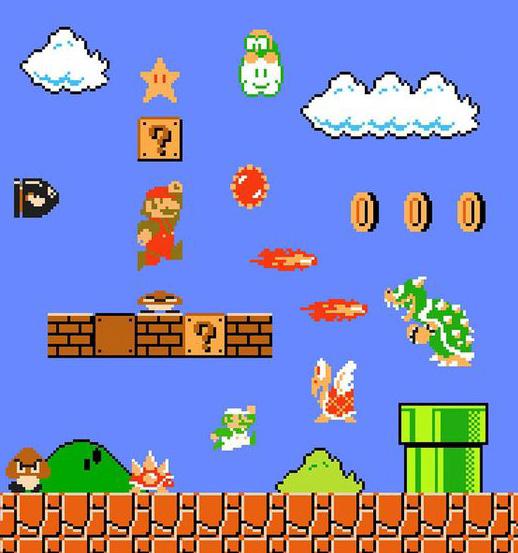
Visual by Ali Madsen
Kondo strived to make music that interacted with the visuals to intensify the emotional and physical immersion into the game. The main theme we know and love is called “Overworld.” Rewritten many times in order to accurately fit the gameplay, the C-major key uses no sharps and flats and helps create the jaunty, adventurous tone that matches the sprightly visuals. The most impressive aspect of this song outside of its inherent catchiness is that Kondo created it within the physical limitations of the NES console. The console could only produce a limited number of tones, obligating him to find some way to mimic different lines (like melody
50
and percussion). The NES console also struggled with memory issues and couldn’t handle long strings of music, so Kondo played around with repetitions and how to cleverly loop sections of the melody without driving a player crazy.
Interestingly enough, it’s possible he purposely went against this technique later on with the “Underworld” theme that plays over underground levels. It’s quite short, and the repetition of only a handful of notes while going through increasingly hard castle levels is a clever way to create tension for the player. The soundtrack enhancing the gaming experience doesn’t end there — once you get to the “Underwater” theme, the soundtrack becomes a waltz, which Kondo composed specifically to remind players of the lilting quality of waves. To contrast the “Overworld” theme, the “Underworld” theme is dark and brusque. Kondo created each song as a seamless extension to the game’s visuals, the intention influencing certain mental associations.
Somehow, Kondo constructed the soundtrack in such a way where the rhythm of the music seemed to match the cadence of one’s gameplay, an eerie tactic attested by many players. This carried into later installments of Super Mario Bros., with enemies stopping to dance on the “wa-wa” beats in the soundtrack — an animation that is, personally, very endearing and contributes to the whimsy that these games ooze.
All the Mario games are also laden with sound effects that blur the lines between player and media. Collecting coins yields a two-note sound, a B going up to an E, that is reminiscent of a cash register or a Vegas slot machine. The physical note change going up is also metaphorically tied to the act of gaining money associated with a positive action. Mario does love its metaphorical sounds, though, which is why notes slide upwards when Mario jumps and downwards when Bowser falls into a pit of lava. Collectively, soundtrack and sound effects create a direct association between a player’s actions and what is occurring in the game, making it the most intimate way to experience a piece of media.
To this day, it’s hard pressed not to recognize a Mario
51
song. Some personal favorites that are easily recognizable able are “Ghost House” — often accompanied by visuals of dark, ominous rooms and Boos gradually creeping closer — and “Coconut Mall” — a playful number laden with piano, steel drums, and saxophone that make it impossible not to dance while driving down escalators.
Nintendo often takes their own themes from the original game and remixes them for new releases, creating a brand that injects nostalgia into every Mario game. The music across the whole franchise, whether it’s from a new game or an old one, contains a certain playfulness that anyone will recognize. Play an audio on TikTok and hordes of people will instantly have an association to the games. Use the coin sound effect in your song — as Charli XCX does in her song “Boys” (2020) — and listeners will be thinking of those gloriously shiny star coins. Remix the original “Overworld” theme — like Lucky Dube in their song “Different Colours, One People” (1993) — and create a mental link between lyrics about solidarity and the wistful, unifying tune of childhood. The history of Mario’s famous theme is a true testament, more than any other piece of media, to how you can perfectly use music to enhance stories and our experiences consuming them.
52
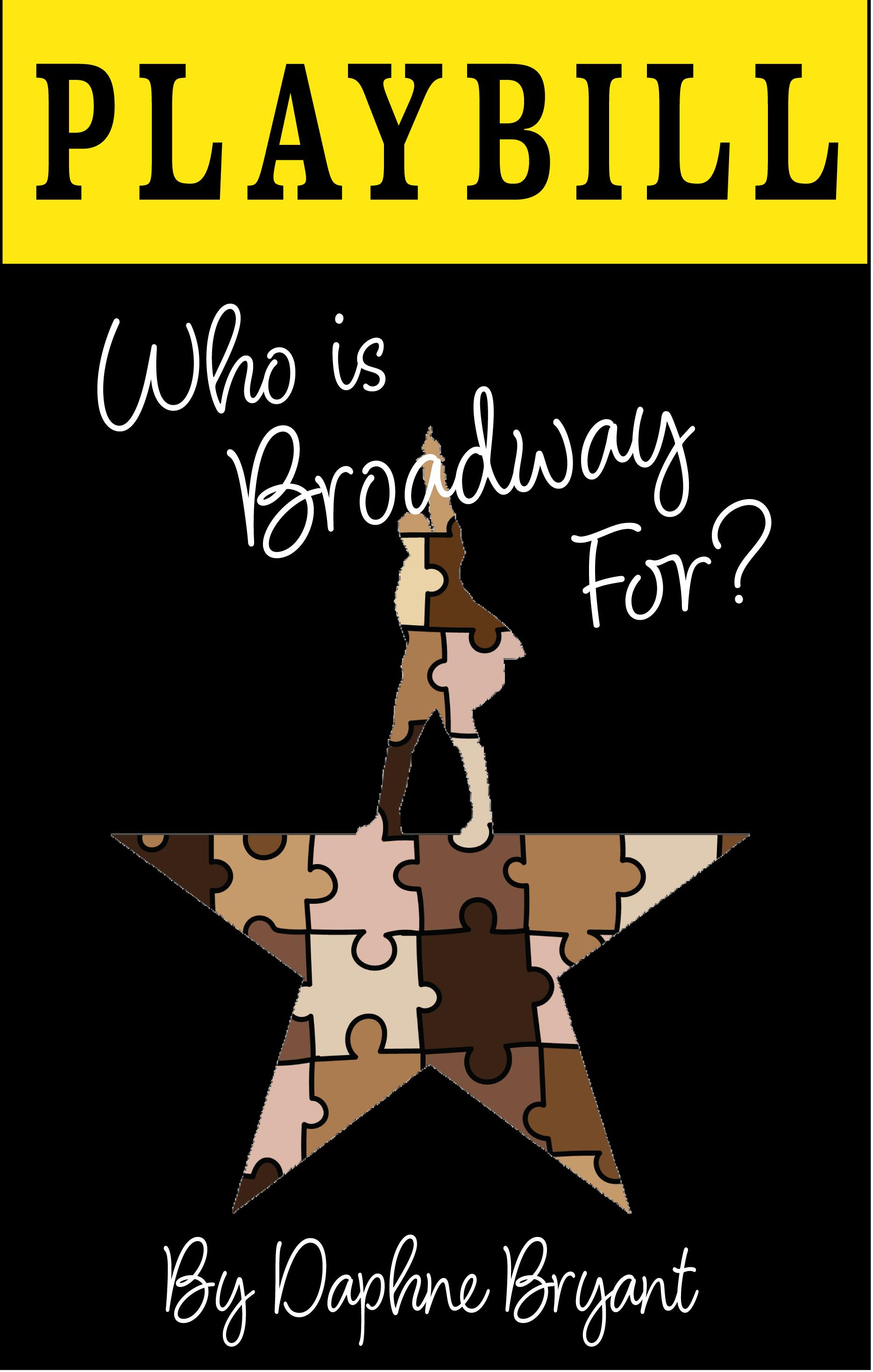
The easy answer is anyone, as it’s a form of public entertainment.
Surely anybody can stroll through the illuminating Theater District of New York City, making their way to work where they handle the operations of riveting plays and musicals. Anyone can act as a Broadway performer, and anyone can buy a ticket to a show, right? Wrong.
One might assume that this is because it takes a lot of hard work to get into the Broadway world, and this is true. An aspiring actor must train incessantly, taking acting, dance and voice classes. They’ve got to seize that “it factor” and the ability to captivate audiences, often for long periods of time. On the other side of the spectrum, someone who wants to hold an authoritative or executive position in Broadway must either be a child of nepotism or network intensely to make connections and be well-versed in the world of theater. But this isn’t a matter of talent or skill or even hard work; it’s a matter of opportunity. For people of color, there are undeniable barriers to breaking into Broadway, whether that be running the production, performing on stage, behind the scenes, or sitting in seats among intricately carved paintings and grand marble columns.
From beginning to the end, racial inequity plagues the Broadway process. AAPAC declares 93.8 percent of directors on Broadway were white in the 2018-2019 season. Broadway directors audition and cast actors as well as assemble and oversee the production team. It’s no wonder BIPOC talent isn’t proactively being hired, because there’s not active representation in the people that are hiring them. The same could be said of writers, stage managers, and producers. In this same season, 60 percent of actors were white.
Student Beyoncé Martinez ‘24, who worked on the pre-
54
Broadway run of Neil Diamond’s musical says “[the experience] made me realize that the world and the career that I’m stepping into is so damaged in the sense that we’re still dealing with racial disparities even in theater.” There is a lack of representation behind the scenes, too. BIPOC actors struggle with makeup departments that wash their rich skin tones out and hairdressers who do not understand 4A-4C and sometimes even 3A-3C hair textures. Even Broadway audiences remain overwhelmingly white.
but why?
At its root, this is a systemic issue that leaked into the music scene and caused rot to fester from the inside out. It is important not to forget that Black theatergoers were intentionally barred from white theater productions and theaters, especially in the time of Jim Crow where segregation ran rampant. In the modern day it is impossible to ignore that mainstream theater is white theater. If a BIPOC actor wants to make it to Broadway, they’ve got to somehow knock down the walls of oppression and microaggressions first. Starting as early as elementary school in BIPOC-majority schools, this might manifest as overcoming the systematic underfunding of art programs and trying to seek it out elsewhere. Later on, jumping over the hurdles of racial wealth gaps and invisible anti-discrimination policies persists as another struggle.
The second issue is visibility, which intermingles with comfort. Segregation may be illegal now, but there are still major racial disparities. I remember my first time seeing Hamilton live in Chicago, and my school of Black and brown kids representing one of the only racial and ethnic minorities present. In that moment of loneliness, despite feeling connected to the music and dialogue, I felt a lack of connection with my fellow viewers, which subconsciously influenced my entertainment experience. Being surrounded by a sea of white people can make BIPOC audiences feel a sense of alienation. Because of this, many would rather stay home and listen to Broadway soundtracks, or avoid associating with the art form
55
altogether.
The Sixth Love by
Then there is the matter of financial woes and gaps. To talk about race without talking about class and privilege would perpetuate a disservice; Broadway is elitist, and it isolates middle and low class BIPOC communities. There is a certain glamour associated with Broadway, and that’s not by accident. People who go and see Broadway are significantly more affluent than the average American, with over 60 percent of Broadway-goers earning more than six figures a year. Only a fourth of Americans earn that number, and when African-American workers continue to earn far less than white counterparts, racial disparities press on.
This intermingles with the concept of access as well, how growing up in rich, art-heavy, white communities can influence your chances on Broadway. In her performing arts classes, Martinez and many of her Black friends on campus experience a sense of imposter syndrome.
She explains, “My fellow white peers have been doing theater since birth. They’ve been in… arrays of shows and also have access to theater mentors and… to higher-ups in the theater boards of their high schools.”
This isn’t an accident, or an unfortunate coincidence. Time and time again, history shows that minorities just aren’t given the same opportunities that white people in this country are, and it causes a disconnect when it comes to networking circles and connections. As I stated earlier, this is key to making it on the big stage.
Karissa
VisualbyAshleyOnnembo FlashbyKennyWood
Schaefer
One reason for the lack of representation concerning Broadway that we don’t talk about nearly enough is the issue of relative material. Seeing yourself in Broadway actors and directors is an important kind of visibility. Josh Streeter, a graduate professor who does project-based theater work surrounding equity in the community, explains some of his job: “I work with companies that are like: ‘Ok, let’s look at your season: you have one show by a person of color. That’s not acceptable anymore.’” When pieces resonate with BIPOC audiences, BIPOC viewers are more likely to attend and pick up that Playbill.

56
One example is Slave Play, created by Black and gay playwright Jeremy O. Harris. Another is Lin-Manuel Miranda’s Hamilton, whose fast-rapping cadences and iconic one-liners are modeled after songs from phenomenal artists in the Black community such as Jay Z, Mobb Deep, Biggie, DMX, Beyoncé and the Fugees. Additionally, Hamilton features mostly BIPOC actors such as African-American Leslie Odom Jr. and Lin-Manuel Miranda himself, who is Puerto Rican; white actors here are the minority. The ticket prices aren’t changing to accommodate those who may be less fortunate, but the shows that include cultural idiosyncrasies and features BIPOC actors tend to be more appealing to BIPOC consumers.
This being said, shows like Slave Play or The Lion King draw links to another issue called color conscious casting, where BIPOC performers are only casted in shows about BIPOC stories. Such was the case with The King and I; the Asian-American Performers Action Coalition (AAPAC) did a study in which they found that the Lincoln Center’s production of The King and I accounted for 62 contracts to Asian actors (including understudies and replacements) and 53 percent of all Asian actors employed in the 2014-2015 season. Many of the characters in the musical are Thai or of Asian heritage, which is great for visibility’s sake, but also typecasts Asian actors. There’s no reason why an Asian actress can’t play Glinda in Wicked or an Asian actor play “the Angel of Music”, but these roles are often given to white actors instead.
So what can we do? As discouraging as all of these issues might sound, it just proves and reiterates that these BIPOC Broadway members, in all aspects, are needed. Those who can need to promote equity, making things as fair as possible for those who are on a lower playing field (thanks to the system). This means evaluating who we’re putting in authoritative positions, incorporating diversity and inclusion laws and initiatives in the workplace, fostering open-minded casting and pushing out resources to less fortunate communities. Equity is something we need to strive for, so that it’s possible for all kinds of BIPOC talent to not only break into the Broadway world, but thrive there. The fight is never over.
57
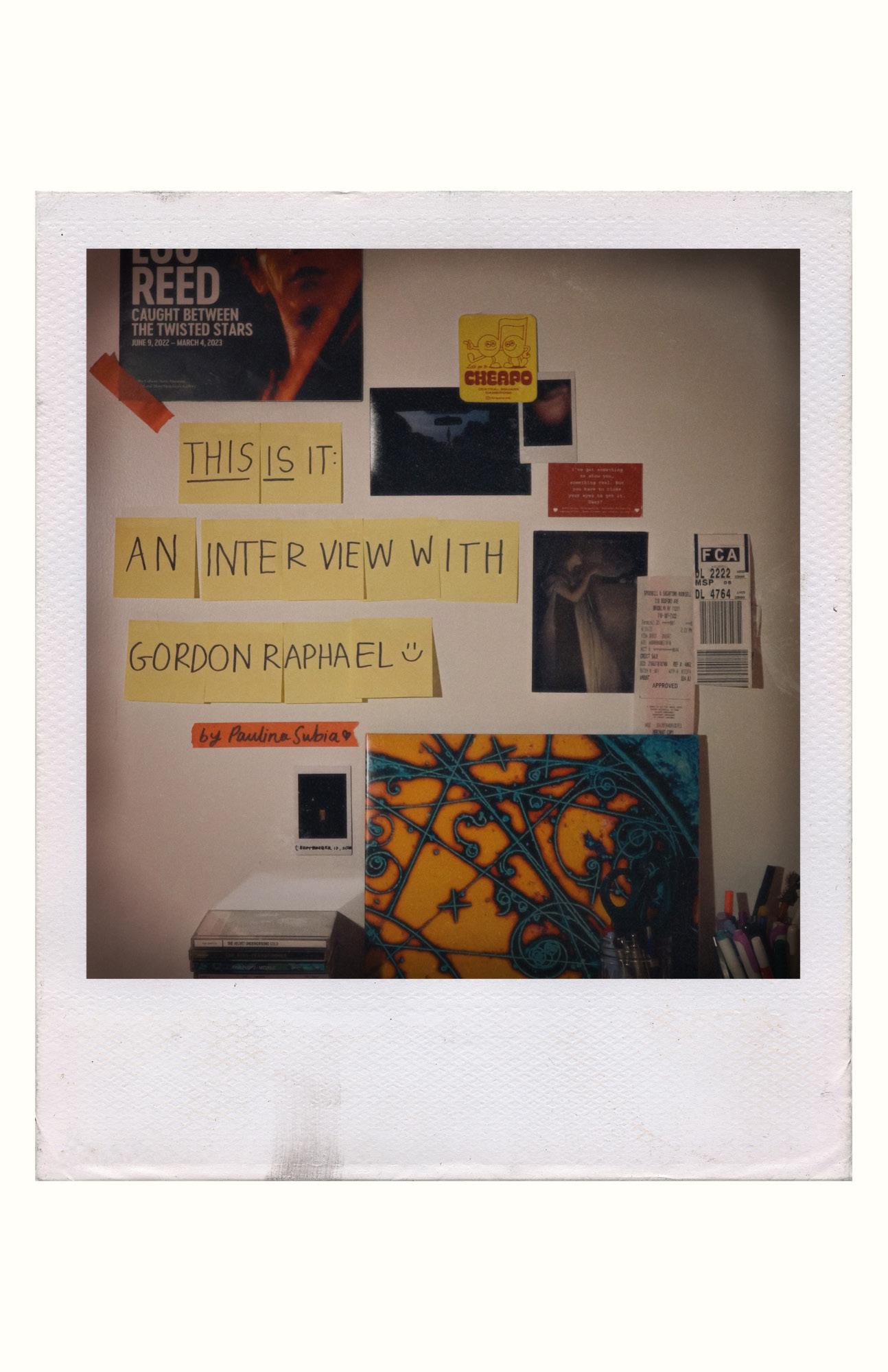
Gordon Raphael’s memoir, The World Is Going to Love This: Up From the Basement with The Strokes, reads as though you’re entering a time capsule into the last great era of rock ‘n’ roll — told from the voice of the man who started it all. Raphael’s work with The Strokes has become stuff of legend: after a chance meeting at the Luna Lounge in New York City, Raphael produced the band’s seminal debut, Is This It, catapulting them into the mainstream and bringing garage rock to the forefront of popular music. Over two decades later, Is This It remains a legendary rock staple that ushered in a wave of rock bands to follow — along with a legacy of leather jackets, skinny jeans, and a “no fucks given” attitude.
Raphael also writes of meeting The Libertines in their early days and almost producing their first album, as well as discovering Regina Spektor and forging a brilliant musical relationship. In discussing his Seattle roots, approach to music production and thoughts on the early 2000s rock culture, it’s clear that Raphael’s passion for music goes beyond the average listener.
Paulina: This is by far the most detailed music memoir I’ve ever read. You’re so meticulous [regarding] the tiniest details, and I found it fascinating! How did you remember everything?
Gordon: I think [that’s] funny and interesting because many of my friends say that I have a very bad memory! My grandfather always told me that he had a strange memory, where if it was important or interesting to him, he would remember it… perfectly clear, and anything else would slip by. And I think it’s that way with me, [with] things that I find fascinating, and events where I was in the moment and feeling the power of life going on, like [a] vortex. It seems like I can remember the details and feel the sensations very clearly, still.
P: Do you have any favorite musicians from childhood that sparked inspiration as a musician and producer?
G: My dad was a jazz musician, and he would play his horn to loud records late at night , and I just thought that was annoying! It kind of made me not like “big band” jazz very much. But then, when I was about 10 , or
and being yelled at for everything. I think we felt more redeemed, [with] the crazy, quirky stuff we were interested [in]. Everybody [would tell] us, “Get a job! This is never going to serve you! You’re wasting your fucking time! You’re just doing things that nobody’s interested in!,” to suddenly, “Hey, I’m on a tour bus and we’re going across America, and I can afford to go to the pawn shop and buy a new keyboard!” This was a vindication.
P: How did your experiences in your bands Sky Cries Mary and Absinthee prepare you to become a producer?
G: Before the time of success, I was recording my own stuff, because of that childhood belief of [having] so many clever ideas and [thinking] the words that come out of my pen are brilliant! I recorded all my songs, and I’ve learned lots of tricks to make things sound cool and interesting. I [often] used this little synthesizer called the ARP Odyssey to make outer space noises and weird psychic sounds from another realm that were always going on in the backgrounds of my songs. When I actually became a producer for other people, I just had all this experience of my own music to fall back on.
P: It seems like you took the approach of world-building when you created your music — you’re not just listening to it, it’s a wholly immersive experience.
G: Yeah, the world [grew] the more I got into mastering music or… play[ing] the piano or [making] a song. At some point, after many experiments and failed songs, I crossed this line and [thought], “Hey, I did that. That’s really cool!” I want[ed] to show all my friends and [they’d say], “Oh, no, here he comes again, with another cassette tape in his pocket. He’s going to play 30 minutes of weird stuff for us. Oh, should we let him in?” But yeah, the world that was being created was so fascinating that I had to go back to check if it was still there [and] see if I could still go in or make another discovery.
P: You also mentioned in the book that the internet revolutionized everything. How did that affect your approach to the industry altogether, when it came to producing?
G: In the previous generation — which I got to actually experience a little bit of in New York — artists and weirdos would hold parties, and it would be really interesting. And in the late ’90s, it was new ”dot com” corporations holding the parties. They were cool parties because they had enough money [to] afford these strange avant-garde artists and performers, [which was] spectacular! As an unemployed musician, I was getting work [from new websites pitching], “There’s a new yoga website popping up, why don’t make yoga music for a while?” [And I’d say], “Okay, I’ll make electronic yoga music.” So there was work to be had, and there were some really good parties from that scene. But there was also this sense of like, “What is going on here?” All these finance bros are moving into the neighborhoods where [there] used to be funky artists and interesting alternative people. Now it’s all these guys intent on making millions with the new medium of the internet.
P: That’s so interesting to hear; I grew up with the internet and am used to streaming services and all that. It seems like there was a major shift almost out of nowhere.
G: For me, it was great because I could write and communicate with people all over the world and have instant friendships and communication. Something like The Strokes may have been… one of the very first bands ever promoted on the internet in this new way.
P: That’s so wild to think about! In the book, you mentioned all these underground artists that you encountered when you first moved to New York; was there anyone that stood out to you that you still listen to or think about today?
G: That’s interesting. The real inspiration [behind] New York when I moved there, and whenever I visited previously, was this one little street in the East Village, St. Mark’s Place. Any free time I could possibly have –which is a lot because I wasn’t really worth very much —I would just go to that street and walk up and down from Tompkins Park, up to Third Avenue. The things you would see on the street on a Friday night, on a Saturday night… it was like a free circus, where you sit there
and look at the parade going by. It was so inspirational to me, it really gave me a lot of vitality. I was always thinking, “Wow, look at the sea of humanity.” There were very interesting people from all over the world: poor, rich, every kind of person was there on that street [joining] this parade.
P: Now, if you don’t mind, I’d like to nerd out over The Strokes for a minute. You write about the first time you saw them at the Luna Lounge, and I loved that chapter. What stood out to you and made you think, “Oh, this band is actually pretty interesting. They might have something.”
G: Well, when I first saw them at the club, I didn’t really dig them. I [thought], “Wow, they seem very proud of themselves, and they’re carrying themselves with a lot of confidence, but… the music isn’t blowing my mind or anything.” I like to go to every band that is at least cool and give them my card and see if they’ll work with me. Now, the first band did not come work with me but Albert [Hammond Jr.] came and the whole band came to my studio. When I actually set up microphones and heard what they were doing very clearly [and] I heard the songs a couple of times, I’m going, “Wow, this is really interesting.” I was impressed because of how tightly and powerfully they were playing and how seriously they were taking it—they wouldn’t let anything go by that wasn’t how they wanted it to be. They were really wanting to get it right. I really respected them for that attitude.
But I was confused. Because in my heart as a music fan and listener, I was hearing distant echoes of The Stooges and the Velvet Underground. And in the year 2000, believe me, nobody was talking about [those bands]. [I thought], how do these young 20-year-old people know about that music; did their parents play it for them? Even when the Velvet Underground and the Stooges were signed on a major label, nobody really bought their albums in America. Popular culture was either talking about vacant pop songs, or anti-war, “flower power”-hippie movement, and then out comes “Heroin” and all that S&M stuff from the Velvet Underground, and Iggy Pop cutting himself with glass and rolling around on a stage. I became very confused [about] how those echoes reached
this new generation: how did they learn about it? Why do they think it’s cool? My generation, my friends in Seattle, we listened to the Stooges, we listened to the Velvet Underground. But it surprised me that people from their generation had a feeling of that music in their music.
P: It’s like the band playing on stage and the egos that they exerted didn’t translate the same way it did when they were in a more intimate setting.
G: And also, when I heard [them] clearly in my studio, my inner musician [recognized that] that’s not easy to do; they are playing very difficult stuff… Right from the get-go, I had to give up respect. I’ve been in bands my whole life, I play music every day, but what they are doing… it’s very hard, and they’re really dedicated. So everything changed once I started working with them, and my feelings about them.
P: I love the part where you recount the story behind distorting Julian [Casablanas]’s vocals. It’s such an interesting story because I feel like he’s known for that kind of Lou Reed-esque sound now, or at least that’s what he gets compared to. Could you recount for me what went into that decision-making?
G: Well, they had given me a couple mysterious ideas… when we first met in the studio. I set up some microphones, I pulled them in the studio, [and said], “So, young musicians, what do you have in mind? What would you like to do?” And the first thing [was], “Well, whatever anyone else is doing in New York right now, we’d like to do not that — what would that be?” So that [was] like a little cryptic code, [but] I put that in the back of my mind.
When it came time for the vocals, I had been listening to industrial music [at the time]. My favorite artist was Skinny Puppy from Vancouver, British Columbia. I’d been listening to that since the late ’80s, all through the late ’90s during the grunge era. So, when it came time to try Julian’s vocals, I thought, “Man, they’re gonna love me when I show them this industrial sound. How cool would that sound [for] rock music to have this
sound?” I showed them what I would call “nuclear devastation,” a completely destroyed voice [that] just sounds like you’ve been bombed. And when I played it for Julian, he looked sad and he told me, “That’s a very ugly sound. I kind of hate it.”
And then he said, “You know how your favorite jeans, they’re not brand new, but they don’t have holes in them?” I go, “Okay, yeah, we’re gonna make the sound like jeans… Oh, maybe he means, if I dial it back from ‘nuclear devastation’ and keep some of the worn tube saturation, and don’t make it too clean like new jeans, then he’s going to like it better.” And then he sang it; he seemed to be enjoying himself while he sang it. He came in, we played it and everyone in the band and their guru J.P. [Bowersock] all just nodded their head like, “Yeah, that’s cool.” And that was it: all the other songs I ever recorded with them had that sound.
P: Listening to Is This It roughly 21 years later, how do you feel about it now?
G: It felt like and [still] feels like a complete magical event. This thing walked into my life, [this] group of people met me… and then somehow Is This It came out. And not only did it come out — that’s already enough — but the world took it to heart and ears. And 21 years later, I have to say, you’re not the only one who wants to talk about it — that’s the good news! I can talk about [the album] and people want to hear about [it] or ask me on an almost daily basis, some little question. That’s really beautiful. I’ll never get tired of that. It’s just such a lucky star, you know?
P: You mention in the book that you were initially offended [by The Libertines] because you felt they were copying Is This It and The Strokes, but then hearing them live was an entirely different experience.
G: Their manager played me some demos, and I said, “I don’t want to hear this! This sounds like they’re just copying the sloppiest parts of The Strokes but they didn’t get the balance right!” The Strokes… wanted to have a rough, lively sound, but they wanted every note of the guitar [and] the voice and every word to be
heard. We had to balance it, and that was rocket science! So when I heard The Libertines demos… they got the rough, messy part, but [it] just sound[ed] like chaos. The manager said, “Just come to one practice tomorrow. They want to meet you.” I heard them actually playing their music, I was floored, they were phenomenal!
P: What about them performing live got your attention?
G: They looked fantastic. Gary [Powell]’s drumming was completely different than Fab [Moretti, drummer of The Strokes]’s, eloquent and over-the-top good. The two guys, Pete [Doherty] and Carl [Barât], they sang perfect, incredible harmonies. The lyrics were fantastic. Everything about it was infectious, and it did not sound, to me, like The Strokes at all. It sounded extremely British; it had a real like, British soul to it. And I felt like… [I’d] just met the Beatles when they were 19 years old.
P: It seems like you have a very distinct memory not only of the bands you’ve worked with, but also the culture in which you found yourself in. Between the New York rock scene and the London scene, did you see any similarities or differences?
G: I noticed something that I think a lot of people don’t talk about: I think that the UK — especially the rock ‘n’ roll media — fabricated a culture of rock music in New York City that never existed. It made it seem like New York City was a Jerusalem where [when] you go there… it’s going to be like rock ‘n’ roll central [with] skinny jeans, leather jackets, smoking cigarettes, but it wasn’t like that at all! I noticed as a New Yorkerliving in London that they were building up some kind of scene [claiming] that New York was the center of musical attention, when it wasn’t. On the other hand, because of that, living in London in the early 2000s, [I saw] all these bands from New York coming through and being treated like kings… everybody just loved them.
P: Jumping into when you first met Regina Spektor, she was essentially a brand new artist at the time, correct?
G: She was, in a sense; she hadn’t gone out into the world [yet]. [At the time], she was playing in the East Village at the Sidewalk Cafe. But… she played music since she was five years old, developing [her sound] and had a big head start [when] she took to the piano. So, even though she was unknown and fairly young when I met her, she was a very advanced musician, jaw-dropping [with] the lyrics, vocal tone, visual presentation, piano skills, songwriting, all that stuff. She had it in the bag.
P: Would you say this compelled you to work with her, despite her being a new artist?
G: Everybody I work with is new! No management, no record labels, and no famous bands ever called me to work with them; that’s a very funny thing. So Regina was very typical for me.[When meeting new artists], I say, what do you do? And they play me a song that knocks me out in 12 seconds; I’m already [thinking], “I gotta record this!” That’s where I got the title for my book; within 25 seconds, I thought, “The world is going to love this!”... about Regina Spektor.
P: It was nice to read about you working with her; it seems like you had a genuine passion for what she was doing. With her diverse range of influences, musically, how did you get into a headspace that could incorporate all those different elements of her sound?
G: When I first heard her play, [I had] all these crazy thoughts about having to record [her] right away. I thought [she was] playing like a classical musician on the piano, but her vocal[s] [are] like Joni Mitchell, just going all over the place with complete control. And yet her lyrics are so silly and weird and modern, like The Moldy Peaches. All I’m thinking about is, record the piano in a cool way… making the coolest voice sound I possibly can, and looking at her face [to ensure that] she doesn’t look tense, nervous, or unhappy. Then I know I’m doing my job.
P: Can you recall any pressure that you may have felt working on Room on Fire?
G: I think that my pressure was the fact that they felt the pressure. I was I was going into it like, “Hey, we did so good, man. We’re gonna do it again!”, [whereas] they were like, “I don’t know if we can do it again… second records are always hard.” They had a million things on their mind that were heavy, all these things that you don’t need in the back of your mind when you’re making music. There was a different psychology this time. They had been touring for [almost] two years straight, and [they became] expanded versions of themselves from when I met them. It wasn’t these 19, 20, and 21 year old kids hoping to get out of the Lower East Side. There was definitely excitement but they had the weight of the world on their shoulders to prove… that they could do it again.
P: I love the part where you talk about recording “Under Control.” You write that it produced a sort of visceral reaction from you when you heard it for the first time. Could you expand on that?
G: [As] I’m in the control room while they’re in the live room, and I got the speakers [turned] up very loud wondering what the song is going to be… all the parts were blending together in a way that made it feel like the room was either wobbling or the walls were pulsating! [It] had a very strange feeling like some kind of unknown motion was going on within the room that [is] captured in the record.
P: There’s one quote from the book that I want to highlight: “It’s difficult, if not impossible, to recreate the excitement of the first time you heard an innovative new sound or band.” What advice would you give to any musician who feels a pressure to stick to a certain sound by means of success?
G: Don’t worry about whether it sounds like what you [once] did… don’t [worry if] it sounds different. Just make music or create artwork that, when you’re looking at it, reading it, or listening to it, you nod your head and you go, “Goddamn right! That’s me; I made that. Listen to those lyrics. Listen to me playing that instrument, man. That is awesome!” I think that’s a really good place to create from.
P: Have you read about the “indie sleaze” discourse online? Out of curiosity, how do you feel about this era coming back into popularity and people trying to replicate it for themselves?
G: Generally, I like anything that makes people talk about [the era] because The Strokes really had a big part [in] that. If you’re just talking about their fashions, and how cute they are, that may or may not be interesting to me, but [I like people] digging their music and finding that there’s something about that energy of the music that applies today. I went and saw [The Strokes] at a festival in Glasgow, and there were 50,000 people, very young people, all not only singing along with Julian, but singing every guitar riff—that was crazy! Of course, as a guy who is invested in those first two Strokes, albums, it thrills me that that is a flavor du jour.
I wonder, are they talking about The Libertines? Are they going as far back as Bloc Party? There were some very heavy club nights in London… and I think that part of the indie sleaze is really romanticizing those club nights in particular, and the fashions at them.
P: They are, ironically! What do you think is the enduring legacy of The Strokes that puts them at the forefront of this early 2000s rock movement?
G: The thing that makes my heart so happy about [their] music is that you have to be very brave to make original, complicated music… your own thing. The way they did harmony, the two guitars playing different melodies, while the bass played a third melody, and the guy played a fourth melody singing — that’s not really traditional rock ‘n’ roll, where [there’s] usually a heavy cord, and a guy shouting over the top. This is a completely different way to make rock music. Yet, with all its artistic qualities, integrity, complications… people still liked it! It still resonated with people, [and it’s] incredible to know that something so beautiful, and with so much hard work put in [to] it, has a chance to go out in the world and rock ‘n’ roll for 20 years.
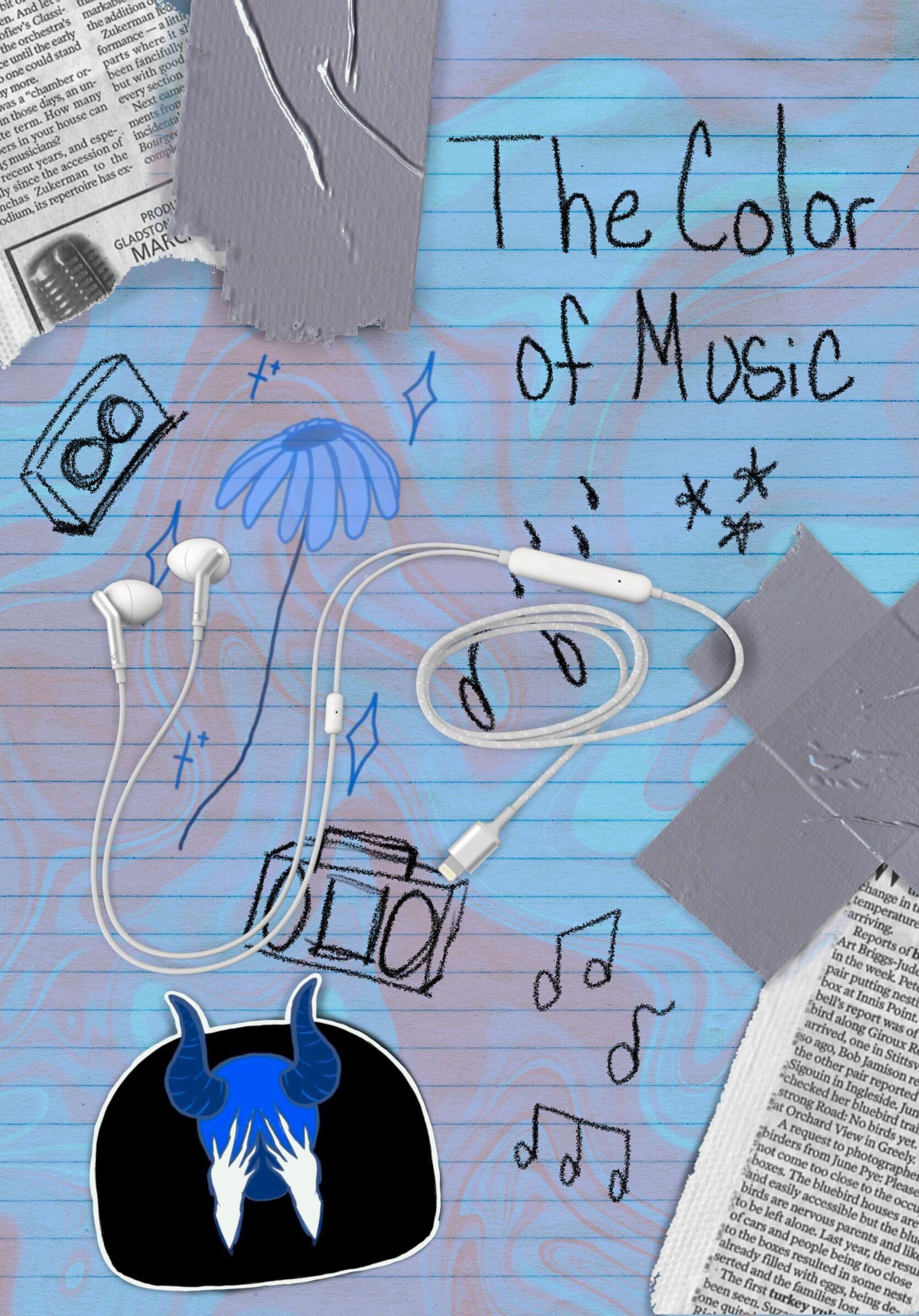
I have been collecting color for as long as I can remember, but blue always held the most of my attention. I could say that I became infatuated with blue, but I think blue’s infatuation with me started this whole obsession. Mom once told me I was born blue. My blueness portrayed so lucid, it caused us to spend an extra night in the observation room. I’d like to think my consumption of blue began there, on that morning in 2001, when I was still thoughtless and new, though blue did not truly possess me for another seventeen summers.
While on a train heading towards Boston, I began reading Maggie Nelson’s Bluets. Nelson begins her story with, “Suppose I were to begin by saying that I had fallen in love with a color.” I was brought back to the idea of Mom and I in the observation room that night when I was six pounds and three ounces of blue and thought, maybe I was destined to be blue, or at least, to live a life in which I am constantly consumed by color. I was in love with it, but my love wasn’t a choice I had made, rather a predetermination by the universe, or by God, or maybe there just wasn’t enough oxygen in my blood when I came out of the womb.
As I got older, music announced itself as my second love. My father brought down a CD player from the attic in 2008 and my obsession with sound became just as real as my obsession with color; these two loves of mine quickly intertwined and co-existed with one another. I began to associate colors with songs. I’ve done this with every color, but am partial to blue, of course.
I am offended when people classify blue as a sad color. “Sad” is too shallow of a description for a color as rich and complex as this –– the color of the sky and the ocean couldn’t possibly be diminished to one three letter word. Scientists used to believe that blue would be the color of the universe if it were compressed into one singular dot. Newer research discredited this theory, unveiling the color of the universe more accurately as some variation of beige. But I am still hopeful that they were wrong.
Looking back on that day in 2008 with my dad, my lemon yellow bedroom wall and that CD player, I specifically
71
remember only using the device to play a collection of Beatles songs. I cannot remember any song on said collection other than “Across the Universe”, which is a blue song. To me, the blueness of this song comes from its D major key, creating a bright, harmonic, calming sound, along with its deep, evocative lyrics such as “pools of sorrow, waves of joy are drifting through my opened mind.”
The lyrics in this song, along with other blue songs, are romantic. When I say “romantic”, I mean this more so in its literary context — the romantic form often involving flowery language and eliciting profound and/ or mystical ideologies. Any song relating to the concept of outer space also fits into my personal definition of blue songs: “Starman” by David Bowie, “Space Song” by Beach House and “Rocket Man” by Elton John, to name a few.
Some songs simply sound blue to me. An example of this is “On an Island” by David Gilmour. Gilmour, the guitarist of Pink Floyd is recognized for creating ambient soundscapes with his intricate playing. Music scholar Jed Van Wyngaardt recounts Gilmour’s signature sound to include “fuzz rather than distortion, for the extended sustain offered by the fuzz pedals. He also uses delay, modulation and reverb in spades, and the compression that he uses gives him his even, spanky attack.”In simpler terms, Gilmour’s unique style elicits a very cinematic sound that I associate with the potential harmony of a rich, majestic shade of blue.
I feel blue when I am feeling most connected to myself

72
—
my authentic self — opposed to the more shallow version the rest of the world sees. Blue feels intimate, genuine, vulnerable. It makes sense why my blue songs are the ones I don’t usually share with just anyone; they are songs I like to listen to alone.
Some songs are too personal to belong to anyone but yourself. A peer of mine, Devin Turcotte, and I deliberated this idea. She too believes there are certain songs we tend to keep guarded. She said that “Fly On” by Coldplay is very personal for her, and she “doesn’t want anyone else to fall in love with it.”
Bearing an intimate connection with a song is a lot like having an intimate connection with a person. Once an individual feels they share a sacred bond with a song, it seems disturbing to think someone else understands that same relationship.
“Between The Bars” by Elliot Smith is my please don’t fall in love with this song song. This song carries me through the hardest times in my life. It is my “safe” song. It grounds me, reminds me that I am okay, and most importantly makes me feel the most connected to blue: my inner, private self. I remember one time I played the song aloud for someone. As I sat there next to them, watching them listen to the lyrics, I genuinely felt like I was watching someone read my diary.
Turcotte told me that one of her favorite things is “when artists do something you’ve never seen before.” What I think draws a lot of people towards certain songs has to do with honesty and authenticity from the artist. When an artist is being truthful, their work is bound to stand out. It is prone to be individualistic and innovative. To me, this idea is the foundation for a blue song. A good blue song needs to be intimate; the artist must hold a tight grasp on their inner self in order for them to communicate the intensely evocative sound that is blue.
I remember the summer of 2018 as the bluest summer of my life, the summer I felt more at peace with existing as my authentic self than ever before. I stayed in Tuscany, Italy, sitting on a kitchen counter tossing apricot pits
73
out the window while listening to “Should Have Known Better” by Sufjan Stevens. The mystical backdrop of the Italian countryside, hiding from my parents and running away from bees, enveloped me. There was something so romantic about it all, so cinematic, so… blue.
I rarely looked at my phone, a choice so disconnected from the rest of my life. I reveled in the possibilities of exploring different versions of myself without consequence, free from the obligations I assumed so imperatively back home. Stevens lightly whined, I should have… this and I should have… that. Somehow I knew it all would work out for me in the end. His words encouraged me to make mistakes and learn from them. Life is trial and error, and this particular song — one of my bluest of them all — emblematically illustrates that idea for me.
Isabella Kooch, another one of my peers, told me that an incredibly special song for her is “Like Me” by Steve Lacy. It helped her become more comfortable with her sexuality in high school. I concluded that most of us music listeners need music the most when we feel the least ourselves –– when we are lost. We use them to guide us back on the right track. We seek them like a lighthouse when we are way out in dark waters, under moonless skies, to guide us back to safety. We learn to understand our own stories through the stories of another.
Another blue song I want to mention is “Ribs” by Lorde, a song Turcotte had brought up in our conversation. I felt wary that no one on this planet would agree with my color to song associations, and that people might
74
It’s interesting -- though these feelings are my blue, I can understand how they are someone else’s gray.
think my conceptualization of blue music seemed totally absurd. However, I asked Turcotte what she thought a blue song would sound like, which she immediately replied to with “Ribs.” Turcotte says that this song feels like “dusk”; she calls it the “navy blue of nighttime.” I absolutely love this description. This image in my head of that “navy blue” sky; a sky almost submitting to darkness, but still holding on to the very last bit of the day is an excellent visual for what a blue song encapsulates. Turcotte said it best herself: it’s what “new beginnings feel like.”
Despite my luck with Turcotte’s association of a blue song, I remained right in my belief that not everyone would agree on what blue songs manifest as. An old friend of mine and aspiring musician, Milo Winter, says his favorite song is “Beach Life-In-Death” by Car Seat Headrest. When he visualizes this song, it looks “like a cold morning on a desolate beach. It feels like waking up at 5 a.m. for a road trip [...] It gives that bittersweet feeling, moving on, but scared to leave what you’re moving on from…” Considering these associations, I would immediately assume Winter’s favorite song to be blue. However, Winter describes “Beach Life-In-Death” to be a “grayish-tan color.” It’s interesting –– though these feelings are my blue, I can understand how they are someone else’s gray. Winter also said he believes people are supposed to perceive music differently and have unique associations.
My bias to blue songs traces back to my beginnings, but the rest are far from neglected. Every color in my life occupies its own role, and the same goes for their corresponding sounds. Red, for instance, is important when I am angry, motivated, frustrated, confident, or when I am running a mile at the gym. Red songs are loud, fast paced, with strong passionate voices. “Thunderstruck” by AC/DC and “Vamp Anthem” by Playboi Carti are two very different, yet still very red songs to me.
My second favorite branch of music stems from the color yellow. “Goodbye Yellow Brick Road” by Elton John and “Yellow Submarine” by the Beatles are examples of songs specifically about the color yellow that help define how I associate this color with music. My father, who
75
can recall this memory a lot better than I can, told me the first song I ever sang as a toddler was “Yellow Submarine” — naturally, I associate yellow songs with my youth and innocence. “Goodbye Yellow Brick Road” evokes similar associations for me, but on a different note. Though yellow is typically regarded as a happy color, this song is quite sad, depicting Elton John’s journey with fame and longing for a simple life. With these songs in mind, I view yellow melodies as ones that elicit a melancholy or a saudade: a yearning, longing feeling.
For the most part, nostalgia plants a common seed for a listener’s identification with a song. Giselle Lily, a rising musician based in New York City, says her favorite thing about music is that “there’s always a memory that comes with it.” She also added that most of her favorite songs earn the coveted status because of the “nostalgia, warmth, and happiness” attached to them. In my conversation with Winter, he shared that the song “Queen of Hearts” by Juice Newton “immediately puts [him] in the backseat of [his] parents car driving to the beach as a six-year-old looking into the fog.” I could easily picture this memory of his without ever living through it. When a song is tied to a moment in time that is so visceral and rooted in our minds, it is almost impossible to erase that connection, despite how distant of a memory it may be.
It seemed like almost everyone I talked to about this concept could quickly provide me with an example of their own. Kooch says that “Smells Like Teen Spirit” by Nirvana reminds her of “dancing with [her] sister for her parents after dinner and playing air guitar.” Turcotte says that “Paradise” by Coldplay reminds her of listening to music on her iPod Touch when she was a kid. These memories of theirs that have been tied to these songs will more than likely stick around for the rest of their lives.
My own mother, who is well into her fifties now, told me that she can never hear the song “Empty Garden (Hey Hey Johnny)” by Elton John without remembering her brother John, who was murdered in 1990. She told me that this song played at his memorial and serves as the
76
collective “grief song” for those who were close to him. Even I, who never got the chance to meet my uncle John, am able to think of him and his unexpected passing when I hear this song. (It is a blue song, by the way.)
Recently, I found out that one of my all-time favorite artists, Billy Joel, experiences a version of synesthesia where his senses of sound and sight overlap. In an interview with Psychology Today, Joel explained that “different types of melodies which are slower or softer, like ‘Lullaby (Goodnight My Angel),’ ‘And So It Goes’ and ‘Vienna,’ [he describes] in terms of blue or greens.” He also said that stronger songs with more rhythmic patterns, like “We Didn’t Start the Fire” are usually more aligned with reds, oranges, and golds. My blue playlist included “Lullaby (Goodnight My Angel)” before I discovered that Joel himself would agree with my decision. It’s nice to know that my perceptions of blue aren’t completely outlandish.
I am brought back to Bluets. As Nelson navigates the color, she references the beliefs of writer Johann Wolfgang von Goethe. Goethe, who had a lot of thoughts on the color blue himself, once wrote, “[Blue’s] appearance, then, is a kind of contradiction between excitement and repose.” What I love most about my blue music comes back to this idea. Blue is complex, just as music is meant to be complex, and just as humans are. Commonly known as the color of sadness, blue prevailed as the happiest, most special color for myself and others alike. It became so special that it latched on to all of my favorite songs. Its grip is so tight that I will never be able to hear them without thinking of or imagining this perfect color. Our associations are powerful: they provide us with the ability to connect –– to hold things sacred.
Scan the QR code to listen to Lily’s blue-inspired playlist!

77
EVERGREEN SOUND AND THE RESURGENCE OF THE 70S
 By: Minna Abdel-Gawad
The constant metamorphosis of the music industry leads to every decade defined by a distinct musical style, influenced by the technology available to the artists at the time. While trends vary in popularity for certain genres and artists, artists also transcend these trends. This is the music that your dad listened to growing up and, when you play it in the car, he’s shocked because “people your age still listen to this?” Music binds us together and creates common ground between people who wouldn’t see eye to eye regularly.
Some music is evergreen, consistently popular despite these changing trends. This phenomenon is reflected in artists like ABBA, Stevie Wonder and Fleetwood Mac. These artists have become legends that are still played on the radio today. Their popularity is reflected in the sheer number of listeners they garner. Fleetwood Mac stopped making music together in 2003, yet the band is listed as #148 of the most-streamed bands worldwide. Stevie Wonder is cited as a 1970s style icon with over 16 million monthly listeners. ABBA sells out stadiums where they aren’t even performing — rather, it’s holograms of the members. Needless to say, these popular artists of the ’70s are still incredibly influential to the music industry today and are cited by many modern artists as their primary inspirations.
Both aesthetically and sonically, the style of the ’70s recently resurged in aspects of popular culture. The revival of many fashion choices like vests, flare jeans, bright colors and midi dresses snowballs into the romanticisation of other aesthetic styles from this decade, such as hippie and bohemian looks and the use of film cameras. Iconic figures from the time, such as Stevie Nicks, Cher and Twiggy are still cited as major fashion and aesthetic inspirations for so many people, with their unique and warm-toned styles. Sonically, many artists like Lorde, Taylor Swift and HAIM cite inspiration from the likes of Joni Mitchell and Fleetwood Mac. Even on platforms like Tik Tok, music that is inspired by and sounds like ‘70s bands is breaking through the algorithm.
The leading example of this phenomenon is the New Yorkbased band, Seeing Double. The five-person collective
79
put out their first single “Leah” in January 2022, and it quickly amassed over 2 million streams on Spotify.
“‘Leah’ is not [about] a real person. [It’s] inspired by the ‘70s power ballads of girls’ names like Layla, Rihanna and Sarah,” shares lead vocalist Allie Sandt. “Leah” reflects how massive power ballads, which have fallen out of popularity, still have an audience that relate and want to hear these womens’ stories.
Seeing Double also utilizes the beauty of the threepart harmony in all of their songs. This musical element exudes the ’70s, as this was the period of time in which production quality improved and allowed harmonies to sound breathtaking on recordings. Record companies invested far more funding into the production end of the musical process, which led to a wide range of recording innovation. In 1970, the 24 track recorder came about, allowing for a more rich and layered sound from many artists of the time.
Boston-based band Doll Spirit Vessel’s Kati Malison shared that “things also got a lot more interesting in the ‘70s, where people realized that dissonance is really great when it is followed by constants,” in regard to the unique harmonization of the ’70s. A prime example of this is “Somebody to Love” by Queen. The track opens with so many layers of vocals, it sounds like a full gospel choir is singing directly to you. Every second of the song contains rich instrumentation and vocal performance, as the band took full advantage of the additional 16 tracks newly available to them.
The major success Seeing Double found with the release of “Leah” proves how many people love the “retro” sound and are looking for modern bands who maintain that resonant ’70s tone. Another band that falls under this phenomenon is the seven-person Allston collective Evolfo.
Evolfo’s most popular song, “Moon Eclipsed the Sun,” is reminiscent of psychedelic rock with its groovy guitar and dynamic bass solos inherent to the ‘70s.
“Any music that stands the test of time, regardless of when it was created, comes back to the same thing, which is that it’s a good song. It depends on personal tastes,
80
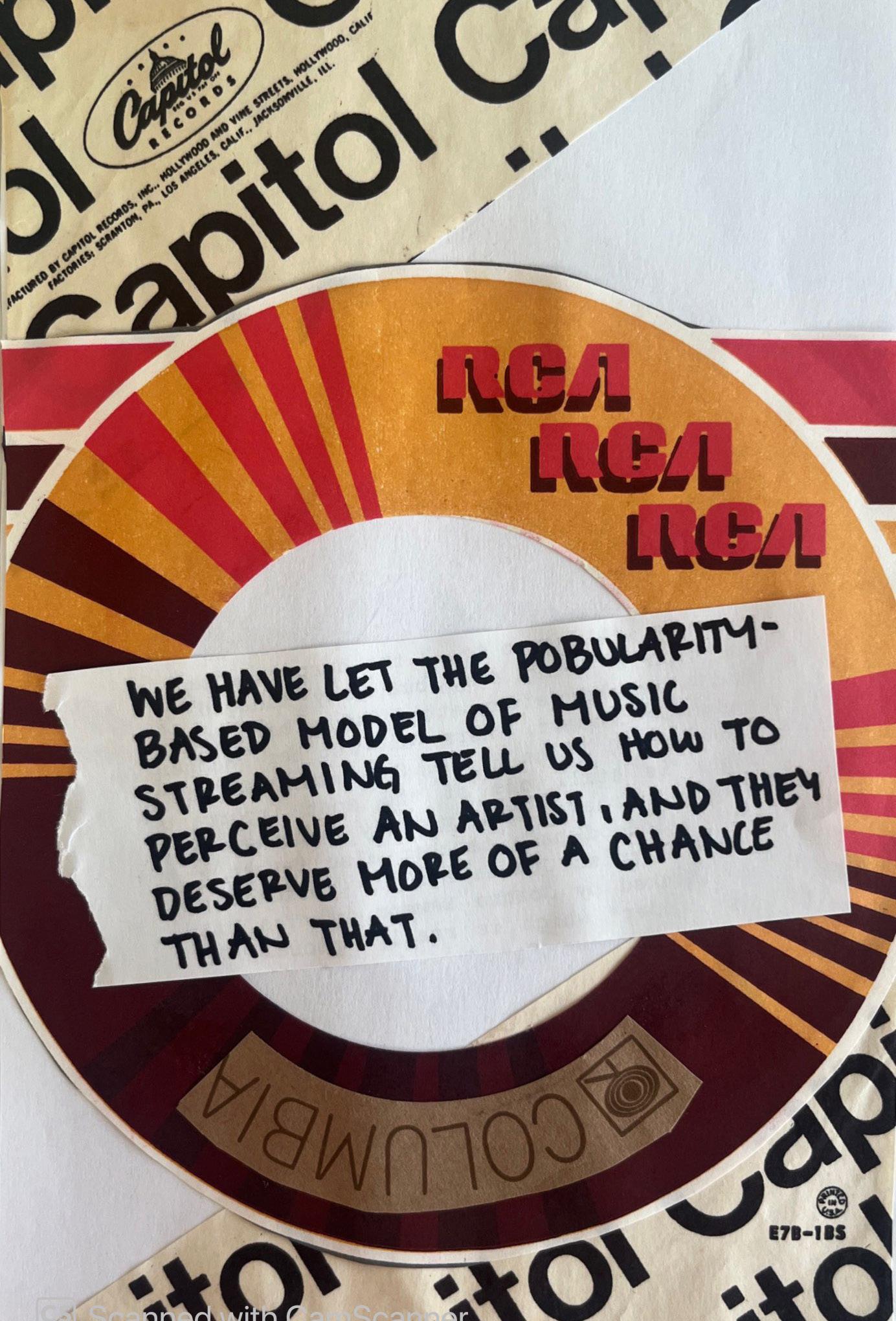
and nostalgia [...] but I think it is also [a song] unrestricted by decade, or even where you are in the world,” says guitarist and producer Rafferty Swink.
Dave Palozola, Evolfo’s drummer, finds that what makes a song able to appeal to so many people is “the feeling, the emotion and the intentionality that was put into a song when it was recorded and made, [which] can transcend time and even spoken language.”
Evolfo also shared how they try to capture “lightning in a bottle” by recording their music together, either live or collaboratively in the studio, the same way that bands like Queen did in the ’70s. Singer and guitarist Matt Gibbs shared, “It’s really hard to put that energy back into a song if you skip that step of playing together.” The band echoed this sentiment, and agreed that the energy captured in its songs made this era of music feel unique.
The band believes part of the reason people gravitate towards ’70s music is the same reason people love polaroids. “I gravitate more towards an analog sound that has a little fuzziness around the edges. It’s the same deal with photography, looking at a Polaroid that has a vibe versus a super crisp digital image… I think it’s because our memories work that way. You don’t remember things in clear 1080p, it’s always a little fuzzy,” shared bassist Jared Yee. This phenomenon is mirrored in the continued popularity of Fleetwood Mac’s 1977 song “The Chain,” which maintains a distinctly fuzzy and slightly muted sound that people still gravitate towards. In the face of time, a deep link between nostalgia and these melodies preserves and inspires its popularity.
The complex production, innovative recording and dynamically layered sonic elements of ‘70s music constantly captivates audiences of every age. With the understanding of and the energy devoted into the music of the time, it is no surprise that the ’70s sounds are making a comeback.
82
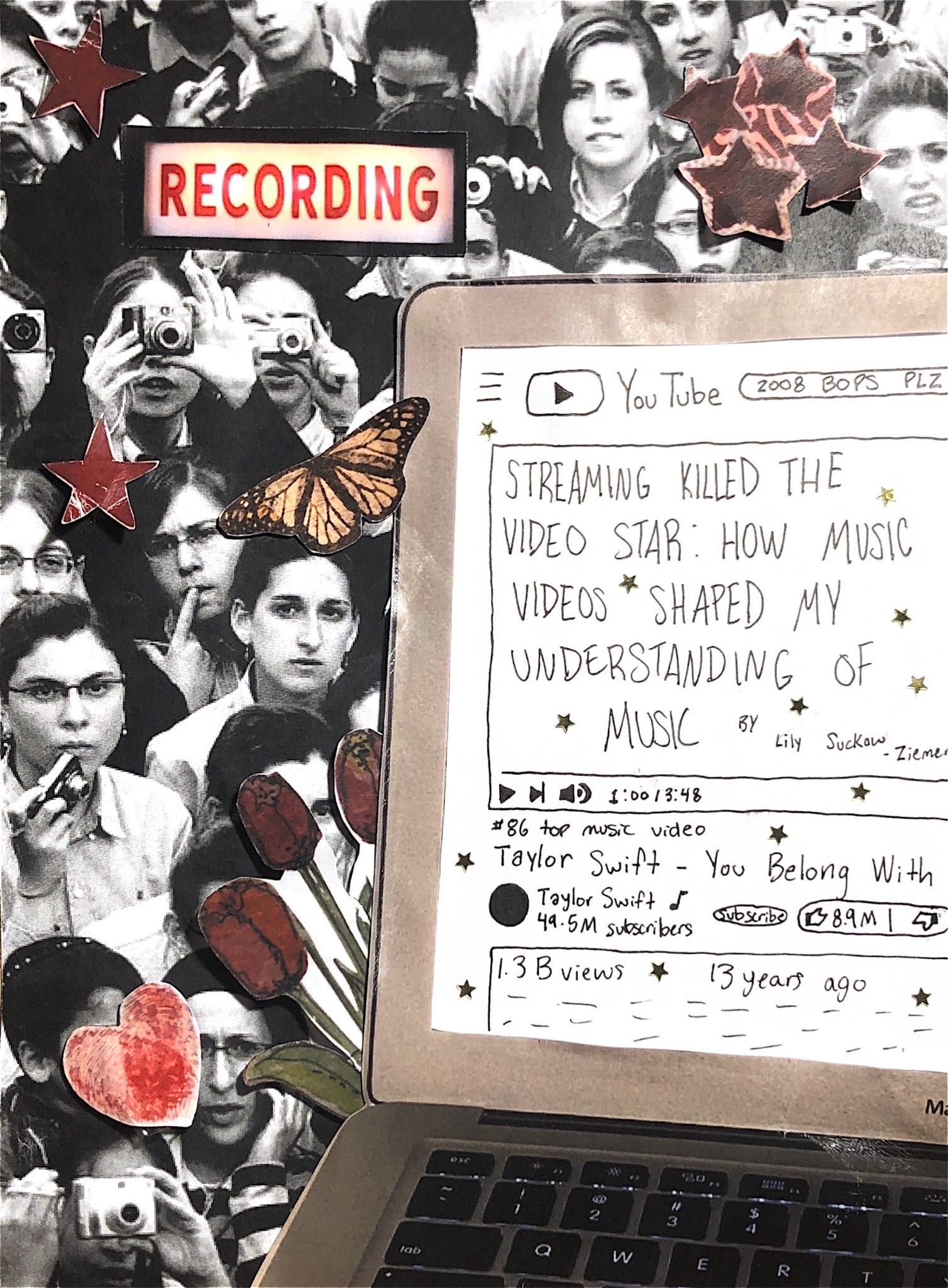
The year is 2010, and the iPad is just about the craziest thing I’ve ever seen. When my dad first brought home the one he got from work, I became utterly flabbergasted that a piece of technology could exist at the same time as me.
Maybe I was a little bit of an iPad kid. I felt Iron Man typing on a holographic screen every time I picked it up. My fixation didn’t stem from the games — sure, Fruit Ninja entertained me, but iTunes served as the real showstopper for me. My dad never downloaded the YouTube app, but he did save about 30 of his favorite music videos to the cloud. The taste of my 50-year-old dad remains a mystery, but the list is undoubtedly nothing but bangers: “That’s Not My Name” by The Ting Tings, “Sk8er Boi” by Avril Lavigne, “Fergalicious” by Fergie, “Move Along” by The All-American Rejects.
The videos attached to these songs made them more than just pieces of music that lasted about three minutes. I watched Kelly Clarkson push over a shelf of CDs about a million times in “Since U Been Gone.” I danced along with Jennifer Nettles of Sugarland in front of her kidnappee in “Stuck Like Glue.” I paused to read the signs in “Dirty Little Secret” by The All-American Rejects and cringed as Avril Lavigne’s nerdy alter-ego fell into a porta-potty in “Girlfriend.” I wouldn’t understand things like the sexual meaning of Rhianna’s “Shut Up And Drive” until years later, but the videos gave these songs meaning. My dad even made it a point to highlight the toxic relationship in “Stranger” by Hilary Duff, which we call the “bad boyfriend song.”
Students at Emerson College reference a range of different artists when reflecting on some of their first memories of music videos: Sasha Zaporozhets recalled watching Nicki Minaj’s “Starships” video on MTV at nine years old, right before she moved from Russia to the US. Lady Gaga’s music videos represent an iconic aspect of Samantha Otridge’s childhood. Despite what others may say, Sydney Johnson still argues that Katy Perry’s “Last Friday Night” is better than “I Kissed a Girl.” Everyone seems to have their own favorite video forever playing in their mind.
84
Back in the 2000s, music videos possessed a big budget, a big story, and a big impact. Each video stood as its own mini TV show, the plot defined by a catchy soundtrack. Justin Timberlake’s “What
Goes Around… Comes Around”
stars Scarlett Johansson and features many dialogue breaks, a car crash and a club full of dancers. People like me watched these videos over and over again for a distinct reason. Beth Loach, a freshman at Emerson College, thinks the videos elicited such phenomena because of their slower release.
“It was different because social media wasn’t as big,” explains Loach. “Now you get 10 music videos a day, you can watch anything you want at any time.”
The marketing of music in the early 2000s depended on music videos. It is easy to form parasocial relationships with artists today because of the constant stream of content coming from social media. Music videos filled the void of the platforms to come, assuming the responsibility of growing a fanbase. The artform provided a glimpse into a musician’s mind, regardless of whether it appeared realistic or not.
Moving into my preteens, I stopped watching these music videos — curating my library and streaming music on my fancy new iPod shuffle turned into my preferred pastime. But on Friday nights, my brother and I started watching TeenNick. The “edgy” Nick at Nite screened TeenNick Top 10 on weekends. Hosted by Nick

85
Cannon (there were a lot of Nicks), viewers voted on their top music videos of the week. The two of us loved it, commenting on the funny ones and complaining about those that played every week. I’ll never forget watching Carly Rae Jepson’s “Call Me Maybe.” Spoiler alert: the love interest turns out to be gay at the end of the video, dominating the talk of the fourth grade. People spoke about it as if it was the most important thing to happen that year. From the radio to school assemblies, the song played so much that some kids started singing it as “kill me maybe.”
Others my age reminisced about all of the music videos playing on TV. It still existed in the era of cable, my peers also watching the same programs I did. Sydney Flaherty remembers seeing a concert video of Michael Jackson on TV, which sparked a tradition of dance parties in the living room with her sister and dad.
As I grew up, I stopped watching music videos as often. Netflix emerged as one of the main streaming platforms, and YouTube transitioned with a flood of new content. When it came to entertainment, music videos just weren’t my priority anymore.
“I feel like it’s not as big of a deal because people turn towards more streaming platforms like Spotify and Apple Music,” Shreya Partha remarked. With all the activity of everyday life, she believes many “would much rather put in their AirPods and walk and listen to music then have the full immersive experience of a music video.”
Julia Psuik said that now she only really watches music videos for the artists she is a fan of. She thinks this could be in part to the fact that “the market’s oversaturated now with so many artists.” When a quick google search of “music video” brings up 6.93 billion results, it’s hard to know what to watch. I often feel like watching music videos, but the results are overwhelming, and a random click can oftentimes lead to disappointment.
“Honestly, I don’t really watch music videos anymore,” says Aidom Tadesse, a student at Seton Hall. “A lot of
the ones I’ve seen right now are rap videos and they’re just not as creative as they were.” He also doesn’t think they’re important as a source of income for artists, again due to the rise of streaming. “Gunna doesn’t make music videos, [Young] Thug doesn’t, a lot of rappers don’t really take time to do that,” he said of his favorite artists.
Most people don’t watch music videos anymore. There’s no longer the ease of accessing popular videos presented to us by our parents or TV. But others like Otridge are content with the modern evolution of consuming music.
“I think we think everything was better in the 2000s because we didn’t have any stress,” states Otridge. She presents a valid point: do we like 2000s music videos because we’re caught up in our own nostalgia? At the same time audiences like my dad exist, born in the ’60s and still dancing along with Justin Timberlake.
Most people presented a pessimistic take when looking into the future of music videos.
“The future of music videos is going shit,” Sydney Flaherty exclaimed. Her sister, McKenna Flaherty, doesn’t even think music videos will exist in the future.
People remember music videos as something that united us, at least as a generation. There’s something fun about bringing up Lady Gaga and Beyoncé’s “Telephone” music video and everyone immediately contributing to the conversation. But people like Loach refuse to give up on its importance.
“It will be hard to have such iconic music videos because so much content is being put out there,” argues Loach. “I do think that music videos will always stay relevant, every once in a while there will be a big one everyone talks about. Now, what’s nice is that any artist can make a music video if they want. Back then you used to have at least some sort of budget, but now you can pull out your phone.”
I will never forget the lyrics, the beat, or the scenes of those first 30 music videos I watched. I love music,
and I love music videos. As I wrote this article I kept getting distracted, going back to all the music videos I watched as a kid. There’s a lot of nostalgia in this, but something else too. In a way, they taught me what music is. It’s not something you need to curate or be snobby about; it doesn’t all have to fit the same genre or aesthetic. Listening to music is about a feeling. A feeling you can get hearing a song for the first time or the 100th time, when the first notes play and something lights up inside. Art exists to make us feel something, anything. Understanding the difference in what I felt watching “Bad Day” by Daniel Powter compared with “4 Minutes” by Madonna taught me this.
Every day since I started college this August, my dad never fails to send me a music video. Sometimes it’s one we discovered together, other times just ones he wants to share with me. This is his own way of telling me he misses me. It offers a meaning that a “good morning” text can never get across. I can’t help but think music videos have already hit their peak, that they will fade from our lives with the rise of streaming. It makes me sad to think that this could be the future, but I also believe that there will still be artists out there making new and exciting music videos — videos that continue to teach other kids the power art has.
88
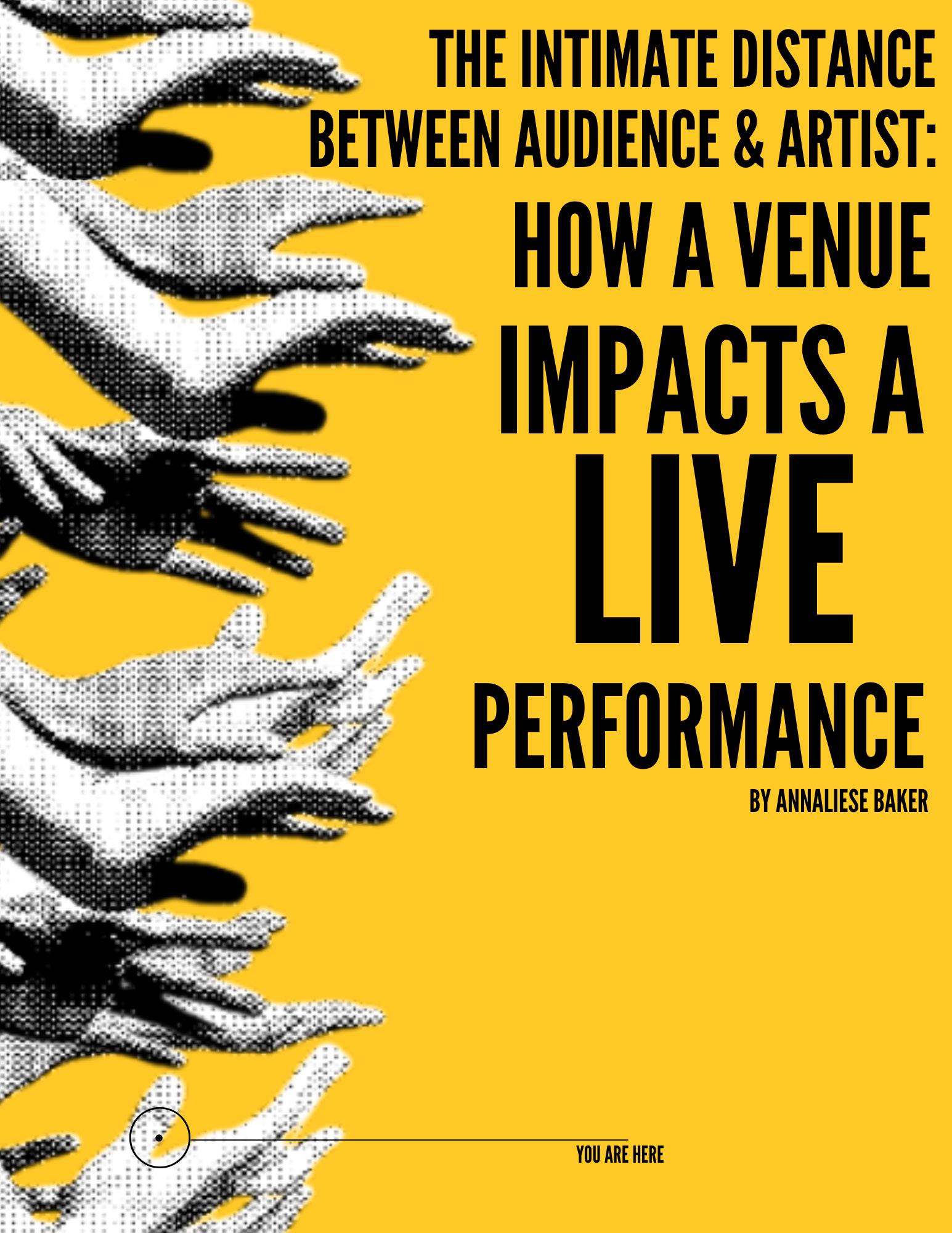
I found myself crying in the upstairs bathroom at Paradise Rock Club in Allston with only two days remaining in September. Again.
This marked the third time I’d experienced something incredibly emotional at this exact venue — the other two times happened the previous November seeing Beach Bunny (an old man yelled at me at barricade during “Oxygen”) and lovelytheband (I watched the guy I like makeout with another girl to “love somebody else”). I felt determined to make the Maude Latour concert my shot at redemption.
No more than twenty minutes after arriving at the venue, I broke down over something just as collegiate and poignant as the first two times.
But when I came back from the Maude Latour show and my friends asked how it went, I described the concert in one word: amazing. And it wasn’t a lie. The same, genuine response ensued when they asked about Beach Bunny and lovelytheband.
With a capacity of 933 people, Paradise Rock Club aims to mostly book national touring acts and large, local bands. Paradise Rock Club is a very narrow venue: the pit and balcony only extend a few rows deep, allowing every fan a view of the artist performing instead of glimpses of their body every so often.
Boston’s venues range from stadiums and arenas to clubs and house shows, which caters to the diverse music scene of the city itself. Mid-size indie artists often occupy spaces such as The Sinclair or Roadrunner, while up-and-coming local artists frequently play at the Lilypad or the Burren and globally-known artists book several consecutive nights at TD Garden or Gillette Stadium.
Both the artist fan-base and genre come into play when picking a venue — an artist like Olivia Rodrigo could certainly sell out TD Garden, but because most of her discography is soft, heartfelt ballads, her fans might not have the same connection to her music there in comparison to seeing her at a place like MGM at Fenway.
Maeve Lawler, sophomore journalism major, grew up in the Boston area and visited many venues in the city. Lawler stated her favorite concert was seeing Tame Impala at TD Garden in March 2022. Her seat located on the right side balcony gave her an all-encompassing view of the entire stage, a position that permitted her to enjoy the performance in light of her distance.
A large venue is not necessarily bad or unsatisfactory for the audience; it allows the artist to engage with their fans through stagecraft elements beyond the standard lights and backdrop. Oftentimes, artists will use jumbotrons, backdrops, props, and costumes when performing in large venues to enhance the moment for the audience. When a jumbotron is involved, sometimes the camera will switch from the artist to the audience, allowing those standing in the pit or seated in the “nosebleeds” to feel connected to one another. Stadium shows are impactful if the artist can work the crowd — the entire space, not just the pit, needs to feel engaged in the movement.
Music is meant to be heard in a shared and genuine setting; there is something both innately human and incredibly supernatural about live music. On a family vacation during the summer of 2016, I walked the streets of Seattle with my father. Suddenly, a man pointed and shouted how “awesome” my shirt was. When you’re a 12-year-old girl and someone’s shouting at you, it usually causes you to panic — I smiled once I realized I sported my Coldplay A Head Full of Dreams 2016 World Tour t-shirt.
That concert in my hometown of Chicago serves as my first live-music experience. Although I sat in the stadium’s furthest section from the stage, the way the crowd jumped as Chris Martin instructed us to during “A Sky Full of Stars” and shouted at the stage during the “Clocks” arpeggio created such a profound sense of community. For the first in my mere 12 years of life, I felt so deeply connected to everyone around me; we existed in some kind of collective solitude, listening to songs that meant so much alone with strangers. This concert experience gave me the exciting courage to talk to that man on vacation in Seattle with my father, three different generations bonding over a British alterna-
tive-pop band’s discography.
Several Emerson students deemed Tyler, the Creator’s concert at DCU Center in Worcester their favorite concert of 2022. The venue houses roughly 14,800 people while TD Garden in Boston can hold almost 19,600 people.
Lulu Dalzell, sophomore VMA major, is one of the many who categorized this concert as their favorite. She notes a major factor of this ranking depended on standing so close to the stage, where the artist could look her in the eyes. While Tyler the Creator’s concert remains special in her mind, Dalzell indicated that The Royale earns the spot as her favorite venue in Boston, which contains a capacity of about 1,300 people. She states that The Royale is, “such a small and special venue that it feels like every show is intimate.”
Like Lawler, Dalzell remarks that the proximity to the artist and size of the venue matters. Similar to Dalzell, sophomore creative writing major Anna Bacal Peterson explained that The Royale also hailed as her favorite venue for the same reasons: it allows you to connect with the artist. The ability to look an artist in the eyes as they sing the songs that you’ve cried to, danced to and screamed to facilitates a level of human connection that is difficult to replicate in other capacities of life.
Bacal Peterson attended the Del Water Gap concert at The Royale in January 2022, which she characterized as her favorite concert experience. She attributed this to the fact that Del Water Gap extracts a smaller fan base, the passionate attendees sharing a niche investment in the performance.
Djo, the musical alias of actor Joe Keery, produces psychedelic rock music, which often caters to smaller venues like The Royale, or even The Sinclair. Born and raised in Newburyport, Massachusetts, Djo performed at some of summer 2022’s largest festivals, specifically Boston Calling and Lollapalooza. Although a very talented musician, Djo’s distinct sound may not appeal to or heavily impact the average festival-goer, making it hard for him to stand out among a star-studded, varied
lineup.
This relationship between the artist and the audience at a live show can be strengthened or weakened based on the venue, which presents an interesting appeal for music festivals. While it is a live performance, the level of intimacy changes based on the fact that fans are there to see many artists rather than one. Festivals shift the focus to connecting fans as a collective rather than to a specific artist. The spotlight is turned onto the crowd, the ever-changing stages creating a chance to interact with different people – or oppositely, bond with those bumped into over various points of a weekend.
In August 2019, I attended my first music festival with the intention of seeing several indie and alternative artists in one day. I waited an hour in the sun for a spot at the barricade for Maggie Roger’s set. Seeing “Back In My Body” live provided me with something so deeply raw and human, the experience dominating the countless hours I spent listening to it on my speaker in my teal-painted bedroom. As she started the song, my tear-stained, sunburnt face flashed on the Jumbotron for no more than three seconds. Those around me — both my friends and other avid fans of Rogers’ music — pulled me into a hug as my sobs intensified.
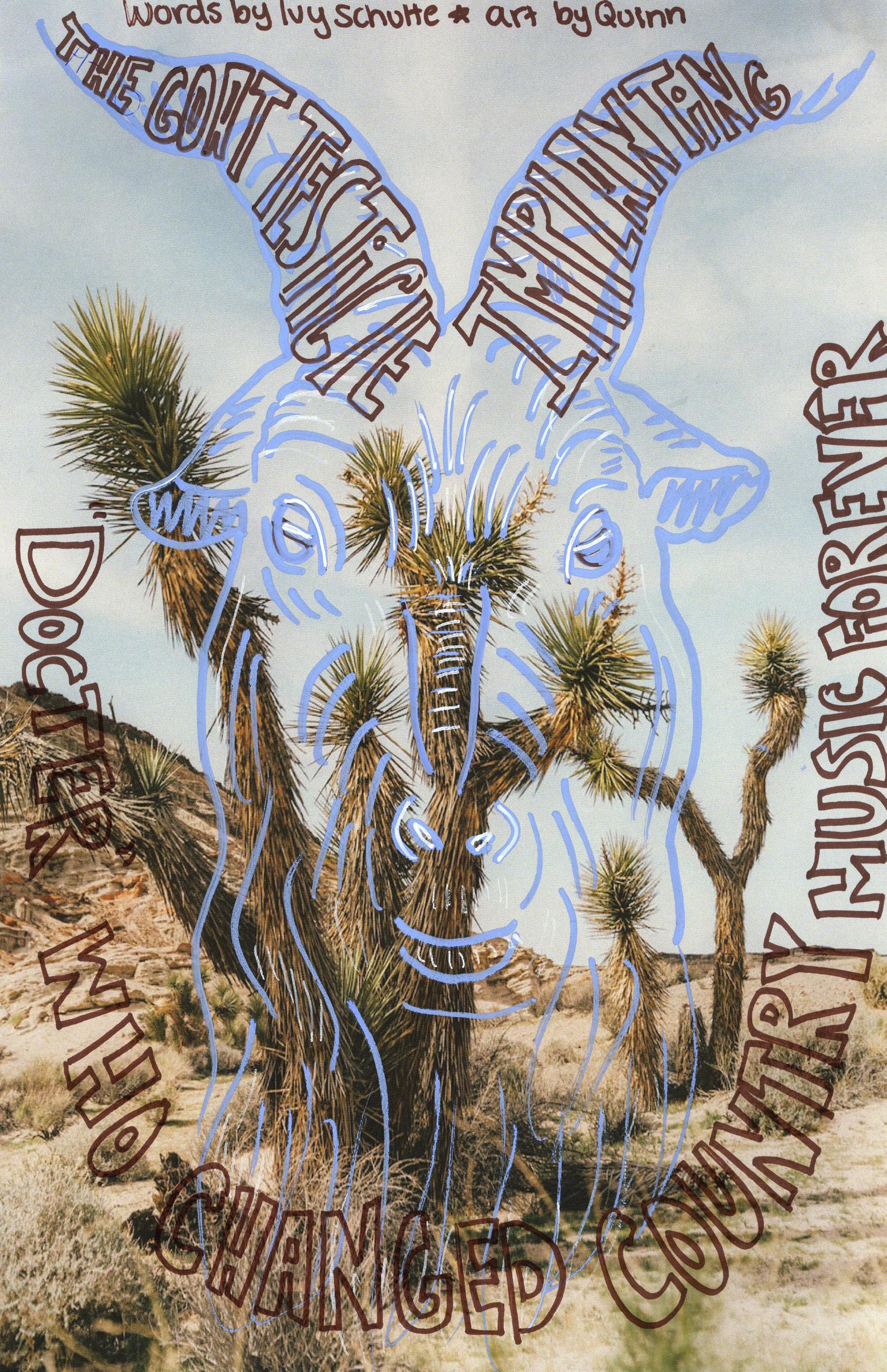
Somewhere in between 1930-1931, an absolute madman by the name of John Brinkley got permission from the Mexican government to break ground on his life’s work: a 350,000 watt radio station with the capacity to reach a ludicrous one million watts. For those who know nothing about how radio works, like me, this was by far the most powerful commercial radio station that will likely ever exist. Today, the most powerful radio transmitters max out at around 100,000 watts, usually reserved for the biggest and most popular stations.
Broadcasting from a small border town in Mexico, Brinkley’s station, XERA, reached as far as the North Pole, at times leaking into Russia. Though some reports are unconfirmed,a handful of Russian insiders claimed that XERA taught Russian spies English. Stateside, the station routinely blanketed the airwaves, with a signal so powerful it drowned out the puny 50,000 watt stations in far flung places like Chicago or Atlanta. In the areas surrounding the station, the signal operated so strongly that it turned on car headlights, made bed springs hum, and caused broadcasts to bleed into telephone conversations. Local residents claimed to not need a radio to hear Brinkley’s station; ranchers claimed they received it through their metal fences and in their dental appliances.
But, wait, what could possibly sound so important that every person in America needed to hear it?
Was it to warn of an impending nuclear attack? Was it a broadcast system for the President? Was it a messaging system to safeguard public health?
The answers are no, no and kind of.
John Romulus Brinkley, not a doctor in any way, used this station to advertise a surgery he devised, one that would take goat testicles or goat ovaries and implant them into any American with $750 who couldn’t get it
95
up. It is often said that Brinkley grasped a dim conception of how to perform the crude and deadly surgery he himself created: though the confirmed body count is 42 people, the real number is estimated as several times higher.
While Brinkley spent much of his broadcasts hocking goat ball surgery and a melange of other nonsense medicine, he needed to find other ways to fill airtime. In between advertisements for “tomato plants…stock in a gold mine or oil leases…electric bow ties, or a cure for ruptures,” Brinkley saturated the airwaves with an old American art form that spoke to his core audience: country music.
Brinkley (goat ball doctor, radio pioneer, and proprietor of the predecessor for goop) became one of the first people to turn a profit from country music by beaming it to every radio across the country. The list of country music stars who got their start on XERA, Brinkley’s station, is dizzying: The Carter Family, Roy Rogers, Gene Autry, Red Foley, Eddie Arnold, Hank Williams, Tennessee Ernie Frod, and Sons of the Pioneers, to name a few. Even more people, like a young Waylon Jennings, grew up listening to XERA and would go on to become legends in the genre; Johnny Cash recalled fond memories of listening to The Carter Family on XERA with his dad. XERA’s pivotal role in what is called the “Big Bang of Country Music” is well-documented and considered an integral part of the emergence of country music as one of the most profitable genres in the country.
Brinkley’s choice to beam country music, instead of big band or jazz, was as much a deft business decision as it was anything else. The key to Brinkley’s success, aside from the goat balls, resided in his persona, a carefully crafted image of Brinkley as a wise, old, Southern medicine man. His smooth Georgian accent and colorful Southern mannerisms endowed him with an innate credibility with large swaths of the American public, who were all too eager to listen to what the Good Ole Boy had to say.
By saturating his airwaves with country music, from people like banjo player, Aunt Samantha Bumgarner, and Harry Cagle and the Country Cousins, Brinkley became
96
one of the first people to package the mythos of the American South for a national audience. It didn’t matter that Brinkley drove a Cadillac with gold hubcaps inscribed with the letter ‘B’ during the height of the Great Depression: Brinkley’s finely tuned caricature of a Southern medicine man made millions of Americans think he was one of them. Unbeknownst to Brinkley, and everyone else, this formula would become one of the biggest industries in all of American music.
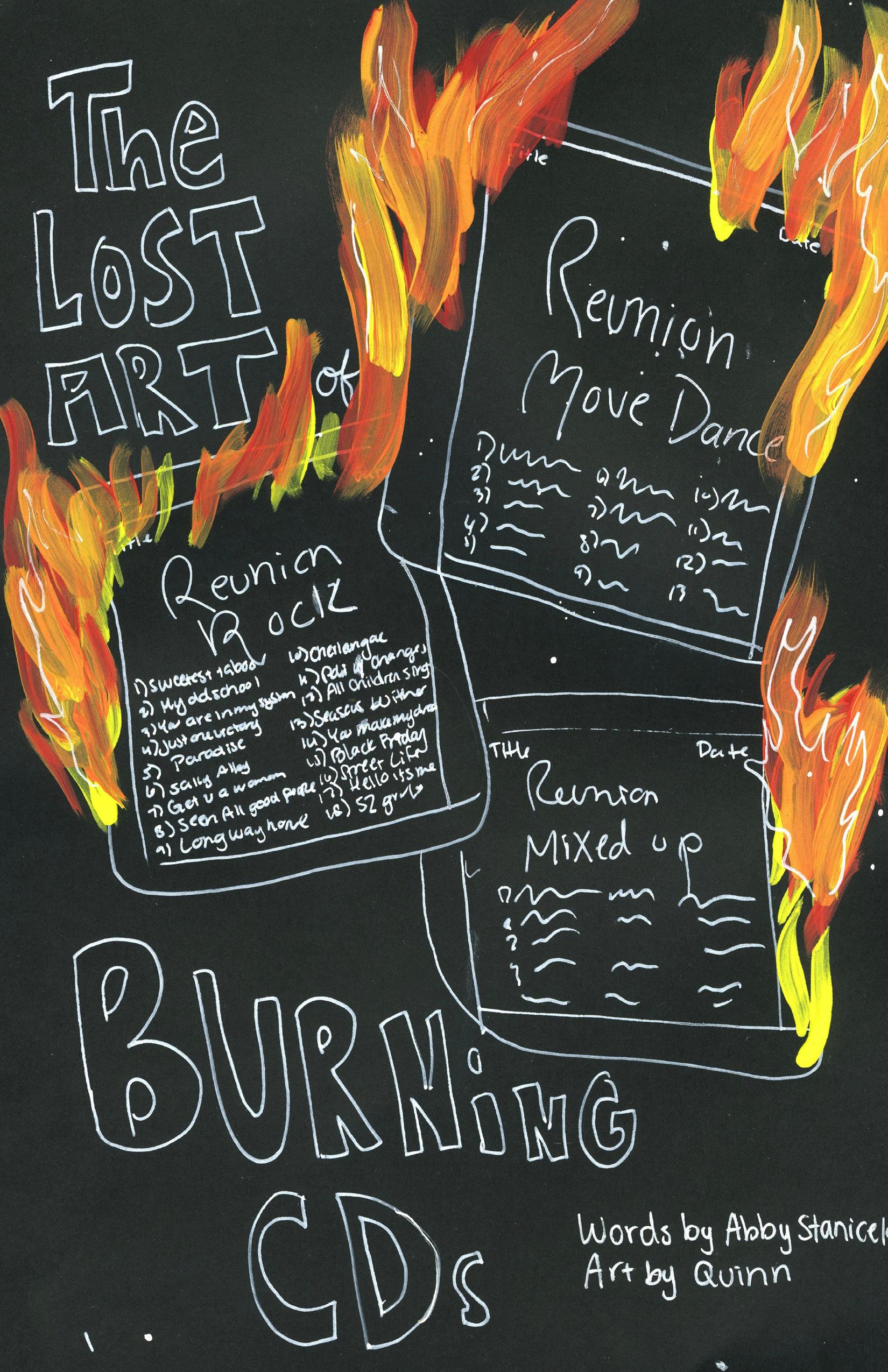
It seemed as though my mom spent days making decorations, creating beach-themed centerpieces and pouring sand into blue ombre jars. I never saw her in such an intense, crafty state, but the weight of her high school reunion rested on her shoulders. My second-grade self tried her best to help, sorting seashells from the craft store and cutting blue ribbon. As my mom and I worked hard on the floor of her bedroom, music blasted from the office; however, this music-listening session seemed out of the ordinary. A song would play for about thirty seconds, get skipped through, and then pause. In the silent lulls, we could only hear frantic mouse clicks and keyboard typing. My mom seemed annoyed with this pattern, as it kept breaking her focus on her Martha Stewart-level crafting session.
Since my dad is not the craftiest person, he assumed a different yet equally important task: making the reunion mixtapes. To cover multiple genres and time periods with just a few hours of run time would be difficult for anybody, but I knew my dad could handle it. This monumental task faced no match to his outstanding music taste. He retains a love for the music his parents used to dance to — all the way to some of the Top 40 Hits of the early 2000s. He pulled from this impressive musical intelligence to formulate the mixtapes, scrolling through his iTunes library like his life depended on it. Letting out a sigh of relief, he finished one mixtape. Five seconds later he returned to a focused state as he sent the next CD into the computer.
The playing of these CDs lasted far beyond the night of the reunion. My mom’s old classmates became enamored with the setlist for that night, and my parents continued that appreciation any chance they got when playing music in the car. As much as I’m expressing my gratitude for the mixtapes now, there are definitely a few times where I demanded to listen to anything else during a car ride. They found their way into the stereo of almost every gathering hosted for a year after the reunion. I recently decided to see which one resided in my car’s CD player while I stayed at school. When “Sweetest Taboo” by Sade blared out of my car’s speakers, I knew it had to be one of the reunion mixes. After not hearing this specific selection for a long time, I actually felt
99
excited to dive back into the legendary lineup of songs that lived on the Reunion Rock CD.
Reunion Rock titled one of the three CDs, the others named Reunion More Dance and Reunion Mixed Up. It’s easy to tell their curation lined up with different parts of the event, as Reunion More Dance sounds like the impeccable soundtrack for those who love to party until the very end of the night. Reunion Rock paired perfectly to the first hour, where everyone catches up and reminisces on high school memories. My mom recalls the football team playing “Just One Victory” by Todd Rundgren after a win, while my dad insisted that “I’ve Seen All Good People” by Yes needed to play at any party he made an appearance at. Reunion Mixed Up contained the best grouping of songs to ease the awkward transition between the talking and dancing points of the night.
The importance of these mixtapes to the formation of my own music taste didn’t dawn on me until I started watching That ’70s Show. In the first episode, Donna and Eric share an iconic first kiss while “Hello It’s Me” by Todd Rundgren plays in the background. This song instantly brought me back to the mixtapes, as it was a song that my parents either skipped ahead to or restarted when listening to the CD. After I finished that episode, I didn’t even feel compelled to watch the next one — I only wanted to listen to the song over again. I immediately put it on my favorite playlist at the time and couldn’t refrain from listening to it. I then went on to rediscover other songs from the mixtapes and rekindled my love for them. I even furthered my listening of Todd Rundgren, realizing he made songs like “We Gotta Get You a Woman” and “I Saw the Light” that I adored as a kid.
These reunion CDs introduced me to some of my favorite artists that I can also enjoy with my parents, such as Steely Dan — arguably one of the most musically intelligent rock groups of all time. Between their sometimes bizarre lyricism and insane attention to detail, the band intrigued me on my first listen in elementary school; we still frequent albums like Aja. Chaka Khan’s cover of “I Feel for You” by Prince might just be my favorite song off of all three reunion CDs (and one of my favorite songs of all time). I apologize to Prince,
100
but I personally think that this is one of those covers that is better than the original. It brought me to listen to more of Khan’s discography, as her captivating voice and ability to turn the word “fun” into a song are very admirable and intriguing to listeners. Sade’s “Paradise” is another favorite of mine from the mixtapes, as the consistent bassline almost hypnotizes you, along with her deep, enchanting vocals.
There are also genres I would be oblivious to if it weren’t for the mixtapes. They graciously introduced me to the outstanding R&B artists of the 1980s and ’90s. They ushered me into classic rock and funk during a time where the hits radio stations defined my listening habits (and “Sneakernight” by Vanessa Hudgens). I refuse to believe that the fondness for a wide range of genres that I possess today would exist without those CDs. The Reunion Mixed Up CD jumps between jazz, rock, R&B and other genres. My current playlists often feature a mixed selection of music, as if to reflect the random assortment of the CDs.
Creating a playlist is always an enjoyable activity, but burning CDs is a lost art dethroned by the streaming age and ability to pair phones with speakers. Whether it be a romantic gesture for a significant other or a perfect list of songs for a road trip, burning CDs represented all the rage in the early 2000s. CD-R disc burners became a key fixture of every computer, people never getting enough of the euphoria elicited by putting all of their favorite songs on a silver disc.
The accessible nature of burning CDs presented the
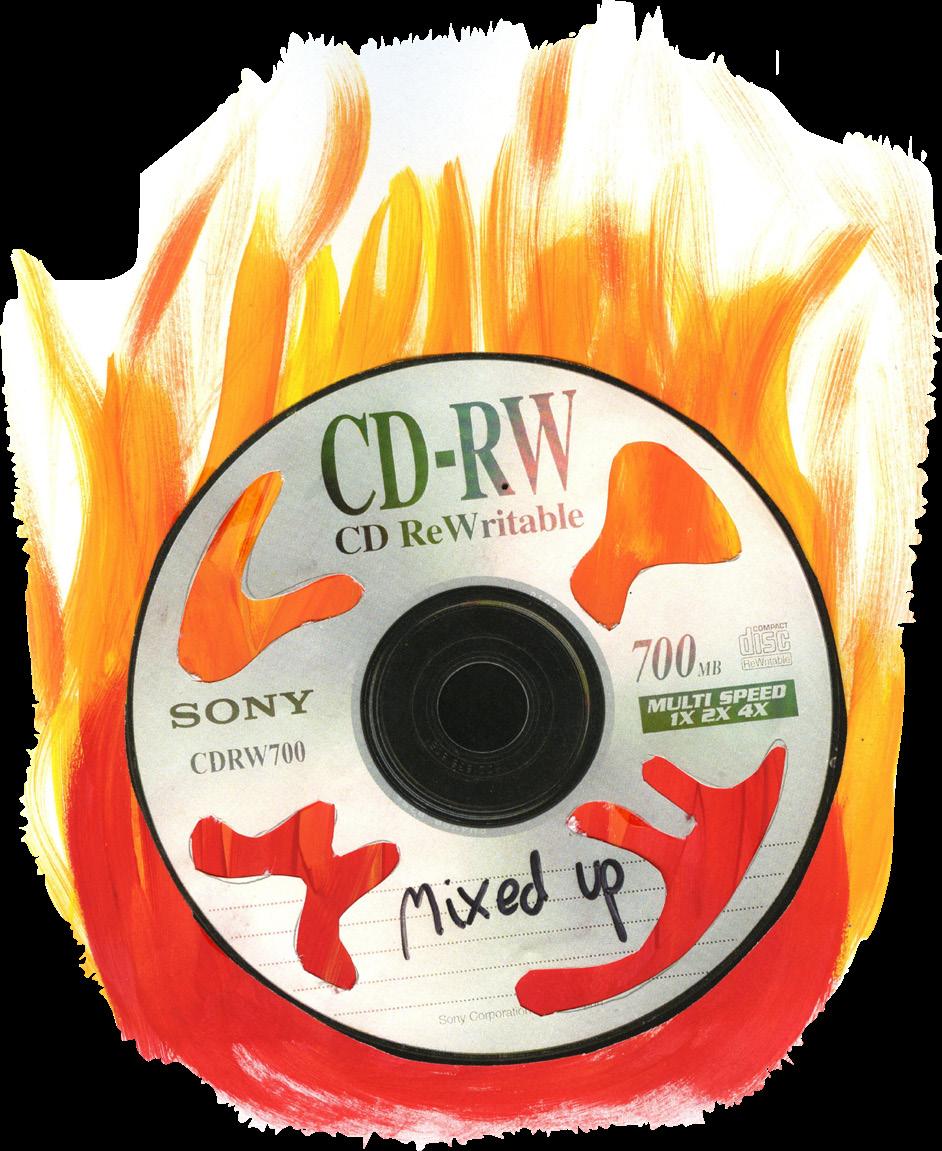
101
opportunity for people to make mixtapes for one another in a swift manner. Significant others could pour their hearts out to one another through a collection of songs paired with a hand drawn cover. Friends could curate a list of their favorite songs to play during hangouts and drives. It symbolized an act of love and kindness that was not only quick but simple and very personal for both the giver and the receiver. Receiving a playlist specifically made for you from someone else is always a heartwarming gesture, but it lacks the artistic and authentic opportunities that come from tangible timelessness of burning a CD.
If I have children, I hope to expand their appreciation for music by sharing some of my most cherished songs with them. Although the concept of burning a CD disappeared in recent generations, I still wish to introduce my kids to a curated selection of what parents often call “real music,” a term I now begrudgingly understand as I’ve grown up. I’ll be elated to curate playlists for my kids, showing them some of my favorite songs from my lifetime and passing down the taste my parents pushed onto me. Through noticing the impact of these CDs on my music taste, I’ve also recognized the kindness and love that comes with sharing music with others. My parents’ choice to expose me to their stellar music taste and open my ears to some of the greatest artists of all time shows the admiration that my parents have for me. I am forever grateful for the influence of my parents’ music taste on my own, as the love I feel for music derives from the present of their generous help, packaged in plastic CD covers.
102
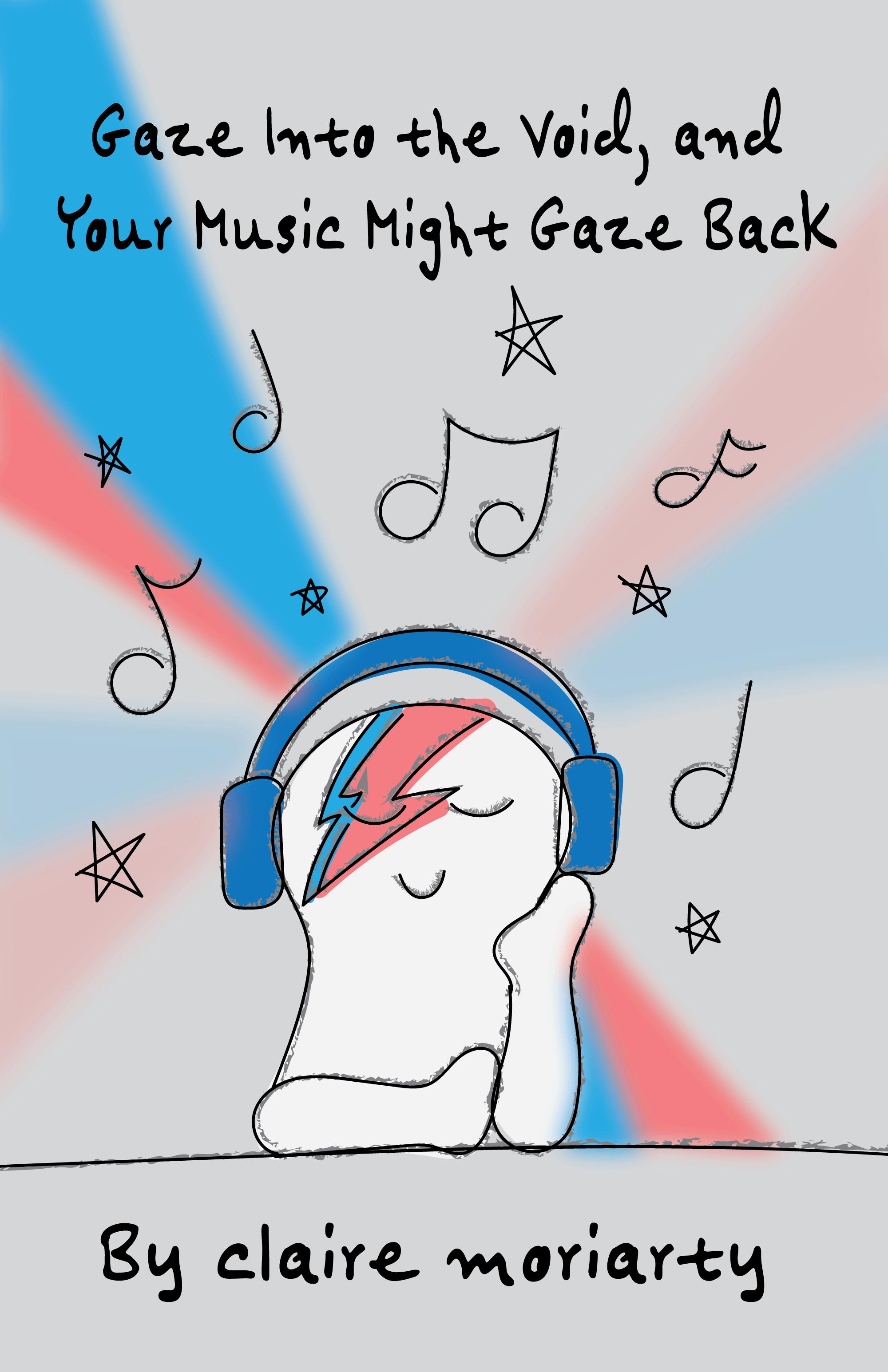
One of David Bowie’s most widely loved albums, The Rise and Fall of Ziggy Stardust and the Spiders from Mars, turned 50 this year.
I feel like I can hardly make it down Boylston Street between classes at Emerson without walking by a Bowie t-shirt, a pin on a backpack, or a leather jacket with his face from Aladdin Sane hand-painted on the back. It’s a testament to the singular staying power of his music, and what it still means to people that 50 years later, college students are continually captivated by Ziggy in much the same way they were in 1972.
“He’s been the artist I come back to most frequently,” Emerson senior and creator of the Bowie jacket Emily Vinkels said. “He says things that hit different. Especially when he’s up on stage dressed the way he is, [particularly] the Ziggy Stardust era. That is how I want to dress all the time.”
I’ve written exhaustively in this magazine about Bowie and what his music means to me and other fans — how the care and empathy he expresses in his songs makes being a 20-something college student with virtually no idea what to do with their life feel just slightly less alienating. But in spending so much time contemplating his music from my own perspective, I never tried to comprehend what compelled Bowie toward creation.
Thankfully, the documentary filmmaker Brett Morgen did it for me this year with Moonage Daydream, a two-hour glimpse into Bowie’s colorful and convoluted psyche. Needless to say, it completely changed my life. As my friends and I stood dazed and incoherent in front of the entrance to the Green Line, one thing stayed on my mind: the way Bowie seemed to see music as a completing force, something with the potential to fill the void in himself that never seemed to go away.
The whole thing left me wondering if he would’ve been as great if he ever felt complete. Would his music persist in resonating with listeners through the ages if it hadn’t been born from the void he seemed to describe? And that made me wonder if there’s something inherent to the artists who go down in music history, whose songs
linger in the popular conscience for decades — something beyond just sounding incredible or generating catchy beats that allows artists to reach out and touch someone in a way that will stay with that person forever.
Of course, I can only speak from one side of that connection. Eme Caparas, the singer and lyricist behind Boston-based band Born October 4, 1998, shared some insights from the other end of it. “I would guess that Bowie was doing something that I see in a lot of singer-songwriters and something that I do myself, which is just making music to describe a feeling… to even just understand that feeling,” Caparas said. “There are not a lot of words in the English language to describe emotion overall, and I think making music is reaching out towards defining something niche.”
Born October 4, 1998’s first record, Blondes, is a collection of six dynamic tracks that range in tone from upbeat to melancholy. The one I find the most striking, “Theatre turning black,” is probably also the most sorrowful of the bunch. Caparas brought it up without me having to ask about it. “[It’s] not the most polite song that I’ve ever written, but probably one of the more honest,” he said. “It was very weird to try and write bad feelings as unrestrained as possible.”
Out of that release of bad feelings came a track that connected with me instantly, not necessarily because we went through the same things, but maybe because the nebulous emotions that Caparas reached out to capture overlapped with mine in an undefinable way. It underscores what I think is one of the most important factors in forging that bond: that the song comes from a place of authenticity. It’s possible to pick up on the difference between a song like “Theatre turning black” and a song that shoehorns unsubtle lyrics about mental health or emotional pain into its verses because the artist knows they’ll be lauded for their vulnerability if they do.
Vinkels agrees that this is part of what makes Bowie’s music so singularly impactful. “When I say I love the lyrics ‘oh no love, you’re not alone,’ it hits different because that’s how you feel: alone,” she said, referencing “Rock ‘n’ Roll Suicide,” the closing track of Ziggy.
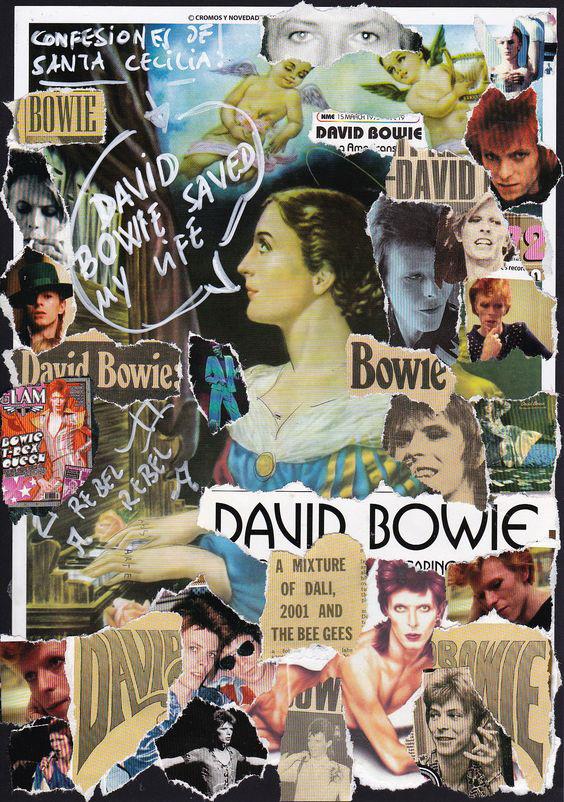
“And here you have this person who is on a stage, and who is successful, and who looks like you in some capacity and is like you in some capacity telling you you are like him and he is like you, and you’re not the only one of you in your world.”
Vinkels co-hosts the WECB show Plastic Trash Radio, which treats listeners to an hour of hyperpop every Monday at 3 p.m. Lyrically and sonically, those working in this incipient genre employ a much different method of reaching out to listeners. In a sense, it’s the sound of the moment: weird, chaotic, and very internet-literate, a dizzying blend of genres and disparate noises.
“It’s the jumbledness of it, the confusion of it, that I can relate to, because the world that we live in is a very confusing place and there’s a lot going on — there’s too much going on — [and] we’re constantly on the internet,” Vinkels said. “When you scroll on your phone, there’s no smooth transitions either. It’s a very messed up piece of news and then a funny meme immediately afterwards. I feel like [hyperpop] replicates what life is currently like.”
Hyperpop songs run the musical gamut from profound social commentary (like Dorian Electra’s “Career Boy”) to little more than toothsome sounds. By dipping their toes into so many different genres —“It’s bubblegum pop and then it’s metal screaming,” describes Vinkels — these artists are doing the kind of searching that Bowie embarked on. Bowie traversed across musical styles throughout his career, constantly changing his sound from over-the-top theatricality to smooth sophistication to orchestral majesty. He seemed to know when he’d exhausted his potential in something; instead of continuing to make music in a style he knew he could execute successfully, when he mastered one thing, he simply morphed into another one. This led to an outrageously expansive discography, with enough sonic diversity to include both the deeply meditative and the toothsome (see: Let’s Dance).
“Bowie stayed very visibly experimental throughout his whole career,” Caparas said. “[He had] that ability to adapt, and to be whatever individual feeling he wanted
to describe at any point and get it out in a coherent way — sometimes not a coherent way. A willingness to constantly explore new feelings is all it really is.”
I’m not a total snob; I love empty pop just as much as I love downer philosophical bops. Sometimes memorable music is simply about having a great time, and that can be just as valuable. But what I don’t love is feeling like an artist is making an empty effort at forging an emotional connection. I felt almost condescended to by Taylor Swift’s “Anti Hero” because of how blunt the lyrics are.
“I’ve seen a lot of really genuine people get up and express themselves through a guitar. And I’ve seen most of those people do that not very well,” Caparas said. “But that’s still a human thing. That’s still an emotion being expressed, and I don’t think anyone needs to set the qualifier that they’re a musician to make sound and put themselves out there and try and connect.”
I would never suggest that Swift hasn’t really struggled with the things she’s singing about, but that song rubbed me the wrong way. Maybe it’s colored by how much I know she cares about being well received, whereas with Bowie, you could always assume his genuine approach because he spoke often and loudly about the fact that he didn’t care what people thought of him.
“The difficult part of this conversation for me is, I want to be liked,” Caparas said. “I want people to like my music. But at this point I will not compromise to be popular. I don’t know if we will ever be popular. But I’m gonna keep doing this because it’s just the thing I like to do.”
Childish Gambino is another good example of a contemporary artist who seems to be reaching out to define the undefinable in the way of Bowie and the pioneers of hyperpop, and doing it by constantly trying his hand at new musical styles. Gambino multi-morphed across six studio albums; while some artists’ catalogs feel like a brood of children — distinct, but able to relate to one another — Camp and 3.15.20 are barely comparable to third cousins. And while I may not have loved his most
recent record, I certainly wasn’t rolling my eyes at it like I was at Midnights. This is why I hypothesize the artist’s search, their void: because if there is something like that, it drives artists to keep experimenting, and often enough, a palpable sense of authenticity arises naturally from that process.
But I also know that’s not always the case. Not all the music I love and that will last was created out of the artist’s search for meaning in a sometimes-meaningless world. After all, we can’t all be David Bowie. “Making music that can actually get someone’s heart rate up is crazy,” Caparas said. “That’s awesome. And I don’t think that’s filling a void, I think that’s connecting.”