SECURITY
Combatting the rising tide of chargebacks and CNP fraud Page 10
PAYMENTS
Why big tech offerings fail to meet every merchant’s needs Page 13

EVENTS
How technology can transform audience engagement Page 20
SECURITY
Combatting the rising tide of chargebacks and CNP fraud Page 10
Why big tech offerings fail to meet every merchant’s needs Page 13
How technology can transform audience engagement Page 20
Unsupervised by Daniel Doll-Steinberg & Stuart Leaf Page 22
Trailblazing women share the industry’s evolution page 6
Teresa Connor on advocating for inclusivity in the payments industry page 8
Yaspa: on the power of trust and responsibility page 12
FESTIVAL 2023
SFF 2023 puts the spotlight on the potential of AI page 16
Top fintechs look to foster connections with scaleups and investors page 17

City sets the stage for financial transformation page 18
Highlighting the transformative impact of knowledge sharing, breaking barriers and promoting diversity page 21



Welcome to the latest edition of The Fintech Times newspaper. In this issue, we’re diving into a subject that truly matters to us: the advancement of women in financial technology.
We shine a spotlight on excellent progress achieved by women and acknowledge their resilience as they forge their paths within the financial sector.
Eight pioneering women in the industry share their personal experiences, reflecting on the changes they’ve witnessed from ‘Then’ versus ‘Now’. These candid reflections encompass a wide array of topics, from discussions on gender diversity to observations about cultural shifts, providing us with a distinct perspective on the fintech evolution.
We also bring you stories from women in fintech who recount their encounters with role models. These anecdotes highlight the transformative power of knowledge sharing and mentorship in breaking down barriers and fostering diversity within the industry.
In addition to their inspiring narratives, I am pleased to share my interview with Teresa Connors, a seasoned non-executive director and advisor. Teresa offers a unique perspective on navigating the intersection of traditional banking and tech firms while passionately advocating for gender diversity within the industry.
Her insights also emphasise the importance of transparency and trust when navigating the intricacies of the payments industry, a theme that harmoniously aligns with the second major focus of this edition – paytech.
The convergence of traditional banking, cryptocurrencies and mobile wallets is altering the way we transact, invest and save. As the financial landscape evolves, we delve into the impact of these changes, including the challenges posed by the surge in card-not-
Incorporated Limited (FIL), from its early days as a card issuer to becoming a socially responsible fintech leader with global ambitions. We learn how FIL is poised for international expansion through strategic partnerships while upholding its values of inclusivity and tech for good.
Turning our gaze to the East, we cast a spotlight on Asia, where two major events are set to take centre stage: the Singapore Fintech Festival and Hong Kong Fintech Week.
The Singapore Fintech Festival has become a global magnet for innovators, regulators and investors. As one of Asia’s premier fintech events, it serves as a platform for showcasing the region’s technological prowess and regulatory adaptability. Turn to page 16 to learn more about this year’s themes, trends and innovations emerging from this vibrant ecosystem.
present transactions and the importance of chargeback prevention solutions on page 10. In a ‘David versus Goliath’ article, we learn how big tech payment solutions like Stripe and Square, while convenient, often fall short for businesses with unique payment needs, particularly in regulated industries. Independent software vendors (ISVs) step in to offer tailored payment solutions, support, and flexibility, making them essential for addressing industryspecific requirements and delivering seamless customer experiences. Learn more about this on page 13. We also take you on a journey through the evolution of Finance
Also coming up is Hong Kong Fintech Week, where the fusion of tradition and innovation is a testament to the city’s resilience and adaptability. Against the backdrop of a changing geopolitical landscape, we examine the strategies that are positioning Hong Kong as a global fintech hub. Happy reading!
 Claire Woffenden, Editor, The Fintech Times

THE CONVERGENCE OF TRADITIONAL BANKING, CRYPTOCURRENCIES AND MOBILE WALLETS IS ALTERING THE WAY WE TRANSACT, INVEST AND SAVE


Global ambitions often start with humble beginnings. In the fintech space, the pace of innovation can drastically shorten the path between those early founding years and the ability to compete on a global scale.
For Finance Incorporated Limited (FIL), this journey began in 2015 as a fledgling card issuing company in the burgeoning fintech space. By 2017, after closely examining evolving market needs, FIL greatly expanded its product and service offering to provide comprehensive payments services to both B2B and retail clients.
Even at its early stages, FIL’s leadership was committed to fintech with a social conscience, locking in a set of foundational principles that have served it in good stead as the team grew from those early days with just four employees.
FIL has rapidly grown to a team of over 70 talented and driven people, representing diverse backgrounds from across the globe and brought together by the desire to be an exemplary player in the space. It now handles a growing balance sheet of over €350million. FIL's client profile spans retail, business, merchant, corporate, and even institutional customers, supported by a full suite of tailored products.
But the organisation is not one that rests on its laurels. It is driven by a resourceful team that harnesses its
ingenuity to craft new products in response to the ever-shifting needs of the payments space. Emergent market behaviours drive the need for complex products that are as simple to interact with as possible and the inhouse tech team at FIL is driven by the opportunity to deliver products that reflect this reality. As part of its growth, FIL has remained committed to social responsibility and ethical business practices. FIL is a signatory to the Terra Carta, a mandate to put sustainability at the heart of the private sector. The company cares deeply about its team, investing in professional coaching and mental health support. FIL also aims to be a role model for environmental sustainability in its operations.
Building proprietary technologies in-house and merging diverse disciplines under one roof demands agility, speed, and adaptability. These characteristics give FIL the ability to offer complete,
integrated services and to retain relevance as the technologies they build evolve at a pace that’s just ahead of the demands of a fast-paced market. Today, long-standing stalwarts of Europe's financial industry depend on FIL's payments infrastructure, a testament to its reliability and its commitment to innovation. For continued growth, FIL is looking beyond the borders of Malta, pursuing strategic partnerships and acquisitions outside its home jurisdiction. With proven, owned technologies to leverage, FIL can provide complementary services, cost savings, and access to new markets and clients. The ability of FIL to create value for a shared customer base has been one of the strongest reasons for the successes of FIL’s growth so far and remains a strong model for growth in the future.
FIL aims to forge alliances with leading retail and merchant banking players, first within the EU and then beyond these borders. Outside the EU, FIL brings to the table a valuable gateway to European markets and clients. Combined with strong engineering expertise and experience engaging diverse client segments, FIL is well positioned to enable international expansion.
On a personal note, FIL's CEO Cenk Kahraman views these global ambitions as an exciting new chapter. While Cenk takes pride in the company's European success, he looks forward to forming bonds in new regions. He hopes to experience the culture and customs first-hand, including indulging his passion for golf on renowned courses worldwide.
We now have the ability, the maturity, and the responsibility to compete in larger markets than the confines of our home shores
This enthusiasm reflects FIL’s leadership style – relationship-driven with a hands-on approach – a demeanour that has been instrumental in building FIL's inclusive and ethical work culture.
FIL's evolution mirrors the digital transformation in banking and payments from fragmented services to seamless omnichannel experiences. Recognising this convergence potential early on is partly what spurred FIL's pivot to provide customised payment solutions.
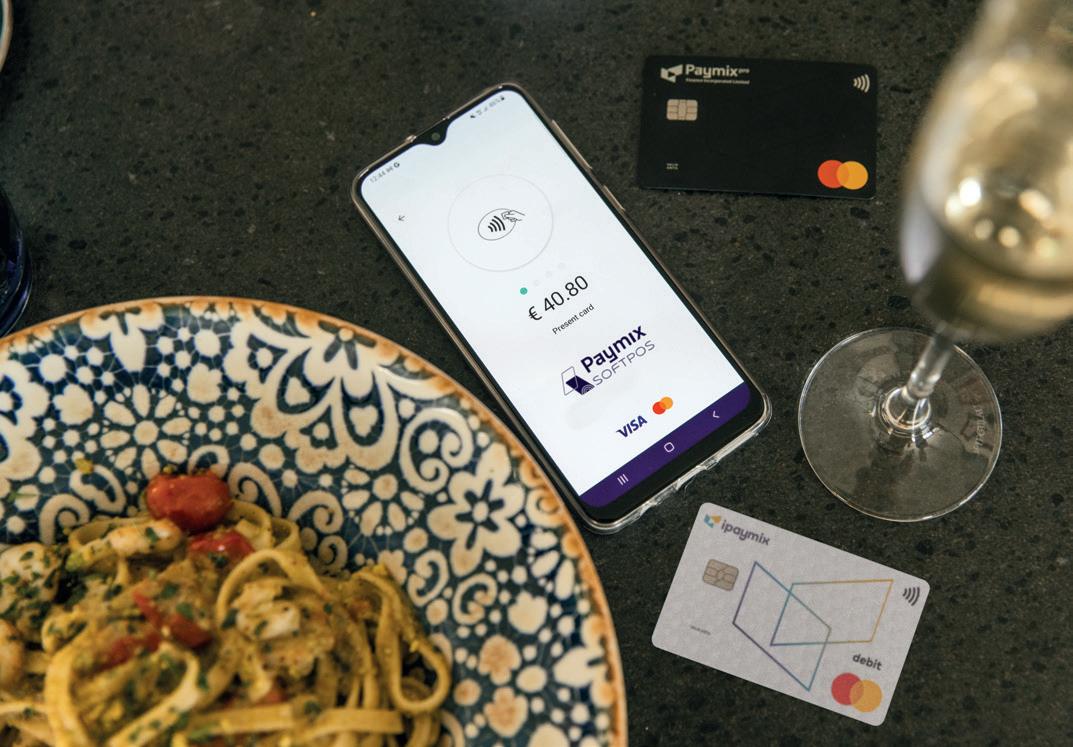
By developing expertise across diverse customer segments, FIL positioned itself at the nexus of an interconnected payments network. In-house engineering capacity powers this ecosystem, enabling rapid adaptation to evolving client needs.
Consequently, FIL earned the trust of established financial institutions across Europe, becoming an essential payments processor and innovator. The company is now ready to replicate this success globally through strategic partnerships.

As collaborative leaders, FIL aims to make these new relationships mutually beneficial. FIL wants to combine its technical strengths with local insights to deliver tailored payments experiences in new regions. This is part of the vision for the next phase of FIL's worldwide expansion and sustainable growth.
Naturally, these ambitions are made possible by the driven and talented team that has put its resourcefulness and creative streak to work and allow rapid and consistent growth. As FIL grows globally, it aims to retain this sense of family and social purpose that has defined

Cenk Kahraman graduated in engineering and has been working in the financial sector with a focus on banking for more than 20 years. During this time, he held managerial positions in corporate marketing, treasury and C-Level roles in multinational banks.
Since 2016 he has been the CEO of Finance Incorporated Ltd, formerly known as Paymix Ltd, where he also sits
as a board member. Cenk is committed to ESG and sustainable finance, and he personally represents Finance Incorporated with the Sustainable Markets Initiative.
About Finance Incorp. Ltd
Finance Incorporated Limited (FIL) is an Electronic Money Institution based in Malta, delivering a full range of financial services and infrastructure solutions aimed at corporations, institutions, and individuals.
Licensed and regulated by the Malta Financial Services Authority, FIL’s extensive and innovative payment solutions include

Since its inception, FIL has been striving to create an intuitive gateway to financial services by leveraging a multitude of technologies. Their mission is to aggregate the pick of the crop of these technologies into a journey that will tend towards costless financial transactions – and, where the technology doesn’t exist, FIL has the skills required to create it.
FIL is a diverse team of committed experts and keen innovators who are determined to
its journey so far. FIL wants to create shared value with international partners while empowering more communities through digital financial access. For FIL, this story represents the positive change enabled when technology meets human values of ethics and inclusivity. Partners that have the same ambitions in mind and that harbour a belief in the same principles will be instrumental in growing a network of responsible fintech players and that can demonstrate exemplary behaviour within the industry.
As the next chapter unfolds, this spirit of tech for good will guide FIL's continued evolution.
carve out the technologies and products that will be relevant to the financial services landscape of the future. Moreover, the team thinks and acts like a family, having exceptional governance, and a considerate work environment as priority.
Web: www.financeincorp.com
LinkedIn: linkedin.com/company/ finance-incorporated-limited
We see the next five years as a period during which we grow our global network of strategic alliances
For FIL, this story represents the positive change that’s possible when innovative technology meets the human values of ethics and inclusivity
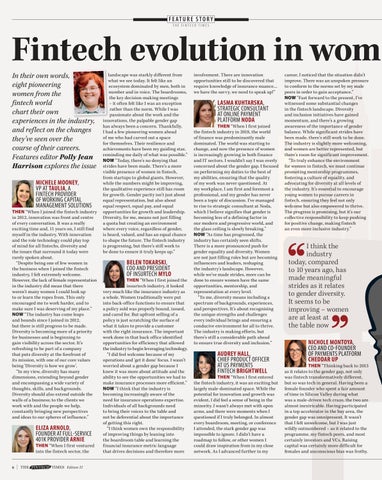
In their own words, eight pioneering women from the fintech world chart their own experiences in the industry, and reflect on the changes they’ve seen over the course of their careers.

THEN “When I joined the fintech industry in 2012, innovation was front and centre of every conversation. It was a really exciting time and, 11 years on, I still find myself in the industry. With innovation and the role technology could play top of mind for all fintechs, diversity and the issues that surround it today were rarely spoken about.
“Despite being one of few women in the business when I joined the fintech industry, I felt extremely welcome. However, the lack of female representation in the industry did mean that there weren’t many women I could look up to or learn the ropes from. This only encouraged me to work harder, and to make sure I was deserving of my place.”
NOW “The industry has come leaps and bounds since I joined in 2012, but there is still progress to be made. Diversity is becoming more of a priority for businesses and is beginning to gain visibility across the sector. It’s refreshing to be part of a company that puts diversity at the forefront of its mission, with one of our core values being ‘Diversity is how we grow’.
“In my view, diversity has many dimensions, extending beyond gender and encompassing a wide variety of thoughts, skills, and backgrounds. Diversity should also extend outside the walls of a business; to the clients we work with and the people we help, constantly bringing new perspectives and ideas to our spheres of influence.”





THEN “When I first ventured into the fintech sector, the
landscape was starkly different from what we see today. It felt like an ecosystem dominated by men, both in number and in voice. The boardrooms, the key decision-making meetings – it often felt like I was an exception rather than the norm. While I was passionate about the work and the innovations, the palpable gender gap has always been a concern. Thankfully, I had a few pioneering women ahead of me who had carved out a space for themselves. Their resilience and achievements have been my guiding star, reminding me daily of what was possible.” NOW “Today, there’s no denying that strides have been made. There’s a more visible presence of women in fintech, from startups to global giants. However, while the numbers might be improving, the qualitative experience still has room for growth. Gender parity isn’t just about equal representation, but also about equal respect, equal pay, and equal opportunities for growth and leadership. Diversity, for me, means not just filling a quota but creating an environment where every voice, regardless of gender, is heard, valued, and has an equal chance to shape the future. The fintech industry is progressing, but there’s still work to be done to ensure it truly keeps up.”
THEN “When I first joined the insurtech industry, it looked very much like the insurance industry as a whole. Women traditionally were put into back-office functions to ensure that a policy sold was properly bound, issued, and cared for. But upfront selling of a policy is just scratching the surface of what it takes to provide a customer with the right insurance. The important work done in that back office identified opportunities for efficiency that allowed the industry to begin leveraging technology.
“I did feel welcome because of my operations and ‘get it done’ focus. I wasn’t worried about a gender gap because I knew it was more about attitude and the ability to see the opportunities we had to make insurance processes more efficient.” NOW “I think that the industry is becoming increasingly aware of the need for insurance operations expertise. Individuals of all backgrounds need to bring their voices to the table and not be deferential about the importance of getting this right.
“I think women own the responsibility of improving things by leaning into the boardroom table and learning the financial insurance metric language that drives decisions and therefore more
involvement. There are innovation opportunities still to be discovered that require knowledge of insurance nuance… we have the savvy, we need to speak up!”
THEN “When I first joined the fintech industry in 2018, the world of finance was predominantly male dominated. The world was starting to change, and now the presence of women is increasingly growing in both finance and IT sectors. I wouldn’t say I was overly concerned about the gender gap. I focused on performing my duties to the best of my abilities, ensuring that the quality of my work was never questioned. At my workplace, I am first and foremost a professional, and my gender has never been a topic of discussion. I’ve managed to rise to strategic consultant at Noda, which I believe signifies that gender is becoming less of a defining factor in our modern and progressive world, and the glass ceiling is slowly breaking.” NOW “As time has progressed, the industry has certainly seen shifts. There is a more pronounced push for gender equality and diversity. Women are not just filling roles but are becoming influencers and leaders, reshaping the industry’s landscape. However, while we’ve made strides, more can be done to ensure women have the same opportunities, mentorship, and representation at every level.
“To me, diversity means including a spectrum of backgrounds, experiences, and perspectives. It’s about recognising the unique strengths and challenges every individual brings and ensuring a conducive environment for all to thrive. The industry is making efforts, but there’s still a considerable path ahead to ensure true diversity and inclusion.”
THEN “When I first entered the fintech industry, it was an exciting but largely male-dominated space. While the potential for innovation and growth was evident, I did feel a sense of being in the minority. I wasn’t always met with open arms, and there were moments when I questioned if I truly belonged. In almost every boardroom, meeting, or conference I attended, the stark gender gap was impossible to ignore. I didn’t have a roadmap to follow, or other women I could draw inspiration from in my close network. As I advanced further in my
career, I noticed that the situation didn’t improve. There was an unspoken pressure to conform to the norms set by my male peers in order to gain acceptance.”
NOW “Fast forward to the present, I’ve witnessed some substantial changes in the fintech landscape. Diversity and inclusion initiatives have gained momentum, and there’s a growing awareness of the importance of gender balance. While significant strides have been made, there’s still work to be done. The industry is slightly more welcoming, and women are better represented, but there’s room for significant improvement.
“To truly enhance the environment for women in fintech, we must continue promoting mentorship programmes, fostering a culture of equality, and advocating for diversity at all levels of the industry. It’s essential to encourage young women to pursue careers in fintech, ensuring they feel not only welcome but also empowered to thrive. The progress is promising, but it’s our collective responsibility to keep pushing for positive change, making fintech an even more inclusive industry.”
THEN “Thinking back to 2013 as it relates to the gender gap, not only was fintech transformatively different, but so was tech in general. Having been a female founder who spent a fair amount of time in Silicon Valley during what was a male-driven tech craze, the two are almost inextricable. Having participated in a top accelerator in the bay area, the gender gap was omnipresent. It wasn’t that I felt unwelcome, but I was just wildly outnumbered – as it related to the programme, my fintech peers, and most certainly investors and VCs. Raising capital was certainly more difficult for females and unconscious bias was frothy.

Features editor Polly Jean Harrison explores the issue
I think the industry today, compared to 10 years ago, has made meaningful strides as it relates to gender diversity. It seems to be improving – women are at least at the table now
Basically, I was typically in a room full of men. That said, there were certainly female trailblazers in the space. Over the years, I recall being grateful for femalefounded VCs that were cropping up in the industry, looking to back female founders.” NOW “I think the industry today, compared to 10 years ago, has made meaningful strides as it relates to gender diversity. While there are still disparities on almost all fronts – pay gap, senior roles, female founder funding – the general mindset around females playing an equal role within the industry, while hard to quantify, feels different… attainable. It seems to be improving – women are at least at the table now. “While it’s still harder to get funding, it does happen. But I’m a realist; it’s just going to take time. We’re talking about the tech industry and the finance industry – two industries historically made up predominantly of men – coming together. I typically think of investment banking as a lagging indicator for fintech improvement. Every time I hit an investment banking website; my first stop is the Team page. It used to be made up of almost 100 per cent white males. These days, I seem to find a few female analysts. We’re getting there, slow and steady.”


THEN “I first joined the industry in 2014 and, at that time, there was a noticeable lack of female representation in leadership positions and even fewer women running affiliate sites.
“I found myself in an environment with hardly any women to look up to and few men interested in mentoring a female colleague. Then, two years into my tenure, we hired Kamelia Dianati as our female CTO. Seeing a woman in such a role was, and still is, incredibly rare – akin to spotting a tech unicorn. During our first one-on-one meeting, I found myself tearing up. It was my first time crying in a professional setting, but the relief was overwhelming. Finally, there was someone who could understand and mentor me through the unique challenges I faced in a predominantly male-dominated industry.” NOW “A decade later, and I’m still in fintech. While there’s been some progress, the industry hasn’t changed as much as I’d hoped. There’s more female representation in various departments, including product and technology, but still very few women in top leadership roles. The absence of female founders is also glaring.
“We’ve made some strides in the right direction, but there’s a long way to go. We’re stuck in a chicken and egg situation: we need more female mentors, but for that, we first need more women in positions that enable mentorship.”
THEN “When I first entered the finance world, I was one of two women in my group, with the rest being men. I felt welcome but it wasn’t always easy navigating. I experienced a very strict culture in finance – complete with the stereotypical code of business suits. I will never forget my nylons, close-toed shoes and full suit being flagged as ‘too revealing’ by one of the men. It really felt as though women were seen as objects and not taken seriously. It made me extremely careful of everything I said, did and wore for fear of being objectified, and more aware of the lack of female leaders as my male colleagues rose faster than I did. I’m so happy things have improved!” NOW “Just as the world has become more diverse, the finance and fintech industries are no longer just a boys’ club – with more women, LGBTQ community members and people of colour in higher positions. But more work needs to be done…”
Payments and banking, where innovation collides with regulation, demand expertise at the forefront. This dynamic industry, with its intricate interplay of participants and ideas, requires individuals who can adeptly navigate its complexities.
Teresa Connors is a seasoned nonexecutive director (NED) and advisor who bridges the traditional and tech sectors within this evolving domain. With an unwavering focus on customer-centricity, Connors crafts strategies, fosters innovative solutions and champions robust corporate governance for the firms she advises. As a discerning judge for prestigious industry awards, she also fuels innovation and industry growth.
Now, Connors takes centre stage in an exclusive chat with The Fintech Times, offering her wealth of insights and experiences in the ever-changing landscape of payments and banking.
THE FINTECH TIMES: How has your career evolved so far?
TERESA CONNORS: My career choices enable me to see payments through different lenses – bank, technology company, fintech and industry.
In contrast to many, my path to working life differs. I joined NatWest straight from school, without A-levels or a university education, and worked with a great mix of people. I led teams and programmes in the corporate division (B2B) in cash management, client insight, product management and development and international market engagement. I represented NatWest at industry forums and events, such as The European Banking Association and participated in webinars and podcasts, sharing insight with a focus on customer needs, innovation and regulation. Through another payment lens, I worked with a global technology company, Bottomline Technologies. Initially I delivered a strategic review and before I knew it six months had turned into a couple of rewarding years specialising in propositions and deepening engagement with bank clients. The difference between working for a bank and working for a
technology company was fascinating, while I’m far from being ‘a techy’, I learned about payments from a new perspective. My career choices reflect my drivers of commercially viable, customer centric propositions that bear scrutiny. I thrive working with diverse inclusive teams, I like simplifying the complex and believe, to the extent it’s possible, that work should be fun.
TFT: What are your current role and projects?
TC: I founded Payment Matters and today, I’m an NED and advisor helping firms optimise opportunities and navigate challenges. My roles focus on strategy, performance, monitoring and control. I enjoy bringing an independent lens, helping businesses to grow and deliver.
I’m non-executive chair of tell.money, a fintech that delivers innovative open banking enabled services for bank and non-bank account providers. A huge attraction for me in accepting the role is
Also satisfying my curiosity, I’m a judge for payment awards such as the European Banking Association Fintech Award, the Merchant Payment Ecosystem Awards; it’s energising to see the innovation behind solutions that enrich professional and personal lives.
I’m proud to be a member of the EMEA Advisory Board for Women in Payments. Kristy Duncan and the team have developed programmes that propel female development and careers. The EMEA Board comprises a diverse set of women from different cultures and financial services firms; this gives a real-world view of global progress and challenge.
TFT: In your experience with both traditional banking and global tech firms, what are the key challenges and opportunities at their intersection?
TC: There are common threads such as comparatively large resource pools and budgets and strength of balance sheet. There are opportunities and challenges
reason, banks have to secure complete buy in, and this can take longer than a partner envisaged.
Despite the tensions I’ve described, the opportunities at intersection outweigh the challenges and many of the challenges can be overcome with transparency, which in turn helps to build trust.
On the other side of the coin, benefits of intersection include leveraging expertise enabling partners to play to their strengths. Another benefit is sharing knowledge and experience to avoid pitfalls and develop best in class solutions. It’s incredibly helpful if a partner has been down a road before and can share what did and didn’t work.
TFT: Was there a learning early in your career that changed your approach?
the embodiment of company values which include community and inclusion.
I’m curious with an eye on the horizon. As an ambassador for The Payments Association (TPA), I’m part of a vibrant community of a cross section of eco system participants. It’s interesting to hear different views on a topic and it’s a good reminder that payments is a network industry. I’m a member of TPA Project Regulator Working Group focussing on current and incoming regulatory activity that affects our industry. Talking of regulation, I’m a fan of the customer protection objectives driving the FCA Consumer Duty and authored a guide to members helping firms to understand the breadth and depth of scope together with tools for implementation and proof of compliance.
too. Looking at challenges, delivery and cost are perennial tensions.
Understandably, a bank needs a user friendly, compliant, interoperable and scalable solution. Technology development is time consuming and costly, a technology company might have to determine if some existing tech will fit the bill or, if not, assess if the cost and time to adapt is better than starting from scratch. These considerations can potentially lead to seemingly protracted discussions with a partner wondering why a point is being laboured or feeling that their partner isn’t listening.
Another source of frustration can be governance or as some see it, bureaucracy. Banks have rigorous sign off processes involving not only the line of business but other bank stakeholders. For sound
TC: Yes, and from an unexpected source. I had a personal challenge to achieve a degree level qualification. I was managing high performing teams so coupling a goal to enhance my leadership skills and achieve a personal ambition, I undertook a Chartered Institute of Personnel Development (CIPD) qualification, including a dissertation on talent management. I couldn’t take time away from the office so took the Professional Assessment of Competence route which demanded vast quantities of documented evidence to prove that I’d met CIPD standards during the course of my work. The evidence was subject to rigorous interviews to discuss, test and assess my evidence.
NatWest was supportive in terms of sponsorship (which was unusual as I wasn’t in an HR function), as was my husband as we had three young children and I was effectively doing this in our family time. Research for my dissertation involved learning how talented people develop, their drivers and motivation and how to maintain engagement. Reading some research, I had a cold chill as I recognised myself and not in a good way. The paper talked about a simplistic approach to career progression i.e, believing that strong performance was all that was needed to materially progress, because those making hiring decisions would surely notice. It opened my eyes to
Improving diversity starts early, young minds need to be treated equally, especially when it comes to freedom of thought and choiceThe Fintech Times chats to Teresa Connors on advocating for inclusivity in the payments industry and her unique path from NatWest to tech giants
the reality that while high performance is crucial to progression, so is talking about your challenges and achievements and networking. I found putting this into practice difficult but after the chill had thawed learned to talk about my challenges and successes in a way that was authentic to me.
TFT: What more can be done to improve gender diversity in the industry?
TC: I’m egalitarian; I’m passionate about all forms of diversity, although
my inner suffragette is never far from the surface!
Borrowing from the suffragettes
I believe that ‘unity makes strength’ and in ‘deeds, not words’. Unity needs to come from all of society, there needs to be greater division of responsibility and labour in the home and in family structures. This in turn will help shape the workplace.
Improving diversity starts early, young minds need to be treated equally,
especially when it comes to freedom of thought and choice. Sometimes, unintentionally, a subliminal message is given about gender and role, which can steer people away from some industries. Equipping people to fulfil their potential and ambition is key. I firmly believe that we’re each responsible for own development, however, learning tools and programmes need to be accessible to everyone.
From a gender perspective it appears that, in some situations, women lack confidence. The CEO of Uptime Labs, an incident management simulation fintech, told me recently that in his experience, he has seen females that perform better than male colleagues during the high-octane crisis environment but lacked the courage to speak up.
We all have a role to play to improve diversity in the industry; we need to ask ourselves ‘are we positive role models enthusiastically sharing knowledge and experience?’.
TFT: What do successful people have in common?
TC: I’ve noticed three common traits. Firstly, they are authentic. We need to remember, it’s ok to be yourself, there’s only one of you, be you. Trying to be someone else is tiring and it shows. Being authentic builds credibility and enhances your reputation. It’s important that you and others know what you stand for and what you don’t stand for. This is in your control and influences how others perceive you.
Secondly, successful people tend to seek feedback from those around them and have mentors. Trusted mentors are like gold dust, creating a safe environment to overcome bumps in the road and also for reflecting uncomfortable truths. It can be bruising to hear uncomfortable truths, but well delivered and intentioned truths serve people well. Thirdly, successful people realise that they can’t work in isolation and recognise the power of teamwork and a collective approach. They also recognise that either visibly or invisibly others have supported them and it’s important to pay that forward.
An inspiring payments expert with strong customer focus and commercial credentials. Teresa has a deep understanding of market complexity, drivers, regulation, participants and governance, with a track record of delivering customer centric strategies and propositions supported by robust corporate governance.

Name: Teressa Connors, MD
Company: Payment Matters

Location: London, England, UK
Linkedin: linkedin.com/in/ teresa-connors-56750b17
The way people make payments has undergone a remarkable transformation in recent years. From the advent of contactless payments to the rise of digital wallets and the proliferation of e-commerce, payment methods have evolved to reflect the fast-paced, digital-driven world we live in.
One significant shift in global payments is the increasing reliance on digital channels. According to Mastercard, contactless payments now constitute 50 per cent of global in-person transactions. This shift towards digitisation has been accelerated by the pandemic, which prompted consumers to embrace digital payment methods for everything from groceries to entertainment.

Additionally, digital banking has become an integral part of our financial lives. Fifty per cent of consumers are willing to switch banks if they don’t receive the services they desire, according to a report by Ethoca, a Mastercard company providing collaboration-based intelligence and technology solutions. This underscores the growing importance of providing seamless digital experiences in the banking sector.
However, the rapid growth of digital payments has also brought about challenges, particularly in the realm of chargebacks. Mastercard’s 2023 report with Datos on chargeback trends sheds light on key findings that are shaping the world of finance. As consumers demand seamless digital experiences and innovative payment methods, the report highlights the growth of e-commerce, the rise of card-not-present (CNP)
transactions, and the importance of chargeback prevention solutions. Chargeback volumes are expected to grow globally, reaching an estimated 337 million transactions by 2026, representing a 42 per cent increase from 2023 levels. This growth is closely tied to the expansion of e-commerce, which is projected to reach $7.3trillion in total sales by 2025. As e-commerce continues to surge, more payment transactions shift online, increasing the threat of consumer disputes and fraud, especially in CNP transactions.
Europe’s chargeback volumes are expected to remain relatively stable due to the implementation of SCA. In contrast, Asia-Pacific anticipates steady chargeback growth driven by rising retail e-commerce sales. Moreover, the rest of the world, including Latin America, is projected to experience substantial growth due to the meteoric rise of e-commerce transactions.
Retail e-commerce sales are projected to reach $7.3trillion by 2025, thanks to the explosive growth of online transactions. This shift is driven by consumers’ preference for seamless digital experiences and the growth of subscription-based services.
“This important research helps us understand the challenges banks and merchants are likely to face from disputed transactions in the future,” said Gaurav Mittal, EVP, Mastercard C&I. “Chargebacks remain a crucial part of the payments ecosystem and offer cardholders valuable protection.”
The report emphasises the effectiveness of SCA (Strong Customer Authentication) tools in reducing digital payment fraud, particularly in Europe. While these tools have made a positive impact in Europe, adoption remains slow in the US due to concerns about customer interactions. Consequently, CNP fraud losses are expected to soar to $28.1billion by 2026, a 40 per cent increase from 2023. The rate of increase in chargebacks varies across regions. In 2023, there are expected to be over 238 million chargebacks globally, with the US holding the lion’s share at 105 million. This variation in growth is attributed to factors such as the adoption of 3D Secure (3DS) and regional regulations like SCA.
Despite an expected dip in growth rates as consumers return to in-person experiences, e-commerce sales will continue to thrive. Mastercard’s report emphasises the importance of understanding the implications of CNP transactions, which encompass not only online purchases but also digital, mobile-device-based payment options like QR codes.
Global CNP fraud losses are predicted to reach $28.1billion by 2026, with the US bearing a significant portion of these losses. The slow adoption of 3DS in the US and the prevalence of first-party fraud contribute to the country’s vulnerability to CNP fraud.
In contrast, Europe has seen a decline in CNP fraud losses due to the introduction of SCA. Asia-Pacific anticipates moderate growth in CNP fraud losses, driven by the region’s increasing number of e-commerce transactions.
As consumers continue to demand seamless digital experiences and innovative payment methods, businesses must adapt to mitigate the risks of chargebacks and CNP fraud. To combat the rising tide of chargebacks and CNP fraud, businesses are turning to chargeback prevention solutions, reveals Mastercard’s latest research. These tools help businesses avoid chargebacks by providing real-time dispute information and facilitating quick resolution. By embracing chargeback prevention solutions and staying informed about global trends, businesses can safeguard their financial interests and provide a superior customer experience in this digital era.
Several factors should be considered when selecting a chargeback prevention solution, including the speed of dispute alerts, ease of implementation, the size of the network, and automation capabilities, such as enabling rules-based decision-making and automatically processing incoming alerts.
“As we look to the future, it is vital to deliver better consumer experience around payments. With rich information like digital receipts and subscription controls (enabled by Consumer Clarity) we can provide transparency, reduce erroneous chargebacks,” adds Guarav.
How the surge in e-commerce and the proliferation of card-not-present transactions are reshaping the financial landscape
“GLOBAL CNP FRAUD LOSSES ARE PREDICTED TO REACH $28.1BILLION BY 2026, WITH THE US BEARING A SIGNIFICANT PORTION OF THESE LOSSES”
You’re moving fast. We’re making it frictionless.
frictionless.
You’re moving fast. We’re making it frictionless.
Shaping the future of finance, together.
swift.com/future
Shaping the future of finance, together.
swift.com/future
Shaping the future of finance, together.
swift.com/future
We are in the age of the digital consumer, experiencing myriad daily interactions that are so fast, so crafted to us as individuals, that we barely notice they’re happening. That’s increasingly the case when we make or receive a payment, when we can transfer funds in seconds with just the wave of a phone or a scan of our face. At least that’s how it should work.
When it goes right, we barely notice. But when our payments go wrong; when we see a transaction we don’t recognise, or a payment is turned down, or a verification code never arrives – that’s when we remember there’s still quite a way to go. The good news is that, through open banking, we can tackle some of those challenges that continue to frustrate us – and deliver more benefits along the way.








Open banking services today were born out of the EU’s Second Payment Services Directive (PSD2). It required big banks to open up their data in a secure and standardised way to be shared more easily between authorised organisations. It created a host of new services including account-to-account (A2A) payments for instant cardless transactions – where we specialise at Yaspa – and money management apps. It has given merchants greater ability to meet KYC regulations and carry out strong customer authentication (SCA). It is a fundamental component of many of the financial apps and services we use today, delivering improved transparency and payment security across a multitude of industries. Adoption has been significant, with over 60 million users of open banking forecast across Europe by 2024. In July 2023, over 11 million payments were made through open banking in the UK alone, signalling a new milestone for the technology. Businesses are taking note, with 71 per cent of finance leaders seeing open banking as a positive change for the industry and 80 per cent of them planning to adopt it.
Most of us are familiar with using our online or mobile banking services to make





















bank transfers – but may also be aware of how long it can take to make sure details are inputted correctly, and verification goes through successfully. With an open banking-based payment from a company such as Yaspa –technically a ‘payment initiation service’ – all the account and amount data is prefilled, so you just need to go through a couple of steps to check the details and verify the transaction. It’s still the same bank transfer you’re making, but all the hard work’s been done for you.




Open banking payments are fast, simple and secure –and not just for consumers. For businesses they offer some major advantages over traditional payment methods such as cards. With fewer intermediaries, there’s reduced cost, and fraud risk – and in the UK at least with its Faster Payments rails – settlement is instant.




Easing energy management at home Utility companies use open banking to provide customer-centred payment options. At Yaspa, we work with Metro Prepaid, a provider of metering services. By using open banking to top up energy meters, instead of physical prepaid cards, customers can better manage their energy bills, with instant payments (and immediate electricity) and more control over their usage and budget. Being able to make a payment from their phone in seconds is far easier than visiting a local store or facilitating a one-off bank transfer to make a payment.
Open banking is now expanding to include variable recurring payments (VRPs). These allow customers to safely and securely connect authorised payment providers to their bank accounts to make ongoing payments within an agreed value. Unlike putting a card on file, VRPs give consumers more control since agreed payment amounts stay within a limit set by the customer and, unlike direct debits, large sums cannot suddenly be withdrawn by a vendor.

As of July 2023, 872,000 VRP































































transactions were recorded in the UK, representing a 28.7 per cent increase on the previous month – and it’s a service that we’ll continue to see grow dramatically where previously direct debits were used.





Investing in alternative assets like art, whisky, e-sports and collectables is becoming more popular and accessible to individual investors. However, transferring thousands of pounds can be a somewhat stressful experience, with risk of ‘fat-finger’ errors, and authorisation codes that never appear. And even if a card payment goes through smoothly, this is not always ideal from the perspective of the investment house, where margins on initial investments may be tight, and there are risks of fraud and chargebacks.
Gaming operators have a responsibility to treat their customers responsibly and to keep them safe from harm (for example, by ensuring that they don’t wager beyond their means).
In an April 2023 policy paper on gambling reforms, the UK government recognised the role that open banking services could play in delivering this objective.



Open banking does not just allow players to deposit and withdraw money in a fast and secure manner. It helps operators understand more about their players’ circumstances without having to ask for their bank statements. Using A2A payments such as Yaspa can increase the chance of identifying fraudulent or risky transactions and makes data available to simplify verification, deliver tailored services and ensure that gamers who risk becoming problem gamblers can be helped sooner rather than later.
Let players make deposits without cards. No PINs, no numbers, no high fees. With Citizen, your customers can withdraw their gains quickly and easily, without a long wait. Both deposits and withdrawals settle in seconds; 36x faster than a card.
no numbers, no high fees. With Citizen, your customers can withdraw their gains quickly and easily, without a long wait. Both deposits and withdrawals settle in seconds; 36x faster than a card.
One of Yaspa’s earliest customers was VCL Vintners, a whisky cask broker that sources and manages Scottish whisky casks for its retail and institutional investor network. It makes the majority of its money through commissions on investors’ returns at the ultimate point of sale, so margins are narrow during the initial purchase of a cask and returns may not be seen for decades. VCL turned to Yaspa’s open banking A2A payments to avoid prohibitively high card payments and frustratingly slow bank transfers. As a result, its customers can effortlessly transfer large sums without the anxiety-inducing wait times – while VCL sees improved profitability and a modern customer experience. The entire process takes a matter of seconds, 36 times faster than a card payment might be.
The UK’s gambling industry is worth over £14billion – a huge sector, employing thousands of staff both online and offline. Playing options range from casinos and bingo halls to online sports betting and National Lottery scratch cards. The National Lottery alone contributed almost £2billion to charities from March 2022 to 2023.
The benefits of open banking to customers and organisations are many. It’s opening up more seamless, secure and data-driven payment experiences. Forward-thinking businesses are exploring open banking because it really is the future of payments and financial services.
Drop us a line to see how you could benefit from open banking in your business.














Yaspa is an award-winning fintech committed to simplifying the way we pay. It uses use open banking to provide instant account-to-account payments that are faster, more secure and more cost-effective than cards. With simple, modular integration, Yaspa provides fully verified pay-ins, payouts and corporate accounts that transform businesses’ payment processes. Founded in 2017 by former Worldpay CTO, James Neville, Yaspa (formerly known as Citizen) was one of the first companies licensed to provide payments and identity services using open banking. Headquartered in London, Yaspa is backed by leading investors including Metavallon VC, SGH Capital and Fin VC. Web: www.yaspa.com

There’s no shortage of embedded payment solutions that provide consumers fast and convenient payment experiences. But the advantages of options like Stripe and Square extend beyond the consumer. They enable merchants to not only quickly and seamlessly accept payments, but also complete a variety of payments-related tasks. For example, sending receipts and service surveys.
These payment capabilities remain an attractive option for merchants like e-commerce businesses and retailers, especially those with digitally savvy audiences. The problem is that payment offerings from tech giants like Stripe and Square often fail to cater to businesses in highly regulated industries with unique payment needs.

Major tech players design payment solutions to appeal to the vast majority of consumers and merchants. It’s a smart move – these offerings provide an easy and secure way for shoppers to pay for their favourite products and services. Additionally, merchants who accept these payment types benefit by positioning themselves as adaptable and forward-
thinking brands. The solutions also tend to be user-friendly and easy to implement. But one-size-fits-all payment offerings fail to provide the flexibility and support for merchants in industries with more niche payment requirements. Merchants in certain industries and verticals – like education and dental care –often operate using transaction flows and customer journeys that are not relevant to the majority of the population. These businesses require specialised, payment-enabled products. Ones that allow them to serve customers in a manner that aligns with industry regulations and compliance standards.
Consider the hospitality industry. Hospitality businesses that cater to a global clientele accept multiple payment types in various currencies. They also need to accommodate both online and in-person transactions and the ability to process payments quickly and securely to provide a hassle-free customer experience. It’s challenging to identify a one-size-fitsall offering that satisfies all of the industry’s niche payment requirements. So while big tech payment offerings remain an appealing option for many consumers and merchants, more verticalised and regulated businesses require payment capabilities tailored to their specific needs and compliance requirements. For these merchants, independent software vendors (ISVs) check the box.
ISVs – software providers who develop a software stack for a specific industry vertical – offer comprehensive and
customisable software solutions that often include embedded payment processing capabilities.
While big tech companies focus on delivering innovative solutions to a broad market, software providers can narrow their focus to specific industries or verticals in which they provide the greatest value. This allows them to provide capabilities tailored to your needs, and offer the support and flexibility you need to scale and evolve.
A food and beverage company and a dental office have distinct operational models, so they naturally have different payment needs and regulatory requirements. Unlike one-size-fits-all payment capabilities, ISV payment offerings can be customised to seamlessly integrate with your workflows and ensure regulatory compliance.
Key takeaway for merchants: Look for software providers that have a track record working with organisations in your industry to ensure they know the ins and outs of your regulatory and operational payment requirements.
The right partner doesn’t just help integrate payments into your operations – they also offer support when issues or questions arise. A software vendor’s expertise allows you to rely on them to manage
your payment technologies while you focus on core business functions, turning them into a valuable operational asset.
Key takeaway for merchants: As you vet software providers, ask questions about their customer support capabilities to identify a partner that provides the right level of support.
Since ISVs offer more customisable offerings compared to generic solutions from big tech companies, it’s easier to evolve and scale your payment capabilities. For instance, you can scale ISV offerings as needed to accommodate changes in your transaction volume which helps you avoid paying for unnecessary payment processing capacity. A good partner can also help monitor payment technology trends to help you determine whether you need to revamp your capabilities.
Key takeaway for merchants: Prioritise transparent and timely communication with your software partner to discuss your long-term strategy.
The appeal of cutting-edge payment offerings from today’s tech giants is undeniable. But when it comes to meeting the unique needs of your business, you can’t beat the flexibility, support and customisation ISVs deliver to your payment operations.
With the ability to address the nuances of your sector, software vendors become integral to your success in navigating the complex landscape of payments. By evaluating your specific compliance and operational requirements, you can identify a partner that empowers your business to scale, evolve and provide seamless experiences to your customers.
Big tech payment offerings fail to meet every merchant’s needs; Kate Hampton , chief strategy officer at NMI, explains why
“One-size-fits-all payment offerings fail to provide the flexibility and supportfor merchants in industries with more niche payment requirements”
In response to the growing challenges and risks associated with the crypto industry, regulatory authorities in Hong Kong are taking significant steps to enhance transparency and consumer protection. These efforts are reflected in two distinct but related actions: one by the Hong Kong Monetary Authority (HKMA) aimed at discouraging the use of misleading banking terminology by crypto firms and another by the city’s Securities and Futures Commission (SFC) focused on strengthening investor protection and education, particularly in the context of unregulated virtual asset trading platforms (VATPs). Together, these regulatory measures represent a broader initiative in Hong Kong to create a safer and more transparent environment for cryptocurrency investors.

HKMA has identified that some crypto firms are using banking terminology in their marketing as ‘banking accounts’, ‘digital trading bank’, ‘crypto bank’, and ‘savings plans’. These expressions are closely associated with traditional banks and the security they offer. However, crypto firms cannot deliver the same level of banking security, making their inclusion in marketing materials a potential misrepresentation of their services.
“Under the Banking Ordinance, only licensed banks, restricted licence banks and deposit-taking companies (collectively known as ‘authorised institutions’), which have been granted a licence by the HKMA can carry out banking or deposit-taking business in Hong Kong,” warned the HKMA.
The regulator makes references to sections 11, 12, 92 and 97 of the Banking Ordinance, reinforcing that businesses without the licence cannot take or
encourage deposits from consumers. Consumers who ‘deposit’ funds in ‘crypto banks’ are not covered by the Hong Kong Deposit Protection Scheme.
Numerous crypto firms are caught in a conundrum. Cryptocurrencies inherently exhibit extreme volatility, a factor that often alarms investors. Compounded by instances such as the FTX and Terra Luna crashes, which have led to significant financial losses for many, this volatility has raised concerns.
Some legitimate crypto firms, aiming to build a trustworthy image amid this turbulence, may have resorted to banking terminology to counter negative publicity. Paradoxically, these efforts may now invite backlash, creating an even more daunting challenge in their quest to gain consumer trust.
Daniel Fogg, CEO of IOV Labs, the decentralised tool provider explains:
“Unfortunately, there is still a lack of consumer trust. This can partially be attributed to misleading social media marketing campaigns which promote
To avoid consumers being misled, Nicky Senyard, CEO and founder of Fintel Connect, the marketing tech company, points out: “It is critical for all financial institutions, including crypto firms, to adhere to regulatory standards and avoid misleading consumers. This means that crypto firms need to prioritise clarity in their messaging and ensure they accurately represent their services without using language that may confuse or mislead readers.
“When crypto firms promote themselves to new consumers, they should focus on transparency, education, and compliance. Clear and accurate communication about their offerings, including the absence of traditional banking services, is essential.
“It’s important for the industry to collaborate with regulators, embrace best practices, and prioritise consumer education. Upholding these standards is not only a regulatory necessity but a fundamental step towards long-term growth and acceptance within the financial ecosystem.”
Banking terminology isn’t even necessary according to Peter Eberle, president at Castle Funds, the digital currency price fund manager. He offers some alternatives.
programs. Consumers are used to gift cards, transit cards, and other stored value products that are not banking products. If a consumer carries cash in a physical wallet and then misplaces it, the cash (and value) is lost, and most insurance policies do not cover losses outside of theft.
“Another example would be ‘rewards’ for staking digital assets. Describing these rewards as ‘interest’ risks confusion with banking products where the bank must pay these funds. Describing these as ‘rewards’, on the other hand, matches other types of non-interest programs such as loyalty points at the neighbourhood coffee shop or supermarket. The expectation of rewards is different from the regulatory requirement to pay interest.”
tokens that aren’t the premium assets we know store value, like Bitcoin or USDC, often resulting in scams.
“Balanced regulations are a good thing, as they provide clarity around the types of business and products that can be built and run, whilst also offering consumers with protection from bad actors and fraudulent activities.
“However, without balance, these regulations have the potential to constrain technological innovation, often prohibiting the growth of small businesses building on the blockchain. With the right regulations in place, consumers and businesses would be protected, whilst promoting economic growth through innovation. However, it’s a fine balance to strike.“
“The driving force behind most digital asset innovations is the improvement of inefficiencies in traditional finance systems, such as slow and expensive payments, opaque reporting mechanisms, and access to credit and borrowing. So, it’s unsurprising that many digital asset innovators use traditional banking terms to describe their proposals.
“However, the use of these terms, such as ‘account’, ‘deposit’, and ‘interest’, can be misleading to consumers. They imply safeguards and regulatory oversight, which may not be present or may not work in the way they do in traditional finance. For example, a consumer who holds an ‘account’ at a digital asset exchange may reasonably expect that their account is covered by deposit insurance, such as that provided by the SIPC or FDIC in the US.
“A ‘wallet’ better describes the consumer experience with most digital asset
In separate action, Hong Kong’s SFC is implementing a series of enhanced measures to reinforce information dissemination and investor education, following recent concerns regarding unregulated virtual asset trading platforms. The news swiftly follows a high-profile case involving unlicensed crypto exchange JPEX, which SFC has accused of misleading investors. It believes that JPEX was actively marketing products and services across Hong Kong via “social media influencers and key opinion leaders” without the necessary licences. Throughout September, Hong Kong police arrested over 10 individuals, ranging from JPEX employees to online influencers, on suspicion of conspiracy to commit fraud – in relation to the virtual asset trading platform case. After identifying associated risks including decentralisation, money laundering and investor protection issues, the regulator is introducing a range of new measures. SFC-licensed VATPs are subject to robust governance measures covering safe custody of assets, prevention of market manipulative and abusive activities, as well as avoidance of conflicts of interest, to safeguard investors’ interests.
The SFC’s new measure includes publishing VATPs lists to ensure that all information shared is clear and transparent.
“WHEN CRYPTO FIRMS PROMOTE THEMSELVES TO NEW CONSUMERS, THEY SHOULD FOCUS ON TRANSPARENCY, EDUCATION, AND COMPLIANCE”
You’re moving fast. We’re making it frictionless.
frictionless.
You’re moving fast. We’re making it frictionless.
Shaping the future of finance, together.
swift.com/future
Shaping the future of finance, together.
swift.com/future
Shaping the future of finance, together.
swift.com/future
in-depth discussions including audience interactions and Q&As.
This year, in addition to the conference, there will be five zones where attendees can explore specific aspects of the fintech world. These include the technology zone, the founders zone, the ESG zone, the regulation zone and the talent zone.
While the concept of artificial intelligence (AI) has a long history, its development witnessed an incredible acceleration during the Covid-19 pandemic as organisations delved deeper into its possibilities. Despite this rapid progress, AI implementation in APAC countries lagged behind in 2021 and 2022. However, 2023 has taken a different turn.
More than three-quarters (76 per cent) of firms in the region are now utilising AI, according to research from IDC, commissioned by Dataiku. In addition, a further 67 per cent plan to use AI and machine learning (ML) more in 2023 than they did in 2022.

The technology is so popular that IDC estimates that despite economic challenges, the region is likely to spend $49billion on AI by 2026. Venture capitalist investments in generative AI have also reached a new high of $2.6billion in 2022 and with generative AI seeing the fastest-growing consumer take-up in history, leaders in the financial industry are keen to understand how AI can help build greater resilience in financial services.
The 8th edition of the Singapore FinTech Festival (SFF), taking place from 15 to 17 November 2023 at the Singapore EXPO, will put the spotlight on the growth and adoption of AI and how this technology can potentially be used in financial services.
Organised by the Monetary Authority of Singapore (MAS), Elevandi and The Association of Banks in Singapore, SFF will examine how AI and Web3 alongside digital public goods can help accelerate the transition to a low carbon future, re-imagine the financial system’s architecture to better address the underserved, and lastly, secure the digital economy against modern climate, tech and cyber risks.
According to Ravi Menon, managing director at MAS, while the use of AI is still nascent, it can be potentially transformative over the medium to long term. He suggests that Southeast Asia could “become a

fertile ground for generative AI to thrive because it has a digitally savvy consumer base, favourable demographics, and investor interests in gen AI developments.”
Sopnendu Mohanty, chief fintech officer, MAS and chairman of Elevandi Board, also commented: “Innovations in technology continue to present us with powerful tools to enhance the global financial industry’s responses to economic and financial challenges.
“At SFF 2023, we have the opportunity to convene a global dialogue that will explore the potential of transformative technologies and policies for financial services, and bolster the fintech ecosystem against future shocks.”
Last year, SFF brought together over 62,00 participants from 132 countries. This year it plans to replicate and improve on this, playing host to heads of state, policymakers, financial services leaders, founders, investors, and technology experts from across the globe.
There will be workshops for attendees to explore a broad
The Festival will also play host to the final of the Monetary Authority of Singapore’s eighth Global FinTech Hackcelerator in collaboration with Oliver Wyman, which set the challenge for entrants to produce innovative and market-ready AI solutions that can transform the financial services industry.
These solutions should focus on four key areas where AI can be better harnessed to achieve stronger outcomes: elevating customer experience; enhancing operational efficiency; strengthening risk, compliance, and fraud monitoring; and enabling environmental, social, and governance (ESG) solutions.
Chia Tek Yew, vice chairman, Singapore of Oliver Wyman said: “Advancements in AI are driving one of the most exciting revolutions of our time. This is a platform for innovators around the world to push their thinking and address financial services challenges centred around four key themes –customer experience, operational efficiency, risk management, and ESG.”
The Singapore FinTech Festival is a breeding ground for innovation and as AI adoption continues to grow, it is important that organisations are able to not only have a clear understanding of the technology but are also able to direct its development. range of fintech topics, in addition to various stages – the festival stage where experts will share their views, and the insights stage which will host
With three in four APAC businesses using artificial intelligence, SFF 2023 explores the technology’s true potential
THE SINGAPORE FINTECH FESTIVAL IS A BREEDING GROUND FOR INNOVATION AND AS AI ADOPTION CONTINUES TOGROW, IT IS IMPORTANT THAT ORGANISATIONS ARE ABLE TO HAVE A CLEAR UNDERSTANDING OF THE TECHNOLOGY BUT ARE ALSO ABLE TO DIRECT ITS DEVELOPMENT

London & Partners is the business growth and destination agency for London. Our mission is to grow London’s global reputation and create economic growth that is sustainable, resilient and inclusive. We have helped create nearly 70,000 jobs and £1.5billion in economic growth since we were founded in 2011.

London & Partners drives economic growth by supporting international and London-based businesses in high-growth sectors to grow and scale in London, as well as working to develop London as a destination, in order to attract visitors and world-leading events. In addition, London & Partners works to establish corporate and institutional partnerships as well as profit-making ventures to further scale its overall impact.
In May 2023, the Mayor of London launched Grow London Global, a free 12-month programme for London-based
companies that want to expand internationally. Grow London Global is the successor to the Mayor’s International Business Programme, which has helped 1,300 London scaleups reach their global expansion goals, including Monzo, Revolut, Checkout.com and Bloom & Wild.
The Grow London Global programme is designed to provide expert advice, workshops, events and networking opportunities with partners, corporates, investors, and peers. In addition, it creates opportunities for companies to establish valuable contacts into their target market through a wide array of trade missions that involve travel to leading business hubs around the world.
The UK plays a crucial role as a key partner to the APAC region, particularly
in the financial services sector, which in 2022 contributed an export value of approximately £9.5billion. In terms of the Singaporean market London is the fourth largest destination city for Singaporean FDI globally. Singapore is one of the UK’s top trading partners, and this relationship has been further strengthened by the bilateral Strategic Partnership agreed between the UK and Singapore in September 2023. London and Singapore are two of the most important fintech markets in the world and we’re delighted to build on our strong trade links with this incredible trade mission. Southeast Asia, and Singapore in particular, is home to a thriving ecosystem, where leading scaleups can innovate and grow.
As Europe’s leading fintech tech hub, London’s diverse ecosystem, extensive talent pool and high consumer adoption rate make our city a home to leading fintech companies. London ranks first globally for fintech VC investment, attracting more fintech investment ($10.3billion) in 2022 than any other global city. London also has the highest number of fintech companies globally, with more than 1600-plus fintech HQs based in the city. In addition, innovative, emerging subsectors such as insurtech are driving promising future growth for London’s fintech sector. On this mission, we’re bringing together two world-leading tech ecosystems. We’re excited to be taking the best London fintech companies (pictured below) to explore the Singapore market andengage with scaleups, corporates,investors and thought leaders, as we make new connections and create opportunities for collaboration.



Hong Kong Fintech Week, a flagship event in the fintech calendar, is back with a mission to reshape the financial technology landscape.
This year’s conference, spanning Hong Kong and Shenzhen, brings together over 12,000 senior executives and features an illustrious lineup of 250 speakers, including industry founders, investors, regulators, and academics.
At its core, the event – taking place from 30 October to 5 November 2023 at the Hong Kong Convention and Exhibition Centre in Victoria Harbour – revolves around the theme ‘Fintech Redefined’, shining a spotlight on critical facets of the industry.
With a steadfast focus on policy and regulatory innovation, the conference explores the journey from Web2 to Web3, harnessing the game-changing potential of AI, and examining technology’s role in promoting inclusivity, advancing ESG principles, and propelling the growth of green finance.
Hong Kong Fintech Week has firmly established itself as a global fintech powerhouse, drawing a record-breaking audience of over 30,000 visitors and amassing over five million online views from more than 95 economies in the previous year.
As part of this year’s conference, a global fintech accelerator competition will reach its climax. Thirteen finalists from the realms of fintech, artificial
intelligence and Web3 scaleups will take centre stage in the grand finale of the 2023 Global Fast Track (GFT) initiative.
Head of fintech at InvestHK, Mr King Leung (right), said: “Since the start of the year, we have been thrilled to reconnect with the world in person. We have engaged in many events and networking opportunities, and the message that ‘Hong Kong is back’ is loud and clear.
“With new partnerships and ideas, we will continue to push forward as Hong Kong cements its status as a leading fintech hub and the gateway for next-generation fintech companies worldwide. I look forward to an even more exciting year with participation from companies all around the world.”
In recent years, Hong Kong has emerged as a frontrunner in the fintech landscape, demonstrating a commitment to innovation. With a conducive environment, robust regulatory framework, and strong government support, the city has seen explosive growth in its fintech sector.
The expansion, from just 180 fintech companies five years ago to over 800 today, is a testament to Hong Kong’s open market and dedication to fostering fintech development. The city has demonstrated resilience in recent years,
particularly in the face of the Covid-19 pandemic, which led to the closure of its borders in 2020. The city’s strategic investments in innovation and technology, totalling over $19.1billion between 2017 and 2022, have been pivotal in its resurgence.
Central to this transformation is the Hong Kong Science Park (HKSTP) in Pak Shek Kok, home to a diverse community of 19,000 professionals from over 1,200 companies spanning 21 nations. HKSTP recently celebrated the opening of its
HKSAR Governments,
HKSTP aims to contribute to the development of the Greater Bay Area (GBA) as an international innovation and technology (I&T) centre.
The Shenzhen Branch offers co-working spaces, laboratories, offices, and event venues, covering 31,000 square meters. It has already attracted 16 I&T companies, with a focus on sectors like healthcare, AI, robotics, materials, microelectronics, fintech, and sustainability. The branch aims to serve as a platform for talent nurturing, business growth, technology collaboration, and more, strengthening the innovation ecosystems of both cities.
This initiative underscores HKSTP’s commitment to unlocking cross-border opportunities, knowledge exchange, and collaboration between Hong Kong and Shenzhen, ultimately positioning Hong Kong as an international I&T hub.
Hong Kong Fintech Week 2023 boasts an impressive lineup of speakers from various sectors of the financial industry.
Shenzhen Branch at Futian, marking a significant step in connecting Hong Kong and Shenzhen’s innovation ecosystems. This branch accommodates around 150 enterprises, facilitating their entry into the Mainland market and global expansion. With strong support from the Central and
Among them are Aveline San, CEO of Citi Hong Kong & Macau; Bill Winters, group CEO of Standard Chartered PLC; and Calvin Ng, executive director and alternate chief executive at ZA Bank. The event also features thought leaders like Dr. Oriol Caudevilla, board director and secretary general at Global Impact FinTech (GIFT) Forum, and Pascal Gauthier, chairman and CEO of Ledger.
“SINCE THE START OF THE YEAR, WE HAVE BEEN THRILLED TO RECONNECT WITH THE WORLD IN PERSON. WE HAVE ENGAGED IN MANY EVENTS AND NETWORKING OPPORTUNITIES, AND THE MESSAGE THAT ‘HONG KONG IS BACK’ IS LOUD AND CLEAR”






In a highly competitive environment, differentiating your financial services organisation is essential for success. With ongoing digital transformation, evolving technologies, changing consumer behaviour, and the emergence of fintech startups and other industry disruptors, financial services companies must remain flexible and able to adapt.
Events are a powerful, yet often underutilised, way for financial services organisations to differentiate themselves from the competition and build brand awareness. Far from a nice-to-have, events provide an opportunity to develop deeper relationships with clients and prospects, foster a sense of community and loyalty, expand reach, and build a sales pipeline. In this article, we’ll explore how you can use events and event technology to your advantage and their benefits for your organisation.
According to a recent Forrester study, 89 per cent of meeting and event decision-makers say that events are important or critical to driving revenue. Similarly, 75 per cent said events are critical to improving the customer experience. No matter your objectives or key performance indicators (KPIs), events provide several benefits for financial services companies. These include:
3Showcasing expertise: Providing thought leadership content, participating in panel discussions, or hosting workshops positions your business as an authority in its field, fostering trust and credibility among stakeholders.
4 Building trust and relationships: Events provide an opportunity to establish personal connections and build trust with clients, prospects, and partners. Building trust is especially crucial in a sector where reliability and security are paramount.
5Attracting a new generation of customers and employees: As a new generation of young professionals enters the workforce, they bring with them an expectation of digital experiences. Events that incorporate digital elements, like video, are likely to resonate with this digital-first audience.
6 Market research and competitive intelligence: Events help financial services firms gain insights into industry trends, customer preferences, and emerging competition, helping them refine their strategies.
As financial services firms look to acquire and retain customers through events, event technology will be a core part of your engagement strategy. Examples include using an attendee management platform to host hybrid events or checking in attendees using smart software.
Connecting with your target audience, providing value, and achieving your objectives are the most important parts of running an event. Fortunately, a wide range of event technology is available, from pre- to post-event, to help you meet (or exceed) these goals. Consolidating your existing event technology is a helpful first step. For Fintech Week London’s two-day flagship conference, a priority was ensuring that the entire event could be run end-to-end with a single technology solution. To create a seamless attendee experience, it needed one platform to manage the entire conference: registration, appointment scheduling, event app, event website, check-in, badge printing, lead capture, virtual networking, and on-demand content. Here are other ways to use event technology to personalise the attendee experience and increase audience engagement:
■ Virtual add-ons: Adding virtual components to your event helps reach a larger audience. Fintech Week London, for example, offered virtual networking options and on-demand access to the conference’s recordings.
■ Appointment tools: Appointment tools allow you to meet and catch up with the right people, facilitating deeper relationships and meaningful connections. Financial services firm, Morningstar, secured 195 private meetings and 80 training lab appointments using such tools.

■ Reporting: Tracking engagement and session attendance is vital. Fintech company, Fidelity Information Services, says it helps them show stakeholders that virtual events are here to stay and worth the return on investment. They could also provide their sales team with key attendee insights.
■ Surveys and feedback: Attendee feedback is crucial to understanding what you did right and what you could have done better. Dynamic surveys, for example, reduce survey fatigue and increase response rates.
1
Differentiating your brand: Events allow you to show your audience why you’re special, whether it’s through your product experts, expert branding, or thought leadership.
2 Brand visibility and awareness: Events put your business front and centre. They allow you to emphasise your company’s brand values, such as trust, transparency, or innovation. Financial services firms can reinforce their brand identity by aligning the event experience with their brand values, further differentiating themselves from competitors.
The rise of digitisation over the past few years has given events – and what they can do for your organisation – a new lease on life. But this rise means that event technology has become an expected staple of events. In fact, 77 per cent of meeting and decisionmakers say attendees have higher expectations for digital features compared to a few years ago.
And there’s a good reason for this rising demand. Technology enriches the attendee experience and improves engagement. But it also streamlines your processes, saves costs, provides valuable insights, and allows you to reach a broader audience. Event technology lets you stand out in a competitive industry and build stronger relationships with customers, partners, and investors.
■ Pre-event content: Building anticipation for your event through teaser videos and other content is an effective way to engage with your audience. Generative AI tools can also help create engaging event descriptions, session descriptions, marketing emails, and more. However, ensure that any content generated is always edited to ensure brand consistency.
■ Event mobile app: Making your mobile available before your event is an excellent way for your audience to access important event information, interact with other attendees, and keep up to date with their agenda.

Events and event technology come in all shapes and sizes and serve different purposes depending on your objectives. But one thing is clear: they are vital for financial services firms looking to build deeper audience engagement. Done right, events expand your reach, personalise attendee experiences, and give you an edge over the competition. And using the right event technology helps offer the best attendee experience possible and drive impact.
■ For more insights on optimising your event strategy, download the report
Building More Profitable Financial Industry Events.
Cvent is a leading meetings, events, and hospitality technology provider with 4,800+ employees and 21,000+ customers worldwide. Founded in 1999, the company delivers a comprehensive event marketing and management platform and offers a global marketplace where event professionals collaborate with venues to create engaging, impactful experiences.
Victoria Akinsowon is the content strategist for event marketing and management solutions at Cvent Europe.

Website: www.cvent.com/uk
LinkedIn: linkedin.com/company/cvent
Twitter: @cvent
Women in fintech share their experiences, highlighting the transformative impact of knowledge sharing and guidance breaking barriers and promoting diversity in the industry

Eliza Arnold, founder at retirement savings platform Arnie “Mentorship and knowledge sharing are invaluable.



They offer women in fintech tailored guidance, insights from experienced professionals, and a chance to broaden their horizons. In an industry that is often male-dominated, fostering women's talent through mentorship can pave the way for their success and build a more diverse future for fintech.”
Jackie Toole, vice president of financial services at NTT DATA
“I think mentorships are very important and it's not just about women mentoring women. I've had a lot of success in my career with support from both male and female advocates. I am at the point in my career where I'm trying to give back more too but I feel like I get as much out of the mentorships as the person that is being mentored. I learn more about the organisation and it helps me understand what's happening in other areas to me.”
Stacey Wilkinson, API growth manager at NatWest

“Humans by nature are always looking up to individuals and it’s incredibly important if there is somebody within your industry that you can look up to that really helps you pave and shape your career path and the choices that you make as well. At NatWest we have a number of employee-led networks that are focused on inclusivity to help individuals of all genders to learn, grow, develop and find mentors internally. So I think we
do a lot internally that's aligned to the bank's core value of inclusivity.”
Jena Gruenebaum, director of client advocacy at fintech Marygold & Co

“The goal of mentorship should be to provide guidance, support and encouragement. For women in fintech, it can enhance confidence in their abilities and underscore that they absolutely belong at the table. Mentors can also help navigate the systemic challenges women face across many industries, like overcoming biases and balancing personal and professional workloads in a way that often doesn’t affect men to the same degree. Women who have come before them and advanced their careers can be crucial in providing guidance.”
Mentorship isn’t about getting someone with ‘chief’ in their title to talk to you once a month; it’s about finding someone you can learn real skills from
Lissele Pratt, co-founder at Capitalixe “Mentorship and knowledge sharing are the lifeblood of progress in the fintech industry, especially when fostering women's talent. Let me be clear: They're not just important. They're absolutely crucial.
“In an industry that's historically been dominated by men, mentorship becomes a powerful tool for levelling the playing field. It's not just about imparting technical skills. No, mentoring is about sharing the
unwritten rules, the unspoken nuances, and the invaluable insights that can only come from experience. Mentors essentially tell budding female fintechers, ‘You belong here, and I'm here to help you succeed’.
“Mentoring relationships tend to involve members of the same gender. This highlights the need for more women to step into mentorship roles, providing guidance, support, and a clear path for the next generation of women in fintech.”
Danielle Pepin, head of product, portfolio monitoring and valuation, ESG and mobile at Dynamo Software “Mentorship and knowledge sharing are critical to growing talent in fintech. But, the toughest part isn’t setting up formal mentoring programs – it’s extending the informal mentorships to include more people and cross traditional boundaries. Some of the open-handed knowledge sharing and mentorship that blossoms in healthy and inclusive environments are hard to transplant because they happen organically when people feel respected and secure. It can’t be replaced with formal programs if they ignore the roots of these relationships.
“I’ve found the best approach is to keep in touch with people you have respected and learned from, and think about how the relationship can be mutually beneficial. It can also be wise to put titles aside. Mentorship isn’t about getting someone with ‘chief’ in their title to talk to you once a month; it’s about finding someone you can learn real skills from. My best mentor early in my career was a financial analyst several years younger than me who shared so much valuable advice from her background and
life experience that it completely changed my career path. My formal mentor at that time was a vice president, but this informal relationship was ultimately much more impactful.”
“Having mentors and sharing knowledge are incredibly important when it comes to helping anyone, and especially women, succeed in a historically male-dominated industry. I've been fortunate enough to have both male and female mentors that have really helped me grow as a leader in this space.
“I like to think of mentors as ‘personal trainers’ for your career. They give you honest feedback, make you face your weaknesses, and can help boost your confidence. With the guidance of my own mentors, I went from being a sales manager to effectively navigating and moderating board and C-suite meetings and having CEOs seek my counsel on various topics.
“Mentors can be a rich resource, sharing anecdotes, and drawing from their own experiences to pass on knowledge and experiences. For women navigating male-dominated industries, mentors can equip us to navigate the unique challenges we may face. From my firsthand experience, this was an invaluable resource for me.
“I've noticed that many companies now focus on diversity and are trying to bring more talented women onboard. But it's also up to us women to tap into resources and networks to share what we know. This is especially important as we pave the way for the next generation of female leaders, not just in our industry, but everywhere.”

It was only with the launch of ChatGPT by OpenAI in November 2022 that the world really sat forward and took notice of the massive potential of generative artificial intelligence (AI).
While most would have been aware of the concept of AI, for many it has always been affixed to fictional, fantastical films about robot uprisings, or, closer to home, fairly limited digital voice assistants like Siri, Alexa and Cortana. This was the case until ChatGPT burst onto the scene, amassing over one million users just five days after its official launch. But unknowingly to the majority of the public, OpenAI had successfully created iterations of the chatbot as early as 2018.
As we try to come to terms with how every aspect of human life could be affected by the seemingly exponential growth of AI, it isn’t uncommon to wonder what other technologies are quietly already in the works and could be thrust into public view at any given moment. With Unsupervised, Daniel Doll-Steinberg and Stuart Leaf attempt to give the reader te tools to better understand the answer to this very question.
Overall, the book aims to provide a core understanding of new and emerging technologies so readers can better follow the issues and problems discussed.
Regardless of your existing level of understanding, Doll-Steinberg and Leaf have you covered. The book does a great job in its introduction of setting the scene and preparing you for just how significant the next decade (or sooner) could be in changing the very trajectory of human history. The authors put it best: “It is not simply the continuation of the Industrial Revolution, rather a ‘Cognitive Revolution’ in information and computation.”
Importantly, part one takes you through the key characteristics of rapidly evolving technologies and explains the processes, services and products they enable.
Whether it be AI, quantum computing, robotics, or other areas of the tech world that you want to explore, the first section of the book has you covered, with comprehensive explanations for those who are foraying into this topic for the first time, and more in-depth information for those who already have a strong
 By Tom Bleach
technology knowledge base.
For those still struggling to grasp how far these technologies could evolve beyond their existing capabilities, chapter four helps to illustrate how they could practically implement change by explaining how they could combine to impact the sectors most important to the world’s economies and to people’s everyday lives.
From how VR, AR and holograms could transform the ‘face’ of the metaverse, to the future of mass-producing biomaterial to improve and even extend human life; the examples given are wide-reaching and
probably will, impact every aspect of life. Split into seven categories, the authors explore how everything from the economy and education could become transformed in the not-so-distant future, to how technology could even start to reinvent itself.
Although at times I wished certain subsections within each chapter were longer than a page or two, that is exactly what a good book should do - leave you wanting more. It does an excellent job of providing you with a solid base of information – enabling you to decide which topic areas to further pursue in the future.
Chapter 13 takes you through some of the most powerful and influential individuals who have created and operated much of the technology discussed earlier in the book. The section is eye-opening, as it becomes clear just how few people have had, and will continue to have, so much influence on frontier technologies. Even more worryingly, the chapter highlights just how little oversight exists among this almost oligarchal group –bringing it back to the apt title – the final and overarching warning of the entire publication: much of these advancements are happening completely unsupervised.
The Great Transition: The Personalization of Finance is Here by Emmanuel

Daniel
Available: Kindle, Hardback and Paperback
Re-Architecting Trust: The Curse of History and the Crypto Cure for Money, Markets, and Platforms by Omid Malekan

Available: Kindle, Hardback and Paperback
UNSUPERVISED: NAVIGATING AND INFLUENCING A WORLD CONTROLLED BY POWERFUL NEW TECHNOLOGIES by Daniel Doll-Steinberg and Stuart Leaf Available: Kindle and Hardback
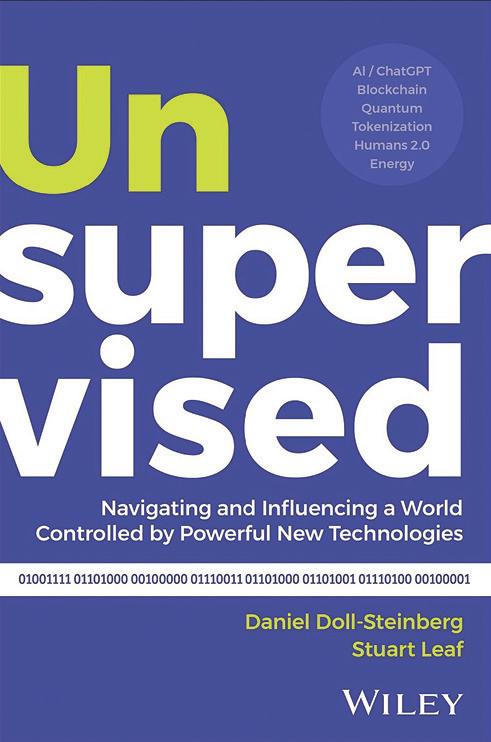
do an excellent job of contextualising the potential of these technologies.
WARNING: DANGER AHEAD
If considering these examples wasn’t daunting enough at times, one thing becomes abundantly clear in part two: this is not just an explanation of emerging technologies, but a warning of what they could become.
The middle section of Unsupervised explores how technology could, and
In their final thoughts, the authors reflect on a key lesson revisited throughout the book: “A common misunderstanding that impacts our forecasting and future planning for frontier technologies is that computers need to mirror what humans do – perfectly and with real understanding. However, if you judge a fish by its ability to climb a tree, it will live its whole life believing it’s a failure.”
Long before you reach the conclusion, you will understand exactly why this isn’t the best way to measure the potential dangers of technological advancement and have you wondering why others haven’t cottoned onto this sooner.
Overall, Doll-Steinberg and Leaf get you thinking and understanding more about the future, but also asking key questions about where technology is headed. As we ready ourselves to delve into a tech-driven world like never before, Unsupervised proves itself a perfect first step to better your awareness of what the future has in store for us regardless of your level of understanding prior.
Redecentralisation: Building the Digital Financial Ecosystem by Ruth Wandhöfer and Hazem
Danny Nakib
Available: Kindle and Hardback
Bankers Like Us: Dispatches from an Industry in Transition by Leda Glyptis Available: Kindle and Hardback
The metaverse economy: How finance professionals can make sense of Web3 by Arunkumar Krishnakumar & Theodora Lau Available: Kindle, Hardback and Paperback


THE ANNUAL GUIDE TO THE MOST INFLUENTIAL, INNOVATIVE COMPANIES AND VISIONARY PERSONALITIES IN FINTECH