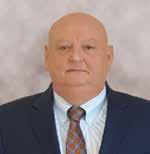
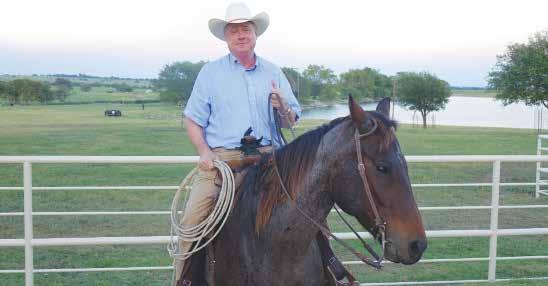
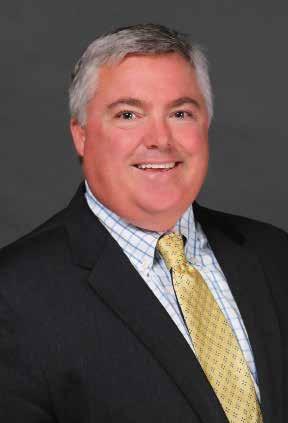
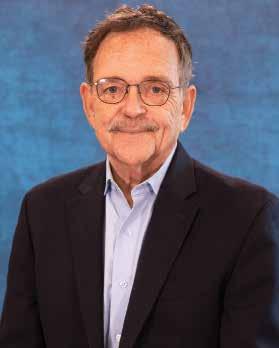
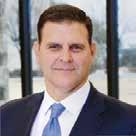
Jim Schwertner, CEO of Capital Land & Livestock in Schwertner
Publishers
Michael Payne
Catherine Payne
Executive Editor
Ann Marie Kennon
Senior Writer
Charlotte Kovalchuk
Editorial Writers
Megan Freedman · Greta Bauer
Megan Beatty
Community Liaisons
Janet Hage Camy Reynolds
Columnist
Ben Lake
Videography
Todd White
Photography
David Valdez · Rudy Ximenez · Todd White
Digital Media Director
Jenny Campbell
Graphics
Sandra Evans
Account Services
Debbie Tolliver
Distribution
David Schumacher
IT/Webmaster
Jesse Payne
Consultant
W. Ben Daniel
FROM THE PUBLISHERS
If anything can be said about business in Central Texas, it is always changing and, most often, growing. The path to printing this issue of the Wilco Business Review proved that the publishing business is no different. As we turned our focus to people and companies coming to and developing our region, the County’s persistent growth presented a challenge to constantly refine our content to remain timely and relevant.
One thing we can always count on is the consistency and commitment of the man on our cover, Jim Schwertner. His family has been helping Central Texas grow, bank, and feed our families for more than a century, and we are so pleased to feature and celebrate the 75th anniversary of Capitol Land & Livestock Co.
As well, the Wolf family is into its second generation, bringing new business and retail to Georgetown. A true Texan, David Wolf knows that CEOs need great housing in great communities for all their employees.
Among several new, international corporations that are soon to make Williamson County their home is Cangshan Cutlery. Cangshan is knife manufacturer located in Yangjiang China, where cutlery has been a tradition for over 1500 years. Welcome to Leander and the heart of American business.
We were pleased, also, to spend a great deal of time with Representative Terry Wilson to discuss and clarify how property taxes are determined and their impact on the business community.
This interview is just one example of our mission and goal to promote relevant issues from a government standpoint and how businesses are impacted by what goes on in the State house, courthouse, and school house. We are also committed, in every issue, to getting in front of the people and companies who will have the greatest impact on those who do business with and within our county, as well as its residents. In short, you can rest assured we will be keeping an eye on municipal and legislative leadership on your behalf.
In between, we continue to bring you profiles, trends, advice, and people who are making those changes happen.
Elliott
Michael Payne
Catherine Payne
Ann Marie Kennon
Cangshan Cutlery Coming to Leander
Business-friendly Williamson County maintains its edge over California
Cangshan Cutlery is the latest California-based manufacturer to relocate to Texas. The City of Leander announced the 2023 move may mean as many as 300 new jobs and a 400,000-square-foot facility, which will house production and corporate management. Cangshan produces premium cutlery, with annual revenue estimated at $150 million.
“AS A FIRSTGENERATION IMMIGRANT, I AM INSPIRED BY THE POSSIBILITIES OF THE PROMISE OF AMERICA.”
CEO & Founder Henry Lui said in his company’s release, “I see...the spirit and creativity of my employees, and I see it in the town of Leander. I am truly excited about bringing the vision of creating a premium American-made cutlery line to life.”
Goodman explains, “We are most pleased that Cangshan will be a primary employer, which means its operations will bring ‘new money’ for the community. Cangshan is sold nationally, so much of their revenue will come from outside Leander.”
~HENRY LUI
The company’s agreement with the city includes construction, $40 million in real property improvements and equipment, and additional full-time jobs to accompany facility expansion.
Leander City Manager Rick Beverlin is happy to welcome Cangshan on the city’s continuum of growth; “This builds on the momentum of other recent job multipliers like Texas Bullion Depository and Northline Development, which are essential to establishing a healthy and diverse tax base in Leander.”
Leander’s Economic Development Director Cameron Goodman is ea- ger to see the ancillary businesses that will support Cangshan to follow. “Normally, we see small companies suppliers and service providers that serve big companies come with them, as we did with Tesla. This kind of move tends to reverberate throughout the community and this will be a boom for our local economy.”
On a smaller scale, he says, the trickle effect will provide benefits in the form of new places to live, shop, and eat. A company like Cangshan will grow the city’s ‘daytime population’, something the EDC has worked hard to develop to support retail and restaurants.
Goodman adds, “We appreciate the County’s support helping us pay for the roads that will support the Cangshan project. It wouldn’t be possible without their help.”
Williamson County Judge Bill Gravell said, “It’s clear this project is a cut above the rest when it comes to economic development. Not only is Leander one of the fastest-growing cities in America, it is a great city to work and build a business and I am proud to partner with them.”
The new facility will be located at 204 Heritage Grove Road, Leander.
What is your position in keeping the city in the rail system?
FIVE QUESTIONS
1
We cannot pretend that we are going to grow our population and not increase traffic. Mass transit is a necessity for any large city and certainly a win for Leander. While our relationship with CapMetro is precarious, our position on mass transit is unequivocal Leander wants transit options, we just want to have the right to make service decisions in the best interests of our community.
WITH LEANDER MAYOR
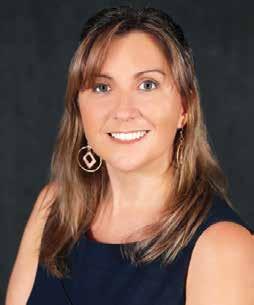
CHRISTINE SEDERQUIST
What is your position on more multi-family housing in Leander?
2
Multi-family housing is something that belongs in Leander, but like anything else, we need balance. There’s a substantial amount of multi-family housing in the pipeline and no shortage of developers wanting to add more. At this time, I have no interest in entertaining zoning changes for anything residential that isn’t bringing something important to the city. Our focus is on the long-term economic health of Leander and ensuring we don’t become a bedroom community.
What are your current top priorities in growth and development in Leander?
We are making sure that we’re growing with intentionality. It’s easy to add developments, but we must take the extra step of planning out how to deal with strain on infrastructure when to widen roads, when to upgrade utilities, and how to keep ahead on public safety.
3
5
4
Tell me three things about Leander that are worth the drive? Leander has a wealth of interesting and unique things to do. We recently opened Lakewood Park, a picturesque 125-acre waterfront property with a splash pad, skate park, fishing dock, and kayaking. We also have unique small businesses like Smooth Village an outdoor music venue by night and farmers market on Saturday mornings. If you’re hungry, you can try a Great White at Sharksburger or a cherry fatcaron at Whipped Bakery - each is sure to become an instant favorite on your first bite.
How do you foresee the job market evolving over the next five years for residents?
With fiber Internet service and nearby tech campuses, the last several years have seen a large number of corporate tech employees moving in. Our recent announcement of the Cangshan Cutlery headquarters relocation and the regional push for more re-shoring of manufacturing will help to bring a diverse mix of both white and blue collar jobs. Our growth also brings a number of service industry positions and St David’s Hospital ensures we’ll have abundant employment opportunities in healthcare as well. Leander is poised for a very resilient economy.
photo courtesy Mayor Christine Sederquist
The Schwertner Legacy
IF YOU ATE TODAY, THANK A FARMER. IF YOU ATE BEEF, THANK JIM SCHWERTNER.
Trading more than 25 million head of cattle since 1946 is the kind of success any cattleman would envy. Indeed, the kind of success the Schwertner family has had is something to aspire to in any industry.
What many people don’t know is how closely that success is tied to aviation, and how Eugene and Jim Schwertner’s addictions to jet fuel helped build Capitol Land & Livestock Co., the largest cattle brokering business in the United States, trading 300-400,000 cattle per year.
THE FOUNTAINHEAD
Eugene Schwertner was born and raised in Schwertner and his father sent him to Texas A&M to be an engineer. Jim says, “He thought his dad meant ‘on trains’, but he did study civil engineering. In his senior year, Pearl Harbor was attacked and he was invited to join the SeeBees. As a front-line fighter, he was convinced A&M kept him alive. The war department was recruiting farm boys with no training in leadership or logistics, but he had trained for that in the Corps of Cadets; he knew what to do to survive.”
When Eugene came home from the war, he just wanted to stay home and, fortunately, his father had begun organizing and trading livestock at public auctions to get away from the corruption he saw in the cattle business. By the mid-1950s, Eugene’s reputation for honesty resulted in many small towns
replicating his methods and inviting him to manage their auctions. At this point, however, son Jim was still more fascinated with aviation; “I was just overly accustomed to cattle and I preferred the sounds, smells, and everything else of the jets and airplanes to those of cows.”
FAMILY BUSINESS
Eugene began purchasing land and auctions from Terrell to Belton to Lockhart and east to Caldwell. “My dad was a bigger gambler than me,” Jim says. “My mom, Gloria, was his bookkeeper, and with a mattress in the back of the car, we were like a band of gypsies visiting eight auctions per week. Aside from that, his message was that I would always need a way to keep track of my money. With my mom as his accountant, and checkbooks in cardboard boxes, in every audit, they were right, down to the penny.”
Under his father’s guidance, Jim understood the critical need to know where the business and the finances stood every day, every minute. He said, “I didn’t realize that wasn’t normal. I did realize that our business is very volatile and if you do not watch your margins, you won’t make it.”
Jim Schwertner was trained to run a profit-and-loss business every day of his life.
Ann Marie Kennon
“Aviation has always been a big part of the business. It was dad’s
secret weapon because he could get to
the cattle before anyone else. I was trained at age 14 by none other than Emma Browning and, when I was young, my heart was truly in the cockpit of a Navy plane, but I stayed in cattle to help my family survive. That’s not the case today — I love this business. ”
~Jim Schwertner, President and CEO of Capitol Land & Livestock
TOO MUCH SUCCESS
In the 1960s, Eugene bought cattle and charged a flat fee for profit. His strategy worked so well that he had to build a distribution center and his enterprise grew to the point that USDA Stockyards and Packers began assessing his practices for anti-trust violations. Jim explains, “Dad had just built a better mousetrap. Ironic that his honesty led to too much success and he was controlling too many cattle. Still, to assuage his competitors’ complaints, dad chose to sell some of his auctions.”
Eugene was not a man to be outmaneuvered. His attorney advised him to put his auction’s in young Jim’s name and have him declared an adult legally. “Dad had been training me and I was ready to do more at 14 than most people at 34,” Jim says. “We did not play in my family we were serious about work. We didn’t have what most would call fun but I had a great life. We did take two weeks off at Christmas and we played hard, but Dad always set the example and ensured we were always taken care of.”
RANCHING DONE RIGHT
THE PLANET
Temple Grandin, scientist and animal behaviorist, is a friend to Jim Schwertner. Both are advocates for well-maintained ranch land, which provides water and promotes healthy grassland ecosystems for wildlife and endangered species. Both also promote humane treatment of livestock for slaughter.
THE SCIENCE
Aside from this propitious approach to beef, the health of the live animals is also paramount to profit. In 1989, Eugene told the National Cattlemen Beef Association that ranchers and farmers were losing $100 per head because their cattle were not weaned properly. Jim explains, “Taking a calf from its mother is very stressful. When a stockyard is resonating with moos, you’re hearing stress. Dad figured it out a long time ago. He always put his personal cattle in a quiet place and taught them to eat. When it’s not done properly, the death rate is as high as 10 percent; ours dropped to 4 percent.”
CHALLENGING DAYS
Unfortunately, the beef market crashed two months after Jim graduated college. Beef was boycotted across the country and 80 percent of the Schwertner’s customers went broke. Eugene and Gloria’s tenacity kept the ranch afloat and Jim began studying how to measure supply and demand. He came up with a formula that the company would only follow 24 hours at a time, and guaranteed a “win” 70 percent of the time. Even today, Jim stays at the office until the trading is done, even if it takes until midnight. He recalls, “I was afraid, at first, because dad was literally betting the farm on me, but it worked. The only time I didn’t do it was September 11, 2001. I and everyone else sold everything that morning and the Stock Exchange closed right after. The market dropped 20 percent, but the next day it went back up and, while we didn’t lose any money, it was $200,000 in missed earnings. I’ve never done it since. Even during the pandemic, I stayed with the formula and, as it turned out, families ate more beef per capita and buying went up. I was reminded again how blessed I was by the parents I had.”
Eugene was skeptical when Jim told him they could make money on their protocol but he gave him 5,000 acres to try it. Jim went to prominent customers to wean their cattle and promised to guarantee any death loss. Jim’s year-round cow hotel idea became the “Schwertner Select” brand. Owners paid $1 per day per head for 45 days, and when Jim doubled his profit margin for the second time, Eugene sold their combines and got out of the corn business to make more room for the program. Jim says, “We started that in 1989 and we have never had empty pastures. We have different cows every 45 days and the 150,000 cattle we take to market annually from this program are quiet as church mice. There is no amount of vaccines or medicine that will help an animal under stress, so we hydrate and feed them well and they grow up healthy. ”
Beyond the program profit, Texas A&M and the McDonald’s corporation did a study that proved the weaning program was a scientific success and Jim’s only limit is the amount of land available. “This is a separate division from our trading, and I am always working to find nearby land because it needs consistent management.”
AGRICULTURE
UNTO THE THIRD GENERATION
Like Jim, his son Jimmy was not always on board to be in the business that had worked him so hard growing up. While young Jim had military aviation in mind, Jimmy gave ranching a wide berth and went to Hollywood. He got a degree in movies and theater, had a great career, and was fortunate to work for companies like the Disney corporation, HBO, and many others. He also managed to bring several movie* and commercial projects back to Texas, which provided revenue for the ranch, and a relationship with Temple Grandin, who helped redesign the facility at Capitol Land & Livestock.
Like his dad, Jimmy also has his pilot’s license and loves aviation. Last year, Jimmy came home for Christmas and told the family he was coming home to work for the ranch. Jim says, “I cried like a baby to know that the family business will continue into another generation. I also thought it was pretty great that Jimmy’s decision was largely influenced by Tommy Lee Jones.”
Jim says most people were scared of Tommy Lee, but Jimmy’s work ethic had impressed him. On a project in west Texas, Tommy Lee explained that he knew about the Schwertner family and couldn‘t understand why Jimmy was working so hard for these [movie industry] jerks when he could be back in Texas working for his family. Jim says, “He told him he was an idiot and Jimmy said he thought he was doing a good job. Tommy Lee said he was, but in entertainment, he might make a lot of money for six months and be out of work for a year. He said, ‘Son, I know your work ethic and you’re in the wrong place.’”
As a result, Capitol Land & Livestock Co. will easily continue managing and supplying beef for another 75 years. Jim believes, as he always has, that as long as there are people in McDonald’s and Ruth’s Chris, there is a future in the business. He adds, “Our only real obstacle is the housing coming this way, so I am looking for more land for my kids to continue farming. I have a great team and managers and I’ve taught them the system. They all work hard and have good ethics. I pay them well and they know it’s a good job. It’s what my dad taught me, I am teaching my son, and the Schwertner family will continue to safely and consistently feed families in America.”
*Parts of “Temple Grandin”, the 2010 Emmy award-winning movie, were filmed at Schwertner Ranch.
“AVIATION HAS ALWAYS BEEN PART OF MY WORLD”
Jim Schwertner fell in love with aviation during his first plane ride at age 6. He began pilot training at age 14, and was trained by none other than Emma Browning, a contemporary of and friend to Charles Lindbergh and Amelia Earhart. Emma gave aerobatic training to WWI and WWII pilots and trained up Mr. Schwertner to take his first solo flight at age 16.
“I got my license at 17 years old,” Schwertner says. “I quickly trained for multi-engine flight and had most ratings by the time I was 19. Aside from my love of flying, it is good for business. Everyone always wanted to know how my dad got to the cattle so quickly; using aviation to get to the auction before everyone else was his secret weapon.”
As an aviator, Jim’s jobs varied; delivering new planes to their owners, transporting Vietnam war casualties to their homes, crop-dusting, and flying clients to Cowboys games. In 1976, when business began picking up after a cattle market crash, Jim says, “Dad told me to go find a used twin-engine that I felt safe in and I could spend $30,000. He did it to keep me happy but also because he wanted his secret weapon back. It was good for business, but I loved flying my dad and my family all over the world in that plane.”
Today, Schwertner also uses a helicopter to survey his land, check on fences and water supply, and make sure his livestock are healthy.
But it’s not all work. In 2020, Jim escorted Texas A&M’s mascot, Reveille, to Alabama for a game. As several planes carrying football fans began to line up and air traffic got congested, the tower radioed the pilots to adjust their speed and flight paths to avoid proximity risks. When Jim responded that he had to get his special passenger to the game before kickoff, all the other Texas-based pilots jumped in to say, “We’ll throttle back; let that plane go ahead!”
photos this page courtesy of Jim Schwertner
charlotte@wilcobr.com photo courtesy of Williamson County
B2Z Engineering Donates $16K to Future Dell Children’s Medical Center North
Cedar Park Campus to Reduce Families’ Commute
Afour-story, 187,000-square-foot Dell Children’s hospital anticipated to open in Cedar Park next year and cut Williamson County families’ travel time in half has received its first donation, thanks to B2Z Engineering and the check was presented by Project Development Director Vince Young.
“Nothing is more special to all of us than the children of this area, and the level of care that Dell Children’s has is unmatched, and we are proud to support them,” Young told commissioners at their September 21 meeting before handing a check for $16,000 to Jennifer Hayhurst, executive director of the Seton Williamson Foundation.
hospital. “My bachelor’s degree at the University of Texas is in education, and I have always been passionate about giving back to the kids, whether it be hosting football camps, attending Special Olympics, supporting the Ronald McDonald’s foundation, visiting kids in the hospital, and talking to young kids on preparing for life,” he says.
KEEPING CARE IN WILCO
For Young, a former NFL quarterback, the donation was a way to give back to B2Z’s new home. Formerly in Mission, Texas, this civil engineering consulting firm recently expanded to Austin. When he heard about the future Dell Children’s Medical Center North, Young wanted B2Z to be the first to donate to the facility. He hosted an auction at B2Z’s grand opening in September and raised $8,000 in donations, which he matched for the
Dell Children’s Medical Center North broke ground May 13 at Avery Ranch Boulevard and 183A in Cedar Park. The campus will feature 36 beds, emergency and trauma services, four operating rooms, endoscopy and procedure rooms, and in and outpatient sleep labs. Hayhurst provided an overview of the Dell Children’s Austin location; “Dell Children’s Medical Center has become a hub for pediatric health care in Texas, but it has also allowed us to keep our kids here, so instead of having to go to Dallas or Houston, our kids in Central Texas are staying right here for care.” She oversees philanthropy efforts for Ascension Seton and Dell Children’s Medical Center North. “We’re talking about saving so much time that parents have to take away from their jobs and their other children, and basically cutting that travel time in half for many of them; for some, even more than that.”
County Judge Bill Gravell went a step further by committing to visit patients and their families and provide a meal for them at least once a year. “What you guys are doing in Williamson County is incredibly important, and we know when families are walking through a lonely, difficult time, we want to be there to stand with them,” he says.
Charlotte Kovalchuk
L-R: Commissioner Terri Cook, Oliver Salgado, Commissioner Cynthia Long, Raphael Campos, Judge Bill Gravell, Jennifer Hayhurst, Commissioner Valerie Covey, Commissioner Russ Boles, Vince Young
THE CAMPUS WILL ALSO INCLUDE A 60,000-SQUARE-FOOT PEDIATRIC, MULTI-SPECIALTY MEDICAL OFFICE
childandadolescentpsychology
outpatient physical and occupational therapy
sleep lab
cardiology
plastic surgery
ear, nose, and throat surgery
rheumatology
gastroenterology
pulmonology
neurology
infusion services
dermatology
hematology
infectious disease
DAVID WOLF
Carries On His Family’s Real Estate Legacy
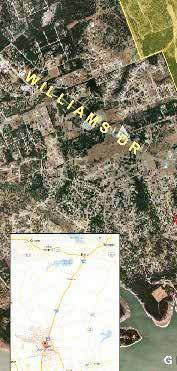
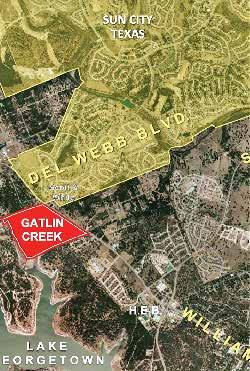
All around Georgetown, the Wolf family’s footprint is visible, with four of their developments serving as major economic engines Wolf Ranch Town Center and Wolf Crossing shopping center, as well as residential Wolf Ranch Hillwood and the coming Wolf Lakes Village. Gatlin Creek, 17 acres of land just off Williams Drive between Lake Georgetown and Sun City, will soon emerge as the newest element in this mix of real estate powerhouses.
LAND HERITAGE
David Wolf, son of Jay and Bettie Wolf, has strived to carry on his family’s real estate legacy throughout Georgetown. “I want to be a good steward of these properties I acquired through the hard work and saving and scrimping of my parents,” he says.
He fondly remembers growing up on the land Wolf Ranch sits on now at the southwestern corner of I-35 and Highway 29. “My parents bought that land in the 1950s, way before there was a thought of 35,” he says. The Wolfs originally used the tract for ranching in what was, at the time, a predominantly agricultural Georgetown. It would be 50 years before Simon Properties would come knocking on their door, wanting to develop a shopping center on 100 acres of Wolf land.
Wolf Ranch Town Center, which David calls a “power center”, opened its doors in 2005. Thanks to the Target, Kohl’s, and other retail and restaurant options at Wolf Ranch, Georgetownians have been enriched and are able to keep their tax dollars local, rather than providing them to other cities.
David furthered his real estate mission by selling his land southeast of I-35 and Highway 29 to CSW Development for the Wolf Crossing shopping center. He plans to continue his goal of bringing economic prosperity to Georgetown with his Gatlin Creek property, which his parents bought using funds from the sale of their land that later became Lake Georgetown. “Those big players are the kind of users I’m hoping for,” he says.
GATLIN CREEK
“I’m providing a canvas here,” David says about Gatlin Creek, envisioning a development that might possibly cater to the land’s retirement community neighbor, Sun City, such as an assisted/independent living home. He also pictures a shopping center similar to Wolf Crossing, although that might not end up being the best option, considering COVID-19’s impact on the retail market and changed perspectives on entertainment and restaurants, he adds. “The market will dictate what is needed there and what will be economically viable. I’ll allow the market to come into play to figure out what the highest and best use is going to be.”
David initially marketed the land in 2008 to developers, but utility challenges brought his efforts to a halt a few years ago as the City of Georgetown expanded its water
service area further west along Williams Drive to Gatlin Creek. He has since sold 5 acres to an apartment developer and 22 to residential developer Century Communities and is now waiting for another developer to take the remaining 17 acres off his hands.
FONTANA LAKES
Another project David is eying, further down the road, is Fontana Lakes, about 75 acres of land at Northwest Boulevard and I-35 that
charlotte@wilcobr.com images provided by David Wolf
remained undeveloped until the City of Georgetown’s recent Northwest Boulevard project. The City is building a new I-35 overpass at Northwest Boulevard that will serve as a new east-west connection over the interstate. David is looking forward to the project’s completion because it will solve his property’s main problem lack of accessibility. “Now you’ll be able to access the property from every direction,” he says.
David says he anticipates Fontana Lakes mirroring the development near Old Settlers Boulevard in Round Rock, but doesn’t want to get ahead of himself. “The I-35 bridge needs to be completed before Fontana can be developed,” David says, adding that Georgetown’s population is another factor for consideration. “It’s inevitable that we will have a population base to have those users come in, in the next five to ten years.”
Fontana is getting close to being ready for a Saltgrass, Chuy’s, Topgolf, and hotels.
˜ David Wolf
“It’s so great to have people who grew up here and have invested their lives and money into Georgetown. I can’t wait to see the development take shape.”
˜ Georgetown Mayor Josh Schroeder
David and I grew up together and used to hunt on the land that would become Gatlin Creek. I think he’s done a wonderful job developing the property. He had some challenges, but he put a great team together to create a master plan for the property. I think the housing development is gorgeous and he has plans for high quality commercial development up front.
˜ David Hays, Georgetown Developer
Charlotte Kovalchuk
Planning Prosperity FOR WILLIAMSON COUNTY
Williamson County’s economic development directors are on a mission to foster job growth as well as attract and retain businesses while nurturing local companies. Here are the people who help our cities thrive.
Ben White
Cedar Park’s economic development director since 2018, Ben White says Cedar Park is the next job center for the region because of its demographics and location, lending itself well to corporate headquarters, the high tech industry, and advanced manufacturing. “I have a proactive approach and a high level of enthusiasm when it comes to recruiting businesses to Cedar Park,” he says.
Mary Poche
Since taking over leadership of Jarrell’s Economic Development Corporation in January this year, Mary has worked to recruit new businesses and industries that will provide primary jobs at market rate salaries and support local, existing business/ industry with potential incentives that could help them grow. She also strives to find good locations with land and/or buildings for target industries by providing locations that support their needs, as well as support balanced community development to best serve the citizens of Jarrell.
Charlotte Kovalchuk
charlotte@wilcobr.com
photos provided by interviewees
Since 2019, Veronica Briseno has led Austin as economic development director, with a vision for the city to have “a robust, equitable, thriving economy that supports our vibrant creative and business communities in a manner that stays true to Austin’s culture and charm.”
Cameron Goodman transitioned from a managing partner role with the City of Leander to economic development director in August of this year. “Our city continues to keep pace with a tremendous amount of growth considering Leander was named the fastest growing community in America by the U.S. Census Bureau in 2020,” he says. “One of my personal goals is to work with our development partners to keep this positive momentum of growth moving forward and to facilitate the addition of quality projects in our community.”
Since becoming Georgetown’s economic development director in 2016, Michaela has worked on projects totaling about 4,000 jobs and over $1.3 billion in capital investment with companies including Holt Caterpillar, Kalahari Resorts, and NorthPark35. Michaela also serves as the president of the Williamson County Economic Development Partnership.
Matt Powell became Liberty Hill’s economic development director in 2020 with the goal of “facilitating positive, healthy, and self-sustaining growth in order to create a prosperous, charming, lifetime destination.”
Robert joined Hutto’s city staff in June this year as executive director of economic development. Over the past few years, his economic development efforts led to major corporate locations for Kubota, Paycom, and other companies that together represented over $2 billion in new investment.
As vice president of economic development at the Round Rock Chamber of Commerce since 2020, Jordan Robinson’s goal is to help promote Round Rock as a premier destination to live, work, and build a business. She aims to recruit new companies that will add jobs while nurturing local companies and promoting pro-business policies that support Round Rock’s economic vitality.
Jordan Robinson
Cameron Goodman
Veronica Briseno
Matt Powell
Robert Farley
Michaela Dollar
Ad Valorem
Making Sense of Taxes, Valuations, and Spending
Texas is rather tax-friendly overall. In 2020, the tax burden came in at just 8.18%. Property tax, or ad valorem tax, is charged by local governments based on the value of a property. It is also the most-frequently-asked issue for our State Representative, Colonel Terry M. Wilson (US Army, Retired). Rep. Wilson says, "Business owners ask me all the time what can be done about their taxes. Last session, the State Legislature passed the 'Texas Taxpayer Transparency Act' to provide individuals and businesses with tools to understand their property tax bill and to get involved before the tax rates are even set.”
SETTING THE TAXES
Texas is one of nine states that do not collect a personal income tax. Instead, local governments charge property taxes to provide local services and pay down debts. Texas does not have a state property tax and instead relies on other taxes, like sales and use tax, to generate state revenue. On average, about half of the property taxes you owe are paid to the local school district. You may also pay property taxes to your city, county, and special purpose districts, such as emergency services districts (ESD), hospitals, community colleges, and municipal utilities (MUD).
Each taxing entity determines your property tax bill by applying their adopted property tax rate to the taxable value of your office or rental property. Rates are set, individually, by a governing body or executive committee of those taxing entitles; e.g., City Council or MUD Board. Before setting a property tax rate, cities, counties, and school districts must
propose a budget and hold a public hearing on the proposed budget, then build a budget to address everything from salaries to road repair, and decide what to charge property owners to cover those costs.
The proposed budget must be made available for inspection and posted on the city, county, or school district website. Budget discussions can start as early as January of a given year, and beginning in early August, most taxing units take the first step toward adopting a tax rate based on a certified list of properties and respective values they received from the appraisal district. By August 7th , most taxing entities will post budgets and proposed tax rates online. For Williamson County properties, information on the taxable value of property, the proposed tax rate, and the estimate of the total tax bill if the rate is approved is available at williamsonpropertytaxes.org
“Budgets determine revenues, and revenues determine rates. While budget planning can be complex, it is worthwhile to attend hearings. If you believe the city should prioritize funding for infrastructure or road connectivity, ahead of updating a local park, sending an e-mail to your city council member is the best starting point.”
TEXAS REPRESENTATIVE TERRY WILSON HAS ADVICE FOR LANDLORDS AND BUSINESS OWNERS TO UNDERSTAND THE WHO, WHAT, WHY, AND HOW OF “ACCORDING TO VALUE” TAXES.
by Ann Marie Kennon annmarie@wilcobr.com
This is why taxing entities have public hearings all business owners and residents are welcome to attend budget planning meetings to hear about the needs of a county, city, school district, etc.
Rep. Wilson adds, "Budgets determine revenues, and revenues determine rates. While budget planning can be complex, it is worthwhile to attend hearings. Attend the public hearing, ask 'why' things are needed, and get the details. Your participation is integral to ensuring local budgets match local priorities and elected officials are all asking for your input.”
THE VALUES
A tax bill is determined by multiplying the total tax rate by the taxable value of the property. Taxable value is determined by looking at the property’s market value, assessed value, and any applicable exemptions.
MARKET VALUE
The Texas Constitution requires property to be appraised at its market value. Market value is defined as the price for which the property would sell between a willing buyer and a willing seller. The chief appraiser in each appraisal district is responsible for determining the market value of each property in the county as of January 1. Appraisers will review recent sales of similar properties and report those values to the Appraisal District Board of Directors.
Owners of agricultural or timberland property may apply for special appraisals based on the value of crops, livestock, and timber produced by the land. This can result in lower appraisals and lower taxes.
OUR HYPOTHETICAL OFFICE...
ASSESSED VALUE
Property values may increase or decrease each year to match the market values. Businesses and rental properties do not qualify for most exemptions, so typically, owners pay full market value for their properties.
THE RATES
“NO NEW REVENUE” TAX RATE
The no-new-revenue tax rate is a calculated rate that would provide the taxing unit with approximately the same amount of revenue it received in the previous year on properties taxed in both years. Essentially, the taxing board is asking, “What rate will generate the same amount of revenue as last year, given that home values have increased?” This is much like determining a new monthly payment when the same car loan is distributed over a different time period; the total loan amount is the same but the monthly rate may decrease if it is spread over more months. The "No New Revenue" tax rate may or may not mean you pay the same amount of taxes on your individual property, since it is related to all properties within the district.
This process is repeated each year using the prior year’s revenue and the current year’s values.
2020: You bought a new building/office and the appraisal district determined the Market Value was $500,000 on January 1, 2020. The 2020 Market Value and Assessed Value are $500,000.
2021: The building’s Market Value increased to $800,000 but your Assessed Value would only increase 10 percent to $550,000.
2022: The market value stays at $800,000, your Assessed Value would still increase by 10 percent to $605,000, since the assessed value is still below the Market Value.
GOVERNMENT
COLONEL WILSON IS NOW SOLICITING CITIZEN AND BUSINESS OWNER FEEDBACK FOR WHAT COMES NEXT.
“For decades, the legislature balanced its books by pushing the cost of providing quality public education onto property taxpayers by way of local school districts. State lawmakers were able to raise taxes to pay for other priorities, local property owners paid the bill, and the school districts took the blame. It has taken a long time to undo that knot of political red tape, but the legislature has set the stage for the state to pony up, pay the bill that was always the state’s to pay, and finally provide property tax relief if we have the courage to get it done.”
BACKGROUND
In the 86th and 87th Legislative Sessions, House members passed bills to establish revenue and spending caps. Rep. Wilson explains, “In future, we can adjust the budget to serve more people based on population growth and inflation, but we can not spend any more, in adjusted money, than we did in previous sessions.”
The question at hand, then, is what should the State do with additional revenue i.e., if sales tax brings in more money than required for costs if they can not spend it?
OPTION 1: Using surplus state taxes to pay down the property tax share of School District M&O to zero.
Representative Wilson says, “We cannot just cut property taxes and tell the schools they have to deal with less funding; the state needs to find that revenue somewhere. House Bill 122 currently before the legislature employs the same method and mechanism as HB3 from the previous session. HB3 increased the State share of school spending, which resulted in an 8¢ to 13¢ per $100 of value reduction of property taxes across the state from what they would otherwise have been.”
When sales tax revenue exceeds the State spending cap and new spending is not allowed— HB122 proposes spending 90 percent to buy down the M&O for public schools. Most property owners pay close to 50 percent of their taxes for schools so, as the state buys down that cost, property taxes will decrease. “The goal,” Representative Wilson says, “is for the state to continue buying down School District M&O costs until the state’s share reaches 100 percent and local tax is zero. Following that, we will continue to use the surplus to buy down other taxes that contribute to school funding.”
“The stage is set for delivering property tax relief, the options are on the table. What we need now is informed feedback from engaged citizens so we can move forward.”
Those other taxes include 25 percent of the tax we currently pay for gasoline, which goes toward the Foundation School Program (FSP). Once School District M&O property tax reaches zero percent, the legislature can begin buying down gasoline or other taxes. It is estimated that this buydown will take about 20 years.
This option would require a Constitutional amendment to lock it in place until 100 percent of the schools’ M&O is paid. Representative Wilson says, “This is what any state tax surplus should be about. We will not truly have a surplus until the local share of School District M&O costs is zero.” Colonel Wilson Is working hard to encourage other legislators to pass this option during special sessions. It is a baseline to do anything else and will guarantee our surpluses are spent on tax relief.
OPTION 2:
This option incorporates changes from Option 1 but includes removing select sales tax exemptions.
“We currently exempt many categories from sales taxes. Some, like essential groceries and raw materials, make complete sense, while others, like boats, do not,” Colonel Wilson says. “If we pass HB122, removing exemptions would produce additional revenue that would help reduce property taxes in less time rather than go to special programs that do not have the same broad impact.”
He explains, if we put Option 1 in place and begin carving away additional exemptions, we could eliminate the School District M&O costs much sooner. He adds, “We don’t want to eliminate all exemptions, like those we have for food or school supplies. There are many exemptions to include but it is not a simple thing to ‘flip those switches’ until we can be certain the benefits will be equitable for a large part of the population.”
OPTION 3: Raising the state sales tax rate.
During the 86th session, members worked on a bill to raise the state sales tax by 2 percent, to provide for a quicker M&O buydown. The current state sales tax is 6.25 percent and, estimates show, for every 1 percent increase, the state will gain $6 to $8 billion.
Representative Wilson says, “This seems like a good plan, but many people don’t have a lot of trust that there would not be a correlating tax ‘swap.’ On the plus side, this option would also require a Constitutional amendment, which would bind future legislators to play by the same rules.”
KEY TAKEAWAYS
Rep. Wilson wants to know what you think about the options outlined, or if you have additional suggestions. Please call or email his office as soon as possible. Email is preferred to ensure your suggestions and comments are documented. “Eliminating School District M&O property taxes will not only help homeowners, it will also make Texas an even more attractive state for industry and commerce. Instead of having to give sweetheart deals to specific companies to relocate, we can offer every business, new or existing, the benefits once offered only to companies like Facebook or Amazon. Your input will be essential to making sure we are being fair when considering the impact of these options.”
“We hope to pass Option 1 during our special sessions, and afterward begin interim studies on options 2 and 3... and maybe 4, 5, and 6, whatever others present from great constituent feedback.”
CONSTITUTIONAL AMENDMENTS ARE BINDING BECAUSE THEY REQUIRE PASSAGE BY THE PEOPLE, BY VOTE. THIS GUARANTEES A FUTURE LEGISLATURE CAN NOT "UNDO" THE CHANGE UNLESS THEY GO BACK TO THE PEOPLE TO APPROVE THE CHANGE WITH ANOTHER VOTE.
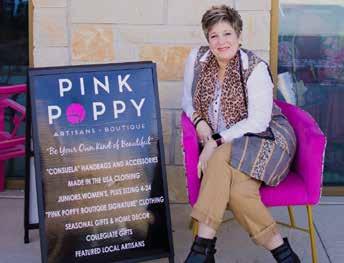
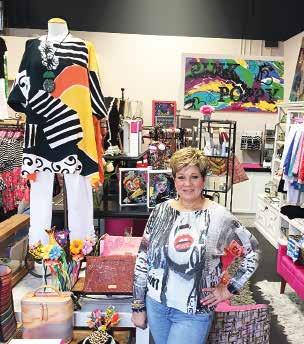
KAY BRIGGS HAS BUILT
PINK POPPY ARTISANS BOUTIQUE
ON A LOVE OF ART, FASHION, AND PEOPLE. HER MANTRA,“BEYOUR OWN KIND OF BEAUTIFUL” IS ONE SHE PROUDLY WEARS AT 60 YEARS OLD, ASASIZE12WITHCANCERSCARS,TOINSPIRECLIENTS TOSTAYTRUETOTHEMSELVESANDBECOMFORTABLE IN THEIR OWN SKIN.
While she is passionate about using fashion to inspire other women, there was a time when Kay Briggs wanted nothing to do with it. Retail burnout from running her clothing and home décor shop in Houston prompted a career transition to art teacher and athletics director. Drawn to Georgetown by family ties, she found herself longing for a creative outlet from her days as a painter, which inspired her to pick up her paintbrush again and sell art at Market Days on the Square each month.
In 2009, seeing the need for artisans to have a permanent spot and not just a table every second Saturday, Briggs bought a downtown furniture store space, and turned it into
Charlotte Kovalchuk charlotte@wilcobr.com
SINCE GOV. ABBOTT LIFTED THE CLOSURE, PINK POPPY’S SALES ARE UP 22-34% FROM FEBRUARY 2020
an artisan’s co-op. Bitten by the fashion bug, she later opened Diva Chicks, a women’s clothing boutique, then sold the business and opened Pink Poppy ARTisans Boutique on the south side of the Square.
Over the years, as she and her businesses moved around the Square, she saw a changing downtown that discouraged many clients from coming to her store on the Square. That combined with the stress of maintaining such a large store space made Briggs decide to get back to her original love connecting with people by moving into a more easily accessible, smaller store space at The Summit at Rivery Park shopping center. “In order to continue to do my work with love and joy, I had to get smaller,” she says. “Everybody thinks bigger is always better. It’s not it’s just bigger headaches.”
Despite the successful move, she soon faced a new challenge fighting for Pink Poppy’s survival during COVID-19. She was overwhelmed with gratitude by so many people who showed up to support Pink Poppy during its grand opening last year. But, the next day, Governor Greg Abbott’s order for businesses to close their doors overshadowed the celebration and threw her business’s future into uncertainty. .
Adapting to the new world meant taking steps she never thought she’d take, like holding a Facebook live sale. “I didn’t like it. I was uncomfortable, but I did it, and it has continued to be one of my greatest opportunities,” Kay says. Her business has continued to evolve and flourish during the pandemic. “So many opportunities came to me from leaning into the unknown. Other people in our community were doing the same and great opportunities came through us all working together,” she says. “I’ve learned so much about myself and what I’m really capable of doing in life and in business.”
The future looks bright for Pink Poppy. Briggs has added gifts, artisan jewelry, and local art to her store’s offerings, and she plans to add a shop on her website so “customers all over the world can shop.” She will also continue to run The Painted Tree, her pop-up boutique in Houston, and intends to expand it to other locations.
BThe Backdoor to Your Account
Ben Lake ben@openroad.network
ad actors are always looking for new ways to gain access to your accounts that’s nothing new. Hopefully you are already using good password management practices: unique passwords and enabling Multi-Factor Authentication (MFA) wherever possible. Let’s briefly review these in case you aren’t sure of the benefits.
Unique passwords help prevent a breach at one of your accounts from turning a headache into a nightmare. Think of it as having a different key for each room in your house.
If you lose one key you don’t want to worry about the thief now having access to all the rooms. Instead, you just change the one lock. MFA (or 2FA, for Two-Factor Authentication) adds a layer of security to your account, usually by texting you a code after you enter your password. The idea is that an account is more secure by confirming your identity through something you know (a password) and something you have (a phone). In practice, MFA goes a long way in keeping bad actors out of your account. But it’s not perfect.
TAKE CAUTION
Here are two ways MFA can be overcome. The first is through a technique called “SIM card swapping”, referring to the pinky nail-size chip in your phone that ties your number to that handset. A hacker can call your phone carrier, pretend to be you (much of your information like address and date of birth is publicly available), say you got a new phone, and ask to transfer service to a different SIM card. The hacker can now receive your text messages, reset passwords, and access your MFA-secured accounts.
BEN LAKE
So how do you protect yourself against SIM card swapping? One solution is to call your phone carrier and set up a PIN that is required to be provided before changes can be made to the account. All major cell carriers offer this, and you may already have one on your account. Ask to enable a “wireless passcode” or “port validation” code. You can also use a different method of MFA that forgoes a text message and instead uses a special code generated by an authenticator app on your phone. This authenticator app doesn’t rely on your phone number, and therefore is not susceptible to a SIM card swap.
The second way MFA can be overcome is through “typosquatting”. This is when a malicious actor creates a bogus website that appears to be the legitimate website you are trying to access; e.g., www.micr0soft.com, with a zero. You may find yourself on a bogus website if you click a link in a phony email (“You must verify your account or it will be disabled!”), or an illegitimate search result listing. The bogus site will look virtually identical to the real one but is actually capturing your password and MFA code as you enter it. To complete the illusion, the bogus site may redirect you to the legitimate site after logging you in behind the scenes.
The best protection against typosquatting is to regard any links in emails with a critical eye, and carefully check the URL in the address bar at the top of the login page before entering your password or MFA code. If you get a funny feeling, trust your instinct and back out or ask someone with technology experience for advice.
Having shared all these scary scenarios with you, keep in mind that MFA will still deter all but the most determined hackers. It is by far the best method to secure your accounts and is relatively simple to set up. Knowledge and vigilance are you best protections in the digital world.
IPark Gems Flourish in Williamson County
Charlotte Kovalchuk
charlotte@wilcobr.com
photos courtesy Russell Fishbeck
“COUNTY PARKS HAVE BEEN THE BEST MEDICINE, AND STILL ARE TODAY.”
~COUNTY JUDGE BILL GRAVELL
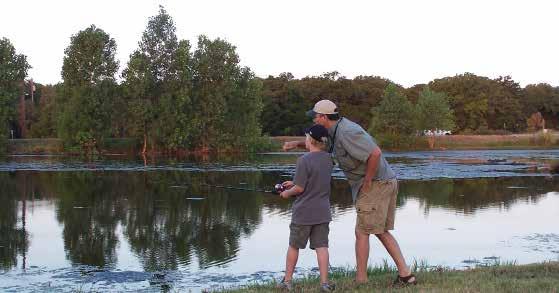
f there’s one thing we learned during the pandemic, it’s to take time for self-care, whether with traditional medicine, or the healing hand of nature. Home to five parks, two trail systems and an Expo Center, Williamson County offers many opportunities to enjoy the outdoors, from hiking trails, a splash pad, athletic fields, and camping, to outside-the-box activities like a miniature railroad and a donkey compound. “[Parks] were one of the few places folks could go to during the height of the pandemic,” Parks Director Russell Fishbeck says. Williamson County was committed to ensuring residents had opportunities to get outside, exercise and recreate safely.
Another major attraction, the Williamson County Expo Center is a multi-use event center/complex that offers a variety of year-round events; equestrian and livestock-focused events to gun shows, trade shows, receptions, and fundraisers, all of which attract visitors who boost the Taylor economy, Russell says. He is also looking forward to the inaugural Williamson County Fair and Rodeo October 21-23 at the Expo Center that was postponed last year due to COVID-19.
LEISURE DESTINATION
Williamson County adopts a passive recreation approach similar to the State system when creating green spaces for nature lovers. “Our focus is to provide a destination for people to enjoy at their leisure and their own pace, whether it’s hiking, picnicking, overnight camping, or family reunions and birthday parties,” Russell says.
“We believe this approach provides an outlet that complements people’s busy lives; allowing them to enjoy the outdoors as their schedule allows,” he says.
Williamson County will continue that vision with River Ranch County Park, set to open later this year off County Road 279 between Leander and Liberty Hill, with 1,350 acres featuring 20 miles of trails, overnight camping, and picnicking. The Parks Department also aims to increase connectivity by adding more trails, a goal inspired by citizen input during the Parks Master Plan update in 2018. Williamson County already offers 30 miles of trails and plans to add almost 20 more in the future. To learn more about Williamson County’s parks, visit wilco.org/parks.
PARKS AND TRAILS
• Berry Springs Park and Preserve: Playscape, fishing, hike/bike trail, camping, picnic pavilions, 1801CR 152, Georgetown
• Champion Park: Kids’ play areas, picnic pavilions, trailhead to Brushy Creek Regional Trail, 3830 Brushy Creek Rd, Cedar Park
• River Ranch County Park: Picnicking, camping, trails, 194 Reveille Way, Liberty Hill (opening later this year)
• SW Williamson Co Regional Park: Quarry Splash Pad, Cedar Rock Railroad, soccer fields, softball fields, football field and stadium with track, tennis courts, basketball courts, playscape, disc golf course, cricket field, 3005 County Rd 175, Leander
• Twin Lakes Park: Swimming pool/water playscape, sports field, 2300 South Bell Boulevard, Cedar Park
• Brushy Creek Regional Trail: 7.75 miles from Twin Lakes Park to just east of Great Oaks Drive
• Lake Creek Trail: 1.16 miles through southwest Williamson County along Lake Creek connecting Parmer Lane to Broadmeade Ave
• Expo Center: Livestock and equestrian events, vendor shows, special events, RV sites, 5350 Bill Pickett Tr, Taylor
MELISSA GOINS RETIRES
38 Years of Service to Williamson County
WCharlotte Kovalchuk
charlotte@wilcobr.com
photo courtesy Williamson County
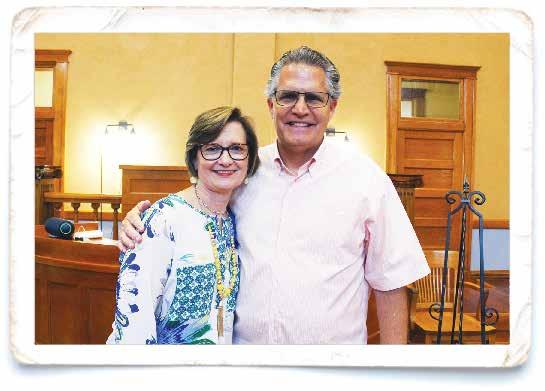
hile serving under seven elected officials for nearly 40 years, Melissa Goins has seen many changes transform Williamson County. One thing didn’t change, though her heart for Williamson County. “She’s just the epitome of a servant leader,” County Judge Bill Gravell says about his chief of staff who retired in June. “I wouldn’t be here today without her. She’s been such a wonderful blessing. I’m grateful for her patience, time, dedication, friendship, and service to our Williamson County.”
Born in Fort Knox, Kentucky, where her father was serving in the Army, Melissa returned with her family to their Granger roots then moved to Round Rock in the early 2000s. Following a stint assembling motor parts at TECO-Westinghouse complete with safety glasses, jeans, and steel-toed shoes Melissa found her calling in 1983 with Williamson County. She moved in and out of the courthouse over the next four decades, first as a clerk for County Clerk James N. Boydston at the courthouse, then as a court
clerk for Precinct 3 Justice of the Peace Bill Hill and his successor, Judge G.E. “Bud” Simmons, across the street from the Palace Theater. She moved back to the courthouse to work as an executive assistant to Judge Jimmy Bitz and later for Judge Steve Benton at the Inner Loop Annex as well.
She said she was blessed to work for two county judges, Dan Gattis and Judge Bill Gravell, not only because she enjoyed helping them as they led Williamson County, but because of the many people she met inside and outside the office. “I thoroughly enjoyed working with staff, building relationships, and offering assistance to people, whether it be an internal or external entity,” Melissa says.
While working for five justices of the peace and two county judges, she had a front row seat to watch the many changes that shaped Williamson County over the last 40 years. The population climb has been the main driver of change, leading to additional county and district courts as well as new county
buildings to meet the growing needs of the county. Economic development soared and technology advanced, allowing the county to go paperless and communicate through email instead of phone, among other changes. COVID-19 also inspired a new work model; virtual meetings and remote work.
NEW CHAPTER
Following COVID-19 and Winter Storm Uri, Melissa took time to reevaluate her career. Encouraged by her family and a comment from Judge Gravell: “We don’t live to work, we work to live,” she ultimately decided to say goodbye to service to Williamson County. “Although I was sad to depart, I was eager and excited to spend time with my family, especially enjoying precious time with my grandchildren, and taking care of my mother,” she says.
She plans to spend her retirement traveling, volunteering, and “enjoying each day with my family. As Pete Correa would say, ‘I am living the dream.’ ”
CEDAR PARK
240 Tech
Digital garment printing company 240 Tech opened a second headquarters in Cedar Park September 1. In business since 2013, 240 Tech expanded from Santa Ana, California to operate a 9,240 square-foot research and development facility in Cedar Park’s La Jaita Business Park. The company adds 15-20 jobs with an average salary of $80,000.
HUTTO
Kval, Inc.
Kval Inc., a California-based manufacturer of door machinery, broke ground in August on a 52,500 square-foot facility at 1591 Innovation Boulevard in Hutto’s Innovation Business Park. The project will create 80 jobs with an average salary of $40,000-$65,000 and is set for completion in
spring 2022. It represents Kval’s first expansion beyond California since the company was founded in 1947. The company has 136 employees today, which will increase to 216 with the new Hutto facility. Kval is the newest addition in a 100acre expansion of Hutto’s business park that has been under development by Titan Development since 2016.
LIBERTY HILL
Golf Cart King
Golf Cart King, which sells golf cart parts and accessories, will build a manufacturing and distribution center as well as a company headquarters behind the QT. Golf Cart King plans to break ground in early September with 23 jobs and a plan to grow to roughly 41 jobs by the end of the decade.
For consideration, please email information to
BUSINESS BRIEFS MOVE
Starbucks
Starbucks opened in August near Liberty Hill Junior High School as part of a retail complex owned by Heritage Ridge Investments, which will bring other shops and restaurants in 2022. Starbucks opened its first store in 1971 and has grown to more than 30,000 locations.
Tex-Mix Concrete
Tex-Mix Concrete, which provides concrete services throughout Central Texas, is moving its professional and sales offices to the Vista at 29 retail and office complex currently under construction. The facility is set to open by the end of the year.
GEORGETOWN
ALDI
ALDI opened this summer off University Avenue in the Wolf Crossing shopping center just east of I-35. Headquartered in Batavia, Illinois, the discount grocery retailer
PEOPLE ON THE
Meredith Gandy
Meredith Gandy has taken the helm at Ford Elementary School as principal. She has served in GISD for 16 years, as a pre-k and kindergarten teacher, a math interventionist, assistant principal, and principal of Mitchell Elementary School. A 2003 graduate of Texas A & M, Meredith Gandy has had a passion for education since welcoming her first class of 4-yearolds in 2004.
Joy Simonton
Joy Simonton is the County’s new county purchasing agent. She previously worked for the City of Leander as purchasing agent and general services manager. She holds a Master’s in public administration from Walden University, is a Certified Professional Public Buyer, and member of the Universal Public Procurement Certification Council and the Texas Public Purchasing Association.
has more than 2,100 stores across 37 states with more than 25,000 employees. Paramount Excavation Open since August 31, 2021 Paramount Excavation offers new and replacement septic system installation, in-ground pool excavating, residential site prepping, and general excavating.
Yellow Jacket Drone Services
Yellow Jacket Drone Services now offers aerial photography, videography, and real estate services. Cody Griess, a Georgetown-based licensed drone operator, owns Yellow Jacket and has a Helicopter Certified Flight Instructor Certificate, Helicopter Commercial Pilot Certificate with Instrument Rating, and a Part 107 sUAS License.
ROUND ROCK
Switch, Inc.
Switch, Inc., a data center provider founded in 2000 and based in Las Vegas, Nevada, will build a 1.5 million square-foot data center known as “The Rock” east of South Mays Street and north of Dell Way in Round Rock next to Dell’s global headquarters.
James Geracci
Dr. James J. Geracci is the new chief medical officer of the Center for Digital Health & Innovation, Optum Health at UnitedHealth Group. He previously served as CMO of Ascension Seton Williamson and as a member of Optum Health’s board of directors. Dr. Geracci now oversees telehealth and virtual healthcare services for Optum Health.
Eric Johnson
Eric Johnson is the City of Georgetown’s new public works director. With more than 20 years experience in municipal government, he started with the City as the capital improvement projects manager in 2015 and was promoted to facilities director last year. Eric now oversees 48 employees who manage streets, signs/ signals, drainage, storm management, environmental services, transportation planning, airport, and facilities capital improvement and maintenance.