
THEN & NOW Iconic Georgetown Architecture KIDS Horticulture-Inspired Stories SHELTER STORIES Kitten Season & Pups Needing A Home EMPOWERMENT Annunciation Maternity Home IN THE PATH OF THE GREAT SOLAR ECLIPSE 4.8.24 MARCH 2024
When? How? Everything You Need To Know To Make Sure You're Ready To Watch!
Where?

Dear Readers,
As we welcome the refreshing breezes of March, we created an issue brimming with stories that embody renewal, community, and the simple joys that weave the fabric of our daily lives.
In the spirit of celestial wonder, our cover story focuses on the excitement and anticipation for the April 2024 solar eclipse. Across our region, watch parties are springing up, turning this astronomical event into a unifying moment. We also delve into the details about this cosmic curiosity.
Our animal features will surely tug at your heartstrings. With kitten season in full swing, we provide tips on what to do if you stumble across an adorable litter of kittens, while Pets of the Month spotlights several longtime lovables in need of fovever families.
Our story on Annunciation Maternity Home highlights the people and programs assisting women through one of the most transformative phases of their lives. This center stands as a beacon of hope, offering resources, education, and a caring community.
This edition also celebrates the imagination and dreams of an aspiring local children's book author who created a world inside her own at McIntire's Nursery in Georgetown. We are pleased to highlight the creativity that has inspired her and will help her inspire others.
Lastly, we delve into the history of Georgetown's Light and Water Works Building, which has undergone multiple transformations to serve the needs of our community. From its architectural heritage to its current role in supporting various community operations, this feature illustrates the evolution of spaces that adapt to serve the heart of the community.
We hope you find inspiration, joy, and a deeper connection to the community around you. Whether it's through celestial events, the purring of a new family member, support in times of need, the power of storytelling, or the resilience of our shared spaces, we think there's a story here for everyone.




Like many of the best in her craft, Cathy has a specialized degree—in her case, hard science—and a gift for writing. She found her voice and fulfillment reporting and writing news and magazine features for a regional Central Texas audience. Along with serving as the publisher of the Georgetown View, Cathy oversees multiple news magazines, marketing campaigns, and books.
SENIOR WRITERS /
Charlotte Kovalchuk • Ann Marie Kennon
CONTRIBUTING WRITERS
Linda
EXECUTIVE ADMINISTRATOR
Camy Reynolds
GRAPHICS & DESIGN
Zion Eaton • Sandra Evans
CONTRIBUTING PHOTOGRAPHERS
Rudy Ximenez • Christianna Bettis
SALES DIRECTOR / ADVERTISING
Allison Smith
512.966.2164 • allison@georgetownview.com
IT / WEBMASTER
Jesse Payne
GeorgetownViewisan
OptimusMediaGroup,LLCpublication andaproductofAdvocateNewsTXNewspaper.
Copyright © 2024 All rights reserved. Georgetown View is mailed monthly via USPS to homes and businesses in Georgetown, TX zip codes.
Mail may be sent to: Georgetown View, P.O. Box 203, Jarrell, TX 76537.


2 MARCH 2024
Published
Optimus Media Group, LLC PUBLISHER | CATHY PAYNE
by
cathy@georgetownview.com
EDITORS
CONTENT
A. Thornton • Rachel Strickland
In today's dynamic market, visibility is key to success. We invite you to explore the power of diversification by previewing and investing in advertisement spaces across our diverse range of magazines. Each publication in our portfolio offers a unique audience, ensuring your message resonates with a wider, yet targeted demographic. Seize this opportunity to broaden your reach, enhance brand recognition, and connect with potential customers in new, impactful ways. Let's collaborate to make your brand a household name. CONTACT ALLISON SMITH MARKETING & ADVERTISING 512-966-2164 (C) • 512-641-1370 (O) • allison@georgetownview.com AMPLIFY YOUR REACH!
EDITOR'S NOTE
3 MARCH 2024
4 MARCH 2024
5 MARCH 2024
CONTENTS


11
COVER FEATURE
What You Need to Know about the Solar Eclipse and Where to Watch It

ON THE COVER Map of Texas showing the path of totality for the April 8, 2024 solar eclipse.
ASK AN EXPERT Elevate Your Home with the Right Garage Door
ASK AN EXPERT Enhancing Communities with Landscaping
THEN & NOW Georgetown Light & Water Works Plant 24
KIDS & EDUCATION
Cultivating Imagination: Botanical Buff Pens Children's Book
Sponsored by Inner Space Caverns

38
WHAT MAKES TEXAS "TEXAS" FM Roads
SHELTER STORIES It's Kitten Season
Sponsored by Countryside Pet Resort

PETS OF THE MONTH
The Dog You've Been Waiting For Is Waiting For You!
Sponsored by Cedar Park Overhead Doors

ASK AN EXPERT Crafting Memories with Custom Jewelry
ASK AN EXPERT Essential Tips for Building Your Dream Pool
NON-PROFIT SPOTLIGHT Empowering Women in Crisis: Annunciation Maternity Home


Follow us on Facebook for follow-ups to these stories, out-takes & hints to what's coming.
GeorgetownViewMagazine

6 MARCH 2024
p. 11
15
18 20
29 30 34
41 47
ASK AN EXPERT CONTRIBUTORS
Meet our esteemed panel of business owners and subject matter experts, each representing a leading local company and sharing knowledge and experience to enrich our content with specialized insights. Readers can look forward to quarterly contributions, delving into expertise-based topics, from each company. This unique collaboration allows us to bring you cutting-edge information directly from the forefront of industry innovation.
To learn more about becoming an expert contributor, contact allison@georgetownview.com or 512.966.2164.
Taylor Wadsworth • Austin Window Fashions



Since 1981. Premier locally owned source for high quality blinds and shades from Hunter Douglas and factory direct, furniture-quality plantation shutters. AustinWindowFashions.com • 512-256-8110
Clinton Harwell • Pignetti's & The Barton House Producer of Sensualis Wines
Pignetti's has been acknowledged as one of the top 7 restaurants in Texas to have a glass of wine and one of the top 1,000 places in the world by Wine Spectator Magazine.
Deb Lohman • Blinded by the Light Expert in home décor finishing touches, including unique accessories, accent furniture, wall art, rugs, lamps, and gifts.
• 512-636-9653
Cedar Park Overhead Doors
#1 Rated & largest overhead garage door specialists. Providing quality 24/7 garage door services and products for more than 30 years.
CedarParkGarageDoors.com • 512-335-7441
Georgetown Fence & Deck
We complete hundreds of projects annually and are dedicated to creating exceptional outdoor living spaces that provide years of enjoyment and add value to your home.
GeorgetownFenceAndDeck.com • 512-948-7539
Georgetown Jewelry
Your hometown jeweler since 2013. Georgetown Jewelry is a full-service jewelry store offering jewelry repair, custom design, and appraisals. GeorgetownJewelry.com • 512-869-4200
The Gym TX • Christian Graffeo, Certified NASM Personal Trainer & AJ Casner, Certified ACE Personal Trainer
Certified in Stretch theory and practice. TheGymTX23@gmail.com • 512-240-4043
Hall's Roofing & Sheet Metal, LLC
Family owned since 1939. Roofing professionals specializing in full-service roof repair, installation, and replacement.
HallsRoofing.net • 512-864-7579
Emily Hanson • Hanson Insurance
Sixteen local brokers, specializing in Medicare, and ready to assist with all your health insurance needs. HansonFirst.com • 512-817-6906 • NPN #18816155

Inner Space Cavern
One of the best preserved caves in Texas, Inner Space Cavern has hosted hundreds of thousands of visitors since 1966 and offers a variety of activities year round.
InnerSpaceCavern.com • 4200 S IH-35 Georgetown
Keller Commercial & Home Services

Leading Central Texas landscape experts specializing in maintenance, enhancement, and design. Our team, armed with cutting-edge tools and programs, is driving rapid growth in architectural landscaping. KellerServicesTX.com • 512-930-4769
Mindful Health


Outpatient Mental Health Clinic specializing in Intensive Mental Health Treatment, Psychiatry/Medication Management, and Individual/Group Therapy. Mindful.Health • 737-284-3600
Chad & Amanda Moore
Moore Liberty Buildings
Thousands of structures built since 2015. MooreLibertyBuildings.com • 512-548-6474
Bethany Meyer
Owner, Signature Aesthetics IV Lounge
Nurse practitioner (MSN) Bethany Meyer opened
Signature Aesthetics in 2020. She is also certified in Bio-Identical Hormone Replacement Pellet Therapy and BLS/CPR.
SignatureAestheticsTX.com • 512-264-5662
Texas Vet Custom Pools

Professionals in residential construction, swimming pool design and construction, remodels, home additions, and outdoor living for over three decades. TexVetCustomPools.com • 512-745-9548
The Wesleyan


Providing a new, bountiful experience of aging full of purpose, passion, and possibility for more than 50 years.
TheWesleyan.org
XXtreme Soundz
Your local audio dealer specializing in motorcycles, boats, and power sports.
XxtremeSoundz.com • 737-240-8566
8 MARCH 2024
9 MARCH 2024










10 MARCH 2024
by Charlotte Kovalchuk
Chasing Shadows
Millions will have the chance to enjoy a rare, fleeting cosmic spectacle during this year’s total solar eclipse that will cast a shadow across North America next month. On April 8, the moon will pass between the sun and Earth and completely block the sun, leaving viewers in darkness for a few minutes. (Not to be confused with last year’s annual solar eclipse, in which the moon passed between the sun and Earth but appeared smaller than the sun because the moon was at its farthest point from Earth.)
Unlike the annual solar eclipse in October, a total solar eclipse is much rarer. “A total solar eclipse is one of the most beautiful natural occurrences you can experience,” says Mark Bottorff, associate physics professor at Southwestern University. “If you live in the ‘lower 48,’ know that this will be the last total solar eclipse visible in the contiguous United States for a long time. The next one will be on August 23, 2044. So, you will either have to wait two decades or plan to travel abroad to see one!”
Preparing for the Total Solar Eclipse
Total solar eclipses are rare not because they occur infrequently – one takes place every 18 months – but because they are only seen from a tiny portion of the Earth’s surface each time. The path of the 2024 total eclipse will cover less than 1 percent of Earth’s surface, stretching across Mexico, 13 states in the U.S., and Canada.
Whether you plan to watch from your backyard, attend a local viewing party, or take a road trip to a solar eclipse festival, here are some tips to help you prepare for this awe-inspiring celestial show.
In Williamson County, the full eclipse will start at 1:36pm on Monday, April 8 and last just over three minutes.

To see all stages of a total solar eclipse, you must view it from a location along the path of totality.

11 MARCH 2024
COVER FEATURE
COVER FEATURE

Safety first: Be sure to wear glasses designed for solar viewing (regular sunglasses are not sufficient and can cause permanent eye damage). Do not look at the eclipse through a camera lens, telescope, or binoculars. The only time it is safe to look at a total eclipse without eclipse glasses is during the brief period of “totality” when the sun is completely blocked by the moon.
Cosmic Celebration

Plan ahead: Due to an increase in visitors coming through Central Texas to view the eclipse, residents should limit travel on major roadways on Eclipse Day, as well as refrain from stopping on road shoulders to view the eclipse. Plan ahead for possible travel delays, consider carpooling, and allow extra time to get to your destination before and after the eclipse. In addition, fill up on gas, food, and essential items prior to the eclipse as visitors to the area will affect available inventories.
Monitor the weather: You’ll find out what the weather will be like at your chosen eclipse spot about three days beforehand. (Eclipsophile.com is a great website for checking short-term weather forecasts before Eclipse Day.) Prepare a Plan B in case of cloudy weather.
Viewing parties: Check out Worth the Drive for a list of solar eclipse viewing parties!


Scan the codes to learn more about the 2024 total solar eclipse.

eclipse.aas.org

greatamericaneclipse.com

WHETHER YOU’RE LOOKING FOR A LOCAL VIEWING PARTY OR ARE WILLING TO TRAVEL TO ONE OF THE MANY ECLIPSE EXTRAVAGANZAS, CHECK OUT THE FOLLOWING LIST OF EVENTS TO PLAN YOUR CELEBRATION OF THE TOTAL SOLAR ECLIPSE APRIL 8.
RIVER RANCH COUNTY PARK
Enjoy a view of the eclipse from Liberty Hill, with hands-on activities, viewing equipment, and refreshments. Experts will be on hand to provide educational information about the eclipse.

Free Admission • 194 Reveille Way, Liberty Hill
SOUTHWESTERN UNIVERSITY
Assoc. Professor of Physics Mark Bottorff will be on site with telescopes; or bring your own to Academic Mall. Complimentary eclipse glasses provided on a first-come-first-serve basis. Food, refreshments, and commemorative eclipse-themed t-shirts and stickers available for sale. 11am–3pm.

Free Admission • 1001 E University Ave., Georgetown
INNER SPACE CAVERN
Nature enthusiasts can experience the wonders of the sky as well as the underground at Inner Space, which will host an eclipse viewing party from 12-3pm and cavern tours from 9-10:30am and 3-4pm. Picnic tables available and guests are encouraged to bring chairs or blankets. Viewing party tickets are $25.99/person and include a $10 tour discount that can be used any time.
4200 S I-35 Frontage Rd, Georgetown

12 MARCH 2024
WORTH THE DRIVE
AUSTIN
UNIVERSE IN VERSE
An annual celebration of science featuring musicians, writers, poets, artists, physicists, and astronauts who gather to give poetry readings and tell science-themed stories. This year, on the eve of the eclipse, the public is invited to gather under Waterloo Park’s starlit skies as writer Maria Popova takes listeners on a journey through the scientific discoveries of Newton, Kepler, and Galileo, as well as stories of the historic eclipse expedition that made Einstein famous and of the forgotten woman who published the first popular science book on eclipses. Throughout the event, authors will intersperse Maria’s lecture with poetry readings. 6-9pm Sunday, April 7, tickets by donation. • Moody Amphitheater at Waterloo Park, 1401 Trinity St
TOTAL ECLIPSE VIEWING PARTY • APRIL 8
The Long Center will host a viewing party on its lawn with live music, a visual storytelling experience, and eclipse-themed beer from local breweries as well as food and other refreshments. The first 1,000 guests will receive eclipse tote bags and all guests will receive complimentary viewing glasses. 11am–3pm
Free Admission; must reserve tickets online • 701 W River side Dr
SPACE-THEMED STORYTIME • APRIL 9
The next morning, Radiolab host Molly Webster will lead families through a reading of her book, Little Black Hole, a space-themed story about belonging and the power of friendship. 10–11am
Free admission • Meredith Heritage Tree Deck at Waterloo Park, 1301 Trinity St
KERRVILLE
KERRVILLE ECLIPSE FESTIVAL

Guests can look forward to scientific speakers, live music, and children’s programming at Louise Hays Park. NASA will livestream the eclipse at the park with the City of Kerrville, one of only three cities in the U.S. chosen by NASA to livestream the eclipse. Festival grounds will open in the morning, free and open to the public.
Louise Hays Park, 202 Thompson Dr
KERRCLIPSE MUSIC FESTIVAL • APRIL 5-8
Guests can enjoy food and craft vendors, live music, solar eclipse-themed science presentations, live music, and camping. Ticket prices vary.
Quiet Valley Ranch, 3876 Medina Hwy
SCULPTURE PRAYER GARDEN
Glimpse the eclipse from this 24.5-acre garden park that features Christian art. Christian author Troy Brewer will be joined by international worship minister Paul Wilbur, and food vendors, T-shirts, and eclipse glasses will be available for sale.
Free admission • 520 Benson Dr


BOERNE
CAVE WITHOUT A NAME • APRIL 6-9
Visitors can enjoy a three-day, family friendly camping experience featuring cave tours, cave and outdoor concerts, eclipse viewing party, and stargazing. Ticket prices vary.
325 Kreutzberg Rd
TEXAS TOTAL SOLAR ECLIPSE HALF MARATHON • APRIL 8


Celebrate the eclipse with a marathon ranging from a 0.5-mile Fun Run to 5k and 10k races, followed by an after-party with the City of Boerne. Some eclipse glasses will be available. 7:30am
$40+ • 102 City Park Rd
Here's to clear skies, warm hearts, and the awe-inspiring beauty of the cosmos.
Happy eclipse viewing to all!
13 MARCH 2024
14 MARCH 2024

Choosing the RIGHT Garage Door
TElevate Your Home
MORE THAN JUST A UTILITARIAN ADDITION, THE GARAGE DOOR HAS BECOME THE NEW FRONT DOOR FOR THE AMERICAN HOME.
he right garage door can make a statement and even help you make your home look more attractive to buyers. Whether you are searching for a new garage door or want to refresh your current look, here are some tips to ensure you choose the door that is the best aesthetic fit for your home.
CONSIDER WHAT FITS YOUR HOME
Oftentimes, people are tempted to choose a beautiful aluminum or glass door they see on another home without first considering how it will fit with their own. For example, if your home has a lot of wood trim, a wood door could be a better fit. As the garage door is an extension of the house, it’s a good idea to take a look at yours
EXPLORE STYLES
Wood doors are a popular choice because of their visual appeal, customization, and durability.
Steel doors are the most common, reliable, and cost-effective option. Steel is a basic style that can be upgraded with windows and/or pattern changes.
Full view aluminum and glass doors are more popular styles for customers looking for a contemporary design.
Carriage house doors add style and individuality, with options ranging from a simple bead board pattern to a door with windows and decorative hardware.

DETERMINE YOUR BUDGET
Consider how much you are willing to invest in a garage door, as the average price may range from $1,700 to $2,600, with additional fees for accents — windows, trim work, and decorative hardware.
VISIT A SHOWROOM
Plan a visit to a garage door showroom and bring a photo of your home along with a vision of how you want the door to look. The benefit of checking out a showroom, instead of just viewing photos online, is the ability to see and touch the products to help you make the best decision when it comes to choosing the right garage door for your home.
15 MARCH 2024
Park Overhead Doors CedarParkGarageDoors.com 512-335-7441 ASK AN EXPERT • EXTERIOR DESIGN
Cedar










16 MARCH 2024





17 MARCH 2024
In today's fast-paced world, the significance of landscaping transcends mere aesthetics; it intertwines with communal well-being, sustainability, and future-oriented design. As an integral component of our surroundings, landscaping exerts a profound influence on people's lives and communities, offering a plethora of benefits that extend far beyond visual appeal.
The creation of green spaces within communities serves as a catalyst for societal development, fostering both physical and mental health while promoting social cohesion. By integrating green landscapes into neighborhoods, we not only enhance the overall ambiance but also provide invaluable opportunities for relaxation, recreation, and connection with nature. Plus, nurturing the landscape surrounding homes adds tangible value to properties, offering residents a sanctuary for outdoor leisure activities and social gatherings with friends and family.
When delving into landscaping endeavors, it's imperative to align plant selections with the local environment,
ENHANCING COMMUNITIES
The Impact and Future of Landscaping
opting for native species that thrive amidst Texas' fluctuating climatic conditions. Embracing xeriscaping principles alongside lush vegetation ensures water-efficient designs that marry functionality with aesthetic appeal. Additionally, leveraging technology for sustainable design solutions represents the forefront of innovation within the industry, paving the way for eco-conscious landscaping practices.
Crafting a comprehensive master plan forms the cornerstone of a successful landscaping venture, prioritizing quality craftsmanship and meticulous maintenance. Implementing phased approaches allows for strategic execution while preemptively addressing potential challenges, thereby ensuring seamless progression and optimal outcomes over time.
Contrary to common misconceptions, landscaping transcends superficial beauty, exerting tangible environmental benefits such as air purification and urban noise reduction. Recognizing the multifaceted nature of landscaping underscores its pivotal role in shaping healthier, more vibrant communities.
Looking ahead, the landscaping industry is poised to embrace further advancements in sustainability and technology, propelling the adoption of innovative techniques and materials aimed at minimizing environmental impact and maximizing resource efficiency.
Engaging in landscaping endeavors offers a myriad of advantages, from enhancing property values and fostering community cohesion to promoting environmental stewardship and personal well-being. By prioritizing thoughtful design, sustainability, and ongoing maintenance, individuals can reap the rewards of a beautifully landscaped environment while contributing to a greener, more resilient future.
In conclusion, landscaping emerges as a dynamic force for positive change, enriching lives, strengthening communities, and shaping a more sustainable tomorrow. By harnessing the transformative power of landscaping, we can cultivate environments that not only inspire awe but also nurture the human spirit and safeguard the planet for generations to come.

Keller Commercial & Home Services KellerServicesTX.com
18 MARCH 2024
512-930-4769
ASK AN EXPERT • LANDSCAPING
19 MARCH 2024
by Charlotte Kovalchuk images courtesy City of Georgetown
FROM POWER PLANT
THE EVOLUTION OF THE GEORGETOWN LIGHT AND WATER WORKS PLANT

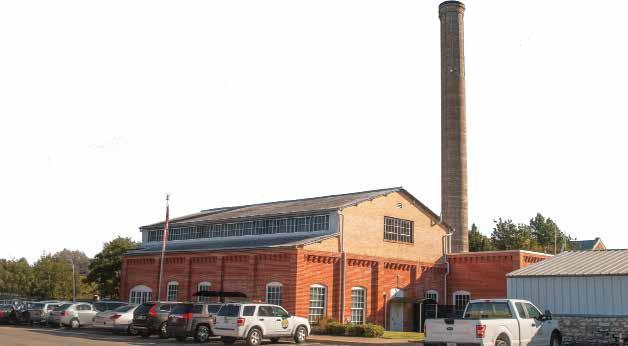
For more than a century, the Georgetown Light and Water Works building has served the community in various roles — as a water and electricity plant, and police station. Today, it provides vintage space for multiple city departments.
The city built the plant in 1911 at the corner of 9th Street and Martin Luther King Drive. At that time it used coal-powered steam engines to generate electricity and pump water from groundwater wells. After the city signed a power purchase agreement with the Lower Colorado River Authority, the Light and Water Works building evolved to meet a different need — public safety.
A SAFER GEORGETOWN
Formed in 1948, the Georgetown Police Department operated in the Light and Water Works building from 1986 to 2015.
Larry Hesser, who served as police chief in the 1990s, remembers how one of the historic structure’s unique features, a smokestack, was preserved during renovations and re-purposed for officers to interact in a workspace around the smokestack. Another element designed to improve safety was bulletproof glass in the lobby – later removed and replaced with increased security – that made it difficult for the

police team to connect with citizens. “We were trying to build as many positive relationships within the police department and the community,” Larry says.
The police department has since achieved that goal, thanks also to Barbara Pearce and Barbara Brightwell, two community leaders who helped the department with youth crime prevention programs and connections with minority communities.
20 MARCH 2024
THEN AND NOW
to Public Service Hub
“I remember being an outsider to Georgetown and Texas, and it was a bit difficult to get [those initiatives] going. I think our relationship with [both Barbaras] opened doors for the police department into the community,” Larry says.

The City Center projectaimstomove thefocusbeyondthe downtown and is set to become Georgetown’s next community gathering place.
BEYOND DOWNTOWN
The police department’s growth triggered a move to the new Public Safety Operations and Training Center in 2015, so the historic building became home to the city’s Main Street Program and Planning, Economic Development, Housing, and Public Communications departments. “I love how that building has been re-purposed over the years,” Mayor Josh Schroeder says. “From power and light to the police to the planning department, it has evolved along with our community, and its iconic look and versatility embody our City’s commitment to honor our past and innovate for the future.”
The structure is also part of the Georgetown City Center project slated to break ground in May, which will feature a public plaza and event space between the library, City Hall, Municipal Court, and Light and Water Works building. Citizens will be able to enjoy unique art and water features inspired by the Light and Water Works building and its smokestack, as well as open green space with a stage, food truck area, and children’s play area.





21 MARCH 2024
IMAGE COURTESY CITY OF GEORGETOWN THEN AND NOW










22 MARCH 2024





23 MARCH 2024
by Charlotte Kovalchuk • images courtesy Caelan Crawford

Cultivating Imagination

Growing up with a mother who was passionate about gardening, Caelan Crawford thought she knew everything about plants — until she began working at McIntire’s Garden Center.

Botanical Buff Pens Children’s Book
realized how unprepared she was for the variety of plants she would encounter. “I’ll never forget one lady who asked, ‘Where are the Roses of Sharon and Rock Roses?’ I said, ‘Aren’t they all the same?’ ‘No, they’re not.’ I was learning so much every day.”
Something else she found surprising was that McIntire’s has a plant for every environment and gardener, even those without green thumbs “who kill all their plants."
Green Thumb to Pen
The long-time Georgetown resident remembers how she and her siblings enjoyed learning about plants from their mom on their many field trips together throughout their homeschool years. “One of the many things my mom always tried to get us to do was value nature, animals, and the outdoors,” she says, adding, “I grew up coming to McIntire’s. I had my own garden and thought I knew a fair amount about plants.”
When Caelan went to work at McIntire’s, however, she
That accumulation of knowledge inspired Caelan to write and illustrate Meet Little Lizard, a children’s picture/story book about a lizard, her garden, and the many whimsical adventures she has with family and friends as she learns all about plants.
The book combines Caelan’s love of fantasy books and “all the beautiful things outside. Plus, I just love pretty little things that are simple. What better way to share that than with children who love pretty things that are simple? I can’t say how many kids would love to play with sticks rather than
MEET LITTLE LIZARD IS AVAILABLE FOR PURCHASE AT MCINTIRE’S GARDEN CENTER AND STORE. BOOKBABY.COM .

24 MARCH 2024 KIDS & EDUCATION
Caelan Crawford, center, with McIntire's owner Katie Ney and her dad Mark, founder of the garden center, who hosted Caelan's first book signing at McIntire's in December.

toys, run around and scream instead of sitting quiet and sophisticated. Little Lizard is that. It’s simple, colorful, and bright.” It’s part of her goal in bringing this book to life, she says, “to bring joy to other people, to share knowledge and experience in a very bright, simplistic way.”
In Full Bloom
Caelan is already working on the second book in the Adventures with Little Lizard series and plans to host two book signings for Meet Little Lizard in the next few months at McIntire’s and Sugar Shack in Bastrop. Follow Caelan on Facebook and Instagram for book signing updates.


25 MARCH 2024 KIDS & EDUCATION
26 MARCH 2024
27 MARCH 2024
28 MARCH 2024
Who can resist the tiny mews from a kitten?
WHAT ABOUT A WHOLE LITTER OF THEM?
It’s tough, we know. With kitten season approaching, now is a good time to talk about the best approach if you come across a tiny family of cute and cuddly kittens with Momma Cat nowhere in sight.
contributed by April Peiffer, WCRAS
It’s Kitten Season!
WHAT SHOULD YOU DO?

STOP! Don’t be a “kit-napper”! Before you spring into action, let’s assess the situation to find out if they need intervention. If the kittens are not in immediate danger, injured, or suffering, your first move is to find out if Momma Cat is nearby. You may not see her — she might be out hunting for that much-needed food to feed her babies. Or she might be hiding from you. In either case, she is best equipped to care for her little ones and you should leave them where they are for the time being. To be sure she’s around and able to care for them, you can do a kitten stakeout to watch for her return. Or — try a trick of the kitty trade — sprinkle some flour around the kittens. If the flour has been disturbed when you return a few hours later, you know that Momma Cat is present and taking care of her babies.



WHEN TO SHELTER
First, if they are sick, hurt, or in immediate danger, the Williamson County Regional Animal Shelter is ready to help.
Second, if they are active — running, jumping, playing — and eating solid food, bring them to WCRAS; they will be spayed/neutered and vaccinated and staff will help them find loving new homes.
Third, if you’ve watched out for Momma Cat and she hasn’t returned in 8 to 12 hours, the kittens do need your help and you should bring them to the shelter.

KITTEN SEASON
Kitten season is quickly approaching, and you can play a vital role in assisting the shelter to care for every animal that arrives. Should you find yourself bringing in kittens, we encourage you to offer to foster them immediately. This crucial step enables our staff to evaluate them thoroughly and integrate them into our system. After their initial check-up, you'll have the opportunity to bring them into your home and nurture them until they are ready for adoption.
Fostering kittens is an incredibly fulfilling experience, and our dedicated volunteer mentor team is here to support you, offering all the guidance and knowledge you need to get started.
But remember, no one can care for kittens better than their momma can and leaving kittens where you found them may be the best course of action.
29 MARCH 2024 SHELTER STORIES
BUCK, COOPER, AND SCOUT ARE THREE “LONGTIME LOVABLES” AT THE WILLIAMSON COUNTY REGIONAL ANIMAL SHELTER. THE THREE BOYS ARE EAGER TO MAKE NEW BEGINNINGS FOR THEMSELVES IN NEW LOVING HOMES, AND THEY’VE EACH GOT SOMETHING UNIQUE TO SHARE WITH A NEW FAMILY THAT WILL BE GREAT ADDITIONS TO THE RIGHT HOMES.


You Had me at WOOF
is an outgoing and sociable fellow that is sure to bring joy and positivity into your life. He’s an all-around good boy, enjoying a good long walk, fetching a ball in the backyard, or lounging on the couch with you after a long day.
contributed by April Peiffer, WCRAS

SCOUT is what we call a distinguished goofball. Slightly aloof when meeting new people, he wants a moment to get to know folks before accepting them into his circle. He enjoys sniffing around a yard, playing with toys, and long, leisurely walks.
What’s more, once Scout has claimed you as one of his chosen ones, he’ll show off that goofball side with a big slobbery kiss for a greeting.
COOPER’S smarts will leave you impressed and wanting to see what more he can learn! He’s already got a full menu of cues under his belt, and he’s got the energy to continue learning every day.
He’s even bilingual — esta verdad! If that’s not impressive enough, he’s also a cuddlebug. In other words, Cooper’s a catch!
These three Longtime Lovables are each waiting patiently and eagerly to meet a new family of their own. Each of them is also a senior dog, and all have been given the gift of an Adoption Angel, which means THEIR ADOPTIONS ARE FREE.

If you would like to meet Buck, Cooper, or Scout, send the shelter an email at adoption@wilco.org to schedule an appointment. Or drop in between noon - 6pm daily.
30 MARCH 2024
PETS OF THE MONTH
1855 SE INNER LOOP IN GEORGETOWN

31 MARCH 2024










32 MARCH 2024
33 MARCH 2024
by Charlotte Kovalchuk • photos courtesy AMH
Empowering Mothers in Crisis
ANNUNCIATION MATERNITY HOME PLANS EXPANSION PROJECTS

When Grace Davis first came to Annunciation Maternity Home, she was 17 years old and 12 weeks pregnant. Not only did AMH help her achieve her goals of having a healthy baby and finishing high school, it also gave her the opportunity to earn a certificate in culinary arts from Austin Community College.
Grace is grateful for the valuable life skills she learned at AMH, including budgeting, healthy parenting, cooking, sewing, and self-care. Today, she serves as a life skills teacher at the maternity home, giving other young women the tools they need to thrive beyond the walls of AMH. “I felt I had a calling to help girls in the same way AMH helped me. AMH made me into the woman and mom I am today, and I hope I can be a mentor and a guide to the girls in our care.”
Grace’s experience is just one of the success stories Jennifer Morgan has heard during her time as director of donor interest at the maternity home. Thanks to several expansion projects in the works, she is excited to see the growing number of moms who will find refuge and support at AMH.
Transforming Lives
Annunciation Maternity Home was founded in 2001 in north Georgetown after the previous executive director realized many women facing crisis pregnancies were searching for a home rather than a shelter or pregnancy resource center. The only nationally accredited and state licensed ma-
ternity home in Texas, AMH serves young women 12 to 40 years old and provides counseling, life skills classes, assistance with education and job placement, and transportation to jobs and medical appointments.
Although AMH was founded primarily to serve Central Texas, a significant number of residents have come from Houston, Dallas, Temple/Belton, and even out of state. Many of them, Jennifer says, are homeless or trying to escape a domestic violence situation. “I think, with the growing homeless population in Central Texas, we can help avert mothers and children being part of that population,” she says, adding “a lot of girls just don’t have anyone, and we’re an all-women staff, so they have many role models to look up to here.”

34 MARCH 2024
NON-PROFIT

Honor the incredible journey of motherhood while having a positive impact on residents. Sponsor or purchase tickets to the
Celebration of Mothers
May 7, 2024 • Sheraton Austin Georgetown Hotel & Conference Center
Scan the code to register.
Growth Vision
This spring, AMH will break ground on a housing project that will expand the organization’s capacity to serve from 12 to 20 adult moms. AMH currently has the capacity to serve eight teen moms. The new, fully staffed Rita Village will feature amenities like a communal kitchen and living space as well as a community center with exercise and computer rooms. The second phase of the project will expand the Infant Development Center with the goal of providing childcare for more moms while they attend parenting classes.
Scan the code to learn more about Annunciation Maternity Home.


For those interested in supporting AMH in its mission of serving mothers experiencing crisis pregnancies, the organization welcomes monetary donations, sponsorships for its annual banquet and golf tournament, as well as volunteer mentors, volunteer groups, and diaper and canned food drives.






35 MARCH 2024
NON-PROFIT









36 MARCH 2024









37 MARCH 2024
WHAT MAKES TEXAS "TEXAS"?
FM Roads
 by Linda Thornton
In the early 20th century, Texas found itself at a crossroads. With more than 127 million acres dedicated to agriculture, and 97 percent of its farms being multi-generational family operations, the state led the nation in terms of the number of farms and ranches. Recognizing farmers were the backbone of Texas's economy and cultural heritage, state leaders were faced with a critical challenge: How could Texas expand opportunities for its farmers in a way that would enable them to remain on the land they cherished?
THE FM ROAD IS BORN
In an effort to create a system of better-quality roads that would connect rural and agricultural areas to towns, cities, distribution centers, and railroad hubs, the Texas Highway Department established the Farm to Market Road system statewide. Defined as a state highway or a country road, the first FM road built in 1936 was just 5.8 miles of pavement.
The program received instant acclaim and prompted the need to increase it to more of the vast, isolated areas of the state. By 1949, the leg-
islature had passed an annual appropriation of $15 million ($200 million in 2024 dollars) from the State General Fund for the construction of farm to market roads.
FARM TO MARKET v RANCH ROADS
In 1932, to appease ranchers who wanted to recognize that not every area of the state was farmed, the Highway Department added the Ranch Road (RR) designation to the FM Road System. Agricultural roads east of U.S. 281 are generally farm to market roads. Those west of U.S. 281 are ranch to market roads. Although the signs read “Farm Road” and “Ranch Road,” the actual designation is FM - ”farm to market” and RM - “ranch to market.”
Owned and maintained by the Texas Department of Transportation (TxDOT), the -to Market system accounts for more than half of the mileage of TxDOT’s road system. In total, 3,550 routes are designated within the FM system, of which 3,370 are FM and 180 are RM and, today, the term is mostly associated with Texas.
According to TxDOT, Texas is the
only state to have farm to market roads, though Louisiana, Missouri and Iowa have similar supplemental routes.
FM roads are maintained and paved at highway standards, with one lane traveling in either direction though some have transitioned into what are considered freeways with speed limits up to 75 mph. Others have maintained their rural charm and many a Texan will tell you there is no mistaking a country FM road, with its narrower, more winding route that distinguishes it from other highways.
TO FM OR NOT TO FM?
When TxDOT realized some FM roads transitioned into urban road counterparts with the same route number, it seemed reasonable that Texas might have outgrown the use of its historic terminology and FM roads should be renamed.
Texans staunchly argued “farm to market” was a better fit for the state’s identity and the costs associated with signage were not justified. TxDOT acquiesced to the growing grassroots campaign and decided against re-
38 MARCH 2024

FM STATS
naming FMs, transitioning all urban roads back to their original FM designation. With more than 500,000 road signs on state-maintained roads — more than any other state — no doubt the TxDOT sign department breathed a collective sigh of relief.
The longest Farm to Market Road is FM 168 at 139.421 miles.
The shortest Farm to Market Road is FM 742 at 0.175 mile.
The longest Ranch to Market Road is RM 187 at 81.9 miles.
The shortest Ranch to Market Road is RM 3474, at 0.694 mile.
Years later, Texas continues to ponder the question: did the FM roads keep people on their farms or, instead, were they responsible for introducing farmers to the cities? Did farmers send their crops and then their children down the FM road? Is that how the Texas landscape changed, slowly replacing prairies with shopping centers?
WHAT MAKES TEXAS "TEXAS"?
The latter is true in at least one place. Next time you travel, take note of the highway sign one block from the Houston Galleria shopping mall. The eight-lane Westheimer Road, also known as FM 1093 may just be a part of some Texans’ daily commute, but to others, it’s the intersection of the old and the new Texas.

FM Country Road Etiquette 101
Take a minute and wave to each other on the back roads.
On two lane roads, move over if it’s safe to let another car pass you.
When merging onto a highway, learn to look for trailers loaded with animals or hay that will not always be able to quickly move over.
Keep your distance and remember livestock, horseback riders, tractors and other farm equipment have the right of way.
Be aware of animals and creatures crossing the road.





39 MARCH 2024







40 MARCH 2024
AN EXPERT • CUSTOM JEWELRY
Crafting Memories
Tips for Custom Jewelry Creations

Georgetown
Whetheryou’relookingtore-purposefamilyheirloomsordesigntheperfectengagementring, here are several tips to consider before heading to the jeweler to ensure your custom jewelry vision comes to life to be cherished for a lifetime.

RESEARCH JEWELERS
Search for stores with certified jewelers to ensure your jeweler is a master of the craft.
Certified jewelers can earn credentials from organizations like the American Gem Society or Jewelers of America. In addition, be sure to check store reviews online to see how other customers have rated their custom jewelry experiences.

COME PREPARED WITH IDEAS
Having an idea of what you are looking for beforehand is extremely helpful for custom jewelry makers. Browse Pinterest or Google for inspiration and bring photos or sketches to provide your jeweler with a clear understanding of your vision.


CHOOSE YOUR STYLE AND FEATURES
Consider which metals, gemstones, bands, and design style are most appealing to you. Do you prefer a vintage style or more modern design? Do you want to incorporate gemstones from a current piece of jewelry? Discuss specifics with your jeweler to help create a piece of jewelry that will best suit your style and preferences.
WHAT IS YOUR BUDGET?
The average cost of custom jewelry can range from several hundred dollars to a few thousand, depending on the materials used and intricacy of the design. Before getting carried away with a lavish design, make sure to talk with your jeweler about pricing options to see what kind of design will fit your budget.

CONSIDER YOUR TIME FRAME
Most custom jewelry, depending on the jeweler’s availability, may require three to six weeks from initial consultation to the finished product. Just in case the process is on the slower end, allow for a couple of months production time between the time you order and when you need the jewelry.
41 MARCH 2024
ASK
Jewelry GeorgetownJewelry.com 512-869-4200










42 MARCH 2024
43 MARCH 2024











44 MARCH 2024










45 MARCH 2024
46 MARCH 2024
Essential Tips For Buying Your Dream Pool

Whether you want to create an easy exercise opportunity or gathering place in your backyard for family and friends, adding a pool to your home is an exciting endeavor. Before you dive in, consider these tips to ensure a smooth pool-buying process.
CHOOSE YOUR STYLE
Consider which kind of pool you prefer. Pool styles fall into two major categories:
Geometric/traditional: These pools provide a neat, classy look with clean, straight lines.
Free-form/natural: These pools offer a more relaxed, natural look and feature smooth flowing curves and natural shapes.
When it comes to aesthetics, plaster with longer warranties is a good investment, while certain glass tiles may not be worth the investment as they could cost $100 or more per square foot with installation.
TECHNOLOGY AND POOL DESIGN
Automation: Automation control features like lights and pumps can be accessed from your phone. Ask your pool builder about the many different types of automation.
Circulation: Pool builders can design the circulation system to create a safer, more energy efficient pool that is easier to take care of.
Pool Maintenance: All pools are chlorine pools; it comes down to the type of chlorine and how much you use. You can add a UV light or ozone system to help keep the water clean while using less chlorine.



DO YOUR RESEARCH
Start collecting photos of swimming pools you like and dislike and checking out friends’ pools for design inspiration. It’s also important to talk with friends and neighbors about their pool-buying experiences. Do some basic Googling on the pool building process and download this document: texvetcustompools.com/10-steps-to-theperfect-pool.
The ins and outs of pool construction can also vary dramatically depending on where you live when it comes to soil conditions and any neighborhood restrictions. Size, slopes, and local codes and public utility easements all affect the design.
PREPARE FOR A FACE-TO-FACE MEETING
It’s time to schedule your pool consultation! Make sure you set aside around an hour of time, and it is helpful if all decision makers attend the meeting. Don’t forget to have your pool inspiration photos and a copy of your property survey – digital or paper. Trust your pool designer when they say they can fulfill your request for a certain feature or if they say it will not fit your yard or budget.
Happy swimming!
47 MARCH 2024
EXPERT • POOLS
ASK AN
TexVet Custom Pools TexVetCustomPools.com 512-745-9548










48 MARCH 2024
3 MARCH 2024



4 MARCH 2024 ECRWSS POSTAL PATRON GEORGETOWN, TX P.O. Box 203 | Jarrell, TX 76537
