

FACES OF THE FUTURE JHS Class of 2024 BROOKLYNN MILLER'S GIVING LEGACY Memorial Foundation Spreads Joy To Young Cancer Warriors CELEBRATING JISD'S EXCELLENCE Cougar Closeup's Silver Star Award TOM MAYNARD Our Voice in Public Education MAY 2024 An Inside Look At the State Board of Education's Vision for Excellence We Build Community Uniting 76537


PUBLISHERS

 Mike Payne
COMMUNITY EDITOR Camy Reynolds

Camy is a native Texan and mom of three who has lived in Jarrell since 2009. She serves her community as vice president of the Jarrell Education Foundation, is on the District and Igo's Educational Improvement Committees, was a director on the Sonterra MUD Board for five years, and founded the local Facebook group Mom Tribe Jarrell that has over 2,000 members.
COMMUNITY LIAISON Janet Hage

Janet Hage has been part of the Jarrell community for almost 30 years. She has been involved in community fundraisers, campaigns, and committees; volunteered with JISD, and worked for the City for more than seven years. She is a development partner of NW Wilco, LLC and serves on the Community Library Board of Directors. Janet focuses her energy on serving, giving back, and uniting the community in positive ways.
SENIOR WRITERS/COPY EDITORS
Ann Marie Kennon • Charlotte Kovalchuk
CONTRIBUTING WRITERS
Linda A. Thornton • Rachel Strickland
GRAPHICS & DESIGN
Sandra Evans • Zion Eaton
CONTRIBUTING PHOTOGRAPHERS
Christianna Bettis
DIRECTOR OF SALES • Allison Smith
IT/WEBMASTER • Jesse Payne
CONSULTANT • W. Ben Daniel
ADVERTISING INFORMATION nick@myjarrell.com 512-746-4545
MyJarrellMonthlyisa FidelisPublishingGroup,LLCpublication andaproductofAdvocateNewsTXNewspaper. Copyright©2024
All rights reserved. MyJarrellMonthly is published monthly and mailed USPS, free of charge, to homes and businesses in the 76537 zip code. Mail may be sent to My Jarrell, P.O. Box 213, Jarrell, TX 76537. Email: info@myjarrell.com
WHO WE ARE
In an age where the rush of daily news often overshadows the deeper narratives that shape our community, My Jarrell Monthly constantly strives to be an eager beacon of positivity and unity. Far more than just a lifestyle magazine, our publishers and staff are committed to creating a means of getting to know what makes our community thrive—its people and their impact.
Since its inception in 2021, My Jarrell Monthly:
Has grown with the community – we originally mailed to 4,200 homes and businesses in 76537 and now mail to approximately 9,000 homes and businesses monthly.
Works closely with Jarrell Independent School District, the Jarrell Chamber of Commerce, Sonterra MUD, Jarrell Economic Development Corporation, Jarrell Community Library and Resource Center, and the City of Jarrell.
Is a local business, located in Jarrell, that employs local people.
Has, to date, mailed over 300,000 magazines within the 76537 area.
But we are also good at doing what we do – showcasing prominent community agencies and initiatives like the Jarrell Education Foundation, Jarrell ISD students, FFA, 4-H, and many more on our covers and in multi-page features. These not only celebrate their contributions but also inspire readers to personally engage and participate in the missions of these community pillars.
In every story, from first responders and community leaders to the latest events and programs, our purpose is to foster a sense of pride and connection. In short, we believe My Jarrell Monthly is more than a magazine; it is a vital part of the community’s fabric that spotlights advocacy, education, and celebration. We hope you will agree it stands as a testament to what we can all achieve when we choose to focus on the positive and the possible.

MAY 2024 MY JARRELL MONTHLY 2


MAY 2024 MY JARRELL MONTHLY 3






MAY 2024 MY JARRELL MONTHLY 4
23 ASK AN EXPERT • Moore Liberty Buildings Outdoor Structures 26 ASK AN EXPERT • Green Dream Lawn Care Adapting Lawn Care for Central Texas 28 HEALTHY HABITS Fitting in Fitness 30 SHELTER STORIES Time, Talent, and Heart - How You Can Help 34 WHAT MAKES TEXAS "TEXAS"? Dances That Are Better With Boots On 38 WORTH THE DRIVE Exploring Texas' Bat Habitats 40 FOOD Mothers' Day Menu 42 NEIGHBOR LEIGH The Things That Unite Us 44 PARTING SHOTS New Home For Little Learners 6 COVER FEATURE Shaping Texas' Future - An Inside Look at the State Board of Education's Mission 10 NON-PROFIT SPOTLIGHT The Brooklynn Miller Foundation 12 EDUCATION Cougar CloseUp's Silver Star Award 14 JARRELL HIGH SCHOOL'S CLASS OF 2024 20 AROUND TOWN Jarrell Library Summer Reading Program 24 TEN QUESTIONS • Barry Cryer People You Need to Know FAVORITES FEATURES 10 34 20 ASK AN EXPERT - FEATURED PROFESSIONALS Meet our Experts - professionals, business owners, and subject matter experts from leading local companies who share their knowledge and expertise to bring readers practical advice, how-to tips, best practices, and current and emerging trends. To learn more about becoming an Expert, contact nick@myjarrell.com or 737.349.8366. Georgetown Fence & Deck We complete hundreds of projects annually and are dedicated to creating exceptional outdoor living spaces that provide years of enjoyment and add value to your home. GeorgetownFenceAndDeck.com • 512-948-7539 Green Dream Lawn Care • Doug Durden, Branch Manager Over three decades in turf management, with roles as Service manager, Branch manager, Regional Agronomist and GC Superintendent at renowned companies. info@greendreamlawns.com • greendreamlawns Moore Liberty Buildings • Chad & Amanda Moore Thousands of structures built since 2015. MooreLibertyBuildings.com • 512-548-6474
INSIDE

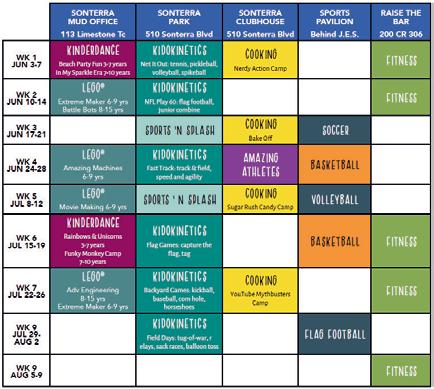






MAY 2024 MY JARRELL MONTHLY 5 ALL CAMPS ARE OPEN TO THE PUBLIC FUN ACTIVITIES, SPORTS, SWIMMING, AND MUCH MORE FOLLOW US ON FACEBOOK /SONTERAMUDPARKS KIDS SUMMER CAMPS Registration is now open and available online at The Sonterra Pool will open Saturday, May 25. Scan the code to register for swim lessons ParksAndRec.SonterraMUD.org/community/pass 113 Limestone Terrace | Jarrell (512) 591-3463 parks@sonterramud.org 1460 CR 313 • Jarrell, TX 76537 • WWW.UPWARDS.CHURCH

SHAPING TEXAS’ FUTURE
An Inside Look at the State Board of Education’s Mission
My Jarrell Monthly was pleased to visit with Tom Maynard, distinguished member of the Texas State Board of Education (SBOE) for District 10, which includes 27 counties and most of Williamson County. Members of this pivotal elected board play a critical role in overseeing and shaping the educational standards and policies that impact the state's public schools. The SBOE is constantly working to improve educational outcomes for the state's 5.5 million public school students.
As a parent and grandparent, Mr. Maynard is particularly invested in the challenges and triumphs of the state education system. His strength as a board member is additionally born of his experience as a CTE teacher, executive di-
rector of the nation's largest state FFA association, and local school board trustee. That experiential balance has given him expertise and a passion that enable him to prioritize educational needs with the values of Texas families in an ever-changing societal landscape.
Mr. Maynard notes the SBOE may be the most misunderstood elected body in the state. "A common misconception is that we have direct authority over schools or districts. In today's intensely political environment, frustrated people are looking for solutions and want to believe SBOE members can direct changes in schools, but SBOE members do not have authority to force decisions at the local level."
"Local school boards answer to local voters," he says. "State law defines the duties of the SBOE and State Commissioner of Education and what is not expressly or explicitly given in law to the SBOE or commissioner is given to local school boards. We are a local control, limited government state.”
Developing and Revising Educational Standards
One of the primary tasks of the SBOE is to develop standards that drive curriculum design, instructional materials, and assessments. These Texas Essential Knowledge and Skills (TEKS) define what students should know and know how to do in each grade level and subject area. State law prohibits the SBOE from dictating teaching methodologies or time for specific lessons.
"The ongoing battles over TEKS are significant because they are about what will be taught to the next generation," Mr. Maynard says. In the last few revision cycles, he recalls heated battles over health education standards, including a 16-hour public testimony marathon. "Among myriad proposals, most had to do with human sexuality and gender ideology," he says. "But we kept those things out of the standards."
Mr. Maynard notes content and material related to human sexuality are, pursuant to state law, the domain of local school boards working alongside a School Health Advisory Counsel. "State law was written to ensure local discretion on that subject," he says, "so if you read or hear something that claims SBOE acted on sex ed, you know it's misinformation."
COVER FEATURE
6
by Ann Marie Kennon
He also noted that recently adopted science standards took a more measured, reasoned approach to climate change, adding language that prompts students to consider a cost-benefit approach to proposed climate solutions.
SBOE and the Book Wars
Many readers may remember some highly publicized textbook wars at the SBOE. They still occur but not at quite the same intensity, because the Legislature changed the rules of engagement. Until 2011, the SBOE held absolute authority over every textbook in every public classroom. All of that changed with the passage of SB 6 by the 82nd Legislature.

"SB 6 threw the door open, created an open-source environment allowing school districts to purchase whatever they wanted as long as they certified what they were buying with the instructional materials allotment covered all TEKS," he says. "We still had an adoption process, but schools were not obligated to purchase from our list. In fact, a school could buy and use materials that we rejected."
Mr. Maynard observes that there have been unintended consequences to this approach. "Some school districts have done a good job vetting and purchasing high quality materials, but some left it to their teachers to find their own. Much of this material is not high quality and some is not written at grade
level.” Mr. Maynard says he and other SBOE members were co-collaborators on the writing of HB 1605, which created a ratcheted-up process for reviewing instructional material.
HB 1605 also directs the SBOE to create reading lists for certain classes. "Your readers will remember being assigned books to read in class; these were generally classic works in particular literary eras or in particular genres," he says. "Not textbooks, but assigned reading, and recently we have observed what amounts to a culture war on western literature, which is a part of a larger war on western civilization," he says.
He also points out that HB 1605 also requires material vetted through this process to have a parent portal, guaranteeing 24-hour parental access to what is being presented to students.
Protecting Students
One of the SBOE's key achievements is its involvement in the legislative process concerning library standards. Recently, many Texans became aware of school library books with graphic sexual content. SBOE members worked alongside Representative Jared Patterson to produce HB 900, a significant revision to the READER (Restricting Explicit and Adult-Designated Educational Resources) Act, which directed the Texas State Library and Archives Commission to create library collection standards that apply to school and classroom libraries.
For the first time, the SBOE had a voice in the process. "Prior to HB 900, the SBOE had no voice related to school libraries," he says.
Financial Stewardship
Another critical but less discussed aspect of the SBOE's responsibilities is the management of the Permanent School Fund (PSF), the state's $55 billion endowment, which funds instruc-
tional materials and technology and is part of the overall school funding. Mr. Maynard has chaired the board's School Finance/PSF Committee since 2019 and in 2021 led an effort to bring the fund out from under the Texas Education Agency and into an agency similar to UTIMCO, a governmental corporation that manages the Permanent University Fund.
Mr. Maynard says, "The PSF now has the ability to operate more like the private sector," he says. "The fund has returned 7.25 percent over the past three years, adding $2.5 billion in value while distributing $6 billion, but we think we can do even better – generating more resources for Texas schools and perhaps alleviating the taxpayer burden.”
He is also proud of his efforts to rescue the PSF's bond guarantee program from a federal regulatory logjam that had stymied the fund for years. The PSF guarantees local school district bonds, ensuring that taxpayers pay the lowest possible interest rate. "That program saves Texas taxpayers $300-400 million in interest payments," he says.
However, the IRS rules had limited capacity of the PSF to guarantee bonds, based on a 2009 valuation of the fund. Mr. Maynard led a bipartisan effort to have legislation filed to exempt the program from these regulations and allow state law to govern it. "We had nearly the entire Texas congressional delegation on board as co-sponsors and were able to leverage that to get the IRS commissioner to yield on the matter," Mr. Maynard says.

Scan the code for more information about the SBOE.
MAY 2024 MY JARRELL MONTHLY 7
COVER FEATURE
• photos courtesy
Tom Maynard

Mobile Banking & Deposit
C
Builder Spe c

MAY 2024 MY JARRELL MONTHLY 8 12345 N. IH-35 • Jarrell (512) 746-2531
C ome in today to che ck out our produc ts & excellent c ustomer ser v ice! Che cking & Sav ings Accounts
Senior & Student Che cking
IRAs & CDs Ask About Home L oans
C onventional USDA • VA • FHA Home Equity
onstruction
et E ag le Bank, a branch of Round Top State Bank,
et all of your lending
Tommy Sladecek, Senior Vice-President-Eagle Bank Eagle Bank, A Branch of Round Top State Bank - Jarrell 512-746-2531 or TSladecek@eagle-bank.com C ON ST RU CT ION •HOM E FA R M & R A NC H LOT / L A N D LOAN S HOM E BU YE R PRO G R A M NMLS # 908464
L
me
nee ds!




MAY 2024 MY JARRELL MONTHLY 9 Family Owned Since 1939 512.864.7579 $500 OFF Replacement Roof Must be 20 sqrs or more. Cannot be combined with another o er. Cannot be used in insurance claims for money back. Please present coupon. Expires 05/31/2024 40209 Industrial Park Circle in Georgetown www.hallsroo ng.net hallsroo ng@gmail.com 512.864.7579 We are the Original Halls Roo ng since 1939 Our one location is in Georgetown
by Charlotte Kovalchuk

Until June last year, Brooklynn Miller was a normal 12-year-old looking forward to spending the summer with friends and running track when school started again. When she began complaining about knee pain, her mom, Erika Spies, told her to rest it for a couple days but wasn’t that concerned since Brooklynn could still run around and jump on their trampoline at their home in Jarrell. A few days later, she woke up with small fingerprint bruises all over one of her arms. Erika took her to several doctors but none of them were concerned by the lab results. “I had five doctors that said, ‘It doesn’t look like cancer. We’re pretty sure it’s not cancer.’ ”
The two were told it was just low blood platelets and sent home. Not long after that, Brooklynn’s back started hurting to the point that she couldn’t sleep because she was in so much pain. A follow-up appointment with x-rays still didn’t provide answers at first. “The doctor said he didn’t expect to see anything, and he didn’t notice anything. So he sent us home,” Erika says.
On their way home, she got a call from the doctor. She and Brooklynn were listening on speakerphone as he said, “It’s cancer. You need to come back.”
After two weeks of biopsies, MRIs, and bone scans, Brooklynn was diagnosed with stage 4 osteosarcoma –a rare bone cancer that typically affects children, teens, and young adults. With tumors in almost every bone in her body as well as her lungs, their only hope was buying her more time through what ended up being an unsuccessful chemotherapy attempt.
Giving Legacy
The Brooklynn Miller Foundation Spreads Joy to Young Cancer Warriors
SPREADING LOVE
Brooklynn’s love language had always been gifts, Erika says, so she wasn’t surprised to see her daughter make paintings for the nurses at the hospital and gift bags for volunteers during her Make A Wish trip at Disney World. “She knew they were giving up their time to help and be there for kids like her. More than she wanted to go to Disney World, she wanted to put together gifts for all the volunteers.” While her grandpa pushed her wheelchair around the Give Kids the World Village they stayed at during their trip, Brooklynn stopped every volunteer she saw and gave out about 50 handmade gift bags.
She also loved getting gifts, especially during her cancer fight when friends and community members who had heard her story would give her care packages with her favorite things, including Stitch stuffed animals, blankets, and toys, painting supplies, and homemade gifts like quilts and crocheted animals. “Even on the worst days, getting a gift you could tell was handpicked for her would make her smile. Maybe it was just a minute or two or five, but it would take away all the hurt and pain for a few minutes.”
Before Brooklynn passed away in October, she made her mom promise to try to increase government funding for childhood cancer research (currently at 4 percent), spread awareness about osteosarcoma, and start a foundation in her name that would uplift other young cancer warriors with personalized gift bags.
MAY 2024 MY JARRELL MONTHLY 10 NON-PROFIT SPOTLIGHT
EMPOWERING FAMILIES
In March, Erika started the Brooklynn Miller Foundation with a mission to support families battling childhood cancer through several programs:
Brooklynn’s BAGs provides personalized gifts to kids with cancer at Dell Children’s Hospital in Austin. Each bag includes a blanket, handmade item, and things centered on the child’s interests. BAGs, which stands for Brooklynn and Gabe, honors Brooklynn and Gabe, a close friend she made during her cancer fight who had the same cancer at 11 years old and passed away two weeks before Brooklynn. The first official Brooklynn’s BAG was given to a 13-month-old baby with an activity table, toy cell phone, nesting turtles, and a Bluey stuffed animal, blanket, and pajamas.
A “date night in a box,” the Couples Care Kit is designed to support parents of young cancer patients who are receiving hospice care.
Forever in our Hearts honors the memory of courageous children who have lost their battles with cancer by offering gifts to their families on the anniversary of their child’s passing. “It’s to remind them that even when everyone else’s lives seem to move on, somebody else remembers their child and cares about them,” Erika says.
Erika hopes The Brooklynn Miller Foundation will carry on her daughter’s legacy and create purpose out of pain. “I’m doing my best to help people in ways that were important to her,” she says, her voice cracking.

Brooklynn holds a painting she made for a girl who was in the hospital on her birthday. “We didn’t know her but Brook saw a happy birthday sign on her door and wanted to get her something since she didn’t get to enjoy her special day,” Erika says. “Brook was feeling really bad that day but still wanted to take the time to make someone else’s day a little better.”

COMMUNITY ENGAGEMENT
Erika asks the community to come out and support
The Brooklynn Miller Foundation at several upcoming fundraisers:
Brooklynn Miller Foundation BBQ Cook-off on June 14-15 at Moravian Hall, 2300 County Road 316, Georgetown. More information is available on the event’s Facebook page.
Community awareness event on September 14 during Childhood Cancer Awareness Month at the Jarrell Memorial Park and Community Center.
Sporting clay shoot fundraiser on November 8 at Capital City Clays in Austin.
More information on the community awareness event and clay shoot fundraiser will be posted on the Brooklynn Miller Foundation’s Facebook page by July 1.
The Brooklynn Miller Foundation also welcomes monetary donations as well as donations for Brooklynn’s BAGs and Couples Care Kits. For more information, scan the code and follow The Brooklynn Miller Foundation on Facebook.

bmillerfoundation.org erikas@bmillerfoundation.org

MAY 2024 MY JARRELL MONTHLY 11 NON-PROFIT SPOTLIGHT
A Brooklynn’s BAG is set to put a smile on a young cancer warrior’s face.
photos courtesy Erika Spies
by Ann Marie Kennon
Celebrating Excellence:

While it is not uncommon for the halls of Jarrell High School to echo with cheers for game-day victories, the ISD recently celebrated a different kind of win — a prestigious Silver Star Award from the Texas School Public Relations Association (TSPRA) for its exceptional seasonal sports magazine and program, Cougar CloseUp. Designed with what Director of Communications Nick Spinetto calls “a sleek, Sports Illustrated-style look,” the magazine brings readers face to face with the spirit and achievements of Jarrell High School athletics. Each issue includes an in-depth look at the district’s sports culture, spotlighting coaches, senior players, and outstanding athletes across all sports.
Nick is pleased that each issue serves not only as a testament to the dedication and impressive nature of the sports teams but also fosters a strong sense of community and school pride. As such, this award recognizes the careful curation of content that resonates with students, parents, and the broader community, highlighting not only the hard work and commitment of the student-athletes but also the ISD staff behind the scenes. Now in its second year, Cougar CloseUp’s popularity underscores Nick’s and Jarrell ISD's commitment to excellence in communications, celebrating the rich tapestry of talent across the entire district.
Cougar CloseUp Captures the Silver Star
INSPIRATION AND COLLABORATION
The initiative, envisioned by Superintendent Dr. Toni Hicks, aims to amplify and honor the district’s athletic programs equitably. Her goal was to create a magazine that would be a one-stop shop for families and community members — allowing everyone to access rosters, schedules, and exclusive interviews with student-athletes in a fun and unique way.
Nick says the seasonal project is a collaboration of minds and efforts, relying on the industry expertise of local magazine publisher Fidelis Publishing Group to plan and produce the content for each upcoming sports season. With direction from Nick and Athletic Director Marty Murr, the team at Fidelis, who also publishes My Jarrell magazine locally, works directly with the coaches and athletes to craft content and stories that resonate with the community's heart.
Nick expressed his appreciation for the collaboration, emphasizing the integral role Fidelis plays in the success of Cougar CloseUp and why he chose them to partner on the project. "This magazine was truly a collaborative effort that would not have been possible without the professional expertise and outstanding reputation of Fidelis Publishing Group. Their dedication to editorial excellence and deep understanding of engaging community storytelling were instrumental in bringing our vision to life and achieving this recognition."
MAY 2024 MY JARRELL MONTHLY 12 EDUCATION
HURDLES AND SUCCESS
For everyone involved, creating Cougar CloseUp is an enjoyable task, although the task of engaging with student-athletes and ensuring accurate, timely information is a hurdle the writers regularly face head-on. With a smile, Cougar CloseUp Editor Camy Reynolds says, “It is no surprise that the athletes the coaches choose to highlight are always ultra-busy with training and schoolwork so we are lucky to get a few minutes of time in their schedules.” Camy adds the company owes a big thanks to Lori Murr, who attends so many of the school’s athletic events and is generous in sharing her excellent stop-action photography for the layout.
Despite such challenges, the final product is always nothing short of extraordinary. “The strength of our publication lies in its in-depth portrayal of our athletic programs,” Nick says proudly.
FEEDBACK AND FUTURE
Nick says the response from the community has been spectacular. The tangible, glossy pages provide a collective point of reference for the entire sports season, something the community values over the impersonality of digital searches. More importantly, it connects local businesses, proud parents, and inspired students as a celebration of achievements that go beyond the athletic fields.
Reflecting on the impact of this award, Nick acknowledged the ev er-evolving media landscape: “This recognition has reinforced the value of in-depth storytelling and the continu ous pursuit of innovative communica tion strategies to engage with families meaningfully.”

Editor Camy Reynolds says, “We knew we could turn Dr. Hicks and Nick’s vision into something they would be proud of — a wonderful keepsake for all the athletes and coaches featured. It is a privilege to have played a role in this award-winning achievement, and it is a pleasure to continue doing what we do best to serve our own school community in every new season.”
LOOKING AHEAD
Buoyed by success and driven by innovation, Jarrell ISD is not resting on its laurels. “We’re already brewing ideas for the next school year,” Nick hints, teasing at initiatives that promise to highlight the remarkable happenings in classrooms as well as on sports fields.
Happily, Cougar CloseUp will continue to be a priority project for Fidelis and the ISD and with its reputation now silver-lined, Nick and his team look forward to future chapters that will captivate and inspire readers, celebrating the unity and talent that make us all a part of Cougar Nation.

MAY 2024 MY JARRELL MONTHLY 13 EDUCATION
Editor Camy Reynolds & JISD Superintendent Dr. Hicks celebrate the arrival of the first Cougar CloseUp in Fall 2022.

Congratulations
“You are educated. Your certification is in your degree. You may think of it as the ticket to the good life. Let me ask you to think of an alternative. Think of it as your ticket to change the world.” - Tom Brokaw








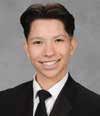


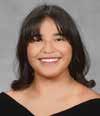




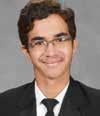









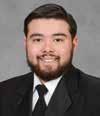





MAY 2024 MY JARRELL MONTHLY 14
Haneen Danny Abdullah
Darian Roman Aaron
Janiel Cole
Maria Alondra
Ana Jasmine
Jose Christopher Bethany
Brandon Alexandria Jonathan
Misa Alain
Hugo Cody Emily Manuel
Bailey
Esteban Leo Manuel Sebastian Laresha
Jocelyn Taylor Colton
Sean Travis Jouliana

JarrellHighSchoolClassof2024
Students are listed in order alphabetically by last name, however, as a courtesy requested by JISD we have omitted student's last names for privacy. Blue borders indicate Top Ten Students.
































MAY 2024 MY JARRELL MONTHLY 15
Araceli Avery Leeauna
Jazmyn Mason Destiny
De'Andre Francisco Landon
Sean Jasmine Xaryah
Hector Jashawn
Caitlyn
Lino
Brandon Jordan
Damian Jaelynn
Dalianelis Darina Natasha Jenessa
Aden Ellis Robert Tacheem
Ayden
Shelby Evany Joshua
Kaily
Dakota Laney
Ethan
JARRELL HIGH SCHOOL































MAY 2024 MY JARRELL MONTHLY 16
Faith Ihtzel
Yanisbel
Eldis Zoey Eizabeth
Makayla Tyler Jack Audrey Andrew Logan
Addisyn Dallis
Mia Harry Carter Seydou
Lilliona James
Corbin
Falon
Josiah Ana
Sherlyn Julissa Brandon Jacqueline Alexander Jacob
Jordan
Andrea Aaron Saul
Elizabeth Kai Ela Kaleb
JaMarion
Morgan Ezra Garrett
































MAY 2024 MY JARRELL MONTHLY 17
Jaden Dylan Izabella Raya Sonia Eduardo
Kayla Sincere
Chelsea Esmeralda Madison Jesus
Mireya Dendrid Preston Sharon Cesar David
Edgar Dora
Hagen
Robert Alex Noelle
Malee Houston Khi'Ryn Yordana Jazmin Ellyana
Angel
Fredereck Kobe Mahty Noelys
Hanna Jennifer Kaleb
Brianna
CLASS OF 2024
Jordan Caleb Yamilet

UPCOMING ACTIVITIES:
May 20: Last Day to Register for STEM Forged Camp (payment due)
June 1-8: Community Health Week
June 3-7: 3pm-5pm STEM Forged Video Game Development Camp
June 8:10am-2pm: Community Health Fair
June 11-July 27: Summer Reading Program
June 15: 10am-12pm Touch A Truck ACDI Recycling & Garbage Trucks with a special storytime at 10:30am
We are excited to announce we will be hosting the Summer Reading Program at the JISD Annex so we can accommodate more children! JISD & the Library will be providing transportation from the library on Tuesdays and Thursdays!
JUNE 8TH HEALTH & WELLNESS FAIR
Healthy Food, Healthy Body, Healthy Mind.
• Donate blood with We Are Blood
• Free Health Examinations
• Learn About Good Eating Habits
• Engage in Conversations with Health Professionals
• Free Giveaways and Door Prizes
• Free Fitness and Nutrition Information
• WIC Information
Scan the QR code to register & request a booth!



MAY 2024 MY JARRELL MONTHLY 18
113 Limestone Terrace #500 | Jarrell, TX 76537 | 512-541-1036 | JarrellLibrary@gmail.com | JarrellCommunityLibrary.org Visit Us Online & Faceook to Stay Up to Date on Activities



MAY 2024 MY JARRELL MONTHLY 19
AROUND TOWN

This year’s national Summer Reading Program theme, Adventures in the Library, is fitting for the Jarrell Community Library and Resource Center. “The kids always want to check out animal books, space books, dragon books,” Library Director Susan Gregurek says. She is excited to bring all kinds of adventures to the library for its fourth annual summer reading program, from nature and space activities to fun with dinosaurs and dragons.
The library has been going through its own adventure – outgrowing its space and moving part of this year’s events to the JISD Annex. “It has been exciting to witness
the growth and participation in the library programs,” Susan says. The program’s goal, however, remains the same – instilling a love of reading and maintaining reading levels throughout the summer. “Community members of all ages love to participate in the Beanstack app challenges, which challenge individuals to meet and exceed their [reading] goals and win exciting prizes, coupons, gift cards, and tickets for large gift baskets.” The more one reads, Susan says, the more opportunities they have to win prizes sponsored by area businesses.
JARRELLCOMMUNITYLIBRARY.ORG
by Charlotte Kovalchuk photos courtesy of Susan Gregurek
SUMMER READING PROGRAM SCHEDULE
June 11-21: Adventures in Nature
June 24-28 and July 9-12: Adventures in Space
July 16-26: Adventures in Time, Dinosaurs and Dragons
June 3-7: STEM Forged Video Game Development Camp at 3 - 5:30 pm with tech teacher Michael Griffith. Class is limited to 20 participants. Registration is $125 and financial assistance is available through the library. Jarrell Middle School, 502 N 5th St
June 4-8: During Community Health Week, the library will offer information, demonstrations, and healthy food choices. Jarrell Community Library and Resource Center, 113 Limestone Terrace
June 8: The library will host a Jarrell Community Health Fair with information booths and giveaways, and several community vans and buses such as We Are Blood, St. David’s Dental bus, The WIC bus, and more. Library, 113 Limestone Terrace
June 15: Visitors can interact with recycling and garbage trucks and meet

the drivers during Touch A Truck Day 10am-noon, with a special story time at 10:30 with a guest from Al Clawson Disposal, Inc. (ACDI). Library, 113 Limestone Terrace
Tuesdays: Storytime and activities 10:15 - 11:15am for ages 3-5, and 11:45am - 12:45pm for grades K-2.
JISD Annex, 108 E Avenue F
Wednesdays: Activities and crafts 3 – 5pm for grades 6-12. Library, 113 Limestone Terrace
Thursdays: Storytime and crafts 10:15 – 11:15am for ages 0-2, and 11:45am – 12:45pm for grades 3-5.
JISD Annex, 108 E Avenue F
Fridays: Bilingual Storytime for all ages 10:30 – 11:30am. Library, 113 Limestone Terrace
All events except the video game camp are free with no registration required. For events at the JISD Annex, a bus will be available to pick up participants from the library and bring them back to the library. Children younger than 9 need to be accompanied by a guardian, and children 9 and older may participate with a parent permission form and waiver, although parents are welcome to join.
Teen and adult volunteers are also welcome to help lead summer reading events. Those interested in volunteering can fill out a volunteer application at the library.

TOWN
AROUND
MAY 2024 MY JARRELL MONTHLY 21







MAY 2024 MY JARRELL MONTHLY 22 Give Us a Call Today! 512.503.3372 103 N. 2nd St. | Jarrell, TX | TACLA 102945C In the US, an average of 2,300 A/C fires occur in residential structures. These fires are responsible for approximately $23.8 million in property loss. GET A SAFETY CHECK NOW! 0% DOWN SAME AS CASH for 12 Months W.A.C. Offer Expires 05/31/24 Other Financing Available W.A.C. TIME FOR YOUR A/C CHECK. $79 SPECIAL Offer Expires 07/04/2024
Tips for Building Your Next Small Accessory Structure
Dreaming of a quiet office space just steps from your home? Want to move mom close but not inside your home? Ready for a backyard entertainment space? Small accessory structures, separate from your main dwelling, are quite popular in Williamson County. If you've been thinking about building one of these versatile structures but don't know where to begin, these key considerations will help you understand where to start.
First, some definitions:

Shed: A structure primarily used for storage. Unfinished interior with exposed studs, rafters, and sub floor. Electrical is sometimes added, plumbing is not included.
1. ARE YOU ALLOWED TO BUILD AN ADU ON YOUR PROPERTY?
Outside city limits, no HOA/POA – usually yes. Check your property survey for any easements, building setback lines, or other restrictions regarding building placement.
Outside city limits, inside a neighborhood HOA/POA – it depends. Check with your HOA. One large, local, master-planned community requires sheds to be no taller than 8', while it allows ADUs to be over 11' tall! Typically, you’ll want a roof height of at least 10' to provide a comfortable indoor space.
Inside city limits – you will need to check with the city to see if ADUs are allowed in your neighborhood. Cities are concerned about overall size, height, access, and permits. Yes, you will have to obtain permits when building inside city limits.

Accessory Dwelling Unit (ADU) / Casita / Home office: Though they have different names – usually assigned based on intended use – these structures are fully finished with insulation, wall coverings, flooring, HVAC, electrical, and sometimes plumbing.
2. DO YOU HAVE ENOUGH POWER?
ADUs typically need 60-100 amps of electrical power. An electrical inspection will determine if you have ample capacity to handle this additional load.
If you don't have enough power, you will need to upgrade your service.

3. WHAT ABOUT A BATHROOM?
If you're on a septic system, then you need to consider if you are adding load or just shifting it from using a bathroom in the house to the new building. Any septic changes are governed by a permit from the county.
If you're on a sewer system, then you'll tie the ADU wastewater into the sewer. Depending on where that drainpipe is located on your property, that can entail trenching through much of your property to make the connection.
Fresh water will also have to be routed from an accessible location on your property to the new building.
4.
WHAT IS YOUR BUDGET?
If you have the space and clearance to build an ADU, then you need to look at a budget.
A basic backyard office/workshop/ hobby space is going to start around $30,000.
A complete one-bedroom, onebath casita with a kitchen is going to be pushing $150,000, if not more, depending on driveways, masonry, electrical, and plumbing connections.
Whatever name you give your dream building, tackle these steps and you’ll be on the way to realizing your dream and hearing, “It’s movein day!”
MAY 2024 MY JARRELL MONTHLY 23
Moore Liberty Buildings Chad & Amanda Moore Thousands of structures built since 2015. MooreLibertyBuildings.com • 512-548-6474
OUTDOOR STRUCTURES
ASK AN EXPERT •
PEOPLE YOU NEED TO KNOW
with BARRY CRYER QUESTIONS
10
THE BEST LEADERS SUPPORT THEIR TEAMS
by helping them understand their role and lifting them up.
I

DEFINE A GREAT ORGANIZATIONAL CULTURE AS ONE THAT develops leaders
and that will attract winners.
Barry Cryer worked in manufacturing for 32 years until, realizing there was no corporate loyalty, he and his wife Barbara decided to take control of their own destiny. They have owned Star Air since 2018, recently merging with Bowien Heating and Air in January. The couple have been residents of Jarrell since 2014 and have been married for 30 years with four children and 16 grandchildren. With a heart for giving back to his community, Barry also serves as president of both the Jarrell Economic Development Corporation and Williamson County ESD #5.
MAY 2024 MY JARRELL MONT HLY 24 TEN QUESTIONS
photos courtesy Barry Cryer
1
TWO
Local Business Owner
Jarrell Economic Development Corporation Board President Williamson County ESD #5 Board President
3
ONE THING I TRY TO DO EVERY DAY
is remain positive and demonstrate that the glass is half full.
4
FIVE
I FEEL MOST ALIVE when the heat is on and we need to figure out how to get everything done.
TO AVOID DISTRACTIONS
I normally don't avoid them. I just go down that rabbit hole and then try to get back on task.

6
I HANDLE NEGATIVITY BY finding the positive things and promoting them.
ONE THING THAT IS DIFFICULT FOR ME BUT I ENJOY
is working on hot rods and going to car shows, even though time constraints make that challenging.
7
8
MY BEST ADVICE FOR HANDLING CHANGE IS
to learn more about what is changing and use it to better your position in marketing, doing business better and faster, and try to use the change to your advantage.
IN TEN YEARS I HOPE TO look back and see what kind of footprint we have left behind and to see what Jarrell, TX has become. It's going to be exciting.
NINE
10
I DEFINE SUCCESS AS what changes you have helped make to implement a better lifestyle for those around you and the footprint you leave behind.
MAY 2024 MY JARRELL MONTHLY 25
TEN QUESTIONS


Adapting Lawn Care for Central Texas
Central Texas is defined by harsh summers and drought conditions causing significant challenges in lawn care. Adding in annual water restrictions adds more of a challenge. By focusing on the basics — proper grass, watering, and soil health your lawn can thrive.
GRASS TYPE
The right grass is essential to a resilient lawn. While Bermuda, Zoysia, and Buffalo grass are top choices and offer distinct advantages, they do have some disadvantages.
BERMUDA GRASS: Known for its drought resilience, Bermuda grass rapidly recovers from damage and stress due to its high growth rate. It thrives in full sun, is not disease-prone, and has good wear tolerance, making it an excellent choice. However, it does have limited shade tolerance and can be susceptible to weeds if not maintained properly.
ZOYSIA GRASS: Known for its dense appearance, Zoysia balances aesthetics with durability. It is moderately drought and wear tolerant, however it does take time to establish and is slow to recover from damage and stress. Zoysia is also prone to thatch buildup and disease, and is sensitive to cold weather, requiring more maintenance and care.
BUFFALO GRASS: Indigenous to Texas, it is ideal for low-maintenance lawns, offering excellent drought resistance and thriving in warm conditions. It requires less maintenance and watering. However, it is less tolerant to wear and more vulnerable to weeds due to its thin nature.
WATERING
Efficient watering is critical and not just about when and how much to water. It is also about getting water where it needs to be and enhancing the grass's ability to utilize the moisture effectively.
The best time to water is early in the morning, which reduces evaporation. For deep root development, water deep and infrequently, i.e., two times weekly; 1” to 1.5” total is usually sufficient. If situations require more, consider hand watering some areas. It is also beneficial to cool the grass with a few minutes of quick watering to help with the grass temperature.
Incorporating wetting agents, PGRs, and bio stimulants into your lawn care routine is an innovative technique. The use of wetting agents enhances water penetration and movement through the soil, improving efficiency and reducing runoff. Bio stimulants boost soil and root health, which also enhances water and nutrient absorption. PGRs slow growth, reducing the water and nutrients needed. Regularly combining these in your program will reduce your turf watering needs and contribute to a denser, more aesthetic look and overall health of the turf.
SOIL HEALTH & FERTILIZATION
A lush lawn starts with healthy soil and roots. Adding soil amendments and micronutrients can greatly enhance soil health by replenishing often lacking elements, improving soil structure, and making nutrients more available. As well, choosing the right fertilizer is key. Programs should consist of a combination that promotes vigorous growth, and sustains nutrition and extended nutrient release through controlled and quick release products.
Creating a drought-resistant lawn takes the right grass, watering, soil health, fertilization, cultural practices, and seasonal maintenance. Whether self-maintained or professionally serviced, tailoring your lawn care program will help ensure a resilient lawn that is well-suited for this environment.
ASK AN EXPERT • LAWN CARE
Over three decades in turf management, with roles as Service manager, Branch manager, Regional Agronomist and GC Superintendent at renowned companies. info@greendreamlawns.com • greendreamlawns MAY 2024 MY JARRELL MONTHLY 26
Green Dream Lawn Care • Doug Durden, Branch Manager








MAY 2024 MY JARRELL MONTHLY 27 WE ALSO PERFORM DIESEL & RV SERVICE AND REPAIRS! SPRING SPECIAL 15% OFF Any Repair Service Most vehicles. Maximum discount of $150. Discount off regular price. At this location only. Not valid with other offers. other restrictions may apply. Offer Expires: 05/31/2024 FULL SYNTHETIC OIL CHANGE $59.99 Full Synthetic Oil Change Most vehicles. Shop supplies, tax and waste disposal fees may apply. Cartridge filters extra. At this location only. Not valid with other offers. other restrictions may apply. Offer Expires: 05/31/2024 Up to 5 quarts Mobil brand full synthetic oil • New oil filter Vehicle maintenance inspection • Lubrication of grease fittings • Top-off vital fluids • Check & adjust tire pressure SPRING MAINTENANCE Most vehicles. Maximum discount of $100. Discount off regular price. At this location only. Not valid with other offers. other restrictions may apply. Offer Expires: 05/31/2024 NO CREDIT CHECK NO INTEREST FOR 100 DAYS 20% OFF Spring Maintenance SNAP Financing. Call or stop in for full details. Offer Expires: 05/31/2024 SPRING FINANCING $29.99 Premium Oil Change Most vehicles. Maximum discount of $50. Discount off regular price. At this location only. Not valid with other offers. other restrictions may apply. Offer Expires: 05/31/2024 Most vehicles. Shop supplies, tax and waste disposal fees may apply. Cartridge filters extra. At this location only. Not valid with other offers. other restrictions may apply. Offer Expires: 05/31/2024 Up to 5 quarts major brand synthetic blend oil • New oil filter Vehicle maintenance inspection • Lubrication of grease fittings • Top-off vital fluids • Check & adjust tire pressure BRAKE SPECIAL PREMIUM OIL CHANGE No Appointment Necessary! • Appointments Available • Customer Waiting Area • Free Gourmet Coffee • Wireless Internet Access HOURS: Mon-Fri 8am - 5:30pm Sat 9am - 3pm Sun CLOSED (512) 713-9356 | www.PrecisionTune.com/JarrellTX You’ve got cars (or RVs). We can fix ‘em. FREE BRAKE INSPECTION & $25 Off per Axle Brake Service A/C Service • Belts & Hoses • Brake Service • Diagnostics • Fuel Injection Cleaning • Repairs Scheduled Maintenance • State Inspections • Tune Ups & More WE ALSO PERFORM DIESEL & RV SERVICE AND REPAIRS SPRING SPECIALS
Fitting in Fitness
by Charlotte Kovalchuk
Exercise Hacks for the On-the-Go Person

Although time can often feel like a luxury that is hard to come by, it is still possible for busy people to achieve their fitness goals! Check out these exercise tips and quick workouts that can easily fit into a packed schedule:



Deskercise: Transform your workspace into a mini gym with deskercise equipment. Under-desk ellipticals, pedal exercisers, and balance boards are great tools for staying active while sitting at your desk. These compact gadgets allow you to engage your muscles and burn calories without disrupting your workflow. Swap out your office chair for an exercise ball to increase calorie burn and improve posture simultaneously. By incorporating deskercise equipment into your daily routine, you can combat the negative effects of prolonged sitting and boost overall fitness levels.
f Multi-tasking Movements: Make the most of every moment by incorporating multi-tasking movements into your daily activities. Whether you're brushing your teeth, waiting for the kettle to boil, or chatting on the phone, there are plenty of opportunities to sneak in some exercise. Try doing squats, lunges, or calf raises while performing everyday tasks to increase your daily activity level and strengthen key muscles.
f High-Intensity Interval Training (HIIT): Short on time? HIIT workouts are your best friend. These quick and intense exercise sessions can take anywhere from 10 to 30 minutes and alternate between bursts of high-intensity activity and brief rest periods. HIIT workouts are incredibly efficient, allowing you to burn calories and improve cardiovascular health in a fraction of the time of traditional workouts. Examples of HIIT workouts include:
Circuit training: Moving through a series of exercises such as jumping jacks, squats, push-ups, or burpees with minimal rest in between.
Pyramid intervals: Increasing and then decreasing the intensity or duration of exercises in a pyramid style, such as 30 seconds hard, 15 seconds rest, 45 seconds hard, 15 seconds rest, and so on.
MAY 2024 MY JARRELL MONTHLY 28
HEALTHY HABITS
f Mind-Body Practices: Incorporate mind-body practices like yoga, Pilates, or tai chi – a Chinese martial art that focuses on slow movements and meditation – into your fitness routine to improve flexibility, balance, and mental well-being. These gentle yet effective exercises not only strengthen the body but also promote relaxation and stress relief. Whether you prefer a calming yoga flow or invigorating Pilates session, mind-body practices offer a holistic approach to fitness that can easily be adapted to a busy schedule.
f Finding the right exercise time: Find an exercise time that works for you based on your energy levels and schedule. Some people prefer to work out first thing in the morning to jumpstart their day, while others find squeezing in a lunchtime workout helps them power through the afternoon slump. Experiment with different times of day to determine when you feel most energized and motivated to exercise.
f Consistency is Key: Instead of aiming for long, intense workouts sporadically, focus on incorporating shorter, more frequent exercise sessions into your routine. Consistency is more important than duration, so try to make physical activity a daily habit, even if it's just for a few minutes at a time.




MAY 2024 MY JARRELL MONTHLY 29
HEALTHY HABITS
contributed by April Peiffer with WCRAS

Welcome to summer 2024! The Williamson County Regional Animal Shelter (WCRAS) is excited to help you give back to the community by getting involved at the shelter. Warmer temperatures mean more animals at the shelter on a regular basis, and that means it’s a great time to sign up to be a volunteer.
In 2023, the shelter took in 6,484 dogs and cats, and caring for them all takes a village – one made up of staff, volunteers, and fosters. The facility had 518 active volunteers who gave more than 24,000 hours
of their time to help staff continue the lifesaving mission of caring for each animal that comes through the doors and is awaiting a loving new home. “We are simply humbled by the amount of effort our volunteers put into helping the shelter, and still, there are never too many of them,” WCRAS Community Programs Coordinator April Peiffer says. “Every extra hand lightens the workload for everyone else. Plus, the volunteers get the best rewards for their efforts – puppy breath, tiny kitten purrs, wagging tails, and biscuits from the cats – all ways the animals show their love and thanks to the volunteers.”

MAY 2024 MY JARRELL MONTHLY 30
SHELTER STORIES

There’s a way to help for any skill set!
Got a hidden talent for:
Walking dogs,
Socializing dogs and cats,
Fostering a dog or a family of kittens,
Cleaning kennels, helping with laundry, or other special administrative tasks,
Working at off-site events,
Helping with photography and videos of shelter animals,
Assisting with special projects; e.g., assembling shelves, doing research, or data entry
WCRAS has a way you can put that talent to use for the shelter pets. April says, “An animal shelter consists of many moving parts, each of them working together to ensure the best outcome for each animal, and there's an opportunity for volunteerism every step of the way.”

Scan the code to learn more about the program and to come on board as a volunteer.
Pain Management for Your Pets

Osteoarthritis is a real threat to your pet’s well-being. Just as in humans, chronic pain negatively impacts your pet’s quality of life not just physically, but emotionally as well. Please don’t wait to get your pet the help they need.

“My 9 yr old domestic longhair was showing signs of severe muscle wasting/loss and rapid weightloss. Her entire diagnostic workup came back normal other than slight changes in her right hip and elbow, we gave her the 1st Solensia injection, and within 7 days she was showing mannerisms and behaviors that she had not shown in 4 + years. We are now on month 3 of injections and she has gained back her weight and her muscle and is running around the house playing without issue.”
 ~ Angel W., CVH Team Member



MAY 2024 MY JARRELL MONTHLY 31 CompassionVeterinaryHospital.com reception@compassionveterinaryhospital.com 11720 N IH-35 | Suite 600 | JARRELL | 512.746.0111 | MON-FRI 7:30AM - 5:30PM Welcoming New Patients | Scan to Request Appointment
for Osteoarthritis Pain Relief 15% OFF
Your pet’s 1st injection of Solensia or Librela
P h o t o C r ed i t s : BrandiLaceyphotography
Dr. Havemann
SHELTER STORIES

Pets of the Month
Archie, Bones, and Princessa are three “Longtime Lovables” at the Williamson County Regional Animal Shelter. This trio is eager to make new beginnings for themselves in loving new homes, and they’ve each got something unique to share with a new family that will make them great additions to the right homes.
ARCHIE q is a handsome hound that moonlights as the staff social media manager's co-worker. His personality is as charming as his pointy ears and he brings a playful energy to the workplace while remaining calm, cool, and collected (except during squirrel sightings). He's the paw-fect example of good behavior, spreading love to every human lucky enough to cross his path. Who needs a water cooler when you've got Archie's fountain of wagging tails?


PRINCESSA the delightful pup with a heart of gold. This energetic sweetheart enjoys nothing more than leisurely walks, entertaining herself with toys, and engaging in spirited games of tug-of-war. Her stunning eyes will captivate you from the moment you meet her. Princessa may already be house trained, making her transition into your home a breeze. Plus, thanks to her Adoption Angel, she's free to join a loving new family.

BONES t has been eagerly awaiting his loving new family since July 2022. With a handsome ginger-colored coat, soft green eyes, and a sleek 60-pound frame, he's ready to charm his way into your heart. Volunteers describe him as calm and snuggly in the play yard, enjoying toys and leisurely walks – definitely no lazy bones here. Bones has an Adoption Angel, so his adoption is absolutely free! If you feel in your bones that he could be your perfect match, please ask to meet Bones, the bestest boy ever.
If you’d like to meet Archie, Princessa, or Bones, email adoption@wilco.org to schedule an appointment. Or drop in between noon-6pm at 1855 SE Inner Loop in Georgetown.
MAY 2024 MY JARRELL MONTHLY 32
story and photos contributed by April Peiffer with WCRAS



V nchored
•Home, Auto, Boat/RV/Motorcycle, Farm & Ranch
•Small Business, Contractors & Professional Liability
•Tailored Coverage to Meet ANY Insurance Need
•24/7 Access to Your Agent, Carrier & Claims Service
 Brent Tidwell,
Owner Agent
512-746-6838 • 535 Town Center Loop • Jarrell brent.tidwell@anchoredinsurance.com staff@anchoredinsurance.com

MAY 2024 MY JARRELL MONTHLY 33 Insurance
.com In t eg rit
rus t
y Value T
WHAT MAKES TEXAS "TEXAS"?

TEXAS WALTZ
by Linda A. Thornton
DANCES That are Better with Boots On
TEXAS TWO-STEP
The Texas two-step began evolving from the foxtrot in the 1920s. The brisk “slow, slow, quick, quick” steps known to ballroom dancers as the international foxtrot are said to be related to the polka, Texas waltz, and the jitterbug. With no traveling turns or spins, it’s one of the easiest dances to learn and aspiring dancers need only head to Broken Spoke in Austin on an evening when dance lessons are held to master the movement.
In addition to great dancing, the ambiance and décor at the Broken Spoke virtually transport visitors back to 1964, when James W. White first opened the dance hall. Today, his daughter, Terri White, is whipping two-steppers into shape with a no-nonsense, sassy, quasi boot camp style of teaching. And, like a proud mama, she enjoys watching from the sidelines as her students glide around the dance floor to live music.
“Dancing is a perpendicular expression of a horizontal desire” - George Bernard Shaw
The waltz began as a dance for European aristocracy and, to this day, this very traditional dance style still can make one feel like royalty at a ball. Composed of sway, rise, and fall, couples turn and make their way around the perimeter of a dance floor, always in the same direction. Punched up with some country music, the Texas variation combines elegant steps with sing-along music.
For a great waltz experience, head to Luckenbach, the old western-style town outside of Fredericksburg made famous by Willie, Waylon and The Boys. There, visit the Luckenbach Dance Hall, which has been drawing crowds since 1887, and you can waltz alongside as many as 500 other dance enthusiasts.
SQUARE DANCING
While there are many styles around the world, this European tradition was brought to Texas by early settlers. Its long association with the American cowboy led the late Governor Ann Richards to sign a proclamation in May 1991 designating square dancing as Texas' official folk dance.
Danced by four couples in a square, two are identified as “heads” and two are “sides.” A caller cues dancers through a sequence of steps. In some variations, dancers have no caller, having memorized the routines, as they “sashay, promenade, and allemande left” on their own.
Consider do-si-do-ing at Billy Bob’s Texas, the world’s largest honky tonk located in the Fort Worth Stockyards. With 100,00 square feet of interior space, it also boasts nearly 20 acres of parking space.
MAY 2024 MY JARRELL MONTHLY 34
“Take more chances, dance more dances!” - Anonymous
Clothes make the dancer
The summer sun does not seem to affect what a Texan will wear to dance. Cowboy hats, boots, belt, jeans, a western shirt or dress, fringe – some say just dressing up Texas style makes you a more proficient dancer.
WHAT MAKES TEXAS "TEXAS"?

LINE DANCING
Originating in Europe, this dance style became popular in the western United States in the 1950s.
Dancers stand side by side in a line, all facing in the same direction and performing the same steps simultaneously. The sequence of steps is choreographed to a specific song; e.g., the Macarena, Electric Slide, and Elvira.

You can try out these skills at Gruene Hall, located in the historic district just outside the New Braunfels city limits. Opened in 1878, it is Texas’ oldest continuously operating dance hall. Dancers can catch live music nearly every day and night but remember the main rule: never walk through a block of dancers!
At any given time, in many places around Texas – from a coffee shop to food truck park to street corner –there is a delightful possibility that you will be treated to live music. Where there’s music, dancing will not be far behind and there are many ways to do it Texas style.

MAY 2024 MY JARRELL MONTHLY 35








MAY 2024 MY JARRELL MONTHLY 36 Mexicano Grille and Bar 512-746-5262 • 205 Sonterra Blvd Taco-Tex & Micheladas 512-872-5868 • 11720 S IH 35 Service Rd #900 NOW SERVING BREAKFAST! OPEN 7 DAYS A WEEK Breakfast Burritos $6.99 Breakfast Tacos $2.99 Migas $8.99 Mexican Omelette $8.99 Tradicional Mexicano $8.99 Huevos A La Mexicana $8.99 Huevos Rancheros $8.99 Menudo $13.00 Huevos Divorciados $9.99 Nopalitos Con Huevos $8.99 Chilaquiles $10.99 American Breakfast Plate $8.99 Kids Pancake Plate $6.00 Short Stack (2 pancakes) $6.00 Stack (3 Pancakes) $8.00 Fruit Bowl $5.00 Caldo De Res $11.99 BREAKFAST TACO SPECIALS 12 Tacos (2 Items) $18 | 24 Tacos (2 Items) $36 DAILY FROM 9AM - NOON! www. MexicanoGrilleJarrell .net FRIDAY NIGHTS FRIDAY NIGHT ALL YOU CAN EAT CATFISH BUFFET & MORE LAFB IS BRINGING IT BACK EVEN BETTER! AYCE Fried Catfish, French Fries, Green Beans, Fried Cabbage, Pinto Beans, Mac & Cheese and Cornbread Catfish Buffet 512.591.3511 | To Go Orders 512.746.6124 180 Town Center Blvd | Suite 1200 | Jarrell Follow Us on Facebook! www.JarrellCOC.com • info@JarrellCOC.com • 318-319-5388 JARRELL CHAMBER OF COMMERCE May Networking Luncheon WEDNESDAY, MAY 15, 2024 @ 11:30AM GUEST SPEAKER: KATIE WOODS, DIRECTOR OF MARKETING, RBANK TOPIC: AI FOR SMALL BUSINESS AI is like having a digital smart assistant that can analyze data, write content, create images, automate tasks and even interact with customers freeing up valuable time! Visit Our Website to Register Jarrell Memorial Park Community Center 1651 County Rd. 305 | Jarrell, TX 76537














MAY 2024 MY JARRELL MONTHLY 37 We Clean Your Space, Not Your Wallet Driveways | Sidewalks | Patios | Parking Lots | Fences Decks | Porches | Gutters EXTERIOR WALLS: Stone | Brick | Siding WE REMOVE Mold | Algae | Oil | Graffiti | Rust | Calcium COMMERCIAL & RESIDENTIAL I can help you with potential savings on • Boat • Commercial • Home • Business • Life • Motorcycle Call me today for a free quote! 512-746-2467 Dereck Sayers Your Local Agent | License 2964800 Advertisement produced on behalf of the following speci�c insurers and seeking to obtain business for insurance underwritten by Farmers Insurance Exchange, Fire Insurance Exchange, Truck Insurance Exchange, Mid-Century Insurance Company, Farmers Insurance Company of Washington (Bellevue, WA) or a�liates. In TX: insurance is underwritten by Farmers Insurance Exchange, Fire Insurance Exchange, Truck Insurance Exchange, Mid-Century Insurance Company, Farmers Texas County Mutual Insurance Company, Mid-Century Insurance Company of Texas or Texas Farmers Insurance Company. In NY: insurance is underwritten by Farmers Insurance Exchange, Truck Insurance Exchange, Mid-Century Insurance Company or Farmers New Century Insurance Company. Home o�ce, Los Angeles, CA. Each insurer has sole �nancial responsibility for its own insurance. List of all insurers and states where licensed at farmers.com/companies/state/. Not all insurers are authorized in all states. Not all products, coverages, and discounts are available in every state and may vary by state. Restrictions, exclusions, limits, and conditions apply. See agent for details. Relief! ACHES? INSOMNIA? STRESS? Veterans Veterans 25% OFF FOR ALL FOR Pinnacle Essentials is your ONE-STOP wellness store! We carry the area‘s best selection of CBD and THC products for people and pets well-being. Pinnacle-Essentials.com WELLNESS •CBD •THC
WORTH THE DRIVE
Winged Wonders
Exploring Texas’ Bat Habitats
by Rachel Strickland

Bats often get a bad rap because of their portrayal as spooky Halloween-time creatures and ties to their blood-sucking Transylvanian relative. But, in reality, bats are remarkable animals, serving as vital, unsung heroes of the ecosystem. As you plan your summer trips, be sure to add a visit to one of the many, awe-inspiring bat hideouts around Texas.
HEROES TO THE ECOSYSTEM
Bats are essential to our environment because they pollinate flowers and disperse seeds. In fact, more than 300 types of fruit and plants depend entirely on bats. So, because of our flying friends, we have bananas, mangoes, avocados, and cacao. Plus, while these fruits and plants serve as sustenance for humans and animals, they're also important ingredients in more than 80 medications.
Not only do bats help pollinate fruits and plants, they also eat tons of pesky insects, which has saved the farming industry billions in crop damage and pesticide costs. Plus, guano (bat poop) is helpful as a highly effective fertilizer. It's safe to say the world we live in today would not be the same without bats, which is why there are many laws protecting them.
WHERE TO HANG OUT WITH BATS
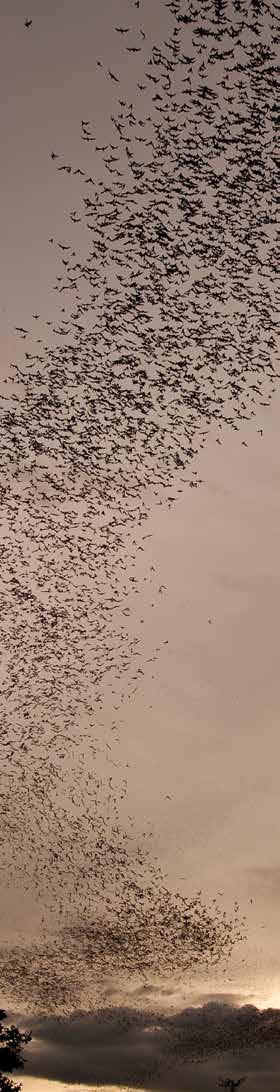
Now that you know how incredible bats are, you might want to see one — or one million — in action. Fortunately, there are plenty of spots in Texas where you can do just that as the Lone Star State is home to thousands of Mexican free-tailed bats. This medium-sized bat migrated to the United States from Mexico and mainly eats insects, including moths, flies, wasps, and mosquitoes. They are typically visible from early spring through early fall.
FUN FACTS
f Bats are part of the mammal order Chiroptera, which has more than 1,400 species making it the second largest and most diverse order of mammals after rodents. Bats are the only mammals that can fly — some can even go as fast as 100 miles per hour.
f Contrary to popular belief, bats are not actually blind but rely on echolocation – locating objects by emitting sound waves and interpreting the echoes reflected back to them – as their primary sense. Some bats use echolocation to hunt live prey, while others simply feed on fruit or nectar.
f Like most mammals, bats come in all shapes and sizes. The average bat’s wingspan is about 24 inches; the largest can be as large as 5 feet, while the smallest are only 6 inches and the animal can fit in the palm of your hand.
f Bats are highly social animals that usually reside in groups. They are best known for their unique habit of sleeping upside down. This position is advantageous as it facilitates a quicker and easier departure into flight, since bats are unable to gain momentum through running. Hanging upside down allows them to simply drop and swiftly take off.
f Several species of bats have been known to live more than 30 years, and the oldest on record is a venerable 41-year-old Siberian bat.
f Bats are gentle, nocturnal animals, feeding at night when it's cooler. Their diets differ depending on the species—some eat insects, fruit, or nectar, while others feed on the blood of wild animals such as cattle or horses. But don't worry — they rarely bite humans unless threatened.
MAY 2024 MY JARRELL MONTHLY 38
WORTH THE DRIVE

1: CONGRESS ST. BRIDGE
Following renovations in 1980, the Congress Street bridge became a perfect roost for Mexican free-tailed bats, who help the city by consuming and estimated 30,000 pounds of insects each night. Starting in late March, you can watch these prodigious bats emerge from beneath the bridge, soaring over Lady Bird Lake between 7:30 and 9:45 pm. Prepare to enjoy watching the emergence of a nearly 1.5 million-strong cloud for about 45 minutes. Join the gathered crowds on the nearby hill or enhance your experience with a riverboat tour or kayak to watch this nightly phenomenon.

Located on South Congress Ave, just a 45-minute drive from Jarrell.
2: BRACKEN CAVE PRESERVE
If you want even more, the Bracken Cave on the northern outskirts of San Antonio is home to an estimated 20 million bats. In 1991, the Bat Conservation International (BCI) purchased the Bracken Cave, and it is not only the world’s largest bat colony, it is also the largest concentration of mammals of any kind. The Bracken bats consume an estimated 100 tons of earworm moths every night. Because Bracken Cave Preserve is located on private property managed by the Bat Conservation Interaction, it is closed to the public and reservations must be made to see the bats. However, once the bats start flying, they can be seen easily from nearby streets. 7515 Bracken Cave Rd, San Antonio, 2-hour drive from Jarrell.
3: MCNEIL BRIDGE
Every night between March and November, hundreds of bats embark on a nightly bug hunt from under the Interstate 35 overpass at McNeil Road in Round Rock. Free, first-comefirst-served parking is available in the nearby Napa Auto Store parking lot. 601 North Interstate 35 Frontage Road, Round Rock, 25-minute drive from Jarrell

4: WATONGA BLVD BRIDGE
Approximately 100,000 bats live under the Watonga Boulevard Bridge in downtown Houston. They typically fly out from under the bridge and along the White Oak Bayou. Many viewers enjoy watching the sight from park benches or the grass along the bayou. 4721 Watonga Blvd, Houston. 3-hour drive from Jarrell.
5: OLD TUNNEL STATE PARK
More than 3 million bats reside in the tunnel in Fredericksburg. The park is open for bat viewing from May through October, but tickets are required for park access after 5pm. 10619 Old San Antonio Rd, Fredericksburg, 2:15-hour drive from Jarrell.
MAY 2024 MY JARRELL MONTHLY 39

Lemon Lavender Cake
Lavender is an enchanting but often overlooked ingredient in the kitchen. When used well, it provides a delicate floral note with hints of mint or rosemary, creating a unique taste. Be careful to use it sparingly to avoid overwhelming a dish with soapy flavor.
CAKE
• 3 cups all-purpose flour
• 2 1/2 tsp baking powder
• 1/2 tsp baking soda
• 1/2 tsp kosher salt
• 2 cups sugar
• 2 tbsp lemon zest (from about 4 lemons)
Preheat oven to 350°F.
Grease two (8-inch) round cake pans with butter. Line pans with parchment paper, then grease and dust parchment with flour.
In medium bowl, whisk flour, baking powder, baking soda, and salt.
In food processor bowl, add sugar, lemon zest, and dried lavender. Process sugar mixture 1-3 minutes until lavender is finely ground and zest and lavender are distributed throughout the sugar.
Beat butter, vegetable oil, and lemon-lavender sugar on medium-high until very pale and fluffy, about 4 minutes. Mixture volume should double or nearly triple.
Add eggs, one at a time, beating until fully combined after each addition. Scrape bottom and sides of bowl with a rubber spatula. Stir in vanilla extract.
Add half the flour mixture into butter mixture and mix on low until incorporated. Pour in milk and lemon juice and continue mixing on low until combined.
Add remaining flour mixture and mix on low just until incorporated. Use rubber spatula to scrape bowl between additions to ensure even mixing.
• 1 tbsp dried culinary lavender
• 1/2 c unsalted butter, room temp
• 1/2 cup vegetable oil
• 4 large eggs, room temperature
• 1 tsp vanilla extract
• 1/3 cup fresh lemon juice
• 1 cup whole milk
Divide batter evenly between two prepared cake pans. Bake 30 to 35 minutes, or until a toothpick inserted in the center of the cake comes out clean. Edges of cake will have begun to pull away from the sides of the pan, and center should spring back when gently poked with a finger.
Let cakes cool in pans for 15 minutes, then turn out onto a wire rack to cool completely before frosting.
TO MAKE FROSTING
In a stand mixer fitted with the paddle attachment, or in a large mixing bowl with a hand mixer, beat butter on medium speed until smooth and satiny, about 2 minutes.
Add powdered sugar, half of the milk, and lemon extract and continue beating on medium speed until light and fluffy, about 2 minutes. If too thick, add more milk, 1 tablespoon at a time, until it reaches the desired consistency.
Place one of the cake layers rightside-up on a large plate or a 10inch cardboard cake round. Use an offset spatula or a butter knife to spread a thick layer of frosting, 1/2 to 1 cup, evenly over the layer.
Top with the remaining cake layer, placed upside down, so the top of the cake is smooth and flat. Check
FROSTING
• 1 1/2 cup (3 sticks) unsalted butter, room temperature
• 6 cups powdered sugar
• 1/3 cup whole milk
• 1 tbsp lemon extract
that the cake layers are centered and that the top of the cake is level. Gently adjust accordingly.
Spread a generous amount of frosting over the top and sides of the cake using an offset spatula or the straight edge of a large butter knife. Use spatula to spread the frosting into a thin, even layer. You should be able to see the cake through the frosting.
This thin layer of frosting is called the crumb coat and helps catch any loose crumbs on the outside of the cake so the final layer of frosting has no crumbs caught in it.
Place the cake in the refrigerator for 20 minutes for the frosting to set. Cover the bowl of frosting.
Remove cake from the refrigerator. Stir the frosting a few times to smooth it out again.
Spread a generous amount of frosting over the top and sides of the cake as before, this time leaving a thicker layer of frosting. Use the offset spatula, a large spoon, or the back of a butter knife to smooth the sides.
MAY 2024 MY JARRELL MONTHLY 40
FOOD
Mimosa Bar Spring Vegetable Frittata FOOD

SELECT YOUR BUBBLES
Offer a range of sparkling wines to cater to different tastes. Include traditional options like Champagne or Prosecco, and consider adding a domestic sparkling wine for variety.
Non-Alcoholic Options: For those who prefer non-alcoholic beverages, include sparkling water or non-alcoholic sparkling wine.
CHOOSE YOUR JUICES
Orange juice is a must, but don’t stop there. Offer peach, pomegranate, grapefruit, and cranberry juices for colorful and tasty options.
Freshness Counts: Opt for high-quality, freshly squeezed juices, if possible, for a noticeable difference in flavor.
PREPARE THE GARNISHES
Slice fresh fruits like strawberries, raspberries, blueberries, and orange slices. Not only do they add flavor, but they also make the drinks visually appealing.
Herbal Touches: Offer fresh herbs such as mint or basil for an aromatic twist.
SET UP THE BAR
Use clear pitchers or carafes for the juices and bowls for the fruits and herbs to create an elegant display.
Glassware Matters: Have an ample supply of flutes or glasses available, ensuring everyone can partake.
Label Everything: Use labels or small signs to identify the different juices, wines, and garnishes. This helps guests create their perfect mix without guessing.
KEEP THINGS CHILL
Ensure all beverages are well-chilled before serving. Use ice buckets for the wines and keep juices in the refrigerator until just before serving.
Ice on the Side: Have a bucket of ice on the side for guests who prefer their mimosa extra cold.
ENJOY RESPONSIBLY
Ensure there are plenty of non-alcoholic options available for those who prefer them or are driving.
Hydration Station: Set up a water station with still and sparkling water to keep guests hydrated throughout the celebration.

Frittatas are versatile, easy to make, and can feed a crowd, making them perfect for a brunch celebration. This recipe pairs nicely with a side salad, fresh fruit, or crusty bread.
• 8 large eggs
• 1/2 cup whole milk or cream
• 1 cup grated cheese (cheddar, Gruyère, or feta)
• Salt and pepper, to taste
• 2 tbsp olive oil
• 1 small onion, thinly sliced
• 2 cloves garlic, minced
• 1 cup asparagus, trimmed and cut into 1-inch pieces
• 1 cup cherry tomatoes, halved
• 1 cup baby spinach or arugula
• 1/4 cup fresh herbs (such as parsley, chives, or basil), chopped
Preheat oven to 375°F.
In a large bowl, whisk together the eggs, milk, half the cheese, salt, and pepper. Set aside.
Heat olive oil in a 10-inch ovenproof skillet over medium heat. Add onion and garlic, and sauté until soft. Add asparagus and cook until just tender. Stir in cherry tomatoes and spinach (or arugula) until greens are wilted.
Pour egg mixture over sautéed vegetables in the skillet. Stir gently to make sure ingredients are evenly distributed. Sprinkle remaining cheese on top.
Transfer the skillet to the oven and bake 20-25 minutes, or until the frittata is set and golden on top.
Remove from oven, let cool for a few minutes, then sprinkle with fresh herbs. Slice and serve warm or at room temperature.

MAY 2024 MY JARRELL MONTHLY 41

Just walked back into the house brushing ants and dog hair off my clothes because I didn't plan well enough for lying on my back to take photos of the eclipse. I did think enough ahead of time to find a flat space to hold my camera straight up without getting a crick in my neck but didn't have enough sense to bring a blanket with me or leave the dogs in the house. Still, it was kind of cool to see the pups suddenly settle down when the sky got dark. Apparently they didn't think it was the Rapture either so they just momentarily chilled out.
It got me thinking though about how nice it is, however infrequently, when we humans experience something we all enjoy or at least seem to agree on. Sure, many went about their day today without giving the cosmos a second thought. Others live far away from the path of totality and have been blissfully free from daily updates about retinal blindness and emergency planning for the past month. Then there is my mom, who lives on the east coast and happened to call me on another topic. When I told her what I was up to today she responded, "There's an eclipse? I thought that was last night."
Before you ask — no, my mom is not AOC, she's just old, has a new boyfriend, and doesn't think or talk about anything else these days. But that's a whole other Leigh column you don't want to read.
The Things That Unite Us
Back to lighter thoughts, I can only remember a few times in recent history that the news cycle was ablaze with an ultra compelling story that no one was conflicted about or debating in my doom scroll. The sad death of Betty White for instance. Everyone loved her, four living generations of television viewers appreciated her in prime time shows that were popular in their own decade, and she rescued animals for most of her life. The only thing people complained about that week was that she was three weeks away from her 100th birthday. Good job, Humans.
I think we can all agree that watching Kaitlin Clark, likely the only female basketball player most of us can name, was a joy. Not just because she is a GOAT, but because she is classy in so many ways. Everyone is celebrating her these days and to paraphrase USC Coach Dawn Staley, she has carried the weight for and elevated her sport for some time. Everyone loves her otherworldly athleticism.
But the universality of the eclipse was something even beyond Betty and Kaitlin. It provided free admission for an estimated 50 million people who all had a front row seat just by looking up. Thousands of photos, which began popping up on the Internet early in the morning showed scenes from all over that looked like modern day Norman Rockwell portraits. There were people wearing special outfits, with painted faces and whimsical eye protection, from all walks of life, standing shoulder to shoulder with eager and smiling faces uplifted.
From the sides of roads to midfield in professional sports arenas, everyone had a good seat when the moon did the ultimate photobomb.
Still, what I really loved was the idea that normally we are all so obsessed about daily duties and things that, in the grand scheme, are just things to get us to the next day. We panic over elections, fixate on fightin' words on social media, and devote so much of our attention to keeping our homes, cars, gardens, and pantries just so. Yes, those last things are necessary but an overfocus on them means we regularly fail to look up and ponder how insignificant our little rock hanging in space really is.
It was a great moment of connection for those 50 million families, CEOs, first responders, bikers, politicians, and everyone else...all stopping in their tracks to look at each other, even for a moment, then marvel at the amazing preciseness of an indecipherably broad universe. Perhaps some of those people were thinking about Psalm 8:4, asking, “What is man that you are mindful of him?”
Imagine how different things could be could be if we all carried that humility vibe with us every day. Life isn’t just about what we think we’re achieving with our mundane tasks. It’s about something — or Someone — way beyond our little bubble. He kicked off this whole show with a word, and here we are, just passengers for a time on a little rock.
It was a great four minutes wasn't it?
MAY 2024 MY JARRELL MONTHLY 42
I have tried many chiropractors and have had the good fortune to meet many good practitioners. Dr. Taryn stands out from most because of her intuitive and healing approach. Her adjustments are gentle and I always feel great afterwards. She has helped me develop better posture and body awareness with the exercises and stretching techniques she has shown me. She is the only one I use now and I highly recommend her!
Offering Care for Infants through Seniors:
• Full Spine Chiropractic Care
• Ergonomic Evaluations
• Specializing in Headaches, Migraines & Allergies
• Nutrition Protocols
• Therapeutic / Stretching Protocols

• Appointments Available Mon - Fri
• Convenient Online Scheduling
• Same Day Appointments
• Evening Appointments Available (Please call for appointments after 6 pm)



www.IntuitiveChiropracticWellness.com

MAY 2024 MY JARRELL MONTHLY 43 WE CAN’T WAIT TO GET OUR HANDS ON YOU, JARRELL! Now welcoming new patients! Package
for a FREE Consultation!
Discounts Available! Call today
200 CR 306 | Unit 3300 Jarrell, TX 76537| 512-598-1223
Intuitive Chiropractic
Taryn Buensalido,
& Wellness Center
DC
-S.P.
Yelp Review
5-Star
New Home for Little Learners
The grand opening of Kids Zone Christian Academy was a vibrant event filled with excitement from students, their families, and the community. Whitney Hicks, current owner and daughter of the founder, kicked off the event with a heartfelt thank you to everyone who has worked tirelessly and selflessly to turn the dream she and her mom shared into a reality.
The Jarrell Chamber of Commerce proceeded to cut the ribbon and the doors of the school were officially opened to the community. Everyone was given the opportunity to meet the teachers, tour the classrooms, and participate in fun activities while enjoying tasty treats like snow cones, cupcakes, and popcorn. The bounce house was a hit until the dunk tank was revealed and then hitting

 by
by

the target to dunk a teacher held the attention of all the kids for the remainder of the night. In addition to a silent auction was a raffle in which one lucky student would win the chance to be principal for a day. Walker was shocked when he heard his name called and announced to the crowd that when it was his day to be principal, he would be canceling school for everyone!


PARTING SHOTS
• photos courtesy Kids Zone
Camy Reynolds
Weekend Mass Schedule:

Please Visit: holytrinityofcornhill.org for livestream information


Saturday Vigil Mass - 5 PM Sunday Mass at 8:30 AM & 10:30 AM 512-863-3020 mainoffice@holytrinityofcornhill.org 8626 FM 1105, Jarrell



What is junior kindergarten?
Our junior kindergarten is an accelerated pre-k class that was developed for children who “just miss” the birthday cut-off (age 5 by Sept 1st) for kindergarten. During your child’s year in junior kindergarten they will build foundational phonics and math skills while developing a love for learning through student-led inquiry and hands-on activities!
*Phonics and STEAM based curriculums
*Academic instruction alighted with the TEKS

About our School
*Focus on Biblical character trait building
*Weekly Bible study and monthly school-wide Chapel
*16:1 student-teacher ratio
*Fine Arts program
*Field trips
*Community engagement

Does my child meet the criteria for junior kindergarten?
To qualify for junior kindergarten students must mee the following criteria:
*Will turn 5 between Sept. 2nd and Dec. 31st of the current school year.
*Has completed a pre-k program prior to enrollment OR been assessed by administration and granted admission
At the heart of Kids’ Zone Christian Academy is Christ! We strive to give our students a strong academic foundation while preparing them for life as a Christian leader with a heart for service!
Beginning in junior kindergarten, our students are exposed to a wide vartiety of educational experiences taught through a combination of traditional instruction, inquiry based learning, and hands-on activities.
Charter development and social-emotional education are also integral to our program. We integrate Conscious Discipline throughout our school and implement a Biblical character trait curriculum to encourage and promote the developtment of positive, Christ-like character.
Class sizes are kept at a 16:1 student to teacher ratio. Small classroom ratios are imperative to providing each of our learners with differetiated instruction through small groups and one-on-olne learning.
Along with academic studies, student life is enriched with Physical Education (P.E.), Music, Art, and Chapel.
Kids’ Zone Christian Academy currently serves students junior kindergarten through fourth grade.
To apply for the 2023-2024 School year, please contact us: admin@kidszonechristianacademy.com | 512•595•1080 www.kidszonechristianacademy.com

Join us for Junior Kindergarten $750/mo OR $170/wk You Are Invited Holy Trinity Catholic Church of Corn Hill To Worship With Us!
ECRWSS
POSTAL PATRON

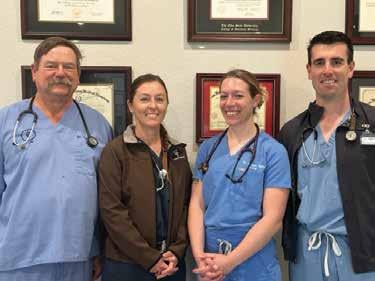
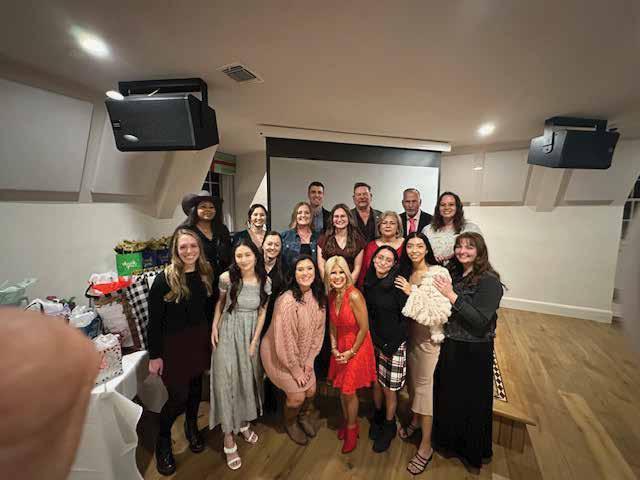


We are a full-service veterinary practice that provides comprehensive medical, surgical, and dental care for the furry members of your family. We believe in providing thorough and caring clinical services to every animal we meet, and we are proud to enhance this care with upgraded, state-of-the-art equipment and diagnostics at our new, larger facility. We hope to serve you and your pets and help keep them healthy for years to come. Our team looks forward to welcoming you and your fur babies soon!
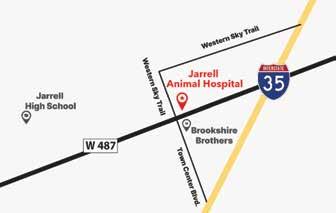


Box 213, Jarrell. TX, 76537
P.O.
