












Florida Fire Service is the monthly publication of the Florida Fire Chiefs’ Association, provided to Florida Fire Chiefs’ Association (FFCA) members, by the Florida Fire Chiefs’ Association.
Florida Fire Chiefs’ Association
221 Pinewood Drive Tallahassee, FL 32303
Phone:(850) 900-5180
Email: info@ffca.org • www.ffca.org
FFCA Staff
Ngoc Huynh- Executive Director
Rachel Pardo - Marketing & Member Services Coordinator
FFCA Board of Directors
Trip Barrs - President
Ryan Crawford - 1st Vice President
Mike Tucker - 2nd Vice President
Michael Choate - Immediate Past President
Carlos Aviles - Secretary/Treasurer
Jeff Wagner - Northwest Region Director
Brady Rigdon - Northeast Region Director
Todd Allen - East Central Region Director
Chantal Botting - Southeast Region Director
Ian Kemp - West Central Region Director
Gregor y DeWitt - Southwest Region Director
Ngoc Huynh- Executive Director
Terr y Parris - Foundation Chair
Jeffrey Money - Senior Member
Editorial Submissions magazine@ffca.org (850) 900-5180
Advertising
Scott Leisen, Editor in Chief scott@ffca.org (386) 717-0055
Subscription rate for members is $36, which is included in member dues. Archived electronic monthly editions of Florida Fire Service magazine are available at www.ffca.org. Log in as a member and click on the Publications tab.
Florida Fire Service
October 2025, Volume 33, Number 10 USPS # 016-759
Periodical postage paid in Daytona Beach, Florida, and additional post offices.
POSTMASTER: Send address changes to Florida Fire Service, 221 Pinewood Drive Tallahassee, FL 32303. Statements of fact and opinion are the responsibility of the authors alone and do not imply an opinion on the part of the officers or the members of FFCA. Copyright 2025 by the Florida Fire Chiefs’ Association. All rights reserved. Materials may not be reproduced without written permission.



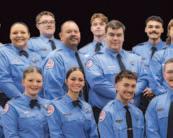
Lake County Fire Rescue Six-Month In-House Paramedic Class
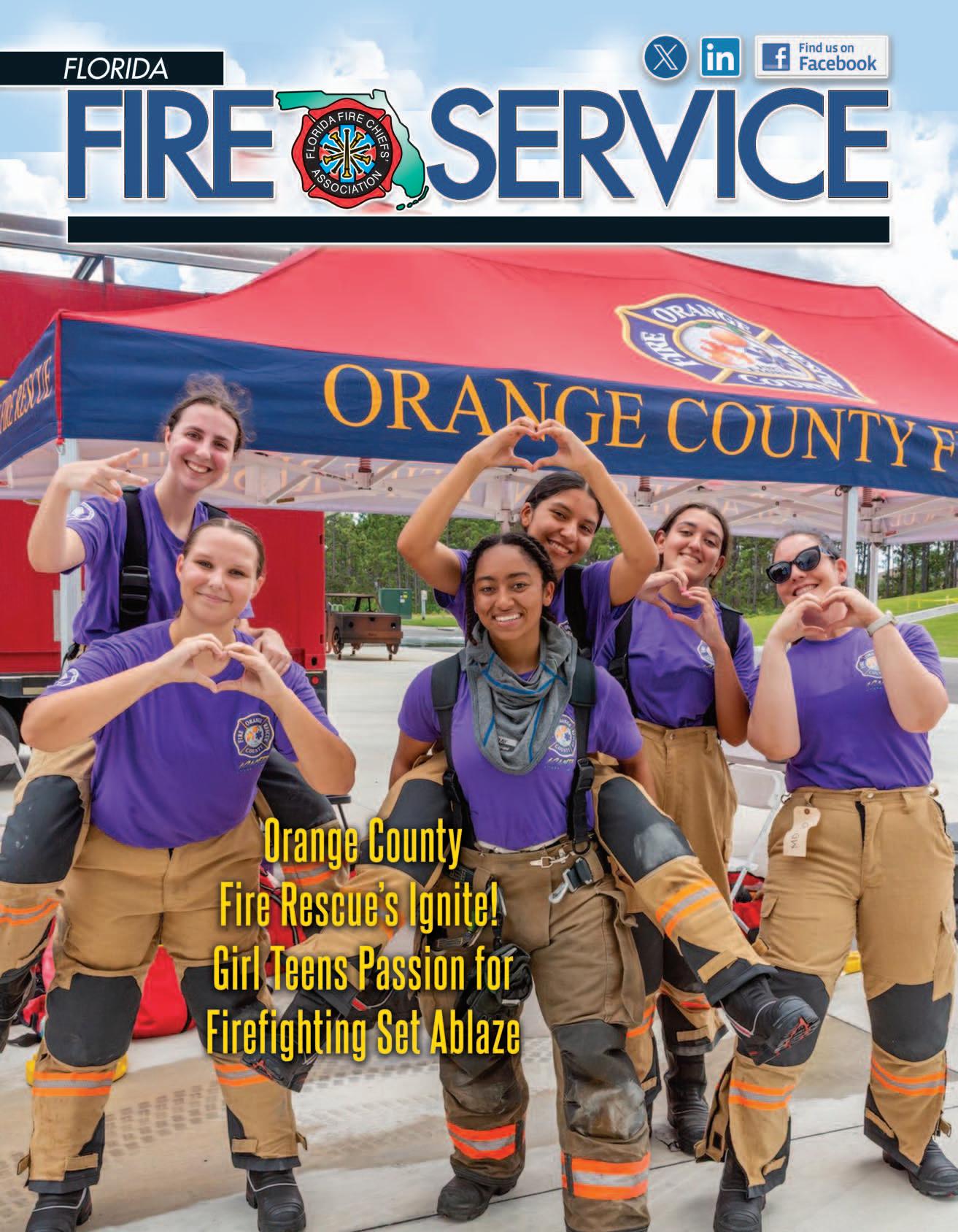
.10 Orange County Fire Rescue’s Ignite! Girl Teens Passion for Firefighting Set Ablaze .
.16 Three New Firefighters Join Oviedo’s Ranks
Mini Horses Bring Comfort and Smiles to Pasco’s Firefighters . . .22 Palm Beach Gardens Commemorates 9/11 at Station 63
Service Dogs Train with Seminole County
SWFD Celebrates Miramar Beach Fire Station Reconstruction
Palm Coast Promotions and Life Saving
Palm Beach Gardens Hosts First Health and Wellness Symposium 31 Charlotte County Responds to MultiVictim Residential Fire


















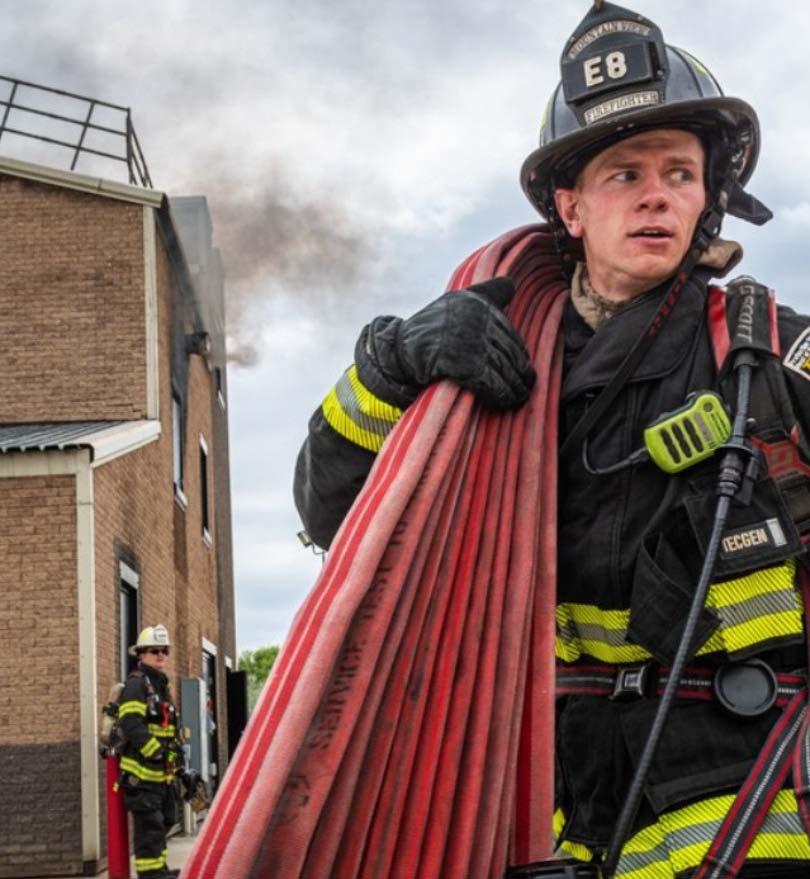



As we move into the final quarter of 2025, the Florida Fire Chiefs’ Association continues to advance our mission of leadership, collaboration, and advocacy for Florida’s fire service. The past 30 days have been among the most productive of the year, reflecting the strength of our membership and the growing influence of our association statewide.
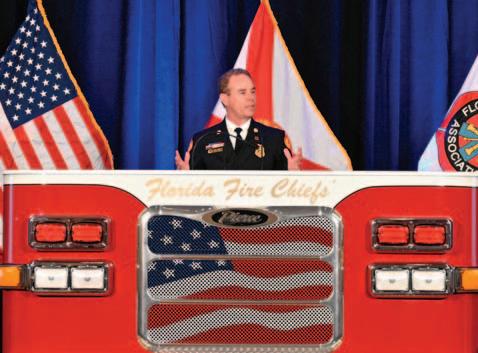
Our annual Safety and Health Conference, held this month at the Margaritaville Resort Orlando, was a tremendous success. This year’s theme, “Resilient by Design” brought together over 300 fire officers, safety officers, and health professionals from across Florida and the nation to share best practices in firefighter wellness, behavioral health, and cancer prevention.
We were honored to welcome Dr. Lori Moore-Merrell, U.S. Fire Administrator, whose keynote address highlighted the national priorities in firefighter health, safety, and datadriven prevention. Dr. Moore-Merrell emphasized the importance of integrating occupational health data, cancer surveillance, and cardiac event tracking into local safety programs to drive evidence-based decisions in
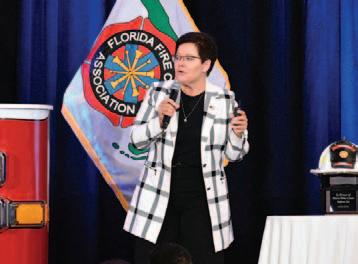
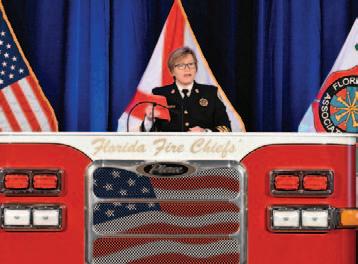
the fire service.
Closing out the conference, Chief Rick Lasky, author of Pride & Ownership: A Firefighter’s Love of the Job, delivered a power ful message on leadership, accountability, and the enduring values of the fire service. His address reminded attendees that we need to prioritize caring for one another so that we can accomplish the fire service’s mission to care for and help others.
Another major focus was the ongoing success of Florida’s Firefighter Cancer Decontamination Grant Program. Presenters shared real-world solutions for contamination control, gear maintenance, and wellnessprogram implementation. Over the past few weeks, I have had the privilege to support the Division of State Fire Marshal and CFO Blaise Ingoglia’s presentations of these grant awards. These grants are an important step in ensuring Florida’s first responders can serve their communities while minimizing occupational cancer risks
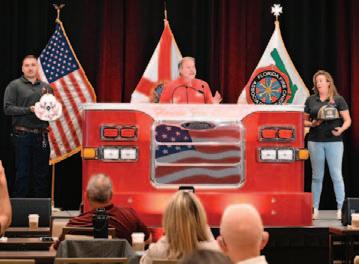
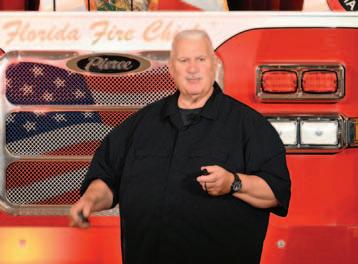

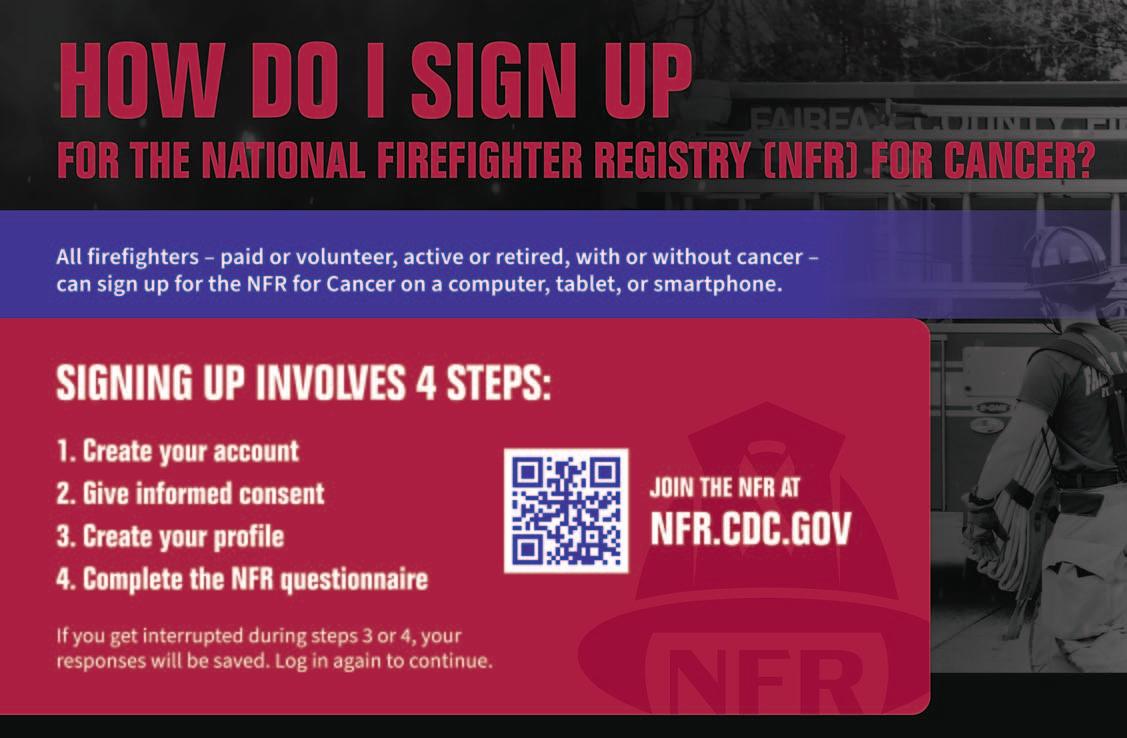
Also spotlighted at the conference was the National Firefighter Registry (NFR) for Cancer, developed by the National Institute for Occupational Safety and Health (NIOSH). The NFR is the largest national effort ever undertaken to better understand and prevent
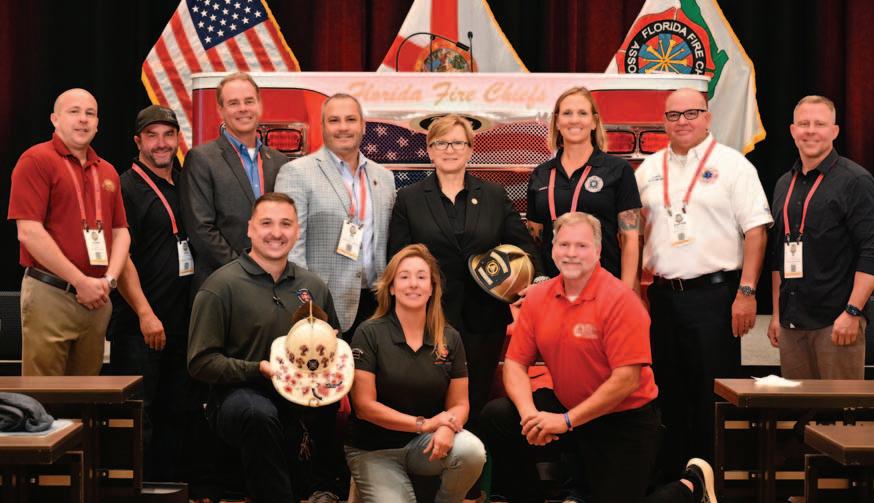
cancer in the fire service—and its success depends on participation from firefighters across the country.
All firefighters—career or volunteer, active or retired, with or without cancer—are encouraged to register. The process takes less than an hour and can be completed from any device by visiting NFR.cdc.gov Every registration helps researchers link occupational exposures to cancer outcomes, shaping

stronger prevention strategies and safer practices for future generations of firefighters.
As we approach the 2026 legislative session, the FFCA continues to represent the fire service’s interests at every level of state government. Our legislative committee has been actively collaborating with lawmakers, the Florida Association of Counties, the Florida League of Cities, and the Statewide 911 Board to refine language in proposed Public Safety
Answering Point (PSAP) legislation.
Our goal is to ensure the bill fully supports the operational needs of the fire service— specifically addressing call transfer standards, response time accountability, and funding for interoperable communications systems. FFCA’s advocacy aims to strengthen the 911 infrastructure so that emergency calls are dispatched efficiently, accurately, and without delay to the appropriate agency.
In addition, we continue to monitor proposed ad valorem property tax reforms that could impact local fire department budgets. We are emphasizing to legislators the importance of predictable, stable funding to sustain staffing, training, and emergency readiness across Florida.
As we prepare for the 2026 Legislative Symposium and Florida Fire and EMS Conference, I encourage every member to stay engaged, lend your voice to our advocacy efforts, and take part in vital initiatives like the NFR.
Our collective commitment to leadership, safety, and service defines who we are and ensures a stronger, more resilient Florida fire service for the future. Together, we continue to serve with purpose—protecting those who protect others.
By Rick Spence
Recently, our son told us that the company he works for has asked him to attend some of their leadership conferences in the coming year. He knew that I studied leadership and have attended many events concerning leadership and had several questions for me. I told him that I had many books dealing with leadership, with some of them authored by men who stood strong in their Christian faith, John Maxwell, John MacArthur, and Charles Stanley. In their books each of those authors went into great detail about the aspects of being a servant leader.
I explained to my son that servant leadership is about caring for the welfare of the people you supervise, prioritizing their needs before yours, giving them the tools to successfully do their job and allowing the entire group to succeed and share in the credit of doing a good job. In my mind, the best example of servant leadership in action is what Jesus Christ did.
Jesus led a group of 12 men that deeply believed in Him. He cared for them, fed them, built close relationships with each of them, encouraged them and taught them how to spread the Gospel to a world that was ver y hostile to Christians at that time. He did such of a good job of leading and teaching these 12 men that the Gospel is still very relevant and impactful now, over 2000 years
later. Basically, Jesus modeled the behavior He wanted His disciples to exhibit. The disciples went into the land feeding the hungry, healing the sick, teaching people about the way to live a life helping others and showing how to love and care for those around you. The disciples learned the behavior and habits of caring for people around them by watching Jesus demonstrate it and live it out.
We are all leaders in some aspect of our lives, and the same theory applies to us. Whatever it is that we want people to learn, we need to model it by living it out. If we want our people to show up to work on time neatly dressed, then we need to be at work 30 minutes earlier than our report time in a uniform that is cleaned and pressed. If we want our people to follow our instructions, then we need to follow the directions of our supervisors. If we want our people to have respect for us, then we should not show contempt for them. If we want our people to care about their job, then we need to care about them.
We need to model the behavior we want our people to show This applies to both those who work under us and those who oversee us. Whatever behavior we demonstrate, our people are going to demonstrate, as well. This works both ways, whether we exhibit positive attributes or

negative attributes. We all have seen firsthand when a leader has a negative attitude, it does not take long for his employees to develop that same attitude. We owe it to the people who work alongside us to make them better, and in return, it will make us better, a better leader and a better person. Paul described it very accurately in the Book of Philippians 2:3,4. “Do not do anything from selfish ambition or from a cheap desire to boast, but be humble toward one another, always considering others better than yourselves. And look out for one another’s interests, not just your own.”
Rick Spence retired as Assistant Chief from the Reedy Creek Fire Department after 30 years. Heis currently the Chaplain for the Florida Fire Chiefs’ Association, Central Florida Fire Chiefs’ Association,Reedy Creek Fire Department, Lake County Fire Department, Clermont Fire Department, Maitland Fire Department, and the Florida Professional Firefighters. He serves as Sergeant of Arms for the Florida Professional Firefighters and International Association of Firefighters.He was selected Florida Professional Firefighter of the Year in 2018. He has been married to his wife Alecia for over 30 years
Allows employment with multiple Florida fire service organizations to meet five year, full-time firefighter continuous service requirement Simple Enrollment - No Roster Required Direct Claims Administration
By Lake County Fire Rescue
Faced with the challenge of the limited available workforce of certified paramedics throughout Florida, Lake County Fire Rescue began discussing the concept of an accelerated program with local paramedic institutions away from the year-long academic semester-based model. Very early on in the search and discussion, it was evident that there was not much interest in changing the course schedule from the institutions offering the traditional academic semester-based paramedic program.
In response to the growing need for highly trained paramedics in the Lake County Fire Rescue organization, First Response Training Group (FRTG) located in Orlando, Florida stepped up and advocated that whatever was needed in an accelerated program could be accomplished. That positive attitude began a series of brainstorming of both organizations that innovated and collaborated to design and deliver an accelerated six-month paramedic program in-house at the Lake County Fire Rescue Training facility.The goal was aggressive, but working together, both organizations brought the accelerated paramedic program concept to reality that has truly exceeded expectations.
This first-of-its-kind pilot paramedic program offered Lake County Fire Rescue (LCFR) the opportunity to have a cohort of
full-time EMTs complete an accelerated Paramedic education curriculum in just six months, all while on-duty. The program launched on February 10, 2025, with 16 EMT’s with approximately 1-year with LCFR that were pulled from field operations and reassigned to a 40-hour work week schedule to begin an intensive Monday–Friday (9-5) paramedic program.
This partnership and inaugural six-month paramedic class began with a clear mission to produce confident, competent, and compassionate paramedics ready to respond when seconds matter. On the very first day, the owner of FRTG stepped to the front of the class and explained to a very nervous class of EMT’s to simply trust the process and stay focused and you will succeed.
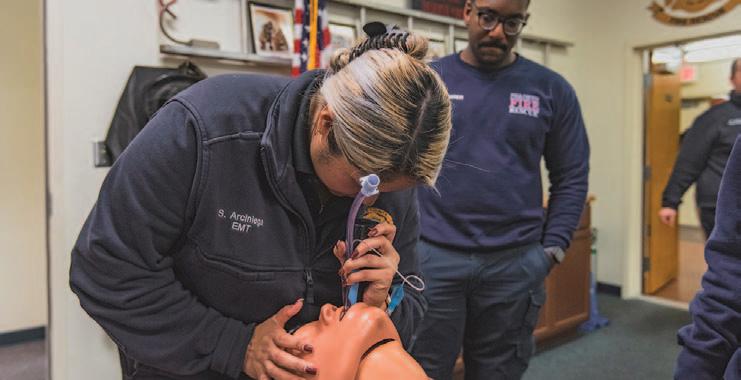
Over the course of the program, students underwent intensive classroom instruction, hands-on skills labs, and real-world clinical and field training ensuring they met the high standards set by both organizations, while meeting all requirements of the State of Florida and National Registr y exam criteria.
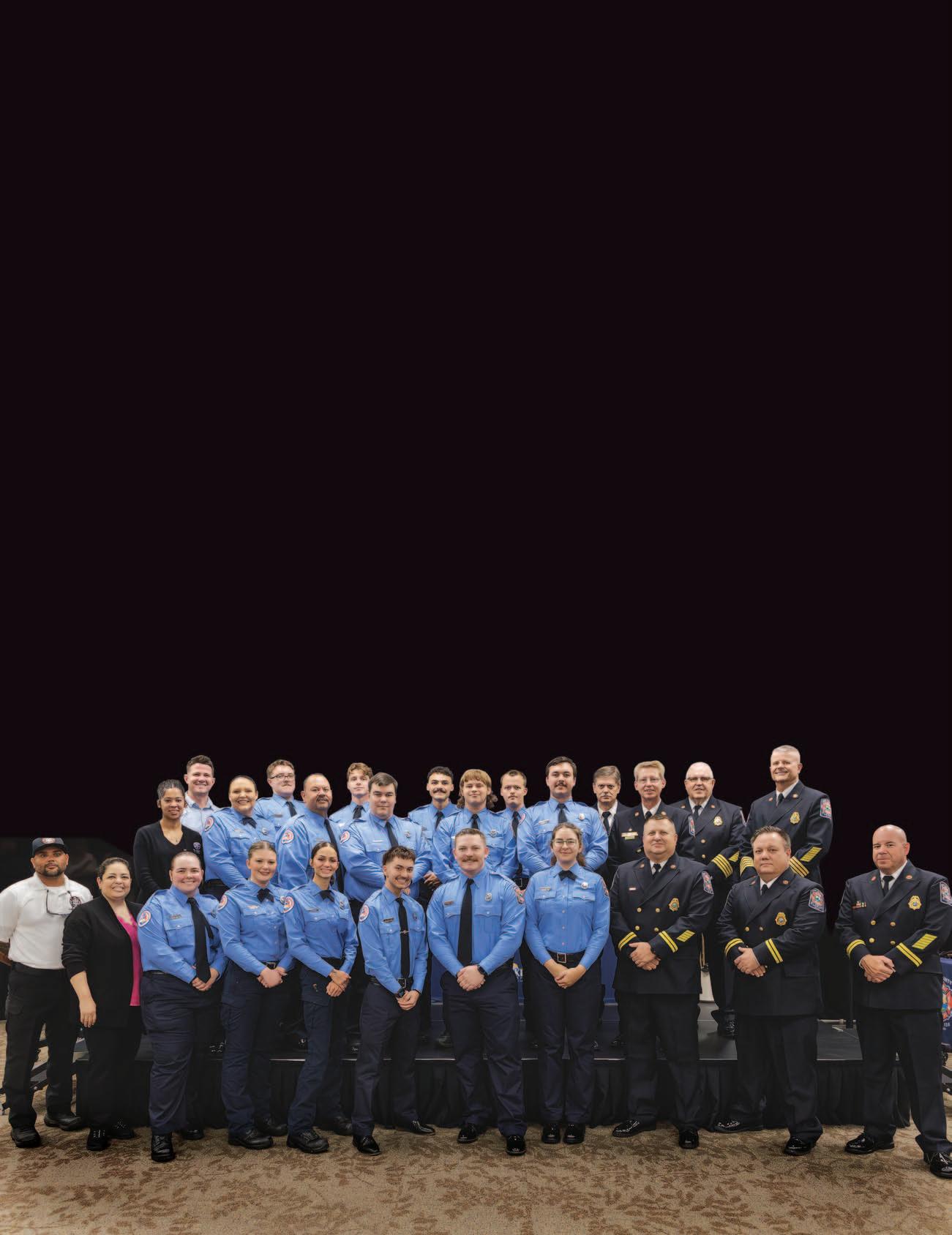
On Friday, August 8, 2025, that vision-tomission reached its milestone as all 16 paramedic students graduated from the program, ready to take the next step in their careers and serve the residents of Lake County
with advanced life-saving capabilities.This program is a perfect example of what can be accomplished when agencies work together for the greater good. These graduates represent the future of emergency medical services in Lake County and quite possibly, the future of Paramedic training in the State of Florida.
Since the LCFR Paramedic class graduation in August 2025, fourteen of the sixteen new paramedic graduates passed the National Registry Paramedic Exam on their very first attempt. Of the remaining two students, one passed on their second attempt, and one remaining graduate remains focused on the next exam attempt. The LCFR in-house paramedic program was so successful in both the reduced six-month timeline and the students experience, we are looking to repeat the program again before the end of 2025, after the new fiscal year begins in October.
Looking back at what has been accomplished, Lake County Public Safety Director, David Kilbury and First Response Training Group owner, Jason Marquez both agree that this is an absolute testament of what can be accomplished when like-minded professionals innovate on the possibilities of improvement, rather than simply accept traditional semester based academic paramedic course deliver y.







By Dave Downey, MPA, Fire Chief (retired)
The fire ser vice is unique from virtually any other profession in that leaders must balance their knowledge, skill, and ability between managing everyday emergencies to complex incidents with leading the men, women, and organizations they are responsible for. We have a young fire service, and it is getting younger. No longer are the days that new officers and chief officers could rely on the senior members to help guide them. Most new officers are challenged to learn on the fly with very little guidance. It becomes even more challenging when officers are placed in non-traditional positions, away from operations, managing budgets, personnel, emergency management, and labor relations. In these roles, leaders are asked to oversee the complex, everyday responsibilities that occur between the alarms. How can an officer best prepare for this challenging role?
The Emergency Services Leadership Institute (ESLI) is an excellent program for current and aspiring leaders in the Florida fire service. Since its inception in 2000, the Florida Fire Chiefs’ Association, in

partnership with the Florida Fire Chiefs’ Foundation, has been delivering ESLI. The six-module program was created to address critical aspects of leadership development often overlooked in traditional training. The program was designed initially by Bill Bingham, retired Fire Chief of Boynton Beach Fire Rescue and a long-time member of the Florida fire service. This program was designed by fire service leaders for fire service leaders. The target audience are the mid-level leaders and chief officers; however, experience has shown, any fire service officer benefits from the program. Each of the six ESLI core modules are delivered in a two-day format, designed to be instructor led with group activities, role-playing, and pre-course assignments designed to foster engagement and in-depth discussion among participants. The modules include:
Human Resources and Labor RelationsThis module focuses on a variety of human resource issues and is designed to address concerns from employee recruitment and retention, equal employment laws, the collective bargaining process, and discipline.
Human resource and labor management relationships are discussed, including the grievance procedures and the collective bargaining process with attention given to the concept of Interest-Based Bargaining.
Personal Qualities, Leadership, and the Organization - This module concentrates on the relationship between the personal and professional characteristics of a leader and the impact on the organization, highlighting the transition from those who follow versus those who lead. The relationship between team development and the need to foster and share a common vision and the importance of accurate and regular communication in a changing demographic workforce is emphasized, as is the identification of various employee-driven and results-oriented reward and incentive programs.
Government Relations and Public PolicyThis module is designed to enhance the participant’s understanding and knowledge of public relations and Florida Government 101. Discussion about the law and rulemaking process helps enhance the understanding of the governmental process. The role and expectation of fire and emergency services in the community are examined, as are other relationships that exist internal and external to the organization. The focus is on the need to develop functional and respectful relationships with community members, special interests, elected officials, regional, state and federal organizations, as well as with those in the fire and emergency ser vice community.
Marketing Fire and Emergency Services -
This module is intended to enhance the participant’s awareness and comprehension of the constant relationship that exists between the fire and emergency services and the importance of marketing the “products’ it offers. The image you portray and the methodology you use to disseminate information can be critical to the long-term health of the organization. The importance of public perception will be explored sufficiently to raise awareness among midlevel and chief officers.
Finance and Budgeting – This module focuses on the budgeting and funding process and will focus on current trends in the fire and emergency ser vices with creative methodologies to fund necessary organizational programs, and to serve as a basis for decision-making. This includes direct and indirect costs such as maintenance, operating costs, and charges for use of capital, including depreciation
factors, as well as examining the benefits of capital and vehicle replacement fund allocation.
Emergency Management - This module targets Emergency Management best practices and the tools necessary for participants to build an effective and efficient Emergency Management program as an integrated division of the modern, comprehensive fire department as it relates to the governing agency, the private sector, and the public. Some emphasis will be placed on legislative directives at the Federal and State levels that affect local jurisdictions and can create compliance issues, some tied to funding. This module also focuses on the major tenets of Emergency Management regarding standards and ethics, roles and responsibilities of key stakeholders and participants, the Disaster Life Cycle, and an integrated approach beyond the daily operations of the fire rescue department.
An additional elective module, Community Risk Reduction (CRR), was developed to assist fire service leaders with an understanding and the tools to implement this emerging ser vice.
Each module offers 16 hours of continuing education credit applicable to Florida Fire
Service Instructor certifications. Completing all six modules grants equivalency for the Chief Officer course (BFST 9516) needed for Fire Officer III certification, as well as the Personnel Management for Fire and Emergency Services course (BFST 4045) required for Fire Officer IV certification. The Community Risk Reduction elective also supports requirements for Fire Officer IV.
The ESLI program is modular by design and participants can start with any module they want. Each module is a stand-alone course, and participants can attend each module at their own pace when time permits. Currently the program is being delivered in the Central Florida area at Valencia College’s School of Public Safety. The delivery is expected to be expanded to Tallahassee and South Florida to minimize travel and increase availability for the participants. Participation in the ESLI program requires membership in the FFCA. The FFCA is not exclusive to only fire chiefs but is an organization that is inclusive of all members of the fire ser vice. Membership opens the door to a myriad of opportunities for all ranks not only to participate in the Institute but to participate in guiding our Florida fire service.
A significant benefit of the ESLI
experience is the opportunity to connect with peers and establish relationships from across Florida, representing diverse organizational roles and sizes. These relationships often span entire careers and foster a robust professional network. Modules are led by instructors chosen for their expertise and experience. These dedicated professionals volunteer their time to instruct and are committed to developing future leaders by sharing their insights and knowledge. Many of these instructors are past graduates of the ESLI program.
If you want more information or are interested in registering, click here. Any questions can be directed to ffca.esli@gmail.com.
Chief Downey is a 38-year veteran of the fire service retiring in 2019 as the Fire Chief with Miami-Dade Fire Rescue. Chief Downey currently serves as the Program Coordinator for the ESLI and has previously served as the Deputy Coordinator of the SERP, the Secretary/Treasurer, and the Southeast Regional Director with the Florida Fire Chief’s Association.

By Rodney C. Kwiatkowski, MS, CFPS, CFO, FM, MIFireE, Fire Marshal, West Manatee Fire Rescue District
For decades, the term “Fire Prevention Bureau” has defined how fire departments approached safety through prescriptive codes, inspections, and compliance. It’s a noble and necessary mission, but today’s risks extend far beyond fire. Communities are facing complex hazards, from drowning deaths at swimming pools and public beaches to swarms of bees threatening neighborhoods, that require a broader, more proactive philosophy. That philosophy isknown as Community Risk Reduction (CRR). CRR is not just about preventing fires; it’s about preventing tragedies.
Traditional fire prevention bureaus often concentrate on inspections, public education, and plan review. Those are vital in keeping buildings safe and occupants protected. But CRR asks a deeper question:
“What’s actually hurting or killing people in our community, and what can we do about it before it happens?”
That’s where the change in mindset begins. CRR blends fire prevention with data-driven community engagement and interagency partnerships to addressall hazards, not just fire. The following are two examples of CRR in action.
Consider West Manatee Fire Rescue’s (WMFR) work aroundTransient Public Lodging Establishments (TPLEs), short-term rentals, and vacation rental homes so common throughout Florida communities. Many have swimming pools, and some tragically have become sites of preventable drownings.
Instead of limiting our focus solely to items in Uniform Fire Safety Standards 69A-43, such as smoke alarms and fire extinguishers at TPLEs, CRR encourages us to collaborate with stakeholders (owners, property managers, and code enforcement) to ensure swimming pools are secured and inspected to meet minimum compliance with the Florida Swimming Pool Safety Act. You see,
traditional fire prevention would say there’s nothing in the Florida Fire Prevention Code that addresses swimming pool safety, so therefore move on to the next inspection. However, CRR demands we collaborate with stakeholders to reduce the risk of drowning.
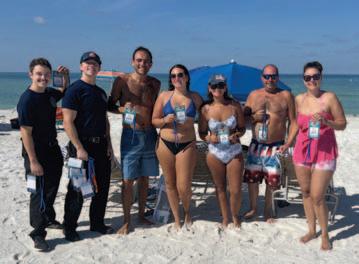
That same philosophy extends to our public beaches, where WMFR fire personnel now routinely join forces with lifeguards, law enforcement, and community organizations to promotewater safety awareness. Walking beaches and knocking on doors to hand out “Water Watcher” badges isn’t traditional fire prevention, but it’s quintessential community risk reduction.
That’s the heart of CRR: identifying local risks, building community partnerships, and taking action beforetheincidentoccurs

When 60,000 bees were recently discovered in a residential neighborhood, many agencies might have said, “That’s not our problem.” After all, bee removal isn’t a typical fire service function. Some departments would shy away, fearing they’ll set a precedent that leads to more calls about bees or wildlife. These are reasonable considerations, after all.
But when viewed through the lens of CRR, it’s not about bees, it’s aboutrisk. A massive swarm of bees in a populated area poses real danger to residents, pets, and responders. Working alongside a local apiarist, Manatee County Hazmat, North River Fire Rescue ladder company, and Manatee County EMS, WMFR ensured the bees were safely relocated and thus protected the community by reducing risks. At the same time, our first responders received invaluable training.
This collaboration didn’t just remove bees; it removed risk and built partnerships that will pay dividends during future incidents.
The 5 E’s: The CRR Framework in Motion
Community Risk Reduction operates through five pillars known as the5 Es:
1. Education – Informing and empowering the public. Whether it’s fire drills, pool safety,
or bee awareness, education builds safer behavior.
2. Engineering – Applying built-in solutions, like pool alarms, self-latching gates, and proper smoke detection.
3. Enforcement – Using codes and ordinances not as punishment, but as tools for accountability and life safety.
4. Emergency Response – Ensuring responders are trained and equipped for both common and uncommon risks. Likewise, empowering business owners by training them, for example, on when and how to use fire extinguishers.
5. Economic Incentive – Encourage compliance and safety through financial motivation that makes risk reduction good business. Safety and profit are not mutually exclusive.
Together, these principles form the engine that drives meaningful, measurable change in community safety.
Community Risk Reduction isn’t about abandoning traditional fire prevention; it’s about broadening its application. A Fire Marshal who enforces the prescriptive code can, and should, also lead a CRR effort that looks beyond the code books and into the community itself.
By embracing CRR, we move from “that’s not our job” to “how can we help eliminate this risk?” It’s a fundamental shift from relying solely on the code books to rallying the community.
As fire ser vice leaders, we’re not just inspectors; we’re educators, engineers, advocates, and collaborators. We don’t exist merely to enforce codes; we exist tosave lives, in every way possible, and when we align our prevention bureaus with CRR philosophy, we don’t just prevent fires, we prevent tragedies. Whether it’s relocating bees, safeguarding swimmers, or securing short-term rentals, every act of community risk reduction echoes the same mission: protect life before the emergency call ever comes in.
Rodney C. Kwiatkowski, MS, CFPS, CFO, FM, MIFireE, serves as the Fire Marshal for the West Manatee Fire Rescue District. He is a nationally recognized speaker on short-term rental safety and community risk reduction, an NFPA technical panel member, and holds advanced credentials through the Center for Public Safety Excellence and the Institution of Fire Engineers.
By Nicole Griffin, Assistant Public Information Officer, Orange County Fire Rescue
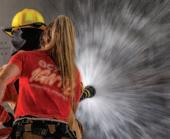
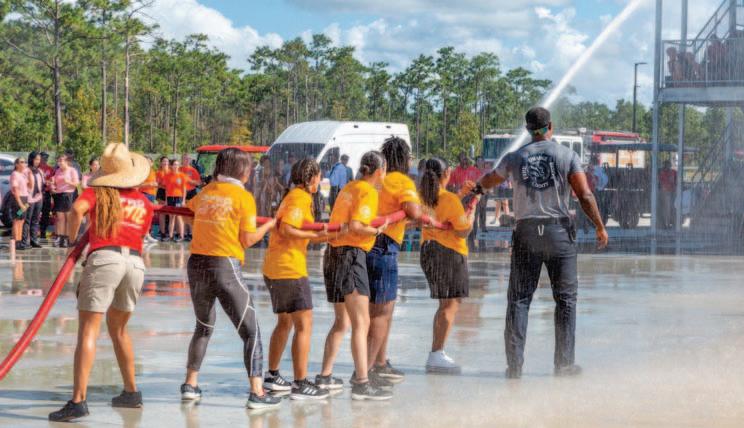
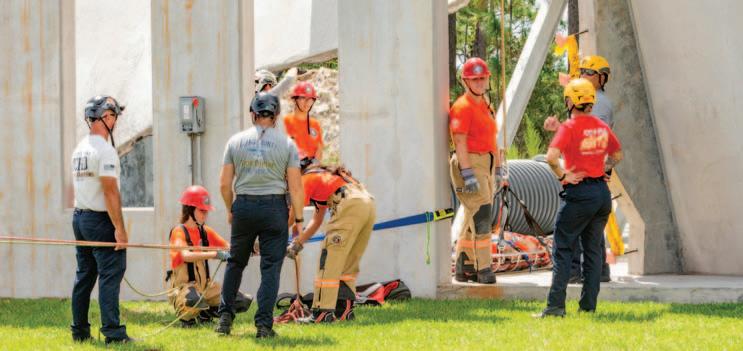
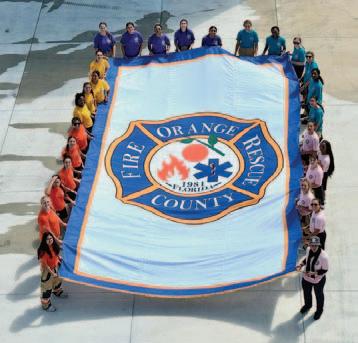
Adesire to join the fire service is now burning brightly among many Central Florida teen girls. From Sept. 12 to 14, Orange County Fire Rescue hosted its first-ever Ignite! Girls Fire Camp at their brand-new state-of-theart training facility. 25 girls from across Orange County spent the weekend not only learning
what it takes to be a firefighter, but also gaining hands-on experience. Among the participants were students from the fire academy magnet program from East River High School, as well as from every district in the county. 17-year-old Mireilly Besosa Cruz, who dreams of someday being a firefighter, jumped at the opportunity
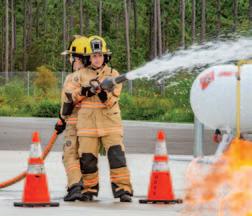

to take part in the camp.
“I think this program is a really, really, really amazing thing because there’s not a lot of girls out there that, including myself, that have that environment of people that they know that are females, that are firefighters, or females in those positions, and I think it is just really great that they have this out here so we can get into the environment,” said Besosa Cruz.
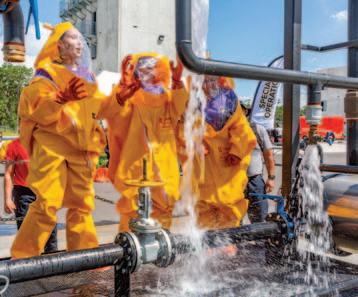
During the event, participants donned their own gear to tackle various real-life scenarios, including victim search and rescue, aerial rescue with a ladder truck, hazmat leak mitigation, bucket brigades, and fire
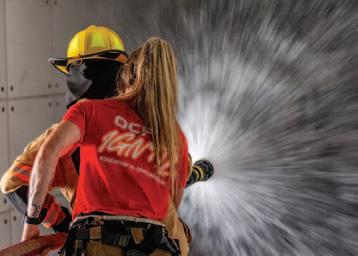
extinguisher operation. Each group of girls was led through the activities by OCFRD firefighters, like Melissa Timot.
“They have had a lot of really good questions,” said Timot. “From day-to-day life, to what it is like on a call, to what do we do with medical calls? How do you wake up in the middle of the night, to how do you deal with dangerous situations? The questions have been vast, but they’ve been good, in-depth questions where we have conversations about it rather than just questions and answers.”
To show the teens all the opportunities available to them, they also got to spend time with community mentors with diverse backgrounds in the workforce. One of those mentors was the current President of Fire-Dex, Lauren Burke Devere.
“I know that it was inspiring to some of the young girls to have a female mentor to kind of look up to and just hear their story of how they climbed the ranks, not just in the fire service, but outside as well, said Burke Devere. “So, I was happy to be a resource for them.”
The weekend culminated with a “Battle of the Squads” where the girls went head-to-head in a competition against their instructors using the skills they learned.
Afterwards, the girls and their families gathered for a graduation ceremony where they heard inspirational words from Fire Chief Anthony Rios. He is proud of the department’s efforts to inspire the next generation to consider careers in firefighting.
“This exposure not only helps ensure the future workforce of our department but also
fosters a sense of community, responsibility, and belonging among the participants,” said Rios. “I am extremely proud of the work done by our fire department members who participated in this event and their community outreach efforts. By investing in our youth, we are building a stronger and more resilient future for both the fire service and our communities as a whole.”
As for Besosa Cruz, the high school senior ended the weekend more inspired than ever and hopes to be in a future recruit class.
“I am even more ecstatic about it,” said Besosa Cruz. “I am so excited to be able to pursue this career.”
By Lisa McDonald, Communications Manager, City of Oviedo
On Friday, September 26, 2025, the City of Oviedo officially welcomed three new firefighters into its fire service family. In a ceremony at City Hall, Fire Chief Michael Woodward administered the Firefighters Oath to Firefighters Joshua Lamb, Andrew Harris, and Ethan Loor, followed by the traditional pinning of badges in front of family, colleagues, and city leaders.
For the three new recruits, the ceremony marked the culmination of weeks of training and preparation. Before being assigned to their shifts, they worked alongside Battalion Chiefs, Engineers, Paramedics, and Lieutenants, and senior Firefighters tackling everything from hose line operations and hydrant work to search and rescue, live fire training, and Tower Truck/Aerial operations.
“All three of these young men have shown their commitment to the fire service,” Chief Woodward said. “Their enthusiasm and passion for our community will contribute to the great service we provide to the citizens of Oviedo.”
Chief Woodward reminded them of the deeper meaning behind the badge: “The selfless service we provide is a commitment to our residents, families and visitors, every day Always remain humble and never stop learning.”
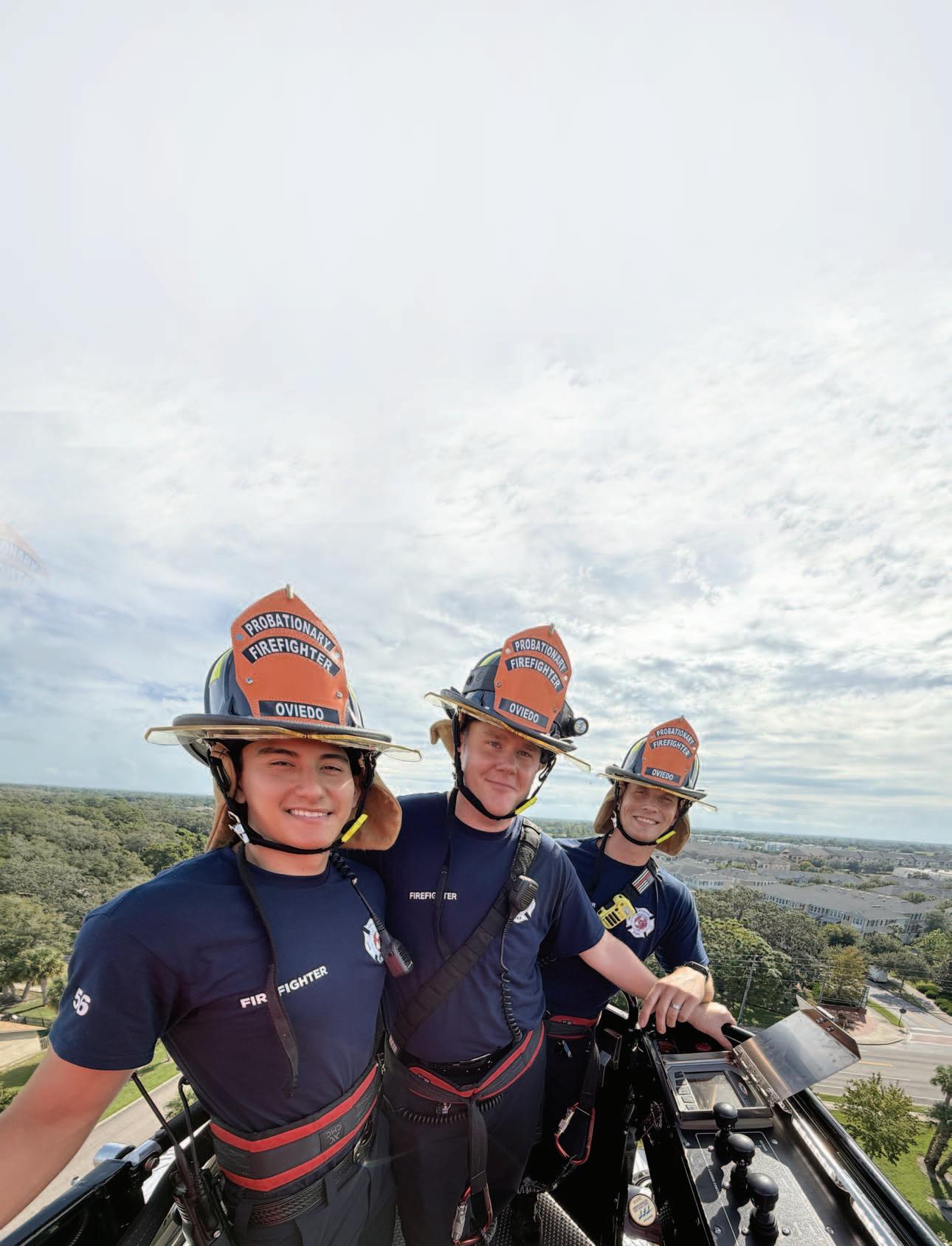
Joshua Lamb brings a unique path to the fire service. Originally from Omaha, Nebraska, Lamb studied at the University of NebraskaLincoln and spent nearly a decade as a healthcare administrator in Los Angeles, South Carolina, and Tampa. Seeking a more hands-on way to serve others, he enrolled at PascoHernando State College’s Fire School and later joined the St. Petersburg Fire Department. He and his fiancée relocated to the Orlando area, where he now begins his new chapter with Oviedo Fire.
Ethan Loor, a Florida native from Longwood, found his calling through family influence—his uncle is also a firefighter. After graduating from Lake Brantley High School, he attended Seminole State College’s Fire Academy and EMT program. His roots in Central Florida make serving the Oviedo community a particularly meaningful step in his career.
Andrew Harris, who grew up in Osteen, took a different route to public service. Following his graduation from Pine Ridge High School, he enlisted in the U.S. Navy and was stationed at NAS North Island in Coronado, California, from 2018 to 2023.
The camaraderie
and purpose he experienced in the Navy resonated with what he saw in the fire service. After completing EMT/Paramedic training at City College and the Fire Academy at Seminole State, Harris is eager to continue a life of service—this time in Oviedo. “For me, becoming a firefighter isn’t just about the job,” he said. “It’s about being there for people when they need it most, while being part of a team that feels like a family.”
The swearing-in ceremony was more than just a formality—it was a celebration. Families of the new firefighters proudly pinned badges onto their loved ones, surrounded by City Councilmembers, City Manager Bryan Cobb, Fire Command Staff, the Oviedo Police Department and colleagues from city departments.
The moment symbolized not only the start of three promising careers but also the continuation of a long tradition of service, bravery, and dedication to the community. As the city grows, so too does the strength of its fire service, now with three new faces ready to answer the call.

By: Dr Eric Smith EFO, Assistant Professor of Public Administration, Barry University
It has been said that "the American fire service is 250 years of tradition, unimpeded by progress". The implication is that although we do things very differently operationally and strategically, we have an out of date philosophical or cultural mindset. The difficulty lies in separating the traditions that are an important part the fire service history from the negative leftovers of the past. The culture of an organization does not happen in a vacuum, it happens over a period of time. What kind of organizational culture does your department have? Is it a culture based on tradition, with little emphasis on using modern organizational models to plan for the future? Is it a forward thinking culture that uses both the past and the present to plan for the future? Or is it a culture that simply reacts to what it currently has on its plate with no recollection of the past, or no eye toward the future.
Oftentimes the typical organization's culture model is one that looks to the past to develop answers needed for the present. In reality, a more useful approach would be to look at the past and analyze the present to develop answers that will be needed for the future. As noted previously, whether good or bad, it takes years, if not decades, for an organization to cement its culture. And what is organizational culture anyway?
Organizational culture takes in everything from the core mission and core values of the organization, to how the members of the organization view themselves in relationship to the core mission and core values. Typically, the mission of fire departments has been to protect its citizen's lives and property from not
only fire but any hazard that may loom imminent. This core mission has led to key core values like duty, commitment, service and honor. This core mission and the core values have been in place since Benjamin Franklin established the first volunteer fire department in Colonial America.
Based on the core values and mission of the modern fire service, how do we keep the organization culture relevant, while at the same time, not forgetting the traditions that are an important part of any organization's history? How do we interest the young men and women entering today's fire service in the positive traditions and history of the fire service; while at the same time developing an organizational culture that will meet the needs of both the organization, the organization's members and the citizens it serves?
It is important to understand that we cannot expect that all members of the organization will possess the same values and goals of those who walked before them. The notion of blind obedience to the organization is a value that is dead and gone. The good news, however, is that blind obedience to the organization was not that great of a concept in the first place. The fire service needs thinkers and people skilled in critical analysis. One striking example of the importance of critical thinking lies in the marriage of firefighting and EMS. Even now, in many areas of the country, the organizational culture stubbornly dictates a total separation between fire and EMS duties. The use of critical thinking skills showed us that there had to be an inclusion of EMS duties for the traditional fire department to survive.
Another important element of organizational culture is organizational diversity. Having a relevant organizational culture requires embracing many diverse points of view Does your organization have a culture of encouraging and cultivating nontraditional thinking throughout the ranks? Or is your organizational culture one that subscribes to the "this is the way we've always done it" model?
The culture of the organization is typically set by upper management and filters down throughout the various organizational levels. What about the organization's leaders? Are they on board with the concept of organizational evolution, or are they more apt to want to stay within their comfort zone? Many an organization is mired in a cultural "suspended animation" that doesn't allow for an introduction of fresh, new ideas to ideas to sustain or enhance the relevancy of the organization.
If you feel the culture of your organization has become stale and dated, you must first view your mission statement and core values through a prism of critical analysis. If what you see does not meet your current or future needs, it may be time to think about changing the culture of your organization.
Organizational culture change is not easy; it requires a change in organizational thinking and a willingness to step away from what has previously been the "organizational norm". Finally, keep in mind that positive changes in organizational culture also do not happen overnight. Patience, comittment, and focus are all required components of successful changing the culture of an organization.

By Pasco County Fire Rescue
In the high-stakes world of firefighting, where adrenaline surges and emotional strain are part of the daily grind, a new kind of support is trotting into fire stations—on four tiny hooves.
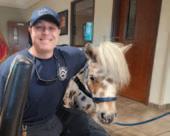
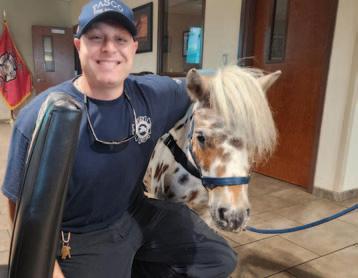
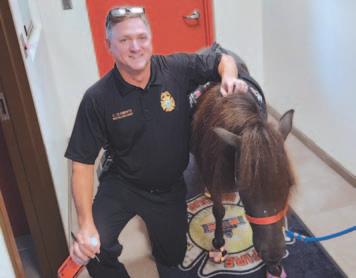
Pasco County Fire Rescue has partnered with AdventHealth and Honey’s Mini Therapy Adventures to introduce a heartwarming initiative aimed at nurturing the mental health of its first responders. The stars of the program? Rocket and Dumpling, two miniature therapy horses whose presence is proving to be as powerful as it is adorable.
These pint-sized equines recently made their rounds at several Pasco County fire stations, offering more than just cuddles—they brought a moment of peace. Firefighters gathered to
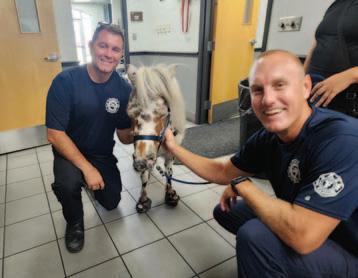
pet, hug, and snap selfies with the gentle duo, their faces lighting up with genuine joy For many, it was a rare and welcome pause from the emotional weight of their profession.
“Firefighters are trained to be tough, but that doesn’t mean they don’t carry the weight of what they see and experience,” shared a member of the department’s Peer Support Team. “These visits remind them it’s okay to pause, breathe, and take care of their mental health.”
The initiative is part of a broader movement to prioritize wellness in emergency services, where the toll of trauma and stress is often overlooked. By bringing therapy animals directly to the stations, Pasco County Fire
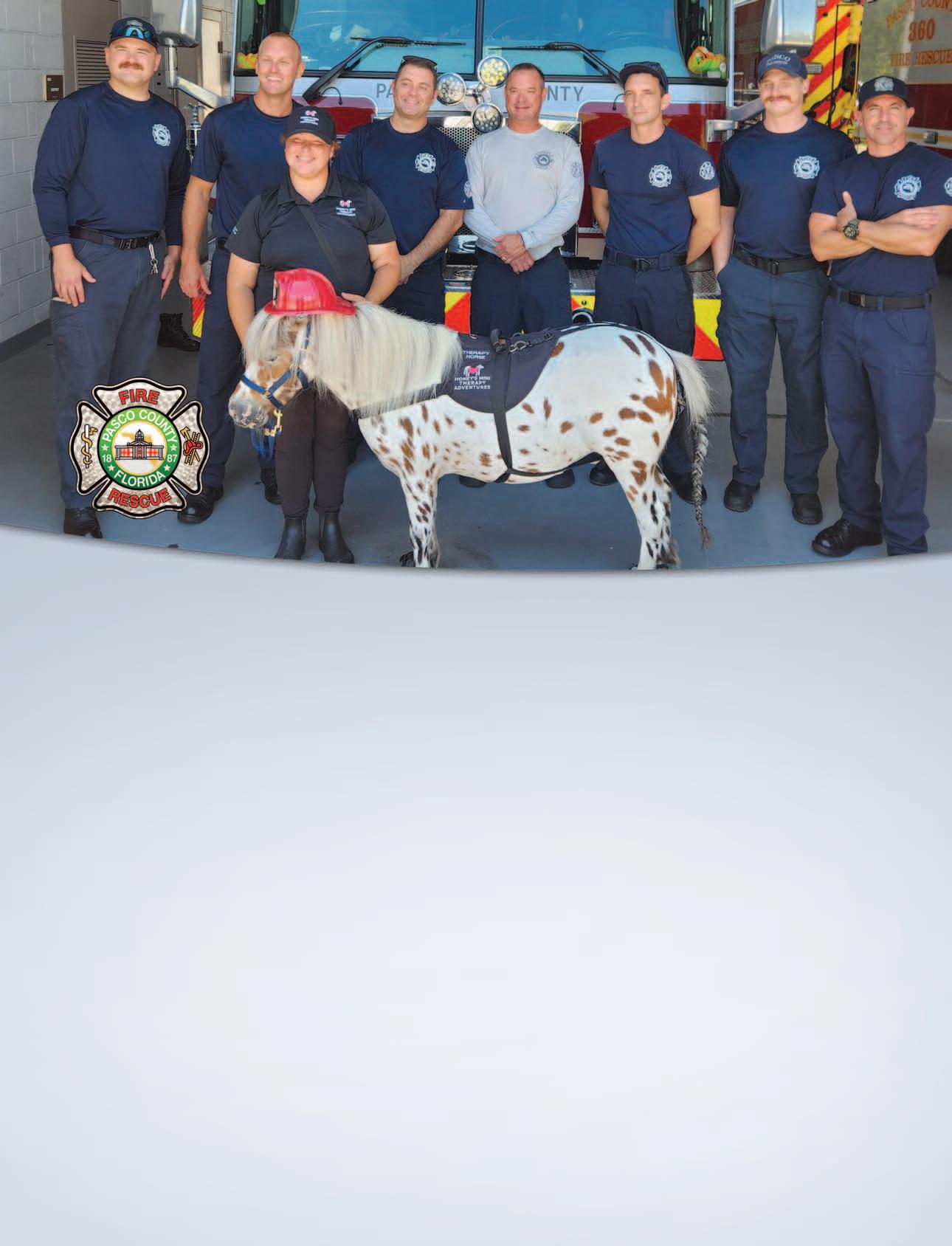
Rescue is not only making mental health support more accessible—it’s making it irresistibly endearing.
Rocket and Dumpling aren’t just therapy animals; they’re ambassadors of compassion. Their visits are helping to foster a culture where emotional well-being is valued as much as physical readiness. And in a field where bravery is a daily requirement, these tiny horses are reminding heroes that vulnerability is a strength too.
As the program continues, one thing is clear: healing doesn’t always come in grand gestures. Sometimes, it arrives in the form of a nuzzle, a whinny, and a mane you just can’t resist running your fingers through.

By Nikki McRostie, Executive Assistant, Palm Beach Gardens Fire Rescue
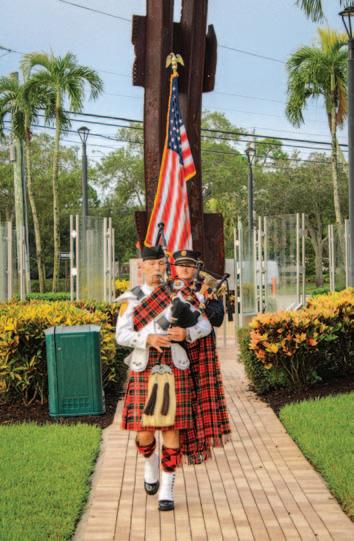
On September 11, city staff and Palm Beach Gardens Fire Rescue (PBGFR) gathered at Fire Station 63 for the annual Patriot Day Workout and 9/11 Remembrance Ceremony. The station is home to a memorial featuring a three-story window section of steel recovered from the World Trade Center. This powerful artifact was entrusted to our department after members of PBGFR traveled to New York to bring it to the station.
This steel once stood at the heart of everyday life, coffee in hand, work unfolding, the hum of the city waking up behind glass. Then, in one unimaginable moment, it carried the weight of fire, fear, and loss. It is in this weight that the words “Never Forget” take on their true meaning. To “Never Forget” is to carry the weight of that day within us, not as a burden, but as a call to rise. This monument is a living testament, a daily witness to sacrifice, duty, and devotion.
As part of the memorial, the names of all 2,977 lives lost that day are etched in
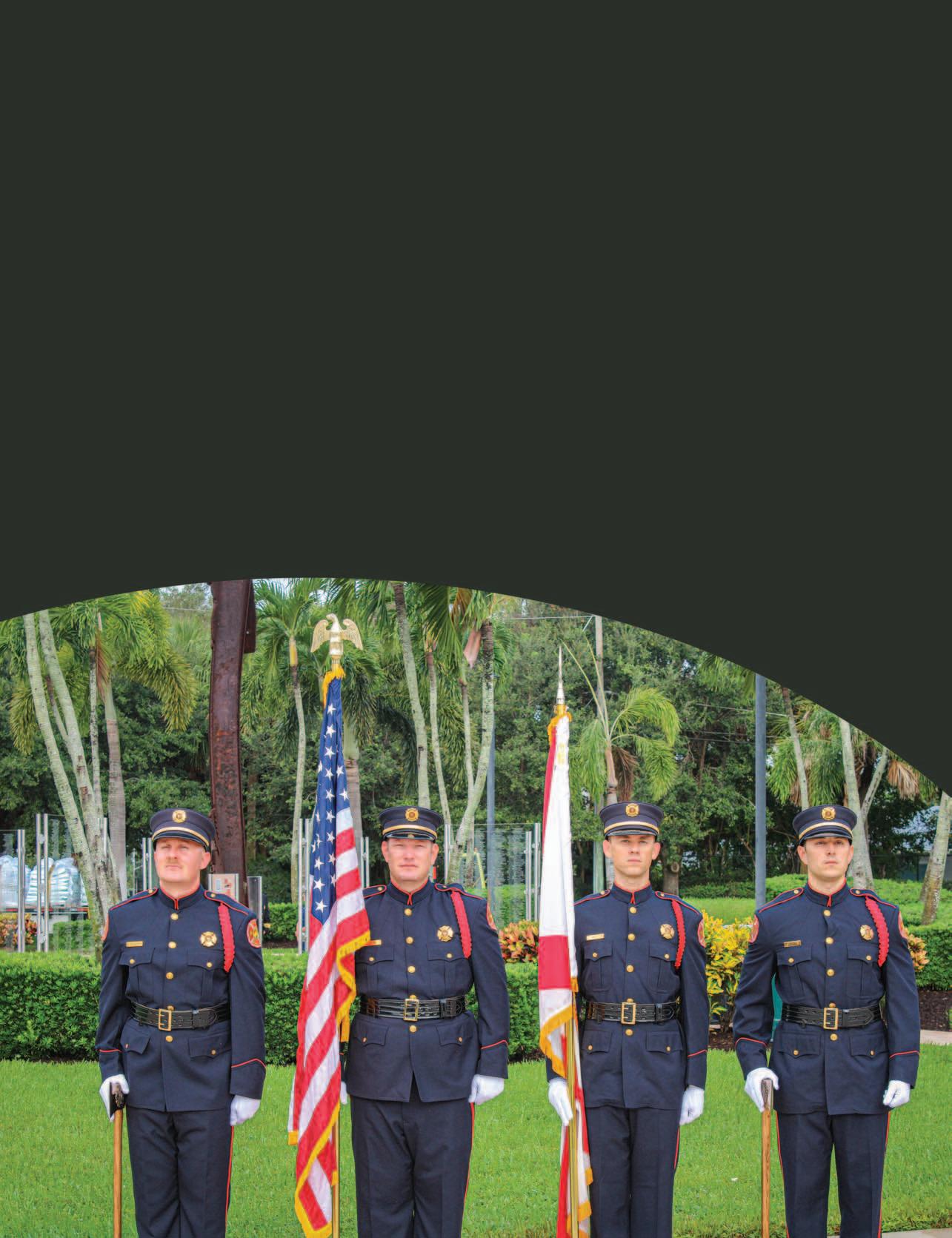
permanence. It is a lasting tribute that keeps their memory alive and honors the sacrifice that shaped us all.
Never forgetting means holding two profound truths at once: the staggering loss of 2,977 lives, including 343 firefighters who ran toward the flames, and the unshakable clarity of what came after. It means recognizing what the terrorists sought to destroy and honoring what Americans chose to build instead. It is the story of courage that refused to be broken, unity that healed wounds, and resolve that forged a stronger nation. As Chaplain Lang said, “Evil knocked down our buildings; but good made us stand taller.”
The meaning of September 11 is not only to grieve what was lost, but to live each day in a way that honors those who gave everything. Their sacrifice calls us higher and shapes why we prepare and why we serve. In this light, “Never Forget” is no longer just a phrase. It becomes a way of moving forward with courage, serving others with devotion, and staying
mindful of what truly matters.
Here in Palm Beach Gardens, remembrance is not confined to a single date on the calendar. It is alive in our choices, our actions, and the way we carry ourselves. It reminds us of each day to serve with courage, compassion, and purpose. It breathes in the way we train, the way we serve, and the way we stand ready. To “Never Forget” is to transform memory into movement, grief into purpose, and loss into a sacred mandate: to live differently because of what we remember.

By Doreen Overstreet, APR, Public Safety Information & Education Officer, Seminole County Fire Department
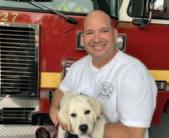
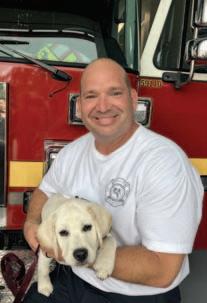
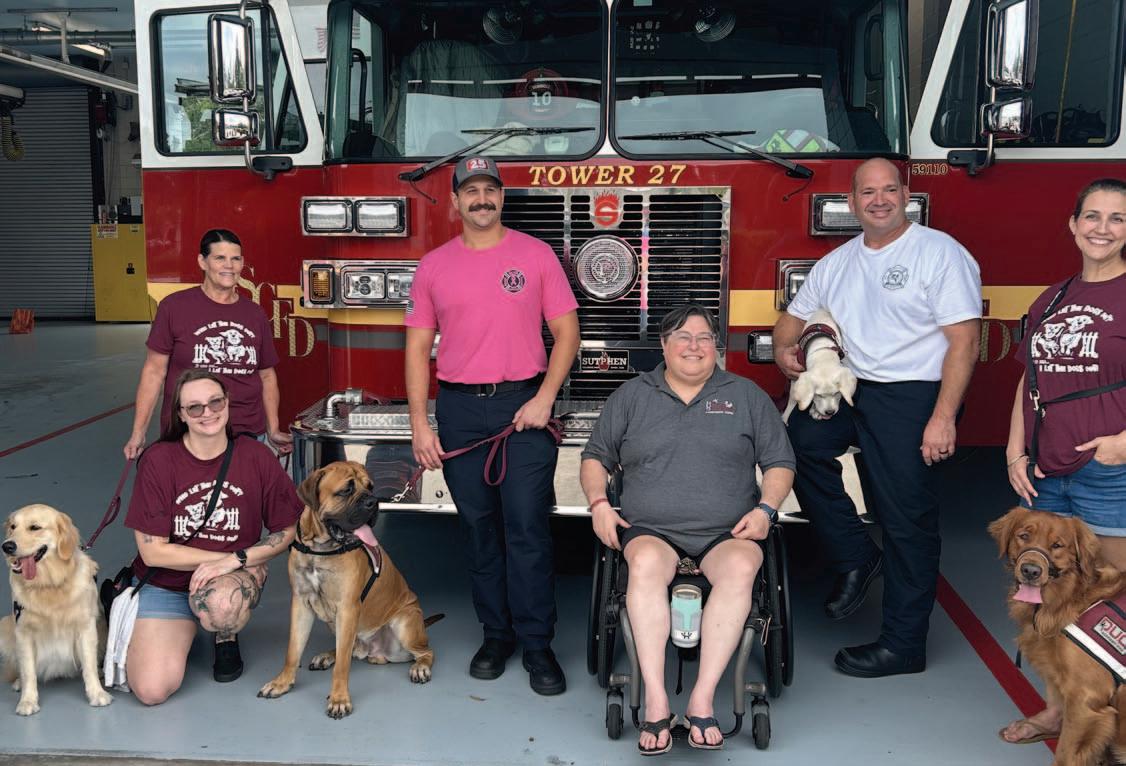
TheSeminole County Fire Department recently welcomed service dogs in training and their handlers fromDUO (Do Unto Others) Assistance Dogsto Fire Station 27 for a unique training experience.
During the visit, firefighters partnered with the organization to help desensitize the dogs
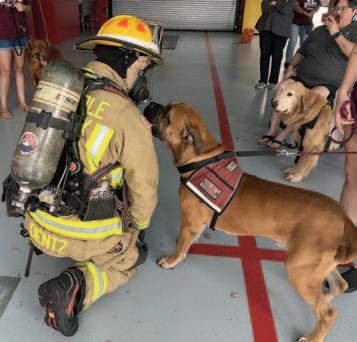
to the sights, sounds, and activities common in emergency response. Firefighter Evan Dentz demonstrated by donning full bunker gear and breathing apparatus, while the dogs and their trainers became familiar with fire engines, rescue units, sirens, and station tones.
The purpose of the training was to help prepare the service animals for real-world scenarios so they can better assist their future clients. DUO Assistance Dogs trains and places dogs with individuals who have disabilities or special needs, including people with autism and veterans coping with PTSD.
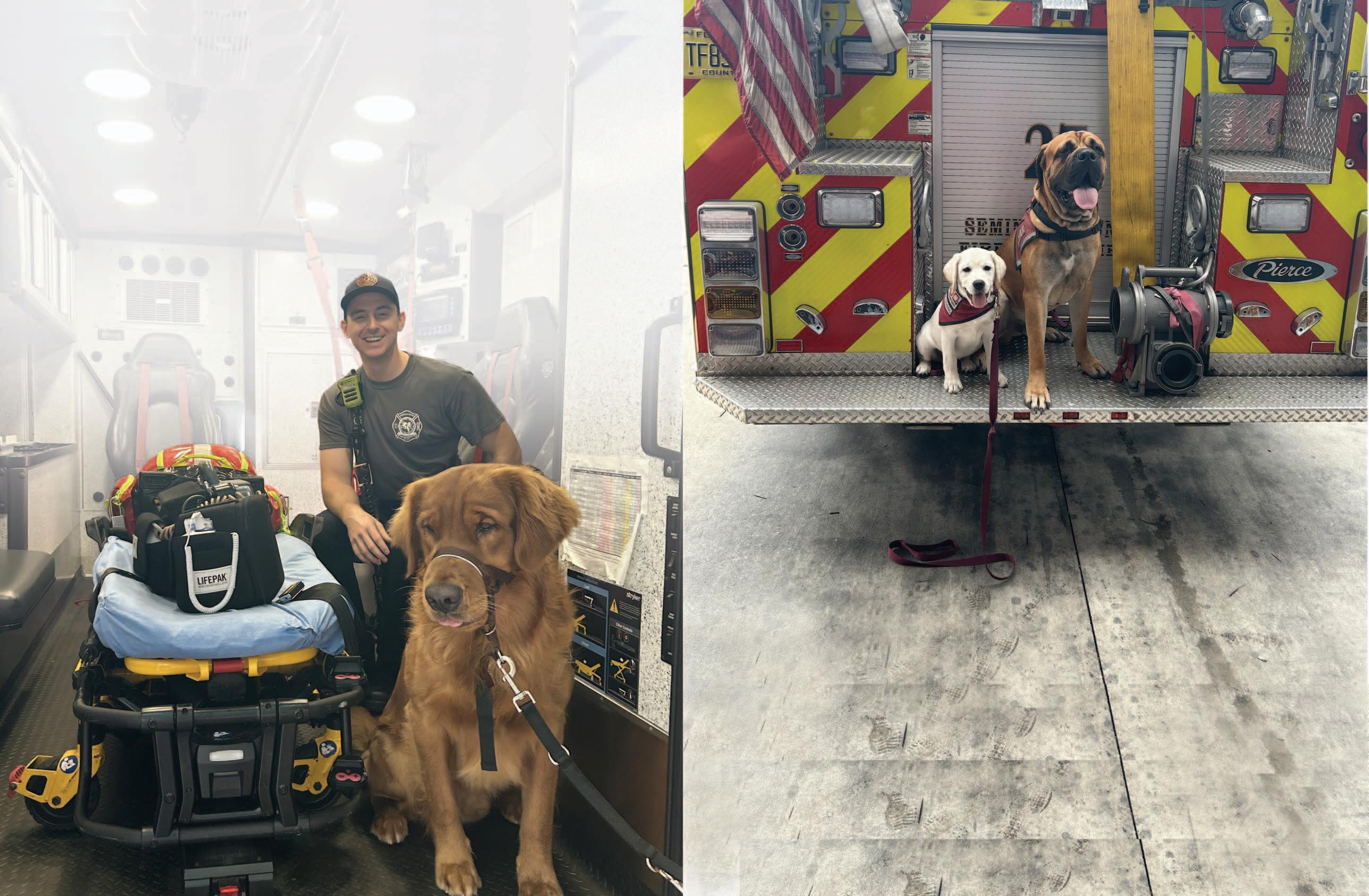
“In the fire service, we love when both humans and dogs visit our stations,” said Firefighter Evan Dentz. “We were proud to partner with DUO, as the Seminole County Fire Department has built excellent relationships with many therapy and service dog organizations.”
Throughout the session, the dogs remained calm and focused—even Banjo, a 15-weekold Labrador Retriever who handled the sirens and activity with ease.
By Mackenzie McClintock, Public Information Officer, South Walton Fire District
For the past two years, the sights and sounds of progress for local emergency services could be seen and heard along S. Geronimo Street in Miramar Beach.
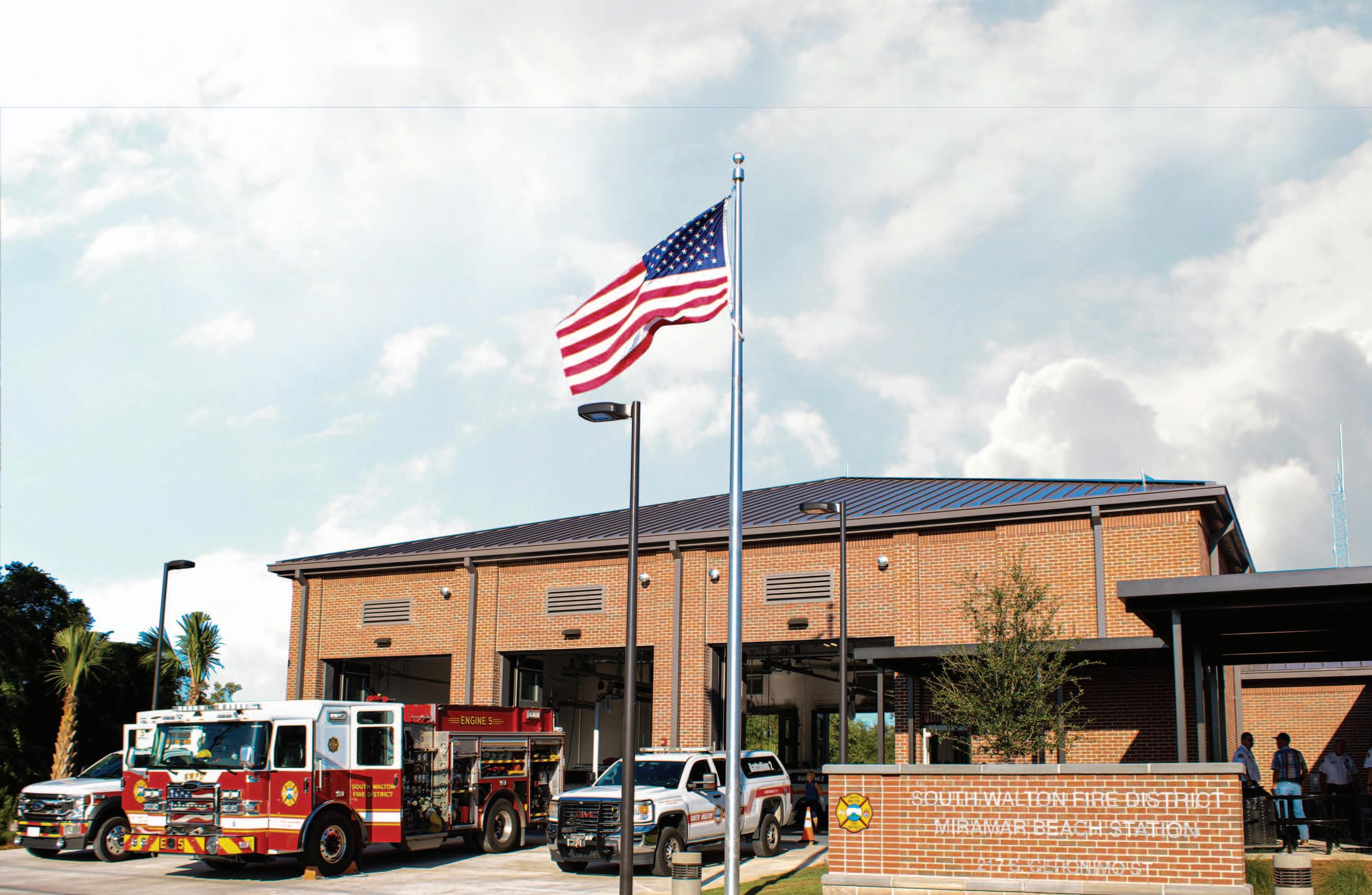
This progress required equal parts of vision, patience, and passion to create a new home for the South Walton Fire District in Miramar Beach. Thanks to the right mix of these ingredients, the District can officially celebrate the total transformation of a 1980s-era metal fire station into what is now a 10,000 square foot facility with modern upgrades.
“It was clear the facility needed to grow based on the growth of the community around it, as well as the condition of the building itself,” said SWFD Fire Chief Ryan Crawford. “We can look at what we have now and know we’re built better from an emergency response standpoint, as well as a facilities standpoint when you consider this new building’s capabilities to withstand hurricanes and severe weather.”
The original fire station on S. Geronimo
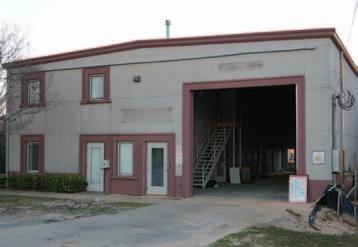
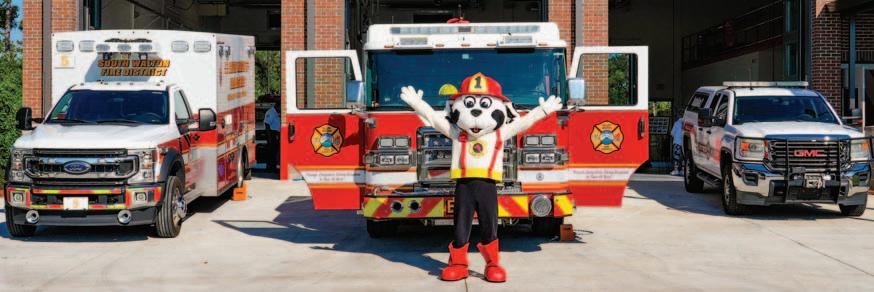
Street was built in 1989 and housed one fire engine. As the Miramar Beach community grew, the Fire District adapted by adding an ambulance in 2008, then a Battalion Chief in 2022. These changes brought the total number of response units assigned to the Miramar Beach fire station to three.
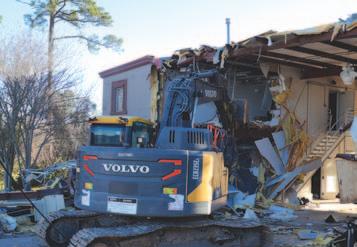
The District began reconstruction on the facility in 2023 in a phased approach so the fire station could remain operational. The construction included a new station layout and design, increased square footage, room to house as many as nine firefighters, and a larger apparatus bay suited for as many as four apparatuses.
“Our Board of Fire Commissioners led the way for us through the budgeting and planning process,” Crawford said. “What’s unique about this project was the funding mechanism with 68 percent of the dollars used coming from impact fees, allowing us to grow the station’s footprint and enhance emergency services in Miramar
Beach.”
Like other governmental entities, SWFD collects a one-time impact fee on new residential or commercial construction within its jurisdiction to help pay for the additional fire protection facilities, equipment, and infrastructure needed to serve that new growth.
The fire station reconstruction and expansion project presented the ideal opportunity for the District to utilize impact fee revenue as part of the funding plan for this expansion. In addition, District leadership strategically set aside funds over multiple budget cycles, allowing the project to be paid for entirely “in cash.” This forwardthinking approach eliminated the need to borrow money, saving taxpayers from the added expense of loan interest.
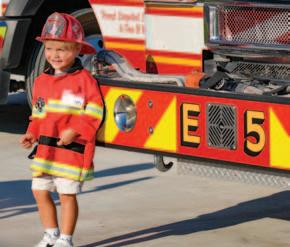
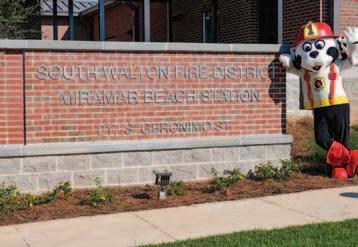
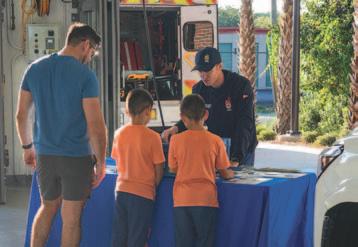
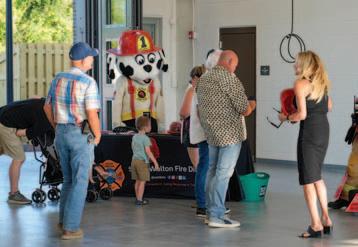
As one of the final steps in celebrating the reconstruction progress was to hold an Open House at Station 5 on September 23 and invite the community into the facility
Activities for the evening included fire station tours, family-friendly
activities, educational booths, refreshments, and plenty of fellowship.
“We want our residents and visitors to see this investment and take some pride and ownership in the role it will play in our community’s well-being,” Crawford said. “Each improvement we make is ultimately about making ourselves better for them, so it was rewarding to see that positivity reciprocated from everyone in attendance.”
SWFD thanks its Board of Fire Commissioners, administrative staff, construction teams and contractors, as well as all operational personnel, who all contributed to the reconstruction project. The community is encouraged to continue to stop by the fire station at 217. S. Geronimo Street in Miramar Beach and view the advancements.

By BrittanyN.Kershaw, DirectorOfCommunications&Marketing,
he Palm Coast Fire Department is proud to celebrate a series of promotions and the addition of new team members, highlighting the department’s continued commitment to excellence and dedication to community safety. These career advancements mark an important milestone in succession planning while honoring the heroic service of the men and women who protect Palm Coast.
Leading the list of promotions, Patrick Juliano has been elevated to the rank of Battalion Chief in recognition of his outstanding leadership and longstanding service to the community. Advancing to the rank of Lieutenant are Dylan Mulligan and Brandon Davis, while Caleb Dann and Gunner Pemberton have earned promotion to Driver Engineer.
The department is also proud to welcome its newest firefighters: Probationary Firefighters
Codey Arnold, Nathaniel Dauphin, Logan Jackson, Connor Marin, Trevor Ranieri, Adam Thompson, and Slade Waits. Their appointment strengthens the department’s ability to maintain the highest standards of service for the community
A special pinning ceremony was held at the Palm Coast Community Center, where family and friends gathered to celebrate these career milestones. The event honored both the dedication of the promoted personnel and the enthusiasm of the newest recruits as they begin their journey in the fire service.
“These promotions and recognitions showcase the incredible talent we have across our team,” said Fire Chief Kyle Berryhill. “From our newest probationary firefighters to our newly promoted leaders, every member plays a vital role in keeping Palm Coast safe. I’m proud of the dedication, teamwork, and heart they bring to the job every single day.”
The Palm Coast Fire Department also upheld its tradition of honoring firefighters whose quick actions and skill directly resulted in lives being saved. Six CPR Life Saving Awards were presented:
July 20, 2025: (Engine 21)Lt. Junelle Steward, DE Sean McBride, and FF Kylee Burns
May 11, 2025: (Engine 29) Lt. Anthony Pedersen, DE Anthony Forte, and FF/PM Cameron Sena
August 4, 2025: (Engine 29) Lt. Daniel Hackney, DE Brandon Davis, and FF Aaron Welsh
May 8, 2025: (Engine 24)Lt. Robert Ballou,
DE Mark Davidson, and FF Zayne Smith
March 31, 2025: (Engine 29) Lt. Daniel Hackney, DE Brandon Davis, and FF Aaron Welsh
March 8, 2025: (Engine 21) Lt. Jeff Nunziato, DE Brandon O’Hara, and FF Joshua Gilliam
In addition, three Unit Commendations were awarded for exemplary teamwork during highrisk and complex incidents:
March 18, 2025: For successfully rescuing a citizen threatening to jump from the I-95 overpass. Honored crews include
Engine 29:Lt. Jeff Poeria, Lt. Patrick Juliano, FF James Allinson
Tower 24:Robert Ballou, DE Mark Davison, and FF Osvaldo Sene
Battalion 25:BC Andrew Woolwine
January 27, 2025:For the rescue of a male patient involved in an excavatorincident.
Honored crews include:
Engine 21:Lt. Dan Driscoll, DE Sean McBride, FF Kaylin Kelly
Engine 22:Lt. Robert Ballou, DE Chris Cottle, FF Osvaldo Sene
Engine 23: Lt. Jason Wagner, DE Tyler Major, FF Izaiah Lee
Battalion 24:BC Gary Potter
August 11, 2025: For the daring rescue of a citizen who jumped more than 65 feet from the Palm Coast Parkway bridge. Honored crew includes:
Engine 22:Lt. Jason Wagner, DE Anthony Forte, FF Slade Waits, and FF Nathaniel Dauphin
By Nikki McRostie, Executive Assistant, Palm Beach Gardens Fire Rescue
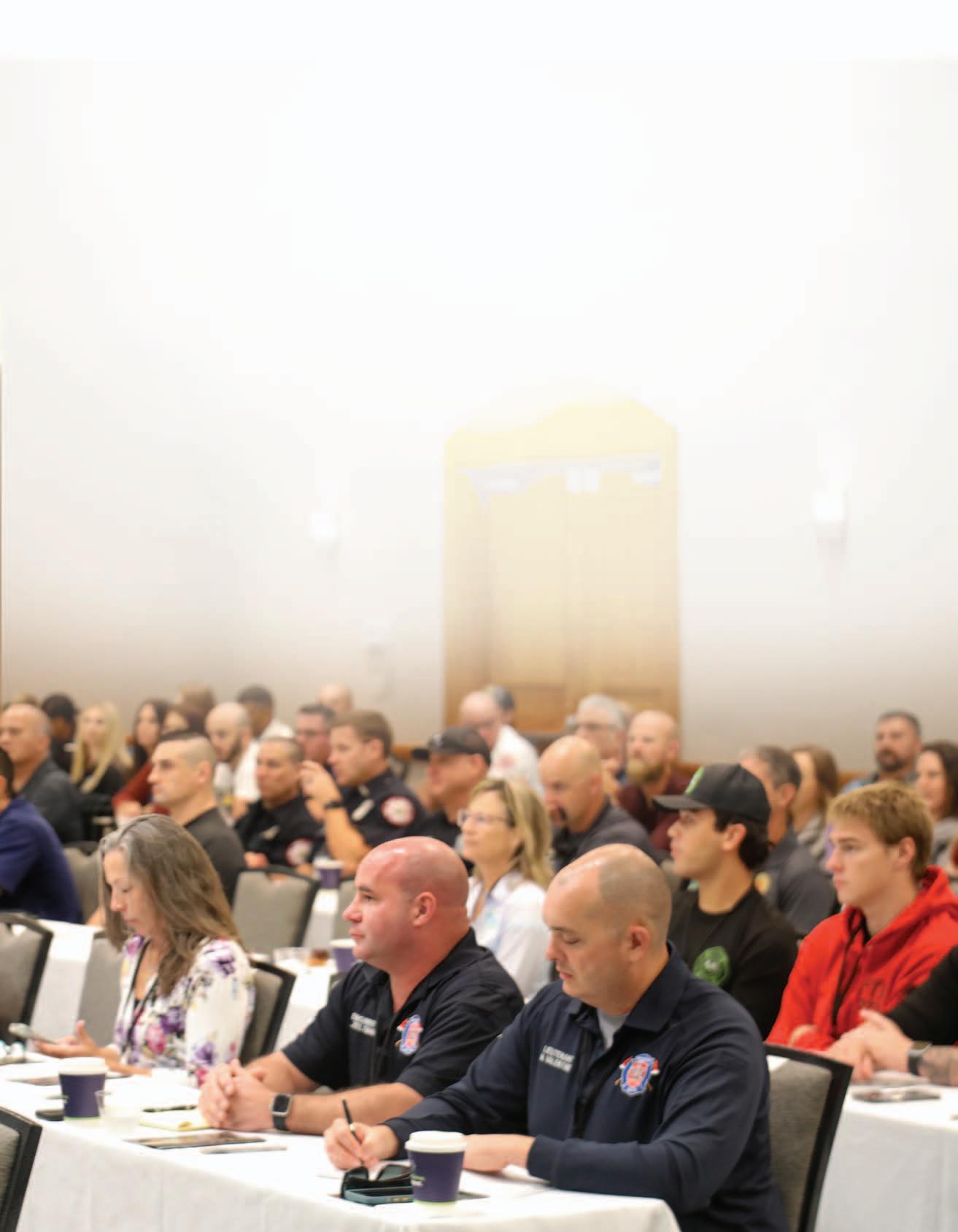
Palm Beach Gardens Fire Rescue hosted its inaugural Health & Wellness Symposium, a complimentary event dedicated to advancing firefighter health and resilience. Organized by the department’s Health & Wellness Committee, the event brought together 160 attendees from 25 agencies across three states, a strong demonstration of the wide interest and commitment to first responder wellness across the region.
What made this inaugural symposium unique was its holistic approach. It brought together nationally recognized experts in mental health, physical fitness, nutrition, and
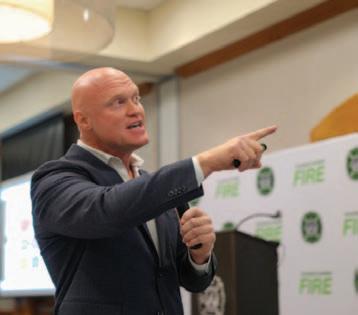
occupational readiness, all in a single day dedicated to firefighter wellness. Beyond classroom-style presentations, the event encouraged open conversations and crossagency connections, reinforcing that wellness is both a shared responsibility and a critical component of operational readiness.
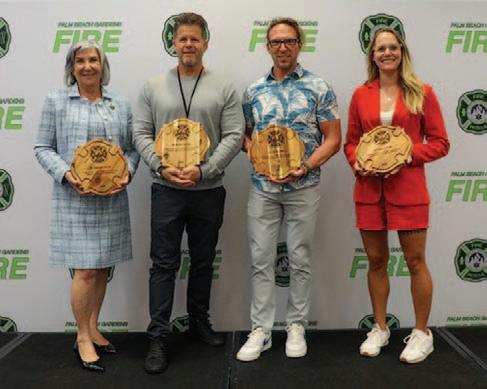
The symposium brought together a powerful lineup of experts, from Jason Patton’s lighthearted yet meaningful “How to Hug 101,” to Dr. Deborah Beidel’s research on firefighter mental health, Dr. Mark Abel’s focus on careerlong readiness, and Dr. Morey Kolber’s strategies for injury prevention. The day closed with Megan Lautz, RD, cutting through supplement myths to give first responders clear, practical guidance for safer, healthier choices.
This inaugural Health & Wellness Symposium was more than a one-day event, it was a statement about the future of the fire ser vice. By prioritizing the mind, body, and career of
its members, Palm Beach Gardens Fire Rescue underscored that resilience is not optional, but essential. The lessons shared and connections built will ripple outward, strengthening not only the firefighters who attended but the communities they protect. The symposium’s goal was to demonstrate that when departments invest in wellness, they are investing in safer, stronger, and more sustainable fire service for generations to come.
By Ashley Turner, EPIO, Public Information Officer, Charlotte County Fire & EMS
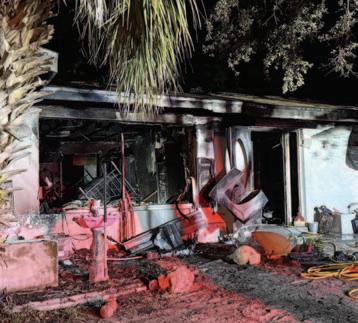
Late in the evening of May 20, 2025, Charlotte County Fire & EMS responded to one of its most complex and dynamic incidents of the year. A residential structure fire resulted in nine total patients, multiple injuries, and two fatalities, testing the coordination, adaptability, and leadership of newly promoted officers and crews alike.
At 11:23 p.m., dispatchers began receiving multiple 911 calls from occupants trapped inside the burning structure. Callers reported heavy smoke, flames, and limited visibility as the fire spread rapidly through the hoarderstyle home. The first-arriving units were met with intense heat, heavy smoke, and debrisfilled rooms that severely limited entry options. The only immediate access point was a small bathroom window located approximately five feet off the ground.
The scene demanded quick, creative thinking. Working alongside the Charlotte County Sheriff’s Office, firefighters used creative entry techniques to reach victims. A
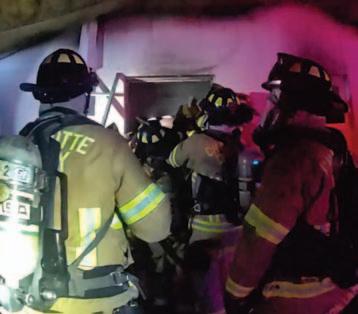
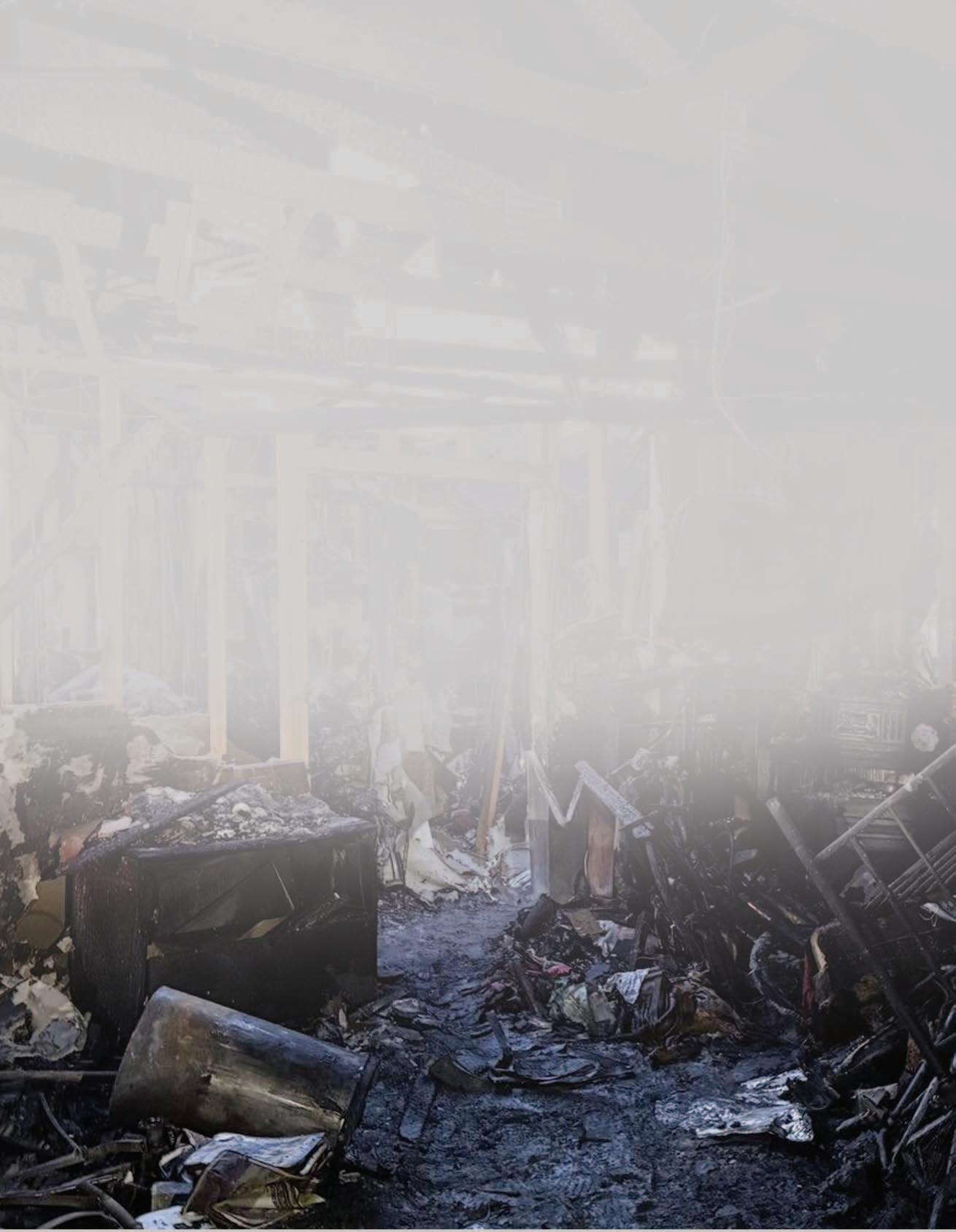
Halligan tool served as a step to climb through the narrow window, where crews found four occupants trapped inside. Simultaneous rescue efforts were underway in other areas of the home as an additional victim was located in a converted garage that had been turned into a bedroom. Using a thermal imaging camera and coordinated interior-exterior efforts, crews breached the garage door to remove another patient.
As the fire intensified, command managed operations on a narrow residential street lined with multiple apparatus, requiring tight coordination and clear prioritization of resources. A landing zone was established nearby to accommodate three medical helicopters for trauma transports. In total, 23 units and 46 personnel operated on the scene for more than seven hours and forty minutes, rotating through fire attack, rescue, medical, and support functions. Despite limited access, high humidity, and hazardous interior conditions, crews maintained control through
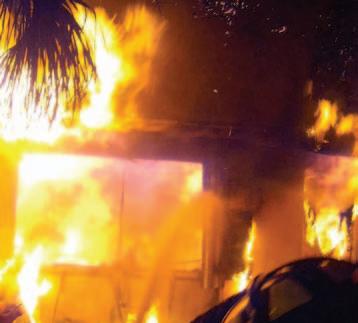
disciplined communication, tactical prioritization, and decisive leadership.
“The teamwork and composure that night reflected the best of what this profession stands for,” said Lt. Jefferson Mendel. “We had new leaders in key roles, but every member leaned on their training, trusted each other, and stayed focused on saving lives.”
For their heroic actions under extreme conditions, Medals of Valor were awarded to Lieutenant Jefferson Mendel, Firemedic River Silva, and Firefighter/EMT Kelly Lechleidner. Medals of Bravery were presented to Lieutenant Michael Brucci and Firemedic Michael Pietraniec for their leadership, composure, and commitment to protecting life under fire.
The incident demonstrated the importance of training, teamwork, and interagency collaboration. The ability of newly promoted officers to apply their training and maintain composure under pressure was instrumental in saving lives and preventing additional loss.
By Nathaniel Gale, Public Safety Information Officer, Polk County Fire Rescue
Polk County Fire Rescue’s (PCFR) ability to shape the next generation of public safety professionals took a leap forward as the organization recently became an accredited Emergency Medical Technician (EMT) training program. PCFR leadership and Emergency Medical Services (EMS) training staff headed up this department-wide accreditation effort.
PCFR will now serve as a training site where individuals can receive the necessary training portion for their state and national EMT licensure. This brings a critical portion of training in-house as members of programs like the Proactive Diversity Recruitment and Training Program (PDRTP) and Rescue Ready Recruits program previously went to third-party schools.
“This is a momentous occasion for the organization as it puts us on the forefront of EMS training as we can now put our future members through both EMR and EMT classes without using third party schools,” said Fire Chief Shawn Smith. “The ability to keep them in-house and utilizing our staff as instructors is important. It helps potential future members
get ingrained into our culture and understand our protocols and expectations before they head into the field.”
“I would like to thank our local third-party schools for the fabulous job they have done training our team members. Without their expert guidance, PCFR would not be an industry leading department,” said Deputy
County Manager Joe Halman, Jr. “However, as PCFR membership grows and with that the demand for medical personnel it is a necessity that we have the ability to train and certify our own team members.”
PCFR’s first EMT class is scheduled to begin in December 2025 with members of the PDRTP and Rescue Ready Recruits programs.
Dear Members,
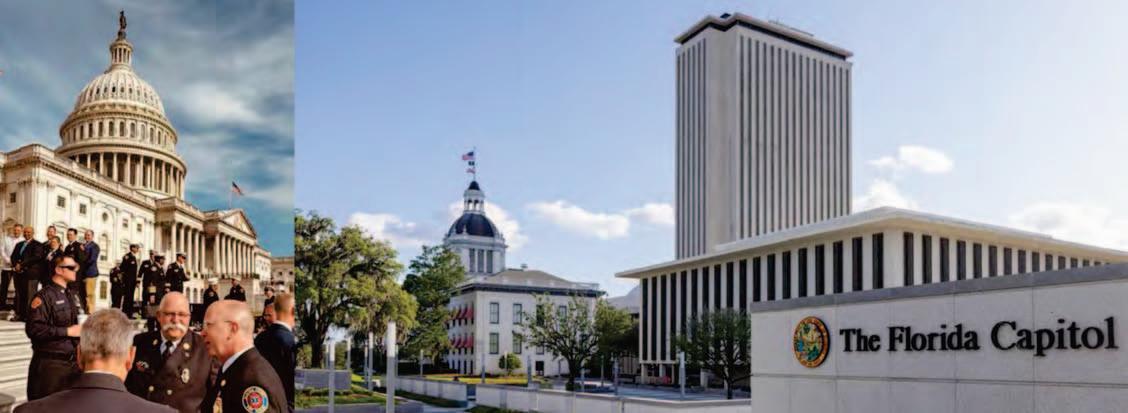
We are proud to announce the results of our recent request for letters of interest for the Chair position of the Government Relations Committee. Chief Joseph Hightower has been appointed by President William “Trip” Barrs with the support of the Board of Directors to join our legislative leadership. Due to the high demands of time and effort as well as the anticipated transition of responsibilities and
timeline of legislative session, Chief Joseph Hightower will serve as Co-Chair alongside Chief Darrel Donatto. Please reach out to either of the Co-Chairs regarding your legislative concerns.
We received a lot of interest from members wanting to be more involved and we welcome members with varying backgrounds and expertise to be part of this collaborative effort! We want to ensure that every aspect of the fire
service is represented and heard so we are also looking to better partner with other fire and public safety organizations.
We would like to invite members to either update their membership profiles and from the Sections and Committeesattributes, select Government Relations and Legislative Committeeor you may email us at info@ffca.orgwith your interest in becoming more involved.

By Adam Sarwi, Lieutenant/Paramedic, Public Information Officer
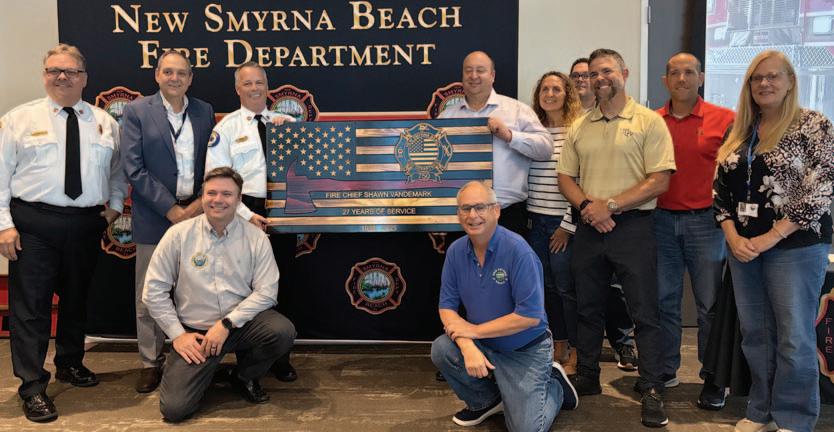
On October 17, New Smyrna Beach Fire Department celebrated the career and retirement of Fire Chief Shawn VanDemark.He has faithfully served this community for 27 years during a career that began in March of 1998. He entered as a probationar y fireman and climbed through the ranks to driver/engineer, lieutenant, battalion chief, interim and finally fire chief. His accomplishments are innumerable. His impact enduring.
The celebration was open to the public with a great crowd that came to show support. Several former chiefs and city officials gave glowing speeches in his honor.
Former NSBFD Fire Chief Hawver told of how from the ver y beginning the young firefighter showed aptitude. “He was special,” said Hawver “He could fix anything that needed fixing.”
City Manager Kevin Cowper shared that in preparation for his speech he perused the Chief ’ s general file in HR. Something he found was a stack of letters written from the public. He discovered a consistent word that was used from the citizens to describe the character of their Fire Chief: Compassionate.
Former NSBFD Fire Chief McAllister spoke about the complex and difficult decisions that a Fire Chief is forced to navigate. “They have to make the best, worse decision,” he said, highlighting the stress incurred when faced with making a choice between undesirable options. He gave credit to how well Chief VanDemark walked through those tough moments.
This Chief has certainly led his people through tactical and administrative command—but more importantly, he has led with moral exemplification. No man can lead the charge and not suffer the arrows of the front line.
Whether it was on scene of a structure fire, crawling out from under an engine with grease to his elbows, walking the line with city officials to fight for his guys, or calling to check in on an injured employee, Chief VanDemark led with poise. His presence will be missed, his absence felt. We wish him the best of luck on his next adventure.
Please submit your article as a MS word document and include a high resolution jpeg image as an attachment (do not embed photo in document). Try to keep submissions under 300 words if possible. E-mail files and pics to: magazine@ffca.org. If you have an interesting topic that would be informative or entertaining to other departments - feel free to write a feature article for this magazine, we welcome all your submissions!All articles must have a title or headline and a byline as part of the article (please note format in above briefs) - if no byline is supplied- the article will run without.
By Doreen Overstreet, APR,Public Safety Information & Education Officer
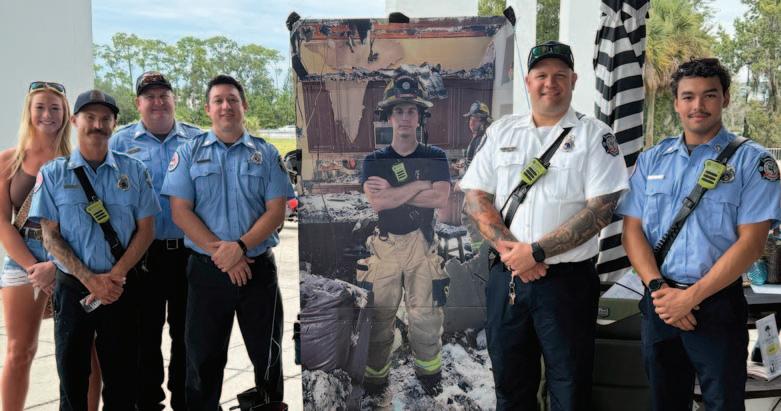
TheSeminole County Fire Department’s(SCFD) recently supported theCentral Florida’s Military, Firefighter & Cops(MFC) Motorcycle Club’s 3rdAnnual “Honor Connor” Memorial Ride &Seminole State Foundation Scholarship Fundraiser in his honor at the Seminole HarleyDavidson.
SCFD Firefighter Connor Maxwell Fernandez was just 25 years old when his life was taken in an off-duty tragic motorcycle accident three years ago. He loved big trucks, motorcycles and firefighting. This event honored Connor by raising money for the scholarship funds to the Seminole State College Foundation to fund Firefighter/EMT and Paramedic scholarships in Connor’s name. So far, the scholarship has already helped dozens of firefighters. At the event, scholarship recipient and SCFD Firefighter Sam Pritchard spoke about the impact of the scholarship. Pritchard became a firefighter when he saw how SCFD responded to his grandmother in need.
By Escambia County Professional Firefighters
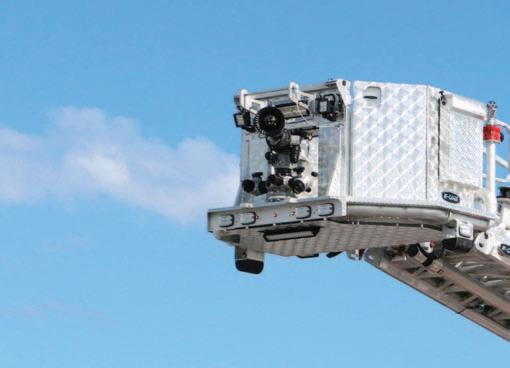
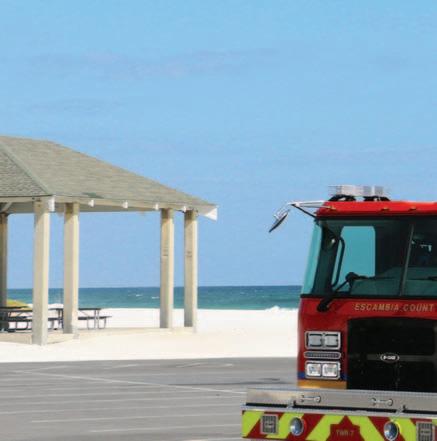
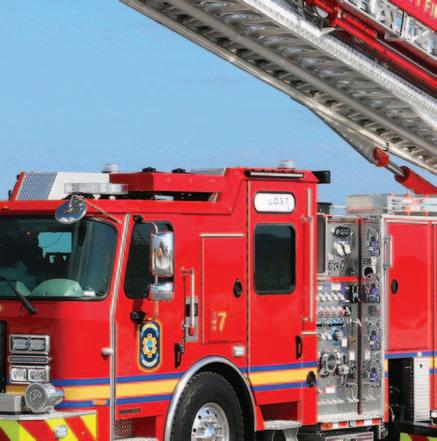
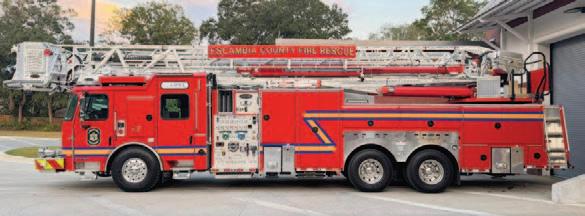
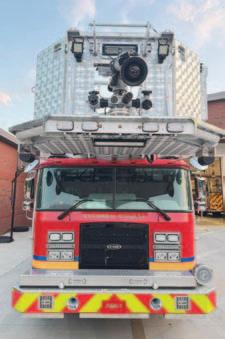
Escambia County Fire Rescue is excited to welcome our newest tower ladder to the fleet, Tower 7. This truck, along with several other apparatuses, was purchased using Local Option Sales Tax funds.
The Escambia County Professional Firefighters Local Union 4131 thanks the Escambia County Board of County Commissioners for proactively investing in the fire department and ensuring firefighters have trucks that are safer, more reliable, and provide greater capabilities to serve Escambia County.


By BrittanyN.Kershaw, DirectorOfCommunications&Marketing,
The Palm Coast City Council, Fire Department, and community partners gathered on Tuesday, September 30, 2025, to dedicate and bless a new Safe Haven Baby Box at Fire Station 25, located at 1250 Belle Terre Parkway. The addition of the Baby Box provides parents in crisis with a safe, secure, and anonymous option to surrender their newborn, ensuring that every infant has the chance for a safe and loving future.
While Florida’s Safe Haven Law already allows parents who cannot care for a newborn to hand the child off at any fire station, hospital, or police station, the parent must do so in person. The Safe Haven Baby Box is unique because it allows for complete anonymity, giving parents a discreet option in a moment of crisis.
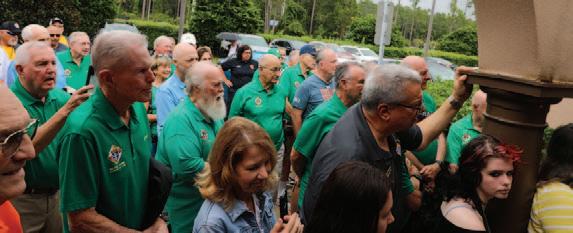
The ceremony featured remarks from Monica Kelsey, founder of Safe Haven Baby Box; Bryant Perszyk, Grand Knight of the Knights of Columbus; Palm Coast Fire Chief Kyle Berryhill; and Palm Coast City Council Member Charles Gambaro. Father Manny Lopez, Pastor of Santa Maria del Mar Catholic Church in Flagler Beach, delivered a blessing over the new resource, and Kelsey offered final remarks before unlocking the box to officially mark its dedication.
Despite steady rain falling throughout the afternoon, the crowd remained gathered outside Fire Station 25, showing their strong support for this lifesaving resource even as they stood, at times, in the downpour.
Chief Berryhill spoke about the significance of the project, saying, “As firefighters, our mission has always been to protect lives. Some days that means rushing into burning buildings, other days it means responding to medical emergencies. Today, it means dedicating a resource that can protect the most vulnerable lives in our community—newborn children.”
Council Member Gambaro reflected on the impact these devices have had in communities nationwide, sharing the story of a baby safely surrendered in Ocala. “Having this box here means that if a moment of crisis comes, there is a safe, secure, and compassionate choice available. It stands as a promise that every child deserves a chance at life and every parent deserves dignity and compassion in their most difficult hour.”.
The Palm Coast Safe Haven Baby Box was made possible through the dedication and support of local advocates, including the Knights of Columbus, Flagler Palm Coast Kiwanis, and community partners who worked tirelessly to bring this resource to Palm Coast. Together, they raised nearly $41,000 to make this resource possible.
Monitored 24/7 by Palm Coast Fire Department personnel, the Baby Box is equipped with safety and security features that immediately alert first responders when activated, ensuring an infant receives care within minutes. The installation of this device reflects the City’s commitment to providing compassionate, life-saving options for families in need and ensuring that no parent or child faces a crisis alone.
By Joseph Dorsette, Assistant Chief of Specialized Services
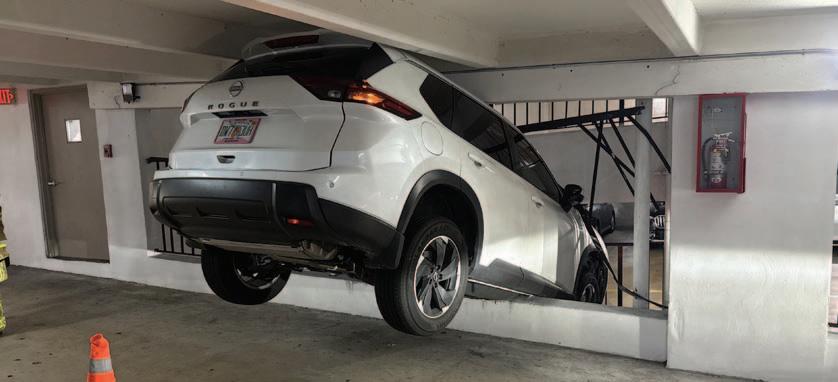
Units from the Broward Sheriff’s Office Department of Fire Rescue, including personnel from the City of Hallandale Beach and the Technical Rescue Team, were dispatched to a report of a vehicle suspended from the second story of a parking garage. Upon arrival, crews confirmed that a vehicle was hanging from the structure. The sole occupant had selfextricated prior to their arrival due to concerns over the vehicle’s unstable position.
Fire rescue personnel immediately initiated stabilization operations to secure the vehicle and prevent further movement. Once the vehicle was safely stabilized, crews safely accessed and assisted the occupant, who sustained minor injuries. The individual was assessed and treated on scene. Upon conclusion of operations, both the parking structure and the vehicle were secured, and no additional hazards or injuries were reported.
By Lisa McDonald, Communications Manager
The Oviedo Fire Department has earned the prestigious Gold Helmet Department designation from the National Institute for Occupational Safety and Health (NIOSH), a recognition reserved for departments that demonstrate exceptional commitment to firefighter health and safety.
The Gold Helmet honor is awarded to fire departments that enroll at least 50% of their active firefighters or a minimum of 300 members in the National Firefighter Registry (NFR) for Cancer. The NFR is the largest national effort ever undertaken to study and reduce cancer risks among U.S. firefighters.
Through the registry, NIOSH collects data to better understand the link between firefighting activities and cancer, helping identify ways to protect firefighters from occupational exposures that can increase risk. Participation is voluntary and open to all active, retired, and volunteer firefighters nationwide.
“Firefighters face unique risks every day,” said Oviedo Fire Chief Michael Woodward. “By participating in the registry, we’re helping advance the research needed to protect those who protect our community.”
The Oviedo Fire Department is proud to be the first department in Central Florida to receive this Gold Helmet designation, highlighting its proactive leadership in safeguarding the long-term health of its members.

By Lisa McDonald, Communications Manager, City of Oviedo
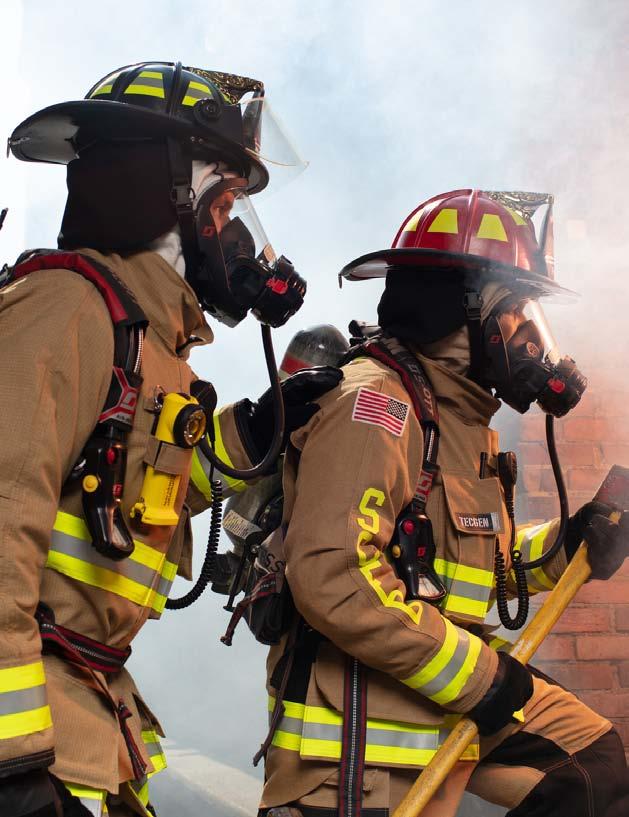
The Oviedo Fire Department is stepping into a new era of firefighter safety and comfort with the introduction of lightweight personal protective equipment (PPE) designed for nonstructure fire emergencies.
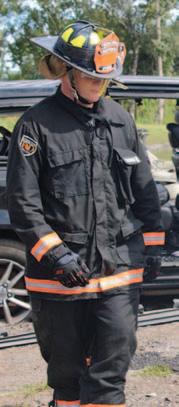
For decades, firefighters have relied on traditional bunker gear for nearly every response. While effective, this heavy, multilayered equipment can take a toll, especially in Florida’s intense heat. Recognizing this, the department recently invested in TECGEN51™ Multipurpose Gear, a breathable, single-layer suit that offers both protection and mobility for
lower-risk calls.
The new PPE is intended for incidents such as brush fires, vehicle accidents, medical calls, and search and rescue operations—situations where full bunker gear isn’t required but safety still comes first.
“Since the purchase of the gear, we’ve received positive feedback from our firefighters,” said Fire Chief Michael Woodward. “This gear is not only protective but also lightweight, allowing our firefighters to work more efficiently and comfortably during emergency responses.”
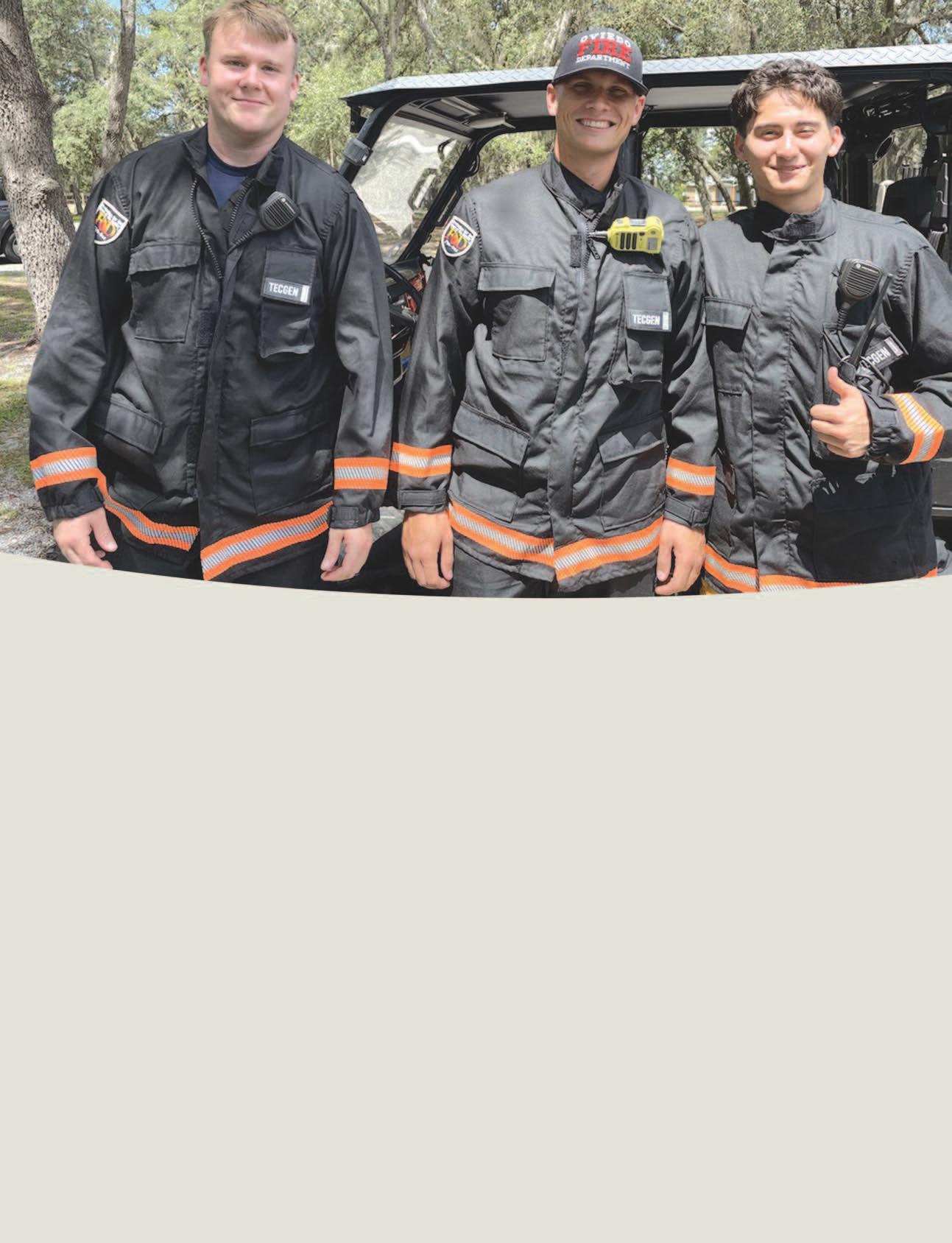
Manufactured by Fire-Dex, the TECGEN51 line was developed to address two major challenges in firefighting: heat stress and exposure to contaminants. The suits’ breathable fabric helps reduce fatigue, while also preventing the spread of harmful substances that can cling to traditional gear.
The Oviedo Fire Department began using the new suits in September 2025, following their purchase earlier in the year. The lighter gear is expected to play a crucial role in reducing heat exhaustion and improving endurance during long calls. The investment also aligns with the department’s broader efforts to modernize its equipment fleet.
The new PPE was purchased alongside the brush fire/high water rescue vehicle, which is expected to arrive in 2026.