
SEPTEMBER 2023 www.fencenews.com ACCESS CONTROL • DECKING • RAILING • OUTDOOR LIVING & LANDSCAPING In This Issue Atenloh, Brinck and Co. Celebrates 200th Anniversary Understanding the Employee Retention Credit School Safety Fencing: Collaborating for a Higher Purpose In This Issue We’ve compiled tips, uses, and installation equipment for these, along with an inside look at a complete upgrade at one location’s stadium wall padding. Windscreens, Playground Equipment and Sports Fencing with Loren “Digger” Graber PRESIDENT AND CHIEF VISIONARY OFFICER DIGGER SPECIALTIES
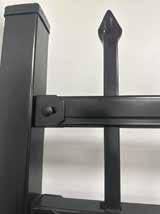
FEATURING IRON WORLD’S RUST RESISTANT U-CHANNEL DESIGN
• Added security for hidden fasteners
• Aluminum insert and stainless screw, unlike plastic systems that break apart
• Outer architectural powder coat top shield

• Long Lasting
• Anti-slide
• Anti-vibration
• 45,000 PSI Steel
20% Extra vertical and horizontal break load
• G60 galvanized
• ASTM F2408

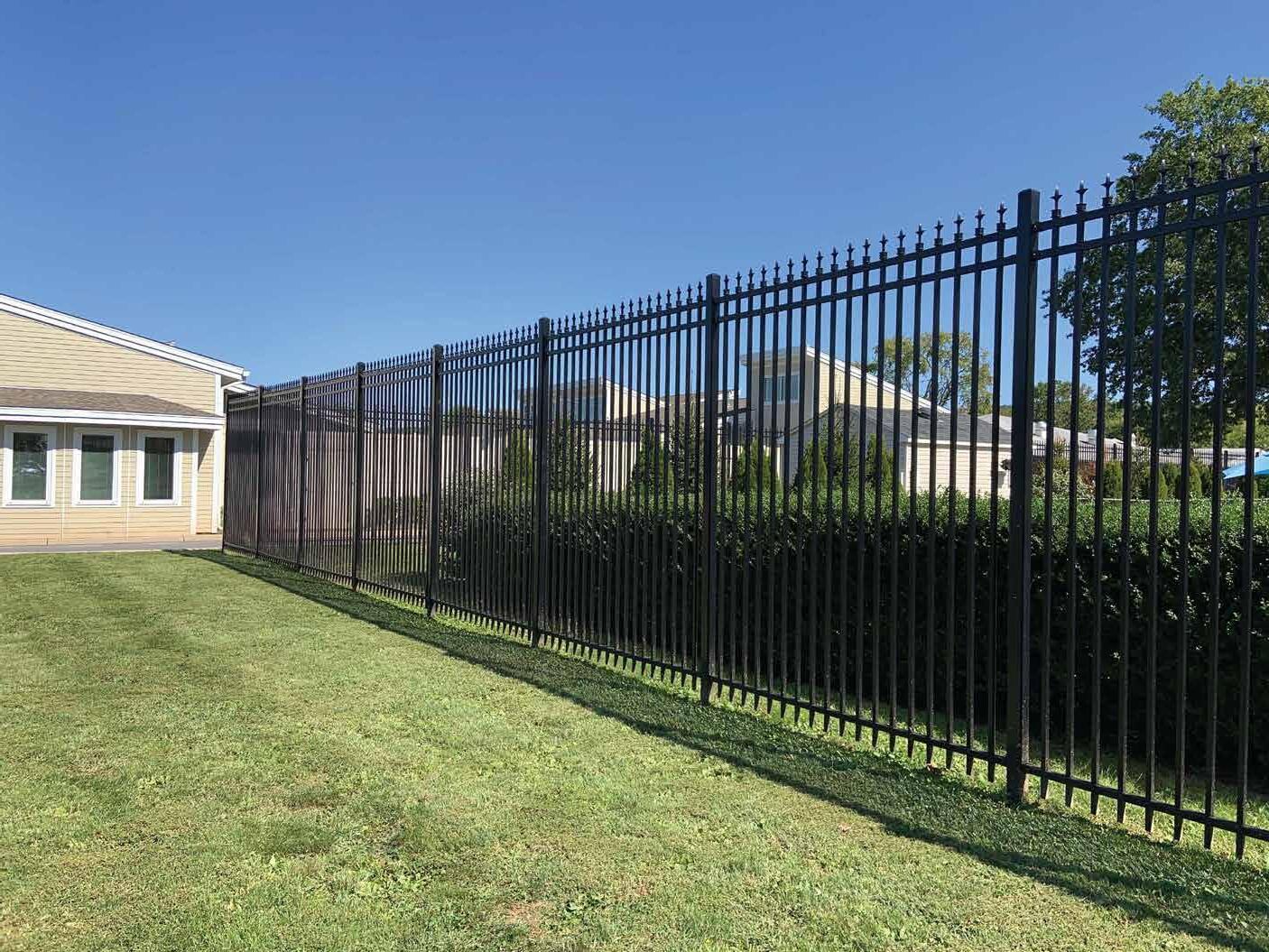

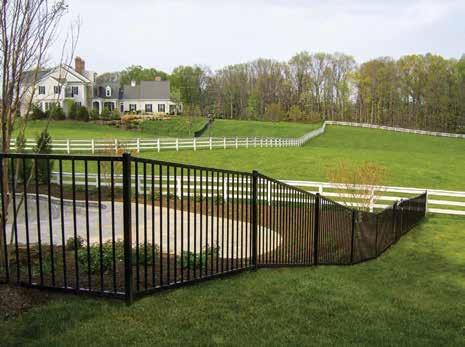
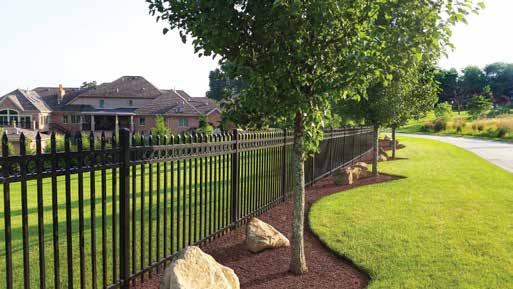

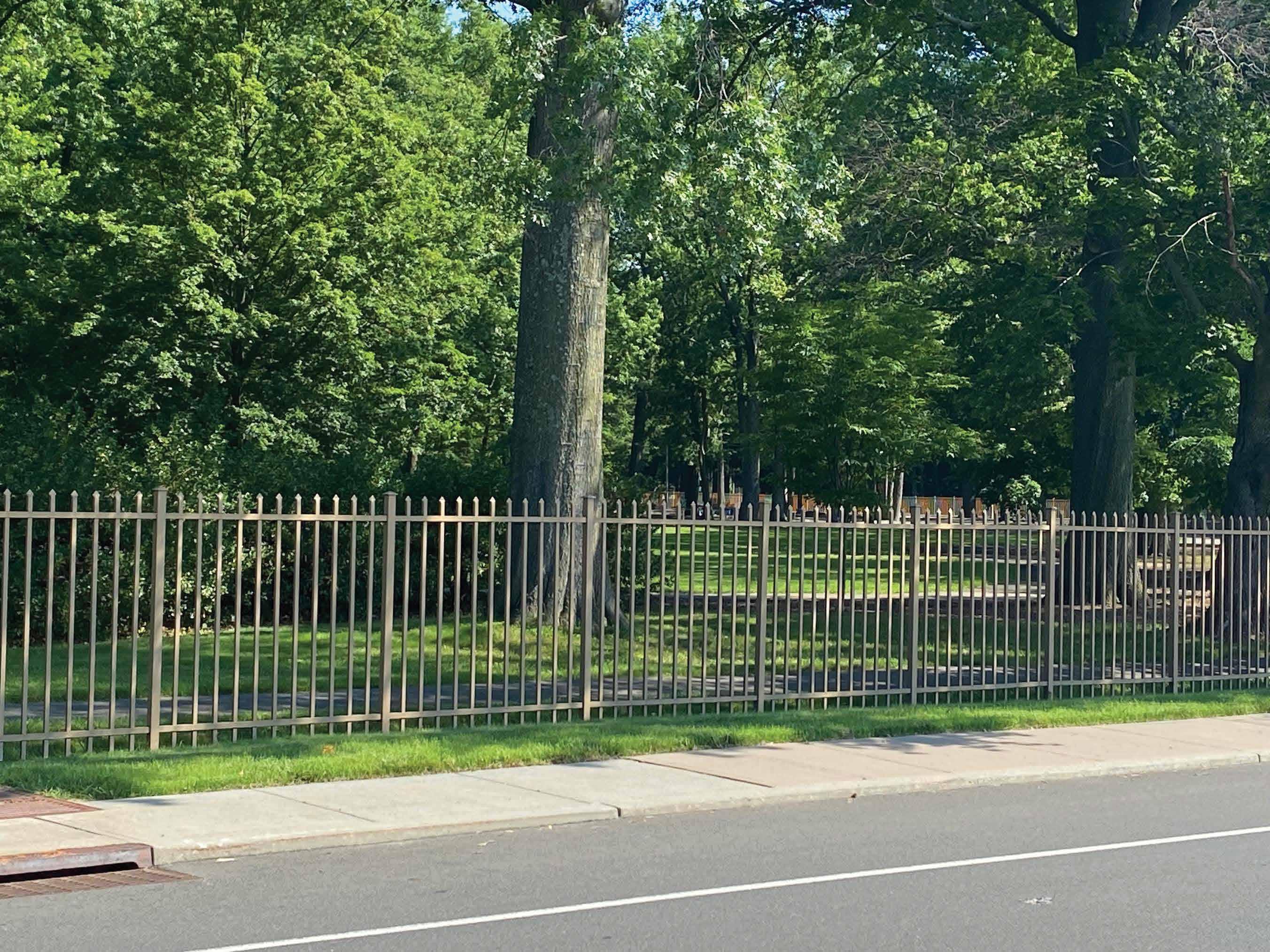
Our round in-line galvanized fence framework products are available with dark green, black or brown WT-ColorCoat as a fourth layer of protection against corrosion and nicely complement the environments wherever they’re seen.
wheatland.com


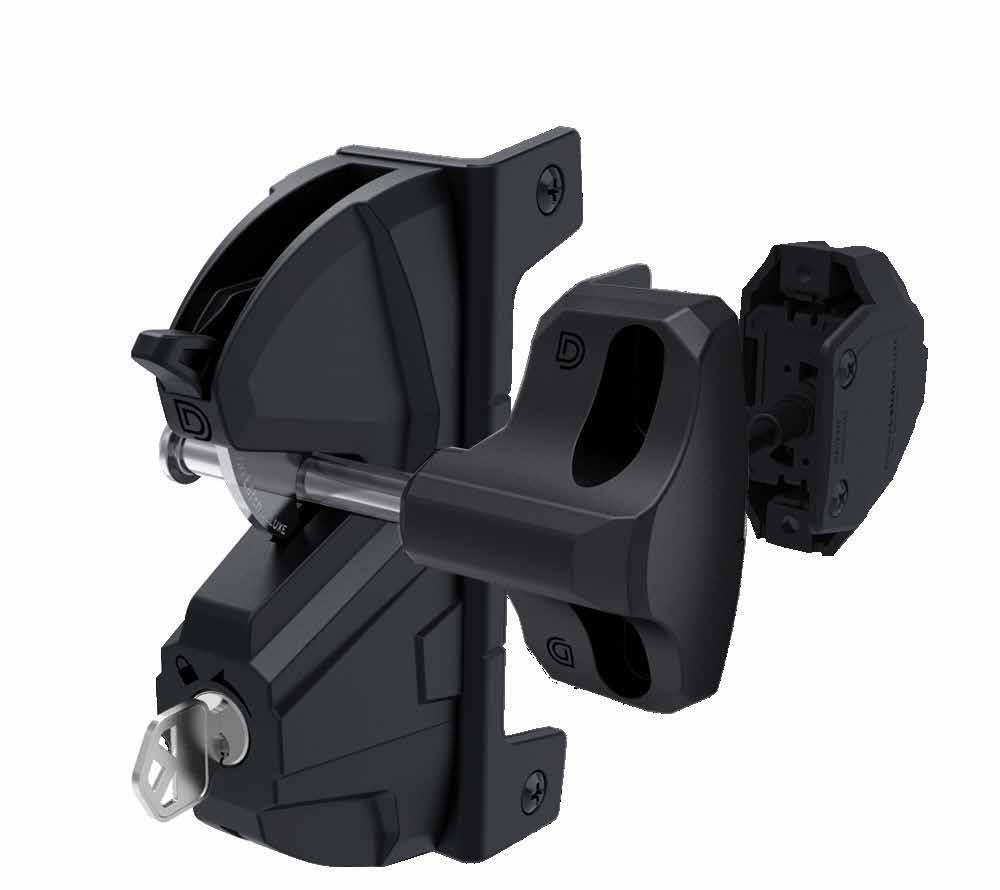

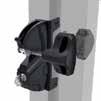
FENCENEWS.COM | SEPTEMBER 2023 3 Scan the QR code for more information or visit us.ddtech.com Patent-pending mounting bracket acts as a drill template for simple & quick installation Revolutionary, snap-fit connector rod provides a quick and secure connection to the external access button for a simplified installation Vertically & horizontally adjustable during & after installation for gate movement Now Available - the best keeps getting better! Premium Privacy and Security Gate Latch with External Access CHOICETHESAFESTFORONLYNEW SERIES 3 DESIGN! Easier to Install Stronger & More Durable Stylish & Modern : info@ddtechusa.com : (800) 716-0888 : ddtech.com Copyright © 2023 D&D Technologies® Warranty conditions vary according to gate or door application and usage. See full Warranty details and limitations on D&D Technologies’ website.
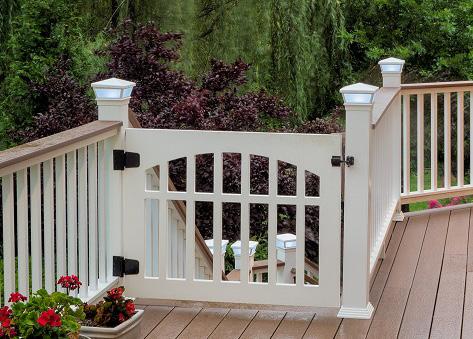



4 SEPTEMBER 2023 | FENCE NEWS USA View our catalog at www.abbeyhardware.com 2003-2023 1-866.98.ABBEY | sales@abbeytrading.com | www.abbeyhardware.com HUGE SELECTION OF HARDWARE, FASTENERS AND TOOLS IN STOCK FOR THE FENCING INDUSTRY FENCING SUPPLY EXPERTS Ask about our hand tools promotions! ANTIQUE HARDWARE STANDARD HARDWARE WELDED WIRE LOCKS TOOLS SCREWS NAILS CONSTRUCTION SUPPLIES
WE’RE INTO
CHAIN LINK FENCE SYSTEMS

for all the right reasons!
• Privacy
• Security

• Enhanced aesthetics
FENCE PRODUCTS
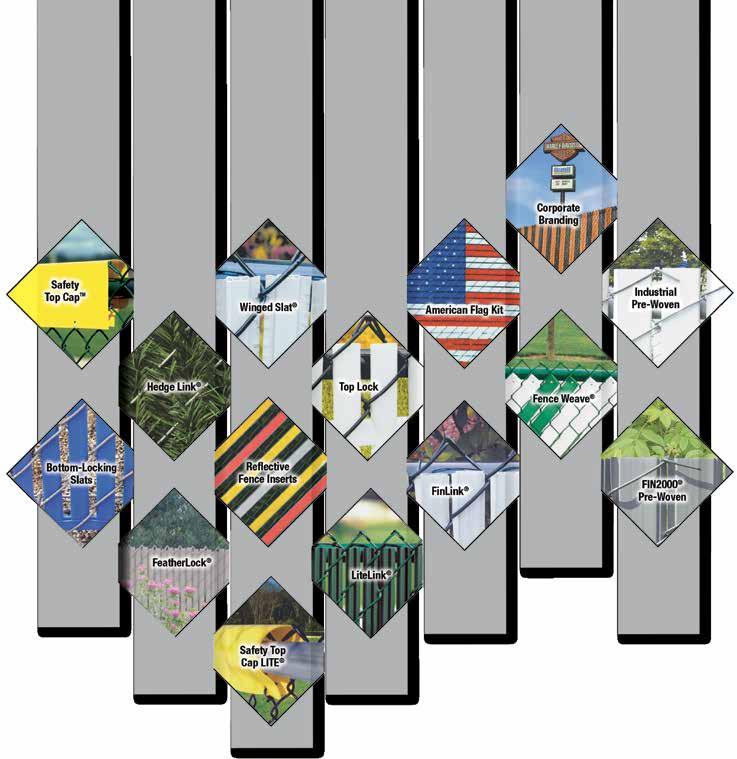
PDS® Fence is the brand you’ve trusted and proven in the field for over 40 years. Still providing the same great looking, durable, cost effective product you’ve relied on to add privacy, security and aesthetics to any chain link fence system.
• Fourteen unique chain link enhancement products
• Nine standard slat colors or customized options
• Easy to clean with high-pressure garden hose
With East and West Coast manufacturing facilities, to ensure the quickest service and highest quality products. PDS ® Fence from Pexco . Beware of imitations.

Visit www.pexco.com/fence to learn more, or email us at fence.sales@pexco.com
FENCENEWS.COM | SEPTEMBER 2023 5
SAFETY in a Snap with
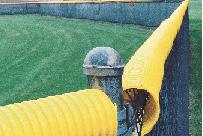
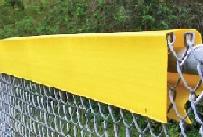
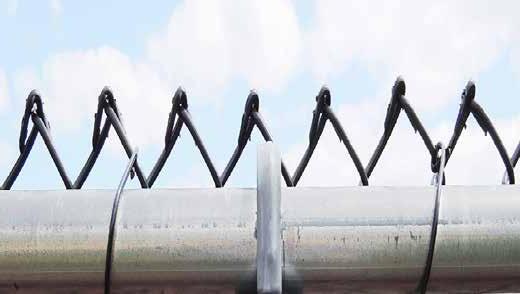
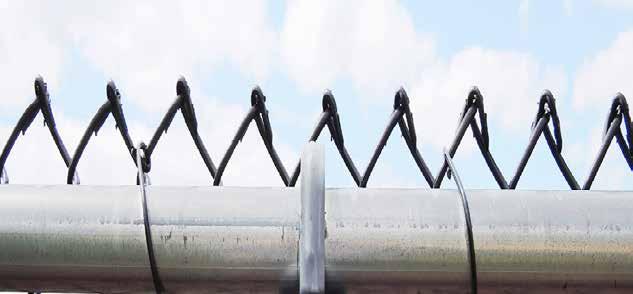
Safety Top Caps from NMI
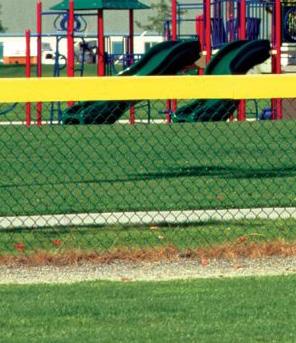
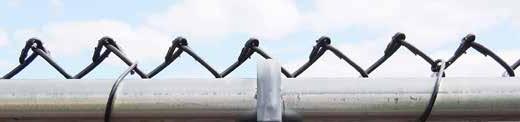
Add safety and greater visibility to the top of chain link fence systems on athletic fields, in parks and recreational facilities


• Easy to install
• Durable and flexible
• UV resistant
516-594-0364 | WWW.NMIFENCE.COM

Cover Story
Your trusted source for slat orders for over 40 years.

Business Management
48 Sunbelt Forest Products Expands Product Line To Include Deckorators®

50 Atlas Tube Donates Tubing to Give Mobility
Industry News
8
Advertiser Index
Abbey Hardware,4
All-O-Matic, 75
American Wholesale Fenceworks, 22, 23

Ameristar/Assa Abloy, 11, 15
BD Loops, 34
Blackline, Back Cover
Coastal Aluminum Fence, 51
DAC Industries, 29
D&D Technologies, 3
Dandy Digger, 26
DKS DoorKing, 16, 17
Door Bird, 71
Douglas Sports, 37
Dyna-Bignell, 57
Eagle Fence, 50
Eastern Fence, 40, 41
EZG Manufacturing, 73
Fence Empire, 45
Fencing Supply Group, 9
FLW International, 39, 65
Homeland Vinyl Products, 33 Incord, 51
International Gate Devices, 57 Interstate Visions, 61

Iron World, Front Cover J.C. Gury, 68
Jerith/Assa Abloy, 13, 19
Keener Dupont Wire, LLC, 44
L&C Enterprises, 54, 55
Little Beaver, 27
LMT Mercer Group, 79 Locinox, 35
Maximum Controls, 67
CAE, CSP
70 Understanding The Employee Retention Credit. Is it right for you? by Tom Luby
72 Management Corner: Sound Investment Strategies for Small Business
73 4 Rules for Email Follow-Up That Generate Sales
Events & More
76 Events
78 Business Classifieds

National Metal Industries, 6, 43
Pexco, 5
Poly Vinyl Creations, 49
Postloc, 59
Privacy Link, 38
Pro Access Systems, 52, 71
Quiet Valley Products, 42
RediDriver, 59
Seco-Larm, 21
Skidrill, 63, 69
SCIW Fence Products, 53
Southwestern Wire, 36 Specrail, 44
Stain & Seal Experts,47
Standard Paints/Wood Defender, 31 Stephens Pipe & Steel, 7
TREX Fencing - SRF Fence, 10
Trident Fence/Deer Busters, 34
Unlimited Sports Solutions, 25
US Premier Tube Mills, 12
Wallace Perimeter Security, 48
Wheatland Tube, 2
6 SEPTEMBER 2023 | FENCE NEWS USA 516-594-0364 | WWW.NMIFENCE.COM SAFETY in a Snap with Safety Top Caps from NMI Add safety and greater visibility to the top of chain link fence systems on athletic fields, in parks and recreational facilities. • Easy to install • Durable and flexible • UV resistant Your trusted source for slat orders for over 40 years. PUBLISHER’S PROTECTIVE CLAUSE In consideration of publication of an advertisement, by submitting an advertisement for publication by River Road Publishing, LLC d/b/a “Fence News USA”, the advertiser and the agency, jointly and severally, agree to indemnify and hold harmless River Road Publishing, LLC and Healthy Image Marketing, (collectively “Publisher”) and their respective managers, its officers, agents and employees against all expenses, including attorney’s fees, damages and losses resulting from the publication of the advertisement, including but not limited to claims or suits for libel, violation of the right of privacy, copyright or patent infringement, and use of the product or services advertised, either proper or improper. All advertisements are accepted and published based on the representation by the agency and advertiser that both are authorized to publish the entire contents of the material provided to the Publisher in the manner selected by the advertiser, be it print or electronic media. Advertisements and product information do not constitute an endorsement nor a position by the Publisher concerning their suitability. The Publisher reserves the right to reject any advertising in “Fence News USA”, the Publisher’s website or e-newsletter. The Publisher makes every effort to ensure suitable placement of advertising but assumes no responsibility in this regard. All advertisements, including online advertisements, placed in “Fence News USA” must be accompanied by a valid insertion order specifying gross advertising rate, size, color, position and information sufficient for proper identification of the advertisement by the Publisher production personnel. Requested positions are not guaranteed unless stated as a paid position. Contracts for multiple frequency discounts must be in place prior to the first insertion. Publisher will not be bound by any terms and conditions printed on advertising agency or advertiser insertion orders or copy instructions when those rates and conditions conflict with the Publisher’s rate card. While Publisher will make every effort to correct inaccurate artwork, the Publisher is not liable for faulty materials provided by the agency or the advertiser. Such advertisements will be billed as run. The Publisher does not guarantee changes or corrections after the closing date. Publisher is not liable for delays in delivery and/or nondelivery of its publications in the event of any conditions beyond the control of the Publisher that may affect production or shipping of “Fence News USA”. Advertisers may not include product/service pricing or discount copy in advertisements in the Publisher, electronic media. ISSN 2767-8016 katie@fencenews.com | fencenews.com 4845 Ihles Rd., Lake Charles, LA 70605 337. 312.0975 Publisher: River Road Publishing, LLC Managing Editors: Kristy Armand & Christine Fisher General Manager: Mary Hummon Sales Manager: Katie Stevenson Creative: Shonda Manuel & Barbara VanGossen
14 - 52 WINDSCREENS, PLAYGROUND EQUIPMENT AND SPORTS FENCING 14 The Game-Changing ChampionWall® Athletic Fence System 18 Perimeter and Barrier Netting: A Defensive Strategy 20 Ocula® Windscreen by Sightline Commercial Solutions Named “Best Product System” of 2023 24 Choosing the Right Athletic Fence 28 Enhancing Playground Safety with Security Fencing 30 Case Study: COVERMASTER® Hits a Home Run at the Rogers Centre 32 The Do-it-All Earth Drill Earth Drills Bring Versatility and Efficiency to Municipalities for Parks and Playgrounds 34 Case Study: Scaling New Heights 36 Windscreens Aren’t Just for Sports Fields
Trex 2022 ESG Report Highlights Sustainability Integration Across the Company 8 Solar Energy Update from Recent CLFMI Meeting 38 RHINO® Introduces New Transport Case for Pro- Series Gas Post Drivers 38 Felcher Honored for Long-Term Membership 42 CAMO Launches Polyolefin Deck Block 44 Nice Unveils Next- Generation Partner Resources with Innovative Partner Portal and Nice University Platforms 46 Increase Production and Profit with Diamond Mowers’ New Disc Mulcher Belt Drive Pro
to Thousands
Outdoor Living Industry to Remain Strong
West Coast Lumber Names Jason Walsh Vice President of Component Manufacturing
The Fence Authority Opens Fourth Location in Historic Delaware Valley
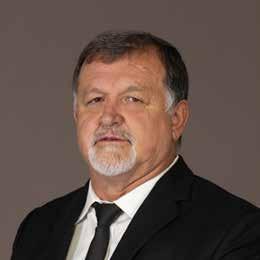
Top of the Chain with Loren “Digger” Graber of Digger Specialties
Altenloh, Brinck and Co. Celebrates 200 Years in Business 59 In Memoriam: Greg Jendreas and Trey St. Pierre 60 MoistureShield® Expands Distribution in Illinois, Missouri, Iowa and Kansas with Mid-Am Building Supply, Inc.
Digger Specialties Expands Railing Distribution to Pacific Northwest 62 Aspire Pavers Partners with DecksDirect 62 Top Rail Fence Expands its Tennessee Footprint with New Nashville Location 66 Understanding Horizontal vs. Vertical Deck Railing Systems 66 Kozal Elected as a Fellow of America Society of Civil Engineers 68 Vista Railing Systems Partners with Carolina Atlantic Forest Products 68 Miller Edge and UL Solutions Hosted Webinar on NEW UL 325 Standard 68 Fortress Expands Distribution in the Carolinas 74 The AZEK® Company and TimberTech® Recognized for Climate and Environmental Leadership by Two Publications
51
52
53
56
58
60
64 A Bigger “Market”, A Higher Purpose by Mark Levin,
FENCE NEWS IS A PROUD MEMBER OF THESE ASSOCIATIONS:
Those Where The Days

Simpler times. Simpler life. Kids played on fields carved out of a corn field. Pickup games of football in the grass out behind the church. Nobody wore a helmet! And no one had heard of pickleball! But the only sure thing in life is change. That is the case with today’s modern sports facilities. Now everybody wears a helmet! Manicured fields and courts at engineered complexes. Everything specified to an exacting standard. All of it surrounded by fencing. At Stephens Pipe we are prepared to supply your every need. All of it: Fabric, framework and fittings to meet any specification. Windscreen and ornamental made to order right here in Kentucky. Stephens Pipe, your “One-Stop “ source for all your fence needs
LARGEST AMERICAN OWNED FENCE DISTRIBUTOR & MANUFACTURER ALABAMA 205-647-0111, CONNECTICUT 860-812-0265, FLORIDA 321-728-2932, GEORGIA 770-868-1800, KENTUCKY 270-866-3331, LOUISIANA 225-387-1838, MARYLAND 301-699-0400, MICHIGAN 616-248-3433, MISSOURI 816-359-3836, NORTH CAROLINA 336-375-3442, OHIO (Columbus) 614-285-3584 or (Mt. Sterling) 740-869-2257, PENNSYLVANIA 570-567-7538, SOUTH CAROLINA 803-849-1625, TENNESSEE 615-860-0001, TEXAS (Dallas) 214-348-2400 or (Houston) 346-271-9017, WEST VIRGINIA 304-522-2210 SPSFENCE.COM SPSFENCE © 2023-9 ALL RIGHTS RESERVED.
Trex 2022 ESG Report Highlights Sustainability Integration Across the Company
Employee creativity and innovation help drive progress on broad spectrum of ESG initiatives

Trex Company, Inc., the world’s number-one brand of sustainably made, wood-alternative decking and railing – all proudly manufactured in the U.S.A. – and a leader in high-performance, low-maintenance outdoor living products, has published its 2022 Environmental, Social and Governance (ESG) report.

Trex simultaneously advanced its long-range growth strategy and sustainability initiatives, executed at a high level, and created value for customers, investors and other stakeholders.
“2022 was a dynamic year in which we effectively navigated challenging market conditions. While we were faced with these challenges, we upheld our commitment to long-term growth and sustainability, thanks to the dedication of our team and the quality of our products,” says Bryan Fairbanks, president and CEO. “Our focus on accelerating the consumer shift to Trex's 95% reclaimed and recycled product from wood decking has solidified our leadership position in the outdoor living category. Our success is not only driven by the quality and durability of our products, but also by their sustainability credentials.”
The company’s 2022 ESG report highlights how Trex continues to integrate sustainable thinking across all areas of the business advancing its most material ESG priorities. Highlights include:
Focusing on circularity and energy efficiency. In 2022, the company upcycled nearly 340 million pounds of waste polyethylene (PE) film, retaining its position as one of the largest recyclers of PE film bags, wraps and packaging in North America. In total, Trex has diverted and recycled more than 5 billion pounds of recycled PE film since its founding. The company is working to reduce its energy use and climate impact and is positioned to make further progress in developing a strategy for reducing GHG emissions. Prioritizing employee safety and career growth. Driven by its proactive focus on improving health and safety, Trex achieved a 50% decrease in its lost-time incident rate (LTIR) compared with 2021. The company also continued to invest in employee learning and development, expanding the portfolio of education for leadership, team building, occupational safety and other topics.
In addition, Trex refreshed its onboarding process to provide more support for new hires on core values, workplace safety and business approach.
Fostering diversity in leadership. Trex continued its efforts to foster diversity and inclusion with a particular focus on management positions. In 2022, the company’s proportion of women and ethnically diverse employees in management increased to 30% and 12%, respectively. Women also held three of nine positions on the Board of Directors in 2022.
Resolute on governance and ethics. The company continued to emphasize to employees at all levels the imperative of working with integrity without exception and ensuring business activities align with Trex values. Trex governance processes ensure oversight of ESG and sustainability priorities at the Board level and among senior leadership.
Supporting communities where we operate. Trex supported a broad array of charitable organizations through donations and volunteering in 2022. The company and its employees contributed more than $300,000 to the United Way and other community-based organizations. The company’s NexTrex® community recycling programs enlisted more than 3,300 schools and civic organizations to help divert nearly two million pounds of plastic film from landfills in 2022.
Earning industrywide ESG recognition. The company received several honors, including the 2023 Sustainable Brand Leader award in the decking category — for the 13th straight year — from Green Builder Media®. Also, for the third straight year, Trex was named America’s Most Trusted Outdoor Decking Brand in a nationwide survey by Lifestory® Research.
“I am sincerely grateful to our employees and partners who have enthusiastically contributed to ensuring that Trex's success is founded on sustainable principles,” Fairbanks says. “Trex was founded on sustainable principles and continues to make sustainability a priority. We are committed to finding new ways to improve our ESG performance in the years to come.”
Learn more in the full 2022 Trex ESG Report at www.trex.com/why-trex/esg/.
Solar Energy Update from Recent CLFMI Meeting
Several updates were given at the recent Chain Link Fence Manufacturers Institute (CLFMI) meeting in West Virginia; the largest since pre-COVID years.
One of the guest speakers, Steffanie Dohn with SOLV Energy, the largest developer of solar projects, told members of some of the obstacles that big solar projects are facing throughout North America. These included: aesthetics (fencing blending in with local terrain), wildlife and vegetation disruptions, bureaucratic and permitting delays, labor shortages for installation and maintenance, rising costs due in part to supply
chain issues with transformers, and pushback from traditional fossil fuel energy producers.
Despite these obstacles, Dohn noted there is widespread governmental commitment to the use of renewal fuels and ongoing funding available at many levels. She finished her remarks by stating the solar industry is working hard to protect current investment incentives for the development and use of renewable fuels, and will continue to work with governmental agencies to increase these incentives where possible.
8 SEPTEMBER 2023 | FENCE NEWS USA

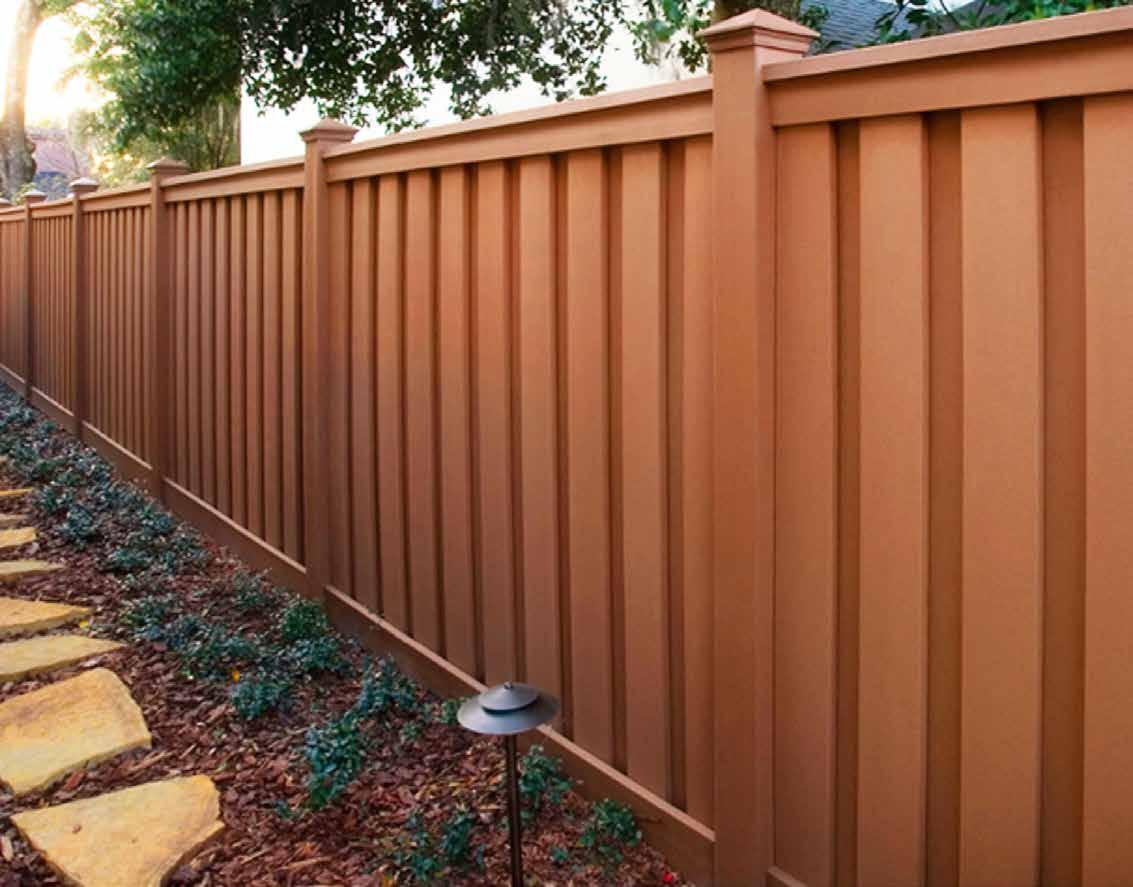
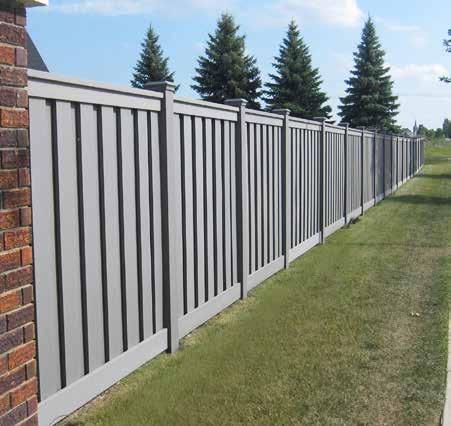
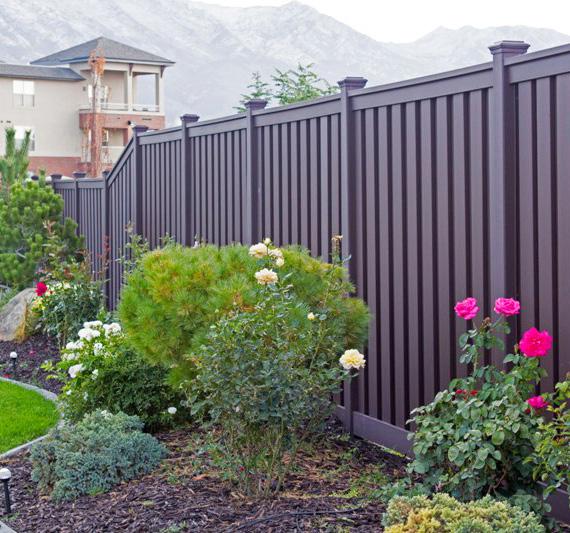




10 FENCE NEWS USA Ships in 3 - 10 days. Refined Beauty • Durability • Strength TrexFencingSRF.com • 720.428.8501 FENCING • Trex 25-year warranty • Over 95% recycled materials • Wind load rating 130 mph • Add depth and texture vs. smooth plastic • Neighbor friendly fence - same look both sides • The national distributor of Trex fencing serving the entire U.S. and Canada • No maintenance The National Distributor The National Distributor
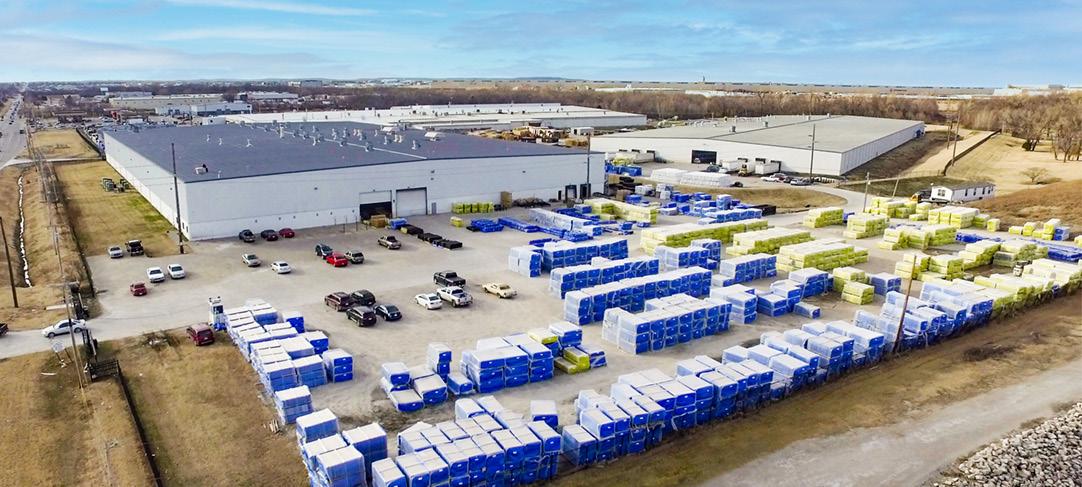

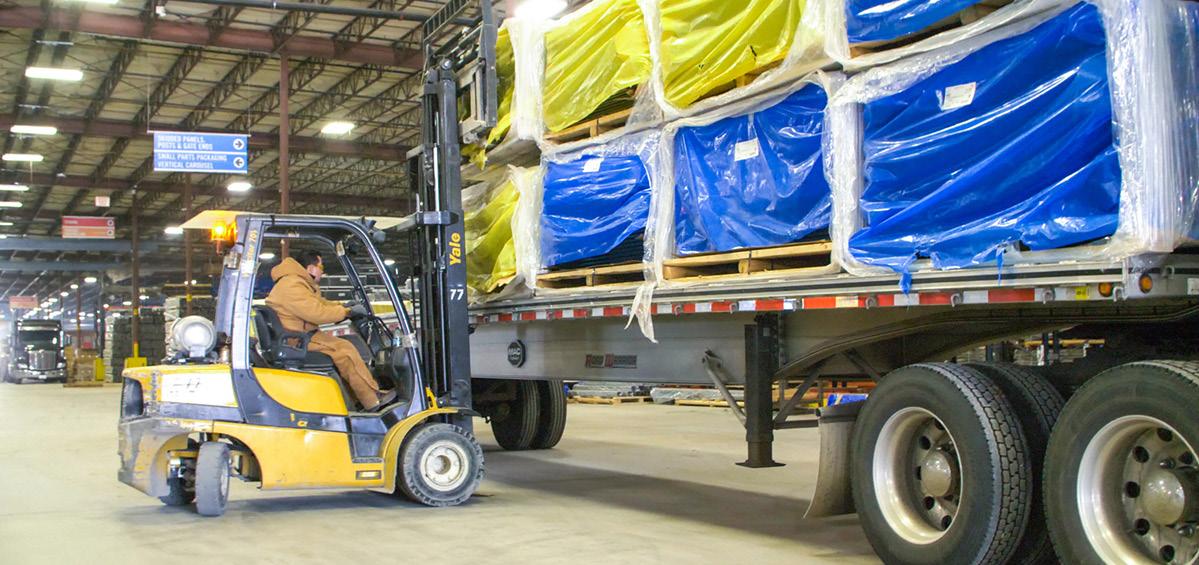

AMERISTARFENCE.COM | 888-333-3422 AVAILABILITY � 58,000+ Montage Panels in Stock � 8 Ameristar Sales/Service Centers � 160+ Distribution Centers AVAILABLE NATIONWIDE
US Premier Tube Mills is working for you and we’re making our products readily available to you.
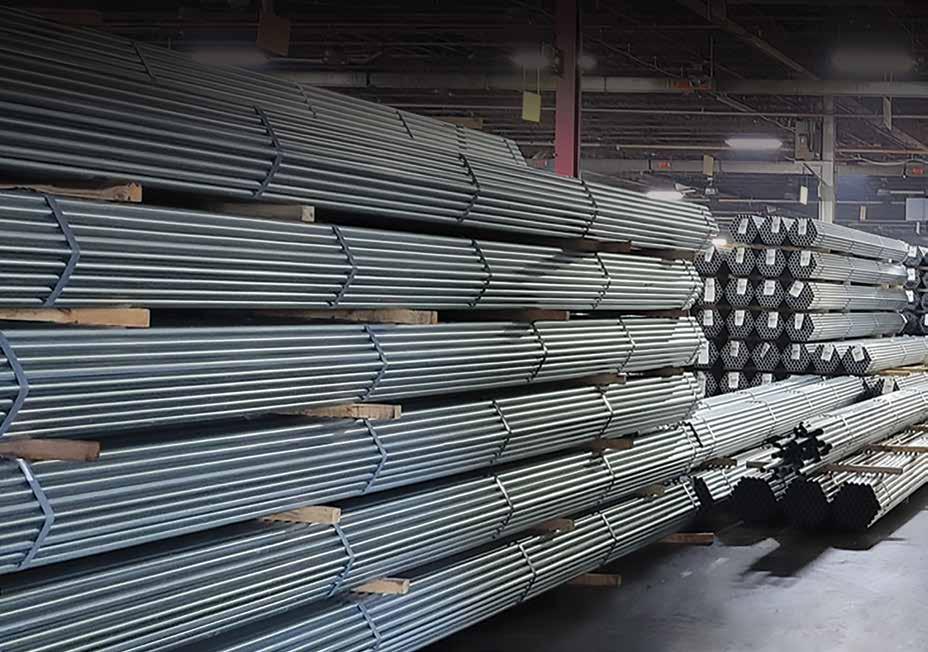
Unfortunately, supply chain delays have become commonplace, and in many cases, expected. This provides challenges for everyone with orders to place, loads to ship, work to bid, and fence to install. Our commitment to you and the industry provides us the opportunity to offer the fastest lead times available on galvanized and color coated products through our distribution network.

Contact
12 SEPTEMBER 2023 | FENCE NEWS USA ■ ATTENTION TO DETAIL ■ DEDICATION TO QUALITY ■ PRODUCT PERFORMANCE US Premier Tube Mills . . . Working for You, Quality for You, Available for You US Premier Tube Mills 2855 Michigan Rd. Madison, IN 47250 TEL: 812.265.7001 FAX: 812.274.0345 AVAILABLE for YOU
your local distributor for availability of US Premier Tube Mills products.
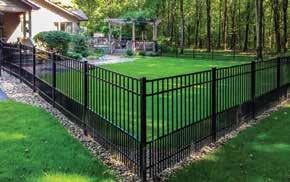
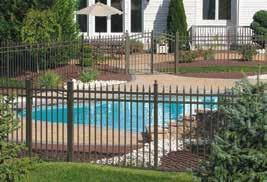
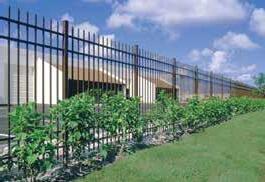
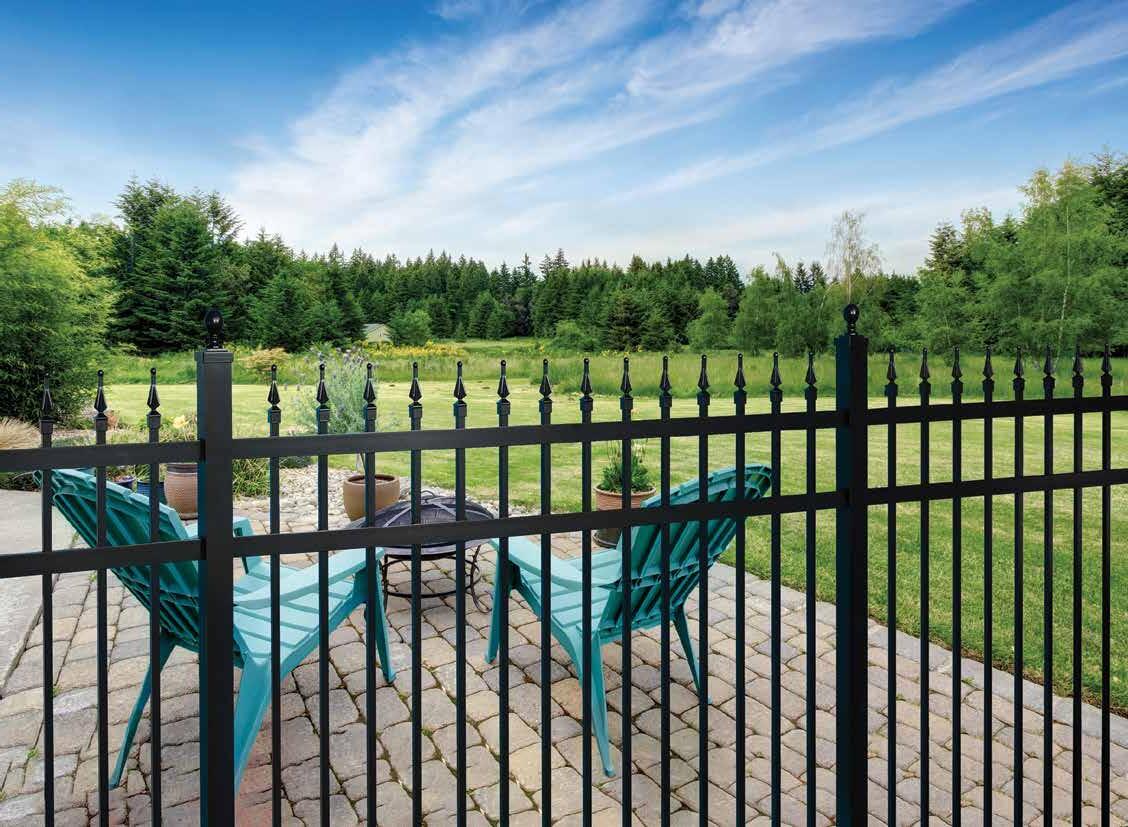
FENCENEWS.COM | SEPTEMBER 2023 13 Jerith announces its partnership with Merchants Metals to distribute Americanmade aluminum from locations across the country. Liberty | Legacy | Premier | Aero | Industrial Echelon Plus | Echelon II JERITH.COM 800-344-2242 PET POOL RESIDENTIAL COMMERCIAL INDUSTRIAL Call or go online to find a dealer near you!
Windscreens, Playground Equipment and Sports Fencing
Security, branding, and privacy. Windscreens, sports fencing and netting provide these and more. We’ve compiled tips, uses, and installation equipment for these, along with an inside look at a complete upgrade at one location’s stadium wall padding.
The Game-Changing ChampionWall® Athletic Fence System
In the realm of sports and athletics, innovation isn’t just about equipment or training techniques—it’s also about the infrastructure that supports and enhances the playing experience. That’s the role of ChampionWall® Athletic Fence System, a groundbreaking solution that’s redefining the look and function of sports enclosures across the globe.
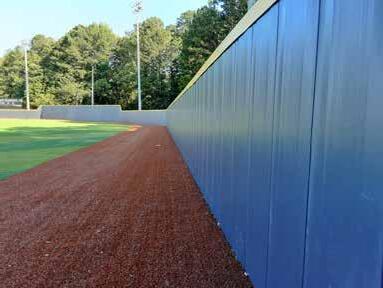
ChampionWall is an athletic outfield wall made from extruded PVC, the same materials used for seawalls and recommended by the U.S. Army Corp of Engineers. This high-performance athletic wall is strong, sustainable and durable.
“Designed with a perfect blend of durability, aesthetics, and functionality, ChampionWall will make a lasting impression on players and fans,” says Brandon Moose, Sales and Tech Support Manager with SportsEdge, the exclusive provider of ChampionWall. “It’s durable and has minimal maintenance requirements to give your athletic program a true ‘stadium feel’ on almost any budget.”
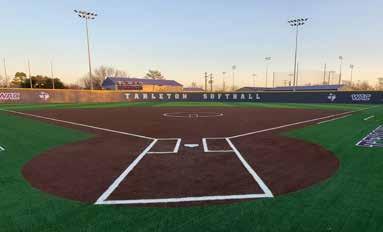
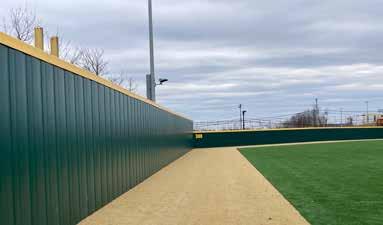
The wall’s interlocking synthetic vinyl sheets are strong, durable, resilient, require little to no maintenance and are much safer than other options. The outfield wall system includes a home run line covering the top of the wall. The wall is topped with CMI manufactured VersaCap®, a decorative capping option that creates a modern and attractive outfield wall.
Moose adds that ChampionWall is fully customizable, making it easy to
add site lines, wall height and batters eye, or leverage it as a fundraising opportunity for the team.
Other benefits and features of ChampionWall include:
• Safety: Interlocking synthetic panes create a sturdy outfield wall that gives during impact.

• Premium aesthetics of the finished appearance
• Sturdier & longer lasting than other fence and panel styles
• Hassle-free with minimal maintenance – no rust or rot
• Variable heights to meet field requirements
• Ease of installation
• Eco-Friendly: panels contain over 98% recycled materials and are 100% recyclable
• Variety of color designs to support team brand
Learn more about ChampionWall at www.sportsedge.com.
14 SEPTEMBER 2023 | FENCE NEWS USA
SPECIAL SECTION














































































FENCENEWS.COM | SEPTEMBER 2023 AMERISTARPERIMETER.COM 888-333-3422 MONTAGE® Ornamental Steel Fence Contact your salesperson to learn more. Install time just decreased by 30%
16 SEPTEMBER 2023 | FENCE NEWS USA Access Control Gate Operators Traffic Control Telephone Entry
FENCENEWS.COM | SEPTEMBER 2023 17
Perimeter and Barrier Netting: A Defensive Strategy

Sports arenas are dynamic venues filled with thrilling action and passionate fans. However, amidst the excitement lies the potential for safety hazards to players, spectators and property. Implementing high-quality and wellmaintained safety netting systems becomes crucial to mitigate these risks.
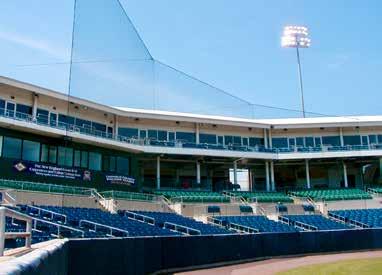
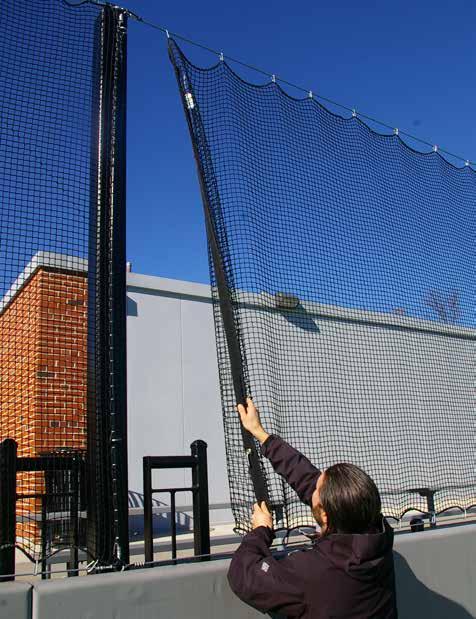
According to Samantha Baudner, Sports Division sales manager for InCord, a leading custom netting manufacturer, there are various netting considerations within a typical stadium, focusing on perimeter and barrier fencing safety. “High-quality netting systems act as an invisible barrier, safeguarding players, spectators, and property from potential hazards during intense sporting events.”
Baudner provides an overview of specific applications for safety netting in sports venues:
Addressing Debris Hazards
As a responsible sports facility operator, it is imperative to prioritize safety above all else. “By incorporating safety netting into your venue, you are making a powerful statement about your commitment to providing a secure and enjoyable experience for everyone involved,” says Baudner.
In large, multi-level sports complexes, she says the risk of debris falling from higher levels becomes a concern. To combat this, debris netting is a vital safety measure. This type of netting acts as a catcher, preventing food containers, scorecards, and coins from falling onto the lower levels. By utilizing horizontal debris netting, the arena ensures the safety of its visitors and maintains a clean and secure environment.
Safeguarding Scoreboards and Videoboards
Scoreboards and videoboards are essential fixtures in sports arenas, and represent a significant investment, constantly drawing the attention of spectators. However, the impact of balls or other objects on these boards can cause significant damage and mar the overall aesthetics. To avoid such incidents, Baudner says installing netting in front of or behind scoreboards provides an effective shield against potential damage while allowing fans an unobstructed view of the game’s crucial stats and replays.
The Importance of Inspection and Maintenance
Protecting Spectators
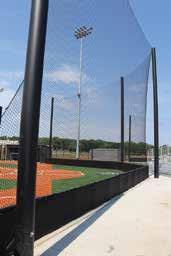
One of the primary concerns in sports arenas is ensuring the safety of spectators. Barrier netting installed as fencing is a practical solution by creating a protective boundary between seating areas and the playing field. This netting not only safeguards the fans but also offers an added layer of protection to the athletes on the field. Baudner says the best part is that while providing safety, barrier netting does not compromise visibility, allowing fans to enjoy the game without obstruction. “Moreover, in some cases, perimeter netting may shield fans from hazards in adjacent areas, such as busy streets or parking lots. By implementing perimeter netting, pedestrians and property outside the stadium are protected, and an additional level of safety extends to the arena’s surroundings.”
Given the high volume of people, intense sporting activity, and exposure to the elements, netting systems in sports arenas endure significant wear and tear over time. Regular inspections are paramount to ensure optimal performance and safety. Event organizers and stadium operators should diligently examine the fencing and net systems for stretches, tears, frayed threads, and any other signs of damage. Additionally, anchoring methods must be assessed for stability and security, as their reliability directly impacts the overall effectiveness of the safety measures.
In cases where damage is discovered during inspections, prompt action is vital. Damaged netting should be repaired or replaced promptly to maintain a safe and secure environment for everyone involved.
“For sports arena and facility operators, investing in safety netting will not only give you peace of mind but also enhance the reputation of your venue as a safe and fan-friendly space,” says Baudner.
Safety should always be the number one priority in sports arenas. Implementing a well-planned and meticulously executed fencing, barrier and netting program safeguards the players, fans, and property and contributes to a more enjoyable and fun-filled experience for all. With a winning defensive strategy centered around the perimeter and barrier fencing safety, sports arenas can continue to be thrilling venues where excitement thrives within a secure environment.
Learn more at incord.com.
18 SEPTEMBER 2023 | FENCE NEWS USA SPECIAL SECTION


FENCENEWS.COM | SEPTEMBER 2023 19 NEW! Jerith Premier ALUMINUM 3/4” Picket | Residential or Lite Commercial NOW AVAILABLE IN 8' SECTIONS! Call your Jerith distributor today. JERITH.COM PET POOL RESIDENTIAL COMMERCIAL INDUSTRIAL 800-344-2242
Ocula® Windscreen by Sightline Commercial Solutions Named

Frameless Glass Windscreen System Honored in Annual Glass Magazine Awards Program
Sightline Commercial Solutions, a leading fabricator and global supplier of architectural railing, metal, glazing and portable platform solutions, further reinforced its reputation as a leading innovator in the commercial building arena by capturing top honors in this year’s Glass Magazine Awards. The company’s innovative Ocula® Frameless Windscreen was chosen by the magazine’s readers as this year’s “Best Hardware Product or System.”
Ocula is an ultra-streamlined glass windscreen system that not only provides protection from the elements, but also enhances views and sophistication with its sleek, unobstructed styling. Each year, Glass Magazine, the official publication of the National Glass Association, recognizes stand-out glass and glazing products and projects in the commercial, retail and fabrication markets. Entries were evaluated based on form, function and impact.
“It is an honor to be recognized for excellence in product design, especially when that recognition comes directly from our customers – the readers of Glass Magazine,” says Jon Chase, vice president of engineering and marketing for Sightline Commercial Solutions. “From glazing contractors to architects, these professionals know what works and we value their confidence in our products to deliver superior performance.”
While most standard windscreen systems are
capable of handling 10psf wind loads, Ocula is designed for eight times that amount, with a qualified wind load of 86psf. This allows for installation at much higher altitudes, such as balconies and rooftops, and provides extensive coverage for furniture and patrons.
Ocula features an innovative, post-free, clamp supported design and industry-exceeding performance. The stainless steel clamps are suitable for interior or exterior applications and can be paired with view-optimizing clear glass for a barely-there look, or frosted or fritted glass for enhanced privacy. Ideal for pool surroundings, balcony dividers and elevated overlooks, the system elevates any outdoor environment – from hospitality and high-rise applications to healthcare and educational settings – by delivering unmatched wind protection and unobstructed views. Ocula also mitigates wind tunneling in courtyards and other open areas.
The Ocula system is offered in three standard heights for guardrail (43-inches), pool surround (48-inches) or balcony divider (60-inches). Custom heights are also available, along with multiple top cap and handrail options.

“A glass windscreen offers the perfect marriage of form, function and freedom. Architects no longer have to rely on visually obstructive and confining walls to protect patrons and property from unpleasant dust and gusty winds,” explains
Chase. “With Ocula, they can create open, airy environments that celebrate surrounding views while keeping patrons comfortable and sheltered from wind and debris.”
Ocula is featured in the August/September 2023 issue of Glass Magazine and will be honored during a ceremony to be held at GlassBuild America in Atlanta this November. Learn more about Ocula or Sightline Commercial Solutions, www.sightlinecommercial.com.
20 SEPTEMBER 2023 | FENCE NEWS USA
“Best Product System” of 2023
SPECIAL SECTION
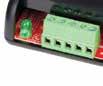
Make any Device Wireless

Possibilities are endless

Make access control, security, home automation, gate operation, or any type of product wireless with RF transmitters and receivers from SECO-LARM.























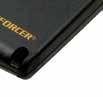
Wired Single-Channel RF Transmitter


SK-919T1-GBWQ

• Powered by included 3VDC lithium battery or external 3~13 VDC output regulated adapter (not included)





• Frequency – 315MHz
• Operating range up to 500ft (150m)




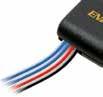
Wired Long-Range RF Transmitter
HL-951T1-SWQ



• Powered by included 3VDC lithium battery or external 4.5~13 VDC output regulated adapter (not included)





• Frequency – 917MHz











• Operating range up to 1,800ft (550m)
Compatible Receiver SK-910RBQ
Compatible Receiver HL-951R1-SQ











FENCENEWS.COM | SEPTEMBER 2023 21 Tel: (800) 662-0800 Fax: (949) 261-7326 Email: sales@seco -larm.com Website: w w w.seco -larm.com 16842 M illik an Avenue, I r vine, CA 92606 U.S.A., Inc. Copyright © 2023 SECO-LARM U.S.A, Inc. All rights reserved. All trademarks are the property of SECO-LARM U.S.A., Inc. or their respective owners. The SECO-LARM policy is one of continual development. For that reason, SECO-LARM reserves the right to change prices and specifications without notice. SECO-LARM is not responsible for misprints.
Choosing the Right Athletic Fence
Athletic field fencing can serve a variety of functions, from controlling crowds and supporting security efforts for fans and players, to delineating separate sporting fields and creating distinct areas like dugouts and spectator sections.

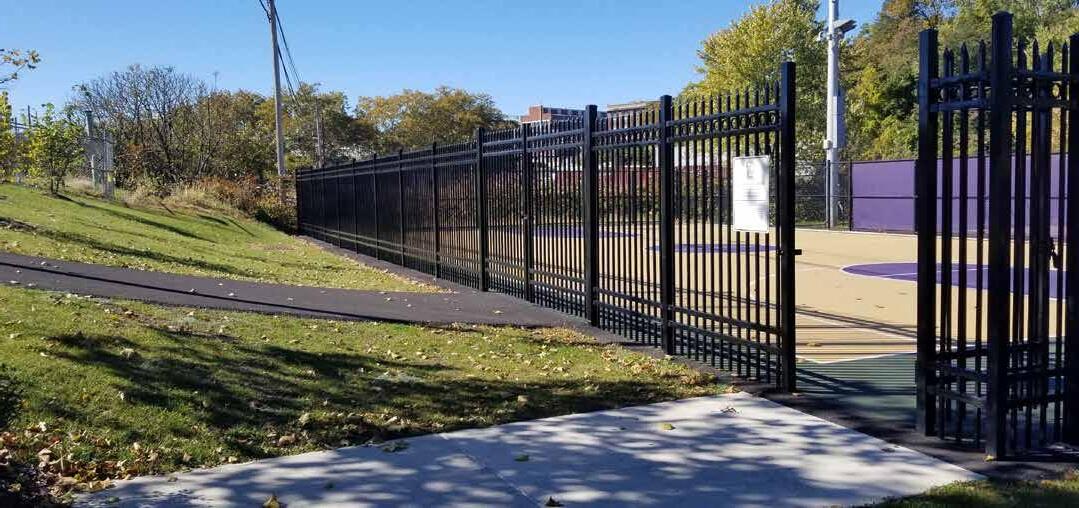
With all these multiple purposes, Tim Rutkoski, president of Rutkowski Fencing Inc. (RFI) in Swoyersville, Pennsylvania, says determining the right fencing design and solution for your application will depend on a number of factors related to the sport and facility design needs. RFI’s field crews install thousands of feet of athletic field fencing each year, giving them a depth of experience in this sector of the fence industry.
Rutkoski provides an overview of important considerations for athletic fencing installations.
COMMON TYPES OF ATHLETIC FIELD FENCING

The most widely used type of fencing for athletic fields is chain link, given its versatility, durability and economical cost. Surprisingly difficult to scale or break through, chain link fencing also provides a certain level of visibility that’s crucial in an athletic setting, particularly those that entertain spectators. A low-maintenance solution, chain link fencing can be easily repaired by retying the links or replacing the panels. “All of these factors make chain link, whether steel, aluminum or vinyl-coated, an excellent and popular choice for athletic field fencing,” says Rutkoski.
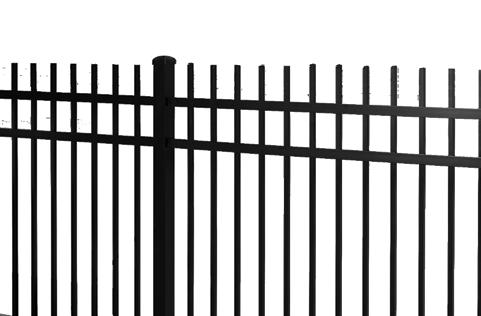
Another common type of athletic field fencing is ornamental commercial-grade aluminum or steel. These options support the fencing structure’s strength and stability while offering a more enhanced visual aesthetic than that of industrial aluminum or steel. “Ornamental fences complement various stadium and athletic field designs and can create an attractive look, which is especially favorable in areas facing roads or entrances to the athletic field,” he explains.
3 FACTORS FOR DETERMINING FENCING DESIGN
Making a decision about the type and design of athletic field fencing to employ for your project involves focusing on three main elements first, according to Rutkoski: purpose, height and strength/durability.
Purpose: What purpose(s) will the fencing structure be fulfilling? This is a critical question to ask, as the answer lends direction to the type of material and design components necessary to meet your requirements. Will the fence serve as a general perimeter to the field? Or are there more specific functions, like designating player areas, creating boundaries, protecting spectators from balls and equipment, controlling crowds and securing access points?
Height: Once you know your purpose, you can garner a clearer idea of what height requirements should be applied. If, for example, the fencing is a simple enclosure to set off the perimeter of the athletic field, you probably don’t need to erect something with a lot of height. If, on the other hand, your fencing structure will serve to protect fans or nearby vehicles from foul balls, flying equipment or other hazards, height should be a major consideration. If greater height is required, installation factors, such as increased depth of post digging and other structural implications have to be considered.
Strength & Durability: This element circles back to purpose. The purpose of your athletic field fencing will dictate the strength and durability needed. This is likely to vary depending on the type of sport you’re dealing with. Sports that involve potential impact with the fence (from people or equipment) will likely require more durable materials.
Continued on p26
24 SEPTEMBER 2023 | FENCE NEWS USA
SPECIAL SECTION




FENCING CONSIDERATIONS BY SPORT
Rutkoski says there are some fencing design considerations that vary by sport, so he provides a brief overview of how you might approach your athletic field fencing based on its sports category.
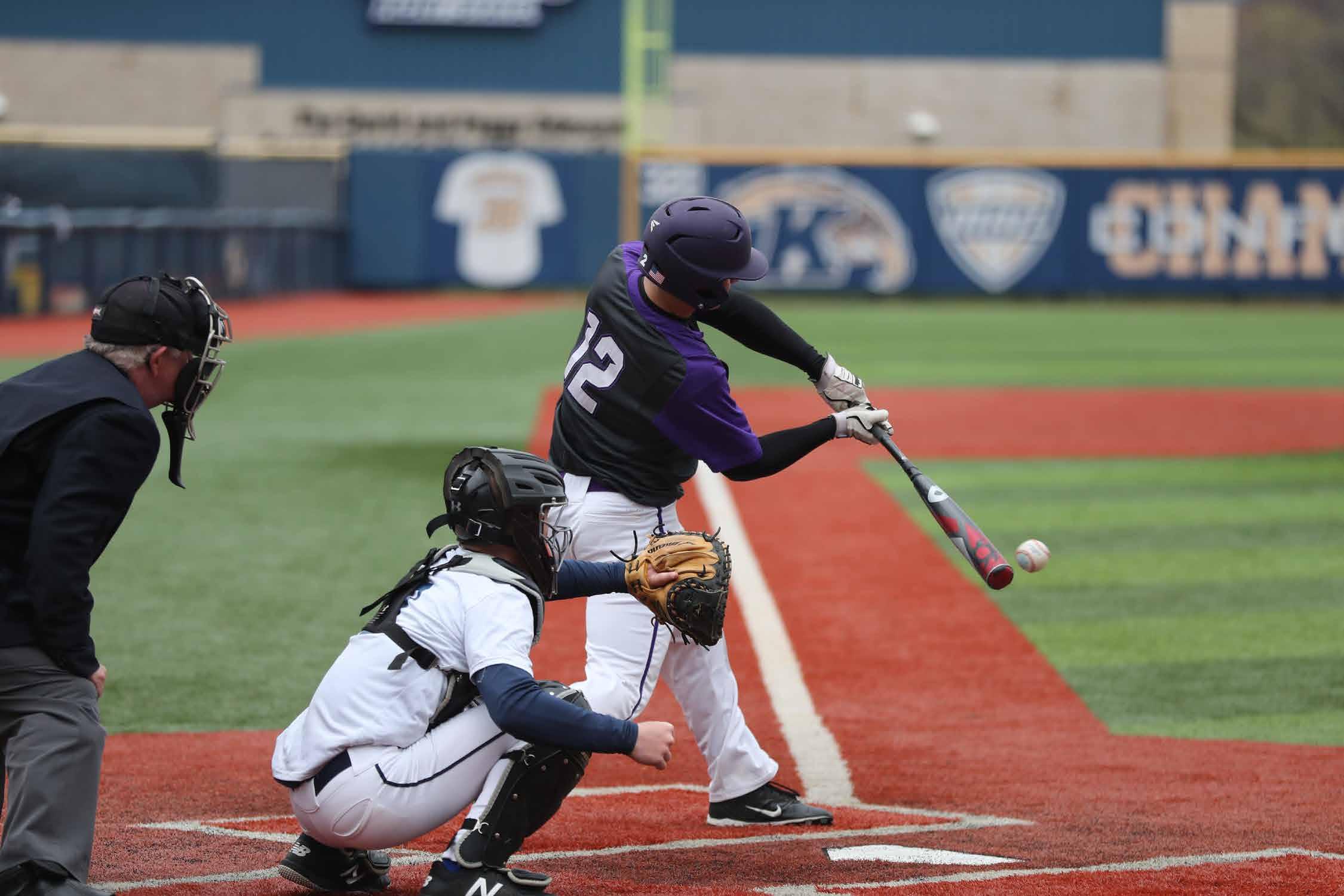
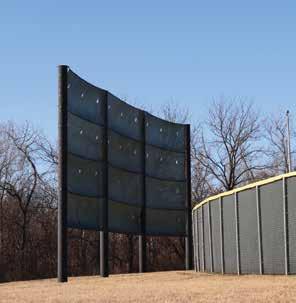
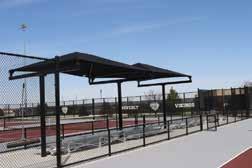
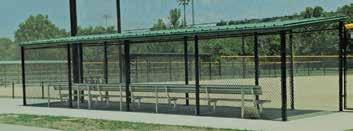
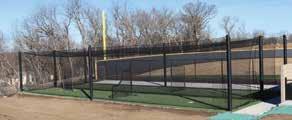
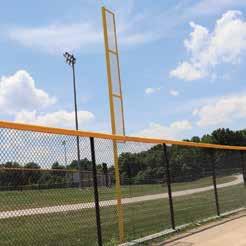
Baseball & Softball: One major distinction to consider for baseball or softball field fencing is the dangerous speed with which equipment can fly through the air. Most obviously, we’re talking about a hit or thrown ball, but there’s also the potential for a bat to slip out of a hitter’s grip. In terms of height, you’re looking at around four to six feet for field perimeter fencing, plus possible padding on the top rail for outfield players who may collide into it. Backstops will likely reach 25 feet or more. Dugouts and bullpens have more specific railing and enclosure requirements and may necessitate privacy screens. Also, consider the field’s needs for additional features such as a backstop behind home plate or a batter’s eye along the outfield fence.
Football & Track: While these are two very separate sports, it is the case that many middle, high and collegiate schools build their running track around their football field. Just as with the baseball or softball field, the height of a perimeter fence around a football and track field should reach at least four feet. Consider where entrances/exits will need to be located, with designated access for not only the athletes and spectators, but also the lawn and maintenance vehicles. Some properties apply ornamental fencing or vinyl coated chain link for these types of fields to present a more attractive aesthetic. In addition to the fencing structure, it’s important to work with an experienced team of professionals who understand the unique process for ensuring a safe, durable installation of goal posts on the football field.
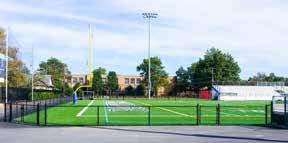
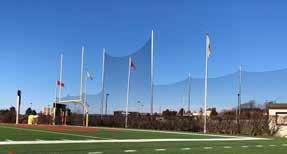
Tennis: Fences for tennis courts require greater height specs, in the tenfoot range—which will likely necessitate a horizontal rail placed midway between the top and bottom. Tennis court fencing is often coated in vinyl or galvanized with mesh steel. Think about a fencing design that protects against strong winds during play and prevents the tennis balls from getting wedged between the spacing by applying the appropriate gauge of fence mesh or material. A vinyl-coated chain link fence with a 1¾-inch by 8-gauge by 10-foot wire mesh finished in Class 2B vinyl coating is recommended. It’s also important to ensure proper railings that keep balls from rolling off the court.
“With this deeper insight into the athletic field fencing options available, you’re better equipped to make an informed decision based on individual needs,” says Rutkoski. “Be sure to contract the services of an experienced fencing partner for expert recommendations on specific applications, site grading concerns, creative solutions and the best methods to employ based on an evaluation of site-specific details.”
Learn more at www.rutkoskifencing.com.

26 SEPTEMBER 2023 | FENCE NEWS USA SPECIAL SECTION
Continued from p24


FENCENEWS.COM | SEPTEMBER 2023 27 DECREASE LABOR. INCREASE PROFIT$. 936-213-6066 We know that in your business, efficiency is everything. That’s why we designed our drills to offer what no one else can: true one-man operation. Lightweight, powerful, reliable drills with rotation speeds up to 360 rpm. You’ll do more jobs in less time, growing your revenue and improving your profit margins. DO MORE JOBS IN LESS TIME. Calculate your potential savings at littlebeaver.com/fencing-profits
Cut drilling time in half with rotation speeds up to 360 rpm.
Torque-free digging eliminates kickback and reduces injuries.
Lightweight
and designed for one-man operation.
Enhancing Playground Safety with Security Fencing
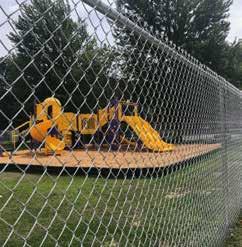

Playground accidents are often attributed to poor supervision or neglected playground maintenance. Supervision and maintenance are critical to sustaining a safe playground, but the presence of nearby hazards such as electrical utilities, railroad tracks, heavily traveled roads, water hazards, ravines, or other natural dangers can also contribute to injury or death.
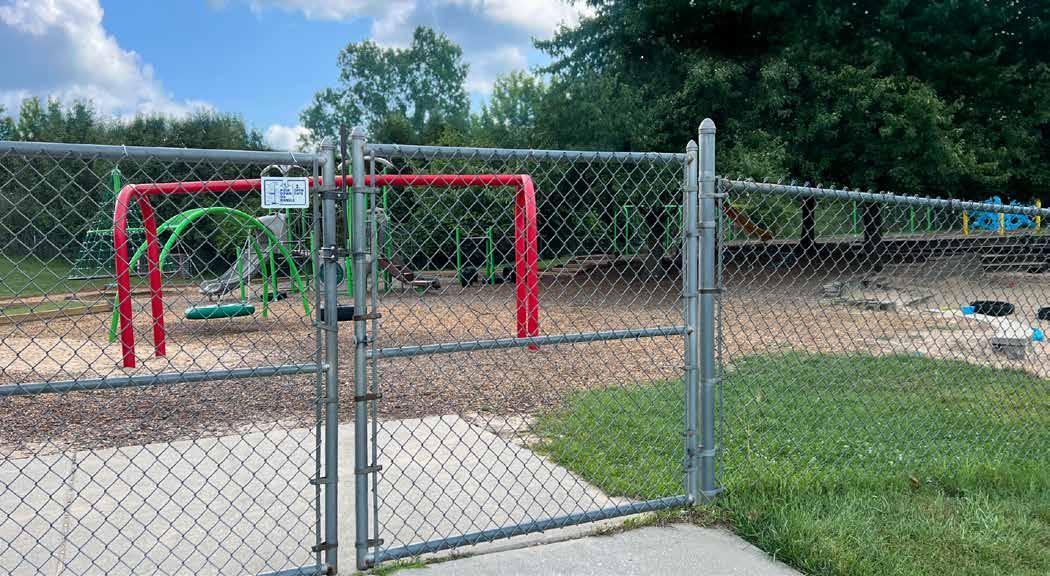
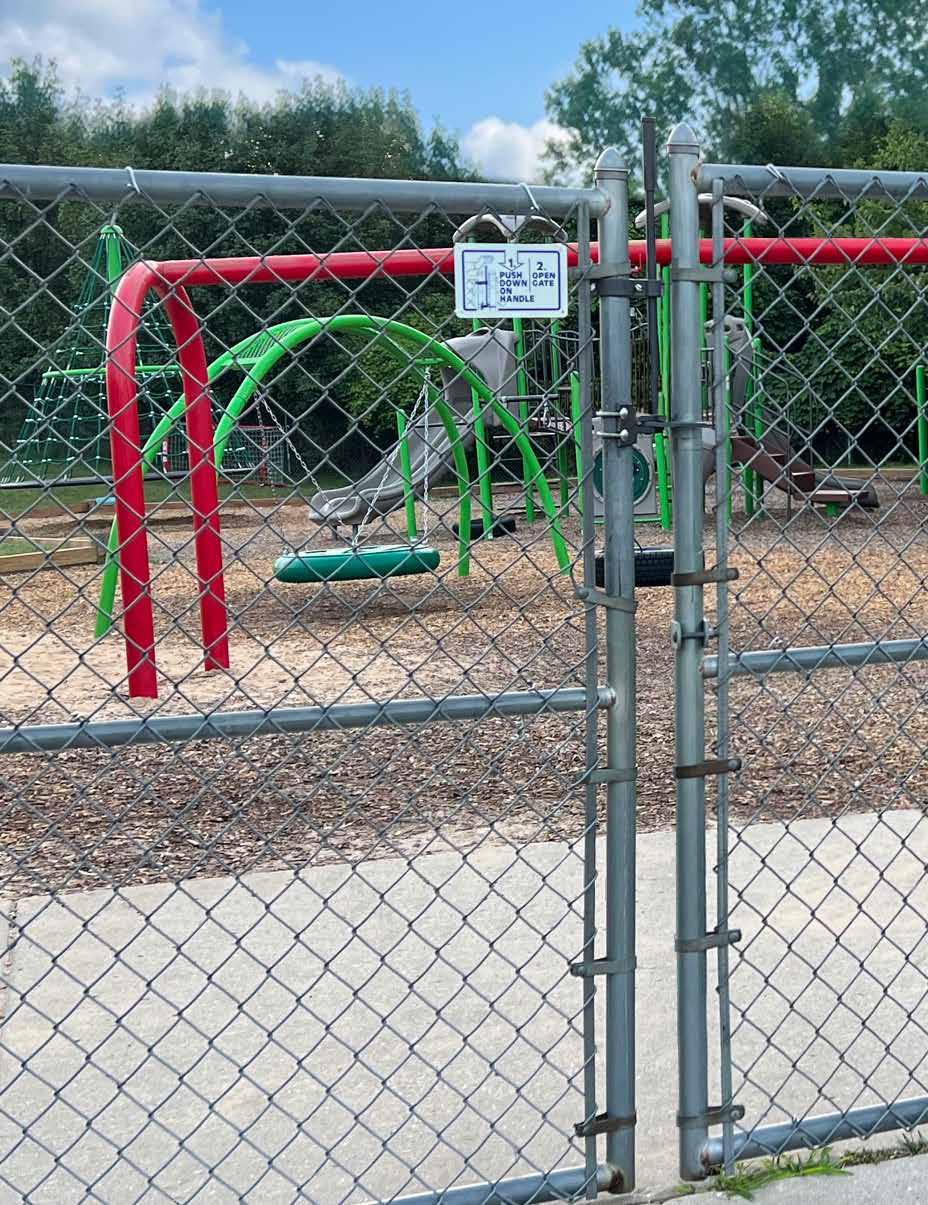
Security fences may be deployed for use in containing children within playground sites that are near accessible hazards. “Fencing around the play area is an important element in insuring that a play area for children under age five is safe and secure,” says Richard Hagelberg, CEO of Kidstuff Playsystems in Gary, Indiana.
The Consumer Product Safety Commission (CPSC) Playground Safety Handbook and several ASTM (American Society for Testing and Materials – now ASTM International) specifications apply to playground equipment and fences that are within 200 feet of playground equipment. The purpose of these guidelines (CPSC) and specifications (ASTM) is to reduce lifethreatening and debilitating injuries to those who use the playgrounds. ASTM F-1487 contains the safety performance specification for playground equipment intended for public use and ASTM F-2049 contains the minimum specification for fences or barriers used near these playgrounds. The CPSC handbook is available as a free publication at www.cpsc.gov/s3fs-public/325.pdf. The ASTM standards may be purchased online at www. astm.org/.
The CPSC guidelines and ASTM specifications define public playgrounds as equipment for use by children in playground areas of commercial (non-residential) childcare facilities, apartment and condominium buildings, parks, restaurants, resorts, schools, and other areas of public use. Amusement park equipment, sports fitness equipment, home playground equipment and a variety of other equipment is specifically excluded. The CPSC guideline applies to ages six months to 12 years of age while ASTM F-1487 applies to children aged two to 12 years with a separate specification (ASTM F-2373) for children aged six to 23 months.

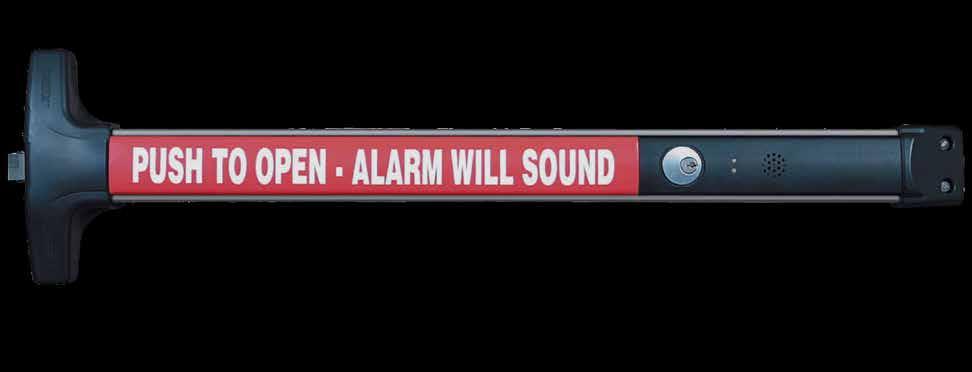
Where fences are deployed, Hagelberg says they must conform to local building codes and/or ASTM F-2049. The fences should be designed to allow for observation by playground supervisors and to discourage children from climbing in or out of the designated play area. The specification refers to the presence of certain hazards within 200 feet of playground equipment that impact the type of fencing that can be used, the size of openings within the fence, the presence of protrusions from bolts, gate latches, and other fence components, fence height (generally a minimum of 48 inches) and whether the fence must be required to pass a vehicular impact test.
Hagelberg explains that when a fence already encloses a play area which is receiving new equipment, playground equipment dealers will create a site plan, showing the use zone for each piece of playground equipment and allowing adequate space between the equipment and any fences or other barriers that are
present. The site plan is kept by the playground owner and is used by a certified inspector when the playground is inspected. Installation of a fence after playground equipment is already present should abide by the use zones shown on the playground site plan and with the specifications in ASTM F-2049. Where the site plan is not available or is ambiguous, consultation with a playground inspector certified by the National Recreation and Park Association (NRPA) is strongly recommended. Playgrounds should always be inspected by a Certified Playground Safety Inspector (CPSI) after the installation of new play equipment, safety surfacing, or fences.
“Playgrounds provide an important space for children to learn and grow as they test their physical and intellectual abilities and grow in confidence and strength,” adds Hagelberg. “In areas that might otherwise be inappropriate for the location of a playground, fences deployed according to ASTM specifications and CPSC guidelines provide the protection required to minimize the impact of hazards and allow for the effective supervision of children using the playground.”
Kidstuff Playsystems is the only IPEMA certified playground equipment manufacturer in the state of Indiana and has been manufacturing playground equipment since 1982. Learn more at www. kidstuffplaysystems.com.
28 SEPTEMBER 2023 | FENCE NEWS USA
SPECIAL SECTION
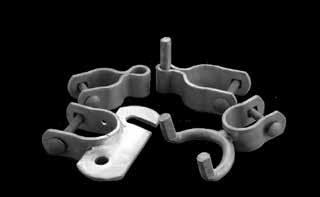
FENCENEWS.COM | SEPTEMBER 2023 29 THE ONE-STOP SHOP FOR YOUR GATE HARDWARE NEEDS 616.235.0140 /dacindustries facebook.com/dacindustriesinc www.dacindustries.com GATE STOP GATE CLOSURES AUTO-LATCHES DEIFITREC I N STOCK CERTIFIED I N KCOTS
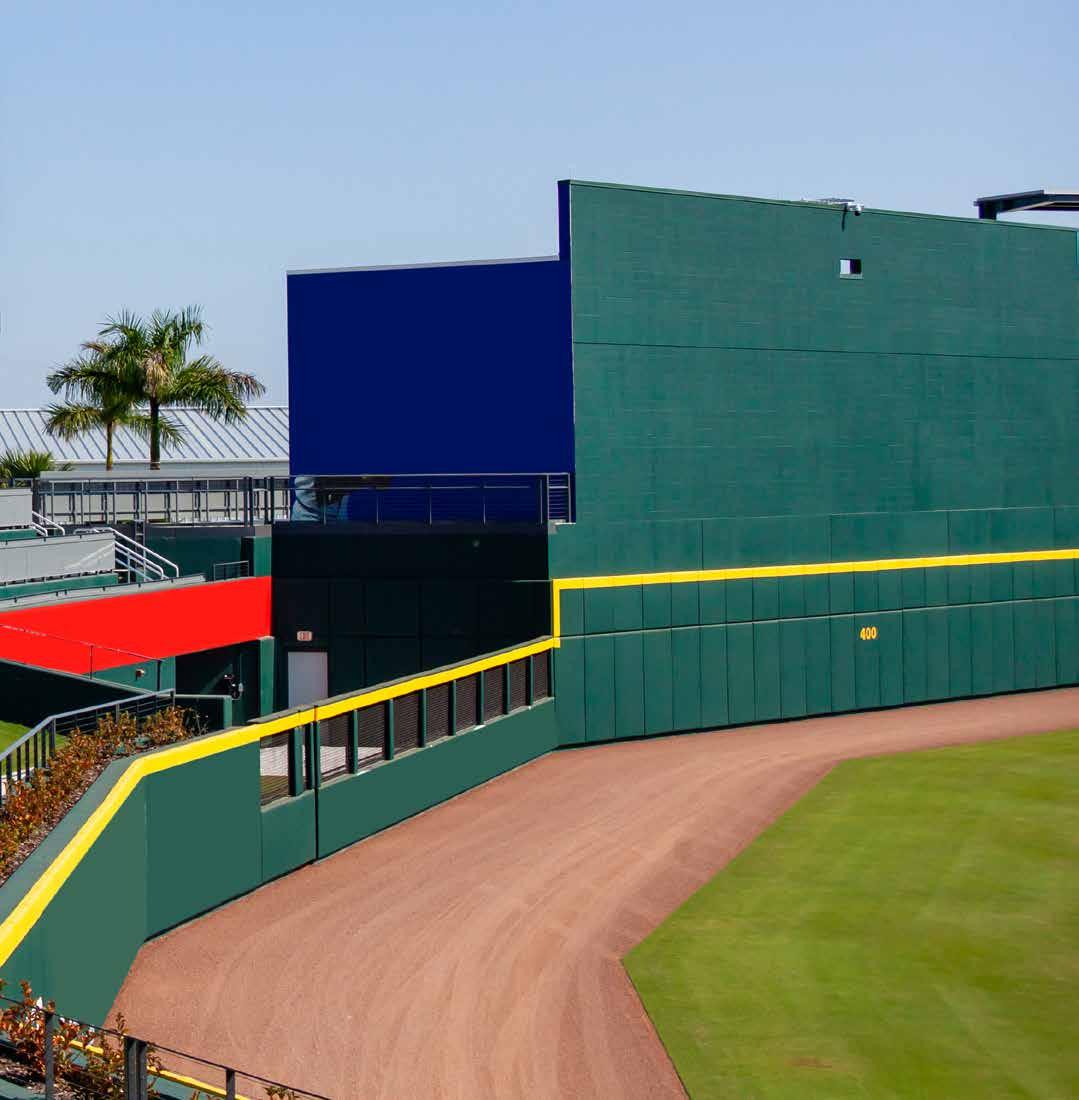
Case Study: COVERMASTER® Hits a Home Run at the Rogers Centre
COVERMASTER® has been providing outfield stadium padding for Major League Baseball’s Toronto Blue Jays since the opening of what was then called the SkyDome in 1989. In fact, the final padding was selected for the retractable-roof stadium by testing various samples at the Blue Jays’ spring training stadium in Dunedin, Florida. Over the years, COVERMASTER has provided various updates to the stadium wall padding in what is now called the Rogers Centre, but in 2023, major stadium renovations led to the opportunity for a huge wall padding upgrade.
Prior to the announcement that Rogers Centre was going to receive $300 million in renovations for the 2023 season, COVERMASTER was already on board to provide the new baseball wall padding for the completely reconfigured outfield sections. The former walls and outfield fencing would be replaced with a series of new fan social areas, raised bull pens with fans at eye level, and a non-symmetrical outfield fence line that’s unique in both height and dimensions.
Ken Curry, president of COVERMASTER, explains that baseball wall padding from COVERMASTER is designed to provide maximum protection for players, while also enhancing the look of the baseball stadium field. “Our baseball wall padding is made from durable materials that can withstand the wear and tear of the game. It is available in a variety of colors, so teams can choose the perfect option to match their colors or the overall aesthetic of your field.”
COVERMASTER also offers a wide range of padding options for baseball fields, including outfield wall padding, rail padding, fence padding, and custom padding.
• Rail padding is designed to protect players from collisions with metal rails and posts around the field.
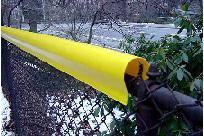
• Fence padding is used to cover chain link fences that surround the field, providing additional protection for players who may collide with the fence while chasing down a ball.
• Custom branded padding allows teams to add their own logos, colors, and designs to their padding, creating a unique look for their field.
Curry says these padding options are made from the same COVERMASTER durable materials to provide maximum protection for players.
For the Rogers Centre renovation, COVERMASTER was tasked with the production and installation of all new outfield wall padding. In addition to the custom, made-to-measure wall padding, a custom, navy blue color more representative of the Toronto Blue Jays was selected. Curry says months of planning went into this major project and by February of 2023, the COVERMASTER installation team was onsite to get the new wall padding in place well in advance of opening day in March.

COVERMASTER is proud to provide sport surface covers for clients from all around the world. Learn more at COVERMASTER.com.

30 SEPTEMBER 2023 | FENCE NEWS USA SPECIAL SECTION
CONTRACTOR’S CHOICE

FENCENEWS.COM | SEPTEMBER 2023 31
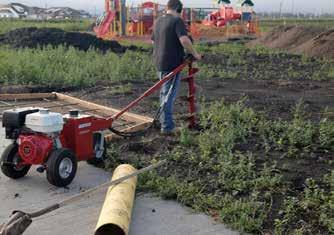
The Do-it-All Earth Drill Earth Drills Bring Versatility and Efficiency to Municipalities for Parks and Playgrounds
Municipalities have their work cut out for them. Whether it’s city maintenance workers or general contractors hired to sustain parks in a city, town or borough, a day’s work can involve several industries’ skills rolled into one crew. They may be installing fence posts in the morning, replacing sprinkler lines mid-day and planting trees in the afternoon.
“With this variety, working smarter, not harder, is paramount to overall productivity,” says Joe Haynes, Little Beaver president. “And having versatile tools that allow crews to better utilize labor safely, while also outperforming other methods, can have a major impact on efficiency. The right earth drill can do just that. Some earth drills even enable safe one-man operation with nearly two times the productivity of other units. It’s just a matter of finding the earth drill that best meets the municipality’s needs.”
Haynes highlights two popular earth drill choices for grounds crews, mechanical and hydraulic, along with the applications for each.
Mechanical Earth Drills
For work in towns and cities that includes planting a lot of small greenery, installing fences or taking on other tasks that require crews to dig numerous footings quickly, a mechanical earth drill is a good choice. Perfect for fast, narrow hole drilling, some manufacturers even design these drills to allow for safe, one-man operation while providing the speed to help crews excel. Look for manufacturers that offer augers in a variety of dimeters and lengths. Additionally, some manufacturers offer multiple gear reduction ratio options to give the flexibility to choose a mechanical drill with a high RPM for loose, soft soils or one with a lower speed that is better suited for dense, rockier formations. With a mechanical drill, crews can quickly install a long row of shrubs and then shift to setting a pole for a basketball hoop in denser soil — all without missing a beat.
To further increase municipal staffs’ versatility, some manufacturers offer horizontal boring kits for mechanical earth drills. The horizontal boring attachment allows grounds crews to install everything from sprinkler systems and lighting wire to drainage pipes and more, all with an easy-to-connect attachment.
Hydraulic Earth Drills
If heavy-duty applications and anchoring are abundant and soil types are consistently rocky and dense, hydraulic drills might be a better choice. Hydraulic earth drills are designed with powerful torque, which is perfect for installing anchors or digging holes for large playground equipment, awning supports, sizable landscaping and other tasks that require deep, wide footings.
Like with mechanical drills, look for manufacturers that offer augers in a variety of diameters and drilling depths. With auger options and the increased torque of hydraulic drills, crews can take on lighter tasks like planting landscaping and then quickly shift to heavy-duty construction, like installing support beams for a sunshade. This gives crews the flexibility to divide and conquer whatever the municipality throws at them.
Hydraulic drills with precise auger rotations at low speeds can be perfect for anchoring. Some manufacturers offer anchor adapters for various applications from anchoring poles and beams to installing tent stakes, making them a versatile solution for municipalities. When pairing an anchoring attachment with a hydraulic earth drill, crews have an anchoring machine to secure footbridges, large playground equipment and more.
Haynes says the extensive tasks that await city maintenance crews and contractors don’t have to mean an extensive set of tools. “With a little knowledge about the applications, crews can choose an earth drill to carry them through the day — safely and efficiently.”
With a full line of easy-to-operate equipment Little Beaver effectively serves the needs of end-users. For more information, call 800-227-7515; email sales@littlebeaver.com or visit littlebeaver.com.
Having a versatile earth drill that allows crews to better utilize labor safely, while also outperforming other methods, can have a major impact on efficiency.
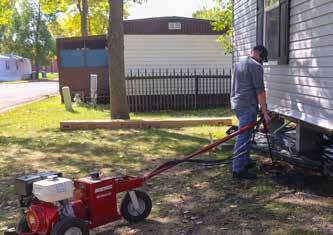
Hydraulic earth drills are designed with powerful torque, which is perfect for installing anchors or digging holes for large playground equipment, awning supports, sizable landscaping and other tasks that require deep, wide footings.
32 SEPTEMBER 2023 | FENCE NEWS USA SPECIAL SECTION


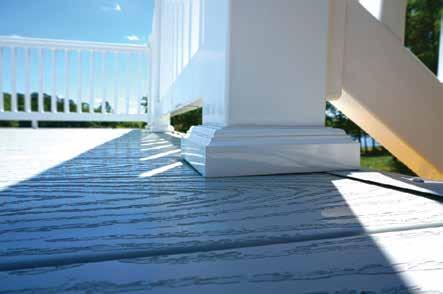
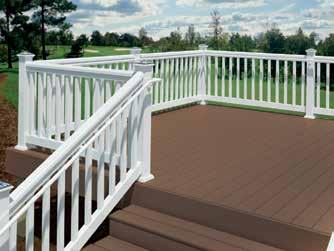
FENCENEWS.COM | SEPTEMBER 2023 33 HOMELAND VINYL +WAYMARK __________________ OPTIONS Gorilla® Wood Deck Chestnut Nexus 1 Rail System Classic Trim Secondary Handrail 20 15 13 12 12 9 9 7 6 5 5 2 1 Gorilla® is a registered trademark of Homeland Vinyl Products, Inc. Column/Post Profiles Post Caps Pocket Rail Profiles Colors* Railing Systems Trim Rings Privacy Panel Profiles Gate Pockets Plant Locations Post Mounts Rail Mounts Decking Profiles ADA/Secondary Handrail System *Colors may not be available in all profiles or markets.
Case Study: Scaling New Heights

A-1 Fence Takes on the Challenge of
Fencing a Rooftop Basketball Court
Elevated sports facilities are becoming a symbol of urban innovation, offering a unique blend of recreation and urban spectacle. However, the installation of a rooftop basketball court fence on a multi-story building presents a set of challenges that demand careful planning, experience, and a commitment to safety.
Safety concerns are what led Abraham Montoya, general manager of A-1 Fence in Anaheim, California, to initially turn down the job of fencing a rooftop basketball court when the Onni Group approached him about the project. The 14-story Beaux Arts style building they were refurbishing as an upscale office building in Los Angelas, California, was originally built in 1925. Rebranded today as The Western Pacific on Broadway, the building is located on one of the most historic and vibrant streets in downtown LA.
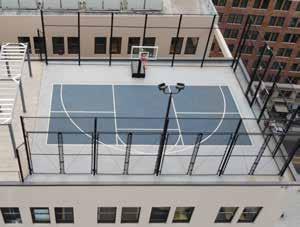
The rooftop of the iconic building is now home to a recreation area featuring an outdoor seating area, hammocks, fire pit, bar, cornhole boards and a basketball court. Montoya says the project was unique and challenging on multiple levels, from the logistics of transporting materials and equipment to the rooftop site, to the very real safety concerns about installing a fence at that elevation. “I turned down the job at first. I couldn’t see a reason to bet on a project that I didn’t fully understand. We had built a basketball court fence before. We had built safety railing at high elevations. I knew we could do it, but I didn’t want to have my crew put their safety at risk,” he says. “We were able to work with the contractor to come up with solutions that minimized the risks. We built sections of the fence in our shop, and then the contractor, who had a crane on site, lifted the sections and posts up to the roof where my crew directed the placement.”
Montoya says embedded metal plates on the rooftop are the key to the structural integrity of the fence. “Our riggers placed the powder-coated, metal sleeves over the protruding posts on embed plates and welded them together securely. Additionally, grade 8 bolts were used to secure the cross sections. There’s no way those posts are twisting, turning or moving.”
The design-build, black vinyl fence chosen for the project is 15-feet tall and provides the safety features needed for a rooftop basketball court, while complementing the aesthetic of the building.


Learn more about A-1 Fence Company at www.a1fence.com
34 SEPTEMBER 2023 | FENCE NEWS USA
SPECIAL SECTION
FENCENEWS.COM | SEPTEMBER 2023 35 -22° +158°F QUICK-FIX 2000 MM 6 1/2 FT 200 KG 44 0 LBS YEAR 3 WARRANTY PMR ADA CYCLES 500 K Specs, drawings, references, videos and more available at salesusa@locinox.com 877-LOCINOX 460 Windy Point Dr, Glendale Heights, IL 60139 LOCINOXUSA.COM MAMMOTH HD Highly powerful hydraulic 180° gate closer and hinge-in-one
Windscreens Aren’t Just for Sports Fields
They Offer Privacy and Promotion for a Wide Variety of Uses
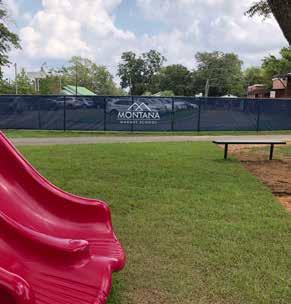
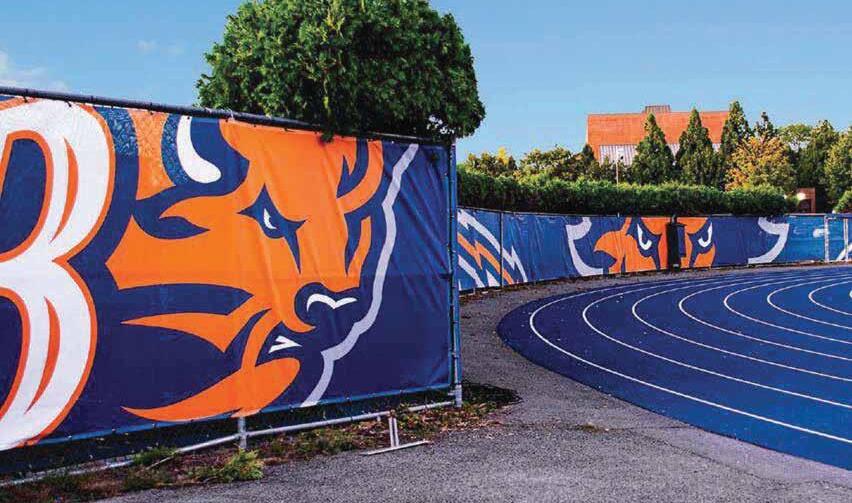
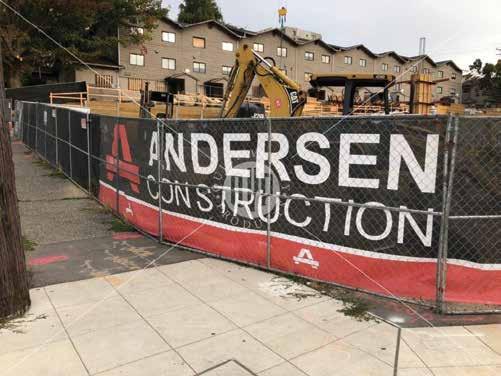
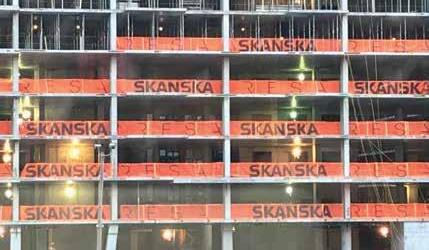
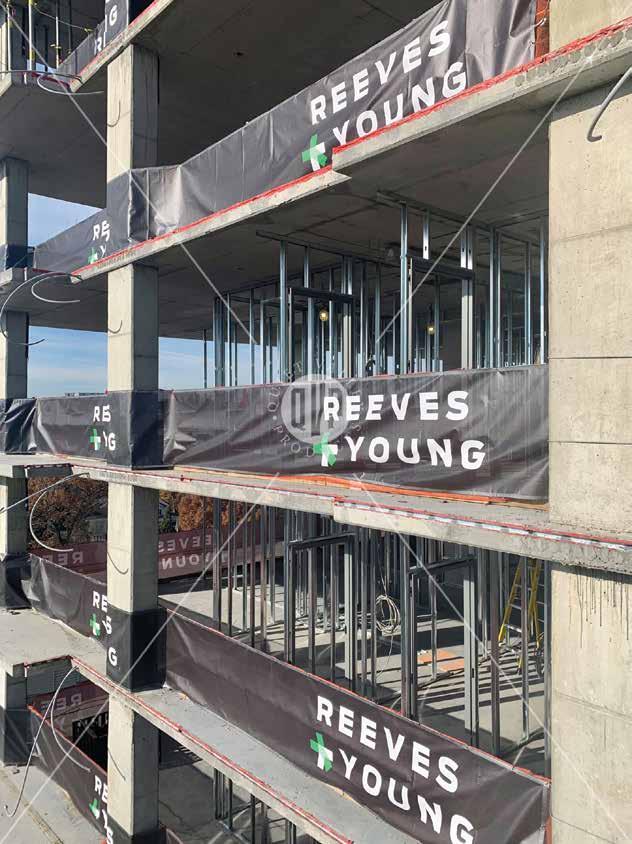
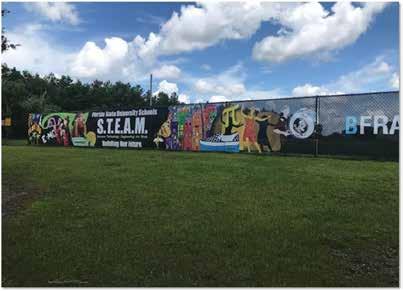
While often used at sporting fields and complexes, windscreen can be used in many applications. Because full color graphics can be printed on it, using windscreen in construction, crowd control, promotional opportunities, parking lots, temporary fencing and more. They create visually appealing perimeters for privacy and to conceal unsightly areas.
“There are several materials available, depending on how it will be used,” explains Heidi Claeys, director of sales with Douglas Sports, located in Iowa. “A tighter weave offers more privacy; a more breathable fabric is best in some situations but is limited in printing. Depending on the application, we can help determine the best product to use.”
Sports field windscreens are the most popular and allow for branding and promotions. The added visual barrier provides privacy and blocks out distractions for players. As the name implies, it creates a protective barrier from the wind, enhancing play on the field.
The standard mesh material has an 80/20 radio, meaning 80% of the weave material is solid and 20% allows air to pass through.
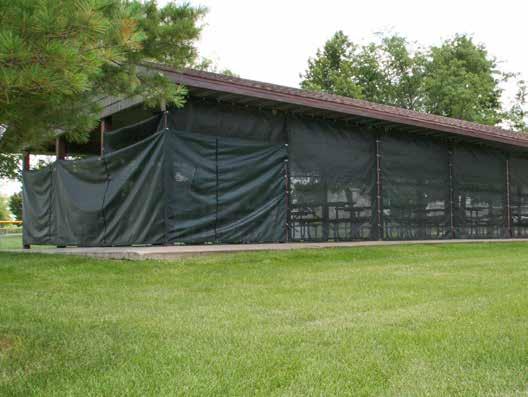
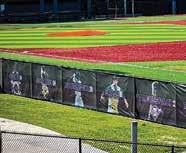
Beyond the sports field, adding windscreen to bare fences around a stadium, facility or construction site allows for branding and advertising opportunities. The addition of windscreen to the upper safety backs of bleachers helps block the sun and glare, and gives space for the school’s name, mascot, and sponsor promotion.
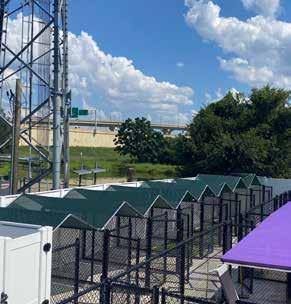
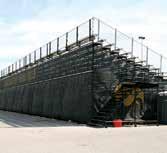
Windscreen can enclose the area under bleachers, transforming it from an unsightly space into an attractive and useful place for storage. Adding screens can conceal the equipment and supplies stored in this area along with additional protection from weather for the items being stored.
Construction jobs can get unsightly quickly; adding windscreen to the perimeter can deter trespassing while establishing an aesthetically pleasing border. “By simply adding the logo of the construction company, the site looks more professional,” says Heidi Claeys.
“We manufacture every order in house, so we control the production process ensuring the made-to-order panels are precisely right,” says Claeys. “Our panels are reinforced with three-ply extra-strong hems to stay firm in harsh weather. From the type of grommets we use to the quality of thread, we are meticulous about every detail to ensure satisfaction.”
Douglas Sports has over 50 years of experience in windscreen production and printing, and their staff is available to provide expertise for each application. For more information, visit sports-screens.com.
36 SEPTEMBER 2023 | FENCE NEWS USA
SPECIAL SECTION


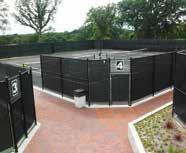

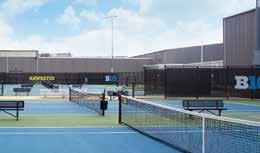
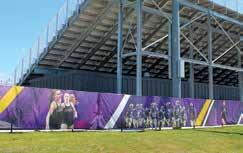
FENCENEWS.COM | SEPTEMBER 2023 37 1-800-553-8907 douglas-sports.com | sport-screens.com USA MANUFACTURER FOR OVER 55 YEARS WINDSCREEN customized for all applications full color digital windscreen printing Baseball & Softball Fields Tennis & Pickleball Courts Sport Fields - Soccer, Football, Track Privacy Fence Screens Screen for Construction & Businesses Bleacher Screen Enclosures
RHINO® Introduces New Transport Case for ProSeries Gas Post Drivers
RHINO Tool Company, a leading manufacturer of gas, hydraulic and pneumatic post drivers as well as manual and hydraulic post pullers, introduces their new transport case designed to fit all models of pro-series post drivers.
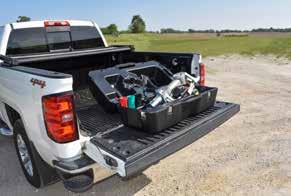
The high-density, polyethylene, double-wall construction and molded interior have recessed compartments to keep accessories organized. Adapters, owners’ manuals, hex key and more fit snugly beside the securely placed post driver. Durable metal hinges, latches and lockable molded handles keep the case closed even during rough transport.
Steve Orrick, sales manager with RHINO, has taken many requests and suggestions for a carrying case. “We wanted to provide a post driver case that properly positioned the post driver and engine for easy storage, stood up to everyday use, and was made in the USA,” he says.
KEY FEATURES INCLUDE:
• The molded interior fits all RHINO gas post driver models
• Premium protection for storage and transfer of RHINO post drivers




• Intentional spaces for accessories
• Two molded handles, one with padlock hole, for easy tie down during transport
• Tough design withstands everyday use

• Designed and made in the USA
For more information, visit rhinotool.com.
Felcher Honored for Long-Term Membership

During the closing dinner at the recent CLFMI summer meeting in West Virginia, Sharon Felcher, president of NASCO, received a certificate of recognition and appreciation marking her 40th year of CLFMI membership.
Felcher joined CLFMI at the 1983 summer meeting in Snowmass, Colorado and has maintained continuous membership since then.
38 SEPTEMBER 2023 | FENCE NEWS USA
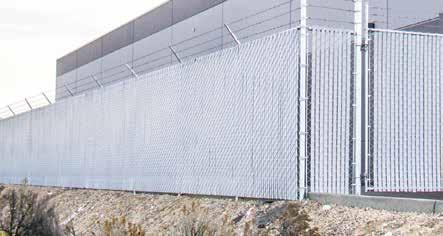
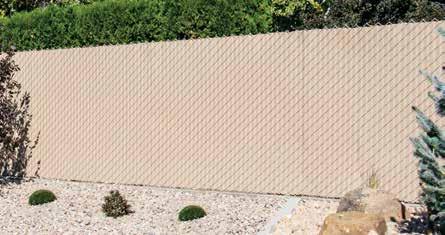
Get a FREE quote - Call 800.574.1076 eprivacylink.com FOR PRIVACY AND SECURITY, GO WITH PRIVACYLINK! CHAIN LINK FENCE WITH “FACTORY INSERTED SLATS” ™ PrivacyLink® • 98% Privacy (Approx.) — 3 1/2” x 5” Wire Mesh • 9 or 10-gauge galvanized or vinyl-coated wire • Factory inserted Fin2000 double-wall slats • Fence ships in rolls ready for installation IndustrialLink® • 75% Privacy (Approx.) — 3 1/2” x 5” Wire Mesh • 9 or 10-gauge galvanized or vinyl-coated wire • Factory inserted Industrial double-wall slats • Fence ships in rolls ready for installation
CAMO Launches Polyolefin Deck Block

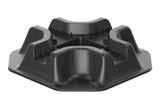
National Nail’s CAMO brand announces the launch of its new CAMO BLOCK, a lightweight, heavy-duty polyolefin deck block for building above-ground decks, platforms, and other exterior projects—virtually eliminating the need for cement blocks.

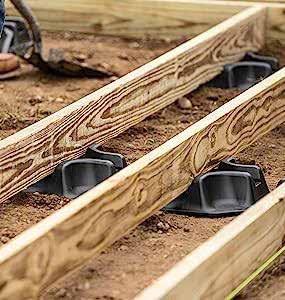
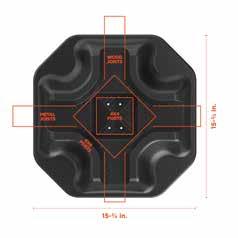
“We are passionate about offering our users products that make their jobs faster, easier, and better. The CAMO BLOCK does just that. At just over two pounds, the BLOCK is significantly lighter in weight than traditional concrete blocks, so you can easily transport them in one trip to the truck and on to the jobsite,” says Greg Groenhout, CAMO product manager. “It is the most versatile deck block on the market, accepting 4×4 and 6×6 wood posts, 2x wood joists, and up to 2-inch metal joists. And because the BLOCK is precision engineered to fit these sizes, you get a snug fit without the effort and headache of chiseling out the channel.”
CAMO BLOCK is a lightweight, heavy-duty alternative to concrete deck blocks. Made of long-lasting polyolefin, BLOCK will not chip or crack, even in cold weather. It’s made from recycled material and can be recycled at the end of its life. Each BLOCK is precision molded to fit standard lumber specifications without the need for modification on the job. It features ribs and weep holes to direct water away from the substructure and prevent build up, rot, and mold. It is load-rated to support 1800 PSI.
CAMO BLOCK is designed to build freestanding decks from 5 ½-inches to 30-inches high. They can be used for various platform profiles, including lowprofile, raised-profile, variable-height, and hybrid-profile. They can also be used for rooftop decks, landings, walkways, sheds, and dog houses, and can be installed on any flat and firm surface, including uneven ground with some leveling.
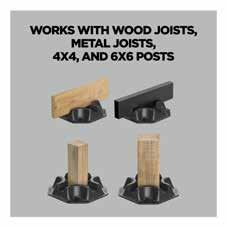
CAMO BLOCK is backed by a 30-year limited warranty. Learn more about CAMO BLOCK at camofasteners.com.





Nice Unveils NextGeneration Partner Resources with


Partner
University
Nice, a global leader in home and building management solutions, has launched two transformative resources for partners in North America: a revamped Partner Portal and Nice University, a comprehensive education and training platform. These dynamic tools are poised to boost partner performance and build partnerships that center around collaboration, empowerment, and shared success.
THE NICE PARTNER PORTAL
This portal is an all-in-one, user-friendly, and secure resource, developed to foster better collaboration between Nice and its diverse partner groups. It will enhance the partner experience, accelerate sales across different business lines, products and solutions and streamline partners’ interaction with Nice.
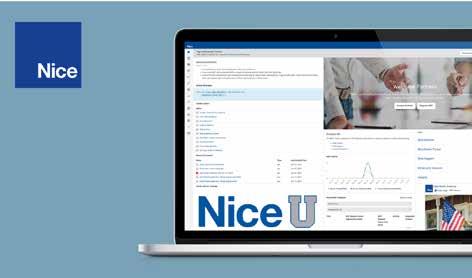
“Imagine a partnership experience that’s not only efficient, but also engaging and empowering. That’s the vision driving the new Nice Partner Portal,” says Analizza Lambino, director of channel & partner marketing at Nice North America. “This is a significant step towards nurturing stronger relationships with our partners, making their journey with us more rewarding and successful than ever before.”
The Partner Portal’s value-added benefits include:
• Comprehensive access to marketing and sales collateral across the Nice portfolio

NICE UNIVERSITY
In line with the vision of a world without barriers, the all-new Nice University removes obstacles to education by offering curated training opportunities that meet individuals’ unique learning needs. The platform is built to be flexible and user-centric, providing a mobile-friendly and personalized learning experience that users can engage with at their own pace. Nice University also provides dealers and distributors the chance to coown the learning process by monitoring their company’s education progress.
“At Nice, we understand the immense value of education. Nice University embodies our commitment to fostering an environment of continual learning and development for our employees and partners,” says Ben Mahoney, director of education at Nice North America. “It is designed to equip users with the knowledge and skills necessary to thrive in the everevolving landscape of Home and Building Management solutions.”
Nice University features include:
• Easy-to-find training opportunities and resources
• Education transcripts and certifications to enhance value for individuals and organizations

• Learning from subject matter experts to deepen product understanding and earn CEU credits


• Future enhancements, such as social learning opportunities; allowing users to share experiences and ideas with industry peers within the platform
Enroll in Nice University by visiting nice.university
Innovative
Portal and Nice
Platforms The launch of enhanced partner tools in North America is set to supercharge partner empowerment and education experiences. LEADING MANUFACTURER OF ALUMINUM FENCES & RAILINGS SPECRAIL Aluminum Fence & Railing Products produced in Hamden, CT, are designed to the highest quality aluminum products available. LEADING MANUFACTURER OF ALUMINUM FENCES & RAILINGS
Aluminum
& Railing Products produced in Hamden, CT, are designed to the highest quality aluminum products available. Stainless Cable Systems Infill and Fabrication Options Available Limited Lifetime Warranty Available in Black, White, Bronze & Two-Tone ADA Compliant LEADING MANUFACTURER OF ALUMINUM FENCES & RAILINGS specrail.com info@specrail.com SPECRAIL Aluminum Fence & Railing Products produced in Hamden, CT, are designed to the highest quality aluminum products available. Bridgeport-Hidden Fastener System Canton-Glass Railing System Stainless Cable Systems Infill and Fabrication Options Available Sturdy Aluminum Construction Easy Installation Maintenance Free Limited Lifetime Warranty Available in Black, White, Bronze & Two-Tone ADA Compliant 800.243.6256 800-749-7181 | sales@keenerdupontwire.com Available in 11 ga, 9 ga, 7 ga, 6 ga –Sizes for 1-5/8 pipe up to 8-5/8 –9 ga & 6 ga conform to ASTM F62696A - Pigtail, Square, T-post KDT available - Special sizes or shapes on request K D TIE-WIRES KEENER-DUPONT WIRE., LLC When wire is your only business LOOK FOR IT AT YOUR LOCAL SUPPLIER! KDTwist Power twist tie Save Money, Save Time, Prevent Installer Fatigue Available in Galvanized Class B Coating or Less Aluminized Offered! Now Available in Solid Aluminum We also offer stainless steel products as well!
SPECRAIL
Fence
FENCENEWS.COM | SEPTEMBER 2023 45
Increase Production and Profit with Diamond Mowers’ New Disc Mulcher Belt Drive Pro
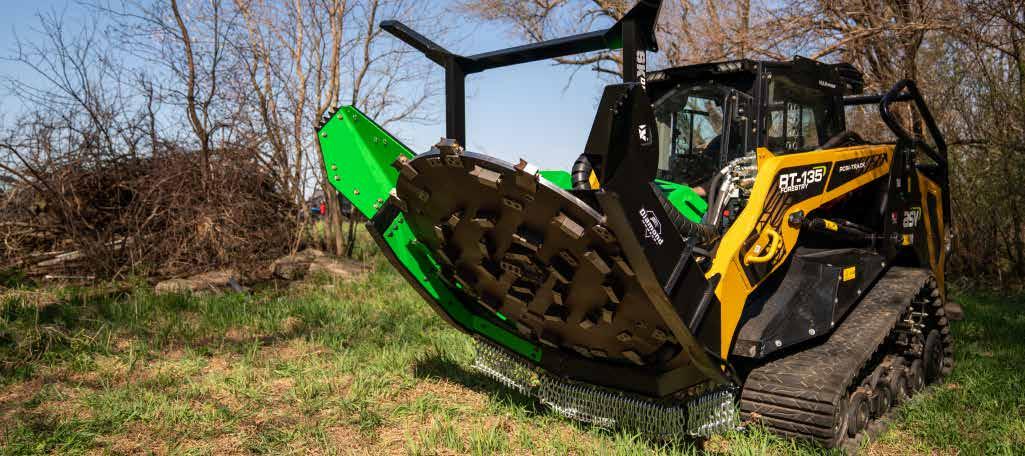
If zero to 60 sounds impressive, consider a mulcher that goes from zero to 1000 RPM in a matter of seconds. That’s what operators get with the new Disc Mulcher Belt Drive (BD) Pro X from Diamond Mowers, a leading manufacturer of mowing, mulching, and brush cutting equipment for the municipal, skid-steer, and excavator markets. Engineered for highvolume use and maximum productivity, this powerful attachment features increased torque to obliterate anything in its path without slowing down.


“Reinforcing Diamond Mowers’ reputation for building a first-rate mulcher, this game-changing attachment outpaces, outpowers, and outclasses anything else on the market,” says Dan Stachel, executive vice president of Diamond Mowers. “Because we know time is money and productivity drives profitability, we designed this machine to work as hard as the people who use it.”
Engineered for professional mulching contractors and other highvolume mulchers in land clearing, vegetation and forestry management, and pasture reclamation, the new Disc Mulcher BD Pro X couples a belt drive with a two-speed hydraulic motor to increase torque and disc speed, allowing users to take full advantage of the mulcher’s potential. To ensure productivity never wanes, the disc speeds up during reprocessing and back-dragging, meaning operators can finish the job in less time. The belt drive system acts as a torque multiplier that prevents the machine from slowing down when slicing through large materials and enables it to recover quickly. Furthermore, an AR 400 bolt-on replaceable liner helps to reduce abrasion on the shell from thrown materials.
“Based on our testing, this new Disc Mulcher BD Pro X delivers torque values two-to-three times higher than the industry has ever seen,” adds Stachel. “It also spools faster than Diamond Mowers’ previous top-tier 160cc motor for 20%-30% more productivity.”
Beyond its industry leading power, the Disc Mulcher BD Pro X features enhanced forward visibility to ensure operators do not hit rocks and can better position the head on trees. Its efficient design also promotes lower hydraulic temperatures for exceptional efficiency and durability.
“Increased performance has historically come at the expense of overheating,” says Stachel. “The efficient design of this new attachment actually reduces hydraulic oil temperatures compared to other disc mulchers, allowing operators to work longer in hot weather without the downtime associated with overheating.”
Diamond Mowers’ new Disc Mulcher BD Pro X is available in a 60-inche cutting width to slice through trees and brush up to 14-inches in diameter and mulch material up to 6 inches. It attaches to large frame skid-steers and compact track loaders and is paired with a 107cc variable displacement bent axis piston motor to match its hydraulic flow of 32-50 GPM. While Diamond’s Four-Point Hardened Steel Teeth come standard, users can swap them for Twin Maul® Carbide Teeth to absorb impact and ensure the right bite for every application.
This new attachment is backed by a one-year warranty. Additionally, customers have access to the company’s industry-leading customer service resources, including an experienced team of care experts and a dedicated parts team readily available to address any needs that may arise.
“Our customer-centric approach is built around improving processes and introducing new solutions to better serve their needs,” explains Stachel. “By continuously innovating our products, we can assure that our customers’ jobs will be easier, more productive, and more profitable than before.”
For more information about Diamond Mowers’ products, visit diamondmowers.com.
46 SEPTEMBER 2023 | FENCE NEWS USA
PROFESSIONAL WOOD CARE





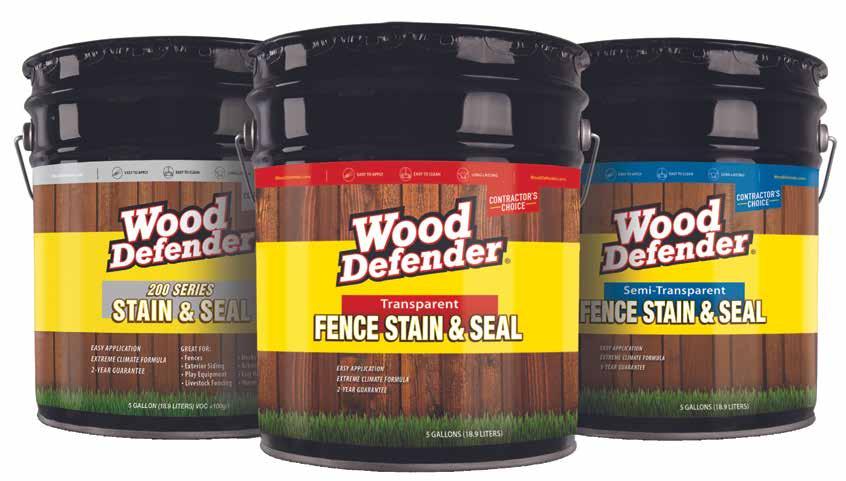
Performance and innovation are vital to our planet’s future. Taking care of our global environment starts with the environment in our backyards. EXPERT Stain & Seal’s Low VOC formulation offers <250 g/L, an easy clean-up and less gas-off from when the pail lid opens to well after the stain is applied.

EXPERT Stain & Seal’s Fence & Deck and Log & Timber formulas use a proprietary blend of premium drying and non-drying oils with high-quality pigments allowing the stain to sink deep down, nourishing wood from the inside out, and providing long-lasting color and finish. Choose from 26 wood stain colors.
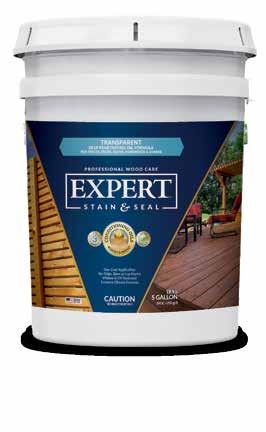

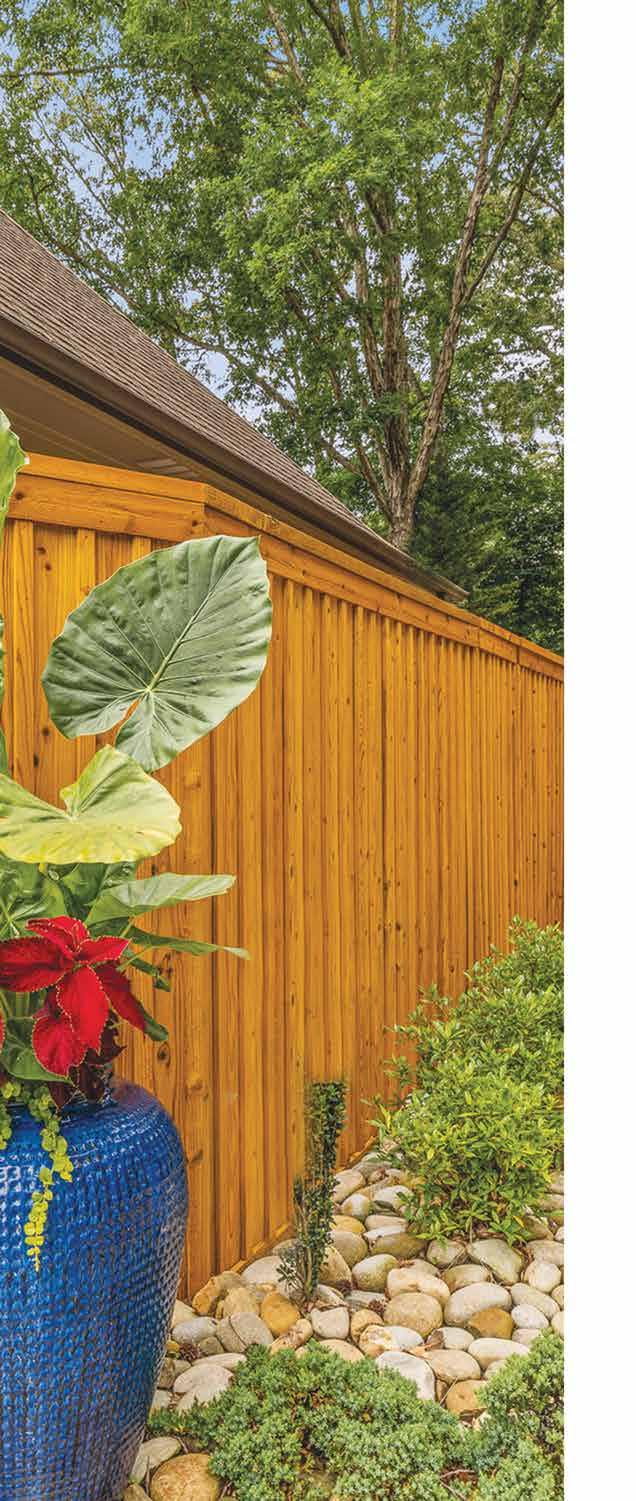
EXPERT Professional Wood Care products provide real impact and performance backed by an EXPERT 3-STEP System Limited Lifetime Warranty.† An easy-to-follow maintenance schedule aligns stain or wood condition with EXPERT Clean & Bright restoration products, followed by EXPERT Stain & Seal wood stain.





FENCENEWS.COM | SEPTEMBER 2023 47
Wood Care That’s Easy as 1-2-3. Expect Expert Performance. Guaranteed.* Become an EXPERT Distributor today, call 1-833-4-THE-EXPERT. PROUD MEMBER OF Available through select retailers. *†Guaranteed on new, non-exotic, hardwoods. Must follow all product label application directions, and Manufacturer’s recommended maintenance steps. ©2023. EXPERT®™ Professional Wood Care and EXPERT Stain & Seal are registered trademarks. All rights reserved by Restorative Wood Products, LLC.
Sunbelt Forest Products Expands Product Line To Include Deckorators®
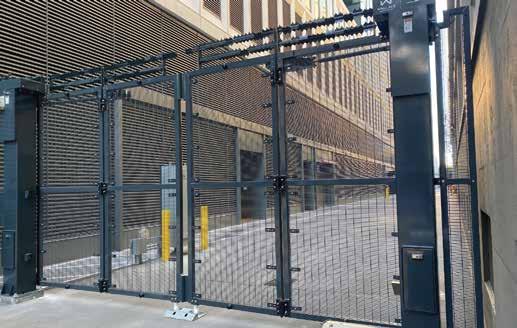
Sunbelt Forest Products has announced the integration of Deckorators®, a leading composite decking, railing, and accessories brand, into its portfolio. This expansion enables customers to access high-quality outdoor living products and premium pressure-treated lumber from a single supplier.
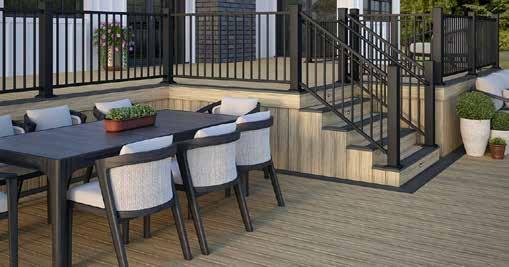
Based in Bartow, Florida, Sunbelt Forest Products is a leading producer of pressure-treated lumber and residential wooden fencing and a distributor of leading building material products throughout the Eastern U.S. Sunbelt Forest Products now distributes Deckorators® Voyage Composite Decking in the Nashville Metro market area with expanded distribution channels coming soon. “We will begin
including a core mix of the Deckorators® line at the Sunbelt Forest Products Athens, Alabama, facility for enhanced distribution into the greater Nashville market,” says Gabe High, vice president of Sunbelt Forest Products. “The product mix will include Deckorators® Decking, Aluminum Rapid Rail, and Contemporary Cable Rail.”
This expansion will allow Sunbelt’s customers to obtain all their inventory needs from one reliable source with the expanded ability to mix truckloads with a wider variety of products. “Not only does this simplify the ordering process, but it also streamlines the distribution channels, ensuring optimal efficiency,” says High. “We look forward to adding the line at our other locations as the market dictates.”
“We are excited to offer dealers another resource for accessing our high-quality products,” says Landon Tarvin, vice president of Deckorators®, “Increased availability opens up more opportunities for customers to enjoy the unique advantages and distinctive qualities that Deckorators® offers.”
For more information about Deckorators® and other Sunbelt products and services, visit sunbeltfp.com.
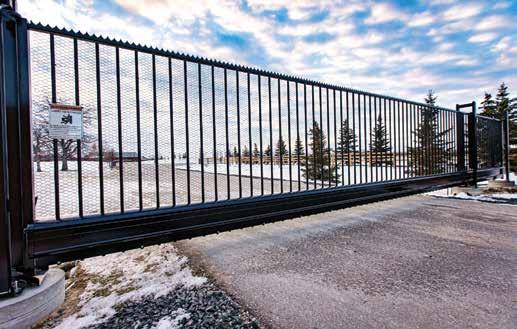
48 SEPTEMBER 2023 | FENCE NEWS USA Discover the versatility of our sliding, folding and pedestrian gates. All our vehicle gates are crafted to suit openings of up to 30 feet. Quotes within 24 hours, site specific drawings within 48 hours, and fast shipping times. Save your valuable time with our reliable and easy to install gates. Contact us today! IT’S ABOUT
MANUFACTURER
FOR YOU! 866.300.1110 | wallaceperimetersecurity.com LEARN MORE
TIME A
WORKED
Sunbelt Forest Products now distributes Deckorators® Voyage Composite Decking in the Nashville Metro market area.
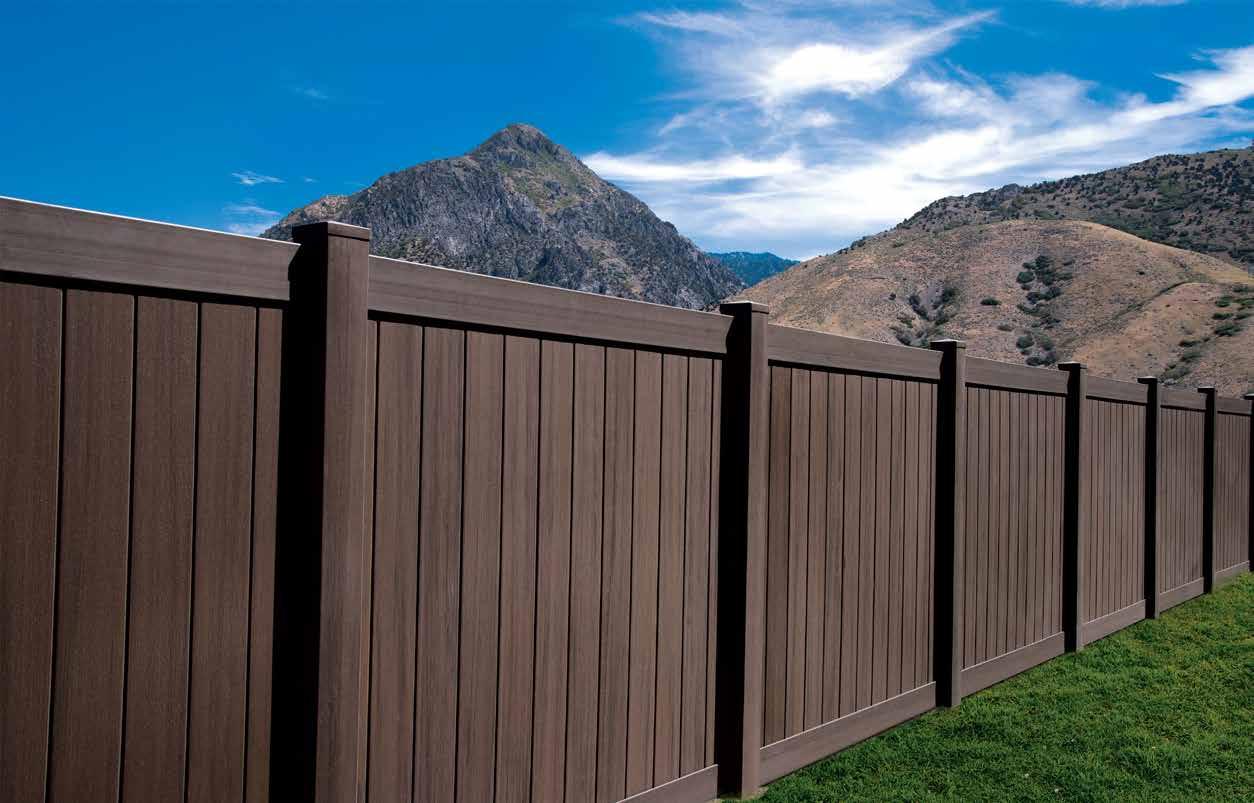
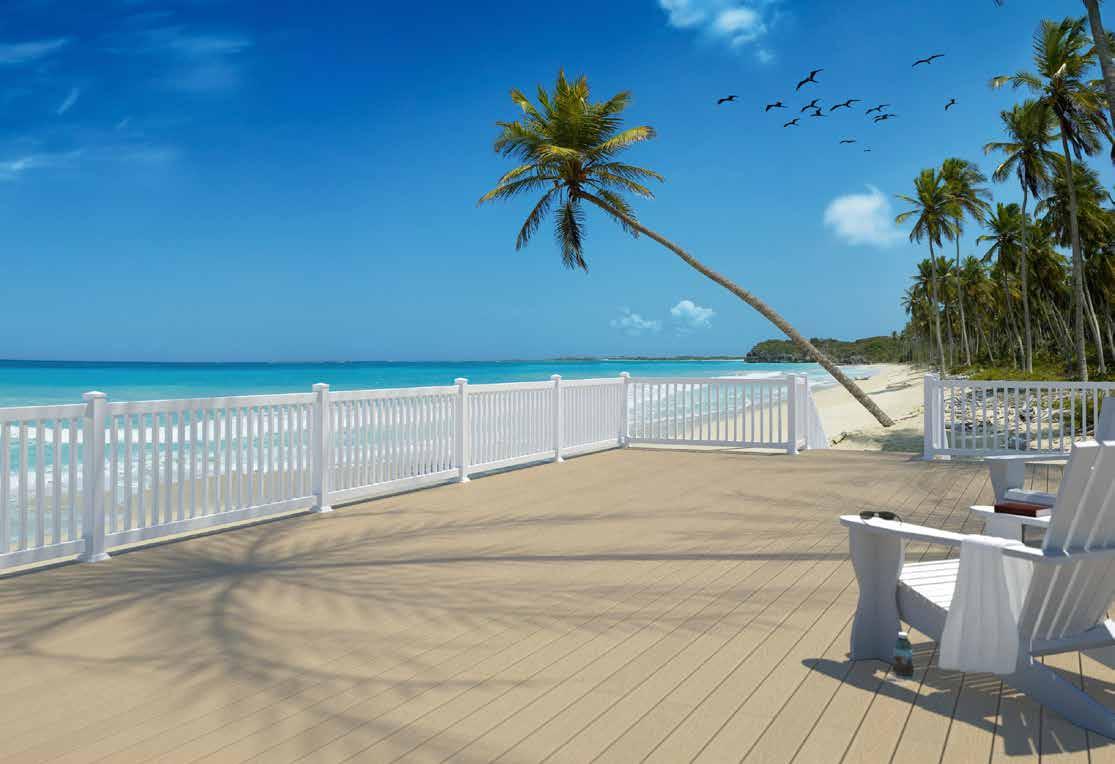
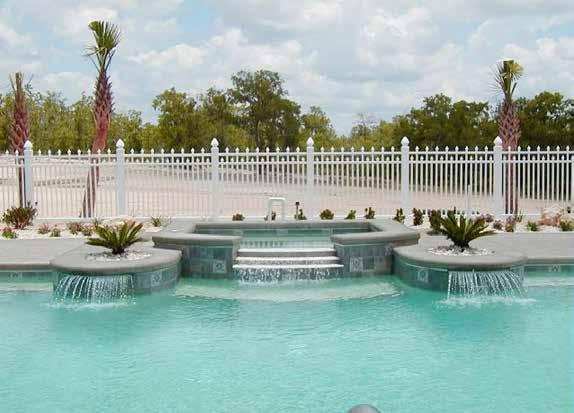
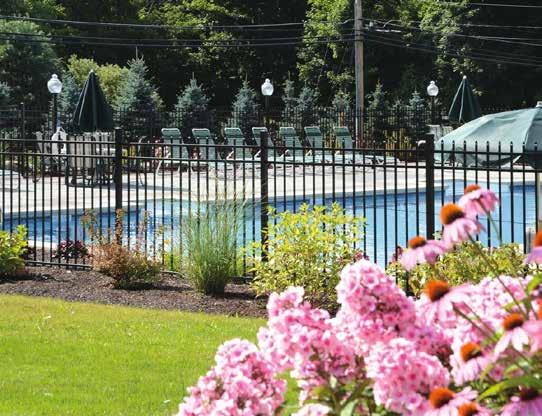
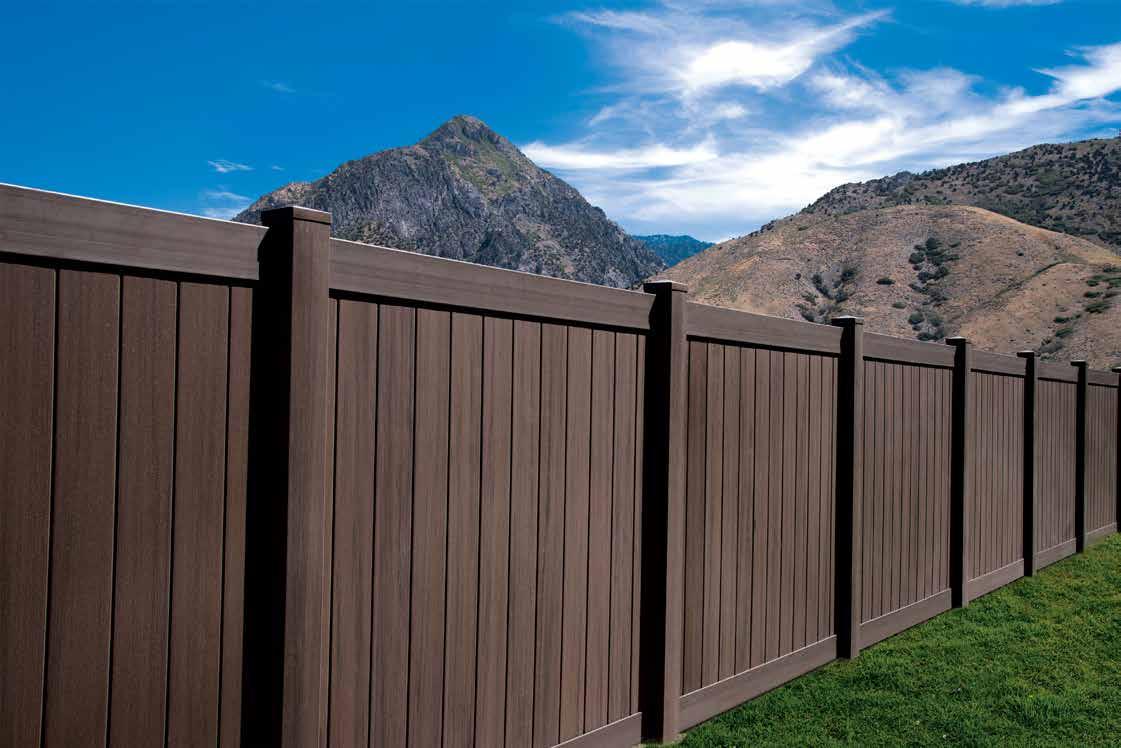
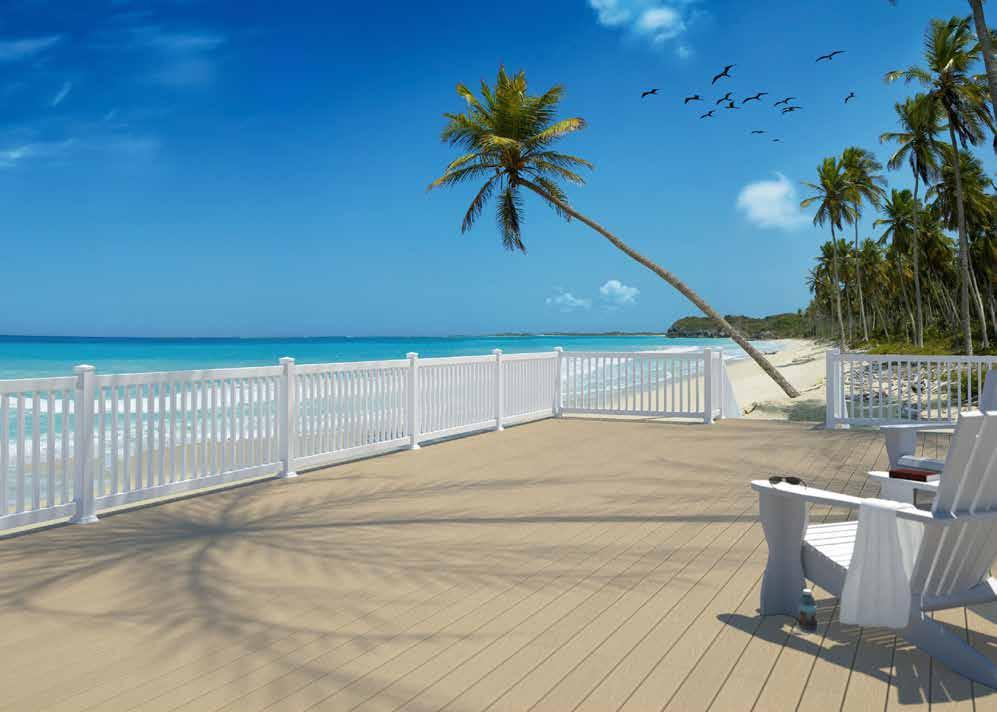




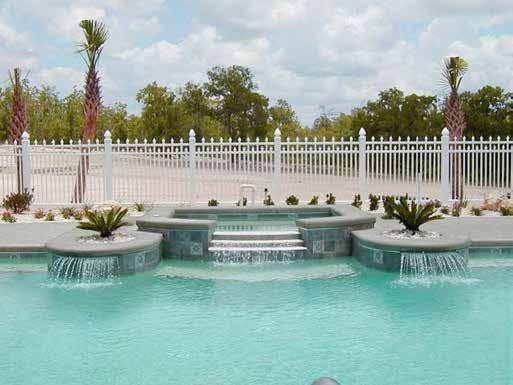
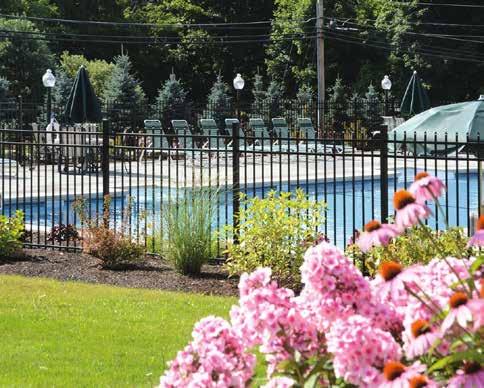













Vinyl Fence * Cellular Decking * Vinyl Railing * Vinyl Garden Products * Ornamental Fence * Ornamental Railing * Outdoor Products * Hardware * Accessories * Marketing Support * TRADE ONLY Manufacturer * No Retail Job Lot, LTL, 1/2 Truckload, Full Truckload, and Master Truckload Available. We ship Anywhere including Export. www.justpolyit.com www.pvcbrochures.com marketing@polyvinylc.com
Atlas Tube Donates Tubing to Give Mobility to Thousands
Atlas Tube, a division of Zekelman Industries, continues a tradition spanning over 10 years of supporting Mobility Worldwide with a donation of steel tubing, enabling production of mobility carts that provide the gift of movement to those in need. Each quarterly donation allows the Columbia, Missouri branch of Mobility Worldwide to build 400 mobility carts, totally 1,600 per year, and more than 16,000 carts during the past decade.
“When Zekelman Industries acquired the assets of EXLTUBE based in North Kansas City, Missouri in November 2022, we were well aware of their long history of making charitable donations to the Missouri branch of Mobility Worldwide,” says Jeff Cole, president of Atlas Tube. “Mobility carts are a critical, life-changing tool for those who need it most, and it is truly an honor to continue our support for this great organization.”
Since 1994, Mobility Worldwide has been building sturdy, hand-cranked mobility to give away to disabled individuals around the world. The mobility cart is designed to go where conventional wheelchairs can’t. They’re functional for both indoor and outdoor environments, especially in rural areas where roads are non-existent or in disrepair.



Mobility Worldwide is approaching 100,000 units donated in its history through its 21 worldwide locations and surpassed 30,000 carts built at its Columbia, Missouri facility earlier this year, more than half of which were made possible by the Atlas Tube donations.
“Our work would not be possible without structural steel tubes and the support of Atlas Tube in Kansas City, which has allowed us to make more than 16,000 mobility carts in their 10 years of making donations,” says Gary Moreau, executive director of Mobility Worldwide MO-Columbia. “Atlas Tube likely will never meet the recipient of these donations, but that person will certainly feel God’s love and the love of everyone involved in helping to bring them mobility.”
The 14-guage tubing from Atlas Tube is cut and welded to make the main support frame and front fork of the mobility carts. Additionally, the steel tubes are used to make brake handles and pull tongues, ensuring that the entire bundle is put to good use.
Zekelman Industries delivers a broad range of pipe and tube solutions. For more information, visit zekelman.com.
EAGLE FENCE — TEXAS 14430 Smith Rd. Humble, TX 77396 281.741.1503 877.741.4896 Fax: 832.288.5197 Serving Fence Contractors Through Our Six Strategically Located Well-Stocked Regional Wholesale Locations! Chain Link, Wood, Access Control, PVC and Ornamental Fencing, Agricultural Products, and much more. EAGLE FENCE — MISSOURI 5830 Fee Fee Rd. Hazelwood, MO 63042 314.356.9190 866.880.0147 Fax: 314.474.5830 EAGLE FENCE — ILLINOIS 3660 W. Washington St. Gurnee, IL 60031 224.610.0956 877.639.1023 Fax: 847.672.7350 EAGLE FENCE — ARKANSAS 1145 Baucum Industrial Dr. Little Rock, AR 72117 501.324.1800 888.324.1803 Fax: 501.324.1801 EAGLE FENCE — ALABAMA 1780 Carson Rd. N. Birmingham,
205.631.2770 Fax: 205.631.3232 EAGLE FENCE — FLORIDA 6056 Ulmerton Rd. Clearwater, FL 33760 727.475.5006 Fax: 727.683.9412 www.efdistribution.com
AL 35217
Outdoor Living Industry to Remain Strong


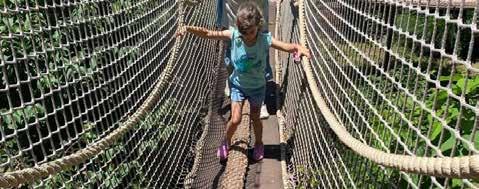
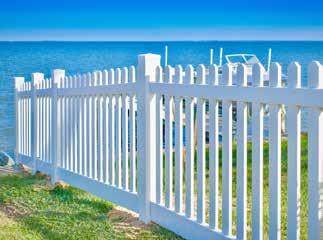
The outdoor living products industry is anticipated to maintain its strength in the coming years, as indicated by a recent study conducted by The Freedonia Group.
Although there will be a slight decline in revenue in 2023 compared to the remarkable growth experienced in 2020, sales will still surpass pre-pandemic levels. This demonstrates homeowners’ enduring fascination with outdoor living and their willingness to invest in enhancing their outdoor spaces.
There are several promising areas for growth within the outdoor living sector, including prioritizing value rather than simply focusing on low prices, incorporating sustainable products, integrating indoor and outdoor spaces, leveraging smart technology and automation, and streamlining outdoor maintenance for convenience.
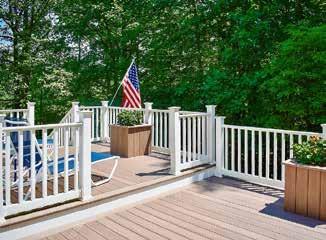
While the industry is expected to flourish, businesses will face certain challenges:
Rising inflation: The increasing costs of goods and services may lead to higher prices for consumers, potentially impacting demand.
Return to pre-pandemic habits: As individuals resume dining out and traveling, their disposable income available for outdoor living projects might be limited.
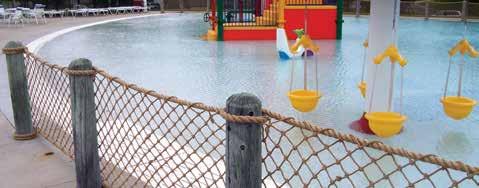
Shortage of professional landscape workers: The scarcity of skilled labor in the landscaping field makes it challenging for businesses to complete and maintain outdoor living projects.
The report suggests an expanding customer base, the positive influence of TikTok and Instagram influencers on the industry, and the growing popularity of outdoor living will help counterbalance these challenges.
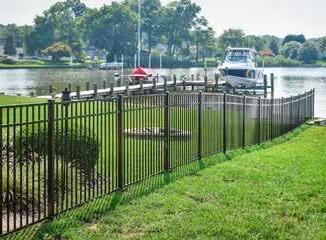
FENCENEWS.COM | SEPTEMBER 2023 51 QUALITY • SERVICE • AVAILABILITY From our shoreline to yours... VINYL FENCING & RAILING • ALUMINUM FENCING • ARBORS & PERGOLAS • ACCESSORIES Denton, MD - 410-364-9050 | www.shorelinevinyl.com
Custom Safety Netting Solutions InCord incord.com / 860.537.1414 FENCING, BARRIERS & CROWD CONTROL Quinn McKenna 860.531.1074 qmckenna@incord.com Call Quinn to schedule your FREE site survey!
West Coast Lumber Names Jason Walsh Vice President of Component Manufacturing

West Coast Lumber (WCL), the regional lumber and building materials supplier launched by Building Industry Partners in 2022, has announced the addition of Jason Walsh to its leadership team. Walsh will serve as the company’s vice president of component manufacturing and will be responsible for leading its strategy in the category. WCL currently serves customers throughout Southern California with four locations in Agoura Hills, Bakersfield, Camarillo, and San Diego.
Walsh brings more than two decades of experience in the component manufacturing industry to WCL. His career began as a truss designer at CompuTrus, Inc., which was acquired by MiTek, Inc. in 2009. Over time, he assumed more cross-functional roles at Home Building Components (a HnR Framing Systems, Inc. company) and Universal Truss Fontana. Most recently, Walsh worked with California TrusFrame (CTF), which was acquired
by Builders FirstSource in 2021. Throughout his tenure at CTF, Jason was promoted repeatedly and ultimately served on the executive team as vice president of sales, marketing and design. He helped grow CTF to become the leader in component manufacturing in California.
“Jason’s instant credibility with customers, his comprehensive knowledge and experience, as well as his deep network of trusted relationships, make him the ideal leader to guide and execute our expansion into component manufacturing,” says Joe Lawrence, chief executive officer of WCL.
“Jason combines a unique balance of strategic insight and operational know-how that stems from his years of experience from the ground level up,” says Maged Diab, director at WCL. “He will help us drive growth while maintaining a keen focus on providing our customers with the most innovative and economical solutions.”
Walsh’s people-centered management philosophy aligns with that of WCL. “I have experienced first-hand the benefits that come from working with people-centric leaders,” says Walsh. “I am fortunate to have crossed paths with many talented individuals who mentored me and invested in my professional development. I look forward to working with our leadership team to help make WCL the employer of choice in all our markets.”
For more information, visit westcoastlumber.com.
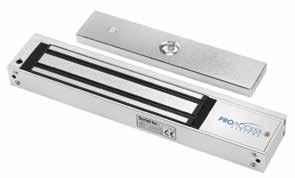
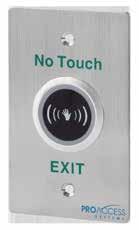
52 SEPTEMBER 2023 | FENCE NEWS USA
www.G8Pro.com On Guard. . . Secure it with con dence! Pro Access Systems has a proven performance record as a leading single-source supplier of integrated access control solutions for industrial, commercial and residential applications. Maximize your customers’ security and convenience with our comprehensive line of access control and security products. All units come with the Entry Pro 5-Year replacement warranty. ENTRY PRO by PA-NO-TOUCH Series No-Touch EXIT SENSORS PA-MAG Series Magnetic LOCKS PA-PROX-MF Series Multi-Format Proximity CARD READERS PA-TIMER Series 7-Day Programmable TIMER Available in two popular styles - for indoor and outdoor use Compatible with several of the industry’s most popular proximity card formats Proven, reliable, convenient egress Flexible mounting options Up to 16 unique, programmable ON/OFF time segments.
The Fence Authority Opens Fourth Location in Historic Delaware Valley
The Fence Authority, Delaware Valley’s leading fence retailer since 1996, has opened its fourth location in Philadelphia’s Main Line in Malvern, Pennsylvania.
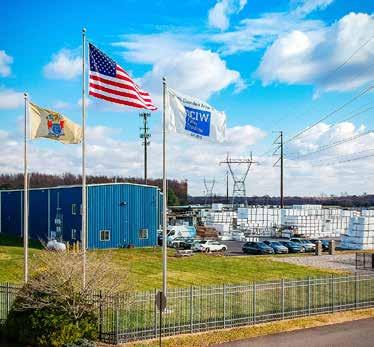
“This specific location on the Main Line has been home to great fencing for more than 100 years, and we will continue the long-standing tradition and reliability that customers have come to know and trust,” says Peter Fickinger, vice-president of sales and marketing with The Fence Authority. “We couldn’t bear to see this facility torn down or redeveloped. This location has historical significance, and we look to continue that legacy for the next hundred years.”
He adds, “It is rare that a fence company has the location and size of our Malvern facility, and it’s needed, as we have doubled revenue over the last five years as demand has skyrocketed.”
Delaware Valley has been home to The Fence Authority for more than 30 years, and the company is known for:
• Specializing in cedar, aluminum, and vinyl fencing for do-it-yourself (DIY) projects or full installation
• Being the region’s exclusive dealer of CedarTech and ActiveYards fencing
• Carrying a large selection of more than 30 in-stock styles of fence systems at four convenient locations
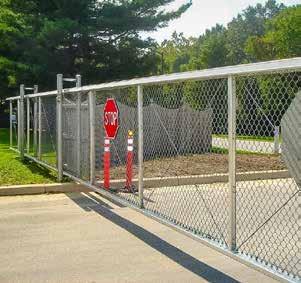
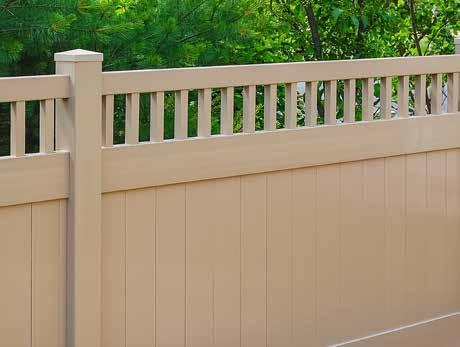
• Environmental leadership, planting more than American chestnut 5,000 trees in the last seven years to offset its wood usage
The Fence Authority employs more than 80 people in Pennsylvania and has focused on building better fences in and around Philadelphia since 1996. Learn more at fenceauthority.com.
FENCENEWS.COM | SEPTEMBER 2023 53 OVER 100 YEARS IN THE FENCE INDUSTRY SERVICE, QUALITY, AND AVAILABILITY THAT EVERY FENCE INSTALLER NEEDS VINYL FENCING & RAILING • ALUMINUM FENCING CHAIN-LINK FENCING • ACCESSORIES Mickleton, NJ - 856-423-1107 | www.sciw.com
RESERVE YOUR AD SPACE NOW FOR 2023 CLASSIFIED AND WEBSITE ADVERTISING SPACE AVAILABLE ALSO. Submit your news releases and product information to: editor@fencenews.com Plan now to get maximum industry exposure for your company in 2023 in the pages of Fence News and The Annual Directory of Suppliers. Lock in your annual rate now! Contact us for more information: katie@fencenews.com | (337) 312-0975
Install commercial grade fence, faster, with less equipment, supplies and manpower with the RHINO®

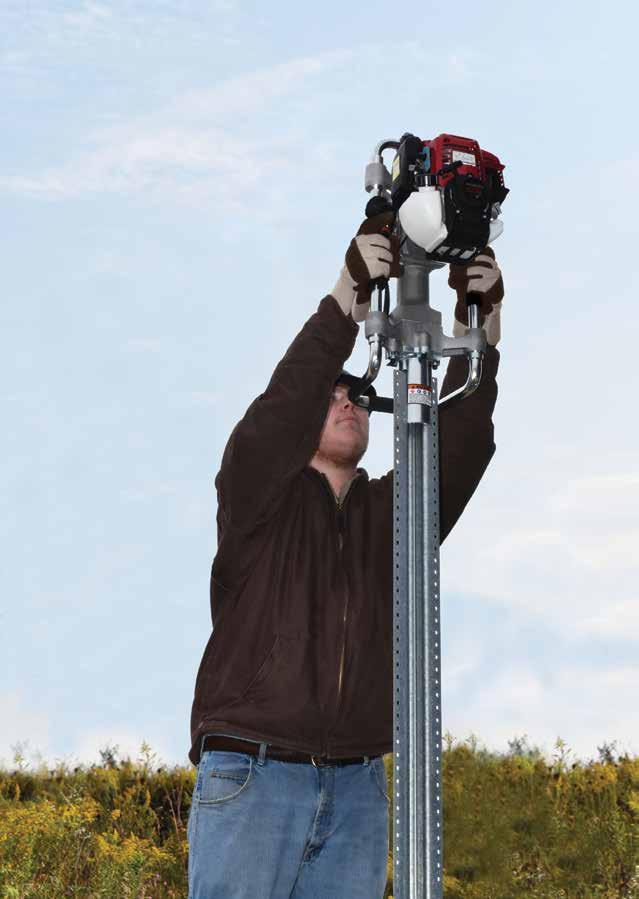
Multi-Pro XA Post Driver shown with Slotted Channel
– The Extended Anvil in the Multi-Pro XA accommodates a variety of removable chucks for driving different post types.
– The 2 ½" chuck makes this a perfect choice for driving round posts up to 2 ⅜" O.D. The 1”, 2 ¾", 2” removable adapters drive ground rod, t-posts, and small round posts.
– Optional chucks available for driving Channel, Square, Postmaster and round wood posts.

– Optional chucks and drive caps available for larger post types.
– Compact enough for use by one installer. Fits into areas with limited access and maneuverability.
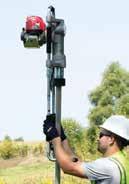
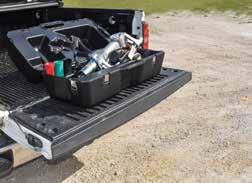
– No additional equipment needed, Powered by the reliable Honda 4-Stroke Engine.
– Equipped with Rhino’s CIS™ Vibration Dampening and padded grip for handling comfort.
Allow one person to install posts (up to
safely, and efficiently. Great for wildlife, security and crowd control fencing on sites unable to accommodate large equipment.
54 SEPTEMBER 2023 | FENCE NEWS USA Go to lcenterprises-usa.com for video on how RHINO post drivers enhance productivity and safety. View additional accessories for your Pro-Series™ Rhino Post Driver at www.rhinotool.com
Chuck For Multi-Pro XA Post Drivers
Drives Master Halco Postmaster Post, 1.2-4 lb Channel Post, Silt Fence Post, and C/ Super C Post. Extended Handles
Hydraulic
Gasoline
Call 1.866.786.1009 to order your RHINO Post Driver. Air, Gas or Hydraulic - we can help you find the right post driver for your job. NEW! Pro-Series Transport Case Fits all Rhino Pro-Series Gas Post Drivers. Properly positions and protects the post driver. Two molded handles, padlock hole, and tough, double wall construction.
Slotted
-
10’),
Pneumatic •
•
Professional Grade Tools
Chuck*
WARRANTY LIFE TIME See War n y for Detals
For over 25 years L&C Enterprises has supplied fence equipment to professional fence installers to get the job done faster. Our own installation experience determines what fencing equipment and products we recommend. Every product has been tested by our fence crew and proven to work efficiently.
Call our knowledgeable staff to find the equipment you need to get the job done fast!
Pulls wood or steel posts in seconds!
LOBO POST PULLER Skid Steer Attachment
– The LOBO Extreme post puller will remove a fence post or guardrail out of the ground in one step. Simply grab, pull, and release.
– V-Jaw pulls round fence posts.
– Cam Jaws will pull T-pots and H-posts such as guardrails.
– Built to fit any skid steer.
– No longer need to chain and unchain fence posts to loaders.
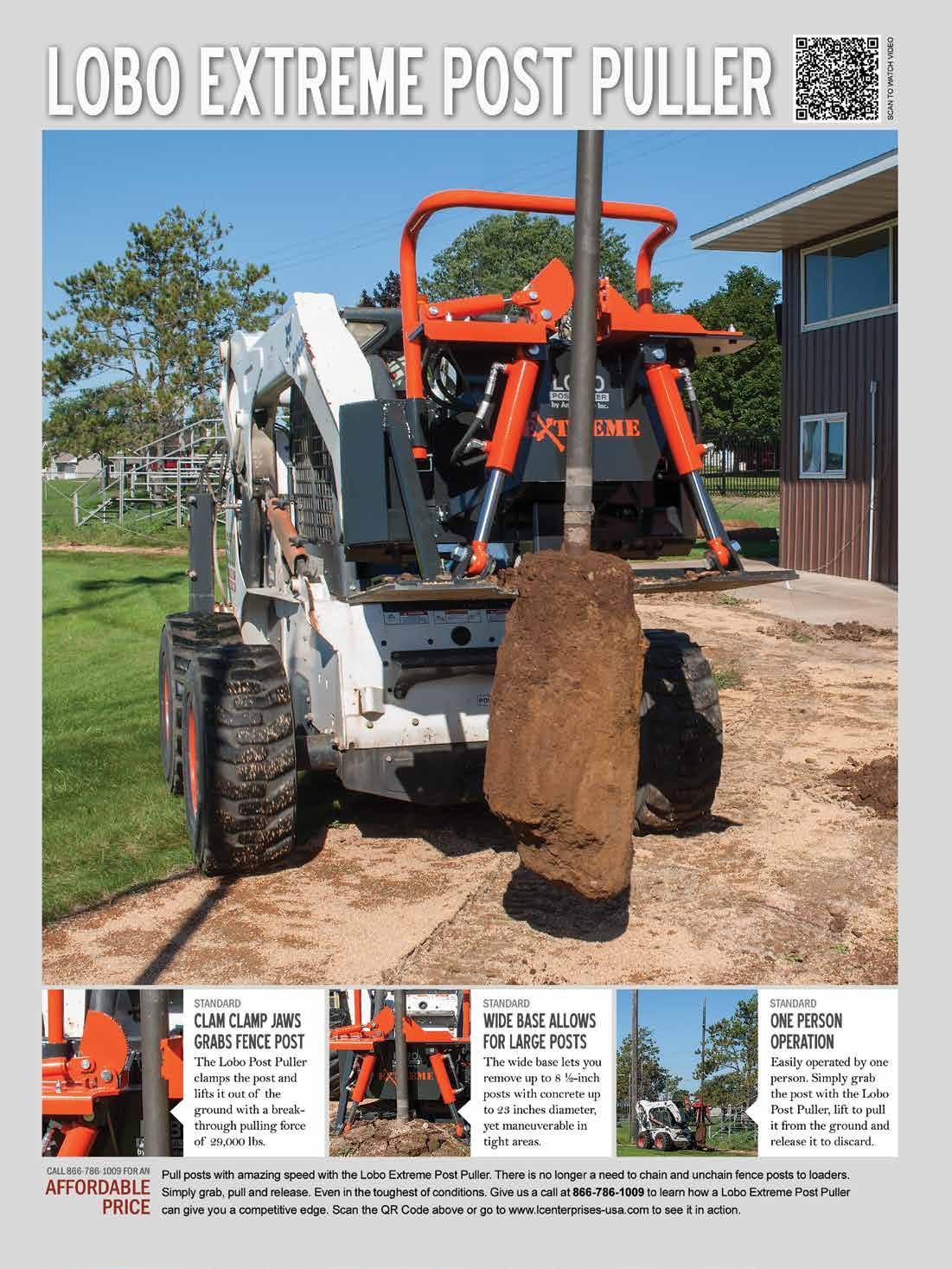
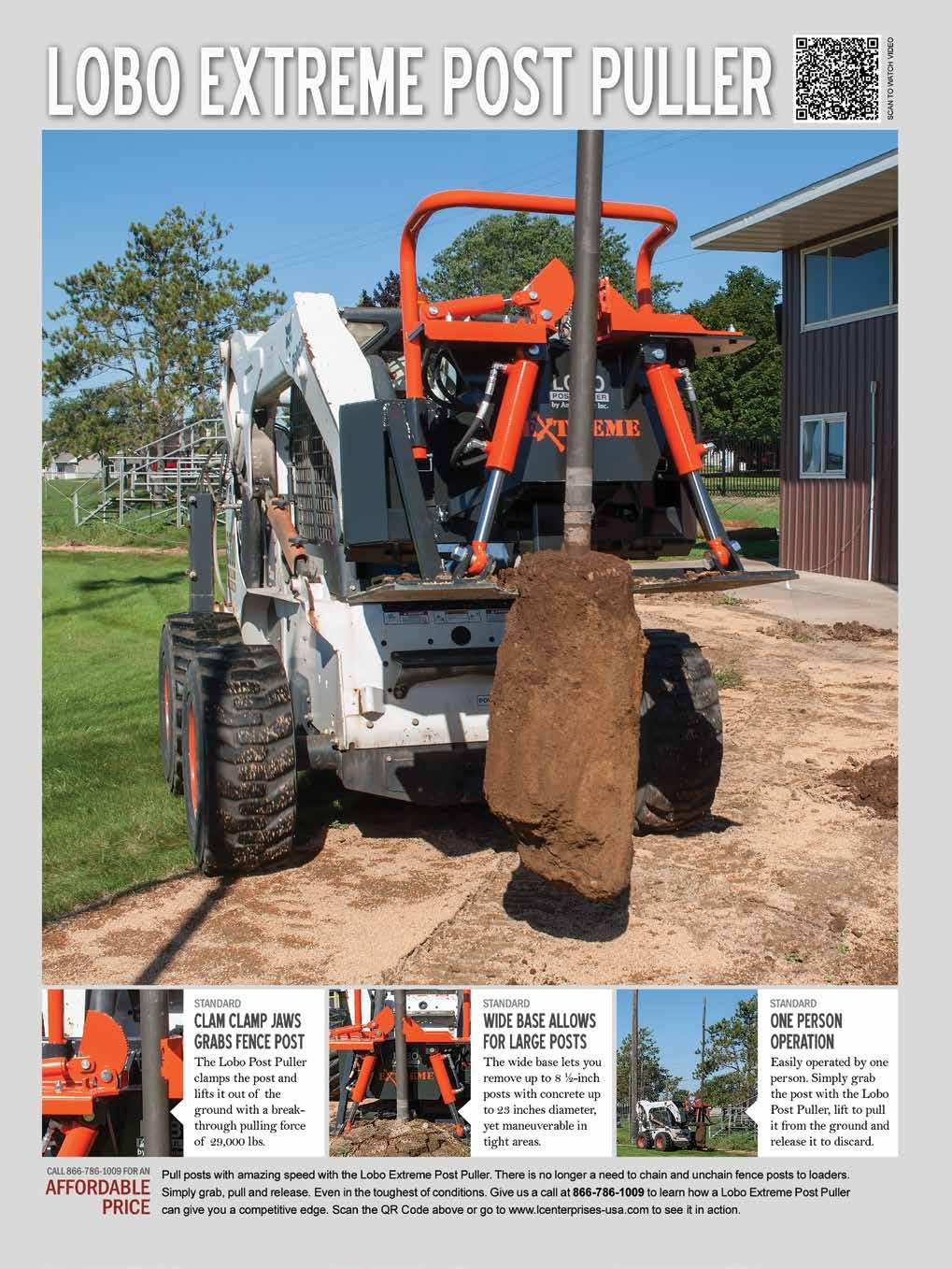
– LOBO Extreme has 29,000 lbs of breakout pull force.
– One man operation.
– No dangerous chains.
with
Loren “Digger” Graber, PRESIDENT AND CHIEF VISIONARY OFFICER DIGGER SPECIALTIES
Visionaries change the world. These leaders create their path, guided by principles they feel serves them well and benefits others in their field of influence. Loren “Digger” Graber is a visionary. The founder of Digger Specialties, he has created an impressive company and uses his talents to create positive change in his company and around the world.
YOU FOUNDED DIGGER SPECIALTIES 39 YEARS AGO. WHAT ARE SOME OF THE MORE SIGNIFICANT CHANGES YOU’VE SEEN WITHIN THE COMPANY SINCE 1984?
DSI has grown from a small company manufacturing and selling vinyl fencing out of a small shop in Bremen, Indiana to manufacturing, producing, and selling vinyl and aluminum fencing and gates - large entry, cantilever, and aluminum frame. DSI also manufacturers railing and columns under the Westbury and PolyRail brands. We now have six plants in five states: Indiana, Pennsylvania, North Carolina, Georgia, and Missouri.
WHAT CHANGES HAVE YOU OBSERVED IN THE FENCING INDUSTRY OVERALL IN THE LAST 10 OR 20 YEARS?
Fencing trends have continued to evolve in the 39 years that DSI has been manufacturing fencing. The trend from wood to vinyl then to metals, specifically aluminum for DSI, has created some great opportunities in outdoor living.
Vinyl colors were basic whites and now the trend is to have darker colors to accent and highlight outdoor spaces and lifestyles. Aluminum fencing provides an opportunity to use the darker colors that vinyl cannot offer as well as offering a secure perimeter. We have also seen the trend of combining materials such as our Designer Fencing which has an aluminum frame for strength and durability with an infill of your choice, such as vinyl, wood, or whatever the homeowner envisions.
WHAT LED TO YOU ESTABLISHING THE COMPANY?
I was managing our family farm and needed an additional source of income to maintain the farm and my growing family.
Digger Specialties first began as a custom bending process for vinyl frames for various furniture applications, such as lawn furniture. A vinyl fence firm asked me to build a fence around a racetrack in Flint, Michigan. That was the birth of a new company - Digger Specialties began with the market potential for this relatively new product. In 1984, Digger Specialties, Inc. was established for the sole purpose of manufacturing and selling vinyl fencing and related maintenance-free products.
The journey to the current facility in Bremen, Indiana began in my basement, then to my garage, then to a farm building, and then to Bremen. Growth from there to other states has been a rewarding experience.
WHICH CAME FIRST – YOUR NICKNAME, OR THE COMPANY NAME?
My nickname. Graber in German means to dig. Some of my Amish classmates tagged me with the nickname. The name stuck and I began to use it as my CB handle and then the name of my company.
YOU’VE HAD STEADY GROWTH OVER THE YEARS, BOTH WITH NEW FACILITY LOCATIONS AND NEW PRODUCTS. IF YOU ZOOM OUT, WHAT ARE SOME MAJOR TAKEAWAYS?
The new locations enable us to be closer to our customers, limits freight damage, and helps to spread our labor pool. Having facilities in multiple states and locations can also be challenging to manage but we feel it pays off in the big picture. Adding additional product lines to these manufacturing facilities enables us to go where the market is demanding.
HOW DO YOU MAINTAIN THE LEVEL OF GROWTH YOU’VE ACHIEVED? We keep adjusting to new products and markets as trends and consumer demands change. Also, it is important to keep the company financially stable by reinvesting into the company.
AS CHIEF VISIONARY OFFICER, WHAT DOES THAT TITLE MEAN TO YOU? WHY WAS IT CHOSEN INSTEAD OF THE TRADITIONAL ‘CHIEF EXECUTIVE OFFICER’?
Where there is no vision, there is no future. I believe by using the CVO title, it constantly reminds me to use the gifts God best fitted me with. Visionaries create, that is what large organizations tend to overlook.
DESCRIBE YOUR COMMITMENT TO MANUFACTURING YOUR PRODUCTS IN THE UNITED STATES.
One of my core values is to give people opportunities to thrive in this country. Manufacturing our products in the US provides us with better control over the quality of our products as well as our inventory.
As COVID proved, having a US-based work force allows better control of the supply chain and better customer satisfaction.
HOW HAS YOUR BUSINESS INCREASED IN THE FEW YEARS?
Our business has doubled in the last five years and tripled in the last 10 years.
56 SEPTEMBER 2023 | FENCE NEWS USA
WHAT DO YOU ENJOY AWAY FROM THE OFFICE?
Fishing, hunting, riding motorcycles, and spending time spoiling my grandchildren.

WHAT IS SOMETHING – PERSONAL OR PROFESSIONAL – THAT MOST PEOPLE DON’T KNOW ABOUT YOU?
I am passionate about helping people who are less fortunate than myself. This is one of the reasons we have created a family foundation. The goals of the foundation are to help feed the hungry in the US, Haiti and other parts of the world, support the fight to stop human trafficking, distribute God’s word to many different countries and in many different languages, support Wounded Warriors and other veteran-related organizations.
WHAT PRINCIPLE OR ADVICE GUIDES YOU DAY-TO-DAY?
1. Golden Rule: do unto others as you would have them do unto you.
2. Always take the high road, anyone can walk in the ditch.
3. What tension needs my attention.
4. Methods are many, principles are few. Methods always change – principles never do.
5. Treat your employees, customers, and vendors right and the dividends will follow.
To learn more about Digger Specialties, visit www.diggerspecialties.com.
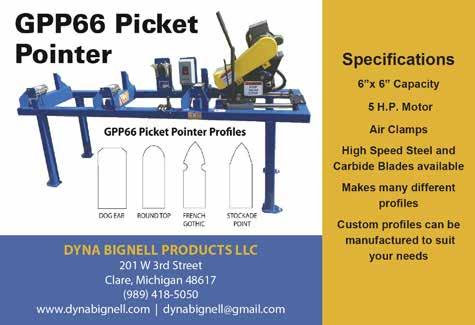
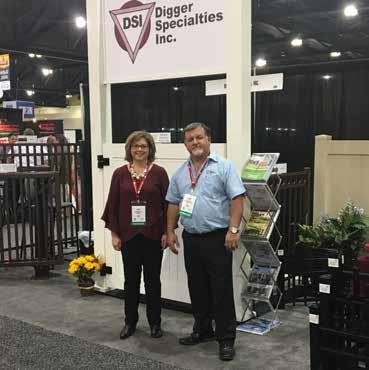
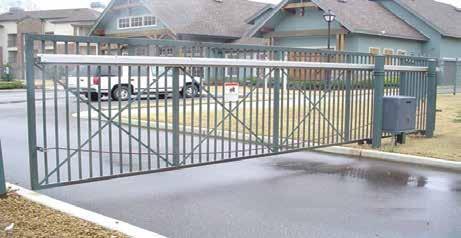
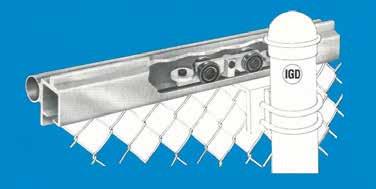
FENCENEWS.COM | SEPTEMBER 2023 57 International Gate Devices E/Z Slide Gate Track Systems & Gate Hardware 800.557-GATE(4283) IGD Innovative Sliding Gate Devices Since 1982 sales@slidegate.net www.slidegate.net 925123_International.indd 1 14/08/18 9:13 PM
Altenloh, Brinck and Co. Celebrates 200 Years in Business
Altenloh, Brinck and Co (ABC) is celebrating a milestone anniversary: 200 years in business. Founded in 1823 in the town now known as Ennepetal, Germany, ABC was the first in that country to produce screws on an industrial scale. Since then, they have enjoyed a long tradition dedicated to innovative progress.
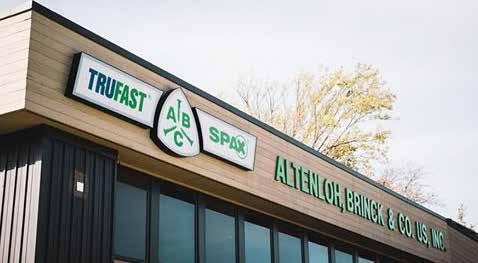
The most well-known product manufactured by the global, family-run company is the SPAX® screw, which revolutionized the fastener sector and continues to be one of the most innovative fasteners in the marketplace today.

ABC was officially established on September 8, 1823 by Daniel Altenloh, Theodor Altenloh, Wilhelm Brinck, Franz Riecke and Johan Wallershaus. ABC brought quality products to the European market and more countries turned to the fasteners made by ABC.
The years that followed were marked by innovation and a pioneering spirit. In 1967, ABC revolutionized the screw market with the launch of the premium fastener brand, SPAX. Today, SPAX continues to be seen as a premium, cutting-edge screw manufactured at both ABC facilities in Germany and the USA with global impact. Fueled by its huge success, ABC established various subsidiaries and locations all over the world between 1989 and 1996, thus extending its international reach even further.
“The entrepreneurial spirit of the five founding members of our company lives on in the organization today,” explains Nikolas Dicke, great-great-great-grandson of co-founder Daniel Altenloh and current CEO of ABC. “Each member brought a skillset and a strength to the group; coupled with significant drive and determination, their idea came to life and grew into what is now a global leader in fastener manufacturing. We are excited to see the company grow and evolve in the years ahead.”
Underlining the company’s ambition to continue innovation and growth, ABC Holding was founded in 2003 with three independent companies: ABC Umformtechnik (until 2021), AZ Ausrüstung und Zubenör (until 2017) and SPAX International, which continues today.
ABC tapped into a new sector through the acquisition of SABEU, whose innovative solutions in injection molding and membrane production are in demand across the globe for use in laboratories, the packaging industry, and medical technology.
The acquisition of the US roof fastener manufacturer TRUFAST® and a SPAX production site in Ohio propelled the company’s internationalization even further. TRUFAST is well-established in the commercial roofing industry and has been a trusted partner for OEM system manufacturers for more than four decades. In 2017, ABC US purchased the company that is now TRUFAST Walls, offering fastening solution for the building envelope.
“Building on 200 years of global excellence, ABC US proudly looks to continue the significant growth that has defined our organization since the US operations began as TRUFAST in 1981,” says Jason Beals, CEO of ABC US. “While our products will continue to evolve and our teams expand, our passion of building opportunity through growth will remain steadfast.” ABC US is headquartered in Bryan, Ohio, with a satellite office in Grand Rapids, Michigan.
ABC has eight locations in Europe, the US, and Australia dedicated to the manufacture and sales of innovative products in the three growth sectors of construction and trade, medical, and life science. The company, which is still completely family-owned, collaborates with 40,000 retailers
across the globe and employs 1,250 people.
In 2022, ABC expanded its Pioneer, Ohio facility to house packaging operations. The new 64,000 square foot packaging facility houses all fastener packaging operations including automated, semi-automated and manual packaging.
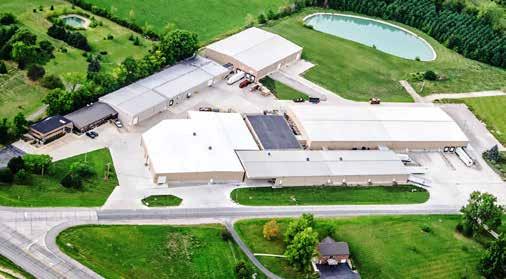
“Our culture, built around our core values, is what differentiates us from other employers. We care deeply about the growth of our people and the communities we serve,” says Charlene Swank, vice president of human resources with ABC US.
To celebrate the anniversary, ABC US is sponsoring a 200 Year Anniversary raffle, featuring several prize packages and will include several SPAX fastener assortment kits. The raffle will continue through the end of September, 2023. Learn more and register at www.altenloh.us.

58 SEPTEMBER 2023 | FENCE NEWS USA
GREG JENDREAS

Greg Jendreas, longtime leader in the fencing industry, passed away June 19, 2023. He was a former president of Bergandi Machinery for more than 15 years, and former CEO, president and vice president of manufacturing for Master Halco for 14 years. He was an active participate in CLFMI for more than 30 years.
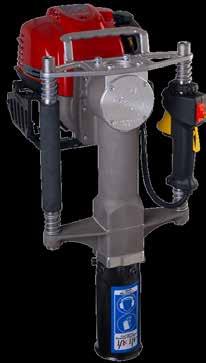

During his time as president of CLMFI in 2015 and 2016, he oversaw the growth of membership and its commitment to a robust and valuable website. Greg was instrumental in helping several current CLFMI membership companies get started in the manufacturing of chain link and provided many other members with information to help them improve their efficiency and profitability. A celebration of his life was held in late July in California.

TREY ANTHONY ST. PIERRE
Trey Anthony St. Pierre, general manager of St. Pierre Fence Company in Vachiere, Louisiana, has passed away at the young age of 25. Born December 29, 1997, he passed away July 20, 2023. He was a member of the Gulf South Chapter of American Fence Association. He is survived by his parents, Troy and Charlotte St. Pierre; Troy is also a co-owner of the fencing business that was founded by Trey’s grandfather, Bruce St. Pierre.
Trey graduated from E.D. White Catholic High School where he was a captain of the football team and a captain of the baseball team. In 2-17, he began to work for the family business, St. Pierre Fence Company, with the desire to own it one day. The past several years, he enjoyed working alongside his dad, his mom, and his fiancé, Taylor Danos. Under his leadership as the general manager, the business grew regionally and thrived because of his attention to detail and tremendous work ethic. Trey was kind, compassionate and lived his life to the fullest; he left an impact on so many. Landry’s Funeral Home in Thibodeaux, Louisiana, is handling the arrangements.

FENCENEWS.COM | SEPTEMBER 2023 59
MoistureShield® Expands Distribution in Illinois, Missouri, Iowa and Kansas with Mid-Am Building Supply, Inc.
MoistureShield®, a signature brand at Oldcastle APG®, is partnering with Mid-Am Building Supply, Inc. to expand distribution of the manufacturer’s innovative composite decking portfolio in Centralia, Illinois; Chillicothe, Missouri; Moberly, Missouri; Mt. Pleasant, Iowa; and Spring Hill, Kansas.
“This partnership with Mid-Am Building Supply supports our shared commitment to best serving our customers by expanding our reach in active markets where our variety of high-quality products can help satisfy the demand for more outdoor living solutions options,” says Matthew Bruce, vice president of sales at MoistureShield. “This partnership also enables both MoistureShield and Mid-Am Building Supply to continue growing our businesses to best benefit our customers across North America.”
“We’re excited to partner with MoistureShield to give our customers more diverse options, including the manufacturer’s four distinct product lines and vast array of composite decking styles and colors,” says Larry Stanfield, director of sales at Mid-Am Building Supply. “This addition elevates our already impressive lineup of outdoor living and building material products, maximizing our ability to fulfill customer needs.”
All MoistureShield products feature the Solid Core DifferenceTM, an industry-leading protection against moisture and unmatched ability to be installed in the ground, on the ground or even underwater. The Vision® line of capped composite decking features MoistureShield’s exclusive
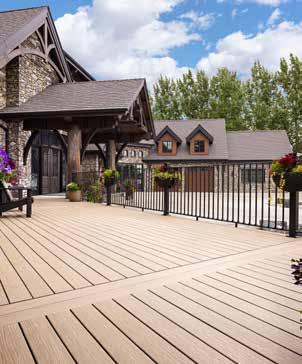
DiamondDefenseTM Coating, the strongest cap in the industry with select colors also offering proprietary CoolDeck® Technology, which helps reduce heat absorption by up to 35% compared to standard composite boards in a similar color.
MoistureShield’s MeridianTM line features CoolDeck and TruTextureTM Surface, a low-profile wood grain pattern that evokes the look and feel of real wood. Additional products include the introductory ElevateTM line which rounds out the capped product offerings and the VantageTM uncapped composite decking which provides dependable workability beyond wood with composite performance.
MoistureShield is the signature composite decking brand of Oldcastle APG, a CRH Company and a leading provider of outdoor living and building materials. MoistureShield manufactures innovative composite deck boards with protective cap, color and surface technologies that create a natural wood look with the ability to withstand impact and water submersion. For more information, visit MoistureShield.com.
Digger Specialties Expands Railing Distribution to Pacific Northwest
A leading manufacturer of outdoor living products, Digger Specialties (DSI), recently partnered with Alexandria Moulding to expand into the Pacific Northwest. Alexandria Moulding is a premier distributor of specialty building products in North America.
The Westbury expansion will include the states of Washington, Oregon, Idaho, and Montana. Alexandria Moulding has experience and success at serving the needs of lumber yards, building suppliers, and home centers with a variety of building materials.
“This is an exciting new venture for our two companies,” says Jeff Clark, regional manager with Alexandria Moulding. “Working with the Digger Specialties team has been an amazing experience and we are grateful for the opportunity to take this incredible product line to our customers. We will service our markets with the Westbury line in true Alexandria fashion by providing the highest quality railing products, on time, and with a 100% fill rate. Thank you to Larry Boyts and the rest of the DSI team for embarking down this exciting path with us.”
Westbury Aluminum Railing is available at lumberyards and home centers throughout the Northeast, Mid-Atlantic, Southeast, North Central, Midwest, Plains, and Southwest regions of the US.
“We are extremely excited to partner with Alexandria Moulding to expand Westbury Aluminum Railing sales into the Pacific Northwest,” says Larry G. Boyts, DSI vice president of sales and marketing. “This expansion will lead the way in positioning DSI and Westbury Aluminum Railing into the Western United States. Alexandria Moulding’s proven distribution excellence will be a major asset to DSI’s groth initiatives and will bring new sales opportunities to both companies.”
As a product category, aluminum railing is the fastest growing railing material in the decking and railing market segment. For more information, visit diggerspecialties.com.
60 SEPTEMBER 2023 | FENCE NEWS USA
If You

Throughout the Northeast, preferred fence contractors and distributors turn to Interstate Wholesale Fence for job lot to truckload orders.

We offer Wood, Virgin PVC Fences, PVC Bends, Welded PVC Gates, Ornamental & Chain Link Fences. Superior quality, service, reliability & variety!
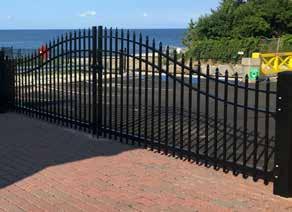
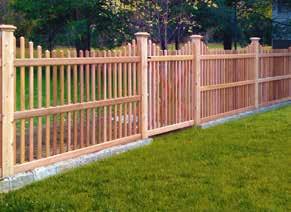
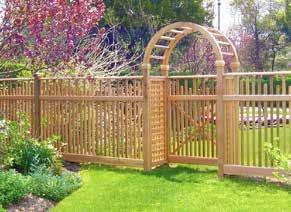
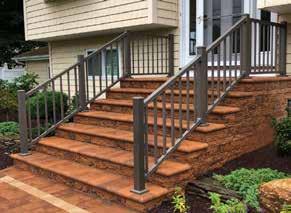
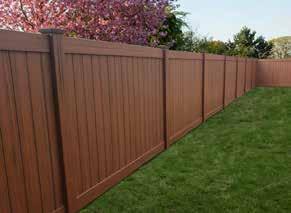
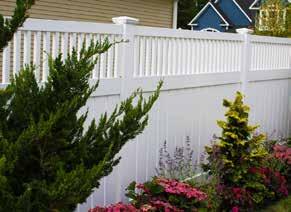
Our “In-Stock” Program guarantees our customers a timely delivery. We pride ourselves on our “Custom Order Turnaround Times.”


FENCENEWS.COM | SEPTEMBER 2023 61 Call today to discover all the advantages Interstate Wholesale Fence has to offer. We personally deliver, our high-quality products directly to your yard or job site within our delivery area, using our fleet of trucks and piggyback moffits, with convenience and speed. 631-842-4488 • Toll Free: 1-866-GO-FENCE • www.interstatevisions.com
Can
It...
Can
It.
Dream
We
Build
| WHITE PVC |
| CEDAR GRAIN |
RAILINGS | | ARBORS & PERGOLAS |
| CUSTOM WOOD | | ALUMINUM |
Aspire Pavers Partners with DecksDirect
Decks Direct Now Offers Aspire Pavers’ High-Quality Paver Solutions for Outdoor Living Spaces
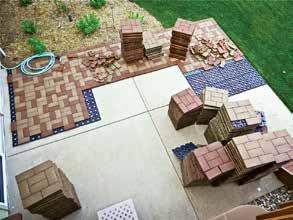
Aspire Pavers, an innovative and sustainable material solutions brand, has partnered with DecksDirect, an online retailer specializing in high-quality decking materials and accessories. Aspire Pavers’ renowned paver systems will now be available for purchase on the DecksDirect website, providing customers with a one-stop shop for all decking and paver needs.
“We are delighted to join forces with DecksDirect and bring our innovative paver system to their established customer base,” says Lee Martucci, vice president of business development at Aspire Pavers. “Combining our expertise in sustainable paver solutions with DecksDirect’s industry-leading platform, we can better serve homeowners, contractors, and design professionals seeking exceptional outdoor material solutions.”
Aspire Pavers’ product offerings include a variety of stylish and eco-friendly pavers
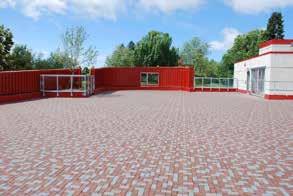
Top Rail Fence Expands its Tennessee Footprint with New Nashville Location
Brother and sister duo invest in the beauty, safety, and security of their community as they build a family legacy with their fencing business.
Top Rail Fence, the on-time professionals in fence design, quality, installation, and service, has opened a new location in the metropolitan Nashville area. The owners offer top-notch fencing and stylish designs for residential, commercial and agricultural properties.
Laura Wellon and Chip Wile are a brother-and-sister team who had long dreamed of owning a business together. After enlisting their spouses, Rob Wellon and Catherine Wile, they fulfilled that dream by opening Top Rail Fence Nashville in July.
“Chip and I share a passion for entrepreneurship,” Laura Wellon states. “In 2022, I started gathering some information about Top Rail Fence and told my brother I thought this would be a really great option for us. We have seven children between us, and our families are very close. We wanted to work together to build a legacy business for our families to enjoy.”
Wellon got her start right out of college working for her father’s financial services company and was savvy enough to purchase the business from him a few years ago. Top Rail Fence will be the third business she has owned and operated.
Wile currently serves as senior vice president and chief track properties officer for NASCAR, overseeing operations across 13 motorsports facilities.
that are made to enhance the aesthetic appeal and functionality of outdoor spaces. With the patented grid system designed for easy installation and reduced labor requirements, Aspire Pavers offers an elegant and lightweight solution for paths, patios, rooftops, balconies, and decks. These pavers are made using up to 95% post-consumer recycled materials, including recycled scrap tire rubber and plastics, aligning with the brand’s dedication to environmental consciousness.
DecksDirect is known for its extensive selection of decking materials, railing systems, lighting solutions, and other accessories that cater to the needs of homeowners and professionals alike. With the addition of Aspire Pavers to its product lineup, both brands further solidify their commitment to offering top-of-the-line products that enhance outdoor living spaces.
To explore the DecksDirect website, visit decksdirect. com. For more information about Aspire Pavers and its sustainable paver solutions, visit spirepavers.com.
Wellon and Wile say they are eager to bring value to the community as owners of Top Rail Fence Metro Nashville.
“Nashville is a fast-growing community, and it’s not just a trend,” Wellon says. “People move here because the city has a lot of economic advantages but end up staying because they enjoy the hospitality and all the events the city offers. It becomes home.”
General Manager Drew McNeil agreed and said he hopes to incorporate a sense of community into the fabric of Top Rail Fence Nashville’s business model. “We want to provide the fencing that keeps people safe and looks nice on their property, but we’d also like to address needs in the community and give back where we can.”
The Nashville location is the third Top Rail Fence franchise to open in Tennessee, joining established locations in Knoxville and Johnson City. Top Rail Fence is part of the growing family of home services franchises within HomeFront Brands.
To learn more about Top Rail Fence Nashville, visit toprailfence.com/locations/nashville/.
62 SEPTEMBER 2023 | FENCE NEWS USA
SKIDRIL, the originator of the gas powered post driver, introduces the G2XD high power at a great price!
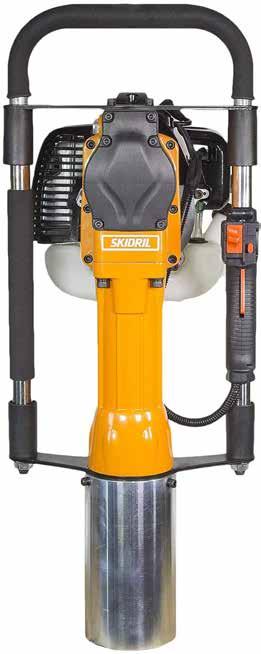
4” POST DRIVER BIGGER MEANER FASTER TUFFER
• On-Off simplicity
• Simple 4-cycle OHV engine or powerful 2-cycle
• Easy service replacement motors, for low cost repairs
• 2 engine makes available
• Few moving parts
• Drive T-Post, round post up to 4”
• Available Multi-Collet option
• Air cushion dampening for virtually no recoil
• High fuel efficiency 1qt/hr
• Modular design
Dimensions: 29 x 11. 5 x 13” (configuration may alter dimensions)
Tank Size: 1.0 Qt.
Impact Energy: 45 Ft-LBs
Clutch: Centrifugal
Starter: Recoil
Weight: 42 lbs (depends on the configuration) Hp: 1.8 (2-stroke) 1.4 (4-stroke) @ 6000 RPM
Fuel: Regular gasoline
Engine: 2 Cycle or 4 Cycle OHV
Carburation: Diaphragm
AMERICAN ASSEMBLY, SERVICE AND SUPPORT!
Max Speed: 6000 RPM
Impact Rate: 1100-1800 BPM
Displacement: 50.0 cc (2
Air Filter: Semi-Wet
stroke) • 33.5 cc (4 stroke)
FENCENEWS.COM | SEPTEMBER 2023 63
THE BEAST © Copyright 2020 SKIDRIL Inc. All rights reserved. Specifications subject to change without notice. SKIDRIL & “Ski-dude” are trademarks of SKIDRIL Industries, LLC. P.O. Box 8041 • Greensboro, NC 27419 Tel: 800-843-3745 • Fax: 336-674-6690
G2XD
SKIDRIL
A Bigger “Market”, A Higher Purpose
by Mark Levin, CAE, CSP Executive vice president, Chain Link Fence Manufacturers Institute 2022 Inductee, American

In late July, I had the pleasure of accompanying CLFMI President Barry Marrs and Richard’s Fence CEO Bill Peterson to address a group of some of the nation’s largest fence contractors.
The intent of our brief presentation was to update the attendees on the state of the chain link industry, and the role CLFMI plays in that industry. However, the questions and comments we received after the program and later that afternoon and evening were less about the specifics of chain link and more about the opportunities that the fence industry has in the next couple of years.
Sure, we talked about the various markets that show the most promise over the next couple of years. We talked about the infrastructure opportunities in highways, bridges, overpasses, and municipal work. We discussed the growth in some leisure and recreation settings, such as pickle ball courts and soccer fields.
We spent a bit of time talking about the anticipated, big opportunities in the renewable fuels market. With billions of dollars in federal and state funding available, and the looming deadlines some jurisdictions face to meet mandated renewal fuels usage goals, construction of solar and wind power facilities should be a big fence market for the next few years.
We even spent some time talking about the traditional markets for fencing, such as high security (electrical power facilities, prisons, airports, etc.) and residential (which looks like it is still going to be behind other markets for the next six to 12 months). When the discussion of growth markets came to the last item on the list we were presenting, I had to stop for a moment to compose myself.
That item was schools.
I said to the group, “How pathetic is this?”
We weren’t talking about fencing for athletic fields, faculty parking lots, public access roads, or even new school construction. We were talking
about security fencing in the most basic manner: how to protect teachers and children from being terrorized, or even killed.
There is no doubt that schools have been, and will continue to be, a good market for fencing. But what does it say about us as a society that the new, upgraded, and retrofitted fencing market at schools will undoubtedly have to include an ever-increasing level of security features? Even, in fencing language, high security features?
With my two grade-school grandchildren in mind, the fact that the school security market is growing is nothing for our industry to applaud. Of course, I realize that we – the participants in the fencing industry – are the people and companies that are being counted on to provide this physical security at schools across the continent. And, yes, I understand that we are the best qualified people and companies to do just that. But what a shame that this is a growing market for all the wrong reasons.
There was another part of the meeting with these contractors that was much more positive. We talked about the contractor-manufacturer partnership. We discussed specific ways that the manufacturing and supply part of the industry could help the contractors be more successful, and we discussed specific ways the contractors could assist the manufacturing and supply segments of industry. We left the meeting agreeing to keep the dialogue open and to see if we could find some action steps that would be beneficial to everyone in the industry.
Maybe one of the first ways we can do that is by having a fence industry group or committee on school safety to work with existing school safety entities (there are hundreds of them) to help them better understand the options available when they get to the fencing portion of their discussions, planning and budgeting. We could work to help set standards for school fencing and offer specifications and performance guidelines
for all levels of protection.
There is an historic precedent for this type of action by the fencing industry. Several years ago, CLFMI was invited by the Consumer Product Safety Commission to help establish standards for swimming pool safety. At that time, drowning in home swimming pools was a leading cause of childhood death around the country. Bill Ullrich accompanied me to those meetings and due in part to Bill’s incredible knowledge and powerful communication skills, swimming pool fence/ enclosure guidelines were upgraded. There is no telling how many young children avoiding drowning because of the work of that group.
Why couldn’t our industry do the same for schools? The school safety issue is just like that swimming pool safety issue years ago. It wasn’t just about fencing; it was about saving lives.
Sure, school security can be a growth market for fencing. Let’s help make it better by having a higher purpose.
As executive vice president of Chain Link Fence Manufacturers Institute for 38+ years, Mark Levin is also an author and avid promoter of the fence industry. He believes in the successful leadership qualities he promotes, including listening, delegating, consensus building, communications and effective decision-making.
Chain Link Fence Manufacturers Institute 10015 Old Columbia Road, Suite B215 Columbia, Maryland 21046 301-596-2583

info@chainlinkinfo.org
www.chainlinkinfo.org
64 SEPTEMBER 2023 | FENCE NEWS USA
Fence Association Hall of Fame
•
•
•
•
•


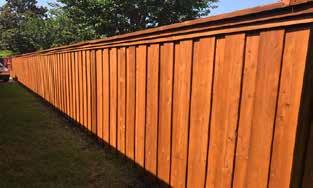
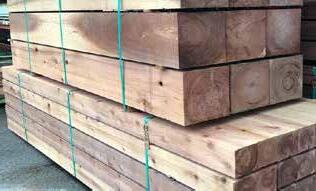

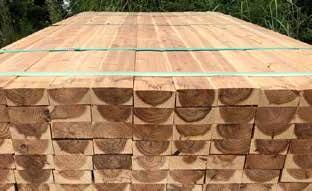
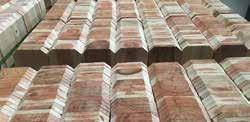

FENCENEWS.COM | SEPTEMBER 2023 65 FLW INTERNATIONAL WHOLESALE FOREST PRODUCTS www.reddiamondcedar.com 1-800-989-9003 BENEFITS / CHARACTERISTICS RED DIAMOND CEDAR COMPONENTS POST & TIMBER
• Highly rot resistant in all climate conditions
Exceptional
Grade - Uniform/Small tight knots
Weathers to a classic silver grey
Superior Stainability
Excellent
value
long term supply and great
Harvested
forests #1 Select Tight Knot Kiln Dried PicketsNominal & Full Width • 1 x 4 x 4’, 6’, 8’ - Flat Top & Dog Ear • 1 x 6 x 4’, 6’, 8’ - Flat Top & Dog Ear Rails • 2 x 3 x 8’, 10’ - S4S & Rough Sawn • 2 x 4 x 8’, 10’ - S4S & Rough Sawn • 2 x 6 x 8’, 10’ - S4S & Rough Sawn • 4 x 4 x 8’ - 20’ • 4 x 6 x 8’ - 20’ • 4 x 8 x 8’ - 20’ • 4 x 12 x 8’ - 20’ • 6 x 6 x 8’ - 20’ • 6 x 8 x 8’ - 20’ • 8 x 8 x 8’ - 20’ FULL CONTAINERS - DIRECT SHIPMENTS National Distribution-Via Truck Load & Rail Car Quantities www.flwwood.com
2
4
from well managed eco friendly
Sugi Timbers 2 x 6 Red Diamond Cedar
x
Rails
Stained
Cedar
Diamond
SUPPLYING THE LUMBER WHOLESALE DISTRIBUTOR MEMBER PREMIUM ®
Red
Diamond Cedar
Red Diamond
Sugi Timbers Red
Cedar Pickets
Horizontal vs. Vertical Deck Railing Systems

Installing a horizontal or vertical design for deck railings is an important decision. Both options offer unique benefits and challenges, so knowing more about each option helps when guiding customers to a decision.
Kalvin Eden, national sales manager – US, with Vista Railing Systems, a leading provider of quality railing products, explains the differences and similarities between the two options.

HORIZONTAL DECK RAILING SYSTEMS
“Horizontal railing systems offer a modern and sleek look that complements contemporary architecture,” Kalvin says. They typically consist of long, narrow cables or bars that run parallel to each other and create a clean, uncluttered appearance.

“They also provide an uninterrupted view of the surrounding landscape, making them an ideal option for homes with stunning views. You can seamlessly transition from your indoor living space to your outdoor area with horizontal railings,” Kalvin explains.
However, they may not be suitable for families with young children or pets because they may try to climb the railing. They can be more challenging to install than vertical ones due to the need for precise measurements and spacing between the cables or bars.
A classic choice, vertical deck railing systems have stood the test of time. “They offer a traditional look that blends well with various architectural styles, making them a versatile option for any home,” Kalvin says. “They consist of upright posts with spaced balusters running between them.”
VERTICAL DECK RAILING SYSTEMS
Vertical deck railing systems are typically easier to install than their horizontal counterparts, as the posts can be anchored directly into the deck surface without additional support. Vertical railings are also more versatile in design options since they can incorporate a broader range of materials and styles; however, vertical railings also have downsides, such as blocking lines when seated on lower decks or patios, which can impact the outdoor entertaining experience.
“Our team is glad to work with you to sort through the different types of railing systems that would be best for your project,” says Kalvin. To learn more, visit www.vistarailings.com or call (800) 667-8247.
Kozal Elected as a Fellow of America Society of Civil Engineers
John Patrick Kozal, P.E., FASCE with Deckorators®, a leading brand of composite decking, railing and related outdoor living products, has been elected as a Fellow of American Society of Civil Engineers (ASCE). In recognition of his contributions to the engineering and building industries, the ASCE has conferred the grade of “Fellow” on Kozal.
Kozal is the code co-chair with North American Deck and Railing Association (NADRA), bringing a wealth of knowledge and expertise to the organization. He oversees the development of vital building codes and regulations for the North American deck, dock, and railing industry. He works collaboratively with industry stakeholders, government officials, and other regulatory bodies to ensure public safety and building integrity. Kozal received his civil engineering degree from Michigan Technological University and he holds a license in professional engineering. For more information, visit deckorators.com and nadra.org.
66 SEPTEMBER 2023 | FENCE NEWS USA Understanding







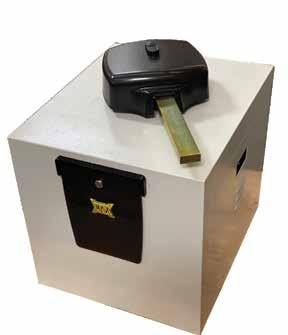
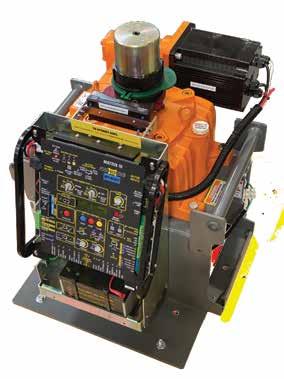


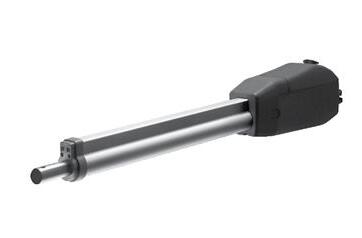




25” 21.125” 25” 21.125”
Max APP
Max Keypad
Vista Railing Systems Partners with Carolina Atlantic Forest Products
Vista Railing Systems is expanding its distribution network with the addition of Carolina Atlantic Forest Products in northern Georgia.
“We are very excited to work with Carolina Atlantic to make our products available in the northern Georgia market on a day-to-day basis,” says Kalvin Eden, national sales manager for Vista Railing Systems. “They have been providing excellent service to the northern Georgia market for several years, and the addition of the Vista Railing line will allow them to expand and grow with their current customers and extend their reach to new opportunities by offering our full line of premium quality aluminum, glass, and cable railing products.”
Jamie Brown, regional vice president and partner at Carolina Atlantic says, “We are excited to align with an organization with a similar ‘customer-first’ philosophy as well as one with extensive experience to offer the market.”
To learn more, visit vistarailings.com.
Miller Edge and UL Solutions Hosted Webinar on NEW UL 325 Standard
Miller Edge recently held a live webinar with UL Solutions on ANSI/ CAN/UL 325: 2020, the Standard for Door, Drapery, Gate, Louver, and Window Operators and Systems, the new safety Standard in Canada, which was published in 2017, and went into effect for CSA Certifications on March 1, 2023. The webinar, titled “ANSI/CAN/UL 325: 2020, Safety Essentials for Your Door or Gate Business,” focused on the Standard’s regulatory landscape, history, and key differences between the new and old standards. Attendees also gained insights into how the new Standard can effectively contribute to business growth. The webinar can be viewed on demand on Miller Edge’s YouTube channel.
Fortress Expands Distribution in the Carolinas
Fortress Building Products has partnered with premier building supplies distributor Carolina Atlantic. To meet the needs of regional contractors and builders, Carolina Atlantic will deliver Fortress Building Products’ steel railing, steel framing and steel pergolas to its dealer network in North Carolina and South Carolina. With local stock, a line-up of best-in-class steel outdoor building products will be on the ground in the Carolinas for quick and efficient delivery.
“We are passionate about delivering stronger, safer and more sustainable building solutions to our partners,” says Jeff Schulz, senior vice president of sales and marketing at Fortress Building Products. “That’s why Fortress is proud to partner with Carolina Atlantic; they share the same commitment to providing top-quality products and excellent customer service to fuel growing markets. We couldn’t ask for a better partner during this period of strategic growth.”
With dealer locations throughout North Carolina and South Carolina, Carolina Atlantic will stock and distribute Fe²⁶ steel railing, Evolution steel deck framing and Evolution steel pergolas. Leveraging the proven performance of steel, the railing, framing and pergola systems pair lasting style with premium weatherability and low maintenance qualities. The outdoor living solutions are backed by strong manufacturer warranties to maximize investments up and down the channel.
“Working with Fortress Building Products is a true partnership and they have already demonstrated their commitment to our success,” says Jeff Tice, partner and general manager at Carolina Atlantic. “We are confident that stocking multiple outdoor building product lines will provide immediate and tremendous value to our partners throughout the Carolinas. In fact, we already had jobs sold before the product touched down at our distribution centers.” Learn more at fortressbp.com.
68 SEPTEMBER 2023 | FENCE NEWS USA
RIG-MOUNTED POST DRIVER
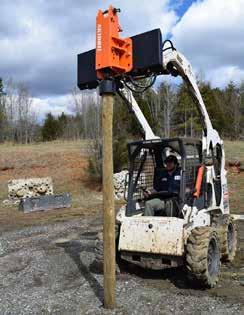
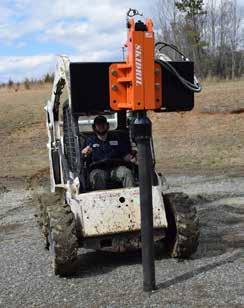
HP1000SS
ULTRA HEAVY DUTY ONE MAIN MOVING PART HIGH POWER-TO-WEIGHT RATIO LOW-FLOW REQUIREMENT
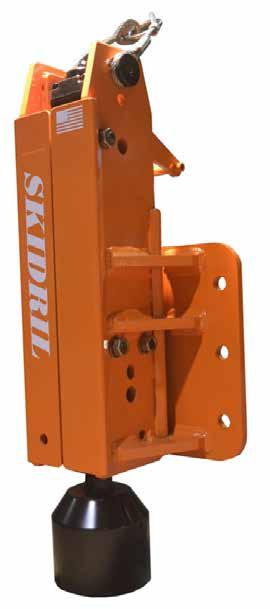
• High-impact force
• Uses less than 8 GPM
• Patented accumulator reduces recoil, adds power
• 6” driver tool standard
• Near perfect center of gravity
• Highest hitting force per pound of tool
• Self lubrication prevents damage
• Closed circuit hydraulics creates no exhaust
• Drives wood and steel up to 6” diameter, guard rail and more
• Drives stakes, rods and pins
• Runs off of skid steer loaders and tractors
• Can be slung or hard-mounted
• 1 year parts and labor warranty
Dimensions: 40 x 18 x 12 (main body without quick-mount plate)
Weight: 496 LB w/quick-mount plate & tool Pressure: 1650 PSI
SKIDRIL
Impact Energy: 350 Ft-lb
Flow: 5.5 - 7 GPM
FENCENEWS.COM | SEPTEMBER 2023 69 Copyright 2020 SKIDRIL Inc. All rights reserved. Specifications subject to change without notice. SKIDRIL & “Ski-dude” are trademarks of SKIDRIL Industries, LLC. P.O. Box 8041 Greensboro, NC 27419 Tel: 800-843-3745 Fax: 336-674-6690
The RetentionEmployeeCredit.
Is it right for you?
Many fence companies are enjoying hot profits for a third straight year, thanks, in part, to government bailouts like the Payroll Protection Program (PPP) and the Employee Retention Credit (ERC) during the COVID years of 2020 and 2021.
While most everyone understood and took advantage of the PPP, the ERC is one of the most misunderstood federal government rebate programs. I’ll explain some of the major points about the ERC, but please remember, when it comes to all accounting and tax questions, check with your accountant for how to apply this to your business.
The ERC is a federal payroll tax credit for payroll tax periods in 2020 and 2021, designed to help companies retain employees. It not only reduced taxes owed, but if the taxes owed are reduced to zero, the company is entitled to compensation above and beyond the original tax liability.
If your business previously filed 2020 and 2021 payroll taxes, you can retroactively claim the ERC to reduce tax debt and possibly receive a surplus credit, which can result in a cash refund. Also, if your business qualifies for all quarters, you could receive as much as $26,000 per employee.
I’m often asked, “If I’ve already filed my business’ 2020 and 2021 federal payroll taxes, can I still receive the ERC?” The answer is yes. Small businesses can apply for the ERC retroactively. Your credit will either be applied to your tax bill or result in a refund of taxes paid during the applicable quarter or other designated payroll tax periods. Check out the IRS website at irs.gov and search for coronavirus employee retention credit to see if you qualify.
The requirements are different depending on the period for which you claim the credit. The ERC is not available to individuals. Also, beware of ERC scam promotions. Your accountant should be able to steer you in the right direction.
Anyone who improperly claims the credit must pay it back and may owe penalties and interest. The only way to claim the ERC is on a federal employment tax return.
by Tom Luby,
owner of Profit
Builders International
WARNING SIGNS OF AGGRESSIVE ERC MARKETING

The ERC is a complex credit that requires careful review before applying; be wary of these scam tactics:
• Unsolicited calls, emails, or texts from someone you don’t know.
• Statements that the company can determine your ERC eligibility within minutes.
• Large upfront fees to claim the credit.
• Fees based on a percentage of the refund amount of the ERC claimed.
• Statements from the promoter that you qualify for the credit before your tax situation is reviewed.
• Statements from the promotor urging you to submit the claim because there is nothing to lose.
ELIGIBILITY
The credit is available to eligible employers that paid qualified wages to some or all employees after March 12, 2020, and before January 1, 2022. Eligibility and credit amount vary depending on when the business impacts occurred.
Generally, businesses and tax-exempt organizations that qualify are those that:
• Were shut down by a government order due to the COVID pandemic during 2020 or the first three calendar quarters of 2021, or
• Experienced the required decline in gross receipts during the eligibility periods during 2020 or the first three calendar quarters of 2021, or
• Qualified as a recovery start up business for the third or fourth quarters of 2021.
Eligible employers must have paid qualified wages to claim the credit. They can claim the ERC on an original or adjusted employment tax return for a period within those dates.

Certain limitations apply to the ERC. For example, employers can’t claim the ERC on wages that were reported as payroll costs for PPP loan forgiveness. Qualified wages for purposes of the ERC do not include payroll costs in connection with shuttered venue operators, grants, or restaurant revitalization grants.
If you decide to apply, the process can be complicated, but your accountant should be able to walk you through the process. If you choose to use a thirdparty tax or law firm to process your application, remember these suggestions:
• Make sure the firm you work with is reputable.
• Be sure the refund is made payable to you and your company, not to them for second-hand disbursement.
Good luck.
Tom Luby has helped hundreds of contractors within the fence industry achieve success with maximum profitability and efficiency. With over 25 years of experience consulting in the fence industry, he developed the “Roadmap for Success”, a program that can help contractors succeed. The program is available on CD, along with the sales and marketing guide “The Close” by contacting him at:
Profit Builders International 3421 10th Lane West, Palmetto, Florida 34221 www.profitbuilder.org | tluby@profitbuilder.org | 941-981-3677

70 SEPTEMBER 2023 | FENCE NEWS USA Understanding
OPEN WIDE!

When a project calls for a large gate turn to Pro Access Systems and Doorking to meet the speci cations. With over a 20 years of gate system design and fabrication expertise, Pro Access has been supplying premium quality gates for critical infrastructure security applications including Commercial / Industrial, Energy Distribution, Transportation, Municipal Facilities and Residential Properties. Pro Access Systems specializes in large systems and is a leading single-source provider of integrated gate hardware, access control solutions with experienced technical support.
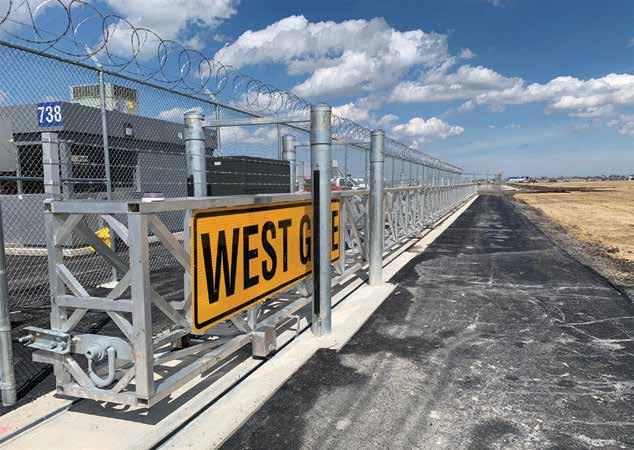
DOORBIRD D1812 HYBRID





Fits onto existing DKS housing with no additional mounting parts required.

Easy Installation via PoE Keyless Access from App, Keypad and RFID (Wiegand, 13.56 MHZ)

























Smart Home & NVR compatible, e.g. Control 4, URC, RTI, Elan DoorBird combines exclusive design with the most innovative IP technology in the field of door communication.

FENCENEWS.COM | SEPTEMBER 2023 71
Pro Access Systems Atlanta (770) 955-4411 / Charlotte (704) 313-0300 / Chicago (630) 426-0022 Denver (303) 288-1700 / Tampa (813) 881-1200
www.G8Pro.com
In Stock, Fast Delivery
Management Corner
SOUND INVESTMENT STRATEGIES FOR SMALL BUSINESSES: MAXIMIZING GROWTH AND SUCCESS

As a small business owner, navigating the world of investments can be both exciting and challenging. Strategic investments can fuel growth, improve operations, and position your business for long-term success. To make sound investment decisions, it’s important to follow expert advice and strategies tailored specifically for small businesses. The following guidelines can help optimize a small business investment approach.
CLEARLY DEFINE YOUR INVESTMENT GOALS:
Before embarking on any investment journey, it is crucial to clearly define your goals. Consider both short-term and long-term objectives. Are you seeking to expand your business, increase market share, improve productivity, or diversify revenue streams? Understanding your specific goals will guide your investment decisions and ensure they align with your overall business strategy.
CONDUCT THOROUGH RESEARCH:
Sound investment strategies require diligent research and analysis. Take the time to thoroughly evaluate potential investment opportunities, whether it’s expanding into new markets, investing in technology infrastructure, or exploring partnerships. Assess the risks and potential returns, consider market trends, and analyze the financial viability of each opportunity. Seek expert advice when needed. Informed decisions minimize risks and increase the likelihood of successful investments.
DIVERSIFY INVESTMENTS AND MANAGE RISKS:
Diversification is a key principle in investment strategies for small businesses. Spreading your investments across various sectors, industries, or asset classes can mitigate risks and enhance potential returns. By diversifying, you avoid placing all your eggs in one basket, reducing vulnerability to market fluctuations. However, striking the right balance between diversification and focusing on your core business is essential. Evaluate your risk tolerance and determine an appropriate diversification strategy that aligns with your overall business objectives.
INVEST IN YOUR TEAM AND INFRASTRUCTURE:
While financial investments are crucial, don’t overlook the importance of investing in your team and infrastructure. Building a skilled workforce, fostering a positive work culture, and investing in employee training and development can lead to higher productivity, innovation, and customer satisfaction. Additionally, upgrading technology, streamlining processes, and improving operational efficiency can yield substantial long-term benefits.
MONITOR AND EVALUATE INVESTMENTS:
Investments require attention. Regularly monitor and evaluate the performance of your investments. Stay informed about industry trends, market changes, and economic conditions that may impact your investments. Assess the return on investment (ROI) and make adjustments as needed. Being proactive and adaptive allows you to capitalize on emerging opportunities and mitigate potential losses.
Sound investment strategies are vital for small businesses to thrive and grow. With a strategic and disciplined approach, your small business can navigate the investment landscape with confidence and achieve sustainable growth.
72 SEPTEMBER 2023 | FENCE NEWS USA
RULES FOR EMAIL FOLLOW-UP THAT GENERATE SALES 4
The meeting with a prospective customer went great but you haven’t heard back. It’s time to send a reminder email to your prospect, but it’s easy to get stuck in a sales email rut. Messages can sound stale and repetitive, making them easy to ignore. In the fast-paced world of sales, effective follow-up is key to turning leads into conversions. Putting the effort into individualized messages that connect with the recipient will help you stand out from their cluttered inbox and get a positive response.
Here are some tips to help maximize your email follow-up efforts and drive successful sales results.

PROMPTNESS IS PARAMOUNT. When it comes to email follow-up, time is of the essence. Responding promptly shows your potential customers that you value their interest and are committed to providing exceptional service. Aim to reply within 24 hours or sooner, demonstrating your professionalism and dedication. By promptly addressing inquiries, you increase your chances of converting leads into sales.
PERSONALIZE YOUR COMMUNICATION. Generic, one-size-fits-all emails are easily dismissed. To make an impact, tailor your follow-up messages to each individual prospect. Address them by name and reference specific details from previous interactions or conversations. A personalized email shows that you’ve taken the time to understand your prospect’s unique situation. It helps create a sense of rapport and makes your communication more compelling. This personal touch can set you apart from competitors, build trust and strengthen your connection with potential customers.
PROVIDE VALUE AND RELEVANCE. In today’s information-rich world, prospects are seeking valuable insights and solutions. Ensure your email follow-ups deliver relevant and valuable content that addresses their needs. Share industry knowledge, offer helpful resources, or provide personalized recommendations. By positioning yourself as a trusted advisor, you establish credibility and showcase your expertise. Valuable and relevant content keeps your prospects engaged and increases the likelihood of conversion.
UTILIZE CLEAR CALLS-TO-ACTION. Every email should have a clear purpose and a compelling call-to-action. Clearly articulate the next steps you’d like your prospects to take, such as scheduling a call, attending a webinar, or requesting a personalized demo. Craft your call-to-action with clarity and persuasion, making it easy for recipients to understand and act upon. The goal is to prompt your prospects to take the desired action, propelling them closer to the sales funnel’s end.
Effective email follow-up is a powerful tool for generating successful sales results. By honing your email skills, you can optimize your follow-up strategy and increase your chances of converting leads into customers. Successful follow-up requires a delicate balance of personalization, relevance, and timely engagement. By mastering the art of email follow-up, you’ll forge stronger relationships, nurture leads effectively, and ultimately achieve the sales results you desire.
Fence Hog
Eliminates obstacles and minimizes physical difficulty in every aspect of the fencing process– start to finish –EZG's hydraulic-powered Fence Hog is built to last and engineered to take your business to new heights.
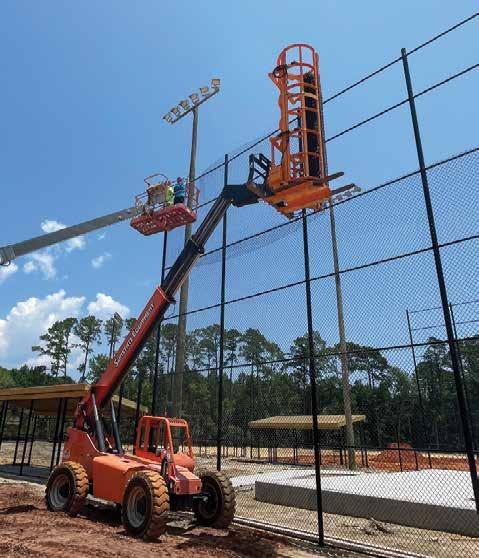
• Models to accommodate 6' and 8' height; up to 36" dia. rolls chain link or woven wire


• Cage height extension kits available
• Optional tilt plate for uneven terrain
FENCENEWS.COM | SEPTEMBER 2023 73
FNSept023-00428 [ VIEW PDF ] CATALOG 1-800-417-9272 / ezgmfg.com / sales@ezgmfg.com 1833 N. Riverview Road, Malta, Ohio 43758 EZG Manufacturing is a division of EZ Grout Corporation. All EZG Manufacturing products are backed by our two-year warranty on parts unless otherwise stated and are now available for order.
Catalog2023— 00428_FNC_Fence_News_Sept_2023_print_vf.indd 1 8/6/23 1:47 PM
If it can be done better, smarter, safer, we know how.
New
The AZEK® Company and TimberTech® Recognized for Climate and Environmental Leadership by Two Publications
Named One of America’s 2023 Climate Leaders by USA Today and Won Environment + Energy Leader 2023 Product of the Year Award for TimberTech Advanced PVC Decking
The AZEK Company Inc., a leading manufacturer of beautiful, lowmaintenance and environmentally sustainable outdoor living products, including TimberTech® decking and railing, Versatex® and AZEK® Trim, and StruXure™ pergolas, has been named to USA Today’s first-ever list of America’s Climate Leaders, recognizing the company’s reduction in greenhouse gas emissions between 2019 and 2021.
Additionally, TimberTech by AZEK’s Advanced PVC wood-alternative decking collection was named a winner of Environment + Energy Leader’s 2023 Top Product of the Year Awards in recognition of its sustainability attributes, including being made from approximately 60% recycled content, recyclability at end-of-life through AZEK’s FULLCIRCLE Recycling program and lower life cycle carbon footprint versus traditional wood decking.
“We are honored to receive such esteemed recognitions from both USA Today and Environment + Energy Leader, underscoring our leadership, commitment, action and continued progress on creating a more sustainable and circular future,” says AZEK CEO Jesse Singh. “Since 2019, we have used nearly 1.7 billion pounds of otherwise landfillbound waste and scrap to manufacture products across our industryleading portfolio of outdoor living products. Our focus on increasing the use of recycled plastic material not only helps solve a broader societal problem of plastic waste, but also reduces the lifecycle environmental impacts of our products, lowers our carbon footprint and reduces our raw material costs. We will continue to lead by example, act to further reduce our environmental impacts and revolutionize our industry to create a better future.”
To determine America’s Climate Leaders, USA Today and Statista ranked U.S.-based companies on how much progress they made in reducing Scope 1 and 2 greenhouse gas emission intensity between 2019 and 2021. Emission intensity measures the amount of greenhouse gases a company produces relative to its revenue, which allows for comparisons across companies of varying sizes. An original grouping of 2,000 U.S.-based companies was narrowed to 400 U.S. companies that cut their emissions intensity from 2019 to 2021. The data-driven recognition reflects some of AZEK’s recent accomplishments, which include reducing Scope 1 and 2 emissions intensity by approximately 15% from 2019 to 2021 and sourcing carbon-free electricity for most of its manufacturing operations.

For over a decade, the Environment + Energy Leader Awards have celebrated excellence in the world of environmental, sustainability and energy management. Award recipients are acknowledged as industry leaders, and featuring a Top Project or Top Product of the Year Award badge signifies their outstanding contributions. Companies seeking sustainable and energy management solutions trust that E+E Product of the Year Award winners offer a comprehensive array of vetted products to guide their decision-making.
The outstanding environmental qualities of TimberTech Advanced PVC decking resonated with the program’s distinguished panel of judges. One judge remarked, “This product stands out for its exceptional quality while boasting a lower carbon footprint. Additionally, it plays a crucial role in repurposing materials that would otherwise contribute to landfill waste, thereby promoting a sustainable and environmentally responsible approach.” Another judge added, “The potential for this product to drive a successful shift away from timber usage while diverting millions of pounds of waste from landfills is significant.”
These testimonials affirm the exceptional impact and excellence of TimberTech decking in driving both sustainability and circularity in the building products industry.
Sarah Roberts, co-president of Environment + Energy Leader, emphasized the rigorous selection process, stating, “This year’s entrants had to surpass an exceptionally high bar to qualify for an award, thanks to a seasoned and discerning judging panel as well as stringent judging criteria.”
To learn more about TimberTech, visit timbertech.com.
74 SEPTEMBER 2023 | FENCE NEWS USA
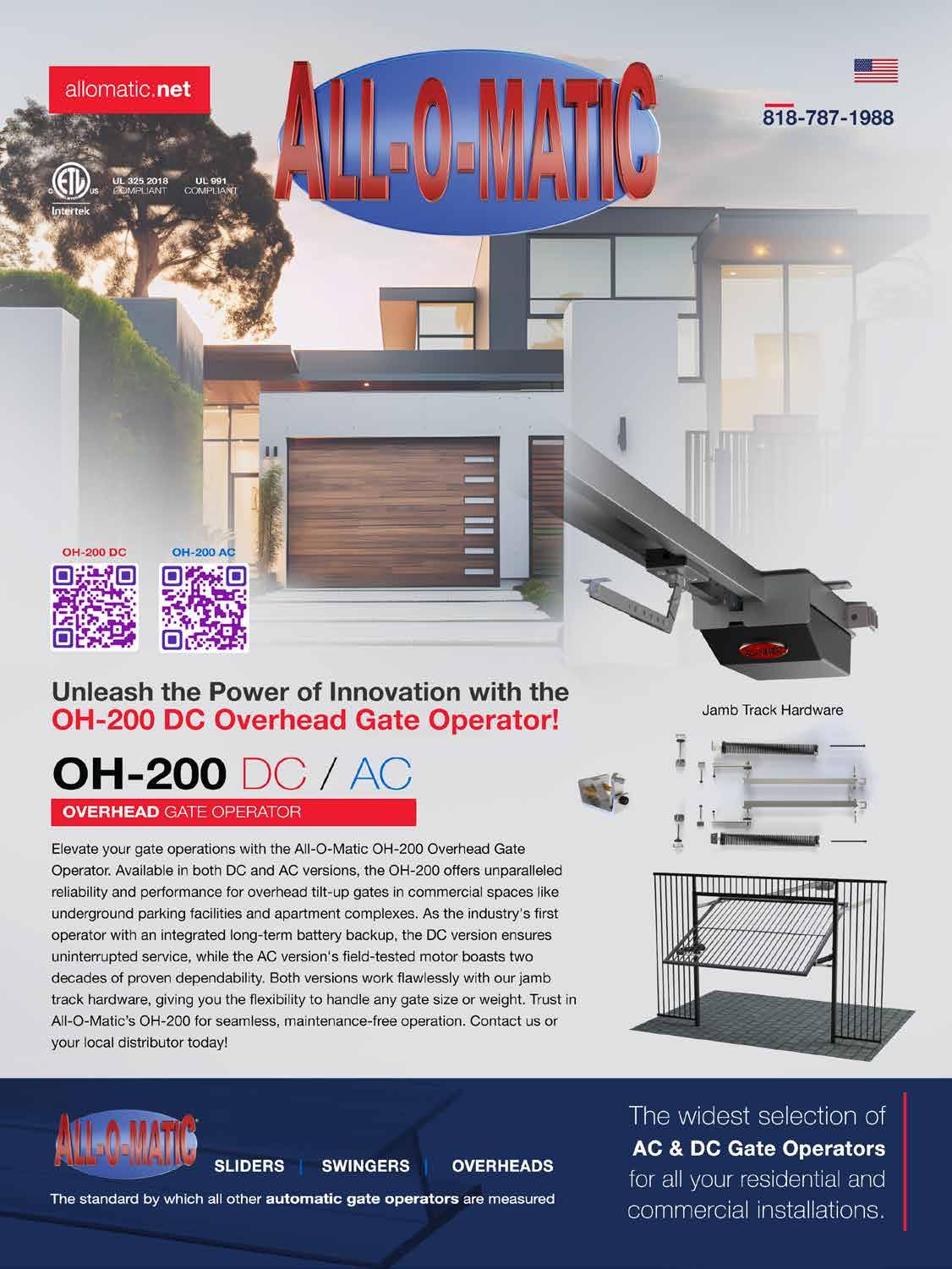
Wood Defender Classes for 2023
Training classes are held monthly. After completion, attendees are ready to hit the ground running and stain their first fence. The classes cover all aspects, including:
• Sales and marketing techniques of the fence-staining service
• Equipment and product demonstration
• Overview of equipment options to fit every budget
• Specific product knowledge of Wood Defender products
• Proper clean up and job site management techniques
Class dates are:
• September 22
• October 27
• November 17 www.wooddefender.com
AFA U and Carolinas Chapter by the Sea
AFA U – September 12 – 15, 2023
Carolinas by the Sea – September 14 – 16, 2023 Myrtle Beach, South Carolina www.americanfenceassociation.com
Landscape Expo
September 20 – 21, 2023
Anaheim Convention Center
Anaheim, California www.thelandscapeexpo.com
WASA 2023 Trade Show
September 28 – 29, 2023
The Mirage Hotel & Casino Las Vegas, Nevada www.wasaonline.org
AFA Midwest Annual Golf Tournament
September 29 – 30, 2023
Shanri La Resort Afton, Oklahoma ifno@protectingyourradius.com
AFA Gulf Coast Chapter Annual Clay Shoot Tournament and Fundraiser
October 7, 2023
Jackson, Mississippi bboutte@controlledproducts.com
LBM Strategies 2023 Conference
October 11 – 13, 2023
Charlotte, North Carolina www.lbmstrategies.com
NAFCA Business Operations, Training and Arlington National Cemetery Service Project
October 18 – 20, 2023
Arlington National Cemetery, Virginia www.4nafca.com
NADRA’s Deck Evaluation/Inspection Certification Classes
October 20, 2023 – webinar www.nadra.org
PSP/Deck Expo 2023
November 10 – 15, 2023
Las Vegas Convention Center www.poolspapatio.com
CLFMI Annual Meeting
November 14 – 17, 2023
La Quinta Resort Palm Springs, California www.chainlinkinfo.org
NADRA’s Decks Done Right Education Program
Two-day live webinar
Part 1: December 8, 2023
Part 2: December 15, 2023 www.nadra.org
NADRA’s Summit and National and Awards Gala
January 3 – 5, 2024 Clearwater, Florida www.nadra.org
FENCETECH 2024
January 23 – 26, 2024 Nashville, Tennessee www.americanfenceassociation.com
NAFCA Fence Training School
February 11 – 15, 2024 Sebring, Florida www.4nafca.com
If you have a fencing industry event you’d like included in an upcoming issue, please email the information to: editor@fencenews.com.
76 SEPTEMBER 2023 | FENCE NEWS USA
DIGITAL ADVERTISING OPPORTUNITIES
Digital advertising with Fence News puts your information directly in front of key decision makers across the country at companies you need to reach, including retailers, wholesalers, contractors, manufacturers and others in the expanding fence and access control industry.


Have a commanding presence with these first-come, first-served digital advertising opportunities!
Fence News Monthly Eblast Advertising


Fence News’ monthly eblast delivers our monthly issue with the latest news from the fence industry and related fields. Whether you are seeking to build your identity, generate leads, or spotlight your products, allow us to deliver your message to an audience of over 20,000 decision makers each month.
Placements Available:
Banner 1 - $6,000/year
Banner 2 - $5,500/year
Banner 3 - $5,000/year
Banner 4 - $4,500/year
4 Banners Available - No Rotation!
Size: 460 x 100 pixels @ 72 dpi











































Your Company-Sponsored Eblast Advertising
Grab a spot in our monthly sponsored eblast. A quick and easy way to reach a captive audience with a targeted message.
Sponsored Banner - $4,000
• 1165 x 650 pixel graphic



• Your company logo and tagline (Full Color/PNG)



• Up to 100 words of text: your news, your product feature

• Links to your social media and website
Website Advertising

Have a commanding presence on our website with one of our rotating banners.
Placements Available:




























Home Page - $4,200/year





Current Issue Page - $3,600/year
Subscription Page - $3,000/year


































































Size: 1024 x 210 pixels @ 72dpi
Display ads clickable to the webpage you designate 12-Month Placement | Ads can be changed monthly

For more information, contact Katie at katie@fencenews.com or (337) 312-0975. *All
ONLY
FENCENEWS.COM
rates are net. Reservation is on a first-come, first-served basis.
www.fencenews.com
FENCE COMPANY Your Trusted Fence Company Many people choose a privacy fence to help increase property security and screen out unwanted sights and sounds from surrounding neighbors or traffic. Privacy fencing may be an ideal choice if you live in a densely populated area, near a busy road or highway, or close to businesses and industrial centers. Plus, if you own a swimming pool, enjoy sunbathing in your yard, or have an outdoor hot tub, you’ll enjoy the seclusion that privacy fences offer. Fence Company Your Trusted Fence Company Sponsored Content FENCE COMPANY Your Trusted Fence Company Professional Fence Materials
COMPANY FEATURED
ONE
PER MONTH!
BUSINESS OPPORTUNITIES
FENCE FOREMAN NEEDED
Well established fence company looking for experienced Foreman for commercial and industrial projects in the Charlotte, North Carolina region. Drug & background testing required. Monday-Friday. Top salary, 401k, paid holidays, insurance, uniforms, PTO, etc. For more information, call 704-922-8471.
MACHINE OPERATOR WANTED
Family-owned company that has been in business for 40+ years is seeking a machine operator who is proficient on the Bergandi chain link weaving machine. Must be willing to relocate to south central U.S. Competitive pay with a generous benefits package available. For more information call 501-551-5502.
EQUIPMENT FOR SALE
- SVL 75 Kubota. 2,300 Hours. 2 Speed Heat and A/C Closed Cab. - $40,000.00.
- Hydraulic Side Slide Post Driver. Commercial grade. Hydraulic digger with post driver - $10,800.00.
- Keystone Self-Loading Wire Machine - $6,000.00.
- Goose Neck Trailer. 25,000 Gross Weight. Hydraulic Disc Brakes - $11,000.00.
- John Deere Auger With 12” & 9” bits. Hex Head Heavy Duty. Skid Steer Mount$2,100.00.
All equipment is garage kept. For more information, call (410) 490-1143.
EQUIPMENT FOR SALE WWW.POSTPULLERS.COM
PULLS PLUG AND POST SIMULTANEOUSLY.
DISTRIBUTORS WANTED.
WILL DROP SHIP BY TRUCK FREIGHT ON PALLET. Cell: 214-597-2067. mikesears061@gmail.com.
DANDY DIGGER FOR SALE
2006 Dandy Digger DD2-25, 1296 hours, gas engines, cement mixer, boring unit, miscellaneous augers, bucket and Dandy Digger Trailer. Call 330-784-0456 for more information.
CLASSIFIED AD RATES
CATEGORIES
• POSITIONS WANTED
• EMPLOYMENT OPPORTUNITIES
• EQUIPMENT (new or used)
• BUSINESS OPPORTUNITIES (manufacturer’s reps, dealers, distributors, installers wanted, consultants, and other services)
$1 a word (25 word minimum) or by the column inch rate
$50 if camera furnished art
If publisher has to set $60. Add $10 if a border is added.
10% discount on three-month consecutive insertions, paid in advance. Payment must accompany ads.
Deadline is 5th of the month prior to month of publication. Email Katie at katie@fencenews.com for a price quote and to schedule your ad.
Send editorial submissions to editor@fencenews.com .
EMPLOYMENT OPPORTUNITY
We are a very successful Midwestern fencing company offering residential, commercial, and temporary fencing. We seek a Chief Executive Officer to move our company to the next level. This is a new position for our company.
The CEO will:
- Develop high-quality business strategies and plans, ensuring their alignment with short-term and longterm objectives
- Lead and motivate subordinates to advance employee engagement and develop a high-performing managerial team
- Oversee all operations and business activities to ensure they produce the desired results consistent with the overall strategy and mission.
- Review financial and non-financial reports to devise solutions or improvements.
- Maintain a deep knowledge of the markets and the fencing industry.
Requirements:
- Proven experience as CEO or in another managerial position
- Experience in developing profitable strategies
- Experience working with and motivating employees
- A history of working with banks and enhancing banking relations
- Commitment to the success of the company
Compensation:
- Salary range $150K-$250K depending on experience.
- Bonus
- 401(k)
- Health Insurance paid by the company
- The company will pay relocation
Please submit resume to Fence News USA, Box 7A, email mary@fencenews.com, for immediate and confidential consideration.
LEE FENCE AND OUTDOOR, LLC
is part of a fourth-generation family-owned business that offers custom solutions for residential and commercial fencing, decking and access control. We are growing and currently seeking to fill the following positions based in York, PA:
- Fence Construction Superintendent
- Installation Crew Leader
- Access Control Installer/Technician
All positions require a valid driver’s license and candidates must pass a background check and drug test.
We offer an attractive total compensation benefits package that includes medical benefits, disability, paid vacation and holidays, and a 401k profit sharing plan.
For more information or to apply, please visit www.LeeFence. com or send an email to contact@LeeFence.com.
Lee Fence and Outdoor, LLC is An Equal Opportunity Employer
78 SEPTEMBER 2023 | FENCE NEWS USA
Low Voltage Accessories


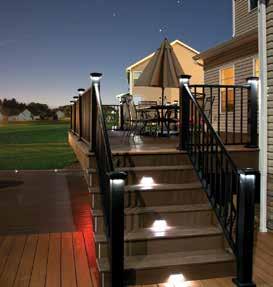


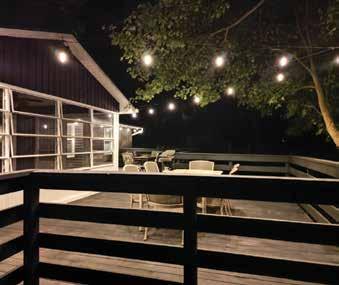
Light
2 & 5 Way Splitters
For complete list of our products please check out our brochure: lmtproducts.com/catalog-marketing/
FENCENEWS.COM | SEPTEMBER 2023 79 690 Puritan Avenue | Lawrenceville, NJ 08648 | p:1.888.570.5252 | f:1.609.989.1199 | orders@lmtproducts.com www.lmtproducts.com Innovative Products and Solutions Enhance outdoor living spaces with our low voltage lighting. Low Voltage Lighting Cape May Downward SIZES OFFERED 3-5/8”, 4”, 4-1/2”, 5”, 5-5/8”, 6” Cape May Halo Post Cap Light SIZES OFFERED 3-5/8”, 4”, 4-1/2”, 5”, 5-5/8”, 6” Cape May Scalloped Post Cap Light SIZES OFFERED 3-5/8”, 4”, 4-1/2”, 5”, 5-5/8”, 6” Haven Downward SIZES OFFERED 3-5/8”, 4”, 4-1/2”, 5”, 5-5/8”, 6” Haven Halo Post Cap Light SIZES OFFERED 3-5/8”, 4”, 4-1/2”, 5”, 5-5/8”, 6” Haven Scalloped Post Cap Light SIZES OFFERED 3-5/8”, 4”, 4-1/2”, 5”, 5-5/8”, 6” Neptune Halo Post Cap Light SIZES OFFERED 3-5/8”, 4”, 4-1/2”, 5”, 5-5/8”, 6” Neptune Downward Post Cap Light Neptune Scalloped Post Cap Light SIZES OFFERED 3-5/8”, 4”, 4-1/2”, 5”, 5-5/8”, 6” SIZES OFFERED 3-5/8”, 4”, 4-1/2”, 5”, 5-5/8”, 6” 50 Watt LED Smart Power Supply w/photo eye, timer, remote and bluetooth Low Voltage Bistro String Light Ornamental Downward Ornamental Combo Post Cap Light Dome Side Light
Scalloped Dome Side Light Flush Deck Light w/trim ring Recessed Riser Light Ornamental Side Light 1598 Stair/Side
w/ (2) ea. Covers SIZES OFFERED 2”, 2.5”, 3”, 3.25”, 3.5” 4”, 4.25”, 4.5”, 5”, 5.5” Ornamental Halo Post Cap Light SIZES OFFERED 2”, 2.5”, 3”, 3.25”, 3.5” 4”, 4.25”, 4.5”, 5”, 5.5” SIZES OFFERED 2”, 2.5”, 3”, 3.25”, 3.5” 4”, 4.25”, 4.5”, 5”, 5.5”
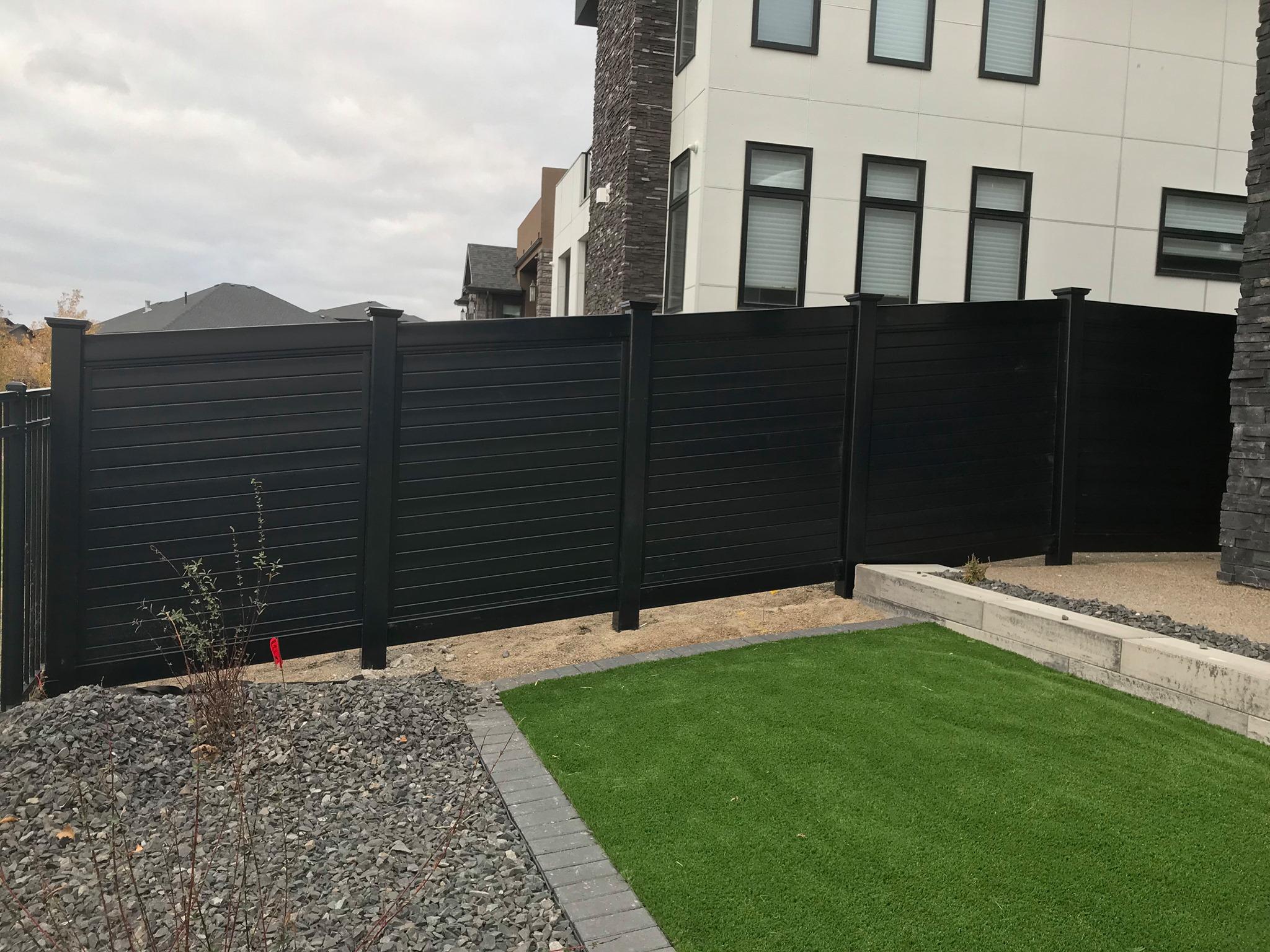
17 YEARS OF PROVEN PERFORMANCE CELEBRATING •Ho rse & Ra nc h Ra il •Pr i vacy Fe nc in g •S em i- Pr i vacy •Or n ame n ta l Ra ilin g Call us or write us for a free estimate 844-220-9100 info@blacklinehhp.com From the first fence installed 17 years ago to the 10,000,000 ft+ of fencing installed since, no fading or no cracking to be seen.
