WordWorks is provided three times per year to FBCW members and to selected markets. It is available on our website at bcwriters.ca and in libraries and schools across BC and the Yukon.
Diana Skrepnyk, Design Director Meaghan Hackinen, Writing Circles Coordinator
Genevieve Wynand, Membership Services Coordinator Emma Turner, Administrative Coordinator
FBCW AMBASSADOR: Frances Peck
EDITORIAL STAFF:
Rachel Dunstan Muller, Managing Editor
Diana Skrepnyk, Graphic Designer
Cindi Jackson, Christina Myers, Meaghan Hackinen, Jacqueline Massey, Copy Editors
Cindi Jackson, Proofreader
WRITE FOR WORDWORKS:
Visit our submissions page at bcwriters.ca/submit.
ADVERTISING:
WordWorks advertises services and products of interest to writers. Contact hello@bcwriters.ca.
ACKNOWLEDGEMENTS:
The Federation of British Columbia Writers functions on the unceded and ancestral territories of many Indigenous Peoples and cultures. As champions of language, we cherish the oral and written traditions of the Indigenous Peoples of this land. We commit to uplift the voices and stories of marginalized peoples and communities wherever we work.
We celebrate submissions from underrepresented communities and are actively seeking contributions from writers of all races, genders, sexualities, abilities, neurodiversities, religions, socioeconomic statuses, or immigration statuses. We encourage submissions from both published and emerging writers. We believe our strength as a community is in the breadth of our stories.
The FBCW gratefully acknowledges the support of the BC Arts Council, the Province of BC, Creative BC, the Canada Council for the Arts, and the Magazine Association of BC.
We acknowledge and are grateful for the generous support of our sponsor, Hemlock Printers.
Letter from the editor
Ifelt a touch of anxiety when the theme for this issue went out. Would “writing for change” resonate with potential contributors? Would the initial trickle of article pitches turn into a flood— or taper off to nothing?
I needn’t have worried. In the end the problem I faced wasn’t “How am I going to fill this issue?” but rather, “How do I choose from among all of these fabulous queries?”
As David Brown and Michelle Barker note in their column, “Words shape perception, expose corruption, and preserve truth. They can be used as propaganda— or as resistance.” To my delight, I learned that in this moment of unprecedented challenge, our writing community is exploring the power of words to make a difference in almost every genre imaginable. We are using our words to articulate ideas and perspectives that need to be heard, to participate in essential conversations, to provoke and engage and inspire. We are telling new stories in new ways—and looking for the right audiences for maximum impact.
It’s as if the authors in this issue were engaged in conversation, each offering their own experience of what it takes to write for change effectively— and how to manage our expectations as activist writers. Jordan Kawchuk explores the importance of finding the ideal “humour-heartbreak balance.”
Sylvia Bourgeois embraces contradiction in her fiction, while Carmen G. Farrell uses storytelling to shift values and beliefs. Jonathan Ng writes about bearing witness during a season of crisis. For those who want to confront an issue head-on, Sarah Boon discusses the how-tos of opinion pieces. There is so much more, but I’ll let you discover the wealth of ideas and stories yourself.
Encouraged—that’s what I’m feeling after working with this issue’s contributors. I hope their words encourage you as well.
Rachel Dunstan Muller Managing Editor and FBCW Press Director
Letter from the executive director
It is no surprise that the topic of change is on many of our minds. Every day we wake up to a slightly shifted reality. It was our desire to empower writers to be change makers that led to the FBCW’s Writing for Change Writing Intensive, which in turn springboarded into the theme for this issue.
In my last letter, I lamented that many literary organizations are struggling with rising costs and stagnant funding. My hope is that, inspired by this issue, you take up a challenge for our common good; we need to make our elected officials and broader community understand that funding for the arts is more than an extra. Words enhance our lives and in uncertain times are a blanket we can wrap ourselves in to find hope and comfort.
Funding for writers, as with other professions, is a matter of labour and equity. Aren’t we all tired of telling people we are novelists, poets, bloggers, memoirists, children’s book creators, editors, publishers, or journalists, and waiting for that moment when our very polite companions make THAT FACE? I could paint it from memory.
We are not protected by a mandate for Canadian content. With a trade war and relentless attacks on our identities, we see industry after industry receiving massive subsidies. But where are the funds to protect our craft? When other narratives change our world at alarming rates, why are we underfunding our own?
As writers, I urge you to use your gifts to have meaningful conversations with MPs, MLAs, and municipal leaders across parties. Talk with friends, family, strangers, in newspapers and on social media. No matter what our political leanings, histories, identities, or circumstances, now is the time for our diverse voices to be heard in unison.
The Federation of BC Writers welcomes donations to support our work. If you have the means, please consider a donation at bcwriters.ca/donate. We are grateful for gifts large and small, once or regularly.
Bryan Mortensen FBCW Executive Director
From the ashes: The power of our stories
BY MEGHAN FANDRICH
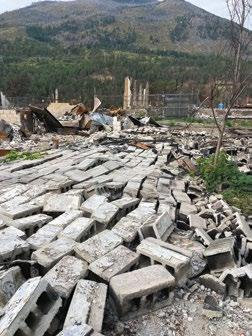
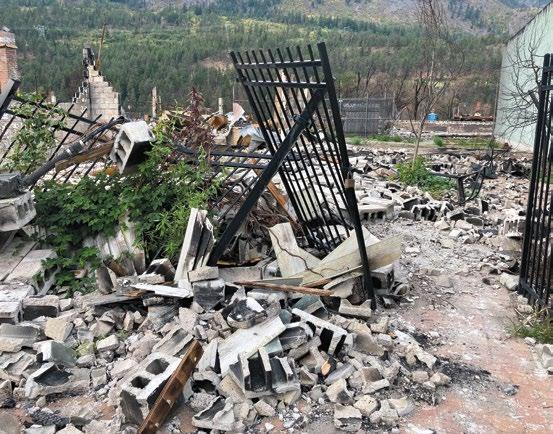
Itry not to think about the fire. There was life before—hollyhocks and lavender blooming in the courtyard at my coffee shop, daycare kids holding hands as they toddled down the tree-lined street, friends and neighbours stopping to chat as the morning sun warmed their faces—and life after. The moment in-between, the fifteen minutes that it took for the whole town to catch fire—I try not to think about that. You’ve probably heard of Lytton. Four years ago now, during the heat dome that affected so many people in BC, Lytton was in the news as it broke temperature records: 47 degrees Celsius on Sunday, 48 on Monday, and a sickening 49.6 on Tuesday. And then on Wednesday, when fir needles had turned red on the branch and the whole world felt tinder dry, there were high winds. A spark beside the tracks. Fire.
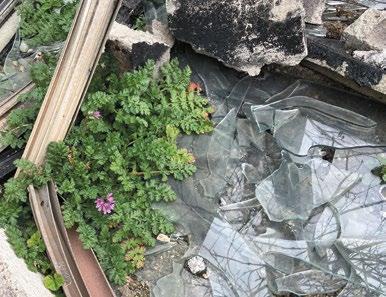
The thing about disaster is that life keeps going, even when everything has changed. For me, that meant learning a few days in that my house had been saved but my coffee shop and the town I grew up in were gone. It meant a month-long evacuation with my five-year-old daughter, wishing every day to be allowed home. It meant the devastation of coming back to one of the few houses left on the edge of town, with the smell of fire seeping through the windows at night. It meant a summer of ongoing wildfires, an autumn of washouts and floods, a winter of record-breaking cold, and a spring of zombie fires and nightmares and fear. It meant all of this, while I was struggling in the deep, thick mud of grief. Trauma is isolating, even when it’s a collective trauma. You must remember the pandemic, right? How we were all “in it together,” but each of us felt so alone. It was like that with the fire, too. The whole world saw us as we ran from the flames, but then the media moved on, our community was still scattered, and we were each sifting through our ashes, alone.
But then, life keeps going. A year or so after the fire, another wildfire was burning across the river from my house and I hadn’t taken a deep breath in twelve months and I needed a distraction, an escape. I fed a blank sheet of paper into the typewriter on my living room floor, thinking I might write a note to a friend. What came out instead was a memory of the fire. The ash filling the courtyard, the heavy black sky, the silver shimmering flame. And the words poured out of me, unexpectedly, uncontrollably, and they came out with all the tears and grief and anger and loss, the hopelessness, the impossibility. Everything I had been holding in. I hadn’t put words to any of it until then, not even in thought. I couldn’t think about it when I was trying desperately just to survive. So to see the memories emerge on paper, as though they were something separate from me, something that could be externalized—that moment changed my life. I don’t really know how to explain it, but I think you’ll understand. Maybe it’s that once I started writing about the experience, I could finally begin to process it, to move through it, to find myself intact beneath it. It felt like a gift. And life keeps going. As I wrote out memory after memory, poem after poem, I shared my writing. No one could come over for coffee without being handed a stack of typewritten pages: friends, community members, fellow survivors. As they read, I could see my emotions reflected in their faces— and theirs in mine. Through my words they could witness their own stories, the depth of their own traumas, and the strength of their own resilience. That stack of poems turned into a book—my story of life after the fire—and was published by Caitlin Press. It’s called Burning Sage: Poems from the Lytton fire. And I am full of gratitude. I’m grateful for the
way writing it has changed the trajectory of my life, my healing. I’m grateful for the way my community responded to it with love and vulnerability, and for the way people from across the country have reached out to me because of it. And with the ripples of change ever expanding, I am grateful for the way Burning Sage has become a small symbol in the fight for climate policy and climate justice, with politicians and policymakers listening to my story of the aftermath with tears in their eyes. Our stories can change the world. Not because they’re perfect and polished, not because they
fill a niche or follow a trend, but because they’re personal and vulnerable and true. When you find words for your emotions, your experience, and share them, you give others the chance to see a reflection of themselves. And when they look up at you and nod and say, “Yes, I know what you mean,” everything changes. So tell your story, because the ripple expands outward from these moments of connection. The gift. I know you'll understand.
Meghan Fandrich lives with her young daughter on the edge of Lytton, BC, where two rivers meet and fire-scarred hills reach up into mountains. She works as a traumainformed editor and is the author of Burning Sage: Poems from the Lytton fire (Caitlin Press). She is currently writing a creative nonfiction book that weaves fragments of image, memory, and emotion into the story of life after disaster.
Images supplied by author.
Writing as sentiment, as duty, as record
BY JONATHAN NG
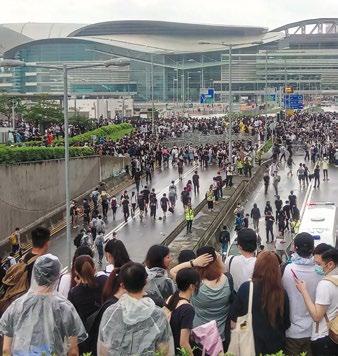
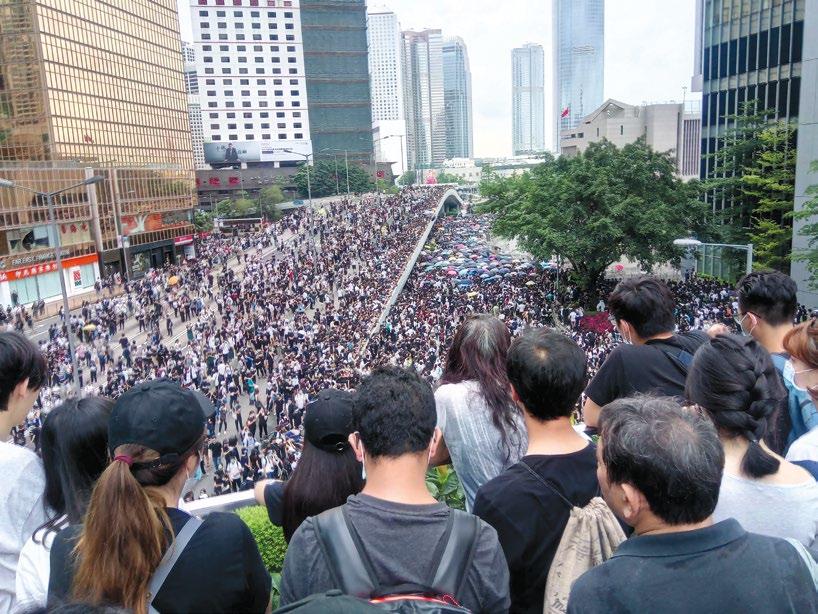
In Hong Kong in 2014, 2016, and again in 2019, conversations about uneducated, unmotivated delinquents flew across social media. Rumours ran rampant: protesters were thugs with bounties out for police officers; they were agents for foreign countries; they were ruining Hong Kong by raising hell and embracing anarchy across the international city. Mothers feared to head to shopping malls. Hong Kongers studying overseas lamented the demise of their city. Others called the streets madhouses, asylums.
But very few of the people who started these conversations were actually on the streets, witnessing for themselves what was happening.
I had walked through encampments, marched and attended protests, and so I wrote what I witnessed—an absence of chaos, the voices of hundreds in chorus singing songs about freedom, teenagers eating from donated lunch boxes, their hardened eyes a contrast to their lingering baby fat. I also recorded the protests live. For those without access to English publications or media outlets other than the ones peddling only the most violent and dramatic clips, these updates mattered. In fact, they mattered almost more than anything I’d ever penned before. I learned a few lessons about writing for change during this period and gleaned a few in retrospect.
The writing you do during times of crisis will be written out of a need for catharsis— and will barely keep you afloat.
The images that fly back to me from those protests are not the crowds, but the individuals in them. I remember the hoarseness of a boy’s desperation as he screamed for more bodies to take to the streets, the wail of iron fences ringing out from where they were being dragged to form barricades behind him. I recall the hopelessness of children, their accusing eyes as they peered out from encampments on the street.
I remember, too, not marches as a whole, but the miracles that sprung from them. In an international city so filled with difference, we’d become the scattered tribes after Babel’s fall, regathered. We’d become the Red Sea, able to part for medics, ambulances, and firetrucks. We were Noah’s flood, encamped and marching for more than forty days, transforming—with the wisdom of Bruce Lee, who’d once said, “Be water, my friend”—to advance and retreat as tides, marching one-two away from tear gas meant to break us.
The writing you don’t do will haunt you.
In the years since the protests, I’ve had conversations with friends scattered around the world and met with groups in Vancouver, still mourning the past and wallowing in helplessness. Back in Hong Kong, the government spoke of peace and prosperity—even as state-sanctioned police officers stomped on protesters, broke wrists, and a police chief described a detained
protester kicked by officers as a “yellow object.” The National Security Law enacted in 2020 eradicated free speech in Hong Kong. In the face of this, my friends and I have felt hollow, guilty; we’ve wondered if we could have done more. We’ve dwelt in the ugliness of defeat. We wonder, even now, what all of our efforts came to. Writing this now is part of my solution. Write, and more importantly, care, before crisis comes.
As a teacher, I was already writing about students crushed by the expectations drawn around their futures, and despised how Hong Kong had formed around the opium of materialism inherited from its colonial past. In other words, the themes within my work were already welldeveloped before Hong Kong’s Umbrella Revolution rolled around; my writing, just like Hong Kong’s problems, didn’t have its genesis in protests. It simply continued into the days of crisis. Thus:
Don’t yearn for crisis, but be ready for it.
In writing for change, one shouldn’t, as Wilfred Owen writes, be “ardent for some desperate glory.” It’s not about you. The proof of your compassion shouldn’t be artificially crafted within the work or slathered all over it; it should be drawn instead from hours of patient research and genuine attempts at understanding. The truth is, I didn’t care about Hong Kong as a city until my partner at the time brought me to Victoria Park to commemorate Tiananmen Square, or until I read for myself the agreement in the Sino-British Joint Declaration for democracy, the basic law, and the operations of the stacked deck of the legislative council. Only after did I feel like I belonged to the movement. Only then did I transition from a witness to an active participant.
Images supplied by author.
Finally, writing something real about the past will unavoidably be centred around your own experiences. Embrace that.
As literary writers and poets, we are not journalists reporting on incidents, nor are we historians sequencing and cataloguing the past. We are witnesses to real human experiences and human struggles; we are translators of the intangible.
We write, I hope, to capture truth. And in moments of great change, even as we are but a few among two million others, bearing witness to humans who may soon be reported as statistics, we need to remember that it’s individuals who will record the efforts of other individuals, that it’s individuals who will focus on singular moments that matter.
History can be erased. Collective memories can be purged, as the powers that be try to silence individual narratives. But we can bear witness, knowing that every heart and every voice matters.
So I write, about marching in the inferno of Hong Kong’s subtropical summer, six- to eight-hour hikes in the furnace of concrete ravines between commercial buildings and skyscrapers. The end of these slogs,
often delayed as marchers turned to statues, came with the dazzle of flashlights on mobile phones, held up by those who’d already arrived: twinkling, hopeful, encouraging. They’d brought the stars that had long fallen from the sky: Just a little further We didn’t reach for the stars. For a fleeting moment, we walked amongst them.
Jon thinks of poetry as a way to capture the intangible within the amber of verse. Having published Hong Kong: Growing Pains in 2020 before departing from the city, Jon continues his writing journey on Canadian soil, exploring themes of aging, transition, and his reining in of ADHD in his current project, re(dis)covery. His works have been published in EastLit, Voices and Verse, Cha, and the Twin Cities anthology of poems.
Pulp Literature 2025 Writing Contests
The Bumblebee Flash Fiction Contest
Deadline: 15 February Prize: $300
The Hummingbird Flash Fiction Prize
Deadline: 15 June Prize: $300
The Raven Short Story Contest
Deadline: 15 October Prize: $300
The Magpie Award for Poetry
Deadline: 15 April First Prize: $500
The First Page Cage
Deadline: 30 September Prize: $300
The Kingfisher Poetry Prize
Deadline: 15 November Prize: $300
Using poetry to power activism
BY JOHN BEATON
Imagine the prospect of having your poetry available to a worldwide audience and, in the process, making a contribution to the cause of global sustainability. That’s a possibility I’m now facing since presenting one of my poems at an international conference a year ago. Along this journey, I’ve learned some lessons that may be useful to other FBCW activist writers.
Start with an objective you care about. I grew up beside a salmon river in the Scottish Highlands. My love of rivers never left me, and so I wrote poems in praise and defence of that world.
Consider how reach determines impact. I started with literary and eco-friendly publications, but to make a real-world difference I needed to engage with audiences whose behaviour I might change and whose behavioural changes would matter. Communities extending beyond poetry aficionados and alreadyconvinced ecology supporters looked more fruitful.
Target your work with care. My first target audience was people in the sport fishing world. I found magazines and websites that published fishing-related poetry for general audiences.
Reach, don’t preach. I strove to infuse entertainment with conservation messages. Believing that readers who had room to form their own conclusions would be more easily persuaded, I tried to reach but not preach.
Don’t forget the spoken word. Orally delivered poetry can have great impact. I sought speaking engagements in which I could include poetry. For instance, I recited a poem about steelhead at the AGM of the BC Federation of Fly Fishers.
Look for opportunities to expand your impact. As I became more concerned about the wider environment, I broadened my targets by publishing poems about logging and industrial fisheries. In one instance I wrote a poem about problems arising from the dolphinsafe high seas tuna fishery. As far as I know it’s still hanging, framed, in the lobby of a hotel in Panama. I went on to research Earth’s broad challenges, especially in United Nations reports. Having children and grandchildren, I set my sights on the big picture.
Connect with existing networks. Leading environmentalists launched the Earth Charter at the Peace Palace in The Hague in 2000 as a roadmap to global sustainability. It’s written in business English and meshes with UNESCO’s 2030 sustainable development goals. While I found it aspirational and inspirational, I thought it deserved the more passionate and elevated language of poetry, so I paraphrased it in a poem.
The power of poetry to charge the Earth Charter’s rational message with emotional appeal was evident when I tested it on live audiences, so I informed Earth Charter International about it. At their invitation, I presented the poem to their international conference in Florida in April 2024. The audience liked it, and I’m in continuing contact to explore its use as a written and video resource for ECI’s worldwide network. That would be reach, indeed!
Thrive on your activism. Even when saving the planet seems like an insurmountable task, should we mope? Nope.
I feel gratified by vying to make a difference. Be sure to find joy in your efforts, too.
John has authored a poetry collection titled Leaving Camustianavaig and he wrote a regular poetry page for Eyes on BC magazine. He was a moderator at the Eratosphere online poetry workshop and is a poet member of the band Celtic Chaos. His work has been widely published, and he presented his environmental poetry at the 2024 Earth Charter International Conference in Florida. John hails from the Scottish Highlands and lives in Qualicum Beach.
Making a difference
BY SUSAN BLACKLIN
When I wrote my memoirs during COVID, my first reader told me to focus on my water story, that I had a book there. At the same time, the government was advertising Bill C-61, claiming they were giving First Nations responsibility for their own drinking water. In my mind, nothing could be further from the truth. And so I polished my draft, arguing that the federal government’s corruption and lack of due diligence in this area was Canada’s shame. I needed to share my lived experiences. As Maude Barlow stated in her endorsement of Water Confidential, my former husband and I had lived on the front line and had witnessed the suffering and deceit on the ground.
Once I wrote my first sentence, memory opened like a floodgate. I recalled scientific publications, specific dates of articles, scientists and scientific terminology, as well as the challenges. It surprised me, how the details flowed so easily. One hundred and twenty-three citations fell into place.
I was astounded when a publisher offered me a contract. She reaffirmed what my beta readers had told me: “We want to read more about YOU.” My fabulous editor asked questions that led me to reluctantly share fifteen years of emotions and experiences.
A few months after my book was released, a reader asked me a question about a scientific reference I had made. “What page is it on?” I asked, realising that by sharing my stories I had unloaded them, parked them in a public lot. I hadn’t anticipated the difference this would make to my mental health, how it would boost my confidence.
My memoir touched the hearts of many Canadians, like the pediatric nurse who confessed in tears, “I feel so terrible. I hated the pediatrician who kept the native children longer than the white children. I accused him of favouring them. It never occurred to me that they didn’t have clean water to bathe in, to change dressings, to drink.”
Readers contacted me with questions and invitations to speak. Once I answered their questions, they wanted to know how they could get involved. Canada’s shame was no longer mine alone.
Reviews from influential people helped spread my title. The BC Department of Education selected my memoir to be included in the curriculum for grades 10 through 12. When the Congress of Humanities selected my book, it became part of the curriculum for Indigenous Studies in universities across Canada. The irony: I finished school at fifteen, with limited further education.
Today in Canada, there are still thirty-five drinking water advisories in First Nation communities, and over 1,400 drinking water advisories in nonindigenous communities1. BC leads the way with 448!
Fourteen organisations collaborated with me to coordinate a federal petition demanding national drinking water regulations. Two thousand Canadians signed in thirty days. Sadly, the petition closed on December 7, and our call for action was collateral damage as the Liberals elected a new Prime Minister and Trump waged his economic war on Canada. As I write this, we are waiting for the 2025 federal election, ready to initiate a repeat petition and continue our cause. I am proud both of how I have grown through the therapy of writing, and of my story’s impact. I have high hopes that together we can make a difference for all Canadians. Visit susanblacklin.com to sign and share the petition.
1. https://watertoday.ca/
While living in Saskatchewan, Susan Blacklin supported her now late ex-husband, Dr. Hans Peterson, in founding the Safe Drinking Water Foundation. Together, they devoted fifteen years of their lives to bringing safe drinking water to First Nations and rural communities. Susan retired to Vancouver Island, where she now pursues her writing, painting, and gardening. Water Confidential is her first book.
Writing an op-ed
BY SARAH BOON
In the fall of 2023, a colleague died in a tragic field accident in the Arctic. I read about the incident with horror, and felt terrible for the husband and children she left behind. A year later, in 2024, her university released its new approach to field training to minimize the chance of this happening again. As I read over their proposal, it seemed they were just papering over a hole in the wall. I thought they needed to go further. I packed my thoughts into a 900-word piece and sent it off to Nature, a science journal that publishes op-eds (opposite the editorial page). It was accepted— with revisions. I worked back and forth with the editor on refining and distilling my message until it read well enough to be published. I was pleased to see my op-ed in print and even received email feedback from a prominent researcher in the field. Op-eds are good for making a statement about a specific event or idea. They are laserfocused on one topic, with links to related ideas as required. Op-eds also draw on your own expertise. I wrote this one, about fieldwork safety, because I was a field scientist for almost fifteen years. This telegraphs to readers that they can trust you on that topic given your experience.
How should you structure your op-ed? The OpEd Project (theopedproject.org) has a great diagram showing how to put one together. Start with the lede (yes, that’s spelled correctly), which is linked to the news story you’re responding to. State your argument. Then use evidence to support that argument. You may do this several times. After you’ve added all your arguments, write a paragraph that anticipates any differing opinions or addresses any obvious counter arguments. Conclude by linking back to the initial news story and argument. Op-eds are relatively short, so keep your writing tight and to the point.
They are laserfocused on one topic, with links to related ideas as required.
To write an op-ed, scan the news to look for references to topics you’re fluent in. If something piques your interest, jump on it. Op-eds are timesensitive, and you’ll want to get your piece in as soon as possible. I immediately wrote mine because Nature was in a rush to publish it close to the release of the university’s report.
But it’s not just enough to jump on an idea—there’s a “So what?” element involved. My “So what?” was how we could make field research safer.
The other key is to use plain language. I was writing a scientific op-ed, but I used language to engage all potential readers, including scientists who weren’t in the same discipline. However, avoid writing like you know it all. Be effective instead of “right.”
Make sure you target the right publication—maybe the one in which the original news story came out. I submitted mine to a journal that reaches many scientists interested in field safety. You may submit to a specialty publication related to the topic, for example, the Canadian Association of Retired Persons if you’re writing about the impact of a new tax on retired persons.
So next time a news story piques your interest, think about how you can contribute to the conversation with a strong op-ed based on your personal expertise.
Sarah Boon, PhD, FRCGS has been published in Hippocampus, The Rumpus, Brevity Blog, Manifest Station, Flyway Journal, and other outlets. She focuses on nature writing, science, and memoir. Her first book, Meltdown: The Making and Breaking of a Field Scientist, is coming out with University of Alberta Press in June 2025. She lives on southern Vancouver Island with her dog and husband.
I saved myself and it saved my writing
BY JORDAN KAWCHUK
Irecently changed my life.
When I say that, I don’t mean I moved houses, switched careers, or cut out carbs. I mean I truly changed my mind, body, and soul. And this is not as woo-woo as it sounds.
In lifelong recovery from alcohol use disorder (the newer, gentler term for alcoholism), I needed to profoundly transform myself in order to live again. The external stuff was pretty straightforward. I said goodbye to unhealthy people, places, and even career paths. I try my best to follow a rigid routine of physical wellness, accountability, and daily readings, mantras, and meds. The internal overhaul was—and still is—more elusive. I had to slowly rewire my brain and find my heart again. I practice contemplation, honesty, and continually quest after human connection and spiritual meaning. It ain’t easy. But for me, change isn’t a lifestyle makeover. It’s survival.
My personal sea change is inextricably linked to stronger writing. Once I stopped living two separate lives—the “writer guy” balancing a shameful secret—and combined my two realities, something cracked open. Something genuine and free. Writers are always told to “write the truth,” and I’m not sure I could bare any more. Today, my writing process feels more intentional, focused, and authentic. And so do I.
But let’s be honest here—sobriety and recovery stories are a dime a dozen in memoir and fiction. The wayward brother bouncing in and out of treatment is a stock character in television and film. And secretly, I’d rather count to a million than read another phoenix-rising addiction tale.
What’s worked for me in being a unique voice in this cocktail mix is not sounding like some grizzled biker scaring school kids straight, but to write as a vulnerable professional and family man who lost everything, still struggles daily, and isn’t afraid to look back. Brutal honesty in my
writing allows me to process my change and gives me the freedom to swing from dark relapse stories to absurd treatment character sketches to the heartbreak of watching my loved ones start up the moving van. One trick I use to find the sweet spot between light and dark is to shut out every imaginary reader peeking from behind my laptop. I have to stay snug in the pocket of my truth, because inevitably I will piss off someone in the ragtag recovery world—AA old-timers who don’t believe in relapse, the doctors who do, the ex-cons with secrets, the counsellors I’ve let down, or relatives and employers who might not differentiate between acting weak and being sick. These days, I write for only two people: my better self, and my old pal Steve, who just gets everything I do. The rest wait behind the velvet rope, allowing me to write without inhibition.
Once my own transcendence changed my writing, my words unexpectedly moved others. Now honest and entertaining accounts of treatment, shelters, stigma, and the grace that comes from sobriety have resulted in an overwhelming response from strangers who see themselves in my stories. I never intended this, but since “outing” myself in a Globe and Mail essay three years ago, people from all walks of life have reached out to me. Parents tell me they understand their children better, fellow addicts connect with my lived experiences, and “normies” write me to say they had no idea what alcohol use disorder was really like. Today when I speak at conferences for alcohol use disorder, I ride hotel elevators plastered with happy hour ads and sexy photos of dewy booze bottles. Liquor signifiers are everywhere, and I just shrug off any irony and irritation. That’s a rewarding full-circle that change has gifted me, and it’s humbling to hear that some of my stories stir a tiny bit of understanding. I still feel like an imposter, but I’m content to be a sober imposter.
Writing about change is tricky. Move an inch one way, and you sound like an intolerable know-it-all. Move an inch the other way, and you’re a self-pitying gasbag. Here are four areas I make sure to check in my work:
Vulnerability
I try to write as someone who is flawed. This is different from being bad or pitiful, which are qualities I wouldn’t want to read either. To err is to be human, and admitting my struggles and alcoholic journey makes my writing that much more human. Vulnerability helps readers trust us as authors, even if our characters are untrustworthy. When we gain that credibility, readers will cheer us on.
Humour-heartbreak balance
This is hopefully a byproduct of vulnerability. People tell me they never expected to laugh at a dark story or a devastating topic. I find this balance by imagining myself animatedly telling an insane story to a friend. Maybe the doctor delivering your cancer diagnosis has a quivering booger that’s stealing your attention. Perhaps your critical moment of change happens in an outhouse. While in treatment, I’ve witnessed a gym bro thank “God and protein shakes” in our gratitude circle. Former jailbirds have taught me—a mama’s boy writer—how to fashion a shiv from a lawn chair. Waves of levity will make the weighty climax that much heavier and heartbreaking, if that’s the intention.
Fearlessness
Whether you’re writing about a subtle shift within yourself or influencing readers to make major social change, the stakes must be high. This is where courage comes in. Make your change monumental and crucial. No one will take a smidgen of transcendence seriously. Go straight for the goosebumps.
No preaching
With recovery writing in particular, it’s easy to sound like a bumper sticker slogan. Any storytelling about change should avoid becoming a top-down teaching moment, or worse, a sanctimonious lecture. Even as adults, we don’t like being told what to do. Instead, let your story of change inspire change. Words really do have the power to transform us. I believe that now.
Jordan Kawchuk is a television producer, journalist, and creative nonfiction writer who has contributed to The Globe and Mail (2024’s Top 5 Most Read Essays), This Hour Has 22 Minutes, National Geographic, The Discourse, CBC, and the anthology, Better Next Year (Tidewater Press). This year he was accepted to the Tin House Summer Workshop in Portland, and La Napoule in France as its Writer in Residence. He lives on Vancouver Island.
Includes: Check-ins, writing sprints, goal tracker (measured in words, time, or units), and dedicated forums to share progress, ask questions, and cheer each other on.
Solastalgia & building creative communities
BY ALEX K. MASSE
One bleary Saturday afternoon in February, I stepped out of the rain and into community.
About two dozen guests milled around Vancouver’s Beaumont Studios; some inspected the art on the walls—vivid multimedia works celebrating nature and resilience—while others mingled over crafts, or helped themselves to the complimentary lunch. All of us had one thing in common: a copy of Hopeful Futures in our bags, the third volume from Solastalgia, a youth-arts collective focused on climate justice and the ecoanxiety so prevalent in our generation.
Beginning in 2022 as a youth cohort project under the national charity Apathy is Boring, Solastalgia held the stated goal of “[normalizing] eco-anxiety and the large spectrum of emotions that youth feel as a result of climate change.” I was in their debut volume and attended its release—a sweet and cozy celebration of a project brought to life. In the years since, the group has surpassed expectations and grown into a collective in their own right, receiving funding from Simon Fraser University in 2023 to continue their work. This year they celebrated the release of their third volume, and it’s been exciting to see how much the zine’s team and surrounding community have expanded.
Contributors also frequently lifted from their own lived experiences and cultural practices.
Solastalgia’s young creatives are our incoming leaders and advocates, who hold not only an empathy for the climate but for each other, as demonstrated by our willingness to learn from and share with fellow contributors. Additionally, I think it’s a credit to the Solastalgia team that young artists could even explore such hope and resilience in the first place, which they accomplished by first building a space where we could express our anxieties and other complicated emotions towards the climate crisis. Only having done that can we look forward and envision a hopeful future. More than anything, I walked away from the launch with a sense of relief, knowing that good work for a good cause is still being done by good people. Given how isolating writing can be, I think we all benefit from gatherings and celebrations like zine launches, especially when they involve being in a room full of people who share your values and convictions. It may even mobilize you as a creative and advocate simultaneously!
While the political climate and climate crisis may often seem bleak, attending the Solastalgia launch reminded me that there are still young people dedicating their time and creativity to imagining and advocating for a better future. As long as those stories are being written, I have hope.
The theme of this volume, Hopeful Futures, brought in a range of work across mediums and imaginations. Within the zine’s pages, one can find not just poetry and paintings, but photography, fibre arts, and mixed media works. Contributors also frequently lifted from their own lived experiences and cultural practices. Painter Madison Perreault, for example, used dot art to emulate the Métis practice of beadwork, and Jenan Afaneh’s “Don’t Get Smoked” drew from traditional Palestinian embroidery to provide commentary on settler colonialism and a vision of a world beyond it. For such personal projects, poetry can be found even in the written artist statements. There’s something thrilling in the knowledge that
Alex K. Masse is a writer, musician, and communications specialist from what is colonially known as Surrey, BC. Their work has been seen everywhere from Autostraddle to the Vancouver Fringe Festival, as well as in collaboration with Realwheels Theatre, Vancouver Pride, and more. They’re also a nonbinary neurodivergent lesbian, which greatly affects their creative process.
Change is the narrative
BY CARMEN G. FARRELL
Iused to think my twenty-three-year-old son was broken, that his impairments made him “less than.” It was the predominant narrative about disability when I was growing up, a story I’d internalized as “the truth.” It originated from an even older story about eugenics promoted by Francis Galton and other Darwinians that divided humans into “fit” and “unfit” binaries, which in turn came with a set of playground taunts about intellect and capacity. We know the unhappy story of forced sterilizations and stigmatization that resulted from eugenic propaganda. We’re still trying to divest ourselves of the remnants of segregation and institutionalization.
But we create the stories that shape our lives, and as the late Harold R. Johnson showed us in his book, The Power of Story: On Truth, The Trickster and New Fictions for a New Era, it’s possible to make new ones. First, though, we need to understand the stories we’re trapped in.
As a mother, I also believed I could “fix” my son, that therapy and effort could make him fit into the world more “normally.” I spent years in that fiction. My son’s story is no longer a tragedy to
me because I see how he’s a catalyst for positive change. Now I understand my choices and can live and grow into new stories about disability. Yes, my son has impairments, but his body does not disable him or who he is. He becomes disabled when his condition—how his body and mind work— interacts with negative attitudes, inaccessible spaces, and limited social opportunities and supports. His environment and the people around him determine the extent of his disability: in public, in private, in bureaucracies, and at work. Lack of opportunity and the inability of others to see his capacities disable him. He has impairments, but he is not disabled until others say so in words, actions, or attitudes. What I learned through my experience with my son can be applied on a larger scale. It’s easy to feel discouraged at the state of the world, but as writers we have tremendous power to change our stories at this level, too. Our current problems exist because of a set of values and beliefs we’ve collectively bought into. But we can create new stories and a new way forward. As human beings, we tend to act in alignment with the stories we believe. If we tell ourselves the same
tale over and over, we start calling it “truth.” But it’s still a story—about political systems, climates, or social supports. Take your pick. What we call ethics and morals are stories as well. The reality is that there are many ways to interpret “facts,” because we’re constantly breathing meaning into our experiences. We have the capacity at every moment to create new stories about ourselves, each other, and the systems that operate in our world. So what do you care about? What stories trap you? How do you, as a writer, want to show up in the world? What kind of change are you aiming for? Are you hoping to spark a conversation, influence minds and hearts, or inspire action?
Fellow memoir and autofiction writers know the core of a narrative is not what happens to us, but what sense we make of it— not simply a string of facts, then, but how we shape those facts into story and meaning. But sense-making isn’t limited to “true” stories; our fiction and poetry can lead us to new understandings as well.
or poverty that you care about? Weave in details that show you’ve done your homework.
Plant seeds for reflection through dialogue, action, and consequence. Conflict is your friend— social change doesn’t happen without struggle. Highlight the friction between ideologies, systems, and individuals so that readers are immersed in the real-world challenges of progress.
Close with a bang. What’s your agenda? If you’re actively writing for change, give readers something to chew on—an implicit nudge to get involved, a new lens on an old problem, or a moral dilemma. People need a reason to act; if you can offer a small victory or a glimpse of a better future, they have that reason.
Our current problems exist because of a set of values and beliefs we’ve collectively bought into. But we can create new stories and a new way forward.
The key to writing for change is crafting a narrative that resonates deeply but subtly. Bashing someone with a manifesto seldom works, but storytelling that leaves us wondering about our role in existing systems of justice and power stays with us long after we close a book’s cover. Think, for example, of Beloved by Toni Morrison, or Margaret Atwood’s The Handmaid’s Tale. A good story grips first and transforms second. Our writing’s purpose determines how we balance those two elements.
If good storytelling is the key to change, then this is where the tools of fiction shine. We need characters we care about, whose pain matters to us. Our characters’ struggles and growth should mirror the change we want. As you’ve probably heard, the best dialogue comes from within our characters. Show the stakes of a social issue through their experiences and conversations.
If you can, reflect current debates, values, and events. A story that feels contemporary has more power to influence and shift perspectives. Make the setting believable: an authentic story reflects the issue’s reality. Is it the environment, discrimination,
Whether you’re actively writing to change something specific or writing to entertain, you are writing into a new reality each time with the details you choose, the character struggles you identify, and the places and systems that influence your narrative arc. Your stories transform. Your stories are powerful. As Harold R. Johnson tells us, our words matter. They can heal or they can hurt. Today, let’s heal.
Carmen G. Farrell, at carmengfarrell.com, is a force behind community initiatives for neurodivergent individuals: paraathlete opportunities for highschoolers, learningto-work university programs, and playground inclusion groups in elementary schools. Her creative nonfiction focuses on disability and inclusion, questioning the assumption there’s a “normal” way to be with each other. She’s a director of the North Shore Writers Association, and volunteers with The Writer’s Studio at SFU (’24 alum). North Vancouver is home.
Two things can be true
BY SYLVIA BOURGEOIS
In small towns and resource-driven communities, life is a study in contrast. Tradition holds firm even as progress presses forward. The log sort that supports families also harvests acres of timber. The gravel pit with its never-ending conveyor also keeps the grocery store open and the hockey team in jerseys. The tension between industry and environment, isolation and connection, past and future hums in the background, a constant presence shaping conversations and lives.
I grew up and now live in communities where the ocean meets the forest, where towering cedars frame the sky, and the spicy scent of sawdust mixes with diesel. These are places of undeniable beauty, made accessible because of industry. The people—my family, my friends—work hard and take pride in that work. The tree fallers and equipment operators, log scalers and boom boat captains, commercial fishers and deckhands are all served by the quiet dedication of small business owners. We treasure the natural world and recognize the crucial role of industry.
Two things can be true.
But I also understand that these industries have a cost. Charcoal clear-cuts bloom into riots of magenta fireweed after a burn. Abandoned mine sites colour the landscape with unnervingly vivid shades of bright turquoise and rust. I hear the arguments— those who see the land as a resource to be used, those who see it as something to be protected.
It is easy to demand a single truth. To say one side is right, and the other is wrong. But I grew up and live in this tension, embody both perspectives. The logger who fells Douglas firs may also be the man who teaches his kids to fly fish, who walks the woods teaching the language of scat and footprints, who observes the cycles of chanterelles and wild blueberries. The activist fighting to save a watershed may have parents who spent their lives fishing the coast, whose dangerous sets during limited openings paid for their child’s upbringing and education. Pride, respect, regret.
Many things can be true.
This complexity, this push and pull between opposing forces, defines so many aspects of life. The desire to preserve what we love and the necessity of change. The pride in what has been built and the knowledge that some things must be torn down. It is not an easy place to stand, in the middle of contradiction. But it is a place I know well.
For decades, I’ve been working in construction, in spaces I’m not expected to be, creating snapshots of incongruity. A high heel next to a steel-toed boot on a dusty tailgate. A visibly pregnant mom dragging poly over a muddy soil stockpile. Countless times I’ve been dismissed, underestimated, or mislabeled as a nepotism hire. Earning respect and disproving assumptions is fulfilling. And tiresome.
I now write historical fiction about the people and places I cherish. There is a joy in challenging the
ingrained expectations about whose tale deserves the spotlight, which character to portray as the hero. These stories, too, live in the space between. They are not declarations but explorations, not answers but questions. Fiction is a catalyst for change because it expands the space for possibility. It allows for complexity in a world that so often demands certainty. A novel set in a logging town is not just about trees cut down. It is about the camp cook and whistle punk who lived there, about the choices they made, about the love they held for the people and place, even as they changed it. In researching these stories, I’ve learned that history rarely offers a clean resolution. Instead, it loops and echoes. Patterns of progress and resistance, of hope and harm, repeat themselves. The more I look back, the more I see that the past holds warnings and wisdom we often ignore. Even as we strive to create a better world for our children, we find ourselves retracing old paths, repeating mistakes with new tools and intentions.
Writing into the past has shown me how vital it is to carry those lessons forward—to recognize the cycle and try, imperfectly, to break it. If we listen, history can teach us to be more honest, more compassionate, more courageous in how we hold our contradictions. Words matter. They shape perception. They challenge bias. They remind us that no one is just one thing, that no place is ever defined by a single narrative. Writing has the power to bridge divides, to foster understanding where there was once
only opposition. It does not demand agreement, only that we look closer, listen harder, see the full picture instead of just the piece that aligns with what we already believe. Change does not always come in grand gestures. Sometimes, it is in the quiet work of refusing to accept a single story and seeing, with an open heart, the humans beyond the conflicts. Of showing up in unexpected places.
And sometimes, the task is simply acknowledging the truth of contradiction. That we can love a place and want it to be better. That we can advocate for the environment and respect the people whose livelihoods depend on industry. That we can exist between worlds and, in doing so, create something new.
So many things can be true.
Sylvia Bourgeois was raised on northern Vancouver Island, in some of BC’s most beautiful small communities. If she isn’t writing or working her day job, you can find her with family, friends or on a boat with her husband. Visit www.sylviabourgeois.com to find out more about Sylvia and her local historical fiction series, Island Echoes
Words and silence
BY K.L. SHILLING
As a writer, words are everything to me. Words have the power to speak things into being, to transport us to different times, imagined places, even different cultures; they can transform us and how we see the world.
And yet there is also the power of silence to catalyze change.
Recently, I went on a month-long residency at Finland’s Arteles Creative Centre. Arteles had woods, snow, lakes, northern lights, a walking meditation circle, and allegedly a moose that wandered about. And Finland itself, many say, was founded by the power of stories. The collection of folktales published as the Kalevala is credited with affirming a unique cultural identity separate from neighbouring Sweden and Russia, sparking a movement culminating in Finland’s independence in 1917. A connection between language and identity was not lost on me coming from Canada, with its active efforts to reclaim and teach Indigenous languages.
In other words, language is powerful. Yet at this residency I was to embrace two days
of silence every week for a month. I was a writer who was supposed to be silent.
Like many, I can of course have hours when I happen to not talk to anyone. But this wasn’t accidental silence. This was intentional. Not only no talking, but also no music, no internet (you heard me, no internet!), no television, no social media, no radio—in other words, no noise. Silence. Every weekend. For a month.
I’m someone who’s used to speaking out—writing opinion essays, testifying at policy hearings, teaching incarcerated writers, engaging in debate over dinner, cheering on fellow writers, chatting with neighbours. What was I, someone used to making noise, going to do with silence?
As the first weekend approached it felt unimaginable— two whole days with no talking. Keep in mind I was living in a house with four other artists, sharing a kitchen and one bathroom. The other residency house held eight additional artists. Silence was not our default setting. Did I mention no internet? No internet. It was a tad terrifying, if I’m honest. But okay, silence. Here we go!
There was, of course, the moment the first weekend when a failed attempt at charades caused me to break silence to ask how to translate oven settings before I burned dinner. Or the second weekend, when I put on headphones because I just couldn’t get through my workout without music. Or when I sent a text to my husband asking for reassurance. (I wasn’t speaking out loud so it didn’t quite count.) Or I’d go for another f’ing walk in the woods because I couldn’t write anymore and was bored of the book I was reading and I couldn’t talk to anyone or read any online news—but at least I could move my body. In other words, silence wasn’t easy. It didn’t come naturally, or even always willingly. Instead of talking (or listening to music or doomscrolling), my mind wandered. I thought while walking, while cooking. The piece I was working on wended through my mind undisturbed by any other inputs and even had time to loop around until it made unexpected connections. With no other options, I had to focus, be in the moment and in my work. Untethered from distraction, silence created unexpected freedom. Over the course of the month, I stopped being daunted by silence and instead embraced it. Weekends felt less about not talking and more about removal of noise. The noise of conversation, yes, but more so the background noise that’s always present—podcasts, logistics, chatter. Silence became synonymous with not being interrupted. Somehow it made time move differently. I counted the week as Monday through Friday. The weekend existed outside of measuring; it was time-outof-time. Silence made time expansive. Like I finally, for once, had enough of it. My time was completely, utterly, entirely my own. No one else had any claim to it because no one could ask me to do anything—not even to stop for ten minutes of conversation when crossing paths in the kitchen. Being in silence changed me, as well. I felt closer to my words. Not just because I’d tacked them to the wall and spent hours pacing in front of them, sleeping under them, adding to them, getting up to look at them, putting up more until my room was covered. I was closer to them because there was nothing between us—no noise from the outside world or other people. I shifted. My writing changed. Adjectives fell off my prose like a party dress dropping to the floor, leaving the body naked. Unadorned. I cut twice as many words as I wrote without self-
judgment. I cut out the noise of my inner critic alongside the noise of my overwriting. And the core struggle of my piece fell, finally, into place. Silence opened my attention. Things weren’t nosound-silent (footsteps crunching on snow is unimaginably loud). But without distractions, without noise, I fell into what Scott and Rachel Kaplan at the University of Michigan call “soft fascination.” Things were engaging, but not demanding or alarming, offering surprise within the familiar. The woods twinkled with sunlight reflecting through drops of condensation. There were galaxies to be found in ice crystals if I paid attention. The lakes sang as they thawed. There was much to write about.
This intentional shutting off, for defined periods of time, is what I’m bringing back as much as the words I wrote, friendships, and memories made. Can I, now that I’ve returned, rekindle that intense focus? Can I pay attention, with soft fascination and delight, to the small things around me rather than looking for big metaphorical moments? Let my thoughts wander, keeping my brain-space open and not filling it with distractions, with refreshing my email, and checking social media or news? Can I practice intentional silence as part of my writing?
What the silence changed most was my own relationship to my writing. Silence brought clarity. I was a writer because I was writing. That is what I chose to fill the silence with. I didn’t have to prove it, publish anything, or say anything. I simply, silently, was.
Kaile teaches creative writing in prisons because she believes stories can heal.
She graduated from SFU’s Writers Studio; her writing has appeared in the Los Angeles Times, Huffington Post, Emerge24, and Pulp Literature; her obscure little article in the Journal of Religion and Film has been downloaded nearly 1,000 times. Star Trek TNG is comfortviewing because she believes the future will include aliens speaking in poetry. She lives on the unceded lands of the Coast Salish Peoples.
Don’t let it break your heart: Managing expectations when writing for change
BY AINSLEY HAWTHORN
The effect a piece of writing will have on its audience is a fundamental concern for any author. We write to move our readers, to spark their imaginations, and in some cases to change their minds. Writing as a form of activism, though, is bound to have an impact on you as a writer too— an impact that has the potential to be harmful if you don’t take care of yourself along the way.
As a cultural historian who writes op-eds and analysis pieces for a variety of publications, I’ve covered subjects like COVID, abortion, racism, and queer rights. After publishing over 150 articles, I’ve learned some dos and don’ts for staying motivated when you’re writing for change.
DO determine whether you can write the piece you’re planning without compromising your psychological, emotional, or social well-being. While many people find writing therapeutic, addressing subjects that affect you personally can be distressing, and delving into challenging past experiences can even be retraumatizing. Do you have tools to draw on—like healthy coping strategies, supportive family and friends, or a trusted mental health professional—if you experience anxiety, depression, or another negative reaction? If people want to discuss this piece with you in the future, is this a topic you’ll be comfortable rehashing?
Doing an honest self-assessment in advance can keep you from wading into subject matter that you may not currently be in a position to write about healthily.
DON’T expect to see an immediate impact.
Progress doesn’t happen overnight. If a reader disagrees with you, one story probably won’t shift their thinking. Many stories over time, however, might. Avoid putting too much weight on any one piece of writing as a vehicle for change. Remember that this is only one volley in a campaign. Whatever your cause, there are almost certainly other people doing similar work, and you yourself can continue to write on the subject. As the saying goes, anything worth doing is worth doing slowly.
DO set an attainable goal.
Instead of using the number of people you convince as your measure of success, set an objective you can control, like vividly describing your lived experience, providing well-sourced information, or laying out a clear and reasonable argument. Not only will you inevitably fail to change the mind of every reader, you’re unlikely to ever find out how many minds you have changed. Pinning your ambitions to something you can achieve (and verify) will help you feel rewarded instead of unresolved.
DON’T read the comments.
We all know comment sections can be a morass of halfbaked opinions, insults, and bullying, but who among us hasn’t given in to morbid curiosity and read through them anyway? If you’re going to be publishing on sensitive topics, break the habit of checking comment threads on your work. Online commenters represent only a small minority of readers, and their words are rarely intended as constructive criticism for the author. There’s no need to subject yourself to negativity when you’re unlikely to gain anything beneficial from it.
Any form of advocacy requires you to manage your expectations to avoid becoming demoralized. By tempering your idealism with realism, you can buffer your resilience and keep changing the world, word by word, for years to come.
Ainsley Hawthorn, PhD, is a cultural historian who writes about forgotten events and the surprising connections between past and present. Her work has appeared in National Geographic, The Washington Post, CBC, and Psychology Today, and she edited the anthology Land of Many Shores: Perspectives from a Diverse Newfoundland and Labrador
Letter from the FBCW team: Diversity Equity and Inclusion
DEI has been a highly visible topic of late. As an organization that values the voices of our members and the communities they represent, we want to share with you how the Federation of BC Writers is managing this conversation. Our team cherishes the values of diversity, equity, and inclusion; they permeate our decisions and thinking, and inspire exciting opportunities for education and enrichment. This letter is an attempt to explain why we put such effort into DEI, with the hope that our members, even if we are not all in complete agreement, will at least know our intentions.
Writers have a proud history of changing the world through meaningful conversation and expression. Most readers can point to a book, poem, or article that changed their outlook. And there are few greater opportunities for reflection than ideas that feel “controversial.”
The written word moves us and changes us; it gives us opportunities to grow, learn, and engage. Economic hopes of publication are certainly a considerable factor for many authors, but writers write because we have something to say.
One of the greatest challenges in talking about a term like DEI is tackling the acronym itself. When we just say “DEI,” it distances the term from the words and ideas it represents—diversity, equity, and inclusion. For some in 2025, “DEI” comes
with corrupted implications of something underhanded and unfair. But at the Federation we maintain the perspective that diversity should be celebrated, that everyone having a fair chance is a good thing, and that doing our best to make people feel welcome and heard strengthens our communities.
When we focus on the acronym, we lose sight of the intent. But centering the values themselves in our planning makes us richer as writers, as we encounter new (to us) ideas from communities with whom we may not have previously engaged. It’s not as simple as a flow of knowledge from one community to another, but a genuine opportunity for an exchange of ideas that transcend the many intersections of our identities and experiences. And to be truly equitable in this exchange, the labour of education ought not to land only on one party and the benefits to the other, but be shared equally for the gain of all, ultimately including the readers of our work.
At the Federation of BC Writers, we say in our territory acknowledgement that we are champions of language. If language grows and evolves from new combinations and interpretations, then to champion writing is to champion the writers who have something to say and a reason to say it. For these reasons and many more, we are proud to make our space as welcoming as possible for as many people as possible.
member MILESTONES
Angie Ellis’s short story, “The Sisters,” recently won the Masters Review Short Story Contest. She is also thrilled to announce that her historical novel, A Snake and a Feathered Bird, will be published this fall by Thistledown Press.
Gregory Michael Nixon has just received highly positive book reviews from BookLife (a subsidiary of Publishers Weekly) and Chanticleer. Chanticleer reviewed his audiobook version of Diomedes in Kyprios.
Cathy Burrell had a piece published in the Globe and Mail in March 2025. “I thought being Canadian was good enough to sell my books in Canada; I was wrong” has been reprinted in small-town newspapers all over Ontario and can be read at https://quoimedia.com/encounteringunexpected-trade-barriers-to-canadian-stories/
Carol L. MacKay’s children’s story “Bringing in the Sunshine” was published by the New South Wales Department of Education in the February 2025 issue of Touchdown. A poem for children, “Swinging into Town,” appeared in Ladybug’s July/ August 2024 issue.
kerry rawlinson’s poem “Tomorrow, a Different Universe” was awarded The New Millennium Writings Poetry Prize for 2024, and her poem “in the Eastern Townships, Québec” was joint winner of Canterbury Poet of the Year, 2024.
Carollyne Haynes has narrated and released the audiobook version of her memoir, Raised by Committee, a coming-of-age account of growing up as “a ward of the Courts in need of moral protection” during the 1960s sexual revolution.
Julie Wise is releasing chapters of Make No Mistake on Substack (juliewise.substack.com). The novel includes a corrupt American president, a retired women’s rights activist, and an underground book club poised to take down the patriarchy.
The Last Green Dragon by Rud Verhagen tied for third in the UK Wishing Shelf Children’s Choice Award. Verhagen is thrilled that the kids enjoyed her book.
Sophia Conway recently hosted a haiku poetry exhibition at her local Butterfly World to celebrate the publication of Crumbs & Constellations, her volume of haiku.
LAUNCHED! new titles from cw members
Are you a member of the FBCW with a newly published book? Visit bcwriters.ca/launched to submit your book to an upcoming issue of WordWorks.
Unconditional: Obstacles in Love & Finding Balance
This book of four essays explores the concept of unconditional love in its various forms, with both healthy and unhealthy examples. How do we find the kind of emotional balance needed to love honestly and with dignity?
Seeds Of Ascension, Book Two: Gateways
Frank Talaber | January 2025 | 978-1998052004 | $24.99
Surviving a disaster might have you sending a prayer to your guardian angel. Roger’s angel is stranded on Earth—and needs his help to save the ascension of Humanity.
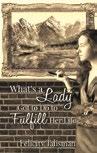
What’s a Lady Got to Do to Fulfill Her Life?
Felicity Talisman | The Wild Rose Press | January 2025 | 978-1509258918 | $4.99
Two heart-wrenching tragedies in the same week serve as a stark reminder of the brevity of life. It is time for Leanne to free herself from her humdrum world of work and fulfill her heart’s desire.
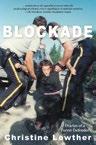
A journey back to blockade years of the early nineties, marked by old-growth occupations, tree-sits, and barricades on the frontlines of Vancouver Island’s ancient temperate rainforests.
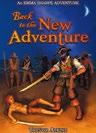
Back to the New Adventure
Trevor Atkins | Silverpath Publishing Inc. | December 2024 | 978-1989459041 | $14.95
Attacked by the French, Emma and Jack find themselves stranded on a desert island. They must survive to rescue the rest of their crew. But with the threat of execution looming, will they succeed?
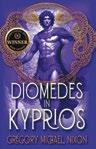
Diomedes in Kyprios
Gregory Michael Nixon | Historium Press | November 2024 | 978-1962465717 | $19.95
In desperation after being torn apart, Diomedes and his lover, Lieia, the Hittite Queen, agree to meet again at the Temple of Aphrodite in Kyprios (Cyprus) where the marauding Sea Peoples are gathering.
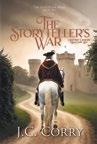
The Storyteller’s War
J.C. Corry | Black Rose Writing | May 2025 | 978-1685135973 | $23.95 (paperback) $7.99 (Kindle)
Geoffrey Chaucer, reluctant spy, is sent to Castile to change the course of a war and gain the hand of the woman he loves. Success will mean gold and promotion; failure the loss of all he holds dear.
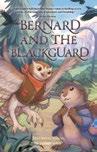
Bernard and the Blackguard
Maureen Young | FriesenPress | February 2025 | 978-1038324955 | $28.99
In the second book of the Eastside Series, the underground world of gophers and owls collide in an urban tale of mystery and friendship.
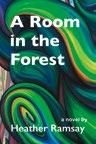
A Room in the Forest invites readers on a journey of self-discovery set against the breathtaking backdrop of Haida Gwaii’s ancient landscapes.
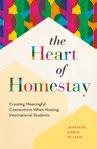
The Heart of Homestay: Creating Meaningful Connections When Hosting International Students
Jennifer Robin Wilson | Page Two | February 2025 | 978-1774584989 | $24.99
A comprehensive guide to the homestay experience, brimming with honesty, compassion, and plenty of easy-to-follow strategies.
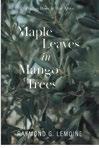
Maple Leaves in Mango Trees
Raymond G. Lemoine | FriesenPress | March 2025 | 978-1038332998 |
$39.49 (hardcover) $26.49 (paperback)
$10.99 (e-book)
Lifelong nomad educators embark on another posting to West Africa. They ultimately find themselves transformed, with a clearer sense of purpose than they thought imaginable.
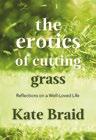
The Erotics of Cutting Grass
Kate Braid | Caitlin Press | March 2025 | 978-1773861623 | $24.00
Kate Braid returns with her signature wit, warmth, and boldness to tackle subjects beyond her unconventional career—step-parenthood, travel, and embracing the unfamiliar at any age.
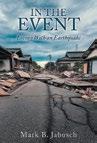
IN THE EVENT: Living With an Earthquake
Mark B. Jabusch | FriesenPress | February 2025 | 978-1038327000
IN THE EVENT: Living With an Earthquake is the story of the March 2011 earthquake, tsunami, and nuclear meltdown in Japan. The book incorporates true events, analysis, faith, and resilience.
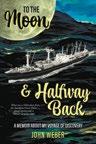
To The Moon & Halfway Back
John Weber | September 2024 | 978-1068958106 | $29.00
A memoir describing the author’s experiences while working on Scandinavian ships from 1972–1983.
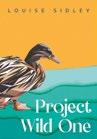
Project Wild One
Louise Sidley | Red Deer Press | February 2025 | 978-0889957633 | $14.95
The summer holds one adventure after another, as ten-year-old Robbie finds himself raising a wild mallard duckling that has become separated from its family.
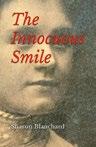
The Innocuous Smile
Sharon Blanchard | September 2024 | 978-1068937309 | $23.71
The Innocuous Smile takes readers on a journey from bustling 19th-century America to modern-day Istanbul. It weaves a tale filled with adventure, intrigue, poetry, and enduring love.
Olivia Petunia and the Man in the Moon
Elly Mossman | March 2025 | 978-1990414893 | $14.95
Olivia Petunia’s good friend, the Man in the Moon, is sad that many people don’t see his “face.” She comes up with a clever plan to fix the situation, but there are bumps on the road to a solution.
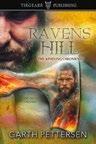
When Harald, the second son of King Cnute, and his wife, Selia, are granted a large estate, they are met by a sly steward, belligerent housecarls, a scheming abbess, and an unsolved murder.
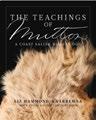
The Teachings of Mutton: A Coast Salish Woolly Dog
The pelt of a dog named “Mutton” lay in a Smithsonian drawer for 150 years. This book tells Mutton’s story and explores the cultural significance of Coast Salish Woolly Dogs.
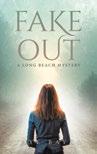
Fake Out
Faye Bayko | November 2024 | 978-1779624789 | $26.99 (paperback)
Set on the remote west coast of Vancouver Island in 1968, this mystery is the first of a series which will revolve around fictional characters living and working at the original Wickaninnish Inn.
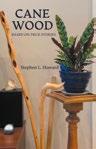
Cane Wood
Stephen L. Howard | FriesenPress | January 2025 | 978-1038326300 | $13.49
With a deft hand, evocative, slice-of-life style, and remarkable insight engagingly conveyed, Cane Wood offers ten glimpses into the different stages of a man’s life— with all the challenges therein.
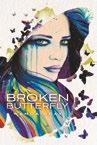
The true story of Erin Gray, who was lured and held hostage by a serial predator. Written as a dual retelling by her mother, who tried to save her, and in spirit by Erin, who did not survive.
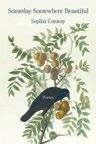
Sophia Conway’s impactful debut collection dives into the grief, joy, and hope of her motherhood experience through poems that are both relatable and deeply moving.
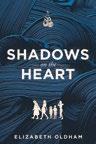
Shadows on the Heart
Elizabeth Oldham | Doppia Press | March 2025 | 978-1738822621 | $18.99 (paperback) $9.99 (Kindle)
When her brother dies suddenly and she’s named legal guardian to three children she’s never met, Lita Bravo, a tattooed, thirty-two-year-old amateur mixed martial arts fighter, leaves her high desert home in Arizona to drive to California, a place from which she ran away years ago.
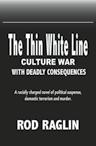
The Thin White Line
Rod Raglin | January 2025 | 979-8303662605 |
$14.40 (paperback) $5.73 (Kindle)
Journalist Matt Bennett has uncovered an inconvenient truth, one that has made him a racist to some and a cultural hero to others. He wants to explain he’s neither, but trying to make it right goes from bad to worse to murder.
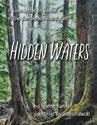
Hidden Waters
Norma Kerby | January 2025 | 978-0986931345 | $39.95
This full-colour 80-page book with photographs, paintings, prose, and poetry presents an ecological and poetic exploration of the coastal rainforests of British Columbia.
The writer as witness
BY DAVID BROWN AND MICHELLE BARKER
“All I have is a voice to undo the folded lie.”—W.H. Auden
Throughout history, whenever fascism has arisen, writers and artists are among the first to be silenced. There’s a reason for this: words have power. Words shape perception, expose corruption, and preserve truth. They can be used as propaganda—or as resistance.
In times of upheaval, writing becomes more than an art form. It is a tool, a weapon, and, most importantly, a record. Some of the most valuable documents from the Second World War are not government reports or military strategies, but the journals of ordinary citizens—their testimony of daily struggles, quiet acts of defiance, and the lived experience of oppression. When governments rewrite history, these firsthand accounts remain as reminders of the truth.
We are living in an era where truth itself is under attack. Politicians openly spread falsehoods, media conglomerates manipulate facts, and even history is being rewritten— sometimes literally, as books are pulled from shelves. The backlash against critical race theory, gender identity, and climate science is not just an ideological battle; it’s an attempt to erase knowledge. In this environment, bearing witness is an act of defiance.
So how do we, as writers, fight back?
One option is through journalism— investigating, exposing, and correcting falsehoods. But you don’t need to be a professional journalist to push back against misinformation. Social media is a battlefield all its own. Debunking fake news, amplifying marginalized voices, and providing well-researched counterpoints are all ways to reclaim the narrative.
Another option is through fiction. Novels, plays, and films have always shaped political consciousness. George Orwell’s 1984 is still referenced today because it warned of the dangers of authoritarian control. Margaret Atwood’s The Handmaid’s Tale became a symbol of resistance against attacks on women’s rights. Books like The Hunger Games and Parable of the Sower allow us to process and critique real-world issues.
Historical fiction, too, can serve as a mirror. By revisiting past injustices, we remind readers that history is not distant—it too often repeats itself. A novel about book burnings in 1930s Germany is also a novel about modern censorship. A story about the Great Depression speaks to today’s wealth inequality. It’s tempting to believe we are powerless in the face of billionaires, corrupt politicians, and propaganda machines. But history proves otherwise. Writers have always been a threat to oppressive regimes. That’s why books are banned and journalists are jailed. That’s why poets have been executed.
Writing is not passive. It is an act of resistance. It is a way of saying: I was here. I saw what happened. And I refuse to let the truth be erased. Now, more than ever, we must bear witness.
Michelle Barker and David Brown are award-winning writers and senior editors at the Darling Axe, which offers narrative development, editing, and coaching. Their latest book is Story Skeleton: The Classics. Learn more at darlingaxe.com.