2021-2022
The magazine of Fauna & Flora International
Emission control
Nurturing our natural allies in the climate struggle
High hopes
Making new plans for Kyrgyzstan
It’s now or never Last chance to tackle the climate and biodiversity crisis
From the editor
Déjà vu all over again
I
Zafer Kizilkaya
f all has gone to plan, you are likely to be reading these words during the two weeks of COP26, the crucial climate conference in Glasgow that may well decide the fate of the planet. We’ve been here before. Until Covid-19 intervened, world leaders were due to attend a series of global policy forums in 2020. And FFI was reminding them that forests, grasslands, wetlands and marine habitats are not only wildlife havens, but also invaluable allies in our struggle with runaway climate change and its impacts. At the risk of repeating ourselves, we need decision-makers in Glasgow and at the CBD conference in China to recognise that the biodiversity and climate crises are inextricably linked, and to act accordingly. We have a choice to make and a rapidly narrowing window of opportunity in which to make it. The project successes and the productive partnerships featured in this issue of &FFI are little short of remarkable given the Covid-imposed constraints under which we’ve been working. They serve as a salutary reminder that the descent towards climate chaos and mass extinction is not inevitable. With your continued support, we’re fully committed to reversing the downward trajectory. The local people and partners with whom we work don’t need reminding how crucial the natural world is to their survival, and know what it takes to protect it. We just need world leaders to get with the programme. Starting yesterday.
Contents
Tim Knight, Editor, &FFI Magazine design CPL, Cambridge, www.cpl.co.uk
A registered 501(c)(3) non-profit organization, EIN #81-3967095 Registered as a charity with the Australian Charities and Not-for-profits Commission, Australian Business Number (ABN) 75 132 715 783 Cover photo Red mangroves and seagrass. Opomares/Getty Images
www.fauna-flora.org 2
Marcio Isensee e Sá/AdobeStock
Printed on paper made from traceable pulp sources. FSC-certified. Manufactured in accordance with ISO certified standards for environmental, quality and energy management. Printed with vegetable-based ink. Fauna & Flora International Registered Charity Number 1011102 A Company Limited by Guarantee Registered in England Number 2677068
34
24
Issue 3 2021-2022
Kakhaber Gogichashvili/FFI
17
4
rom the Chief Executive F A message from Mark Rose
5
ews headlines N Selected highlights from the conservation year
6
eglected nature N Time for a radical rethink
11 12 16 17
pecies profile S Half-pint hippo ollaborative C conservation Hands across the Caribbean ech tools T EDNA leverage potlight on sturgeons S Fish out of time?
20 24 31 32 34 36 40
L ocal heroes Natural leaders I t’s now or never All eyes on COP26 pinion O The deforestation paradox ocus on fisheries F Transforming trawling ea change S Turtle turnaround
42 46 50 51
ountry profile C Kyrgyzstan allery G The year in pictures hanksgiving T Acknowledging our partners and supporters ppeal A Save Mozambique’s elephants
mission control E Nature-based climate solutions rade secrets T Wildlife crime prevention
3
Issue 3 2021/22
When the UN Secretary-General declares “code red for humanity” it is surely time for even the most complacent among us to take the climate crisis seriously. The latest report from the Intergovernmental Panel on Climate Change was a wake-up call for governments and businesses alike and a timely reminder – in the run-up to COP26 in Glasgow – that we are confronting the biggest challenges humanity has ever faced. Some of the richest habitats and most important carbon sinks on Earth are being systematically destroyed. Over a quarter of the Amazon is already emitting more carbon than it absorbs. The remaining Amazon rainforest is perilously close to an irreversible tipping point beyond which its ability to recycle water would be severely compromised, with disastrous implications for the world’s climate. The intertwined climate and biodiversity crises may seem intractable, but as Sir David Attenborough has pointed out, we have the skills to address them. Human ingenuity knows no bounds, a fact uppermost in the mind of our new patron, Prince William, when he launched The Earthshot Prize. Designed to unearth creative solutions to our planetary crises, this initiative has FFI’s full support. Its ambitious goals – protect and restore nature; clean our air; revive our oceans; build a waste-free world; fix our climate – resonate strongly with our own work. This kind of positivity and can-do attitude will be crucial at the climate and biodiversity conferences in Glasgow and Kunming. Warm words are not enough, but anyone doubting that these forums can have a real impact need look no further than the recent IUCN World Conservation Congress where delegates voted overwhelmingly in support of a global moratorium on deep-sea mining. Within days, a Canadian start-up poised to profit from plundering the seabed saw its share price drop sharply when investors withdrew their support. There is a growing awareness of the urgent need to divest 4
Juan Pablo Moreiras/FFI
From the Chief Executive
“ We are confronting the biggest challenges humanity has ever faced” from activities that exacerbate the climate crisis and to support nature-positive initiatives. We need the UK government to lead by example, and there are already encouraging signs: a commitment to halt the loss of biodiversity in the UK by 2030; the launch of a Nature for Climate Fund; and the news that any company bidding for government contracts (amounting to £300 billion annually) must have a plan in place to achieve net zero by 2050. Let’s hope that there is more to come and that other countries follow suit. Mark Rose, Chief Executive, FFI
Heydi Salazar/FFI
Rare turtles return to nest in Nicaragua
New protected area for South Sudan
Akdeniz Koruma Derneği
Ivan de Klee/FFI
News headlines
Turkey’s marine protected area network expanded
Year in review Jeremy Holden/FFI
Adams Toussaint/FFI
Here is a cross-section of the conservation breakthroughs achieved by FFI and our partners during the past 12 months. For a comprehensive overview, check out our most recent Conservation Report, available to download from our website.
Dilyana Mihaylova/FFI
Big boost for biodiversity in Cape Verde
Tamar Edisherashvili/FFI
Dramatic double discovery in Georgia’s Rioni River
Jeff Wilson/FFI
Disney Award for Saint Lucia’s pencil cedar saviour
World’s rarest rabbit found on Facebook
Dr L. Lee Grismer
One hundred new species for Myanmar
Launch of initiative to tackle plastic pellet pollution
⬤ Go to the Gallery on page 46 for further information on these success stories. 5
Neglected nature &FFI editor Tim Knight urges a radical rethink of our relationship with the natural world.
A
t some point in, we hope, the not-toodistant future, virtually all the countries on Earth are due to meet in China under the Convention on Biological Diversity to agree global conservation targets for 2030. Virtually may be the operative word, if Covid-19 precludes member states from meeting face to face in Kunming, just as it scuppered last year’s original schedule. Whatever the format, conservationists fervently hope that global leaders will agree to set aside 30% of the world’s land and sea for nature by the end of the decade. But is that enough? In his 2016 book Half-Earth: Our Planet’s Fight for Life the biologist E. O. Wilson went further. He proposed ring-fencing half of Earth’s surface as a vast natural reserve dedicated to conserving biodiversity. If that utopian vision strikes you as more akin to cloud cuckoo land than to blue-sky thinking, let’s just remind ourselves why drastic measures are needed. 6
ABOVE: Striped snails congregate on a forest leaf in the Philippines.
Anthropocene Armageddon
Jeremy Holden/FFI
Biodiversity challenge
We’re witnessing a worldwide wipeout of wildlife that is unprecedented in human history. Species extinction rates have increased more than a thousandfold since Homo sapiens first emerged some 300,000 years ago and embarked on a mission to make a mockery of that scientific name. According to a 2019 UN-backed report, one million species – and counting – are now at risk of extinction. That stark statistic includes some of the animal kingdom’s biggest rock stars, from gorillas and chimpanzees – our closest cousins – to lions, tigers, rhinos and elephants. It also encompasses myriad unsung support acts that even the most ardent nature lovers may never have encountered. “The plight of the little animal should all by itself serve as a wake-up call to us for mass extinctions imminent or in progress round the world,” Wilson warned us. “We’re extinguishing Earth’s biodiversity as though the species of the natural world are no better than weeds and kitchen vermin.” He happened to be referring to the Kihansi spray toad, a species rendered extinct in the wild when its microhabitat was destroyed by dam construction, but those words are equally apposite
Biodiversity Illegal wildlife challenge trade for every amphibian, reptile and invertebrate that – knowingly or inadvertently – we are ushering down the one-way street to oblivion in the name of ‘growth’.
Guardians of the little guy
Fauna & Flora International (FFI) works to safeguard some of the world’s most iconic wildlife, but we also champion many less-familiar species that might otherwise be overlooked, from Siamese crocs to saiga antelope. In the run-up to that key conference in Kunming, we have been using our website to showcase some of the neglected plants and animals that FFI is helping to protect. In the first instalment of our series, timed to coincide with World Wildlife Day back in March, we talked about snails. Yes, really.
A whale of a snail
If you’re not haunted by the prospect of losing the diminutive, diaphanous Hon Chong ghost snail, perhaps we can interest you in a monster at the other end of the snail spectrum. Alongside our partners on the remote island of Príncipe, a UNESCO Biosphere reserve in the Gulf of Guinea, we are preoccupied with protecting a forest giant that has undergone a precipitous population decline – down 75% in the past two decades. The Ôbo snail, as it is known locally, was historically a victim of overharvesting. More recently, this croissant-sized creature has
ABOVE: Red-band fritillary butterfly on nodding sage, Romania. Estrela Matilde/Fundação Príncipe
Among the multitude of unassuming molluscs on FFI’s radar is a species of ghost snail, named for its translucent shell, and known only from two limestone caves in Hon Chong. This 250-hectare karst ecosystem in southern Vietnam is home to the entire world population of more than 30 different threatened species, six of which are critically endangered. The late Dr Tony Whitten was the original driving force behind FFI’s decision to engage constructively with the cement manufacturers whose quarrying activities arguably pose the greatest threat to the karst limestone habitat on which the Hon Chong ghost snail and countless other cave-dwelling invertebrates depend. Speaking in 2016 on behalf of the IUCN SSC Cave Invertebrate Specialist Group that he co-chaired, Dr Whitten said: “We believe there is nowhere else on Earth where such a high concentration of species faces such intense risk. The scale of the likely extinctions if cement companies continue their activities unchecked is really quite shocking.”
Fundatia ADEPT
Phantom menace
RIGHT: The gargantuan Ôbo snail is now confined to less than 50 km2 of protected forest in Príncipe.
succumbed to the loss of its forest habitat and appears to have been outcompeted by the invasive West African giant snail across much of its former range. By protecting its forest home, we hope to bring the Ôbo snail back from the brink. It’s ‘only’ a snail, but if we are instrumental in orchestrating its survival, that will be music to our ears.
The symbolic significance of saving snails
So, why this obtuse obsession with the obscure? These snails have a symbolic significance that transcends their own intrinsic right to survival. 7
They represent neglected species everywhere and fly the flag for neglected nature as a whole. To quantify that neglect, we need only compare annual expenditure on defence (billions of dollars) and activities that harm biodiversity (35 banks have lent US$2.7 trillion for fossil fuel projects since 2016, according to a Rainforest Action Network report) with current levels of investment in the very thing that keeps us all alive (clue: it’s a fraction of the many hundreds of billions that recent reports tell us we should be spending). This wilful refusal to invest in safeguarding the life-support systems that prop up our planet would be laughable if it didn’t have such catastrophic consequences. We need to invest in nature in all its forms, including the lowly snail. Biodiversity loss, climate chaos and the plight of the world’s poorest people are bound together inextricably in a web no less complex than the natural ecosystems we collectively call home. In that web of life, all species are equal. We need to recognise that rhinoceros beetles are as worthy of attention as rhinos.
Slip slidin’ away
Zafer Kizilkaya
We’re not naive enough to suppose that a ‘Save the Snail’ campaign will set the world alight, or pull in the major donors. That said, the etymological aptness of Microsoft providing support to something minuscule and mushy must surely be a strong draw – and the Shell story practically writes itself. And is it too much to hope that a school strike for snails might put endangered molluscs on the map in the same way that Greta Thunberg and friends pushed climate change to the top of the political agenda? ‘Sweden’s snail saviour’ undoubtedly has a certain ring to it.
Victoria Price/GTC
Biodiversity challenge
ABOVE: Critically endangered baobabs in Madagascar are in urgent need of attention.
BELOW: These spectacular coral reef scenes could soon be consigned to history.
Flippancy aside, viewing snails as superfluous in the grand scheme of things – and sacrificing them on the altar of expediency because we can’t splash the cash beyond species with superstar status – is a slippery slope. It’s the equivalent of writing off the impact of climate change on the world’s most impoverished, disadvantaged and disenfranchised as collateral damage. Nature in its myriad forms needs to be front and centre, and not just on World Wildlife Day or the International Day for Biological Diversity. Every single day, we should be repeating the mantra that giant snails, pygmy hippos (see page 11), little-known Caribbean reptiles (page 12) and Kyrgyzstan’s tulips and tortoises (page 42) not only merit attention in their own right, but are also integral to the bigger picture. And that picture isn’t a pretty one. We’re systematically unpicking the threads that make up the warp and weft of life’s rich tapestry. That includes not only the carefully delineated individual figures, from majestic elephants, tigers and baobabs to anonymous arthropods, but also the intricate detail of the all-important backdrop – the forests, grasslands, peatlands, wetlands and seascapes – without which the entire showpiece would fall apart.
Worldwide underfunding of nature
For once, the statistics don’t lie. The world has failed to hit every single one of the headline Aichi 8
Lorenzo Mittiga/Ocean Image Library
biodiversity targets agreed a decade ago in Japan. Around 100 million hectares of tropical forest were lost between 1980 and 2000. Animals that have assumed totemic importance in our culture are fading fast in reality. We live in a world where giraffe teething toys are far more prevalent than their real-life counterparts. Let’s be honest, nature is more than just neglected. Our relationship with it is utterly dysfunctional. A lethal cocktail of greed, apathy and ignorance has led us to use and abuse the natural world for longer than we care to remember. And that abuse has now reached unsustainable levels. If the planet were a company, the degree of mismanagement we’ve witnessed these past few decades would have led to calls for heads to roll at board level. Ignorance is no longer an excuse, and greed never was. We understand the consequences of our actions – and inaction – only too well. Yet we continue to undervalue nature and underinvest in its protection and restoration.
Planet before profit
If ever there was an example of biting the hand that feeds, this is it. The solution to the climate crisis – and to a healthy planet – is staring us in the face. Why do we wilfully disregard the giftwrapped box of biodiversity goodies hiding in plain sight? Or, worse still, stamp on it like some petulant child? Far from being a luxury we can’t
ABOVE: Mangrove roots act as a vital haven for marine biodiversity and sequester huge volumes of carbon.
afford, biodiversity is an essential item we can’t afford to lose, but our attitude to it is ambivalent at best. It’s time for a radical rethink of our relationship with nature. Time to stop burning down old-growth forest to make way for cattle ranching and oil palm plantations. To stop trashing the seabed at the expense of marine diversity and climate. To stop draining peat swamps to produce cheaper toilet paper. To stop drilling in fragile ecosystems for fossil fuels we shouldn’t countenance using. To stop building theme parks in pristine wilderness and calling it ecotourism. To stop chopping down ancient woodland to shave 15 minutes off our train journey. Wherever we look, we see speed limits exceeded (fishing quotas are just for show); red lights run (hello, deep-sea mining); no-entry signs ignored (let’s put a pipeline through this national park); people driving without a licence (the logging permit is in the post). We are witnessing a slow-motion car crash. And we desperately need a critical mass of competent, compassionate and committed people to take the wheel. To invest in nature protection. To put planet before profit.
Not fade away
In some quarters, there are encouraging signs; earlier this year, we heard that the UK government’s plans to protect and restore nature, tackle the climate and biodiversity crises and help deliver 9
Jeremy Holden/FFI
Biodiversity challenge
Ormon Sultangaziev/FFI
on its net-zero commitment include a worldleading target for 2030 aimed at halting species decline. But we urgently need others to get with the programme if we want COP26 in Glasgow – or COP15 in Kunming, for that matter – to be more than just another talking shop. Our stories of FFI’s work with neglected species are stories of hope – small but significant victories in the Sisyphean struggle to roll the conservation rock up an ever-steeper hill. But, at the risk of mixing mythological metaphors, we have a Herculean task on our hands. This isn’t a rant; it’s a paean to the planet and its natural wonders. Let’s ensure it doesn’t end up as a eulogy. A world without wildlife is just 50 shades of grey in redacted form; monochrome, monotone, monopolised by the mediocre, and arguably not worth living in. Some may disagree, but one thing is irrefutable. Whatever we think of biodiversity – or nature – and however much or little we value it, we can’t survive without it. Our lives depend on it in the most literal sense.
10
ABOVE: Cambodia’s wetlands are vital to the survival of the critically endangered Siamese crocodile.
BELOW: Tulips in Kyrgyzstan are vulnerable to a changing climate.
Seize the day
Building back better will be contingent on economic change, political change and social change. We need our world leaders, our captains of industry – all of us, in fact – to seize the day. There are tough decisions to be taken. These may not be vote winners or popular with shareholders, but they might just save the planet – our one home. Whatever catchphrase we choose to hang our hat on, we need to act now and act decisively, without fear or favour. If we do that, we can consign awareness days – and similar well-meaning but largely symbolic gestures – to the history books. We already have ample evidence of what can be achieved when we come together, when we think and act beyond the boundaries of our own traditional bubbles. The rapid development of an effective Covid-19 vaccine demonstrated that there are no limits to what can be achieved when we commit time, money, resources and brain power to the realisation of a shared vision. We need to address the biodiversity and climate crisis with that same sense of urgency and common purpose. We owe it to ourselves, and to future generations, to leave the planet in better shape. This entire year has felt like one long drawnout pivotal moment – a nanosecond in Earth’s history, but a cosmically significant period for the future of our planet and its remarkable but rapidly diminishing biodiversity. All eyes will be on the world’s leaders in Kunming, as they will at the climate COP in Glasgow, which should already be under way by the time you are reading this. The issues they will be addressing are two sides of the same coin, and need to be treated as such. Unless we start putting nature first – and not merely megafauna, but everything from molluscs to mangroves – all the talk about tackling climate chaos will be just more hot air.
Species profile
Half-pint hippo The hippopotamus is among the most familiar of Africa’s megafauna. Its pocket-sized relative, the lesser-known and endangered pygmy hippo, is an entirely different matter. Nocturnal, elusive and mainly solitary, these denizens of the deep forest are rarely seen, or even heard.
D
on’t be misled by the name; they may be nominally associated with miniature marmosets and small-scale shrews, but pygmy hippos still top the scales at a hefty quarter of a tonne or more. Nevertheless, they are dwarfed by their colossal cousins. Nose to tail, the pygmy hippo is half the length of its more common counterpart, but the real difference is in bulk; it is outweighed by a factor of ten. Rotund, thick-necked and hairless, pygmy hippos derive their glossy sheen from the tiny mucus glands that pock-mark their sun-sensitive skin. They frequent forested waterways, where they spend the day in rivers and swamps before emerging to feed at night on a variety of grasses, shoots and fallen fruit. Confined to a dwindling number of suitable sites in West Africa, pygmy hippos continue to decline drastically, due mainly to habitat loss and hunting.
Status
Endangered
Scientific name Choeropsis liberiensis
Global population
2,000-3,000 (most recent estimate 1993)
Habitat
Forested watercourses and swamps
Range
Côte d’Ivoire, Guinea, Liberia and Sierra Leone
Threats
Hunting, mining, logging, farming, human settlement
Pocket guide
Weight ratio of pygmy to common hippo is 1:10
Size
Eric Kilby/flickr-ekilby
Common hippo
Pygmy hippo
Deforestation as a result of mining, logging, agricultural expansion and other forms of human encroachment has fragmented the remaining population and left many of them living in closer proximity to people, which in turn increases the risk of further disturbance or unsustainable levels of hunting for meat. Most of the world’s remaining pygmy hippos are found in Liberia. FFI is working with local and international partners to safeguard them – along with the other species that share their threatened habitat – in Sapo National Park, the country’s largest protected area, and the Ziama-WonegiziWologizi transboundary forest landscape, which straddles the border between Guinea and Liberia. Camera-trap surveys have captured pygmy hippos images in both these areas, while recent field surveys have recorded footprints, faeces and feeding signs. Data collected by FFI suggest that Sapo National Park is a crucial stronghold for the species, with a density unrivalled throughout this hippo’s restricted range. Elsewhere in Liberia, state-of-the-art eDNA surveys (see Page 11) are revealing the presence of pygmy hippos in other river systems. FFI has helped put together a national action plan for the species, which outlines clear strategies for its conservation. A nationwide reconnaissance survey is now under way – the first attempt to estimate Liberia’s total pygmy hippo population – focusing on Liberia’s key biodiversity areas. We have also collaborated on a landscapelevel assessment to identify potential conservation corridors in south-east Liberia that would benefit from increased protection – with particular emphasis on suitable pygmy hippo habitat. A central goal of the new 10-year pygmy hippo conservation strategy is to secure connectivity between all known populations of the species. The pygmy hippo is a flagship species for Liberia’s valuable forests and for the Upper Guinea Forest as a whole, which not only harbours a wealth of biodiversity and supports local livelihoods, but also stores vast amounts of carbon, thereby helping to reduce global emissions and combat climate change. 11
Jeremy Holden/FFI
Collaborative conservation
Hands across the Caribbean A
sk the average person what images the word ‘Caribbean’ conjures up, and the clichés will come quick and fast, with crystal-clear waters, sun-soaked sandy beaches and calypso cricket featuring prominently. Among the mantras routinely trotted out in the tourist brochures is the fact that Antigua has a beach for every day of the year. Here’s a less familiar fact: the Caribbean has seen more reptile extinctions than any other region in the world, accounting for more than 60% of all reptile species lost worldwide. Reptiles also feature prominently on the current list of the region’s 400-plus critically endangered species – tour guides please note, that’s more than one for every day of the year – crying out for urgent conservation attention to ensure they don’t suffer the same fate. So far, so shocking, but here’s the good news: we may not be able to resurrect the Caribbean species that we have already lost, but even the most critically endangered animals and plants can be brought back from the brink. How can we be so sure? To coin another well-worn tourist phrase, we’ve got the T-shirt. FFI has been active in the region since 1994, mainly in the Eastern Caribbean. In that time, we have undertaken vital conservation work in 15 countries and territories – always at their invitation. 12
ABOVE: View of Great Bird Island, Antigua.
A notable feature of our efforts has been the removal of harmful invasive species – particularly rats and mongooses – leading to the miraculous recovery of species and ecosystems that others had written off as beyond hope or irreparably damaged. Our work also encompasses other conservation measures that are equally crucial for long-term success. These include improving the management of protected areas, encouraging sustainable use of natural resources, combating illegal wildlife trade, building local, national and regional conservation capacity (see box, page15) and promoting nature-based solutions to climate change. By addressing the key threats to the region’s reptiles and other native species, FFI and our partners have saved at least a dozen critically endangered Caribbean species from extinction and reversed the decline of many more. Helping incredibly rare species to rebound is only part of the story. To date, FFI has been instrumental in the restoration of 30 separate island ecosystems across five countries, benefiting hundreds of animal and plant species in the process. The work has boosted job prospects and revenue for local communities through nature-based tourism, and helped to improve resilience to the increasingly severe impacts of climate-related natural disasters.
Collaborative conservation
Allied forces FFI and Re:wild have a clear set of objectives that can broadly be summed up as more of everything: saving species, restoring ecosystems, securing protected areas, building capacity, raising the profile of the region’s biodiversity and generating a step change in funding for its conservation.
Works in progress reintroduction programme to ensure the survival and recovery of the Saint Lucia racer, which may number fewer than 20 individuals left in the wild. ⬤E nlisting the support of local beekeepers in Haiti to plant and conserve the exquisite but critically endangered Magnolia ekmanii tree (right). ⬤P ost-hurricane restoration of mangroves in the Bahamas, vital havens for wildlife and important barriers against tsunami-like storm surges.
“Our alliance with FFI is timely. Restoring and conserving these ecosystems is key to increasing the resilience of island communities and myriad endangered species to the impacts of climate change.”
Waiting list
Dr Wes Sechrest, CEO, Re:wild
Local partners have already requested our help to save dozens of other imperilled species, including the Union Island tarantula (left).
Jenny Daltry/FFI
On the horizon
We are aiming to restore degraded lands and seascapes in almost every Caribbean nation and support efforts towards the new global target that would see at least 30% of terrestrial and marine areas brought under effective conservation management.
Jenny Daltry/FFI
We are not alone. One of our long-standing collaborators in the region, the organisation formerly known as Global Wildlife Conservation – and recently rebranded as Re:wild to reflect its wider mission – has been doing sterling work in its own right for many years. In 2021, that productive working relationship was formalised in the shape of a new partnership, with FFI and Re:wild joining forces to raise the profile of the Caribbean islands as one of the most biologically diverse – and threatened – parts of the world. The rationale for this coming together is clear: with a few notable exceptions, Caribbean conservation has long been woefully under-resourced and typically relies on the dedication of a willing band of individuals who work minor miracles on a shoestring budget, devoting their working lives – and often their personal ones – to the protection and restoration of nature. The alliance aims to rectify that by pooling resources in order to focus greater attention on this region’s neglected natural treasures, drawing on the complementary skills and knowledge of the two organisations to increase the scale and impact of conservation action in the Caribbean. Between us, FFI and Re:wild are already active in more than half of the countries in the Caribbean, working alongside some 30 local partners. And the best is yet to come.
Martin Reith
⬤C aptive-breeding and
13
Collaborative conservation
14
Cay of life
LEFT: Schoolchildren watch Andrea Otto as she measures an Antiguan racer.
Help for Haiti
In the 1920s, Haiti still had 60% of its original forest cover. Today just 0.34% remains. Any further loss would result in mass extinctions, landslides and even greater hardships for rural Haitians. In recent years Re:wild has been actively supporting the establishment, restoration and community-based management of Haiti’s upland forests. Grand Bois, the first of 12 priority sites, has already been designated as Haiti’s first private protected area under the management of Haiti National Trust, a dynamic young NGO. Crucially, every new park will be accompanied with education and outreach programmes.
ABOVE: Magnificent frigatebirds have benefited from the increased tree cover on Redonda.
Claudio Contreras/naturepl.com
Sombrero is a treeless, 38-hectare slab of rock in the UK Overseas Territories. In 1999, a foreign aerospace company proposed turning it into a rocket launch pad. Despite its small size, Sombrero supports one of the most important seabird colonies in the Caribbean, unique invertebrates and lizards found nowhere else in the world. An impact assessment conducted by FFI and others revealed that the rare Sombrero ground lizard would not survive the development. They face ongoing threats including wholesale loss of vegetation cover and a changing climate. FFI and Anguilla National Trust are now aiming to restore Sombrero to its former glory.
The removal of voracious feral goats and invasive black rats, which had caused a catastrophic decline in native seabird and reptile populations and vegetation cover, has transformed Redonda from a desolate moonscape into a vibrant, wildlife-rich haven. Populations of critically endangered lizards are tripling each year and FFI and Re:wild are now planning to reintroduce some of the island’s lost keystone species, including burrowing owls and Caribbean black iguanas.
ABOVE: One of the last remnants of Haiti’s cloud forest.
RIGHT: Close-up of the diminutive Union Island gecko.
Jenny Daltry FFI
Anti-rocket science
Redonda restoration
Tim Knight/FFI
In 1995, when FFI first intervened, the Antiguan racer was probably the world’s rarest snake, with a total population of just 50 individuals on one tiny offshore islet. Thanks to a recovery programme that included eradication of invasive predators, a nationwide snake charm offensive and reintroduction to newly restored, rat-free islands, snake numbers have increased well over twentyfold. The racer has become a tremendous source of national pride and a diminutive, scaly standard-bearer for Antigua’s biodiversity as a whole.
Jenny Daltry/FFI
Rescuing racers
In 1997, a little-known lizard, the White Cay iguana, was on the brink of extinction. An army of invasive black rats and a rogue raccoon were driving this besieged reptile off a metaphorical cliff on its 15-hectare home in the Bahamas. Cue the arrival of the conservation cavalry in the form of the Bahamas National Trust, which disposed of the masked bandit, while two FFI volunteers – fresh from their rat eradication success in Antigua – led a two-week counter-offensive against the rodent invaders. The iguana population has since risen exponentially from an all-time low of roughly 150 to more than 2,000 individuals.
Gecko guardians
The entire world population of the Union Island gecko is contained within a 50-hectare patch of forest in St Vincent and the Grenadines. By 2016 the area was so heavily scoured by collectors for the pet trade that the future of this miniature gem of a lizard was in the balance. Patrols by a new team of community wardens supported by FFI and Re:wild have already achieved a sharp drop in poaching, and we recently assisted the government to add this critically endangered gecko to Appendix I of CITES, meaning that trafficking this species carries the same penalties as for tiger bones and rhino horns. Trafficking has since dropped by more than 80%.
Collaborative conservation
RIGHT: Founder of Mosaic Ecoconsult, Justin Springer, holding a critically endangered Barbados leaftoed gecko.
LEFT: Saint Lucia National Trust’s Saphira Hunt holding one of the last 20+ Saint Lucia racers on the planet.
Natalya Lawrence/EAG
Saint Lucia National Trust
The alliance has big ideas for the conservation sector in the Caribbean, including scaling up learning opportunities for students and professionals, strengthening national NGOs and government agencies and fostering interisland support networks. We have already made tremendous strides in encouraging and mentoring brilliant young professionals, many of whom now lead their own conservation initiatives. These people are passionate about their island and great advocates for the region’s wildlife.
LEFT: Tashim Fleming of Anguilla National Trust admires a critically endangered Lesser Antillean iguana.
Jenny Daltry/FFI
Local talent
many cases, confined to just a single island and in dire need of intervention. We have ambitious plans to scale up our conservation efforts in the region, and the Caribbean Alliance is the ideal vehicle to make those plans a reality. We already have ample proof that our approach is effective. Imagine the impact we could have if our work was sufficiently well-resourced to allow this tried and tested recipe for success to be rolled out across every single country in the Caribbean. All that we need is for a critical mass of new and existing donors to embrace that vision. Here, as everywhere, the window of opportunity is narrowing by the day. The maths is simple: the more sponsors we secure, the more species we will save, the more ecosystems we can restore, and the more resilient the region will be to future shocks.
Jenny Daltry/FFI
What makes us so confident? First and foremost, this is a match made in heaven, not a marriage of convenience. There is obvious synergy between the two organisations, not least in our shared belief that success is best achieved by encouraging and enabling local community groups and government agencies to fund and run their own conservation programmes. In this context, past success is a guarantee of future performance. FFI and Re:wild both have impressive track records in the region, including fruitful collaborations on species recovery and ecosystem restoration (see opposite). Between us, FFI and Re:wild are currently working to rescue roughly 20 critically endangered species, all of them with fascinating stories to tell. And this is just the tip of the tropicbird’s tail. An astonishing 1,500 Caribbean species are globally threatened. Most of these are found nowhere outside the region and, in
RIGHT: EAG’s Shanna Challenger dressed as the threatened Barbuda warbler, which is found only on that island.
15
Tools of the trade
eDNA leverage Freshwater habitats are understudied and underfunded, resulting in a lack of information on what species are at risk of extinction, but help is at hand.
16
Hippo kit
Our work to protect the rare and reclusive pygmy hippo (see page 11) is already benefiting from this technology. These nocturnal forest-dwellers are seldom spotted and, while their presence can be revealed via footprints, dung and feeding signs, we urgently need up-to-date information on their population and distribution, in order to support targeted conservation measures for the species. In late 2020, FFI joined forces with the Forest Development Authority to conduct an eDNA survey in the south-east of Liberia along two rivers that flow through Sapo National Park and the Grand Kru-River Gee Proposed Protected Area. Information gleaned from local communities had suggested that pygmy hippos might be present in the area, but we needed a quick, affordable, reliable and efficient way to confirm this. With the support of park staff, FFI collected eDNA samples derived from filtered water samples at 20 sites. The results were a revelation, in every sense. Pygmy hippos were detected at ten of the sites and the DNA of no fewer than 166 species of mammal, bird, reptile, amphibian and fish was uncovered. This included the first record of the endangered Tai toad in Liberia, plus a spectacular, critically endangered killifish and four other endangered species: African grey parrot, Diana monkey, western red colobus
Conducting an eDNA survey in Liberia.
Testing ground An ambitious partnership between eDNA specialists NatureMetrics and IUCN, the eBioAtlas programme is using cutting-edge eDNA technology to catalogue the biodiversity in the world’s river basins and wetlands. As the programme’s first implementing partner, FFI has been carrying out eDNA testing in Liberia and Guinea since 2019 and is poised to roll out this approach across other project sites in Africa.
FFI
I
n a world where we’re haemorrhaging species more quickly than the scientists can catalogue them, anything that speeds up the identification process surely has to be welcomed with open arms. Freshwater ecosystems have been particularly hard hit by a barrage of human-induced threats – from drainage and mega-dams to pollution, overfishing and the introduction of non-native species – with dire consequences for the myriad animals and plants that depend on them. With conservation efforts constrained by the difficulty of gathering data on these aquatic and amphibious life forms, it’s refreshing to learn that help is at hand in the shape of a nifty new tech tool. Environmental DNA (eDNA) technology is helping conservationists to shed light on the state of the world’s aquatic biodiversity, garnering vital species information at an unparalleled rate and on an unprecedented scale. Genetic profiling of faeces, mucus and other organic matter, collected from water samples and passed through a simple filtering kit, can reveal the presence of a particular species within an ecosystem. These aquatic eDNA surveys enable researchers to monitor diversity across an entire taxonomic group, such as fish or amphibians, or to test for the presence of a single species of interest.
and Jentink’s duiker, an elusive forest antelope. To build so comprehensive a picture of the wildlife present in this area using traditional methods would have been expensive and time-consuming. In contrast, the eDNA survey was completed in a fraction of the time, with minimal training and technical supervision, and using simple testing methods. The technique does have its limitations, not least the fact that species are identifiable only if their unique DNA barcode is already available for cross-checking in a reference library. As one colleague at FFI succinctly put it: “There’s a heap of overhype about eDNA, but it does have potential.” There is no doubt that the eBioAtlas programme is gathering momentum, however, and FFI is helping to push forward this emerging technology.
Spotlight on sturgeons Thomas Hasenberger/Adobe Stock
Fish out of time?
W
hen we talk about creatures from the Cretaceous, we don’t always mean dinosaurs. Sturgeons are an example of so-called ‘living fossils’ – a reference to how long these extraordinary fish have graced the planet. There is certainly something prehistoric about their appearance, an impression reinforced by beady eyes, barbels and built-in body armour in the form of bony external plates, known as scutes. This giant among freshwater fish can reach gargantuan proportions. The largest sturgeon species can attain a length of eight metres – that’s longer than a minibus – and weigh up to one-anda-half tons. These fish are renowned for their highly prized roe, which is widely harvested, cured in salt and sold for eye-watering sums of money, particularly in Russia. But this caviar comes with a caveat; the sturgeon is paying an even higher price for the popularity of its eggs. All the world’s sturgeons face an upstream battle for survival, but those in Europe are particularly at risk. Once widespread throughout the continent’s major river systems, they have been decimated by unsustainable levels of fishing, poaching and the loss of traditional spawning grounds as a result of habitat destruction.
8 metres Max. length 1.5 tons Max. weight 200 million years
How long sturgeons have been on the planet
100+ years Lifespan
Sturgeons are nominally protected under CITES (the Convention on International Trade in Endangered Species of Wild Fauna and Flora), but enforcement of these regulations is not easy, given the difficulty of differentiating between wildsourced and farmed products. The thriving black market in caviar poses a serious threat to Europe’s dwindling wild sturgeon populations. As if that wasn’t enough to deal with, sturgeons are now faced with another, potentially terminal, threat to their survival in the shape of hydropower dams, of which more later.
Saving sturgeons
Of the main rivers draining into the Black Sea, only a handful still offer suitable spawning habitat. One of these, the Rioni River in Georgia, is the last known refuge of the Colchic sturgeon and supports crucial populations of five other critically endangered
17
Fleur Scheele/FFI
Spotlight on sturgeons
All but four of the world’s 27 sturgeon species are perilously close to extinction. ABOVE: Elevated view of Georgia’s Rioni River.
BELOW: Tamar Beridze collates sturgeon data at Ilia University.
Fleur Scheele/FFI
species including the ship sturgeon (see box). Until FFI intervened in 2017, this vital haven had no sturgeon conservation programme. Since conducting the very first baseline studies for these fish in Georgia, we have worked with the government and a range of local and regional partners to combat poaching, trafficking and the other grave threats to sturgeons in the Rioni.
18
As part of this programme, we have established monitoring teams comprising ‘citizen inspectors’ drawn from communities along the river, whose role is to inform governmental agencies about incidences of poaching and illegal trade. Even more importantly, these individuals engage with fishers, encouraging them to report and release any sturgeon they catch, to stick to legal fishing methods, and to help collect data on wild sturgeon. FFI works closely with these local people, from schoolchildren to fish traders, to raise awareness of the plight of the sturgeons in the Rioni – and emphasise their global importance. FFI also obtains information from Black Sea fishers about their illegal bycatch. In the absence of strong law enforcement, goodwill is key to success, so our role here is confined to gathering data – including photographs and genetic samples – rather than reporting transgressions. Research is a vitally important aspect of this project, and local fishers have played a critical role in this regard, vindicating our efforts to engage constructively with local people and
engender widespread support for our work. Last year, one fisher released a nine-pound Russian sturgeon after collecting genetic samples for scientists, and shared photographs and videos with FFI’s monitoring team. “No one could believe this story,” recalls Janeli Rogava, FFI’s sturgeon conservation officer, who offers no financial incentives to those who join monitoring efforts apart from occasional small gifts such as fishing lines or hooks. “It’s a sign that local people, once fully informed, are ready to take positive action for biodiversity,” according to his colleague, Tamar Edisherashvili. The positive relationship that FFI has developed with local fishers has had a hugely beneficial impact on the success of this project. During 2020, we were notified on 72 separate occasions that anglers had caught sturgeons, and succeeded in taking genetic samples from the vast majority of these fish. At the time of writing, this year looks set to comfortably exceed those numbers.
River phoenix
Irakli Tsulaia
FFI and our partners in Georgia have made some astounding discoveries in the Rioni. The first evidence of recent reproductive success came in 2018, when a tiny juvenile fish – tentatively identified as a stellate sturgeon – was caught by two female students working on a pilot project launched earlier that year. However, genetic analysis subsequently showed that the fish was a hybrid, confirmation that Russian and stellate sturgeons are struggling to find enough mates of their own species – a dispiriting but scientifically important revelation. More uplifting news was to follow in 2019, when two juvenile specimens of the critically endangered ship sturgeon (below) – widely feared to be extinct – were found and reported by local anglers within the space of a single month. Just a week later, the Rioni yielded a third juvenile, provisionally identified as a vanishingly rare Colchic sturgeon. Against the odds, the Rioni continues to reveal its riches. As recently as July 2021, another baby ship sturgeon was caught by local fisher Goga Gelashvili, who filmed its release to the accompaniment of an extempore poetic tribute.
Kakhaber Gogichashvili/FFI
Spotlight on sturgeons RIGHT: Xxxxxx xxxxxx xxxxxxx xxxxx xxxxxxxx
ABOVE: Tamar Edisherashvili checks a net during a Rioni river survey.
Dammed to extinction?
Unfortunately, all this great work is in danger of being undermined by a potentially disastrous new development, in both senses of that word. The proposal to construct a 100-metrehigh hydro-dam has caused dismay among the conservation community and drawn widespread condemnation within Georgia, including unprecedented mass demonstrations in major towns and cities. “It may be the very last push over the edge to extinction,” according to FFI’s Caucasus Programme Manager, Fleur Scheele. Astoundingly, the environmental impact assessment conducted as part of the proposed scheme made no mention of the sturgeon. The Rioni River is in desperate need of rehabilitation. It has already been adversely affected by existing hydro-dams, gravel extraction and industrial pollution, threatening the last viable spawning grounds for sturgeons in the eastern Black Sea. “It’s a miracle the Rioni’s sturgeons have survived so long,” admits Scheele. Any further deterioration in water quality and spawning conditions could prove to be the final straw for the stranded sturgeon, scuppering any hope of recovery and causing Europe’s flagship fish to sink without trace. We risk having to bear witness to the tragedy of a rediscovered species being pulled back from the brink of extinction by conservationists only to be knowingly pushed over the precipice in the name of economic progress. Let’s hope that day never arrives. 19
Local heroes
Natural leaders
Josephine Nzilani Programme Manager Kenya Born in eastern Kenya, Josephine grew up in Mbooni (meaning ‘buffalo dwelling’). The buffalo are long gone, and the dense forest, deep pools and clear streams that made this a wildlife paradise have dwindled, but Josephine vividly recalls the fabulous guinea fowl flocks, antelope and occasional elephants. Josephine joined FFI in 2010 and, in the words of Alison Mollon, Director of Operations for Africa, has been “absolutely pivotal to the success of our Kenya programme”, developing the relationship with local partner Northern Rangelands Trust, taking a leadership role with FFI’s work in Sera Wildlife Conservancy and spearheading efforts to establish a marine programme on the Kenyan coast.
Meet the women quietly blazing a trail in conservation
A
Jess Berndt/FFI
s thoughts turn to the crucial climate talks at COP26 in Glasgow, we are reminded of the role that a young Swedish environmental activist has played in holding world leaders to account. The spotlight will once again be on Greta Thunberg, and understandably so, given her impact. But it’s important to remember the many other female role models doing vital work behind the scenes. One of the privileges of working for FFI is the opportunity to witness and report on the achievements of the brilliant women throughout the world who have dedicated their lives to helping this organisation and our in-country partners tackle the twin challenges of biodiversity loss and climate change. Many of them are leaders in their field, sometimes literally; all of them live and breathe conservation, including Lucia Zanaro (pictured below), a ranger working for South Sudan’s wildlife service. Ideally, we would pay tribute to each and every one of them, but in this instance we’re going to confine ourselves to a trio of regional representatives who epitomise the quintessential qualities that are so pivotal to FFI’s success.
What made you choose a conservation career?
My interest was ignited by the disheartening environmental degradation I witnessed, with native forest replaced by fields and eucalyptus plantations, abundant wildlife lost and wetlands drying out. One of my teachers introduced me to a renowned conservationist who became a mentor and encouraged me to volunteer for conservation and research work while I was studying. After my undergrad, I interned at the National Museums of Kenya and worked for an international NGO before studying for my MSc in the UK. The module on ‘understanding global environmental change’ was of particular interest, given what had happened back home.
What was the most valuable aspect of your studies?
LEFT: Numbers of female rangers in African parks are continuing to rise.
20
Well, the most memorable was the chilling solo night in the bush I had to spend in Hell’s Gate National Park as part of our wilderness survival skills training. The purpose was to equip us with practical skills and knowledge to overcome realworld challenges that natural resource managers and researchers might encounter in the course of their work. With a ranger at the front and our lecturers at the back, all the students walked deep inside the park. One by one, we were tapped on the shoulder, a signal to stop at that point and spend the night there, alone, while the others walked on. That tap was terrifying. I had to quickly gather courage and collect some sticks to light a fire for keeping warm and to hopefully keep animals away!
Cathy Withers-Clarke/Adobe Stock
Local heroes
I was all ears and eyes every second of the night, totally alert to the environment around me, and hearing every animal sound. Though daunting at the time, the training proved very useful for my work. For example, during a field visit to one of our Tanzania projects, in a remote community forest that hosts the endangered eastern chimpanzee, our vehicle got stuck in mud after heavy rains. We had to walk back to the village in the dark, a long trek through difficult terrain. I felt enthused to motivate the team during the journey and avoid our host feeling sorry for the ‘visitor’ (me).
What barriers have you had to overcome?
Opportunities in conservation are limited. It helped that I started engaging early in conservation activities, joining networks and getting exposure before completing formal training. That gives you an edge down the line. My biggest challenge in the last few years has been finding a work-life balance (like many other women with family responsibilities) having to manage ambitions in a way that maintains a healthy balance.
What are the biggest challenges facing Kenya and its biodiversity?
Kenya’s rich biodiversity underpins community livelihoods, and plays a key role in the national economy. More than 60% of that biodiversity is found outside formally protected areas, in lands facing pressure from human activities. Humanwildlife conflict is a big challenge. It is increasingly
ABOVE: Black rhino births at Kenya’s Sera Wildlife Conservancy are a vital addition to the population.
vital for conservation practitioners and wildlife managers to partner with landowners and communities to agree on strategies that both protect biodiversity and foster human well-being. The list of threats is a long one: changing land uses leading to habitat degradation and loss; climate change with erratic weather patterns, increasing the frequency of droughts that trigger resourcebased conflicts; resource overexploitation; megainfrastructure development; pollution of water resources; and growing use of pesticides that have decimated pollinators.
What are the most rewarding aspects of your role?
It is fulfilling to see our work make a difference for threatened species and landscapes. Restoring populations of the critically endangered black rhino is a key aspect of our work in Kenya. News from the field about a new rhino birth is always the most thrilling. Working with local partners to agree on a conservation vision, taking time to learn from them and understand their viewpoint and needs, walking together through each step of the implementation process and seeing the impact on biodiversity and communities is really rewarding.
“Josephine has been absolutely pivotal to the success of our Kenya programme.” 21
Local heroes Mary Molokwu-Odozi Country Manager Liberia Born in Nigeria, Mary had originally envisaged a career in medicine, but was inspired by a memorable lecture on conservation during her degree course. Identifying strongly with FFI’s community-based approach to conservation, she applied for a Research and Education role based in Liberia shortly after completing her doctorate. The rest is history. Professor Georgina Mwansat (founding director of APLORI – the only field station dedicated to ornithological research in West Africa) has been a real inspiration. During a field ornithology course, I was struggling with astigmatism. She called me to her office and said: “Mary, if you can’t see the birds, hear them.” I learned more than 40 bird calls within a week.
Shadrach Kerwillain/FFI
What barriers have you encountered as a woman working in conservation?
The initial difficulty was that conservation was absent from university curricula. Once in the profession, the challenge was more about the way people looked at you: “As a woman, what are you doing in the bush?” But, honestly, this merely fuelled my passion and motivated me to make a real impact.
What advice do you have for young women contemplating a conservation career?
Estivillml/Adobe Stock
Did you have any female mentors?
The endangered Timneh parrot, a rarity of West Africa’s remaining forests.
“We are seeing more Liberians, especially women, taking the lead in conservation.”
I would advise them to pursue their passion and not let stereotypes stop them, especially young African women. Look out for a leading female role
model. Also, don’t be discouraged by the dwindling state of Africa’s biodiversity. Conservation is a noble profession and one small change makes it all worthwhile. Mary Molokwu-Odozi (centre left) and the FFI team in Liberia.
What achievement at FFI are you most proud of?
Due to our capacity-building efforts we are seeing more Liberians, especially women, taking the lead in conservation. A female ranger won the Paradise Ranger Award in 2019, three women have bagged international master’s degrees in conservation biology and forest management, and an all-women group, Eco-Champions, is raising environmental awareness among local communities around Sapo National Park, Liberia’s largest protected area. That’s a big change from when I joined FFI a decade ago.
Local heroes Katrina Collins Coy Founder & President Union Island Environmental Attackers
community momentum behind environmental protection and improvement.
What achievement are you most proud of?
We were very successful in helping our community during a major water crisis with a climate change adaptation initiative that doubled the waterstorage capacity of Union Island. We then installed tanks on our sister islands, refurbished the wells on Union and began running workshops on the wise use of water. Also, our recent partnership with FFI and the forestry department has been instrumental in protecting Union Island’s unique and beautiful gecko and persuading people to cherish it.
Born on St Vincent, Katrina moved as a young girl to Union Island, a natural jewel in the Grenadines with two Key Biodiversity Areas and a host of endangered species. A community activist, she has devoted a huge amount of her time and resources to helping people and the environment, both on Union and on neighbouring islands. She founded FFI’s in-country partner Union Island Environmental Attackers (UIEA) in 1999 while still a teenager. Under Katrina’s leadership, UIEA’s activities have included island clean-ups and anti-plastic campaigns, beach patrols to safeguard nesting hawksbill, green and leatherback turtles, the Adopt-a-Tree programme, a household rainwater collection and storage initiative, and round-theclock protection of the critically endangered Union Island gecko.
What are the biggest challenges facing your islands’ biodiversity?
Our forests, grasslands, wetlands and coastal and marine ecosystems are under increasing threat from a variety of sources, from climate change to plastic pollution. We need to start having better conversations when it comes to decision-making, changes in policy and implementing smart solutions going forward. We need to take care of what we have, start from the grass roots up instead of relying on a top-down approach, and work closely with those who are already getting the job done.
How did UIEA come about?
What’s the secret of your success? BELOW: Aerial view of the Grenadines.
We make things happen and do what we say we will do, so the people see results on the ground and not just talk. To me, being an environmentalist means being a true advocate for your community.
Jeremy Holden/FFI
I wanted to do something environmental because I didn’t like how people disposed of their garbage, but I had no education. I met an Australian guy on the island who told me: “You can be anything you want to be.” That gave me the idea to start talking to schools, homes and businesses to gather
23
COP26 and all that
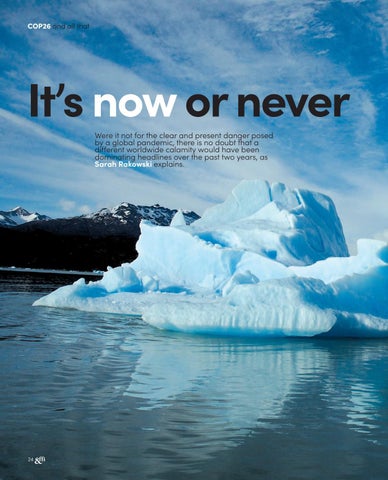
It’s now or never Were it not for the clear and present danger posed by a global pandemic, there is no doubt that a different worldwide calamity would have been dominating headlines over the past two years, as Sarah Rakowski explains.
24
COP26 and all that
T
“The world must come together before the ability to limit global warming to 1.5°C is out of reach … Glasgow must be a turning point in this crisis.” John Kerry, special envoy to US president Joe Biden
Evan Bowen-Jones/FFI
hough the news is often buried beneath Covid-19 coverage, each week seems to yield another disturbing story about yet another natural disaster, with incidents occurring right across the planet. Bushfires in Australia, deadly floods and firestorms in Western Europe, tornados in east London, record-breaking rainfall flooding underground railway tunnels in China, ‘freak’ heatwaves that threaten fiery destruction of old-growth forests on the Pacific coast of the US and Canada, flooding and landslides in India…the list goes on and on. Describing these events as ‘natural disasters’ is something of a misnomer, of course; scientists are certain that emissions from human activities have dangerously altered our planet. At the time of writing, the Intergovernmental Panel on Climate Change (IPCC) was concluding its latest assessment of climate change science, and had just published
its Summary for Policymakers. The language is stark. “Human influence has warmed the climate at a rate that is unprecedented in at least the last 2,000 years,” says the report. “Human-induced climate change is already affecting many weather and climate extremes in every region across the globe,” it goes on to say, citing stronger evidence of severe events such as heatwaves, heavy precipitation, droughts and tropical cyclones. Whatever we call them, these events have wrought misery and misfortune on millions, and will continue to do so with increasing frequency and intensity. It is no coincidence that climate breakdown and biodiversity meltdown are intensifying. Diverse and resilient ecosystems – a healthy planet, in other words – are what we rely on for climate stability, among so many other things. Species loss and habitat destruction not only exacerbate climate change, but also undermine our ability to absorb and adapt to its effects. The twin crises are inextricably linked, dragging each other downwards in a vicious spiral from which it is becoming harder and harder to extricate ourselves by the day. So, what are we waiting for? Given that these disasters are occurring globally – including in the richer countries that are responsible for the lion’s share of greenhouse gas emissions – surely they should serve as the wake-up call that governments need to finally take serious action? As FFI vice-president Sir David Attenborough said in the run-up to the G7 meeting in June: “Tackling climate change is now as much a political and communications challenge as it is a scientific or technological one. We have the skills to address climate change in time; all we need is the global will to do so.” The opportunity to make real, lasting change is fast approaching. Before the pandemic put paid to the best-laid plans, 2020 was being hailed as a ‘biodiversity super year’ with several important environmental summits due to take place. Two of these key events – the Convention on Biological Diversity conference (known as COP15) in Kunming, China and the UN Climate Change Conference (COP26) in Glasgow, UK – were postponed until October and November 2021 respectively, and the Kunming conference has just been partially rescheduled once more. As Sir David continued: “Decisions taken at…the Biodiversity COP in China, and COP26 in Glasgow are the most important decisions humanity has ever taken.” Hopes and expectations are running high, but we have been here before… 25
Juan Pablo Moreiras/FFI
COP26 and all that
A brief history of wasted time
Although scientists first began drawing the links between atmospheric carbon and ground temperature as early as the 1890s, the first World Climate Conference did not take place until 1979, when growing concerns voiced by scientists about the potential impacts of greenhouse gas emissions finally put the issue onto government agendas. In 1988, the IPCC was established to assess the science, impacts and potential responses to climate change. The results of its first assessment led to calls for a global treaty, and in 1992 the UN Framework Convention on Climate Change (UNFCCC) was born – the first global agreement on climate change that acknowledged the existence of human-caused climate change and committed countries to taking action. Since it opened for signatures at the Rio Earth Summit in June 1992, it has achieved almost universal membership, with 197 countries (‘Parties’) signed up to the Convention. So far, so good. However, despite holding a Conference of the
ABOVE: Destruction of old-growth forest adds to the mounting volume of emissions.
Parties (COP) meeting every year, this decisionmaking body has often been criticised for its glacial progress. Notably, the first attempt to set binding greenhouse gas reduction targets – the 1997 Kyoto Protocol – did not enter into force until 2005, and was greatly undermined by the fact that some of the world’s biggest polluters, including the USA, refused to ratify it. The Kyoto commitments were extended to 2020, but subsequent failures to make progress on what should follow this treaty left environmentalists despairing until 2015, when the Paris Agreement set out to keep global temperature rises well below 2°C, and to “pursue efforts to limit the temperature increase to 1.5°C” (see box). Signatories to this agreement were committed, for the first time, to submitting comprehensive “nationally determined contributions” – national climate pledges and plans, in other words. President Trump’s withdrawal from the Paris Agreement threatened, once again, to derail
“The alarm bells are deafening, and the evidence is irrefutable: greenhouse gas emissions from fossil fuel burning and deforestation are choking our planet and putting billions of people at immediate risk.” Anto,nio Guterres, UN Secretary-General 26
COP26 and all that this global agreement, but with the Biden administration’s renewed commitment, the stage is set for countries to finally make real headway in Glasgow. International commitments to protect biodiversity have followed a similarly rocky path, with many discussions but slow action. While the Convention on Biological Diversity also opened for signatures at the Rio Earth Summit in 1992, the first targets (known as the Aichi Biodiversity Targets) were not set until 2010, and sadly most of these have not been met. The proof is in the pudding: a UN-backed report estimates that one million plant and animal species face extinction – hardly what one would call a resounding success. So, what needs to change?
Parallel paths to net zero
The latest IPCC report makes it clear that in order to limit further global heating, we must rapidly cut our greenhouse gas emissions – particularly carbon dioxide (CO2) and methane. Though the report’s warnings are dire, the authors offer us hope: if we can halve global CO2 emissions by 2030, and reach net-zero CO2 emissions by 2050 (meaning that we emit no more CO2 than we remove from the atmosphere), then we can halt and possibly reverse the rise in temperatures, and avoid the worst impacts of climate change. To achieve this, governments and companies need to begin cutting emissions – across all sectors – immediately. Big emitters need to lead the way on achieving net zero and go further, faster. Oil and gas prospecting, in particular, needs to stop, and governments must put an end to fossil fuel subsidies. According to a Bloomberg report, direct support for fossil fuels from the G20 governments in 2019 topped US$636 billion – a mere 10% reduction since ratification of the Paris Agreement in 2015. But alongside these essential emissions cuts, FFI is calling for nature-based solutions (see box) to be put at the heart of the global climate response. As Annamaria Lehoczky explains in her article on page 36, healthy ecosystems – both terrestrial and marine – play a phenomenal role in sequestering and storing atmospheric carbon. Conversely, land-use change is another major source of emissions, mainly due to deforestation for agricultural production. ‘Healthy’ is the operative word here, however. The more nature is degraded, the more we erode its ability to contribute to climate change mitigation and adaptation. And the more the effects of climate change take hold, the worse the outcome for nature and biodiversity. We therefore need governments and companies to take urgent action to halt further loss of nature.
That means abandoning contradictory subsidies and investment practices (such as fossil fuel investment) that perpetuate the least sustainable aspects of our economies and continue to drive climate change and biodiversity loss. And it means moving beyond a ‘no harm’ mindset towards nature-positive policies and action, with nature actively prioritised in every government ministry, at all levels of national and local government, and in investment funds and corporate boardrooms – with leaders held accountable for outcomes. We need to be clear, though, that nature-based solutions must not be used by governments or companies as an excuse to water down their own climate commitments. Nature is a vital ally in the struggle to avert runaway climate change, but its contribution – albeit a significant one – is no substitute for the urgent and deep emissions cuts that need to be made. However, if we rapidly reduce emissions in line with the IPCC’s recommendations, then natural carbon sinks have an important role to play in taking us the rest of the way to net zero.
Protection plus planting
When it comes to nature-based solutions to climate change, much attention and public commitment to date has centred on tree planting and other similar initiatives. However, planting new trees while simultaneously allowing the destruction of oldgrowth forests, soils, ocean ecosystems and other huge natural carbon sinks is paradoxical. Above all, we need to protect existing natural carbon- and species-rich ecosystems on land and in the ocean, and promote natural regeneration, high-quality restoration and sustainable management. This is not to say that tree-planting schemes don’t have a role to play – they do. But safeguarding existing carbon stocks and sinks, which took
Natural allies
The role of so-called nature-based solutions in tackling the climate crisis while simultaneously supporting biodiversity and sustainable development has gained increasing attention in recent years (see page 36). This term is defined by IUCN as “actions to protect, restore and sustainably manage natural and modified ecosystems that address societal challenges effectively and adaptively, simultaneously providing human well-being and biodiversity benefits.” Examples of nature-based solutions include: REDD+: Reduced Emissions from Deforestation and forest Degradation, plus conservation and sustainable management of forests and enhancement of forest carbon stocks. Blue carbon: The capture and storage of carbon in coastal and ocean ecosystems such as mangroves, seagrass and tidal salt marshes.
27
centuries to establish, must be given higher priority. Newly planted trees will take decades to reach the stage where they are removing carbon dioxide at the pace needed. Mature, fully functioning ecosystems do it immediately. Protecting existing ecosystems doesn’t just make good sense from a climate perspective; these established natural systems are far richer in biodiversity and more valuable for livelihoods, culture and well-being. We need a rapid paradigm shift in the way we protect and restore forests and other carbon-rich ecosystems such as wetlands, grasslands and seagrass meadows, based on sound science, guided by knowledge from Indigenous Peoples and local communities, supported by fair governance, and incentivised by long-term funding mechanisms. And this shift needs to be reflected in the decisions made at COP15 and COP26.
Anett Szaszi/Ocean Image Library
COP26 and all that
Global in Glasgow, grassroots in Guinea
While target setting and debates about how implementation for climate and nature protection should work are necessarily high-level, the reality is that unless we work both with and for people we are unlikely to be successful. Currently, there is a risk of a disconnect between the international interest in and hunger for nature-based solutions to climate change, and the needs of those whose rights and livelihoods are implicated in achieving the targets set at international conferences. FFI is committed to working with those who live closest to biodiversity- and carbon-rich ecosystems, and we are therefore calling on governments to bridge the growing gap between systems-level ambition and frameworks, and grass-roots delivery.
Degree of difficulty
ABOVE: Safeguarding seagrass beds benefits dugongs and other species as well as climate and people.
In order to avoid the worst effects of climate change, scientists say, we must ensure global temperatures do not rise more than 2°C above pre-industrial levels. A 2018 IPCC report revealed that shaving just half a degree off that figure would significantly reduce impacts. Despite aspirations in the Paris Agreement to limit temperature increases to 1.5°C, the authors of the latest IPCC report believe that this threshold will be crossed by 2040 at the latest, if only temporarily in the most optimistic scenario. Current policies have us on track for around 2.9°C temperature rise, while existing climate pledges could take us as high as a 2.4°C increase, with disastrous consequences. The further we go past 1.5°C, the more we build unpredictable and serious risk into our world. We therefore need rapid and radical action to permanently avoid exceeding 1.5°C and – at all costs – to ensure that we do not exceed 2°C.
28
Engaging with people, particularly Indigenous Peoples and local communities, and ensuring that they can share their knowledge and act as empowered participants in all stages of the development and implementation of naturebased solutions – with benefits shared equitably and with their rights protected – will be critical to achieving the desired outcomes for climate, and to maintaining the functioning ecosystems people need to survive and thrive. Governments in Glasgow and Kunming must recognise the importance of locally led climate action and biodiversity protection and guarantee increased investment in this approach.
Financing the future
It is safe to say that the economic status quo is not working. Market failures have driven the destruction of nature and enabled climate change. What’s more, we live in a world not only where the people least responsible for climate change are left most vulnerable to it, but also where many developing countries – by virtue of the fact that they are home to extraordinarily biodiverse natural carbon sinks – are being asked to bear the brunt and cost of mitigating and adapting to climate change and biodiversity loss. The UN Environment Programme has estimated that developing countries already need US$70 billion a year to adapt to climate change, and this is expected to rise to US$140-300 billion by 2030 and US$280-500 billion by 2050. Although developed countries pledged in 2009 to mobilise US$100 billion per year by 2020 to support climate
COP26 and all that
“We have the skills to address climate change in time; all we need is the global will to do so.”
Marcio Isensee e Sá/AdobeStock
Sir David Attenborough, FFI vice-president
action in developing countries, this has largely failed to materialise. This gap between rhetoric and reality has understandably eroded the trust of the global south in the international climate response. An action plan for remedying these problems is urgently needed if we are to see climate and biodiversity ambition translated into success on the ground. FFI is therefore calling on developed nations to address the vast climate finance deficit by not just delivering on their existing financial commitments but actually scaling this up – including a significant increase in finance for the protection of nature and for nature-based solutions. In September 2020, FFI sent a letter – co-signed by more than 140 nature conservation groups from over 50 countries – to the UN Secretary-General urging member states to collectively commit an initial US$500 billion in funding to protect the natural world. This figure may sound ambitious, but it is a drop in the ocean compared with the trillions of dollars that are spent every year on subsidies for fossil fuels. We also believe that market mechanisms that drive significant investment into high-quality nature-based solutions – including REDD+ and blue carbon – have the potential to shift economic incentives in favour of the protection and restoration of nature. The political and technical challenges to doing this well are significant, yet success would be a game-changer and drive
ABOVE: Protection of Brazil’s remaining Amazon Rainforest must be a top priority.
finance where it is needed most. It is therefore crucial that governments at COP26 focus on successfully negotiating a rule book for marketbased cooperation and international finance flows that ensures environmental and social integrity and maximises ambition for both climate and nature.
The heat is on
Collective action on an unprecedented scale is needed to reverse our trajectory towards an uninhabitable Earth.
Time is not on our side. The planet is burning before our very eyes. Record-breaking temperatures – often in the most incongruous places, from coastal Canada to Siberia – are the new normal. July 2021 was officially the hottest month ever recorded, and it’s a safe bet that record will be superseded before too long. We have a rapidly diminishing window in which to avoid a joint biodiversity and climate catastrophe. Yet, if governments do act with enough speed and purpose, we can look forward to a future that is much brighter and much safer. If Covid-19 has taught us anything, it is that we cannot bury our heads in the sand when we see a crisis on the horizon – when we are in peril, we must fundamentally change the way we view the world and the way we act. It has also shown us what we can achieve, at lightning speed, when the global community works together. It is a mark of how serious the situation is that the IPCC scientists are being so unequivocal. There is no mincing of words, there are no cautious caveats. They are clear and so are we: this is an emergency, and the time to act is now. 29
COP26 and all that
Mwangi Kirubi/TNC
Five breakthroughs for nature Decisive action is needed over the next decade to halt and reverse biodiversity loss, avert catastrophic climate change, and ensure future human and planetary health. FFI is urging decisionmakers to embrace a quintet of guiding principles:
Beth Watson/Ocean Image Library
1
e need to put nature at the heart of decision-making, with W governments and the private sector held accountable for making nature a global priority.
Matt Curnock/Ocean Image Library
3
he communities and local organisations working on T the front line of conservation are the ones best placed to address the interrelated biodiversity and climate crises through local action, but they need more support.
4
Safeguarding nature is crucial to climate stability and human health, and we need to redouble our efforts to halt the destruction and degradation of these vital life-support systems. Marianne Teoh/FFI
Jeremy Holden/FFI
2
n annual investment of US$500 billion to protect and A restore nature is a minimum requirement, with funding diverted from environmentally harmful activities into naturepositive initiatives.
5 30
or far too long, advances in technology have proved F detrimental to nature. Combined with drastic emissions cuts, technological innovation has enormous untapped potential to support its conservation.
Opinion
The deforestation paradox Lord Randall is a Conservative peer, former Downing Street environment adviser and an FFI vice-president. If this year has taught us anything about the state of our planet, it is that the time for half-measures is well and truly over. Publication of the Intergovernmental Panel on Climate Change’s profoundly sobering report prompted the UN secretary-general to declare “code red for humanity”. Extreme weather events have taken lives and destroyed homes and businesses in Germany, China, Canada, and Turkey. Meanwhile, the destruction of some of the richest habitats and most important carbon sinks on Earth continues apace. Recent findings suggest that Amazon deforestation this year has been the worst in a decade. At home, the Environment Bill will shape the UK’s impact on our planet for decades to come. Make no mistake, this is landmark legislation. It contains some truly important reforms and targets for which the government deserves great praise, not least a commitment to halt the loss of biodiversity at home in the UK by 2030. But in its own 25-year environment plan the government articulated a goal to make the UK’s impact on the natural world sustainable “at home and overseas”. Sadly, the Environment Bill does not fully reflect this commitment. Deforestation is one of the biggest drivers of species extinction and a key contributor to global warming. As FFI’s response to the IPCC report affirmed, “the protection and restoration of nature and the fight against climate change are two sides of the same coin”. The government has rightly put ending global deforestation at the centre of its agenda for the COP26 summit in Glasgow. In the Environment Bill, ministers brought forward first-of-their-kind measures to combat deforestation in the supply chains of British businesses. Under the proposals, large companies will have a legal obligation to
carry out due-diligence checks to ensure there is no illegal deforestation in the supply chains of so-called forest-risk commodities such as beef, soya and palm oil. This is a welcome first step, but the policy contains a serious flaw. What counts as ‘illegal’ deforestation will be determined by the laws in the producer country. Research by Forest Trends suggests that almost a third of global tropical deforestation is considered legal under local laws. According to WWF, an area of forest and natural vegetation larger than Wales could be legally converted to soy plantations under current rules in Brazil. The proposals as they currently stand risk creating a perverse incentive for governments in producer countries to actively lower their standards – to shift the goalposts on what counts as legal deforestation – in order to maintain access to the UK market. Laws can be changed quickly, giving amnesty to land grabbers that have illegally deforested public land and undermining indigenous land rights. It’s precisely the kind of sharp practice that the UK’s due-diligence regime should be working against, not inadvertently incentivising. A far better approach is available to us. The NGO Forest Coalition, an alliance of leading environmental and human rights groups that includes FFI, has called for the new law to address all deforestation in UK supply chains, not just that deemed illegal. The benefits of such an approach are self-evident in terms of forest protection – and it also makes more sense for those businesses that would have to implement the law. UK consumers are increasingly impatient to see companies take tougher action to protect the natural world. If the UK government decides to take a clear ‘no deforestation’ approach, other countries will be more likely to follow suit. It is time for decisive measures. 31
Focus on fisheries
Transforming trawling
Daniel Steadman addresses a biodiversity, food security and climate imperative.
Critically endangered hawksbill turtle, fatally entangled in a trawl net.
I
n 2020, FFI expanded the scope of our wellestablished global marine programme to increase our focus on tackling destructive fishing practices and in particular on bottom trawling, one of the world’s most controversial and intractable fishing methods. There is overwhelming evidence that bottom trawling is the fishing method that poses the greatest cumulative risk to marine biodiversity – capable of affecting charismatic and less familiar species alike and also destroying or degrading vital seabed habitats. In addition, emerging research suggests bottom trawling is likely to be the fishing industry’s predominant source of carbon emissions; a recent, widely publicised scientific paper claims that trawling globally “releases as much carbon as air travel”, cementing this activity as a climate as well as a biodiversity concern.
Rethinking bottom trawling
Umeed Mistry/Ocean Image Library
FFI believes that the impacts of bottom trawling are the most pressing conservation issue associated with the global fishing industry. Fundamentally, we need to reduce our dependency on bottomtrawled seafood, but we need to approach that imperative with the same mixture of pragmatism and determination required to address the world’s fossil-fuel addiction; changing the system, not displacing the problem. In practice, this will require stronger fishery policy and corporate standards around bottom trawling; firstly to urgently protect sensitive areas, but also to address and finance the transitions needed to permanently reduce the problems associated with these fisheries. The issues of seabed degradation, overcapacity (too many boats), bycatch and social inequity of many bottom-trawl fisheries (especially in the tropics) are not easily solved and we can only meaningfully address them through a step change in practices across the bottomtrawled seafood value chain, from producers to managers. To get to the low-impact, low-carbon fisheries of the future, we need robust fisheries management, strong evidence-based closures and technological innovation to shrink the global 32
Alena Litvin / Shutterstock
ABOVE: Bottom trawling is the fishing method that poses the greatest cumulative risk to marine biodiversity.
COAST
trawl footprint while maintaining sustainable systems of fishery production. In the 12 short months since our “Saving the seabed” article appeared in last year’s &FFI magazine, the world’s focus on bottom trawling has drastically intensified, with a diverse chorus of voices calling for increased action on these fisheries as an urgent biodiversity, food security and climate priority. In 2021 alone, several nations have seen increased political will to more robustly manage this activity. In the UK, measures are being considered to restrict bottom trawling in four offshore marine protected areas in the North Sea, signalling a bold step forward in ambition. In Costa Rica, an eight-year process of consultation and heated debate over the country’s small shrimptrawling fleet (a process in which FFI was involved) came to a close when the renewal of all trawling licences was blocked, seemingly permanently ending this fishery in the process. In Scotland, New Zealand and continental Europe, fierce campaigns to limit the footprint of bottom trawling – with the aim of protecting everything from carbon-storing seagrasses to ancient coral-covered seamounts – ramped up in intensity.
Leading global efforts to address trawling
In line with our increased organisational ambition on this issue, FFI is striving to secure global, regional and national engagement and action on bottom trawling. Current global conventions commit countries to reduce destructive fishing, but what constitutes a destructive fishery has never been properly defined. To address this issue, FFI instigated and is leading a consortium of NGOs and scientists in a project to better define “destructive fishing”, with bottom trawling likely to be central to considerations of what this term means in practice. At a global level, we are collaborating with a wide range of influential fisheries scientists and expect a number of important reports in the coming months to form the basis of a roadmap to tackle the global issue of destructive fishing and bottom trawling in particular. However, we recognise that banning all bottomcontact fishing, at least in the foreseeable future, is both unfeasible and counterproductive. Achieving the necessary wholesale reform of bottom trawling will require new ways of thinking, holistic solutions and impactful collaboration. Across our existing global conservation portfolio, we have begun laying the foundations for a series of initiatives. Expanding on our existing work to protect sturgeon in the Black Sea (see page 17), we have begun better documenting the biodiversity
ABOVE: Seabed damage caused by scallop dredging in Scotland.
We need global commitments to low-carbon, low-impact fishing methods that do not jeopardise ocean and planetary health.
impacts of anchovy trawlers in this region (including on sturgeon) and plan to push for improved, ecosystem-based management of these fisheries. In Kenya, a worrying spike in sea turtle mortality has thrown a national spotlight on the country’s troubled shrimp-trawl fishery as the probable cause of these deaths; FFI is now convening its local partners to advocate for better management of this small but highimpact trawl fleet. Finally, across our operations in Southeast Asia, we are beginning to gain a better understanding of the massive fleets of so-called “baby” trawlers (vessels under 12 metres long) that plague the crowded and biodiverse waters of Cambodia and Myanmar. FFI is committed to tackling this long-running but highly complex threat to ocean life. Having established a strong evidence base for the need to focus on this fishing practice due to its multiple risks to biodiversity, we will be actively seeking practical and feasible solutions, and are engaging both with decision-makers and with those most affected by any changes to craft ambitious but realistic interventions that will help move the world away from its reliance on bottom-trawled seafood. This will allow our seabed to recover, maximising its potential to support both ocean productivity and climate stability. 33
Saving sea turtles
Turtle turnaround
Sea turtles are among the most threatened of the countless marine life forms that are being pushed to the brink as a result of human impact on their environment. FFI’s conservation activities are contributing both directly and indirectly to the recovery of five of the world’s seven turtle species. Here’s a global snapshot of how we’re rising to the chelonid challenge.
Honduras
Zafer Kizilkaya
FMB
FFI is working with partners and coastal communities in three protected areas within the globally important Mesoamerican Reef that support an impressive array of species, including the hawksbill turtle (pictured below). Thanks to beach patrols on Cayos Cochinos, poaching of turtle eggs has reduced significantly during the lifetime of the project. What’s more, in the past year alone, we have over 20 documented instances of turtles that were accidentally caught in fishing gear being released, evidence that engagement of fishers is having a positive impact.
Antigua
Nesting hawksbill turtles have increased by approximately fourfold in the project area since 1995, thanks largely to reduced egg predation by invasive black rats, which have been eradicated from several offshore islands as part of FFI’s wider conservation work (see page 12). Hawksbills have become a common sight in the surrounding waters, while the much rarer leatherback also nests on the project islands.
Since the start of FFI’s work to protect the critically endangered hawksbill turtle 11 years ago, 2,436 nests have been protected from poaching and 218,852 hatchlings have been released to the sea. Over this period, 367 different female turtles have been identified and tagged on these nesting beaches. Over the past two decades, FFI’s frontline work at leatherback nesting beaches has resulted in the protection of 526 leatherback nests (right) and the release of 9,096 leatherback hatchlings to the sea. In tandem with our monitoring and patrol activities, a recent behaviour change initiative is aiming to reduce consumer demand for eggs and other turtle products.
34
Jeremy Holden/FFI
Nicaragua
Zafer Kizilkaya
Saving sea turtles
Cambodia
Lying almost 500 kilometres off the west coast of Africa, the remote archipelago nation of Cape Verde is arguably among the least well-known of the world’s marine biodiversity hotspots. Five of the world’s most threatened sea turtle species forage in its coastal waters. The island of Maio harbours one of the world’s most important nesting sites for the loggerhead turtle (left). In recent years, however, this wildlife has faced increasing pressure from boat traffic and coastal habitat destruction, as well as unsustainable and illegal fishing activities. Thanks to the efforts of Fundação Maio Biodiversidade (FMB), with whom FFI has partnered since 2012, Maio has been officially designated as a UNESCO Biosphere Reserve. Years of hard graft and persistence in partnership with FMB have also culminated in the long-awaited Protected Areas Management Plan for Maio recently being approved. The additional protection afforded to loggerhead turtles and the rest of Maio’s unique biodiversity will help to safeguard them against the growing threats to their survival.
Kenya
Increased patrolling resulted in the highest number of sea turtles ever recorded in a single location by FFI’s local partner in Kenya and only two incidences of poaching were recorded in 2020.
Indonesia
Last year, in close collaboration with the Indonesian government, FFI and our local NGO partners launched a community-led hatchling adoption and release initiative on the island of Waigeo, a haven of marine and terrestrial biodiversity in West Papua where all five of FFI’s target turtle species – including green turtle (above) and olive ridley (below) – are known to nest. The initial success of this work has paved the way for the community to generate vital income from conservation-based tourism, underlining the benefits of protecting sea turtles and their eggs. Enrique de la Montana/FFI
Cape Verde
In partnership with Wildlife Alliance, FFI has recently conducted well over 100 surveys at markets and landing sites in Phnom Penh and Cambodia’s four coastal provinces to gather data on illegal trade in sea turtles. We are also working with government agencies to strengthen monitoring and law enforcement, and develop crime prevention strategies. Disconcertingly, no turtle nesting beaches have been identified in nearly a decade, and the most recent surveys have failed to record the presence of turtles, suggesting that populations are low, but the marine protected areas in which FFI operates remain a potentially vital refuge for these increasingly rare reptiles.
35
Jeremy Holden/FFI
Natural allies
Emission control F orests, grasslands and coastal and marine ecosystems play a vital role in the global carbon cycle by removing it from the atmosphere and storing it for decades, centuries, or even millennia. Discussions about how to harness our natural allies in the fight against climate change have tended to revolve around terrestrial forests, but other, relatively unappreciated, carbon-rich ecosystems have enormous potential to help us, as FFI’s climate change specialist Annamária Lehoczky reveals.
Perennially popular
Forests have been making headlines for decades, often touted as the ‘lungs of our planet’, capable of slowing the alarming global heating rate if only we’d give them a chance. But the carbon sink and storage potential of forests varies greatly across the world’s ecoregions, and even within a forest there are many factors to consider. Greater tree species diversity within forests has been linked with higher carbon storage in many regions and in recovering forests. A comprehensive study on tropical forests demonstrated that biodiversity has an independent, positive effect on ecosystem functioning, biomass and thus, 36
carbon storage, not only in relatively simple temperate systems but also in structurally complex and extremely species-rich tropical forests. It is likely that environmental factors such as rainfall and soil condition are influencing these varying levels of carbon uptake, and tree density and tree size also play an important role. A forest’s history of disturbance, such as fire, logging or clearance also affects carbon uptake. In designing and implementing carbon conservation strategies, the prevention of biodiversity loss is therefore of paramount importance. The rate of carbon sequestration in young forests is higher than in old ones, as young trees are actively growing and absorbing carbon. Over time, the rate of carbon absorption slows, but the economic value of the carbon stored in the ecosystem continues to accumulate as forests mature and increase in size. To retain the benefit of the carbon sequestration, forests must be protected and supported in order that they can develop into mature, high-carbon storing ecosystems. FFI works across a wide range of forest types – from tropical rainforests to cool temperate fruit-and-nut forests – to help build sustainable management strategies, strengthen protection and, where necessary, restore.
Natural allies
Mwangi Kirubi/TNC
LEFT: FFI is working alongside the Forestry Development Authority in Liberia to improve the management of Sapo National Park. Located within the Upper Guinea forest ecosystem, one of the 34 most biologically rich and endangered terrestrial ecoregions in the world, it is home to the critically endangered western chimpanzee and African forest elephant, and to the endangered pygmy hippopotamus. Our initial estimates suggest that the park’s vast, species- and carbon-rich ecosystem (covering more than 180,000 hectares of mainly intact rainforest) can store a whopping 58 megatonnes of carbon in its vegetation and soil. This equates to the carbon content of almost 500 million barrels of crude oil.
FFI
RIGHT: In southern Tajikistan, FFI supports the Forest Service Unit to manage, monitor and restore the Childukhtaron and Dashtijum Reserves in collaboration with forest users. In addition to promoting the protection and sustainable use of the unique fruit-and-nut forests, we also aim to ensure better management of grassland habitats. Between them, the two reserves incorporate around 16,200 hectares of subalpine meadows, with a combined carbon stock estimated to be up to 1.4 megatonnes. Thanks to the dominant soil types and the cool temperate climate, the soils have a high carbon storage potential, accounting for more than 90% of the carbon stored in these mountain grassland ecosystems.
ABOVE: FFI supports the protection, restoration and improved management of mangroves and seagrass meadows across the globe. For example, in Honduras, with our in-country partners and community support, we are contributing to a mangrove monitoring programme throughout two marine protected areas, covering a significant proportion of the 8,500 hectares of mangrove found within the seascape where we work. Our initial estimates suggest that the total carbon stock of mangrove forests could be at least 3.2 megatonnes (comparable to the carbon content in the UK’s monthly oil production). We are currently exploring opportunities related to blue carbon across the seascape, which has potential to expand mangrove cover by approximately 800 hectares.
Hit and myth Sarah Pocock lays bare the inconvenient truth about tree planting Governments and multilateral initiatives around the world have committed to plant trees – trillions of them – to restore forests that have been lost. Much of this planting results in collections of trees that we wouldn’t necessarily recognise as forests. A simplistic approach to forest creation or restoration – such as planting rows of trees comprising just a few species, all of the same age – ignores the elements that make a forest more than just a plantation: the diversity of
plant species, an age structure that promotes regeneration of saplings alongside the growth and subsequent decay of older trees, the fungal highways that connect life under the surface, the animal life that brings song to the landscape, and so much more. In addition, the global obsession with tree planting is in danger of distracting from the very real problem of continuing forest loss. Current tree-planting targets do not support the persistence of natural forests. Indeed, in some cases they
serve to discourage it. Perverse incentives for planting trees have resulted in cases of landowners clearing areas of natural forest to make way for plantations. This enthusiasm for planting trees must be channelled towards growing the right tree in the right place. Deforested land can be responsibly restored through approaches that exploit trees’ own natural regeneration capacity, giving them a helping hand where needed and planting trees only where necessary.
37
Healthy ecosystems typically absorb more carbon than they emit. When we destroy them, we exacerbate the climate crisis.
Zafer Kizilkaya
BELOW: Since the early 20th century the Mediterranean has lost 5-20% of its seagrass meadows. A slow-growing species, Posidonia oceanica plays a vital role in carbon sequestration but remains under threat from destructive fishing practices including bottom trawling, as well as tourism, coastal development, and other activities such as aquaculture and sand extraction. These compound the vulnerability of seagrass to broader human impacts including the spread of invasive species and increasing sea surface temperatures due to climate change. In Turkey, FFI is working with local partner Akdeniz Koruma Derneği through the Endangered Landscapes Programme to build the resilience of the marine ecosystem in the eastern Mediterranean via a network of effectively managed marine protected areas. Assessment of the below-ground soil carbon across sample sites – including intact and degraded seagrass meadows – is helping to inform conservation of existing blue carbon stocks in these delicate habitats.
Ady Kristanto/FFI
Natural allies
Cinderella syndrome
Grasslands (including savannah) are among the largest ecosystems in the world; some estimates suggest they cover around a third of the global terrestrial surface and 80% of agriculturally productive land. When talking about ecosystems’ ability to reduce global warming, they may not be among the first that spring to mind, but grasslands are also crucial in this respect. Apart from acting as key water catchments and biodiversity reserves, research shows that grasslands also serve as giant carbon sinks that capture carbon and store it underground – hidden from our eyes. Global estimates suggest that grasslands have more than 10% of the biosphere’s carbon tied up in their soil. Carbon in soil is vital for plants; the vast majority of the nutrients that plants require for healthy growth is acquired 38
via carbon exchange in collaboration with soil microbes. In addition, high-carbon soils require much less irrigation and are less reliant on rain to stay healthy. In contrast, carbon-poor soil is hard and compact – the top layer crumbles away into dust and water cannot filter down into the lower soil. Land degradation and conversion to other uses threaten these ecosystems all around the world. Poor land management leads to reduced soil productivity and carbon storage capacity. Planting trees on native grasslands also results in lower soil carbon stocks, which actually reduces or negates the net carbon benefits provided by woody biomass as well as depleting biodiversity. (see Hit and myth, page 37) Therefore, experts warn, afforestation should be avoided in areas that have been occupied historically by a non-forested biome.
Natural allies
LEFT: According to local studies, the vast peat swamps of Sumatra and Kalimantan (Indonesian Borneo) have been persistent carbon sinks for the past 15,000 years. The resulting peat carbon stores can contain as much as 1,000 tonnes per hectare, with values of more than 7,500 reported for exceptionally thick (over 12 metres) peat layers. This far exceeds the carbon storage capacity of mature tropical rainforest (typically 130–240 tonnes per hectare). In addition to carbon sequestration and storage, peat swamps regulate hydrology by mitigating floods and intense rainfall events, and maintain base flows in streams and rivers during dry periods by slowly releasing stored water. This habitat also harbours incredible wildlife, including charismatic species such as critically endangered Sumatran tigers, orang-utans and the weird and wonderful proboscis monkey. Peatland protection and restoration therefore brings significant climate and biodiversity benefits. In West Kalimantan, some of the remaining peat swamp forest is protected, typically within nature reserves or by village organisations awarded formal management rights under the Indonesian government’s community forestry programme. The threat of further degradation as a result of illegal logging, mining activities and fire is still very real, however. Working closely with the government, FFI is supporting efforts in several village forests to establish patrols to deter logging and identify fire hotspots and set up nurseries to plant seedlings of threatened trees that are unable to regenerate naturally.
New blue superheroes
Blue carbon is the carbon stored in coastal and marine ecosystems such as mangroves, seagrass meadows and salt marshes. These unsung superheroes sequester and store more carbon per unit area than terrestrial forests – with sequestration rates up to four times greater than those observed in mature tropical forests – and hence are increasingly recognised for their role in mitigating climate change. In these ecosystems, carbon is predominantly (50-99%) stored below ground in the soils and sediments, where it can remain for millennia. But these ecosystems offer much more than their enormous carbon sink capacity. They provide numerous benefits and services that are essential for climate change adaptation, biodiversity and local livelihoods,
including enhanced protection from storm surges and sea-level rise, prevention of coastal erosion, regulation of water quality, provision of habitat for commercially important fisheries and endangered marine species, value for ecotourism, and food security for coastal communities. Although their historical extent is hard to determine, up to 50% of the total global area of these ecosystems is estimated to have been lost in the past 50-100 years. If current rates of loss continue (up to 3% per year), a further 30-40% of tidal marshes and seagrass beds and nearly all unprotected mangroves could be gone within a century. Some of the most impressive carbon stocks in coastal sediments include mangroves in Belize, which in some places have accumulated carbon-rich soils up to 10 metres deep and more than 6,000 years old. A meadow of seagrass in Portlligat Bay, Spain, has built carbon-rich deposits of similar depth and age. Some tidal salt marsh sediments in northern New England are three to five metres thick and 3,000-4,000 years old. However, when degraded or destroyed, these ecosystems release carbon back into the atmosphere and ocean.
Hidden talents
Peatlands are a type of wetland found across all climate zones from the tropics to tundra. They occur in various forms, from blanket bog landscapes with open, treeless vegetation to swamp forests, all incredibly rich in carbon – and biodiversity. Indeed, peatlands are the largest natural terrestrial carbon store; worldwide, the remaining area of near-natural peatland (more than three million square kilometres) contains over 550 gigatonnes of carbon, exceeding the volume stored in all other vegetation types combined, including the world’s forests. Thanks to year-round waterlogged conditions, dead plants accumulate to form peat, sometimes many metres thick, locking in carbon for millennia. In their natural, wet state peatlands help regulate water flow, minimise the risk of flooding or drought and provide food, fibre and other products that sustain local economies. However, damaged peatlands – mainly due to drainage, agricultural conversion, burning and mining for fuel – are a major source of greenhouse gases, annually releasing almost 6% of global anthropogenic emissions. Daily emissions from weeks-long fires in Indonesian peat swamp forests in autumn 2015 exceeded daily emissions from the entire US economy.
Enough is enough
Human pressures, rising global temperatures and increasing climate extremes are threatening to further undermine all these ecosystems’ ability to soak up and store carbon. To enable them to play their crucial climate regulator role, we need to prevent further degradation and prioritise their protection and restoration. 39
Illegal wildlife trade
Crime and punishment
W
hat is the first thought that comes to mind when you hear about a poaching incident on the news? Catching the poachers? Punishing them with imprisonment? Sadness over another animal or plant species being taken from the wild? How about preventing poaching in the first place? There’s no need for investigations or punishment if there is no crime. But how can we prevent crime? Criminologists have spent decades exploring this question, asking whether interventions can target individuals during their childhood, target their psychology, their wider communities or their immediate environment.
Jeremy Holden/FFI
Sarah Gluszek, FFI’s Senior Wildlife Trade Technical Specialist and very own conservation criminologist, urges us to embrace a novel approach to addressing illegal wildlife trade.
ABOVE: Vietnam’s critically endangered gibbons are regular victims of shooting.
Our environment plays an active role in the decisions we make. And that’s an important fact to bear in mind before we start to demonise poachers. Imagine this. You see a £1 coin on the ground in a train station. Do you pick it up? Let’s say that the train station is empty – does this change your mind? If you notice that people are watching you or looking in the general direction of the coin, does that put you off? What if it is actually a £20 note – does that make it more desirable? Or conversely, if it is only a 1p coin, is it worth the effort? You notice that all your friends are picking up coins from the ground. Do you join in? And if you find that a coin is glued to the floor, do you go to the extra effort to detach it?
How does it work?
Drawing on decades of theory and practice, situational crime prevention helps us to think more laterally about what it takes to prevent crime. Key principles of the toolkit include: Develop a detailed understanding of the problem, such as where and when a specific illegal activity occurs, what happens before, during and after, who is involved and how they make their decisions.
40
Design interventions to make it less likely that individuals will choose to engage in a specific illegal activity at a specific time and place, for example by restricting access to weapons or ammunition.
Create a range of responses that can address the problem holistically rather than investing resources disproportionately in one single measure.
Denis/Adobe Stock
Illegal wildlife trade These are some of the ideas that situational crime prevention explores. It questions the immediate decision-making of a rational individual - what makes them choose option A over option B? It also guides interventions to be targeted and specific enough to influence those decisions in that particular moment.
Prevention is better than cure
Efforts to curb illegal wildlife trade have tended to focus on strengthening reactive law enforcement and criminal justice, by way of increased formal patrols, surveillance technology and more severe sanctions. As a deterrent, these methods are not particularly cost-effective or strategic. We instinctively rejoice when a trafficker in possession of a tiger skin is apprehended, but when that intervention comes too late to save the tiger, it’s arguably a hollow victory. Boots on the ground and improvements in the judicial process undoubtedly have their place, but they are only part of the solution. So, what does work? FFI is pushing for more evidence-led, proactive approaches to prevent illegal wildlife trade. And what better place to start than with a tried and tested approach favoured by criminologists (see box). Working collaboratively with conservation and criminology practitioners and academics, we have designed a practical situational crime prevention toolkit that builds on existing experience from both sectors. The toolkit will be freely available from the end of November and is currently being trialled at a number of FFI project sites across the globe. The pilot projects already under way are working to address a range of illegal activities including the shooting of critically endangered northern whitecheeked gibbons in Vietnam, the capture of yellownaped parrots in Nicaragua and the collection of steppe tortoises in Central Asia (see right).
Yellow-naped parrot chicks are a prime target for the illegal pet trade.
One steppe ahead
FFI is working with local experts and partners in Central Asia to gain a better insight into the factors influencing illegal collection and trafficking of the steppe tortoise.
Trade secrets
Our steppe tortoise project spans four countries and involves collaboration with governments, institutions and a range of other partners in Kazakhstan, Kyrgyzstan, Tajikistan and Uzbekistan. The main goal is to assess the current status and population of this beleaguered species and, in particular, to understand how much of a threat illegal wildlife trade poses to its survival. We have already completed a thorough literature review across all four countries. In Kyrgyzstan, where the steppe tortoise has historically been least well studied, studies of its habitat have been conducted throughout the country. Relevant socio-economic data is still being collected, but the results to date are already revealing, with a variety of trade routes and consumer uses identified.
FROM RUSSIA WITH LEAVES Perhaps the most remarkable claim to fame of the steppe tortoise is that it was the first vertebrate animal to successfully orbit the Moon (alongside various other life forms that were sent into space as part of a Soviet-led mission in 1968). Here on Earth, its home range extends across the deserts and steppes of Central Asia. Today, the species is one of the most heavily traded reptiles in the world, and populations are in steep decline.
FFI
A multitude of sins
Steppe tortoises are reported to be traded for local and international pet markets in Europe, China and Russia, for local medicinal use (eggs and shells), for meat consumption among Chinese expatriates and in Russian restaurants, and also as souvenirs. This work will be informing a suite of evidence-based, strategic interventions to prevent illegal collection and trade from tortoise hotspots, linked to our growing work to address wildlife trafficking in the region. 41
Juan Pablo Moreiras/FFI
High hopes
T
oo often viewed as places that you fly over to reach the world’s wildlife hotspots, Central Asian countries such as Kyrgyzstan are the geographical equivalent of neglected species, which might go some way to explaining why FFI has made a point of working there. In 1997, at a time when international NGOs were converging in their hordes on the tropical rainforests, FFI chose not to run with the pack. Ignoring the feeding frenzy, we looked instead towards the largely unappreciated biological riches and landscapes of Central Asia, shining the spotlight on countries that were desperately in need of conservation attention following the collapse of the Soviet Union. Kyrgyzstan is blessed with stunning landscapes, spectacular wildlife, a rich culture and a deeply generous and hospitable people. Their traditions are founded on the principles of coexistence with nature and a deep respect for the land. But that strong connection to the land is a doubleedged sword. Crippling poverty in rural areas – exacerbated by the social, political and economic 42
ABOVE: Hunting with golden eagles is a long-standing tradition in some Kyrgyz families.
turmoil of the post-Soviet era – has driven local people to overexploit natural resources, leading to environmental degradation and threatening the very fabric of Kyrgyz society. From the outset, FFI sought to support the local NGOs that emerged to fill the vacuum created by the drastic reduction in state funding for environmental protection in Kyrgyzstan. A small grants programme launched in 2002 helped to kickstart grass-roots initiatives and to support community groups engaged in sustainable activities such as traditional crafts, small-scale agriculture, beekeeping, medicinal plant collection and tree-planting schemes. Over the past two decades, FFI’s wide-ranging conservation activities have included support for protected area management, research and monitoring, and specific measures to combat the threats to some of the country’s most iconic wildlife, such as the snow leopard, and several critically endangered tree species that, while far less charismatic, are of vital global importance. Much of FFI’s recent work has been conducted in the teeth of the Covid-19 pandemic, which has stalled some activities but failed to halt the Kyrgyzstan programme’s forward momentum.
Refuge of the rare Kyrgyzstan boasts a huge variety of habitats. Mountain landscapes dominate the scene, with their glaciers, tundra, flower-filled alpine meadows, spruce forests, juniper scrub and high-altitude lakes such as the vast Lake Issyk-kul, while the lowlands are characterised by steppe and semi-desert, as well as wetlands and the fertile, densely populated plains of the Fergana Valley, which harbours some of the largest intact stands of walnut trees on Earth. Endemic plants abound, from bulbous tulips and alliums that carpet the meadow in spring to the wild fruit and nut trees of the southern forests – including critically endangered apple and pear species. The alpine lakes are a birdwatcher’s paradise, the meadows are alive with marmots, steppe tortoises (see page 41) plod stoically across the plains, oblivious to the threat posed by poachers, while the mountain pastures support ibex and dwindling numbers of Marco Polo sheep, whose spectacular spiralling horns make them a target for trophy hunters. Kyrgyzstan’s remote and inaccessible central mountains are a vital refuge for one of the world’s most elusive and charismatic cats, the snow leopard, which is threatened by poaching even in this relatively secure haven.
Country profile
FFI
Make a new plan
Mapping marmots
With support from the Critical Ecosystem Partnership Fund, FFI and partners have begun to assess the status of Menzbier’s marmot, a rare rodent confined to a relatively small area of the western Tien Shan mountains that includes Kyrgyzstan’s Besh-Aral Nature Reserve. Camera traps deployed during a recent two-week survey, as part of the most comprehensive ever conducted on this endemic and threatened marmot, have revealed new populations both within and outside the protected area.
Towards the end of the 1990s, FFI inadvertently cornered the market in the development of the BSAP (pronounced ‘bee sap’ by the experts). Biodiversity Strategy and Action Plans, to give them their full name, were a phenomenon linked to the implementation of the Convention on Biological Diversity. In the period of transition following the fall of the Berlin Wall, each of the former Soviet countries was suddenly confronted with the need to formulate a coherent national conservation strategy. That problem was accentuated by the serious lack of resources at the disposal of the respective governments. FFI was ideally positioned to help, adapting the trademark capacitybuilding techniques that it had applied successfully in other regions, with Kyrgyzstan as the initial testing ground. Since no one had any idea how to produce a BSAP, FFI took on the task of writing a manual. The
United Nations Development Programme was so impressed that it posted the support materials – produced from scratch by FFI – on its website as a model of good practice. Virtually overnight, FFI became the de facto expert in this niche market and, as word spread that we were helping to make a new plan for Kyrgyzstan, demand for FFI’s services soared throughout the region. We were subsequently involved in implementing many of the projects that had been highlighted as priorities. In Kyrgyzstan, for example, FFI helped initiate the first national discussion on sustainable tourism and provided a platform for dialogue and information exchange between community groups and the extractive companies that were deemed to be profiting at the expense of local livelihoods and well-being. LEFT: Snowcapped mountains provide a dramatic backdrop in Sarychat-Ertash Reserve.
“I’m proud of our pioneering work with species that would otherwise have been overlooked.” Jarkyn Samanchina, Country Director, Kyrgyzstan
Juan Pablo Moreiras/FFI
Juan Pablo Moreiras/FFI
BELOW: A revival in traditional crafts such as felt-making has helped improve rural livelihoods.
43
Country profile
Chris Loades/FFI
Tulips from Kyrgyzstan
Fruits of the forest Central Asia’s ancient fruit-and-nut forests are among the region’s most valuable ecosystems – culturally, economically and ecologically. Made up of stately walnut stands and a rich tapestry of wild apple, pear, plum, cherry, pistachio and almond trees, they not only support local livelihoods but also harbour remarkable biodiversity. Many of these species are the wild ancestors of today’s domesticated varieties, representing a crucial genetic storehouse. Several species are threatened with extinction as a result of overharvesting, uncontrolled grazing and timber extraction. FFI is working with in-country partners in Kyrgyzstan (and Tajikistan) to support the sustainable use and effective protection of these priceless forests. Recent activities include: ⬤ Outreach work in collaboration with Zurich University to inform forestry units and communities in the fruit-and-nut forest area about the imminent threat of fire blight, a highly contagious 44
bacterial disease that kills the shoots of apples, pears and related species, giving the plant the appearance of having been scorched by fire. ⬤ Protection and propagation of rare and threatened tree species, such as Niedzwetzky’s apple, Turkmen and Bukharan pears, and Knorring’s hawthorn. ⬤R estoration work to reconnect the fragmented fruit-and-nut forests, using fenced plots planted with more than 12,000 saplings of local tree species and hedged with rosehip saplings to create living fencing. ⬤ Distribution of thousands of nursery-grown seedlings of the critically endangered Niedzwetzky’s apple and Bukharan pear to local community members. ⬤ More than 30 small grants to support local community members with biodiversityfriendly income-generating activities such as beekeeping.
Most wild tulips hail from the mountainous regions of Central Asia, and Kyrgyzstan tops the tulip charts with at least 27 species – more than a third of the global total. Tulips have tremendous cultural significance in Kyrgyzstan, where they feature in urban displays and within the designs of traditional handmade carpets. One of the local superstars vying for top billing is the stunning Greig’s tulip, which is highly prized by cultivators. In traditional tulip hotspots, the mountain slopes are shrouded in a glorious technicolour blanket. Sadly, these spectacular spring displays are in danger of being consigned to the history books. Despite their global popularity, wild tulips are threatened with extinction. Eleven species are included in Kyrgyzstan’s Red Data Book, an official record of the country’s most endangered flora and fauna. Among a growing list of threats, the most visible is overgrazing and trampling of their native habitat by livestock. Pastoralism is an integral part of mountain life, but the local communities themselves recognise that livestock numbers have long since reached unsustainable levels. Urbanisation, overharvesting of cut flowers, and mining activities are adding to the pressure on the remaining tulip populations. The montane grasslands of Kyrgyzstan are globally important for biodiversity, harbouring large numbers of endemic plants, but this entire ecosystem is suffering. Tulips are the floral equivalent of the canary in the coal mine. Their decline serves as an early-warning sign that all is not well, and we would do well to heed that warning, not least because a new and more insidious threat is now gathering unstoppable momentum.
Hothouse flowers
All tulip species are destined to lose whole tracts of suitable native habitat as a result of runaway climate change. A warming world is bad news for wild tulips. Unlike their animal counterparts, these cold-adapted flowers cannot move further up the mountain slopes to escape the heat. A recent paper led by the University of Cambridge reported that even those tulips least affected by climate change will lose more than half of their current habitat within the next 30 years. The existing protected area network does not provide adequate coverage for most tulip species, particularly those with a very limited range, and under future climate scenarios this is likely to be exacerbated. Given the regional
Country profile
Ormon Sultangaziev/FFI
LEFT: Wild tulips are perfectly adapted to their montane habitat, but are not equipped to survive abnormal fluctuations in temperature.
distribution of the tulips that are most at risk, transboundary collaboration is going to be key to their conservation, and to the survival of other montane specialists.
TLC for tulips
FFI is working with Cambridge University Botanic Garden and local partners in Kyrgyzstan to survey and protect the high-altitude pastures that harbour wild tulips and other threatened flora. These comprehensive surveys – the first in well over 50 years – have yielded some interesting results; genetic testing of samples has revealed that some of these tulips may be either hybrids or new species. Described by Jarkyn Samanchina, head of FFI’s Kyrgyz programme, as “one of the most exciting projects that we have ever worked on”, this bulbfriendly initiative was first mooted as far back as the millennium, but it took almost 10 years to secure funding. A decade-long search for donors could easily have been demoralising, but experience has taught us that fundraising for floral species is a notoriously difficult ‘sell’ so we persevered. With support from the UK government’s Darwin Initiative, we are now making up for lost time, engaging with pastoralist communities to develop solutions to overgrazing that help preserve local traditions while protecting threatened flora and their fragile habitat.
Jarkyn Samanchina – Country Director Jarkyn Samanchina’s interest in nature was sparked by the stories of Gerald Durrell and by Nicolai Drozdov whom she describes as Russia’s version of Sir David Attenborough. She cut her conservation teeth with FFI coordinating a wide-ranging project - the first of its kind for Kyrgyzstan - to strengthen protection measures for SarychatErtash State Nature Reserve, which is today renowned as the site of groundbreaking work on snow leopards and their prey. The plan she helped develop became a national blueprint for protected area conservation.
“Nature protection in our country, as in many parts of the world, is seriously underfunded, so when you see your support for local initiatives bearing fruit and contributing to biodiversity protection, it is deeply satisfying.” 45
Gallery
The year in pictures
From Saint Lucia to Sumatra via South Sudan, here is a whistlestop tour across some of the sites, species and stories behind the headlines on page 5.
MARVELLOUS MELVIN Saint Lucia’s self-taught botanist and Disney Conservation Hero Melvin Smith has added more than 400 new species to his country’s plant list and helped save a critically endangered native tree from extinction, successfully rearing more than 700 new pencil cedar seedlings – seven times the original population in the wild. STURGEON SENSATION Two juvenile ship sturgeons – a critically endangered species not seen alive in the wild for many years – were found in Georgia’s Rioni River, the focal point of FFI’s efforts to protect these extraordinary fish. A Colchic sturgeon (right) was also caught, confirming the Rioni as a crucial sturgeon sanctuary.
46
Tamar Edisherashvili/FFI
Jenny Daltry/FFI
Akdeniz Koruma Derneği
TURKEY’S TURQUOISE COAST The conservation efforts of FFI’s long-term partner Akdeniz Koruma Derneği were instrumental in the Turkish government’s decision to bring 350 square kilometres of coastline under environmental protection, a significant expansion of the existing marine protected area network along the country’s Mediterranean coast.
Gallery PUFFINS NOT PELLETS FFI provided technical support for the development of a groundbreaking, globally applicable standard to help prevent pollution caused by plastic pellet spillage, a serious threat to the health of our oceans and to a wide range of marine life, including fish and seabirds such as puffins.
Ray Hennessy/Unsplash
Plastic pellets mistaken for food may block the digestive tract of the seabirds that swallow them, causing starvation.
47
Gallery RARE RABBIT RESCUE After its photo was spotted on Facebook and FFI notified the park authorities, a Sumatran striped rabbit – widely regarded as the world’s rarest bunny – was rescued and safely released back to the forest in Kerinci Seblat National Park, a stronghold of the Sumatran tiger.
Maio’s protected waters harbour key populations of threatened lemon and nurse sharks.
Aung Ko Lin/FFI
KSNP
DECADE OF DISCOVERIES FFI and our in-country and international partners have discovered no fewer than 100 new species in Myanmar within the past 10 years, including dozens of karst-dependent geckos and, most recently, a mystery monkey now known as the Popa langur.
FMB
MAIO MILESTONES The island of Maio was officially designated as a UNESCO Biosphere Reserve, putting Cape Verde firmly on the conservation map, while years of hard work in partnership with Fundação Maio Biodiversidade culminated in approval of the long-awaited Protected Areas Management Plan for Maio.
48
Bucknell University/FFI
Shane P. White/Minden/naturepl.com
Gallery
LIFELINE FOR LEATHERBACKS Nesting leatherback turtles made a welcome return to Nicaragua’s beaches, with two dozen clutches of eggs recorded and protected. Hundreds of hatchlings of this critically endangered reptile were shepherded to the relative sanctuary of the sea by our dedicated staff, local partners and volunteers. SOUTH SUDAN SANCTUARY The future of globally important wildlife, including endangered chimpanzees and pangolins, looks a little brighter after Bangangai Game Reserve, which covers more than 17,000 hectares of severely threatened forest habitat in an ecologically unique region of South Sudan, was granted formal protection.
⬤ For more details on these and other success stories, visit the news section of our website at www.fauna-flora.org or download a copy of our 2020 Conservation Report. 49
Thank you
Shared success
Thanks to the efforts of our staff and the hundreds of partners who play such a pivotal role in all that we achieve at FFI, the preceding 12 months have seen us contribute to the conservation of almost 50 million hectares of vital habitat – an area the size of Spain – across more than 300 sites in nearly 50 countries. We took direct action for close to 100 priority species and saw over 200 other threatened species benefit from our work.
The power of partnership Crucial support
All the vital conservation work showcased in this magazine – and the many projects that don’t feature here – would not be possible without the generosity and wider support of our donors. We owe them a huge debt of gratitude. For details, visit: www.fauna-flora.org/ magazine-2021
Save Mozambique’s elephants Niassa Special Reserve, a vast, remote wildlife haven in northern Mozambique, harbours 40% of the country’s entire elephant population, as well as other charismatic and endangered species including lion and wild dog. At its heart lies Chuilexi Conservancy. Covering more than half a million hectares, this reserve within a reserve is one of the last strongholds for Niassa’s 50
elephants, and a crucial source of local livelihoods. Thanks to a successful programme of anti-poaching measures, elephant poaching has been virtually eliminated. A further 157,000 hectares of vital habitat could soon be brought under conservation management and integrated into Chuilexi. So far, so good. But the sheer scale of this additional area would leave it
dangerously underresourced and unprotected, posing a grave threat to the elephants and other wildlife that it harbours. We urgently need to secure additional funding for a large-scale anti-poaching programme that will help safeguard these majestic mammals and their habitat. Please support our Chuilexi Appeal and help us raise vital funds for this critical work.
Please donate to help ensure the survival of Africa’s most iconic animal.
Juan Pablo Moreiras/FFI
Chuilexi appeal
Call FFI on 01223 749019 or visit protectelephants.org to donate online.
51
“I am proud to have been
a member of Fauna & Flora International since the late 1950s. This admirable organisation has kept its objectives clear and focused, and has achieved
marvellous things for conservation throughout its history.”
Sir David Attenborough, FFI vice-president