Park butter to better woo India
population, and it is one of the world’s fastest-growing economies,” Rattray said.
MAJOR dairy commodities like butter and skim milk powder need to be parked for now if New Zealand wants to avoid being relegated to the back of the queue for a trade deal with India.
That’s the view of former Fonterra director and Indian dairy farm investor Earl Rattray, who led a delegation of most of NZ’s major primary exporters to India earlier this month.

India this year signed a free trade agreement with Australia – and other countries, including those of the European Union, are scrambling to gain a similar foothold in the market of more than a billion consumers.
“It is now the fifth biggest economy in the world, it is going to have the world’s largest

We have to secure our place in the queue and not go in there with unrealistic expectations ... India needs to see we are value-adders rather than competitors.
Earl Rattray Dairy investor

“Given the Australia FTA and possibly more other potential suppliers to the Indian market who may achieve a competitive advantage because of the lack of tariffs, that is not going to be a good place for NZ exporters to be in the future.”
Talks for a free trade agreement began in 2011 but stalled six years ago.
Despite starting its talks a year later Australia clinched a deal with India in April.
Some exporters have questioned Trade Minister Damien O’Connor’s ruling out NZ following Australia and parking demands for access for dairy products.
The meat industry worries NZ’s dairy demands are holding up the talks and blocking potential gains for other exporters.
Rattray agrees NZ’s default position of demanding tariff elimination on all of its major export commodities as a starting point is not suitable for the current negotiation with India.
But he said that does not mean dairy should be excluded altogether in the current talks.

“There are elements of our export product mix that are extremely sensitive for India but there are significant and
Farmers and politicos scrum down
Tim Mackle, Mark Mitchell, Richard Luxton, Greg O’Connor and Quinn Morgan ready to take to the field at the John Luxton Memorial rugby match in Morrinsville last week. Visit farmersweekly.co.nz for the full story.

Flock House orphans remembered
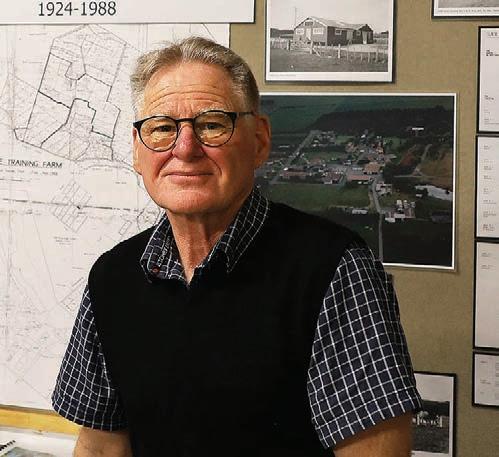
Alasdair Bettles-Hall, the son of a Flock House orphan, is on a mission to paint the full picture of the farm training school’s history.
PEOPLE 26
Scales Corporation is to invest more than $30 million in two Australian pet food processing ventures.
NEWS 11
Homeowners are turning their backs on synthetics says farmer-owned co-operative Wools of New Zealand.
NEWS 11
Stockpiles of both mānuka and non-mānuka honey are the downside of a decade of double-digit growth.
MARKETS 16
Meet the people behind the farm gate
 online at farmersweekly.co.nz
Nigel Stirling MARKETS Dairy
online at farmersweekly.co.nz
Nigel Stirling MARKETS Dairy
1
Vol 20 No 38, October 3, 2022 View
$4.95 Incl GST Thumbs up for Fonterra 19 Subscribe on YouTube
On Farm Story is a celebration of farmers and farming - told in under five minutes.
Continued page 5
touch
EDITORIAL
Bryan Gibson | 06 323 1519
Managing Editor bryan.gibson@agrihq.co.nz
Claire Robertson Sub-Editor claire.robertson@agrihq.co.nz
Neal Wallace | 03 474 9240 Journalist neal.wallace@agrihq.co.nz
Gerald Piddock | 027 486 8346
Journalist gerald.piddock@agrihq.co.nz
Annette Scott | 021 908 400


Journalist annette.scott@agrihq.co.nz
Hugh Stringleman | 09 432 8594
Journalist hugh.stringleman@agrihq.co.nz
Richard Rennie | 07 552 6176 Journalist richard.rennie@agrihq.co.nz
Nigel Stirling | 021 136 5570 Journalist nigel.g.stirling@gmail.com
PRODUCTION
Lana Kieselbach | 027 739 4295 production@agrihq.co.nz
ADVERTISING MATERIAL
Supply to: adcopy@agrihq.co.nz

SUBSCRIPTIONS 0800 85 25 80 subs@agrihq.co.nz
Advertise
SALES CONTACTS

Andy Whitson | 027 626 2269 Sales & Marketing Manager andy.whitson@agrihq.co.nz


Steve McLaren | 027 205 1456
Auckland/Northland Partnership Manager steve.mclaren@agrihq.co.nz
Jody Anderson | 027 474 6094
Waikato/Bay of Plenty Partnership Manager jody.anderson@agrihq.co.nz
Donna Hirst | 027 474 6095
Lower North Island/international Partnership Manager donna.hirst@agrihq.co.nz
Grant Marshall | 027 887 5568
South Island Partnership Manager grant.marshall@agrihq.co.nz
Debbie Brown | 06 323 0765
Marketplace Partnership Manager classifieds@agrihq.co.nz


Grant Marshall | 027 887 5568
Real Estate Partnership Manager realestate@agrihq.co.nz
Andrea Mansfield | 027 602 4925
National Livestock Manager livestock@agrihq.co.nz

PUBLISHERS
Dean and Cushla Williamson Phone: 0800 85 25 80 dean.williamson@agrihq.co.nz cushla.williamson@agrihq.co.nz
Farmers Weekly is Published by AgriHQ PO Box 529, Feilding 4740, New Zealand
Phone: 0800 85 25 80 Website: www.farmersweekly.co.nz
ISSN 2463-6002 (Print) ISSN 2463-6010 (Online)
Contents


New
most trusted source of agricultural news and information


News in brief
Salmon sinks
New Zealand King Salmon Investments saw a net loss after tax of $24.5 million in its half-year earnings. The world’s largest aquaculture producer of King salmon said the loss was mainly due to the company being forced to close three of its four fish farms in Pelorus Sound due to high summer water temperatures.


Funds for farmers
The a2 Milk Company has announced grants to 15 farms in Canterbury and Southland under its New Zealand Farm Sustainability Fund, a partnership with Lincoln University. a2MC made $500k available to the fund for the inaugural year. Grants of up to $35,000 have been made to farms demonstrating an integrated approach to a sustainable future, enabling positive and meaningful impact across the community and the environment.
No profit, no fees
Otago landowners or individuals can now line up alongside catchment and community groups to apply for their resource consent fees to be covered for not-for-profit environmental projects. The Otago Regional Council updated the existing Environmental Enhancement Projects Policy, broadening the criteria for applicants and the type of consent costs now covered to improve delivery of environmental enhancements around the region.
HB targets reductions
In its final decision before October’s local elections, Hawke’s Bay Regional Council agreed to develop the region’s first Emissions Reduction Plan, supporting a path to regional carbon neutrality by 2050. Council chief executive James Palmer said the net-zero carbon goal by 2050 would not be easy, but could be reached through a plan of targets and measures supported by strong stakeholder input, collaboration and community buy-in.
BY COMPLETING YOUR FENCING AND WATER REPAIRS
Visit your local PGG Wrightson store or purchase online to take care of your farm maintenance and repairs.

Helping grow the countryFreephone 0800 10 22 76 store.pggwrightson.co.nz
4 Contents
Zealand’s
PRINTER Printed by Stuff Ltd Delivered by Reach Media Ltd
Get in
BUYING TIME: Lewis Tucker general manager Colin Jacobs says forestry buys New Zealand’s emitters and policy makers a bit of time to get to a low-carbon economy. STORY P23 News . . . . . . . . . . . . . 1-21 Opinion . . . . . . . . . 22-25 People . . . . . . . . . . . . . 26 Technology . . . . . . . . . 27 World . . . . . . . . . . . . . . 28 Ag&Ed . . . . . . . . . . . . . 29 Real Estate . . . . . . 30-37 Marketplace . . . . . 38-39 Livestock . . . . . . . . 40-41 Markets . . . . . . . . . 42-47 Weather . . . . . . . . . . . . 48
National vows to review live export ban
Annette Scott NEWS Exports
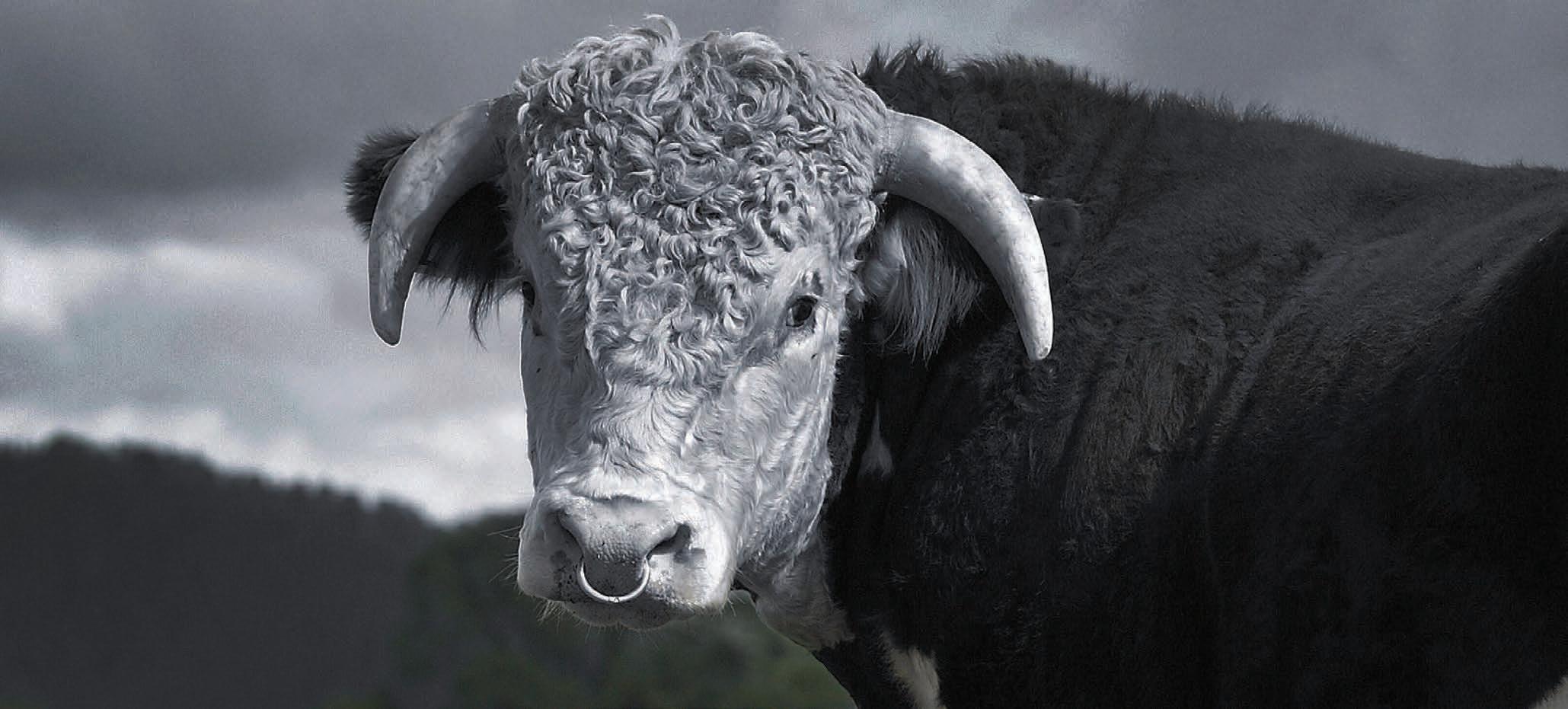
AFUTURE National government would review the law banning live cattle exports, National’s animal welfare spokesperson Nicola Grigg says.
In terms of a bill passed last week, livestock export trade by sea will cease from April 30 next year, cutting New Zealand’s gross domestic product by $472 million and closing off a lucrative market for export cattle breeders.
Agriculture Minister Damien O’Connor said the ban will protect NZ’s reputation for world-leading animal welfare standards.
“The Animal Welfare Amendment Bill future-proofs our economic security amid increasing consumer scrutiny across the board on production practices,” he said.
from page 1
meaningful parts of dairy exports out of NZ which represent zero threat.
“It does not have specialty in some of the more concentrated whey proteins or fractions of proteins, for example.”
Rattray said India’s demographic trends could turbocharge future demand for such products.
Getting alongside local manufacturers now could pay big dividends in the future.
As could lowering any tariffs on those products.
“I personally think there is an economic miracle unfolding there…[as the] working age population completely overwhelms the size of the dependent population and more women join the workforce, that is going to have a massive economic dividend.
The government started a review of the livestock export trade in 2019 in response to concerns the trade could be a risk to NZ’s reputation.
“Our primary sector exports hit a record $53 billion last year, delivering us economic security. That result is built on our hardearned reputation and this is something we want to protect,” O’Connor said.
He said the effects on export flow will be small in the context of total primary sector exports, suggesting the two-year transition period has allowed those affected by the ban sufficient time to adjust their business models and supply chains to account for the removal of the trade.
But Grigg and industry stakeholders disagree, saying the decision signals more economic pain for farmers, rural communities and consumers, while also putting NZ at risk with key trading partners.
“Those products that have specific health attributes beyond basic nutrition which is fat and protein…the market for those kind of things are likely to continue to grow and there is unlikely to be a bigger market anywhere else in the world for them than India.
“For Indian businesses that are building up their product portfolio I would say there would be some elements of NZ’s export mix that would be very attractive to them.”
In the meantime NZ needed to be careful it did not blow its chances by making demands India could not agree to.
“We have to secure our place in the queue and not go in there with unrealistic expectations about timeframes or be too demanding.
“We have to work through what we can do which is achievable and can add value to the relationship.
“India needs to see we are valueadders rather than competitors.”
Grigg said the government failed to carry out its own robust economic analysis, or consider any of the proposed amendments put forward by industry and the National Party.
set world-leading compliance standards, like built-for-purpose ships, maximum stocking densities, vet and stock handler training, more robust reporting, exporter licensing and an importer quality assurance programme,” Grigg said.
Exporters have implemented a Gold Standard with the improvements recommended being evidenced based, using the latest information, knowledge and scientific developments.
Animal Genetics and Trade Advisory Council chair Jim Edwards said the overall view needs to be from a global perspective.
“Livestock exporting allows us to maintain tight trading relationships with some of the largest importers of NZ agricultural products and that provides a significant source of export revenue for our small country.
She cited an Infometrics Economic Impact Report that said the ban will reduce NZ’s GDP by $472m and cost export cattle breeders between $49,000 and $116,000 a year per farm.

“Rather than an outright ban on live exports, the government should legislate for a Gold Standard programme that would
“The Gold Standard is unprecedented internationally in scope and depth and when fully implemented would position NZ as a world leader in animal welfare regulations and reform,” Live Exporters NZ (LENZ) spokesperson Mark Willis said.
“We set out a clear and evidencebased 12-point regulatory plan to Minister O’Connor that would further improve and modernise the live animal export system. We did not receive any response.”
“Our reputation will be damaged if we refuse to help other nations with their food security.”
Edwards said NZ has long been helping China with its food security.
“To say we are not going to do it anymore is an insult, there is risk and there will be reaction.
“We can only wait now with bated breath and hope [live export] trade will be reinstated and meantime hope not too much harm is done,” Edwards said.
New Delhi dairy
THERE can be few New Zealanders with a better feel for India’s dairy sensitivities than Earl Rattray.
The Waikato dairy farmer has visited the country four or five times a year for a decade, establishing a dairy farming joint venture 70km from New Delhi with three Indian tech entrepreneurs.
Binsar Farms’ aim has been to introduce scale and New Zealand farming principles as an example to raise productivity in the world’s largest milkproducing country.
While Binsar’s 380-strong herd might be on the small size by NZ standards it is large in India, where 80% of an estimated 70 million dairy
farmers own fewer than 10 animals.
Rattray said the income from those animals can be crucial for rural families and explains the sensitivity to increasing imports from lower-cost producers.
“For them that [income] is the difference between having the cash to send their daughters to school or not. NZ shouldn’t underestimate that sensitivity.”
Rattray believes there will be opportunities for NZ’s bulk commodities in the longer term but it needs to bide its time.
“More of the children of village farmers will move to town. They can’t take their cow or buffalo with them, but they still need milk, so the supply gap widens.”
Advertise with us
Reach hundreds and thousands of rural New Zealanders every week
GHEE WHIZ: Earl Rattray has visited India scores of times in the past decade, helping to set up a dairy farming joint venture 70km from New Delhi with three Indian tech entrepreneurs.
To say we are not going to do it anymore is an insult, there is risk and there will be reaction.
Jim Edwards Animal Genetics and Trade Advisory Council
5 FARMERS WEEKLY – farmersweekly.co.nz – October 3, 2022News 5
Call 0800 85 25 80
Continued
Norwegian firm on hunt for long Merino
WOOL clothing company Devold of Norway is offering New Zealand farmers a premium contract for longer Merino wool.
This comes amid concerns about Merino bloodlines coming into NZ based on estimated breeding values for fats and eye muscle, focused on the meat factor rather than quality wool.
“We are losing the focus on the quality of wool,” NZ-based general manager of buying arm Devold Wool Direct, Craig Smith, said.
Devold owner and company general manager Knut Flakk and the general manager of the mill based in Lithuania, Tor Jonsson, were in NZ last month visiting growers and offering a premium to specific wool breeders.
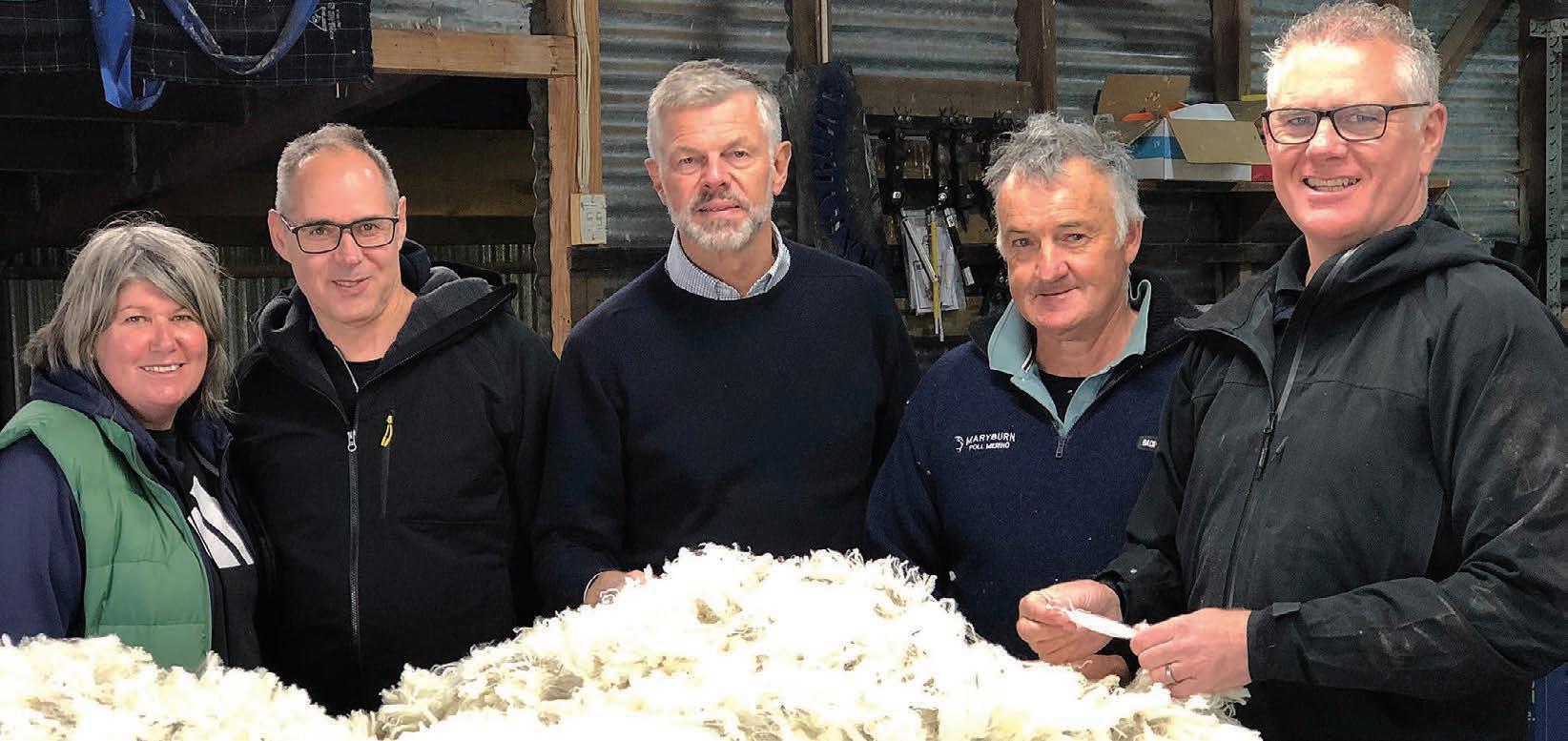
Devold has 38 contracted growers from Marlborough to Central Otago and into the Mackenzie region. All are eligible for the premium, but just 17 are currently sheep-to-shop growers.
Devold recently opened its flagship NZ store in Wānaka, operating under a vertical model where every step of the process from the wool to the yarn, to the final finished garment, is managed and controlled entirely by Devold. The model redefines how clothes are made from the ground up, but it needs top-quality, purposegrown wool.
Under the new incentivised contract growers will receive a fixed price per kilogram, higher than the market average, with a bonus payment above the new contracted base rate for wool meeting the longer quality criteria.
Devold 18.7-micron wool is currently achieving $24.00/kg clean, against the average market of $19.00/kg.
On top of the $24.00/kg, Devold growers selected for the new contract incentive are getting an additional $2/kg for longer length wool in the 95mm–105mm range.
“This is when growers are generally discounted $2/kg for long wool,” Smith said.

“Our contracts are already ahead of the market, in this case $5 ahead, and we are then rewarding through our contract structure growers who are growing longer wool, but still maintaining the quality to get the $2 premium, effectively better now by $7.”
The longer wool enables better processing and ultimately a better end fibre going into premium garments.
The five-year contracts are underway now and will be in place through to the 2026 season.
“The contracts are offered to specific growers growing the style of wool we are after,” Smith said.
“We are very selective of the
growers we are picking with the bottom line being it all comes down to quality.”
Flakk said the premium for longer quality wool is aimed at encouraging breeders to prioritise breeding for wool over meat.
Devold and its partners then it will not work,” Flakk said.
“Partnerships must be transparent on both sides with clear and precise understanding in the contracts formed and reward accordingly.
“That’s the key to importance for us.”
Jonsson said everyone appreciates that costs are going up for everyone and it is important that this is recognised in partnerships.
been growing wool under contract for Devold for several years and this year are among the growers selected for the premium longwool contract.
As growers they have developed a close partnership with Devold including having visited Devold in Norway and the mill in Lithuania.
“It’s about showing an interest in our business, and they have visited us,” Martin Murray said.
Know the market
A comprehensive, easy-to-read, weekly summary of NZ’s agricultural markets including sheep, beef, venison, dairy, grain, and wool.
Devold has an aggressive growth strategy that means it needs the wool in greater volumes going forward, but it can only meet the demand with quality wool and quality wool suppliers.
“If it is not a win-win for both
“We know that. The gas price at the mill [in Lithuania] has gone up from €14 [about $23.80] a kilowatt to €270/kw so we know very well about costs going up but we must keep the quality so we have to keep paying,” Jonsson said.
The wool grown in NZ under the new contract structure is all destined for Devold garments globally.
Maryburn Station farmers Martin and Penny Murray have
A self-confessed “wool man”, Murray said growing quality wool is his priority. “Any meat value is an added bonus.”
Shearing 8000 Merino ewes, including hoggets, Maryburn Station this year produced 400 bales of wool with more than 80% of the clip supplied to Devold.
“The premium contract suits the micron of our sheep, it fits our basket, and the long term is good value, giving five years’ guaranteed certainty,” Murray said.
MARKET REPORT
Subscribe from only $100* per month
agrihq.co.nz/our-industry-reports
Annette Scott NEWS Fibre
LONG STORY: Penny Murray and husband Martin Murray, second from right, check the quality of their premium contracted wool with Devold executives Tor Jonsson, Knut Flakk and, far right, Devold Wool Direct NZ general manager Craig Smith.
The premium contract suits the micron of our sheep, it fits our basket, and the long term is good value, giving five years’ guaranteed certainty.
Martin Murray Woolgrower
6 FARMERS WEEKLY – farmersweekly.co.nz – October 3, 2022 News6
* Prices are GST exclusive
Red meat cuisine from a vending machine
Staff reporter NEWS
Beef and lamb
CHINESE consumers can now get a fix of New Zealand beef or lamb from a vending machine.

Beef + Lamb New Zealand (BLNZ) has joined forces with Alliance Group and Silver Fern Farms (SFF) to pilot two Pure Box vending machines in Shanghai that will serve ready-to-eat meals featuring NZ beef and lamb to Chinese consumers.
The meals, co-developed by BLNZ and well-known Shanghai chef Jamie Pea, fuse traditional Chinese ingredients and flavours with Western food trends.
Each of the six recipes has been designed to highlight either Pure South lamb from Alliance or beef from SFF.
The vending machines, which are marketed under BLNZ’s Taste Pure Nature country of origin brand, will be located in Shanghai’s top business districts where time-poor consumers are known to seek out convenient and healthy food options.

BLNZ global manager for the NZ red meat story Michael Wan said the pilot is just one of the strategic marketing initiatives designed to build awareness for NZ grass-fed beef and lamb in China.
“The Chinese market is strategically important for New Zealand’s red meat sector. Our research shows a growing number of Chinese consumers are seeking nutritious and healthy food. The unique attributes of New Zealand grass-fed beef and lamb can meet this need.
“We must also offer these consumers a range of eating

options such as Pure Box, which are convenient to access and consume, in addition to supermarkets and dining in restaurants.
“We want more and more consumers in China to get to know and recognise the benefits of New Zealand grass-fed beef and lamb through this Pure Box initiative and choose our grass-fed beef and lamb in the future.”
Alliance general manager sales Shane Kingston said the pilot aims to help generate interest in New Zealand beef and lamb.
“This is another great example of disrupting consumer purchasing activity to create both consideration and conversion to our high-quality New Zealand beef and lamb products.”
SFF general manager growth Nicola Johnston said taking part in the trial is an important way of establishing the opportunities for red meat in growing convenience trends such as ready-to-eat.
“We know that Chinese consumers love the core attributes of our red meat, but there’s more we can do to challenge the way our products are delivered and consumed that better suit our consumers’ varied lifestyles. By trialling initiatives such as the Pure Box, we can also glean insights that apply across our growing branded offering in China.”


The Consul-General of New Zealand in Shanghai, Stephen Wong, unveiled the Pure Box to media and the public at a launch event in Shanghai on September 22.
‘Agile contract’ aims to ease cost upsets

























 Staff reporter NEWS Arable


A NEW agreement between farmers and rural contractors has been created to account for input price volatility over the growing season.
Called the Forage Trading Agreement, it is a template that aims to provide certainty for both parties in the midst of uncertain fuel and fertiliser prices. It was developed by Federated Farmers in conjunction with Rural Contactors New Zealand.

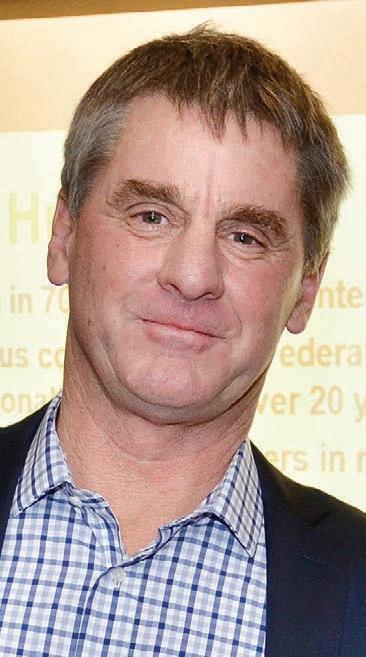
The federation’s arable chair, Colin Hurst, said it gives growers and harvesters and purchasers an agile contract that can cater for spikes in costs and help ensure no one is unfairly out of pocket.
This has not been an issue in the past but covid-19, the disruption to supply chains and consequent roller-coaster prices for fuel and fertiliser sparked the problem, he said.

“Then we had the curveball of the war in Ukraine and those impacts. Last year the price of fuel went through the roof, and some rural contractors running expensive machinery with fixed costs basically lost money.”
Federated Farmers and Rural Contractors NZ contracted NZX to develop and regularly update fuel and fertiliser cost-reference indices.

This data will be available to members through both organisations’ websites later this month, and growers and contractors can take advantage of the flexibility of the new agreement to select what variable costs they want to move, and at what rate.
FAIRER: The new contract provides certainty for farmers and contractors navigating volatile input prices, Colin Hurst says.
“It doesn’t tell either party how to price, as everyone has their own cost model and pricing model. The template provided with the agreement is a guide to assist with being able to calculate the change in price,” Hurst said.

“The reaction from farmers/ growers and contractors has been very positive and we would be keen for any feedback to ensure suitability for all forage crops and also to cater for other key input costs.
“We think this is a valuable tool for the sector, one that offers a bit more certainty in these uncertain times.”
The new agreement and template to assist in calculating the variable costs are available now.
 AUTOMAT FOR THE PEOPLE: The six dishes on offer at the Pure Box vending machine in Shanghai, China, feature either Pure South lamb from Alliance or beef from Silver Fern Farms.
We want more and more consumers in China to get to know and recognise the benefits of New Zealand grass-fed beef and lamb through this Pure Box initiative.
Michael Wan BLNZ
PROUDLY NZ OWNED alleva.co.nz TURBO® is a registered trademark of Alleva Animal Health Ltd. TURBO Initial (A011703) is a registered pursuant to the ACVM Act 1997. See www.foodsafety.govt.nz for registration conditions. INITIAL Stage one of the TURBO 3-stage Cattle Drench Programme. Exclusive to veterinary practices nationwide. THE PROVEN WAY TO WEAN. COMBAT Parasites + Coccidiosis in a single dose 7 FARMERS WEEKLY – farmersweekly.co.nz – October 3, 2022News 7
Start ordering with
























































With increasing national regulations and compliance, knowing where and when your nutrients have been applied on-farm is vital. From ordering to recording to reporting, we have you covered. Ensure you have the data you need when you need it. Order your fertiliser nutrients through HawkEye today.










 HawkEye by Ravensdown
RAV03OCT-FW 0800 73 73 73 www.hawkeye.farm
HawkEye
Order your Ravensdown fertiliser nutrients Record your proof of placement and activities Reporting made simple for nutrient tracking and compliance 8
Butcher bot pays in dollars per carcase
cutting system to be installed at its Finegand plant will allow 10 staff to be relocated to other roles.
THE introduction of robotic technology to the meat industry is driven by the need to recover more high quality meat – not the desire to replace people.
Scott Technology Automation and Robotics chief executive John Kippenberger said its fully automated lamb processing system does mean staff can be relocated, but the resulting improved meat yields achieved by using the technology can be measured in dollars per carcase.
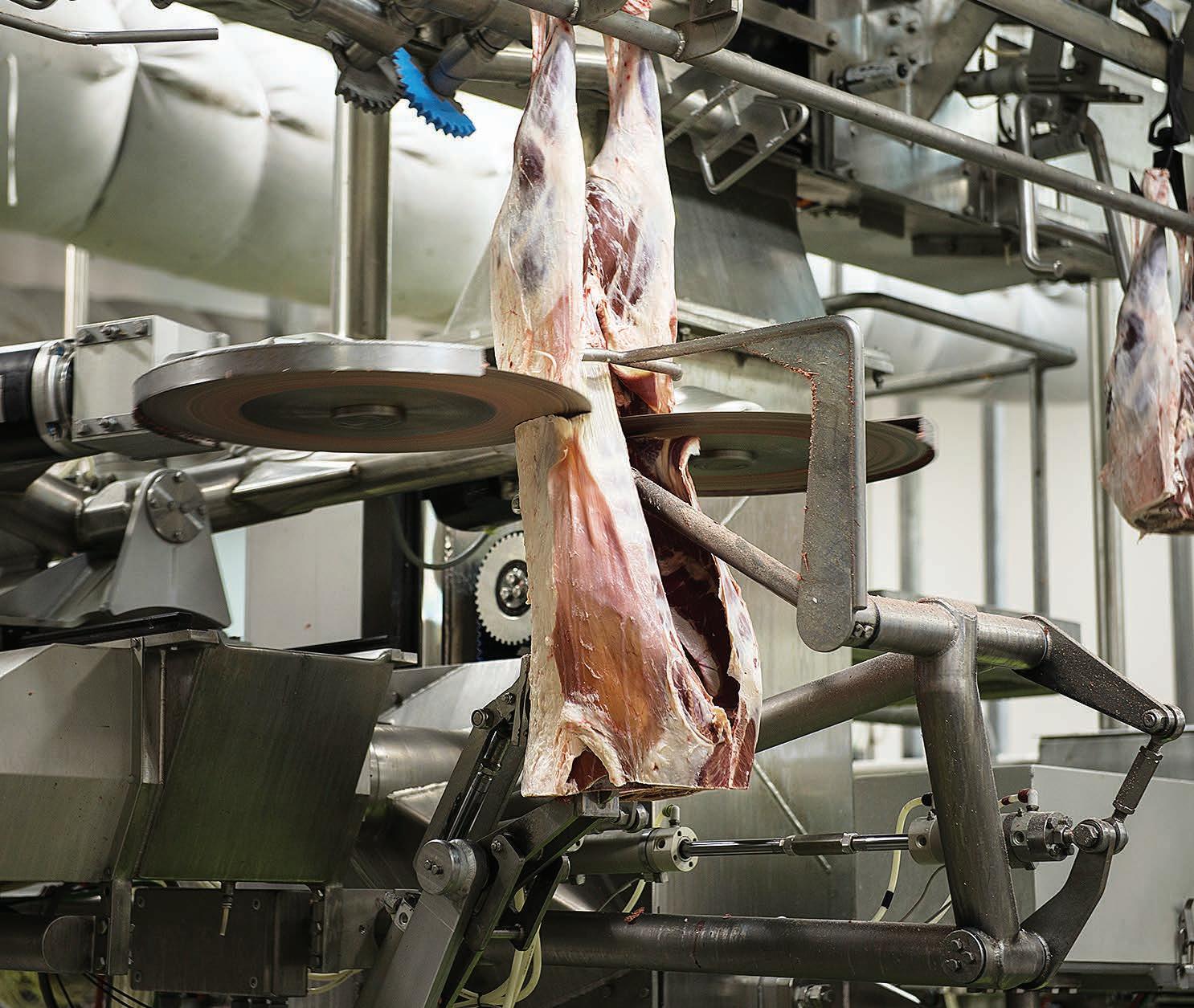
Silver Fern Farms recently estimated that a new primal





Health and safety concerns and the current shortage of labour in the meat industry have made automated systems more attractive, but Kippenberger said the system’s $10 to $15 million cost means greater yield recovery is the primary driver.

The industry estimates it was short 2500 workers last season and it is not expecting much of an improvement this season.
Scott’s Dunedin plant is the global company’s meat centre of excellence from which it designs and builds lamb primal cutting systems.

It is developing a similar system for beef with Meat and Livestock Australia and has developed an automated system for trussing legs and wings of chickens for a US customer.
Kippenberger said robots are ideal for efficiently and consistently processing large, common cuts from a lamb carcase, but not for making variable or fine cuts.
“We will always need fine knife work on smaller cuts by skilled butchers,” he said.
The primal cutting system uses three xrays to take a 360-degree image of the carcase, from which it designates millions of reference points.
In less than a second a computer uses that information to determine the optimal cutting points and angles to allow the recovery the highest value meat.
All of this is done at 600 carcases an hour.
The systems have been installed in 14 plants throughout New Zealand and Australia, but the cost means processors need scale and size to make them viable.
Kippenberger said Scott is now selling some individual processing components that are incorporated in the primal cutting system, to smaller processors to perform

specific roles such as removing the chine bone.
This makes it affordable for smaller companies.
Developing a beef primal cutting system is potentially huge.

“Beef has all the value distinction of high-value cuts, chains operating at high speed, an industry ravaged by labour shortages and a need to keep people safe,” he said.
Through a client in the United States, Scott was asked to develop an automated system for trussing the legs and wings of chickens with string, preparing the birds for being cooked for sale in supermarkets.
The system replaces a task performed by hand and, depending on the model, can handle between 24 and 96 birds a minute.
Scott also owns a business developing an automated robotic material handling systems for warehouses.
Kippenberger said Alliance Group has bought a 10,000-carton handling system for its Lorneville plant and it is in the process of installing a 100,000-carton system for a client in the US.
Scott employs 650 workers globally, of whom about a third are in Europe and the remainder in the US, Canada, China, Australia, South America and NZ.
Other business units handle appliance manufacturing and sample preparation for the mining industry.
“Meat processing will continue to play a very large part in the next 10 to 20 years’ growth of Scott due to industry drivers not expected to go away,” he said.
Neal Wallace TECHNOLOGY Meatworks
BEEF’S NEXT: A fully automated primal lamb processing system in action.
We will always need fine knife work on smaller cuts by skilled butchers.
John Kippenberger
Scott Technology Automation and Robotics
SLICE: Scott Technology Automation and Robotics chief executive John Kippenberger.
Designed for strength. Built to last. Distribution Centres: Whangarei, Hamilton, Levin, Taupo, Christchurch, Gore 0800 347 259 greenwoodinfo.co.nz SHEDS YARDS BRIDGES GREENWOOD Calf Sheds Covered Yards Lifestyle Block Sheds Bells & Whistles Sheds GRW0004 9 FARMERS WEEKLY – farmersweekly.co.nz – October 3, 2022News 9
Kiwi growers hail increase in RSE visas
Richard Rennie NEWS Horticulture
THE kiwifruit industry has welcomed the announcement by the government that it will lift the number of Recognised Seasonal Employer (RSE) workers eligible to come into New Zealand this season, adding 3000 more to the current quota.
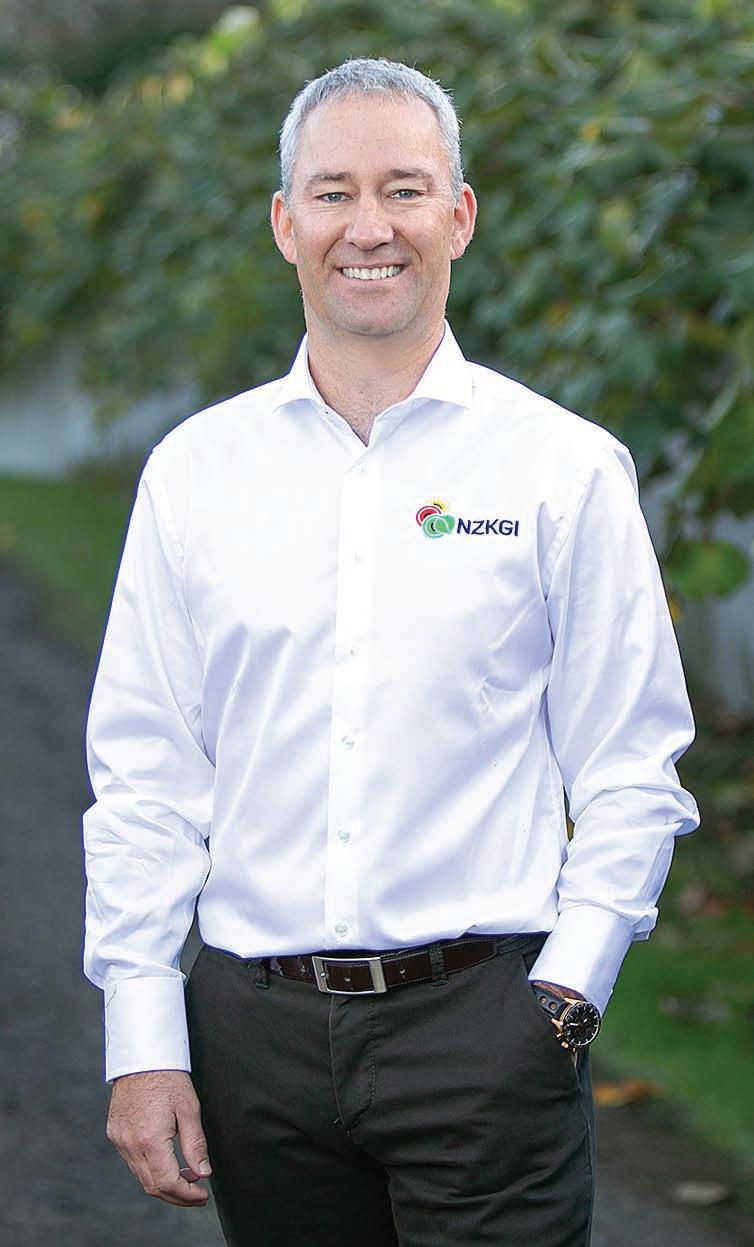
New Zealand Kiwifruit Growers Incorporated (NZKGI) CEO Colin Bond said the decision by the government to lift the numbers to 19,000 will go some way to supporting labour supply for the preparation and harvest of the 2023 crop.

The workers are eligible to enter NZ from next month.
The move comes at a time when the kiwifruit sector alone estimates it is more than 3500 workers short at peak harvest time.
Typically, the sector employs about 2000 RSE workers and 6000 backpackers every season.
“NZKGI alongside our
colleagues in the horticulture and viticulture industries have worked closely with the minister of immigration throughout this process,” he said.
The RSE workers have been held in high regard by the sector for their off-peak pruning skills. This is an area where growers have experienced significant shortages in the past two seasons and where labour rates have pushed pruning costs from $10,000/ha to as high as $16,000/ha in some areas.
through the industry’s labour attraction campaign.
The shortage in workers has been held partly responsible for the quality issues experienced by the kiwifruit industry in the past season.
Zespri launched an industry-wide programme of improvement after experiencing record levels of fruit write-downs this season, resulting in growers having as much as $2.80 a tray wiped off returns for high-value SunGold fruit.
Expectations are this season that almost half of Green growers will either just break even or even suffer a loss partly as a result of the unexpectedly high fruit write-downs.
Growers also deliberately throttled back crop volumes this year in expectation of a labour shortage, pushing anticipated volumes down by almost 20%.
confidence to continue to invest heading into the 20222023 harvest.
“Any decision that helps our industry address its chronic labour shortage is good news,” she said.
In increasing RSE numbers from 16,000, Immigration Minister Michael Wood said, the government wants to strike the right balance to incentivise local employment, also requiring working conditions to be improved.
Government pressure on the industry to either bring in even more locals, or to automate processes further, appears likely to remain.
Pressure to further lift working conditions has also been applied by requiring employers to provide sick leave entitlements to RSE workers, in addition to the minimum wage requirement of $22.10 an hour introduced during the covid pandemic.
Bond said the RSE workers’ productivity results in employment growth generally, with NZKGI also continuing to run programmes to train and attract more New Zealanders to the industry, including
The wider industry has also welcomed the arrival of more RSE workers after supply was stifled by covid restrictions over the past two seasons.
Horticulture NZ CEO Nadine Tunley said the decision should give growers
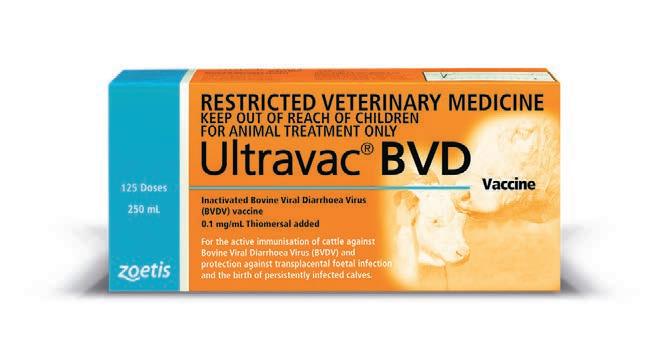
Stop BVD in its tracks.
The RSE numbers will also be backed by the 6200 working holidaymakers in the country now, twice as many as were here last year. Wood said he is confident that number will increase heading into summer.
A BVD outbreak could cause:

The most devastating impacts of BVD are on pregnant cattle and their unborn calves, so protecting heifers and cows from infection during mating and gestation is critical.
Protect the health of your herd by keeping your herd BVD free with Ultravac BVD®. A premium foetal protection vaccine proven in New Zealand.1 See your vet today.
Any decision that helps our industry address its chronic labour shortage is good news.
Nadine Tunley Hort NZ
BOOSTED: NZKGI chief executive Colin Bond said the additional RSE workers are a welcome boost to a sector well short of staff for the past two years.
• Decreased milk production • Poor conception rates • Persistently infected calves • Abortions, mummies, and stillbirths R Packianathan, WJ Clough, A Hodge, DK Holz, J Huang, GL Bryant & C Colantoni (2017): Prevention of fetal infection in heifers challenged with bovine viral diarrhoea virus type 1a by vaccination with a type 1c or type 1a vaccine, New Zealand Veterinary Journal, DOI:10.1080/00480169.2017.1291376. Zoetis New Zealand Limited. Tel: 0800 963 847; www.zoetis.co.nz. ULTRAVAC is a registered trade mark of Zoetis Inc. or its subsidiaries. ACVM No. A10730: RVM; Available only under Veterinary Authorisation.
10 FARMERS WEEKLY – farmersweekly.co.nz – October 3, 2022 News10
‘NZ wants wool underfoot’
Annette Scott NEWS Fibre
NEW Zealand homeowners are turning their backs on synthetics, according to farmer-owned co-operative Wools of New Zealand (WNZ).
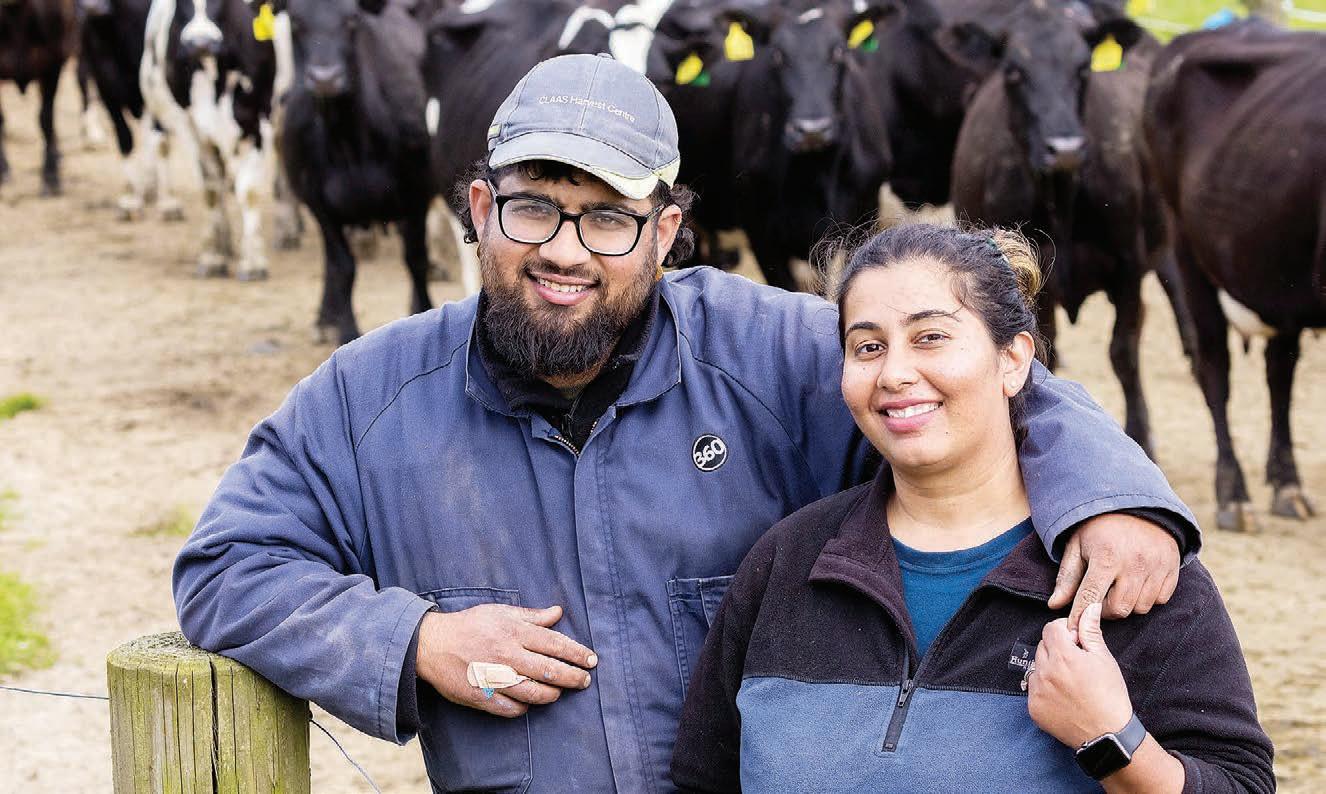
WNZ chief executive John McWhirter said wool carpets account for a greater proportion of WNZ’s partners’ retail sales than ever before.

“This rising demand is a clear indicator that more New Zealanders are considering sustainable floor options for their homes,” McWhirter said.
WNZ has launched a major consumer campaign to drive carpet sales as it prepares to mark 12 months since joining forces with the Primary Wool Cooperative-owned CP Wool.
“We are looking to leverage the increasing demand for wool
carpets in NZ as more and more Kiwis turn their back on synthetic carpets produced with fossil fuels.
“Most importantly, our wool carpets don’t cost the earth, they’re planet friendly and people friendly,” McWhirter said.
partnership with Flooring Xtra and other retailers last year.
“Retailers are clearly telling us that consumers want sustainable, renewable and biodegradable carpet made from wool grown right here in NZ.
“Kiwis are waking up to the fact wool carpets are now competitively priced compared to synthetic carpets.
“New Zealanders have a genuine choice between a synthetic product or a natural product direct from WNZ’s farmer-growers.”
Meanwhile, McWhirter said the merger between WNZ and the Primary Wool Co-operative-owned CP Wool has been a success.
The wool for the company’s carpets is grown by the more than 2000 kiwi farmers who own the WNZ co-operative business.
WNZ continues to welcome additional independent and retail chains to market wool carpets following the launch of a
“We now have over 80 staff, 11 wool stores, a carpet manufacturing partner, a NZ carpet distribution warehouse, over 150 carpet retail store partners in NZ, a UK office, many offshore customers, a strong well recognised Wools of NZ brand and loyal grower suppliers.
“For the first time we now have an integrated value chain from the grower through to the consumer.”
Scales goes big into Australian pet food processing
Hugh Stringleman NEWS Processing

SCALES Corporation is to invest more than $30 million in two Australian pet food processing ventures, expanding its currently very profitable Global Protein division.
Scales is subscribing for 33% interest in a new processing plant in Melbourne with two industryestablished partners who have extensive supply relationships.
At the same time it will purchase 50% of the Australian operations of Fayman International, including a 42.5% interest in ANZ Exports.
The combined cost is estimated at A$27m (about $30.7m), to be funded out of Scales’ existing cash reserves.
Scales has been cashed up since the divestment of the Polarcold cool storage business in 2019.
Scales’ half-year results in August contained a very good contribution from the newly named Global Proteins division,
which lifted underlying earnings to $30.4m, up 88% on the previous corresponding period.
It sits midway in the supply
chain of meatworks by-products to pet food manufacturers.
Scales operates in New Zealand, Australia and in the United
States, where very good operating margins were gained this year.
The NZ partner is Alliance Group in a partnership called Meateor, and the use of that name will now be extended to Australia.
Scales managing director Andy Borland said in August mainly offshore opportunities existed to grow the Global Proteins division, currently providing just under half of group revenue.

The Fayman International partnership announcement has been made just one month on.
“Australia’s product mix, growth and proximity to Asia make it a strategically important supply base for both our pet food customers and edible by-products markets.
“The partnership that we have entered into significantly strengthens our diversity of proteins and our supplier base. The investment also unlocks potential synergies in our seafreight logistics activities.”
Scales said it is investing in state-of-the-art equipment to
develop a high-quality processing facility.
The facility is expected to be operational in Q1 2023 and will scale up to full production later in the same year.
The partnership we have entered into significantly strengthens our diversity of proteins and our supplier base.
Andy Borland Scales Corporation
“Our partners include the Fayman family, who bring extensive supply relationships to the operation,” Borland said.
“Fayman International has been successfully developed and grown over the past 40 years and has strong relationships with suppliers and customers.”
The new Australian businesses are not expected to contribute to FY23 earnings.
“Our strategy to capture more value for our grower shareholders is on track as we ramp up branded consumer product sales, drive operational excellence into the
new business and really connect with our growers and customers.
DEMAND: WNZ chief executive John McWhirter says the company is looking to leverage the increasing demand as more Kiwis turn their back on synthetic carpets produced with fossil fuels.
PET FOOD: Scales managing director Andy Borland says Australia’s growth and proximity to Asia make it a strategically important supply base for its pet food customers.
For the first time we now have an integrated value chain from the grower through to the consumer.
John McWhirter Wools of NZ
11 FARMERS WEEKLY – farmersweekly.co.nz – October 3, 2022News 11 Delivered to the farm gate of more than 24,000 Kiwi dairy farmers every month Advertise with us Call 0800 85 25 80
Cell survey has wrong number, say firms
Richard Rennie TECHNOLOGY Connectivity
AFEDERATED Farmers rural connectivity survey has been challenged by wireless internet providers on how representative it is of farmers’ cellular and internet links.
The report says that a third of farmers surveyed reported a decline in their cellular coverage in the past year, despite internet service providers frantically erecting additional towers under the government’s Rural Connectivity Group (RCG) initiative.
The annual survey suggests mobile coverage for many rural users is standing still or even falling behind where it was a year ago.
The survey also found that just over half the 1200 farmers surveyed had download speeds of 20Mbps or below, and 20% of farmers were still only experiencing 1-2 “bars” of signal on their phones, with the majority of that 20% regularly experiencing dropped calls.
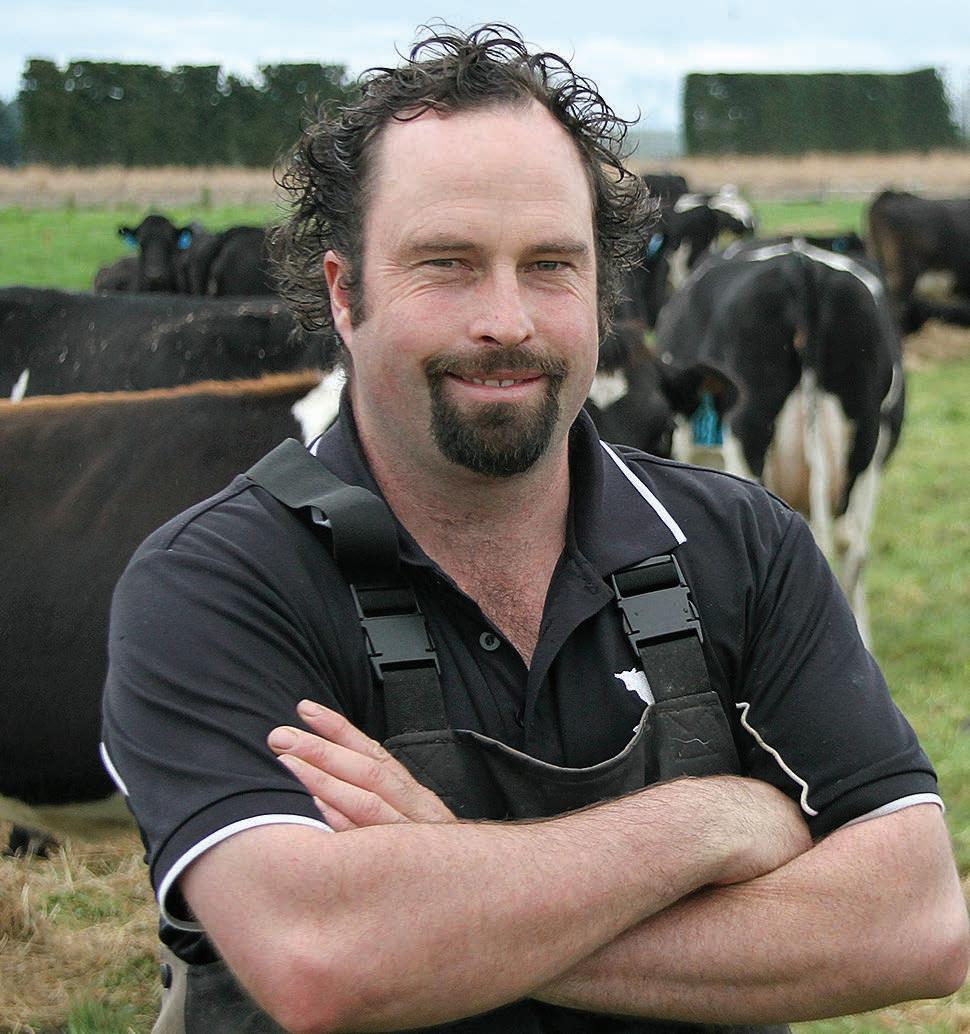

But Wireless Internet Service Providers (WISPA) CEO Mike Smith said the negative results of the survey failed to gel with his experience on the ground in hooking up rural users to both cellular networks and the internet.
“There is a bit of a repeating trend in this survey. You will not get mobile coverage everywhere, and I wonder if it’s the same areas coming up every year.”
Over the past three years the RCG, which consists of the big three providers Spark, Vodafone
and Two Degrees, had installed 350 new cell towers by August. The target is to have 500 towers up by next December.
Smith said at some point the government and telco funding would cease for tower construction, and emerging “voice over” internet technology is starting to provide a means of filling in the gaps towers would not be able to achieve economically.
“We have clients up the Rangitata Gorge who can now make cellphone calls using Wi-Fi internet. Two Degrees have had it for a number of years, Vodafone launched this year and Spark have just gone live with it in the last month, although it’s not on iPhones yet.”

This technology can represent a $10,000-plus investment for a farm property. But Smith said it may also prove an easier funding option to install such tech for a rural community to share, providing the last link, rather than erecting another costly cellphone tower for relatively few users.
“You could also argue that in some areas where populations are growing the increased use is outstripping the investment.”
Federated Farmers telecommunications chair Richard McIntyre agreed that the increased use of newly installed infrastructure could be hamstringing rural cellular performance, but predicted this may only get worse, despite the investment.
“The sector has a fair few challenges ahead of it and in order to meet those we need to have connectivity similar to what urban users have.”
He pointed out that despite 5G’s arrival, a third of farmer respondents reported only 2G or 3G connectivity, and only a third had 75%-100% coverage across their farm.
Smith said Vodafone intends to switch off its 3G network in a
year’s time, but this will have a positive impact on 5G provision to rural users.
“It means they can just focus on 5G and 4G services, freeing up the spectrum and delivering it further.”
provider for over 10 years.

“It says you never know what is out there until you look. But it also suggests for some users there simply is no other choice to go looking for,” McIntyre said.
Both also welcomed the shakeup satellite technology has given the rural market.
The survey found satellite broadband use has increased 35% on last year to account for 19% of users, equal to high-speed copper, with wireless broadband accounting for a steady 52%.
Mike Smith WISPA
Both Smith and McIntyre highlighted the winners in rural connectivity stakes tend to be those farmers who regularly review their internet-cellular agreements and are not afraid to hunt out and shift to better technology.
Of those farmers reporting super-fast speeds of over 100Mbps, 70% had been with the provider less than a year. In contrast, of those reporting speeds of less the 5Mbps, 43% had been with the
Smith was confident the rural connectivity landscape would look even more robust in a year’s time, with significant gains in backhaul infrastructure coming since WISPA providers have been incorporated into network systems.
This year’s Budget included $60 million for rural internet upgrade, accompanying the additional $47m in Rural Capacity Upgrade announced in February, with the entire expenditure to be rolled out over the next three years.
A further $15m is destined for a Remote Users Scheme, targeting particularly remote locations with no coverage at present.
Be a part of NZ’s biggest agricultural community and help create a better future
OPTIONS: WISPA chief executive Mike Smith says there are an increasing array of tech options available to help overcome farmers’ internet and cellular issues.
NOT A BAR OF IT: Federated Farmers telecommunications chair Richard McIntyre says that despite 5G’s arrival, a third of farmer respondents reported only 2G or 3G connectivity, and only a third had 75%-100% coverage across their farm.
You could also argue that in some areas where populations are growing the increased use is outstripping the investment.
12 FARMERS WEEKLY – farmersweekly.co.nz – October 3, 2022 News12 Follow us
farmersweekly.co.nz
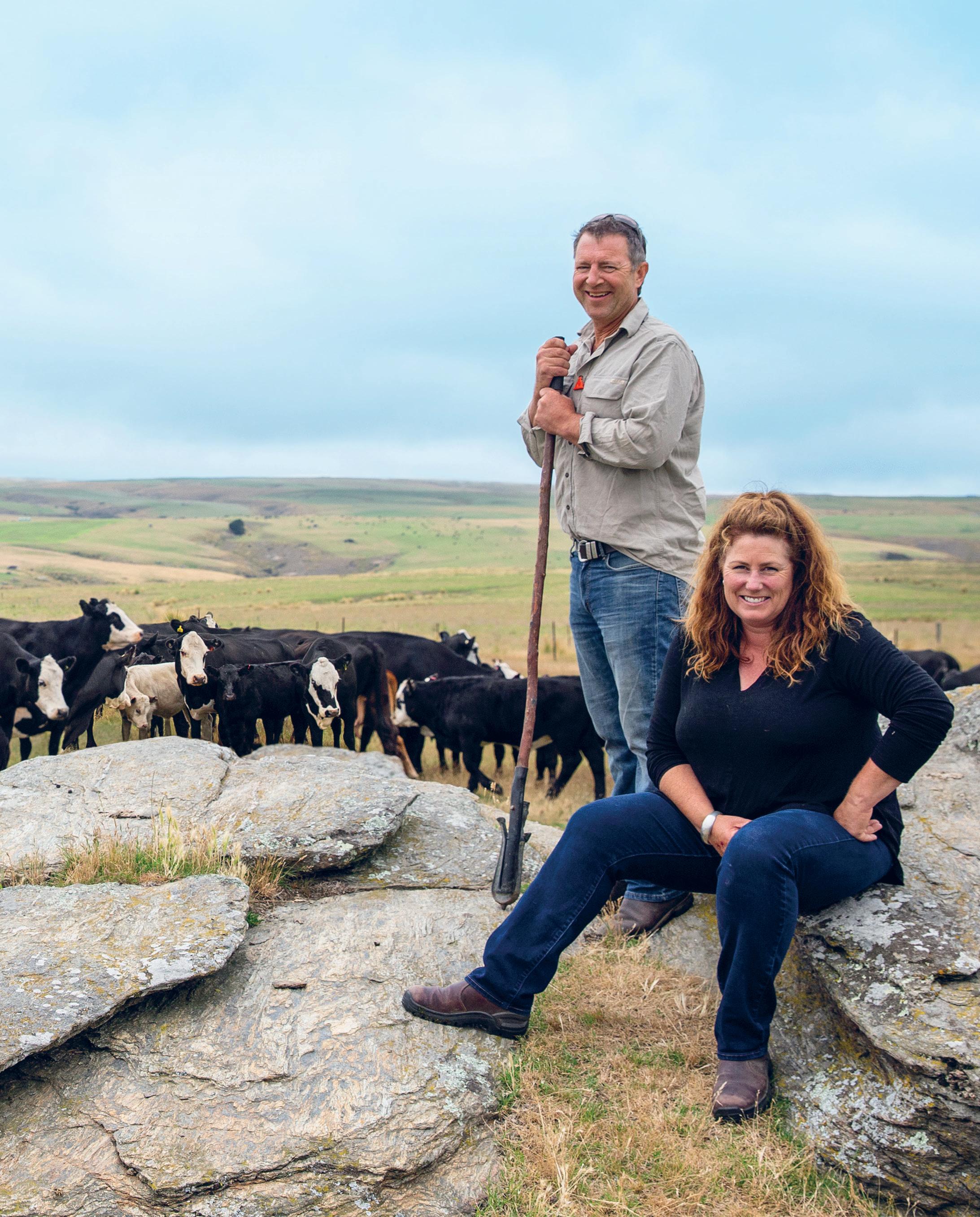











ANDREW AND LYNNORE TEMPLETON, BEEF FARMERS, STRATH TAIERI
2019 OTAGO REGIONAL SUPREME WINNERS
“
The motivation that comes from seeing what’s happening in farms across NZ is just mind-blowing.“
AL BROWN, CHEF
13
BAL13643_BFEA_Muster_Campaign_FW_FP_Press_Ad_262x380mm_Templeton_FA.indd 1 19/09/22 12:33 PM
Synlait back to profit with record milk price
Hugh Stringleman NEWS Dairy
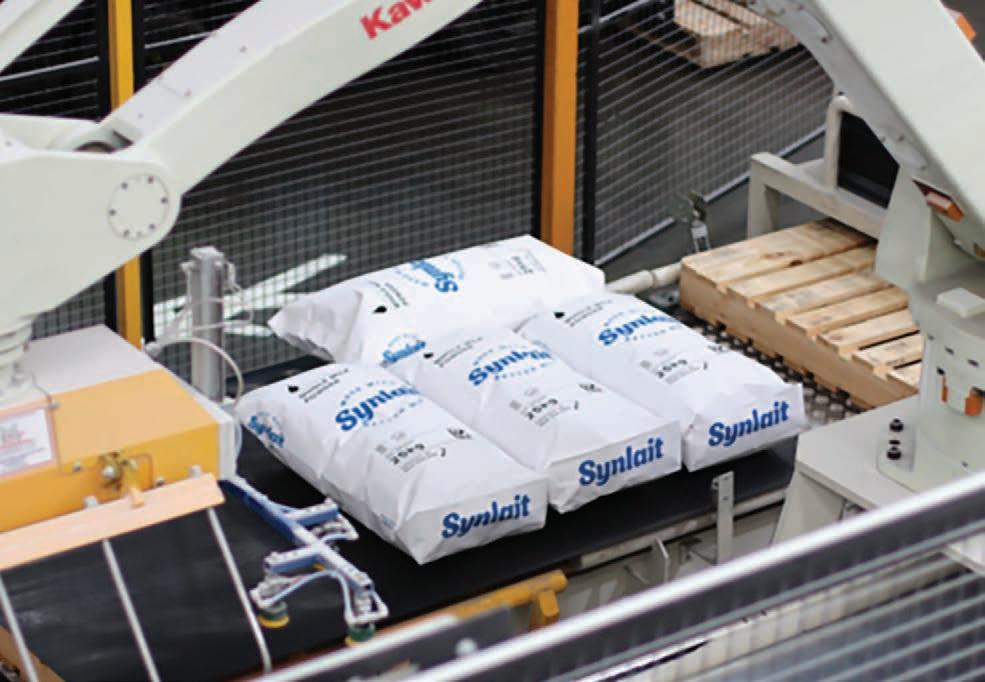
SYNLAIT Milk has returned to profitability while at the same time making an average payout to its farmer-suppliers for milk of $9.59, a little more than fully shared-up Fonterra suppliers.
The FY22 season base payout for Synlait matched Fonterra at $9.30/ kg milksolids plus the average incentive payment of 29c.
The incentives were paid for a2 supply, Lead With Pride and winter milk payments, and the average increased 2c on the season before.
Synlait has signalled a milk price in the current season of $9.50, which would be a new record for the company’s 285 farmers if achieved.
In the North Island, Synlait’s Pōkeno plant has 65 suppliers, up six in that season.
In the South Island the 2022 season began with 212 farms and some supply departures but subsequently a further nine farms have been recruited and the current number is 220.
The Lead With Pride certified farms have increased to 191.
In the year to July 31 Synlait increased revenue by 21% to
$1.66 billion but its total dairy production dropped by 4% to 206,000t.
Ingredients production fell by 12%, nutritionals jumped 47% but are still lower than the 50,00060,000t of previous years, and beverages, cream and consumer products were steady on the year before.
Because of higher inventories at balance date in FY21, ingredient sales in FY22 were up 5% to 132,500t and more milk went into production of infant base powders (nutritionals).
The milk collected was down 4.5% to 82.86 m kg, a result of a challenging season for farmers with poor weather conditions.
Adjusted net profit after tax (NPAT) was up $62.4m, turning a loss in FY21 to a profit of $34m in FY22.
Net debt was reduced by $137.5m as operating cash flows improved significantly and the debt-toearnings ratio has returned to 2.9x.
This financial year a range of 2.0x to 2.5x is being targeted.

Half of the capital expenditure during the financial year went on the Pōkeno plant in preparation for the as-yet undisclosed multinational consumer brands customer.
Production will begin early in 2023 and an investor day and site
Grant Watson Synlait
tour is planned for May 8. Products will be ready for southeast Asian markets in Q2 and
will be extended into Australia and New Zealand by the end of the year.
Chair John Penno said FY22 was a year of rebuilding revenue, reducing unnecessary costs, releasing working capital and reducing capital expenditure.
“Our ingredients business returned to its historical profitability, and our nutritionals business returned to growth, while we continued to invest in customer development across all business units.”
LOOKING UP: Synlait has signalled a milk price in the current season of $9.50, which would be a new record for the company’s 285 farmers if achieved.
Chief executive Grant Watson said Synlait is well positioned entering the second year of recovery.
“We have progressed our strategy, structure, capability, and culture and lifted our execution, but there is much more to do.”
He said the challenges of covid-19 had been managed in both Dunsandel and Pōkeno with hard work, commitment and innovation and that no more than 5.8% of the staff team were out of action at any one time.
J o i n o u r d i r e c t o r s a n d m a n a g e m e n t f o r a n u p d a t e o n t h e c o o p e r a t i v e ’ s p e r f o r m a n c e , p r o g r e s s o n o u r s t r a t e g y , e x c i t i n g p l a n s f o r t h e f u t u r e a n d t h e o u t l o o k f o r t h e y e a r a h e a d W e ' r e t h r i l l e d w e c a n m e e t f a c e t o f a c e a g a i n t h i s y e a r a n d l o o k f o r w a r d t o s e e i n g y o u a n d a n s w e r i n g a n y q u e s t i o n s y o u h a v e I f y o u k n o w a n y o n e e l s e w h o i s i n t e r e s t e d i n t h e c o o p e r a t i v e , p l e a s e e n c o u r a g e t h e m t o a t t e n d .
D I S T R I C T D AT E T I M E V E N U E
Omihi
Akaroa Darfield Blenheim Nelson Fairlie Oamaru Ranfurly Cromwell Balclutha Gore Heriot Tuatapere Winton Fortrose Mossburn
Monday 3 October
Tuesday 4 October
Tuesday 4 October
Wednesday 5 October
Wednesday 5 October
Monday 10 October
Monday 10 October
Tuesday 11 October
Tuesday 11 October
Wednesday 12 October
Wednesday 12 October
Thursday 13 October
Monday 17 October
Monday 17 October
Tuesday 18 October
Tuesday 18 October
7pm 1pm 7pm 1pm 7pm 1pm 7pm 1pm 7pm 1pm 7pm 1pm 1pm 7pm 1pm 7pm
Omihi Community Hall
Akaroa Golf Club
Darfield Recreation & Community Centre
Scenic Hotel
Beachside Nelson
Fairlie Golf Club
Brydone Hotel
Ranfurly Bowling Club
Heritage Collection Lake Resort
South Otago Town & Country Club
Heartland Hotel Croydon Heriot Rugby Club
Waiau Town & Country Club
Midlands Rugby Club
Tokanui Golf Club
Mossburn Community Centre
We have progressed our strategy, structure, capability, and culture and lifted our execution, but there is much more to do.
J o i n u s a t a n A l l i a n c e G r o u p R o a d s h o w m e e t i n g i n a t o w n n e a r y o u ! P r o u d l y N e w Z e a l a n d ’ s o n l y 1 0 0 % f a r m e ro w n e d r e d m e a t c o o p e r a t i v e . For further roadshow details and to register visit: events.alliance.co.nz
14 FARMERS WEEKLY – farmersweekly.co.nz – October 3, 2022 News14
New global dynamics roil meat exports
certainty and longevity of frozen.
THE new export meat season is facing vastly different global dynamics to what has been experienced in the past few seasons.
After a record 258,000t beef arrived in August, China has eased back, while ongoing drought in the United States is forcing farmers to quit cattle, which is impacting that market.
For the coming season, meat companies are likely to reduce their reliance on exports of chilled lamb with customers wanting the
It’s not game over [in China], but it is switching down a gear.
Mel Croad AgriHQ
Silver Fern Farms (SFF) reports the influx of domestic beef production in the US has sharply increased red meat inventory.
The US Department of Agriculture said red meat stocks as at August 1 were 23% higher than a year earlier despite strong export volumes.
AgriHQ senior analyst Mel Croad said softer demand from the US saw plenty of beef shipped to China in recent months, but that market is now showing signs of slowing.
That is due to distribution issues as China enforces lockdowns to contain the impact of covid.


“It’s not game over, but it is switching down a gear,” she said.
Cold storage in the US is at a premium due to increased stocks of beef, chicken and pork, which the latest SFF newsletter warns creates a potential challenge for new-season beef exports.
New Zealand beef exports to the US in the year to date are down
sharply, with tariff rate quotas issued to August 31 25% lower by volume than the same period last year.
SFF reports only 51% of NZ’s US quota was used to the end of August due to stronger demand into north Asian markets.
Australian beef exports for August are also recovering, reaching 92,000t – a 23% lift over July exports of 75,000t.
“The next 4-6 weeks will be important to provide a direction in pricing and demand leading into end of year,” the meat company says.
Cost of living issues in the United Kingdom are expected to
worsen over the coming months as temperatures cool and energy costs and usage lift and spending habits continue to be impacted.
Any post-covid economic bounce is well and truly over, says SFF.
A shortened export window on the back of supply chain disruptions, coupled with apprehension about market performance over the Christmas period, has seen demand for chilled product reduce.
The company is picking a move towards more frozen lamb this coming season.
Commitments towards the Christmas chilled period have been mixed.
“Whilst some markets continue to operate in line with traditional volumes, others have taken a more cautious approach,” SFF notes.

Croad agreed, saying staffing and shipping issues have seen volumes decline in recent seasons, and those issues remain.
She said for both lamb and beef, demand in the upcoming Chinese New Year market will be closely watched.
Shipments will have to on the water in late November, early December.
SFF also notes that an increase in cheaper lamb out of Australia is affecting prices in North America, the Middle East and east Asia.
GENERATOR MAINTENANCE
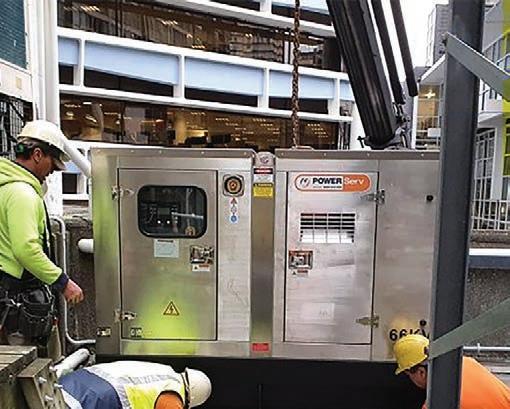
Powerserv has developed class-leading systems to allow for robust standardized maintenance programs and load testing. Our trained generator technicians are trusted by major institutions, government agencies, and critical infrastructure clients.
GENERATOR SALES
Powerserv generators come from our partners in the UK, Europe and Asia. We select the best combination of engines, alternators and control system to suit your requirements. We only provide these from major respected brands to ensure quality and longevity.

 Neal Wallace MARKETS Beef and lamb
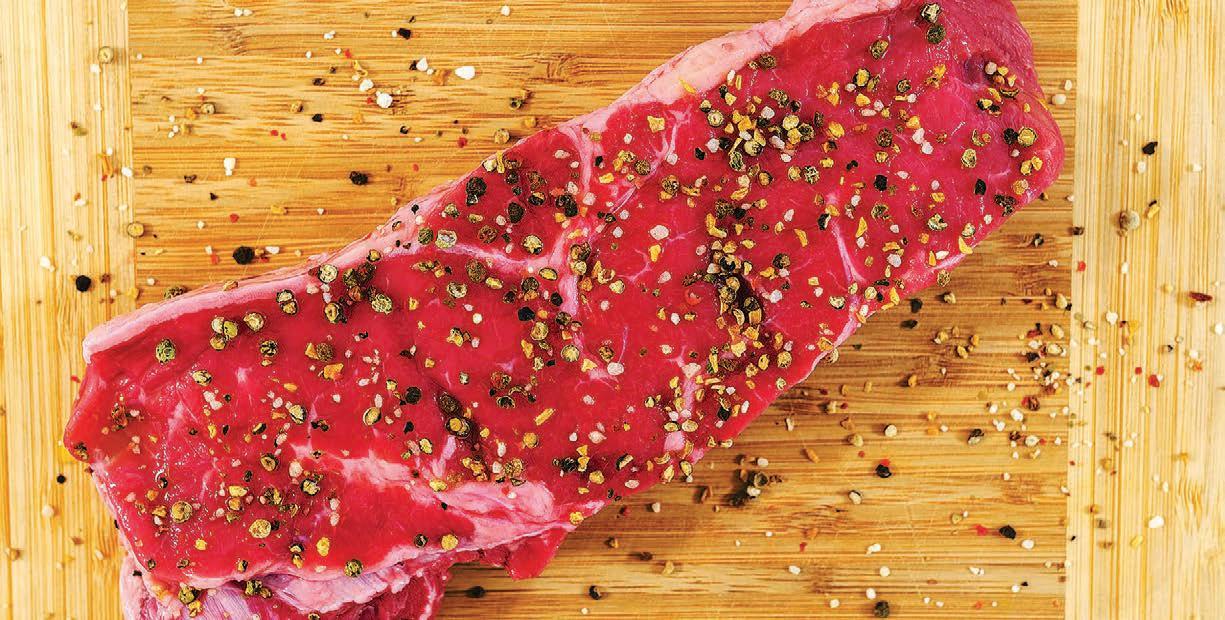
CUT: Silver Fern Farms reports that a sharp rise in domestic beef production in the US has increased red meat inventory there.
Neal Wallace MARKETS Beef and lamb
CUT: Silver Fern Farms reports that a sharp rise in domestic beef production in the US has increased red meat inventory there.
GENERATOR Service, Sales & Support INSTALLATION - DESIGN - MAINTENANCE - MONITORING - REMEDIAL WORK HEAD OFFICE CHRISTCHURCH OFFICE 1/1Hotuhotu Street, Tauiko, Tauranga 3171 Unit 3, 62 Factory Road, Belfast, Christchurch 3051 www.powerserv.nz
Your single point of contact for all Emergency Power Systems 0800 679 800 24/7 Emergency Backup LK0113095© 15 FARMERS WEEKLY – farmersweekly.co.nz – October 3, 2022News 15
Massive honey stockpiles as Mānuka buzz loses volume
Richard Rennie MARKETS Apiculture
MASSIVE stockpiles of both mānuka and non-mānuka honey are the downside of a decade’s worth of doubledigit growth as producers face the reality of disposing tonnes of product at severe discounts just to stay afloat.
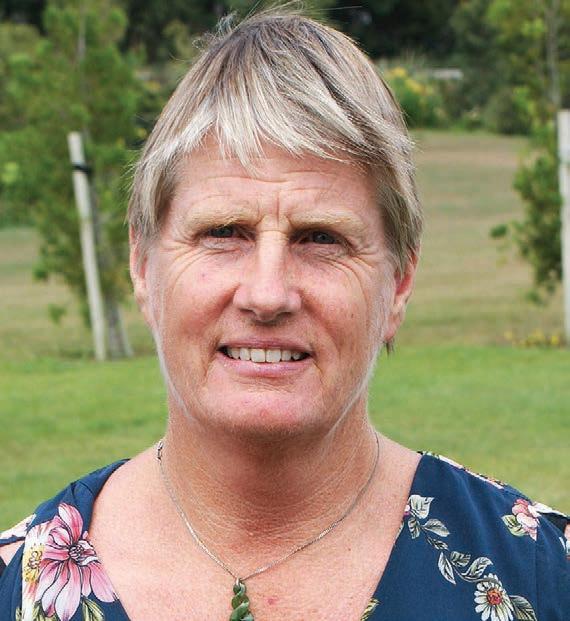
Jane Lorimer, Waikato beekeeper and president of New Zealand Beekeeping Inc, said she expects to witness a lot of pain before any real gains come out of the industry’s current situation.
The country’s total stock of honey in storage is estimated to exceed one year’s entire production.
“There will be pain before we see any real gain, most definitely.
There are people who came into the industry thinking they would
make money relatively easily out of mānuka, only to find they now have to exit.”
Lower prices for blended and non-mānuka honeys have been prevalent for the past two years, but Lorimer said in the past six months mānuka is also feeling the sting of price pressure, particularly on the mid-range UMF mānuka grades.
Multi and mono-floral mānuka honey forms about 75% of NZ’s honey production, accounting for about 11,000t a year of exports.
Industry sources confirmed mānuka in the mid-range, which would have made $65-$85 a kg in 2018, is now struggling to make $25/kg. South Island mānuka of lower grade that used to fetch $36/ kg is now down to $20/kg.
Lorimer said the entire sector is being challenged on what constitutes a sustainable production scale.
Bee researcher Dr Mark Goodwin
has described NZ as being overstocked with bees, with total hive numbers peaking in 2019 at 900,000 – more than Australia has.
That total has now fallen to 800,000 in 2021 survey data, but is still double what it was 10 years ago.
Lorimer said she believes a more sustainable level is about 600,000 hives, and NZ’s current annual production of about 25,000t of honey is well in excess of the country’s ability to sell it in a timely manner.
I estimate there is probably at least 14,000t of honey sitting in storage around NZ, and some estimate it could be as high as 35,000t.
10 UMF rating selling for $22/kg, take it or leave it, and they have to take it.”
If storage temperatures are low enough honey can keep for years, but if not cooled adequately it can become suspect after only two to three years before a breach in quality levels renders it unsuitable for export to China and the European Union.
production in the past year.
IN AND OUT: NZ Beekeeping Inc president Jane Lorimer says there are people who came into the industry thinking they would make money relatively easily out of mānuka, only to nd they now have to exit.
“I estimate there is probably at least 14,000t of honey sitting in storage around NZ, and some estimate it could be as high as 35,000t.”
As a country, NZ consumes only 0.5kg per head a year, or 2500t.

“I understand a number of big corporates have dropped hive numbers and closed depots. There is going to continue to be a downward trend,” Goodwin said.
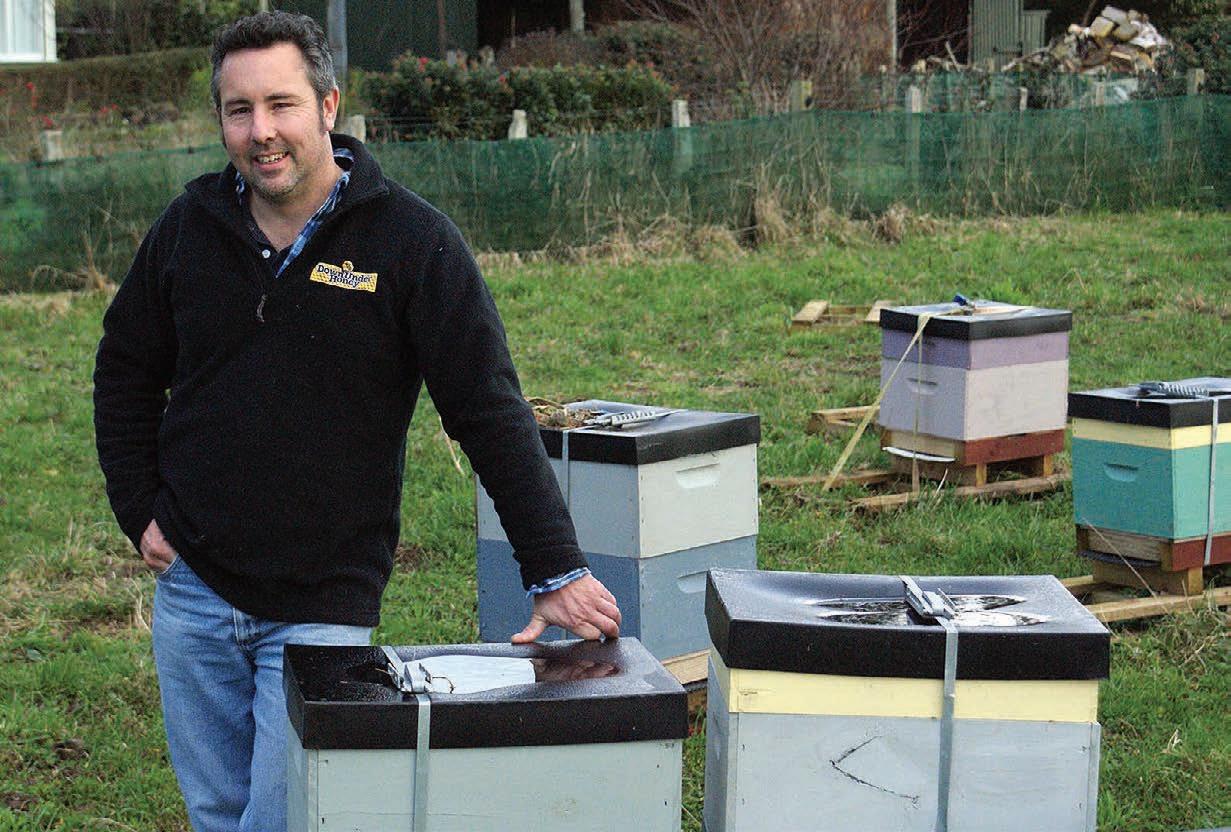
Cheltenham honey beekeeper and honey processor Jason Prior echoed Lorimer’s concerns about the sector’s immediate future.
He said blended and pasture type honeys had increased slightly from their lows of about $4/kg recently, to nearer $7/kg for clover honeys, but the brakes have been on
“We would normally have processed 100t, but only did 15t last year. People just stopped harvesting it.”
He said bank pressure on beekeepers and processors to move long-stored honey is ramping up as they seek working capital to kick off a new season with.
“I know of one beekeeper with 100t in storage and they have sold none of it.”

Retail prices in overseas markets remain firm, with distributors reporting solid sales in United States and United Kingdom.
“The issue is someone else is making the money. Brokers are not selling at a discount offshore, they know they can buy it from people here who have to sell it.
“There is mānuka honey with a
Prior said the impact on the sector has been worsened by a lack of focus on research and development. Lorimer acknowledged the industry’s failure to get a commodity levy over the line, but cited concerns over where the funds may have been focused if it had.
John Rawcliffe, spokesperson for the UMF Honey Association, said despite the challenges exporters have faced with covid and shipping, China, the US and UK all remain positive and growing.
But he acknowledged as an industry an adjustment to lower supply volumes is coming.
“During any boom a number of players have found it quite difficult when previously it may have been easy. Hives have dropped from 900,000 to an estimated 730,000 this year and will probably go lower still.”
AFTER THE GOLD RUSH: Cheltenham beekeeper and honey processor Jason Prior says in the past year production dropped from the usual 100t to 15t as ‘people just stopped harvesting it’.
Jane Lorimer NZ Beekeeping Inc
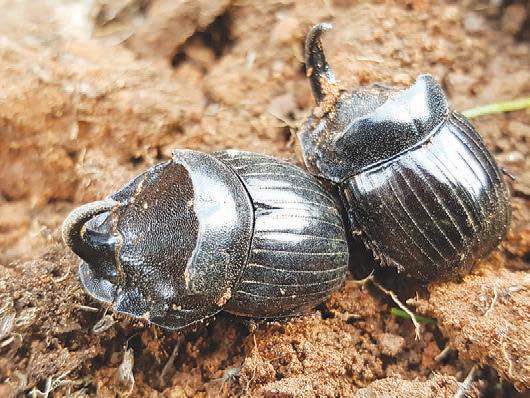
“Just a bit of feedback – they have survived... it’s a real kick seeing what they do to paddies...“ Peter Barrett – Linnburn Station, Central Otago (first release 2018). AVAILABLE NOW Boost Your Profits. Improve Water Quality. Contact us Dung Beetle Innovations Shaun 021 040 8685 shaun@dungbeetles.co.nz For more information or to order online go to www.dungbeetles.co.nz LK0113290© Farming For Our Future Generations 16 FARMERS WEEKLY – farmersweekly.co.nz – October 3, 2022 News16
DINZ gives nod to new deer welfare code
minimum standards for milking deer, an initiative that has been developed since the last code was written.”
AREVISED Code of Welfare has been given the thumbs-up by Deer Industry New Zealand.
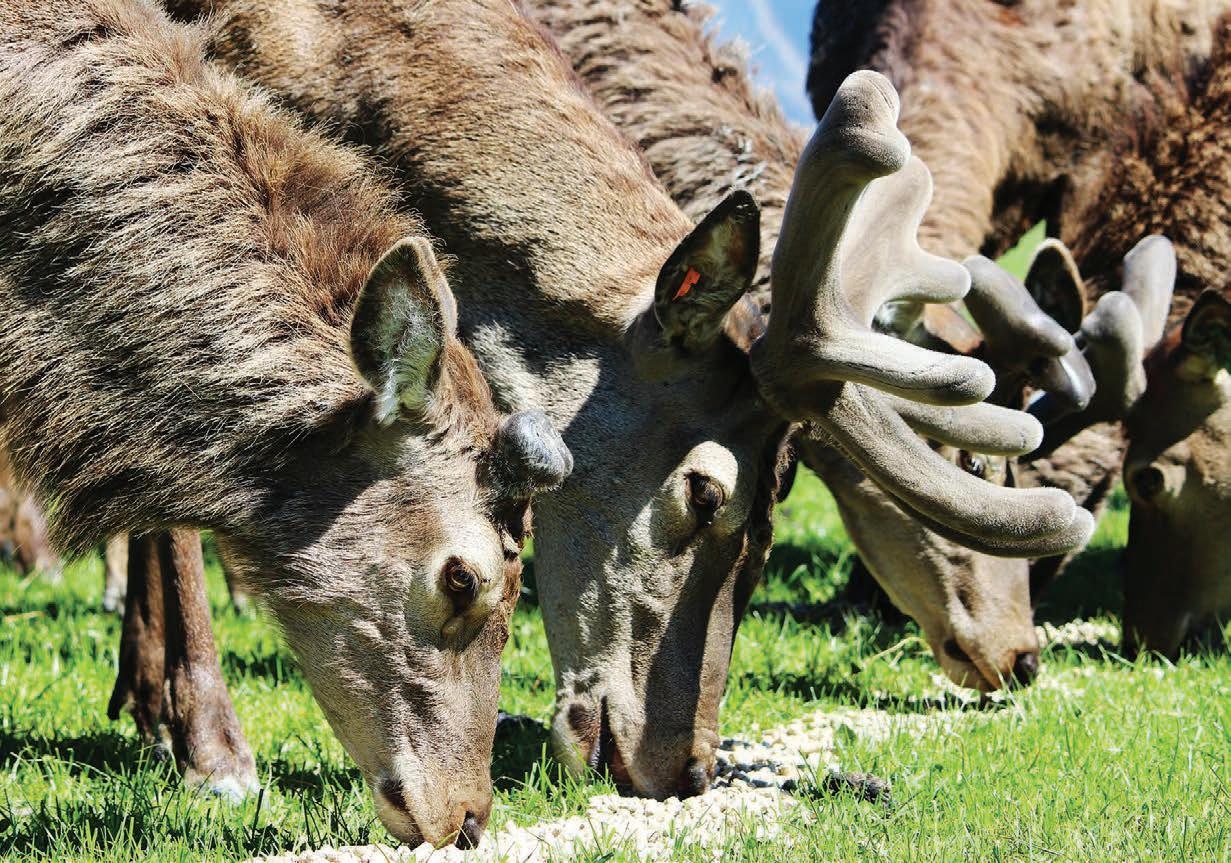
DINZ chief executive Innes Moffat described the draft of the updated code as positive and forward-looking.
“Most of the proposed changes to minimum standards are based on good farming practice.”
However, he said there are a few changes that will need further consideration by deer farmers and veterinarians who have experience with farmed deer.
Moffat said the deer farming industry is known for its high animal welfare standards, so the release of the revised code is not a reflection of welfare concerns.
The code, which had a minor update in 2018, has been revised by the National Animal Welfare Advisory Committee (NAWAC) after consulting with DINZ, deer veterinarians, the Ministry for Primary Industries (MPI), animal welfare lobby groups and experts in animal welfare.
“We are pleased the code clarifies the duties and responsibilities of farmers with proposed changes to include
There’s more guidance on mating management, managing deer in enclosed spaces and a
requirement for all farmers to have a written, up-to-date animal health plan based on veterinary advice.
As part of its review NAWAC is proposing a regulation prohibiting the use of electro-
immobilisation devices on deer.
DINZ will support this change as these devices are not suitable for deer and their use has long been discouraged, Moffat said.
“We will also support the NAWAC recommendation that there
be a new regulation requiring that, where deer are managed in intensive winter grazing systems, clean drinking water is available in the grazing area at all times.
“This is simply a reflection of good farming practice.”
During October DINZ will be consulting with deer farmers before drafting a submission on the code.
Moffat strongly encourages farmers and others whose work involves handling deer, such as deer vets, transport operators and stock agents, to read the draft code and to make their own submission.
Once consultation is complete and the code is gazetted, DINZ will ensure everyone in the industry has access to the new code and is familiar with the expectations and requirements for handling and managing animals.
MORE:

Full details are in the consultation documents available at https://www. mpi.govt.nz/consultations/proposedcode-of-welfare-for-deer/
Consultation closes at 5pm on November 10, 2022.
Submissions can be made online via the survey at https://www. surveymonkey.com/r/XNS37HW or by email to animal.consult@mpi.govt.nz
New disease prevention resources for sheep born in the digital age.
Up-to-date animal health information for New Zealand farms Vaccination options and product comparisons:
Detailed ROI calculators

 Annette Scott NEWS Deer
DOING IT RIGHT: Most of the proposed changes to minimum standards in a revised Deer Code of Welfare are based on good farming practice.
Annette Scott NEWS Deer
DOING IT RIGHT: Most of the proposed changes to minimum standards in a revised Deer Code of Welfare are based on good farming practice.
17 FARMERS WEEKLY – farmersweekly.co.nz – October 3, 2022News 17
Visit sheepvax.co.nz ACVM No’s A934, A11311, A11766, A9028. Schering-Plough Animal Health Ltd. Ph: 0800 800 543. www.msd-animal-health.co.nz © 2022 Merck & Co., Inc., Rahway, NJ, USA and its affiliates. All rights reserved. NZ-MUL-220800001
Awards on track for bumper crop of entries
Staff reporter SECTION Awards
BALLANCE Farm Environment Awards organisers are hoping for a record number of farmers to enter the 2023 awards.
Entries are open until October 15.
Run by the New Zealand Farm Environment Trust, the awards celebrate farmer and grower achievement and

VAXIPACK
RECYCLING LEARN MORE
showcase good practice enabling the sharing of positive growing and farming stories within the industry for the ultimate benefit of all New Zealanders.
Assessment considers the farm system including animal and plant care, biodiversity, business health, climate, people and wellbeing, soil, water and waste management.
The regional awards programme was adjusted to fit lockdown and level parameters, and was ultimately completed, but covid-19 affected not only the number of farmers choosing to enter but also the timing of the judging visits and the awards events.
New Zealand Farm Environment Trust chair Joanne van Polanen said the response from farmers, sponsors, and supporters to the recently held regional award events indicates there will be a strong number of entries to the 2023 awards.
It isn’t until you can’t, that you realise how important it is to connect with industry peers in a supportive and positive setting.



 Joanne van Polanen New Zealand Farm Environment Trust
“The overwhelming consensus was that not only did the entrants really value the attention and positive feedback throughout, but those attending the awards functions and the resulting winners’ field days were grateful for the chance to connect with their peers and to be able to hear others’ stories,” Van Polanen said.
“It isn’t until you can’t, that you realise how important it is to connect with industry peers in a supportive and positive setting.”
The awards programme is designed to be a positive way to receive productive feedback on the entrant’s business to help identify strengths and to learn from others about the food and fibre sector.
“We have weathered the storm of covid-19, and early indications hint that conditions are now ripe for a bumper crop of award entries.”
The National Sustainability Showcase, which celebrates the Regional Supreme Winners of the Ballance Farm Environment Awards and announces the national winners of the Gordon Stephenson Trophy, will be held in Christchurch on Thursday, November 24.
MORE: Entries can be made online at nzfeawards.org.nz


Ballance Farm Environment Award categories 2023:

Ballance Agri-Nutrients Soil Management Award
• Bayleys People in Primary Sector Award
• Beef + Lamb New Zealand Livestock Award
your flocks’
and/or Selenised, the MULTINE ® range can
















• DairyNZ Sustainability and Stewardship Award
needs. You can get exactly what your sheep require, right when you need it. That’s why MULTINE ® is New Zealand’s leading 5-in-1 clostridial vaccine range1



mineral and clostridial


more at www.sheepvax.co.nz
• Hill Laboratories Agri-Science Award
Norwood Agri-Business Management Award
NZ Farm Environment Trust Biodiversity Award
• NZ Landcare Trust Catchment Group Award
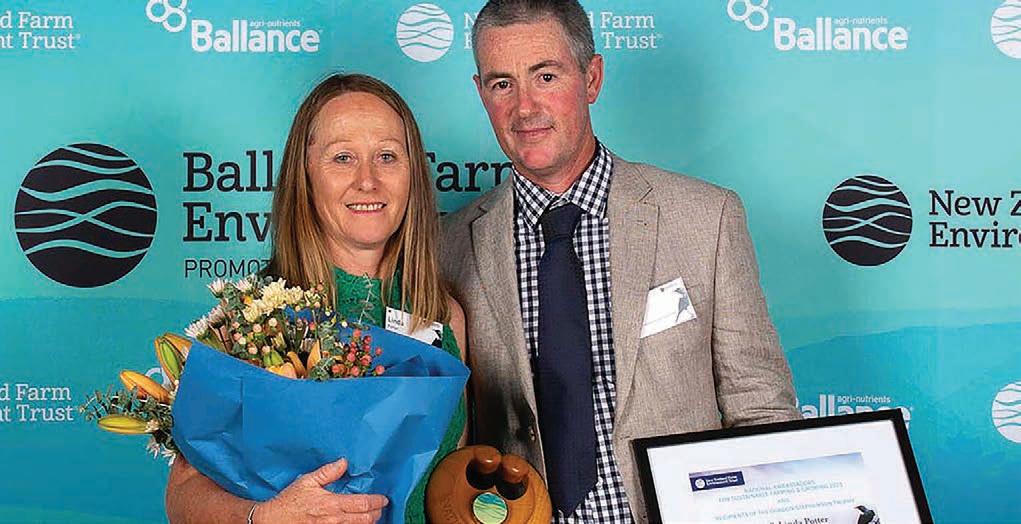
RECOGNITION: The national winners of the Gordon Stephenson Trophy for 2021, Linda and Evan Potter.
18 FARMERS WEEKLY – farmersweekly.co.nz – October 3, 2022 News18 ACVM No: A934, A935, A11311 & A11766. Schering-Plough Animal Health Ltd. Phone: 0800 800 543. www.msd-animal-health.co.nz ©2022 Merck & Co., Inc., Rahway, NJ, USA and its affiliates. All Rights Reserved. NZ-MUL-2201700001. 1 Baron Audit Data, June 2022 Whether standard, boosted with Vitamin B12
cover
essential vitamin,
protection
Learn
Available from leading veterinary clinics and rural retailers. With a range of supplementation options to choose from, using MULTINE® ensures you get everything you need – and nothing you don’t. 5-in-1 + 2mg Vitamin B12 + 2mg Selenium 5-in-1 5-in-1 + 2mg Vit. B12 5-in-1 + 5mg Sel. Your farm, your solution. The MULTINE® range lets you manage how you protect and supplement your sheep.
®
Protein powers Fonterra’s FY22 earnings
Hugh Stringleman NEWS
FONTERRA’S earnings in nine channel and geographic divisions in the 2022 financial year differed widely from those in the previous financial year as high milk prices made it more difficult to capture added value.
Also, non-reference, proteinbased commodities like cheese and casein sold at steadily increasing premiums over reference products like milk powders and butter, thereby generating profits over the farmgate milk price.
Those two big influences on payout and profitability have been explained by Fonterra chief financial officer Marc Rivers after the annual results were published.
Both reference and nonreference products began the financial year, in August 2021, at or around US$4000/t.
The average contract price for reference products increased by 24% during the year, and that covers about 70% of the volume of Ingredients (or commodities) that Fonterra makes.
Non-reference products also increased in value, about 50% by the end of the financial year, and have kept on increasing beyond $6000 into this dairy season.
Ingredients revenue from NZsourced milk was $16 billion, up 10% from the previous financial year.
Price increases during the year for all ingredients generated earnings before interest and tax (EBIT) of $916 million, up an arresting 140% on the year before.
Rivers said the price relativities between reference and nonreference products show up strongly in the earnings in the Ingredients channel.
On the flip side, sale prices for Foodservice and Consumer products did not rise quickly and Fonterra’s gross margins were squeezed.
Foodservice and Consumer volumes and revenues were similar to FY21 but their earnings fell 60% and 55% respectively.
“That is because higher prices are slow to respond in those channels and consumers may resist paying, even stop buying,” Rivers said.
“But when dairy prices come down again the lag effect will benefit Foodservice and Consumer earnings.”
Fonterra reports earnings in three channels – Ingredients, Foodservice and Consumer – for each of three world divisions, Asia/ Pacific, Africa/Middle East/Europe/ North Asia/Americas (Amena), and China.
The biggest falls were Consumer earnings, down 70% in the Asia/ Pacific division and 150% in China, where Foodservice earnings were also down 43%.
Rivers said these big movements in earnings from year to year demonstrated the benefits of the spread of Fonterra’s products and market channels and its ability to change products streams.
Fonterra’s tightly regulated and heavily scrutinised farmgate milk price is based on a most-efficient notional competitor that turns all milk into reference products – milk powders, butter and anhydrous milk fat.
“Returns from non-powder commodities such as cheese and casein have largely been irrelevant in driving investment in the dairy industry over the past 10 years and are therefore not taken into account when determining the farmgate milk price,” Fonterra said in its farmgate milk price statement for 2022.
But last year non-reference protein products out-priced milk powders and fats and Fonterra captured higher margins, which flowed on to EBIT and profits.
such as futures markets, fixed milk prices matched to customer contracts, and more production optionality.”
Within the strategy and the 2030 targets is the expectation that Ingredients will take less of the milk pool and added-value
products will rise.
“How do we get more value for every drop of NZ milk – to show up in milk price and earnings.”
Analysts like most of Fonterra’s results
Hugh Stringleman NEWS Dairy
PROTEIN price relativities to powder products underpin Fonterra’s guidance for earnings per share of 45 to 60c for the 2023 financial year, Craigs Investment Partners says.
“Fonterra’s Ingredients earnings are clearly very sensitive to dairy price movements it has little control over, though it can capitalise on opportunities as they present themselves.”
dividend, they say.
The lower earnings from Foodservice and Consumer channels in FY22 were disappointing but Fonterra was able to divert volumes into higher returning streams in a high milk price environment, Jarden head of research Arie Dekker said.
Fonterra should have published more details of its review decision to retain the Australian business, he said.
targets, but they needed to see more successful execution.
“Contrary to history, current earnings remain elevated despite record high global milk prices that are typically a material drag on margins.
“The primary driver of the strong earnings performance and resilience is ongoing favourable price relativities between reference products and nonreference commodity products.
Rivers said such price relativities may not be sustainable in future and Fonterra’s 2030 performance targets for earnings and dividends did not rely solely on favourable stream returns.
However, it is true that pricing relativities between reference and non-reference products produced the main structural volatility in earnings, he said.
“We have improved tools to be able to lock in these margins,
If milk input costs remain elevated, the prices for Foodservice and Consumer products may adjust and earnings improve, Craigs said in a note to its clients after the Fonterra FY22 results.
Craigs analysts expect FY23 to be a supernormal profit year for Fonterra because of the favourable pricing relativities, forecasting $1.2 billion in earnings compared with $991 million in FY22.
That should flow into 51c a share earnings and 26c
“We would have liked to have seen more colour on review findings and importantly expectations for performance and investment in Australia over the next three to five years,” Dekker said.
However, without any selldown of Australia, the $1b capital return to shareholders was recommitted at a “significant level”.
Dekker seemed satisfied that could be executed in FY24.
Forsyth Barr analysts Matt Montgomerie and Andy Bowley said Fonterra appeared to be making solid progress to its long-term earnings and returns
“While a positive, we view this as lower quality earnings given the volatile nature of product pricing movements that is unlikely to be sustained at the same levels in future periods.”
Fonterra Co-operative Council chair James Barron said it was encouraging to see the business hit its targets for return on capital and earnings per share.
The council will want to see reduction of debt in FY23 as soon as the interim results in March.
Barron also noted the decision to retain the Australian business and yet still pay a significant capital return to shareholders and unitholders in FY24.
Mark Copeland LLB, CMInstD, AAMINZ
Available throughout NZ to assist with resolving rural disputes, including as an appointed Sharemilking Conciliator, Rural Arbitrator or Farm Debt Mediator
Rural Disputes Expert Ph: 07 345 9050 for an appointment e-mail: copeland@copelandlawyers.com
When dairy prices come down again the lag effect will benefit Foodservice and Consumer earnings.
Marc Rivers Fonterra
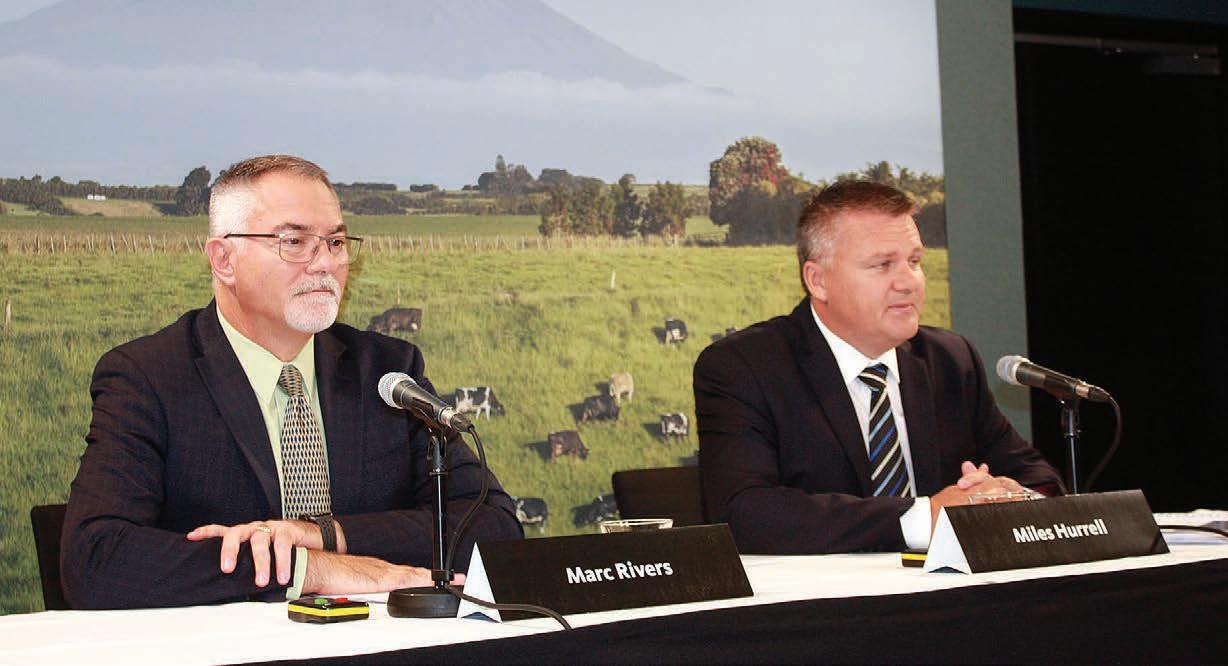
SPREAD: Fonterra chief nance o cer Marc Rivers, here with CEO Miles Hurrell, says big movements in earnings from year to year show the bene t of the spread of Fonterra’s products and market channels.
19 FARMERS WEEKLY – farmersweekly.co.nz – October 3, 2022News 19
Dairy







20
Aerial view opens eyes to wilding scale
 Joanna Grigg NEWS Forestry
AN AMBITIOUS field trip was the centrepiece of the Wilding Pines Conference, held in Marlborough recently, when helicopters took delegates including politicians and government policy makers into what is considered one of the worst wilding pine invasions in New Zealand – the BranchLeatham.
This upper Wairau Valley infestation is far from roadside traffic and farm activity but, like the Lord of the Rings’ Mordor, is the epicentre of trouble.
Restoration Trust, said the flowon effects of the infestation are huge, as the wind funnel effects take seed as far afield as Kaikōura.
Over 80,000ha of pastoral land in the Awatere Valley has had to be controlled for scattered Radiata pine, including 30 sites of Contorta pines. This was managed by the trust. Satterthwaite said more than $12 million had been spent in Molesworth over three years.
“It was a big surprise to find Contorta here and highlighted the risk – seeds can fly an exceptional distance, up to 30km, and this puts the whole inland Kaikōura at risk.”
“We fear that the good control work will be undone.”
Stuart Smith, MP for Marlborough, took the 15-minute flight at the field day, and said the view was sobering.
“It did shock me. It’s a huge job.”
Steve Satterthwaite South Marlborough Landscape Restoration Trust
What were initially government erosion-control trials, with planting starting in the 1950s, have become a 52,000ha source of coning. Downwind is the upper Awatere Valley, including Molesworth. Trees have climbed to a height similar to the neighbouring Rainbow ski-field, covering indigenous alpine rock lands and smothering bush.
Steve Satterthwaite of Muller Station, and a trustee of the South Marlborough Landscape
Johnny Oswald, chair of the trust, which spearheads wilding work in Marlborough, said the site has not had government funding but the trust did secure funding of $450,000 from the Rata Foundation and $100,00 from the Department of Conservation (DOC), from the sale of harvested logs.
He said the Branch-Leatham is a 50-year project and the stop-start nature of the three-year funding cycle is far too short term.
The Ministry for Primary Industries (MPI) “suggests we are 70% through the national infestations programme, but the Branch-Leatham is not even on it, and it’s far worse, it’s steep and inaccessible and has the worst type of conifer. To not have it on the programme seems hard to understand.”
DOC, MPI and councils have put it in the too-hard basket for 50 years, he said.
He said the $450,000 will be used by the trust to tackle scattered infestations on the western side and they hope to pull it back by 10,000ha.
“This is one ridge away from Nelson National Park.”
Volunteers have been working on the site. Oswald said they have done an amazing job in the Lost Basin, considering it’s an eight-
hour walk-in and only has one tiny bivvy.
“There are very few alpine basins in Marlborough and we want to protect these stunningly beautiful spots.”
He said that people from other wilding-infested areas who toured the site got out of the helicopters saying they have seen nothing like it.
Government funding in Marlborough has been focused in the Awatere and, more recently,
the coastal indigenous bush and farmland around The Ned/Te Hau. Landowners also funded the work.
The Ned was a conference field trip location, as was the Queen Charlotte Sound, Marlborough Sounds.
MORE:
A link to the Wilding Pines Conference helicopter tour of the Branch/Leatham, is available at WPN conference 2022Google Drive
No carrot, no stick in regs
THE suitability of the Wilding Pine Calculator and the regulations controlling its use are being reviewed by Te Uru Rakau/NZ Forest Service.
The findings were shared at the Wilding Pines Conference and included a call to build climate change effects into the calculator and to bring in peer review when risks are at the cusp of being too high.
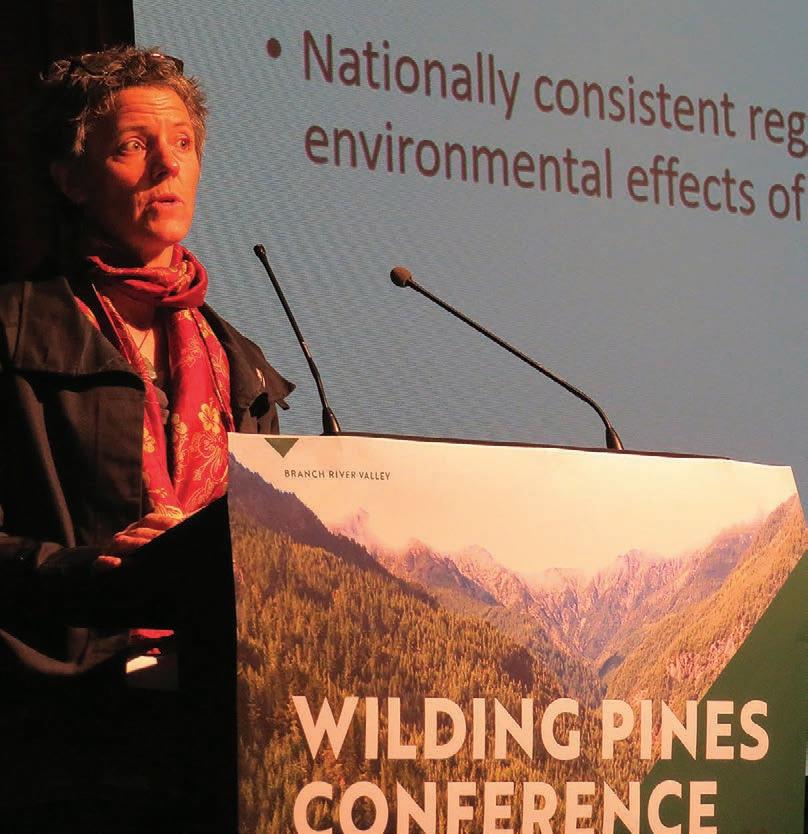
Alongside the government review, The Wilding Pines Network has taken its own wider look at regulations governing forestry. This was to see if the regulation framework is good enough to stop new spread and protect the control already done. The verdict is that it’s not.
Tamsin Page, the consultant/ planner contracted to do the review, said there is one obvious gap in the regulations: when forests are replanted, there is
no requirement that the risk for wilding be assessed using the Wilding Pine Calculator. This is despite the fact that forestry is inter-generational and land use may have changed next door, making it now vulnerable to wildings, she said.
The calculator in its current form is also an ineffective tool for permitting activities, she said.
The Biosecurity Act and Resource Management Act are the two frameworks and neither requires nor authorises source tree owners to undertake control on another person’s property, she said.
“While private agreements are possible, they are not incentivised.”
When it comes to planting, a precautionary approach is required, she said. She argued that resource consent at the time of planting ensures a robust assessment of potential effects and
mitigations required, rather than having it as a standard permitted activity.
“There is little incentive for forestry owners to do wilding control unless resource consent tells them to.”
Another gap is that the National Environmental Standards don’t include permanent carbon forestry, as it’s not to be harvested.
“We are creating a dual system here which raises possibilities that foresters can be selective as to the path they choose,” she said.
It was the first public presentation of the findings.
Richard Bowman, chair of the Wilding Pines Network, said his view is that regulation is too much in forestry’s favour and it needs to be rebalanced.
“We have a forestry representative on our group and the industry is receptive to a rebalance, I believe.”
HERE COMES THE CHOPPER: A helicopter trip over the epicentre of NZ’s wilding problem was the centrepiece of the Wilding Pines Conference in Marlborough in late September.
PINE GAP: At the Wilding Pines Conference, consultant Tamsin Page outlined gaps in forest management regulations.
It was a big surprise to find Contorta here and highlighted the risk – seeds can fly an exceptional distance, up to 30km.
21 FARMERS WEEKLY – farmersweekly.co.nz – October 3, 2022News 21
From the Editor
Thinking outside of the box
 Bryan Gibson Managing editor
ROCKING up to a vending machine for your daily red meat protein
is probably not something many New Zealanders would consider.
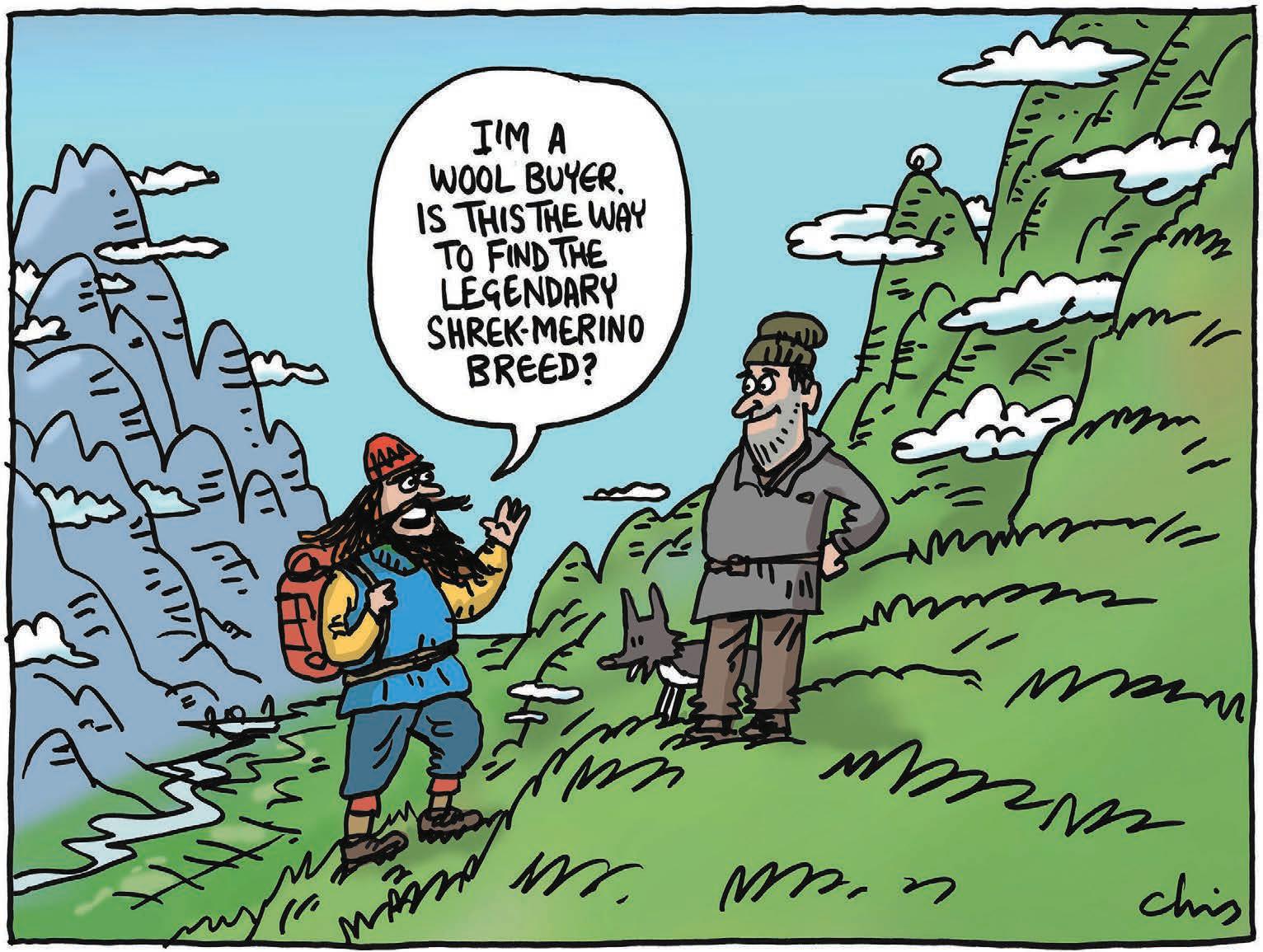


Here, the vending machine is home to chocolate bars and cans of Coke, but not a lot else.
In other parts of the world, though, they’re ubiquitous.
Japan, for instance, has one vending machine for every 23 people.

So a new initiative by Beef + Lamb NZ, Silver Fern Farms (SFF) and Alliance to put healthy meals made with grass-fed NZ red meat into Pure Box vending machines in Shanghai might be the perfect way to reach a larger section of this massive market.
China and south Asia has long been our most valuable export market, and their cooking preferences and tastes have meant we’ve altered the cuts we process and export there.
The point of sale has also altered.

Some years ago a SFF executive appeared on a shopping show on live TV and promptly sold 12.5t of beef in 30 minutes.
Food is a funny thing, with conversations about its future often centred on a view that’s shaped by a person’s upbringing and culture.
It’s the old saying, we don’t know what we don’t know.
A while back many were a little revulsed by the thought of adding cream cheese to tea.
proteins in developing economies.
Our export sector has met that demand – and our farmers, and the wider economy, have enjoyed the returns.
Research also shows us that the ways in which those proteins are grown in many parts of the world are unsustainable and many of the established, wealthy nations are reconsidering the quality and amount of red meat they eat.
It’s a really tricky challenge to navigate, but our red meat processors have made the right call.
And what’s the plan?
Reinforce our position as a low-impact, sustainable producer of protein. Produce the data and traceability to back up that claim.

Do the research in-country to establish what people there want to eat, how they make that decision and where they want to buy.
Letters of the week Price signals, not virtue signalling
Jason Barrier Waikato

IN A recent Farmers Weekly article, “Wake up and smell the carbon, NZ” (September 19), PwC’s Dr Victoria Hatton announced that our “siloed mentality” was impacting our “early mover advantage” and suggested New Zealand farmers are at risk of becoming “laggards” in carbon marketing. This was cheered on by your own editorial, which warbled luxuriously about more “silos” and “social licences” and postulated that because PwC had offices in 155 countries it must have a “pretty good view of global trends”.

That may well be so – but the missing link in both these articles was hard consumer research and an actual price signal to farmers.
Farmers like myself are fed up with being browbeaten by our own media, politicians and endless consultants who claim to be able to see some sort of invisible market that we are in grave danger of missing out on if we don’t all jump on the carbon tax bus, irrespective of cost.
If that were so, and this market was really so large, surely our own meat companies would already be marketing all our meat as low carbon, given the AUT study from 2020 that found that on average 90% of emissions are sequestered by woody vegetation on sheep and beef farms?
If it were so, how is it that Brazil, where there is NO discussion of a methane tax, is the world’s largest beef exporter, can export seven times as much beef to Europe, twice as much to China, and will grow its domestic herd by 11 million this year?
If it were so, how is it that in December 2020 the European Commission released the Eurobarometer survey on European Union citizens’ expectations related to food, which showed that “carbon footprint” did not rank in the top eight considerations for European food consumers? Heaven only knows what the Chinese lady who purchases our mutton flaps thinks.
To paint a picture of NZ farmers becoming “laggards” is, quite frankly, appalling, given we already produce vast quantities of
But if you do the research, you get the results, and in 2018 Fonterra sold 200 million tea macchiatos.
Some people don’t like eating tofu, but it’s been a staple protein in many countries for more than 2000 years.
Now, the thought of eating alternative proteins leaves a bad taste in some mouths, but in cultures where meat has never been the dominant protein, who’s to say how people will take to it?

All the research points to growing wealth leading to a growing taste for animal
It’s hard work – much harder than loading up the boat with lamb shoulders for the Christmas dinner in Yorkshire, or with ground beef for the grill in Texas.
It’s a big, big world, and success will come not from trying to mould it to your own tastes, but by adding what’s good about our food production systems to the tastes that have been centuries in the making.
What’s important is to have an open mind and be open to the opportunities all this culinary diversity offers.
Food is a funny thing, with conversations about its future often centred on a view that’s shaped by a person’s upbringing and culture.
0105428 265.02x70 Serious Incinerators - Pulpit page Phone 021 047 9299 • www.irontreeproducts.co.nz Scraper Attachment for leaf blower Spark arrestor & ash guard LK0112755© SERIOUS INCINERATORS • Heavy duty • Long lasting incinerators Three sizes available. Options include: 22 Editorial
fix
Best letter WINS a quality hiking knife Send your letter to the Editor at Farmers Weekly P.0. Box 529, Feilding or email us at farmers.weekly@agrihq.co.nz FARMERS WEEKLY – farmersweekly.co.nz – October 3, 2022 Opinion22
More letters next page
Forestry is a bridge, it’s not a band-aid
Colin Jacobs
Lewis Tucker general manager

THERE has been a lot of comment over the past week about how forestry cannot become a substitute for emissions reductions.
As a leading manager of a forestry venture for both carbon and timber, and an enterprise delivering valuable outcomes for the agricultural and horticultural sectors, Lewis Tucker wholeheartedly agrees with this. To be crystal clear: forestry is not the solution to our climate crisis. It never has been.
The only way we will stave off the worst impacts of unmitigated climate change is through material, sustained and rapid emissions reductions. We either cut our emissions or we do not. There are no shortcuts.
Forestry is New Zealand’s bridge to a low-carbon economy. It buys the country’s emitters and policy makers a bit of time to get there. While there are incentives to plant forests to build that bridge, similar incentives are now required to encourage reducing gross emissions.
There is nothing new in any
low-carbon meat, and we are the only country in the world having a methane tax inflicted upon us. I don’t doubt there are niche markets opening up for low-carbon meat; however, if such virtue signalling was sufficiently well paid by our meat companies, NZ farmers would be “chafing at the bit” to take advantage of it.
My challenge to Dr Hatton and yourself is: rather than speaking in riddles about “silos and social
of this, so we have been a bit surprised at the talk around how forestry is just an enabler to “plant and pollute”. It isn’t and it doesn’t. The Climate Change Commission has modelled that New Zealand needs 25,000ha of new exotic forestry per year for at least the next decade to store carbon while our country adjusts. The forestry industry is delivering this.
If we plant forests but do not cut emissions, then we fail. The price of carbon is sending strong signals to emitters as to the economic impact of what that might look like. Our weather is sending strong signals to all of us as to what the environmental impact is becoming.
The imperative around emissions reduction is becoming a moral one and is becoming linked to organisations’ social licence to operate.
Again, there should be no surprises in any of this.
Some elements of how forestry is being delivered are unpopular, and with good reason. “Permanent pine” or “lock up and leave” exotic forests are a short-term stopgap that simply passes the problem to future generations. We also struggle to understand
licences”, show us the evidence –show us the money.
Plant it all in pines and have done
Ron Frew Ohakune
DR VICTORIA Hatton, featured in Farmers Weekly on September 19, suggests that New Zealand agriculture set targets to be net-
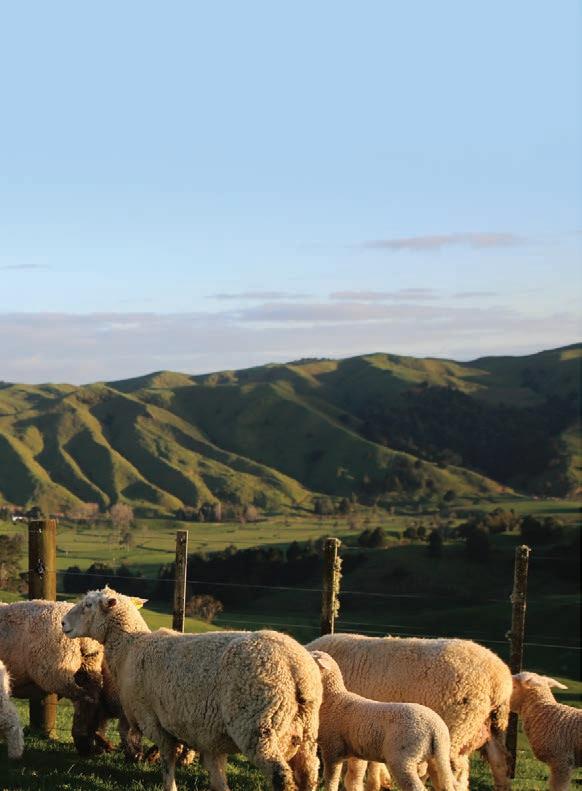
why anyone would want to plant an exotic forest and not seek to harvest the timber, leaving a huge amount of value on the table.
The timber that is produced from the forests that are planted can be exported or utilised towards a low-carbon economy, either through domestically produced and processed building materials or as an alternative fuel source.
Responsibly planted, wellmaintained rotation forestry on economically marginal farmland can improve farmers’ incomes, release capital for development of more productive parts of the
zero carbon rather than carbon neutral, but nowhere that I could discern did she offer any concrete measures as to how that might be achieved.
That NZ agriculture has sought to distinguish between long- and short-lived greenhouse gases is not siloed thinking but a legitimate distinction that needs to be a part of any pricing regime.
Likewise, the fact that NZ agriculture produces food with one
Waimai Open Day
Thursday 13 October, 10am –

Waimai rams are bred to give you a low input flock, with selection for facial eczema tolerance, worm resistance, low methane, low dags and large breech. At the same time, their production traits make you money: strong growth, high fertility and good survival. Join us on our journey toward creating a more profitable low input sheep.
farm and improve environmental outcomes.
It is a fact that we will not come even close to meeting our climate change commitments without exotic forestry for the next 20-30 years. We need to prioritise our focus on what more we can do to incentivise a low-carbon economy.
A simple policy change that would allow exotic forestry to absorb carbon over a longer rotation period and deliver geographically diverse sources of timber could halve the area that New Zealand needs to plant in forests and help ensure that only the land ideally suited to forestry ends up in trees. A longer rotation period would also better align NZ’s forestry sector with the country’s Net Zero 2050 targets and encourage a reduction of “lock up and leave” carbon farming.
The Emissions Trading Scheme (ETS) is our primary market mechanism to price emissions and is a stepping stone in achieving
of the lowest carbon footprints in the world has to be recognised and rewarded rather than punished.
Those of the persuasion that reducing the ruminant population of NZ and banning all artificial fertilisers is going to save the planet might to consider the likely consequences of much higher food prices and, in parts of the world, mass starvation with social and political upheaval.
Equally delusional is the
emissions reductions. Contrary to a lot of the recent comment, it has ensured that there is now a price on pollution. The right investment signals are being sent, short-term sequestration is being delivered and refinement around the policy edges is helping drive the right behaviour.
The ETS and forestry are the two props driving the climate change scrum. Incentives for low emission vehicles have added momentum, and prioritising government investment in green initiatives is positive – but more of a policy shove in the form of emissions-reduction incentives is now needed.
Transport will electrify, industry is reducing dependence on fossil fuels, energy will become increasingly renewable, and agriculture will continue to become more efficient. All require the right incentives, from both the market and policy makers.
It is debatable as to whether any of this shift is occurring fast enough but the forestry bridge to enable decarbonisation to occur is being built on time.
If we act with haste and further incentivise gross emissions reduction, that bridge will not need to be as long.
business class traveller flying Air NZ to New York who purchases carbon credits to offset the emissions of his flight.
Perhaps if we planted the whole of NZ in pine trees Air NZ could be net carbon zero for the 36 years that pines sequester carbon!
The current adolescent mass hysteria conflating cows with climate catastrophe – should it spread to the adult population –could result in just an outcome.
ELITE RAM SALE
841 Waimai Valley Rd. Thursday 3 November, 1pm. We will also be using online auction platform bidr.co.nz. 120 Romney rams and 40 CharaBlack terminal rams available.
Private treaty rams enquiries from 4 November.
07 825 4925 or 027 457 3615 waimairomney@gmail.com waimairomney.co.nz
In my view ...
Got a view on some aspect of farming you would like to get across? We offer readers the chance to have their say. Contact us and have yours.
farmers.weekly@agrihq.co.nz
Phone 06 323 1519
It is a fact that we will not come even close to meeting our climate change commitments without exotic forestry for the next 20-30 years.
GOOD FOR THE TREES: Lewis Tucker general manager Colin Jacobs says forestry buys the country’s emitters and policy makers a bit of time to get to a low-carbon economy.
4pm
ALASTAIR REEVES
23 In My View
FARMERS WEEKLY – farmersweekly.co.nz – October 3, 2022Opinion 23
Male meat theory gets up in my grill
Alternative view
What should happen if both partners consume the same amount of meat? Should they ignore the health of the planet and just go at it?
It also concerns me that PETA is ignoring the LGBT community. They eat meat and have sex too.

Apparently PETA claims everyone knows the culprits: “The suburban fathers with beer bottles and barbeque tongs sizzling sausages on their grill.”
I can remember seeing a photo of Sir John Key and Prince William with beer bottles, barbeque tongs and sausages on the grill. Were they destroying the planet?
Should someone tell the King?
IWAS sent a newspaper cutting with the headline
“Ban meat-eating men from sex, animal rights group urges”.
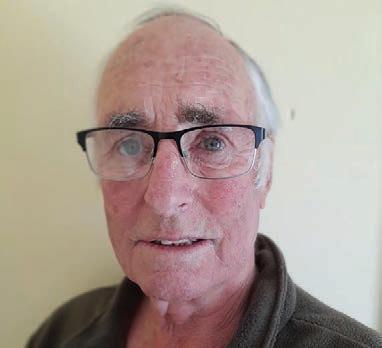
Unsurprisingly, the animal rights group was PETA, People for the Ethical Treatment of Animals.
To be fair it was the German branch of the organisation, although the Kiwi and Australian crews have since agreed with it.
The cutting arrived at lunchtime so I immediately gave my sausage to the dog and removed my fur collar. You can never be too careful in matters of this importance.
The article was fascinating and the view somewhat extreme, even from a fringe group like PETA.
PETA claimed that “devouring schnitzel and sausages is a symptom of the toxic masculinity that is killing the planet”.
That was difficult to take seriously. If Russia’s President Vladimir Putin started a nuclear war that would kill the planet, but eating sausages and schnitzel?
Also, according to PETA men
A female Green MP branded the barbeque ‘a ritual that reeks of male meat-eating compulsion and power over women’. You’d want a steak and a beer after reading that.
are responsible for 41% more greenhouse gas emissions than women largely because they consume more meat.
I have several problems with that, the first being how would PETA have the faintest idea?
The second is to ask, respectfully of course, who did the research, and finally to suggest that I know many women who can eat meat with the boys. I didn’t realise PETA was so sexist.
PETA called on women to go on a sex strike to save the world.
That also begs more questions than answers. What happens if the male is a vegan and his sex partner is a rabid meat eater? Should he withdraw his favours, in the interest of saving the planet of course?
PETA also told the world that “grill masters believe they have to prove their masculinity to themselves and their fellow species through their consumption of meat”.
That was followed by the PETA king hit: “Now there is scientific proof that toxic masculinity also harms the climate.”
Well, well. I know a lot of men who prove their masculinity in many ways. Eating meat isn’t one of them.
If there is scientific proof that masculinity harms the climate, let’s see it. The word “toxic” means poisonous. How can masculinity be poisonous?
My dictionary defines masculinity as “characteristics being typical or appropriate to a male, unwomanly”. That’s a threat to the planet?
They also want a 41% meat tax for men. How would a supermarket know if its meat was for a male or female? And just putting it on men would be sexist.
Not to be outdone, a female Green MP branded the barbeque “a ritual that reeks of virility, male meat-eating compulsion and power over women”.
You’d want a steak and a beer after reading that. How can a barbeque reek of virility and power over women? You barbeque to cook food to eat and that includes vegetables as well as meat. It has nothing to do with virility and how can it encourage power over women?
You can almost hear someone saying, “I want to have power over women, let’s have a barbeque.”
The other issue PETA totally ignores is the women’s feelings, which we sensitive new age farmers (SNAFs) know are vitally important.
You can only imagine the conversation: “Darling I’m in the mood tonight so can you please just eat vegetables?”
What PETA is also ignoring is the fact that a human body needs meat to have a balanced diet and live life to the full.
At the Primary Industries Summit in Auckland, United States nutritionist Diana Rodgers said we need animals in the food chain, and that it was difficult to be healthy as a vegan, which I obviously totally agreed with. And there goes the problem.
The unhealthy vegans of PETA are obviously insanely jealous of sexually active meat eaters and want everyone on the same page and that’s the reason for their stupidity.
On the subject of meat I’ll leave the last word to the late, great rugby player Sir Colin Meads. He was highly critical of the pasta dishes modern-day All Blacks are fed, and commented: “In my day
we had a steer in the changing room and when we took the field only the horns and tail were left.”
We won a lot more tests back then and our birth rate was impressive too.
We thought we had worries, but the list just went nuclear
From the ridge
IN THESE troubled times, its difficult to know what to worry about the most.
The covid-19 pandemic shoved most issues down the ladder but as it abates some of those old worries have resurfaced.
Global warming, climate change, methane emissions, pine trees taking over good sheep and beef land, polluted waterways, Three Waters, legislative change overload, the woes of the All Blacks, inflation, a waterlogged farm, and a myriad other issues have all been competing in my mind for dominance.
Which ones should I worry about more so that I can push the other things down to some place where I can forget about them?
Then another one comes up that makes all of these seem like mere trifles.
Nuclear war and mutually assured destruction of the planet. Excellent. Who cares about Three Waters, faced with this?
I’ve been to Hiroshima and spent a couple of very reflective and emotional days visiting the memorials and walking solemnly with many others from all around
the world through the sombre museums.
The blatant and obvious message there is that this should never ever be allowed to happen again.
No one in their right mind who visits that place or even those who haven’t been there would argue against this.
Yet the madness of the Cold War saw a massive increase in testing of these evil weapons and stockpiles of nuclear warheads.
Over 2000 nuclear tests were conducted, with the United States doing over half of these,

the Soviet Union more than700 and the United Kingdom, France, China, India, Pakistan and North Korea responsible for the balance. Israel may not have tested but is thought to have 90 nuclear bombs.
Hiroshima and Nagasaki showed that this new weapon worked to deadly effect in 1945, so you would have to wonder why they continued to test at this scale to finesse these bombs.
In 1955 there were 3000 nuclear warheads held, as it happens, by the five permanent members of
Continued next page
SINS OF THE FLESH: People for the Ethical Treatment of Animals are targeting men who eat meat. Photo: PETA.org
DAMN AND BLAST: If Russia did deploy a nuclear device, would NATO actually retaliate as it has said it would, knowing that they and everyone they know could be wiped from the face of the earth, asks Steve WynHarris
Alan Emerson Semi-retired Wairarapa farmer and businessman: dath.emerson@gmail.com
Steve Wyn-Harris Central Hawke’s Bay sheep and beef farmer: swyn@xtra.co.nz
24 Opinion
FARMERS WEEKLY – farmersweekly.co.nz – October 3, 2022 Opinion24
Getting hard to see the good for the trees
The braided trail
either a native (indigenous) or exotic (introduced-species) forest was in existence before that date, even if at only an early stage of regeneration, it is not eligible to earn official NZUs within the ETS. The supposed logic of this is that the ongoing growth in these forests is “business as usual” consequent to decisions that were made pre-1990, when no one was thinking about carbon credits.
Nearly all of the ETS-registered forests are introduced species, which reflects a simple reality that establishment of native forests is a long and expensive process.
whether the pre-1990 baseline is being applied in a way that is unduly tough for long-life regenerating forests.
before 1990, is that a valid reason to exclude acknowledgment of the sequestration that is occurring?
CarbonCrop, the rules of the game as set out within their website do seem explicit.
Keith Woodford MD at AgriFood Systems kbwoodford@gmail.com
IN A RECENT article, I wrote that carbon credits are not created equal. This inequality is now leading to game-playing and confusion across society. Terms like “greenwash” as the carbon equivalent of a whitewash are increasingly heard and there is increasing talk of “hot air” carbon claims.
Since writing that article, I have been wrestling with the challenge of further deepening my own understanding of how the carbon game is being played. It is a game where different players are playing by different sets of rules, as are the certifying referees. Many of the certifying rules are far from transparent.
Here in this article my focus is specifically on the rules surrounding sequestration that removes carbon from the atmosphere. That leaves other aspects of the carbon rules for another time.
In New Zealand, the dominant sequestration rules to date have been those of the Emission Trading Scheme (ETS). However, that could now be changing with the emergence of voluntary certification schemes with potential for local and international certification outside of any official system.
To understand the basic differences between alternative sequestration systems, it is necessary to understand “additionality” versus “business as usual” in relation to “baselines”. Those three terms are where most of the complexity and potential confusion lie.
Within the NZ ETS, the key baseline is December 31 1989. If
Continued from previous page
the UN’s Security Council.
More than enough to destroy most life forms on the planet.
However, 10 years later there were 37,000 and by the late 1980s there were over 60,000 of these evil things.
North Korea has been the only nation to undertake testing in this century so welcome progress has been made with the various agreements banning testing.
With the demise of the Soviet Union and the nuclear
When I hear people saying that these new forests should comprise native species, my response is to suggest they come up with the money if that is what they wish to happen. There is a need to recognise that planting natives is not a paying proposition and that is why it is unlikely to happen on any scale unless publicly funded. Incidentally, according to the Ministry for Primary Industries website, we already have 10.1 million hectares of forest in NZ of which 8 million hectares are native forests. That means that 30% of NZ’s total land area of 26.8 million hectares is already in native forests.
The exception in relation to native forest establishment costs is where regeneration is feasible based on existing seed stocks in the soil.
In recent weeks I have become aware of an example where a farmer has been able to register a regenerating native forest into the ETS in a situation where some elements of the regeneration commenced prior to 1990. At that time there were remnant groves of native trees in the gullies. However, the farmer and his consultant have been able to demonstrate that this area has increased considerably since 1989, and that there is a contiguous area of new forest approaching 100ha, defined by squiggly lines that exclude the pre-1990 regeneration.
There are also other properties where this is occurring and there may well be many other farms where this is a possibility.
However, there are also many landholders, and sheep farmers in particular, who have regenerating native forests that are failing to meet the ETS criteria. Some big questions need to be asked as to
disarmament treaties that followed, there are now 13,000 or so nuclear warheads with Russia and the US holding around 6000 each.
The alarming development now is Russian President Vladimir Putin’s sham ballots in those eastern Ukraine provinces, which will mean he will annex them and then claim them as part of Russia.
He will say any attacks on these areas by the Ukrainians in their efforts to take them back is an attack on Russian soil.
When Putin hints that Russia is
In relation to the pre-1990 baseline issue and its fairness, there is an important distinction to be made between exotic and indigenous forests. For example, NZ has approximately 1.4 million hectares of exotic pre-1990 forests that are into their second, third and even fourth rotations. Logic suggests that unless there are changes to rotation length, then there is no net sequestration occurring in relation to the overall amount of carbon within these forests.
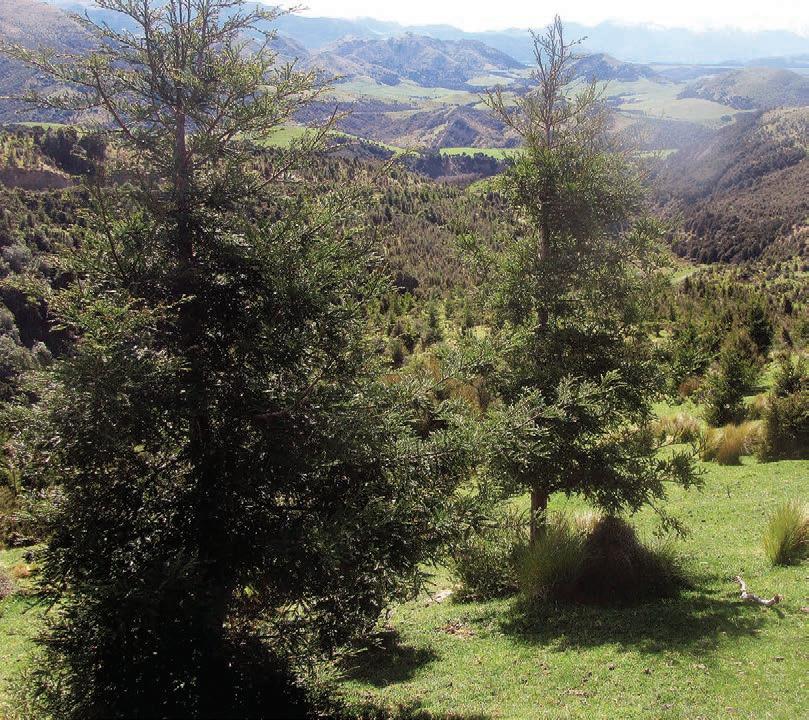
It is with some surprise that I have learnt in recent months that although landholders cannot claim credits for these pre-1990 regenerating forests, the government does include the assessed net growth in these forests within its nationally determined contribution (NDC) and this is reported to the United Nations Framework Convention on Climate Change. The argument is that because all of these forests are managed – in the main by the Department of Conservation – net sequestration is a valid
I am advised that the early sales of CarbonCrop units for native forests have been at $50 per tonne of sequestered carbon. This is still early days and the price could go in either direction. CarbonCrop currently requires a landholder to register a minimum area of 20ha of native forest, with this no doubt reflecting that small areas become too expensive to justify the measurement, registration and administration costs.
One thing that has changed markedly in the past few years is the ability to measure growth in established forests using a combination of GPS and artificial intelligence systems including inbuilt learning capacity. Precise measurement of growth in pre1990 forests is now feasible from “eyes in the sky” in a way that was totally infeasible when the ETS was established.
My big concern is the need for standardisation both of the overarching methodologies (rules of the game) and the accuracy of measurement with different measuring techniques. Linked to this, it is important that carbon claims are demonstratively not greenwash. I note that there is an international non-governmental body called Integrity Council for Voluntary Carbon Markets (ICVCM) working towards this. The rules of the game for carbon markets extend well beyond sequestration, but sequestration is an important component.
Landholders cannot claim credits for these pre-1990 regenerating forests, but the government includes the assessed net growth in these forests in its nationally determined contribution and this is reported to the UN.
In contrast, almost all regenerating indigenous forests are still relatively early in the regeneration cycle and will be sequestering carbon for some hundreds of years, even if that commenced pre-1990. Just because that regeneration started
prepared to use nuclear weapons if he feels his country is under threat, it needs to be treated seriously.
He may be deluded and isolated, but he is justifiably paranoid so he is extremely dangerous and right now he is on the back foot and fighting for his very existence.
He says he’s not bluffing but one would hope that only a person who was bluffing would say that.
If he did decide to use a tactical nuclear warhead in Ukraine, would his own systems and the people around him allow it, knowing that it could begin the end of
contribution to the NDC.
Interesting questions then arise as to whether private landholders should be able to claim credits within the ETS for the indigenous forests that they too are managing. Also, if credits were available, this would give a clear incentive to undertake more management by fencing and other methods of predator control, leading to additional sequestration.
It is the absence of credits within the ETS for genuine sequestration in pre-1990 indigenous forests that is creating space for voluntary sequestration schemes to develop. The CarbonCrop example that I referred to in my last article illustrates this point. In the case of
themselves and their families?
And if a nuclear device was used, would the US or other members of NATO actually retaliate as they have said they would, knowing that they and everyone they know could be wiped from the face of the earth in short measure?
These are questions none of us would hope to have to learn the answers to.
This is a dangerous situation we all find ourselves in, with no easy way out.
Putin’s mobilisation of 300,000 reservists shows he is not backing
As for non-indigenous trees, I see the possibility of a voluntary scheme also emerging for post-1989 exotic forests. This could be in response to government restrictions on access to sequestration within the ETS as advocated both by Climate Change Minister James Shaw and Climate Change Commission chair Dr Rod Carr.
In regard to the ETS, the government can do whatever it likes. However, if landowners are restricted from registering their exotic forests in the ETS, then the alternative of a voluntary scheme may well have appeal. The question then becomes whether overseas buyers would see merit in purchasing such units, with the units then credited to the buyer rather than NZ’s NDC. We do indeed live in interesting times.
away from his war on Ukraine.
It has caused much dissent and unhappiness in Russia but his grip on power is strong, so a regime change from some sort of uprising isn’t going to happen.
Maybe he will be removed from power by those around him in some form, but he is very well protected, so another unlikely scenario at this time.
All we can hope for is that common sense prevails, and no one does anything stupid.
See, all the other things you were worried about are really of little consequence eh?
UP A TREE: Voluntary sequestration schemes create opportunities but also confusion – in an already confusing regulatory landscape, says Keith Woodford.
25
FARMERS WEEKLY – farmersweekly.co.nz – October 3, 2022Opinion 25
Flock House orphans tell their stories
The son of a Flock House orphan is on a mission to help others connect the dots as the farm training school approaches its centenary. Charlie Williamson spoke to him.
ALMOST 100 years ago, the first of 759 orphaned sons and daughters of fallen British World War 1 sailors travelled halfway around the world to Bulls, New Zealand, in search of a prosperous life on the land.
Though the story might not resonate with everyone, for one man, Alasdair Bettles-Hall, it is of existential significance: his father, Victor Richard Charles Hall, was one of the orphans who would soon arrive at Flock House Farm Training School in the Manawatū village, and later build a life as a farmer and labourer in the region.
Years later Bettles-Hall would retrace his father’s steps, in reverse – leading him in 1988 to return to the Portsmouth docks where his father started his journey, and to find and reunite with his now late father’s sister and other family members a year later. He subsequently settled in the UK.
Now, leading up to the centenary of Flock House in 2024, BettlesHall’s efforts are concentrated on finding and telling the stories of other descendants of orphans and cadets who passed through the gates of Flock House, and he believes there will be many not dissimilar to his own.
“So my Dad, at the age of 15, with his little suitcase, off he goes, and next minute he’s in Bulls in NZ to start this completely new life,” Bettles-Hall says.
“The whole objective of this project for me is to, in some way or another, track down the descendants of the orphans, and give them the opportunity to tell their families’ story like I could.”
So my Dad, at the age of 15, with his little suit case, off he goes, and next minute he’s in Bulls in New Zealand to start this com pletely new life.
Bettles-Hall has invested a significant amount of his time in collecting old archives and undertaking research, as well as having a website built in a bid to connect these descendants and help them tell their unique Flock House stories.
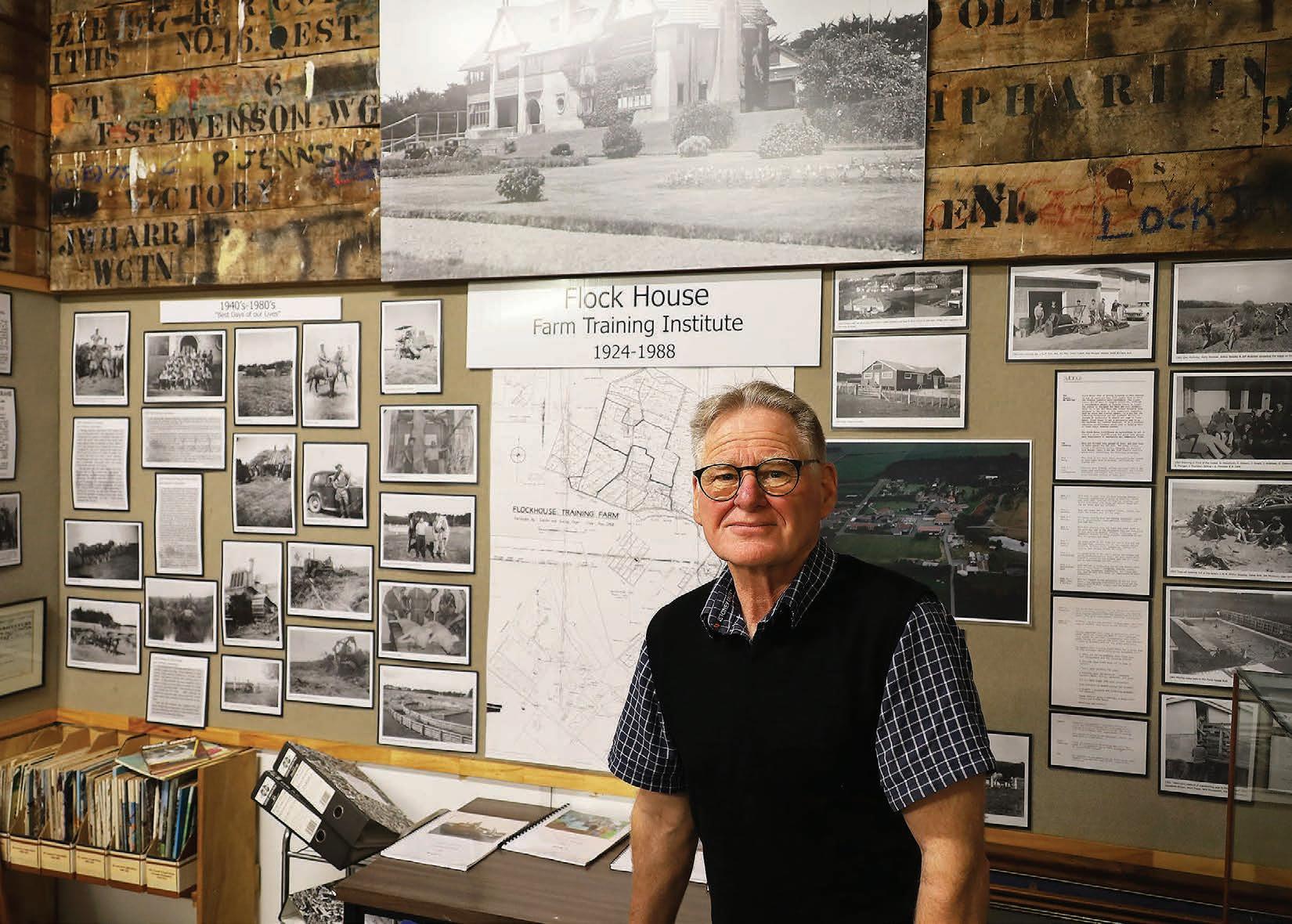
Flock House, which became an internationally regarded allround farm training school, had its origins in NZ’s wool marketing efforts during WW1.
During WW1, all wool was sold to the Imperial Government at a fixed price, and towards the later stages
of the conflict there was a surplus of wool to war requirements. This surplus was sold on the open market and fetched higher prices than initially expected. Because of this it was decided that until one year after the war ended, NZ wool growers would receive a fixed average price for their wool and any profits would be shared equally between the growers and the government.
During the later stages of the war industry leaders began advocating that the growers’ portion of the surplus profits should be used to in some way reward members of the British Navy and Mercantile Marine who had paid the ultimate sacrifice while protecting international shipping lanes.
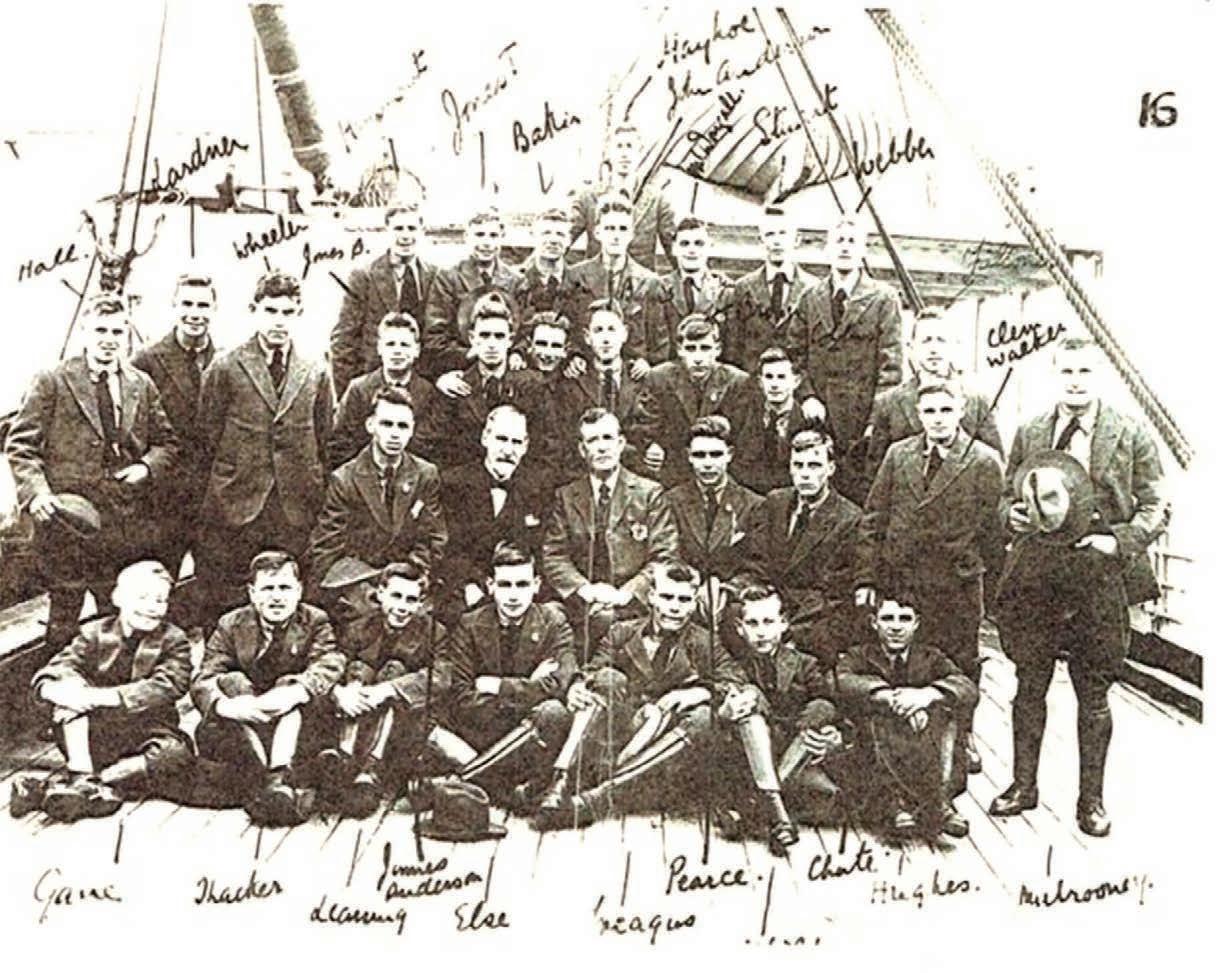
The proposal was well received and more than 2600 growers came together, eventually raising
the significant sum of around £237,000.
It was decided that the funds would be used to purchase the land and facilities that in the early 1920s were used to build the school, and equip the orphaned sons and daughters of these British sailors with the skills needed for a life on the land.
Over the next 50 years Flock House would become a world-class
agricultural training facility, with most cadets securing jobs prior to graduation.
The school operated until 1988, educating thousands of Kiwi farmers, until it was closed due to financial issues amid skyrocketing interest rates and the loss of subsidies in the agricultural sector.
Bettles-Hall believes not everyone knows the story of Flock House, and he is especially interested in helping not only descendants of the orphans understand its significance to them, but also later cadets and students, along with their descendants.
“We can’t ignore the other 3000 people who went through the gates over the years. Flock House made them a farmer, and so they are most certainly part of the story,” he says.
“And when you do speak to some of the ones that have been there, they will tell you that Flock House was the best time of their life.”
A website was recently launched in the lead-up to the 100th anniversary of Flock House. Bettles-Hall had it built to allow people associated with Flock House to see lists of past orphans and cadets, and reach out and tell their story through its blogging capability.
Descendants of orphans, cadets and students are encouraged to head to the website, www. flockhouse.nz, and read more about the history of Flock House, as well as post any information or resources they have, to help Bettles-Hall build the full story of Flock House Farm Training School.
RETRACING STEPS: Alasdair Bettles-Hall, the son of a Flock House orphan, is on a mission to paint the full picture of the farm training school’s history.
Photo: Charlie Williamson
SUITCASE: Victor Richard Charles Hall, at left, during his voyage to New Zealand in 1929. Photo: Supplied
Alasdair Bettles-Hall
Son of a Flock House orphan
26 People FARMERS WEEKLY – farmersweekly.co.nz – October 3, 2022 People26
Keeping watch for disease night and day
EARLY detection of potential animal disease outbreaks, so crucial to containing them, has received a shot in the arm from artificial intelligence that can pick up signs of trouble way before a human could.
The implications for biosecurity, say the developers, are immense.
The program, Sentinel-AI, essentially finds patterns in biological data, and has huge potential to reduce the impact of animal diseases on farms such as foot-and-mouth disease (FMD) and Mycoplasma bovis.
The solution – believed to be a world first – has been developed by Otago-based vet science company Ingenum in partnership with Qrious, the artificial intelligence (AI) and data analytics specialist in the Spark business group.
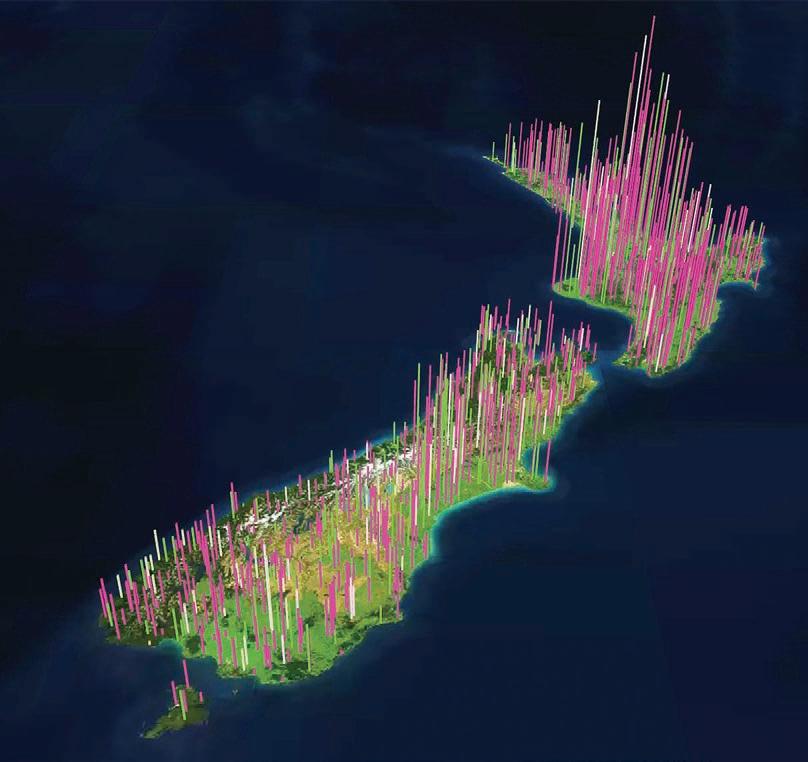
Led by founder Dr Tom Brownlie, Ingenum has been building disease detection and prediction tools for the past five years.
Brownlie, a veterinary epidemiologist and data scientist living at Taieri Mouth in Otago, was working as a production animal veterinary surgeon in the United Kingdom during its 2001 FMD outbreak.
“I saw first-hand what it meant for rural communities and families,” Brownlie says.
“The sooner a disease like FMD is caught, the sooner farming sectors and government can take action to stop it in its tracks.”
New Zealand has so far avoided the FMD outbreak that’s causing havoc in Asian agricultural markets right now, but experts are warning against complacency.
Brownlie started Ingenum in 2016 after working in agritech and noticing the growing potential and effect of on-farm technology. He knew that data could have a massive impact on the future of disease prevention and on-farm biosecurity.
His range of experience –from being a production vet to lecturing in epidemiology –“allows Ingenum to straddle the technological, biological and traditional domains of agriculture”, he says.
Ingenum’s experiences with
data and disease detection and its understanding of the agritech commercial value chain is complemented and enhanced by Sentinel-AI, the company’s powerful artificial intelligence and machine learning offering.
“The [Sentinel] concept is straightforward, but sophisticated in its execution,” Brownlie says.
The program detects anomalies in clinical sign data observed in livestock – think shivering, bloating, or depression.
Combined with data from government agencies, veterinary practices and agritech companies that routinely measure the quality of final products such as milk composition, Sentinel-AI produces insights about underlying patterns.
Comparing this data with normal seasonal data shows up anomalies.
Mapping the results geographically helps those manning a disease response to make better decisions in real time.
“Ingenum is effectively bringing together government, veterinary and agricultural technology companies in a secure and anonymised way to make sure that we use every advantage available to us to speed up these diagnoses,” Brownlie says.
He notes the changes in agritech that have occurred on NZ farms in the past five years.
“On-farm tech is an embedded part of agriculture being embraced here now. We know in FMD, the models we have built show patterns of on-farm technology, so we built the Sentinel prototype in 2018.
“One of the most profound things we learnt is the wonderful mess out there in data, it’s a muddled structure,” Brownlie says.
That is where Qrious head of technology Chris Laing came in. He was brought on board for the AI expertise he could offer.
“We are working at the absolute leading edge of what is available,” Laing says.
“This will transform the global livestock industry and its security.
“We are working with Tom because he has the vision no one else has come up with.
“The technology has only matured in the past year and NZ is heavy in the agritech space with a lot of data coming off farms now, allowing capability in modern machine, training and learning – a set of software observing and bringing data all together.
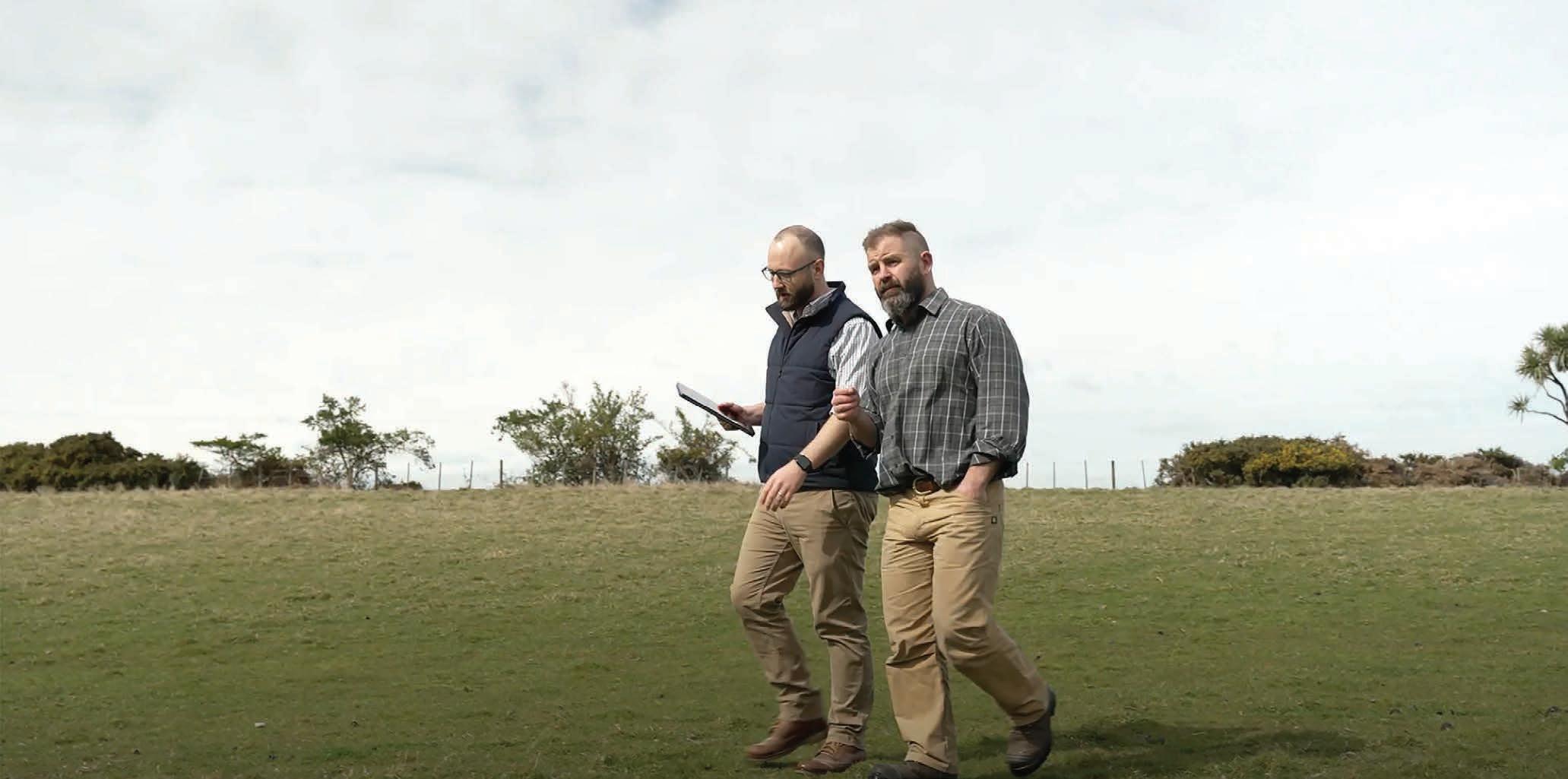
“The outcome is an AI system that detects patterns too complicated and subtle for humans to detect.
“It is watching over NZ’s biosecurity 24/7, the equivalent of a human watchman.
“It will not always tell you what is wrong, but that something is wrong, showing a pattern of clinical science developing for human experts to investigate.
With my farmer’s hat on, I hear, ‘I’m not sure I’m comfortable with big brother watching over me and the health of my stock’ – but it’s not like that.
Tom Brownlie Ingenum
“This is a critical phase of Ingenum’s journey and a rare opportunity to move the needle on something as important as it is to NZ agriculture,” Laing says.
Brownlie says it is not about replacing the human custodians of animal health.
“We are giving them more support, so they are not making decisions in isolation.
“With my farmer’s hat on, I hear, ‘I’m not sure I’m comfortable with big brother watching over me and the health of my stock’ – but it’s not like that.”
“The signals at farm level are not subtle enough, these data are aggregate and certainly anonymised.
“It’s about using what we have got collectively to make a meaningful difference nationally to biosecurity.”
With its potential for a meaningful contribution to national biosecurity efforts, the technology is now undergoing trials in Australia and there are plans to take it global, moving on to the UK and Ireland.
DATA: Chris Laing, left, with Dr Tom Brownlie, says the Sentinel AI system ‘detects patterns too complicated and subtle for humans to detect’ as it watches over NZ’s biosecurity 24/7.
Artificial intelligence that sounds an early alarm about animal diseases on farms is set to be a game-changer for New Zealand’s biosecurity. Annette Scott spoke to the inventors.
PATTERN: Using artificial intelligence to understand normal seasonality has allowed Ingenum and Qrious to visualise the occurrence of clusters of signs that merit investigation. Mapping these patterns geographically, like these specific cattle-related syndromes, can help frontline staff and the government make better decisions in real time.
27 Technology FARMERS WEEKLY – farmersweekly.co.nz – October 3, 2022Technology 27
Truss: Businesses need energy price certainty
BUSINESSES need certainty beyond the next six months if they are to “plan for growth”, with the UK Government urged not to leave further announcements of support on energy bills until the 11th hour.
The Energy Bill Relief Scheme, revealed by Britain’s Department for Business, Energy and Industry, means wholesale prices are expected to be fixed for all nondomestic energy customers at £211 ($402)per MWh for electricity and £75 per MWh for gas for six months.
The discount will automatically be applied to bills from October for six months.
The scheme will apply to fixed contracts agreed on or after April 1, and variable and flexible tariffs and contracts, with the government negotiating with suppliers to ensure everyone can switch to a fixed tariff for the duration of the scheme if they wish.
For businesses not connected to either the gas or electricity grid, the government said equivalent support would be provided for non-domestic customers who use heating oil or alternative fuels instead of gas.
UK Prime Minister Liz Truss said she understood the huge pressure businesses were facing and this scheme would help keep businesses’ energy bills down.
Tony Goodger, Association of Independent Meat Wholesalers, said the package will help calm the nerves of some businesses, but its
Lee Stiles Lea Valley
members need further details as to what will happen to bills from April 1, “as soon as they are able to”.
“The government is wanting to see the economy grow quickly and our members cannot be left in a position whereby announcements of support are left until the 11th hour if they too are to plan for growth.”
The end of the government
support package will come at a critical time for the salad industry, with the industry under threat as consumers trade down to imported economy ranges and energy prices soar.
Lee Stiles, secretary at Lea Valley, said the announcement raises more questions on detail. He said it was not enough to encourage growers to order plants for planting in December and January due to the uncertainty of the six-month period.

Growers are also unable to factor in the ending of the scheme in discussions with retailers on costof-production price increases.
“Growers need to make cropping decisions now and require more detail and extended support to do so.”
Farmers Guardian
UK eyes Pacific, not US, for trade deal
BRITISH Prime Minister Liz Truss has admitted a trade deal with the United States is unlikely to be negotiated over the coming years.

As she arrived in New York for the UN General Assembly last week, she told journalists she “did not have an expectation” that talks would begin in the “short to medium term”.
Instead, her priorities will be joining the Trans-Pacific trading bloc made up of 11 countries including Canada, Chile, Mexico, Malaysia and Vietnam, and signing agreements with India and the Gulf states.
US President Joe Biden was reported to be unwilling to sign a deal with the UK while issues around the Northern Ireland protocol remained, and there was speculation that Truss’s latest
admission would give her more flexibility to change the current trading arrangements without fear of US reprisals.
In the UK, Tenant Farmers Association chief executive George Dunn said Truss had “fast realised there was a huge distance between rhetoric and reality” on a US deal, saying it would take years of “careful diplomacy to even get off first base”.
“The tradecraft involved in making these agreements is something the UK needs to quickly relearn, having relied upon the EU to negotiate on our behalf for the past 40 years,” he said.
“Now is the time to properly invest in our trade negotiating capacity to ensure that, as and when opportunities arise, we can take full advantage.”
Farmers are ‘devastated’ by reservoir land grab
HUNDREDS of acres of valuable Lincolnshire farmland are set to be lost if a proposed 5km2 reservoir is given the go-ahead.
Anglian Water has unveiled plans to build the new water resource just outside Sleaford, South Lincolnshire, which would see more than 60 people lose their homes via compulsory purchase orders. Many of those affected would have to forsake land they have farmed for decades.
Hannah Thorogood is an awardwinning, organic livestock farmer who currently works more than 40ha of owned and tenanted land in Scredington.
She said the news has been “devastating” and “heartbreaking” and has left her and her neighbours struggling to know how they will carry on.
“Apart from the shock, the timeline is so difficult to cope with. We are facing years of uncertainty
owing to consultations and noninvasive and invasive surveys. It could be seven years before we are told for certain or compensated,” Thorogood said.
“The toll the news has taken on the community’s mental health over the past two weeks has been significant. This is such an anxious time for farming and these pressures and fears will be too much for many.
“I would just like to know how
much land Defra [Department for Environment, Food and Rural Affairs] thinks is needed for food production because this constant loss of farmland cannot go on. Fields are in danger of just becoming the graveyards of farming.”
Dr Geoff Darch, water resources strategy manager for Anglian Water, said the area had been chosen “following a thorough and multi-stage site selection
assessment process”.
“We have now identified the best performing location for a new reservoir. Our proposals go beyond just building a new reservoir, we will create new habitats for wildlife and create great natural places to explore, and exciting new leisure facilities for people to enjoy,” he said.
A public consultation is due to begin next month.
 Farmers Guardian
UNDER WATER: Anglian Water’s plans for a new water resource would see more than 60 people lose their homes via compulsory purchase orders.
CHILLING: The end of the UK government’s energy price support package in April next year will come at a critical time for the country’s salad industry.
Farmers Guardian
UNDER WATER: Anglian Water’s plans for a new water resource would see more than 60 people lose their homes via compulsory purchase orders.
CHILLING: The end of the UK government’s energy price support package in April next year will come at a critical time for the country’s salad industry.
Growers need to make cropping decisions now and require more detail and extended support to do so.
Farmers Guardian
NEW PRIORITIES: British PM Liz Truss says her focus will be on joining the Trans-Pacific trading bloc of 11 countries, and concluding trade deals with India and the Gulf states.
28 world FARMERS WEEKLY – farmersweekly.co.nz – October 3, 2022 World28
Some may consider it a step back but it is really it was more of a lateral move. One that saw James Wallace swap out milking cows for milking sheep, with a stint in chook farming in between.
The change to milking sheep has not been without its challenges but James and his family are loving the lifestyle that ovine milk production has provided.
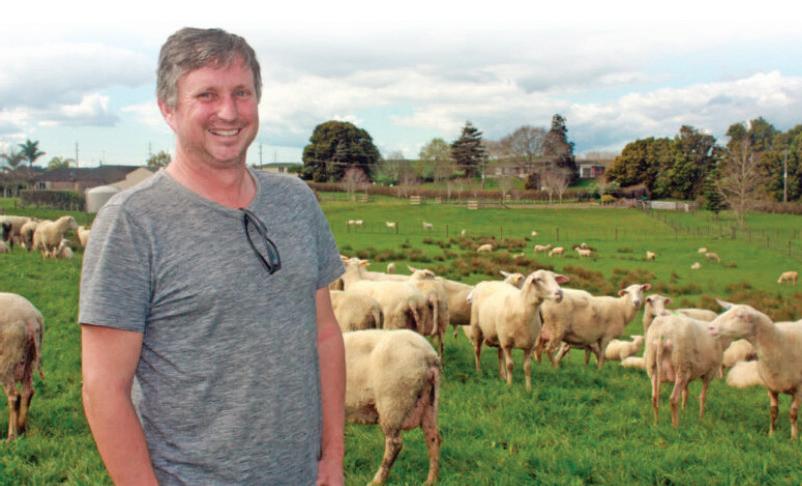
Head to https://www.farmersweekly.co.nz/ no-regrets-switching-to-ovine-milking/ to find out more then answer the following questions:
LA NINA IS BACK FOR A THIRD TIME!
La Nina has returned for the third time in a row. La Nina is caused when the easterly trade winds near the equator blow warmer surface water on the sea over to the western side of the Pacific (our side). So our sea surface temperatures go up north of NZ - but they drop in the eastern Pacific, near Chile etc. The warmer waters north of NZ create more cloud, more rainmakers and potentially more tropical storms. With NZ halfway between the equator and Antarctic we are right on the edge of this set up.
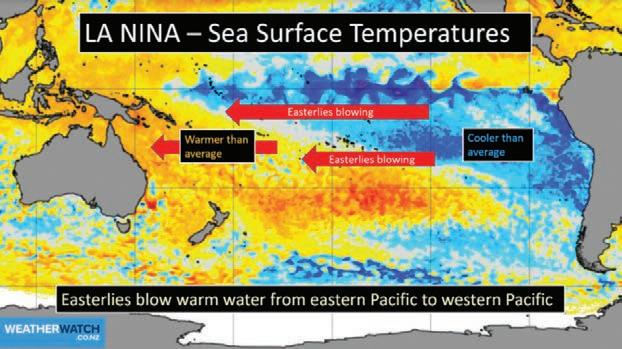
NZ’s La Nina weather: We get more highs parked east of NZ and more lows to our north. This does a few things:
1 Where in NZ is James’s farm?

2 How big is his farm?
STRETCH YOURSELF:
1 When did the Wallaces start milking sheep?

2 Why did they decide to start milking sheep?
3 What type of milking shed do they have?
4 How many sheep can they milk at a time?
5 How many sheep do they milk all together?
6 How many times will the shed be filled before all sheep are milked?
7 Do some research. What is the current payout for bovine milk solids?

8 Given a $14.70/kg payout for ovine milk solids and an aim of 50kg ms per sheep annually (40,000 ms for the flock) and a comparable stocking rate of 5 sheep to 1 cow. How do returns stack up against an equivalent cattle herd (hint: work out how many cows are equivalent to 800 ewes and the milk solids the cows would produce on average. Then work out the payout on this and compare it to sheep returns). How do these stack up against one another?
New varieties of apricots hope to reinvigorate consumer interest
It seems that tasty apricots have become overlooked by consumers in favour of other fruits though Plant Food Research in Central Otago has plans to change that. They have developed three new varieties of the fruit that are not only juicier and sweeter but between them have a longer picking season and shelf life than current varieties.
To learn more head to: https://www. farmersweekly.co.nz/game-changingapricots-on-the-way/?fbclid=IwAR19V3 yBl7GabtsB1Vj2tBt0208BjenWpQmxlU4-


Then answer the following questions:
A Beef + Lamb NZ cattle genetics programme has expanded to the North Island and will now include Simmental genetics in their study.
Lochinvar Station near Taupō will become part of the Informing NZ Beef Genetics Programme, joining Pāmu’s Kepler Farm near Te Anau in Southland, which is an existing progeny test site.
Follow this link to find out more: https://www.farmersweekly.co.nz/ genetics-programme-jumps-the-cookstrait/?fbclid=IwAR3yn5gtwGM3forIi4FwIvOMBHvAJNpLgvSijatxL9Pzb9Y9EsSm13CFE
1 What are the across-breed beef progeny tests identifying?
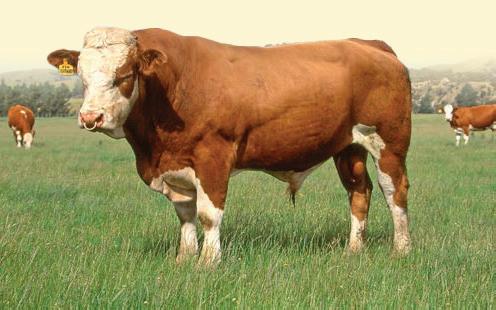
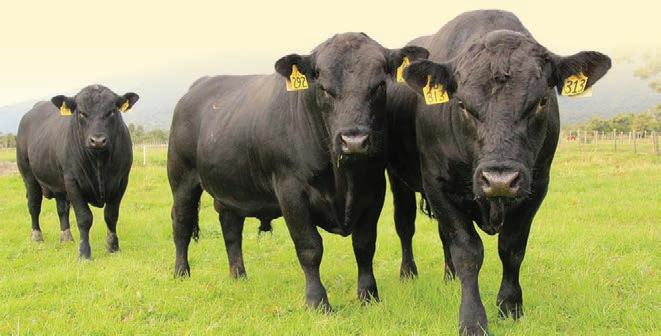
2 What breed of cows are being used?
3 What are the breeds of bulls included in the study?
4 This programme is led by Beef + Lamb New Zealand Genetics with the support of the Ministry for Primary Industries’ Sustainable Food & Fibre Futures (SFF Futures). What is SFF Futures?





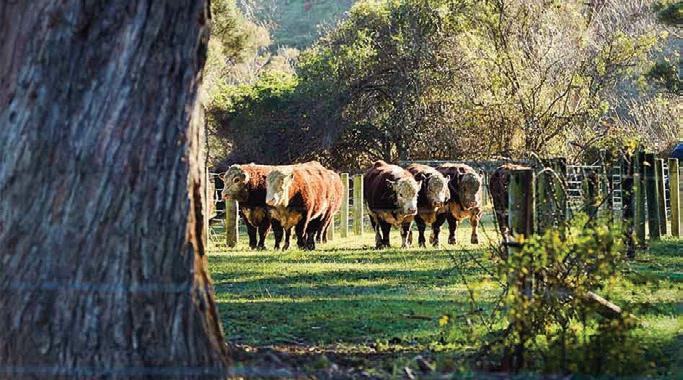
5 Hybrid vigour is mentioned as a benefit in the study. What is hybrid vigour?
YOUR TASKS:
Visit RuralWeather.co.nz and look for:





More easterly winds, in northern locations especially.
Higher (mild) temperatures in places you’d think would be colder (Southland and Otago for example).
Use the Cloud/Fog forecaster and see if there is more cloud in eastern centres vs western ones (it won’t always be, but that’s the trend to look for).
1 What is the label (name) of these new varieties currently? Commercial names are yet to be selected, can you come up with some possibilities?
2 How long has it taken to develop these new varieties?
STRETCH YOURSELF:


1 What are the current varieties of apricots available commercially in NZ?
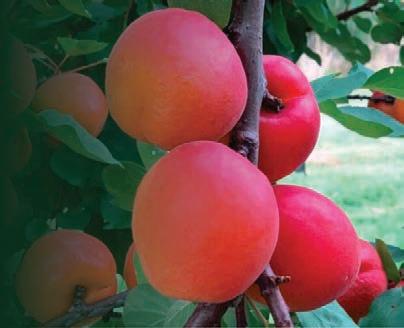
2 What is the picking season for current varieties?
3 How many more weeks of picking will there be with the introduction of these new varieties?
4 How long is it anticipated to be before these new varieties are widely available?
5 The NZ Summer Fresh apricots have been developed in the South Island but some trial plantings are underway in the North Island. Darling states that “it is viewed that the trees need harsh winters”, so the North Island plantings will test this theory. Why do stone fruits need cold winters?
6 Do you think it is necessary to develop new varieties of fruits and produce regularly to keep up with consumer expectations? Why or why not?
Are you a parent or teacher and want to receive AginED every week directly to your email inbox? Send us an email to sign up at agined@agrihq.co.nz Volume 125 I October 3rd, 2022 I email:agined@agrihq.co.nz I www.farmersweekly.co.nz/agined
FROM BOVINE TO OVINE It makes for more cloud in northern and eastern NZ. 1 2 3It makes for more easterlies and north easterlies across NZ. That airflow means western and southern regions of both Islands can be hotter and drier.
E6ISDu9hY3CpoIf6DI0
29
The Incline, Raumati and Huiarangi organic dairies
The incredible opportunity to purchase one, two or three of arguably the best contoured dairy units in the reliable Patoka District is one not to let slip. Located only 45 minutes from Napier, The Incline boasts 324ha of mainly flat land, a 40-bail rotary, two feed pads, excellent shedding with four very well-maintained dwellings and an airstrip. There is also the option to purchase in 168ha or 155ha portions. Raumati is a 458ha farm, mainly easy to flat contour, boasting a 2008 built 60-bail rotary, 600 cow feed pad, large calf rearing sheds and three dwellings. Huiarangi is 287ha of near flat platform with a well specified 50-bail rotary shed, large cattle yards, implement/hay sheds and four dwellings. The free draining, fertile ash soils coupled with the fantastic infrastructure provide the foundations for a fantastic return on investment on all of these farms. A must view. bayleys.co.nz/2853079
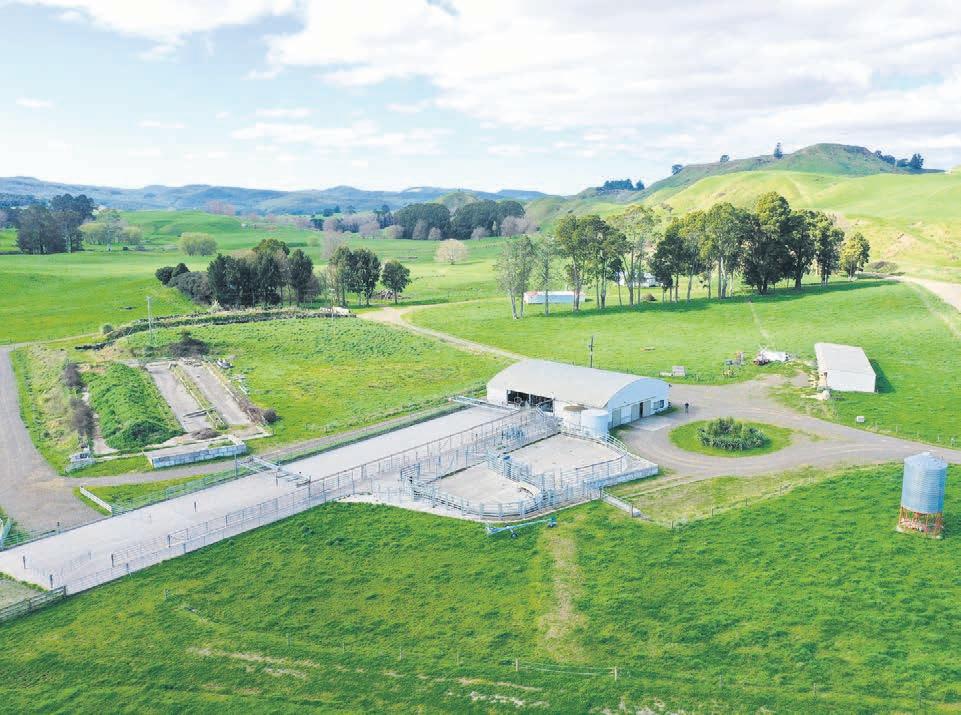
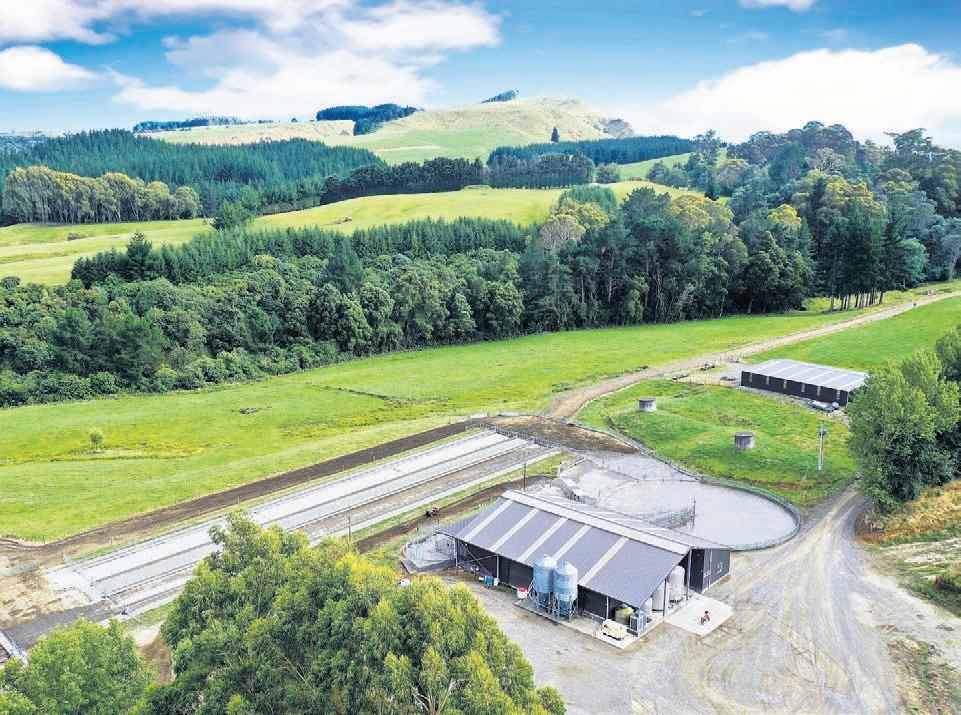
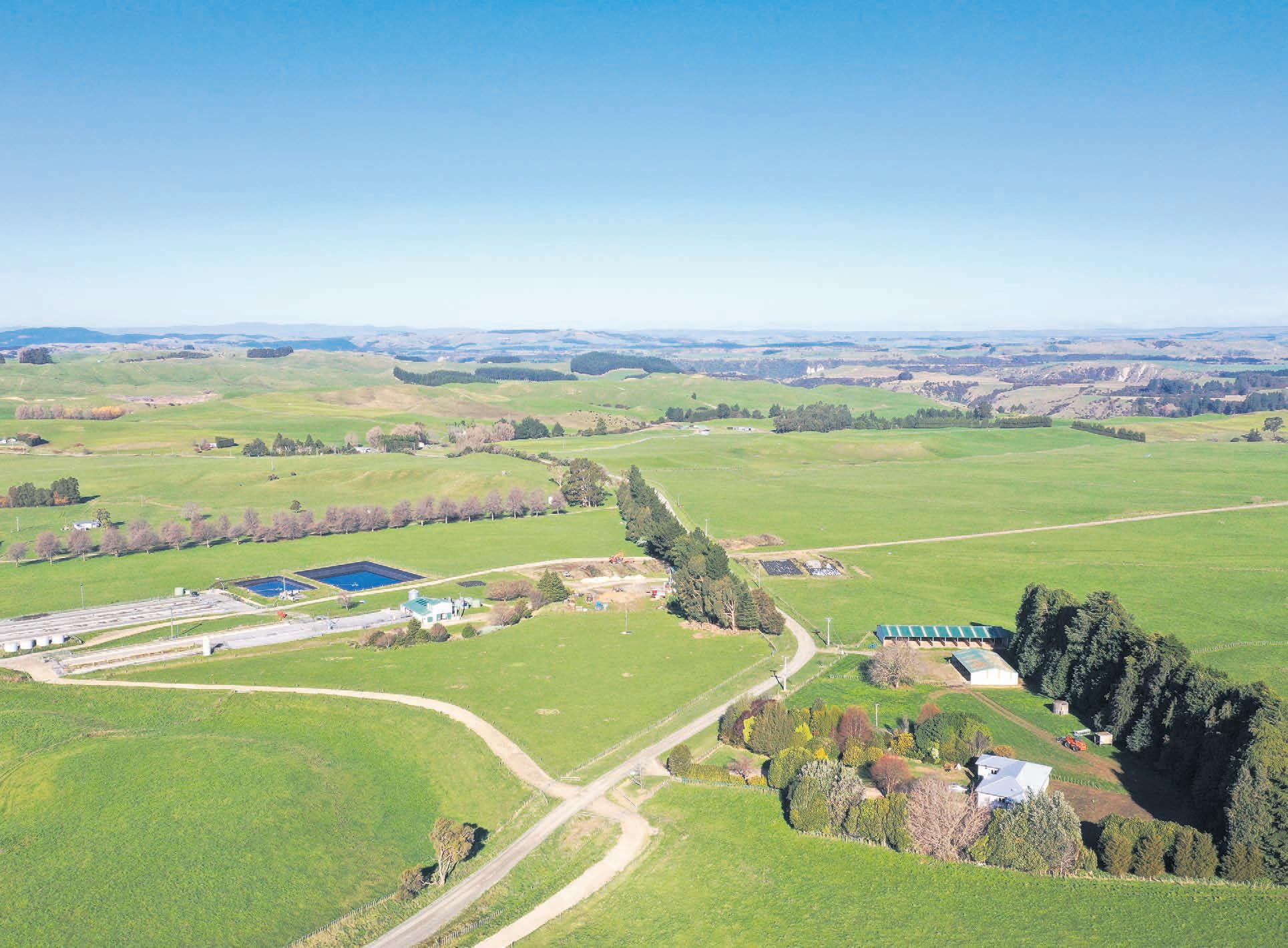 Organic Dairy Farms, Patoka
bayleys.co.nz The Incline Raumati Huiarangi NEW LISTING Hawke's Bay
1,070.997ha Tender (unless sold prior) Closing 4pm, Wed 9 Nov 2022 17 Napier Road, Havelock North View by appointment Tony Rasmussen 027 429 2253 tony.rasmussen@bayleys.co.nz EASTERN REALTY LTD, BAYLEYS, LICENSED UNDER THE REA ACT 2008
30
Mangatahi
Tirohanganui
Tirohanganui is a 261 hectare property in the Mangatahi farming district. The property benefits from a high standard of infrastructure as well as a low-maintenance four-bedroom home complete with an inground pool and spectacular views. There is a four-stand woolshed with covered yards, a four bay pole shed, two bay workshop, an airstrip with 40t fertiliser bin, a reliable and extensive reticulated water system, central laneway and multiple haybarns.
Currently utilised as a breeding, finishing/trading and grazing unit, the property is a balanced mix of flat to rolling terrain with a small area of steeper hill country. Tirohanganui with its handy location, free draining soils, great water supply and high standard of improvements offers many options for the new owner. bayleys.co.nz/2853074
NEW LISTING
Patoka
Reliable 232 hectare bull unit
An ideal first farm or additional finishing unit, do not miss the opportunity to own this fertile and productive property. Located 50km from Napier in the renowned Patoka farming district, is this intensively run 232ha finishing unit. Boasting fertile free draining ash soils, approximately 80ha of easy contour, 90ha easy hill and 40ha medium hill. Circa 500 bulls are finished each season to good weights and with excellent metal tracks through a lot of the property access and workability are a real feature. The property has the fertility and reticulated water system to ensure production is maximised. The four-stand woolshed, sheep yards and cattle yards are centrally located. Improvements include a threebedroom home with views and a two-bay implement shed. bayleys.co.nz/2853092
232.6942ha
Tender (unless sold prior)
Closing 4pm, Thu 3 Nov 2022
17 Napier Road, Havelock North
View by appointment
Tony Rasmussen 027 429 2253 tony.rasmussen@bayleys.co.nz
Monty Monteith 027 807 0522 monty.monteith@bayleys.co.nz
EASTERN REALTY LTD, BAYLEYS, LICENSED UNDER THE REA ACT 2008
NEW LISTING
Boundary lines are indicative only
261.35ha
Tender Closing 4pm, Thu 27 Oct 2022
17 Napier Road, Havelock North View by appointment Tim Wynne-Lewis 027 488 9719 tim.wynne-lewis@bayleys.co.nz
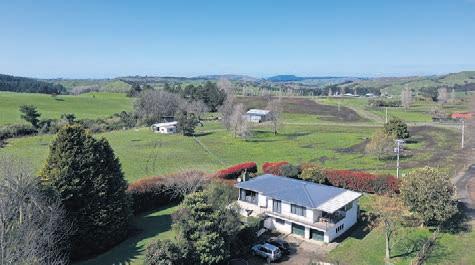
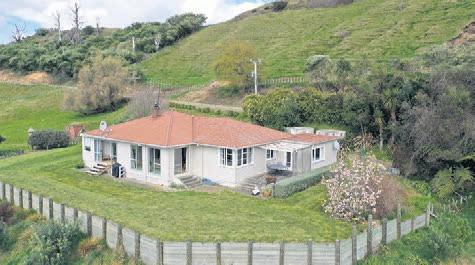
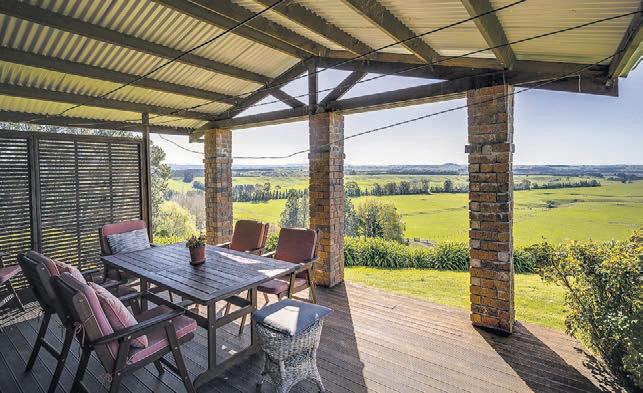
Patoka 1792/1814 Waihau
412ha self contained dairy farm
Located only 42 kilometres west of Napier, Falling Waters is a 412 hectare dairy farm. A well developed, once a day, self-contained unit historically winter milking around 475 cows. With a three year average of 167,031kgMS, return on investment will be hard to beat. Falling Waters includes approximately 200 hectares of flat and easy contour and 130 hectares of medium hill country. This productive land is of free draining ash soils, with an excellent fertiliser history and approximately 200 hectares have been cultivated. Improvements include a 40-aside herringbone with inshed feeding, four-bay implement shed/workshop, calf rearing shed, cattle yards as well as a spacious five bedroom home and three-bedroom cottage.
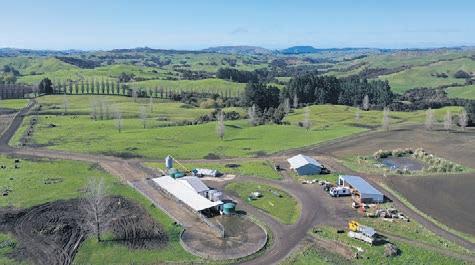
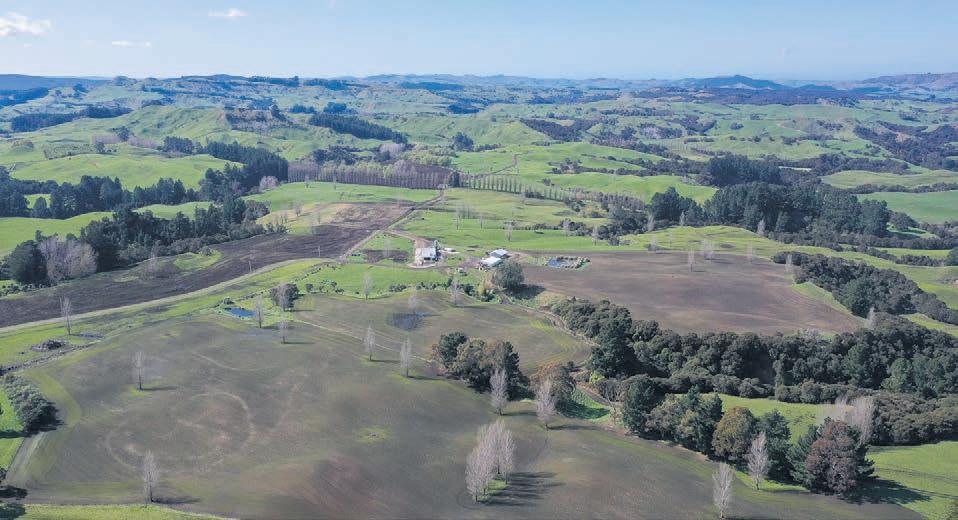
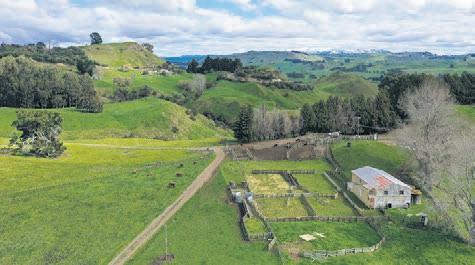
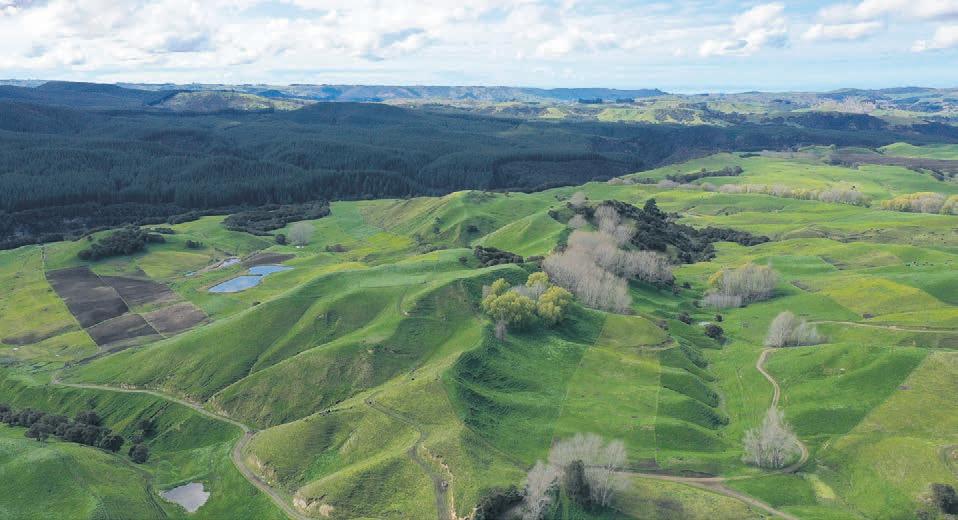
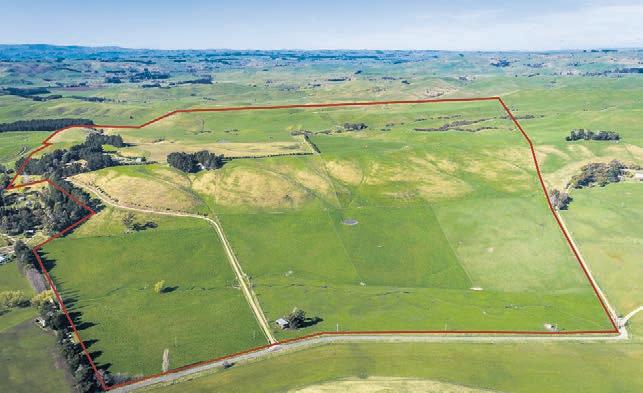
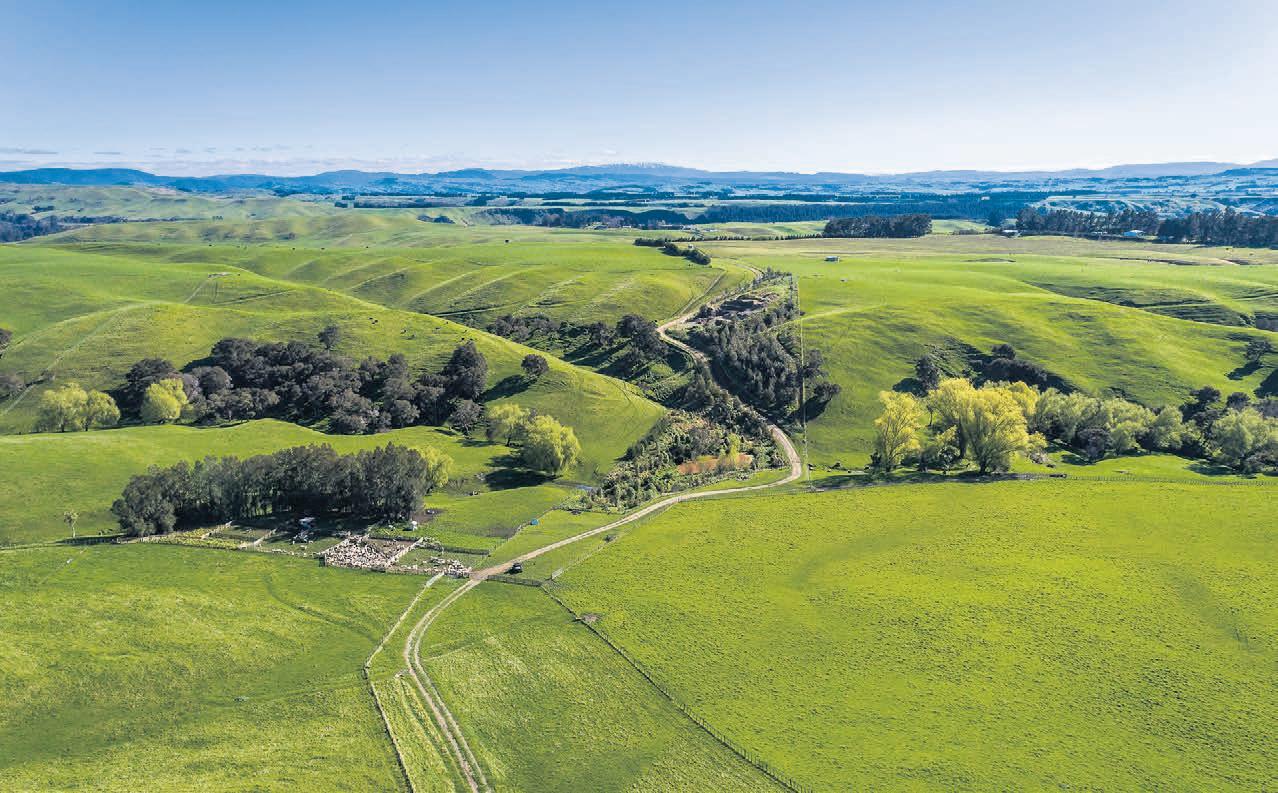
bayleys.co.nz/2853095
Tender
4pm, Mon 7 Nov 2022
Napier Road, Havelock North
Tony Rasmussen 027 429 2253
tony.rasmussen@bayleys.co.nz
Monty Monteith 027 807 0522
monty.monteith@bayleys.co.nz
bayleys.co.nz
Dasent
85
Road
4
EASTERN REALTY LTD, BAYLEYS, LICENSED UNDER THE REA ACT 2008
651 Huiarangi Road
Road 412.8139ha
(unless sold prior) Closing
17
View by appointment
EASTERN REALTY LTD, BAYLEYS, LICENSED UNDER THE REA ACT 2008
31
136ha dairy support/finishing farm
Located 60 km West of Hastings is this easy contoured sheep/beef finishing and dairy support property which boasts approximately 45 hectares of fertile flat land, the balance of easy hill country and bush clad gullies with access down to the river for trout fishing and hunting.
Improvements include a spacious five bedroom weatherboard home, implement sheds, four stand woolshed, sheep and cattle yards.
This opportunity to buy great contour, the potential in this block is fantastic. Trout fishing and hunting are a bonus. bayleys.co.nz/2853071
NEW LISTING
136ha 5 2
Tender Closing 4pm, Wed 2 Nov 2022
17 Napier Road, Havelock North
View by appointment
Tony Rasmussen 027 429 2253 tony.rasmussen@bayleys.co.nz
Monty Monteith 027 807 0522 monty.monteith@bayleys.co.nz
EASTERN REALTY LTD, BAYLEYS, LICENSED UNDER THE REA ACT 2008
Well located finishing farm
Farm the foothills in North Canterbury’s picturesque wine region.
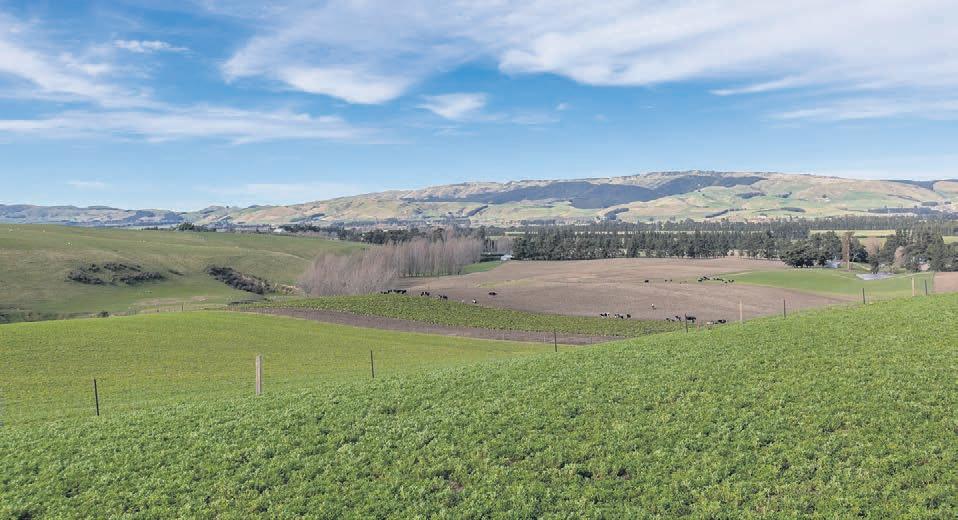
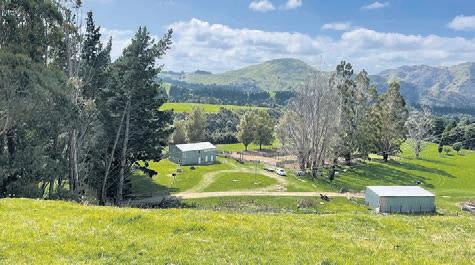
Tucked into an attractive spot amongst rolling country, this 230.6725-hectare (more or less) property presents an opportunity for fruitful farming. Currently well utilised for bull beef finishing, breeding ewes, fattening lambs and may possibly be suitable for viticulture. The facilities include the woolshed, cattle yards and two sets of sheep yards. A privately owned dam provides irrigation for approximately 40ha of irrigation. The sundrenched home opens out to glorious views of the pond, hills and beyond with a second dwelling offering space for extended family or on-farm staff. This secluded location comes with the bonus of excellent amenities with Amberley only 15 minutes away. bayleys.co.nz/5519325
LISTING
230ha 3 2
Deadline Sale (unless sold prior) 12pm, Thu 20 Oct 2022
3 Deans Avenue, Christchurch
Phone for viewing times
Ben Turner 027 530 1400 ben.turner@bayleys.co.nz
Peter Foley 021 754 737 peter.foley@bayleys.co.nz
2008
A property to be proud of
Exceptional quality, immaculately presented 205.3495ha property. The excellent system of lanes across the farm means you can drive throughout the property without opening a gate, enabling ease of management and movement. Irrigated from good wells, with the addition of CPW water, providing both reliability and simplicity. The excellent infrastructure includes Turbo rain irrigators and Zimmatic pivots, there are outbuildings aplenty along with grain storage making this property well set up for a multitude of uses, the property also ticks the required boxes for dairy support. Unique and striking, the house combines adobe mudbrick with solid timber joinery and the result is a property many would feel privileged to call home. bayleys.co.nz/5519472
205ha 3 2
Deadline Sale (unless sold prior)
12pm, Tue 1 Nov 2022
3 Deans Avenue, Christchurch
View by appointment
Ben Turner 027 530 1400 ben.turner@bayleys.co.nz
Craig Blackburn 027 489 7225 craig.blackburn@bayleys.co.nz
PARTNERS LTD,
Boundary lines are indicative only
WHALAN
LICENSED
2008
REA
Central Canterbury 428 Leeston Road, Springston
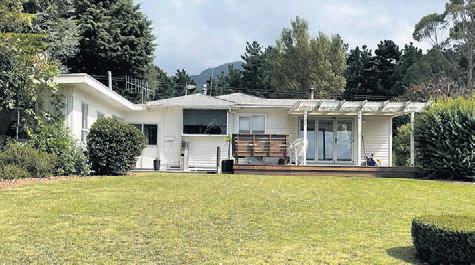
Top notch dairy farm opportunity
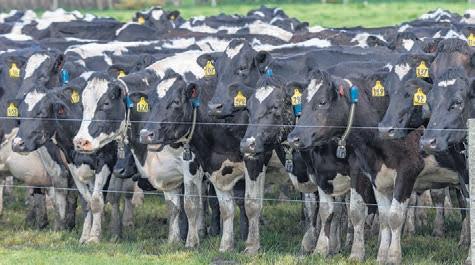
Situated on the doorstep of Lincoln township, this solid 111ha (more or less) dairy farming operation is ready for a new owner to capitalise on the existing infrastructure and past performance.
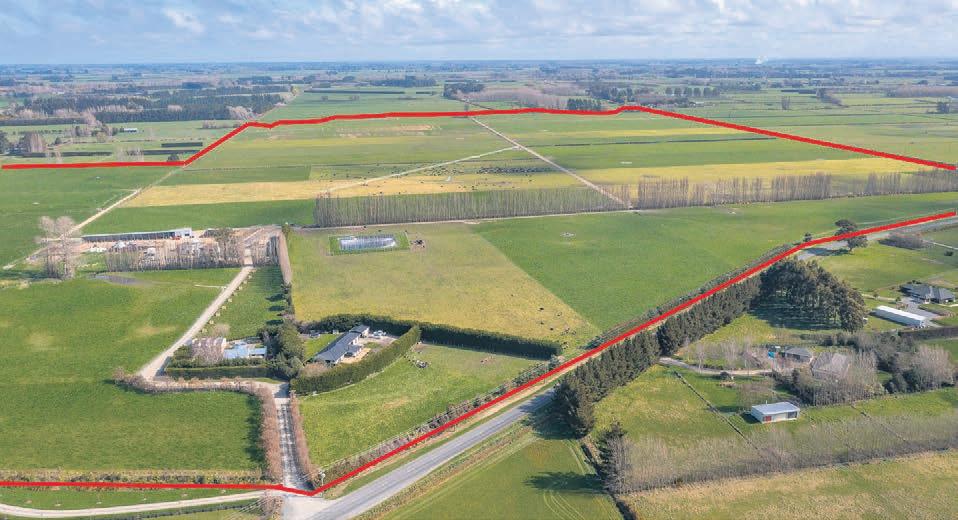
Currently milking approximately 400 cows through a 39-a-side HB dairy, the farm has enjoyed consistent production of approximately 200,000kgMS per annum in recent years. The property includes two good homes, which gives you options for staff accommodation or rental income.
Excellent soils, pivot irrigation and recent re-grassing underpin the performance record, setting new management up for continued success. The convenience of close-by Lincoln township, schools and amenities, makes this a great place to farm.
bayleys.co.nz/5519043
111.9443ha
Deadline Sale (unless sold prior)
12pm, Wed 26 Oct 2022
3 Deans Avenue, Christchurch

View by appointment
Ben Turner 027 530 1400
ben.turner@bayleys.co.nz
Evan Marshall 027 221 0910
evan.marshall@bayleys.co.nz
Kereru 1405 Mangleton Road
North Canterbury 277 MacKenzies Road, Waipara
WHALAN AND PARTNERS LTD, BAYLEYS, LICENSED UNDER
Canterbury 684 Telegraph Road, Charing Cross, Darfield
bayleys.co.nz NEW LISTING
THE
ACT
AND
BAYLEYS,
UNDER THE REA ACT
NEW
WHALAN AND PARTNERS LTD, BAYLEYS, LICENSED UNDER THE REA ACT 2008
32



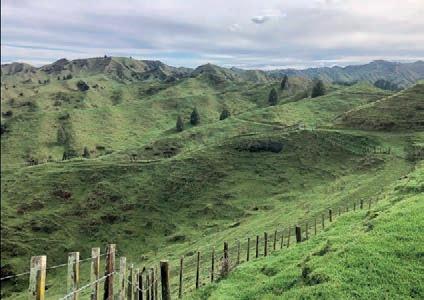
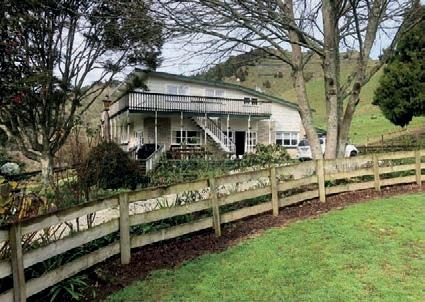

33 FARMERS WEEKLY – farmersweekly.co.nz – October 3, 2022Real Estate 33 colliers.co.nz/p-NZL67020733 For Sale by Deadline Private Treaty closing Thu 3 November 2022 at 1pm (unless sold prior) 1085 Orton Rangitata Mouth Road, Orton Large Scale Cow Wintering Unit Farm for Sale Dairy support Quality infrastructure Pivot irrigation485 hectares Richard O'Sullivan 027 292 3921 George Morris 027 212 8668 Agri Realty Ltd Licensed under the REAA 2008 Comprising 415.5 hectares (more or less) freehold as well as another approx. 69 ha of lease/ AMF grazing, it is rare to find a property of such scale and grazing capacity. Irrigated via pivot the property has been utilised as a cow wintering and young stock unit for dairy stock. c olliers.co.nz/p-NZL67020728 Farm for Sale Historical Dairy Support with Forestry Potential For Sale by Deadline Private Treaty closing Thu 3 November 2022 at 1pm 1537 Geraldine-Fairlie Highway , Fairlie Dairy support Four bedroom homestead Quality infrastructure 1,148 hectares Richard O'Sullivan 027 292 3921 George Morris 027 212 8668 Agri Realty Ltd Licensed under the REAA 2008 Operated as a beef and dairy grazing unit, with approx. 757 hectares being identified as suitable for plantation forestry and carbon sequestration. This is an opportunity not to be missed as our vendors are repositioning themselves in the market. Accelerating Success We’re online NZ’s most trusted source of daily agricultural news and information is now a website. farmersweekly.co.nz
Premium property, prime location
A well respected 184 ha dairy unit with very good contour and a comprehensive range of buildings only 25 minutes south of Rotorua in the Rerewhakaaitu District. This farm has been nurtured and developed by the Vendors over the last 21 years to a farm that delivers and achieves consistent levels of production. The farm with its 184 ha of mostly flat to gentle contour produces around 200,000 kgMS from 520 cows with approximately 524 tonne of palm kernel and meal blend introduced as brought in feed. The property has a good range of infrastructure including a 47 ASHB, implement sheds, calf sheds, workshops and a lined effluent storage pond and three good dwellings.
Hauturu 1053 Kaimango Road
Tender closes 2.00pm, Thu 3rd Nov, 2022 (unless sold prior), C/Farmlands, 36 Marguerita Street, Glenholme, Rotorua View Wed 5 Oct 12.00 - 1.00pm Wed 12 Oct 12.00 - 1.00pm

Web pb.co.nz/MAR107049
Ian Morgan M 027 492 5878
Chelly Aitchison M 022 697 8779
Wharepuhunga 703 Bayley Road
Tender
A very well presented dairy farm
A well presented dairy farm in a good Waikato farming district.
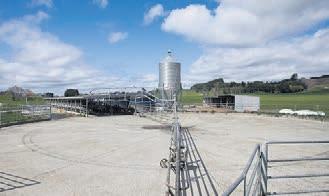
• 53 ha with ash soils
• Very well appointed with a full range of farm buildings
• Attractive four bedroom home with double garaging
This property will appeal to a wide range of potential purchasers. Call the agent today for property and inspection details.
Auction 1.00pm, Thu 20th Oct, 2022, Te Awamutu Rugby Sports & Recreation Club, 420 Albert Park Drive, Te Awamutu, 3800
View Tue 4 Oct 12.00 - 1.00pm Sun 9 Oct 12.00 - 1.00pm Web pb.co.nz/TWR105678
John Sisley M 027 475 9808


'Valley Run'
Located 28 km west of Otorohanga, 'Valley Run' is a well-presented hill country breeding and finishing farm.
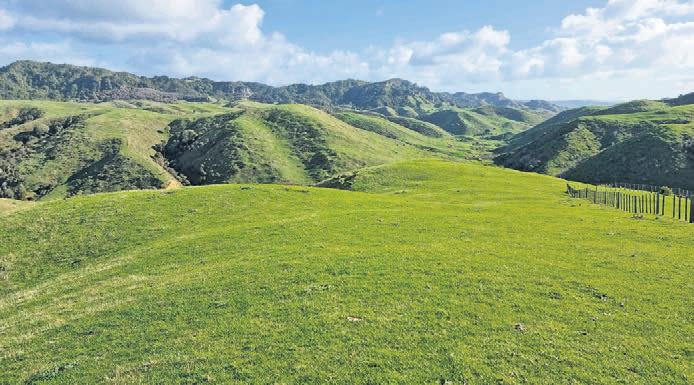
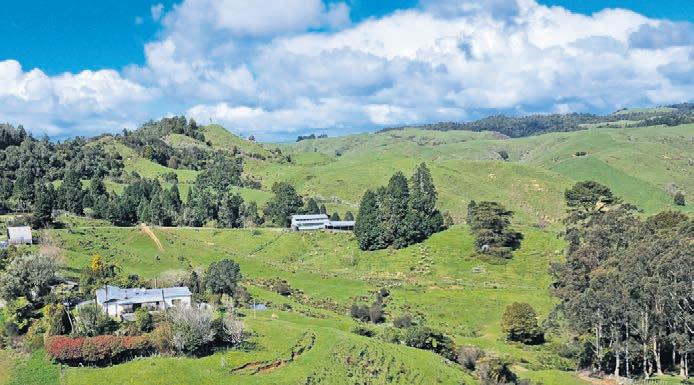
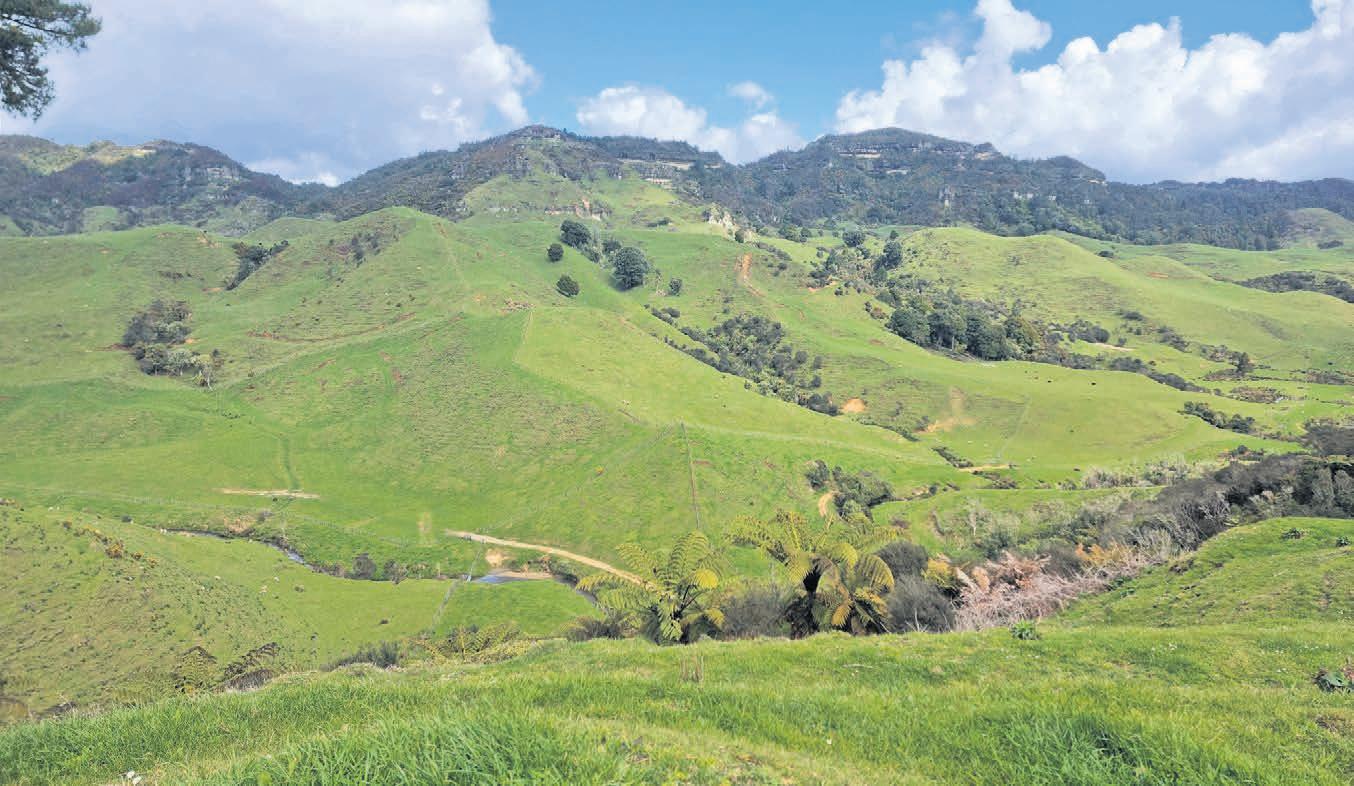
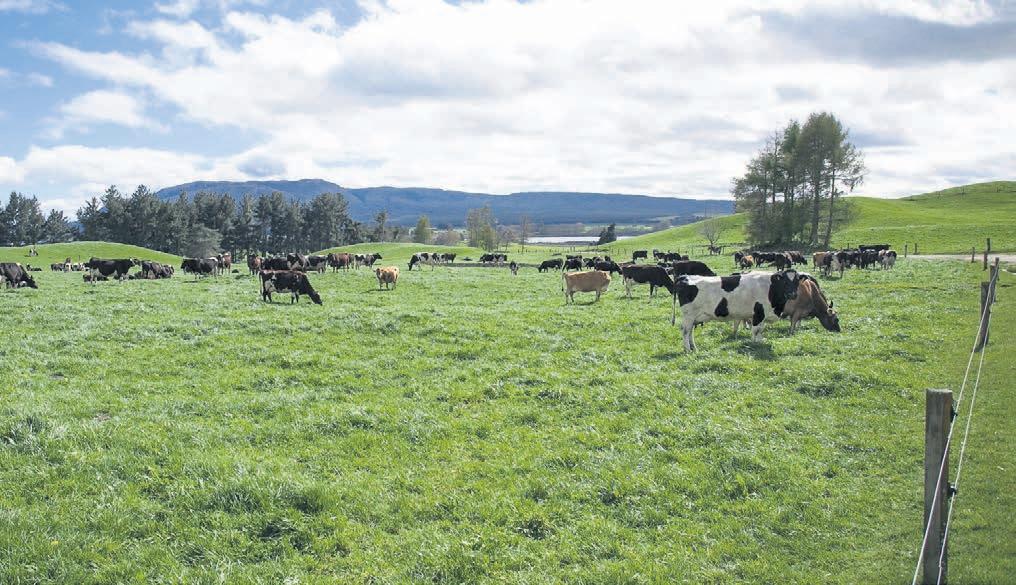
A special feature is approx 290 ha of native bush which adds significantly to the indigenous biodiversity and recreational opportunities available on the property.
• Total area 689 ha with approx 400 ha within farm block, 38 main paddocks with natural stock water
• Rolling to medium hill contour with steeper sidlings and pockets of bush, all classified as LUC 6
• Wintering circa 1,700-1,800 MA ewes, 400 ewe hoggets and 70-80 finishing steers
• Three stand woolshed and covered sheep yards, good roadside cattle yards plus satellite yards
• Comfortable refurbished four bedroom home with covered deck and internal garage
With recent investment in fencing, weed eradication and fertiliser, this property is a very tidy stand-alone unit that would also make a great addition to an existing farming business looking to create larger scale.
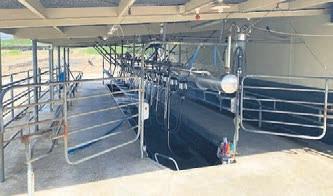
Tender closes 4.00pm, Wed 9th Nov, 2022, Property Brokers, 138 Arawata Street, Te Awamutu View Tue 11 Oct 11.00 - 1.00pm Tue 18 Oct 11.00 - 1.00pm Web pb.co.nz/TWR103665
Dave Peacocke M 027 473 2382
Rerewhakaaitu
Tender
Auction
206 Ash Pit Road
E davep@pb.co.nz Property Brokers Ltd Licensed REAA 2008 | pb.co.nz Proud to be here 34
Taumarunui
Road
Open Day
River Run
River Run provides a dairy purchasing option in a central North Island location seldomly offered to the market. The 136.21 ha (more or less) of flat, well-draining dairy land could be an ideal two labour unit property or an extension to another farming business. Located just 11 km from Taumarunui township on the edge of the Whanganui River the 106 ha dairy platform has an excellent layout with short walks on flat to easy undulating contour and is under excellent management with the current sharemilkers producing an average of 100,000 kgMS from 300 cows. The 30 ASHB cow shed is centrally located and is supported by calf barns and further hay and implement sheds. The property has a high standard of paddock improvements with quality pastures, pumice lanes and tidy fencing along with underground hydrants for effluent disposal. The home is close by the cow shed and offers three bedrooms with some recent improvements. Dairy farms are not often offered in this area.
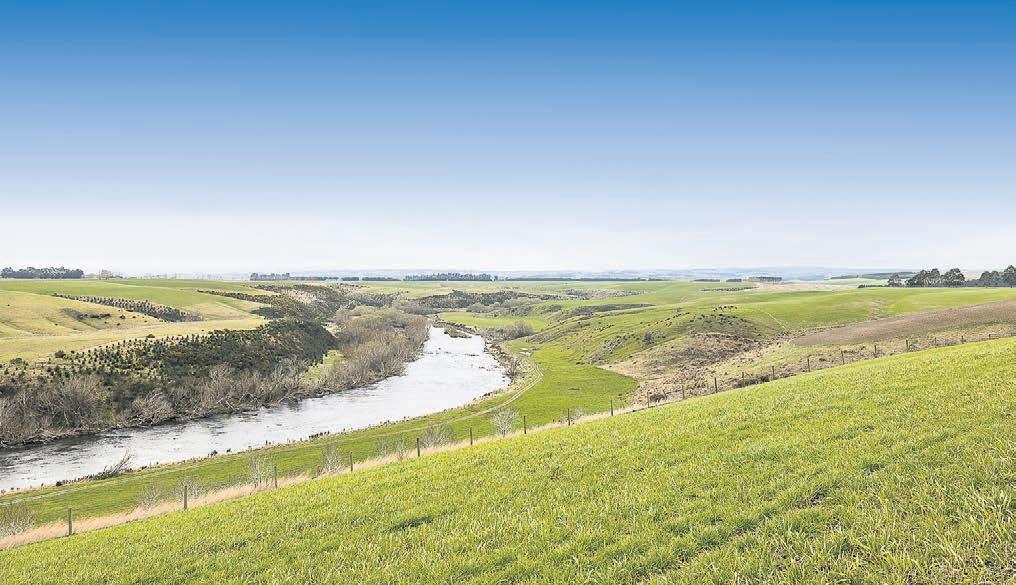
Auction 11.00am, Mon 7th Nov, 2022, Taumarunui Golf Club, 165 Golf Road, Taumarunui View Tue 11 Oct 11.00 - 1.00pm Tue 18 Oct 11.00 - 1.00pm
Web pb.co.nz/TUR102767
Katie Walker M 027 757 7477 E katiew@pb.co.nz

Grazing or forestry
Located 18 km from Taihape, you will find this 315 ha (more or less) property that is currently being run as a sheep, beef and bee farm. With 50 ha (more or less) of easy to rolling land, the rest is made up of medium to steeper hills with approximately 60 - 70 ha made up of Manuka. The farm is divided into 50 paddocks with conventional and electric fencing and there is also a four stand woolshed with an 800 nightpen. Water from dams and a solar system supply the farm and the house is supplied with tank water. The home is comfortable and features four bedrooms and an office.

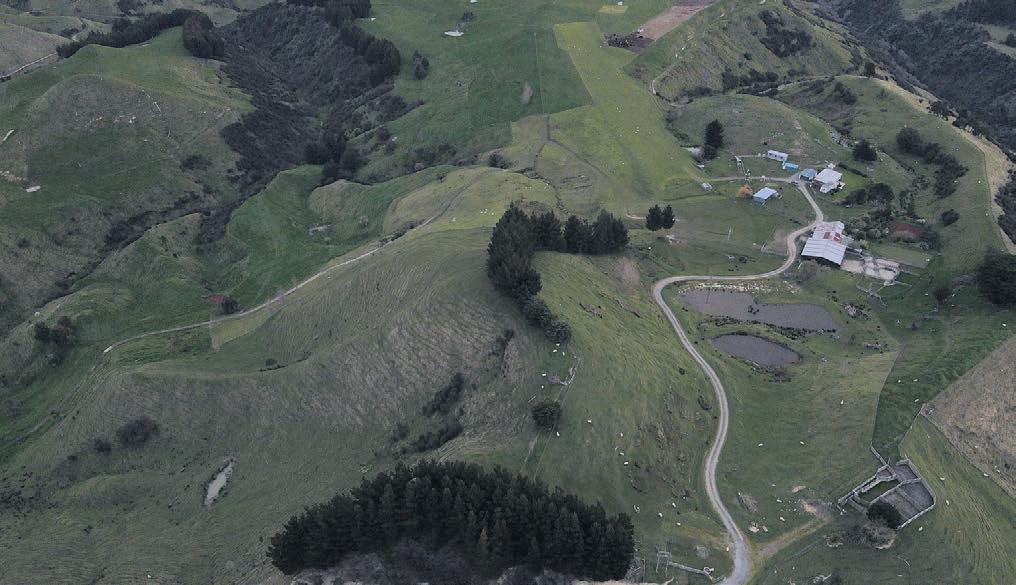
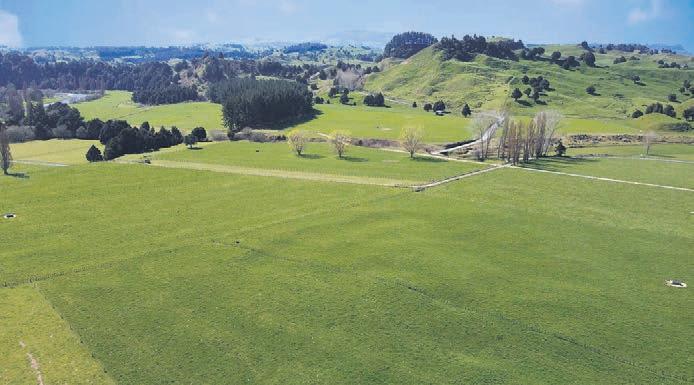
4 1 Tender closes 2.00pm, Tue 25th Oct, 2022 (unless sold prior)

View By appointment Web pb.co.nz/TIR108251 Doug Glasgow M 027 204 8640
Awa Hiwi Farm - 274 ha
Situated in the heart of the South Otago farming district, Awa Hiwi Farm at 274.39 ha is a genuinely versatile property with good scale and improvement levels.
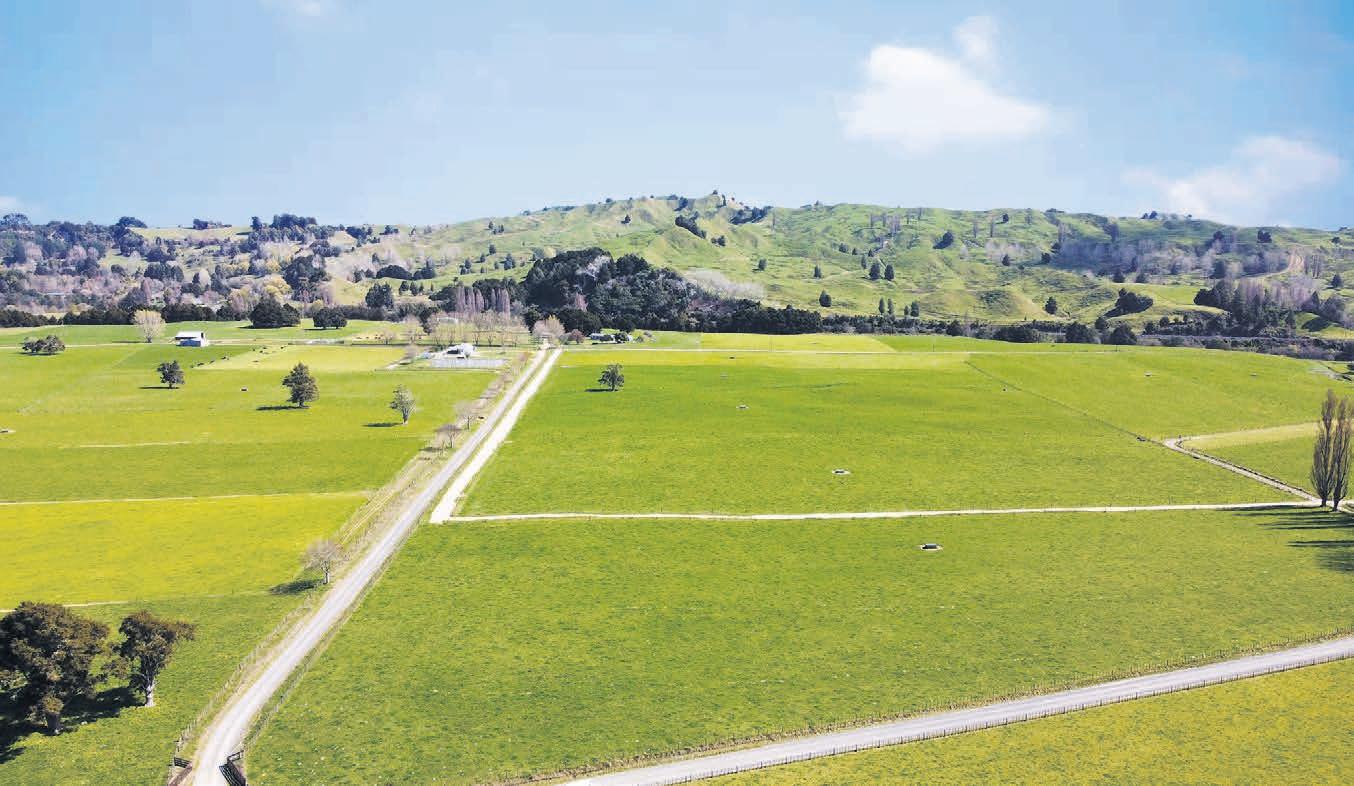
Currently operated as a dairy support property, it benefits from good subdivision, strong fertility levels, as well as an irrigation water consent.
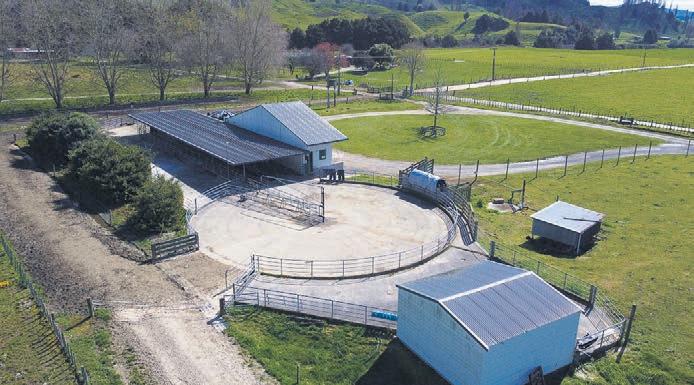
The farm is complemented by a quality four bedroom homestead along with good support buildings and facilities, making for a wellbalanced unit suited to a range of uses.
4 1
View By appointment Web pb.co.nz/DNR108733 Paul Urquhart M 027 543 7774
Taihape 718 Kaweka Road
Tender
Ashley Downs 172 Carruthers Road
New Listing
Tender closes 2.00pm, Thu 3rd Nov, 2022 (unless sold prior)
258 Burnand
Property Brokers Ltd Licensed REAA 2008 | pb.co.nz Proud to be here 35
Centrally located between Te Aroha and Paeroa townships is a dairy farm currently milking 500 through a 60 bale rotary cowshed. Consistently producing around 200,000 kg/ ms per annum with the help of a 34 ha lease. For sale is approx 155 ha (STS). Flat contour with a soil structure of sandy loam, peat and marine clay.
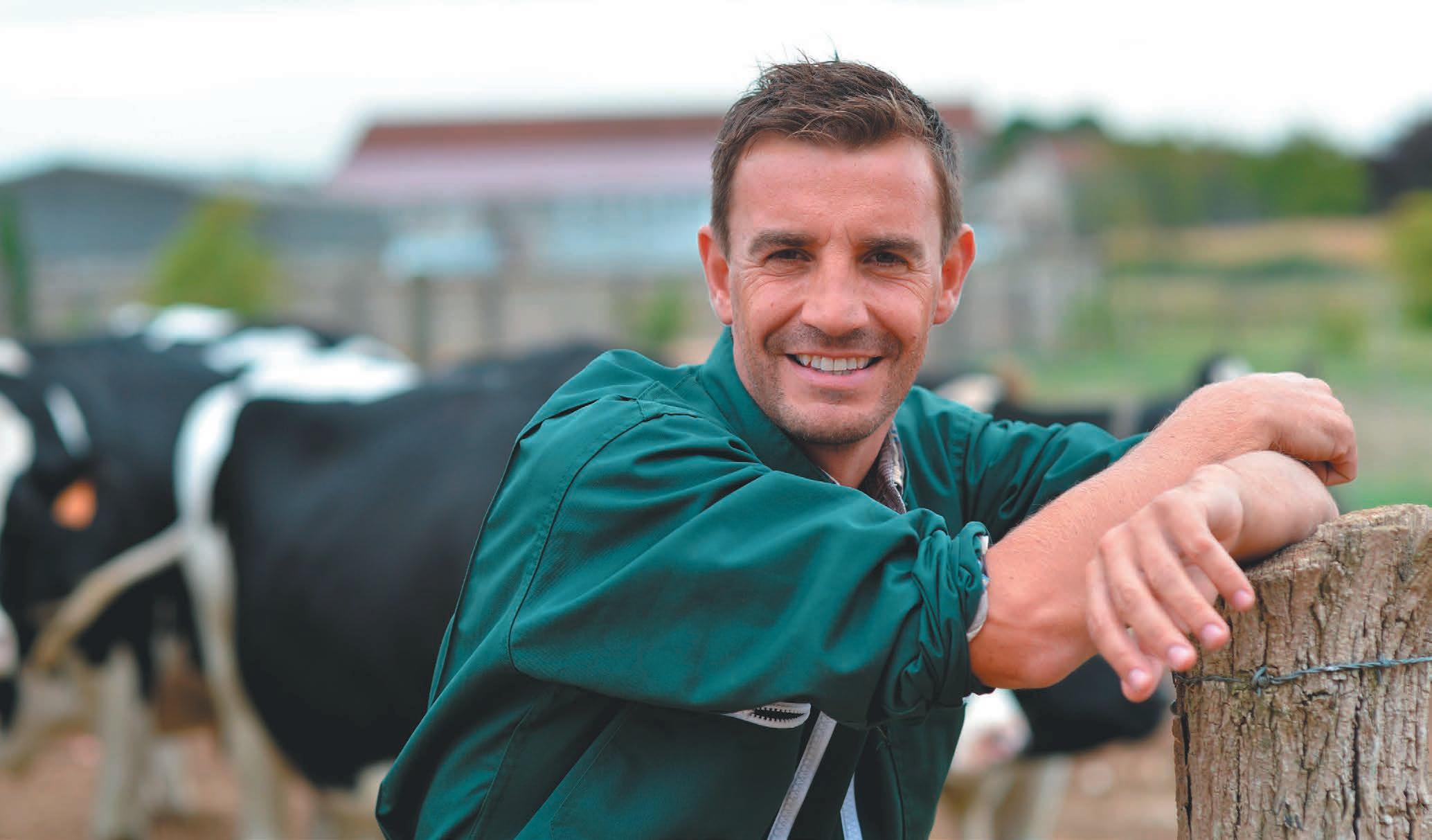
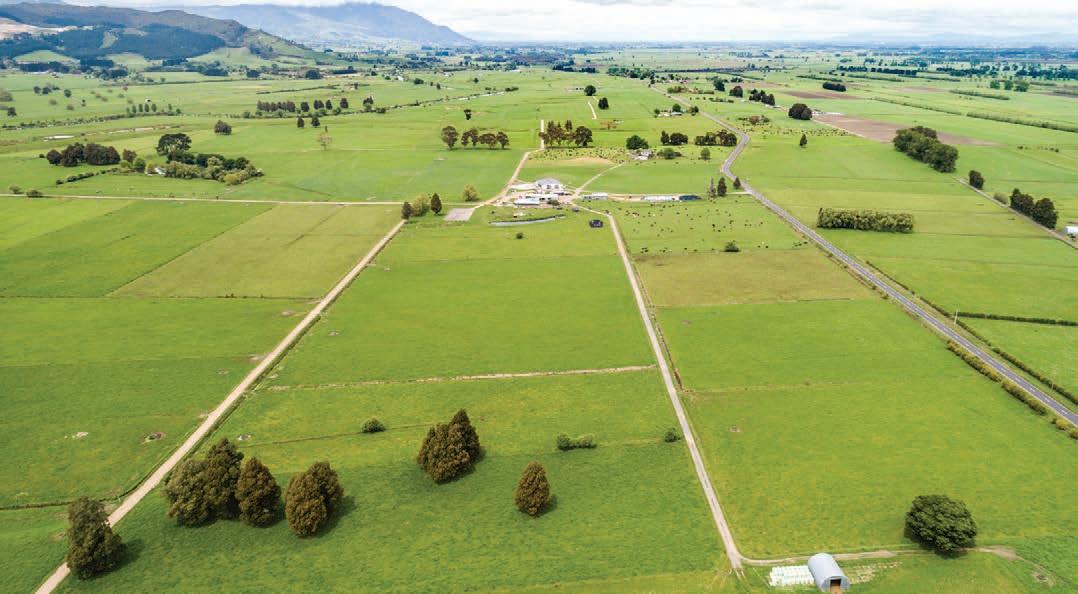
Farm infrastructure is plentiful which includes implement sheds, workshop, haybarn, covered fertiliser bin and a stand off pad with rubber matting. Dwellings include the main four bedroom home and a three bedroom cottage, all in good order. Production opportunity without the usual capital cost. Contact Jack who will fill you in on the rest.

Link Realty Ltd. All information contained herein is gathered rom sources we consider to be reliable. However, we cannot guarantee or give any waranty about the information provided. Interested parties must solely rely on their own enquiries. matamata.ljhooker.co.nz/JNSHR1
LJ Hooker Matamata 07 888 5677 Link Realty Ltd. 155 ha STS Choices Galore 869 Awaiti Rd, Paeroa Licensed Agent REAA 2008 Deadline Sale Closes Thurs 27th Oct, 4pm (unless sold prior) View Thurs 6th, 13th & 20th Oct 11am - 12pm Agent Jack Van Lierop 027 445 5099 DEADLINE SALE Advertise with us Reach hundreds and thousands of rural New Zealanders every week Call Grant 027 887 5568 36 FARMERS WEEKLY – farmersweekly.co.nz – October 3, 2022 Real Estate36 Rural and Lifestyle Sales.com Ltd Licensed REAA 2008ruralandlifestylesales.com For Sale By Negotiation Large Scale Dairying Opportunity - 234.5ha + 110ha 37 Karewarewa Road, Rangiwahia Farm View: By Appointment Richard Anderson 027 543 1610 richard@rals.co.nz • 234.5 hectares Freehold plus 110 hectares Lease, total 344.5 hectares • 160 hectares under irrigation with 2 big guns and k-line 50 Bale rotary shed with in-shed feeding and automatic cup removers Excellent free draining Kiwitea series soils • This is an attractive productive flatland dairy farm ready for the astute investor to take to the next production level Call Richard for more information or to arrange a time to view. Property ID RAL891
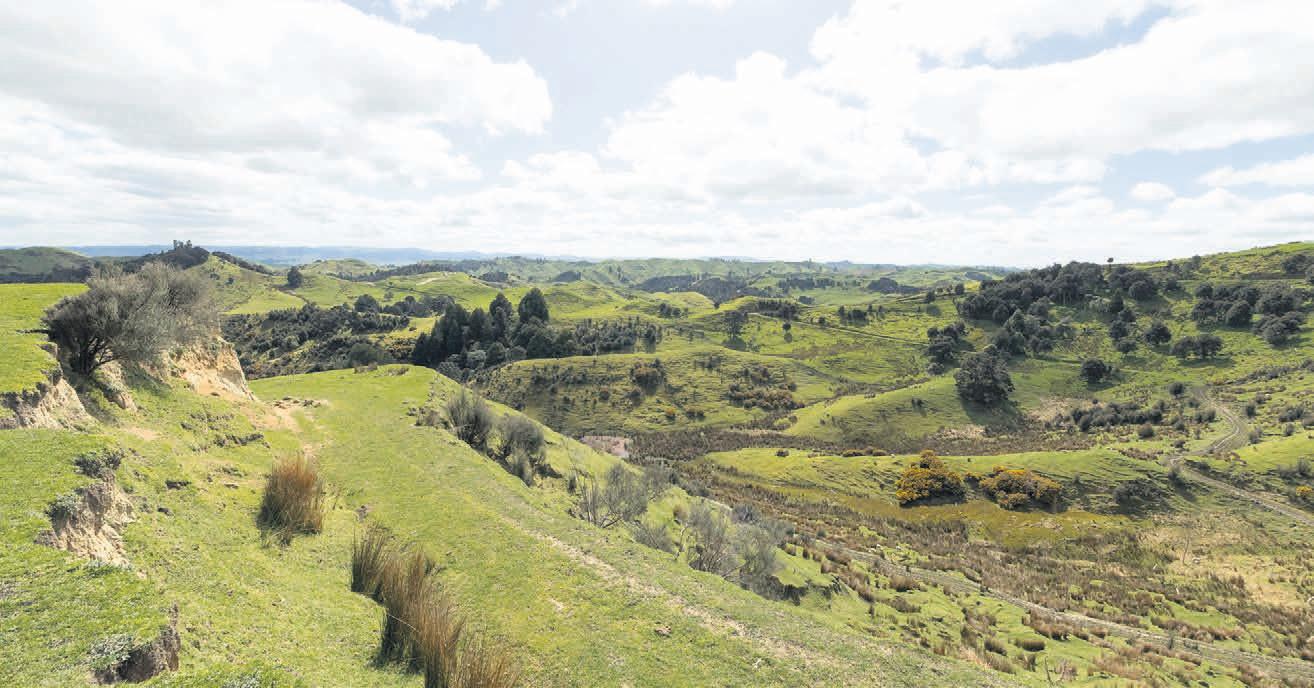










37 PGG Wrightson Real Estate Limited, licensed under REAA 2008 Helping grow the country pggwre.co.nz/FDG36432 NEW LISTING RANGIWAHIA, MANAWATU Grazing, Forestry or Carbon Bare land - 441.035 ha in three Titles. Currently part of a large station running sheep and beef this block of land has access from Marshall Road and Mangapapa/Irelands Road. Medium hill country with large areas of easy country, well tracked and fenced throughout with good natural water and some large dams. An opportunity here to purchase a sound hill country property, genuine sale with owner selling for farm succession. TENDER Closes 2.00pm, Wednesday 9 November VIEW By Appointment Only E geoff.white@pggwrightson.co.nz M 027 274 1478 Geoff White E wayne.brooks@pggwrightson.co.nz M 027 431 6306 Wayne Brooks PGG Wrightson Real Estate Limited is New Zealand’s only national non-franchised real estate company assisting clients throughout the country and across the globe to buy and sell New Zealand property. Rural New Zealand, We live here too. When it comes to getting the very best sale result for your rural, lifestyle, or provincial residential property, or help finding your next one, it pays to deal with the We really know rural New Zealand, because we live and work in the same pggwre.co.nz trusted and local experts. For more great rural listings, visit www.pggwre.co.nz Helping grow the countrywww.pggwre.co.nz PGG Wrightson Real Estate Limited, licensed under the REAA 2008 NZ’s leading rural real estate company RURAL | LIFESTYLE | RESIDENTIAL
Carpenters required – Labourers and Foreman positions available for a rural working opportunity based in Central Otago
Do you enjoy working with cattle but don’t want to milk cows?

We are looking for a talented individual to join our Fairfield Farms team. We operate a 2500ha mixed farming operation consisting of a beef finishing unit, mixed arable operation and wastewater farm used for cut and carry of grass and maize.

Farmbuild South is looking for experienced Labourer, Carpenter and Foreman to join their rural building team. It is imperative that you have a good attitude, have good work ethic and are a team player.

We are looking for the following qualities:
• Must be able to work out of town Monday –Friday (when required)
• Work in a team or independently
• Passion for building
• Be physically fit
• Health and Safety conscious
• Tidy, clean cut, organised with a eye for detail
• Excellent time management skills
In return, Farmbuild South will offer the following:
• A competitive rate of pay based on experience for the right person
• Tool Allowance
• Staying Away Allowance
• Travel Time paid
• Food and accommodation supplied when working away
• Great work conditions with a wide range of projects

• Opportunities to progress in the business for the right applicants
• Vehicle supplied to Foreman’s position
If
Pat 027 244 4824 www.farmbuild.co.nz
Reporting to the Farm Supervisors this role will provide an opportunity to work within our Beef finishing unit.
This will Involve mixing and feeding rations through a Kuhn mixer wagon, shifting stock, working with animals in yards, Irrigation, and general farm duties.
We operate a modern fleet of tractors and equipment.
The successful candidate will have:
Attention to detail and take pride in completing tasks to a high standard
Stock and animal husbandry skills
Telehandler experience
Tractor operation experience including feed wagons.

Modern technology and GPS knowledge
Basic computer skills and record keeping
General farm maintenance skills
A can-do attitude
Initiative and the ability to operate independently
The ability to multi-task and adapt to everchanging priorities
Basic pasture management skills
Ability to work autonomously In the supervisors absence
In Return we can offer:
A challenging but rewarding work environment
Opportunity for individual growth
Competitive starting remuneration rates depending on experience
Plus on Farm housing available if required Applicants will need to be legally entitled to work permanently in New Zealand. If this sounds like the opportunity you have been looking for, please apply online now at https://www.talleys. co.nz/job-openings and include a cover letter and a copy of your CV, or alternately contact Craig Jackson on 021 023 46603
this sounds like you, please forward CV to pat@farmbuild.co.nz or call
LK0113312©
BEEF FINISHING FARM WORKER 38 Marketplace FARMERS WEEKLY – farmersweekly.co.nz – October 3, 2022 Marketplace38 We’re online NZ’s most trusted source of daily agricultural news and information is now a website. farmersweekly.co.nz
ANIMAL HEALTH
(437
FORESTRY
WANTED NATIVE FOREST FOR MILLING also Macrocarpa and Red Gum New Zealand wide. We can arrange permits and plans. Also after milled timber to purchase. NEW ZEALAND NATIVE TIMBER SUPPLIERS (WGTN) LIMITED 04 293 2097 Richard.

GOATS WANTED
GOATS. 40 YEARS experience mustering feral cattle and feral goats anywhere in NZ. 50% owner (no costs). 50% musterer (all costs). Phone Kerry Coulter 027 494 4194.
GOATS WANTED. All weights. All breeds. Prompt service. Payment on pick up. My on farm prices will not be beaten. Phone David Hutchings 07 895 8845 or 0274 519 249. Feral goats mustered on a 50/50 share basis.
HORTICULTURE
NZ KELP. FRESH, wild ocean harvested giant kelp. The world’s richest source of natural iodine. Dried and milled for use in agriculture and horticulture. Growth promotant / stock health food. As seen on Country Calendar. Orders to: 03 322 6115 or info@nzkelp.co.nz
LIVESTOCK FOR SALE
RED DEVON YEARLING bulls available. Quiet and well grown. Ready for work. Phone 021 0479 471.
PROPERTY FOR LEASE
021
Based in Northern Waikato, servicing surrounding areas and Northland. Call Natalie 021 109 5884. nataliecrisp@hotmail.co.uk
RELAXING FULL BODY massage in rural Ohaupo. Unwind. De-stress. www. ruralmassage.co.nz or call 027 529 5540.
SMALL RURAL PROPERTY for lease (min 12 months) suit retired farmer/semi retired, no children, small house, ideal for horses , a dog or two. Need to be a handyman. Beautiful location, close to beaches. Available early November 2022. Waikato region. Contact jmac1933@ hotmail.com
RAMS FOR SALE
WILTSHIRES-ARVIDSON. Self shearing sheep. No1 for Facial Eczema. David 027 2771 556.
HAIR SHIRE® Low input meat rams! www.organicstud. nz 027 225 5283. tim@ organicstud.nz
RURAL VEHICLE
Cows will be in milk on sale day and will come forward in sound health & good condition.
79% of the herd is 5 years & younger.
Vendors are exiting the industry so this is an opportunity to purchase genuine, honest, hard working cows.
Farmed traditionally on system 1.5 with grass & silage only. These cows will shift and fit into most systems.
To
027
online please
BTZ Forestry Marketing and Harvesting
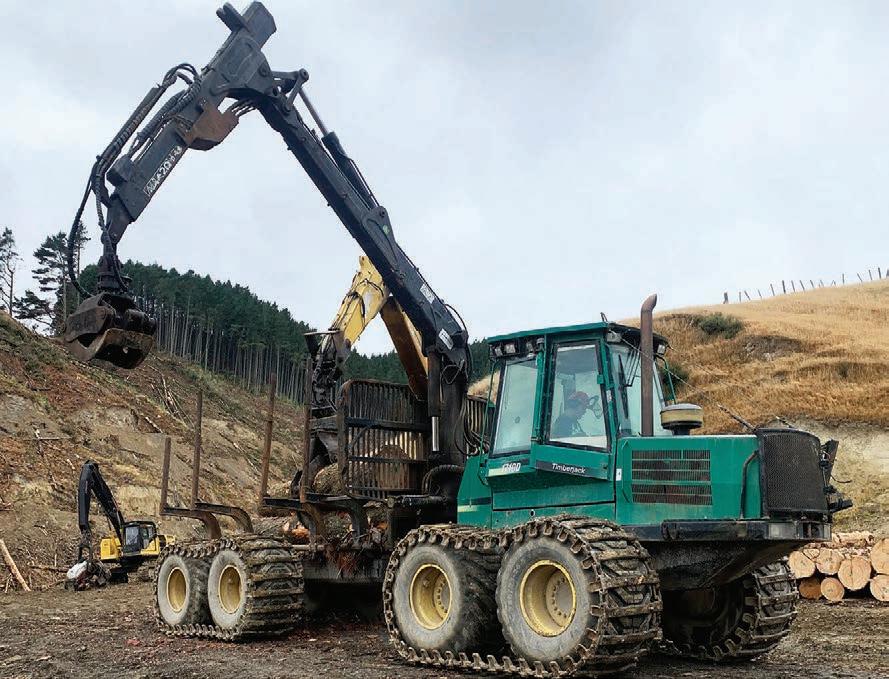
(Obtaining the best profits for our customers) Farmers/Woodlot owner
Tired of waiting for someone to harvest your trees?
We are not committed to one buyer that is how we get our customers the most profit we can. Set up to do the smaller, trickier wood lots. No job too big or too small.

Buyers of Woodlots and Forest.
Free quotes • Markets for all species
Email: BTZforestry@gmail.com
DOGS
DOGS
022 698 8195.


FARM MAPPING
ACCURATE
ELECTRIC ATV EV3. Made in Warkworth by www.switchevglobal.com See website video and information. Cheap runabout for small farm, orchard. 2-seat side by side with tip tray. Galv. chassis and composite body - no rust. Super lights, seat belts and ROPS, regen and disc braking. 2015 model. Suspension and controllers upgrade 2019. New chains and brake pads. Will demo. $9,000ono + GST. ianpage.forester@gmail. com 027 434 2494
Whangarei.
TO
WHAT’S SITTING IN your barn? Don’t leave it to rust away! We pay cash for tractors, excavators, small crawler tractors and surplus farm machinery. Ford –Ferguson – Hitachi – Komatsu – John Deere and more. Tell us what you have no matter where it is in NZ. You never know.. what’s resting in your barn could be fattening up your wallet! Email admin@ loaderparts.co.nz or phone Colin on 0274 426 936 (No
LK0112808© On A/c R & D Brown 14th October 2022 12:00pm Stratford Saleyards 140 Quality XBD & J/X in milk cows Herd BW 202 PW 229, BWs up to 351 and PWs up to 560, Lepto vaccinated, C10 TB Status.
purchase
register with mylivestock.co.nz Contact John Preece
702 9988 IN MILK HERD DISPERSAL LK0113325© ELITE REFRIGERATION LTD Email: chris@asaer.co.nz Mobile
230 6904 www.asaer.co.nz LK0112765© • Kit set chiller / freezer rooms • Mono-block refrigeration units • Freezer / chiller rooms Built to order • Ice machines • Trailer mounted rooms • Repairs – service – installations Contact us to discuss your requirements anytime. Competitive Rates Kitset Sheds & Fencing Supplies. Phone: 027 963 5396 Email: trutimbernz@gmail.com LK0113245© 39 FARMERS WEEKLY – farmersweekly.co.nz – October 3, 2022Marketplace 39 CHILLERS & FREEZERS SEE TradeME #2251190054 Ph JC: 021 441 180 E: frigidair@xtra.co.nz When only the best will do! DOLOMITE For a delivered price call .... NZ’s finest BioGro certified Mg fertiliser 0800 436 566 ATTENTION FARMERS FLY OR LICE problem? Electrodip – the magic eye sheepjetter since 1989 with unique self adjusting sides. Incredible chemical and time savings with proven effectiveness. Phone 07 573 8512 www.electrodip.com ANIMAL HANDLING ANIMAL AND HUMAN healer, also manipulation on horses and dogs. Kaikoura / Blenheim, October 3rd-5th. Nelson area, October 6th8th. Wellington/Kapiti Coast/ Wanganui/Taranaki, October 10th -13th. Ohakune/King Country/Hamilton areas, October 14th-17th. Phone Ron Wilson 027 435 3089. CRAIGCO SHEEP JETTERS. Sensor Jet. Deal to fly and Lice now. Guaranteed performance. Unbeatable pricing. Phone 06 835 6863. www.craigcojetters.com www.drench.co.nz farmer owned, very competitive prices. Phone 0800 4 DRENCH
362).
30c/40c PER KG dags fadges/bales. Replacement woolpacks. PV Weber Wools. Kawakawa Road, Feilding. Phone 06 323 9550. MORTGAGE RESCUE. If a mortgagee sale is looming on your horizon, contact us as soon as! Justyn and Rodney - mortgagerescue@ protonmail.com NORTHERN SHEEP SCANNING. Sheep scanning. Crutching trailer. Friendly and reliable.
FOR SALE HUNTAWAY AND HEADING dogs. Deliver NZ wide. www.youtube.com/user/ mikehughesworkingdog/ videos - 07 315 5553. 12 MONTHS TO 5½-yearold Heading dogs and Huntaways wanted. Phone
WANTED
AND PRACTICAL farm maps showing area sizes of paddocks and vegetation. Visit farmmapping.co.nz for a free quote.
texts please) WANTED
BUY PROMOTES QUICK PASTURE growth. Only $6.50+gst per hectare delivered. 0508-GIBBGRO [0508 442 247] www. gibbgro.co.nz. “The Proven One.” GIBB-GRO GROWTH PROMOTANT Advertise with us Reach hundreds and thousands of rural New Zealanders every week Call Debbie 027 705 7181






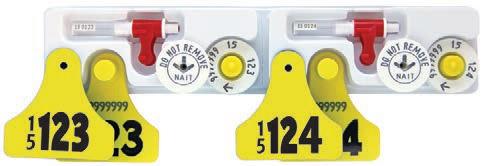
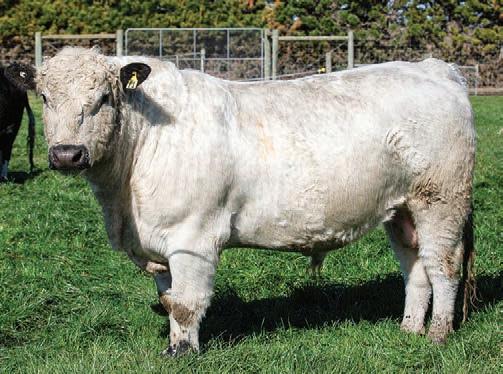






• • • • • Blue Sky Speckle Park We have 2yo Purebred Registered Bulls Frozen Semen Purebred Embryos • Purebred • Registered • DNA tested • Carcase Scanned Enquiries visit our website www.blueskyspecklepark.nz LK0113074© Terms & Conditions apply Phone today 0800 AG TAGS (0800 248 247) or order online pbbnz.com Buy and Donate For every Allflex tag order purchased PBB will donate 15% to Upcoming Auctions TUESDAY 4 OCTOBER 2pm Matariki Hereford & Woodbank Angus Yearling Bull Sale 7pm Rivendell First Stage Dispersal Sale 2022 WEDNESDAY 5 OCTOBER 1pm Te Mania Angus Yearling Bull Sale THURSDAY 6 OCTOBER 11.30am Dairy Sale In-Milk and Young Stock 1pm Glanworth Yearling Bull Sale- Waigroup Angus 1pm Kakahu Angus Yearling Bull Sale 7.30pm Melbury Stud & Commercial Yearling Murray Grey Bull Sale FRIDAY 7 OCTOBER 11.30am 7th In-Milk Auction A/C - Troy Stevenson 2pm Komoko Angus Bull Sale Regular Livestream coverage of eight North Island Saleyards. bidr.co.nz Speckle Park Bulls & Females available for private sale • 10 yearling bulls and 20 heifers and mixed aged cows to sell • All pure bred Speckle Park • DNA tested • Parentage verified • BVD tested and vaccinated • Semen tested • M. Bovis tested A Canterbury based stud recently established from the best genetics available in NZ, Australia and Canada. www.kotingotingospecklepark.co.nz LK0113180© Check out Poll Dorset NZ on Facebook LK0112874© Advertise with us Call Andrea 027 602 4925 Elite Ram Sale 21st November 1pm Symonds Road, Waipara Contact: Dave Wooldridge: 0272594859 Callum Dunnett: 0274620126 Alex Horn: 0275918449 wiltshirestud@mtcass.co.nz www.dyerlivestock.co.nz Ross Dyer 0274 333 381 STOCK REQUIRED 1YR FRSN BULLS 200 300kg 2YR FRSN BULLS 400 500kg 1YR ANG & ANGX STEERS 200 270kg 60 COWS & CALVES 2 & 3YR ANG & ANGX STEERS 450 580kg 2YR ANG & XBRED HEIFERS 380 460kg E info@rdlfinance.co.nz A Financing Solution For Your Farm 40 Livestock FARMERS WEEKLY – farmersweekly.co.nz – October 3, 2022 Livestock40
SALE TALK
Three ship mates, an Englishman, an Aussie and a Irish man stranded on this desert isle for some years retrieve a bottle that is floating past.
The Aussie pulls the cork and out jumps a genie.
The genie says “I’ve been trapped for years. I’m so grateful I’ll give you all one wish.
The Englishman says “I wish I was in the old Bull and Bush pub in London drinking a beer. Wish and he was gone.
The Aussie says “I wish I was at Flemington at the races”. Wish he was gone.
The Irish man took a lot of time umming and aaahing about what he would like before finally burst out with “I wish my mates where here to help me decide.”
Here at Farmers Weekly we get some pretty funny contributions to our Sale Talk joke from you avid readers, and we’re keen to hear more!
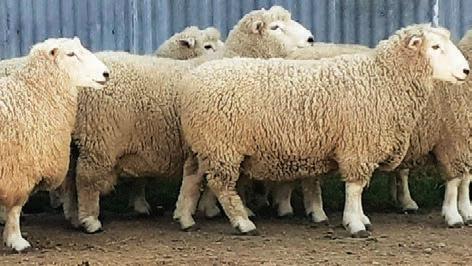
If you’ve got a joke you want to share with the farming community (it must be something you’d share with your grandmother...) then email us at: saletalk@agrihq.co.nz with Sale Talk in the subject line and we’ll print it and credit it to you.
Conditions apply
Te Kuiti Cattle Sale
Thursday 6th October
12 noon start
950 Assorted Cattle comprising:


• 100 R3 Ang & Assorted Strs
• 215 R2 Trad & Exotic Strs
• 80 R2 H/F & A/F Strs
• 160 R2 Exotic & Trad Hfrs
• 70 R2 H/F & A/F Hfrs
• 140 R1 Ang, Exotic & Beef Strs
MAYFIELD SPRING YEARLING CATTLE SALE
Top quality, station bred Angus & Angus/Hereford Steers
TUESDAY 18th OCTOBER 2022 704 Fountaines Road Mayfield, Mid Canterbury
Viewing from 12pm, lunch provided Starting at 1:00pm
VENDOR: HARWOOD FARMS
440 CATTLE IN TOTAL 350 Angus Steers 90 Angus/Hereford Steers
AUCTIONEERS NOTES:
Great opportunity to purchase good quality, forward condition steers.
ABF and Farm Assured Certificates for all cattle.
There will be some lines of cattle that are Angus Pure with tags.
For more information please contact:
CARRFIELDS LIVESTOCK AGENTS: Andrew Holt 027 496 3311 or Dylan Forde 027 255 4627

GENUINE DISPERSAL OF LONG ESTABLISHED FRIESIAN HERD
A/c LC + HD Greensill Family Trusts

Date: Thursday 13th October 2022

Address: 177 Puniho Rd, RD 37, New Plymouth
Start time: 11:30am, lunch provided will be available for online bidding
COMPRISING:

110 x Friesian In-Milk spring cows (NZMI 144 BW 102 & PW 135)
50 x Friesian In-milk/in-calf Autumn cows (NZMI 148 BW 92 & PW 119)
20 x Friesian In-milk MT Autumn cows (NZMI 147 BW 91 & PW 99)
DETAILS:
• Herd tested 27/09/2022
• More details from the herd test once received
• Lepto Vaccinated
• TB Status C10
AUCTIONEERS NOTES:
Due to a change in farming practice, 180 strong Friesian cows are being offered for auction. The herd has been owner operated for 42 years and a closed herd for 30 years. With one herd code this is a great opportunity to purchase top quality Friesian dairy cows with absolute confidence. These cows will shift well. Milked through both a Herringbone and Rotary shed.
The in-calf Autumn cows have been vetted to date to CRV and Semex straws and tailed with a homebred Hereford bull. Start calving 15/03/23.
Feed system is predominantly grass based, summer crops (green feed maize) and maize silage fed on feed pad with a meal + mineral blend over the winter milking period.
PAYMENT TERMS:
Payment date: 20/11/2022


Delivery date: Trucking from 14/10 onwards
OUR VENDOR: Layne Greensill 027 241 3005
CARRFIELDS LIVESTOCK AGENT: Daniel Crowley 027 215 3609
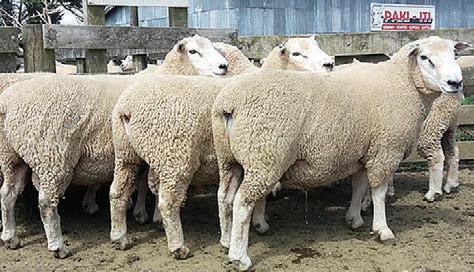
Tim Hurley 027 414 6756
7th ANNUAL YOUNG IN-MILK COW AUCTION
A/c TROY STEVENSON 437 Patiki Road
Pihama, South Taranaki
Friday 7th October 2022
Start Time: 11:30am Undercover Gourmet BBQ lunch provided will be available for online bidding
COMPRISING: 160 x Young Friesian & Friesian Cross in-milk cows BW230 PW291 Herd test data available
DETAILS:
• TBC10 – MBovis not detected and BVD negative

• All cows in-milk, milked twice daily in rotary shed
• Herd tested 16/9
• Strict selection policy all young cows mainly 2–5yr-olds sourced locally in Taranaki including CRL heifers from the Werder farming
AUCTIONEERS NOTES: All cows personally guaranteed by our vendors offering 1-week trial. Cows purchased to supply calf milk then offered for auction. Buy with confidence. We totally recommend and have received very good comments from previous buyers.
PAYMENT/DELIVERY TERMS: Payment due 20th January 2023 and delivery immediate.
OUR VENDOR: Troy Stevenson 027 469 7636

CARRFIELDS LIVESTOCK AGENTS: Brent Espin 027 551 3660 brent.espin@carrfields.co.nz Daniel Crowley 027 215 3609 daniel.crowley@carrfields.co.nz Tim Hurley 027 414 6756 tim.hurley@carrfields.co.nz

• 70 R1 Ang & Beef Hfrs LK0113298©
• 120 R1 Ang Bulls
OR VISIT OUR WEBSITE: www.carrfieldslivestock.co.nz
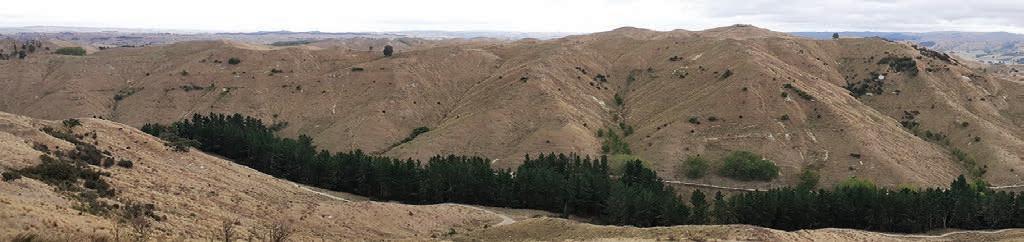

VIEW OUR CATALOGUE AT www.carrfieldslivestock.co.nz
VIEW OUR CATALOGUE AT www.carrfieldslivestock.co.nz
PAKI-ITI ROMNEY
PAKI-ITI ROMTEX
Orari Gorge Romney, RomTex actively select for FEWER DAGS AND GREATER RESISTANCE AND RESILIENCE TO WORMS. DPDCents Please contact us any time for more information or to arrange a visit. Breeding MORE PROFITABLE & MORE SUSTAINABLE sheep in the HILL COUNTRY for the HILL COUNTRY. “Home of the Beef + Lamb Genetics Low Input Progeny Test” Robert & Alex Peacock | 03 692 2893 | robert@orarigorge.co.nz Orari Gorge Station, RD 21, Geraldine, South Canterbury, New Zealand ORARI GORGE GENETICS SIL Dual Purpose Dag Score Orari Gorge 4949 DP Flks Avg 2010 2020Years -10 10 30 20 0 40 50 70 60 Dags have been identified as a key cause of grumpy shepherds and wasting time Stewart Morton 06 328 5772 • Andrew Morton 06 328 2856 RD 54 Kimbolton, Manawatu • pakiroms@farmside.co.nz • 170 clients last year purchased or leased Paki-iti rams • Bred on a 870ha hard hill country property rising up to 637m asl (2090f asl) • Breeding for constitution, longevity, structural soundness and then performance • Constitution = moderate frame, deep bodied type of sheep • Performance = Growth, fertility, survival, meat yield, incorporating FE tolerance and parasite resistance • 11 years of breeding Romtex, utilizing a stabilised SIL recorded Romtex flock • Paki-iti maternal Romtex offer faster growth rates and higher meat yields • Romtex rams sold as 22th rams PAKI-ITI ROMNEY & ROMTEX
Visit paki-iti.co.nz to view our breeding programs LK0113283© LK0113169©
LK0113299©
LK0113317©
41 FARMERS WEEKLY – farmersweekly.co.nz – October 3, 2022Livestock 41
Markets

Time and tide wait for no lamb
As D-Day for teeth approached, the offloading of old season lambs left processors everywhere with long waiting lists. This diverted some old season lambs to the yards, fattening tallies at prime sales. So far, so seasonal – but on the Chatham Islands farmers had to add a new issue to the neverending battle to get lambs away: the lack of a boat to take them off the islands.
Suz Bremner MARKETS
ALAST-minute rush to offload old season lambs resulted in a lift in volume of this class heading to prime sales last week, even though it was a short week with fewer processing days.
The rush was instigated by the approaching D-Day for teeth as October 1 heralds the start of processors checking to see if the 2-tooth teeth have erupted. This would deem the animal an adult sheep rather than a lamb and they would therefore be downgraded.
Farmers try to avoid entering that period of uncertainty but situations out of their control this year have meant offloading has come right down to the wire for many.
It has been a frustrating season – one plagued by staff shortages due to covid-19 and more recently extremely wet conditions. The staff shortages meant less production, which led to big delays in getting stock off to the processors, and the wet weather has made transport access difficult for some, as well as slowing growth weights, leaving some lambs short of the finishing mark when they were meant to be.
And as D-Day approached on the tail-end of a short week, processors once again found themselves full and with waiting lists, which in turn diverted some old season lambs to the yards and plumped up tallies at prime sales in particular. Demand was resilient for short-journey old season lambs, despite the approaching change of month, as those with contracts to fill
actively sourced from the yards. But bidding was very selective on the balance at both the prime and store sales and any long-term males in particular were given the cold shoulder and discounted.
That comes at the tail-end of a season that has been consistently strong, without being stupid. The $300-plus prices that started to appear last season have not come to fruition but lines trading over $200 at both store and prime sales have been the norm.
While those within the main islands’ shores dealt with covid-19 and weather woes in the neverending battle to get lambs away, Chatham Islands farmers have added shipping issues to that list. There are still significant quantities of old season lambs to make the journey over, as well as cattle that should have been in
the pens at the spring cattle sales. There is hope that the boat will return to either Timaru or Napier in the near future, but as contracts to the Norfolk Islands regularly take the boat away, farmers have had a frustrating wait for it to return. Weather has also not been the farmer’s friend on the islands this season and has impacted sailings.
Old season lambs will take priority on the boat once it docks, and in general these are OctoberNovember-born and therefore have more time with their lamb’s teeth, but again, time is ticking. Farmers are also facing a period from February to May where they will not have access to a boat as the old is replaced by new, so the pressure is even higher to offload lambs and then as much other stock as possible before February.
Demand was resilient for short-journey old season lambs, despite the approaching change of month, as those with contracts to fill actively sourced from the yards.
As the old season lamb market winds down, the focus will shift to new season lambs, which traditionally hit the early North Island saleyards from early to mid-October. Buyers will be hoping that the very wet spring does not impede the start of the selling season, though it is more than likely that the lack of sunshine will have slowed growth rates of these lambs and could potentially delay weaning.
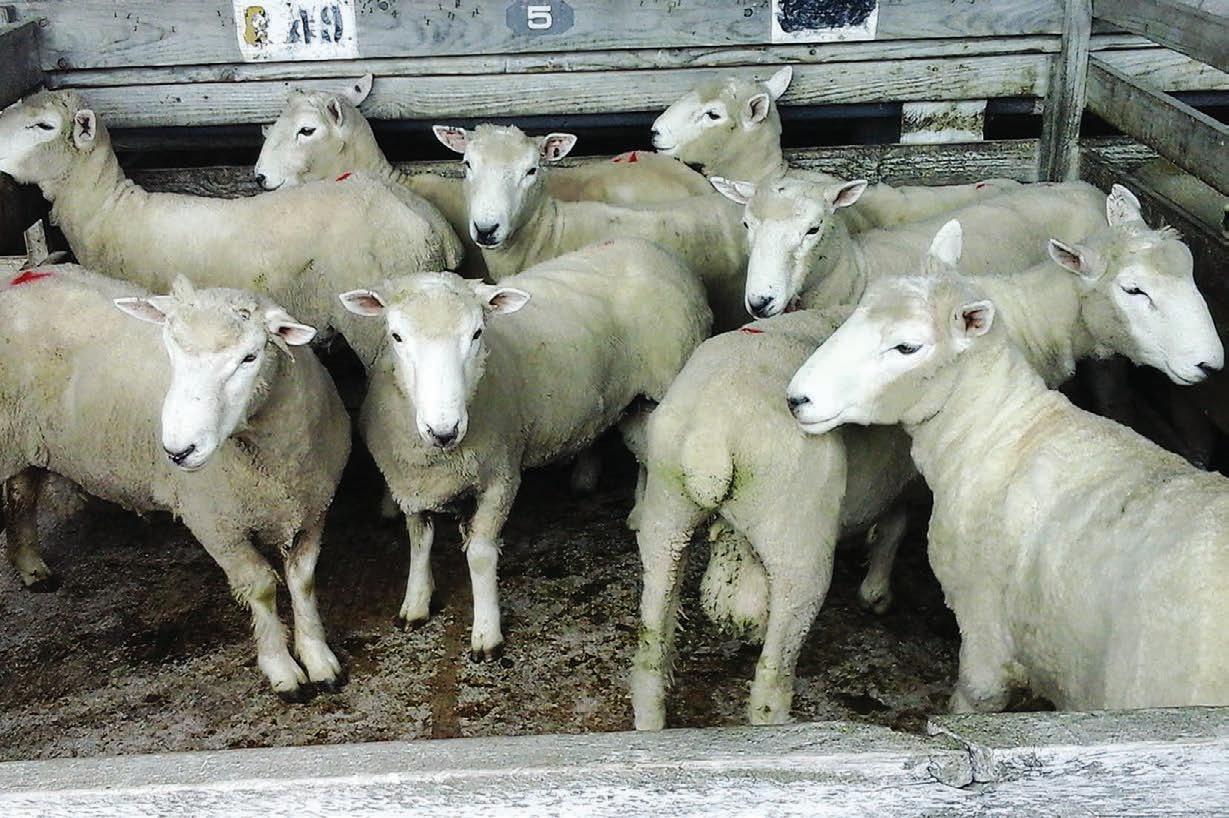 Proudly sponsored by
FRUSTRATING WAIT: The o oading of old season lambs left processors everywhere with long waiting lists –but on the Chatham Islands farmers had to add shipping issues to the never-ending battle to get lambs away.
Lamb
Proudly sponsored by
FRUSTRATING WAIT: The o oading of old season lambs left processors everywhere with long waiting lists –but on the Chatham Islands farmers had to add shipping issues to the never-ending battle to get lambs away.
Lamb
42 Markets
FORESTRY REPORTS Subscribe from only $100* per month agrihq.co.nz/our-industry-reports See the wood for the trees Be across domestic & international markets by subscribing to NZ’s most authoritative forestry analysis. * Prices are GST exclusive
Weekly saleyards
The one-off public day of mourning for Queen Elizabeth II meant saleyards around the country closed their gates last Monday and no sales were held. That shifted some Monday sales to Tuesday and Canterbury Park to Wednesday, while a handful of yards cancelled their sales. Given the busy time of year, there was little impact on cattle volume due to the shorter week and most yards recorded high tallies that are typical for the time of year. There was also no shortage of buyers and the strong spring cattle markets for short term, annual draft and quality cattle continued uninterrupted. Please note – old season lambs are now referred to as hoggets.
Kaikohe
$/kg or $/hd
2-year beef-cross steers 3.20-3.25
2-year dairy-beef steers 2.70-2.80
Yearling steers 3.00-3.20
2-year beef-cross heifers 3.00
2-year dairy-beef heifers 2.50-2.80
Weaner dairy-beef heifers, 130kg 520 Weaner heifers 360-450
Store Friesian cows, in-calf 3.15
Boner cows 1.8
Tuakau
$/kg or $/hd
2-year dairy-beef, beef-cross steers, 350-450kg 3.11-3.67
2-year dairy-beef, beef-cross heifers, 320-400kg 3.12-3.21
Yearling steers, 250-300kg 3.14-3.86
Yearling heifers, 250-300kg 2.90-3.15
Tuakau
Prime ewes,
Rangiuru | September 27 | 327 cattle, 48 sheep $/kg or $/hd
2-year dairy-beef steers, 445-466kg 3.33-3.42
2-year Hereford bulls, suitable for breeding, 407-447kg 1350-1610
Yearling Hereford-Friesian steers, 201-297kg 3.43-3.61
Yearling traditional steers, 198kg 3.69
Prime dairy-beef steers, 525-550kg 3.34-3.41
Prime Hereford-Friesian heifers, 604kg 3.54
Prime hoggets 190
Store hoggets 40-70
Matawhero | September 23 | 260 sheep
$/kg or $/hd
Store Romney ewes & lambs, docked 123
Store hoggets, all 146-169
Prime ewes 143-200
Prime hoggets 164-232
Taranaki | September 28 | 315 cattle
or $/hd
118-207
Prime hoggets, heavy 184-212
Prime hoggets, light-medium 143-177
Prime Charolais steers, 886kg 3.73
Prime steers, 500-700kg 3.36-3.66
Prime heifers, 440-600kg 3.29-3.58
Boner cows, 550-600kg 2.12-2.27
Frankton
$/kg or $/hd
2-year dairy-beef steers & heifers, 321-416kg 3.22-3.34
2-year Friesian heifers, 387-431kg 2.73-3.00
Yearling Hereford-Friesian steers, 256-377kg 3.09-3.71
Yearling Speckle Park-Friesian steers, 236-274kg 3.35-3.43
Yearling Hereford-Friesian heifers, 211-233kg 2.91-2.92
Yearling Friesian bulls, 282-351kg 2.95-3.12
Prime dairy-beef heifers, 461-528kg 3.37-3.54
Boner Friesian cows, 503-612kg 2.41-2.49
Frankton
September 28
cattle
$/kg or $/hd
2-year dairy-beef steers & heifers, 433-471kg 3.27-3.36
Yearling Hereford-Friesian steers, 183-309kg 3.50-3.71
Yearling Charolais-cross heifers, 287kg 3.31
Aut-born weaner Hereford-Friesian heifers, 159-199kg 3.29-3.37
Prime dairy-beef steers, 511-633kg 3.44-3.46
Boner Friesian cows, 550-608kg 2.29-2.30
$/kg or $/hd
Mixed-age Friesian cows, in-milk, 440-552kg 2150-2400
2-year dairy-beef steers, 470-535kg 3.51-3.62
2-year dairy-beef heifers, 445kg 3.33
Yearling Hereford-Friesian steers, one line 277kg 4.01
Yearling Hereford-Friesian heifers, 175-287kg 3.04-3.20
Prime heifers, 483-520kg 3.30-3.37
Stortford Lodge | September 27 | 2303 sheep $/kg or $/hd
Prime ewes, very heavy 223-253
Prime ewes, heavy 191-201
Prime ewes, medium 140-157
Prime hoggets, very heavy 239-251
Prime hoggets, heavy 219-235
Stortford Lodge | September 28 | 703 cattle, 1195 sheep $/kg or $/hd
3-year Angus steers, 554-727kg 3.62-3.70
2-year Angus steers, 448-473kg 3.70-3.73
2-year Hereford-Friesian steers, 444-462kg 3.63
2-year traditional heifers, 335-439kg 3.34-3.54
2-year Hereford-Friesian heifers, 453-540kg 3.36-3.50
Yearling Angus steers, 340-360kg 4.07-4.10
Yearling Angus & Angus-Hereford steers, one line 329kg 4.26
Yearling Angus & Angus-Hereford steers, Chatham Islands, 231-285kg 3.89-3.94
Yearling Angus & Angus-Hereford heifers, Chatham Islands, 224-258kg 3.21-3.33
Mixed-age Romney ewes & lambs, BF & WF, tails, all 111-137
Hogget ewes & lambs, WF, tails 100
Store male hoggets, heavy 192-220
Store male hoggets, good 185-194
Store ewe hoggets, good 178-184
43
| September 28
| September 22 | 750 cattle
| September 27 | 680 sheep $/kg
all
Tuakau | September 28 | 350 cattle $/kg or $/hd
| September 27 | 519 cattle
|
| 402
FARMERS WEEKLY – farmersweekly.co.nz – October 3, 2022Markets 43
Dannevirke
September 22
$/kg or $/hd
2-tooth ewes 150
Store male hoggets 110-165
Store ewe hoggets 120-173
Store cryptorchid hoggets 116-191
Prime ewes 139-200
Prime hoggets, all 144-217
Feilding
2-year Angus, South Devon-cross steers, 415-539kg
$/kg or $/hd
3.59-3.76
2-year Hereford-Friesian steers, 436-498kg 3.34-3.53
2-year Friesian bulls, 453kg 3.71
2-year Hereford-Friesian heifers, 341-495kg 3.27-3.46
Yearling traditional steers, 315-331kg 4.00-4.17
Yearling Hereford-Friesian steers, 187-329kg 3.38-3.57
Yearling Angus heifers, 282-288kg 3.54-3.55
Yearling Hereford-Friesian heifers, 248-325kg 3.09-3.29
Mixed-age ewes & lambs, terminal-cross, docked 139-144
Mixed-age ewes & lambs, tails 111-127
Store ewe hoggets, shorn, heavy 178-193
Store ewe hoggets, shorn, medium to good 147-164
Feilding
Boner Friesian cows, 460-525kg
2.13-2.23
Prime Friesian heifers, 480-552kg 3.30-3.34
Prime male hoggets, very heavy 211-265
Prime male hoggets, heavy 197-240
Prime ewe hoggets, heavy 195-229
Prime mixed-sex hoggets, very heavy 220-259
Prime mixed-sex hoggets, heavy 176-242
Rongotea
2-year Hereford-Friesian steers, 339-550kg 2.83-3.43
2-year Hereford-Friesian bulls, 356-360kg 3.06-3.28
2-year Speckle Park-cross heifers, 355kg 2.56
QUALITY ON SHOW: Spring store cattle sales continued unhindered by the short week and at Stortford Lodge buyers were presented with 700 quality traditional and dairy-beef cattle. The 2-year Hereford-Friesian heifers in the foreground sold for $1520, $3.36/kg.
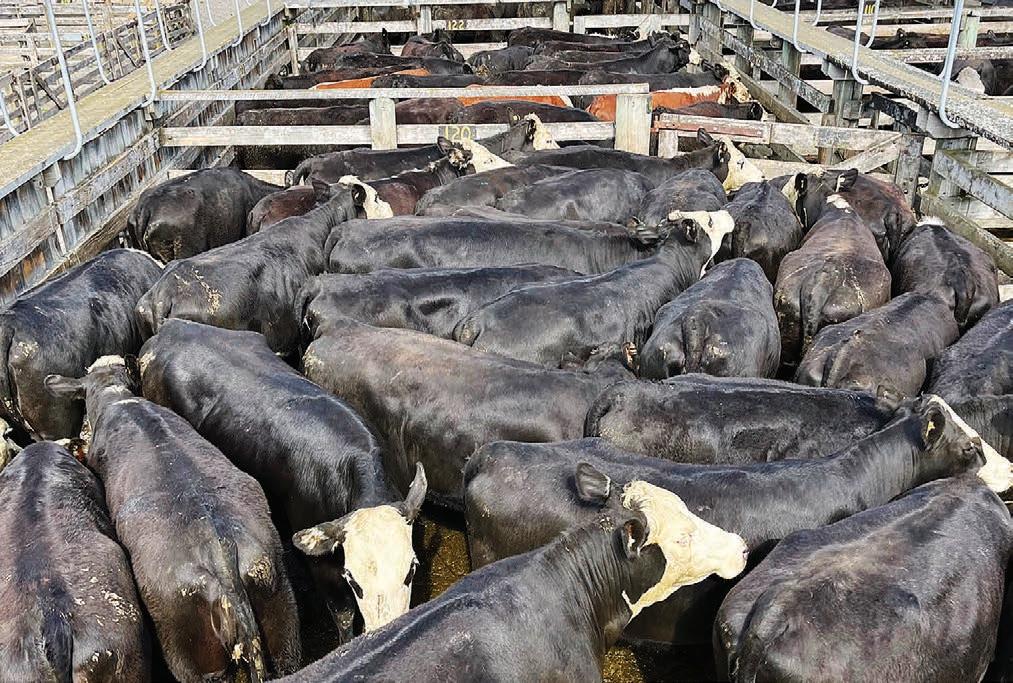
Yearling Speckle Park-cross steers, 227kg 3.48
Yearling Friesian bulls, 240kg 3.13
Yearling beef-cross heifers, 227-278kg 2.57-2.95
Yearling Speckle Park-cross heifers, tops 3.48
Weaner Hereford-Friesian heifers, 140-142kg 490-590
Store beef-cross cows, in-calf, 600-865kg 2.09-2.60
Store beef-cross heifers, in-calf, 365-545kg 2.68-2.90
Store beef-cross cows 980-1300
Boner Friesian, Jersey cows, 460-575kg 2.03-2.12
Coalgate | September 22 | 420 cattle, 4845 sheep $/kg or $/hd
2-year Hereford-Friesian heifers, 348-365kg 3.08-3.18
Yearling Hereford steers, 285-312kg 3.53-3.58
Prime traditional steers, 444-489kg 3.52-3.58
Boner cows, 432-528kg 2.00-2.20
Store ewes & lambs, tailed 136-143
Store Halfbred hoggets, shorn ewes and wethers 82-169
Prime hoggets, top three-quarters 220-276
44 FARMERS WEEKLY – farmersweekly.co.nz – October 3, 2022 Markets44
|
| September 23 | 1627 cattle, 3184 sheep
| September 27 | 22 cattle, 3432 sheep $/kg or $/hd
| September 27 $/kg or $/hd
See what sold today REPORTS EYE LIVESTOCK Results from the saleyards, including per kilo prices for store lambs, delivered straight to your inbox. Subscribe from only $35* per month agrihq.co.nz/livestock-reports * Prices are GST exclusive
$/kg or $/hd
Prime beef-cross steers, 555-640kg 3.58-3.75
Prime dairy-beef steers, 540-692kg 3.54-3.72
Prime traditional heifers, 405-480kg 3.21-3.30
Boner dairy cows, 372-436kg 1.80-1.84
Mixed-age ewes & lambs 83-106
Store hoggets, good 137-185
Prime hoggets, heavy 237-268
Prime ewes, good 177-229
$/kg or $/hd
3.33-3.40
Prime traditional steers, 500-560kg
Prime traditional heifers, 515kg+ 3.28-3.42
Boner Friesian cows, 556-625kg 2.30-2.36
Store ewes & lambs, all 94-132
Store mixed-sex hoggets, all 96-192
Store finewool mixed-sex hoggets, all 135-167
2-tooth ewes, all 130-207
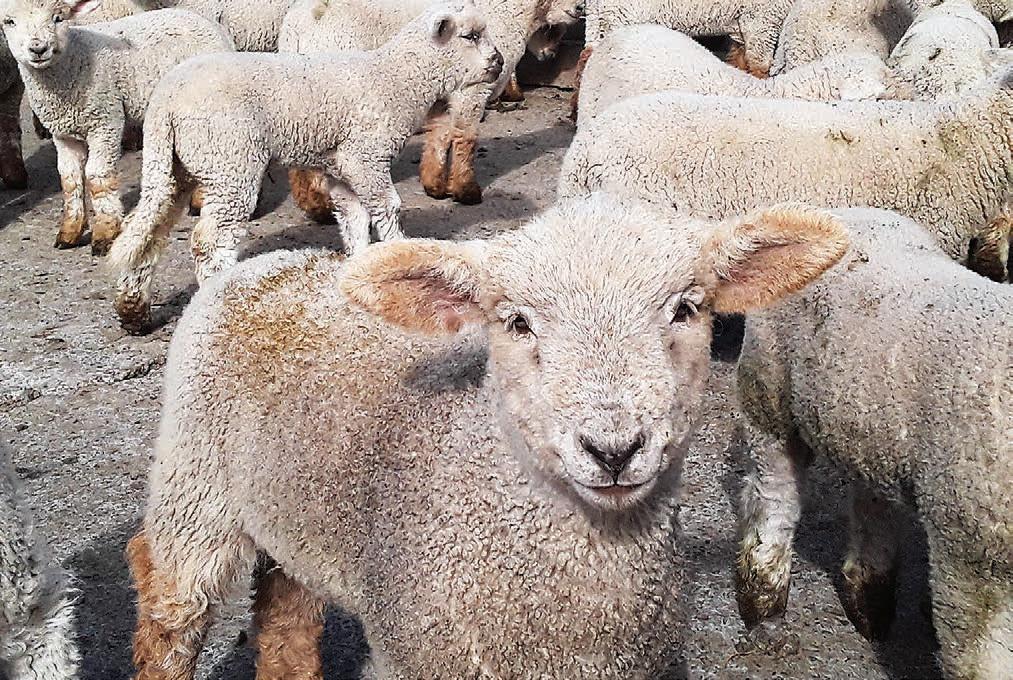
Prime ewes, all 94-250
Prime mixed-sex hoggets, all 130-272
$/kg or $/hd
Store ewes & lambs 124
Store hoggets, all 112-130
Prime ewes, all 100-235
Prime hoggets 120-252
Prime ram hoggets 92-110
Charlton | September 22
$/kg or $/hd
Store hoggets, all 60-132
Prime ewes, all 80-245
Prime hoggets, all 138-245
CUTE
lamb
paddock mates. As
Feeder calves
Temuka
line,
$/kg or $/hd
Hereford-Friesian bulls, medium to good 130-205
Hereford-Friesian bulls, small 80-100
Angus-Friesian, Simmental-Friesian bulls, tops 170-245
Angus-Friesian bulls, small to medium 60-110
Dairy-beef heifers, tops 100-175
Dairy-beef heifers, small to medium 20-80
$/kg or $/hd
Friesian bulls 45-75
Hereford-Friesian bulls 50-180
Speckle Park-cross bulls 85
Simmental-cross bulls 180
Hereford-Friesian heifers 50-70
Speckle Park-cross heifers 170
farmersweekly.co.nz/everyday farmersweekly.co.nz/everyday
Canterbury Park | September 28 | 186 cattle, 2732 sheep
Temuka | September 27 | 317 cattle, 3996 sheep
Balclutha | September 28 | 434 sheep
Frankton | September 27 | 200 cattle
Rongotea | September 27
45
AS: This
found its way to the
saleyards last Tuesday, along with its mum and
a
they sold for $132 all counted. FARMERS WEEKLY – farmersweekly.co.nz – October 3, 2022Markets 45 Get exclusive daily news, weekly analysis, competitions and prizes, special offers and discounts.
‘EVERYDAY’ Subscribe to Farmers Weekly Online
AgriHQ market trends
Sheep Meat

(NZ$/kgCW)Last


North
North Island M2
North Island M
(200kg) 4.904.70
South Island P2 steer (300kg)6.556.10
South Island M2 bull (300kg) 6.255.90




South Island M
(200kg)
North Island lamb (18kg) 9.609.45
North Island mutton (25kg) 6.156.60
South Island lamb (18kg) 9.559.35
South Island mutton (25kg) 6.106.75
Export
China lamb flaps
Wool

Coarse
(NZ$/kg)
Two

 Kieran Brown
Ron Lett
Mike WarrenGuy Warren Jayden Hume William Warren
Kieran Brown
Ron Lett
Mike WarrenGuy Warren Jayden Hume William Warren
TURANGANUI ROMNEYS “The team behind the sheep” Michael Warren 06 307 7841 or 0274 465 312 Guy Warren 027 848 0164 William Warren 027 824 9327
TURANGANUI ROMNEYS RD 2 Featherston 5772 LK0112680© 46 Agri Trends FARMERS WEEKLY – farmersweekly.co.nz – October 3, 2022 Markets46
Slaughter price
weekLast year
markets
15.2113.24
(NZ$/kg clean)
weeks agoLast year
crossbred ind. 2.662.63 37 micron ewe 2.90 30 micron lamb Beef Slaughter price (NZ$/kgCW)Last weekLast year
Island P2 steer (300kg)6.856.35
bull (300kg) 6.506.25
cow
cow
4.904.90 Export markets (NZ$/kg) US imported 95CL bull 10.339.20 US domestic 90CL cow 10.158.76 Venison Slaughter price (NZ$/kgCW)Last weekLast year North Island AP stag (60kg) 8.406.75 South Island AP stag (60kg) 8.556.85 Fertiliser NZ average (NZ$/tonne)Last weekLast year DAP 17941135 Super 509342 Urea 1340844 Urea (Coated) 1389Exports NZ Log Exports (thous. Tonnes) Aug Last year China 1,539,3181,626,957 Rest of world 199,648298,146 Carbon price (NZ$/tonne)Last weekLast year NZU 80.064.0 Cattle Sheep Deer Fertiliser Forestry Steer slaughter price ($/kgCW) Lamb slaughter price ($/kgCW) NZ lamb exports (Jun - Aug, thous. tonnes) Stag Slaughter price ($/kgCW) NZ beef exports (Jun - Aug, thous. tonnes) Data provided by 5.5 6.0 6.5 7.0 Sep Nov Jan MarMay Jul North Island South Island 7.5 8.0 8.5 9.0 9.5 10.0 Sep Nov Jan MarMay Jul North Island South Island 0 10 20 30 40 50 60 70 China Japan S. Korea Rest of Asia US Other Last year This year 0 5 10 15 20 25 30 35 China EU Mid. East UKUS Other Last year This year 6.0 6.5 7.0 7.5 8.0 8.5 9.0 Sep Nov Jan MarMay Jul North Island South Island
NZX market trends
Close of market
Listed Agri shares
Company
Close YTD HighYTD Low
ArborGen Holdings Limited 0.230.270.205
The a2 Milk Company Limited 6.16.584.2
Comvita Limited 3.33.782.98
Delegat Group Limited 10.6514.4510
Fonterra Shareholders' Fund (NS) 3.183.782.75
Foley Wines Limited 1.51.571.37
Greenfern Industries Limited 0.1480.250.089
Livestock Improvement Corporation Ltd (NS) 1.341.731.3
Marlborough Wine Estates Group Limited 0.1950.260.155
NZ King Salmon Investments Limited 0.2151.380.187
PGG Wrightson Limited 4.465.763.93
Rua Bioscience Limited 0.2550.530.24
Sanford Limited (NS) 4.25.074.03
Scales Corporation Limited 4.895.594.07
Seeka Limited 4 5.363.75
Synlait Milk Limited (NS) 3.533.583.04
T&G Global Limited 2.643.012.6
S&P/NZX Primary Sector Equity Index 128691429311724
S&P/NZX 50 Index 111201315010588
S&P/NZX
Index 108491272510291
47 NZX Trends FARMERS WEEKLY – farmersweekly.co.nz – October 3, 2022Markets 47 7.00 7.50 8.00 8.50 9.00 9.50 10.00 May-21 Jul-21 Sep-21 Nov-21 Jan-22 Mar-22 May-22 $/kg MS Sept. 2021 Sept. 2022
10
GrainDairy Dairy Futures (US$/t) Nearest contractLast price* Prior week4 weeks prior WMP 385037503675 SMP 362037003570 AMF 602058505400 Butter 538052905220 Milk Price 10.309.929.41 * price as at close of business on Wednesday Data provided by Canterbury feed wheat ($/tonne) 5pm, WednesdayMilk price futures ($/kgMS) Canterbury feed barley ($/tonne) Waikato palm kernel ($/tonne)WMP futures - vs four weeks ago (US$/tonne) 7.00 7.50 8.00 8.50 9.00 9.50 10.00 May-21 Jul-21 Sep-21 Nov-21 Jan-22 Mar-22 May-22 $/kg MS Sept. 2021 Sept. 2022 S&P/NZX 10 INDEX 10849 S&P/FW PRIMARY SECTOR EQUITY 12869 S&P/NZX 50 INDEX 11120 REPORTS INSIGHT LIVESTOCK Subscribe from only $35* per month agrihq.co.nz/livestock-reports Make decisionsyour easier Understand your opportunities and barriers with this weekly snapshot of store and slaughter prices, and international market trends. * Prices are GST exclusive 7.0 8.0 9.0 10.0 11.0 Sep Nov Jan MarMay Jul Sep Sep-2023 Sep-2024 350 400 450 500 550 600 650 700 Sep Nov Jan MarMay Jul Sep 350 400 450 500 550 600 650 700 Sep Nov Jan MarMay Jul Sep 3500 3600 3700 3800 3900 4000 4100 Oct Nov Dec Jan Feb Mar Latest price 4 weeks ago 300 350 400 450 500 550 Sep Nov Jan MarMay Jul Sep
Weather
Unstable, wet in north as winds battle it out
ARIDGE of high pressure brought mainly settled weather on Monday and Tuesday to New Zealand. The weather sped up on Wednesday as far as last week’s outlook was concerned, with rain moving into the West Coast bringing heavy falls. Southerlies developed about the far south early Thursday with rain, and this spread northwards during the day reaching the North Island on Friday.
Some snow about the South Island ranges would have fallen too but nothing overly low down, above the 400m to 500m mark with any falls of note up higher again.
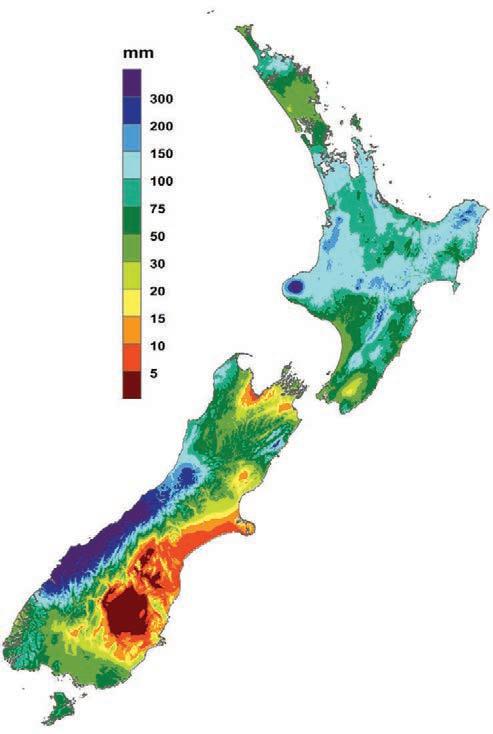
Rain about the eastern South Island Banks Peninsula southwards would be welcome as conditions are starting to dry out a little now.
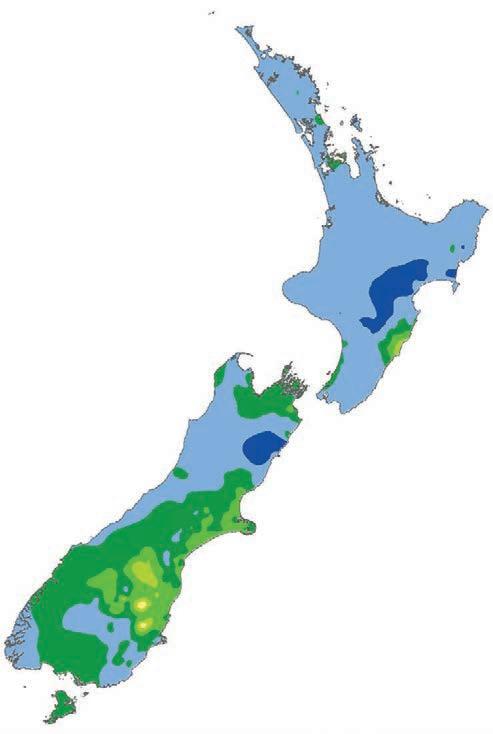
The weekend has seen settled weather for the South Island thanks to high pressure while a low to the northwest pulled in an easterly quarter airflow over the North Island, bringing areas of rain or showers, perhaps becoming unstable for the upper North Island on Sunday.
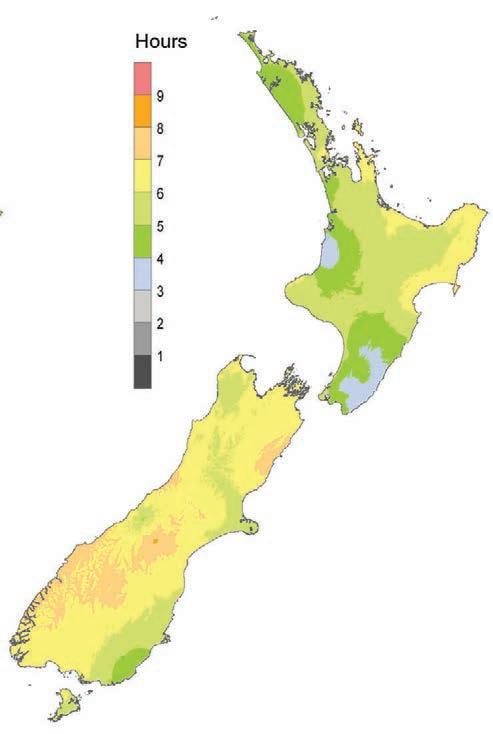
We continue to see mainly settled and dry weather on Monday and Tuesday for the South Island thanks to high pressure.
A low brings wet weather further north
Soil moisture



Last 15 days rain
with more unstable falls for the upper North Island on Monday as winds from the south converge with winds from the north, the unstable weather also assisted by cold upper air and good surface moisture.
The low moves away to the east on Tuesday with showers for the North Island
easing. Another round of cold southerlies moves northwards on Wednesday. This will bring showers to eastern regions and further snow flurries in the ranges.
Western regions will be drier overall, though Buller and parts of the upper North Island still see showers move through. High
Observed
11/09/2022
pressure dominates on Thursday and Friday so frosts may be of concern for the South Island, where there’s still some airflow and a few showers further north.
Northeasterlies cover the country on the weekend with rain moving into the West Coast on Sunday.
THE PROFESSIONAL’S CHOICE
For your local dealer go to: claasharvestcentre.com LAN 2464 Last 15 days sun


DARCY FINCH OF FINCH CONTRACTING TALKS ABOUT CLAAS GRASS HARVESTING EQUIPMENT
Running a big contracting business in the heartland of Waikato, with a peak staff of 45 comes with a fair amount of pressure. But for Darcy that pressure is mitigated by having gear that handles not only the huge volume, but the wide range of environments and contours.
Grass harvesting makes up a significant part of the Finch business, so having CLAAS machinery that is fit for purpose and has high market share is key.



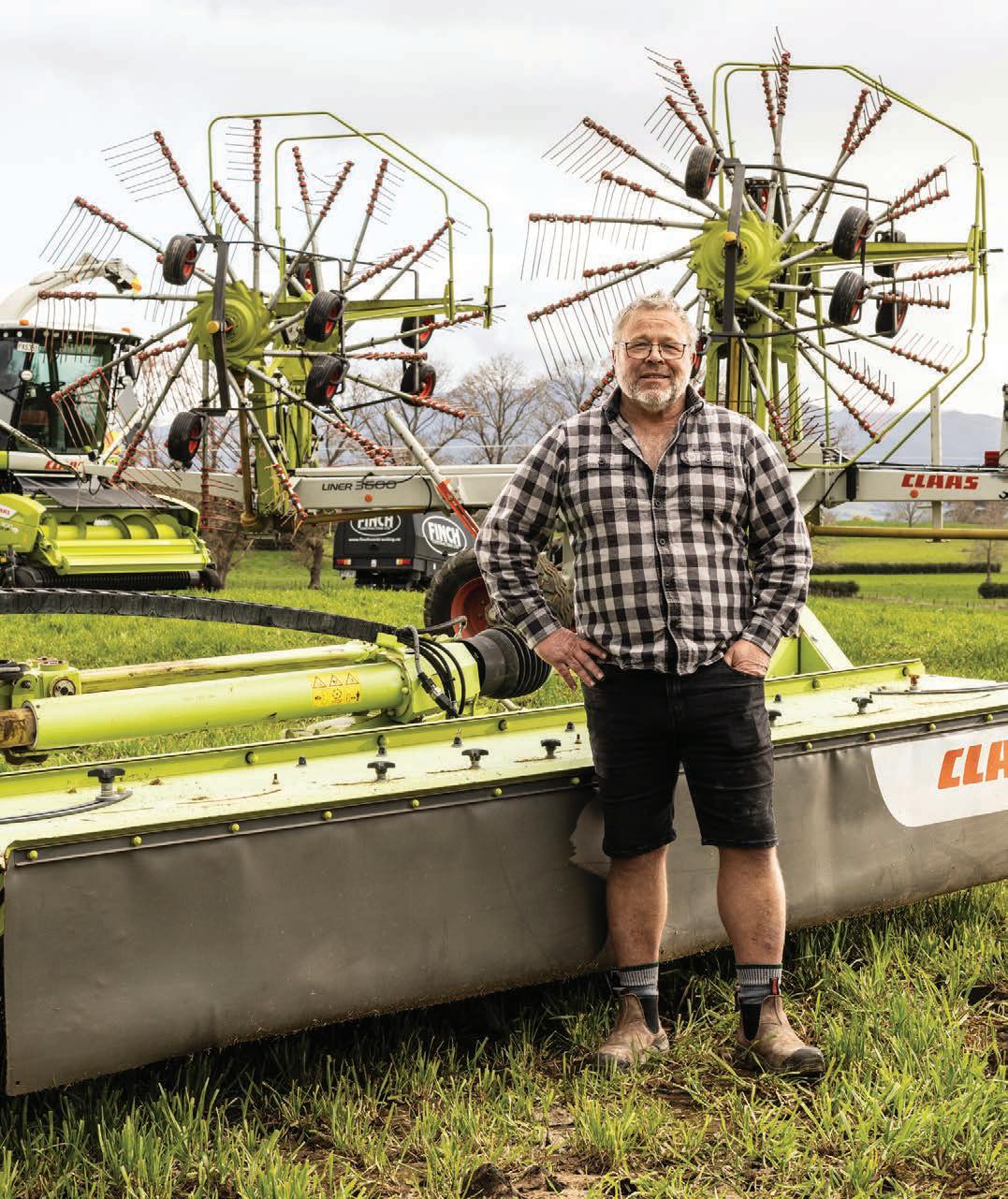 CLAAS DISCO MOWER
CLAAS LINER RAKE
CLAAS VOLTO TEDDER
CLAAS DISCO MOWER
CLAAS LINER RAKE
CLAAS VOLTO TEDDER
DARCY FINCH Finch Contracting
CLAAS GEAR IS RELIABLE AND THE SERVICE TEAM IS ALWAYS THERE WHEN WE NEED THEM. ”
“
48 Weather
ruralweather.co.nz Observed rainfall 9am 21/08/2022 to 9am 05/09/2022 Deficit 9am 26/09/2022
daily average bright sunshine
to 25/09/2022










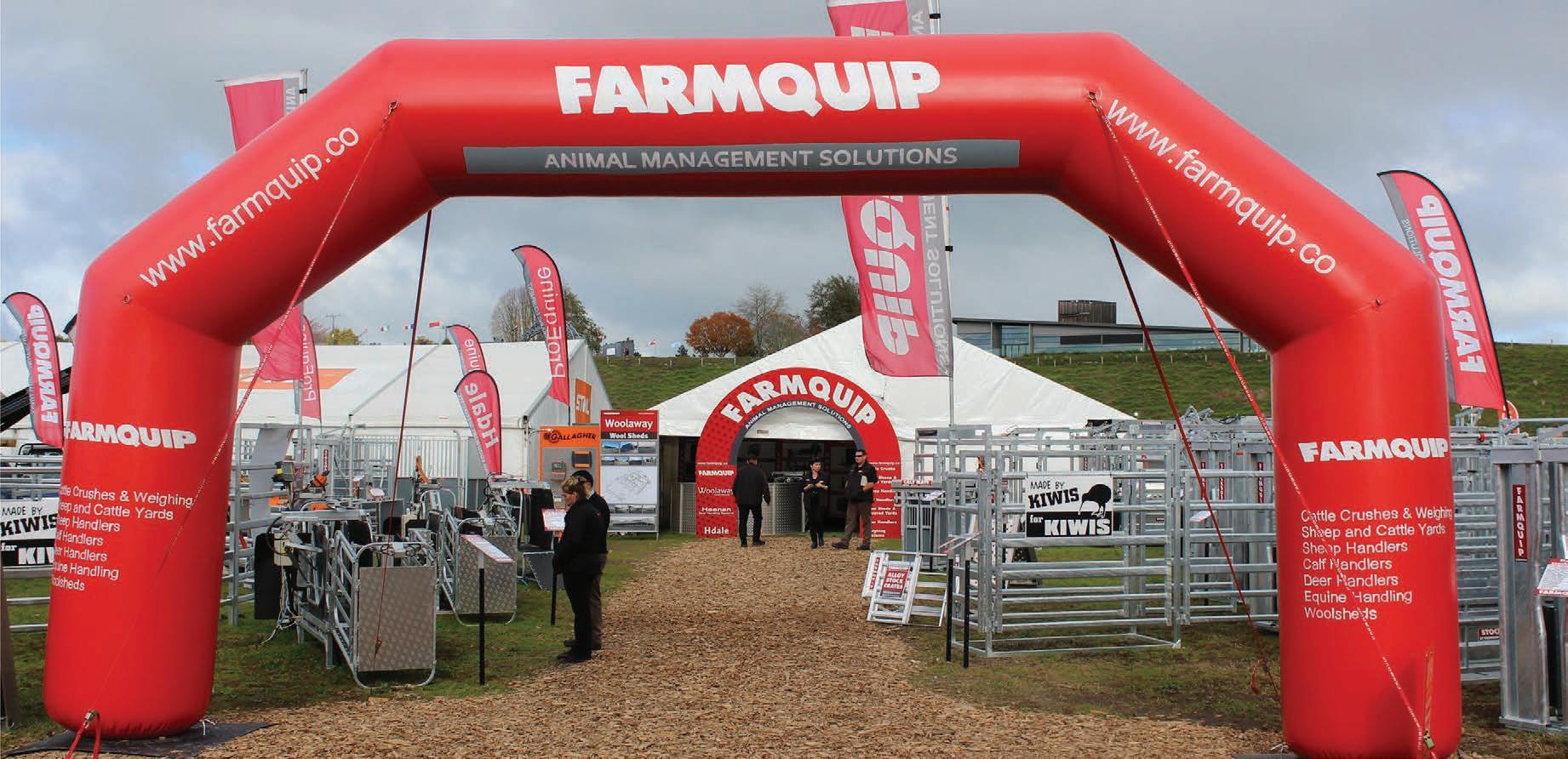
1 Promotional offers valid until 31st October 2022. All prices exclude freight unless speci ed. NZFIELDAYS MYSTERY CREEK, HAMILTON 30 NOVEMBER-3 DECEMBER SITE #F94-98 THE NEW ZEALAND AGRICULTURAL SHOW CANTERBURY AGRICULTURE PARK, 9-11 NOVEMBER SITE #D2 GREYMOUTH AERODROME, 14-15 OCTOBER, SITE #400 SITE #400 0800 843 024 843024 FARMING SOLUTIONS FOR CATTLE, SHEEP, DEER, EQUINE AND ON THE FARM SEE INSIDE REASONS WHY YOU NEED TO VISIT THE FARMQUIP TEAM FOR YOUR ANIMAL MANAGEMENT SOLUTIONS COMING SOON TO AN EVENT NEAR YOU!
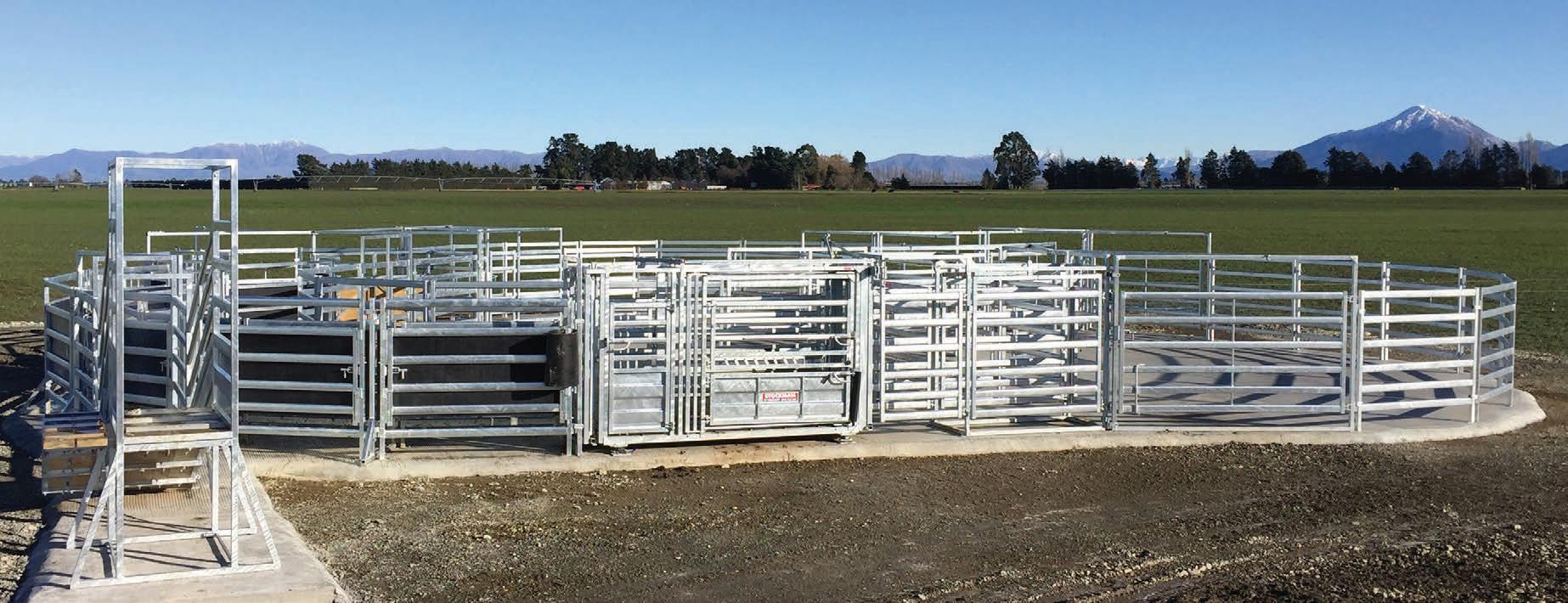
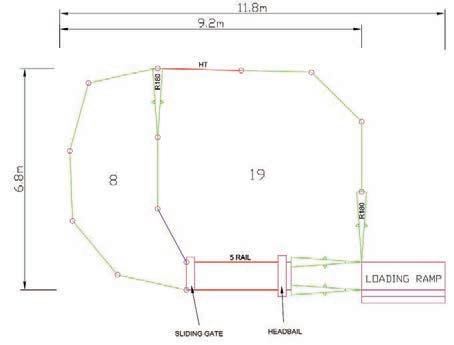
CATTLE HANDLING 36 Head Loading Ramp 10 Head 46 Head Yard - with curved force tub • Large curved tub with alloy sheeted sides • Heavy duty anti backing gate for operator safety • Headbail & sliding gate in race • Drafting gates • 97 x 42mm heavy duty cattle rail • Optional loading ramp 84 Head Yard - with 5 section race 48 Head 27 Head 9 Head • Large, spacious yard with good animal ow • 97 x 42mm heavy duty cattle rail which minimises animal bruising • Optional cattle crush available • Optional loading ramp POPULAR YARD DESIGN #1 130 Head Yard - with cattle free area 40 Head 36 Head 37 Head 15 Head Catwalk LoadingRamp • Popular Mid-Large scale yard • 4 working pens with curved ow • Circular force pen & gate for operator safety • Cattle free area - allows complete operator safety • Optional catwalk available • Optional cattle crush and loading ramps available POPULAR YARD DESIGN #3 POPULAR YARD DESIGN #2 843024 100% NZ OWNED & OPERATED NZ DESIGNS MADE FOR NZ FARMS REASON #1 27 Head Plan 160 Head Plan 260 Head Plan 350 Head Plan 500 Head Plan 89 Head Plan 100 Head Plan 102 Head Plan Not all cattle yards are the same. Stockman cattle yards are designed to give the farmer the best quality product combined with the best working design. MORE STEEL MORE STRENGH MORE SPACE PER ANIMAL MORE DESIGNS 2 Promotional offers valid until 31st October 2022. All prices exclude freight unless speci ed. 0800 843 024
Stockman Vet Crush






QUALITY - NZ MADE CATTLE CRUSHESREASON #2 Stockman Vetless Crush
• Designed for medium to large farms and herds • Stockman heavy duty headbal • Hot-dipped galvanised • Extra heavy duty 75 x 50 base frame • Split-side gates on both sides • Quiet locking system • Slam latches on both gates • Heavy duty steel oor • Includes rear handle for headbail operation • Vet access • V5 • Made in New Zealand CATTLE HANDLING Stockmaster Vetless Crush $ 9,990.00 +GST Stockmaster Vet Crush Economical crush for weighing and handling of medium to large cattle • Stockmaster headbail • 75 x 50 base frame • Split gates on both sides Hot dip galvanised Heavy duty steel oor Single sliding entry door • Vet access gates • Made in New Zealand • Designed for medium to large farms and herds • Stockman heavy duty headbail • Hot dipped galvanised • Extra heavy duty 75 x 50 base frame • Quiet locking system • Slam latches on both gates • Heavy duty steel oor • Split gates on both sides • VL5 model • Made in New Zealand Economical crush for weighing and handling of medium to large cattle Stockmaster headbail 75 x 50 base frame • Split gates on both sides • Hot dip galvanised • Heavy duty steel oor Single sliding entry door • Made in New Zealand Optional offside draft handle $590.00 + GST $ 8,990.00 +GST Optional offside draft handle $590.00 + GST 3 Promotional offers valid until 31st October 2022. All prices exclude freight unless speci ed. 0800 843 024 Optional Extras • Double sided squeeze • Rubber oors • Injection gates • Offside drafting
Crutch and Weigh Combo Sheep Handler

Daggers Mate Sheep Handler
Auto Weigh Sheep Handler





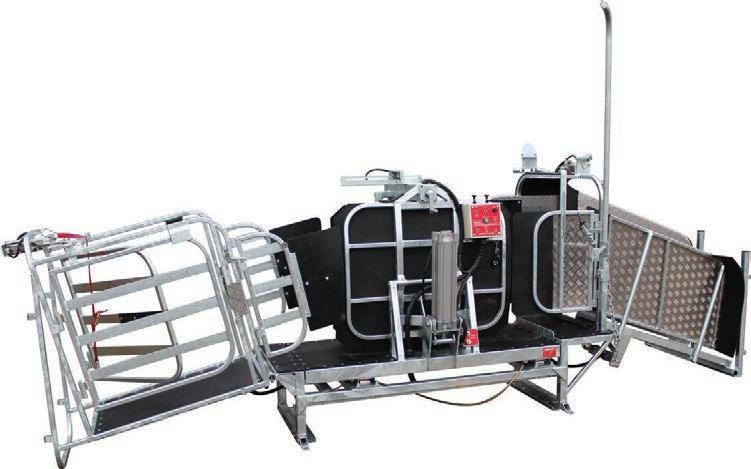
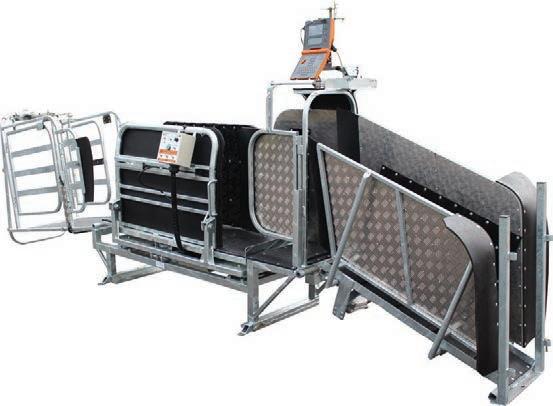
• The ultimate machine for fast and ef cient dagging and crutching • Air controlled on skids • T ips sheep on their sides for dagging and crutching • Adjustable overhead clamp • Made in New Zealand The only automated sheep handler giving full access to belly and feet. T ips sheep on their sides for dagging & crutching • Made in New Zealand • •
Fast and ef cient weighing, drafting and dagging 3-way and 5-way drafting options Made in New Zealand • • • 3-way and 5-way drafting options• • Fully automated weighing • Compatible with Gallagher & TruTest Scales 3-way drafting Tips sheep on side for crutching and dagging Adjustable overhead clamp Entry shut o gate Auto Catch Automatic ramp clamp Entry ramp (adjustable) Made in New Zealand Open access to feet and belly Air controlled Hot dip galvanisedRubber lined oor and slides THE ONLY AUTOMATED SHEEP HANDLER AVAILABLE THAT GIVES FULL ACCESS TO FEET & BELLY SHEEP HANDLING NZ DESIGNED & MADE SHEEP HANDLING SYSTEMSREASON #3 Datamars















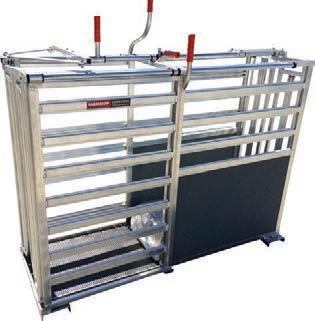

FARMQUIP $ 3,295 • Shelter for: • Calves, horses, sheep, lambs, alpacas • Storage for: • Hay, farm implements, bikes and more! ShelterShed 3m x 3m $ 399 Rechargeable Horse Clippers • Comes with 2 x 12V battery & 1 hour charger Holder Wool Fadge $ 195 Sheep Race AntiBacking Flaps $ 159 Pair .00 +GST PLUS FREIGHT Sheep Panels • Railed - 3m W x 1m H • Quick, easy pin together yard panel for a variety of uses • Use for sheep/calves/goats 195 EACH $ $ 3,895 Stockman Headbail Sheep Yard Panel $ 265 Priced from • Sizes from 1.0m - 3.1m (1.0m Panel) $ 2,795 Sheep Weigh Crate • Manual weighing and 3 way drafting • Alloy, lightweight, transportable • Mounts on to any existing loadbars $ 295 .00 +GST Priced from Cattle Yard Gates • Height 1690mm 7 rail • 70 x 41mm cattle rail • Standard sizes only Sizes 750,1800,2100,2500, 2700,3100 mm wide. PLUS FREIGHT Sliding Yard Gate $ 990 .00 +GST PLUS FREIGHT • Including mounting brackets Farmhand Loading Ramp 3,995 • Adjustable height platform $ .00 +GST PLUS FREIGHT Farmhand Gate Latches • Slam Latch & Striker Plate • 20mm 79 .00 +GST PLUS FREIGHT $ • Battery powered • 180watt, 12 volt • 2800 RPM • Includes combs, cutters, charger, 2 x batteries and carry case. Sheep Shears $ 3990 .00 +GST PLUS FREIGHT • Powerful 2-stroke, 52cc engine/1.45kw • Commercial quality • 100mm, 150mm, 200mm drill sizes • 450mm extension bar • Recoil spring • 12 month warranty Bullmax One Man Auger 899$ Farmhand Cattle Yard Panels - 10 Pack Pack of 10 panels and pins • Make your own cattle yard design • 2100W x 1800H • $ 3,950 VARIETY OF PRODUCTS FOR MANY FARMING SOLUTIONSREASON #4 5 Promotional offers valid until 31st October 2022. All prices exclude freight unless speci ed. .00 +GST PLUS FREIGHT AVAILABLE FROM FARMLANDS Calf weigh Crate - 3 way draft 0800 843 024 .00 +GST PLUS FREIGHT .00 +GST PLUS FREIGHT .00 +GST PLUS FREIGHT .00 +GST PLUS FREIGHT .00 +GST PLUS FREIGHT .00 +GST PLUS FREIGHT .00 +GST PLUS FREIGHT .00 +GST PLUS FREIGHT
See what our loyal customers say...
“We purchased a meat/bone saw from The Rural Butcher and it is one of the best investments we have made for our new home kill business. The large throat and good size table allows easy access when cutting large stock. The grunty motor cuts through meat and bone with ease and is super easy to disassemble for cleaning. Overall, it’s really user friendly and we would recommend having this bit of kit for your business or shed for the hunters.”

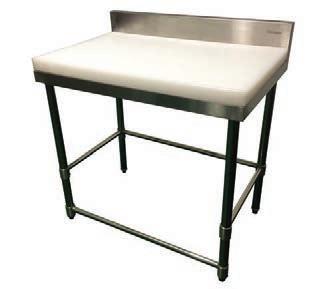
Bevan and Shelly Smith Kokos Meat Ltd






See what our loyal customers say...




“We have minced mutton, pork and beef in our T22 Mincer from The Rural Butcher and it handles it all with plenty of grunt. The di erernt sized grinding plates are awesome too, ensuring the meat is minced to a quality standard. The stainless steel makes it really simple to clean, just pull apart and wash in hot soapy water.”


Braedyn and Stephanie Du , Dannevirke
$ The Rural Butcher Medium Meat/Bone Saw .00 +GST2,250 BU92 • Throat size 380mm H x 250mm W • 1.5kW motor • 260mm alloy pulley wheels • Table 700 x 550mm $ 649 Butchers Block Workbench • 900 L x 600 D BU81 Butcher Chainmail Glove BU68,69,70 $ 153 • 1200 L x 300 D $ 160 BU84 Railed Wall Shelf .00 +GST Ox Cleaver $ 83 BU145 $ 999 .00 BU09+GST • Make mince from home • Stainless steel body • 850W motor • Capacity 250kg/h The Rural Butcher Mincer T22 Customers who purchased the Medium Meat/Bone Saw also purchased... $ 477 .00 +GST BU14 Rural Meat Mixer • Easy mixing handle and pivoting cradle with lid. Butchers Apron $36 .00 +GST BU105 • PPU $ 273 .00 +GST BU132 Burger Pattie Press • 130mm diameter Chopping Board • 600 L x 400 W 40 D • Easy clean poly board 148 BU95$ 0800 843 024 WWW.RURALBUTCHER.COM THE RURAL BUTCHER • M, L, XL
Customers who purchased the T22 Mincer also purchased... +GST .00 6 COMING TO AN EVENT NEAR YOU! SEE BACK PAGEFOR MORE INFO Promotional offers valid until 31st October 2022. All prices exclude freight unless speci ed. .00 +GST .00 +GST .00 +GST • 2kg heavy duty cleaver with large blade





WWW.RURALBUTCHER.COM0800 843 024 THE RURAL BUTCHER BU10 The Rural Butcher Sausage Filler 7L $ 344.00 +GST • Make sausages at home • 4 different sized spouts • Easy to clean EasySharpe Blade Sharpener Kit The EasySharpe Blade Sharpener Kit enhances your knife sharpening experience. With a G-Clamp tightly clamping on the table and the knife balde held rmly in the clamp. You can then set the angle for sharpening the perfect edge. BU160 $ 82.00 +GST Vacuum Sealer BU71 • Dual power mode for use at home, camping or on the boat • AC 240V & DC 12V plug $ 215 .00 +GST UV LIGHT ATTRACTS FLYING INSECTS! The Rural Butcher Bug Zapper 220 V 40 W Chemical and odour free No Pesticides Coverage for up to 80m2 $169 .00 +GST - 50 packet Sealer Bags 150 x 200mm• BU73 $ 18 .00 +GST Sealer Bags - 3 x rolls 280 x 5000mm• 49 BU77 $ Stainless Steel Workbench 1200 L x 600 D $ 379 .00 +GST • BU80 Mutton Cloth Stockinette BU138 $ 89 +GST • 2.5kg roll .00.00 +GST 10m Sheep Sausage Casings 45m Hog Sausage Casings • • $ +GST Meat Pan & Lid - Large Stainless Steel 530 x 325 x 150mm deep 59 .00 BU189/194$ 31+GST .30 BU155 $ +GST19 .14 BU153 Kitchen Scales 7 COMING TO AN EVENT NEAR YOU! SEE BACK PAGEFOR MORE INFO Promotional offers valid until 31st October 2022. All prices exclude freight unless speci ed. COMING SOON NEW OTHER SIZES AVAILABLE Customers who purchased the Sausage Filler also purchased... Customers who purchased the Vacuum Sealer also purchased... BU197 $ +GST129 .00


























THE RURAL BUTCHER NZFIELDAYS MYSTERY CREEK, HAMILTON 30 NOVEMBER-3 DECEMBER #F94 SITE #400 GREYMOUTH AERODROME 14-15 OCTOBER SITE #400 SITE #F94 THE NEW ZEALAND AGRICULTURAL SHOW CANTERBURY AGRICULTURE PARK, 9-11 NOVEMBER #D2 SIKA SHOW MYSTERY CREEK, HAMILTON 29-30 OCTOBER SITE #47-54 SITE #47-54 WWW.RURALBUTCHER.COM0800 843 024
