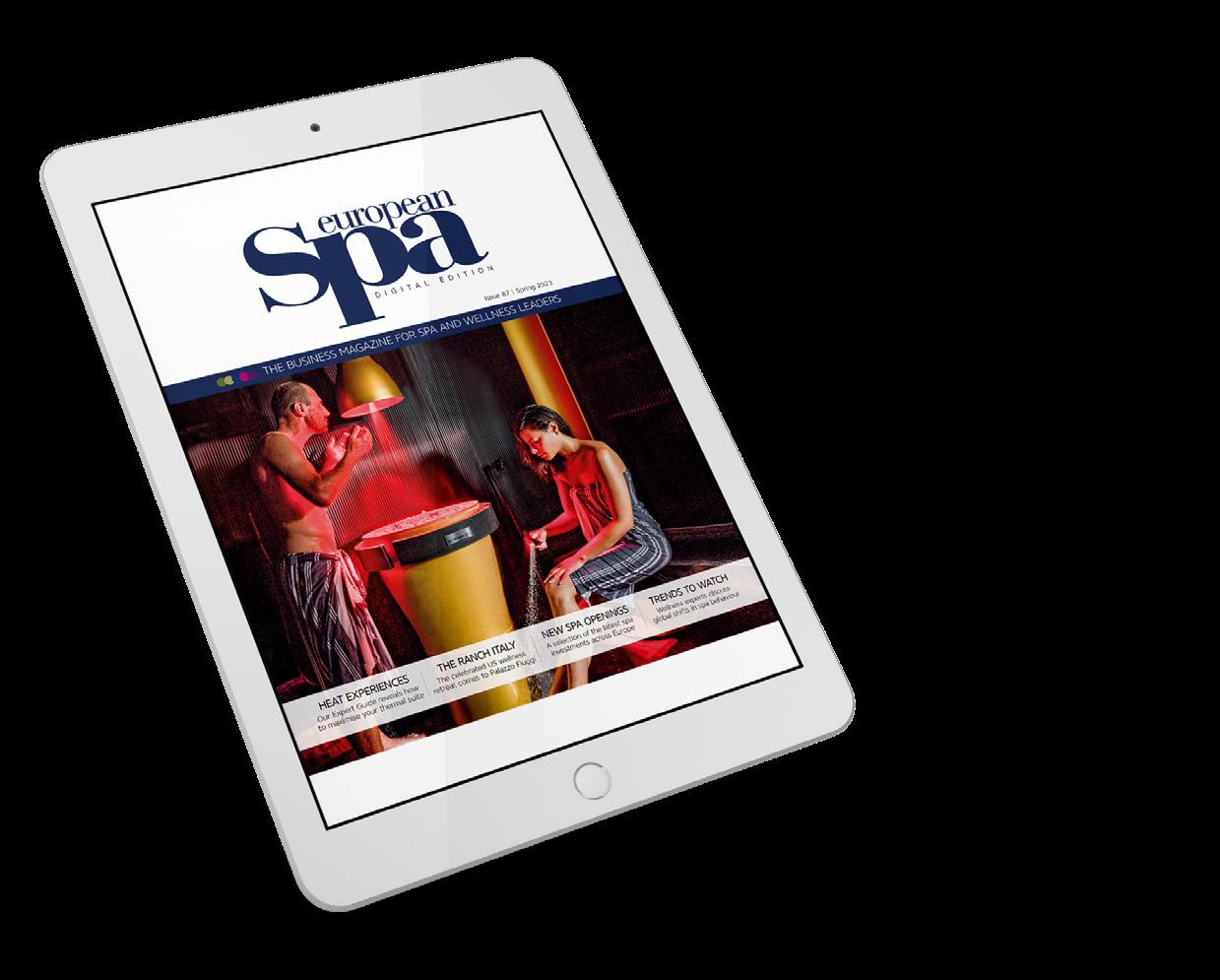
Issue 87 | Spring 2023
THE BUSINESS MAGAZINE FOR SPA AND WELLNESS LEADERS
HEAT EXPERIENCES
Our Expert Guide reveals how to maximise your thermal suite
THE RANCH ITALY
The celebrated US wellness retreat comes to Palazzo Fiuggi
NEW SPA OPENINGS
A selection of the latest spa investments across Europe
TRENDS TO WATCH
Wellness experts discuss global shifts in spa behaviour

DIGITAL EDITION
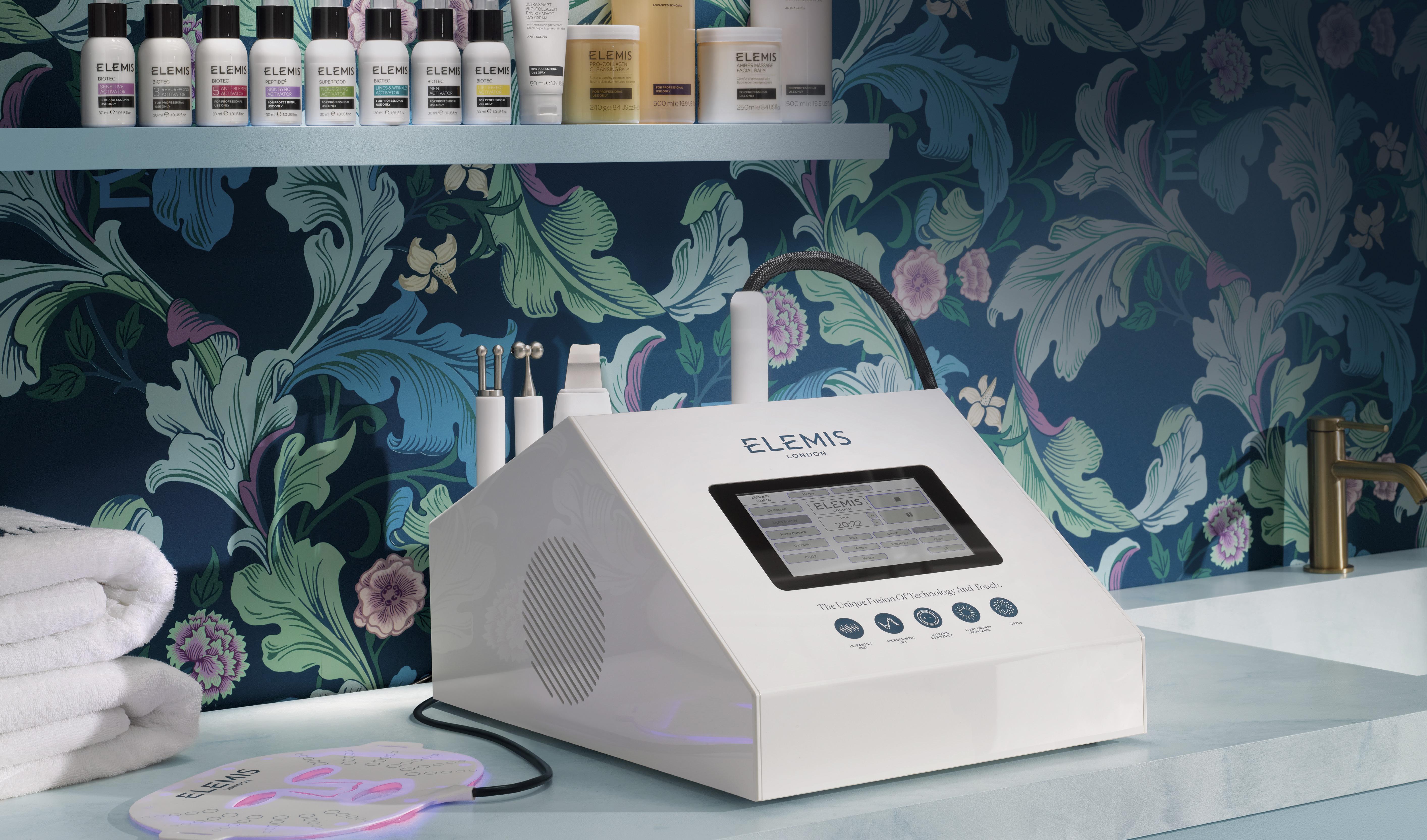
Bespoke Skin Wellness, Powered by ELEMIS Introducing our next generation of ultra-high-performance facials. Harnessing 30 years of skincare expertise, our new Pro-Glow facials bring together the most cutting-edge technologies and therapies for skin that appears visibly refreshed, renewed and radiant, in just one treatment. Discover the ELEMIS New Pro-Glow Menu Contact our Spa Team Today at newbusiness@elemis.com newbusiness@elemis.com
THE AGE OF ENDLESS LIGHT
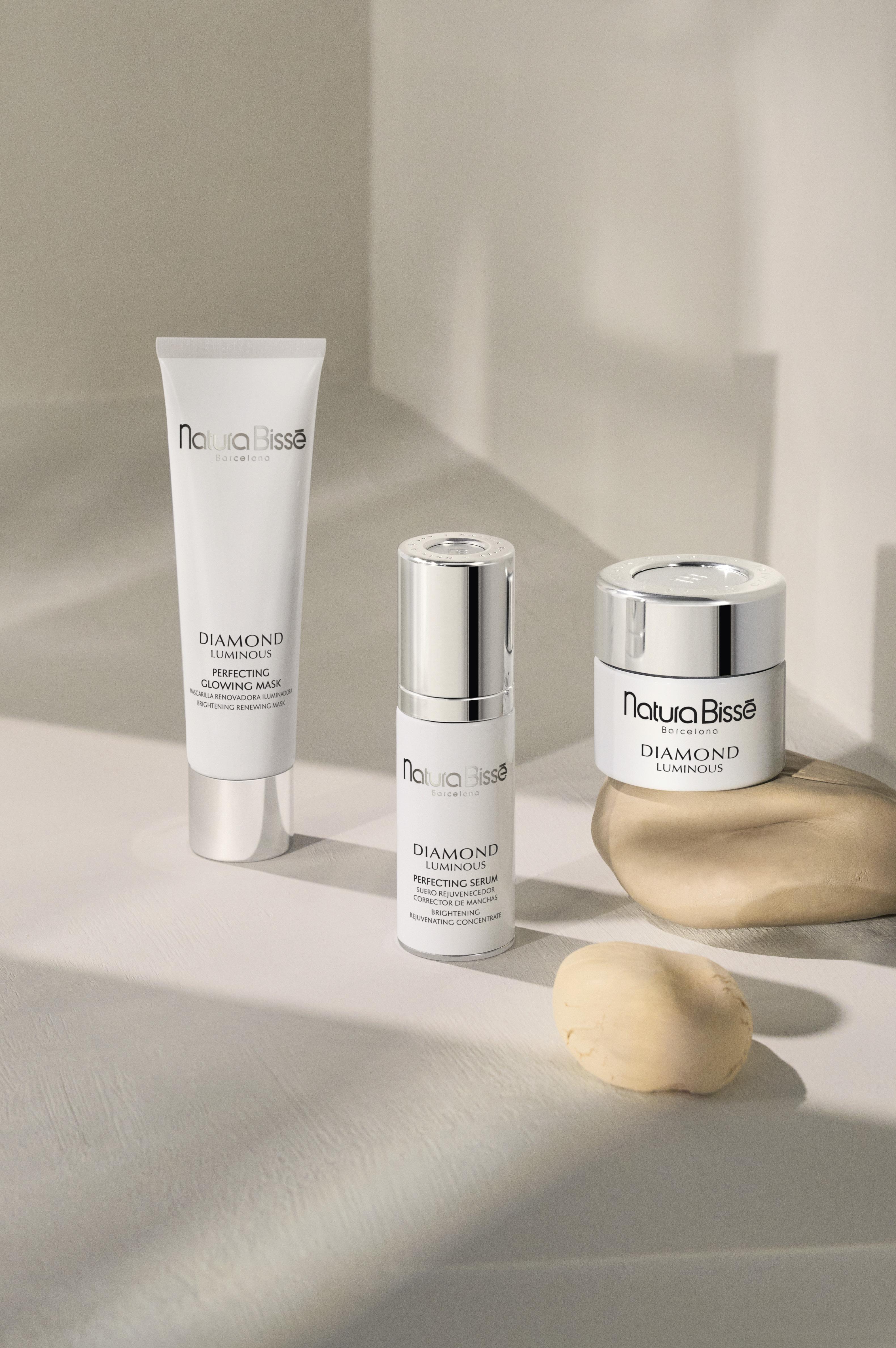
The ultimate brightening and rejuvenating collection. A state-of-the-art skincare range to enjoy at home and a high-performance facial to experience at your spa.

DISCOVER MORE AT NATURABISSE.COM www.naturabisse.com
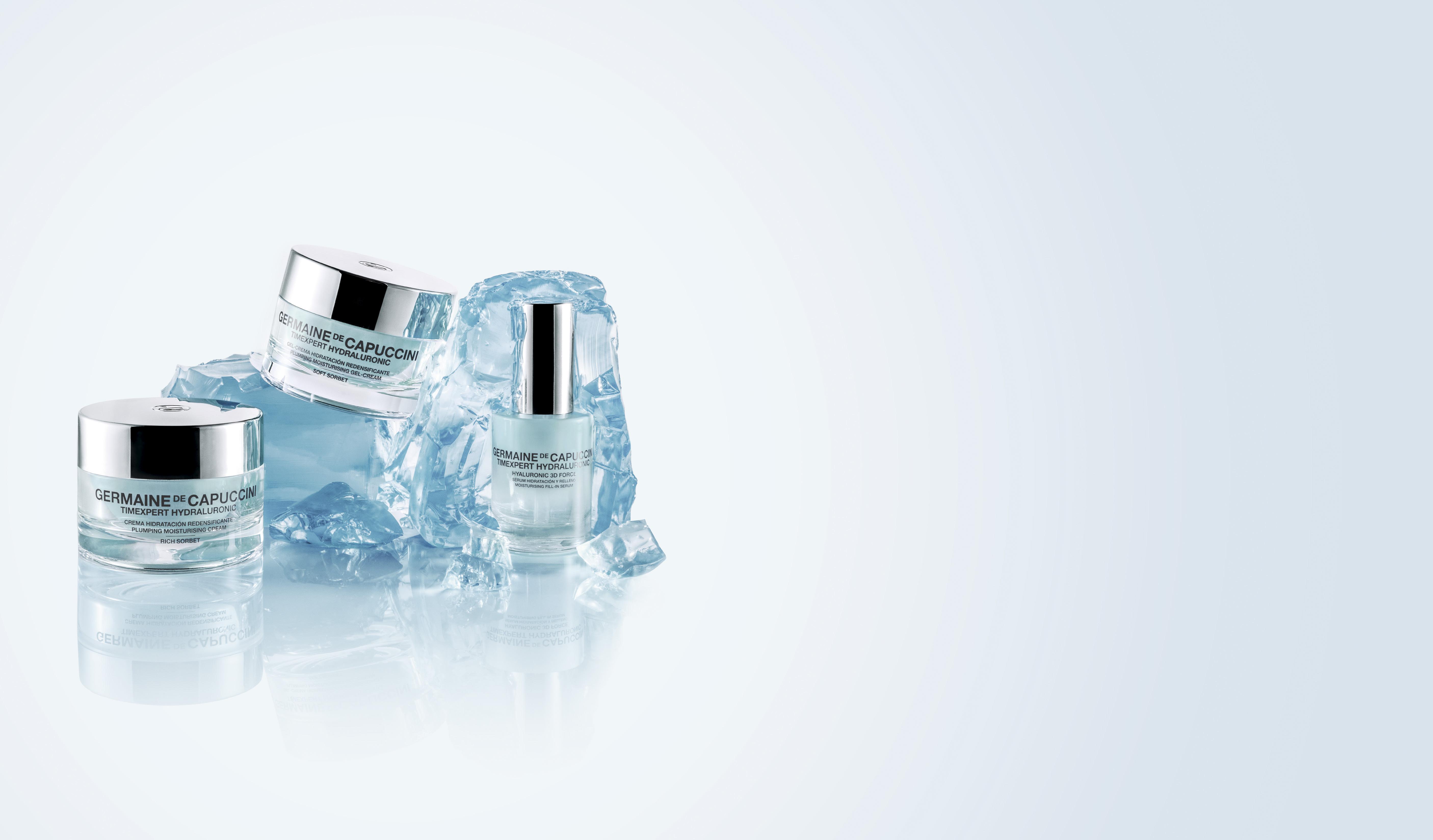

+44 (0)845 600 0203 GERMAINE-DE-CAPUCCINI.CO.UK/TXH *Clinical test with Hyaluronic 3D Force + Plumping Moisturising Cream + Professional Treatment Our exclusive formulation combines the power of hyaluronic acid with our patented HLG nanopolymer, creating an innovative treatment for visibly denser, dewier and more hydrated skin. A revolutionary hydration concept HYDRATE AND PLUMP WITH TIMEXPERT HYDRALURONIC germaine-de-capuccini.com www.germaine-de-capuccini.co.uk/esel www.germaine-de-capiccini.co.uk/txh
The art of AUFGUSS
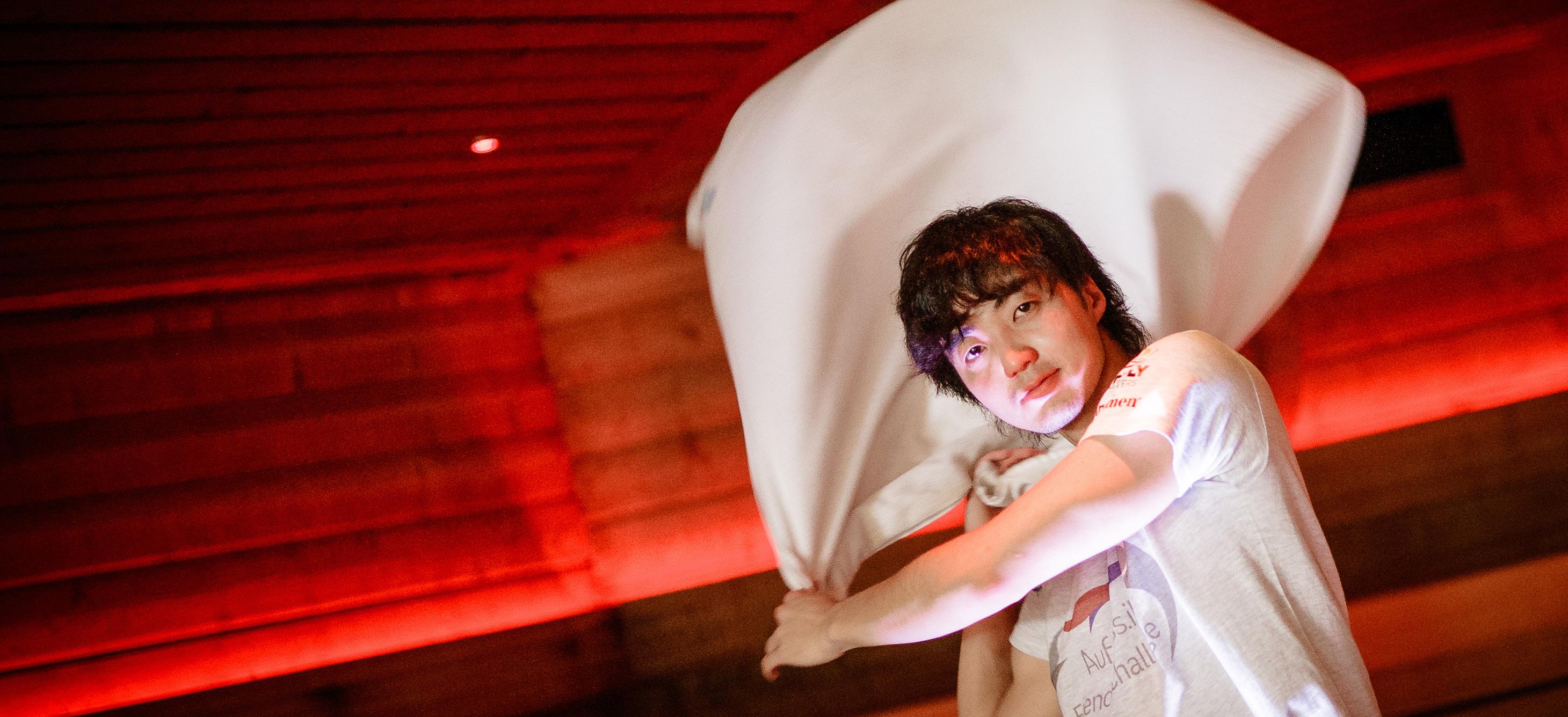
Welcome to our hot Spring edition, which celebrates the trending art of aufguss, coming to spas everywhere. Find out how these popular ceremonial sauna rituals can bring a touch of magic to every spa journey (p90). Our informative Expert Guide to Thermal Experiences (p98) also brings you the best suppliers, equipment and expertise on the market.
At European Spa we work tirelessly to bring you the latest spa investments and developments. Enjoy our pick of five new spa openings to watch (p60); meet the Winyard family, who are reimagining their father’s dream at Stobo Castle in Scotland (p50); and learn how the founders of The Ranch Malibu are partnering with Palazzo Fiuggi in Italy to deliver their award-winning wellness programmes (p16).
Looking to the future, I am honoured to welcome Aradhana Khowala as our new guest columnist. A global force for good in hospitality, Aradhana chairs the Red Sea Development Company advisory board, which drives the biggest hospitality project on the planet right now, under construction in Saudi Arabia. She asks us all to consider how spas can put women first in wellness delivery (p30).
Grasping the nettle, expert columnist Kirsty MacCormick asks how we as a progressive industry can improve therapists’ pay (p86). Training expert Neil Orvay shares how repeat and request business brings success (p70); and aromatherapist Laura Broady shares three energising essential oils for spring (p88).
Please enjoy this issue and thanks to you and all our contributors and supporters who make the spa industry such a special place. Be well.
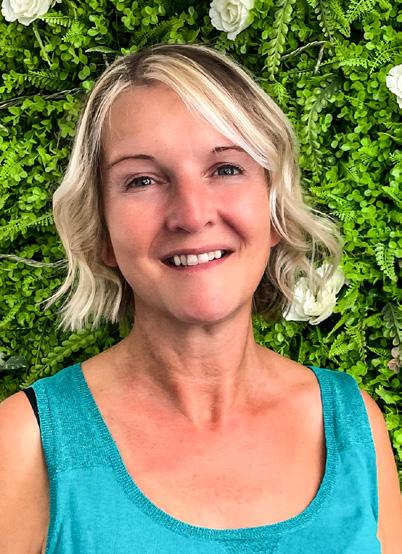
Sarah Camilleri Founding editor & publisher sarah.camilleri@spapublishing.com
www.europeanspamagazine.com 8
Welcome
ISSUE 87 | SPRING 2023
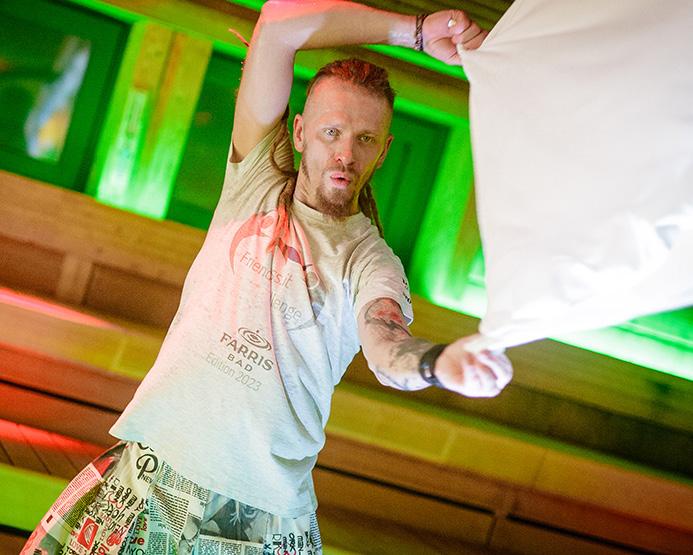
Image: Ryuki Ikeda performs at the Aufguss.it Friends Challenge at Farris Bad, Norway
www.oskiaskincare.com


Meet the team
European Spa is the essential magazine for spa business and wellness leaders
Sarah Camilleri
Founding editor & publisher
A respected magazine editor with over 30 years’ experience, Sarah founded European Spa in 2007 to help the spa industry grow and flourish. An influential voice in the global wellness community, she serves on the advisory board of the British Beauty Council and supports the Global Wellness Institute’s Living Well From Within coalition.
Mark Smith
Deputy editor
An influential spa writer, Mark has contributed beauty and wellness news to European Spa and europeanspamagazine.com for many years. The founder of UK meditation concept Kalm Horizons, in this issue he also reports on five of the best recent spa openings across Europe, and brings us the latest beauty launches On the Menu.
Wendy Golledge
Online and news editor
For our Spring issue, Wendy heads north to the Borders of Scotland to visit So Stobo spa at Stobo Castle. She also talks to 12 prominent spa leaders about their business predictions for the future, and spotlights some of the latest designs and technologies to enhance your spa offering in our regular Style section.
With thanks to our expert contributors...
Founding editor & publisher Sarah Camilleri sarah.camilleri@spapublishing.com
Beauty and wellness editor Mark Smith mark.smith@spapublishing.com
Online and news editor Wendy Golledge wendy.golledge@spapublishing.com
Art director Richard Page richard@spapublishing.com
Production editor David Fagan david.fagan@spapublishing.com
Subscriptions manager Angela Sharpe subscribe@spapublishing.com
Aradhana Khowala
AptaMind Partners
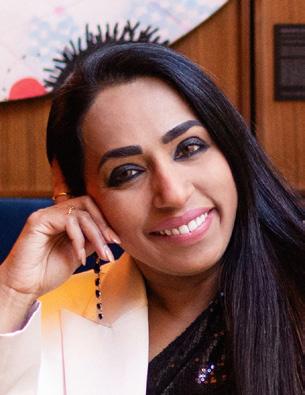
Aradhana Khowala has worked in luxury hospitality, travel and tourism for more than two decades. She is CEO of the consultancy Aptamind Partners and chair of the global advisory board of The Red Sea Development Company. In this issue she asks the question: is a masculine wellness agenda failing women?
Kirsty MacCormick
The Spa Consultancy
With expertise in spa development, pre-opening project management and operational set up, Kirsty has 30 years’ experience in the spa and wellness industry. Looking at the issue of therapists’ pay, she examines the possible solutions to making your team feel valued while maintaining a healthy bottom line.
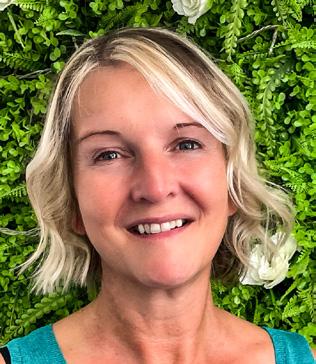
Neil Orvay
Founder, Evolution-U
Since 2009, Neil has developed and delivered soft skills training across the areas of communication, influence, sales, negotiation and leadership. To help spas increase their revenues and foster guest connection, Neil shares the two words every operator should be teaching their teams: repeat and request.
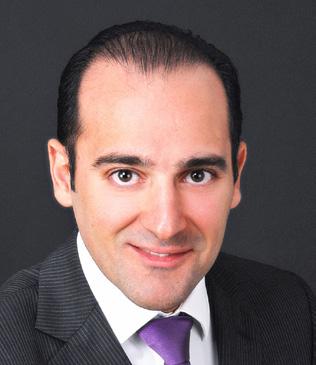
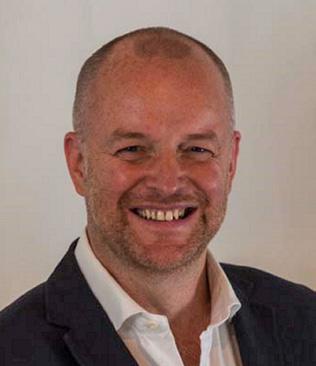
Accounts manager Julie Jones accounts@spapublishing.com
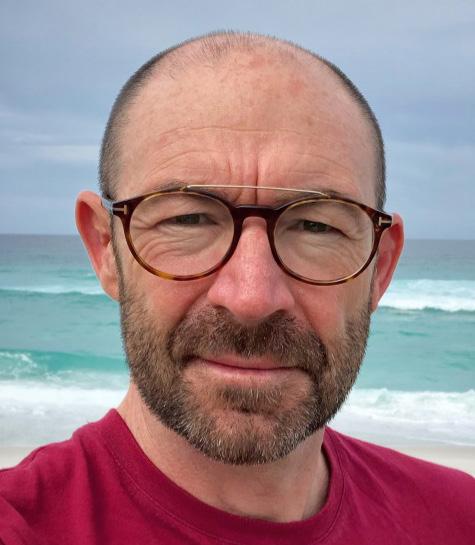
www.europeanspamagazine.com 10
Spa Publishing Ltd Registered in England. Company No. 6293825
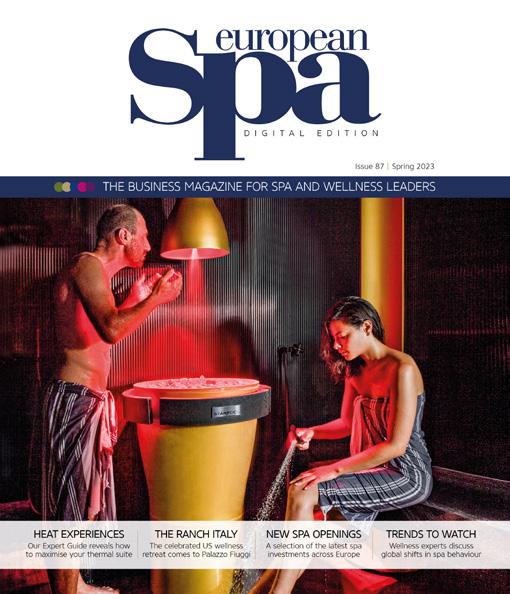
On the cover: Starpool features in our Expert Guide to Thermal Experiences
At Swissline, we are skincare experts with a passion for skin biology and beauty. Our philosophy is simple: skincare should respect and work with the skin, not against it. Our award-winning formulas embrace natural bioactives, with a focus on skin-identical ingredients, such as collagen, mimetic growth factors, clinically tested peptides and many others.
www.swissline-cosmetics.com
CONTACT US DERMALAB S.A. I Dufourstrasse 20 I 8702 Zollikon, Switzerland Tel: +41 44 396 15 51 E: info@swissline-cosmetics.com I www.swissline-cosmetics.com I @swissline.skincare
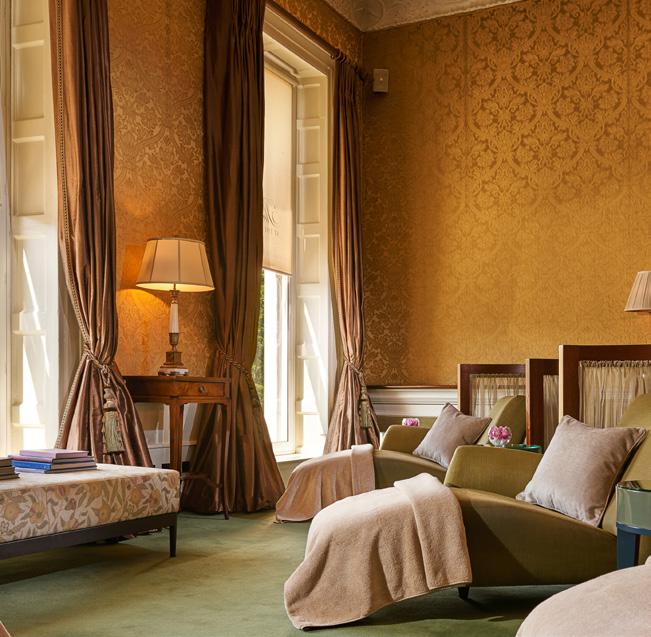
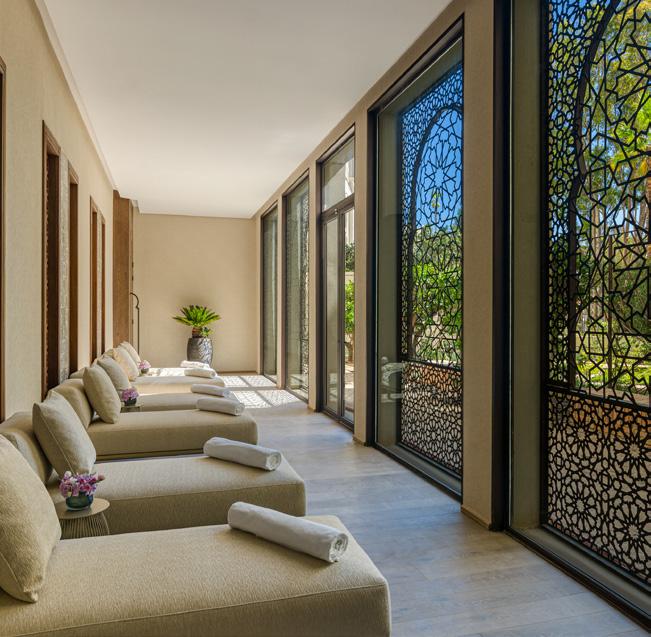
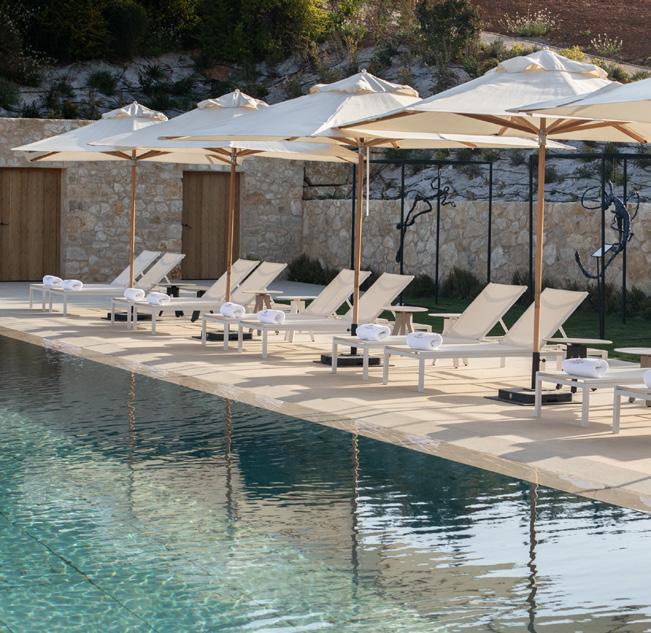
THE SHELBOURNE Morocco Ireland France
www.swissline-cosmetics.com info@swissline-cosmetics.com
CHÂTEAU DE LA GAUDE FAIRMONT TAZI PALACE
Our Expert Guide to Thermal Experiences offers advice from leading brands including
SPA SPOTLIGHT
16 THE RANCH ITALY AT PALAZZO FIUGGI
Alex and Sue Glasscock, founders of celebrity-endorsed US retreat The Ranch Malibu, take us behind the scenes at the brand’s new European venture
52 SO STOBO AT STOBO CASTLE, SCOTLAND
With a focus on reinvestment, brand awareness and team development, the Scottish destination spa is now led by a new generation of the Winyard family
60 FIVE EXCEPTIONAL SPA OPENINGS
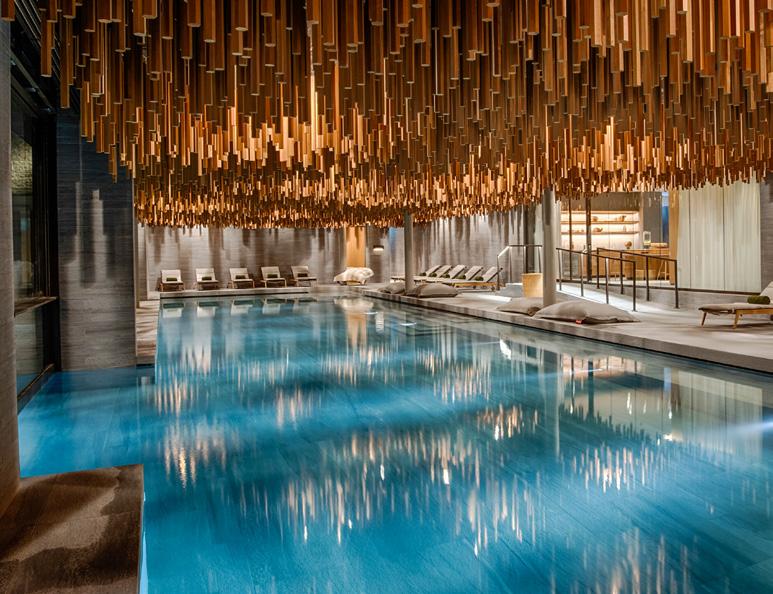
We look at the concepts that have resulted in some very special spring openings at spas in Switzerland, Belgium, the UK, Spain and France
BUSINESS INSIGHT
30 IS THE MASCULINE WELLNESS AGENDA FAILING WOMEN?
The CEO of Aptamind Partners, Aradhana Khowala, says women should be front and centre in the minds of spa operators and treatment and product developers
38 SPA TRENDS TO WATCH
We ask 12 leading lights in the world of spa what they consider to be the major challenges and trends in spa design, operations, treatments and delivery
70 THE TWO MOST IMPORTANT WORDS SPA OPERATORS NEED TO KNOW
Interpersonal skills trainer Neil Orvay explains why repeat and request clients are essential for spa success, and how to help your team engage with them
86 ‘WHEN IT COMES TO THERAPISTS, SPAS WILL GET WHAT THEY PAY FOR’
The Spa Consultancy’s Kirsty MacCormick looks at ways to make sure your team feels valued while balancing other cost factors within your business
88 A SCENT FOR SPRINGTIME
Aromatherapist Laura Broady suggests some scents to help you unlock the season’s potential for your team and guests
90
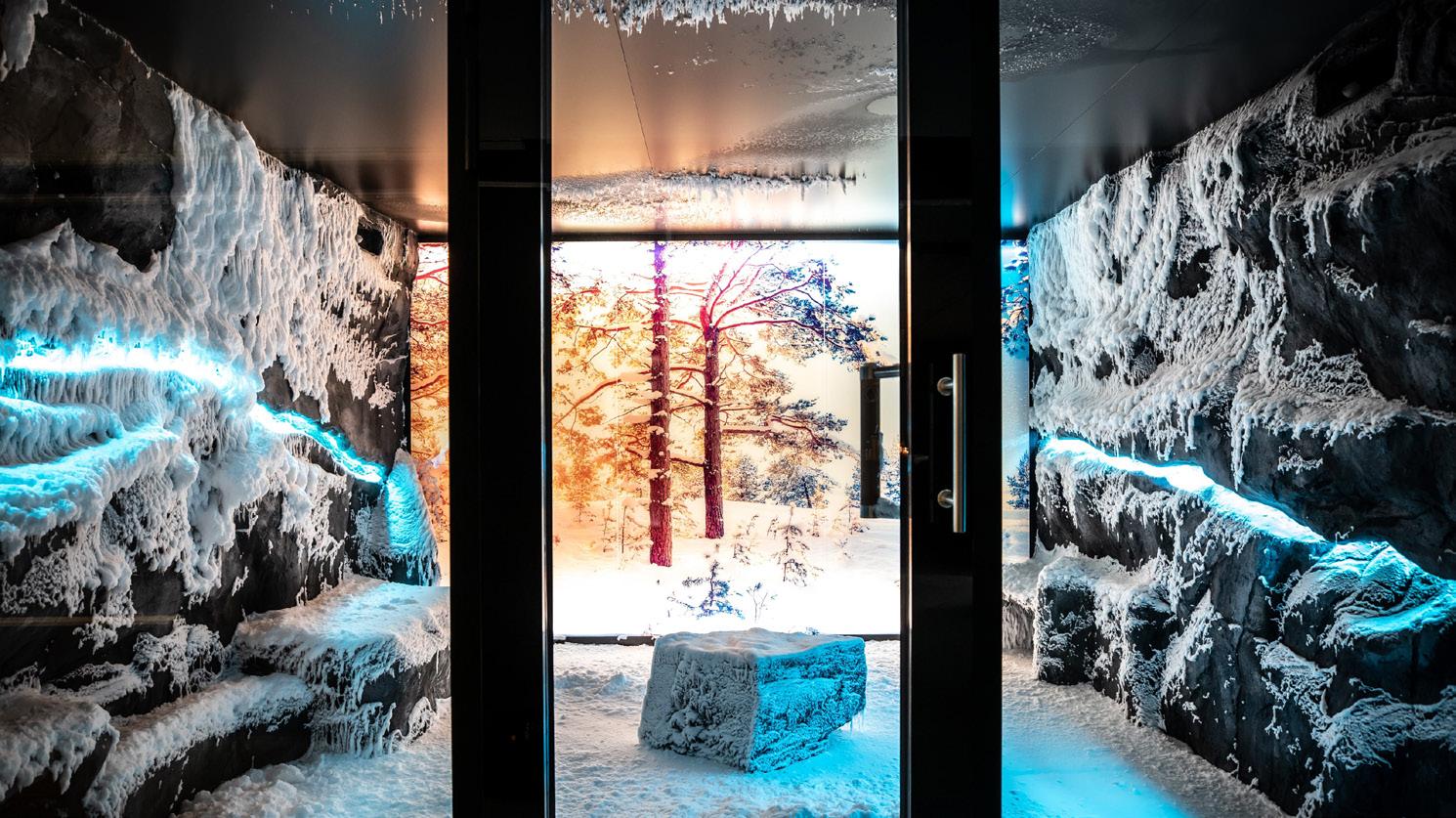
90 THE MAGIC OF FIRE AND ICE
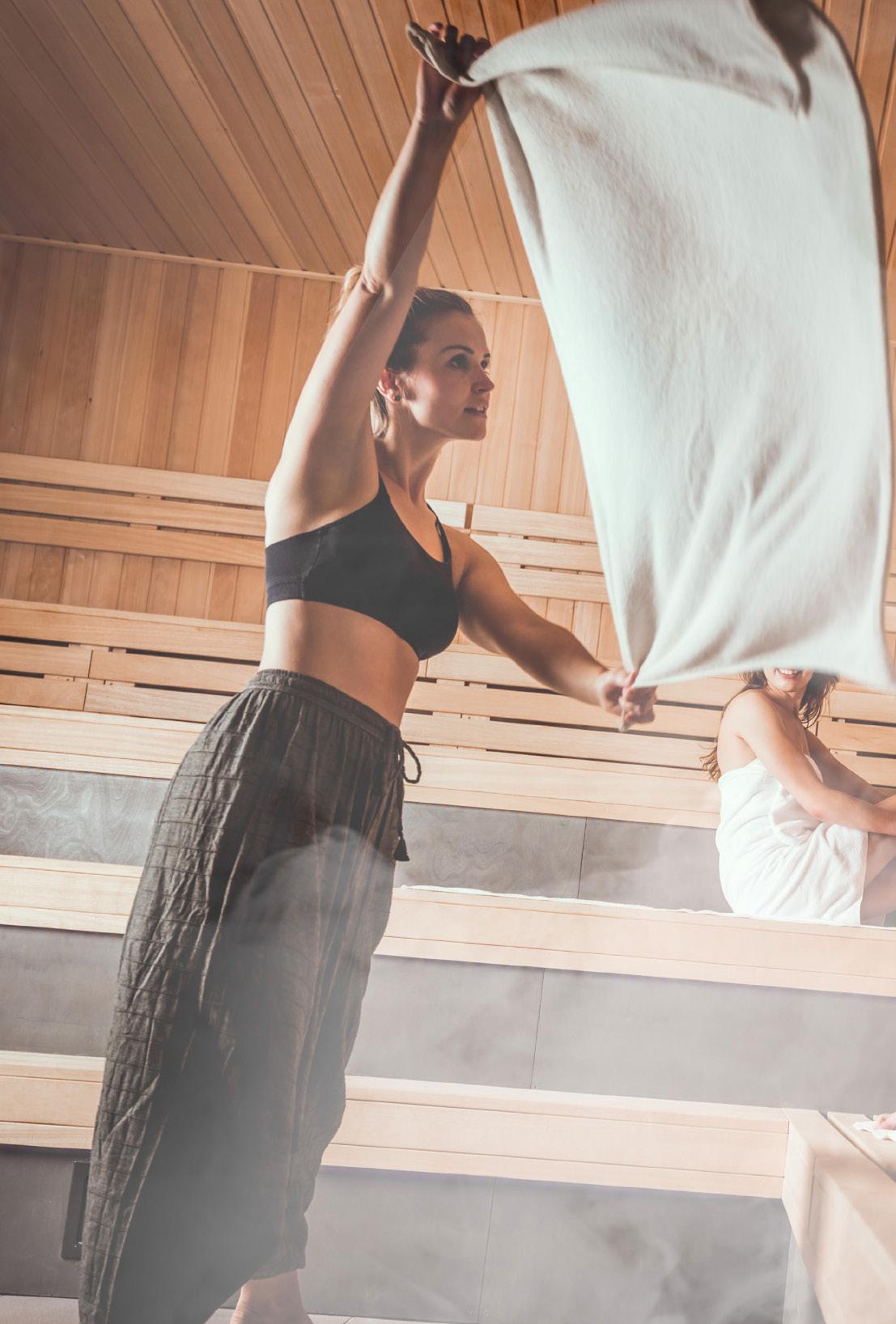
Sauna ceremonies are becoming increasingly popular and the aufguss masters who perform them bring a theatrical, invigorating and social dimension to spa thermal experiences
98 EUROPEAN SPA’S EXPERT GUIDE TO THERMAL EXPERIENCES
The best advice and products to help maximise your spa’s thermal offering, with contributions from Barr+Wray, Starpool, Sauna360, TechnoAlpin, Kemitron, KLAFS, Design for Leisure, EOS Saunatechnik, Dröm UK and Myrtha Wellness
www.europeanspamagazine.com 12
ISSUE 87 | SPRING 2023
Contents
ON
COVER
THE
98 60
Starpool and TechnoAlpin (right)

info@gerrardinternational.com INTERESTED IN ALCHEMY? CONTACT OUR GM TO LEARN MORE ABOUT HOW WE CAN PARTNER: HARRISON.GREGORY @GROWNALCHEMIST.COM grownalchemist.com | @grownalchemist SCIENTIFICALLY-INNOVATIVE SKINCARE POWERED BY NATURE AND DESIGNED FOR RESULTS. OUR FACE + BODY TREATMENTS HELP RESTORE RADIANCE BY WORKING WITH YOUR SKIN'S UNIQUE BIOLOGY. www.grownalchemist.com harrison.gregory@ grownalchemist.com
BRANDS TO WATCH
28 AROMATHERAPY ASSOCIATES: BALANCED MIND, BEAUTIFUL SKIN
Christina Salcedas discusses how the brand channels the skin-mind connection with its new treatment range
34 HYDRAFACIAL: BEAUTY WITHOUT BOUNDARIES
BeautyHealth president and CEO Andrew Stanleick talks about the new partnerships of its flagship brand, Hydrafacial, and his vision to bring skin health to spas worldwide
46 MYBLEND BY CLARINS: BEAUTY REIMAGINED
In an exclusive interview, myBlend founder Dr Olivier Courtin and commercial director Morgan Lefrancois discuss the reimagined brand and how it addresses lifestyle factors for a hyper-personalised spa experience
58 ESPA: CREATING SPAS OF DISTINCTION
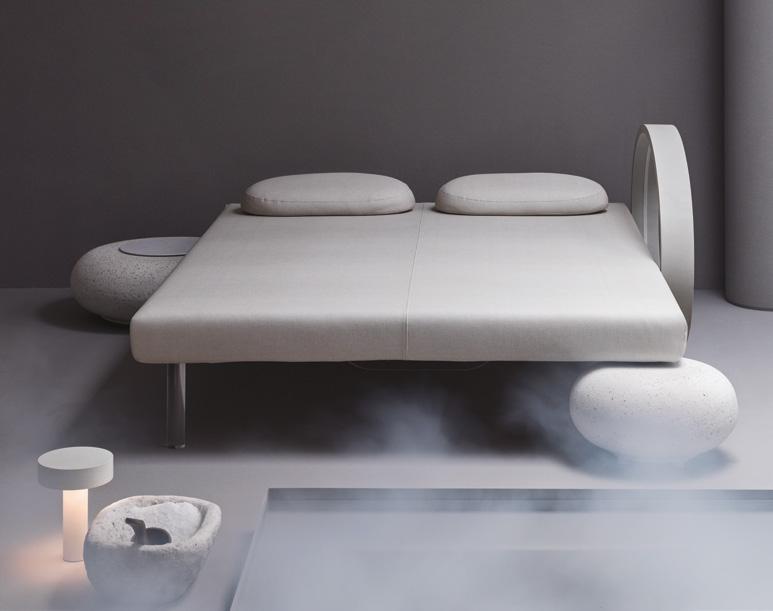
We find out how ESPA’s Design and Consultancy team delivers bespoke wellness concepts for the world’s most luxurious spas and resorts
SPA SPECIFIER
73 MENU
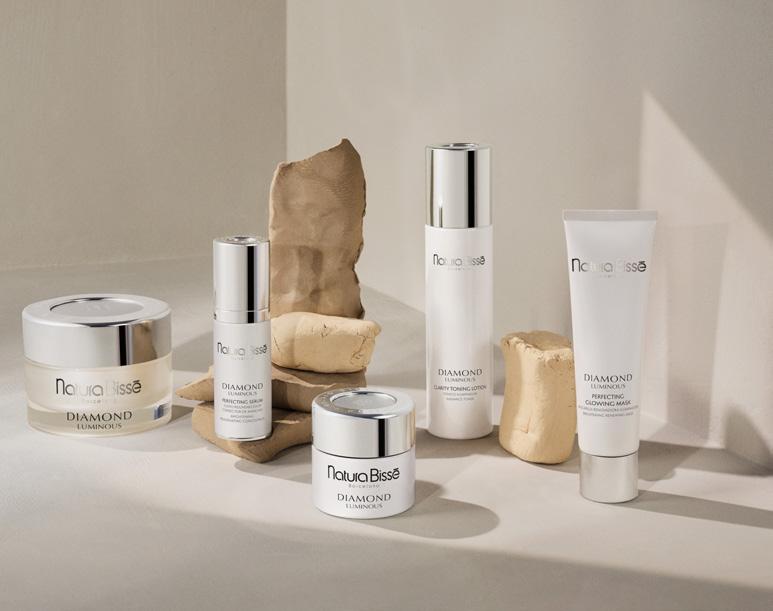
Our round-up of the best new product and treatment launches includes the Diamond Luminous treatment and products from Spanish skincare expert Natura Bissé, Elemis’s Pro-Collagen Rose Marine Cream and Voya’s Spring Tides Journeys, which aims to alleviate the symptoms of menopause
114 WELLNESS MATTERS
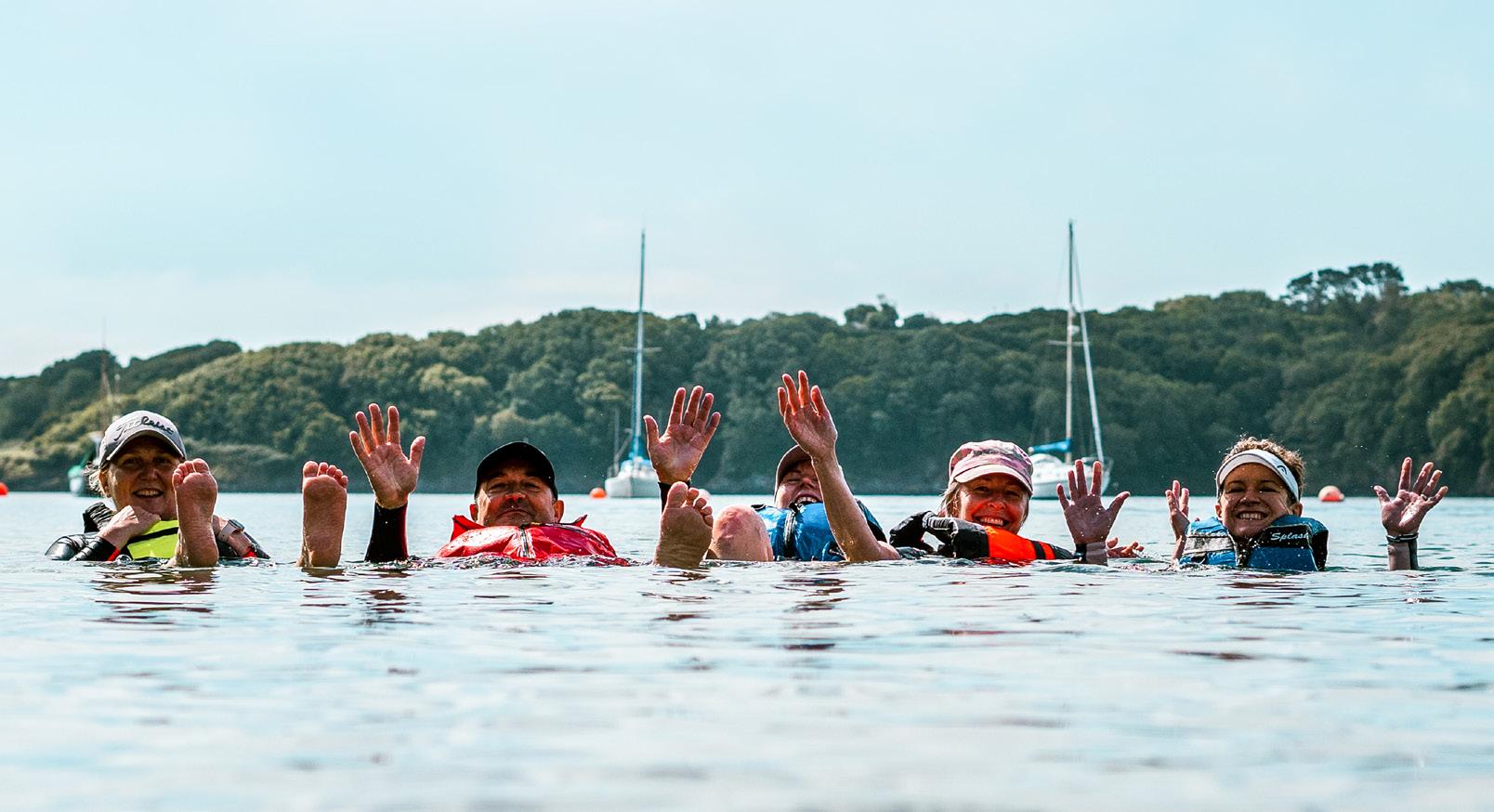
We shine a light on the trends and modalities making waves in the world of wellness, including how spas can incorporate demand for wild swimming and new healing therapies with their roots in sound healing and equine connection
120 SPA STYLE
A selection of the latest stylish equipment and leading-edge technology for your spa, including Aquaform’s Aquamotus horizontal shower, which combines a massage and an emotional shower in one. We also profile the Wellness Therapy Collection from Studio Apostoli and go inside the new Espuro foam steam room from KLAFS
www.europeanspamagazine.com 14 European Spa magazine is published by Spa Publishing Ltd. The Publisher has taken all reasonable measures to ensure the information detailed in European Spa magazine is correct at the time of publishing, and while every care is taken to avoid inaccuracies the Publisher does not accept responsibility for any errors or omissions from any information within this edition. Views expressed in European Spa are not necessarily those of the Publisher or Spa Publishing Ltd. All rights reserved, reproduction in whole or part without the Publisher’s permission is strictly prohibited. © Spa Publishing Ltd Contents ISSUE 87 | SPRING 2023
46 73 120 114
www.globalwellnesssummit.com
Spa Spotlight The Ranch Italy at Palazzo Fiuggi
www.europeanspamagazine.com 16
Reset your compass
Sarah Camilleri heads to Palazzo Fiuggi in Italy to talk to The Ranch co-founders Alex and Sue Glasscock about their first European foray, which promises participants an intensive reset
REPORT BY SARAH CAMILLERI
In 2010, American entrepreneurs Alex and Sue Glasscock took the plunge to switch careers and open The Ranch Malibu, celebrated today as one of America’s leading luxury fitness and wellness destinations. Set across 200 acres in the beautiful Santa Monica Mountains, The Ranch promises transformational fitness and reset time without distraction.
Grounded and rigorous, its renowned week-long hiking programmes bring together up to 25 people – including solo guests, couples and small groups – for an immersive wellness experience. Unashamedly premium and positioned to attract C-suite individuals, a week at The Ranch’s flagship costs around $7,600 (£6,340) with extended three and four-week stays available.
The brand’s newest retreat – and a first foray into Europe – The Ranch Italy launched in May 2022 at the renowned spa destination Palazzo Fiuggi, near Rome. Here, week-long stays cost from $9,100 and shorter breaks at $4,950 can be taken by time-poor guests who need a quicker boost.
Realising a lifetime’s dream
Impressively, The Ranch Malibu boasts 50% repeat business – with 35% of new guests attending due to recommendation by loyal Ranch alumni – and there is often a waiting list. Following the recent success of its Italian venture, the brand is now working on opening a second US property in spring 2024, The Ranch Hudson Valley, with more international plans in the pipeline.
“Fifteen years ago, we were ready to change careers to put all our energy into something new. It needed to be something we felt good about, something that we could do for a long time, and selfishly,
www.europeanspamagazine.com 17 Spa Spotlight The Ranch Italy
at Palazzo Fiuggi
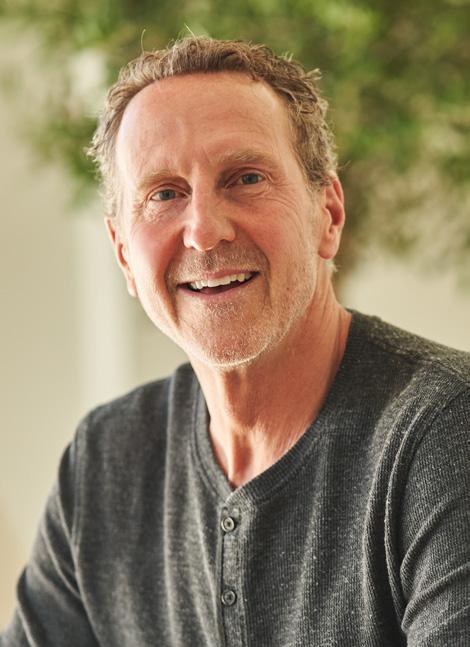
something that would keep us healthy too,” explains Alex Glasscock. “The Ranch is really an accumulation of both our skills: design from Sue, with financing, real estate and construction from my side. It was also a creative outlet for us – a way to express what we call ‘balanced living’, because that is how we strived to live.”
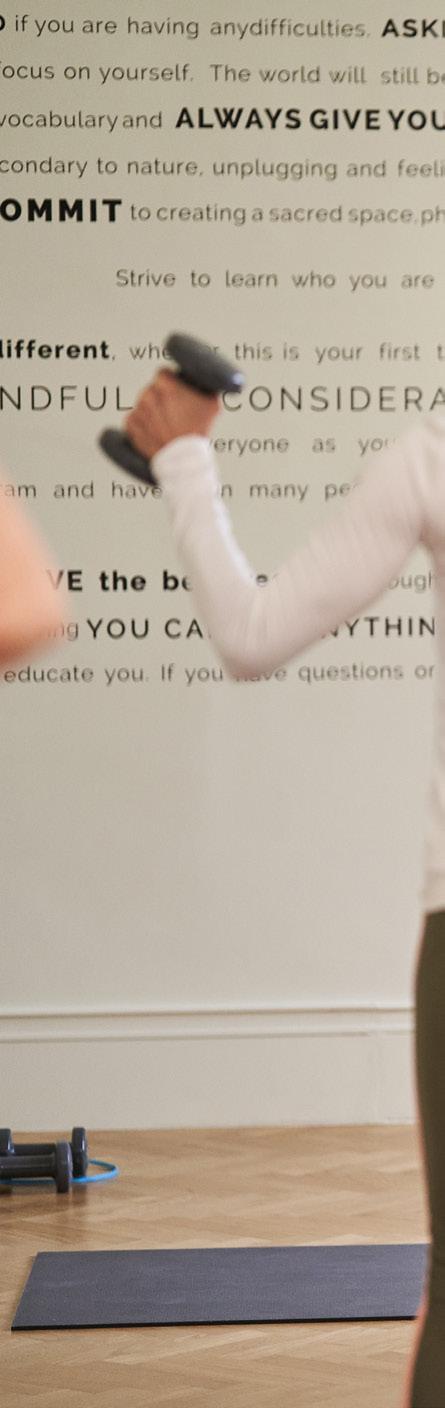
“We weren’t super rigid about our food, but our approach to life meant that we were full of energy, full of positivity and getting leaner all the time. Back then, we sensed that maybe a few of our friends were not quite in the same place,” he adds.
Together, Alex and Sue created a destination that delivered 360-degree wellness, way before the catch-all term had really gained traction. “Balanced living for us is about incorporating fitness, nutrition, sleep, meditation, thoughtfulness, as well as empathy and guidance from the very best wellness professionals,” adds Sue. “It’s about bringing a group of people together and surrounding them with a positive supporting team and culture. We are not a boot camp, but it is rigorous. It allows people to become fully present.”
A European adventure
The Ranch Italy is the result of an imaginative collaboration between The Ranch team and wellness experts at Palazzo Fiuggi. Perfectly poised on the rolling foothills of the Apennine Mountains, guests are promised “an authentic Ranch experience with an Italian twist” as well as the ‘plug-in and go’ spa and medical excellence of one of Europe’s leading destinations. Palazzo Fiuggi is just 50 minutes by car from Rome, making it hassle-free for loyal Ranch guests
www.europeanspamagazine.com 18
Spa Spotlight The
Ranch Italy at Palazzo Fiuggi
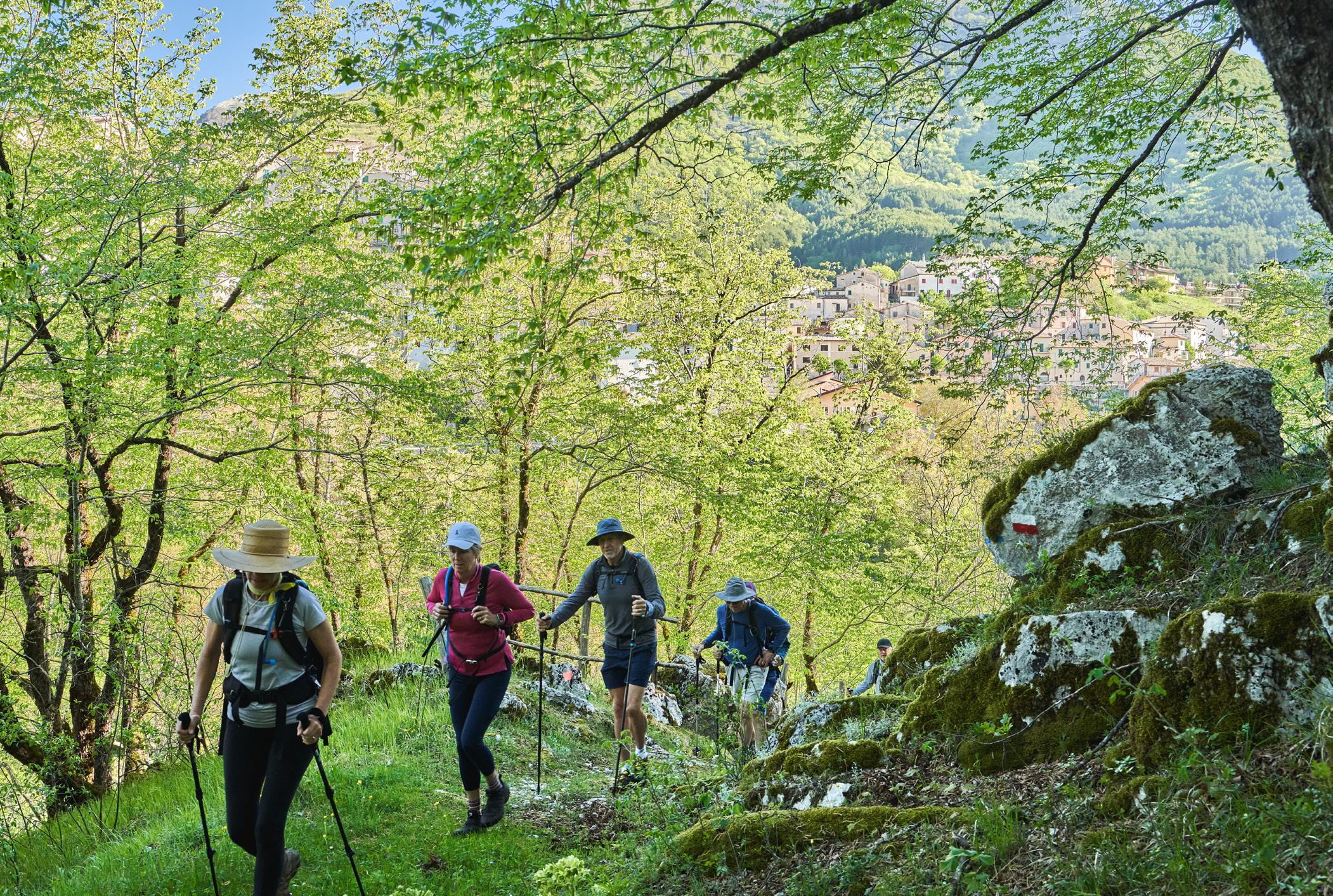
Below: Four-hour forest hikes are a daily part of life at The Ranch Italy
“At The Ranch our philosophy is based on asking our guests to relinquish control. We have created a programme where you just need to show up and everything is taken care of.”
Alex Glasscock
Co-founder, The Ranch
travelling from the US and Canada as well as easy to access for international wellness seekers from the UK, Europe and the Middle East.
“Italy is one of our favourite countries and the climate here at Palazzo Fiuggi is absolutely ideal – it closely mirrors the climate we enjoy in Malibu,” explains Alex.
“We did a pop-up for several years in the Dolomites and this gave us experience of running a ‘planted programme’, and propelled us to find the right location and partnership with Palazzo Fiuggi,” adds Sue.

Serene, green and close to nature
Positioned within striking distance of many incredible hiking trials, Palazzo Fiuggi provides The Ranch’s guests with an elegant setting for their Italian journey, including their own dedicated wing and accommodation at the property, which features a communal dining room and a PT and yoga area. This separation recreates the autonomy of the Malibu experience, although guests are free to roam and book treatments with Palazzo Fiuggi as they wish. In addition, Ranch guests have full access to Palazzo Fiuggi’s 6,000sqm spa, which is a whole world of relaxation and rejuvenation.
www.europeanspamagazine.com 19 Spa Spotlight
Palazzo Fiuggi Wellness Medical Retreat
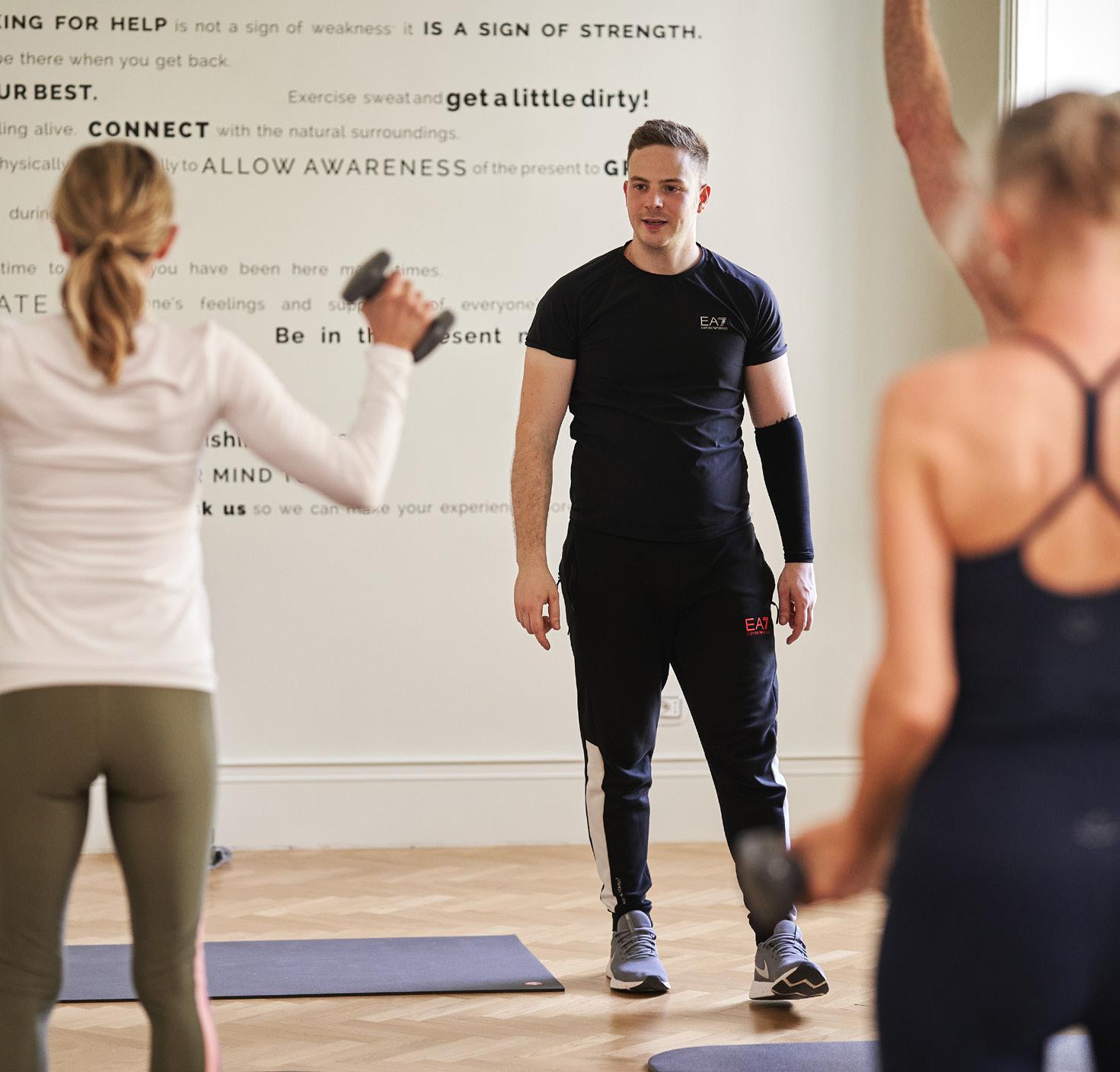
From top: Palazzo Fiuggi in the foothills of the Apennnine Mountains; daily PT sessions give guests the opportunity to step up their fitness
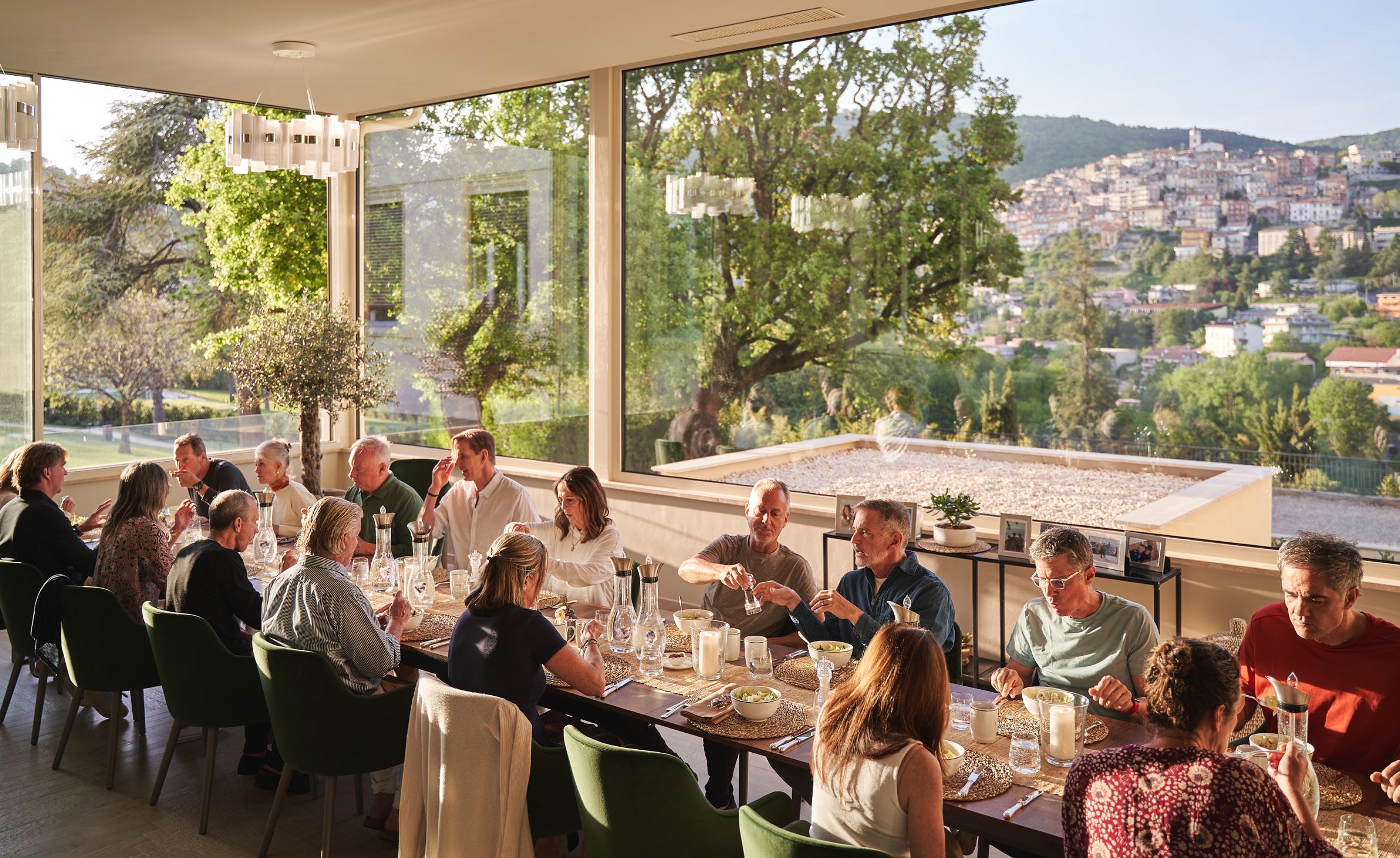
Below: plant-based cuisine is enjoyed as a group in the restaurant, which has panoramic views
Measuring your biomarkers
For those who have time to prepare before they arrive, which is highly recommended, a comprehensive 30-day preparation programme is supplied, as well as a detailed health and fitness questionnaire. This information also sets out what to pack and how to best prepare physically and mentally for life at The Ranch.
On arrival, each guest has a health check, including ECG, blood tests, body measurements and a weigh-in performed by an experienced medical team. These metrics are revisited at the end of the guest’s stay to offer a more complete picture of each individual’s overall health upon departure, together with recommendations to take home and follow.
Plant-based, clean eating
A keystone of each guest stay is a nutrient-dense combination of detoxifying plant-based cuisine, curated by The Ranch Malibu's executive chef
Meredith Haaz. All attendees are asked to follow a strict regimen of no caffeine, sugar or alcohol during their stay. Also, daily calorie totals come in at around 1,400 a day. Selfcare here is not about à la carte choices –everything is fully delivered so people can focus on their fitness. Every appetising set meal is artfully prepared by Palazzo Fiuggi’s three-Michelin-star chef Heinz Beck and his culinary team.
“At The Ranch our philosophy is based on asking our guests to relinquish control,” explains Alex. “We have created a programme where you just need to show up and everything is taken care of. The most important thing is to be mentally willing to let go. Many people find that challenging as they are so used to maintaining control. The most cathartic thing we can give at The Ranch is time to be able to release yourself from life.”
Everyone eats together in The Ranch’s own relaxing dining room, which offers panoramic views across the valley. Unquestionably, some guests find The Ranch’s highly prescriptive approach to food a little challenging at first, especially after a four-hour intensive hike when appetites are strong. Yet, as the body starts to adjust to this level of physicality, the strictness becomes normal.
www.europeanspamagazine.com 20 Spa Spotlight The Ranch Italy at Palazzo
Fiuggi
Making small, incremental changes to create big shifts
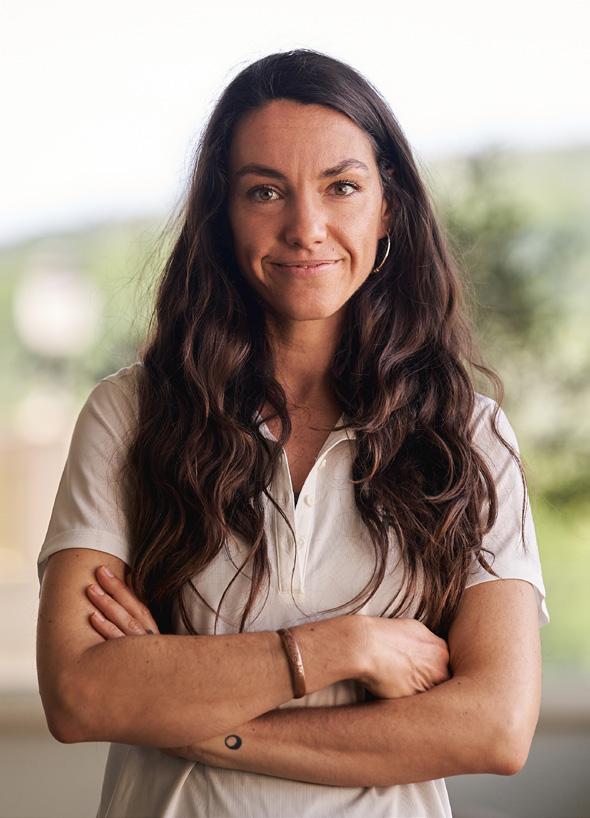
Livia Oliveti, The Ranch Italy’s programme manager, explains how the retreat works
All of The Ranch’s programmes are designed to improve the quality of one’s life by improving health. We ask guests to unplug from their everyday lives and reset their minds and bodies. With us, they can realise just how much they can impact their health through small, incremental changes to create big shifts.
Our programme includes six hours of daily exercise, centred around a four-hour hike each morning, paired with a plant-based diet. This allows every guest to really immerse themselves in nature and learn more about their health.
Our partnership with Palazzo Fiuggi really embodies our values and sensibilities too. It’s an extraordinary private sanctuary with world-class fitness and spa amenities as well as medical services.
This breath of expertise allows guests to gain a deeper insight into their health status through diagnostics and
blood testing with one of Palazzo Fiuggi’s expert physicians. The biomarker testing not only informs the medical team of any underlying concerns, but also opens the conversation up to explore areas that can be improved to increase vitality.
Guests also have access to the Palazzo’s state-of-the-art 400sqm fitness centre, complete with Technogym, Pilates, yoga, and Reaxing training equipment, as well as enjoying our nutritionally dense, artfully prepared plant-based menu.
Our goal is that every guest departs with a greater sense of self, feeling rested and rejuvenated while having lost weight, gained muscle and experienced the benefits of a plant-based diet. The final consultation with one of Palazzo Fiuggi’s world-class physicians also gives them a complete picture of their health and longevity.”
www.europeanspamagazine.com 21 Spa Spotlight The Ranch Italy at
Palazzo Fiuggi
Livia Oliveti The Ranch Italy
Experiencing The Ranch Italy
The Ranchers meet up soon after a friendly wake-up call at 5.30am on their first full day. After an early morning stretch session, a light breakfast is eaten. A daily foot clinic is also available to soothe and nurture sore soles that will be seriously tested as the days progress. Then it's off out for the first of six four-hour morning hikes.
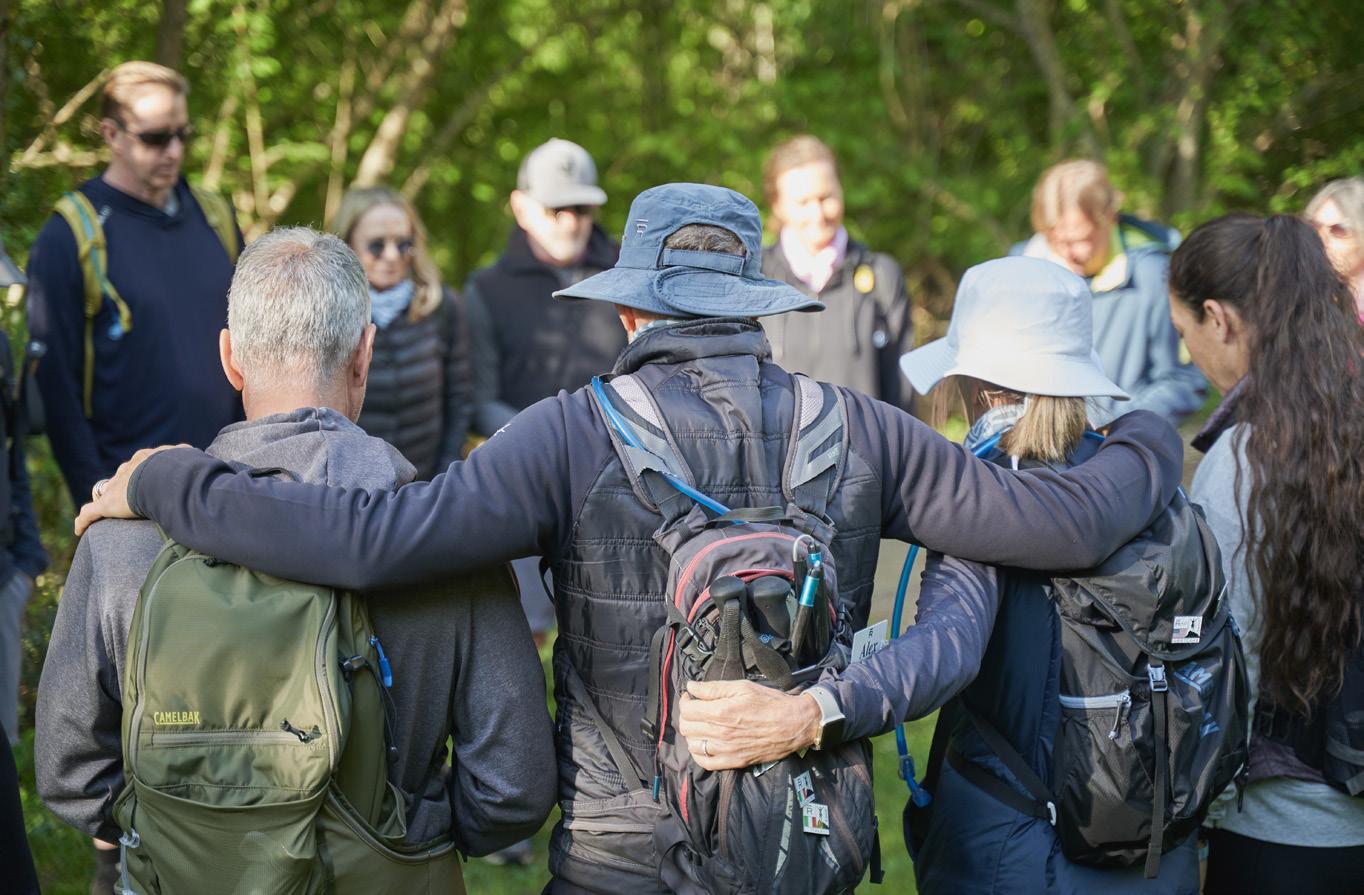
Hikers are each given a minuscule healthy snack (The Ranch is famous for its three-almond quota!), a walkie-talkie, call-of-nature doggie bags and trekking poles. After that it’s a solo effort, although key to making it through the sometimes gruelling treks is the encouragement passed on – and the pacing provided – by some of the more experienced hikers in the group.
“You can’t think about a lot of other things when it’s precarious and you’re with people you don’t know. Yet, this can be a cathartic experience,” smiles Alex.
“Every group we see is different. Many end up having deep conversations. You can be surprised by how much you open up and share things. It’s important to be reminded of our humanity, particularly in these times that are so technology-based and busy. Basically, we challenge you to do things that are outside your comfort zone.”
Forests, mountains and pilgrim paths
As each hike unfolds the challenging trails weave through forests, over mountains and along ancient pilgrim paths. Through conversation, connection and kinship grow each day and a real bond is forged as each mountain is conquered. Even the restricted diet starts to feel normal after five days, as staminas begin to grow and guests' appearances begin to glow. There is a sense of freedom in unquestioningly following the Ranch routine. “Nurturing body, mind and soul is something
Red flags, time out and being human
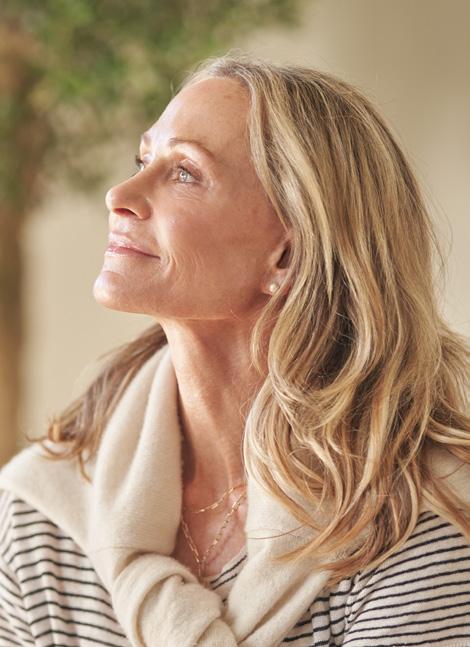
Sarah Camilleri describes how her time at The Ranch Italy led to moments of enlightenment
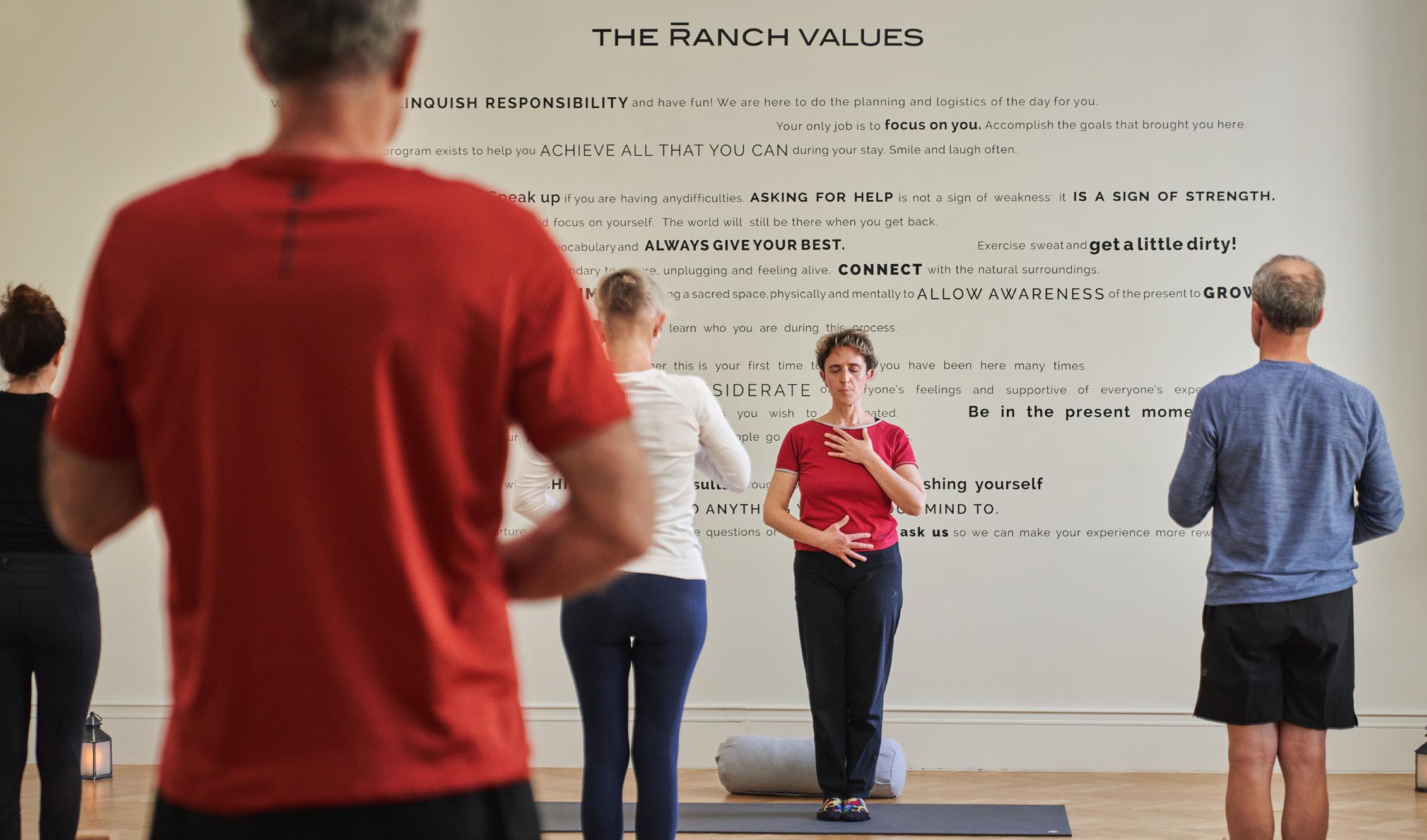
One of the most magical elements of ‘Ranch Time’ is the group dynamic and having time out to be ‘off grid’ and fully present with such a group of interesting people.
During my week of punishing yet glorious hikes through the Apennine Mountains, my fellow Ranchers band together and we become family. Like shoals of fish, we hike solo stretches but then come back together in comfortable silence or to enjoy life-affirming conversations when the terrain eases.
Our shared experience, blisters and daily efforts somehow bond us as humans – as if we had known each other for years.
My thighs grumble at the intensity of exercise but the challenge of following the red marker flags over a different route each day – not to mention trying
to keep up with other Ranchers – draws out a level of motivation and confidence that surprises me.
‘Ranch Time’ can feel a little like Groundhog Day as your body and mind initially resist the shift that is happening – but gradually the magic starts to happen.
Six days in I really start to enjoy the physicality of the hikes, and a truly sublime moment eventually takes place above the cloud line – when all that matters is breathing and pacing my stride. In this moment I feel totally at one and all is right with the world.

This flash of enlightenment refuels my desire to make positive change. The Ranch helps me reconnect with my body and feel stronger and much more alive than when I arrived. The afterglow lasts for weeks.
www.europeanspamagazine.com 22 Spa
Spotlight The Ranch Italy at Palazzo Fiuggi
“Balanced living for us is about incorporating fitness, nutrition, sleep, meditation, thoughtfulness as well as empathy and guidance from the very best wellness professionals.”
Sue Glasscock Co-founder, The Ranch
HIGH-END PERSONALIZED BEAUTY CARE
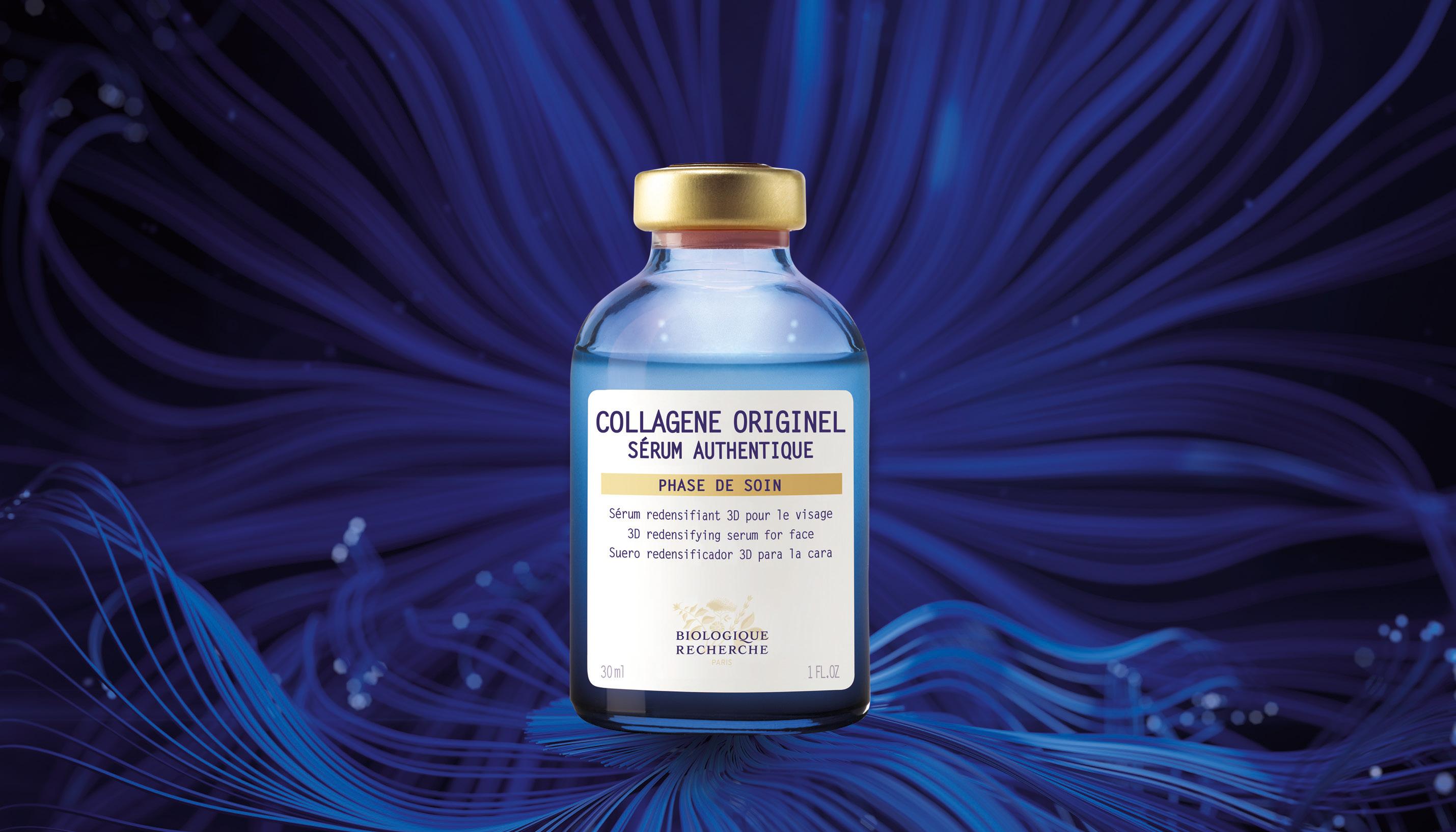
For 45 years, the Biologique Recherche Methodology has a reputation of expertise based on a clinical and personalized approach in their beauty treatments. Using pure, concentrated and active ingredients within their products, as well as innovative protocols and specific manual techniques adapted to the different Skin Instants© it offers the best solution to building better skins.
www.barrandwray.com CONTACT Biologique Recherche - 32 avenue des Champs-Élysées - 75008 Paris - www.biologique-recherche.com
www.biologique-recherche.com
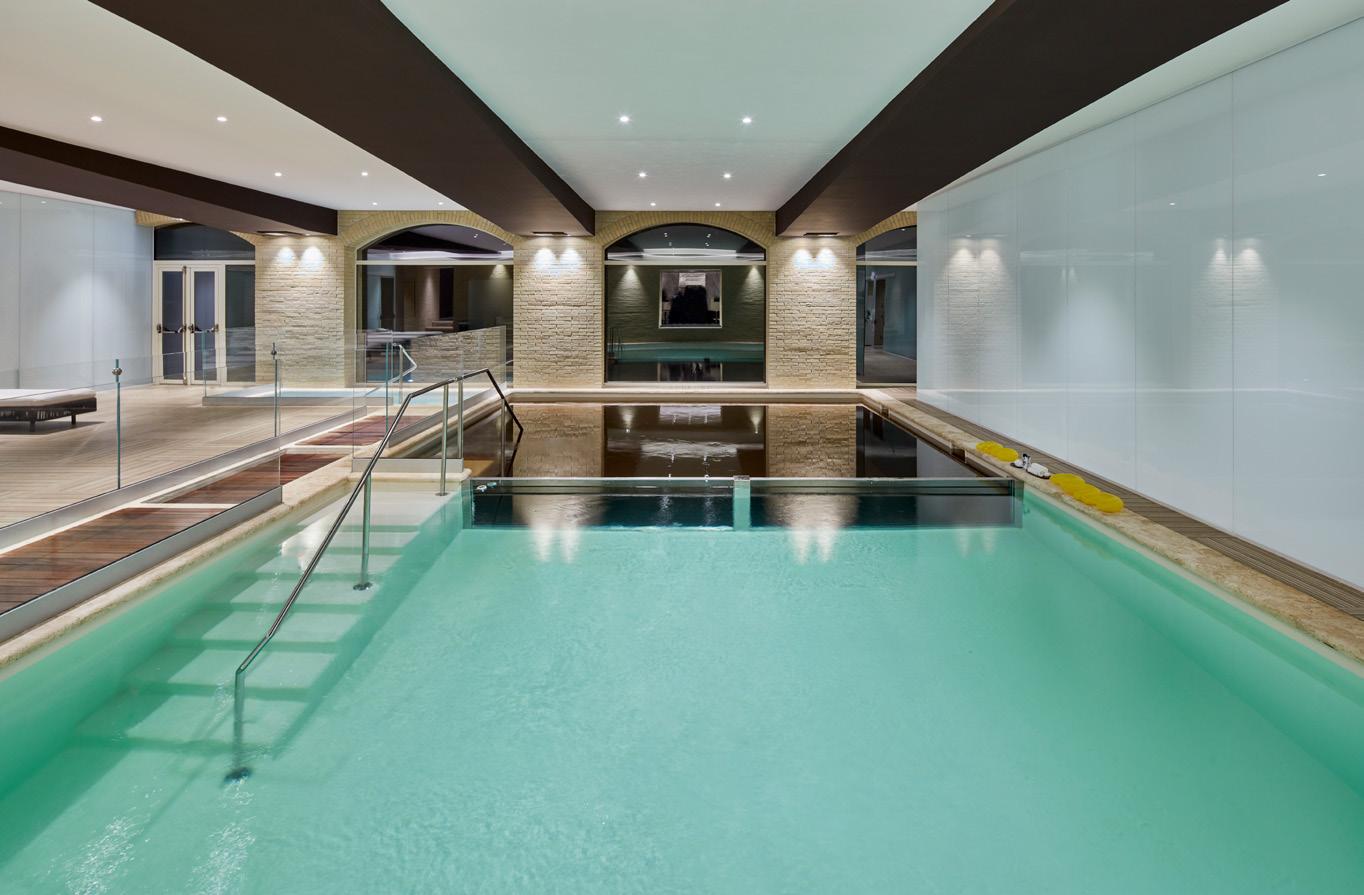
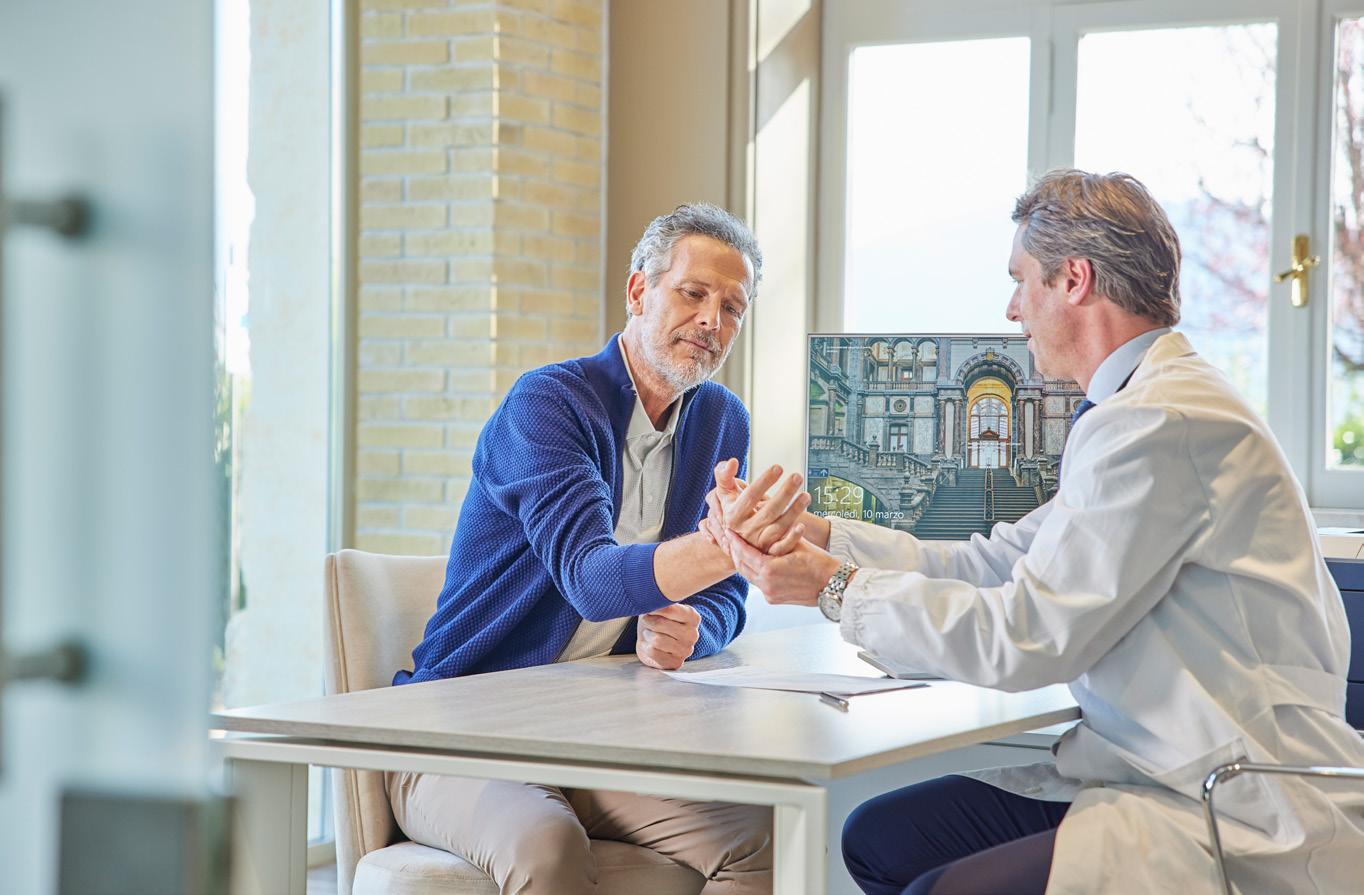
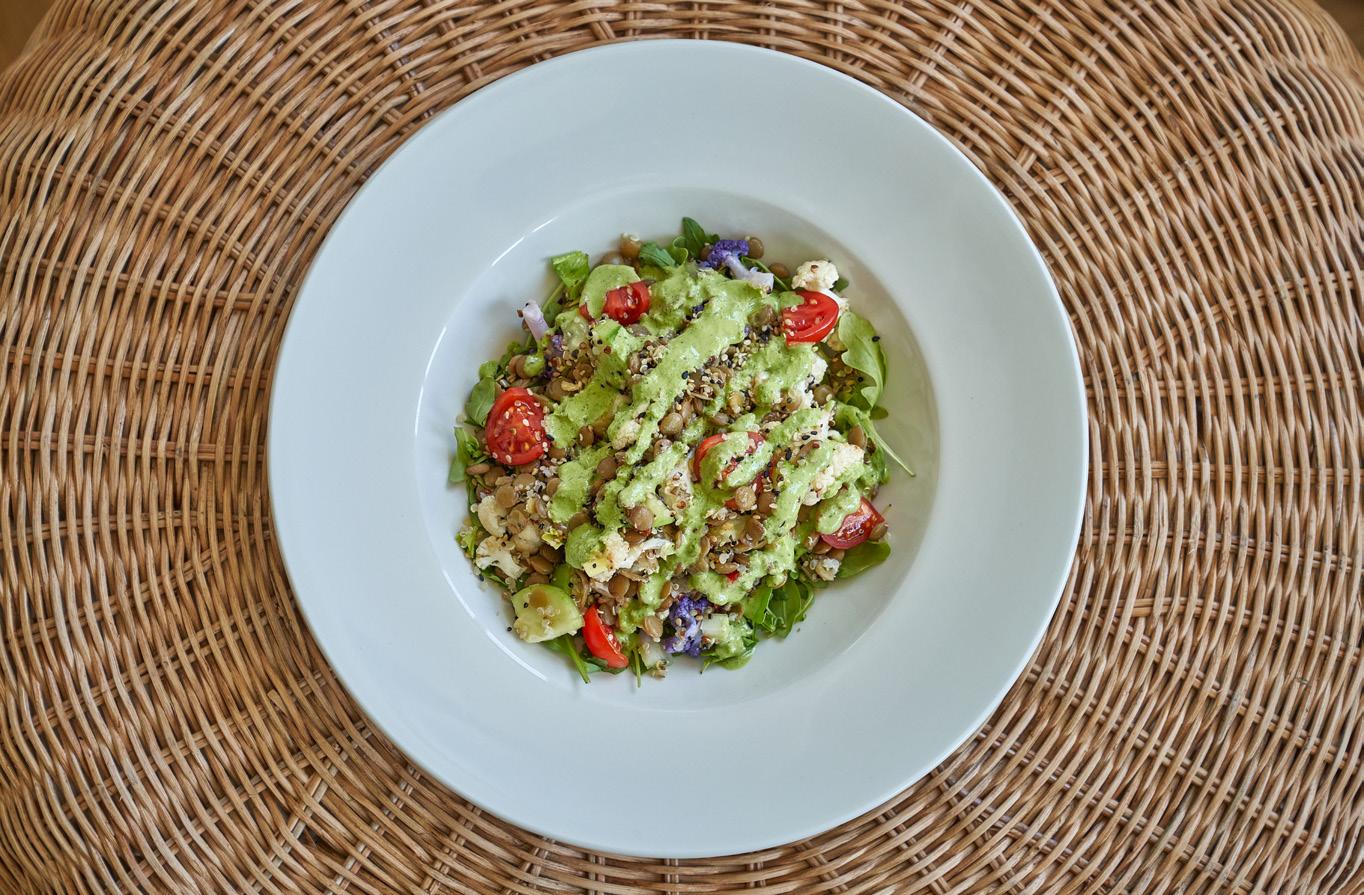
Right from top: medical consultations are an integral part of the The Ranch's personalised approach; bathing in the magnesium-rich pool promotes natural joint and muscle relaxation; a strictly controlled plant-based diet is designed to help guests achieve the most from their stay
we are very passionate about,” says Sue. “The Ranch is a place for no decisions, everything is being done for you – it’s a place where you can really reset.”
Reset with spa time
Post-hike it is time for a very welcome plant-based lunch before some much needed recuperation, including an expertly delivered massage to remove lactic acid that has built up in the muscles.
The afternoons can be spent as each guest wishes. There are different high-intensity PT sessions for the dedicated, so you can top up your fitness with two additional hours each day if you wish. For those who need to unwind, restorative yoga sessions and plenty of relaxing spa time are available.
After a friendly communal dinner at 7pm, where guests are specifically asked not to dress up to stay true to the Ranch 'vibe', a meal, herbal tea and good conversation lead to an early night in order to be ready again at the crack of dawn.
The Ranch Vail, The Ranch Hudson Valley and Costa Rica
Alex and Sue are enthused and excited after The Ranch Italy’s debut year. “Well, we’ve learned a lot, opening in a new location 7,000 miles away from home with just seven months out of the gate to prepare everything,” smiles Alex. “We are really pleased with our teams’ efforts and that we have achieved 65% occupancy, but we also learned that we would never do it in that timeframe again. It was fun but it stresses the system. Next time we will be more patient!”
And the next opening is set for the US this autumn when The Ranch Vail opens at The Ritz-Carlton, Bachelor Gulch for an exclusive programme from September 3 to October 20. In the Spring of 2024, The Ranch Hudson Valley launches in 200 acres of private parkland in New York State.
“We are completing the restoration of a beautiful estate in the lower Hudson Valley, which was built by financier and investor JP Morgan for his daughter and was more recently run as a catholic girl’s school,” confirms Alex. “The Ranch Hudson Valley will offer three and four-night programmes to meet an uptick in demand to allow people to come for a shorter amount of time – also, to serve companies who have reached out to us for corporate wellness retreats. We’re excited that corporations can now
www.europeanspamagazine.com 24 Spa
Spotlight The Ranch Italy at Palazzo Fiuggi
VOYA’s Skin Renewal Facial features advanced serum technology, formulated with certified organic antioxidant ingredients, seaweed extracts and clinically proven biotech actives. Using a multi-level approach including a purifying cleansing ritual, a powerful age defying facial massage, a deeply restorative mask, and sonic pulse technology. This is a new era of organic skincare from the sea.
For more information on all VOYA spa treatments, please email sales@voya.ie.


A NEW ERA OF ORGANIC SKINCARE www. voya .ie www.voya.ie

come into this space for team-building, instead of heading for Las Vegas and, you know, coming back feeling bloated and polluted,” he adds. “We will also offer takeovers for private groups of friends, which we know will be popular.”
“It’s an architectural masterpiece, the panelling, the coffered ceilings. It’s extraordinary,” Sue adds. "And so, we’re spinning it into a Ranch. It’s so unlike in Malibu, where we have all these individual buildings – in Hudson Valley we will have 25 bedrooms and suites over four stories as well as a solarium with an indoor pool, an outdoor pool and our own thermal journey on property. We’re now also working on a new initiative in Costa Rica. I think we’ll be opening a Ranch soon in one of the world’s extraordinary Blue Zones in 2025.”
SPA STATISTICS
The Ranch Italy
www.theranchmalibu.com
Co-founders: Alex and Sue Glasscock
Programme manager: Livia Oliveti
Palazzo Fiuggi Wellness Medical Retreat
www.palazzofiuggi.com
General manager: Pietro Zanzot
Medical and scientific director: Dr David Della Morte Canosci
Spa director: Sharon Cassius
Spa size: 6,000sqm

Treatment rooms: 21 multi-use treatment rooms, eight beauty rooms, six medical rooms and a private spa suite
Hydrothermal experiences: 700sqm Therme
Roman bath, two hammams, steamroom, sauna and experience shower, far infrared sauna, salt room
Pools: Two thalassotherapy pools, contrast cold plunge pool, panorama pool
Suppliers: Gharieni, Stenal, Unbescheiden, Technogym, Reaxing and ICAROS
Product partners: Team Dr Joseph, Dr Barbara Sturm, Charme d’Orient, Piroche, Therabody
www.europeanspamagazine.com 26
Spa Spotlight The Ranch Italy at Palazzo Fiuggi
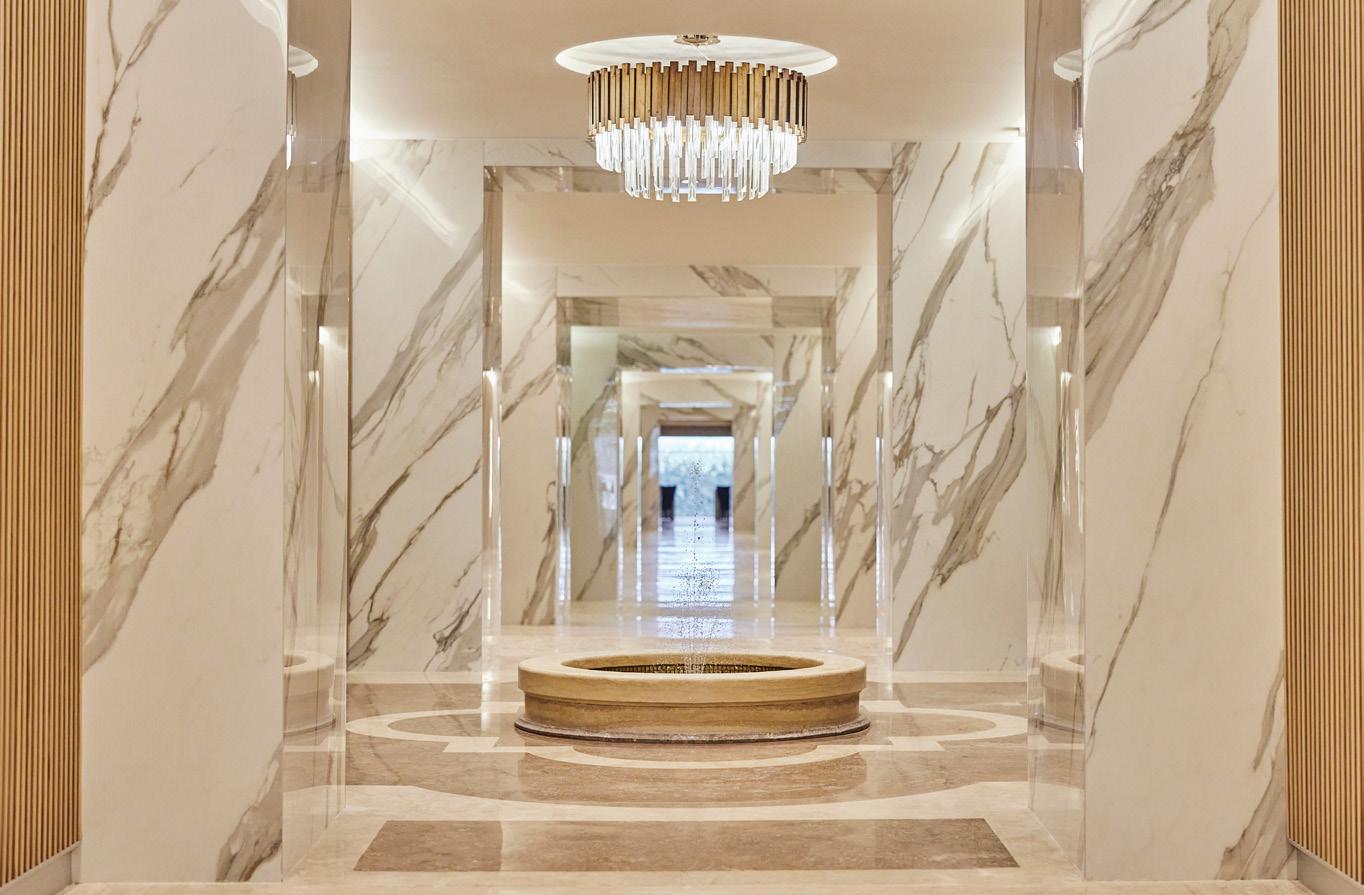
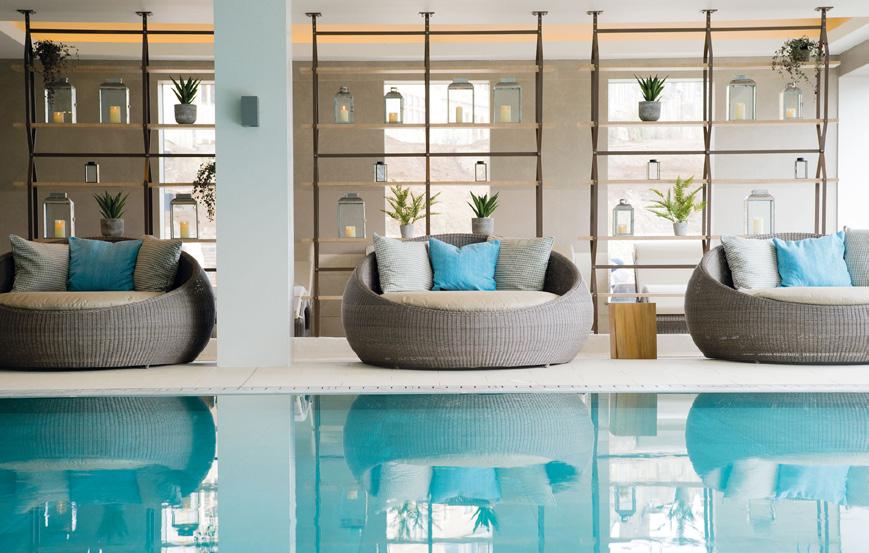
Right from top: the relaxing pool deck at Palazzo Fiuggi; a strong sense of cameraderie is built during the sometimes challenging hikes; luxury and wellbeing await beyond the marble interior of the spa reception area



SUPREME AROMATHERAPY IT’S NATURAL TO CONNECT WITH YOUR BODY #FeelYourEssence alqvimia.com f www.alqvimia.com I T C O N TA C T U S www.sparcstudio.co.uk beverley@sparcstudio.co.uk
Balanced mind, beautiful skin
Aromatherapy Associates channels the skin-mind connection with its new treatment range
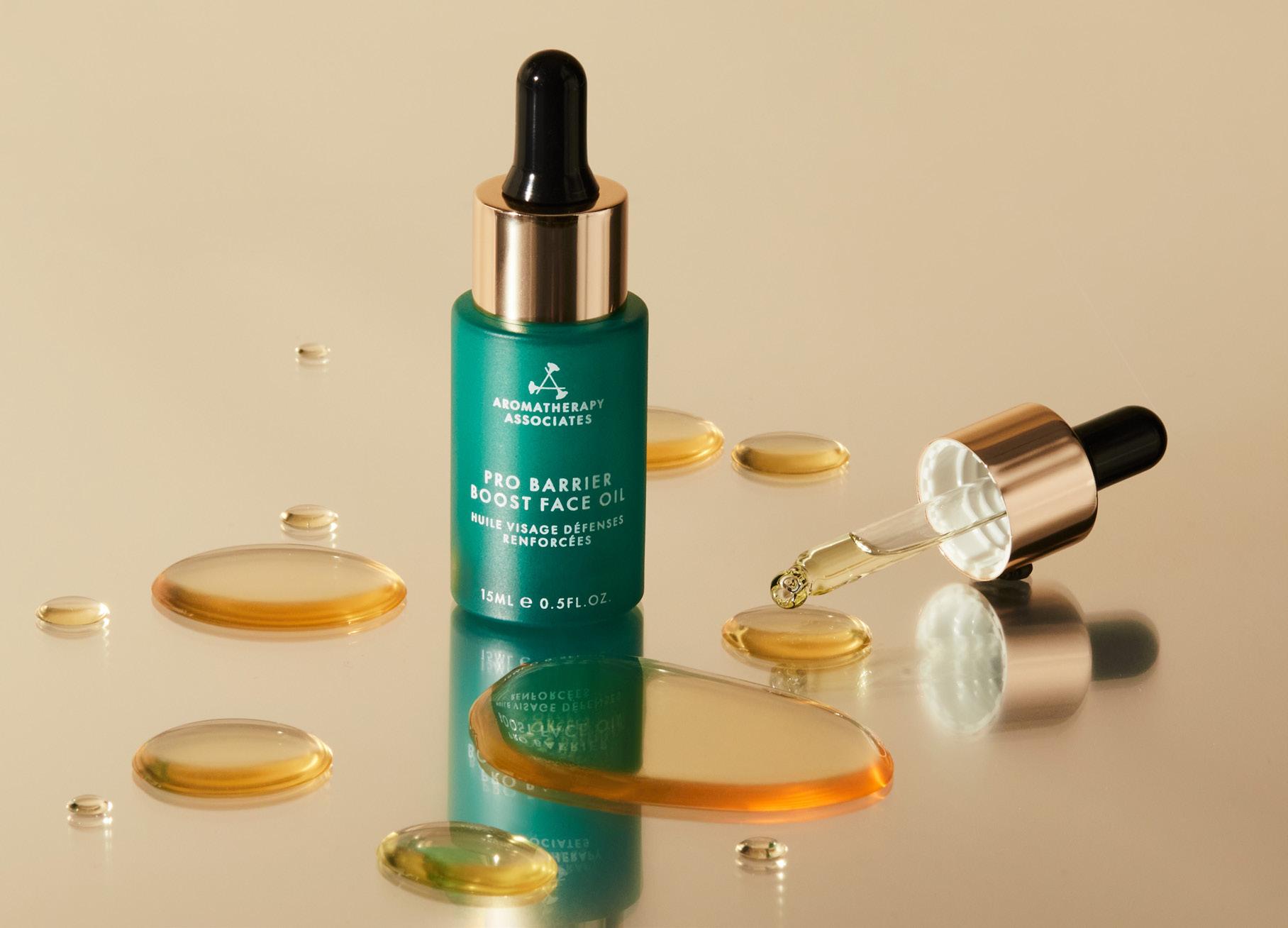
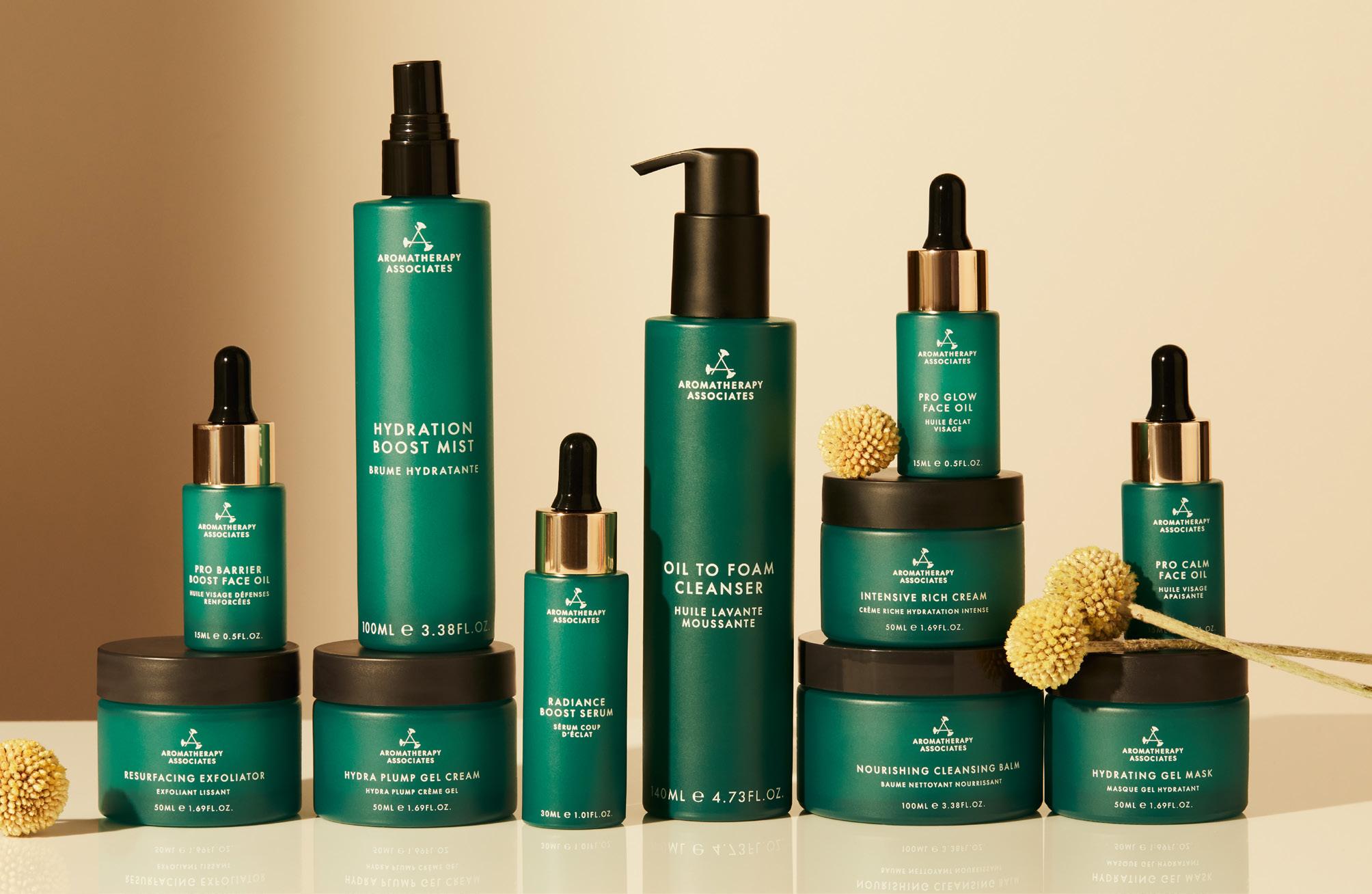
In May, Aromatherapy Associates will make an exciting new skincare range available to spas – one that aligns with skincare and consumer wellness trends and is rooted in the brand’s origins. At its heart is an invitation for spa guests to take time to reset and bring their skin and mind back into balance.
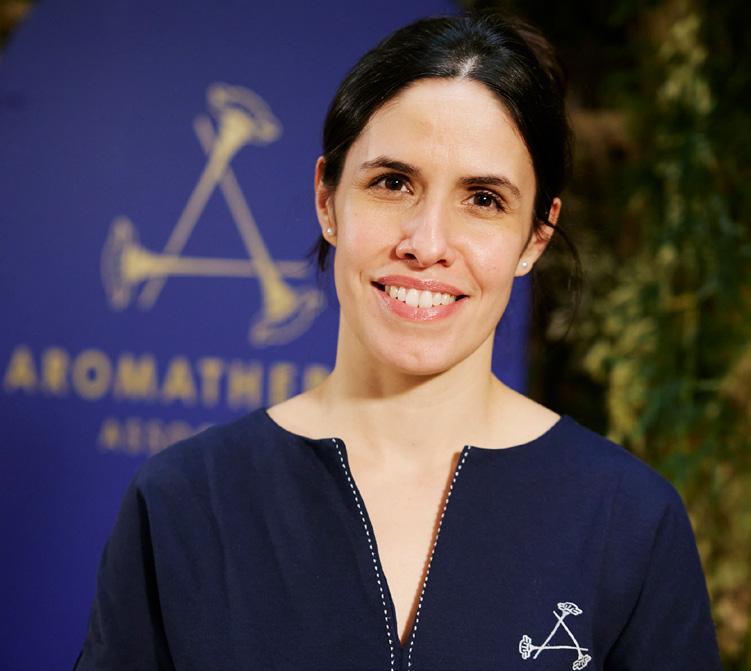
Christina Salcedas, global director of education at Aromatherapy Associates, discusses the launch and its roots in the science of psychodermatology.
What can spas expect from the new Aromatherapy Associates range?
It includes premium ingredients and textures, and beautiful fragrances. Every product is powered by our BioActive Complex, made up of our
“Our treatments were built from multiple disciplines to support the skin, body and mind.”
essential oil blend, botanical actives and skin stress relief technology to strengthen and protect skin against environmental damage.
We’ve used skin-nourishing ingredients at potent levels, backed by scientific data and testing.
Why is it a good fit for spas?
For spas looking to improve their eco credentials this professional skincare line has 100% PCR content; it is vegan, recyclable and multi-purpose as well as being available in waste-reducing sizes. With therapists in mind, we’ve created two professional-only products to enable them to personalise treatments to guests’ needs, as well as allowing flexibility for every skin type. This carefully crafted capsule range
www.europeanspamagazine.com 28 Brands to Watch Aromatherapy Associates promotion
Christina Salcedas Global director of education, Aromatherapy Associates
is next-generation natural skincare, developed to be efficient for spa use as well as easy for the customer to shop for – it is the ultimate collection for the wellbeing guest. The products went through an independent 80-person, two-week user trial and received more than 90% positive responses.
Tell us about the emerging science of psychodermatology?
This is the study of the connection between the mind and skin. At Aromatherapy Associates we’ve always known mental health and certain skin conditions are linked, but scientists have now found that this connection runs far deeper than initially thought.
For example, studies have shown that stress activates the skin’s immune cells, causing inflammation and subsequently cellular ageing. The National Eczema Association has found that 30% of people with atopic dermatitis are diagnosed with depression and/or anxiety, and the
Rosacea Review says 88% of rosacea patients experience skin flare-ups when they’re under emotional stress. When stressed the mind puts into motion an inflammation cascade that can have lasting implications for health and skin appearance and function.
How does the new range address this skin-mind connection?
As pioneers in aromatherapy, we’re uniquely qualified to help spa guests, responding to both their mental state and the skin itself, and helping to restore balance. Our proprietary skincare complex, alongside new protocols, can instil calm, taming stress signals that the brain sends to our skin.
What new treatments and protocols have been developed?
Our three new treatments were built from multiple disciplines to support the skin, body and mind. The team and I worked with a psycodermatologist, a dermatologist, an award-winning
facialist, a breath coach and an advanced massage therapist.
Our new hero facial, the Ultimate Wellbeing Facial, is a pioneering treatment that focuses on lowering stress levels and encouraging a full reset and repair for skin and mind.
We’ve incorporated conscious holds, guided breathing, a warm oil abdomen compress, an abundance of massage, including shoulder-release and sculpting facial work, all topped off with a new signature application move. It’s the smallest rituals that are often the most impactful.
We’re proud to announce that we’ve worked with BABTAC to get our two-day facial training course accredited. This provides an assurance to our spa partners that we can elevate their team to perform the best facials for their guests.
To find out more about the expertise of Aromatherapy Associates, visit: www.aromatherapyassociates.com
www.europeanspamagazine.com 29 Brands to Watch Aromatherapy Associates promotion
Is a masculine wellness agenda failing women?
In the first of a new series, guest columnist Aradhana Khowala, chair of the global advisory board, Red Sea Global development company and founder of Aptamind Partners, asks us to think more deeply about inequality in wellness
Aristotle, the famous Greek philosopher, in 300BC described the female body as the inverse of the male body with its genitalia “turned outside in”. Fast-forward to 2023, and health and wellness is still a man’s world. Even though the sector has grown in leaps and bounds in recent years, the march forward has been replete with systematic negligence, severe underfunding of women’s health problems and a patriarchal provision of solutions.
Aradhana Khowala
All our methods for evaluating, diagnosing and treating disease are based on research performed on male cells, animals and bodies. Hence even as women live longer today than men in many parts of the world, they spend more of their lives in worse health.
Throughout history, a woman’s ability to reproduce
30 Business Leadership Aradhana Khowala, Aptamind Partners www.europeanspamagazine.com
has been the focal point of all research and that meant most of the attention was focused on the uterus, which commanded the only societal and biological respect for a woman. Hence women’s wellness evolved and revolved around that one key differentiator in the middle of the body and the rest was presumed and assumed to be the same.
Being a woman is bad for your health
For decades, we’ve known that women differ from men in the prevalence and symptoms of health conditions, and how those variations impact everything from what drugs are prescribed to how routine tests are performed, how pain is assessed and treated, and how systemic disease is diagnosed. Yet, women are under-represented in clinical and pharmaceutical research trials, and most trials do not account for sex differences as a variable.
In fact, some populations of women – such as pregnant mothers from different races and ethnicities, and the elderly – are even less represented and have measurably poorer outcomes. Doctors sometimes don’t even have the tools necessary to diagnose female expressions of common health conditions.
31
www.europeanspamagazine.com
Wellness Leadership: Aradhana Khowala
EXPERT CONTRIBUTOR
Aradhana Khowala’s career in luxury hospitality, travel and tourism has spanned more than two decades, five continents and 75 countries. She is CEO of the consultancy Aptamind Partners and says her mission is to “continue to evangelise for using tourism as a force for good and to turbocharge the mission for gender equality as there is a significant link between the two”.
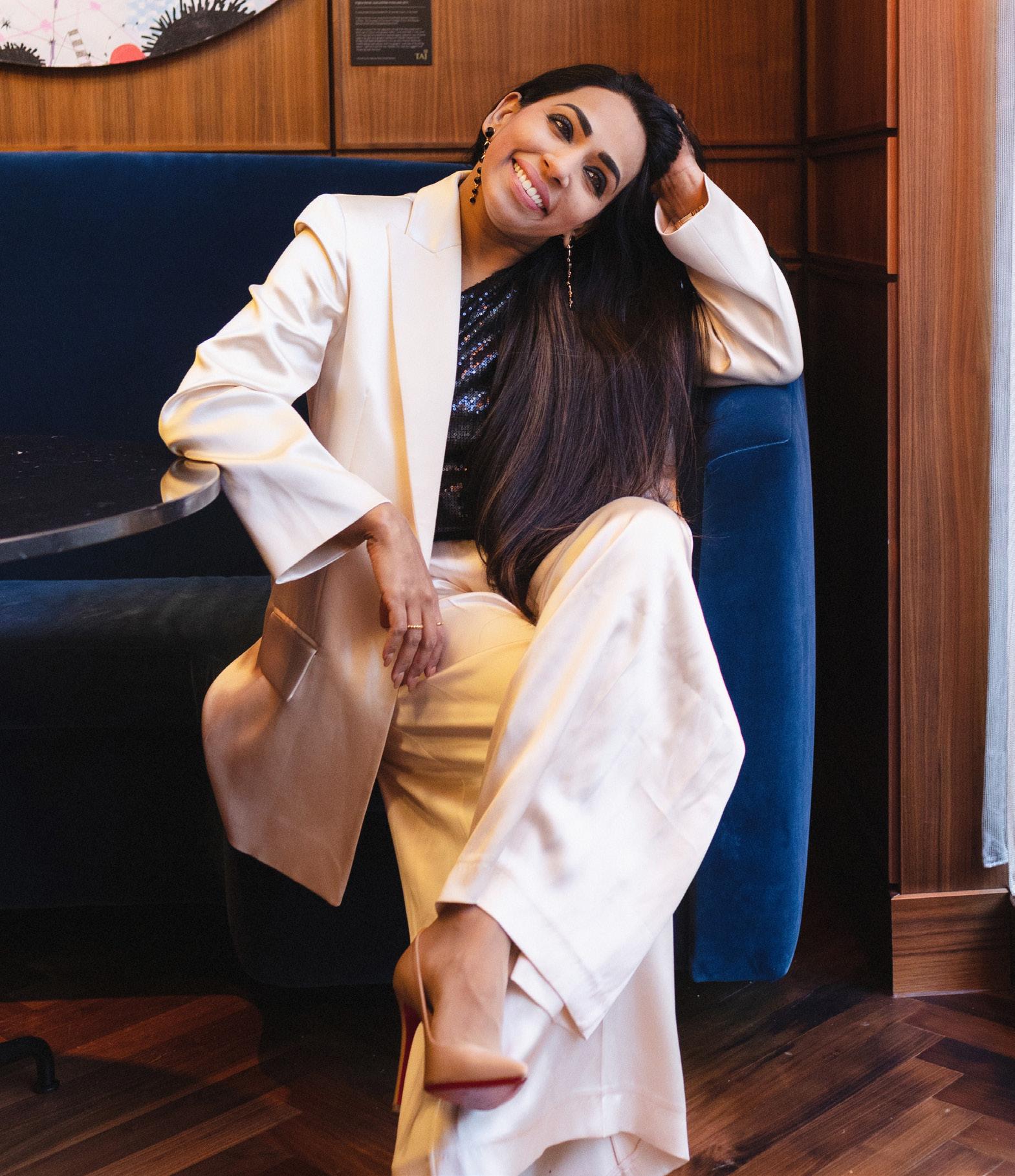
Khowala currently serves as chair of the group advisory board of Red Sea Global in Saudi Arabia, and is a board member of Elaf Group, the leisure arm of a sustainable listed holding company SEDCO.
www.aptamind.com
Excluding half the population from clinical trials and drug testing is not only a bad idea but also a dangerous one. This is how the gender gap manifests and being a woman becomes detrimental for your health.
A trillion-dollar market
This paradox also manifests itself in the wellness industry just the same. Women’s health is a $1 trillion (£850 million) market; women run and make key strategic decisions at wellness centres (84% of all spa managers in US are women); and women are the key target segment and decision-makers who drive
demand (the majority of spa-goers and wellness users are women and 94% of the health and wellness decisions for their families are made by women).
Yet, women have historically and systemically been excluded from wellness research and innovation, and wellness centres still don’t tap into the opportunity to provide a holistic approach and management of women’s health.
Currently, many wellness centres fail to diversify their services beyond massages and facials and do not respond in an integrated way to the needs of women.
Even the so-called signature treatments being offered are developed as pampering experiences rather than as essential healthcare approaches that aim to find the real cause of our health problems.
The data demands a shift in thinking Holistic wellness is now beginning to have a measurable impact on companies across every industry.
The health and mental crisis caused by the pandemic and fast-paced lifestyles has opened a great opportunity for the industry to transform quickly and start catering to the more complex needs of the most important wellness segment.
Unlike the baby boomers were, millennials or Gen Z aren’t keen on settling for superficial wellness treatments and accepting living with undiagnosed conditions. They embrace holistic health as a new mantra and require a complete reshuffle of the wellness offering.
www.europeanspamagazine.com 32
Business Leadership Aradhana Khowala, Aptamind Partners
Aradhana Khowala
“Women’s health is a $1 trillion market... women run and make key strategic decisions at wellness centres and are the key target segment and decision-makers who drive demand.”
Aradhana Khowala CEO, Aptamind Partners
Business Leadership Aradhana Khowala, Aptamind Partners
Can spas be transformed into centres of holistic excellence?
The need of the hour is a new generation of holistic wellness centres where cutting-edge diagnostic testing is combined with the latest in nutrition and lifestyle interventions. Digital solutions and the rise of smart tech offer much hope. Every woman has her own special wellbeing needs, and a personalised approach is a much more accurate predictor of how certain exercises and treatment plans will affect an individual client.
It is very common for women who experience stress to opt for wellness treatments even before sharing problems with a medical practitioner, making the wellness centres perfect channels to detect, educate and cater for integrated women’s health and offer personalised services.
This also bodes well for the trend of renowned hospitals partnering with leading wellness institutions to guarantee holistic management of the health of their patients.
Building equal and fair narratives
I believe taboos, stigmas, patriarchy, misogyny, and lack of knowledge remain issues in women’s health and wellness. Superficial initiatives will not address systemic oppression or centuries of social conditioning and stereotyping is not going to disappear by waving a magic wand.
We need to continuously educate both genders and the best way to fight any imbalance is to accept them, study them, know them from the inside out and invest our energy and knowhow in fighting old stereotypes with new layers of powerful well-balanced messages that will eventually lead to narratives that are equal and fair.
To accelerate change, spas and wellness centres need to not only put women front and centre in their business models but also diversify their product offerings and invest in personalised and evidence-led diagnostics, research and development.
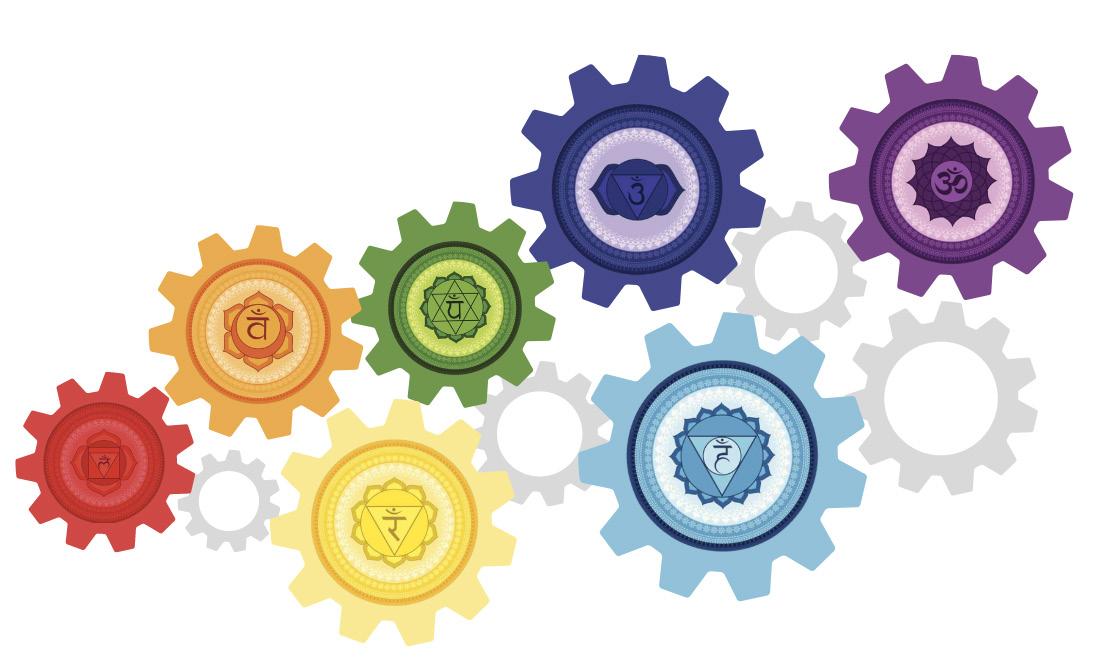
FUTURE THINKING: TAKING A 7-STEP APPROACH
Below is a simple seven-step approach developed by Aptamind Partners to get companies started on their wellness journey into a more holistic offering. Like a flowing and resilient chakra system, you can live your best energetic life when the wheels are in balance and in fluid motion. Aptamind Partners believes in a more holistic understanding and restoring the yin-yang balance in current wellness offerings.
1 REDEFINE WELLNESS – include not only physical but emotional, spiritual, nutritional, environmental, financial and social pillars
2 SCIENCE LED – fuse hyper-personalised diagnostics with tailored medical research to provide a data-driven blueprint of personal health
3 STRONG PARTNERSHIPS – offer an end-to-end solution (insurance, hospitals, health providers, fem tech solutions) across the entire ecosystem to avoid fragmented positioning
4 HOLISTIC SERVICES – include products and services that are alternative or non-traditional led by a women-centric approach and not treatment-centric mindset
5 TRACK AND TRACE – incorporate technology and digital design research to provide solutions that specifically track women’s bodies and cycles
6 TARGET THE TABOOS – push the boundaries and go mainstream on previously stigmatised topics such as fertility, menstrual health, menopause and postpartum
7 CREATE A RESOURCE HUB – inform, support and educate women through every step of their life cycle with campaigns and insights to enable informed decision making.
www.europeanspamagazine.com 33
Beauty without boundaries
Sarah Camilleri talks to BeautyHealth president and CEO Andrew Stanleick about the new partnerships of its flagship brand Hydrafacial and his vision to bring skin health to spas worldwide
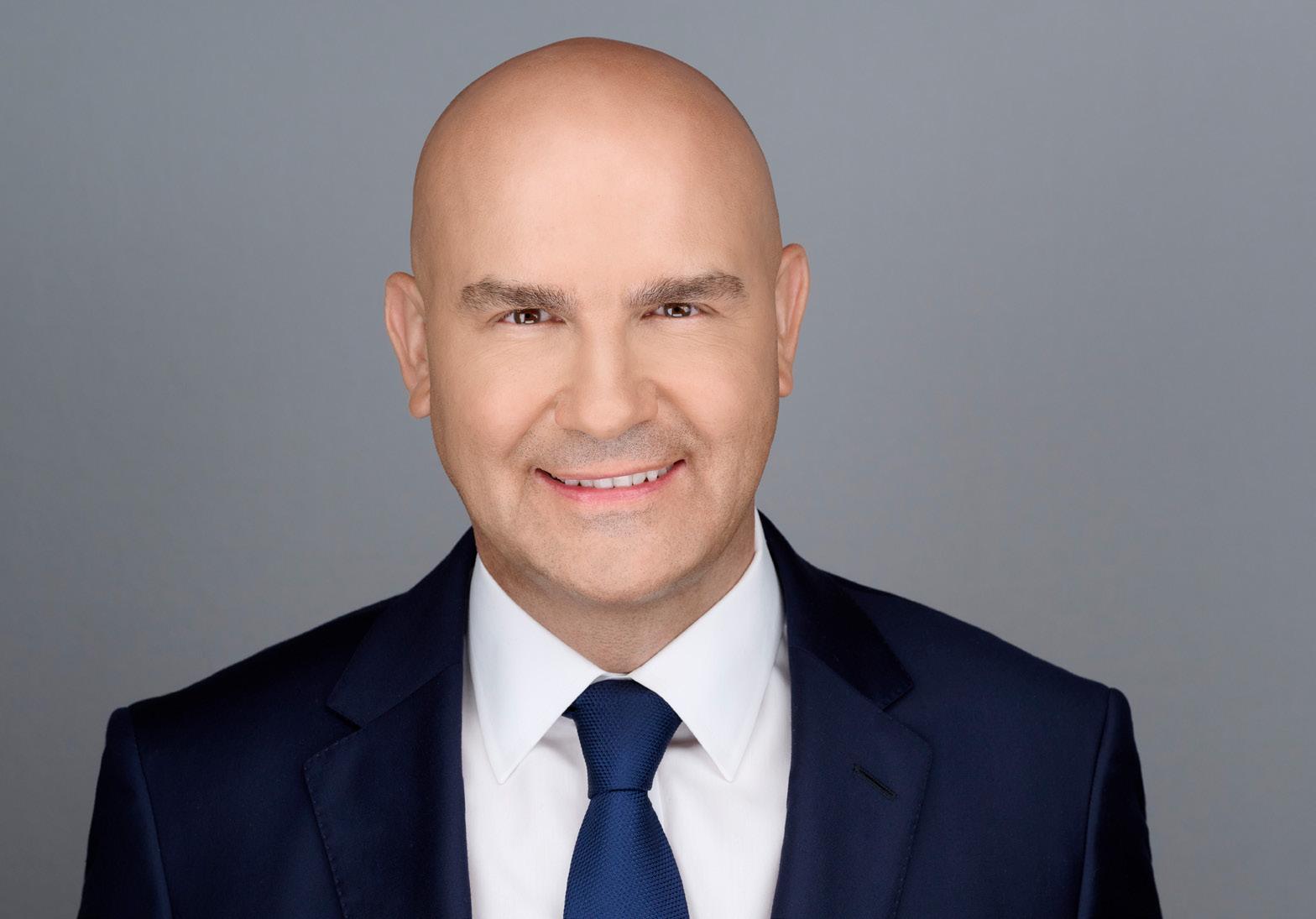
BeautyHealth president and CEO
Andrew Stanleick has dedicated 25 years of his life to the beauty industry. He has a glowing track record with respected names including Unilever and L’Oreal, as well as having served as global CEO for Kylie Jenner Beauty and overseen the Kim Kardashian West business for COTY.
Since taking the helm at BeautyHealth in February 2022, he has championed the global ambition of flagship brand Hydrafacial – to bring the latest technology, training and skin-health formulations to spas everywhere.
For Hydrafacial, ‘beauty has no boundaries’. According to Stanleick, the future is exciting, inclusive, genderless and expansive, and the brand is ready to bring a lifetime of value to a broader base of consumers worldwide.
Supporting this vision, Hydrafacial’s new London flagship store showcases its patented treatments for influencers, editors (including this one) and curious consumers, making it a showroom of sorts for the treatments people can seek out at their local spas.
The store also serves as a training centre, delivering accredited programmes
designed to empower aestheticians on skin health expertise, treatment protocols and customer service.
Similar Hydrafacial experience centres have also opened in a dozen other cities around the world, including Shanghai and Paris, to train local therapists and introduce the brand to potential clients in these target locations.
To date, Hydrafacial has trained more than 35,000 aestheticians worldwide. We meet the man on a mission to make Hydrafacial a global leader in the spa world.
www.europeanspamagazine.com 34
Brands to Watch Hydrafacial
What makes Hydrafacial a brand to watch?
Hydrafacial is a hyper-growth company – we have doubled our size in just two years. In 2018 our business was valued at $120 million (£99.8 million) and this year we expect to reach $360-$365 million. Our vision for the next three years is to double our revenue and triple our profit or adjusted EBITDA. That’s true profitable growth.
Our parent company, BeautyHealth, is committed to becoming a world leader in the ‘beauty health’ category. Hydrafacial is our flagship brand but we will look to buy other products, devices or services to build up a portfolio under this umbrella. It’s a very exciting time.
Why are spas such an important market?
There are so many tailwinds driving business right now, especially in the spa channel, which is growing rapidly for us. Importantly, there has been a complete shift around beauty, particularly around the destigmatisation of aesthetics and beauty. If I look back over my 25-year career in beauty it was mostly about women and followed one very narrow definition. Our customer was typically white, European and female.
Today that definition has completely changed. There are people of all ethnicities and so many more men coming to us for treatments, as well as younger people, which means a broader customer base and a greater lifetime value. Beauty is inclusive and exciting.
What other consumer shifts should spas pay attention to?
Beauty continues to grow despite economic uncertainty. It’s almost the opposite of what you’d expect, thanks to the ‘lipstick effect’, the ‘Zoom boom’ and the demand for wellbeing. We know that consumers will continue to invest in their beauty, their skin health, and ultimately things that make them feel good about themselves. I would argue strongly they even double down on things that make them feel good about
themselves during times of economic hardship. This desire for confidence is reprioritising spending.
How is wellbeing driving demand and your R&D?
Post-pandemic, people are also much more conscious about what’s going in and on their bodies. The conversation around beauty is much broader, it’s about how you’re feeling, your mental health, your wellbeing and your sleep health. This shift is fuelling significant spa industry demand.
The ‘Zoom boom’ continues, and spending time up close to a video screen makes us conscious about our skin. Our faces have become our digital business cards and so both men and women are now investing in skin health.
What makes Hydrafacial a ‘must have’ spa treatment?
We bridge the gap between holistic and aesthetics. We are also rooted in
science and efficacy, yet offer a warm consumer experience. Not everyone wants invasive treatments. You know, I don’t like needles and I’m sure there are many people like me who are looking for non-invasive treatments that deliver skin health and self-confidence without pain or downtime.
Our technology and formulations are also unique. Hydrafacial treatments are non-invasive, fast (just 30 minutes) and give you a wonderful glow and a real boost of confidence. Also, we are totally inclusive – our formulations are designed for all races, genders and skin types.
Tell us about your ‘booster’ collaborations?
Personalisation is the one trend to watch. The industry can’t serve up one-size-fits-all anymore – it’s about understanding the human body. Every person is different and needs to optimise their skin health. Our growing range of boosters allows spas to offer their guests
www.europeanspamagazine.com 35
Brands to Watch Hydrafacial
“Personalisation is the one trend to watch. The industry can’t serve up one-size-fits-all anymore – it’s about understanding the human body.”
Andrew Stanleick President and CEO, BeautyHealth
Hydrafacial launches Omorovicza Advanced Skin Renewal Booster
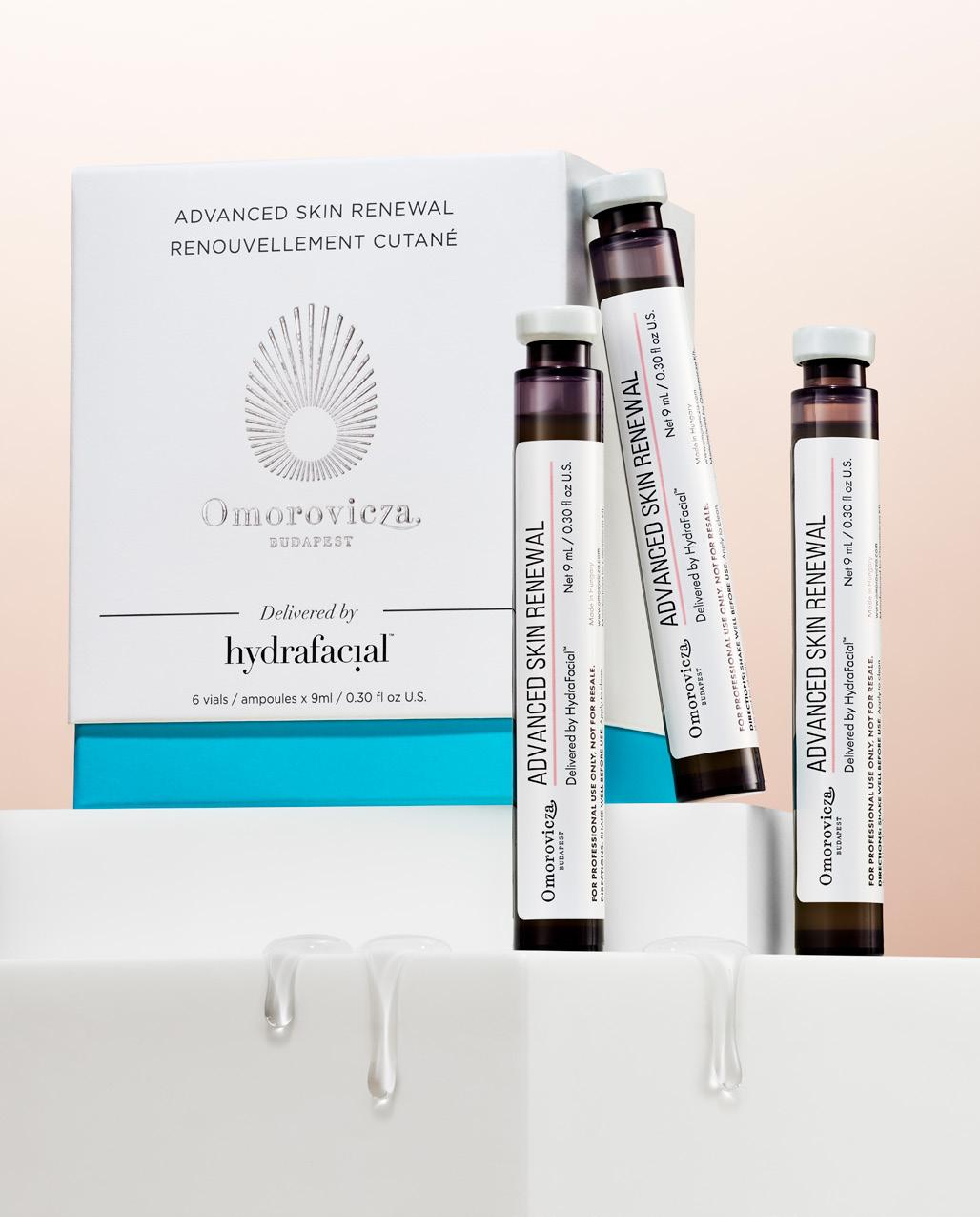
Launched in February, Hydrafacial’s latest skin health collaboration is formulated using Omorovicza’s signature Healing Concentrate, which delivers the therapeutic powers of Budapest’s thermal waters to boost firmness and elasticity, reduce cellular inflammation and reinforce the skin’s barrier function.
The Advanced Skin Renewal Booster offers a highly concentrated dose of Healing Concentrate with essential vitamins and minerals to repair and renew the complexion.
an increasing level of personalisation and customisation.
Hydrafacial collaborates with the best experts in skincare. They allow us to really personalise every facial for the ultimate results. Our booster partnerships are also a win-win for everyone, accelerating our R&D as we have access to the very best formulas. In return, the skin brands we work with gain acceleration through working with the best beauty technology in the world.
These wonderful partnerships are our ecosystem, what we call the Hydrafacial
Nation. Everyone wins – us, our partners and ultimately the spa guest because they get a more personalised service.
What’s special about your new boosters for 2023?
We are very proud to have our own Hydrafacial brand boosters, but for years, we’ve partnered with clinical skincare experts such as Murad, Dr. Paul Nassif, Circadia, Epicutis and ZO. This allows customers to weave in their trusted skincare choices to create a seamless skin health programme both in-spa or in-clinic and at home.
In February we announced our luxury spa partnership with Hungarian spa brand Omorovicza as well as the launch of the Omorovicza Advanced Skin Renewal Booster (see p83).
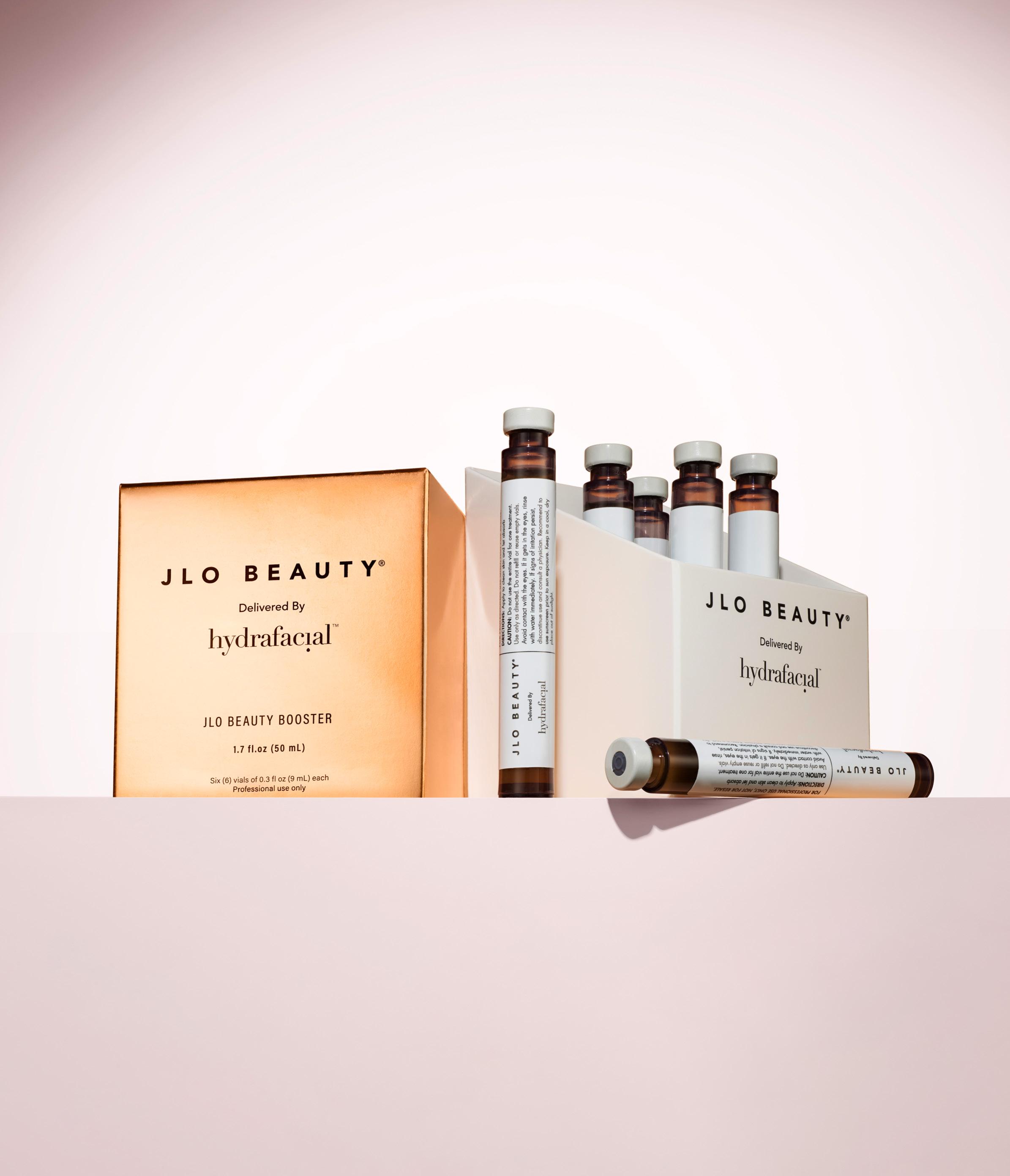
Our new booster collaboration with Jennifer Lopez is also very exciting. We launched with great success first in the US last autumn and will be available in the EMEA soon. JLO Beauty is a very successful brand that is available in Sephora and online. Jennifer is a very beautiful woman – known for her
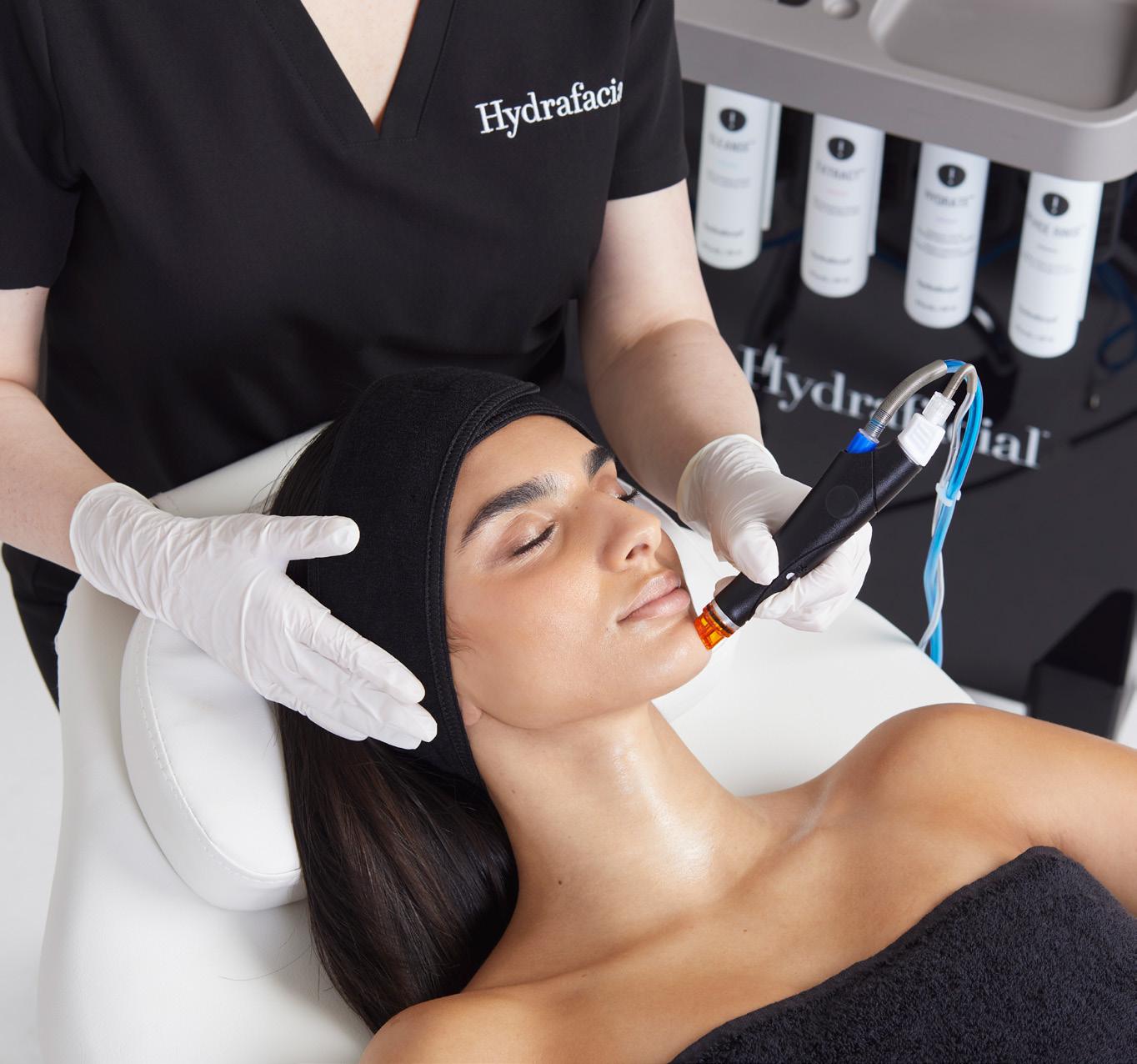
Above: Hydrafacial uses a unique, patented Vortex Fusion delivery system to exfoliate, extract and hydrate skin. Facials can be personalised for any skin concern with a variety of tips, boosters, and other enhancements
wonderful glow. She has 234 million Instagram followers, which is wonderful for getting our brand out there. It’s already driven a lot of traffic to spas in the States. We have had many people coming in asking for “the JLO Glow.”
What else can spas expect from Hydrafacial this year?
We are really excited about launching our new Syndeo machine in the UK and the rest of Europe in Q2. It’s such a progressive technology. Being cloudbased it gives us seamless connectivity with the consumer. Ultimately, our vision is to be the world’s biggest source of skin and scalp data, which presents an opportunity for us to decode the data to really understand what products and services tomorrow’s consumer will need. It’s a real leap forward for the beauty and spa world.
www.hydrafacial.co.uk
www.europeanspamagazine.com 36
Brands to Watch Hydrafacial
One device. Endless possibilities for your business. Get the best skin of your life. hydrafacialemea www.hydrafacialemea.com hydrafacialemea www.hydrafacialemea.com
The future of spa
We ask 12 spa leaders what lies ahead for the industry – what shifts do they predict and how do they think the spa sector will change in 2023 and beyond...
REPORT BY WENDY GOLLEDGE
European Spa has asked spa industry leaders to exclusively share their own thoughts on how they would like to see the industry grow and develop. What are the most important opportunities for the sector right now? What are people are demanding and how is the landscape changing?
Trends like mindfulness, spirituality and sustainability are still maturing, but the main shift our experts predict is towards more social spa experiences, reflecting the
all-round push towards embracing the more communal elements of spa, and social bathing is seeing a resurgence. Transformational travel in all its guises also features heavily in our experts’ thoughts as they look to the future. The creation of mindful workplaces that are integrated into spas as a way to attract a younger generation is also top of mind, as is a marriage of holistic and medical health services to provide new opportunities for the industry and meet the demand for preventative health.
Upskilling the wellness workforce

With ongoing wars alongside the threat of recession, many people are living in the future, not in the present. We need to educate guests about how to mindfully live more in the moment. People are keen to try more holistic extensions of their spa experience – sound healing, energy healing, water therapy, yoga and meditation – so it’s our job to offer more of this.
For me education is a priority in spa and wellness. Guests want to know how they can look after themselves at home, so we need to empower them and help them understand how to better manage their mental and physical health.
We also need to seriously upgrade and upskill our therapists. Not everyone wants to become a manager or go to corporate offices – we need healers! So, we must provide stronger career paths for our therapists, or we risk losing some amazing talent.
https://ele-na.com
The vice-president of ELE|NA was named Global Spa Leader of the Year 2022 at the World Spa and Wellness Awards
Building wellness communities
 André Julseth General manager, The Well Spa & Hotel, Norway

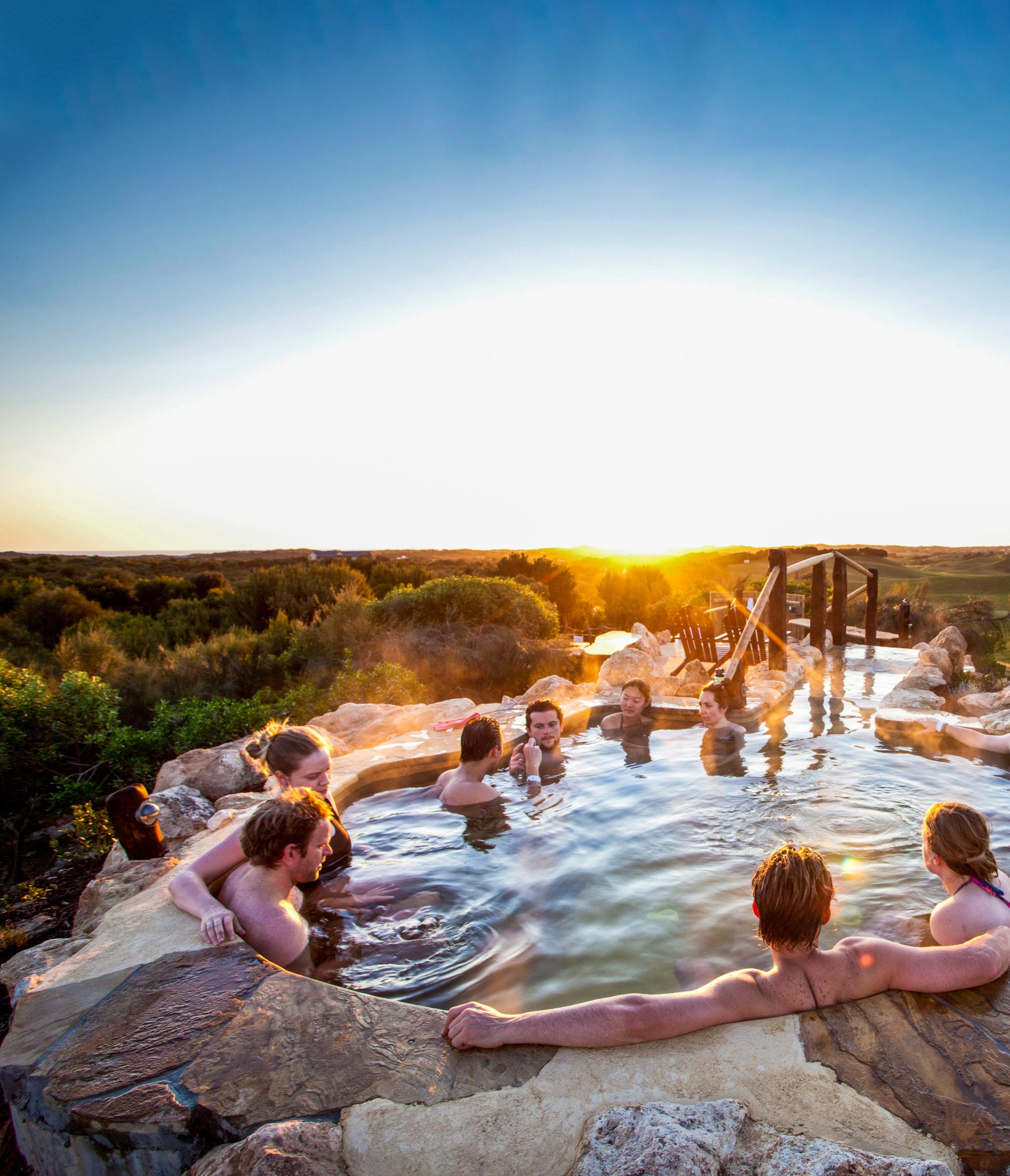
Isee the rise in sauna rituals and collective social spa as a big topic. Traditionally spa was about a shared group experience, then it morphed into a more solo pursuit. Now it has come full circle and social spa-ing has been reinvented for today – it’s now about building a wellness community. An increasing number of guests are looking to embrace the energy of the natural world as a way to switch off, while reconnecting with themselves in a social setting. Here at The Well, we pride ourselves in offering the combination of heat and water therapies, and the health benefits of immersion in nature. Young and old, men and women are gathering around relaxing, rejuvenating and energising using heat, water and sauna rituals. Spa is no longer a solo pursuit – we find people arrive alone but quickly find friends and choose to spend time together finding joy in the same spa rituals.
https://thewell.no/en/hotel
39 Business Leadership The future of spa
Heidi Grimwood
Wellness is a right, not a luxury
In light of recent major changes and disruptions globally, people are craving better health, togetherness and a stronger sense of community.
There is great interest in communal thermal experiences and I believe wellness travel as a whole will change as post-pandemic travellers look for different kinds of adventure in new places. Vodka parties are out, immune booster sauna parties are in!
Health is not so taken for granted anymore. Also, people are starting to understand the difference between health and wellness and they’re actively seeking out ways to improve their sense of wellbeing.
I personally will be very happy once every single person in the world is aware of the fact that wellness is not a luxury, but it is the inherent right of every individual. This has been my motto for almost 15 years. www.globalwellnessday.org
Belgin Aksoy Founder of Global Wellness Day and creative director at Richmond International

We need a fully inclusive approach
If businesses want to upgrade from a luxury hotel with basic spa services, the industry needs to understand that nuances, experience and perspectives matter. People want holistic spa concepts and transformational travel – new generations are looking for meaningful destinations that also function as mindful workplaces.
We need to continually innovate while staying mindful and authentic.
Trauma healing, inner joy and better relationships are sought after by wellness travellers and to address this requires specific knowledge and a targeted approach.
Patrizia Bortolin
Wellness project manager at Preidlhof and founder of Glowing Flow Spa Consultancy

I’d like to see more engagement and new synergies between wellness, travel and food-and-beverage teams; spa values should be omnipresent. And I hope also to see more multi-generational teams. We need the spa environment to be magic, meaningful and welcoming for all – going beyond outdated spa models.
www.preidlhof.it
www.europeanspamagazine.com 40 Business Leadership The future of spa
Helping people be self-sustainable
For me 2023 is about sustainability, energy, deeper love and spirituality – and why not also fix that all important work-life balance, too?
Energy costs are skyrocketing, so when better to upgrade our sustainability goals – in spas, and personally – and work towards becoming self-sustainable? Albert Einstein said: “In the midst of every crisis lies great opportunity.” Increased sustainability is our opportunity. It may be a case of ‘invest or die’ for your business and the planet. Now is the very best time to take that leap that we all should have taken years ago.
Lasse Eriksen

Covid has shown us that remote working is fully possible, so spas have a great opportunity to attract the new generation of international digital remote workers to our facilities with a work/spa structure that includes private booths and meeting rooms for optimal work and relaxation.
manager at
Bad, Norway, and World Wellness Weekend ambassador
https://farrisbad.no
Spas must respect the environment
While sustainability is a challenge due to the nature of the spa industry, I am keen to see spas making the tough decisions needed to take a more sustainable approach. Not every spa has the luxury of biomass boilers or a reed bed filtration system to reduce their environmental impact like we do at South Lodge, however if everyone starts to make incremental changes for the better, we can really make an impact. South Lodge is part of Exclusive Collection, which is a certified B-Corp. We continue to spearhead sustainability by encouraging a community of consciousness among our colleagues, guests, members and supplier partners.
The running of a spa will always have a negative impact on the environment, but we have a responsibility as industry leaders to make conscious decisions for the better.
www.exclusive.co.uk/south-lodge
Ian Mackie Spa manager, South Lodge, UK

www.europeanspamagazine.com 41 Business Leadership The future of spa
Development
Farris
Deepen your wellness expertise

The idea of wellbeing is becoming more about physicality, emotionality and spirituality all working in harmony. Spas and retreats offer an escape, but post-Covid, guests increasingly want to connect, to meet other likeminded people and partake in movement practices where they bond as a group.
Previously guests were kept relatively separate, dining alone, having treatments alone, so although a lot of people were enjoying the facilities they were very much at a distance from one another.
Now I see guests yearning for togetherness, and spas must do all they can to provide this. Yoga workshops can really connect people and create a micro-community, but spas also have a duty to hire specialist teachers, who can encourage guests to be fully immersed and open to the changes happening both in their mind and body, whatever their ability. www.davjonesyoga.com
Spas should support healthcare
Ibelieve as an industry we can change the health narrative this year. I see a real opportunity to support stretched healthcare services by providing holistic treatments for broader conditions and concerns. Alternative medicine has always been relevant but to many is still seen as quackery or some kind of sorcery!
I think 2023 will be the year where these services and their role in the spa setting will be embraced. Treatments supporting adrenal and thyroid imbalances, burnout, anxiety, chronic pain, menopause and children’s wellbeing could present countless opportunities for the spa business model.
Anita Murray
Co-founder of the Irish Spa Association

Longevity science was one of the hot topics at the 2022 Global Wellness Summit and, if we accelerate our embracing of technology and results-focused treatments and services, I think a hybrid of medical traditional spas presents huge opportunities. www.irishspaassociation.ie

www.europeanspamagazine.com 42 Business Leadership The future of spa
Davin Jones
International yoga teacher and consultant
Spas can be transformational
There is immense opportunity in emphasising spas as places of overall wellness and transformational change. This is being driven by a rare and powerful push and pull dynamic around wellness consumers.
On one hand, people are feeling pushed to find healing and relief from the stresses of the world, be they personal matters or global conflicts. More than ever, people are seeking release through mindfulness, spa treatments, fitness and nutrition. On the other hand, we have the pull factor motivating us toward self-improvement in response to social media feeds that display lifestyles to lust after.
Emlyn Brown Global vice-president, Well-Being at Accor

These powerful push and pull forces work in our favour, providing opportunities as hoteliers and wellness providers to create positive spa experiences in an earnest desire to help people achieve greater balance of health in their own bodies and minds.
https://group.accor.com/en
Caring for corporate wellbeing
Corporate wellbeing is a priority employees are no longer willing to give up. Gen Z embodies the ‘you only live once’ economy and other generations have undergone such a radical change they’re no longer willing to go back.
Spas must embrace the rapid pace of change to help people heal themselves. They will be called upon to assist the corporate world in new ways, organising retreats for managers or team building, which shifts from welfare to holistic wellbeing.
Health-oriented medi-spas need to offer targeted programmes and measurable change at natural, residential destinations. These will be bio-architecturally led and offer holistic rituals or rehabilitation retreats on sleep and rest, or ancient spiritual experiences.
Spas need ‘core healers’ to guide and educate people in an environment where people can experiment and find their own way to health.
https://inspatime.com/blog
Raffaella Dallarda
CEO, Inspatime and spa & wellbeing specialist and blogger

www.europeanspamagazine.com 43 Business Leadership The future of spa
“If we accelerate our embracing of technology and results-focused treatments and services, I think a hybrid of medical traditional spas presents huge opportunities.”
Anita Murray
Grow your own talent Tapping into sound
Spa owners must harness opportunities that already exist within their workforces and grow their own talent through training opportunities ingrained in business plans. This will not only prevent the increasing skills gap the wellness sector faces, but will also futureproof spas for years to come.
 Helena Grzesk, MBE
COO, British Beauty Council
Helena Grzesk, MBE
COO, British Beauty Council
Back in 2021, the British Beauty Council worked with Dr Neil Carpenter on The Effects of Personal Care Services on Mental Health & Wellbeing report. It found that touch therapy could reduce the £105 billion associated with mental health and increase productivity through, in part, reducing the 17.6 million days lost in the UK each year in sick leave.
It is our hope that as people become increasingly aware of this influence, spa therapies will be recognised for their effectiveness in treating mental health concerns which will in-turn professionalise the sector further.
https://britishbeautycouncil.com
On a macro-level there has been a continuous rise in the adoption of wellness practices driven by a desire for solutions outside of the current ‘sick care’ health system. With more experts realising wellness and health are intrinsically linked, and that wellness can offer a reliable methodology to improve long-term health outcomes, I think there will be a continued rise in demand for evidence based wellness practices.
Multi-sensory immersion is a strong trend and I think audio is a greatly under-utilised resource in spa. Many people believe music is essential for their health and wellbeing and this is something Myndstream is working to enhance in spas. I also expect more innovative autonomous therapies will continue to enter and disrupt the space and with that touch therapies and human connections will become a more premium offer.
www.myndstream.com
www.europeanspamagazine.com 44 Business Leadership The future of spa
Freddie Moross
Myndstream CEO
“With more experts realising wellness and health are intrinsically linked... there will be a continued rise in demand for evidence-based wellness practices.”
Freddie Moross

www.premier-core.com
Beauty reimagined
In an exclusive interview, myBlend founder Dr Olivier Courtin and commercial director Morgan Lefrancois discuss the reimagined brand and how it addresses lifestyle factors for a hyper-personalised spa experience with visible results
INTERVIEW BY MARK SMITH
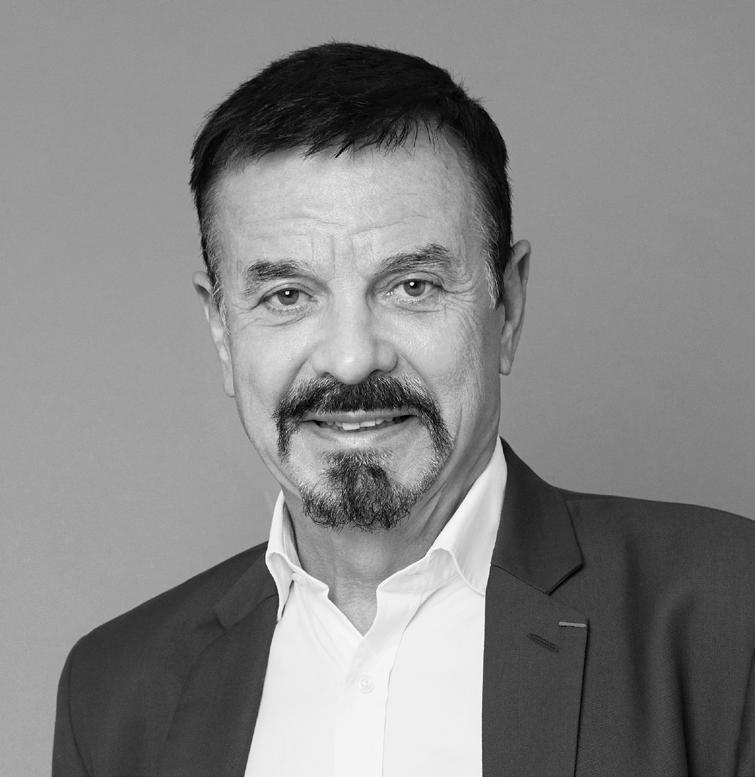
Launched in 2007, myBlend is a high-performance personalised range of luxury skincare that has been completely reimagined for the luxury beauty, hotel and spa market.
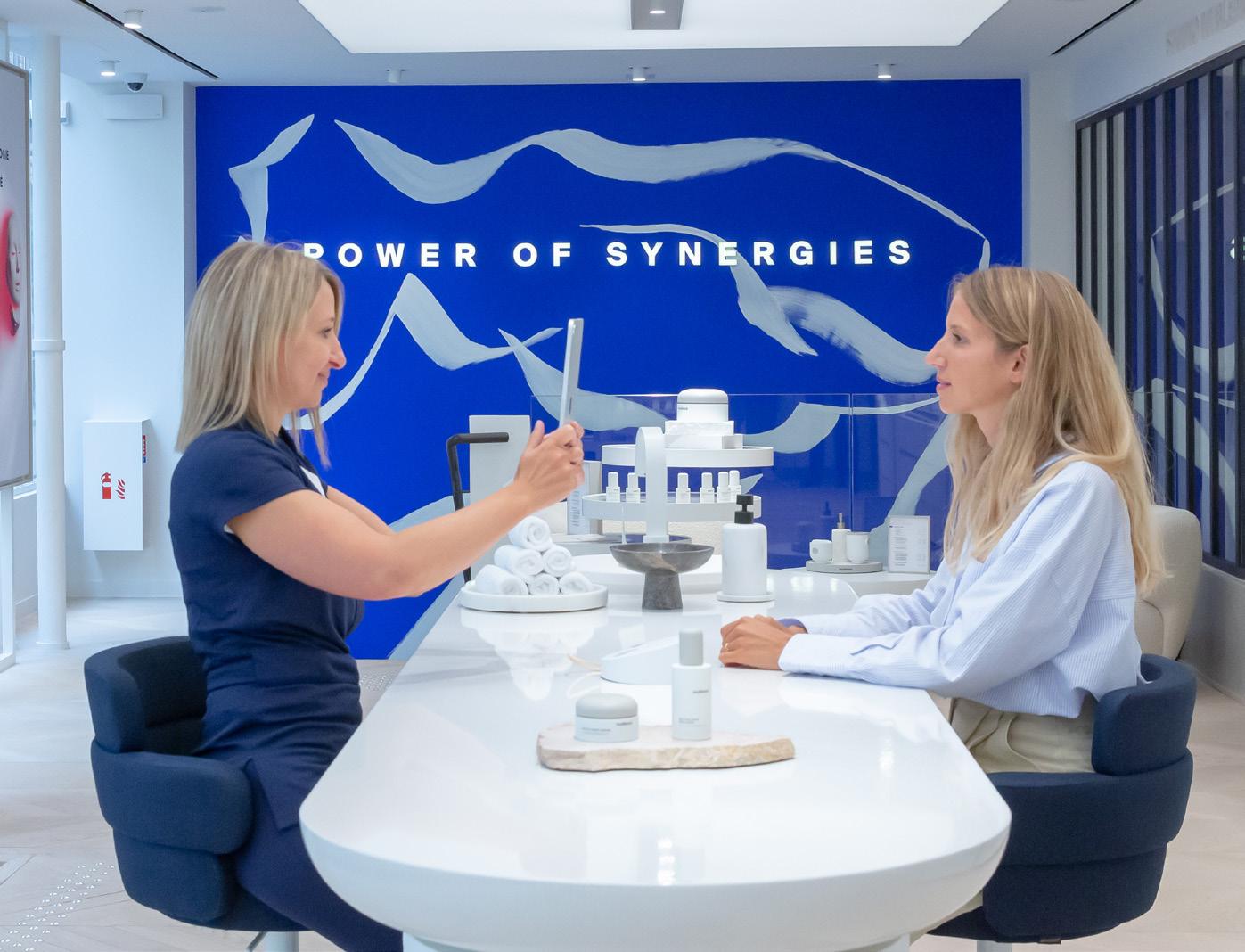
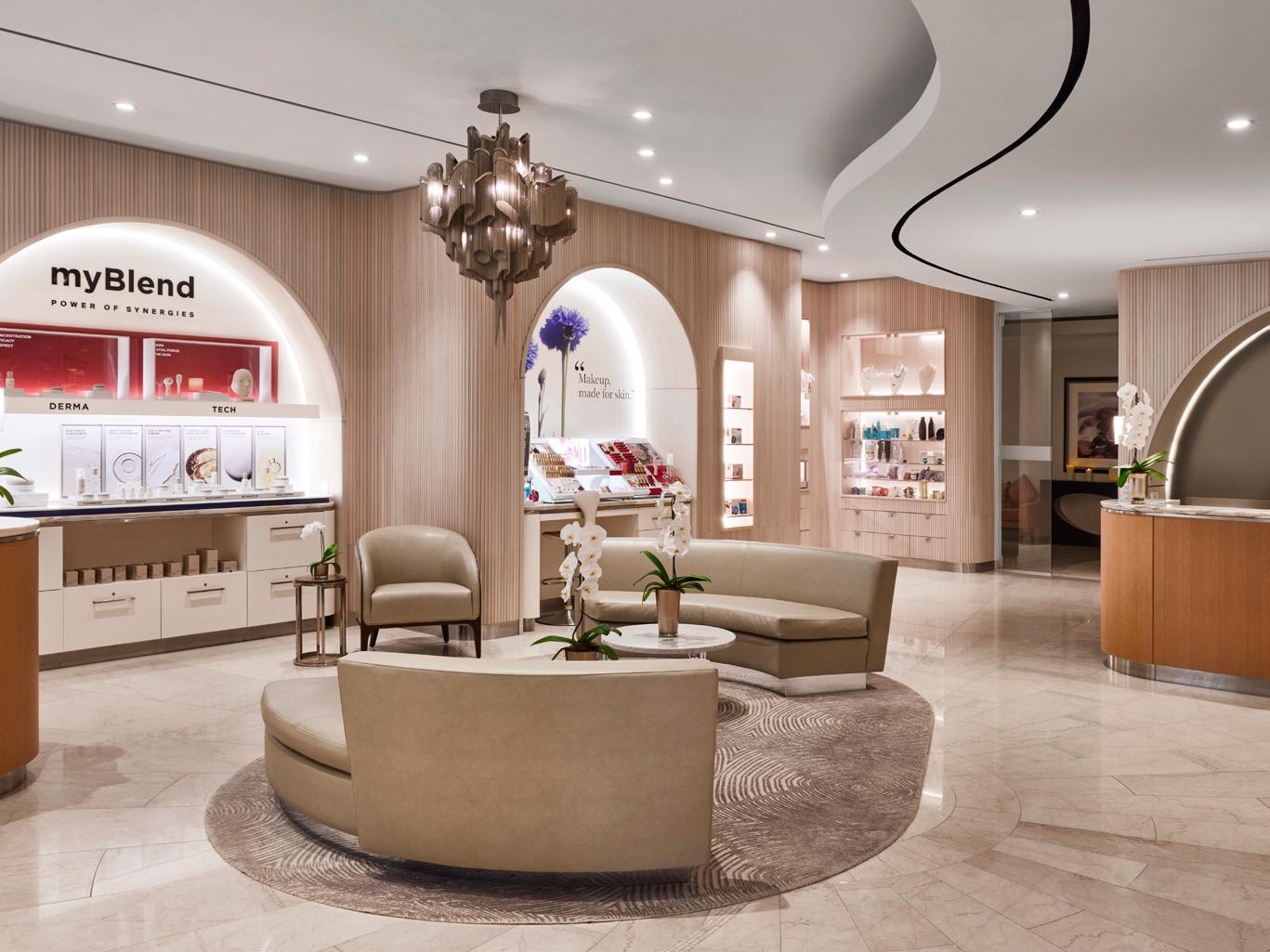
The brainchild of Dr Olivier Courtin, managing director of Clarins Group and son of the founder of the Clarins brand, myBlend offers bespoke facials and body treatments to a discerning customer base. The team launched its flagship La Maison myBlend in the heart of the Marais district of Paris in late 2022.
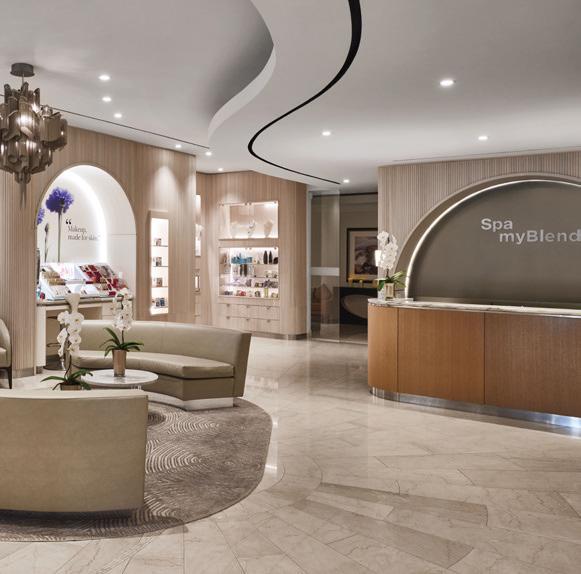
The brand has also partnered with exclusive spa locations around the world, including Le Royal Monceau, Raffles Paris, France; St Regis Florence, Italy; Ritz-Carlton, Toronto, Canada; Le Strato Courchevel, France and most recently, Four Seasons Anahita, Mauritius. myBlend also launched in Harrods and H Beauty in March this year.
Healing the skin
Drawing on the work of Dr Courtin, who believes that lifestyle factors play a more important role in ageing than genetics, the brand has enhanced its approach to personalisation under three pillars: nutrition, derma and tech.
During his practice as an orthopaedic surgeon, Courtin observed the impact of environmental factors and lifestyle on the skin – a science now known as epigenetics. He saw that the quality of the skin’s healing process depended more on a patient’s lifestyle rather than on their age. He also found that nerve endings are the key to this regeneration process. When they are damaged – by stress, pollution, and various forms of
– if you don’t have a good lifestyle, this is not good for the health or the skin.”
Dr
environmental aggression – the skin is less stimulated and heals less well.
Dr Courtin believes that diet, exercise, sleep, emotions and the environment are the key factors involved in skin regeneration and this has informed the highly personalised concept of myBlend
“For me personalisation is very important for healthy skin,” says Courtin. “I believe the more you personalise the treatment, the more efficient it is. Good skin is not only about genetics. If you don’t also have a good lifestyle, this is not good for the health or the skin.”
Three pillars for premium spas Being part of the Clarins Group has enabled the team to draw on the very
latest scientific advances, and myBlend offers a comprehensive solution combining three pillars of expertise: NUTRI, water-soluble daily supplements full of micronutrients and prebiotics to nourish the skin from within; DERMA, a comprehensive skincare line-up of 23 formulations to strengthen and protect the skin and target specific concerns; and TECH, beauty tools to enhance the effectiveness of skincare and a state-ofthe-art LED mask offering professional results at home.
myBlend takes a holistic approach to skin health, offering clients a combination of luxurious, sensorial, cosmetic products, an LED mask and food supplements designed in association with experts including doctor of nutrition Béatrice de Reynal; dermatologist and laser therapist Dr François Michel; and massage and manual therapist Chantal Lehmann. The brand’s unique concept is designed for premium spa locations and requires the right partners.
“Good skin is not limited to skincare, so myBlend takes a holistic approach centered on the power of three synergies for an effective at-home beauty routine,” says commercial director Morgan Lefrancois. “Our high-end professional spa treatments deliver visible results and combine the power of touch, technology and highly concentrated formulas.”
The perfect blend
The dermocosmetics line has been created to stimulate the skin, protecting it by strengthening its natural defences, and correcting by targeting specific
www.europeanspamagazine.com 44
Brands to Watch Clarins myBlend
“Good skin is not only about genetics
Olivier Courtin Managing director, Clarins
Brands to Watch
The Ritz-Carlton, Toronto, Canada
concerns. Central to its success is the myBlend peptide complex 4P, which protects the sensory receptors against inflammation, combats oxidative stress and increases cell proliferation.
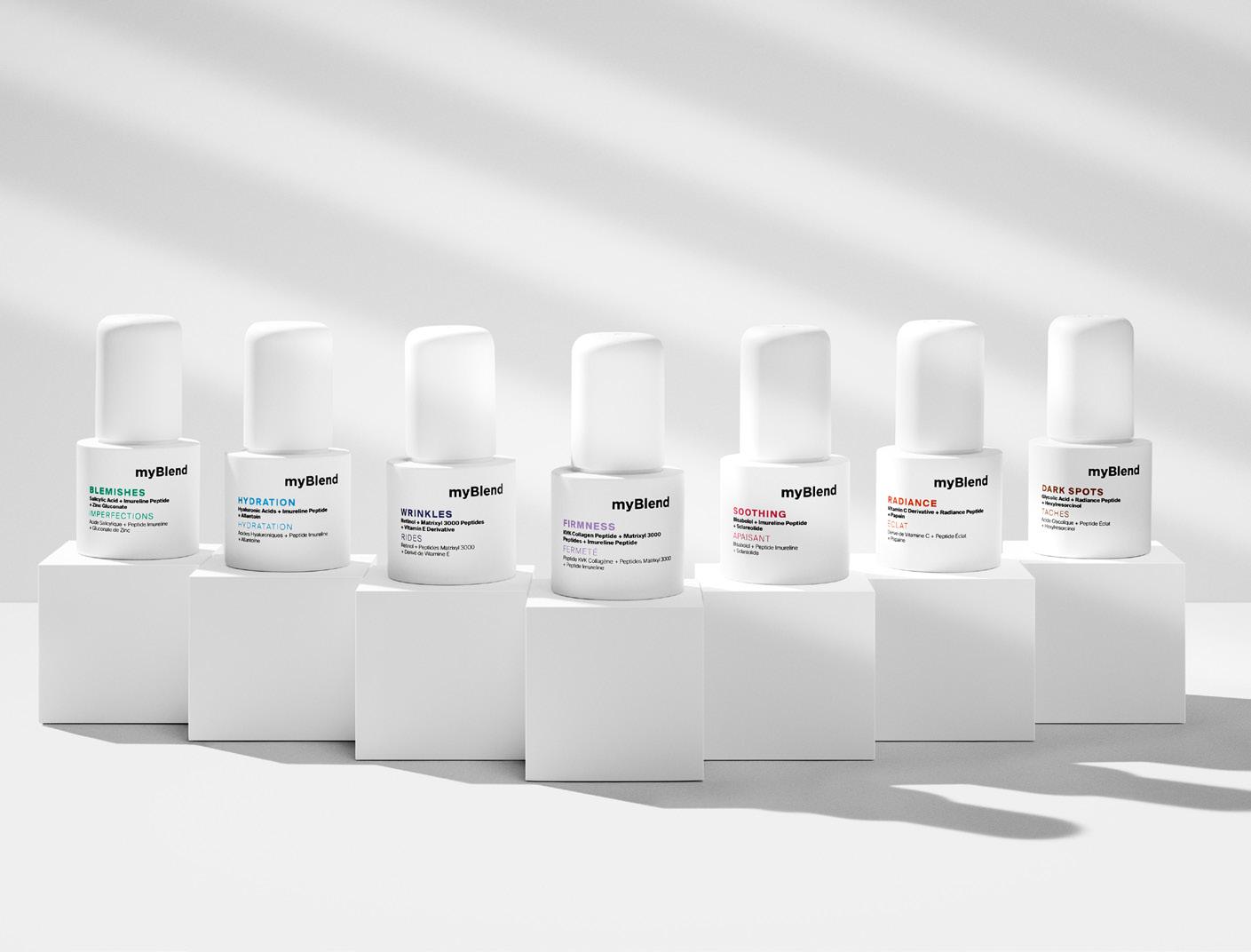
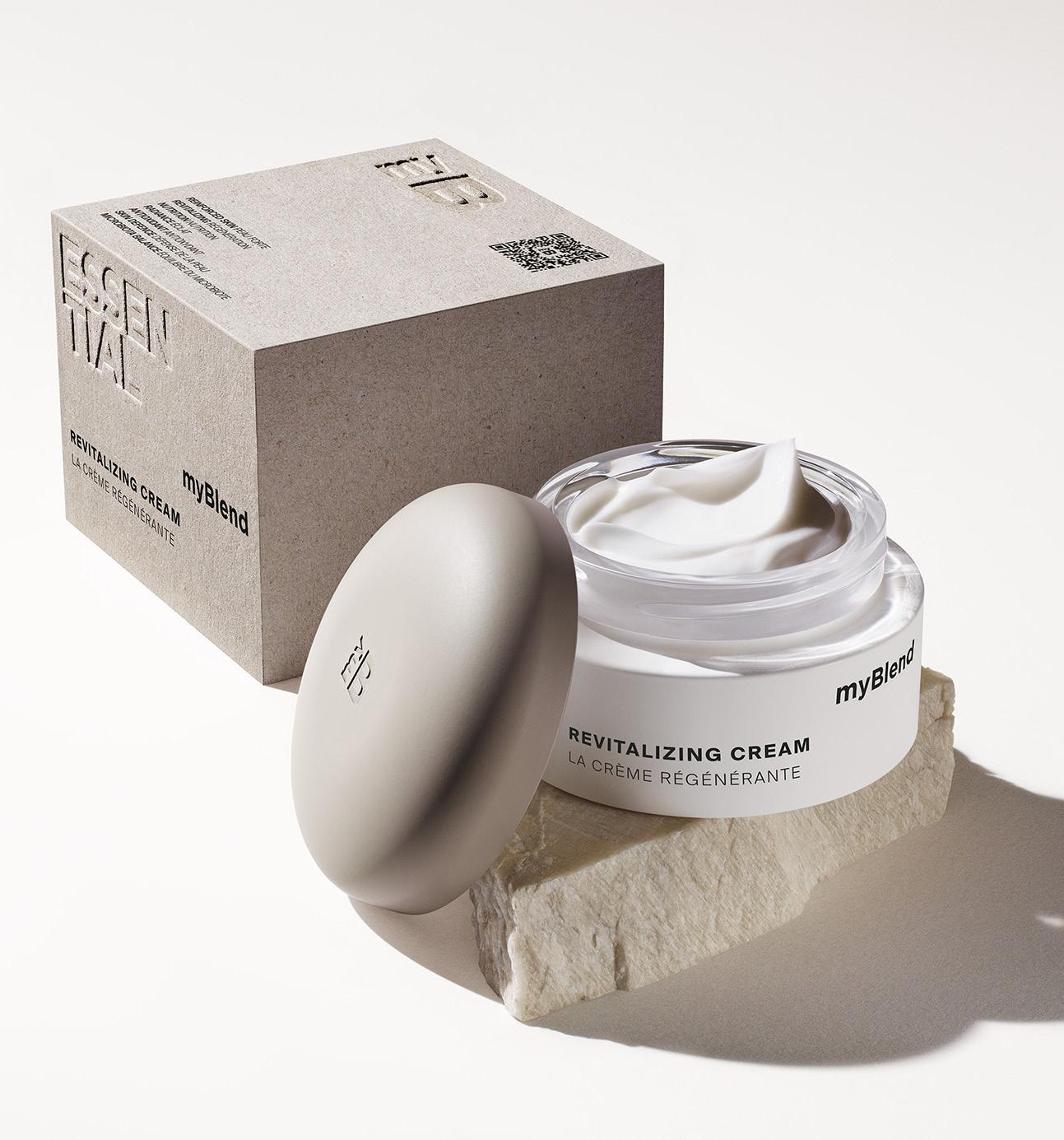
The hero product in the range, Revitalizing Cream tackles radiance, hydration, wrinkles, firmness and blemishes. It is supported by a collection of seven super serums that enable a deeper level of skincare personalisation for the client. “The serum can impact your skin on a different level. I put the maximum quantity of ingredients in each to make it most efficient with the best results,” says Courtin.
Each serum addresses individual skin concerns, including redness, blemishes, firmness, hydration, wrinkles, radiance and dark spots. The highly effective collection also includes eye contour, cleansers and makeup removers, exfoliators and peels, masks, UV protection and body products.
Cell synergy and supplements
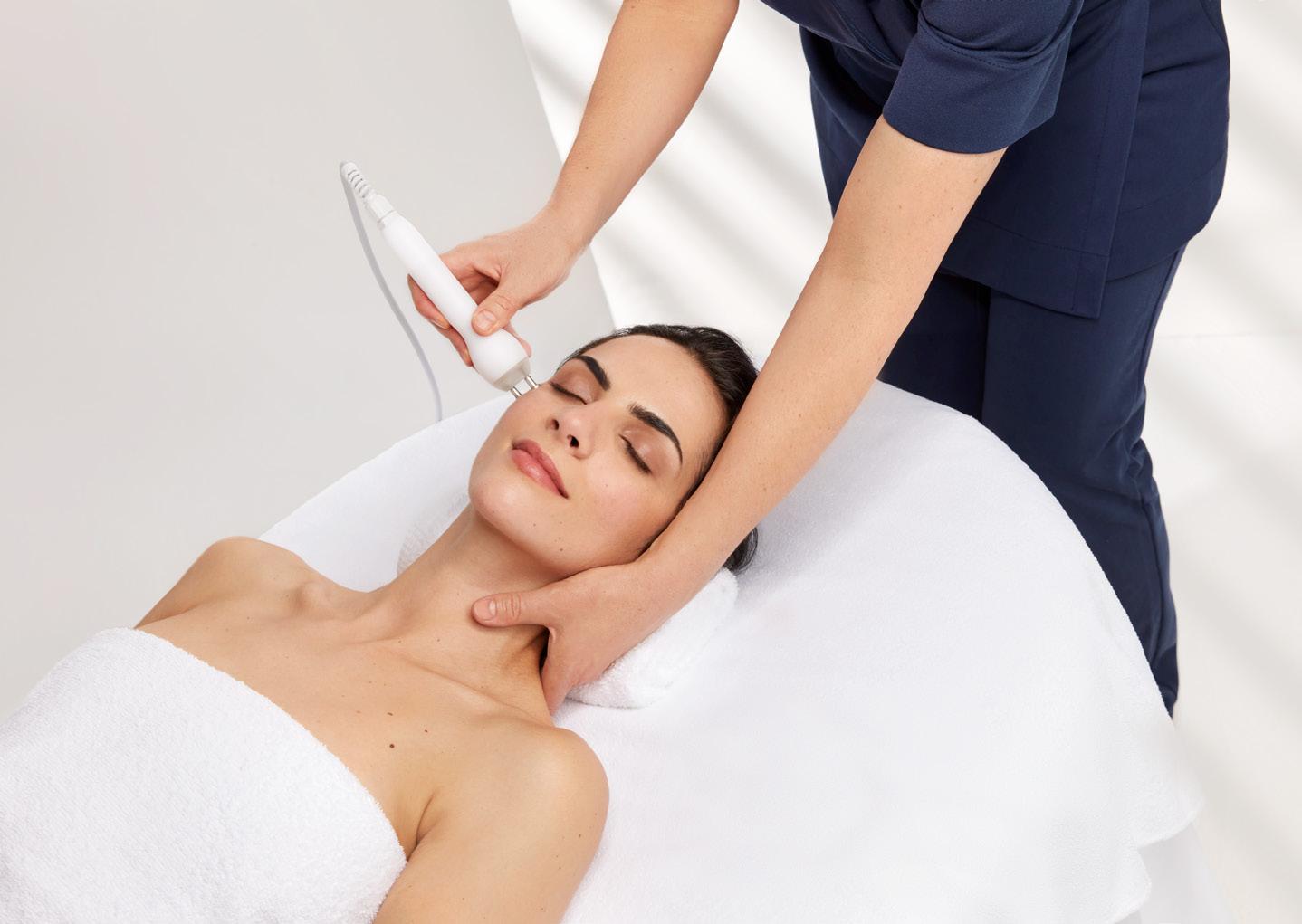
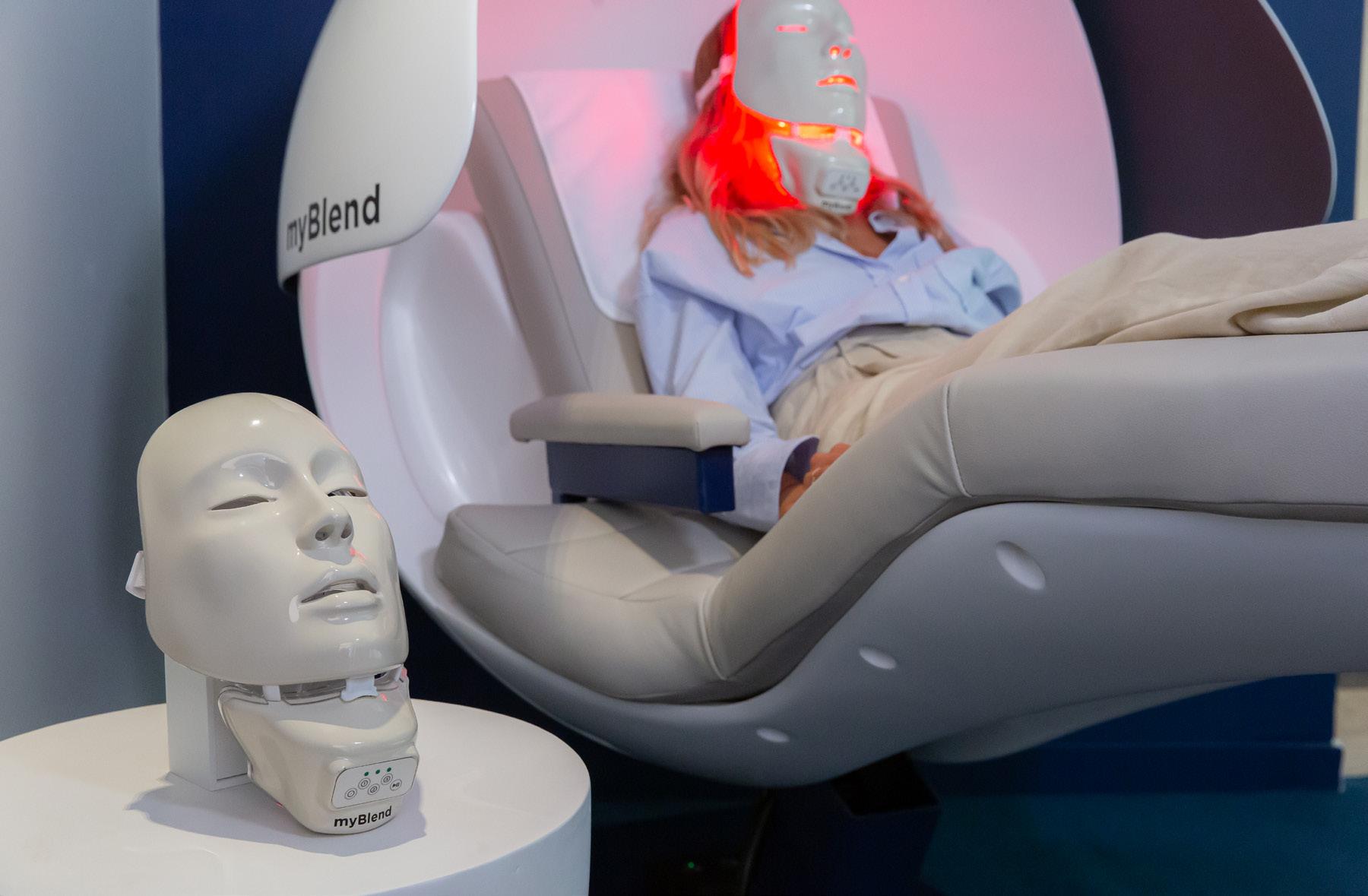
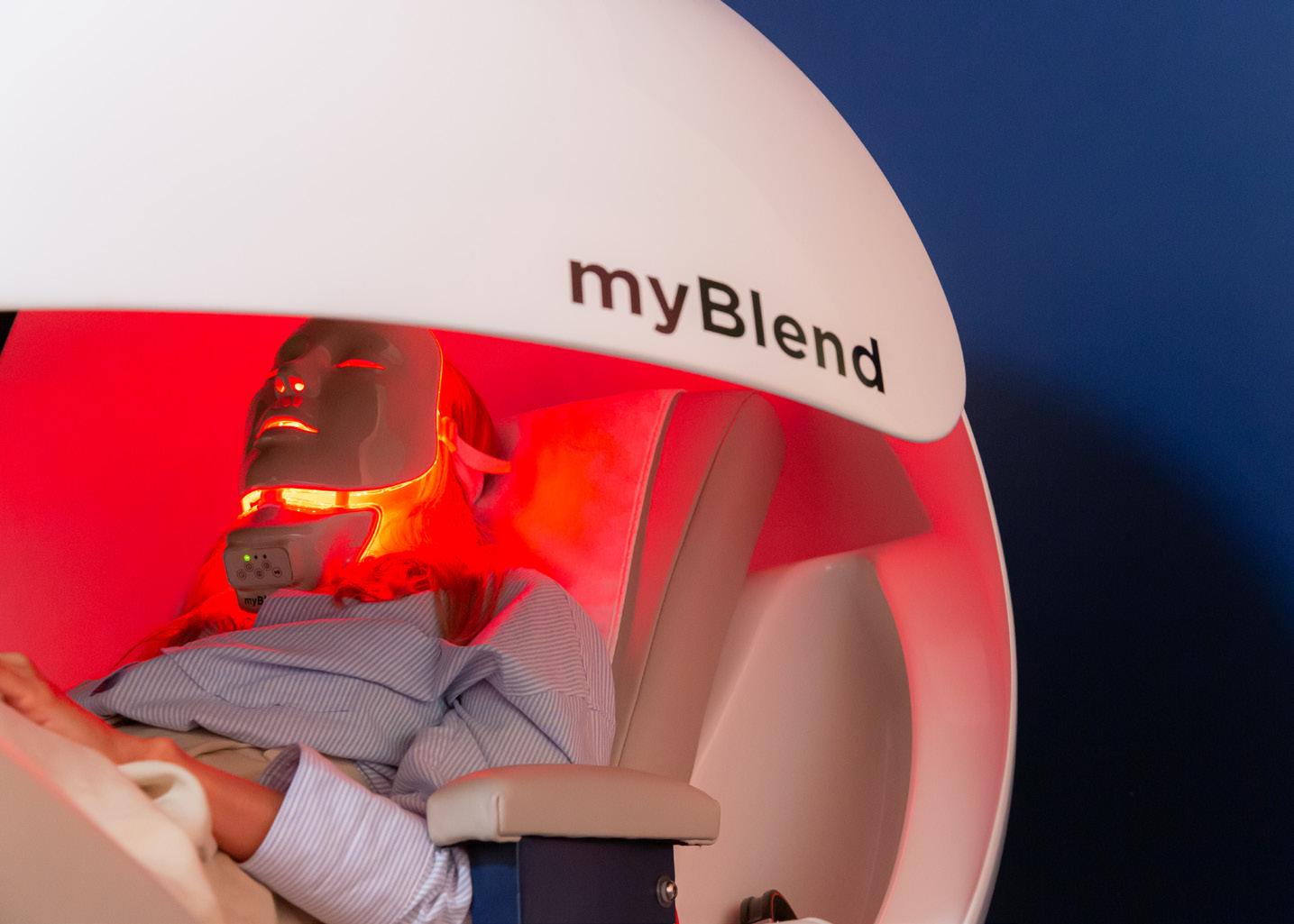
Technology is integral to the success of the concept. In the spa setting, the Cell Synergy Machine offers radiofrequency, electrostimulation, electroporation and cryotherapy along with the power of red and near-infrared light, harnessed in the form of LED photobiomodulation.
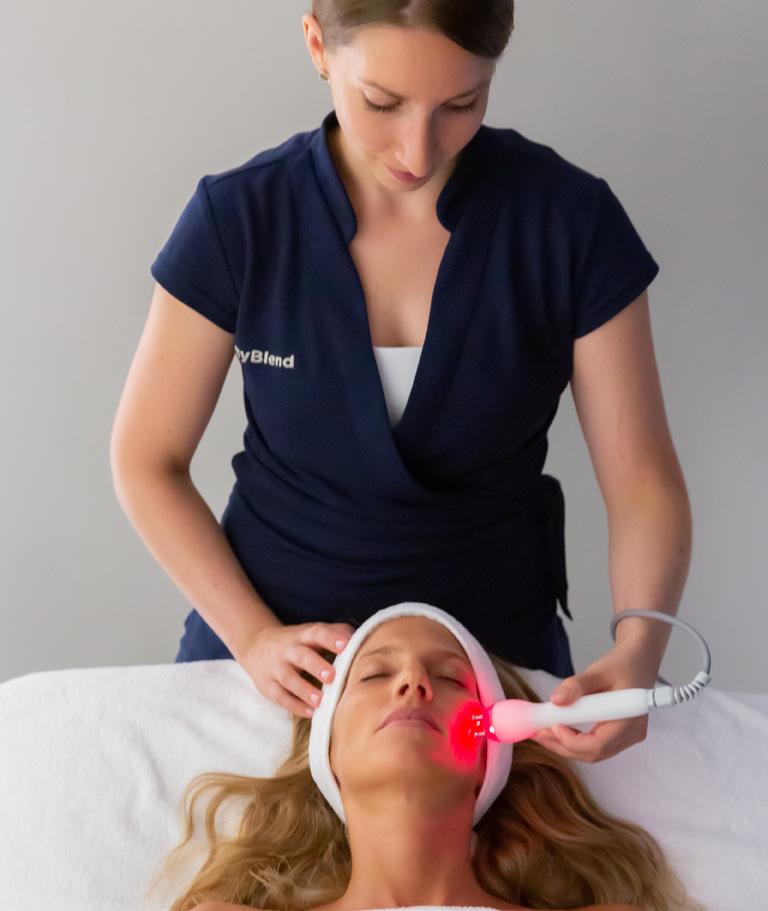
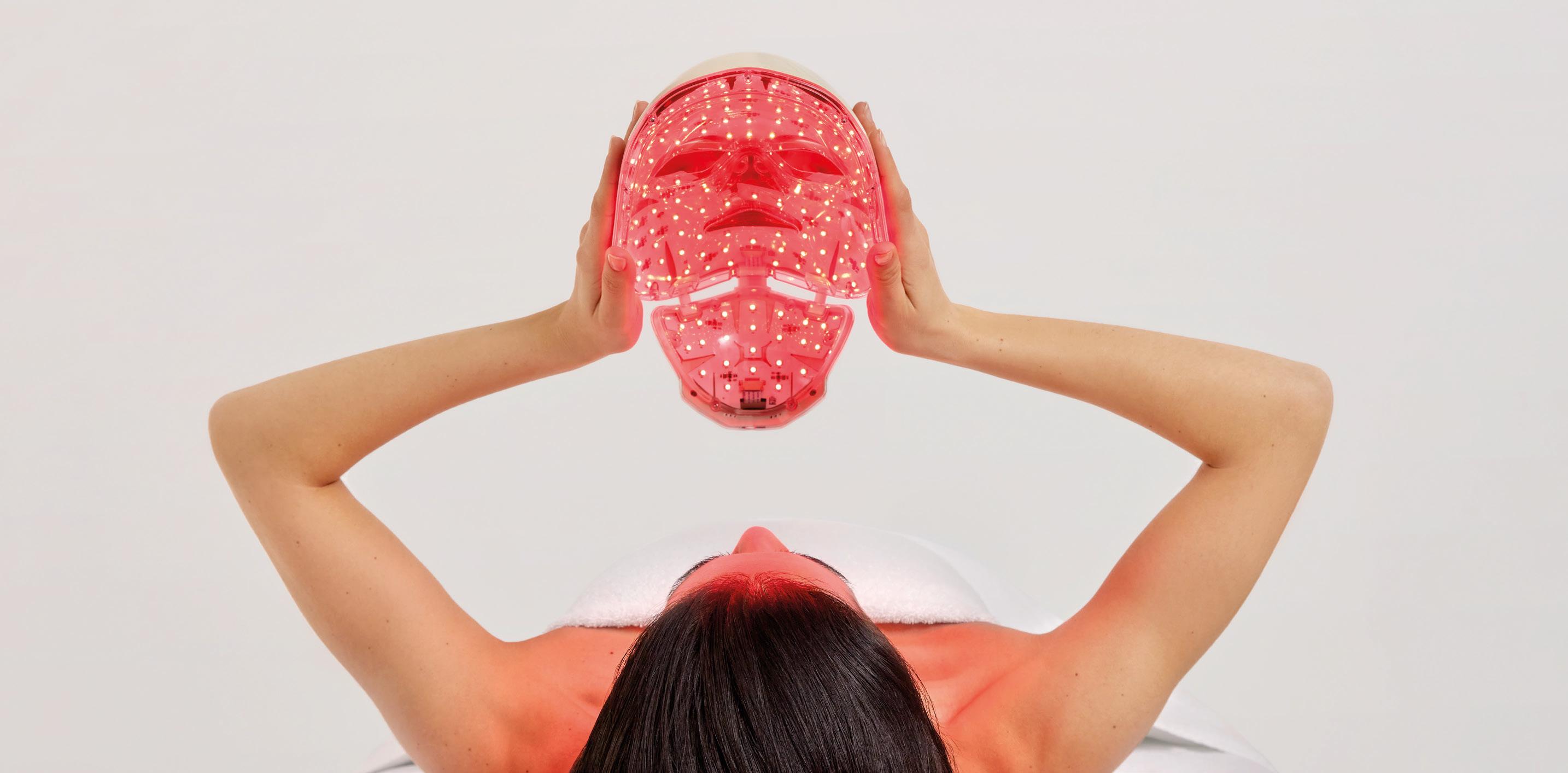
These are customised to suit the guest’s skin concerns. Red and near-infrared light stimulates the synthesis of collagen and elastin and helps to oxygenate and repair skin cells. The myLedMask, developed exclusively by myBlend for spas, is also available for sale to customers.
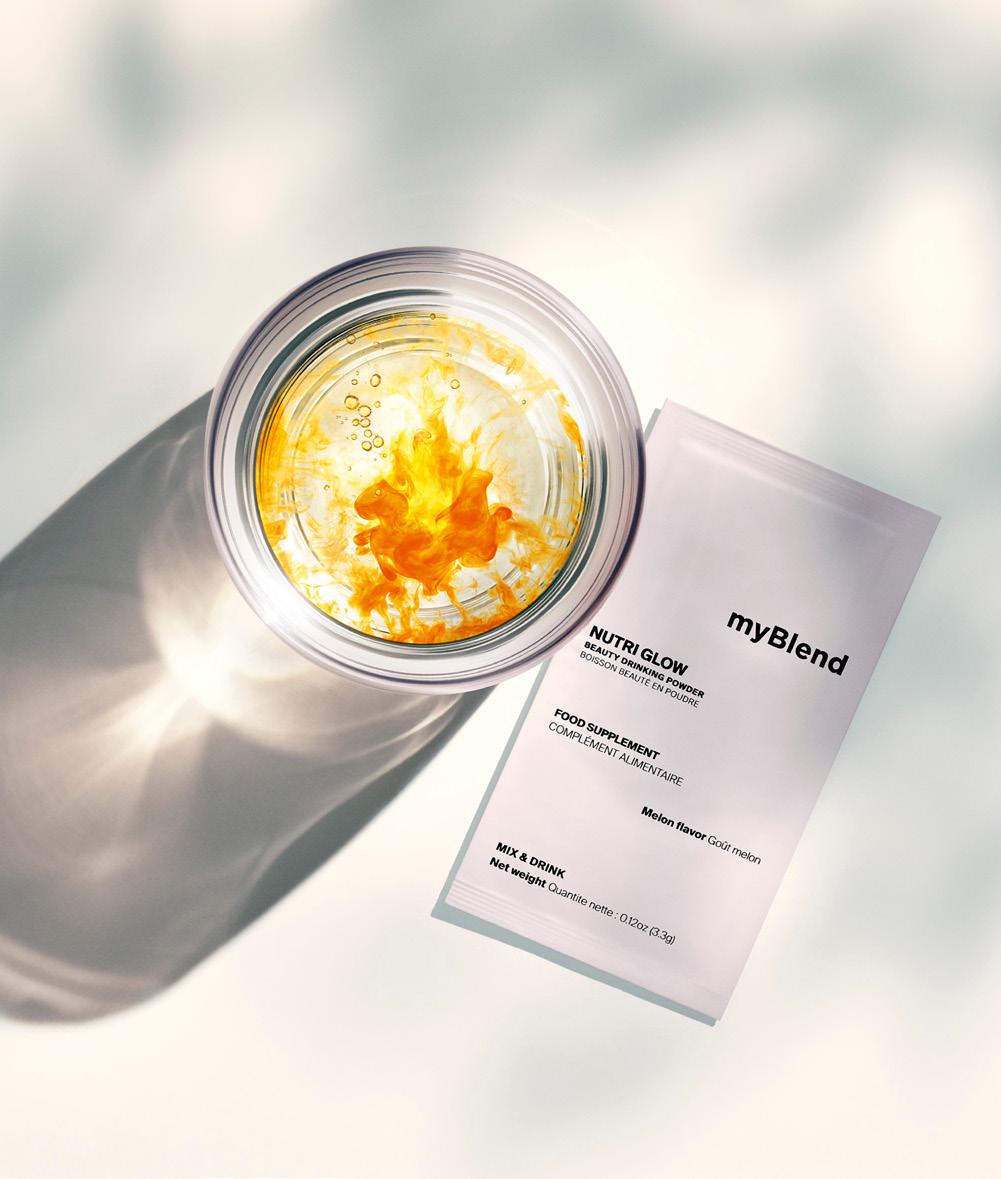
Dr Courtin also understands the importance of nutrition in skincare and has written two books on the topic. “I believe it’s important to support the skin from the inside. We selected prebiotics and vitamins for these formulas to promote healthy skin,” he explains.
Three nutritional supplements in water-soluble powder form feature the antioxidant Tibetan Sea buckthorn berry, prebiotics to preserve the balance of intestinal flora, and various micronutrients. Each active ingredient has been chosen to hydrate, nourish and strengthen the skin.
A personalised solution
Personalisation is the foundation of the new myBlend concept, and that approach has been made possible with the new skin diagnosis mobile app: mySkinDiag. Using photo analysis, AI and a lifestyle questionnaire, the app generates an assessment of each person’s skin concerns and suggests appropriate
solutions. All spa treatments are bespoke. Facials are 30-90 minutes long and there are two body treatments and a signature face and body experience.
Support for operators
Spa partners receive marketing support, in-depth training for treatments and retail, a marketing plan, a KPI monthly review and action plan proposal, team incentives and event support. The team at La Maison myBlend understand the expectations of global partners.
Looking ahead, myBlend is aiming for BCorp certification as part of the Clarins Group and is committed to a sustainable future. myBlend products are housed in glass with pure aluminium caps, which makes them easily recyclable. Less than 4% of the Derma range uses plastic and its boxes are made of recycled and recyclable raw cardboard and presented without cellophane wrapping.
For more information on how myBlend’s holistic approach to skincare could boost your spa, visit: https://my-blend.com
www.europeanspamagazine.com 46 Brands to Watch Clarins myBlend
From above left: The myLedMask developed by myBlend for professional and home use offers visible skin regeneration; the dermocosmetics line offers a personalised approach to skin health
EXPERTISE. EXCELLENCE. EXPERIENCE.
WHEN HIGH-TOUCH MEETS HIGH-TECHNOLOGY
Tailor-made treatments that combine highly concentrated formulas, expert touch and cutting-edge technology for visible results from the first session. An ideal balance of efficiency, respect for the skin and restorative well-being.
MADE IN FRANCE , myBlend partners with your spa delivering expert training, drive to spa strategy and customized 360° marketing plan.
SCAN




The St. Regis Florence Italy Le Royal Monceau Raffles Paris France The Ritz-Carlton, Toronto Canada contact us : morgan.lefrancois@clarins.com my-blend.com LA MAISON MYBLEND : 23, rue Debelleyme 75003, Paris
TO FIND
OUT MORE
www.my-blend.com
morgan.lefrancois@clarins.com
It’s a family affair
European Spa met with the Winyard family, owners of Stobo Castle, billed as Scotland’s only destination spa embarks on a future with a new generation at the helm
REPORT BY WENDY GOLLEDGE
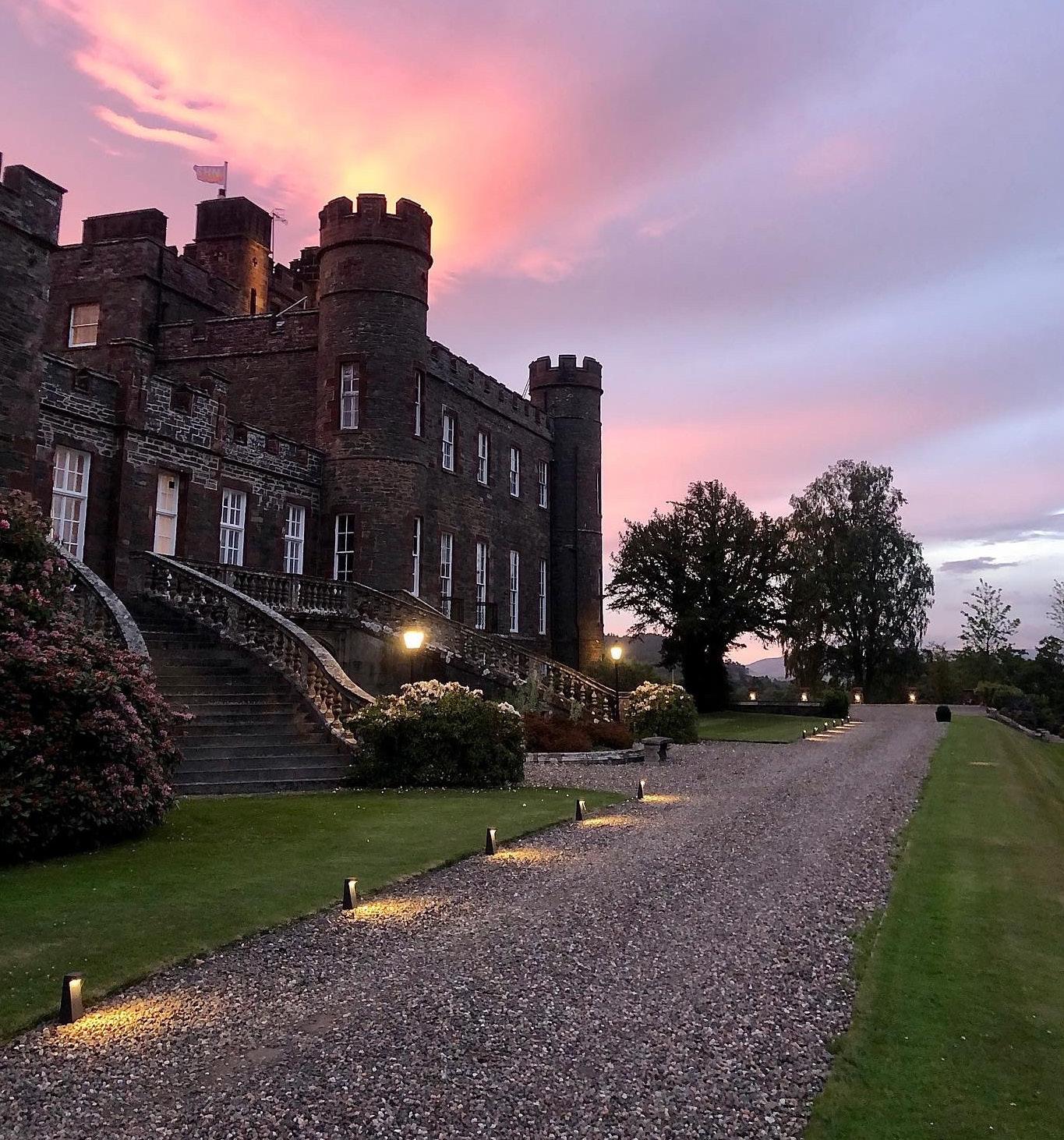
In January 2019, after 40 years as managing director at Stobo Castle, Stephen Winyard stepped aside, becoming chairman and handing the reigns to his wife, Mandy, and their three children Taylor, Elliott and Mitchell. Dating back more than 1,000 years, Stobo Castle was purchased by the Winyards in 1975, opening as one of the UK’s first health farms in 1978. Gaynor ‘Granny’ Winyard, a trained beauty therapist, had one aim: for every guest to leave “utterly relaxed, looking trim, feeling vibrantly alive and superbly fit, and radiating good health”.
Two generations on, the calorie-controlled diets and strict regimes may have gone, but many things about
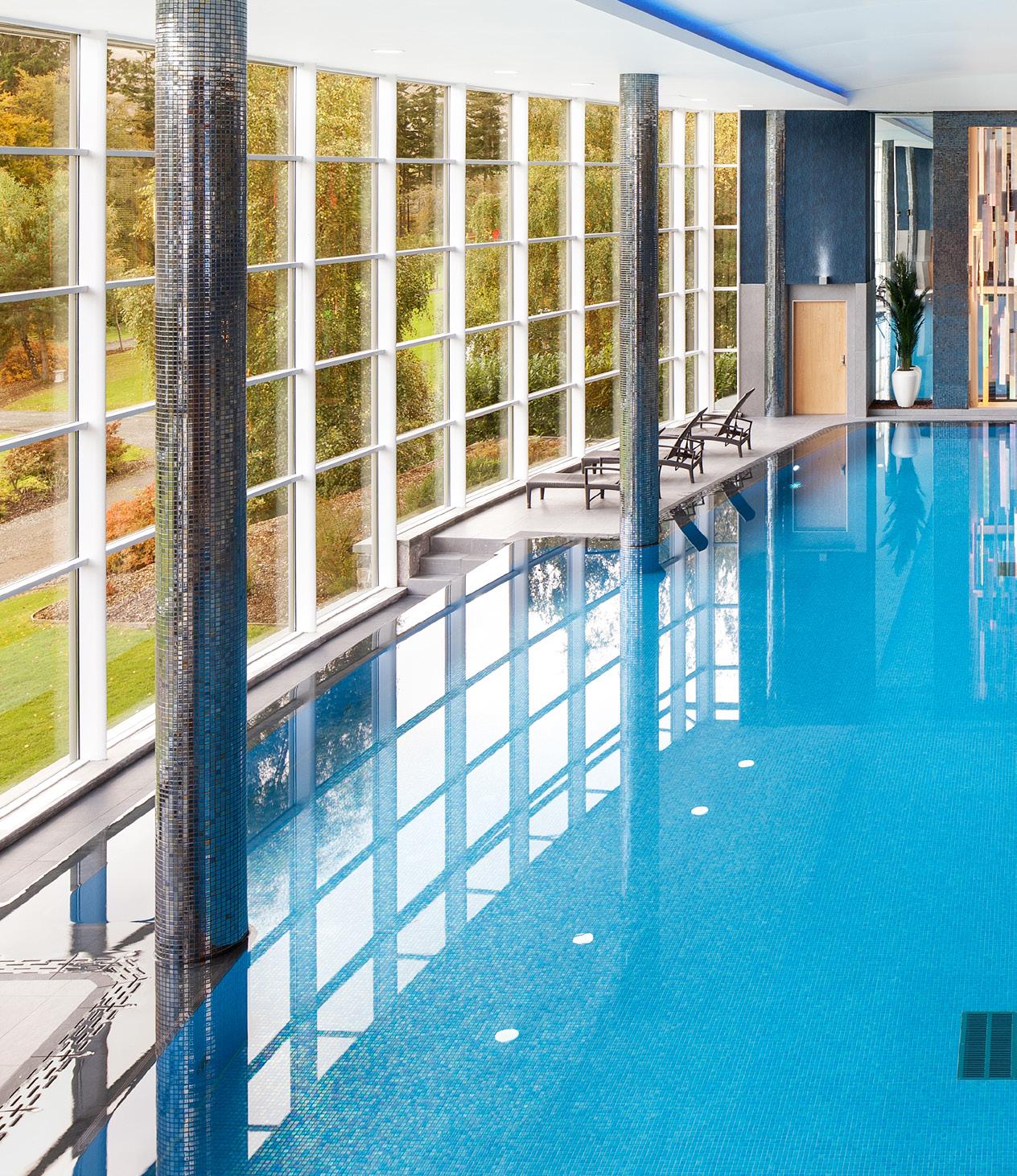
this wellness-focused destination spa remain the same. Arriving at the castle late on a snowy January afternoon, its austere grandeur – everything you’d expect from a castle in the Scottish Borders – is juxtaposed by an entirely heartfelt welcome, roaring fires, guests strolling around the hotel in robes, unique and daringly modern interiors, a gigantic indoor olive tree taking centre stage and, in the background, the tranquil blue glow of the So Stobo spa pool.
“The castle was derelict for more than 30 years before Granny Winyard took it on,” explains managing director Elliott Winyard. “She devoted herself to Stobo and creating something unique; that’s what makes it
www.europeanspamagazine.com 50 Spa Spotlight So Stobo at
Stobo Castle, Scotland
so special. As a family business, we don’t answer to a board of directors, so changes take weeks, not months to process. We can run with crazy, creative ideas and keep the fun elements that stand out in guests’ minds.”
During lockdown in 2020 the family moved in as the hotel and spa closed for 18 months. In that time, they took the opportunity to completely refurbish the pool. “Every tile came off – Mitchell and I took that job on,” says Elliott. “That was the biggest project, and we did a lot of it ourselves. Plus, we refurbished every one of our 28 treatment rooms.”
The three pillars
“Granny Winyard instilled what she called the ‘three pillars’ in Dad, who is very much still a mentor to us,” says Elliott. “We’re carrying that on as those pillars have served the business incredibly well for the last 40 years: reinvestment into the guest facilities, brand awareness and the training and development of our team.”
What does the first of these pillars mean for a luxury spa in a year when businesses nationwide are negotiating a cost-of-living crisis, staff shortages and the aftermath of a global pandemic?
“Stobo Castle is a spa-first business,” explains projects and company director Mitchell Winyard. “The now 1400sqm spa underwent a £5 million expansion in 2003, but we get so many repeat visitors, we can’t ever stand still. Dad instilled the mantra of reinvestment and we’re continuing with that, despite the current climate. This year we’ll redevelop our hydrospa – we’re currently researching different facilities – and we have three new outdoor hot tubs coming from Arctic Spas in Canada. We will also be revamping the outdoor spa area this year to give it a fresh, new look.”
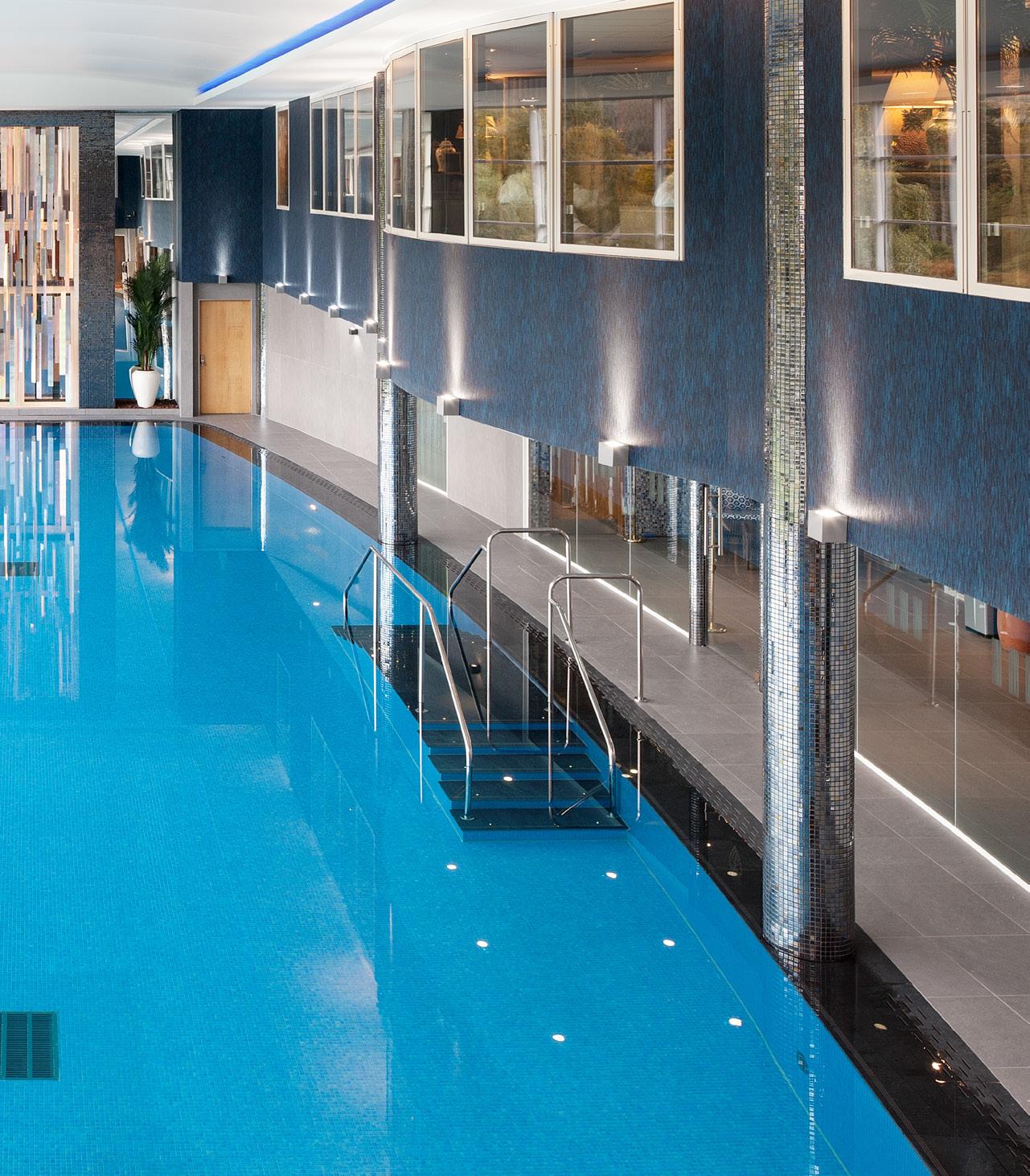
He adds that while guests are predominantly from Scotland and the northeast of England, the family are now marketing to staycation guests from further afield, and there is a “steady trickle” of American tourists in the warmer months.
Treatment excellence with Phytomer Spa manager Lorraine King, who has been with the business since 2009, is working to fine-tune the spa
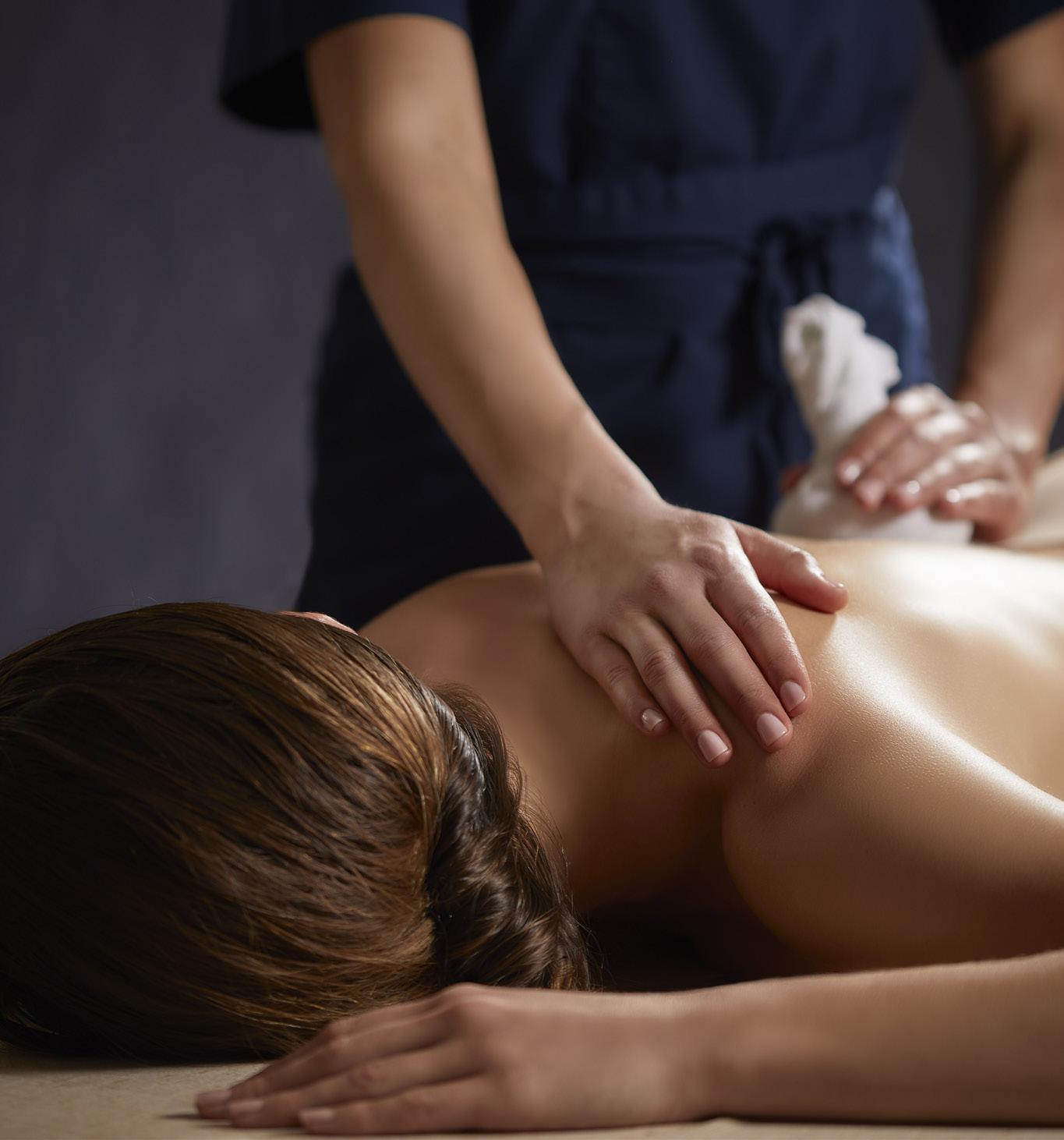
www.europeanspamagazine.com 51 Spa Spotlight So Stobo at Stobo Castle, Scotland
Above from left: Stobo Castle at dusk; the tranquil spa pool at So Stobo spa; a Sea Holistic massage by Phytomer
experience from beginning to end. “We currently have a reservations team and a treatment schedules team; my vision is to collaborate this process, so everyone is qualified to hone the spa experience we sell for each guest’s needs,” says King.
With approximately 75-80% of business coming from returning guests, King is focused on changing treatments and facilities on a bi-annual cycle. “Returning guests do like their old treatments but this year we’ve pushed forwards with a big change. For years we’ve worked with four or five brands at a time, but it’s confusing for the guest and can be overwhelming, especially if they are new to spa.”
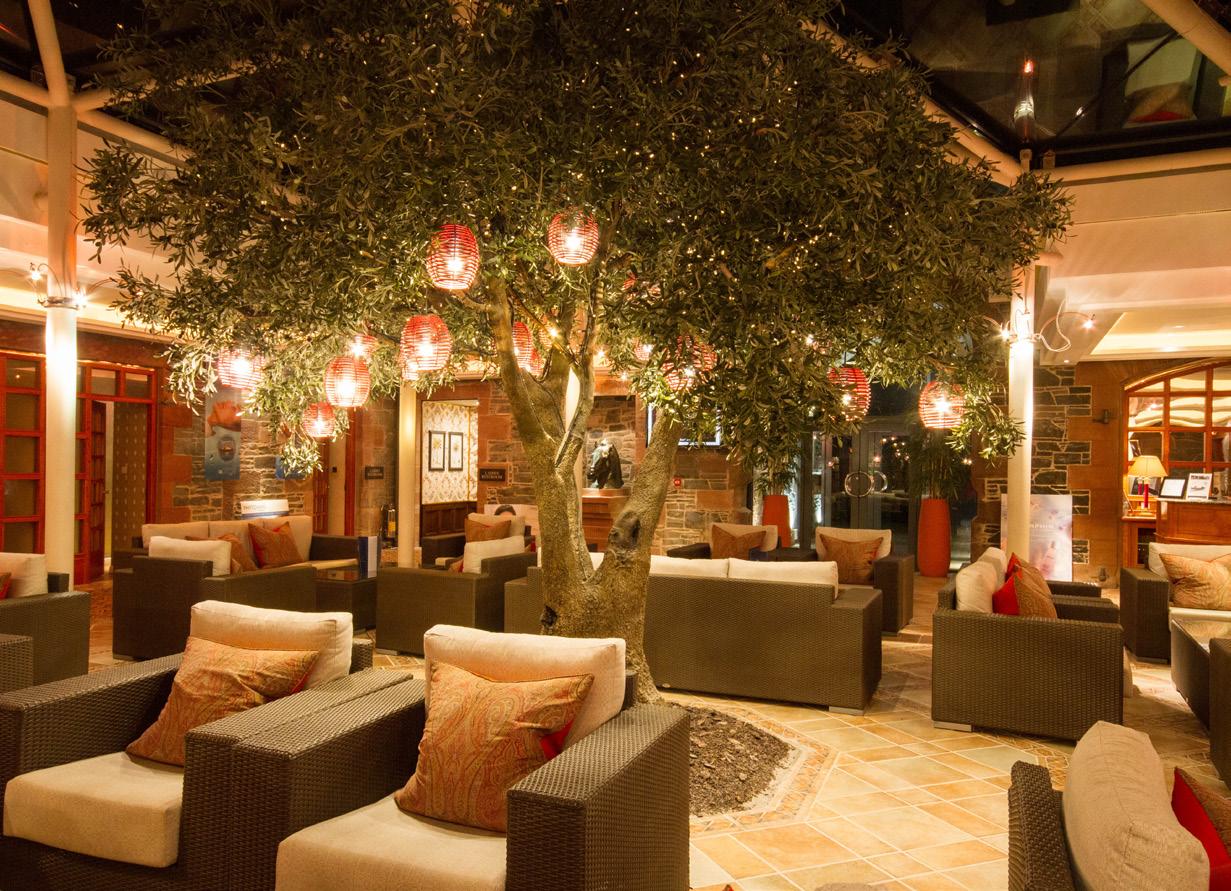
In a decision not taken lightly, King and her team analysed treatment sales, gathered therapist feedback and established guests’ hero treatments, then used this collated information to devise a new spa menu using only Phytomer products.
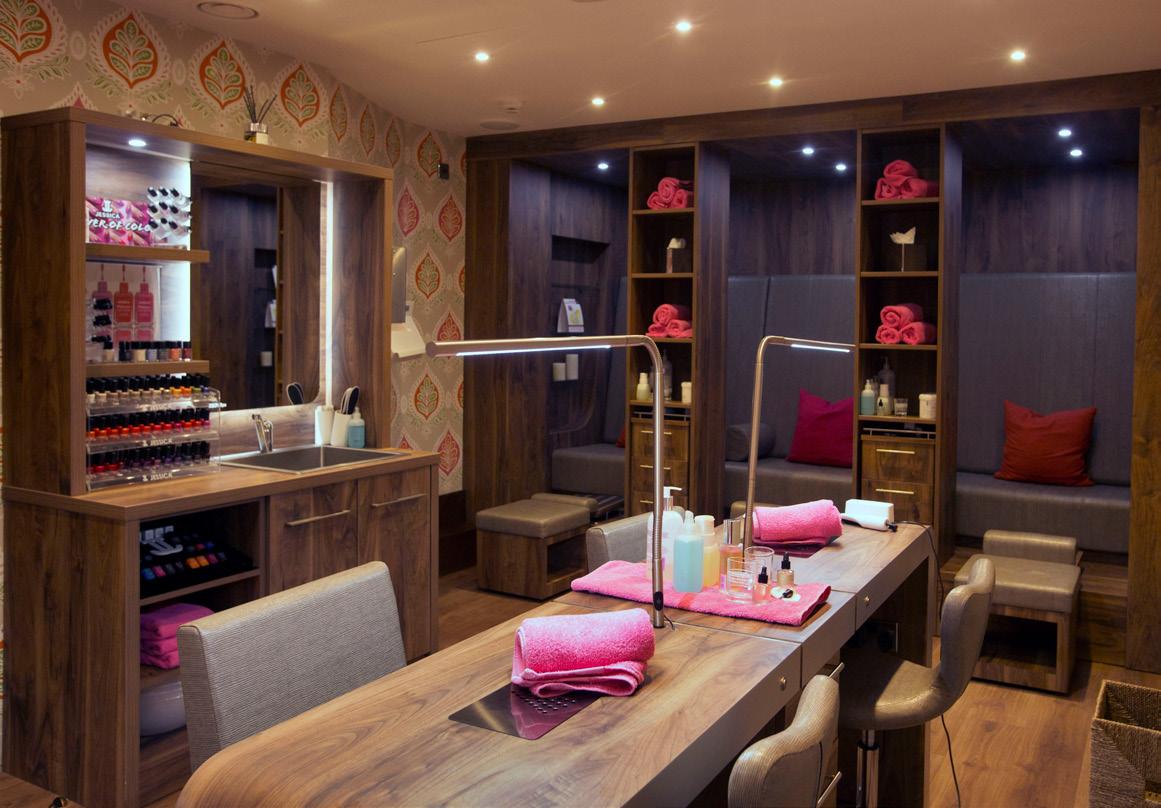
“The reason we’ve moved forward solely with Phytomer for treatments is also to make it easier on the therapists, so they can consistently provide the same care, excel at delivery and be confident in the service they’re delivering. The schedule team also only have one brand to learn and can therefore more confidently advise the best treatment for each guest – and of course it’s more manageable for the guest when choosing, too.”
Incremental price rises
Investments at the castle are funded by a circular cycle of price increases versus additions to the experiences on
I know in Scotland where guests can comfortably walk around in a bathrobe. People come to us because of our spa offering – we’re not a hotel with a spa bolted on the side. We’re spa first.”
www.europeanspamagazine.com 52
Spa Spotlight So Stobo at Stobo Castle, Scotland
“There’s nothing quite like us out there, and nowhere else
Taylor Winyard Company director, So Stobo
Clockwise from above right: the spa’s recently updated manicure suite; guests have access to the glorious Peeblesshire countryside; an olive tree stands as a focal point in the spa lounge
offer. “To elevate the experience for the guest we need to raise the price, but we can only increase prices if we escalate our offer. It’s cyclical and has to go hand in hand,” says Elliott.
“Covid meant we had to take away a lot of those added luxuries, so now we’re working to bring back all the little things that entice guests to visit or return,” adds company director Taylor Winyard, the last of the siblings to join the fold after she successfully rowed the Atlantic as part of a three-person crew last year. “Small but meaningful adjustments – Penhaligons’ products in the Cashmere and Deluxe suites, bespoke luxury teas from Edinburgh, upgraded shortbread, Dyson hairdryers – these are all talking points that have allowed us to regrade our rooms and then make small, incremental cost increases.”
Setting a new benchmark: So Stobo selects
Having offered marine-based treatments by Phytomer as part of its menu for almost 20 years, in January 2023
So Stobo took the decision to select Phytomer as its primary treatment and product brand. Building on their existing relationship, the Phytomer team worked with spa manager Lorraine King to create a new treatment menu designed to elevate the guest experience and set new benchmarks for what guests can expect from a So Stobo spa experience.
Phytomer is based in Brittany, France, where it sustainably harvests all the marine algae used in its products, which also contain its patented sea water concentrate, oligomer.
“The Phytomer treatments at So Stobo are bespoke and exclusive to them,” explains Susie Mills, sales and marketing manager UK at Phytomer. “It’s a results-driven offer that embraces So Stobo’s holistic wellness philosophy while also factoring in data from previous bookings and guest feedback.”
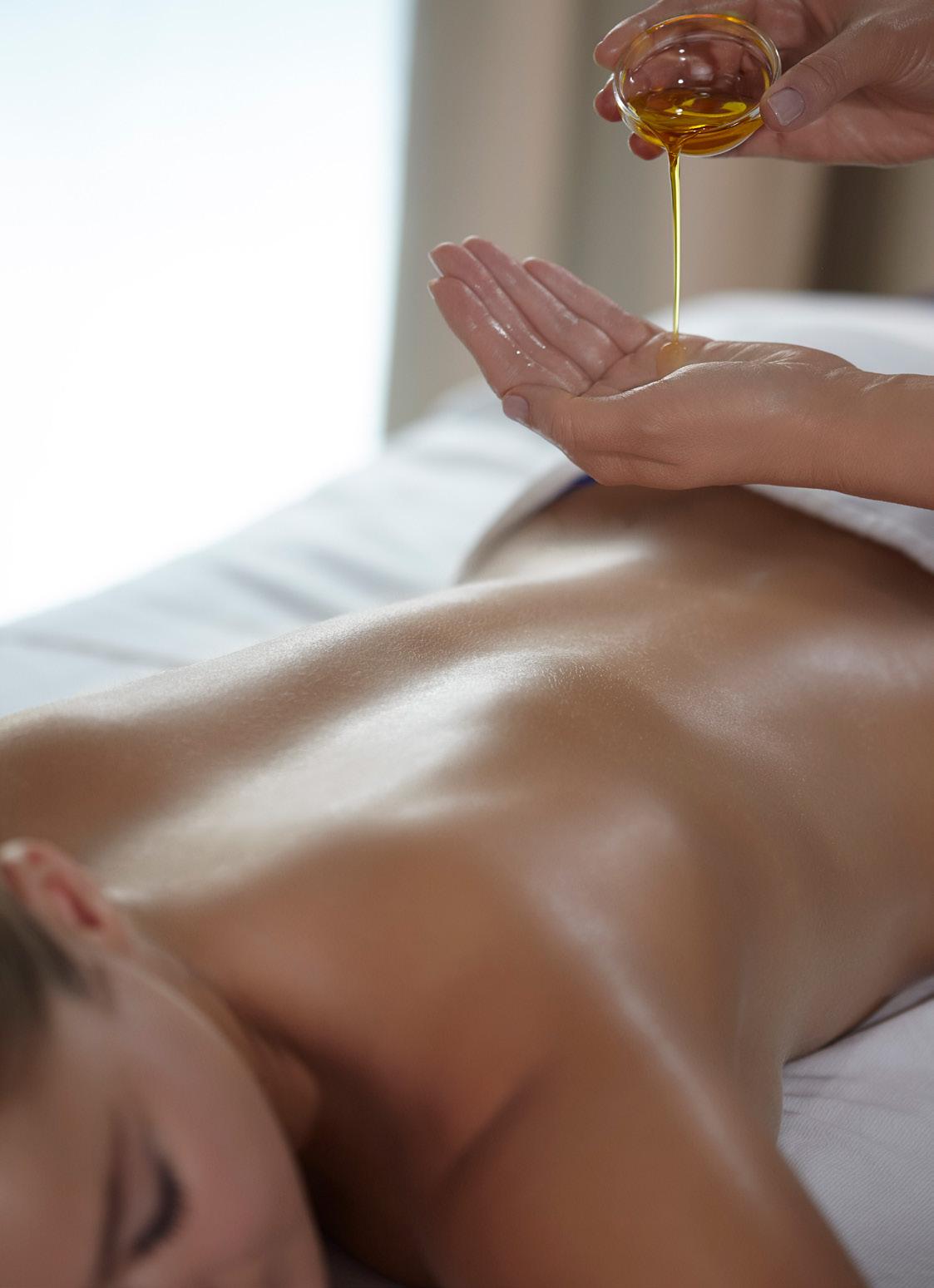
Phytomer has created hands-on treatments and protocols that work well for clients and the spa’s team. “Our business development manager and educator, Amy Davies, led two weeks of training for all So Stobo’s therapists, reception and the spa booking team, plus we have implemented a train-the-trainer programme, so one of the spa’s therapists can now train new staff in house,” confirms Mills.
“We’ve kept snippets from all the old favourites and incorporated elements of previous limited-edition treatments that returning clients have requested to create a truly bespoke menu,” adds King.
With floor-to-ceiling windows overlooking the Peeblesshire countryside, the spa is large and airy, with a feeling of space and privacy even when at full capacity. By offering a series of very separate spa areas – a glass-fronted Swedish sauna and steam room in the mixed area, a laconium, crystal steam room and aromatic steam room in the ladies-only area and three outdoor hot tubs in the garden spa – there’s a sense of being surrounded by many new experiences.
This separation allows the family to make discrete upgrades to individual parts of the spa. “With the increase in male guests, we plan to expand our mixed facilities, and replace the three ladies-only thermal areas that were built in 2003,” says Mitchell. “How we refurbish those rooms will be influenced by this trend for more male guests and couples.”
www.europeanspamagazine.com 53
Spa Spotlight So Stobo at Stobo Castle, Scotland
Phytomer
Training and development innovations
One pillar that is less easy to successfully maintain is that of team training and development. Director Mandy Winyard (aka ‘the real boss’, according to her children) is working closely with King to improve staffing challenges.
Having trained as a beauty therapist and worked at Stobo Castle since she was 17, Mandy has experience in every department. She says: “Brexit has really impacted us; staffing and recruitment is a huge operational challenge for both the spa and the hotel. We’re going to local high school and college careers days but, crucially, we’ve recently begun inviting the students here to see what So Stobo is about.
“So many local people have an image of us as stuffy and posh – it’s not until they visit that they see we’re a down-to-earth, friendly place to work. It’s time to encourage people to come and see what we actually are. King is talking to students while they’re here, so they can see that the spa offers a real progressive career journey, and she is also looking into apprenticeships.”
A formidable combination
Billed as Scotland’s sole destination spa, with accolades including Best Countryside Spa in the World and Best Destination Spa in the UK (World Luxury Spa Awards, 2019) as well as Global Spa of the Year (World Luxury Spa Awards, 2020) and best luxury romantic spa in the world (World Luxury Spa Awards, 2022), the Winyards are confident in Stobo Castle’s unique offering.
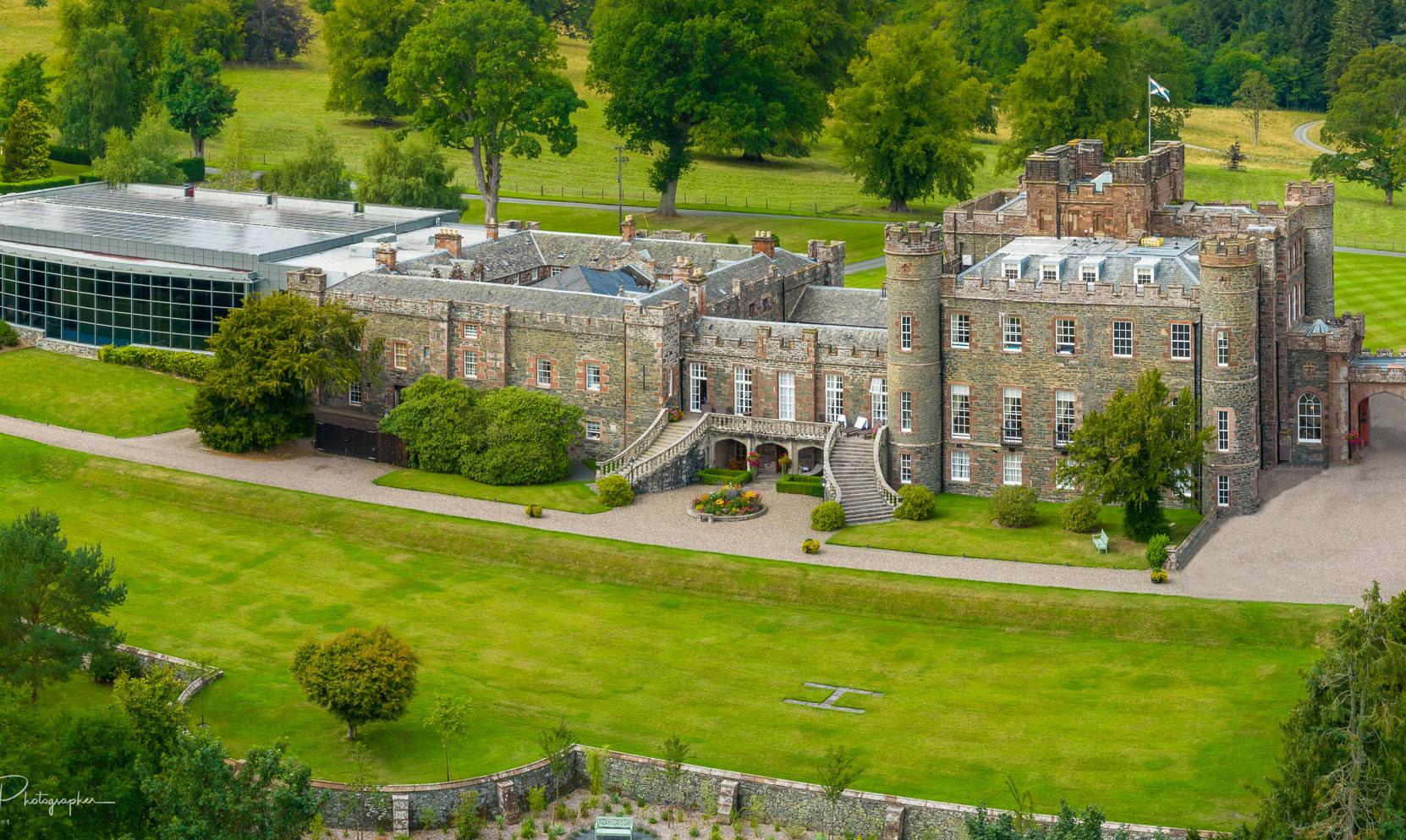
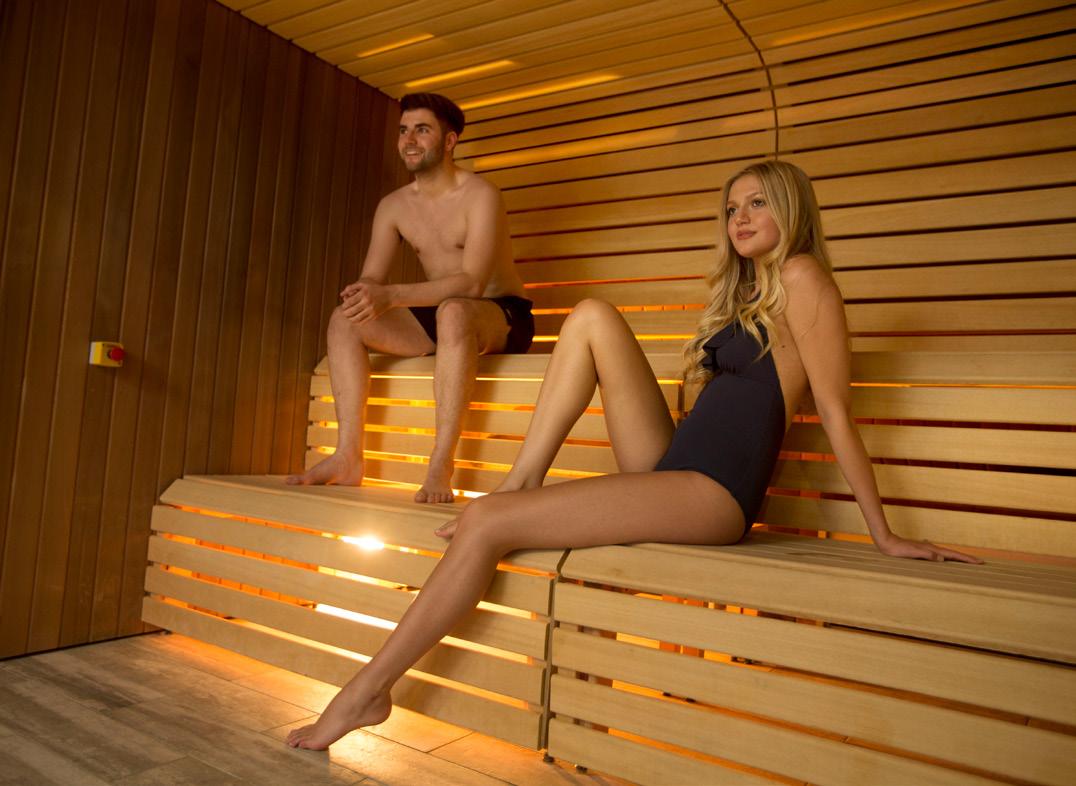
“There’s nothing quite like us out there, and nowhere else I know in Scotland where guests can comfortably walk around in a robe. People come to us because of our spa offering – we’re not a hotel with a spa bolted on the
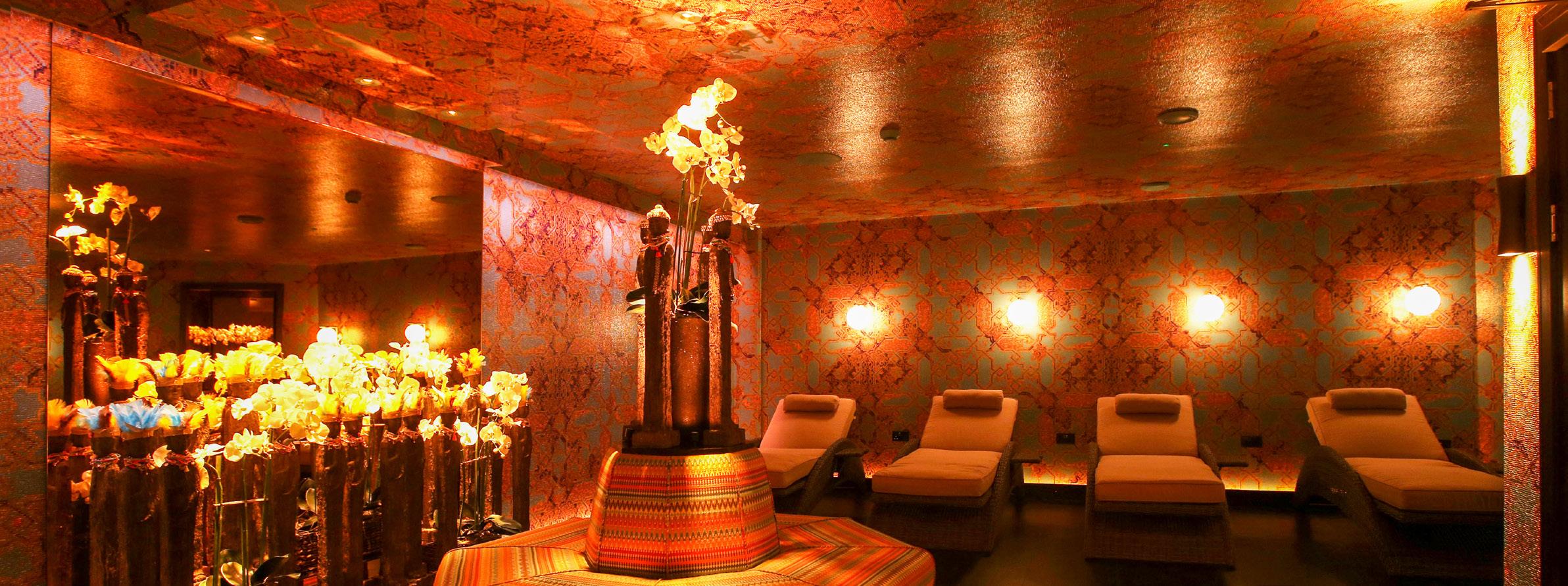
www.europeanspamagazine.com 54 Spa Spotlight
So Stobo at Stobo Castle, Scotland
Clockwise from top left: So Stobo is welcoming guests from as far afield as the US during the summer months; the castle dates back more than 1,000 years and was taken over by the Winyard family in 1975; luxurious decor in the spa’s relaxation suite
side,” says Taylor. “We’re spa first.”

Gift vouchers form an integral part of the So Stobo business model. Upwards of £100,000 is invested into marketing campaigns in the run-up to Christmas and, in the five years prior to Covid, voucher sales exceeded £1 million each year.
“This year we took £956,000, so it’s coming back,” says Elliott. “Plus, each month we sell an average of £60,000 in gift vouchers. From a cashflow perspective this funds our projects and means we can experiment – and buy silly lamps, which cost fortunes but make us truly unique!”
“Dad always speaks about the ‘wow’ factor,” adds Taylor. “That’s what he wants us to always remember, whether it’s the silly pineapple lamps in the cocktail lounge or having Japanese toilets in the ladies. They’re not what you’d expect to find in a centuries-old castle, and so give guests something to tell their friends about.”
Stobo’s sustainable approach
The day-to-day running costs of both the spa and the castle are sustainably managed. “The whole spa roof is covered in solar panels – 460 in fact – and the spa is heated by biomass, which we set up in 2013.
Luckily, we’re surrounded by timber, so that helps offset the cost of heating the spa,” says Mandy. “We have refill stations, encourage guests to bring their own bottles and have replaced the water bottles in the room with glass ones.”
But taking the eco-friendly and sustainable route has cost implications for the business – “almost everything we’ve done to increase our sustainability costs so much more,” says Elliott. “It’s a cost increment to us, but long-term we expect it to pay off. The cost-of-living
Spa Spotlight So Stobo at Stobo Castle, Scotland
“We’re carrying on the three pillars that have served the business incredibly well for the last 40 years: reinvestment into the guest facilities, brand awareness and the training and development of our team.”
Elliot Winyard Managing director, Stobo Castle
www.ishga.com
From top: Having Phytomer as a primary product partner is said to work well for guests and therapists alike; modernity meets tradition in the dining room at Stobo Castle; among the projects planned by the Winyards for this year is a redevelopment of the So Stobo hydrospa
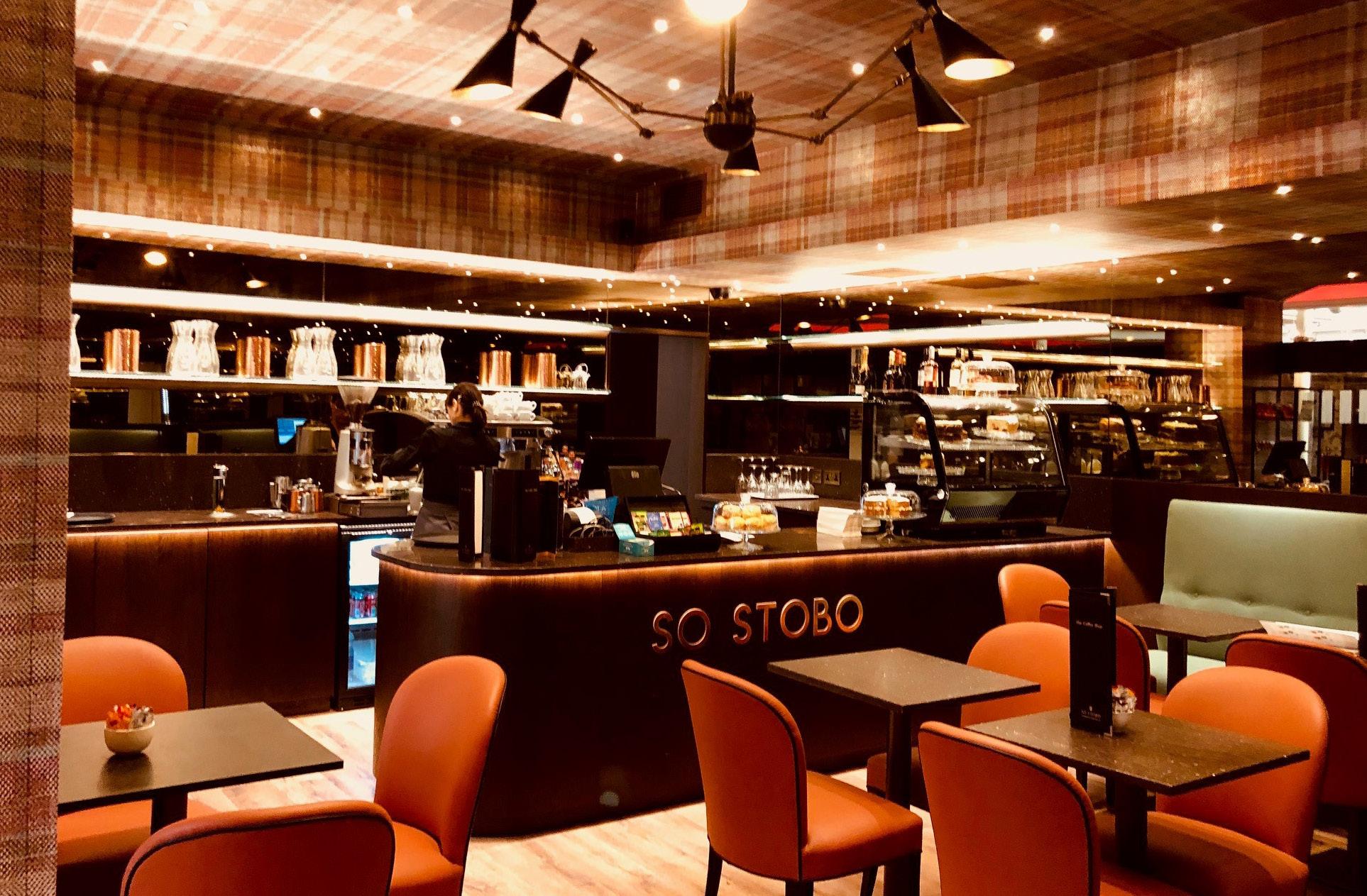
crisis could present a challenge in the coming year and our voucher sales may decrease, but we’re confident that if our guests can have one luxury they will still pick us.”
Having grown up in a cottage on the site – which is now the ladies spa bathroom – the Winyard siblings agree that Stobo is in their blood. “Dad was working in the Bahamas and got a call from Granny Winyard asking him to come and help build a new health farm. He’s got to be the only man to have bought a one-way ticket from paradise to Peebles!” says Elliott. “He loves Stobo, he’s passionate about spa, and we were born here, we’ve seen it grow and develop. Now we’re taking that forward into a new era.”
SPA STATISTICS
So Stobo at Stobo Castle
+44 (0) 1721 725300 www.stobocastle.co.uk
Owners: The Winyard family
Managing director: Elliott Winyard
Spa manager: Lorraine King
Design and interiors: Lizzie Bell Interiors
Spa team: 22
Spa size: 1,400sqm
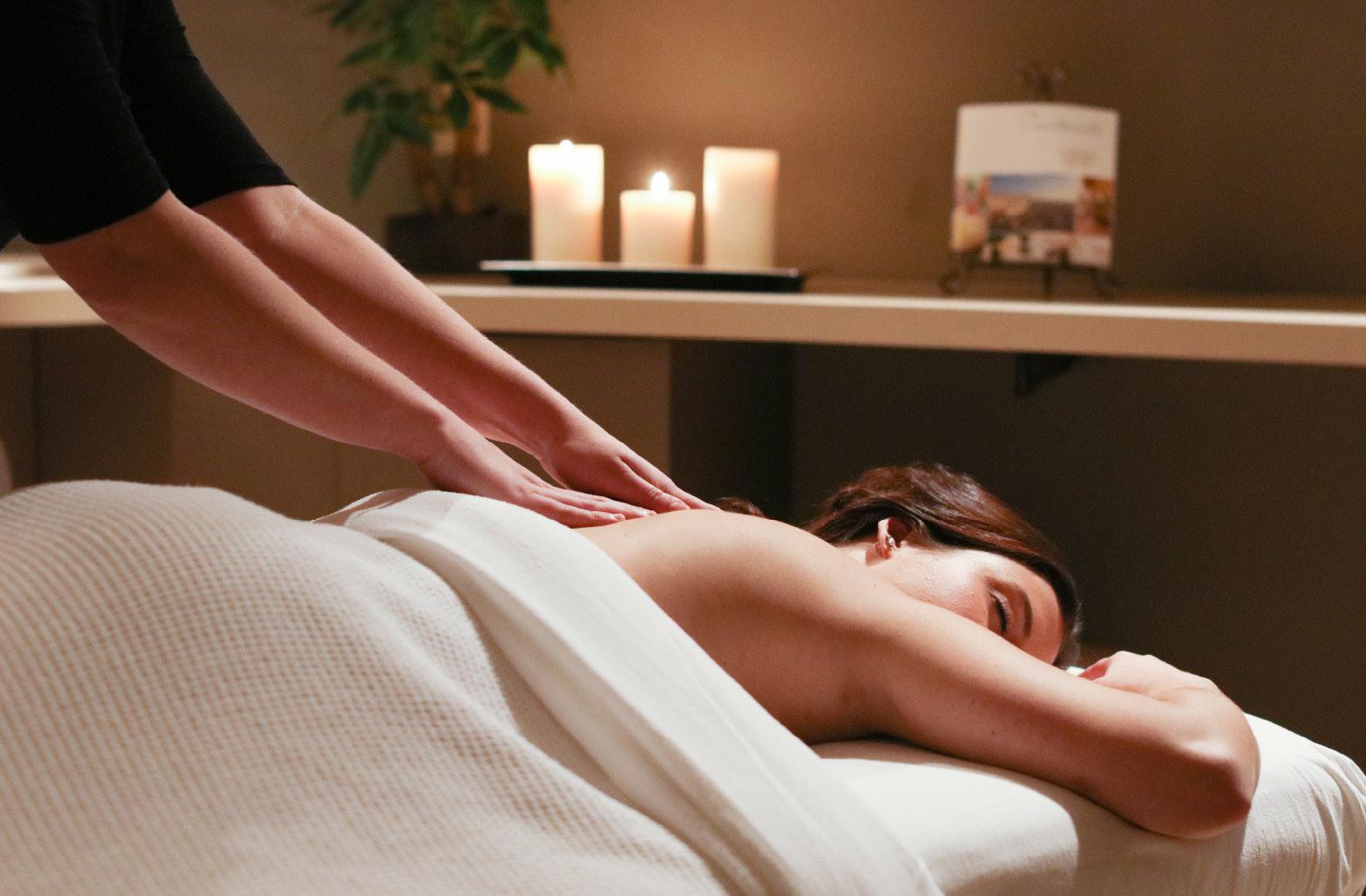
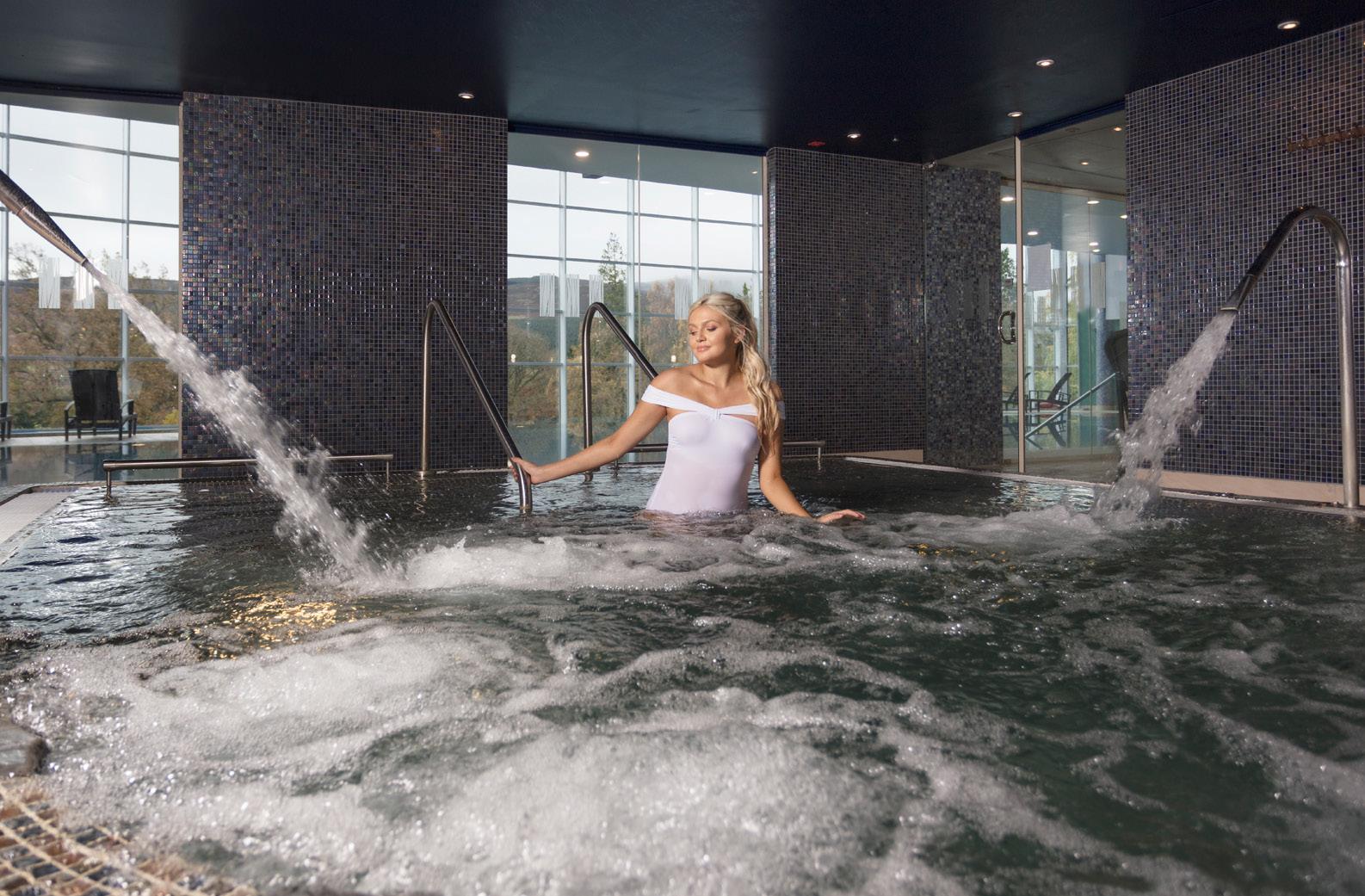
Treatment rooms: 28
Fitness: Precor, Peloton and Queenax, a full programme of fitness classes including ChiBall, kettlebells, yoga nidra, HIIT and Qigong.
Treatment beds: Lemi
Thermal areas: Inca, Aquateq, Arctic Spas
Pools: Aquateq Pools
Product partners: Phytomer, Made for Life Cancer Touch Therapy, Mii Cosmetics, Natural Spa Factory (white-labelled So Stobo products), Penhaligons, Pekoe tea, Villeneuve Wine in Peebles, Walkers shortbread, Wellsystem Wave water beds
Textiles: FloLuxe towels and bathrobes, Shortridge laundry, BC SoftWear spa linen
www.europeanspamagazine.com 56
Spa Spotlight So Stobo at Stobo Castle, Scotland





























www.gerrardinternational.com info@gerrardinternational.com
Creating spas of distinction
We find out how ESPA’s Design and Consultancy team delivers bespoke wellness concepts for the world’s most luxurious spas and resorts
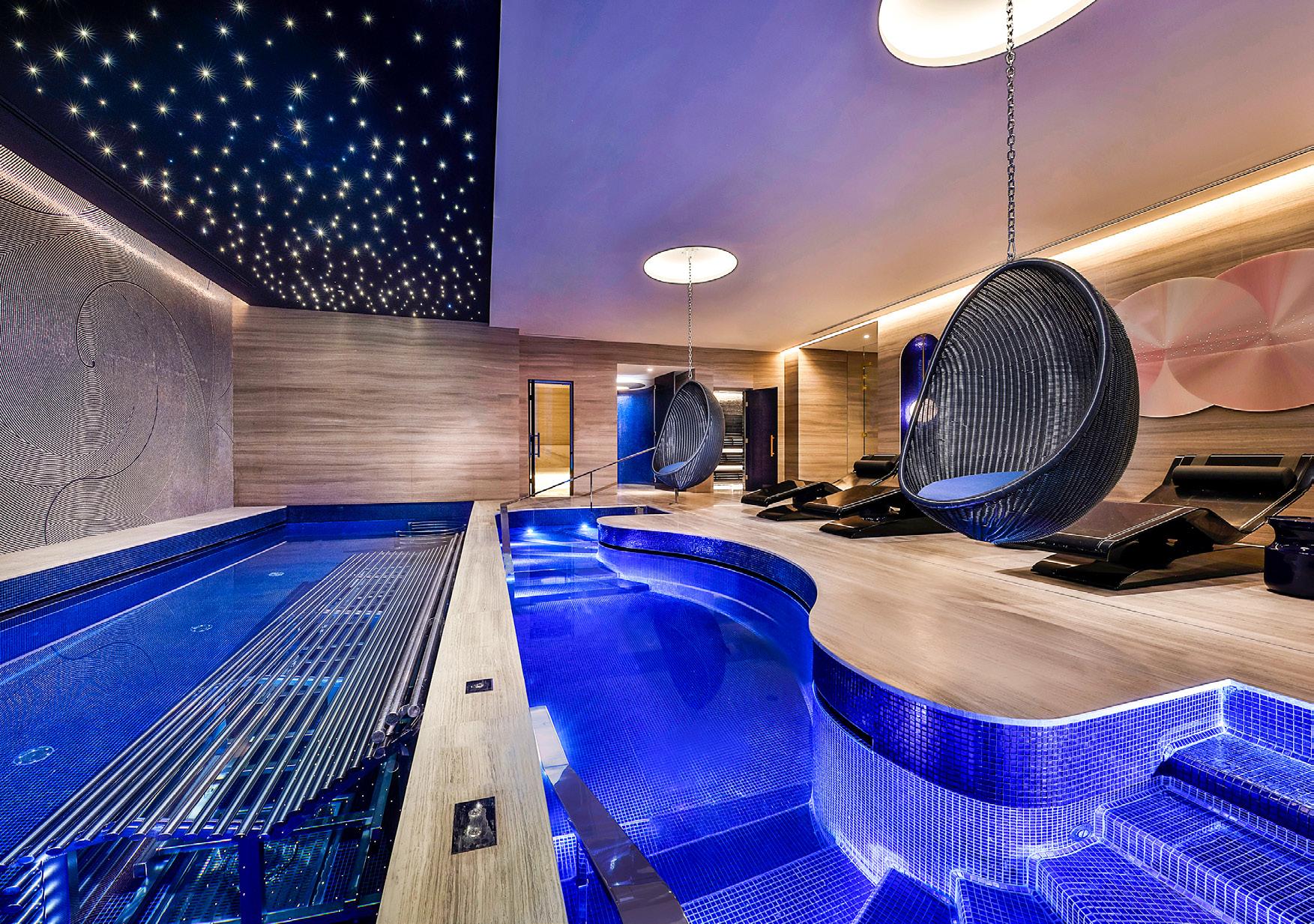
Aleader in spa and wellness innovation since 1992, ESPA’s Design and Consultancy (D&C) service offers a flexible, turnkey solution to create one-of-a-kind luxury spas. Its global team of more than 150 skilled professionals has delivered more than 550 spas in 55 countries, amassing a huge breadth and depth of experience in designing, creating, launching and managing state-of-the-art spas within hotels and resorts.
Having been instrumental in all areas of ESPA over the past 28 years, Jackie O’Hare now leads the D&C team as global commercial director. European Spa asks her what the D&C service can offer the wellness industry in 2023.
What makes ESPA D&C stand out?
Every spa we create is 100% bespoke and our concepts are positioned at the leading edge of the rapidly developing wellness industry, drawing on the expertise of our Spa Division team. We oversee everything from concept to design and build development, working with world-renowned architects
ESPA Life Waldorf Astoria, Lusail, Doha
A pioneering concept in Qatar, ESPA Life at Waldorf Astoria Lusail is a new flagship spa for the Middle East. Located across three floors and spanning 3,000sqm, ESPA’s D&C service worked with world-renowned French interior designer Pierre-Yves Rochon to create a sanctuary for physical and mindful regeneration.
Inspired by the world of luxury yachting, a contemporary, elegant spa with a 180-degree vista captures views of the bay (left) and Lusail skyline. Indoor and outdoor zones are connected by a terrace that flows around the spa, while interiors inspired by the local landscape have finishes alluding to the desert sand and
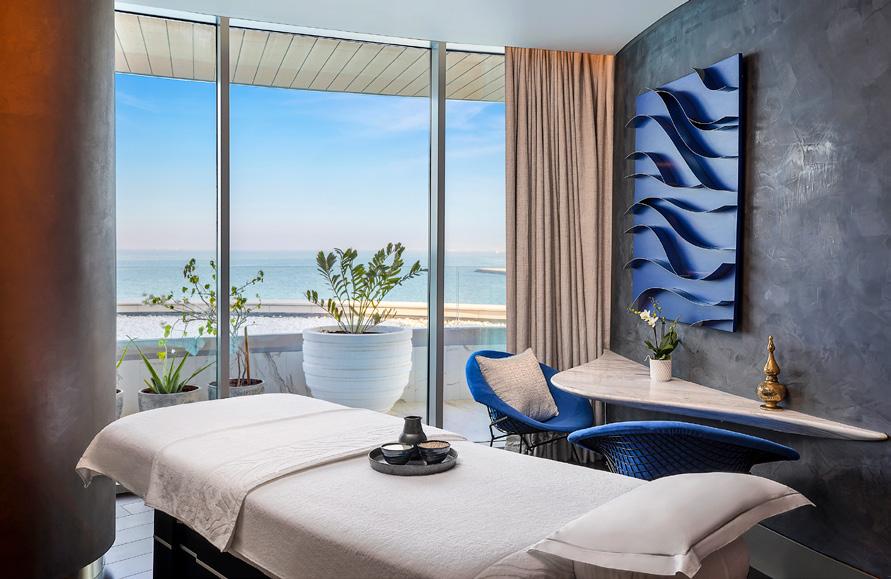
shimmering seas (above).
Guests enter through a curved portal, and are visually guided from space to space through a series of arches. Facilities include 19 treatment rooms and a VIP private spa suite with accents of gold, mother of pearl and azure Murano glass tiles, hot vitality pools, hammams, aromatherapy steam rooms and sauna cabins.
Daniel Golby, managing director, ESPA International, says: “Our D&C team worked closely with Waldorf Astoria and Hilton, from initial concept to opening, to create a one-of-a-kind spa that represents the future of wellness, while at the same time reflecting the unique character of Doha.”
www.europeanspamagazine.com 58 Brands to Watch ESPA promotion
Jackie O’Hare
The Ritz-Carlton New York, NoMad
ESPA’s D&C team created a spa that offers holistic wellbeing right in the heart of a bustling metropolis at The Ritz-Carlton New York, NoMad.
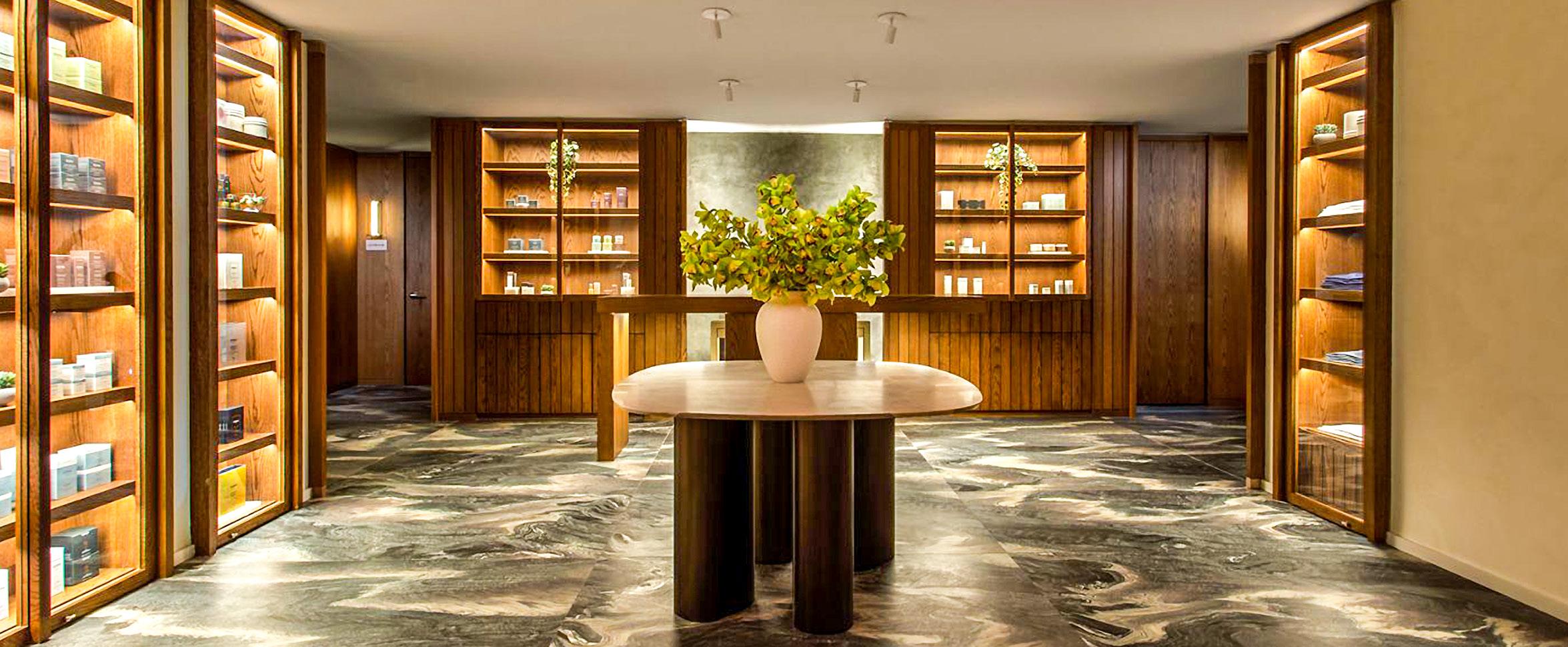
With eight treatment rooms (right), this 650sqm spa boasts aromatherapy saunas, steam rooms, private relaxation rooms and oversized walk-in experience showers. Natural marble Cipollino Ondulato flooring flows from the reception area (below) throughout the spa, sensitively combined with soft-polished plastered walls.
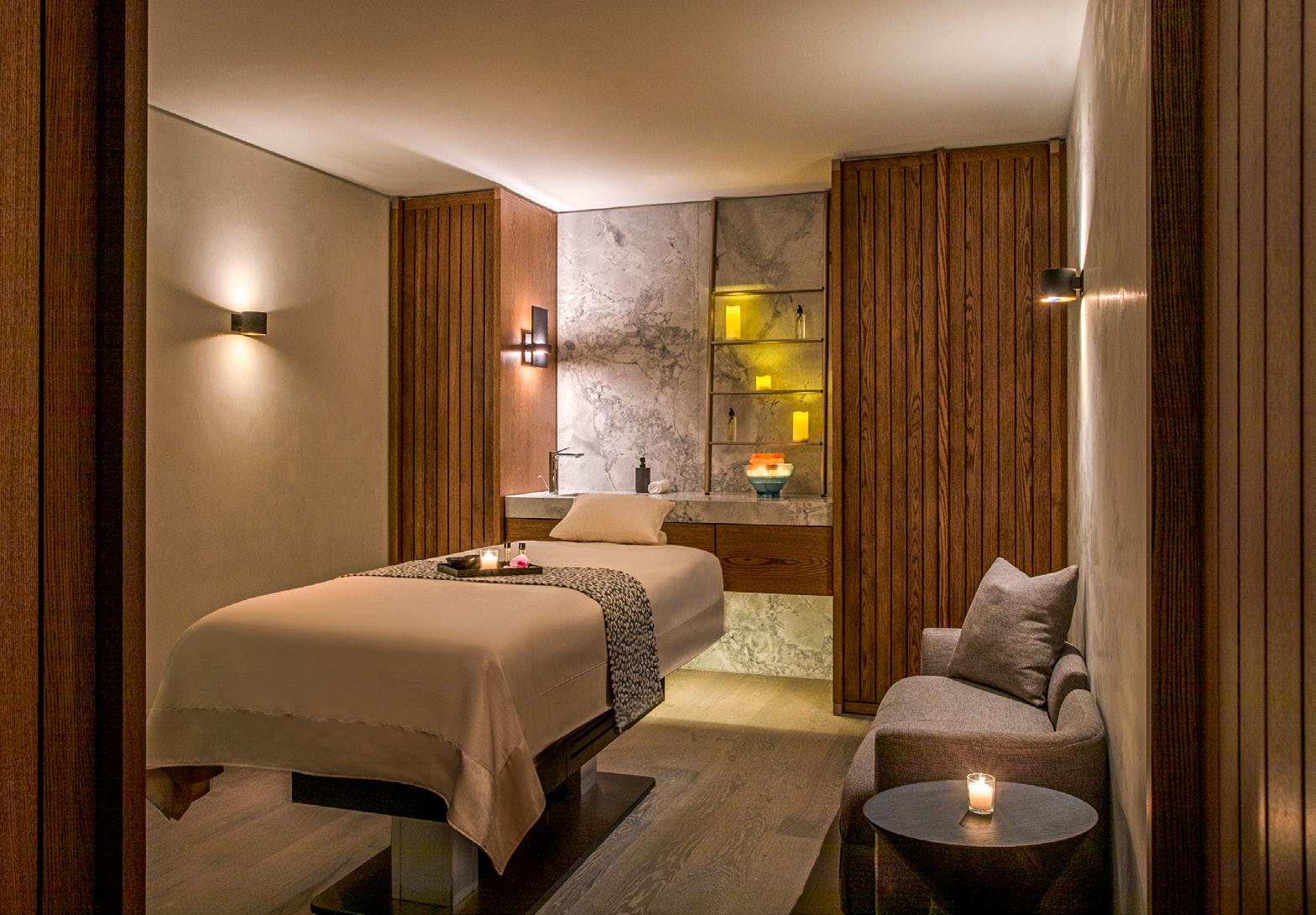
The D&C team also created meaningful wellness journeys centred around the three key pillars of mind, body and skin, with treatments incorporating mindfulness, holistic modalities and wellbeing techniques to help guests unwind from life in the city.
and interior designers to bring each project to life. The team oversees and reviews every detail, from directing spa plans to testing finishes.
ESPA is a trusted brand and this trust has been earned over the past three decades; we pride ourselves on our unsurpassed levels of detail.
What specific services do you offer?
We offer a flexible business model that allows clients to only engage with services their project requires. I believe we’re the only company to offer this total turnkey service, tailoring each offering solely to that business’s needs. We offer three key services – concept
creation and spa design; pre-opening and opening services; and spa management and business solutions.
A carefully planned concept is the first step in every spa’s success. We can visit the site, brainstorm and carry out market analysis to capture the client’s proposed vision and create a deliverable yet unique philosophy and design brief. No two ESPA spas are ever the same.
Pre-opening services include everything from technical and operational training to treatment menu engineering, IT recommendations and set-up and marketing.
Post-opening, ESPA’s management
services can oversee all on and off-site operations, assist with recruitment and retention, help set business objectives and perform audits.
We also offer feasibility and financial projections to ensure the right business model is shaped for each operator. Our team can present several financial models, offering ESPA-branded as well as non-branded options.
What training do you offer?
The ‘E’ in ESPA stands for education. We know highly trained staff are vital for successful operations and ESPA is committed to comprehensive training of all therapists, delivering technical and product training, standard operating procedures and annual training – scheduled well in advance so spas can remain fully operational. In addition, we offer spa management and train-the-trainer courses.
Our philosophy is to retain ESPA’s heritage in all that we do, remaining true to who we are in each project we work on.
To find out more about what ESPA’s Design and Consultancy team can offer your spa business, visit: www.espa-consulting.com
www.europeanspamagazine.com 59 Brands to Watch ESPA promotion
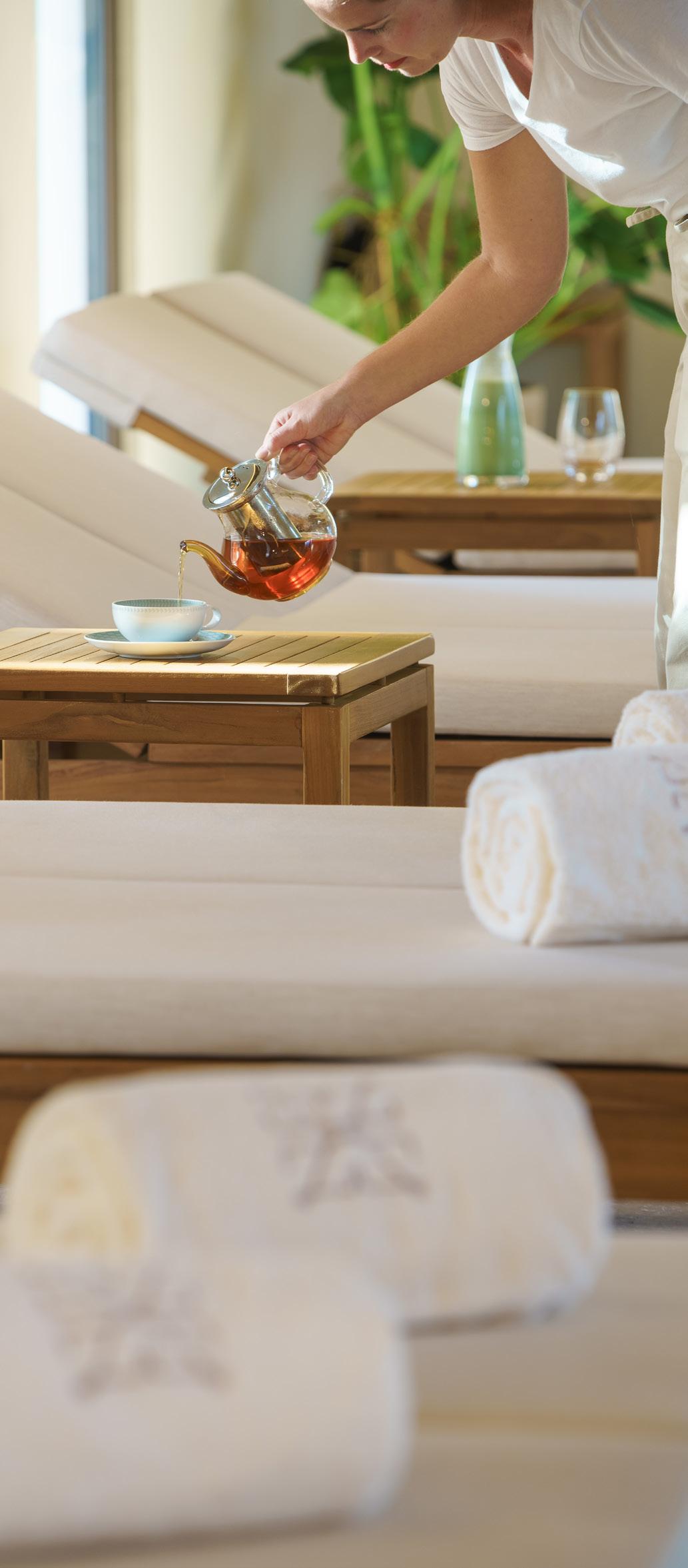
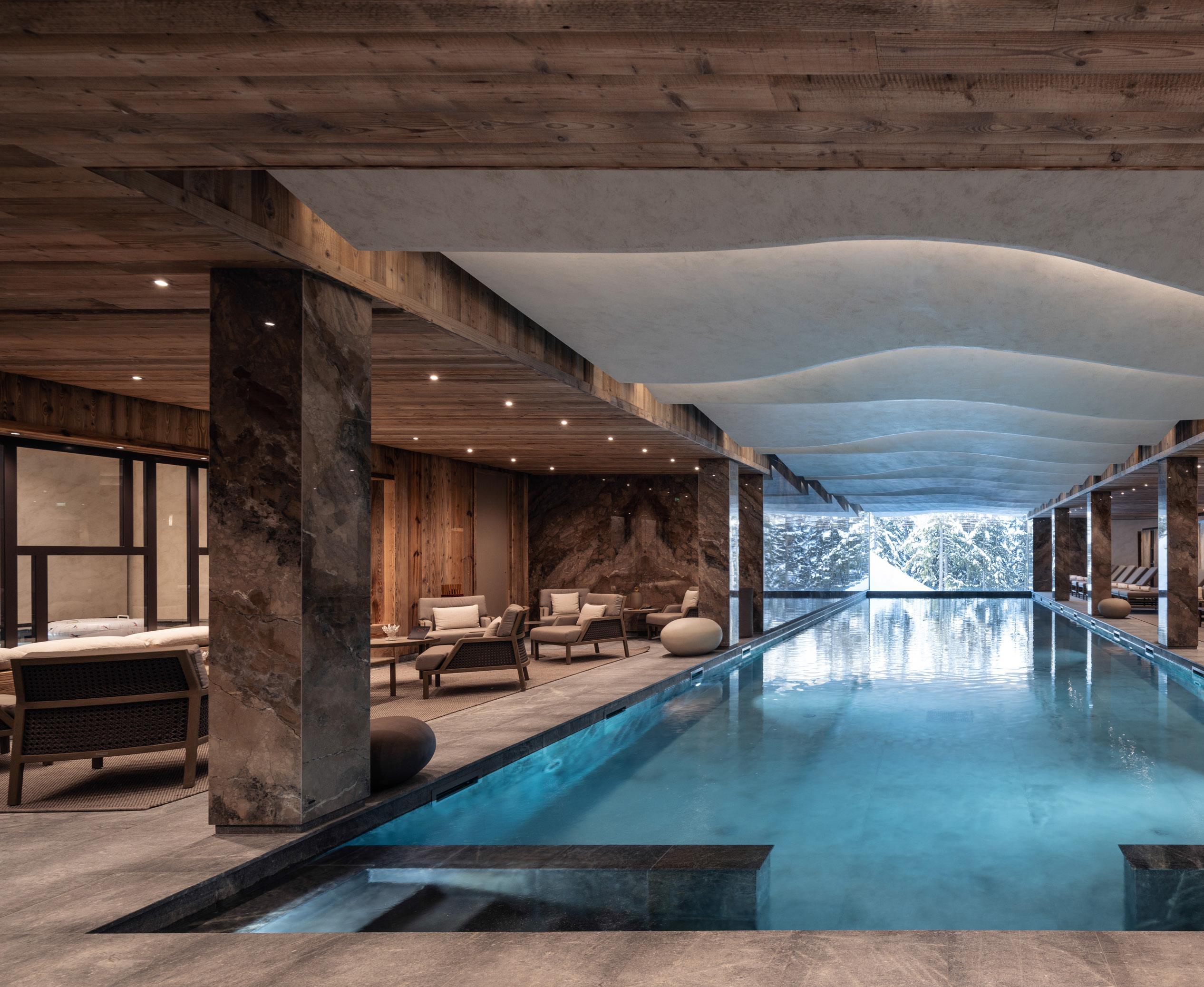
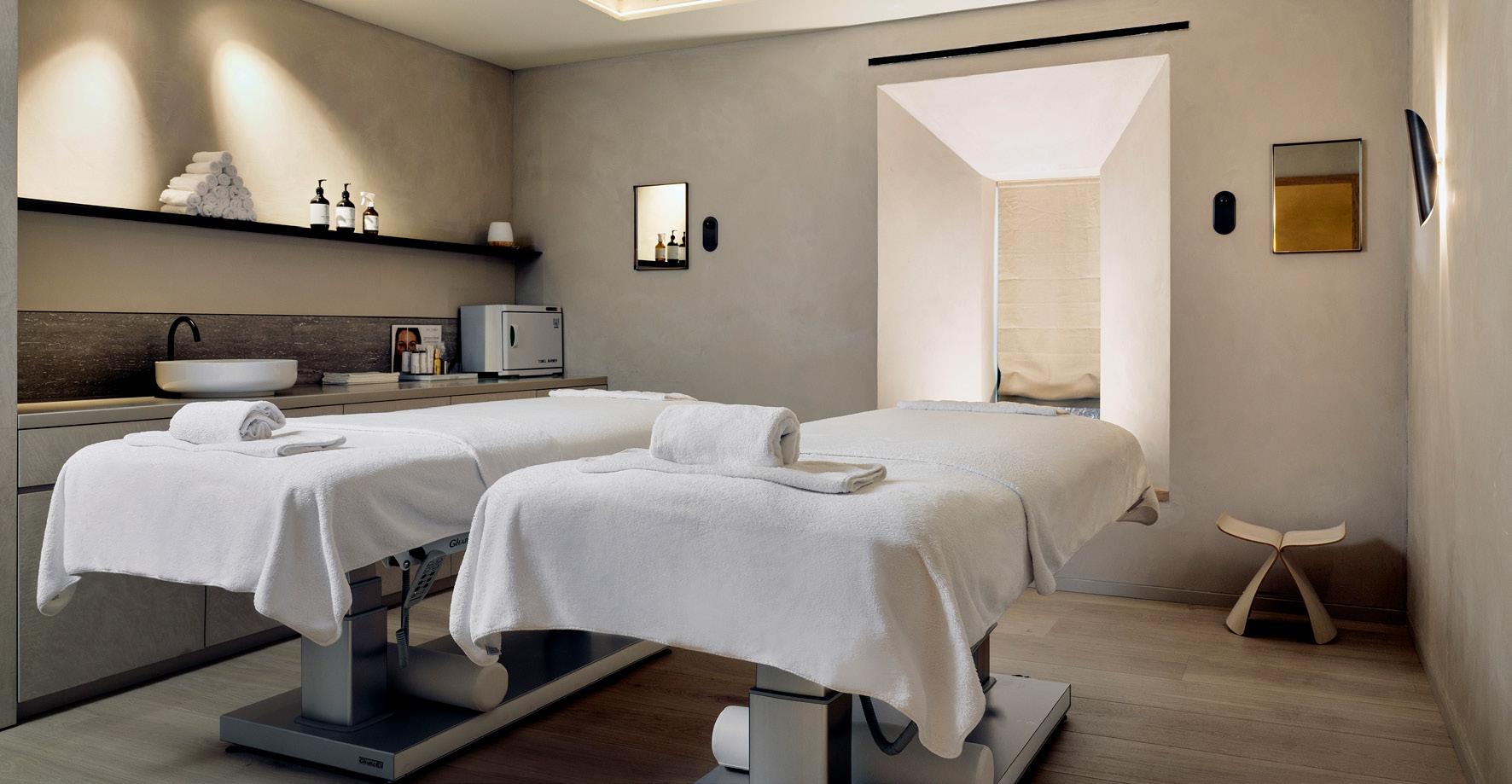
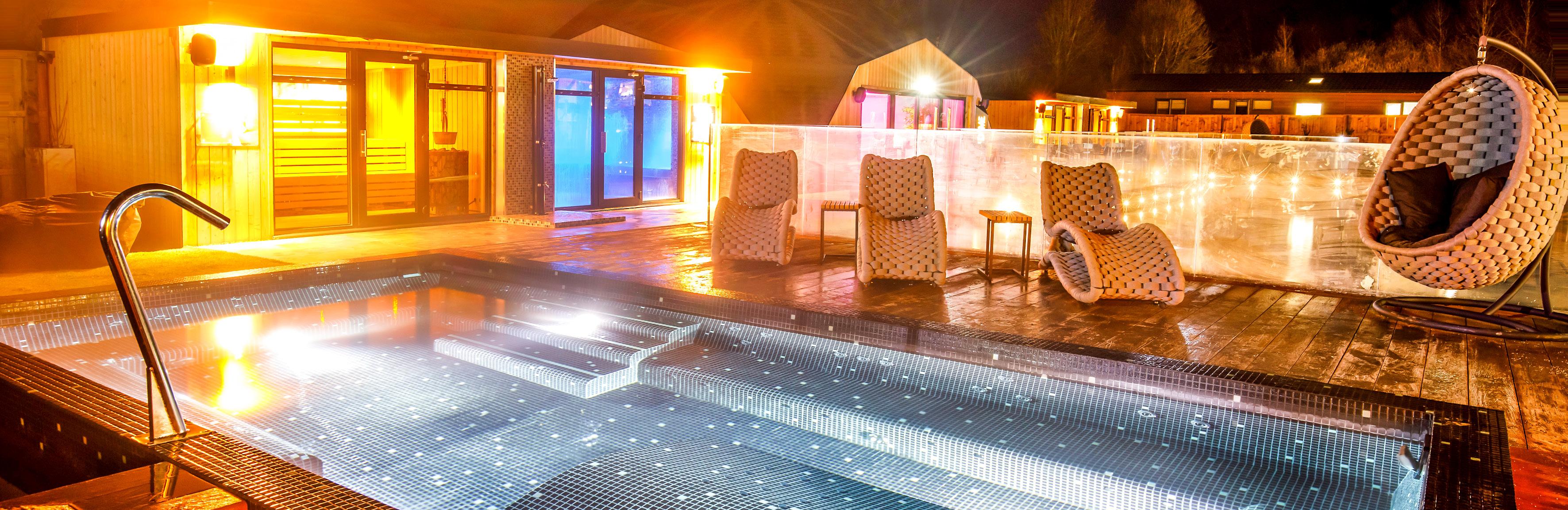
Spa Spotlight
5 exceptional spa openings
European Spa shines a spotlight on the best spa openings across Europe this spring
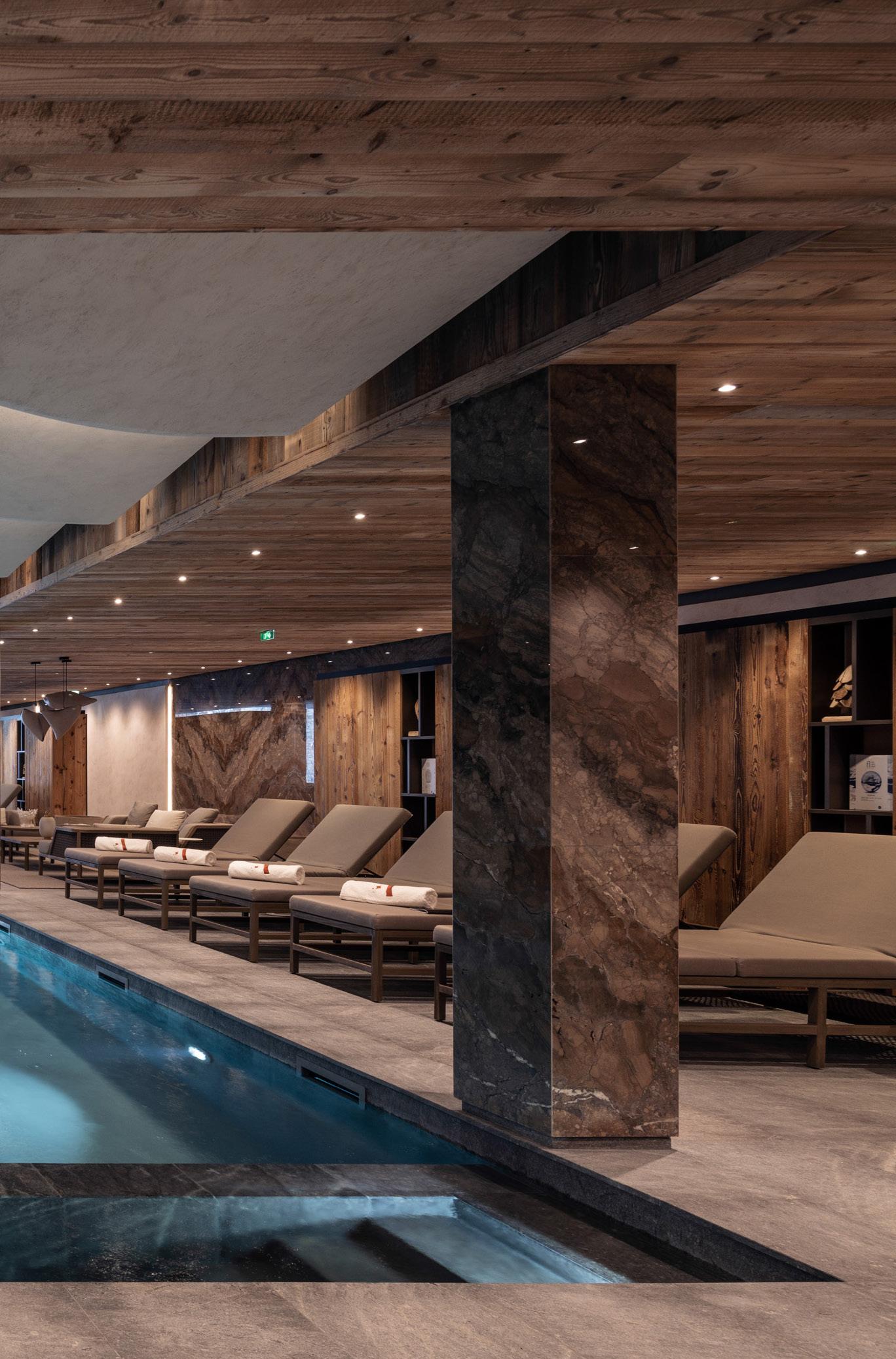 REPORT BY MARK SMITH













As the demand for wellness continues to accelerate, so too does the investment pipeline for spa, health and wellbeing centres across the globe. Recognising the consumer need for selfcare and the boom in high-tech and high-touch therapies, spa consultants, investors and operators are shifting with the times, delivering projects that really push the boundaries of architecture and design.






Behind the scenes, spa managers and directors are drawing on modern techniques and ancient healing rituals to deliver a considered and thoughtful guest experience. Designed to deliver more than a pampering massage, the aim is to affect great personal change for the guest’s own health and wellbeing.

We shine a spotlight on Six Senses Crans-Montana in Switzerland, which brings biohacking techniques to the centre of the spa journey with the latest equipment and advice. Also on our radar is the Botanic Sanctuary Antwerp in Belgium, which blends monastic healing in a contemporary space.
From a natural spa in Yorkshire to Andalusian-inspired wellbeing in Spain and a focus on French aesthetics, please enjoy our pick of the best new spa openings.
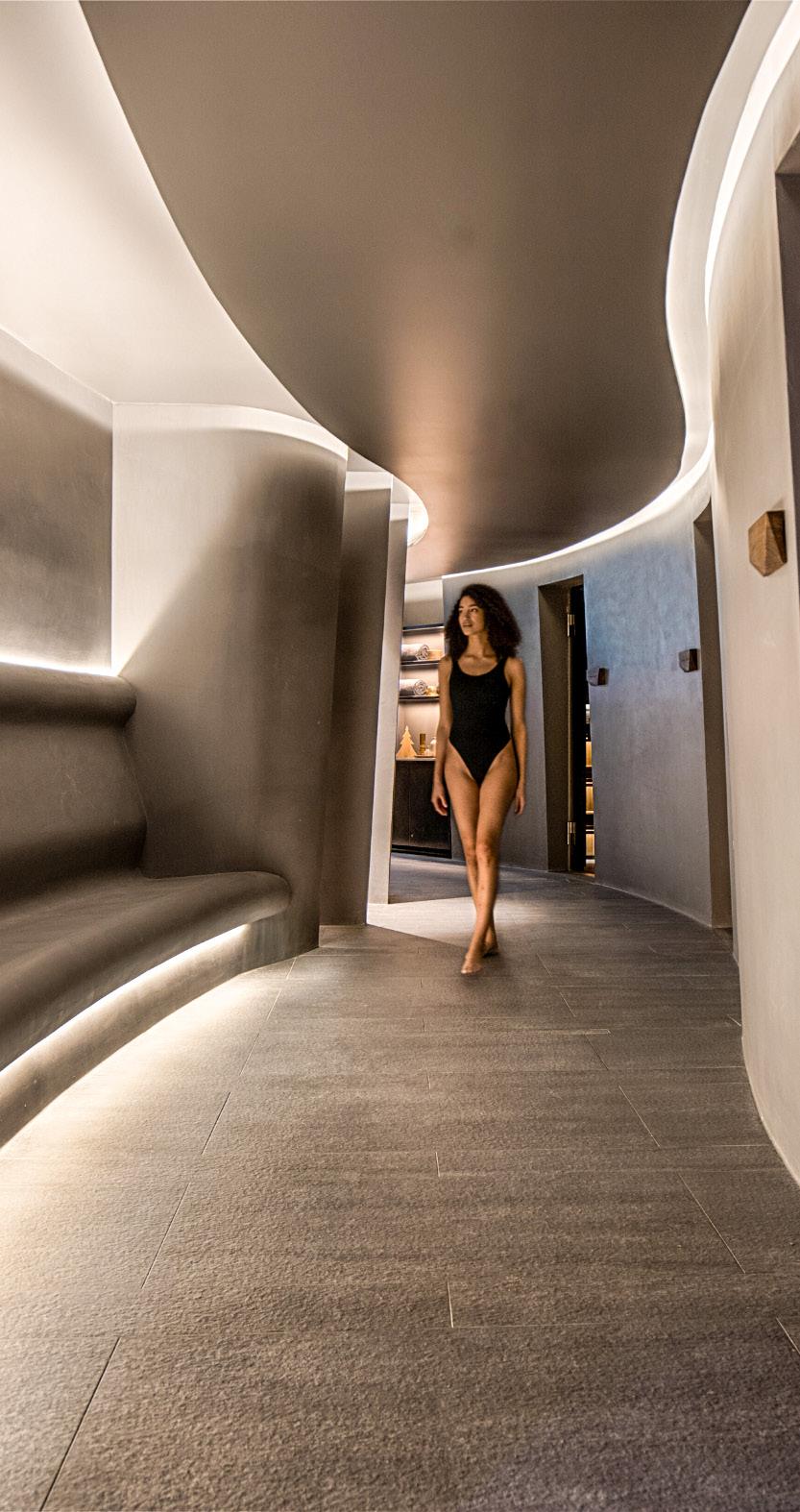
61
Six Senses Crans-Montana, Switzerland
Six Senses Crans-Montana, the latest addition to the global resort operator’s portfolio in Europe, enjoys a prime position with sweeping views from the Matterhorn to Mont Blanc in Switzerland.
The resort, designed by AW2 architects, features 78 guest rooms and suites and a three-bedroom prestige apartment. The authentic Swiss chalet style boasts a contemporary and airy feel with high ceilings and smart and sustainable architecture. Wellness is integral to the hotel concept with the Sleep With Six Senses concept featured in guest rooms.
The property offers guests two restaurants, indoor and outdoor swimming pools, a bar and lounge, Alpine gardens and terraces, an open
air cinema and the Alpine lounge as well as a ski concierge and ski school.
High-tech and high-touch


Blending high-tech biohacking with high-touch therapies, the Six Senses Spa boasts nine treatment rooms, the latest fitness facilities and a yoga studio. These are complemented by a steam room, ice fountain and cold plunge pool, in addition to Finnish, rock and bio-salt saunas. There’s also a rooftop pool and hot tub, a relaxation area and a beauty salon.
The vast indoor pool opens onto a courtyard planted with birch trees, and a suspended timber ceiling above the pool leads the guest in one organic movement from the inside out.

62
Spotlight Five exceptional spa
www.europeanspamagazine.com
Spa
openings
LUXURY ALPINE WELLNESS
Spa Spotlight Five exceptional spa openings
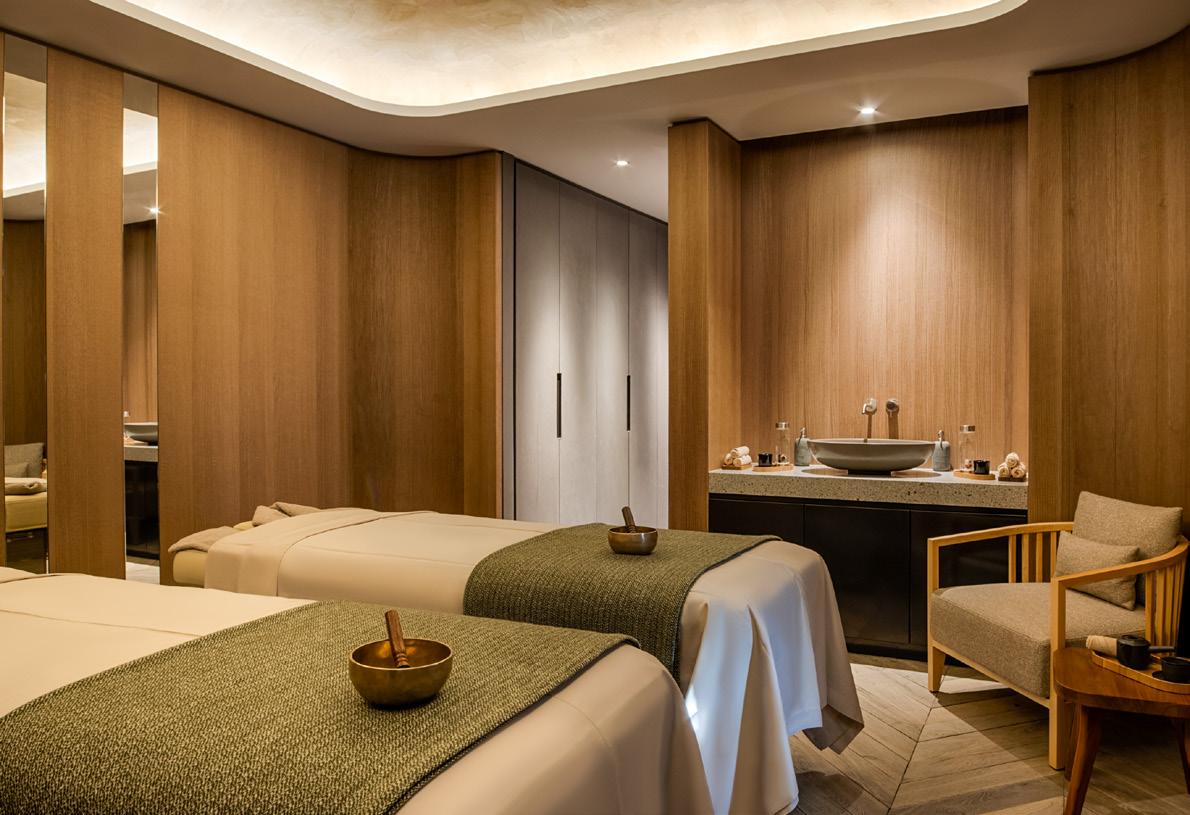
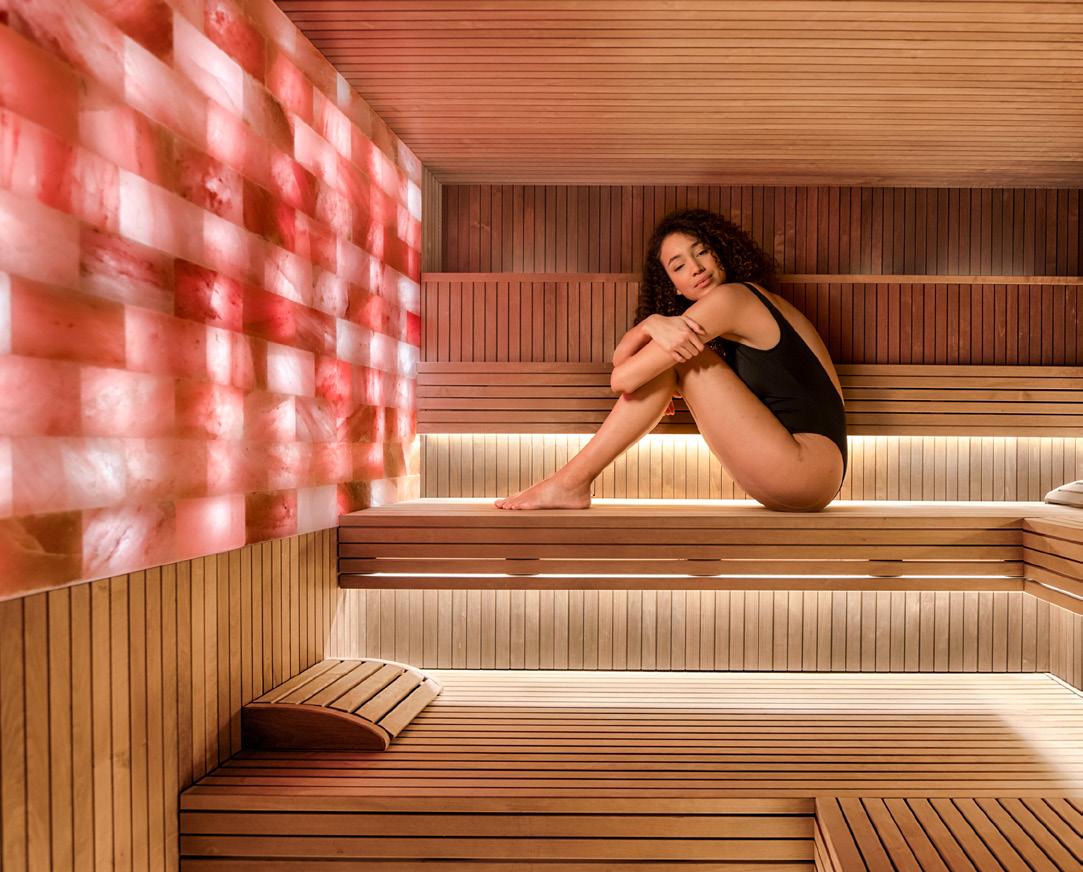
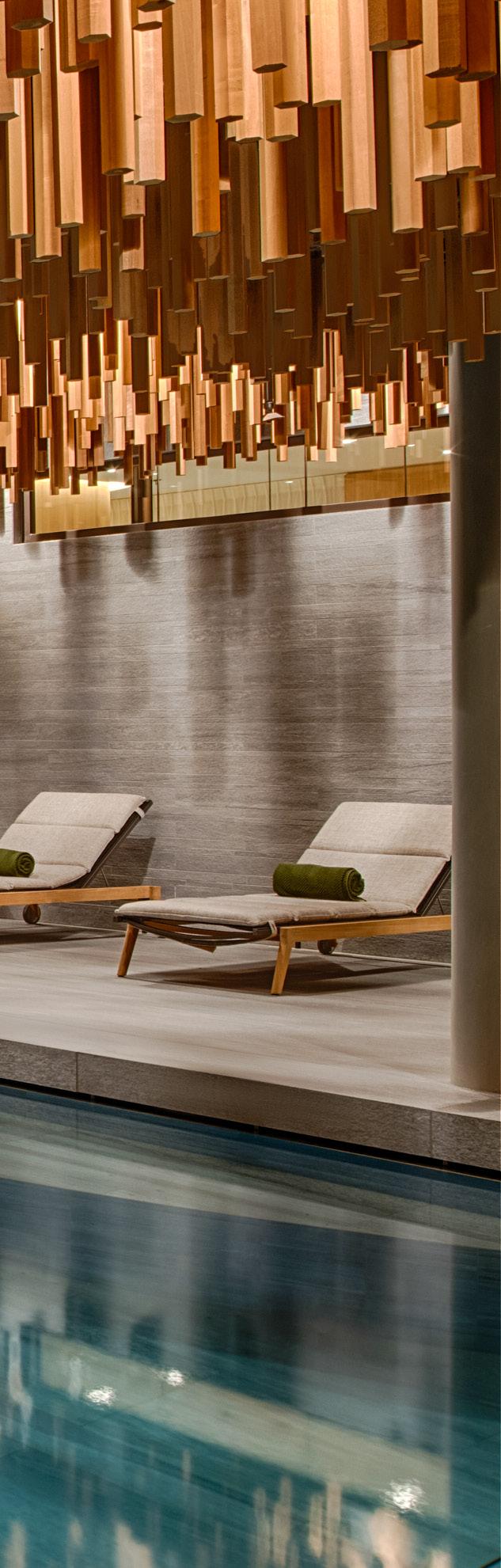
BEHIND THE PROJECT
Six Senses Crans-Montana www.sixsenses.com/en/resorts/ crans-montana
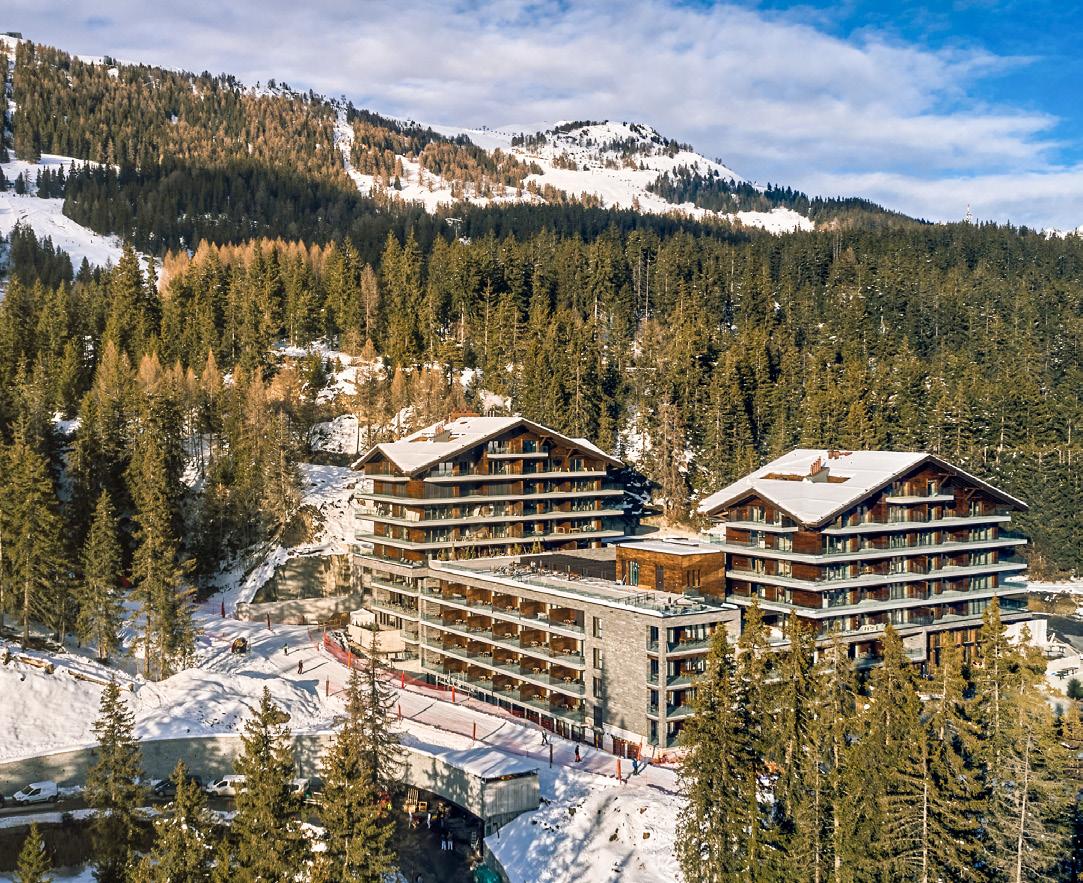
Spa size: 2,000sqm
Product partners: Dr. Burgener, Vinoble, KLORIS, Subtle Energies
Spa suppliers: Aqua Relax, Leader Spa, Fashionizer, Hotelar, Lemi, Technogym, Booker, NormaTec, Hyperice X, Venom
“The Six Senses Crans-Montana spa offers our guests unique selling points such as biohacking, aufguss ceremonies and the Alchemy Bar – our intention is to bring wellness to a different level,” says the spa’s wellness director, Jesmin Aly. “Our mission is to educate and inspire guests on the importance of wellbeing in daily life.”
The resort’s equipment includes a ‘stretch pod’ and the spa has partnered with leading brands NormaTec, Hyperice X and Venom. Therapists are specially trained to boost clients’ recovery and injury prevention. As well as a full menu of face and body treatments, including a Swiss Chocolate Wrap, guests can enjoy floatation, breathwork, sound healing and meditation. Retreats and seasonal programmes are planned.
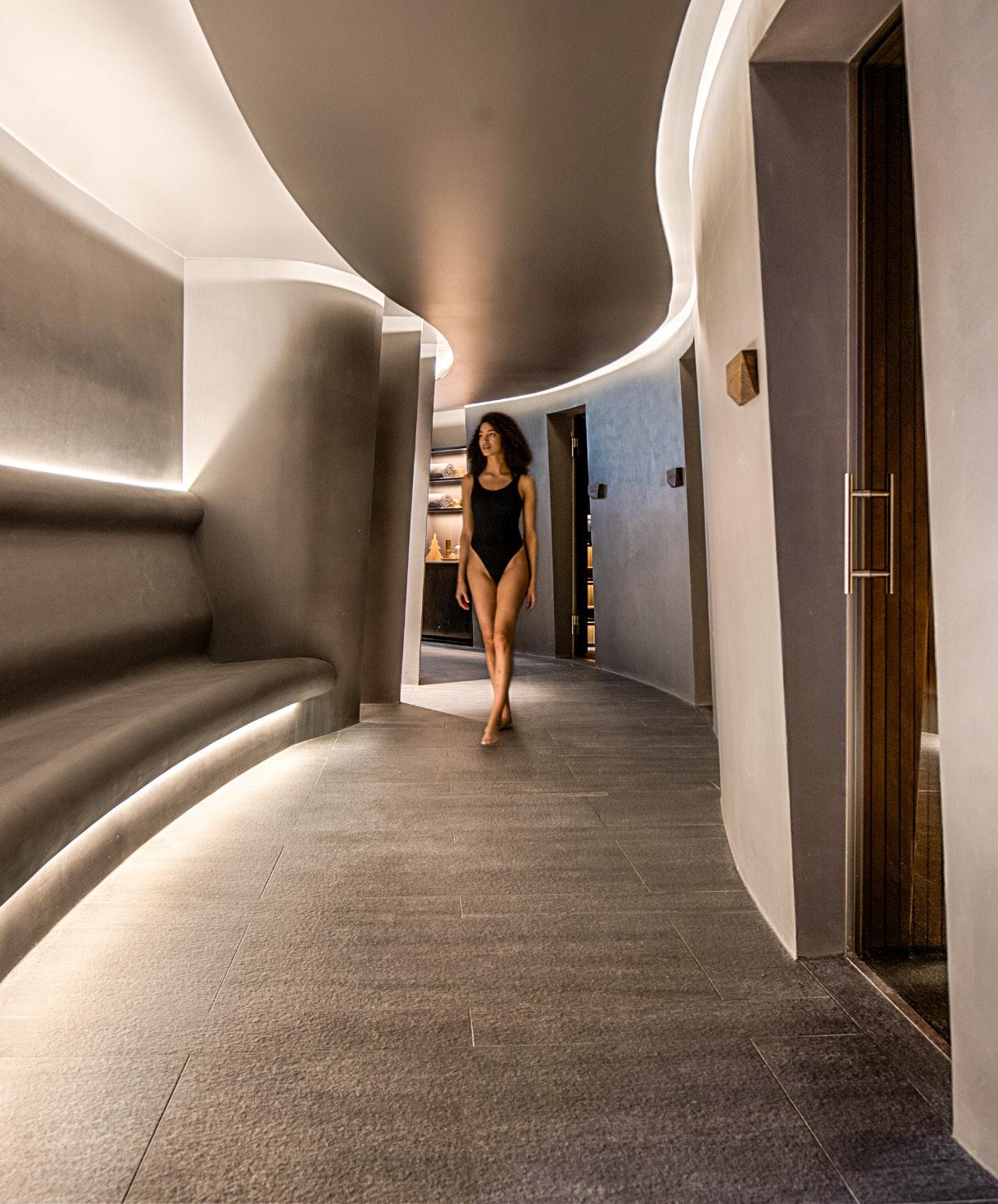
www.europeanspamagazine.com 63
CLINICAL AESTHETICS AND NATURAL THERAPIES
Antares Wellness, France
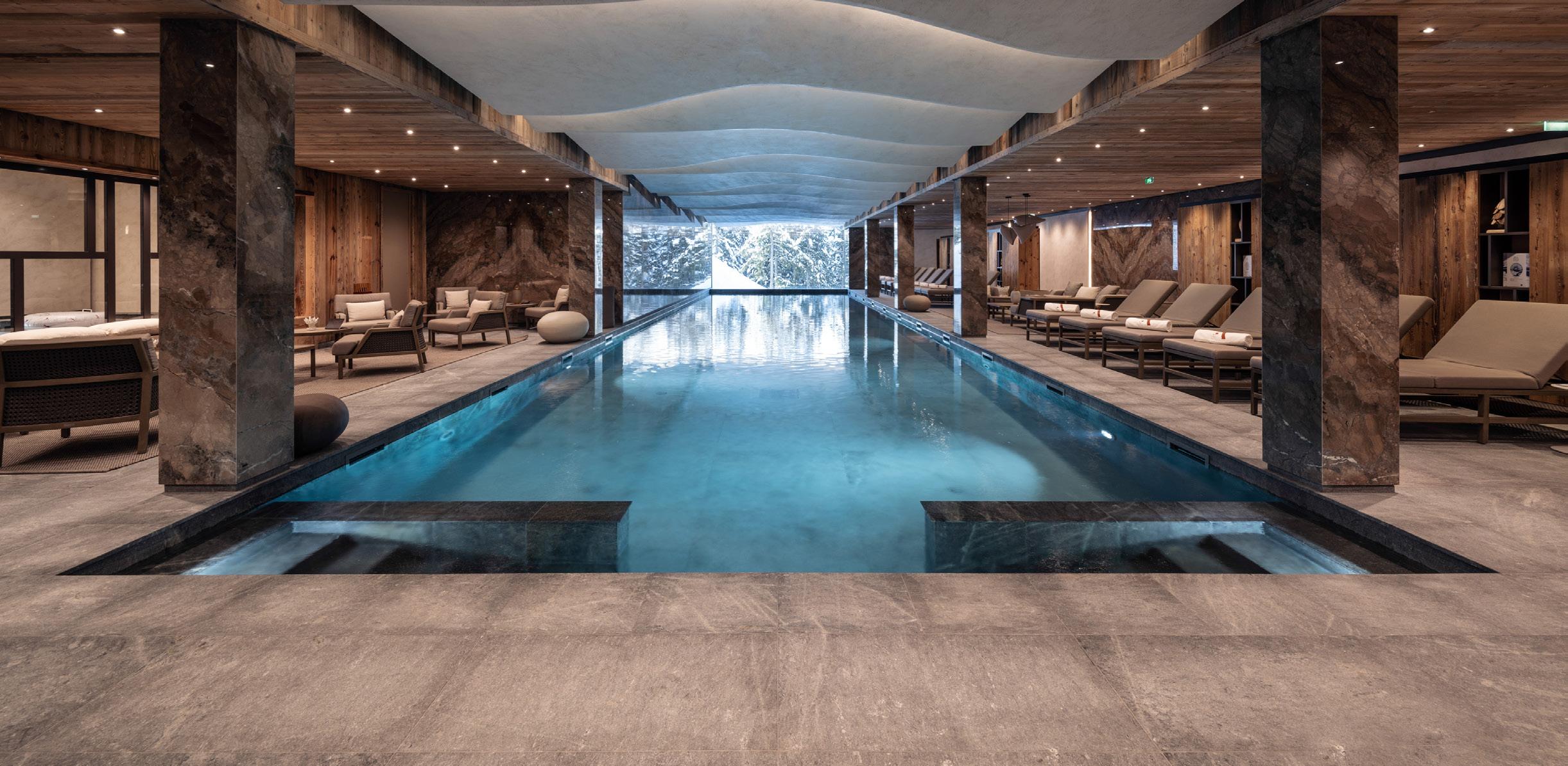
Located in the Three Valleys region of Méribel in France, Antares offers a series of private chalets in an exclusive resort location, offering guests the ultimate in seclusion and privacy.
Antares Wellness is the resort’s own private spa and clinic with a menu that combines aesthetic and natural therapies, expert nutrition plans, physical activity and high-tech treatments designed to offer lasting impact.
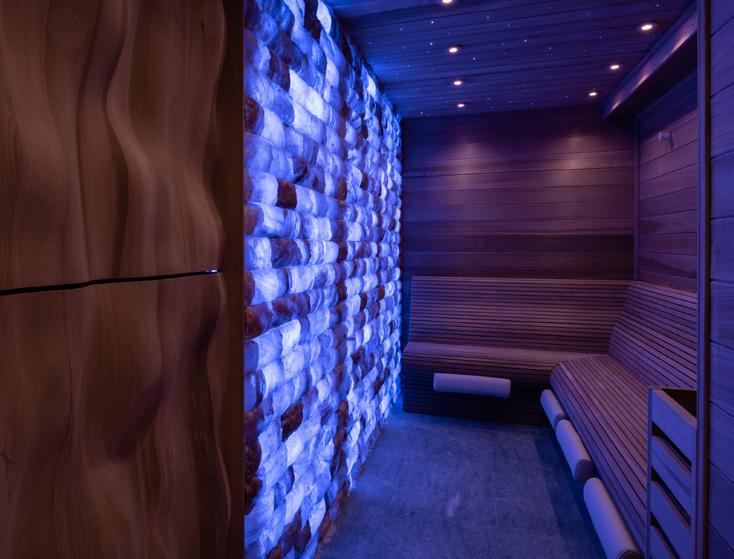
“We believe that healthy living is all about balance. Guided by this mantra, we have created a common foundation for all our programmes that blends the four pillars of detox, destress, reform and revive,” says Rhian Evans, director of spa. “So whatever your goal, we will address other aspects of your physical and mental needs in a purely holistic approach.”
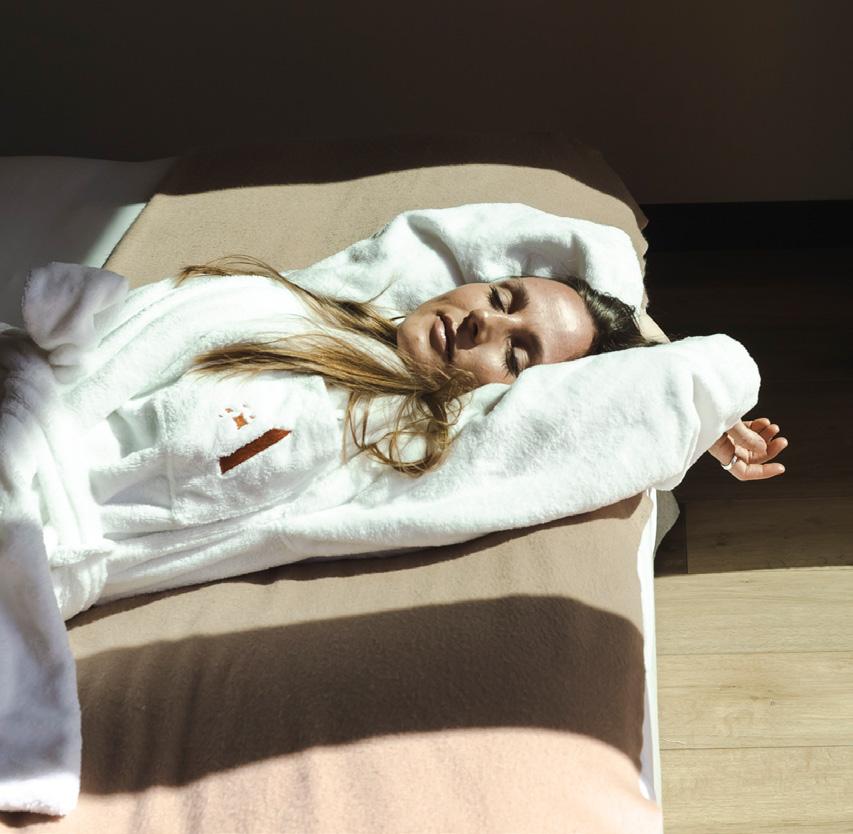
The spa’s décor marries natural stone and wood with stunning panoramic views of the surrounding mountains and forest. Facilities include a 25m indoor pool, a sauna, ten treatment rooms, multi-temperature pools, a hammam, a double suite, a salt cave, an ice fountain, a cryotherapy chamber and a herbal tea suite.
BEHIND THE PROJECT
Antares Wellness
www.antareswellness.com
Spa size: 800sqm
Product partners: Hydrafacial, Biologique Recherche
Spa suppliers: Gharieni, LNL Textile, Kiute
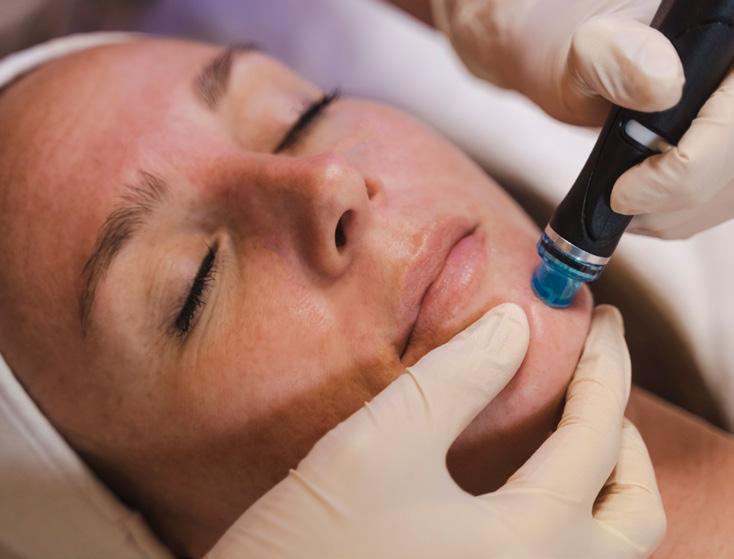
64 Spa Spotlight Five exceptional spa openings www.europeanspamagazine.com
MENTAL AND BINAURAL VIBROACOUSTICS www.gharieni.com









WELLBEING










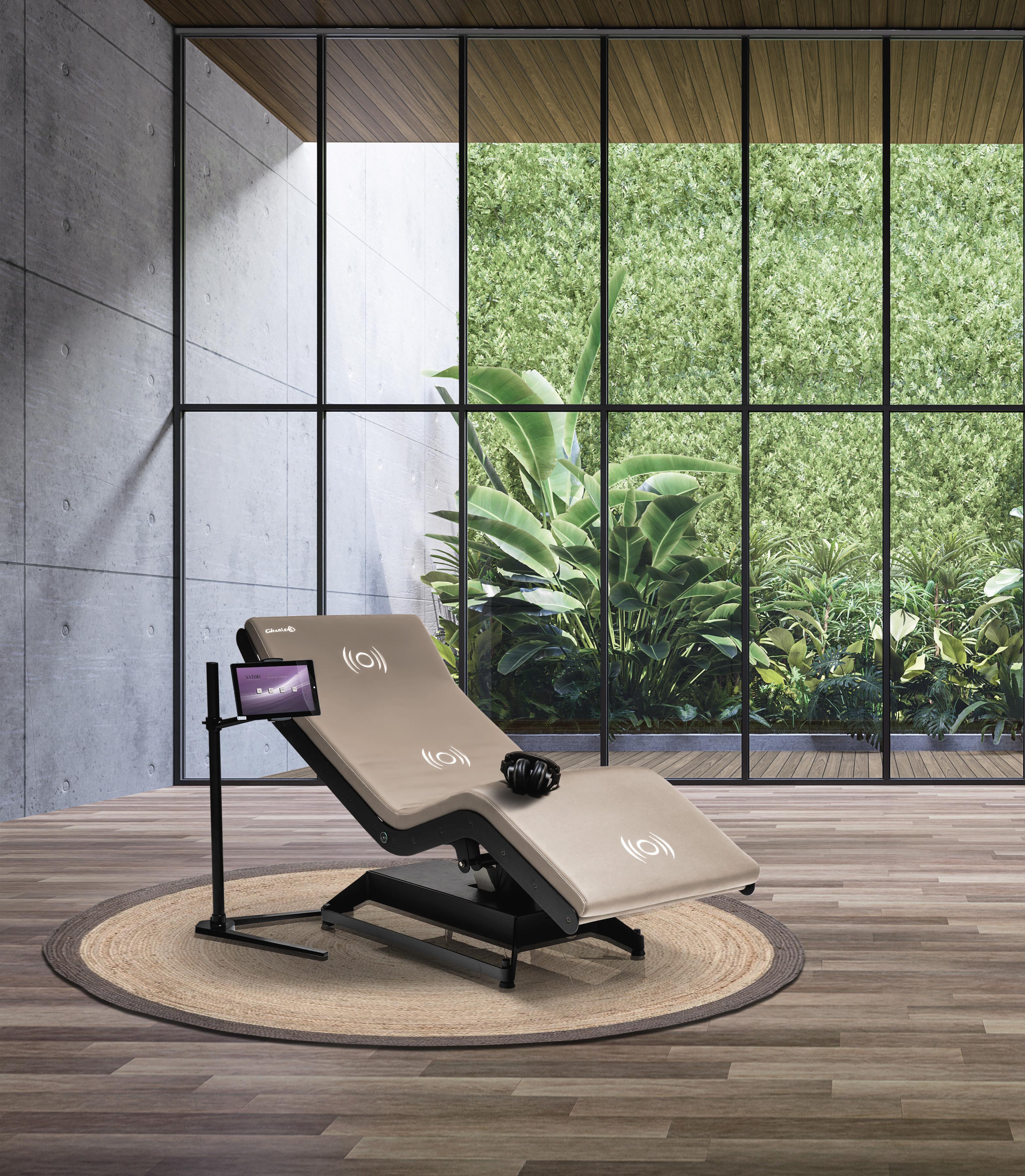
RLX SATORI
PHYSICAL
WELLNESS LOUNGER AN EFFORTLESS WAY TO IMPROVE MENTAL AND PHYSICAL WELLBEING · WELLNESS TREATMENT FOR SYMPTOMS OF LOW-ENERGY, LACK OF SLEEP, ANXIETY AND STRESS · SUPPORTS BEHAVIORAL CHANGE INCLUDING WEIGHT REDUCTION & ADDICTIVE BEHAVIORS · EVIDENCE BASED ·
CONTEMPORARY
Botanic Sanctuary Antwerp, Belgium
Following an £8.9 million (€10.5 million) investment, the Botanic Sanctuary Antwerp, a member of the Leading Hotels of the World, has presented a stunning, light-filled urban oasis in the famed Belgian city.
Five historic buildings, including a former monastery and hospital, and a listed botanical garden have been transformed into a five-star hotel with contemporary wellness offerings at the Botanic Health Spa and Health Club.
Set over three levels, the spa was designed by spa designer Heinz Schletterer with interiors by Maryse Odeurs and Rebecca Verstraete.

Spa consultant Claudia Reichenberger developed the concept for the spa with a holistic focus that
combines Traditional Chinese Medicine (TCM) and European medicine alongside a research-driven approach to impact the cell-ageing process – the core philosophy of the spa’s Mylife Changer.
“As a practitioner, I see the effects of our lifestyles becoming more and more evident in physical and emotional complaints,” says spa director Xavier Le Clef. “Only a holistic approach can offer lasting solutions.”
Monastic medicine
Using herbs and botanicals for both preventative and restorative healthcare, the team draws on the rich history of monastic medicine from the property’s past and its botanic garden. Retreats and workshops promote spiritual growth, while
66 Spa Spotlight Five exceptional spa openings www.europeanspamagazine.com
HEALTH AND FITNESS
Spa Spotlight Five exceptional spa openings

BEHIND THE PROJECT
Botanic Sanctuary Antwerp, Belgium www.botanicantwerp.be
Spa size: 1,000sqm
Product partners: Jane Iredale, KOH Cosmetics
Spa suppliers: Dauwco – Francis Dauwe, SPA4, Technogym, SuitUpNow, De Witte Lietaer, RKF Luxury Linen, Concept (Shiji Group), Dormakaba, MyLife Changer, Physiodermie

yoga, meditation, breathwork and mindfulness classes are also offered.
The spa’s facilities include ten treatment rooms in addition to an 18m panoramic swimming pool, a glass-lined Finnish sauna with guided herbal infusions, a Kneipp walk and an ice fountain. Himalayan salt stone and infrared textile saunas are accompanied by foot reflexology basins, a whirlpool and botanical shower experiences, with a herb and vitamin bar and bistro completing the offer.
The Botanic Health Club houses the hotel gym and private members club with a suite of the latest Technogym equipment. Coaching and personal training is conducted by director of sports Ingmar Harthoorn.

www.europeanspamagazine.com 67
PERSONALISED WELLBEING PROGRAMMES
Mood La Zambra Spa, Spain
PERSONALISED WELLBEING PROGRAMMES
Marugal Distinctive Hotel Management has opened La Zambra hotel and spa, a luxury Andalusian property situated in the hills between Malaga and Marbella. Part of the Unbound Collection by Hyatt, the property recently underwent a complete transformation by renowned architectural studio Esteva i Esteva and opened in late 2022.
At the heart of the La Zambra experience is the Mood La Zambra Spa. Its extensive wellness area features 12 treatment rooms, a circuit area with two dynamic pools and one 15m swimming pool, a large relaxation area with views of the garden, Turkish baths, a sauna, ice bath and Jacuzzi. The centre also boasts an outdoor gym and training station.

The spa’s concept, philosophy and approach involve treatments being led by analysis of guests’ moods and emotions. “We are very excited about our innovative concept at Mood Spa,” says spa manager Sandra Reschke. “More than one path will lead you to happiness and wellbeing at Mood Spa. With our five journeys we invite people to choose how they would like to feel today.”

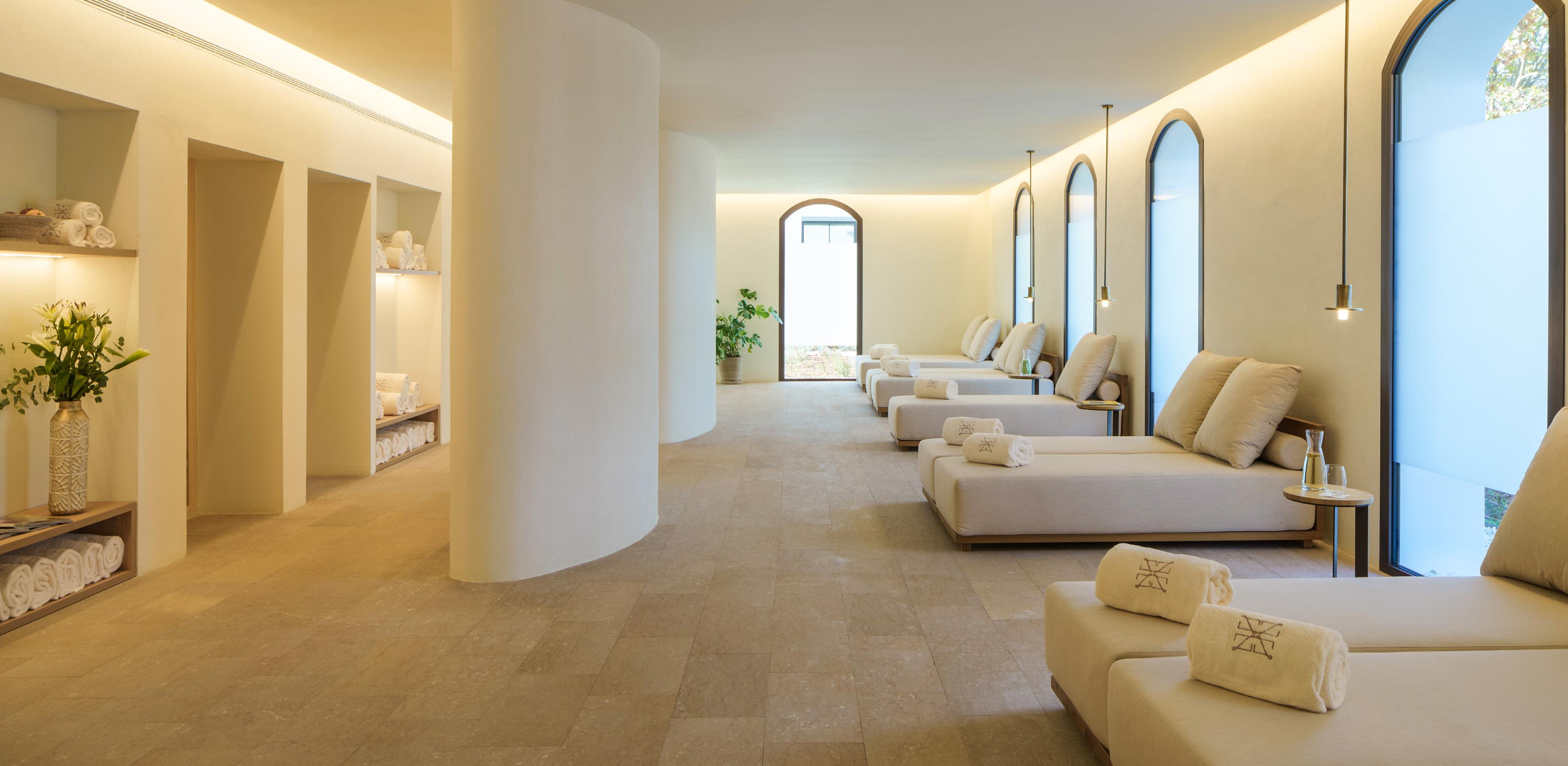
BEHIND THE PROJECT
Mood La Zambra Spa, Spain
www.lazambrahotel.com

Size: 2,500sqm
Product partners: Evidens de Beauté, Anne Semonin, Natura Bissé Spa suppliers: Gharieni, Technogym, Book4Time, Cortana, Bassols
68 Spa Spotlight Five exceptional spa openings www.europeanspamagazine.com
Spa Spotlight Five exceptional spa openings

Yorkshire Spa Retreat, UK
In the heart of the Yorkshire countryside, the £4.5 million Yorkshire Spa Retreat is nestled in 11 acres of rolling parkland, seamlessly connecting guests to the natural environment. The property features a natural outdoor spa conceptualised by Curveline Design, with thermal and treatment experience rooms complemented by a restaurant and a variety of accommodation in luxury lodges and shepherd’s huts.
“Launching our unique outdoor spa has been a proud moment for our team at Yorkshire Spa Retreat,” says spa manager Kas Wilson. “We believe everyone deserves to take time out to relax and rejuvenate, and our spa is the perfect place to do just that.”

Facilities include a wild swimming pond, hydrotherapy pool, Himalayan salt sauna and herbal steam cabins. A relaxation dome lounge and bar with a delicious food and drinks menu is offered alongside spaces to unwind and meditate. Yoga, Pilates and meditation classes are offered, while for treatments, spa consultant Claire Caddick trained the team to use Tribe517 products to deliver a rewarding guest experience.
BEHIND THE PROJECT
Yorkshire Spa Retreat, UK
www.yorkshire-spa-retreat.co.uk
Product partners: Tribe517
Spa suppliers: Ellicar Pools, Unique Pool, GS4U, Florence Roby, BC SoftWear, Ellisons, Trybe, CPA Bespoke Joinery

www.europeanspamagazine.com 69
INSPIRED BY NATURE
What are the two most important words spas need to know?
Repeat and request
Neil Orvay
It is well known that the cost of attracting a new client is much higher than that of retaining an existing one. Your revenue and therefore the survival of your businesses is dependent on your clients, but too many guests visit a spa only once. Despite delivering useful management data, the standard ratios used for measuring the performance of a spa – spa utilisation rate, average treatment rate, revenue per available treatment hour and revenue per square metre – are somewhat after-the-event focused. All these ratios are derived from performance and therefore depend on other, often less considered variables.
As any small-business owner knows, you live and die by cashflow – certainly, for day spa owners there is no hotel balance sheet to bail you out during a financial downturn or pandemic. Obsessing over financial ratios is not what builds a sustainable spa business. Healthy financial ratios are the outcome of a well-run spa, not the reason behind one. So, what are the variables that drive healthy financial ratios?
Repeat and request
Owner of the award-winning Hong Kong-based spa group Sense of Touch, Neil Orvay is also founder of Evolution U Spa Academy, which delivers CIDESCO-approved online, interpersonal skills training for spa teams. One of the most recommended corporate trainers on LinkedIn, since 2009 he has taught communication, influence, sales, negotiation and leadership to more than 10,000 executives across five continents. Email: jessica@evolution-u.com
The two key operational variables that I believe drive healthy financial spa ratios are repeat clients and request clients. Repeat clients are those who return to your spa more than once. Request clients are those who ask for a therapist by name (they are also usually repeat clients). If your therapists are scoring 80% in each of these respects, they will likely also be fully booked and all your traditional financial ratios will be where you want them.
If you are in the hotel or resort spa market, you may be thinking, “this
doesn’t apply to me because my clients only stay for a small amount of time”. Well, I’m afraid you are mistaken as this logic actually works for you too.
Most hotel spas have local clientele as well as hotel guests and for the former you should be targeting repeat and request business. For the hotel guests, a good spa is a reason to stay longer and return sooner. For resort spas, increasing the number of visits per stay and attracting repeat clients to the resort are crucial for business success. Targeting repeat, request clientele is therefore relevant for all spas to varying degrees.
www.europeanspamagazine.com 70 Business Leadership Neil Orvay, Evolution U Spa Academy
EXPERT CONTRIBUTOR
Top takeaways on repeat and request clients
n Healthy financial ratios are the outcome of a well-run spa, not the reason behind one.
n Repeat and request clients should be the holy grail of spa owners.
n The spa team should work together using simple communication tools to proactively promote building request clientele and not leave the process in the hands of the client.
Touchpoints for trust
First, therapists should ask the client if they enjoyed their treatment, setting the stage for the team member to give their name one last time and to express a desire to service the client on their next visit. If your spa has business cards where the therapist can add their name, this would be the time to pass one on to the client.
If appropriate, the therapist can call the client a few days later to check on any progress (for example, if there was a specific issue that was addressed during the treatment). This further enables the therapist to build their personal brand with the client and develop trust.
However, it is in the whole spa’s best interest to have as many therapists fully booked by request clients as possible, and your spa reception team also has an important role to play in achieving this.
Communication is key
So how do we help our spa teams grow their repeat and request client base? Most spas focus on membership deals, promotional discounts and having the latest technology and treatment options. These are all fine. However, most of your competitors will be taking a similar approach and you should avoid building a business based on discounts and the latest treatment trends.
As I mentioned in my previous article (European Spa, Winter 2022), 53% of customer loyalty is driven by the experience guests have at your spa – not
by your brand, product or price. Within this statement is the key to building your repeat and request client base: effective communication and building trust.
The top-earning therapists tend to have the most request clients, but most of the time the request is client-led. This means it is the client that asks for the therapist by name and asks to book with them in the future. But why is such an important dynamic left to the sole discretion of the client? Using a simple communication flow, we can empower spa teams to drive the development of their repeat, request client ratio.
Once again, start by confirming with the client that they were happy with the treatment as this allows the conversation to naturally progress to suggesting booking the same therapist for their next visit, mentioning his/her days off and any other promotional information.
Repeat and request clients should be the holy grail of spa owners and operators, and are one of the most important metrics in driving healthy financial performance. It’s easy to measure and will feed directly into your bottom line, helping create a stable, profitable spa business.
www.evolution-u.com
www.europeanspamagazine.com 71 Business Leadership Neil Orvay, Evolution U Spa Academy
Infused with pure OTO CBD, calming chamomile, relaxing Mandarin and clarifying Ylang Ylang to help both body and mind let go of the stresses of the day so you can sleep soundly.
at otocbd.com UNWIND BODY & MIND BEFORE BED.
Available
www.otocbd.com
On the Menu
Edited by Mark Smith EDITOR’S PICK
Natura Bissé launches
Natura Bissé’s Diamond Luminous treatment is available alongside a collection of multi-focus products that are said to be highly effective at regulating and fading hyperpigmentation, whatever the underlying cause.
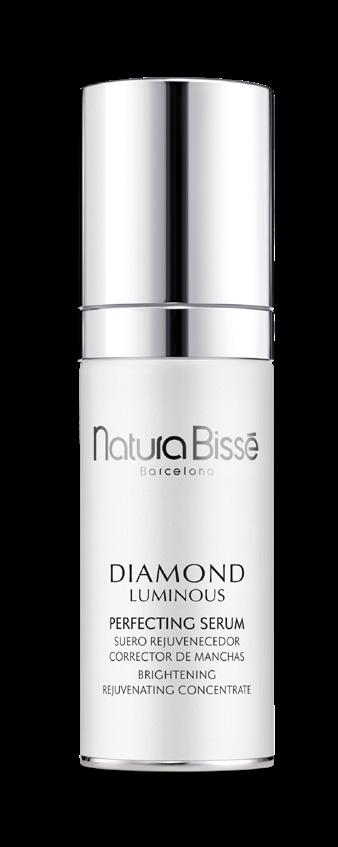
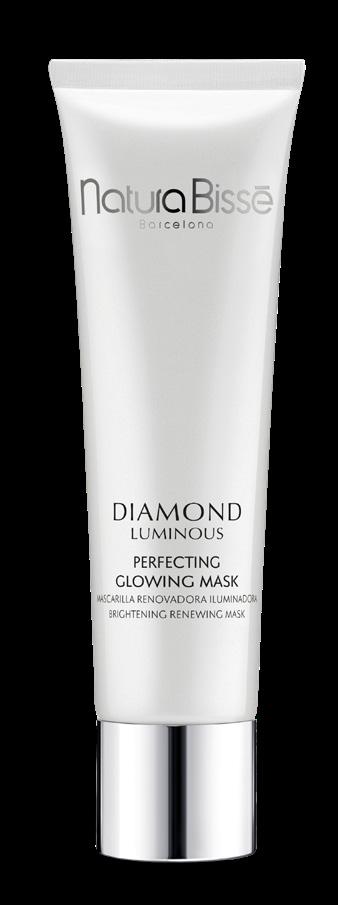

The professional treatment offers a dual action result, working to reveal skin that is more evenly toned and rejuvenated. Aiming to combat localised dark spots and irregular pigmentation, melasma or dull skin tone, results are promised from the first session.
The new products include Perfecting Serum, a brightening rejuvenating concentrate; Perfecting Cream, a daily face cream to brighten; and Perfecting Glowing Mask, a weekly hydrating and skin renewing product. Niacinamide, prickly pear extract, carnosine and crystal illuminating peptide reduce dark spots and leave the skin more radiant. Hyaluronic acid of four different molecular weights and organic aloe vera delivers intense hydration and improves the skin’s barrier function, revealing a suppler, smoother complexion.
A results-driven facial
The advanced facial begins with a luxurious cleansing ritual with brightening ingredients. The cleanse is followed by an effective skin perfecting peel, which renews, evens out and visibly refines the skins surface.
A brightening concentrate is then applied with Natura Bissé’s exclusive precision brush employing an ‘erasing’ technique that helps reduce hyperpigmentation. This intensive correction phase is completed with the application of an LED light.
A combination of lifting and shiatsu massage techniques stimulates the skin and works on key points on the face, before the renewing, intense hydration and soothing mask helps to deliver supple, luminous, firm and plump skin, which is then protected with sunscreen. www.naturabisse.com
85 www.europeanspamagazine.com
Diamond Luminous OUR PICK OF THE LATEST PRODUCT LAUNCHES AND TREATMENT INNOVATIONS
Skin dynamism by Dermologica
Dermalogica has introduced Dynamic Skin Retinol Serum, a potent multi-retinoid with booster technology that promises to reverse the appearance of wrinkles, retexturise skin and minimise the appearance of pores.

A 3.5% retinoid complex features a blend of fast-acting granactive retinoid, retinol, timereleased encapsulated retinol, and a retinol booster to support the continual supply of skin-smoothing actives.
The formula also contains concentrated squalane to moisturise the skin and improve hydration and the moisture barrier. Soothing, oat-derived betaglucan helps to soothe and hydrate, promoting a healthier-looking complexion.
To use, after cleansing, apply a thin layer over the face. Use only in the evening and advise clients to wear an SPF during the day.
www.dermalogica.co.uk
Elemis Pro-Collagen celebration

Celebrating 20 years since the launch of its iconic Pro-Collagen Marine Cream, Elemis has introduced a formula specifically designed for delicate skin.
Pro-Collagen Rose Marine Cream is a performance driven day cream reimagined with the brand’s popular rose aromatic.
Central to the formula is organic English rose hydrolat, a floral water, as well as a gentle blend of essential oils known to soothe, calm and hydrate the skin. The blend features over 20 varieties of hand-picked roses, including damasks, albas, old roses and English roses, each chosen for their complexity of fragrance.
Padina pavonica, renowned for its moisture-boosting properties, is rich in polysaccharides that hydrate the skin and maintain moisture for a visibly radiant complexion. The formula also contains chlorella vulgaris, rich in amino acids, minerals, vitamins and fatty acids that reduce visible signs of ageing and boost skin luminosity. Gingko biloba further contains phytonutrients such as flavonoids that soothe and calm the skin.
www.elemis.com
74 Spa Specifier On the Menu www.europeanspamagazine.com
Mii revitalises tired eyes
Bright Eyed Revitalising Balm from Mii is a new at-home treatment providing a hydration and brightening boost to the delicate eye area.
This multifunctional fast-action balm instantly cools from the first application and is formulated with hyaluronic acid, which helps to restore the skin’s hydration levels and depuffs the delicate eye area.
Phytosphingosine, known for its anti-microbial and anti-inflammatory properties, helps to support the skin’s barrier function, minimising the look of dark circles and brightening delicate skin around the eyes while creating a tightening and lifting effect. Store the balm in the fridge for an extra cooling effect when applied to the skin.
For the ultimate at-home spa ritual pair the Revitalising Balm with Mii’s biodegradable Bright Eyed Hydrogel Masks, which feature a range of active ingredients. Caffeine reduces puffiness and energises the skin, sodium hyaluronate naturally binds moisture to hydrate the under-eye area, and niacinamide targets dark circles and rejuvenates the skin tone. www.miicosmetics.com
Temple Spa’s skin-calming solutions
Launching in April, Temple Spa’s Be Quiet is a calming, weightless, velvety toner specifically designed and clinically tested for sensitive or stressed skin.
It is formulated with biomimetic squalane, fermented oats, niacinamide and Alpine rose, which work to soften, soothe and hydrate. Niacinamide increases elasticity and collagen synthesis and supports the skin barrier against pollutants, leading to strong, supple and hydrated skin. Squalane is a biomimetic ingredient that hydrates and softens the skin. It is derived from olives and helps to reduce inflammation and redness.
The product also helps to support a functioning skin barrier to minimise future flare-ups. Antioxidantrich Mediterranean botanicals of liquorice, beetroot, green mandarin and evening primrose oil combine with prebiotic sugars to help maintain the elasticity of the skin, replace lost moisture and reduce redness and roughness, leaving a vibrant and healthy appearance.
Use after cleansing to lock in hydration and prime the skin for treatment with serums or moisturisers. Apply to a cotton wool pad, sweep across the face, neck and décolletage, avoiding the eye area. For best results use every morning and night.
www.templespa.com
75
Swissline debuts at The Shelbourne
Swissline, a luxury skincare brand known for its collagen expertise, has launched in Ireland at Dublin’s iconic five-star hotel, The Shelbourne. Two of the Swiss brand’s results-oriented facial treatments and a selection of consumer products are available at the spa.
“We are thrilled to partner with Swissline and very excited to introduce this premium skincare brand to Ireland,” says Margaret McCallum, director of spa and salon at The Shelbourne. “We are delighted to be the first Irish property to be a part of the exclusive Golden Circle, made up of luxury medical clinics, medispas and five-star hotels across the globe.”
An effective duo of treatments
The two facials added to The Shelbourne’s treatment menu include
Le Grand Soin Au Collagene Pur, a restorative 90-minute treatment fortified with innovative skin-enhancing ingredients, including pure collagen, peptide technology, pure silk and plant-based growth factors.
Also on offer is Le Soin Sur-Mesure is a 50-minute facial promising an instant reset, with a focus on relaxation and resilience. Formulated

and dullness, soothing the effects of everyday life.
Offering swift results, a desensitising and deep-moisturising gel-cream mask supports dry skin. It restores the epidermal barrier and has a direct impact on vasodilation to calm and restore skin leaving it looking fresher and brighter.
“The Shelbourne is an incredible luxury property that beautifully complements Swissline’s brand ethos and positioning,” says Christophe Lesueur, CEO of Swissline. “As it is celebrating its bicentennial in 2024, The Shelbourne clearly knows a thing or two about ageing well.”
www.swissline-cosmetics.com
76 www.europeanspamagazine.com Spa Specifier On the Menu
Your next spa project starts here.
Offering an unrivalled level of service and an exceptional selection of beautifully crafted, high-quality furniture and equipment, Ellisons will ensure your next spa project is a success.
Our Spa Partner team can help with every aspect of your project, making sure it runs smoothly, on time and to budget. With a portfolio showcasing an extensive range of high-profile spa refits, you can depend on our years’ of experience advising on new builds and refurbishments in treatment rooms and relaxation and reception areas.
Ellisons offer an impressive selection of attractive spa furniture from leading brands Gharieni, Living Earth Crafts, REM, Salon Ambience and many more. Amongst our luxurious product range, you’ll find a selection of elegant, ergonomically designed treatment couches offering bespoke options to suit every treatment need.
Please contact our dedicated Spa Partner team to discuss your options in more detail: spapartner@ellisons.co.uk
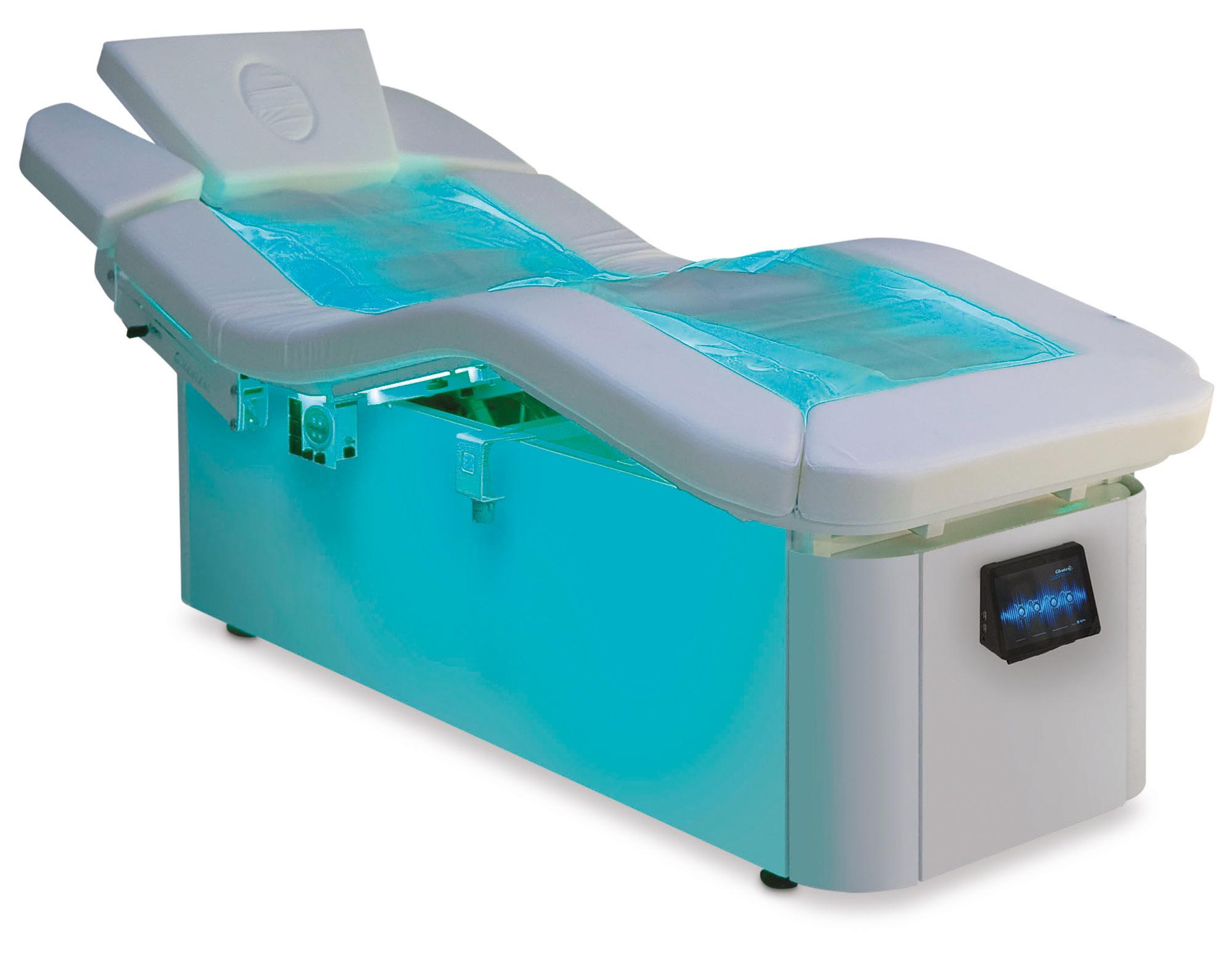
spapartner@ellisons.co.uk
+44 (0)24 7636 9114
Find out how you can add value to your next spa project by downloading our Spa Guide at www.ellisons.co.uk/spa
www.ellisons.co.uk/spa
ellisons.co.uk
www.ellisons.co.uk

Thalgo Silicum Lift for face fitness
Designed to firm, lift, tone and fill, Thalgo’s Firming Marine Silicone Complex is based on an organic marine silicone that is highly absorbable and bio-available for skin. Bamboo, vitamin C and Thalgo’s patented algae filtrate offer a super-hydrating and revitalising treatment that is supported by a retail collection.
Inspired by a ‘face fitness’ approach to firm skin, fill in wrinkles and refresh the complexion in 60 minutes, the Silicum Lift Firming Treatment employs an exclusive dermal stimulation technique carried out using Face Fitness Rollers.
The treatment begins with the Éveil à la Mer massage, followed by makeup removal and application of the Resurfacing Cream. Acupressure combines with the minerals concentrated in Reviving Marine Mist. Intensive Lifting and Firming Serum performs its role, and the face-roller massage uses five musculo-dermal stimulation techniques.
Two face masks offer additional anti-ageing benefits and the treatment incudes a hand massage before concluding with a relaxing body massage. The homecare collection includes a lifting and firming serum, cream, rich cream, night cream, eye cream and the home-use lifting face roller.
www.thalgo.co.uk


Sothys organic body rituals
Sothys’s Organics treatment collection offers a variety of indulgent body experiences with ultra-sensory textures, under the Eco Cert, Cosmos organic certification.

The launch includes six new professional products: massage oil, massage cream, shea body butter, a massage balm, a salt scrub and a signature fragrance with star anise. Guests can select their preferred scent (including the new signature fragrance) as well as a body scrub, wrap, massage – or a combination – in addition to their preferred massage texture from cream, shea butter, balm or oil. Treatments range from 30 minutes to two hours.
Three new retail products enhance the treatment results: Granita Body Scrub features birch sap and organic beet sugar; Multi-purpose Protective Balm includes Fair Trade, organic shea butter and carnauba wax; Beautifying Oil for face, body and hair includes protective alfalfa extract
www.sothys.com
78 www.europeanspamagazine.com Spa Specifier On the Menu
TREATMENT FOCUS















The brand trusted by thousands of spas and therapists. Over 45 years of unrivalled industry manufacturing experience, delivering quality excellence to the spa, hotel and beauty sector. Call our dedicated customer service team: 0121 7739091 / 7720936 Email us: info@majestictowels.co.uk ®Registered design Expertly designed traditional luxury towelling and innovative trend setting alternatives. Enhance client comfort and treatment flexibility with supreme quality Memory Foam Comfort Products. Focus on the environment and business overheads with the luxurious, SUPER SOFT TOWEL : + Save energy and reduce laundering costs by up to 40% + Supremely soft to the touch with unparalleled longevity + Manufactured in Turkey. Competitive pricing, unbeatable quality and unrivalled value consistency. View our extensive range and order online: www.majestictowels.co.uk www.majestictowels.co.uk info@majestictowels.co.uk headoffice@elementalherbology.com www.elementalherbology.com
Alqvimia: mastering the power of scent
Alqvimia, an established Spanish aromatherapy based cosmetics range is making waves in the spa industry with its unique approach to wellness.
Founded by philosopher and perfumer, Idili Lizcano, the brand has pioneered a holistic concept of beauty and wellbeing with its range of natural cosmetics based on the potent power of quality aromatherapy oils.
Established in 1985, Alqvimia is currently found in hotels, spas and selective retail outlets in more than 20 countries globally.
The team formulates its cosmetic products based on essential oils of the highest purity and quality, without adding or eliminating any natural or synthetic molecules.
Alqvimia has a firm commitment to sustainability – reducing packaging
and using sustainable options where possible – and the company has its own biodynamic garden, sourcing ingredients as close to its production facilities as possible.
Spa for the senses
In the spa, Alqvimia offers a range of experience-based rituals that combine facial, body and energetic-emotional treatments. The authentic sensory experiences promise a transformative effect on the mind, body and spirit. Its treatment menu also includes eight facials and 11 body treatments ranging from anti-cellulite, firming and detox to mother-to-be and healthy legs, with two energy treatments –moxa and chakra rebalancing.
The treatments and rituals are said to have been developed based on
the wisdom of ancient alchemy and Alqvimia’s diagnostic method allows therapists to determine, according to ying-yang polarity, if a certain product or service is the most appropriate for the guest at that time, and then goes on to treat any imbalances.
It’s most recent launch, the Queen of Egypt collection features what is now one of the brand’s best-selling products, Body Bath Oil, as well as Bath Gel and Body Elixir.
The Body Bath Oil features a light and easy-to-apply texture that is quickly absorbed, leaving the skin soft and moisturised. With an almond oil base and essential oils of frankincense and myrrh, it regenerates, rejuvenates and moisturises the skin while boosting the mood.
www.alqvimia.com
BRAND TO WATCH 80 www.europeanspamagazine.com Spa Specifier On the Menu
A variety of ultra-sensory certified organic textures to combine however you wish. *








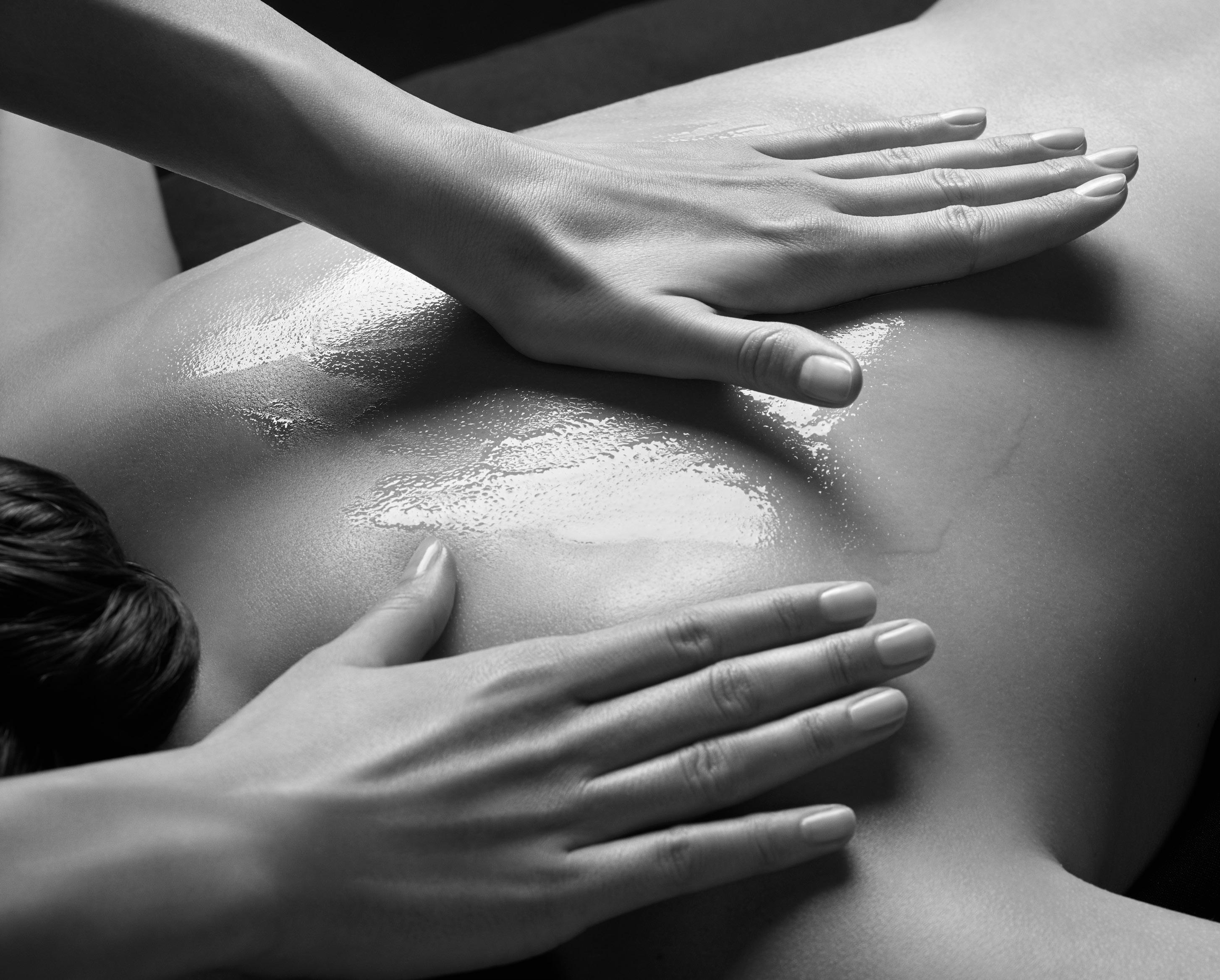
CERTIFIED ORGANIC PRODUCTS




CONTACTUS @ SOTHYS - UK CO UK WWW SOTHYS COM EXCLUSIVELY IN BEAUTY INSTITUTES & SPAS * SOTHYS ORGANICS® PERFUME CONCENTRATE TO DILUTE IN SUGAR AND SALT BODY SCRUB / SOFTENING BODY MASSAGE OIL / MOISTURIZING BODY MASSAGE CREAM /NOURISHING SHEA BODY BUTTER / NUTRITIOUS BODY MASSAGE BALM TO OBTAIN PRODUCTS CERTIFIED COSMOS NATURAL BY ECOCERT GREENLIFE ACCORDING TO THE COSMOS STANDARD. PHOTOS : JF VERGANTI · MARIUS DZIERZAWSKI UNSPLASH 02/2023 SOTHYS PARIS, SASU AU CAPITAL DE 2 500 000€, SIÈGE SOCIAL 128 RUE DU FAUBOURG SAINT-HONORÉ, 75008 PARIS. SIREN 451 170 807 RCS PARIS NON CONTRACTUAL PICTURES. MODEL PHOTO RETOUCHED.
100% CUSTOMIZED TREATMENT SOTHYS ORGANICS®
3
AT HOME TREATMENT ROOM www.sothys.com contactus@sothys-uk.co.uk
TREATMENT FOCUS
Voya welcomes Spring Tides Journeys
In Chinese culture the menopause is known as the ‘second spring’, and Voya’s Spring Tides Journeys offers three separate treatments to boost wellbeing at this time of life.
Nourish Tide addresses dry, sensitive and irritation-prone skin, increasing hydration and nourishing from the inside out by incorporating a nutritious lunch. It also includes a breathwork session and hydrating facial.
Grounding Tide aids sleep. Beginning with a sound bath and soothing eye masks, the client then enjoys a relaxing pressure-point massage for the face and scalp.
Fortify Tide focuses on metabolism, immunity and circulation. A yoga stretch and a bespoke thermal experience complement a back massage followed by a grounding foot reflexology massage, soothing and gentle stomach massage and a hydration-boosting facial.
Drawing on the benefits of seaweed, which is rich in vitamins, minerals, magnesium and iodine, the treatments can help to regulate hormone production by balancing thyroid activity. Each session begins with a welcome tea and concludes with a unique Voya gift for each client. www.voya.ie
Emotional healing with Tribe 517
Tribe 517 has introduced an innovative range of multi-use remedy balms that promote the mind-to-skin connection, elevating a skincare routine to the level of a remedy ritual. They can be used to cleanse, comfort and nourish the face, or applied to pulse points, such as temples or the wrists, for inhalation and even comfort anchoring.
Time Remedy Balm with rose absolute is designed to balance the emotions and mood during stressful times, providing soothing and anti-scarring benefits to the skin, reducing rosacea, inflammation and pigmentation.
Heal Remedy Balm with geranium and patchouli offers a sedative, anxiety-reducing and grounding effect. It is recommended to calm reactive skin, with a soothing scent to relax body and mind.
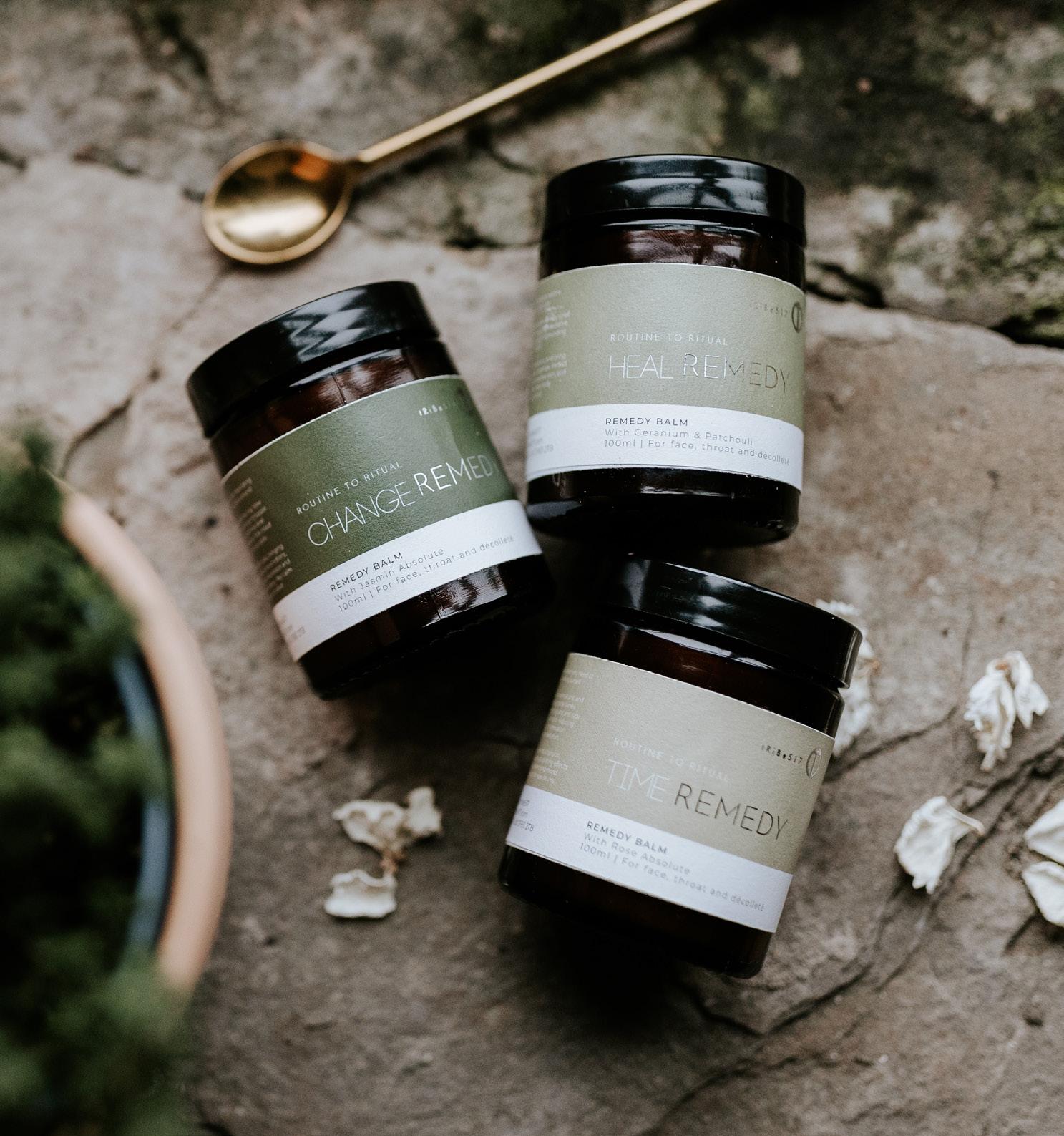
Change Remedy Balm with jasmin absolute promotes healthy, firm skin and helps level hormonal imbalance. It promotes positive emotions and is recommended during menopausal life changes.
Professional treatments available include a full face, scalp and body treatment experience tailored to personal needs. www.tribe517.com

82 www.europeanspamagazine.com
Spa Specifier On the Menu
The Organic Pharmacy launches Pro Formula Cryotherapy Lifting Facial and Body Recovery
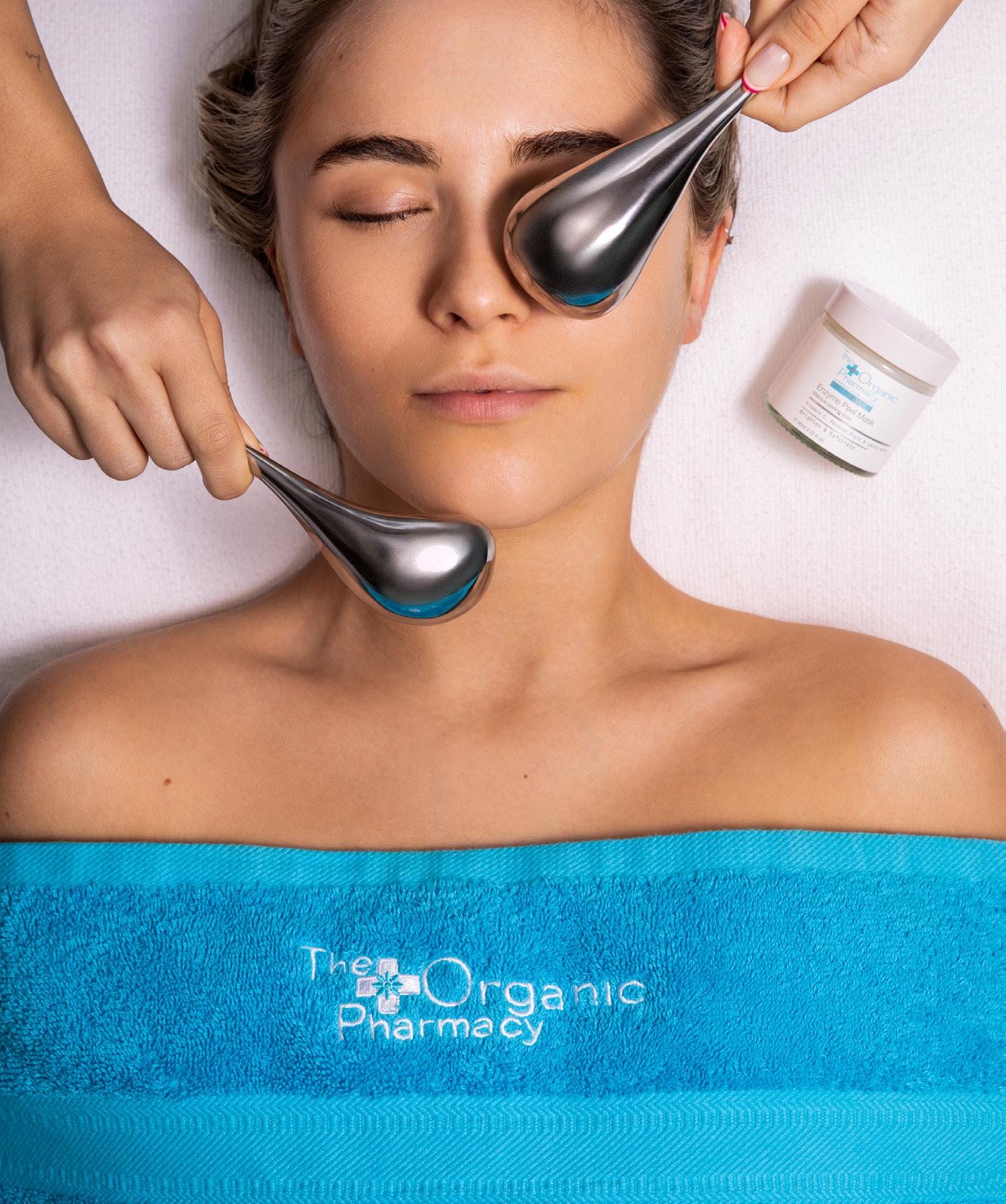
The Organic Pharmacy has added two new treatments to its offering: Pro Formula Cryotherapy Lymphatic Lifting Facial and Pro Formula Cryotherapy Lymphatic Body Recovery.
The lifting facial rejuvenates, lifts and contours the face. The treatment leads to an increase in oxygen and nutrients that help boost collagen and improve skin elasticity. Suitable for all skin types, it is especially beneficial for those with scarring, pigmentation and skin-ageing concerns.
The brand’s body recovery treatment is designed to aid digestion, tone the skin and reduce water retention, inflammation and skin issues such as hyperpigmentation. Within each treatment, cryotherapy introduces extreme cold to stimulate the skin, helping to reduce inflammation, de-puff and reduce redness. Thermotherapy applies heat to warm the skin, preparing it to best absorb the Pro Formula products. The addition of lymphatic massage helps to drain any build-up of lymphatic fluid, making skin appear brighter and lifted.
www.theorganicpharmacy.com
Hydrafacial boosts skin with Omorovicza
Hydrafacial has partnered with Hungarian spa brand Omorovicza for its latest booster launch. Combining tradition and cutting-edge technology, the new Omorovicza Advanced Skin Renewal Booster draws on both ancient minerals, and modern skincare concepts to promote youthful skin vitality.
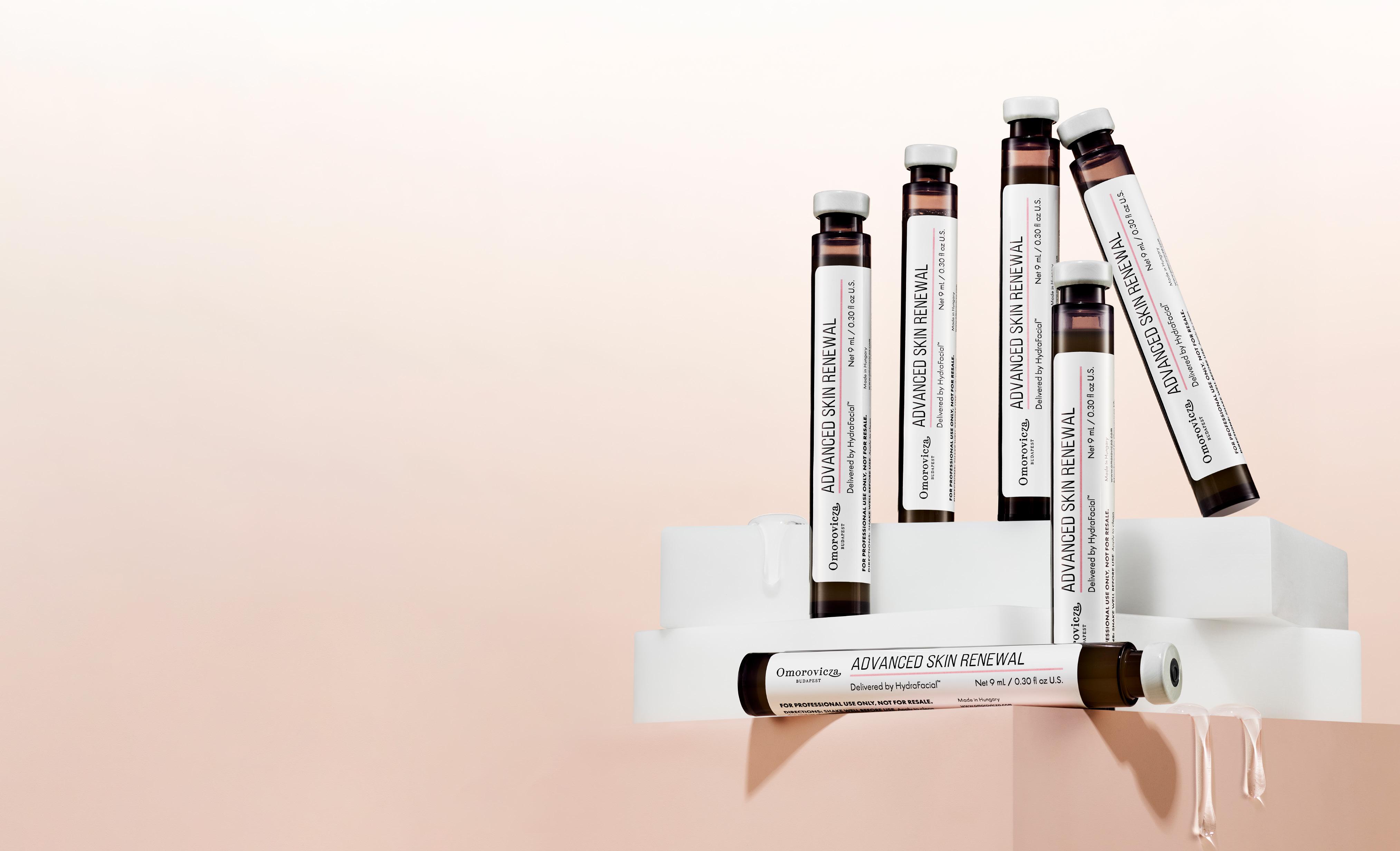
The booster works in combination with Hydrafacial’s existing three-step protocol as it cleanses, extracts and hydrates the skin for optimum skin health.
“We are excited to blend both ancient therapeutic minerals and advanced skincare technologies for skin health,” says Lauren Gibson, Hydrafacial UK&I country manager. “The latest Omorovicza Advanced Skin Renewal booster joins a range of well-known brands, offering even more personalisation opportunities for clinics and spas.”
Omorovicza’s patented Healing Concentrate is a unique complex that delivers therapeutic minerals from Budapest’s thermal waters – including zinc, magnesium, copper and calcium – to the deepest layers of the skin to firm, repair and protect skin. This works with Hydrafacial’s patented Vortex-Fusion to deliver the thermal ingredients deep into the skin, leaving it revitalised, renewed, and repaired.
(Read our Hydrafacial report on p34.)
www.hydrafacial.co.uk
Spa Specifier On the Menu www.europeanspamagazine.com 83
TREATMENT FOCUS
TREATMENT FOCUS
Oskia launches Cryo wellness facials
Oskia has added to its wellness offering with the launch of cryotherapy treatments that promote skin and mind wellbeing. Designed with wellness expert Julie Cichocki, the Cryo Wellness Facial experience treatments launched exclusively at The Mandarin Oriental Hyde Park, London. Harnessing the biological benefits of temperatures as low as -30C, the facials work to stimulate, refine, sculpt, detox, depuff and rejuvenate skin.
The 90-minute Oskia -30C Vagus Re-Programming Facial targets the back, neck, face and scalp to clear the lymphatic system, stimulating the vagus nerve and allowing the body to calm and rest. The cryotherapy continues onto the décolleté, face, neck and scalp with collagen-boosting ingredients, lymphatic manipulation and sculptural massage to deliver an immediate skin glow.
The 60-minute Sub-Zero Cryotherapy Facial includes a clinic-grade cryo unit which delivers pure, condensed air at a temperature of -30C. When used in conjunction with bionutritional formulations and dynamic facial and scalp massage techniques, skin is refined, detoxified and toned. Cellular inflammation is reduced, and rebuilding and repairing processes within cells are enhanced. www.oskiaskincare.com
ishga brings balance to delicate skin
Designed to balance and hydrate the skin, regulate excess sebum production and refresh heal and smooth, ishga has introduced Balancing Marine Face Cream.
Certified organic and vegan-friendly, the formula features ishga’s potent seaweed extract and Hebridean spring water, which together include 86 different vitamins and minerals.
Organic ingredients in Balancing Marine Face Cream include shea butter, apricot kernel oil, macadamia nut oil, vitamin E, cucumber extract and aloe vera concentrate. These ingredients combine with the seaweed and spring water to soften, repair and moisturise, leaving a protective barrier that helps to rejuvenate and protect the skin from environmental damage.
The blend also includes shea butter and extract of macadamia, rich in essential fatty acids omegas 6 and 7, which absorb excess sebum while nourishing dry skin. Vitamin E plumps, heals and smooths, and fresh citrus peel combats oil and detoxifies. Aromatic oils of bergamot, sandalwood and patchouli add a refreshing scent.
www.ishga.com


84 Spa Specifier On the Menu www.europeanspamagazine.com
European
Spa selects the best professional product launches for spas. Contact mark.smith@spapublishing.com
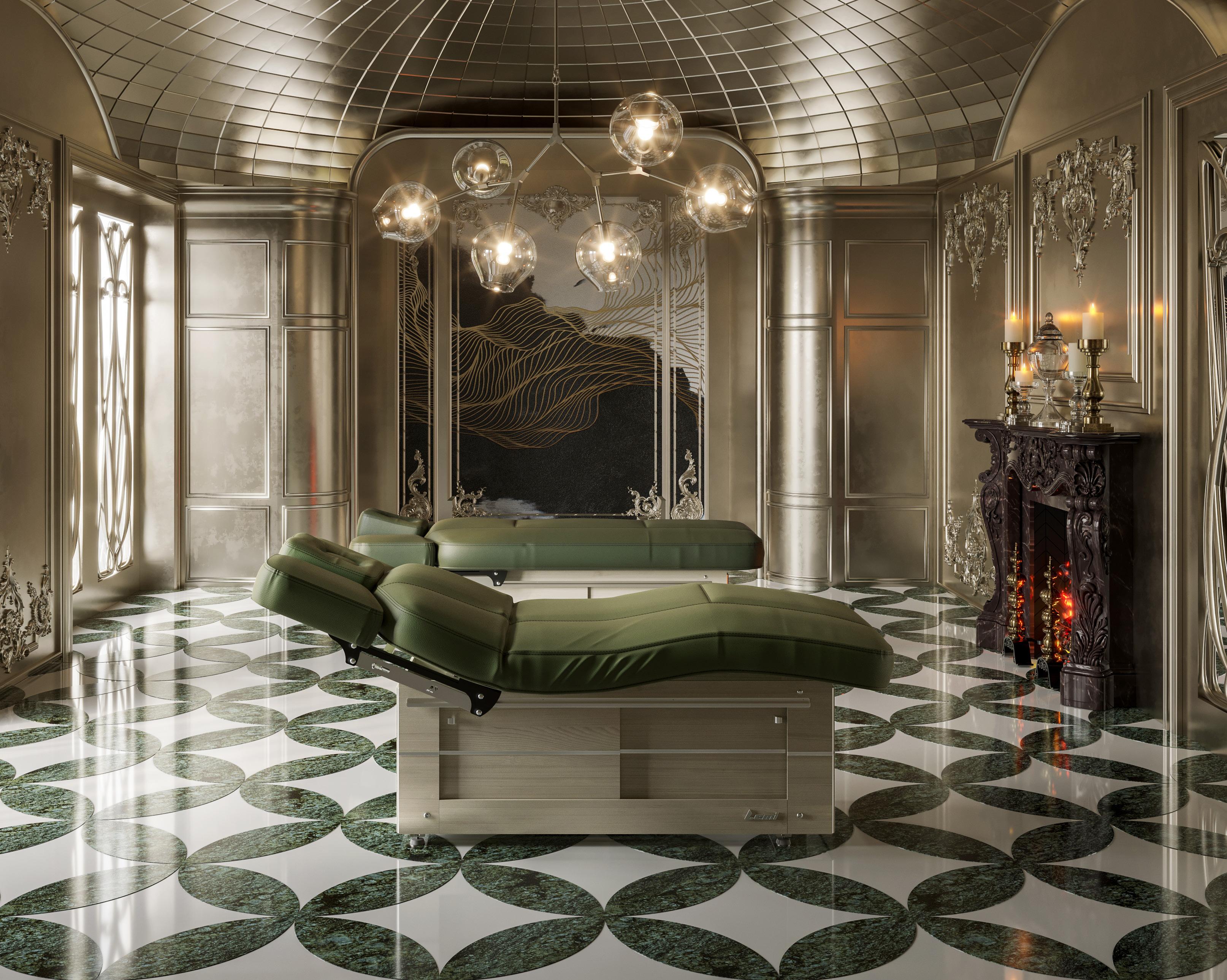
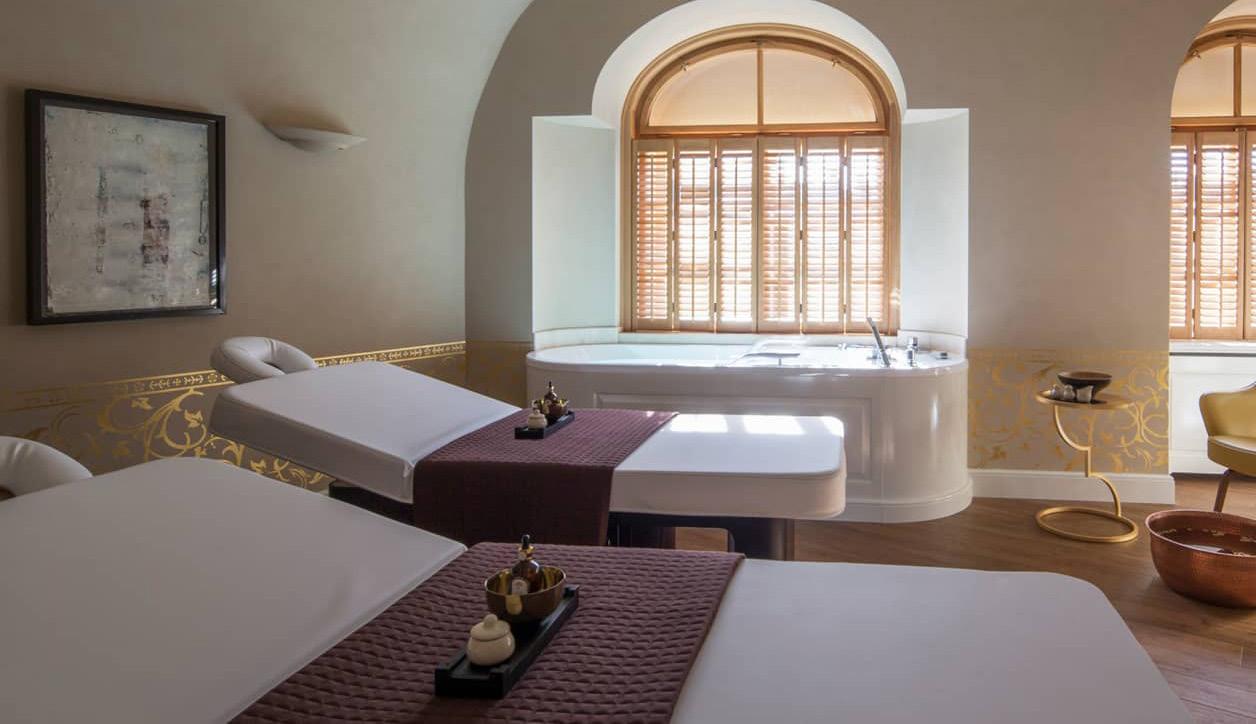
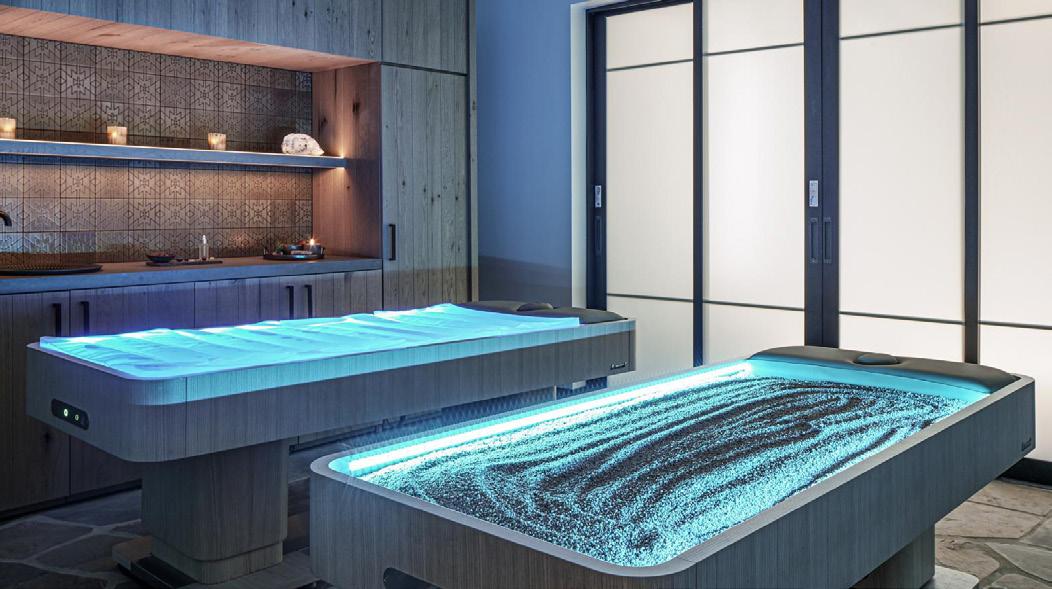
info@lemigroup.it www.lemi.it
‘When it comes to therapists, spas will get what they pay for’
Ensuring therapists are well paid and feel valued is an important part of any spa director’s role. Getting this right is even more vital now as businesses are still grappling with the challenges of the recruitment crisis. Over the past 18 months we have seen a shortage in the number of spa and beauty therapists and an increasing number of vacancies across the industry.
Spa therapists are among the lowest paid workers in the UK – on average receiving £9.50-£12.50 per hour, which is roughly the same as a waitress or room attendant who hasn’t completed a two-year in-depth course studying to be a skilled professional. We’ve all done the maths and reviewed our P&L lines and still find that staffing is the highest cost sitting at 40-50% of revenue, so even if we wanted to, it can be hard to find a way to increase our therapists’ salaries. Ideally, payroll should be 38% against treatment revenue.
A tale of two countries
With over 30 years’ experience in the spa and wellness industry, Kirsty MacCormick is the founder of The Spa Consultancy. Her expertise includes development, pre-opening project management and operational set up of a range of businesses from commercial hotel and day spas to luxury five-star wellness destinations. www.thespaconsultancy.com
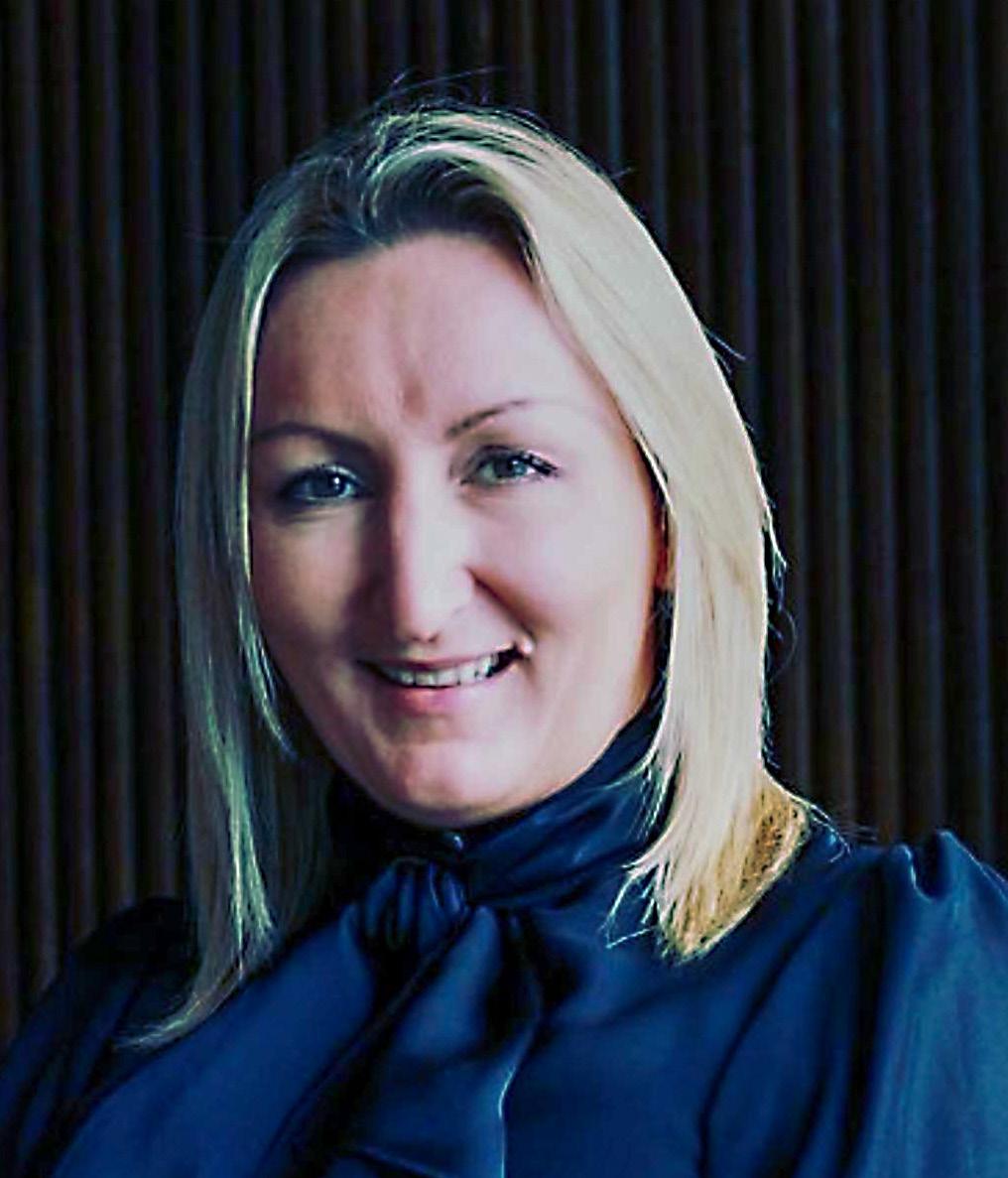
The American model is usually based on 100% of the pay being directly connected to the number of treatments performed – if a therapist is not booked, they don’t get paid. A service charge is also added onto every treatment, which goes directly to the therapist, increasing their renumeration without pushing it onto the spa P&L. As a result, American therapists are among the highest paid in the global wellness industry, enjoying a career that is highly regarded and respected. In the UK most salons and spas pay a wage with a treatment and retail commission. Some businesses give
10% on everything – others may have a retail structure where they have a three-step target to meet and each time you reach that target the commission percentage increases. This really rewards the high achievers. Some employers choose to offer commission once the therapist has reached a set target to encourage more retail sales.
How pay can pay off
In the UK, we are now seeing spas compete for staff and they have subsequently had to increase pay. In some circumstances therapists are receiving £30,000 per year, equivalent to £15 per hour. However, I would argue this isn’t the best solution as it is going to have a major impact on bottom lines and put additional pressure on spa operations.
Other options could include increasing treatment prices to enable an increase in staff pay. We could move to an American model, or should the business absorb the cost?
I believe that one solution is to combine the real living wage with a strong commission structure. As of April 2023, the minimum wage is going to be £10.42 per hour and the real living wage is recommended to be £10.90. In my experience, you get what you pay for, so by paying minimum wage you will attract staff who will not feel valued. This is a skilled job which is very hard work and should be compensated as such. A good commission structure, which rewards hard work with higher remuneration really does work. Onboard cruise ships, therapists and hairdressers will have a target,
www.europeanspamagazine.com 86 Business Leadership Kirsty MacCormick, The Spa Consultancy
EXPERT CONTRIBUTOR
Kirsty MacCormick
Five key pay priorities
n Real living wage – pay this as a bare minimum with different levels of advancement as they develop and become more advanced.
n Commission structure and service charge – supplement pay with commission-based targets. Consider a service charge that is split between all spa staff.
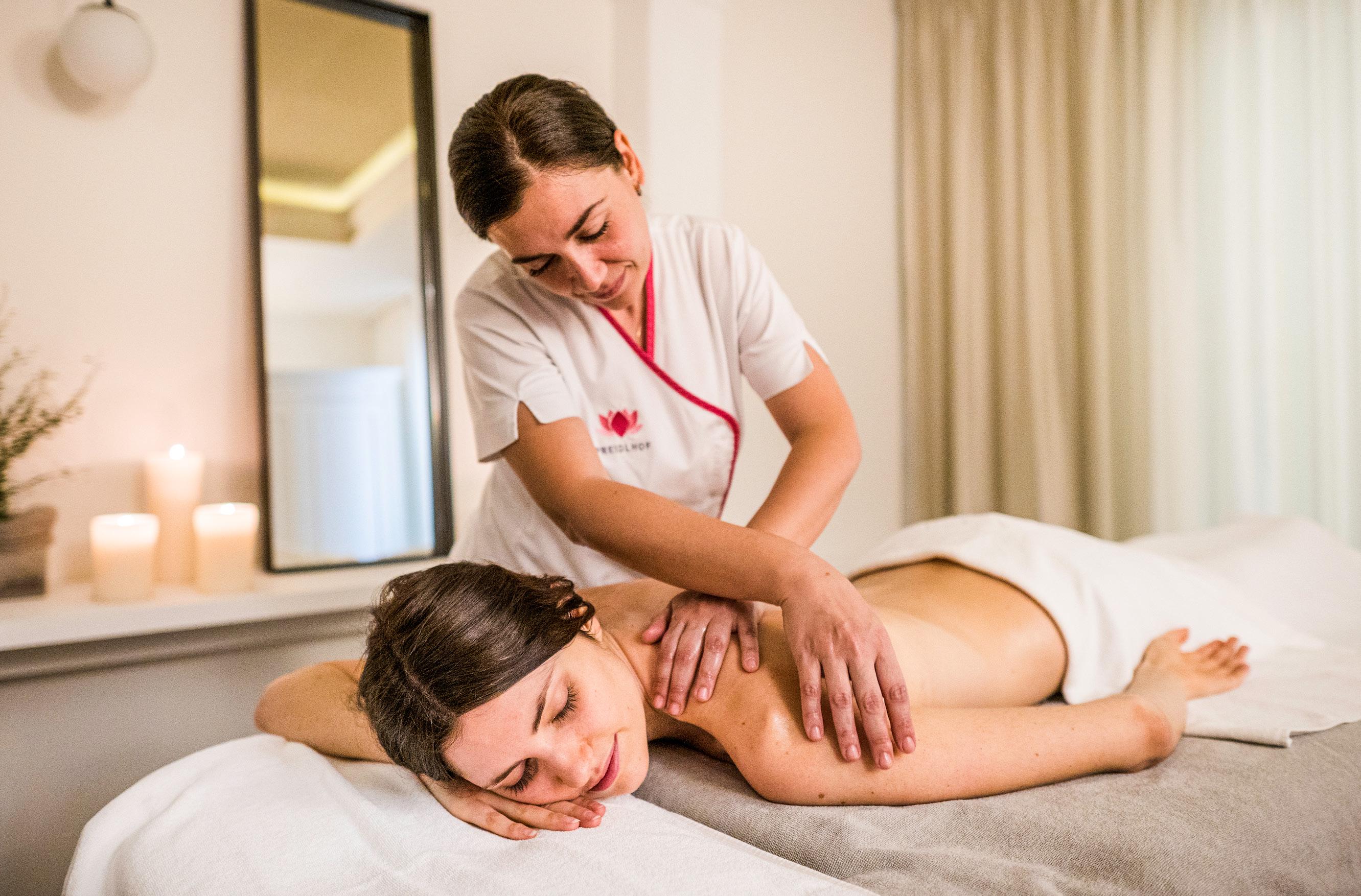
n Workplace wellness – ensure good conditions with a back-of-house prep area, a rest area for breaks, private healthcare, a reward programme and team-building.
n Training and development plan – essential for all staff so they can work towards advancing into more senior roles and better pay.
n Buffer time – schedule at least 15 minutes in between treatments to make the working day less stressful and more enjoyable.
for example, £1,300, which is a combination of services and retail, then they receive 10% if they reach this. This encourages staff to have more control of their column and pushes them to get bookings and promote their services then recommend products during the treatment.
Beauty therapists and hairdressers who have service commissions are more driven to promote their skills, offer upgrades and persuade clients to try the latest facial or upgrade their massage time. This working environment benefits both the employer and employee.
Adding a service charge I believe that introducing a service charge in the spa environment is a practical way we can increase pay without putting additional pressure on the operational P&L or having to
increase pricing. A few spas around the country have introduced this structure and they are managing to not only attract the best therapists, but also to retain them as they feel valued.
To make this work well though, it’s going to take the entire industry to get behind it, not just a handful of spas. It needs to become the norm to see a discretionary 10% added to a spa bill.
I don’t think any of us have the magic formula to this, but I do know that we need to find a solution or the shortfall of staff entering our industry and staying is only going to get worse. Nobody is going to accept low pay for a skilled job, no matter how much they love doing it.
If you would like to send your suggestions about how the industry can improve therapist pay and conditions, please email: sarah.camilleri@spapublishing.com
www.europeanspamagazine.com 87
Therapists are the lifeblood of every spa, connecting meaningfully with guests, as during this treatment at Hotel Preidlhof in Austria
Scented saviours for spring
Aromatherapist Laura Broady prescribes three essential oils to add a little bounce to your spa and make the most of the season’s potential for your therapists and their clients
pring often brings a rush of fresh energy, increasing pace and optimism. Essential oils can complement and maximise this sense of potential, bringing both spa guests and therapists in line with nature’s flow and enhancing wellbeing.
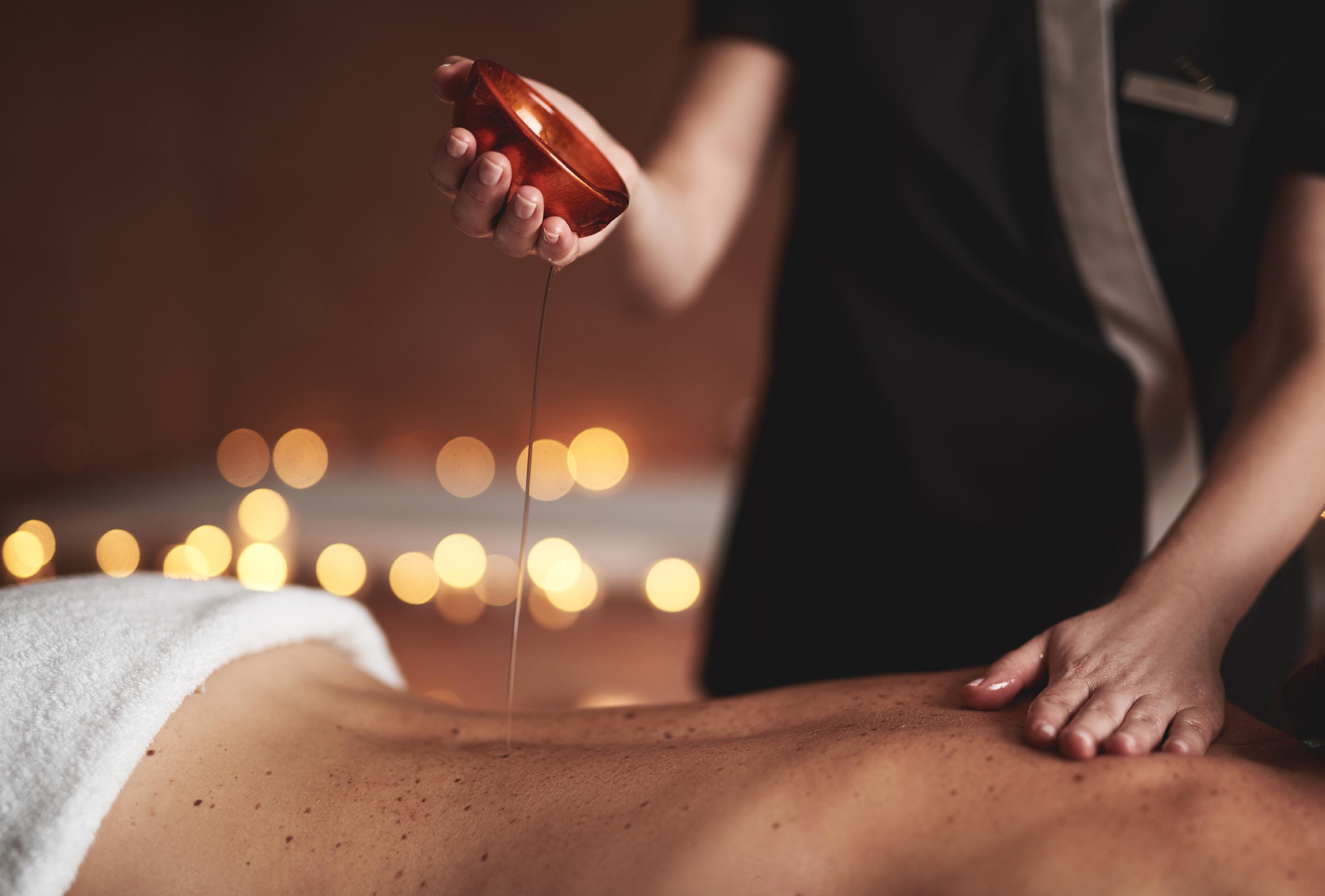
Cheery citruses such as yuzu, lime or May Chang are great choices for refreshing the mind and body. In addition, the classic spa scents of eucalyptus and lemongrass capture the essence of clean, new beginnings.
The changeable nature of springtime
Scan fuel fluctuating feelings and a desire to make big changes. If you are in a time of transition, essential oils can be reassuring and help keep things balanced.
In this respect the kindly florals step up to the mark – geranium, rose, jasmine, ylang ylang. These oils can help heal fraught emotions and offer a virtual hug just when you need it. Blend in some grounding energy with vetiver or sandalwood and nestle into your fragrant nest until the storm passes.
A moment of care
I have selected three essential oils that may be useful for therapists and clients at this awakening time of year.
It is important to remember that while lovely to the touch, essential oils
must always be diluted in a carrier oil if using in the bath or on the skin. Also, always take advice from a qualified aromatherapist if pregnant or living with medical conditions.
The easiest way to gain benefit from the oils is to simply diffuse them or inhale them from an aroma inhaler or a tissue where no dilution is required.
Take the time to take in the scent
Try encouraging yourself and your client to take a moment to intentionally smell the essential oil. That may sound odd – we all know how to sniff – but that’s exactly what you don’t need to do.
Simply mindfully and gently take them in. A great big inhalation is not necessary. The best way to take in the scent is
www.europeanspamagazine.com 88
Laura Broady
through a smooth breath, which will introduce your limbic system to the oil and allow it to get acquainted with the effects, rather than being battered by them.
You can smell essential oils straight from the bottle, or from a fragrance strip (recommended). Make sure you keep it a good distance from your nose – chin level would be about right – and simply waft the carrier so you catch a whiff of the scent.
Scents for the season
Building a cast of characters
A good alternative, if you’re serious about getting to know the character of an oil, is to put a couple of neat drops in a small jar. This is how experts smell.
When smelling an aroma, a ‘nose’ will make use of the space into which a fragrance evaporates. The more space there is, the easier it is to fully catch the scent personality.


The next step is to sit with the scent of the oil and just let your memory and
imagination create a story around it. What does it remind you of? Where have you smelled it before? How does it make you feel? Uplifted, energised? Calm, sleepy? While the chemical makeup of essential oils will affect individuals’ physiologies in a similar way, each person’s perception and experience of the fragrance will be unique. So open up one of these scented saviours for springtime and see where it takes you.
floral aroma. Universally loved, it is the elegant component of the classic eau de cologne. It is also the natural flavouring found in Earl Grey tea.
This bright, sunshiney oil has an uplifting effect and can make light of difficult situations. Use it in a diffuser to help de-stress and refresh the mind.
The cheeriness of Bergamot enlivens the spirit and dispels negativity, sadness or loneliness. It helps relax the mind and soothes anxiety but without over-stimulating. It is a calming essential oil which will help to keep you balanced and on track.
Note: Bergamot that is not FCF-free can photosensitise the skin, so do not go in the sun for 24 hours after using diluted bergamot on the skin.
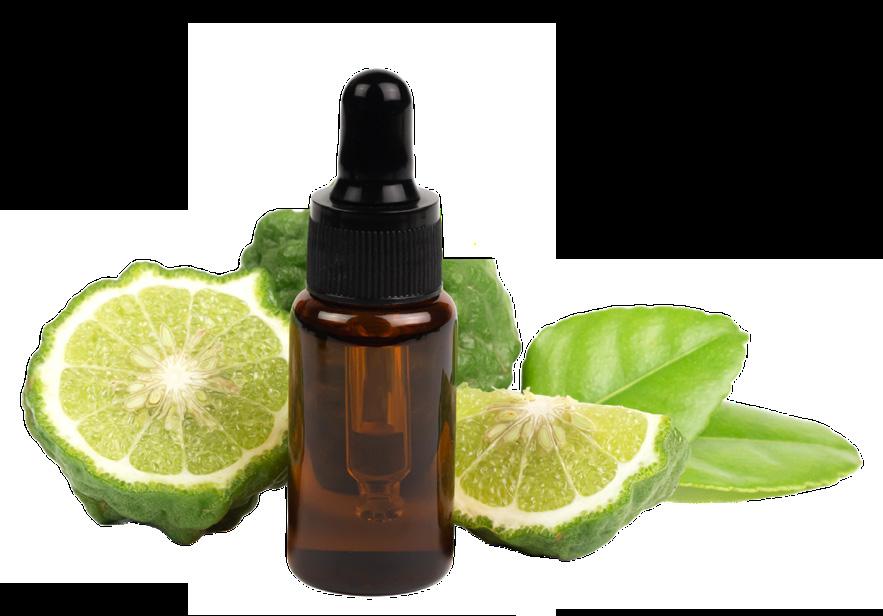
and its scent reminds me of chewing gum from my youth.
A good cure for digestion and overcoming nausea or sluggishness, spearmint helps clear the mind and is a great study aid, bringing a fresh perspective to old problems.
In the spa, it is an effective oil to diffuse ahead of a breathwork session or mid-afternoon mood reset.
Good at boosting mental agility and concentration, it is a steady partner for long admin tasks and for getting stuck into a project. It’s also a good decongestant when inhaled.
Spearmint is a useful oil for jetlag and travel sickness and its awakening properties make it excellent to have in the car to help focus on driving too.
would never be without it. With its sweet, Turkish Delight aroma I find it comforting and soothing.
The best is ‘Bourbon Geranium’, which is only grown in the Reunion Islands. You can tell the difference in aroma – general geranium often being green with camphor while Bourbon is creamy, rosy, soft and gentle.
The big sister energy of geranium cheers you on and is a great companion for life’s ups and downs.
It helps balance skin, metabolism and mood, and can help relieve water retention and cellulite (especially combined with juniper).
In the spa, geranium highlights feelings of friendship and closeness, and creates an uplifting atmosphere while also encouraging empathy.
www.europeanspamagazine.com 89 Business
Leadership Laura Broady, Scented Saviours
Three essential oils that can support your passage into spring
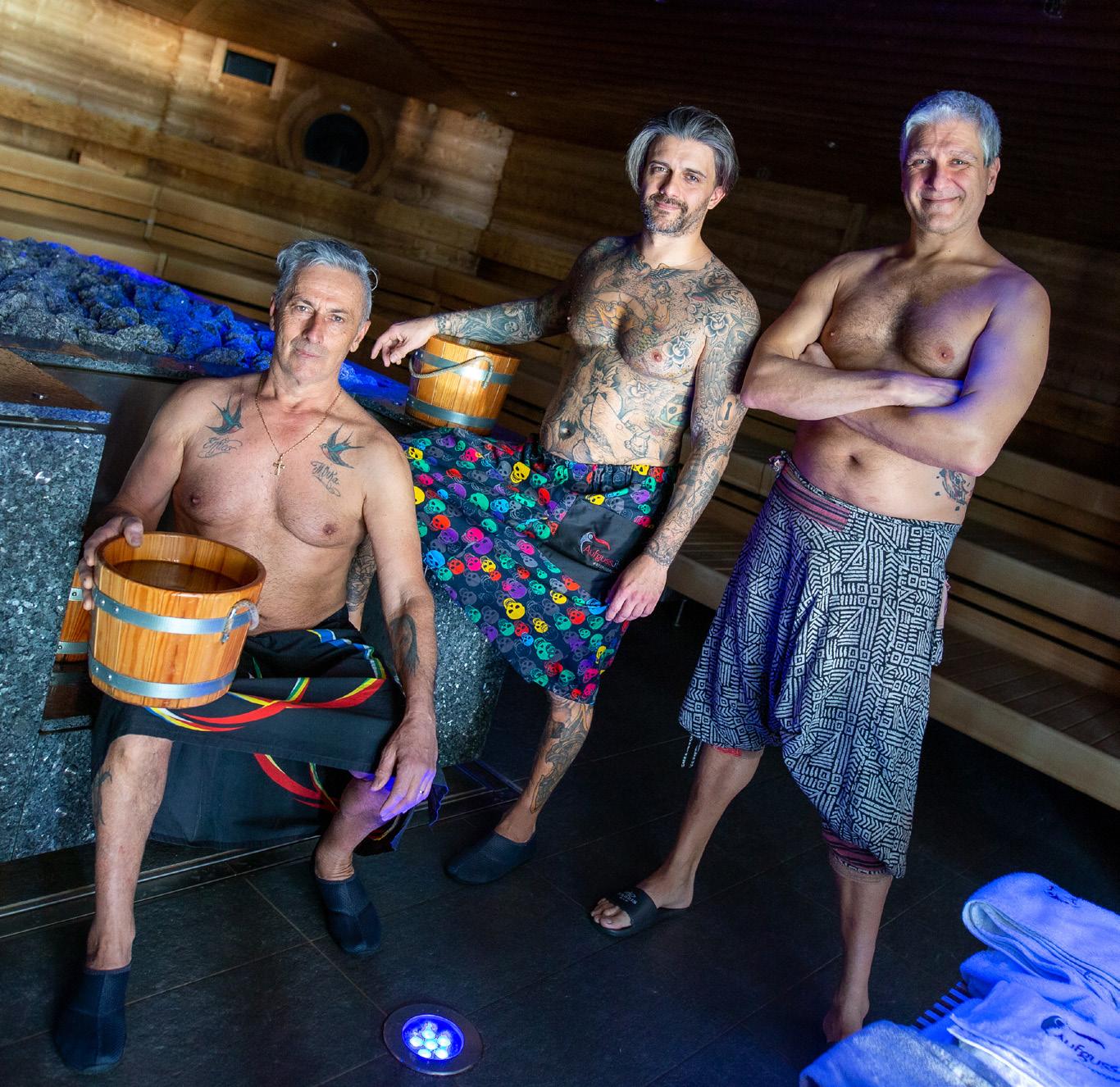
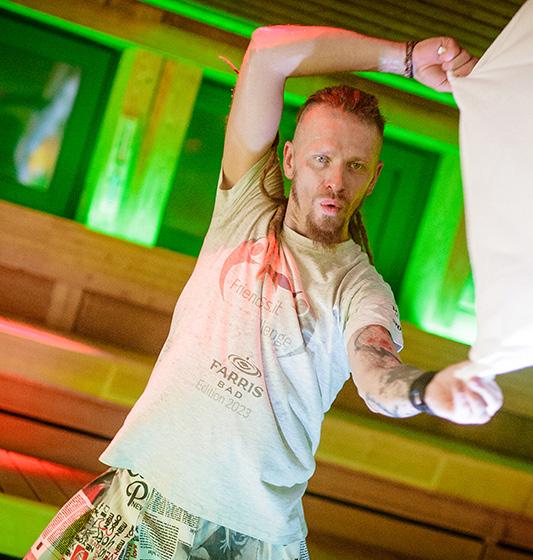
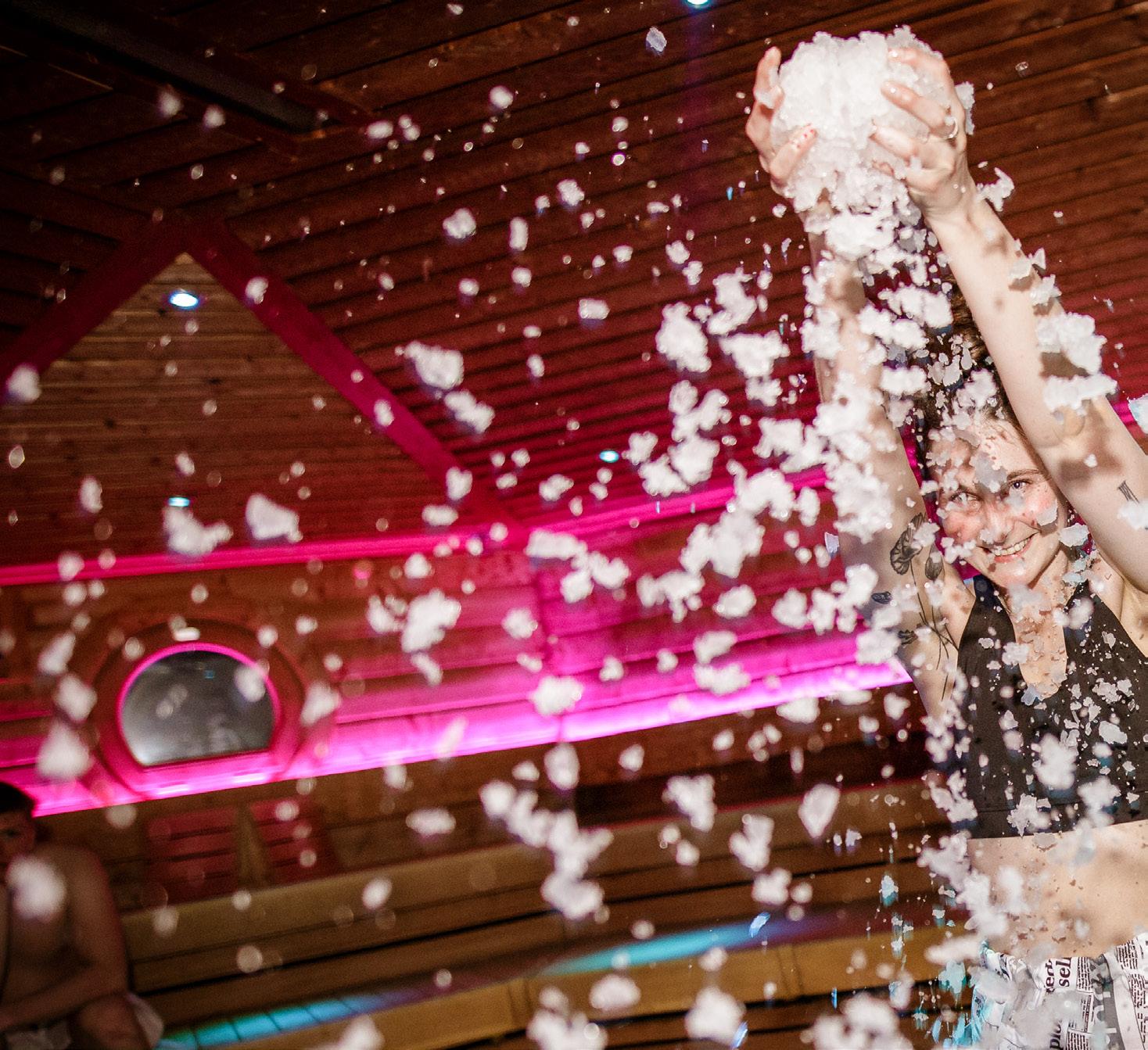
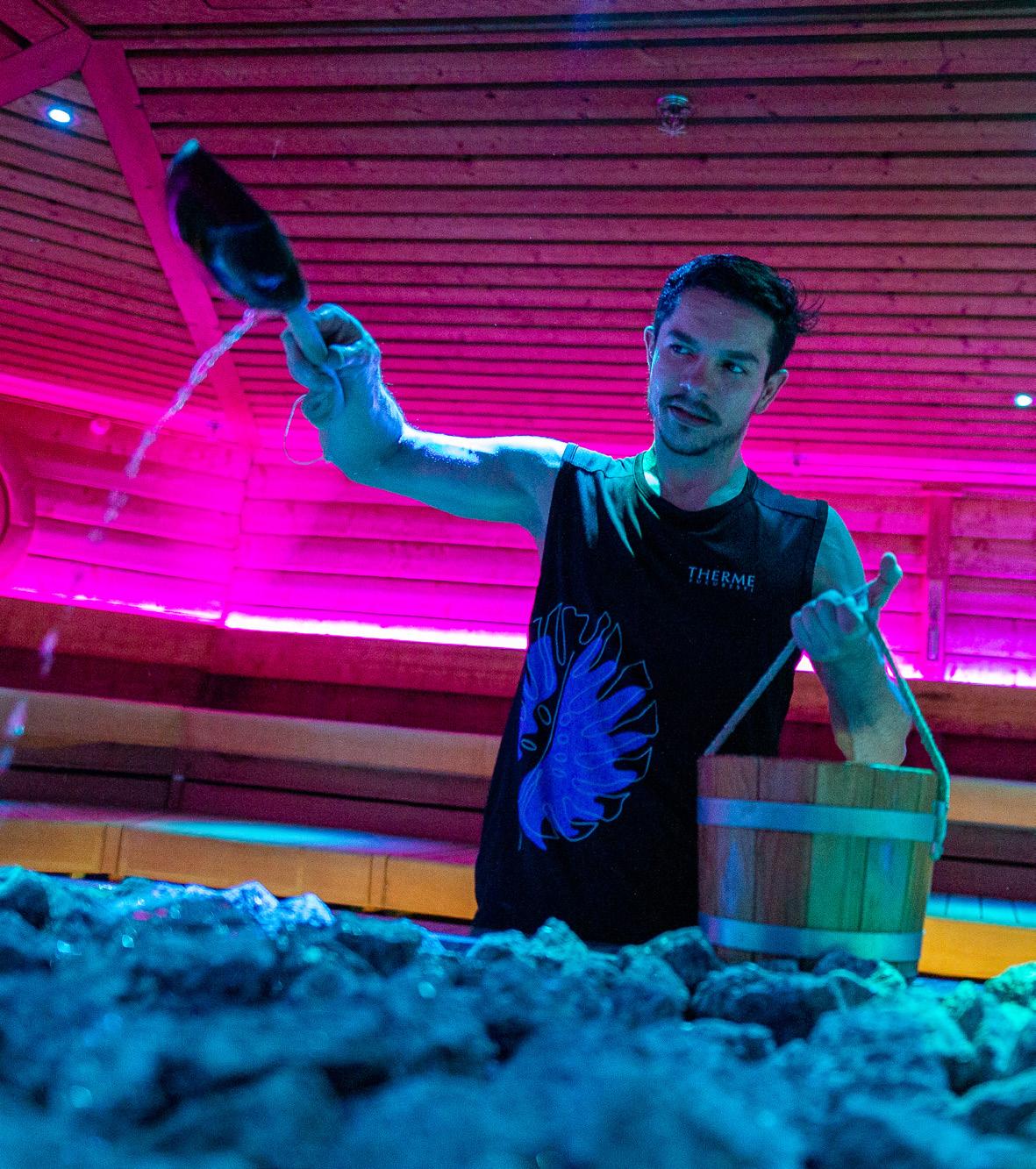
www.europeanspamagazine.com 90
Business Leadership Sauna ceremonies
The magic of fire and Ice
Aufguss ceremonies are growing in popularity worldwide to meet demand for social spa experiences. European Spa shines a light on the art of the sauna ceremony
 REPORT BY SARAH CAMILLERI | IMAGES BY RYSZARD RAK, WELLNESS MULTIMEDIA

Many years ago, my first ever aufguss sauna ceremony opened the door into a whole new world of fire, ice and wellbeing. My friend, the legendary Austrian spa designer Heinz Schletterer, had invited me to experience the thermal expertise one of Italy’s wellbeing gems, Golf & Spa Resort Andreus, tucked away in the south Tyrol near Merano. There I experienced the roots of authentic sauna culture and felt the power of sweatbathing for the first time.
Back then, the therapeutic benefits of sweatbathing culture were very much confined to thermal spas in certain regions of Europe and not the mainstream spa activity they are today. Thanks to the work of many dedicated industry leaders, sauna ceremony – or aufguss – is now emerging as a unique opportunity for spas worldwide to draw inspiration from.
Sweatbathing is social (event saunas are big) and in some more traditional spas can require nakedness or being ‘fabric-free’ for hygiene purposes. Although being naked is not essential in many spas, taking a towel with you into the sauna is an absolute must. Respecting and protecting the wood benches from sweat is essential.
Enter the aufguss master
Back in the Andreus’s beautiful event sauna, the skillful sauna master – who also happened to be an aufguss champion – arrived to greet an expectant audience. On that day, like many, it was a full house. All eyes were on the sauna master as he got started: crushing balls of ice infused with therapeutic essential oils onto hot coals to build up steam. For ten minutes, music accompanied a mesmerising performance of towel waving, deftly moving hot waves of steam around the cabin. Seasoned sauna lovers welcomed wave after wave of intense heat, raising their arms like football fans at a World Cup to request more. It was unforgettable, fun and intense.
A huge round of applause marked the close of the ceremony, before everyone poured out of the sauna to cool down with ice rubs and cold showers. Right there, taking in the fresh moutain air, my appreciation of aufguss was born. As I cooled down my whole body felt new – glowing inside and out.
Aufguss appreciation is set to grow
Today aufguss ceremonies are a trend to watch, meeting growing demand for social spa spaces that foster a greater sense of connection. In fact, many spas are now extending their thermal areas to deliver experiential spa journeys that are fun, therapeutic and memorable. That first aufguss gave me an invaluable wellbeing
www.europeanspamagazine.com 91 Business Leadership Sauna ceremonies
Clockwise from top left: Andrei Robert Serban at the Aufguss.it Friends Challenge; Kacka Smidova in action; overall winner Lukasz Dluzniewski; Aufguss.it training specialists Fiorenzo Ganassin, Enrico Ganassin and Riccardo Marzi
lesson in how to sweat properly. I also learnt that heat softens and changes once you get past the discomfort. A bit like wild swimming in cold water, if you push through, the body’s ancient capability to adjust to extreme temperatures kicks in.
As well as being life-affirming, sweatbathing delivers a multitude of wellbeing benefits. Apart from boosting metabolism it increases blood circulation, reduces pain, promotes skin rejuvenation and helps improve cardiovascular function. Regular sauna and steam sessions can also help with sleep, stress management and relaxation.

Travellers in imagination
Celebrating the power of aufguss, the cream of the world’s sauna masters recently gathered at Norway’s premier spa destination, Farris Bad, for the first ever Aufguss.it Friends Challenge. This unique event, which European Spa attended, was a showcase of talent, commitment and extraordinary skill.
“As human beings we are travellers in imagination, which makes us incredibly adaptive,” says Lasse Eriksen, development manager at Farris Bad, which has an event sauna that holds up to 116 people. “Aufguss unlocks the gift of storytelling, fantasy and wonder. The storyteller (sauna master) guides participants through the four elements: earth, fire, water and air.”
Using precision and deep knowledge of heat, steam and movement, aufguss ceremonies involve choreographed sets of open and closed towel waving sequences as well as essential oil blends, to make an unforgettable sauna experience.
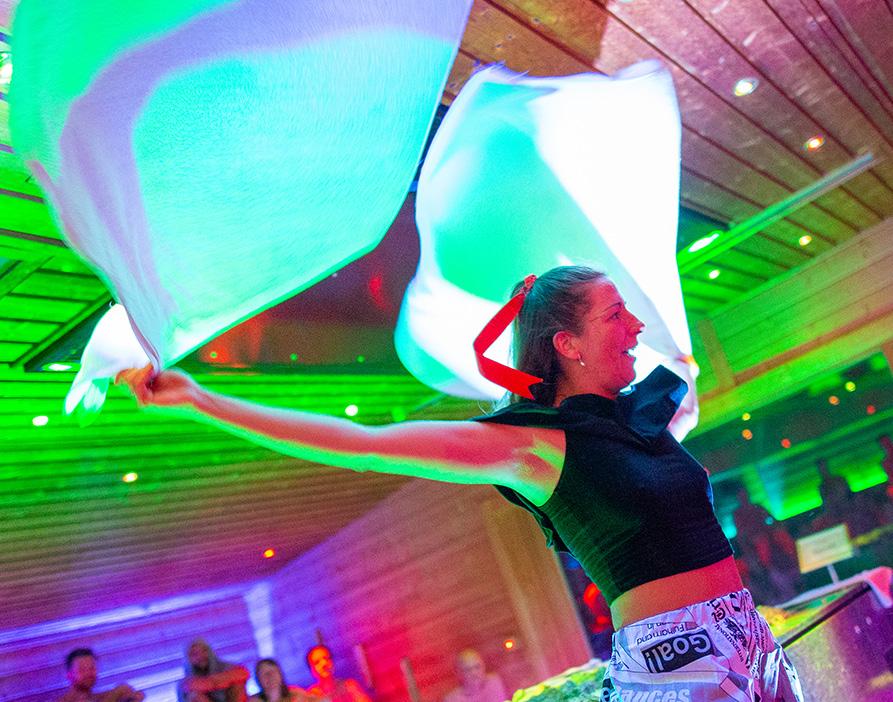
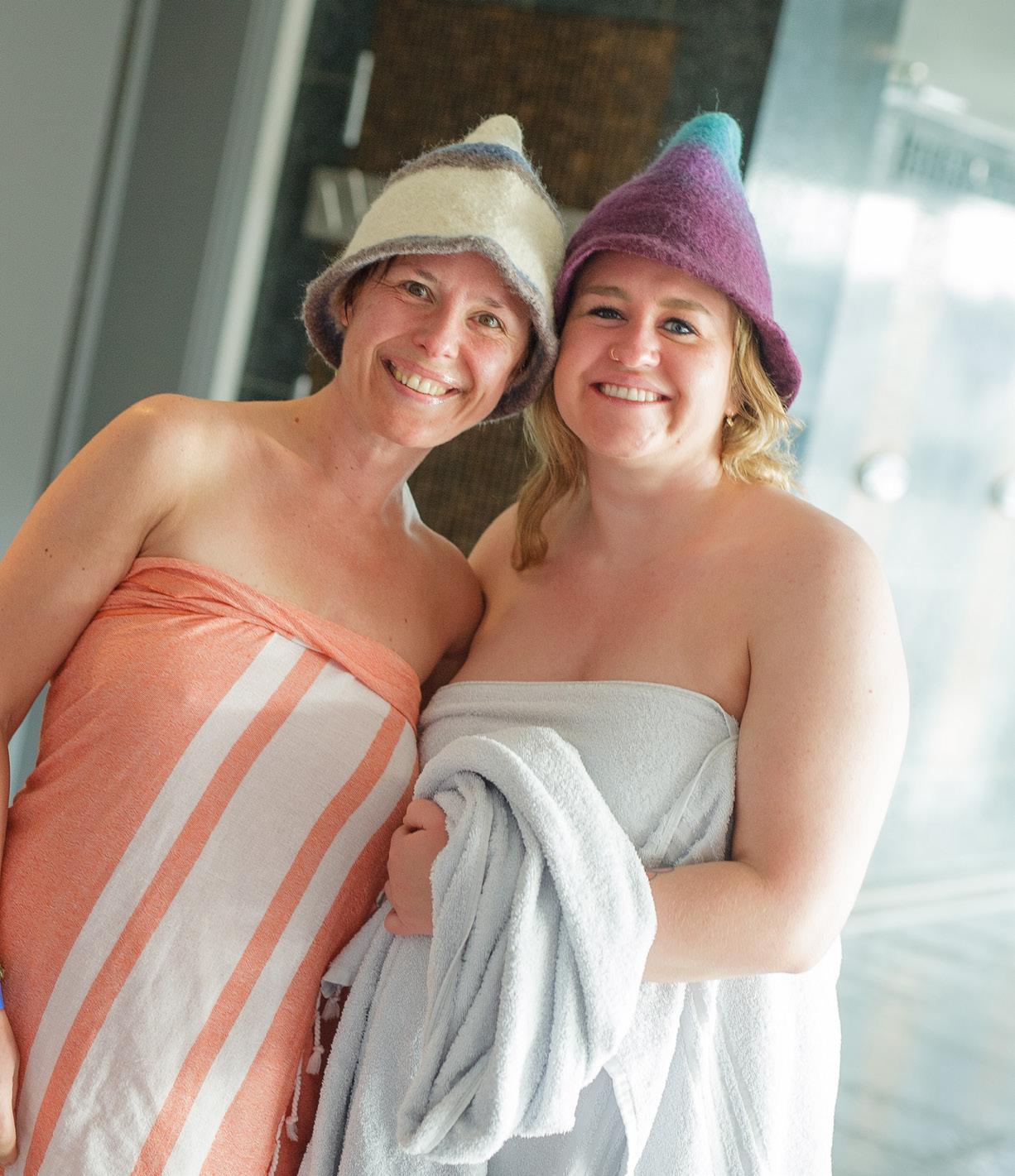
“Classic aufguss works with the löyly [or spirit] through water, steam and waving over three rounds of approximately 15 minutes,” Eriksen explains. “Sometimes with music or in quietness, we use herbs, whisks and different combinations of essential oils throughout the experience.
“Aufguss ceremonies are increasingly popular in central Europe but have potential to spread worldwide to enhance many more spas, as guests look to more authentic, social and therapeutic ways to relax and stay healthy. We see aufguss embraced by the younger audience and workforce, as a way of bringing the old global sweat culture forward into a new age.”
www.europeanspamagazine.com 92 Business
Leadership Sauna ceremonies
Clockwise from right: Evelyn Farkas performs her aufguss ceremony at Farris Bad; essential oils are applied to ice balls and then released in the sauna when melted; special whisks are used to circulate the air; aufguss legend Lay Pang Ong; guests don their sauna hats for an aufguss
Guardians of aufguss
Organised by Riccardo Marzi and his team at aufguss training specialist Aufguss.it, supported by the Italian Sauna and Aufguss Association, the Aufguss.it Friends Challenge attracted 16 champion sauna masters from Europe and beyond to demonstrate their ceremonial skills. Three competition days were sponsored by German sauna expert EOS and essential oil suppliers Loyly Masters and Bergila.
Expertly compered by legendary aufguss trainer Lay Pang Ong, hosted by Farris Bad, the competition saw each entrant present a 12-minute, three-set piece that was judged by five of their peers and also marked by themselves.
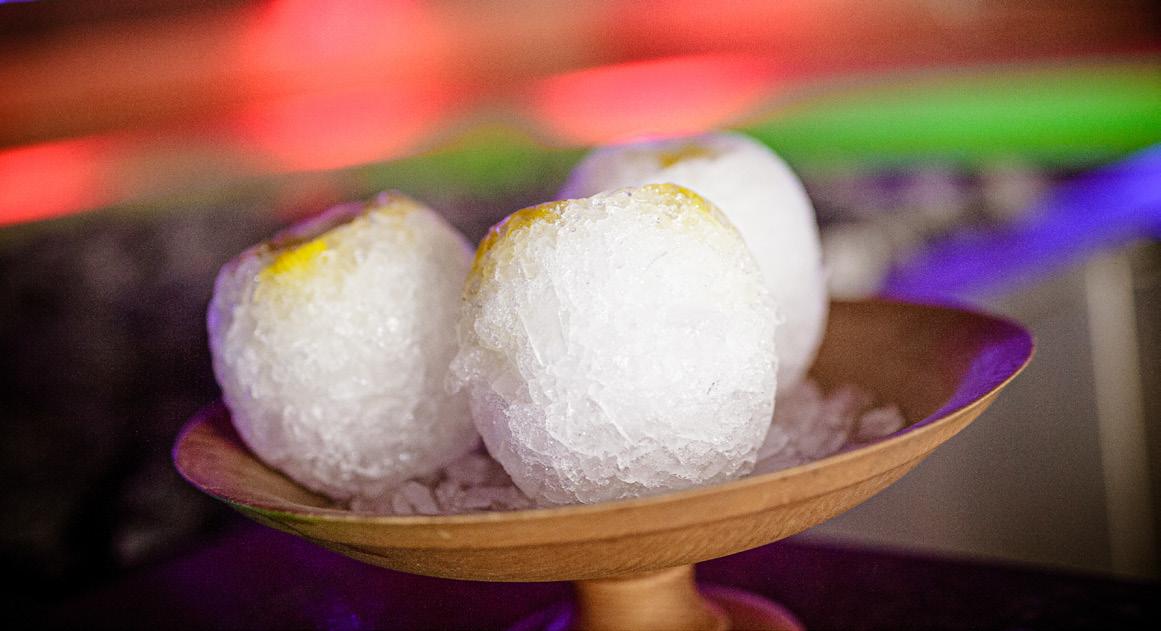
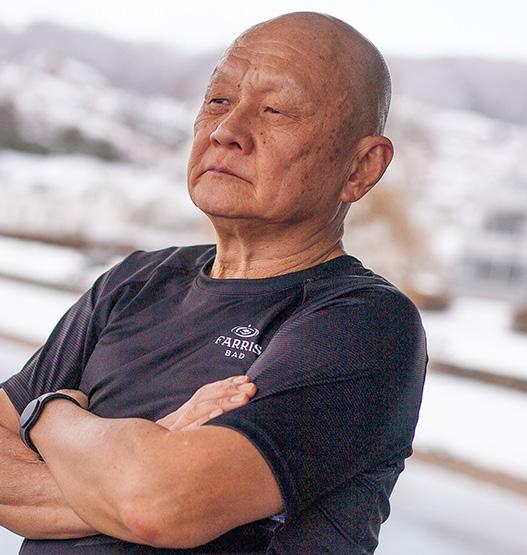
The much-deserved winner after three intensive days of competition was Polish champion Lukasz Dluzniewski, who was recognised for his heartfelt performance entitled Aurora. Dluzniewski’s depiction of the Northern Lights was delivered with soul and effortless skill, demonstrating how 15 years’ service as a sauna master and a world-class trainer have made him an inspirational performer.
Dutch champion Sigrid van Rijswijk took second
Rudding Park to host debut UK aufguss championships
For spas who would like to find out more about aufguss, the British Sauna Society has announced that the UK’s first National Aufguss Championships will take place on April 25-26 at Rudding Park in Harrogate, Yorkshire. Winners will go on to be the first-ever competitors to represent the UK at the Aufguss World Championships in Germany.
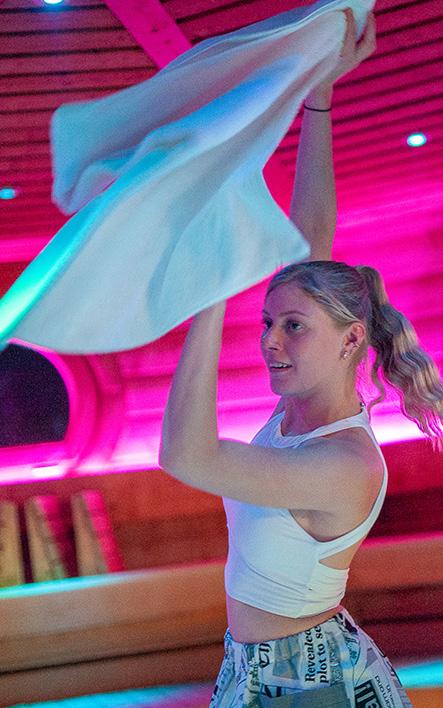
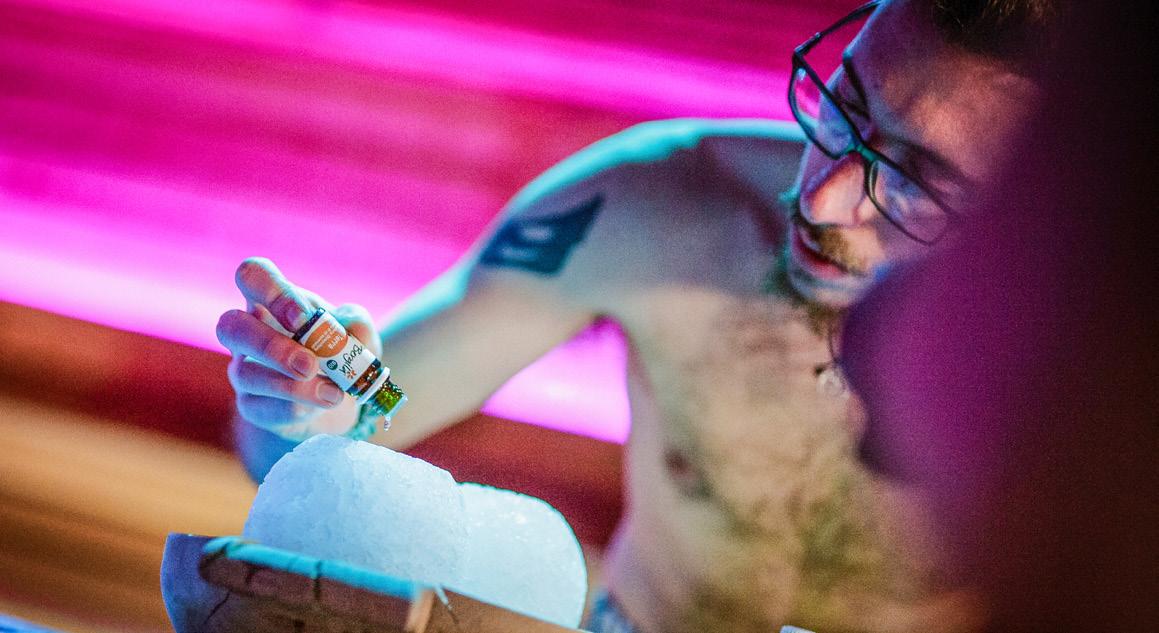

Organised by the British Sauna Society (BSS) and Aufguss WM, the UK Aufguss Championships are open to sauna masters currently employed in spas, those who have undertaken a training course to master classical aufguss, or anyone who has successfully participated in an aufguss contest previously.
The new competition is sponsored by Design for Leisure, The British Sauna Society and Rudding Park.
Three-day beginner aufguss training is also available, led by BSS aufguss officer Deborah Carr. The only requirement is an interest in sauna and creating wellbeing experiences.
www.britishsaunasociety.org.uk/uk-aufguss-championships
www.europeanspamagazine.com 93 Business Leadership Sauna ceremonies
Sigrid van Rijswik
place with her flawless swanlike performance, which carried a unique air of peace and mastery of space. Third place was awarded to up-and-coming 22-year-old aufguss star Ryuki Ikeda from Japan, for his sizzling, yet classic set embellished with tricks. A dedicated student of Dluzniewski, Ikeda is now making waves in Japan with his growing aufguss social media following.
Other notable presentations included Polish champion Karolina Jarzabek for her captivating Magic Night show and Hungarian champion Evelyn Farkas, who performed an elegant classic aufguss. High-octane performances were also given by Romanian champion Andrei Robert Serban and Poland’s Maciek Piczura. The sacred magic of Norway was presented by Sarah Matilda Ryskova, who beautifully captured the spirit the rich history of Farris Bad’s magical Nordic location.
Passion for aufguss
The life of a sauna master requires commitment, creativity and stamina to reach the highest levels. Dutch aufguss master and competitor Rene Duyts who has been performing for seven years, says:
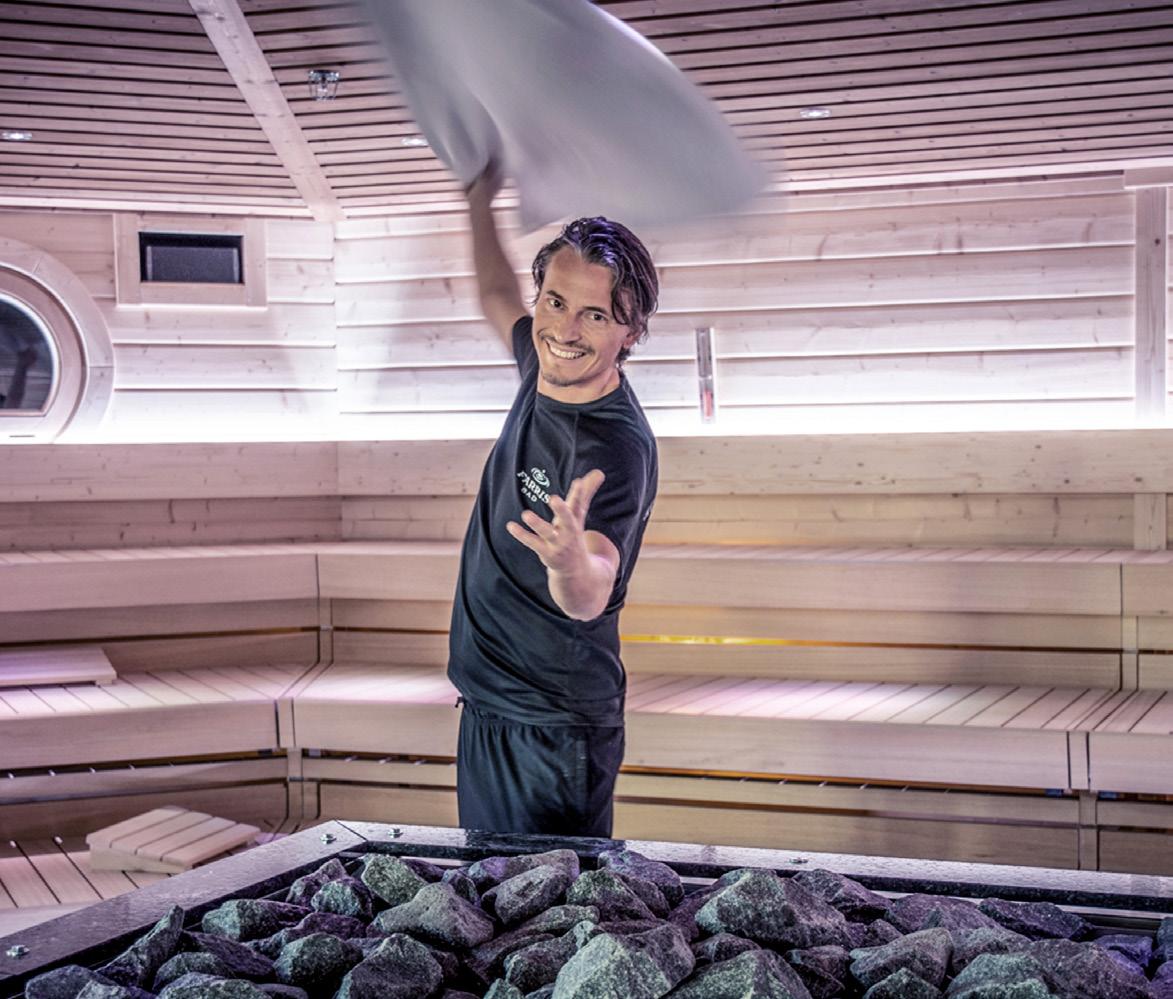
“Aufguss is a passion for me and many sauna masters. For me the most important thing is to really
shift how people feel in just 15 minutes. After every session I wait to greet people as they come out. It is so good to see people leaving with smiles and thanks for the energy I have given during aufguss. This is what matters to me.
“There are many important practical things we need to do to ensure hygiene and safety for guests during our sessions but the sauna is also a space that allows people to disconnect from the real world. It’s a space where you can leave behind everything and enjoy the darkness and intimacy.
“Our job is to take people away on that journey with music, essential oils and heat, to help them feel
Celebrating sauna and the ritualistic spirit of löyly Lasse Eriksen, development director at Farris Bad, honours the spirit of sauna
“For many the sauna is a sacred place. Across the world sweat ceremonies bring powerful ancient wisdom, harnessing man’s understanding of the elements to cleanse our physical and spiritual selves. Sauna uses breath, the power of the mind and the creative power of fire.
Aufguss celebrates and embraces all four elements, starting with fire, which naturally needs air to ignite and heat the sauna stones, which represent the earth. Earth as an element, grounds us, it brings out physical body connection, balance and stability.
When fire and earth are one, we bring in the most sacred element, water, and then air again. Together, these four elements create what we call ‘löyly’, the magical essence of sauna – derived from the ancient proto-Finno-Ugric word ‘lewl’ meaning ‘spirit’ or ‘soul’.
The steam created in the ritual connects you to your ‘spirit life’, as well as making you attentive to your physical presence. The löyly takes the whole sauna and sauna experience onto a spiritual level, making each session a sacred journey, if you open your heart to it.” www.farrisbad.no
www.europeanspamagazine.com 94 Business
Leadership Sauna ceremonies
“We are seeing that aufguss for skin health is very popular, as well as shows for entertainment and those designed for relaxation and for respiratory health.”
Cosmin Ciric Wellness manager, Therme Bucuresti
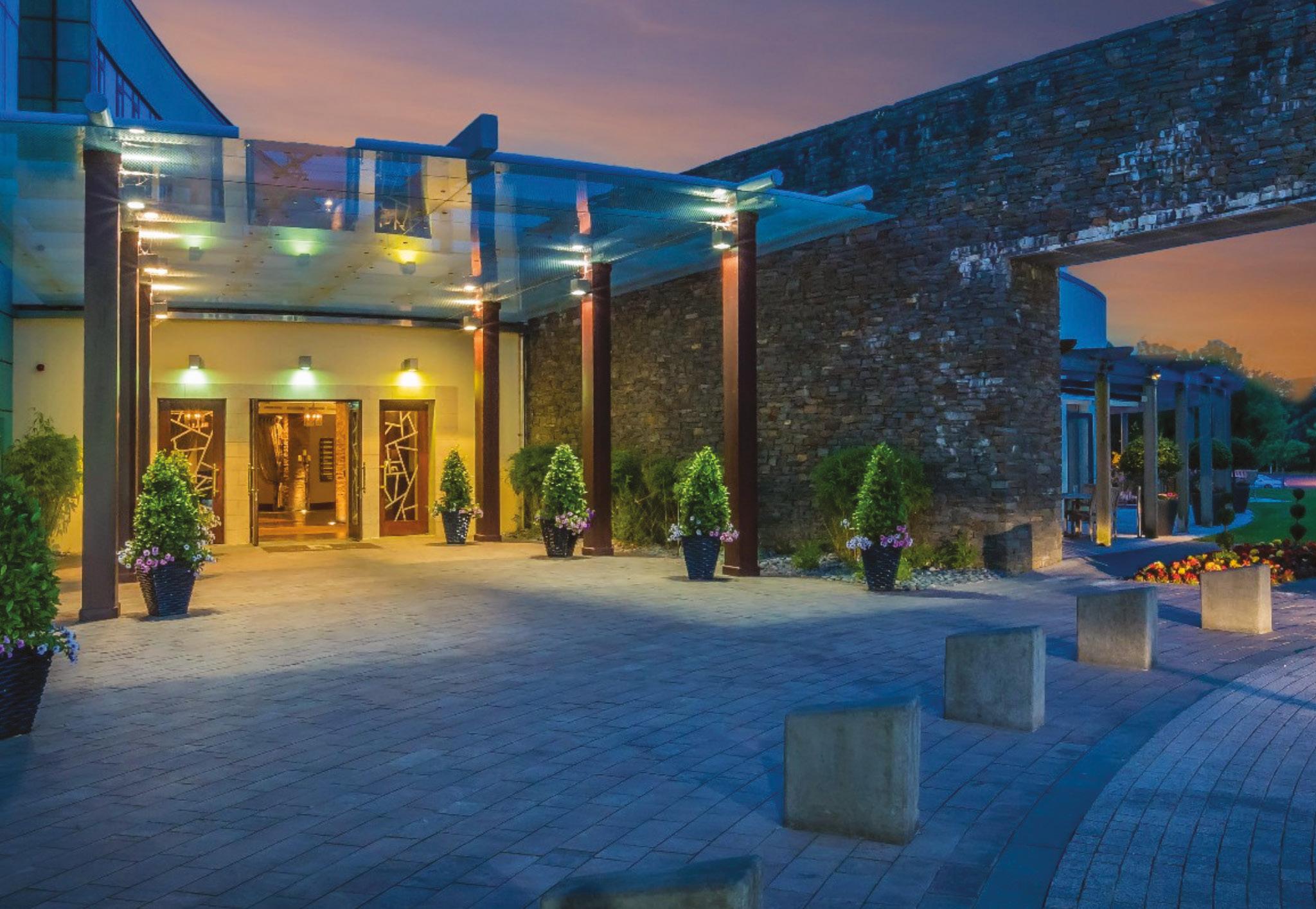
Get connected. Be inspired. Fota Island Resort | Cork 10th - 12th September 2023 For bookings & information visit www.spa-life.international/ireland/ Spa Life Ireland is a live business event with a unique emphasis on education and self-development, designed to motivate and inspire the country’s most senior wellness operators, and the brands that support them, with an immersive wellness experience. Media partner www.spa-life.international/ireland
really good and leave with a smile.”
Storytelling
and experience
Competition jury member and Therme Bucuresti wellness manager Cosmin Ciric is supporting his colleague, Romanian aufguss champion Andrei Robert Serban. He agrees that sauna culture is one to watch. Therme Bucuresti is Europe’s largest wellness and relaxation centre. It is also home to Romania’s largest botanical garden with over 800,000 plants, including palm trees, orchids and other unique species.
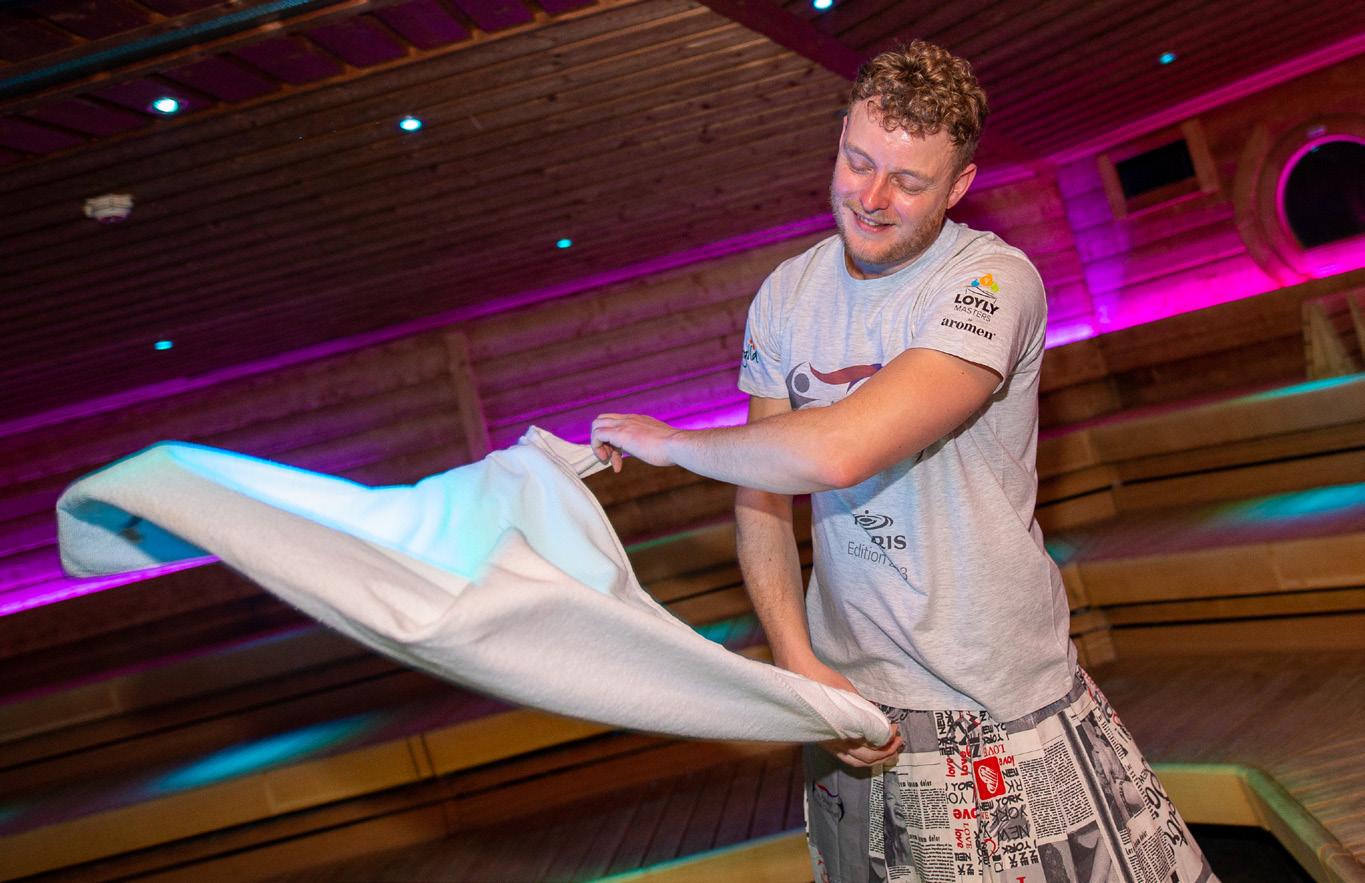
“We welcome over 1.2 million visitors annually to Therme Bucuresti, with around 1,000 visitors every day through our Elysium sauna and steam facilities, where we offer more than 40 daily activities including aufguss in the saunas; scrub and facemasks in the steam baths and AquaShape and other water fitness activities in our pools,” says Ciric.
“Our aim is to present the benefits of the sauna and herbal remedies in a creative setting. We are seeing that aufguss for skin health is very popular, which includes raw honey, black soap, oak infusion, tea ice cubes and more. Aufguss performances for entertainment are also a big draw, as well as aufguss designed for relaxation and for respiratory health,” he reveals.
“Our guests also really enjoy our Rocky Mountains in Bavaria sauna, which gives them a journey from the hills and through the forest, ending in a warming cocooning cabin filled with oranges, cinnamon and nutmeg notes. Our special Maur Saga ritual, inspired from old traditions, uses three types of eucalyptus.”
Amid the riot of activity and spectacle that comprises any aufguss ceremonies, there is still space for stillness and connection. “At night we offer guests The Void,” says Ciric. “It’s an extraordinary experience – a complete-darkness meditation aufguss with an ancient recipe of essential oils to restore the equilibrium, which takes place in our Amazon sauna.”
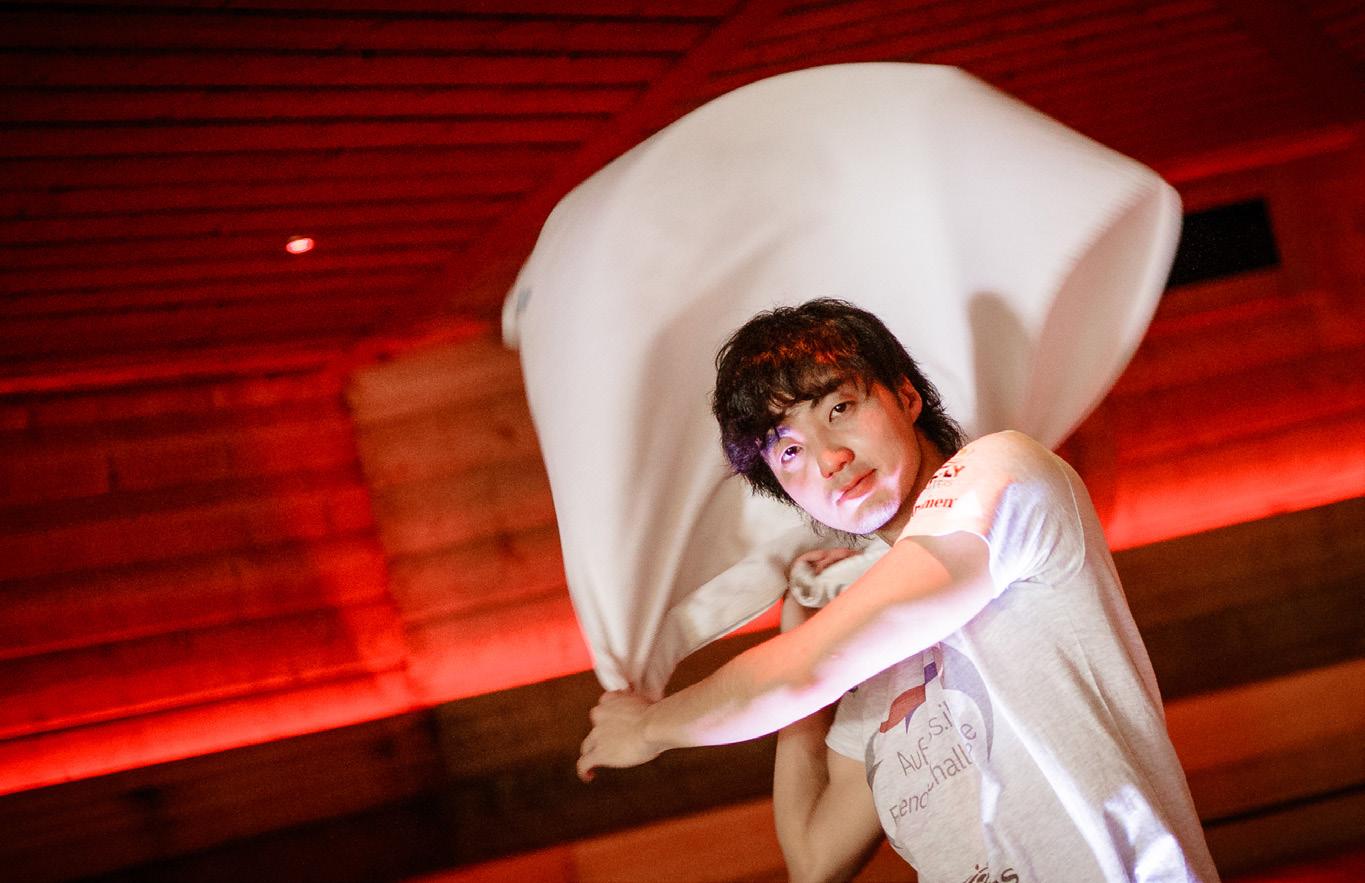
“As well as the therapeutic benefits for your skin and joints, aufguss sessions can deliver so much happiness, positivity and relaxation. You always take something with you from each session – it really gives you that feeling that everything is going to be fine. I am alive! Thank you!”
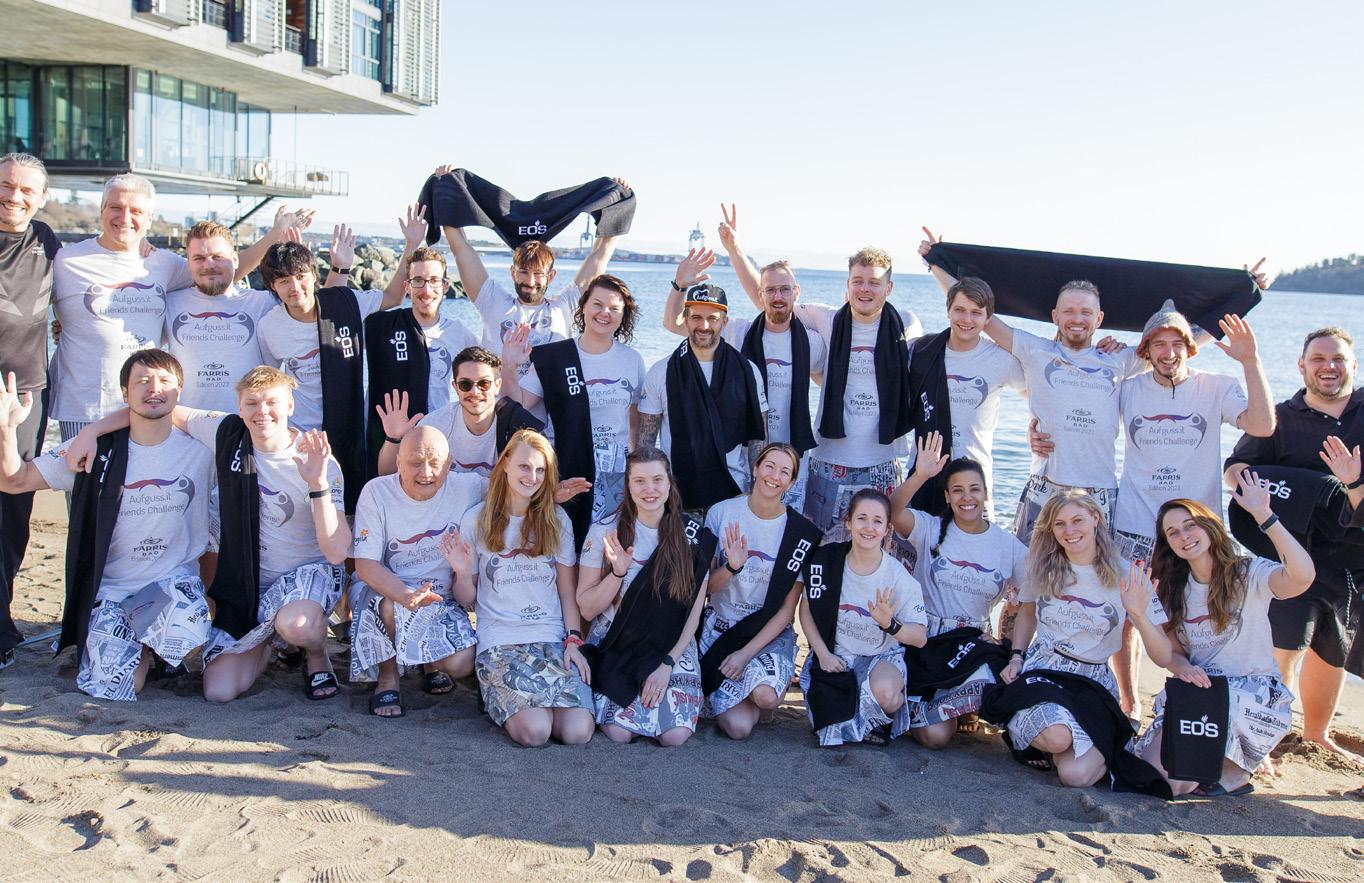
www.europeanspamagazine.com 96
Business Leadership Sauna ceremonies
Right from top: Rene Duyts is a sauna master from the Netherlands; competitors celebrate taking part in the Auguss.it Friends Challenge; 22-year-old aufguss star Ryuki Ikeda from Japan has a growing social media following






UK & INTERNATIONAL enquiries@bcsoftwear.co.uk Sales: +44 (0) 845 210 4000 www.bcsoftwear.co.uk
Courtesy of Breedon Priory
Courtesy of Fairmont Windsor Park Courtesy of Fairmont Windsor Park
Linen Found in the top Hotel & Spa establishments in the world...
Courtesy of Coniston Hotel
The Most Luxurious Spa
THERMAL EXPERIENCES
Nomatter what eye-catching facilities you may have in your spa, none is more central to providing a reason to visit and enhancing your guests’ wellbeing than a thermal suite.
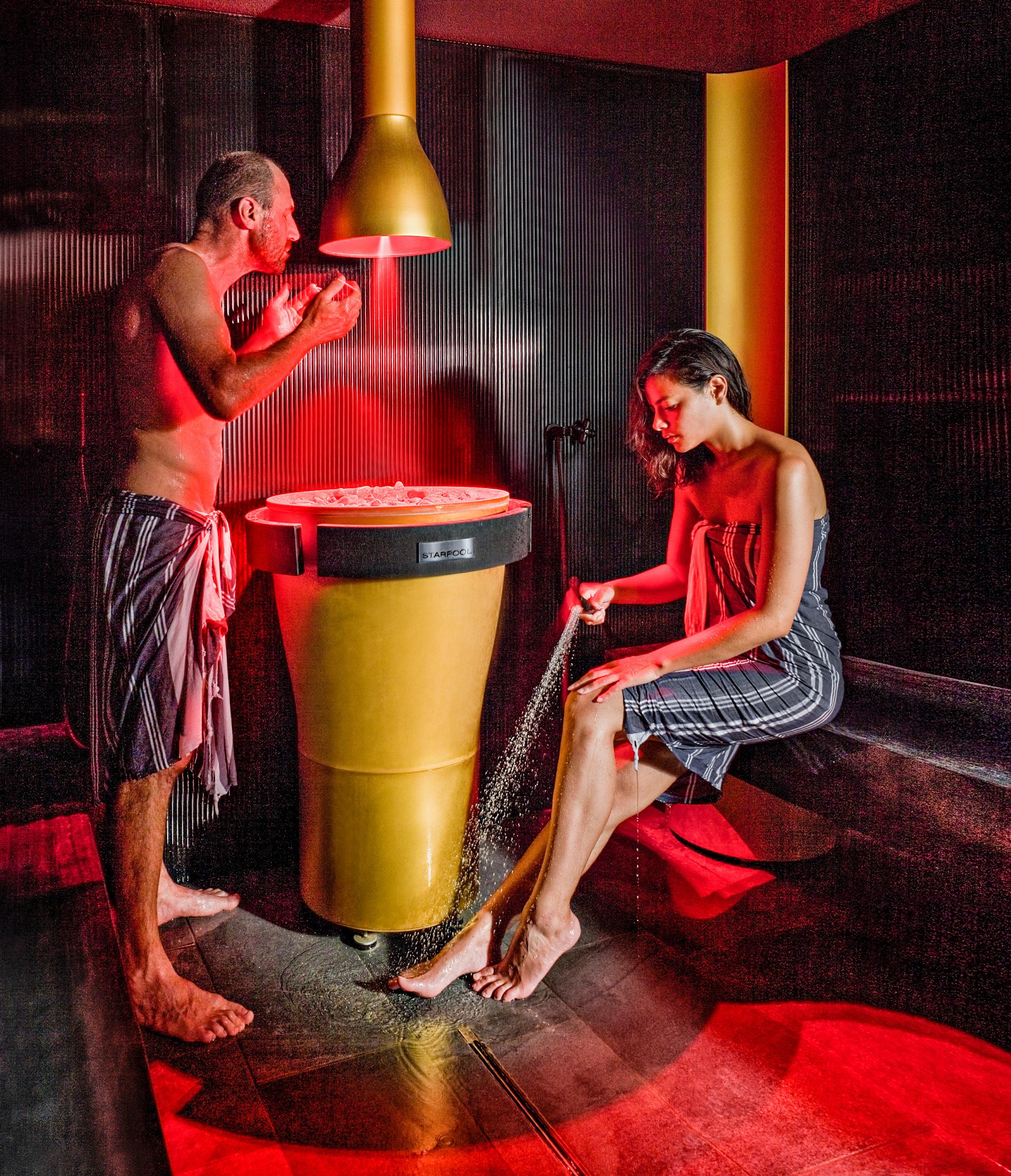
The world of wellness has evolved from the Latin phrase ‘salus per aquam’ -health from water – to incorporate hydrothermal experiences that go beyond traditional hammams, steam rooms and saunas.
From salt inhalation and infrared and halo therapy to aroma-infused aufguss sauna ceremonies and indoor snow rooms, the possibilities for innovative hot and cold bathing are now endless.
However, thermal experiences are also among the most expensive and complex to select and install in the spa environment, so our Expert Guide aims to provide a breakdown of the leading trends in order to make your purchasing decisions more simple.
Key business decisions
From a day-to-day perspective the siting and ease of operation of your thermal zone is paramount, and smart controls are an increasingly desirable element. Running costs are also a vital consideration with some manufacturers now incorporating reusable energy functions to provide ecologically and financially attractive options.
Build quality and durability are other key factors, along with low maintenance requirements and the provision of long-term aftercare by manufacturers in order to minimise downtime.
www.europeanspamagazine.com 98
EXPERT GUIDE TO
Giving guests what they need
Thermal suites are a crucial USP in attracting guests to your spa, but one often undervalued aspect is the provision of nearby relaxation areas where guests can enjoy time to rest as the full effects of their bathing take hold on the body and mind.
In addition, the traditional methods of contrast bathing – exposure to heat and then cold – have moved on from a reliance on plunge pools to incorporate snow showers and entire snow rooms that provide an immersive cool-down environment that stimulates all of the senses.
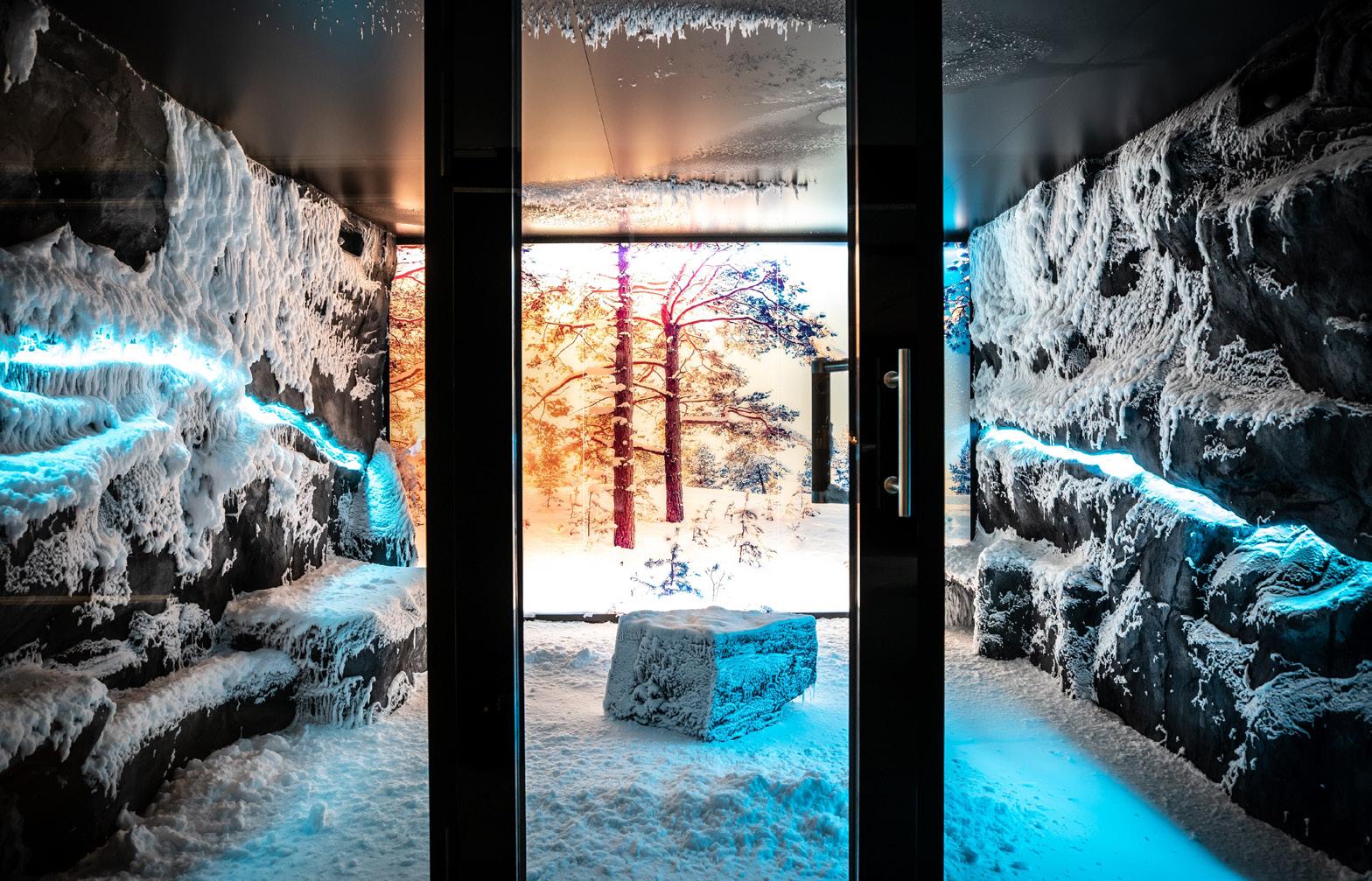
We have asked some of the world’s leading suppliers of thermal experiences to explain what makes them a good partner for spas looking to update, design or install facilities.
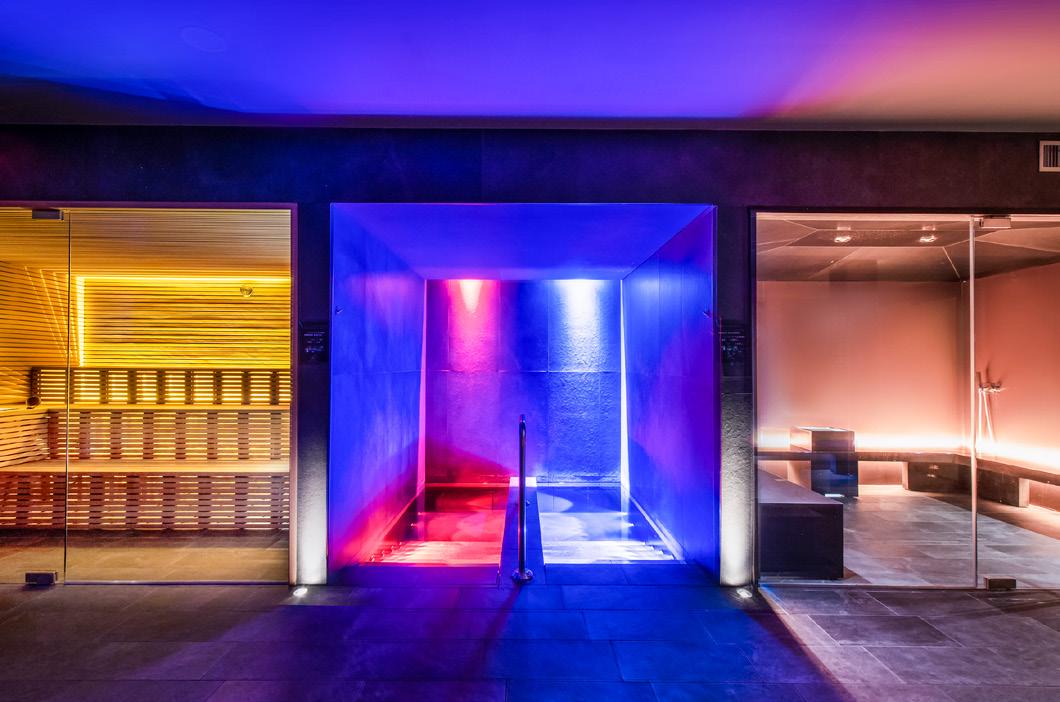

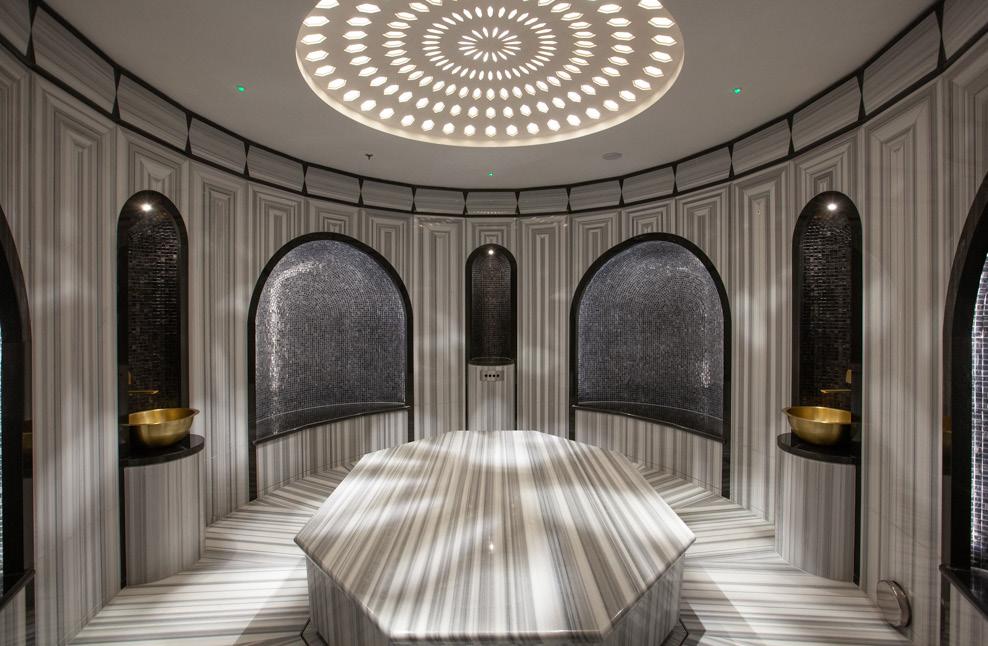
Focusing on the sustainability and cost-efficiency of their products, we also highlight some of the innovative design solutions available and discuss the global trends that are shaping the delivery of thermal experiences in spas worldwide.
European Spa would like to thank the following companies for their contributions:
www.barrandwray.com
www.starpool.com
www.technoalpin.com
www.kemitron.com
www.klafs.com | www.sauna360uk.com
www.designforleisure.com
www.eos-sauna.com | www.dromuk.com
www.myrthawellness.com
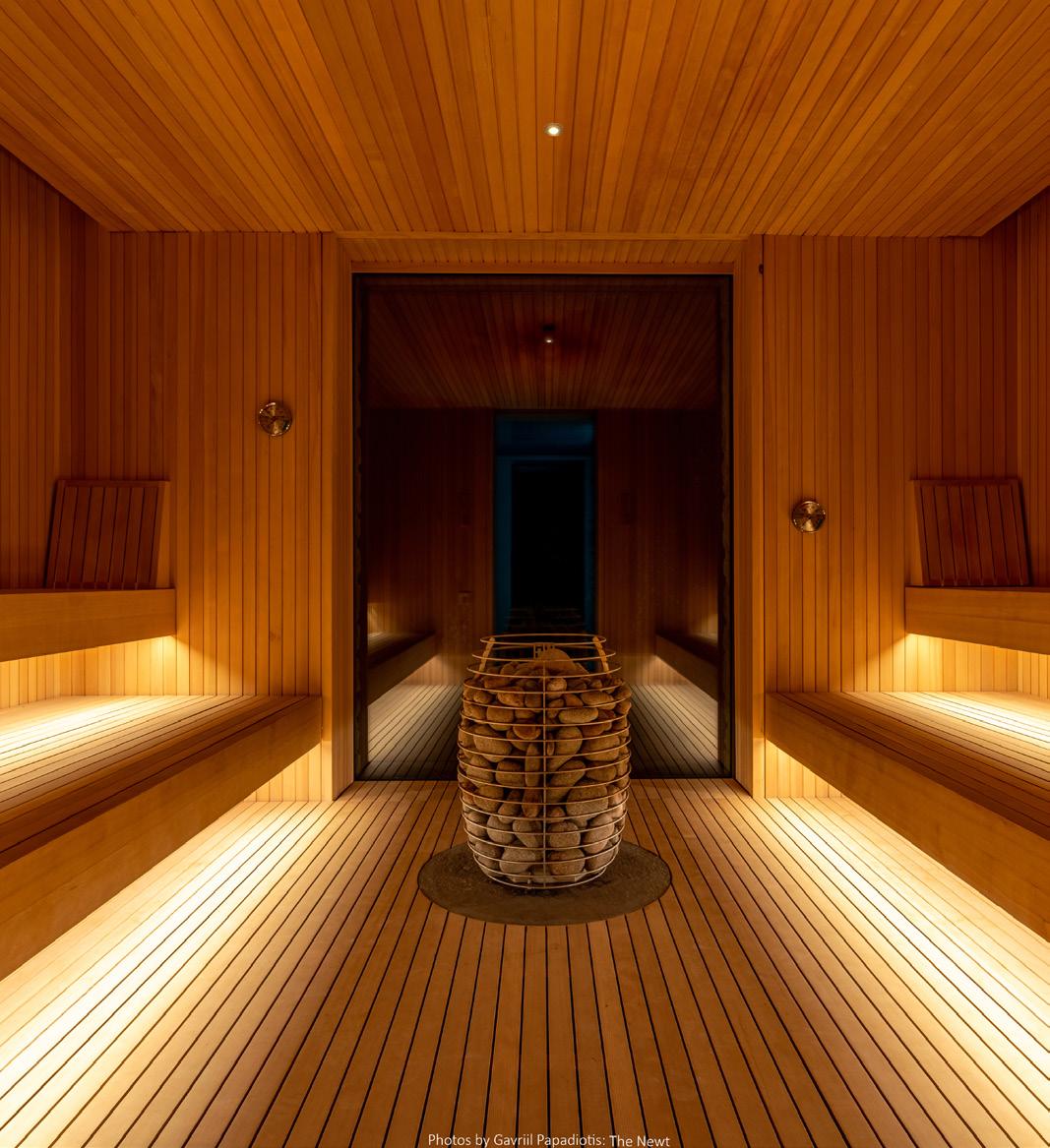
Expert Guide Thermal Experiences www.europeanspamagazine.com 99
Barr+Wray
Founded in 1959 and with offices in the UK and Dubai, Barr+Wray is a world-leading provider of cutting edge spa design, engineering and equipment

What makes Barr+Wray a great partner for thermal experiences?
We have over 60 years’ experience and are a global company with offices in the UK and Dubai. We work with five-star hotel brands to create some of the best spas in the world.

Having our own team of designers and engineers allows us to offer unique and bespoke thermal experiences, pools and more to suit each project. This means our clients (owners, architects and designers) can be as creative as they want to be.
Our well-trained and experienced project teams will help guide you and your team throughout the design stages and through to procurement.
Our services range from feasibility study to interior and engineering design, and supply and install, and we offer an aftersales and maintenance service.
What are the main considerations for spas installing thermal equipment?
There is a lot to consider, which is why it is best to use a company that can help you navigate everything from the installation of plant facilities to the selection of suitable finishes.
Creating an immersive thermal journey is important. Making sure the guests enjoy a mixture of hot and cold therapies throughout their thermal experience to deliver maximum benefits.
From an operating view, facilities that are designed with quality and ease of maintenance in mind will be key.
We treat each and every project individually, allowing us to create unique installations that are specifically suited to their site.
Our years of knowledge and workmanship – renowed globally by operators and developers for our cutting-edge design and quality – means we can create thermal areas that are also built to last.
How does your business help spas to plan their thermal areas?
We offer a five-star Spa Consultancy service including Interior design and engineering design for pools and spas. We work closely with the client’s team (architects, M&E etc), to ensure clear and precise coordination of the design and that a quality package is in place to allow for a competitive tender of the water treatment filtration, pools and thermal cabins.
www.europeanspamagazine.com 100 Expert Guide Barr+Wray promotion
From top: a Turkish hammam at Anantara Eastern Mangroves Spa, Abu Dhabi; a thermal experience room at Sofitel Dubai
Cheryl Hanna Spa sales manager
What are some recent innovations that may be of interest to spa clients?
The combined Finnish and infrared sauna is a fabulous new addition to our bespoke cabins. This is a two-in-one sauna where the user not only benefits from a room temperature of up to 90C, but they can also enjoy infrared technology helping muscular pains and the treatment of bone pathologies.

Operating costs are at a premium for spas, how can Barr+Wray help?
We are continuously looking at materials and plant that assist in energy efficiency and offer quality and value for money. We are happy
to provide cost-saving solutions as part of our design consultancy. Having experience showers, ice fountains and other elements that can work on timers and sensors is great for keeping running costs down. Pool covers are another great cost-saving item that can be added to most existing sites.
What are the trends currently shaping the delivery of thermal experiences in spas?
We have recently seen high demand for infrared cabins and can now combine this with traditional sauna stoves as described above.
Hammams are also now becoming an important offering in spas all over Europe – allowing groups to gather together for treatments. Our recent installation at Fairmont Windsor Park has been a huge success.
Finally, we are designing more salt inhalation rooms in our clients’ wet areas, as people start to understand more about the many health benefits associated with this treatment.
www.barrandwray.com
PRODUCT SHOWCASE
n Salt rooms – we can create feature salt panels and salt rooms that include chromotherapy lighting to assist with relaxation and inhalation salt systems, allowing guests to breath in tiny salt particles that can improve breathing.


n Hammams – these can become the heart of a spa or offer a VIP treatment room for guests. They create a sociable space for guests to gather in groups. If a spa does not have room for a pool, we would recommend a hammam as a great way of delivering a special spa experience.
n Stylish steam rooms – we consider the guest experience and in doing so always look to add focal points and features within our installations, especially when we have rooms that do not have the luxury of glass fronts or views outside.
RECENT SPA PARTNERS
Corinthia Hotels
Accor Group
Intercontinental Hotel Group
Marriott Hotels
Four Seasons Hotels
www.europeanspamagazine.com 101 Expert Guide Barr+Wray promotion
Clockwise from top: Jumeirah Messilah Beach Hotel and Spa, Dubai; a sauna at The Newt in Somerset, UK; the salt inhalation room at Fairmont Royal Windsor Park, UK
Starpool
What are the trends currently shaping the delivery of thermal experiences in spas?

The increase in life expectancy is a great achievement of our time, but the real challenge is to accompany it with a good quality of life, increasing the years in health and reducing the probability of contracting chronic diseases.
Healthy ageing translates into a perfect balance between physical and mental wellbeing, the result of a series of good practices oriented towards preventive health – a daily habit of living well and effective management of the effects of stress.
The world of spas plays its part in this process. The approach to products and services has changed. The priority is no longer the silhouette, but the reduction of inflammation, which is at the origin of many age-related pathologies and disorders, and the strengthening of the immune system.
What makes Starpool a great partner for spa thermal experiences?

Our products embody the desire to keep beautiful and fit and our effective methods of use promote profound inner and outer wellbeing. Starpool consultants use advanced technologies and methods validated by science to create beauty and selfcare spaces that are all-encompassing.
At the heart of each of our solutions is the Starpool Method, which expresses our idea of wellbeing – with the individual always at the centre.
We have everything under one roof: consulting, engineering, technical support and training are the four pillars
sustaining our whole work. Together, and thanks to the people who are part of our reality, we develop ambitious projects based on our clients’ real needs, supporting and accompanying them through every step.
What are the main considerations for spas investing in thermal equipment? Spas should work alongside trusted specialists so that no aspect of the wellness project – from the feasibility analysis to completion, from the business plan to operational planning –is left to chance.
Thermal areas must be functional not only from a technical point of view, but for those who have to work in them. They must be comfortable and
www.europeanspamagazine.com 102 Expert Guide Starpool promotion
This page: All Starpool products are designed to have a positive effect on the psycho-physical wellbeing of guests
From its base at the heart of the Italian Dolomites, Starpool’s wellness concept reflects a passion for quality materials, beautiful shapes and tailormade products
Francesco Rinaldini Business development manager
logistically thought through. Finally, attention should be paid to satisfying the needs of the guest. Every piece of equipment and treatment must have real benefits and contribute to the psycho-physical wellbeing of the individual.
How does your company demonstrate its commitment to sustainability?
‘Be Green’ is our daily commitment for the realisation of sustainable projects. We study the best combination of products for each client’s goals, optimising space and economic resources as well as energy efficiency. We use local raw materials and engage our partners in a process of continuous improvement.
Furthermore, thanks to 50 years’ experience alongside wellness operators, we have developed a series of formats dedicated to the beauty world, each of which aims to be sustainable and advantageous with respect to the available spaces, human resources and investment plans.
How do your services help spas stay ahead of the curve?

We have an internal R&D department and have collected 12 patents and
industrial design models over our years of operation. Furthermore, two years ago Starpool formed an internal scientific research department that validates the effectiveness of all our wellness solutions.
We now have relationships with a dense network of universities and international research institutes to increasingly broaden the knowledge and effectiveness of our products for the individual in stress management, sleep improvement, performance enhancement and longevity.
www.starpool.com
PRODUCT SHOWCASE
n Green Pack – installed as a standard on all our cabins, this features self-closing doors which, thanks to energy management software, prevent unnecessary leakage of steam, maintaining a constant temperature and optimising the consumption of energy, with an estimated saving of 20%.
n Eco-spa technology – the correct software allows for full management of the spa through a remote device, including optimum control of energy peaks, thereby ensuring that the equipment functions with much less energy than the maximum available.

n Sim 4.0 – a unique and innovative type of software in the wellness industry, this allows for the predictive maintenance of the spa and its conscious management, thanks to bi-monthly reports that can provide information about the wellness areas, the guests’ preferences and the spa’s energy consumption peaks.

RECENT SPA PARTNERS
Accor Group Hilton Bulgari
Six Senses
Kempinski Hotels
www.europeanspamagazine.com 103 Expert Guide Starpool promotion
Clockwise from above: infrared heat therapy; a Finnish sauna; a stylish steam bath
Sauna360
100 years of design and manufacturing expertise have made Sauna360 one of the world’s largest sauna and steam brands, with bases in Finland, Sweden and the US

What makes Sauna360 a great partner for thermal experiences?

We start by being very easy to work with. We have a dedicated team that listens to the client before drawing up a custom design. No two projects are the same but the core quality remains. We start with an old-fashioned hand sketch to outline one or two concepts.
The knack is to get the right thermal experience in the best position. Steam, feature showers and ice need to be close to the plant room. Herbal and salt saunas can be well away.
From the doodle we go to CAD drawings where we add the details and interfaces. We can produce realistic CGI’s to assist in pre-opening marketing or to help the selection of finishes. Finally, thorough commissioning and staff training is provided with essence programmes, cleaning regimes and maintenance plans to keep the installation in the best condition.
What are the main considerations for spas installing thermal equipment? Give consideration to the plant space. The staff operating a spa on a daily basis are well-dressed people meeting the public, they do not want to have to turn the equipment on and off in a glorified cupboard. Also, keeping your equipment well ventilated will help it last years longer.
Another factor is to get the balance right of thermal room and relaxation
capacity. Relaxation loungers and seats are often lacking, particularly in a day spa or hotel. Guests are likely to spend equal time in both areas.
How does your company demonstrate its commitment to sustainability?
Our Finnish company has traded for over 100 years and our Swedish company over 70 years. To trade on primarily timber products for this long shows sustainability is part of our DNA.
On the operations side, we provide equipment that can be cleaned and serviced rather than replaced. For example our steam generators are made of elements that are easily cleaned with citric acid. Electrode-based generators need regular replacement which can add up to many thousands of pounds.
www.europeanspamagazine.com 104 Expert Guide Sauna360 promotion
From top: The Langley Hotel, Buckinghamshire and Pennyhill Park, Surrey, UK
Jeff Le Clos
Senior commercial manager
Peter Mitchell Spa and wellness designer
Operating costs are at a premium for spas, how can Sauna360 help them? When energy costs started to spiral we researched and analysed the operation of both steam rooms and saunas, then produced a ten-point plan for each with ideas and practices to carry out.

Our ECO-SAUNA initiative contains innovations new and old. The older ones have become revised with the increase in fuel costs. We have developed a stainless steel plenum that combines the steam, essence and fresh air prior to safely entering the thermal room. This is part of our Wellness System, which creates the ideal steam environment for the bather and for economical operation.
What are the trends currently shaping the delivery of thermal experiences in spas?

We are part of a slowly evolving industry. For over 2,000 years people have created thermal experiences for relaxing and wellbeing – it is an industry of longevity, not sweeping trends. The ‘big three’ – a quality sauna, steam and spa – are still the best experiences we can provide.
Current trends include the use of very large-format tiles in ceramic rooms – beautiful marble-patterned pieces up to 3.2m x 1.2m in size. It’s
not the number of tiles per square metre that is important now, but the square metres per tile.
Glass is also very popular for all thermal rooms. It makes the whole health suite area look spacious, reflecting the beautiful internal finishes, and it creates a comfortable spacial awareness for bathers.
In saunas the range of finishes is extensive. We have created all-black interiors, kelo planking, wide horizontal panels in numerous finishes and shades. Sauna heaters are now available in stylish anthracite or white, designed especially to be viewed through glass frontages. In addition, automatic infusion to the heater adds an element of theatre to the room as well as a boost in humidity.
www.sauna360uk.com
PRODUCT SHOWCASE
n New Line spa cabins – a range of twin sauna and steam cabins suited to luxury suites or VIP areas within exclusive spas, with an array of beautiful floating bench options.
n Sauna360 Wellness System
– we provide a total solution that doesn’t compromise on quality but gives you the highest guest satisfaction and the lowest energy bill with our ECO-SAUNA initiative.
n Steam Plenum – combining steam, essence and fresh air prior to safely entering the thermal room, this is part of our Wellness System, which creates the ideal steam environment.
RECENT UK SPA PARTNERS
Exclusive Hotel Group – Pennyhill Park, Surrey, and South Lodge, West Sussex
The Langley Luxury Collection Hotel Group – The Langley Hotel, Buckinghamshire
The Hut Group – Hale Country Club Spa and King Street Spa, Manchester Rudding Park Spa, Harrogate The Garage Spa at the Morritt Hotel, Co Durham
www.europeanspamagazine.com 105 Expert Guide Sauna360 promotion
From top: Hale Country Club Spa near Manchester; Pennyhill Park, Surrey, UK
TechnoAlpin Indoor
TechnoAlpin Indoor believes a modern spa area must include cold as well as heat – that is why the Italian company has been making snow for 30 years. Its SNOWROOM and SNOWSKY offer a year-round experience for wellness seekers


What makes TechnoAlpin Indoor a great spa partner?
TechnoAlpin Indoor provides the link between heat and regeneration in spas. Our vision is to bring snow concepts to every spa and wellness area. Wherever there is heat, cold is also needed – it is essential to benefit from the heat.
We invite people to experience the cold in a gentle and soft way through SNOWSKY. The snowflakes that fall from its ceiling provide an efficient and attractive way of cooling down. Meanwhile our SNOWROOM is the highest form of holistic cooling as you breathe in -10°C cold air.
TechnoAlpin Indoor offers consulting services as well as the manufacture and supply of snow solutions, with concept ideas, including visualisations and 3D, available to bring installations to life.

What are the main considerations for spas installing snow equipment?
It’s essential to create a thermal area that is practical, functional and an attraction for guests. As well as having proven positive effects on the body, snow inside a spa is not only a visual highlight but is hygienic and resource efficient – one litre of water makes five times its volume in snow.
Modern designs and adaptability are key for thermal installations and we can provide a turnkey solution to make your investment work on every level.
What are the trends currently shaping heat and cold experiences in spas?
Thermal experiences have become more social and mental health has become more important. Cold and contrast
therapy is perfect for strengthening the immune system and also has mental health benefits.
Social bathing has also become more and more popular – the whole world around aufguss and social bathing has experienced a huge uplift. www.indoor.technoalpin.com
PRODUCT SHOWCASE
n SNOWSKY – real snowflakes falling from a compact ceiling unit with integrated RGBW lighting for an extra cold feeling.
n SNOWROOM – a room filled with real snow made of water and cold air. The centralised technical plant controls the snow production and the system is continuously cooled by recooling.
n Heat recovery – 80% of the energy used for the functioning of the SNOWROOM can be thermally recovered and used to heat, for example, a pool.
www.europeanspamagazine.com 106 Expert Guide TechnoAlpin Indoor promotion
Clcokwise from top: A SNOWROOM at Hotel Terrassenhof, Germany; an installation at Hotel Gartner, Italy; the immersive SNOWSKY cool-down
Federico Milan Sales manager, Europe
Kemitron
German spa and wellness manufacturer Kemitron uses only first-class materials to produce its high-tech spa and wellness equipment, which is sold all around the world
What can Kemitron offer spa operators looking to maximise their thermal areas? Our Technico fragrance dosing pump, Standard.Arom Start, enhances the atmosphere in steam baths, rhassouls, experience showers and saunas. We also provide Kemitron Aromee fragrances, which are known for their quality. Hygiene is of great importance in thermal areas, which is why Kemitron Pure Sauna Bench Cleaner removes microbes while being kind to untreated wood.
One of the major factors for thermal installations is sustainability. Kemitron has a reputation for products that are not only of the highest quality, but also have an above-average service life.
www.kemitron.com
Fragrances for steam baths, saunas, whirlpools, hot tubs and experience showers

Cleaner for sauna, spa and wellness areas. Disinfectant and cleaner for whirlpool and spa tubs.
Sauna and spa technology for experience showers, saunas, hamam, steam baths and rhassoul, dosing systems, inhalation systems, lighting technology
Kemitron is a manufacturer of high quality products for spa, sauna and wellness (technology, fragrances, cleaning, cosmetics) with a focus on best quality and workmanship. All products are “made in Germany” and are sold on the international spa and wellness market.
www.kemitron.com
www.kemitron.com
Expert Guide Thermal Experiences E-Mail: info@kemitron.com • Telefon: + 49 (0) 70 24 / 9 50 60 • www.kemitron.com
ESpa_206x120.indd 1 02.03.22 15:16
info@kemitron.com
KLAFS
With almost 100 years of experience, KLAFS is a trendsetter in the spa and wellness industry, marrying innovative design and the latest technologies to manufacture products that are proudly made in Germany
What are the trends shaping thermal experiences in spas?
There are a lot of new trends but also existing modalities that constantly evolve. People today want to understand their own biology in order to improve their health, wellbeing and performance by way of targeted methods. Cryotherapy, oxygen, red light and halo therapy, saunas, infrared cabins and power-napping couches all enrich the traditional spa experience. There is a greater call for private spa experiences as people want to enjoy sauna and wellness in hotel rooms or private spa suites. Conversely, communal bathing is also more popular. Urban bathhouses now come in all shapes and sizes, featuring a wide diversity of rooms with varying temperatures from saunas to steam rooms and hammams, as well as hydrotherapy pools.
What makes KLAFS a great partner to deliver the best thermal experiences?
With a team of in-house experts, we implement the most exclusive and ambitious spas around the globe. From hotels, resorts and health and fitness
clubs to thermal spas and even cruise ships, we deliver holistic, intelligent, energy-saving and sustainable one-of-a-kind spa areas and treatments. Aftersales service is crucial in the hospitality industry, and KLAFS runs a large, well-trained sales and service partner network globally, to guarantee a 24/7 service wherever projects or products have been realised. www.klafs.com
PRODUCT SHOWCASE
n Espuro foam steam bath – a great investment offering a ‘special event’ USP that guests will remember for a long time. It’s a ceremony for all the senses with different bathing phases throughout the experience.
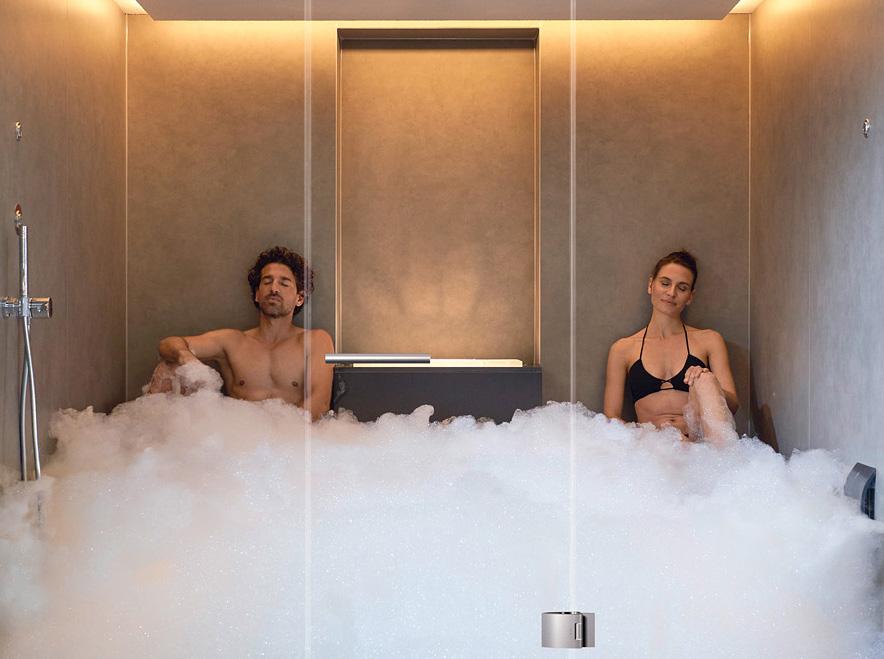
n KLAFS Ice Lounge – turns a cool-down into a memorable event. Lined with illuminated acrylic glass elements, the 16C space has a stalagmite ice fountain at its centre and can be enhanced by Atmosphere by KLAFS, with ultra-high resolution screens that show dramatic nature images: from snowy peaks to drifting ice floes.
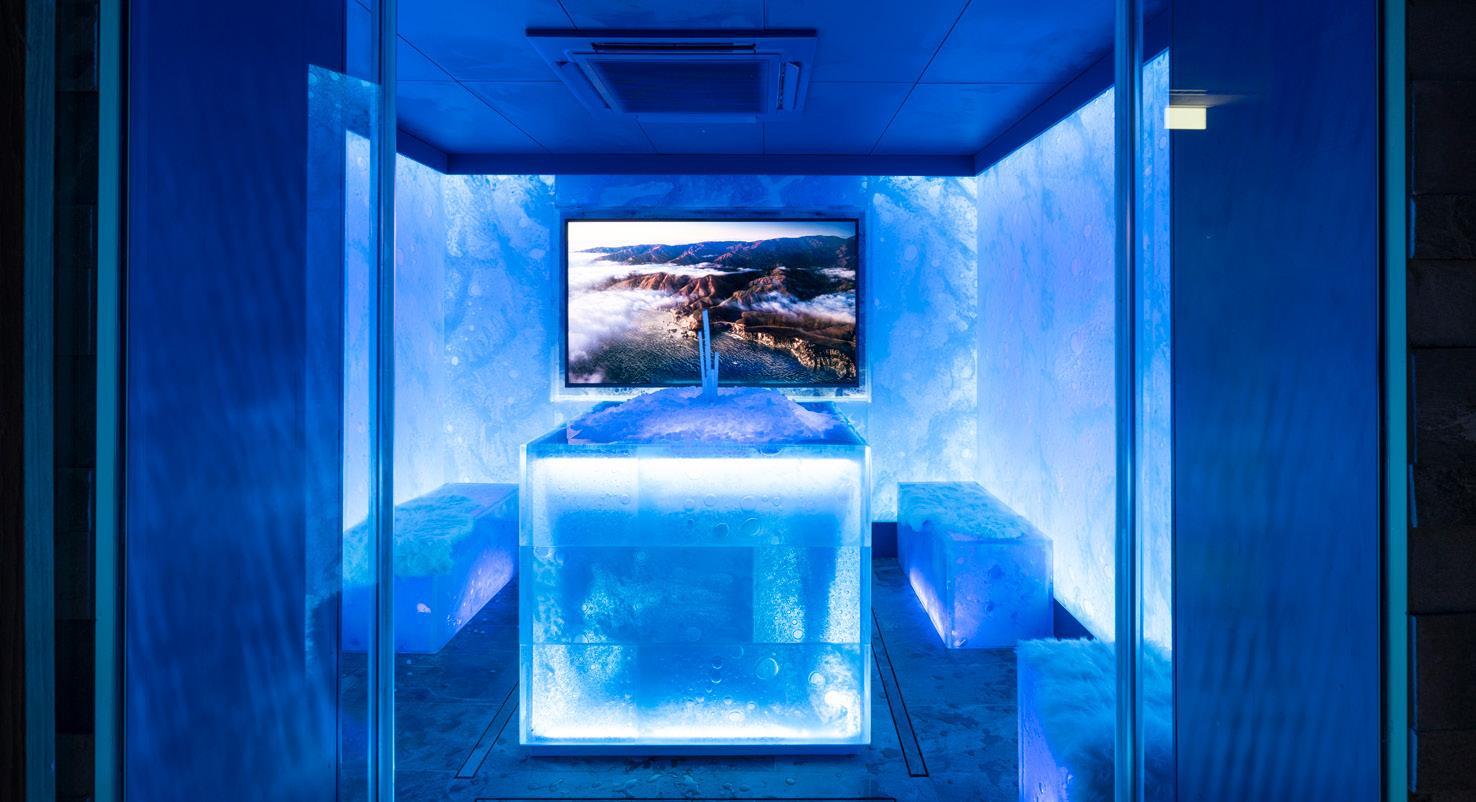
n Sanarium with SaunaPUR – brings variety to the spa area with five different climate zones. A sophisticated automatic climate system provides the perfect sauna experience. Fully automated aroma control brings herbal perfumes to create an aroma bath.
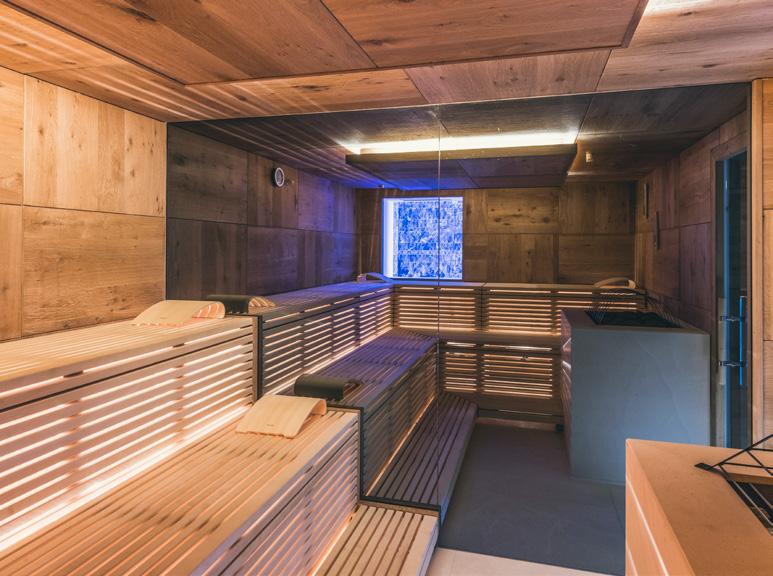
www.europeanspamagazine.com 108 Expert Guide Thermal Experiences
Clockwise from top: Cooling down becomes an unforgettable experience in the Ice Lounge, pictured at Parkhotel Egerner Höfe, Germany; a Sanarium turns one sauna into five climate zones at Schlosshotel Ischgl, Austria; the Espuro foam steam bath offers a ceremony for all the senses
© Hannes Niederkofler
Thorsten Bichler Group director of international sales
DEFINING SPA. SINCE 1928.


As a global manufacturer of premium saunas and spa solutions, we know what it takes to become a talking point: out standing comfort and uncompromising quality. To bring each customer’s unique vision to life we select only the finest materials and craft them with passion and painstaking care. Let us inspire you and help you offer your guests a one-of-a-kind spa experience.

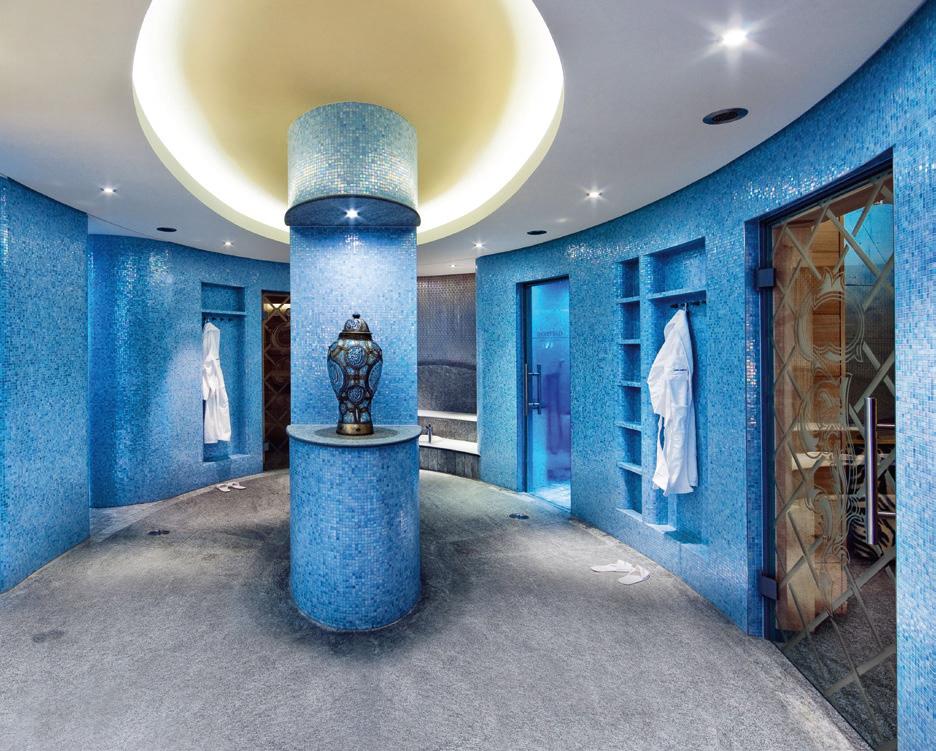
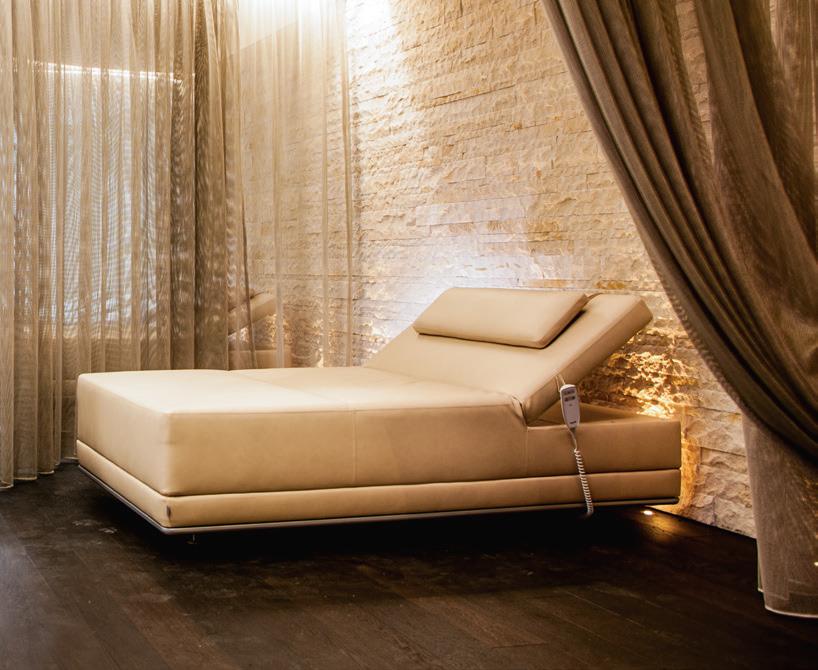
Find out more at www.klafs.com www.klafs.com
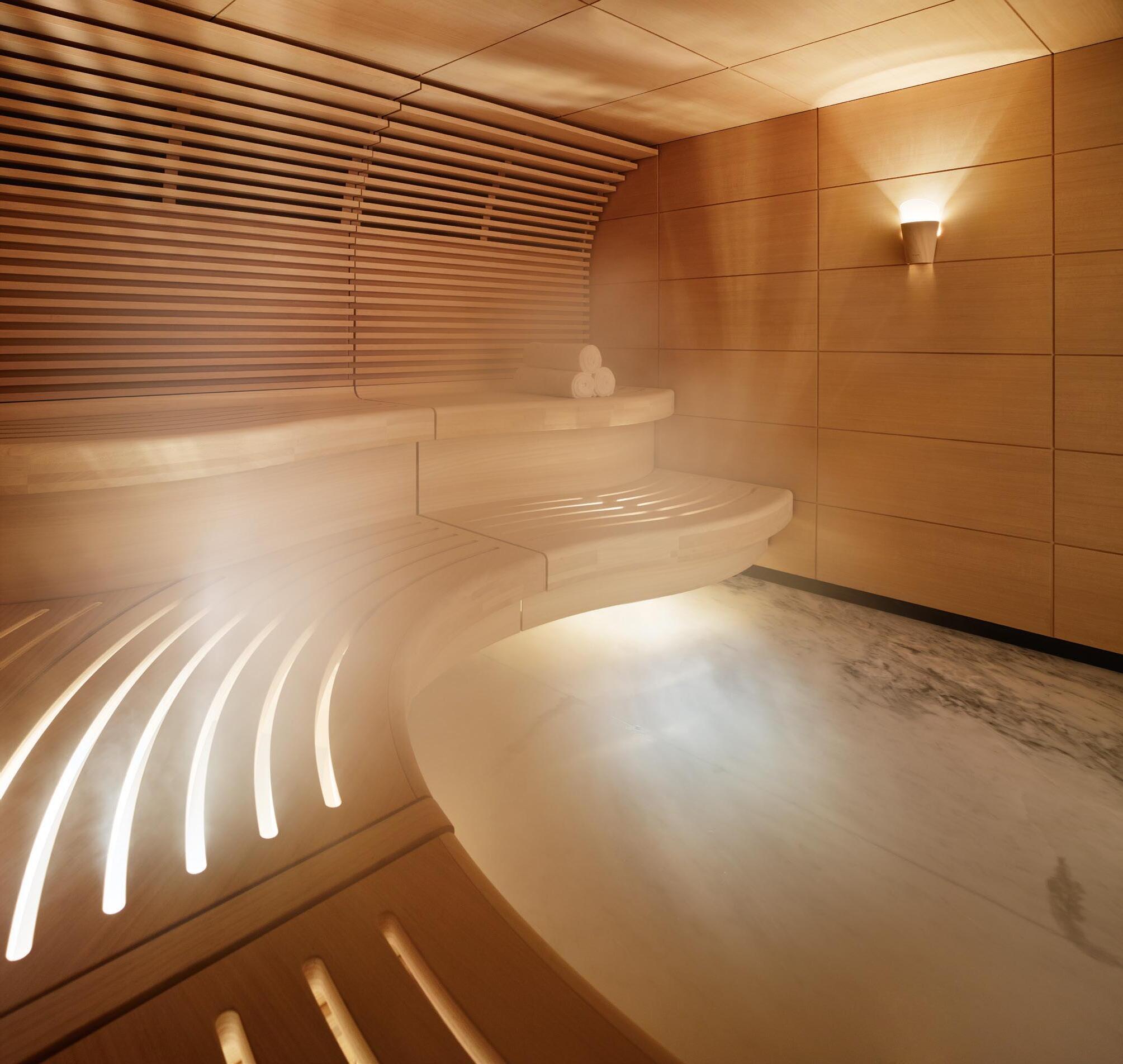 Courtesy of Faena Hotel, Miami Beach. Photographer Nik Koenig, USA
KOKON Corporate Campus, Liechtenstein
Eden Roc, Switzerland
Courtesy of Faena Hotel, Miami Beach. Photographer Nik Koenig, USA
KOKON Corporate Campus, Liechtenstein
Eden Roc, Switzerland
Design for Leisure
What makes Design for Leisure a great partner for thermal installations?
As a design-led company that builds hydrothermal spaces, we keep abreast of new trends, products and technology to ensure we are always at the cutting edge of the industry. With 32 years of experience, there is no one-size-fits-all approach to our work – everything is customisable and unique to the culture and region we are designing for. We pride ourselves on our international experience and make it our business to design hydrothermal areas that respect the region you are serving.
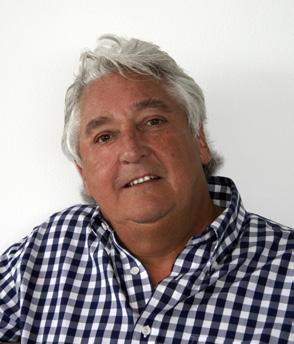
How do you ensure the durability and sustainability of your installations?
We work with the best manufacturers in the world, enabling us to always select the right product for the job. Sustainability is key in an industry that relies upon energy, so we are also exploring solutions that incorporate solar, geothermal and heat recovery. For example, if we produce heat in making a room cold, we then use that for a warm room. Why heat saunas 100% from an electric or gas heater when we can use combinations of other heat sources?
What are the trends currently shaping thermal experiences in spas?

We’re seeing the adoption of a more European-style, social spa model across the globe. Urban communal bathing facilities are filling the gap between local day spas, where the focus is typically on aesthetic and massage treatments, and hospitality-based spas that have added hydrothermal experiences. Access is becoming easier to hot-cold contrast experiences. www.designforleisure.com
PRODUCT SHOWCASE
n Snow rooms – we continue to be excited about our snow room offering as a luxury alternative for hot/cold contrast therapy. The cold air of a snow room is a different experience to an ice bath or cold plunge pool – one that is often far more accessible for guests.

n Relaxation loungers – an aspect of thermotherapy that often gets overlooked is relaxation and rest. We are ramping up our lounger offer in the US and are now providing the KLAFS SWAY Sleep Lounger – its pendulum is designed to sway or rock users into a reviving power nap.
n Event saunas – we are proud to have installed a dedicated event sauna in the US at Resorts World AWANA Spa & Wellness. We’re seeing the popularity of social saunas (similar to the urban bathhouse trend) soar, along with interest in sauna aufguss.

www.europeanspamagazine.com 110 Expert Guide Thermal Experiences
Clockwise from top: an event sauna at Resorts World AWANA, US; a curved sauna bench at Faena Hotel; miami Beach, US; snow rooms offer an innovative cool-down
A hydrothermal spa specialist working in partnership with owners, operators, architects and designers, Design for Leisure has been bringing European inspired best-in-class thermal suite concepts to life since 1991
Don Genders Founder and CEO
©
Nik Koenig
EOS Saunatechnik
What makes EOS a great partner for thermal installations?

The passion for spa and wellness engineering is deeply rooted at EOS, where each product conveys elegance and luxury and forms the basis for relaxation. Every piece combines aesthetics, quality and functionality in equal measure.
Since it was founded in 1944, our company has experienced successful and sustainable development. From being the market leader in sauna heaters, EOS has become a luxury brand for spa and wellness technology, developing a large range of sauna heaters, infrared and steam room equipment, as well as corresponding control units and matching accessories.
How do you ensure the durability and high quality of your installations?
Our recipe for success is contemporary, luxurious, technically innovative products of the highest quality, with a trend-setting design.
Our products are manufactured in Driedorf, Germany, where our team operates to the highest levels of quality. Each individual product is subjected to extensive tests before delivery in order to impress with maximum durability and contribute to a unique sense of wellbeing through a combination of functionality and design.
What are the trends currently shaping thermal experiences in spas?
Entertainment value during perspiration sessions is increasingly becoming a focus. The measure of all this is the event sauna, a venue for unique and powerful water-splash ceremonies.
The experience can be made even more intense with special effects such as powerful lights, music, ground fog, columns of smoke on the heater and fragrances to create a heady and sociable atmosphere.
www.eos-sauna.com
PRODUCT SHOWCASE
n EOS Majesty – a sauna heater that combines majestic design with innovative construction, comprising polished stainless steel in combination with elegant matt black and white quartz stones.

n EOS Credo – an exclusive sauna heater for design-oriented saunas. A distinctive outer cladding is made of black ceramic tiles and the cubistic design is completed by the unique Cubius stones.
n EOS EmoTouch3 – this exclusive touchscreen control unit for sauna, steam bath and infrared allows up to eight cabins to be controlled from just one panel. All cabins can be switched on or off at the touch of a button. Extensive setting options give you the ability to individualise each cabin and optimise their operation thanks to innovative functions.

www.europeanspamagazine.com 111 Expert Guide Thermal Experiences
From top: EOS products elegantly combine functionality, technology and design; the EOS Majesty sauna heater
With extensive know-how and a passion for design, performance and safety, EOS Saunatechnik products set the benchmark for luxurious thermal installations and can be found in more than 80 countries worldwide
Gerhard Form Sales manager, Europe
Dröm UK
Understanding that warmth and water are the basis for life, over the last 20 years Dröm UK has specialised in designing and installing luxury, bespoke thermal rooms throughout the UK, Europe and the Middle East
What can Dröm UK offer spa operators looking to maximise their thermal areas?
We provide honest and expert advice on all technical and design elements of spa thermal projects, helping clients to push the boundaries of their wellbeing space.

As well as our consultancy packages, we also provide Design and Build services and full aftercare, ensuring minimum downtime.
With the resurgence of social experiences, spas are blending different therapies to achieve optimum benefits. We have partnered with Sara Jones of AraSpa Consulting to create a Sound Sauna (pictured) that combines Solfeggio frequencies with chromatherapy and aromatherapy to give bathers an immersive experience for mind, body and soul. www.dromuk.com
Myrtha Wellness
Delivering Italian style and world-class performance, Myrtha Wellness offers consulting and design services to ensure its innovative, technologically advanced products meet every spa’s standards
What can Myrtha Wellness offer spa operators to maximise their thermal areas?
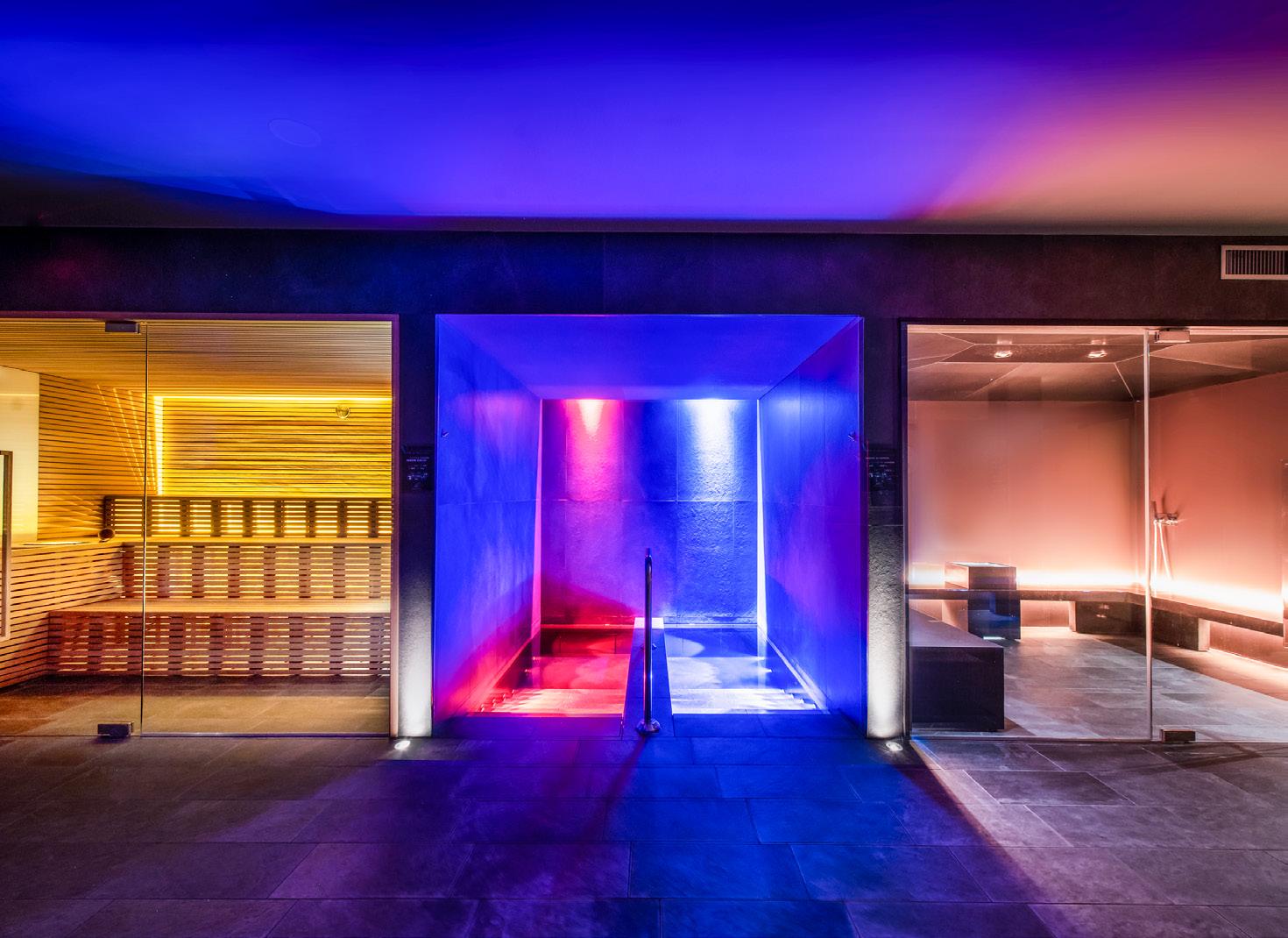
There is increasing recognition of the cleansing, healing and therapeutic properties of thermal bathing, and these benefits are transforming the design and flow of spa interiors.
As a supplier for the last seven Olympic Games – and appointed for Paris 2024 – Myrtha Wellness operates in more than 70 countries and is able to blend the advantages of the various bathing cultures to create truly cross-cultural spa solutions.
Our planning and layout design delivers a sense of opulent spaciousness in even the smallest of spas, while still accommodating privacy where discretion is needed.
Using advanced material sciences, our patented technologies come complete with best-in-class warranties for structure, equipment and waterproofing.
www.myrthawellness.com
www.europeanspamagazine.com 112 Expert Guide Thermal Experiences
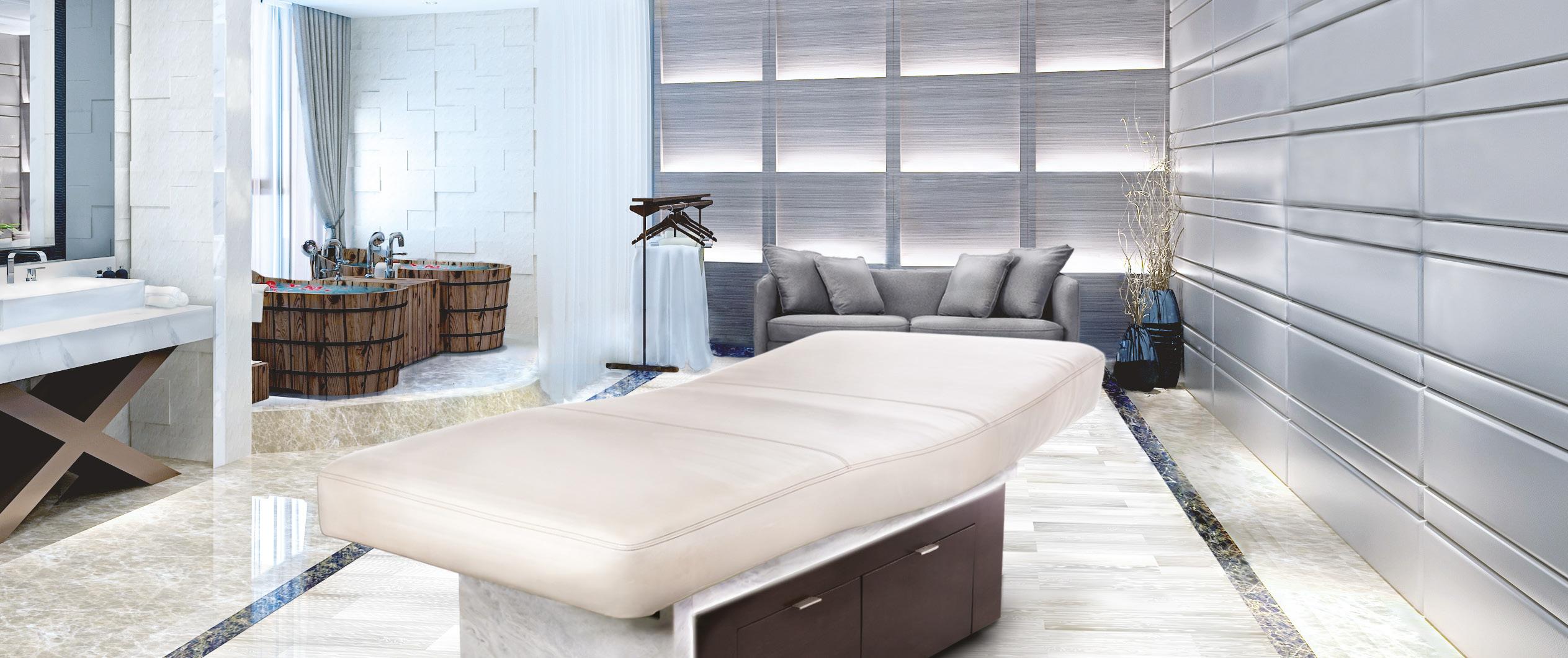



ACQUALINA RESORT AT SPA & RESIDENCES ON THE BEACH · ANDA SPA · ANDAZ SCOTTSDALE RESORT ARIA RESORT & CASINO ARIA SKY SUITES BACCARAT HOTEL NEW YORK BANYAN TREE SPA MAYAKOBA BELLAGIO · BOSTON HARBOR HOTEL · EAU SPA AT EAU PALM · BEACH RESORT & SPA · EDGE SPA · EQUINOX SPA FAIRMONT PACI fi C RIM FAIRMONT SCOTTSDALE PRINCESS FALLING ROCK AT NEMACOLIN FOUR SEASONS HOTEL AT THE SURF CLUB FOUR SEASONS HOTEL ATLANTA FOUR SEASONS HOTEL BOSTON FOUR SEASONS HOTEL DENVER · FOUR SEASONS HOTEL LAS VEGAS · FOUR SEASONS HOTEL ONE DALTON STREET, BOSTON MANDARIN ORIENTAL FOUR SEASONS HOTEL PHILADELPHIA AT COMCAST CENTER FOUR SEASONS HOTEL TORONTO · FOUR SEASONS HOTEL WESTLAKE VILLAGE – WESTLAKE VILLAGE · FOUR SEASONS HOTEL WESTLAKE VILLAGE BEVERLY HILLS FOUR SEASONS RESORT & RESIDENCES JACKSON HOLE TETON VILLAGE FOUR SEASONS RESORT HUALALAI KAILUA-KONA FOUR SEASONS RESORT LANAI LANAI CITY The World’s Finest Spas Choose +1 760-597-2155 ∙ info@livingearthcrafts.com S USTAINABLE B ESPOKE I NNOVATIVE 2016 Sustainable Manufacturer of the Year Built to Order Configurable Hand-finished INNOVATIVE AWARD Award Winner - Equipment 2014, 2015, 2017, 2018, 2019, 2020, 2021 Insignia Waterfall™ info@livingearthcrafts.com
WellnessTrends
EUROPEAN SPA SPOTLIGHTS THE LATEST GLOBAL TRENDS AND TREATMENTS
Edited by Mark Smith
Going wild for swimming
Interest in nature-led experiences and cold-water immersion has boomed since the pandemic as people have sought a deeper connection with the natural world. It appears that this popularity is set to continue as the Global Wellness Summit identified wild swimming in its Future of Wellness 2023 Trends report. The pursuit of ‘blue wellness’ naturally follows on from the research of Wallace J Nichols and his book Blue Mind. Wim Hof can also be credited with the increased profile of cold water therapy
following his recent TV series on the BBC. The demand for wild, cold and cross-country swimming presents new opportunities for spas and more resorts are offering guided wild swimming programmes – from Hotel J in Sweden to Vale de Moses Retreat in Portugal. Innovative spas are adding swimming programmes to their menu or including it as part of a wider mental health retreat. Armathwaite Hotel and Spa in the Lake District, UK offers wild swimming half-day packages, where swimmers

114 www.europeanspamagazine.com Spa Specifier Wellness Trends
We explore the growing trend for wild swimming and look at how spas are embracing this by connecting guests with blue spaces
Spa Specifier Wellness Trends
Main and right: guests enjoy a paddleboard retreat at St Michaels Resort in Cornwall
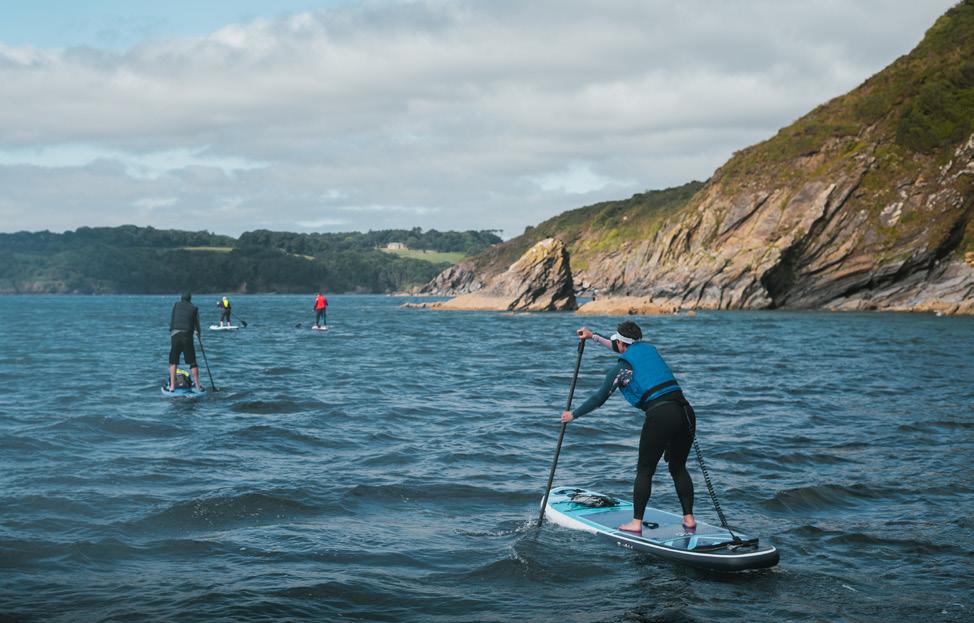

Below right: cold water therapy at The Scarlet hotel, Cornwall
are met at the foot of Bassenthwaite Lake by their instructor for a session in the open waters.
Bedruthan Hotel and Spa and Scarlet Hotel in Cornwall has introduced men’s mental health retreats that combine breathwork yoga and cold water swimming in the Atlantic. Meanwhile, St Michaels Resort in Cornwall has introduced Wim Hof wild swimming retreats that include other water-based retreats and workshops.
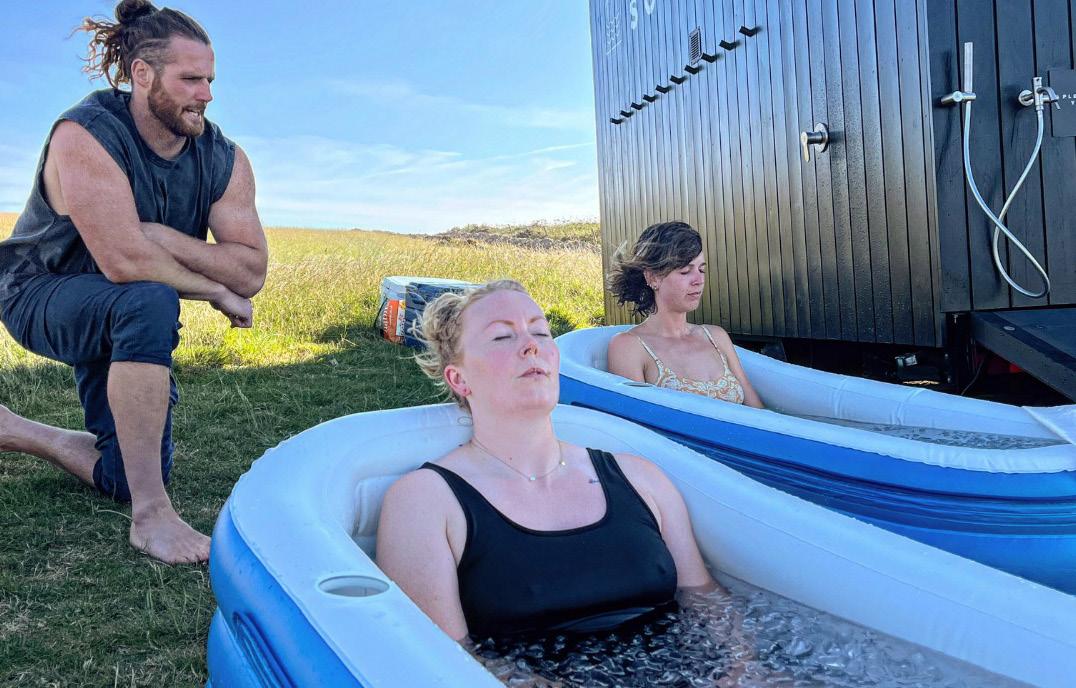
Spas are not limited by their location as natural swimming pools offer similar benefits at spas including The Spa at South Lodge in Sussex, The Scarlet Hotel in Cornwall and Laceby Manor in Lincolnshire. This back-to-nature trend looks likely to continue for years to come and it is an opportunity for spas everywhere.
www.globalwellnesssummit.com | www.wallacejnichols.org www.wimhofmethod.com | www.hotelj.com www.valedemoses.com | www.armathwaite-hall.com www.bedruthan.com | www.scarlethotel.co.uk www.stmichaelsresort.com | www.lacebymanor.co.uk www.exclusive.co.uk/the-spa-at-south-lodge
www.europeanspamagazine.com 115
Akasha Holistic Wellbeing launches Electronic Music Meditation
Akasha Holistic Wellbeing at Hotel Café Royal has partnered with Belinda Matwali to launch Electronic Music Meditation in the heart of London.

A practice founded and created by Matwali, the session is an active meditation consisting of four sections. First a cathartic shaking or movement to hypnotic techno or electro music, then breathing or kriyas to house music. The tempo then moves to ambient and shifts into more gentle pranayama or humming and spatial awareness exercises, followed by laying down for guided meditation with functional music that has isochronic tones to enhance theta brainwaves.
The key benefits of this form of meditation are said to include the ability to focus on the exercise of meditation and truly relax; to concentrate on the present, increase patience and tolerance, and help manage stress or stressful situations.
Matwali joins Akasha’s expert specialists as a spiritual mentor and meditation guide and classes can be booked monthly or as a one-on-one session. www.hotelcaferoyal.com/wellness
Phyto Nectars offers ferment-based nutritional supplements
To support whole-body wellness, Phyto Nectars supplements are specially fermented to enhance nutrient content and the absorbability of their ingredients. Drawing on Chinese and Ayurvedic traditions, the sachet drinks have blends to support resilience, rest, focus and overall radiance.

Fermented foods contain health-boosting prebiotics, probiotics and parabiotics (inactivated microbial cells with health beneficial properties that can help to regulate immune function, exhibiting anti-inflammatory and powerful antioxidant properties). Phytonutrients from plants, myco-nutrients from mushrooms, and fermented functional plants in the supplements, which are fortified with vitamins and minerals, are said to increase absorption of ingredients by up to 20%.
“We have meticulously formulated our blends to optimise potential health benefits,” says Katia Narain Phillips, who co-founded the brand alongside Michael Isted. “We have researched modern fermentation technology to get the most out of our ingredients.” www.phytonectars.com
116 Spa Specifier Wellness Trends www.europeanspamagazine.com
PICK
EDITOR’S
Equitherapy builds connection at Selman Marrakech, Morocco
Selman Marrakech, renowned for its stable of Arabian stallions, has introduced Equitherapy sessions for guests. This personal development workshop adds to the resort’s extensive spa and wellness offerings at the exclusive Chenot Spa.

Equitherapy is believed to help overcome anxieties and lack of confidence, and can help with stress management and emotional control.
The session takes place in a paddock accompanied by a guide. The nature of the horse is explained and some guidance given about how to behave around it. The workshop involves gaining the horse’s attention, building a relationship of trust and learning how to control yourself, your inner feelings and stress in front of the horse, among a range of other activities. The horse is essentially a companion to the guest’s psychological and spiritual development.
A guided meditation completes the Equitherapy session, further enhancing relaxation, wellbeing and building confidence.
www.selman-marrakech.com
Blooming Blends unveils botanical wellness tinctures
Combining ancient botanical wisdom with a modern approach, Blooming Blends has introduced a collection of British tinctures to support, strengthen and balance the body and mind. Each blend features traditional botanicals that deliver the healing power of phytoactives to the body in times of need.
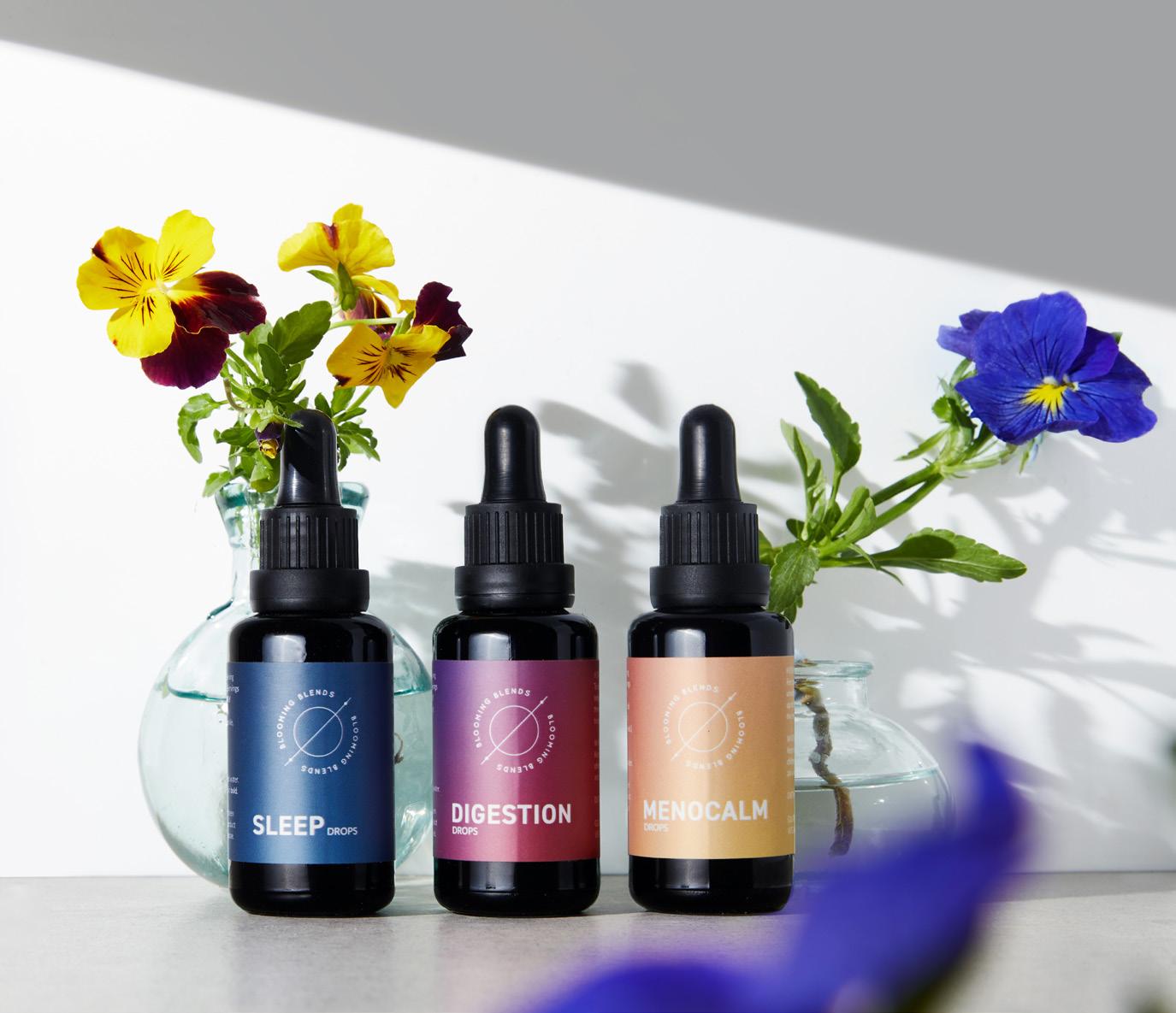
Made in small batches in rural Suffolk, UK, the products are infused with powerful remedial herbs to counteract environmental pollution, mental stress, hormonal imbalance and body fatigue. They aim to improve sleep, digestion, immunity and energy.
The formulations include a pure and potent synergy of British-grown plants with a long history of healing, including rose petals, red clover, rosemary and lemon balm. 100% natural and vegan-friendly, the herbs are steeped in ethanol to hold the plant’s healing properties, which are then distilled to make the tincture alcohol-free. Pure vegetable glycerine is added to create a delicious, balanced taste. www.bloomingblends.co.uk
Spa Specifier Wellness Trends www.europeanspamagazine.com 117
Ashot in the arm for vitamins
We explore what the growing market for IV therapy means for spa and wellness operators
Intravenous (IV) vitamin therapy is the infusion of liquid substances such as electrolytes, vitamins, medicines and nutrition products directly into the veins as a therapeutic treatment.
According to Allied Market Research the global IV therapy market was worth £19 billion (€21.5 billion) in 2020 and is projected to reach £33 billion by 2030, growing 5% each year.
IV Therapy has been growing in popularity in the wellness sector with an increasing number of spas offering this unique treatment. The ability to deliver vitamins, minerals and electrolytes directly into the blood stream is seen as the main benefit to guest health and wellbeing.
“In the last couple of years wellness has very much come into the mainstream and people are more aware of holistic ways in which they might support their wellbeing,” explains Dr Michael Barnish, head of life science at Reviv. “Vitamin IV drip therapy is more accessible and affordable, and people are seeing how it might support energy, mood and sleep, aid detoxification and promote immunity.”
A direct hit
IV Therapy has hit the mainstream media and celebrities, influencers and CEOs are all sharing their experiences of it on social media. This has increased awareness and demand in spas and clinics. But many believe it’s not just popular culture that’s driving this.
“It’s the proven results,” says Dr Craig Koniver, founder of Koniver Wellness. “Oral versions of similar treatments aren’t as bioavailable. Only about 20-30% is absorbed. On top of that it usually takes a little while to work. With
an IV, it’s almost 100% bioavailable, it works almost instantly. You can feel it, and you’re aware of the effects.”
Spas do need to be aware of the regulations surrounding IV treatments as it is now a regulated activity in the UK and requires registration with the Care Quality Commission.
A luxury spa experience
The growing popularity of these treatments is also linked to the delivery and setting of the procedure. While delivered by healthcare professionals, it is possible to elevate it to a premium wellness experience.
“To make IV therapy a luxurious experience, guests are bedded down in comfortable luxury recliners in cosy,
bright and friendly rooms with magnificent views of the scenery of a unique landscape,” says Dr Christina Haeggberg of Lanserhof Sylt. “Administered by professionally trained staff, the installation of venous access is carried out in a relaxed and calm atmosphere.”
Taking this treatment to another level, Grown Alchemist has partnered with Reviv to offer IV therapy while guests enjoy a facial. The concept launched at Nobu Hotel London Portman Square to support skin cell function for healthy, radiant, hydrated skin.
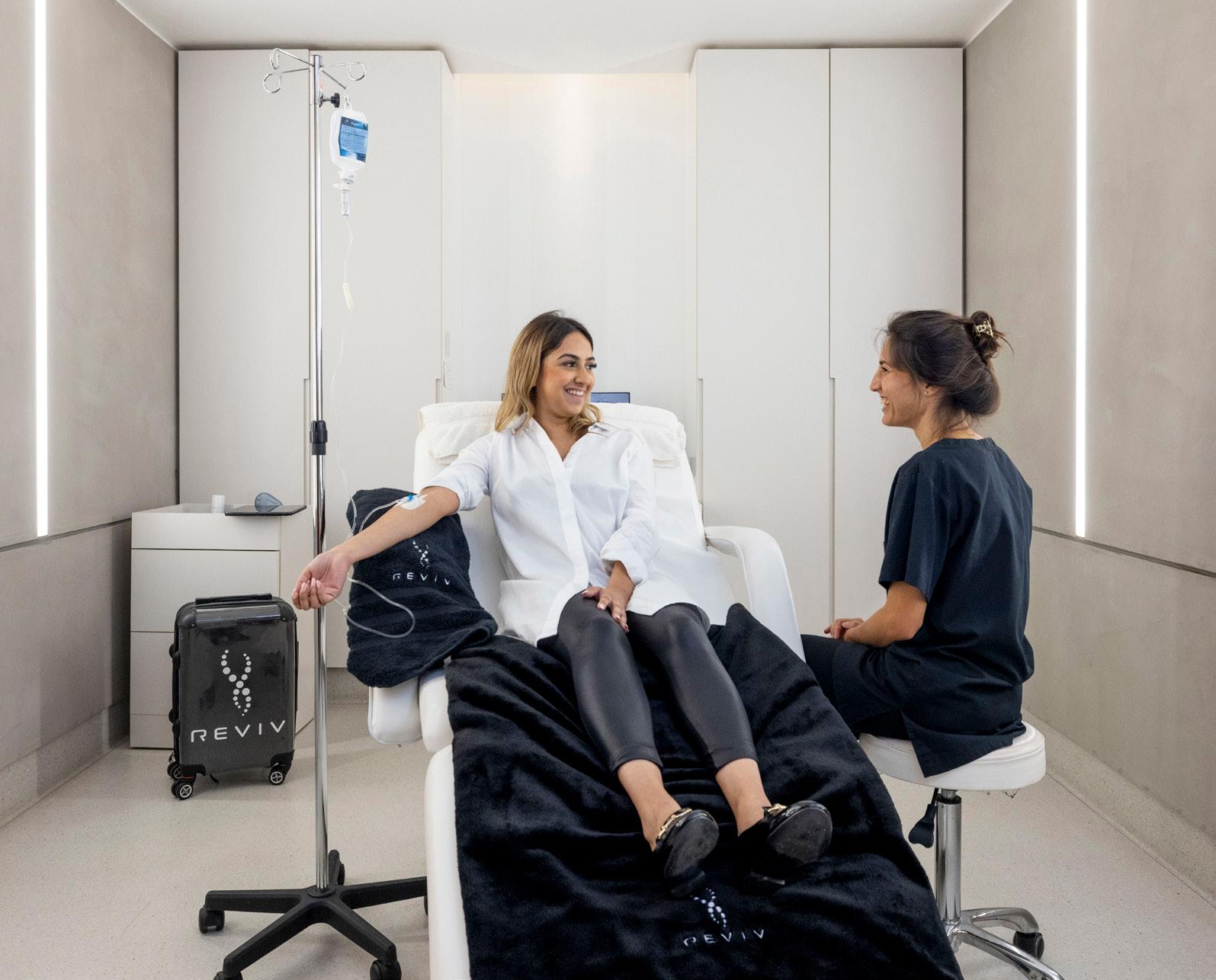
www.revivme.com
www.koniverwellness.com
www.lanserhof.com
www.grownalchemist.com

118 Spa Specifier Wellness Trends www.europeanspamagazine.com
“TOP PERFORMING SPA”
ONLINE TRAINING SERIES
Three on-line, on demand trainings for spa managers, spa therapists and spa receptionists




COURSE CONTENT
Developed by Neil Orvay, an exInvestment Banker, founder of the multi award-winning Sense of Touch spa chain in Hong Kong, 20 year veteran of the spa industry, and a leading global trainer in the fields of communication, persuasion and negotiation, the Evolution-U Spa Academy “Top Performing Spa Series” is the first corporate level business psychology training to be developed for the spa industry, based on the successes (and failures) of a real spa chain, with a 19 year track record.
Running a Top Performing Spa Team
Online training for Spa Managers
This is a “How to” course for Spa Managers consisting of 12 topics spread across 3 modules and covering all the key areas learnt by the therapist and reception teams. Spa Mangers receive all the postcourse resources needed to make sure that team members are using the key skills and techniques taught to deliver top performing spa results!
How to be a Top Earning Spa Therapist
Online training for Spa Therapists
1
DRIVING REVENUES THROUGH SPA RECEPTION
2
3 MODULE
1
The Evolution-U Spa Academy “Top Performing Spa Series” is the first corporate level on-line, on-demand business psychology training to be developed for the global spa industry.
The courses are available in English, Spanish and French


Many highly capable, often introverted, therapists never realise their potential because they have never been taught how to communicate with clients. This results in reduced sales for the spa and lower commission for the therapist. The good news is that this can be fixed with two hours of online training and group practise run by the spa manager.


How to run a Standout Spa Reception
Online training for Spa Receptionists



Spa reception is often overlooked when training resources are allocated, which is why this module may be the most impactful of all. We estimate that a poorly run spa reception, even in a 5* hotel or resort spa, can leak up to 20% of revenue. This training is designed to plug those leaks and make reception the key revenue generator and facilitator of great team dynamics that it should be but so often is not!
DRIVING SPA REVENUES
REPRESENTING THE BRAND
2 MODULE
MODULE
3
ESSENTIAL SKILLS FOR SPA THERAPISTS
HOW TO BE A TOP REVENUE EARNER
ADVANCED THERAPIST SKILLS
1
MODULE
2
MODULE
3

THE BASICS OF SPA RECEPTION EXCELLENCE
DRIVING REVENUES THROUGH SPA RECEPTION
REPRESENTING THE BRAND
SCAN THE QR CODE TO SIGN UP NOW

over 200 testimonials covering Evolution-U’s training content, please visit www.linkedin.com/in/neilorvay
www.linkedin.com/in/neilorvay www.evolution-u.com +852 2201 4545
For
jessica@evolution-u.com
MODULE
MODULE
MODULE
MODULE
SpaStyle
Edited by Wendy Golledge
HYDROTHERAPY FOCUS
Horizontal shower
Aquaform
Developed in cooperation with bbSPA_Group, Aquaform’s Aquamotus horizontal shower is a combined massage and emotional shower in one.
Water jets stimulate the dorsal, sacral and leg areas as they hit the skin with different intensities. Jets can be adjusted to different temperatures for targeted firming and toning.

Up to 16 pre-set programmes range
from 10-40 minutes, offering energising, relaxing or balancing experiences. The Aquamotus has a manual touch-screen control and the shower works with any type of water – fresh, salt or thermal –with no contraindications or damage to the hydraulic system.
Therapists can also create personalised massages by selecting a bespoke combination of water jets, temperature,
pressure and chromotherapy. Jet selections include delicate ‘rain’, the more dense ‘tropical’ and ‘turbine’, which is powerful and targeted. Also new, Aquaform’s Emotional Tunnel offers six experience showers with different types of jets and chromotherapy, plus the option to add aromatherapy and music.
www.aquaformsrl.com
120 www.europeanspamagazine.com Spa Specifier Spa Style
SHOWCASING STYLISH EQUIPMENT AND LEADING-EDGE TECHNOLOGY FOR YOUR SPA
Herbal sauna
Myrtha Wellness
In the Myrtha Wellness herbal sauna, essential oils from dried herbs are diffused into the air to penetrate the skin, revitalising users while inducing a sense of deep wellbeing. To complement the season, the sauna can be configured to feature mountain herbs, citrus fruits or hay.
“Myrtha Wellness is always focused on the project, paying attention to future management and maximum functionality,” says the brand’s director, Stefano Cattaneo.
Installed at the Borgo Lanciano Resort & Spa in the Appennine Mountains, the herbal sauna is an easy-to-install, self-supporting modular system that is said to be up to 80% quicker to install than other saunas. This technology also means there’s no limits on the size of the cabin. In addition, the wooden slats with which the benches are made do not require joints, giving the inside of the sauna an elegant optical effect, and convenience use for spa guests. www.myrthawellness.com/en

Wellness Therapy Collection
Studio Apostoli and Varaschin
A furniture system designed with spas and wellness centres in mind, the Wellness Therapy Collection is based on simple geometries, pure lines and neutral colours.
Designed by architect and designer Alberto Apostoli for Italian furniture specialist Varaschin, Wellness Therapy comprises customisable, modular elements: single and double lounge beds; a sun lounger; the Lettino Relax chaise lounge; and Sasso, a multi-sensory, multimedia side table that diffuses aromas, broadcasts audio, manages RGB lighting on the other modular elements.

Apostoli says Wellness Therapy translates the concept of balance between body, mind and soul into a furnishing system that offers light, colour, sound and fragrance options to create a relaxing experience for spa guests.
https://wellnesstherapy.varaschin.it
www.europeanspamagazine.com 121 Spa Specifier Spa Style
Espuro foam steam bath
KLAFS
Offering spas the chance to introduce an entirely new bathing ceremony to their thermal offer, KLAFS has launched Espuro, the world’s first foam steam bath. The patented bath, which received a Special Mention at the German Design Awards in 2022, provides a unique sensory bathing experience for guests.

Within the cabin, fragrant foam first rises to waist height, accompanied by gentle refractions of light and relaxing sounds. In the second bathing phase, foam lathers up to chest level, infused with scented foam essences. KLAFS’s specially developed plant-based foam pampers and nourishes the users’ heated skin.
The experience finishes with a lukewarm drizzle of warm water that collapses the foam and rinses the user. KLAFS recommends the bathing ritual is finished with a cold shower.
The Espuro foam steam bath offers a new wet area enrichment experience to spas. Because the foam is produced by an integrated outlet and is
carried into the cabin, there is also the option for spas to retrofit Espuro to the ceiling of existing steam baths or other thermal experiences, such as mud baths, hammams or caldariums.

KLAFS’S hygiene concept ensures water-bearing pipes are rinsed and disinfected between every session. The foam is degassed by special nozzles and does not reach the area in front of the steam bath for maximum hygiene.
www.klafs.com
122 www.europeanspamagazine.com
Spa Specifier Spa Style
EDITOR’S PICK
ShowerVision
Werner Dosiertechnik
Experience showers are a spa staple, but ShowerVision elevates the experience for guests by adding a video system to the more usual features of light and sound effects.
ShowerVision is fitted with a 7’5” full-HD monitor that is integrated in a waterproof bonnet and sealed by a glass door. Different video sequences are pre-programmed so that as spa guests activate their selected experience – for example, tropical rain – the video sequence starts simultaneously, in this instance a tropical beach.

In tropical mode, the experience is further enhanced by fruity, lively aromas, the sound of waves and a warm, red light.
Other modes include fog and waterfall. In standby, the screen is illuminated white and the HD monitor sequence is set to a sunset at sea.
www.werner-dosiertechnik.de
Iglu Daybed
Ramón Esteve for Vondom
The Iglu daybed, created by Ramón Esteve for Vondom, is inspired by the renowned American architect Buckminster Fuller’s mid-20th century geodesic domes.

With strong geometric forms on the outside but softer lines and shapes on the inside, the daybeds are a statement piece that would make an ideal addition to a spa garden or an outdoor relaxation area.
The domes are formed of linked triangles, connected by a light fabric that provides an interesting and ever-changing configuration of light and shade from inside.
Founded in 1991, Ramón Esteve Estudio de Arquitectura executes architectural and interior design projects that are said to be characterised by harmony and serenity.
www.vondom.com/designers/ramon-esteve
Spa Specifier Spa Style www.europeanspamagazine.com 123
SHOWER SPOTLIGHT
Zerobody Cryo – a new method of cold bathing that keeps clients dry Starpool
Zerobody Cryo is Starpool’s first foray into the world of cold therapy. A new solution for spas looking to offer cold treatments and all their associated benefits, it allows users to have what is essentially a cold dry flotation session.
Floating inside Zerobody Cryo allows clients to comfortably experience all the benefits of intense cold without the shock factor of traditional cryotherapy, such as ice bath immersion.
The benefits of cooling the epidermis are well documented and range from relieving muscle and joint pain to stimulating the production of endorphins to lower stress levels.
Starpool has adapted its Zerobody Dry Float flotation system to create a product that reproduces all the benefits of cryotherapy in a less invasive and


www.ellisons.co.uk
aggressive way. Clients can gradually access cold therapy in a manner that isn’t possible with water immersion.
Zerobody Cryo operates at 4-6C. A patented membrane envelops the body, without getting the user wet, wrapping around them in a uniform way to ensure the most effective transmission of cold. Recommended session times are between three and ten minutes, depending on the client’s health goals.

For increased income generation, Zerobody Cryo sessions can be combined with other treatments, such as infrared, dry float or sauna therapies. Zerobody Cryo costs approximately one euro per hour to run and requires minimal therapist input – a well ventilated room is all that’s required to prevent the chiller overheating.
www.starpool.com
124 Spa Specifier Spa Style www.europeanspamagazine.com
CRYO INNOVATION
Cabo fireplace
Planika
Planika’s freestanding BEV technology fireplaces burn bioethanol vapours – a net-zero source of energy – meaning they can safely be used in or outdoors. The ethanol vapour technology burns without any smoke, smell or ash and the combustion process is controlled by numerous safety sensors, meaning it’s ideal for creating a cosy atmosphere in any area of the spa.
The Cabo automatic ethanol fireplace is free standing with six different flame heights and an eight-hour burn time. Three different finish options include Daze and Laurent by Cosentino, made of highly durable sintered ceramics, quartz and glass; and Gris, which has a metallic finish.

The Cabo can be controlled remotely or by a dedicated app and a tempered glass shield provides protection for the flame from strong wind if positioned outside.
www.planikauk.com
‘Chubby’ furniture
Sancal
Chubby furniture started as an influencer-led interiors trend, but it is an ideal style for spas looking to create a distinct but cosy lounge area.
Our favourite is the playful Link & Loop range from Spanish furniture brand Sancal, which has collaborated with Dutch design studio Raw Color.
Link & Loop includes the Link sofa (right), which is made from interconnected tubes strung together. Each module resembles a giant squishy chain and each of the links is available in a range of six plain colours or two multicolour versions – the speckled Kvadrat x Febrik Sprinkles collection.
Soft and tactile cylindrical Link poufs add to the effect, according to Raw Color founders Daniera ter Haar and Christoph Brach, who say that their addition can “create new joyful ways of sitting”. www.rawcolor.nl | www.sancal.com/en/link-and-loop

Spa Specifier Spa Style www.europeanspamagazine.com 125
If
you would like your new products to be featured in European Spa’s Spa Style, email:
wendy.golledge@spapublishing.com
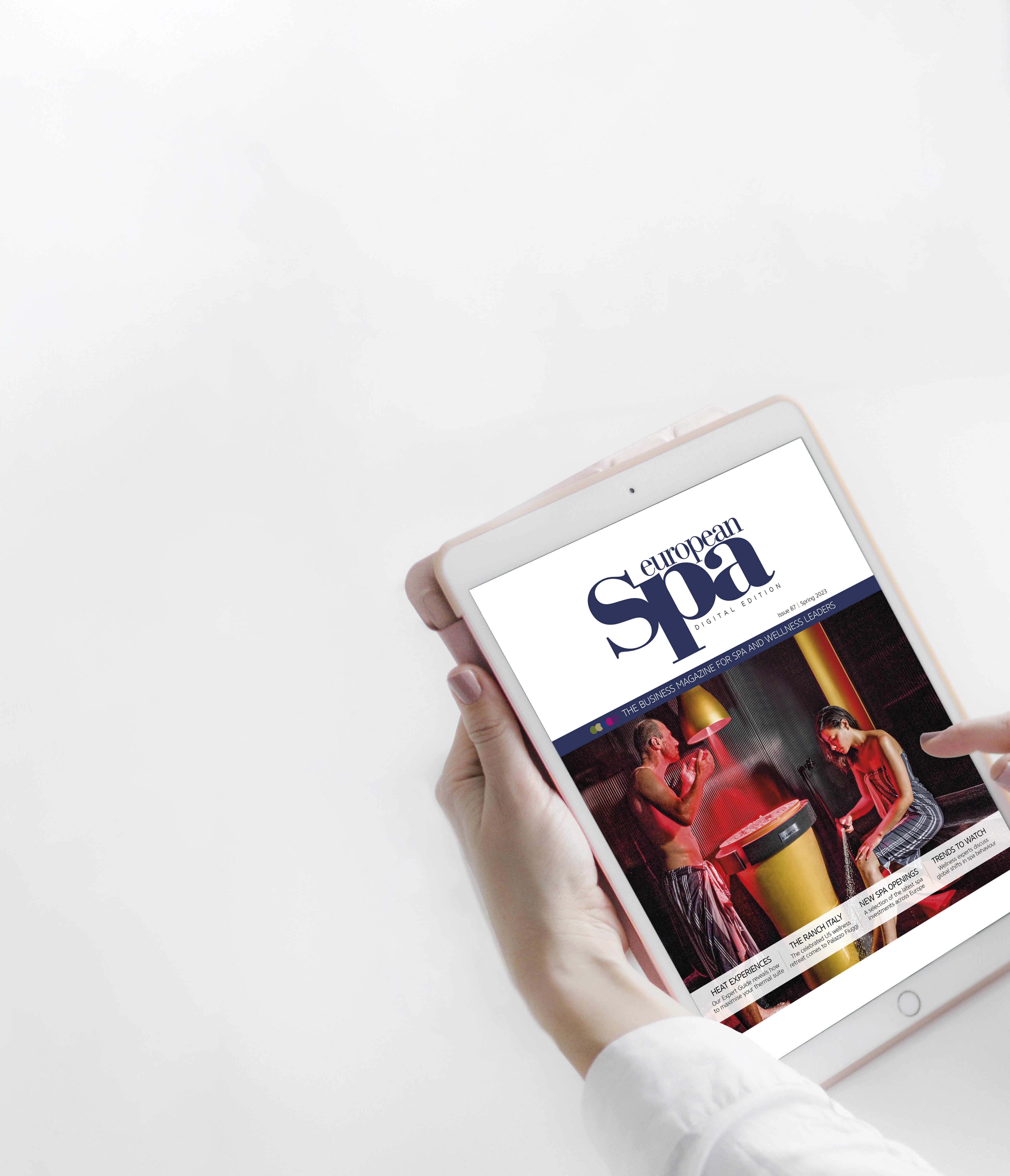

Celebrating leadership and spa industry growth European Spa is the no.1 magazine for spa and wellness leaders Stay ahead with the latest spa industry news, projects, concepts and innovations SUBSCRIBE FOR FREE Join our global wellness community now www.europeanspamagazine.com www.europeanspamagazine.com/subscribe www.facebook.com/ europeanspamagazine www.twitter.com/ eurospamag www.instagram.com/ eurospamag/ https://www.linkedin. com/company/ european-spa/