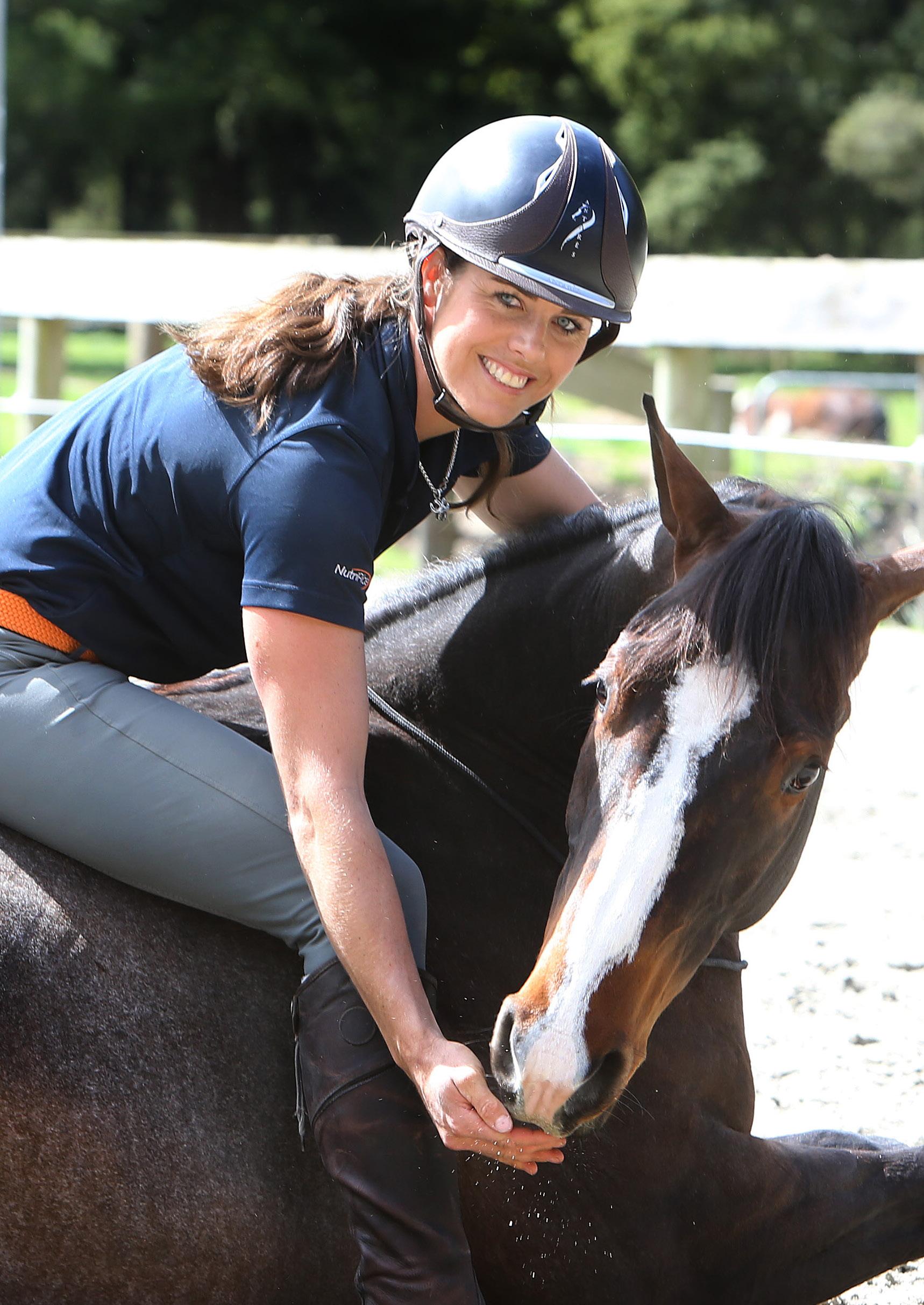
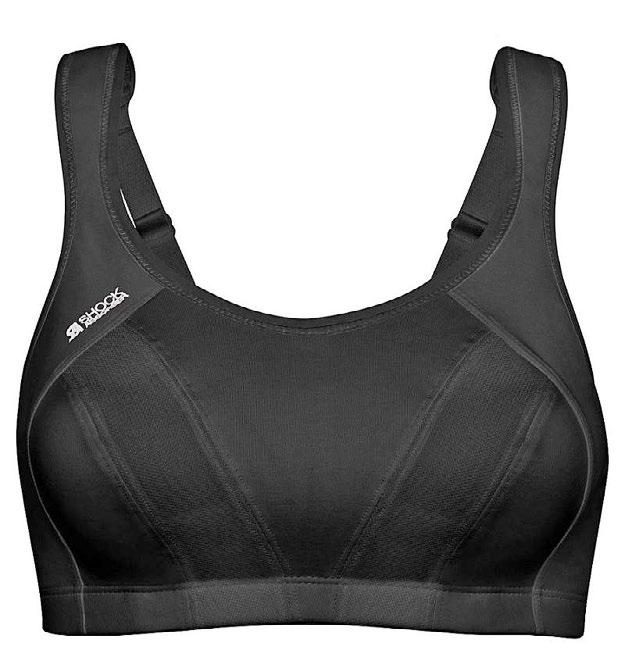
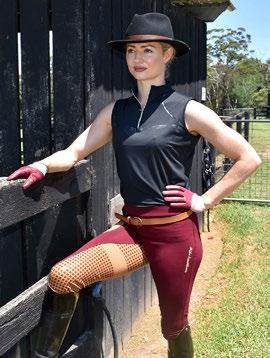
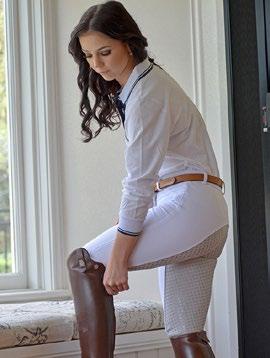
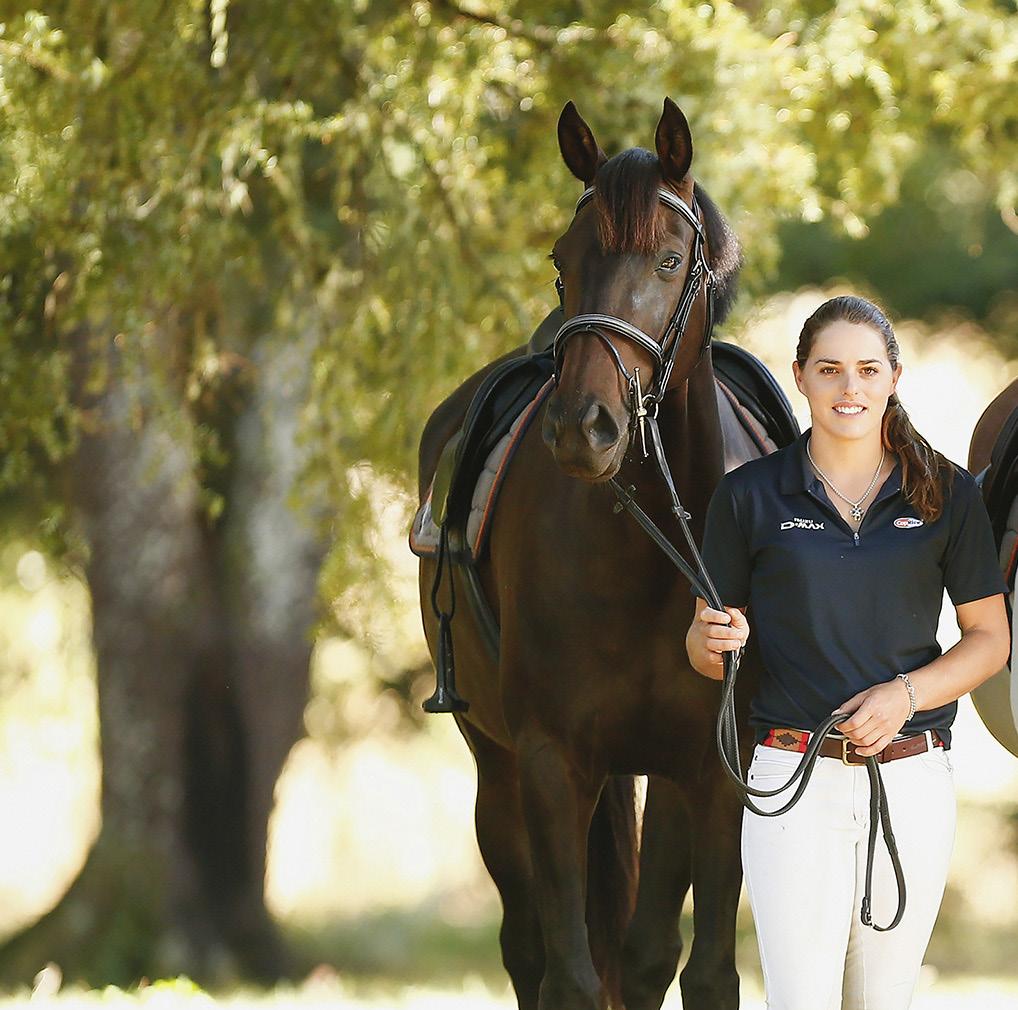
HV SUBSCRIBER OFFER 10% OFF all Larissa Sleeveless
Use code: HV10
PUBLISHER’S LETTER
From the Horse’s Mouth
With Fiona Todd
For those of you that have followed the journey of HorseVibes over the past few years I am proud to say that under Candy Baker’s stewardship the magazine has grown into something very special.
March represents a time of change for us and from April we will be asking you for a small paid subscription if you would like to continue to enjoy HorseVibes.
The commitment of the Equestrian Hub – which is the umbrella business for HorseVibes - is to always add value and by moving to a paid subscription we are able to help businesses grow by giving them a platform to promote their products at affordable rates by allowing us to offer you, our readers, special prices not available elsewhere.
Plus, of course, we will to continue to up the ante on our already fabulous editorial content. Which brings me
to March. We have an exciting TransTasman flavour this month. New Zealand is famous for punching well above its weight horse-wise, and for this edition Candy has interviewed the extraordinary Vicki Wilson who is making history by travelling to Kentucky for the third year in a row to defend her title as a two-time winner of the Road to the Horse Colt Starting Championship.
Jane Camens made us all envious with her Glenorchy Globe Trotting ride. And
in January Candy presented at New Zealand’s International Spirit Horse Festival on essential oils and rescue horses.
We also have a new columnist. Welcome to the team Charlie Brister. Charlie is an eventer, coach and horse trainer, and allround self-deprecating horseman. We’re sure you will love Charlie’s light hearted approach in his column Brister’s Brief.
Also new is our Training Tips column brought to you this month by dressage rider and coach Nicole Tough. On My Soapbox features US Equine Physiotherapist, Bryn Anderson, who suggests that worldwide we start horses too early and push them too hard.
Jane Camens has also had a chat with Angela Davison, The Horse Herbalist. Having used these products for many years, I am an ardent supporter of this natural practitioner who works with the horse’s energy and spirit.
There are plenty of benefits for you to subscribe during March, including entry into a $500 cash draw, a gift voucher for $25 off your next saddle purchase from The Saddle Hub, plus prize draws and more.
Here’s to a happy HorseVibes future!
Follow this link to provide us with feedback, advertise or to contribute to the next edition of HorseVibes.
COLUMN
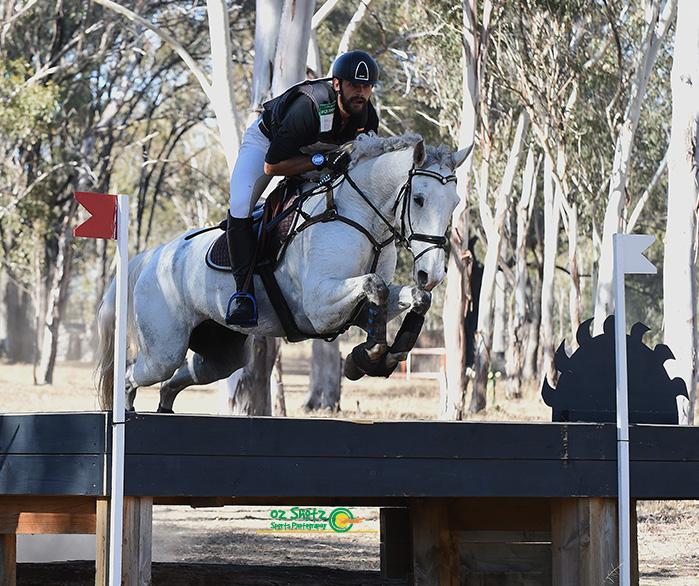
Brister’s Brief
Repeat after him: Dressage is essential. Our new HorseVibes columnist, eventer CHARLIE BRISTER, gives us the low-down on why we should stop complaining and just DO IT.
Dressage is important. Dressage is essential. Dressage is crucial. Every eventer on the planet has heard that nightmare refrain.
It took years of competition until I could think about a 20m circle and a leg yield without grimacing. But to be honest, now I’m over the moaning, hearing other competitors complain is pure gold!
I know I’m not the only person out there who’s had or has a perception bias against dressage but now I understand how it can help make everything so much easier. (I do, truly.) Rewind a couple of years to my first eventing competition, when I was 13.
As a primary school kid I would ride young racehorses in pre-training for my mother around the farm. Aside from the pre-training my weekends were spent riding with my Irish family connections wildly across paddocks and jumping anything and everything in our way. That wild riding certainly developed ‘stickability’ and pluck. But there was no finesse.
‘ ‘ That’s where the dressage comes in. If only there was a way of making your horse jump better without it…
There I was armed with my eclectic equestrian skill set, when my mother decided on putting me in as a late entry into Oberon horse trials. (Notice I haven’t yet mentioned dressage or show jumping lessons or training days, or, or, or…that was all to come after my first competition…to be honest I don’t advise this approach.)
At the time I understood the idea of a dressage test just as well as a 13-yearold boy understands women. Luckily, one of those has improved since then. On the morning of the Oberon trials, I
went out to the dressage arena and ran around it on foot. Having never been in one before this definitely helped me understand the lettering system, but didn’t do much to improve my test technique.
My horse Chuckie managed to navigate the test with only one pit stop for a nibble on the spring grass and another stop to scratch a fly. Later in the day, the scores were out. There I sat at the bottom with an impressive 40.83%. I looked up at my mum and exclaimed that I’d completed everything, so why, I asked, was my score so low. Her reply was a diplomatic version of: “It’s not
what you did but the way that you did it.” There was so much wrong with my dressage test that the poor judge probably didn’t even notice my borrowed over-sized jacket and militarystyle britches that ballooned attractively out above the knee. Fashion still isn’t my strong point, and hacking is NOT on my bucket list.
Chuckie was an exceptional show jumping pony/horse who’d competed at a few Royals. As soon as the bell rang he would take off and cart me around the course. I had no idea about striding, lines, distances or even what my position should’ve been. I probably just
closed my eyes and he jumped clear.
Chuckie also had a great time zigzagging his way around the cross country field, although half-way through he decided he was in a race and came to the strange conclusion that leapfrog would be a great idea for the second half of the course. The Technical Delegate nearly had a heart attack.
Despite a 40% dressage test, a crosscountry run-out and 21.2-time penalties I somehow still managed to finish ahead of 20 other riders in a field of 40, which was a bit of a miracle really, and not much thanks to me.
For the next two years I was stuck in 15th – 20th position, with no understanding of why, until someone bribed me to go with them to a dressage day (let me just say there was a lot of food on offer). Chasing a picnic with lamb chops led me to the light bulb moment that practicing this sand dancing stuff can actually help you finish a little closer to the top if the circles are round, and you hit the markers. Since then, I’ve had just a few more lessons and I better understand how to ride a 20m circle and navigate a cross-country course. It took a while before I realised it’s better to try and start closer to the top than always working your way up from the bottom. That’s where the dressage comes in. If only there was a way of making your horse jump better without it…
So, it took me quite a few years to appreciate the – to a lot of us –distressing truth that dressage really is important. Just don’t let anyone tell you it is completely dreary. When you are out on a cross-country course and you can jump the centre and adjust your stride, remember that is dressage.
Just don’t tell anyone. Especially any of your competitors. Just tell them dressage sucks and they shouldn’t practice.
Charlie Brister now understands why dressage makes jumping easier.
Vicki Victorious
The Wilson sisters are famous around the world for their equestrian achievements. CANDIDA BAKER spoke to Vicki Wilson just as she was about to leave the North Island for the U.S to defend her Road to the Horse Colt Starting Championship title –for the third year in a row.
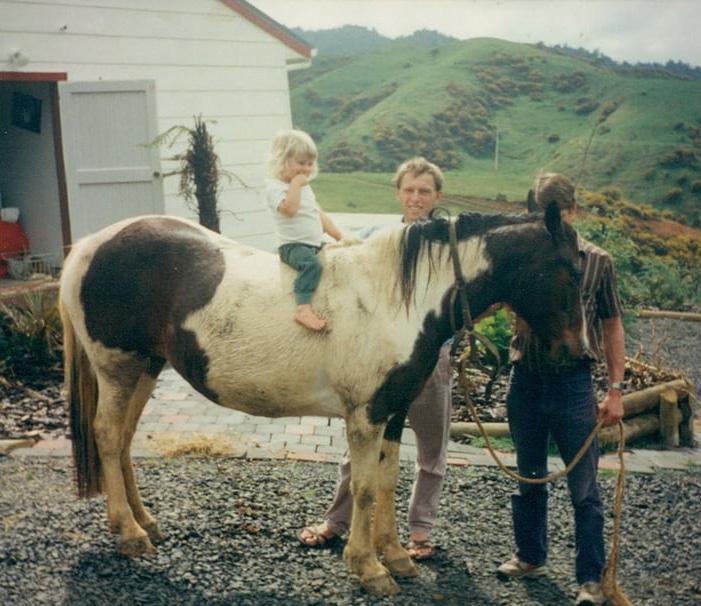
Riding on the sheep’s back. It’s an expression usually associated with Australia’s wool industry but for one of New Zealand’s top equestrians, Vicki Wilson, it was literally the start of her unusual and stellar career.
“I didn’t get my first pony until I was twoand-a-bit,” she tells me on the phone
from her home in Hawke’s Bay as if waiting that long was a tough slog for a toddler. But for this toddler, it obviously was, so Vicki did the next best thing.
“Until I was two I just used to climb on the pet sheep that were in the paddock next to our house, and cling on until I fell off,” she says.
She still remembers climbing through
the fence into the paddock beyond and trying to clamber up on sheep that were, in her words, “a bit wild”. No wonder her parents bought her a pony.
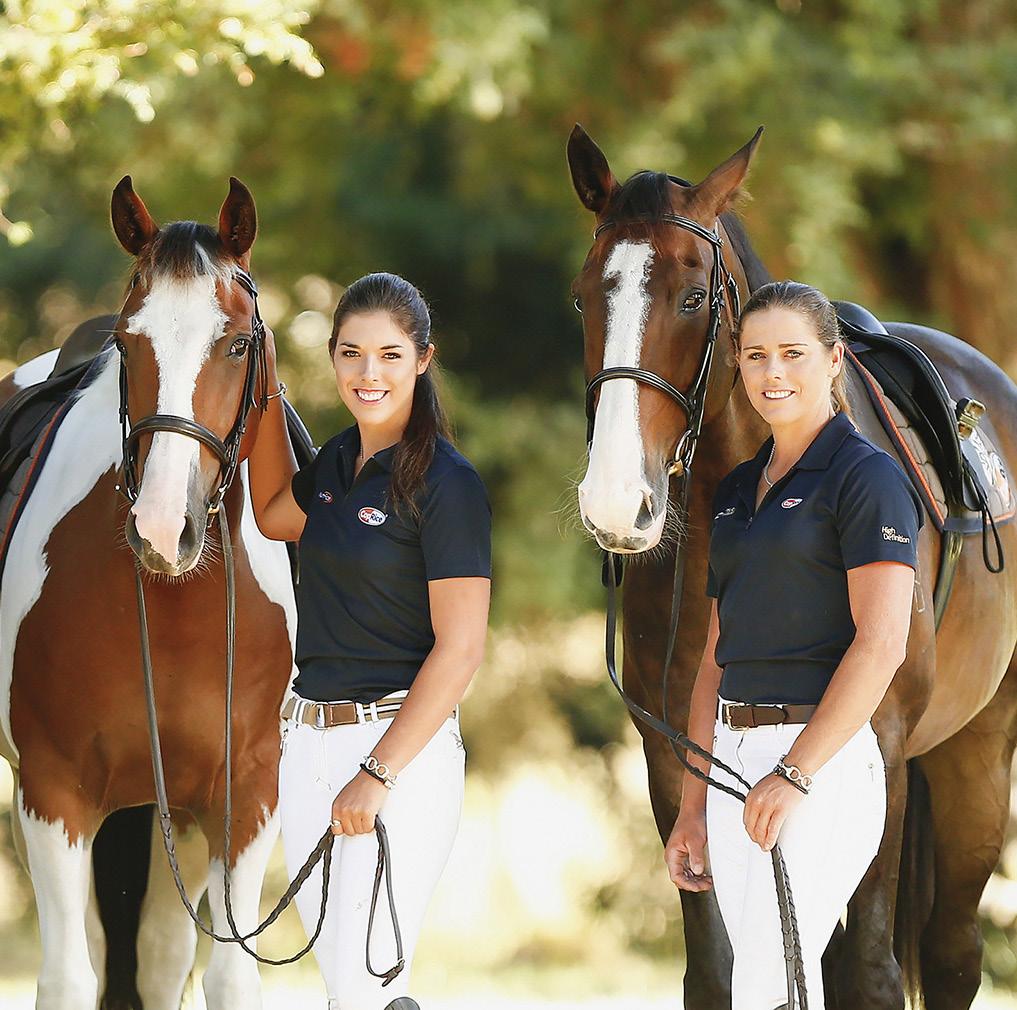
Vicki, 26, and her two sisters, Kelly, 31, and Amanda, 28, are famous, not only in New Zealand but world-wide, not just for their derring-do in the showjumping ring, and for Vicki’s extraordinary
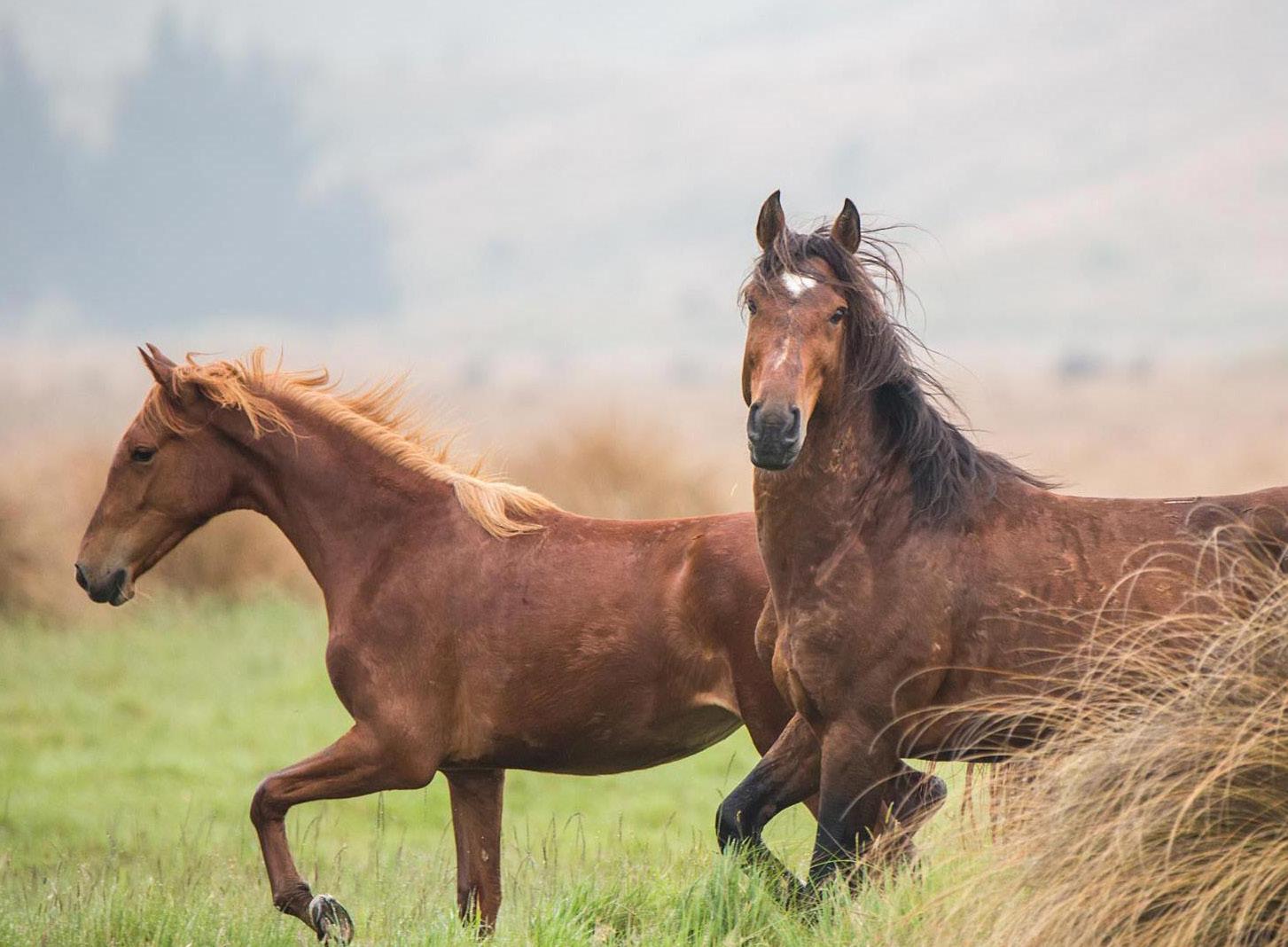
performances in the US Road to the Horse Colt Starting Championship, in which she’s been the only woman to win it twice in a row, but also for their work with New Zealand’s wild horses, the Kaimanawa, to avoid them having to be culled when the herd exceeds sustainable management numbers. Their journey with the Kaimanawa
produced a book (written by Kelly), and a documentary series, Keeping up with the Kaimanawas, (produced by Amanda).
In 2015, the Wilson sisters spent 100 days taming 11 wild American mustangs in the West, which has been documented in a book and documentary called Mustang Ride.
But if Vicki’s life, in which she’s blended all our passions into her breeding, starting and rehabilitation establishment at Hawke’s Bay, seems luxurious now, it wasn’t always like that growing up on their parent’s farm in the Waikato region of the North Island.
“My parents weren’t wealthy,” she says, “and although they encouraged us to
The three Wilson sisters: Amanda on the left, Kelly in the middle and Vicki on the right.
A
‘
‘ ... realising they had three horse-obsessed daughters, they supported them as best they could.
ride, we could never afford a good or educated horse, only the dangerous and problem horses that were other people’s rejects. But we were all desperate to ride so we took them on.”
Although her parents were supportive, her father had broken his back in his twenties, and no longer rode, and her mother, who had learned to ride as a teenager, was an “occasional” rider, says Vicki. But realising they had three horseobsessed daughters, they supported them as best they could. Growing up in a Christian household encouraged them to dig deep whenever a problem came up, and it’s a solution-based approach to horses which has served Vicki – and the thousands of horses and riders who
have come to her for help – one could say almost miraculously well.
“All my first show jumping horses were other people’s rejects,” she says. “What it fired in me was a curiosity as to why this horse wasn’t performing. I learned to go through an entire process with a horse and to gradually eliminate all the possible physical problems – foot balance, saddle fit, dental problems, incorrect feed for that horse. Looking back with the knowledge I have now there were even more horses I could have fixed, but I was learning as I went.”
Vicki’s learning took her to extraordinary places. After working her way up from local gymkhanas, she’s now won more awards at the New Zealand Horse of the
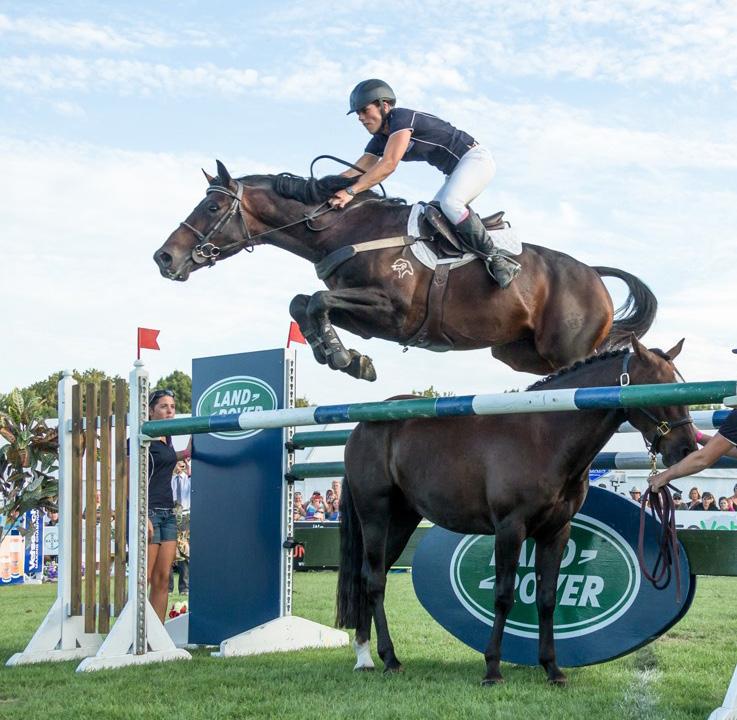
Year show than any other rider in history. Winning the World Cup in 2014 took her show jumping career to another level, and she has also competed under the New Zealand flag in Europe with many wins and placings. She’s performed all over New Zealand and Australia in bridle-free, bareback stunts, jumping to 1.82m bareback and 1.95 in a saddle in Puissance events.
In 2018 Vicki defended her title in the US competing against two former Road to the Horse champions, this time starting two colts instead of one – at the same time. It’s almost too much to contemplate that in this one discipline alone Vicki nailed the following firsts, by being the first rider from the English discipline to compete in Road to the Horse; the first rider from the English discipline to win Road to the Horse; the first New Zealander to compete in and win the Road to the Horse; the first rider to jump bareback in the Freestyle event; the first rider to wear a helmet; the first rider to use an English saddle – and, in a testament to her own work, the first rider to do body work on their colt.
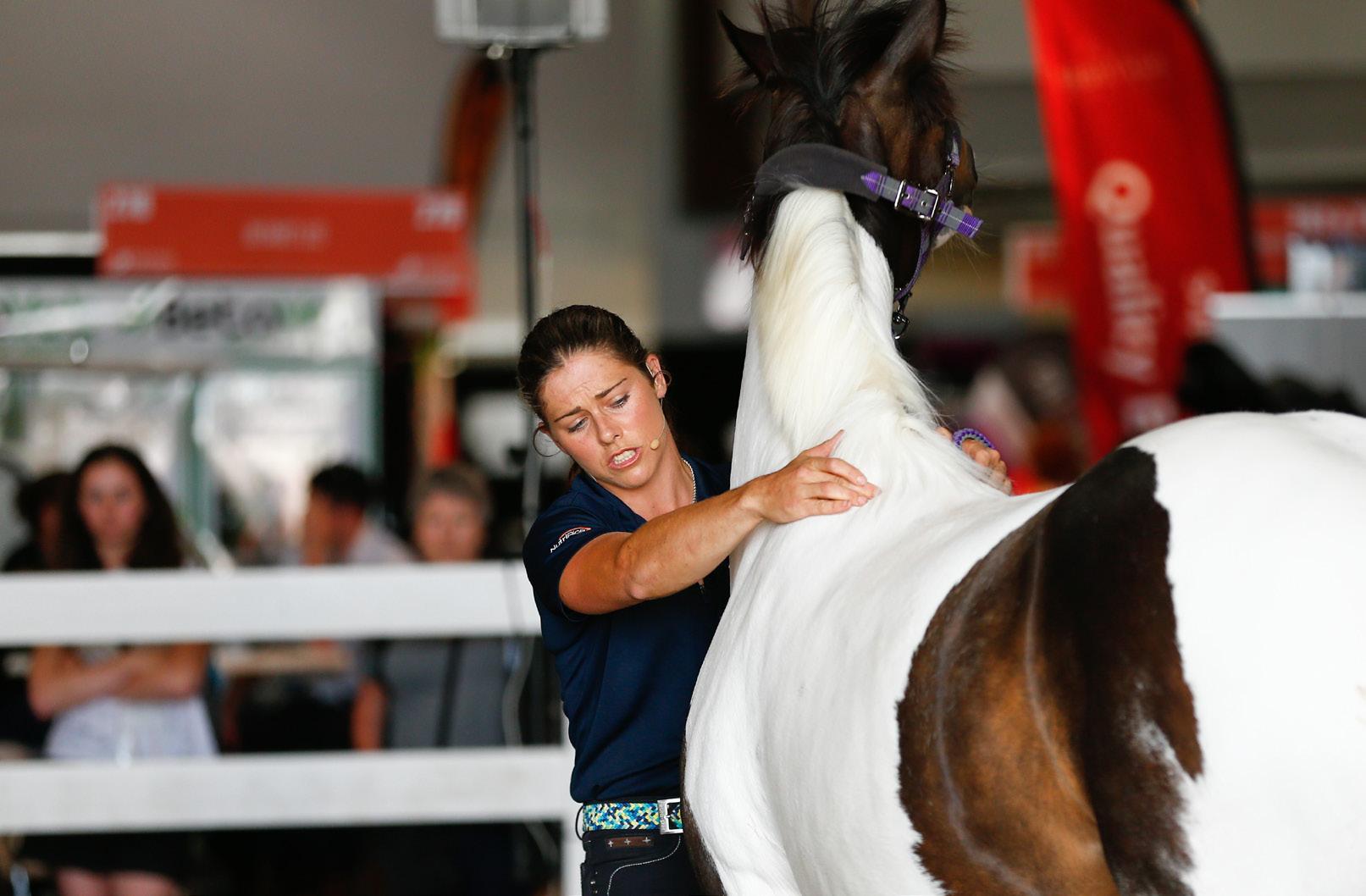
I was already in awe of this woman I’d seen last year at Equitana changing several young women’s relationship with their horses – and the way the horses used their bodies – right in front of my eyes, but by the time I digest all this, I feel in need of a nice cup of tea and a lie down. How one earth, I wonder, does she do it?
She laughs. “I don’t know, it just grew and unfolded as it went, and I’m on a journey which is leading me to inspire and educate people around the world so they have a better relationship with their horse. That’s what keeps me going. Also, I think if you don’t love what you’re doing, and you don’t wake up every morning ready to jump out of bed and do that ‘thing’, then why do it?”
That ‘thing’ has also led her to take over all the shoeing and trimming of the 100 or so horses she has on her property. “I took over the shoeing about ten years ago,” she says. “To me foot balance is perhaps the most fundamentally important element of all, and I wanted to be sure that it was correct for all my horses, and for my clients, so I decided to do it myself…it keeps me busy,” she concludes, in what is possibly the understatement of the year so far.
Her equine body therapy work REMOVED WHICH has become core to her life with horses came about when she was mentored by a well-known New Zealand equine body therapist Dan Erikson for six years.
“How I’ve learned is that I ask questions. I’ve watched every horse trainer I’ve ever met, every equine therapist, every vet, dentist and farrier, and I’ve asked questions – why are you doing this? What’s this for? What will the result of
this be?” she says. “Most importantly the horse has been the teacher. Sometimes of course, horses with behavioural issues will turn out to have kissing spine, or arthritis, or a bone spur - something that has to be managed rather than cured, but it’s still about giving them quality of life. I don’t feel I need to study under any one particular person, or that there is any one method that works – we have to be open-minded and not afraid to continue exploring. To me,
A: Vicki on her first pony.
B: Vicki jumping another horse in 2013.
every single horse is different and every horse requires a different program to help it fulfil its potential.”
One of Vicki’s many tools is the use of the Equisystem, a bandage that is wrapped around the horse to help horses engage their hindquarters. It’s a technique she’s refined from her time show jumping in Europe 12 years ago.
“I saw that almost all the trainers used a leather strap going over the horse’s rump and loins,” she says, “and what it creates is these very uphill, powerful horses, so I decided that when I got home I would try it with my horses. Well, it was a bit of a disaster – they were bucking, and kicking, and clearly not happy, so I thought – how do I change that?” Vicki’s solution was to use the elastic bandage. “I’ve refined the bandage quite a few times over
C: Vicki is also well known for her stunt riding.
D: One of Vicki’s students using her Equisystem bandage.
the years,” she says. “We’re not wanting to hurt or restrict the horse in any way whatsoever, all I want to do is to remind their brains that they have a powerful engine behind.”
At Equitana, three of Vicki’s hand-picked young women and their horses were helped with the bandages, and to be honest, if I hadn’t seen it with my own eyes I would never have thought that it could make so much difference (in conjunction, of course, with the instantaneous body work Vicki does during a lesson).
“The thing with horses is that they are actually naturally heavy on the forehand,” Vicki explains. “They have a heavy head, neck and shoulders, and they tend to work forward – in their natural state they carry 60% of their weight on the forehand and 40% on the back. Add a 70-95kg rider to that, and suddenly 80% of their weight is on the forehand. It’s our job to make sure that they can correctly use their body to support a rider. The bandage is a reminder that they have an engine to help them push from the end, so they can lift through their core, and take contact forward. This pays dividends in all work, not just jumping, because it’s vital that horse should be ‘on’ the bit through its body, not through its neck, which is what we tend to see far too much of.”
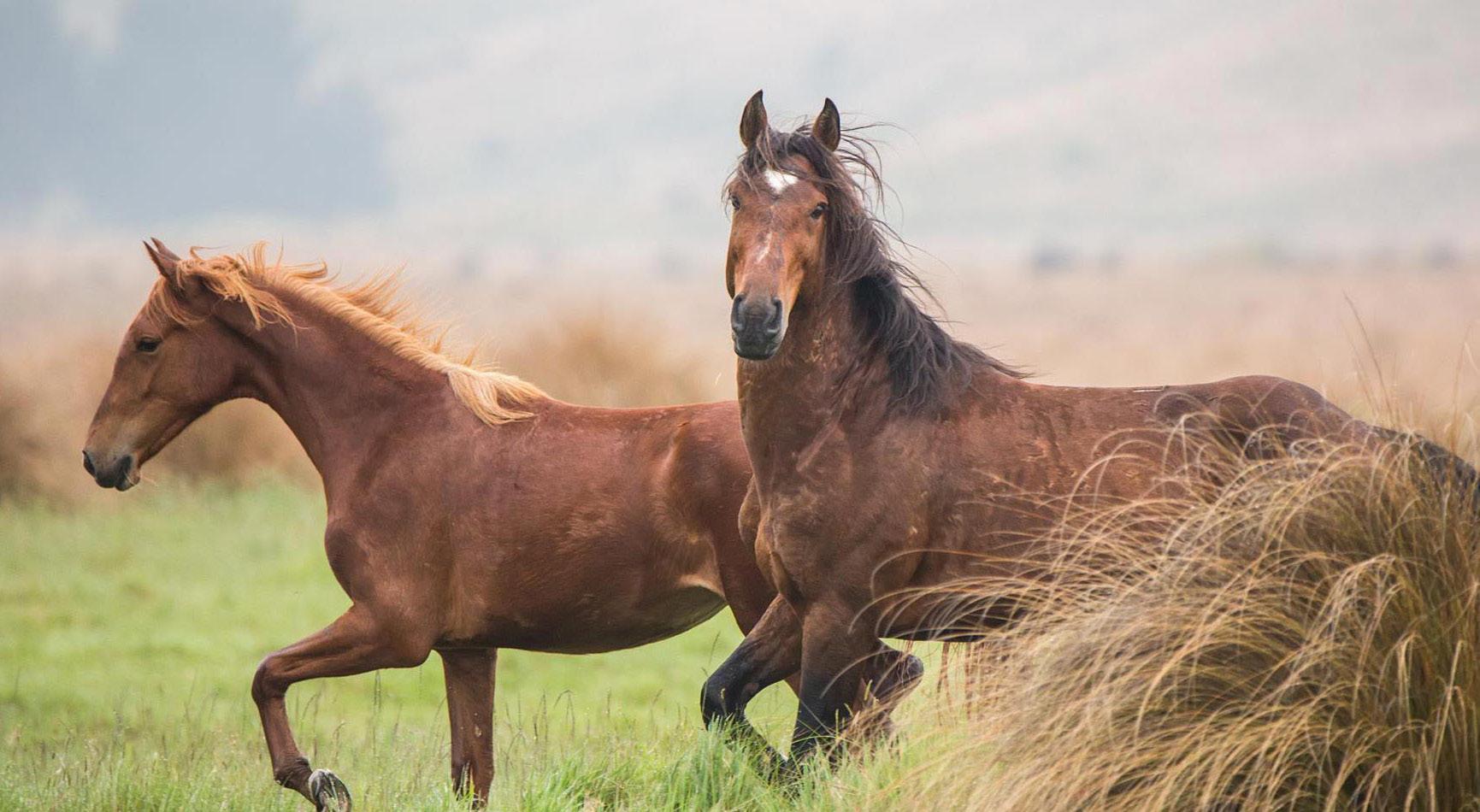
Horse welfare is paramount to all three sisters, and is one reason why they became involved with the Kaimanawa program which has seen the numbers of wild horses gradually culled over the years to bring the herd down from over a 1000 to 350, which the Kaimanawa Heritage Society believes is a sustainable amount on the million wild acres they have to live in.
“One of the Kaimanawa ponies that
‘
D
... a bandage that is wrapped around the horse to help horses engage their hindquarters
came from a muster went on to win New Zealand’s prestigious Pony of the Year award,” she says. “When we first got involved with the re-training program, any horse over four was going to slaughter, and after I’d seen these beautiful, strong horses in their home ranges, my sisters and I agreed that there was no reason for any of them to be slaughtered.”
The first time they took Kaimanawas home, 11 horses, of all ages and genders
‘
were lucky enough to find themselves with Vicki.
“Within 45 days we had an 18-year-old stallion cantering down the beach safely with a rider on,” she says. She feels deeply for the horses, who, contrary to the US where mustangs are ‘held’ in custody for six months to two years before being rehomed, or Australia where brumbies are given some time in holding yards, are mustered by helicopter into stockyards, and the very
next day are delivered to their new homes. “I do believe the musters are done as quietly and gently as possible,” she says, “but the fact is that we are taking these wild horses out of the ranges and putting them into prison cells. So it’s essential that you get the rope on them and start walking them off your property as soon as possible, because freedom is so important to them.”
The rehoming program has been working so well that in that last four musters no horses have gone to slaughter. “It’s pretty incredible for such a small country that we’re managing our wild horses so well,” she says. “But it’s also a case of trying to create easy transitions – a two-year-old will transition into a human way of life much easier than an older horse.”
For Vicki these problems are simply another way to learn solutions. “What I’ve learned is to feel, to observe, to listen and to have empathy,” she says. “Wild horses senses are much more acute than a domesticated horse, but, on the other hand they are also much more family oriented than the average domesticated horse, because their family is all important. I think that’s why they become such loyal, brave friends. You become their family. They become yours.”
For Vicki working with wild horses is all about the feel, timing and pressure. “I’m not saying that people should get cross at their horses – but unfortunately it happens,” she says, “however, you can be cross at a domestic horse and the next day they’ll forgive the person, but if you put a fraction too much pressure on at the wrong time, the wild horse won’t forget in a hurry. There are no shortcuts training wild horses. But if you do it right, and learn what you become is a horseman or horsewoman, rather than
just a rider, and to me that is much more important.”
The idea of ‘naughty’ horses is something that distresses her. “No horse, in my opinion, wakes up saying ‘Oh today I want to be naughty, and be smacked and punished,’ she says firmly. “What I’ve discovered is that the horse that doesn’t, or can’t do something we’ve asked for has a problem, and it’s our job as its rider, or trainer, or owner to find out the problem and offer a solution.”
If winning the Road to the Horse was tough in 2017 against all women competitors, tougher again in 2018 against two previous winners, and
with two colts to start, it’s going to be tougher again in 2019 – with Vicki going head to head with previous winner and multiple colt starter Nick Dowers. Nick, the 2016 World Champion and National Reined Cow Horse Futurity Champion, will be meeting the New Zealand showjumper and two-time Road to the Horse Champion head on with three horses to start simultaneously in the round pen. Vicki doesn’t intend to try out the technique beforehand. “We’ll just turn up on the day and see what happens,” she says mildly, as if starting three startled colts in one round-pen will be a walk in the park.
“2017 was pretty tough for me because I
E: Vicki and Kentucky strutting their stuff.
dislocated my shoulder on the first day, and I was in agony,” she says. “I had to change my approach. One of the things I did that I was really happy with was to teach my horse to lead really well, because I couldn’t risk my shoulder being pulled. It stood us both in good stead by the end of the competition, because he was so bonded with me.” That horse, Kentucky, came home to New Zealand with her and has since gone onto to become a wonderfully successful all-round horse.
Vicki’s goal is to educate people around the world to be the world’s best teacher they can be for their horse. “Personally for me, it’s vital to have healthy, happy horses,” she says. “Even my top showjumpers round up stock, swim in the river, get ridden on the beach, have time off, do groundwork. Every horse needs variety, just as we do in our lives, and every horse deserves to be working at its physical peak. Whatever that is for that particular horse.”
She’s off again in just a few days to compete in the US Road to the Horse once more and see if she can make it a hat trick of wins. Beyond that she
has plenty of other goals. “I love my breeding programme,” she says, “and I want to bring on my young horses to have long, healthy, happy competition careers. I’d love to compete in the Longines World Champions Tour, but even more importantly I want do as many clinics and workshops around the world so I can continue to teach people about their horses’ bodies.”
Her life, she admits, used to be about
winning. “It’s not anymore,” she says. “I have a partner, Michael (Whittacker), and he works with me with the horses. I compete once a month rather than once a week, and what I want now is for every horse that comes through my place to be set up to have a long career.”
I can’t help thinking that it’s not just the horses that are going to have a long career, and that Nick Dowers may have his work cut out.
F: Kaimanawas, New Zealand’s wild horse at home on the range.
G: Vicki doing bodywork on a sore horse.
Trail Riding in the Land of the Long White Cloud
JANE CAMENS recently saddled up for a five-day ride through New Zealand, meandering her way through the beautiful scenery of the South Island.
Kia Ora koutou! In other words, ‘greetings’, New Zealand style.
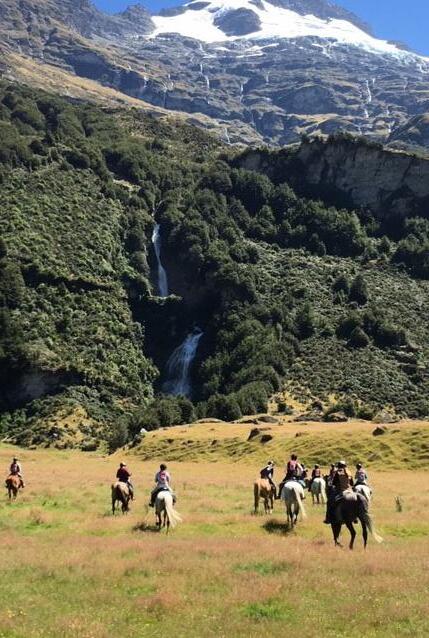
We’ve been four days in the saddle, riding through spectacular glacial valleys, when our guide Jess announces: “Tonight, we reach Paradise.” That sounds perfectly possible. Everything so far has been glorious. We’ve seen the afternoon sun light up snow-capped peaks, watched the moon rise in a crystal-clear night sky, ridden through ancient forests, cantered across grassy plains featured in the movie adaptation of Lord of the Rings, swum our horses in glacial creeks (some of us), stood beneath waterfalls, and experienced numerous Middle Earth moments for the soul to hold onto.
We do reach Paradise. It’s a lodge on a manicured historic estate. Apart from fresh scones, jam and cream laid out to greet us, we are offered massages for aching limbs, then shown to beautiful private bedrooms where our duffle bags have been placed for us. Hard, perhaps, to imagine how fabulous this is unless you’ve spent two nights camping, as we
just had, with a bush toilet, and an open air shower where bandit sandflies hung out.
But here In Paradise there is a candlelit lamb dinner, with all the trimmings, served in a charming separate building that was once a schoolhouse. This is our last night before the ride back to base, High Country Horses.
Looking back at the photos of this five-day riding holiday through the Glenorchy Back Country, I shake my head in wonder that the trip went without a single hitch. We were all well mounted, and we had the opportunity to join a couple of good canters every day. We all got on well and helped each other, and we were blessed with the best multi-skilled guides, Jess Mullins and Bijmin Swart.
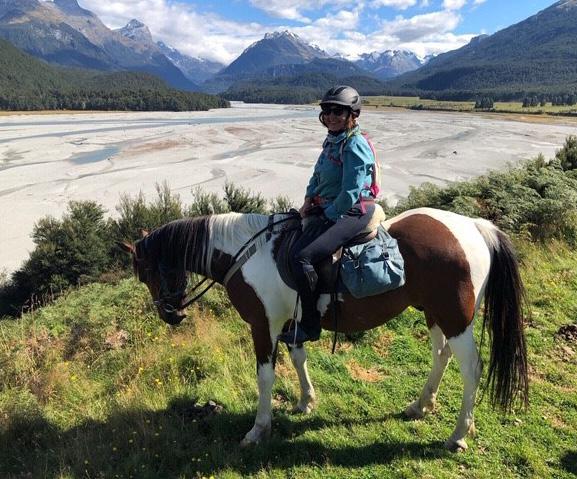
The horses were selected for us based on information we’d provided almost 12 months earlier. Every one of us had forgotten we’d given these details so each of us was pleasantly surprised when the horse we were introduced to our horses. I was mounted on Solly, a thick set 14.3 paint, a bit like my little
quarter horse back home. He was the only slightly grumpy horse in the group, but Solly and I dealt with that, happily riding in our own bubble.
Others were mounted on partPercherons, one on an Anglo-Arab, most on horses that were crossed with a heavy breed. The horses needed to be sturdy to carry riders for up to five
or six hours each day for five days. They were a happy herd of horses, all of them content to canter off independently, in part thanks to Jess and Bijmin who do natural horsemanship work with them when they are not out on the trail. In the summer the horses get the weekend off before they are off again with another group. Ditto for our guides.
‘
‘ The horses needed to be sturdy to carry riders for up to five or six hours each day for five days.
A: One of many creek crossings.
The eleven of us on this trip were all Australian women (between 40-70) who’d booked the holiday through Globetrotting, The Glenorchy ride is run by High Country Horses, the oldest horse trekking business in the area. It’s owned by Deana Insley and is now run with the help of her daughter Casey. Deana’s husband Duayne, who helped scope the Globetrotting ride, sadly died within the past 12 months in a jet boating accident.
You don’t have to book with Globetrotting to book with High Country Horses, but the Globetrotting ride is their special boutique ride, not listed on the HCH brochure. The accommodation over the four nights was comfortable. The first night’s accommodation was at Rees Valley Station, a 37,000-acre working sheep station that borders the World Heritage Mt Aspiring National Park. Our campsite on those two starry nights in tents was beside a musterer’s hut and waterfall. Our tents and beds were made for us, and we were given comfort kits containing a blanket, hotwater bottle, a beanie, bed socks and, mercifully, a New Zealand product called Goodbye Sandflies.
The catering too was excellent. The scones and lamb roast in Paradise were fancier but no more delicious than the excellent meals and snacks prepared for us the other evenings. Jess and Bijmin made us a hot breakfast with eggs every morning and we were given a fresh spread of food with which we could make our own lunches.
We were lucky with our group. Jess laughed that on another ride one person
‘
didn’t understand the concept of a hot water bottle, thinking it got hot by itself (that is, without the addition of hot water), and one woman grumpily
‘ ... where many movies have been filmed, including the spot where The Hobbit village was located and a field where Hugh Jackman ran naked in an adventure film
insisted that Jess apply bandages to her chaffed bottom. Fortunately, I can apply my own bandages, if and when needed. And while I mention pain, we were forewarned to bring anti-inflammatories, which some of us took like lollies. Not necessarily recommended by GP’s I’m sure but helpful for Women of a Certain Age, with all our accompanying aches and pains.
We were also lucky with weather. A full wet week was forecast, and on the first evening, as the sun set behind snow
B: The stunning scenery of the South Island.
BALANCE RIDING TIGHT
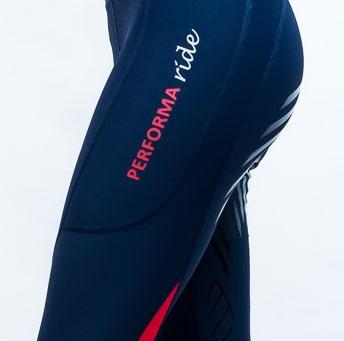
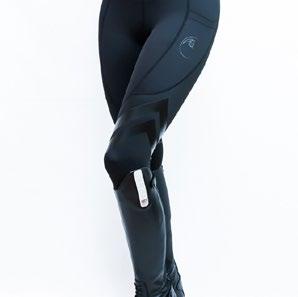
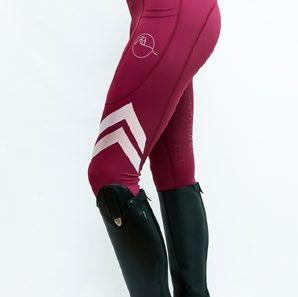
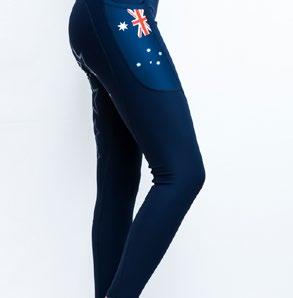
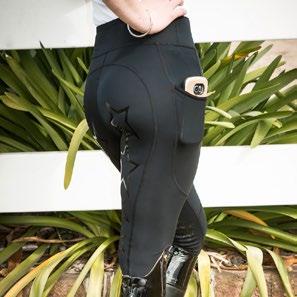
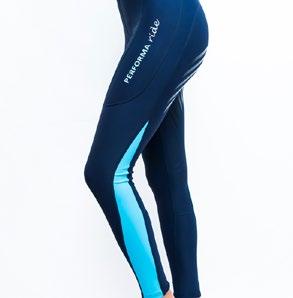
The optimum combination of equestrian apparel performance and fit in the Balance Riding Tight. Next level, innovative design and high-recovery stretch fabric that gives the most flattering fit you’ll find in a riding tight.
$119.95
FEATURES & TECHNOLOGY
• 76% Supplex nylon/24% spandex jersey
• Opti-Dry Technology moisture wicking
• Ultrasuede knee patches for grip
• Secure phone pocket at front thigh
• Hidden stash pocket inside back waist
• Lightweight hem reduces bulk in boot
• Flat seam construction
SIZE & FIT
• True to size
• Pull on design
• Mid-rise
• Euro seat design
• Fitted ankles to prevent riding up
Discount Code: JXB4PH2EWV9B
ALLISON UPF50+SHOW SHIRT
A sophisticated, comfortable solution for showing, this shirt defines what show style should be: a great look, a good fit, and complete functionality.
$109.95
$69.95 SAVE $40.00!
FEATURES & TECHNOLOGY
• 88% nylon/12% spandex
• Opti-Dry Technology moisture wicking
• Power mesh underarm panel for stretch and ventilation
• Anti-microbial finish
• Woven snap collar with colorful print and ribbon detailing
• Hidden snap placket and snap show style collar
• Stock tie loop on back of neck
• Cuffs with pearl snap detailing
• UPF 50+
SIZE & FIT
• True to size
• Fitted
• Dropped back hem for full coverage
• Longer sleeve length for riding Discount Code: 5P5H4B0XB3PD
Expires: 31/03/19
peaks, a bank of cloud did set in. But as we rode out in the next morning, the skies cleared and remained fine for the entire week. If it had rained, we would have ridden on regardless, with Drizabones and gumboots provided, but it wouldn’t have been the same. We rode about 100 kilometres in all, which isn’t pushing it over five days. But the mileage wasn’t the point. We circumnavigated a mountain and explored pristine backcountry that stretches from the Dart Valley through to the Rees Valley, with Mount Alfred sitting in the middle. We travelled up glacialfed rivers, crossed many streams, and ventured through the wild, untamed beauty where many movies have been filmed, including the spot where The Hobbit village was located and a field where Hugh Jackman ran naked in an adventure film.
Jess and Bijmin also told us Maori legends of the land and spoke about its value to New Zealand’s First People’s for its greenstone. Bijmin, being South African, and his partner Jess, American, are conscious of their status as working guests in New Zealand. Theirs is a partnership that is entwined with their love of horses. They met when they were both independently guiding ‘Man from Snowy River’ rides through the Victorian High Country in Australia. Since then, they’ve guided horseback trips in other remote and spectacular places – and they’re most definitely bitten by the horse trekking bug.
Here’s the funny thing about sandflies. They only start to itch after you get home from a five-day ride. Then comes the desire to scratch, and scratch again, and scratch again. A bit like the addiction to trail riding. Once you’ve started, you can’t stop. I’d do it all again in a heartbeat.
For more information, go to www. globetrotting.com.au/galleries/theglenorchy-back-country-ride/
C: The Globetrotting group on a day’s adventure.
D: Writer Jane Camens on Solly.
Back to the Wild
Later this year, the two young guides from High Country Horses are setting out with a small herd of Kaimanawa horses to ride the length of New Zealand.
While we were doing the Glenorchy ride, it was easy to chat with our guides Bijmin (pronounced like Damon, but with a B) and Jess. They told me that they will begin an epic ride later this year. It will take them the entire length of both the North and South islands of New Zealand
with some of the country’s famous wild horses, the Kaimanawas.
Their long ride will start in November at the top of the North Island, and they will slowly work their way south.
Bijmin has dreamt of riding the length of the both islands on horseback since he arrived in New Zealand a few years ago. “It’s one of the most beautiful countries
in the world,” he says. “It’s impossible to drive through all of the rolling green hills without envisioning yourself galloping along one of the ridgelines.”
Kaimanawas are known for being some of the hardiest horses in the world.
“Growing up in the wild, only the smartest, most resilient horses survive,” says Bijmin. “Natural selection has bred a horse that can take just about anything in their stride. In a way, they will be our guides in this re-wilding process.”
Jess and Bijmin are both eminently skilled to do this ride. They’ve worked alongside each other guiding horse treks in Australia, New Zealand, and North America. They come from different backgrounds - Jess trained in forensic anthropology and Bijmin in digital media and marketing - but horses have always been a passion for both of them. Jess devoted any free time to equestrian
pursuits and earned herself a position at the renowned U.S. performance horse barn, Windchase, working under Olympic rider Phyllis Dawson.
Their idea for this epic ride will take them on roads less travelled. They see New Zealand as “essentially a patchwork of giant stations” as Jess describes it, with endless trail options. Along the way, they’ll ride with a number of horse trekking outfits.
“The one thing anyone who has been to New Zealand can attest to is the hospitality of Kiwis,” Bijmin says. ‘As we make our way up the country we’ll be relying on local knowledge for hidden shepherd’s trails, recommended routes and of course local history and lore.”
They are both natural horsemanship practitioners, which they marry with their knowledge of equine facilitated learning, a practice Bijmin learnt from a
family friend whose approach to horses instilled in him the love of building a relationship with a horse first and foremost.
“Working with Kaimanawas we’ve taken a step back from all of the methods we’ve studied in the past and everything we thought we knew about training horses,” Bijmin explains. “We aim to listen to the horses before expecting them to listen to us, never working against them. We build our relationship first. Our approach is grounded in passive leadership – not grounded in fear or force.”
They’ve found that once they understand what motivates the behaviour of a horse, and imagine themselves in the horse’s position, the way they work with them “just makes sense”. They’ve worked with wild mature stallions and not once been
kicked, bitten, trodden on or charged. They’ve chosen and now trained three wild Kaimanawa stallions as their equine companions for the ride. The horses are respectful, follow the lightest feel and enjoy the company of their new human friends. They are Madiba (the nickname given to Nelson Mandela by the nation he united and led into a new era), Kaewa (a Maori word for ‘wanderer or traveller’), and Tokula (a native American Lakota word for ‘fox’). In naming these magnificent strong horses, the couple pay homage to some of the significant places that have shaped who they are.
In addition to this ride, Jess and Bijmin are building a new platform that will enable them to offer an online horsetraining academy. You can follow their progress on Facebook: www.facebook. com/humanandhorse.co.nz/
The Essence of New Zealand’s Spirit Horse Festival
The third International New Zealand Spirit Horse Festival showcased alternative modalities from around the world, writes CANDIDA BAKER, who presented on horse rescue and essential oils.
Horses. Everywhere. Not, as you might imagine, as at a traditional horse show, with riders, and events and the tensions of competition, and the blaring and constant announcements.
No, these horses at Dune Lakes Lodge, are simply ‘there’. They come to the presentations, and we go into the herd for sessions, they’re present during a Grandmother’s Haka, for a Medicine Walk with Rob Pliskin, and during ancestral connection sessions with Judy Brightman, and for demonstrations in all forms of equine-guided learning. The presence of this herd is made up mainly of large Warmbloods, gentle, kind, and imbued it seems, with an understanding of why we are all there. Which, to try and put it in a nutshell is to understand horses at a level beyond the obvious.
Rosemary Wyndham-Jones, (featured in December’s HorseVibes) and the organizers of the Festival which is presented by the charity Equine
Pathfinders, have created a unique event where people can come and learn more about horses as sentient beings who can teach us as much as we can teach them.
Arriving at Dune Lakes Lodge, Rosemary’s property, a few days before the Festival started, I was greeted by the two elderly ‘guardians’ of the property, 32-year-old Bailey, and 34-year-old Mary. When Rosemary moved from the UK to New Zealand some years ago it was Mary, and her daughter Jodie that she brought with her. Sadly, Jodie died a few years ago, but Mary, grandmother to many of the Dune Lake Horses and Bailey have free access to the garden and the property, with regular appointments outside the feed shed. Presenting my work with essential oils was deeply rewarding. We chose four horses on the first day for me to work with, and I showed attendees at the session how to simply ‘offer’ the oil to a horse, so that they can choose to take it or not. Marjoram, which is always the
‘
‘ ... people can come and learn more about horses as sentient beings who can teach us as much as we can teach them.
The Herd comes in for the start of the Festival
C, D, E: Rosemary Wyndham-Jones demonstrates a light feel, so her horse makes a choice to follow her.
first oil I offer, because it release trauma, grief and loss had some deep results on the older horses, who lowered their heads, licked and chewed, and went into a deep state of relaxation, where healing seems to naturally occur. We worked our way up through Bergamot, for anxiety and depression to Rose, for peace, joy and love – these three oils being my go-to oils, with some lovely results also coming from Wild Orange, Sandalwood and Lemon.
But although the spiritual connection
with horses is something that is central to the ethos of the festival, it was also grounded in the practical, with workshops and presentations by several Equine Assisted or Facilitated Learning businesses, and information on nutrition, hoof-care and bodywork for horses.
It was also exciting to go to a presentation on Equine Pathfinder’s latest project Wild Boys, Wild Horses, in which they have teamed up with the Kaimanawa Heritage Horses to
pair youth in trouble with Kaimanawa brought in from the wild in the musters that are conducted to keep numbers sustainable.
Dune Lakes Lodge is about an hour north-west of Auckland, and as its name suggests has a lake only five minutes walk from the house, with a magnificent black-sand beach – Muriwai – only five minutes drive away. This was the third year for the festival, which offers on-site camping or cabins, a vegetarian and vegan based menu at its café, and plenty
B: Flash and Colter free jumping.
of time to chill out and smell the horses. What I enjoyed most about the festival was the camaraderie – a few hundred people all brought together teaching, learning and offering to one another in a serene and beautiful landscape, with the horses as part of the experience.
I had some personal magic moments –one when Mary, the elderly matriarch, chose to participate in an oil session, and made it clear that she wanted me to tell her life story – which thanks to Rosemary I knew. Her intention was clear – she wanted people to understand the wisdom that old horses can offer, and that no less than people they too have their joy and grief. Mary still feels the loss of Jodie, and it was a privilege to feel Mary’s being connect with me as we stood together and I felt her emotions come through me.
Her permanent BFF Bailey, also had a breakthrough moment with the oils. Rosemary knew that as a rescue horse, Bailey had a troubled past, and had bucked off a previous owner. Through the use of the oils, he went into a safe space of clearing through some physical trauma around saddles and riding, and came out the other side a much lighter, happier horse.
There are many, many ways to be with horses – from the highest competition level, to the mini pony lawnmower and everything in between.
For me what is of paramount importance is that no matter what anyone does with their horse or pony, their physical, mental and emotional welfare comes before anything else. That is the way to a true relationship with your horse.
Candida Baker runs a Facebook page, The Horse Listener. She is also the President of Equus Alliance
F: The horses took part in the Grandmother’s Haka.
G: Akaash has a cuddle with Spirit.
H: Bailey being offered oil.
Pictures: Candida Baker
Dressage training tips with Nicole Tough
As the old saying goes: ‘She may be small but she is mighty’, and this saying definitely applies to dressage coach Nicole Tough, writes DANNII CUNNANE, who interviewed Nicole to get her training tips.
Nicole Tough has racked up more dressage titles and awards than most of us have had hot dinners! She’s an accredited Level 2 Dressage Specialist Coach, a Level A National Grand Prix and Young Horse Judge and Judge Educator. She’s trained nine horses to FEI level, has more than 25 State Championships to her credit, and has variously been Equestrian QLD Coach of the Year, Sports Star of the Year and Volunteer of the year. Nicole is always happy to share her wealth of knowledge to with those who want to learn.
Her first training tip is perhaps the hardest to take on board, based as it is in down-to-earth reality. “Dressage is easy, unless you want to do it well, and then it’s really hard,” she says. “Nearly every horse and every rider can learn or teach the tricks of dressage and do them accurately; but to do them precisely, with suppleness, energy, engagement of the upper line muscles in every step, in self-carriage and with willing cooperation - that’s a whole different ballgame. To achieve this, riders simply must be dedicated to correct practise. They
must think of dressage with a systematic approach, they must remember that it’s a gradual muscle and strength building sport. Training for each level of dressage should never be rushed or corners cut. Horses are ready when their trainer/rider has done their homework; and not when their rider/trainer is bored with current level and impatient to move on.
Nicole is adamant that if the rider/trainer has done their homework, the dressage test will look easy, and therefore the pair will score well.
“Nearly every horse and rider can get
through the preliminary and novice level. It is the elementary level, where the concept of collection begins; and where rein aids can be incorrectly utilised, that we see the difference between dressage as a hobby and dressage as a sport.
She explains that rein aids are not for slowing down or for restraint. “Collection is not achieved by using the reins. In fact – rein aids kill collection. Reins that have any backward tendency restrict forward thrust, interfering with the beat, and causing resistance and training issues. Preparing a horse for elementary level and upward requires thousands of transitions, building the sitting and pushing muscle teams of the horse and always correcting that unbalanced moment, that moment against the hand or that moment of crookedness. It means not attempting the trick or movement, if anything goes wrong.”
Horses, she says, as all of us know, learn through repetition. “Every step the rider accepts - they believe was approved. Remember that to accept, is to approve. So, if you accept a dodgy transition in your training, you are telling your horse, that transition was good and I would be happy with it in a test. These thousands of transitions and corrections, increase the muscular strength of the horse, and prepare them for elementary and beyond.”
She’s adamant that good dressage is all in proper training. “We cannot pull the horse into smaller canter steps, slam dunk them into a walk, and shock them into a canter strike off and call it a simple change. To do so is trick riding, and not dressage the judges will reward. All we can do as a rider is strive to be better with as much help as we can get; which includes going to forum’s, seminars, workshops, masterclasses, reading, learning and getting lessons!”
Also, every horse is different, as Nicole
reminds us. “Remember difficult horses can be good; and good horses can be difficult. There is no easy way, no easy horse and no short cuts. My biggest tip is: avoid training on your own. No one can get better on their own, in their own back yard. Find a coach to help monitor your training, check your feeling, and help you progress when the horse is ready. Enjoy the journey and don’t be frustrated by it.”
Nicole’s Top Three Tips
Find a coach that has already proved themselves as a trainer/competitor and coach.
Set some realistic goals at the start of year. Goals help riders focus, motivate you for the weekly/monthly plan and help you organise your time.
You are ready to compete at a level IF you can ride the test through at
home, asking yourself, did my horse understand all the movements and did they perform them easily. If the test was hard to perform at home, it is because either the horse or you are not ready, and it’s going to be even harder to perform them in a competition environment.
You can learn more about Nicole by visiting her website - www.nicoletough. com.au
Nicole and Ferragamo, riding a victory lap.
ON MY TACKBOX
Taking it slowly
BRYN ANDERSON is an Equine Physiotherapist in the US, who is passionate about horse welfare, and the idea of taking it slowly.
Ok so I’m going to open up a box of worms. We. Need. To. Stop. Pushing. Horses. To. Compete. So. Soon.
I’m an Equine Physiotherapist and everyday I work on horses that have been, or are currently being pushed too soon. It’s an epidemic and extremely prevalent with thoroughbreds - more so than any other breed. They give their hearts to us, try so hard and they will push themselves for us just because we ask.
Even if your horse is sound, learning fast and incredibly talented...slow down. I currently have two OTT thoroughbreds I’ve personally taken on and am rehabbing. One is a three-year-old with a fractured sesamoid and the other is an eight-year-old Preliminary Level 3-Day eventer with a torn suspensory ligament. He was competing Prelim by age seven, and competing every two weeks after less than a year being off the track. Just because they can compete at that level, and have the athletic ability to do so does not mean they should.
If this Prelim horse had been taken along slower he would have been a 3* or possibly 4* candidate.
In the past I was a groom and a working student for International 4* riders, some
of them Olympians in Sweden, the U.K., Europe and Australia. I’ve competed since I was four in countless shows and events. Thermal. Wellington. Spruce Meadows. I’ve travelled and groomed on the Global Champions tour. What I’ve observed is that there is this pressure now to compete and win at all cost, and it’s hurting our beautiful, amazing equine partners. The horse isn’t sound but you have a show? Bute ‘em. Inject ‘em. Block their pain. Get in the ring to win that cooler and a $2 dollar polyester
ribbon. The horse isn’t calm enough yet to show? Lunge them into the ground. Ace ‘em. Tranquilize them so they can compete.
As much as I love the Thoroughbred Makeover, and the good it’s doing for the amazing thoroughbred breed part of me hurts inside seeing it. All these riders and trainers are scooping up OTT thoroughbreds that were started before they were even officially two-years-old. I feel that the majority of horses would benefit from more gradual training and zero human imposed time limits. It takes at least 6-12 months for a horse to build the correct muscles for a new discipline. Any faster and you’re causing damage to the muscular structures, which then causes risk to joints, ligaments and tendons that the now compromised muscles are there to support.
While we are talking about this, I can’t stress enough the importance of warming your horses up and cooling them down. 15-20 minutes of walking, minimum and at least one-two rides per week of an hour or more of just walking. Even if you think you spend enough time warming them give yourself a test, set the timer on your phone and check it when you think you’ve warmed up for 15-20 minutes. Most people have not. Yes, this is boring, I know. But you have no idea how much the horse’s body needs this kind of low impact conditioning. If you have access to trails ride on them daily as a warm-up and then go to the arena. If you have a walker at your barn use it! Unfortunately so many top competition horses are stabled, have maybe a couple hours of
Save 40% OFF your subscription before 31st March. Get access to EXCLUSIVE subscriber-only offers! Subscribe before 31st March for your chance to WIN $500 cash!
turnout in a small paddock and then go straight to arena work. This is drastically upping your chances for injury. You ride them and work them intensely in circles in an arena and then back to the stable they go to stand. Their bodies are not meant for this.
Trainers worldwide are being pushed to push. Buyers want to see a four-year-old jumping a 90cm+ course. I know this does not apply to everyone. But just slow down. Go trail riding, relax, have fun. It’s okay to skip a horse show. I’m someone who absolutely loves to compete. However, at the end of the day it is not really about competitions and winning, or how high you’re jumping — at least it shouldn’t be. It’s about the joy and love we have sharing this amazing partnership with our horses. It’s about the feeling we get when they see us and nicker hello, it’s
about the laughter they give us when they look offended because they found a treat in our pockets we haven’t given them yet. It’s about the smell of their coat when we bury our face in their neck, and it’s about lazy days in the pasture laying back on them bareback as they graze. I’m telling you, your ribbons will ultimately get forgotten and dusty. They will be stored away somewhere because after the show is over they don’t really matter.
So slow down and smell the sweet hay scent of your horse’s breath, hang out with them and brush them or sit next to them breathing in their presence as they munch on their hay or nap in the sun. Because if you have their heart beating next to you, or underneath you, you’ve already won the best and most important thing in the world.
HORSE BREED
Clydesdales –the Gentle Giants
Originally bred to be a work horse, these days the Clydesdale is as much admired for its temperament as for its work ethic, writes DANNII CUNNANE.
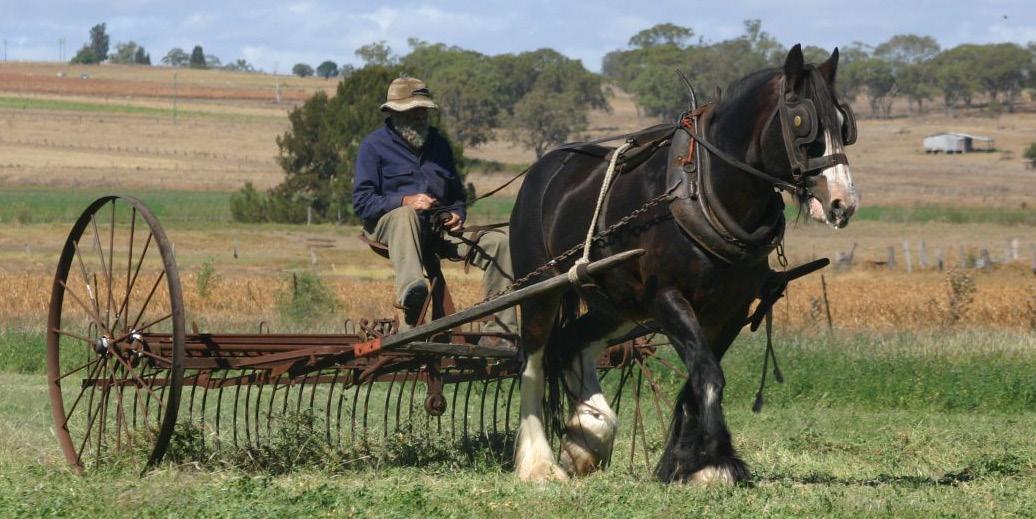
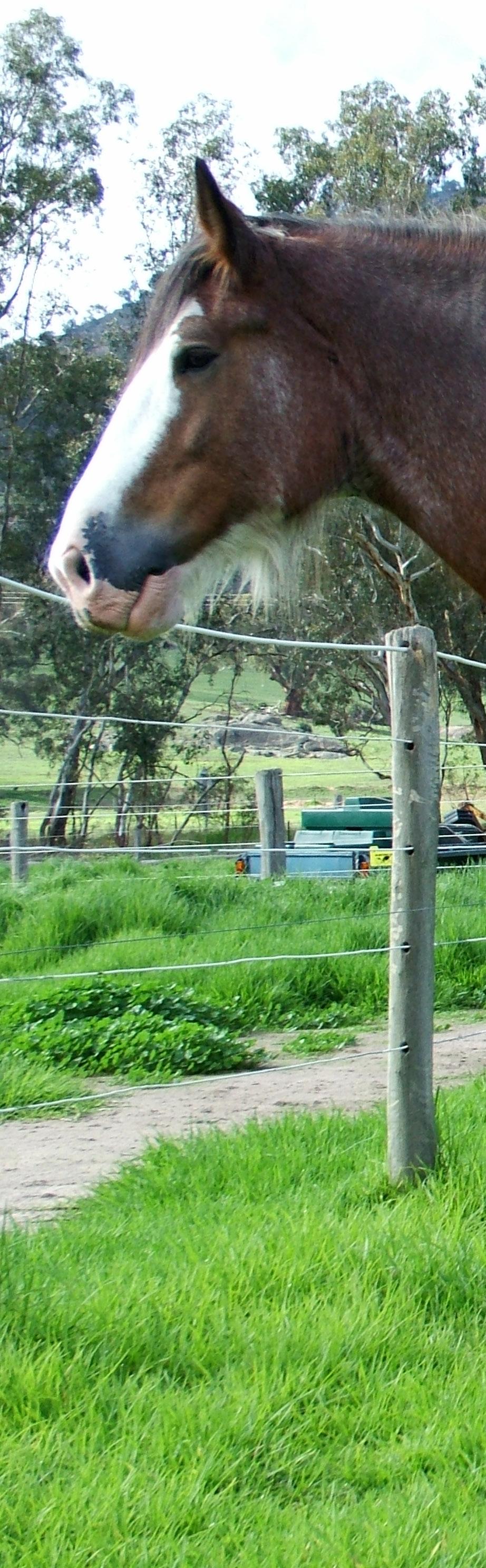
The Clydesdale, the Scottish gentle giant known for its beautiful flowing mane and feathery legs, is one of the most easily recognisable horses in the world.
The Clydesdale was named after the area in Scotland where it was originally bred, and has kept its name, even though the name of the district has since been changed to Lanarkshire. The large hardy horse was suited to most agricultural needs, but its strength also came in on the coal fields when large loads needed to be transported from the mines.
The Clydesdale breed quickly became well known outside of its local area for its ability to pull heavy wagons, and was soon in demand across Scotland and Great Britain. Sometimes referred to as a ‘clumper’ the breed is anything but that – it combines its strength with style, with an active stepping action that cleanly covers the ground. The bottom of each hoof must be visible from behind, so there’s no room for clumping around with the Clydesdale!
What are Clydesdales used for?
Originally the Clydesdale was built for heavy farm work, such as ploughing
hard land or hauling great loads over short or long distances. While it still is used for agricultural purposes today, the introduction of farm machinery made the Clydesdale almost redundant.
Nowadays the Clydesdale is used for pleasure, as a cart horse or as a ridden horse. The most famous driven horses in Australia were the Carlton Clydesdales, however they were sadly retired in 2018 after 65 years of collective service.
That isn’t the end of the Clydesdale though, with many agricultural and Royal shows offering classes for this beautiful heavy horse. These classes often have the horses re-enacting their agricultural heritage, as well as offering driven classes with period costume and original carts and wagons that have stood the test of time.
Breed standards
The Clydesdale societies are all about uniformity of type and there is no breed of heavy horse so famous for its quality. The horse should stand proud and its bone should be strong, hard and dense but there is a bit more to the breed than these qualities.
Height: The Clydesdale horse should range in height from 16hh to 18hh. When the horse is fully matured it
A magnificent Clydesdale, showing all the best attributes of the breed.
should be evenly balanced. From the side, the body should show plenty of depth, and from the front or rear should appear broad and thick. The depth of the body, through the chest and length of leg, should be approximately the same. These proportions allow the Clydesdale’s weight to be used to its
best powerful advantage.
Head: The head of the Clydesdale should be in proportion to the body. The face should either be straight or slightly Roman nosed and the muzzle should show thin rather than thick heavy lips. The eyes should be more oval than
round and there should be plenty of width between the eyes and the forehead.
Neck: The neck should be of moderate length, muscular, arched and well laid into the shoulder. A good head, neck and shoulders denote character, giving
the animal a good outlook.
Shoulders: These should be moderately sloped and provide a sufficient collar bed. The shoulders should be fairly wide, well muscled, and the top should be carried close to and tapered into the back.
SubscriberSale!
Who says Clydesdales can’t do dressage?
Legs: The legs should be long, wide, lean and flat and the tendons should show prominently. The long hair or ’feather’ should spring from the back of the tendon and not from the sides of the cannon. Feathers should be soft to touch and straight. The fetlock should be wide, fine and well directed. The pastern should be fairly long and sloping, so as to relieve concussion in the course of action.
Leg action: The movement of the Clydesdale should be even and the hind and fore action should always be in unison. The hind feet should be planted forward as deliberately as the fore ones, which should be evenly carried forward. At the walk, the hind foot should cover the imprint of the front foot as a minimum - short stepping is considered a fault in a working horse. The hocks should be turned slightly inward. In trotting, the Clydesdale horse should
bend the legs at the knees and hocks and, from the hind view, the inside of the hooves or shoes should be seen at every step.
Further information
The Commonwealth Clydesdale Horse Society of Australia is one of the best places to obtain information about the Clydesdale in Australia. They also have chapters in every state.
A Personal Journey with Dannii
“I grew up around Clydesdales, because my adoptive dad, Glen Denholm, broke them in for harness and saddle. We lived on the outskirts of Sydney and many of the Carlton Clydesdales came to us for education so that they were ready to undertake their job in a safe manner as soon as they arrived at the Carlton Clydesdale Pavilion in the heart of Sydney.
It was the absolute highlight of my life to see them in action and luckily for me, I got to see it on an almost weekly basis. Nothing will ever beat the sound of that six-in-hand leaving the pavilion - the noise gave me goose bumps. I
was so proud of that team and I would always get a little emotional when the hooves clattered against the ground when either Teamster Terry Goodear or Richard Geldard gave the command.
I’ve been blessed to have some wonderful horses in my life and many of them were magnificent Clydesdales.”
Dannii Cunane
One of the famous Carlton Clydesdales.
ADVERTISING FEATURE
Duke – not your average Clydesdale!
It’s not often that you see a Clydesdale competing at FEI Prix St Georges level, and about to go Intermediate 1, but Duke is a bit of a superstar, and JULIE MILLS rates a lot of his success to his feed.
I’ve been using Maxisoy + Low GI Super Fibre Pellets for about 13 years now,” she says. “I’ve also been feeding Copra Max, for the last four or so years. And my horses absolutely love both feeds.”
Julie was recommended Maxisoy by a friend, who was feeding it to her two ponies. “I was actually happy feed my horses their usual feeds,” she says, “but over time I came to see that they are actually high in sugar – and pretty expensive as well.”
At the time, Julie’s horses were coming up through the dressage levels, so she was finding herself having to substantially increase their feed/energy intake. “I had to keep weight on them,” she explains, “and I had to keep their energy levels up during training as well as during competitions, but after speaking with an equine nutritionist, I realised that the feed held very little nutritional value.
All I was really doing was giving my horses sugar highs and lows. Hence why they couldn’t hold their weight or sustain their energy levels for any length of time.”
Julie listened to her friend, and tried Maxisoy + Low GI Super Pellets.
“I have to say that initially I wasn’t sold on it, particularly since you have to soak it in water. A week passed, and I couldn’t see any improvement or results – I’m
really not sure what I was hoping to see in a week when I think about it,” she laughs.
A couple of weeks passed and Julie wasn’t sure there was any appreciable difference, until she took her horses to a lesson, and discovered that instead of
flagging around the 45-minute mark, they went for an hour, and still had energy to burn. “I also noticed that the Maxisoy definitely lasted a lot longer than the previous feeds,” she says. “Now my horses are fed Maxisoy + low FG Super Fibrre Pellets, and I love it because it’s easy and quick to prepare, it’s very reasonable cost-wise, it has great nutritional value; it’s a low GI slow release energy feed, and has no processed sugars. It’s also low in fat, with an easily digestible fibre.”
Julie is extremely happy with the feed. “Plus,” she says, “my horses are super-shiny all year-round without feeding loads of expensive lotions and potions.”
Julie’s beautiful Clydesdale Duke, registered name, Kaaru Flash Duke, is registered with the Commonwealth Clydesdale Horse association. Julie pur-
chased Duke as a 15-month-old-yearling from a Clydesdale breeder in Broadford, Victoria. She started Duke under saddle herself when he was three-and-a-half.
“Initially we started competing low levels in both jumping and dressage,” she says, “then as four-year-old Duke started regular dressage lessons. The more I trained him, the better he became. Now he’s 13, Duke is successfully competing at FEI Prix St George level, and soon to have an Intermediate 1 start which will make him the only full Clydesdale in Victoria to be successfully competing at FEI small tour level and I’m pretty sure he is also the only Clydesdale in Australia currently competitively competing at this level.”
To top off this unusual Clydesdale career, Duke is also currently working on Grand Prix movements, and, says Julie, showing a real talent for piaffe.
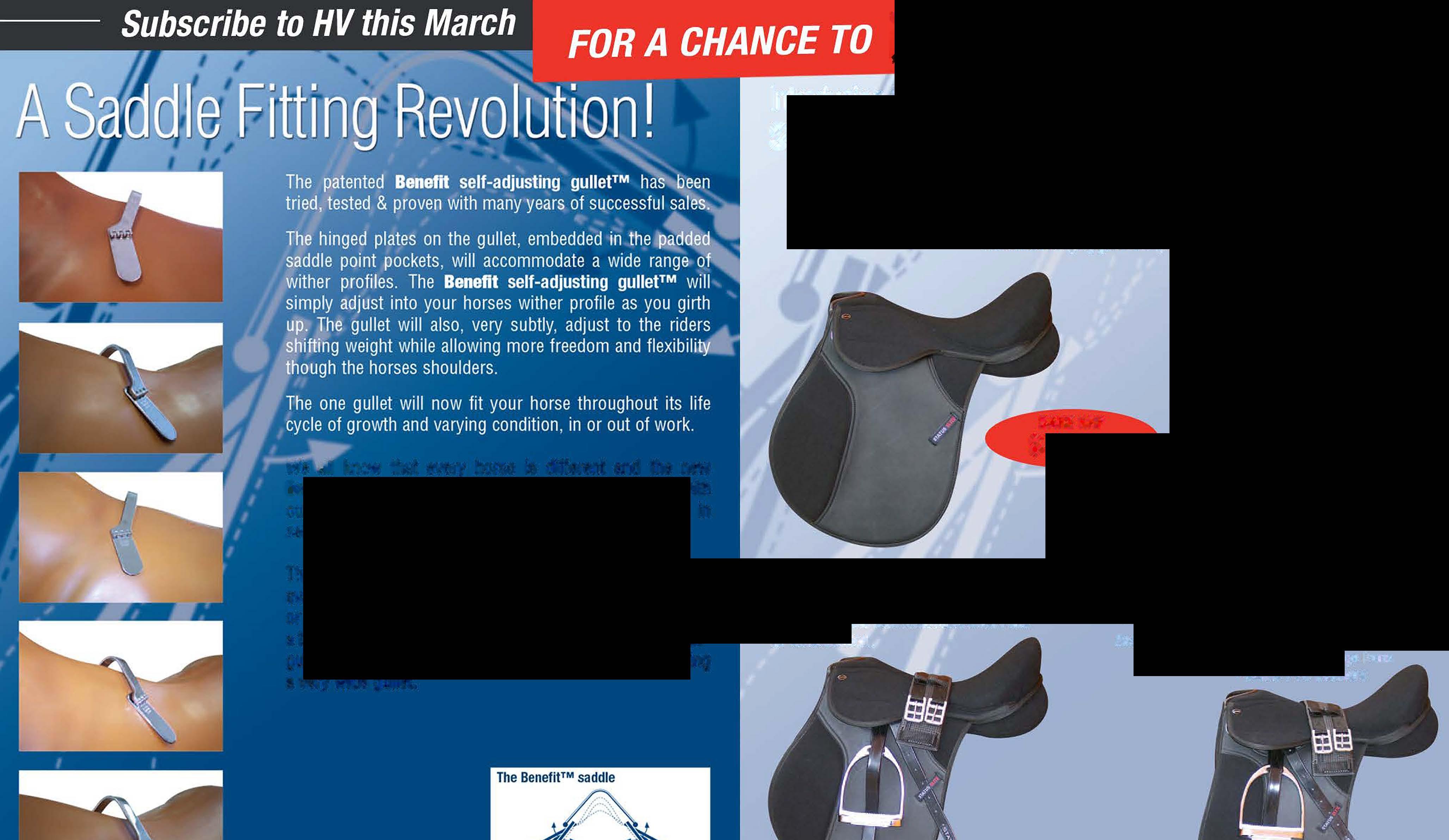
We all know that every horse is different and the new BenefH self-adjusting gullet ™ technolog y, combined with our tai lored sadd le panels, min imises the guesswork in selecting a saddle that will correctly fit your horse.
The Status Elite synthetic saddles with Benefit™ are now ava ilabl e and you only need to choose between a standard or wi de gull et. Benefit "Standard" gullets are comb ined with a tailored panel that wi ll fit most horses . The Benefit "Wi de" gullet s addl es and combined panel will fi t horses requ iring a very wi de gullet.
A: The teams prepare to start the Boneo Park Hobby Horse Challenge.
C: Back row left to right: Scott McNaught: Director of Boneo Park and Jumping Manager. Aengus Wright: Sound and Commentary, Stephanie Wake: Marketing Manager,
Front row left to right: Karen Lawrence: Director of Boneo Park and Competition Manager. Lizzy Schirmer: Dressage Secretary, Fiona Selby: Managing Director Boneo Park. Justine Quayle: Event Team Boneo Park - volunteer and stabling manager.
D: Para-Equestrian riders share friendship and fun at the Boneo Classic.
B: Hedelunds Mefisto and Jemma Heran at Boneo Park.
E: Fiona Selby and Danish Dressage Coach (now Mornington Peninsula resident) Lone Jorgensen, enjoying the action.
FEATURE
Celebrating Australia Day the Riding Way
BERNI SAUNDERS reviews the 2019 Boneo Classic competition, where the best of the best gathered on Victoria’s beautiful Morning Peninsula for the last weekend in January.
The Australia Day weekend brought together almost 400 of Australia’s best jumping combinations and 150 dressage horses, riders, grooms, and support crews to take part in a comprehensive program of FEI dressage and jumping; young dressage horse events; a variety of height classes for showjumpers; para-equestrian dressage and freestyles that gave riders, spectators and fans three fabulous days of competition and social activities.
Boneo Park sees the realisation of the McNaught family’s vision to provide a state of the art facility. The architect-designed complex is on 850 acres of prime real estate with150 acres set aside to preserve the natural wetland habitat and a large stand of endangered Moonah trees. The centre has been operating for approximately a decade, and the ongoing development continues to set new standards in equestrian sport.
The discipline specific competition arenas feature the latest technologies to provide safe all-weather footing for dressage and the warm-up areas, and the main showjumping arena is
considered to be one of the best grass jumping surfaces in Australia. Not only did the beautiful expanse of green make a picturesque setting, it also stood up to the high traffic of 500 rounds ridden over three days. The Classic gave young horses and riders a chance to participate at one of Australia’s most prestigious fixtures, and elite combinations used the World Cup Jumping Qualifier and Pacific League World Cup Dressage Final as a valuable opportunity to boost their chances of selection to represent Australia at the Tokyo Olympics in 2020.
The centre’s Managing Director Fiona Selby says: “Progressive upgrading of the facilities allows us to continually offer more and bring new dimensions to this event. The Classic is a huge and ongo -
ing undertaking that involves over 100 people who lend their special skills and expertise; I acknowledge their hard work and commitment, as this is key to the success of the event.”
The latest addition to Boneo Park’s facilities is the upper level restaurant Arilla - now almost complete and set between the main jumping and dressage competition arenas and the two spectator stands. Just beyond the two spectator seating areas, thirty specialist traders offered a wide variety of equestrian products for those in need of some retail therapy.
Since the FEI’s inclusion of Para-equestrian in 2006, this arm of the sport has grown significantly and Australia has made a huge impact as one of the most promising international contenders, boosted by Joann Formosa’s Olympic gold in London 2012. A strong contingent (including Joann Formosa) took part at Boneo Park to be part of this special event and were welcomed to equine accommodation and camping facilities that gave everyone the best chance to produce top form.
In the Grand Prix Under 25 class, Queensland rider Jemma Heran stepped out on her high-profile import Hedelunds Mefisto. Leading up to his sale to Australia, the horse was campaigned by International superstar Hubertus Schmidt, making the stunning bay an exciting addition to local FEI ranks, having made his debut at the 2017 Sydney CDI, under Jemma’s trainer Phil Bobic. Jemma and Mefisto made a wonderful picture on the main Boneo Park dressage arena.
The Prix St Georges and Intermediate 1 classes brought forward some promising stars for the future of Australian Dressage, the Small Tour Championship going to Brett Parbery and Terry Snow’s imported nine-year-old stallion Sky Diamond.
Saturday night capitalised on the friendly rivalry between the showjumping fraternity and their dressage peers, and
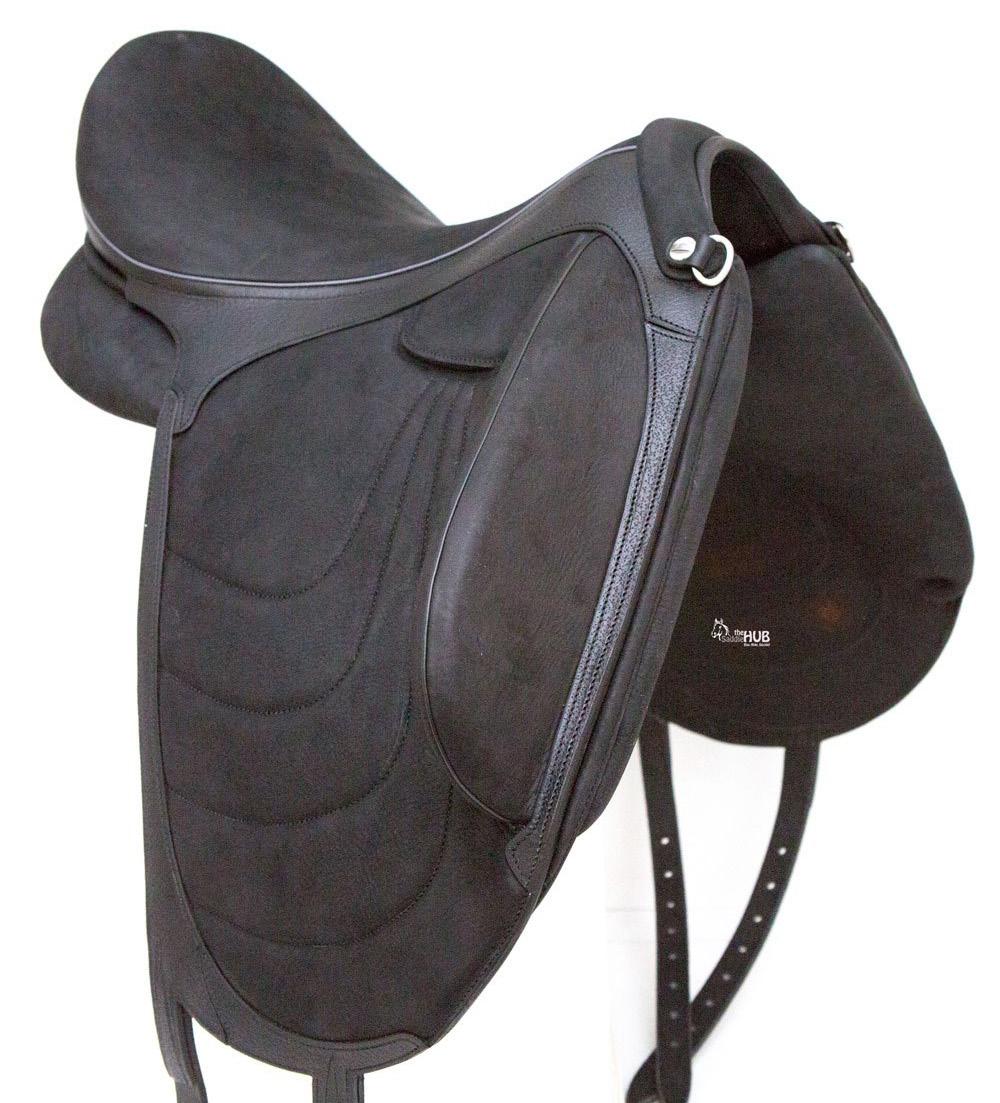
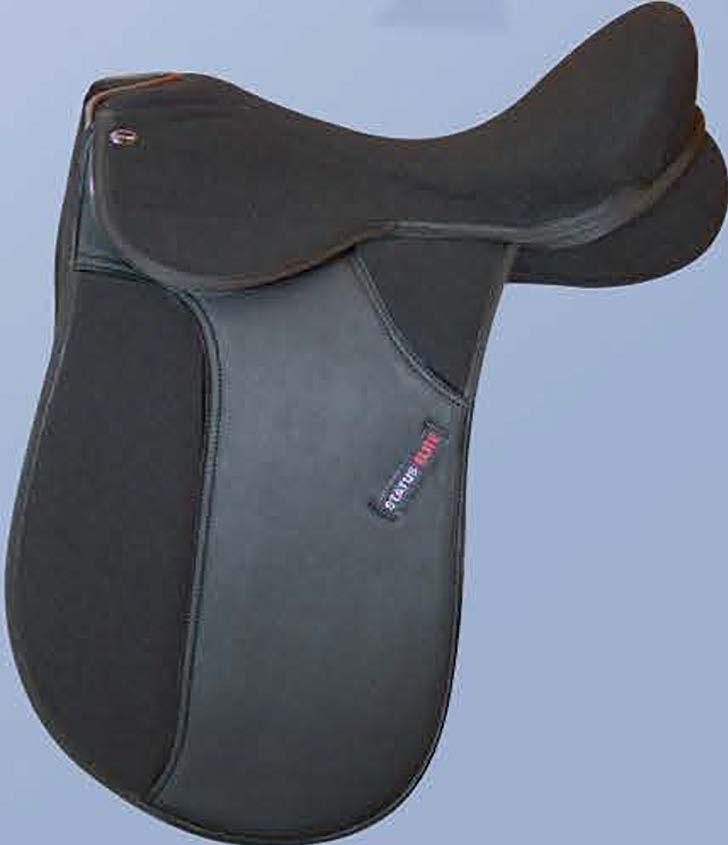
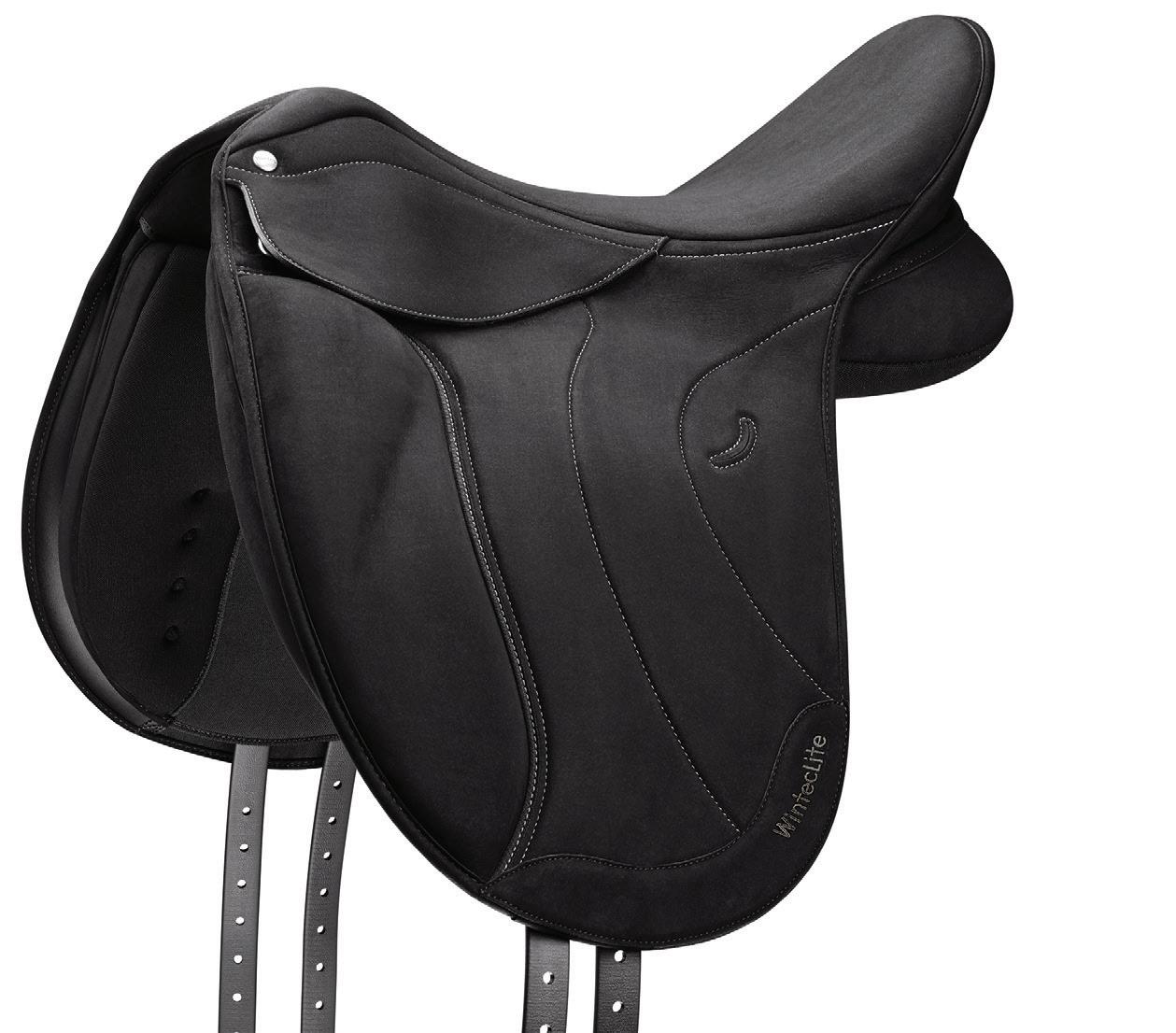
Make the most of your time together in a luxurious, grippy, and extremely lightweight dressage saddle. At less than half the weight of a traditional leather saddle the NEW WintecLite Dressage D’Lux truly offers half the weight and double the comfort.
WintecLite Saddles featuring the CAIR Cushion System and EASY-CHANGE Fit Solution offer the highest flexibility in achieving a customised fit, ensuring your horse’s absolute comfort and your peace of mind.
View the full range at wintec-saddles.com
@wintecsaddles
the ‘2019 Boneo Park Hobby Horse Challenge’ with two teams of three made up of a male rider, a female rider and a discipline specific official. For dressage, the team included Brett Parbery and Justine Greer joining Judge Jane Ventura; Brook Dobbin, Amber Fuller and scorer Kevin Taranto represented the jumping fans and announcer Liz Richardson started the race.
To the deafening applause of dressage fans and sighs of defeat from the jumpers, the dressage team was victorious and Brett Parbery accepted the trophy on behalf of dressage - the showjumpers will have to wait until next year to even the score.
The IRT Dressage Grand Prix CDI-World League Final saw a resounding win for NSW rider Rozzie Ryan, partnered by the elegant chestnut Jarrah R, bred at Ryan’s Horses near Newcastle in NSW and sired by Jive Magic, her former Grand Prix partner. The pair won Saturday’s Grand
Prix test and went on to take the deciding Freestyle to Music. This all-important element of international dressage saw Rozzie step into her comfort zone, with a light and ethereal performance that resoundingly confirmed the beauty and ease of this technically excellent performance.
Victorian Holly Cutler was the runner-up, riding her lovely imported mare Diva Royale just ahead of Rio Olympian, Sue Hearn and Remmington from NSW.
Jumping Course designer David Shepherd had the best tools at his disposal, a spectacular setting with well maintained and interesting jump elements, which allowed him to present the spectators with a picturesque outlook while at the same time giving riders the appropriate challenges for each height class.
The obstacles at World Cup level were huge, but great riding, sound training and the athleticism shown by these
G: The top three in the CDI World Cup Pacific Final are congratulated by Officials. From right, Judge Susie Hoevennars, Rozzie Ryan and Jarrah, Deb McNicol, the Technical Delegate with unmounted runner up Holly Cutler and third placegetter Sue Hearn and Remmington.
H: Rozzie Ryan and Jarrah R in their victory lap of honour.
experienced campaigners, were a jaw-dropping testament to the years that go into reaching top level and the horses’ confidence and trust in their riders.
The final round of the Robertson-Smith Partners World Cup Qualifier saw Queensland’s Billy Raymont and Anton victorious. They made it look easy but the knowledgeable crowd understood the significance of their achievement and the importance of a World Cup win.
It was unanimously agreed that this year’s Boneo Classic was a milestone event that brought together many ground breaking changes to the conventional event management model, setting new standards in multi disciplined competition, hospitality and commerce in an all-inclusive approach that was enthusiastically received and sure to attract an even bigger crowd on the Australia Day weekend next year.
F G H
F: Brett Parbery accepts the trophy for the dressage team.
These are a few of our favourite things
Every month HorseVibers bring you some handy hints about the products they love.
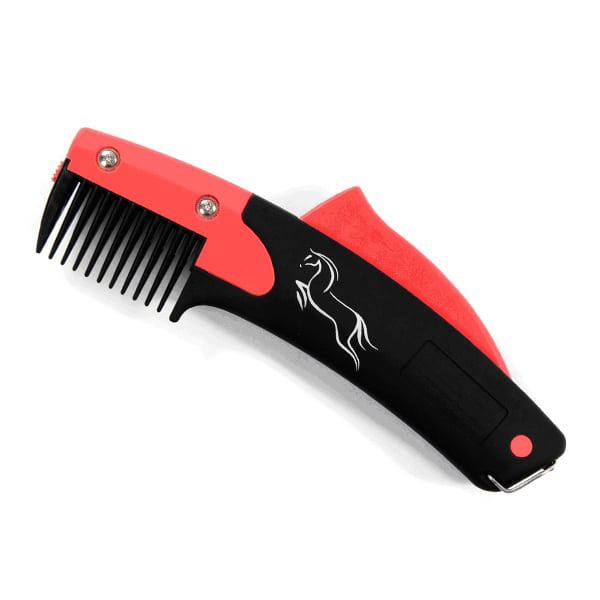
Solocomb
This product is a HorseVibes favourite! We figure this New Zealand product is the only humane way to trim and thin manes. It’s easy to use, you simply back-comb the hair as usual, but instead of pulling the hair out, simply press the little lever and hey presto, the hair is instantly and painlessly clipped. You can also use the Solocomb on whiskers and the blades are easily removeable and replaceable. It’s a big thumbs up from us on this one. www.ashbree.com.au/solocomb
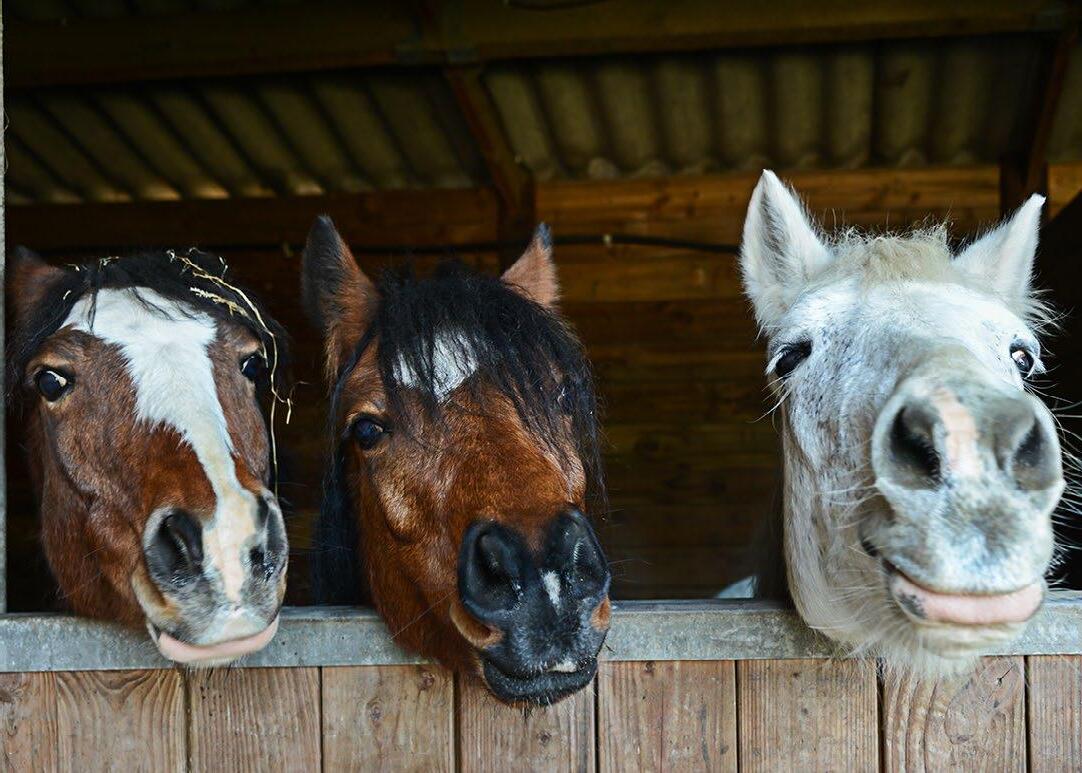
Horse Diaper
1
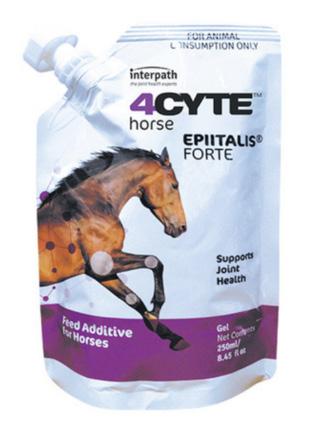
4CYTE Epiitalis Forte Gel for horses
Our saddle guru Shae Herwig, swears by 4CYTE Epiitalis Forte Gel for her performance Warmblood. Epiitalis is a plant oil extract that has been scientifically proven to repair damaged joints affected by age, injury and arthritis. It’s recommended by veterinarians all over the world and is a safe product for long term use and can be used in conjunction with other joint medications. 4CYTE is cost effective and a small daily maintenance dose of only 4gms a tube will last up to 59 days. Says Shae: “I’ve been using this on my performance WB for about 12 months now and he has never been happier! If you are looking to make your fur baby happier and healthier I highly recommend this product.” Epiitalis Forte Gel is available from various stockists.
When Jane Camens wrote her feature on horseman Wayne Banney last month, she was impressed to see the horse diaper used by Wayne with his gelding. When the horse self loads into his truck, the first thing Wayne does is attach the diaper, in order that he can keep his truck clean for the long hours ahead on the road.
The diaper is attached to a breastplate straps that hold a bag under the horse’s tail to catch manure and another swinging bag under the belly to catch urine. Its secondary purpose is for urine and manure analysis, if a horse is ill and it certainly reduces time cleaning out a stable. “I do a fair bit of long-distance travelling for trail-rides,” says Jane, “and this is a really useful item to help make cleaning the float so much easier.”
www.equisan.com.au/
2
3
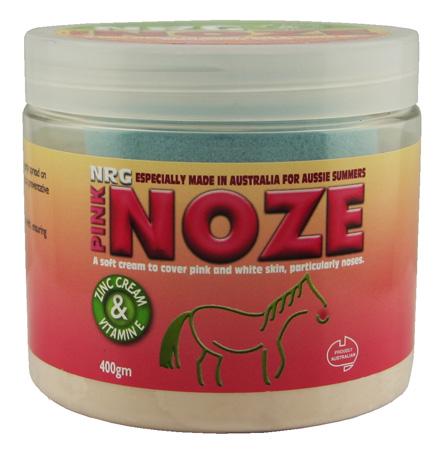
NRG Pink Noze
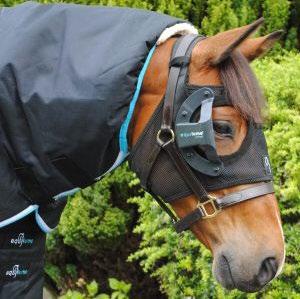
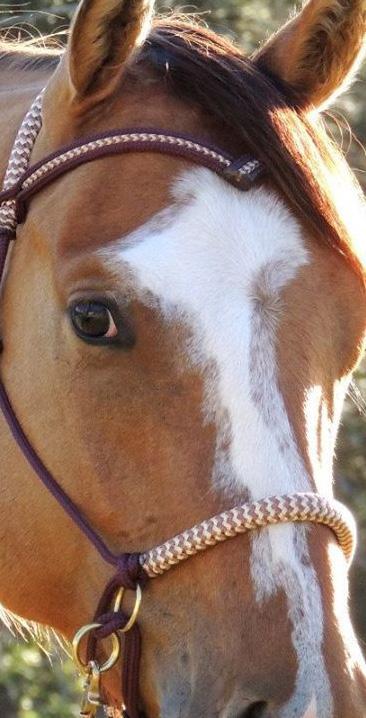
Fiona Todd, our esteemed publisher, has one horse with a very pink nose that gets easily sunburnt. Says Fiona: I’ve always put a fly veil on her, but she hates having something hanging right over the end of her nose. She spends her whole day throwing her head in to the air trying to get rid of the pesky fly veil.”
Enter Pink Noze. Fiona had never considered Zinc before, but found her mare much prefers it. “She stands patiently while I put it on – and even her foal, with his equally pink nose, is happy to have the cream applied. I haven’t had issues with sunburn this summer so I can definitely recommend this product for anyone with a horse or pony with a sensitivity to the sun.” www.nrgteam.com.au/product/ pink-noze/
4
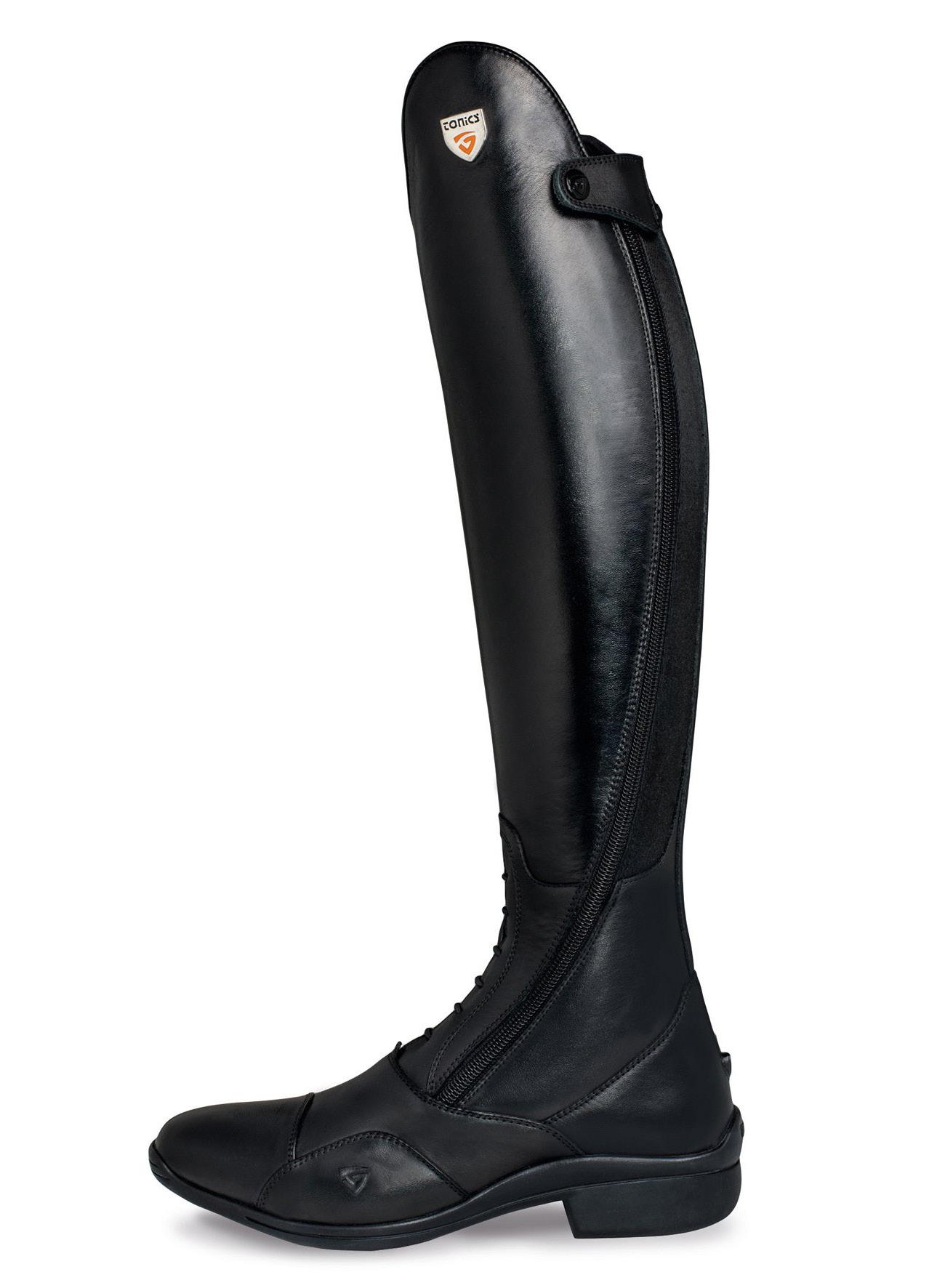
Top Boots
5
Remember the last time you had to break in a new pair of top boots? The stiff leather, the painful pinch at the back of your knee and the inevitable blister? Wearing brand-new tall boots has always generated a deep love/ hate relationship with riders - until now. The Tonics Jupiter is putting an end to sore toes, knees and ankles. The first time our regular contributor Ute Raabe tried these boots was for a photo shoot on a 41degree summer day. “To my delight the boots were super-comfy from the first minute of wearing them. The smooth, soft leather moulds well to your leg and provides a super elegant shape, tapered at the ankle and with a high dressage arch,” she says. The inside of the calf is made of a leather that supports a stable position of the rider’s leg. Some decorative elasticated lacing on the arch of the foot adds further comfort and mobility to the ankle area and means the Jupiter is also suitable as a jumping boot. Another practical detail is the zipper starting on the outside of the foot and continuing in an upward curve to the back of your knee. It makes it so much easier to get the boots on and off and puts a lot less strain on the zip. Best of all, at $650 the Tonics Jupiter boots are great value for money for a top boot that’s elegant enough for the competition arena but comfortable enough as an everyday riding boot.
View online tonics-shoes.com
Earthhorse Equipment
Rita McGregor, the owner of Earthhorse Equipment, makes the most beautiful adjustable bitless bridles and riding halters. Rita, who is passionate about her work, and handcrafts every bitless bridle to order, has found that people love how their horses relax when they’re ridden in the bridles. HorseVibes editor Candy Baker, discovered Earthhorse Equipment when she needed a bitless bridle for a horse with a (temporary) dental problem. “It’s such a kind way to ride a horse,” she says. “I think every horse should be able to be ridden bitless – at least some of the time.”
Rita has a facebook page, and also an ebay shop. For more information go to: www.facebook.com/Earthhorse-Equipment-1560020527573694/
Beautiful products for the horse lover.
20% OFF
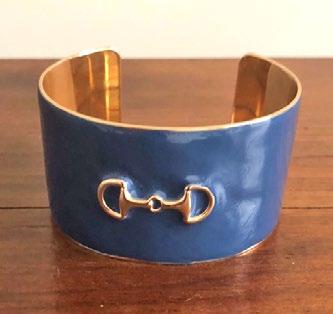
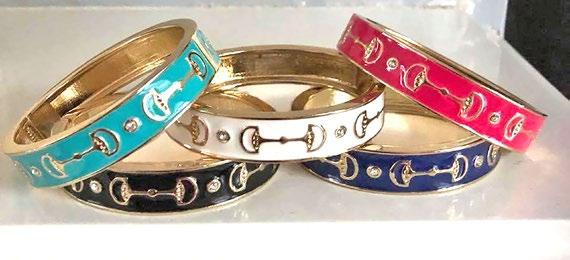
Enamel Bangles and Cuffs
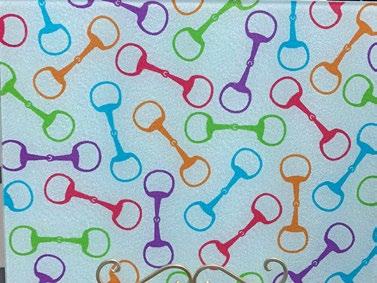
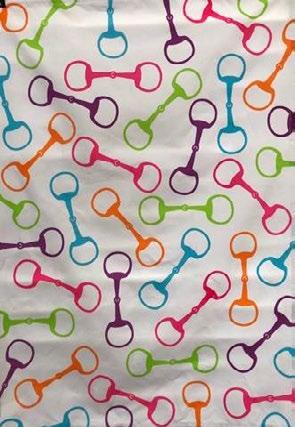
Designer cutting board and 2 x matching tea towels for $25 Normal value $38.75
For the month of March 2019 we’re offering a FREE fully enclosed front mesh rug rack plus a JR pack, exclusive to HorseVibes subscribers.
$22, 900
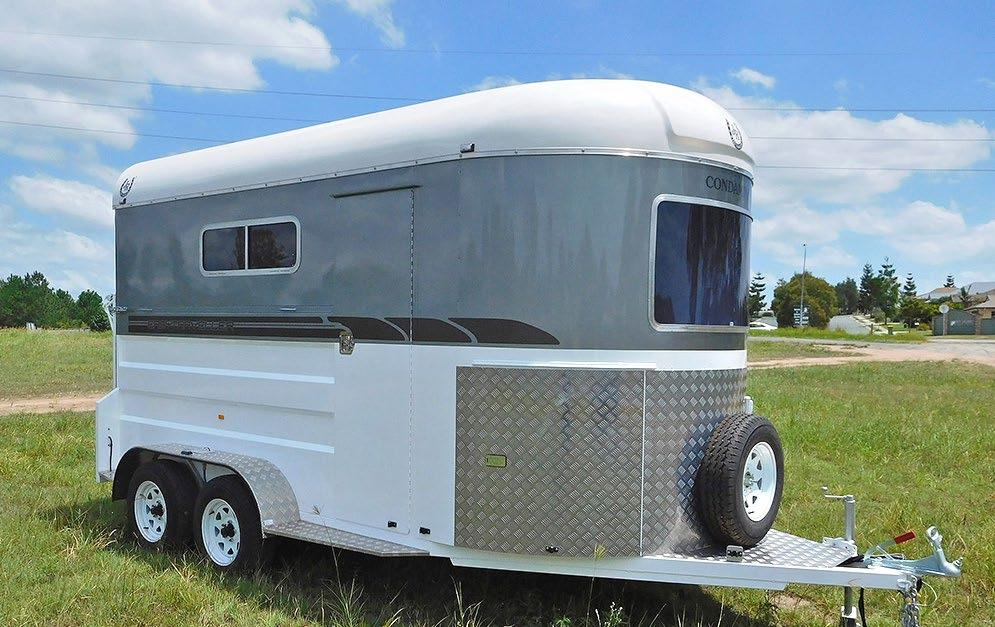
This large, spacious Aussie made float comes with a front cupboard, 4 vents, rear vinyl storm cover, urine trenches, a strong square RHS chassis, wide side steps, adjustable chest bars to keep horses secured in a fitted bay (x 5), rump bars 20 cm from tailgate (no tail rub), wider bays so horses can spread their legs out wide and balance, a roof height of 2.265, rock roller suspension for a smooth ride and a 5 year workmanship warranty. Choose peace of mind. jr-easytraveller.com
SADDLE REVIEW
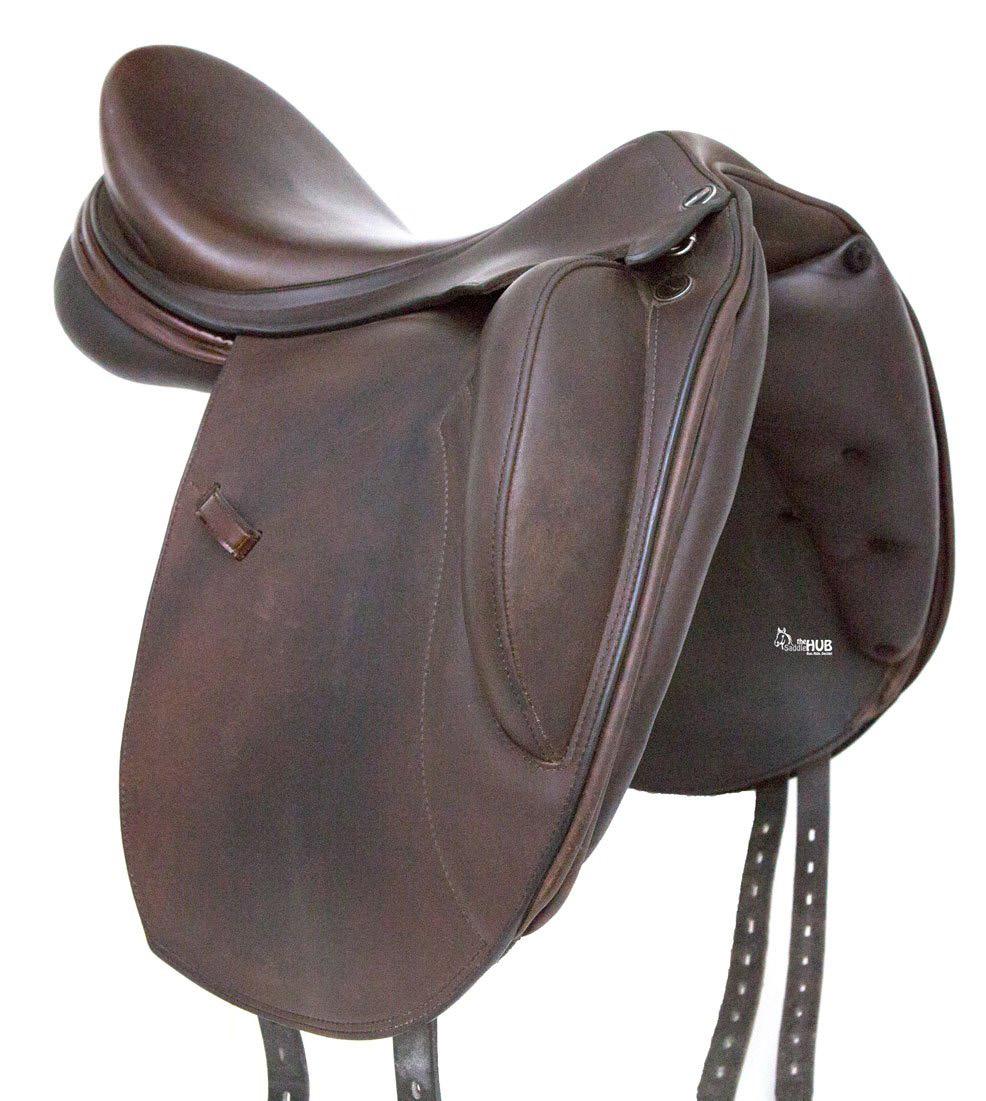
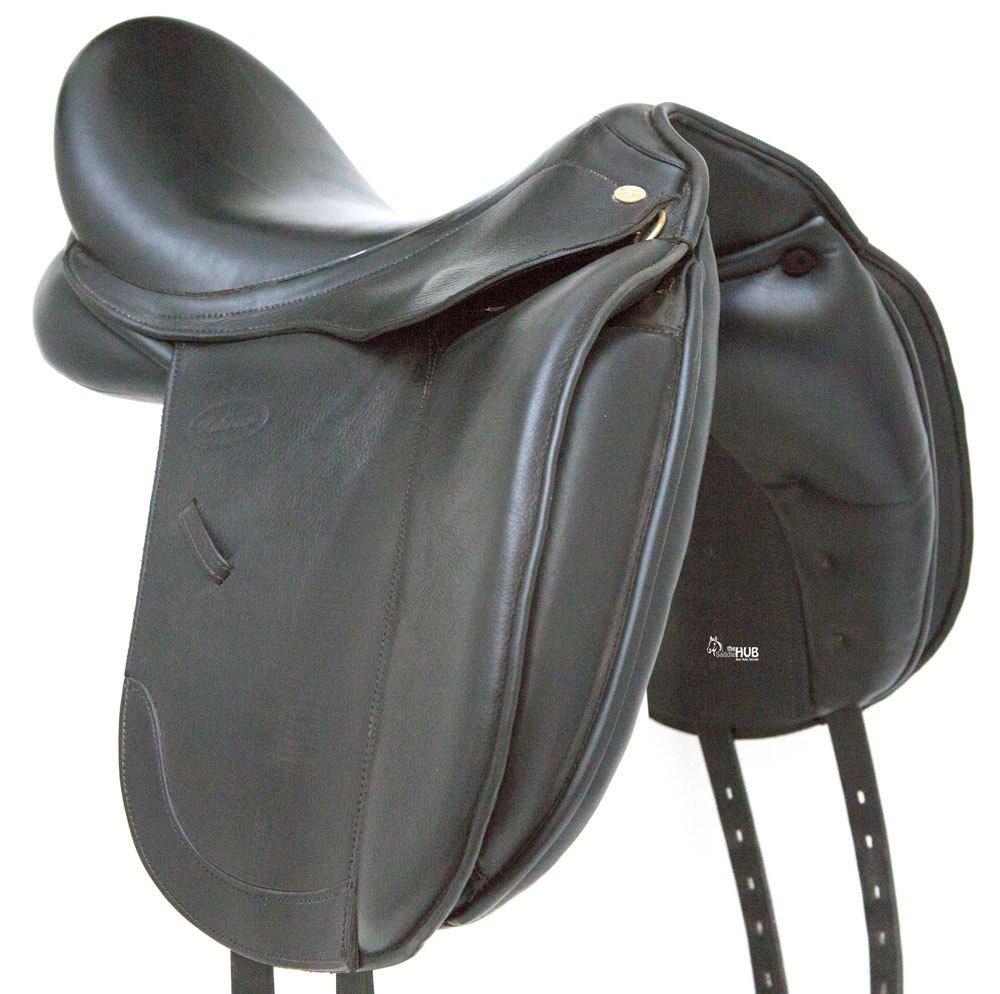
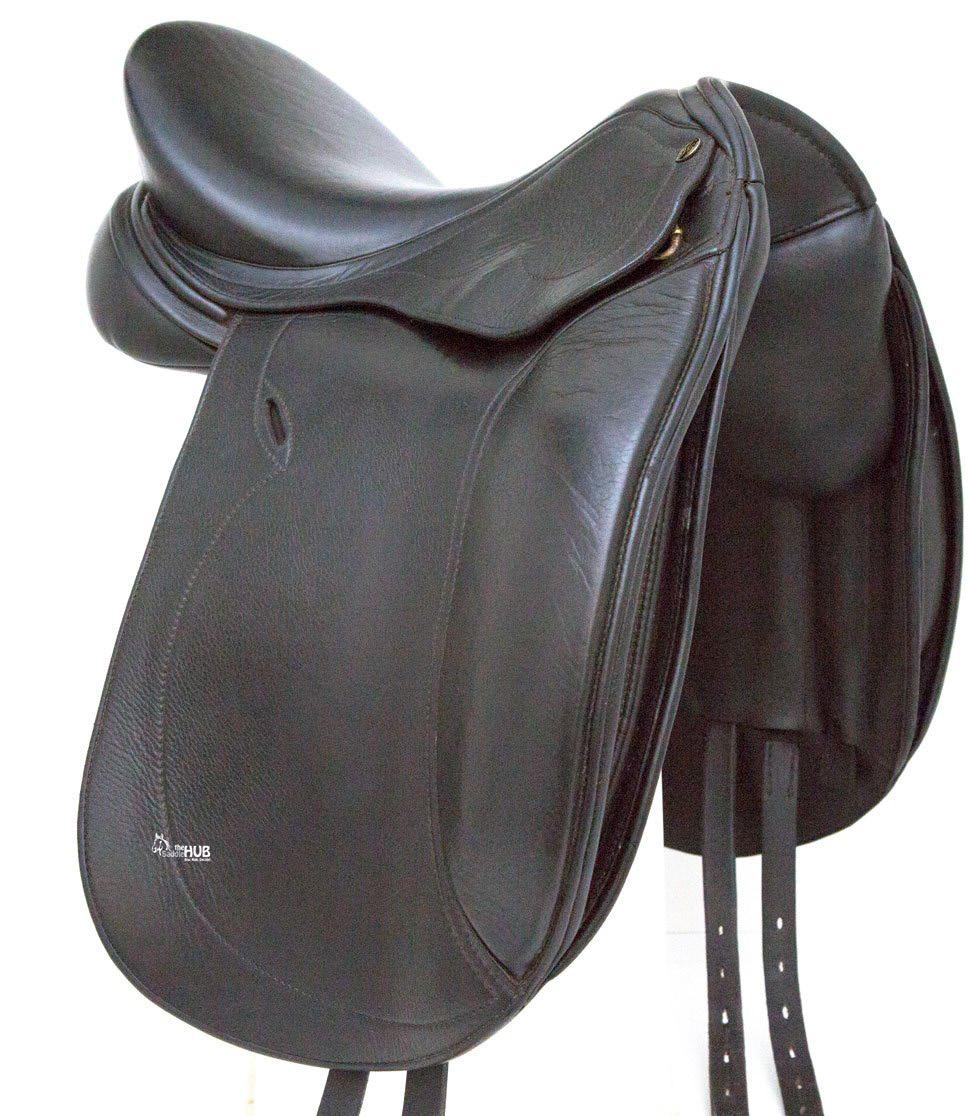
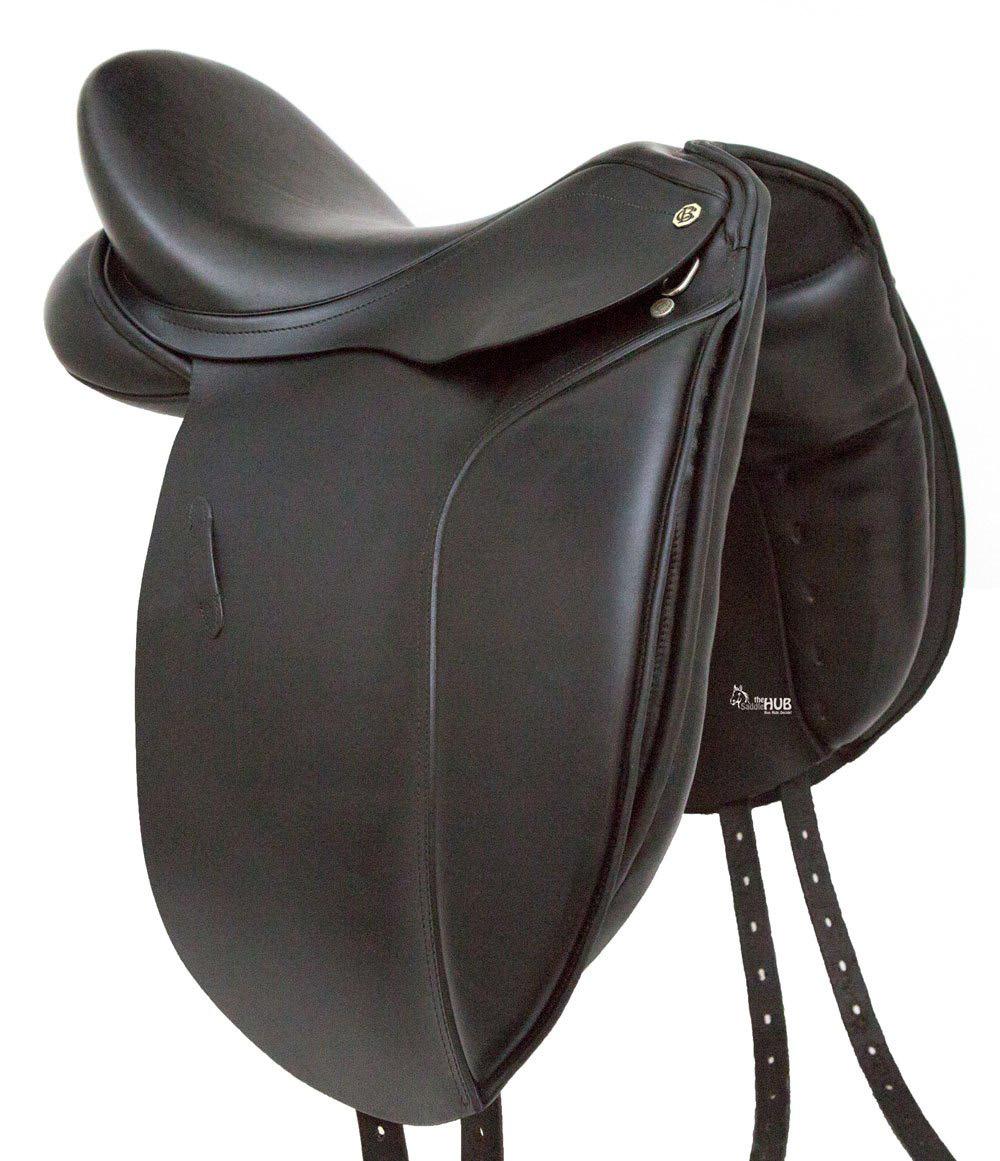
Dressage Saddle
MICHELLE HILEY recently purchased a Kieffer Sydney dressage saddle for Perri, her beautiful Arabian Riding Pony gelding.
Ichose this 17-inch saddle because I’ve ridden in Kieffer before and they’ve always been very comfy,” explains Michelle. “I’ve only had the saddle for a short time, but I’ve already received lots of positive comments on it. Both myself and Perri find it extremely comfy – it’s been brilliant for my posture and a great fit for my pony. He is a round pony and the style fits his shape beautifully so that he’s able to move correctly without restriction.”
Michelle points out that the Kieffer brand are well known for being a high
quality saddle: “The leather is super soft and of excellent quality,” she says. “Even when I make mistakes in my riding (as I am sure we all do) I always feel secure and the knee rolls also help me maintain a more correct seat and posture.”
Michelle would highly recommend this saddle to anyone looking for quality and value. “Before I purchased this saddle, I was riding in a saddle that didn’t fit Perri very well,” she explains. “A poor fitting saddle can do so much damage but with the Kieffer, Perri seems to be happier with the fit. I also found that due to the
poor saddle fit, my balance was all over the place and Perri was getting confused with what I was asking of him. Now our rides are really enjoyable.”
Michelle found the Equestrian Hub while researching saddles that would suit her budget. ““The Equestrian Hub offers a two-week trial which is really reassuring. With so many payment options also it makes it more affordable. Working as a veterinary nurse I’m always conscious of animal welfare, and I wanted to make sure I had a great fit for Perri and an option to return if it was unsuitable. The saddle arrived quickly and was well packaged. The Equestrian Hub were great to deal with and I would highly recommend them. I’m actually hunting for my new jump saddle through them.”
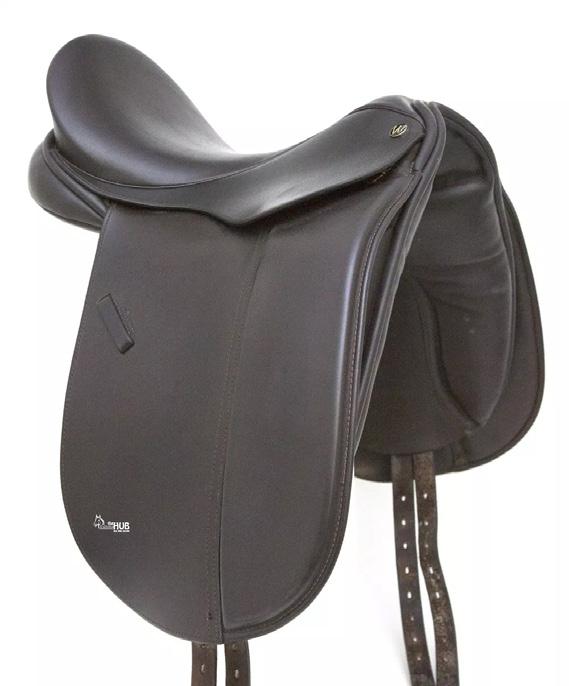
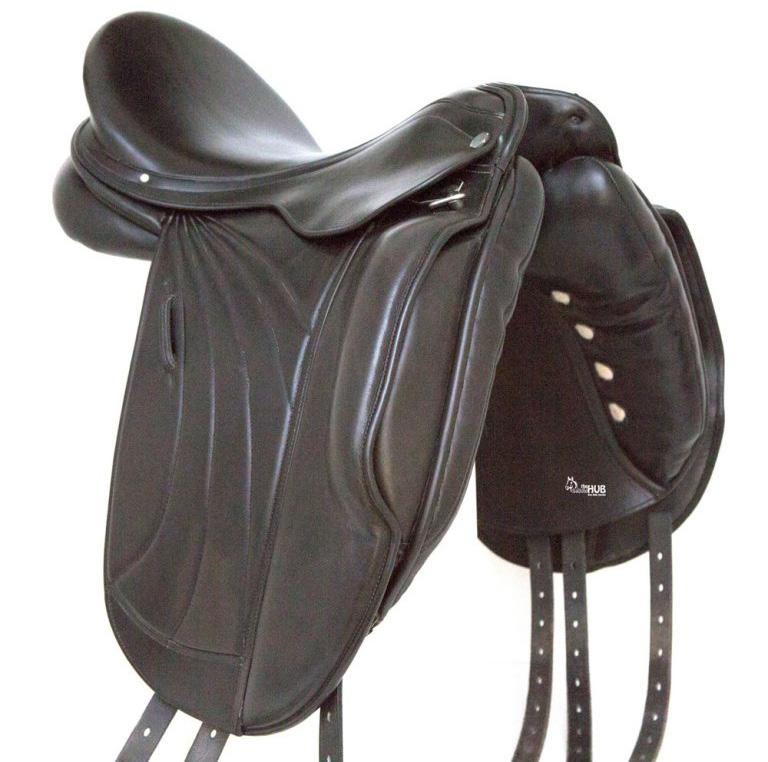
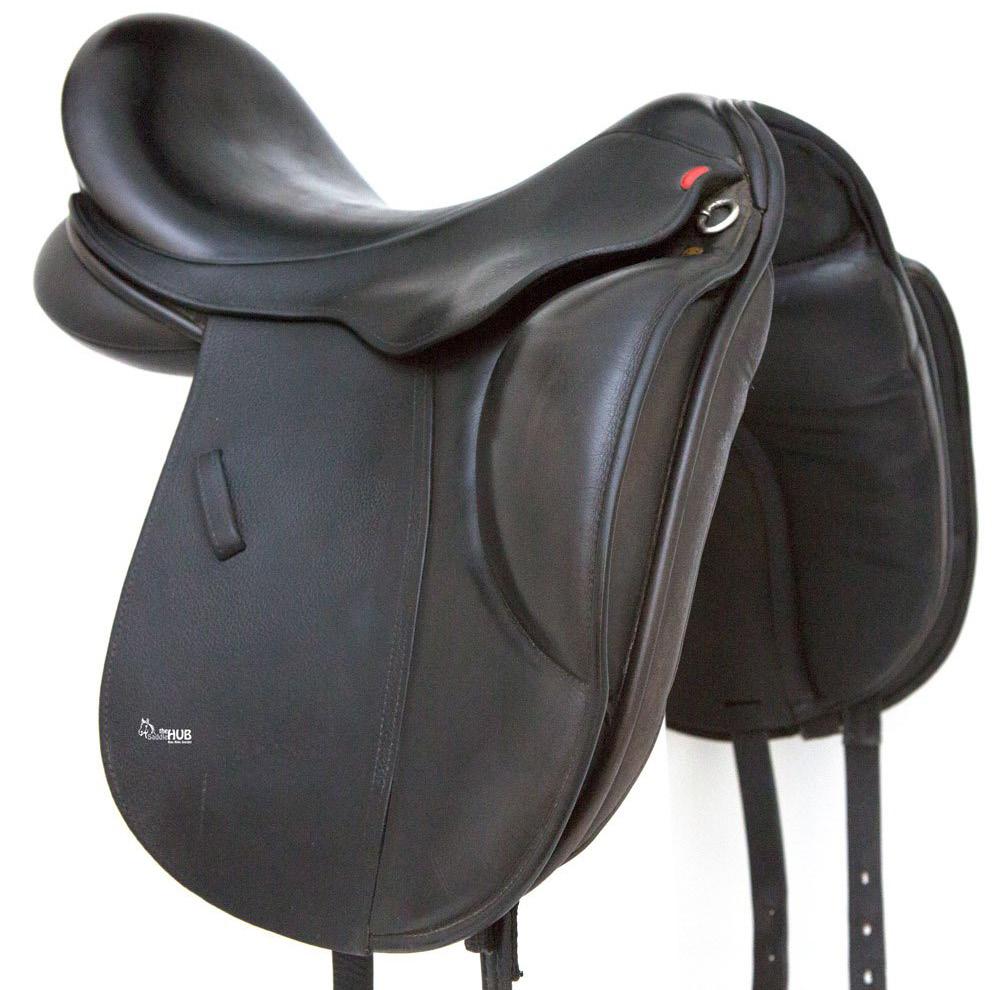
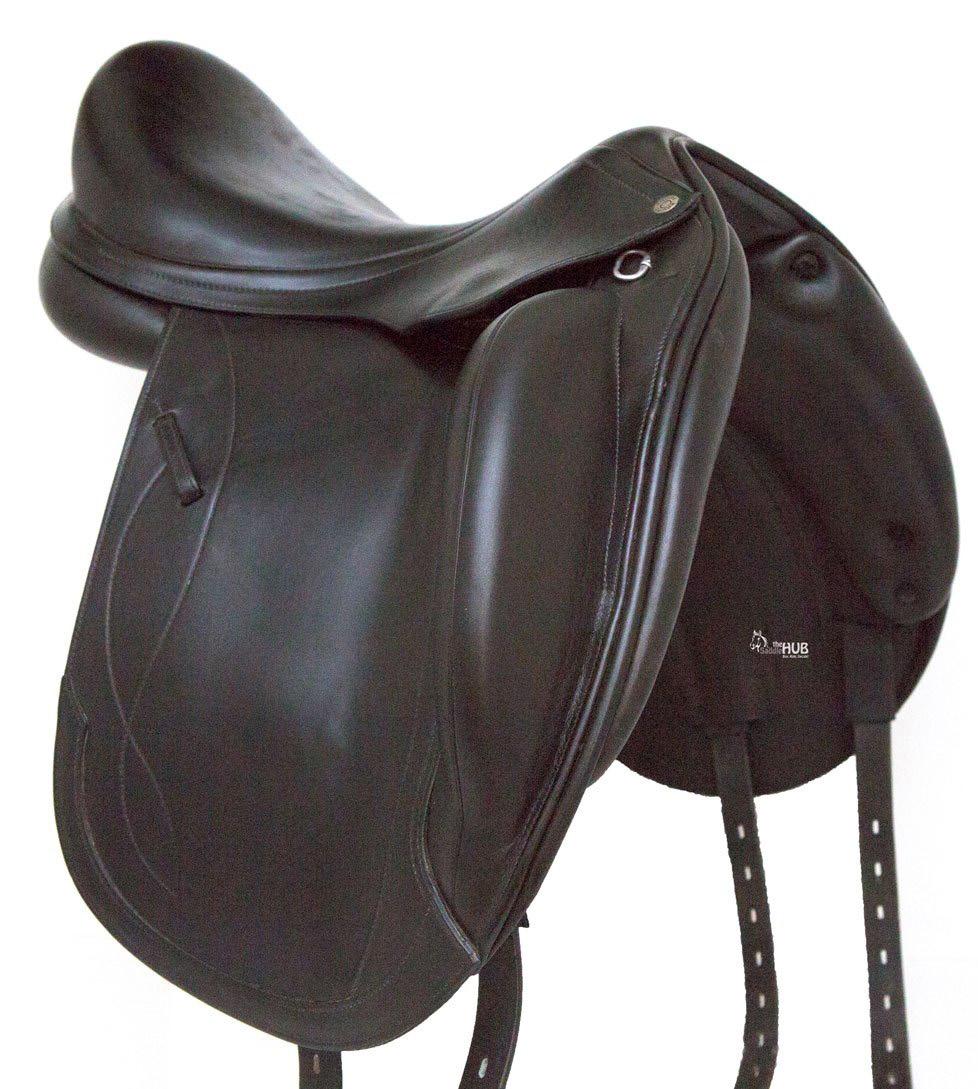
The Equestrian Hub has a large variety of second-hand saddles in our warehouse, so why not visit www.equestranhub. com.au and have a browse. Saddles come with a two-week trial, finance options and courier to your door!
AROUND THE TRAPS
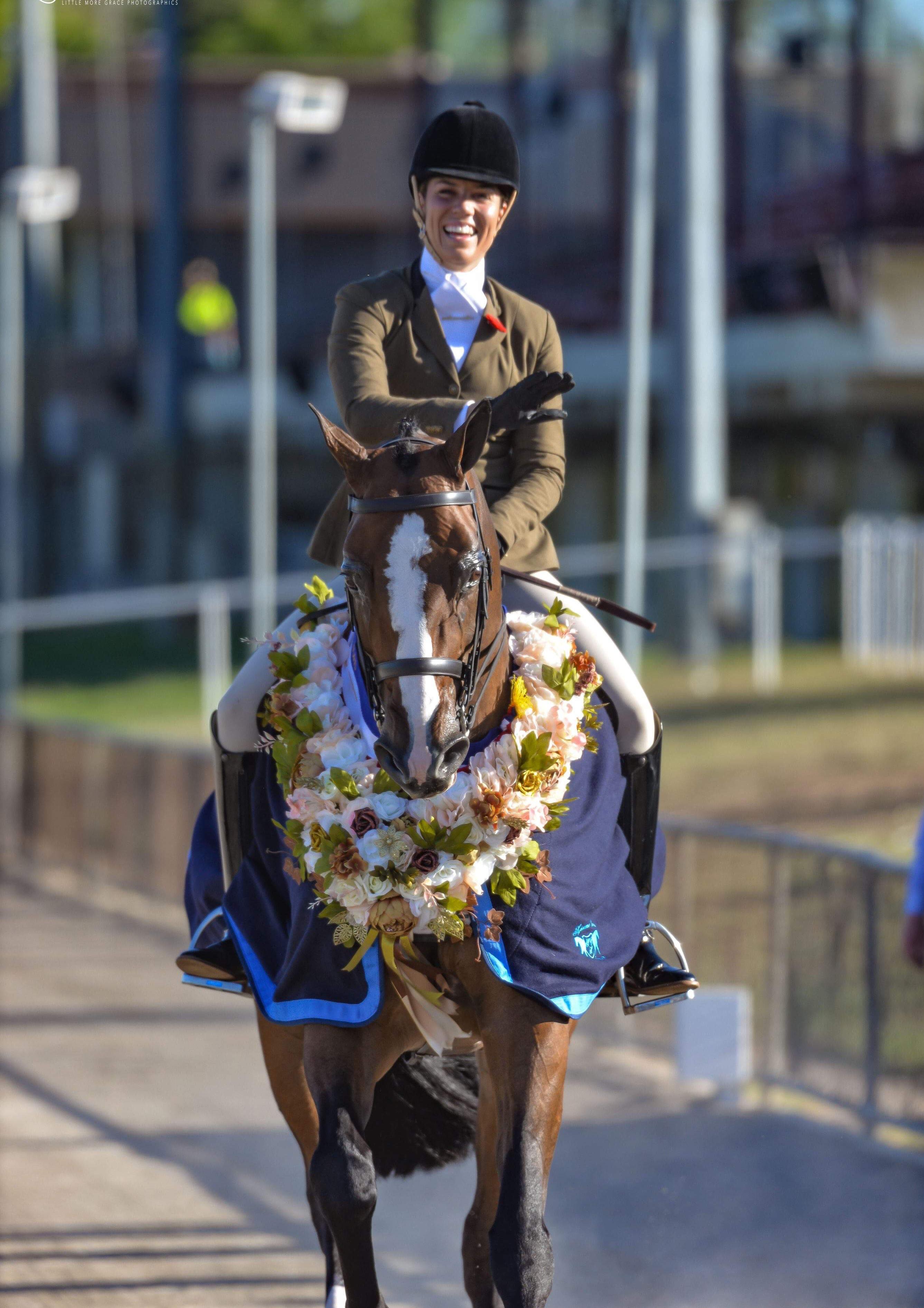
Alanna Richards and France recently won Champion Show Hunter at Canberra Royal.
AROUND THE TRAPS
Jackson eating up the cross-country course at
Above left: Tamworth Dressage Club are showing how to be environmentally friendly - recently running three successful days of dressage competition, without any paper. They had 52 classes with 417 entries in total and every arena used tablets instead of paper to score the tests, using the LiveScore dressage scoring system. Classes ranged from Prep A to Grand Prix and Para Equestrian and included official and club classes. Way to go Tamworth! Photographer: Amy Sue Alston
Above: Bertone (imp) by Benicio six-year-old Young Horse Champion Dressage winner by the Sea 4* CDI. Owned by Lauren K George QLD. Trained and ridden by Jayden Brown. Photographer: Sue Crockett.
Right: Soigne
Wallaby Hill Extravaganza.
Photo: Stephen Mowbray.
Above right: Elsie Cooper riding Bellgarra Emirants won the AGL Canberra Royal Show Champion Small Hunter Pony. Photo: Lisa Gordon.
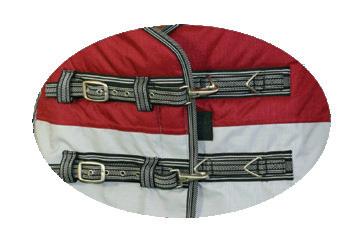
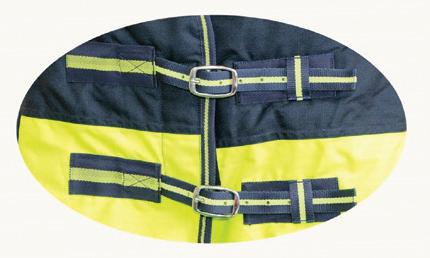
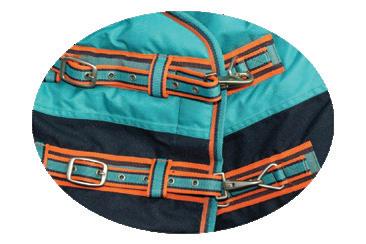
EUREKA CANVAS WINTER RUGS AND COMBOS 3’0 TO 6’9
Probably the best winter canvas rug and combo on the market today. 17.6 oz (500 gsm) superior cotton canvas with a cozy wool blended lining that keeps out those winter chills. Waxed water proofing, 3 way chest fittings, deep shoulder gussets and rump darts for a moulded fit plus more.
MINI RUGS 3’0 – 4’0 were $68.00
BY NATIONAL EQUESTRIAN WHOLESALERS
UNLINED BLUE CANVAS RUGS AND COMBOS 4’0 TO 6’9
Waterproof ripstop 16oz 100% superior cotton canvas complete with ripstop polyester grids and waxed waterproofing. Comes with all the features a quality rug should have.
$59.95
SHOWCRAFT WINTER RIPSTOP COMBO AND RUG 4’3 - 6’9
22.5 oz (640 gsm) canvas. Excellent high grade canvas with strong polyester grids that provide extra fabric strength. Loaded with quality sort after features such as 3 way chest strap, removeable leg straps and taffeta chest lining rump darts just to name a few.
quality Winter Rugs
EUREKA SYNTHETIC WINTER COMBOS AND RUGS 4’3 to 6’9
EUREKA
X-CALIBUR PADDOCK RUGS AND COMBOS 5’0 to 6’9
Cozy and warm 300 gsm polyfill with a 600 Denier breathable waterproof outer and cotton lined body. Anti rub satin in shoulders and tail flap. Clip chest straps and double cross over surcingles and rump darts for a moulded fit.
The eureka synthetic rugs and combos are truly a great choice. 600 Denier with a twice treated waterproof outer. 220 gsm polyfill for extra warmth and a cotton lined body completed with anti rub satin, double chest straps and cross over surcingles to secure fit.
Solid colour polar fleece rugs and combos for extra warmth when needed on those cold days. Polypropylene bound with a wither protector on rugs.
YOUNG RIDER
Best Hoof Forward
DANNII CUNNANE catches up with Sophia Redenbach, a Young Show Rider from Orange in New South Wales.
Although she is young, Sophia has been in the show horse scene for quite a while and is successful in both hacking and dressage with her two beautiful horses, Daydream Believer and Jermyn Street.
“I’ve just turned 18 and I’ve been around horses my whole life,” explains Sophia. “I started competing at pony club and local competitions and shows. We moved to Orange when I was 12 and from then on I started competing at the royal shows and state interschool competitions. As I’ve got older I’ve become much more invested in training my horses through the levels and I’ve found that I really enjoy it, but it was my mum who gave me the foundation to ride the way I do and passed on a lot of her knowledge to me.”
Sophia has had a lot of success but is very graceful to her two horses.
“Over the last four years I’ve been lucky enough to be riding two horses who have really made me the rider I am
‘
today,” explains Sophia.
“Daydream believer is a 16.2hh grey Warmblood gelding. I’ve owned him for nearly four years and truly believe that he is my once-in-a-lifetime horse. I owe everything to him, I would not be the rider I am today without him.”
Sophia has owned her second horse, Jermyn Street, a black 17hh gelding by Jive Magic for two years. “To be honest this horse has thrown challenges at me, but I wouldn’t have it any other way. He’s really a special horse to own,” she says. “My third horse is Rotsbury – he’s the smallest of the herd. He’s a 16.1 hand high brown gelding by Rotspon. He is training Intermediate 1 and competing Prix St George. I’ve only owned him for five months and we’re still getting to know each other but he’s a lovely horse.”
One of Sophia’s favourite memories was winning the Novice 16.16.2hh Show Hunter Hack and the Child’s Hunter Hack over 15hh at the Sydney Royal, riding Daydream Believer. “We also
A‘ It was my mum who gave me the foundation to ride the way I do and passed on a lot of her knowledge to me
received a third place in the Open Large Show Hunter Hack at the 2017 Horse of The Year,” she says. Most recently we won my fist ever Novice Lady Rider 17-21 years at the 2018 Sydney Royal and competed in the 2018 Equestrian Australia Australasian Show Horse Championships. Being selected for the NSW Young Rider Squad with Jermyn Street was also amazing. We won the Champion Large Show Hunter Hack at the Show Horse Council Horse of The Year as well as winning the 17-21 rider at the ‘Bare Equestrian’ Pacific Coast Hack Championships.”
While Sophia has had a number of successes, she’s not slowing down any day soon. “My long term ambition is to train my own horse to Grand Prix level one day and go overseas and compete,”
A: Sophia on her 17hh Warmblood, Jermyn Street.
B: Sophia on her 16.2hh Warmblood, Daydream Believer.
she says. “I would also love to win champion lady rider at Sydney Royal too, but my main goal is to be the best rider I can be.”
To be successful and have three horses in work takes a great amount of teamwork, and Sophia isn’t shy about thanking those who support her.
“None of my success would be possible without all the support I’ve had from my parents and my sister,” she says. Courtney Larard and Matthew Birch have also been beyond amazing. I’m forever grateful – they’re like family to me.”
Sophia works tremendously hard for her outstanding results, and all of us at HorseVibes wish her every success for 2019.
Gypsy Lore to Flying Jockey to Horse Herbalist
Angela Davison has worked all her life with horses writes JANE CAMENS, of the woman who now runs a unique hair assessment business and was the third fully licensed female jockey in Australia.
In the north of England where I lived we had gypsies camp every year on the village green,” Angela recalls. “We were told not to talk to them but they fascinated me. I used to follow the old women who went early in the morning to the ditches and hedgerows to select herbs and flowers. They’d make them up into a brew and give them to horses they bought for dogging money at the sales. After a few weeks of brew the horses were transformed, put back through the sales and sold for a high price. That’s how they made money and clearly that’s when the seeds of herbal medicine were planted in me.”
Angela went to work at a breaking and training stable for show jumpers while she was still at school. “I was mucking out 20 boxes before breakfast,” she says. “They threw me on every kind of horse, and that was a huge learning curve. I rode many difficult horses plus we were out on the jump circuit. It was a fabulous experience for over four years. I loved it.”
Later, Angela enrolled as a working pupil - “slave labour” as she describes it - at a dressage academy. That wasn’t such a
good experience she says. “I was allowed to bring my own talented JA jump pony, Charles, with me, but he was no dressage horse. ‘Captain M’, the principal, taught all his lessons on a poor mare who had an enormous split in her front hoof. At one point she was very sore, so Captain M decided to give me a dressage lesson on Charles.”
But Captain M found it difficult to give Angela a dressage lesson on the fiery Charles. “He dragged me off my pony and got on him himself. He was on the ground in under six seconds!” That saw Charles banished to the stable, and not even allowed to be led out for over a week. Angela wasn’t supposed to be allowed off the property but one night she sneaked out and called her old teacher at the jumping stable to come and get her.
“I went and tied hessian bags around Charlie’s hooves and at two in the morning we sneaked out never to return. Good riddance to Captain M,” she says firmly.
But on her return to the jump circuit she unfortunately got badly kicked. While she was convalescing, she came to Australia to see her father and to have a look around. She laughs: “I came with a small bag, but I packed 12 cans of hairspray into it. I thought Australia couldn’t possibly have hairspray!” She expected to see kangaroos in the street, she says, laughing her own ignorance. “All I knew for sure was that it was hot and you wore shorts. I was a bit disappointed on flying into Sydney seeing all the industrial area, not a
The Horse Herbalist, Angela Davison talking to a friend.
kangaroo in sight and initially I only met ‘Poms!’”
After working in the music industry in Australia and in New Zealand for a couple of years , the horses started to call her back. Says Angela: “I had to get my backside in the saddle again.” She found work managing Heath and Ivana Harris’s Bloodwood Park while they went on location doing film or TV work.
While she was working at Harris’s place, she went into Randwick with her friend Stephen Jeffries, who was working for John Drennan, the late, great Tommy J Smith’s breaker. “As soon as I got out of the car the breaker said ‘Look at the size
of you! Have you got any boots?’”
Angela, who measures barely 152 cms high and at that point weighed around 55 kilos, took the offered job of riding work six mornings a week. “It was an honour to work under the guidance of such a brilliant connected horseman as John Drennan, even though I was ‘autumn leaves’ for some time,” she says, explaining to this unseasoned writer that the term is racing jargon for riders who fall off all the time. “It was all so different. In the first six weeks, I lost around nine kilos! I was determined to be able to take a horse out on the track and follow instructions doing the correct pace and times perfectly. After about
18 months someone asked me if I was a Lady Jockey.”
This was in the mid 1970s, just before women were allowed to ride with men. At that time, there were ‘ladies’ races. “I think I only had about 10 rides in ladies races,” Angela says. ‘I’d have a scotch before and then fly around the country race meetings. It was good fun though not very professional I have to say.”
New Zealand jockey Linda Jones who had been refused an apprentice jockey’s licence in 1976 on the grounds that she was “too old, married and not strong enough”, rode with a licence she had obtained through a legal loophole
in New Zealand. When she came to Australia in 1978, she became the first woman to win a race against male professional jockeys in Australia, riding Pay The Purple to win the Labour Day Cup at Doomben in 1979.
“That really put the cat among the pigeons. She trail-blazed the way for the rest of us,” says Angela. “I instantly wanted to know what you had to do to get a full license.”
By that time Angela had been riding her share of champions, including the great Kingston Town. She remembers going to the AJC to find out what she had to do to get her full license.
“I was wearing red velvet jeans and Ugg boots – I didn’t expect to be presented to the AJC committee who happened to be meeting that day,” she recalls. She found out she had to ride and get clearances in10 official trials at Randwick or Warwick Farm. The official trials at Randwick and Warwick Farm were run just once a month, Angela was already riding at Randwick but the rules made it extremely difficult for country girls to get a ride. Also she had to be a registered work rider for a trainer, not a breaker.
Angela had to leave Drennans and went to ride for trainer Neville Begg. After
three months of trials, without Angela’s name on the lists, she walked out of Begg’s stables and went to TJ, who gave her two rides in the trials a few days later.
“I was so nervous and I was shaking so badly I couldn’t do my joddies up after I’d put on the horses colours,” she says. “One of TJ’s foremen, known as ‘the black rat’, delighted in giving me a hand.
Luckily the horse trialling was an old pal called Sweet Turn. “He really looked after me and helped me settle.”
After racking up 10 clearances in 10 trials Angela was offered a stable jockey’s job in Rockhampton where she was given her license. She went on to hold a full license for nearly eight years.
“Needless to say I had plenty of thrills and spills and a break or two. I had an excellent chiropractor who also gave me herbs and my recovery rate was brilliant,” she says.
As time went on Angela became more and more aware of just how many horses, regardless of good veterinary care had varying problems which couldn’t be fixed. “They would become known as ratbags, and were often destined to become dog food or to simply fade away in a paddock. I decided it was time for me to find more tools and to give something back to the horses.”
She was 36 when she rode in her last race, and by then she was already enrolled in Dorothy Hall’s College of Herbal Medicine in Sydney.
Not content to only treat the symptoms, Angela has since, after decades of study and practice, pioneered a unique technique that allows her to delve as
deeply as she needs to go into the entire body and mind of the horse to find the problem. She does this, she explains: “by tapping into the very thing that connects every living organism – energy. It took me seven years before I had my system set up well enough to actually use it as a tool in my herbal medicine practice. That was 22 years ago, and still I learn from the horses every day. I work with horse’s hair energetically and by asking the right questions I am then guided by spirit and the individual’s
higher self to come up with a treatment plan plus advice.”
These days she runs an unique equine hair assessment business that brings together her knowledge of horses and numerous areas of complementary medicine, featuring classical herbal medicine, flower remedies, iridology, both craniosacral and Equine Muscle Release (Bowen) therapy, and more.
Angela’s passion has stayed with her, she says, to help horses, whether they are
ponies in the paddock or international competitors, to be as healthy, balanced and happy as they can be so they can comfortably enjoy reaching their full potential. These days she has clients all over Australia and has assessed horses in NZ, England, Ireland and Hong Kong. Her book ‘Flower Remedies for Horses, Pets and People’ was published in 2015.
For more about Angela Davison’s
CLUB OF THE MONTH
Warwick Horse Trials Club
Warwick Horse Trials
was formed
in
1996 as a club for riders who love to train and compete in the sport of eventing and is still going strong.
The Warwick Horse Trials Club is set on 132.1 hectares of rural land located at Morgan Park on the outskirts of Warwick. Over the years the Club has developed and maintains the most expansive eventing venue in all of Queensland.
It’s functioned for 22 years during which time it has hosted many one and three day events including FEI
world cup qualifiers. The Club’s facilities include a large clubhouse, dressage and showjumping arenas, a cross-country course, trot up track, 200 horse yards and camping and toilet facilities.
The Club has approximately 100 members. Membership provides riders with the opportunity to school their horses on the picturesque cross country course which offers a variety of jumps up to 3* level - including two water jumps.
Apart from member’s open schooling days, there will be three main events held at the club this year, with the first event, DRB Floats Warwick International to be held over the weekend of 16-17 March. This will be the first FEI event for the year in Queensland, and the programme will include classes up to 3* under the new format.
Catering for competitors and spectators on the Saturday night will be provided by the locally run Bluebird Kitchen and Smokehouse pop up restaurant. Past events have attracted 200 plus competitors from juniors to elite level, travelling from Queensland, NSW and Victoria and we hope to attract a similar number to this event.
National level events will be held in the months of June & October, with plans for Express Eventing later in the year.
For more information go to: www.facebook.com/ warwickhorsetrialsclub/
This month is jam-packed with energy, surprise and a possible about-face when it comes to an important decision you made last year. We also have the first Mercury retrograde cycle of 2019, sure to point out where you can strengthen your plans, weed out faulty structures and move forward with confidence, grace and poise. Of course, us equines have our own mojo brewing - and won’t you be surprised!
Aries
This month brings out the spirit in both two and four-legged Rams. You’ll not go unnoticed, even if you want to. For us horses, best offer up more exercise or we’ll find ways to do it on our own. Think, The Great Escape. On the go Aries could experience a logjam between career and love life, giving you a chance to see things from a new perspective. Take time to consider before making a choice. Haste means a do-over later.
Taurus
The month starts with an indulgent feeling in the air, a Pied Piper tune that lures you away you’re your most practical goals like sensible eating, regular exercise and a good night’s sleep. But the enchantment vanishes mid-month when you suddenly snap back to ‘reality.’ Best amp up awareness on the everyday things to keep from losing keys, tickets or contracts. Meanwhile, us equines are good as gold. Rewards, please!
Gemini
Two-legged Twins have their heads in the clouds all month. Best put off signing contracts, making new commitments or giving important speeches, planned or impromptu. What you do excel at in March is orchestrating the creative spark into a work of art. Go there for good fortune. Four-legged Gems are restless and cranky, flinching at every sudden move or touch. Try softer brushes, slower movements and more hay.
Cancer
The vibe this month puts a focus on all things that surround, protect and give a sense of comfort and well-being. Think home, family, stable, barn and yards. Both two and four-legged Crabs are best nurtured by a little retreat. No matter what’s on the day-book, see if you can’t whittle out some quiet time, a sweet pasture, comfort food and easy routine. Too much stress and, we don’t know about you, but us horses will snap!
Leo
Ready for a month of miscommunications? What you say may be not be heard, resulting in situations ranging from hilarious to OMG you did WHAT? Clear up any lingering snafus as you spot them, starting with yourself. What wires are crossed? What messages are missed? Then straighten out any kinks with friends and family. Luckily, us horses will not have any problems, as long as you say what you mean.
Virgo
Mercury retrograde in Pisces is always a spinout for Virgos, both two and fourlegged. Humans, you’ll need extra time to plan for, basically, everything. Best get on board with the chaos theory, ASAP. Remember, you can’t control the universe with one hand tied behind your back, so ask for help! Us equines Virgoans are hypersensitive and highlystrung. Consult your vet if we get completely out of control.
Libra
This month may have you feeling ultra-intense, which is amazing if you have something creative to focus on. Otherwise, all that drive and force will arrow off in less productive directions. Set the tempo now by giving yourself small, daily goals, managing life in segments, at least for now. Us equines take our cues from you, so think strong, grounded, capable and switched on. Otherwise, we lean towards unmanageable.
Scorpio
This month spotlights reputation and career with attention on your core talents. Just make sure you are listening to your heart and not the peanut gallery. This means ignoring gossip while giving credit to those who have helped along the way. Us equines could be a tad accident prone, so do a safety check around the stable and yard, tack and feed room. Do nothing in haste.
Sagitarius
The keywords for the centaurs this month are socialize, tantalize, realize. For both two and four-leggeds, this is not a time to go it alone. You must connect, and as you find like-minded others, your goals and wishes for the future start to come true. Just make sure they are current desires and not past their use-by-date. Of course, us horses have less conflicted goals – good food, good friends, good times!
Capricorn
Expect this month to bring up issues from the past, exes, former employers or deeds/contracts/agreements you have forgotten all about. Even though it may not seem like buried treasure at the time, once sorted, the Feng Shui turns to gold and life moves forward again. Us equines tend to be a little lazy now, so if you can’t get in as many training sessions as usual, fine by us. A stroll around the paddock will do.
Aquarius
You’re in exploration mode right now where everything is a brainstorm session, each idea a new horizon. Just remember, Mercury retrograde means some things may need to be redone, reconsidered or reorganized. You may have to shift gears to do it. Us fourlegged critters are looking far afield too. Routine and boredom are the enemy, especially in bad weather, so use your innovation to keep us stimulated!
Pices
This month has your mind on relationships, intimacy and romance like never before. You might be thinking many details through and preparing to make life-changing decisions. There is no rush. Actually, it serves you better to slow it down and release old expectations and assumptions first. Otherwise, could be a baby/bathwater situation. Equine Fishes are wound a little tight right now. A regular gallop will help!