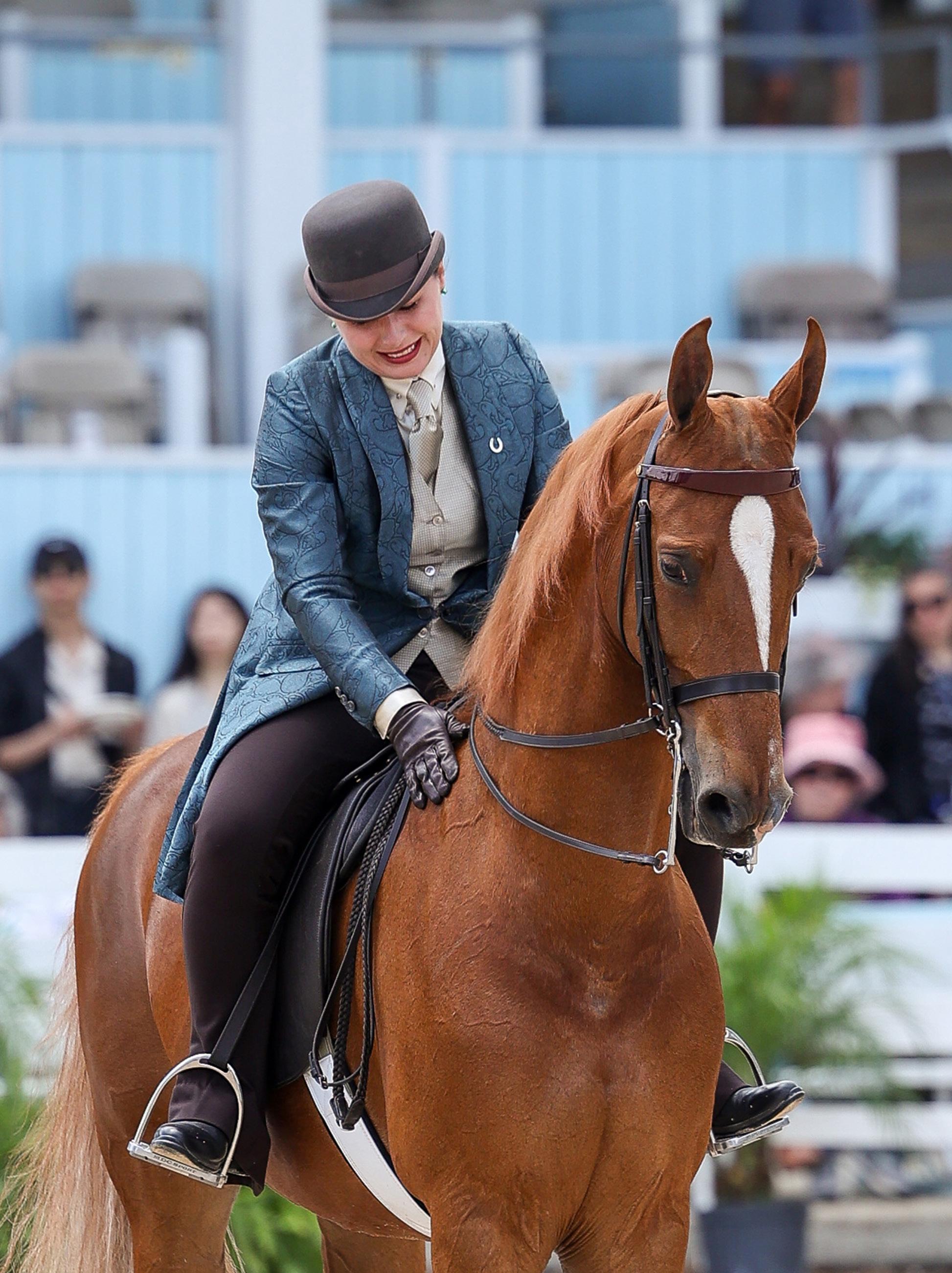
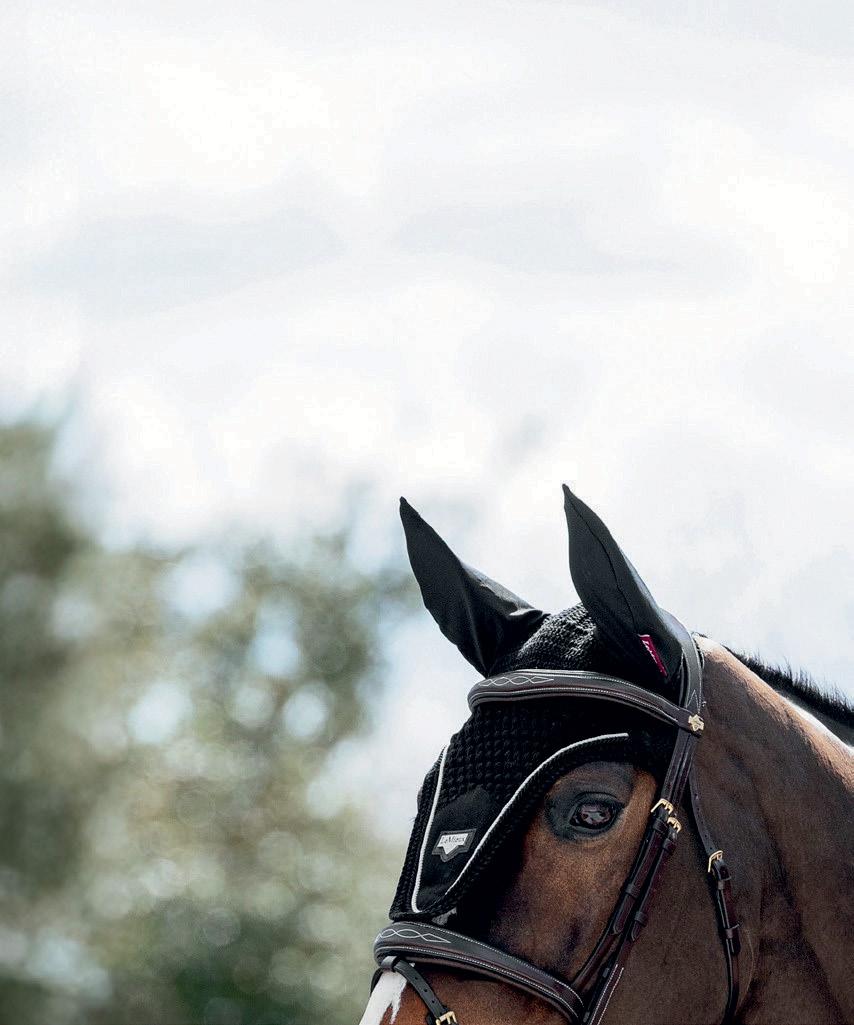
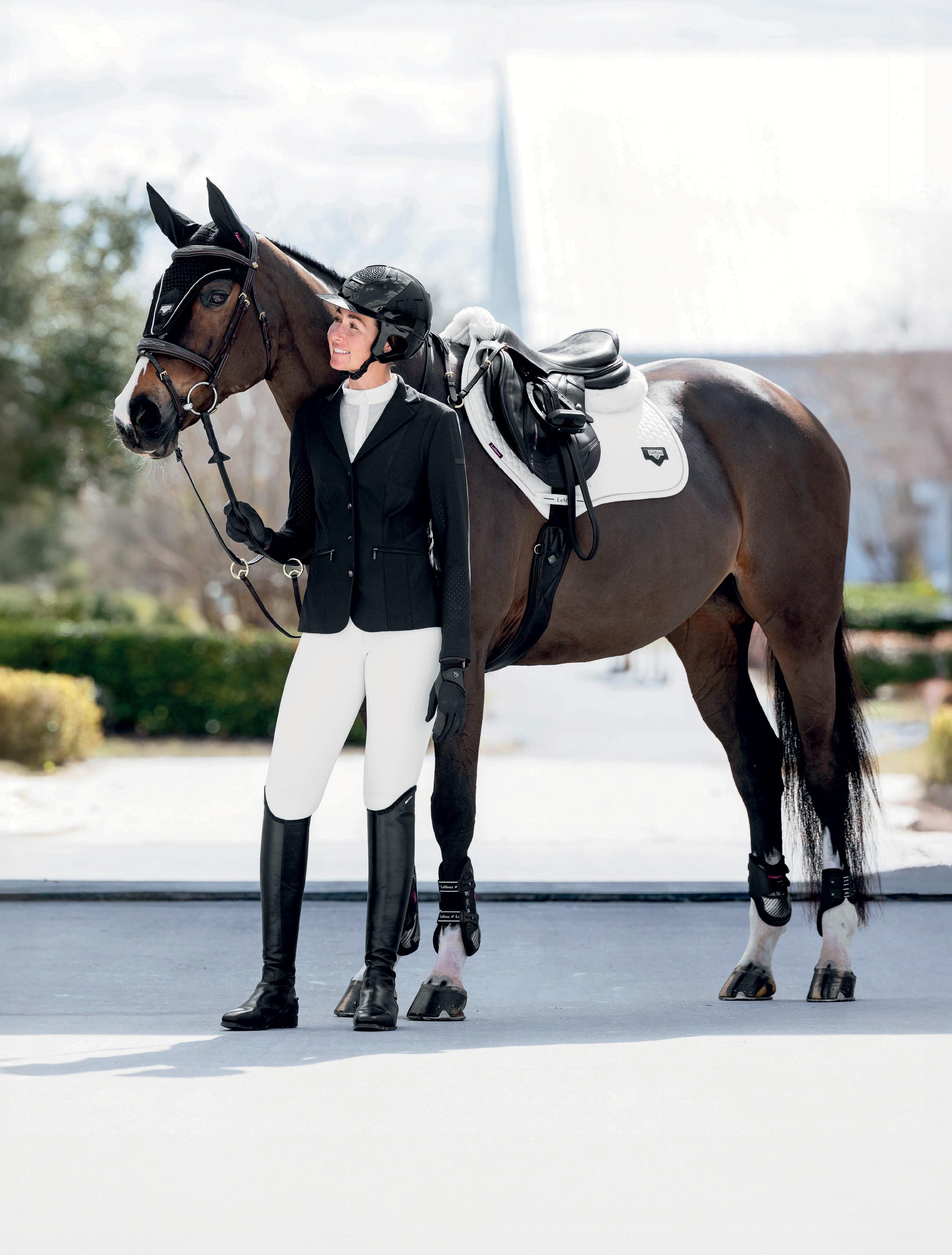
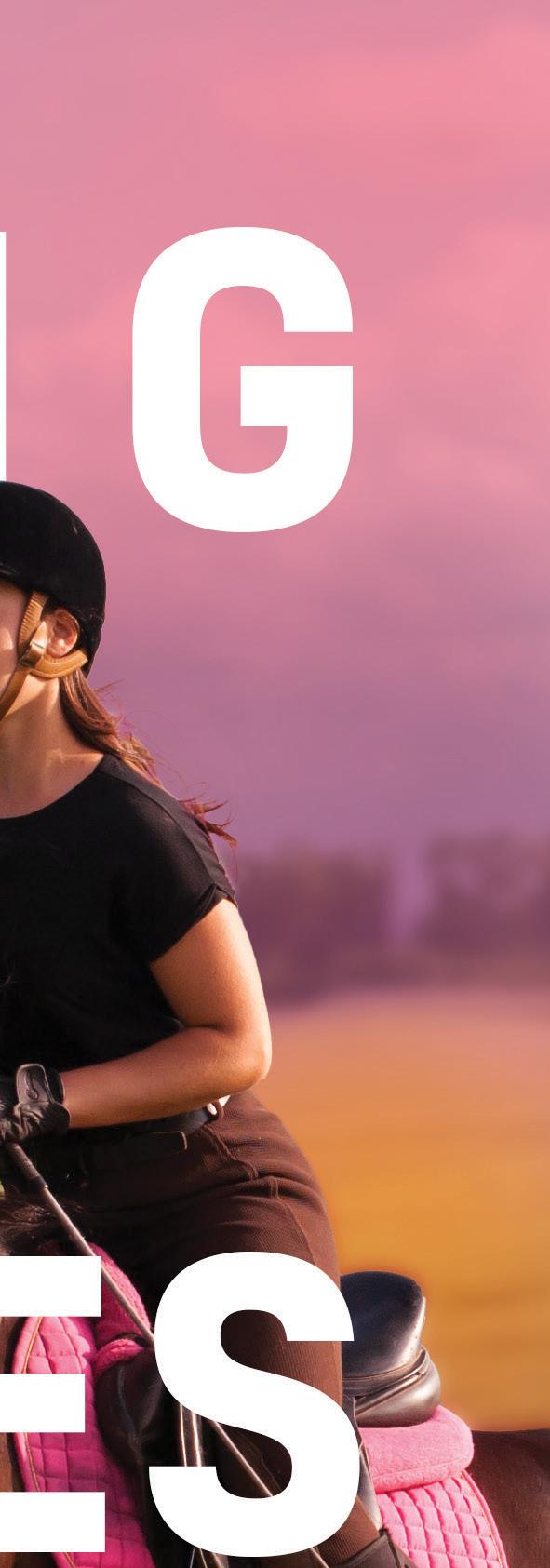
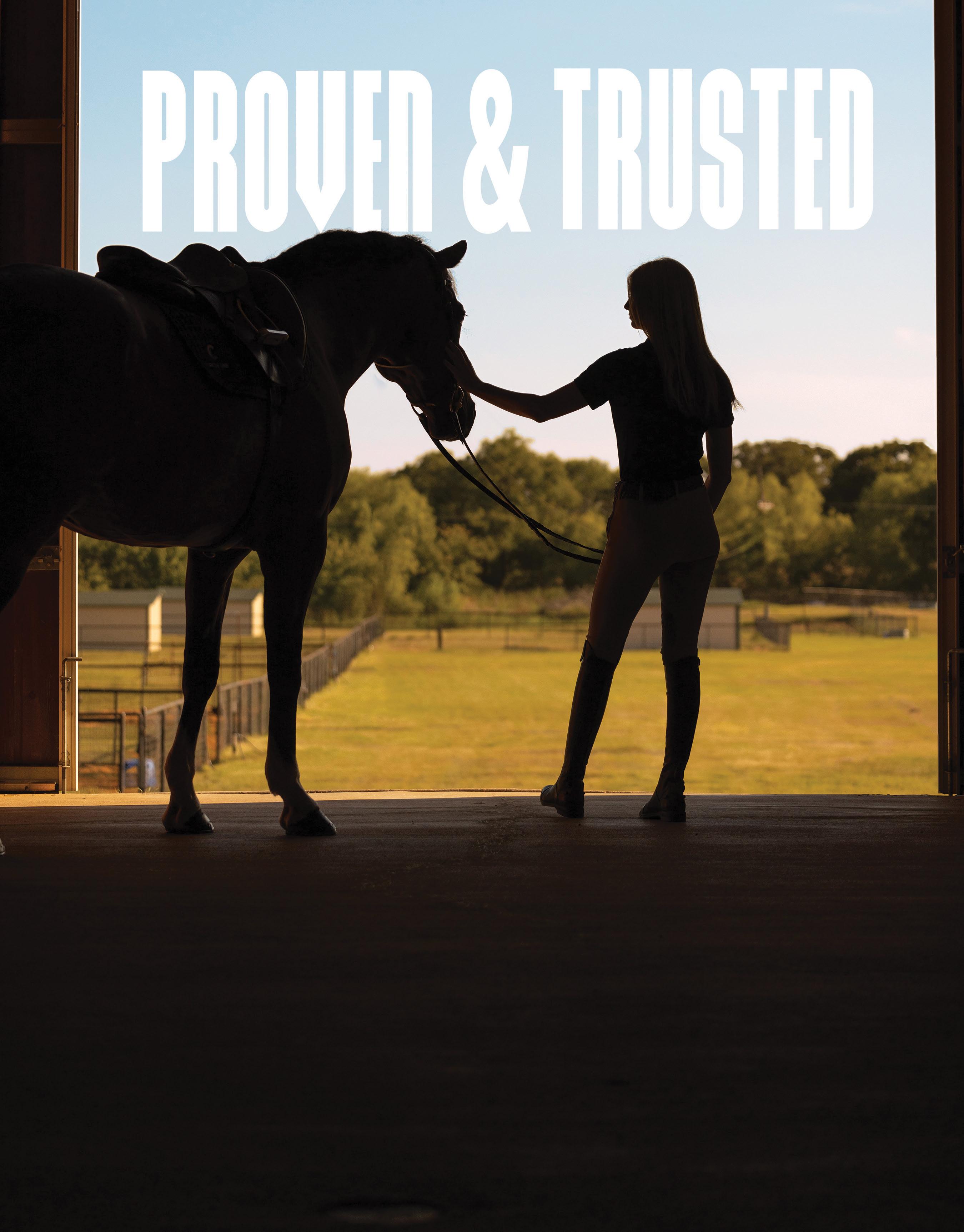
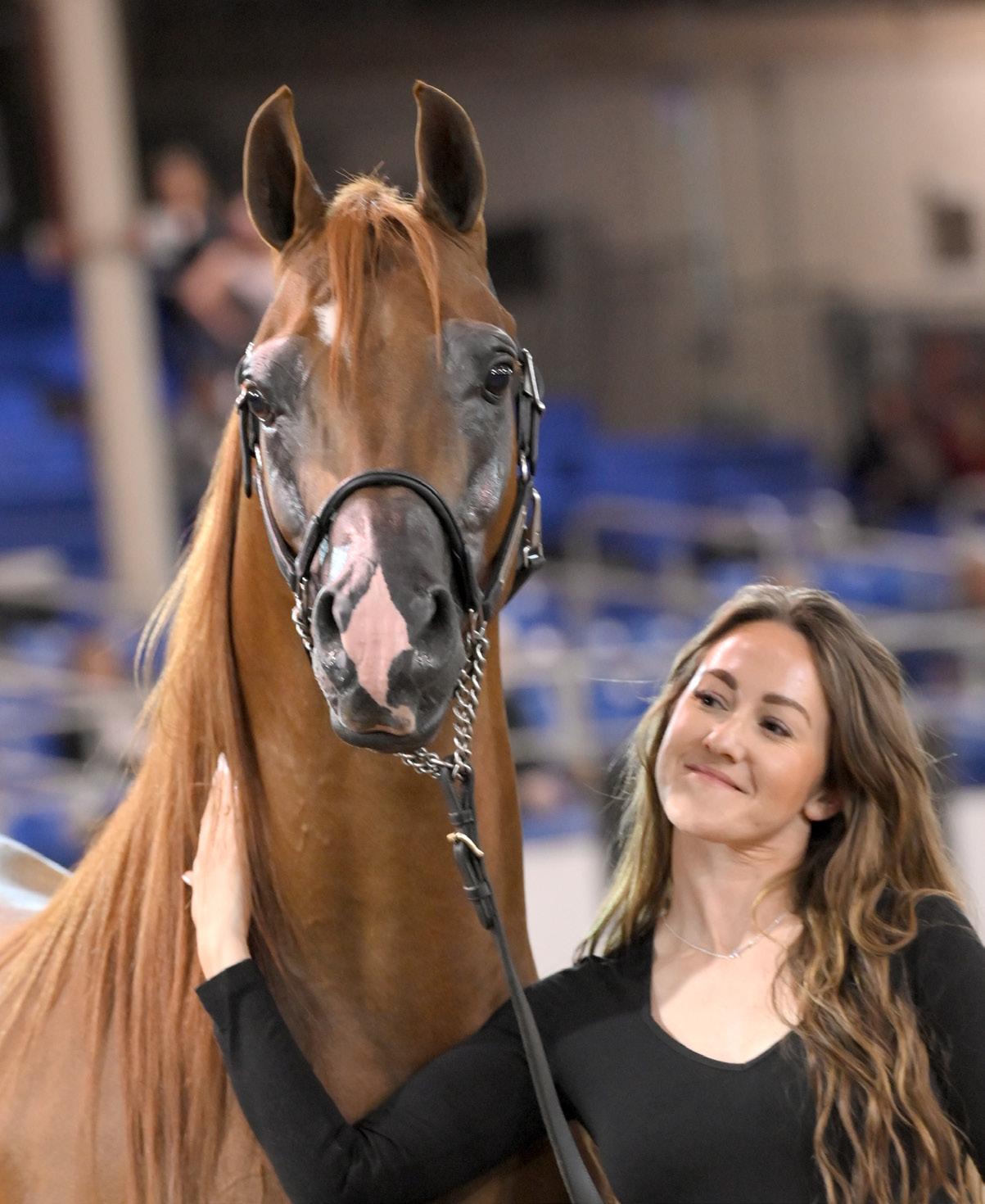
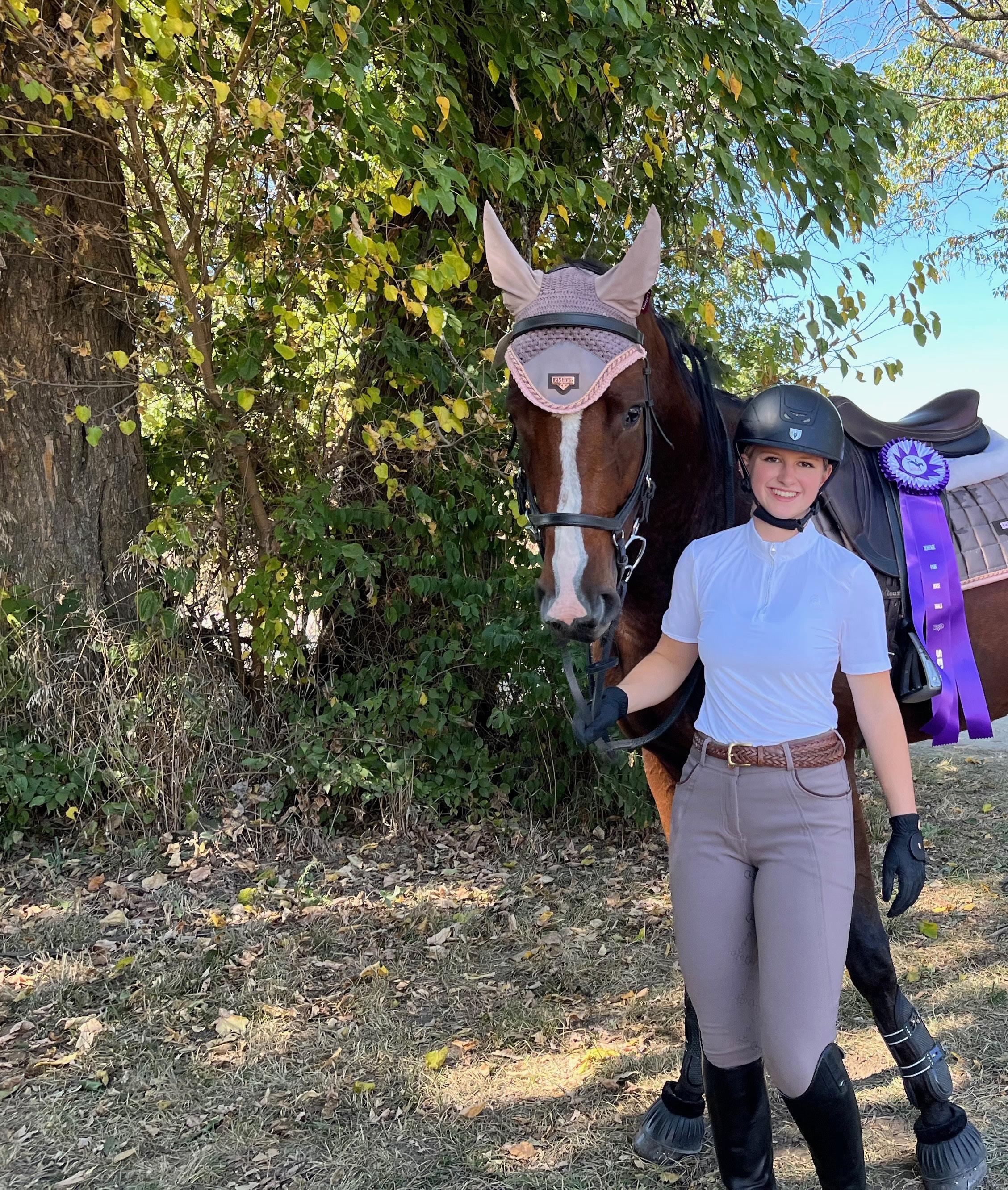
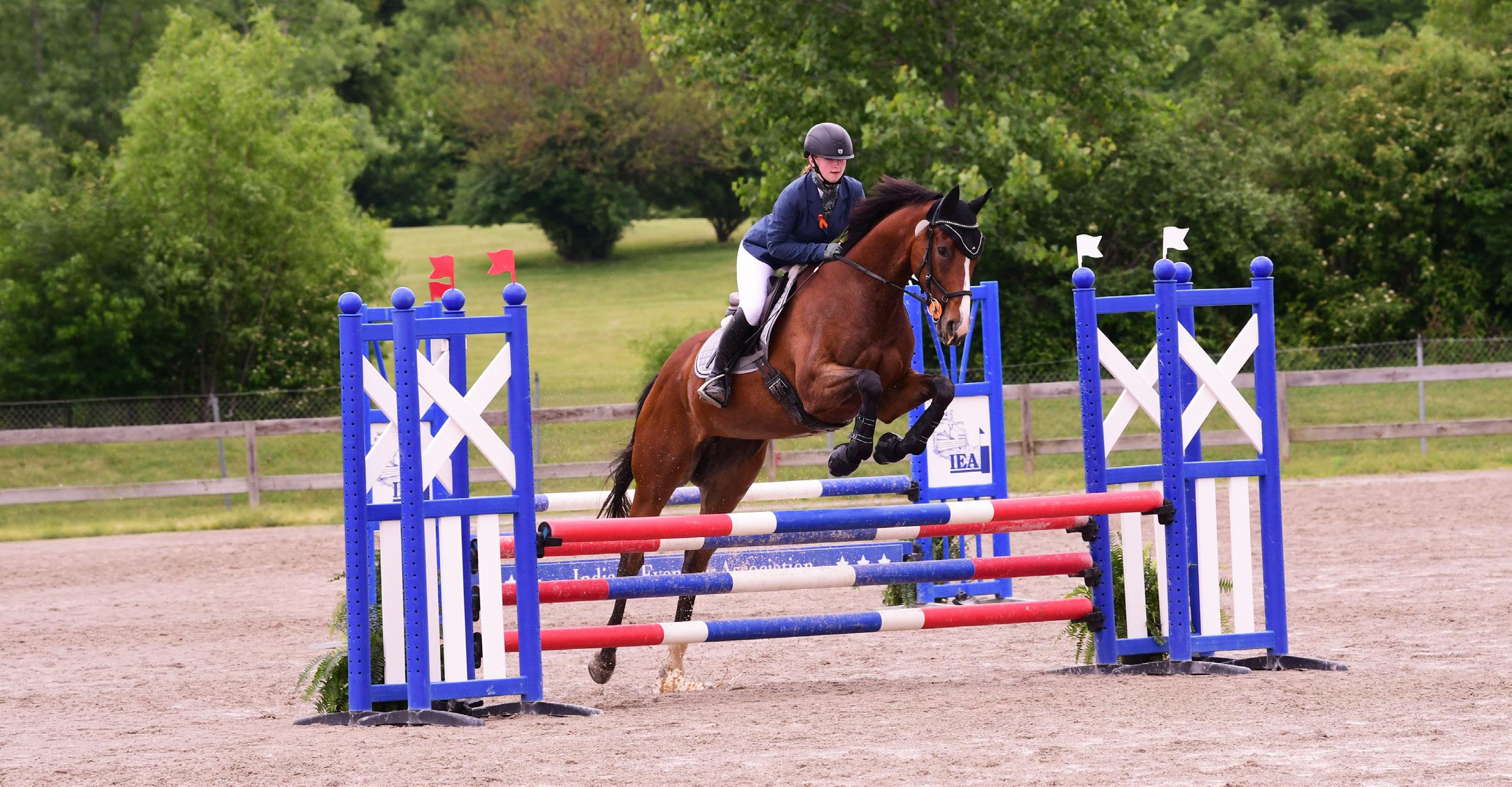
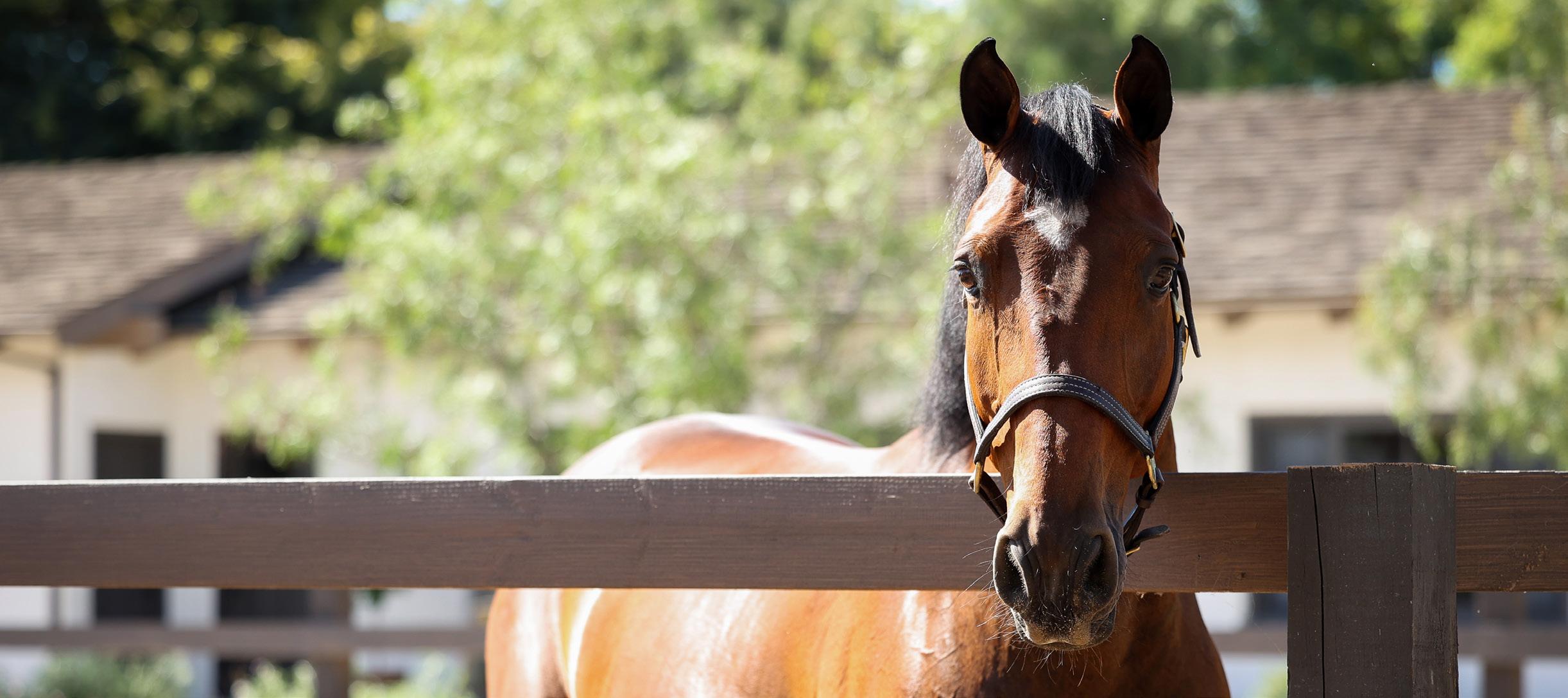
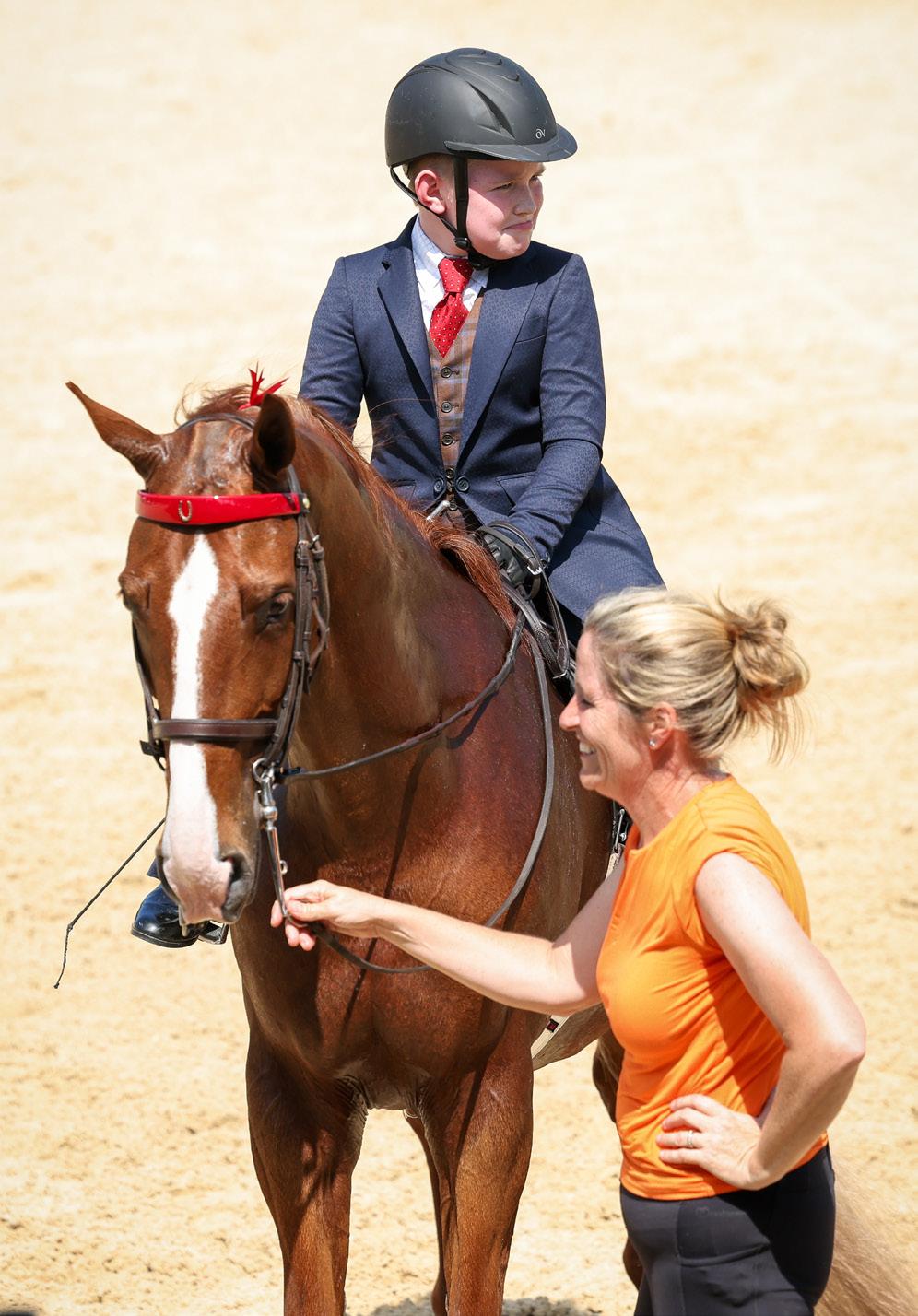
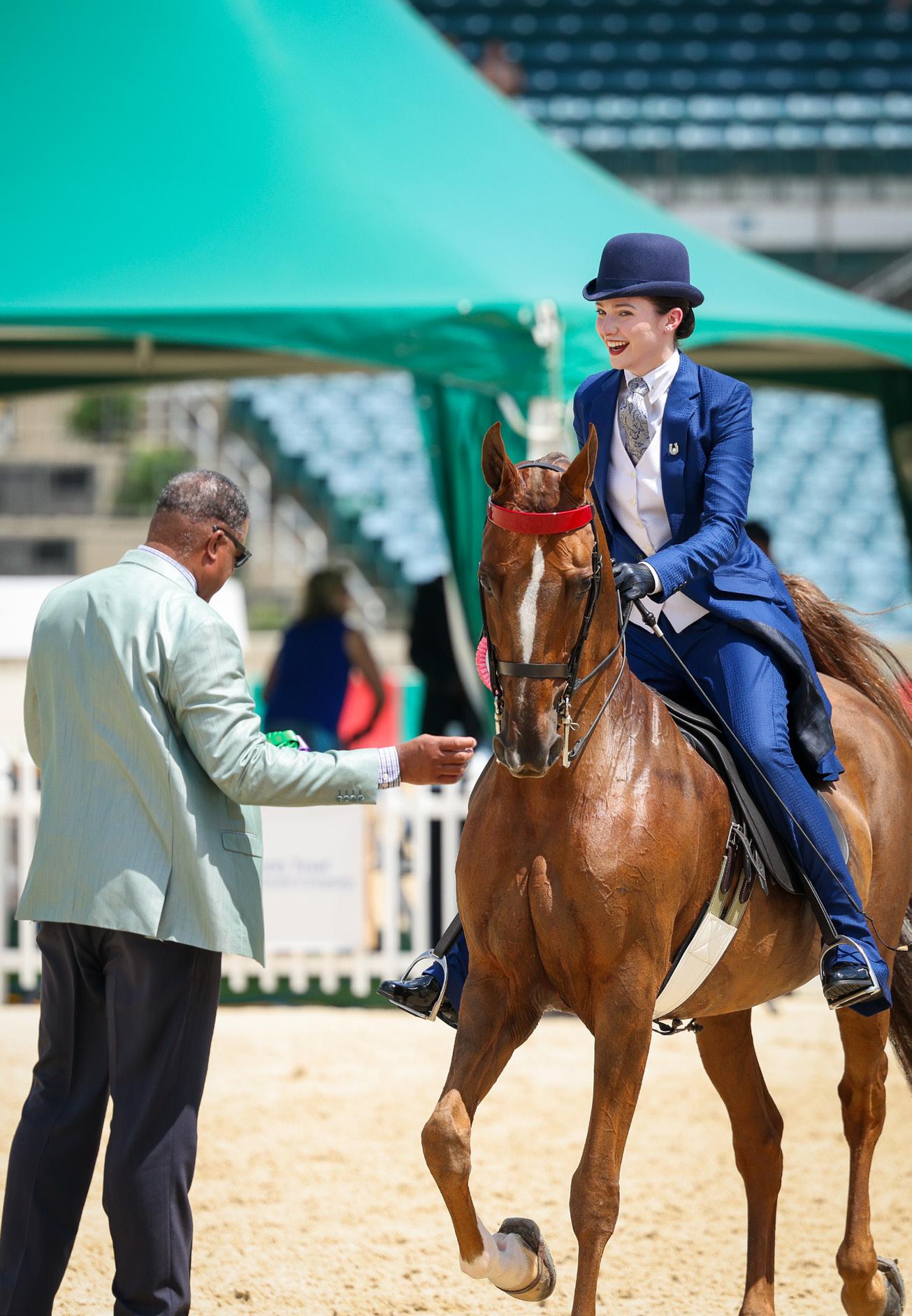
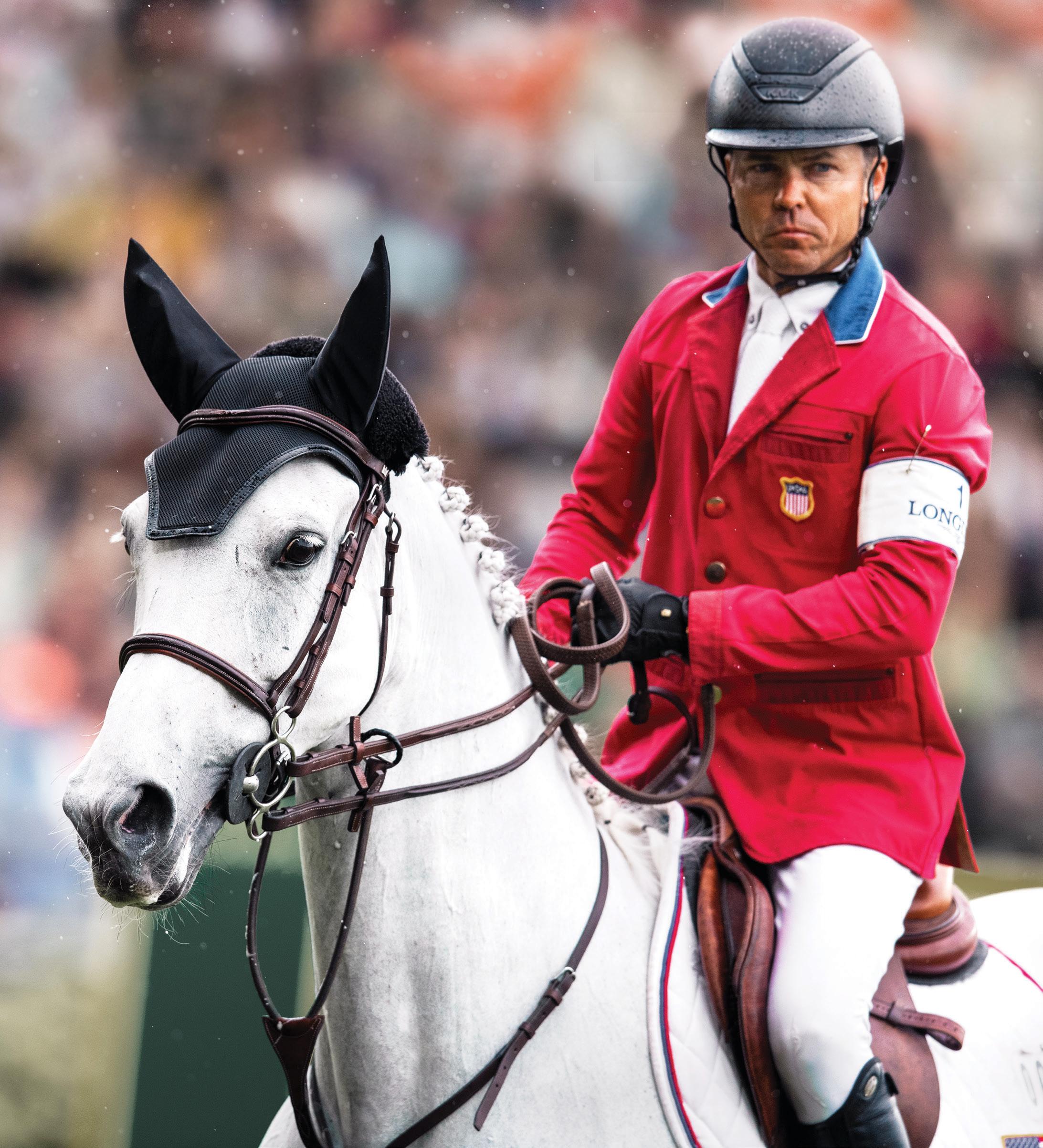
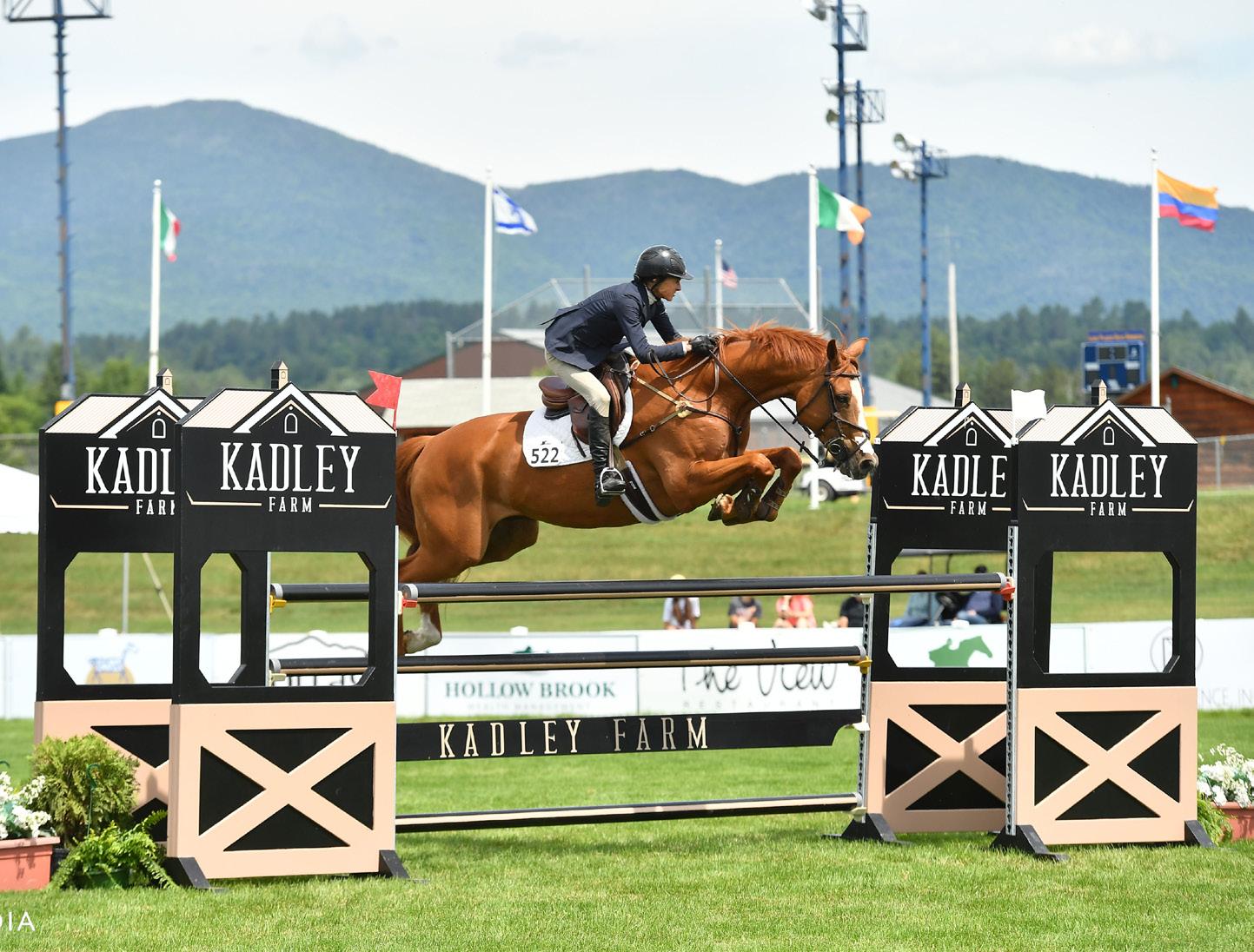
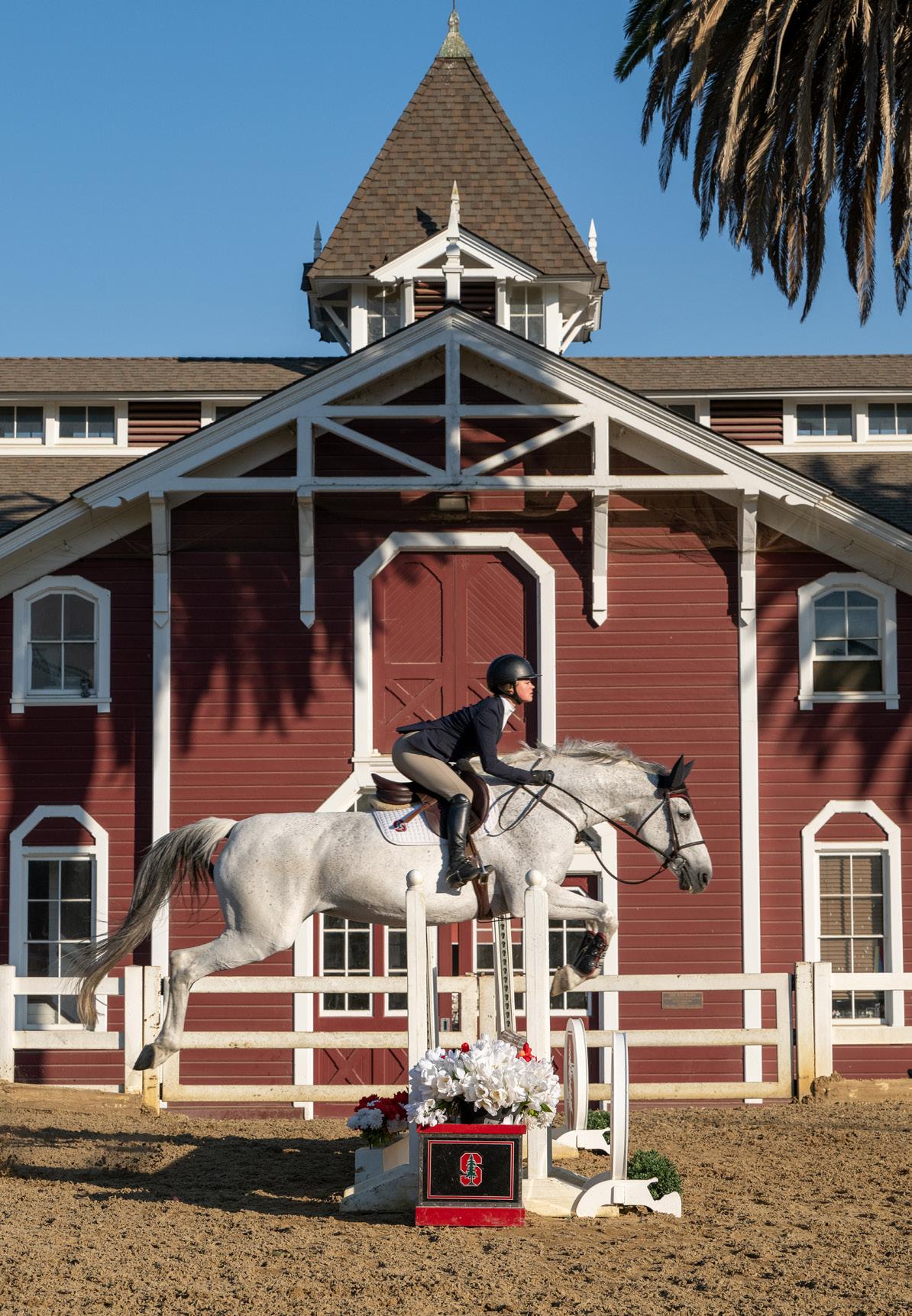
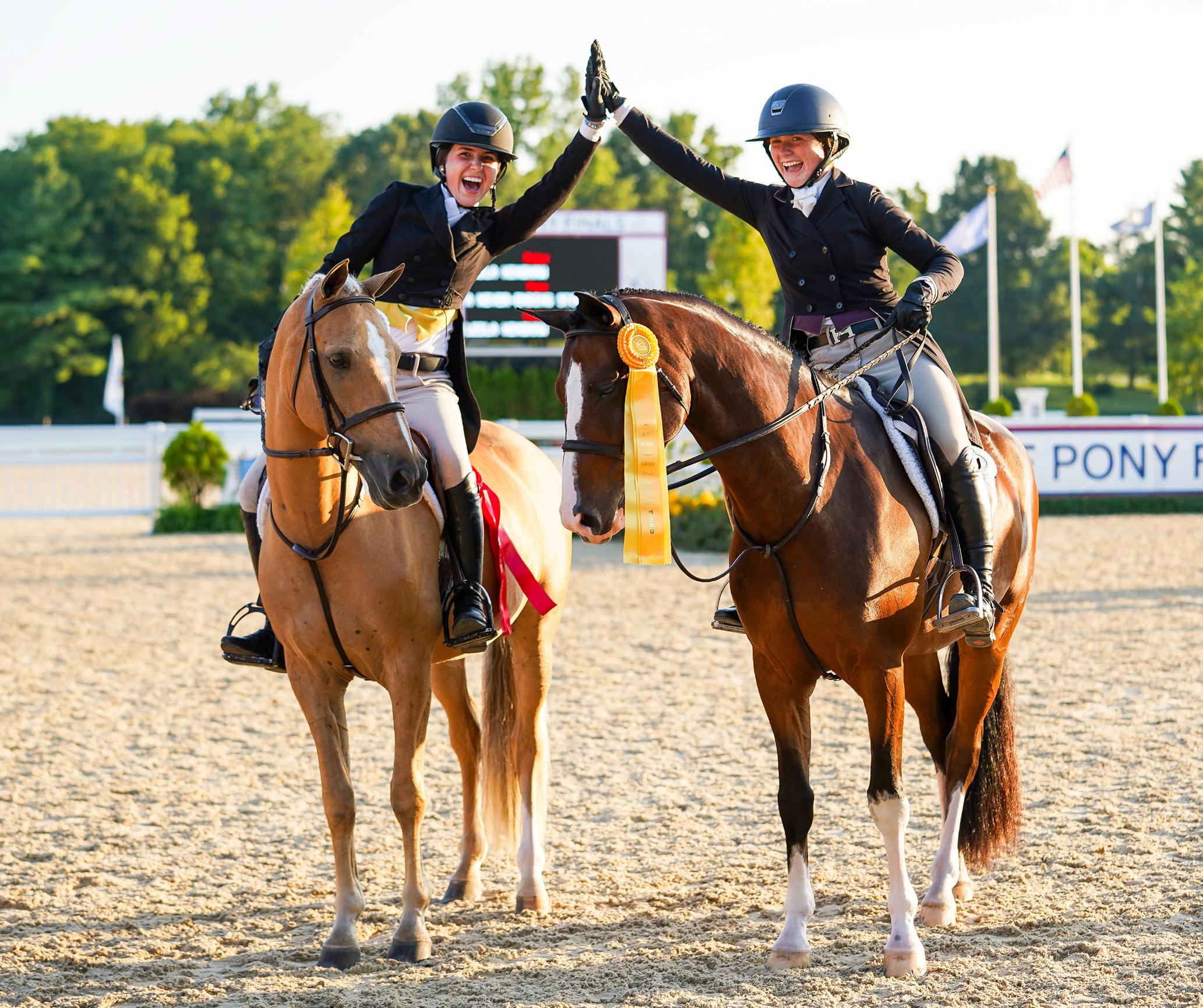
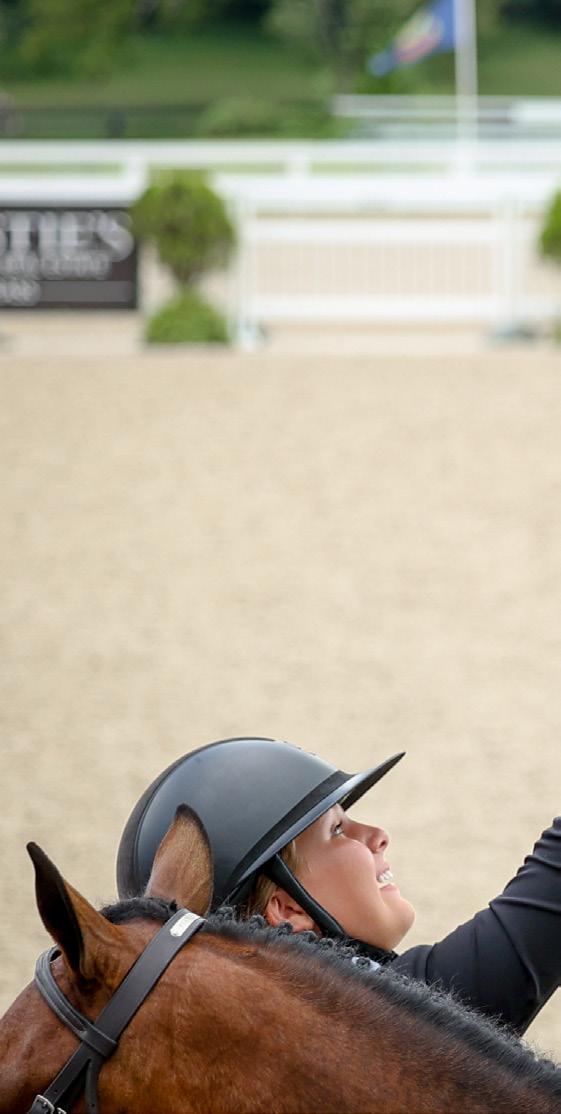
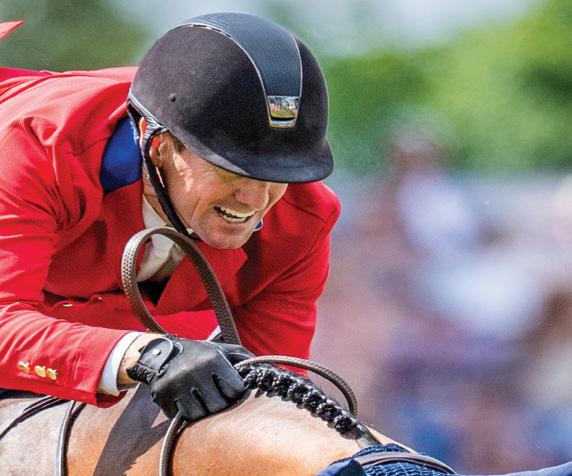
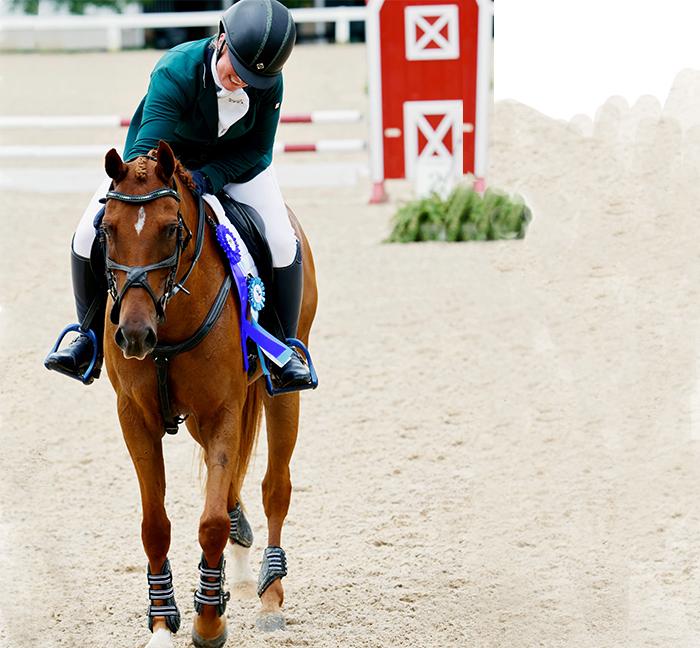
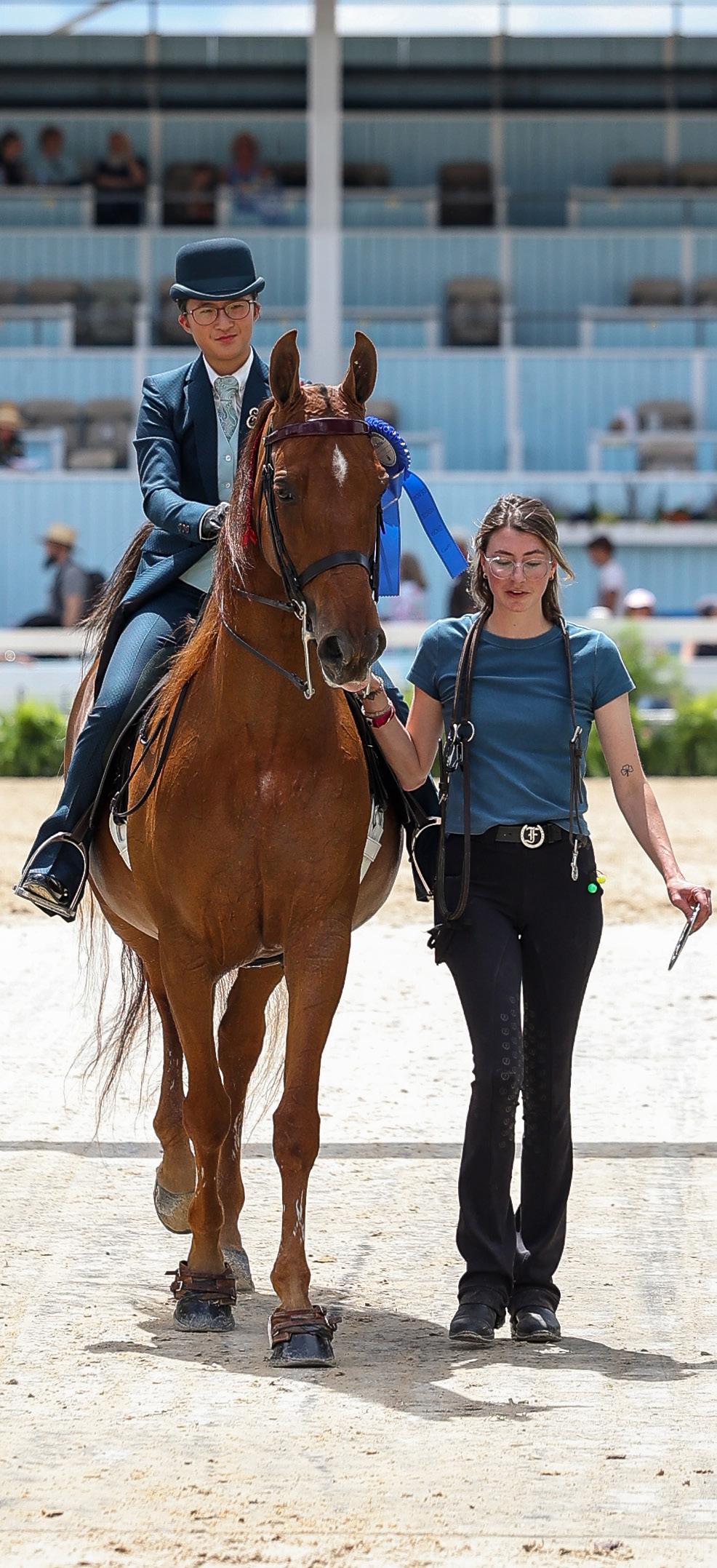
Cover: Amanda Krall and her American Saddlebred mare, Windermere’s Adoration, at the 2026 Devon Horse Show and Country Fair.
Photo: Isabelle Whiteside/US Equestrian
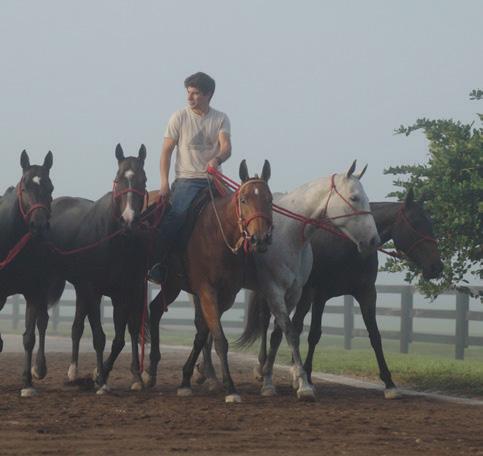
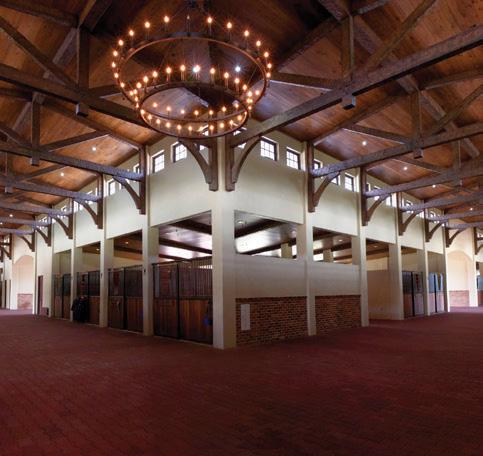
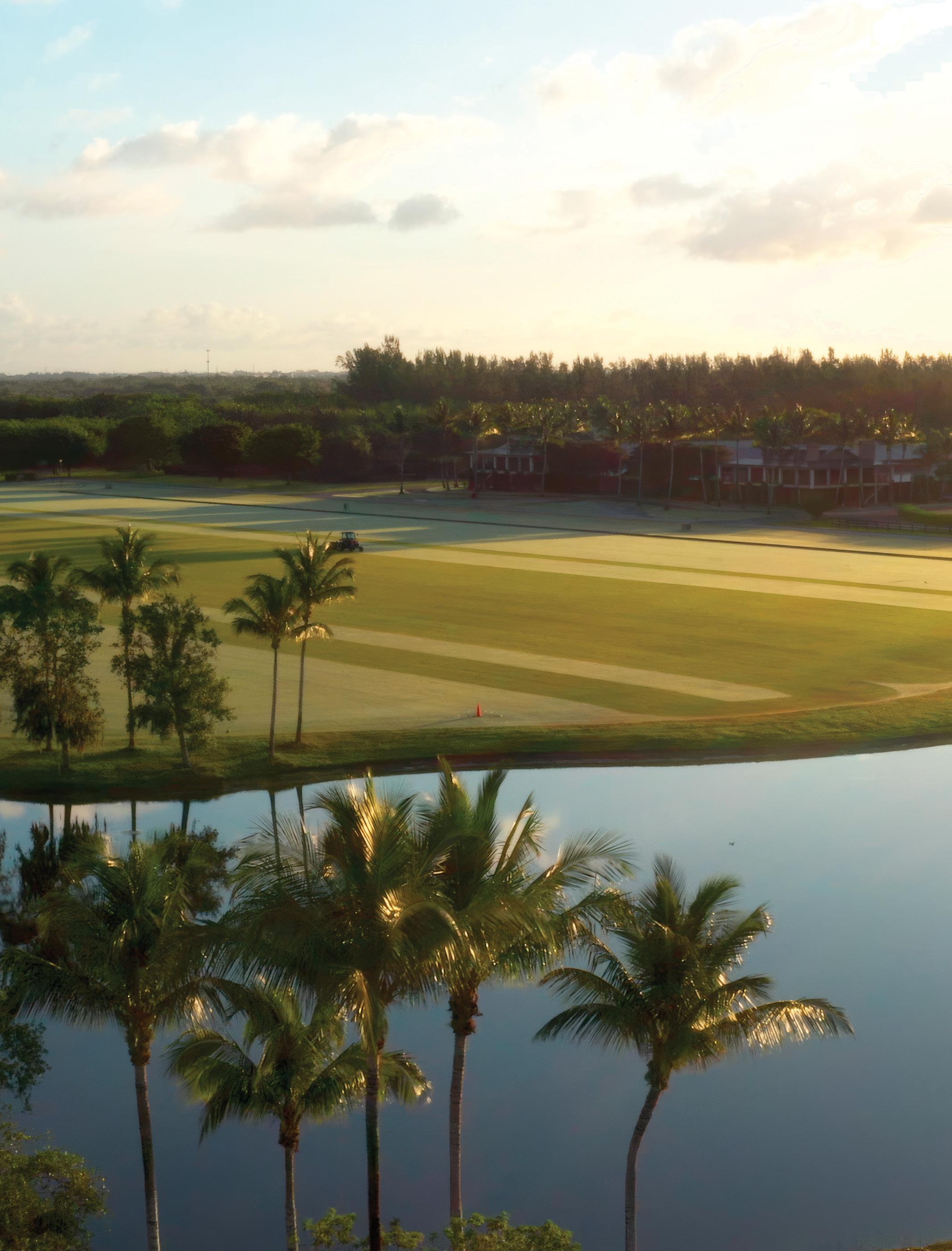
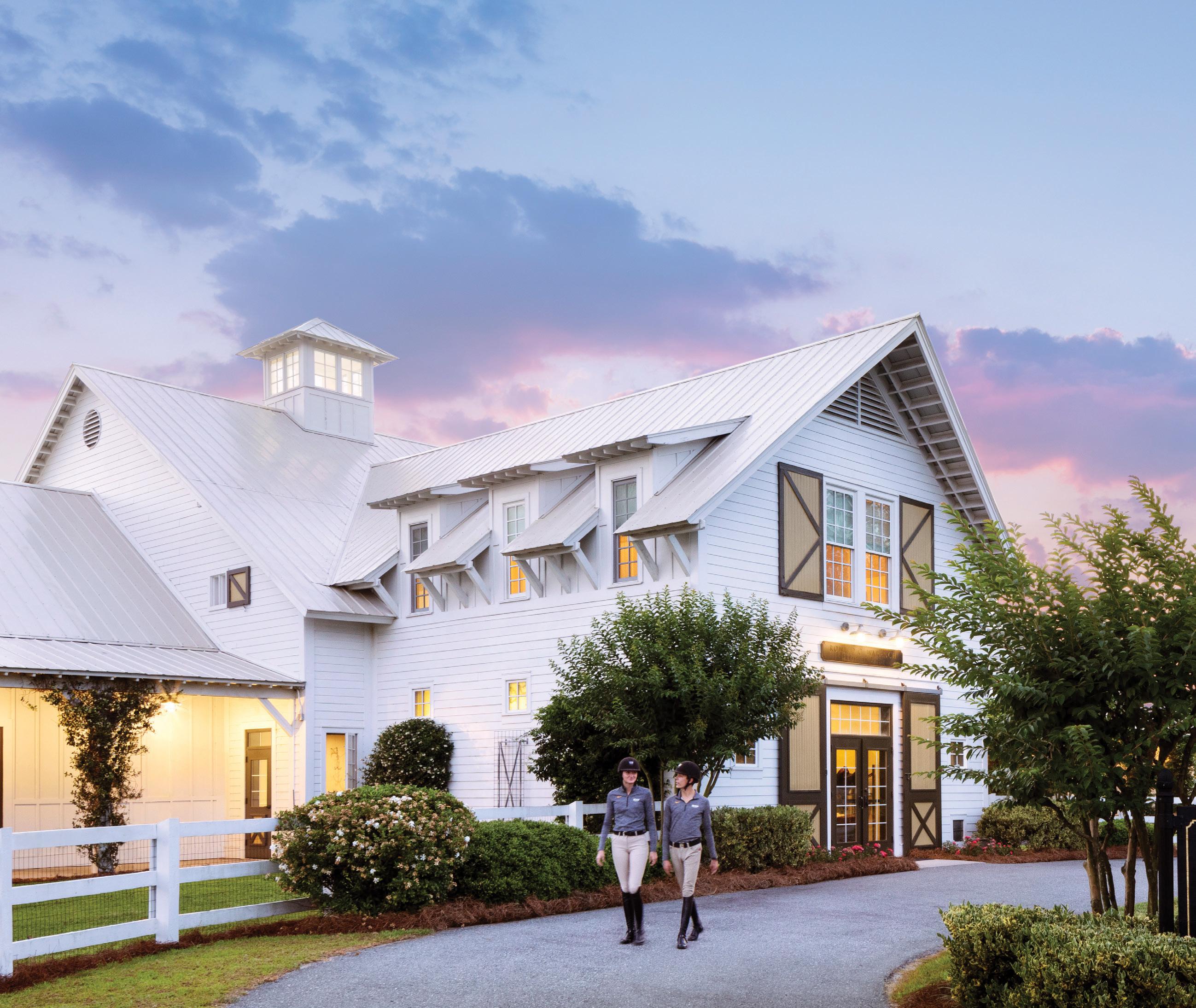
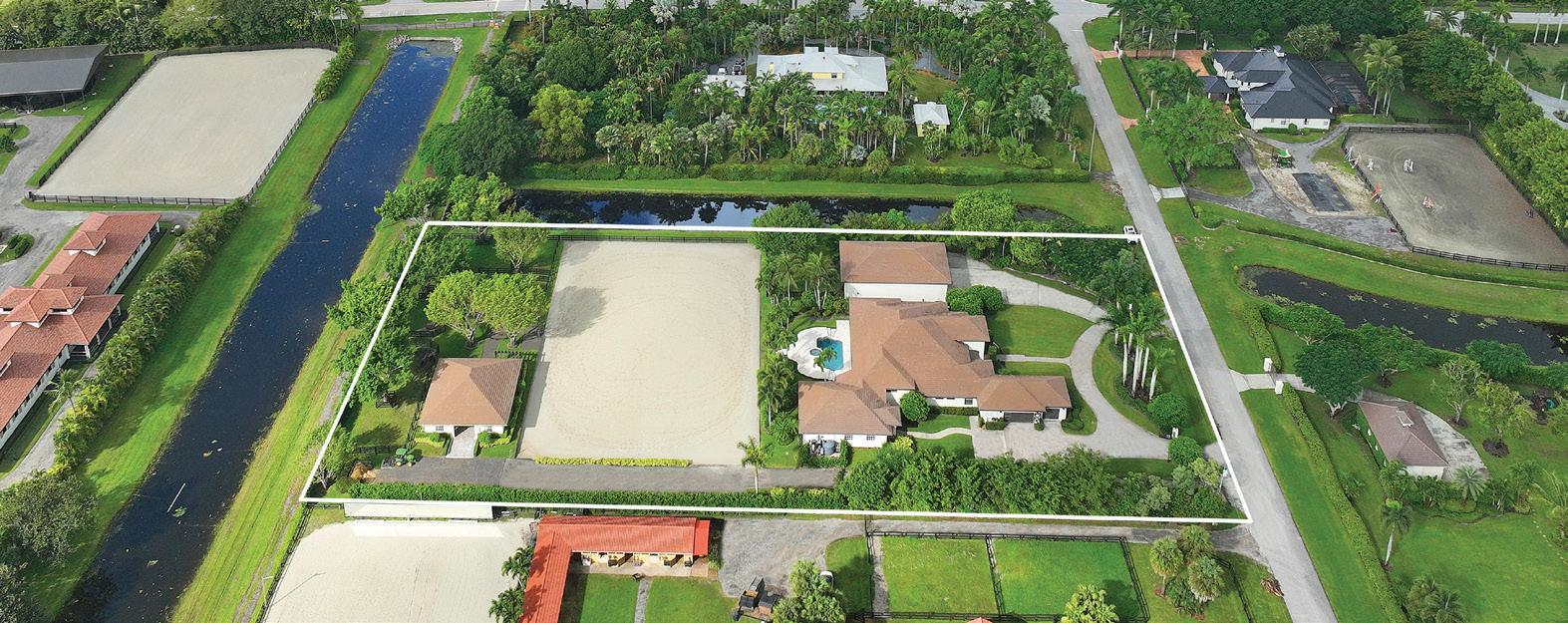
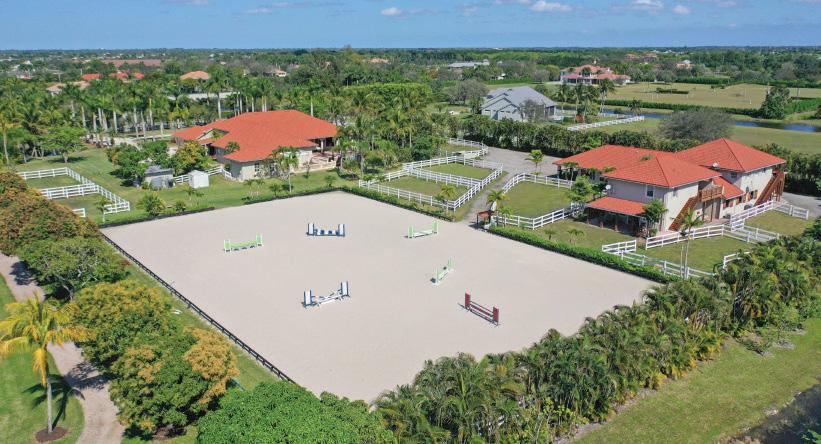
Valiente Farm is regarded as hallowed ground in international polo — where heritage and performance converge. Conceived as a premier equestrian campus, the estate features championship fields, an architecturally significant barn complex, and private residential quarters, all executed to an exacting standard.
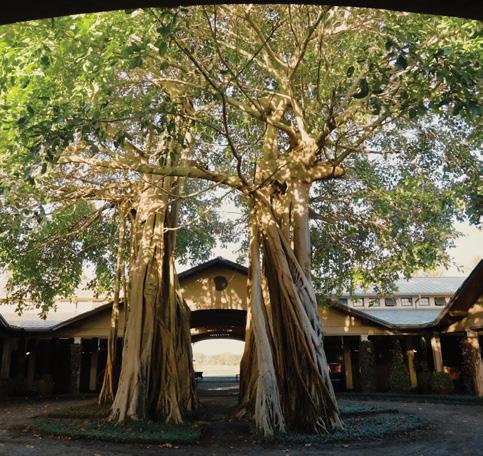
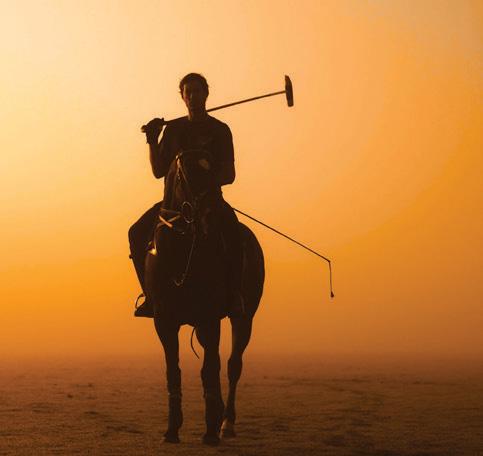
Here, mornings begin beneath open Florida skies, and evenings gather in the banyan-shaded courtyard, entertainment spaces, family barbeques, dinners, and conversations — where the rythem of the sport endures.
Official Magazine of the United States Equestrian Federation
Published at 4001 Wing Commander Way, Lexington, Ky 40511 USequestrian.org
AWARDS
The magazine staff is pleased to share these notable accomplishments it has received at the American Horse Publication Media Awards.
2025
First Place: Breaking News
2024
First Place: Advertisement
Second Place: Editorial Design Honorable Mention: Editorial Design
2022
Third Place: Cover Design Honorable Mention: Feature Article
2021 Honorable Mention: Editorial Design
2020
First Place: Advertisement
Third Place: Editorial Design Honorable Mention: Editorial Design
2019
Third Place: Cover Design
2018
Overall Publication Winner
First Place: General Excellence
First Place: Editorial Design
Second Place: Feature Article
2017
Second Place: Digtial Publishing
PARTNERS
SPONSORS
The only FDA-approved PSGAG for the treatment of equine arthritis proven to:1,2
• Reduce inflammation
• Restore synovial joint lubrication
• Repair joint cartilage
• Reverse the disease process
Adequan® i.m. (polysulfated glycosaminoglycan) is recommended for the intramuscular treatment of non-infectious degenerative and/or traumatic joint dysfunction and associated lameness of the carpal and hock joints in horses. WARNING: Not for use in humans. CAUTION: Federal law restricts this drug to use by or on the order of a of a licensed veterinarian.
BRIEF SUMMARY: Prior to use please consult the product insert, a summary of which follows: CAUTION: Federal law restricts this drug to use by or on the order of a licensed veterinarian. INDICATIONS: Adequan® i.m. is recommended for the intramuscular treatment of non-infectious degenerative and/or traumatic joint dysfunction and associated lameness of the carpal and hock joints in horses. CONTRAINDICATIONS: There are no known contraindications to the use of intramuscular Polysulfated Glycosaminoglycan. WARNINGS: Do not use in horses intended for human consumption. Not for use in humans. Keep this and all medications out of the reach of children. PRECAUTIONS: The safe use of Adequan® i.m. in horses used for breeding purposes, during pregnancy, or in lactating mares has not been evaluated. For customer care, or to obtain product information, visit www.adequan.com. To report an adverse event please contact American Regent, Inc. at 1-888-354-4857 or email pv@americanregent.com.
1. Kim DY, Taylor HW, Moore RM, Paulsen DB, Cho DY. Articular chondrocyte apoptosis in equine osteoarthritis. The Veterinary Journal 2003; 166: 52-57. 2. Burba DJ, Collier MA, DeBault LE, Hanson-Painton O, Thompson HC, Holder CL: In vivo kinetic study on uptake and distribution of intramuscular tritium-labeled polysulfated glycosaminoglycan in equine body fluid compartments and articular cartilage in an osteochondral defect model. J Equine Vet Sci 1993; 13: 696-703.
Official Helmet of US Equestrian Official Parner of US Equestrian Safety Awareness evoke-group.com
Official Jump Company of US Equestrain dalmanjumpco.com
Official Online School Partner of US Equestrian Official Sponsor of US Equestrian uspa.com
Title Sponsor of USEF Junior Hunter Finals Title Sponsor of the Brentina Cup & Junior Dressage Championship adequan.com
Official Ribbon Supplier of US Equestrian hodgesbadge.com
Official Sponsor of the USEF Eventing Young Rider Championships Preferred Stabling Provider of US Equestrian Licensed Events feistabling.com
Official Shock Wave Therapy Supplier of US Equestrian Team Vets pulsevet.com
Official Riding Gloves of US Equestrian Official Sponsor of U.S. Equestrian Teams roeckl.com
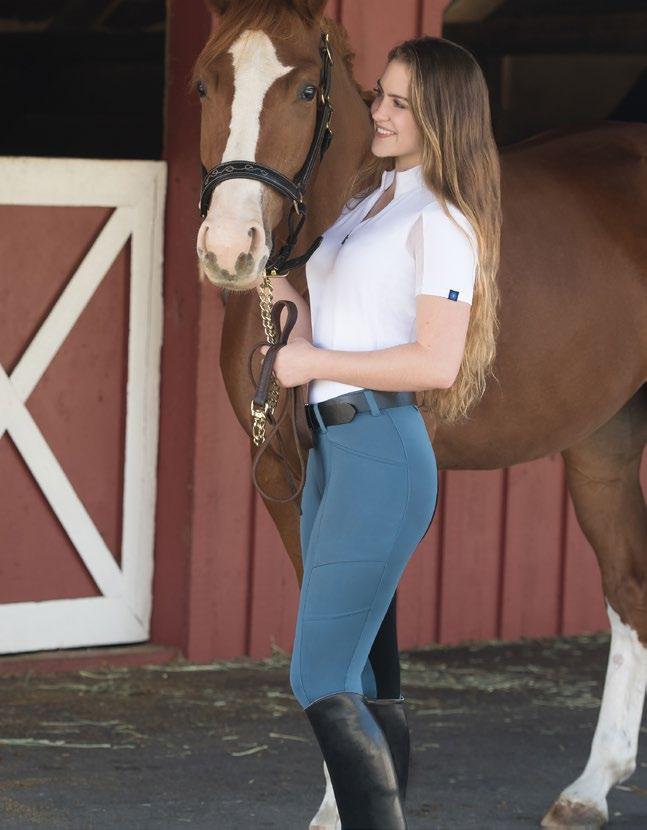
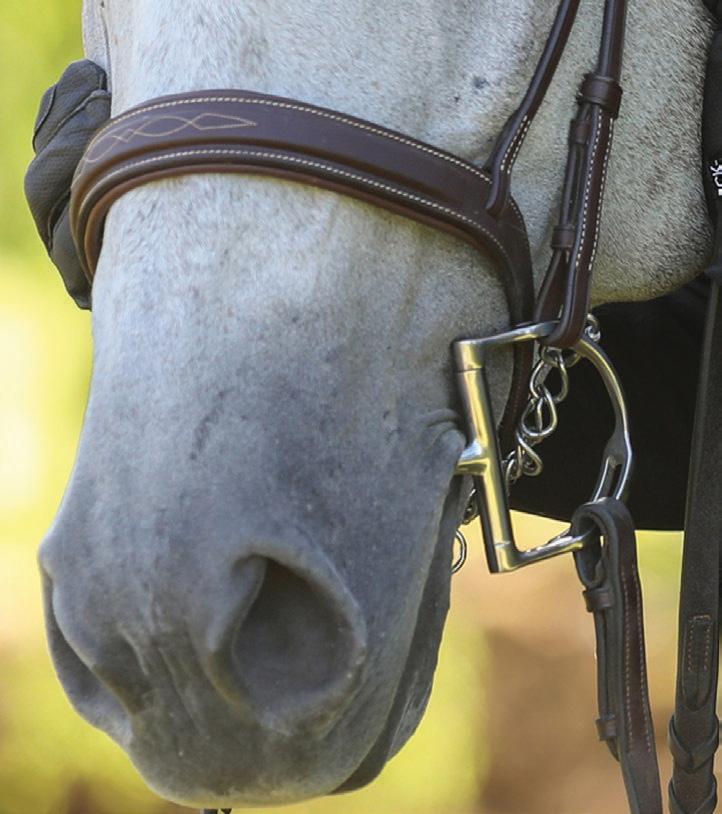
Official Saddle Pad of the U.S. Equestrian Endurance Team Official Bit of U.S. Equestrian Official MemberPerk Sponsor of US Equestrian Toklat.com
Official Barn Management Software of US Equestrian
Official MemberPerk Sponsor of US Equestrian barnmanager.com
Official Tack Locker of US Equestrian Official MemberPerk Sponsor of US Equestrian flexiequinetack.com
Official Horse Van of US Equestrian theault.us
Official MemberPerk Sponsor of US Equestrian choicehotels.com
Official Stall Mat of US Equestrian Official Supplier of the U.S. Equestrian Teams Official Sponsor or the USEF Annual Meeting & Awards Official MemberPerks Sponsor of US Equestrian dollamur.com
Official Sponsor The USEF Visa Signature® Card commercebank.com
Appreciating the Past, Looking to the Future
Dear USEF Members:
Whether you are having fun with horses at summer camp, enjoying relaxed trail rides, competing at a local show series, or traveling to USEF sanctioned competitions, summer is a magical time to be an equestrian.
While we all enjoy long days in the saddle and extra time with our horses, this summer also brings the excitement of a number of recurring national competitions. As always, we have the annual USEF Pony Finals presented by Marshall + Sterling, Adequan/USEF Junior Hunter Finals (East & West), the FEI North American Youth Championships (NAYC), the U.S. Dressage Festival of Champions, and last, but not least, every four years we experience the FEI World Championships. This year’s event will be held in Aachen, Germany, beginning August 11. The World Championships give us a chance to follow our top international dressage, jumping, and eventing athletes, and also give us the opportunity to watch para dressage, vaulting, and driving (be sure to also watch out for the FEI Endurance World Championships from Al Ula, Saudi Arabia, in November).
Equestrian competition dates back centuries and some of the most historical horse shows in the U.S. have been designated as USEF Heritage Competitions. In this issue’s special feature, we look back at the greatest moments in these shows’ histories and explore the highlights and developments shaping them today. As an amateur history student, I always like looking at where we’ve come from to understand better how shows and our sport are today.
Along with focusing on horses competing in their prime, we must remember to care for them when their show careers are over or winding down. In our retirement feature, we look at the many options for our horses’ post-competition eras, such as retirement farms, stepping down to a lower level, and donating them to equine assisted therapy programs or college equestrian centers. Whatever you decide is the best fit for you and your horse, please always remember that horse ownership is a lifelong commitment — and after everything they give us, they deserve a safe and peaceful retirement. In an effort to help ease these transitions, USEF
launched the Lifetime Care Contact program earlier this year, where members can register themselves as a primary contact for their horse should they need financial assistance or a future home after they are sold or rehomed. I strongly encourage you all to sign up!
While we focus on how we can take care of our horses, we also appreciate all the ways equine interactions improve our own lives. In the article “How Horses Help Humans,” we look at the positive impact horses have on everything from emotional wellness, confidence, and selfesteem, to helping us maintain focus, attention, memory, and executive function. Next time you are at the barn, take a moment to reflect on how your horse actually makes you feel compared to all the other interactions in your daily life. Truly understanding how horses see and interpret the world can help improve our treatment of and communication with them. In the latest installment of our new horse welfare column, Horses First, we examine how horses see, hear, smell, taste, and touch. Their five senses differ from humans in more ways than you’d think, but the more we know about the workings of the equine mind, the better partners we can be to them.
I hope you enjoy this issue and come away with information that can help strengthen your bond with your horse. Most importantly, I wish you all a happy and productive summer, whatever your level and discipline may be.
Tom O’Mara President
EFFORTLESSLY COOL
The Ariat Show Collection shines when the competition heats up.
ARIANA MARNELL NAYC GOLD MEDALIST
In & Around the Ring
“L
ily is incredibly levelheaded and not at all frazzled
or fazed by noise or galloping horses.”
- Defender Kentucky Three-Day Event outrider Leslie van der Wal describing her ConnemaraThoroughbred mare.
“T
he fun thing about raising horses is you’ll hear people say that it’s like watching paint dry. It’s not like that for me. Every so often, they’ll throw you a nugget that makes everything worth it.”
- American Saddlebred breeder Ricky Kamins.
Above: A competitor at the 2026 Scottsdale Arabian Horse Show.
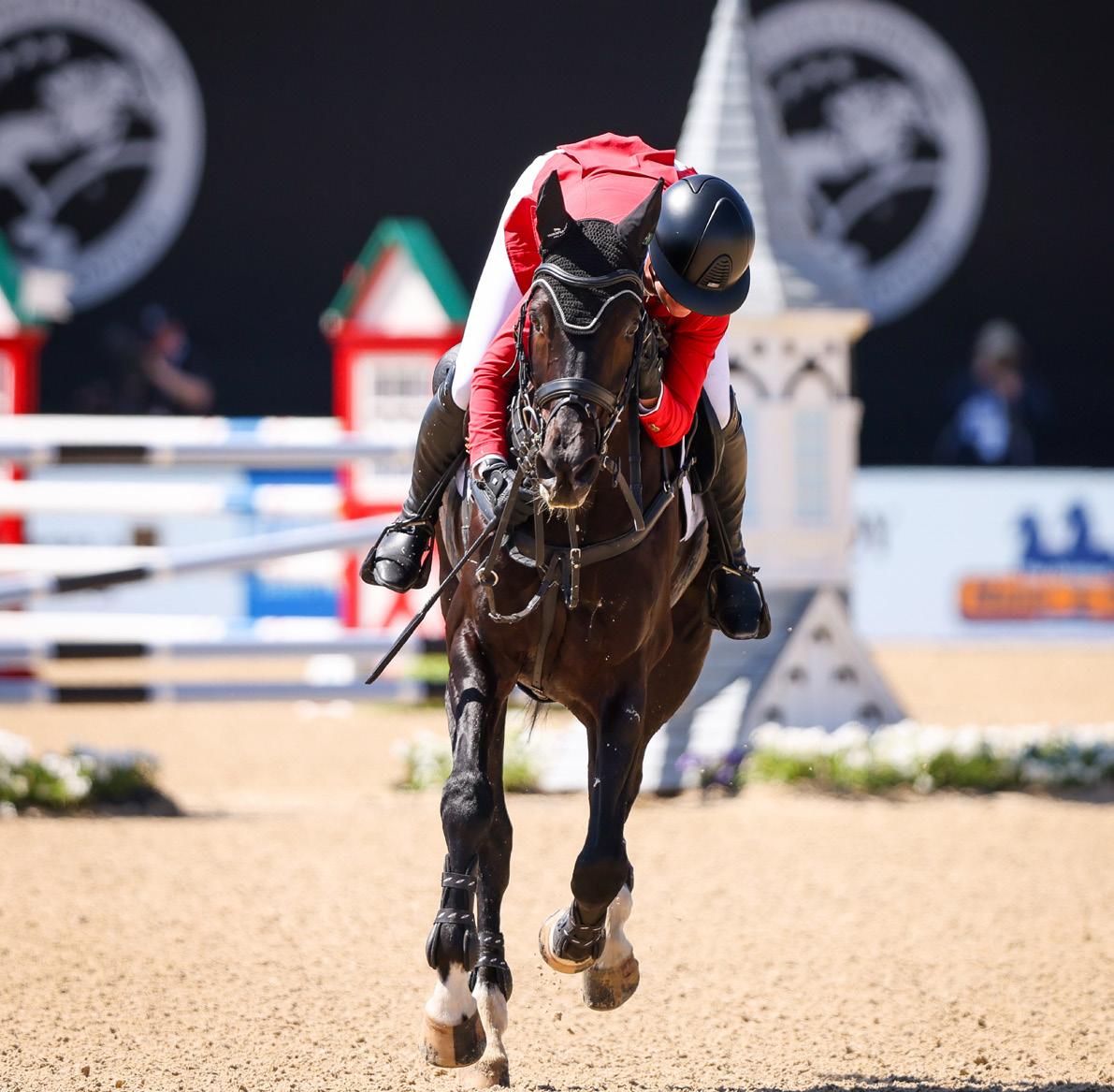
Right: Caroline Pamukcu hugs HSH Blake after finishing the 2026 Defender Kentucky Three-Day Event CCI5*-L presented by MARS Equestrian™ in second place.
“E
verybody asks if it gets easier, and I think that if you take yourself seriously, you focus on each competition just as much as you did on the previous one.”
- Chester Weber after winning the USEF Advanced Four-In-Hand National Championship title at Live Oak International.
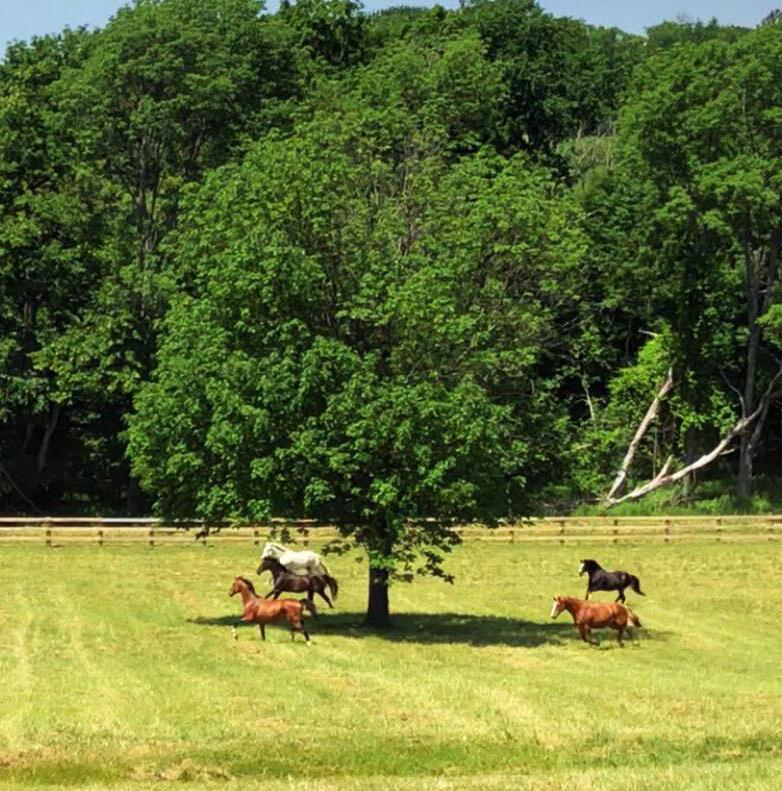
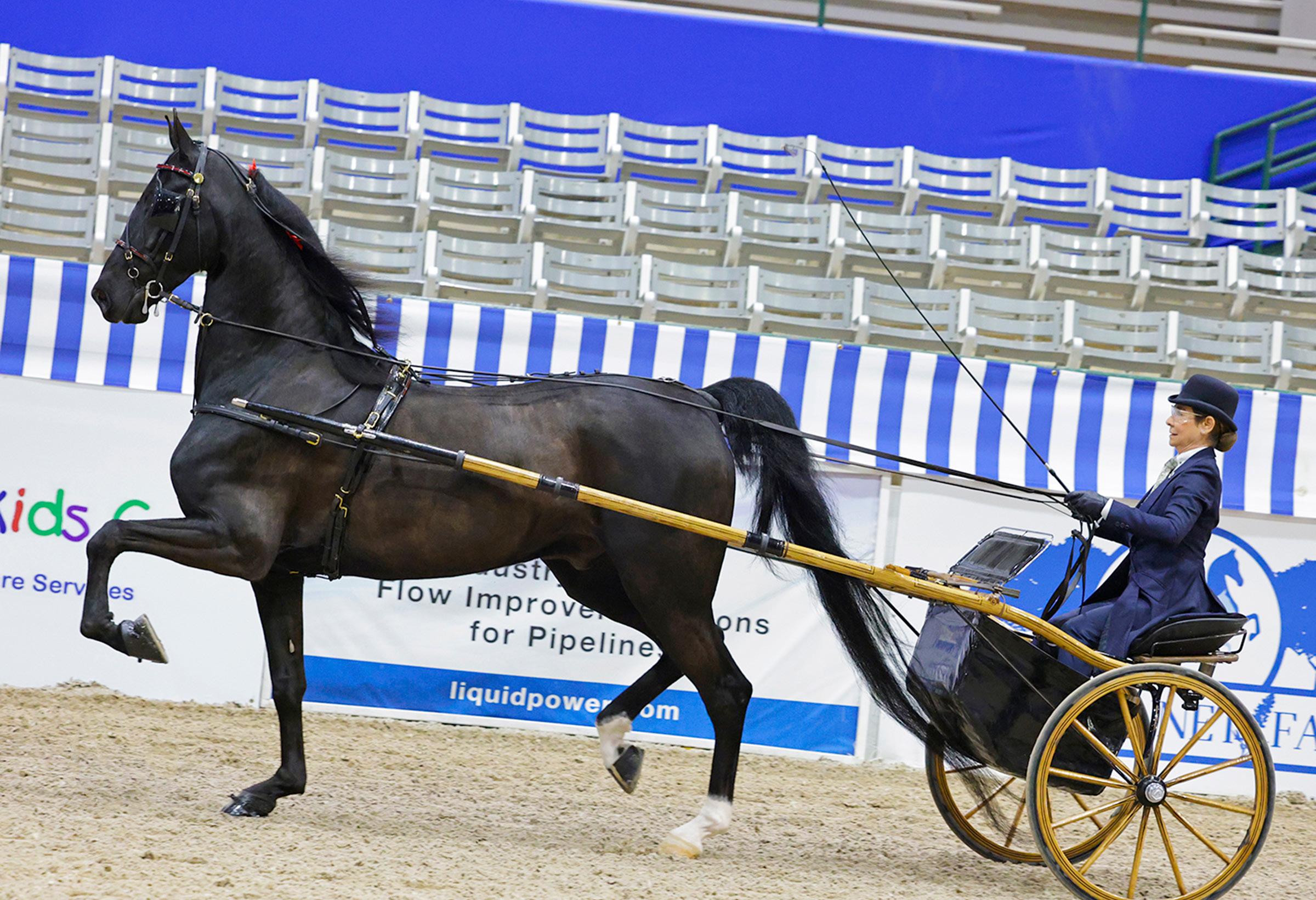
Above: A stunning field of American Saddlebreds, Morgans, and Hackney Ponies gathered at the Pin Oak Breed Show in Katy, Texas, March 18-21.
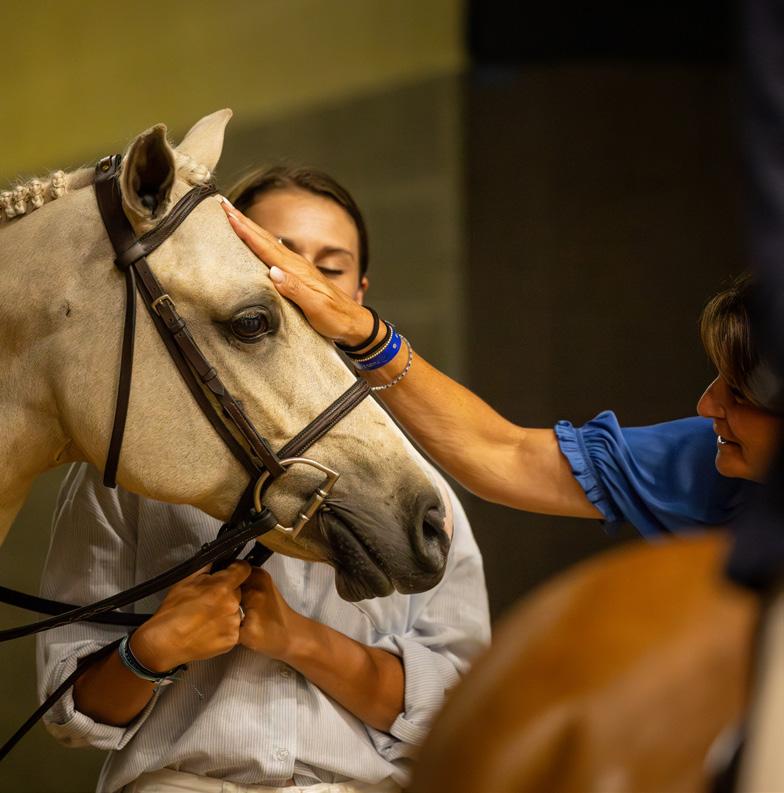
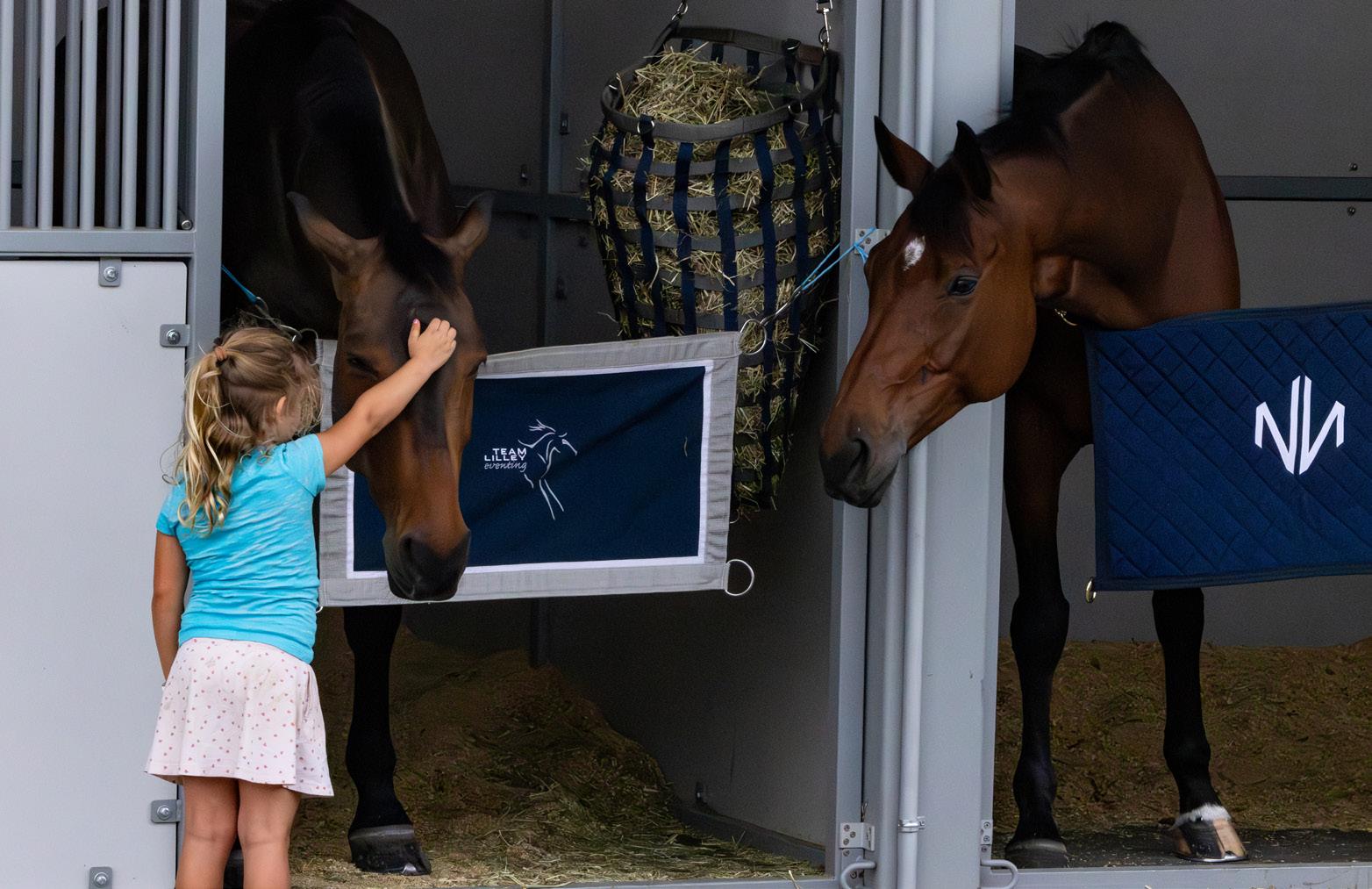
Right: A young fan pets horses ahead of the 2026 Defender Kentucky Three-Day Event CCI5*-L presented by MARS Equestrian.
“It Is a Bond I’ve Never Had With a Horse Before”
by Abby Patrow
Abby Patrow credits her Thoroughbred, Indi, with helping her regain confidence after suffering a traumatic brain injury in a car accident.
I have loved horses all my life and got my first pony when I was three years old. I started out in the western world doing low-level lessons and just enjoying my pony, but after we moved from Wichita, Kan., to Stroudsburg, Pa., when I was 10, I discovered eventing and my passion for it grew from there.
I began riding at Pleasant Ridge Farm in Cresco, Pa., and after my first week there they invited me to go with them to an eventing competition in South Carolina. It was the first time I had seen eventing in person, and it was life changing for me. I met 5* rider Allie Sacksen, and she asked if I wanted to clean tack for her in return for a lesson. I didn’t even know who she was but was blown away! It was a really cool experience, and I ended up working for her the following summer for two weeks.
I instantly got hooked on eventing because of the people involved and all the aspects of the sport. I honestly loved everything that went into it, and there wasn’t a part that I didn’t like — I especially loved that you got to do it all. I leased two different horses while I was at Pleasant Ridge Farms. I started out on an Appaloosa gelding named Hopper, and then moved on to a mare named Bugsy, who really gave me my start in eventing.
My eventing dreams stalled in January 2021, when my sister, Ahnika, and I were involved in a serious car accident. Ahnika was driving us to school and hit black ice. The car spun and hit a telephone pole on my side of the car. It then flew off a three-foot retaining wall but fortunately didn’t roll down the hill that was beyond the wall. I was knocked unconscious, but my sister shook me to wake me up once the car had stopped because the front of it started smoking. She was really scared as my door was dented in and stuck, so I was pushing and she was pulling, trying to open it.
I suffered a traumatic brain injury when we hit the telephone pole, as my head slammed into the window and then the airbag deployed and hit the other side of my head. Ahnika wasn’t physically injured, but she was very shaken up and had deep
PHOTO:
Abby Patrow and her OTTB mare, Indi.
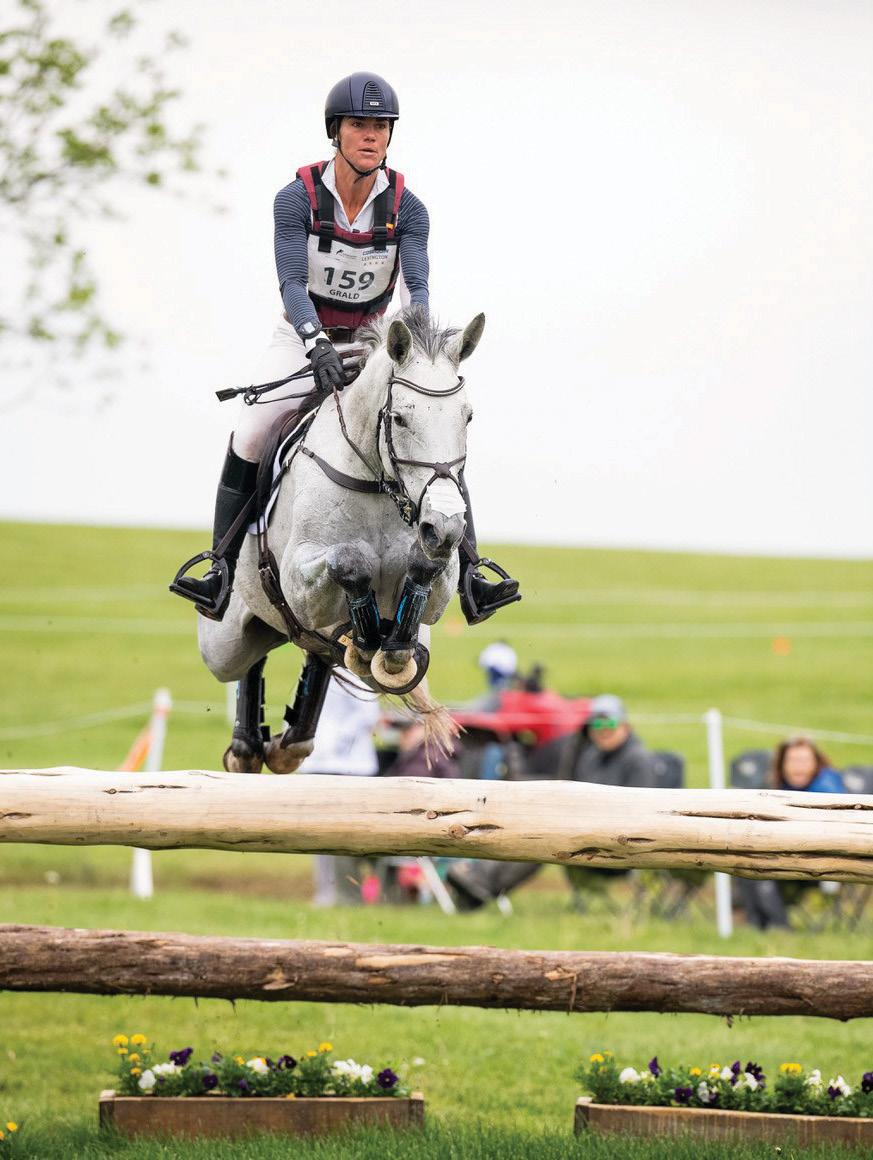
"Maintaining proper digestive function is essential for any athlete. I choose Fibre-Beet because it’s a reliable way to keep my horses hydrated and their systems regulated. It’s a staple in our barn because it truly supports the horse from the inside out."
International 5* Event Rider, Arial Grald.
SUPER FIBER FEEDS BEET THE THIRST!
When working, horses can lose 2-3 gallons of water through sweat. To prevent dehydration, we need to provide the gut with the right tools. High moisture, low binding feed is essential to proper hydration. Hydration is gut driven.
Speedi-Beet and Fibre-Beet feeds will provide high levels of water, helping gut transit and allowing for hindgut absorption. This allows for correct functioning of the gut and provides a reservoir for hydrating tissues that lose water through normal activities, metabolism and exercise.
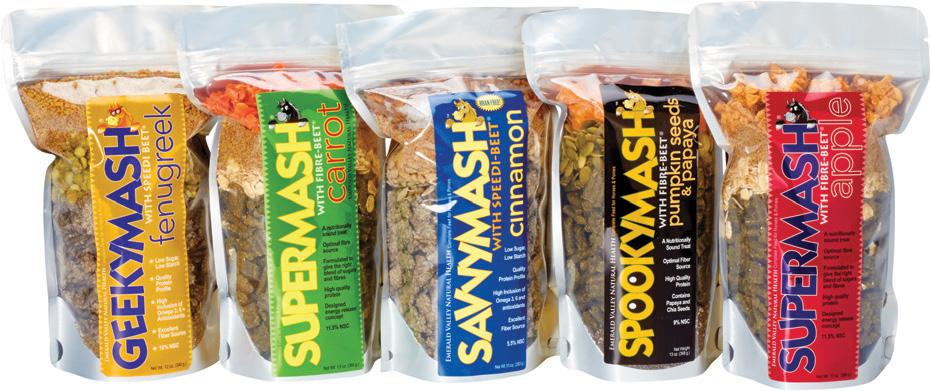
Don’t forget to treat smart! Emerald Valley Mashes are packed with the super hydration power of Speedi-Beet or Fibre-Beet. Available in 8 highly palatable flavors topped off with fruit or veggies. Mashes are great for traveling, hiding medication, or just a fun, simple treat/meal
• Highly palatable, easily digestible, low in starch and sugar.
• Non-GMO, no additives or preservatives!
Dealer inquiries welcome. Call for your free sample and more information.
Photo by Shannon Brinkman
emotional scars afterwards. The hardest part for her was watching me in the year following the accident because I wasn’t myself.
The biggest symptom of the traumatic brain injury was constant headaches. The day after I was released from the hospital, I couldn’t even get up, and we knew something wasn’t right. We began working with a chiropractor who recommended neurofeedback.
We found a practitioner in Wisconsin (where we’d lived until I was five years old), so my mom and I went there for two weeks, and I had neurofeedback sessions twice a day. We were trying to get the best start on my recovery that we could. Neurofeedback involves a mapping of your brain to identify the parts of the brain that aren’t working with the other parts. It helps retrain the brain to achieve more stable, efficient patterns.
“I DIDN’T KNOW AFTER MY ACCIDENT IF I’D GO BACK TO EVENTING BECAUSE IT HAD INSTILLED A FEAR IN ME.”
After the accident, my body acted like I had suffered a stroke, and I didn’t have any reflexes. There were different parts of my brain that were shut down completely, so the clinicians mapped those out and then I would sit for about 45 minutes hooked up to a cap and with different EEG sensors that measure brain activity. The clinicians then reviewed the data.
We later found a neurofeedback clinic in Pennsylvania, so we would go there twice a week. In the 11 months after the accident, I did 80 sessions of neurofeedback. It was a long recovery as we tried to figure out what would work. It was hard getting through my eighth-grade year of school as I was only able to do half days. Lights severely affected me, and I had headaches every day for almost two years.
I barely made it through eighth grade, then we moved back to Wisconsin, and I was tutored throughout my freshman and sophomore years of high school to get caught up on the things I had missed, and some of the topics I needed reteaching because I’d forgotten them due to the brain injury. The tutoring got me back on track, and I ended up graduating high school a semester early in January 2025.
I got Indigo, a.k.a. Indi, in April 2022, a year after my accident when I was ready to ride again. She is a 9-year-old off-the-track Thoroughbred, and everything about her is so gentle — we bonded instantly. I knew after my accident that if I was going to ride a horse again, I had to trust them. My trainer at the time found Indi and thought she might be a good fit. She was in Florida, so we kept her down there for a month and then brought her back with us after we had bought her.
For the first two months, we worked solely on the ground building a connection. I hadn’t ridden any horses since my accident, and I needed one who I trusted to do it with. I think the groundwork really helped in building that trust with her — I knew I wanted to get back into eventing, but I didn’t know how comfortable I was with it because of how sensitive my head was. Any type of fall could really push me back to where I had started, and I didn’t want that.
By that point, my brain scans from the neurofeedback clinic had come back as normal and my doctors advised me to return to riding very slowly because of how dangerous it can be ... but they also said, “We know you’re not going to stop riding, but be very, very careful!” I listened and have always made sure I get new helmets and wear my vest for eventing.
Indi was very different from any other horse I’d ridden before. The last time I’d ridden was on Aslan, our Palomino pony, and although I did groundwork with him after my accident, he hadn’t been ridden for two years, so it wasn’t the best idea to get back on him. It was a great feeling to get on Indi and just be able to ride again, it
felt like starting over. Being with Indi brought back a lot of my personality, as I had lost so much of it after the accident.
The biggest difference in my riding is my lack of balance. I used to have a very strong seat and now I can’t even sit in the center of the saddle for a long time ... I think I am in the center, but I’m not, so I have to retrain where I am on the horse. My trainer and I work on my balance every lesson because it has changed so much, as I am still overcoming things from the accident as I ride.
Abby’s goal is to compete with Indi up to Training Level eventing.
We started doing jumper shows with Indi and worked on me gaining confidence with her for the first year. She was the best horse to do it on, she was so patient with me even though she was still learning herself. I didn’t know after my accident if I’d go back to eventing because the crash had instilled a fear in me that I’d never had before, but knowing I was going to do it together with Indi was the best feeling ever and it gave me confidence. There was never a question with her about whether she was going to take care of me or not. We are not doing a lot of eventing competitions right now as Indi had an injury so we’re working on getting her strength back up. We still show jump, but cross country is a little too much for her at the moment.
We keep all our horses — Indi, Aslan, our draft mare, Pearl, and mini donkey, Millie — at home now and I love every second I get to spend with Indi. As soon as I go out to see her, she runs over from the other side of the pasture. It is a bond I’ve never had with a horse before, and I spend hours and hours with her. She was like my therapist when I was recovering after the accident. I’ll go and talk to her, and she’ll be so alert and present with me.
I tried playing tennis when I couldn’t ride after my accident, but I couldn’t get into it. People asked me why I’d want to get back on a horse as they have a mind of their own — but your minds are together. It’s not a feeling you can explain to anyone who has never experienced it.
I am at college now doing an online degree in business, while also working at a credit union, so life is kind of crazy with school and a new job. I always want to be involved in eventing and continue to compete; my hope is to eventually go to Training Level, but I think that will be my max.
PHOTO:
Understanding Our Horses’ Five Senses
Observing how our equine partners see, hear, smell, taste, and touch will deepen our connection with them.
People often think that animals experience the world as we do, and that presumption can lead us to neglect even trying to learn their language. This trait is called human egocentrism, and it means that we look at the world through our own viewpoint and fail to interpret it from others’ perspectives.
“Humans make many mistakes when we try to imagine the minds of other animals. This is partly because we simply do not know those minds well, and horses are particularly hard to study,” said Janet L. Jones, PhD, author of “Horse Brain, Human Brain: The Neuroscience of Horsemanship,” and “A Horse’s World: A Neuroscientist’s Journey Into the Equine Mind.”
However, it is important to understand how your horse thinks so that you can adapt to their needs and avoid miscommunication.
“Horse welfare is absolutely our most critical issue right now,” said Jones. “It is not just what organizations like USEF and the FEI can do, but about what everyone who works with horses can do on a regular basis to make a big difference in their own horse’s life.”
Jones, who taught the neuroscience of human perception, language, memory, and thought to college students for two decades, has combined her scientific knowledge with her passion for horses by developing brain-based horsemanship.
“We have put horses to use for our benefit and not theirs for at least 4,000 years. They have helped us build monuments, fight wars, carry heavy burdens, and travel the world,” she said.
It is important to understand how your horse thinks so that you can adapt to their needs and avoid miscommunication.
by Debbie Elliot
“We have had very high expectations of them — and we still do. Historically, however, we have not given them the respect or the scientific attention that they deserve.”
We sometimes assume that animal minds are simply weaker versions of human minds, but the more we respect how their minds work and recognize they are simply different — not inferior — the better we can communicate with them.
Sight
“One third of the human brain is devoted just to vision,” Jones explained. “We always think the senses that are strongest in humans are equally strong in other animals and vice versa, but they really aren’t. There’s this myth that horses have this fabulous sense of vision and that they negotiate around their worlds by using vision, simply because that is what we do.”
When it comes to horses’ vision, many of us know that they have a much greater horizontal field of vision than humans do, but we don’t often realize that they have a much smaller vertical field of vision.
“Horses have a huge panoramic band of vision without ever having to move their eyes ... but we see far more of the visual field above and below our gaze than a horse can,” according to Jones. That means that a horse may get scared by a bird that flies into their field of vision, even though we had been able to see the bird all along.
Top: We often underestimate horses’ sense of smell — they can actually detect scents as well as a bloodhound does.
Above: Horses’ ears can hear higher pitches than us, so they can detect ultrasonic sounds like a bat or silent dog whistle.
In addition, a horse’s depth perception is 72 times worse than a human’s. That means we have to reconsider our expectation that a horse can find a jumping distance better than we can, or identify the exact location of a barrel that can’t be knocked over.
It takes 45 minutes for their eyes to adapt to darkness, compared to 25 minutes for people. That means if you lead a horse into a shaded barn from outdoors, they can’t see the inside of it nearly as well as we can. Similarly, if you warm up your horse outside in the sun and then take them into an indoor arena for a jumping class, they can’t adapt as quickly as humans.
“Expecting the horse to immediately begin the course 15 seconds after walking into a dim arena sets them up for failure,” said Jones. “Instead, we need to set our horses up for success and do everything we can to try to help them achieve it.”
Because a horse has a prey animal’s brain that is designed to be vigilant and on the lookout for danger, it makes them anxious and nervous if they are put in a situation with reduced sensory ability.
Identifying different colors is another way our brains are dramatically different to equines.
“Horses see about 10,000 faded colors, while humans see 2.3 million colors. Horses also can’t distinguish between red and green,” said Jones. This needs to be taken into account when designing jumping courses or any other situation where they may struggle to differentiate certain colors from the background.
In addition, “their ability to see detail is worse than ours and they can’t see well close up, but their ability to detect tiny high-speed motions is excellent and much sharper than ours,” she continued. “Horses and humans looking at the same view do not see the same things. Their whole world looks vastly different from ours.”
Smell
“It’s really remarkable how little attention is paid to the sense of smell in horses,” said Jones, explaining that they have the neurological machinery to smell odors as well as bloodhounds do. “Horses use their noses to navigate around the world.”
Few people use the sense of smell to help train their horse or build trust with them, she said. “Horses might want to tell us, ‘Hey there. Forget about your eyes for just a second and think about your nose instead.’ It makes a big difference.”
Horses are prey animals whose brains are driven by fear, and that sense of danger can be communicated through unfamiliar smells. When
introducing a horse to a new barn, Jones recommends allaying fears by allowing them to sniff the environment on a long lead rope for an extended period of time — up to an hour if need be.
In addition, when approaching a horse for the first time, let them really sniff you. “They can get so much information out of your clothes, the food that you just ate, whether you smoke, what you drink,” Jones said. “Horses can smell the hormones that are released during times of fear, both human hormones and equine hormones.”
That means that horses can also smell the fear of their barn mates. “If a vet, farrier, or trainer works with one horse who is frightened and then immediately walks over and grabs the next horse, they’re transferring fear,” Jones explained. She recommends a change of shirt, a new location in the barn, or hand washing to reduce the smell of fear and make the next horse feel more comfortable.
Hearing
The three main perceptual aspects of hearing are pitch, loudness, and sound localization. The softest sound a human ear can hear is 0 decibels (dB), while a horse can’t hear lower than 7 dB.
“We don’t have to speak louder to our horses than to each other, but if we speak more quietly, they cannot hear us,” Jones explained. “Many people whisper to their horses, not realizing that if another person standing in the arena cannot hear a verbal command, the horse probably can’t hear it either.”
Horses can hear low and high pitches from 55 to 33,500 Hertz (Hz), and people can hear 20 to 20,000 Hz. Because equine ears surpass ours at the high end of the spectrum, they can detect ultrasonic sounds like a bat or a silent dog whistle. “One of the reasons that horses dislike ear trimming, for example, is because they can hear ultrasonic frequencies like clicks and whistles from the clippers, especially when pressed up against their ears,” said Jones. “Meanwhile, we have no idea those sounds occur.”
Horses are calmed by music without sudden changes in tempo, so they prefer Mozart to Beethoven, soft rock to techno, and country music to heavy metal, Jones wrote in “Horse Brain, Human Brain.” The right type of music can also have a calming effect on them. A study of Arabian racehorses found that horses who lived in a barn where harmonious background music was played had lower heartrates over time and won more races.
While the size, shape, and position of horses’ ears may make us assume they are better at
BE PREPARED FOR POLLEN SEASON
WITH
Dust. Pollen. Season Irritants.
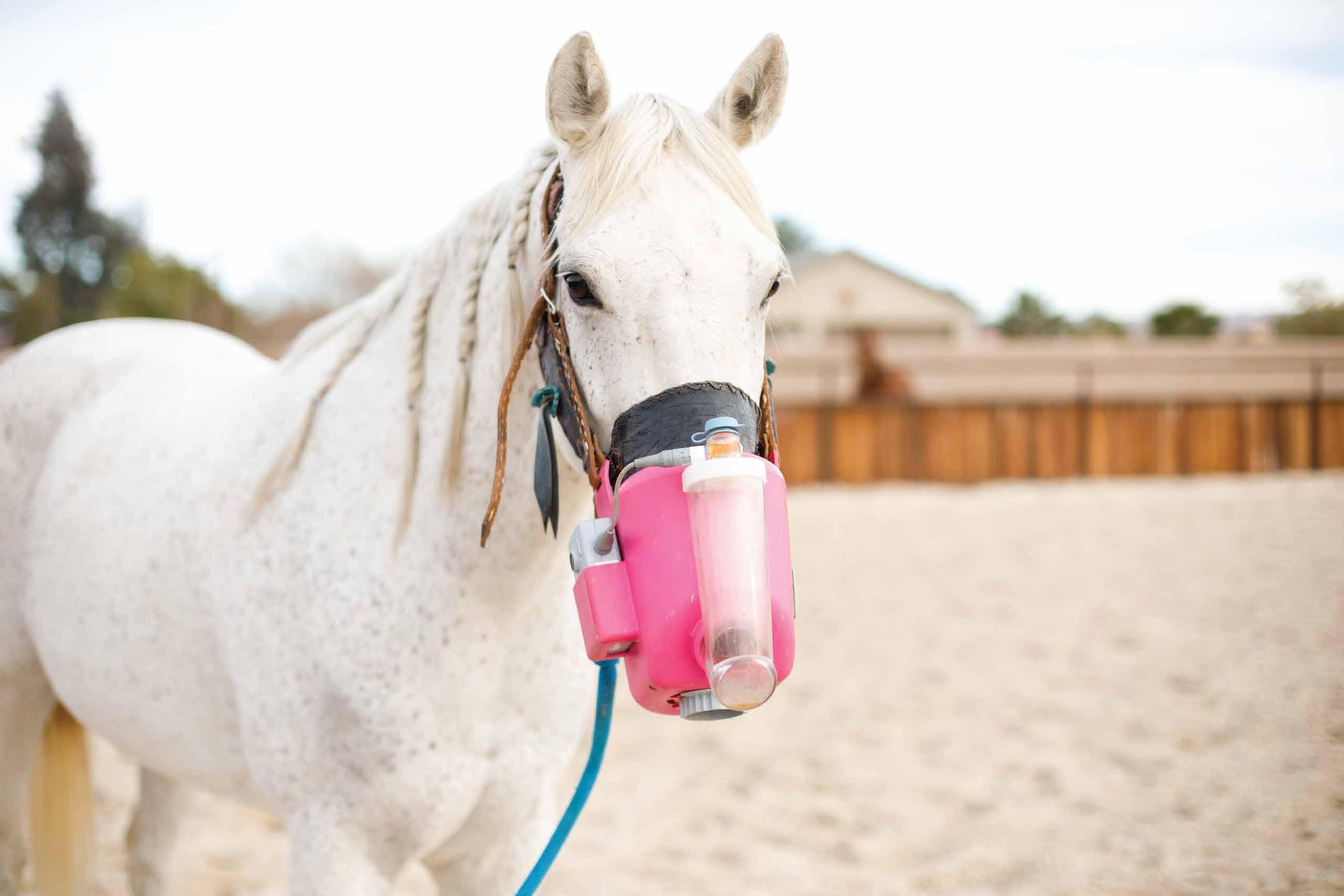
They don’t just a ect comfort- they a ect performance. By nebulizing Alpha2EQ®, the A2M molecule is delivered directly to the airway, helping reduce inflammation where it starts to support easier breathing.
Sweet and salty foods can trigger pleasurable sensations because horses’ brains rely on sugar and sodium to function.
sound localization (identifying where a noise is coming from), in fact, humans can identify a sound within one degree of precision, whereas a horse’s precision range is only 22 to 30 degrees.
Taste
Approximately 80% of the sense of taste for both horses and humans comes from smell (this may resonate with people who temporarily lost their sense of smell during the COVID-19 pandemic). Horses will use the taste buds on their huge tongues (which weighs 2.5 pounds,
understand in regard to horse welfare — such as when using whips and spurs — as it means they are extremely sensitive.
“A horse can sense five dandelion seeds of pressure on their skin, and no human can do that,” Jones said. “I think we need to recognize that horses can learn the meaning of very light, sensitive aids. If they have learned the meanings properly, they will not need spurs, whips, and rough or strong handling. What horses need from us is more lightness and sensitivity, not more strength.”
on average) to translate molecules into neural impulses to the brain. Pleasant sensations are transmitted when sweet or salty foods are consumed, as sugar and sodium are needed for brain function.
Horses are more tolerant of bitter tastes than humans, especially when items are chilled, which is why they are more apt to consume bitter medication that is kept in a fridge.
However, Jones states that horses are not adept to identifying poisonous plants or stagnant water by taste, which is why it is our responsibility to make their environment safe by removing dangerous vegetation and ensuring a fresh water supply. When traveling, horses can often be encouraged to drink more by adding sweetener, peppermint, apple essence, or beet pulp water to their buckets.
Touch
Equine sensitivity to touch is better than that of human fingertips. This is very important to
Horses feel even the lightest aids, she continued. If they don’t respond, it’s either because they don’t know what the aid means, or they have been taught that it’s OK to ignore it.
“Making the cue stronger doesn’t help with their confusion about what it means or with their ability to ignore it,” Jones said.
“We will never overcome the differences between horse and human brains completely — they are much too vast,” she concluded. “But we can improve our connection by gathering knowledge in two ways. First, in a scientific sense, by funding and conducting more equine cognition research. Second, in an individual way that we can all do during our daily work in the barn, arena, or on a trail. Human brains operate on the basis of assumptions — we cannot eliminate them, but we can change some of them. So, I encourage riders to learn more about their horses’ brains and create better assumptions, such assuming that your horse is trying his best 99% of the time … because he probably is.”
Horses can feel even lighter touch than human fingertips.
C Lazy U Ranch
Granby, Colorado
Experience
Sylvan Dale Guest Ranch
Sylvan
Loveland, Colorado
Elkhorn Ranch
Horseback riding and hiking for all ages and levels of experience. Personalized hospitality for 32 guests. Open November through April. Established by the Miller family in 1945. Tucson, Arizona
Tanque Verde Ranch
Tanque
White Stallion Ranch
Tucson,
Experience
Saddle Time vs. Screen Time
Any of us who are members of Gen X (born from 1965 to 1980) most likely spent their non-school hours at the barn fully consumed with their horse, cut off from the rest of the world aside from what time we had to get home for dinner. However, today’s youth, who are classified as Gen Z or Generation Alpha, are constantly bombarded with distractions because they are digitally connected a lot of the time.
A 2024 Pew Research Center survey of U.S. teens ages 13 to 17 found that 95% of teens own a smartphone, and nearly half of them say they are online constantly. Additionally, the World Happiness Report stated that the average U.S. teen now spends nearly five hours per day on social media (primarily YouTube, TikTok, and Instagram), while a recent survey found that onequarter of 13- to 14-year-olds were on it for over seven hours a day.
“From a performance perspective, the digital generation creates a challenging landscape. Social media and digital devices rob focus; they just steal it right out from under you,” said Dr. Jenny Susser, a licensed, clinical psychologist specializing in sport and performance. Known as Dr. Jenny, her work ranges from athletes to corporate executives, with a special passion for equestrians.
“If your phone beeps and even if you don’t answer it, for the next 90 seconds half of your brain is focused on ‘Who was that? Was that important? Was that the text I was waiting for?’” she continued. “You must then bring your focus back, so you are multitasking mentally. It’s costly energetically and focus-wise
Spending too much time on smartphones and social media can not only increase anxiety, it can also reduce focus and connection while riding.
by Debbie Elliot
for anyone who’s trying to accomplish something — whether it’s academic or athletic.”
It is challenging enough for adults to balance our screentime, but for young people, the stakes are even higher. Parents have to ask themselves when the best time is to give their kids a cellphone, and to protect them on social media from predators and from bullying. “You want to keep a child or a young adult from these things, but the consequences of them having their access to social media restricted and becoming an outlier could be worse,” Dr. Jenny said.
As with many of life’s biggest issues, the key is communication.
“One of the top issues that today’s parents struggle with is time with their children. They need to think about quality versus quantity,” Dr. Jenny explained. “Instead of just engaging in lighthearted conversation and asking your kid how their day was, be a little more targeted like, ‘What did you learn today? What did you learn about yourself? When did you feel good? When did you feel bad?’ These are self-awareness questions, which are important because if a young person can begin to identify when they feel good and when they feel bad, and what led them to feel good or bad, then they’ve got important data to work with.”
The same is true with the social media interactions they have. If a teen is in a group chat that they know often makes them feel bad interacting with, they don’t necessarily have to leave the chat, but if they prepare themselves, then it won’t impact them as much.
PHOTO: SHELLEY PAULSON
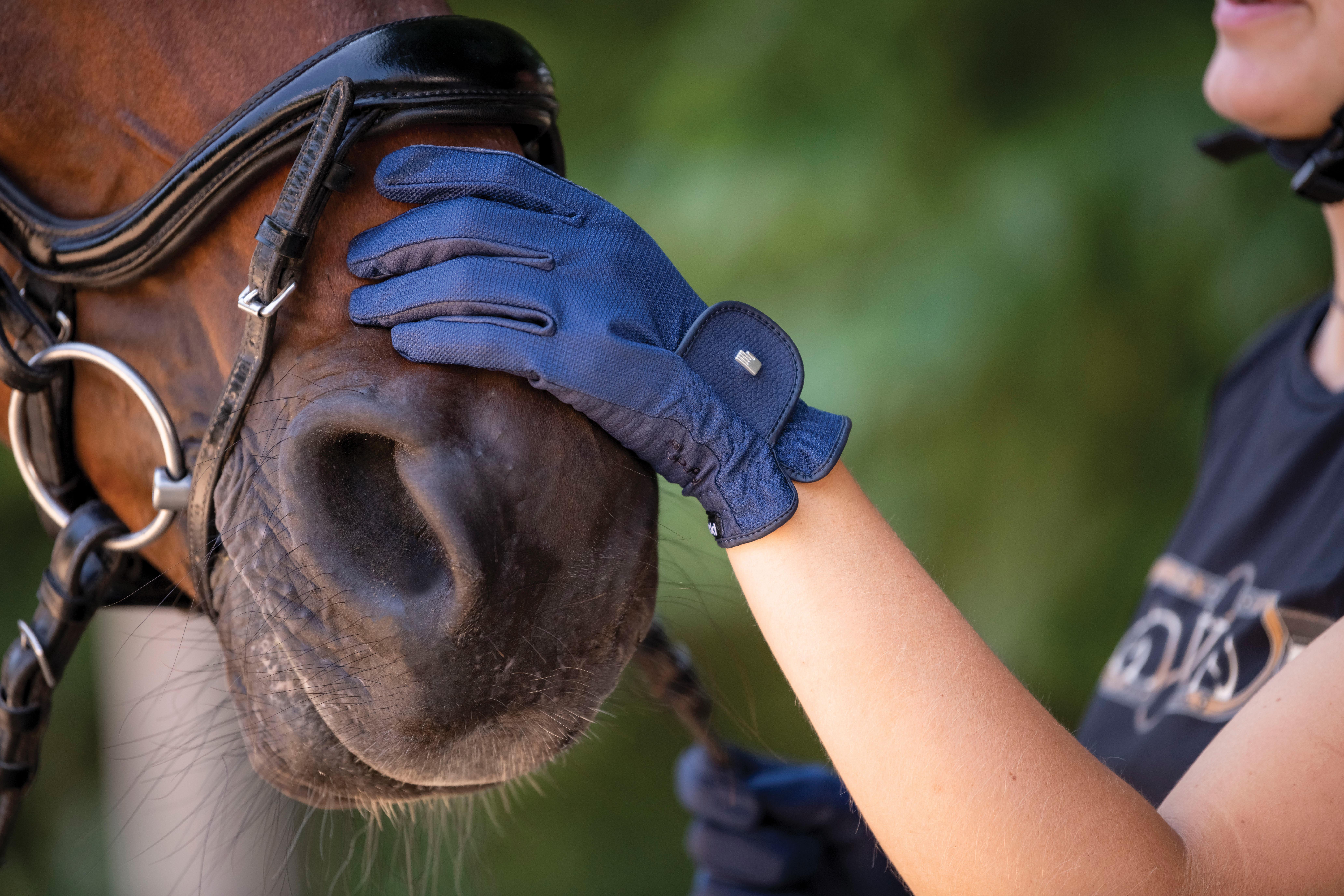
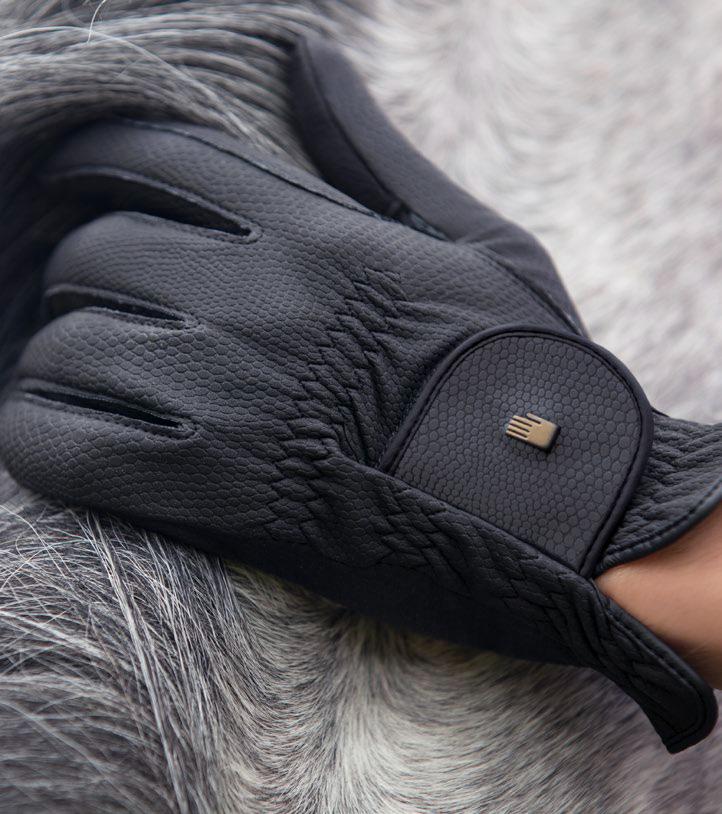
Roeck-Grip® Lite gloves are made with Roeckl's exclusive Roeck-Grip® material that provides soft, breathable comfort on hot summer days! Like Roeck-Grip and Roeck-Grip Winter, the Roeck-Grip Lite fits like a second skin, giving the rider a close contact feel, and is even touchscreen compatible! Roeck Grip Lite gloves are available in Black, White, and the new Naval Blue!
“FROM A PERFORMANCE PERSPECTIVE, THE DIGITAL GENERATION CREATES A CHALLENGING LANDSCAPE.” - Dr. Jenny Susser
“If I’m going to read the news, I always take a minute and prepare myself because I don’t know what I’m going to read,” Dr. Jenny said. “I don’t know how true it is. I don’t know how much it’s going to scare me. I don’t know how much it’s going to empower me. I anchor myself very securely before I even read. A young person can begin to develop a piece of self-awareness around, ‘I’m going to go and engage with this Snapchat that I need to be involved with, otherwise I’m going to feel like an outcast, but it makes me feel bad afterwards so I should prepare myself for that.’ It’s powerful, very simple, and it sets you up for a lifetime of being prepared for whatever could be coming,” she added.
While there are certainly benefits to social media such as education, connection, and helping with isolation and loneliness, they can be outweighed by negative aspects like online bullying, feeling more socially isolated, and toxic comparisons.
Dr. Jenny recommends that young people have a clear idea, philosophy, or goal about why they are sharing something on social media. “We’re in this weird culture of social reveal where people share everything from what they ate for lunch, to every ride they had,” she said. “A lot of times adolescents do something called ‘stress posting.’ They’re scrambling to resolve some sort of emotional disruption and post without thinking it through.”
Parents should teach them to have intention behind their posts. That way there is a buffer against any backlash they may receive.
“If they post about their horse or their ride with intention and get negative comments, they are more likely to think: ‘Hey, you know what? I was honest and telling the truth about what happened, I wasn’t going for click bait, and I didn’t post something that wasn’t true,’” Dr. Jenny explained. They are also more likely to get positive and supportive comments back if they post authentically.
“The best advice I can give to a parent about social media is to continue to talk to your kids about it every single day,” Dr. Jenny advised. “When you ask these questions of your kids, more often than not, they’re not going to answer. But it’s not necessarily about the answer they give you, it’s really about the fact that you ask the question with a deep sense of authentic care.”
While there is a lot of garbage online, there is also a lot of quality content, and it is important to figure out who is creating that. Dr. Jenny said parents should ask their children questions like: “Who do you love to follow and why? How does this touch you? How does this reach and impact you? Why are you drawn to this?”
The conundrum with adolescents and social media is how do we help them make it more beneficial than harmful?
Top: It is important for parents to have quality time with their kids, prioritizing communication and connection. Bottom: Spending time with horses away from a smartphone increases sociability and reduces isolation.
PHOTO:
Focus
“THE BEST ADVICE THAT I CAN GIVE TO A PARENT ABOUT SOCIAL MEDIA IS TO CONTINUE TO TALK TO YOUR KIDS ABOUT IT
EVERY SINGLE DAY.”
- Dr. Jenny Susser
Like any tool, it depends on how you use it, Dr. Jenny explained. “A snaffle bit can be really kind or really harsh depending on whose hands it is in,” she said.
Balancing Phones at the Barn
Jonathan Haidt, a social psychologist and author of “The Anxious Generation,” differentiates between “play-based childhoods,” and “phone-based childhoods,” with the latter causing increased anxiety, social separation, and cognitive fragmentation.
Being at the barn with your friends can be seen as the ultimate play-based activity, but what happens when you also bring your phone along for the ride?
“It is hard-pressed to find young riders at the barn without their phones nowadays,” Dr. Jenny said.
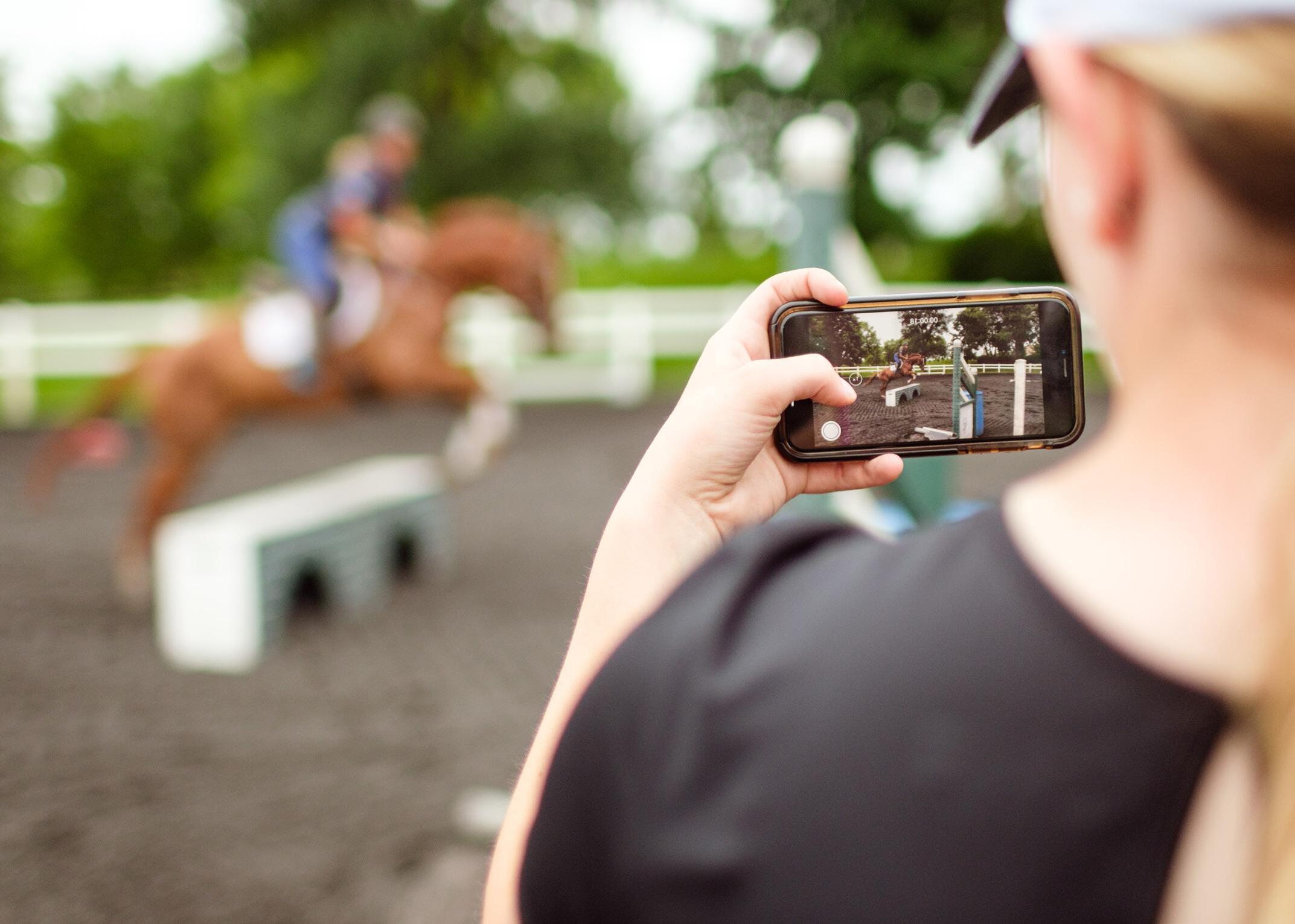
There are certainly advantages to being digitally connected, such as being able to video your own rides, recording clinics and trainer tutorials, safety when riding alone, and of course, taking cute selfies with your horse! However, it can also reduce your focus and have a detrimental effect on your riding progress.
In terms of athletic performance, the barn is a training venue for practice, and every time you are there is an opportunity for improvement. “Your focus during training is going to develop your ability to focus during competition,” Dr. Jenny said. “If you can’t focus during your training rides and you are not developing that muscle, you have no chance to have it during competition. If a young person is competitive and has clear, connected goals they are chasing, then convincing them their time at the barn needs greater focus will be easier.”
If they want to score better at horse shows, then they need to focus fully during training sessions.
“That is their preparation time for competition. If they are wasting away all their mental energy on their phone while with their horse, then first of all, they are never developing that muscle, and second of all, they are missing opportunities to develop a relationship with their horse, which is critical to performance,” Dr. Jenny stressed.
While many of us like to believe we are good at multitasking, Dr. Jenny says there is no such thing as the human brain can only think one thought at a time. “You’re either thinking one train of thought, or you’re going back and forth from thought to thought, and you are diluting the power of each thought.”
Riders of any age have to decide, is my train of thought going to be focused on my horse, or is it going to be jumping back and forth from my horse to my phone?
while training at the barn leads to success in the competition ring.
Hidden Dangers of Cellulitis
by Debbie Elliot
Always consult a vet if you suspect your horse has cellulitis.
Most of the time, this common issue resolves easily, but beware of complications.
While relatively common in both people and horses, cellulitis can have serious consequences and even lead to death in the most extreme cases. Cellulitis is defined as an infection of the subcutaneous space. The early stages of cellulitis may be brushed off as simple lameness or a swelling, but it should never be overlooked. What may appear to be a painful limb can impact the horse’s entire body.
“It can be a serious issue; I never let the sun go down on a cellulitis without taking action,” said Dr. Emma Adam, BVetMed, DACVIM, DACVS, PhD., at the University of Kentucky’s Gluck Equine Research Center in Lexington, Ky. “It is definitely a disease that can be lifethreatening, if not addressed aggressively and immediately.”
Ccellulitis can occur on multiple parts of the body, but it is particularly painful in the limbs because the skin there is so tightly applied to the underlying structures and doesn’t have
the elasticity of skin on the neck, for example, according to Dr. Adam.
Typically, only one limb is affected — often a hind limb — but in severe or prolonged cases, the horse can then be at risk of supporting limb laminitis due to prioritizing their opposite limb to avoid putting weight on the one in pain.
Causes
A common cause of cellulitis is suspected blunt force trauma, such as kicking a wall, being kicked by another horse, or an injury during transportation. It can also be associated with wounds, cracked heels, mud rash, or pastern dermatitis (also known as scratches).
“Other causes include puncture wounds, splint bone fractures, or a bone sequestrum, which is a dead piece of bone,” said Dr. Adam.
Cellulitis is a subcutaneous infection that can develop when bacteria — such as Staphylococcus spp. or Streptococcus spp. — gain access
to subcutaneous tissues via damaged skin from trauma or a wound.
Diagnosis
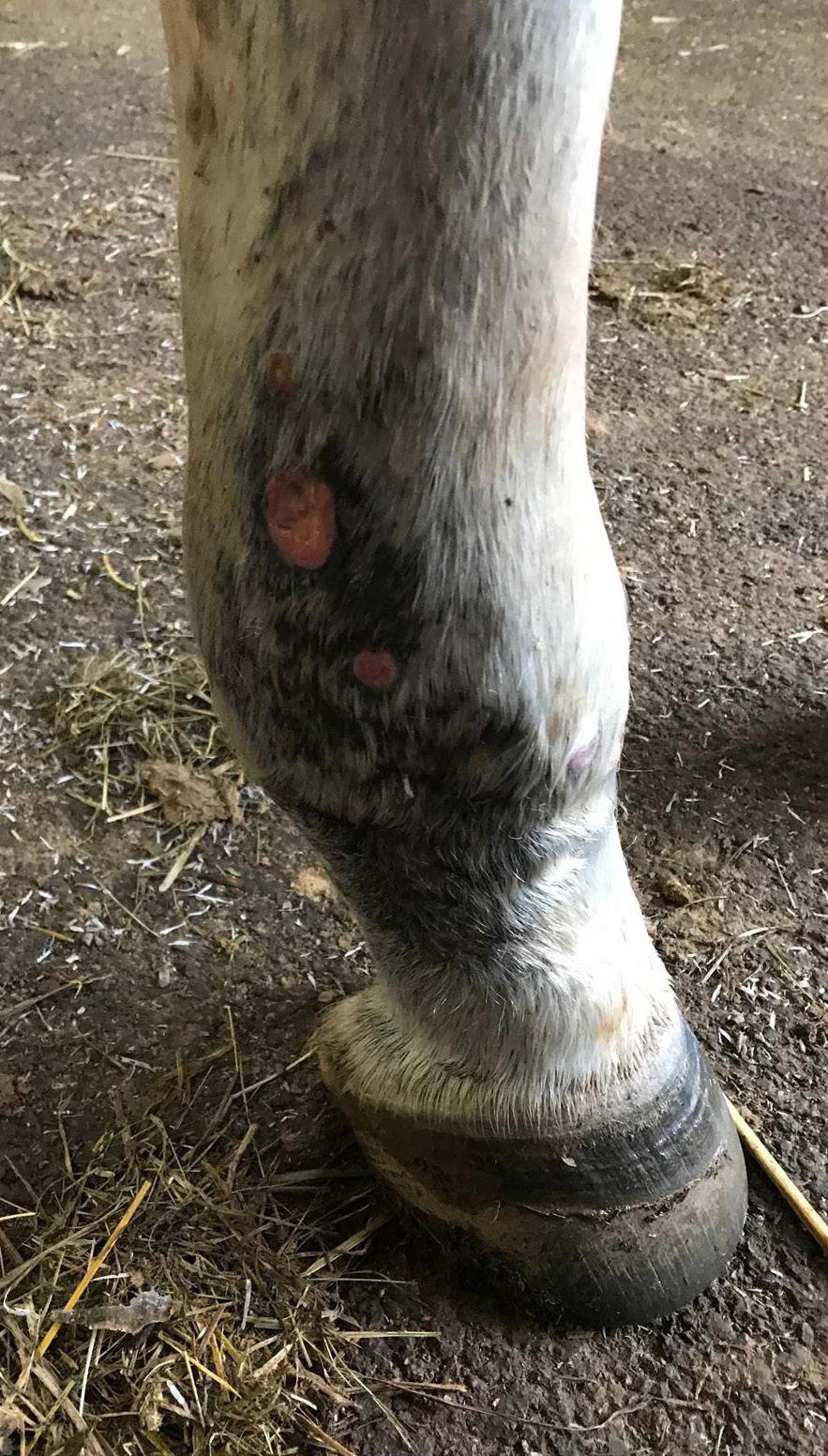
The most obvious visual indication of limb cellulitis is that the leg is swollen and takes on a “stovepipe” appearance, with the leg having lost its contours. Unlike a simple case of “stocking up” or edema, a horse with cellulitis will be very reluctant for you to touch the skin of their leg, which will feel hot and sore to the lightest of pressure. “If you press into it, you won’t leave an indentation as you would on an edematous limb,” Dr. Adam explained.
Horses often have a fever with cellulitis, but not always, so examination of the leg is always the first step in diagnosis. Depending on the severity of the case, the veterinarian may opt to do imaging such as radiographs or ultrasound to rule out injuries such as tendon, ligament, and bone damage. Ultrasound may also reveal foreign bodies, abscesses, and clotted blood vessels.
One of the reasons you shouldn’t delay diagnosis is that the swelling associated with cellulitis is not only tremendously painful, but compromises circulation to that area, potentially putting other tissues at risk of damage.
“With infection, particularly severe local infection and inflammation, there is a risk of damage to the vasculature — the network of blood vessels supplying nutrients and oxygen to the affected area — which can reduce blood supply and potentially contribute to clot
formation,” said Dr. Adam. “That becomes a significant problem in the horse’s limb because we are reliant on these long, vulnerable blood vessels which do not have a lot of branching. Unfortunately, I have euthanized horses in which clots have formed in either the vein or the artery supplying the limb as a result of cellulitis.”
The hoof capsule is also at risk when you have a cellulitis situation, because the laminae in the foot is a tissue that requires a great deal of blood supply and glucose to support itself.
Treatment
The first priority when treating a horse with cellulitis is to get pain and infection under control. Your veterinarian is going to be the best person to do this and calling them in immediately for swift treatment can reduce the severity and longevity of the problem dramatically. Dr. Adam uses a combination of non-steroidal anti-inflammatory medications (with due consideration given to corticosteroid and opioid medications depending on each individual case). Your veterinarian will be the best person to determine the medications for your horse.
If the cellulitis is impacting a hind limb and the horse is at a veterinary clinic, pain relieving medications may be administered via epidural injection. This route, depending on the medications used, can provide up to 24 hours of good-quality pain relief. “Our biggest goal is to get the horse as comfortable as possible, as quickly as possible safely. In addition to relieving pain, this can aid in circulation in the affected leg as they feel more able to weight bear and move around,” she said. This also reduces the risk of weight-bearing laminitis in the unaffected legs.
There is no one formula to treat limb cellulitis. Some vets might use a sweat wrap on less serious cases of cellulitis. Dr. Adam’s personal preference is to employ ice therapy, but she stresses you should always follow a treatment regimen that is supervised by your veterinarian, as they will know what is best for your horse. When we use ice on horses, it can provide several benefits: it helps reduce pain and inflammation, slows temperature-dependent tissue and enzymatic activity, and lowers the metabolic demand of the foot, Dr. Adam explained. She compared it to putting milk in the refrigerator, where the cold reduces the enzymatic activity and bacterial proliferation in the milk.
Dr. Adam, while not endorsing any product or practice, has had positive experiences with wet ice in ice boots, and items such as
A leg with cellulitis will take on a “stovepipe” appearance due to swelling.
Designed to be the best solution to support horses during tendon rehabilitation. FOR WARM UP FOR THERAPY FOR RECOVERY FOR REHABILITATION FOR CIRCULATION
SCAN TO LEARN HOW IT WORKS
Game Ready ice boots. “If you use an ice boot with pockets or you use cool packs, be sure to change them frequently otherwise the boot or the apparatus that you are using is going to actually get the leg warmer, which is not what I would be trying to do,” she warned. “My personal preference is that I like to use the principle of very gentle compression with ice. I apply a very light ACE bandage on the limb to offer gentle support, and then put the ice around it and change the wrap every 12 to 24 hours, checking it frequently to ensure it has not slid down forming a wrinkled band around the limb that would be detrimental. The bandage, applied incredibly gently, helps the subcutaneous space’s hydrostatic pressure — it can take a long time for the lymphatic system to drain it away.”
Once the leg is starting to improve — and the pain and swelling have been reduced — support wraps can be used to continue recovery as the tissue regains its contour and shape. Horses may need standing wraps to prevent their limbs from filling after a bout of cellulitis. It is important to bandage properly when treating cellulitis, so refer to your vet for advice if you are planning to do it yourself.
Recovery
Horses often make a complete recovery from cellulitis. “They don’t always regain the perfect contour of their limb, but if no underlying structures are affected and therapy was successful,
then they are able to return to their prior work or competition routine,” Dr. Adam said.
Once the horse is comfortable, gentle, frequent hand walking can be an important part of their rehab routine because gentle movement improves lymphatic drainage and venous return helping circulation in the limb.
Dr. Adam warned that horses can experience repeat episodes of cellulitis and so diligent care of the limb with careful washing and drying after work may be an important addition to the horse’s regimen. Additionally, if a horse is going to stand for any period of time and it has had an episode of cellulitis, then that leg may stock up and need a well-padded standing bandage.
Prevention
There are many reasons why we want to prevent blunt force trauma, and the risk of subsequent cellulitis is one of them. Try teaching correct behavior if your horse kicks in their stall a lot or while being shipped. Dr. Adam suggested using high-quality shipping boots or wraps to protect their legs against blunt force trauma while trailering. Also, consider how your horses ship and employ management and socialization practices to prevent negative interactions if they are trailered together.
“When you have a horse that you’re bathing a lot, it’s very important to make sure you clean off the back of the limbs, especially both hind legs very carefully; rinse off the soap and towel dry the limbs to protect the skin,” Dr. Adam stressed, as skin likes to be moist, but it hates to be dried out, and it hates to be too wet.
When handling bandages, towels, and other horse-related laundry, ensure they are washed regularly in high-quality detergent then put in the dryer on high, as this can eliminate 99.9% of pathogens.
Dr. Adam said it is essential that we take care of the skin on our horses’ legs, not just the muscles and bones. “The skin on the horse’s leg is a very important part of the body that we often overlook,” she explained. “It is thicker and tightly adhered to the underlying tissues. We think of the limbs as being fragile in bone and soft tissue terms, but not often in terms of skin integrity and resistance to infection.”
Ultimately, preventing cellulitis starts with careful daily management and paying close attention to bumps, cuts, and swelling. By paying attention to the condition of the skin and addressing small wounds or irritation early, owners can help protect their horses from an infection that can quickly become serious.
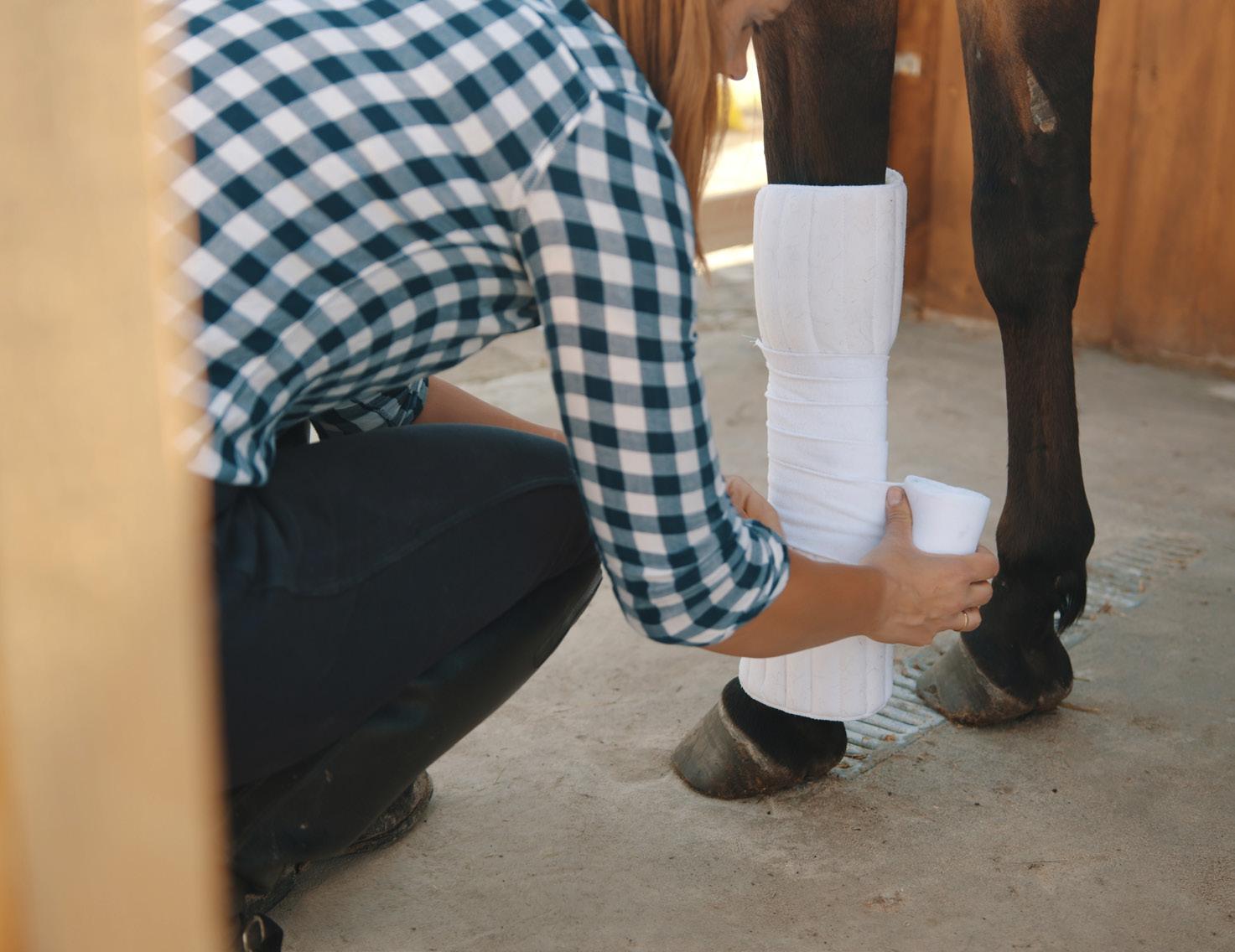
A vet can show you the correct way to wrap a leg with cellulitis.
PHOTO: ADOBE STOCK
DETERMINATION
The Thought-Process Behind Building SafeSport Training Modules
The U.S. Center for SafeSport’s policies create safer, more respectful environments for everyone involved in the sport ecosystem, said Monica Rivera, vice president of education and research.
by Kimberly Loushin
Have you ever wondered who is behind the training modules you take each year to be SafeSport compliant?
Monica Rivera is the vice president of education and research at the U.S. Center for SafeSport, where she leads the team that builds the training modules for organizations such as USEF. Fascinated by how people think, understand the world, and interact with one another, Rivera earned her undergraduate degree in sociology from Syracuse University, and her graduate degree from Colorado State University in Fort Collins, Colo.
Rivera has an extensive career history in higher education, having served as the director of a 24-hour interpersonal violence crisis center on a college campus for 17 years. She also served as the executive director for Violence Free Colorado, the state’s designated interpersonal violence coalition, before joining the U.S. Center for SafeSport in 2023.
“I’m also a survivor of child sexual abuse, and rape as an adult,” Rivera said. “While my professional and academic background makes me really interested in the topic of interpersonal violence, my experience as a survivor is really what motivates me every day.”
US Equestrian spoke with Rivera to better understand her role with the U.S. Center for SafeSport, and how the training modules and educational tools come to life.
Q: How has your experience running a crisis center helped with your role at the U.S. Center for SafeSport?
A: This is a dream job for me because it brings together the parts of my previous work that I’m the most passionate about. At the crisis center, we provided direct services to survivors, many from NCAA athletics. We also built a robust education and prevention function alongside our advocacy work.
Zen Elite Equestrian Center, located in Southwest Ranches, Florida is everything the name suggests and much more.
The state-of-the-art facility hosts a spacious covered arena, two huge outdoor arenas and a full rehab/spa.
From the cascading waterfalls in the rider’s lounge, to its peaceful statues and inviting gardens, Zen Elite Equestrian Center envelops visitors in a spa-like relaxed atmosphere.
But Zen Elite is more than just soothing to the soul. The facility is unique in its scope, hosting grassroots dressage and jumping lesson programs in the same arenas where international trainers are preparing for national and world competitions.
Owner, Heidi Humphries’ vision is legendary, in that it supports the future of horse sport in the spa-like serene atmosphere that is Zen Elite Equestrian Center.
We developed one of the country’s first campus-based men’s anti-violence programs, created a peer-education troupe called the Red Whistle Brigade that used creative skits to teach consent, and partnered with Title IX and campus police on trainings around mandatory reporting. We also led broader campaigns focused on bystander intervention and radical self-love for survivors.
What stood out most from that experience was how integrated the education and direct service work was. We had a survivor speakers’ bureau, which gave survivors a platform to share their stories as part of their healing, while also helping others learn about the human impact of violence.
After that, I served as the executive director of the State of Colorado’s coalition for interpersonal violence, where I focused more on policy and systems-level work at the state and national level. That experience really prepared me for working within the Olympic and Paralympic Movement, helping me understand how different national governing bodies (NGBs) operate, how policy varies across them, and how deeply culture shapes education and prevention.
Q: How do you go about building the training modules?
A: We use a backwards design model, which is pretty standard for curriculum development. If you’ve heard me speak for more than five minutes, you’ve probably heard me say, “context before content,”
and “feedback is love.” Those two ideas really drive how we build everything. We can’t produce a piece of education without understanding the context it’s going into: who it’s for, what they’re experiencing, and how it will land.
Our process always starts with purpose — what do we want people to learn, and is an online course even the best way to get them there? Sometimes it’s a discussion guide, sometimes it’s a short video, sometimes it’s something else. Once we’re clear on the learning goals, then we build from there, and we keep iterating based on feedback as much as possible.
One of the areas we’re always thinking about are the quad cycle courses, the four core required trainings. They predate my time here and were built to meet strong baseline best practices across the movement, so they’re intentionally more general in nature. We’re continuing to focus on how we evolve them, so the content feels more relevant and specific to people’s actual roles and sport context, so learners can more clearly see themselves in the material, rather than it feeling one-size-fits-all.
Q: What are your goals when building these modules? Who are you most trying to reach?
A: We’re pulling from a few different places. We look at trends in reporting; we listen to athlete feedback, and we also look at what’s happening in the prevention education field more broadly. On top
of that, we try to ground everything in prevention theories, trauma-informed practices, psychology of learning, and industry best practices.
One of the challenges with prevention education is that it’s inherently hard to measure efficacy, because you’re trying to measure something that didn’t happen as a result of education. We try to make sure we’re meeting the core tenets of strong prevention education as consistently as possible. That means being comprehensive, context-specific, and responsive. If we see an uptick in concerns or incidents within a particular sport context, that tells us we need to build education that directly addresses that.
We also pull from what we’re not getting reports on. For example, hockey has something called “billeting,” where minors go live in residential homes, almost like an exchange student process. We know that living in the home of a strange family far away from your home is very high risk for sexual abuse, but we don’t actually see a ton of reports around billeting. So, as subject matter experts, we’re able to see
Left: The U.S. Center for SafeSport protects athletes of all ages and backgrounds.
Right: Making sure everyone is educated about safety is how we create culture change, Rivera said.
PHOTOS:
Utilize the latest technology with T3 Matrix Saddle Pads for maximum comfort and freedom of moment
BUCAS ROECKL
MYLER BITS®
there’s something missing here and build some education to fill that gap.
A big constraint for us is honestly just scale. My digital education team is the size you’d typically see in an organization about a quarter of our size. Plus, we’re serving 52 different sports, and their grassroots programs underneath that. This adds up to millions of learners. So, we’re constantly trying to balance breadth and depth.
This constraint is also part of why some of the core modules are more general. It’s
ALL OF OUR POLICIES THAT PROTECT MINORS ALSO PROTECT ADULTS.”
MONICA RIVERA
not that we don’t want them to be role or sport-specific, it’s just that we have a very small team and finite resources. We do our best to make choices about where we can go deep versus where we need broad coverage.
Q: Why is it important for all members to be trained, regardless of whether they interact with minors?
A: I love this question because it comes from a well-intentioned place but is a bit of a misconception. Even if someone isn’t directly working with minors, they’re still operating in environments where minors are present. For example, if I’m on an alladult water polo team, I may not have minors on my roster, but I’m still using facilities, locker rooms, and shared spaces where youth teams are present. Minors are a part of our sport ecosystem, even if they’re not a part of an individual’s role. This isn’t
like training someone on highly specialized equipment they’ll never encounter.
It’s also worth remembering that most people do have minors in their lives in some capacity. And at a core level, we believe education is what drives culture change across the entire system.
All of our policies that protect minors also protect adults. Many of the survivors I’ve worked with over my career were harmed as adults. So even if someone never works directly with a minor, implementing strong prevention practices still meaningfully increases safety for everyone. Many of these policies, like reinforcing clear boundaries, requiring narration during physical procedures, or providing private changing and lodging spaces, are not just about prevention; they’re also best practices in traumainformed coaching.
At the end of the day, these approaches create safer, more respectful environments for everyone involved in the sport ecosystem.
Q: Some of the training module questions feel like common sense; why include them?
A: Common sense is always subjective; it depends on your experiences. What feels obvious to one person might not be to someone else. If I walked into an equestrian facility, I’d probably ask questions that people around me are thinking, “That is so obvious!” but they wouldn’t be obvious to me. So those questions help make sure everyone’s starting from the same baseline.
When it comes to sexual abuse prevention, what feels intuitive isn’t always what’s safest. I’ll hear parents say, “I trust my kid’s coach,” or coaches say, “I know I’d never hurt a kid, so giving them a ride home is fine.” That feels logical, but trust is exactly what gets manipulated through grooming. It seems like the safe thing, but you’re creating an environment where one-to-one contact between an adult and a minor is normalized, and then you’re putting it on the kid to have to determine which ride home is safe.
So even those “common sense” questions are important because they help challenge assumptions, catch blind spots, and set clear boundaries that protect everyone. You’d be surprised how much work we still have to do to make abuse prevention common sense.
Q: How do you tailor the training to youth athletes?
A: We always start with context before content. What does a 14-year-old’s world look like? How do they learn? What’s actually going to make them care and pay attention?
From there, we tailor our education based on age and development. We have two courses: SafeSport for Kids, for ages 5–12, and SafeSport for Teens, for ages 13–17. Both courses are designed around the developmental needs of how those groups actually engage and learn. The one for younger kids is interactive and has activities. The one for teens gets more into understanding boundaries.
One question we get a lot is why training suddenly becomes mandatory at 18, even if someone turns 18 mid-season. The key thing to understand is that we can’t mandate education for minors, but we are federally mandated to make sure adults receive education on the code and mandatory reporting obligations. So, when someone turns 18, the education they get isn’t just about general prevention anymore, it’s also about understanding their specific responsibilities. Because at that point, they’re held to a different standard in our Response and Resolution process as adults.
Q: What feedback from NGBs have you taken to adjust or improve the course?
A: We consistently hear that the courses aren’t role specific or sport specific, and that it can feel too long. That feedback is directly shaping the next iteration of our online courses. In the meantime, we’ve been working each year to streamline and shorten them.
Another piece of feedback we’ve implemented is creating resources for topics that fall outside of the mandated education and doesn’t require a full course. For example, with something like billeting in hockey, we created a pamphlet instead of an online course.
We also frequently hear about really specific, on-the-ground needs from NGBs. They’ll say, “We have this one small but tricky situation happening in our sport, can you help us think through a resource?” That kind of feedback is incredibly valuable, and it’s what we’re using to build more targeted, practical education that actually reflects what’s happening in their environments.
A pony in-hand class at the 2023 Upperville Colt and Horse Show.
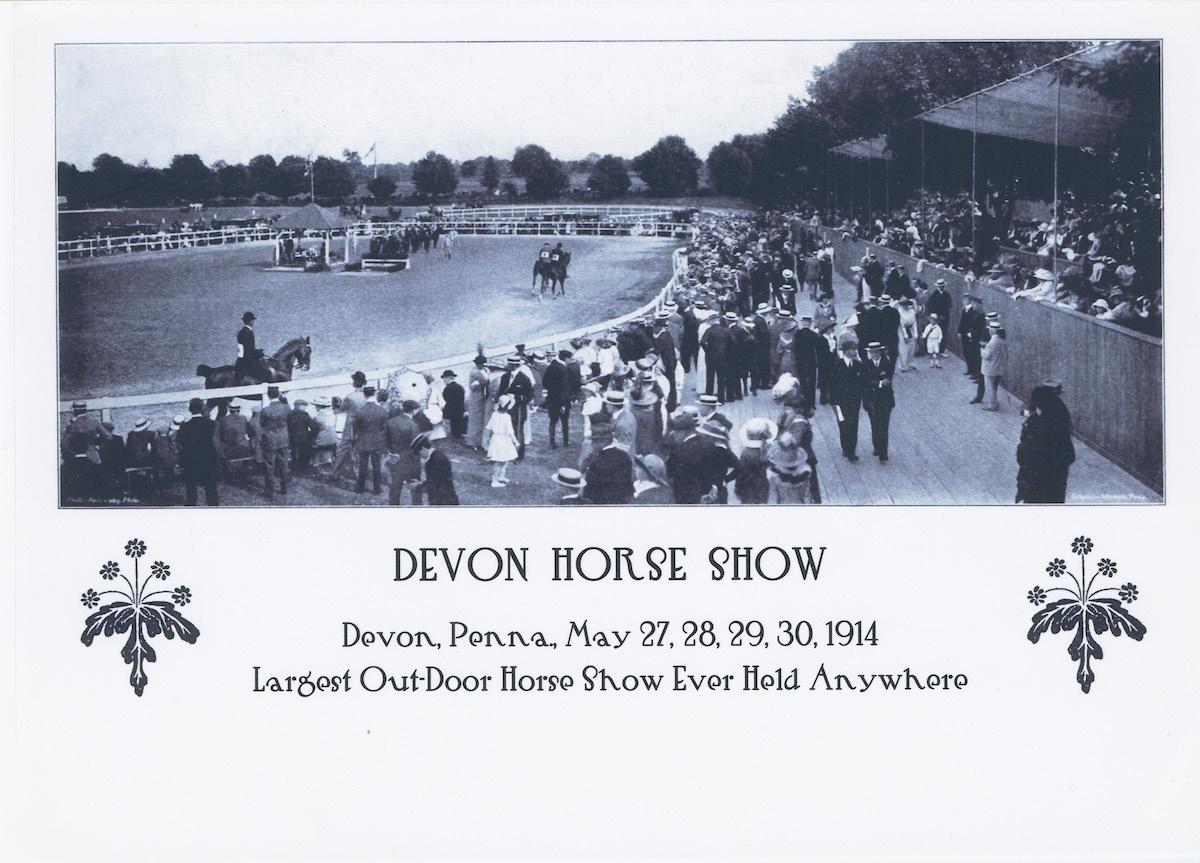
In 1916, the Devon Horse Show & Country Fair had grown into one of the largest outdoor horse shows in the U.S.
BY DEBBIE ELLIOT
USEF Heritage Competitions are long-established and prestigious horse shows that embody the highest standards of sportsmanship.
Horse shows hold a special place in American history. They reflect the changing culture, traditions, geography, and infrastructure of a region, with many having shaped generations of equestrians.
The long-established and prestigious competitions that have greatly contributed to the development of equestrian sport are honored by being named USEF Heritage Competitions. They embody the highest standards of sportsmanship and competition, fostering the growth of equestrian ideals within the broader community.
“The Heritage Competitions are so important for their historical value, and for keeping the tradition running and going forward,” said Philip DeVita, show manager at the Germantown Charity Horse Show. “They are all boutique shows, and they are very special.”
There are currently 28 USEF Heritage Competitions. To see the full list, please visit usef.org/compete/resources-forms/ competition-management/heritage-competitions.
Clockwise from left: The local community always comes out to support the Germantown Charity Horse Show.
Then:
As one of the original horse shows in the Northeast, the Lake Placid Horse Show began its evolution in 1970 with a competition at Ruth Newberry’s farm, hosted by the East Kiln Pony Club of Ausable Forks, N.Y. “The first Lake Placid Horse Show had 60 kids riding Pony Club horses. My daughter served as a makeshift judge, and our dog and cat were the only spectators,” recalled Newberry, according to the Lake Placid Horse Show website.
In 1972, the Lake Placid Horse Show Association hired Eugene “Gene” R. Mische as show manager, which led to the launch of the $10,000 Adirondack Grand Prix, as rider entries tripled. “Gene took it to a level that had never been seen before. He was an innovator in Grand Prix show jumping,” said Allen Rheinheimer, Lake Placid’s current show manager.
During the 1980s, the show saw Martin Stone step in as chairman, and it also weathered extreme rainstorms in, ’85 and ’86, through which it emerged stronger and more prestigious. In 1992, incoming chairman Richard M. “Dick” Feldman, an avid rider and owner of the Belmont Stakes-winning horse Bet Twice, made advances in the show’s management. Significant upgrades were made to the hunter rings, drainage, food facilities, and spectator experiences in 1995.
While the Lake Placid area is most famous for hosting the 1980 Winter Olympics, it also has a rich summer Olympic legacy as the horse show hosted the 1996 Atlanta Olympics jumping trials.
Now:
The present-day Lake Placid Horse Show features a wide range of hunter, jumper, and equitation classes, along with FEI-rated competitions that returned in 2025.
Rheinheimer took over as manager of the Lake Placid Horse Show in 2024, after which the venue underwent a major renovation. “We did a complete facelift — from improving the stabling area and adding or resizing the rings, to taking the grass out,” he said.
Other upgrades included changing the surface in the arena, putting in new fencing and new trees, and enhancing the VIP area.
“It was quite an undertaking, but we completed it in a year,” Rheinheimer said. “The response has been outstanding. We really have a great product, and I think a lot of people are now putting Lake Placid back on their schedule.”
More importantly than enhancing the visitor experience, however, is that the show management has “made conscious efforts to make it a safer place for horses,” Rheinheimer said.
For more information on the Lake Placid Horse Show, please visit lakeplacidhorseshows.org.
Top: A historical photo of the grounds of Lake Placid Horse Show.
Bottom: Laura Chapot on Calafornia in the 1.40m jumping at the 2022 Lake Placid Horse Show.
A portrayal of the 1914 Devon Horse Show & Country Fair.
The Open Fine Harness Championship at the 2025 Devon Horse Show & Country Fair.
Then:
On May 22, 1896, a meeting of residents of the Main Line suburbs of Philadelphia, Pa., was called to “effect an organization for the purpose of holding a horse show at Devon.”
The inaugural Devon Horse Show, held two months later, was a one-day show with 30 classes held in a fenced-in ring. By 1914, it had grown into the largest outdoor horse show in the country. The jewel of Devon’s crown was a grandstand with box seats covered by a canvas awning for VIP spectators. In 1918, rather than canceling the show due to World War I, it was decided that a pared-down Devon would be held as a fundraiser for the war effort.
The most impactful development in the show’s history was the addition of a country fair in 1919, with Bryn Mawr Hospital being assigned as the beneficial charity.
To house the growing number of horses, the first permanent barns were built in the 1920s, and by 1938, the grounds had the capacity to stall 600 horses. This allowed competitors to come from across the country, and classes were expanded to include a wide range of ages. Although the show was canceled from 1943-45 in response to World War II, it resumed in ‘46. The 1950s saw numerous attractions added to the show and country fair to draw in more spectators, such as the ferris wheel and the famous Budweiser Clydesdales.
Now:
There is still so much to see and do at the Devon Horse Show & Country Fair, which is why it is a must-do event on many people’s calendars. The sheer variety of classes at Devon draws large crowds each year, as experienced equestrians from around the country and local fans alike awe over the variety of breeds and disciplines. American Saddlebreds, Hackneys, and Friesians are among the breeds on display.
Devon also hosts captivating special events, such as the beloved WIHS Shetland Pony Steeplechase, where pint-sized jockeys race on their adorable Shetlands. Guests can also watch an exhibition by the Radnor Hunt Fox Hounds, as members of the hunt demonstrate the skills they use in the field, such as navigating a horse through a pack of hounds.
Another fan favorite is the Carriage Pleasure Drive, where a variety of types of carriages are judged on their elaborate tailgates, before they proceed on a 4.5-mile route through residential neighborhoods that culminates in Dixon Circle. The condition, soundness, and turnout of the horses and carriages are assessed by the judges along the way.
Of course, Devon is also famed for its elite hunter, jumper, and equitation classes, and the FEI Sapphire Grand Prix.
For more information on the Devon Horse Show & Country Fair, please visit devonhorseshow.net.
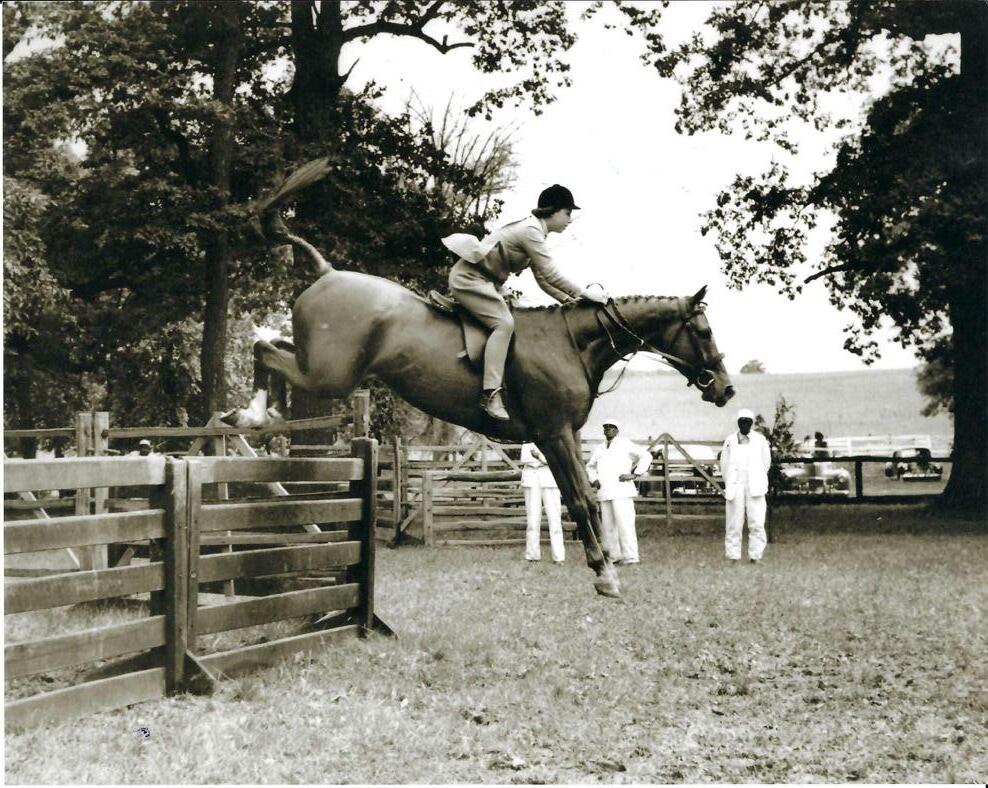
Clockwise from left: Ruth Cowen taking the water jump on Reed Tape at the 1930 Devon Horse Show & Country Fair.
Then:
The Germantown Charity Horse Show in Tennessee was originally created by a group of friends who had recently returned from World War II and wanted to bring the community together through a mutual interest in horses. It began with the formation of the Oak Grove Saddle Club in 1946, which invited participants to do a trail ride to a barbeque.
The idea grew into the first Germantown Horse Show in 1947, where Emmet Guy acted as show manager and announcer, and Jimmy Exum and Haskell Belew were invited as hunter/ jumper exhibitors. The first exhibitors’ party was held in the form of a square dance in front of the barn the night before the show.
The 1948 show saw the class lineup expand to include options for novices and youth, a traditional costume class, hunters, jumpers, three-gaited, fivegaited, fine harness, roadster, and walking horses. A year later, it was agreed that the Gailor Hall for Boys (later called Boys Town) would be the recipient of proceeds from the 1949 show, which an estimated 5,000 people attended, and 140 horses from six states competed in.
Now:
Show manager Philip DeVita first became involved with the Germantown Charity Horse Show as a judge in 2005 before taking over the management a few years later. “There’s such a great group of people and they take such pride in the horse show,” he said. “A big part of many of the Heritage Competitions is you have a tremendous amount of volunteers working who are all amazing.”
Another standout feature of Germantown is that the crowd is situated close to the arena, which amps up the atmosphere. “It’s exciting for the horses and the riders. It’s a big, loud, energetic crowd that’s very horse knowledgeable, and it brings so much energy and excitement to the event,” DeVita explained. “A lot of local people come to support the show, so it is great for the community. At Germantown, you could have no horse knowledge, and you could sit in those stands and be entertained for hours.”
Left:The Grand Prix is always a popular draw at Germantown.
Right: There is always something new for guests to see at the Germantown Charity Horse Show.
One of the most popular classes is the Versatility Challenge, where the winners are awarded the Keepsake Perpetual Trophy, in honor of the versatile 1990 Dutch Warmblood, Keepsake. The first round is a classic hunter course, followed by a jumper speed round. The scores for each are totaled and added together to decide the winner of the class. “When it was first suggested, I thought ‘This is crazy!’ but we were trying to do something different. Now the riders love it, and it’s very exciting for everyone,” DeVita said.
The scope of breeds and disciplines is also a big draw at Germantown. “Guests can watch jumpers and hunters, and then suddenly, it’s like you’re in a different world when the Paso Finos, Gypsy Vanners, and Saddlebreds come out. There’s such a variety of horses and events throughout the day and night that create so much energy,” according to DeVita.
In addition to real horses, there are also kids doing stick horse races, who are “screaming and hollering and having a great time.”
A positive change for 2026 is new footing in the main arena, which DeVita said will have a huge impact on how the ring will ride and the level of competition. In addition, the hunter and pony rings have been enlarged, and enhanced schooling areas improve the flow of traffic. “It creates a safer environment for everyone,” he explained.
For more information on the Germantown Charity Horse Show, please visit gchs.org.
PHOTOS: SHAWN MCMILLEN, THOMAS DARLING, COURTESY OF HTE UPPERVILLE COLT & HORSE SHOW, HOWARD ALLEN
Then:
Considered to be the oldest horse show in the U.S., the Upperville Colt & Horse Show in Virginia was founded in 1853 by Colonel Henry Dulany to encourage better treatment of young horses to improve breeding stock. It was decided that Dulany’s Grafton Farm would be the location for the show thanks to its majestic oak trees and grass footing, thus forming the show’s tradition of competitors gathering “under the oaks” at Upperville. The first show featured two classes — one for colts and one for fillies — and a silver trophy was designed by Charles Louis Tiffany.
The show was canceled from 1861-65 due to the American Civil War, in which Dulany was a captain in the Confederate army. The show continued to grow after the war, adding classes for Thoroughbreds, trotting horses, drafts, hunters, and Dulany’s beloved Cleveland Bays. Dulany retired after 50 years as chairman in 1906, and the show was rebranded as the Upperville Colt and Horse Club. Notable visitors and competitors over the decades have included General George Patton, Jackie Kennedy Onassis, Paul Mellon, and Kathy Kusner.
Now:
Attending the Upperville Colt & Horse Show is truly like stepping into the past because of the show’s respect for history and connection with its roots, explained show manager Stephanie Lightner.
“When you drive to the facility in Upperville, you’re driving past hundreds and hundreds of acres of fox-hunting country, which is a strong part of the history of horses in that area,” she said. “The Upperville board are all longstanding members of the equestrian and business communities. They strive to do an excellent job of updating the horse show to modern standards while maintaining its historical roots. It’s a privilege to be involved with a horse show like this, and with a board of directors that really holds the horse show near and dear to their hearts. They work really hard at coming up with good solutions for keeping the balance of history and modernization.”
A look back at
Part of the show’s allure is its beautiful collection of hundreds of historic trophies, which are meticulously taken care of and displayed throughout the show. Another crowd pleaser is the VIP area, which is named the 1853 Club after the year the show was founded.
“People from the local community look forward to visiting the 1853 Club all year long, and the same people buy tables annually. They come for the full week and they spend all day. It’s always crowded and there’s such a great atmosphere,” Lightner said.
Upperville’s Sunday afternoon Grand Prix is always the star of the show, which fans come to watch even when it rains! The show has maintained its FEI 4* status, which Lightner said was very important to the board. It also boasts one of the largest adult amateur and amateur owner divisions, plus breed-specific classes for Connemaras, Cleveland Bays, Thoroughbreds, Irish Draughts, and more.
A fan favorite among the extensive class lineup is the Paul and Eve Go as You Please Handy Hunter (named after Virginia Fout’s parents), which is a take-your-own-line class at different heights of 3’3”, 3’6”, and 3’9”.
For more information on the Upperville Colt & Horse Show, please visit upperville.com.
Top to bottom: Betty Mabery on Repulsion at Upperville in 1940.
Young Better Carter Fletcher and her pony at the Upperville Colt and Horse Show.
the Upperville Colt and Horse Show in 1964.
Then:
The Pin Oak Charity Horse Show was founded in Houston, Texas, in 1945 by J.S. Abercrombie with the goal of raising money for local children’s charities, such as Texas Children’s Hospital (it later became the founding donor of the hospital’s west campus). In fact, Pin Oak became one of the first horse shows in the U.S. to donate it’s proceeds to charity.
here, and the competition and the prize money are always very high,” he said. “There is also a huge trophy collection that dates to the show’s first year. Everything about the show has always been pure class. Pin Oak is ingrained not only in the equestrian world, but on the social calendar in Houston.”
Pin Oak expanded over the decades until it outgrew its original facilities and was moved to the Great Southwest Equestrian Center in Katy, Texas, in the 1980s. The show reached an elevated stature in the 2000s when it hosted Olympic level athletes, while sponsorship and hospitality experiences expanded.
In 2010, Pin Oak launched week-long shows that included hunter/jumper classes and breed divisions. The Hildebrand family took over the show in 2017 and are now namesakes to the $100,000 Hildebrand Family Grand Prix.
Now:
Oliver Kennedy first got involved with the Pin Oak Charity Horse Show in the ‘80s and has been the show manager since 2019. “People come from all across the country to show
Supporting local charities remains a primary focus for Pin Oak, with $350,000 being raised for Texas Children’s Hospital in 2025 (the show has gifted $7.8 million to the hospital during its 80-year history).
Originally the breed show — which features American Saddlebreds, Morgans, and Hackney Ponies — was encompassed by the rest of the show, but three years ago, it was given its own week when both shows expanded. The rest of Pin Oak now spans three weeks and includes a vast array of jumper, hunter, children’s, and short stirrup classes. “We also have special exhibitions such as the Disney Percherons, or rodeo performer Jerry Diaz and his wife, Staci,” Kennedy said.
For more information on the Pin Oak Charity Horse Show, please visit pinoak.org.
Left: A young competitor at the 2026 Pin Oak Charity Breed Show.
Above: The Great Southwest Equestrian Center in Katy, Texas, hosts the Pin Oak Charity Horse Show.
PHOTOS: BROOKE JACOBS, ANDREW RYBACK, RICK OSTEEN
Then:
The origins of the Charity Fair Horse Show in San Diego, Calif., date back to the 1930s, when the Balboa Mounted Troop hosted a show to benefit the Boys and Girls Aid Society of San Diego.
In 1946, the Del Mar National Horse Show began to draw more serious equestrians to the Southern California region as part of the San Diego County Fair. Del Mar later broke off into what is now a three-week show with a variety of disciplines.
A two-day show for Saddlebreds and western horses was then held during the fair, which eventually morphed into what is now the Charity Fair Horse Show, which was officially launched in 1984 and has been a wonderful success for 42 years.
Now:
The Charity Fair Horse Show is still an integral part of the San Diego County Fair, attracting both serious equestrians, and also luring fairgoers away from the roller coasters and bumper cars. “We’re still happy to be part of the fair,” said board member Ann Speck. “We have over 200 horses competing, but we also get some non-horse people who are walking through the fair attending. We have always followed the theory that if we make it special and fun, it will be more attractive to everybody.”
Fellow board member Susan Farrior continued: “Everybody seems to like the energy of the fair with the music and the commotion; it makes it more exciting than having a quiet fairground and no one around.”
The Charity Fair Horse Show has a high quality of competition, especially among the breed classes, often with entrants who have won world or national championships. The vast array of breeds that have been featured in the past include Andalusians, Arabians, Friesians, Morgans, Saddlebreds, and even Icelandic Ponies. Attendees have the opportunity of seeing breeds they have never witnessed before, and the show organizers are always trying to attract different breeds. “We would love to find a breed that isn’t committed at that time of the year that could join us,” Farrior said.
While many of the most famous historical Saddlebred horse shows are on the east coast, the Charity Fair Horse Show proves that the west coast still has a rich equestrian history and culture. “We want to show that California has great shows and great competition,” Farrior said. “We attract people from other states who want to come to our show, which we want to make as enjoyable as possible for our exhibitors.”
Along with making it a fun environment for all of those who attend or exhibit, the Charity Fair Horse Show rings true to its name by raising money for worthy causes. “We are a charity show and have been from the very beginning,” Farrior said.
The focus historically has been animal charities, with $343,000 going to the Helen Woodward Animal Care Center in Rancho Santa Fe, Calif., since the show began. The Don Diego Scholarship Foundation is another worthy cause, with money being raised for scholarships for high school seniors.
For more information on the Charity Fair Horse Show, please visit charityfairhorseshow.com.
Top to bottom: The parent/child walk-trot classes are always popular at the Charity Fair Horse Show. The Charity Fair Horse Show has classes for a wide variety of breeds and disciplines. Many of the classes at the Charity Fair Horse Show are open to any breed.
August 23-30, 2026
Then:
The origins of the Hampton Classic date back to the 1900s, when the first annual horse show of Southampton took place at Lake Agawam, N.Y. The Southampton Riding and Hunt Club was founded in 1922 as riding became increasingly popular in the Hamptons. The horse show flourished in the 1930s but was canceled at the outbreak of World War II, which also marked the death of the club’s founder.
The show went through various iterations of lesser prestige during the 1950s and ’60s until it was revived by Mrs. Edwin M. Schwenk, Jr. in 1971, and held at the Topping Riding Club in Sagaponack as a fundraiser for the Hampton Day School. The Southampton Horse Show became more competitive in nature during the 1970s (compared to its early years where it was mostly seen as a social gathering for the wealthy). In 1976, it expanded
to a five-day “A” rated competition that included show jumping and was moved to the Dune Alpin Farm in East Hampton, which was a success despite a hurricane on the eve of the show forcing the evacuation of hundreds of horses.
The Hampton Classic formally incorporated the Southampton Horse Show in 1977, when Bernie Taurig and Southside won the inaugural $10,000 Grand Prix. The show moved to its present location on Snake Hollow Road in Bridgehampton in 1982, and in 1984, the gold medal-winning U.S. Jumping Team members were honored following their success at the Los Angeles Olympic Games. The Olympic legacy continued in 1988 when it was chosen as the final selection trial for the Seoul Games, and it would go on to host numerous Olympic athletes in the decades to come.
Now:
One of the aspects that makes the Hampton Classic such a special event is that it marks the end of the summer season and is a fixture on the calendars of both the people who live in the Hamptons all year and those who spend summer weekends there.
“Many people who compete at different shows all year-round choose this horse show to be a place where they’ll invite friends and family to come watch them, which really creates a great atmosphere,” said show manager Shanette Barth Cohen. “Other riders have the Hampton Classic as their one big show of the year — we love to be that as well.
“Another thing that makes our show so unique is we try to stick with our own identity, but also want to stay fresh, new, and relevant so that we don’t lose the sort of draw that makes people want to come here,” she continued. “We always
Horse shows in the Hamptons date back to the 1900s and have been held annually since the revival of the Southampton Horse Show in 1971.
want to do better and listen to feedback from all our exhibitors, sponsors, and staff to know what we can do to not just keep up, but to thrive.”
The Hamptons itself has increasingly become a draw for horse people, and the Classic has helped grow the equestrian industry in the east end of Long Island. “It’s a beautiful thing to witness,” said Barth Cohen. “It’s nice to see big, open horse farms versus just wall-to-wall houses.”
The Hampton Classic is also a community event that raises money for charities such as the Stony Brook Southampton Hospital. “We take being part of the community seriously,” Barth Cohen said. “We do a lot of fun community-based events such as seniors and military members getting in free or complimentary car access for people to bring non-perishable food items for local food pantries.”
The Animal Adoption Day is also a huge hit, when guests can adopt dogs, cats, and even horses and minis! “There were seven horses adopted through last year’s adoption day, which is a record for us. We’re really proud of that,” Barth Cohen stated.
An especially important part of the Hampton Classic is hosting the finals for the Long Island Horse Show Series for Riders with Disabilities. The partnership began with an exhibition with a therapeutic riding program and then evolved into the opportunity for riders with disabilities to compete against each other.
“They compete in a series of shows on Long Island throughout the spring and summer, and then the top 10 riders in each of the three divisions qualify to compete here in the finals,” Barth Cohen said. Often, a Grand Prix rider will be invited as a special guest to hand out ribbons.
One of the many highlights from the storied history of the Hampton Classic was in 1989 when Olympian Michael Matz won the Grand Prix shortly after surviving the United Airlines 232 crash in Iowa, from which he rescued four children. “He was a hero ... it was a storybook type of tale that he then won the Grand Prix,” Barth Cohen said.
For more information on the Hampton Classic, visit hamptonclassic.com.
Clockwise: Irish Olympian Shane Sweetnam and James Kann Cruz at the 2025 Hampton Classic.
Stephanie Danhakl and Cadet took the Grand Amateur-Owner Hunter Championship at the 2025 Hampton Classic.
Mini horses are among the adorable animals up for adoption each year.
CHAMPIONS STAY COOL UNDER PRESSURE.SO SHOULD YOUR BARN.
Big Ass Fans deliver powerful, quiet airflow designed to keep elite horses comfortable even on the hottest days.
Cody’s Wish 2023 NTRA Horse of the Year
Photo Credit: Big Ass Fans
TRUSTED BY THE BEST
CHARLES ANCONA
NEW YORK
CUSTOM FIT & DESIGN
LIFE AFTER THE SHOW RING
BY DEBBIE ELLIOT
Horses can have many meaningful paths once they leave competition, from pasture retirement to lighter work in therapeutic, collegiate, or lesson programs.
PHOTO:
Horses are a lifelong commitment, and we should always approach the purchase of a new horse with that in mind. That doesn’t mean we have to keep every horse or pony for their entire lifespan, but it does mean we should ensure there is a plan for their later life so they can reap the benefits of years of service in peace and safety.
“Owners have to remember why they got into having a horse in the first place,” said DiAnn Langer, trainer, breeder, and USEF Show Jumping Youth Chef d’Equipe, who owns a 40-acre retirement farm in Johnston, S.C. “The commitment is serious. It’s like having a dog or a cat — if you take in, they’re yours to take care of for life.”
Whether your horse will be put out to pasture once your time together is completed, or they step down into an easier role such as at an equine-assisted therapy center, planning their future in advance while they are still in their prime is the greatest gift you can give them.
Retirement Farms
Many retirement farms are the equine equivalent of 55+ communities, where horses live their final years with friends of an equivalent age, enjoying a laidback pasture lifestyle. Retirement options can range from professional facilities with hundreds of acres, to small, family-run farms with a handful of companion horses.
Whichever option you choose, you must thoroughly research the farm to ensure that it is the best fit for your horse’s needs. The USHJA has a list of reputable retirement facilities that have been vetted to ensure they meet industry standards for basic horse care, which can be found at ushja.org/education/ resources/equine-retirement-listing.
Olympic show jumper Beezie Madden runs a highlyacclaimed retirement farm with her husband, trainer John Madden, in Cazenovia, N.Y. Nicknamed “Madden Mountain,” it began with the need to retire some of their own horses, and has since expanded to over 300 acres of pastures that are now home to approximately 80 equine retirees.
“We can put four groups (ranging from eight to 15 horses) out there, and they each have two fields in the winter and a big building they can go into,” said Madden. “In the summer, they move down the hill so that the winter fields get rehabbed while they’re out in the summer fields so the horses always have fresh fields.”
The horses naturally form cliques within their groups, which are separated by both mares and geldings, and by temperament. “When we get new horses coming to us, we start them in a smaller group so we can read what they are like ... Are they an aggressive horse? Are they a timid horse?” Madden explained. “We try to pair them up with horses they get along with. There’s going to be some risk to them getting hurt living with other horses, but I think the quality of the life for them is worth the risk, and we take their shoes off to minimize any injuries.”
There is also a group of geriatric horses in their late 20s and early 30s, which included Madden’s Olympic mount Authentic until he passed away at age 29 in 2025.
A number of the retirees at Madden Mountain were pampered show horses competing in high-level competitions, who then return to nature and learn how to be a horse in a herd.
“In retirement, it is good to be able to let them live like a horse is intended to.”
- Becky Wagner
“I think it’s better for their minds as they are social animals,” Madden said. “They like to live with other horses. We have had very few who haven’t been able to transition. You would think they would want to come into the barn, but if we bring them in for any reason, they scream at people and just want to go back to their buddies.”
Becky Wagner, a trainer and manager at the Maddens’ farm, recalled McLain Ward’s mount, HH Carlos Z, when he arrived at Madden Mountain following his retirement in late 2017.
“That horse had been all over the world. He had shown in every major class that you could ask a horse to show in and had a lot of success,” Wagner said. “He arrived here and we turned him out, and I couldn’t catch him for months. He was like, ‘Get away from me. I am feral!’ Carlos is still hard to catch; if you go into the field with treats, he will come right up to you, but if you have a halter and lead rope, he doesn’t want anything to do with it.”
The lifestyle is natural for them, Wagner said. “They should eat with their heads down, not in buckets that are hung on the wall. They should be social. We confine horses to stalls for their whole life, but in retirement, it is good to be able to let them live like a horse is intended to.”
She said the biggest change she sees in horses after they retire is the way their feet evolve without shoes. “Their feet grow completely differently. Some horses are more dramatic than others, but their feet grow the way each horse needs them to grow.”
Once they have acclimated to the elements, all the horses are kept outside without blankets, and their coats are allowed to grow out fully. “Their coat is supposed to protect and insulate them, and it is designed to be waterproof,” Wagner explained.
In fact, the horses often choose to be out in bad weather — rather than going into the protective shed — and stand with their butts to the wind. “John [Madden] has taught me that it’s good to check on them to make sure their undercoats are dry and not soaked, while being careful not to disrupt the natural waterproof barrier in their outer coat,” Wagner added.
All the horses are fed grain twice a day, primarily to ensure they will come in and can be checked for any injuries or ailments while they eat, Madden said.
While some of the top horses in equestrian sports now live at Madden Mountain, it is also home to numerous amateur horses from a variety of breeds and disciplines, such as Quarter Horses, Thoroughbreds, and former hunters. “They are not all superstars. When they’re out there in the herd, it’s all just equal,” Wagner said.
Madden said that while it is hard to predict when your horse is going to need to retire, it is important to begin investigating places when you think the time is near if you don’t have land of your own. “Figure out what is best for your horse and what you are comfortable with, some people aren’t comfortable with their horse going out in a group,” she added.
You should also visit your horse and regularly check on them in their new home, to ensure the care being provided matches your expectations. Wagner said they tell their owners they can come whenever they want, and some fly across the country to see their former equine partner.
Langer has a similar philosophy to the Maddens, saying her retirees love becoming horses again. “It is a luxury, they lie in the sun, have breakfast, sometimes lunch and dinner — the only thing they don’t have is a pool and a swim-up bar!” she joked. “They’ve done their job, they’ve done it successfully, and have earned their right to a great retirement.”
Rather than being given blankets, shoes, and a long list of supplements, “a retired horse likes to roll in the mud, and run and play with their friends,” said Langer, adding that many of them live until their 30s. “The aim is to give them a life of leisure. In the summer, we make sure they’re cool enough, and that they have plenty of water available,” she said. “I have someone who does feeding and medications, and checks for common issues such as Cushing’s, colic, and laminitis.”
Langer also recommends owners start a retirement fund for their horse. “You do it for your children as far as schools, but now you’ve gotten another obligation that is very important.” She also warns against retirement farms that have very low monthly fees as the care may not be of a high enough standard. “It has to be quality over quantity,” she stressed.
To watch the USEF Learning Center video on horse retirement at Madden Mountain, please scan the QR code with your smartphone.
Taking A Step Down
Many horses are no longer capable of the high level of competition that has dominated their lives, but also not ready to retire completely. There are many second career options for horses no matter what discipline they competed in, such as joining a riding program, being leased to a junior or amateur, or being donated to an equine-assisted therapy program or a college.
Mindy Morrow is the founder of Horses N Heroes, a nonprofit in Ocala, Fla., dedicated to bringing equine learning and mentoring to girls from low-income families. The majority of the
Top: The herd at Madden Mountain rotate between winter pastures and summer pastures so there they always have fresh fields.
Bottom: Horses are social animals and flourish when in a herd.
At-risk youth at Horse N Heroes benefit from the horses donated to the nonprofit.
horses at her barn are hunter/jumper horses who competed at a high level; she also has former Grand Prix horses and USEF Pony Medal Final winners.
“They step down and they get to have a cushy retirement,” Morrow said. “They are totally spoiled. They’re touched every single day and loved by my kids. Many of them think it is the greatest thing in the world — being surrounded by girls giving them cookies and pampering them.”
Morrow requires that the horses come with a sponsorship package that covers feed, hay, dewormer, dental care, vaccines, supplements, and basic care.
“Many of the owners don’t want to sell them or for them to go to another barn, so they donate them here for a tax write-off, knowing the horse will only be asked to do low level jumping or walk-trot-canter,” she said. “I have a lot of really good owners who have donated their horses, so I have a great relationship with them. They get to see videos from the barn, and they love to see their horse being pampered and enjoying life. They know that I live on the farm and am very hands-on with my horses. I appreciate that they haven’t just sold their horses on to the next place. They want them to go somewhere where they are loved by girls who wouldn’t have the opportunity to ride without horse donations.”
Great Oak Equine Assisted Programs in Aiken, S.C., has donation horses in their herd from a wide range of backgrounds, from a polo pony and a Missouri Fox Trotter to retired eventer/ jumper Kilcarna French Fancy. Known as “Arnie” in the barn, the former mount of Olympians Phillip Dutton and Doug Payne was the 2024 USEF Heart Horse of the Year.
Manager of Equine Services, Deborah McWhirter brought her own personal horse, Mr. Bounce, to Great Oak after he stepped down from eventing. McWhirter imported Mr. Bounce from Ireland on the recommendation of Dutton and reached the Intermediate Level of eventing on him. “I never in a million years would’ve dreamed I’d jumped that high and that big, but he had a fifth leg and loved his job,” McWhirter said of the Irish Sport Horse gelding.
Between the ages of 17 and 19, Mr. Bounce carried a young rider from Novice through to the Modified Level of eventing. When jumping was no longer in his best interest, he transitioned to flatwork and trail riding.
When McWhirter brought the almost 17-hand grey to Great Oak, she was unsure if he would adapt to the program. “He’s kind of grumpy. I didn’t know if the unbalanced riders would make him even crankier,” she said. “But true to himself, he marched right into Great Oak and did what he was asked to do. He knows exactly who his rider is, and he adjusts every time. He slows down and tunes in.”
Mr. Bounce is now regularly ridden and turned out by a 12-year-old girl who was terrified of horses when she first arrived at Great Oak.
“It still brings me to tears when I think about his story, what he gave to me and now what he gives to every rider he serves here at Great Oak,” McWhirter said. “He carries some of our bigger riders, our smaller riders, and our Silver Saddles mature women who can walk, trot, and canter. He is loved by everyone and will stay at Great Oak for the remainder of his life.”
Horses like Arnie and Mr. Bounce have a strong work ethic and like to have a purpose, even when their competition days end. “They weren’t ready to sit in a field once their regular career was over, and they could no longer jump. They still like to go in the arena to work and have so much more to give,” McWhirter said.
However, not all horses are suited for equine-assisted programs, she warned. It takes a very specific type of horse — one that has been in a structured environment, whether that’s polo, a lesson program, or the jumper ring. These horses are accustomed to being handled by multiple people and comfortable in a busy barn with constant activity, according to McWhirter.
“We welcome horses of all sizes, but they must be sound. The job of a therapeutic riding horse is demanding. During a lesson, there may be a leader guiding the horse, one or two volunteers side-walking to support the rider, and also the rider on their
back,” she said. “It can be confusing for the horse, who do they listen to? The rider, the leader, or the voices beside them? It’s a role that requires not only physical strength, but also exceptional patience, clarity, and a steady mind. It is, without question, both mentally and physically challenging work.”
For horses coming from the dressage world, Lendon Gray’s Dressage4Kids Horse Donation Program is a great way for a horse to continue in their chosen discipline but at a lower level. The program matches potential lessees with suitable horses whose owners want to donate them to the 501(c)(3) organization.
“Dressage4Kids doesn’t keep horses ourselves, so we don’t accept a horse until we know who’s going to be leasing them from us,” said Gray. “The benefit for the owners is they have a tax write-off, and if the choice is between selling the horse and donating it, at least here we’ve got a very good chance that the horse will be looked after for its whole life and it’s not going to get sold on. Some people also just want to help the youth; they want to be able to give someone a leg up.”
Every person who leases a horse from Dressage4Kids signs a contract stating they can keep the horse forever and that they will be able to retire the horse. If they can’t continue the lease for any reason (such as going to college or graduating to a higher level), then Dressage4Kids works with them to find someone else to lease the horse. Gray’s team also checks the horse on a yearly basis to ensure there aren’t any issues.
“We’ve had 130 horses donated over the years, and the huge majority of them have been successful,” Gray said. She recalled a standout story when a top Grand Prix horse that had a soft tissue injury was donated. “A young rider leased the horse. She took a year finishing the rehab and getting them going, and then she had a Grand Prix horse,” Gray said.
College Bound
Donating your horse to a reputable college program if they are ready to step down to a lower level is another great option for owners.
“Mr. Bounce is loved by everyone here and will stay for the remainder of his life.”
- Deborah McWhirter
Students at Stanford University have the opportunity to ride high-quality donated horses at the Big Red Barn.
Retirees can enjoy getting back to nature and being a horse again.
“Horse donations are the lifeblood of what we do,” said Vanessa Bartsch, head coach of the equestrian team at Stanford University in Stanford, Calif. “We have donors who either know us, grew up in the area, or just are people who truly love their horses and don’t like the notion of their partner being sold again and again. Instead, they opt to donate and have their horse come live at the Stanford Red Barn where they’re ridden once a day, get turnouts, and have college kids bring them snacks from the dining hall.”
Owners also get the benefit of it being a tax write-off. The IRS has a limit of $5,000 for a non-appraisable gift, so many horses need to be appraised. The regulations also state for IRS 8283 that you must keep all donated in-kind property for at least three years, so Stanford and many other schools require a 30-day trial to ensure the horse is a good fit for their program. “We keep 75% of the horses we try. Many of the ones who weren’t a match have found a place at a different nonprofit,” Bartsch said.
Stanford accepts horses who have serviceable issues and need some maintenance, such as hock injections, and the program has both chiropractors and vets who donate their time. However, when it comes to recruiting the right horse to become part of the Red Barn, Bartsch said it is important that they are comfortable in a barn with young people who are full of energy, and being groomed and fussed over by students.
“There is a type that you look for in terms of temperament, soundness, willingness to want to do the job, and what your program needs at that time,” she said. At Stanford, roughly 25% of the horses are for beginners, 25% are western, 25% are horses stepping down to the Interscholastic Equestrian Association (IEA), and 25% are really nice show horses capable of competing at the collegiate level.
“The heart of a college coach’s job is to think about not what do I need this horse to do, but what does this horse want to do?” We get to honor their character,” Bartsch explained. “We
have many horses who come in and the owners say, ‘This is a jumper.’ I’m like, ‘No, it’s a hunter.’ We have a couple who are ridden bridleless or bitless because they just love it. We have had horses who were 1.40m jumpers that are now in heaven teaching crossrails to IEA riders. When you give a horse some space to show you who they want to be, they surprise you sometimes in where they end up being happiest in the program.”
Bartsch said that Stanford takes a huge amount of care in regard to where they retire a horse to. “Once our board approves the vet’s recommendation saying a horse is ready for retirement, we find a place for them,” she explained. “We have a network of alumni and friends of our program to reach out to. We also contact the original donor and see if they want to take the horse back.”
Aside from the financial benefits of donating a horse, donors also have the knowledge that they impacted students’ lives. “The gift that they’re really giving is to young people who would not have access to the sport,” Bartsch said. “The gratitude that these students and coaches feel is huge.”
Making an Equine Retirement Plan
Budgeting for your horse is essential for both the present and the future.
“We all know that horses are expensive, but I never dreamed they would be as expensive as they are. I also never dreamed that they would add so much love, peace, and joy to my life,” said amateur rider Shea Boulware-Creed, senior vice president and financial advisor at Boulware Investment Group in Phoenix, Ariz. “You have to go into buying a horse by thinking of it as a financial commitment, just like having a child, and know that it is going to be expensive.”
After purchasing her dressage horse, Reck it Ralph, in 2025, Boulware-Creed opened a retirement account in his name that she makes monthly deposits into. “We plan for our own
retirement, so you should 100% start an investment account for your horse’s retirement,” she said.
A horse retirement plan could involve a savings account or investing in stocks and bonds. BoulwareCreed recommends owners talking with their own financial advisers to see what the best fit is for them. “Money that is invested in stock will grow faster, but it also is not short term. For some people, a balanced mutual fund where it has half stock, half bonds might be the best fit,” she said.
“Investing in stock or risk assets is always a longterm investment, meaning we can’t expect to double our money in two years, but if your horse has 10 years of work ahead of them (barring any injury or ailment) and you are investing $100 a month into a retirement horse fund over 10 years, that could grow to a total of $16,000 (estimating a 6% return a year). It would not cover the full cost of retiring a horse, but it would certainly help ease the burden when it happens,” Boulware-Creed continued. “Name the account after your horse, don’t freak out when it goes up and down, and don’t dip into it.”
Boulware-Creed recently had the tough decision on where to retire her first horse, Jane, when she was ready to step down at 18. Fortunately, there was a children’s hunter/jumper barn a mile away from where she rides, and her trainer was friends with the owner. “I knew that this would be a perfect place for Jane to go,” she said.
“I know she’s getting taken care of, and I was able to transition to a new horse. I sold Jane for a dollar to this amazing program, and now she is no longer my financial responsibility. More important than the money aspect is knowing Jane is in the right place with the right people.”
Become a Lifetime Care Contact
In January 2026, US Equestrian launched the Lifetime Care Contact program, which allows USEF members to add themselves to a horse’s digital USEF record signifying that if the horse should someday need financial assistance or a home, they would like to be contacted. The goal is to help connect horses in need with people who are able and willing to help them. Members can have the security of knowing that the horse they love today has a lifeline out of a bad situation in the future. The feature is free to use, and members are encouraged to sign up to make the safety net as robust as possible. For more information on how to sign up to be a Lifetime Care Contact for your horse, please visit usef.org/horse-welfare/lifetime-care
“Owners have to remember why they got into having a horse in the first place.”
- DiAnn Langer
After a successful eventing career, Mr. Bounce is now a theraputic riding horse at Great Oak Equine Assisted Programs.
Retired jumper/eventer
Kilcarna French Fancy (“Arnie”) was named the 2024 USEF Heart Horse Award Winner.
USEF has developed horse welfare guidelines based on the stoplight system to help us recognize acceptable or unacceptable interactions between horses and humans
GREEN
The horse appears happy, willing, and content. The connection between horse and human is harmonious and in sync.
cautionary YELLOW
Actions that cause you to pause and question whether they are acceptable. Some actions may be acceptable for a very short period of time but may escalate to mistreatment if pressure or con ict increases in intensity.
RED
horse friendly unacceptable OR not okay
Actions that make you think, “This is not okay.”
Actions that make you immediately think, “This behavior must stop.”
Sometimes athletes can be acting in the red zone without even realizing it - these situations may be resolved by a licensed o cial interrupting the training, discussing the issue, and providing a verbal warning.
If you see an interaction that falls into the red zone, please alert an o cial to the situation and submit a report.
Scan to report
how horsesHELP humans
Being around horses on a regular basis can benefit emotional, physical, intellectual, social, spiritual, environmental, occupational, and nutritional wellness.
BY DEBBIE ELLIOT
We all often feel that sense of calm and clarity when we get to the barn. Being around horses helps us relax, regulate our heart rate, ground ourselves, and focus on what really matters. While horses have benefited people for their physical strength, endurance, and athleticism for thousands of years, the holistic value of spending time with horses is a more recent discovery.
In 1780, Joseph Clément Tissot, a French physician and military surgeon, described horseback riding, especially at the walk, as a potentially beneficial form of treatment. The first recorded examples of animal-assisted therapy occurred in 1796 at the York Retreat in the U.K., when domesticated animals were incorporated into therapeutic treatment with the goal of creating social and benevolent feelings in patients and reducing isolation.
The modern form of hippotherapy, also known as equine-assisted services, was first developed in Europe in the early 1960s and then spread to the U.S. later in the decade. The benefits — including adaptive riding, mental health, trauma treatment, and veteran services — are vast, and the industry is growing. More than 71,300 participants are served each year through Professional Association of Therapeutic Horsemanship International (PATH Intl.) member centers worldwide.
However, there are countless ways that horses help humans become the best and happiest versions of themselves in everyday life outside of equine-assisted services programs. Horses can support our overall wellness, from emotional health to physical fitness, and even our sense of purpose, said Dr. Pebbles Turbeville, CEO of the Horses and Humans Research Foundation (HHRF).
She breaks wellness down into eight pillars: emotional, physical, intellectual, social, spiritual, environmental, occupational, and nutritional.
EMOTIONAL WELLNESS
Emotional wellness relates to how we manage our emotions, cope with stress, and build emotional resilience.
“Interactions with horses stimulate things in people that no other sport or activity can,” said Dr. C. Mike Tomlinson, DVM, MBA, Director Emeritus at HHRF. Unlike playing basketball, golf, or tennis, you are building a partnership with a sentient being and working towards a common goal.
Horses can undoubtedly make us feel calmer, less anxious, and happier, but they can also improve self-esteem and build confidence, especially in young people.
“Confidence with horses is rarely given; it is built. Each small success, whether catching a difficult horse, improving a transition, or asking a horse to accept a rug for the first time becomes evidence of capability, and that is where genuine self-esteem begins,” said Dr. Helen Sharp, PhD, founder of Groundwork Equine Assisted Services.
Equestrian activities also teach us goal setting, and the patience and resilience to reach those goals, as nothing with horses comes quickly.
Everyday interactions with horses are beneficial for all eight pillars of wellness.
“You’re always working towards a goal. Sometimes you’re having a bad day, and working with your horse in a variety of ways helps you shift your mindset and move forward,” said Dr. Turbeville.
The rhythm and routine of caring for a horse can support mental wellbeing, Dr. Sharp explained, particularly during times when motivation is otherwise difficult to sustain, such as on cold winter mornings. “Horses can instill in us the power to get out of bed, no matter how we are feeling that day,” she said.
Taking care of a horse also involves high levels of responsibility that most teens don’t encounter in other areas of their lives. When showing, you have to make sure your horse is conditioned and physically ready, your tack is cleaned, your tack trunk has all the essentials you need, your own attire is in order — and that is all before you even get into the ring!
Many of us have had those days when we were riddled with anxiety, but everything melted away when we got to the barn. “Sometimes we just tend to get in our own heads, but getting out of the house, being around people who have the same interests as you, being around a horse who is going to encourage you ... all of those factors help with depression,” Dr. Turbeville explained.
In fact, according to Dr. Tomlinson, spending time with horses not only treats depression — it can help to prevent it.
“You get a dopamine hit when your horse nuzzles you, so there is a physiological reason why it’s good for us, in addition to the connection and feeling of safety that many people lack today,” he explained.
Time spent with horses often reduces anxiety, not through distraction, but through engagement, Dr. Sharp added. “The combination of physical activity, outdoor space, and focused attention creates conditions in which the nervous system can settle.”
PHYSICAL WELLNESS
It is essential to stay physically active, especially as we age — and it is impossible not to be active as a horse owner. Riding strengthens your core and back muscles, while also improving balance and coordination. Then add on the workouts you get mucking stalls, grooming, carrying tack, hand walking, lifting feed bags, and all the other regular tasks that go into horse ownership.
“Riding is not simply a physical exercise,” said Dr. Sharp. “It is a continuous process of coordination, learning, application of learning, awareness, and adjustment in which the body and mind work together in real time.”
It also promotes enhanced sensory perception, which is especially beneficial to people with autism and sensory disorders, but can help any rider pick up on subtle changes in their horse’s movement, balance, tension, and responsiveness.
INTELLECTUAL WELLNESS
Strong intellectual wellness can support healthy aging by keeping your brain sharp, challenging your mind, and continuing to think in new ways. We are constantly learning while with horses, whether that is learning new horsemanship
skills, memorizing a dressage test, or improving our understanding of how your horse thinks and feels.
“It requires focus, attention, memory, and executive functioning to be around horses. They also teach you to be present because you can’t be looking at your phone around a horse without losing communication with them, or possibly getting hurt,” said Dr. Tomlinson.
Working with horses often teaches emotional regulation in a way that is felt rather than explained. “If you are unsettled, the horse reflects it — this can make interactions with your horse more time-consuming or tricky,” said Dr. Sharp. “Over time, you learn to steady yourself first, resulting in easier interactions more often than not, and that skill carries far beyond the barn.”
Equines also help with co-regulation, she continued. “Horses do not respond to what we say, they respond to how we are.
“CONFIDENCE WITH HORSES IS RARELY GIVEN; IT IS
- DR. HELEN SHARP
built.”
In learning to influence the horse through how we show up, we learn to regulate ourselves, and that is a powerful form of embodied learning.”
People with ADHD often struggle with attention, impulse control, and organizational skills. However, “for some individuals with attention difficulties, horses can offer immediate and meaningful feedback. Focus is not an abstract idea in this context; it directly affects communication, safety, and success,” Dr. Sharp explained.
Riding helps sufferers focus, prevents overthinking, and improves concentration. For more information on how riding can ease ADHD symptoms, please visit usef.org/media/newsletter/ equestrian-weekly/riding-is-water-to-put-out-fire-of-our.
In addition, a 2014 study by the Journal of the American Academy of Child and Adolescent Psychiatry found that
encourages us to develop an appreciation for the cycle of nature and be aware of weather patterns.
students (not diagnosed with ADHD) involved in equineassisted learning often become more focused and engaged in school.
SOCIAL WELLNESS
Building healthy relationships and feeling connected to others is at the core of social wellness. Horses can act as social facilitators, encouraging both human and equine interaction.
“While riding horses can be an individual activity, typically you go to a barn where there are other people who you ride in an arena with,” said Dr. Tomlinson. “You are going to be social, even if you are depressed and don’t want to be. It’s a safe place where you have a common thing to discuss — horses. You can make friends more easily. You can learn to work with people. You can ease out of your head and into the horse.”
Left: Our horse often reflects our mood and emotions. Riding outdoors
The barn also creates a smorgasbord of ages, cultures, and backgrounds, resulting in you becoming friends with people who would not normally be in your social circle. “Differences disappear when you have horses in common,” Dr. Tomlinson added.
Group activities such as being on a Pony Club, Interscholastic Equestrian Association, or college team, or simply cheering your barn mates on at a show, stimulate empathy, cooperation, and a sense of teamwork.
Being with horses also encourages us to put another creature’s needs ahead of our own. “We are always taught to put our horse first in terms of care and attention, especially after a ride. For example, if you are thirsty, you give your horse water before you go get a drink,” said Dr. Turbeville. Establishing that pattern increases empathy as it makes you think about other people’s feelings more.
SPIRITUAL WELLNESS
Spiritual wellness doesn’t need to involve religion, it can relate to anything that helps you find meaning and purpose in life. Spending time with horses in nature can
not only deepen your spiritual wellness, it can also promote mindfulness and presence as horses live in the moment.
“Horses don’t mirror your emotions. They take them in, interpret them, and then they say back what they feel about your emotions,” Dr. Tomlinson explained. “It’s their interpretation of what you are saying to them that really helps your spiritual wellness because sometimes they just say, ‘Don’t do that,’ and we listen to them.”
The sheer size, strength, and honesty of horses sparks wonder and gratitude, while their presence encourages us to reflect on our values, purpose, and spiritual beliefs.
ENVIRONMENTAL WELLNESS
We have all heard of the phrase “go hug a tree,” as it has been proven that spending time with trees and nature can promote calm, reduce stress, and help people feel more
Top: Supporting barn friends at a show or being on a team encourages empathy, cooperation, and comradery.
Bottom: The rhythm and routine of caring for a horse can support mental wellbeing.
grounded. Nature deficit disorder can occur when people spend too little time in nature, leading to physical, emotional, and behavioral problems.
The majority of equine interactions occur outdoors, which automatically puts us in nature and helps us connect with its rhythms. That connection includes being more aware of weather patterns, as the weather often impacts riding, and being conscious of clouds, rain, or wind.
“SOMETIMES YOU’RE HAVING A BAD DAY, & WORKING WITH YOUR HORSE IN A VARIETY OF WAYS HELPS YOU SHIFT YOUR MINDSET & MOVE FORWARD.”
- DR. PEBBLES TURBEVILLE
“You develop an appreciation for the cycle of nature, such as in the fall when it’s becoming cooler and you’re not sweating as much, or when there are no bugs because there was frost,” Dr. Tomlinson explained.
Riding also gets you closer to other animals, like squirrels jumping into the arena, or encounters out on the trail.
“I once had a hawk fly in front of me on a trail ride and lead me down the path,” Dr. Turbeville recalled. “It was phenomenal to have that kind of experience.”
Some barns are now adding relaxing sensory gardens to their grounds, or offering opportunities to compost and grow vegetables, to nurture the connection with nature.
OCCUPATIONAL WELLNESS
Occupational wellness doesn’t depend on what job you have, but on finding satisfaction and purpose in your profession. Working with horses from an early age can build job skills that other youth activities don’t, such as taking responsibility to groom your horse or clean their stall out, along with conscientious time management.
For those who decide they want to work with horses, there are a multitude of vocational opportunities beyond being a trainer. There are horse-related jobs in the police force, Army, and even FedEx as they ship horses by air!
Beyond fulltime careers, people can volunteer or mentor at rescues or equine-assisted facilities. Those with learning disabilities
can develop skills to work at a barn, while some prisons have programs where inmates can rehabilitate by training horses.
NUTRITIONAL WELLNESS
Thinking about your horse’s nutrition can sometimes make you consider the health value of what you eat, and encourage a healthier relationship with food.
“Caring for horses can be a role model for taking care of ourselves, as it makes us think of nutritional values, supplements, and hydration,” Dr. Tomlinson explained. “Such as, ‘if my horse has to have this much water, then maybe I should drink more.’”
A study by the Journal of Athletic Training found that care of horses can boost motivation to eat and stay strong, especially during recovery from anorexia or bulimia. For more information on rider nutrition, please read our article at usef.org/media/newsletter/equestrian-weekly/ why-what-you-eat-impacts-how-you-ride
Overall, riding combines attention, movement, and emotional awareness in a single activity, said Dr. Sharp. It requires you to be present, organized, and responsive, and over time, those skills become more deeply embedded. “The benefits are often found in ordinary moments rather than dramatic change. It is in the daily interactions, the quiet adjustments, and the gradual building of confidence and many other skills over time.”
Learn more at usef.org/ join-usef/kids-club
Where to Find the Penalties and Rule Violations
To provide more transparent, comprehensive, and up-to-date information, the penalties for rules violations have moved to a digital format that can be found on the USEF.org website at usef.org/ compete/regulation/rulings-findings or by scanning the QR code below with your smartphone.
For hearings conducted after January 2026, the Hearing Committee has agreed to publish their full written decisions (not just conclusion summaries) from cases that appear before them. Matters resolved outside of a hearing (informal resolutions) will continue to be published in a summary format. These will all be available at the page linked above.
•90% success in treating back pain and kissing spines
•Helps speed the healing of tendon and ligament injuries
•81% improvement in horses with Navicular Syndrome
•Clinically proven to reduce lameness associated with chronic orthopedic conditions
To find a veterinarian near you who offers PulseVet® shock wave therapy, visit Zomedica.com/PulseVet
To learn more, call or click Zomedica.com • 800.245.4417 info@zomedica.com
Equestrian Program
JOHNSON
BOUTIQUE FARM
Meticulously maintained 2.33-acre farm in Paddock Park 2, backing to the bridle path & canal. Boasting an updated 5-stall center-aisle barn with new pavers & tack room, 225’ x 130’ Wordly Martin riding arena, and 5-grass paddocks, plus a 2,280 sq. ft. detached garage offering flexible options for more housing, storage, and parking of trailers or RV’s. The residence features an open floor plan with recent updates to the kitchen, guest bathrooms, laundry room, flooring, pool, newer roof and impact windows & doors. The home features a large game room & lock-off studio suite w/separate entrance, perfect for staff. Now Offered at $4,600,000
This 4 bedroom estate home with an office features spacious entertaining areas, plus a detached poolside studio apartment & 3-car garage in a gated subdivision. The private end of the street location features a 13-stall stable, 9 paddocks, and a 125’ x 200’ riding arena, along with 3 apartments, totaling 7 bedrooms, providing next level accommodations for staff and great income potential. Offered at $6,450,000