A MENTAL TRANSITION
From Junior to College or Adult Career

EQUUS FOUNDATION Building Sustainable Equine Welfare Options In Juniors’ Ring It’s Pony Season!
Official Magazine of the United States Equestrian Federation | Summer 2023


From Junior to College or Adult Career
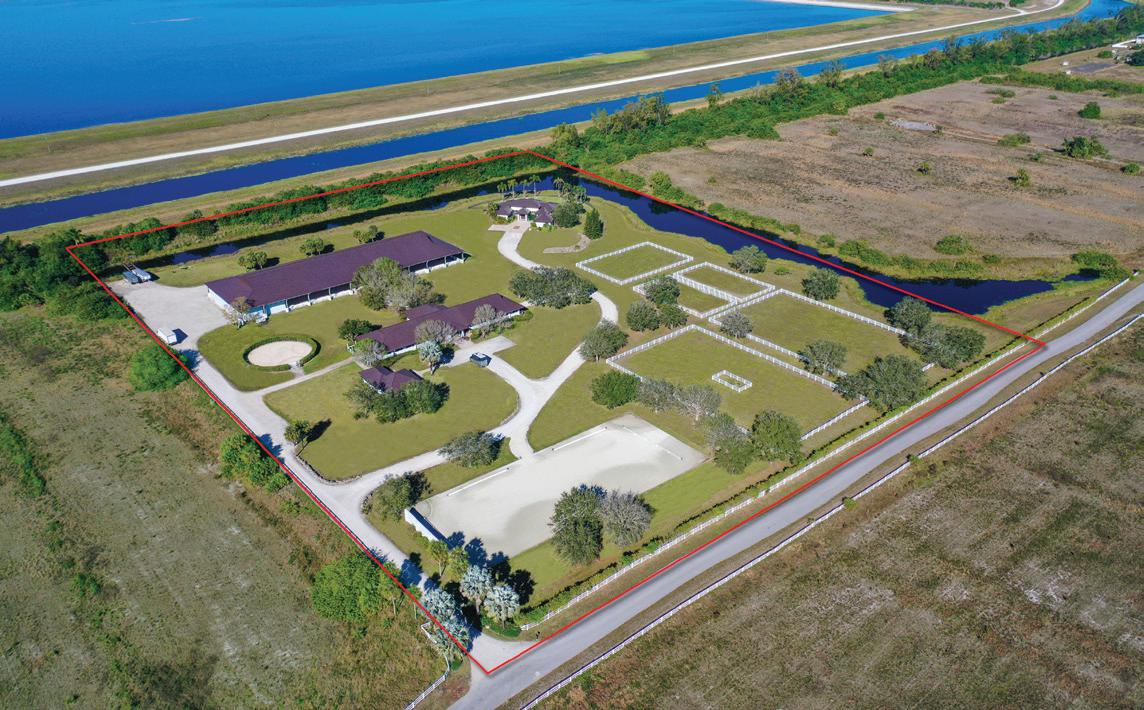
This freshly updated 14.5-acre farm has everything the serious equestrian desires. The center-aisle barn has 20 stalls, 2 tack rooms, covered patio overlooking the 100’ x 213’ covered riding arena with mirrors, observation platform and new footing. The farm also boasts an outdoor riding arena with mirrors, round pen, 51’ x 86’ storage garage and detached staff housing with 3 bedrooms & studio apartments. The 4-bedroom plus office main residence with pool has been completely updated from top to bottom with a new floor plan. Simply a must see! Offered at $4,500,000
Selling Wellington and the Palm Beaches
M +1 561-313-4367
matt.johnson@evrealestate.com

Aug u st 2 1 -2 7, 2023
HITS Chicago @ L amp light
Equestrian Cen ter Wayne, IL
Neue Schule/USEF Grand Prix Dressage National Championship
Neue Schule/USEF Intermediaire I Dressage National Championship
Adequan ®/USEF Para Dressage National Championship
Markel/USEF Young and Developing Horse Dressage National Championships
Adequan ®/USEF Young Adult Brentina Cup Dressage National Championship
Horseware Ireland/USEF Young Rider Dressage National Championship
Adequan ®/USEF Junior Dressage National Championship
USEF Pony Rider Dressage National Championship
USEF Children Dressage National Championship
USEF Dressage Seat Medal Finals


You can’t consider Wellington without hiring Wellington Equestrian Realty, the exclusive real estate company of Wellington International .
As the exclusive realtors of WEF for the next 10+ years with an on-site office, we are the only realtors to welcome the horse show’s over 400,000 global visitors while also introducing them to the area’s most exclusive properties.

Call or text us today at (561) 624-8499 for help finding your Wellington home or farm.
Volume LXXXVII, Summer 2023
PUBLISHED BY
The United States Equestrian Federation, Inc.

CHIEF MARKETING & CONTENT OFFICER


Vicki Lowell | vlowell@usef.org
EDITOR-IN-CHIEF
Glenye Cain Oakford | goakford@usef.org
CREATIVE DIRECTOR
Candice McCown | cmccown@usef.org
ADVERTISING DIRECTOR
Kim Russell | 859 225 6938 | krussell@usef.org
DIRECTOR OF SPONSORSHIP & SALES
Layson Griffin | lgriffin@usef.org
ASSISTANT DESIGNER
Kendall Neubeiser
EDITORIAL STAFF
Emily Girard, Kathleen Landwehr, Kim Russell
CONTRIBUTING WRITER
Colleen Rull
Equestrian Magazine (ISSN 1548-873X) is published five times a year: Horse of the Year Special Edition, Spring, Summer, Fall, and Winter, by the United States Equestrian Federation®, 4001 Wing Commander Way, Lexington, KY 40511; Phone: (859) 258-2472; Fax: (859) 231-6662. (ISSN:1548-873X). NOTE: Effective Spring issue of 2018, Equestrian magazine will be published and provided electronically and only four editions will have printed copies and be provided by U.S. Mail. The Winter issue will only be provided electronically. The Horse of the Year issue will be mailed only to competing members as of the date of publication and the year immediately prior to the date of publication. USEF is not responsible for the opinions and statements expressed in signed articles and paid advertisements. These opinions are not necessarily the opinions of USEF and its staff. While the Federation makes every effort to avoid errors, we assume no liability to anyone for mistakes or omissions. It is the policy of the Federation to report factually and accurately in Equestrian and to encourage and to publish corrections whenever warranted. Kindly direct any comments or inquiries regarding corrections to Glenye Cain Oakford goakford@usef.org or by direct dial 859-225-6941. POSTMASTER: Send address changes to US Equestrian, 4001 Wing Commander Way, Lexington, KY 40511. Canadian Publications Agreement No. 40845627. For Canadian returns, mail to Canada Express, 7686 #21 Kimble Street Mississauga, Ontario, Canada, L5S1E9. (905) 672-8100. Reproduction of any article, in whole or part, by written permission only of the Editor. Equestrian: Publisher, United States Equestrian Federation®, Chief Executive Officer, William J. Moroney (859) 225-6912. Director of Advertising, Kim Russell (859) 225-6938. Copyright © 20120 Equestrian is the official publication of the United States Equestrian Federation, the National Governing Body for Equestrian Sport in the USA, and is an official publication of USEF.
Published at 4001 Wing Commander Way, Lexington, Ky 40511
LandRoverUSA.com/Defender
Vehicle shown: 2023 Defender 130 with optional accessories. © 2023 Jaguar Land Rover North America, LLC

Official Timepiece rolex.com
Title Sponsor of the U.S. Show Jumping Team netjets.com
Official Vehicle & MemberPerk
Title Sponsor of the U.S. Eventing Team

Title Sponsor of the U.S. Driving Team landroverusa.com

Official Blanket of the U.S. High Performance Teams horseware.com
Title Sponsor of the USEF Hunter Seat Medal Final & Official MemberPerk doversaddlery.com


Official Footwear & Apparel ariat.com
Official Joint Therapy adequan.com
Official Pinque Coat, Tail Coat and Show Coat of US Equestrian Teams charlesancona.com
Title Sponsor of the USEF Horse of the Year Program and Official MemberPerk smartpakequine.com

Official Partner of US Equestrian marsequestrian.com


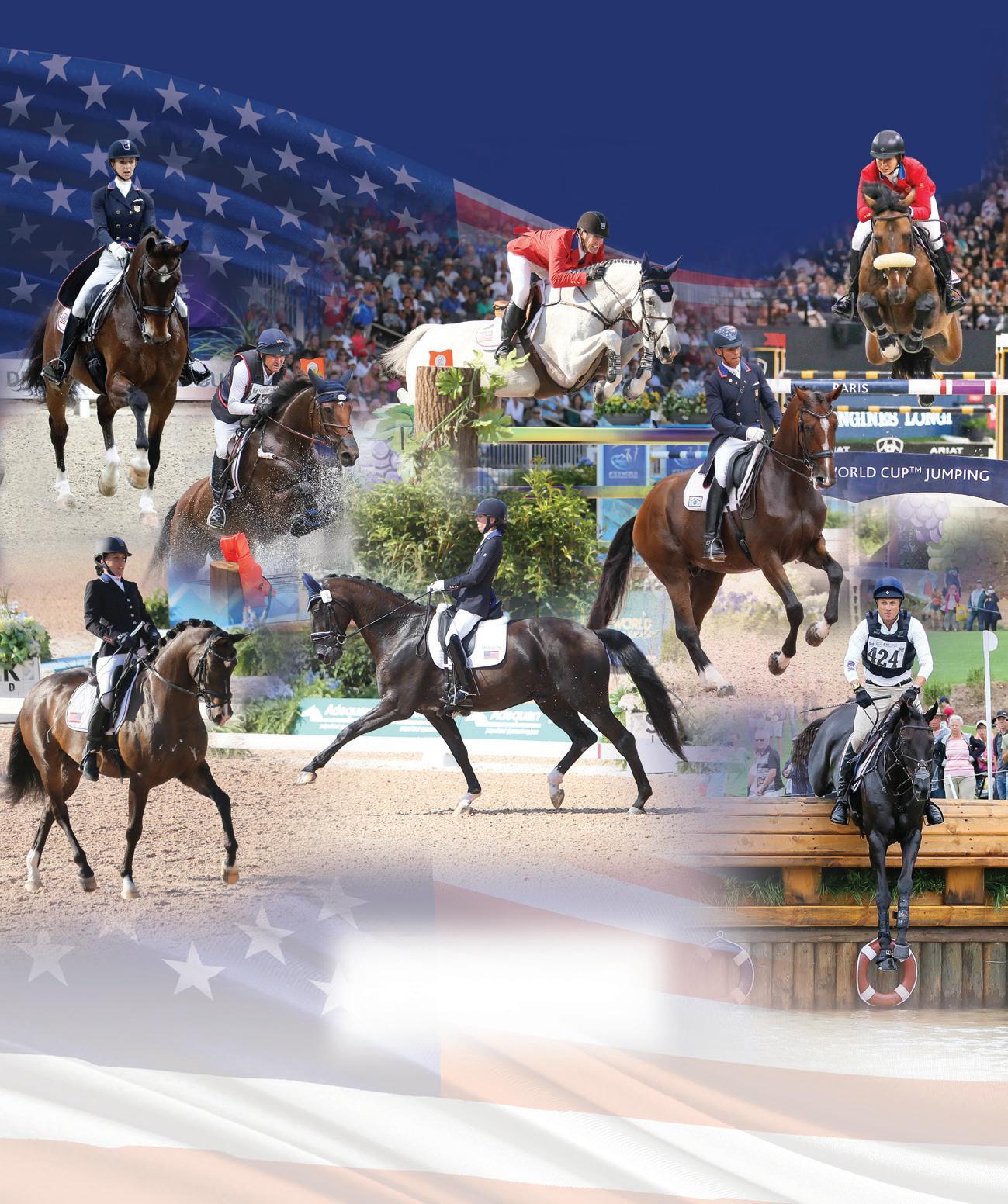
Title Sponsor of the USEF Show Jumping Talent Search Program platinumperformance.com
Title Sponsor of the U.S. Dressage Team Official Equine Air Transportation Provider timdutta.com

Official Partner of US Equestrian Official Training Support Device of US Equestrian & Official MemberPerk shop.movensee.com
Official Partner of US Equestrian zoetis.com
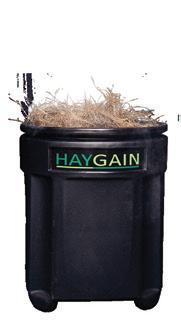
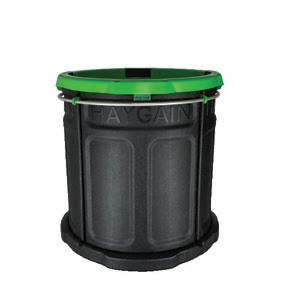
Official Hay Steamer of US Equestrian Official Supporter of Equine Respiratory Health of US Equestrian & Official MemberPerk haygain.us
Official Helmet Supplier charlesowen.com
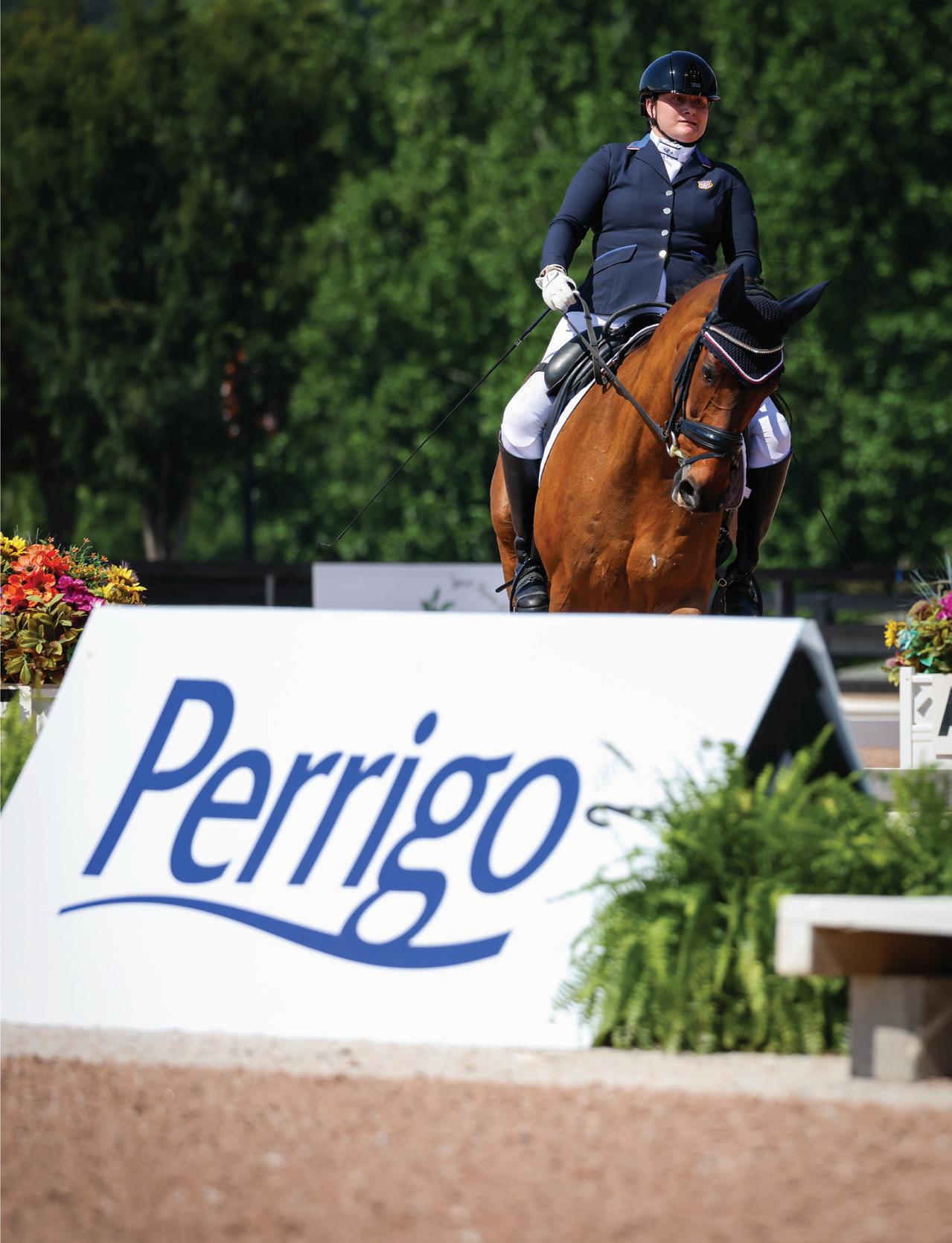
Title Sponsor of the Perrigo U.S. Para Dressage Team perrigo.com

Title Sponsor of the USEF Young & Developing Horse Dressage National & Championships & Title Sponsor of the USEF Emerging Young Horse Dressage Program horseinsurance.com

Proud sponsors of US Equestrian
Official Saddlepad & MemberPerk Toklat.com
The Preferred Airline Partner of US Equestrian National Championships delta.com
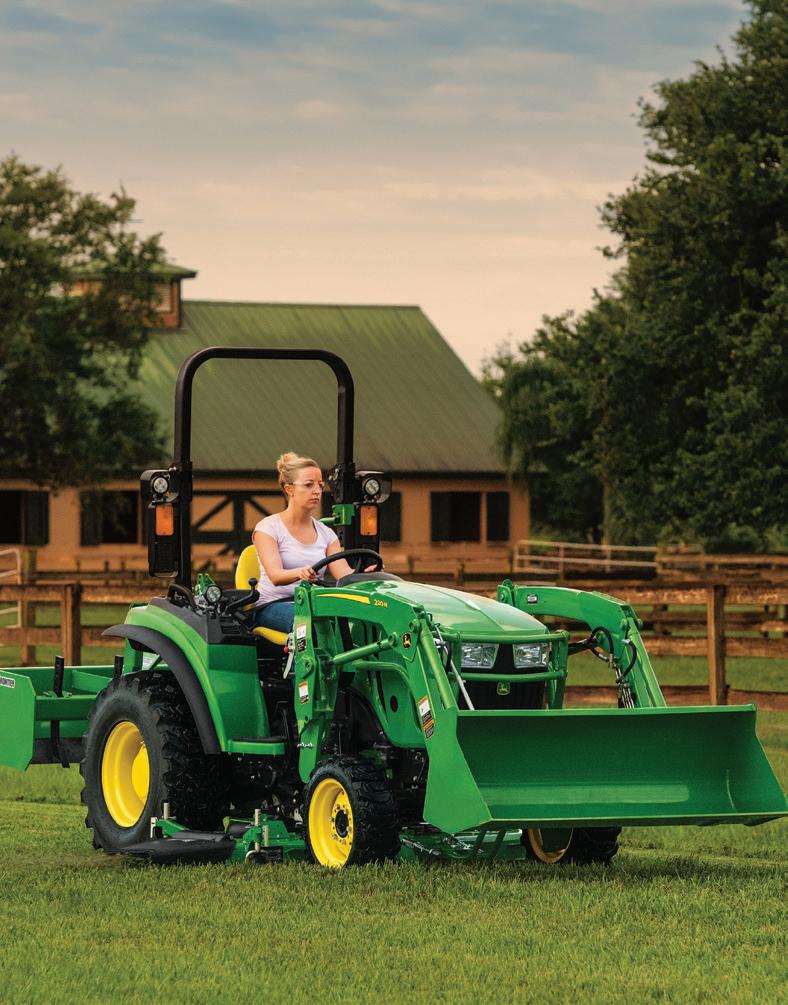
Official Sponsor & MemberPerk deere.com

Official Sponsor of US Equestrian hollowbrookllc.com

Official Sponsor The USEF Visa Signature® Card commercebank.com
Official Jumping Saddle of US Equestrian batessaddles.us
Official Dressage Saddle of US Equestrian Official Dressage Saddle of the U.S. Dressage Team n2saddlery.com
Official Feed of US Equestrian buckeyenutrition.com
Official Ribbon Supplier hodgesbadge.com

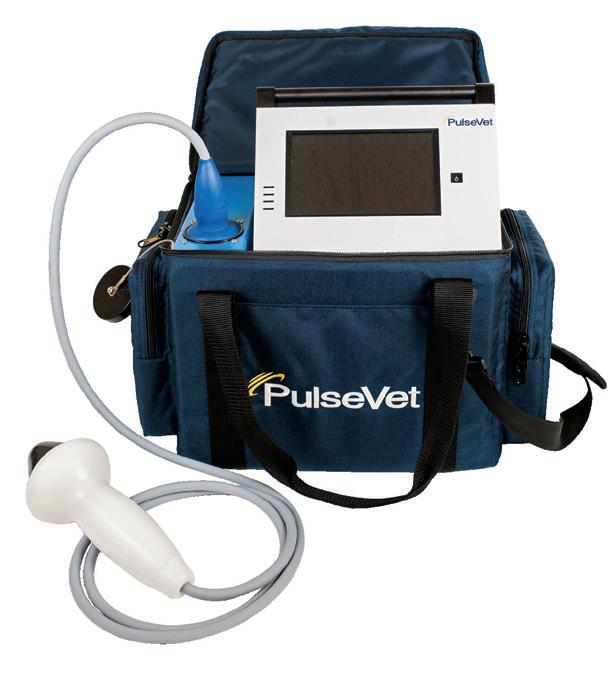
Official Shock Wave Therapy Supplier of US Equestrian Team Vets pulsevet.com


Title Sponsor of the USEF Pony Medal Championship marshallsterling.com
Title Sponsor of the USEF Para Dressage Championships & of the USEF Para Dressage Athlete of Honors Program adequan.com
Official Tack Locker & MemberPerk flexiequinetack.com

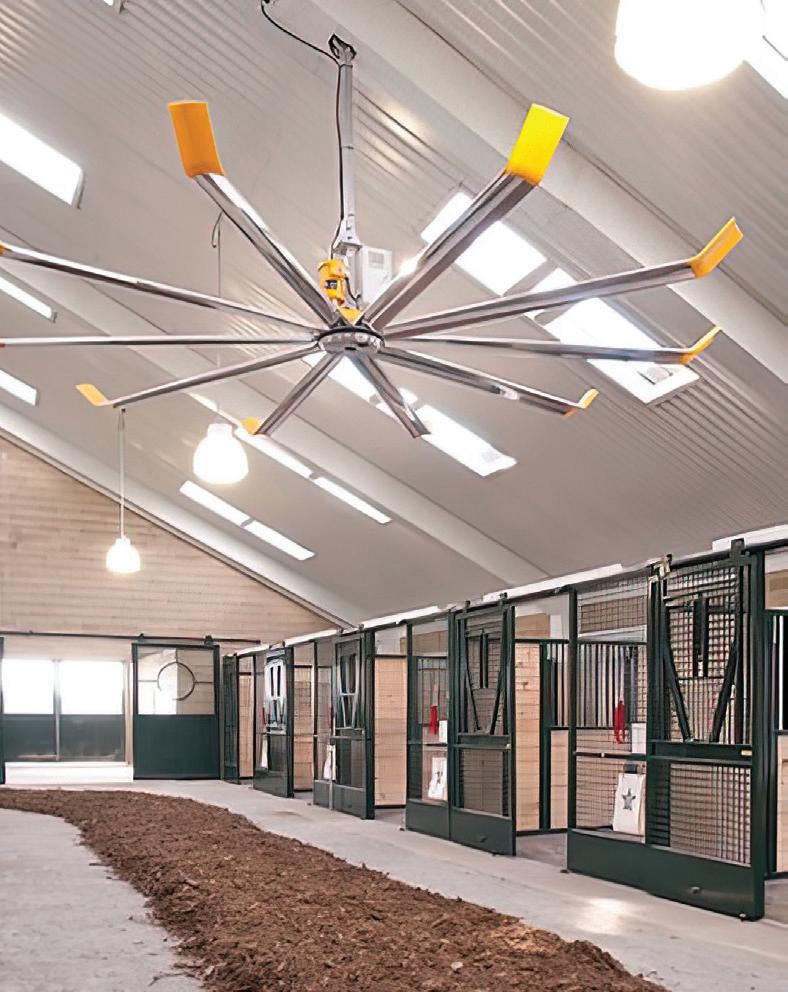
Official MemberPerk bigassfans.com
Official Bit of US Equestrian Title Sponsor of the Neue Schule/USEF Grand Prix Dressage National Championship Title Sponsor of the Neue Schule/USEF Intermediare 1 Dressage National Championship nsbitsusa.com
Official MemberPerk and Sponsor of US Equestrian ridley.com


After 30 years, Adequan® i.m. (polysulfated glycosaminoglycan) is still the only FDA-Approved equine intramuscular PSGAG joint treatment available. And still the only one proven to:1, 2


Reduce inflammation
Restore synovial joint lubrication
Repair joint cartilage
Reverse the disease process
Adequan® i.m. actually treats degenerative joint disease, and not just the signs. Ask your veterinarian if Adequan® i.m. is the right choice for your horse. Learn more at adequan.com.
www.adequan.com


BRIEF SUMMARY: Prior to use please consult the product insert, a summary of which follows: CAUTION: Federal law restricts this drug to use by or on the order of a licensed veterinarian. INDICATIONS: Adequan® i.m. is recommended for the intramuscular treatment of non-infectious degenerative and/or traumatic joint dysfunction and associated lameness of the carpal and hock joints in horses. CONTRAINDICATIONS: There are no known contraindications to the use of intramuscular Polysulfated Glycosaminoglycan. WARNINGS: Do not use in horses intended for human consumption. Not for use in humans. Keep this and all medications out of the reach of children. PRECAUTIONS: The safe use of Adequan® i.m. in horses used for breeding purposes, during pregnancy, or in lactating mares has not been evaluated. For customer care, or to obtain product information, visit www.adequan.com. To report an adverse event please contact American Regent, Inc. at 1-888-354-4857 or email pv@americanregent.com.
Please see Full Prescribing Information at www.adequan.com
1 Adequan® i.m. Package Insert, Rev 1/19.


2 Burba DJ, Collier MA, DeBault LE, Hanson-Painton O, Thompson HC, Holder CL: In vivo kinetic study on uptake and distribution of intramuscular tritium-labeled polysulfated glycosaminoglycan in equine body fluid compartments and articular cartilage in an osteochondral defect model. J Equine Vet Sci 1993; 13: 696-703.
All trademarks are the property of American Regent, Inc.

© 2022, American Regent, Inc.
PP-AI-US-0442 (v2.0) 05/2022
First of its kind. Still one of a kind.
Official Riding Gloves of US Equestrian
Official Sponsor of US Equestrian Teams roeckl.com
Proud sponsors of US Equestrian
Official MemberPerk goodyear.com
Official Jump Company dalmanjumpco.com
Official Barn Management Software & MemberPerk barnmanager.com
Official Fly Control Products & MemberPerk absorbine.com

Official MemberPerk usrider.org
Official Sponsor of US Equestrian aitherhealth.com

Official Equine Biosecurity Partner of US Equestrian byoplanet.com


Preferred Greeting Card and Stationery Supplier of US Equestrian MemberPerk & Competition MemberPerk horseshoegreetings.com
Official Footing and Arena Company of US Equestrian equestriansurfaces.com

Official MemberPerk libertymutual.com
Official MemberPerk choicehotels.com

Official Academic Sponsor upperechelonacademy.com
Official Training Treat of US Equestrian and Official Supplier of US Equestrian Teams gumbits.com
Official Sponsor Presenting Sponsor of the USEF Pony Finals honorhillfarms.com
Title Sponsor of USEF Junior Hunter Finals.
Title Sponsor of the Brentina Cup & Junior Dressage Championship adequan.com
HORSE MATCH
Official Horse Matching Service Sponsor of US Equestrian artemishorsematch.com


Summer is the heart of competition season for many equestrians, but for young athletes who are about to age out of their junior status, and for their parents and trainers, the season can represent the poignant end of an era.
Facing the transition from a junior career to adult or collegiate competition can also prove challenging for these young athletes and their parents. In this issue, after hearing from members seeking advice for their students or children who are gearing up for this new phase in their equestrian careers, we reached out to equestrian mental coach Annette Paterakis for insights and practical advice. She understands the junior-to-adult transition well from personal experience, thanks in part to her own struggle when she was a teenager to step up from a successful junior riding career to open adult competition.
Equestrians “graduating” from their junior careers will benefit from learning new ways of thinking and communicating, and parents and coaches can help them learn those skills in advance, as Paterakis describes in our story “Training for Transition.” There might be some growing pains as these equestrians find new experiences as young adults, potentially including higher performance expectations from judges, stronger competition, and, in the collegiate setting, riding as part of a team, perhaps for the first time.
There are many pearls of wisdom in this story, as well as a reminder for equestrians of all ages that progress is marked by growth, and not always by trophies. “Don’t compare yourself to others,” Paterakis says. “Compare yourself to who you were last week.”
Our equine partners, and our relationships with them, are key to our growth as equestrians—and even as human beings. One way more people can experience that beneficial connection with horses is through initiatives like US Equestrian’s Community Outreach Organizations program and the EQUUS Foundation’s Equine Welfare Network. The Community Outreach Organizations are amazing examples of charitable organizations who are using the horse to help so many with diverse needs and from diverse backgrounds. They are run by wonderful people who know the power of
healing or meaning a horse can instill, and we hope our work identifying them can connect you, our members, with these non-traditional organizations. In our popular “How It Works” department in this issue, we take a closer look at the program, explaining its important role in spreding the joy of horses, the process by which groups become designated as Community Outreach Organizations, and more.
The EQUUS Foundation’s Equine Welfare Network helps connect horse enthusiasts with equine facilities and organizations across the country. According to the detailed program and facility data that the EQUUS Foundation has collected from about 129 member organizations providing rescue, retraining, and retirement opportunities for horses and ponies, the network has more capacity than you might expect.
Both programs are wonderful for the horses and also for the communities, often underserved, who benefit from working with them. I hope as part of your summer reading, you get a chance to learn more about these organizations.
These efforts to bring more horses and people together for mutual benefit are well worth celebrating, and what does that better than a beautiful summer day at a competition, in the barn, or on the trails? Here at US Equestrian, we’re looking forward to one of our largest summer equestrian celebrations: the 2023 USEF Pony Finals presented by Honor Hill Farms in August. This special event combines great equestrian sport, horsemanship education, and a lot of family fun. Learn how you can enjoy it—whether you’re here at the Kentucky Horse Park or watching the livestream at home on USEF Network powered by ClipMyHorse.TV— by checking out Juniors’ Ring in this issue.
Wherever you are whiling away these long summer days, we hope you’ll get to spend plenty of time with horses.
Tom O’Mara President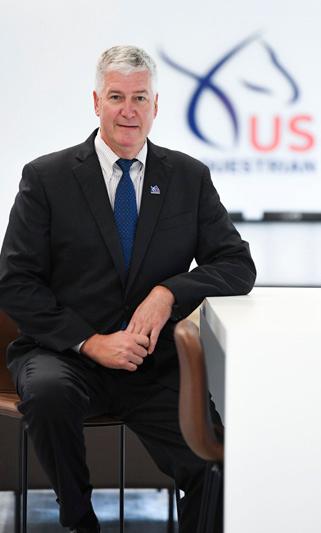

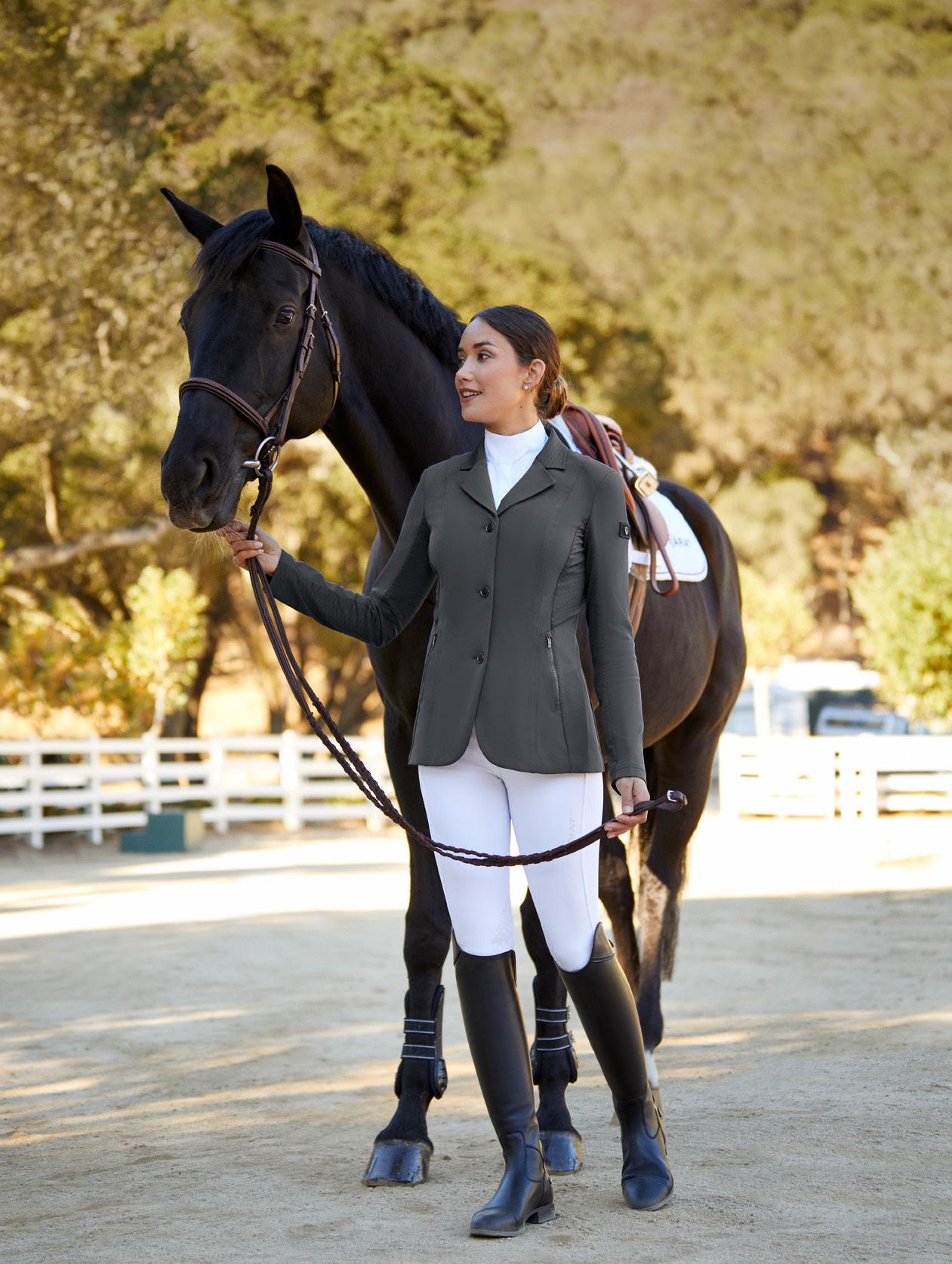
Elegant details meet an exceptional fit in our newest show styles.
Tamie Smith and Mai Baum ended a 15-year drought for U.S. winners at the 2023 Land Rover Kentucky Three-Day Event presented by MARS Equestrian™ on April 30, finishing ahead of Great Britain’s Tom McEwen on JL Dublin and fellow American athlete Liz Halliday-Sharp on Miks Master C. Smith and Mai Baum also won the Land Rover/USEF CCI5*-L Eventing National Championship presented by MARS Equestrian™, taking home the Roger Haller Trophy as the top U.S. combination.
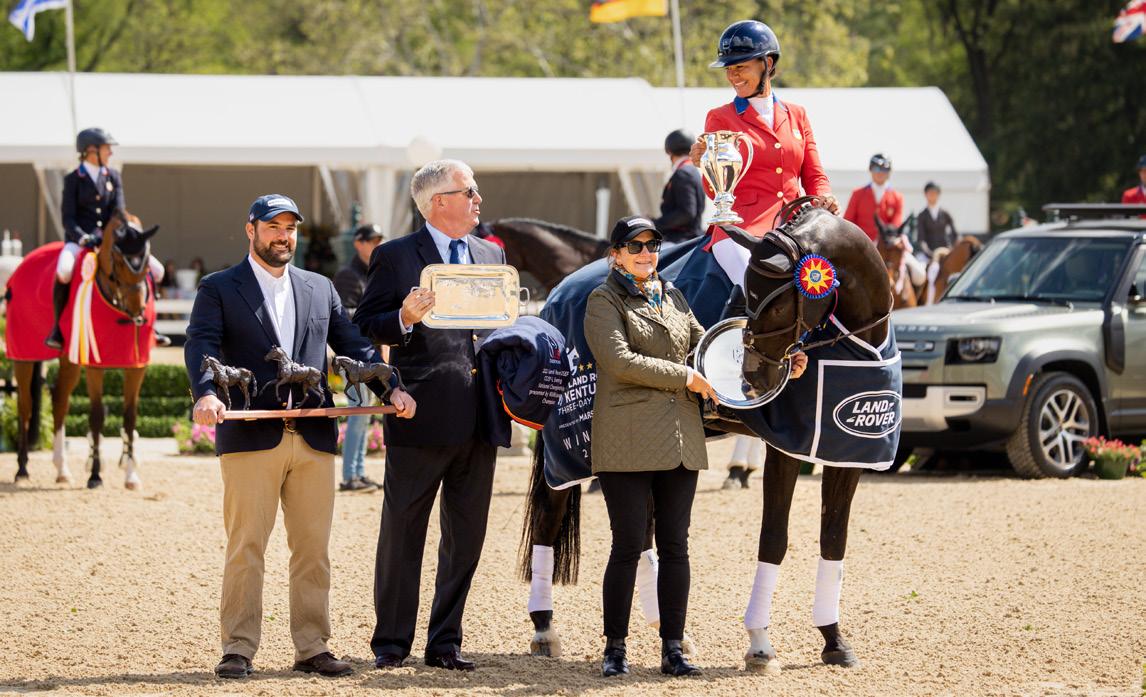
The Murrieta, Calif.-based pair led heading into the final day of competition with less than one rail in hand over McEwen. With the pressure on, Smith and Mai Baum maintained their composure and jumped a clear round, winning on their dressage score of 24.2. McEwen finished on 27.8, with Halliday-Sharp on 28.5.
Smith and Mai Baum previously contributed to the Land Rover U.S. Eventing Team’s silver medal at the 2022 FEI Eventing World Championships in Pratoni del Vivaro, Italy, and were the reserve combination for the U.S. Eventing Olympic Team for the Tokyo 2020 Olympic Games. They also were members of the U.S. Eventing Team that won gold at the 2019 Pan American Games in Lima, Peru. But the Land Rover Kentucky Three-Day Event presented by MARS Equestrian was the combination’s first five-star win.
“After I won Fair Hill [in 2015], I wasn’t certain if [winning at a five-star] would ever happen, but I just wanted him to have his moment in the sun, and today he did,” said Smith. “He has missed out a few times, even though he has been very competitive on the world stage. I feel like it eluded him, and I’m just so happy for him because I think he is unbelievable.”

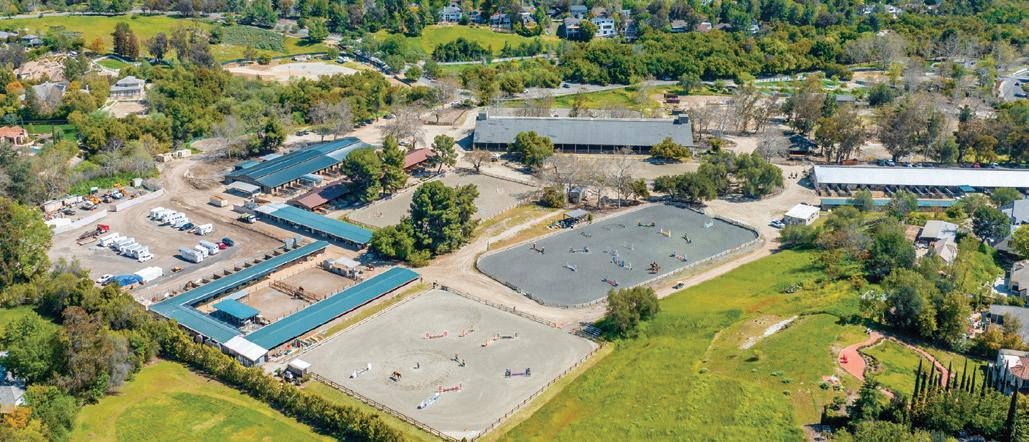
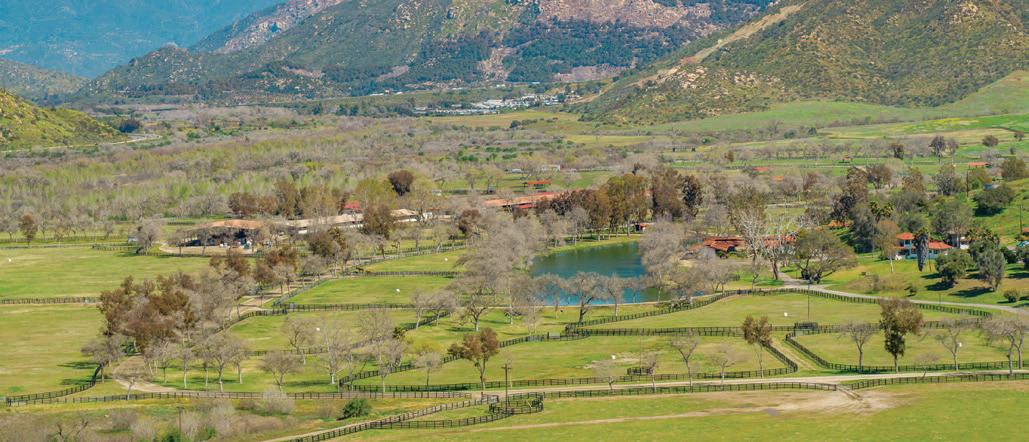
The most spectacular ranch and land holding in Southern California! Located 10 miles from the Pacific Ocean, this 1,400 acre property is presently used as a top thoroughbred breeding operation and is also entitled for over 400 homes., Incredible investment opportunity, suitable for any equestrian passion. Call for pricing and details.
Anna Brooks Thomas has joined USEF as Director of Driving.
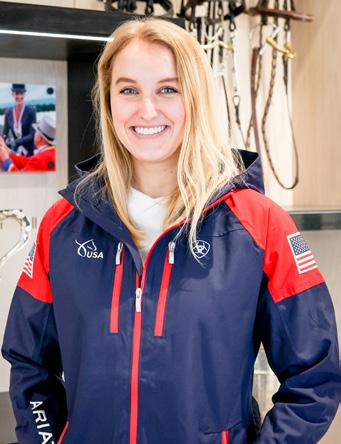
Thomas joins the organization after nearly two years with the University of Virginia athletics department football office in the Atlantic Coast Conference, where she most recently served as Director of Player Engagement and previously served as Assistant Director of Football Operations.
Before her time at Virginia, Thomas was the Director of Football Operations at Colgate University in Hamilton, N.Y., and a Football Operations Assistant at the University of Richmond in Richmond, Va. With a background in vaulting as a junior, Thomas continues to vault and coach with Commonwealth Equestrian Vaulters in Delaplane, Va.
The American Horse Council and US Equestrian have kicked off what could be one of the biggest studies in more than 50 years with the 2023 National Economic Impact Study for the equine industry.
USEF urges horse owners to participate in the online study, which is open through Sept. 29 and is available on the AHC website at horsecouncil.org/economic-impact-study/.
The study will examine the industry’s effect on the economy. Economic impact studies usually measure changes in business revenue, business profits, personal wages, and/or jobs. As a large, economically diverse industry, the United States horse industry contributes significantly to the American economy—it had more than $50 billion in direct economic impact in 2017. The study will also look at certain states, horse breeds, and sectors.
The purpose of the census is to demonstrate the value of the equine industry in the national and state economies by analyzing the direct, indirect, and induced economic impacts of horse ownership, recreation, and equine-related services. Data collected will inform public and private investments in equine-related businesses, equine health care, education, land-use decisions, tax policy, tourism, employment incentives, and more.
“It’s critical that this survey provides the most comprehensive and accurate representation of our equestrian community, and that’s why we’re encouraging all of our members and fans to participate at horsecouncil.org,” said US Equestrian President Tom O’Mara.
Individuals and groups who participate in the survey can also win a John Deere Z545R ZTrak Mower valued at $7500, one year of Nutrena feed for one horse (a $2,000 value); one year of Purina feed for one horse (a $500 value/horse); gift certificates from Trafalgar Square Books (total value $180); enrollment in Texas A&M AgriLife Equine Reproductive Management Online Course (valued at $300/enrollment); and more.
If you have questions, contact American Horse Council President Julie Broadway at jbroadway@horsecouncil.org
Thomas will report to Steven Morrissey, Managing Director of Sport Logistics and Non-Olympic Disciplines.

USEF has named longtime employee Hallye Griffin its Director of FEI Sport. Griffin will assume the duties of former Director of FEI/High-Performance Sport Graeme Thom, who has chosen to step away from his role to attend to personal matters.
Thom will continue to assist with special projects, with a particular focus on Major Games preparedness.
Griffin also will serve as Chef de Mission at the Olympic, Paralympic, and Pan American Games, as well as at the FEI World Championships. She enters the role with extensive experience and deep sport knowledge. Griffin was named Director of National Dressage Programs in 2011 after serving as Competition Department
assistant for the 2010 Alltech FEI World Equestrian Games. She was promoted to Managing Director for Dressage in 2015 and managed U.S. Team efforts at two Olympic Games (Rio and Tokyo), which yielded a team bronze and team silver medal, respectively.
Griffin will report to USEF Chief of Sport David O’Connor.
In related news, Dressage Performance and Event Support Director Laura Roberts has been promoted to Managing Director of Dressage.
“I have been fortunate to work with a great team at US Equestrian over the last 10-plus years, and I am grateful for the knowledge and experience that has been shared with me,” Griffin said. “We
have busy months ahead readying for the many events on the calendar for the FEI disciplines. We have a strong staff at the US Equestrian office, and we will be working closely on not only the upcoming Paris 2024 Olympic and Paralympic Games but also focusing on the home Olympics and Paralympics–Los Angeles 2028–which are on the quickly approaching horizon.”
US Equestrian has welcomed six new USEF Community Outreach Organizations to its USEF Community Outreach Program. The program, launched in 2021, is dedicated to supporting organizations across the country that provide equine-based learning opportunities and help the positive impact horses can have within their local communities. These organizations are united by their standards in equity, mission, and horse and human welfare. Each organization submitted an application that was evaluated against the standard eligibility requirements and was approved by US Equestrian’s Diversity, Equity, and Inclusion Review Committee, consisting of executive staff, volunteers, and athletes.
The six new USEF Community Outreach Organizations are Horses of Hope, Inc., in Isabela, Puerto Rico; Kindle Hill Foundation Charity in Gwynedd Valley, Pa.; Little Bit Therapeutic Riding Center in Redmond, Wash.; Lucky Orphans Horse Rescue in Wassaic, N.Y.; Maryland Therapeutic
Riding, Inc., in Crownsville, Md.; and O.C. Equestrian Vaulting in Costa Mesa, Calif.


The next application period runs from Oct. 1, 2024, to Dec. 15, 2024. Applicants must complete and submit the digital application form on or before the application deadline. For important information such as eligibility requirements, required documentation, and more, visit usef.org/about-us/ diversity-inclusion/organizations-program/ join-outreach or contact Mikhail Proctor, Director of Membership, DEI, and Development, at mproctor@usef.org
For more information about USEF Opportunity Fund partnership opportunities, contact Layson Griffin, Senior Director of Sponsorship and Sales, at lgriffin@usef.org.
Inclusion on the list of Community Outreach Organizations does not imply any endorsement of the organization. It simply indicates that the organization has stated that it meets certain eligibility criteria.




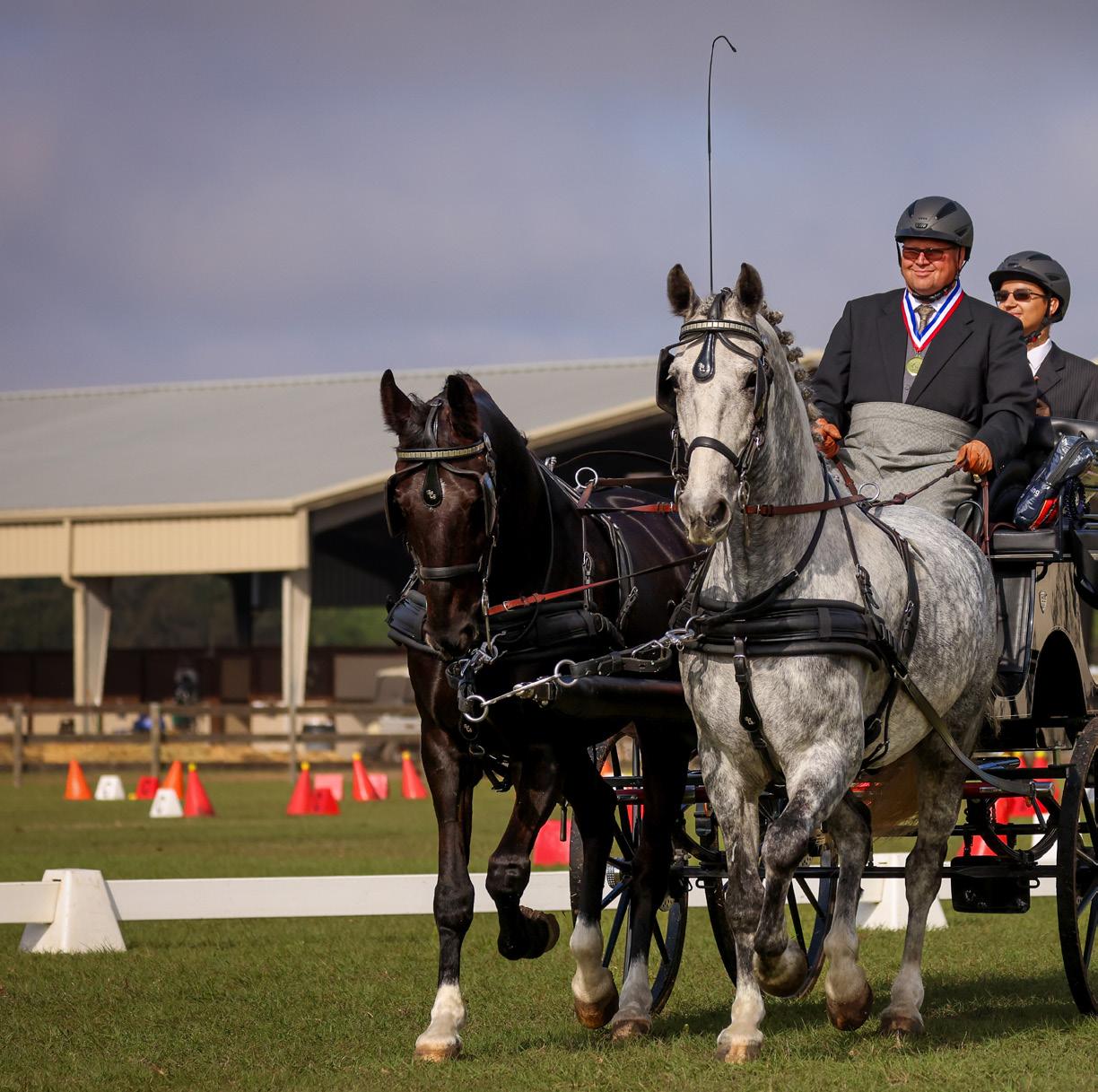
Combined driving athlete Chester Weber earned a milestone victory in March when he drove his team of bay Dutch Warmblood geldings to his 20th USEF Combined Driving National Championship for Advanced Fourin-Hand Horses at the Live Oak International competition in Ocala, Fla.
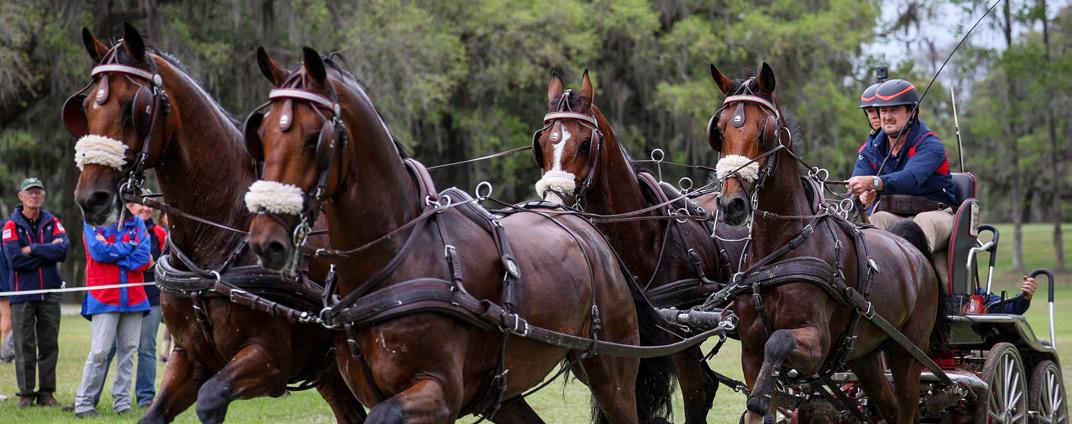
Weber’s team consisted of First Edition, Julius V, Kadora, and Kasper D in the dressage and cones phase. Veteran equine competitor Amadeus stepped in for relative
newcomer Kasper D for the sport’s signature marathon phase.
Starting strong with a penalty score of 38.19 in the dressage phase, Weber and his team overcame an error in the first obstacle on the marathon course and maintained a comfortable lead in the National Championship division with quick and clear completions of the remaining five obstacles. They secured the title on March 19 after a three-fault cones round, finishing on a score of 162.47.
The 2023 competition year marks a major milestone for four Federation licensed officials. This special group of officials have been officiating with USEF for 50 years. The Federation appreciates their dedication and commitment to the sport through officiating. Licensed officials are an integral contribution to the sport as competitions certainly cannot occur without licensed officials.
The following officials have been licensed for 50 consecutive years: Catherine Cortright (currently C1 Steward, Hunter, Hunter/Jumping Seat Equitation, and Jumper), Robert Crawford (C1 Steward and Certified Schooling Supervisor), Joseph Dotoli (Hunter, Hunter/ Jumping Seat Equitation, and Jumper), and Marie Johnson (Dressage).
Reflecting on her time as a licensed officials, Johnson advised other officials and license applicants to “keep on learning and stay away from politics and conflicting changes of what is in style.”
Cortright noted that she loves “the opportunity to stay current with our ever-changing sport,” while Joe Dotoli emphasized that “I think good judging is important to the sport. Judging, while it will never be identical, needs to have a consistency.”
The Federation gives our thanks and congratulations to the officials who have reached this impressive and inspiring milestone. It is admirable to give back to the equestrian community for so many years.















US Equestrian, in conjunction with the UPHA Board of Directors, has agreed to move the USEF Saddle Seat Adult Amateur Medal Final to the UPHA American Royal National Championship Horse Show. The decision to move this Final from the Lexington Junior League Charity Horse Show enables its adult amateur competitors to have a longer qualification time frame for the 2023 competition year.
The Final will joins a roster of equitation championships set to take place in 2023 at the American Royal, further highlighting the importance of the saddle seat equitation division.
“We are thrilled to have the USEF Saddle Seat Adult Amateur Medal Final become part of the UPHA American Royal, and we look forward to the growth of this championship in the years ahead,” said UPHA President Jimmy Robertson.
In 2023, the USEF Saddle Seat Medal Final and USEF Adult Amateur Medal Final specifications also include qualifying criteria for Morgan and Arabian equitation riders to be eligible to compete in the Finals.
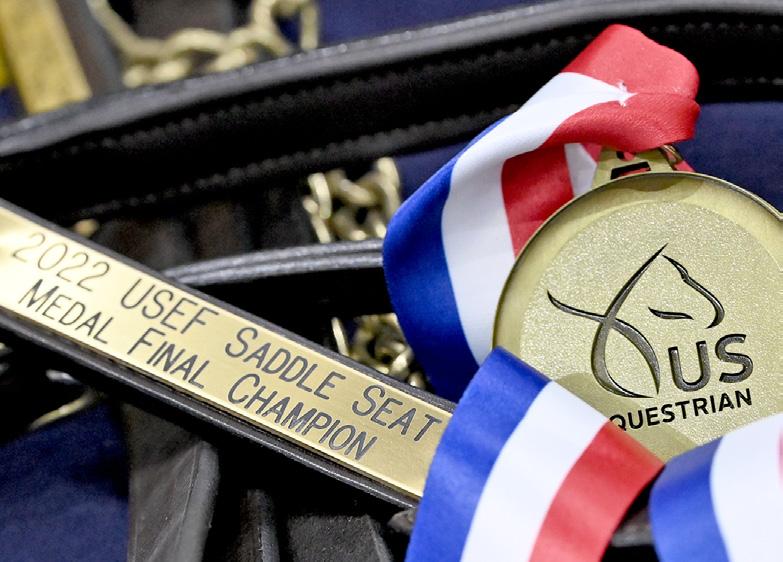
“This change will also give other breeds an opportunity to qualify and compete in equitation at the UPHA American Royal without conflicts with their National Championships. Our goal is to grow the saddle seat discipline among our affiliates by offering more opportunities for exhibitors to compete,” said Terri Dolan, USEF Director of National Breeds and Disciplines.
The Lexington Junior League Charity Horse Show will continue to run a qualifying class for both USEF Saddle Seat Medal Finals. For a list of qualifying classes and the qualifying specifications, please visit the Saddle Seat section of usef.org
The USEF has announced grants totaling $19,600 for 50 licensed official applicants as part of a grant program to support the development both of new licensed officials and of higher-level officials.
USEF launched the grant program in 2022 to reduce financial barriers for USEF or U.S. Fédération Équestre Internationale officials to complete application requirements related to a new license application or a license promotion by offsetting travel and clinic or apprenticeship costs. Applicants were active USEF competing members who are currently licensed officials or who have an active licensed official application.
Individuals applied for grants in one of two categories: general grants were considered based on the competition environment need for more, or higher-level, officials and U35 grants will provide support for those under age 35 to become licensed officials or apply for license promotion.
“We are thrilled to have received a 90% increase in grant applications for this year’s licensed official grant offering compared to 2022,” said Alina Brazzil, USEF’s Director of Licensed Officials. “The response further confirms that we are providing valuable support for the development of the licensed official pathway. We are looking forward to hearing how each applicant used their grant funding and what they have learned along the way.
“Offering a grant category dedicated to individuals under the age of 35 is an exciting way for USEF to focus on the future,” she added. “Talent identification and support are key in order to continue the strength of our officiating pool in the U.S. for both national and international officials.”
Are you interested in becoming a licensed official? Review the Become Licensed webpage (usef.org/compete/resources-forms/licensed-officials/become-licensed) for information about the process as well as other grant opportunities offered by the FEI and USEF recognized affiliates and their foundations.
All three veterinary-developed total body wellness formulas provide omega-3 fatty acids, antioxidants, vitamins, trace minerals, amino acids and more to support your horse from head to hoof, coat to gut and everything in between.
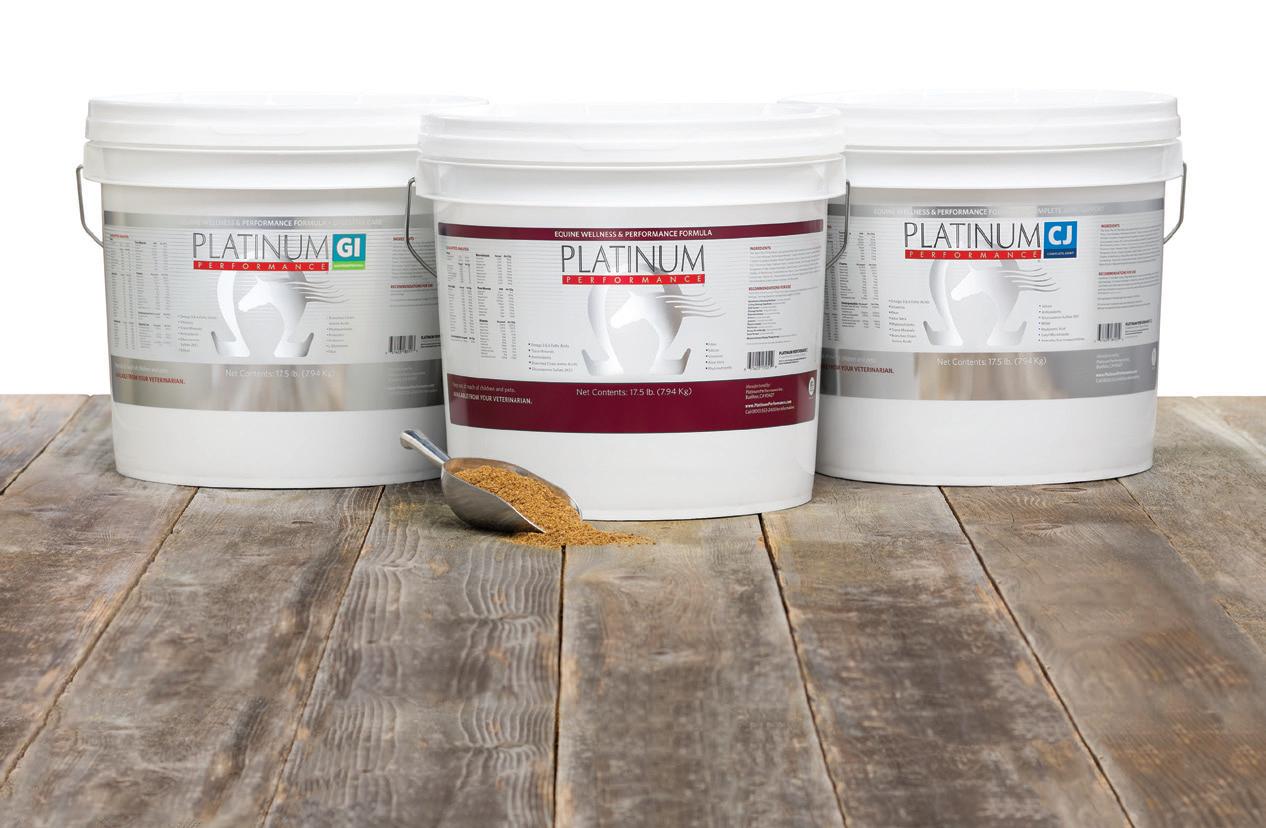
WELLNESS + DIGESTION
Platinum Performance ® GI (Gastrointestinal)
RECOMMENDED FOR Horses in training or competition, while traveling, and for horses with digestive health concerns, occasional loose stool or difficulty maintaining weight.
TOTAL BODY WELLNESS
Platinum Performance ® Equine
RECOMMENDED FOR All types of horses, the ingredients work synergistically to support every aspect of health and performance.
WELLNESS + JOINT
Platinum Performance ® CJ (Complete Joint)
RECOMMENDED FOR Horses with advanced joint care needs, performance horses or performance horse prospects and senior horses.
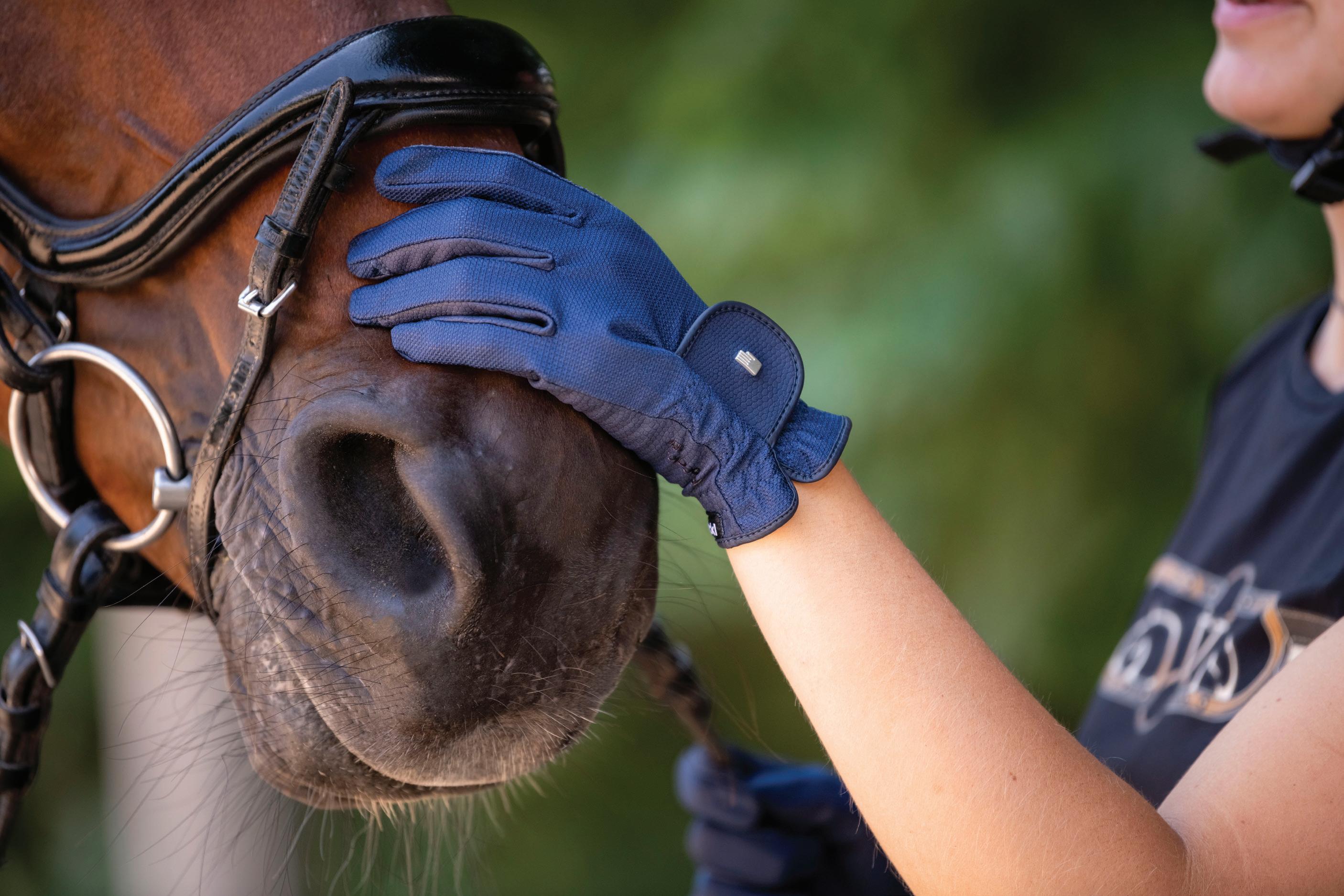
Roeck-Grip® Lite gloves are made with Roeckl's exclusive Roeck-Grip® material that provides soft, breathable comfort on hot summer days!

Like Roeck-Grip and Roeck-Grip Winter, the Roeck-Grip Lite fits like a second skin, giving the rider a close contact feel, and is even touchscreen compatible! Roeck Grip Lite gloves are available in Black, White, and the new Naval Blue! OFFICIAL GLOVE SUPPLIER
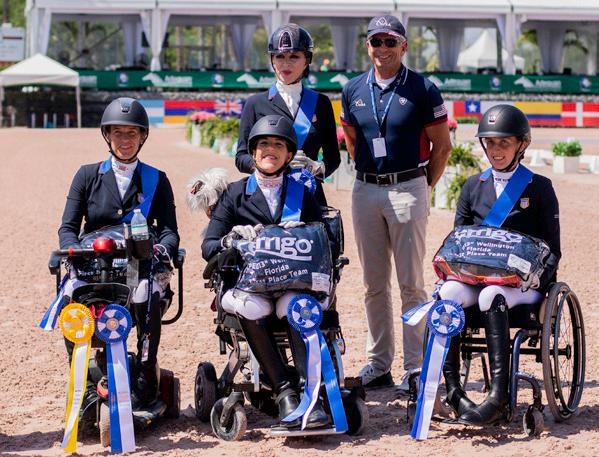
—The late Dr. Meg Mullin, team veterinarian for the Adequan® U.S. Para Dressage Team, who passed away in March. In her memory, the United States ParaEquestrian Association has established the Meg Mullin Memorial Grant toward para athletes’ initial CPEDI competition.
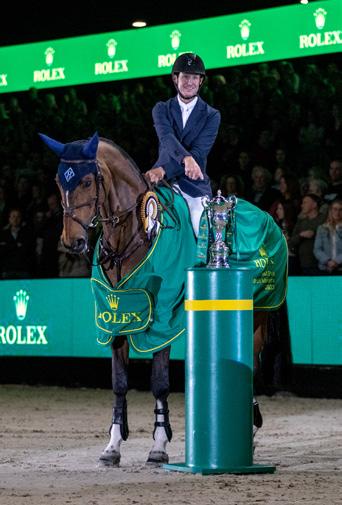
—Hunter Holloway on her FEI Jumping World Cup™ Final mount, Hays Investment Corp.’s Pepita Con Spita. The pair went on to finish third as the top U.S. jumping combination at the Omaha, Neb., competition in April.
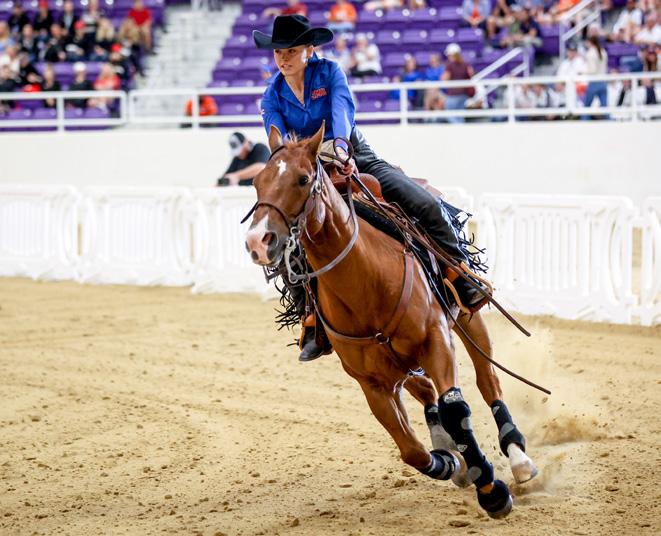
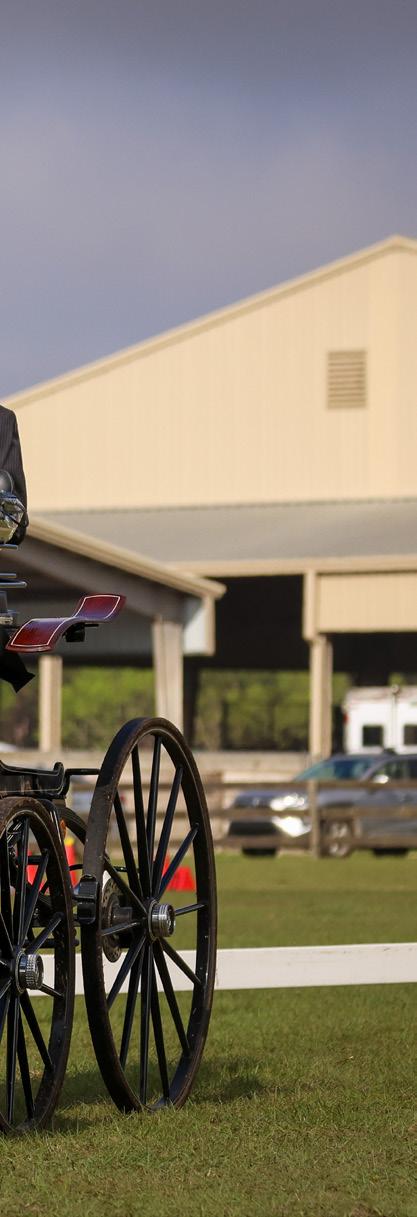
“S he’s definitely at the top of her game, and I’m just trying to keep up with her.”
As part of US Equestrian’s Diversity, Equity, and Inclusion Action Plan, the Community Outreach Organizations program is bringing horses to more people in more communities.
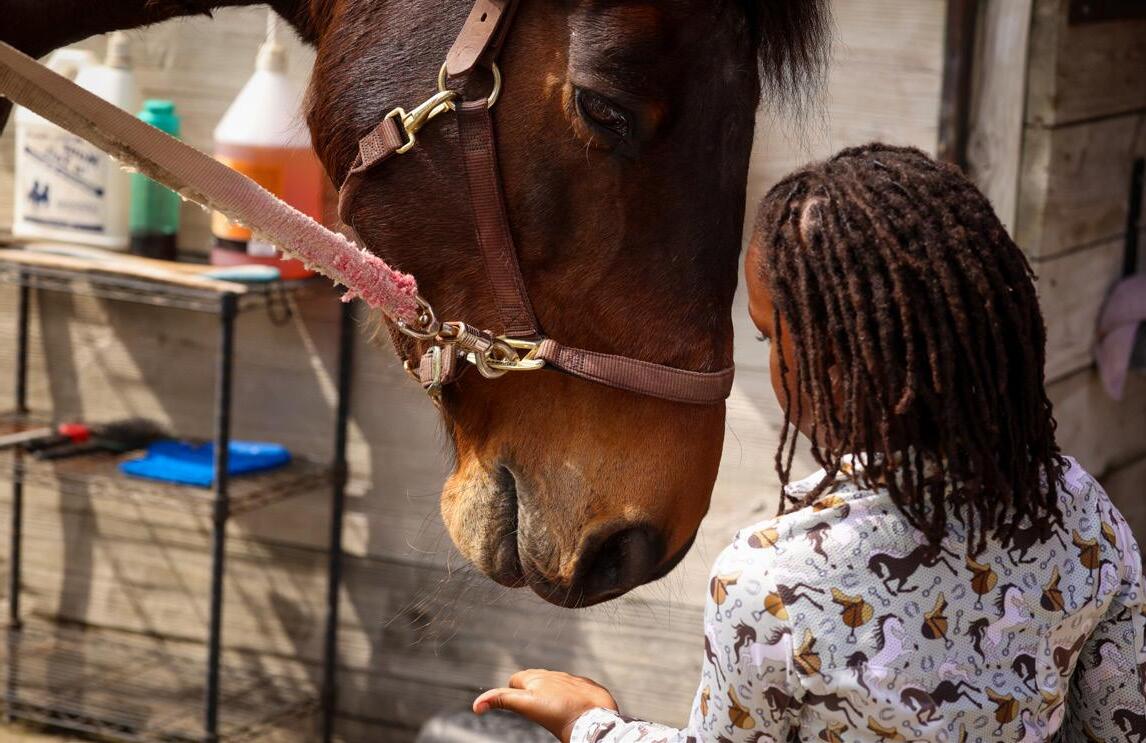
At Promise Landing Farm in Upper Marlboro, Md., participants in equine-assisted therapy programs ride alongside recreational riders in the lesson program.
“We run the spectrum of services, but we don’t split people up based on diagnosis,” said Rachel Neff, Executive Director of Promise Landing Farm. “It’s very common to have someone with a disability and someone without riding in a lesson at the same time. Our whole idea is that, right now, the equestrian community is very much like, ‘The people with disabilities go ride at that barn, and everybody else comes and rides at this barn.’ It’s our belief that that’s a bad way to do society in general. The goal is to bring people together
where they’re in contact with each other, learning from each other, and hopefully that’ll push out into the community and bring more inclusion and acceptance in day-to-day life.”
Promise Landing Farm is one of US Equestrian’s Community Outreach Organizations working to bring horses to more communities and, in doing so, bring more diversity into the equestrian world.
What is The Community Outreach Program?
US Equestrian’s official vision statement describes a straightforward goal: “To bring the joy of horse sports to as many people as possible.”
Bringing the joy of horses to people is a simple idea but is often a challenge in practice



due to the resource requirements inherent in keeping horses and hosting equestrian activities. Fortunately, there are organizations across the country working to connect horses and people from all backgrounds. In 2021, US Equestrian launched its Community Outreach Program, which partners with many of these organizations to support their work.
The Community Outreach Program consists of two main components. The first is a directory of Community Outreach Organizations , groups that provide equine-based learning opportunities for underrepresented and underserved communities. These organizations must reach certain standards for inclusion, including horse and human welfare and safety and availability of free or sliding-scale fees for participants in their programs.
The second component is the USEF Opportunity Fund grant program. Community Outreach Organizations are eligible to apply for grant money to support their programs and services.
Community Outreach Organizations may focus on riding instruction and equine programs for Black, Indigenous, and people of color, people from lower-income backgrounds, or those from inner-city communities. Others may provide equine-assisted therapies for people with physical, intellectual, or developmental disabilities. Some are designed to accommodate riders with behavioral and emotional health concerns, while others specialize in veterans and active military. The common thread is that they are actively working to bring horses and equestrian activities to communities and individuals who might not otherwise have access to them.
At Horses N Heroes in Ocala, Fla., horses are a pathway from difficult home situations to education, leadership, and friendship.
“My program is focused on leadership and mentoring with a strong emphasis on horsemanship,” said Executive Director Mindy Nolan-Morrow. “I work with girls primarily who live at the poverty level, but not all of them do. Sometimes it’s a situation where a parent is dying and they come to me through hospice, or they were taken out of their homes and are being raised by a relative.”
The horses at Horses N Heroes are largely retired show horses who benefit from a lower-impact career, and all have a home for life at the facility after retirement. This gives participants the added opportunity of learning the commitment and maturity required to take responsibility for animals.
All of the participants work at the farm at least one weekend day every week, doing barn chores, bathing horses, and getting hands-on experience with horse care and equine first aid. Many of the girls also take riding lessons, but some choose not to and simply enjoy the time on the farm. Regardless of their goals, Nolan-Morrow believes in the power of friendships forged through horses, and her program aims to bring that to the kids who need it most.
“They like the camaraderie of being around the farm and being with other girls in a non-judgment zone,” she said. “I’m super-strict about that. I want this to be a place where they can come and have a positive day and a group of friends that they can grow up with. Like I told them, I’m in my 50s, and my best friends to this day are my friends I grew up riding with. I want them to have that type of experience.”
The Community Outreach Program came about as part of US Equestrian’s Diversity, Equity, and Inclusion Action Plan, which was developed in 2020 and 2021 by a group of thought leaders recruited from across diverse backgrounds and various segments of the horse industry. This working group recognized that many individuals and organizations were already doing outreach and DEI work in their own communities, and US Equestrian could work together with them rather than trying to create something new.
US Equestrian approved the first class of 17 Community Outreach Organizations in early 2022. New programs are welcome to apply during open application periods posted on the USEF website at usef.org/about-us/diversity-inclusion/ organizations-program/join-outreach
Organizations interested in becoming a Community Outreach Organization must meet certain eligibility requirements to apply, such as providing services for free or on a sliding scale of fees based on economic need. Other requirements include adhering to USEF Safe Sport policies, having 501(c) status, and setting standards for participant safety, horse welfare, and educational programming. The full list of eligibility requirements is available online at usef.org/about-us/diversity-inclusion/organizations-program
“My advice to people who are interested in applying is that it’s not scary! You can do this,” Neff said. “A lot of times, horse people would rather spend time in the barn than filling out applications, but it’s easy. Just tell them about the awesome things you are already doing. It’s not a terribly cumbersome process.”
A review committee comprised of USEF Board of Directors members, executive staff, and athletes reviews applications to ensure applicant organizations meet all requirements prior to acceptance into the program.
Once approved, Community Outreach Organizations receive free USEF subscriber-level memberships for their participants, a listing in the Community Outreach Organizations directory on usef.org, and eligibility to apply for grants through the USEF Opportunity Fund. US Equestrian also offers additional support for Community Outreach Organizations by connecting them with local competition organizers, athletes, and equine professionals for clinics or meet-and-greets and by facilitating educational webinars on various topics around diversity, equity, and inclusion in the equestrian community.
For Nolan-Morrow, the benefits of being part of the program are well worth the time it takes to apply.
“I would encourage anyone to do it,” she said. “I’m really good at running my program, and if somebody comes to me and says, ‘Hey, I heard about your program. Tell me about it,’ I’m all about that. But I’m not great at going out and meeting new people or making a cold call to try to get them to sponsor my program. The Community Outreach Organization program helped bring awareness to my program. It gave us an opportunity to go to the Live Oak International [combined driving and jumping competition] event last March, which was amazing, and through that we met some incredible people. That’s the biggest thing for me, is the fact that more people know who we are and what we do.”
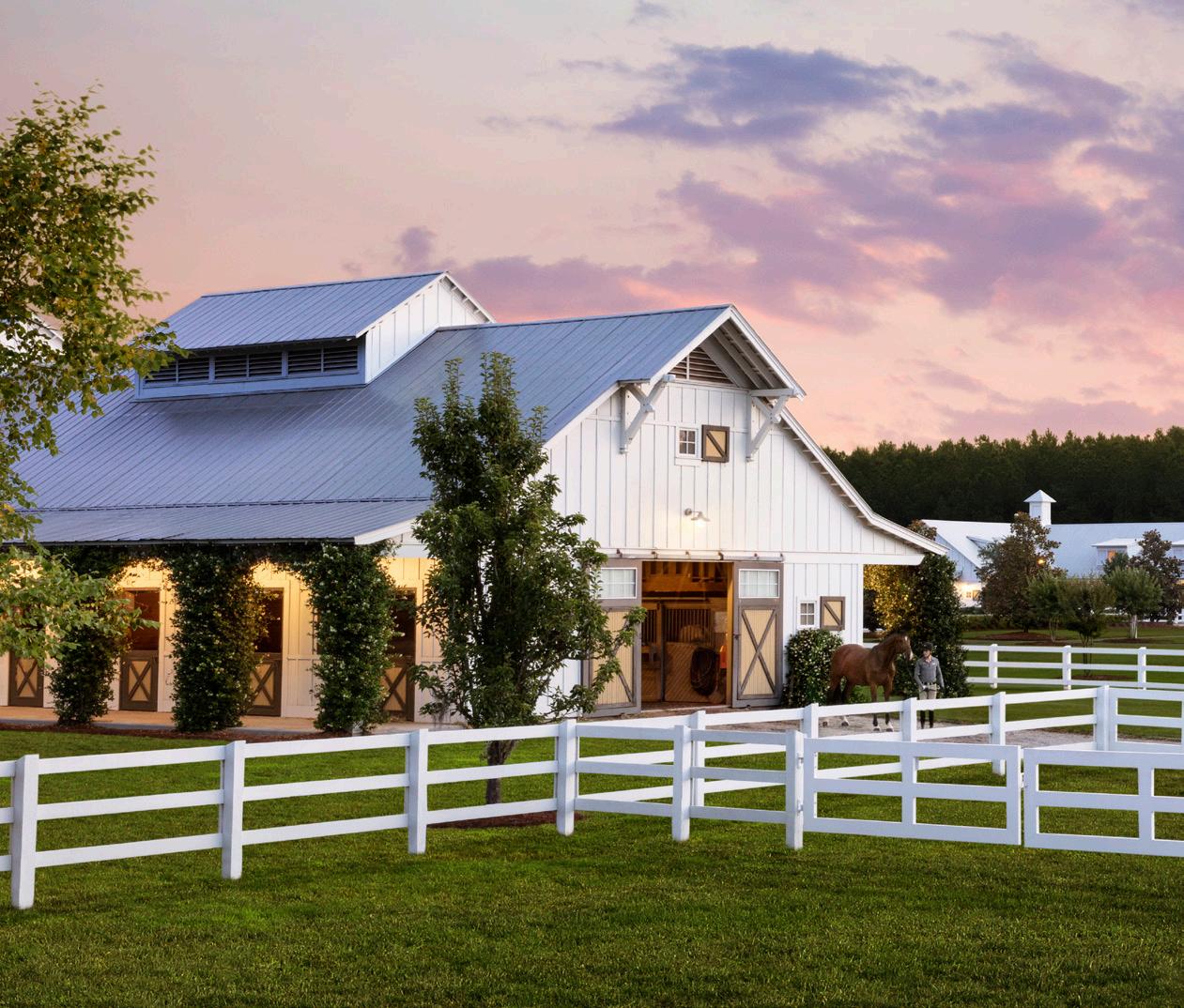
As we head toward the height of summer, our young equestrian athletes will ramp up their participation across breeds and disciplines. The warm weather and school break provide a great opportunity for young athletes to work on their horsemanship skills, attend summer camps, or compete in large events such as the USEF Pony Finals presented by Honor Hill Farms and the Arabian Horse Association Youth Nationals. While it is always a very exciting time of year, it is also the perfect time to make sure you are prepared to play your part in preventing abuse.
Studies have indicated that 40% to 50% of athletes have experienced some form of abuse. Abuse may constitute inappropriate sexual conduct, unnecessary screaming at or degrading a participant, or forcing someone back into practice or competition before they have adequately recovered from an injury. Understanding the requirements of the various safeguarding policies, implementing proper protocols, and using best practices put us all in the best position to provide the safe atmosphere that our young athletes deserve.
All of us in the equestrian community—whether a parent, trainer, or competition organizer—have a role to play in preventing athlete abuse.
Parents and guardians equipped with the knowledge of what emotional, physical, and sexual abuse looks like can increase the likelihood of spotting signs of potential problems and foster early intervention.
Trainers and coaches easily can be the determining factor in whether or not a young athlete has a positive and safe equestrian environment.
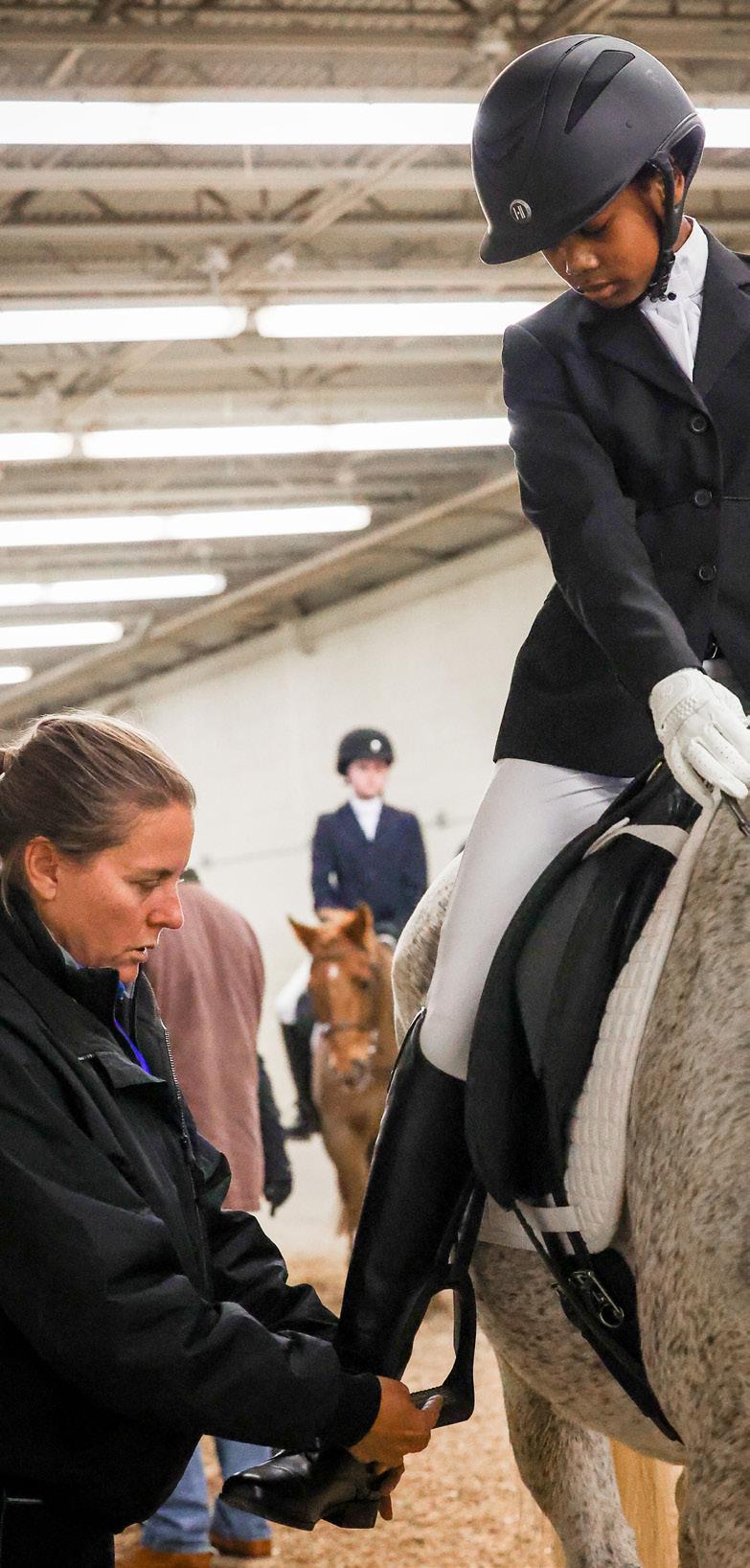
Everyone in equestrian sport has a role in preventing athlete abuse, and there are resources to help all of us keep our sport safe for participants.PHOTO: ASHLEY SWIFT/US EQUESTRIAN
Attwood Equestrian congratulates Tamie Smith and Mai Baum of Next Level Eventing on winning the 5* Land Rover Kentucky Three Day Event!
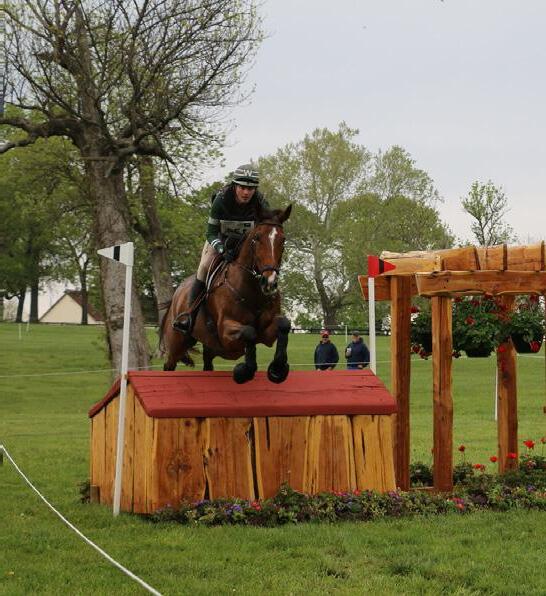
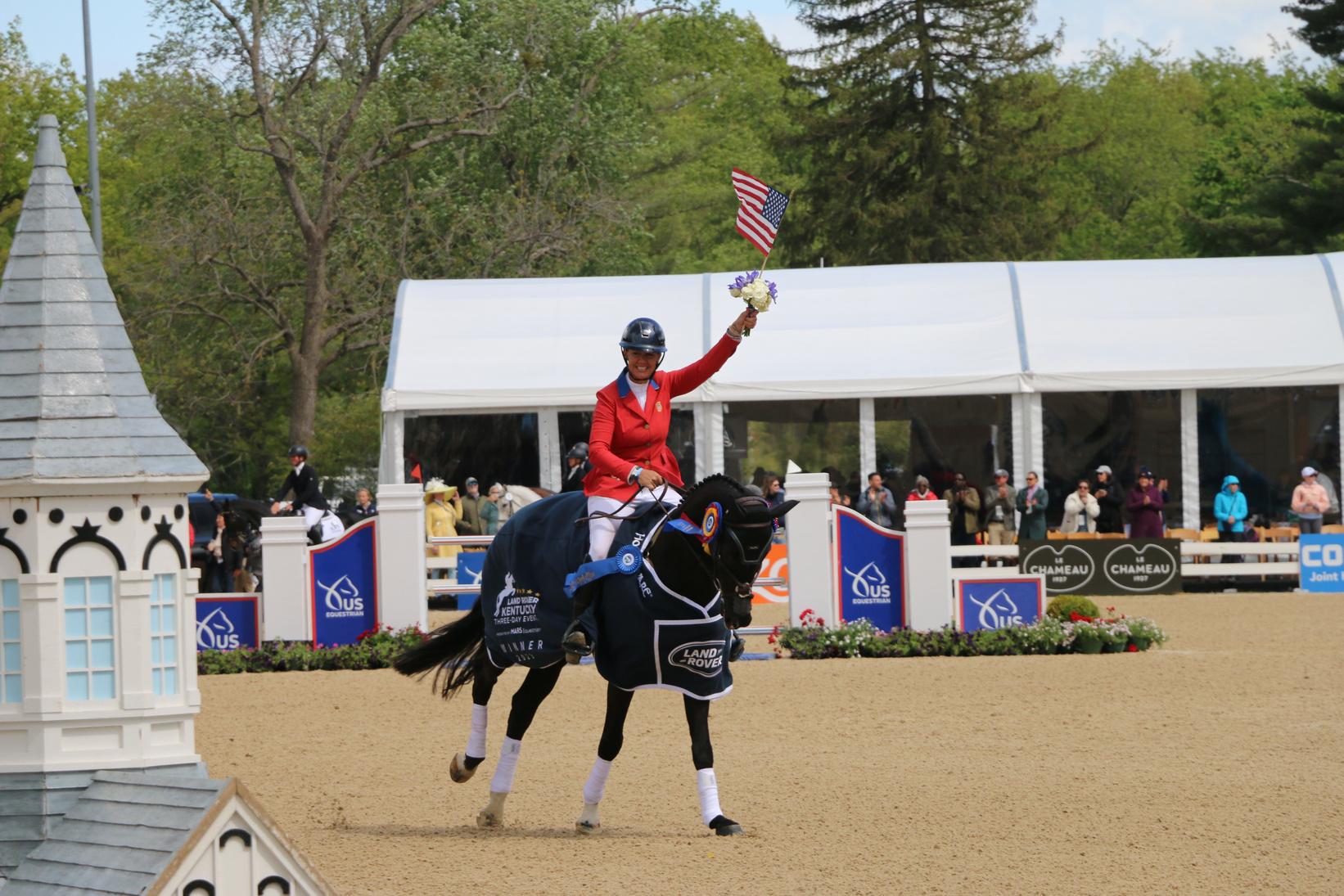
Congratulations to all competitors!
Attwood Equestrian arenas are installed at multiple world class show facilities across the nation, including the Maryland 5* at Fair Hill, Stable View, The Carolina Horse Park, Great Meadow, Morven Park, The Virginia Horse Center, and more. Contact the experts for your next project!

www.equestriansurfaces.com
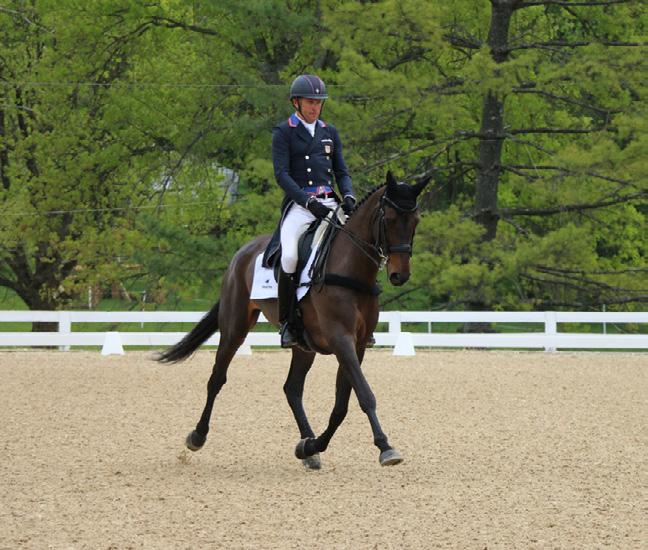 The Official Footing and Arena Company of US Equestrian
Ryan Wood on Cooley Flight
Boyd Martin on Contessa
The Official Footing and Arena Company of US Equestrian
Ryan Wood on Cooley Flight
Boyd Martin on Contessa
Because parents and guardians know their children better than anyone, they are well positioned to recognize the subtle behavior changes that may indicate abuse. Parents and guardians should also have open communication with their children to help them understand appropriate behavior by an adult or peer, as compared to the potential misconduct that they should disclose to a trusted source.
USEF has implemented proactive protection policies to harbor a safe environment for young athletes. USEF’s Minor Athlete Abuse Prevention (MAAPP) Policies outline the requirements for one-on-one interactions, meetings and training sessions, athletic massages, locker rooms, electronic communication, transportation, and lodging between a trainer/coach/adult and minors. Parents and guardians should familiarize themselves with these policies to understand the boundaries in place for protecting minor athletes, including what is permitted and prohibited conduct. This will empower them to make informed decisions before permitting interactions that would otherwise be prohibited.
The U.S. Center for SafeSport has created a Parent Toolkit that provides an outline for ageappropriate discussion and intervention to help parents in supporting their minor athletes. The Center also has a 30-minute training module to help educate parents on recognizing, responding to, and preventing abuse and misconduct in their child’s sport setting.
The U.S. Center for SafeSport provides two age-appropriate training courses for minor athletes to educate them on potential warning signs of emotional, physical, and sexual misconduct. The training for youth athletes aged 13-17 focuses on bullying, hazing prevention, supporting friends who have experienced abuse, and reporting resources. The training for youth athletes aged five to 12 helps teach the difference between discipline and abuse, the importance of a healthy sport environment, and how to discuss concerns with a trusted adult. Both training courses require parental consent for registration.
For many, equestrian sport involves hours of training and caring for equine partners, most of which happens outside the competition setting. It is imperative that trainers and coaches are well versed in safeguarding requirements and are implementing necessary protections and best practices, particularly given the responsibility that their position of trust and power creates.
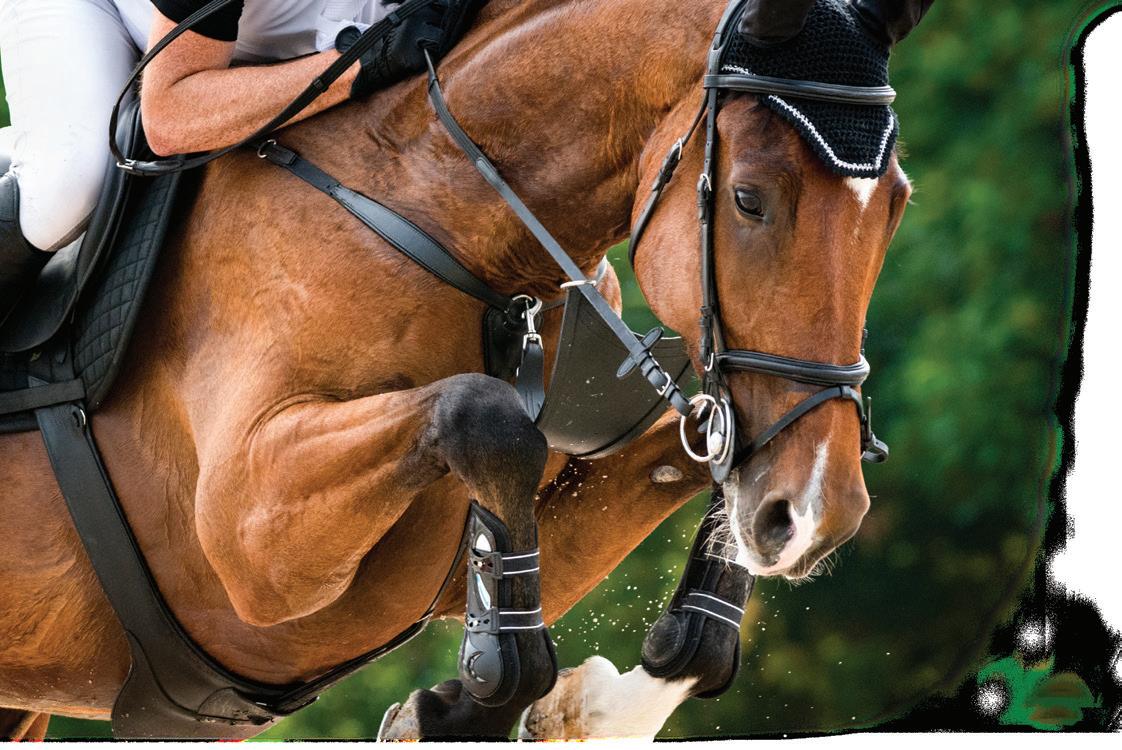
Challenge: Dehydration, electrolyte depletion Solution: Summer Games® Electrolyte
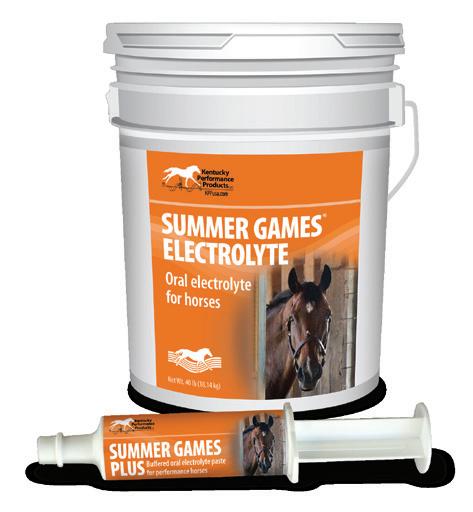
• Replenishes the electrolytes and trace minerals lost during sweating.
• Stimulates the thirst response to keep horses drinking.
• Supports quick recovery after competing in hot, humid conditions.
Simple Solutions, Scientifically Proven ®
Even if your child is not forthcoming about disclosing abuse, there are some important signs to look for that may indicate abuse. Be on the lookout for these signs not only in your own child, but also in others on their team.
Immediate Signs
• Loses enthusiasm for sport, even for competition
• Doesn’t want to practice or skips out on practice without an explanation
• Stops trying in practice or competition, perhaps in hopes of getting kicked off the team
• Performance declines
• Avoids contact with a particular individual, such as a coach, assistant coach, or athletic trainer
• Changes from outgoing to reserved, depressed, and withdrawn
• Has a sudden mood change, such as a violent emotional outburst
Long-Term Signs
• Poor self-esteem
• Trust issues
• Anxiety
• Feelings of isolation
• Depression
• Self-destruction
• Sexual maladjustment
• Substance abuse
Keep in mind that these behaviors individually do not necessarily indicate a child has been abused. You know your child and their behaviors better than anyone. But if several of these behaviors are present, there is probably something going on that is making the child reluctant to participate in their sport.
If you have observed these behaviors in your child, open up a conversation to find out what may be going on.
Reprinted with permission from the U.S. Center for SafeSport Parent Toolkit. Learn more at uscenterforsafesport.org
Trainers and coaches easily can be the determining factor in whether or not a young athlete has a positive and safe equestrian environment.
SafeSport training is an annual requirement for USEF trainers and coaches, as well as for all USEF Senior Active Members. SafeSport training plays an important role in raising awareness and creating a safer environment for our competitors. It also equips trainers and coaches with the knowledge necessary to prevent, recognize, and respond to abuse and misconduct. This can help trainers and coaches recognize improper training practices, peer-to-peer abuse, and warning signs that the young athletes under their tutelage might be suffering.
The training also empowers trainers and coaches by providing them with a clear understanding of reporting requirements and the resources they can access to ensure they make an appropriate response when potential abuse is identified.
USEF’s MAAP Policies detail the requirements for permissible interactions, as well as the limited exceptions to these policies, such as when a trainer obtains written parent/guardian consent consistent with applicable laws and ethical standards. Both USEF and the U.S. Center for SafeSport also have sample consent forms available on their websites (usef.org and uscenterforsafesport.org, respectively) that can assist in creating a consent form for trainers.
Beyond athletes and trainers/coaches, USEF works with many others behind the scenes to ensure a safe equestrian environment. Competition organizers are required to comply with the annual SafeSport training requirement, undergo a background check to help ensure a safe environment for competitors, and implement best practices to promote a safe competition environment for all athletes. For example, competition organizers are required to display USEF’s MAAP Policies posters in conspicuous locations throughout their event’s venue. USEF-licensed competitions must also send a direct communication to all participants within 30 days of the start date of each competition reminding participants of the SafeSport requirements. Organizers also must check all participants at an event against the USEF Safe Sport sanctions list and remove any banned or suspended individuals from the grounds. This includes checks on riders, coaches, trainers, owners, officials, staff, vendors, media personnel, and anyone else engaged or authorized by the competition to perform or to provide products or services.
Ultimately, the goal of these policies is to ensure a safe environment for all equestrian participants, especially our youngest equestrians who hold the key to horse sports’ bright future.
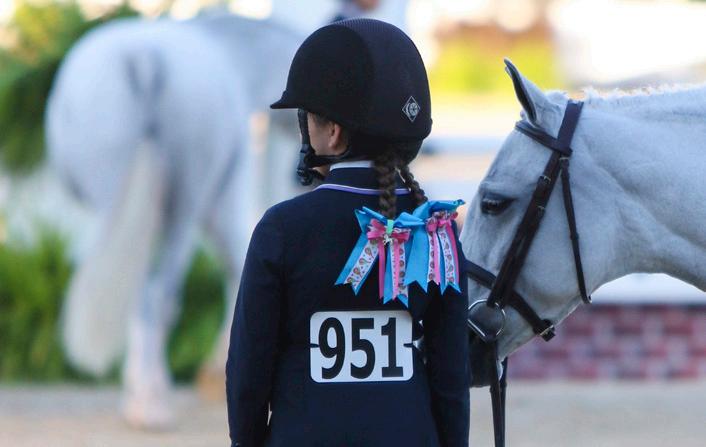


USEF Pony Finals presented by Honor Hill Farms brings hundreds of ponies, young riders, and families to the Kentucky Horse Park for an event that’s as much about learning, friendship, and fun as it is about competing. Whether you’re attending or watching the livestream from home, US Equestrian resources can help you get ready.
If you’re a pony fan, August 8-13 is the most wonderful time of the year: it’s 2023 Pony Finals time! There will be national championships on the line for junior equestrians and their ponies, and the pageant of beautiful ponies of all sizes, colors, and breeds makes for some of the competition year’s best viewing. Best of all, US Equestrian members near and far can enjoy the spectacle and athleticism on display by tuning in to livestream on USEF Network powered by ClipMyHorse.TV.
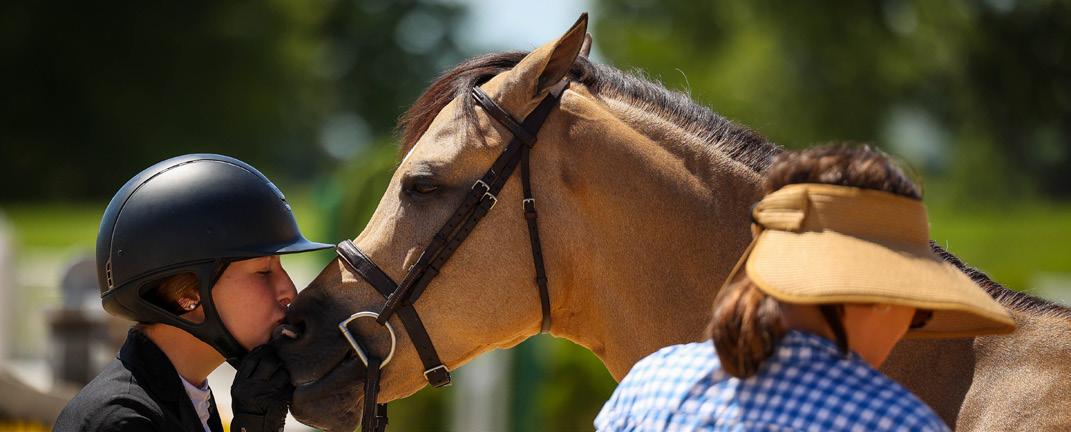
If you’re attending the competition, there’s so much to explore! Spend time ringside to cheer on your friends or pick up some show-ring tips. Check out the Pony Finals Activity Center in the Rolex Stadium breezeway for fun crafts, coloring, and other activities for everyone—pony riders, family members, and your pals. There’s also Pony Land by Rolex Way for a variety of inflatables, including bounce houses. And Dalman Jump Co. is sponsoring the popular Kid Grand Prix, a jumping competition on foot—there might be a chance for the family dog to join in, too!
There’s also a competition within a competition during Pony Finals week. The Emerson Burr Horsemanship Grant competition’s National Test, which is open to all Pony Finals competitors, will take place Tuesday through Thursday of Pony Finals week at the Concierge Table. Participants in four age groups take a written multiple-choice test on horsemanship, followed by a hands-on horsemanship test. The winner from each age group will receive a $500 grant to be used toward education-related expenses, and additional prizes also will be offered.
And don’t miss the iconic Pony Finals Golf Cart Parade on Thursday after the awards ceremony. Barn groups and friends decorate their golf carts on themes ranging from the downright silly to the super-fantastic with the chance to win prizes. Attendees can sign up for the parade in the horse show office.
The United States Hunter Jumper Association’s free clinics are always a big draw. They’re available in the Covered Arena, and in-person clinics are also available for the public to audit, as long as there is open seating in the arena. Learn from the experts in clinics about sports psychology, walking a course, the judge’s perspective, and showing a pony in model classes. Learn more, including clinic times and clinicians, at ushja.org/ PonyFinalsClinic.
Also in the Covered Arena Aug. 8-11 from 9 a.m. until noon: pony arts and crafts. Additional activities will also be offered throughout the week and will be listed on the hospitality schedule.
Get ready for Pony Finals with USEF’s Learning Center, too. We’ve got video tutorials about the hunter discipline, including topics like finding a consistent distance, handy hunter exercises, what makes a winning hunter round, and what can go wrong in a hunter round, as well as an introduction to show hunters. Are you a kid who’s never tried the sport but feels inspired by Pony Finals? Take a look at our video “Your First Riding Lesson” to get an idea of what to expect from your first riding lesson.
Learn more about USEF Pony Finals presented by Honor Hill Farms at usef.org/compete/disciplines/hunter/usef-pony-finals
 by Emily Girard
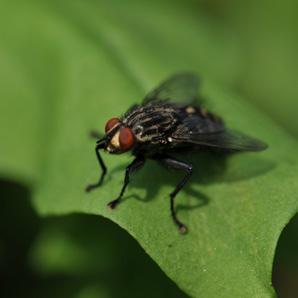
Stable flies cause approximately $2 billion in damages to the agricultural industry every year, according to the U.S. Department of Agriculture. They also carry diseases such as anthrax, equine infectious anemia, and anaplasmosis. Not surprisingly, entomologists and equine wellness professionals are developing methods to keep flies and other pests away from horses.
“It’s important for people to start the fly-prevention process appropriately so that they get the right management tools in place,” said Dr. Sonja Swiger, a professor in the Texas A&M University Department of Entomology and extension specialist with the Texas A&M AgriLife Extension.
Swiger said the most effective system is integrated pest management. This involves deterring and attacking pests based on their biology and specific needs—for example, controlling where pests congregate.
“When we’re dealing with mosquitoes, obviously water is a huge part of that. We need to figure out where those water sources are,” she explained. “When we’re dealing with house flies and stable flies, we’re going to be dealing more with a manure consistency or leftover vegetation from mowing and not composting appropriately.”
USEF specifically recommends keeping stalls clean, clearing damp areas, not dumping soiled bedding near barns, and installing window screens.
Swiger’s colleagues also research fly predators—parasitoid wasps that attack fly larvae.
“They are really efficient at managing many of these fly species,” she said. “They’re not always super effective in pasture situations, but they work really great around barns.”
Additionally, new research is being done to increase effectiveness of fly deterrents. Dr. Junwei “Jerry” Zhu, a lead scientist in the USDA’s Agricultural Research Services, recently found fatty acids in coconut oil to be an effective fly repellent.
“Right now, the biggest problem for natural products is they’re short-lived, so they only last about six hours or eight hours max. These coconut fatty acids from our lab test can last for two weeks,” Zhu said.
Top: Innovations in protection from flies include textiles or fabric treatments that can deter flies, such as Horseware Ireland’s No-Fly Zone™ technology.
Inset: Flies can be more than a nuisance around your horse and barn. They also can carry diseases such as anthrax, equine infectious anemia, and anaplasmosis.
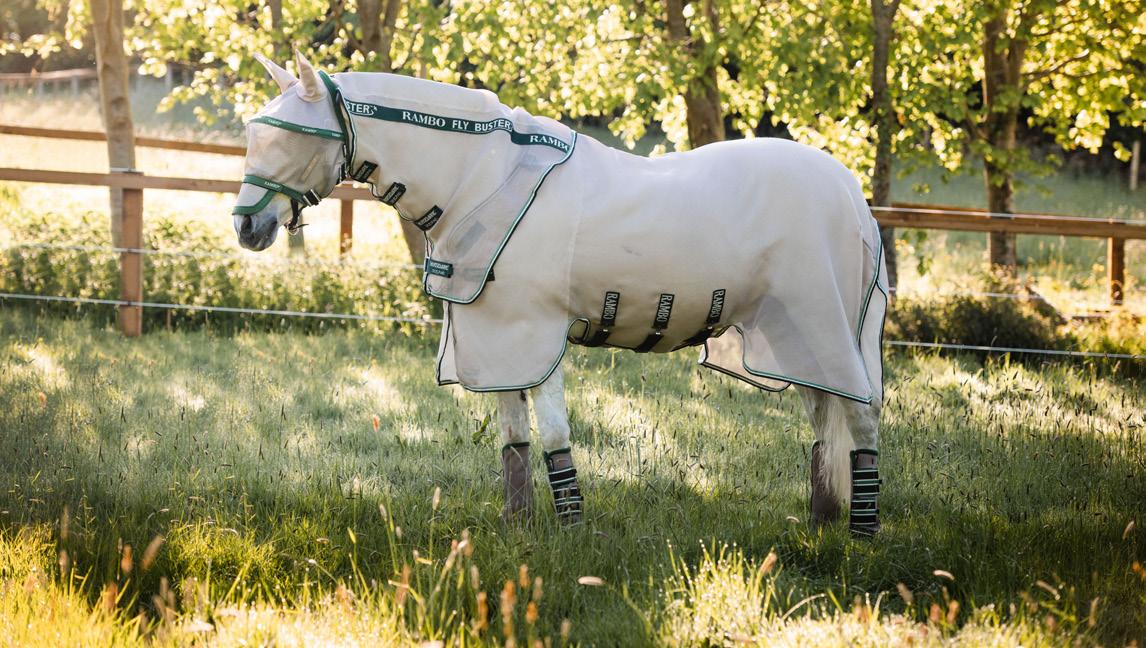
The arsenal against flies includes reliable go-to products, and there are innovations in the pipeline, too. Your best bet: an integrated approach.
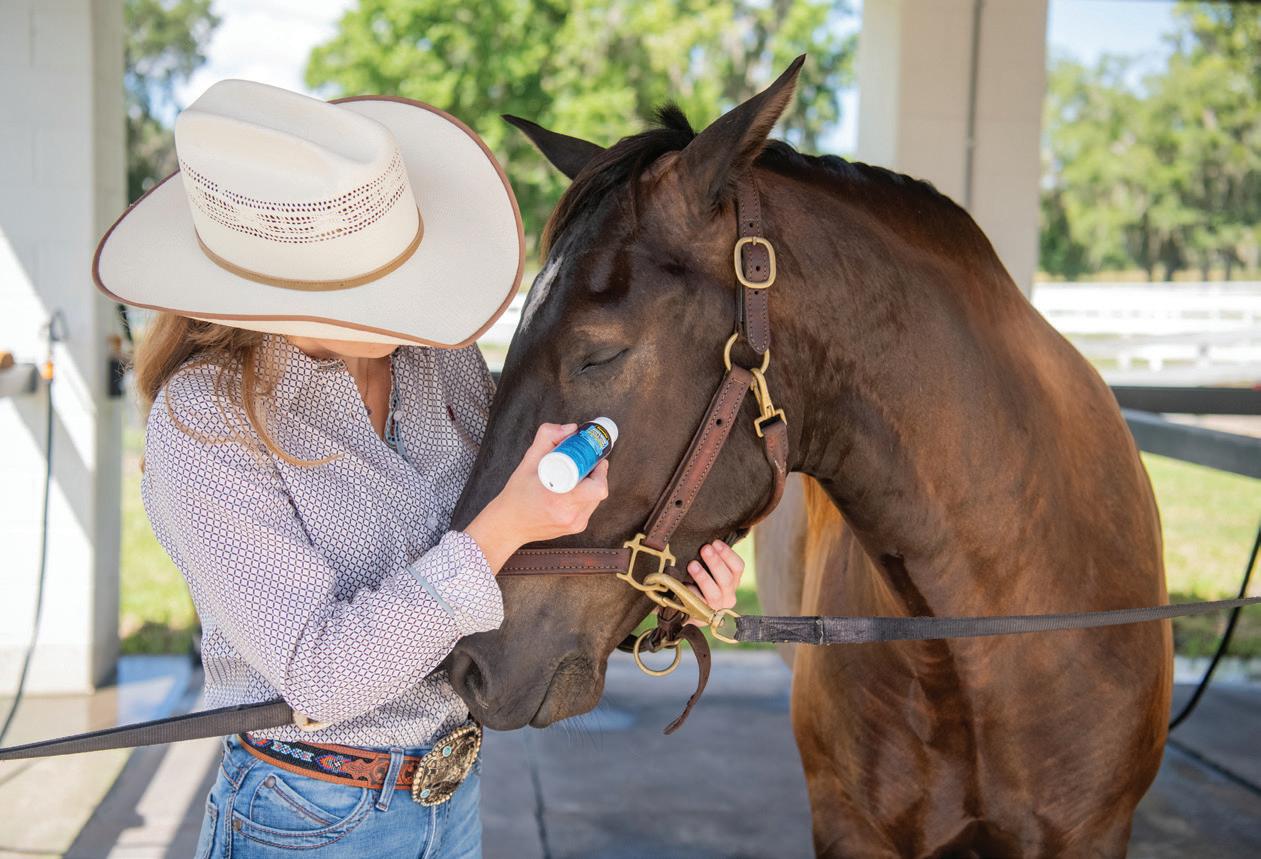


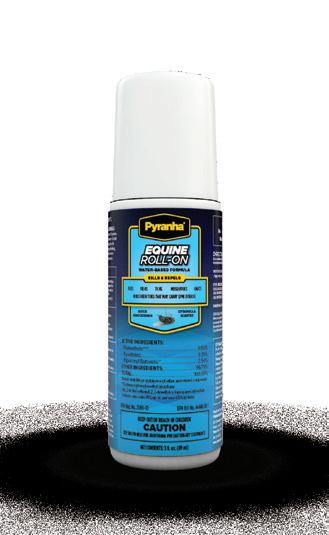
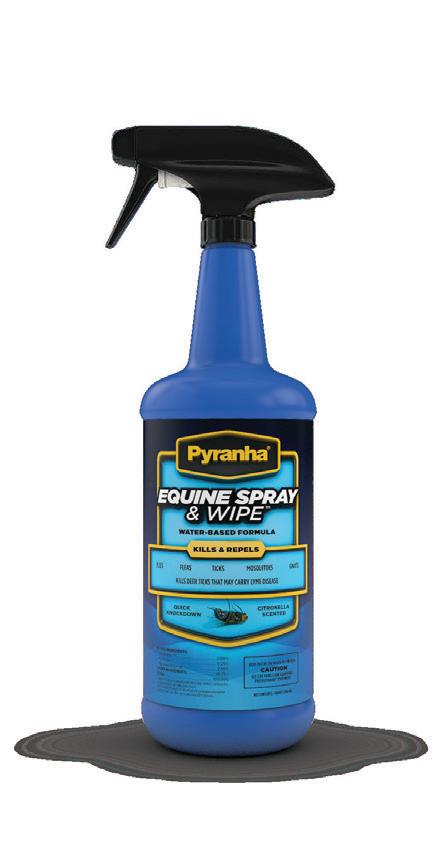
Zhu also develops traps and attractants to direct flies somewhere other than onto livestock.
“One company working with us actually developed a stable fly tape trap with the discovered attractant impregnated into an adhesive material,” he said. “We placed 12 traps in the cattle feedlot, and in a week, we captured around one million stable flies.”
Amy Cairy is the Vice-President of Marketing for W.F. Young, the parent company of Absorbine and UltraShield fly sprays. Cairy said fly control needs differ based on climate and region.
“I’m up in Massachusetts; the flies and mosquitoes haven’t started flying yet. But we have a lot of our customers in southern California or Texas or Florida, and their fly population is year-round,” she said. “The bugs are very different, and the tools that we have to combat them need to be different as well.”
UltraShield has variations on its fly spray to cater to specific client needs. These include the well-known and heavy-duty UltraShield EX; the natural-based UltraShield Green; the cypermethrin-based UltraShield Sport for humid conditions; and UltraShield Red, which has five active ingredients.
“Having a good, rounded formula that’s going to address a number of insect species is going to be able to give you that quick knock down and repellency,” she said.
Regarding spray application, Cairy has five tips to help you maximize efficacy:
• Start with a clean horse so spray doesn’t rub off when the horse sheds dust or hair.
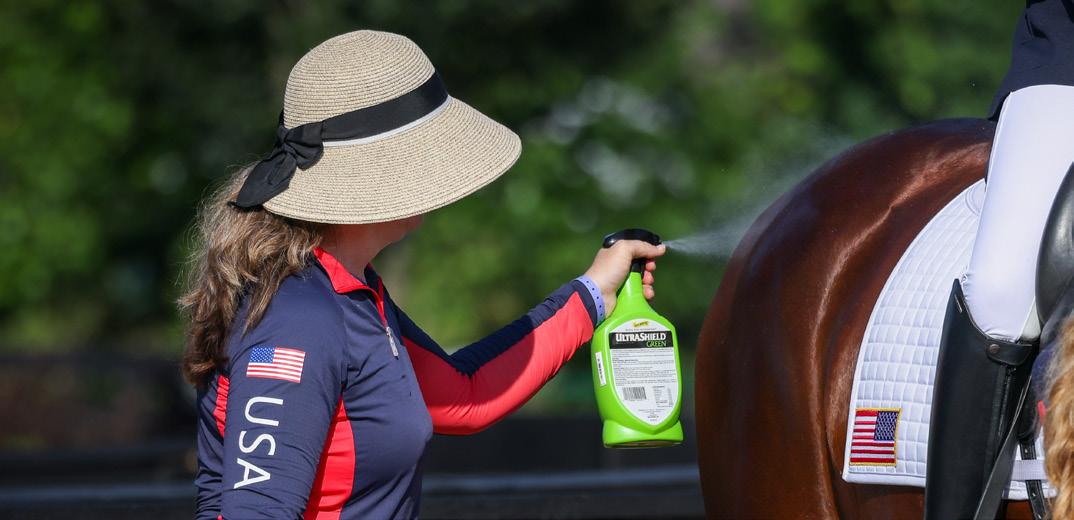
• Shake the bottle before application.
• Before spraying, brush the horse’s coat against the way the hair naturally falls to get spray closer to the skin.
• Follow the manufacturing label instructions to determine how much to apply.
• Ensure complete and even coverage.
“It’s the holes that you’ve missed that are causing you to reapply, rather than the fly spray really not working,” Cairy said.
A
Since stable flies are attracted to waste and manure, Cairy also encouraged holistic insect deterrence.
“There are a lot of fly sprays that also can be used as premise sprays, which means they can be used around the barn, on screens, around doorways, around muck tubs, in a muck tub, any place that is going to attract insects,” she said.
“Chemicals are not always the answer. It is a role, but it’s part of the answer,” Texas A&M’s Swiger explained. “When you deal with heavy horse fly attacks, putting on some type of protection over the animals plays a bigger role in stopping that biting.”
Typically made of polyester or nylon, a fly sheet can help protect your horse or pony from biting or simply irritating (and potentially disease-carrying) flies and reduce stress and pacing during turnout.
In addition to providing a physical barrier, many sheets are boosted with specific textile technologies to better repel flies. For example, Horseware Ireland treats some lines of its fly sheets with No-Fly Zone™ technology which it says deters flies from hanging around long enough to bite after they land on the sheet.
Treated sheets can also develop further; for example, Zhu said that coconut fatty acids can be integrated into textiles.
“A US company working with USDA-ARS (Dr. Zhu’s lab) from South Carolina [is] developing some U.S. soldier uniforms [with] this fatty acid repellent impregnated onto a textile, and it worked really well to deter the stable fly bloodsucking,” he said. “We can make a sleeve and let the horse producer, if they’re interested, put it on to see if they’re going to work or not.”
“Livestock entomology is a field that’s focused on keeping our animals safe when it comes to ectoparasites…because there are many insects that do thrive off of blood from livestock,” Swiger said. “Integrated pest management is our best tool. It’s the most efficient way.”
lot of fly sprays also can be used as premise sprays, which means they can be used around the barn, on screens, around doorways, around muck tubs, in a muck tub, any place that is going to attract insects.
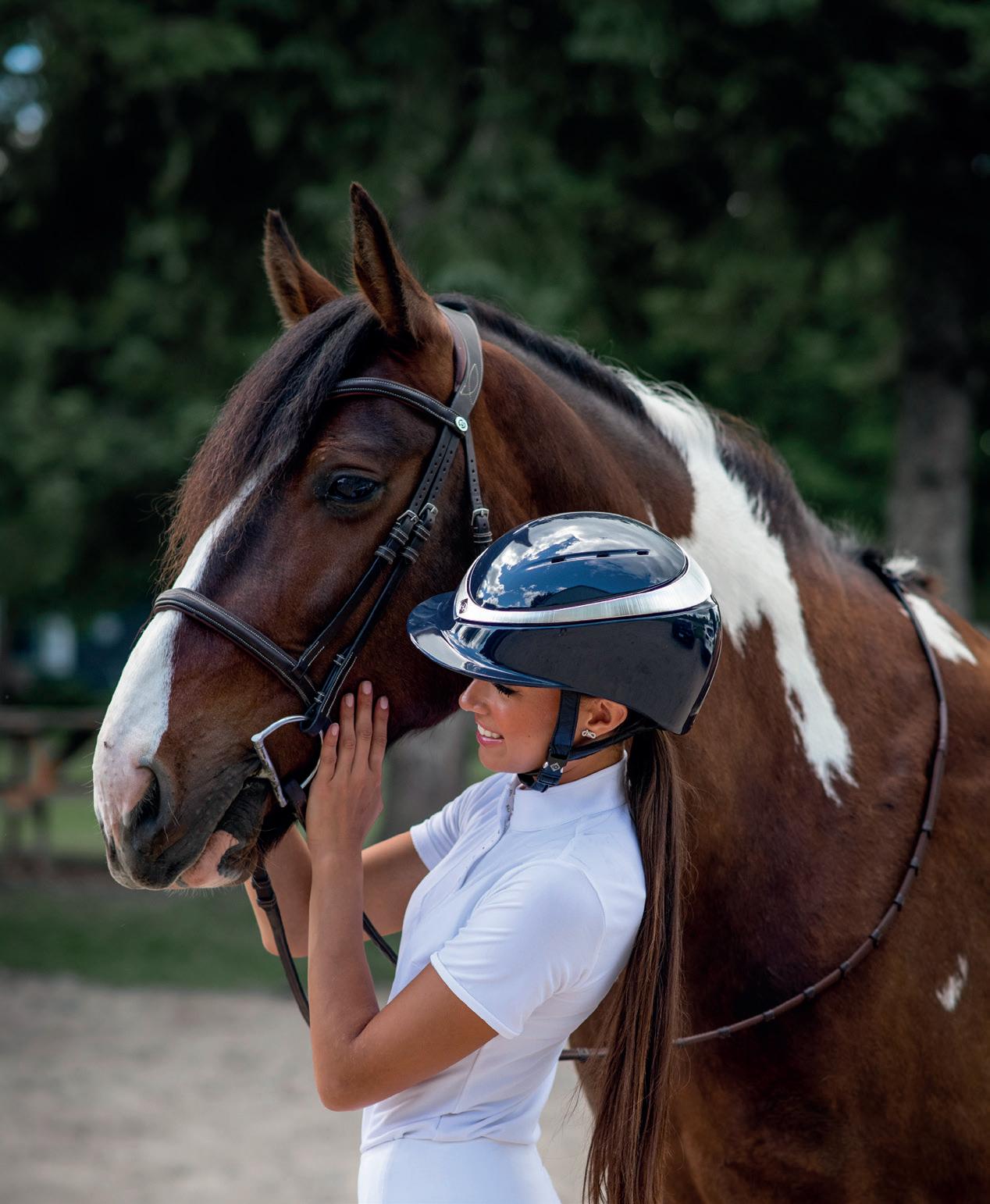


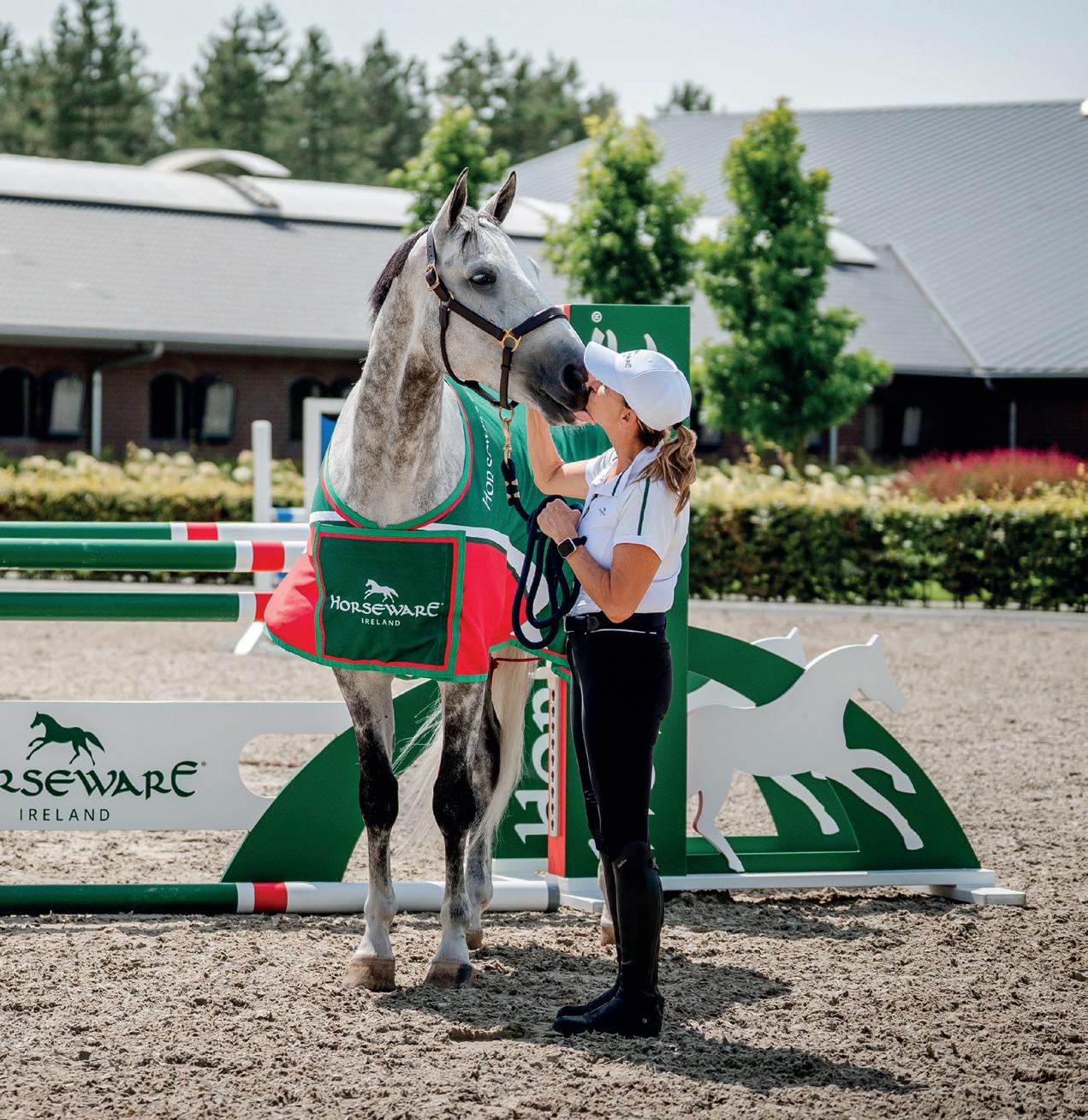

When I first got into dressage about 25 years ago, I really had no idea what I was doing. I didn’t even know it was a discipline. I just thought it was something we did as part of flatwork for jumping. As an adult two things attracted me to dressage. One is the connection I feel with my horses, and I believe an important part of dressage is having a clear dialogue in your partnership. The other part is that dressage is just good training. It’s good horsemanship. I don’t think I really grasped that until I read the FEI levels and connected those dots. I recognize now the importance of the training scale and how each level builds and prepares for the next.
That reminds me of education a lot. In education, we call that backward design, where you start at the end goal for your students or the assessment at the end of the unit. Then you look at how you’re going to get your students there. I feel that now about dressage: every exercise, every movement, every pattern has a purpose or an end goal. And I think that’s really cool.
I’ve been teaching high school for 22 years. As a teacher, one of my jobs is to create and implement lessons for my students. I have to know the learning styles of every kid in my
room and how I can best help them. It’s the same with training horses.
With my students and my horses, I think it’s important to walk into the room or the arena in a good mood. And in both places you have to stay organized and have a plan. Things don’t always go according to plan with the horses, but I have an idea of what I want to accomplish that day. One of my coaches is actually a highschool teacher, too, and we often discuss that we’re looking for just a 1% improvement in our students and with the horses, too. Rome wasn’t built in a day, but if we can just chip away at 1% each ride, we’re doing pretty darn good.
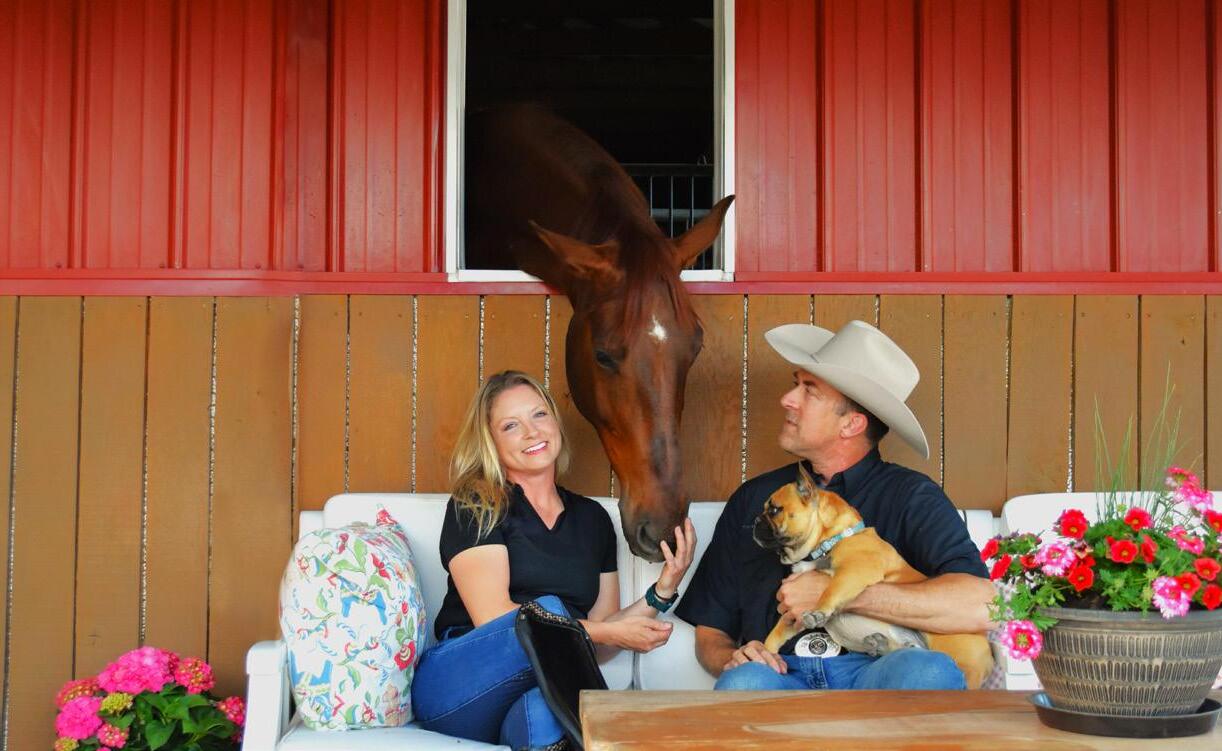
I can’t even tell you how many times I’ve been worried that I couldn’t achieve my goals on a budget. I’ve come up with three strategies to help me get there.
First, I make sure every dollar I spend has a direct purpose that I can connect to my goal. For example, last year I couldn’t afford to go to my regional championships and also to U.S. Dressage Festival of Champions, so I had to make a choice. Festival was my true goal, so I had to skip regionals if I made the cut for Festival.
Second, I try really hard to keep my eye on my goal and understand that everything
Zen Elite Equestrian Center, located in Southwest Ranches, Florida is everything the name suggests and much more. The state-of-the-art facility hosts a spacious covered arena, two huge outdoor arenas and a full rehab/spa. From the cascading waterfalls in the rider’s lounge, to its peaceful statues and inviting gardens, Zen Elite Equestrian Center envelops visitors in a spa-like relaxed atmosphere. But Zen Elite is more than just soothing to the soul. The facility is unique in its scope, hosting grassroots dressage and jumping lesson programs in the same arenas where international trainers are preparing for national and world competitions.
Owner, Heidi Humphries’ vision is legendary, in that it supports the future of horse sport in the spa-like serene atmosphere that is Zen Elite Equestrian Center.
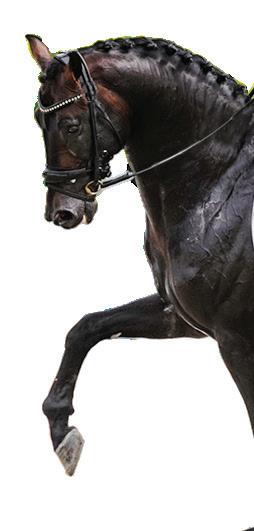

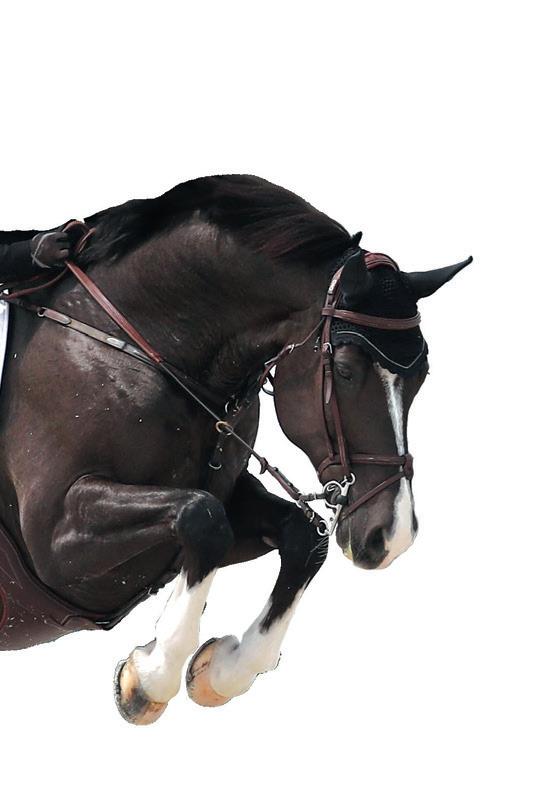


is going to take longer than I want it to. And that’s okay. It took me 20 years of planning, but I knew I really wanted a competitive horse. My strategy over that time was to buy and sell. I started off with a $900 off-the-track Thoroughbred as a high school senior. Each horse I’ve sold or traded was with a lot of emo-
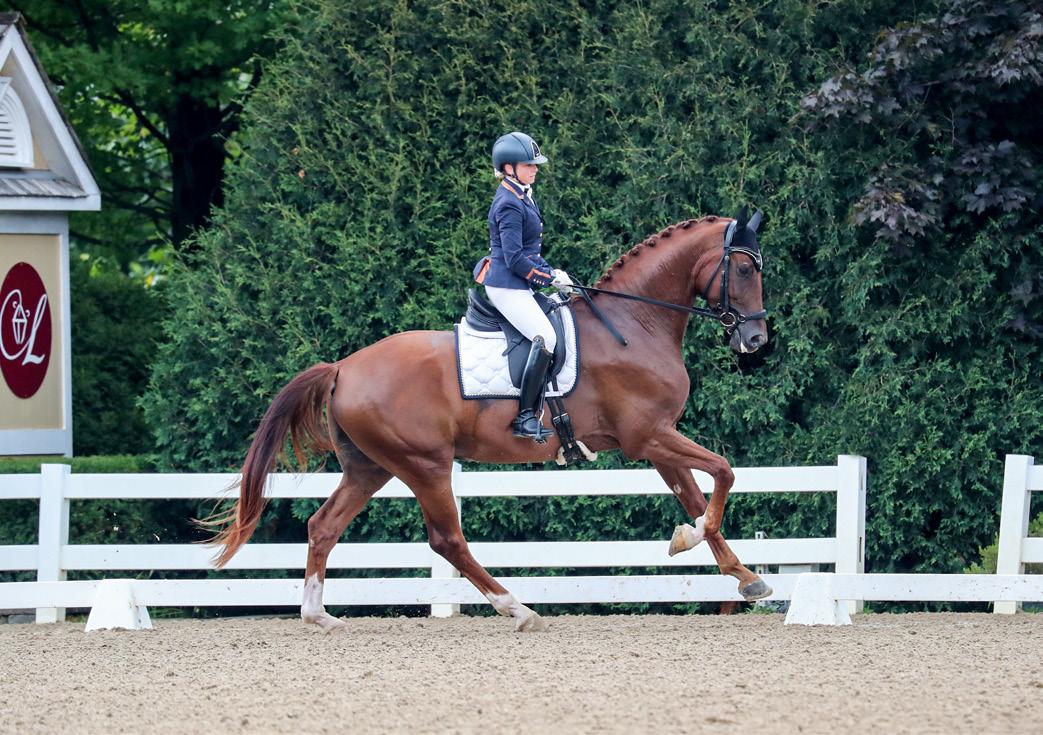
became a mentor for me. One day she called and told me about an interesting prospect. That was Simon.
Simon is five years old and 18.1 hands, so it’s very important that Simon believes I’m bigger than him! When I got him, he was an unstarted three-year-old. I didn’t have a lot of
tion and a broken heart. But I always tried hard to keep the end goal in mind and stay pragmatic. Each horse I got was just a little bit better quality or a little more competitive until I finally had a bigger budget and was able to afford a local young horse that became successful through the developing grand prix program with Martin Kuhn. I knew when the right time came to sell him it potentially would give me the ability to buy my dream horse, and it did. My third strategy is that I’ve made sure to keep positive connections with people I meet, because those connections are invaluable. When I finally had the budget to buy my dream horse, I knew through other people about a woman named Leslie Waterman. Leslie
experience backing young horses, but I decided to train him myself because I had the tools, the facility around me, and the people to help create a program for him.
There are three lessons I’ve learned on this journey. First, I ride with a smile, even when it’s scary. Young horses do silly things and don’t always think about the human on them, but if I can ride with a smile through those things, I can keep Simon from getting tense; if I get tense it would only escalate things.
Another lesson is not to forget to play. I want him to look forward to his rides with me. So once a week I take him out for a field hack, and we just walk. No pressure.
The third thing I’ve learned is to create structure. I think of the arena as Simon’s classroom. It’s where his education happens. I think he knows the expectations I have for him, and I know the expectations he has for me.
“I THINK OF THE ARENA AS SIMON’S CLASSROOM.”
We’re measured by what we accomplish and remembered by what we pass on.
In life, hard work and determination yield rewards and glory. But it’s by ensuring the success of future generations that a legacy is truly built.
CONTACT TIM MCCARTHY 626.463.2545 | WHITTIERTRUST.COM
$10 MILLION MARKETABLE SECURITIES AND/OR LIQUID ASSETS REQUIRED. Investment and Wealth Management Services are provided by Whittier Trust Company and The Whittier Trust Company of Nevada, Inc. (referred to herein individually and collectively as “Whittier Trust”), state-chartered trust companies wholly owned by Whittier Holdings, Inc. (“WHI”), a closely held holding company. This document is provided for informational purposes only and is not intended, and should not be construed, as investment, tax or legal advice. Past performance is no guarantee of future results and no investment or financial planning strategy can guarantee profit or protection against losses. All names, characters, and incidents, except for certain incidental references, are fictitious. Any resemblance to real persons, living or dead, is entirely coincidental. Learn More

For myself, I have learned to conquer fear, the fear of making mistakes. Everybody makes mistakes. It’s okay to fail. It’s part of the process.
I found that I had more education than I thought. It built my self-confidence to do this. It’s about digging into what you’ve learned from different coaches and people over the years and putting it together. Then you come up with a system that works for you. I think in that process you learn you know more than you might think, and it’s okay to give yourself credit for that.
Getting to Festival with Simon represented so much for me as just an average person. It was a personal journey of self-reflection and goal-setting, and, most importantly, just the pure love for the sport and horses. It was a really big deal for me. For me, it was a huge risk. But I thought, “What’s the worst outcome? Is it so
bad in the long run if I don’t make it?” And the answer was no. So I thought, “I’m just going to go for it.”
A coach said to me before Festival, “Everyone goes to win.” My immediate response was, “I’m not.” My goal was just to ride to the best of my ability each day, and it represented a new opportunity for me to grow as a rider and as a teacher for Simon in this electrifying environment.
One of the mornings at Festival, in the hotel bathroom where I was getting ready I looked in the mirror and thought, “Do you belong here? Did you fake it?” And then I thought, “Stop doubting it. You didn’t fake it, you made it.”
That was emotionally charging, especially when you’re warming up with Olympians and people you watch videos of, to be in the same classes with them is like what actors say: it’s an honor to be nominated.
“I’ve learned you really can conquer fear of making mistakes and to trust the tools in your toolbox from a lifetime of riding different horses,” Colleen Rull said of training her now five-year-old dressage horse, MSJ Simon Sez.
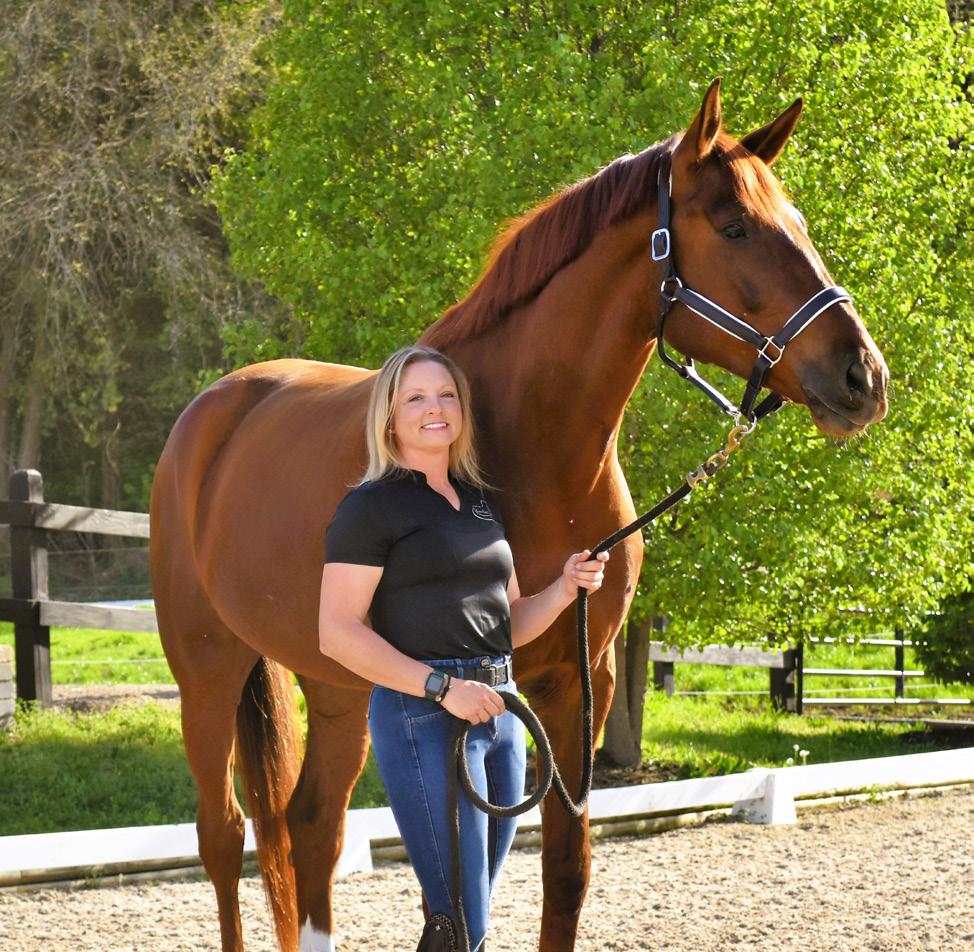

Ariat has your best looks for summer, from elegant English show attire to fun equestrian prints for railside cheering and boots to wear around the barn.
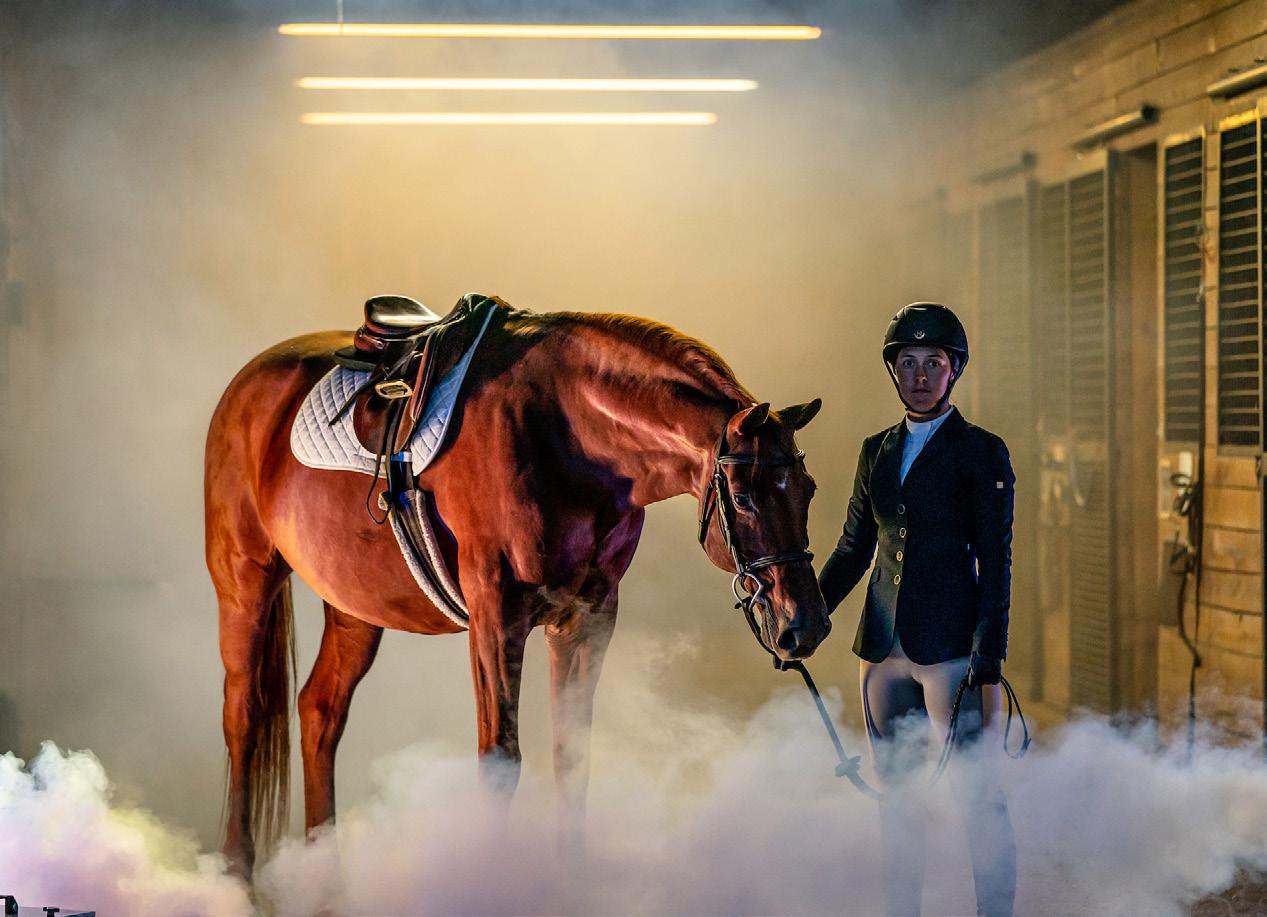
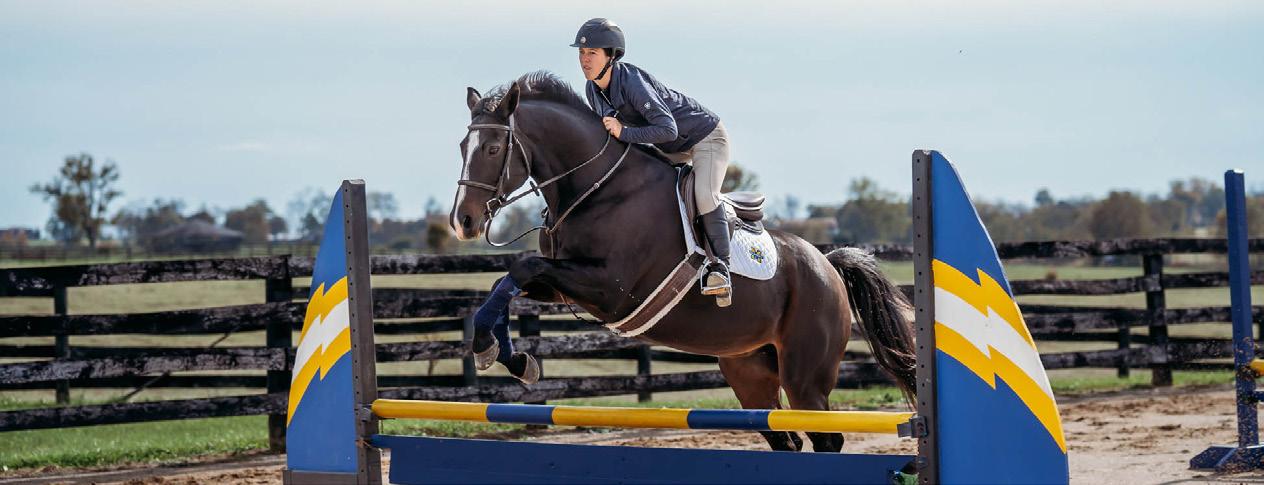
What to wear for those long summer show days? Even a one-day show can mean at least a couple of wardrobe changes, from taking care of early-morning barn business to competing over fences to dinner with friends. Pro tip: add these pieces from Ariat’s summer collection to your closet to help make the transition in and out of the show ring easy.
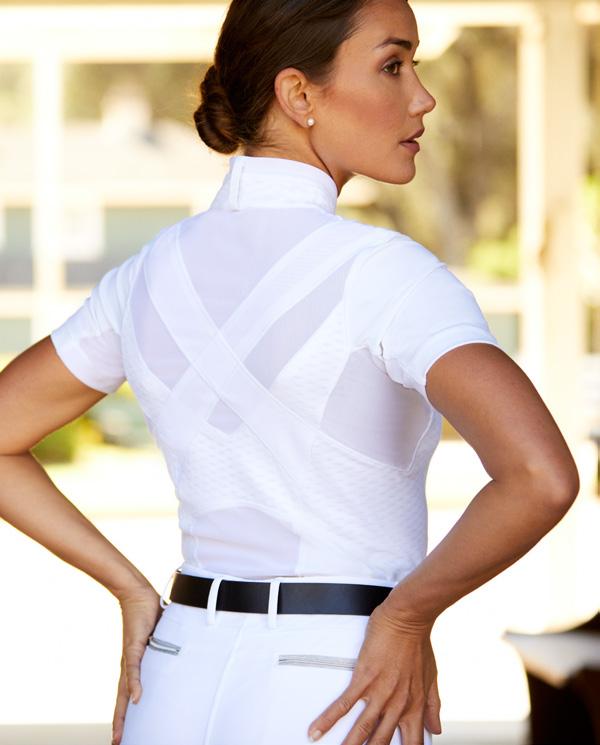
Every good outfit, like every good competition performance, is built on a solid foundation. The Ascent show shirt gives your show apparel a stylish lift with its design and innovative features like PostureTEK™, engineered compression panels that prompt correct posture without restricting your range of motion, Moisture Movement Technology™ and mesh show collar to help keep you dry and cool, and more. Shown here with Tri Factor X Grip full-seat breeches and the Shield belt.
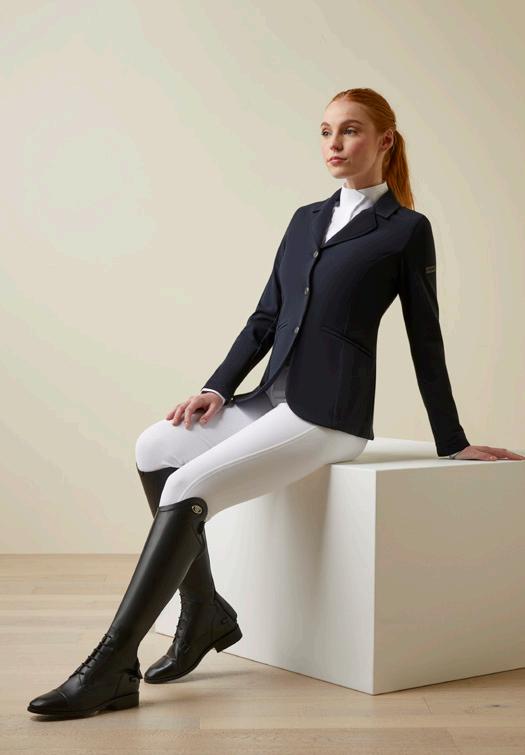
How do you say “sophisticated and elegant” in Italian? Speranza and Ravello do the talking for you. Top-to-toe European styling add perfect touches to your competition wardrobe. The Speranza show coat and breeches are crafted in Italy from premium 360-degree stretch fabric that creates a contoured fit, with a host of thoughtful design features that add a little something extra. Both pieces are beautifully formal, without sacrificing practicality: they’re machine-washable, too. Topped here by the long-sleeved Luxe show shirt.
The new Ravello tall boot is handcrafted in Italy of premium Italian calf leather. It’s timeless and modern with all the details that elevate it from the great to the truly exceptional. Luxurious feel and fit. Classic European square toe. Innovative behind-the-knee mobility curve. Spanish topline with a graceful, understated cuff. Perfetta!
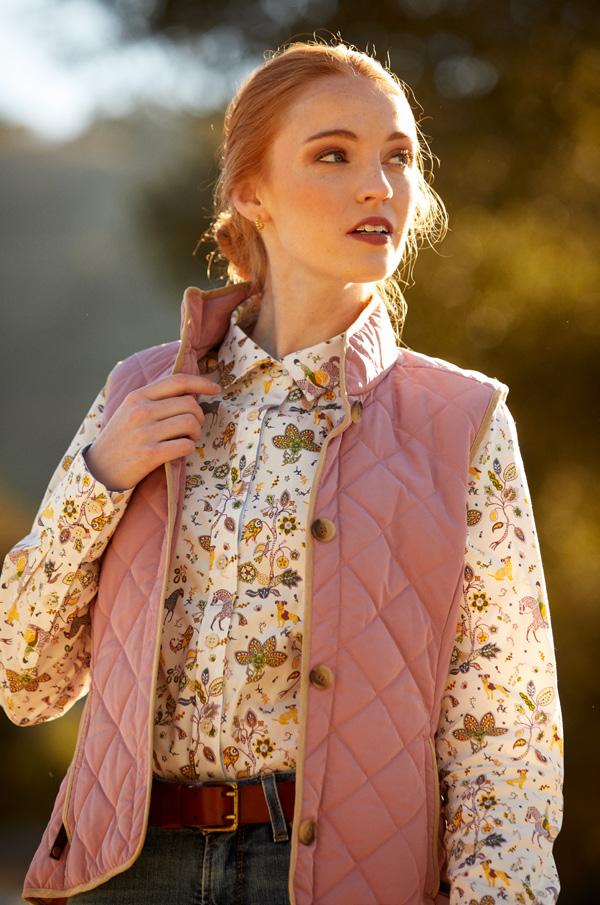
After the show, head out with friends to celebrate the sport you love. This charming pair combines three excellent equestrian attributes: effortless style, down-to-earth functionality, and a fun sense of humor. The Woodside 2.0 vest’s quilted body echoes the traditional barn coat, but Ariat has elevated that iconic piece with zippered hand pockets, faux suede piping, and a snaffle-bit detail at the back. The Tomales shirt’s delightfully whimsical print mixes fun florals with prancing horses and cute puppies—like all the horses and dogs in your equestrian lifestyle, it’s sure to be a smilemaker.
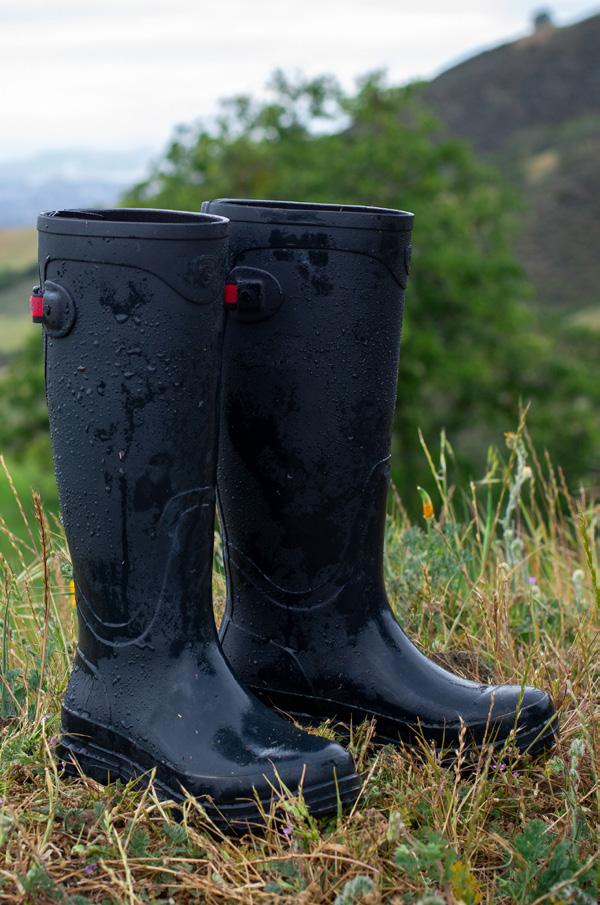
Getting to the show ring takes hard behind-the-scenes work. The Kelmarsh fortified-rubber boot’s practical design helps make your day a little bit easier, from the adjustable back closure (with a pretty splash of color!) to the non-nonsense protection from the elements to the easy-off heel-kick feature. Easy on the feet and, in classic equestrian navy, they’re easy on the eyes, too.
Study the business of horses in one of the world’s only equine industry programs within an accredited college of business. Based in Kentucky, the heartland of America’s horse industry, our program provides students with essential business skills to help them succeed in the equine industry. Courses include equine management, finance, marketing, taxation, law, and more.
Learn more about our BSBA in Equine Business and Horse Racing Industry Business Graduate Certificate, and turn your love of horses into a great career.

When it comes to horses, we mean business.


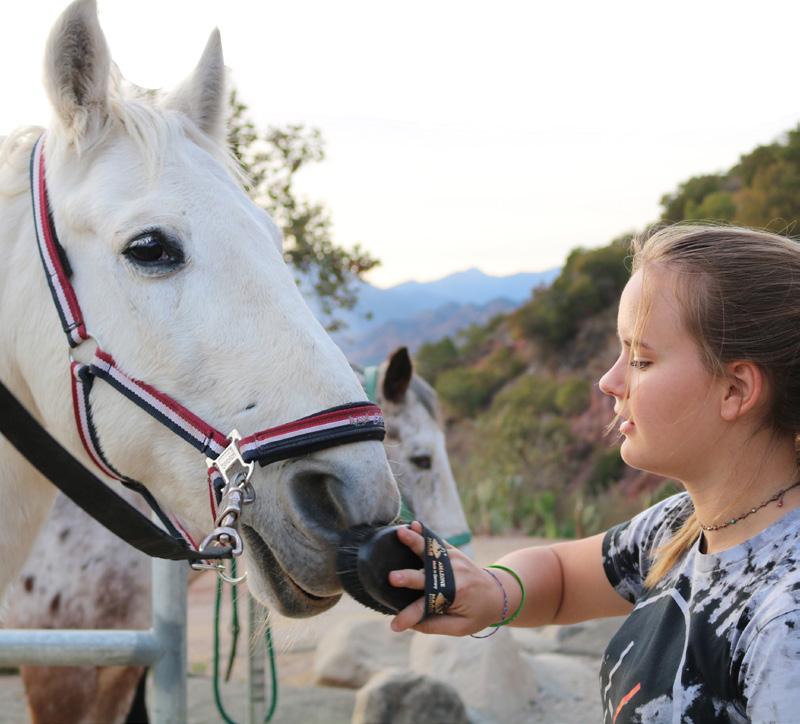
The transition from junior equestrian to intercollegiate team or adult competitor isn’t always easy. We spoke with equestrian
mental coach
Annette
Paterakis about how juniors, parents, and trainers can help young riders take the next step.
 BY GLENYE CAIN OAKFORD
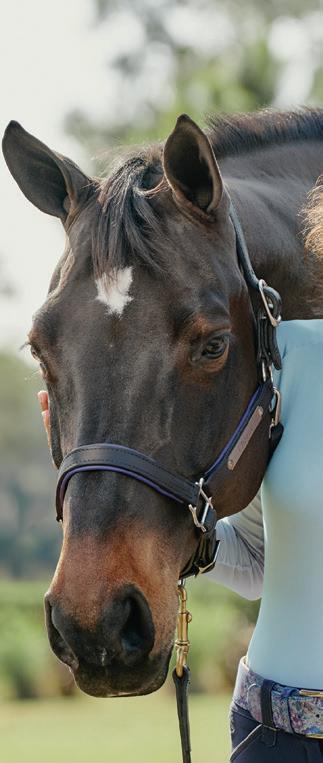
When you’re feeling distracted by emotion or by a situation, bring the focus back by tuning in to your horse. “Go back in your mind to your best ride ever and that feeling of being connected to your horse and present in the moment,” mental coach Annette Paterakis advises.
The transition from junior competitor to collegiate or adult athlete can be challenging for some young equestrians, as equestrian mental coach Annette Paterakis knows first-hand.
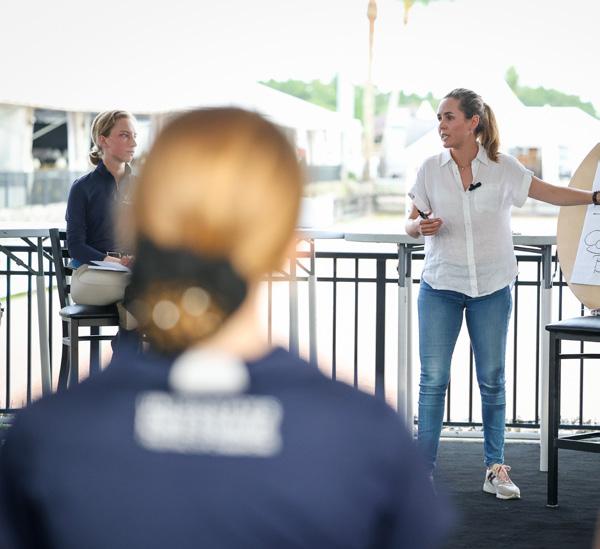
Paterakis studied applied psychology and is a mental coach who works with equestrians; she participated in that capacity at the 2023 USEF Horsemastership Training Series. Paterakis was a successful young rider competing internationally in her early teens. But when she aged into open competition, she struggled—and the more her tension and confusion grew, the more her competition results suffered.
“Before, I was basically placed in the top three almost every weekend, and how wonderful that is for the ego. What came next was therefore more of a shock,” she explained. “Suddenly, I was surrounded by better horses and better riders, and sometimes also riders who were more experienced at that level. Suddenly, I was getting very different results than I used to, to the point that there were quite a lot of eliminations, because I wasn’t really ready to ride at that level yet. It was very challenging for me at that age, and I didn’t really accept that I wasn’t getting the results I want. I wanted to prove myself, and I got very upset when I made mistakes. I’m sure a lot of young riders relate to that. I got more and more in my head. I got more and more focused on proving myself and getting the results, and less and less focus on what actually made the difference.”
Part of the solution, Paterakis said, was to shift her focus to the process of learning and developing, and to see competition results as only a part of that process.
“I saw failure in a very, very negative way and became afraid of making mistakes,” she said. “The moment that happens, it means you’re very attached to certain outcomes. When we’re attached to an outcome, nine out of 10 times, that means that we don’t get that outcome. It doesn’t work that way. We have to learn to let go of the results, so that we can focus on the process. But I didn’t know any of that at the time.”
We sat down with Paterakis to discuss strategies that young equestrians, their parents or guardians, and their trainers can employ to help juniors transition to intercollegiate or adult competition.
First of all, it’s important to understand that around that age, they’re also developing from a teenager into an adult. This transition does come with a few challenges, but it’s important to embrace them and see them as a beautiful growth process. This can be a challenging time for both athletes and trainers. For a junior rider, their role has been a child role, and the trainer is in a kind of parent role, telling them what to do: “This is how you want to approach the course, this is how many strides you want to do between these fences.”
It can be tricky when a child starts to have their own identity and their own ideas; it’s new and comes with different behaviors
and communications that can be challenging for both sides. The important thing to realize is that becoming an adult also comes with responsibility. Thinking for yourself is a helpful skill; you should embrace it. It also comes with making mistakes. For some people, when they make a mistake, they return to the child role and say, “My trainer will just have to tell me what to do next” or become upset without really doing anything about it.
As a parent or coach, invite the child to rise into that adult position. Have an adult conversation. Ask questions. Encourage them. Instead of telling them how it went in the ring, ask them how they think it went. What did they think happened? How is their development going? What did they learn?
Another way is to encourage them to think for themselves. When they are about to walk a jumping course, maybe say, “Hey, why don’t you look at it yourself first and come up with a plan. Then you walk me through it, and I can give you feedback. What do you think?”
In the ring, even if you have a solid plan, there are always moments when we need to make a decision for ourselves.
Know that when you bring yourself down because your results are not where you think they should be, thinking in that way can result in you being more focused on the results and less on what you actually have control over: the process. This is where taking responsibility comes in. If you wanted do better, you have to train better.
Don’t compare yourself to others. Compare yourself to who you were last week. Think, “What can I do better? What’s one thing that if I work on it, I would increase my statistics, my chance of going clear?” Then work on that with your trainer.
Just being critical or negative about yourself is unhelpful. What often does tend to work is analyzing and reflecting after a show—not every single day and not during
your competition, because you need to be focused. But afterwards, reflect and look at whether there is a pattern that suggests an issue you can correct with training.
Comparing yourself to others can also play a role when you transition onto a college team. You can get distracted by the other students, the rest of the team, fitting in, and worrying that you’re going to let other people down. We can worry about all sorts of things when we transition into the very different dynamic of being a team rider. It’s important for these riders to refocus on what they can control. You can’t control your teammates. Instead, notice that you’re distracted and bring the focus back onto yourself and tuning in to your horse. Go back in your mind to your best ride ever and that feeling of being connected to your horse and present in the moment.
If you shrink because you’re worried, you’re not going to perform at your best. You want to step into that powerful you, that adult, that professional. You can’t be critical with yourself and drag yourself down internally. You have to manage your internal dialogue.
As a young rider I was very critical of myself, and I wasn’t enjoying riding because I put too much pressure on myself and was too hard on myself. I see that in a lot of young people. A much better, productive, and even fun way to transition through that is to keep trusting yourself instead of constantly doubting yourself. If you look at any top rider going into the ring and performing at their best, they have this deep trust that even if they don’t know exactly what is coming at them, they trust that they’ll figure it out in that moment. We can do a lot of training at home. At the
show, it’s about stepping into trusting that you’ve trained enough, you know enough, and you are enough.
For riders going on to ride with a team, how can they also add value as a teammate?
If you aren’t picked for the team for a show, think about how you will deal with that. Are you going to sit in a corner or show up to support the team? When you are riding on a team, get to know your teammates. You can ask them what they like, if they want feedback or information from your ride or if they would rather just focus on their own class or ride. Ask them, “Hey, what do you need from me?” We are competitive beings, and we do get angry or frustrated, and that’s totally fine. We want to learn as adults to deal with that. It’s something you have to train: to refocus and put disappointment aside, because it’s distracting. Being an adult doesn’t mean you don’t feel emotions. On the contrary, you’re aware of those emotions, and then we take the next step and say, “Right now, my team needs me” or “Right now, I have a class to ride in” or whatever it is. That is something we can all train ourselves to do at home so it’s easier when we get to a show.
How does that contribute to improving performance?
You need to focus on what actually gets you there, which is being deliberate about your training. There are so many elements that play a role when it comes to becoming better as a rider. It’s not just about riding better horses, riding more horses, or working with the best trainer. It is a lot more about what you can actually control yourself, which is extremely
exciting. There are no limits. The only limit we find is the limit in our own mind. If you keep taking the next step and you believe that it’s possible to improve, then you will keep improving. Personally, I think that’s incredibly exciting. When I was a teenager, this would have changed my world. But, at the time, I was fixated on being good enough, on proving that I was a good rider, and that became my focus instead of what actually made a difference. When we’re trying to feel validated or good enough, when we are comparing ourselves to others, it’s very distracting.
This kind of mental training takes place over time, doesn’t it?
I think it’s important that mental training should be a normal aspect of your development, not something you only do when you have a problem. It’s something that can help you avoid problems as part of your overall training as an equestrian. Just as you want to train yourself to avoid injury, you want to mentally train yourself to avoid being inconsistent. You can see mental training as a journey rather than as fixing a problem and then you’re done. If you go to a gym and work out for six months and then you stop going, you lose that fitness. It’s the same with your brain. You really need to use it or you lose it. Investing in yourself this way has a lot of elements to it and is about more than just what you’re doing in the saddle in the show ring. That gives a lot of opportunity. So start somewhere, by reading a book or asking questions or by researching online or working with a mental coach to better yourself mentally, to learn about yourself and how your brain works. You’ll be training that muscle, too, to be prepared for the important moments.
“Step into trusting that you’ve trained enough, you know enough, and you are enough.”
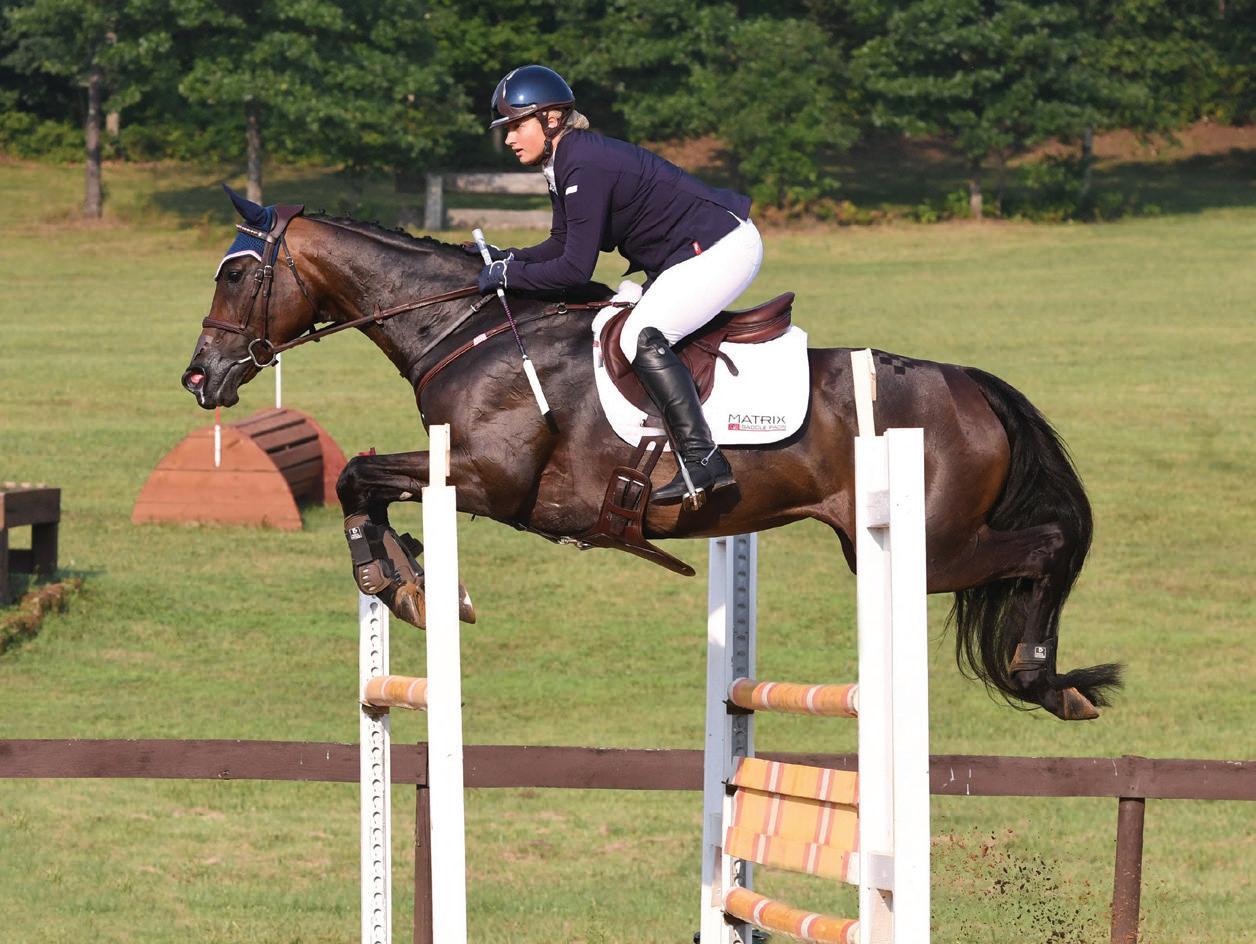
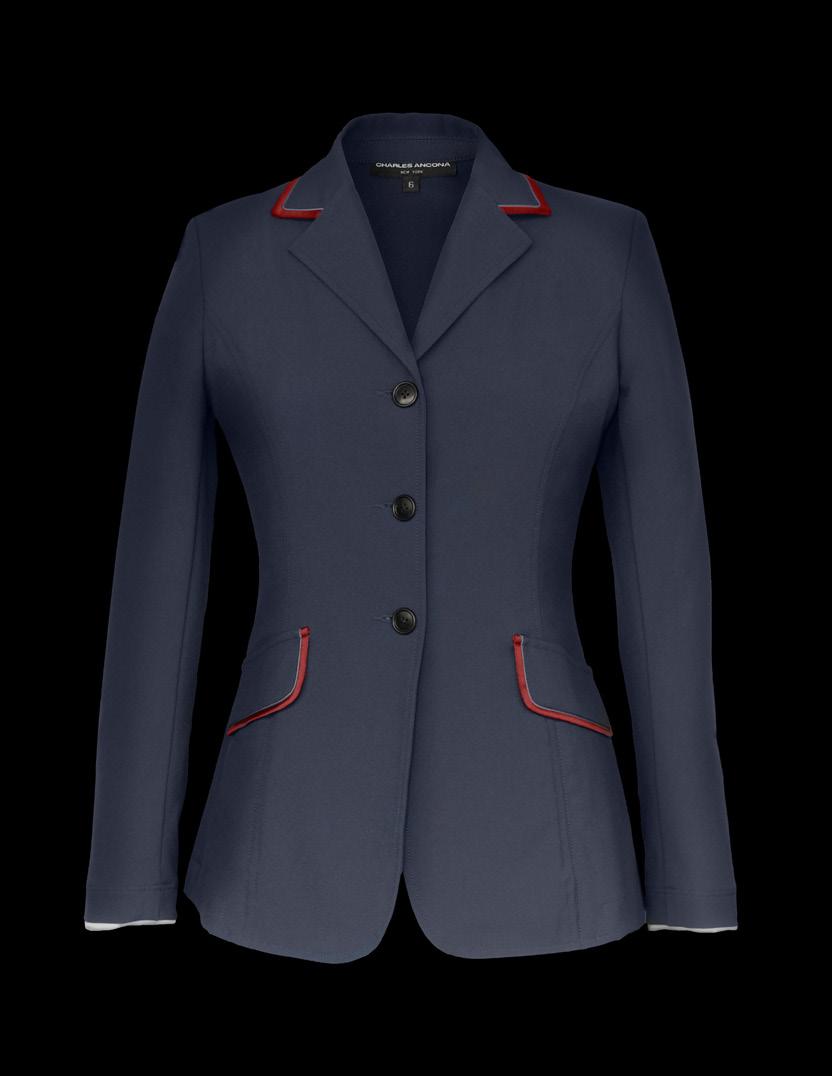
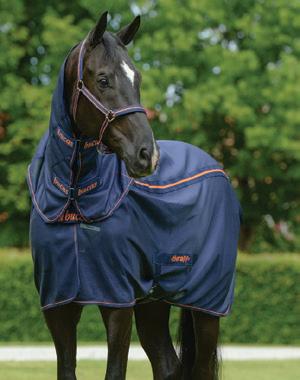
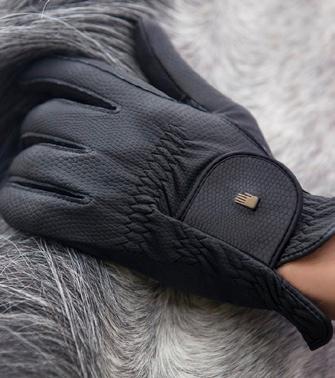

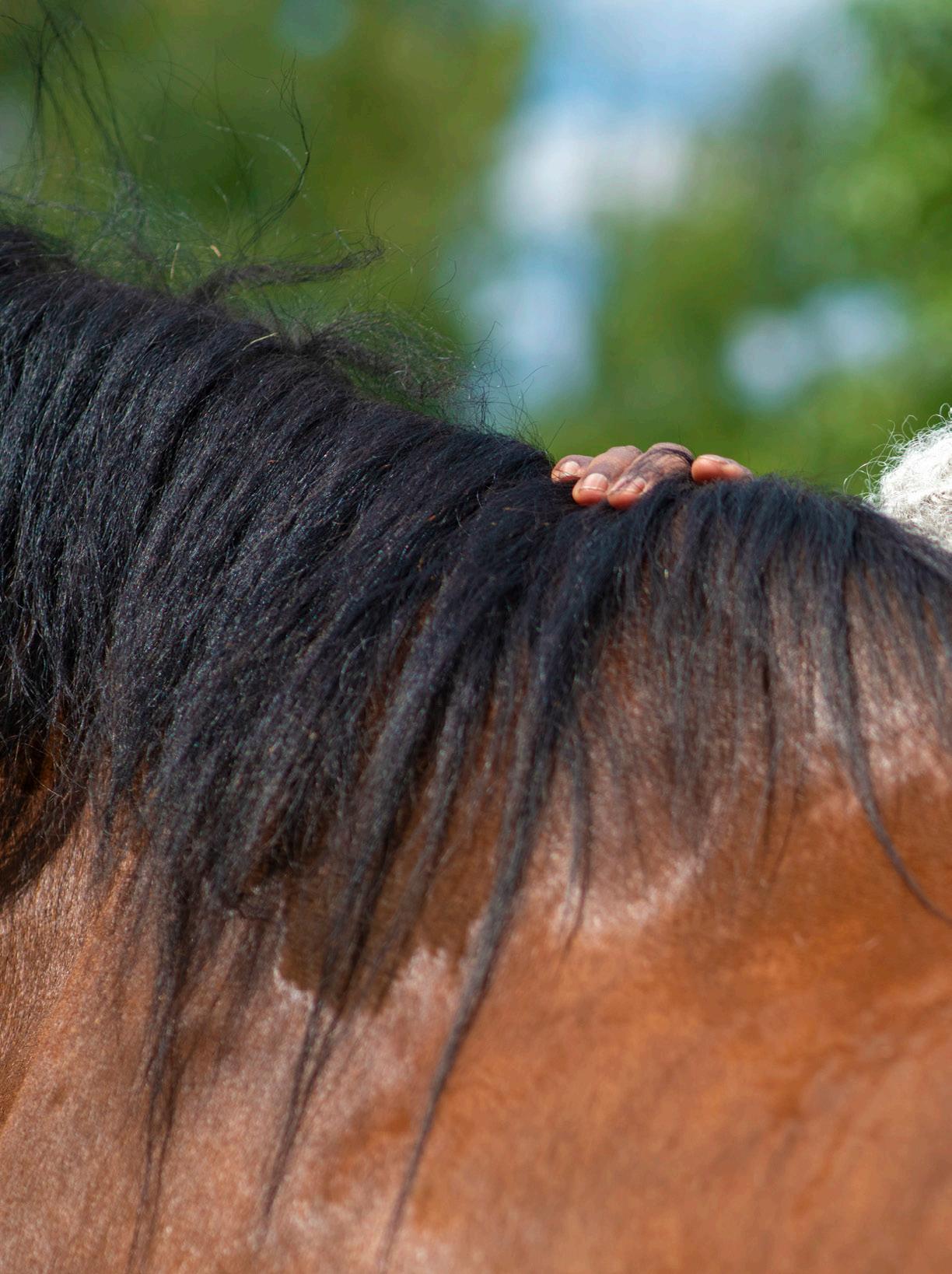
According to data collected by the EQUUS Foundation, there is some additional capacity in the equine safety net for at-risk and unwanted horses. But it will take funding and other support from the equestrian world to make the most of that capacity—an investment that the EQUUS Foundation says is well worth making.
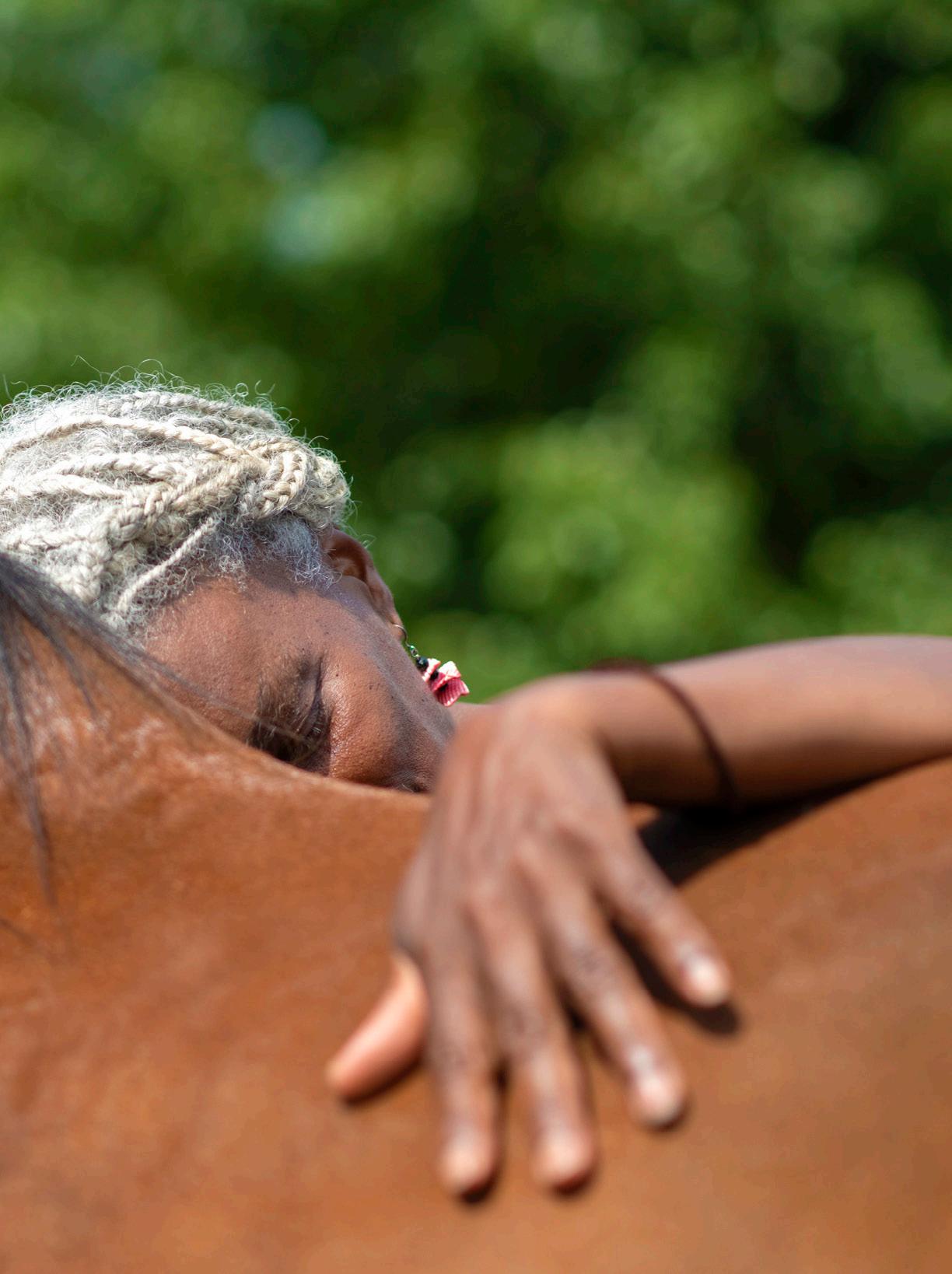 BY GLENYE CAIN OAKFORD
A unique aspect of EQUUS Foundation’s data is that it includes detailed information not only from equine rescues, but also from equine-assisted service programs like those at Endeavor Therapeutic Horsemanship in Bedford Corners, N.Y., where this retreat for female veterans took place.
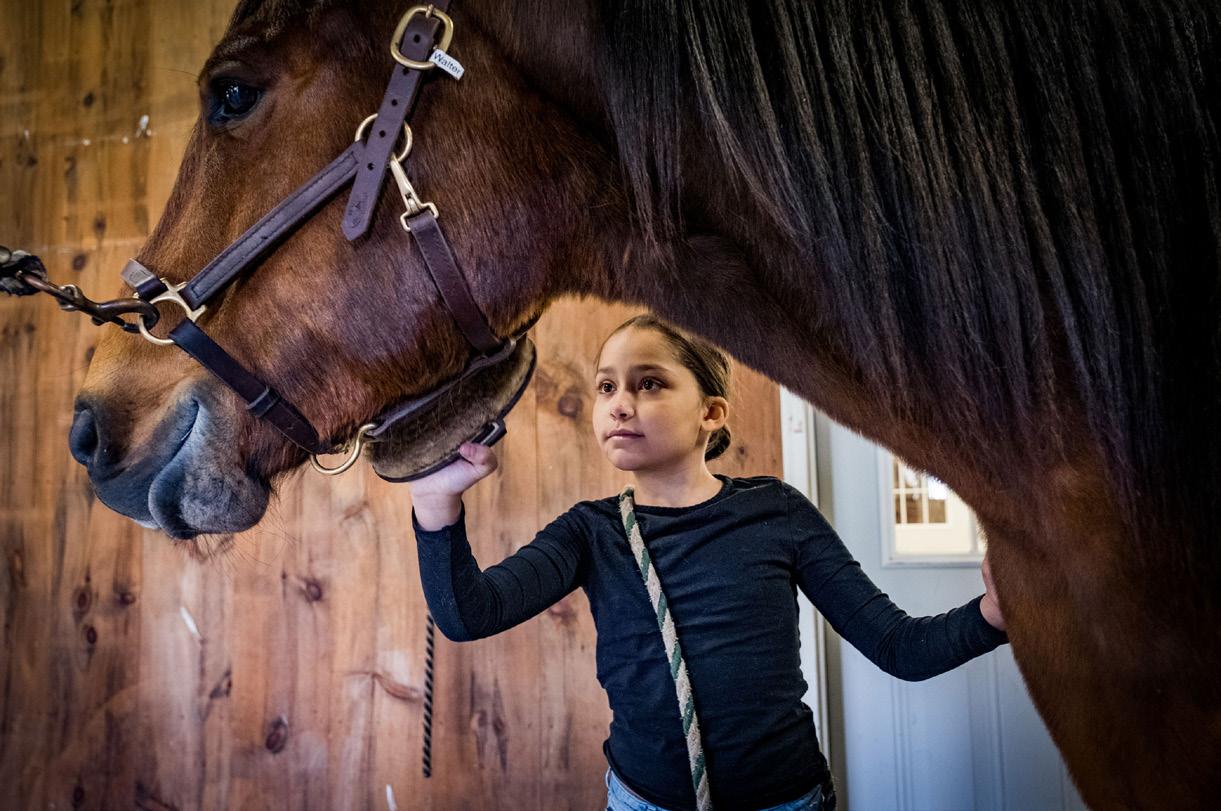
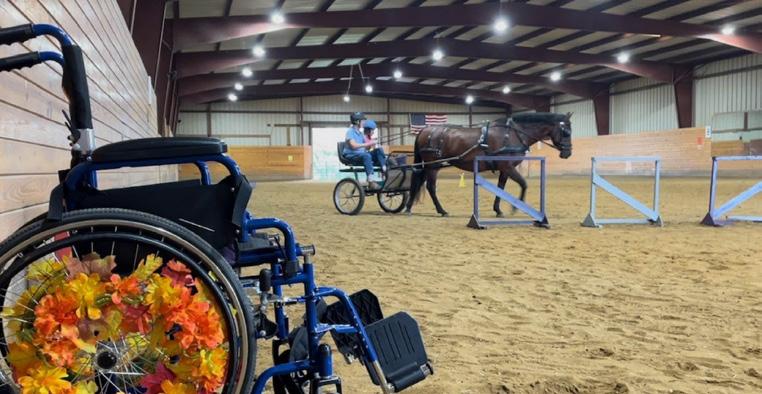
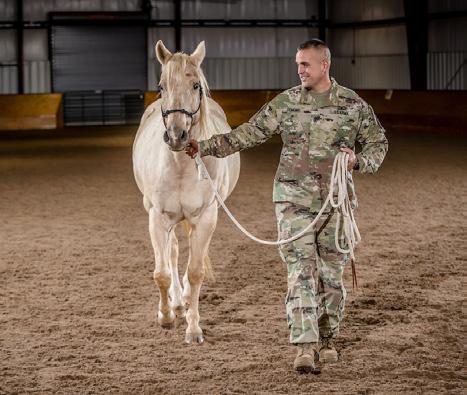
Conventional wisdom says equine adoption and retraining groups, rescue organizations, and similar nonprofit facilities can only offer limited capacity, potentially leaving many other horses at risk if they are no longer wanted or needed. But Karin Bump, Ph.D., who has been analyzing data collected from organizations in the EQUUS Foundation’s Equine Welfare Network, has found that some actually do have enough space for additional horses. But to take advantage of that capacity, they need additional resources—most notably in the form of funding, but also volunteer staff and in-kind donations—to ensure good care for additional horses. Those are challenges that the equestrian community can meet, the EQUUS Foundation’s founder and President, Lynn Coakley says. And meeting those challenges will benefit both horses and humans.
“What is unique about the EQUUS Foundation is that we are an animal welfare charity focused 100% on equine welfare, but we not only provide support to equine charities that are directly involved with the rescue, rehab, rehoming and retirement of equines that have been subjected to abuse and neglect, and are at risk,” Coakley said. “We also provide support to equine charities that are increasing opportunities for more horses to engage, inspire, and empower people—especially people with special needs. The solutions are within our reach to ensure that all horses naturally transition from one chapter to the next without risk of abuse and neglect and that all horses involved in any role and in any capacity—as athletes, companions, laborers, teachers, and healers—are safe, healthy, and treated with dignity as partners. But the solutions depend on the willing support of horse lovers nationwide.”
Bump’s analysis involved the detailed information that 129 facilities provided to the EQUUS Foundation. Those 129 facilities, including equine-assisted service organizations as well as equine rescue and retirement programs, are located throughout the nation and collectively care for 3,907 horses and ponies. With support from the equestrian industry, donors, and volunteers, some have room to care for even more.
“What we see based on our information is that some of these 129 facilities do have room to take more horses,” said Bump, a longtime professor of equine studies and business management. “But we don’t want to just warehouse horses, right? We want them cared for. So even when they have the space, they may have a limited ability to care for the horses appropriately, in terms of needed volunteers and finances. That question of finances is critical.”
The equestrian community and the horse-loving public can help answer the resource question through fundraising and
other support to maintain a safety net for at-risk horses. To attract sustainable support, rescue and rehoming organizations need to offer transparency and show trustworthiness, in terms of both financial responsibility and equine husbandry.
The EQUUS Foundation helps achieve both, through direct grants and through the careful questioning and rigorous standards it requires for organizations participating in the foundation’s Equine Welfare Network , Guardian , and Mentor programs.
Once an organization is approved for Equine Welfare Network membership, it can attain the Guardian and then Mentor designations by meeting additional requirements.
That process prompts candidate operations to assess and improve business practices, step up their equine care best practices, and increase transparency.
“They dig in and don’t just look superficially at these organizations,” Bump said of the EQUUS Foundation. “They really want to know that these groups are operating in good ways, so when people donate and the EQUUS Foundation gives grants, they can have high confidence that the funds will be well utilized, because the groups have been vetted strongly. These are operations that know what they’re doing, have active boards, and have sustainability factors—all of those things are in place.”
The EQUUS Foundation also homes in on specific care practices for member organizations, says the foundation’s Program Director, Tim Williams.
“When we talk about the welfare standards we’re talking about questions like the organization’s intake process, biosecurity, quarantine, and euthanasia,” Williams said. “How are you dealing with training? What are your rehoming agreements after a horse no longer fits the needs of your program? How long are the horses in the stalls and how long are they out?”
“Going through this process, these operations—especially the smaller ones—gain a more thorough understanding of financial management, why a board is important, and more,”
Opposite: Retirement farms, equine-assisted service organizations, and equine shelters can provide safe landings for horses and ponies who need new homes or second careers—and also offer the chance for local communities to experience horses.
Good non-profit management, including sound financial practices and a high standard of equine care, help ensure that horses and communities can continue to benefit from their relationship.
“Our end goal is for the donating public to be able to rely on our Equine Welfare Network organizations as trustworthy, sustainable organizations,” EQUUS Foundation founder and President Lynn Coakley said.
explained the EQUUS Foundation’s founder and President Lynn Coakley. “We’ve had organizations write to us and say, ‘I learned a whole lot more than I thought I would by going through this process.’”
The EQUUS Foundation also offers resources, such as a free webinar series for Guardian program applicants, all with the aim of helping operations become financially sustainable, transparent, and up to date on best practices in equine care.
“Many people have come back to us and said they learned more from our webinars than in five business classes,” Williams said. “So that webinar series does exactly what we want it to: give them the support to help develop the stability to last.”
“Our end goal is for the donating public to be able to rely on our Equine Welfare Network organizations as trustworthy, sustainable organizations,” Coakley added.
Financial donations are critical to any program’s success, both for immediate needs like feed and hay, but also for longterm stability through things like hiring staff.
“I think donors need to be more educated about the importance of professional staff in charities,” Coakley said. “So many times I’ve heard donors say, ‘I don’t want my donation to go to paying somebody’s salary,’ but someone has to muck out the stalls or fundraise, and they may need to be paid if volunteers are not available.”
Even if those services are being performed by a valuable volunteer workforce, that might require professional management, too.
Volunteers provide essential services, can help free up staff time for other pressing matters, and can make the difference between a program’s ability to bring in additional horses or ponies.
“I don’t think people really understand that volunteers in this sense are keeping these places going,” Bump said. “It’s not just a feel-good thing. If we want these places to be able to survive and function, the volunteers are basically doing a job that helps that happen.”
In-kind donations also are valuable. When you donate your newsletter-writing, accounting, or grooming and tack-cleaning skills or drop off several halters, lead ropes, or buckets, you’re not only providing a good or service—you’re also freeing up resources that otherwise would have gone to secure those. Similarly, when feed, pharmaceutical, and other equine-related businesses donate products, “it’s not just a nice thing; it’s an essential part of sustaining that business model,” Bump said. “In a way, that reliance can be scary, but on the flip side, it’s
so essential that people understand that doing these things can really make a difference.”
Maintaining a robust, sustainable network of retirement and second-career opportunities for horses isn’t only good for horses and the people who love them. It’s also good for the equestrian world as a whole, Bump and Coakley say—especially at a time when equine sports can quickly come under scrutiny from a public that has little experience with them or with horses.
“Those outside the horse industry largely view the industry as made up of wealthy people using horses for sport and entertainment,” Bump said. “There is little understanding that a solid percentage of horse owners are middle- to low-income. The importance of soft places to land, safety nets, and transition programs are essential parts of an industry that cares—an industry that garners positive social views for its existence. As an industry, self-funding through donations, contributions, and volunteer time signals an industry that cares and wants to do the right things.
“The general rule is that when the public gets upset about something, they start contacting their legislative officials,” Bump noted. “If the equine industry doesn’t step up and respond to those concerns on its own and those folks get frustrated enough, the government or local entities will force change on them.”
Equestrian sports’ social license to operate, the EQUUS Foundation and others say, is contingent in large part on the safety of the equine athletes. And that means protecting them not only during their competitive careers, but after they’re no longer competitive, too.
Clockwise: Innovative marketing and programs that engage the local community, like this yoga session among horses at Lucky Orphans Horse Rescue in Dover Plains, N.Y., aid equine charities’ long-term viability.
Financial donations are critical to any aftercare program’s success, both for immediate needs like feed and hay, but also for long-term stability through things like hiring staff.
With support from the equestrian industry, donors, and volunteers, many of the 129 organizations in EQUUS Foundation’s Equine Welfare Network have capacity to care for more horses and ponies, according to data reviewed by Karin Bump, Ph.D.
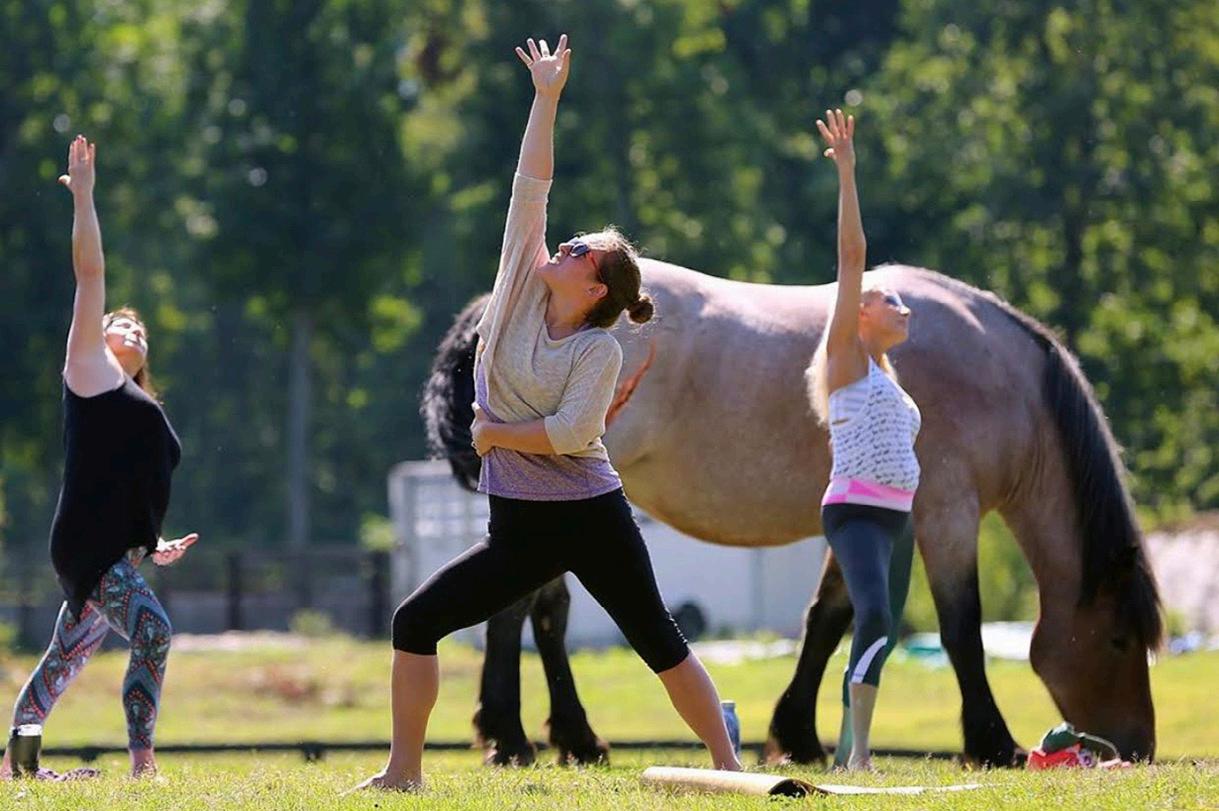
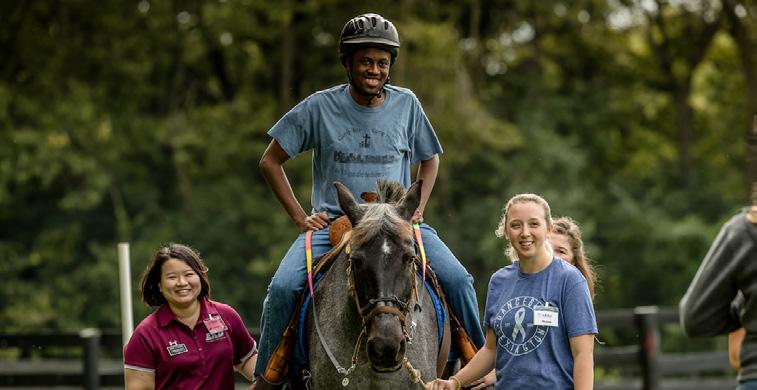
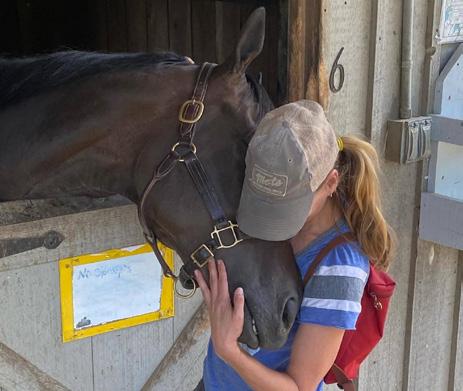
QUALITY CRAFTSMANSHIP. ATTENTION TO DETAIL.
We don’t make bumpers out of metal. We cut, shape, and weld steel into protection for your truck. We specialize in knowing what it takes to design a grille guard and bumper that is going to offer you the ultimate level of protection.
ranchhand.com
Contributed by the Regulation Department unless otherwise indicated. The following official notices are only intended to give penalty information for a given case and not to disclose the factual basis for each violation or penalty. For matters heard by the Hearing Committee, a Hearing Panel decides each case based on the evidence presented at the hearing and takes into account many factors that may raise or lower a given penalty. For example, the Hearing Committee takes into account such things as whether the violation was intentional or unintentional, the nature of the violation, the credibility of witnesses, Penalty Guidelines, penalties in similar cases, past violations of Federation rules by a respondent, and many other mitigating factors.
US Equestrian members can access and search the United States Equestrian Federation Suspension List online at USequestrian.org. Hover over the Compete tab on the homepage. In the menu that appears, click Ineligibility List under Rules, Regulations, and Grievances.
JEFFREY AYERS of Sellersville, Pa., violated Chapter 4, GR410, of this Federation in connection with the Middleburg Classic Horse Show held on September 21-25, 2022, in that he, as trainer, exhibited the horse MAXLIGHT after it had been administered and/or contained in its body methocarbamol in a plasma concentration exceeding the maximum permitted level and guaifenesin.
For this violation it was determined that JEFFREY AYERS be censured pursuant to Chapter 7, GR703.1a, and fined $750 pursuant to Chapter 7, GR703.1j. It was further directed that for this violation of the rules, all trophies, prizes, ribbons, and monies, if any, won by MAXLIGHT at said competition must be redistributed pursuant to Chapter 7, GR703.1g.
SARAH BARCLAY of North Salem, Ind., violated Chapter 4, GR410, of this Federation in connection with the NSHR National Championship Finals Horse Show held on September 15-17, 2022, in that she, as trainer, exhibited the horse SMP THE CHANCELLOR after it had been administered and/or contained in its body flunixin in a plasma concentration exceeding the maximum permitted level, methocarbamol in a plasma concentration exceeding the maximum permitted level, and guaifenesin.
For these violations it was determined that SARAH BARCLAY be censured pursuant to Chapter 7, GR703.1a, and fined $2,000 pursuant to Chapter 7, GR703.1j. The fine was enhanced due to two separate findings from this sample. It was further directed that for this violation of the rules, all trophies, prizes, ribbons, and monies, if any, won by SMP THE CHANCELLOR at said competition must be redistributed
pursuant to Chapter 7, GR703.1g.
SARAH BARCLAY of North Salem, Ind., violated Chapter 4, GR410, of this Federation in connection with the NSHR National Championship Finals Horse Show held on September 15-17, 2022, in that she, as trainer, exhibited the horse WP CORPORATE AMERICA after it had been administered and/or contained in its body methocarbamol in a plasma concentration exceeding the maximum permitted level and guaifenesin.
For this violation it was determined that SARAH BARCLAY be censured pursuant to Chapter 7, GR703.1a, and fined $750 pursuant to Chapter 7, GR703.1j. It was further directed that for this violation of the rules, all trophies, prizes, ribbons, and monies, if any, won by WP CORPORATE AMERICA at said competition must be redistributed pursuant to Chapter 7, GR703.1g.
RICHARD CUNKLE, of West Palm Beach, Fla., violated Chapter 4, GR410, of this Federation in connection with the Equestrian Sport Productions LLC Fall “A” Circuit II Horse Show held on October 20-23, 2022, in that he, as trainer, exhibited the horse AT LAST after it had been administered and/or contained in its body flunixin in a plasma concentration exceeding the maximum permitted level.
For these violations it was determined that RICHARD CUNKLE be censured pursuant to Chapter 7, GR703.1a, and fined $750 pursuant to Chapter 7, GR703.1j. It was further directed that for these violations of the rules, all trophies, prizes, ribbons, and monies, if any, won by AT LAST at said competition must be redistributed pursuant to Chapter 7, GR703.1g.
JEFFREY FIELDS , of La Honda, Calif., violated Chapter 4, GR410, of this Federation in connection with the National Sunshine Series II Horse Show held on November 9-13, 2022, in that he, as trainer, exhibited the horse EDESA’S ROY Z after it had been administered and/or contained in its body flunixin in a plasma concentration exceeding the maximum permitted level.
For these violations it was determined that JEFFREY FIELDS be censured pursuant to Chapter 7, GR703.1a, and fined $750 pursuant to Chapter 7, GR703.1j. It was further directed that for these violations of the rules, all trophies, prizes, ribbons, and monies, if any, won by EDESA’S ROY Z at said competition must be redistributed pursuant to Chapter 7, GR703.1g.
NATALY LEIBOVITZ of Wellington, Fla., violated Chapter 4, GR411 of this Federation in connection with the Equestrian Sport Productions, LLC. Fall “A” Circuit II Horse Show held on October 20-23, 2022, in that she, as trainer, exhibited the horse KISS ME after it had been administered and/or contained in its body meloxicam. The facts and mitigating factors in this case supported the following penalty even though it is below the suggested range for Category II Violations outlined in the Drugs and Medications Penalty Guidelines.
For this violation it was determined that NATALY LEIBOVITZ be censured pursuant to Chapter 7, GR703.1a, and fined $1,250 pursuant to Chapter 7, GR703.1j. It was further directed that for this violation of the rules, all trophies, prizes, ribbons, and monies, if any, won by KISS ME at said competition must be redistributed pursuant to Chapter 7, GR703.1g.
SAMI MILO of Rocklin, Calif.,
violated Chapter 4, GR410, of this Federation in connection with the Sacramento International Welcome Week Horse Show held on September 28- October 2, 2022, in that she, as trainer, exhibited the horse LULAVANI after it had been administered and/or contained in its body methocarbamol in a plasma concentration exceeding the maximum permitted level and guaifenesin.
For this violation it was determined that SAMI MILO be censured pursuant to Chapter 7, GR703.1a, and fined $750 pursuant to Chapter 7, GR703.1j. It was further directed that for this violation of the rules, all trophies, prizes, ribbons, and monies, if any, won by LULAVANI at said competition must be redistributed pursuant to Chapter 7, GR703.1g.
ANN MORO of Plain City, Ohio, violated Chapter 4, GR410, of this Federation in connection with the All American Horse Classic Horse Show held on September 6-10, 2022, in that she, as trainer, exhibited the horse UDULTATA’S SWEET HONEY after it had been administered and/or contained in its body flunixin and phenylbutazone.
For this violation it was determined that ANN MORO be censured pursuant to Chapter 7, GR703.1a, and fined $1,000 pursuant to Chapter 7, GR703.1j. It was further directed that for this violation of the rules, all trophies, prizes, ribbons, and monies, if any, won by UDULTATA’S SWEET HONEY at said competition must be redistributed pursuant to Chapter 7, GR703.1g.
KEELEY O’HARA of Stamping Ground, Ky., and SOPHIA WOJCIK of Manlius, N.Y., violated Chapter 4, GR410, of this Federation in connection with the HITS on the Hudson VIII Horse Show held on September 7-11, 2022, in that
they, as trainers, exhibited the horse MASERATI after it had been administered and/or contained in its body methocarbamol in a plasma concentration exceeding the maximum permitted level and guaifenesin.
For this violation it was determined that KEELEY O’HARA and SOPHIA WOJCIK each be censured pursuant to Chapter 7, GR703.1a, and each fined $750 pursuant to Chapter 7, GR703.1j. It was further directed that for this violation of the rules, all trophies, prizes, ribbons, and monies, if any, won by MASERATI at said competition must be redistributed pursuant to Chapter 7, GR703.1g.
BERRY PORTER of Conroe, Texas, violated Chapter 4, GR410, of this Federation in connection with the Capital Challenge Equitation Horse Show held on September 29-October 2, 2022, in that he, as trainer, exhibited the horse KINFOLK after it had been administered and/or contained in its body methocarbamol in a plasma concentration exceeding the maximum permitted level and guaifenesin.
For this violation it was determined that BERRY PORTER be censured pursuant to Chapter 7, GR703.1a, and fined $1,000 pursuant to Chapter 7, GR703.1j. The fine was enhanced due to the level detected. It was further directed that for this violation of the rules, all trophies, prizes, ribbons, and monies, if any, won by KINFOLK at said competition must be redistributed pursuant to Chapter 7, GR703.1g.
TRHP, LLC ., as Licensee, violated JP103.2.a of this Federation in connection with the Texas Rose Autumn Festival Horse Show held October 6-9, 2022, in that they held Jumper classes offering $10,000-$24,999 in prize money without the proper Certified Schooling Supervisor present.
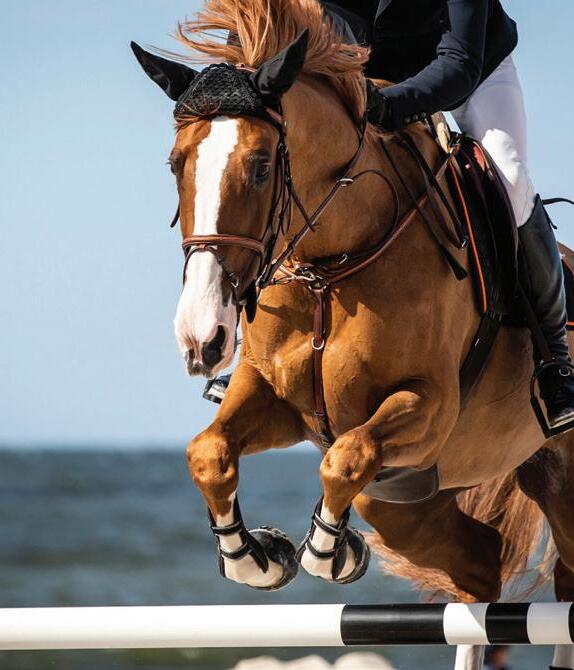
The Federation entered into an informal resolution with TRHP, LLC., to resolve this matter outside of a hearing, during which they fully cooperated with the Federation. In determining the proper penalty, the Federation took into account the seriousness of the violation and determined that the following penalty was appropriate.
For this violation it was determined that TRHP, LLC., as Licensee, shall be censured pursuant to Chapter 7, GR703.1a, and fined $1,000 pursuant to Chapter 7, GR703.1k.
SARAH YOUNG of Spring Hill, Kan., violated Chapter 4, GR410, of this Federation in connection
with the Pennsylvania National Horse Show held on October 13-22, 2022, in that she, as trainer, exhibited the horse COMDINUS VAN BEEK Z after it had been administered and/or contained in its body methocarbamol in a plasma concentration exceeding the maximum permitted level and guaifenesin.
For this violation it was determined that SARAH YOUNG be censured pursuant to Chapter 7, GR703.1a, and fined $750 pursuant to Chapter 7, GR703.1j. It was further directed that for this violation of the rules, all trophies, prizes, ribbons, and monies, if any, won by COMDINUS VAN BEEK Z at said competition must be redistributed pursuant to Chapter 7, GR703.1g.
COURTNEY BLACKWELL of Roxboro, N.C., violated Chapter 4, GR410-411, of this Federation in connection with the North Carolina State Fair Hunter Jumper Horse Show held on October 5-9, 2022, in that she, as trainer, exhibited the horse CURTIS 89 after it had been administered and/ or contained in its body gammaaminobutyric acid.
For this violation it was determined that pursuant to Chapter 7, GR703.1b and GR703.1f, COURTNEY BLACKWELL shall be found not in good standing, suspended from membership, and forbidden from the privilege of taking any part whatsoever in any Licensed Competition for six (6) months and excluded from all Competition grounds (cannot be on grounds from the time participants are admitted on the Competition grounds until the last time for departure). For example, suspended individuals may not be on Competition grounds during schooling or other such days prior to the start of the Competition for any purpose, including such things as: coaching riders, training or schooling horses or trailering horses on or off Competition grounds during Licensed Competitions for that period: (1) as an exhibitor, participant or spectator; (2) from participating in all Federation affairs and activities; (3) from holding or exercising office in the Federation or in any Licensed Competition; and (4) from attending, observing, or participating in any event, forum, meeting, program, clinic, task force, or committee of the Federation, sponsored by or conducted by the Federation, or held in connection with the Federation and any of its activities. Regulations as to suspended persons are set forth in detail in General Rule 704.
Vetericyn® makes the most advanced, effective, and safe products to keep horses healthy. Whether it’s cleaning wounds, treating hoof or eye issues, or conditioning and cleaning the coat, horse lovers trust Vetericyn for total equine wellness.


The six-month suspension shall commence on March 1, 2023, and terminate at midnight on August 31, 2023. Any horse or horses owned, leased, or of any partnership, corporation or stable of hers, or shown in her name or for her reputation (whether such interest was held at the time of the alleged violation or acquired thereafter), shall also be suspended, pursuant to Chapter 7, GR703.1c, for the same period.
COURTNEY BLACKWELL was also fined $6,000 pursuant to Chapter 7, GR703.1j. It was further directed that for this violation of the rules, all trophies, prizes, ribbons, and monies, if any, won by CURTIS 89 at said competition must be redistributed pursuant to Chapter 7, GR703.1g.
COURTNEY BLACKWELL of Roxboro, N.C., violated Chapter 4, GR410-411, of this Federation in connection with North Carolina State Fair Hunter Jumper Horse Show held on October 5-9, 2022, in that she, as trainer, exhibited the horse ABOUT FACE after it had been administered and/or contained in its body gammaaminobutyric acid.
For this violation it was determined that pursuant to Chapter 7,
GR703.1b and GR703.1f, COURTNEY BLACKWELL shall be found not in good standing, suspended from membership, and forbidden from the privilege of taking any part whatsoever in any Licensed Competition for six (6) months and excluded from all Competition grounds (cannot be on grounds from the time participants are admitted on the Competition grounds until the last time for departure). For example, suspended individuals may not be on Competition grounds during schooling or other such days prior to the start of the Competition for any purpose, including such things as: coaching riders, training or schooling horses or trailering horses on or off Competition grounds during Licensed Competitions for that period: (1) as an exhibitor, participant or spectator; (2) from participating in all Federation affairs and activities; (3) from holding or exercising office in the Federation or in any Licensed Competition; and (4) from attending, observing, or participating in any event, forum, meeting, program, clinic, task force, or committee of the Federation, sponsored by or conducted by the Federation, or held in connection with the Federation
and any of its activities. Regulations as to suspended persons are set forth in detail in General Rule 704.
The six-month suspension shall commence on September 1, 2023, and terminate at midnight on February 29, 2024. Any horse or horses owned, leased, or of any partnership, corporation or stable of hers, or shown in her name or for her reputation (whether such interest was held at the time of the alleged violation or acquired thereafter), shall also be suspended, pursuant to Chapter 7, GR703.1c, for the same period.
COURTNEY BLACKWELL was also fined $6,000 pursuant to Chapter 7, GR703.1j. It was further directed that for this violation of the rules, all trophies, prizes, ribbons, and monies, if any, won by ABOUT FACE at said competition must be redistributed pursuant to Chapter 7, GR703.1g.
VICTORIA SHAW of Boonville, N.C., violated Chapter 8, GR838.4.a, GR838.4.m; Chapter 7, GR702.1.d and GR702.1.f; and the Code of Conduct of this Federation in connection with the Arabian and Half-Arabian Sport Horse Nationals Horse Show held in Wilmington, Ohio, in that on
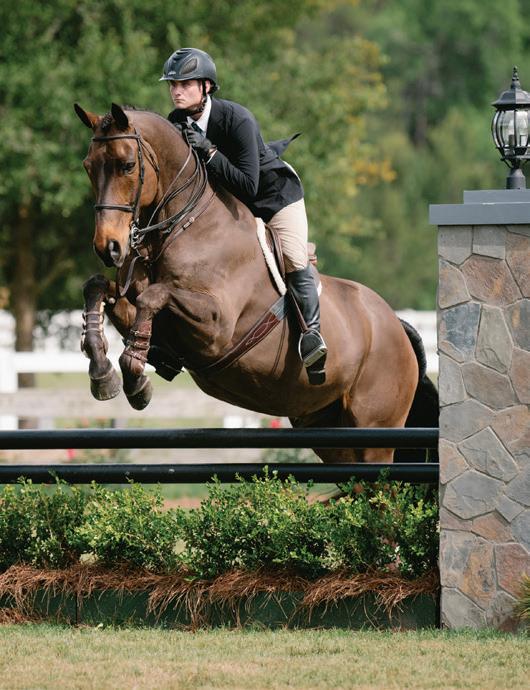
or about September 15, 2022, while warming up and working the horse IRON PATRIOT, she used excessive force on the horse, including striking the horse multiple times with multiple whips, jerking, or yanking the horse’s head with the reins, and repeated aggressive use of kicks and spurs.
For this violation it was determined that pursuant to Chapter 7, GR703.1b and GR703.1f, VICTORIA SHAW shall be found not in good standing, suspended from membership, and forbidden from the privilege of taking any part whatsoever in any Licensed Competition for four (4) months and is excluded from all Competition grounds (cannot be on grounds from the time participants are admitted on the Competition grounds until the last time for departure). For example, suspended individuals may not be on Competition grounds during schooling or other such days prior to the start of the Competition for any purpose, including such things as: coaching riders, training or schooling horses, or trailering horses on or off Competition grounds during Licensed Competitions for that period: (1) as an exhibitor, participant or spectator; (2) from participating in all

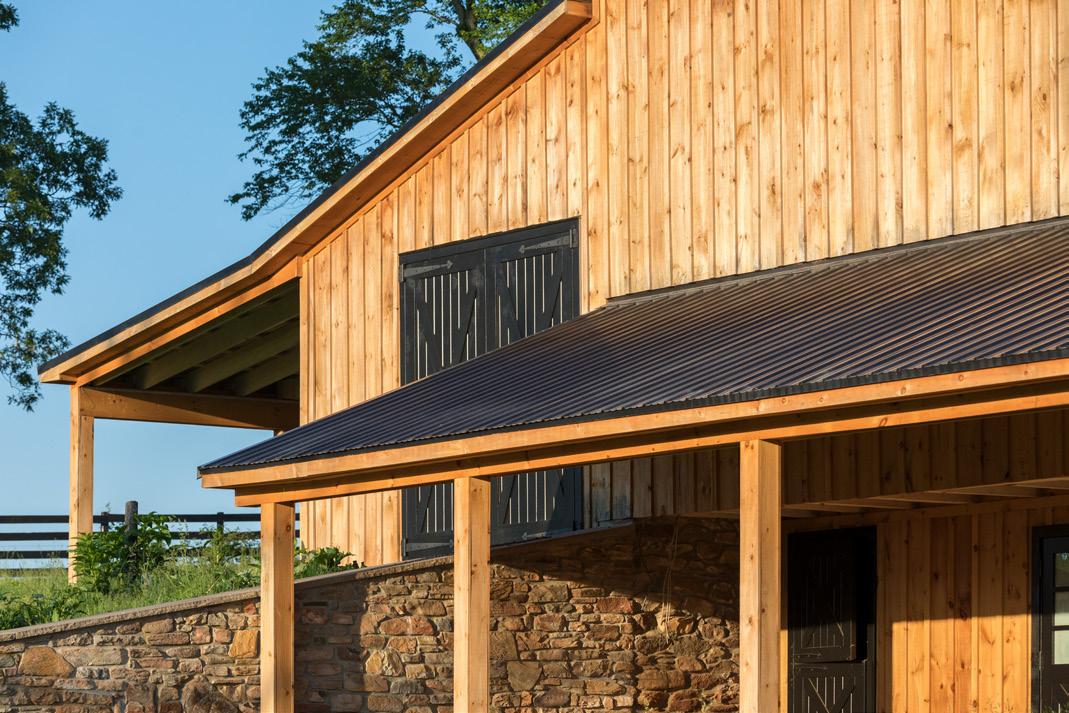
Federation affairs and activities; (3) from holding or exercising office in the Federation or in any Licensed Competition; and (4) from attending, observing, or participating in any event, forum, meeting, program, clinic, task force, or committee of the Federation, sponsored by or conducted by the Federation, or held in connection with the Federation and any of its activities. Regulations as to suspended persons are set forth in detail in General Rule 704.
The four-month suspension shall commence on February 1, 2023, and terminate at midnight on May 31, 2023. Any horse or horses owned, leased, or of any partnership, corporation or stable of hers, or shown in her name or for her reputation (whether such interest was held at the time of the alleged violation or acquired thereafter), shall also be suspended, pursuant to Chapter 7, GR703.1c for the same period.
VICTORIA SHAW was also fined $2,000 pursuant to Chapter 7, GR703.1j.
WILLIAM MADDEN of Elk Grove, Calif., violated Federation rules and policies in connection with the Brookside Fall Finale
Horse Show held on October 13-16, 2022, in that he failed to ensure his competition was run in accordance with the executed License Agreement. In addition, there were inadvertent deficiencies related to compliance with the USEF policies related to COVID-19 and Competition Quality Control.
The Federation entered into an informal resolution with William Madden to resolve this matter outside of a hearing to which he fully cooperated with the Federation throughout the proceedings. In determining the proper penalty, the Federation took into account the facts and responses received regarding the violation and determined that the following penalty was appropriate.
For this violation it was determined that WILLIAM MADDEN, as Licensee, shall be censured pursuant to Chapter 7, GR703.1a, and fined $1,000 pursuant to Chapter 7, GR703.1k.
FRANK MADDEN of Wellington, Fla., violated Chapter 7, GR702.1.a, and the USEF Code of Conduct on or about September 2, 2022, in connection with the Hampton Classic Horse Show
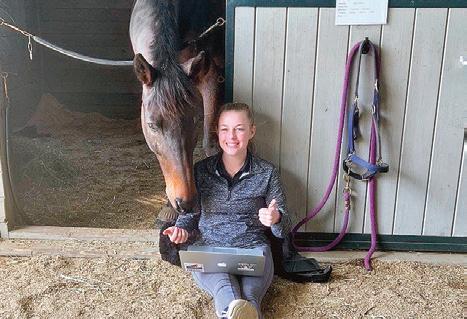
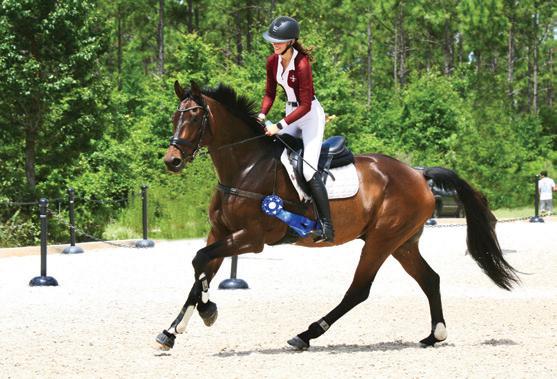
following his disagreement with a score issued to his client.
The Federation resolved this matter through an informal resolution with Madden following an investigation, during which he was represented by Counsel. In determining the proper penalty, the Federation took into account the seriousness of the violations and determined that the following penalties were appropriate.
For his violation of the Rules and Policies, it was determined that FRANK MADDEN be fined in the amount of $1,000, pursuant to Chapter 7, GR703.1.k.
GLENN GILBERT of Longmont, Colo., violated Chapter 7, GR702.1.c, the USEF Code of Conduct, and the USEF Safe Sport policy, in that on June 3, 2022, he entered a plea agreement in the Denver County Court in Denver, Colorado, in which he was found guilty of Disturbing the Peace and sentenced to six (6) months of court supervised probation. The events leading to his arrest and prosecution occurred on or about May 2, 2021, during a horse show and involved another exhibitor at the competition.
The Federation resolved this matter through an informal
resolution with Gilbert following an investigation, during which he was represented by Counsel. In determining the proper penalty, the Federation took into account the seriousness of the violations and determined that the following penalties were appropriate.
For his violation of the Rules and Policies, it was determined that GLENN GILBERT be fined in the amount of $1,000 pursuant to Chapter 7, GR703.1.k. It was further determined that GLENN GILBERT serve a period of probation to run through November 30, 2023, and complete an angermanagement course.
BENJAMIN STOUT of Somis, Calif., violated Chapter 7, GR702.1.a, GR702.1.d, of this Federation and the USEF Code of Conduct, in that he purchased internet domains using the name of another USEF member and Competition Licensee, for an improper purpose and without the consent of the USEF member/Licensee.
The Federation resolved this matter through an informal resolution with Stout following an investigation and review of the facts, to which he fully cooperated with the Federation. In
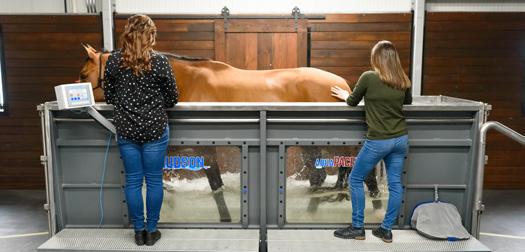

determining the proper penalty, the Federation took into account the seriousness of the violation and determined that the following penalties were appropriate.

For his violation of the Rules, it was determined that BENJAMIN STOUT be fined in the amount of $1,000, pursuant to GR703.1.k.
LISA MOONEY of Tucson, Ariz., violated Chapter 4, GR410-GR411 of this Federation in connection with the Tucson Fall Festival Horse Show held on November 2-6, 2022, in that she exhibited the horse WAY WEST DREAMS after it had been administered and/or contained in its body lidocaine.
For this violation it was determined that LISA MOONEY be censured pursuant to Chapter 7, GR703.1a, and fined $1,500 pursuant to Chapter 7, GR703.1j. It was further directed that for this violation of the rules, all trophies, prizes, ribbons, and monies, if any, won by WEST WAY DREAMS at said competition must be redistributed pursuant to Chapter 7, GR703.1g.
MARGARET KEATE of Park City, Utah, violated Chapter 4, GR410, of this Federation in connection with The Las Vegas National Horse Show held on November 14-20, 2022, in that she, as trainer, exhibited the horse COLOUR DIAMOND after it had been administered and/or contained in its body methocarbamol in a plasma concentration exceeding the maximum permitted level and guaifenesin.
For this violation it was determined that MARGARET KEATE be censured pursuant to Chapter 7, GR703.1a, and fined $750 pursuant to Chapter 7, GR703.1j. It was further directed that for this violation of the rules, all trophies, prizes, ribbons, and monies, if any, won by COLOUR DIAMOND at said competition must be redistributed pursuant to Chapter 7, GR703.1g.
SHELLY KERRON of Redmond, Wash., violated Chapter 4, GR410, of this Federation in connection with the National Sunshine Series I Horse Show held on November 2-6, 2022, in that she, as trainer, exhibited the horse CAPITOL GAINS after it had been administered and/or contained in its body methocarbamol in a plasma concentration exceeding the maximum permitted level and guaifenesin.
For this violation it was determined that SHELLY KERRON be censured pursuant to Chapter 7, GR703.1a, and fined $1,500 pursuant to Chapter 7, GR703.1j. It
was further directed that for this violation of the rules, all trophies, prizes, ribbons, and monies, if any, won by CAPITOL GAINS at said competition must be redistributed pursuant to Chapter 7, GR703.1g.
TREVOR RITTER of Wellington, Fla., violated Chapter 4, GR410, of this Federation in connection with the ESP Year End Hunter & Equitation Awards Show held on December 9-11, 2022, in that he, as trainer, exhibited the horse CALVIN Z after it had been administered and/or contained in its body dexamethasone in a plasma concentration exceeding the maximum permitted level.
For this violation it was determined that TREVOR RITTER be censured pursuant to Chapter 7, GR703.1a, and fined $750 pursuant to Chapter 7, GR703.1j. It was further directed that for this violation of the rules, all trophies, prizes, ribbons, and monies, if any, won by CALVIN Z at said competition must be redistributed pursuant to Chapter 7, GR703.1g.
BILL SCHAUB of Wellington, Fla., violated Chapter 4, GR410 of this Federation in connection with the Holiday and Horses Horse Show held on December 1-4, 2022, in that he, as trainer, exhibited the horse CORINO after it had been administered and/or contained in its body dexamethasone in a plasma concentration exceeding the maximum permitted level.
For this violation it was determined that BILL SCHAUB be censured pursuant to Chapter 7, GR703.1a, and fined $750 pursuant to Chapter 7, GR703.1j. It was further directed that for this violation of the rules, all trophies, prizes, ribbons, and monies, if any, won by CORINO at said competition must be redistributed pursuant to Chapter 7, GR703.1g.
ELEANOR RICHARDSON of Timberlake, N.C., violated Chapter 4, GR410-411, of this Federation in connection with the National Horse Show held on October 26-30, 2022, in that the horse CALIMERO was exhibited after it had been administered and/or contained in its body cetirizine. The facts and mitigating factors in this case supported the following penalty even though it is below the suggested range for Category II Violations outlined in the Drugs and Medications Penalty Guidelines.
Gastric Buffer Support Balanced Vitamin & Mineral Supplement
Supports horses on high-grain diets. Supports horses confined and/or involved in intense training.
• Helps to maintain a horse’s normal disposition.
• Magnesium – Calcium Carbonate to support healthy digestion.
• Aids in neutralizing acidic pH in the digestive tract.
Supports growing & healthy performance horses.
• Formulated to fill nutrient gaps that occur in many feeding programs.

NO ALFALFA. LOW SUGAR.
800.231.2966
All Adeptus Formulations Have a Prebiotic Base.
FOR THE RECORD
GR703.1j. It was further directed that for this violation of the rules, all trophies, prizes, ribbons, and monies, if any, won by CALIMERO at said competition must be redistributed pursuant to Chapter 7, GR703.1g.
KRISTIN (WALSH) MANGUM of Purcellville, Va., violated Chapter 4, GR410, of this Federation in connection with the December Hunter Classic Horse Show held on December 8-11, 2022, in that she, as trainer, exhibited the horse ILLUSION after it had been administered and/or contained in its body methocarbamol in a plasma concentration exceeding the maximum permitted level and guaifenesin.
For this violation it was determined that KRISTIN (WALSH ) MANGUM be censured pursuant to Chapter 7, GR703.1a, and fined $750 pursuant to Chapter 7, GR703.1j. It was further directed that for this violation of the rules, all trophies, prizes, ribbons, and monies, if any, won by ILLUSION at said competition must be redistributed pursuant to Chapter 7, GR703.1g.
BROOKE FUCHS of Nashville, N.C., violated Chapter 4, GR411, of this Federation in connection with the U.S. National Arabian and Half-Arabian National Championship Horse Show held on October 21-29, 2022, in that she, as trainer, exhibited the horse EF MOONSHINE without submitting the proper Medication Report Form, after it had been administered and/or contained in its body betamethasone.
For this violation it was determined that BROOKE FUCHS be censured pursuant to Chapter 7, GR703.1a, and fined $1,000 pursuant to Chapter 7, GR703.1j.
LANGER EQUESTRIAN GROUP, INC., violated Chapter 3, GR302.1.h.3, of this Federation in connection with the Blenheim Fall Tournament Horse Show held September 14-18, 2022, in that, as Licensee, they allowed the competition which was licensed to run as a 2* USEF Show Jumping Talent Search to be advertised and held as a 3* USEF Show Jumping Talent Search.
The Federation entered into an informal resolution with the Langer Equestrian Group, Inc. to resolve this matter outside of a hearing to which they fully cooperated with the Federation throughout the proceedings. In determining the proper penalty, the Federation took into account the seriousness of the violation and determined that the following penalty was appropriate.
For this violation it was determined that the LANGER EQUESTRIAN GROUP, INC ., as Licensee, shall be censured pursuant to Chapter 7, GR703.1a, and fined $500 pursuant to Chapter 7, GR703.1k.
SHIRLEY LILE of Memphis, Tenn., violated GR1005.3.a and Part VI of the USEF Safe Sport Policy in connection with the Harvest Time Horse Show held November 10-13, 2022, in that she served as a ‘R’ Jumper Judge, however she was ineligible due to a lapse in her background check.

The Federation entered into an informal resolution with Lile to resolve this matter outside of a hearing to which she fully cooperated with the Federation throughout the proceedings. In determining the proper penalty, the Federation took into account the seriousness of the violation as well as the facts and circumstances and determined that the following penalty was appropriate.
For this violation it was determined that SHIRLEY LILE shall be censured pursuant to Chapter 7, GR703.1a, and fined $500 pursuant to Chapter 7, GR703.1k.
UNIVERSITY OF NEW HAMPSHIRE EQUINE PROGRAM of Durham, N.H., violated Chapter 3, GR302.1.h.1.a, of this Federation in connection with the University of New Hampshire Horse Trials held September 24-25, 2022, in that as Licensee, they ran the competition on one day; however, they were licensed to run over two days and this change was not submitted to USEF for approval.
The Federation entered into an informal resolution with Respondent to resolve this matter outside of a hearing to which they fully cooperated with the Federation throughout the proceedings. In determining the proper penalty, the Federation took into account the seriousness of the violation as well as the facts and circumstances, including that USEA was properly notified and determined that the following penalty was appropriate.
For this violation it was determined that UNIVERSITY OF NEW HAMPSHIRE EQUINE PROGRAM, as Licensee, shall be censured pursuant to Chapter 7, GR703.1a, and fined $250 pursuant to Chapter 7, GR703.1k.
DUHON MANAGEMENT
GROUP of Wright City, Mo., as Licensee, violated HJ105.1.e.1.c, of this Federation in connection with the Archway Fall Classic II Horse Show held November 9-13, 2022, in that as a first-year
multi-day competition with ‘A’ rated sections they failed to have a veterinarian present throughout the entirety of the competition.
The Federation entered into an informal resolution with DUHON MANAGEMENT GROUP to resolve this matter outside of a hearing to which they fully cooperated with the Federation throughout the proceedings. In determining the proper penalty, the Federation took into account the seriousness of the violation, the unique facts and circumstances, and determined that the following penalty was appropriate.
For this violation it was determined that DUHON MANAGEMENT GROUP, as Licensee, shall be censured pursuant to Chapter 7, GR703.1a, and fined $300 pursuant to Chapter 7, GR703.1k.

SEMANTHA BURGER of Buzzards Bay, Mass., violated HU117.2, of this Federation in connection with the Grazing Fields Holiday II Horse Show held December 11, 2022, in that she served as Hunter Course Designer prior to renewing her license for the 2023 competition year.

The Federation entered into an informal resolution with Burger to resolve this matter outside of a hearing. Burger cooperated with the Federation throughout the
proceedings and took responsibil ity for her actions. In determining the proper penalty, the Federation took into account the serious ness of the violation as well as the facts presented and determined that the following penalty was appropriate.
For this violation it was deter mined that SEMANTHA shall be censured pursuant to Chapter 7, GR703.1a, and fined $250 pursuant to Chapter 7, GR703.1k.
TAMI BATTS of Greensboro, N.C., violated GR1004.2, of this Federation in connection with the Winter Wonderland Dressage Horse Show held December 10-11, 2022, in that she served as a Dres sage Judge prior to renewing her license for the 2023 competition year.

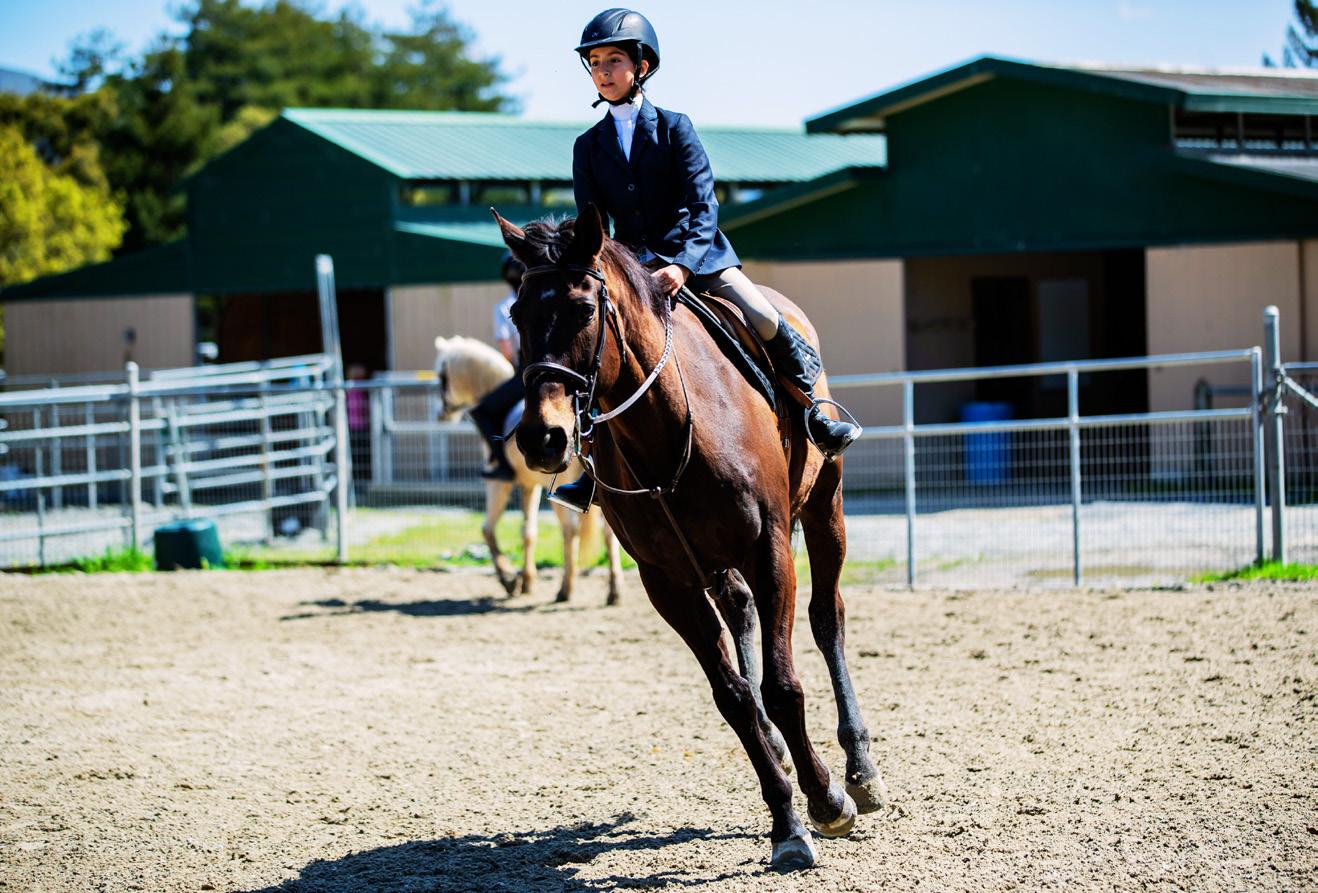
The Federation entered into an informal resolution with Batts to resolve this matter outside of a hearing. Batts cooperated with the Federation throughout the proceedings and took responsibil ity for her actions. In determining the proper penalty, the Federation took into account the serious ness of the violation as well as the facts presented and determined that the following penalty was appropriate.
For this violation it was deter mined that TAMI BATTS censured pursuant to Chapter 7,

E q u e s t r i a n a t M o n t e V i s t a C h r i s t i a n o f f e r s a u n i q u e o p p o r t u n i t y f o r s t u d e n t s t o
d e v e l o p s k i l l s a n d a c h i e v e t h e i r e q u e s t r i a n g o a l s
O u r o n - c a m p u s E q u e s t r i a n C e n t e r h a s
t w o o u t d o o r c o m p e t i t i o n a r e n a s , a 3 5 -
s t a l l b a r n , a h o r s e w a l k e r , a n d n e w l y
r e n o v a t e d t r a i l s t h a t w i n d t h r o u g h t h e
1 0 0 - a c r e , w o o d e d c a m p u s
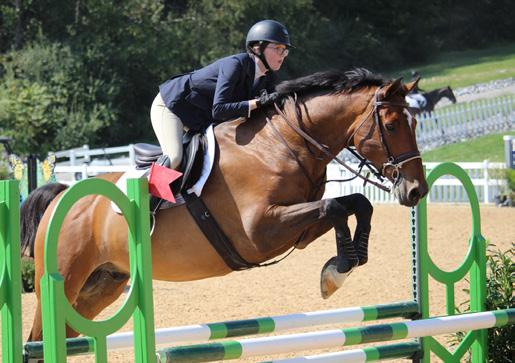
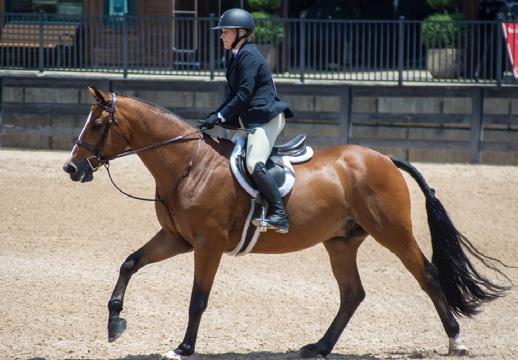
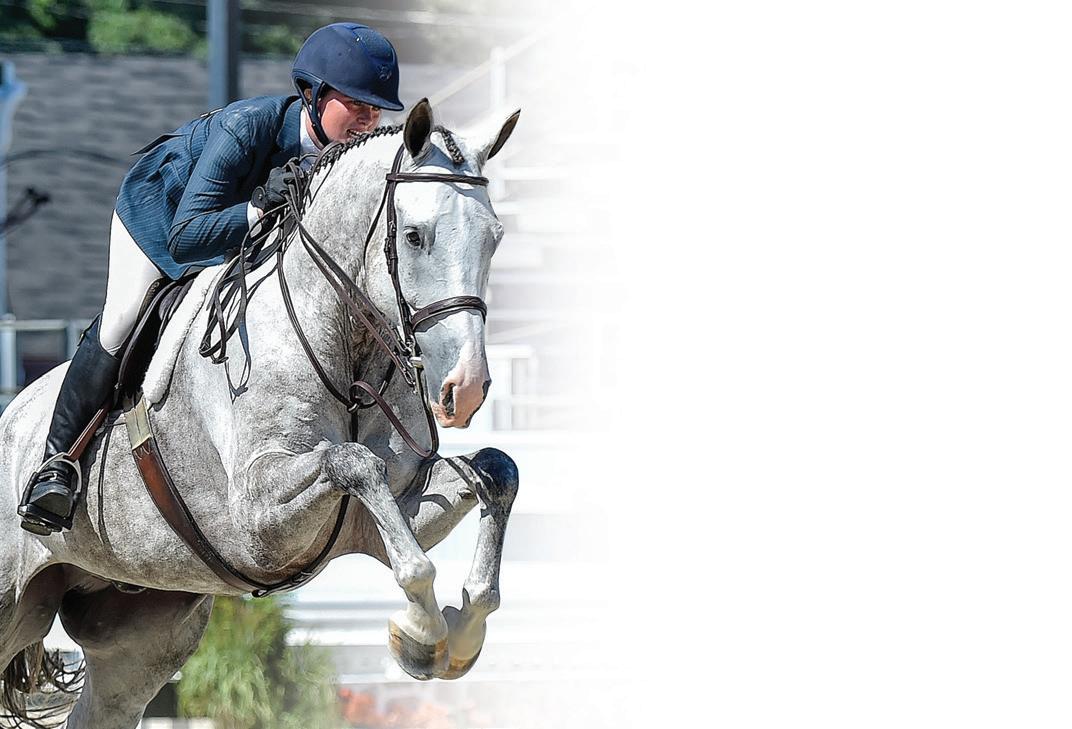
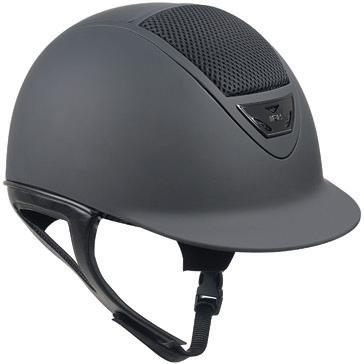
GR703.1a, and fined $250 pursuant to Chapter 7, GR703.1k.
MORGAN ROWSELL of Long Valley, N.J., violated GR1005.4, of this Federation, in connection with the Rocking Horse December Horse Trials held December 3-4, 2022, in that she served as an Eventing Course Designer prior to renewing her license for the 2023 competition year.
The Federation entered into an informal resolution with Rowsell to resolve this matter outside of a hearing. Rowsell cooperated with the Federation throughout the proceedings and took responsibility for her actions. In determining the proper penalty, the Federation took into account the seriousness of the violation as well as the facts presented and determined that the following penalty was appropriate.
For this violation it was determined that MORGAN ROWSELL shall be censured pursuant to Chapter 7, GR703.1a, and fined $250 pursuant to Chapter 7,
that she participated in improper, unethical, and/or dishonest conduct in relation to her training and application to become a Licensed Official with the Federation. Specifically, in conjunction with her application materials, she submitted fraudulent and/or altered

“Category 1 Steward Apprentice Steward Evaluation Form” documents that purported to provide feedback or ratings by individuals that did not provide such feedback or ratings. Further, at least one submitted form contained a signature that purported to be that of a USEF Steward when, in fact, that USEF Steward did not sign the form.
The Federation resolved this matter through an informal resolution with Schmidt outside of a hearing, following an investigation. Schmidt cooperated with the Federation throughout the proceedings and took responsibility for her actions. In determining the proper penalty, the Federation took into account the seriousness of the violation and determined
JENNIFER SCHMIDT shall be found not in good standing, suspended from membership, and forbidden from the privilege of taking any part whatsoever in any Licensed Competition for twelve (12) months and excluded from all Competition grounds (cannot be on grounds from the time participants are admitted on the Competition grounds until the last time for departure) with limited pre-approved exceptions. For example, suspended individuals may not be on Competition grounds during schooling or other such days prior to the start of the Competition for any purpose, including such things as: coaching riders, training or schooling horses, or trailering horses on or off Competition grounds during Licensed Competitions for that period: (1) as an exhibitor, participant, or spectator; (2) from participating in all Federation affairs and activities, (3) from holding or exercising office in the Federation or in any Licensed Competition; and (4) from attending, observing, or participating
with the Federation and any of its activities. Regulations as to suspended persons are set forth in detail in General Rule 704.
The 12-month suspension shall commence on March 23, 2023, and terminate at midnight on March 23, 2024. Any horse or horses owned, leased, or of any partnership, corporation or stable of hers, or shown in her name or for her reputation, (whether such interest was held at the time of the alleged violation or acquired thereafter), shall also be suspended, pursuant to Chapter 7, GR703.1c for the same period.
For this violation, it was further determined that pursuant to General Rule 703.1.i, for a period of five years, JENNIFER SCHMIDT shall be suspended and denied all privileges as it relates to participating or acting in any official capacity at Licensed Competitions. For purposes of this ruling, official capacity is defined as serving or acting in the role of Director, Officer, Chairman of the Show Committee, Licensee,
at midnight on March 31, 2028.
JENNIFER SCHMIDT was also fined $2,000 pursuant to Chapter 7, GR703.1j.
The following additional conditions were imposed as part of the resolution of this matter:
JENNIFER SCHMIDT withdrew her currently pending application for consideration as a C1 Steward.
JERI MATHENY of Campbellsburg, Ky., violated the Chapter 10, GR1033.6, of this Federation in connection with the Chattahoochee Hills Horse Trials held on July 9-10, 2022, September 3-4, 2022, and October 29-30, 2022, in that she served as Technical Delegate for more than two consecutive competitions run by the same Licensee.
The Federation entered into an informal resolution with Matheny to resolve this matter outside of a hearing. Matheny cooperated with the Federation throughout the proceeding and as a result, the Federation determined that the following penalty was appropriate.
For this violation JERI MATHENY shall be censured pursuant to Chapter 7, GR703.1a, and
fined $250 pursuant to Chapter 7, GR703.1k.
CHATTAHOOCHEE HILLS EVENTING , as Licensee, violated Chapter 10, GR1033.6, of this Federation, in connection with the Chattahoochee Hills Horse Trials held on July 9-10, 2022, September 3-4, 2022, and October 29-30, 2022, in that they allowed the same Technical Delegate to serve for more than two consecutive competitions run by the same Licensee.
The Federation entered into an informal resolution with Chattahoochee Hills Eventing to resolve this matter outside of a hearing to which they fully cooperated with the Federation throughout the proceedings. In determining the proper penalty, the Federation took into account the seriousness of the violation and determined that the following penalty was appropriate.
For this violation it was determined that CHATTAHOOCHEE HILLS EVENTING , as Licensee, shall be censured pursuant to Chapter 7, GR703.1a and fined $250 pursuant to Chapter 7, GR703.1k.
• Hunter/Jumper
• Show Jumping
• Eventing
• Dressage
• Showmanship
• Reining
• Ranch Riding
With facilities that include:
• Indoor English Equestrian Center
• Indoor Western Arena
• 250x125 Show Indoor
And more...
For more information, please contact: klawler@grier.org

Grier’s renowned equestrian program is designed to develop and build on strong foundations in classic hunt-seat equitation and western horsemanship skills. The full-time instructional and coaching staff, including a USEF R Hunter/Jumper carded judge and course designer, model what it means to be a successful rider and help each girl achieve her personal goals.
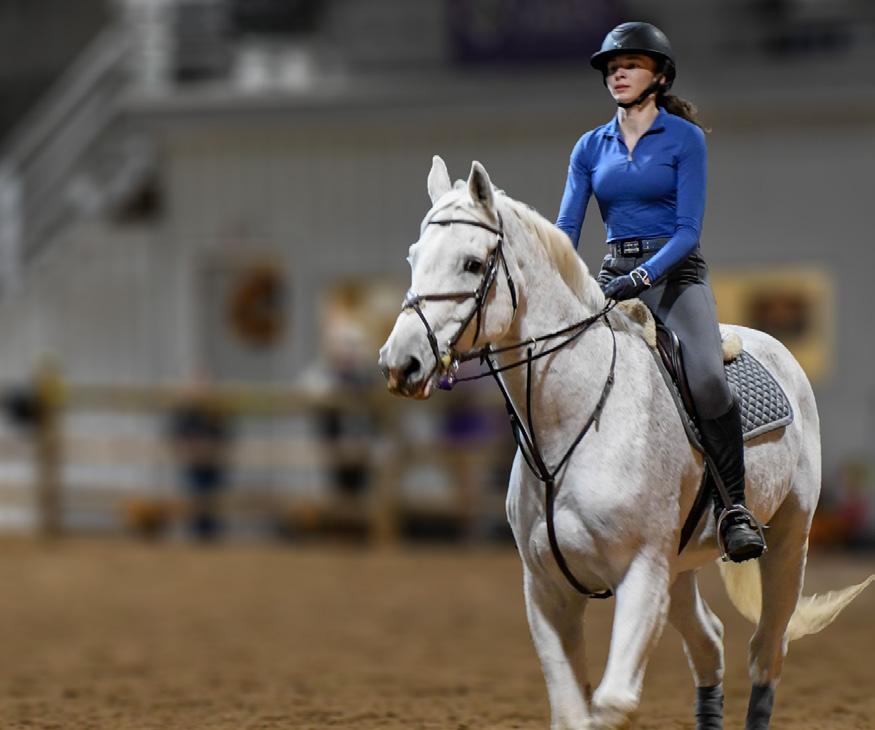
We teach riders to take their performance to the highest level possible in one of the best equestrian programs in the nation. Our nationally-recognized trainers, Linda Langmeier, Jo Seaver ‘99, Randi Booth, and Courtney O’Connor, have earned national titles for themselves and have the expertise to coach riders at all levels in the hunter, jumper, and equitation disciplines. Students and coaches work together to set and achieve goals — bringing starting riders up through the levels or advancing seasoned riders to regional and national levels. In every discipline, academic or athletic, Walker’s training is a value that endures.
To learn more about Walker’s nationally-acclaimed riding program, visit www.ethelwalker.org.
Dressage, Jumping and Equitation
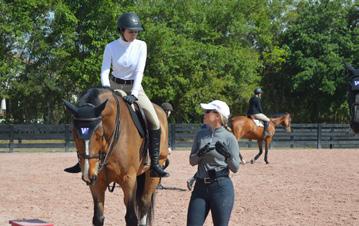
Stables on Two Campuses with 40 School Horses
Middle and High School Riding 5x week
Equine Science Elective in High School
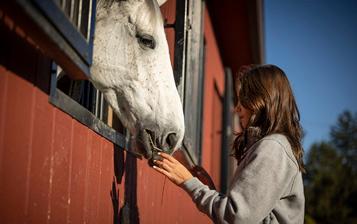
Equestrian Summer Camp
Local and regional competitions in Southern California