


June 2024 DRUGSTORENEWS.COM


INSIDE What’s driving digestive health? Page 36 Sports drinks get a refresh Page 39 June 2024 DRUGSTORENEWS.COM IT TAKES A VILLAGE Collaborative, team-based care models for improved patient care can bridge the gap between doctors and pharmacists.

The Trees Will Thank You. Your Patients Will, Too.
Medication info sheets… without the sheets.
EnlivenHealth’s Digital Medication Information Delivery (DMID) electronically sends medication information to your patients. No stapling necessary.

Try it out. Scan here to text GOGREEN to 55325
enlivenhealth.co 1-800-817-6526


WWW.CARDSMARTSTOREINASTORE.COM 800-654-6960 BETTER CARDS BETTER SERVICE BETTER PROGRAMS BETTER MARGINS USE CODE: DSN-JUN

Facebook.com/DrugStoreNews
linkedin.com/company/drug-store-news/ instagram.com/dsn_media


Consumers are prioritizing
June’s awards feature companies in the technology and automation industry 28 PHARMACY
Retail pharmacies must address three significant hurdles to vaccine program success
Alternative ingredients, tasty flavors and specific formulations are driving digestive health
Customers are paying attention to what they’re drinking, and that’s causing brands to revamp their offerings

DSN (ISSN 0191-7587) is published monthly 12 times a year by EnsembleIQ, 8550 W. Bryn Mawr Ave, Suite 200, Chicago, IL 60631. Subscription rate in the United States: $150 one year; $276 two year; $17 single issue copy; Canada and Mexico: $204 one year; $390 two year; $20.40 single issue copy; Foreign: $204 one year; $390 two year; $20.40 single issue copy. Periodicals postage paid at Chicago, IL, and additional mailing offices. POSTMASTER: Please send address changes to DSN, 8550 W. Bryn Mawr Ave, Suite 200, Chicago, IL 60631. Vol. 46 No 1, January 2024. Copyright © 2024 by EnsembleIQ. All rights reserved. 6 June 2024 DRUGSTORENEWS.COM 06.24 DEPARTMENTS 8 EDITOR’S NOTE 10 INDUSTRY NEWS 14 PRODUCTS TO WATCH COLUMNS FEATURES 24 INSIDE BEAUTY | NAILING IT
nail health
long wear gel treatments in the beauty aisle 28 PHARMACY | REX AWARDS
and
NEEDLE
| THREADING THE
35
|
OUT
HEALTH
GUTTING
39 CONSUMABLES |
DRINKS GET A REFRESH
SPORTS
Vol. 46 No. 6 18 16 GUEST COLUMN by Jeffrey Swanson 42 LAST WORD by Steve Mister Collaborative, team-based care models for improved patient care can bridge the gap between doctors and pharmacists IT TAKES A
VILLAGE

ADD JUST
SEX
T M
N E W X L 6 . 1 O Z . N E W X L 6 . 1 O Z . N E W X L 6 . 1 O Z . N E W S A M P L E R CATALOG sales@TriggLabs.com © 2024 Trigg Laboratories, Inc.
Turf War
Tensions mount as states continue to allow pharmacists to test and provide vaccinations for infectious diseases

“AS A LARGE PORTION OF THE AMERICAN POPULATION LIVES WELL BEYOND RETIREMENT AGE, THE TOTAL COST OF PROVIDING HEALTHCARE WILL ALSO GROW.”
-CENTERS FOR MEDICARE & MEDICARE SERVICES
Numbers don’t lie–they illuminate.
For doctors and pharmacists, numbers paint a seemingly bleak picture of the future of our healthcare system.
The Association of American Medical Colleges estimates that physician demand is projected to grow faster than the supply, leading to a projected shortage of 13,500 to 86,000 in the next 10 years. The numbers for pharmacists are similarly alarming.
According to a 2023 report by the Philadelphia College of Osteopathic Medicine, 13,323 new pharmacists graduated from 136 pharmacy schools reporting to the American Association of Colleges of Pharmacy. This number was down from 14,223 the previous year. What’s more concerning, only 9,743 students were accepted through the Pharmacy College Application Service in 2023. The group called it an “unsettling statistic.”
These shortages come at a time when both professions are at odds over scope of practice. Pharmacists want to do more, and doctors object.
This month, our cover story (Page 18) looks at the rift between doctors and pharmacists and explores avenues for fostering greater collaboration between the two groups.
Tensions mount as more states enact legislation that would continue to allow pharmacists to test and provide vaccinations for COVID-19, as well as flu, strep throat and other ailments. Naturally, doctors say pharmacists do not have the education and training necessary to assume the role of a physician.
This ever present battle is heating up at a pivotal time, too. Despite having the most expensive health care system, the United States ranks last compared to six other industrialized countries. Things are only going to get worse.
According to the Centers for Medicare & Medicaid Services, per capita costs for those 85 years old or older are almost twice as high as for those 65 to 84. “As a large portion of the American population lives well beyond retirement age, the total cost of providing healthcare will also grow,” the center said.
Now is not the time to dither about turf. Doctors and pharmacists need to find some common ground because the health of the nation depends on it.

www.drugstorenews.com
jkenlon@ensembleiq.com
EDITORIAL Editor-in-Chief, Editorial
Nigel F. Maynard nigelmaynard@ensembleiq.com
Managing Editor Julianne Mobilian jmobilian @ensembleiq.com
Senior
slevy@ensembleiq.com
Online Editor Gisselle Gaitan ggaitan@ensembleiq.com ADVERTISING
Regional
312.961.7162 swerner@ensembleiq.com
DESIGN/PRODUCTION/MARKETING
Art Director Catalina Gutierrez cgutierrez@ensembleiq.com
Production
jbatson@ensembleiq.com
Marketing
kabrahamsen@ensembleiq.com
SUBSCRIPTION
Subscription
EDITOR’S NOTE
200
8550 W. Bryn Mawr Ave., Ste.
Chicago, IL 60631 773.992.4450 Fax 773.992.4455
BRAND MANAGEMENT
President
Publisher
Senior Vice
&
John Kenlon 516.650.2064
Director
Editor Sandra Levy
SALES & BUSINESS Northeast Manager Alex Tomas
212.756.5155 atomas@ensembleiq.com
Manager Steven Werner
Manager
Jackie Batson
Manager
Kathryn Abrahamsen
SERVICES
List Rental mbriganti@anteriad.com
Questions
CORPORATE OFFICERS Chief Executive Officer Jennifer Litterick Chief Financial Officer Jane Volland Chief People Officer Ann Jadown Chief Strategy Officer Joe Territo Chief Operating Officer Derek Estey EDITORIAL ADVISORY BOARD John Beckner, NCPA Becky Dant, Costco J. Jeremy Faulks, Thrifty White Pharmacy Doug M. Long, IQVIA Nancy Lyons, Health Mart Pharmacy Katie Scanlon, Publix Super Markets Heidi Snyder, Drug World Pharmacies 8 June 2024 DRUGSTORENEWS.COM
contact@drugstorenews.com















Walgreens launches its own Naloxone
Walgreens is expanding access to an over-the-counter medication with the launch of Walgreens Brand Naloxone HCI Nasal Spray.
The product, which retails for $34.99, can reverse an overdose from opioids. It’s available online and in all stores
Walgreens Brand Naloxone HCl Nasal Spray can be used in the event of an opioid overdose to temporarily reverse the effects of opioids (including heroin, illicit fentanyl, and prescription opioid medications) when administered in time, Walgreens said.
“As a leading healthcare services company rooted in a retail pharmacy footprint, Walgreens is committed to removing barriers to naloxone access,” said Priya Mammen, senior medical director in the Walgreens office of clinical integrity. “As an emergency physician, I have for years combatted the devastating impacts of the opioid overdose epidemic and worked tirelessly to save lives. Expanding access to naloxone is a critical step in empowering individuals, families, and communities to act and be part of the solution. We must all confront this crisis head-on to bring change.”
Naloxone works by quickly blocking the effects of opioids on the brain, restoring normal breathing and preventing death due to overdose. Despite its proven efficacy, access to naloxone remains limited in many communities. Walgreens said it is offering naloxone at a lower price than the comparable national brand product at its stores to further enable access to this life-saving medication.
This launch follows the approval from the Food and Drug Administration.


Lee DeVille Joins Dollar General Executive Team
Dollar General has named Lee DeVille as senior vice president of store operations. DeVille will lead operations for three of DG’s retail divisions, representing nearly 7,000 stores across the country.
“With more than 25 years of leadership experience in driving retail excellence, Lee brings a wealth of operational expertise with his customer-centric approach and focus on process improvement,” said Steve Deckard, Dollar General’s executive vice president of store operations and development. “We look forward to Lee being a strong addition to our store operations leadership team as we remain focused on getting Back to Basics.”
Prior to joining Dollar General, DeVille served as senior vice president of operations at Advantage Solutions, leading the company’s strategy and execution in the fulfillment, logistics and business services areas.
DeVille also previously served as vice president of operations for Save-a-Lot, leading field operations for all corporate stores, as well as the retail support and continuous improvement teams. He also served in roles of increasing responsibility at Walmart, including field store operations, fresh implementation and innovations.
DeVille earned his Bachelor of Science in finance and multinational business from Florida State University.
Meijer enhances military leave benefits
Meijer announced enhancements to its military leave benefits for active-duty team members on military leave to make the transition from employment to deployment as smooth as possible. The improvements prioritize team members’ financial stability and well-being.
Effective in May, Meijer is making two changes: Increased Differential Pay: Meijer will now offer 100% income replacement for up to nine months for deployed military members
10 June 2024 DRUGSTORENEWS.COM INDUSTRY NEWS
Good As New Nail Perfector
Less Complexity. More Time.
Transform pharmacy by automating virtually every aspect of prescription filling and pickup.


VISIT KNAPPatNACDS TSE 2024 MORE INSIGHTS
who have been with the company at least one year. Those with less than one year will receive the same percentage of assistance for up to three months. This benefit can be utilized multiple times throughout a team member’s career with no maximum limit.
Extended Health Care Coverage: Meijer will extend team members’ health benefits for up to nine months after they leave for active duty to help alleviate the stress of deployment.
“We applaud the honor, courage and sacrifice put forth by those who serve our country, as well as that of their families,” said Michelle Hall, senior vice president and chief human resource officer. “But we know supporting our military team members goes beyond recognizing their service. It’s about being there for them with resources while they’re on the job and lessening stress and barriers through enhanced benefits when they are called to serve.”
Meijer supports veterans’ groups and veteran-affiliated nonprofits across its Midwest footprint. In 2020, the retailer launched mVets, a Team Member Resource Group, to help
attract, develop and retain members of the armed forces and their families as team members and customers.
“We continue to seek meaningful ways to show our deepest gratitude to service members,” said Jim Keuvelaar, a Meijer supply chain project manager and member of the mVets Board. “Meijer recognizes the immense sacrifices made by these individuals and their families and knows improvements to our military leave benefits offer them the peace of mind they deserve.”
In 2022, Meijer was recognized as the first retailer to earn the Gold-level status as a Veteran-Friendly Employer from the Michigan Veterans Affairs Agency for its commitment to hiring, retaining and supporting military veterans. Today, more than 1,000 Meijer team members self-report their veteran status.
*Correction Drug Store News ran incorrect data in the HRG Future 50 feature. We apologize for the error and the correct information will be available online and in the revised April digital edition.

12 June 2024 DRUGSTORENEWS.COM INDUSTRY NEWS

Join us in Chicago to celebrate the honorees! The DSN Top Women in Health, Wellness & Beauty program applauds and recognizes women for their exceptional contributions to both their companies and communities. Help us recognize and celebrate the women in your industry. Visit www.dsntopwomen.com for more information. Nominate Now
THE NOMINATION WINDOW IS NOW OPEN! DEADLINE: JUNE 20 2024 NOV 19-20
MARRIOTT MARQUIS CHICAGO
New and Noteworthy
HRG’s five notable products from May
1


2
3 5

After seeing a reduction in April, product introductions slowed significantly for the month of May, continuing a volatile pattern.
In May, suppliers introduced 92 products, a number that is 78 less than the 170 they introduced in April. Waukesha, Wis.based HRG reviewed 13 products in the health category, 70 in the wellness sector and nine in the beauty aisle.
Here are the ones to watch:
1. Colace Stool Softening Gummies
Arcadia Consumer Healthcare has introduced Colace Stool Softening Gummies with magnesium citrate to provide the same gentle relief as Colace Regular (docusate sodium). The company claimed the gummies are cramp- and stimulant-free and work naturally with the water in the body. A pack contains 60 gummies.
2. Hyland’s Naturals Baby Organic Soothing Drops (Nighttime)
Baby Organic Soothing Drops by Hyland’s Naturals are made for babies two months and older to relieve teething pains. Free of benzocaine, artificial flavors, synthetic dyes, gluten and parabens, the drops are formulated with certified organic botanicals such as lemon balm and chamomile flower oil. The products are safe and gentle to soothe a baby’s gums, the company added. It comes in a 1-oz. bottle.

4

3. Biofreeze Day & Overnight Patches
Reckitt said its Biofreeze Day & Overnight Patches combo pack includes six large menthol patches for daytime and three for overnight. The pain relief patches are meant to be used for sore muscles, backaches and joint pain. Reckitt said the daytime cold therapy patches are designed for optimized comfort, flexibility and to last up to eight hours, while the nighttime patch incorporates soothing lavender essential oil. A pack contains nine patches.
4. Vagisil pH Balance Wipes
Vagisil pH Balance wipes by Combe Incorporated contain LactoPrebiotic—part of what the company characterizes as a unique formula that also includes lactic acid. The company claimed the formulation helps fortify natural defenses and is clinically proven to help maintain a healthy pH. Dye-free and hypoallergenic, the wipes are meant for daily use. One pack contains 20 wipes.
5. Neutrogena Sport Spray SPF 30
Neutrogena Sport Spray SPF 30 by Kenvue contains antioxidants and vitamins C & E to protect against harmful UVA/UVB rays during outdoor activities, the company said. Kenvue said the non-sticky, quick-drying spray is sweat- and water-resistant for up to 80 minutes to prevent sunburn. The product comes in a 5-oz. bottle. dsn
PRODUCTS TO WATCH 14 June 2024 DRUGSTORENEWS.COM





PL000471 Rev B Now available to order from Cencora, Cardinal Health, and McKesson. * Intuity Medical provides this information as a courtesy, it is subject to change and interpretation. The provider is ultimately responsible for determining the appropriate codes, coverage, and payment policies for individual patients. Intuity Medical does not guarantee third party coverage or payment for our products or reimburse providers for claims that are denied by third party payors. Intuity Medical is not responsible for denials or other actions due to reliance on the above guidance. Watch a clinical pharmacist show how easy Pogo is to train and learn. To learn more about Medicare Part B coverage and how to order, visit GoodtoPogo.com/HCP POGO Automatic Test Cartridges Each tube contains 50 tests (5 cartridges, 10 tests in each cartridge) POGO Automatic Blood Glucose Monitoring System UPC:
NRC: 56176-0008-05
Cardinal Heatlh:
New HCPCS
You’re good to Pogo. An easy-to-handle, all-in-one, discreet blood glucose monitor. Just Press Once and GO! POGO Automatic® is now covered by Medicare Part B*.
856176008056
Cencora: 10259587
5738448 McKesson: 2383503
code: A4271 UPC: 856176008001 NRC: 56176-0008-00 Cencora: 10259500 Cardinal Heatlh: 5738430 McKesson: 2383487 New HCPCS code: E2104
Reviving the Human Touch in Automation
Returning to a “high-tech, high-touch” philosophy promises a win-win-win for the pharmacy industry
By Jeffrey Swanson
Whatever happened to “High-tech, hightouch?” Among pharmacy automation suppliers, this business philosophy appears to be yet another casualty of the lingering effects of the COVID pandemic and industry mergers and acquisitions. The pandemic disrupted the normal flow of business, but it also exacerbated an already tight staffing situation at pharmacies and long-term care facilities.
The industry has witnessed a wave of mergers and acquisitions that left many stakeholders grappling with supply chain disruptions, service deficiencies and a visible erosion of the foundations of vendor/pharmacy relationships.
The traditional paradigm of hightouch partnership engagement between vendors and pharmacies has given way to a transactional ethos. A transactional business mindset does not focus on building relationships or working in collaboration with the customer.
The goals for pharmacy automation remain the same: to allocate a central filling location, simplify inventory management, improve accuracy while dispensing medication, spare labor and free up technicians for value-added customer services. However, automation suppliers have abandoned customer service and the customer once their purchase is complete. None of this helps relieve the pressures felt by pharmacy staff.
The answer lies in a return to the practice of “high-tech, high touch,” which creates a winning scenario for all stakeholders. The only winner in the current game is the company that sells the automated equipment. The most desirable outcome is when the vendor, pharmacies and the pharmacy’s patients all win. This is the
philosophy that helps participants thrive. Fortunately for the pharmacy customer, champions within the industry are advocating for a revival of the high-touch approach, advocating for pricing that aligns with a more sustainable model.
Central to this vision is the recognition of the indispensable role played by trusted partners who understand your business, partners that take the necessary steps that move beyond transactional into relationships grounded in trust, reliability and a genuine concern for the welfare of pharmacies and care facilities. This value proposition extends beyond the simple provision of equipment to encompass a holistic commitment to support innovation and continuous improvement.
As part of the value proposition, the customers care about three main things: functionality, lowering the cost to fill and easing the burden on pharmacy technicians
But high-tech, high-touch takes it several steps further. A key differentiator in today’s competitive landscape could be provided by the strength of a partner’s industry network. Such a partner can leverage extensive resources to guide clients through the maze of current or specific market dynamics in their given niche to help the customer capture new business opportunities.
This approach encompasses a comprehensive suite of services, support mechanisms and a commitment to continual improvement. This helps ensure that operational efficiencies are not just maintained but evolve into new opportunities with each passing year the customer operates the automated equipment. This is achieved using a consultative approach

that places a premium on deep understanding and tailored solutions.
Essential strategies include supplying comprehensive life cycle support, providing dedicated project management and conducting regular status checks.
From collaborative problem-solving to proactive monitoring and personalized support, the hallmark of these partnerships lies in their dedication to the long-term success and resilience of their clients. By embracing the principles of partnership, innovation and mutual benefit, stakeholders can chart a course toward a future characterized by stability, sustainability and collective growth. dsn
Jeffrey Swanson is SVP of sales and marketing for JFCRx, a pharmacy automation company.”
GUEST COLUMN 16 June 2024 DRUGSTORENEWS.COM
Jeffrey Swanson
PROTECT HYDRATE AND RESTORE THE SKIN BARRIER
CeraVe Hydrating Sheer Sunscreen’s hybrid formula provides the protective benefits of a mineral sunscreen with the cosmetic elegance of a chemical sunscreen.

• Mineral and chemical sun filters help reflect and absorb harmful UVA and UVB rays
• Suitable for sensitive skin
• Ceramides 1, 3, & 6-II help restore and maintain the skin’s natural protective barrier
• Water resistant for 80 minutes
• MVE ® technology continually releases moisturizing ingredients for 24-hour hydration


*IQVIA, ProVoice Survey, rolling 12-month data as of October 2023. †Based on an independent national survey of pharmacists. Cerave is a registered trademark. MVE is a registered trademark of DFB Technology, Ltd. Patent No. 6,709,663. All other product/brand names and/or logos are trademarks of the respective owners. ©2024 CeraVe LLC CVE.S.P.0427.1 CeraVe is available with your local distributor or buying directly
* †

IIT TAKES A VILLAGE
Collaborative, team-based care models for improved patient care can bridge the gap between doctors and pharmacists. But just because it makes sense doesn’t always make it so
by Taffel Sturgeon
n the intricate landscape of modern health care, the relationship between doctors and pharmacists stands as a crucial yet often understated dynamic. While both professions share the common goal of patient well-being, cooperation between them can sometimes feel like it’s just too complicated.
18 June 2024 DRUGSTORENEWS.COM COVER STORY
BETTER C AR E WHEN W E

solutions to more pharmacies than ever before.
Join the Movement that extends sharing of centralized fulfillment sites to multiple pharmacy partners, helping free up pharmacists to spend more time with their patientsproviding better care. iA’s all-new Shared Central Fulfillment expands prescription fulfillment solutions across multiple partners from a single fulfillment center creating a new network of connected fulfillment solutions. More pharmacies have more access to solutions that help improve workflow and efficiency and ultimately freeing up pharmacists to spend more time providing quality care to patients.
What is your pharmacy’s full potential? Contact our experts today to see how we can help you unleash it. iarx.com
S H A R E
����
Last year, we delved into the potential synergies between pharmacists and physicians, highlighting the challenges posed by “scope creep.”
This year, our focus shifts to shedding light on these challenges, the evolving landscape of healthcare legislation, and exploring avenues for fostering greater collaboration amidst the tensions that may arise.
Pandemic ripple effects
A side effect of the COVID-19 pandemic was that pharmacies became the go-to place for patients to get their vaccines. While the American Medical Association opposed this practice on “scope expansion” or “scope creep” grounds, the fact of the matter is that it worked out pretty nicely for individuals looking to get the shot.
(And not for nothing, but drugstore businesses also benefited from having new customers walk all the way to the back of stores to get to the pharmacists and often left the store with other merchandise besides merely the vaccine)
Leaving vaccines to pharmacists also allowed physicians to focus on the important task of disease treatment instead of getting bogged down with all that prevention of otherwise healthy patients.
Yet trade groups representing pharmacists and physicians are at loggerheads over this job-sharing approach.
Emblematic of this conflict is a bill introduced last year in Congress, H.R. 1770, the Equitable Community Access to Pharmacist Services Act. This proposed legislation would continue to allow pharmacists to both test and provide vaccinations for COVID-19, as well as flu, strep throat and respiratory syncytial virus. The bill enjoys 121 bipartisan co-sponsors and the support of 190 outside groups and is currently in committee. It is seen as being especially helpful in rural and underserved areas. Importantly, it would provide pharmacists with payments from Medicare patients.
The American Pharmacists Association applauded the proposed legislation when it was released in 2023.
“H.R. 1770,” said Paul W. Abramowitz, CEO at the American Society of Health-System Pharmacists, and Ilisa Bernstein, theninterim CEO at APhA, “would empower older Americans, who are at higher risk of contracting infectious diseases and needing hospitalization, to continue to rely on services provided by pharmacist in their local communities.”
Meanwhile, the AMA opposes the legislation, taking the view that pharmacists are unqualified to diagnose and treat patients and thus increases the chances of patient harm.
“Pharmacists do not have the education and training necessary to assume the role of a physician,” AMA executive vice president and CEO James L. Madara, M.D., wrote in a letter to the Congressional authors. “This fact in isolation raises serious concerns about the underlying merits of this legislation.”
Managing
hypertension and diabetes are seen as the top two pharmacist-led roles, which should also include a review of polypharmacy issues and medication tapering, including opiates.
Yet in the real world, there is more cooperation than conflict. Pharmacists know more about medications than any other healthcare professional. This makes them valuable in the chain of care for a system predicated on pharmaceuticals.
“Unfortunately, there is a disconnect between the collaborative, team-based care that happens every day in the real world versus lobbying in Washington that aims to restrict the role of pharmacists and reimbursement for their services,” said Tom Kraus, vice president of government relations for ASHP, the association of pharmacy professionals representing 60,000 pharmacists in all patient care settings. “Despite some negative lobbying, pharmacists are fully trained and qualified to provide the type of care in this legislation.”
Can’t we all get along?
Drugstores and pharmacists benefitted from expanded patient access during the vaccination rush from COVID-19, but that was in the once-in-a-century global pandemic. The squabble is clearly continuing with trade groups representing the two sides opposing each other on the H.R. 1770 Congressional legislation.
But that’s not the only issue at play.
So is there anything to be done with these two groups, which are pillars of the American allopathic healthcare system?
Actually, yes.
At the heart of the discourse, however, lies a fundamental conflict: opposing viewpoints on the scope of practice.
On one side of the spectrum are voices like Hae Mi Choe, Pharm.D., the chief population health officer at the University of Michigan Health, who advocates for the integration of pharmacists into physician practices, citing tangible benefits in improving quality of care and reducing costs.
In one published study, Choe’s group noted the value of pharmacist integration in helping with issues such as inappropriate drug use, increasing complexity of drug regimens and continued pressure to control costs. Pharmacists provide comprehensive medication review services and deliver disease management around diabetes, hypertension and hyperlipidemia.
20 June 2024 DRUGSTORENEWS.COM COVER STORY
BRING YOUR “A” GAME FOR SUCCESS
PITCH YOUR PRODUCTS IN ONE-ON-ONE MEETINGS WITH BUYERS ACROSS ALL RETAIL CHANNELS


30 YEARS OF EXCELLENCE: MAKING CONNECTIONS THAT MATTER
VITAMIN, WEIGHT MANAGEMENT & SPORTS NUTRITION SESSION September 8 - 11, 2024
PGA National Resort & Spa
Palm Beach Gardens, Florida


For more information contact: Judy Ard Vice President of Sales- Health
Beauty Care at jard@ECRM.MarketGate.com
call 440-528-0424.
&
or
Choe and her team, in conjunction with the AMA, has produced a STEPS Forward toolkit to help physicians learn how to integrate a clinical pharmacist into their practices.
But integrating clinical pharmacists into doctors’ offices is one thing. It’s quite another to figure out how community pharmacists working in the backs of drugstores can help physicians working in their separate offices improve patient care.
“Is it possible? Yes. Is it easy? Probably not,” said Choe. “You need to establish an intentional partnership where both parties make decisions around workflow ahead of time in order for it to work.”
On the other end of the spectrum is former pharmacist David Foreman, Pharm.D., who quit the business out of frustration with the system.
“One of the reasons I left pharmacy is that the drug and insurance industries took the fun out of being a pharmacist,” he said. “We made very little impact on what was prescribed and patient care. Even the prices were set, which meant they even took the entrepreneur out of it for me.”
In the middle is Erik Goldman, owner and editor of Holistic Primary Care—News for Health & Healing, which reports to practitioners of a certain philosophical bent on the politics, economics and science of healthcare. He sees a huge benefit for pharmacists who both maintain strong lines of communication with doctors in the community as well as have knowledge about nutrition and herbs to help the healing process for all those patients who routinely use dietary supplements.
“But how many pharmacists like that do we have in this country?” said Goldman. “Probably not too many.”
To add insult to injury for patients, Goldman noted that both doctors and pharmacists work “in the insurance-driven medical matrix,” which will not compensate them for their consultation time, and which rewards the fast fulfillment of physician prescription requests.
“So it seems to me that pharmacists face the same set of incentives and disincentives as doctors,” said Goldman.

Only
9,743
students were accepted through the Pharmacy College Application Service (PharmCAS) by the application deadline of June 2023
This unsettling statistic indicates a sharp decrease in new entrants to the job market within the next four years.
Pharmacist integration practices
Last year, the U.S. Department of Health and Human Services extended the governing legislation allowing pharmacists to deliver COVID-19-related testing, vaccines and treatment through the end of 2024.
Allowing pharmacists to diagnose patients based on test results is opposed by the AMA but is seen as making a whole lot of common sense when it comes to diagnosing flu, strep throat or a UTI. Managing hypertension and diabetes have become the top two pharmacist-led roles, which should also include a review of polypharmacy issues and medication tapering (including opiates). Pharmacists might also answer patient calls or emails about medication-related questions.
That all sounds great in theory, but challenges abound, from groups like the AMA that oppose efforts to democratize healthcare away from highly trained physicians; from individual practitioners who just don’t have the bandwidth to think about enlisting others in healthcare decisions that come in 15-minute increments with patients and from the balkanized healthcare system with different specialists dispensing different medications and nobody really able to synthesize all these treatments for the patient.
Nobody, that is, except for pharmacists. Even then, it’s a bit of a tall order.
“Community pharmacists may have the medication list because patients get all their drugs from the pharmacy, but they don’t have access to medical records and don’t have access to what physicians are thinking,” explained Choe, who pioneered the U of M program to integrate pharmacists into medical practices. “So there’s a mismatch. Nobody has all the data, per se.”
Michigan is not the only state stepping into the vacuum from the absence of federal legislation. The low-hanging fruit is usually around medication therapy management —that comprehensive approach to optimizing medication use around drug interactions, duplications from different practitioners’ prescriptions, inappropriate dosages, adherence strategies and side effects.
22 June 2024 DRUGSTORENEWS.COM COVER STORY
10 ways pharmacists help physicians
∆ Optimize drug therapy—escalate therapy or identify medications that are expired, duplicates, or are no longer needed.
∆ Replace drugs with safer or less costly alternatives.
∆ Help patients taking multiple medications, especially when prescribed by multiple doctors, by suggesting new drugs that might manage multiple conditions simultaneously so patients can decrease the number of drugs taken and hopefully cut down on side effects.
∆ Identify drug-drug interactions.
∆ Inform physicians about medications that now exist as generics.
∆ Improve compliance by helping patients who are not adhering to the protocol.
∆ Identify patients who are no longer capable of managing medication protocols.
∆ Provide vaccinations.
∆ Test and manage diabetes patients, especially those who are failing to manage their treatment plan.
∆ Test and manage hypertension patients.

MTM services are of particular value for the one in five polypharmacy adults between the ages of 40 and 79 taking five or more different drugs for chronic conditions.
States with MTM regimes include California, Colorado, Minnesota, New York, North Carolina, Texas and Washington. Each state runs MTM services differently depending on various factors such as provider collaboration models, reimbursement mechanisms and the healthcare infrastructure unique to each state.
“Patients who are eligible to receive services are not all getting that,” said Choe. “Even if they know they have this benefit, who’s going to deliver these services, right?”
Choe pointed to a typical challenging example of patients receiving medications from several different doctors and they don’t always work together to resolve medication-related problems.
“Pharmacists who have appropriate training and appropriate knowledge would be the best person to do that,” said Choe. “But if they’re in a busy community pharmacist setting, it’s challenging to provide a high-quality, comprehensive medication review without dedicated time and patient-specific medication information.”
While the AMA has acknowledged the value of integrating pharmacists into medical practices, citing the success of a program in Oregon, the trade group is vehemently opposed to both H.R. 1770 but also most every attempt that expands scope of practice for pharmacists.
The ASHP continues to advocate on behalf of pharmacists, creating model legislation that allows physicians and pharmacists to team up and optimize medication use, as well as other legislation prototypes for states to take up around increasing patient access to pharmacists with medications for opioid use disorder.
The ASHP has an annual best practices award; one recent standout is a pharmacist-led remote patient monitoring concept that improves cardiovascular health outcomes.
If you’re thinking such proposals make sense for patients and save money for the system, you’re not wrong. Yet these also represent something of a shot across the bow of the physician-led system backed by the AMA.
Even relatively conflict-free approaches have headwinds. For example, the Pharmacist eCare Plan, which shares electronic health records between physicians and pharmacists, runs into the buzzsaw of EHR capabilities, reimbursement policies and adherence to relevant data standards.
“The Pharmacist eCare Plan has yet to reach its full potential,” said Kurt Proctor, Ph.D., R.Ph., senior vice president of strategic initiatives at the National Community Pharmacists Association. “Primarily because EHR vendors used by prescribers have yet to implement it in their systems to facilitate two-way communications.” dsn
DRUGSTORENEWS.COM June 2024 23


Nailing It
Consumers are prioritizing nail health and long wear gel treatments in the beauty aisle
By Gisselle Gaitan

When it comes to the classic manicure and pedicure, styles are constantly evolving. Last year, Hailey
Beiber’s “Glazed Donut” nails, which included a stylish chrome coat, were all the rage.
This year? TikTok and brands are elevating the game, with many consumers opting to do their own nails at home. Aside from the tried and true tutorials found on YouTube or other social platforms, which show viewers how to do their own extensions at home, companies such as Kiss Products are also opting to do the same following the launch of its Salon X-tend LED Soft Gel System.
“Our new Salon X-tend LED Soft Gel System is a groundbreaking and efficient way for anyone to achieve long-lasting gel nail extensions from the comfort of home,” said Annette DeVita-Goldstein, SVP of Global Marketing at Kiss Products.
“Interest in Gel Nail Extensions have grown by 566% since 2020. This breakthrough technology is specifically designed to
meet the evolving needs of our customers, and truly empowers them with a DIY salon-quality nail extensions system.”
It’s all about simplification and making it easy for consumers to create creative nails in the comfort their home, and it’s a trend that only seems to be growing, according to Transparency Market Research’s Nail Care Market Report. The group found that the introduction of technological innovations may also make manicures and pedicures easier to perform at home.
Nail care strength is also trending. Essie is just one of the many brands offering an array of products targeting nail strength, which include a nail strengthener and cuticle oil, as well as items designed to help lengthen the life of a standard at-home regular manicure.
The brand’s Stay Longer Longwear Topcoat is chip resistant and the lasting shine formula is designed to leave nails looking salon quality for up to seven days with amplified color. The Good-As-New Nail Perfector features a unique formula that
24 June 2024 DRUGSTORENEWS.COM INSIDE



















© 2024 KISS Products, Inc.
evens nail bed color and texture and also helps discoloration with a sheer pink, demi-matte finish upon application, the brand shared.
Overall, taking care of one’s nails has its own psychological effects, according to a study in Frontiers in Psychology.
“People who receive nail care feel more extroverted, prefer being in public and interacting with others,” the report said. “These results such as increased positivity, relaxation, and positive mood were similar to the psychological effects of using cosmetics.”
Needless to say, nail care and self care go hand in hand with elevating one’s mood. Whether it’s getting a polished manicure or strengthening the cuticle and nails, putting in a little effort into the hands can go a long way. dsn
Product Picks
Essie
Good As New Nail Perfector
SRP $11
The product features a vegan formula that evens nail bed color and texture, while concealing discoloration with a sheer pink, demi-matte finish upon application, per the brand. It is infused with a ceramide-complex and aims to help improve the look of the natural nail surface.
Sally Hansen
Cuticle Rehab Oil Balm
SRP $9.99
The balm is infused with aloe vera and safflower oil to moisturize hands, nails and cuticles. The brand said the product contains 75 nutrients and provides healthier-looking nails and rejuvenated cuticles.
OPI
Repair Mode Bond Building Nail Serum
SRP $25
The nail serum has a bond-building formula and also contains Ulti-Plex Technology, which penetrates the nail surface to build new bonds from within. With continued use, the brand said, the result is smoother, stronger nails that are resistant to breakage and an improved appearance of ridges and color.


26 June 2024 DRUGSTORENEWS.COM
INSIDE
Cuticle Rehab Oil Balm
Good As New Nail Perfector
Repair Mode Bond Building Nail Serum





Meet the 2024 REX Technology and Automation Award Winners
By Sandra Levy

June’s awards feature companies in the technology and automation industry
This month, Drug Store News recognizes the technology and automation industry with its Retail Excellence Awards—Technology and Automation. These are companies that are continually going the extra mile for their customers.
Cardinal Health offers the Dispill-USA Multi-dose Packaging solution, which helps simplify medication management and reduce medication errors. Cardinal Health also is expanding its vaccine solution portfolio with comprehensive vaccine and point-of-care testing services that will offer lower access costs, plus marketing and patient education resources.
CoverMyMeds, part of McKesson, helps address fundamental barriers to medication access, affordability and adherence. One specific innovation is its Central Fill as a Service.
CFaaS is a centralized prescription fulfillment service powered by robotics combined with McKesson’s longstanding expertise in prescription automation technology. The company’s automated fulfillment facilities are strategically located throughout the United States to handle high-volume prescription fulfillment daily.

EnlivenHealth, a division of Omnicell, enables pharmacies with connected patient engagement, clinical and financial workflows designed to result in an elevated patient-pharmacy experience.
In 2024, the company debuted its Digital Medication Information Delivery solution, a patient engagement tool that
is designed to send FDA-required medication information to pharmacy patients. It is designed to improve patient access and education while reducing paper.

iA provides an integrated pharmacy fulfillment platform designed to remove repetitive tasks from the prescription fill process and allow pharmacists more time to focus on patient care.
iA solutions help run the prescription fulfillment process from prescription order acceptance to delivery, supporting dynamic design flexibility to service pharmacies in a variety of volumes and settings, including those in the commercial space, health systems and government entities.

Inmar Intelligence has been solving problems for pharmacies, health systems and life sciences companies for more than 40 years.
In the area of supply chain solutions, the company specializes in Rx Returns and has been adding to the portfolio to enhance safety. These new solutions include DSCSA data reconciliation, recall management and proper handling and disposal of hazardous pharmaceuticals.
28 June 2024 DRUGSTORENEWS.COM REX AWARDS: PHARMACY & TECH AUTOMATION

Centered on suppor t to improve patient care
The role of independent pharmacies continues to evolve as pharmacists are increasingly seen as k nowledgeable and collaborative par tners work ing to improve health outcomes within their communit y.








Cardinal Health is here to suppor t the addition of clinical ser vices to fur ther your pharmac y as a health and wellness destination.
Immuniz ations
Transform your pharmac y into a year- round vaccination site, and become your communit y ’s trusted provider of immuniz ations
Cardinal Health™ Point- of- Care Testing Program
Access a turn - key program that provides the tools
testing and wellness screenings to your patients.


Dispill®- USA Multi- dose Packaging
When patients adhere to prescribed medication, clinical outcomes improve Help your patients manage multiple prescriptions and stay on track with their medications with this low- cost, multi - dose blister card pack aging solution
reimbursement Our holistic view allows you claims in real time.
Find solutions to expand your cardinalhealth.com/PatientCare © 2023 Cardinal Health. All Rights Reser ved CARDINAL HEALTH and the Cardinal Health LOGO are trademarks of Cardinal Health and may be registered in the US and/or in other countries All other marks are the proper ty of their respective owners Lit N o 1PD23 -2698 0 6 4 (05/2024)
Jones Healthcare Group has spent more than a century responding to pharmacy needs with packaging solutions. The company also has a range of medication adherence packaging options tailored to optimize pharmacy operations and enable care facilities to better support their patient population.
Jones Healthcare Group partnered with automation manufacturers, fulfillment centers, pharmacies and long-term care facilities to develop FlexRx One, a re-imagined single-dose blister package. FlexRx One redefines medication adherence packaging, offering pharmacies and long-term care facilities a solution for efficient, accurate and sustainable medication dispensing.

Knapp develops and manufactures intelligent warehouse and pharmacy systems using the latest solutions in digitalization, software, automation and robotics.
Knapp Pharmacy Solutions is a value chain tech partner for customers in mail order, central fill, long term care, specialty and retail pharmacies.
Pharmacies also have the option to offer patients a paperless version of FDA-approved medication information for those who prefer it (available via SMS, web or mobile app), which can save time and reduce certain associated print costs.

OmniSYS, the pharmacy division of XiFin, is a technology provider aiming to help pharmacies achieve a stronger financial base and optimized and automated workflows.
OmniSYS uses its workflow expertise to develop technology solutions that increase efficiency, enabling pharmacies to deliver clinical services that improve patient health and pharmacy business.
To help pharmacies bill for clinical services, OmniSYS offers medical billing solutions in which pharmacies can bill and get paid for immunizations, clinical services, DME and specialty medications.

Outcomes offers a comprehensive technology platform for optimizing business operations improving patient outcomes and maximizing profitability.
McKesson helps patients access life-saving therapies, creates a real difference for patients with cancer and equips pharmacies, health systems and clinics with technologies to operate more effectively.
In recent years, McKesson opened two new distribution centers integrated with technology and designed with sustainable upgrades in both facilities.
McKesson also offers a broad set of personalized technology solutions that help improve clinical performance, optimize business operations and expand capabilities to meet the evolving needs of today’s pharmacy customers.
Outcomes got its start in pharmacy management and engagement solutions through industry brands as Rx30, ComputerRx, SMP and PrescribeWellness. Over time, the company’s offerings have evolved to a full suite of integrated solutions that position pharmacies for the future of healthcare by helping pharmacists work top-of-license.

STChealth works with clients and partner organizations to pursue a shared mission of eradicating preventable disease through innovative software and service solutions.
MedAdvisor Solutions specializes in pharmacy-driven patient engagement solutions that provide individualized patient experiences to simplify the patient medication journey.
Over 80,000 immunization providers across the U.S. leverage STChealth technology to validate patient immunization status and capture and report immunization and laboratory test data to state and federal entities. More than 2.5 billion patient records have been reported through the STChealth National Provider Network in the last decade. dsn
30 June 2024 DRUGSTORENEWS.COM REX AWARDS: PHARMACY & TECH AUTOMATION

Threading the Needle
by Kathie Canning
Retail pharmacies must address three significant hurdles to vaccine program success
Today’s retail pharmacies wear many hats. They dispense critical medications to customers, of course, and educate those customers on usage and side effects. But many retail pharmacies now aim to take a leading role in the health care of their communities, performing wellness screenings and providing advice on a number of health issues. As such, their role in vaccine administration has expanded dramatically.
Pharmacies face a number of challenges on the vaccine front, however.
A Growing Space
Recent years have brought notable growth” to the vaccine space, and that growth continues, noted Angela Passamonte, Pharm.D., deputy director of retail marketing for VaxServe, in Moosic, Pa. As a result, retail pharmacies must routinely deal with new vaccines and new vaccine technologies.
“Retail pharmacists must stay up to date with new products across the spectrum of vaccine-preventable diseases, as well as changing
guidelines, so they can provide critical prevention and accessible health care services to all community members,” she said. “In addition, for pharmacists to fully support the communities they serve, they not only must understand the clinical side of vaccine products, but also understand health disparities in minority groups and underserved populations.”
Education is critical. Passamonte pointed to the Centers for Disease Control and Prevention as “an excellent source of comprehensive, up-to-date clinical information about vaccines.” In addition, the American Pharmacists Association offers education, training and support for pharmacists. Websites such as immunize.org can be helpful, too.
Growth in the space also can create staffing issues or compound existing ones. Third-party accreditation organizations could help, noted Sandra Canally, RN—founder and CEO of The Compliance Team, a Spring House, Pa.-based accreditation organization that’s celebrating its 30th year of operation. By pursuing accreditation for at least the immunization part of operations, retail pharmacies could identify gaps in the process that threaten the consistent practices
DRUGSTORENEWS.COM June 2024 31 PHARMACY: VACCINE REPORT
necessary amid staffing challenges. And that consistency is critical across individual pharmacies but also from store to store for retail pharmacies with multiple locations.
“You don’t know what you don’t know,” Canally stressed. “One of our regional chains had said recently that not only did we make them more consistent, but that the compliancy made them aware of what they needed to be aware of. They didn’t automatically know— they weren’t looking that way.”
Manual Processes
Overburdened workflow is another common reality in retail pharmacy. It presents a challenge to vaccine program growth and scalability, said Jason Ausili, Pharm.D., MSLS, head of pharmacy transformation for Fort Worth, Texas-based EnlivenHealth.
“Pharmacies that lack sufficient technology and suffer from manual processes and workflows face the biggest barriers in maintaining and growing their vaccination offerings,” he said. “Locations that depend solely on the on-demand walk-in-visit model are unable to proactively identify vaccine candidates and suffer from sporadic patient visits that can quickly overwhelm the pharmacy team during peak times.”
The issue is exacerbated when multi-dose vaccines come into play, Ausili pointed out. In the absence of preemptive measures, series completion is left up to the patient. Moreover, manual, paperbased processes involve extra work for maintaining compliance with vaccine protocols and achieving equitable reimbursement for vaccine administration.
Community-based retail pharmacies would be wise to leverage technology that streamlines and automates steps tied to vaccination appointments, he maintained. In application, such a process might start with the automated outreach of an identified vaccine candidate to deliver a “personalized scheduling experience” while retrieving critical details for compliance.
“As a result, the pharmacy is supplied with the patient’s insurance

information, which can be used to verify eligibility prior to arrival, and the system has generated a template for the vaccine administration record,” Ausili explained.
Prior to the patient’s arrival, the pharmacy team is able to prep the vaccine supplies for administration, and the vaccine information statement is patient-ready, he noted. During the visit, the vaccine is administered, and the vaccine administration record is completed.
“After the visit, the system automatically submits the required information to the state registry; the technician completes the final steps of the integrated medical billing process; and an automated task is created to track and manage a follow-up appointment in the case of a multi-dose series,” Ausili said.
Retail pharmacists must stay up to date with new products across the spectrum of vaccine-preventable diseases, as well as changing guidelines, so they can provide critical prevention and accessible health care services to all community members.”
– Angela Passamonte, Pharm.D., deputy director of retail marketing, VaxServe
EnlivenHealth’s Amplicare Clinical Solution offers an end-to-end clinical workflow that enables pharmacy customers to improve vaccination rates in their communities, Ausili added, “while efficiently growing and scaling their vaccination business to achieve a healthier clinical revenue stream.”
Hesitant Consumers
Vaccine hesitancy on the part of many consumers is yet another challenge to retail pharmacy vaccine programs. Although it existed prior to the COVID-19 pandemic, hesitancy accelerated when the pandemic hit, Passamonte noted. But pharmacists can serve as advocates and educators.
32 June 2024 DRUGSTORENEWS.COM PHARMACY: VACCINE REPORT





CThe Compliance Team’s Immunization Certifi ation program reviews your fa ility for quality, safety, and effi ien y, enabling you to meet CDC requirements as well as build trust in the safety and quality of your va ine administration.
“ Our department has been providing immunization services for decades and as the new manager, I wanted to find areas that ould use improvement. After going through the ertifi ation process, we standardized our day-today operations for consistency and in reased effi ien y. I believe our patients and our staff are now much safer and we’ve ensured our readiness to meet any pandemi response.”
— Chris Crookham, MPA, CEM, BEAM, Manager, Immunizations Program, Austin Public Health
Benefits of the Certifi ation:
• Independent, objective review
• Identify gaps in service
• Identify opportunities for improvement
• Proof you are well-positioned for any pandemic response
• Enhance program infrastructure
• Better planning for future of immunizations

TheComplianceTeam.org 215-654-9110
c
CHOOSE TO BE EXEMPLARY.
Addressing Barriers to COVID-19 Vaccination
The Alliance for Aging Research—a convening organization of the COVID-19 Vaccine Education and Equity Project, a group of more than 250 advocacy organizations—is working to address current barriers specific to COVID-19 vaccination. One of the most significant of those, at least on the retail pharmacy side, is inconsistent reimbursement, saidd Sue Peschin, MHS, president and CEO of the Washington, D.C.-based Alliance for Aging Research.
“Pharmacy COVID-19 vaccine reimbursement differs by state and coverage type and is often lower than the costs associated with vaccine procurement, counseling and administration,” she explained. “Insufficient reimbursement, especially for pharmacies serving individuals with Medicaid coverage, may disincentivize pharmacists from purchasing, stocking and administering COVID-19 vaccines.”
Another barrier for retail pharmacies is variable vaccination authority, Peschin said. The determination for which vaccines may be administered, and to which age groups, is made at the state level.
“The PREP Act authorizes pharmacists to administer COVID-19 vaccines to adults and children three years of age and older; but this authorization is set to expire at the end of December 2024,” she added.

“A pharmacist’s recommendation can be a strong motivator for patients,” Passamonte said. “Furthermore, they are in a position to address patient concerns with empathy and provide accurate clinical information about the benefits and risks of vaccination so patients can make informed decisions about their health care.”
Pharmacy technology solutions that include evidence-based vaccine recommendations from the CDC also can help, Ausili said.
“By leveraging data-driven insights, pharmacies can identify and prioritize highrisk groups. such as older adults, individuals with chronic health conditions and underserved communities, for vaccination outreach efforts,” he added.
Ignoring this challenge, or the others, simply is not an option for today’s retail pharmacies.
“We certainly hope that folks realize they’ve got to up their game,” Canally stressed. “They’ve got to go from transaction-based to clinical-based in order to survive.” dsn

34 June 2024 DRUGSTORENEWS.COM PHARMACY: VACCINE REPORT
US Patent #16/866,547 * Unlock more environmental value by suppressing reducing paper, toner, and increasing labor savings.
Gutting It Out
Alternative ingredients, tasty flavors and specific formulations are DRIVING DIGESTIVE HEALTH
By Debby Garbato

Stress, overindulgence in alcohol and a growing fast food market are leading to more than heart disease and wider waist lines. They are key factors in engendering Americans to seek improved—and more specific—digestive health products. This ongoing quest is creating new opportunities in a category that Circana pegs at $5.3 billion.
For the calendar year ending December 31, 2023, digestive health sales increased 3.9%, Circana said, a modest but significant increase in the otherwise mature CPG world. Growth was led by an influx of products featuring alternative ingredients, better flavors and specific formulations targeting women’s health and other issues. A wider array of pre-, postand probiotics also contributed.
“The digestive health category is mature but there’s definitely pockets of opportunity,” said Lisa Oliveira, senior brand manager, Microbiome at i-Health Inc. “Consumers are becoming increasingly aware of food triggers. But at the end of the day, people eat what they want.”
The U.S. fast food industry is expected to grow from $130 billion-plus today to $180 billion in 2032, Precedence Research found. And a Gallup Poll found that 19% of adults overindulge in alcohol.
Probiotics have come to play an important role in digestive health. The term was first coined by bacteriologist Werner Kollath in the 1950s. Since then, consumers’ understanding of gut health’s role in overall wellness has grown, creating a market that now includes myriad probiotics along with preand post-biotics. Products are popular among women. The probiotics market is valued at $872 million, with a CAGR of 3.4% over the past few years, said Circana.
“There’s broader awareness of how gut health runs everything,” said Chuck Tacl, senior advisor of customers and trade relations, Mason Vitamins. “This is changing how digestive health is viewed.”
Education is crucial, with social media, manufacturers’ websites and other mediums helping people better understand


DRUGSTORENEWS.COM June 2024 35 HEALTH: DIGESTIVE HEALTH
Pre- Post- and Probiotics

this complex segment. “Probiotics is probably one of the most complicated subcategories because there’s multiple strains and each does something different, addressing anything from gas to immunity,” noted Tacl.
This has prompted suppliers to create products addressing specific conditions like digestion, constipation and menopause. Some contain numerous ingredients, including probiotics, preand post- biotics. “Some carry seven strains, some have 13,” added Tacl. “Products have everything but the kitchen sink or are very specific.”
ADM/Protexin’s probiotics also have multiple benefits, the brand said. Its Bio-Kult Everyday contains 14 strains of probiotics from various genera. People with irritable bowel syndrome in particular have benefitted, said Kim Plaza, senior technical advisor at ADM/Protexin. “In one clinical trial, a third of subjects were symptom-free after four months,” she added. “Probiotics is one of the fastest growing segments of supplements.”
Plaza also cited strong interest in bacteriophages and products combining pre-, post- and probiotics. “Postbiotics are becoming popular due to growing evidence for efficacy in conditions like supporting metabolic health. Bacteriophages tend to be more specific and used for acute illness, particularly after consuming food or drink where a bacterial, viral or pathogen-causing illness has occurred.”
Plaza noted the importance of social media in communicating with customers. “Many products are being advertised on this platform, with the benefit of consumers being able to interact directly with the company and retailers,” she said. “Retailers may have a close relationship with consumers, especially if they provide diet, lifestyle and personalized advice.”
Another company, i-Health Inc., has expanded its assortment of women’s formulas under its Culturelle brand, including probiotics for urinary tract health and prebiotics for vaginal health. “While women’s SKUs have been around awhile, they’re growing in traction,” said Oliveira. “The gut is the core of health.”
On the educational front, i-Health’s articles on WebMD highlight specific products, said Oliveira. It also offers videos featuring health care professionals. On social media, it leverages influencers to help promote adults’ and children’s products. She also hopes to offer more information at point-of-purchase. “Education is key,” she added.
Natural and Organic
Following in the footsteps of food and beverages, some digestive health products contain clean, natural or organic ingredients. Launched last year, Wonderbelly specializes in FDA-approved OTC medicines with the same active ingredients as leading brands. But its clean, inactive ingredients are vegan and GMO- and paraben-free.
“Over the past 15 years, there’s been a whole industry of alternative substances that evolved into the supplement industry we know today,” said Wonderbelly co-founder Noah Kraft. “But there’s certain OTC brands that have dominated the market because they work. We try to create OTC medicines not
created by big pharma, are FDA approved and regulated while having many things consumers seek in the supplement space, like non-GMO, vegan and paraben free.”
Co-founder Lucas Kraft noted that unlike supplements, OTC medicines must meet strict FDA guidelines. “Some supplements may be effective but aren’t held to the same standard. We’re on the same aisle as Advil.”
Wonderbelly’s first product is part of the $2.5 billion antacid segment, the largest digestive health category with a market share of 47.33% for the 2023

The digestive health category is mature but there’s definitely pockets of opportunity. Consumers are becoming increasingly aware of food triggers. But at the end of the day, people eat what they want.”
– Lisa Oliveira, senior brand manager, Microbiome,
i-Health Inc.
36 June 2024 DRUGSTORENEWS.COM HEALTH: DIGESTIVE HEALTH



Culturelle
Formulated with the #1 clinically studied probiotic strain,† to support the whole family.
†Based on the number of Lactobacillus rhamnosus GG clinical studies, as of February 2024. ‡Nielsen xAOC 52 for menopause products for the week ending 3/23/24 and #1 Pharmacist recommended menopause brand based on Pharmacy Times OTC Survey, 2023 (Women’s Health/Menopause Supplements Category) ℓ Based on Nielsen IQ Homescan® Panel 52 weeks August 2022. Culturelle®, Purely Probiotics®, Estroven®, AZO®, and Ovega-3® are trademarks of DSM. Ovega-3® A plant-based omega-3 supplement containing both DHA and EPA omega-3 fatty acids to support heart, brain, eye, joint, & overall health.*
®
Estroven® The #1 brand of choice among women and #1 pharmacist recommended brand‡ AZO® The #1 Preferred Vaginal and Urinary Health Brand ℓ *THESE STATEMENTS HAVE NOT BEEN EVALUATED BY THE FOOD AND DRUG ADMINISTRATION. THIS PRODUCT IS NOT INTENDED TO DIAGNOSE, TREAT, CURE OR PREVENT ANY DISEASE.
calendar year, said Circana. Wonderbelly’s antacid uses calcium carbonate as an active ingredient, just like Tums, said Lucas Kraft. But inactive ingredients include corn starch, natural flavor, sucrose, vegetable cellulose and vegetable magnesium stearate. Its newest product, Bloat + Gas Relief, contains simethicone as an active ingredient, as does Gas X. Inactive ingredients include calcium carbonate, calcium phosphate, maltose, silicon dioxide, starch and vegetable magnesium stearate.
Suggested retail price is $11.99, making products 30% to 40% more than other brands, said Noah Kraft. “But our customer is already picking the branded option [as opposed to private labels] because they’re not price sensitive,” he added.
Lifelab Health also takes a natural approach, producing only USDA-certified organic products. President Lou Machin said USDA regulations are “stricter than ever,” making it difficult for companies to enter this space. “USDA organic has gotten much tougher.”
But organic products are very popular. “Organic continues growing in food and HBC,” Machin added. “Consumers want it as long as they’re not paying too much. There are lots of toxic stuff out there. People want cleaner, healthier products.”
Lifelab’s psyllium brand contains fiber and is sugar free. Benefits include regularity, toxins removal and maintaining healthy cholesterol levels. Machin noted that psyllium is priced “slightly lower” than Metamucil. And Lifelab recently introduced NuFiber Daily Probiotic Supplement, which is made with corn not wheat. NuFiber is gluten and sugar free.
Sweetening Up Laxatives
Soft chews and gummies have come to play a major role in supplements and digestive health. But they are particularly important in laxatives where they make an unpleasant category “more approachable,” said Samuel Morisse, zone head North America at Sanofi Consumer Healthcare, marketer of DulcoLax. “There’s a strong negative stigma around laxatives and bowel movements. Gummies are something you know and can relate to. They’re gentler in perception.”
DulcoLax launched soft chews two years ago and gummies a year ago. Some other DulcoLax products come in tablet and suppository form.
DulcoLax connects and educates consumers in several ways. On its website, people can look up symptoms and solutions and contact a product advisor with questions. DulcoLax also runs ads on Amazon. On social media, DulcoLax partnered with medical professionals and macro influencer Jeannie Mai to educate consumers but also to “drive a conversation in an open way” around constipation, said Morisse. “There’s much conversation around trying to destigmatize the category. Social media has increased awareness.”
Strategies appear to be working. According to Circana, the $1.9 billion laxatives segment grew 6.8% during the 2023 calendar year. After antacids, it is the second largest digestive health category with a market share of about 3%.
Growth of the entire digestive health segment should be ongoing, with consumers’ poor health habits some of the key factors feeding that growth. At the same time, people continue to become more educated about this segment. dsn
There’s broader awareness of how gut health runs everything. This is changing how digestive health is viewed.”
– Chuck Tacl, senior advisor of customers and trade relations, Mason Vitamins
38 June 2024 DRUGSTORENEWS.COM HEALTH: DIGESTIVE HEALTH
Sports Drinks get a Refresh
Customers are paying attention to what they’re drinking, and that’s causing brands to revamp their offerings
By Nicole Stempak
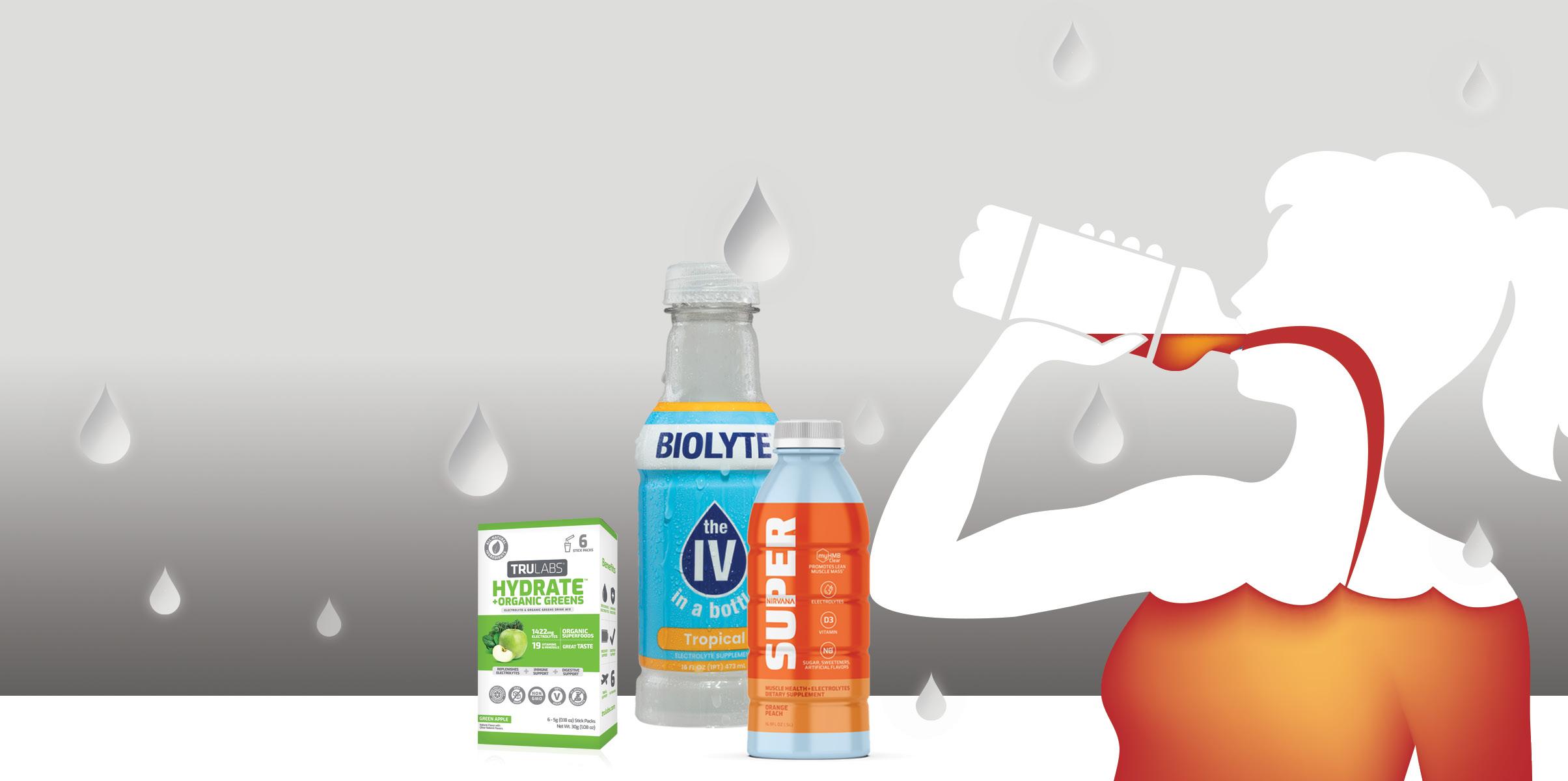
The sports drink aisle has been pretty stagnant for a while, but that’s starting to change.
Sports drinks are defined as functional beverages that help replenish glucose, fluids and electrolytes, according to the Harvard T.H. Chan School of Public Health. They are designed to help individuals hydrate and quickly replace the electrolytes lost in strenuous conditions or high-intensity workouts lasting an hour or more.
For decades, sports drinks advertisements have depicted professional athletes at the gym or on the field. Those ads helped the global electrolyte hydration drinks market become a $1.72 billion industry in 2023, according to Data Bridge Market Research. The market is expected to reach $3.26 billion by 2031. But recently, consumers have decided they want something different from their sports drinks.
“I think America is starting to change the way they look at sports drinks,” said Brandon Pogue, founder of TruLabs. “They have been marketed as a sports drink but, really, it’s just a sugary sweet good tasting drink that’s not good for you.”
As a result, there’s been a groundswell of activity, from established companies to start-ups trying to fill the void. Here are three ways the sports drinks market is changing.
1. Mixed Drinks
In the past, sports drinks were focused on helping people power through their workouts. Now, sports drinks are seen as an element of a broader effort to maintain health and well-being.
The sports drink consumer is not only wanting products that are functional, they are wanting products they can feel good about putting in their bodies. Health and wellness, food as medicine, and preventative medicine were already on the uptick, but after the pandemic, they exploded.”
 –
–
Jesslyn Rollins, CEO, Biolyte
products
DRUGSTORENEWS.COM June 2024 39 CONSUMABLES: SPORTS DRINKS
TruLabs

“Customers can expect the sports drink aisle to look a whole lot different than it does today,” said Jesslyn Rollins, CEO of Biolyte. “Customers have demanded more functional sports drinks and that has brought a new category, rapid rehydration, front and center.”
Rapid rehydration products are lower in sugar and even higher in electrolytes. Similarly, companies are adding caffeine or other energy sources to their products to give consumers a boost. Companies are also adding collagen and protein to help people recover, build lean muscle and prevent muscle loss.
“Consumers want function, real science and real results,” said Greg Clark, president of Nirvana Water Sciences, whose electrolyte line is infused with hydroxymethylbutyrate clear, a supplement designed to boost and protect lean muscle mass. “They don’t simply want better-for-you drinks; they want truly healthy drinks that help them achieve their fitness, mobility or weight loss goals.”
It is especially important for people taking GLP-1 drugs such as Ozempic, Wegovy and Trulicity, which help people shed pounds—and muscle—quickly.
“Ozempic users are losing weight really fast, and they’re losing muscle first,” said Janice Day, chief sales officer of Promino Brands, maker of the forthcoming protein drink line Rejuvenate. “They’re not getting what they need from their protein sources to build or retain muscles.”
That’s where sports drinks can come into play; they can provide a supplemental source of protein.
2. Flavor and Science Forward
Traditionally, sports drinks were available in flavors reminiscent of children’s juice boxes. Now, companies are taking it up a notch.
For example, Biolyte’s tropical flavor tastes like a pina colada and its citrus flavor invokes margarita vibes. Nirvana Water Sciences offers flavors you might expect at a spa, such as cucumber lime.
Pogue said TruLabs focuses R&D on performance—and on flavor. “We do all the science and all the research to make sure it’s healthy and going to do what it’s supposed to, but we also make sure it tastes really, really good.”
TruLabs doesn’t use sugar and has recently launched new flavors that are sweetened with monk fruit: peach mango, green apple and fruit punch, which includes a drinkable dihydromyricetin that can help people recover from the effects of alcohol, the company said.
An increasing number of sports drinks companies are also working with researchers and physicians to develop formulas that optimize performance.
For example, OP2 Labs, maker of Frog Fuel and ProT Gold, has developed a nano-hydrolyzed collagen protein, which is used in a clinical setting for about 14 medical indications. CEO and co-founder Alexander Kurz said these products are about making sure consumers are getting everything their body needs from their diet and providing supplemental nutrients.
“We’re here to provide a full-body benefit, not just for athletes,” Kurz said.
3. Clean Ingredients
Customers are demanding sports drinks be made with quality ingredients, and they don’t want to see artificial dyes, tons of sugar or hard-to-pronounce ingredients.
“Consumers want to know they are getting a quality product with the macronutrient profile they need that, above all, tastes great,” said Stuart Heflin, senior vice president and general manager of Quest. “They don’t want to feel like they have to

compromise anything. What they don’t want is a big calorie bomb laden with a lot of sugar.”
Customers also don’t want sports drinks to interfere with medications and chronic conditions, such as diabetes or irritable bowel syndrome. They want sports drinks to accommodate any allergies, diets and other preferences they may have.
“I find that people in their late 20s, 30s and 40s are really starting to look at the label and nutritional content,” Day said. “They’re becoming way more conscious. They’re not just consuming drinks to consume drinks. They’re not as easily influenced when they see a product with an athlete holding it.” dsn
40 June 2024 DRUGSTORENEWS.COM CONSUMABLES: SPORTS DRINKS
Biolyte products


TM
Supplement Support
How supplement laws stifle free speech and miss the mark on eating disorders
By Steve Mister

Your dietary supplement aisle is under attack. As retailers with stores in New York know, as of April 22, 2024, a wide range of dietary supplements has been restricted from sale to anyone under 18 years old. The products affected are any that are “labeled, marketed, or otherwise represented” for weight loss or muscle building. Unfortunately, the state provided no guidance for which products are affected. Stores are left to sort that out for themselves and are provided vague criteria in the law that suggests impacted supplements could include any products using the word “metabolism” and “muscle” on their labels.
The proponents of this legislation argued, without evidence, that using these products leads to eating disorders and body dysmorphia among young people. They asked other legislators to trust there were studies to support their claims, but CRN conducted its own review of the scientific literature and can find no evidence that these products cause or exacerbate eating disorders or body dysmorphia. If anything, the research suggests a possible reverse causality—abuse of these products may result from an underlying disorder. It’s well documented that anorexia and body dysmorphia are complex psychological conditions triggered by a range of factors, including social media usage, bullying, social pressures and more. Ritualized eating, compulsive exercise, use of supplements and other behaviors may be evidence of the disease rather than its causes. Meanwhile, millions of people use these products safely with beneficial results every day.
Limiting legitimate products and stifling truthful claims about their effects is not the solution.”
However, with Governor Hochul’s signature last fall, the law is now in effect. Even more troubling is that at least six other states have considered similar bills and could impose their own age restrictions on various dietary supplements.
Three-quarters of Americans use dietary supplements, and a 2023 survey of consumers revealed that 95% of supplement users are confident about their safety and quality. Imagine if large segments of this category become subject to age-gating, disappear from self-service shelves (as the Massachusetts legislation would require), or have to be evaluated by a state health agency (as the California bill would mandate).
The Council for Responsible Nutrition, a trade association for the dietary supplement industry, is pushing back. In addition to fiercely opposing these bills in state legislatures, we recently filed a lawsuit in New York to stop enforcement of the new law. Despite a series of objections and roadblocks put up by the New York Attorney General, our lawsuit has survived the early opposition.
At the heart of CRN’s suit is the concern that this law (and similar bills modeled on it in other states) violates the First Amendment rights of marketers, retailers and consumers to provide and receive truthful information about dietary supplements. Commercial speech, like the structure/function claims that appear on supplement labels, is protected by the First Amendment and can’t be limited by a state legislature based on mere supposition that the product may be harmful.
We will continue to fight these age restriction laws on supplements and invite our retail partners to join us in protecting your consumers’ access to these products. We take the prevalence of eating disorders among young people seriously, but even well-intentioned restrictions can have a chilling effect on free speech, prompting retailers to overly restrict access to beneficial products out of fear of penalties. Limiting legitimate products and stifling truthful claims about their effects is not the solution. dsn
Steve Mister is the president and CEO of the Council for Responsible Nutrition.
LAST WORD 42 June 2024 DRUGSTORENEWS.COM
Steve Mister
NOV 19-20
MARRIOTT MARQUIS CHICAGO
Join us for the sixth annual Top Women Awards as we celebrate the exceptional women who are shaping and changing this industry.

The DSN Top Women in Health, Wellness & Beauty program applauds and recognizes women for their exceptional contributions to both their companies and communities. Save the date and celebrate these extraordinary women who are influencing and transforming the health, wellness, and beauty industry.
SAVE THE DATE!
2024


Industry Leading Vaccine IntelligenceTM Provider for over 35 Years DRIVE REVENUE www.STChealth.com immslinksales@stchome.com ImmsLink and REPUTATION Through Improved Patient Care
