
@energyncommerce Año 6 Edición 72 agosto 2023 58 años del Instituto Mexicano del Petróleo como piedra angular de la industria petrolera 58 years of the Mexican Petroleum Institute as a cornerstone of the oil industry Ciberseguridad en el Sector Gasolinero Cybersecurity for Service Stations Columnas / Columns Rubí Alvarado · Dip. Manuel Rodriguez Fluvio Ruiz · Alonso Elí · Aldo Santillán CFE 86 aniversario Operaciones continuas y suministro eléctrico seguro Continuous operations and a secure electricity supply DISFRUTA DE LAS EDICIONES DE E&C ESCANEANDO EL QR Susan Nash, AAPG Orphan Wells: Gas Measurement and Data Collection Methodologies Key to Carbon Credits and Compliance $65.00 MXN / $5.00 USD
La Agencia Internacional de la Energía (AIE) ha publicado recientemente un informe titulado “Financing reductions in oil and gas methane emissions” (Financiación de la reducción de las emisiones de metano del petróleo y el gas).

El documento arroja luz sobre el papel fundamental de la mitigación del metano en el sector del petróleo y el gas. El informe subraya la importancia de las inversiones financieras en la reducción de las emisiones de este potente gas de efecto invernadero, lo anterior para alcanzar los objetivos climáticos mundiales.
El informe revela que las emisiones de metano del sector del petróleo y el gas, que representan el 15% de las emisiones mundiales de gases de efecto invernadero relacionadas con la energía, pueden reducirse en un 75% utilizando las tecnologías disponibles. Y destaca que, hasta dos tercios de estas reducciones pueden lograrse sin coste neto, debido al valor del gas ahorrado.
La AIE señala la necesidad de que las instituciones financieras desempeñen un papel más activo en el apoyo a los esfuerzos de reducción del metano. Sugiere que los prestamistas e inversores pueden ayudar a reducir las emisiones de metano incorporando objetivos de reducción de emisiones en sus decisiones de financiación. Este planteamiento no solo contribuiría a los objetivos climáticos, sino que también mejoraría la sostenibilidad financiera de los proyectos de petróleo y gas.
Financing the reduction of methane emissions from oil and gas
The International Energy Agency (IEA) has recently published a report entitled “Financing Reductions in Oil and gas methane emissions.”
The document sheds light on the critical role of methane mitigation in the oil and gas sector. The report underscores the importance of financial investments in reducing emissions of this potent greenhouse gas to achieve global climate goals.
The report reveals that methane emissions from the oil and gas sector, which account for 15% of global energy-related greenhouse gas emissions, can be reduced by 75% using available technologies. And it stresses that up to two-thirds of these reductions can be achieved at no net cost due to the value of the gas saved.
La AIE señala la necesidad de que las instituciones financieras desempeñen un papel más activo en el apoyo a los esfuerzos de reducción del metano.
El reporte también destaca el papel de la política y la regulación a la hora de fomentar la reducción de las emisiones de metano. Señala que, si bien algunos países han aplicado políticas para reducir las emisiones de metano, muchos otros no lo han hecho. La AIE reclama medidas políticas más sólidas y generalizadas para incentivar la reducción de emisiones y fomentar la transparencia en el sector. El informe sirve para recordar que, aunque la tarea es ardua, los beneficios de reducir las emisiones de metano son sustanciales.
The IEA points to the need for financial institutions to play a more active role in supporting methane reduction efforts.
The IEA points to the need for financial institutions to play a more active role in supporting methane reduction efforts. Lenders and investors can help reduce methane emissions by incorporating emissions reduction targets into their financing decisions. This approach would contribute to climate goals and improve the financial sustainability of oil and gas projects.
The report also highlights the role of policy and regulation in encouraging methane emission reductions. It notes that while some countries have implemented policies to reduce methane emissions, many others have not. The IEA calls for stronger and more widespread policy measures to incentivize emissions reductions and encourage transparency in the sector. The report serves as a reminder that, although the task is arduous, the benefits of reducing methane emissions are substantial.
2
Editorial
Financiamiento de la reducción de las emisiones de metano del petróleo y el gas
Rubí Alvarado Directora General General Manager @soyrubialvarado
Soluciones energéticas
Reduzca sus costos energéticos desde la medición de valores hasta los usos energéticos.
En todos los sectores industriales pueden encontrarse circuitos de gas, vapor o agua que proporcionan formas específcas de energía para el proceso operativo. Por consiguiente, deben ser el objetivo de cualquier compañía el uso energético efciente y su monitorización, con el fn de reducir estos costes.
Ventajas
• Reduzca de un modo sostenible sus costes energéticos
• Implementación de un sistema de gestión energético según DIN EN ISO 50001

• Realice un seguimiento de su uso energético gracias a una tecnología de medición de precisión
• Generación automática y análisis de informes energéticos
• Optimice sus procesos de producción y mejore la efciencia de sus equipos
Si desea reducir sus costos energéticos escaneé el siguiente código QR: O visite: https://eh.digital/3p9vPXr
3
Financiamiento de la reducción de las emisiones de metano del petróleo y el gas
Financing the reduction of methane emissions from oil and gas
Por / By: Rubí Alvarado
El poder de una terminología clara: Una clave para desbloquear la inversión y la producción de hidrógeno
The Power of Clear Terminology: A Key to Unlocking Hydrogen Investment and Production

Instituto Mexicano del Petróleo
Mexican Petroleum Institute
Pemex y las calificadoras
Pemex and the rating agencies
Proyectos Estratégicos de la CFE CFE Strategic Projects
Sed de cambio: Afrontar la sequía y la escasez de agua en un clima cambiante
Thirsting for Change: Tackling Droughts and Water Scarcity in a Changing Climate
Onexpo: motor de las estaciones de servicio en México
Onexpo: the driving force for service stations in Mexico
Ciberseguridad en el Sector
Gasolinero: ATIO® Group
Cybersecurity in the Gasoline
Industry: ATIO® Group
Estímulos fiscales a combustibles, aliados del consumidor
Tax incentives for fuels, allies of the consumer
58 aniversario Instituto Mexicano del Petróleo
58th Anniversary
Mexican Petroleum Institute
El Instituto Mexicano del Petróleo: clave en la construcción de la Refinería Olmeca
Mexican Petroleum Institute: key in the construction of the Olmeca Refinery
4 Índice
Por / By: Aldo Santillán
Por / By: Diputado Manuel Rodríguez González
Por / By: Fluvio Ruíz Alarcón
Por / By: Guadalupe Paredes Aquino, WEN
Por / By: Alonso Elí de Llanes

86 Aniversario de la Comisión Federal de Electricidad CFE, con energía constante y actualizada
86th Anniversary of the Federal Electricity Commission (CFE), with constant and updated energy
La Digitalización de la Baja Tensión: una nueva era para la red eléctrica
Low Voltage Digitization: a new era for the power grid
Siemens lidera la carrera hacia la digitalización de los sistemas eléctricos en baja tensión
Siemens leads the race toward the digitalization of low-voltage power systems
Charofil®: Tres Décadas de Innovación y Compromiso Ambiental en el Sector Eléctrico
Crecimiento de la infraestructura de generación eléctrica
Growth of electricity generation infrastructure
Top 5 de los productores de energías limpias en México
Top 5 clean energy producers in Mexico
Ktronix: soluciones de energía de vanguardia
Ktronix: cutting-edge energy solutions
Hidrógeno verde, una apuesta vigente de CFE
Green hydrogen, a current bet of CFE

Trazan ruta para garantizar el suministro y transporte de gas natural Route to guarantee the supply and transportation of natural gas is mapped out
Pozos huérfanos: Las metodologías de medición de gas y recogida de datos, claves para los créditos de carbono y el cumplimiento de la normativa
Orphan Wells: Gas Measurement and Data Collection Methodologies Key to Carbon Credits and Compliance
6 Índice
Por/By: Susan Nash, Ph.D.



WHY DOES IT MATTER?
Por / By Aldo Santillán
El poder de una terminología clara: Una clave para desbloquear la inversión y la producción de hidrógeno
Timur Gül y Peter Levi, de la Agencia Internacional de la Energía (AIE), publicaron sobre la importancia de una terminología clara en el sector del hidrógeno. Sostienen que la falta de un lenguaje normalizado es un obstáculo importante para la inversión y la ampliación de la producción de hidrógeno.
El hidrógeno, un vector energético versátil, tiene potencial para desempeñar un papel fundamental en la transición energética mundial. Sin embargo, el crecimiento del sector se ve obstaculizado por la falta de un lenguaje común para describir los distintos tipos de hidrógeno. Los autores señalan que los términos actuales -hidrógeno “gris”, “azul” y “verde”- no se entienden ni aceptan universalmente.
El hidrógeno “gris”, producido a partir de gas natural mediante reformado de metano con vapor, es el más común, pero también el que más carbono consume. El hidrógeno “azul”, también derivado del gas natural, implica la captura y almacenamiento de carbono para reducir las emisiones. El hidrógeno “verde”, producido mediante electrólisis alimentada por energías renovables, es el más respetuoso con el medio ambiente, pero también el más caro.
Gül y Levi sostienen que estos términos suelen utilizarse o entenderse mal, lo que genera confusión entre los inversores, los responsables políticos y el público. Esta confusión puede dar lugar a una mala asignación de recursos y a la pérdida de oportunidades para el sector del hidrógeno.
Los autores proponen una solución: un sistema terminológico normalizado, claro y transparente. Este sistema aportaría claridad a los inversores, permitiéndoles tomar decisiones con conocimiento de causa.
También ayudaría a los responsables políticos a diseñar normativas e incentivos eficaces para promover la producción de hidrógeno bajo en carbono.
Los autores también subrayan la necesidad de un sólido sistema de certificación para verificar el contenido de carbono del hidrógeno. Esto garantizaría que el hidrógeno “verde” es realmente verde y que el hidrógeno “azul” cumple ciertas normas de emisión. Un sistema de este tipo generaría confianza y credibilidad en el mercado, lo que fomentaría aún más la inversión.
A medida que el mundo busca la transición hacia fuentes de energía más limpias, es crucial que establezcamos un lenguaje común para guiar nuestros esfuerzos. Sólo entonces podremos aprovechar plenamente el poder del hidrógeno para alimentar nuestro futuro.
As the world seeks to transition to cleaner energy sources, we must establish a common language to guide our efforts. Only then can we fully harness the power of hydrogen to fuel our future?
The Power of Clear Terminology: A Key to Unlocking Hydrogen Investment and Production
Timur Gül and Peter Levi of the International Energy Agency (IEA) published the importance of clear terminology in the hydrogen sector. They argue that the lack of a standardized language is a major obstacle to investment and the expansion of hydrogen production.

THydrogen, a versatile energy carrier, has the potential to play a key role in the global energy transition. However, the sector’s growth is hampered by the lack of a common language to describe the different types of hydrogen. The authors point out that the current terms-”gray,” “blue,” and “green” hydrogen-are not universally understood or accepted.
Gray” hydrogen, produced from natural gas by steam reforming methane, is the most common but carbon-intensive. Blue” hydrogen, also derived from natural gas, involves carbon capture and storage to reduce
emissions. Green” hydrogen, produced by electrolysis powered by renewable energy, is the most environmentally friendly and expensive.
Gül and Levi argue that these terms are often misused or misunderstood, leading to confusion among investors, policymakers, and the public. This confusion can lead to misallocation of resources and missed opportunities for the hydrogen sector.

The authors propose a solution: a standardized, clear, and transparent terminology system. Such a system would provide clarity for investors, enabling them to make informed decisions. It would also help policymakers design effective regulations and incentives to promote low-carbon hydrogen production.
The authors also stress the need for a robust certification system to verify the carbon content of hydrogen. This would ensure that “green” hydrogen is green and that “blue” hydrogen meets certain emission standards. Such a system would build confidence and credibility in the marketplace, further encouraging investment.
8
Columna Aldo Santillán es Managing Director & Editor in Chief de Energy & Commerce, Industry News Mx, Mining México y Energy Capital para México y Estados Unidos. Forma parte de la junta directiva de Capital Media Group LLC y Grupo Avanmex. Ha sido periodista, comunicador, consultor y capacitador durante 24 años. Aldo Santillan is Managing Director & Editor in Chief at Energy & Commerce, Mining México, and Energy Capital for Mexico and USA. He is a member of the board of directors at Capital Media Group LLC and Avanmex Group. For the last 24 years, he has been journalist, communicator, consultant, and trainer.
Por / By: Diputado Manuel Rodríguez González
Instituto Mexicano del Petróleo
El Instituto Mexicano del Petróleo (IMP), a 58 años de su creación, representa una serie de generaciones de mujeres y hombres que han estado al servicio de México. Ellos han trabajado para el engrandecimiento de Petróleos Mexicano (Pemex). Desde su nacimiento como centro público de investigación, desarrollo tecnológico e innovación de la industria petrolera, ha tenido como encomienda generar soluciones a las necesidades y problemas operativos de Pemex en toda la cadena de valor de los hidrocarburos.

Esto lo pudimos constatar de primera mano, durante una visita de los legisladores de las distintas fracciones parlamentarias que integran la Comisión de Energía de la Cámara de Diputados. Lo anterior, atendiendo la amable invitación del Ingeniero Marco Antonio Osorio Bonilla, director general del IMP.
Durante el recorrido por los diversos laboratorios, de manera didáctica y generosa, los investigadores nos dieron a conocer algunos de sus últimos trabajos en el desarrollo tecnológico aplicados al sector petrolero. Esta vasta y fecunda producción científica se ha traducido en más de 1500 patentes que ostenta el IMP.
A manera de ejemplo, el IMP aporta para resolver uno de los mayores problemas que enfrenta la industria petrolera en México y el mundo, que es la contaminación de aceites crudos con agua y sales, que además de abaratar su precio, corroen y destruyen las instalaciones petroleras. Para ello, sus científicos han desarrollado un proceso químico con base en acrílicos de deshidratación y desalado de petróleo, denominado IMP-Kinam, que en náhuatl significa cuando se separan dos cosas de naturaleza diferente, los resultados son sorprendentes.
Además de ser más barato, la separación del agua y sales del petróleo la logra al primer contacto en cuestión de segundos; mientras que los productos importados, además de tardar horas en el proceso, se adhieren a las rocas y tapan los poros. Esto hace necesario limpiar el pozo con químicos para que vuelva a producir.
Con el proceso patentado por el IMP, se logró incrementar la producción de un pozo intervenido entre un 10 y 30 por ciento. En la actualidad, dicha tecnología se utiliza para tratar 1 millón de barriles diarios en la Terminal Marítima de Dos Bocas.
Manuel Rodríguez González Diputado
 Presidente
Mexican Petroleum Institute
The Mexican Petroleum Institute (IMP), 58 years after its creation, represents a series of generations of women and men who have been at the service of Mexico. They have worked for the growth of Petróleos Mexicanos (Pemex). Since its birth as a public center for research, technological development, and innovation in the oil industry, its mission has been to generate solutions to Pemex’s operational needs and problems throughout the hydrocarbon value chain.
Te confirmed this firsthand during a visit by legislators from the different parliamentary fractions that make up the Energy Commission of the Chamber of Deputies—the above, at the kind invitation of Engineer Marco Antonio Osorio Bonilla, general director of IMP.
During the tour of the various laboratories, in a didactic and generous manner, the researchers showed us some of their latest work in technological development applied to the oil sector. This vast and fruitful scientific production has resulted in over 1500 patents held by IMP.
As an example, IMP contributes to solving one of the biggest problems faced by the oil industry in Mexico and the world, which is the contamination of crude oils with water and salts, which besides lowering their price, corrode and destroy oil installations. To this end, its
scientists have developed a chemical process based on acrylics for the dehydration and desalting of oil, called IMPKinam, which in Nahuatl, the results are surprising when two things of different natures are separated.
Besides being cheaper, the separation of water and salts from the oil is achieved at the first contact in a matter of seconds; while imported products, besides taking hours in the process, adhere to the rocks and clog the pores. This makes cleaning the well with chemicals necessary to get it to produce again.
With the process patented by IMP, it was possible to increase the production of an intervened well between 10 and 30 percent. This technology is currently used to treat 1 million barrels daily at the Dos Bocas Maritime Terminal.
9
Columna
Federal
de la Comisión de Energía de la LXV Legislatura de la Cámara de Diputados del H. Congreso de la Unión www.manuelrodriguez.mx
Las opiniones expresadas por los columnistas son independientes y no reflejan necesariamente el punto de vista de E&C.
Por / By Fluvio Ruíz Alarcón
Pemex y las calificadoras
El pasado 14 de julio, la calificadora Fitch Ratings ubicó a Petróleos Mexicanos en una categoría crediticia de B+ con perspectiva negativa. El argumento de Fitch Rating fue que la producción de petróleo crudo de Pemex no aumentará significativamente y que la reciente serie de accidentes levantaba dudas sobre su eficiencia operativa, seguridad industrial y protección ambiental. Asimismo, hizo énfasis en la incertidumbre alrededor de la capacidad del gobierno para mejorar la liquidez de Pemex, así como su estructura de capital en los próximos dos años. Y es que, si bien su deuda ha disminuido gracias al apoyo gubernamental, aún se mantiene muy elevada: 107,387 millones de dólares (1.94 billones de pesos).
El saldo actual de la deuda de Pemex es 220,000 millones de pesos (10.1%) menor al registrado al cierre de 2022 (2.16 billones de pesos), sin embargo, Pemex deberá amortizar el 16.9% de su deuda financiera entre el 1 de abril y el 31 de diciembre de 2023. Esto significa que en ese plazo la petrolera deberá pagar 329,100 millones de pesos (18,200 millones de dólares) para hacer frente a sus obligaciones financieras. Asimismo, en el periodo que va del 1 de enero de 2024 al 31 de marzo de 2027, Petróleos Mexicanos deberá pagar 623,600 millones de pesos (34,400 millones de dólares), cantidad equivalente al 32.1% de su deuda total. Aunque desde abril de 2022, Pemex se ha hecho enteramente cargo del pago de su deuda, estos montos aunados al descenso de su calificación crediticia, abren la posibilidad de que el gobierno vuelva a apoyar a la petrolera con el pago de las amortizaciones.
Independientemente de los análisis que hacen las calificadoras, en el terreno operativo, Pemex debe enfrentar con gran decisión, compromiso y responsabilidad, el hecho de que el índice de frecuencia de accidentes, pasó de 0.37 a 0.58, entre el primer trimestre de 2022 y el correspondiente de 2023: un incremento del ¡56.7%! Asimismo, el índice de gravedad se incrementó notablemente, al pasar de 11 a 32 días en ese mismo lapso: un muy preocupante aumento del ¡190%!
Más allá de lo coyuntural, requerimos de una profunda revisión del modelo económico y del papel que en él debe jugar el sector petrolero, en el contexto de la transición energética y el combate al cambio climático. Necesitamos repensar el diseño institucional del sector, la importancia y formas de participación en él de las empresas del Estado, la mejor organización de estas para cumplir el reto de la transición, el lugar de la inversión privada y las políticas industrial, ambiental, económica, fiscal y de desarrollo territorial; que den coherencia de conjunto a este objetivo fundamental.

La construcción de un sector petrolero para el futuro requiere del papel activo del Estado, una nueva arquitectura institucional y una política petrolera que comprenda las tres componentes de la sustentabilidad energética, definidas por el Consejo Mundial de la Energía: seguridad energética, sustentabilidad ambiental y equidad en el acceso de la población al uso de la energía.
Pemex ya no debe ser tan solo un factor de generación de ingresos fiscales, sino también un importante agente de sustentabilidad y transición energética; industrialización y desarrollo regional; mejora y redistribución del ingreso e impulso a la investigación científica y el desarrollo tecnológico.
Pemex and the rating agencies
On July 14, Fitch Ratings placed Petróleos Mexicanos in a B+ credit category with a negative outlook. Fitch Rating argued that Pemex’s crude oil production would not increase significantly and that the recent series of accidents raised doubts about its operational efficiency, industrial safety, and environmental protection. It also emphasized the uncertainty surrounding the government’s ability to improve Pemex’s liquidity and capital structure over the next two years. Although its debt has decreased thanks to government support, it is still very high: 107.387 billion dollars (1.94 billion pesos).
The current balance of Pemex’s debt is 220,000 million pesos (10.1%), lower than that recorded at the end of 2022 (2.16 trillion pesos). However, Pemex must amortize 16.9% of its financial debt between April 1 and December 31, 2023. In that period, the oil company must pay 329.1 billion pesos ($18.2 billion) to meet its financial obligations. Likewise, from January 1, 2024, to March 31, 2027, Petroleos Mexicanos must pay 623.6 billion pesos (34.4 billion dollars), equivalent to 32.1% of its total debt. Although since April 2022, Pemex has been entirely responsible for the payment of its debt, these amounts, together with the downgrade of its credit rating, open the possibility that the government will once again support the oil company with the payment of amortizations.
Regardless of the analysis made by the rating agencies, in the operational field, Pemex must face great decision, commitment, and responsibility, the fact that the accident frequency rate went from 0.37 to 0.58 between the first quarter of 2022 and the corresponding quarter of 2023: an increase of 56.7%! Likewise, the severity rate increased notably, going from 11 to 32 days in the same period: a worrying increase of 190%!
Beyond the current situation, we need a profound review of the economic model and the role the oil sector should play in the context of the energy transition and the fight against climate change. We need to rethink the institutional design of the industry, the importance and forms of participation in it of the State companies, the best organization of these to meet the challenge of the transition, the place of private investment, and industrial, environmental, economic, fiscal and territorial development policies; which give overall coherence to this fundamental objective.
The construction of an oil sector for the future requires the active role of the State, a new institutional architecture, and an oil policy that includes the three components of energy sustainability, as defined by the World Energy Council: energy security, environmental sustainability, and equity in the population’s access to the use of energy.
Pemex should not be just a factor in the generation of fiscal income but also an essential agent of sustainability and energy transition; industrialization and regional development; improvement and redistribution of income; and promotion of scientific research and technological development.

Columna


Proyectos Estratégicos de la CFE
El pasado 29 de mayo la SENER publicó el PRODESEN. Se destacan los proyectos de ampliación y modernización de la Red Nacional de Transmisión y las Redes Generales de Distribución que correspondan al MEM. Se trata de los proyectos de CFE Transmisión y Distribución que tienen por objeto satisfacer el suministro de la demanda de energía eléctrica, preservar y mejorar la confiabilidad del SEN, reducir los costos del Suministro Eléctrico, contribuir a las metas de producción de Energía Limpia, operar con eficiencia energética e incorporar tecnologías de Red Eléctrica Inteligente (REI).
Por / By: Guadalupe Paredes Aquino
Sin duda alguna estos proyectos son de relevancia para el desarrollo del mercado eléctrico y de igual forma para lograr la inversión productiva en nuestro país. Dentro del PRODESEN se identifican 182 proyectos instruidos por la SENER a CFE Transmisión y 107 proyectos a CFE Distribución.
Adicional a las líneas de Distribución y Transmisión, la CFE ha presentado en su Plan de Negocio que, mediante el Fideicomiso Maestro de Inversión, se financiarán 6 centrales de ciclo combinado en Veracruz y las penínsulas de Baja California y Yucatán. En estas zonas, se requiere satisfacer una demanda importante de Energía Eléctrica, agregando en total una capacidad neta de 4,159 MW.
En cuanto al tema de Energías Limpias, la CFE rehabilitará las principales centrales hidroeléctricas de la empresa. Igualmente, construirá la central fotovoltaica de Puerto Peñasco y el proyecto piloto de Hidrogeno verde en Puerto Libertad, sumando una capacidad neta de 1,020 MW.


CFE Strategic Projects
Last May 29, SENER published the PRODESEN. It highlights the expansion and modernization projects of the National Transmission Network and the General Distribution Networks that correspond to the MEM. These CFE Transmission and Distribution projects aim to satisfy the supply of electricity demand, preserve and improve the reliability of the SEN, reduce electricity supply costs, contribute to the goals of Clean Energy production, operate with energy efficiency, and incorporate Smart Grid technologies (REI).
Undoubtedly, these projects are relevant for developing the electricity market and achieving productive investment in our country. Within the PRODESEN, 182 projects instructed by SENER to CFE Transmission and 107 projects to CFE Distribution have been identified.
In addition to the Distribution and Transmission lines, the CFE has presented in its Business Plan that, through the Master Investment Trust, six combined cycle plants will be financed in
Veracruz and the peninsulas of Baja California and Yucatan. In these areas, there is a need to satisfy significant electricity demand, adding a total net capacity of 4,159 MW.

The CFE will rehabilitate the company’s central hydroelectric plants in Clean Energy. It will also build the Puerto Peñasco photovoltaic plant and the green hydrogen pilot project in Puerto Libertad, adding a net capacity of 1,020 MW.
Guadalupe Paredes Aquino es una destacada economista con más de 11 años de experiencia en el sector energético, particularmente en el Mercado Eléctrico Mayorista y en la reforma energética en México. Su sólida formación académica incluye una licenciatura por la Escuela Bancaria y Comercial, una maestría en Finanzas del Instituto Tecnológico Autónomo de México y un diplomado en Diseño de Mercados Eléctricos e Integración Energética. Ha ocupado puestos de alta responsabilidad en el sector, trabajando durante 9 años en la Comisión Federal de Electricidad y sus filiales en roles como administración y gestión de riesgos. En el Grupo GEMEX, lideró la implementación de la gestión de riesgos y control de procesos. Se desempeñó como Directora de Operaciones en Luxem Servicios Calificados, donde gestionó la comercialización de energía a Usuarios Calificados. Actualmente es Directora General de la misma empresa, demostrando su habilidad de liderazgo y dedicación al éxito de la compañía.
Guadalupe Paredes Aquino is a leading economist with more than 11 years of experience in the energy sector, particularly in the Wholesale Electricity Market and energy reform in Mexico. Her solid academic background includes a bachelor’s degree from the Escuela Bancaria y Comercial, a master’s in Finance from the Instituto Tecnológico Autónomo de México, and a diploma in Electricity Market Design and Energy Integration. He has held senior positions in the sector, working for nine years at the Federal Electricity Commission and its subsidiaries in administration and risk management roles. At Grupo GEMEX, she led risk management and process control implementation. She was Director of Operations at Luxem Servicios Calificados, managing energy commercialization for Qualified Users. She is currently the General Manager of the same company, demonstrating her leadership skills and dedication to the company’s success.

12
Women’s Energy Network (WEN) México
Columna Las opiniones expresadas por los columnistas son independientes y no reflejan necesariamente el punto de vista de E&C.

Sed de cambio: Afrontar la sequía y la escasez de agua en un clima cambiante
La ecología integral es un enfoque holístico para comprender las complejas interacciones entre las sociedades humanas y el mundo natural. Reconoce que la salud del medio ambiente y el bienestar de las personas están profundamente interconectados, y que abordar uno sin el otro es insuficiente. Mientras empresas e industrias de todo el mundo se enfrentan a los urgentes retos del cambio climático, la pérdida de biodiversidad y la desigualdad social, el concepto de ecología integral ofrece un poderoso marco para integrar la sostenibilidad en las estrategias empresariales.
Ante la rápida escalada de la crisis climática mundial, un problema acuciante destaca entre los demás: las sequías y la gestión del agua. A medida que se intensifica el cambio climático, regiones de todo el planeta experimentan sequías más frecuentes y graves, lo que agrava el ya crítico problema de la escasez de agua. Las consecuencias de esta crisis de doble filo son de gran alcance y exigen medidas urgentes.
Las sequías se han hecho cada vez más frecuentes en los últimos años, dejando vastas zonas resecas, ríos esquilmados y cosechas destruidas. Aunque las sequías siempre han sido un fenómeno natural, el cambio climático ha aumentado su intensidad y frecuencia. El aumento de las temperaturas contribuye a incrementar la evaporación, dejando menos humedad en el suelo y agotando las reservas de agua. Además, los cambios en los patrones climáticos alteran la distribución de las precipitaciones, lo que agrava el impacto de las sequías en el suministro de agua.
La escasez de agua no es una preocupación lejana; es una catástrofe inminente que afecta tanto a las personas como a los ecosistemas. A medida que crece la población, se intensifica la competencia por los limitados recursos hídricos, lo que provoca disparidades socioeconómicas y conflictos. En muchas regiones, el acceso al agua potable se ha convertido en un lujo, lo que supone una amenaza para la salud pública y la higiene. Los ecosistemas que dependen del agua dulce también están en peligro, lo que altera los frágiles equilibrios y pone en peligro la biodiversidad.
Las estrategias eficaces de gestión del agua son cruciales para hacer frente tanto a las sequías como a la escasez de agua. Los gobiernos, las industrias y las comunidades deben dar prioridad a las prácticas sostenibles para optimizar el uso del agua y minimizar su despilfarro. Invertir en infraestructuras para la recogida de agua de lluvia, el tratamiento de aguas residuales y el reciclado del agua puede aliviar la presión sobre las fuentes de agua dulce. Además, la aplicación de técnicas de riego eficientes, el fomento de la concienciación sobre la conservación del agua y la adopción de tecnologías innovadoras son esenciales para combatir esta crisis.
Dada la vulnerabilidad de México a las sequías y la escasez de agua, es imperativo desarrollar políticas sólidas que aborden estos retos de frente. Invirtiendo en investigación y desarrollo de tecnologías eficientes y métodos de conservación del agua, México puede allanar el camino hacia un futuro sostenible. México puede sortear la doble crisis del cambio climático y la escasez de agua a través de la elaboración de políticas proactivas y esfuerzos de colaboración, forjando un camino hacia un futuro sostenible y resiliente.

À votre avis ?
Thirsting for Change: Tackling Droughts and Water Scarcity in a Changing Climate


catastrophe that affects both people and ecosystems. As populations grow, competition for limited water resources intensifies, leading to socioeconomic disparities and conflicts. In many regions, access to clean water has become a luxury, posing a threat to public health and hygiene. Ecosystems dependent on freshwater are also at risk, disrupting fragile balances and endangering biodiversity.
In the face of the rapidly escalating global climate crisis, one pressing issue stands out among the rest: droughts and water management. As climate change intensifies, regions across the globe are experiencing more frequent and severe droughts, exacerbating the already critical issue of water scarcity. The consequences of this double-edged crisis are far-reaching and demand urgent action.
Droughts have become increasingly common in recent years, leaving vast areas parched, rivers depleted, and crops destroyed. While droughts have always been a natural occurrence, the changing climate has fueled their intensity and frequency. Rising temperatures contribute to increased evaporation, leaving less moisture in the soil and depleting water reserves. Additionally, shifting weather patterns disrupt rainfall distribution, compounding the impact of droughts on water supplies.
Water scarcity is not a distant concern; it is an impending
Effective water management strategies are crucial in addressing both droughts and water scarcity. Governments, industries, and communities must prioritize sustainable practices to optimize water usage and minimize wastage. Investing in infrastructure for rainwater harvesting, wastewater treatment, and water recycling can alleviate pressure on freshwater sources. Furthermore, implementing efficient irrigation techniques, promoting water conservation awareness, and adopting innovative technologies are integral to combating this crisis.
Given Mexico’s vulnerability to droughts and water scarcity, it is imperative to develop robust policies that address these challenges head-on. By investing in research and development for water-efficient technologies and conservation methods, Mexico can pave the way for a sustainable future. It is through proactive policymaking and collaborative efforts that Mexico can navigate the dual crisis of climate change and water scarcity, forging a path toward a sustainable and resilient future.
À votre avis ?
14
Columna
Por / By Alonso Elí de Llanes
EN COLOR VERDE IN GREEN COLOR
Las opiniones expresadas por los columnistas son independientes y no reflejan necesariamente el punto de vista de E&C.
Alonso de Llanes es Abogado con formación de posgrado en el sector energético. Dentro de sus 8 años de experiencia en el sector energético ha sido consultor para el sector privado así como asesor de la Comisión de Energía en la H. Cámara de Diputados del Congreso de la Unión. Actualmente es el Coordinador de asuntos energéticos de la Federación Franco Mexicana. Alonso de Llanes is a lawyer with postgraduate education in the energy sector. During his 8-year experience in the energy sector, he has been a consultant for the private sector, as well as an advisor to the Energy Commission in the Chamber of Deputies of the Congress of the Union. He is currently the Coordinator of Energy Affairs in the Franco-Mexican Federation.


Onexpo: motor de las estaciones de servicio en México
Onexpo es una de las organizaciones más influyentes en el sector de venta de combustibles en México.
Representa a un gran porcentaje del mercado de venta de combustibles en el país. Con esta posición, puede influir en las políticas y regulaciones del sector. La asociación tiene como objetivo principal defender los intereses de sus miembros y promover un ambiente de negocios favorable para el sector de venta de combustibles.
Para lograrlo, Onexpo realiza una serie de actividades que incluyen la representación ante autoridades gubernamentales, la promoción de mejores prácticas comerciales y la organización de eventos y conferencias para fomentar la colaboración y el intercambio de ideas entre sus miembros. La asociación representa a una gran cantidad de estaciones de servicio, lo que le da una voz significativa en la industria. También brinda a sus miembros una variedad de servicios que les ayudan a operar de manera eficiente y rentable. Y juega un papel importante en la regulación del sector y en la promoción de la industria.
Uno de los aspectos más destacados de Onexpo es su compromiso con la calidad y la seguridad. La asociación trabaja de la mano con sus miembros para garantizar que las estaciones de servicio cumplan con los más altos estándares de calidad y seguridad. Esto no solo beneficia a los miembros de la asociación, sino también a los consumidores, que pueden confiar en que recibirán un servicio de alta calidad cuando visiten una estación de servicio afiliada.
Onexpo: the driving force for service stations in
Mexico
Onexpo is one of the most influential organizations in the fuel sales sector in Mexico.
It represents a large percentage of the fuel sales market in the country. With this position, it can influence the sector’s policies and regulations. The association’s main objective is to defend the interests of its members and promote a favorable business environment for the fuel retailing sector.
Onexpo is vital because it gives a significant voice to the fuel retailing industry in Mexico.
To achieve this, Onexpo carries out several activities, including representation before government authorities, promoting best business practices, and organizing events and conferences to foster collaboration and the exchange of ideas among its members. The association represents many service stations, giving it a significant voice in the industry. It also provides its members various services that help them operate efficiently and profitably. And it plays a vital role in regulating the sector and promoting the industry. One of Onexpo’s highlights is its commitment to quality and safety. The association works hand in hand with its members to ensure that service stations meet the highest quality and safety standards. This benefits

18 Estaciones de Servicio
Onexpo es importante porque le da una voz significativa a la industria de venta de combustibles en México.


Onexpo es una asociación fundamental para las actividades del sector de venta de combustibles en México. Representa a una gran cantidad de estaciones de servicio, brinda a sus miembros una variedad de servicios y juega un papel importante en la regulación del sector y en la promoción de la industria.
Onexpo is a fundamental association for the fuel retailing sector in Mexico. It represents many service stations, provides its members with various services, and plays an essential role in regulating the sector and promoting the industry.


Además, Onexpo juega un papel crucial en la formación y educación de sus miembros. Ofrece una variedad de programas de capacitación y desarrollo profesional para ayudar a los dueños de estaciones de servicio a mantenerse al día con las últimas tendencias y avances en el sector.
La relevancia que tiene en el sector de venta de combustibles en México se debe a su amplia representación, su compromiso con la calidad y la seguridad, y su papel en la formación y educación de sus miembros. Estas características hacen de Onexpo la asociación de dueños de estaciones de servicio más importante en México, y una fuerza a tener en cuenta en el sector de venta de combustibles. Onexpo es importante porque le da una voz significativa a la industria de venta de combustibles en México.
Estos servicios ayudan a sus miembros a operar de manera eficiente y rentable. Ayuda a mantenerse al día con las últimas tendencias en la industria. La promoción de la industria por parte de Onexpo también es importante para las actividades del sector de venta de combustibles en México. La asociación trabaja para aumentar el conocimiento de la industria entre los consumidores, los medios de comunicación y el público en general. Esto ayuda a asegurar que la industria de venta de combustibles sea bien entendida y apoyada por la sociedad.
association members and consumers, who can be confident that they will receive high-quality service when they visit an affiliated service station.
In addition, Onexpo plays a crucial role in the training and education of its members. It offers a variety of training and professional development programs to help service station owners keep up with the latest trends and developments in the industry. Its relevance in the fuel retailing sector in Mexico is due to its broad representation, commitment to quality and safety, and its role in the training and education of its members. These characteristics make Onexpo
the most essential service station owners’ association in Mexico and a force to be reckoned with in the fuel retailing sector. Onexpo is crucial because it gives a significant voice to the fuel retailing industry in Mexico. These services help its members operate efficiently and profitably. It helps to keep up with the latest trends in the industry. Onexpo’s industry promotion is also essential to the fuel retailing sector’s activities in Mexico. The association increases industry awareness among consumers, the media, and the general public. This helps ensure that the fuel retailing industry is well understood and supported by society.
20
Estaciones de Servicio


Ciberseguridad en el Sector Gasolinero: ATIO® Group

Alfonso Méndez, Gerente de Operaciones y TI de ATIO® Group, comentó sobre la creciente importancia de la ciberseguridad en el sector gasolinero. El experto proporciona una visión detallada de cómo la empresa líder de la industria de los combustibles está abordando los desafíos de este problema global.
Por
Destacó la relevancia de la ciberseguridad para las empresas, especialmente en el sector gasolinero, debido a la gran cantidad de información que se maneja a nivel digital. “Los ataques son frecuentes. Aunque no nos demos cuenta, hay una insistencia en robarse la identidad y la información”, dijo.
ATIO® Group ofrece soluciones de seguridad perimetral para bloquear cualquier
Cybersecurity in the Gasoline Industry: ATIO® Group
Alfonso Méndez, Operations and IT Manager at ATIO® Group commented on the growing importance of cybersecurity in the gasoline sector. The expert provides a detailed overview of how the leading company in the fuel industry is addressing the challenges of this global problem.
alliance with PDI Technologies to offer security services as an additional service to its customers. This means that the service station transfers the risk to ATIO® Group, and with PDI’s support, they guarantee the availability of the technology at any time.
Alfonso Méndez also highlighted that they are responsible for configuring, monitoring, and responding to any failure. “The warranty is permanent; the service is permanent. It’s something like when you buy your telephone Internet service if the modem burns out, the technician goes and changes it. It is the same thing we are offering,” he explained.
intrusión que tenga como objetivo robar información o interrumpir las operaciones. Alfonso explicó que la amenaza es real y cada vez más cercana para todo tipo de empresas en todo tipo de sectores. “Cuando más transacciones bancarias tienes, cuando más información estás intercambiando en el internet, más expuesto estás”, advirtió.
La empresa ha establecido una alianza con PDI Technologies para ofrecer servicios de seguridad como servicio adicional a sus clientes. Esto significa que la estación de servicio transfiere el riesgo a ATIO® Group, y con el apoyo de PDI, garantizan la disponibilidad de la tecnología en cualquier momento.
Alfonso Méndez también destacó que ellos se encargan de configurar, monitorear
He highlighted the relevance of cybersecurity for companies, especially in the gas sector, due to the large amount of information handled digitally. “Attacks are frequent. Even if we don’t realize it, there is an insistence on stealing identity and information,” he said.
ATIO® Group offers perimeter security solutions to block any intrusion to steal information or disrupt operations.
Alfonso explained that the threat is real and getting closer for all types of companies in all kinds of sectors. “The more banking transactions you have, the more information you exchange on the internet, the more exposed you are,” he warned.
The company has established an
So far, ATIO® Group has installed around 70 security devices. One of the advantages the clients see is the updating and the agile and fast way the company can generate changes, either due to attacks, alerts, or needs.
Alfonso emphasized the importance of prevention through actions focused on protecting information and preventing economic losses. “Cybersecurity is not something we must be aware that it exists, simply to function. The threat, the attack, without us realizing it, requires actions on our part to prevent any economic loss,” he concluded.
With all of the above, there should be a valuable insight into the importance of cybersecurity in the gas sector and how ATIO® Group is working to address these challenges. With increasing digitization and the growing threat
24
/ By: Aldo Santillán
Entrevista E&C
y responder ante cualquier falla. “La garantía es permanente, el servicio es permanente. Es algo como cuando uno adquiere su servicio telefónico de internet, donde se queme el módem, va el técnico y lo cambia. Es lo mismo que nosotros estamos ofreciendo”, explicó.
Hasta el momento, ATIO® Group ha instalado alrededor de 70 dispositivos de seguridad. Una de las ventajas que los clientes ven es la actualización y la manera ágil y rápida en que la compañía puede generar cambios, ya sea por ataques, alertas o necesidades.
Alfonso enfatizó la importancia de la prevención a través de acciones enfocadas a proteger la información y prevenir pérdidas económicas. “La ciberseguridad no es algo de lo cual debemos estar conscientes de que existe, simplemente de funcionar. La amenaza, el ataque, sin que nos demos cuenta, requiere acciones de nuestra parte para prevenir cualquier pérdida económica”, concluyó.
Con todo lo anterior, se debe tner una visión valiosa de la importancia de la ciberseguridad en el sector gasolinero y cómo ATIO® Group está trabajando para abordar estos desafíos. Con la creciente digitalización y la creciente amenaza de ataques cibernéticos, la ciberseguridad se ha convertido en una necesidad crítica para todas las empresas, y el sector gasolinero no es una excepción.
La solución de Seguridad como Servicio (SECaaS) se creó especialmente para estaciones de servicio. Está integrada por Cradlepoint, el sistema de seguridad perimetral (firewall) y MDR, el endpoint avanzado contra nuevas amenazas informáticas. Ofrece seguridad perimetral para proteger el entorno de red, así como sus equipos contra infección o cifrado malicioso, con un sistema de protección de intrusos que detecta tráfico inusual, previene ataques y detiene afectaciones antes de que los recursos sean comprometidos.
El filtrado web de Cradlepoint restringe el acceso a sitios maliciosos y fraudulentos para impedir estafas cibernéticas. Su control de aplicaciones permite configurar cuáles programas instalados pueden ejecutarse y cuáles no. Cumple con las mejores prácticas de la industria, así como con todos los requisitos de seguridad establecidos en el Anexo 30, como contar con protección cibernética, detección de intrusos con firmas actualizadas, listas de control de acceso a nivel red y nivel aplicativo, así como segmentación de redes por su direccionamiento y tipo de tráfico productivo y de gestión.
Con esta solución ATIO® Group incluye respaldo de conexión a internet por Wifi, para garantizar la continuidad operativa del negocio ante incidentes, así como soporte continuo 7x24 con diferentes niveles de servicio que las estaciones de servicio requieren para su operación diaria. Así mismo, la licencia de endpoint MDR es más que un antivirus, ya que previene, detecta y responde a amenazas avanzadas, incluidas Ransomware. Al aprovechar los datos de riesgos en tiempo real, identifica, bloquea y elimina riesgos que los antivirus tradicionales no pueden reconocer.
Con la creciente digitalización y la creciente amenaza de ataques cibernéticos, la ciberseguridad se ha convertido en una necesidad crítica para todas las empresas, y el sector gasolinero no es una excepción.
With increasing digitization and the growing threat of cyber attacks, cybersecurity has become a critical need for all businesses, and the gas sector is no exception.
of cyber attacks, cybersecurity has become a critical need for all businesses, and the gas sector is no exception.
The Security as a Service (SECaaS) solution was created especially for gas stations. It is integrated by Cradlepoint, the perimeter security system (firewall), and MDR, the advanced endpoint against new IT threats. It offers perimeter security to protect the network environment and your equipment against infection or malicious encryption, with an intrusion protection system that detects unusual traffic, prevents attacks, and stops disruptions before resources are compromised. Cradlepoint’s web filtering restricts
access to malicious and fraudulent sites to prevent cyber scams. Its application control allows you to configure which installed programs can and cannot run. It complies with industry best practices and all the security requirements established in Annex 30, such as cyber protection, intrusion detection with updated signatures, access control lists at the network and application levels, and network segmentation by addressing any productive and management traffic.
With this solution, ATIO® Group includes Wifi internet connection backup to guarantee the operational continuity of the business in case of incidents, as well as continuous 7x24 support with different levels of service that service stations require for their daily operation. Likewise, the MDR endpoint license is more than an antivirus; it prevents, detects, and responds to advanced threats, including Ransomware. Leveraging real-time risk data identifies, blocks, and eliminates risks that traditional antivirus cannot recognize.

25
Entrevista E&C
Estímulos fiscales a combustibles, aliados del consumidor
Con el fin de estabilizar los precios de los combustibles y con ello, apoyar la economía de los consumidores, la Secretaría de Hacienda aplica desde el 4 de marzo de 2022, un Impuesto Especial sobre Producción y Servicios (IEPS) a los combustibles.
La medida, generada por la volatilidad de los precios internacionales de petróleo y combustibles, también busca hacer frente a la inflación generada en los precios de los energéticos. De esta forma, la Secretaría de Hacienda incrementa los estímulos fiscales a los combustibles automotrices a través de una reducción a la cuota del IEPS. Los porcentajes, los montos del estímulo fiscal y las cuotas, así como las cantidades por litro aplicables, son publicadas en el Diario Oficial de la Federación.
Por ejemplo, en la última semana de julio, los automovilistas se beneficiaron de los siguientes estímulos. Para la Gasolina Magna (menor a 91 octanos), el estímulo aumentó 27.92% respecto al 24.82% de la semana previa.
En tanto, la gasolina Premium (mayor a 91 octanos) recibió un estímulo del 5.37% después de haber sido retirado por completo por cinco semanas consecutivas. Mientras para el diésel, el estímulo aumentó 7.7% respecto al 2.52% de la semana previa.
In Mexico, the IEPS is paid for each liter of gasoline purchased; however, to avoid volatility, the Ministry of Finance establishes a fiscal stimulus each week based on the exchange rate, international reference prices, and logistic costs.
To stabilize fuel prices and thus support consumers’ economies, the Ministry of Finance will apply a Special Tax on Production and Services (STPS) on fuels as of March 4, 2022. The measure, generated by the volatility of international oil and fuel prices, also seeks to address the inflation caused by energy prices. In this way, the Ministry of Finance increases the fiscal incentives for automotive fuels by reducing the IEPS quota. The percentages, tax incentive amounts, quotas, and the applicable
amounts per liter are published in the Official Journal of the Federation.
For example, motorists benefited from the following incentives in the last week of July. For Magna gasoline (less than 91 octane), the motivation increased by 27.92% to 24.82% of the previous week.
Meanwhile, Premium gasoline (greater than 91 octane) received a 5.37% stimulus after being completely withdrawn for five consecutive weeks. For diesel, the benefit increased 7.7% to 2.52% from the previous week.

26 Estaciones de Servicio
En México se paga IEPS por cada litro de gasolina que se adquiere; no obstante, para evitar la volatilidad, la Secretaría de Hacienda establece cada semana un estímulo fiscal con base en el tipo de cambio, precios de referencia internacionales y costos logísticos.
Tax incentives for fuels, allies of the consumer
Con base en los porcentajes establecidos, esto es lo que pagaron los consumidores por un litro de combustible: En la gasolina Magna, el monto del estímulo representó 1.46 pesos por lo que el litro de combustible costó 4.26 pesos. Para gasolina Premium, el estímulo fue de 0.08 pesos por lo que el litro costó 4.73 pesos. En el diésel: Hacienda subsidió 1.10 pesos por cada litro que costó 6.10 pesos.


En 2022, se estima que la renuncia recaudatoria provocada por los incentivos fiscales en IEPS a combustibles fue de 397,298 millones de pesos, equivalente al 10.4 % de los ingresos tributarios. Esta cifra no contempla los gastos fiscales provocados por los estímulos al IEPS en otros conceptos recaudatorios como IVA e ISR.
Cabe señalar que la Secretaría de Hacienda ha dicho que, el estímulo del IEPS para los combustibles es un esfuerzo del Gobierno Federal para estabilizar los precios de gasolina y diésel, lo anterior con el fin de controlar la inflación.
397,298 millones de pesos, estímulo aplicado a los combustibles en 2022
397,298 million pesos stimulus applied to fuels in 2022
De acuerdo con el Instituto Nacional de Estadística y Geografía (INEGI), la inflación general anual en México se ubicó en 4.79% en la primera quincena de julio de 2023, su menor nivel desde marzo de 2021.
Based on the established percentages, this is what consumers paid for a liter of fuel: For Magna gasoline, the amount of the stimulus represented 1.46 pesos, so the liter of fuel cost 4.26 pesos. For Premium gasoline, the stimulus was 0.08 pesos, so the liter of fuel cost 4.73 pesos. For diesel: Treasury subsidized 1.10 pesos for each liter, costing 6.10 pesos.
In 2022, it was estimated that the collection waiver caused by the tax incentives in IEPS on fuels was 397,298 million
pesos, equivalent to 10.4% of tax revenues. This figure does not include the tax expenditures caused by the IEPS incentives in other tax collection items such as VAT and ISR.
It should be noted that the Ministry of Finance has stated that the IEPS stimulus for fuels is an effort by the Federal Government to stabilize gasoline and diesel prices to control inflation.
According to the National Institute of Statistics and Geography (INEGI), annual headline inflation in Mexico stood at 4.79% in the first half of July 2023, its lowest level since March 2021.
27
Estaciones de Servicio
58 aniversario Instituto Mexicano del Petróleo
El Instituto Mexicano del Petróleo (IMP) es una piedra angular de la industria del petróleo y el gas en México. Este 2023, celebra su 58 aniversario, tiempo en el que destacan sus significativas contribuciones a la industria y a la economía de la nación.
Durante la actual administración, su proyecto más emblemático es la ingeniería de la Refinería Olmeca, ubicada en Dos Bocas. Sin embargo, a lo largo de su historia, el IMP ha llevado a cabo investigación y desarrollo en el campo del petróleo, generando miles de patentes en beneficio de la industria petrolera mexicana.
Fue fundado en 1965 con el objetivo de fortalecer la industria petrolera y gasífera de México. En los últimos 58 años, el Instituto ha realizado importantes contribuciones. Asimismo, ha desarrollado nuevas tecnologías para la exploración, producción, transporte y refinación del petróleo. El IMP es una institución líder dedicada a proporcionar capacidades tecnológicas y técnicas al sector energético, tanto público como privado.
Formación y certificación
También ha formado a miles de ingenieros y técnicos que trabajan en la industria del petróleo y el gas, ya que el IMP no se limita a la investigación y el desarrollo. Del mismo modo, juega un papel crucial en la capacitación y certificación de profesionales en la industria. El Instituto ofrece una gama de cursos y programas diseñados para equipar a las personas con las habilidades y conocimientos que necesitan para sobresalir en el sector del petróleo y el gas.
Las contribuciones del IMP se extienden más allá de las fronteras de México. Sus investigaciones e innovaciones han tenido un impacto significativo en la industria global del petróleo y el gas, influyendo en las prácticas y tecnologías utilizadas en todo el mundo. El trabajo del Instituto ha ayudado a posicionar a México como líder en el sector, contribuyendo al crecimiento y desarrollo económico del país.
58th Anniversary Mexican Petroleum Institute
The Mexican Petroleum Institute (IMP) is a cornerstone of Mexico’s oil and gas industry. This year, 2023, it celebrates its 58th Anniversary, a time in which its significant contributions to the industry and the nation’s economy stand out.
IMP is well-positioned to help Mexico meet the challenges of the 21st-century oil and gas industry.
During the current administration, its most emblematic project is the engineering of the Olmeca Refinery, located in Dos Bocas. However, throughout its history, IMP has carried out research and development in the oil field, generating thousands of patents for the benefit of the Mexican oil industry. It was founded in 1965 to strengthen Mexico’s oil and gas industry. Over the past 58 years, the Institute has made significant contributions. It has also developed new oil exploration, production, transportation, and refining technologies. IMP is a leading institution dedicated to providing technological and technical capabilities to the energy sector, both public and private.
Training and certification
It has also trained thousands of engineers and technicians in the oil
and gas industry, as IMP is not limited to research and development. Similarly, it plays a crucial role in training and certifying professionals in the industry. The Institute offers a range of courses and programs designed to equip individuals with the skills and knowledge they need to excel in the oil and gas sector.

IMP’s contributions extend far beyond Mexico’s borders. Its research and innovations have significantly impacted the global oil and gas industry, influencing practices and technologies used worldwide. The Institute’s work has helped position Mexico as a leader in the sector, contributing to the country’s economic growth and development.
Research and development benefits
Among a vast and extensive number of projects in which it has participated in its almost six decades, we can mention the following:
· The development of the Cantarell oil field was the largest in Mexico until its decline in the 2000s.
28
El IMP está bien posicionado para ayudar a México a afrontar los retos de la industria del petróleo y el gas del siglo XXI.
Beneficios de la investigación y desarrollo
Entre una basta y extensa cantidad de proyectos en los que ha participado en sus casi seis décadas, podemos mencionar los siguientes:
• El desarrollo del yacimiento petrolífero de Cantarell, que fue el mayor de México hasta su declive en la década de 2000.
• Del mismo modo con Ku-MaloobZaap, que es el mayor yacimiento petrolífero del país en la actualidad.
• La generación de nuevas tecnologías ha contribuido a la producción de gas de esquisto, permitiendo a la nación convertirse en un importante productor de este hidrocarburo.
• Destaca la creación y desarrollo de nuevas tecnologías de perforación en aguas profundas, las cuales le han permitido a México explorar y producir petróleo en aguas más profundas. En este sentido, ubicado en Boca del Río, Veracruz, se encuentra el Centro de Tecnología para Aguas Profundas (CTAP). “Cuenta con diversos laboratorios en las áreas estratégicas de perforación de pozos, caracterización de riesgos naturales y operacionales, y calificación y diseño de herramientas, equipos y sistemas de producción, con los que atenderá al sector de petróleo y gas en aguas profundas. El CTAP es muestra de las fortalezas y capacidades que brinda este instituto nacional en el corto y mediano plazos a la industria de los hidrocarburos de nuestro país”.
Sostenibilidad
El Instituto Mexicano del Petróleo es una fuente líder de innovación y tecnología para la industria, y desempeña un papel clave en la formación de la próxima generación de ingenieros y técnicos.
The Mexican Petroleum Institute is a leading source of innovation and technology for the industry and plays a crucial role in training the next generation of engineers and technicians.
La eficiencia y la sostenibilidad de la industria petrolera mexicana también son esenciales para el IMP. Por ello participa en proyectos para reducir las emisiones de gases de efecto invernadero generados por este sector; utilizar fuentes de energía renovables en la industria del petróleo y el gas; y mejorar la seguridad de las operaciones de petróleo y gas.

Está claro que las contribuciones del IMP a la industria del petróleo y el gas en México son vitales e invaluables. A través de sus investigaciones, innovaciones y programas de formación, el Instituto juega un papel crucial en el avance de la industria. Al mirar hacia el futuro, sin duda el IMP seguirá siendo un actor clave en el sector, ayudando a dar forma al futuro del petróleo y el gas en México y el mundo.
· Likewise with Ku-Maloob-Zaap, the country’s largest oil field today.
· The generation of new technologies has contributed to shale gas production, allowing the nation to become an essential producer of this hydrocarbon.
· Of particular note is the creation and development of new deepwater drilling technologies, which have allowed Mexico to explore and produce oil in deeper waters. In this sense, located in Boca del Río, Veracruz is the Deepwater
Technology Center (CTAP). “It has several laboratories in the strategic areas of well drilling, characterization of natural and operational risks, and qualification and design of tools, equipment, and production systems, with which it will serve the oil and gas sector in deep waters. The CTAP is an example of the strengths and capabilities that this national Institute offers in the short and medium term to the hydrocarbon industry in our country”.
Sustainability
The efficiency and sustainability of the Mexican oil industry are also essential for IMP. That is why it is involved in projects to reduce greenhouse gas emissions generated by this sector, use renewable energy sources in the oil and gas industry, and improve the safety of oil and gas operations.
IMP’s contributions to Mexico’s oil and gas industry are vital and invaluable. The Institute plays a crucial role in advancing the sector through its research, innovations, and training programs. As we look to the future, IMP will undoubtedly continue to be a key player in the industry, helping to shape the future of oil and gas in Mexico and the world.
29
El Instituto Mexicano del Petróleo: clave en la construcción de la Refinería Olmeca
El Instituto Mexicano del Petróleo (IMP) ha desempeñado un papel fundamental en la ingeniería de la Refinería Olmeca, situada en Dos Bocas, México. El IMP ha proporcionado conocimientos técnicos y apoyo durante todo el proceso de construcción, y seguirá desempeñando un papel en la explotación y el mantenimiento de la refinería.
La Refinería Olmeca es el mayor proyecto de refinación de la historia de México. Se espera que tenga una capacidad de procesamiento de 340,000 barriles diarios, lo que la convertirá en la segunda mayor refinería del país. Se espera que la refinería esté terminada en 2023 y en pleno funcionamiento en 2024. Será una importante fuente de suministro de combustible para los sectores del transporte y la energía de México.
El IMP ha participado en el proyecto de la Refinería Olmeca desde su inicio. El Instituto ha llevado a cabo estudios de viabilidad y evaluaciones de impacto ambiental, y ha proporcionado apoyo técnico al contratista de la construcción. La dependencia
La Refinería Olmeca es un importante activo estratégico para la industria del petróleo y el gas de México, y se espera que tenga un impacto económico y medioambiental positivo.
Mexican Petroleum Institute: key in the construction of the Olmeca Refinery
The Mexican Petroleum Institute (IMP) has played a crucial role in the engineering of the Olmeca Refinery, located in Dos Bocas, Mexico. IMP has provided technical expertise and support throughout the construction process and will continue to play a role in the operation and maintenance of the refinery.
The Olmeca Refinery is an essential strategic asset for Mexico’s oil and gas industry and is expected to have a positive economic and environmental impact.

IMP has been involved in the Olmeca Refinery project since its inception. The Institute has conducted feasibility studies and environmental impact assessments and provided technical support to the construction contractor. The agency has also been responsible for training the refinery’s operating personnel.
IMP’s involvement in the Olmeca Refinery project is an essential testament to the agency’s experience and capabilities. The Mexican Petroleum Institute is a world-renowned research and development center, and its work at the Olmeca Refinery will help ensure the operation is safe and efficient.
Relevance of the Olmeca Refinery
The Olmeca Refinery is an essential strategic asset for Mexico’s oil and
30
también ha sido responsable de la formación del personal operativo de la refinería.
La participación del IMP en el proyecto de la Refinería Olmeca es un importante testimonio de la experiencia y capacidades de la agencia. El Instituto Mexicano del Petróleo es un centro de investigación y desarrollo de renombre mundial, y su trabajo en la Refinería Olmeca ayudará a garantizar que la operación sea segura y eficiente.
Relevancia de la Refinería Olmeca
La Refinería Olmeca es un importante activo estratégico para la industria del petróleo y el gas de México. La refinería ayudará a reducir la dependencia de México de los combustibles importados, y también creará puestos de trabajo e impulsará el crecimiento económico de la región.
También se espera que la Refinería Olmeca tenga un impacto medioambiental positivo. La refinería estará equipada con tecnología punta de control de la contaminación y se espera que produzca combustibles más limpios que las refinerías existentes en el país.
La Refinería Olmeca es una gran inversión en el futuro de México. Contribuirá a asegurar el suministro energético del país, impulsar el crecimiento económico y mejorar el medio ambiente.
El Instituto Mexicano del Petróleo ha desempeñado un papel clave en la construcción de la Refinería Olmeca. La experiencia y capacidades del IMP ayudarán a garantizar que la refinería sea una operación segura y eficiente.

The Mexican Petroleum Institute has played a vital role in constructing the Olmeca Refinery. IMP’s experience and capabilities will help ensure the refinery is safe and efficient.
gas industry. The refinery will help reduce Mexico’s dependence on imported fuels, create jobs, and boost economic growth in the region.
The Olmeca Refinery is also expected to have a positive environmental impact. The refinery will be equipped with state-of-the-art pollution control technology and is expected to produce cleaner fuels than existing refineries in the country.
The Olmeca Refinery is a significant investment in Mexico’s future. It will help secure the country’s energy supply, boost economic growth, and improve the environment.

31
86 Aniversario de la Comisión Federal de Electricidad CFE, con energía constante y actualizada
La empresa productiva del Estado cumple 86 años, entre claroscuros, pero con operaciones continuas y suministro eléctrico seguro. Actualmente, desarrolla 33 proyectos para garantizar el suministro eléctrico del país y avanzar en el rescate de la soberanía energética de México.
La Comisión Federal de Electricidad (CFE), como desde su instauración en agosto de 1937, ha cumplido con el suministro constante de energía eléctrica de país. Una energía que ha sido esencial para impulsar el desarrollo económico y el proceso de industrialización de México.
La actual administración está enfocada en continuar con su compromiso de generar valor económico y rentable para el Estado Mexicano. Su estrategia, alineada a los principios de eficiencia energética, está avanzando en su meta de evolucionar desde una empresa de electricidad hacia una empresa de energía.
Igualmente, la CFE se mantiene enfocada en suministrar insumos y bienes energéticos para el desarrollo productivo y social del país, consolidándose en un bastión primordial en el crecimiento económico y como el principal generador de energía de México.
En palabras de su director general, Manuel Bartlett Díaz, la CFE trabaja de manera eficiente, sustentable, económica e incluyente, con una política que prioriza la seguridad y la soberanía energética del país.
“El rescate de la CFE representa la garantía de la soberanía energética y la garantía de que cada mexicano contará con electricidad a pesar de cualquier eventualidad. Rescatar a la CFE es nuestro objetivo fundamental, respetando la ley, pero trabajando para que siga siendo la gran empresa nacional del país”, validó. Igualmente, reiteró que otro objetivo primordial de la actual administración es fortalecer a la CFE y recuperar el 54% del mercado nacional de energía eléctrica.
33 proyectos de CFE

Desde el año pasado, la empresa productiva del Estado trabaja en una serie de proyectos de generación, transmisión y distribución. La CFE planea incrementar su generación eléctrica en 9,087 MW, con el desarrollo de 33 proyectos, para el cierre del sexenio. Esa cifra implica instalar el 10% de la capacidad actual de todo el país, con el apoyo de tecnologías más eficientes y de última generación.
Con estos 33 proyectos se beneficiará a una población de aproximadamente 22 millones de personas. Igualmente, disminuirán los costos de producción y
The State’s productive company celebrates its 86th anniversary amidst some chiaroscuros but with continuous operations and a secure electricity supply. It is currently developing 33 projects to guarantee the country’s electricity supply and advance in the rescue of Mexico’s energy sovereignty.
The current administration is focused on continuing its commitment to generate economic and profitable value for the Mexican State. Its strategy, aligned with the principles of energy efficiency, is advancing in its goal of evolving from an electricity company to an energy company. Likewise, CFE remains focused on supplying energy inputs and goods for the country’s productive and social development, consolidating its position as an essential bastion of economic growth and Mexico’s main energy generator.
In the words of its CEO, Manuel Bartlett Díaz, the CFE works efficiently, sustainably, economically, and inclusively with a policy that prioritizes the country’s energy security and sovereignty.
“The rescue of the CFE represents the guarantee of energy sovereignty and the guarantee that every Mexican will have electricity despite any
eventuality. Rescuing the CFE is our fundamental objective, respecting the law, but working so that it continues to be the country’s great national company,” he validated. He also reiterated that another primary objective of the current administration is to strengthen the CFE and recover 54% of the national electricity market.
33 CFE projects

Since last year, the state-owned company has been working on a series of generation, transmission, and distribution projects. The CFE plans to increase its electricity generation by 9,087 MW, with the development of 33 projects, by the end of the six-year term. This figure implies installing 10% of the country’s current capacity, with the support of more efficient and state-of-the-art technologies.
These 33 projects will benefit a population of approximately 22 million people. Likewise, production costs will be reduced, and congestion in the
32
86th Anniversary of the Federal Electricity Commission (CFE), with constant and updated energy
se minimizarán las congestiones en la Red Nacional de Transmisión al ser instalados de manera cercana a los centros de consumo. Se contará con suministro alterno de energía en caso de emergencia, se promoverá la integración de fuentes de energía limpia y se incrementará la confiabilidad.
Juan Antonio Fernández Correa, director corporativo de planeación estratégica de CFE, describe que están desarrollando 16 centrales eléctricas (8,547 MW) . Adicionalmente, señala, que tres proyectos de modernización de centrales hidroeléctricas se han concluido y 14 tienen avances superiores al 50%.
En una analogía, compara, la inversión de 1,000 millones de dólares en la rehabilitación de las hidroeléctricas es equivalente, en términos de la generación, a lo mismo que si la CFE hubiera invertido en 14 parques fotovoltaicos o 10 parques eólicos de 200 MW de capacidad, cada uno de ellos.
En específico, el directivo señala que los tres proyectos de centrales más importantes de la CFE en la actual administración son: Tuxpan Fase I (1,127.9 MW); Riviera Maya (1,127.5 MW) y la central fotovoltaica de Puerto Peñasco (1,000 MW).
9 centrales de ciclo combinado
La CFE avanza en la construcción de nueve centrales de ciclo combinado, las cuales entrarán en operación en los próximos 18 meses. Con las obras, la CFE contempla dotar de energía eléctrica a los estados de la región del Bajío, Norte y Sureste del país.
De acuerdo con CFE, la construcción de la Central Ciclo Combinado “Lerdo” en Durango avanza en tiempo para entrar en operación en el último trimestre de este año. La CCC, que aportará una capacidad neta estimada de 350 MW, contempla una inversión de 319 millones de dólares.
La Central de Ciclo Combinado “El Sauz II”, que se ubicará en Pedro Escobedo, Querétaro, aportará una capacidad neta estimada de 261 MW. Contempla una inversión de 291.5 millones de dólares. En tanto, el proyecto de la Central Ciclo Combinado “Salamanca”, en el estado de Guanajuato, aportará una capacidad neta estimada de 927 MW, con una inversión de 627.3 millones de dólares. Se estima que ambas entren en operación en 2024.
En tanto, el proyecto de la Central Ciclo Combinado “Manzanillo III”, que se instalará dentro del Complejo Termoeléctrico Gral. “Manuel Álvarez Moreno” en Colima, aportará una capacidad neta estimada de 348.608 MW, con una inversión de 306.24 millones de dólares. Entrará en operación para septiembre de 2024.
Adicionalmente, la CFE informó que la construcción de la Central Ciclo Combinado “Mérida” en el estado de Yucatán también avanza en tiempo. La CCC, que aportará una capacidad neta estimada de 499 MW, contempla una inversión de 300 millones de dólares.

Igualmente, se tiene el proyecto CCC “Riviera Maya” (Valladolid), que aportará una capacidad neta estimada de 1,020 MW. Contempla una inversión de 350 millones de dólares y la fecha comercial de operación está programada para finales del 2024.
En esa dirección, la construcción de la Central Ciclo Combinado “González Ortega” en Mexicali avanza en el tiempo agendado. La CCC, que aportará una capacidad neta estimada de 641 MW, contempla iniciar operaciones en marzo de 2025.
National Transmission Network will be minimized as they will be installed close to the consumption centers. An alternate energy supply will be available in an emergency, integrating clean energy sources will be promoted, and reliability will be increased.
Juan Antonio Fernández
Correa, CFE’s corporate director of strategic planning, describes that they are developing 16 power plants (8,547 MW). In addition, he points out three hydroelectric power plant modernization projects have been completed, and 14 are more than 50% complete.
In an analogy, he compares the
Actualmente la CFE ha logrado electrificar el 99.29% del país. El objetivo es alcanzar el 100% para 2024.
Currently, the CFE has managed to electrify 99.29% of the country. The goal is to reach 100% by 2024.
investment of 1,000 million dollars in the rehabilitation of hydroelectric plants as equivalent, in terms of generation, to the same as if the CFE had invested in 14 photovoltaic parks or ten wind farms of 200 MW of capacity, each one of them.
Specifically, the executive points out that the three most crucial power plant projects of the CFE in the current administration are: Tuxpan Phase I (1,127.9 MW), Riviera Maya (1,127.5 MW), and the Puerto Peñasco photovoltaic power plant (1,000 MW).
9 combined cycle power plants
The CFE is progressing in constructing nine combined cycle power plants, which will be operated in the next 18 months. With the works, the CFE plans to provide electric energy to the states of the country’s Bajío, North, and Southeast regions.
According to CFE, the construction of the “Lerdo” Combined Cycle Power Plant in Durango is scheduled to start operations in the last quarter of this year. The CCC, which will provide an estimated net capacity of 350 MW, contemplates an investment of US$319 million.
The “El Sauz II” Combined Cycle Power Plant, to be located in Pedro Escobedo, Querétaro, will provide an estimated net capacity of 261 MW. It contemplates an investment of US$291.5 million.
The Salamanca Combined Cycle Power Plant project in Guanajuato will provide an estimated net capacity of 927 MW, with an investment of US$627.3 million. Both are expected to start operations in 2024.
Meanwhile, the “Manzanillo III” Combined Cycle Power Plant
33
Asimismo, el proyecto CCC “Tuxpan Fase I” (Veracruz) aportará una capacidad neta estimada de 1,056 MW, con una inversión de 12,157 millones de pesos. La fecha comercial de operación está programada para mayo de 2025.
El proyecto CCC “San Luis Colorado” (SLP) aportará una capacidad neta estimada de 648 MW. La fecha comercial de operación está programada para enero de 2025.
Adicionalmente, la CFE construye dos centrales de ciclo combinado (CCC) para apoyar la infraestructura eléctrica del Tren Maya en este año. La CFE planea electrificar 690 kilómetros o el 44% del recorrido del Tren Maya en la Península de Yucatán. Para cubrir el recorrido, está construyendo dos CCC e instalando siete subestaciones eléctricas tractoras.
project will be installed within the Gral. Manuel Álvarez Moreno Thermoelectric Complex in Colima will provide an estimated net capacity of 348.608 MW, with an investment of US$306.24 million. It will be operational by September 2024. Additionally, the CFE informed that the construction of the “Mérida” Combined Cycle Power Plant in Yucatán is also progressing on schedule. The CCC, which will provide an estimated net capacity of 499 MW, contemplates an investment of US$300 million.
The “Riviera Maya” (Valladolid) CCC project, which will also provide an estimated net capacity of 1,020 MW, is underway. It contemplates an investment of US$350 million, and the commercial operation date is scheduled for the end of 2024.
In this direction, the construction of the “González Ortega” Combined Cycle Power Plant in Mexicali is progressing on schedule. The CCC, which will provide an estimated net capacity of 641 MW, is expected to start operations in March 2025.
Likewise, the CCC project “Tuxpan Fase I” (Veracruz) will provide an estimated net capacity of 1,056 MW, with an investment of 12,157 million pesos. The commercial operation date is scheduled for May 2025.

The CCC project “San Luis Colorado” (SLP) will provide an estimated net capacity of 648 MW. The commercial operation date is scheduled for January 2025.
Additionally, CFE is building two combined cycle power plants (CCC) to support the Tren Maya electricity infrastructure this year. CFE plans to electrify 690 kilometers or 44% of the Mayan Train’s route in the Yucatan Peninsula. It is building two Cs and installing seven tractor substations to cover the road.
It should be noted that six CFE energy infrastructure projects have come into operation this year. These are the González Ortega turbo gas in Baja California; the Puerto Peñasco Photovoltaic Power Plant, Sequence 1, in Sonora, and four minihydroelectric plants: Humaya, El Novillo, Sanalona, and El Fuerte.
Strategic alliances
Cabe señalar que, en este año, han entrado en operación seis proyectos de infraestructura energética de la CFE. Se trata de la turbogás González Ortega en Baja California; la Central Fotovoltaica de Puerto Peñasco, Secuencia 1, en Sonora, y cuatro minihidroeléctricas: Humaya, El Novillo, Sanalona y El Fuerte.
Alianzas estratégicas
En el presente ejercicio, la CFE firmó alianzas estratégicas con las empresas TC Energy, New Fortress Energy, Esentia y Mexico Pacific Limited, para el transporte y comercialización de gas natural.
Con TC Energy, la CFE firmó la ampliación de un contrato de servicio de transporte de gas natural, el cual se extendió hasta 2055. La inversión será de 4,500 millones de dólares y transportará gas natural desde Tuxpan hasta Coatzacoalcos, Veracruz, para continuar su recorrido hasta Paraíso, Tabasco. Igualmente, confirmaron el desarrollo del gasoducto La Puerta del Sureste.
CFE participa de manera clave en los proyectos prioritarios del presidente Andrés Manuel López Obrador: el Tren Maya, el Tren Interoceánico, el Banco del Bienestar e el programa Internet para Todos.
CFE plays a crucial role in President Andrés Manuel López Obrador’s priority projects: the Mayan Train, the Interoceanic Train, the Welfare Bank, and the Internet for All program.
This year, CFE signed strategic alliances with TC Energy, New Fortress Energy, Esentia, and Mexico Pacific Limited for the transportation and commercialization of natural gas.
With TC Energy, CFE signed an extension of a natural gas transportation service contract, which was extended until 2055. The investment will be 4.5 billion dollars and transport natural gas from Tuxpan to Coatzacoalcos, Veracruz, to continue its route to Paraíso, Tabasco. They also confirmed the development of the La Puerta del Sureste gas pipeline. With New Fortress Energy, the CFE validated its alliance for the construction of energy infrastructure and natural gas supply. The agreement
34
Con New Fortress Energy, la CFE validó su alianza para construcción de infraestructura energética y el suministro de gas natural. El convenio contempla un desembolso de 5,700 millones de dólares para la construcción de una planta de licuefacción flotante.
El contrato estipula que CFE Internacional comprará gas natural en Texas y lo transportará mediante el Brownsville Pipeline. En tanto que CFE Energía se encargará de llevarlo por el gasoducto marino sur Texas-Tuxpan. Para posteriormente, venderlo a la nueva planta de licuefacción que New Fortress instalará en las costas de Altamira, Tamaulipas.
Con ESENTIA Energy Systems, la CFE suscribió un Memorando de Entendimiento (MDE) para el desarrollo conjunto de nueva infraestructura de gas natural en el país.
El acuerdo busca optimizar el uso de gasoductos existentes e incluir nuevos puntos de entrega de gas natural. Lo anterior, a través de una alianza estratégica e inversiones en el orden de 300 millones de dólares.

Con la empresa Mexico Pacific Limited, la CFE firmó un acuerdo para la construcción de un gasoducto y una planta de licuefacción en Puerto Libertad, Sonora. Los proyectos contemplan una inversión de 13,000 millones de dólares y la creación de 13,000 empleos directos y 20,000 indirectos.


“Mediante inversiones honestas y mutuamente benéficas, se han logrado acuerdos estratégicos para el transporte y comercialización de gas natural con TC Energy y New Fortress, además de otro más reciente con Esentia”, destaca Bartlett Díaz.
contemplates a 5.7 billion-dollar disbursement for constructing a floating liquefaction plant.
The contract stipulates that CFE Internacional will purchase natural gas in Texas and transport it through the Brownsville Pipeline. CFE Energía will be in charge of transporting it through the Texas-Tuxpan southern marine pipeline. It will then be sold to the new liquefaction plant that New Fortress will install on the coast of Altamira, Tamaulipas.
With ESENTIA
Energy Systems, the CFE signed a Memorandum of Understanding (MOU) for the joint development of new natural gas infrastructure in the country.
The agreement seeks to optimize the use of existing gas pipelines and include new natural gas delivery points. This will be achieved through a strategic alliance and investments of US$300 million.
CFE signed an agreement with Mexico Pacific Limited to construct a gas pipeline and a liquefaction plant in Puerto Libertad, Sonora. The projects contemplate an investment of 13 billion dollars and the creation of 13,000 direct and 20,000 indirect jobs.
“Through honest and mutually beneficial investments, we have reached strategic agreements for the transportation and commercialization of natural gas with TC Energy and New Fortress, as well as a more recent agreement with Esentia,” Bartlett Díaz emphasizes.
LAS OP E RACIONES M Á S SEG U RAS MÁS ALLÁ D E LA S UP ERFICI E
LA SEGURIDAD DE LOS TRABAJADORES ES CRÍTICA Y EMPIEZA CON SU EQUIPO.
Con el 69% de lesiones eléctricas en las operaciones de minería que ocurren durante actividades de mantenimiento y reparación① , seleccionar el equipo correcto debería ser par te del plan de seguridad de su sitio.
El Interruptor de Distribución Subterránea Vista® de S&C está diseñado con la seguridad del trabajador en mente. Este interruptor compacto y desarrolladas para mejorar la seguridad del operador Confíe en S&C, el líder de la industria en el seccionamiento y protección en
Aprenda más acerca de Soluciones para Minería de S&C: sandc.com / mining 20

35
© S&C Electric Company 2020. Todos los derechos reservados.
①
Fortalecer a la CFE es nuestro objetivo fundamental, pero siempre respetando la ley”
“Strengthening the CFE is our fundamental objective, but always respecting the law,” Manuel Bartlett Díaz.
Manuel Bartlett Díaz.
La Digitalización de la Baja Tensión: una nueva era para la red eléctrica
La digitalización de la baja tensión es un proceso que consiste en incorporar tecnologías digitales a la red eléctrica de distribución. Esto permite mejorar la eficiencia, la confiabilidad y la seguridad de la red, así como ofrecer nuevos servicios a los clientes.
Uno de los principales beneficios es que permite reducir las pérdidas de energía desde un 10%. Esto se debe a que con las tecnologías digitales se identifica y corrige de forma rápida y precisa los fallos en la red.
Otro beneficio es que se mejora la confiabilidad de la red. Al monitorizar en tiempo real el estado de la red, se pueden tomar medidas para prevenir y resolver fallos, reduciendo las interrupciones de suministro en un 20%.
Al mismo tiempo, también se ofrecen nuevos servicios a los clientes. Por ejemplo, son capaces de controlar su consumo de energía en tiempo real, recibir notificaciones sobre posibles fallos en la red o contratar servicios de recarga de vehículos eléctricos.
La digitalización de la baja tensión es un proceso complejo que requiere una inversión significativa. Sin embargo, los beneficios potenciales son muy importantes. En resumen, se puede transformar la red eléctrica, haciéndola más eficiente, confiable y segura.
La digitalización ya se está utilizando en la red eléctrica en todo el mundo en la monitorización remota de la red, la gestión de la demanda y en los servicios de recarga de vehículos eléctricos.
Low Voltage Digitization: a new era for the power grid
Low voltage digitalization is a process that consists of incorporating digital technologies into the electrical distribution network. This makes it possible to improve the efficiency, reliability, and safety of the network and offer new services to customers.
Today, mines must process ores with more impurities due to a drop in the materials’ quality. In addition, ore processing faces inherently complicated processes and higher material recirculation loads. The complexities of today’s mining processes and unexpected events demand advanced technology and predictive solutions.
One of the main benefits is that it reduces energy losses by as much as 10%. This is because, with digital technologies, faults in the network are identified and corrected quickly and accurately.
Another benefit is that it improves the reliability of the network. By monitoring the status of the network in realtime, measures can be taken to
prevent and resolve faults, reducing supply interruptions by 20%.
At the same time, new services are also offered to customers. For example, they can monitor their energy consumption in realtime, receive notifications about possible grid failures, or contract electric vehicle charging services.
Low-voltage digitalization is a complex process that requires significant investment. However, the potential benefits are very substantial. In short, it can transform the power grid, making it more efficient, reliable, and secure.
Digitization is already being used in the power grid around the world in remote grid monitoring, demand-side management, and electric vehicle charging services.

Power Industry 36


Siemens lidera la carrera hacia la digitalización de los sistemas eléctricos en baja tensión
En los últimos años, el avance acelerado de la tecnología ha impulsado una revolución en prácticamente todas las esferas de la sociedad. El sector industrial no es una excepción, y ha sido testigo de una transformación digital. Esta evolución ha sido impulsada por la convergencia de diversas tecnologías disruptivas como el Internet de las cosas (IoT), la inteligencia artificial (IA), el big data, la computación en la nube y la automatización, entre otras.
Siemens se encuentra a la vanguardia de esta nueva era digital de los sistema eléctricos en baja tensión, elevando los niveles de calidad, seguridad e integridad de los sistemas eléctricos, mudando a un nuevo estándar, integrando las fases de distribución eléctrica con los centros de control de motores para un mayor monitoreo y control de los mismos.
La introducción de nuevos equipos, como la plataforma de tableros, los interruptores termomagnéticos y electromagnéticos, y los equipos de medición, permiten generar sistemas de medición avanzados y a la medida de la solución. El resultado es la creación de sistemas eléctricos y de control inteligentes.
Los desafíos de la digitalización
Sin embargo, es un proceso que ha traído una serie de importantes desafíos para la industria: desde la migración de sistemas eléctricos tradicionales a digitales; la seguridad cibernética; la interoperabilidad entre equipos; la privacidad de datos; una infraestructura adecuada y una conectividad robusta; resistencia al cambio; costos de inversión inicial; hasta la actualización constante de las soluciones digitales que provocan una rápida obsolescencia de las mismas en poco tiempo. Esto al momento de implementar sistemas de medición avanzada y realizar retrofits que permiten un monitoreo y comunicación 7/24.
Otro desafio radica en la recopilación de datos para su concentración en una plataforma de gestión. En último lugar, el uso y la interpretación correcta de estos datos para facilitar la mejora continua. Los sistemas requieren una revisión y optimización constante para asegurar la eficiencia energética.
Las plataformas de gestión de energía
digital juegan un papel crucial
Estas plataformas no son meros equipos físicos. Son una infraestructura compuesta por hardware y software que permite la gestión de energía. Mediante las licencias adecuadas, estas plataformas ofrecen una visualización en tiempo real y concentrada de la instalación, permitiendo
leads the race toward the digitalization of low-voltage power systems
In recent years, the accelerated advance of technology has driven a revolution in virtually all spheres of society. The industrial sector is no exception and has witnessed a digital transformation. This evolution has been driven by the convergence of various disruptive technologies such as the Internet of Things (IoT), artificial intelligence (AI), big data, cloud computing, and automation.
Siemens is at the forefront of this new digital era of low-voltage electrical systems, raising the quality, safety, and integrity of electrical systems, moving to a new standard, and integrating the electrical distribution phases with motor control centers for more excellent monitoring and control.

The introduction of new equipment, such as the switchboard platform, thermomagnetic and electromagnetic circuit breakers, and measurement measurement equipment, allow the generation of advanced measurement systems tailored to the solution. The
result is the creation of intelligent electrical and control systems.
The challenges of digitization
However, it is a process that has brought a number of significant challenges for the industry: from the migration from traditional to digital electrical systems; cyber security; interoperability between equipment; data privacy; adequate infrastructure and robust connectivity; resistance to change; initial investment costs; to the constant updating of digital solutions that cause rapid obsolescence of the same in a short time. This is when implementing
Power Industry 38
Siemens
el seguimiento de tendencias, la generación de alarmas y la creación de informes, todo lo cual aporta a una mayor transparencia energética.
En general, las plataformas de gestión de energía digital están desempeñando un papel clave en la optimización de recursos y la transición hacia sistemas energéticos más sostenibles y eficientes. Al permitir una mayor visibilidad y control sobre el consumo de energía, estas soluciones contribuyen significativamente a la reducción de costos operativos y al logro de objetivos de responsabilidad ambiental.
La digitalización optimiza la eficiencia energética y reduce la huella de carbono
La digitalización no solo permite la recopilación de información, sino que genera ahorros significativos al evitar el uso innecesario de electricidad. Por ejemplo, las plantas pueden lograr ahorros significativos simplemente equilibrando su carga de trabajo en diferentes horarios de consumo.
El análisis de la información recabada permite la evolución de los planes de mantenimiento de un modelo tradicional a uno inteligente; también se puede predecir cuándo será necesario realizar un cambio o ajuste en los equipos, evitando paradas innecesarias, optimizando el consumo y el aprovechamiento de la energía. A través de la digitalización, podemos detectar dónde hay un desperdicio de energía para conseguir un mejor consumo energético, logrando impactos positivos en la reducción de la huella de carbono.
La descarbonización es un reto global ineludible, para lograr avances en el proceso de mitigación es necesario implementar un conjunto de acciones y políticas local, nacional y globalmente.
Hacia una mejora en la calidad de la energía
Al implementar filtros armónicos de manera adecuada, podemos mejorar la calidad de la energía y optimizar su uso reflejándose en los costos.
A través de la digitalización, podemos detectar anomalías como un bajo factor de potencia, armónicos, sags swells etc. Implementar correcciones adecuadas de las anomalías detectadas con soluciones como bancos de capacitores tan fijos como automáticos o filtros armónicos ayuda a mejorar la calidad de la energía y optimizar su uso reflejándose en disminución de los costos, optimización de la energía y un aporte hacia la descarbonización.
Un portafolio integral para la gestión de energía
Siemens ofrece un portafolio integral que cubre todo, desde la distribución hasta el control y la gestión de energía. A través de los protocolos de comunicación, podemos dirigir estos datos a las plataformas de gestión o incluso a la nube para realizar un análisis completo.
En definitiva, la digitalización desempeña un papel vital en la mejora de la eficiencia energética y la reducción de la huella de carbono, ofreciendo una gama de soluciones que permiten un uso más optimizado y sostenible de la energía.
advanced measurement systems and performing retrofits that allow monitoring and communication 7/24.

The second challenge is collecting data for its concentration in a management platform. Finally, is the correct use and interpretation of this data to facilitate continuous improvement. Systems require constant review and optimization to ensure energy efficiency.
Digital energy management platforms play a crucial role. These platforms are not mere physical equipment. They are an infrastructure composed of hardware and software that enables energy management. Through proper licensing, these platforms offer real-time and focused visualization of the facility, enabling trend tracking, alarm generation, and
balancing their workload at different times of consumption.
The analysis of the information collected allows the evolution of maintenance plans from a traditional model to an smart one; it is also possible to predict when it will be necessary to change or adjust the equipment, avoiding unnecessary shutdowns and optimizing consumption and energy use. Through digitization, we can detect where there is energy waste to achieve better energy consumption, achieving positive impacts in reducing the carbon footprint.
reporting, all of which contribute to greater energy transparency. Digital energy management platforms are pivotal in resource optimization and the transition to more sustainable and efficient energy systems. These solutions contribute significantly to reducing operating costs and achieving environmental responsibility goals by enabling greater visibility and control over energy consumption.
Digitization optimizes energy efficiency and reduces carbon footprint.
Digitization enables the collection of information and generates significant savings by avoiding unnecessary electricity use. For example, plants can achieve substantial savings by
Towards
an improvement in power quality
By adequately implementing harmonic filters, we can improve the quality of energy and optimize its use, reflecting on costs. Decarbonization is an unavoidable global challenge. To achieve progress in the mitigation process, it is necessary to implement a set of actions and policies locally, nationally, and globally.
Working from migration to renewable energies to avoid dependence on fossil fuels, developing an efficient energy use plan within the project, encouraging electrification in the transportation sector, and implementing a change in energy consumption habits. These are some of the actions suggested to be developed to achieve the objective that requires the effort and commitment of all industrial and governmental actors, as well as business people and citizens.
A comprehensive portfolio for energy management
Siemens offers a comprehensive portfolio that covers everything from distribution to control and energy management. We can direct this data to management platforms or the cloud through communication protocols for comprehensive analysis.
In short, digitization plays a vital role in improving energy efficiency and reducing the carbon footprint, offering a range of solutions that enable more optimized and sustainable energy use.
Power Industry 39
Charofil®: Tres Décadas de Innovación y Compromiso Ambiental en el Sector Eléctrico
Este 2023, Charofil®, una empresa 100% mexicana dedicada a la producción de sistemas para instalaciones eléctricas, celebra su 30 aniversario. Fundada en 1993 por el Ingeniero Jesús Mancilla, en la Ciudad de México, la compañía ha mostrado un crecimiento continuo basado en la resiliencia y adaptabilidad al cambio. A lo largo de tres décadas, Charofil® ha resistido y prosperado en medio de crisis económicas, incursiones en nuevas tecnologías y migraciones hacia plataformas digitales.
El camino no ha sido fácil, pero la empresa ha sabido mantenerse fiel a sus principios de comercio justo y respeto a los canales de venta. En 2000, todos sus productos cumplían con la Norma Mexicana NOM NMX-J-511. Siete años después, en 2007, la empresa inauguró su planta automatizada en Monterrey, Nuevo León, equipada con tecnología de punta. En 2010, extendió sus operaciones a Centroamérica y, en 2018, abrió una segunda planta en la Ciudad de México.
Este año, en el marco de su 30 aniversario, Charofil® celebra un hito importante: la transformación de sus plantas de producción para funcionar con energía renovable. Esto se logró mediante la instalación de celdas solares, convirtiéndolas en su principal fuente de energía. Esta iniciativa no solo refuerza su compromiso con el medio ambiente, sino que también ilustra su adaptabilidad frente a nuevos retos y tecnologías.

Además de su impresionante historial de crecimiento y evolución, Charofil® se enorgullece de su participación en proyectos de gran envergadura, como la Línea 1 del Sistema de Transporte Metro de la Ciudad de México. La empresa se encargó de desarrollar un diseño para los túneles circulares que incluía hasta 32 circuitos de
media tensión. El diseño innovador y la eficiente implementación del mismo fueron clave para el éxito del proyecto.
La mayor complejidad radicó en la geometría del túnel circular y las cajas de transición, así como la soportería. Sin embargo, Charofil® demostró su experiencia y habilidad para superar desafíos técnicos, logrando entregar alrededor de 10,000 unidades de charolas tipo escalera de aluminio en tiempo récord, además de las de tipo malla entregadas con anterioridad.

La presencia de Charofil® en uno de los principales medios de transporte público de una de las ciudades más importantes del mundo reafirma su reputación como líder en la industria. Este
logro ha reforzado su compromiso con la oferta de soluciones de alto nivel y magnífica calidad, fortaleciendo su posición en el mercado. Mirando al futuro, Charofil® continúa innovando. Su equipo de ingeniería, producción y calidad trabaja constantemente para desarrollar nuevos productos y adaptarse a las tendencias del mercado. En particular, se ha enfocado en la electromovilidad, preparándose para lanzar nuevos cargadores de autos eléctricos Join-On de la marca Gewiss con carga de 220V y 480V para uso privado, comercial y público.
Tras treinta años de éxito y crecimiento, Charofil® se mantiene como una referencia en el sector eléctrico, no solo en México, sino a nivel regional. Su historia y evolución demuestran el poder de la innovación, la adaptabilidad y el compromiso con el comercio justo y el cuidado del medio ambiente.
Para más información sobre Charofil® y sus soluciones, la empresa ofrece una línea de atención por WhatsApp: +52 55 2972 8885.
Power Industry 44

Crecimiento de la infraestructura de generación eléctrica
de generación eléctrica. La actual infraestructura eléctrica del país es insuficiente para satisfacer la demanda creciente de energía, lo que está provocando cortes de energía y apagones.
Según la Comisión Federal de Electricidad (CFE), la demanda de electricidad en México crecerá a un ritmo anual de 2.5% durante los próximos años. Esto significa que la CFE deberá aumentar su capacidad de generación eléctrica en 10,000 megavatios (MW) para 2024.
La CFE está tomando medidas para aumentar su capacidad de generación eléctrica. Sin embargo, la empresa se enfrenta a una serie de desafíos, incluyendo la falta de inversión, la oposición pública a la construcción de nuevas plantas de energía y los altos costos de la energía. El gobierno mexicano también está tomando medidas para aumentar la capacidad de generación eléctrica.

A pesar de las medidas tomadas por el gobierno y la CFE, es probable que México continúe enfrentando problemas de escasez de energía en los próximos años. La única forma de evitar estos problemas es aumentar rápidamente la capacidad de generación eléctrica del país.
Escasez de energía
En los últimos años, México ha experimentado una serie de cortes de energía y apagones. Estos cortes de energía han afectado a hogares, negocios y hospitales. En algunos casos,
Growth of electricity generation infrastructure
Mexico has excellent economic growth potential, but it needs to increase its electricity generation capacity to reach its full potential. The country’s electricity infrastructure is insufficient to meet the growing energy demand, causing power outages and blackouts.
According to the Federal Electricity Commission (CFE), electricity demand in Mexico will grow at an annual rate of 2.5% over the next few years. The CFE must increase its electricity generation capacity by 10,000 megawatts (MW) by 2024.
CFE is taking steps to increase its electricity generation capacity. However, the company faces several challenges, including a lack of investment, public opposition to constructing new power plants, and high energy costs. The Mexican government is also taking steps to increase electricity generation capacity.
Despite the measures the government and the CFE took, Mexico will likely continue to face energy
shortages in the coming years. The only way to avoid these problems is to increase the country’s electricity generation capacity rapidly.
Energy shortages
In recent years, Mexico has experienced a series of power outages and blackouts. These power outages have affected homes, businesses and hospitals. In some cases, the power outages have been so prolonged that they have resulted in the loss of jobs and production.
One of the most recent examples of Mexico’s power shortage problems occurred in January 2023. A blackout affected more than 10 million people in central and southern Mexico. Energy shortage problems
Power Industry 42
México es un país con un gran potencial de crecimiento económico, pero para alcanzar su máximo potencial, necesita aumentar su capacidad
los cortes de energía han sido tan prolongados que han provocado la pérdida de empleos y producción.
Uno de los ejemplos más recientes de los problemas de escasez de energía en México se produjo en enero de 2023. Un apagón afectó a más de 10 millones de personas en el centro y el sur del país.
Los problemas de escasez de energía en México tienen una serie de consecuencias negativas. Estas consecuencias incluyen:
• Pérdida de empleos y producción.
• Aumento de los costos de la energía.
• Inestabilidad económica.
• Daños al medio ambiente.
Soluciones a los problemas de escasez de energía
La única forma de evitar los problemas de escasez de energía en México es aumentar rápidamente la capacidad de generación eléctrica del país. Hay una serie de medidas que ya se tienen consideradas para aumentar la capacidad de generación eléctrica, incluyendo:
• La inversión en nuevas plantas de energía.
• La promoción de la energía renovable.
• La mejora de la eficiencia energética.
La inversión en nuevas plantas de energía es una de las medidas más importantes que pueden tomarse para aumentar la capacidad de generación eléctrica del país. Aunque es probable que la inversión privada sea necesaria para satisfacer la demanda creciente de energía.
La promoción de la energía renovable es otra medida importante. México tiene un gran potencial para la generación de energía renovable, incluyendo energía solar, energía eólica e hidroeléctrica. La promoción de la energía renovable puede ayudar a reducir la dependencia de México de los combustibles fósiles y a mejorar la calidad del medio ambiente.

La mejora de la eficiencia energética puede reducir la demanda de energía. De esta forma, las empresas y los hogares a utilizan menos energía, disminuyendo, a su vez, la presión sobre la red eléctrica.
México necesita aumentar su capacidad de generación eléctrica para satisfacer la demanda creciente de energía. Hay una serie de medidas que se están llevando a cabo para aumentar la capacidad de generación eléctrica, incluyendo la inversión en nuevas plantas de energía, la promoción de la energía renovable y la mejora de la eficiencia energética.
Mexico must increase its electricity generation capacity to meet the growing energy demand. Several measures are being undertaken to increase electricity generation capacity, including investing in new power plants, promoting renewable energy, and improving energy efficiency.
in Mexico have a number of negative consequences. These consequences include:
· Loss of jobs and production.
· Increased energy costs.
· Economic instability.
· Damage to the environment.
Solutions to energy shortage problems

The only way to avoid energy shortages in Mexico is to increase the country’s electricity generation capacity rapidly. There are some measures already under consideration to increase electricity generation capacity, including:
· Investment in new power plants.
· Promotion of renewable energy.
· Improving energy efficiency.
Investment in new power plants is one of the most critical measures that can be taken to increase the country’s electricity generation capacity. However, private investment is necessary to meet the growing energy demand.
The promotion of renewable energy is another important measure. Mexico has great potential for renewable energy generation, including solar, wind, and hydroelectric power. Promoting renewable energy can help reduce Mexico’s dependence on fossil fuels and improve environmental quality. Improving energy efficiency can reduce energy demand. In this way, businesses and households use less energy, decreasing pressure on the electricity grid.
Power Industry 43
Top 5 de los productores de energías limpias en México
México cuenta con 279 centrales para la producción de energía renovable en 30 entidades. Las cuales representan una capacidad instalada de 24 mil megawatts, siendo líderes los estados de Baja California, Oaxaca y Veracruz. Mexico has 279 plants for the production of renewable energy in 30 entities. These represent an installed capacity of 24 thousand megawatts, with the states of Baja California, Oaxaca, and Veracruz being the leaders.
En este mismo sentido, México se encuentra dentro del top ten de los países con mayor potencial en energías renovables en el mundo. Es uno de los cinco países con mayor potencial en energía solar. Incluso, se estima que un 85% del territorio del país es óptimo para su desarrollo. En cuanto a energía eólica, estados como Oaxaca, Hidalgo, Zacatecas, Tamaulipas y Baja California destacan por su potencial. De hecho, el territorio nacional presenta condiciones optimas de viento para el desarrollo de parques eólicos en ambas costas (este y oeste).
Actualmente, los estados de Baja California, Oaxaca y Veracruz encabezan la generación de energía limpia, al sumar una capacidad instalada de 14,891 megavatios. Es decir, generan más del 50% de la energía renovable a nivel nacional. De esos megavatios instalados, cinco empresas figuran como las principales productoras. En ese grupo selecto se encuentra Iberdrola, con 20 años en México. La compañía española, que recientemente vendió 13 plantas eléctricas al gobierno mexicano, llegó a tener una capacidad instalada de 9,349 MW.
Top 5 clean energy producers in Mexico
In this same sense, Mexico is among the top ten countries with the world’s most significant renewable energy potential. It is one of the five countries with the greatest solar energy potential. It is even estimated that 85% of the country’s territory is optimal for its development. As for
wind energy, states such as Oaxaca, Hidalgo, Zacatecas, Tamaulipas, and Baja California stand out for their potential. The national territory presents optimal wind conditions for the development of wind farms on both coasts (east and west).
Currently, the states of Baja California, Oaxaca, and Veracruz lead the way in clean energy generation, with a total installed capacity of 14,891 megawatts. In other words, they generate more than 50% of the renewable energy nationwide. Of these installed megawatts, five companies are listed as the leading producers. Among this select group is Iberdrola, with 20 years in Mexico. The Spanish company, which recently sold 13 power plants to the Mexican government, reached an installed capacity of 9,349 MW.
Iberdrola currently operates 1,163 MW of renewable energy, distributed among seven wind farms (693 MW) and three photovoltaic farms (470 MW).
The wind farms are PIER IV/B (Puebla), Santiago (Guanajuato), Bii Nee Stipa (Oaxaca), PEM (Oaxaca), Dos Arbolitos (Oaxaca), PIER II (Puebla) and La Venta III (Oaxaca). Concerning photovoltaic parks, it has Cuyoaco (Puebla), Hermosillo (Sonora), and Santiago (San Luis Potosí).
Actualmente, Iberdrola tiene en operación 1,163 MW de energía renovable, distribuidos en siete parques eólicos (693 MW) y tres parques fotovoltaicos (470 MW). Los parques eólicos con los que cuenta son Parque PIER IV/B (Puebla), Santiago (Guanajuato), Bii Nee Stipa (Oaxaca), PEM (Oaxaca),
Mitsui Power Americas is another of the leading clean energy operators in Mexico. The Tokyo-based firm has an installed capacity of 2,333 MW due to five power plants, two wind farms, and one solar farm.
Saavi Energía, which arrived 20 years ago in Mexico, is among the leading private producers. The company developed the Energía Sierra Juárez wind farm in Tecate,

Power Industry 44
Al cierre de 2022, el 29% de la energía eléctrica del país se generó mediante tecnologías de energías renovables.
By the end of 2022, 29% of the country’s electricity was generated by renewable energy technologies.
Dos Arbolitos (Oaxaca), PIER II (Puebla) y La Venta III (Oaxaca). Respecto a parques fotovoltaicos, cuenta con Cuyoaco (Puebla), Hermosillo (Sonora) y Santiago (San Luis Potosí).
Mitsui Power Americas figura como otro de los principales operadores de energías limpias en México. La firma, con sede en Tokio, tiene una capacidad instalada de 2,333 en MW, como resultado de cinco centrales eléctricas, dos parque eólicos y un parque solar.
Saavi Energía, que llegó hace 20 años a México, también figura entre los principales productores privados. La compañía desarrolló el parque eólico de Energía Sierra Juárez, en Tecate, Baja California, junto IEnova. El parque es la primera instalación de energía en la zona fronteriza y produce 155 MW. Además, la compañía tiene en operación seis plantas de generación eléctrica, un gasoducto y tres estaciones de comprensión de gas. Cuenta con una capacidad total de 2,200 MW. Naturgy, que lleva 15 años en el mercado energético de México, tiene cuatro centrales eléctricas y una capacidad de 2,035 MW, lo que equivale 760 Gigawatts al año. Tiene presencia en Durango, Veracruz y Sonora; sus operaciones dan servicio a 13 estados del país.
33%
ENEL, que lleva más de 10 años dentro del mercado en México, completa el grupo de los cinco principales productores de energía limpia en el país. La italiana genera 2,300 MW en México. De los cuales, 977 MW provienen de fuentes eólicas, 1,308 MW de parques solares y 53 MW de métodos de generación hídricos.
Baja California, together with IEnova. The farm is the first energy facility in the border area and produces 155 MW. In addition, the company has six electric generation plants, a gas pipeline, and three gas compression stations in operation. It has a total capacity of 2,200 MW. Naturgy, which has been in the Mexican energy market for 15
years, has four power plants and a capacity of 2,035 MW, equivalent to 760 Gigawatts per year. It has a presence in Durango, Veracruz, and Sonora, serving 13 Mexican states.

ENEL, which has been in the Mexican market for more than 10 years, completes the group of the country’s five main producers of clean energy. The Italian company generates 2,300 MW in Mexico. Of these, 977 MW come from wind sources, 1,308 MW from solar parks, and 53 MW from hydroelectric methods.

Power Industry 45
33% de la energía eléctrica mediante fuentes limpias, proyección del gobierno federal para 2023.
of electric energy from clean sources, federal government projection for 2023.
Ktronix: soluciones de energía de vanguardia
El pasado mes de febrero de 2023, durante reuniones en Monterrey, México, y posteriormente en Holanda en marzo, se celebró un hito comercial de alcance internacional. K-Tronix SA, un referente en la industria mexicana de fabricación de Sistemas de Alimentación Ininterrumpida (Uninterruptible Power Supply), Cargadores-Rectificadores e Inversores, acordó la inversión financiera en Technology (for) Energy Conversion The Netherlands (TECNED), asumiendo el rol de accionista y socio comercial de largo plazo.
TECNED, con 30 años de experiencia, es una organización de renombre en la provincia de Friesland, norte de los Países Bajos, con una sólida reputación en la industria de la conversión de energía.
Por su parte, K-Tronix ha labrado una posición destacada en el mercado mexicano en las últimas dos décadas, en particular dentro del sector industrial de PEMEX. Esta alianza marca el crecimiento de la empresa hacia horizontes internacionales, en particular, el mercado europeo.
El primer contacto entre estas empresas se produjo hace cinco años, y desde entonces, la relación ha florecido en una asociación que promete beneficiar ambas partes y potenciar su presencia en la escena global.
El foco inicial estará en la expansión dentro del mercado de América Latina, con interés específico en Panamá, Chile y Colombia. Sin embargo, las ambiciones de ambas empresas no se limitan a estos mercados, ya que planean continuar su crecimiento en México y Europa.
El CEO de K-Tronix, el ingeniero Salvador Aguilar Tijerina, expresó entusiasmo y optimismo por esta nueva etapa. “Con la unión de estas dos grandes empresas llevaremos la tecnología y daremos soluciones de energía a más empresas alrededor todo el mundo,” declaró.
Este nuevo camino para K-Tronix y TECNED marca un emocionante capítulo para ambas empresas. La colaboración de estos gigantes de la industria, promete no solo un crecimiento acelerado, sino también la expansión de soluciones de conversión de energía a nivel mundial.
Ktronix: cutting-edge energy solutions
Last February 2023, during meetings in Monterrey, Mexico, and later in the Netherlands in March, a commercial milestone of international scope was celebrated. K-Tronix SA, a benchmark in the Mexican Uninterruptible Power Supply (UPS), Charger-Rectifiers, and Inverters manufacturing industry, agreed to invest in Technology financially (for) Energy Conversion in The Netherlands (TECNED), assuming the role of shareholder and long-term business partner.
TECNED, with 30 years of experience, is a renowned organization in the province of Friesland, northern Netherlands, with a solid reputation in the energy conversion industry.

For its part, K-Tronix has carved out a prominent position in the Mexican market over the past two decades, mainly within PEMEX’s industrial sector. This alliance marks the company’s growth towards international horizons, particularly in the European market.
The first contact between these companies occurred five years ago. Since then, the relationship has blossomed into a partnership that promises to benefit both parties and enhance their presence on the global stage.
The initial focus will be on
expansion within the Latin American market, with a specific interest in Panama, Chile, and Colombia. However, the ambitions of both companies are broader than these markets, as they plan to continue their growth in Mexico and Europe.
K-Tronix CEO, engineer Salvador Aguilar Tijerina, expressed enthusiasm and optimism for this new stage. “With the union of these two great companies, we will bring technology and energy solutions to more companies worldwide,” he said.
This new path for K-Tronix and TECNED marks an exciting chapter for both companies. The collaboration of these industry giants promises accelerated growth and the expansion of power conversion solutions worldwide.
Power Industry 46


SUCURSALES: Cd. Madero Minatitlán CDMX Monterrey (Matriz) Gral. José Ma. Mier #201, Col. Burócratas del Estado, MTY, N. L., C P. 64380 TEL. (81) 1257 6062 (81) 1739 9797 (81) 1739 9777 @KTRONIXMX KTRONIXMEXICO (81) 1257 6062 ktronix@ktronix.com.mx ktronix.com.mx EXPERTOS EN RESPALDO DE CARGAS CRÍTICAS DISTINTAS APLICACIONES INDUSTRIAL RESIDENCIAL COMERCIAL
Hidrógeno verde, una apuesta vigente de CFE
La Comisión Federal de Electricidad (CFE) analiza tecnologías bajas en carbono, incluyendo el hidrógeno verde, con el objetivo de incorporar nuevas fuentes de energía a su parque de generación. De manera paralela, la empresa productiva del Estado busca impulsar el uso de nuevas fuentes de energía para contribuir en la transición y la seguridad energética del país.
México cuenta con las condiciones geográficas y climáticas para producir hidrógeno verde a partir de energía solar con bajos costos a nivel mundial. Por ello sería ideal integrar a los proyectos de energía fotovoltaica la electrólisis para la generación de hidrógeno verde.
A mediados del año pasado, la CFE señaló que el nuevo parque fotovoltaico en Puerto Peñasco, en Sonora, podría ser una opción viable para el proyecto piloto de Hidrógeno Verde. Para Israel Hurtado, presidente de la Asociación Mexicana de Hidrógeno (AMH2), el proyecto piloto para producir hidrógeno verde es positivo para México, porque ayudará a impulsar la descarbonización y avanzar hacia la utilización de energías limpias.
“Este proyecto contribuye a la descarbonización y al combate al cambio climático. Además, es ideal en México, ya que existen las condiciones geográficas y climáticas para producir hidrógeno verde, a partir de energía solar con bajos costos a nivel mundial. Asimismo, es ideal que se integren los proyectos de energía fotovoltaica a la electrólisis para la generación de hidrógeno verde”, describió.
Green hydrogen, a current bet of CFE
The “Green Hydrogen” pilot project, currently being developed by the CFE to produce electricity, seeks to minimize dependence on natural gas and reduce greenhouse gas emissions.


The Federal Electricity Commission (CFE) is analyzing low-carbon technologies, including green hydrogen, intending to incorporate new energy sources into its generation park. At the same time, the state-owned company seeks to promote the use of new energy sources to contribute to the country’s energy transition and security.
Mexico has the geographic and climatic conditions to produce green hydrogen from solar energy with low costs worldwide. Therefore, it would be ideal to integrate electrolysis to generate green hydrogen for photovoltaic energy projects.
In the middle of last year, the CFE indicated that the new photovoltaic park in Puerto Peñasco, Sonora, could be a viable option for the Green Hydrogen pilot project. For Israel Hurtado, president of the Mexican Hydrogen Association (AMH2), the pilot project to produce green hydrogen is positive for Mexico because it will help boost decarbonization and move towards using clean energy.
“This project contributes to decarbonization and combating climate change. In addition, it is ideal in Mexico since the geographic and
El hidrógeno verde se obtiene a través de un proceso químico llamado electrólisis, utilizando energías renovables y agua. En el proceso se separan los elementos del compuesto por medio de la electricidad; es decir, divide la molécula de agua (H2O) en oxígeno (O2) e hidrógeno (H2).
Green hydrogen is obtained through a chemical process called electrolysis, using renewable energies and water. The process separates the elements of the compound utilizing electricity; that is, it splits the water molecule (H2O) into oxygen (O2) and hydrogen (H2).
Power Industry 48
El proyecto piloto “Hidrógeno Verde”, que actualmente desarrolla la CFE para producir energía eléctrica, busca minimizar la dependencia al gas natural y reducir las emisiones de gases efecto invernadero.
Reducción del uso de gas natural
La CFE tiene equipos en sus centrales eléctricas con posibilidades de utilizar hidrógeno verde como combustible, las cuales podrían aprovechar hasta un 20% en mezcla con gas natural. Al tener hidrógeno como combustible alterno en turbinas de gas, las emisiones de gases efecto invernadero tendrían una reducción significativa en el Sistema de Comercio de Emisiones.
1.3% MW, installed capacity that CFE seeks to add with the green hydrogen project

Y es que, en la actualidad, la CFE tiene una fuerte dependencia de la importación de gas natural. En gran medida, porque más del 50% de la producción de energía eléctrica del Sistema Eléctrico Nacional es mediante centrales de ciclos combinados, las cuales utilizan gas natural como combustible primario.
Para Guillermo Arizmendi Gamboa, director de Planeación Estratégica de CFE, el hidrógeno verde es una opción para diversificar las fuentes de generación de energía para proteger al país ante contingencias en el suministro de combustibles y apoyar su transición energética.
“La CFE está consciente del reto que implica el desarrollo del proyecto piloto de hidrógeno verde. Principalmente, por los costos de inversión inicial, así como la investigación del sistema de electrólisis. Sin embargo, el hidrógeno verde es una alternativa para la diversidad sobre la producción, almacenamiento, distribución y el uso de la energía eléctrica”, destacó.
Al respecto, el director de operaciones. Carlos Andrés Morales Mar, dijo que el objetivo principal es llevar a cabo una transición energética ordenada en la que se reduzca el uso de los combustibles fósiles en la generación de energía eléctrica, donde el hidrógeno verde es una alternativa.
climatic conditions exist to produce green hydrogen from solar energy with low global costs. It is also ideal for integrating photovoltaic energy projects with electrolysis to generate green hydrogen,” he described.
Reduction in the use of natural gas
The CFE has equipment in its power plants with the possibility of using green hydrogen as fuel,
which could take advantage of up to 20% in a mixture of natural gas. By having hydrogen as an alternative fuel in gas turbines, greenhouse gas emissions would significantly reduce the Emissions Trading System.
At present, the CFE is heavily dependent on natural gas imports. This is mainly because more than 50% of the National Electric System’s electricity production is generated by combined cycle power plants, which use natural gas as the primary fuel.
For Guillermo Arizmendi Gamboa, CFE’s Director of Strategic Planning, green hydrogen is an option to diversify energy generation sources to protect the country against fuel supply contingencies and support its energy transition.
“The CFE is aware of the challenge in developing the green hydrogen pilot project, mainly because of the initial investment costs, as well as the research of the electrolysis system. However, green hydrogen is an alternative for diversity in the production, storage, distribution, and use of electricity,” he said.
In this regard, the director of operations. Carlos Andres Morales Mar said that the main objective is to carry out an orderly energy transition in which the use of fossil fuels in power generation is reduced, where green hydrogen is an alternative.
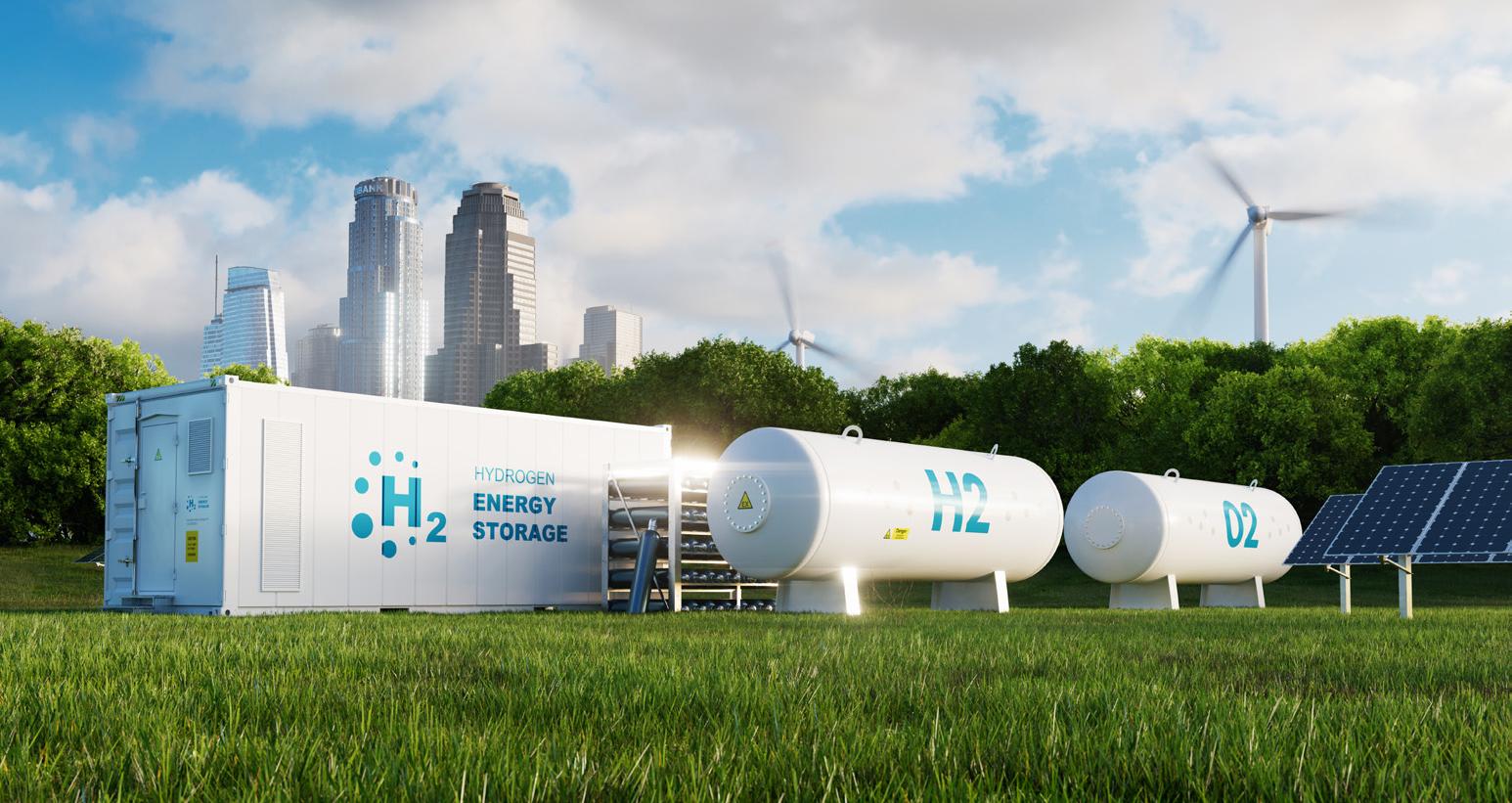
Power Industry 49
1.3% MW, capacidad instalada que CFE busca sumar con el proyecto de hidrógeno verde.
Pozos huérfanos: Las metodologías de medición de gas y recogida de datos, claves para los créditos de carbono y el cumplimiento de la normativa
Para que los pozos huérfanos de petróleo y gas puedan optar a créditos de carbono y cumplir las normativas federales y estatales, es necesario seguir estrictamente un plan de medición de gas cuidadosamente planificado, revisado, aprobado y documentado, junto con la recogida, el análisis y la notificación de datos. La clave del éxito es establecer buenos procesos y sistemas desde el principio y asegurarse de que se ajustan a metodologías validadas.
EL MERCADO DE LOS CRÉDITOS DE CARBONO
En la actualidad, existen dos mercados de créditos de carbono. El primero, más pequeño, es el mercado voluntario de créditos de carbono. Se trata de aquellas empresas que establecen voluntariamente objetivos de reducción de carbono y compran créditos de carbono para conseguir reducir sus emisiones. Los créditos de carbono voluntarios tienen un precio medio de 7 dólares por tonelada de CO2 compensada (1 crédito de carbono). El segundo, masivo y en rápido crecimiento, es el mercado de créditos de carbono de cumplimiento. Se trata de créditos adquiridos para satisfacer la obligación legal de alcanzar cada año los objetivos de reducción de carbono de conformidad con los Acuerdos de Kioto y/o París. Algunas empresas compran créditos de carbono para cumplir con sus obligaciones legales y, dependiendo de la calidad y la conveniencia del crédito de carbono, éstos han llegado a valer hasta 80 dólares por tonelada de CO2 compensada.
NUEVOS CRÉDITOS POR TAPAR POZOS
HUÉRFANOS, INACTIVOS Y ABANDONADOS
El American Carbon Registry (ACR) publicó su metodología validada en mayo de 2023, abriendo la puerta a la venta de compensaciones de carbono en los mercados voluntarios de carbono y, potencialmente, incluso a
Orphan Wells: Gas Measurement and Data Collection
Methodologies Key to Carbon Credits and Compliance
Recently established methodologies for calculating carbon credits for plugging orphan and abandoned wells by the American Carbon Registry and CarbonPath will help clear up ambiguity about the steps to generate carbon credits by plugging an orphan well-leaking methane.
HE MARKET FOR CARBON CREDITS
En este momento, existen dos mercados para los créditos de carbono. El primero, más pequeño, es el mercado voluntario de créditos de carbono. El segundo, masivo y en rápido crecimiento, es el mercado de créditos de carbono de cumplimiento.
At this point, there are two markets for carbon credits. The first, a smaller one, is the voluntary carbon credit market. The second, a massive one and rapidly growing, is the compliance carbon credit market.
At this point, there are two markets for carbon credits. The first, a smaller one, is the voluntary carbon credit market. These are those companies that voluntarily establish carbon reduction goals and purchase carbon credits to achieve carbon emissions reductions. Voluntary carbon credits average $7 per tonne of CO2 offset (1 carbon credit). The second, a massive one and rapidly growing, is the compliance carbon credit market. These are credits purchased to satisfy legal obligations to achieve carbon reduction targets each year in accordance with Kyoto and/or Paris Accords. Some companies purchase offsets in order to be in compliance,
and, depending on the quality and desirability of the carbon credit, the carbon credits have commanded as much as $80 per tonne of CO2 offset.
NEW CREDITS FROM PLUGGING ORPHAN, IDLE, AND ABANDONED WELLS
The American Carbon Registry (ACR) published its validated methodology in May 2023, opening the door to selling carbon offsets in voluntary carbon markets and potentially even entering the vastly larger and rapidly expanding compliance carbon credits. To establish and maintain market credibility, it is necessary to have a rigorous, verifiable, and auditable methodology housed by a carbon registry. The ACR’s methodology also has a provision for idle and abandoned wells.
This means that methane-specific sensor technology, a robust georeferenced data platform, and interactive interfaces that allow for
50 Industria
Por/By: Susan Nash, Ph.D.

la entrada en los créditos de carbono de cumplimiento, enormemente mayores y en rápida expansión. Para establecer y mantener la credibilidad del mercado, es necesario contar con una metodología rigurosa, verificable y auditable albergada por un registro de carbono. La metodología del ACR también contempla los pozos inactivos y abandonados.
Esto significa que la tecnología de sensores específica para el metano, una sólida plataforma de datos georreferenciados e interfaces interactivas que permitan introducir información georreferenciada y con sello de tiempo (mediciones, imágenes, vídeos, informes) en una plataforma segura que tenga controles de calidad incorporados, se adhiera a las normas y metodologías aceptadas y pueda generar informes y actualizaciones bajo demanda. Todas las entradas, así como los cálculos, deben ser auditables.
LOS REGISTROS DE CARBONO Y SUS REQUISITOS
Existen otros registros de carbono que siguen la metodología del ACR para los pozos huérfanos, entre los que se incluyen CarbonPath, Digital Carbon Bank y otros. Este resumen sigue la metodología del ACR.
En el corazón de la metodología ACR para OOG se encuentra la Reducción Internacional de Carbono y Otras Alianzas (ICROA) y sus requisitos de que la reducción de carbono sea
· Real (detectable con respecto a la línea de base)
· Permanente (taponamiento, por ejemplo)
· Cuantificable (puede medirse físicamente y calcularse utilizando las normas de la EPA)
· Adicional (reduciría las emisiones de carbono más que “seguir como hasta ahora”)
· Verificable (requiere ingeniería independiente y mediciones sobre el terreno)
MEDICIÓN
El primer paso es desarrollar el plan de GEI (gases de efecto invernadero) para taponar pozos huérfanos, inactivos o abandonados e incorporar los métodos de medición, así como la recogida de datos, los cálculos y la gestión. Mientras se desarrolla el plan, los métodos deben ser revisados y aprobados por la ACR. Una vez realizadas las mediciones, deben presentarse a la ACR para su verificación.
Las mediciones previas a la puesta en marcha son importantes porque ayudan a establecer una línea de base. Se debe utilizar un detector de gas específico de metano calibrado, y/o un método basado en cámara o recinto probado.
Las mediciones previas a la conexión incluyen
· Metano ambiental
· Variación temporal de las mediciones a lo largo de un periodo de 30 días, con una medición inicial a la que seguirá una medición al cabo de 30 días.
· Medición de las emisiones para una tasa estabilizada durante un período de dos horas
time-stamped, georeferenced information (measurements, images, videos, reports) to be entered into a secure platform that has built-in quality checks, adheres to accepted standards and methodologies, and can generate on-demand reports and updates. All of the inputs as well as the calculations, should be auditable.
THE CARBON REGISTRIES AND THEIR REQUIREMENTS
There are other carbon registries that follow the ACR’s methodology for orphan wells, and they include CarbonPath, Digital Carbon Bank, and others. This overview follows the ACR methodology.

At the heart of the ACR methodology for OOG is the International Carbon Reduction and Other Alliances (ICROA) and its requirements that carbon reduction be
• Real (detectable over baseline)
• Permanent (plugging, for example)
• Quantifiable (can be physically measured and calculated using EPA standards)
• Additional (would reduce carbon emissions more than “business as usual”)
• Verifiable (needs independent engineering and field measurements)
MEASUREMENT
The first step is to develop the GHG (Greenhouse Gas) Plan for plugging orphan, idle, or abandoned wells and to incorporate the measurement methods as well as data collection, calculations, and management. While the plan is being developed, the methods must be reviewed and approved by the ACR. After the measurements are taken, they must be submitted to ACR for verification.
Pre-Plugging measurements are important because they help establish a baseline. A calibrated methane-specific gas detector must be used, and/or a tested enclosure or chamber-based method.
Pre-plugging Measurements include:
• Ambient methane
• Temporal variation of measurements over a 30-day period, with an initial measurement to be followed by a measurement after 30 days.
• Measure emissions for a stabilized rate over a two-hour period
Measurement methods include:
• Enclosure-based methods (also called chamber) – continuous measurements over a two-hour time period at the wellhead
• Non-chamber methods –two hours measurement period
52
Industria
Los métodos de medición incluyen:
· Métodos basados en recintos cerrados (también denominados de cámara) - mediciones continuas durante un periodo de dos horas en la boca del pozo
· Métodos sin cámara - período de medición de dos horas con mediciones realizadas a intervalos de 10 minutos
CÁLCULOS
El ACR tiene una serie de ecuaciones en su metodología validada, que se utilizan para llegar a las reducciones finales de carbono. A continuación se presentan las seis ecuaciones; los detalles se encuentran en la publicación de la metodología del ACR (mayo de 2023).
1. Cálculo previo a la conexión
2. Reducción de emisiones por enchufe en el periodo de acreditación
3. Emisiones de CO2 procedentes de la combustión de combustibles fósiles para los equipos utilizados en el proyecto de taponamiento
4. Cálculo de la incertidumbre
5. Reducción total de emisiones en el periodo de referencia
6. Reducción neta de GEI
RECOPILACIÓN DE DATOS
Existe una amplia gama de datos muy específicos que deben recopilarse y utilizarse en los cálculos. Es importante establecer un buen sistema de gestión de datos desde el principio.
· Diseño, especificaciones y aprobación de la cámara y de la metodología de medición de la cámara
· Fotos del sistema de medición desplegado
· Entradas de datos para los cálculos de las emisiones de referencia del proyecto y la reducción de emisiones
· Concentraciones de metano con fecha y hora, imágenes georreferenciadas, vídeos, informes
· Registros fechados con gasóleo y gasolina en los
Las mediciones previas al enchufe son importantes porque ayudan a establecer una línea de base. Debe utilizarse un detector de gas específico de metano calibrado, y/o un método basado en cámaras o recintos probados.
Pre-Plugging measurements are important because they help establish a baseline. A calibrated methane-specific gas detector must be used, and/or a tested enclosure or chamber-based method.
with measurements taken at 10-minute intervals
CALCULATIONS
The ACR has a series of equations in their validated methodology, which are used to arrive at the final carbon reductions. Here are the six equations; the details are in the ACR methodology publication (May 2023).
1. Pre-plugging calculation
2. Emissions reduction for plugging in crediting period
3. CO2 emissions from fossil fuel combustion for equipment used in the plugging project
4. Uncertainty calculation
5. Total emissions reduction in the reporting period
6. Net GHG reductions
DATA COLLECTION
There is a wide array of very specific data to be collected and used in calculations. It is important to set up a good data management system at the outset.
• Design, specifications, and approval of chamber and chamber measurement methodology
• Photos of deployed measurement system
• Data inputs for the calculations of the project baseline emissions and emissions reduction
• Methane concentrations time-stamped, georeferenced images, videos, reports
• Dated logs with diesel and gasoline in plugging jobs
• Emission reduction calculations
• Measurement method
• Equipment
• Calibration
• Methane analyses
• Maintenance records
• Well data
• Well identifier (API, etc.)
• Surface location
• Photo of the well at surface level

• Regulatory compliance documents
• Copies of rights to access the well to collect samples and plug the well
• Well, plugging company license to operate
• Intent to plug notification, with a copy of the
53 Industria
trabajos de taponamiento
· Cálculos de reducción de emisiones
· Método de medición
· Equipo
· Calibración
· Análisis de metano
· Registros de mantenimiento
· Datos del pozo
· Identificador del pozo (API, etc.)
· Localización en superficie
· Foto del pozo a nivel de superficie
· Documentos de cumplimiento de la normativa
· Copias de los derechos de acceso al pozo para recoger muestras y taponar el pozo
· Licencia de explotación del pozo y de la empresa taponadora
· Notificación de la intención de taponar, con copia de la notificación a los inspectores
· Aprobación final del taponamiento del pozo por parte de los inspectores estatales
CUMPLIMIENTO DEL TAPONAMIENTO DE POZOS
Además de las mediciones y la recopilación de datos, para que un proyecto sea aprobado por la ACR, el trabajo de taponamiento en sí debe cumplir las normas de taponamiento estatales y locales. Entre las empresas que se dedican a taponar pozos huérfanos para obtener créditos de carbono se encuentran Well Done Foundation y Rebellion Energy Solutions. Entre las empresas que realizan mediciones de metano y detección de fugas figuran Juniper Unmanned, Earthview, Heath y Nautilus Technologies.
Petrabytes y otras empresas han desarrollado plataformas de datos que integran las mediciones.
OPORTUNIDADES EN EL FUTURO
Quizá el argumento más persuasivo para inculcar un proyecto de taponamiento sólido y bien desarrollado que se adhiera a las normas del ACR sea que, al hacerlo, su proyecto es creíble y se adhiere de forma demostrable a las normas más exigentes.
Los datos que recopile le serán útiles no sólo para elaborar informes, sino también para exhibir sus proyectos y comercializarlos entre particulares, fundaciones y empresas que quieran apoyar la limpieza del medio ambiente, con o sin implicarse en los créditos de carbono.
Para las empresas que han hecho promesas de cero emisiones netas a sus accionistas, es importante seleccionar un proyecto que se gestione de forma transparente, con fotos, vídeos y acceso a información sobre el impacto positivo en el medio ambiente y las comunidades.
Para las empresas y organizaciones que tienen la obligación legal de reducir su huella de carbono, las compensaciones de carbono son una forma práctica de conseguir una reducción neta de las emisiones globales. Aunque ha habido críticas al comercio de compensaciones de carbono en sí, la perspectiva es la que implica a las emisiones globales de gases de efecto invernadero de la Tierra.
Al fin y al cabo, tanto si un operador explota pozos para obtener créditos de carbono como si no, establecer un plan de medición junto con un sistema de gestión de datos redundará en una mayor eficiencia y en la capacidad de cumplir la normativa federal y estatal. Simplemente, tiene sentido desde el punto de vista empresarial.
notification to inspectors
• Final well-plugging signoff by state inspectors
WELL PLUGGING COMPLIANCE
In addition to measurements and data collection, for a project to be approved by the ACR, the plugging job itself must adhere to State and local plugging standards.
Companies with a mission to plug orphan wells for carbon credits include Well Done Foundation and Rebellion Energy Solutions. Companies with methane measurement and leak detection include Juniper Unmanned, Earthview, Heath, and Nautilus Technologies. Data platforms that integrate measurements have been developed by Petrabytes and others.
OPPORTUNITIES IN THE FUTURE
Perhaps the most persuasive argument for instilling a well-developed, robust plugging project that adheres to ACR standards is that by doing so, your project is credible and demonstrably adheres to the highest standards.
The data that you gather will be
useful not only for reporting purposes but also for showcasing your projects and marketing them to individuals, foundations, and companies that would like to support cleaning up the environment, with or without getting involved in the carbon credits.
For companies that have made net-zero pledges to their shareholders, it is important to select a project that is run in a transparent manner, with photos, videos, and access to information about the positive impact on the environment and communities.
For companies and organizations that have legal requirements to reduce their carbon footprint, carbon offsets are a practical way to have a net reduction in global emissions. While there have been critiques of the carbon offset trade itself, the perspective is one involving the earth’s overall greenhouse gas emissions.
At the end of the day, whether or not an operator plugs wells for carbon credits, setting up a measurement plan along with a data management system will result in increased efficiencies and an ability to comply with federal and state regulations. It simply makes good business sense.

54
Industria
