S B














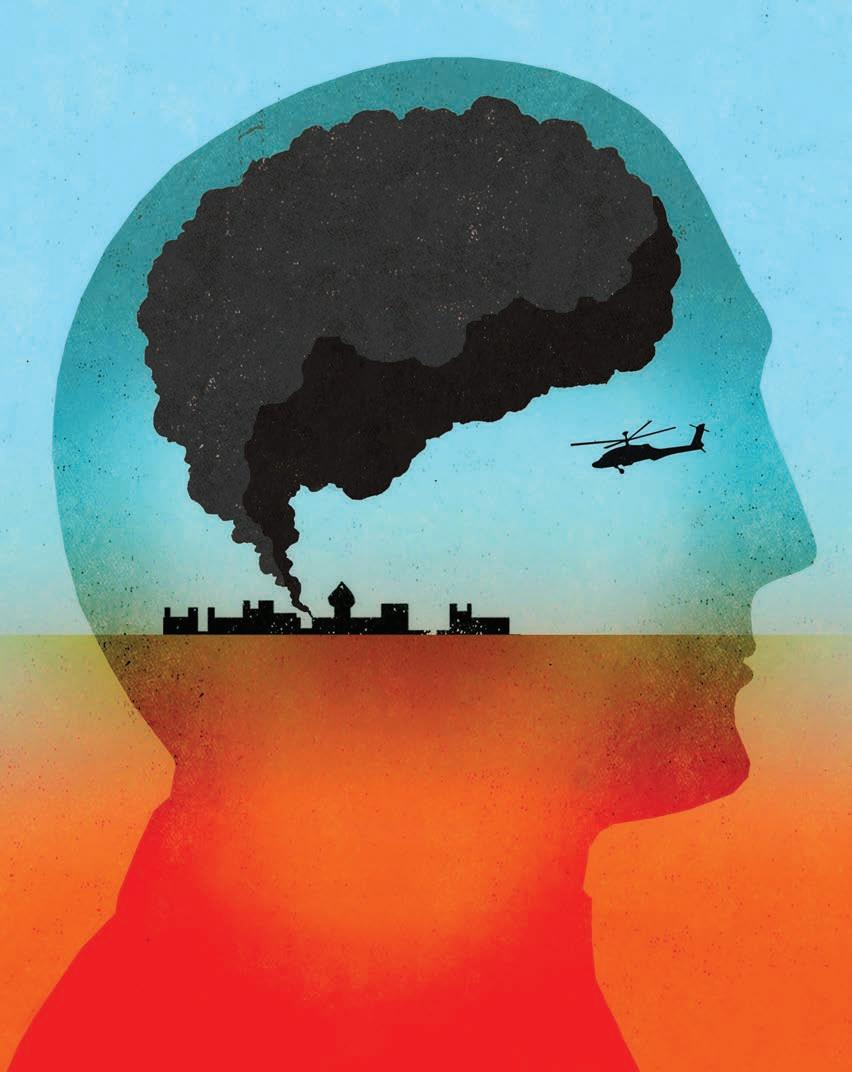
eople are haunted by these past e periences, they may relive them through nightmares, flashbacks, or thinking of them when they don’t want to. They may have problems sleeping, concentrating, or being easily startled.
 — Barbara Rothbaum Emory’s Veterans Program


WINTER 2016
edicine
BRAIN HEALTH ISSUE: BLESSING FROM A CURSE 14 FLASHPOINT 22 NIGHTLY FIGHT TO BREATHE 28

WHAT’S INSIDE


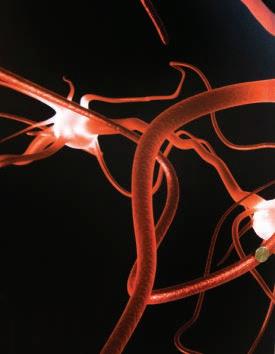
Neurons crisscross a glass panel at Emory’s new Brain Health Center, which encompasses neurology, neurosurgery, psychiatry and behavioral sciences, rehabilitation medicine, and sleep programs. Researchers and clinicians there are searching for early biomarkers of Alzheimer’s, helping veterans with anxiety or trauma, monitoring patients in the sleep lab, and taking part in hundreds of other initiatives that lead back to our most complex organ—the (on average) threepound, 100-billion-neuron brain.
14
Mindful Medicine
When I scrub in to perform a kidney transplant, I do more than clean my hands—I clear my mind I use that time to make a shift from being a dean and health care leader to being a surgeon. Washing hands becomes not only a practical act but also a transition point: the point where I prepare myself to be completely present for my patient. Isn’t that what he or she expects and deserves? Isn’t that what I want to provide as a physician, not just when performing a transplant but equally when I enter an exam room for a “routine” follow-up or to support a patient and family during a difficult diagnosis?
Download
Emory Medicine
Editor Mary Loftus
Art Director Peta Westmaas
Director of Photography Jack Kearse
Christian Larsen Dean, Emory School of Medicine President, Emory Healthcare Physicians Group
Our daily demands, concerns, and conflicts in the workplace all conspire against us. How do we as physicians and care providers create the capacity, space, and resiliency to detach from this conspiracy of competing needs, focus our attention, and connect with a spirit of empathy as we enter that room? How do we do this day in and day out over the course of our professional lives?
The traditions and emerging science of mindfulness and compassion training offer us both a mindset and a practical approach to develop our awareness, train our attention, and practice our empathic compassion for others and ourselves. Across Emory School of Medicine and Emory Healthcare, we have been applying and studying mindfulness concepts in formal and informal ways, from medical student education to surgical safety checklists.
Emory has been fortunate to have the 14th Dalai Lama, Tenzin Gyatso, as a Presidential Distinguished Professor on our campus for many years, which led to a dynamic dialogue between modern scientific knowledge and Tibetan traditions and values. From this dialogue, Geshe Lobsang Tenzin Negi, PhD, an Emory faculty member, former monk, and director of the Emory-Tibet Partnership, developed the Cognitively Based Compassion Training (CBCT) program—a series of lectures and practices that aim to “cultivate a greater sense of closeness and connectedness with others, strengthen compassionate concern while avoiding related distress from empathic fatigue … and foster kindness, gratitude, generosity, and warm-heartedness.” A number of our faculty, deans, and staff took the course, and we now offer it to our second-year medical students. We also have designated a quiet space for meditation and reflection at our medical school.
Practicing mindfulness promotes health and well-being—not only in our patients, but also in ourselves and in our teams—by enabling us to be more compassionate, clear-minded, and present. It is a discipline that can help us continue to improve how we care for our patients, care for one another, and care for ourselves. And learning that discipline can begin with an act as simple as pausing and clearing your mind before you walk into the next room.
Editor’s note This letter is adapted from Dr. Christian Larsen’s Viewpoint essay, “Mindful Medicine,” in the September 2015 issue of the Association of American Medical Colleges’ Reporter.
Graphic Designer Linda Dobson

Production Manager Carol Pinto
Web Specialist Wendy Darling
Exec Dir, Health Sciences Creative Services Karon Schindler
Associate VP, Health Sciences Communications Vincent Dollard
EDITORIAL ADVISORY BOARD
Chair Ray Dingledine, PhD, Professor and Chair of Pharmacology, Emory School of Medicine
Charles Craig, Consultant and former President, Georgia Bio
Robert Goddard III, Chair and CEO, Goddard Investment
Lucky Jain, MD, Professor of Pediatrics, Emory
Claire Perdue James, Philanthropist
Jeff Koplan, MD, MPH, VP, Global Health, Emory
Kimberly Manning MD, Associate Professor of Medicine, Emory Margery McKay, VP, Health Sciences Development
Paul Pendergrass, Independent Communications Consultant
Julie Ralston, Director of Communications, Atlanta Regional Commission
Walker Ray, MD, Retired pediatrician, former president of the Emory Alumni Association
Bill Todd, Exec Director for Health Care Initiatives, College of Management, Georgia Institute of Technology
Emory Medicine is published three times a year for School of Medicine alumni, faculty, and staff, as well as patients, donors, and other friends. © Emory University
Please send correspondence to Emory Medicine, 1762 Clifton Road, Suite 1000, Atlanta, GA 30322; call 404-727-0161 or email mary.loftus@emory.edu.
Emory University is an equal opportunity/equal access/affirmative action employer fully committed to achieving a diverse workforce and complies with all federal and Georgia state laws, regulations, and executive orders regarding nondiscrimination and affirmative action. Emory University does not discriminate on the basis of race, age, color, religion, national origin or ancestry, sex, gender, disability, veteran status, genetic information, sexual orientation, or gender identity or expression.
our iPad app (search under Emory Health magazines.) Bonus features are online at emorymedicinemagazine.emory.edu.
NEW AND NOTEWORTHY

On Our Radar 4
7
4 | People are talking 5 | Dance classes pay off 5 | The Big Idea: Leader of the pack
6 | World’s tiniest pacemaker 6 | For BP, lower is better 7 | Too young for a tricycle?

8 | Pushing stroke care forward 8 | Women bear more of Alzheimer’s burden 9 | Flying away from the Cuckoo’s Nest 9 | Wellness with weights 10 | You Be the Doctor: Correcting a “fatal” misdiagnosis 11 | Catching kidney disease before damage
11 | Dangers of dietary supplements 12 | President Carter battles melanoma
13 | On Campus: Preparing tomorrow’s doctors
FEATURES
Blessing from a Curse 14 Alzheimer’s disease often runs in families, but the risk that runs through this family’s bloodline is higher than researchers have encountered before. Are there clues encoded in their DNA?
Flashpoint 22
Post-9/11 veterans dealing with invisible wounds of war, from traumatic brain injury to PTSD, can find help through the Wounded Warrior Project and Emory’s Veterans Program.
A Nightly Fight to Breathe 28 Sleep apnea is on the rise as are new ways to diagnose and treat it, including tongue stimulation and at-home sleep testing.

AND MORE
Investing in Discovery 34 34 | Windows of Opportunity 35 | Gifts of Note
Last Word: Fighting Alzheimer’s Neurologist Allan Levey on better understanding Alzheimer’s disease and how to defeat it. 36 1 4

3 Spring 2015 16-SOM-DEAN-0151 WINTER
Visit us online at emorymedicinemagazine.emory.edu for bonus content. Send letters to the editor to mary.loftus@emory.edu.
2016
2 8
“I watched them pass each other, Elijah was growing and developing day by day, and [my mother] was going the other way.”
People are talking...

fever, most their

I just read the article about Dr. Ian Crozier nearly going blind in one eye due to Ebola virus. On May 1, my husband and I contracted what we believe was the u. A er almost ve days of high fever, we both recovered; however, my husband has gradually lost most of his vision in his right eye. We have been to see multiple doctors but they have no solutions and their advice is to wait and see if his vision gets better. I want to make sure we are doing all we can, and am intrigued that there are now reported cases that could possibly link blindness in one eye to a viral trigger.
Orelia DeBraal San Diego, Ca.
emorymedicinemagazine.emory.edu
My wife and I have been involved with the Emory medical system since 2001, when I experienced the need for a couple of stents. We have always been pleased with the care we receive, but an added bonus began a few years ago when I found a copy of Emory Medicine in the internal medicine waiting room. I found the articles informative and helpful. I was rather surprised because most hospital publications I have read have been more an advertisement for services and close to an insult to the intelligence of the reader, assuming little or no knowledge. e editors of Emory Medicine have found a good balance between writing for the layperson and giving signi cant, in-depth insights into the subjects treated. It also covers a broad range of topics instead of just those that are the latest “buzz-word” topics in the news. e high quality layout, glossy pages, and excellent photographs are not only pleasing to the eye, but also add to the knowledge level of the reader. Frankly, when I could not nd a copy in the waiting rooms when visiting Emory, I was consciously disappointed. I am very pleased to know that now I can receive them by mail three times a year.
 Paul Gieschen Atlanta, Ga.
My stepfather, James Herschel Killebrew 35D, was a graduate of Emory Dental School, and I have been a patient at Winship [Cancer Institute] for eleven years. I am at the clinic regularly and always look for Emory Medicine to read while I am waiting. In the latest issue, I read Gi s of Note with great interest, as it updates the generous donations that have been made to Emory that enhance programs and provide new treatments. I have a dear friend with Parkinson’s and a family member with normal tension glaucoma, and I was able to pass on this information to them.
Pat Daniel
Dalton, Ga.
I am 74 years old and to the best of my knowledge have not had a heart attack. Would a CAC (coronary artery calci cation) test make sense?
Jerry Widmer
Suwanee, Ga.
Dr. Leslee Shaw replies: The best approach is to speak with your primary care doctor about this, since other risk factors such as high blood pressure need to be considered when deciding.


We like to hear from you. Send us your comments, questions, suggestions, and castigations. Address correspondence to Emory Medicine magazine, 1762 Clifton Road, Suite 1000, Atlanta, GA 30322; call 404-727-0161; or email mary.loftus@emory.edu
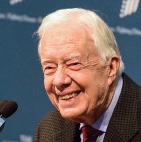
“I just thought I had a few weeks le , but I was surprisingly at ease. You know, I’ve had a wonderful life...but now I feel, you know, that it’s in the hands of God and my doctors, and I’ll be prepared for anything that comes.”
-former President Jimmy Carter, on his diagnosis of melanoma and treatments at Emory.
“He’s an example of how if you have HIV and you take medication so that you are suppressed, you can have a normal life. We need to have more people who are suppressed on therapy if we are going to suppress the epidemic.”

-Carlos del Rio, of the Emory Center for AIDS Research, on actor Charlie Sheen’s announcement that he is HIV-positive.

EMORY MEDICINE 4 ON OUR RADAR Letters New and noteworthy
Dance classes pay o
Turns out, everyone should have taken ballet—or tap, or jazz.

Professional dancers’ years of training allow their nervous systems to coordinate their muscles more precisely than people with no dance training, found a study published in the Journal of Neurophysiology, whether they are performing or just walking across a room.
A research team at Emory and Georgia Tech compared the movements of professional ballet dancers with 10 or more years of training to those of people with no dance or gymnastics training. Gait and activity of muscles in the legs and torso were tracked as the subjects walked across the floor, a wide beam, and a narrow beam.
An individual’s nervous system initiates movement by
Statins, the cholesterol-lowering drugs, may weaken the effect of the flu vaccine. In a study published online in the Journal of Infectious Diseases, researchers found that vaccinated people taking statins were 11 percent more likely to get a respiratory disease severe enough for them to seek medical care than those not on statins, says lead author Saad Omer, of the Emory Vaccine Center. The antiinflammatory properties of statins may decrease the immune system’s response to the flu vaccine. “Even with the diminishing effect,” says Omer, “flu vaccines remain the most effective tool to prevent influenza, including in the elderly. They’re not perfect, but nobody should skip their flu vaccine.” ■
activating muscles in “motor module” groups that, combined, cover a wide range of motion. Trained ballet dancers engaged more motor modules more consistently than untrained subjects, using their muscles more effectively and efficiently.
“This helps us understand how long-term training in an activity such as dance affects how we do everyday tasks,” says study author Lena Ting, professor of biomedical engineering at Georgia Tech and Emory and of rehabilitation medicine at Emory.
“We found that years of ballet training change how the nervous system coordinates muscles for walking and balancing behaviors overall. This may also have implications for how training through rehabilitation helps people with impaired mobility.” ■
THE BIG IDEA
Leader of the pack
The capacity of cancer cells to spread throughout the body and invade new tissues—to become metastatic—makes them deadly. But what makes metastatic cells di erent? Scientists at Winship Cancer Institute have developed a technique for isolating individual cells that display invasive behavior by changing their color.
In di erent patients’ tumors, or even in a single tumor, not all cells are the same. Some may divide or migrate more rapidly than others. A few cells might survive chemotherapy that kills the rest. A technique developed by Emory cell biologist Adam Marcus and graduate student Jessica Konen can highlight the behavior of these “leader” cells, which migrate faster than their neighbors, by labeling them a uorescent red. is allows researchers to ask questions such as: Are “leader” cells always leaders? Is this ability connected with changes in the cell’s DNA? Do leader cells and follower cells need each other to cause metastatic disease? e answers may lead to new treatments that hamper metastasis. ■
Video by Damon Meharg and Quinn Eastman of Health Sciences Communications,

Winter 2016 5
A video about Marcus’s research on leader cells won first place in the Association of American Medical Colleges’ GRAND Basic Research video contest. See at: bit.ly/ chasingmetastatic.
World’s tiniest pacemaker

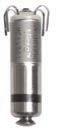
The world’s smallest cardiac pacemaker—the Micra Transcatheter Pacing System (TPS)— was found to have significantly fewer major complications than conventional pacing systems in an international clinical trial. Results showed that the Micra TPS, which is comparable in size to a large vitamin, was successfully implanted in nearly all patients, and approximately 96 percent of patients experienced no major complications (51 percent fewer than seen in patients with conventional systems.) Emory Healthcare cardiologists were the first in Georgia and among the first in the country to begin implanting the Micra TPS, which requires no wires or incisions. Emory was the top enrolling U.S. site in the trial. “This will likely be the way pacemakers are implanted in the future,” says Emory site principal investigator Michael Lloyd, a cardiac electrophysiologist and associate professor of medicine. ■

For BP, a little lower is better
A measurement of 120 is probably better than 140 or higher where systolic blood pressure is concerned, according to a major National Institutes of Health clinical trial that included Emory patients.


More intensive management of high blood pressure may help signicantly reduce rates of cardiovascular disease and lower the risk of death among older adults, the study showed. “ e preliminary ndings from the SPRINT trial are impressive and are likely to have a signi cant impact on medical practice as well as future guidelines,” says Emory cardiologist Laurence Sperling, president of the American Society for Preventive Cardiology.
“Evidence that a lower systolic blood pressure target (120 mm Hg) in the population studied reduces major cardiovascular events and death will be critically valuable for the eld of cardiovascular prevention.”
Jennifer Johnson McEwen
EMORY MEDICINE 6
Small Business Loans are NOW our business. 1237 Clairmont Rd. Decatur, GA 30030 Let an SBA loan finance your medical equipment needs. Call 404.329.6415 or visit emoryacu.com for more information. Federally insured by NCUA P EMed_SBA_0715_2rev.indd 1 11/19/15 4:36 PM ON OUR RADAR New and noteworthy
IMAGE CREDIT: MEDTRONIC
Too young for a tricycle?


Tricycle accidents send more than 9,000 children to U.S. emergency rooms each year, researchers at Emory and the Medical College of Georgia found in a study published in Pediatrics. More than half of the trike-related visits during the years analyzed (2012-2013) involved 1- and 2-year-olds. Boys were injured more often than girls, and most injuries involved cuts, usually on the face. More serious injuries included amputations, broken bones, and internal organ damage. “Parents need to take a good hard look at what their kids are playing on to make sure they don’t get injured,” says study co-author Hany Atallah, an emergency medicine physician at Emory. “Especially the safety features and age recommendations.” ■


Winter 2016 7
Treat Recurrent Prostate Cancer For more information about the trial, visit winshipcancer.emory.edu/FACBCinfo. Ashesh Jani, MD Phone: 404-778-3827 Email: abjani@emory.edu
A Clinical Study to Help
Pushing stroke care forward
In 2014, Emory neurologist Michael Frankel was in the middle of clinical trials to prove the benefits of using a new thrombectomy procedure—a catheter-based approach to directly remove blood clots using stent-retriever technology—when he received some bad news. Major insurance provider Blue Cross Blue Shield (BCBS) had decided it would no longer pay for the procedure.
But Frankel, director of the Marcus Stroke and Neuroscience Center at Grady Memorial Hospital, was con dent that the procedure would improve outcomes for stroke patients. Within weeks of the BCBS decision, the data generated by Frankel and his Grady team demonstrated conclusively this approach’s ability to save lives and improve outcomes for stroke patients. In 2015, BCBS reversed its decision, largely because of the results that came from the clinical trials at Grady and other international sites. Today, Frankel’s

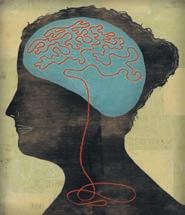
African Americans more likely to develop Alzheimer’s disease
Emory researchers have conducted the only known meta-analysis of Alzheimer’s disease incidence by race and found that African Americans are 64 percent more likely to develop Alzheimer’s than Caucasians, after adjusting for age, gender and education. e estimate for prevalence of Alzheimer’s was 5.5 percent for Caucasians and 8.6 percent for African Americans. e article ran in the Journal of Alzheimer’s Disease in January.
Lead author Kyle Steenland, professor of environmental health and epidemiology at Rollins School of Public Health, worked with researchers from the Emory Alzheimer’s Disease Research Center to analyze data from six U.S. population-based studies to determine incidence and prevalence by race, with a combined 370 African-American and 640 Caucasian incident cases. “A 64 percent higher incidence among African Americans is quite a large di erence, in our view,” says Steenland. “We wanted to come up with an overall estimate of racial di erences to help motivate further exploration of possible causes, such as biological, psychological, and socioeconomic factors.” ■
team has a 93 percent success rate re-establishing cerebral blood ow using the thrombectomy procedure they pioneered. is is the second major medical breakthrough to come from Emory’s team at Grady. In 1995, Frankel’s group proved the bene t of using intravenous tPA, a clot-busting medicine, in the treatment of stroke patients. “It’s rare for a hospital to play a key role in one innovation of this magnitude, let alone two within two decades,” says Frankel.
Emory’s stroke team physicians provide care at two Joint Commission-certi ed Advanced Comprehensive Stroke Centers (Grady and Emory University Hospital) and three certi ed Primary Stroke Centers (Emory Midtown, Emory Saint Joseph’s, Emory John’s Creek). Emory is one of 25 regional coordinating centers in the country for the newly established National Institutes of Health StrokeNet.—Elizabeth Johnson
Women bear more of Alzheimer’s economic burden
Alzheimer’s is one of the most expensive diseases in our country—more costly than heart disease or cancer—and women are paying most of the price. Women bear six times more of the cost of Alzheimer’s care than men, found an Emory study published in the journal Women’s Health Issues
Authors Zhou Yang, assistant professor in Emory’s Rollins School of Public Health, and Allan Levey, chair of the Department of Neurology and director of the Emory Alzheimer’s Disease Research Center, used a lifetime perspective to calculate Alzheimer’s costs and looked at three factors: the probability of developing the disease, the disease’s duration, and the formal and informal care needed for the Alzheimer’s patient. “There is strong evidence that women face higher risks of being affected by Alzheimer’s as either patients or informal caregivers,” Yang says. ■
EMORY MEDICINE 8 ON OUR RADAR New and noteworthy
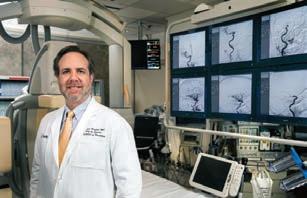
Dr. Michael Frankel, chief of neurology and director of the Marcus Stroke and Neuroscience Center at Grady Memorial Hospital.
Flying away from the Cuckoo’s Nest
When the cast began to rehearse for Atlanta’s Alliance Theater production of “One Flew Over Cuckoo’s Nest,” they received some help from the Emory Department of Psychiatry and Behavioral Sciences. Professors met with cast members to help them understand the thoughts, feelings, and mannerisms of people with psychiatric disorders.
And a er every performance, faculty experts hosted
a Q&A for audience members. Most of the discussions centered on how treatments for mental illness have advanced from the barbaric practices depicted in Nurse Ratched’s ward, which included dehumanizing institutionalization and violent electroconvulsive therapy (ECT).

In fact, the depiction of R.P. McMurphy’s brutal ECT treatments in the 1975 movie adaptation of the Ken Kesey novel—
Wellness with weights

Imagine doubling your weightlifting ability without using your hands. A study led by David Burke, chair of Emory’s Department of Rehabilitation Medicine, found that people ages 17 to 74 could greatly increase their strength and possibly receive significant health benefits by doing a form of Russian weightlifting once a week. The technique involves lifting free weights using a special harness without holding the weights. It was developed in Russia by a physiologist and introduced in this country in the late 1990s by Vladimir Chubinsky, a former wrestler from the Ukraine who operates the Atlanta Gravitational
treatments Nurse Ratched described as part sleeping pill, part electric chair, and part torture rack—led to a backlash against the use of large, institutional mental hospitals and ECT treatments for the mentally ill. Today, however, ECT is emerging from the shadows. For patients receiving ECT today, it is a very di erent procedure.
ey are put under with general anesthesia and given a muscle relaxant. en a small electrical
current induces a brief brain seizure, triggering a change in the brain that experts don’t totally understand but that relieves depression in many. “Our knowledge of brain circuitry has expanded exponentially,” says Mark Rapaport, chair of psychiatry. “We have newer treatments that can actually normalize brain function. We live in a wonderful new world for patients with serious brain disorders.”—Martha
McKenzie
Wellness gym. There, participants in Burke’s study completed a weekly 30-minute weightlifting session. Over 10 weeks, men using the belt lift, which builds core strength in the lower back and pelvis, averaged an increase in weightlifting ability from 654 pounds to 1,336 pounds. Women doubled their ability from 462 pounds to 949 pounds. “We found that subjects could lift remarkably heavy loads with significant strength gains per week, regardless of age or gender,” says Burke. “We also found that these short workouts, even with unthinkable weight amounts, led to very few injuries in the participants.”—Pam
Auchmutey
Winter 2016 9
PHOTO: GREG MOONEY
Correcting a “Fatal” Misdiagnosis


A 52-year-old woman’s case came to the attention of Emory Special Diagnostic Services. An avid gardener, the woman had become so easily winded that she wasn’t able to work in the yard. She had been diagnosed by her doctors in the Midwest, where she lived with her husband, to have a rare and incurable malignancy associated with her heart —a cardiac leiomyosarcoma.
A so tissue cancer, leiomyosarcoma is unpredictable and can occur in smooth muscle cells anywhere in the body. It tends to be resistant to chemotherapy and radiation, and can lie dormant for years only to recur. e woman’s doctor told her there was nothing more he could do.

She told family and friends that she had terminal cancer and returned to her hometown of Augusta, Georgia, where her mother and siblings live, so they could help care for her. She began planning her own funeral.
Her sister, a research nurse, knew that Winship Cancer Institute had specialists in sarcoma and reached out to some of her Emory Healthcare contacts.
ey referred her to the new Special Diagnostic clinic, directed by Clyde Partin, an internist at Emory Clinic and an associate professor of medicine.
“ e intent of our clinic is to see patients with conditions that have been undiagnosed or misdiagnosed,” Partin says. “We do look for unusual and uncommon diseases but are more likely to nd typical diseases presenting in an atypical fashion.” For patients with a slew of seemingly unrelated symptoms, this means searching for a “unifying diagnosis.”
In this particular patient, clinic physicians discovered not cardiac leiomyosarcoma but several other conditions interacting to mimic cancer.
Any guess as to what these ailments were?
“ e outside imaging studies had been reviewed the day before she was seen, so our physicians were pleased to let the patient know at the beginning of her visit that we

did not think she was harboring a cancer,” Partin says.
Physician Jon Masor, who supervised and coordinated the patient’s care, had reviewed her echocardiogram and CT images with colleagues and con rmed that she did not have a malignancy. Instead, she had a diaphragmatic hernia and an unusual type of aortic root aneurysm, associated with a patent foramen ovale (PFO), a hole between the le and right atria of the heart. ese two potentially serious but treatable conditions are rarely seen together. (A PFO exists in everyone’s heart in utero but usually closes shortly a er birth.)
How was her condition misdiagnosed? “ e appearance on the CT scan looked like a mass that was read as malignant, but it was really her stomach and other abdominal organs migrating upward through the ruptured diaphragm,” Partin says.
e patient had two operations to x her gastrointestinal and cardiac problems and made a quick recovery. She’s back to doing things she enjoys and says she feels better than she has in a decade.
“ is was a case of a di cult diagnostic dilemma being solved quickly and having the process work as well as could possibly be imagined,” Partin says. ■
EMORY MEDICINE 10 ON OUR RADAR New and noteworthy
Predicting kidney disease before damage is done
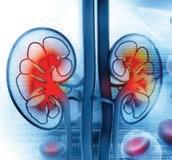
Known as a silent killer, chronic kidney disease often causes severe organ damage before symptoms such as blood in the urine, swollen hands and feet, and excessive thirst even develop. But researchers have identi ed a common protein in the blood, measured by a simple test, that can reliably predict a person’s risk of developing kidney disease months, even years, before serious damage occurs.
High levels of suPAR, or soluble urokinase-type plasminogen activator receptor, a circulating protein in the blood, can be an indicator of future kidney disease, much like cholesterol and blood pressure levels help predict heart disease.

“For the past century, doctors have relied on creatinine levels and urine protein levels to detect and monitor kidney disease,” says Salim Hayek, a lead author on the paper and a cardiology research fellow at Emory. “ ese markers are useful in diagnosing kidney disease but are not helpful in predicting whether a person might develop disease in the future.”
Rush University Medical Center, Harvard Medical School, NYU Langone Medical Center, and John H. Stroger, Jr. Hospital of Cook County collaborated with Emory on the paper, which appeared in the New England Journal of Medicine in November. ■
Skills for parenting children with autism
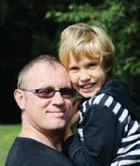
Managing disruptive behavior in children with autism spectrum disorder (ASD) can be frustrating. But helping parents to both understand what triggers certain behaviors and how best to respond can make a huge di erence for families. A study published in the Journal of the American Medical Association in April found that parent training was much more e ective in reducing disruptive and aggressive behavior than parent education alone. e study involved 180 children ages 3 to 7 with ASD at Emory and ve other sites. It is the largest behavioral intervention study of its kind and builds on a decade of work, notes Lawrence Scahill, study director and professor of pediatrics at the Marcus Autism Center and the School of Medicine. e years of preparation paid o . “Over six months, we found that parents can improve their child’s behavior problems and improve their daily living skills,” says collaborator Karen Bearss, assistant professor of pediatrics. Subjects were randomly divided into two groups: parent training and parent education. Parents in the training group attended a dozen one-on-one sessions with a therapist to learn techniques for managing their child’s behavior—everything from tantrums and aggression to self-injury and noncompliance. Parents in the education group learned information about autism but no techniques. By the end, 70 percent of children with parents in the training group had improved their behavior versus 40 percent of children with parents in the education group. “ e lives of the children were dramatically improved in both groups, but parent training was clearly superior,” Scahill says. ■
Dangers of dietary supplements

An estimated 23,000 emergency room visits each year are attributed to adverse events related to dietary supplements, according to a study published in the New England Journal of Medicine
■ The most common event involved heart problems related to weight-loss or energy products among young adults 20 to 34 years old.
■ Another danger was unsupervised ingestion of supplements by children.

■ Among adults ages 65 and older, swallowing problems, such as choking on supplement pills, were an issue.
Lead author Andrew Geller of the Department of Rehabilitation Medicine at Emory, who is also a medical officer with the CDC, used surveillance data from 63 emergency departments from 2004 to 2013. “These data are important because dietary supplements are presumed to be safe and are regulated differently from over-the-counter or prescription products,” Geller says. “Unlike pharmaceuticals, which have to demonstrate both benefits and safety, dietary supplements can be sold without that information. Perhaps these findings can help target interventions to reduce safety risks.” ■
Winter 2016 11
Caring for President Carter

When former President and Nobel Peace Prize winner Jimmy Carter was in Guyana monitoring an election in May, he couldn’t shake a bad cold. So, on his return to Atlanta, he checked in with his Emory doctors, who did a complete physical exam.
Carter, who turned 91 in October, announced that he would be receiving radiation and pembrolizumab, a drug that enhances the activity of the immune system.
His Emory medical team included Juan Sarmiento, who operated on his liver, David Lawson, a melanoma specialist, and Walter Curran, director of Emory’s Winship Cancer Institute and a specialist on radiation treatments.
con dence in them.”
Carter is remaining active, building a Habitat for Humanity house and showing up at a Braves game with his wife, Rosalynn. ( e couple, who have been married for 69 years, were caught on the “kiss cam.”)
Carter’s father, only brother, and both sisters died of pancreatic cancer—an extremely high incidence in one family—but his melanoma seems unrelated and has not shown up on his pancreas.
An MRI and subsequent PET scan showed a growth on his liver that was found to be malignant. It was removed during an August surgery and measured 2.5 cubic centimeters. Doctors removed about onetenth of Carter’s liver, biopsied the tumor, and diagnosed melanoma. ey also found four small spots of melanoma on his brain.
e Carter Center and President Carter himself have close ties with Emory, where Carter is a University Distinguished Professor.
“I never doubted that I would carry out the recommendations of Emory doctors,” Carter said at a press conference at the Carter Center on August 20, announcing his illness. “ e three doctors have worked in close harmony with me. I have complete
When asked about un nished work, Carter said he would like to see peace between Israel and its neighbors, and the last Guinea worm eradicated—a major Carter Center initiative. But, he said, he would back away from his work in global health and social justice to give his medical regimen priority.
“I’m an acquiescent and cooperating patient,” he said. “Within the bounds of my own judgment, I’ll do what the doctors recommend for me to extend my life as much as possible.”—Mary Lo us
EMORY MEDICINE 12 ON OUR RADAR New and noteworthy
“I never doubted that I would carry out the recommendations of Emory doctors—the three doctors have worked in close harmony with me. I have complete confidence in them.”– Jimmy Carter
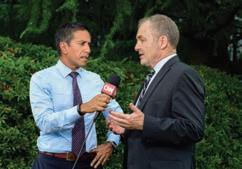
Former President Jimmy Carter (left) at a news conference at the Carter Center on Aug. 20, discussing his cancer diagnosis. Walter Curran (above) of Emory’s Winship Cancer Institute, one of Carter’s doctors, answers questions from CNN medical correspondent and Emory neurosurgeon Sanjay Gupta about Carter’s treatment.
Medical School of the Future
Emory’s School of Medicine was selected by the American Medical Association to join its Accelerating Change in Medical Education Consortium. The group will create a plan for better preparing tomorrow’s doctors by aligning medical education with modern healthcare systems, and will share these innovations with other medical schools.


Winter 2016 13
The Lowman sisters—Holly, Sherry, Daisy, and Louise (pictured here with Louise’s daughter, Tammy)— live in North Georgia and have frequent family gatherings. They are eager to find out why their family has a high risk of Alzheimer’s and have recruited other relatives to take part in Emory’s research.



Blessing from a Curse
 By Mary Loftus
Alzheimer’s disease often runs in families, but the risk that runs through this family’s bloodline is higher than researchers have encountered before. Do family members hold clues encoded in their DNA that can help ward off this looming epidemic?

More than a decade ago, a woman in her early 70s came to see neurologist Allan Levey for an evaluation. She was experiencing progressive memory decline and was there with her children.
Part of the evaluation involved taking a family history. One of the woman’s sisters had died with dementia and an autopsy had con rmed Alzheimer’s disease. But it was the previous generation that captured Levey’s attention. Her father was one of nine children, and all had dementia. And three family members had had autopsies where Alzheimer’s was con rmed, says Levey, director of Emory’s Alzheimer’s Disease Research Center.
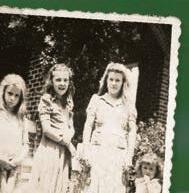

“Every one of the father’s generation was a ected,” he says. “ is de ed what we knew about even the strongest genes.”
Already, genetics was a hot topic in Alzheimer’s research. A major “susceptibility gene” variant—ApoE4—had been discovered that increased one’s risk but was not su ciently strong to cause the disease by itself.
For early-onset Alzheimer’s, which o en strikes before age 60, even stronger genetic determinants had been discovered—three causal genes that were probably responsible for only a small number of cases, but which were autosomal dominant. If you had the gene, you would get the disease.


One such case involved a large Colombian clan from
an isolated area in the Andes whose members were exceptionally prone to early-onset Alzheimer’s. A ected family members were discovered to have an altered protein on the presenilin-1 gene on chromosome 14—the Paisa mutation. Each child of a parent with the gene has a 50-50 chance of inheriting the trait. e New York Times and other media have done stories on the family and researchers have traveled from far- ung institutions to conduct studies on family members (one researcher survived a kidnapping by guerillas, who were persuaded to protect the blood samples by chilling them in a river.)
trav
pro neurolo
gist who discovered the Paisa mutation,


“ is is the only place in the world,” said Francisco Lopera, the neurologist who discovered the Paisa mutation, “where we can nd a family like this.”
Which may no longer be true.

Members of the family working with Emory seem to have even higher than 50-50 odds of developing Alzheimer’s, which puzzled Levey.
50-50 odds of developing Alzheimer’s,





“ at kind of made me shake my head,” he says. “Could it be really bad luck? It might be environmental, but that seemed unlikely.”






He began to think it was a new, extremely potent gene.
“I’d never seen a family like this before or read about any described in the literature,” Levey says.

15 Winter 2016
n Photos by Jack Kearse
presenilin-1 gene on chromosome 14—the Paisa mutation.
Levey’s attention. Her father was one of nine
Additionally, family members tend to develop not early-onset Alzheimer’s but the much more common late-onset type, with symptoms emerging in their 60s and 70s.
Genealogical research shows that members of the family share a common ancestor: French immigrant Pierre Jacob Chastain. Born near the farming village of Charost in the Centre region of France around 1660, Pierre Chastain and his family ed religious persecution, traveling through Switzerland, the Netherlands, and London, before sailing with a group of more than 200 Huguenot refugees for Virginia aboard the Mary and Ann, settling in Manakin on the James River in the summer of 1700. He was married three times and had 13 children, although several died before adulthood. Pierre Chastain died in Virginia in 1728 and was buried in a cemetery next to the family home.
rough a stroke of luck, the Chastain lineage, now into its 10th to 12th generation in most family branches, has been well researched. e Chastain Family Association has 500 members, and a database of close to 40,000 individual records is available online.


Natalie DiSantis, outreach director for the Alzheimer’s Disease Research Center, is the keeper of Emory’s version of the Chastain’s family tree. She started with the association’s website, piecing together missing links through obituaries, emails, and “someone telling me about their cousin in the Midwest.” DiSantis, who has a background as a health care attorney, has a huge folder stu ed
to over owing with Chastain family records.
“I feel for them,” she says. “To see so many of your relatives go through this, the pain of it seems overwhelming. But I am also excited for them, for this opportunity. Hopefully they will be a part of stopping this awful disease so all the future generations don’t have to go through this.”
DiSantis has created a genealogical scroll more than 20 feet long listing 162 descendants that she has shared with the family, many of whom have supplied family photos to go along with the names on paper.
On one of these branches, eight generations down from Pierre Chastain, are sisters Louise Lee, Sherry Dunn, Daisy Greer, and Holly Phillips. ey brought their mother, Mildred “Lily” Chastain Lowman, to Emory from Ellijay more than a decade ago a er she began exhibiting symptoms of dementia. “We were sitting in a room with mama and the doctor came in and said, ‘We’ve been looking for ya’ll,’ ” Dunn says. “ en they explained their research to us. at was a little bit scary.”
A er thinking it through, though, the sisters decided they should do everything in their power to help, including searching out other relatives, volunteering for medical tests, and inviting Emory researchers to family reunions. When their mother died in 2008 of Alzheimer’s disease at age 78, it only made the sisters more committed to the cause. ey regularly make the drive from their
EMORY MEDICINE 16
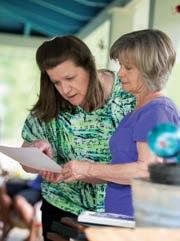
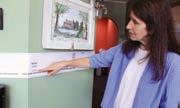
Neurologist Allan Levey (left) is working with the family to try to determine why members have a higher incidence of Alzheimer’s. Sisters Holly and Louise (above, top) look at family photos; Chastain descendent Dorothy Hightower (above) points to her entry on the genealogy chart.
PHOTO: SARAH LOFTUS
Healthy nerve cells
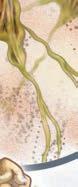
ALZHEIMER’S IMPACT ON THE BRAIN
Medical Illustration By Bona Kim Emory Visual Medical Education Team
Damaged and dying nerve cells




Alzheimer’s tissue in the brain has fewer nerve cells. Dead and dying nerve cells contain strands of proteins called tangles, which are a damaged form of the cell structure. Proteins (beta amyliod) clump tyogether between nerve cells and build up clusters called plaques. The exact cause of Alzheimer’s disease is not proven but scientists consider the plaques and tangles to be prime suspects.
healthy brain vs. alzheimer’s
mild to moderate
Tau tangles
Amyloid plaque
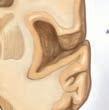

cerebral cortex shrinks
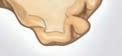


ventricles enlarge
hippocampus shrinks
Alzheimer’s Disease (AD) BY THE NUMBERS
AD is the most common form of dementia, accounting for 60 to 80 percent of cases.
Old age remains by far the greatest risk factor—more than a third of individuals 85 and older have AD.
More women than men have AD, mostly because they live longer. (Average age of death in the U.S. for females is 81; males, 76.)
AD afflicts 5.3 million in the U.S. and more than 30 million worldwide.

AD/dementia cases are predicted to more than double by 2030 (to 65.7 million) and triple by 2050 (to 115.4 million).

Winter 2016
Preclinical
Severe
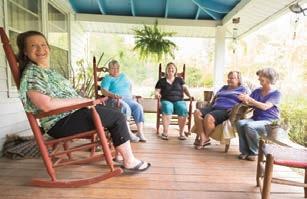
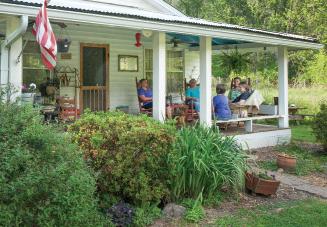
Relaxing on Louise’s front porch (far left), the family recalls touching and funny moments from more than a decade of caring for their mother, Mildred “Lily” Chastain Lowman. She died of Alzheimer’s at 78. A cutting from their mother’s prize Chinquapin rose bush (left) blooms each summer in Louise’s yard.
Relaxing on the porch (far left), the Lowman family recalls touching moments from more than a decade of caring for their mother, who died of Alzheimer’s at age 78.
A cutting from her mother’s prize Chinquapin rose bush (left) blooms each summer in Louise’s yard.
“We’d been through it with grandmother before mama, so we recognized it. I even remember them talking about grandma’s mother having dementia,” says Holly Phillips. “Mama started to get upset when she started having problems. She knew what it entailed. She’d been the main caretaker of her mom for 13 years and her older sister and two of her brothers had it.”
homes in North Georgia to Emory’s Brain Health Center at Executive Park to have their blood drawn and take cognitive tests. Some even consented to spinal taps so researchers could search for early biomarkers of Alzheimer’s disease in their cerebrospinal uid (such as levels of beta-amyloids and tau proteins, which are associated with the plaques and tangles that damage the brain).
“Why not take what could be a curse and make it a blessing?” says Lee. “I tend to get on my soapbox about this.”
Lily Lowman was an amazing mother, they say, gentle and nurturing, a midwife and healer who gathered herbs for remedies and had a curious mind and an adventurous spirit. She raised her six children, four girls and two boys, in the country down a dirt road at the “old home place” in Ellijay, where she would take them on picnics during warm summer months, packing a lunch, picking owers, and staying outside all day long.
In fact, one of Lee’s most treasured possessions is her Chinquapin rose bush, grown from a cutting o her mother’s plant, which now produces bright pink blooms in her yard. “Mama was such a smart woman, way ahead of her time in so many ways,” Lee says. “Yes, she was hard working and not sophisticated by the world’s standards. But she was so much more than that. She read and learned and tried to do things years ago that are just now popular— organic, natural treatments, the ‘green’ way.”

Lowman rst started to show signs of dementia in her late 60s, repeating questions that had just been answered, hiding things in strange places, calling her daughters by the wrong names, not recognizing visitors she normally would. Always gentle and kind, she retained her sweet spirit but sometimes grew uncharacteristically agitated.
“We’d been through it with grandmother before mama, so we recognized it. I even remember them talking about grandma’s mother having dementia,” says Phillips. “Mama started to get upset when she started having problems. She knew what it entailed.
She’d been the main caretaker of her mom for 13 years, and her older sister and two of her brothers had it. My son was a baby at the time, and she would play and color with him or give him a bath, and sometimes she’d think he was her own son.” It was hard for Phillips to see the contrast between her child advancing and her mother declining. “I watched them pass each other,” she says. “Elijah was growing and developing day by day, and she was going the other way.”
e early stage of the disease, which lasted about ve years, was marked mainly by their mother’s increasing forgetfulness. e next ve years, though, were more challenging—she could no longer safely be le alone. “In the middle stages, you couldn’t use logic or reason,” says Dunn. “You kind of had to stay 10 steps ahead and go along to get along.”
For instance, their mother would o en worry that she needed to go “home,” that her own mother and father (who in reality had died many years before) were waiting for her. So they would take her for a ride around the block in the car and return to the house. Or they would tell her, “Your mama and daddy called and said they were going to church and that you can stay with us a while longer,” Lee says.
One time, their mother thought there was a little girl at the foot of her bed and she wouldn’t be consoled until they set up a bed in her room for the girl. “She’s sleeping sound as a baby, she must have been so tired,” said their mother, before dri ing o herself. When Lowman grew restless in the evenings, they would take her to Wendy’s to get a Frosty as a distraction. “We did whatever we needed to do to relieve her mind,” says Lee.
Tammy Bigham, Lee’s daughter and a certi ed nursing assistant who works in hospice care, says her mother used to sleep beside her grandmother’s hospital bed on a blue-and-white reclining lawn chair. “She’d do that night a er night and then get up and go to work at the blue jean plant that used to be in Jasper,” she says.
EMORY MEDICINE 18
Bigham’s favorite story about her grandmother was the time she decided to keep a live chicken inside her bedroom. “She brought it inside in a box and hid it, but you could hear it in there. My mom would go over and knock on the door and grandma would say, ‘What, doll?’ and she would say, ‘Mama, do you have a chicken in there?’ ‘No.’ But she was allergic to most animals, so she was sneezing her head o .”
While there were light moments, Bigham says, it’s hard to accept that her own mother, or she herself, might face the same fate. “It’s scary, for both of us,” she says. “Mama does Sudoku puzzles and crosswords and takes vitamins and herbs to help to better her brain function. She says if she gets it she would put herself in a nursing home, that she doesn’t want me taking care of her like she did her mama. at hurt. I felt like she was taking that away from me. She’s always the rst one to help anyone else, to make sacri ces, and it would be an honor to take care of her.”

e sisters did manage to care for their mother at home, with help from other family, but during the last few years of Lowman’s life they had to do everything for her, from bathing to feeding. “You lose all control with Alzheimer’s and are le with just fear and confusion,” says Phillips. “My heart breaks for anyone going through it. We need to gure this thing out and stop it.”
As word has spread, Chastain family members have stepped
forward from North Georgia, Alabama, and the Carolinas to help with the research e orts. So many have participated in Emory’s studies—close to 200 so far, with about 100 being actively monitored—that it has become nearly a family pastime.
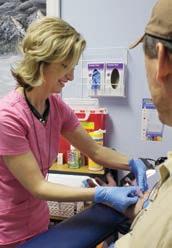
At reunions and gatherings, there’s o en good Southern food like ribs, slaw, and sweet tea, lots of catching up among the grandchildren and cousins, and a visiting research team. “We do brief cognitive testing and a blood draw. We always couple research with education and explain how the samples will be used,” says Cecelia Manzanares, associate director of research projects with Emory’s neurology department. Many Chastain family members have become part of Emory’s Alzheimer’s Disease Research Center registry, coming in every year or two to do follow-up cognitive testing, get a physical, and gain a sense of how they are progressing as they age. “We’ve been following some members for quite a while,” Manzanares says.
Emory neurogeneticist omas Wingo is studying the family’s bloodline from a scienti c perspective, searching for unique characteristics that might be contributing to their likelihood to develop Alzheimer’s. “ ere was a lot of serendipity in how this family was discovered,” he says. “ e reason it has turned into a substantial research project is because of how large the family is and their willingness to participate.”

Winter 2016 19
PHOTO: SARAH LOFTUS
Neurogeneticist Thomas Wingo (left) is searching for clues about genetic causation and risk in Alzheimer’s disease.
Phlebotomist Virginia Rutledge (below), who belongs to one of the family branches being studied, takes a blood sample from another descendant to be sent to Emory from her clinic in Ellijay.
Wingo believes that Alzheimer’s disease is due to hundreds of thousands of causes, like Lego building blocks, all interconnected—a con uence of factors. But he also believes that there are certain causes that confer more risk than others and that families such as this contain valuable clues about genetic causation and risk. His research involves analyzing sequences of genetic information with high-performance computers that can handle enormous amounts of data.
Taking a family genealogy and turning it into a medical pedigree is quite challenging, says Wingo, who has been studying the family’s DNA since 2008. “I’ve completed this for three branches of the family so far. In the medical version the family members are all listed as numbers—we don’t know who anyone is. at’s important so I don’t bias myself or inadvertently reveal any information.”
Genetic data collected from family members is much more meaningful than data collected from strangers, because you can make predictions about what they should share genetically. ese predictions are then used to help understand whether genetic variants are present due to chance alone or associated with a disease in the family. Since people share half their genetic materials with their siblings, on average, and half with their parents, inherited patterns and genetic variants become illuminated through the generations. e challenge is in teasing out which variations are relevant
to the disease being studied. “What we’re supposing is that there is something unique in the family that contributes to Alzheimer’s disease,” Wingo says. “Every person might have a unique characteristic, whether directly from the same ancestor or coming together in combination with other genetic variations that substantially increase their risk.”
While sequencing large portions of a genome is expensive, Wingo has sequenced about a dozen members of the family, with and without Alzheimer’s, to try to determine potentially causal variants. So far, about 500 variants have been identi ed. He is gearing up to sequence every identi ed family member—an ambitious undertaking. “Hopefully we will nd genetic changes that come out strongly associated with the disease that are unlikely to be shared by chance alone,” he says. “It looks very promising at this point.”
Regardless of whether the exact causative genes can be discovered, there is great research value in studying families whose members develop Alzheimer’s at higher rates than average. Researchers can track brain changes and biomarkers, conduct longitudinal cognitive testing, and perform clinical trials to test medications and therapies that might slow or halt Alzheimer’s onset in presymptomatic carriers.
Alzheimer’s
Phlebotomist Virginia Rutledge, who is 10 generations removed from Pierre Chastain, regularly opens her medical screening clinic

EMORY MEDICINE 20
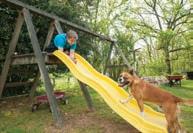
The Lowman sisters (top, in Ellijay) say they are participating in Emory research to help future generations, like 11-year-old Elijah (right, on slide).
“Why not take what could be a curse and make it a blessing?” says Louise Lee (far right). “I tend to get on my soapbox about this.”
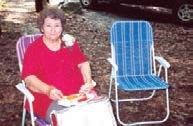
Family matriarch Mildred “Lily” Chastain Lowman (right, in lawn chair) loved the outdoors, gardening, and family.
in Ellijay, Georgia, to any family members willing to donate blood so they don’t have to drive to Atlanta. She o ers a full blood chemistry panel as incentive.
Ronald Pilcher, who served in the Air Force for several years, showed up at a recent “Chastain day” at the clinic this summer, not even wincing as Rutledge slipped the needle into his arm and lled two vials with his blood. “I think if my family and I can contribute to this research in any way it will be the greatest thing any of us have done,” he says. “I had relatives who had Alzheimer’s and died from it. I am willing to do whatever will help.”
More than 20 Chastain descendants ll the waiting area this a ernoon, waiting for their chance to donate. ey read the genealogy chart that wraps around the clinic wall, discovering common relatives and sharing family stories. “Despite the fact that they are all somehow related, most of these people don’t know each other from Adam—or Pierre—but it doesn’t matter to them,” Rutledge says. “One gentleman had to lie down because he always faints during a blood draw, but he still showed up, he still contributed.”
Dorothy Hightower, Rutledge’s mother, helps her at the clinic. She guesses there are about 100 of her relations in nearby Pickens and Gilmer counties alone.
“We’re a big family,” she says. “My great-great grandfather was Maxwell Chastain, and he had 11 children.”


Maxwell’s son, known as a preacher’s preacher, established churches in the area. Hightower remembers hearing that when he was an old man and a bit senile, he and his wife were sitting on their porch and he told her that God was calling him home. “ en he leaned up against the porch post, looked out, and said, ‘What a bad cloud this is.’ He died that night.” One could forgive him his forebodings—all 10 of his siblings died of what the family now suspects was Alzheimer’s.
Hightower’s father died from the disease, and other relatives have it as well. As with the Lowman sisters, this has made her and her daughter even more motivated to help, and they have taken over recruitment for Emory researchers, reaching out through the family grapevine, social media, and newspaper and television coverage.

“ is family sees very clearly what is happening and is motivated to help us discover what causes the disease,” says Levey. “We owe them a large debt, one I hope we will be able to repay someday.”
No one is given a guarantee that the research will help them or their families personally, and they don’t need one. “We have hope, and hope is enough,” Rutledge says.
“ is isn’t just about my people,” adds Hightower. “It’s about


21 Winter 2016
Watch an interview with Emory neurologist Allan Levey at bit.ly/emoryadrc
geneal
“You lose all control with Alzheimer’s and are left with just fear and confusion,” says Holly Phillips. “My heart breaks for anyone going through it. We need to figure this thing out and stop it.”
erry couldn’t sto reliving the e plosion that came out of nowhere and proceeded almost silently, in slo motion. t was the culmination of the fear he had e perienced since deployment to nbar Province. is buddies walking ust ahead of him, his best friend, they . well, he didn’t talk about it, didn’t talk much about anything anymore. e was anxious in cro ds, only went sho ping at night, inched at sim le noises, woke u rigid with fear. e kne he loved his family but there was a kink in the connection bet een kno ing it and feeling it. addy used to be the fun guy, now he’s the angry one. is family was right, and he was getting worse.






EMORY MEDICINE 22
ealing the invisible wounds of modern warfare
By Sylvia Wrobel n Illustrations by Brian Stauffer
In modern warfare, as in con icts from eras past, one constant endures: military members are speci cally trained not to give in to their emotions. ey tough it out, push through, apply their training, do their jobs. Emotional “weakness” could get them or their comrades killed.
ese same traits don’t serve veterans nearly as well a er they return home. Keeping terrifying, life-threatening experiences locked away inside and ignoring the fear associated with them can, in fact, magnify their impact.
“People are haunted by these past experiences,” says Barbara Rothbaum, director of Emory’s Trauma and Anxiety Recovery Program and Emory’s Veterans Program. “ ey may relive them through nightmares, ashbacks, or thinking of them when they don’t want to. ey may have problems sleeping, concentrating, or being easily startled.”
The Wounded Warrior Project’s Warrior Care Network connects post-9/11 veterans with individualized care. Regardless of discharge status, deployment history, or length of service, wounded veterans can receive free care for post-traumatic stress disorder, traumatic brain injury, military sexual trauma, anxiety, and depression. The initiative connects four academic medical centers across the U.S., including Emory, whose Veterans Program is ramping up to treat more than 1,000 qualified veterans over three years.
Winter 2016 23
The military was the family Meredith never had. She embraced everything about it—the uniform, the rules, the lingo, hanging out with her comrades. For the first time, she felt like somebody had her back. Pretty ironic, because that feeling was shattered when her commanding officer sexually assaulted her. Go ahead and tell, he said. No one will believe you didn’t want it and you’ll be dishonorably discharged. She stayed silent, but her performance plummeted. She didn’t re-enlist. Back home, she had trouble sleeping, focusing, and trusting anyone, especially men. She didn’t date. She didn’t even want to be alone with the manager at the grocery store where she worked part-time, and began to call in sick.




EMORY MEDICINE 24
If post-traumatic stress disorder (PTSD) is accompanied by physical injuries, especially trauma to the brain, returning to routine day-to-day life and recovering one’s sense of self can be especially challenging. Since the wars in Afghanistan and Iraq started nearly 15 years ago, the Department of Defense reports that of the 2.4 million men and women deployed, more than 52,000 have been physically wounded.
e primary injury in these con icts is blast-related: ery, eardrum-shattering explosions caused by improvised explosive devices (IEDs), rocket-propelled grenades, and landmines.
But the most common diagnoses for veterans of these modern con icts involve mental health. Among post-9/11 veterans seeking treatment, an estimated one in three experience PTSD. A little under half are diagnosed with traumatic brain injury (TBI), the signature wound of modern war. For many, PTSD and TBI overlap. ( ese numbers don’t count veterans who have not entered care or who have dropped out.)
Due to Emory’s longstanding experience treating veterans with mental health issues, especially PTSD, the national Wounded Warrior Project selected Emory Healthcare Veterans Program as one of four founding national centers in a new Warrior Care Network to receive a $15 million grant.
e network connects post-9/11 veterans, regardless of their discharge status, deployment history, or length of service, with individualized care for mental health issues, such as PTSD, PTSD as a result
of military sexual trauma, TBIs, anxiety, and depression.
Based on a recent survey by the Wounded Warrior Project, the number of veterans needing such care may be even higher than previously thought. Projections based on survey responses indicate that at least 400,000 service members are su ering from PTSD and another 320,000 from TBIs. e survey of more than 23,000 injured service members—the largest such survey of this generation of veterans—also found that more than one in three veterans had di culty getting mental health care, put o getting such care, or reported that they did not get the care they needed.
Military sexual trauma, caused by sexual assault, sexual activity against a service member’s will, or repeated sexual harassment, is now common enough that the VA system automatically asks all soldiers if they have experienced it. One in four female soldiers answers yes. Men are less likely to say yes, but those who do—or should have—also may su er lingering e ects, including depression, anxiety, and panic, chronic pain, and gastrointestinal and heart problems. Treatment of PTSD following military sexual trauma is another expertise of Emory’s Veterans Program. e program launched in September under the auspices of the new, comprehensive Brain Health Center and is ramping up to treat more than 1,000 quali ed veterans during the next three years. e sta plans to work with 200 veterans during the rst year, 350 the second, and 500 the third. Some of
This fall, former Air Force Staff Sergeant Clifford Morey, his wife, Kelli, son, Kevin, and seizure alert dog, Baz, attended Military Heroes Night at an Atlanta Braves game, an initiative supported by the McCormick Foundation through Emory’s Veterans Program.

Clifford Morey remembers the injury that divided his life into before and after. It was a dark, miserable winter in 2008 in upstate Washington. During survival and escape training, the 24-year-old Air Force staff sergeant climbed over a fallen tree, stepped on a hidden layer of ice, and plummeted 200 feet down a rocky mountainside into a tree, catastrophically dislocating his shoulder and damaging nerves along his left side. After slowly healing, he returned to complete training, and was transferred to Warner Robins Air Force base. But over time the injury took its toll. Eventually he was “medically separated” from the military and the work he loved.
Taking a civilian job in Georgia, Morey tried to ignore the worsening pain and weakness along his left side. He soon required a strong leg brace and cane to walk. In 2013 he had his first seizure, which progressed to up to 50 a week. His doctors were stumped. Finally a local neurologist put his symptoms together with a syndrome he had read about, but had never seen: Complex regional pain syndrome type 2, a progressive, degenerative neuroinflammatory disorder caused by traumatic nerve injury. The nerves misfire, continually sending pain signals to the brain—pain at the top end of the pain scale, sometimes resulting in seizures. The neurologist told him he needed a specialist.
By the time he came to Emory, he was nearly comatose. Neurologists recognized that his symptoms were pain-related and changed his medication, resulting in fewer seizures. Morey, who says he also suffers from related depression and mild traumatic brain injury, believes veterans with mental health issues from training or combat injuries “need all the help we can get. I’m thankful that a program like the Warrior Care Network exists for us.”
Winter 2016 25
hen ouise signed u to serve, she told her parents to please sto worrying about their little princess. t that time, women were not allowed in combat. She didn’t tell them that her unit was assigned to drive along roads often laced with landmines or s. ike most traumatic brain in uries su ered by military personnel, ouise’s was in the mild range. She doesn’t remember the vehicle she was rid ing in getting hit, only di iness and blurry vision after ard, then, back home, irritability and depression. verything seemed harder, slo er. er hands were sometimes shaky and she had a hard time remembering s eci c words. She wasn’t sure what was from her physical in uries and what was from anxiety. She ust kne she wasn’t the same as before.

EMORY MEDICINE 26
these vets already have been diagnosed with PTSD, TBI, anxiety, or depression and are seeking a second opinion or additional resources. Others have not been diagnosed but describe nightmares, trouble sleeping, angry outbursts, depression, di culties dealing with their children, anxiety, memory problems, and other symptoms o en seen with PTSD or TBI.
“ e invisible wounds that our injured warriors struggle with every day have devastating long-term consequences on their health, yet too o en they have di culty seeking and getting timely and e ective care for these conditions,” says Jeremy Chwat, chief program o cer at the Wounded Warrior Program. “We envision and seek to create a world where warriors who live with PTSD and TBIs have access to the timely and quality care they need to recover, heal, and move forward.”
Veterans for whom Emory’s program has appropriate services are accepted for care. A er a comprehensive assessment, an interdisciplinary team of specialists under the direction of Sheila Rauch, clinical director of Emory’s Veterans Program,
designs a treatment program personalized to that veteran’s needs. For instance, a veteran whose PTSD is exacerbated by sleep problems may see di erent therapists from a veteran whose PTSD causes depression, anxiety, or anger. Veterans with TBIs o en have cognitive and emotional issues, so treatment is shaped accordingly.
Depending on the veteran, treatment may include psychotherapy, pharmacotherapy, cognitive rehabilitation, stress management, or sleep training, o ered collaboratively by Emory specialists in psychiatry, psychology, neurology, and rehabilitation medicine.
e Brain Health Center has many of the services veterans need in one place—MRI for diagnostic imaging, gait analysis, a sleep laboratory, cognitive impairment assessment and therapy, rehabilitation, and wellness resources. At this initial stage of the program, all participants live within commuting distance and receive outpatient care once a week or as indicated. In the spring, intensive two-week, fullday sessions will be available for veterans who live farther away. Both options revolve around the cores of psychiatry, neurology, and wellness and may include yoga, meditation, weight training, smoking cessation, and other activities. Local patients may continue to see Emory therapists; out-oftown patients will be referred for continuing care to providers in their communities, many of whom have received training through Emory’s participation in the Georgia division of Star Behavioral Health Providers.
Within the Warrior Care Network, most veterans will go to the center nearest them: Emory’s Veterans Program in Atlanta, Massachusetts General Hospital in Boston, Rush University Medical Center in Chicago, or UCLA Health in Los Angeles.
Some veterans, however, will be transported to the center with the speci c expertise they need. A Georgia patient with dis guring injuries, for example, may go to UCLA’s Operation Mend Program for reconstructive surgery and counseling.
Patients from outside the South
may be transported to Emory for its experience with PTSD e Warrior Care Network coordinates available resources through the VA. One of Rauch’s jobs, as clinical director and a long-time VA employee, is to design ways that Emory’s Veterans Program can align with the VA, especially the Atlanta VA Medical Center, an Emory partner for nearly 70 years.
“Our veterans have put everything on the line for us and our freedom,” says Rothbaum. “It is an honor and privilege to be able to serve them and their families.” ■
How post-9/11 veterans can access care:
Call 1-888-514-5345 or submit a form online at emoryhealthcare.org/veterans. You do not need to have been diagnosed. If services offered by Emory’s Veterans Program are appropriate for you, you will be asked to come to Emory for a comprehensive assessment. Veterans do not pay any out-of-pocket costs for this assessment, nor for any therapy they and their clinicians decide is appropriate. To be able to care for as many veterans as possible, Emory’s Veterans Program does work with insurance companies to collect payment if available. For veterans without insurance, the Wounded Warrior Project and Emory’s Veterans Program will ensure that these programs are delivered at no cost to the veteran.
How clinicians can provide care in their communities:
Complete the three-tier Star Behavioral courses and join the Star Behavioral Health Providers registry used by veterans to find clinicians who understand what they have experienced. Contact Liza Zwiebach at georgiaadmin@starproviders.org or 404.727.8964.
27 Winter 2016
Clinical Director Sheila Rauch
The Nightly Fight to Breathe
 By Quinn Eastman



Sleeping through the night is difficult when your airway won’t stay open. Let’s face it, when you’re snoring and snorting and being yanked out of deep sleep into light sleep more than 30 times in an hour, you don’t wake up well rested.























EMORY MEDICINE 28
Terry Markert is a big guy, but he used to be even bigger: at six-footone and 362 pounds, his weight was a ecting his health.
e IT administrator had been diagnosed with type 2 diabetes, was having joint pain, and was sleeping poorly—snoring loudly and frequently waking up startled in the night from not being able to breathe. “As the day wore on, I would have issues with getting sleepy, tired, fatigued,” he says.
Several of his doctors had recommended bariatric surgery. But Markert decided to take two proactive steps rst: he went on a diet with his wife, and he visited a sleep lab. He has now lost 46 pounds and uses a CPAP to assist his breathing while he sleeps.

Nancy Collop, director of the Emory Sleep Center, arranged for him to have a home test while he slept. A monitoring strap was placed around his chest and midsection, and a nasal cannula measured air ow out of his nose.
e results: severe sleep apnea.
“I was o the charts,” Markert says. Collop recommended a CPAP (a device that provides continuous positive airway pressure) and then referred him to a respiratory therapist at the Emory Sleep Center to be tted.
He began using the CPAP regularly last summer. “It was a rough two or three nights when I was rst getting used to it,” he says. “I felt like throwing it across the room a few times.” Soon enough, though, he got used to the device and began sleeping through the night.
the so tissue at the back of the throat from collapsing, cutting down on the frequency of all those gasps and snorts.
“If a patient wears the device consistently, it will be e ective,” Collop says. “With other options, such as an oral appliance, we tend to see a lower success rate.” Evidence has been emerging that CPAP can bring down blood pressure in patients who most need it—those with drug-resistant hypertension who have an elevated risk of heart attack and stroke, for example. For milder sleep apnea, the statistical
e more a sleep apnea patient is able to use CPAP, the better, both in terms of respiratory disturbance and alertness the next day. By any measure, adjusting to CPAP is a big practical change for a patient, and it requires daily cleaning. But when it works, patients notice.
“A er four or ve days, I started feeling better during the day and had a lot more energy,” Markert says. “ e CPAP is also equipped with a humidier, so it made breathing through my nose more comfortable.”
A CPAP is the standard remedy for the most common sleep disorder, sleep apnea. e mild air pressure prevents
bene ts don’t pop out as much, but being more alert in the a ernoons is still a quite valuable bene t.
e pros: CPAP is not invasive and irreversible like surgery and does not require as much individual customization as an oral appliance. us, CPAP is what most sleep apnea patients will be urged to try rst.
e cons: It does take some getting used to. “It is a very strange sensation,” says respiratory therapist Brandy Escobar, who coaches patients on CPAP and helps them nd the best equipment. “You’re sleeping with something on your face.”
Up to 30 percent of patients pre-
29 Winter 2016
After experiencing health issues and difficulty sleeping, Terry Markert visited Emory’s sleep center and was diagnosed with sleep apnea. He now uses a CPAP device to assist his breathing at night. “I have a lot more energy,” he says.
scribed a CPAP refuse it from the start. Of those who agree, about a quarter stop in the rst year, and about half stick to it long-term. Accordingly, the Emory Sleep Center has adopted a two-pronged approach. ey provide extra support to help people adapt to CPAP as well as other options for people who can’t tolerate it.
Respiratory therapists are on site, able to deal with mask trouble or to give people an extra nudge to try CPAP again. “ e therapist told me, ‘Before you throw it o the top of your house, please give me a call,’ ” Markert says.
A major aim of the program is education—making sure patients understand the results of their sleep studies and what comes next. It’s not always a quick x, says Escobar. Patience and consistency are required, and the patient’s attitude plays a big part.
“ ere may be some anxiety,” Escobar says. “I always recommend trying it out when you’re awake, watching TV or folding laundry, so that there is some distraction and there aren’t big worries about whether you can go to sleep immediately.”
Simplest solutions
Emory Sleep Center, part of Emory’s new Brain Health Center at Executive Park, has eight sleep lab beds in private rooms and conducts about 2,100 sleep studies per year. An average of 40 to 50 CPAP devices are provided per month.
Sometimes, a er the initial sleep study, a patient will be asked to come back to the sleep lab for a “titration,” a trial run of CPAP that helps establish the best air pressure settings for that patient. Titration might reveal that two levels of pressure—higher for inhalation and lower for exhalation—are needed for optimal function, an option that is available on advanced devices. “ e machines are very smart. ey can tell if there is leaking and how e ective the pressure is,” Escobar says.
Luke, I am your…CPAP device
In other situations, a patient may be given the CPAP machine to take home to try for the rst time. For a few, doctors prescribe a sleep aid when a patient is starting CPAP
Even a er titration, a patient may need to come back more than once to nd a mask that ts and a sleep position that works well. Markert had to try several masks to nd one that allowed him to sleep on his side.
Several ways to get more zzz’s
Previously, if people dealing with sleep apnea sought an alternative to CPAP, there were two main options—an oral appliance, appropriate for patients with mild to moderate apnea, or nasal/ throat surgery for severe apnea. Now there is a third: hypoglossal nerve stimulation.
“Hypoglossal nerve stimulation is designed to be an option only for people who can’t tolerate CPAP, but not a replacement for it,” says Raj Dedhia, an ear, nose, and throat (ENT) surgeon who joined the Emory Sleep Center in September.
Dedhia is one of a handful of ENT surgeons in the country with additional training in sleep medicine.
An oral appliance remains a potential option for patients with mild to moderate sleep apnea, but is generally not as e ective for those with more severe sleep apnea or with structural problems in the nasal passages such as a deviated septum. e appliance extends the jaw a small amount and provides space for the tongue at the front of the mouth, thus clearing the back of the mouth.

“It does put some stress on the jaw joint,” Dedhia says. “Patients say it takes a little time in the morning to feel relaxed.”
For relatively mild cases of sleep apnea, doctors sometimes try “positional therapy,” also known as the “tennis ball sewn into the pajamas” technique, designed to makes sure someone avoids sleeping on his or her back. In more severe cases of sleep apnea, restriction of air ow happens regardless of position.
Surgical tactics
Even with surgery for severe cases, however, doctors are using a variety of tactics rather than a one-size- ts all approach.
“Several years ago, if patients were unsuccessful with CPAP, they were given a stark choice: ‘Do you want UPPP or not?’ ” Dedhia says, referring to
EMORY MEDICINE 30
“If someone is just there because a spouse has been complaining about their snoring, that’s not the best starting point,” says respiratory therapist Brandy Escobar. “We have to explain why this is going to be a bene t for their long-term health.”
Dr. Raj Dedhia offers patients with sleep apnea several surgical options. Dr. Jennifer Zreloff helps arrange for at-home sleep testing if patients can’t spend a night in the sleep lab.

31 Winter 2016
Nancy Collop
Director of the Emory Sleep Center
Sleep apnea and cardiac health

Short closures of the airway can disturb someone’s sleep cycle even if they don’t completely wake up. Longer closures result in a temporary reduction of oxygen levels in the blood, leading to strain on the blood vessels and the heart.
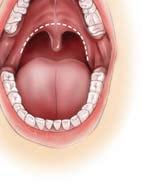
As a result, sleep apnea is not only a risk factor for developing atrial fibrillation, the most common heart arrhythmia, it can also be an obstacle to successful treatment by catheter ablation.
“There’s something about sleep apnea that wreaks havoc upon the heart’s electrical system,” says cardiologist Michael Lloyd.
SLEEP APNEA TREATMENT OPTIONS


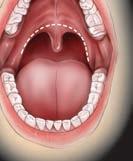
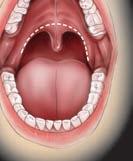
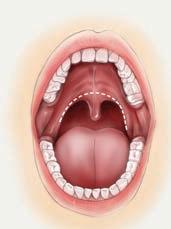
 Bona
Bona
e obesity link

In sleep apnea, the soft tissues at the back of the throat block the free passage of air. Insufficient muscle tone, age-related flabbiness, and extra bulk stemming from obesity all contribute to it. Snoring, gasping, or waking up with a dry throat or elevated blood pressure in the morning can all be tip offs, as can afternoon sleepiness.
Obesity is commonly associated with sleep apnea and correlates with its severity. Sometimes weight loss by itself can improve breathing during sleep. In children, enlarged adenoids or tonsils can be a cause of sleep apnea, but this is less common in adults.
The increase in obesity during the past few decades means sleep apnea has been increasing too, but specialists say the condition remains underdiagnosed because detecting it can be cumbersome.
EMORY MEDICINE 32
Medical Illustration By
Kim Emory Visual Medical Education Team
An oral appliance for mild to moderate cases
A CPAP device, which creates positive airway pressure
Surgery to open up the airway
Hypoglossal nerve stimulation
uvulopalatopharyngoplasty, in which excess tissue in the throat is removed to make the airway wider (this might include tonsils and adenoids as well).
With this procedure there is a risk of scarring, which can undermine the respiratory bene ts. Newer approaches involve less resection and more remodeling, depending on the shape of the individual’s airway. Usually an endoscopy is performed rst to assess the throat’s anatomy and how it is being obstructed.
Hypoglossal what?
e newest option, falling somewhere between devices and surgery, is hypoglossal nerve stimulation.
In this procedure, doctors implant a device that electrically stimulates the hypoglossal nerve, which controls the muscles in the tongue. e stimulation prevents the tongue from falling back and obstructing the airway.
e electrical stimulation is modulated by a chest sensor that detects breathing, and is timed so that the stimulation occurs at the bottom of the breathing cycle. Patients activate the device before going to sleep with a handheld remote and turn it o when they wake up.
e FDA approved a hypoglossal nerve stimulator developed by the company Inspire in 2014, based on ndings that the device could cut the number of apnea events, or disruptions of breathing that interrupt sleep, by almost 70 percent a er one year. Some patients reported discomfort or soreness of the tongue, due to stimulation causing their tongues to slide along their bottom teeth.
Despite the level of e ectiveness, which is roughly comparable to CPAP, the device’s bene t in Inspire’s study was demonstrated in people who were atypical—they were relatively lean for people with sleep apnea.
In the Inspire study, people with a BMI of more than 32 were excluded,
and the average BMI of participating patients was 28.4 [almost exactly the BMI for the average middle-aged American].
Prospective patients also had to undergo drug-induced endoscopy, assessing the shape of the airway, to show that the device was likely to help.
“We are still gathering data on how well hypoglossal nerve stimulation works in di erent patients,” Dedhia says. “It is critical to optimize outcomes, and I suspect a study with expanded BMI criteria could occur a er more long-term data is available.”
e nerve stimulation device, however, can cost many times more than a CPAP device. CPAP machines range from about $1,000 to $3,000 and many insurance companies consider CPAP medically necessary for sleep apnea and can arrange for rentals, which reduces the initial nancial sting. In comparison, the nerve stimulation device, with surgical implantation, costs about $30,000, and some insurance companies still consider it investigational and won’t cover it.
Dedhia says hypoglossal nerve stimulation provides a valuable alternative to surgery, however, especially for people with atrial brillation. Implanting the stimulator could be less painful and invasive than surgery and involve less risk of bleeding. at’s important for a group of patients who routinely take blood thinners.
“All three of these less invasive approaches—CPAP, oral appliance, and stimulation— are adjustable, which is valuable,” Dedhia says. “Even if someone stays the same weight, sleep apnea is a disease that tends to progress over time.”
Sleep lab at home?
Emory Sleep Center’s doctors usually prefer to perform sleep studies in the laboratory, where technicians can obtain precise data. But in an e ort to take patients’ comfort and convenience
into account as well as keep costs in check, the Sleep Center has been working with primary care physicians and nurses across Emory Healthcare to allow sleep studies to be performed at home. Jennifer Zrelo , a physician at Emory’s patient-centered primary care clinic at 1525 Cli on Road, says this is o en a more convenient option for people.
e home sleep apnea test equipment includes a pulse oximeter nger clip to measure oxygen levels in the blood, a nasal cannula, and color-coded chest and abdomen sensors for monitoring breathing. e home sleep test omits the EEG leads that record brain waves. A preprogrammed hand-sized module records the information, which sleep specialists can review a erward.
A standard measure of severity is a patient’s AHI or apnea-hypopnea index. It gauges how many times in one hour breathing is disrupted. An AHI of 5 to 15 is classi ed as mild, 15 to 30 as moderate, and more than 30 as severe. e usual de nition of sleep apnea is an AHI over 5, plus noticeable symptoms such as daytime sleepiness. “I see lots of patients who don’t explicitly say they’re sleepy but have other complaints like fatigue, inattention, or lack of energy,” says Collop.
Also, just having an elevated AHI, with or without symptoms, has been associated with developing hypertension, she notes.
Estimates of how many people in the U.S. have sleep apnea vary considerably, from 4 to 15 percent of men and 2 to 6 percent of women. Either way, it still adds up to a lot of folks who need help getting a good, restful night’s sleep.
“We order a home sleep test about once a week,” Zrelo says. “We’ve been stunned to see how much demand there is.” ■
For more, emoryhealthcare.org/sleep or 404-778-7777
33 Winter 2016
“Sometimes I get pushback from patients who say they don’t have time to come in for a sleep test, or they have kids who require care at night,” says Jennifer Zrelo . “Home testing eliminates the hassle.”
windows
TREATING MELANOMA
If you’ve been touched by a story or stories in this issue of Emory Medicine, these windows can open up ways for you to turn your inspiration into action. Here you’ll see how you can invest in the people, places, and programs you’re reading about. Gifts to Emory produce powerful, lasting returns: they help create knowledge, advance research, strengthen communities, improve health, and much more.
OF OPPORTUNITY
When President Jimmy Carter sought treatment for melanoma at Winship Cancer Institute, he turned to medical oncologist David Lawson, who leads a melanoma program that incorporates the best of basic and clinical science with the goal of improving the care of patients with melanoma. His active melanoma working group funds seed grants for basic or clinical research, and also participates in and leads clinical trials at all phases of therapy development.
For more information on supporting melanoma research at Emory, contact B. Alexander Brown 00C, assistant vice president for development, at 404.712.8822 or babrown@emory.edu
GETTING THROUGH THE NIGHT
Getting enough hours of sleep is critical to health and so are the quality of those hours. The Emory Sleep Center researchers and doctors study the sleep cycle so that patients can be tested and treated using the most up-to-date methods.
Courtney Harris, director of development, can provide more information at 404.727.5282 or courtney.harris@emory.edu.
SAVING LIVES AFTER STROKE
A team led by Emory neurologist Michael Frankel, the director of the Marcus Stroke and Neuroscience Center at Grady Memorial Hospital, pioneered the thrombectomy method to directly remove blood clots and improve outcomes for stroke patients. Another effective treatment—a clot-busting medicine called intravenous tPA—got its start in the Frankel group.
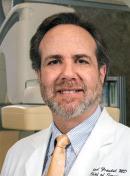
To support Emory research and progress in stroke treatment, contact Katie Dozier, director of development, at 404.712.2211 or katie.dozier@emory.edu.
CARING FOR VETERANS

Emory’s Veterans Program provides vital mental health treatment for post-9/11 veterans and their families as a member of the Warrior Care Network. For every dollar the program raises, the Wounded Warrior Project adds two dollars, up to $15 million. Unrestricted gifts support transportation, lodging, and meals for out-of-town veterans who are receiving intensive treatment; prescription medications or co-pays to eliminate financial barriers to care; and alternative treatment options.
Find out more from Courtney Harris, director of development, at 404.727.5282 or courtney. harris@emory.edu.
EMORY MEDICINE 34
PAGE PAGE PAGE PAGE 8 22 28 12
VISION Investing in discovery
GIFTS OF NOTE
Impressed by his care at Emory, Hayes Swann pedaled nearly 100 miles, which included the Silver Comet Trail, to raise more than $320,000 to support Parkinson’s research at Emory and the recreation therapy program at the Shepherd Center. Swann’s group of 19 cyclists biked 95 miles from Anniston, Ala., to Atlanta, and chronicled their mission and experience at p2epp.com. “The response has been beyond description for me and the blessings too many to count,” says Swann, who attracted corporate sponsors to his quest. “It is nothing short of a miracle. I am truly blessed to have so many colleagues and friends, as well as friends of friends, willing to be a part of this.”
The James M. Cox Foundation made a $25 million gift to launch new patient-centered care models at Emory designed to improve patient experiences and outcome, with an initial focus on prostate cancer care. The five-year initiative accelerates efforts already under way within Emory Medicine to create more streamlined and reliable care for patients and families. “We want it to be easier and less stressful for patients and their families whenever they face serious health issues,” says Jim Kennedy, chair of Cox Enterprises, who has battled prostate cancer and believes Emory can serve as a national model for improved health care delivery. The gift creates two endowed chairs affiliated with the Winship Cancer Institute to allow Emory Medicine physician leaders to focus on change initiatives and research to improve patient care. John Pattaras, associate professor of urology, and Peter Rossi, associate professor of radiation oncology, who both specialize in prostate cancer, will help lead the new initiative.
A Florida community bank gave $100,000 to support the development of new treatments for brain diseases and conditions like epilepsy, Parkinson¹s, depression, and more at the Emory Neuromodulation and Technology Innovation Center (ENTICe). Axiom Bank CEO Angelo Palombi voiced hope that the donation will enable Emory School of Medicine to “continue to expand its program and develop new and exciting treatments for neurological diseases.” Recent research by ENTICe has led to patient-specific therapies through a computational framework that allows for better predictability of a seizure and ultimately will help a neurostimulation device deliver the appropriate stimulation as early as possible to prevent seizure. ENTICe is led by co-founder Robert Gross, professor of neurosurgery, neurology, biomedical engineering, and neuroscience.
Research into the genetics of hypersomnia received significant seed funding from Andrew and Diane Powell, Betsy Ashcraft and Lawrence Tu, and other donors. Their early commitments are attracting other gifts to support the research of David Rye, professor of neurology and director of research for Emory’s program in sleep medicine. By sequencing DNA samples, Rye and his team aim to better understand the mechanism of hypersomnia and allow for better diagnosis and patient care. Rye is an internationally recognized expert in narcolepsy and related disorders of excessive daytime sleepiness and movement disorders in sleep.
Personal medical history and the history of medicine influenced Gary and Joella Kerber’s gift in support of W. Clyde Partin Jr. For four decades, the Kerbers have received medical care from Emory, and Partin stepped in when their primary physician, Donald Davis 76M, retired. The gift benefits Partin’s work as medical director of Emory Special Diagnostic Services, which is dedicated to evaluating patients with significant undiag-
nosed symptoms despite prior medical evaluation, and as course director of the annual J. Willis Hurst History of Medicine Symposium. The 2015 symposium focused on how the study of past epidemics helps health care professionals respond well today and in the future. “Dr. Partin has inspired a donation to Emory focused on his groundbreaking work,” Gary Kerber said. “It will be educational and rewarding to follow Dr. Partin’s success in the coming years, and play a small part by contributing to funding it.”
David Halpern established the Halpern Family Nursing Education Scholarship in Brain Health to recognize the vital role of nurses and support their work to improve the quality of life for patients and families who are suffering with diseases of the brain. The scholarship provides financial support for the professional development activities of at least two deserving Emory Brain Health Center nurses each year, and the recipients may use the funds to attend national conferences, prepare for nurse practitioner certification, complete master’s degrees in nursing, and participate in certification programs and related activities.
Two major entryways at Emory Saint Joseph’s Hospital will provide a fresh welcome to patients, thanks to a $500,000 gift from the Emory Saint Joseph’s Hospital Auxiliary. The donation will fund renovation of the main lobby as well as the lobby of the hospital’s new Orthopaedic and Spine Pavilion. The lobbies are where auxiliary members often provide warm welcomes to patients and families, one of the ways they have logged more than one million volunteer hours since the auxiliary’s founding in 1951. The recent gift brings total auxiliary donations to more than $6 million. More than 400 volunteers belong to the auxiliary, and last year they performed more than 59,000 hours of service.
To volunteer for the Emory Saint Joseph’s Auxiliary, call 678.843.7292.
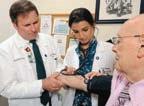
Winter 2016
35
A conversation with neurologist Allan Levey Director of the Emory Alzheimer’s Disease Research Center
advances in understanding the root causes of Alzheimer’s and in our ability to detect the condition much earlier, unfortunately we still do not have a single treatment that can slow or stop its progression. Many new approaches are being studied in clinical trials, and we are very optimistic.
logical changes. Physical activity, mental stimulation, diet, and other lifestyle factors may influence that trajectory. We can’t cure or prevent Alzheimer’s, but decades of modification of those risk factors is likely to have a significant impact.
Will mild cognitive impairment always lead to Alzheimer’s? No. Mild cognitive impairment is a condition that often progresses into Alzheimer’s or another form of dementia, but it can be caused by many different conditions. Occasionally, it will not progress or may even revert back to normal, depending on the underlying cause.
What is the difference between Alzheimer’s disease and dementia? They are not synonymous terms, since Alzheimer’s disease is only one form of dementia. It is by far the most common, however, accounting for about three-quarters of all cases. Other causes include multiple strokes, Parkinson’s disease, hydrocephalus, and many other, more rare conditions.
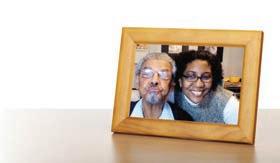
How can someone tell what changes in the brain are due to normal aging versus Alzheimer’s? Changes in normal aging are definite but slight compared with changes in Alzheimer’s, in which there is a massive accumulation of protein deposits (amyloid plaques and neurofibrillary tangles) as well as inflammation as the brain attempts to repair itself.
What advances have there been in treatment for Alzheimer’s disease— drugs and/or behavioral—in the past few years? While there have been big
Does early detection/intervention make a significant difference? Early detection is crucial for many reasons. First, memory loss can be caused by many things, some of which are even reversible (e.g., medication side effects, depression, or other treatable conditions). Second, the early stages are often misdiagnosed or misunderstood, leading to anxiety, frustration, and despair. Accurate diagnosis and counseling can help the patient and family cope and avoid unnecessary medical visits, procedures, and treatments. Third, to respect personal autonomy, patients and families need to understand the prognosis and plan appropriately for future needs. Education and support can help families address safety issues such as driving, managing medications, and handling finances. Fourth, our ability to treat and eventually prevent the disease more effectively will depend entirely on early detection. We now understand that the disease begins silently 20 or more years prior to the first symptoms of memory loss. Hence, treatments are much more likely to be effective if they can be started early—prior to brain degeneration.
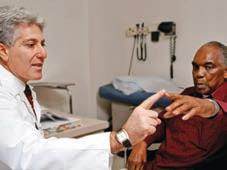
Conventional wisdom holds that you can ward off Alzheimer’s by keeping your mind and body active. Is this true, or is it much more about genetics? We know that genetics play the lion’s share in the cause of this disease—70 to 80 percent probably, in later onset. Genes load the gun, but aging, lifestyle, and the environment determine when the trigger is pulled. We believe that other things may modify how rapid and aggressive the disease is. We also know that some people may be more resistant to those patho-
Do you do anything differently in your life because of your research? I exercise more. I have a family risk—my mother and grandmother had Alzheimer’s. I view myself like everyone else. We are all at risk, so it’s important to enjoy life, keep active, eat a balanced diet. I get more than my share of mental stimulation from my job.
When you say we need “a big approach” to tackle this epidemic, what do you mean? You don’t always know where answers are going to come from. We have to take an unbiased approach to research, not a narrow view. We have a lot more to learn from genetics. We need to learn more about risk factors. We also desperately need participation of large numbers of people, including healthy middle-aged individuals, to develop methods to accurately predict who is going to get Alzheimer’s years in advance. We actually have a lot more ideas than we have money to test them.
What seems promising in the future, as far as drug treatments? Drugs and vaccines to reduce amyloid are the current focus, but we know this approach is most likely to work if we can begin treatments prior to symptom onset, preventively. Our Emory team is leading national efforts to discover new drugtargets based on proteomics, the study of complex protein changes that occur at the very beginning of the disease in the brain. Our efforts are central to the national plan as part of the Accelerating Medicines Partnership for Alzheimer’s Disease, a bold venture under the auspices of the National Institutes of Health, with academic and industry collaborators, to transform the current model of developing diagnostics and treatments.
EMORY MEDICINE 36 THE LAST WORD Fighting Alzheimer’s
Dr. Allan Levey says while no cure for Alzheimer’s exists yet, early detection and intervention will prove to be vital.

Emory is dedicated to sustaining the environment. After you’ve read this publication, please share it with a friend or recycle it. Thank you.



“MY CANCER DIAGNOSIS led to one of the most enriching experiences of my life because I was treated at Winship Cancer Institute. Not only have I remained cancer free for ten years, but I’ve gained a second family through the meaningful connections I made with doctors, nurses, and staff. They shared conversation, laughter, and even meals with me. Leaving my estate to Winship for cancer research is the best decision I’ve made. My gratitude is endless.”
 Edye Bradford Clayton, Georgia
Emory University Alumni Records Office 1762 Clifton Road Atlanta, Georgia 30322
This is my
you planned your legacy? emory.edu/giftplanning
legacy. Have
404.727.8875
