
AUGUST 2026
GROWING Wanderlust
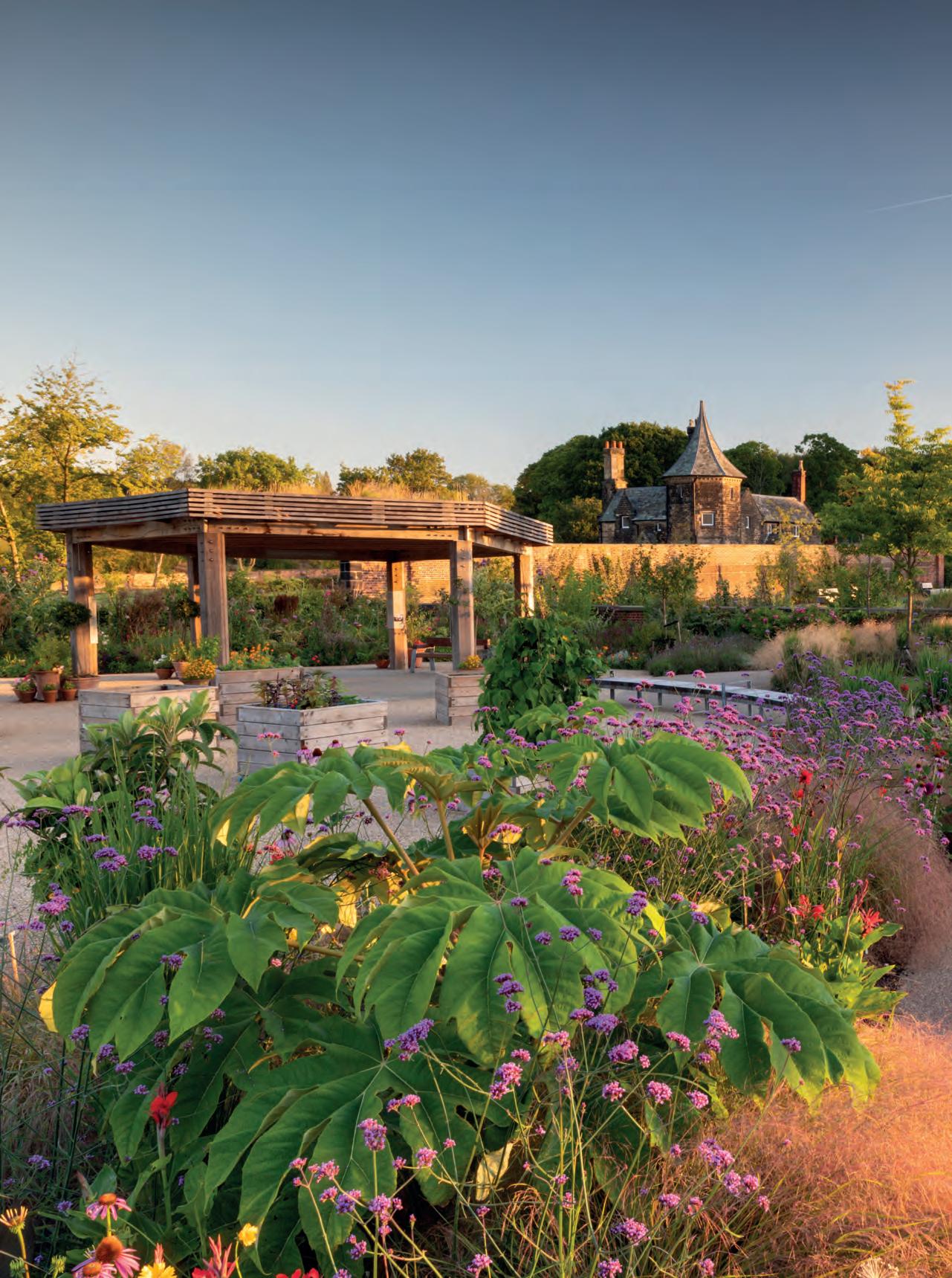

RHS BADMINTON AND SANDRINGHAM 2026 Award winners announced

CONTACT
Eljays44 Ltd, BizSpace, Courtwick Lane, Littlehampton, West Sussex, BN17 7TL
Tel: 01903 777 570
EDITORIAL
Editor – Rachael Forsyth rachael.forsyth@eljays44.com Tel: 01903 337 867
Senior staff writer – Holly Chapman holly.chapman@eljays44.com Tel: 01903 959 407
Senior subeditor – Katrina Roy katrina.roy@eljays44.com Tel: 01903 777 570
Designer – Emma Coleman emma.coleman@eljays44.com
ADVERTISING
Commercial director – Dan Green dan.green@eljays44.com Tel: 01903 959 406
MANAGEMENT
Managing director – Jamie Wilkinson jamie.wilkinson@eljays44.com Tel: 01903 777 589
Divisional director – David Griffiths david.griffiths@eljays44.com Tel: 01903 777 570
Content director – Nina Mason nina.mason@eljays44.com Tel: 01903 959 393
MARKETING & CIRCULATION
Marketing executive – Kiri Shaw kiri.shaw@eljays44.com Tel: 01903 959 408
Printed by Stephens and George Ltd
Published by ©Eljays44 Ltd – Connecting Horticulture. Pro Landscaper’s content is available for licensing overseas. Contact jamie.wilkinson@eljays44.com
Pro Landscaper is published 12 times per year by Eljays44 Ltd. The 2026 subscription price is £128. Subscription records are maintained at Eljays44 Ltd, BizSpace, Courtwick Lane, Littlehampton, West Sussex, BN17 7TL, UK. Articles and information contained in this publication are the copyright of Eljays44 Ltd and may not be reproduced in any form without the written permission of the publishers. The publishers cannot accept responsibility for loss of, or damage to, uncommissioned photographs or manuscripts.
Whilst every effort has been made to maintain the integrity of our advertisers, we accept no responsibility for any problem, complaints, or subsequent litigation arising from readers’ responses to advertisements in the magazine. We also wish to emphasise that views expressed by editorial contributors are not necessarily those of the publishers. Reproduction of any part of this magazine is strictly forbidden.
Welcome

Our climate is changing, and fast. Here on the south coast, we're just easing out of our third heatwave this year. But what we now think of as extreme weather is set to become our new normal. There’s an upside, though. At the height of the heatwaves, we witnessed people clinging to the shade and flocking to their parks, showing once again that what this industry has been urging for years is becoming a crucial necessity, not a nice-to-have. We must green-up our towns and cities and we must close the green space gap.
The industry is ready and already working hard to do so. Speaking to me about how grounds maintenance work is having to adapt, Mark Noakes explains IPM's journey to carbon neutrality and why its expertise in climate change and sustainability is actually a USP for the business (page 35).
Fresh off his RHS Chelsea Flower Show trade stand garden with BALI, Matt Evans explores the climate-resilient trends he's seeing within garden design (page 62). Meanwhile, the last RHS Flower Shows of the season – RHS Badminton Flower Show and RHS Sandringham Flower Show – showcased sustainable horticulture. In particular, Sandringham did this through the new Grow Forward category and all-new King's Biodiversity Award which was taken home by Sophie Godber for her Mindful Chef's gathering garden (page 10).
This issue also delves into sustainable workplaces and looking after the people who create these sustainable spaces. Brand-new contributor Gamiel Yafai explains why equality, diversity and inclusion matter to the industry (page 31) and James Scott describes why growth may have been slow for The Garden Company over 35 years, but it's also been incredibly steady (page 19). We also explore neurodiversity and what employers could be doing to support staff. It's an important topic as people often suffer in silence – but if this article shows anything, it's that those people aren't alone (page 75).
As we move through the last few weeks of summer, we know we have the expertise to make our towns and cities more resilient in the face of the changing climate. We also know we've always struggled to be heard. But with a change in government and a prime minister who previously drove numerous regional green space initiatives, is the opportunity there for the taking?
Rachael
BUSINESS
19
35 Years of Gradual Growth
Celebrating 35 years of The Garden Company, managing director James Scott explains how the company has grown and the lessons he's learnt along the way
31 Equality Matters
Brand-new contributor Gamiel Yafai demonstrates how equality, diversity and inclusion matters to the industry
35
Let’s Hear it From: Mark Noakes
Mark Noakes, CEO of IPM Facilities, explores why its sustainability and climate change knowledge is giving the business a competitive edge
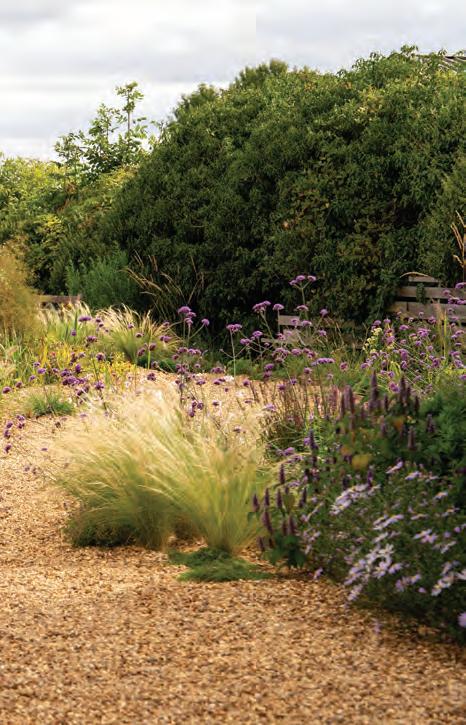
43 Restful Retreat
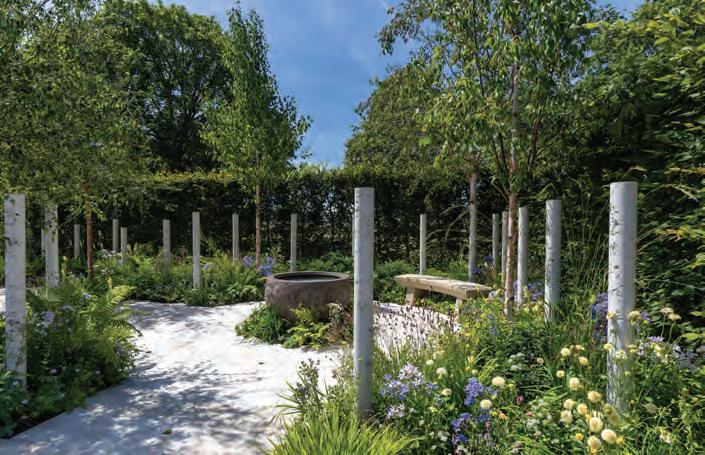
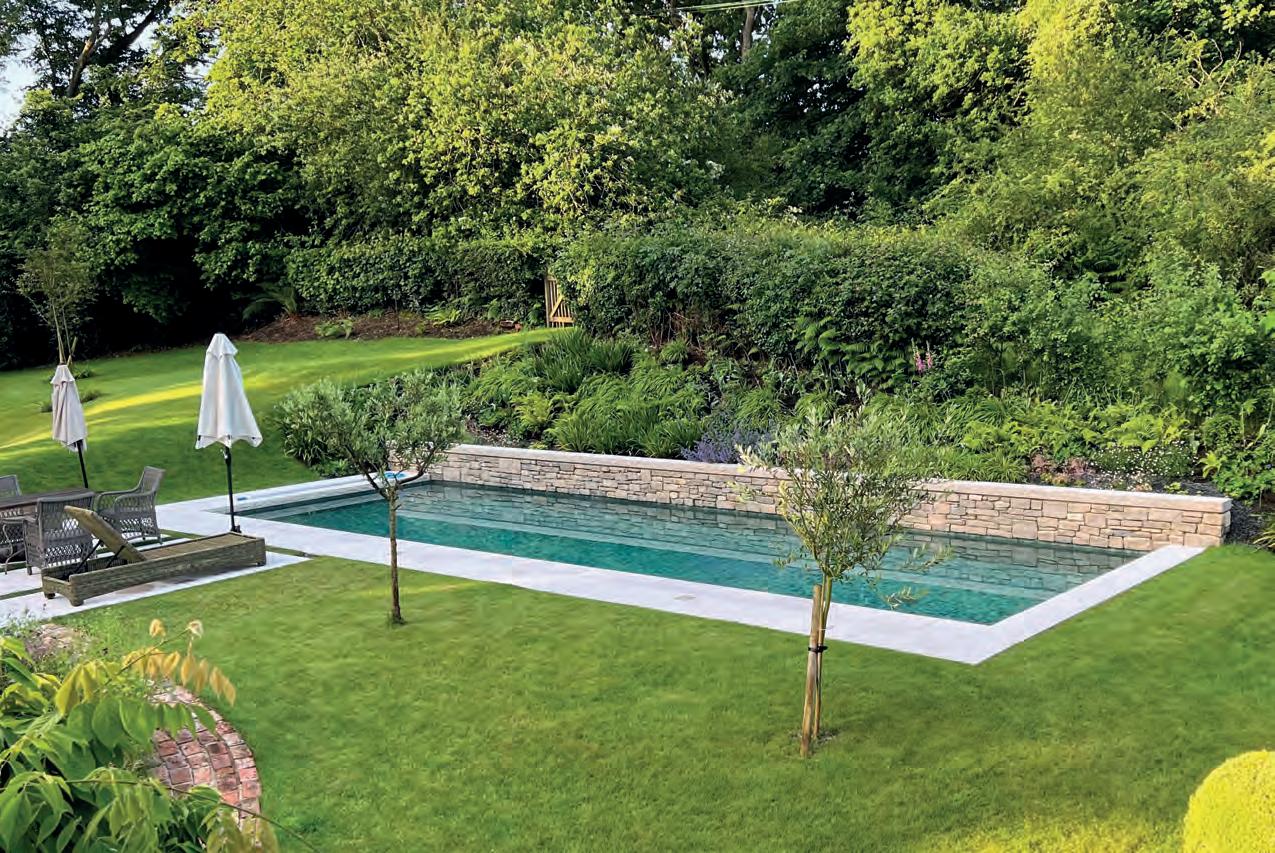
Looking towards retirement, this couple wanted a space for both of their hobbies with a natural swimming pool and al fresco dining
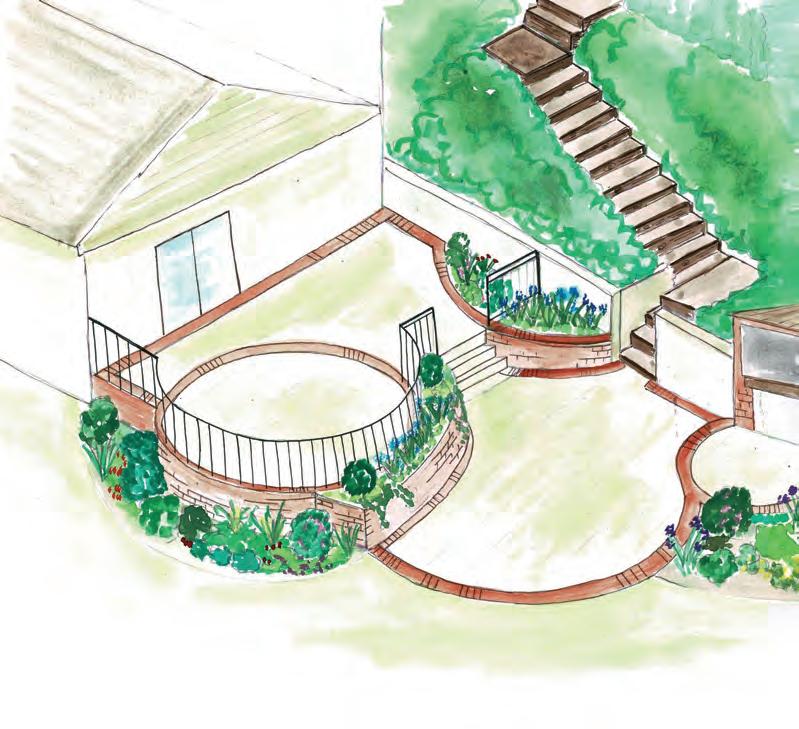
49 Cottage Charm
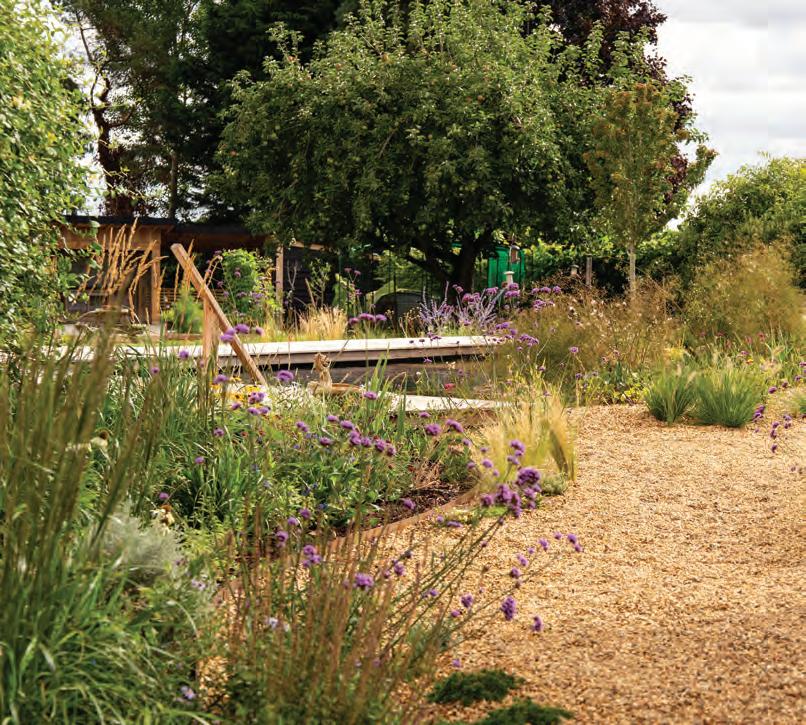
A seamless connection was needed between a higher patio space and the lower garden which blended naturally into the surrounding landscape
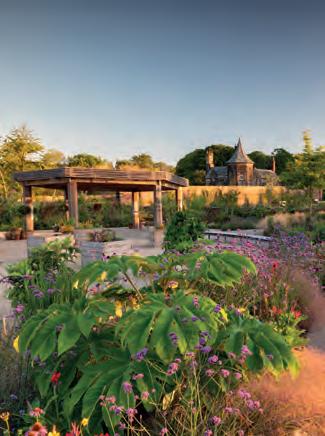
55 Historical Elegance
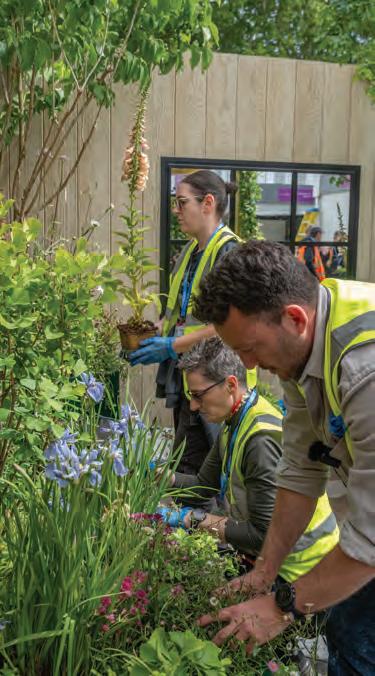
A space for office staff and visitors alike was needed, with wellbeing, material re-use, biodiversity and accessibility at its heart
68 Tools Fit for Technology
Colleges explain what they're teaching their students as the presence of AI tools continues to grow
70 A Wanderlust for Gardens
With gardens high on the list when it comes to tourism in the UK, outdoor spaces are looking to their programming to provide year-round appeal
75 Navigating Neuro Differences
Individuals within the sector share their journeys with neurodiversity and share tips for others who may be struggling, as well as employers
43
26
An Everyday Assistant in Your Pocket Steven Higgenbottom talks through the benefits he's discovered from using AI tools to save time, and potentially miscommunication
29 The Long-Distance Mindset
Fresh back from taking part in a running event, Phil Jones explores the similar mindset needed to finish a race and run a business
62
Designing in Climate Resilience Garden designer Matt Evans looks into some of the trends he's seeing within gardens which are making them more climate resilient


80
Bringing International Experience Home
Returning home after his international project, Dave Green looks back on his experience and shares what's stayed with him
81
Comeback Kings
After using it within an RHS Chelsea Flower Show Garden, Humaira Ikram asks if we should reconsider Elaeagnus
83
Five Minutes with Amanda Capon Chief people officer at idverde, Amanda Capon, explores strategies and values within the business which make it successful
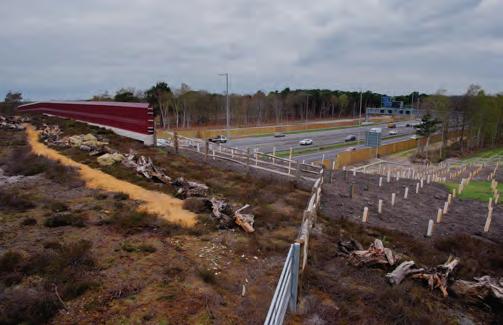
UK’S FIRST HEATHLAND GREEN BRIDGE OPENS OVER A3
Anew heathland green bridge has opened to connect Ockham and Wisley Commons on either side of the A3, marking a first for the UK.
The Cockcrow Bridge acts as a safe crossing over the busy carriageway for walkers, cyclists and horse riders in Surrey. Not only this, but the bridge has also been built for crossing wildlife such as deer, badgers, voles and other small animals.
Around 10,000m2 of heathland has been relocated from donor sites, with the
landscape allowed to slowly establish itself over the coming years.
Delivered by National Highways, the bridge is part of a green legacy pledge to leave as part of a project to upgrade junction 10 of the M25 and the A3 Wisley Interchange.
Typically planted with hedgerows, green bridges are seen across the UK and worldwide, but the Cockcrow puts lowland heathland at its centre to improve the wider environment and other species such as sand lizards.
Balfour Beatty and AtkinsRéalis supported National Highways with design, technical and engineering expertise to deliver the bridge.
ROUNDUP Industry Updates

Ministers will unveil plans to crack down on poor quality university courses and shift investment further towards youth apprenticeships, as part of a ‘new deal for young people’.
It comes following Alan Milburn’s report which outlined, around one-inseven young people who are currently not in employment, education or training have a university degree.
This underlines the need to reform the higher education system so it delivers
better outcomes for young people. It is also part of a wider drive to tackle youth unemployment and will drive forward the government’s ambition for two-thirds of young people to participate in higher-level learning –whether academic, technical or through apprenticeships.
The government is making a £3.3bn investment in apprenticeships this year with an ambition to see 50,000 more apprenticeship starts for young people by 2029.

FIRST-EVER LONDON HEAT PLAN PRIORITISES PUBLIC SPACE ADAPTATIONS
As temperatures reach new heights across the UK, the mayor of London, Sadiq Khan, has launched London’s first-ever heat plan, Heat Ready London.
Record-breaking temperatures in May 2026, and a red heat warning was issued by the Met Office in June 2026 when parts of the capital city experienced 36.4°C.
The new Heat Ready London vision focuses on priority areas where change is most needed, calling for the protection of those at highest risk of extreme heat, retrofitting of buildings, expanded access to cooling spaces and improved infrastructure resilience.
FUSION21 LAUNCHES UK-WIDE £85M GROUNDS MAINTENANCE FRAMEWORK

Social enterprise Fusion21 has appointed 22 suppliers to its £85m UKwide grounds maintenance framework. Out of those securing a place, Fusion21
SAIRA ALI BECOMES PRESIDENT OF LANDSCAPE INSTITUTE
Dr Saira Ali has officially stepped into the role of president of the Landscape Institute (LI).
An award-winning landscape architect with more than 20 years of experience, Ali succeeds Carolin Göhler, who has seen a significant programme of renewal and revitalisation across the LI.
First announced in June 2025, Ali was voted onto the board with 11 other members.
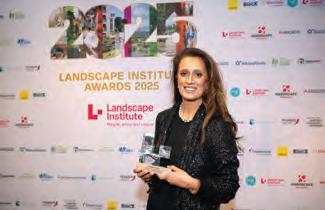
Her priority is to ensure that the institute members are “empowered, celebrated and heard, and that we step forward as mentors” to inspire the next generation.
Currently the head of Bradford Council’s landscape design and conservation team, Ali picked up two Pro Landscaper Sustainability & Biodiversity Award last year – Local Authority Award and Commercial Build Project of the Year (Large Scale) for Bradford’s Transforming Cities project.
reveals 72% are SMEs, providing public sector members with a fast route to market for grounds maintenance, landscaping and outdoor space services.
Services will span from routine and seasonal maintenance to hard and soft landscaping, tree works fencing, hedge and shrub maintenance.
Suppliers appointed to the framework includes John O’Conner Grounds Maintenance Ltd, Majestic Grounds Maintenance, Nurture Landscapes and Blakedown Landscapes.
LONDON COLLEGE OF GARDEN DESIGN HONOURS NIGEL DUNNETT WITH NEW BURSARY
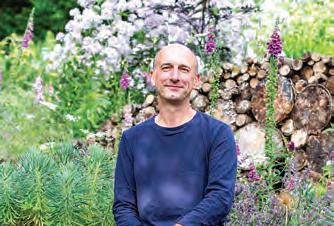
The London College of Garden Design (LCGD) has announced the launch of the Nigel Dunnett Planstmanship Bursary to support enrolling students.
The bursary, supporting students taking the Certificate in Plantsmanship course, will start in September 2026. It has been established to celebrate the outstanding contribution of Professor Nigel Dunnett, who passed away earlier this year.
Dunnett taught at the college from 2013 and played a significant role in inspiring a generation of garden designers and horticultural professionals through his expertise in planting design and ecological horticulture.
Led by Richard Wilford, the course will teach the essential skills, knowledge and techniques of plantsmanship.
Online exclusives
Head to prolandscapermagazine.com

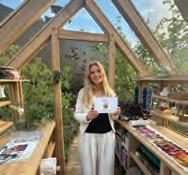
PHONE OFF, CREATIVITY ENGAGED: CELEBRATING GOLD WITH CHELSEA’S CHRISTINA COBB
Christina Cobb’s garden concept at RHS Chelsea Flower Show invites people to turn off technology and turn towards neglected hobbies.


SHAPING HORTICULTURE WITH LGBTQ+ ICONS
Several prominent members of the LGBTQ+ community, from horticulturists, garden designers, and writers, have fundamentally shaped the UK’s landscape and gardening traditions.

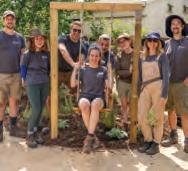
RHS DESIGN & BUILD WINNER ETCHES ACCESSIBILITY INTO NEW COMMUNITY GARDEN
Caroline Mantell has been awarded this year’s RHS Design and Build award for her Wild and Free Garden now stitched into the grounds at Lockwood Studios in Guildford.
©RHS / Robert Spanring
PRO LANDSCAPER ATTENDS FIRST-EVER DECKING DAY
Karl Harrison, recently voted as Pro Landscaper's Most Influential Decking Leader of the Year, hosted the first-ever Decking Day on Friday 3 July.
COMMUNITY Highlights
THE WINNER TAKES IT ALL AT THE SUMMER SPECTACULAR

The event, backed by Deckorators, brought together landscape professionals, garden designers, contractors, specifiers and serious decking installers. It explored new materials, product innovation, changing client expectations and the details that separate a successful deck from an expensive mistake.
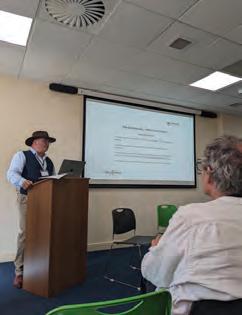
The main debate of the day, The Decking Argument, saw Harrison have an open conversation with Mark Gregory, managing director of Landform Consultants. They discussed why decking still divides opinion, whether designers are too cautious and what has to change.
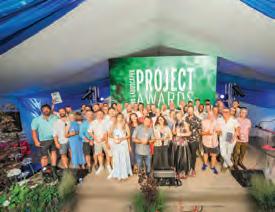
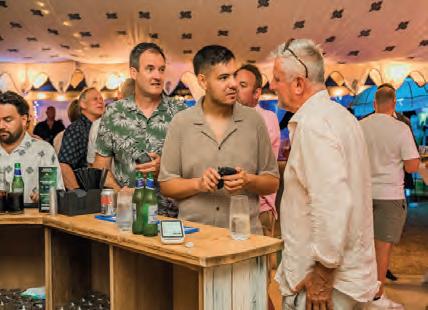
Pro Landscaper’s Summer Spectacular returned to the De Vere Horsley Estate in Surrey on 9 July, bringing together the landscaping and garden design community for an afternoon and evening of networking, celebration, and entertainment.
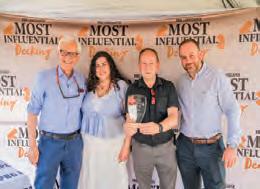
The event celebrated the Most Influential Decking Suppliers, following nominations and votes from our readers, with Karl Harrison awarded Most Influential Decking Leader of the Year.
Eighteen category winners were also announced at this year’s Pro Landscaper Project Awards ceremony, hosted by comedian Aurie Styla. The awards saw Harrington Porter Ltd crowned Supreme Winner.
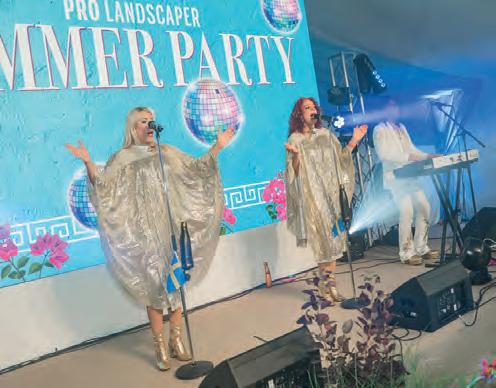
The night finished with the Summer Party with live entertainment from an ABBA tribute band.


LEARNING AT THE LANDSCAPING LEADERSHIP FORUM


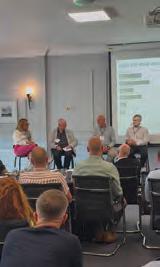
Pro Landscaper Premium Plus once again hosted its Landscaping Leadership Forum across two days at Old Thorns Hotel & Resort on 2-3 July 2026.
The annual event brings together businesses across the sector and the supply chain to create a networking and learning space for leaders and their teams.
The event featured conversations covering the skills shortage, managing disruption and volatility, urban greening factor, introducing HR, implementing technology, the UK construction landscape and good storytelling to seize control and reinforce value.
Have a look at our key takeaways:

Keep up to date with the @ProLandscaper team over on Instagram!


CELEBRATING THE PRO LANDSCAPER PROJECT AWARDS 2026
Celebrating the very best landscaping projects worth up to £250k, this year’s awards recognised outstanding work across 18 categories.

SWINGING TO SUCCESS AT PRO LANDSCAPER’S GOLF DAY
The Pro Landscaper Golf Challenge returned, pitting landscapers, garden designers and built environment professionals against one another for a seat in the top spot.

WANDERING THE FIRST-EVER RHS BADMINTON FLOWER SHOW 2026
Take a look at the award-winning gardens at the very first RHS Badminton Flower Show 2026 with the Pro Landscaper team.

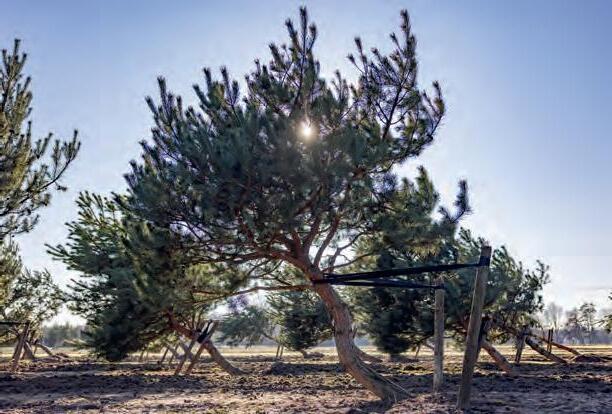
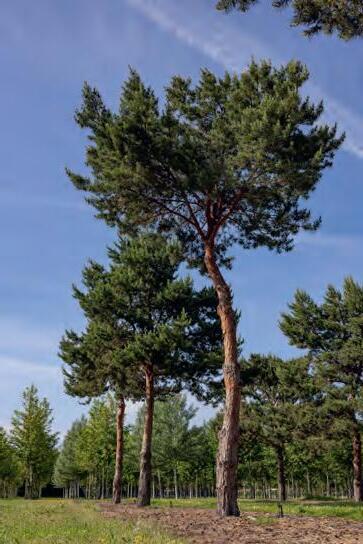
Scots pine a tree just for timber? Certainly not! The Pinus sylvestris is much more than a standard woodland tree; it is an exceptionally versatile design tree that instantly brings character to any project. This species excels in diversity and effortlessly adapts to your vision. Options range from sleek clear stems or fully feathered varieties to characterful leaning trunks, umbrella-shaped crowns, or artistic bonsai forms. Whether you choose high-canopied specimens or a low, wide-spreading structure, there is always a shape that perfectly complements your design. Which variant will enrich your next project? We currently have a highly varied, premium-quality stock available for you. Get in touch with us today and be inspired by the endless possibilities! Boom & Bonheur – because trees give life and bring happiness




That's a Wrap
RHS Badminton Flower Show
For the first time ever, the Royal Horticultural Society created a home at Badminton Estate for the all-new RHS Badminton Flower Show
Taking place from 8–12 July, RHS Badminton Flower Show took to the stage for the first time as the sun shone over the gardens and exhibition stands. The show celebrated show gardens, inventive planting schemes, traditional techniques and the annual RHS Young Designer competition.
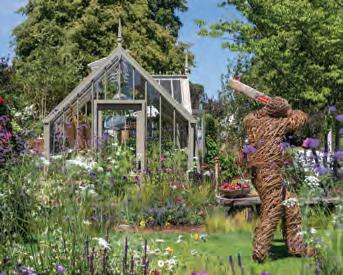
The Cricket Pavilion Garden, designed by Stephen Moody and built by Frogheath Landscapes, was crowned Best in Show. The garden created a traditional cricket pavilion façade that sits behind a beautifully tended lawn, surrounded by colourful planting.
Best Construction for a Show Garden was given to the Macmillan Cancer Support: The Nascent Shade Garden, designed by Elle Arnett in collaboration with Artisan Landscapes, who also built the garden. Oozing with collaboration, the garden takes visitors through a shaded sanctuary, inspired by the idea that society thrives when we plant trees for future generations, in reflection of gifts through wills.
Founder and managing director of Artisan Landscapes, Will Cooke, told Pro Landscaper everything had gone smoothly with the build. Arnett told Pro Landscaper, “Winning the Best Construction for a Show Garden award is a massive achievement that highlights the team's exceptional skill and attention to detail. Despite working through blistering heat, morale on-site was fantastic throughout
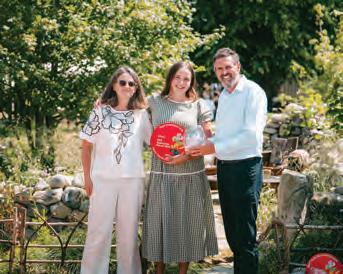
what was a tough, but highly enjoyable and rewarding build. The final result is a garden we are all incredibly proud of, reflecting our ambition and vision for the space.”
Celebrating a trio of RHS Young Designers
Sophie Sturgeon, a Pro Landscaper 30 Under 30: The Next Generation alumni, designed the A Space For Her garden which sought to create a safe space for women and young girls who may feel the pressure from the online world. She was awarded a silver-gilt medal.
Other designers within the category were Sophie Leo who was crowned RHS Young Designer of the Year, and Abigail Stoyle.
Leo's garden honoured her mum, who envisioned the garden shortly before she passed away, while Stoyle’s garden was inspired by a restaurant, Silo, where her brother was formerly the head chef, and reflects its same zero-waste ethos. Silo: All that comes in remains picked up the RHS Environmental Award.
The trio emphasised the bond they’ve created since working on the gardens at Badminton. Sturgeon said: “I couldn’t have done it without them,” which was reiterated by both Leo and Stoyle.
Next year, RHS Hampton Court Palace Garden Festival returns to the grounds, with dates yet to be confirmed.
Best in Show: The Cricket Pavilion Garden
Designer: Stephen Moody
Contractor: Frogheath Landscapes
Best Construction (Show Garden): Macmillan Cancer Support: The Nascent Shade Garden
Designers: Elle Arnett in collaboration with Artisan Landscapes
RHS Young Designer of the Year and Best Construction (Young Designer): Blue Diamond Garden Centres: Where Grief Grows Quiet
Designer: Sophie Leo Contractor: Ben Gifford
RHS Environmental Innovation Award: Silo: All that comes in remains Designer: Abigail Stoyle Contractor: Surrounding Counties
SUBHEADING
Boxout text
Best Artisan Garden: Ruskin Mill Trust –Artisan Woodland Craft Garden
Designer: Rachel Austin
Contractor: Daniel Hoyle – Greener Landscapes
Best Construction (Artisan Garden): The Split Hazel Bakery Garden
Designer: Henry T Pope Contractor: Arlington Landscapes
Best Pocket Planting: Where Nature Navigates
Designer: Alison Johnston
Contractor: Four Seasons West Yorkshire
Best Houseplant Terrarium: L’amour Vert
Created by: James Whiting, Plants by There

Sophie Leo. © RHS/Ian Christopher
The Cricket Pavilion Garden. © RHS/Neil Hepworth
RHS Sandringham Flower Show
Take a look back at the RHS Sandringham Flower Show 2026
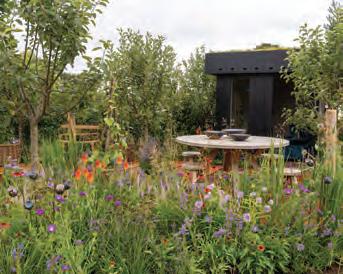
Another new event on the Royal Horticultural Society (RHS) 2026 calendar this year was RHS Sandringham Flower Show at the Royal Family’s Norfolk estate. Taking place on the grounds of Sandringham Estate from 22–26 July 2026, the show introduces the new Grow Forward category to showcase sustainable horticulture and give a platform for new and emerging talent.
The RNIB Talking Books Garden finishes in the top spot, taking home Best in Show and Best Construction for a Show Garden, on top of picking up a Gold medal. The garden, designed by Paul Hervey-Brookes and built by Gareth Wilson, of G K Wilson, takes inspiration from libraries, capturing the quiet magic that ignites imagination after reading a book. Also highly commended in the RHS Environmental Innovation Award category, the concrete-free garden features sinuous curved shingle walls with ladders reaching skywards, an interpretive nod to the libraries of old.
Also headlining the trio of top awards, The Rhythm of Rainwater, within the allnew Grow Forward category, picked up a Gold medal, Best Grow Forward Garden and Best Construction for a Grow Forward Garden. In exploration of water, the garden demonstrates how rainwater harvesting can be more than just functional. Inspired by the musicality of water, aluminium dipping tanks stood in the centre of the garden, two interlinked by a narrow rill, allowing water to move softly between them. Hydrophones within the tanks reveal the subtle sounds created beneath the surface. The garden was designed by Anthony Purdy and built by Conway Landscapes.
Sophie Godber brought Mindful Chef’s Gathering to Sandringham, built by High Peak Garden Construction with Michael Robinson, Nice Ponds and Peak Boxes. The garden picked up the RHS Environmental Innovation Award, thanks to its sustainable and naturalistic ethos. It demonstrates how gardens can be created with minimal intervention and unprocessed materials. The Gold medal-winning garden was also given the all-new King’s Biodiversity Award. The garden was selected by The King himself for championing wildlife and nature-friendly
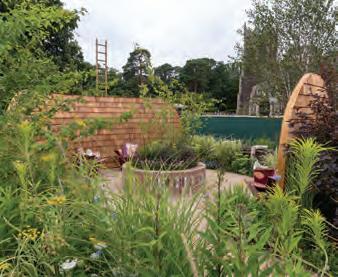
gardening, picked out of a shortlist of three gardens chosen by expert judges.
Sandringham marks the end of the RHS flower show season. Next year, we will see the return of RHS Flower Show Tatton Park from 21–25 July.
Best in Show and Best Construction (Show Garden): RNIB Talking Books Garden Designer: Paul Hervey-Brookes Contractor: Gareth Wilson
RHS Environmental Innovation Award and The King’s Biodiversity Award: Mindful Chef’s Gathering Designer: Sophie Godber Contractor: High Peak Garden Construction with Michael Robinson, Nice Ponds and Peak Boxes
Best Grow Forward Garden and Best Construction (Grow Forward Garden): The Rhythm of Rainwater Designer: Anthony Purdy Contractor: Conway Landscapes
Best Long Border: Tough as Old Boots Garden
6
5
3 MEDALS
11
Designer: Zac Willitts and James Horne Contractor: Cherry Tree Renovation Gold medalsSilver-gilt medals Silver medalsBronze medals
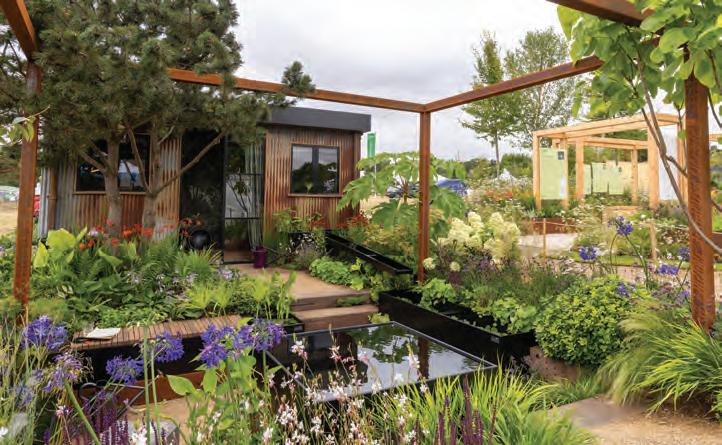
Mindful Chef's Gathering. © RHS/Neil Hepworth
RNIB Talking Books Garden. © RHS/Neil Hepworth
The Rhythm of Rainwater. © RHS/Neil Hepworth
PRO LANDSCAPER SUMMER SPECTACULAR!
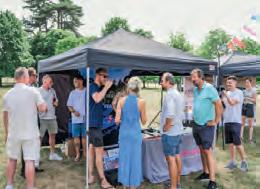
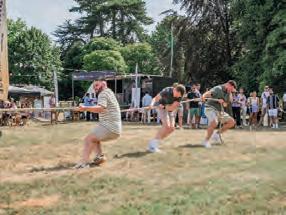
The day kicked off with the Summer Showcase which connected outdoor specialists with landscapers and garden designers over a BBQ and drinks. The Association of Professional Landscapers (APL) once again hosted its annual tug of war while Pro Landscaper presented the winners of its Most Influential Decking Suppliers following nominations and votes from our readers.







to £250k.
This year’s awards also introduced the new category of Project Awards PLUS Garden, which celebrates aspirational and visionary garden designs. Landform Consultants took home this award for its project Frensham Hillside, while Green Genie Landscapes were highly commended for their Portishead Coastal Glow project.
Harrington Porter was crowned the Supreme Winner of the Pro Landscaper Project Awards 2026 for its project Melody Road.
The evening wrapped up with the annual Summer Party, with this year's event featuring live entertainment from an ABBA tribute band BJÖRN This Way.
THANK YOU TO ALL OF THE EVENT PARTNERS






On 9 July 2026 at De Vere Horsley Estate in Surrey the industry gathered to network, recognise excellent landscaping projects, and celebrate
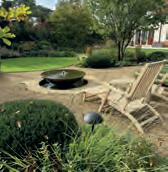
BUILD £100,000 - £250,000 THE CIRCLE GARDEN | PDGROUNDSCAPE LTD
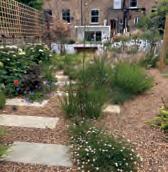
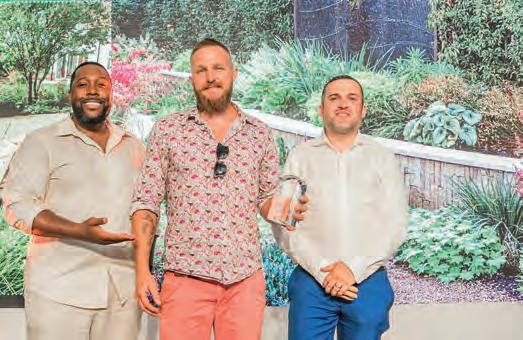
SUSTAINABLE GARDEN UNDER £50,000 GARDEN BEHIND THE GATE | NOREEN BARDSLEY GARDEN DESIGN
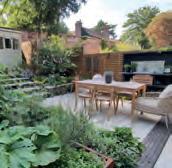
DESIGN UNDER £50,000 EPSOM TOWNHOUSE GARDEN | HELEN SAUNDERS GARDEN DESIGN
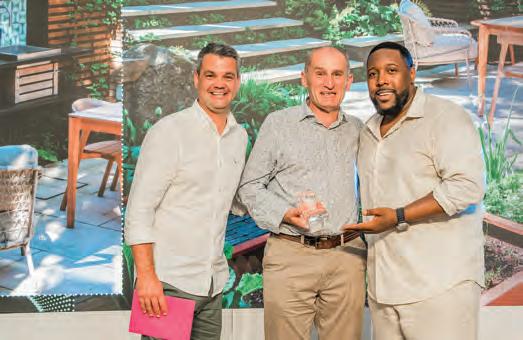
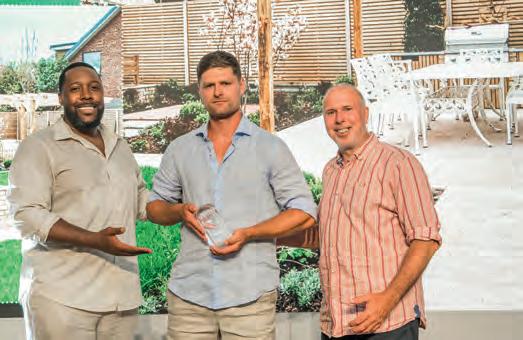
DAVID GRIFFITHS COLLECTING THE AWARD ON HELEN'S BEHALF
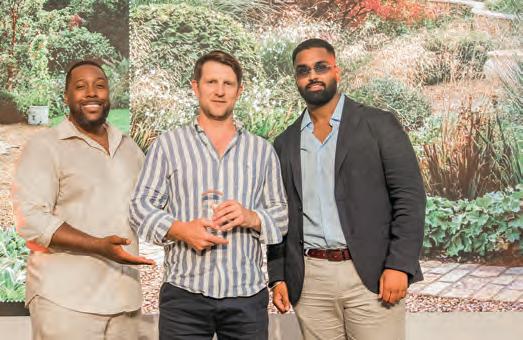
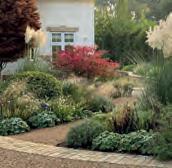
DESIGN £100,000 - £250,000 THE CIRCLE GARDEN | TOM HILL GARDEN DESIGN
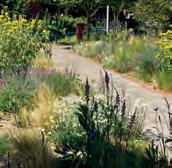
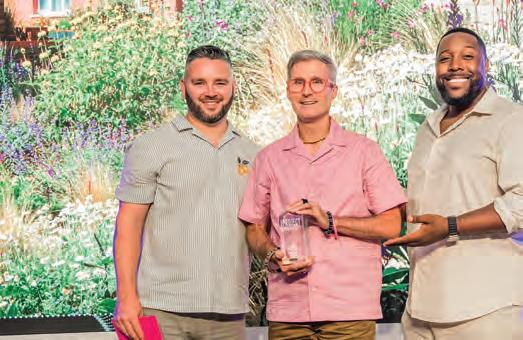
PLANTING DESIGN UNDER £25,000 DRUID STREET | CITYSCAPES
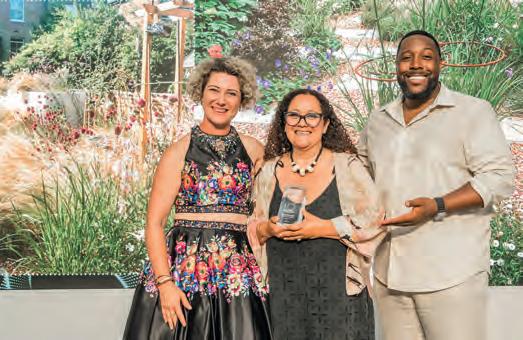
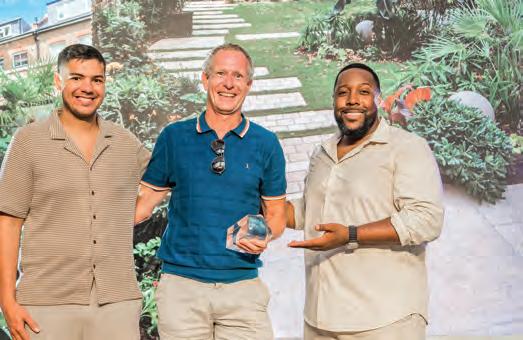
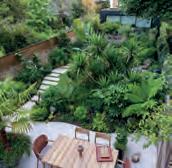
BUILD UNDER £50,000 NORTH LONDON EXOTIC GARDEN | AOBA LANDSCAPES
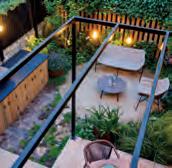
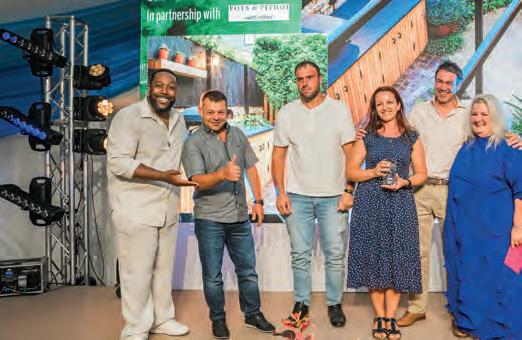
DESIGN AND BUILD UNDER £50,000 MALLINSON ROAD | TOM HOWARD GARDEN DESIGN & LANDSCAPING LTD
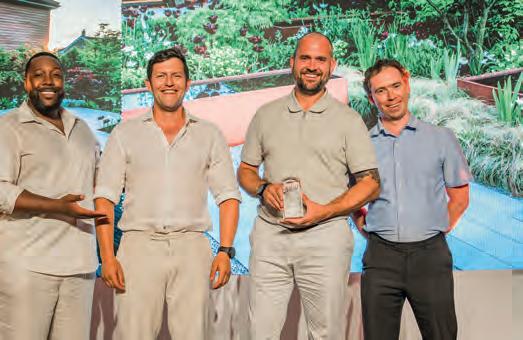
DESIGN £50,000 - £100,000 MEREHEATH LANE | ROBERT HUGHES STUDIO
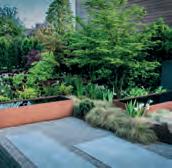
©Ellie Walpole
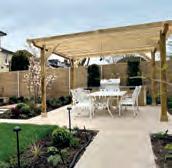
HARD LANDSCAPING £50,000 - £100,000 POTTERS BAR PROJECT | GRIFFIN LANDSCAPES
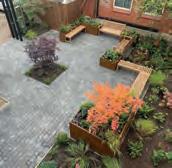
COMMUNITY GREEN SPACE UNDER £100,000 ROOM TO BREATHE GARDEN AT AMERSHAM HOSPITAL | JEN DONNELLY GARDEN DESIGN AND CATHERINE GIBBON GARDEN DESIGN
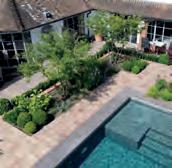
BUILD £50,000 - £100,000 GARDEN DESIGN & BUILD | SW LONDON LANDSCAPING
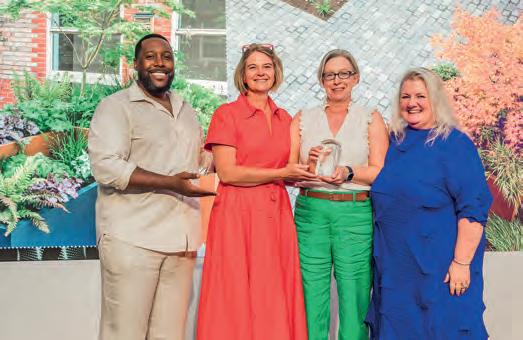
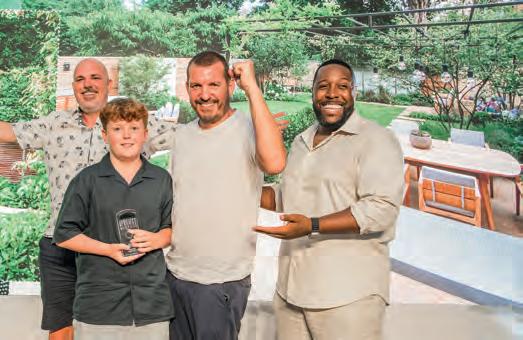
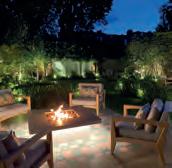
DESIGN AND BUILD £100,000 - £250,000 MELODY ROAD | HARRINGTON PORTER LTD
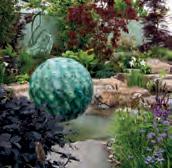
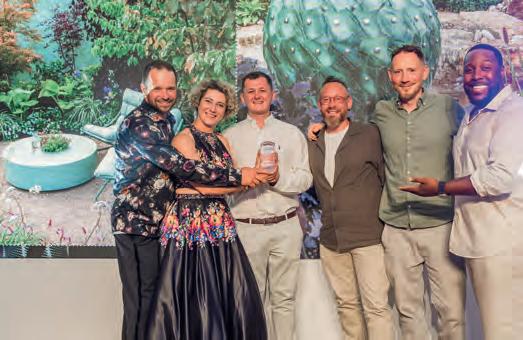
TEMPORARY INSTALLATION UNDER £50,000 QVC'S REFLECTIVE RETREAT GARDEN AT BBC GARDENERS' WORLD LIVE 2025 | KITTI KOVACS GARDEN DESIGN
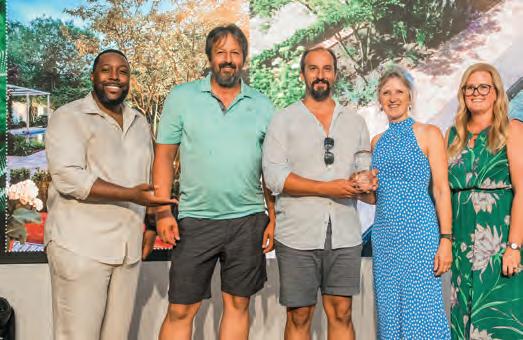
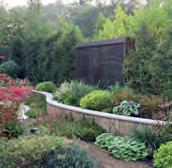
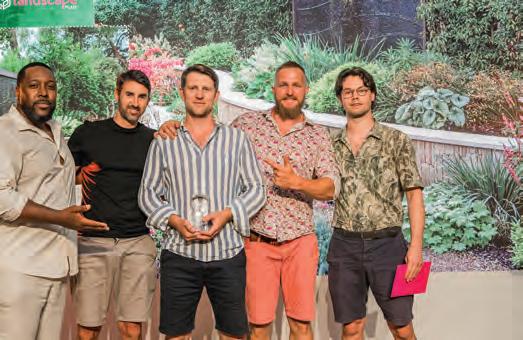
SPECIAL FEATURE UNDER £50,000 THE CIRCLE GARDEN WATER-WALL AND SERPENTINE WALLING | TOM HILL GARDEN DESIGN AND PDGROUNDSCAPE LTD
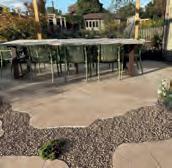
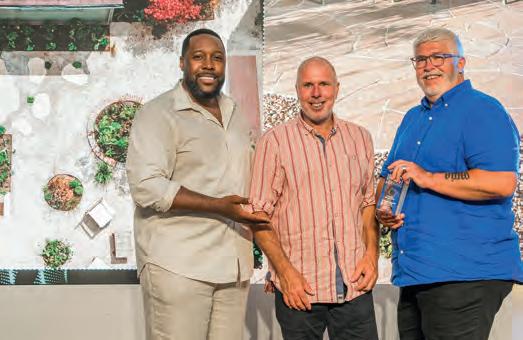
HARD LANDSCAPING UNDER £50,000 THE OLD RECTORY RECLAIMED COUNTRY GARDEN | WILLOW TREE LANDSCAPES
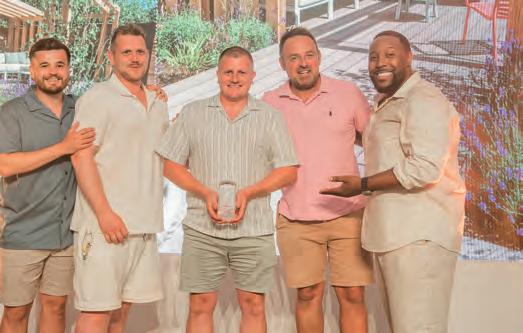
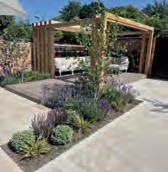
DESIGN AND BUILD £50,000 - £100,000 THE PERGOLA STAGE | BANCROFT LEE LANDSCAPES LTD


PHIL TREMAYNE COLLECTING THE AWARD ON WILLOW TREE LANDSCAPES' BEHALF

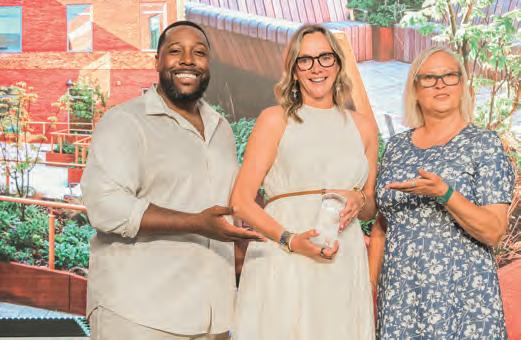
COMMUNITY
EDWARD STREET HOSPITAL | JACK MOODY LANDSCAPING AND CIVIL ENGINEERING LTD
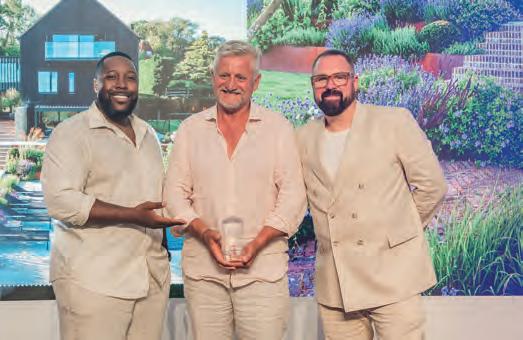
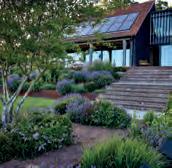
PROJECT AWARDS PLUS GARDEN FRENSHAM HILLSIDE | LANDFORM CONSULTANTS LTD
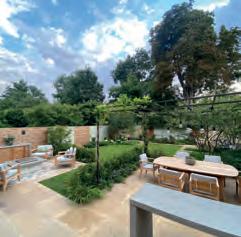
SUPREME WINNER 2026 MELODY ROAD | HARRINGTON PORTER LTD








Moana's
Magic
The magic of Moana has sailed into the lives of children at Little Havens hospice with a new accessible, sensory island garden
WORDS: HOLLY CHAPMAN
Little Havens is a hospice in Essex that provides specialist care and support for babies, children and young people living with complex and incurable conditions. “Every child who comes through our doors just wants to be like other children their age, even when their condition can make that really hard. They deserve moments of pure wonder,” explains chief executive Louise Bryan.
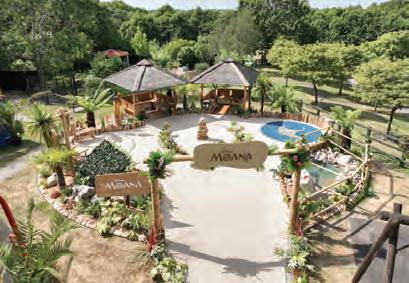
The outdoor space has been completely transformed into an accessible, sensory island garden inspired by Disney’s Moana. An animated, and recently live-action, film filled with discovery, family values and magic, Moana brings the children at Little Havens a sense of wonder right to their doorstep.
Created by viral landscaping duo Jake and Ethan Thorne of The Green Genie Brothers, in collaboration with The Walt Disney Company US & Ireland, the Pacific oasisinspired garden combines hard landscaping with a relaxed tropical atmosphere.
Now open to the children and families of Little Havens, the garden ensures that every child, no matter their needs, can enjoy it to the fullest. Jake Thorne, one half of the Bristol-based landscape gardening company, comments on the garden’s opening: “We've built some incredible spaces over the years, but nothing has meant more to us than this.
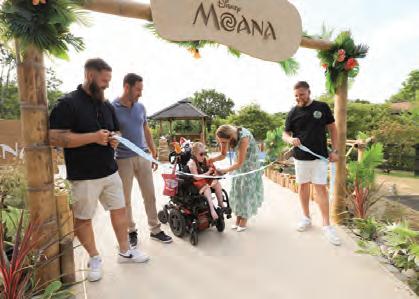
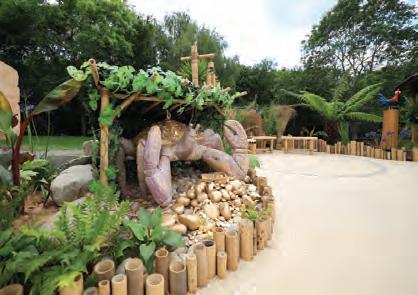
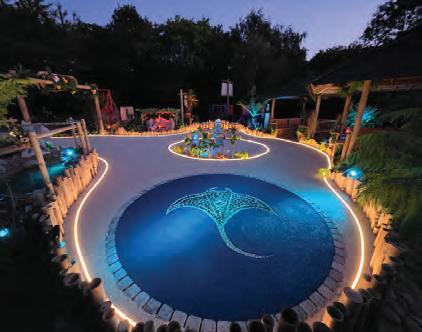
Knowing that every stone, every light and every sound in this garden is going to bring something special for families to enjoy, that's a legacy we're incredibly proud of.”
Knowing that every stone, every light and every sound in this garden is going to bring something special for families to enjoy, that's a legacy we're incredibly proud of
Central to the design, a striking manta ray formed of pebbles sits in the middle of the garden floor. A key motif throughout the Disney film, the manta ray represents guidance and wisdom as Moana sails through her journey. A spiritual reincarnation of her grandmother, the manta ray is used as a symbol of comfort and inspiration. From handcrafted fale (houses), bespoke installations of both Moana’s rooster friend Heihei and the treasureobsessed crab, Tamatoa, Moana’s legacy is swimming through the garden. On top of this, lush planting, natural stone features and a dynamic water feature bring movement and life into the space.
During the official opening, the team and Little Havens staff were joined by Millie, who
has been supported by the hospice since 2021. Diagnosed with Congenital Myopathy, which is a muscle disorder affecting the muscles inside and outside of her body, on her first birthday, Millie experienced the garden for the first time. “Millie is such a huge Disney fan, so watching her face when she saw the garden for the first time was pure joy,” explains her mum, Jay Farr, adding: “She loved driving round looking at the characters, and particularly liked Tamatoa and his treasure. The evening was wonderful, and you could tell that every single person involved truly cared about what they had created.”
The garden is the latest project as part of Disney’s collaboration with national charity supporting children’s hospices across the UK, Together for Short Lives. Disney is on a mission to create over one million magical moments of comfort and togetherness for children across EMEA by 2030.
In bringing the Moana garden to life, the breadth of team players involved in the project have given the children and young people at Little Havens an accessible, sensory garden overflowing with magic.

L35 years OF GROWTH GRADUAL
Celebrating its 35th anniversary this year, managing director James Scott explains why slow growth has made The Garden Company a robust business.
WORDS: RACHAEL FORSYTH
ast year, under the twinkling lights at Old Billingsgate, companies across the industry gathered for the Pro Landscaper Business Awards and The Garden Company left on a high. They were taking home their fourth Business Award having just scooped up the Garden Design Company Over £250,000 Turnover Award. Judges praised The Garden Company for
THE GARDEN COMPANY TIMELINE
1986
James Scott’s interest in pursuing a career in the landscaping industry was sparked by meeting a landscape design student and he subsequently enrolled at Merrist Wood College to complete a National Diploma in Landscape Construction.
1987
its dedication to training its staff, its positive environmental impact, financial stability and for how it demonstrates leadership within the industry.
Over 35 years, growth, in the words of managing director and principal designer James Scott, might have been “slow” but clearly, it’s also been steady. "We're quite pedestrian really, because we started
Scott spent his second college year on a work placement in New England.

1989
Following this achievement – and graduating as Best Design Student
– Scott secured a position as a designer at a design and build company in North London.
1989
Scott won a college competition to design a garden at RHS Chelsea Flower Show for the London Association of the Blind. This won a Silver-Gilt medal.
with two people and now we have 20 people,” says Scott. “That’s quite slow growth over that time period, but it’s worked really well. We’ve got a solid business.”
One thing’s for sure. Scott stresses he couldn’t have built this business alone. Not without his wife, Helen, who joined the company in 2015 with a focus on business development; not without the staff who keep the business moving; and not without the relationships he’s built within the industry. They’re all relationships built on trust and respect –but they haven’t come without learning curves.
“In the early days I found it quite difficult to find the right fit when it came to my first employees,” Scott explains. “The first people didn’t work and there was a point where I thought, I’m not sure I can do any of this.” The job wasn’t right for those employees either, Scott explains, and so he takes a more holistic approach to interviews now. "I don’t have a crystal ball to know how someone will work out – you never really know however well they interview," he says.
times they doubted themselves, but Scott trusted his instincts and encouraged and supported them from the sidelines. Now, they are comfortable running projects lasting a year. “It’s satisfying to see their progress and how they take on projects now. And I have an amazing team in the office too. I’m really lucky.
In the early days I found it quite difficult to find the right fit when it came to my first employees
“You have to have people who want to work with you. That means you’ve got to treat them with a lot of respect, trust them with responsibilities and to make decisions on your behalf. I’ve always tried to give people as much responsibility as possible. That’s good for them. It’s definitely good for me. You can’t build a long-term business without people you can trust.”
"But now I try and find out a bit more about them and what makes them tick, what they like to do, what they don’t like to do – not just can you do this element of the work – and then it’s about instinct. I have a few things I ask myself: am I happy to send this person around to my mum and dad's house to work? Do I think they’ll get on well with the team? Will they be able to engage with clients? I also like to find out their hobbies outside of work because having those is a good sign.
“I’m very grateful to myself now that I stuck with it because we did overcome those first challenges of employing staff. What I soon realised is you can’t do it without them. Now, we’ve got amazing employees, some of whom have been with us for decades.”
Another learning curve came when Scott found himself unable to be hands-on at every site. “When I started, I was probably visiting site too often – I'd be there every day. What I learned was I needed to allow the people running the gardens to self-direct. You’re there to provide support, but you need to let them get on with the day-today running.”
But trust and good team leaders are built. Scott identified members of his team who had good ethos and wanted to do well. Importantly, they also had respect from colleagues. They hadn’t necessarily built big, complex, or high-quality gardens, and at
The importance of this trust and respect extends to relationships with suppliers. Scott is a huge believer in these long-term relationships and has maintained them with suppliers such as London Stone, CED, Hydrologic and Rochford’s almost since the beginning. While it’s important for business owners to make sure they’re paying competitive market rates, Scott argues, “you have to value long-term relationships over short-term discounts. If you talk to a supplier about some sort of detailing, say, and you buy it for slightly less somewhere else, you're going to blow that trust. Building that trust, it's really important. You can't do it on your own if you want to build a business.”
1996
2008
As the company expanded, Scott increasingly delivered landscape projects designed by others and outsourced his own design enquiries to associate designers. He made the strategic decision to return the business to its core strength – leading and delivering design-led projects under The Garden Company brand and his own personal profile.
A shift in Scott’s role within the business In 2010 The Garden Company was so successful at building gardens for other designers that Scott found he wasn’t doing the design work he loved. Instead, he was managing the business. In fact, he was having to hire in other designers because he spent so much of his time running the company. “The business was successful, but I wasn’t doing the bits of it that I love,” expresses Scott. “I was a bit conflicted. I didn’t want to overbrand as a design business, we still built gardens too, and I was nervous about how other designer clients would feel about it. But I had this seminal moment where I decided I wanted to do more design work and we consciously said, if there is fallout from that, so be it.
"There were some who initially wondered about a conflict of interest, but we've actually found that many designers value working with a landscaping company led by a practising garden designer. We're proud to be trusted by highly-respected designers to build their schemes. Every collaboration also gives us fresh insights into different design solutions, continually broadening our thinking and helping us avoid becoming insular.
Navigating challenges
"At the same time, our own design work has grown significantly. Today, around 85% of what we build comes from our in-house designs. I've loved seeing The Garden Company develop into a genuinely design-led practice. I still enjoy building gardens for other designers, but there's something especially satisfying about seeing one of our own designs through from the first concept to completion."
Scott stresses that it’s important to remind yourself sometimes of what you want your business to be. “If you are confident you're doing the right thing, work really hard at it, be tenacious. There can be risks that you're working really hard at digging your own hole, so you've got to have checks and balances in place.
Any business that’s celebrating a milestone such as 35 years will have navigated its fair share of rocky waters. The Garden Company is no different. “I've been through several recessions and what I’ve done is manage in a slightly more defensive way," says Scott. "I've always been quite cautious, but when it's tougher, we batten down the hatches.”
Building that trust, it's really important. You can't do it on your own if you want to build a business
“It's about having good business practice, understanding your costs, and for me, it has been sticking at what I know. I know other companies have diversified into doing different things, and I'm certainly not saying there's anything wrong with that. But for me, it's been about sticking with the core side of what I believe is a great business, which is designing and building gardens.”
2009
Scott became a Registered Member of the SGD (now SGLD). The following year he joined the SGD Council and served for six years, including overseeing the awards scheme.

For Scott that means protecting the order book by using more in-house staff, rather than hiring in skills.
Scott also advises watching profit and loss much more than cash flow. “You make sure you’re protecting your margins,” he explains, “don't cut your prices, and make sure you’re working with a client who has a genuine desire to have a quality garden built – then you treat those clients like gold dust.
“We've always tried to pitch ourselves at the higher end of the market, working with discerning clients who are signed up to the design process and who are value-driven and not just price-driven. We’re not trying to jump into a much more competitive end of the market; we've always avoided that.”
2019 Winner of the SGLD Small Residential Garden Award.
2015
Scott completed the buyout of his business partner. Shortly afterwards, Scott’s wife Helen joined The Garden Company with a
2021
Scott joined the judging panel for the Pro Landscaper Project Awards scheme.
2022
Scott was named as one of the Most Influential People in Landscaping and Horticulture by Pro Landscaper magazine.
focus on business development.
Moving towards retirement
Having spent 35 years running his own business, working through its stresses and strains, Scott feels “incredibly blessed” that he ended up drifting into this industry at a young age. There will always be barriers when running a company, and Scott's next one is his retirement. It's not yet on the horizon for him, but he's wisely looking ahead early at who could be poised to take over his role in its entirety. "As Helen reminds me, I can't do this forever," Scott says, "At some point she'd like me to do a little bit less work and then eventually retire." Freeing up more time for their rock band, cooking, more travel and, of course, more involvement in the industry – because does anyone really retire from landscaping?
Scott also has his staff to think about. "I've got people who have worked in the business for a long time so one of my drivers is to make sure the business is secure for them," Scott explains. "I've got two incredible daughters – neither of who is planning to come into the business, so I'm looking at options. I'm 58 now so I've still got a chunk of time on my side. Maybe there is someone reading this who has ideas on how they would help take the business forward so I can slowly hand over."
We're genuinely blessed in our industry that we get to do something that can make a really positive impact on people’s lives
Ultimately, making sure The Garden Company is secure for the future means concentrating on what Scott set out to do 35 years ago – to build high-quality gardens for discerning clients with a structure where people who work in the business get satisfaction from that work. With this strategy, over those 35 years The Garden Company has seen staff come into the business and flourish. It’s taken home multiple BALI Awards, something Scott has always been “in awe of”. It's also won an SGLD Award and Homes and Gardens Design Awards. Scott himself was named one of Pro Landscaper's Most Influential People and is on the SGLD Council, recently becoming its awards head judge. He has also been selected by the National Trust as an approved garden designer for its properties.
Just as importantly, the business has built gardens which genuinely have a positive effect on people’s lives. “Winning awards is great, but it can be quite fleeting,” says Scott. “But creating a garden for someone that makes them happy every day – we're genuinely blessed in our industry that we get to do something that can make a really positive impact on people’s lives.”
thegardenco.co.uk
2022


2023
The
2024
2026
Scott became the SGLD’s head judge.
2025
NEW VENUE
FREE AND EASY PARKING
GREEN, SUSTAINABLE VENUE
BETTER NETWORKING SPACES
EASIER BUILD AND BREAKDOWN LOGISTICS
OUTDOOR AREAS FOR MACHINERY AND DEMOS MORE ROOM FOR BIGGER STANDS


Everyday inAssistant your Pocket An
In the first of a three-part series, Steven Higginbottom explores the benefits of interacting with AI
Ask any contractor in our sector what AI’s for and they might well think it’s a tool for tech firms or large corporates, helping people sat at desks to churn through complex projects.
In reality, the most powerful use of AI for folks in our industry is far more practical. It can help busy people get everyday work done faster, more professionally and with less stress. And, with a bit of help, it can be far simpler to get results from than you might imagine.
Most contractors aren’t short of knowledge. They know their sites, their teams, their clients, their machines and their problems.
exhausting working day. Sound familiar?
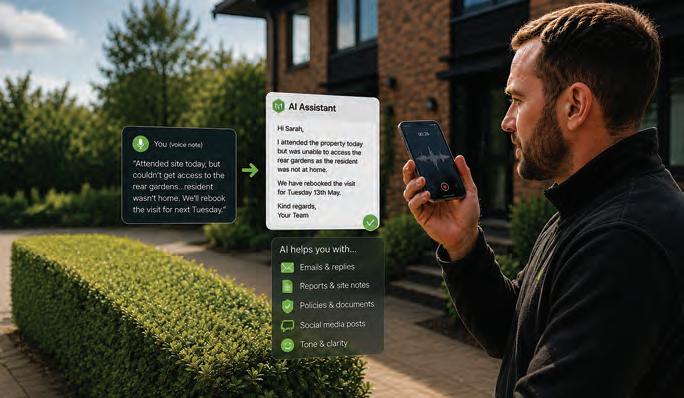
One of the biggest AI light-bulb moments for me was realising just how good the tools can be when you talk to them.
Instead of sitting at a blank screen trying to write that perfect email, a contract manager or business owner can just chat with an AI tool and explain the situation in plain English – as they go from one job to the next:
Instead
But what we all tend to be is short of time: time for emails, for that (occasional!) complaint that needs answering calmly, for the site notes that need to become a client update, for the report, policy or LinkedIn post at the end of an already
“Attended site today, but couldn’t get access to the rear gardens…resident wasn’t home. We’ll rebook the visit for next Tuesday.” From everything you know about my business and around my writing style, elaborate on that message and turn it into an email I can follow-up with later.”
AI turns that into something a customer, a housing officer, or a commercial client will read cleanly, with the tone softened and the wording tidied.
That matters because many people in operational businesses are way better at
doing the work than writing about the work. Some may lack confidence with written communication. Others may struggle with spelling, dyslexia, or simply the pressure of trying to reply quickly while juggling 10 other things.
A frustrated email rushed out at 6:30pm on a Friday stands more chance of escalating situations than a calmer version would. We’ve all been there. AI can take the heat out of a message: turning it into something where the customer hears the point, but we’re all still friends on Monday morning.
For contractors, this isn’t the road to becoming less human – far from it. It allows us to stay focused on the parts of the job where we’re most valuable and sink less time into the parts that zap our time.
Clarity on what you’re asking, and what good looks like, is key. The contractors who get most from it are the ones who explain the context, name the audience, set the tone, and read the output before it goes.
It’s not magic. It won’t automate your life. But, used well, AI can be a very quick, very capable, assistant: helping contractors save time, improve communication and take some of the daily admin pressure off already busy teams.

Scan the QR code to find out more about AI for Contractors, a practical course designed to help you use AI confidently. Three live one-hour sessions. Weekly from 3 September.

linkedin.com/in/dlodoctor
AI has been used to create this image.
STEVEN HIGGINBOTTOM
Steven Higginbottom, founder of Morada, built one of the UK’s leading grounds maintenance businesses. Today he helps contractors grow smarter.

PROFESSIONAL CHOICE. PROVEN RESULTS.
EASYJoint PRO
A tough 2-part epoxy jointing compound, EASYJoint PRO delivers a premium, hard set finish you can rely on - project after project.



Part







MINDSETLong Distance The
Phil Jones explains why great leaders think like runners
Ask any seasoned business owner what survival really feels like, and they’ll describe something remarkably similar to long‑distance running. Not the sprint off the start line, not the adrenaline of the first mile, but the long, steady, disciplined grind that separates those who simply start from those who finish well.
I’m fresh back from taking part in a multi island running event on the Isles of Scilly in which I pondered the similarities between running and business management.
In both business and running, success rarely comes from raw talent or early enthusiasm. It comes from consistency, clarity, and the ability to keep moving when the conditions turn against you. And in today’s volatile environment, the parallels between the two have never been more relevant.
New runners often make the same mistake new business owners do: they go out too fast. They burn energy on the wrong things, chase every opportunity, and confuse movement with progress. It feels productive – until it isn’t.
In running, poor pacing leads to early fatigue. In business, poor pacing leads to burnout, chaos, and fragile operations. The companies that survive long term are the ones that learn to pace themselves. They protect planning time. They build systems early. They don’t sprint after every job.
you didn’t want to. Business is no different. The SMEs that survive aren’t the ones with the most passion – they’re the ones with the most discipline. They review pricing regularly. They track cashflow weekly. They say no to work that doesn’t fit. They build processes instead of relying on memory. Discipline creates stability. Stability creates resilience. And resilience is what keeps a business alive when the market turns.
Every runner has trained in the rain, the cold, the wind, or on tired legs. Not because they enjoy it, but because they know race day won’t care about their preferences. Business survival demands the same mindset. You can build resilience in advance – with cash buffers, diversified clients, documented systems, and a clear narrative that attracts the right work.
In running, distractions slow you down. In business, they can destroy you
You don’t complete a marathon because you felt inspired every morning. You complete it because you trained on the days
In running, distractions slow you down. In business, they can destroy you. The most successful owner operators are ruthless about focus. They know their core service. They know their ideal client. They know what strengthens the business and what weakens it. They don’t chase shiny opportunities. They don’t dilute their offer.
They don’t let noise dictate their direction. Runners don’t train for the medal. They train for the capability. Likewise, strong businesses don’t survive because they hope to. They survive because they are built to. A business that thrives for a decade is the result of thousands of small, intentional decisions: the early mornings, the tough calls, the disciplined habits, the refusal to drift.
Just like running, the question isn’t whether you can start. It’s whether you can keep going when it gets hard. And that comes down to one thing: are you building your business like a sprint – or like a race you fully intend to finish?

Phil Jones is the founder of Apple Tree Bay Consultancy Ltd and brings long-standing director-level experience from the landscaping, grounds management and facilities services sectors. He now works with landscape businesses to strengthen strategic planning, refine operational systems, and support effective implementation.
Email: phil@appletreebay.co.uk
Instagram: apple_treebay linkedin.com/in/phil-jones-4197b5b5
PHIL JONES
INCLUSION Matters
In
his first article, Gamiel Yafai explains why equity, diversity and inclusion matters to horticulture and landscaping
Three years ago, I was introduced to this industry by Adrian Wickham and the team at Access All Areas, an industry-led Equality, Diversity and Inclusion (EDI) Charter Group for the UK horticulture sector. I didn't come from a horticultural background. I came in as an outsider, curious about a sector I knew very little about. What I found surprised me: an industry full of warmth, craft and genuine passion for the outdoors. But one that, like many others, has not always made space for everyone to feel they belong.
That's why I want to use this column to talk about something that might not, at first glance, seem obviously connected to soil, planting schemes or hard landscaping: equity, diversity and inclusion.
strengthening the quality of what gets delivered. One respondent put it simply: growing the profession's skills and letting underrepresented groups flourish makes the whole industry richer. Given the sector's welldocumented skills shortage, that's not a soft argument. It's a practical one.
But the same sessions surfaced something harder to hear. Asked whether they'd ever felt excluded, people described being judged on seniority or how they spoke, feeling they didn't "look right" for a senior role, or self-editing around neurodivergence after a manager's throwaway comment.
EDI isn't a separate conversation from the future of this industry. It is the conversation about the future of this industry
Diversity Marketplace and the Access All Areas Team ran a series of "Creating a Culture of Inclusion" webinars for staff and management, using anonymous live polling so people could speak freely. The responses from people already working in this industry say more than any statistic I could quote.
Asked why EDI matters to their organisation, people talked about business sense as often as fairness: filling skills gaps, improving retention,
Asked how much of their authentic self they bring to work, a striking number said only part of it, held back by fear of judgement, imposter syndrome, or simply not feeling they fit the industry's norms. These aren't abstract concerns. They're describing real friction between people and the culture they work in, right now, in this sector.
What struck me most was how practical people's own answers were when asked what would actually help. Not grand initiatives, but small, repeatable things: widening recruitment beyond the usual channels, showcasing role models so people "can be what they can see," being honest about unconscious bias, and simply asking
colleagues how to better support them. As one participant put it, allyship isn't about big gestures; it's about using whatever influence you have, consistently, and not staying quiet when something's wrong.
That thread of turning good intentions into everyday habits is exactly why Access All Areas, as the sector's EDI Charter Group, has since gone on to develop a formal EDI Charter, giving organisations a shared, practical framework to commit to rather than leaving inclusion to individual goodwill.
For now, the headline is this: EDI in horticulture and landscaping isn't a theoretical debate happening somewhere else. It's already live in how your colleagues experience your workplace today, whether or not anyone's asked them about it.
Over the coming articles, I'll dig into what inclusive leadership looks like in practice on site, in the office and in client relationships, and share practical tools any landscaping business, whatever its size, can start using straight away.
EDI isn't a separate conversation from the future of this industry. It is the conversation about the future of this industry.

GAMIEL YAFAI
Gamiel Yafai is CEO and founder of Diversity Marketplace, helping organisations along their EDI journey. He was recently awarded an MBE for services to diversity and inclusion.
Welcome to this regular column, where I share practical, iPadbased digital workflows, tools, and drawing techniques to help make your landscaping and design work easier, faster, and more efficient – whether you're out on site or back at the desk.
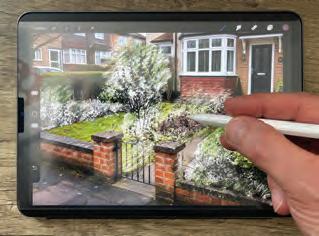
SKETCHING DIRECTLY ONTO A PHOTOGRAPH
ON THE IPAD PROVIDES A QUICK AND INTUITIVE WAY TO EXPLORE IDEAS, TEST POSSIBILITIES AND COMMUNICATE CONCEPTS TO OTHERS
One of the greatest advantages of working with an iPad is the ability to begin developing design ideas while still on site. This means not producing finished designs, but capturing information, exploring possibilities and laying the foundations for the creative work that follows.
For many years, site visits meant taking photographs, measurements and written notes before returning to the office to begin the design process. Today, the iPad allows that initial creative thinking to start immediately, while observations are fresh and the site is right in front of you.
Like most designers, I take plenty of photographs during a site visit. The difference is that, rather than saving them for later reference, I can start working with those images straight away, sketching over them, testing ideas and developing concepts while still in the garden. This process often highlights additional details worth capturing before leaving.
Using Morpholio Trace, photographs are imported directly into the software and used as the basis for early concept work. Existing
DRAWING Digital
BOARD
John Wood explains why working with an iPad can help create a more informed design process
features can be highlighted, problem areas identified and potential solutions explored through quick sketches and annotations. Working digitally also means building up a reusable library of resources over time, including plant photographs, paving materials, garden structures and other design elements that can be dragged directly onto site photographs to create simple
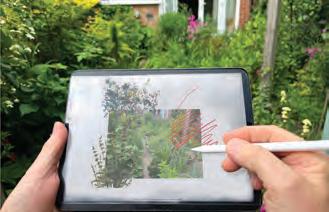
BY WORKING DIRECTLY ON SITE, PHOTOGRAPHS CAN BE IMPORTED INTO THE IPAD AND USED IMMEDIATELY FOR SKETCHING AND PHOTOMONTAGE
photomontages. A border can be quickly populated with ornamental grasses, shrubs or perennials, while reference images of materials or structures help establish an early design direction. These studies are not finished visualisations, but they are a powerful tool for exploring options and, where appropriate, communicating ideas to clients.
Today, the iPad allows that initial creative thinking to start immediately, while observations are fresh and the site is right in front of you
Photomontages are particularly valuable when discussing planting styles. Rather than talking in abstract terms, ideas can be placed directly into the context of the
client's own garden, whether exploring a naturalistic perennial scheme or a more structured approach. This gives clients a clearer sense of the proposed direction and creates a strong starting point for discussion, helping designer and client align on a shared vision from the outset.
A further advantage of this workflow is that everything remains in one place. Site photographs, sketches, annotations, reference images and concept ideas are all stored on the same device, creating a seamless transition from site analysis to design development.
Most importantly, this approach allows meaningful creative work to happen while fully immersed in the site itself. Observations that might otherwise be lost on the journey back to the office can be recorded, tested and developed on the spot. By the time I return to the studio, many of the initial design decisions are already taking shape.
The result is not necessarily a faster design process, but often a more informed one. Capturing ideas, testing concepts and organising information on site creates a stronger foundation for everything that follows.

JOHN WOOD
John Wood runs Create Visual, a CPD training platform for garden and landscape professionals specialising in iPad-based digital workflows and presentation graphics. Scan the QR code to view a free lesson related to this topic. create-visual.co.uk
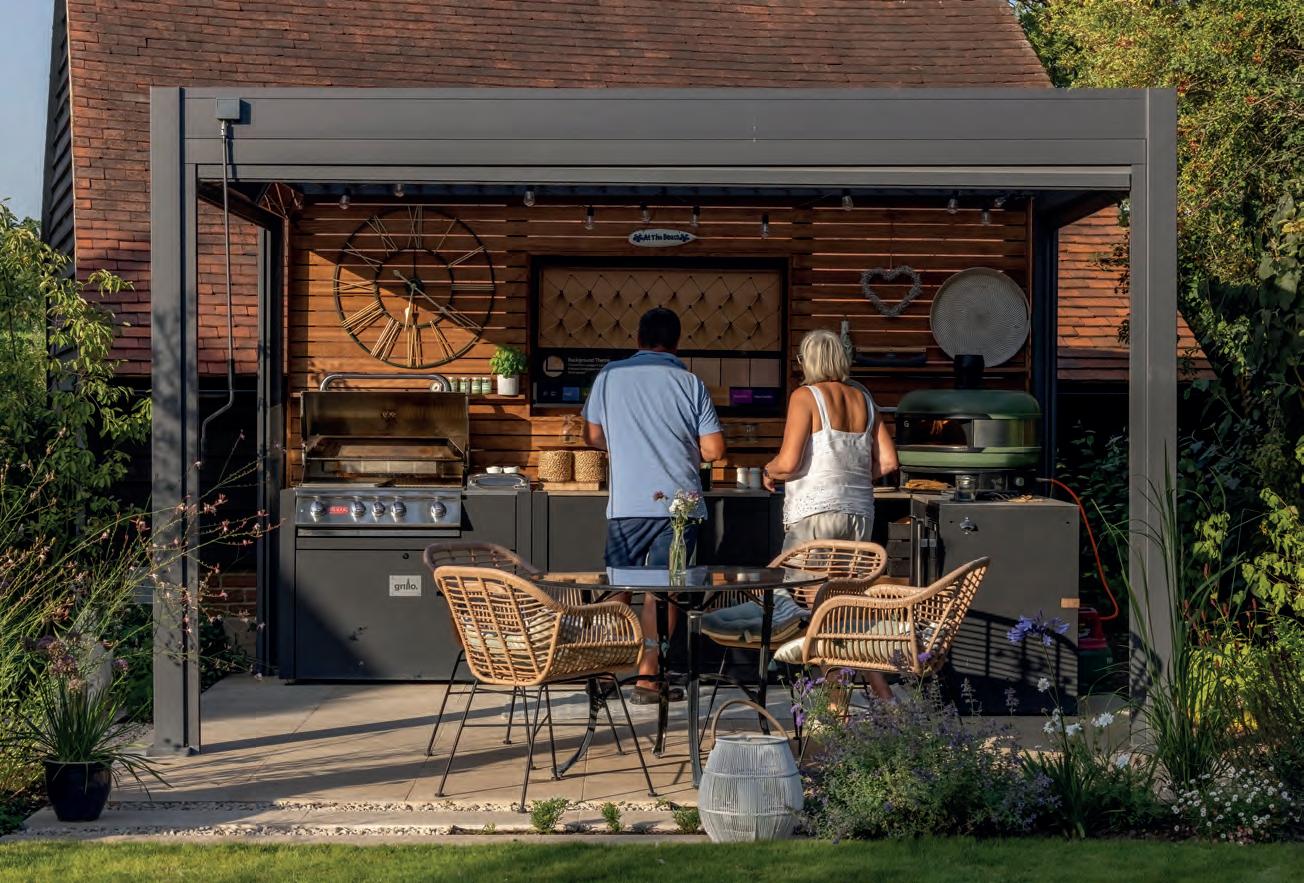
OAST HOUSE, SMOKE HOUSE
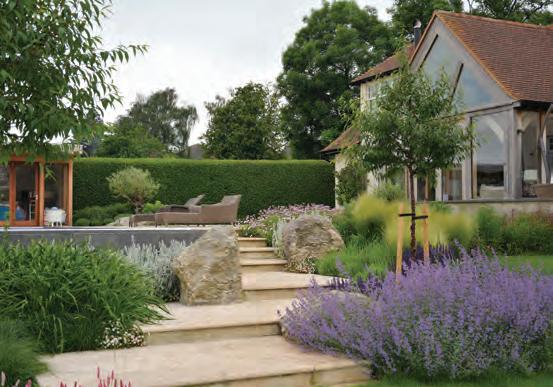
This family garden surrounds a beautiful oast house in Staplehurst, Kent, and has been masterfully reworked by Trend Garden Design. Clean lines and structured terraces are softened by ornamental grasses and perennials, and Mediterranean herbs complement the sociable outdoor setting. This is a garden designed around outdoor living. The kitchen forms the heart of the space, supporting everything from informal family meals to larger summer gatherings.
Garden by Trend Garden Design; photos by Sarah Medway Photography
Taking the pain out of outdoor kitchen design and build.
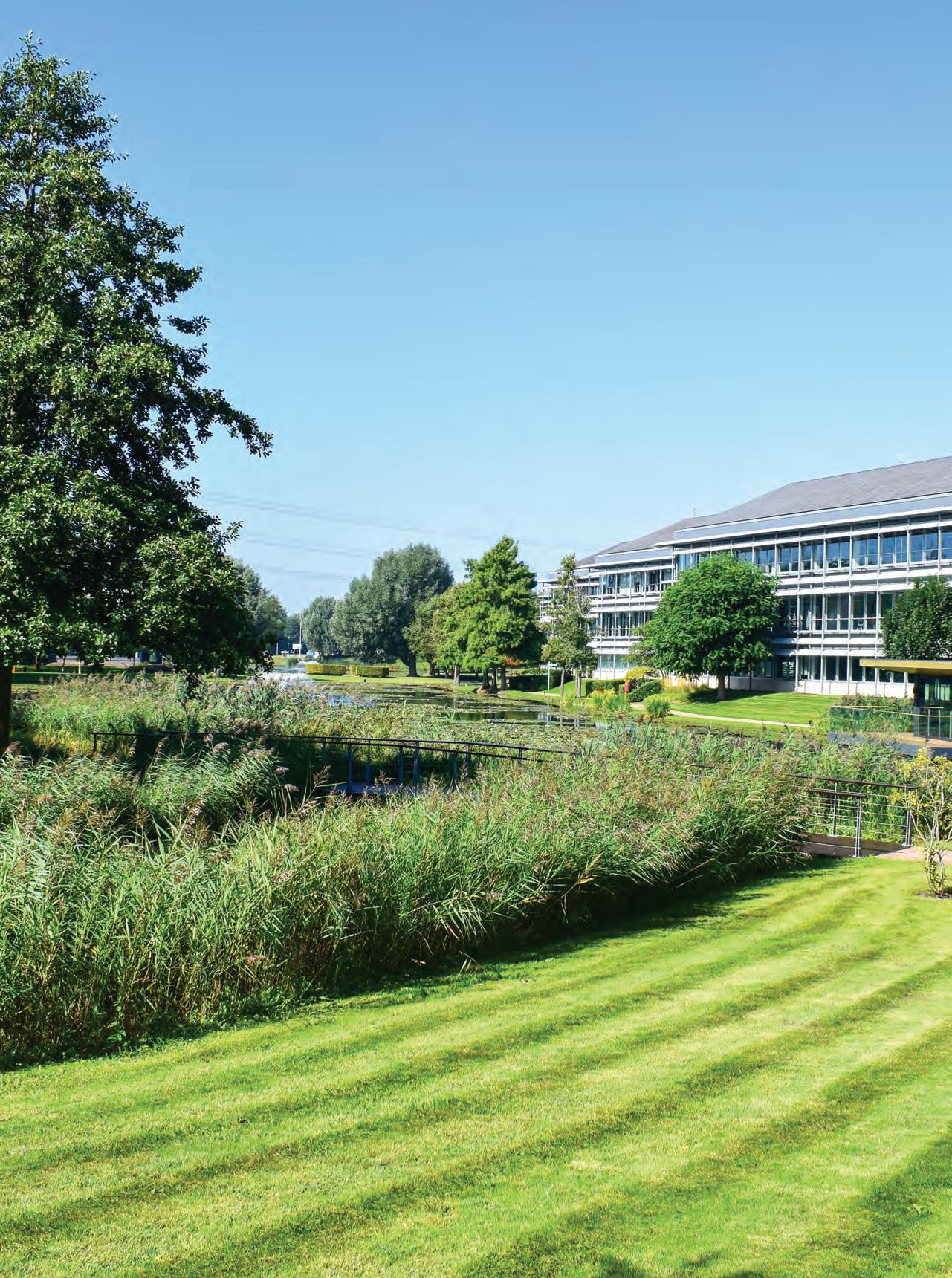
“I CAME FROM THE TOOLS, AND MOST OF MY SENIOR MANAGEMENT HAS WORKED THEIR WAY UP, SO WE UNDERSTAND THE
PRESSURES AND CHALLENGES
ON THE GROUND”
WORDS: RACHAEL FORSYTH
CEO of IPM Facilities, Mark Noakes is navigating the business towards net zero ambitions, across challenging waters, and always with the wellbeing of his team at the forefront
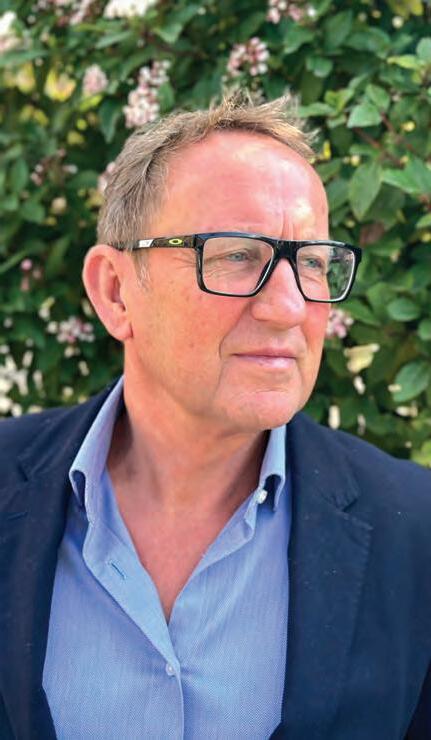
Mark Noakes is no stranger to the dynamics within a business. He started his career landscaping at the age of 15 and has subsequently progressed his career through a number of different businesses. From small landscaping companies with a handful of team members to large multi-disciplinary organisations working in multiple countries. So, when it came to starting up his own landscaping business, and in turn taking over IPM Facilities, he knew which parts of those businesses he wanted to replicate and which he didn't.
"I know some people say differently but sometimes you have to wait before you start your own business," expresses Noakes. "I saw what was good and what was bad working within bigger and smaller companies. I saw what I thought they did right and what I thought they did wrong. I probably wouldn't have had that insight if I started my own business at 21. Sometimes I look back and think I wish I did it earlier, but in retrospect it was exactly the right time for me."
The corporate model works in some ways. Noakes wanted that corporate identity, even when his business was much smaller. But too often he saw budgets that became unachievable. "I saw people not getting bonuses for four or five years because those targets were too difficult to achieve," explains Noakes. "A business is fast moving – you set your sail to head that course today and halfway through the day you're blown off course and end up somewhere else. Any business is the same. Yes, you can set budgets, but you have to be realistic about what happens in between.
"I have a lot of empathy for our people outside and what they do," Noakes says. "I try to get out on site as much as possible to see our teams, connect with them and understand their challenges and needs. It's too easy to forget how hard landscaping and maintenance is. I've got a big garden, and I do everything myself because it
reminds me how hard the work is. For example, if I'm cutting a hedge which is 100m long I'm reminded it will take me longer than I perceive in my mind – those jobs always do."
This understanding means that Noakes will rarely deny someone a bonus. "Only once in 16 years have I said we couldn't give a bonus. Even if we don't quite achieve them most people will get at least 80% of their bonus," Noakes explains. "For me, it's not that they're not trying it's just we haven't had the luck, or something has happened outside of our control. I came from the tools, and most of my senior management has worked their way up, so we understand the pressures and challenges on the ground."
Recognising and rewarding staff
The ethos running through IPM is that no one is more important than the other person –after all, without everyone doing their job the other person wouldn't be able to. It's crucial to Noakes that his team know that and he works hard to make sure they are recognised and rewarded for the job that they do. The business is a real living wage employer. Colleagues get wellness days, flexible working patterns and vouchers marking milestones at the business. And every one of IPM's 170 employees gets a birthday card.
"We can afford better salaries and bonuses – and we have bonuses for all staff," adds Noakes. "And while money is a motivator, more than anything people appreciate being told they've done a good job, so that's important too."
Noakes takes huge pride in how many long-service team members IPM has and as
the business grows, he wants to continue to give more to its people. "It's always been my aim to have the best working environment we can for people – we might not quite be able to offer what the likes of Apple and Google can – but it's always been my ambition to give more and more to the people who work here."
The importance of service
Noakes was running his own business over 16 years ago when he met Gary Kirkham.
It's always been my aim to have the best working environment we can for people
Kirkham had set up IPM with his wife, and joining forces with Noakes meant the business could expand with its current
clients to offer landscaping. "We got on like a house on fire," says Noakes, "Eventually, when he was ready to retire, I bought the company from him. I bolted my company on which gave us a natural second branch for the business. We stuck with the name IPM Facilities because it had a stronger name within the commercial sector."
IPM Facilities has been built, and subsequently grown, on service. "I hate poor service," expresses Noakes. "What's the difference between one of our competitors and us? We cut the grass the same way, we cut hedges the same way, we sweep kerb edges the same way, we spread salt the same way. So, what's your unique selling point? Well, ours is service. We're agile, we keep our clients updated and if we make a mistake –because things happen – then we hold our hands up and we put it right."
The proof of this is in the pudding. Not only has this approach grown IPM from a less than £1m business to a £16m turnover business in 16 years, but they've also done it without a sales team. "All of our business has come from recommendations," explains Noakes. "We work with a lot of managing agents and quite often they move jobs. I see that as our pollinators. Because if one of their colleagues is having trouble with their landscape contractor the managing agent will recommend us having worked with us somewhere else – and knowing we've
never let them down before. That's how our business has grown."
Net zero ambitions
A big part of IPM's growth now involves monitoring and reducing the business' carbon. In 2019, the UK Government set targets that the UK would achieve net zero by 2050. Spurred on by this, IPM undertook a full carbon assessment of the business.
"We could see that it was all going to be necessary going forward, so we set a plan," explains Noakes. "Back in 2021 we were a £7m turnover business and while we've increased our turnover significantly since then our carbon production has flatlined. That's really positive because it means while we've grown, our carbon has stayed the same." IPM has been carbon neutral since 2021 and plans to maintain that status while working towards its net zero targets. Those targets have been approved by the Science Based Targets initiative as aligned with the 1.5°C pathway.
It's not always easy to maintain carbon neutrality, though. While the business' smaller machinery is mostly electric – and it's now trialling Husqvarna's electric equipment for its bigger machinery – and the management car fleet is all electric, Noakes says it's difficult to find decent big fleet electric vehicles.
"The hardest thing that we're finding, and I think it's the car manufacturing industry that's letting us down – and I'd say the government to a degree – is the work fleet," he explains. "We use them where we have static gardeners because they're not travelling long distances, but our mobile teams might be doing 200 miles a day. They don't have time to charge. The batteries in these bigger vehicles are so heavy that you give up weight capacity to put anything into the vehicle.
"The industry I think has been pretty poor to get those types of electric vehicles ready for us. We'd love for them to be, because one of our biggest areas to cut down on to become more carbon neutral is dirty fuel."
The call to become carbon neutral is coming from IPM's clients too. "Our clients have made us a better company," says Noakes. "They've wanted us to reach certain heights that they need because they like working with us. If we need to get another certificate to make us better, then that's what we'll do. And hopefully that's what our supply chain will do too."
IPM's next area of investigation will be its supply chain. The team need to be sure of
where those materials are coming from, how sustainable they are and, ideally, that these suppliers are carbon neutral. It's not an easy task but IPM has a pretty rigid system of procurement – they won't just work with any supplier – and Noakes says they're keen to help their suppliers become carbon neutral.
Climate change and sustainability
The way IPM works has also had to adapt over the years as the effects of climate change are felt more severely every year. "Climate change is obviously a huge part of what we're doing, and there are so many challenges."
Climate change is obviously a huge part of what we're doing, and there are so many challenges
teams can't water. Though they could try and get an exemption, IPM advises against it to avoid building resentment with residents who themselves can't use a hosepipe. Ultimately, Noakes argues for the same thing many in the industry are calling for: better rainwater harvesting solutions.
Visiting one of IPM's sites recently, Noakes was greeted by a crisp-looking site. But the
The changing world of gardening also sees IPM adopting more sustainable techniques and, in particular, more sustainable planting schemes to cope with our changing climate. IPM is also rolling out sustainability training to its staff, led by commercial manager Dave Taylor who has a keen interest in beekeeping and sustainability. "We are changing and
influencing our clients to understand why we're doing things in a more sustainable way," says Noakes. "There's a huge change on it – when you look at planting schemes from 10 years ago to what we're designing now, they're a million miles away."
Overcoming the skills shortage
This in-house training is another way IPM is reaching the heights needed by its clients. But it's also helping the business with a challenge that doesn't seem to discriminate based on location or industry: the skills shortage. IPM recently became a Lantra training provider so it can upskill staff itself through Lantra courses. "We didn't used to do lots of training courses when we were a small business but now it's important that we do," Noakes explains, "There is definitely a skills shortage, and I don't know how we get over that. But we're trying to get over the skills gap with our in-house training.
"Gardening is hard work. It's not easy. We do get young people who want to be in our gardening teams and after a week say they can't do it anymore. It's too hard. At the entry level wages aren't good either and on their social media are 16-year-olds claiming to be earning millions.
"But I do think it's being seen more as a career which is fantastic. Back in the day if you were a gardener it was seen as a job you did because you couldn't get anything better," says Noakes. "In the last 15 years it's been a bit sexier to be in horticulture – it's being seen more as a profession and a skill."
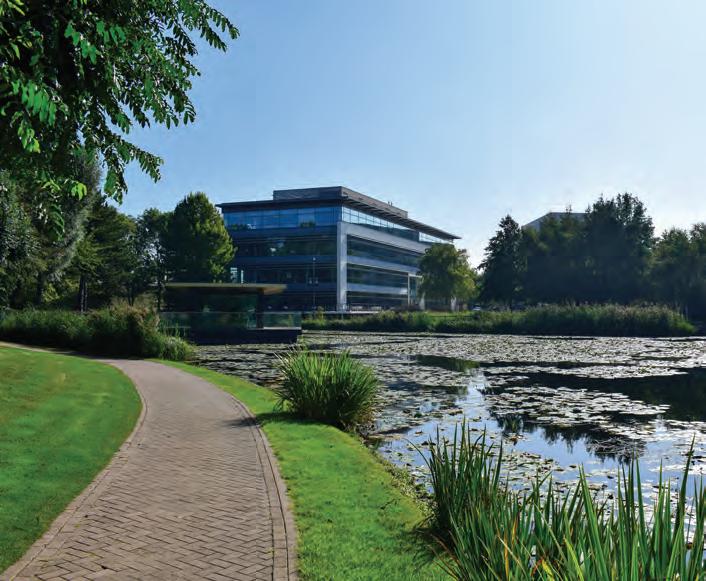
be that I can go onto my phone and ask, "how many square metres of lawn are there on this property?" We do it with gritting. It doesn't mean we don't send our teams out, but they would have much more information about the site before they arrive."
Opportunities within the sector
Gardening is hard work. It's not easy. We do get young people who want to be in our gardening teams and after a week say they can't do it anymore
Noakes also sees technology as both an opportunity for young people and as a reason encouraging young people into the industry is essential. "We need younger people to come in because old people like me don't always understand tech as well as they do. We're so behind in this industry with technology, and we always have been," argues Noakes.
"We're really trying to push forward with technology because there are so many opportunities. I'm not talking about robots digging holes or cutting hedges. I'm talking about the technology of reporting, surveying, updating information in real time. It should
The skills shortage is one challenge, but the economic pressures facing businesses appear to keep mounting. Noakes himself says he's seen IPM's margins reduce over the last six years by 2%. While there's not much to be done, Noakes says it's important to set yourself apart. For IPM this means service, but it also means the skills it can offer. Alongside its knowledge on sustainability and its journey to net zero, IPM has its own in-house landscape architect, Joshua Noakes – who happens to be Noakes' son. They can now offer his knowledge to clients without charging extra.
IPM also offers its clients workshops throughout the year – ranging from wreath making to 'meet the bees' – and are well attended by the business park residents. It's another thing IPM can offer, Noakes explains,
that its competitors might not. It also benefits the business parks in the same way, with the workshops something unique its residents can take part in for free – with the business park covering the cost.
Noakes also sees a big opportunity when it comes to the compliance IPM's clients must meet. "There's a big opportunity within that BNG compliance and ESG side," Noakes says. "If companies aren't getting on board with that, they're going to be left behind –particularly in the commercial sector. It's very important for the clients that we work for. They need to be seen to be green – and we make them green."
Looking to the future
When Noakes first started his business and first bought IPM, he says he saw it as a child, then as it grew, it moved into adolescence with all the growing pains that come with that. Now, it's a young adult – it's wiser and a bit more worldly. As it grows into a middle-aged adult, Noakes wants to make sure the business retains its identity and that the people that work there continue to benefit from it. "My ambition is never to be the biggest, but it is to be the best," he says. He won't be selling, but he's casting his eyes toward retirement with a senior management team he knows he can rely on – and a boat that's itching to be taken out on the water.
THE UK’S GO-TO ULTRA-SAFE
CONCRETE REMOVER
Mixers, trowels, wheelbarrows, slabs, mortar staining - concrete build-up and mishaps are just part of the job. EradiCRETE® breaks it down without harmful acid, fumes, or rusting your kit.
Pre-wet the surface. Spray it on. Leave to dwell for 15–30 minutes. Rinse it off. Repeat if needed. Done!







In conversation with...
THE CHRISTMAS DECORATORS NICK BOLTON
Nick Bolton explains why decorating homes, shops and car dealerships might be the answer to landscaping’s quieter winter period

What made you want to set up a business installing Christmas decorations?
I had worked hard with multiple businesses 20 years ago and I’d sold those companies. I wanted my next business to be one that allowed me the flexibility of going on long holidays, going on a school run both morning and evening, without being tied down to a nine-to-five. I explored in the US what those business models were and was fascinated by the Christmas business.
I thought it was amazing how much revenue could be made in such a short period of time – don't get me wrong, I knew I’d have to work hard for that, and we do, there’s no denying it – it’s not an easy ride, but I don’t mind that for eight weeks when it gives me so much freedom for the rest of the year.
How does The Christmas Decorators fit in with the landscaping sector?
There’s a brand that’s similar to us in the US which has about 400 people in its franchise network. 95% of them are lawn care or landscape professionals – because they’ve all got the same problem. Three months of hiatus during the winter months. When people have worked really hard through the year, they’re probably quite appreciative for a bit of time off, but three months is often too long.
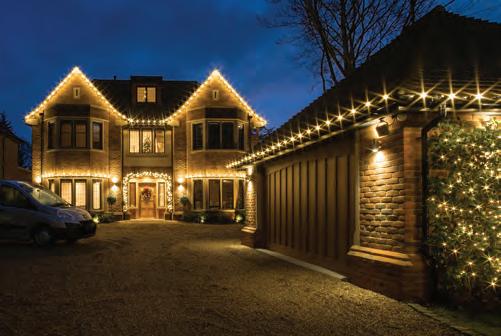
How do you prepare a franchisee for the work?
That’s the whole point in being part of a franchise network. You’re not in business on your own
Training is compulsory. No one is allowed to operate until they’ve been through our fully comprehensive four-day training sessions. They are a mixture of classroom-based and hands-on training. We teach how to write proposals, how to price up jobs, and health and safety. Then for the hands-on training, we will go out and decorate a building, even if it’s in the middle of August, and then take it down.
If a franchisee wins a job that might be a bit overwhelming, or too big for them, we will definitely do it as a joint venture with them or with a neighbouring franchisee. No one needs to be scared of any opportunity being too big for them. That’s the whole point in being part of a franchise network. You’re not in business on your own.
Landscape professionals have the staff, they’ve got the infrastructure, they have a vehicle and they’ve got a client base. By undertaking Christmas decoration work, they could make what would otherwise be the down season a highly profitable season.
We have just launched in the US, and one of our first franchisees has a lawn care business in Wisconsin. All he’s done is gone to his existing client base and told them that he also does Christmas now. Of those 200 clients, 80 have signed up for Christmas.
We’ve just taken on five new franchisees this year who are in the business of laying resin driveways. Again, in the months of November, December and January it’s too cold for resin to set. They’ve got employees, vehicles, and a warehouse, and they’ve got a desire to make profit, so they’ve pivoted.
What made you want to move forward with a franchise model?
Going back 18 years now, we struggled, being based in Liverpool, to cover the whole of the UK. My team and I would be in Edinburgh one day, London the next, Sheffield the day after, and Manchester the day after that. It was killing us. But enquiries from our website were coming in so thick and fast. Between September and December, we have over 12,000 enquiries – to just keep up with them is ridiculous. We weren’t sure how to grow the business, especially being restricted by eight weeks.
We were faced with the choice between regional offices that we manage ourselves or franchising. I didn’t have a clue, but I’ve learnt that a franchise is just a business model you duplicate. It’s taken us a few
years to get the hang of it but now we have 40 franchisees, with room for more.
What’s your current role in the business?
My role right now is heavily involved in international expansion. We launched in the US last year and it takes up a lot of my time – as the day ends in the office here in the UK, because of the time difference, people are just waking up on the West Coast of America.
I’ve also been really involved in the opening of the UK's biggest Christmas showroom, which is in Birmingham. We’re currently putting together the final touches which can be used by our franchisees as a tool to bring their customers to. It’s also our training facility and where we have discovery days for interested partners.
What have been some of the most successful marketing techniques you’ve used to grow the business?
One thing I’ve found is the old school methods of marketing work just as well now as they did 20 years ago. You can’t beat walking into a business, such as a hotel, and talking directly with them in person. It’s always a soft sell, giving them a brochure and asking for a name you can then email in a few days' time – if they haven’t contacted us already. That is how we grew from a £37,500 business to a £3.8m business. Yes, there’s Google advertising, our website, email marketing, business networking clubs and all those other things, but nothing beats that old school method.
We also have a door hanger flyer that we distribute in the wealthier neighbourhoods. Once we’ve done an installation on one house in a street, we also put up a sign outside that says,“Another beautiful home decorated by The Christmas Decorators”. 80% of clients are happy for us to do that and the other 20% typically call us and ask us to put one up after so many knocks on their doors!
What are some of your favourite projects you’ve worked on?
My favourite one in the in the last 12 months was working for the St Regis Hotel because they had the budget to be able to do everything without compromise. We were able to do the absolute best of our capabilities for that client without being restricted to a budget. This hotel was celebrating 25 years last Christmas, and it was the first year that we decorated it. For some of the staff that were there from the day it opened 25 years ago, to tell me it's the best that the hotel has ever looked was just a huge compliment. That just made it all so worthwhile.

We do the biggest Christmas tree in London, which is on Bishop's Gate, and that got the accolade when we first did it two years ago. We work with lots of lovely clients and they’re a mishmash of business owners, sports stars... I don’t follow football which is probably just as well because you can get starstruck sometimes. They are a small proportion of our overall client base, but we work for celebrities such as Jonathan Ross, Jason Manford, we used to work for Sharon and Ozzy Osbourne. In the US, we work for Mariah Carey, Steven Spielberg and Goldie Hawn and Kurt Russell.
Our product looks amazing and our standards are high – but we can replicate that and teach it to anybody. Anybody can bake a cake as long as they know the recipe!

How important is sustainability to the company?
We are a net zero company. We buy carbon credits every year and dedicate them towards wind farms and tree planting. We are the only Christmas company in the UK that can give our customers a certificate that says their installation is net zero. That’s also important to our customers.
We are the only Christmas company that’s bared our soul on Trustpilot. Most people wouldn’t dare do it, but we did. We’ve got a five-star rating on there.
What do Christmas lights do for attracting customers back to the high street?
Almost critical. The majority of the UK’s highstreets businesses’ revenues are made during the Christmas period. The customer is choosing where they want to spend and where they want to go shopping. It creates a feel-good atmosphere to go somewhere that is beautifully lit and decorated when there are options. We work with car dealerships that say people have come in because they've seen the front of the building looks amazing. We've even had retail parks tell us that they've seen footfall increase on the years that they've engaged us to do something big for them.
For more information on The Christmas Decorators, please visit: thechristmasdecorators.co.uk/landscapers


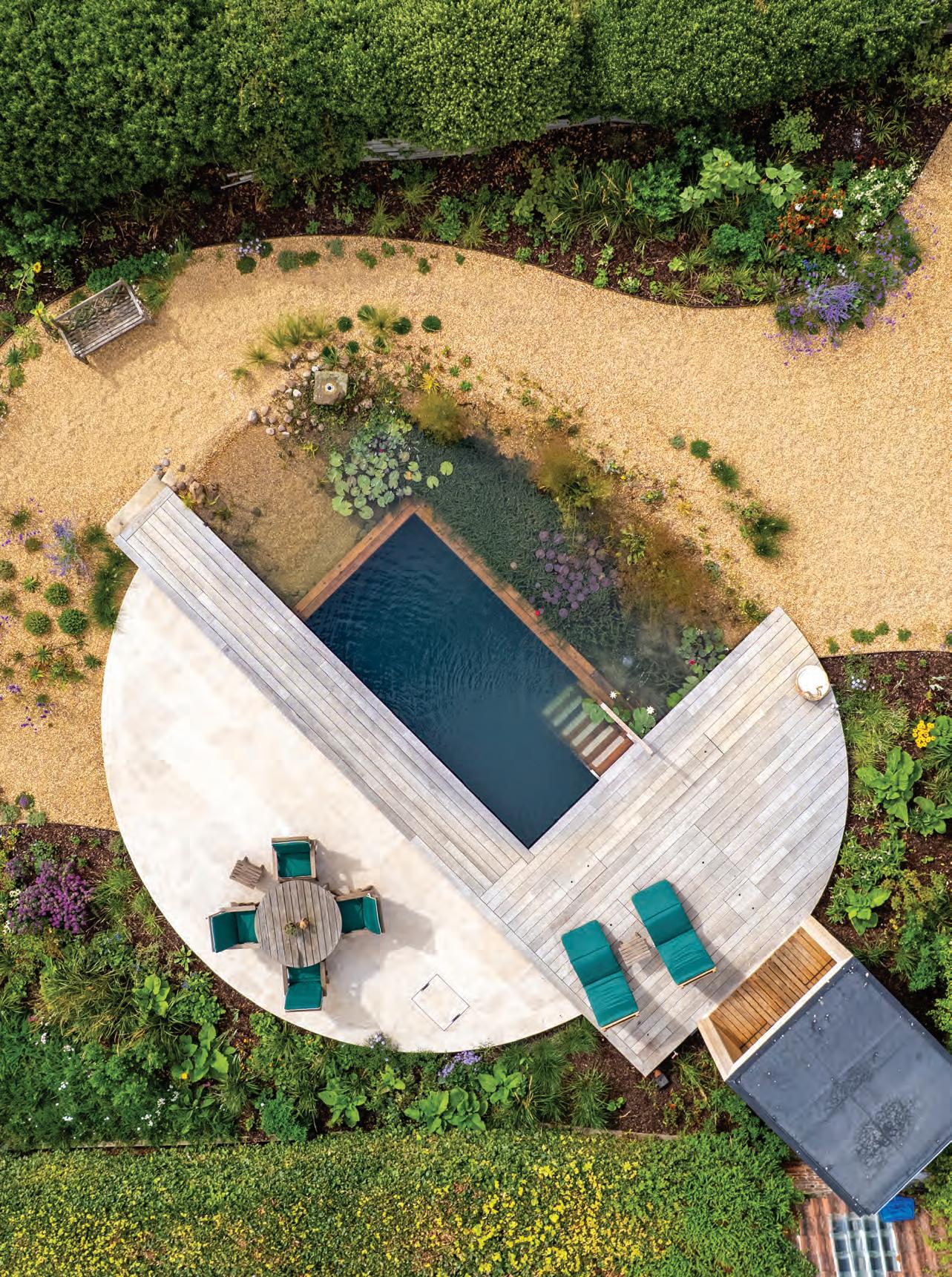
NARROW ESCAPE: WELLNESS AND WILDLIFE GARDEN ELLICAR
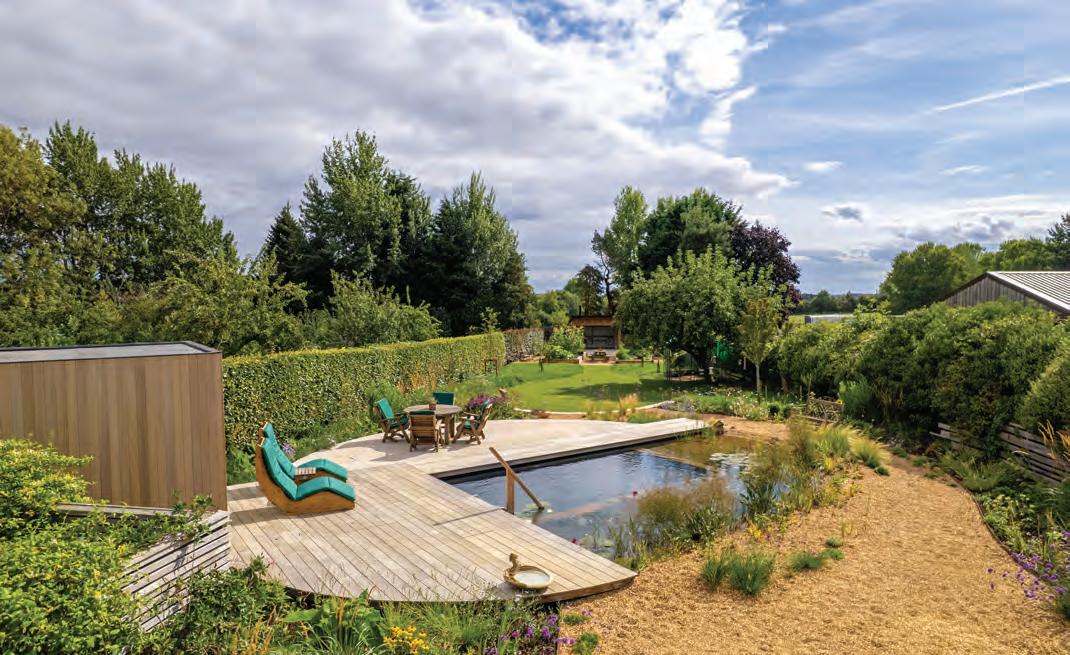
Looking towards retirement, this couple wanted to transform their long, narrow garden in North Yorkshire so they could enjoy their space year-round, including the worst of the Yorkshire winter. The wife had a love for wild swimming and growing vegetables, while the husband had a passion for cooking and al fresco dining, so the two met in this naturalistic feeling garden. It was also important there was space for their cocker spaniel dog, Minnie.
To accommodate the wife’s love for wild swimming, Ellicar designed a bespoke natural plunge pool as a focal point with a vista from the house. The pool has a relatively small 5m x 2.5m swim zone while a sun deck of Brimstone Ash covers the pool’s biological Biotop filters and leads to a sauna – perfect for enjoying the water in winter. A curving regeneration zone with aquatic plants is part of the pool’s hydrobotanical filtration.
Stepping out of the house, a gravel garden wraps around the pool, leading through a sensory path fringed with aromatics and grasses which connects to the pool and deck. Leading from the pool down, the narrow garden opens into an outdoor cooking retreat for the husband.
Soft landscaping
Adjacent to the deck is a semi-circular terrace designed for dining and relaxing by the water. Stepping down two steps with curved bullnose sawn copings leads to the oval lawn which flows down to the lower food growing garden. Two naturalistic borders with wildlife-friendly planting, designed to look attractive all year, help disguise the level changes across the narrow width of the garden.
Journeying down the garden, the planting morphs into Pictorial Meadow’s perennial flower meadow 'Wee Bee' – which was literally buzzing with pollinators in the first few weeks after laying. Further down the lawn is flanked either side with a tiny orchard, and here the meadow transitions into long grass and naturalised bulbs underneath the fruit trees. Ellicar used organic, flowing shapes to make the space feel more expansive and inviting, softening the linear nature of the plot.
Stepping off the lawn into the vegetable garden, four UK green oak raised beds and a soft fruit bed with gravel pathways lead onto a curved sawn sandstone patio which opens up from the bespoke outdoor garden kitchen.
Planting was key to the success of this garden. Ellicar layered perennial meadow
turf, mixed borders, gravel planting, and raised edible beds to create a diverse and biodiverse space with year-round interest. Decking and natural sandstone paving help delineate the different zones while keeping the palette cohesive and naturalistic.
Challenges encountered
Ellicar encountered significant challenges on site. Access was narrow and restricted, and ground conditions proved especially difficult during one of the wettest winters in recent years – ground works and pool construction started November 2024, pool installation and landscaping were completed by March 2025, with soft landscaping completed by May 2025. Groundworks had to be carefully staged and required continuous dewatering to keep the site operable. The clay soil meant Ellicar could not have soakaway drainage system for the pool overflow and roof water.
A toilet was desired at the new garden kitchen which was located 80m away from the house. Together with structural engineers, Ellicar designed an attenuation tank which is lined and buried below the vegetable garden. Surface water and pool overflow is piped down to the attenuation tank along with roof water and paving
Photos taken three months after completion
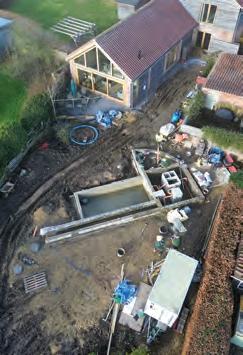
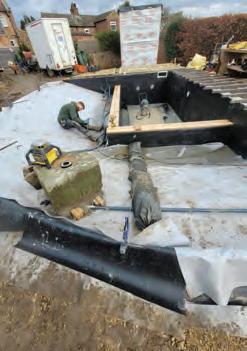
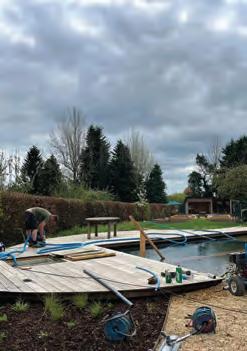
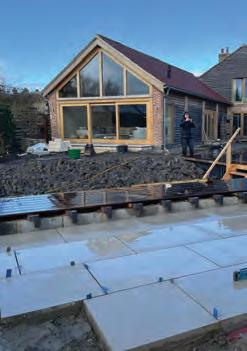
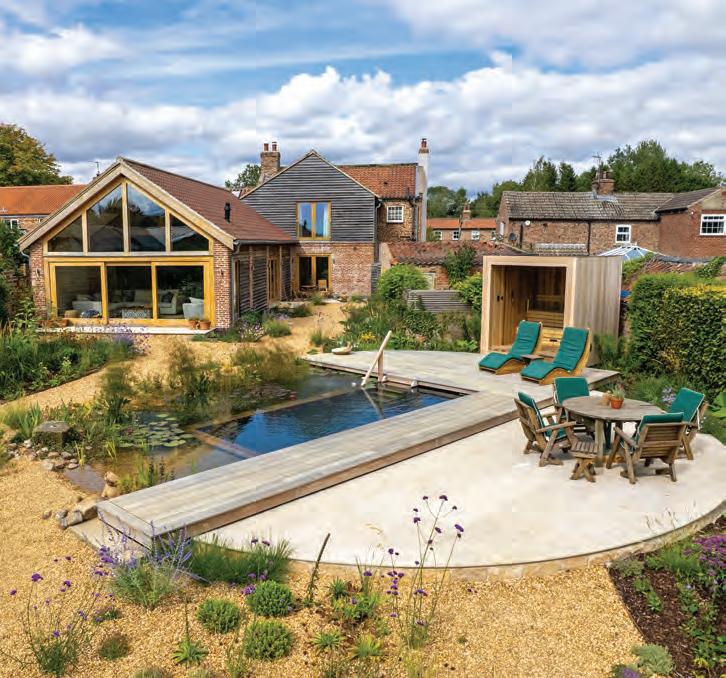
surface water from the outdoor kitchen. This is pumped back up the garden via a rising main through 80m of 60mm pressure pipework to connect with the mains drainage system at the drive. Similarly, under the vegetable garden, there is a macerator pump for the toilet and sewerage is also pumped back up the garden to join the mains sewerage system in the drive.
Elliar installed around 200m of ducting for services, water and electrics throughout the garden, together with a total of 22 manholes, rodding eyes and draw pits to facilitate access to the services and pipework. These had to be incorporated into the design so they were not visible. There is 400m of pipework and ducting laid in the garden plus the extensive subterranean drainage system for the pool – meaning there is more work below the ground than above.
Levels were also a challenge, with the narrow garden featuring a fall from top to bottom and across the narrow width. This was especially challenging when incorporating the large surface area of level water. Ellicar overcame this by effectively terracing the garden, incorporating a series of curved and oval steps, and gently grading both the oval lawn and the steps leading to the vegetable garden.
Sustainability
The Vastern Ash timber decking is a thermally treated timber which is a byproduct of ash dieback in the UK. The liner and pool fleece used in the natural pool installation are recyclable at end of use. The filtration units from Biotop are made of recycled plastic. Topsoil from the pool and kitchen dig out was used on site, while sub soil spoil from the pool was taken by dumper to a neighbour for build-up.
Biodiversity benefits
In just a few months, the space has attracted an abundance of wildlife, and the plunge
REFERENCES
Natural Pool Filtration
Biotop
gb.bio.top
Wildflower Turf
Pictorial Meadows pictorialmeadows.co.uk
Sandstone Paving/Coping
Goldholme Stone goldholme.com
Brimstone Ash Decking
Vastern Timber vastern.co.uk
pool and sauna have become part of the client’s daily wellness routine. The natural pool and wealth of pollinator-friendly perennials in this small garden have brought a huge increase in wildlife presence, which Ellicar’s clients have enjoyed witnessing. They describe their new garden a “a cross between being on holiday all the time and being at a gorgeous spa.”
Within a few weeks after planting, butterflies and bumblebees could be found
in the gravel garden, borders and meadow. Within the pool itself, the clients have already enjoyed seeing newts and dragonflys arrive within the first few weeks. The pool and garden have also been visited by a host of bird species that were not seen before, such as a kingfisher, sparrows, and wagtails bath daily in the pool’s beach.
The result is a garden full of discovery –with spaces to swim, sit, cook, unwind and connect with nature.
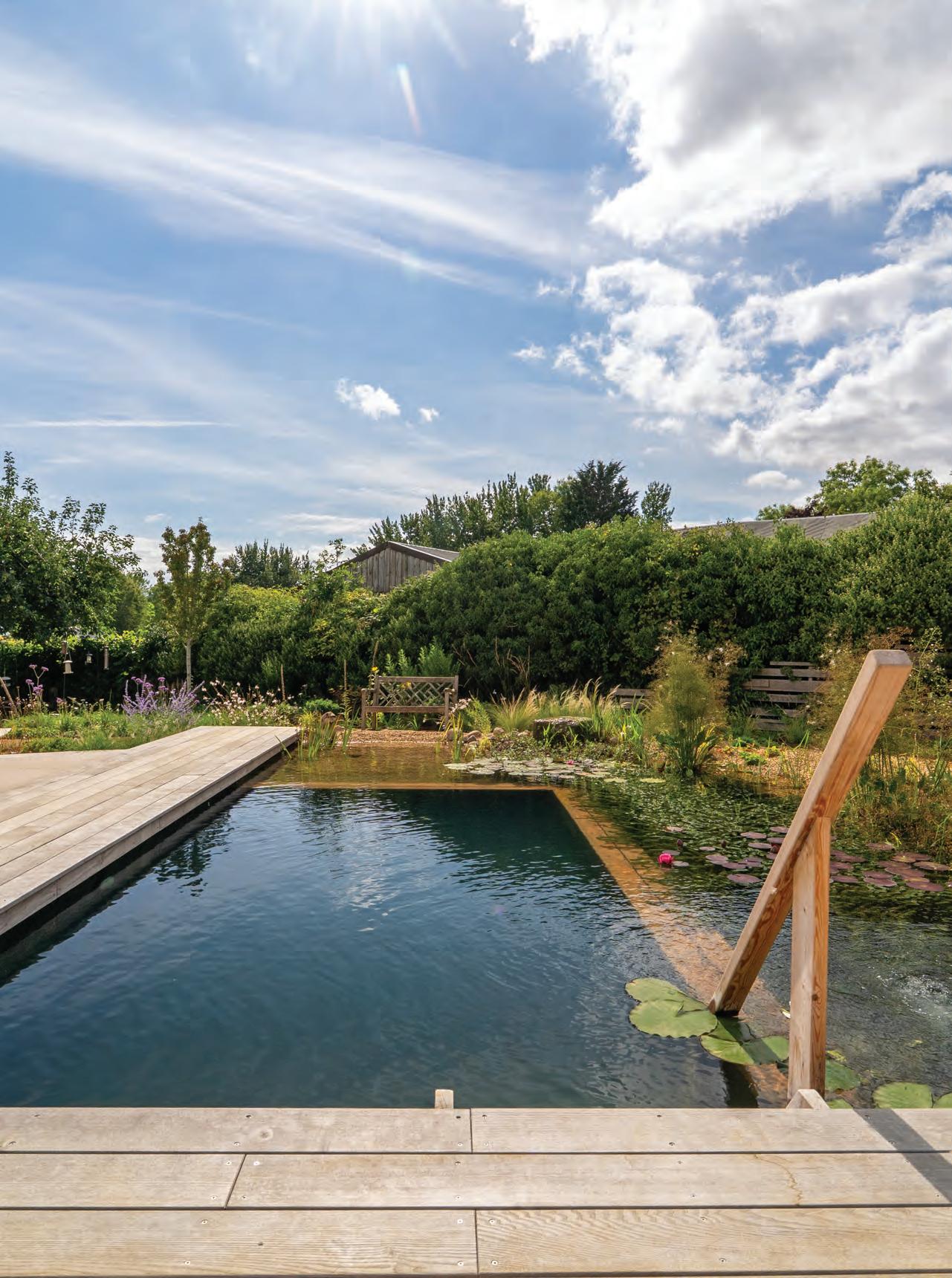
ABOUT
Ellicar designs and builds award-winning natural swimming pools and naturalistic gardens that harmonise with nature. Its bespoke, sustainable landscapes are crafted to enhance outdoor living while boosting biodiversity. From concept to completion, Ellicar offers a full service, including hard landscaping, planting, and ongoing maintenance. With 30-plus years of experience, the family-run business creates breathtaking retreats that bring its clients' visions to life and connect them with nature.
ellicar.co.uk

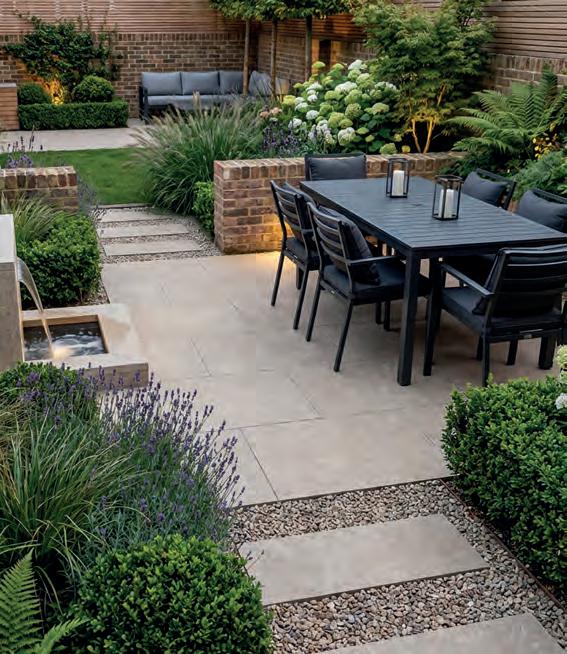
Install with confidence.
We know what’s important to you:
Consistent colour
Reliable stock
On-time delivery
From quarry to UK warehouse, we manage every step so you’ve got the confidence to specify and build without giving it a second thought. Stone. Porcelain. Decking. Accessories. Because your reputation depends on it.
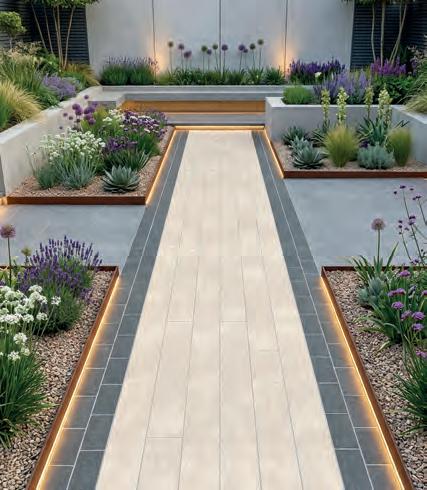

COTTAGE Charm
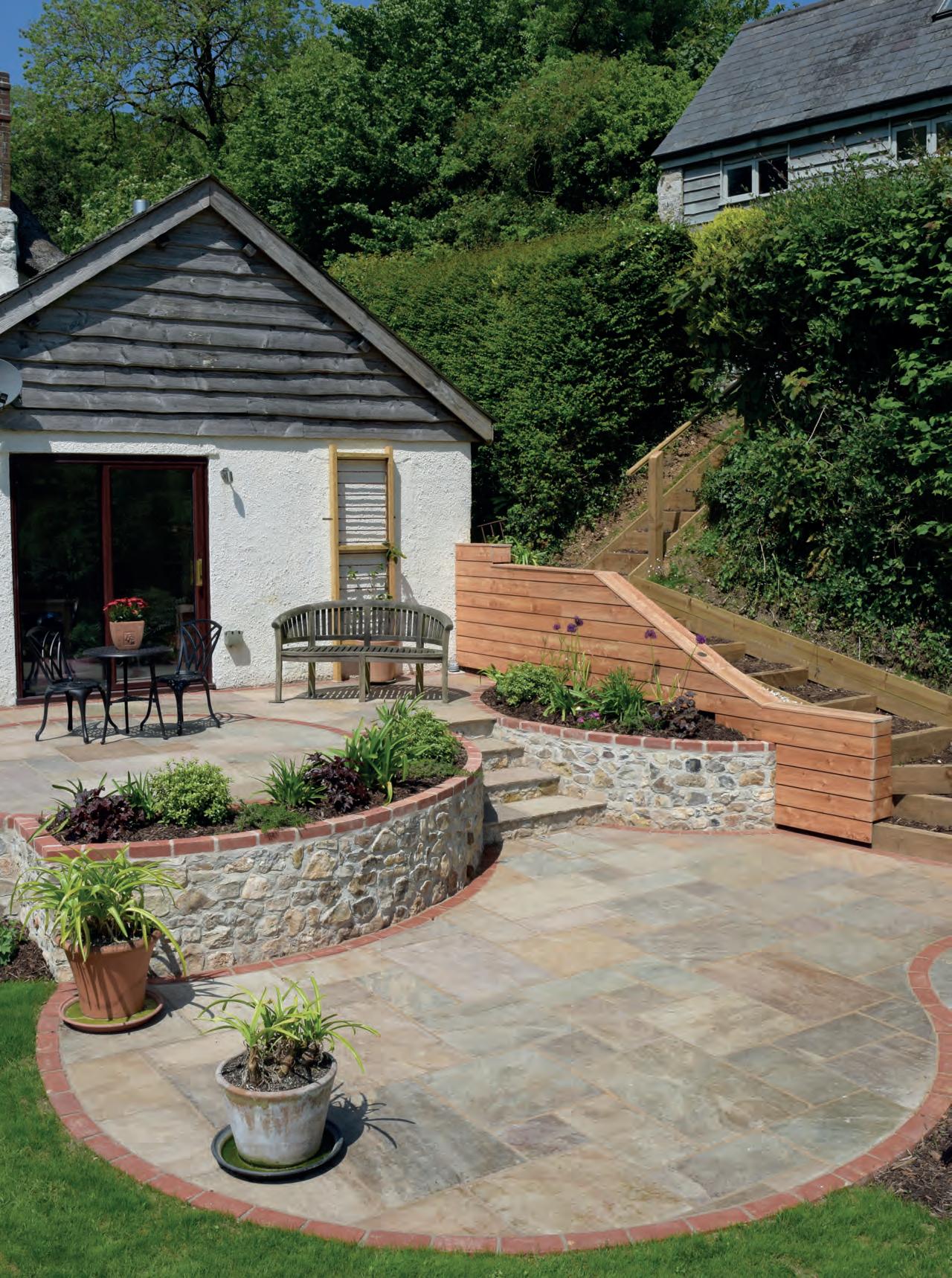
Build time
6 Weeks
Size of project
80m2 approx.
Project value
£28,000 approx. Awards
Shortlisted Pro Landscaper Project Awards
The clients brief for their design and build project was rooted in a desire for a seamless connection between the higher patio space and an existing built in pizza oven down on the lower part of the garden. The design needed to serve not only as a functional space but also a conduit for a harmonious transition into the wider garden and surrounding landscape, and this aspect of the design was crucial in ensuring practicality without compromising the overall cohesion and connectivity of the outdoor space.
In terms of functionality the client desired a generous sized area for furniture, a barbeque and space for planters. This part of the garden was envisioned as a versatile outdoor living and dining area capable of accommodating gatherings and other leisure activities. Therefore, the design needed to strike a balance between practicality and aesthetic appeal, providing a welcoming environment for both relaxation and entertainment.
BEFORE
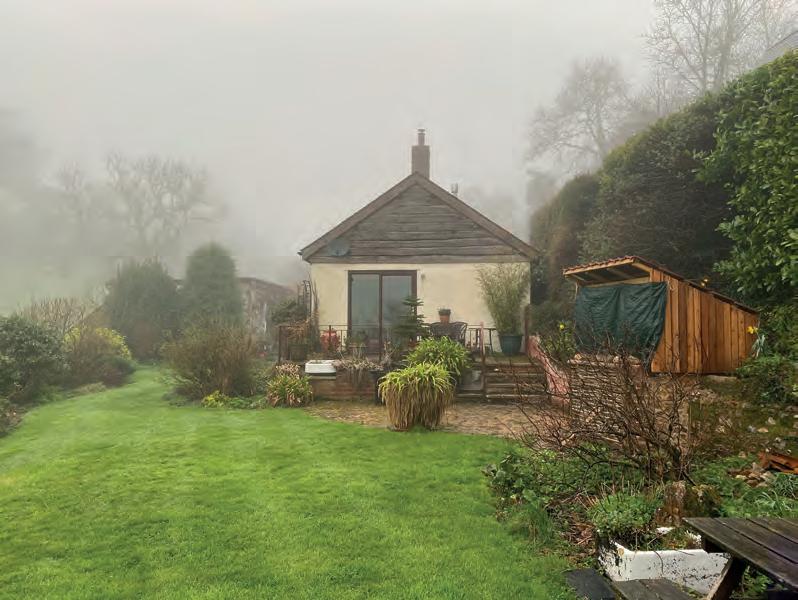
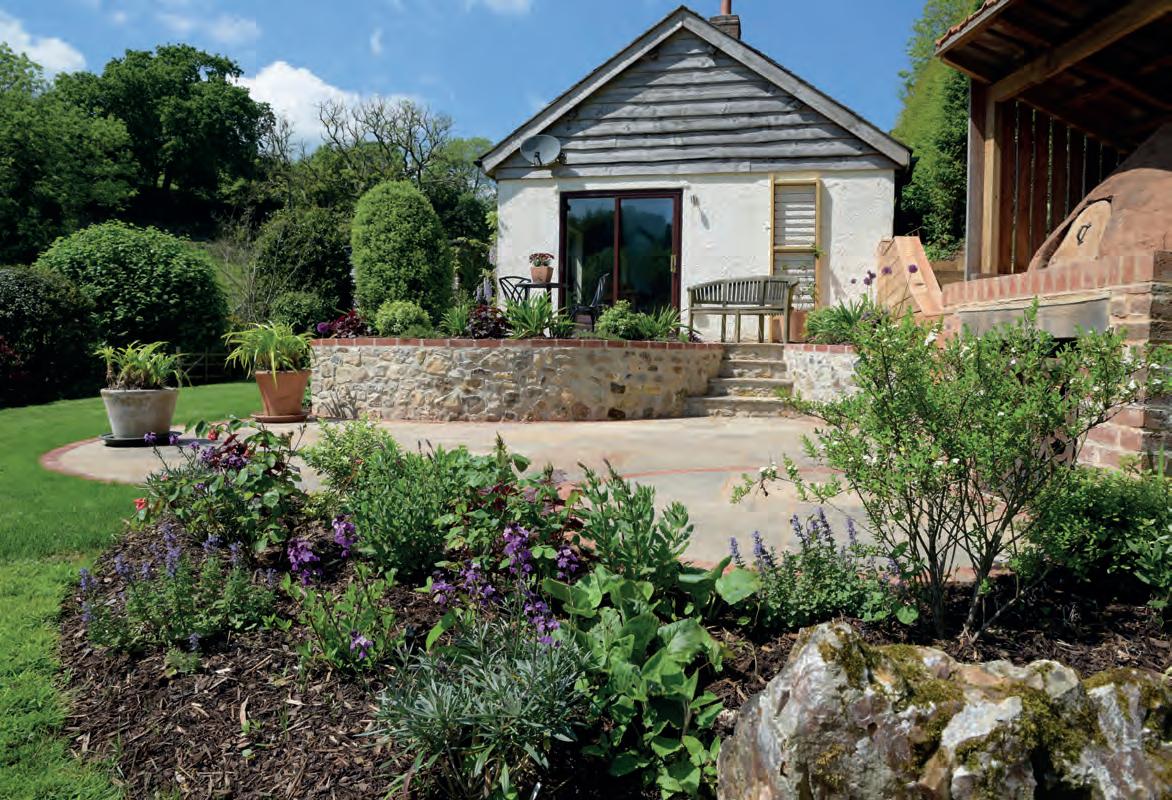
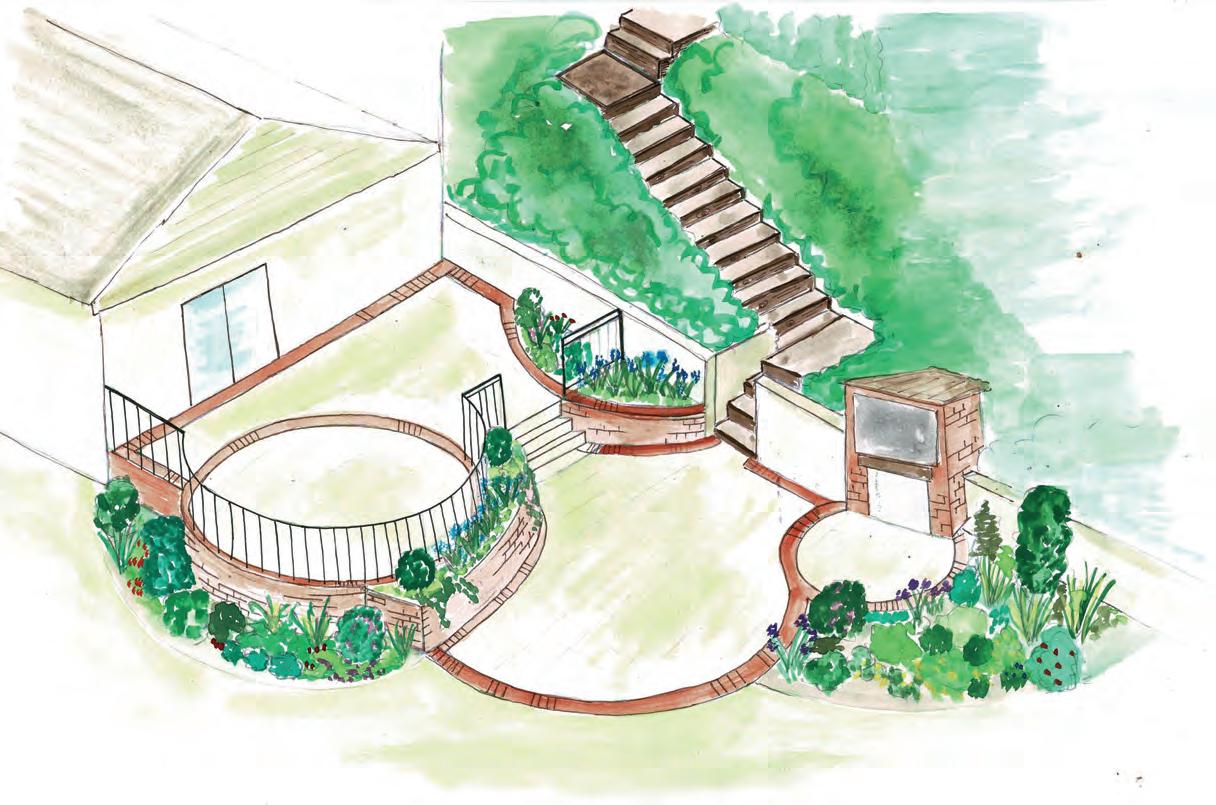
The design also needed to stay true to the existing cottage style of the garden, utilising sympathetic materials that complemented the rustic charm of the surroundings. And the client wished to retain and incorporate their prized Agapanthus into the design whilst also introducing new additions to enrich the planting palette, ensuring a diverse, and visually appealing landscape through the seasons.
Tony Benger Landscaping took on the project and gave the client the additional space they required in a way that they themselves had not even thought of.
Challenges
The main challenge of this project was addressing the varied curving lines of each patio, and the curving line created with the brick and the curved beds. These had to be executed with razor sharp precision, however, time, care, and accuracy were implemented at the very early stages of the build to ensure all the lines were in place and correct.
The falls on each patio also required meticulous planning to ensure they all were achieved so to not cause pooling, especially as the client required access up a steep bank to gain a more direct route to their home office and workshop space, necessitating steps that seamlessly blend with the natural surroundings.
Compounding these challenges, the team also faced some very wet and windy weather which presented its own obstacles. Weatherrelated contingencies, such as securing a gazebo to provide shelter over the areas they were working in and adjusting work schedules to ensure productivity remained at all times were implemented.
The client already had planters of Agapanthus which were ideal for splitting and reusing, but then also to be enhanced with further complimentary planting of some cottage favourites to add depth and cohesion with the existing planting and to further offer food and habitat to wildlife.
The client also had a supply of Beer flint stone on site. The stone had come from an
PLANTING
Chosen to incorporate the client's prized Agapanthus whilst enriching the planting palette, ensuring a diverse, and visually appealing landscape through the seasons.
• Pittosporum Tenuifolium 'Golf Ball'
• Spiraea Nipponica 'snowmound'
• Rosa Bonica
• Penstemon 'Raven'
• Hydrangea paniculata 'Bombshell'
• Nepeta × faassenii 'Purrsian Blue'
• Elaeagnus 'Quicksilver'smallest form that came.
Read more about this plant on Page 80.
• Physocarpus
• Wisteria sinensis 'Prolific'
• Salvia nemorosa 'Caradonna'
• Alchemilla mollis
• Philadelphus 'Belle Étoile'
• Heuchera villosa 'Palace Purple'
• Erysimum 'Bowles's Mauve'
• Salvia rosmarinus 'Capri'
• Heuchera 'Paris'
REFERENCES
Sandstone paving Lowarth Paving lowarthpaving.co.uk
Brick detail
Hitchens of Exeter Stonebrickgranite.co.uk
old outbuilding which had been removed. Beer is a stone’s throw from Branscombe and has a darker tone to normal flint. It made sustainable sense to incorporate this local stone into the design, which immediately added character.
Tony Benger Landscaping provided varying options for seating arrangements and entertaining and pulled this part of the garden into the property, grounding it as a much more useable space. The clients delight at the end of the project signified the fulfilment of the brief.
ABOUT
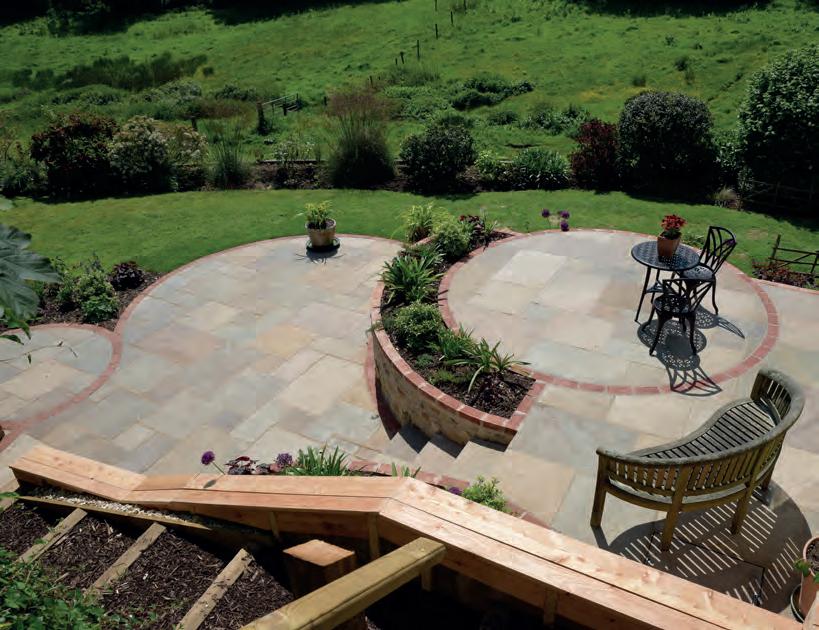
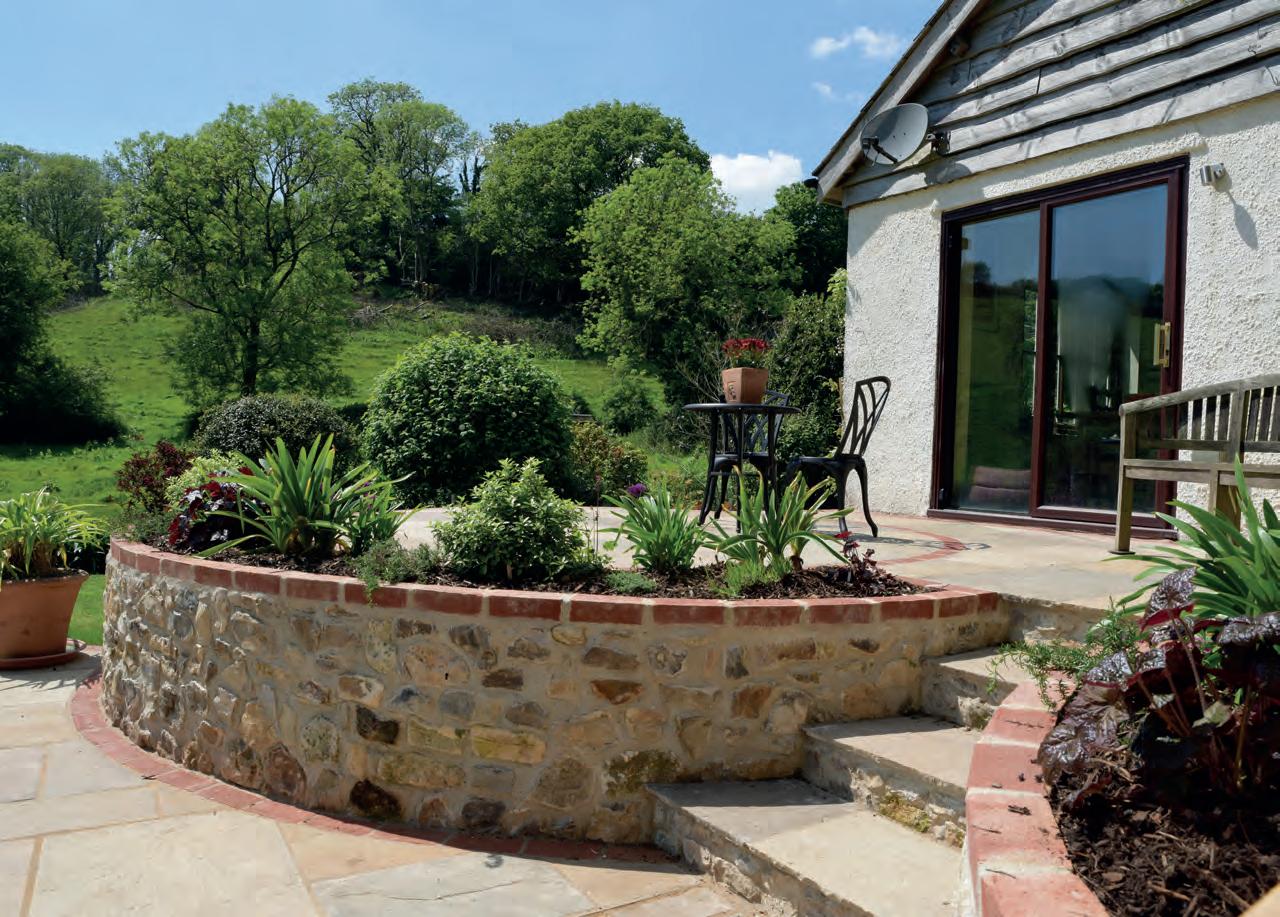
Tony Benger Landscaping Ltd is an industry-accredited multi award-winning landscape contractor, dedicated to delivering exceptional landscape solutions across the southwest of England. Its design and build team specialise in offering a comprehensive service to its domestic clientele. From the initial stages of garden design right through to the construction. tonybenger.com
What’s up Next for...
The upcoming Pro Landscaper September 2026 issue is our public spaces special and will feature four key product categories:
Installer schemes: Demonstrate how you support your installers to make the most of your products.
Lighting: Exhibit your lighting solutions for public spaces.
Natural stone: Highlight how to best showcase your offering with top installation tips.
Wildflowers: Show how your products can shine with advice on aftercare.
This is your opportunity to put your product exactly where landscape contractors, designers and landscape architects are looking for their next solutions.
sales enquiries:
For editorial enquiries: Rachael Forsyth
rachael.forsyth@eljays44.com

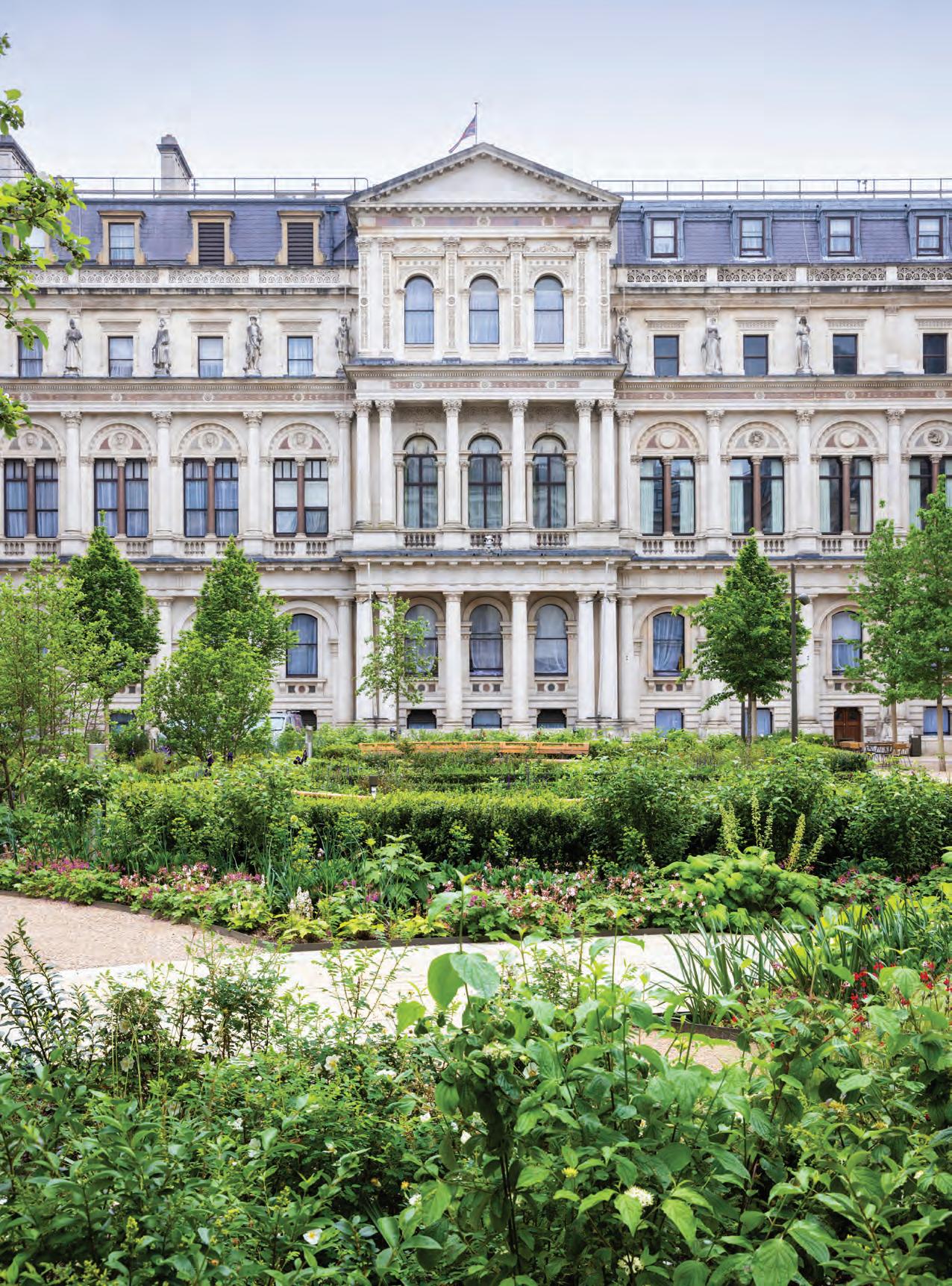
KING CHARLES STREET QUAD
GUSTAFSON PORTER + BOWMAN
Historical maps indicate the presence of King Charles Street Quadrangle dates back to 1868 when the Foreign Office was first constructed. Completed in 1875 with the Colonial and Home Offices by architects George Gilbert Scott and Matthew Digby Wyatt, the buildings and quad have since been used for multiple ceremonial events, as well as an informal space for the health and wellbeing of staff working in the multiple government departments it serves.
Wellbeing, re-use of materials, biodiversity, and accessibility are at the heart of the Foreign, Commonwealth and Development Office (FCDO) Quadrangle project in Whitehall. Since the Covid pandemic, the importance of outdoor space for both mental and physical health has grown, explains the landscape architects. When approaching the project, Gustafson Porter + Bowman wanted to create a space where staff and
visitors alike can relax in a non-stressful environment with spaces for people of all abilities to enjoy.
Executing the vision
The formal, classical facades contrast with the rich interiors that celebrate colour, texture, ornament and sculpture. It is the complementary qualities of the formal and relaxed essence of the space that Gustafson Porter + Bowman have explored in the garden design of the courtyard.
Inspired by the organic patterns of the interiors of the building, the planting design uses a loose, textured palette to complement the formality of the surrounding architecture. The species have been selected to reference the garden history of the Victorian era, while also responding to the 21st century environmental and cultural challenges –such as rising temperatures.
The courtyard reinforces the green links within the wider habitat areas for birds and insects. In celebration of biodiversity, the garden features British flora, horticultural heritage and acclimated plants from around the Commonwealth. Four Liquidambar styraciflua ‘Moraine’ frame the Downing Street archway and northern façade of the quad providing bright autumn colour. While Carpinus betulus ‘A Beeckman’ garnish the east and west facades, Prunus x yeodensis, Malus ‘Evereste’ and Magnolia kobus provide fruit and flowering ornamental trees around the garden.
A key part of the design was to reuse existing materials. For example, the pink and grey granite cobbles, kerbs and Yorkstone paving have been used across the site to reduce the amount of energy required in quarrying and transporting stone. While Yorkstone slabs were retained and reinforced to allow for vehicular loading, the pink and grey granite sets were carefully removed,
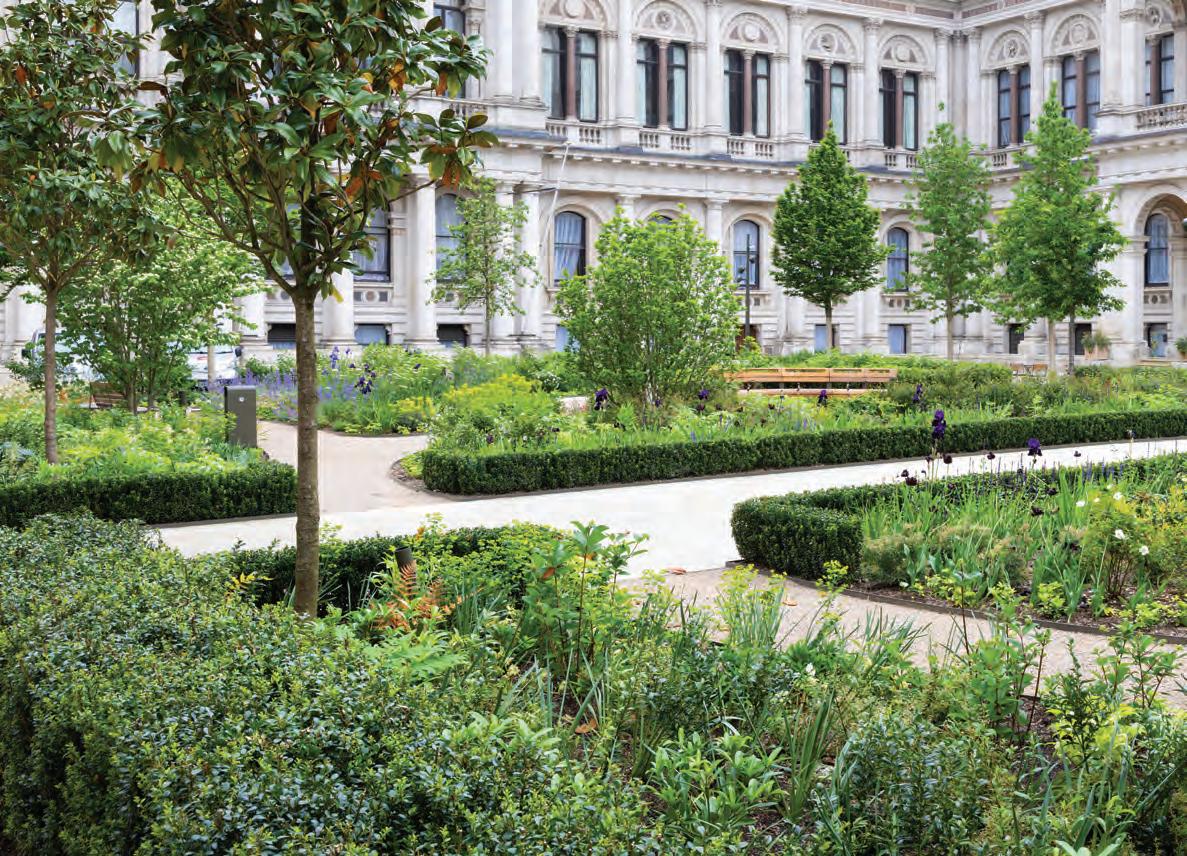
“The FCDO Quad project was a real pleasure to work on. We had a fantastic and supportive client, a proactive contractor and a great consultant team. Together, we transformed what was quite a bleak courtyard into a garden that provides a welcoming environment for foreign visitors but is also a well-loved space by the staff that work at the FCDO, animals, birds and insects.”
Mary
Bowman, founding partner at Gustafson Porter + Bowman
cleaned and re-set to differentiate revised parking and the main arcade routes to King Chares Street and Downing Street. In total, 900m2 of paving and 1000m2 of granite sets were reclaimed and re-laid.
On top of this, rainwater attenuation was another key consideration. The increase in planting and soil means that rainwater is held on site for longer, minimising the impact on the existing drainage system.
Rectifying challenges
Amongst various technical issues while creating the space, draining and subsidence issues were urgently identified and addressed. After the project was initiated, it became clear that the existing uneven cobbles would need to be lifted. Several options were explored, and a wide range of experts consulted to identify the best possible improvements to future-proof the space.
All daylight images © Richard Bloom
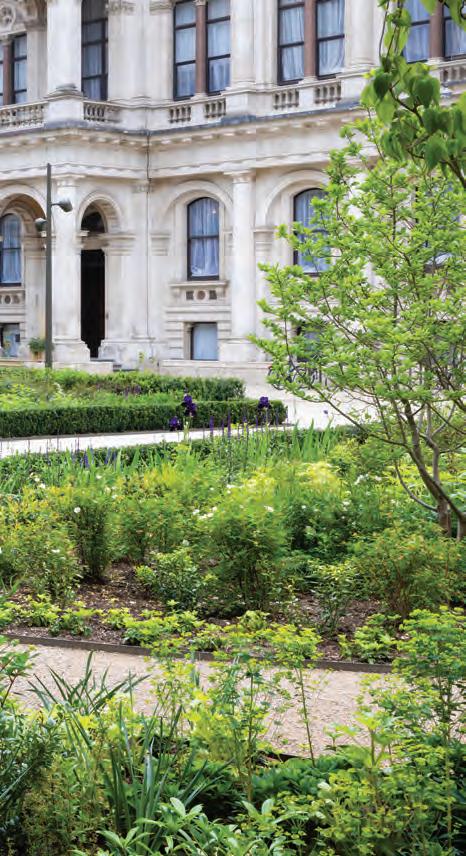
PLANTING
• Liquidambar styraciflua ‘Moraine’
• Carpinus betulus ‘A Beeckman’
• Prunus x yeodensis
• Malus ‘Evereste’
• Magnolia kobus


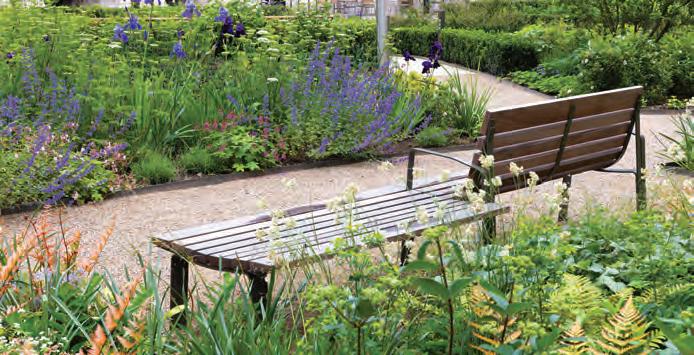

PORTFOLIO
Making the public courtyard more accessible, environmentally sustainable and user-friendly were key requirements that ran true throughout the entire project. With accessibility at its heart, the team worked with accessibility and inclusive design consultants Burdus Access to create innovative and exciting solutions that respond to need, balance function with aesthetic and maximise accessibility to welcome all. In response, tactile paving is fully integrated into the design to guide the partially sighted and wheelchair users, while the design also incorporates a dog spend area for guide dogs.
Also designed with flexibility in mind, the courtyard is set to host formal events such as State visits and Remembrance Day services.
King Charles Street Quad lights up with history, centering accessibility and the importance of nature for both visitors and staff. A space rich with biodiversity, culture and sustainable techniques, the courtyard is also a space for insects, other wildlife and their habitats.
REFERENCES
Landscape contractor Maylim Limited maylim.co.uk
Soil specialist Tim O’Hare Associates toha.co.uk
Irrigation consultant Irritech irritechlimited.co.uk
Stone Tectonix tectonix.co.uk
Trees and planting Robin Tacchi Nursery robintacchiplants.com
ABOUT
Bespoke benches Woodscape woodscape.co.uk
Tree pits Green Blue Urban greenblue.com
Furniture Vestre vestre.com
Bollard lighting and column mounted lights Selux selux.com
Furniture Urbidermis urbidermis.com
Pathway lighting Light Graphix lightgraphix.co.uk
Bespoke bench lighting LEDFlex ledflexgroup.com
Accessibility and inclusive design consultant Burdus Access burdus.com
Gustafson Porter + Bowman is a dedicated practice of designers and landscape architects working together to create beautifully crafted, durable and sustainable public landscapes. Aware that its landscapes need to elegantly balance the demands of complex-built environments, the practice works to be inclusive to all and provide greater opportunities for plants and wildlife to thrive. gp-b.com

All nighttime images © James Newton
Designed by Tythorne Garden Design | Built by Pickwell Paving | © Fiona Walsh
BREEZE The ONE Garden
As seen at RHS Malvern Spring Festival & RHS Chelsea Flower Show


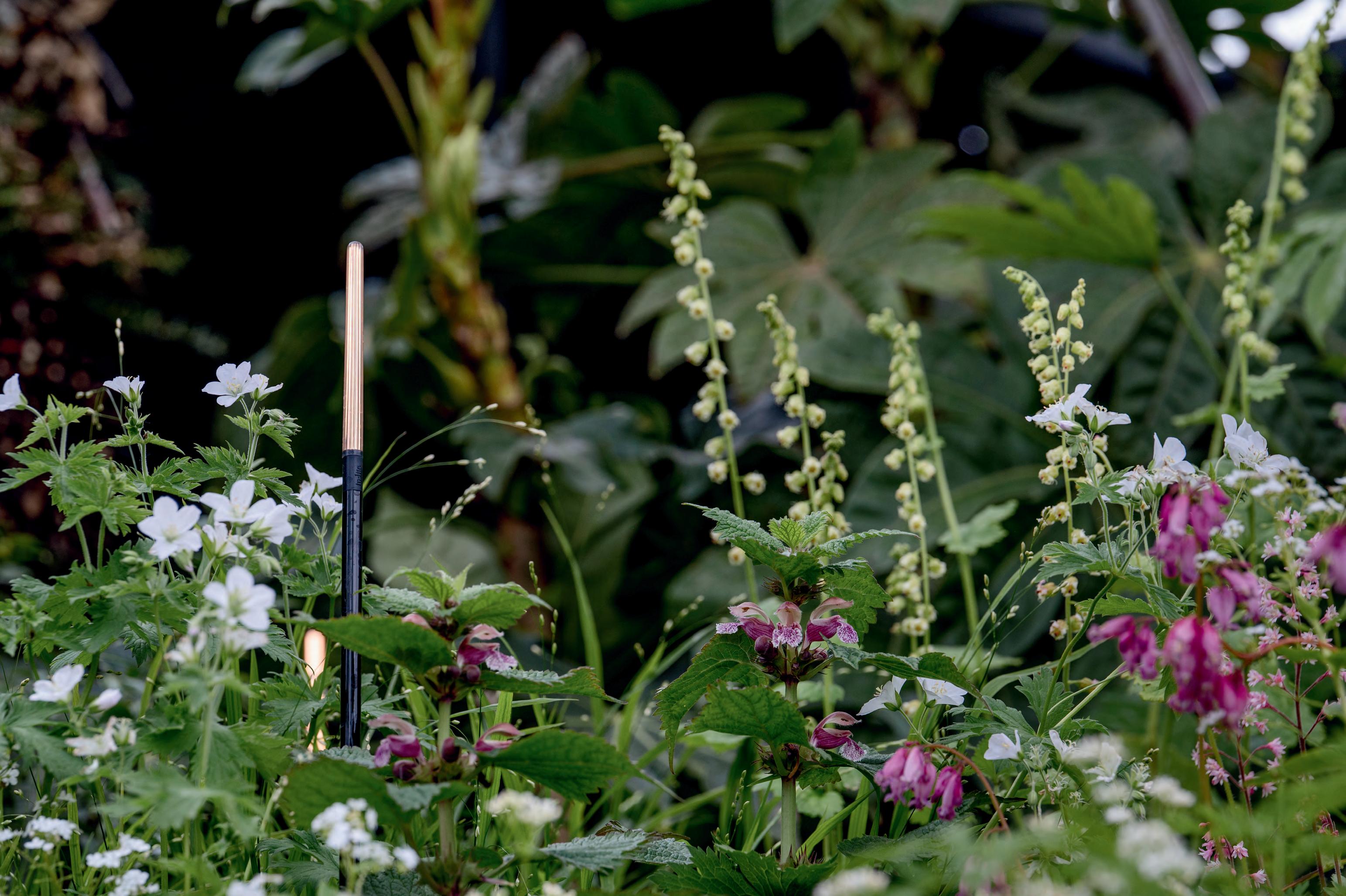
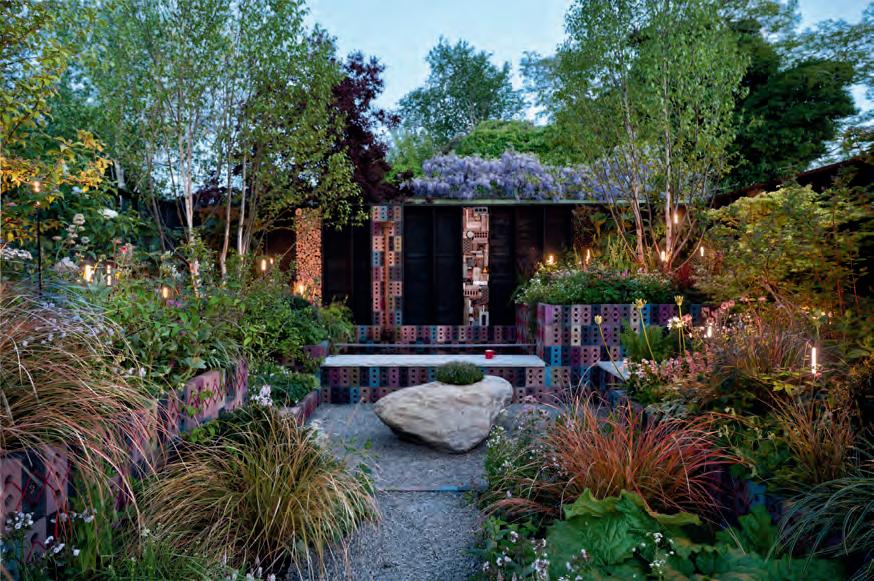
PARTNERSHIP OPPORTUNITIES
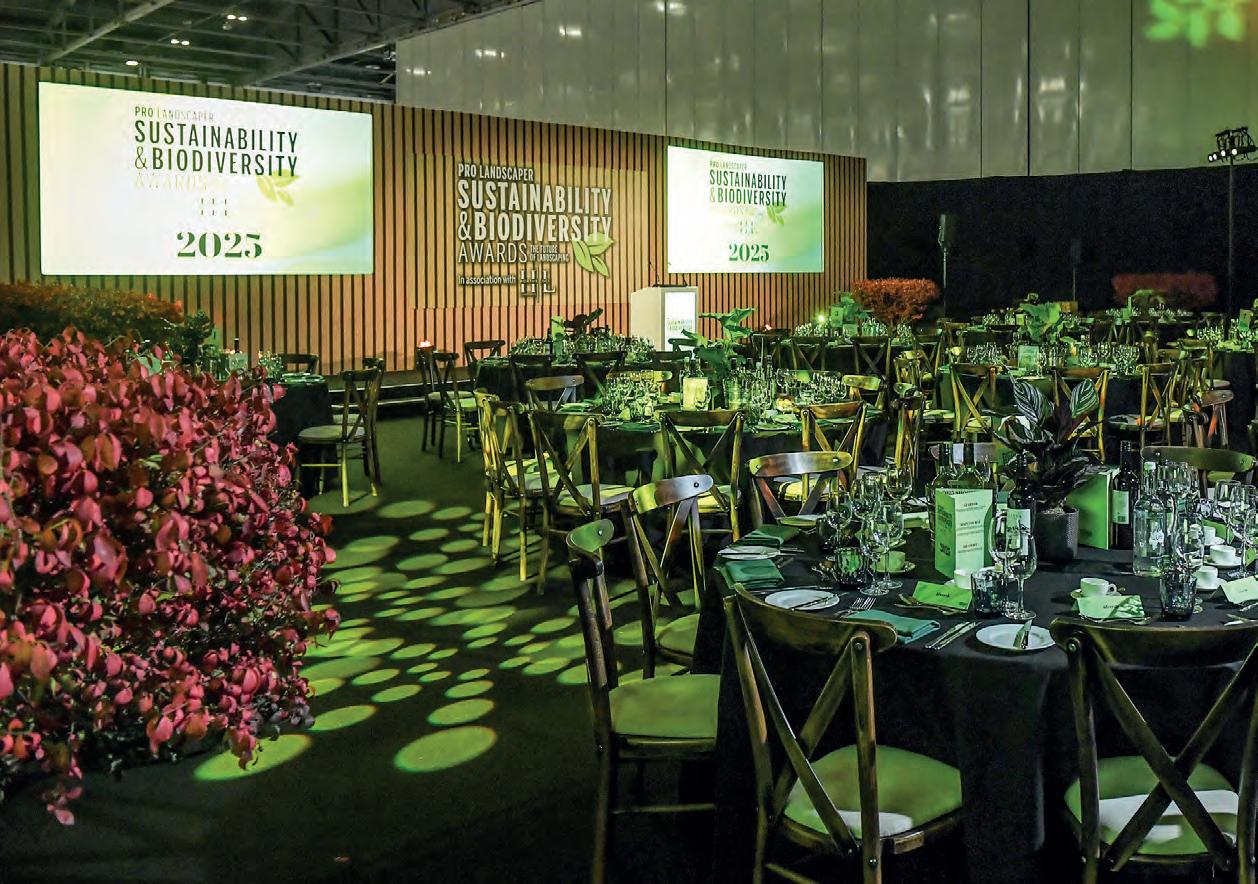


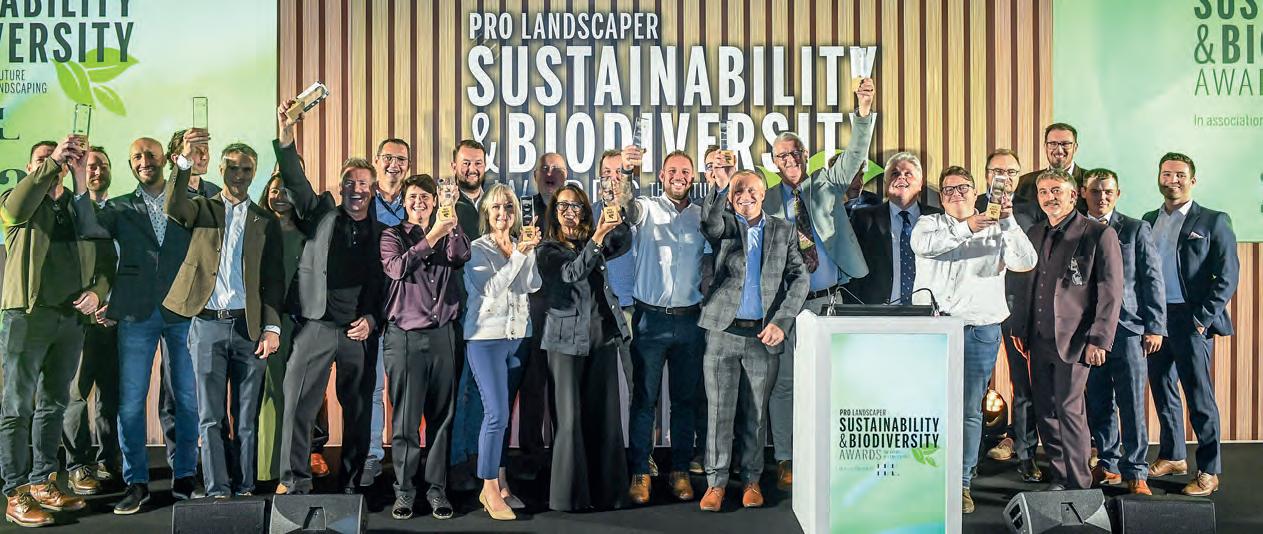
ARBORICULTURE COMPANY
COMMERCIAL BUILD PROJECT
COMMERCIAL DESIGN PROJECT
GARDEN DESIGN COMPANY
GROUNDS MAINTENANCE COMPANY
LANDSCAPE ARCHITECTURE STUDIO
LANDSCAPING COMPANY UNDER £2.5M TURNOVER
LANDSCAPING COMPANY OVER £2.5M TURNOVER
LOCAL AUTHORITY/COUNCIL OF THE YEAR
MAINTENANCE CONTRACT
SUSTAINABLE PRODUCT OF THE YEAR
SUPPLIER OR SERVICE PROVIDER
SUSTAINABILITY AND BIODIVERSITY LEADER
Designing in CLIMATE RESILIENCE

Matt Evans explores some of the trends he's seeing
which
are making gardens more climate resilient
Too little, too late? As I write this, we’re now in the 5th week in Dorset without rain and with temperatures not dropping below 23°C. The proverbial drum has been banged now for years without action. As custodians of the landscape, we must now step up.
The assumption that the UK gets mild winters, reliable rainfall and relatively benign conditions no longer holds true. It’s time for us to re-think what a good garden looks like. Climate mitigation in our sector is an industry-wide responsibility and should be shouldered by supply chain, designers, contractors and clients.
One obvious shift, which at certain levels has been policy-driven is conceptual, gardens are increasingly treated as working systems rather than just decorative spaces. We all know this, but getting this across to clients is important. Gardens need to manage water, support biodiversity, store carbon and moderate temperatures within the site in addition to just looking attractive. The climate conscious narrative in our projects is now a baseline measure rather than a niceto-have. Tools such as Elemental make this much easier and more accessible.
Planting is seeing a climate resilient revolution. In the studio we are continuing to specify Mediterranean inspired schemes with shrubs, tough evergreens and perennials that can withstand both drought and waterlogging. Well chosen, resilient plants reduce replacement costs, mature well and add value. Gravel gardens, and perennial prairie-style planting are inherently more appropriate for our current weather and require less work to maintain during extremes and temperature fluctuations.
Water management within a garden should now be a design principle within every design. With water becoming more scarce, rain gardens, soakaways and rainwater harvesting systems are increasingly built into the structure of our schemes to ensure longevity and that the site can sustain itself. SUDS management and permeable paving combined with porous sub-bases also help with this. Smart
water sensors and weather monitoring can be implemented to ensure water is only used when entirely necessary. Of course not all of these solutions are available to everyone, so choosing and adapting their implementation is important to ensure you’re working to best practice within budget and client scope.
Climate mitigation in our sector is an industry-wide responsibility and should be shouldered by supply chain, designers, contractors and clients
As specifiers, one of the biggest shifts we’ve tried to adopt in the last two years is our materials choices. Working with natural products, or suppliers who actively consider embodied carbon and environmental footprint within their growing and manufacturing process. Where scope allows, we’d always rather opt for a more planted scheme and minimal hard landscaping entirely in an effort to support biodiversity and carbon storage. Tree selection is more important than ever – and remember there’s no harm in turning to a book or journal for guidance. Henrik Sjoman & Arit Anderson’s ‘Tree Selection Guide’ has
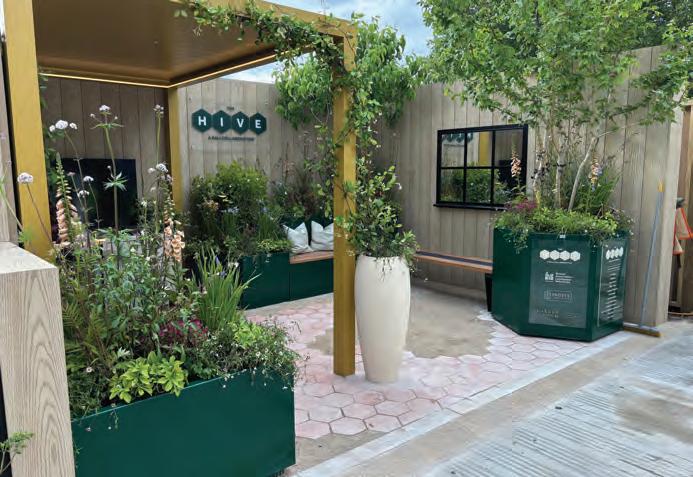
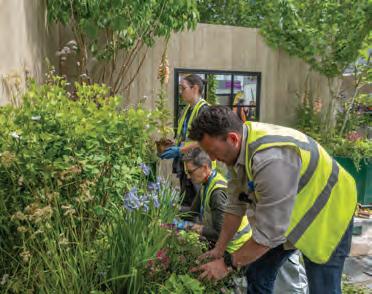
been a staple on our studio desk for some time now. This amazing book details how different trees react to climate, biodiversity and ecosystems, and how we should consider these elements at the point of specification.
BNG has become completely intertwined in the way, as designers, we think about climate mitigation. We’re seeing a spillover with some clients who are keen to implement principles of BNG on sites where it’s not a requirement. This can only be a positive thing. In the commercial sector, pollinator-pathway initiatives and wildflower meadows are becoming increasingly popular. Last month we took part in a CPD with Wildflower Co to help our team understand more about successful implementation and specification of meadows.
All landscapes start with the soil. It’s the backbone of every garden and crucial to succeed in creating a climate friendly space. Do you need soil (can you use gravel or recycled material)? How is the drainage? Have you considered how to reduce compaction during construction phases? And is your mulch or supplier considering soil biology for strong root systems which support less need for water?
With all of this in mind, I think it's clear that these trends suggest we’re all starting to turn a corner. Regardless of whether we’re too late or not, we all now have a responsibility to deliver climate conscious spaces. In a market where the race to the bottom and the cost of doing business is causing increased competition and quality issues, budget and practicality will always be a consideration. At the BALI conference in March this year we discussed how climate resilience is an opportunity. It's time to set the bar higher. Climate resilience cannot be seen as an optional extra; it must now be a fundamental principle of landscape design.

MATT EVANS
Matt Evans is the managing director and design lead and The Garden Room Living and Landscape Studio, based in Poole, Dorset. The Garden Room is a young, creative design studio founded by partners in life and design, Matt and his wife Elle Evans. Located just a stone's throw from the shores of Poole Harbour and the Jurassic Coast in Dorset, they operate across Dorset, London and the south of England offering garden design, project management and planting as well as specialist aftercare. thegardenroomstudio.com
Products
Company: Hillier
Product: Acer campestre
About: Supplied to BALI Trade Stand at RHS Chelsea, Acer campestre is a resilient native tree offering adaptability and seasonal interest.
Price: POA trees.hillier.co.uk

Company: Marshalls
Product: Atlas Priora™
About: Atlas Priora™ delivers proven SuDS performance and lasting strength for pedestrian, light and commercial schemes, finished with an elegant natural stone aesthetic.
Price: POA marshalls.co.uk

Species Rich Lawn Turf
Company: Wildflower Co
Product: Species Rich Lawn Turf
About: Lawn-like turf with enhanced biodiversity benefits. By incorporating a carefully selected mix of UK native wildflowers alongside fine grasses, it creates a resilient surface that supports pollinators and improves ecological value without losing its lawn-like character.
Price: £10.50
Wildflowerexperts.com
The Hive – A BALI Collaboration garden, designed by Matt Evans, at RHS Chelsea Flower Show 2026.
Atlas Priora™






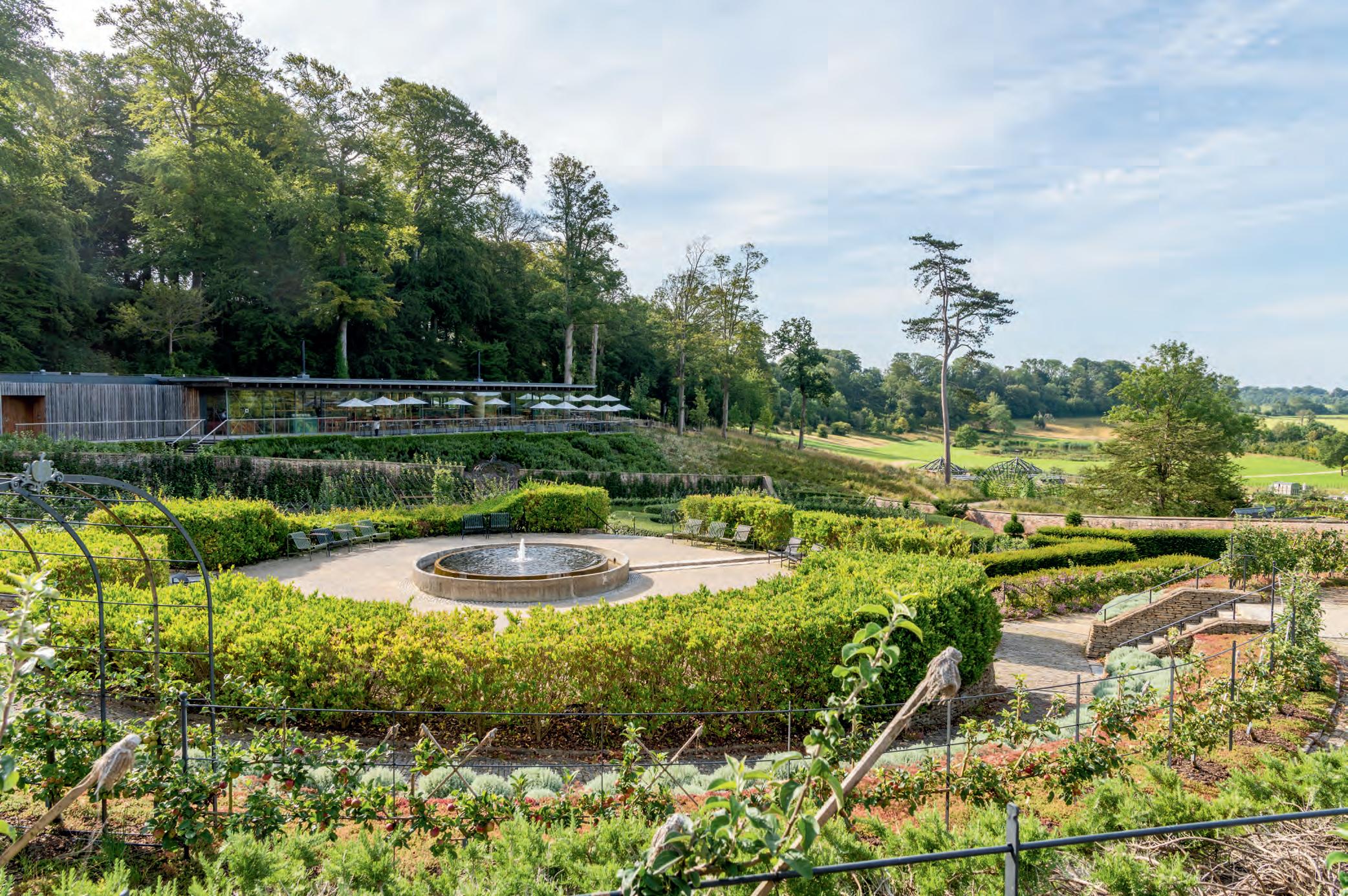





ADAPTATION Climate
Stuart Dantzic, managing director of solar shading specialists Caribbean, explains why external solar shading should be central to the UK’s response to rising temperatures
Like the environment, the conversation around climate adaptation is changing. For years, much of the focus has been on flooding, insulation and energy efficiency. Increasingly, attention is turning towards overheating and what can be done to make homes and outdoor spaces more resilient during hotter summers.
Recent reports, including Westminster City Council's Weather-Ready Homes Report, highlight a challenge that many householders are already experiencing: homes are becoming uncomfortably warm during periods of prolonged sunshine, particularly where glazing allows solar heat to build up indoors.
moderate temperatures around a property. Hard landscaping choices matter too. Dark surfaces absorb and retain heat, while lighter materials can help reduce the urban heat island effect that is becoming more noticeable in towns and cities.
Pergolas and covered outdoor structures are also taking on greater significance. Traditionally viewed as lifestyle features, they are increasingly being recognised as practical tools for climate resilience.
The most successful landscapes of the future will be those that help people stay comfortable, spend more time outdoors and adapt to a warmer world
For landscapers, this presents both a challenge and an opportunity. Climate adaptation is no longer confined to the building itself. Gardens, terraces and outdoor living areas all have an important role to play in reducing heat exposure and improving comfort.
Planting schemes are one part of the solution. Trees and carefully positioned vegetation can provide valuable shade and help
A well-designed louvred pergola can create usable outdoor space during periods of intense sunshine.
However, one area deserves greater attention than it often receives: external shading.
The principle is straightforward. If sunlight can be prevented from reaching glazing in the first place, much of the unwanted heat gain can be avoided. This approach tackles overheating at its source rather than relying on fans or air conditioning once indoor temperatures have already risen.
Research commissioned by the British Blind and Shutter Association (BBSA) found that external blinds can reduce internal room temperatures by up to 19.5°C under
certain conditions. They can also improve thermal performance during colder months by creating an additional insulating layer around the window.
This is particularly relevant, as contemporary housing continues to favour large glazed openings, sliding doors and expansive garden-facing elevations. These features bring welcome daylight and stronger connections to outdoor spaces, but they can also increase the risk of overheating.
External shading allows designers to keep these benefits while improving comfort and reducing reliance on energy-intensive cooling systems. When integrated with planting, thoughtful landscape design and outdoor structures, it becomes part of a wider strategy for creating homes that are better prepared for future climate conditions.
The gardens and outdoor spaces being designed today will face a very different climate over their lifetime. That makes shade a necessity, not an optional extra. The most successful landscapes of the future will be those that help people stay comfortable, spend more time outdoors and adapt to a warmer world.
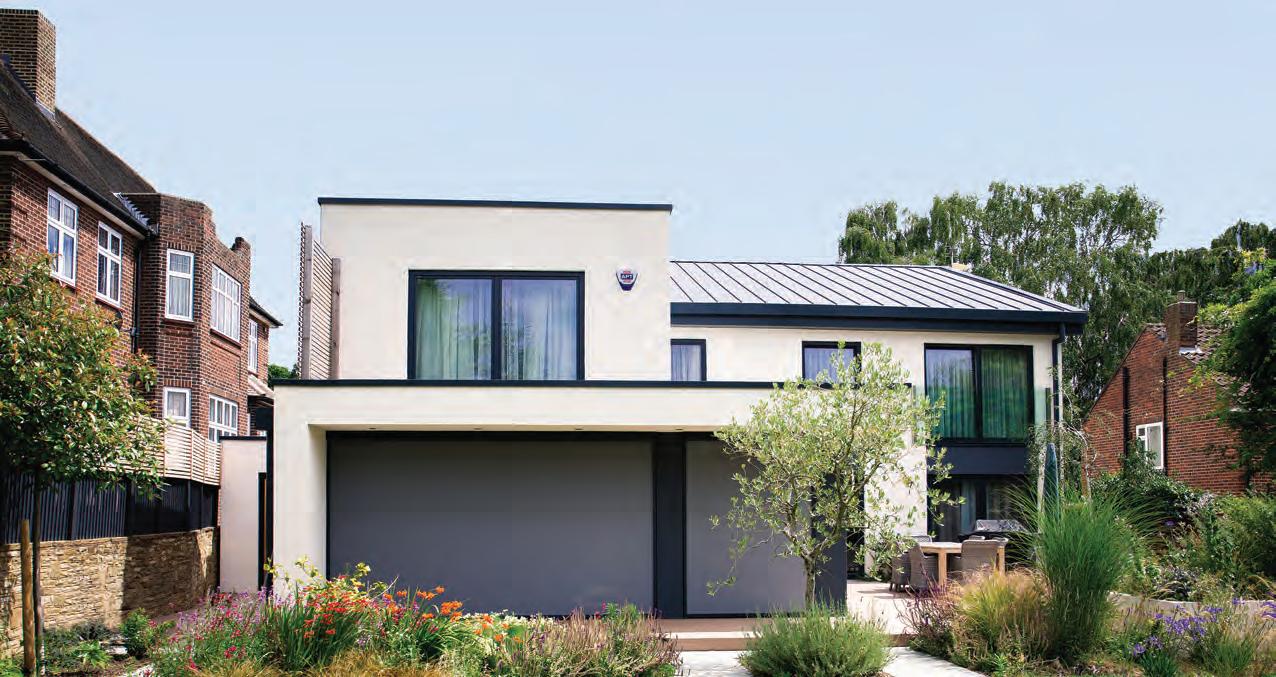

STUART DANTZIC
Recognised as one of the UK’s leading external shading authorities, Stuart Dantzic is managing director of Caribbean and vice president of the BBSA, driving innovation in solar control. cbsolarshading.co.uk
Unlocking
SPACES Awkward
Millboard explains why difficult sites can be a landscaper's biggest opportunity
Every landscaper knows the conversation. The client gestures towards a steep drop, a sunken side return or a tired patio and says, "We just don't use this bit." For years, these awkward corners were written off as dead space. Increasingly, they represent some of the most rewarding work in the trade.
The demand is being driven by how people want to live. When usable garden space is limited, the answer can often lie in the areas previously considered unusable.
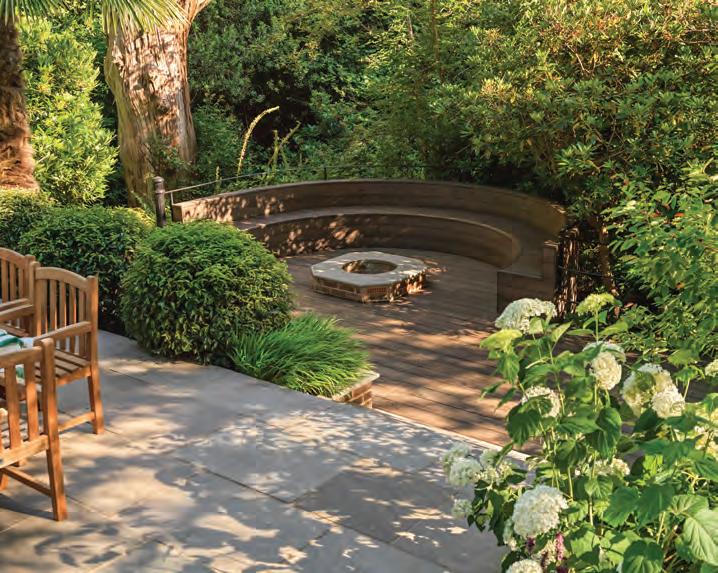
Tunbridge Wells shows what this can achieve. Garden designer Marlene Lento was working with a Victorian family home where a steep drop separated the house from a woodland below. Her solution was a split-level design stepping down from a stone patio onto an elevated deck in Millboard Enhanced Grain, Antique Oak, extending out into the trees. Space that was previously inaccessible woodland is now the heart of the home.
When usable garden space is limited, the answer can often lie in the areas previously considered unusable
Sloping sites and steep drops are among the most common challenges, and decking remains one of the most efficient ways to solve them. Rather than costly excavation and retaining works, a welldesigned deck can terrace a level change or cantilever out over ground that would otherwise be lost.
A recent project in Royal
Not every awkward space is dramatic.
Tired concrete, cracked paving and sunken courtyards are far more common, and here decking offers a fast, clean solution. Rather than breaking out and disposing of an existing surface, a decking subframe can be installed directly over it, saving programme time, skip costs and disruption for the client.
Sunken and wet-prone areas benefit particularly. Raising the finished level on a
properly ventilated subframe lifts the walking surface clear of standing water, while highly slip- and moisture-resistant ranges such as Millboard's Enhanced Grain and Weathered Oak resin mineral composite decking help improve safety underfoot in all weathers, a genuine selling point for family gardens and commercial settings.
The key to all of this is what sits beneath the boards. Matching the subframe to the site is what turns an awkward space into a straightforward install.
For constantly wet or soft ground, Plas-Pro recycled plastic joists and posts provide a moisture-resistant framework that will not rot, with the added sustainability story clients increasingly ask about. Where strength and spanning capability matter, such as elevated, complex, or commercial projects, DuoSpan aluminium subframes offer a straighter, stronger and longer lasting alternative to timber. And for solid bases like concrete or existing patios, the DuoLift pedestal system allows installers to
achieve a perfectly level deck quickly, with adjustable risers accommodating varied heights and falls without extensive groundwork.
Used in the right combination, these systems mean very few sites are genuinely off-limits. Awkward spaces offer skilled installers a chance to showcase their expertise. Clients cannot easily visualise the solution themselves, which makes expert guidance and the right materials the difference between a written-off corner and a transformed one. For landscapers, that is not just a design challenge. It can be a genuine commercial opportunity, and one worth raising at the first site visit.
And you do not have to take it on alone. Skilled installers are at the heart of every successful Millboard decking and cladding project, and supporting you is something we genuinely value.
For more information, contact enquiries@ millboard.com, visit millboard.com or call 024 7643 9943.
The Sustainable Edge
What sustainable qualities are these products offering?
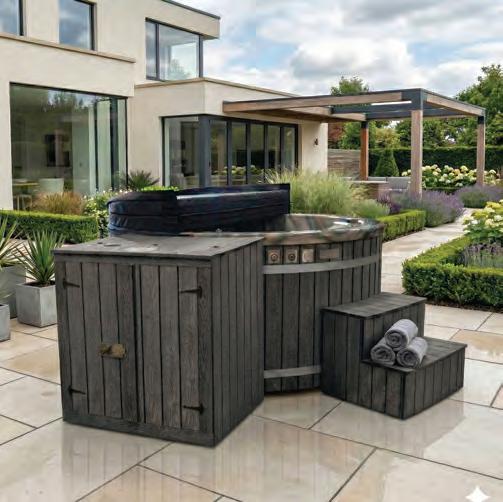
SUPA SPA FORGE CORE
Company: SUPA
Product: SUPA Spa Forge Core
Heat on demand spas which go from cold to hot in under 90 minutes and reduce annual CO2 emissions by up to 70%.
Price: POA
supa-spas.com

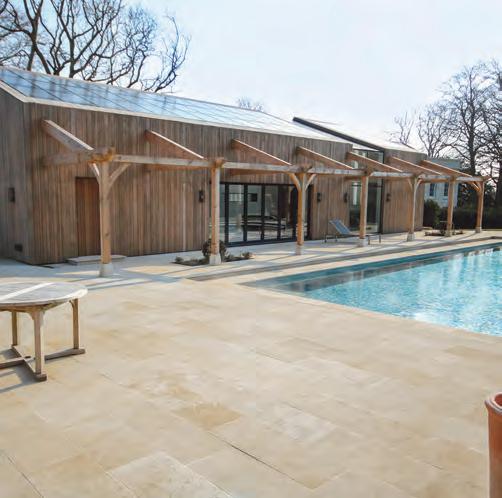
Company: All Green
Product: Monarch
Monarch is a pale buff quartzite sandstone which is extremely durable and hard wearing. Monarch is sustainably quarried to protect and preserve reserves, providing important resource for building and landscape architecture.
Price: POA
Allgreen.uk
MONARCH
Tools fit for
Teaching
Colleges detail what they’re teaching garden design students in the face of AI
WHAT DESIGN SOFTWARE ARE COLLEGES CURRENTLY USING?
London College of Garden Design lcgd.org.uk info@lcgd.org.uk
Vectorworks, Sketchup, Morphillo Trace Capel Manor College capel.ac.uk admissions@capel.ac.uk
Vectorworks, Sketchup Pro, Adobe Illustrator, Canva Plumpton College plumpton.ac.uk enquiries@plumpton.ac.uk
Vectorworks
There is no denying that AI is quickly spreading across the industry and beyond in a number of different forms. As the future generation of garden designers walk through the door, colleges are having to navigate the growth of AI before they step into the industry, which is no simple task – especially when concerns arise about the future of the career as these technologies grow.
training in an area that could be completely redundant in the future. We definitely have conversations to reassure the students.”
Our students are really worried about this to be honest. They see it as training in an area that could be completely redundant in the future
Sophie Guinness, head of school at Capel Manor College, begins: “Our students are really worried about this to be honest. They see it as
Students are becoming professionals in garden design and are in turn being trained to be able to spot any inaccuracies and errors that AI might come up with. Looking towards the future, Guinness sees the college turning toward AI only “if programmes like Vectorworks and SketchUp begin to incorporate AI.”
Students come from a whole range of different backgrounds with different expertise in design software, Guinness adds. She emphasises the


importance of designing by hand, before heading into mainstream software. "My immediate feeling is that it's still a tool rather than a replacement for our designers,” she says, adding, “We see AI as a tool for improving presentation skills, but not for creativity.”
Overall, “it’s not a reliable product yet,” argues Guinness, and encourages sketching by hand over AI investment for her students.
Richard Harris, learning technology manager at Plumpton College, says students are using industry standard CAD packages for landscape and garden design, such as Vectorworks. But, similarly to Capel Manor College a lot of the teaching still starts on paper. He says: “Hand drawing and manual design work build the underlying spatial and design thinking that helps to make someone good with the software. We're deliberate about when digital tools come in, so students learn the fundamentals first and then apply professional software once it genuinely adds something rather than reaching for it by default.”
in as we see industry appetite and clear pedagogical benefit, rather than adopting them because they're new.”
At the moment, the college is building AI literacy through its digital education strategy. However, “the principle we hold everywhere is that a human stays responsible for the work. For students that means learning to think critically about these tools, where they help and where they fall short, and using them transparently rather than as a shortcut,” he says.
We're measured about introducing new tools, including AI, and tend to bring them in as we see industry appetite and clear pedagogical benefit
As AI features increasingly become part of the mainstream design tools students will meet in industry, Harris expects the teaching to keep pace with the profession, "What won't change is the emphasis on core design skills and using any tool ethically with proper disclosure. We're interested in learners that are able to pick up whatever's in front of them and use it well, not depend on it.”
with workflow and visuals, but we encourage students to be creative and original in their design work – creativity is where we believe humans will always be better.”
On top of this, from a sustainability perspective, the college has real concerns, “with the resources that AI currently uses we encourage students not to use it for everyday, simple tasks," adds Baxter.
The college takes these responsibilities towards sustainability seriously. As a result, Baxter and her team relay training that covers sustainable design, encouraging social equity, maximising biodiversity and minimising the use of resources that have negative impacts at source. In turn, students are generally taught that their own creativity overtakes that of AI.
The garden design and landscape architecture professions are in a unique position. They can make a difference to one of the main drivers of sustainable development through the impact we make on our environment. Green Small Business certified, LCGD has a commitment to “improving the management of our significant environmental impacts and having a policy and action plan to deliver that commitment,” Baxter explains.
True to the entire college, Plumpton is careful in what it introduces. Harris says: “We're measured about introducing new tools, including AI, and tend to bring them
At London College of Garden Design (LCGD), students are often led by freelance project manager and graphic designer Fiona Silk to discuss if and where AI could be used. Nina Baxter, director at LCGD, says: “Our teaching is along the lines of ‘AI is here, we can’t pretend it’s not and that it won’t affect us, we need to be informed about what it is and what it can do’. It can definitely help
It seems the consensus between these three colleges realises that hand drawing and manual design work remains at the forefront of teaching. While the growth of AI prevails, and its incorporation feeds into software across the industry, each college recognises both the opportunities and limitations of it, being careful as to what they relay to the future generation of garden designers.
GROWING Wanderlust
Billions of pounds pour into the economy thanks to garden tourism which sees outdoor spaces across the UK maintain year-round appeal
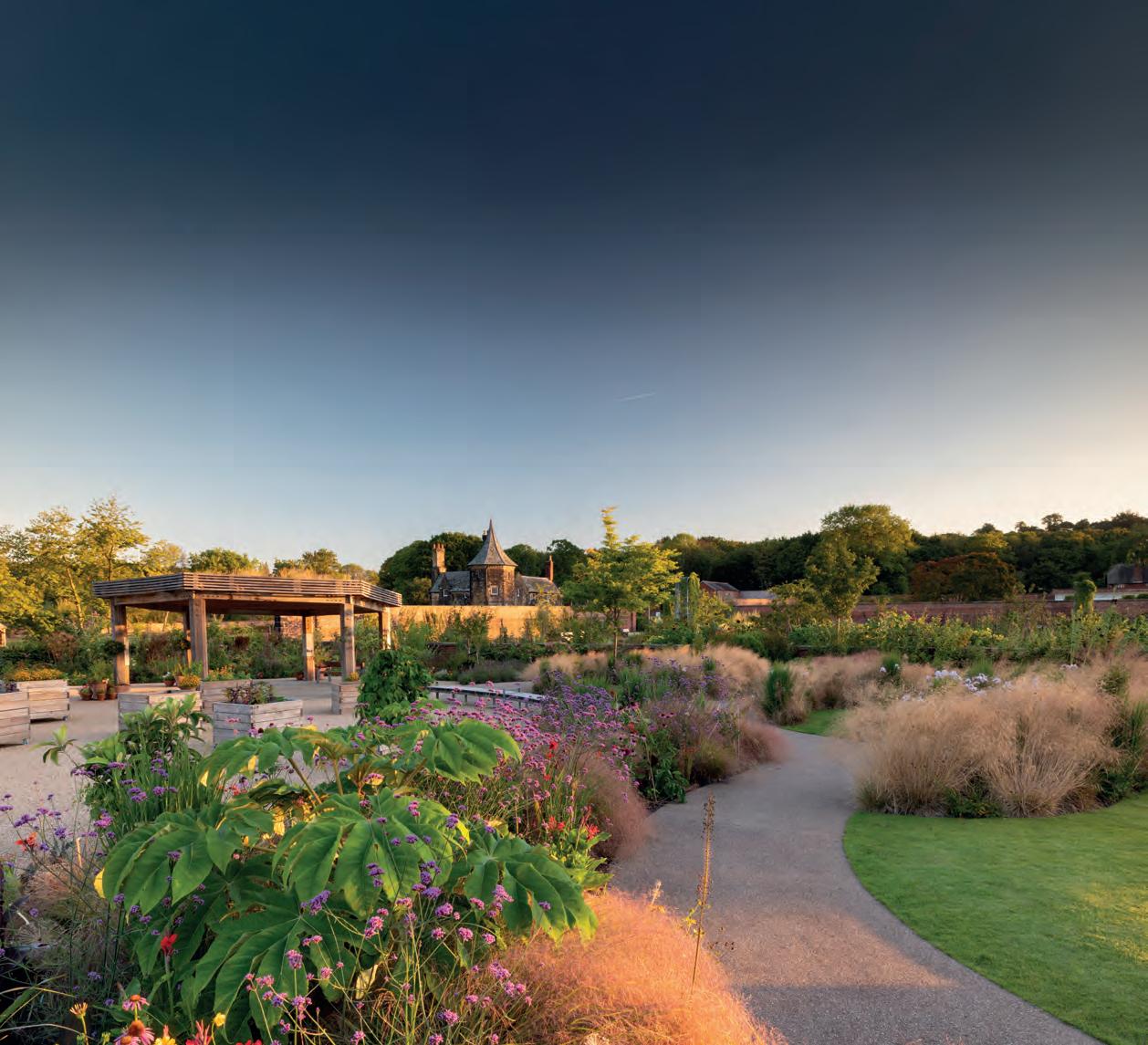
The environmental horticulture sector contributed £38bn to the UK economy in 2023, finds a report released by the Environmental Horticulture Group (EHG) and Oxford Economics. By 2030, it could be worth £51.2bn. Not only is environmental horticulture essential to nature-based climate solutions, but its contribution to tourism is booming.
In 2023, public parks, gardens and green spaces attracted £4.2bn in tourism spending.
“Horticulture is enormous,” begins Richard Green, director of visitor experience and estates at the Royal Horticulture Society, who runs the operation teams across all RHS gardens. Across Great Britain, the RHS State of Gardening Report 2025 mapped 25.8 million gardens. “We
also found that one third of international visits to the UK involve at least one trip to a park or garden,” adds Green. With these figures in mind, “it really puts us at the heart of the UK’s cultural and tourism offer,” he explains.
More people are choosing “memorable days out and short breaks closer to home within the UK instead of travelling further afield,” claims Bernard Donoghue, chief executive at Association of Leading Visitor Attractions (ALVA). In turn, he
Tourists are looking for attractions that offer something fresh to discover, making this a great summer to explore the wealth of culture, history and nature on offer across Britain
adds, “tourists are looking for attractions that offer something fresh to discover, making this a great summer to explore the wealth of culture, history and nature on offer across Britain."
The five RHS gardens reach different corners of the UK, which began when the charity took over RHS Garden Wisley in 1903, marking its oldest garden.
Located in Surrey, Wisley is a 240-acre flagship garden that officially opened to the public from 1904.
©RHS Richard Bloom

The largest garden, RHS Garden Hyde Hall sits in Essex, spanning 365 acres, while RHS Garden Rosemoor is over to the west in Devon. RHS Garden Harlow Carr is the most northerly garden located in North Yorkshire. The newest garden, RHS Garden Bridgewater, opened in 2021 in Greater Manchester. Each garden has its own unique attributes. From the Dry Garden at Hyde Hall to the RHS Hilltop science centre at Wisley, the gardens look to offer something for everyone. Attracting more than three million annual visitors in total, “we play a huge role in that inbound tourism,” says Green. He adds: “We link public enjoyment, health, well-being, biodiversity, skills, climate resilience, economic value. We have touch points across so many sectors and provide invaluable resources.”
We operate these events to add value, flatten the lines, and appeal to a wider demographic
At the time, Bridgewater was regarded “the biggest gardening project in Europe,” says Green. Introduced as the world was opening back up after months locked down during the Covid-19 pandemic, the garden came at just the right time. “There was a real desire for more nature connectedness, and people wanted to be outdoors,” he adds.
been created. It's been done so with some really strong connections made within the local community, and that's been really important.”
The opening of RHS Bridgewater
The most recently opened garden, RHS Garden Bridgewater, unlocks a different part of the country. Sat less than 30 minutes from central Manchester, the garden welcomed visitors in 2021 to “reach a different audience,” explains head of site, Marcus Chiltern-Jones.
The 154-acre garden sits within a historic landscape. Located on the site of the estate of Worsley New Hall in Salford, the landscape was once home to a gothic-style mansion built in the 1840s. Its surrounding landscape design was developed by William Andrew Nesfield, one of the most sought-after members of his profession at the time. During the second World War, parts of the hall were requisitioned by the War Office and its gardens were used as training grounds by the Lancashire Fusiliers.
“There's something really special about that,” says Chiltern-Jones, adding, "it's a really wonderful place that's
With an annual visitation averaging 534,000, Bridgewater looks to level out this figure in an effort to receive consistent visitors all year round. Chiltern-Jones says: “We've had a good exploration of visitor attractions, but I guess the unique flavour for us is this: We are a charity, ultimately, and a lot of what we do is guided by that charitable purpose, which gives us probably quite a good coherence and purity of vision.”
Whatever the weather
Peak visitation clusters around the summer months, where temperatures are reaching
©RBG Kew/Jeff Eden
CHRISTMAS AT KEW RHS
“the sweet spot temperature” of around 20-25°C, describes Chiltern-Jones. Last year the summer-like spring the UK experienced contributed to the garden reaching “a real spike,” with annual visitation figure of 579,000.
But ultimately the weather is out of the control of outdoor gardens and attractions, as Chiltern-Jones puts it, "we are at the mercy of the weather.” When temperatures soar too high, visitation drops slightly, the same when temperatures drop too low. To encourage visitors through arguably quieter months, the RHS has introduced RHS Glow, a winter light show and trail.
In a period that might see a real drop in visitors, the RHS hosts its glow events, which
last six weeks and adds in about 50,000 visitors for the lights experience. “Suddenly, we're taking 10% of our annual visitor numbers at a time of year when ordinarily we'd be very low,” says Chiltern-Jones. On top of summer activities, workshops and societies, such as the Sweet Pea Society and Cacti and Succulent Society, "we operate these events to add value, flatten the lines, and appeal to a wider demographic,” he explains.
Brits aboard – or not?
The National Trust attracts hundreds of thousands of visitors across its sites, too. Clumber Park, for example, received 715,889 visitors in 2025, according to ALVA figures.
The Trust looks to match the demand of visitors as more Brits are holidaying in the UK every year. 80% of the UK population looks to make the most of holidays closer to home this summer, according to BWH Hotels GB.
“The National Trust is bringing internationally acclaimed art, photography, film and immersive experiences to its historic houses, gardens and landscapes, creating unexpected cultural experiences in some of the country's most loved places,” explains the Trust.
RHS Wisley stands as one of the most visited tourist attractions in the UK. The garden attracted over one million visitors in 2025, making it the 24th most visited
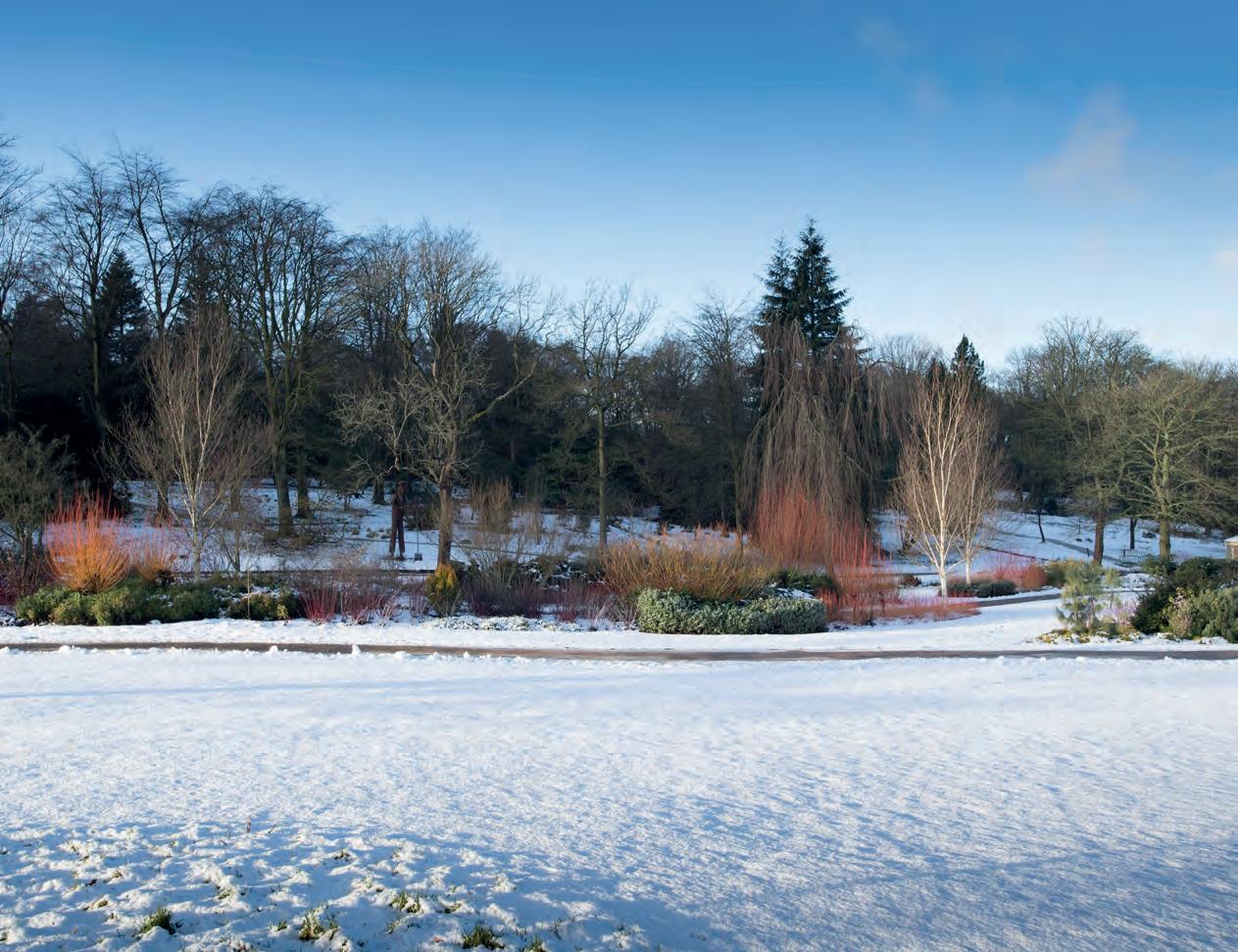
MOST VISITED OUTDOOR SPACES IN THE UK IN 2025* Natural History Museum: 7,116,929
The Crown Estate, Windsor Great Park: 4,978,299
Tower of London: 2,817,852
Royal Botanic Gardens, Kew: 2,250,355
Windsor Castle: 1,259,964
RHS Garden Wisley: 1,255,706
London Zoo: 1,213,187
Royal Botanic Garden Scotland: 978,080
*Visits made in 2025 to visitor attractions in membership with ALVA
RHS HARLOW CARR SNOW
©RHS Sirastudio

attraction in the country. “RHS Wisley was sort of founded on the principles of experimentation, testing what's possible with plants, and the very real threat of climate change,” explains Green. Hosting more than 25,000 plant taxa, the garden is an example of “our incredible plant collection.”
Other public gardens attracting millions of visitors include Royal Botanic Gardens, Kew, which welcomed over two million visitors in 2025. Hosting a similar winter initiative as RHS gardens with Christmas at Kew, the light show and trail markets itself during those much colder, and often quieter months.
Wakehurst was once again the number one visitor attraction in Sussex, landing in spot 103 on ALVA’s table. Highlights include its own Glow Trail, Kew’s Millennium Seed Bank and the Elizabethan Mansion.
The Natural History Museum, located in South Kensington, tops the table with over seven million visitors in 2025. Hosting free-to-enter gardens in the heart of London, Fielden Fowles and J&L Gibbons co-designed the Urban Nature Project, featuring new evolution and wildlife gardens where visitors are able to explore new wildlife as well as discovering prehistoric figures such as dinosaurs.
Gardens are etched into both local and international trips, with RHS gardens providing a global stage to tourists, too. “We show the best in horticulture,” says Green. He adds: “We've got an incredible plant collection. We do public demonstration. We showcase sustainability. We specialise in scientific horticultural research, but we do it in a way where the gardens themselves are beautiful. They look the best in the world.”
Backed up by the world-renowned RHS Chelsea Flower Show, Green compares it to the Oscars of the horticultural world. “That gives us a significant international profile.” RHS Bridgewater was awarded first place in the 2022 European Garden Awards, just a year after its grand opening.
Horticulture for everyone
This summer, for example, as kids are breaking up from school for the holidays, each RHS garden is hosting a trail of brick explorers, made up of LEGO®. Brick-built sculptures are tucked among the greenery, from butterflies to birds and insects, waiting for children to find.
our gardens are living classrooms, research laboratories and wildlife habitats,” says Green. Coming along to an RHS garden could spark an interest in horticulture. He says: “I think that's really important in order to ensure that our industry is successful. We absolutely need to think about the next generation."
A programme runs in each garden called Greener Skills, which gives young people the opportunity to connect with careers officers at schools and provide work experience possibilities. Four years ago, RHS published a strategy – a lifelong adventure with gardening: RHS strategy to 2030 – which details the importance of growing gardeners, being planet-friendly and building membership and supporters. “It really helps us be front-facing in the right way, starting with engaging visitors from a young age,” Green adds.
It really helps us be front-facing in the right way, starting with engaging visitors from a young age
Overall, visitors of all ages are drawn to gardens across the UK. With more extreme temperatures causing peaks and troughs in visitor numbers throughout the year and an increasing number of holidaymakers in the UK, outdoor spaces are matching the demand with annual attractions, such as special winter and summer trails.
"Increasingly, we are focusing on young people and schoolchildren, who might be disconnected from nature. In many ways,
Whether it’s an RHS garden, Kew or the Natural History Museum, access to green space is a major attribute of growing tourism. This translates into economic value, boosting the UK as an ideal destination, for both locals and the international stage.
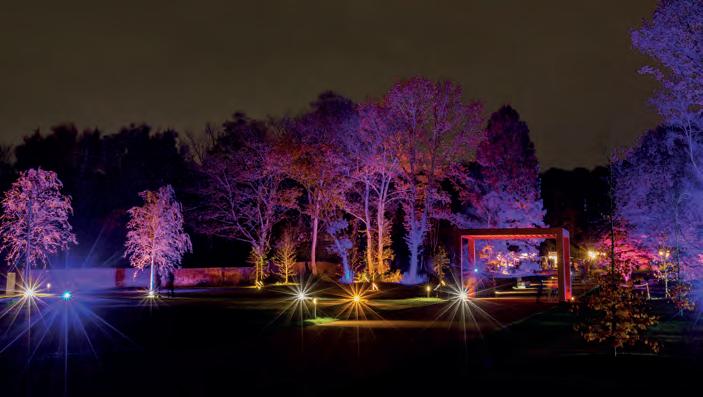
RHS WISLEY GLOW
©RHS Ollie Dixon
RHS BRIDGEWATER GLOW
©RHS Neil Hepworth
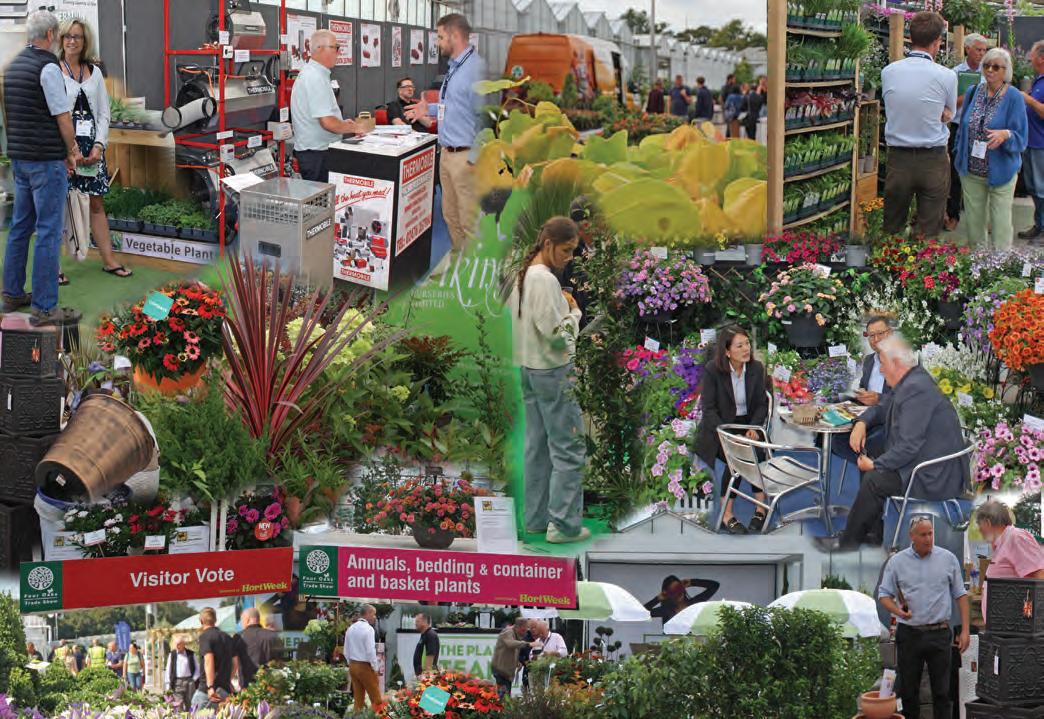
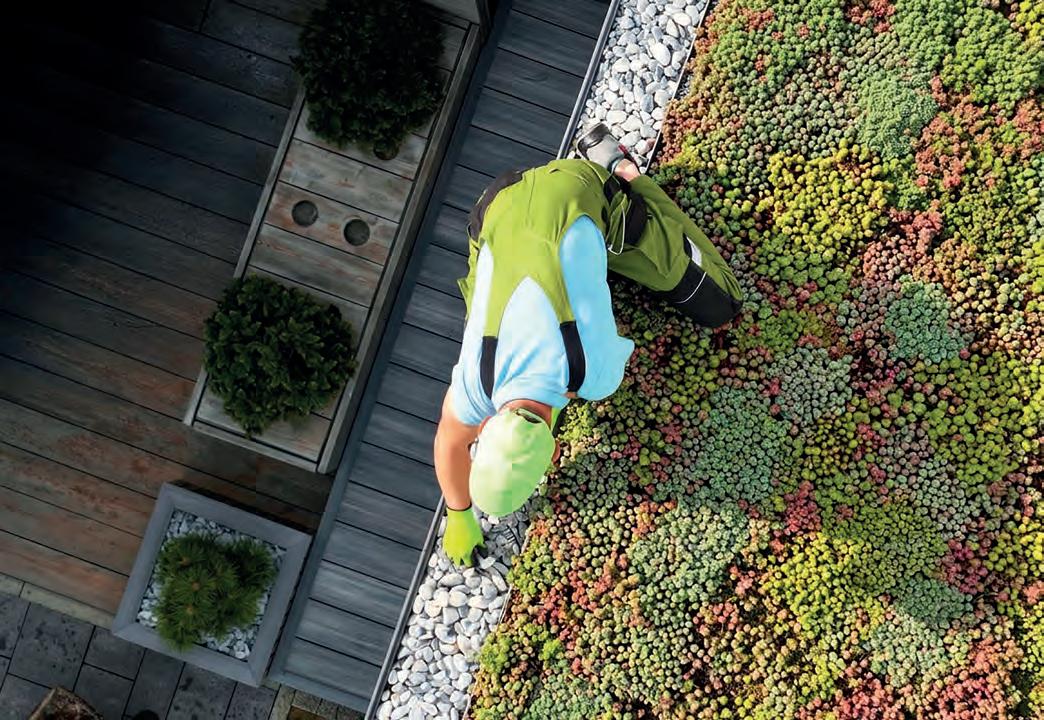
LIFT NATURE TO NEW HEIGHTS


NAVIGATING neuro differences
With over 15% of people in the UK neurodivergent, what challenges can these traits bring and how can individuals, and employers, put strategies and tools into place to help?
WORDS: RACHAEL FORSYTH
that enthusiasm. If it doesn't all go perfectly, I struggled." Moore also found himself getting overly invested in every single inquiry that came in. "I used to respond straight away to every inquiry," he explains. "At the start I would see everyone and get really excited that they were all going to spend £100k. It was really disheartening if it didn't work out."
It was through self-discovery and professional advice that Nester, Greenyer and Moore discovered these traits were due to them being neurodiverse.
Journey to understanding
Running a business is stressful. The year naturally rolls on with pockets of high stress and during those periods Craig Nester, joint owner of Habitat Landscapes, began to notice changes in the way he functioned as the overwhelm built. He'd lose things more often and felt as though he lost momentum more quickly. He became lethargic and felt as though his brain was "full" – he could hold far less information before it started feeling painful or overloaded. At night, he'd lie awake creating hypothetical problems for the next day, unable to sleep without solving them, only for most of those problems not to happen.
For Paul Greenyer, director at Paul Greenyer Consultancy, patterns kept repeating. "I experienced significant time blindness and was frequently late, despite every intention to be on time. I
could become overwhelmed in certain situations, particularly when there were lots of competing demands or high levels of stimulation, and sometimes that would lead me to react in ways that, looking back, weren't always proportionate or easy for others to understand."
Sam Moore, director at Consilium Hortus, always felt he was "a little bit different". He finds commitments hard. He isn't very good at ending conversations. He's great at getting things started – at coming up with the big ideas – but he's not so good at finishing them. "I would start things quite enthusiastically," Moore explains, "but as soon as I hit a bump, I lost
While I was in denial and telling myself I was “fine,” it was harder to move forward. Once I accepted it, it became much easier to manage – and honestly, I now see aspects of it as a superpower
Put very simply, neurodiversity refers to the different ways a person's brain processes information, according to Cambridge University Hospitals. It states that around one-in-seven people in the UK are neurodivergent. Most of these neurodivergent conditions are experienced within a spectrum. Everyone's experiences will differ and some people can identify with more than one type of neurodivergence. Perennial, the UK’s only charity supporting everyone working in or retired from the horticultural community, has found through its focus groups that neurodiversity has come up more often –specifically in its focus group for women. "We didn't know when we started out, but neurodiversity is linked to menopause," explains Helen Waddington, director of services at Perennial. Emerging research reveals that menopause has a pronounced impact on neurodivergent conditions, possibly
What are the different neurodivergent conditions?
According to the NHS these are the common neurodevelopmental conditions and their common signs. But everyone is different. Not everyone with these neurodivergent conditions exhibit all of these traits; these are just the most common.
ADHD
• Lack of attention to detail
• Continually starting new tasks before finishing old ones
• Continually losing or misplacing things
• Forgetfulness
• Inability to focus or prioritise
• Restlessness
• Difficulty keeping quiet, and speaking out of turn
• Mood swings, irritability and quick temper
• Difficulty coping with extreme stress
• Extreme impatience
• Taking risks in activities
• Emotional dysregulation
• Fatigue or tiredness
• Addictive personality
• Difficulty with time management
• Difficulty with sleep
• Rejection sensitivity
Autism
• Social communication and interaction challenges
• Differences in sensory processing – such as being over or under-sensitive to sound, light, touch or taste.
• Find it hard to always understand what others are thinking or feeling, and find it hard to say how they feel
• Take things very literally
• Prefer the same routines every day
• Have strong attention to detail
• Have a keen interest in certain objects or activities
Dyslexia
• Often spell words wrong
• Confuse words that look similar
• May need to read something several times before it makes sense
• Feel tired if you do a lot of reading and writing
• Find it hard to plan things or manage your time
• Forget things like dates or people’s names
• May be skilled in some areas but struggle with other tasks others find easy to complete
Dyspraxia
The main symptoms include difficulty with:
• Movement
• Balance
• Spatial awareness
But it can also make other things difficult such as:
• Learning new skills and remembering information
• Planning and organising your time
• Managing in social situations and dealing with emotions
Dyscalculia
• Find it difficult to solve mathematical equations or to retain numerical information
• Have a lack of confidence with numbers
• Find it difficult to give or follow directions
Tourette syndrome
The main symptom of Tourette syndrome is tics. They can involve repetitive sounds or movement you do not choose to make and cannot control. These can be triggered by stress, excitement or tiredness.
exacerbating existing symptoms or making latent traits more noticeable.
ADHD, in particular, has seen a rise in people asking for help in recent years. The rates of ADHD, according to King's College London, haven't risen since 2020. But greater awareness and acceptance are likely to be causing more people to reach out for help.
Nester reached out to his doctor and ultimately was advised to complete ADHD tests. Ironically, the forms themselves took him four attempts to finish because he would get distracted. He eventually sent them in and was put on a waiting list for a full assessment. Three years later and he's still on that waiting list. But while he's never received a formal diagnosis, Nester's doctor said it was likely.
"At first it hit me hard emotionally," Nester admits. "I had a short dip where I felt like something was “wrong” with me. What helped was talking to my mates. They said, "we could have told you that! Don't get hung up on the label, it's something you've always had". That reframed it for me: I hadn’t changed, it had just gained a name and an explanation. While I was in denial and telling myself I was “fine,” it was harder to move forward. Once I accepted it, it became much
easier to manage – and honestly, I now see aspects of it as a superpower."
It was Greenyer's wife Laura who suggested he might be neurodivergent, specifically that he displayed many traits associated with high-functioning ADHD. "That conversation was the beginning of a journey," says Greenyer. "Together we began researching ADHD, attended courses, read extensively and learned more about how the neurodivergent brain works. Although I appreciate that everyone's experience is different, understanding my own brain has been genuinely life changing.
"For me, it wasn't about suddenly becoming someone different. It was about finally understanding why I'd always approached the world the way I did. That understanding has been incredibly empowering because it allowed me to stop fighting my brain and start working with it. It's also one of the reasons I now feel passionate about sharing my experiences, in the hope that it might help others who have quietly struggled without knowing why. If you've spent years wondering why some things seem harder for you than they do for everyone else, you're certainly not alone. If you think you might be neurodivergent, I'd encourage you to learn more about it and, if appropriate, seek professional advice.
"There have been plenty of challenges, but there have also been many strengths. I'm very good at solving complex problems, seeing solutions that others might miss and
staying calm when projects become difficult. It might take me forty minutes to send a two-sentence text message, but I'd be the one to save your life in an emergency situation."
Nester chose not to pursue medication so the formal diagnosis he's still waiting for hasn't felt urgent for him. But his doctor identifying ADHD has given him that understanding that was so life-changing for Greenyer. Now he knows his patterns. "Misplaced keys, forgetting where I put things, occasional pent-up anger that can “pop” and then pass, overthinking at night, being late, leaving things to the last minute and then powering through," Nester describes, “once I could see those as part of a consistent profile, I stopped beating myself up and started building coping mechanisms.”
and more focused but it's a short-term dopamine hit that creates a vicious cycle – worse sleep, grogginess, overwhelm and poorer diet. Instead, Nester suggests regular exercise for a healthy dopamine kick to calm his brain down, which in turn helps him sleep better.
Diet has also made a huge difference for Greenyer. "Reducing sugar and refined carbohydrates wherever possible and replacing them with a higher-protein, high-fibre diet has been a complete game changer," he says. "Not only has it helped me maintain a healthier weight, but I've personally found it has significantly improved my concentration, clarity of thought and ability to sustain focus throughout the day."
If you've spent years wondering why some things seem harder for you than they do for everyone else, you're certainly not alone
Nester finds being open about having ADHD helps massively, “Keeping it all in doesn’t help me or the people around me,” he explains. “Talking regularly is like doing mini “unloads,” which reduces the chances of a bigger blow-up later.” While Moore also stresses that keeping it in doesn't help, he suggests writing it all down. "Once it's written down, it feels more real. Which is possibly why people don't do it," he says. "Don't keep it all in your head. We've all got neurodivergent traits. Some of us are just more neurodivergent than others."
Nester also heavily advises against self-medication. Alcohol or drugs may feel like they make the brain quieter
Practically, Moore uses technology such as the AI chat, Calendly and Meta Leads which can help him with admin in the background so he doesn't interact with clients as much at the beginning and enquiries are filtered. This stops Moore getting too invested in every enquiry that comes in and helps save his energy and time.
Greenyer finds breaking larger projects into manageable stages, using visual reminders, dictating notes while ideas are fresh and building routines around his strengths all make a huge difference. One technique in particular has been surprisingly helpful – body doubling. "If I'm working alongside someone else, even if they're quietly getting on with their own work, I often find it much easier to focus on administrative tasks that I might otherwise avoid."
Recognising environments that help you reset can also be crucial. Greenyer finds walking in woodlands and spending time by the sea all have a remarkable effect on his mental wellbeing. Music has also been an "elixir of life" for Greenyer, helping him think creatively, process ideas and offering space to untangle complex problems.
What can employers do to support staff? "If you have a neurodiverse team member, don’t treat it as a problem," stresses Nester. "Find what they’re great at, build the role and workflow around their strengths, and communicate often about what’s working and what isn’t. Remember not everyone works like you do. Some people will plan and do tasks later, others will tackle them immediately. Different isn’t wrong. Don’t pressure staff to perform exactly at your pace. Acceptance and communication get far better results than trying to force someone to operate in a way their brain simply doesn’t."
Greenyer echoes a similar sentiment. "Approach neurodiversity with curiosity and understanding rather than assumptions," he explains. "People have good days and difficult days, just as everyone does, and sometimes a little patience and support can make a huge difference. Many neurodivergent people bring exceptional creativity, resilience, innovation and problem-solving skills to a business, but they may benefit from working in slightly different ways."
says, "Some neurodivergent people really like structure. Others don't like a single day being the same. If you have a colleague or staff member who is neurodivergent then you need to be flexible with them and have a bit of understanding."
In practical industries like landscaping and construction, Greenyer has also found that many people learn best by seeing and doing. "Demonstrating a task, allowing someone to practise it and providing guidance as they develop confidence can often be far more effective than simply handing them written instructions." In conjunction with this, Greenyer has found that pairing people together, where appropriate, can improve focus, confidence and productivity for some neurodivergent individuals.
these leaders together to talk about how to support their staff who identified as neurodivergent.
Don't keep it all in your head. We've all got neurodivergent traits. Some of us are just more neurodivergent than others
Perennial is now looking at a raft of different work to support individuals as well as employers.
It's important to think about wellbeing in a broader sense as well, Greenyer explains – good sleep, sensible nutrition and maintaining steady energy levels can make a significant difference. "Something as simple as encouraging healthier breakfast choices rather than relying on sugary snacks or energy drinks might sound small, but for some people it can genuinely help them perform more consistently."
"Everybody is different," says Waddington, "Neurodiversity affects people individually. It's no different from having anybody else on site who's got different requirements. If they fall under neurodiversity, it's about asking them what they need."
Many neurodivergent people bring exceptional creativity, resilience, innovation and problem-solving skills to a business, but they may benefit from working in slightly different ways
Flexible working times and allowing staff to work from home can also help, Moore
Focus groups
Perennial has been running focus groups since Covid-19 called Tough at the Top. "We found that during lockdown managers were looking after their staff but not themselves," explains Waddington. "It was important they knew the support that was there for them. Those sessions have since carried on." Last year, they brought
"Some employers have a great big HR department, but we know in this industry they're often smaller companies," explains Waddington. "Small to medium companies might only have one person, or they might have an office manager who has taken up that HR role, or they might use an external HR company. So, we're looking very much at how you support individuals but also employers to support people within the industry and perhaps themselves as well."
Currently, Perennial is holding focus groups with individuals who know they are neurodiverse and have been assessed. They'll be picking these back up after summer. Perennial will also be looking at information it can host on its website that's easy to access. Anyone interested in getting involved with any of Perennial's upcoming focus groups can email support@ perennial.org.uk.
If anyone reading this only takes one thing away from this article, let it be this: you're not alone. The hardest part will be the first step – whether that's acknowledging these traits within yourself or reaching out to a friend or colleague. After that, there's a wealth of people and resources just waiting to help.
Support
If you have any questions, need some advice, or simply want someone who can relate to what you're feeling, all of the contributors to this article are happy to be contacted. Find their LinkedIn pages below.
While Gareth Wilson was unable to contribute to this article, he is key in driving conversations around neurodiversity and is happy to be contacted should anyone need advice.








0800 093 8543
Open 9am – 4.30pm Monday, Tuesday, Thursday and Friday. Open 10am – 4.30pm on Wednesday. Excludes bank holidays.
WhatsApp: Text ‘Hi’ to 07418 360 780 Health and Wellbeing App perennial.org.uk/ways-we-help/your-health/health-wellbeing-app
Paul Greenyer
Craig Nester
Samuel Moore
Gareth Wilson
Perennial Helpline team
Bringing International Experience Home
WDave Green shares what’s stayed with him since returning home after an international project
hen a flower show finishes, there is always a strange mixture of emotions.
There is relief, exhaustion and pride, but also sadness. After weeks of working closely together, teams disperse and everyone returns to normal life. That feeling exists after every show, but returning home from Japan felt different.
As an overseas designer working with an entirely local team, I had arrived not knowing what to expect. Over the weeks that followed, I was welcomed with extraordinary generosity. Colleagues not only invested themselves in building the garden, but also took the time to help me understand their culture, introduce me to local suppliers, and ensure I felt part of the team. As someone who sometimes worries about being misunderstood, that patience, openness and willingness to include me meant a great deal, and saying goodbye was far more difficult than I had anticipated.
Returning home, however, reminded me how many people had supported the project from afar. Family, friends, clients and colleagues had all helped make the opportunity possible, whether by keeping the business running, offering encouragement or simply staying in touch throughout the build. After several
weeks away, it was wonderful to return to those closest to me and appreciate just how important that support network had been.
One lesson I hadn't expected was that the project didn't really finish when I boarded the flight home. Although the flower show ended, the relationships continued. Social media and messaging have made it easy to stay in contact with the team in Japan, while plans to relocate the garden have created opportunities to work together again. Later in the year, several members of the Japanese team visited the RHS Chelsea Flower Show, and we recreated a photograph together beside my exhibit, mirroring one we had taken in Japan just a few months earlier. It was a lovely reminder that the most enduring part of any project is often the people involved.
It was a lovely reminder that the most enduring part of any project is often the people involved
Professionally, the experience has given me far greater confidence. Returning home with new contacts, a deeper understanding of how the industry operates overseas and the knowledge that we had successfully delivered such an ambitious project has encouraged me to explore further international opportunities. What once felt like an intimidating prospect now feels achievable, and I hope this won't be my last opportunity to design abroad. The response after returning was also

incredibly encouraging. The project attracted more interest from the trade press than I had expected, and during the RHS Chelsea Flower Show, many people stopped to congratulate me on the success of the garden in Japan. It reinforced just how much our industry enjoys celebrating the achievements of others and supporting those willing to take on new challenges.
Looking back, the greatest thing I brought home from Japan wasn't a medal or even the completed garden. It was a new confidence, lifelong friendships and a different way of thinking about landscape, collaboration and craftsmanship. International projects inevitably take you far from home, but they also have a remarkable way of changing how you see home when you return. If you're ever offered the opportunity to work abroad, my advice is simple: say yes. The logistics can be daunting and the challenges are real, but the people you meet, the lessons you learn and the confidence you gain may shape your career long after the project itself has finished.

Recreated the same photograph at the RHS Chelsea Flower Show
Leaving Fukuoka
Celebrating with members of the Fukuoka Flower Show organising team
Final meal with the landscaping and planting team before returning home
Dave Green is an RHS
KINGS Comeback
Catching the attention of passers-by at RHS Chelsea Flower Show, Humaira Ikram asks if we should reconsider Elaeagnus

used Elaeagnus 'Quicksilver' to lift the planting, where the light settled between the trees. As people passed the garden on their way to the loos (the glamour), they kept stopping and asking the same question: what is that delicious smell? Sweet, honeyed and slightly exotic, it was drifting across the path from a plant most of them had never knowingly noticed before. That was the Elaeagnus
Elaeagnus has been unfairly filed under 'municipal' for decades. A background plant for car parks and roundabouts, reliable but a little dull. And yet, if you actually look at it, with its silver foliage and bright yellow flowers and more importantly, smell it, it’s anything but dull.
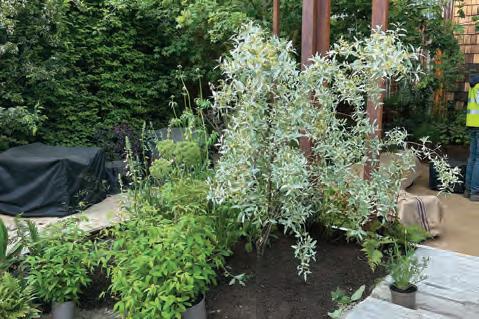
The genus Elaeagnus is a large one, spread across Asia, southern Europe and North America. The name comes from the Greek elaia (olive) and agnos (the chaste tree or Vitex agnus-castus, used in women’s health throughout the ages) –a nod to the resemblance of its berries and foliage to both plants. The deciduous E 'Quicksilver' originates from western and central Asia, where it grows in open, often dry habitats such as the steppe, riverbanks and rocky slopes, in regions stretching from Iran to China. It has evolved to cope with heat, drought, thin soils and reflected light, which is why it is so useful in our increasingly challenging climate.
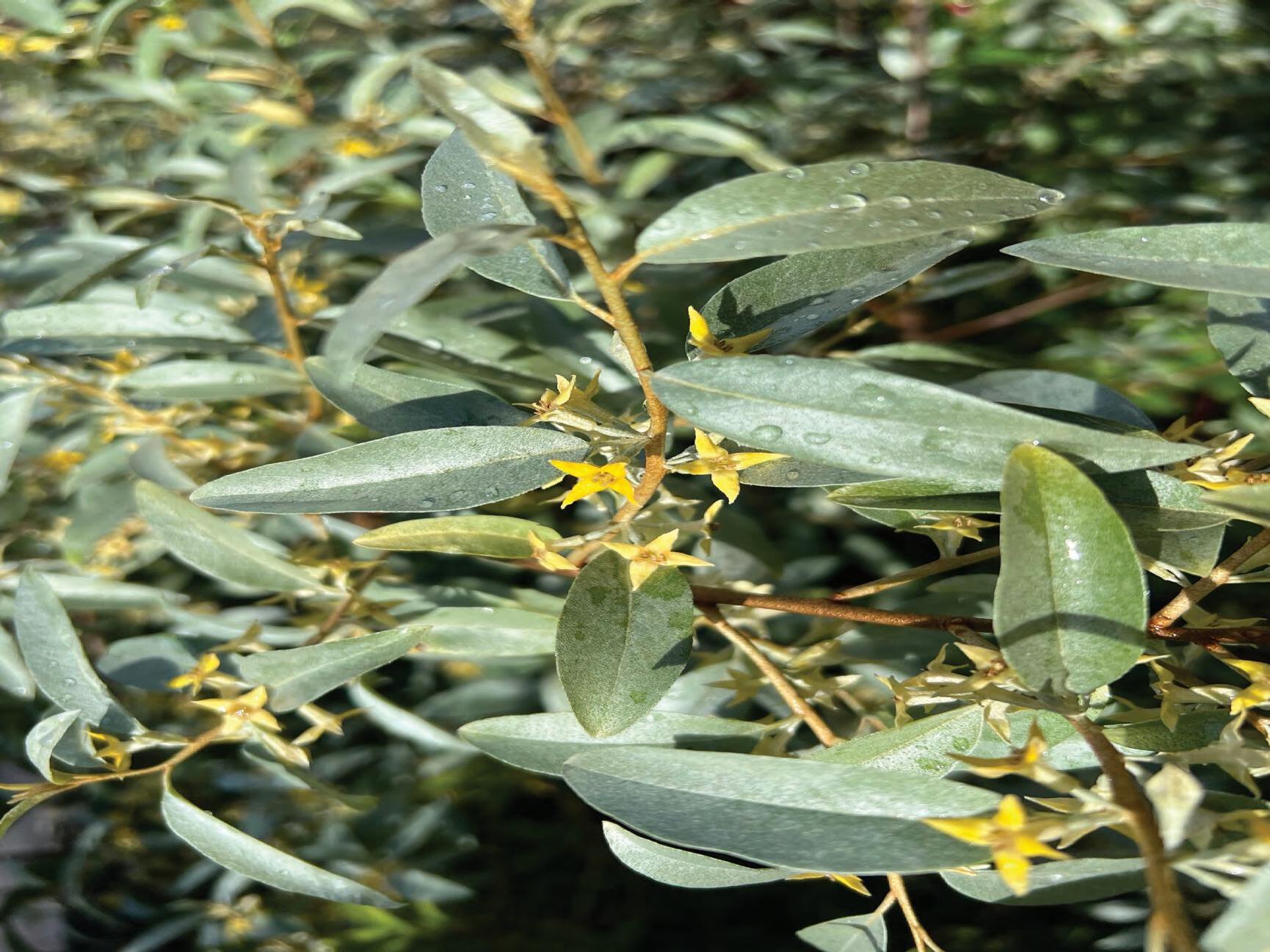
We used it at Chelsea... and this plant delivered architecturally, ecologically and somewhat unexpectedly.
be so intoxicating until this year, is extraordinary. It floats like a ribbon of perfume through the air.
In garden terms, 'Quicksilver' is a genuinely useful plant. It is fast-growing, reaching three to four metres, and nitrogenfixing, which means it improves the soil around it rather than depleting it. It tolerates poor and dry soils, coastal conditions and light shade, though it flowers and silvers up best in full sun. It is not invasive and does not cause problems in garden settings, though in very rural or wild-margin situations it is worth being aware that some Elaeagnus species can self-seed lightly and can run a little. It is always worth doing a quick search online, but in most UK garden contexts, however, it is entirely well-behaved.
For companions, think of the planting around it as a sun-baked, slightly silvery meadow, pairing beautifully with the purple haze of Perovskia (Salvia) 'Blue Spire', the steely blue of Eryngium x zabelii 'Big Blue', and the fine-textured shimmer of Stipa tenuissima, or if you want a little bit of the Chelsea magic, maybe plant with Baptisia 'Cherries Jubilee', Zizea aurea and the soft yellow of Eschscholzia californica 'Ivory Castle'. Just oooooh.
We used it at Chelsea because we needed light across that garden and this plant delivered architecturally, ecologically and somewhat unexpectedly, through its pure and sweet scent. 'Quicksilver' is one of the most underrated shrubs we have. Maybe we should reconsider?

HUMAIRA IKRAM
Humaira Ikram is a professional garden designer with over 10 years’ experience at Studio Ikram. She runs the Garden Design Diploma at the KLC School of Design, advises RHS Hyde Hall, and serves as a judge and panel member for the RHS. She is co-curator of thehub.earth and an award-winning broadcaster who has contributed to BBC Radio 4’s Gardeners’ Question Time and various gardening publications. studioikram.com thehub.earth
SoilsCon 2026
The industry’s go-to conference for all things ‘soils’ is returning to Phyllis Court, Henley-on-Thames, on Thursday, 1st October
Announcing this year’s expert speakers and topics
Tim O’Hare | Kevin Barton | Gill Shaw | Alistair Bayford | Tim White | Chris Bridgman | Gareth Phillips
The circular economy | SuDS | Agricultural Land Classification | Landscape construction and urban tree planting | Greenfield soil management and re-use of surplus topsoil | Green roof design and substrates | Amenity turfgrass management
















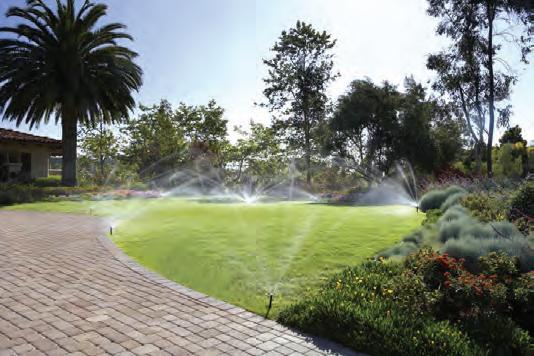






Five minutes with AMANDA CAPON
idverde’s chief people officer Amanda Capon details strategies and values that maintain a successful company

As chief people officer, what strategies and systems do you implement to ensure a stable and positive workplace?
For me, it starts with a simple belief – everyone should genuinely want to come to work. When our colleagues feel valued, listened to and supported, they thrive. And when our colleagues thrive, our business performs. It really is that straightforward.
I'm also hugely passionate about development – not just within idverde, but across the horticulture industry as a whole. This is a sector that offers incredible opportunities, and I believe we have a real responsibility to help people grow, build confidence and progress.
Why do you think idverde has picked up both Sustainable Company of the Year and Employer of the Year at the Pro Landscaper Business Awards 2026?

disconnected from day-to-day reality, there's naturally going to be resistance. By involving teams directly and making it practical rather than theoretical, colleagues became genuinely invested in the outcomes.
What makes idverde different is that both our people strategy and our sustainability strategy are operationally embedded
What makes idverde different is that both our people strategy and our sustainability strategy are operationally embedded. They're not corporate statements gathering dust on a shelf – they're lived out on the ground by our frontline teams, who are actively involved in shaping sustainability plans, influencing environmental improvements and coming forward with ideas that get implemented across the business.
A really good example is the bespoke Sustainability Workshops we created. In operational environments, if sustainability feels
What do these awards mean for the company?
For the company, these awards provide real, visible validation of the commitment we've made to our colleagues, to sustainability, and to doing things the right way.
How does idverde operate to create an inclusive and diverse workforce?
One of the first areas we tackled was recruitment. We reviewed how we advertise roles, the language we use and how we attract talent into the industry. We introduced measures like removing managers from initial CV screening to create fairer opportunities from the outset.
We recognise that horticulture and operational environments haven't always
felt accessible to everyone, and we're working hard to challenge those perceptions – through industry engagement, careers events and initiatives that bring more diverse talent into the sector. From a social value perspective, I genuinely believe that meaningful diversity comes through opportunity, support and removing barriers – not through treating it as a tick-box exercise.
We want all our colleagues to feel completely comfortable being themselves at work. We don't want anyone feeling they have to fit a particular mould to succeed here – the most successful teams are filled with differences.
We also keep mental health visible within the business. During initiatives like Men's Health Week, we share resources, distribute information in depots and create opportunities for open discussion. Those moments matter – they signal to colleagues that this is a safe place to talk.
Are there any new strategies coming to idverde?
We're always evolving, and 2028 is very much in our sights right now. Our business strategy Thrive28 sets out our ambition for the kind of organisation we want to be by 2028, and it's genuinely exciting to be working towards it.
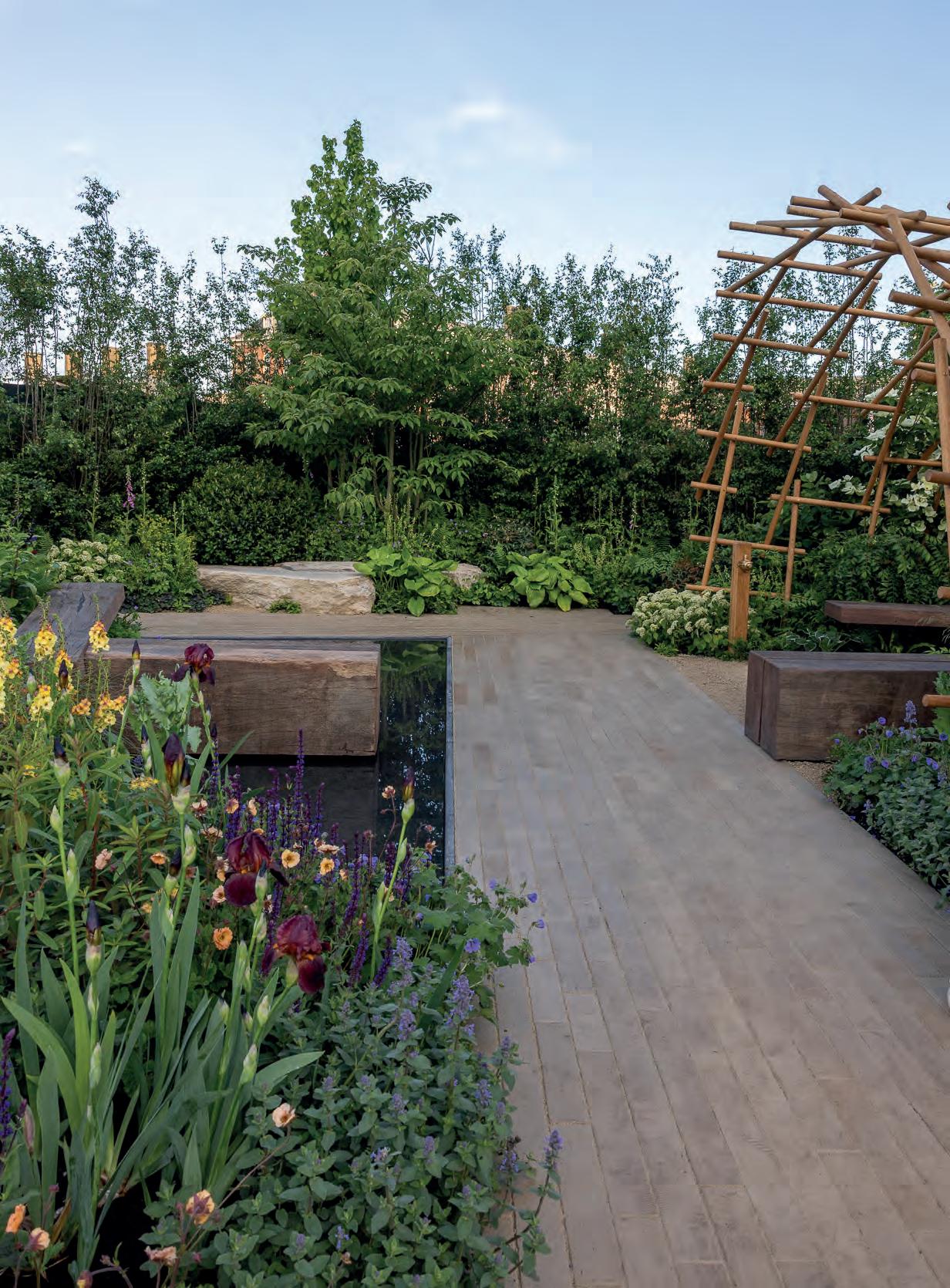

Trussel’s Together Garden
Designed by Rob Hardy | Built by Peter Gregory Landscapes | © Ellie Walpole