INFLUENCE Circle of
ALICE MEACHAM GARDENS


LET'S HEAR IT FROM Landscape Institute's president-elect Carolin Göhler
THAT'S EDIMENTAL!
Harry Holding on designing with edible plants
BARKING UP THE WRONG TREE
Is mass tree planting as good as it sounds?
MARCH 2O24
GREEN


t w e 0344 800 1947 cbsolarshading.co.uk/trade trade@cbsolarshading.co.uk SCAN QR CODE TO FIND OUT MORE & REGISTER AS A TRADE PARTNER YOUR PARTNER FOR GROWTH AWARD-WINNING PERGOLAS, AWNINGS & EXTERNAL BLINDS ONLINE PORTAL DEDICATED TEAM SALES AIDS TECHNICAL SUPPORT 5* INSTALLER TRAINING OWN DELIVERY VEHICLES 5 YEAR GUARANTEE MADE IN BRITAIN 10 DAY MANUFACTURE FACTORY SET UP THE CB ADVANTAGE
CONTACT
Eljays44 Ltd, 3 Churchill Court, 112 The Street, Rustington, West Sussex BN16 3DA
Tel: 01903 777 570
EDITORIAL
Head of content – Nina Mason nina.mason@eljays44.com
Tel: 01903 959 393
Reporter – Bethany Vann bethany.vann@eljays44.com
Tel: 01903 777 578
Features writer – Ashleigh Brown ashleigh.brown@eljays44.com
Tel: 01903 959 394
Senior subeditor – Katrina Roy katrina.roy@eljays44.com
Tel: 01903 777 570
Subeditor – Sam Seaton sam.seaton@eljays44.com
Tel: 01903 777 570
Design – Kara Thomas kara.thomas@eljays44.com
ADVERTISING
Account manager – Russell Eales russell.eales@eljays44.com
Tel: 01903 777 582
Sales executive – Lewis Everle lewis.everle@eljays44.com
Tel: 01903 777 588
Sales executive – Ollie Finch ollie.finch@eljays44.com
Tel: 01903 777 579
Horticulture Careers – Ollie Finch ollie.finch@eljays44.com
Tel: 01903 777 579
MANAGEMENT
Managing director – Jamie Wilkinson jamie.wilkinson@eljays44.com
Tel: 01903 777 589
Divisional director – David Griffiths david.griffiths@eljays44.com
Tel: 01903 777 584
MARKETING & CIRCULATION
Subscription enquiries – Laura Harris laura.harris@eljays44.com
Tel: 01903 777 575
Printed by Stephens and George Ltd
Published by ©Eljays44 Ltd – Connecting Horticulture. Pro Landscaper’s content is available for licensing overseas. Contact jamie.wilkinson@eljays44.com
Pro Landscaper is published 12 times per year by Eljays44 Ltd. The 2024 subscription price is £128. Subscription records are maintained at Eljays44 Ltd, 3 Churchill Court, 112 The Street, Rustington, West Sussex BN16 3DA, UK. Articles and information contained in this publication are the copyright of Eljays44 Ltd and may not be reproduced in any form without the written permission of the publishers. The publishers cannot accept responsibility for loss of, or damage to, uncommissioned photographs or manuscripts. Whilst every effort has been made to maintain the integrity of our advertisers, we accept no responsibility for any problem, complaints, or subsequent litigation arising from readers’ responses to advertisements in the magazine. We also wish to emphasise that views expressed by editorial contributors are not necessarily those of the publishers. Reproduction of any part of this magazine is strictly forbidden.
Welcome

It’s not been a good week for the environment. At the time of writing, the European Union’s climate service has just announced that global warming has exceeded 1.5°C over a 12-month period. To put that into perspective, the landmark Paris agreement in 2015 saw world leaders promise to limit it to 1.5°C to prevent severe consequences. The agreement hasn’t been broken, but it’s a reminder that more needs to be done.
So, it wasn’t the best timing when Keir Starmer and shadow chancellor Rachel Reeves announced that Labour would be ditching its £28bn green investment pledge, announced back in 2021, for one less than £15bn. It’s a significant U-turn and one that has environmental campaigners understandably up in arms.
Financially, it’s arguably a sound choice, lowering the scale of borrowing to fund the raft of green initiatives that would have been carried out using the cash. But the cost to the environment could be significant.
Fortunately, there is a glimmer of hope in biodiversity net gain (BNG) finally becoming mandatory on 12 February. The eagerly awaited legislation could go a long way to addressing biodiversity loss in the UK and could also spark opportunities for the landscaping industry to prosper.
And there’s more good news in this edition of Pro Landscaper, our annual Green Issue. President-elect Carolin Göhler is putting the climate as a priority for the Landscape Institute, having long had a passion for nature and the environment, as you’ll read in our main interview this month. We’re also highlighting the #greengains of companies in the industry, from those designing and building projects to those supplying them. Flip to the back pages for interviews with three of our Pro Landscaper Sustainability & Biodiversity Award winners, who are pushing to be as ‘green’ as possible and hopefully inspiring others to do the same.
We say it often, but the landscaping industry is in a prime position to be a driver for change. The Paris agreement, multi-billion-pound pledges and national legislation are on one end of the scale – what can we do at the other end of the scale, with small changes, to play our part?

prolandscapermagazine .com Pro Landscaper | March 2024 WELCOME 3
Pro Landscaper is proud to be an Accredited Supplier member of BALI Professional Landscapers Pro Landscaper is proud to be an associate member of the APL
Nina
©Jane Ashley Garden Design
17
Should you stick to what you know?
Ken White weighs up whether it’s better to diversify your offering or focus your attention on what your company does best
19
Enhancing Your Client Experience
In the final part of his three-part series, Neil Stead advises how to help gain repeat work and glowing reviews by keeping your clients happy
29
Let’s Hear It From: Carolin Göhler
The president-elect of the Landscape Institute is putting the climate as a top priority – and sees collaboration as the key


March 2024
Tree planting pledges are in abundance, but without an establishment plan in place, these could be empty promises
63
There are plenty of ways that domestic gardens can play a role in reversing biodiversity loss without heavily
Green infrastructure has the potential to improve our air quality and create a more sustainable environment in urban areas
prolandscapermagazine .com Pro Landscaper | March 2024 CONTENTS 4 35 Adding Dimension Pro Landscaper Project Award-winning The Circle Garden by Alice Meacham Gardens has planting at its heart 41 Pool of Potential Water Gems (Alba) Ltd’s work on this County Durham biodiversity pond and rewilding scooped it an inaugural Pro Landscaper Sustainability & Biodiversity Award 47 Revitalising Winchester Working closely with the local council, Studio Multi has given Kings Walk in the city a new lease of life
CONTENTS
BUSINESS INSPIRE
Up the Wrong Tree?
57 Barking
For the Sake of Nature
impacting a budget
Better
67 Breathing
41
FEATURES

PEOPLE
80
BNG: A Beginning?
Biodiversity net gain is a step in the right direction, but its effectiveness will be evident by the aftercare, says Noel Brock
84
A Changing Landscape Mitie’s Tim Howell considers how technology is helping nature recovery to bloom the grounds maintenance sector
91 Little Interviews
Three winners of the 2023
Pro Landscaper Sustainability & Biodiversity Awards talk about the win and their moment in the spotlight
9
Laying the Foundations
Expert witnesses Alan Sargent and Gareth Wilson have published a new A-Z on paving that shares their collective experience
13 Competing for Gold Budding landscapers can now apply to showcase their talent as entries open for this year’s WorldSkills UK Landscaping Competition
52 That’s Edimental!
Garden designer Harry Holding shares how plants that are edible and ornamental can be incorporated seamlessly into a scheme


prolandscapermagazine .com Pro Landscaper | March 2024 CONTENTS 5
MARCH 2O24 THAT'S EDIMENTAL! Harry Holding on designing with edible plants LET'S HEAR IT FROM Landscape Institute's president-elect Carolin Göhler BARKING UP THE WRONG TREE Is mass tree planting as good as it sounds? INFLUENCE Circle of ALICE MEACHAM GARDENS GREEN
ALSO IN THIS ISSUE 35 47
52
Cover image ©Maisie Hill (@maisiehill_photo)/Alice Meacham Gardens
LANDMARK NATURE LEGISLATION LAUNCHES TO TACKLE BIODIVERSITY LOSS
The biodiversity net gain (BNG) legislation has launched, bringing into effect mandatory rules for all new major developments across England in an effort to tackle the decline in biodiversity.
Under Schedule 7A of the Town and Country Planning Act 1990 developers are required to deliver a mandatory biodiversity net gain of 10% on all major developments, unless otherwise exempt.
The Department for Environment, Food & Rural Affairs (Defra) defines major developments as industrial, commercial and

mixed-use sites, including residential developments with 10 or more dwellings, or sites greater than 0.5ha. Moving forward, developers will be required to quantify their anticipated impact on a site’s plants, animals and habitats as part of their planning
ROUNDUP Industry Updates
process, in an effort to “deliver the beautiful homes the country needs, support wildlife and create great places for people to live,” says environment minister, Rebecca Pow.
She goes on to add: “This vital tool builds on our work to reverse the decline in nature and...transform how development and nature can work together to benefit communities.”
BNG commencement for small developments is currently 2 April 2024, with nationally significant infrastructure penned for late 2025.
gov.uk
FUTURESCAPE PARTNERS WITH HYPHAE LEARNING FOR NEW LANDSCAPE PERFORMANCE LIVE
FutureScape Expo has announced the launch of Landscape Performance Live in partnership with Hyphae Learning. This collaboration aims to provide attendees with invaluable knowledge and resources to enhance performance within their businesses, ultimately driving positive change and advancement in the landscaping industry.
WINNERS ANNOUNCED IN THE SGD AWARDS 2024
 ©John Sturrock
Adiverse collection of gardens and landscapes were celebrated at this year’s annual Society of Garden Designers (SGD) Awards, from rooftop gardens to a ‘lush oasis’.
The SGD Garden of the Year Award –also referred to as the Grand Award – was awarded to Andy Sturgeon for the rooftop gardens designed for London’s Battersea Power Station. The project topped the Roof, Podium or Raised Courtyard category, while Hobhouse Court, also designed by Sturgeon, received the award for Best Hardscape Design. Another hat-trick winner on the night was Stefano Marinaz, who took home the Judges’ Award, the Medium
Residential Garden Award and the Design for the Environmental Award for Church Barn in Essex.
The People’s Choice Award –determined by public vote – went to Adam Vetere, one of the SGD’s newest registered members, for a treetop garden in Berkshire, which also won the Small Residential Gardens Award for its “meticulously executed construction detailing and the superb level of finish.”
The SGD Lifetime Achievement Award, gifted by the council, was presented to horticulturist, author and lecturer James Hitchmough. View the full list of winners at: sgd.org.uk
Founded by award-winning landscaper Jake Catling and performance coach Sam Grayson, Hyphae Learning partners with businesses to help them to attract, train and retain talent, with learning resources and innovative tips.
Landscape Performance Live will be a focal point at this year’s FutureScape, offering two days of engaging seminars, dynamic demonstrations, and interactive networking opportunities.

Jake Catling and Sam Grayson, directors of Hyphae Learning, comment: “This collaboration celebrates our shared commitment to empowering the landscaping community through continuous learning and innovation. We’re especially proud to bring our popular podcast, Landscape Performance, directly to attendees with live, engaging sessions.” futurescapeevent.com
prolandscapermagazine .com Pro Landscaper | March 2024 BUSINESS 6
WISLEY CURATOR MATTHEW POTTAGE TO LEAVE RHS AFTER 20 YEARS
The Royal Horticultural Society (RHS) has announced that Matthew Pottage will be leaving the charity at the end of May to take up a new role at The Royal Parks.
The horticulturist has been at the RHS for 20 years, the last nine years of which have been spent as curator of RHS Garden Wisley. During that time, he has overseen a series of projects, including the creation of the Exotic Garden and the Wisteria Walk as well as the recent addition of the rainwater capture Clear Lake.

Royal Parks, Pottage will also oversee the completion of a new Piet Oudolf Landscape that is due to be completed later this spring. He says curating Wisley had been “challenging and rewarding in equal measure” but that he is leaving the garden “much better with more personality, theatre, detail and exciting plants around each corner.”
Head to prolandscapermagazine.com

Before leaving to become head of horticulture and landscape strategy at The
Pottage adds: “I am now ready for a new challenge and leading on the vision, strategy and horticulture across the eight Royal Parks is an opportunity I can’t refuse. I Ieave RHS Wisley as one of the world’s finest, and most exciting gardens and look forward to watching a new curator take the garden onto its next stages as it continues to grow and flourish.”
rhs.org.uk
FRESH HORTICULTURAL CAREERS APPOINTS NEW OPERATIONS DIRECTOR
Viki Halkett has been

appointed operations director of Fresh Horticultural Careers (FHC) after originally joining the company over 15 years ago.
Halkett first joined the company in 2007, and returned in 2014 in the role of consultant after leaving in 2011 as a result of mandatory downsizing. In her role as consultant, Halkett has built strong relationships with the company’s clientele and candidates, says FHC.
In 2017, Halkett moved up again to the role of temps controller. Today she continues to run the temp team alongside assisting FHC owner Marian Barker with the challenges currently facing small businesses. Barker comments on the appointment, saying: “Viki has been with

me throughout the ups and downs the business has faced over the years. The years following Brexit and covid have perhaps been the hardest of all. It is a testament to Viki’s tenacity and positive outlook that we continue to succeed and thrive.”
Halkett adds that she is “very much looking forward to the next chapter” for the company. freshhortcareers.com
BNG IS A “WIN-WIN,” SAYS HELEN NYUL Barratt has been implementing BNG for years. prolandscapermagazine.com/bng-is-a-winwin-for-nature-people-and-for-businessessays-barratts-helen-nyul/

SHOW GARDEN: STARTING A DIALOGUE
Giulio Giorgi makes his RHS Chelsea debut in partnership with World Child Cancer UK. prolandscapermagazine.com/designerbehind-chelseas-world-child-cancer-nurturinggarden-hopes-to-evoke-discussion/

REFORM LAND-BASED APPRENTICESHIPS?
Lantra seeks feedback from industry members. prolandscapermagazine.com/rethinkingthe-delivery-of-land-based-apprenticeshipswith-lantra
LOOK OUT FOR OUR NATIONAL CAREERS WEEK SPECIAL ON THE WEBSITE THIS MONTH, FROM 4-9 MARCH
PLAYGROUNDS TO BE MORE ACCESSIBLE AS PART OF NEW DISABILITY ACTION PLAN
The government has launched a new Disability Action Plan that will include online resources to help local

authorities create accessible playgrounds. The “wide-ranging plan” includes 32 steps that are aimed at making the UK more accessible and equitable.
Sport England’s chief executive Tim Hollingsworth, a disability and access ambassador for sport and physical activity, says there is “no silver bullet” but that the
publication “represents a milestone for everyone who cares about tackling inequality and removing the barriers disabled people face on a daily basis.” The plan is part of a government drive to improve the lives of millions of disabled people which it says has already led to 1.3 million more disabled people being in work now than in 2017. gov.uk
prolandscapermagazine .com Pro Landscaper | March 2024 BUSINESS 7
Online exclusives


Bespoke British Made Outdoor Kitchens


Combining style with extreme durability, KönigOutdoor kitchen cabinetry is created using sintered stone external surfaces and an internal weatherproof structure.
Each KönigOutdoor kitchen is made to order in Britain with turnkey advice and support available for you and your client, from design through to aftercare.
www.konigoutdoor.co.uk
sales@konigoutdoor.co.uk Tel: 0333
2903
577

FOUNDATIONS Laying the
Alan Sargent and Gareth Wilson are paving the way for the industry with their new book
As expert witnesses, it’s fair to say that Alan Sargent and Gareth Wilson have seen a lot of failed projects in their time. The most common issue that arises? The paving. So, the duo has set about trying to create a greater understanding of the product by publishing a new book – Homes & Gardens: An A-Z of Paving & Associated Works.
Instead of being a step-by-step installation guide, though, the new book brings together their collective experience in domestic landscaping, which they say totals more than 90 years between them. Aimed at landscapers, garden designers and specifiers, it covers more than 100 topics, from acid use on paving and bullnosing through to weather protection and zonal variations.
“This is a unique publication. We’ve used a lifetime of our skills and knowledge and put them in these pages,” says Sargent, who founded The Association of Professional Landscapers (APL) and later the Professional Garden Consultants Association (PGCA). He has 13 other published works to his name including “survival manuals” for head gardeners, landscapers, garden designers and professional gardeners.

For the A-Z, Sargent started to write down all the topics he wanted to cover and gave them all headings – then realised how much of a mammoth task he’d embarked upon. “It’s not easy; it’s taken me about six months, whereas normally I can write a book in just a couple of weeks.”
To help, he brought on board Wilson – who has run his own landscaping company and is on a British Standards committee for paving – to add his technical input. The two have known each other personally for the last few years, after Wilson joined the PGCA – though Wilson says he’d of course heard of Sargent long before this. Sargent then mentored Wilson on his journey to becoming an expert witness.
As Sargent puts it, he could write the “sexy bit” while Wilson “added the detail”. “I think that’s what has made it really rather special. We’ve taken the products, the materials, the methods – there's even two pages on cement mixers, and there’s a lot of health and safety taken into consideration. When you start thinking about these things in a profound manner, you realise how complex paving is to talk about, but that’s what we’ve attempted to do with this book – to completely demystify the products and the materials. We’ve described their properties and uses, their laying techniques, the sizes and scales, and everything else that you can do with them.”
That’s what we’ve attempted to do with this book –to completely demystify the products and the materials
Sargent has been landscaping for 55 years so says he can bring knowledge of the more traditional techniques whilst Wilson, with his link to the British Standards, can provide up-to-date regulations. “We’re also trying to show why some of these updated techniques are required,” says Wilson. “Some people don’t use bonding mortar on the back of paving slabs because that’s the way they’ve been doing it for the last 20 years or so. We explain why you do need to use it.”
The book also indirectly touches on sustainability by attempting to ensure that paving lasts for as long as possible. As expert witnesses, the two deal with around 100 cases a year between them, most which
prolandscapermagazine .com Pro Landscaper | March 2024 9
BUSINESS
involve failed paving. “The amount of work we are obliged to condemn every year is in the thousands of metres of paving,” says Sargent. “If we can stop that from happening, we’ll have saved all these materials from being wasted and put into landfill.”
‘We’re also giving out guidance on how to design your pavements and patios to be longer lasting,” adds Wilson. Take the bonding mortar he mentioned earlier.“The most common issue with paving is debonding, so the slabs coming loose; to mitigate that, you put the bonding on the back.
“We talk about permeable paving too. A standard mortar of sand and cement with 4:1 or 3:1 mix is about 18-20N compressive strength, whereas proprietary bedding mortars can go at half the depth and have 48N compressive strength, so nearly two and a half times stronger, and you’re using less cement and less water as well."
Commonly used stones are covered in the book – including natural and reclaimed stones, porcelain and granite – as well as a few more obscure stones such as ironstone and flint. “They’re my main personal passions, but we’ve only mentioned them briefly. Same with Portland stone – you can’t be an amateur and work with Portland stone, it’s impossible,” says Sargent. The price might put a few people off too, at more than £300 per square metre. “To put that into perspective, the most expensive porcelain is around £60."
“To dedicate the book to him was a really big move, because I could have easily crashed and burned. And thanks to Gareth, we didn't,” says Sargent.
“Hopefully, it will improve how garden designers and landscapers approach paving; we’ve broken it down as simply as possible so that people can understand it and, hopefully, they can read it and enjoy it,” says Wilson.
Hopefully, it will improve how garden designers and landscapers approach paving; we’ve broken it down as simply as possible so that people can understand it and, hopefully, they can read it and enjoy it
Following the publication of the A-Z, Sargent and Wilson are offering one-day workshop seminars, the first two dates of which have already sold out. There are still spaces available on 12 March at Brinsbury College in Pulborough, 25 March at Merrist Wood College in Guildford, 16 April at the CED showroom in Ellesmere Port and on 30 April at Tilers Tools in Warrington, with more dates to be announced.
They will be turning the book into a new website under Paving Site Ltd, which will include more techniques and video content –all for free. It will be continually updated with any changes to regulations and new innovations. They are also considering a second book that would be more of an installation guide for paving.
For both authors, the A-Z has been a huge endeavour, with an added pressure after deciding to dedicate the book to Michael Heap, the founder of CED Stone Group. The dedication in the book reads: "In recognition of the passion and integrity he has displayed over so many years in the pursuit of championing natural stone to the landscape and construction industry. His enthusiasm and mentorship of so many paving practitioners is legendary."
The A-Z might have been a challenge to put together, but the necessity for such a book is clear from Sargent and Wilson’s own experiences as expert witnesses, and an installation guide would likely be an in-demand sequel.
Paving in Homes & Gardens: An A-Z of Paving & Associated Works is available to purchase now for £45 including postage and packaging

prolandscapermagazine .com Pro Landscaper | March 2024 BUSINESS 10

Nursery LTD www.quercusnursery.co.uk T: 01903 251 312 E: info@quercusnursery.co.uk WHOLESALE NURSERY | TREES SHRUBS | HERBACEOUS | HEDGING LIVING WALLS | CONTRACT GROW CONTAINERS & PLANTERS Established in 2011, our aim is to supply high quality plants to landscape professionals, garden designers and private clients. We pride ourselves on excellent customer service combined with high quality products to ensure your planting schemes excel.

GreenBlue Urban is the worlds leading Blue Green infrastructure specialist. With more than 30 years experience in creating healthier urban spaces in harmony with nature. Our innovative solutions act as the interface between nature and the built environment.


RootSpaceHydroPlanterSuDSPod
We pride ourselves on delivering excellent customer service.
Share your feedback with us for a chance to win a £50 amazon voucher.
T:

Creating healthier urban spaces in harmony with nature
Creating healthier urban spaces in harmony with nature
Union Terrace Gardens
Suspended pavement support system Modular ‘Plug & Play’ Rain Garden On Plot Attenuation
+44
enquiries@greenblue.com
greenblue.com
(0)1580 830 800 E:
W:
Nine years ago, the Association of Professional Landscapers (APL) launched the Landscaping Competition with WorldSkills UK. It joined a set of other national skills competitions, covering a huge range of careers, from makeup and beauty to aircraft engineering and more. Since, the globally recognised contest has been pushing competitors to achieve new benchmarks and progress in a career in landscaping, something the APL has long been supporting.
GOLD Competing for
Entries for this year’s WorldSkills UK Landscaping Competition are now open
WORDS: ASHLEIGH BROWN
For the last 30 years, the APL has promoted landscaping excellence. It’s comprised of accredited landscaping companies that design, build, and maintain gardens across the UK, each of which have gone through a rigorous inspection process to become members. As the only scheme operator of the government endorsed initiative TrustMark, all member companies endure regular re-inspections and must comply to the highest standards of health and safety law whilst also maintaining a certain quality of work.
The competitors might be at the start of their careers, but that doesn’t mean the heats aren’t tough. Each competitor is only given between three and five millimetres of leeway in each round
must be aged 16 or over as of 1 September and must be either employed in the UK studying towards a relevant qualification or working towards an apprenticeship in a relevant trade. There’s no limit as to the number of competitors who can enter from each organisation.
In the entry stage, entrants are required to scale off from a simple design, provide a quotation and complete a construction phase plan in line with the Construction (Design and Management) Regulations 2015, achieving the minimum score of 48% to progress to the next stage.
The same expectation of quality goes for the WorldSkills Landscaping Competition, for which entries are now open. Participants
Heats are then held at colleges around the country, with WorldSkills UK and the APL doing everything in their power to ensure

that successful entrants have limited travel. The day includes several exercises such as hard landscaping with block pavers, timber skills with decking, joint construction, and plant knowledge.
The competitors might be at the start of their careers, but that doesn’t mean the heats aren’t tough. Each competitor is only given between three and five millimetres of leeway in each round. Accuracy and pace are key, as only the top eight will be taken forward to the finals.
The final stage presents these finalists with the opportunity to build a landscape test

piece of 12m2 from scratch, with only 16 and a half hours on the clock. Competing landscapers are greeted by only a framed area of soil and access to fencing, paving, decking, planting, lighting, and water features. Judging is harsh; after all, this is a competition that’s come to be known as the Olympics of landscaping. Sticking to the original boundaries, each finalist should come prepared – having been given the design three weeks earlier. However, they do have the opportunity to receive training from the judges themselves ahead of the competition.
Up for grabs are bronze, silver, or gold medals. Last year’s winner Anna McLoughlin managed to scoop a highly coveted gold. She entered the awards following her first year of studying a Level 3 in Horticulture at Greenmount CAFRE. “I wanted an opportunity to showcase my abilities and develop new skills while also making connections with likeminded people in the industry, and for this,
ANNA MCLOUGHLIN –2023 GOLD MEDAL WINNER
BUSINESS prolandscapermagazine .com Pro Landscaper | March 2024 13
THE 2023 COMPETITORS
WorldSkills UK was always strongly encouraged,” says Mcloughlin.
Describing competing in WorldSkills UK 2023 as being challenging yet uplifting, Mcloughlin says, “the pressure was notable as each task required precision and extensive care to meet the standards required; pair this with the set time frame, there was a sense of urgency to get the garden completed to a high standard.”
However, it was all worth it in the end when she got to admire the completed garden which she said gave her a sense of accomplishment.“The experience itself was invaluable, encouraging me to develop my skills and strive for a high standard in landscaping. Overall, it was an experience that I would strongly encourage anyone interested in landscaping to participate in!”
The experience itself was invaluable, encouraging me to develop my skills and strive for a high standard in landscaping
says: “At the APL, we’re proud to become organising partners for WorldSkills UK Landscaping competition as we could see the potential it could bring to our industry. It is sometimes criticised as it only attracts a small percentage of entrants, but some of those have gone on to run award-winning companies, employing young people of their own and re-entering their own apprentices through the process.
 Anna McLoughlin, WorldSkills UK Gold medal winner 2023
“Competition really makes the cream rise to the top. To win, not only do you have to be very good at what you do, but also learn how to manage yourself, your nerves, and your time. For many young people this is the biggest challenge. I never fail to enjoy the heats and the final. And I've been fortunate enough to meet some super talented young people, who undoubtably will go on to great things.”

The very challenging but rewarding experience built her confidence and enhanced her landscaping skills through the training, competition, and feedback from industry experts, and since winning gold at WorldSkills UK in November last year, Mcloughlin has left her position as head gardener at Hazelbank Park, where she spent a year working on the construction and maintenance of the Kings Coronation Garden, and is now pursuing a passion of hard landscaping and developing skills with Convery Sportsturf and Landscape Contracts.
“Alongside this, I am also looking forward to being a part of BBC Gardeners’ World Live 2024 where I will be building a show garden along with other selected WorldSkills UK competitors.”
General manager of the Association of Professional Landscapers, Phil Tremayne
For those interested in taking the opportunity to showcase skills and compete against peers, entries are open for another month. It’s a chance to kickstart a career in landscaping and learn from the best, as well as to network and take part in building show gardens later with the APL. Arguably, it’s an opportunity not to be missed.
Entries for this year’s WorldSkills UK Landscaping Competition close on the 28 March 2024.
WorldSkills UK Landscaping Competition is in association with JA Jones, Talasey, Landscapeplus, Makita and Easy Toolhire.


prolandscapermagazine .com Pro Landscaper | March 2024 BUSINESS 14
PROFESSIONAL PERFORMANCE. LONG WORKING TIMES. BATTERY POWERED.


STIHL’s extensive range of professional grade battery-powered tools continues to grow. With long lasting smart batteries that deliver fast charging times and consistent performance, STIHL has the right tool for any commercial user.

NEW battery POWER. BY STIHL.
FSA 200 AND FSA 200 R BATTERY BRUSHCUTTERS.
ƒ

Paving Joint Mortars
Get the Right Jointing for Every Type of Paving & Paved Areas


- Unique with big advantages! EASIER to apply by wet slurry techniques, it is also FASTER as it self-compacts into the joints with no tooling required. Patio Grout produces BETTER results and durability with higher strengths and higher performance than any other 1-part material on the market. Designed for DIY and professional use.


- The original epoxy-coated sand + hardener, dust free paving jointing product for trafficked domestic, commercial, and public areas, especially for smaller format natural stone paving. It has a proven track record of almost 40 years, including more than 16 years in the UK. This type of epoxy technology product leaves a colour enhancing sheen that disappears by normal weathering.


- Unique, self-compacting epoxy-coated sand + hardener, can be applied in cold (from +5oC) and wet weather, has no shrinkage cracks, is fast curing with a sheen free finish, and is fully resistant to traffic, de-icing salts, and direct jet-washing – The way forward for ease of application with no delays or waiting, and for the highest durability in all types of domestic, commercial & public paving!


- Based on the same state-of-the art technology as GftK vdw 850+, but designed for narrow joints from 3mm wide in larger format natural stone paving, and also absolutely ideal for external porcelain tile paving grouting, and without delay - No waiting required. Supplied in smaller 10kg units for fast and residue-free, wet-slurry grouting of porcelain paving.

Visit: www.NCCStreetscape.co.uk | Email: sales@NCCinAction.co.uk | Call: 01257 266696
Patio Grout by GftK, the best 1-part paving joint mortar on the market
GftK vdw 800, the original professional 2-part, epoxy paving joint mortar
GftK vdw 850+, the unique & unrivalled “state-of-the-art” paving jointing
Exclusively supplied in the UK by
GftK vdw 815+, the narrow joint version of 850+ with the same benefits
AS K THE EXPERTS
Should you stick to what you know?
Ken White weighs up the pros and cons of diversifying
The decision to broaden your range of services or focus on what you know best can shape the trajectory of your business. The landscaping industry, with its diverse array of services, offers both opportunities and challenges in navigating this decision.
One key advantage of expanding your scope is the potential to attract a wider client base. Offering a variety of services, such as design, installation, maintenance, and hard landscaping, positions your company as a one-stop solution for clients with diverse needs. This versatility can make your business more appealing to a broader audience, leading to increased opportunities for new projects and collaborations.
ensure consistency and excellence across the various services your company provides.
Your business could become less vulnerable to economic downturns or shifts in demand for specific landscaping services, putting you at a strategic advantage
On the other hand, doing what your company knows best can also yield significant benefits. Mastering a specific aspect of landscaping can position your company as an expert in that niche, drawing in clients seeking specialised services. Specialisation can streamline your operations, making resource allocation more efficient. Your team can focus on perfecting the skills required for your services, resulting in increased productivity and potentially faster project completion times, which could enhance your company's reputation within your chosen sector.
The panel

HOLLY YOUDE
Chair of the APL, Holly Youde, is a director at Urban Landscape Design in the North West and The Landscape Academy, a purpose built training centre dedicated to landscaping in the UK.

JAKE CATLING
Jake founded his domestic landscaping company, The Landscaping Consultants, aged just 24. He is now a BALI board director and the BALI South Thames chairman, and has delivered various awardwinning gardens and outdoor spaces.

Diversification also hedges your company against market fluctuations. Your business could become less vulnerable to economic downturns or shifts in demand for specific landscaping services, putting you at a strategic advantage.
It can foster client loyalty too. Existing clients who have experienced the quality and reliability of your work in one area may be more inclined to choose your company for additional needs. This can lead to long-term relationships and increased repeat business, creating a steady stream of revenue.
There are potential challenges, though. Managing diverse projects may require a larger and more versatile workforce, as different services often demand specialised skills. Adequate training and resources become imperative to
Narrowing your work field can also lead to stronger branding and market positioning. Becoming known as the go-to company for a specific landscaping service can set your business apart from competitors and establish a unique selling proposition.
As with broadening your services, there are downsides to specialisation too, such as limiting your client base, and staying attuned to market trends within your chosen niche is crucial to ensure continued relevance and demand.
Carefully evaluate your goals, resources, and the dynamics of the industry, considering micro and macro-economics. Striking a balance between offering a versatile range of services and cultivating expertise in specific areas can provide a well-rounded approach.
Ultimately, understanding your target market, assessing the capabilities of your team, and staying adaptable to industry trends will guide your company toward a strategic decision that aligns with long-term success in the ever-evolving landscaping sector.
KEN WHITE
Ken White, former chairman of the APL, leads the multi-award-winning Frosts Landscape Construction, which carries out large commercial and private estate projects across the UK.

ROSEMARY COLDSTREAM
Rosemary has won numerous awards for her work, creating high-quality gardens for both domestic and commercial clients. She is a fully registered member of the SGD and sits on the board of directors at BALI.

SARAH EBERLE
Chelsea’s most decorated designer boasts a collection of RHS medals and is a member of the LI, SGD and the Institute of Horticulture. Sarah strives to create as sustainable gardens as possible.
prolandscapermagazine .com Pro Landscaper | March 2024 ADVICE 17
Northern Soul
London Stone’s nationwide expansion continues — our 9th showroom in Greater Manchester takes us back to our North West roots.


“The reaction from landscapers and designers to our Altrincham showroom has been incredible. They’ve been waiting a long time for this showroom and just three minutes’ drive from our Northern Distribution Centre, it’s the perfect spot to bring clients and explore our range of inspirational landscaping materials.”
Stu Williams | Head of Business Development — North
www.londonstone.co.uk
How beautiful gardens begin
Enhancing your
CLIENT EXPERIENCE
Satisfied clients can lead to repeat work and recommendations, so ensure you’re giving them the best experience possible with Neil Stead’s tips
Providing your clients with an amazing experience plays a key part in the sustained success of your business. Beyond the delivery of your landscaping services, harnessing a positive client experience can lead to lasting relationships and the generation of a loyal customer base.
Delivering a seamless and enjoyable interaction, from the initial consultation to the completion of the project, will not only instil confidence in your company's professionalism, but also enhance your levels of customer satisfaction.
A great client experience goes beyond the tangible outcomes of a meticulously designed and built garden; it extends to your effective communication, transparency, and responsiveness
A great client experience goes beyond the tangible outcomes of a meticulously designed and built garden; it extends to your effective communication, transparency, and responsiveness.
It’s no surprise that satisfied clients are more likely to recommend your services to others and increase the chance of them becoming repeat customers, with the potential to contribute significantly to your business growth and reputation. And in an era where online reviews and word-of-mouth play a pivotal role, the impact of a positive client experience reverberates in the form of enhancing your brand image and increased market credibility. Ultimately, prioritising a great client experience is crucial for building customer loyalty and attracting new clients; it’s an investment in the long-term viability and prosperity of your landscape business. Here are some strategies to help improve customer satisfaction in your business.
Excellent communication
You should always keep lines of communication open with your clients, and ensure you respond promptly to their enquiries and provide regular updates on the progress of the project. Make sure you clearly explain the services, timelines, and pricing of the customer’s project to manage expectations effectively.
Personalised service
Always look to tailor your services to meet the specific needs and preferences of each customer, offering customised landscaping plans based on individual property characteristics and your client’s preferences.
Professional and courteous
Train your staff to be professional, polite and respectful to your clients at all times. Ensure that your employees are well-presented and wear appropriate workwear to enhance a sense of professionalism and build your brand reputation.
prolandscapermagazine .com Pro Landscaper | March 2024 ADVICE 19
Quality workmanship
Ensure you always aim to deliver high-quality landscaping services that at least meet – but ideally exceed – your customer’s expectations. Use top-grade materials and ensure the work is completed to the highest standards.
Transparent pricing
Provide transparent and detailed pricing to avoid any surprises for the customer. These should clearly outline the scope of work covered by the estimate and any potential additional charges.
Flexibility
Aim to be as flexible as possible to accommodate the needs of your customers – but clearly not at the detriment of your own efficiencies. By being punctual and adhering to the agreed timelines, you will demonstrate reliability and build trust.
Education
Many customers will have a desire to know more about their project. Take every opportunity to educate them on the process, the design and landscaping options, the plants and maintenance tips. You could even consider providing helpful resources, such as guides, to empower customers to care for their landscapes.
Regular follow-ups
Always look to conduct follow-up calls or visits to ensure customer satisfaction after the completion of a project. Address any concerns promptly and demonstrate your commitment to customer care.
Customer feedback and surveys
Request feedback from customers through surveys or reviews to understand their experiences. Use the feedback to identify areas for improvement and showcase positive reviews on your website and in your marketing materials.
Take every opportunity to educate them on the process, the design and landscaping options, the plants and maintenance tips
Use the feedback to identify areas for improvement and showcase positive reviews on your website and in your marketing materials
By incorporating all or some of these strategies into your landscape business, you will not only enhance the overall customer experience but also strengthen your brand reputation and position your business as customer-centric and forwardthinking within the landscaping industry.
Remember that a satisfied customer is not only a repeat customer, but also a potential advocate who can help grow your business through positive referrals and reviews.
Develop loyalty Occasionally, look to go the extra mile to surprise your clients with a small gesture of appreciation. A thoughtful touch that says “thanks for your business” can leave a lasting impression. Consider how you can reward repeat customers or those who refer you to others that leads to new business. You could offer discounts, special promotions, or exclusive services to encourage a sense of customer loyalty.

NEIL STEAD
Neil is a business consultant, coach, advisor and sounding board, who spent 30 years working for one of the UK's most-trusted brands. In 2021 he set up Steady Consulting to work with the owners of small and medium sized businesses and help them to build a better business – for their customers, for their employees and, perhaps more importantly, for them. He now specialises his services to the horticulture and landscape industry where he provides expert, hands-on guidance, advice and support – tailored to the needs of the individual business. steadyconsulting.co.uk
prolandscapermagazine .com Pro Landscaper | March 2024 ADVICE 20


Bring your fountain to life at night with Otterbine’s Lighting Systems.
Introducing MIDI-RGBW Lights for Otterbine’s Fountain Glo™ . These 9-watt light sets offer a cost-effective way to add rich colour to your fountains. Pairs perfectly with Otterbine’s 1-5hp aerating fountains to give lavish, vibrant light to accentuate any pattern with a variety of coloured displays and sequences. Takes your venue from day to night in style.
reesink-hydroscapes.co.uk
Effective water solutions for all landscapes Irrigation . Pumps . Water Aeration and More


Reesink UK LTD is authorised and regulated by the Financial Conduct Authority. Images shown for illustration only.
ENVIRONMENTAL TARGETS ARE? Why don’t we know what our
Oracle Solicitors’ Ben Lockyer and Christoph Raudonat consider the UK’s green goals and what the landscaping industry should be
considering
Legislation is difficult to understand at the best of times but understanding the complexities of environmental regulations is even harder. The Office for Environmental Protection (OEP) has raised concerns about the government's progress in meeting the targets outlined in the Environment Act 2021. Despite the ambitious goals set a year ago, it appears that the government is currently falling short. As businesses await the initiation of these policies, it seems likely that they will need to be proactive and spearhead innovation.
The five principles that the government committed to are:
1. Integration of environmental protection across policy;
2. Prevent, reduce and mitigate harm to the environment;
3. Tackle origin, if cannot be prevented;
4. Those who cause pollution or damage to the environment are responsible for mitigation or compensation;
5. Where there are serious threats to the environment, a lack of scientific certainty cannot be used as an excuse for not doing anything.
The time has come to think about whether you need a Landscape Visual Impact Assessment (LVIA) or a Landscape Visual Appraisal (LVA).
What are LVIAs and LVAs and should you be doing it?
Broadly, an environmental impact assessment will be required for anything that requires planning, any subsequent applications, local authority’s own developments, development permitted by various orders, developments subject to planning enforcement notices, applications to review
mineral permission, developments under permitted development rights, applications under section 73 of the Town and Country Planning Act 1990, crown development, demolition and EIA orders and permissions.
If the development needs an environmental impact assessment, then an LVIA is usually required, as part of a larger document. The LVIA assesses the significant changes in the character or visual aspect of a landscape. But it may also be required on other projects that impact views and surrounding landscapes.
While an LVA may also be requested to accompany a planning application, it is a more informal document that considers the impacts to a landscape but provides less detail and judgment. There is no formal requirement for an LVA to be carried out, but it may be recommended for completeness of the various aspects of a project.
Businesses that leverage innovation to align their operations with the upcoming environmental standards will be ahead of the competition
environmental standards will reap the fruits of a competitive advantage that will also include positive reputational aspects. Aligning operations may involve adopting sustainable business structures and practices, investing in eco-friendly technologies, and developing strategies that contribute positively to the environment with measurable (and reportable!) results.
What else should landscapers be thinking about?
As businesses await the implementation of the Environment Act 2021 policies, it is essential for them to proactively innovate and engage with local authorities and businesses. Businesses that leverage innovation to align their operations with the upcoming
Collaboration with local authorities and fellow businesses is key to navigating the changing environmental landscape. Effectively engaging with all stakeholders, businesses can ensure that they stay informed about evolving regulations, share best practices, and positively contribute to the development of meaningful environmental solutions. Establishing strong partnerships with local authorities not only ensures that businesses are well-prepared for the imminent regulatory changes but provides them with a seat at the table to define the road ahead.


ORACLE SOLICITORS
Oracle Solicitors provides advice in all areas of ESG and has experts who assist with defining strategies, implementing appropriate management and governance structures to draft and implement policies and procedures to generate best practices for a solid and sustainable future of the business. Ben Lockyer is business development and marketing manager for Oracle Solicitors, whilst Christoph Raudonat is the chief government officer who is responsible for ESG at the firm. oraclesolicitors.co.uk
prolandscapermagazine .com Pro Landscaper | March 2024 22 ADVICE


The original all-weather sweep-in jointing


MAKING HARD LANDSCAPING EASY


The ease of the EASYJoint with contemporary colours of grout.


&
Swatches are representative and colours may vary AZPECTS.CO.UK
For natural
porcelain paving.
than traditional methods.
compound. Faster
EASYJoint
EASYJointSelect

The Workman you know, but now electric The new Toro Workman MDX Lithium utility vehicle. Same powerful performance, same operator comfort, same hefty payload capacity, the Workman MDX Lithium adds HyperCell® battery-power to another customer favourite. reesinkturfcare.co.uk Member of Royal Reesink. Reesink UK LTD is authorised and regulated by the Financial Conduct Authority. Images shown for illustration only. Reimagining turfcare, together.
6 Tips for
CREATING ENGAGING VIDEOS
Matt Freestone shares how to draw in clients with short-form content
It’s no secret that video content has boomed in popularity. As of 2023, 82% of all internet traffic is video and while some believe that video content can't make an impact on your bottom line, the data shows otherwise. Research by Forbes shows that companies who use video in their marketing will grow their revenue 49% faster than those who don't, so creating snappy and engaging videos can be part of a powerful marketing strategy.
Here are six tips to make your video content more engaging:
GRAB THEIR ATTENTION
The average attention span is now around eight seconds, so it’s crucial to clearly grab attention before the audience carries on scrolling. Facebook reports that 65% of people who watch the first three seconds of a video end up watching for at least 10 seconds. So, think of the first three seconds of your video like a newspaper headline – when was the last time you read an article when the headline didn’t interest you?
ADD A HUMAN FACE
Including you or your team in your videos can help build a stronger relationship with the viewers as they will feel like they already know you when they reach out to you. As a result, your sales process will be smoother as you are already deemed trustworthy.
KEEP IT SHORT AND SWEET
Creating video content is a balancing act – you want to provide enough value to keep them engaged, but anything too long and they can’t digest it all. Videos that are between 15 to 90 seconds are just long enough to pique viewers’ interest but short enough to be consumed in full. Just make sure you change visuals frequently throughout your video through different angles, shots, and graphics to keep their attention.
SUBTITLES
Did you know that 85% of Facebook videos are watched without sound?
Without subtitles, a huge segment of viewers is only half-benefitting from seeing your videos. Adding captions can increase video viewing while retaining viewers for longer, which means your videos are more likely to get engagement such as likes and comments. Plus, it shows that your brand values inclusivity!
While you might be creating videos to increase brand awareness, that should not be your sole ambition. You want to educate, entertain or inspire your viewers, so they feel like you’re a reliable and helpful expert in your field. Providing engaging content helps homeowners feel like they know and trust you. From showing the full transformation of a garden to answering frequently asked questions, providing value is what will keep people watching and eventually enquiring.
It seems obvious, but many people don’t do it. By ending your videos by asking questions or telling viewers to like the video if they found it valuable, you can spark conversation within the comments and boost your video in the algorithms. For example, in a garden compilation video, you could ask ‘which of these is your favourite?’
Ultimately, though, when it comes to video production, done is better than perfect. Don’t be afraid to explore your creative side; strive to provide value and you will get potential clients to know, like, and trust you –which ultimately closes more projects.

MATT FREESTONE
Matt Freestone is a social media specialist who’s worked with household names such as Deliveroo, Warner Music and Currys PC World and has experience growing Facebook, TikTok and Instagram pages online to millions of followers. He set up and now runs New Leaf Media, a marketing agency that specialises in finding landscapers more enquiries, site visits and projects through innovative social media marketing and appointment booking processes.
Phone image ©Mynhear/Shutterstock.com
VALUE ENCOURAGE ENGAGEMENT ADVICE prolandscapermagazine .com Pro Landscaper | March 2024 25
CREATE

MISTAKES Learn from
Avoid pitfalls and set yourself up for a prosperous year with a few reminders from Gareth Wilson
As we emerge from winter, a challenging period for many contractors due to adverse weather conditions or a lack of work, it's time to reflect on the past year. Taking stock and constructive thinking about how to improve is essential. Acknowledging mistakes and figuring out how to avoid them in the future is part of the learning process, and I can certainly attest to making my fair share over time.
Being in constant touch with numerous landscapers, three recurring issues stand out: accurately costing a project, adhering to current standards, and ensuring a sufficient pipeline of work.
Pricing, especially for larger projects, is undoubtedly a skill. For projects exceeding £250k, my personal recommendation is to consider hiring a quantity surveyor or to seek guidance from industry professionals, with courses available at the TASK Academy, for instance.
It's crucial to remember that when determining a project's price, stick to it. Avoid lowering your price to meet the client's budget, as discussed previously; it may come back to haunt you. Another pitfall for many landscapers is not staying updated on current standards or thoroughly reading manufacturers' specifications, topics I've addressed before. The upcoming release of the new BS75533:102 document for pavements – to which I've had the privilege to contribute – is expected this year and should be part of every pavior's toolbox.
where marketing your company becomes crucial, and social media is a free and effective way to showcase your work to the wider world.
When determining a project's price, stick to it. Avoid lowering your price to meet the client's budget
Additionally, consider giving your website a makeover with updated projects. Lastly, ensure that your front of house is clean and tidy, as numerous complaints I've heard from clients involve navigating through mud and aggregates to reach their front door!

GARETH WILSON
The lack of work experienced by many contractors during winter is a challenge in the current economic climate. This is
Leaving college at 17, Gareth has worked in the landscape industry since 1989. Progressing onto high-end projects, he has picked up seven RHS gold medals. He is a member of multiple professional bodies. He provides technical and product advice to large companies, mentors and trains contractors and garden designers in landscape construction and on show gardens logistics across the UK. Gareth also provides mediation services, he is a member of the BS7533:102 committee and is an industry awards judge.
gkwilsonlandscaping.co.uk
prolandscapermagazine .com Pro Landscaper | March 2024 ADVICE 27


MAKITAUK.COM/REDEMPTION Claims can be registered on-line from 1st February 2024 and must be registered within 28 days of purchase for qualifying models. Qualifying models must be purchased by 30th June 2024 to qualify and registered within 28 days. 18V LXT: DUB184RT, DUB186RT, DUC101RT, DUC254RT, DUC307RTX2, DUC357RT, DUH502RT, DUH601RT, DUH751RT, DUH523RT, DUH604SRT, DUH754SRT, DUH507RT, DUH607RT, DUH506RT, DUH606RT, DUN461WRT, DUN500WRTE, DUN600LRTE, DUM111RTX, DUM604RTX, DUR193RT, DUR189RT, DUR190LRT8, DUR190URT8, DUR191LRT8, DUR191URT8, DUR192LRT, DUR194RTX2, DUX18RT, DLM330RT, DUP180RT, DUC150RT. CLAIM A FREE BATTERY BL1850B WITH SELECTED 18V LXT GARDEN PRODUCTS 1ST FEBRUARY - 30TH JUNE 2024 CORDLESS GARDEN PRODUCT SPRING REDEMPTION DUC150RT DUP180RT
“I WANT TO BE AN AMBASSADOR FOR THE PROFESSION AND CREATE PARTNERSHIPS IN THE INDUSTRY, WIDER SECTOR AND THE MEDIA”

IThe Landscape Institute’s president-elect, Carolin Göhler FLI, sees collaboration as the key to success – both as an organisation and in tackling the climate emergency
WORDS:
NINA MASON
n her new role, Carolin Göhler FLI sees herself as an “ambassador” for the landscape profession. The chartered landscape architect and horticulturist was announced as president-elect of the Landscape Institute (LI) towards the end of last year, with big ambitions for her presidency, which starts in June.
One of her key drivers is “bringing new talent” into the industry, part of which can be achieved by showcasing the profession and the work it undertakes and highlighting its involvement in creating quality green spaces.
But she believes collaboration between organisations is at the heart of addressing the skills shortage as well as lobbying government – “to combine our membership power to really highlight the issues and opportunities is really crucial.”
This might be because she herself has been inspired by so many people and experiences, from her father who “was very good at project management and coming up with ideas and building things” and her mother who had strong people skills and was very creative, to family friends, one of whom had established their own company that developed green roofs. Then there’s florists, landscape architects, horticulturists and now industry colleagues along the way.
“In our work, we meet some fantastic people who are really inspiring and have fantastic knowledge which they're also willing to share, and I think that’s really important.”
Göhler will be the sixth female to become president of the Landscape Institute, having previously served as chair of its East of England branch, treasurer and vice-president. Most recently, her career
prolandscapermagazine .com Pro Landscaper | March 2024 BUSINESS 29
©Moritz Heukamp
DARTMOOR IN THE WOODS

has focused on heritage landscapes, spending the last five years or so as a part-time gardens and parks consultant for the National Trust. But the breadth of her work since first training as a horticulturist has covered everything from smaller scale gardens to city-wide initiatives.
Born in Germany, Göhler grew up in the “deep countryside” in the northern part of the country.“Growing up in a farming environment, you learn a lot about nature and management of land.” It was a book sent by her godfather in East Germany, though, that sparked a love of plants.“I took the book along with me on walks with my dog and learnt all the plants on the road verges, woodlands and meadows – just the common names, as a child. Then the penny dropped that they had botanical names, so I had to start again,” laughs Göhler.
She ended up undertaking an apprenticeship at a hardy herbaceous nursery which grew more than 1,800 cultivar species. “It was a brilliant way into plant diversity. And with apprenticeships, you have practical experience as a really good inroad to the theory.”
The apprenticeships in Germany are “rigorous”, says Göhler; they last for two or three years, depending on your school leaving degree, and then you take both practical and theory exams before becoming a journeyman. Horticulturists will then spend another two or three years working and perhaps developing a specialism before taking on a one-year master's degree. “Only then are you allowed to train apprentices. It keeps the horticultural specialism really high and makes sure young people learn well.”
The training is more “technical and formal” than in the UK, but that’s part of the charm of British horticulture, says Göhler. “People have quite interesting ideas and come up with fantastic designs and also interesting plant combinations and so on. Wherever you are, the
passion for horticulture and all things green and beautiful is the same.”
I strongly believe that designers should have practical groundings; it’s important to really understand what we do
She was “very lucky” to be accepted as an international trainee at the Royal Botanic Gardens, Kew, learning English as well as horticulture. “I’ve never properly left the country since,” other than a scholarship to study at the Jerusalem Botanical Gardens in Israel, but she returned to the UK to complete her master’s in Landscape Architecture at Newcastle University, combining both practical experience with a passion for design.
“I strongly believe that designers should have practical groundings; it’s important to really understand what we do. Some designs might be good ideas but might not work at all in practice, and having hands on experience helps. I’ve done everything from propagating plants to driving a dumper truck to tree surgery, so I can visualise things and understand how long things might take. It’s important, in land management too, to understand plants, and having a good horticultural background has been a blessing for me.”
Göhler now works for the National Trust but says it’s a bit of a long story on how she came to join the charity. She’d worked as a chartered landscape architect for various local authorities, such as Swindon Borough Council, the London Borough of Barnett, and then the city of Cambridge. She then became a project manager at a charity working in and around Cambridge which Göhler says was like a “mini National Trust” in some ways, as a membership body. She was asked to deliver a new country park to the west of the city. After just six months, the CEO of the charity had left and

prolandscapermagazine .com Pro Landscaper | March 2024 BUSINESS 30

Göhler was encouraged to apply to be their replacement. After a “rigorous interview process” she took on the top job.
“It was really interesting working with historic buildings, green space management and nature conservation. We had an educational programme, visiting primary and secondary schools to teach about nature –obviously following the curriculum requirements but also wider education about nature, historic environments and so on.”
So, Göhler had an “inkling” as to how the National Trust operated. When she moved from Cambridge to Surrey, she decided to go back to her horticultural roots and started

working with the charity on a part-time basis. She views the role as being like a “guardian of the heritage” of the charity’s landscapes.
“We’re looking at new planting designs, for instance, but also looking at how we can adapt to climate change, because we’re seeing really excessive droughts in the southern regions and in the East of England, or extreme wet periods up in the north in particular which are causing flooding. So, we’re considering how we can develop and improve heritage horticulture in that sense.”
This can involve “difficult conversations” around whether parts should be restored using a different planting palette or whether they need to start from scratch. “These are long discussions with colleagues and external advisors and consultants, so nothing is done overnight – it’s very well considered.”
Ecology and sustainability have long been a passion for Göhler. “Even when I was studying, I felt it was important to consider the Rio Earth Summit in 1992. It became clear that we all need to work together for us all to live and enjoy the planet in different ways.”
Through working with the National Trust and through her upcoming presidency with the LI, Göhler is in a position to help spearhead initiatives, and there’s an arguably an expectation for both bodies to be exemplars to their members in how they approach big issues such as climate change.
Through our members, who are not just in the UK but are internationally based, we can disseminate good practice worldwide which makes a vast difference

“Both organisations support access for people, whether it’s gardens or other natural beauty, but also protect nature and focus on sustainability. Both develop new guidance that they’re willing to share. The Landscape Institute in particular is known internationally for its code of practice, which we developed and is now part of the International Federation of Landscape Architects. But we also develop guidance on things like green infrastructure which other countries translate into their languages and use to lobby government. That’s really nice to see.
"Then through our members, who are not just in the UK but are internationally based, we can disseminate good practice worldwide which makes a vast difference, especially for smaller countries with no professional landscape body. It gives those members scope
to kickstart much quicker changes in their countries.” Her background, experience, collaborative approach and forward-thinking outlook arguably make her the ideal fit for the role of president of the Landscape Institute, a position she was again encouraged to run for but also one that felt like the right time in her career. “It’s an interesting one. Obviously, I’m passionate, and I’m now of the age where I can give back. I decided I probably have more time than I ever will, and so the opportunity was there.”
It’s not an easy task, though. Amidst challenges such as a skills shortage, climate change, impact of Brexit, wider international unrest, disrupted supply chains and rising
1 Local public health-led scheme, which Göhler chose as winner of the LI President's Award ©City of Bradford Metropolitan District Council
2 Five Ways Corner, for London Borough of Barnet and TfL. The first public art project by Transport for London in the 1990s ©Carolin Göhler
3 Japanese Garden, Wakehurst Place, for Royal Botanical Gardens Kew ©Carolin Göhler
4 Carolin in her own garden ©Carolin Göhler
prolandscapermagazine .com Pro Landscaper | March 2024 BUSINESS 31
costs, there’s a need for the Landscape Institute, which will be celebrating its centenary in five years, to adapt and evolve – which is exactly what it intends to do.
On being announced as the new permanent CEO of the LI in December, Robert Hughes says it was “a pivotal time for action”. He explains: “We’re taking positive steps towards becoming a more open, inclusive, and futureorientated organisation, putting our members at the heart of everything we do, and collaborating with partners across the built and natural environment. Our potential to make a difference will be founded on the partnerships we build."
By bringing in other people and working in collaboration, we can start developing new things – it's so important
Göhler has the same approach to collaboration. “The landscape industry is changing constantly, and we need to bring more people together to make things happen, as there’s not just one solution for the future. By bringing in other people and working in collaboration, we can start developing new things – it's so important.”
We have to start putting a foot in the right direction and making changes, says Göhler . “Every step we make each year, we can achieve quite a lot – and sometimes, collaborating with others, we might achieve it faster...I really believe that, as landscape professionals and particularly with landscape led design and projects, we can make a significant improvement through good quality work.”
Landscape professionals play “pivotal roles”, and there are more opportunities going

forward for them to engage with the LI. Collaborative working is going to be key for the institute in the coming months, with it set to explore new ways of “putting members at the heart of everything we do”. New committees have been set up for Governance as well as People, Culture and Change to facilitate this.
The LI has also established ‘Project Kestrel’, its digital transformation programme that will allow for a more seamless member experience. “This is really important, offering a simple and accessible member service that is an effective communication system. It improves engagement and unlocks the value for members and staff and other stakeholders.”
It’s also looking at a brand refresh, which Göhler says it hasn’t done in a while, to drive more diversity and grow its profile across a wide range of stakeholder groups.

The biggest opportunity for the LI going forward, though, is focusing on climate, says Göhler , with “emerging cross sector work on embodied carbon that is underway at the moment” as well as working with Natural England on green infrastructure and Landscape Character Assessments.
The UK’s “major green skills gap” inhibits climate adaption and nature recovery, she says. Over half of businesses in the sector have a hard-to-fill vacancy, according to the Landscape Institute’s Skills for Greener Places Report, leading businesses to turn down contracts as they don’t have the resources to fulfil them. The LI plans to build on this research to better understand the issue and guide its response.
It has already opened up new routes into the profession, welcoming its first cohort of ‘Technician’ members last year, and is now looking to launch its Level 7 apprenticeship.
“Working in partnership with member bodies and organisations across the built and natural environment, the LI will continue building allegiances on issues around green skills and developing a critical mass of voices.
“As president-elect for the LI, I want to be an ambassador for the profession and create partnerships in the industry, wider sector and the media. This will help not only raise the understanding of the profession but to hopefully bring more people into the industry.”
As Göhler already recognises, the goals of the LI won’t be achieved by one person; but having a strong figurehead at the helm, the future of the Institute is looking stronger than ever.
prolandscapermagazine .com Pro Landscaper | March 2024 BUSINESS 32
5 Surrey Hills Landscape ©Carolin Göhler
6 Coton Countryside Reserve, for Cambridge
Past Present Future ©Carolin Göhler

GROWN IN THE UK SINCE 2003
FROM THE HOME OF INSTANT HEDGING


READYHEDGE
Readyhedge hedging plants, like the mixed native hedging shown here, are container-grown in the UK and fully acclimatised to UK conditions. With over 20 years’ expertise, Readyhedge delivers hedging to rely on, wherever you are.
® 01386 750 585info@readyhedge.comreadyhedge.com
Adding dimension
ALICE MEACHAM GARDENS THE CIRCLE GARDEN
PROJECT DETAILS
Project value
£23k
Build time
4 weeks
Size of project 1,100m2 Awards
Pro Landscaper
Project Awards 2023: Planting Design

This semi-rural garden in Devon was previously a blank canvas – a rectangle of mown grass sloping gently southwards, with an open aspect and distant hill views dotted with houses. Rather than solid boundaries, there were lots of rough field hedgerows that had been left over from the area’s agricultural legacy and plenty of attractive mature trees visible in the wider environment.
The owners had inherited a very large existing deck and a swimming pool immediately to the rear of the house, which they wanted to keep, but it had an imposing timber balustrade as edge protection from the one metre drop to the lawn. The lawn itself was
prolandscapermagazine .com Pro Landscaper | March 2024 PORTFOLIO 35
rough and uneven, and had been maintained by sporadic mowing, with no real existing planting other than some diseased fruit trees. The boundary hedges were full of bramble, with hazel stands reaching four to five metres high which obscured the view.
While the deck and swimming pool were to be retained, the rest of the garden was an empty space that the clients wanted to be filled with visual interest to create an immersive family space. It was to maintain space for play and congregation but be inviting and encourage people out to explore the garden. The planting was to enhance and not obscure the attractive views to the hills beyond. In addition, a building development in the easterly neighbour’s plot needed to be obscured by planting where possible, and the garden should include a secluded seating area for the teenage children that was away from the pool. Finally, it all needed to be reasonably easy to maintain by a third party as they both work full time.
The client, who is an arts and crafts dealer, also wanted a garden office sited away from the house where they could work, with the intention of acquiring exterior sculptures for display. The garden also needed to provide sites for these sculptures, solid green wall ‘backdrops,’ directed vistas and focal points.

The timber balustrade which separated the pool area from the rest of the house was unattractive, so this was to be removed completely and replaced with a less intrusive edge protection – a wide raised bed
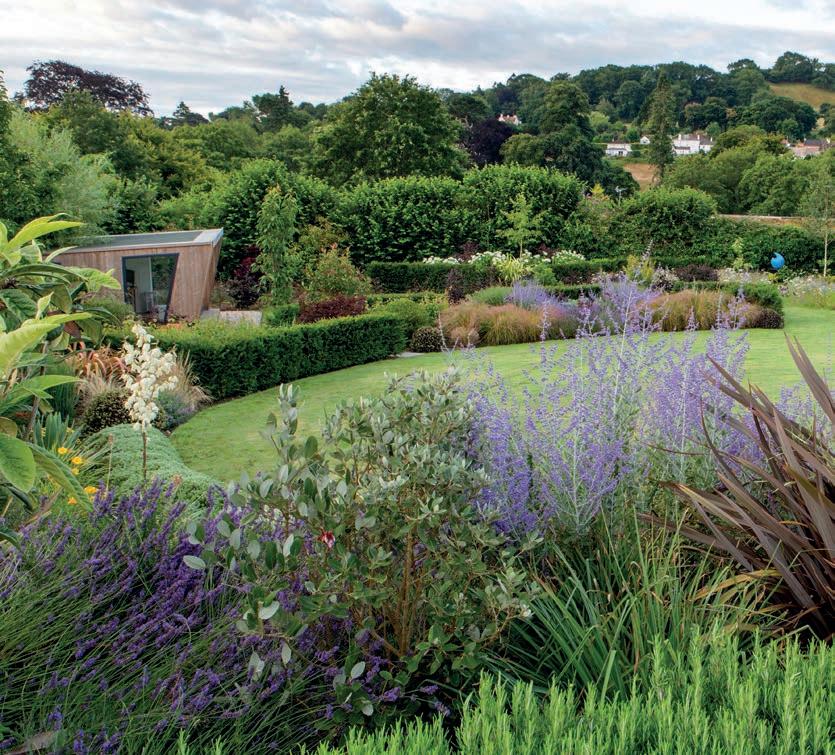
with a thick row of planting separating the deck from the drop. New wider and shallower steps were created between the raised beds to lead down from the deck to the new garden.
The circle shape was a guiding motif from the beginning. Designer Alice Meacham

considered various scenarios for how the mass and void of the garden would work, but it became clear that the open space of grass, which was useful for play and congregation, lent itself to being enclosed by planting in a gentle, encircling way. The formality of the circle structure was also a way to connect the hard rectilinear deck with the softer undulating shapes of the hills beyond (the curve can be a formal shape, and yet is also echoed in nature). It encourages the eye to range from one side to another, ‘spreading out the view’ and ultimately leading out beyond the garden. It also enabled the garden office to be placed separately, behind the circle of planting and away from the ‘action.’
Slabbed paths come in and out of the circle, and it is also marked by formal panels of curved clipped yew and beech hedging, providing solid planes to contrast with the softer blowsy planting. This in time is intended to rise in layers, with yew in the foreground and the taller copper beach behind to draw the eye up in stages to the view beyond.
The panels create different vistas and angles of view, so that planting and focal points are revealed or obscured as you walk around the garden. These will also act as backdrops to
prolandscapermagazine .com Pro Landscaper | March 2024 PORTFOLIO 36

additional sculptural elements as they are introduced in future.
The planting is loosely arranged in sections or quadrants as a way of organising seasonal balance, using both symmetry and asymmetry. Sometimes plants species or genus are duplicated directly across from each other while other oppositions might be similar types of plants.
Plant types were chosen for function as well as form – a trachycarpus on one end of the deck is counterbalanced by a loquat specimen on the other. Both sit comfortably with the swimming pool context, but the large leaves and spreading form of the loquat also provide year-round screening to the east. Robust evergreen aromatic plants such as rosemary and lavender act as a more attractive edge protection than balustrade. Deer roam at will here, so many plants were also chosen for their ability to resist or bounce back from grazing.
A range of ornamental tree species were selected specifically for strategic placing within the deck and around the sides of the garden, to provide obscuring cover from different angles. Seasonal interest was an important factor too, as well as how the trees’ vertical forms contribute to the sense of symmetry. There is some repetition – the Prunus ‘Amanogawa’ – but also plenty of diversity, with species such as sorbus, pyrus, liquidambar and birch all offering their own variety of blossom, leaf colour and form.
This truly is a garden for all seasons, with vibrancy and volume evident even during the harshest of winters. The choice of shrubs and grasses over perennials ensures a longer display and uses foliage as much as bloom for colour and interest. The robust nature of the planting has coped with two summers of drought, prolonged cold and west country wet, and yet has maintained its structure through all those conditions.
The aim was to fill the garden with interest, yet keep in mind the owner’s need for a reasonably low maintenance garden. By using ‘layering’ to create depth, the plant volume feels bigger than it is.

The wildflower meadow was fully implemented a year later than the main planting and hedging was planted as bareroot for gradual establishment. The wildflower meadow has since been sown as an annual meadow but will gradually be converted to a perennial meadow. This has provided a haven for pollinators, and works alongside the sorbus, prunus and other blossoming/ fruiting ornamentals to introduce all kinds of birds, bees and insects into a space that was previously devoid of wildlife.
The design works already as a family space and also as a secluded area for the garden
1 View towards wildflower meadow
2 Looking back towards the house
3 Teens retreat area
4 View West from the deck
5 Allium sphaerocephalon, a seasonal highlight
6 View out from the house

prolandscapermagazine .com Pro Landscaper | March 2024 PORTFOLIO 37

office, which now has a lovely view of the wildflower meadow and sculpture. But the design is also intended to evolve with the years, giving time for the client to consider which sculptural elements she wants to acquire and how they will sit with the developing planting.
This project did not come without challenges for Alice Meacham Gardens. The existing hedging has taken some time to tame, as the team wanted to renovate rather than replace. This is still a work in progress, with a lot of bramble control still being carried out. Parts of the hedging also had to be removed and replaced due to boundary fencing failing. The west side of the garden historically had two trees which succumbed to honey fungus and, given the difficulty and cost of replacing soil and implementing barrier controls, the designer and client agreed to replant in that area using only carefully researched honey-fungus resistant species. Soaker hoses were also put in those places to ensure
that plants were not stressed by extremes of weather which could encourage fungal growth.
Trying to screen the neighbour’s new development was a delicate balance between introducing tall planting without it being overwhelming. Meacham felt that using high hedges or pleached trees would make the garden look unbalanced if only used on one side and didn’t want to use tall oppressive planting all around the site, so a more strategic selection and positioning of trees was required, as was some time and patience to allow the trees to fully fill out and complete the screening.
The client couldn’t be happier with the way their garden has been transformed by Alice Meacham's design and planting scheme.“It gives us an all-year-round display of colour and interest and is a joy to behold.
7 Autumn colour in the garden
8 Seasonal interest in January
Photographs ©Maisie Hill (@maisiehill_photo)

REFERENCES
Specimen trees
Chew Valley Trees chewvalleytrees.co.uk
Trees, hedging and shrubs
Rainbow Plants Ltd rainbowplants.co.uk
Grasses Knoll Gardens knollgardens.co.uk
Garden room
Green Retreats greenretreats.co.uk
Hard landscaping/ soil preparation
Noel Jacks
Landscaping with Chris Rumsby ncjackslandscaping.co.uk
Planting and maintenance
Ben Gooding Gardens/Trudi Robson bengoodinggardens.co.uk
ABOUT
Alice Meacham
Gardens specialises in gardens for rural and coastal sites. The West Country-based garden designer also provides horticultural consultancy and maintenance management. Alice Meacham's designs are tailored to meet specific requirements of each site, but often contain elements of her preferred planting style – a predominance of shrubs and grasses for foliage interest. alicemeacham.co.uk
prolandscapermagazine .com Pro Landscaper | March 2024 PORTFOLIO 38


At


www.majestictrees.co.uk | 01582 843881 | info@majestictrees.co.uk Chequers Hill, Flamstead, Nr St.Albans, Herts, AL3 8ET • ADVICE • DELIVERY • PLANTING • AFTERCARE • Experience the Majestic difference!
visit us and explore our 27 acre nursery, where you can personally select from over 550 varieties of semi-mature/mature trees and hedging. If you are unable to visit why not call or email us to discuss your project with one of our experienced Horticultural Advisors. Supplier of the Year 2020 We are Plant Healthy Certified Don’t settle for second best!
Please
Majestic
Our
and a fantastic
structure which results in
unrivalled
crown.
Trees we believe in growing trees without compromise!
dedicated pruning experts are committed to developing trees which have single dominant leaders
branch
an
finished
ROOTBALL
WILLOW PURCHASED AS A
WILLOW Grower of the Year: Nursery Stock 2008 • 2011 2015 • 2017 Winners of the 2023 UK Grower of the Year Award for a record 5th time!
WILLOW AFTER INITIAL PRUNING AFTER FURTHER DEVELOPMENT FINISHED CROWN OF SAME


01904 448675 lindumturf www.turf.co.uk Create a buzz with Lindum's Biodiverse range Wildflower and Sedum green roof systems - green innovation to enhance biodiversity and combat climate change lindum@turf.co.uk
POTENTIAL Pool of
WATER GEMS (ALBA) LTD
COUNTY DURHAM BIODIVERSITY POND AND REWILDING

PROJECT DETAILS
Project value
Undisclosed
Build time 1 month
Size of project 4,000m2 Awards
Pro Landscaper
Sustainability & Biodiversity Award 2023 – Domestic
Build Project
Approached by a private client with a vision to rewild an area of a field in County Durham, Water Gems (Alba) Ltd jumped at the opportunity to recreate the 20m x 13m pool for biodiversity that once existed on the site.
Working with a brief, which included larch decking, areas of beach, and all native planting, the team at Water Gems added to this by scraping off large areas of turf to be used as the base material for creating new banks and hedgerows. All scraped areas were then seeded with local provenance wildflower, providing the client with large areas of wildflower meadow intersected with native hedgerows.
The pool is now a thriving biodiversity hot spot with dragonflies, newts and swallows all found within the area.
The Water Gems team first inspected the site for drains, stone, and electrics, as it had previously been a horse paddock as well as a potential dumping zone for manure and other rubbish. The team also chose the best location on the hillside for the pond with regards to how it would sit adjacent to the client's house and what it would look like when viewed from the house.
1 Frogs' eye view of pond
prolandscapermagazine .com Pro Landscaper | March 2024 PORTFOLIO 41


Water Gems then sketched up an initial design for the whole site including the pond, timber deck, earthen banks and satellite pools. The team met with the clients to discuss the plans and give them a visual presentation of what they were aiming to achieve, and how the finished project would look.
The clients were mostly focused on achieving greater biodiversity rather than a need for a certain aesthetic, which made for a relaxed approach to the project design. There were, however, specific requirements to be taken into account regarding the placement of the timber deck – its orientation to the house and out across the valley, and that it also matched the curve of the pond.
Having agreed on the principles of the design and layout with the clients, Water Gems set about marking for the excavation and taking levels in order to be sympathetic to the hillside location. The excavation went well as the weather was warm and dry, so they then began building the external perimeter edging which would set the water level.
After lining and dressing-in around the pond, a mixture of stone found on site, along with old walling stone, which was obtained from a local farmer, was used to create aquatic planting beds.
To maintain a ‘less built, more natural’ pond edge, the team used a mixture of techniques to blend the terrestrial landscape to the pond edge and aquatic planting beds. This included using turf, large stones and soil to create a natural look.
Whilst the pond filled over the next few days, the paddock turf was stripped, and banks built to create a diverse topography in the landscape. This would provide varying habitat for wildflower, hedgerow, and trees to grow and support a wider variety of wildlife.
The area was then planted with a wide array of native, aquatic plants including flag iris, purple loosestrife, water mint and water soldier. The terrestrial planting was left to the clients as they wanted to have that as their own part of the project with some support and guidance from Water Gems regarding any native species, varieties and diversity.
After populating the aquatic planting beds with native pond plants, Water Gems was pleased with the finished result and, perhaps more importantly, the clients were too.
All Water Gems’ projects aim to be as sustainable as possible. It uses locally sourced materials wherever possible and natural products like local larch. The plants used are of local provenance and they trap carbon and pollutants and many of these projects are


prolandscapermagazine .com Pro Landscaper | March 2024 PORTFOLIO 42
2 State of field before project started
3 Start of excavation work
4 Block work for pond outline
5 Instalment of underlay and liner
6 Birds' eye view of lined pond
7 Construction of aquatic planting beds and lily rings
8 Larch deck under construction

9 Full p ond on completion


prolandscapermagazine .com Pro Landscaper | March 2024 PORTFOLIO 43

overall carbon positive with a net absorption of carbon.
The team aims to create areas that are sustainable over time with the minimum of management and inputs, with no fertilisers or pesticides and minimal grass cutting and weeding. Wherever possible, natural solutions are used –mulches, composting, and native plants.
This project in County Durham aligns perfectly with Water Gems’ ethos. The pond plants, wildflower and hedgerows will absorb increasing amounts of carbon over time. Maintenance is minimal with one

cut a year of the meadow in late summer being all that is needed. The arisings can be used to mulch the hedgerow trees. No ongoing outside materials

are needed, and the area will become a stable, biodiverse patchwork, attracting masses of wildlife. One of the challenges the team faced, was that the project was a long way from the Water Gems’ base in Edinburgh. However, the team was fortunate to have such prime working conditions – good weather in a beautiful location with self-catering accommodation and fantastic clients – all of which enabled them to fulfil the clients brief so effectively. The whole Water Gems team are extremely proud of this project.
10
11
12
REFERENCES
Pond liner
Gordon Low gordonlowproducts.co.uk
Larch
Harelaw Sawmill harelawsawmill.com
Equipment hire Jewson jewson.co.uk
Plants
Recycled dormant seed banks
Turf
Original turf recycled
ABOUT
Water Gems (Alba) Ltd specialises in unique, selfdesigned landscaping, water, and biodiversity projects. In business for over 26 years, it is a small, tight-knit creative group focusing on quality and integrity. watergems.co.uk
prolandscapermagazine .com Pro Landscaper | March 2024 PORTFOLIO 44
Pond beach
Mid-p oint of construction
Hedgerow planting


Logistics made Simple. Service made Exceptional. With our 2-hour timed delivery slots and Award-winning customer service, call us today to discuss how George Davies Turf can help you. There is so much more to our business than just Turf. Tel. 01234 923948 georgedaviesturf.co.uk

Re-Elming Britain with Resista® Elms
Resista® Elms development in the 1970s and early 1980s, came after many millions of Elms succumbed to a new virulent strain of Dutch Elm Disease. It drastically changed the landscape throughout the British Isles and Europe.
There are now half a dozen varieties available for planting in Europe, and Hillier Trees are proud to be the exclusive grower for the UK and Ireland.
These trees come in three main types, Ulmus ‘Fiorente’, Ulmus ‘Rebona’, and Ulmus ‘New Horizon’. The latter two are 100% resistant to Dutch Elm disease, tolerant of drought, salt, and brief periods of waterlogging,


Established 1864
making them an excellent selection for coastal planting. With rapid growth ensuring quick establishment, and the ability to thrive in extreme temperatures, these trees are also beneficial for insects, particularly the endangered Whiteletter Hairstreak Butterfly.
Hillier Nurseries is the exclusive partner for all the Resista® Elm varieties in the UK and Ireland.
Contact to discuss Resista® Elms for your project: 01794 368 733 or email trees@hillier.co.uk
Welcome to the seventh edition of The Hillier Tree Guide. Since first introduced, the Tree Guide has proved popular for project tree requirements for Landscape Contractors, Garden Designers and Local Authorities.
Scan this QR code to download your copy today!

Visit our newly launched website for 2024 trees.hillier.co.uk

Revitalising WINCHESTER
STUDIO MULTI
REACTIVATION OF KINGS WALK, CENTRAL WINCHESTER
SPROJECT DETAILS
Project value
£290k
Build time 4 months
Size of project 500m2

tudio Multi worked closely with client Winchester City Council to address the need to rejuvenate Kings Walk. It also liaised with the tenants of the independent shops, cafés, restaurants, creative agencies and a community theatre that occupy Kings Walk in Winchester, all of which were adapting and growing their businesses post-Covid.
prolandscapermagazine .com Pro Landscaper | March 2024 PORTFOLIO 47

The upgrade has resulted in the more effective integration of the Nutshell – a locally-listed Victorian community theatre building – with the rest of the Kings Walk Arcade and an improved appearance to the façade and entrance along Silver Hill, including the repainting of brickwork and replacement of doors to the rear entrances of shops.
Other works included the creation of a new secret garden in the courtyard area; the introduction of improved and consistent signage and wayfinding; replacing existing lighting with low-energy lights while adding feature lights in key areas; and animating the courtyard area adjacent to the Nutshell Theatre and around the Middle Brook Street and Silver Hill entrances with planting and lighting.
The Nutshell courtyard and Silver Hill area have been reactivated through the use of a bold ground-level graphic, plus new signage, lighting, and planting which visually ties the entire development together.
The design takes a creative approach to the use of colour. In those parts of Kings Walk with existing busy visuals, neutral colours have been used to provide a uniform backdrop. In contrast, where the design team felt that more animation was required – such as along Silver Hill – a new graphic motif has been employed.
Low-energy lighting has been incorporated, including illuminated readograph signs with slide-in letters to identify particular shops. The front terraces have been activated by the owners of the independent café, restaurant and cycle hub that open onto them; the courtyard is

prolandscapermagazine .com Pro Landscaper | March 2024 PORTFOLIO 48


more hidden and needed an intervention to draw people in.
Nicola Rutt, director at Studio Multi says that “the key to making the Kings Walk re-activation project successful was to work closely with the council and tenants and make as big an impact as possible using the available budget.

“Studio Multi’s role in this public realm project was to assemble and manage the design team and guide the vision through from concept to completion. Our collaboration with other small, creative practices such as to-studio, Light Follows Behaviour and Tim George Graphic Design aimed to push each design element beyond what was expected and bring an element of surprise and joy to passers-by.”
Studio Multi’s response to this challenge was to create a secret garden with large, circular planters, readograph signs, light globes, and bright, colourful graphics. As well as small trees and a range of different plants, fast-growing hops have been planted and trained to climb up and along a three-dimensional network of cables. These soft landscaping features will, over time, transform this courtyard into a truly immersive green space.
Budget constraints have currently limited the transformation to the ground floor areas of Kings Walk, with a datum at first floor level. It is hoped in future the whole of Kings Walk will undergo a more comprehensive transformation as part of the Central Winchester Regeneration project, but until then Studio Multi is confident that its relatively modest intervention is already helping to reinvigorate a previously tired and unwelcoming space.
Councillor Martin Tod, leader of Winchester City Council says: “It’s fantastic to see the early improvement works completed for Kings Walk. Studio Multi's work has been transformational, creating a vibrant and attractive space for the businesses and visitors to the building and surrounding area. We're committed to regenerating this part of the city and supporting the independent businesses based in Kings Walk. Studio Multi's design has helped us do both.”
The soft landscape was designed to provide an immersive, planted space in front of The Nutshell Theatre. Large planters accommodate a variety of perennials, herbs, climbers, ferns, trees and bulbs. Vertical and horizontal catenary wires provide a framework for the climbing plants and large globe lights.
1 The
2 New shop signage
3 The secret garden with planters
4 Aerial
5 New shop doors in Silver Hill
6 Main entrance to Kings Wall Arcade, Middle Brook Street
prolandscapermagazine .com Pro Landscaper | March 2024 PORTFOLIO 49
secret garden adjacent to The Nutshell Theatre, Kings Walk
view of the secret garden with lighting and planters
The planting introduces a biodiversity element to a series of hard spaces which previously lacked any reference to nature. Planters have been designed to be easily redeployed in other parts of the arcade, if required. Essentially, the project is very light touch with no demolition and all new elements being transferable to other locations in the future. New energy efficient LED lighting was installed to replace existing lighting that had reached the end of its life.
Kings Walk is a 1970s shopping arcade in central Winchester, which was previously suffering from anti-social behaviour and lack of footfall, exacerbated by the recent pandemic. The project has helped to give the arcade a new lease of life and created a far more vibrant and welcoming environment than existed before.
7 New signage completes the scene as visitors travel through the arcade
8 The secret garden with planters in use – a relaxing spot to take it all in Photographs ©Andy Stagg


REFERENCES
Installers
Kings Oak Landscapes kingsoaklandscapes.co.uk
Planting design
Tim Osborn to-studio.co.uk
Bespoke planters
Taylor Made Planters Ltd taylormadeplanters.co.uk
Chairs EMU emu.it
ABOUT
Studio Multi is a Londonbased architectural practice founded in 2021. The practice leadership has experience of working in large established practices, which they now bring to a smaller studio focused on thoughtful design and driving positive change. Current projects include new co-living developments, workplace refurbishments and arts projects in London, and a range of building types on science and technology parks. studiomulti.com
prolandscapermagazine .com Pro Landscaper | March 2024 PORTFOLIO 50


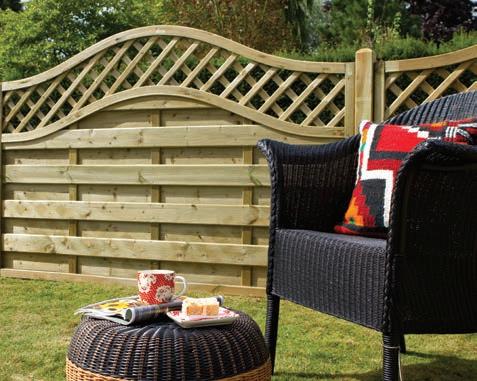


TOP QUALITY FENCING AND LANDSCAPING TIMBER YOUR ONE STOP SHOP FOR LANDSCAPING TIMBER f o r e s t p r o d u c t s Your specialist timber supplier with thousands of products in stock ready for fast, reliable delivery, nationwide. Contact us for more information: T: 01633 254 422 sales@premierforest.co.uk premierforest.co.uk Premier Forest Products Ltd @PremierForestProducts @premierforest FENCE PANELS & FENCING TIMBER FOR POSTS, RAILS & GRAVEL BOARDS DECORATIVE FENCING PREMIUM QUALITY CLADDING DECKING & ACCESSORIES OAK & SOFTWOOD SLEEPERSHANDCRAFTED GARDEN FURNITURE

Edimentals’ is a portmanteau term – edible and ornamental – that describes that sweet spot of plants that are both beautiful and delicious. It represents a diverse group that serves more than one function; they work hard for us in the garden and often provide food for pollinators, wildlife benefits and sensory experiences. No doubt you will be using edimentals already –many of our great garden plants are. From sedum and fennel to rosemary and thyme, they are not necessarily uncommon or specialist.
Being passionate about integrating food into gardens, I was fortunate to deep dive into the world of edimentals through our ‘School Food Matters Garden’ at the RHS Chelsea Flower Show 2023. Pictured here, over 80% of the plants in the garden are edimentals and the majority are climate resilient. With quince, pomegranate, an edible hedge, artichoke, hesperis, perennial leeks, chives and various other herbs, the scheme offers a diverse palette that provides delights throughout the year. We showcased a way of growing food that doesn’t sacrifice beauty and requires very little time, water or resources.

That’s Edimental!
After incorporating it into his show garden last year, Harry Holding has become a firm believer in using edimentals in his designs
What struck me at the show was the public’s reaction, the awe and wonder at these plants and the excitement at bringing them into their own gardens. This confirmed to me that edimentals represent a great untapped potential and I want to explore why they have risen to popularity and how to go about designing with them.
I believe edimentals are a rapidly growing trend because of one key driving force – nature connection. Edimentals offer a foraging experience, something that sparks that raw and innate desire present within all of us to be immersed in the natural world. Food growing, gardening and all manner of nature-based activities have boomed in recent years. With our modern-day lives divorcing us from nature’s rhythms, many of us are seeking to forge a deeper connection and edimentals offer just that.
that are low input-high output. Providing greater levels of drought tolerance and disease resistance, covering soil, minimising weeds and requiring little maintenance upkeep, they are forgiving yet incredibly rewarding.
As a studio, we have been weaving edimentals into our designs for several years with great results and find these types of edible planting schemes are more accessible to our clients. It’s been a joy to see how they have inspired people to engage with their garden in a more meaningful way.
Celebrate the beauty of food alone, the textural qualities of the edible foliage, its statuesque form or the jubilant flower colour
Fuelling this growth is the desire to somehow incorporate food growing into our busy lifestyles. Where a lack of time and space makes traditional kitchen garden growing a challenge for most, edimentals offer a remedy. By nature, they are typically perennial plants
How might you go about designing edimentals into a garden? The best principle is to design in the same way that you would for other planting schemes. In this process, add another layer of information to your plant associations – their ornamental and edible features. Celebrate the beauty of food alone, the textural qualities of the edible foliage, its statuesque form or the jubilant flower colour. They integrate seamlessly into a naturalistic style of planting, whether you are creating a predominantly edimental scheme or simply wanting to weave some edibles into an herbaceous border. We take an ecological
prolandscapermagazine .com Pro Landscaper | March 2024 52
TRENDS
THE SCHOOL FOOD MATTERS GARDEN AT RHS CHELSEA 2023
THE SCHOOL FOOD MATTERS GARDEN AT RHS CHELSEA 2023
Both 'School Food Matters Garden' photographs ©Clive Nichols
Edimentals act as a gateway to nature connection, inspiring the gardeners and environmentalists of tomorrow
approach by considering the layers, from structural down to ground cover, and the myriad of environmental niches available. Develop your thinking on how this plant community will co-exist by looking at their vegetative growth habits, lifecycles, flowering times, root morphology and any other information you can obtain.
Edimentals are not a new phenomenon. They have been widely used in areas of design such as permaculture, a design system that takes the principles of natural ecosystems and applies them to designing human environments. They are also a mainstay of forest gardens, a planting that mimics the structure of a young woodland and each component has a productive purpose. Edimentals, typically being low-input plants with multiple functions, work in harmony with permaculture and forest garden principles.
Beyond our gardens, there are many opportunities for integrating edimentals into outside spaces. Pictured below, at my allotment, I have experimented with them to create a multi-layered system of fruit trees, structural perennial vegetables and an edible meadow. Ann-Marie Powell successfully integrated them into the kitchen garden setting of the World Food Garden at RHS Wisley, where sea kale sits proudly next to cavolo nero and other brassicas.
For me, the greatest untapped potential lies within the public realm and schools. Where maintenance budgets are typically
tight and knowledge may be limited, edimentals offer a dynamic more ‘hands-off’ solution to food production opportunities. Our work with schools and on the RHS No Adults Allowed Garden for RHS Chelsea Flower Show 2024 has shown that this group of plants captures the imaginations of the next generation. Edimentals act as a gateway to nature connection, inspiring the gardeners and environmentalists of tomorrow.
Within the landscape industry, it is our duty to maximise our outside spaces and experiment with big ideas in small environments. We are the stewards of large areas of land and have the opportunity to bridge the gap between society and the natural world. In this changing climate, we must adapt and make use of the resources available and edimentals offer that opportunity. Whilst they aren’t going to produce enough food for a household alone, they do represent two common threads between all of society – food and beauty. I believe they can go some way to mending our connection with nature.

HARRY HOLDING
Harry Holding has been noted as a ‘rising star’ within the industry, receiving awards from House & Garden, the SGD and other industry bodies. His School Food Matters Garden at RHS Chelsea Flower Show 2023 won a People's Choice Award and a Silver-Gilt medal. His designs are plant driven and ecologically minded, focusing on creating resilient, immersive and enchanting spaces. harryholding.co.uk

Fork out on these EDIBLE PLANTS

Incredible Vegetables
Dystaenia takesimana
(Korean perennial celery or Seombadi)
A hardy edimental fantastic for insect life. Its earthy celery like leaves and shoots can be used for soups and stews. incrediblevegetables.co.uk

Palmstead
Allium schoenoprasum (chives)
With pretty pink flowers, Allium schoenoprasum is a useful salad ingredient, as well as a base to which other flavours can be added. palmstead.co.uk

Edulis
Pachyphragma macrophyllum (Caucasian Pennycress)
A true edimental that is versatile and attractive. This grows almost anywhere from very wet shade to dry part-shade. It forms pure white mounds of arabis-like flowers from February to April. Leaves and flowers are edible. edulis.co.uk
Could edimentals become more of a necessity than a nice-to-have?
Noel
prolandscapermagazine .com Pro Landscaper | March 2024 TRENDS 53
HARRY'S ALLOTMENT, INCORPORATING EDIMENTALS
Kingsbury explores the introduction of edible plants to public spaces on page 76.
GROUNDSCARE Sustainable
Providing sustainable, environmentally friendly machinery alternatives that do not compromise on quality,while reducing carbon footprint is a key objective of distributor Reesink
There are no official guidelines on what effective measures are in sustainable groundscare and many clubs and businesses do not follow the same practices. However, there’s one we can all agree is easy to implement and brings great environmental benefits.
Alternative power sources
The incorporation of alternative fuel sources in sustainable groundscare practices represents a pivot towards environmentally conscious landscaping. Alternative fuels, such as battery power, biodiesel, ethanol, or compressed natural gas (CNG), minimise the carbon footprint associated with petrol or diesel-powered equipment.
According to the European Environment Agency, the use of alternative fuels in machinery significantly reduces greenhouse gas emissions, contributing to overall air quality improvement. Biodiesel, for instance, derived from renewable sources like vegetable oils, offers a cleaner
combustion process and decreased emissions of particulate matter.
Going electric
It shouldn't come as a surprise that exchanging diesel-powered engines for hybrid or all-electric counterparts is a great strategy for sustainable landscaping. The car industry is underway with the introduction of electric vehicles and the infrastructure to support them, and the focus is now to strive for carbon neutrality across the board.
Green mowers produce zero emissions, so using electric machinery powered by lithium-ion for example contributes to decarbonisation goals by eliminating the CO2 that would otherwise be produced by a diesel model –and with no hydraulic fluid leaks to go alongside, battery operated mowers are more environmentally sustainable on just about every front.
Sustainable world-class outfront rotary mowing from Toro


TOP AND BOTTOM:
TORO GROUNDSMASTER
E3200 ALL-ELECTRIC ROTARY MOWER
Now the groundscare market can easily venture into the age of electrification with Toro’s Groundsmaster e3200, the industry’s first all-electric out-front rotary mower.
The Groundsmaster e3200 has taken the chassis, commercialgrade mowing deck and intuitive operator controls of the diesel machine that has been popular for 50 years, and introduced zero operating emissions.
• Powerful HyperCell batteries
Toro’s proprietary, patentpending lithium-ion technology incorporates a smart battery management system for consistent performance and optimised lifecycle, which is good for the life of the machine and the environment.
• The strong, quiet type
The Groundsmaster e3200 not only eliminates operating emissions for a cleaner environment, but engine noise too. With the e3200, work can start near residential and urbans areas early without disturbance.
• All- day power, all-day performance
The all-new Groundsmaster e3200 can be configured with up to 17 HyperCell batteries for all-day runtime in all conditions. Smart controls optimise power consumption by continuously and efficiently providing ample cutting power without slowing down. The reserve power mode allows the operator to set parameters ensuring enough battery power to return to the recharging station. The on-board 3.3kW charger allows
for recharging overnight.
• No range anxiety
There need be no worries when it comes to the range of the machines. Toro’s InfoCentre clearly shows battery charge status, hours and alerts, and has customisable settings. All Toro’s electric machines can be fast charged by plugging into any standard household outlet, taking between three to ten hours depending on the model for a full charge.
• Favourite features battery powered
There’s no drop in productivity with the e3200. It features the same rugged 60” (152cm) side or rear discharge mowing deck options built with highstrength steel for the ultimate durability, and impact bumpers featured on the popular diesel-powered Groundsmaster models. It’s simply the power source that’s different.
Groundskeeping sustainably is a balance between the way groundskeepers work and the practices they engage with as well as the tools they use. Combining them is a great way to get started, and the good news is Reesink Turfcare can help.

To learn more, call 01480 226800 or email: info@reesinkturfcare.co.uk
prolandscapermagazine .com Pro Landscaper | March 2024 54
PROMOTION
SOIL Standout
Four market-leading companies share their standout products

BOUGHTON
BLS 40 PREMIUM VEGETABLE & FRUIT NATURAL TOPSOIL
Boughton’s BLS 40 is a repurposed, single source, screened, natural topsoil, enriched with added PAS 100 compost, 40% by volume. This topsoil has boosted organic matter content, excellent moisture, and nutrient retention capabilities, making it excel in planting projects such as fruit production and raised and ground level vegetable gardens, both soft and hard. BLS 40 is well suited to projects where permanent irrigation is not specified because of its good water retention properties, although with vegetable and fruit products Boughton would always recommend some form of regular irrigation.
boughton.co.uk


HALLSTONE
HALLSTONE BLENDED LOAM TOPSOIL
The ingredients in Hallstone topsoil undergo rigorous testing so landscapers can be confident that it is fertile and safe. It is one of the few products in the UK that uses specially selected, single-source, natural, sandy loam topsoil. Once blended, the loam’s composition and fertility are checked at independent UKAS and MCERTS accredited laboratories where it is also analysed to confirm it is contaminant-free. It tests for more than 70 parameters, compared with the minimum 15 required for compliance with the latest British Standard for Topsoil, BS 3882:2015. As a result, Hallstone Blended Loam is certified as suitable for homegrown use, for complete peace of mind. hallstone.co.uk


BRITISH SUGAR TOPSOIL
TOPSOIL, a division of British Sugar PLC, is a long-established supplier of high-quality topsoil’s, topdressings, and subsoil. Landscape20 is a multi-purpose topsoil suitable for landscaping projects which is fully analysed and compliant to BS3882:2015. With optimum reserves of organic matter and nutrients, it is suitable for planting rootball trees, shrub beds, retained planters and vegetable planting projects. bstopsoil.co.uk

DAVIES TURF

If you’re a landscaper that needs some excellent topsoil delivered in a bulk bag, then look no further than George Davies Turf. Its topsoil is sourced from the free draining areas in Lincolnshire. It is a natural soil that is extremely easy to work and produces amazing results when used for preparing the areas before turfing. George Davies Turf has been selling its range of topsoil for over 14 years and delivers around 10,000 bulk bags every year to more than 8,000 landscapers and homeowners alike. This all comes with an award-winning customer service team which is second to none. georgedaviesturf.co.uk

PRODUCTS prolandscapermagazine .com Pro Landscaper | March 2024 55
GDT TOPSOIL
LANDSCAPE20
GEORGE


2023/24 Field Collection available to view or download on our website. Please contact us at hello@newwoodtrees.co.uk
newwoodtrees.co.uk
Are we barking up the WRONG TREE?
Mass tree planting is touted as being a key response to the climate emergency – but with a raft of failed schemes, is it as good as it sounds, or is there more to it to ensure success?
WORDS: NINA MASON

Tree planting has been hitting the headlines, but not always for the right reasons. Last spring, the National Highways had to admit to an “unusually high failure rate” in the 860,000 trees that had been planted along the A14. Sky News reported that three quarters of the trees had died, sparking public outrage.
So, National Highways announced that it would be planting 160,000 new trees as part of the £1.5bn A14 Cambridge to Huntingdon improvement scheme, with a ‘revised planting strategy’ that includes a ‘new preparation and planting aftercare programme’. A five-year establishment plan for the trees has been put in place to turn around the success rate.
prolandscapermagazine .com Pro Landscaper | March 2024 FEATURE 57
©Tubex
Project manager Martin Edwards says National Highways’ fresh approach would “result in optimum species of tree, in the right areas.” But what does this mean? And is mass tree planting worth the effort?

The benefits of trees are vast, from improving air quality to encouraging biodiversity to cooling the urban heat island effect – at least, these are the reasons the mayor of London, Sadiq Khan, said he was announcing a £3.1m tree planting package two years ago.
The most outlandish (though arguably not unachievable) was Labour’s plan to plant 100 million a year, totalling two billion by 2040. This topped even the Green Party’s target of 70 million a year. In the private sector, companies are also making their own commitments to plant as many trees as possible.
“With the social and environmental benefits of planting trees now widely understood, we are seeing a huge range of different sectors, such as contractors, local authorities, civil engineers and many more, embarking on their own tree planting initiatives,” says Peter Stevens, business development manager at Tubex, which provides a range of recyclable and biodegradable tree shelters.
Most of the trees that we plant today will need watering in their first few years, so those first few years are critical
Kirkham,
It’s not the only time tree planting has been pledged by a politician. Ahead of the General Election in 2019, tree planting targets were weaponised, with all major parties promising significant increases.
“Making a public commitment to plant trees is a very simple and easy to understand concept guaranteed to be welcomed by practically everybody in terms of environmental and social benefits. The bigger challenge is ensuring that the tree saplings are nurtured and protected so they become effectively established.”
Recognised tree expert Tony Kirkham says tree planting targets should be scrapped and replaced by “tree establishment” targets that are then measured.“We could all go out tomorrow and plant a million trees, but we’ve got to look after them; too often we plant a tree and then walk away from
it and expect it to survive, and hope that we’re going to get good weather and rain so we don’t need to go and water it. That’s unacceptable to me,” says Kirkham, former head of arboretum, gardens & horticulture services at Royal Botanic Gardens, Kew. "Most of the trees that we plant today will need watering in their first few years, so those first few years are critical.”
Kirkham adds that every scheme – be it a small garden, a large landscape or a bypass – should be setting aside a budget for the aftercare of trees to cover funding, resources, people, water and materials until they’re established to “independence” – when “trees can survive on their own without any more intervention from man.”

“You need to be strategic about what you’re trying to achieve,” says garden designer Arit Anderson, who has just published The Essential Tree Selection Guide alongside co-author Henrik Sjöman, a Swedish tree expert.“Mass planting is fine, so long as we understand whether we have the right resource to be able to ensure that those trees can reach maturity and thrive as best they can, and strategically ensure that we have a long-term plan for the succession of trees over that particular area. What’s the goal? And then obviously ensuring that there is diversity where possible within that collection of trees to make sure that there's resilience for our future climate.”

prolandscapermagazine .com Pro Landscaper | March 2024 FEATURE 58
Tony
former head of arboretum, gardens & horticulture services at Royal Botanic Gardens, Kew
©Tubex
Consider quality over quantity.“If you’ve got 10 trees that you can get to maturity and that can offer the ecosystem services of carbon sequestration, habitat creation, food provision, shading, cooling, flood mitigation and so on, then that’s going to be far more beneficial than 100 dead sticks.”
Stevens says there’s a growing discussion around ensuring trees reach maturity rather than focusing on pure volume.“The ideal would be to focus on both.” That means getting the tree selection right to begin with.
“Knowing your site is going to be incredibly important in any sort of plant selection,” advises Anderson. But there are also tree species that are struggling as a result of climate change.“Birch is coming up a lot as being potentially one of those trees that will struggle in the future.” Avoiding a monoculture can help. If one species is hit – such as in the case of ash dieback – then there should be a diverse range of planting that can still survive.“You’re planting now but really your aim is way off in the future...The primary succession species will get off first and start to create some of the shade and cover for the secondary succession trees...It’s a rolling system to get the trees to maturity in years to come that are going to give you those ecosystem services that you’ve already been planning and designing into the spaces.”
Mass planting is fine, so long as we understand whether we have the right resource to be able to ensure that those trees can reach maturity and thrive as best they can

Arit Anderson, garden designer and co-author of The Essential Tree Selection Guide
You can still consider aesthetics as well as function when selecting trees too.
“Aestheticism doesn’t get wiped out; it’s just that there has to be more than aesthetic that comes into play now...There have to be more
questions asked of that tree and of that site and marrying those two things together.”
Once the selection has taken place, the planting itself needs to be carefully considered, explains Chris Bawtree, Ground Control’s nature recovery director. The green service provider has its own ‘Environmental Recovery Centres’ that total nearly 400 acres – Wildfell and Devana – with its own tree planting goals.
“Through our environmental strategy, we set a target of planting a million trees during our five-year business period – which is 2021-26 – to give us a challenge and push our tree planting a bit further day to day. And that is either delivered through our Evergreen Fund, where we’re either planting on our own land, or we’re supporting other projects around the country or working with our clients. And we’re on track to hit that target within three years, rather than five, through
a combination of making sure we're winning the right work, which focuses on nature recovery and woodland creation, as well as delivering through our own sites as well.”
Bawtree says Ground Control has also been developing a “robust supply chain” over its more than 50 years of trading.“We’ve got partner nurseries that have been able to deliver our demands over the years – that was critical, otherwise it could have been a hollow promise if we can’t get the stock that we need in terms of numbers but also in terms of quality."
Bawtree also adds: “It’s very much right tree in the right place. It’s looking at the geographical location, the climatic conditions, the soil types, so making sure that we’re getting species that are going to thrive in those conditions. Tree planting is such a long-term game that you do need to spend the time upfront...If the trees are struggling from the off because they can’t tolerate the conditions that they’re in, then they might struggle through that initial maintenance and management period and they’re never going to be particularly viable specimens going forward.”

prolandscapermagazine .com Pro Landscaper | March 2024 FEATURE 59
©Tubex
When it comes to the stock itself, Bawtree says the preference is for cell grown stock as opposed to bareroot.“We really see the establishment as being much better with cell grown; it gives them a little more resilience in those really important early months.”
The specification of the size of stock is important too.“I’m a firm believer in small stock above ground with good root stock. It reduces that initial stress for the first couple of seasons because you haven’t got that big volume of leaves demanding water. You often see specifications for feathered bareroot trees at 1.2 to 1.8m and that puts a lot of stress on that plant. The smaller stock will overtake it relatively quickly once it gets established.”
benefits in that short period. For designing those schemes, they should have open space within them, where those fine native grasses and wildflowers will have the opportunity to remain through the duration of the scheme.”
If it’s getting bad press because it’s not being done well enough, people will fall out of love with that commitment to plant more trees
Chris Bawtree, nature recovery director, Ground Control
Mulching is critical too, especially in the southern part of the UK, where Bawtree says he’s noticing early, dry, warm springs which can lead to the loss of tree stock. It locks in the moisture and has benefits for weed management going forward.“The establishment rate is significantly more when you have that layer of mulch and I think climate change is exacerbating that.”
A certain level of failure is expected, which varies from scheme to scheme and because of the weather, for instance. The mulching, site preparation and choosing the right stock help to mitigate this, but if there’s no significant rainfall between May and September,“all the best preparation in the world is going to leave you with issues.” Clients need to be open to flexibility that some species might need to be replaced.“Tree planting is a long-term commitment, so there’s no point soldiering on because that’s what the specification and design was, because it’s potentially not going to work and deliver all the benefits that trees should.”
It’s important to get right because it’s key to the fight against climate change, says Bawtree. “If it’s getting bad press because it’s not being done well enough, people will fall out of love with that commitment to plant more trees.”
We also need to look after existing trees that are already established and growing, adds Kirkham.“We mustn’t neglect them for the sake of tree planting.”
Another key element is site preparation. “If you’re planting on an ex-arable site, for example, you do need to establish a ground cover which helps protect the ground from drying out and helps with weed management. It also gives an opportunity for introducing wildflowers or native grasses into a woodland scheme. It’s relatively short term; that cover is going to be there for about 10 years while the trees get established. But you’ve got those
Once planted, protection needs to be put in place, from deer fencing to tree guards.
Tree planting is the easy part though, says Bawtree. It always comes back to getting a management plan in place. Like Kirkham, he recommends at least five years’ worth of funding to be committed to the establishment of the trees.“Alongside reducing failure rates, you have to have that commitment to replace any dead plants in the first few years as well.”

As Kirkham suggests, headlines should perhaps switch from shouting about tree planting targets and instead switch to focusing on the establishment of these schemes.
Highways England might have learnt the hard way that a five-year establishment programme was necessary, but it’s not too late for others to put this in from the start and ensure the millions of trees that are being pledged have as much chance as possible at survival.


prolandscapermagazine .com Pro Landscaper | March 2024 FEATURE 60
Protecting stock is an essential part of tree planting to reduce failure rates, and there are sustainable options available PLANT, THEN PROTECT Rainbow Terra Biodegradable Tree Shelter Green-tech is the largest distributor of the award-winning Rainbow Terra tree shelter. This Biodegradable Tree Shelter is the only soilcertified tree and vine shelter available and is manufactured from plant resin and recycled natural wood residue from the UK. green-tech.co.uk Tubex Easywrap Sustainable Product of the Year 2023 In partnership with Containing an average of 35% recycled material and fully recyclable at end-of-life, Tubex Easywrap is a cost-effective alternative to spiral guards. Wrap shelters are also now covered by England Woodland Creation Offer (EWCO) grants. tubex.com






01737 762300 www.platipus-anchors.com info@platipus-anchors.com SPRAYING SPECIALISTS SINCE 1895 www.berthoud.fr/en/ HOZELOCK-EXEL - 891 route des Frênes - ZI Nord Arnas - BP 30424 - 69653 Villefranche Cedex France SAS au capital de 2 600 000 euros - SIRET 77965877200024 - APE 2830 Z - RC Villefranche B N° TVA intra-communautaire : FR 02 779 658 772 - Photos et images non contractuelles. POWERFUL ● ERGONOMIC ● PRECISE The most reliable and comfortable sprayers on the market PRO CONFORT ELECTRIC VERMOREL 1800 VERMOREL
For two decades Pictorial Meadows has been successfully supplying, installing, and maintaining large-scale urban meadows, transforming urban landscapes
URBAN LANDSCAPESBlooming
This article delves into a variety of urban projects by Pictorial Meadows, exploring its approach in creating resilient and engaging nature-based solutions for diverse urban environments.
Meadows for urban brownfield sites
With urbanisation on the rise, there is a pressing need for vibrant and cost-effective landscaping solutions that transform brownfield sites into aesthetically pleasing spaces. Temporary meadows, composed primarily of annuals, have emerged as an effective solution. Pictorial Meadows’ products have been used on more than 150ha of development land, bringing not only colour and ecological benefits but also effectively reducing anti-social behaviour. Research from the University of Sheffield validates the positive impact of Pictorial Meadows, fostering heightened feelings of happiness, calmness, and relaxation among community members.
Grand displays at visitor attractions
Iconic locations like the Olympic Park in London and the Tower of London serve as testaments to Pictorial Meadows’ ability to create impact on a large-scale and its ability to transform existing as well as newly redeveloped urban spaces.
Over one hectare of meadows was planted across these two events. The Tower of London’s Superbloom project alone utilised over 20 million seeds from 29 flower species creating an immersive sensory experience, captivating visitors with vibrant flowers and buzzing bees. How much visitors enjoyed the spectacle was evidenced by the number of posts and positive comments on social media.
Highways and council initiatives
Local councils have harnessed the potential of Pictorial Meadows for highways, using them for central reservations, verges, and roundabouts.


Rotherham's Nine-Mile River of Flowers not only reduced maintenance costs and traffic management expenses but also boosted biodiversity and motorist satisfaction. In its first year, the council received over 250 compliments about the extensive display.
Coventry, with its sowing of over three hectares of meadows, earned a Green Apple award for its significant contribution to environmental 'greening'. The irony lies in the fact that these annual meadows bursting with colours were far from being merely green.
Perennials for long-term impact
While achieving quick wins is easy with Pictorial Meadows' annuals, the focus on long-term solutions takes precedence with perennials. North Lanarkshire has reaped the benefits, enhancing urban greenspaces into flower-rich meadows, resulting in biodiversity gains and reduced maintenance visits. Solihull council, through its Green Ways
project, emphasises long-term benefits by employing Pictorial Meadows' perennial flower turf on around 50ha.
Embarking on a large-scale landscaping project demands a reliable partner; the reliability of Pictorial Meadows products shine through when used in large projects. Seamless blending of horticultural science, environmental management, and creative design ensures the creation of successful, sustainable and visually stunning urban landscapes, every time.

Pictorial Meadows is part of The Green Estate Community Interest Company and offers a range of designer meadow seed mixes and turf, complemented by professional meadow creation, management, and consultation services. pictorialmeadows.co.uk
prolandscapermagazine .com Pro Landscaper | March 2024 62
PROMOTION
SUPERBLOOM AT THE TOWER OF LONDON
OLYMPIC PARK (SUNDANCE MIX)
ROTHERHAM RIVER OF FLOWERS (CLASSIC MIX)
For the sake of NATURE

As studies discover the rate at which once-common British species of wildlife are facing extinction, we explore the ways in which domestic garden design can play a part in restoring biodiversity
WORDS: ASHLEIGH BROWN
Over a third (41%) of UK species have declined since 1970, found a study by the Natural History Museum in 2019. And with natural disasters such as forest fires, flooding, and drastic contrasting temperatures sometimes occurring across a matter of days, it’s a wonder how wildlife is expected to survive at all. The same study by the Natural History Museum discovered that the number of hedgehogs in the UK has fallen by a staggering 95% since 1950. These once common little critters often found running through gardens now face the fear of extinction. Increasing levels of traffic, housing developments, and hard landscaping are just some of the contributors to their demise. On top of this, UK temperatures have dropped by over 10°c in a week and there have been red weather warnings for heatwaves and drought alongside storms and rainfall.
Across the UK, a national census found that 87% of households have some form of garden space; this means there are over 10 million opportunities to create a welcoming space for wildlife.
“When I first started garden design around 20 years ago, nobody wanted a productive space, whereas now it’s on everyone’s wish lists,” says Debbie Carroll, who works across the greater Southampton area. She started garden design out of a passion for being able to grow food for her own consumption and to benefit wildlife. “That was where my interests lay before, I became a garden designer. Gardening is my hobby, and garden design is my profession.
“I might go quite extreme in my own garden with some things but there's always a softer version that can be translated into a domestic design job.” People are asking her what can be added to be beneficial to

FEATURE
Both images
©Kristina Clode Garden Design
PEACOCK BUTTERFLY ON HYLOTELEPHIUM SEDUM
prolandscapermagazine .com Pro Landscaper | March 2024 63
FRONT GRAVEL GARDEN, ECO HOUSE AT WINCHELSEA BEACH, KRISTINA CLODE GARDEN DESIGN

wildlife, saying that they want to do their bit, so having the conversation is a lot easier now it's on people's radar, says Carroll.
For award-winning garden designer Kristina Clode, it was the decline in insects that was her wake-up call to the desperate need for change. When driving, Clode says the quantity of bugs and insects that would become victims of the windshield was always noticeable, whereas now “there's nothing. You can drive miles and you don't even have to clean your windshield. There should be more awareness about how insects are disappearing because it's really quite shocking.”
To help halt the decline, there are a few things designers could be considering. According to Maslow’s hierarchy of needs, there are three key aspects to creating the foundations of any project – shelter, food, and water. “It's about creating a habitat,

You just want to create as many different habitat types as you can and opportunities for wildlife to access it
somewhere with shelter, to encourage wildlife to come. Somewhere they can breathe, where they can sleep. Somewhere, they can feel safe over winter, with access to food and open waters,” says Clode.
Horticultural therapist Louise Iredale takes into consideration these basic requirements for the wellbeing of the user whether that be wildlife or human involvement. Referring to Maslow’s hierarchy, Iredale says that “those are the three key things when I'm working with clients who are looking for encouraging wildlife into the garden for how we'll look at creating habitats somewhere for them to feel at home.”
In terms of providing this shelter, Londonbased Garden designer Jane Ashley suggests using hedging and trees.“It's about leaving your garden to have nooks and crevices –places for wildlife to nestle and hide.” Avoid cutting down herbaceous plants in the
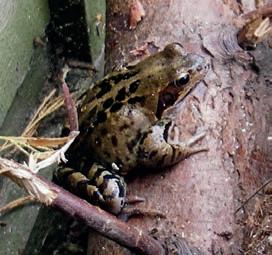
autumn but leave them through the winter as these can provide habitats throughout the colder months, advises Ashley Creating log piles or leaving areas of fallen leaves will attract all sorts of things, “different habitats where they can breed and hide; there are so many options and variations that are easy to create.”
These spaces can be misconceived at first, admits Ashley.“One of the most important ways in which we as gardeners can encourage wildlife is not to be too neat and tidy. It's leaving things to be a bit messy to provide a much more sympathetic environment for wildlife.”
But for some of her clients, Ashley struggles with the desire for gardens to be presented elite and manicured.“Adding things like log piles and such doesn't always work for some clients who want a more contemporary finish.”


prolandscapermagazine .com Pro Landscaper | March 2024 FEATURE 64
Kristina Clode, award-winning garden designer
REAR GRAVEL GARDEN, ECO HOUSE WINCHELSEA BEACH BY KRISTINA CLODE GARDEN DESIGN
©Kristina Clode Garden Design
©Kristina Clode Garden Design
©Kristina Clode Garden Design
©Debbie Carroll Garden Designs
Newts
©Jane Ashley Garden Design
Hawker dragonfly
Frog
found by log pile Spiders by the pond
Carroll believes that this is about perspective. All the ways in which we can help biodiversity and ecology very much depends on the client’s viewpoint on how neat and tidy they desire the garden to be –it's all about strategy, she suggests.
What Carroll refers to as “forgiving maintenance” applies to the areas of a garden that can be left to their own devices for a period of time when the space may not be in use or visible, ensuring that nothing is taken away from the aesthetic of the design but allows for these small spaces of habitat to occur. “There's often an area of some gardens where a client may sit in summer, and you

can't really see a particular border for the rest of the year when they retreat back inside.
By keeping it untidy on purpose, the areas previously mentioned by Ashley are able to naturally form. "So, I would plant that for high summer interest only when they would be in the garden to enjoy it. My forgiving maintenance is that they leave it in a mess deliberately at the end of use, because it's not visible for the winter months.”
“You just want to create as many different habitat types as you can and opportunities for wildlife to access it,” says Clode, adding that avoiding simple maintenance tasks such as cutting down all the perennials can be put off until late spring for the beautiful hibernation opportunities.
Likewise, just putting a few pots in a corner can provide protection from the elements. One of the key factors when designing a garden is the cost, but creating these spaces for wildlife doesn’t ever need to be a high-cost situation, says Clode.
“You can make things such as hedgehog houses and build various structures from household items. From my perspective, it's so
much better to build a natural habitat so that you aren't reliant on something that may change or may fall apart if you forget to replace it at the end of each season,” says Iredale. Using a selection of recycled, household products to add dimension on a budget within her local community, Iredale also uses items such as barrels and wooden pallets have been used to create ladders for hedgehogs to climb from the riverbanks. “If you actually build the ecosystem naturally, then it works much better, and you don't have to go out and buy very expensive structures.”

Hawthorn trees

and having some sort of structured planting shrubs, as well as perennials,” says Clode, who explores planting that will keep year-round interest by using flowers which open at different points in the seasons to encourage variations in the species that arrive.
Alternatively, for those clients who can’t resist the urge to tidy their gardens, Carroll suggests that small changes such as “amended boundaries.” Simply making sure that each boundary has a hedgehog hole or an opening to allow the passage of critters between boundaries opens up the landscape. By preventing travel, creatures such as hedgehogs are restricted and can often become trapped. “We like to delineate our garden from our neighbours, but that wildlife doesn't see those barriers,” says Carroll.
If you actually build the ecosystem naturally, then it works much better, and you don't have to go out and buy very expensive structures
With climate change, flowering time frames are changing and so are the timelines for pollinators. By planting with this in mind and selecting species that will appear one by one, opposed to all at once, Clode says you are able to provide food for creatures no matter what time of year.
Louise Iredale, horticultural therapist
“The main thing to encourage wildlife is having lots of planting, and diverse planting
Ashley adds that ivy in particular provides excellent food resources for wildlife, since it flowers very late in the season when there's not much else around. “When you plant, think about what it adds, for instance, in terms of food sources for pollinators; you want things that don't just flower in June, July and August but what will

prolandscapermagazine .com Pro Landscaper | March 2024 FEATURE 65
©Debbie Carroll Garden Designs
©Jane Ashley Garden Design
BEES LOVE ERYNGIUM
RED ADMIRAL BUTTERFLY ON MAHONIA
Both images
©Jane Ashley Garden Design
Planting for pollinators
ADVICE FROM JANE ASHLEY GARDEN DESIGN: THICK PLANTING AROUND THE POND HELPS ATTRACT WILDLIFE

flower for pollinators in the much quieter seasons. So, you might want plants like mahonia, which provide nectar for pollinators very early in the spring when there's not much else around.”
Encouraging a hands-on approach, Iredale teaches clients about the fun to be had making bird feeders: “We make our own out of apples with sunflower seeds in them”. For these simple DIY projects, it doesn't have to be a trip to a garden centre; Iredale suggests simply using peanuts or sunflower seeds. It creates a personal connection with the garden and wildlife, whilst also giving you the opportunity to get children involved as a teaching experience.
Ashley says that ponds are a brilliant way to attract a variety of wildlife to a garden. “It needn't be a great big pond; there are plenty of ways you can have small areas of water which are bound to attract damsel flies or dragonflies, possibly newts, all sorts of things!”
It's about leaving your garden to have nooks and crevices –places for wildlife to nestle and hide
One of the most important things to consider, though, is water.

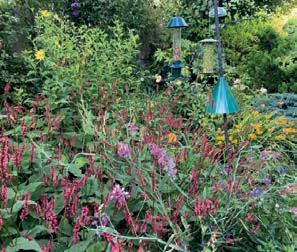
Birds are also drawn to ponds. “They'll often come to have a bath if they've got a shallow area or somewhere where they can perch and get a bit wet, or to drink,” says Ashley.
And budget needn’t be an issue with a do-ityourself approach. Something as simple as a shallow terracotta tray with a small stone to break up the ice when winter comes can make a huge difference and allows for year-round usage, recommends Iredale. The benefits of adding these simple elements are seemingly endless, from providing “just absolute pure joy” in Iredale’s spaces for therapeutic horticulture to proving to the next generation that change is possible.
“If you were to go back one or two generations, the quantity of wildlife would be

massively different to what we see now,” says Clode. But for the future generations to come, this is all they will know, and we face the danger of them growing to believe that this is the norm, she adds.
“What we do now is the most important. If every garden in the country devoted a small space to be pesticide free and biodiverse and encourage wildlife in as much as possible, that would make a huge difference to saving insects and wildlife.”
Following the publication of its report, the Natural History Museum’s senior curator Dr Fred Rumsey said that change can only happen if the data underpinning it all exists. Members of the public can help by simply documenting what is in their garden or by joining larger conservation organisations and lending them a helping hand.
“As individuals, progress is made in little, tiny steps and if every person makes a little improvement once, and that is multiplied up by millions, then that really does make the necessary change.”
With so many opportunities and solutions on our doorsteps, surely every garden designer should be asking how they can adapt their approach to make a difference.
prolandscapermagazine .com Pro Landscaper | March 2024 FEATURE 66
Jane Ashley, Jane Ashley Garden Design
©Kristina Clode Garden Design
©Jane Ashley Garden Design
©Jane Ashley Garden Design
©Kristina Clode Garden Design
Bees love Cirsium
Frosty stems
Lots of flowers and bird feeders will attract wildlife
BETTERBreathing

By introducing green interventions, we can not only improve our air quality but also enhance biodiversity, the cooling effect, psychological and social wellbeing, and long-term sustainability
WORDS: ASHLEIGH BROWN
Sadiq Khan has been actively addressing the issue of air quality.
The Mayor of London has committed to bring levels of fine particulate matter (PM2. 5) in the city down to 10ug/m3 by 2030 – a decade before the new UK legal deadline.
City Hall data shows major improvements in London’s air quality since 2016 and further significant improvements are forecast for 2025 and 2030, but according to the World Health Organisation nearly 90% of people worldwide live in areas where the air is classified as hazardous.
Director of Blakedown Landscapes, Chris Wellbelove, understands that air pollution is a real environmental concern and landscaping has a pivotal role to play in combatting the health issues that poor air quality can cause. “By incorporating green infrastructure into our landscapes, we can significantly improve air quality, at the same time as creating a more sustainable environment.”
By incorporating green infrastructure into our landscapes, we can significantly improve air quality
Chris Wellbelove, Director, Blakedown Landscapes,
As natural air filters, trees have the highest natural potential in combatting air pollution. They remove harmful pollutants from the atmosphere while providing shade and adding to the aesthetic of an area. In London, trees are estimated to remove around 2,000t of air pollution each year, equivalent to the emissions from taxis in central London.
“Proper tree placement is crucial in maximising their benefits. By strategically positioning trees near roads and in pollution

hotspots, they can effectively disperse pollutants and reduce their concentration,” says Wellbelove.
It is essential that the long-term health of the tree is considered. Importance must be given to tree pit design, irrigation, and climate trends to select the correct tree specimen. “All too often we see trees planted in tiny pits by the roadside as a gesture, but one which is destined to fail.” (See page 57)
In confined spaces, such as playgrounds or outdoor spaces for children, green screens or walls of planting are good alternatives. Installing vertical green barriers not only trap pollutants but also help disperse them, creating a healthier environment for children.
A study conducted by Kings College revealed that installing green screens in a school playground bordering a busy road reduced the levels of hazardous pollutants, including nitrogen dioxide and microscopic particulate matter by 36% and 41% respectively.
Other forms of green infrastructure can also contribute to cleaner air in our environments. Parks and gardens, green roofs, living walls, rain gardens, and sustainable urban drainage systems all play a vital
FEATURE
prolandscapermagazine .com Pro Landscaper | March 2024 67

The choice of plant species, green infrastructure, and landscaping techniques should align with the specific characteristics and needs of each landscape
Chris Wellbelove, Director, Blakedown Landscapes,
role in capturing and filtering pollutants before they enter the atmosphere. These innovative solutions not only enhance air quality but also provide additional benefits such as reducing urban heat island effect, managing stormwater runoff, and promoting biodiversity.
According to Wellbelove, much of the history of landscape architecture can be traced back to the need to create places that were beneficial for people’s health and wellbeing. “Ultimately, by integrating strategic landscaping techniques and green infrastructure into our landscapes, we can make significant progress in improving air quality and creating healthier, more sustainable communities.”
Case study
ILDERTON PRIMARY SCHOOL AIR QUALITY MITIGATION WORKS BERMONDSEY, LONDON
Thousands of children up and down the country are being exposed to poor air quality that risks causing lifelong health problems both inside and outside the classroom. A study, commissioned by the Mayor of London, showed in London alone there are over 800 schools, nurseries and colleges being exposed to illegal levels of air pollution. So, Blakedown worked with a primary school in the city to improve the air quality for the children and the teachers.
The advantages of green infrastructure range from those connected with health and wellbeing as well as creating communities and providing environmental control measures such as flood, heat and climate change mitigation. “However, it is crucial to select the appropriate green intervention based on factors like climate, soil conditions, and maintenance requirements,” says Wellbelove. “The choice of plant species, green infrastructure, and landscaping techniques should align with the specific characteristics and needs of each landscape.” By carefully considering these factors, Wellbelove believes that we can ensure the effectiveness and long-term success of these interventions. “Engaging landscape professionals who understand the intricacies of each landscape and the solutions each green intervention can provide will ensure the required outcome is achieved.” Understanding and adopting these practices could be a key step forward in improving our quality of life.

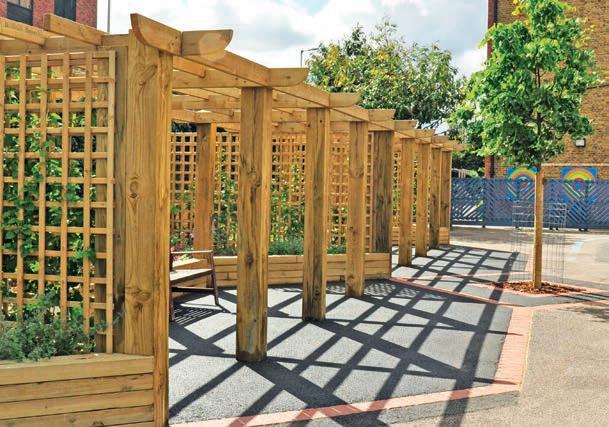
The Ilderton School Air Quality Mitigation Works Project successfully tackled two major challenges: air and noise pollution. Positioned beneath a well-used road, the school faced constant exposure to these detrimental elements, impacting both the playground and classrooms. To combat these issues, a comprehensive landscaping solution was implemented. Green screens of ivy and an acoustic fence were installed, acting as protective barriers against pollution and noise infiltration. In addition, evergreen trees, sleeper retaining beds, a trellis, and pergola, along with shrub planting, were added. These measures not only brightened the surroundings for the school but also enhanced the air and acoustic quality, creating a healthier and more peaceful environment for both children and staff.
prolandscapermagazine .com Pro Landscaper | March 2024 68 FEATURE
CLIMBING the ranks

A lack of space in inner cities both on and under pavements means low level planting often doesn’t survive. Could long-term sustainable planting on a lamp post be the solution?
Living walls are an obvious choice for those short on space and wanting to make an instant impact. They provide a wide and varied range of benefits – from reducing air pollutants to improving biodiversity to providing insulative benefits for buildings and structures.

An innovative product designed to support long term planting on lamp posts to form biodiversity corridors for our pollinators to navigate and inhabit our built environment. scotscape.co.uk
At Scotscape Group Ltd, CEO and founder, Angus Cunningham has also been working hard to produce its most effective vertical growing solution, in the form of a living pillar. With the ability to form biodiversity corridors through the built environment, the very straightforward way of planting is structurally tested, takes approximately four hours to install and is accessible via cherry picker.
“The overall trend is towards bringing biodiversity to our built environment. This means we must be innovative in designing planting areas which are not traditional, and these vertical methods will increase biodiversity levels and help clean the air. Horizontal space is at a premium for our developers, so we need to think out of the box with regards to alternative areas to plant,” says Cunningham.
prolandscapermagazine .com Pro Landscaper | March 2024 69
PLANTBOX LIVING WALLS © UNIFLORA
PRODUCTS
LivingPillar™
©James Rudoni
MobiPanel
Fellow green systems provider Mobilane is exploring new possibilities with various plant species that thrive and remain healthy in our ecosystems. Global content marketeer, Esmee Sherlock confirms that Mobilane is creating seven standard indoor plant mixes that it grows under the 'On the way to PlanetProof' certification, as well as cultivating outdoor plant mixes for its green façade system, MobiPanel.
These project-specific plant mixes are composed based on façade orientation, amount of sunlight, shade, and wind exposure depending on the location, and Mobilane has its own nursery where plant cassettes are cultivated before the project is installed.
Sherlock says: “We notice a significant trend in vertical green solutions and a growing demand for them. This trend is partly driven by climate change and urbanisation.”

The MobiPanel wall system by Mobilane embodies sustainable vertical greenery, enhancing eco-friendly construction. MobiPanel is a modular and lightweight system and also has the fire class certificate B – s2 d0. mobilane.com

PlantBox is a cleverly simple, innovative, award-winning, and sustainable modular living wall system designed to help reconnect with nature. growingrevolution.com
PlantBox Living Walls
For Growing Revolution’s director Matt Lindsay, its PlantBox living walls are the ideal solution. The low-maintenance, versatile and instant greening product is not only manufactured in the UK and from 100% recycled materials, but also features a unique, built-in reservoir and float-level indicator, meaning plants can thrive for longer without the guesswork of knowing when to top it up.

The PlantBox living wall system is stackable and modular, meaning total adaptability to transform wall spaces from courtyards and balconies to fence lines and construction site hoardings.
prolandscapermagazine .com Pro Landscaper | March 2024 PRODUCTS 70
©Uniflora
©LIKO-S
It' time to GREEN UP!

Growing Revolution is on a mission to enable homeowners, landscapers, and corporate place-makers to literally green up the world around us for the benefit of people and planet.
We speak to director Matt Lindsay to understand the benefits.“In our ultra-urban environments, where space is at a premium, green walls are the perfect way to reconnect with nature. Going vertical allows us to bring lots more plants into view without taking up valuable floorspace,” explains Matt.
“A recent survey showed that upwards of 75% of people say spending time in green spaces makes them feel happier and improves their mental health. This is important to remember
when we are thinking about designing spaces and places fit for the future.
"Being in nature restores us, and being next to a living wall is like a green hug! But the return on investment goes beyond the softer side. In commercial settings, greener workplaces are proven to increase productivity and creativity, reduce stress, and increase staff retention. Greener public realm spaces have positive benefits: increased dwell time, footfall and repeat visits.”
“Living walls don’t just look visually stunning, but they also bring environmental benefits, such as increased biodiversity, better air quality and noise attenuation. By harnessing the power of plants, our systems transform environments.”

Growing Revolution is a supplier of living walls and associated products, including the ‘cleverly simple’ PlantBloxTM

green wall system. It is stackable, modular and ground-bearing, only requiring restraint fixings. With an in-built reservoir in each trough, it caters to everyone, from novice gardeners to seasoned landscapers.
PlantBloxTM was shortlisted for the RHS Sustainable Garden Product of the Year in 2021, and it was recently used in a BALI award-winning scheme which created over 750m2 of green wall across the Canary Wharf estate.

And Growing Revolution has just launched the all-new FlourishTM range, which combines the award-winning PlantBloxTM living wall system with elegant surrounds for internal use. With options for wall mounted (Pico), floor standing (Mura) and moveable (Duet) living walls, the FlourishTM range offers multiple options for instant, stylish and space-saving greenery of any indoor space. Full CAD and REVIT files are also available.
As a company on a mission to make a difference, Growing Revolution puts sustainability high on its agenda. The PlantBloxTM living wall system is manufactured from 100% recycled materials and all products are made in the UK. It also chooses to work with suppliers who share the same sustainability ethos and values.
Growing Revolution has a growing network of trade partners both in the UK and overseas. Matt Lindsay says: “We like to think that we are more than just product suppliers, we are allies in transforming spaces! Our friendly team are always on hand to offer help and advice.” Find out more at: growingrevolution.com/trade
prolandscapermagazine .com Pro Landscaper | March 2024 71
PROMOTION
Growing Revolution embraces versatility, intelligent design and beauty via green walls
©Eric Orme
©Uniflora, Dubai
CANARY WHARF
BEFORE
OPERA GRAND, DUBAI

Raised beds made from crates
LUCY WILLCOX GARDEN DESIGN

Repurposed limestone paving
From my own garden project, we managed to rehome 90% of the planting and a lot of soil that we didn’t need. We sold Yorkstone paving, to be used as reclaimed paving. We lifted limestone paving and passed that onto one of our neighbours to use as part of a pathway. My next-door neighbour used the crates, which were used for deliveries, as raised beds with the excess soil that we had. I wanted to create as little waste as possible, and it is possible to do this, but you just need time and patience to find people who will take what you don’t want from the garden. lucywillcoxgardendesign.com

TUBEX

We asked for your sustainability achievements , from projects to products, over the last 12 months
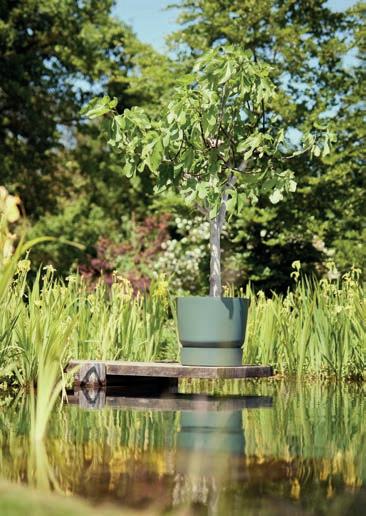
ELHO
In January, elho moved another step closer to achieving its goal of being the first climate and socially positive company in the plant pot market by reaching a key milestone – all its products are now made from 100% recycled materials. The B-Corp increased the percentage of raw waste materials used during production from 96% to 100%. This marks the latest milestone in elho’s pledge to make the world a greener place. Every product is made using renewable energy generated by the wind turbine located at its factory in Tilburg, the Netherlands, and is also fully recyclable. elho.com/en
2023 was full of sustainability achievements for Tubex, particularly its pioneering Tree Shelter Collection and Recycling Programme. Launched originally with a low-cost doorstep pickup option, last year the programme was expanded to also allow people to drop off shelters, free of charge, at hubs strategically located across the country. Since the scheme’s establishment, over 350,000 tree shelters have been recycled, with collected material being used in the manufacture of brand new Tubex shelters. For 2024, the number of hubs has increased to 22. tubex.com Before

STONE WOOD WATER LIGHT

We try as much as we can to leave what has already established in place and introduce the changes needed based upon the client’s brief. Last year brought a whole new element to this. We began a back garden project in our usual open-ended approach (with initial design as guide) and upon initial works quickly realised there was an extensive network of honey fungus. The garden was redesigned and constructed based upon clients wishes for their new space, fully planted in keeping with initial brief and utilising knowledge of this surprise 'local lodger'. As usual for our projects, no skips or machines were used or needed. stonewoodwaterlight.co.uk


prolandscapermagazine .com Pro Landscaper | March 2024 FEATURE 72
After
NITELUX
Through our partnership with Ecologi, for every purchase made, we contribute to global tree planting initiatives. These trees help combat deforestation, restore ecosystems, and mitigate climate change. NiteLux via Ecologi offers landscapers an opportunity to enhance their green policy by providing a platform to offset their own carbon footprint. Trees planted so far: 18,935 Carbon offset: 30.05(t) Projects funded: 28 nitelux.co.uk


ROLAWN & HALLSTONE
Over the last 12 months, the Rolawn Group’s topsoil bagging plant, which fills over 150,000 Rolawn and Hallstone bulk bags per year, has been converted from diesel-powered to electric, making it the latest piece of our equipment to be powered by our onsite solar farm, which generates 225,000kWh per year. This conversion is part of an ongoing programme of upgrades to significantly reduce our carbon footprint.
rolawn.co.uk
hallstone.co.uk
THE SOLAR CENTRE
We have been working on making changes to our business that have a positive impact and one of the things we have done is swap our plastic mailing bags to 100% biodegradable and recyclable mailing bags. These biodegradable bags offer the same functionality as plastic ones but without the long-lasting environmental impact. thesolarcentre.co.uk
FROSTS


Last year, we became one of the first businesses in our sector to attain Achilles Carbon Certification from the UK’s only internationally Accredited (ISO 14064-1) Greenhouse Gas Certification Scheme. Achilles Carbon Reduce adheres to a recognised greenhouse gas (GHG) measurement and reporting standard, bringing weight and legitimacy to our carbon reduction aims and achievements. The certification process establishes baseline data, allowing us to accurately quantify real reductions over time. This translates to compelling, data-driven reports about our progress in actively measuring, managing, and reducing our carbon emissions. frostslandscapes.co.uk
A few of the headlines that have caught our eye over the last year
LONDON STONE GOES CARBON-NEUTRAL
Carbon Footprint accredited the supplier as a carbon-neutral company
MITIE LANDSCAPES WINS SUSTAINABLE COMPANY OF THE YEAR
At last year’s Pro Landscaper Business Awards, the green service provider won the award for its numerous green initiatives
GROUND CONTROL LAUNCHES 100-ACRE ENVIRONMENTAL RECOVERY SITE
Devana marks Ground Control’s second site, its first being the 296-acre Wildfell Centre for Environmental Recovery in Braintree, Essex
CHELSEA GARDEN FINDS PERMANENT HOME IN LONDON BRIDGE
Cityscapes’ St Mungo’s Putting Down Roots Garden was relocated last year
CHRIS CHURCHMAN LAUNCHES NEW CLIMATE AWARENESS NOT-FOR-PROFIT
The co-founder of Churchman Thornhill Finch left the practice to raise public awareness of the value of nature in offsetting the climate crisis
WINNERS REVEALED FOR PRO LANDSCAPER’S SUSTAINABILITY & BIODIVERSITY AWARDS
More than 40 companies and projects were shortlisted across 12 categories
TYLER GRANGE MARKS B CORP MILESTONE WITH FIRST IMPACT REPORT
The environmental consultancy outlined its achievements thus far, alongside its goals for recertification in 2025
BIODIVERSITY FLIES HIGH IN NEW AIRPORT TERMINAL GARDEN
A first-of-its-kind ‘airport terminal in a garden’ opened in India, with the help of landscape architects Grant Associates.
prolandscapermagazine .com Pro Landscaper | March 2024
73
FEATURE
Spotted!

NEW WOOD TREES
Over the past year we have continued our dedication to sustainability by using peat free compost in our container area. This eco-friendly choice not only benefits the environment by reducing peat extraction but also promotes healthier tree growth. Moreover, we are committed to utilising Air-Pots which are crafted from recycled materials. This innovative system enhances plant development and encourages optimal root growth. newwoodtrees.co.uk
OUTSIDE THE BOX
Because of all the recent concern with flooding, I wanted to create a fully permeable driveway. After much research, I mirrored the system of a Canadian landscaping company and included a permeable footpath. The footpath entailed placing the clay pavers (manufactured by the same brickworks in Wales that made the original house bricks) in a herringbone bone pattern for stability. The pavers were laid absolutely horizontally with a precise 6mm gap between each paver, filled with 6mm crushed red granite. Rainfall immediately disperses between these gaps to the permeable crushed stone layer below. Instagram: @robertscferguson
BIOSCAPES
New legislation in 2024 means change for the landscaping industry, which will have to embrace biodiversity net gain (BNG) and Sustainable Drainage System (SuDS) requirements. To help the industry comply with these new regulations, BioScapes has developed a bespoke BNG & SuDS unit. This compact solution satisfies the four pillars of SuDS; providing flood management, improvement of water quality, amenity and biodiversity benefits, in a self-contained and easy-to-install unit. It’s manufactured in Yorkshire and available UK-wide. bioscapes.co.uk


PETROW HARLEY
The Lancaster Estate rain garden is located within an area of social housing within central London. The site is part of a feasibility study for Bankside Open Spaces Trust (BOST) charity and it’s one of a suite of environmental improvements designed by Petrow Harley. The Lancaster Estate project is an excellent example of the value of landscape design twinned with public consultation to enable the retrofitting green infrastructure. petrow-harley.com

AZENCO
CHARLES AND LESLIE CHAPUS
Azenco is launching a new multidimensional sustainability initiative at our facilities, alongside a new partnership with 4ocean, an ocean cleanup company dedicated to ending the ocean plastic crisis. azenco-outdoor.com
prolandscapermagazine .com Pro Landscaper | March 2024 FEATURE 74


Sky Garden, the leading urban greening company based in the UK, has forged an exciting partnership with Singular Green, an innovative urban greening and design house from Spain. Sky Garden is thrilled to announce the launch of the Sky Garden Green Wall powered by Singular Green.

Singular Green is renowned for their expertise in urban greening and their specialism in cutting-edge design. They have created the highly acclaimed F+P Green Wall system, which has achieved remarkable success with installations throughout Spain and UK.
Our fire rated hydroponic wall is perfect for both expansive outdoor designs and more compact indoor projects. Its lightweight nature ensures effortless installation.
Please get in contact if you would like further information or use the QR code to head straight to our Green Walls page on our website. Don’t forget to download our brochure from our downloads page.


enquiries@sky-garden.co.uk 01242 620 905 www.sky-garden.co.uk
FOOD on the go?
Noel Kingsbury considers how the popularity of edible plants is impacting public spaces

Growing edible plants in public spaces has something of a chequered history. In theory, it would be nice if local authorities, housing associations and the managers of the land around privatelyowned apartment blocks planted fruit trees and bushes that everyone could collect the harvest. In practice, very few people take the opportunity, and much fruit goes to rot on the ground. But since fruit trees are also ornamental, perhaps that does not matter so much, and the fact that a few people take advantage of the bounty should be seen as an added bonus. The growing of vegetables in publicly accessible spaces is far more problematic. There was a brief fad for doing this some 15 years ago, the results often dire – messy collapsing broccoli in untidy over-engineered raised beds being my main memory of this time.
An interesting take on growing edibles is the idea of 'edimentals' – plants that are primarily grown for ornamental, amenity or biodiversity reasons but which are also edible. In the vast majority of cases, these are plants that are outside the traditional
dietary range. But times are changing, as the seemingly never-ending obsession with cooking amongst a younger generation continues to stimulate an ever-growing awareness of the wide availability of plant material we can eat. An ethnically diverse community also expands the range of what is seen as potential food. In addition, climate change is going to be causing some pretty massive disruptions to the supply chains for fresh fruit and veg, and so economic necessity may make urban foraging not only increasingly attractive, but necessary.
Some might object that 'urban foraging' might encourage people to make 'bad choices' and poison themselves. This is a risk but there are actually very few plants that are used horticulturally that are really poisonous that are likely to get eaten. Besides, encouraging people to forage safely might be seen as part of a process of getting people to value the nature in their surroundings. I see, for example, interpretation boards in parks, showing what can and cannot be eaten.
although 'meadow' is not really the right word for seed mixes of rapidly-growing plants that can be easily and cheaply sown at a variety of scales, from the small patch in the grass outside an apartment block to great swathes in a park or the open space in areas of public housing. Basically, it is an edible version of the proven and highly successful concept of hardy flowering annual mixes.
Economic necessity may make urban foraging not only increasingly attractive, but necessary

One idea that is being developed is the edible meadow,
It is a version of what many rural communities around the world do, which is to have mixed combinations of fast-growing leaf crops, for salads, or 'pot herbs' to cook with. These are often a combination of the familiar and undeniably tasty (think brassicas, from seedling kales to oriental stir-fry varieties like mizuna or pak choi) to less familiar and, to be honest, tasteless things like amaranthus and mallow. The latter are always there for a good reason – they are nutritious and often are better at surviving drought. Coming soon to a park near you?

Noel Kingsbury is a freelance designer, writer and researcher who has long promoted naturalistic planting design. He also runs the education website gardenmasterclass.org. noelkingsbury.com
NOEL KINGSBURY
OPINION
prolandscapermagazine .com Pro Landscaper | March 2024 76
Every so often I review books on the subjects of plants, horticulture, landscape, etc, for my blog. One book
I was given to review over a year ago by Scottish author Helen Cross is 'Grow, Cook, Inspire: Growing and Cooking Food for a Healthier Mind and Planet’. It is shameful that it has taken me this long to get around to reading it, but I’m really glad I have now done so. It is her first book, as I understand it, and although it revolves around the subjects of plants, gardening, foraging, and cooking, Helen makes it clear that she isn’t a professional in this field. Instead, she is a keen amateur gardener who was profoundly impacted by the value of gardening, especially during the pandemic.
I am rarely emotionally moved by books on gardening – in fact, I can’t remember ever being moved by the subject in anything I have read on it. This book really made me see differently about the value of gardening and professional horticulturists, gardeners, designers, landscapers, craftspeople and many others, who make an indelible mark on the world we move around in; a personal discovery from Helen, laid bare and speaking openly about her own struggles with mental health and wellbeing as well as the satisfaction and enjoyment of interacting with nature. The honesty of Helen’s personal situation was both emotionally challenging and very refreshing to read and it has encouraged me to try and look more at the industry with the wide-eyed fascination of a child rather than the potentially jaded perspective I have had at times on an industry that needs change but struggles to get the support to undertake it.
VITAMIN G A dose of
From an enlightening book to a “bizarre” comment by a certain BBC presenter, Lewis Normand encourages the industry to embrace the term ‘horticulturist’

ideas on how to get children to engage with nature in simple, easy-to-follow projects. It could just as easily be for someone otherwise concerned about how to start gardening.
From the simple pleasure of sowing a seed, to the endless joy of harvesting food to eat, this book reminded me of why I fell in love with this industry and plants and gardens in the first place. Sometimes, you need a kick –emotional or otherwise – to remind you of the beauty at the core of something. This book, I am delighted to say, gave me that kick and I have written to Helen to thank her. The book is designed to be a simple guide for novice gardeners; there’s no jargon or barriers to learning. The book aims to facilitate parents, grandparents, carers and teachers looking for
It has encouraged me to try and look more at the industry with the wide-eyed fascination of a child rather than the potentially jaded perspective I have had at times
A lot has been made already in 2024 about Monty Don’s frankly bizarre accusation that the term horticulturist is somehow pompous and an ‘unnecessary inflation’. This is obviously utter drivel and speaks only of his lack of understanding and support for the industry. There is nothing wrong with being an amateur gardener, but to describe yourself as a horticulturist is to describe your profession. You may be a professional gardener and choose to use that term, but for those of us working in horticulture, but not as gardeners, horticulturist is at least one of the correct and appropriate terms. Somewhat ironically,‘horticulturist, broadcaster and writer’ is how Monty Don is described in his Wikipedia page, perhaps incorrectly as it should read ‘amateur gardener, broadcaster and writer’. I am fine with him being described incorrectly if it helps the public better understand the
title’s meaning; I feel he should, however, be fine with us using the term to describe our profession. I don’t claim to be anything I am not, and I have very rarely found anyone in the industry who does. It’s a small industry and liars stand out quickly. Equally, we have all worked hard to achieve our professionalism and nobody is going to tell me what and how I should describe my position as. After all, I am a Chartered Member of the Institute for Horticulture for a reason.
Returning now to a message of positivity and Helen’s book, I read a term I have not previously seen: ‘Vitamin G’. The G stands for Green, but I think it could just as easily stand for Garden or Growing, or Gardening. I love this term!
Get your dose of Vitamin G – and remember that as an industry, we literally make the world a better place!

LEWIS NORMAND
Lewis has worked in a wide variety of roles within horticulture over a 20-year career. He has lectured on garden design and horticulture, and designed gardens in the UK, Europe and the Middle East. Since 2011, Lewis has focused on nursery sales, now working as sales manager at Bernhard’s Nurseries, and has helped to launch a number of new plants into the UK plant market. He is a specialist supplier to show gardens, supplying more than 100 gardens at major shows.
prolandscapermagazine .com Pro Landscaper | March 2024 OPINION 77


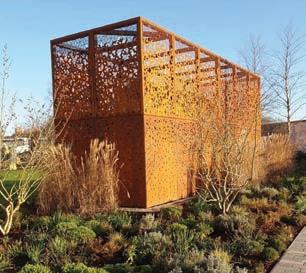

Whatever you can imagine, we can make it a reality in metal Email: outdoordesignmail@gmail.com Call: 07860 456159 www.outdoordesign.co.uk
The leading specialists in bespoke metal structures, taking our clients designs and turning their vision into reality.
Flue Screens Greenford Quay, London
Seedlip Peavillion RHS Chelsea Flower Show
Pergola Hampstead, London
Biodiversity net gain is a great step forward, but Chris Churchman has a few reservations about the landmark legislation
IN PROGRESS A work
As you will all have seen, biodiversity net gain (BNG) has finally been enacted. After three years and more push backs than a Post Office compensation scheme, we all now have to deliver the 10% enhancement on biodiversity. Perhaps if you are a grower or installer, you might not have realised this was coming; but for everyone else in the design and construction sectors, being unaware of this change would be highly unprofessional.
This legislation will be a game changer – it arguably already is. When those of us who deliver the green economy come across misinformed clients, developers and other design team members looking to value engineer landscape out of a project, we now just say, "Well yes, you could reduce the planting scheme by 90%, but of course you won’t achieve biodiversity net gain and so won’t get Planning" – the number of times I have joyously, triumphantly trotted out those words in the last two years and taken great delight in the recipient’s shock in their inability to offer a counter argument. So, as you can imagine, I am delighted that BNG is with us finally, and all of us in the sector will be the beneficiaries.
the carder bee and black redstart but is simply bad for the planet, and actually for us!
The other counter-intuitive component of BNG is that you only do the calculation when you want to build something. Anything not requiring planning approval doesn’t need to meet the requirements of BNG. So, with 90% of the UK still not built on, but obviously losing lots of biodiversity and ecology, you are trying to deliver enhanced biodiversity for the country on the back of a building programme. Clearly there is no way that the development sector is going to deliver better biodiversity at a national level; there simply won’t be enough new building anytime soon to achieve any meaningful level of change.
You would expect me to have no issues with BNG as a process. Sadly, I am not entirely convinced by the way it works
So, you would expect me to have no issues with BNG as a process. Sadly, I am not entirely convinced by the way it works. Yes, it achieves the desired outcome, and so we have to be careful about challenging it. The metric itself is pretty basic; it is not nuanced such that it assesses all possible permutations of biodiversity, which are limitless. It uses a very crude set of ecological descriptions, so the entire range of plant communities is shoehorned into a very limited number of tightly defined plant typologies.
To make matters worse, it assigns rather dubious rarity values to sites which, for anyone other than an ecologist, make little sense – vacant sites which, for the majority of the population, would only be described as derelict are now classed as open mosaic habitat and enjoy a rarity value equal to ancient woodland, which makes it almost impossible to achieve the 10% BNG score within the development site. Clearly this drives developers away from brownfield land, which might be good for
At Christmas, someone working for South Downs National Park was proudly telling me about a joint initiative with the New Forest to set up a pine marten corridor extending across the gap between the two so that we have a linked pine marten bridge running across the South of England. They told me that they were using BNG on developments in the gap between the two to make the connection. I pointed out that if there were pine marten in the New Forest and wanted to nip across to see their cousins in the South Downs, wouldn’t they just cut across the fields or through the woods? Why would they choose to go through a 10,000-home housing estate, regardless of whether it meets BNG or not?
Despite my reservations, this is the most important piece of environmental legislation since green belt in the 1940s, so we must offer our thanks to all those who have delivered it.


 CHRIS CHURCHMAN
Chris Churchman is the founder of cquester, a not-for-profit venture seeking to raise awareness of the value of nature in addressing climate change. cquester.co.uk
prolandscapermagazine .com Pro Landscaper | March 2024 79
OPINION
Biodiversity net gain (BNG) has been an increasingly frequent topic of conversation at industry events for the last couple of years.
If you were already in favour of increasing space for wildlife in new developments, you probably welcome it. If you didn’t really care, you probably find it another looming pain in the backside, like (après Mark Twain) death and taxes – yet another irritating and probably expensive layer of ‘compliance’.
The number of landscape professionals openly hostile to nature recovery is vanishingly small; disdain and grudging compliance seems to be the ‘no’ faction’s most extreme position. But those who adopt the sullen position risk missing a huge opportunity. A planning requirement for the protection of selected species has been in place for decades, and the dodges to get round these are well known: ecological surveys poorly conducted, or carried out at the wrong time of year, are old tricks, and the 30-year survey requirement of the BNG rules may go some way towards closing those loopholes.
Lately, in practice, the increasing use and affordability of environmental DNA (eDNA) techniques is a double-edged sword. On the one hand, it makes surveying faster and more convenient; on the other, it could theoretically (perish the thought!) open up opportunities for the ‘massaging’ of results. But enough of the outlook for something as yet vague in detail and, at the time of writing, still pending implementation.
So, what about the mechanics? Firstly, there seems to be a professional landscape faction that thinks genuine compliance provides an excuse for poor attention to design – “bloody government insists on


BNG
A beginning?
Writing ahead of its implementation on 12 February, Noel Brock considers the impact of biodiversity net gain
a bramble patch”. You’ve probably heard it; I know I certainly have, and at the 2023 HTA Conference no less! Yet, nothing could be further from the truth.
When people do use wildflower seeds or turf, there is often no attempt at design or plant placement or structure. Too many wildflower plantings end up as a wall of teazels (Dispacus fullonum). We are changing that. By growing our wild plants up to 2/3L pot size, we can design our planting, choosing exactly which species, which colour, which height, goes where.
In fact, attention to planting structure, eye-catching features, ‘out of season’ interest and so on is even more important in a biodiverse garden. The need to include seeding perennials, dead wood, fallen leaves and stems (for the sake of the animals and fungi which need them) makes good design essential, and scrupulously well-kept non-wild areas, topiary, lawns, paths patios, sculpture and so on are absolutely crucial to make it clear, visually, that this was intended. Here is the wild area, and here is the man-made area, and see how they complement one another.
prolandscapermagazine .com Pro Landscaper | March 2024 OPINION 80
WILD, BUT STRUCTURED!
EXUBERANT WILDFLOWER MEADOW ABUTS LAWN
Of course, it is all man-made, and curated; but our skill is to make the wild part look beautifully natural. Actually, as anyone who has done it knows, creating and seasonally maintaining a ‘wild’ area to look good at all times and seasons is a more exacting and skill-heavy job than maintaining perfect topiary or a crisp-edged lawn. The sense of ‘one-ness’ with nature is accentuated, not diminished, by juxtaposing such anthropogenic forms to the wilderness beside them.
The basic BNG assessment is about habitats, and mainly records plant species, but why not have an abundance of animals in a garden? Look at classical images of gardens from ancient Rome, Persia, Crete and Mesopotamia – all are filled with swooping birds and scampering mammals, and the streams of paradise in these pictures are always full of many-formed and coloured fishes. Inviting wildlife back into gardens is not new; it is a return to how things ought to be. The post-war fashion for hygienic sterile gardens was
Many local councils have started enforcing the rules ahead of implementation, and some, such as Kent, require a 20% gain in biodiversity!

local councils have started enforcing the rules ahead of implementation, and some, such as Kent, require a 20% gain in biodiversity!

a blip in horticultural history that’s now being swept away, and good riddance.
And now the Mark Twain bit – the compliance and the regs. Firstly, the BNG scheme will require “detailed ecological assessment” of land due to be developed. Then the developer is obliged to enhance the habitat and increase the species richness as part of said development, by a minimum 10%. This will be mandatory for new housing, infrastructure and commercial developments
These rules were supposed to become mandatory in November last year, but at the time of writing, are still pending introduction at a later date (on 12 February 2024 and, for smaller sites, from 2 April 2024). However, many
Key to compliance here will be the ‘biodiversity metric’, which will be used before and after to prove the 10% (or 20%, in some areas) increase. Planning obligations, if enforced, will secure these improvements for at least 30 years.
The biodiversity metric (BM) is a spreadsheet tool, designed to be used by consultant ecologists, to carry out assessments of proposed developments which will be assessed by more consultant ecologists working withing local councils to determine whether developments comply or otherwise. At the moment it is unclear what the legal separation between these consultants’ roles, if any, will be.
The BM tool will calculate the ecological “cost” of a development and generate a number which the developer must ecologically compensate for. This number, this currency of ecological compensation, is called a biodiversity metric unit.
Obviously, the intention is that these improvements in ecological diversity should take place within the development site, so ‘on site’. Where there is no space within a development site, these improvements can be made ‘off site’. These can be on nearby land owned or controlled by the developer, or on a completely remote site, by buying units being sold by different landowners or managers who are already improving land elsewhere.
As it stands, these units are rather sloppily defined; but there is a published price list to purchase these ‘credits’ (one credit = two units) for offsetting irremediable biodiversity losses.
As a couple of examples, the published prices of credits as of November last year were:
• Low distinctiveness habitats (all habitat types): £42k per credit
• Native pine woodlands: £125k per credit
• Alkaline lakes (low, moderate + high alkalinity): a whopping £650k per credit.
The habitat types as described need work on their definition, more information on the quality would be very relevant. It is as yet unclear how much money local wildlife trusts and big country landowners will make out of the off-site arrangements, but certainly county wildlife trusts are placing BNG at the centre of nature recovery strategies.
To sum up, BNG as it stands is a step in the right direction, but it is over-complicated, and if you are a conservationist, it lacks teeth. If you are an ecologist, it looks like an opportunity. The proof of all of this will be in the aftercare.

For many years, Frognal Gardens has been building, planting, and maintaining gardens, both private and commercial, in and around Hampstead, central London. During this time, Brock has also pursued his interest in wildlife all over the world, and within the London area. There is an obvious connection between wildlife and horticulture, but it is only recently that he has been able to bring those worlds fully together. frognalgardens.com
prolandscapermagazine .com Pro Landscaper | March 2024 OPINION 81
NOEL BROCK
FIRST CENTURY ROMAN MURAL AT THE PALACE OF THE EMPRESS LIVIA, ROME
STANDARD ROSES AND TOPIARY HEDGES WITH WILDFLOWER SEED BETWEEN


tried, tested Great quality soil that’s and responsibly sourced 0870 240 2314 www.bstopsoil.co.uk topsoil@britishsugar.com Landscape20 and HortLoam are compliant to BS3882:2015 British Sugar TOPSOIL is analysed by industry experts and gives me confidence of achieving consistently good results, whatever the project. Crick, NORTHAMPTON, NN6 7XS 01788 823811 www.access-irrigation.co.uk/bespoke BESPOKE GARDEN WATERING Irrigation • Working with landscapers and their clients • Bespoke packages for lawn and border • Modular system for easy installation We work with you to design fully automated garden irrigation systems for your clients. Our approach makes installation simple and easy with pre-built modules. Full drawings and expert advice. Pro Landscaper Adverts 85mm x 121mm.indd 1 24/11/2022 08:40
Utilities companies’ lack of care when carrying out work is damaging our streetscapes, explains
Christopher Martin
The term Street Scar might be a new one on you, but continuing the theme of putting small changes that make a big difference in front of those seeking election this year, it’s a term I would like you to consider more. The term has been given some prominence in a new report recently published by Nicholas Boys Smith – founder of social enterprise Create Streets – in which he unearths the slightly murky process through which our public realm can be damaged and, in some cases, permanently – scarred, even – by utilities providers, with no recompense to the public.
So, what is it we’re specifically talking about? As the image to the right highlights, we are talking about these moments when we see a carefully designed street, and even more gallingly the moments when a recent upgrade has gone down to make a better environment for people, for business and for the image of the city, and then as soon as the first tables and chairs spill out onto the street, this happens. Utilities companies need to access their kit under the street, and so come along and dig it all up, leaving every trace behind. The poor quality of the reinstatement is what is so upsetting, and the fact that this lack of care lingers for months if not years. The effort and energy, never mind expense, required to deliver streetscape improvements today is undermined in moments.
Boys Smith's report offers insight as to why this is and, as an article in The Economist1 highlighted back in 2017, why we seemingly have more roadworks in the UK than is the case with other major European cities, and this in part is the result of the UK’s privatised provision of utilities and their rights, as so-called ‘statutory undertakers’. When we had a couple of firms doing this in the 1990s, things were manageable; however, since the Telecommunications Act 1984, we have seen a huge rise in the number of firms being legally allowed to dig up our streets

SCARS Street
This treatment of our public realm has serious consequences to the image of our cities and undermines public confidence in public realm works
whenever they wish. The second and most pressing reason highlighted in the report is that there is also clearly a total lack of care from these companies – they want to get in and get out, spending the least amount of money possible regardless of the consequences to city image and public purse. Instead of putting back the materials they take up, a blob of tarmac is thrown down to ‘make good’, and this scar is often the only reinstatement we ever see. This treatment of our public realm has serious consequences to the image of our cities and undermines public confidence in public realm works and the benefits of making better streets for people. It is serious. In recognition of the serious effects of street scars, the report goes on to highlight what needs to change, ranging from legislative amendments to better management of the process to stop enabling
utilities firms to do this. In addition to this, we need to develop best practice street design codes that set the right materials for different places, prioritising setts and slabs on soft bedding where possible, so surfaces can be lifted and put back. Through this, we remove the need for reinstatement through the materials we specify.
References
1 "Congestion in London is driving people off the buses", The Economist, 25 October 2017, https://www. economist.com/graphic-detail/2017/10/25/ congestion-in-london-is-driving-people-off-the-buses

CHRISTOPHER MARTIN
Christopher is an influential urban designer and planner working all over the globe to help communities improve their public spaces; as well as supporting cities and governments to develop strategy, change policies, and make great places possible. He is co-founder and director of Urban Strategy at Urban Movement; a trustee of the UK charity for everyday walking – Living Streets; past vice chair of the UK Urban Design Group; and is a member of the United Nations Planning and Climate Action Group. urbanmovement.co.uk @ChrisCities
prolandscapermagazine .com Pro Landscaper | March 2024 OPINION 83
A changing LANDSCAPE
Tim Howell considers how technology is helping nature recovery to bloom in grounds maintenance
In the landscaping industry, we’ve known for a long time that rather than being a ‘nice to have’, nature recovery and protection are key to the UK meeting its net zero goals, as biodiversity is intrinsically linked to climate.
It’s reassuring then that Mitie’s recent Net Zero Navigator survey of 100 UK sustainability leaders found that almost all (96%) of these organisations see their net zero strategy as nature positive. Whilst ensuring facilities are welcoming for visitors is still a priority, with planning laws increasingly focused on biodiversity and the UK government’s ambition to create an additional 500,000ha of habitat-rich land by 2042, organisations increasingly want their landscapes to contribute to their decarbonisation efforts.
However, whilst the motivation is definitely there, very few of those leaders actually have the green infrastructure such as living walls and woodland areas that they will need in place to support their sustainability commitments. Understanding the habitats and biodiversity present across any site is the crucial first step to finding the right nature recovery and protection solutions; however, the resource-heavy nature of collecting biodiversity data remains a barrier to organisations driving these plans forward.
collection process. For example, we’re using battery-powered remote motion sensors to provide important information about the population and movement of different species across sites. Similarly, acoustic wildlife sensors can pick up the sounds of species like bats and birds, with specialist ecologists then using this data to better understand these populations.
In terms of analysing the data collected by these sensors, mapping software such as QGIS automatically overlays the co-ordinates of these sensors over maps of sites, helping to identify biodiversity hotspots. By combining this with information from public data sources, we can quickly identify registered habitat types, protected land, and existing information on species recorded. Technology is helping to give organisations all the information they need to find and implement the right solutions for each unique site, while freeing up ecologists to focus on specialist work.
Technology is helping to give organisations all the information they need to find and implement the right solutions for each unique site, while freeing up ecologists to focus on specialist work
As technology develops, it’s offering a step-up that will allow us to climb over that barrier by automating and streamlining the data
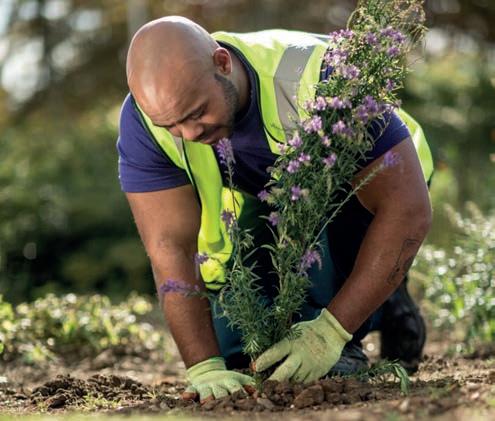
As the trend for habitat creation and management continues, we’re in for an exciting couple of years for the landscaping industry. Not only will applications for the new technology we’re using grow, but satellite technology and artificial intelligence (AI) are also bringing a new wave of innovation. For example, we’re exploring the use of AI to analyse satellite imagery of sites to identify a high level of detail, such as the different and distinct habitats present on a site, moisture levels in peatland or even the depth of the water table. With the latest satellite maps offering an accuracy of up to 50cm, this is bringing the possibility to gain a greater level of detail on the natural environment than ever before.
Whilst we’ll always need ecologists to detect those subtle environmental signs and indicators, emerging technology presents the landscaping industry with an opportunity to play an important role in organisation’s nature recovery journey. By continuing to find new ways to measure and explore nature-related risks and opportunities, we can accelerate the shift from simply maintaining grounds, to managing and restoring the natural environment for the benefit of both people and nature.

Tim is a career horticulturist who has previously worked for Gavin Jones and Hilliers. Tim joined Mitie in 2002 to launch and develop the landscape business and is managing director for Mitie Landscapes. Mitie Landscapes delivers grounds maintenance, horticultural and winter services for some of the world’s best known brands, with a large and diverse customer base across the public and private sectors. mitie.com
TIM HOWELL
OPINION prolandscapermagazine .com Pro Landscaper | March 2024 84
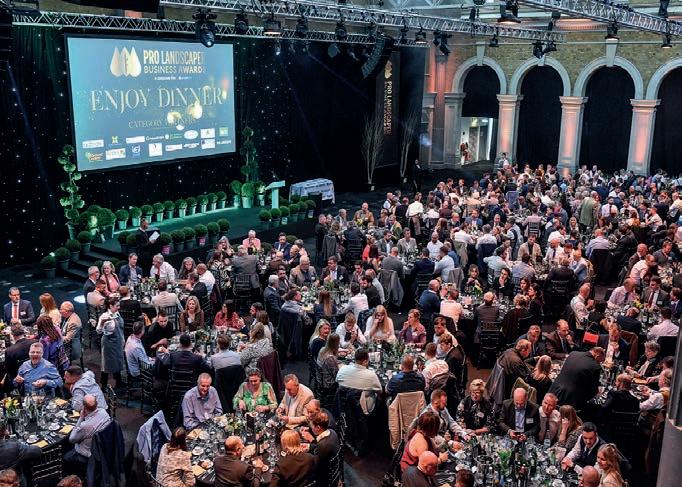


Awards ceremony: friday 19 april 2024 PROLANDSCAPERBUSINESSAWARDS.COM CONTACT OLLIE : 01903 777579 | ollie.finch@eljays44.com book your tickets now Join over 700 industry colleagues and revel in the success of you and your peers with an afternoon of networking, good food and celebration.
DRAMATIC DISPLAYS AND SUSTAINABLE IRRIGATION with OTTERBINE
Its fountain has been used to make a splash at RHS Wisley
When specifying a job which incorporates a water feature, a favourite product with landscape architects and specifiers is the giant fountains from Otterbine. The reason why? They create a bold impression and commanding display.
From country clubs and resorts to corporate headquarters, these fountains can be relied upon to make a centrepiece no matter the depth of the water. They can operate in shallow depths of only 40in or one metre, yet their displays can reach 90ft or 27m.
When it comes to installation, a real selling point is the large wheels on the frame which eliminate the need for hoists and cranes in most instances. Combine this with corrosion resistant materials, a unique screening system to simplify cleaning and an adjustable float to minimise visibility in the water.

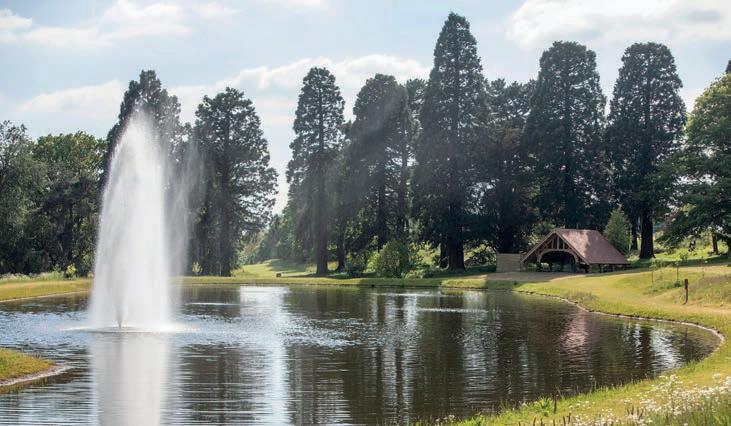
But it’s not just a striking effect these fountains make. Take the Otterbine’s 25HP Polaris Giant Fountain, for example. The brand’s largest floating fountain was recently chosen by the RHS Garden Wisley in Woking to provide its flagship garden with sustainable irrigation.
It was installed as part of the Royal Horticultural Society's project to create a new rainwater capture lake, providing great quality irrigation to one of the largest plant collections in the world seen by around a million visitors each year.
Harvesting rainwater supports the conservation of water, but the water must be good enough quality to use which is where Otterbine's offering comes in.
Matthew Pottage, curator of RHS Garden Wisley, explains:
FUN FACT
“The Giant Fountain is installed in our new lake which is connected to our garden irrigation system. The lake collects winter rainwater for summer irrigation and the Otterbine aerating fountain in turn makes the water good enough to use.
“The lake is designed in an ornamental fashion, and the fountain’s visual beauty and the fact that it muffles noise disruption from a nearby road helps bring a sense of theatre and peace to the space.”
Miles Water Engineering was responsible for the build of the lake and the subsequent fitting of the fountain. “The whole thing was easy and efficient. We are very grateful for that,” Pottage comments.
To learn more about how the Otterbine range of aerators and fountains, contact distributor Reesink on 01480 226800, email info@reesinkturfcare.co.uk or visit reesinkturfcare.co.uk.
TECHNICAL SPECIFICATIONS
• Available in 10HP-25HP
• Highest oxygen transfer rates in the industry
• Keeps the aquatic eco-system balanced and the water clean, clear and heathy
prolandscapermagazine .com Pro Landscaper | March 2024 86
PROMOTION
The geyser-like spray of the Polaris throws water droplets into the air where they attach to oxygen molecules that are absorbed into the lake water
OTTERBINE’S 25HP POLARIS GIANT FOUNTAIN IN A NEW RAINWATER CAPTURE LAKE AT RHS GARDEN WISLEY

CARBON Capturing
Matt Coulson explores ways to reduce carbon emissions and highlights the importance of adopting eco-friendly practices
The landscaping industry plays a crucial role in enhancing our surroundings, but it also has a significant environmental impact, contributing to carbon emissions. As the world grapples with the challenges of climate change, with COP28 recently taking place in the UAE aiming to reduce global warming and cut emissions, every sector needs to play a role to find sustainable solutions, including landscaping.
Recording and understanding data on current emissions is the first step to identifying the target reductions within land management strategy. This includes everything, beginning with the supply chain.
nutrients. Landowners must work hand in hand with landscapers to ensure the scope of work includes soil health, with landscapers maintaining this balance by continually adding organic material to their soil. Soil, when left exposed to the elements, will degrade and its carbon stocks will deplete.
new attention has focused on ‘natural climate solutions’ or managing land for carbon sequestration by conserving and restoring ecosystems and changing agricultural and gardening practices, which would help to cut over a third of global carbon emissions by 2030.
Rather than disposing of organic waste in landfills, landscaping businesses can adopt composting and mulching practices
Soil is part and parcel of a landscaper’s daily work and is an important component of cutting carbon emissions and carbon sequestration. Replenishing and restoring the world's soils – both in farming and natural landscapes – could help remove up to 5.5 billion tonnes of CO2 every year, equivalent to the annual greenhouse emissions of the US.
To lock in as much carbon as possible, soil needs a good balance of water, pockets of air, and living organisms, such as fungi, and
Covering the bare soil with plants, such as clover, and mulches –loose coverings of biodegradable materials – is therefore key to prevent CO2 from seeping into the atmosphere. Rather than disposing of organic waste in landfills, landscaping businesses can adopt composting and mulching practices. Organic materials such as grass clippings, leaves, and pruned branches can be composted and used as natural fertilisers. This not only reduces waste but also enhances soil health, promoting a more sustainable and eco-friendly landscaping environment.

Organic carbon sequestration is a great natural way of ecosystem regulation. As we search for ways to cut carbon emissions,
Plant diversity can enhance carbon capture. While some landscapers focus on a uniform look for their flower beds and lawns, growing a wide range of plants can transform landscapes into a miniature carbon sink. Plant diversity has been shown to increase productivity and the amount of carbon stored in the soil. Increased plant diversity boosts carbon sequestration by optimising use of available space in landscapes, both above and below-ground. One effective way to minimise the carbon footprint in landscaping is to opt for native and drought-resistant plant species. These plants are well-adapted to local conditions, requiring less water, fertiliser, and pesticides. By choosing plants that thrive naturally in the region, landscapers can contribute to lower maintenance needs, reducing the overall environmental impact. However, plants must be chosen from nurseries that do not use peat media for growing. Although this can be challenging, as pressure mounts for a complete ban of peat
prolandscapermagazine .com Pro Landscaper | March 2024 87
OPINION
products in professional growing, more nurseries are making the move to find a wide scale alternative.
The everyday equipment landscapers use is also a major source of pollution in landscaping. The use of lawnmowers, trimmers, and leaf blowers, which are typically powered by fossil fuels can lead to unnecessary carbon emissions. Transitioning to electric or battery-powered alternatives can significantly decrease this. These energyefficient tools not only reduce greenhouse gas emissions but can also result in lower operational costs, reduce noise, and improve air quality for landscaping businesses.
The resources landscapers use can also be a major source of waste. Water use in landscaping is a major contributor to carbon emissions, especially when relying on traditional irrigation systems. Implementing water-efficient practices, such as drip irrigation and smart watering systems, can help minimise water waste. Additionally, harvesting, and reusing rainwater via slow draining water butts can mitigate surface water run-off, prevent flooding, and further reduce the need for additional water resources.

Finally, chemical pesticides need to be used sparingly and there are alternatives.
Water use in landscaping is a major contributor to carbon emissions, especially when relying on traditional irrigation systems
Conventional pest control methods often involve the use of chemical pesticides, which can have adverse effects on the environment. Implementing Integrated Pest Management (IPM) practices emphasises the use of natural predators. This reduces the reliance on harmful chemicals, contributing to a healthier ecosystem and lower carbon emissions.
emissions, the industry can contribute to global efforts aimed at limiting the rise in temperatures and minimising the impacts of climate-related events. Landscapers are stewards of the environment, shaping and maintaining the outdoor spaces we inhabit. Embracing sustainable practices demonstrates a commitment to preserving the natural world, increasing biodiversity, and protecting ecosystems for future generations.
Good waste management including the implementation of recycling practices will divert as much as possible away from landfill and help carbon reduction.
Why this all matters?
The landscaping industry's adoption of eco-friendly practices is crucial for mitigating climate change. By reducing carbon

Implementing sustainable landscaping practices can lead to long-term economic benefits for businesses. Energy-efficient equipment, water conservation measures, composting, and good waste management practices can result in cost savings, making businesses more resilient and financially sustainable in the face of changing environmental regulations as well as constantly evolving consumer preferences.
The landscaping industry has the power to be a force for positive change by adopting sustainable practices that reduce carbon emissions, and this must be a shared goal with the architect, landowner, and/or land manager. From soil to plant choices to equipment and water management, every decision made in landscaping can contribute in a significant way towards a greener and more environmentally friendly future.

MATT COULSON
Matt Coulson is customer relationship director for Nurture Group, which achieved carbon neutral status in accordance with PAS2060 standards in October 2021 and is working towards its net zero commitment by 2030, explores ways to reduce carbon emissions and highlights the importance of adopting eco-friendly practices. nurture-group.co.uk
prolandscapermagazine .com Pro Landscaper | March 2024 OPINION 88





IRRIGATION DESIGN INSTALLATION MAINTENANCE WATER FEATURES It’s time to spring commission your irrigation systems. A well-maintained irrigation system is key in saving you time & money while allowing you to protect your landscape’s health & appearance. 01963 824166 waterscapes.co.uk @waterscapesltd We also maintain water features & fountains BARK AND MULCH The benefits for tree planting CLEANING AND AFTERCARE The bestsellers IRRIGATION The latest innovations A SPECIAL in partnership with Made in Britain And more! Coming up in the April issue FOR ADVERTISING OPPORTUNITIES Sales executive – Lewis Everle lewis.everle@eljays44.com Tel: 01903 777 588 FOR EDITORIAL ENQUIRIES Features writer Ashleigh Brown ashleigh.brown@eljays44.com We offer a wide range of stocked designs, plus a trusted bespoke manufacturing service for projects large and small THE PLANTER SPECIALIST NEW FOR 2024 GRP planters with faux-corten finish










Shade Solutions Shade Solutions Tel 0345 230 9697 • www.lws.uk.com For all your golf, sportsturf and landscape irrigation needs. Buy online at www.lws.uk.com www.access-irrigation.co.uk • sales@access-irrigation.co.uk 01788 823811 FOR ALL YOUR IRRIGATION NEEDS Design and Advice • Irrigation Parts Catalogue 24/7 Online Parts Ordering 15 - 16 October 2024 ExCeL London Save the date futurescapeevent.com Creating Inspiring Streetscenes CIS Street Furniture offer a diverse range of street furniture which will complement any location. As a result of the built environment compaction can inhibit or prevent natural root growth of trees. CIS SUDs compliant resin bound tree grilles are a great way of enhancing the sustainability of your project for future generations. Find out more at our website below. Tel: 01483 203388 www.cis-streetfurniture.co.uk CLASSIFIED

INTERVIEWS Little
Pro Landscaper asks quick-fire questions to gain a small insight into the people who make up our industry. To take part, email content@eljays44.com


Why do you believe the Pro Landscaper Sustainability Awards are so important?
Sustainability is hugely important to all our projects. In recent years, we have noticed more clients are onboard and more willing to consider sustainability and biodiversity than ever before. I think when people see the results their own garden and efforts can enact on the local biodiversity, it’s a powerful thing.
What are you most looking forward to for the year ahead?
We have a number of exciting projects currently in design to start site work this year, these range from some countryside family homes and farm regenerations to contemporary roof gardens and holistic collaboration with our inhouse architecture and interior design teams.
Would you recommend entering an award with Pro Landscaper?
Absolutely! Diversifying the awards Landscape Design Studios would usually enter helps to raise the bar within the industry, and championing sustainability and biodiversity, as well as beautiful design, is more important than ever. The more the positive impacts can be shared, the more it will inspire current and future generations.
Since winning your award at the Pro Landscaper Sustainability Awards, how has this benefited your business?
It has given us an opportunity to re-state and share our sustainability programme with our customers and stakeholders, and to share our successes while demonstrating our own commitment to improving our business.
Why did you enter the Pro Landscaper Sustainability Awards?
Having spent three years progressing our sustainability strategy, it felt like an appropriate time to put ourselves forward to a level of assessment and scrutiny, knowing there is still a huge amount of work to do, but pausing along the way to recognise our success to date, which is a real motivator.
Exciting upcoming projects?
The future sees a lot of growth for our sustainability programme. We are looking to develop our nature-based solutions and develop our Net Zero Strategy/Plan. Biodiversity assessment and improvement at a local, operational, and regulatory level creates a lot of potential projects and opportunities that are exciting for us, our customers, and our partners.
Why did you enter the Pro Landscaper Sustainability Awards?
There has never been a better time to show what GE has done to help transform the way urban environments can function in a more sustainable way by increasing nature into our cities, reducing flooding, waste and carbon footprints, cleaning air, and increasing biodiversity. The organisation has become a nationally acclaimed expert in contributing to the delivery of adaptive and resilient urban landscapes.
What are you most looking forward to for the year ahead?
Summer is the time when most of our Pictorial Meadows are in full flower, but this year I am keen to see the 3,000m2 of meadow turf installed across the campus at University of Warwick and how some of trials are progressing with the 23ha of seeded meadows in North Lanarkshire.
Would you recommend entering an award with Pro Landscaper?
This is the first time I had entered for an award as I always felt too busy, but would recommend making the time as I can see the rewards in terms of staff morale and marketing far outweigh time spent and will reap benefits well into the future.
prolandscapermagazine .com Pro Landscaper | March 2024 LAST WORD 91
Director, HollandGreen LandscapesSustainability Advisor, idverde UK
MARK LATCHFORD DAN CORNWELL LEILA FUERST
Winner Pro Landscaper Sustainability & Biodiversity Awards 2023: Domestic Design Project of the Year Winner Pro Landscaper Sustainability & Biodiversity Awards 2023: Supplier
Winner Pro Landscaper Sustainability & Biodiversity Awards 2023: Grounds Maintenance Company
Commercial Landscape Director, The Green Estate Community Interest Company


Exquisite joinery for distinctive gardens Design | Craft | Install Visit the design studio, workshop & showroom gardentrellis.co.uk 01255 688 361 The Garden Trellis Company Ltd. 355A Old Road, Clacton-On-Sea, Essex, C015 3RQ.