HOUSEBUILDINGspecial
SHOW PREVIEW
RHS Hampton Court Palace Garden Festival 2023
OFF LIMITS! Should developers get the green light for the green belt?
LET'S HEAR IT FROM Meadfleet's operations director Samantha Hursey
JULY 2O23





LUXURY EXTERNAL SHADING SINCE 1987 SCAN QR CODE TO FIND OUT MORE & REGISTER AS A TRADE PARTNER t w e 0344 800 1947 cbsolarshading.co.uk/trade trade@cbsolarshading.co.uk EXTERNAL BLINDS PATIO AWNINGS LOUVERED ROOFS GROW YOUR SALES M ANUFACTU R E LEAD TIM E IN LE S S THAN 2 WEEKS 2023 WINNER SUPPLIER & SERVICE PROVIDER
CONTACT
Eljays44 Ltd, 3 Churchill Court, 112 The Street, Rustington, West Sussex BN16 3DA
Tel: 01903 777 570
EDITORIAL
Head of content – Nina Mason nina.mason@eljays44.com

Tel: 01903 959 393
Senior subeditor – Katrina Roy katrina.roy@eljays44.com
Tel: 01903 777 570
Subeditor – Sam Seaton sam.seaton@eljays44.com
Tel: 01903 959 391
Design – Kara Thomas kara.thomas@eljays44.com
ADVERTISING
Sales manager – Chloe Holbrow chloe.holbrow@eljays44.com
Tel: 01903 777 570
Account manager – Russell Eales russell.eales@eljays44.com
Tel: 01903 777 582
Sales executive – Lewis Everle lewis.everle@eljays44.com
Tel: 01903 777 588
Sales executive – Luke Frost luke.frost@eljays44.com
Tel: 01903 777 570
Horticulture Careers – Mark Wellman mark.wellman@eljays44.com
Tel: 01903 777 574
Chairman – Jim Wilkinson jim.wilkinson@eljays44.com
Tel: 01903 777 570
Editorial director – Lisa Wilkinson lisa.wilkinson@eljays44.com
Tel: 01903 777 570
Managing director – Jamie Wilkinson jamie.wilkinson@eljays44.com
Tel: 01903 777 589
MARKETING & CIRCULATION
Subscription enquiries – Tyler Gould tyler.gould@eljays44.com
Tel: 01903 959 390
Printed by Stephens and George Ltd
Published by ©Eljays44 Ltd – Connecting Horticulture. Pro Landscaper’s content is available for licensing overseas. Contact jamie.wilkinson@eljays44.com
Pro Landscaper is published 12 times per year by Eljays44 Ltd. The 2023 subscription price is £115. Subscription records are maintained at Eljays44 Ltd, 3 Churchill Court, 112 The Street, Rustington, West Sussex BN16 3DA, UK. Articles and information contained in this publication are the copyright of Eljays44 Ltd and may not be reproduced in any form without the written permission of the publishers. The publishers cannot accept responsibility for loss of, or damage to, uncommissioned photographs or manuscripts.
Whilst every effort has been made to maintain the integrity of our advertisers, we accept no responsibility for any problem, complaints, or subsequent litigation arising from readers’ responses to advertisements in the magazine. We also wish to emphasise that views expressed by editorial contributors are not necessarily those of the publishers. Reproduction of any part of this magazine is strictly forbidden.
Welcome
I’m not saying I feel sorry for housebuilders, but I will say they have a lot to contend with. As Barratt’s Brian Hawtin puts it in our interview on page 34, there has been a “concentrated slew of legislation” for housing developers over the last few years, not least biodiversity net gain which comes into effect later this year. They’re also facing pressure from the Levelling Up secretary, Michael Gove, to make them aesthetically pleasing and are under scrutiny as to the inclusivity and accessibility of their developments too.
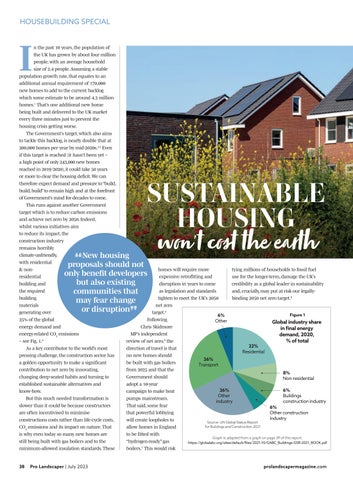
Is there a reward on the way in the form of the green belt? Labour leader Keir Starmer has slammed prime minister Rishi Sunak for removing the UK’s housebuilding targets and has said he is prepared to “make tough choices” to ensure there are enough homes – and affordable ones, at that – across the country. One of these choices could be allowing more housing to be built on the green belt, which has prevented urban sprawl for the last eight decades or so. It’s sparked a hot debate in the media, and Sunak has unsurprisingly come out pledging to protect the green belt and instead is encouraging developers to build on brownfield sites.
Whether we build on the green belt or on brownfield is all part of a wider conversation though, as Niall Williams explains in our feature on page 42. It can’t just be about where we want to build but where we need to build –and we need to think further ahead as to what the next generation could need from a housing development and the landscape around it.

Pro Landscaper is proud to be an Accredited Supplier member of BALI
Professional Landscapers
Pro Landscaper is proud to be an associate member of the APL
prolandscapermagazine .com Pro Landscaper | July 2023 WELCOME 3
Nina
©Meadfleet/Michael Cameron
BUSINESS
6
Is High Inflation Continuing to Take its Toll?
The industry is picking up, but budgets are seemingly still feeling stretched from the cost-of-living crisis, finds our UK Landscape Barometer

15
Cultivating a Bright Future for the Industry
The industry needs to work together to ensure the apprenticeship system supports the next generation, explains Mitie's Tim Howell
16
10 Tips for Starting a Business
Kim Sones offers advice to those looking to set up their own company in the landscaping industry
CONTENTS July 2023
25
Creating a Bond
Gareth Wilson closes his series on bonding mortar mistakes by discussing the considerations of SBR use on porcelain paving
26
The First Climate King Becoming King might have reduced his environmental activism, but Adam White remembers all the good that Charles III has stood for over the years
29
Predicting Plant Demand
Lewis Normand addresses how working even closer with nurseries can help the sector become better prepared for changing demands
FEATURES
34
Housebuilding Special
From an interview with Barratt Homes’ Brian Hawtin to the debate over the green belt, delve into the developer sector
53
RHS Hampton Court Palace Garden Festival preview Designers and landscapers are gearing up for the summer show, with a variety of concepts being created for 2023

65
Pitch Perfect
Four designers share their approach for pulling in clients with their presentations
prolandscapermagazine .com Pro Landscaper | July 2023 CONTENTS 4
OPINION
79
73
Blending New and Old
After moving into a modern property, adjacent to older properties with more character, the clients asked The Garden Company to create a fitting outdoor space
79
Connecting the Community
Placemaking and sustainability are at the heart of Regent’s Place, a 13-acre mixed-use development in London, with a new entrance created by Maylim
85
It’s Only Natural
With visions of a small natural swimming pool as the focal point of her new garden, this Nottinghamshire-based client brought in Ellicar to design the pool and surrounding space

ALSO IN THIS ISSUE
12
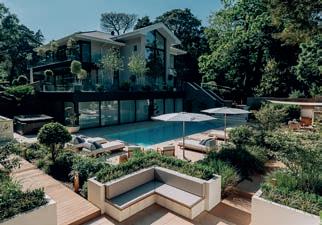
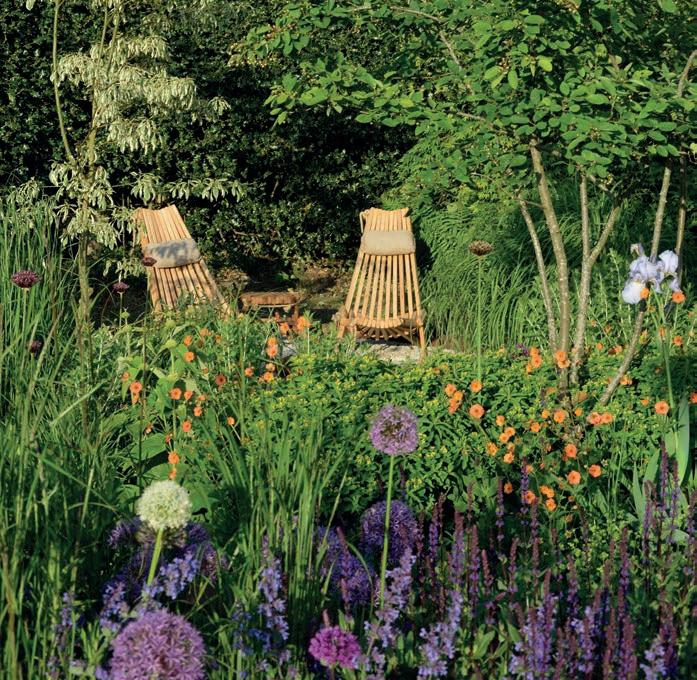
Pro Landscaper Sustainability & Biodiversity Awards Launches
Enter to be recognised and rewarded for the environmental benefits of your company and projects
47
Let’s Hear It From... Samantha Hursey
Find out how Meadfleet’s operations director has grown the company’s ecology-focused approach in our Housebuilding Special
70
On the Right Path Matt Evans guides you towards creating a winning walkway, with inspiration and advice
prolandscapermagazine .com Pro Landscaper | July 2023 CONTENTS 5
JULY 2O23 HOUSEBUILDINGspecial OFF LIMITS! Should developers get the green light for the green belt? LET'S HEAR IT FROM Meadfleet's operations director Samantha Hursey SHOW PREVIEW RHS Hampton Court Palace Garden Festival 2023
PORTFOLIOS
73 70
85
IS HIGH INFLATION continuing to take its toll?
IN THE LANDSCAPING INDUSTRY
The number of respondents more confident than last month has nosedived this week to just 19%. That’s not to say confidence has dipped, though; 67% said they feel the same as last month, and 44% reported feeling more confident then. As one domestic landscaper told us, “The industry is picking up.” They have experienced an “influx of new clients” recently, as well as existing clients wanting more work.
A design and build company said that it “seems to be back to business as usual after an unusual and prolonged winter break,” with temperatures now starting to hit the late 20s – and some places even seeing 30°C or more. Projects are somewhat delayed as a result of an “unexpected winter pause by all projects,” added the company. These could otherwise have been underway much sooner.
Economic uncertainty is likely to have played a part in these delays, and arguably is still taking its toll. Another design and build company said that clients’ average spend had “markedly decreased,” though said the volume of work was “still good”.
“Clients are scaling back ambition and we are finding we are carrying out partial re-landscaping with more emphasis on soft landscaping.”
Whilst inflation has dropped from 10.1% in March, it remains high at 8.7% in the year to April, and it’s coming down slower than hoped, according to Bank of England governor Andrew Bailey. With mortgage rates only set to increase further, house sales are struggling, putting pressure on the
housebuilding sector. One commercial landscaper says: “Commercial developers are murmuring about low house sales numbers; this is leading to cost-saving exercises on their part, including disinclination to accept cost increases and, in some cases, them proactively asking us for cost reductions.”
PERCENTAGE OF RESPONDENTS MORE CONFIDENT COMPARED TO LAST MONTH

prolandscapermagazine .com Pro Landscaper | July 2023 BUSINESS 6
SCAN HERE TO READ THE FULL REPORT 0% 10% 20% 30% 40% 50% 60% 70% 80% 90% 100% Nov Dec Jan Feb MarApr May JunJul Aug SepOct
2021 2022 2023 2020
75%
BY THE NUMBERS 50% OF GARDEN DESIGNERS ARE WORKING ON FEWER PROJECTS
27%
Nurseries
It has not been the easiest start to the year for nurseries, with both the prolonged winter period and the economy proving to be challenging. And whilst some are continuing to struggle, there are nurseries that are seeing glimmers of hope. Half have seen their turnover increase from April last year, and it’s hardly surprising then that half are also more confident. Around three quarters (67%) also saw an increase in quotes from the previous month.
One nursery said: “There has definitely been a bit of a lull in sales in the winter period due to a number of factors, the weather and economic downturn chief amongst them. However, the industry is looking healthier than it might and I think the future is looking more positive than a few months ago.”
Another said that strong growth is “continuing to develop across the various sectors we operate in.” They added that they are sometimes having to work a bit harder but said the “results speak for themselves.”
It’s more of the same across the board for most. For 53%, enquiries are the same as the previous year. The number of projects on the board has stayed the same for 60%, and there has been no change in conversion from April 2022 for 40%. The only sectors reporting a decrease in conversion are design and build (for 75%) and domestic landscaping (for 33%). This is despite demand still seeming to be “secure,” according to one domestic landscaper.
prolandscapermagazine .com Pro Landscaper | July 2023 BUSINESS 7 CONVERSION TURNOVER PROJECTS Higher Equal Lower
*These are year-on-year comparisons for April 2023 to April 2022 33%27% 40% 27% 60% 13% 30% 35% 35% HigherEqual Lower 0% Turnover Quotes Confidence 20% 40%60%80% 100% Higher Equal Lower 20% 30% 40% 50% 60% 70% 80% 90% 100% 10% 0% EnquiriesProjectsConversion
JUST REPORTED ON MORE PROJECTS WORKING 43% ARE LESS CONFIDENT THAN THE SAME TIME LAST YEAR
OF COMMERCIAL LANDSCAPERS SAW AN INCREASE IN CONVERSION ENQUIRY TO CONTRACT RATE FROM
Conversion TURNOVER HAS STAYED THE SAME FOR OF DOMESTIC LANDSCAPERS
67%

Stock on the ground, with direct to site available via our network, across all the Talasey product brands: Tot a lly Ta lasey COMPOSITE DECKING, FENCING & CLADDING NATURAL STONE PAVING & ACCESSORIES PORCELAIN PAVING & CLADDING ARTIFICIAL GRASS & ACCESSORIES INSTALLATION & MAINTENANCE ACCESSORIES
HTA URGES DEFRA TO RECONSIDER PEAT TIMELINE DUE TO PLANT SHORTAGE FEARS

The horticultural industry warns UK gardeners of a potential plant shortage by 2027, if the ban on peat is brought forward with no sustainable transition employed.
The Horticultural Trades Association (HTA) says Defra’s plans to bring forward the ban on peat in commercial horticulture by four years could have a devastating impact on the industry. Moving the ban on peat in commercial plant, tree, fruit, and vegetable production from 2030 to 2026 reduces the number of seasons commercial growers have to complete extensive trialling in their crop production techniques by over half.
ROUNDUP
Industry Updates
NEW ENVIRONMENTAL HORTICULTURE GROUP LAUNCHES
The Environmental Horticulture Group (EHG) has launched at the House of Lords, Westminster. The UK’s gardening, landscaping, arboriculture and environmental horticulture sectors came together to relaunch the industry group, formerly known as the Ornamental Horticulture Roundtable Group, with the intention of championing sectoral affairs within government.
The group says it will be applying substantial pressure to the government to do more in the way of support for the sector, enabling it to reach its full potential. In research conducted by Oxford Economics, it was found that the environmental horticulture industry

could grow to support GDP contributions worth £41.8bn and provide 763,000 jobs by 2030, if given the proper parliamentary support.
Boyd Douglas-Davies, chair of the EHG, says: “I was honoured to chair the OHRG and now I am delighted to chair the EHG as we continue to champion the enormous success and exciting potential of the environmental horticulture sector.
"I look forward to working closely with government stakeholders to achieve our shared aims in a breadth of policy areas including economic, environmental, science, research, net zero, business, health, planning, taxation, skills and education.”
A new HTA members survey highlights a projected shortage of 100 million purchasable plants and trees in the UK in the year following the ban, resulting in a significant loss of greenery and biodiversity, depriving the nation of its natural archetypical landscapes, says the HTA.
James Barnes, chairman of the HTA, says: “We urge the government to reconsider the timeline and ensure a manageable transition away from peat use, allowing adequate time for growers to successfully and sustainably trial and adapt their methods and materials.” hta.org.uk
Tivoli Group Ltd has acquired Greenfingers Landscape Ltd as part of the company’s growth targets for this year and beyond. This marks the grounds maintenance provider’s second acquisition in two years following the purchase of Sodexo Horticultural Services in February of 2021.

Based in the North West of England, Greenfingers was established in 1996 and has around 120 staff, bringing an annual turnover of over £4m to Tivoli’s existing £65m. It provides services for a variety of private and public landowners, including multiple housing associations.
The acquisition will increase the scale of Tivoli's service portfolio, grounds maintenance, landscaping, arboriculture, winter maintenance, and interior plants and floristry. It will also enhance the company’s offering in the North West.
Nicola Keach, Tivoli’s chief executive officer, says: “Greenfingers’ teams share the same passion as we do for self-delivering a highquality service and building long term relationships with clients, and we look forward to welcoming great people to our team. There is a natural harmony between our work, our clients and our values, and we are very proud to welcome the employees and customers of Greenfingers to the Tivoli family.”
The transaction remains subject to satisfaction of certain conditions precedent customary in a transaction of this nature. tivoliservices.com
prolandscapermagazine .com Pro Landscaper | July 2023 BUSINESS 9
TIVOLI GROUP ACQUIRES GREENFINGERS LANDSCAPE
LANDSCAPE INSTITUTE CEO STEPS DOWN
Sue Morgan is stepping down as CEO of the Landscape Institute after two years in the role. Morgan joined the Landscape Institute (LI) in July 2021 from the Design Council as interim CEO, bringing more than 20 years’ experience in the built and natural environment. She has returned to multidisciplinary consultancy firm Around the Block as director.
Sue Morgan says: “As a greenspace and built environment professional that is passionate about place and tackling the climate crisis, my time at the LI has been exciting and fulfilling. I have been very lucky to have worked with such a dedicated and committed LI staff team and privileged to have worked alongside the excellent Board and Advisory Council, who have offered me insight and support.
“I am now keen to continue my work in helping to deliver education and skills for a new and diverse generation, long- term stewardship for green infrastructure, and new finance models.”
During Morgan’s tenure at the LI she has overseen the delivery and development of a varied portfolio of project and programs, including spearheading delegations at national and international conferences, granting the LI an authoritative position among upper echelon investors, developers and government agencies.
Morgan has also been credited with strengthening the LI’s internal expertise and sectorial knowledge through persistent emphasis on membership, education and communications at recruitment and investment level.
Immediate past president Jane Findlay says: “We are sad to see Sue leave the LI. Over the past two years she has brought a special level of experience and expertise to our institution at a time when the work of our members has never been more relevant to the global challenges, we all face.
“We know how passionate Sue is about these issues and we look forward to seeing her bring her energy and insight to new endeavours in this ever more important context. We wish her well for the future.” landscapeinstitute.org

GREENWOOD PLANTS AWARDED £2.7M NATIONAL HIGHWAYS CONTRACT
Wholesale nursery Greenwood
Plants has been awarded £2.7m in funding by National Highways to grow three million trees from seed over the coming five years. National Highways is targeting net zero by planting at least three million trees by 2030 with Greenwood signed as the sole supplier for the project.

The tree whips will be cultivated from seed and grown peat-free in alignment with Greenwood’s ‘growing greener’ commitment to cease all peat use by 2030 and National Highways’ targets to cutting carbon emissions and facilitating increased biodiversity
Greenwood Plant managing director, Melanie Asker says: “We are really proud to be supporting National Highways in its goals of reaching net zero and improving biodiversity across the country.”
Greenwood won the award for Sustainable Business of the Year 2022 at the
Central South Business Awards in recognition of its ‘responsible planetary stewardship.’ Malcolm Dare, National Highways’ executive director, commercial and procurement, says: “The planting of three million trees by 2030 shows how seriously we take our role in addressing the climate crisis and building a cleaner, greener future for everyone.”
National Highways recently published its ‘Environmental Sustainability Strategy’, documenting the motorway management organisations long-term vision to connect the country and grow the economy in a sustainable way. greenwoodplants.co.uk
HOUSE OF LORDS TOLD HORTICULTURE NEEDS A “REBRAND” TO ATTRACT YOUNGER GENERATION
Horticulture needs to be rebranded and needs to be introduced into the curriculum, said witnesses to the Horticultural Sector Committee.
In the latest of a series of evidence sessions so far into the challenges, opportunities and risks faced by the horticultural sector, the committee was told that horticulture “needs a rebrand throughout the entire education system.”
focusing on introducing gardening to primary schools – and Grow2Know founder Tayshan Hayden-Smith, Matthews said there is a “huge gap” between when you touch point with horticulture around five years’ old to when you would embark on a career.“It escapes secondary school altogether until you get to the point where you can get a formalised qualification at A Level or equivalent through the other schemes.”

The introduction of T Levels – two-year courses being gradually rolled out which are equivalent to three A Levels, with courses on agriculture, land management and production to be introduced this September – “are going to be really good for people more academically minded” but “there are still a lot of barriers,” says Matthews.
Lilidh Matthews, treasurer of the Young People in Horticulture Association, said that there are “a lot of perceptions around horticulture as a career that aren’t valid and that needs to be changed throughout the education system.”
Joined by influencer Lee Connelly – or the Skinny Jean Gardener, who has been
Hayden-Smith added that there is a misperception about gardening that needs to be addressed. Horticulture can be seen as “quite unattainable, quite unachievable” to teenagers, in particular those from deprived backgrounds. He raised the need for more relatable role models in the sector. ypha.org.uk growtoknow.co.uk
prolandscapermagazine .com Pro Landscaper | July 2023 BUSINESS 10
WALES CONSIDERS BANNING ARTIFICIAL LAWNS


Online exclusives
Head to prolandscapermagazine.com
The Welsh Government is considering a country-wide ban on artificial grass following “worrying reports” of the toxicity levels emitted. Climate change minister Julie James confirms she “wants to explore proactively” the possibility of a ban across Wales.
Plaid Cymru MS Sioned Williams raised a concern regarding the use of artificial grass by the Swansea Council as part of the city’s regeneration. Swansea confirmed it “would not be used by the council in the public realm, even on a temporary basis going forward,” leading Williams to ask whether the Welsh government would commit in banning artificial grass in government schemes, excluding sports fields.
Williams highlighted research that showed natural gardens help to reduce the temperature of urban areas, while
“absorbing rain, thereby reducing the risk of flash flooding, and offering much needed refuge for wildlife.”
In response, James stated: “Artificial grass really does have a very, very bad effect on the local sustainability of a large number of areas in Wales. As you rightly said, there is a short-term focus on maybe its lower maintenance; but, actually, weeds come up through artificial grass. It can be very difficult to clean, if an animal has been on it, and actually there are quite worrying reports from a number of university sources, saying that the toxicity coming off artificial grass... is quite alarming.
“So, actually, I really do think we need to get a public information campaign going about why it isn’t the short-term solution it looks like for people.” gov.wales
management, and sustainable drainage systems management.
Yorkshire Water is a major provider of essential water and wastewater services, with over five million households and 140,000 businesses across Yorkshire and the Humber.
The new contract will see Mitie undertake grounds and landscape maintenance of approximately 2,000 operational, recreational, and corporate sites across Yorkshire Water estate, including clean and wastewater sites, service reservoirs, and water towers.
BEHIND THE FAUNA & FLORA GARDEN
Designer Jilayne Rickards and landscaper
Tecwyn Evans went above and beyond to create a sustainable show garden and spread the word of an impressive charity at RHS Chelsea 2023. Find out how they did it. prolandscapermagazine.com/behindthe-fauna-flora-garden


Facilities management giant Mitie has been awarded a new three-year contract to deliver landscaping services for Yorkshire Water.
The £4m contract to deliver on-site grounds maintenance services includes adverse weather services, tree and weed
The facilities management company will combine landscaping with the inclusion of “intelligent technology”, including its ‘Live Landscapes’ online hub for providing real-time data and operational information. mitie.com
TAKING ON BBC GARDENERS’ WORLD LIVE FOR THE FIRST TIME
Ahead of the annual show, we spoke to Katerina Kantalis about how the designer and New Look Landscapes are preparing to create their first show garden together. prolandscapermagazine.com/ taking-on-bbc-gardenersworld-live-for-the-first-time
AUTHOR JENNY BAILEY ON BRINGING GREEN ROOFS TO CHILDREN
The Green Roof Organisation has partnered with children’s author Jenny Bailey to encourage childhood engagement with nature. Bailey shares the importance of doing so. prolandscapermagazine.com/ author-jenny-bailey-on-bringinggreen-roofs-to-children

prolandscapermagazine .com Pro Landscaper | July 2023 BUSINESS 11
©RHS/NeilHepwo r t h
MITIE AWARDED £4M YORKSHIRE WATER CONTRACT

Showcasing the UK landscape sector’s green credentials PROLANDSCAPERSUSTAINABILITYAWARDS.COM 22 NOVEMBER 2023 | E xCe L LONDON The Pro Landscaper Sustainability & Biodiversity Awards aim to reward and recognise the environmental benefits that companies and projects in the sector provide. 2023 COMPANY-FOCUSED CATEGORIES Grounds Maintenance Company | Landscape Architecture Studio Arboriculture Company | Garden Design Company Landscaping Company | Supplier



2023 PROJECT-FOCUSED CATEGORIES Maintenance Contract | Commercial Design Project Domestic Design Project | Commercial Build Project Domestic Build Project | Sustainable Product of the Year These awards are on a mission to showcase the most important innovation and initiatives across the UK landscaping sector, from design, to construction, to product supply and manufacturing. Category partner Contact Mark to enter mark.wellman@eljays44.com | 01903 777574 Contact Chloe or Russell for partnership opportunities chloe.holbrow@eljays44.com | 01903 777585 russell.eales@eljays44.com | 01903 777582 ©Eric Orme
Place Photography
BACK-PACK BATTERY 1200Wh / 33.5Ah

BACK-PACK BATTERY

Compatible Tools: Chainsaws, Hedge Trimmers, Brush Cutters, Linetrimmers, Blowers, Mowers, Earth Augers, Split Shafts, Disc Cutters & more


Connections Types:
x5 Direct Connection Models
x27 LXT 18Vx2 (36V) Models
x26 XGT 40V Max Models
• The cord can be routed from the waist or over the shoulder.
• Adjustable cord length for each tool.
• Adjustable harness to fit the users body
• Immediate detachment of the cord if the tool is dropped.
• The IPX4 certified sturdy housing is structured to prevent damage to the battery cells from drops and shocks.
• Weighs only 8.8kg.
makitauk.com/product/PDC1200A01

UB001CZ UB002CZ UR101CZLM001CZ
UR201CZ
PDC1200
CULTIVATING A BRIGHT FUTURE for the industry
As the landscaping sector continues to evolve, we must ensure that we’re equipping it with the vital skills we need for the future.
For many people, a career in landscapes is appealing because it offers a life outside, surrounded by nature, doing practical activities, whilst also being able to learn and develop new skills and techniques. Part of futureproofing our industry is not only attracting this talent, but also laying the foundations for long-term careers in which people can develop and grow.
A natural solution to this is apprenticeships, balancing practical on-the-job learning with formal qualifications; however, our industry isn’t seeing the benefits of apprenticeships as much as it could. A core reason for this is the prohibitive entry requirements that often preclude those who would benefit most.
Apprenticeships require learners to have GCSE or equivalent qualifications in English and Maths, irrespective of the course they are studying. The reality is that many colleagues in our sector may not have these qualifications, discouraging them from taking this step on the learning ladder. If the Apprenticeship Levy was opened up so that it could be used for Maths and English qualifications too, we could help more people develop their careers.
While they provide practical training and a pathway into the industry, apprenticeships –and indeed any learning on the job
qualifications – are not just for school leavers. They are crucial tools to help us upskill and reskill our current workforce. I myself have experienced first-hand how learning while working can transform your career. Around 25 years ago I achieved an MBA, which wasn’t so common at the time, especially because it was before the introduction of the Levy, and it completely changed the way that I operate. As a nonacademic person at school, achieving an MBA helped me to develop new skills and offered me management experience early in my career, which helped me on my journey to becoming the managing director of one of the UK’s leading landscapes businesses.
It’s also important that we have the courses we need to develop our talent with the skills our sector desperately needs. Horticulture, commercial landscaping, and grounds maintenance are all very diverse. The current ‘Level 2 Horticulture’ apprenticeship is trying to suit everyone, but by having more specialist courses for our sector we can help train people in the
skills we need, be that biodiversity, urban landscaping, or commercial skills.
It’s vital that we’re aligned as a sector on this issue, from working together to make the case for changing the UK’s apprenticeship system, to cultivating an environment that fosters skills development. If we can make it easier to join, stay and grow with us, the landscapes industry can offer a wealth of opportunities for people who are passionate about the outdoors and have an eagerness to learn and develop their skills.
It would be great to see the industry pull together in recognising the skills gap in our sector, and work to find solutions which will allow us to attract and develop both our current and future talent.
TIM HOWELL
Tim is a career horticulturist who has previously worked for Gavin Jones and Hilliers. Tim joined Mitie in 2002 to launch and develop the landscape business and is managing director for Mitie Landscapes. Mitie Landscapes delivers grounds maintenance, horticultural and winter services for some of the world’s best known brands, with a large and diverse customer base across the public and private sectors. mitie.com

The apprenticeship system needs to change to make a difference, says Tim Howell
Our industry isn’t seeing the benefits of apprenticeships as much as it could
OPINION prolandscapermagazine .com Pro Landscaper | July 2023 15
10 TIPS STARTING A BUSINESS for
Kim Sones offers advice to those looking to set up their own business in the landscaping industry
Building a business is not for the faint-hearted. It takes hard work, determination and grit to run a successful business, especially in the early days. The first thing to ask yourself is: Do I have what it takes? If the answer is yes, then you will embark on an exciting journey full of challenges, lifelong learning and self-fulfilment. Here are 10 important factors to consider when starting a business:
Business Structure
The most popular business structures are sole trader and limited company. There are advantages and disadvantages to each, so research which type of business entity is suitable.
Business Bank Account
You need to open a business bank account as business and personal finances must be kept separate. There are different bank accounts available so consider what you need the bank account for; i.e., will you need to pay in cash, or will it be used for electronic transfers?
Insurance and Licenses
All businesses need insurance, but which level of insurance is best for your business? Consider how your needs will change over time. Depending on the services you offer, you may need to apply for certain licenses.
Business Investment
Usually, businesses in the landscaping industry are a simple model and can be started on relatively low investment. Decide on what investment you need to get started and how you are going to fund any initial purchases.
Marketing
There are many ways to market your business, so consider who your ideal clients are, where they are located, and how you can potentially reach them. Would they search on Google when looking for your service or find you in a magazine? Online directories, social media and building a simple website are low-cost ways to start your marketing.

Your Services
Start by assessing your knowledge, skills and experience. Can you specialise in a certain area to help you to stand out from your competitors?
Pricing
Working out what to charge clients can be tricky at first. A good starting point is to find out the prices your competitors are charging for similar services.
Employees
Identify if you need help in advance as it can take time to find the right employee or subcontractor for the job.
Accounts
When you make a sale, customers need to be sent a sales invoice. Your sales and expenses need to be recorded, firstly to calculate if the business is making a profit, loss or breaking even, and secondly to monitor sales (turnover) so you know when the VAT threshold is near. Currently, the UK VAT threshold is £85K and is calculated on a rolling basis. This means the last consecutive 12 month period must be monitored each month.
Processes and Systems
There are many systems for increasing business efficiencies and arguably the most important is your accounting system. Businesses need processes in place before they can scale, so you should start implementing processes from the outset if scaling is your plan.
It is difficult to predict the future of a business; however, consider how you want your business to look in the years ahead. This will create a road map and help you to make the right decisions along the way to your final destination.
Kim Sones is the owner of Sones Accountancy Services Ltd, an accountancy practice specialising in the landscaping industry. Kim and Matt Eden of Eden Horticultural Ltd have created a Facebook group called ‘The Landscaper’s Hub’ to help those starting a business in this industry and provide tips, advice, and a safe space to ask questions. sonesaccountancy.co.uk
KIM SONES
Kim photograph ©Sarah Cockerton
9 OPINION prolandscapermagazine .com Pro Landscaper | July 2023 16
THE HEARTTouching
Just over 20 years ago I was researching various designers and garden makers for ‘Influential Gardeners’, a review of the 20th century. In compiling information on Russell Page, I discovered he had designed an exhibit at the RHS Chelsea Flower Show that had a profound effect on people, creating an emotional response and moving people to tears.

I have often reflected on this phenomenon, not least when Gavin [McWilliam] and I have been commissioned to produce show gardens. This might seem strange, but a show garden has to create a readable and believable space from nothing very much – the flat lawns of the Royal Hospital, for example. The production of the garden is also instant once work starts at the beginning of May.
In Singapore in 2014 we set out to create ‘Sacred Grove’ – a garden that expressed a certain spirit in its spatial delivery, a combination of
hard material, planting, water, light and shadow. We had been fascinated in the sacred groves of Ancient Greece, in which similar materials and spatial composition created something special. Our 2017 garden at Chelsea explored different ideas, those explosive moments when creative ideas form and messages cross the synapses. We received an amazing response to the garden from visitors to the show, but I was particularly fascinated by the emotions that the garden stirred with many moved to tears by their experience. It was full of hope and included messages from children who were asked to encapsulate their hopes and aspirations for their future and for the wider world. Could it have been this touching aspect that was responsible? It is difficult to say but the space was calm and serene which might also have touched the hearts of so many.
And so, to 2023 and a garden that embodied an aspect of our existence that touches every one of us: the end of life. For our sponsor, Darwin Investments, the garden space was to facilitate conversation and the grieving process, a space for remembrance and spiritual uplift. It is a subject that has long fascinated Gavin and I, not in a morbid way but more in terms of touching the soul.
The response to the completed garden was tangible even before the show officially opened. As it began to take shape fellow exhibitors responded with their moving stories, memories of loved ones or of their personal experiences of grief and loss, as if the garden gave permission to unburden sometimes long hidden memories.
The response to the garden was profound for all involved. Whilst we had designed the space to speak to people, to create a calm and uplifting experience, the spiritual connection was astonishing and overwhelming. Perhaps more incredible was the response from the television audience for it seems the garden touched hearts vicariously too.
I wish we could write the formula for this either conceptually or materially, but I think there is more than a simple system at play here. It was an amazing last delivery at the show. We can’t wait to see the garden become permanent and hopefully the first of many.
ANDREW WILSON

OPINION
Andrew Wilson is a landscape and garden design consultant, director of the London College of Garden Design, and an author, writer and lecturer. lcgd.org.uk
Andrew Wilson considers the gardens and landscapes we produce and how they have the potential to speak to us and move us
prolandscapermagazine .com Pro Landscaper | July 2023 17
Whilst we had designed the space to speak to people, to create a calm and uplifting experience, the spiritual connection was astonishing and overwhelming
A CENTRAL VIEW THROUGH THE TRANSCENDENCE GARDEN, RHS CHELSEA 2023 BY ANDREW WILSON AND GAVIN MCWILLIAM

alitex.co.uk 01730 826900 GLASSHOUSES
Tradestand
RHS Chelsea Flower Show 2023 Best
LABELS BEHINDLeaving
Iwas walking through a meadow with a new friend this week exploring her rewilding project. She is spearheading a social scheme to regenerate 13 acres of land in mid-Suffolk alongside a growing community of volunteers. We were exploring the developing biodiversity there and comparing notes on how the meadow was now becoming species rich after decades of intensive farming.
Upon doing this, we both noticed a plant we couldn’t recognise by sight alone. Ever a deeply curious mind, I whipped out my trusty app and swiftly identified the mysterious newcomer. My friend hung back smiling at my enthusiasm, then gently told me this: that whilst identifying plant species helped enormously with the regeneration of this land, she was mostly content to just observe. Her joy was in simply noticing a new plant, without feeling the need to name it.
She had spent the previous three years getting to know this place. Doing tasks by
hand that could be better done by machinery, planting more than 300 fledgling trees, seeding wildflowers and just sitting in stillness – she knew this place intimately.
Her vision for the land was full of big plans. She wanted to create a community around it, running events from land tending to ecotherapy. She had approached the project there slowly, though. She understood that in order for this land to thrive she would have to get to know it. She regularly walks the land and has observed it through three cycles of the seasons, gently inviting people onto it, through it and to share the space. It wasn’t because she couldn’t identify it that she noticed that plant; she noticed it because she knew she hadn’t seen it there before. It was new, it was exciting; a part of this meadow’s regenerative journey.
As humans we are quick to label things – plants, places, even people – but as a very old friend once said: “An oak doesn’t know it’s an oak, it simply is.” That’s the lesson, isn’t it? That without the labels we are free to just be in nature. Removing the intellectualisation of our landscapes
removes the fear of not knowing and brings us closer to a state of awe. Indeed, an extremely knowledgeable naturalist once professed that his favourite place to go was the beach. He told me that he was able to identify almost everything terrestrial. At the coast, though, he was able to slip back into a child-like state of wonder, fishing out nameless crabs and chunks of seaweed from rock pools. A feeling that, for him, had long since disappeared on land. He had made it a practice never to identify anything at the coast, preferring instead just to marvel at it.
I put the app away. I walked with her in silence, ran my fingers against the long grasses, sat by the ephemeral pond newly full of spring rain and drank in the deep sense of peace that the ancient landscape had coursing through it.

 KATIE FLAXMAN
Katie
Flaxman
is
co-founder and director of Studio 31 Landscape Architects.

Studio
31
is an award-winning, adventurous and environmentally conscious landscape architecture practice working across the residential, public realm and health sectors. designstudio31.co.uk
OPINION prolandscapermagazine .com Pro Landscaper | July 2023 19
Removing the intellectualisation of our landscapes removes the fear of not knowing and brings us closer to a state of awe
Katie
Flaxman
discovers the enjoyment of nature without the need to identify all the species around you
Outdoor spaces play an important role in development in a SEND (Special Educational Needs and Disability) environment. As the number of children diagnosed with SEN rose to 1.49 million in 2022 – an increase of 77,000 on 2021 – the provision of inclusive play facilities is increasingly vital.


With careful planning and specialist input, outdoor spaces can support physical and mental development – and provide an outlet for fun and creativity. Getting the design of an outdoor space ‘just right’ isn’t only about earning the approval of playground visitors; in a SEND environment it’s about understanding the way users respond to their surroundings and activities, which in turn will equip them with the skills to manage the physical and emotional demands of daily life.
Following publication of Ofsted’s and the Care Quality Commission’s (CQC) area SEND consultation and inspection framework, improving outcomes and experiences for children and young people with SEND is coming under greater scrutiny. The new framework
SUPPORTING SEND development
one of the first steps to consider when creating a new facility or updating an existing one. Drawing up a detailed brief is where school, teacher or practitioner knowledge works to complement the provider’s skills to deliver an outdoor space with a powerful impact.
What age ranges does the playground need to appeal to? What accessibility adjustments or arrangements are needed? Are sensory responses being considered?
Playground users will be looking to feel safe, comfortable and connected to their outdoor space. With access to inclusive playgrounds often limited, creating recreation areas that all users can enjoy is vital to development and wellbeing. Choosing the right equipment is only part of the answer. In terms of accessibility, pathways should have appropriate surfacing, be free of obstacles and offer sufficient space for wheelchair users.
learning how to share and take turns, respect personal space and work as a team.
Equipment that supports imaginative play can facilitate this as well as active equipment like climbing frames.
Getting it ‘just right’ supports mental and emotional wellbeing as well as physical health. Integrating areas for socialising could include an outdoor gym or dining tables. Sensory gardens should allow users to explore their senses without feeling overwhelmed, while planting areas can be places of peace and tranquility.
Working in consultation with SEN specialists, inclusive outdoor spaces and play areas can be designed to make a real difference to the lives of young people with SEND.
JAMES WILKINSON

will consider how local area partnerships are going beyond fulfilling their legal duties to make a positive difference to the lives of children and young people with SEND.
Partnering with an experienced outdoor transformation specialist, registered with the likes of the Association of Play Industries (API), is
Inclusive equipment should consider access for carers, such as seating or a buddy swing or trampoline built to accommodate multiple users as well as wheelchairs. A good design will factor in various elements such as quiet zones to complement traditional equipment like see-saws, roundabouts and slides.

Playgrounds are where users grow their social skills, from interacting with others to
James Wilkinson is the associate director of Hand Made Places, which specialises in the design, manufacture and installation of timber playground equipment. With more than two decades of experience working to develop play areas he has a wide range of experience and expertise into the benefits of play to development. handmadeplaces.co.uk
prolandscapermagazine .com Pro Landscaper | July 2023 20
James Wilkinson explains why careful design is essential to creating successful outdoor areas for SEND environments
OPINION
Creating recreation areas that all users can enjoy is vital to development and wellbeing
Lightweight operation. Powerful mowing. BATTERY POWERED. ƒ
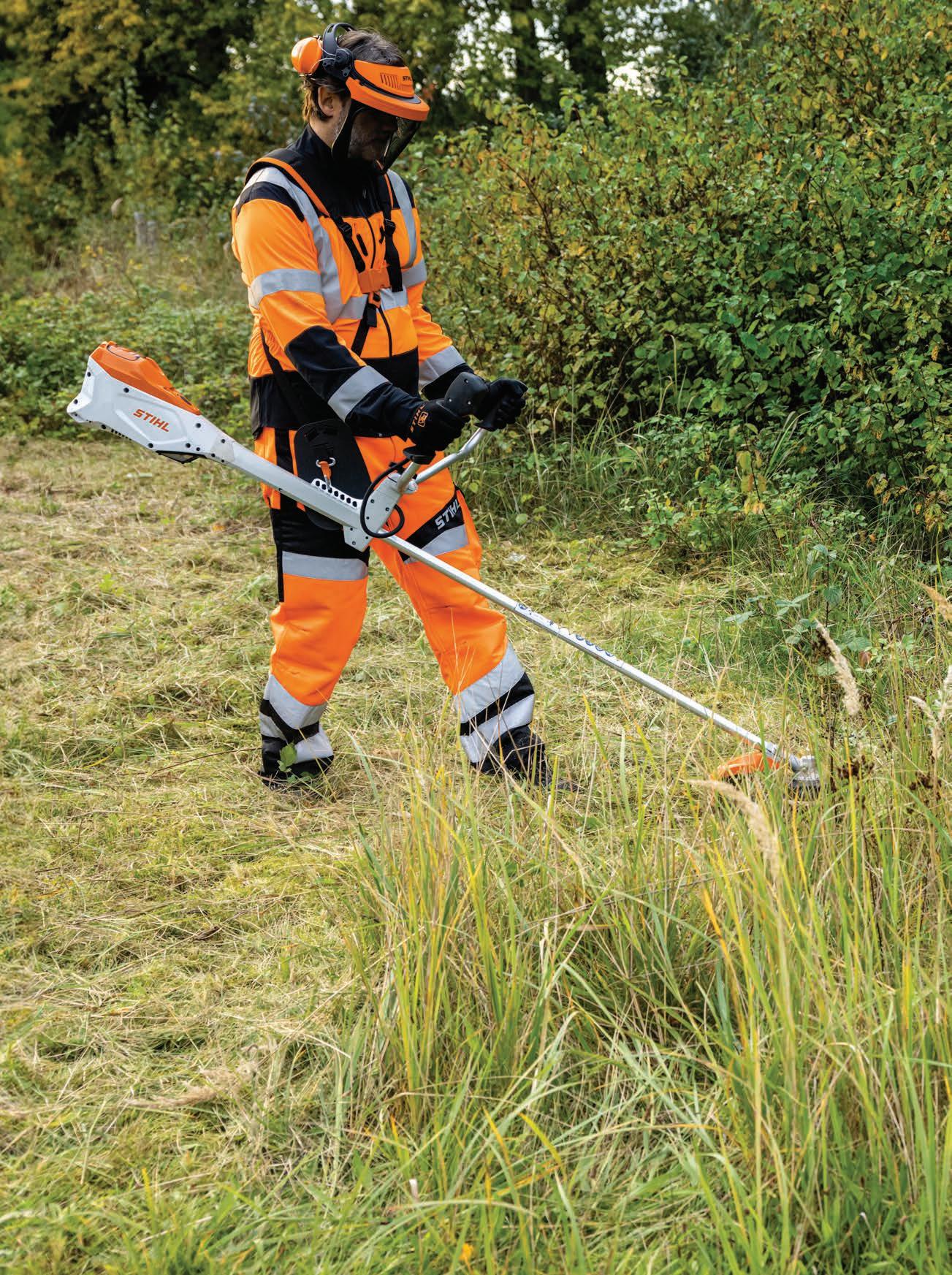
The FSA 135 and FSA 135 R brushcutters are perfect for mowing tough grass and scrub in noise sensitive areas. Thanks to a wide range of cutting tools that can be fitted to them, you‘ll be able to take on any challenge.
And what’s more, the FSA 135 is prepared for STIHL connected - a new way of managing the maintenance and tracking the working time of your professional fleet of tools.

PROFESSIONAL PERFORMANCE: THE FSA 135 CORDLESS BRUSHCUTTER.

AVAILABLE AT YOUR LOCAL

APPROVED DEALER
STIHL
FLEET MANAGEMENT MADE SIMPLE: STIHL CONNECTED. FIND OUT MORE AT STIHL.CO.UK
DENSITYincarnate
Cities are essential to our success. They’re at the cutting edge of whatever we choose to put our collective mind to because they connect us together and speed up innovation. The great prosperity of London and Tokyo, for example, comes from the fact that urban dwellers live amongst one another in such a way that collaboration is natural and opportunity everywhere.
The device that allows great cities to afford us opportunity on every street corner is density, and density incarnate is the apartment. It’s for this reason that apartment living is so essential to get right, so essential to make attractive, and so essential to respect. Here, I am troubled that from March 2020 onwards, trends in house and flat prices diverged dramatically, having previously been in lockstep (almost) everywhere.
I use ‘almost’ because before the pandemic apartment prices and house prices were one and the same everywhere apart from in England and Wales, where apartment prices rose half a percent between 2017 and 2020, with house prices climbing 5%. The contrast with Scotland is especially telling as economic and regulatory conditions were the same, so we can zero in on one of the problems with relative ease and accuracy. The intensely dysfunctional leasehold system, lording over 95% of owneroccupied apartments but just 8% of houses. In Scotland, apartment owners own their apartment and jointly own and run the communal spaces. In England and Wales, leaseholders do not own their property and are often at the mercy of eyebrow-raising service charges and have to work hard to get the building owner to do anything for it.
In England and Wales, we are squeezing the life out of apartment living, and in turn pouring acid on the foundation of culture and
innovation, density. The system now is set up for developers over residents and, coupled with an all-too-common attitude of build quick and move on, paints an Edvard Munch worthy picture for the future of apartment living in cities.

Apartment living is so essential to get right, so essential to make attractive, and so essential to respect. If we need something to be successful, we have to put a lot of energy into making it desirable, and we need apartment living to be successful. There are huge lessons to be learned from the bottom up typology of the London Mansion Block, which was designed to be a, then, modern interpretation of a grand house on one level, with a mansion's grace and grandeur but with the sharing economy rolled into it, most of all in the shared staircases feeding the apartments, driving sociability and chance encounter. Hedonistic Urbanism is making something we need so compelling and attractive; that people want it and queue up for it. This is the attitude from which we need to deliver apartment living in cities.
Christopher is an influential urban designer and planner working all over the globe to help communities improve their public spaces; as well as supporting cities and governments to develop strategy, change policies, and make great places possible. He is co-founder and director of Urban Strategy at Urban Movement; a trustee of the UK charity for everyday walking – Living Streets; past vice chair of the UK Urban Design Group; and is a member of the United Nations Planning and Climate Action Group. urbanmovement.co.uk @ChrisCities

prolandscapermagazine .com Pro Landscaper | July 2023 OPINION 22
CHRISTOPHER MARTIN
In England and Wales, we are squeezing the life out of apartment living, and in turn pouring acid on the foundation of culture and innovation, density
Christopher Martin explains
how apartment living is essential to city culture
THE ORIGINAL HEDGE IN A BAG FROM THE HOME OF INSTANT HEDGING
READYHEDGE
®
Our hedging comes ready-spaced and ready to plant in metre-long troughs or in our specially developed Readybags for easy handling. Delivering proven-quality plants for landscapers and designers for over 20 years, Readyhedge is the home of instant hedging.


01386 750 585info@readyhedge.comreadyhedge.com


PART TWO
BOND Creating a
Gareth Wilson closes his series on bonding mortar mistakes by tackling the questions around using SBR with porcelain paving
The second expert witness commission I came across with bonding mortar issues is not an isolated incident; it’s actually quite a common one, and it regards SBR, a multi-use primer for adding to mortars. Now, if you want to start an argument on Facebook amongst contractors, the subject of SBR versus pre-mixed BS 7533 compliant bonding mortars is a great way to ruffle some landscapers’ feathers.
In the spring, I visited several expert witness commissions where the paving slabs had de-bonded from the mortar bed. Each time, it had occurred where SBR had been used with porcelain paving. One particular project I visited was not a bad job at all, but the SBR/cement mix just hadn’t bonded to the back of the paving. I could see plenty of bonding mortar on the mortar bed but none on the back of the slabs I lifted.
A very important step to take before applying bonding mortar is to brush the dust off a porcelain paving slab and wash the dust off natural stone slab, so as to get maximum potential adhesion, as a layer of dust will form a barrier and can affect full adhesion.


Now I know I’ll hear the infamous phrases "I’ve never had a problem with SBR" and "You’re trying to reinvent the wheel". I appreciate that we are all entitled to our opinions, and I have to say, at least if you are using SBR as a bonding mortar of types, you are complying with BS7533:101 in regard to concrete and natural stone. Porcelain specifications will come out in the BS 7533:102 document.
However, what we must remember is that SBR is not specifically designed to bond paving; therefore, there is no recommended amount of SBR to add to cement to correctly bond it to the 2N bond
strength standard requirement. So, you’re basically guessing the amount of SBR you’re adding to a cement in each mix – it’s not consistent or regulated.
As porcelain paving is virtually non-porous, specially designed polymers are used in most commercial bonding mortar products to bond to the porcelain paving slab and adhere it to the mortar bed.
Pre-mixed bonding mortars, if applied correctly to the back of paving slabs, are not going anywhere and give piece of mind to a contractor. It’s my advice that as a professional contractor you move over to pre-mixed bonding mortars, especially when laying porcelain and take the guesswork and risk out of the equation with SBR.
GARETH WILSON
Leaving college at 17, Gareth has worked in the landscape industry since 1989. Progressing onto high-end projects, he has picked up 7 RHS gold medals. He is a member of multiple professional bodies. He provides technical and product advice to large companies, mentors and trains contractors and garden designers in landscape construction and on show gardens logistics across the UK. Gareth also provides mediation services, he is a member of the BS7533:102 committee and is an industry awards judge. gkwilsonlandscaping.co.uk

prolandscapermagazine .com Pro Landscaper | July 2023 25
OPINION
You’re basically guessing the amount of SBR you’re adding to a cement in each mix – it’s not consistent or regulated
The firstCLIMATE KING
Becoming King might dampen
Regardless of your personal views of the monarchy, no one can deny the role, passion and impact King Charles III has for protecting people, place and nature.
He wants to protect the planet for future generations, a passion he highlighted during the six decades he spent as monarch-in-waiting seizing every opportunity to encourage the next generation to #chooselandscape.
It is very clear what Charles wishes to accomplish during his time as monarch. His mother took the crown at a very young age, and nobody knew what she stood for. Whereas he is taking the crown at a late age – and we all know what he stands for.
As Prince of Wales, Charles was permitted to be more vocal about his passion for protecting the environment. But now that he is king, Charles may be required to rein in his enthusiasm. Still, he will have the ears of major players who can make a difference, such as corporate leaders and members of government.
A word of caution though. Charles will need to tread carefully as he encourages the nation to live more sustainably, especially since most are not afforded the wealth, influence and privilege to do so.

In 2010, Charles co-wrote a book called Harmony: A New Way of Looking at Our World with Tony Juniper and Ian Skelly. The book focuses on the world's environment which includes climate change, architecture and agriculture. It includes suggestions on what we can all do to make a positive difference.

Long before anyone understood the consequences of a pandemic spreading across the globe, King Charles was raising awareness of the very worrying plant health and biosecurity crisis we face.
In 2018 he created a working group to tackle the issue and along with other industry and professional leaders invited me as president of the Landscape Institute to Highgrove House to explore how together we could all make a real difference.

What came out of this meeting was the LI’s collaboration with the British Association of Landscape Industries, Society of Garden Designers and Association of Professional Landscapers to create a cross-profession working group and publish the first ever Biosecurity & Plant Health Toolkit for landscape professionals. I was delighted to attend the launch at Kew Gardens in February 2020 and also thank him personally for his work championing the importance of protecting the environment.
It's very hard to judge a public figure, especially a public figure who now has a role in an institution that requires you to be quiet. However, we know what Charles cares about and what makes him tick. So don’t underestimate King Charles III and his ability to promote a new more sustainable way of protecting the world.

prolandscapermagazine .com Pro Landscaper | July 2023 OPINION 26
Adam White FLI PPLI is a chartered landscape architect and director at Davies White Ltd. He is a fellow and the past president of the Landscape Institute. He is a director of the Sustainable Landscape Foundation and the chair of the LI’s College of Fellows. davieswhite.co.uk
ADAM WHITE
his environmental activism, but don’t forget what Charles III stands for, says Adam White
Now that he is King, Charles may be required to rein in his enthusiasm. Still, he will have the ears of major players who can make a difference
©Oliver Dixon
KING CHARLES III VISITS THE RHS CHELSEA FLOWER SHOW 2023
Featuring Apperley Antique
Apperley Antique is a beautiful traditional Yorkstone with warm brown tones throughout. Unique to Allgreen, this stone has heavily tumbled edges and a tarnished surface finish to give the stone a rugged, reclaimed look.
www.allgreen.uk

Showcased at Chelsea Flower Show in The Savills Garden - desgined by Mark Gregory, built by Landform Consultants Ltd.
RELATIONSHIPS POLICY? Is it commonplace to have a

Oracle Solicitors’ Hamilton Li and Ancia Hussain explain how to legally implement a relationship policy and why it's handy to do so

As a matter of fact, we do believe that it is accepted and a good practice to have a relationship policy as relationships between staff are inevitable. Therefore, it is wise to have a policy in place to protect the parties involved (including the employer).
The policy should not prohibit employees from having personal or intimate relationships with other colleagues but instead it should stipulate guidelines for behaviour within the workplace. This helps in providing a structure for managers to better handle personal relationships which may affect the business.
Furthermore, having a relationships policy in place could deal with the lack of transparency in relation to workplace matters, risks to the confidentiality of business information, risk in relation to discrimination and harassment, and potential conflicts of interest, should they arise.
The policy should be a separate document and should not form part of the employment contract, as it may be subject to amendments from time to time at the company’s discretion. We recommend that an annual policy review is undertaken to ensure all policies remain up to date and accurate.
The policy should be applicable to all employees (full or part time), consultants, self-employed contractors, agency workers, volunteers, and interns etc. It could form part of the staff handbook, and so be applicable to anyone who is under its authority.
In order for the policy to be effective, the definition of what a personal relationship is should be made clear. This can be achieved by including emotional, physical, and romantic relationships which exceed the normal boundaries of the professional relationship between colleagues. The policy should also specify that the above is by no means an exhaustive list, but indicative of the types of relationships that go beyond the professional.
Managers should always keep personal relationship information confidential, even if it is unwarranted. Any such topics should only be discussed with Human Resources or their superiors, and care must be taken as any information regarding personal relationships is protected under law and very likely the company’s
own privacy policy. Managers should also keep an eye out for the mental health aspect of the personal relationship and promptly report the same to HR department if they are concerned.
The policy should contain a caveat that disclosure must be made to their manager as soon as a personal relationship is developed or established. Failure to declare a relationship, and so in breach of the policy could, for example, be made subject to disciplinary action, or depending on the circumstances, ultimately dismissal. However, employees should be informed and guaranteed that they will be treated fairly and equally and will not be criticised, discriminated against, or otherwise be subjected to a detriment because they are in a personal relationship, as this could create liability for the employer in the circumstances.
Finally, the policy should contain a clause which supersedes any other documents and/or agreements if it relates to personal relationships.
ORACLE SOLICITORS
Oracle Solicitors is an award-winning law firm with a deep understanding of the landscape industry and expertise in employment, commercial, litigation, property and contract law. Oracle Solicitors, founded in 2002 has since grown to include offices in London, Belfast, Birmingham, Manchester, Frankfurt, and Addis Ababa – please visit: oraclesolicitors.co.uk
OPINION prolandscapermagazine .com Pro Landscaper | July 2023 28
The policy should not prohibit employees from having personal or intimate relationships with other colleagues but instead it should stipulate guidelines for behaviour within the workplace
PLANT DEMAND Predicting
An interesting question came to me recently: “What are nurseries doing towards producing plants to suit expectations of biodiversity net gain (BNG), particularly with the increased expectation on using native plants?” Once applied to new developments and redevelopments of properties, BNG will eventually become a planning requirement for all land development. That is all still years – if not decades – away, but BNG legislation is due to take effect this year, meaning businesses developing an existing brownfield site, building houses, or redeveloping industrial sites will all need to improve the overall biodiversity of that site by 10% from the audit produced prior to work being undertaken and maintain this for a period of not less than 40 years.
While a 10% improvement may not sound like a great deal, it will be of value. Unlike carbon offsetting –where much of the way this is achieved is by paying a company to buy credits used (typically, though not exclusively) in third world countries to undertake tree planting or carbon reducing measures – BNG legislation will be locally managed and local planning teams will expect to see that 10% advantage benefit local nature. If in redeveloping an old factory site initial audits find little in the way of plant and animal life, a few trees may be all that is required to add a 10% uplift in nature. On leafy, grass covered and more diverse sites,
then adding 10% to the existing nature may be difficult to achieve, while still developing the space. Inventive solutions like green roofs, walls and even lamp polls will all add to the mix.
I am working with developers who take environmental improvement very seriously, and they are developing nature reserves, biodiverse habitat zones and changing plant selection in projects to be beneficial to wildlife, over the more typically seen blocks of easy to grow, indestructible evergreens so often mass planted around new housing developments.
Returning to the question
I was asked, though – the short answer is that nursery plant production is largely driven by demand. This demand, in most cases, is based on the previous year, or from trends of multiple years. If a move towards UK native flora comes overnight, then there will be nowhere near enough plant material available to service this need as it stands. While speculative plant production is undertaken by all growers every year, predicting and undertaking production of wholesale change from ornamental nonnatives to native plants in the space of a season would be a very bold thing to do.
Bernhard’s Nurseries has introduced more natives into production and there are a number of very beautiful native plants out there; but until we really know what our customers are after, making big changes to what we grow simply won’t happen. Here is
where larger developers and planned development come in, though; in the main, housing takes years to go through from initial land purchase to welcoming the new owners. Developers can reasonably predict when they will be starting and finishing on each site, and while there are many factors that impact on exact timings, they can make some informed decisions on when they will need plants and what plants they will need. I am delighted to be working on several projects like this, where a developer is focused on delivering peat-free, low environmental impact and BNG compliant planting. We are, therefore, able to know what, how many, and roughly when each plant is required and can produce them under contract to fulfil these projects meeting quality and specification requirements.
I welcome the focus on nature-led development and the increased use of native flora. All that I ask is that those specifying and designing for developments work closely with their preferred nurseries to see how they can get plants produced for projects in advance of their requirement on site. No nursery is able to grow a shrub or tree overnight.
LEWIS NORMAND
Lewis has worked in a wide variety of roles within horticulture over a 20-year career. He has lectured on garden design and horticulture, and designed gardens in the UK, Europe and the Middle East. Since 2011, Lewis has focused on nursery sales, now working as sales manager at Bernhard’s Nurseries, and has helped to launch a number of new plants into the UK plant market. He is a specialist supplier to show gardens, supplying more than 100 gardens at major shows.

OPINION
Specifiers need to work with nurseries to prepare for changing demands, says Lewis Normand
prolandscapermagazine .com Pro Landscaper | July 2023 29
If a move towards UK native flora comes overnight, then there will be nowhere near enough plant material available to service this need
RIGHT from the START
Growing trees in Britain and in peat-free compost might be in high demand now, but when New Wood Trees first started doing it when it launched in 2008, the concept was somewhat rare. Founder Philip Nieuwoudt had been working for a nursery

Nieuwoudt.“One of my colleagues said to me the other day,‘You were doing the perfect thing at the perfect time.’ I didn’t plan for all this! Sometimes life goes in your favour, and sometimes it doesn’t. Maybe it was in the back of my mind, but we also like to do the right thing.”
The same goes for growing the trees without the use of peat and using rainwater harvesting tanks on site, which catch up to 300,000L each year.
in Bedfordshire and, realising all the trees were coming in from Europe, he wondered why few were being grown in Britain.
With a desire to grow multistem trees closer to home, Nieuwoudt started doing so on a “smaller scale” to European nurseries, and it’s arguably paid off. Over the last decades or so, demand for British grown trees has spiked, as a result of Brexit, biosecurity measures and a drive to reduce the miles a product travels.

“We've always tried to do things sustainably and British growing is part of the package. It's the road miles that people don't realise trees travel to get to the UK in big trucks,” says
Across its 80 acres, the Devonbased nursery has 12,000 trees in the ground. It buys young trees and plants them in its fields, leaving them in for a minimum of four years before it starts selling them.

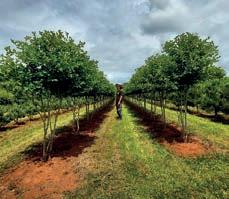
“We are developing them into
a sellable product within the UK. They live here, we are inspected by the Animal and Plant Health Agency, and they have their roots in the soil – that for me is British grown,” says Nieuwoudt, who adds that Brexit has proved beneficial for the nursery. Whilst other nurseries selling multistem trees from Europe are having to pay hefty import duties and fees for plant health inspections and fill in paperwork for numerous trucks throughout the year, New Wood Trees only buys two trucks of small trees per year, saving itself time and money.
The multistem trees also benefit from being accustomed to the British climate, and the growing season in Devon is a little longer than some other parts of the UK, says Nieuwoudt. Its planting and selling takes place from November to the end of March or beginning of April. “We’ve got a shorter lifting season but a longer growing season, so the plants develop better down here,” he explains.
New Wood Trees sells over 100 varieties of multistem trees and sustainability is “at the top of our agenda.” It's working towards growing its trees organically and appealing to garden designers with an aligned mindset. Nieuwoudt says younger designers are seemingly the most interested in British grown trees, with quite a few of the RHS Young Designer of the Year award winners working with the nursery.
With the next generation pushing for growers to have as low a carbon footprint as possible, New Wood Trees is seemingly onto a winner, and has been from the start.
prolandscapermagazine .com Pro Landscaper | July 2023 30
PROMOTION
Managing director Philip Nieuwoudt's forward-thinking is paying off
They live here, we are inspected by the Animal and Plant Health Agency, and they have their roots in the soil – that for me is British grown

2022/23 Field Collection available to view or download on our website. Please contact us at hello@newwoodtrees.co.uk Grown in the UK newwoodtrees.co.uk The home of field grown multi-stem trees
In the summer it is easy to have masses of nectar-rich flowers, buzzing with insects, and it is easy to find and enjoy the bold and colourful insects, like butterflies and hoverflies, that love them.
But what about January when the garden, even with winter flowers, seems quiet and lifeless? You need to make sure your wildlife garden is full of the places that bugs go in winter to shelter.
Ivy is an invaluable winter habitat for a host of small and often beautiful creatures which come down from the treetops to wait out the cold months hiding in a big, thick flowering head of ivy. These ivy flower heads are fantastic for wildlife large and small.
WILDLIFE GARDENING The art of

In autumn, the heavily scented flowers are so attractive to insects that one beautiful species of solitary bee is named after them. And in winter they are full of invertebrates, and the berries are packed with carbohydrates for birds to enjoy.
Get yourself a “beating tray”, hold it under the bushy ivy head, and bash the leaves and branches with a stick. A cascade of little creatures will shower onto your tray. Then you have to be quite quick. It is best to have an assistant there or ask your client to help (they usually love that!) by holding the tray, while you catch the little creatures into a small pot with a lid to keep them while you get out your phone camera, and clip onto it a cheap (£9-ish) and easily available macro-lens. This is by far the best way to show these creatures, and you also have a record of your finds.
When you are choosing which bugs to catch and photograph, obviously look for the brightest

colours first, and then for anything unusual. Hunting through the ivy -leaves in winter will reveal such jewels as the crab spider (Diaea dorsata) and cute little fungus-eating ladybird (Halyzia sedecimguttata).
Only ivy plants at least 30 years old produce these great flowering heads, so if you have this habitat, you should keep it; but if you don’t have it, it takes a long time to develop, and you must make do with ivy cover on walls and trees.
There is, however, a garden habitat, as rich in winter as it is in summer, which you can create simply and easily in a few minutes – a small wildlife pond!

On every day of the year, even in the depths of winter when you have to break the ice to get into it, a small garden pond is a treasure-trove of beautiful and fascinating creatures.
The scavengers Asellus aquaticus (the water hog louse) and Gammarus pulex (the freshwater shrimp) are as abundant in winter

as in summer and can be fished out with a small net at any time, and so can the predators such as damselfly larvae and dragonfly larvae.

As soon as spring gets under way, those fascinating larvae climb out of the pond, split open and take wing as their spectacular adult forms. Then in late winter, come the stars of the show: the amphibians.

prolandscapermagazine .com Pro Landscaper | July 2023 OPINION 32
Noel Brock shares how to maintain the interest for your clients in all seasons
BUG-HUNTING IN THICK IVY WITH A “BEATING TRAY”: THE BEST WAY OF COLLECTING INVERTEBRATES FROM BUSHES
MALE COMMON NEWTS IN THEIR FEBRUARY AND MARCH FINERY
THE CRAB SPIDER: DIAEA DORSATA
LADYBIRD: HALYZIA SEDECIMGUTTATA
SOUTHERN HAWKER DRAGONFLY LAYING EGGS AT ONE OF OUR PONDS
So, how do you bring this wonderful circus into your wildlife garden? Well, a pond for this sort of wildlife is very easy, very quick, and very cheap to install – it can be installed in a couple of hours.


The circular tub, made of rigid, undamageable polyurethane costs about £130, and is 32cm deep and 1.2m wide. Because it is circular, straight sided and an even depth, the hole to fit it in is very simple to dig, and because the sides are strong, you only need to dig the hole about 15cm deep, then use the soil dug out to build up a little bank around the sides, so there isn’t any spare soil to dispose of either. You can of course also dig the hole a full 32cm deep and have the pond edge at ground level, but I find the banked-up edge is often better, to stop people stepping into the pool, while still giving newts and frogs easy access.
After two weeks you will find the water starts to go a bit green and cloudy. This is good! The green cloudiness is caused by free swimming single-celled algae (phytoplankton) which start to colonise the water. They are the basis of your food chain.
From a pet shop or online, buy a few packs of live daphnia (known as water fleas). Check they are still alive and moving, and tip them into your pond. They will rapidly multiply and graze on your phytoplankton. After 10 days the water will be crystal clear.
Now you can add a bucket of water and a handful of weed (such as Canadian pondweed) out of a clean local pond. This will introduce all the wonderful creatures illustrated here, and more, and your freshwater ecosystem will develop, and stay clear and healthy.


More than 90% of England’s lakes and rivers are polluted, so ponds are the most important freshwater wildlife habitat, and you are making a vital contribution to biodiversity enhancement as well!

For many years, Frognal Gardens has been building, planting, and maintaining gardens, both private and commercial, in and around Hampstead, central London. During this time, Brock has also pursued his interest in wildlife all over the world, and within the London area. There is an obvious connection between wildlife and horticulture, but it is only recently that he has been able to bring those worlds fully together. frognalgardens.com

prolandscapermagazine .com Pro Landscaper | July 2023 OPINION 33
NOEL BROCK
On every day of the year a small garden pond is a treasuretrove of beautiful and fascinating creatures
DIG CIRCULAR STRAIGHTSIDED HOLE, 15CM DEEP PLACE THE TUB AND CHECK IT IS LEVEL
A SMALL POND, IN JUST A
HOURS...
BANK THE SOIL UP AROUND THE OUTSIDE AND PLACE SOME AQUATIC PLANTS AND A LITTLE SOIL INSIDE. HERE WE HAVE USED YELLOW FLAG, WATER MINT AND WATERCRESS
INSTALLING
FEW
WASH THREE BAGS OF 10MM SHINGLE AND THEN COVER THE PLANTS AND SOIL NOW FILL WITH WATER AND LEAVE FOR TWO WEEKS
ONE OF OUR INSTANT WILDLIFE PONDS 22 WEEKS AFTER INSTALLATION
Leading the way
Barratt Developments has been leading the way in biodiversity on their developments for years, explains senior landscape architect Brian Hawtin


You name it, Brian Hawtin has most likely done it.
That is, if it’s a role in the horticulture industry.
In his own words, he has an “eclectic” background – and that’s putting it mildly. From starting his career as a gardener in Birmingham then starting up his own gardening business when he moved to Surrey, Hawtin undertook a garden design degree before going on to work as contracts manager for Landform Consultants and Randle Siddeley, as well as working for Tilhill in the forestry sector and for Bartholomew’s in maintenance.
And that’s not all. Hawtin has even worked as a project manager on ITV’s Love Your Garden, has created award-winning show gardens at Chelsea and Hampton Court, and lectured part-time on garden design and landscape architecture at the University of Greenwich for 13 years. He’s even a chartered landscape architect. “Every time you go into a new area, you learn so much every day about what they do differently, and it has been absolutely fascinating,” says Hawtin. His current role, though, is the “most interesting” yet.
It was in the midst of the pandemic when Hawtin was looking for a new opportunity and came across a job advert for a senior landscape architect at Barratt Developments. The role description was more all-encompassing – it was essentially “bring your best qualities,” says Hawtin. Barratt was looking for someone with experience to devise its overall landscape strategy, and experience is something which Hawtin has in abundance.
“It was a fantastic opportunity. Every landscape professional really cares about legacy and what they’re leaving in the landscape, and the opportunity to get the amount of people that we build houses for to appreciate the value of landscape and to add to their environment was too good to turn down.”
The role is “unique,” says Hawtin. “There is no other in-house landscape architect that I know of within the developer industry. A lot of it goes out to consultants, but I can sit here and co-ordinate our approach and pull what is 40 years of experience into what needs to be done to ensure everybody is moving forward in the right way.”
prolandscapermagazine .com Pro Landscaper | July 2023 HOUSEBUILDING SPECIAL 34
There is no other in-house landscape architect that I know of within the developer industry
DERWENTHORPE YORKSHIRE
Being a “voice on the inside” gives Barratt an advantage too. “It gives me not only the ability to influence the landscape, but the ability to ask questions and find out what the problems are to make sure that we’re doing the right things at the right time. The key to landscape is doing it once and doing it properly, and I can ensure that this is engrained into the system.”
Hawtin’s background helps him connect to those creating the landscapes for Barratt on a more “personal level” too. “When I do site visits and meet contractors, I always like to chat to the young lad loading the skip because that was me once. They need to know that they can have ambition and get to the top of the industry. I’m a chartered landscape architect now, and I did it later than most, but you shouldn’t limit yourself. There’s always another step you can take.
“I love it when I go to Chelsea or shows like that and see designers and landscape architects who have been through my classes going out there and winning medals and doing their best; it’s really rewarding. I still try to point people in the right direction now. In fact, we’re sponsoring a garden this year at the RHS Flower Show Tatton Park in the Young Designer category and I’m going up there to lend a hand. To my mind, the landscape industry isn’t a competitive one; it’s helpful and complementary. We all help each other, and that applies to the developer industry too. We all try to make the industry better together rather than individually.”
Despite being hired by a housebuilder during the pandemic, Hawtin had few concerns. “One of the great things about Barratt is its long-term vision. They're not bringing people on board for this year; they’re
bringing people on board for the next 10 years. The forward planning is unlike anything I’ve experienced before in the landscape industry; it’s understanding that the things we’re going to have to be dealing with in the future need to be planned for now.”
Take biodiversity net gain. Barratt has been looking ahead to legislation such as this for the last six years, when it introduced its biodiversity department led by Helen Nyul to put together a strategy and inform the company of the implications. Despite biodiversity net gain not becoming a legal requirement until November this year, Barratt has “led the development industry” by adhering to the 10% increase in biodiversity on its sites since January, and it’s the only housebuilder to have committed to the target so early, says Hawtin.
“It’s not just about achieving 10%; it’s about achieving what’s best for the development. That’s where the implementation of the landscape comes in. There are a lot of cogs moving at the same time to produce something and so it’s making sure that it all fits together perfectly.”
Barratt now awaits the next part of the biodiversity net gain legislation to be announced, along with how Scotland and Wales will be introducing it – and this is just the tip of the iceberg for developers.
“One of the things about the development industry that people should be aware of is
not just landscaping and biodiversity but, from a housebuilding point of view, energy conservation and other legislation. In the past five years, we’re had more legislation coming in covering housebuilding than in the last 25 odd years; there's been a really concentrated slew of legislation and we’ve tried to lead the industry on this. We’re Britain’s biggest housebuilder, so where we go everybody follows. We’re ahead of the curve and leading the way.”

It’s eager to do this in its approach to green space too. “You can have a landscape without a building, but you can’t have a building without a landscape. Barratt is on the right road with this, and they’ve recognised that the value of landscape to developments is incredibly important.”
One of Hawtin’s first tasks, therefore, was to update the specification of Barratt’s Landscape Handbook; but when Hawtin looked at it, he realised it needed a different approach to ensure it could be more regularly and easily updated, so he carried out a “top to bottom rewrite” over 18 months.
This handbook is available to all 29 divisions of Barratt, impacting the c400 sites it has on its books at any one time. “Getting the advice and guidance in right at that early stage, so that everybody knows what they should be doing, and then rewarding them with an internal award at the end, is really important to us.” Hawtin is referring to the developer’s employee awards Great Places,
prolandscapermagazine .com Pro Landscaper | July 2023 HOUSEBUILDING SPECIAL 35
You can have a landscape without a building, but you can’t have a building without a landscape. Barratt is on the right road with this
KINGSBROOK, AYLESBURY
which have introduced green space categories. “We recognise that divisions are making an effort to go above and beyond what they have to do, and it’s a nice of making sure that they are recognised and applauded.”
A standout project is undoubtedly Kingsbrook near Aylesbury, a 15-year masterplan scheme of 2,500 houses across three villages. Here, Barratt has had a partnership with the RSPB for around a decade. Two-thirds of people are buying in Kinsgbrook because of the landscape, says Hawtin. “That’s paramount to them – the green space and the wildlife. One of the things we did was put swift bricks into the houses, which are nesting boxes for

pollinator-friendly plants within the developments themselves rather than just around the outside.”
Kingsbrook is Barratt’s largest project with the RSPB so far, and it continues to grow, with the “last part of the jigsaw” being a 100ha wildlife reserve that will be managed by the charity. “What we're trying to do there is something that isn't usually done, and the lessons learned from that are now being folded back into the business and rolled out as part of the Landscape Handbook and biodiversity guidance. So, that nucleus of knowledge that we're building up at Kingsbrook really is helping us feed out into the rest of the developments we’re building.”
character of the site, and you can see the difference. The difference between what is widely regarded as what developers do and Kingsbrook is astronomical.”
swifts. These are difficult to attract; they’ll come eventually, but at the moment they’re attracting house sparrows. So, on the Kingsbrook site, the house sparrow population has increased by 3000% from the RSPB’s initial survey to the one they carried out last year.
“They also noted a decrease in butterflies and bees; that has now informed us to increase the area’s pocket parks and increase
This includes employing a “mitigation hierarchy” such as the one behind biodiversity net gain. “There is a succession of steps that you go through, but the prime thing is to try to keep what is there and build around it, rather than bulldoze the whole lot and just add a few trees at the end. That has informed the Landscape Handbook, so we now have mitigation hierarchies even if it doesn’t involve biodiversity net gain; there’s a hierarchy for dealing with trees on site, for example. Everybody thinks developers come in and chop down trees, but we’re looking to preserve them, and if we can’t preserve them, can we move them? We’re trying to make sure that we’re preserving the
Hawtin says he wants to see more nature-based solutions across the industry as a whole and that green and blue infrastructure has got to be “part of the building blocks” of developments. It’s not just the environment that needs to be taken into account, though – it's the impact of green space on health and wellbeing. “That’s part of placemaking; it’s part of what we’re trying to achieve. We want to create spaces where people feel happy, and where they can take stewardship of the environment around them because they care about it.” Then there’s equality of access and ensuring that open spaces and play areas are as inclusive as possible “to make sure that everybody has an equal opportunity to enjoy it”.
“There are some quick fixes that you can put into the system that make people do the right thing, and some things take longer; but it's all about improving quality, improving delivery and, at the end of the day, improving the spaces for the people that will live there."
Arguably, each role Hawtin has held throughout his career has been around enhancing green spaces, and through a progressive housebuilder such as Barratt there is the opportunity to encourage residents to engage in these spaces and appreciate their value too.

prolandscapermagazine .com Pro Landscaper | July 2023 HOUSEBUILDING SPECIAL 36
We want to create spaces where people feel happy, and where they can take stewardship of the environment around them because they care about it
KINGSBROOK, AYLESBURY
CANE HILL, KENT
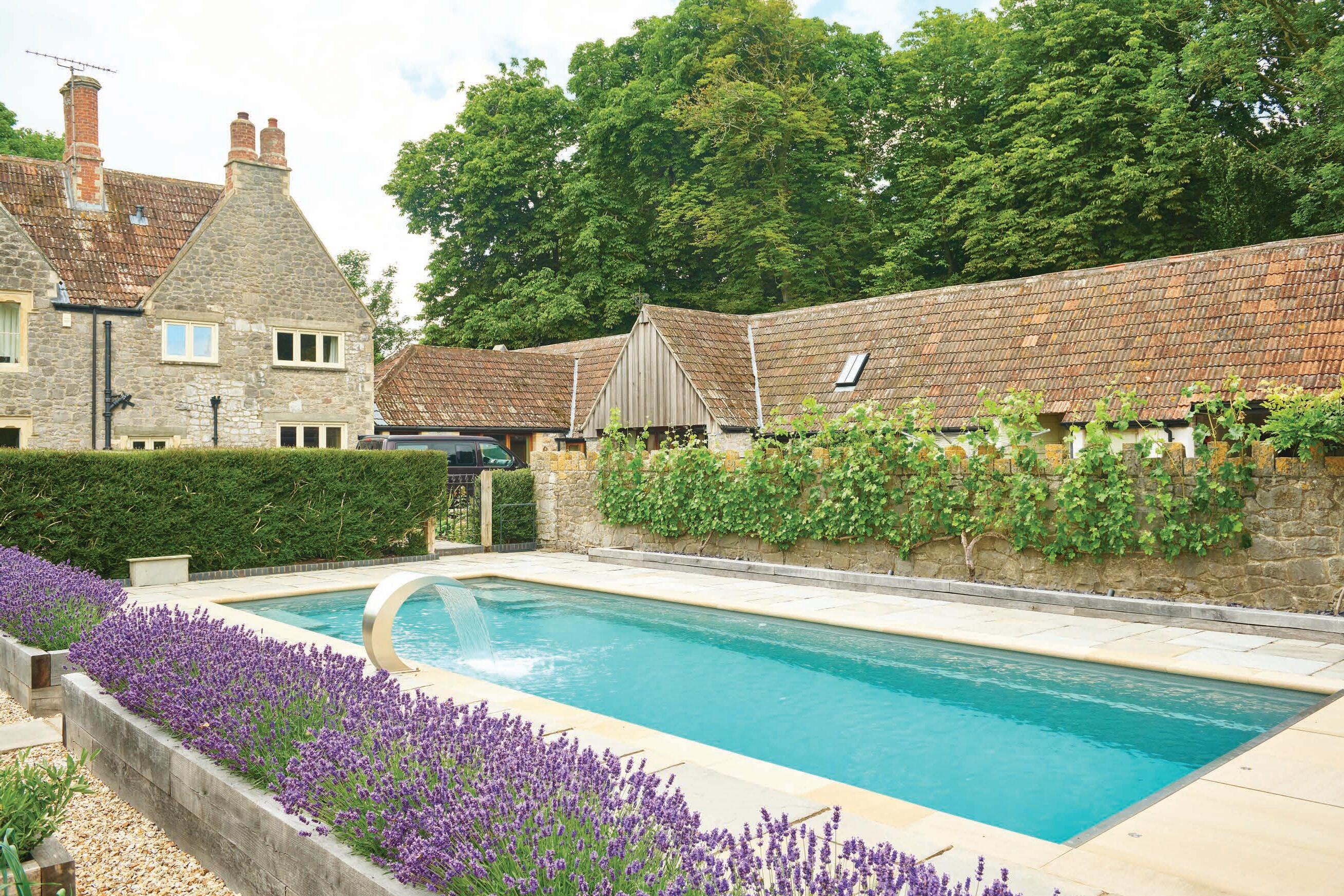
In the past 10 years, the population of the UK has grown by about four million people, with an average household size of 2.4 people. Assuming a stable population growth rate, that equates to an additional annual requirement of 170,000 new homes to add to the current backlog which some estimate to be around 4.3 million homes.1 That’s one additional new home being built and delivered to the UK market every three minutes just to prevent the housing crisis getting worse.
The Government’s target, which also aims to tackle this backlog, is nearly double that at 300,000 homes per year by mid-2020s.2,3 Even if this target is reached (it hasn’t been yet –a high point of only 243,000 new homes reached in 2019/2020), it could take 50 years or more to clear the housing deficit. We can therefore expect demand and pressure to “build, build, build” to remain high and at the forefront of Government’s mind for decades to come.
This runs against another Government target which is to reduce carbon emissions and achieve net zero by 2050. Indeed, whilst various initiatives aim to reduce its impact, the construction industry remains horribly climate-unfriendly, with residential & nonresidential building and the required building materials generating over 35% of the global energy demand and energy-related CO2 emissions – see Fig. 1.4
As a key contributor to the world’s most pressing challenge, the construction sector has a golden opportunity to make a significant contribution to net zero by innovating, changing deep-seated habits and turning to established sustainable alternatives and know-how.
But this much needed transformation is slower than it could be because constructors are often incentivised to minimise constructions costs rather than life-cycle costs, CO2 emissions and its impact on nature. That is why even today so many new homes are still being built with gas boilers and to the minimum-allowed insulation standards. These
SUSTAINABLE HOUSING won’t cost the earth
homes will require more expensive retrofitting and disruption in years to come as legislation and standards tighten to meet the UK’s 2050 net zero target.5

Following Chris Skidmore MP’s independent review of net zero,6 the direction of travel is that no new homes should be built with gas boilers from 2025 and that the Government should adopt a 10-year campaign to make heat pumps mainstream. That said, some fear that powerful lobbying will create loopholes to allow homes in England to be fitted with “hydrogen-ready” gas boilers.7 This would risk
tying millions of households to fossil fuel use for the longer-term, damage the UK’s credibility as a global leader in sustainability and, crucially, may put at risk our legallybinding 2050 net zero target.8
prolandscapermagazine .com Pro Landscaper | July 2023 HOUSEBUILDING SPECIAL 38
New housing proposals should not only benefit developers but also existing communities that may fear change or disruption
Global industry share in final energy demand, 2020, % of total 22% Residential 26% Transport 26% Other industry 8% Non-residential 6% Other 6% Buildings construction industry 6% Other construction industry Graph is adapted from a graph on page 39 of this report: https://globalabc.org/sites/default/files/2021-10/GABC_Buildings-GSR-2021_BOOK.pdf
1
Source: UN Global Status Report for Buildings and Construction 2021
Figure
What is particularly alarming is the enormous size of the heating problem. The heating sector in the UK accounts for almost one third of the UK’s annual carbon footprint9 and heating air and water in our homes accounts for 20% of total UK emissions, more than that of all diesel and petrol cars combined.10,11 In tackling climate change, developers, architects and constructors must eschew “easy now, hard later” greenwashing solutions; instead they must specify and build sustainable options such as tried and tested heat pump technologies for heating air and water.
Developing Nature Recovery
Of course, and crucially for those of us working in land-based industries, developers and the construction sector can also have a negative impact on nature and biodiversity; for example, by taking over habitat, cutting-off wildlife corridors and migration routes, pollution (water, soil, air, light), inadvertently spreading invasive species such as Japanese knotweed, Himalayan balsam, etc.
Biodiversity net gain (BNG) is a mechanism designed by the UK Government to help the recovery of nature whist allowing land to be developed. Through on-site and off-site mitigation strategies – and, as a last resort, purchasing Government credits – BNG aims to ensure the habitat for wildlife is in a better state than it was before development.12 BNG will apply to larger schemes from November 2023 and to small sites from April 2024, be regulated by local planning authorities and require the expert input of an ecologist. So, it’s coming and it’s great news for nature and people. What is more, BNG will provide for new business opportunities for ecologists, landscapers and landowners alike. For example, Highlands Rewilding Ltd is a for-profit business that was created with the aim of allowing nature and rural communities to prosper through rewilding. In significant part, their work will be paid for through BNG credits or similar market mechanisms.13
Do we therefore have a perfect storm of competing priorities where the undeniable need for additional housing appears to be at odds with the need to reduce consumption, halt carbon emissions and allow nature to recover? Perhaps not, if we choose to adjust the way we think and do things.
More housing and less waste: better by design

Some argue that the key enabler to increasing the building of new homes is to liberalise, de-regulate and reform the UK’s planning system.14 Whilst such a strategy will no doubt increase the volume of new homes in the short term, it may have unintended consequences such as increasing car dependency, poor quality housing, a lack of community, mismatched infrastructure etc.
For planning to work better, new housing proposals should not only benefit developers but also existing communities that may fear change or disruption; plans should make it attractive for them to have new developments on their doorstep. In this respect, I agree with Michael Gove’s view that housing

developments should be better looking to curb development opposition.15 But better aesthetics are in themselves insufficient; better design also means providing adequate, meaningful parks and outdoor public spaces, schools, corner shops, dentists, doctors, segregated footpaths & cycle ways, community centres, connected public transport as well as areas reserved for wildlife habitat and nature recovery.
In my view, such community-focused, naturecentred, aesthetic planning schemes will help speed up the planning process and increase the availability of new homes through reduced community opposition to development. What is more, once built, such schemes will remain attractive for much longer resulting in longer lifecycles, less waste and fewer carbon emissions when compared to demolishing and rebuilding ugly, soulless, identikit housing. In this way, thoughtful, beautifully designed schemes will maintain property values and inspire us to reduce waste by re-using and re-purposing property down the ages.
prolandscapermagazine .com Pro Landscaper | July 2023 HOUSEBUILDING SPECIAL 39
Marcus Watson explores how we can reconcile the need for ever more housing whilst decreasing carbon emissions and putting humans on a path to living in harmony with nature
We cannot hide behind excuses and greenwashing. This is perhaps the most important thing we can do, both as individuals and business leaders
Greenhouse gas emissions by sector, 2020 (BEIS, 2022)
*LULUCF - Land Use, Land Use Change and Forestry
**Includes emissions from Public and Industrial Processes
Transport (including international)
Energy Business
Residential
Agriculture*
Waste Other**
References
1 “The housebuilding crisis: The UK’s 4 million missing homes”, S Watling, A Breach, Centre for Cities, 22 Feb 2023, https://www.centreforcities.org/ publication/the-housebuilding-crisis/
2 “New homes: What's happened to the government's housebuilding target?”, BBC News, 7 Dec 2022, https://www.bbc.co.uk/news/61407508
3 “Michael Gove commits to 300,000 homes target”, BBC News, 30 Oct 2022, https://www.bbc.co.uk/ news/uk-politics-63445365
4 “The construction industry remains horribly climate-unfriendly”, The Economist, 25 June 2022, https://www.economist.com/finance-andeconomics/2022/06/15/the-construction-industryremains-horribly-climate-unfriendly
5 New homes built with gas boilers after developers lobby against green rules”, B. Webster, Open Democracy, 3 Oct 2022, https://www. opendemocracy.net/en/new-build-homes-gasboilers-heat-pumps-developers-lobby-government/
Source: Transport and environment statistics 2022: https://www.gov.uk/government/statistics/transport-and-environment-statistics-2022/ transport-and-environment-statistics-2022
Design today for the future we wish to see
To avoid exacerbating the climate crisis further and to avoid more expensive and intrusive retrofitting, all new housing must be designed today for a net zero and nature positive future. There are many things we can choose to do today in this respect.
• Own the problem and show leadership. We cannot hide behind excuses and greenwashing. This is perhaps the most important thing we can do, both as individuals and business leaders.
• Electrify space and water heating in the most efficient manner; e.g., install district ground source heat pumps10 as fossil fuels are phased out of the energy supply (CO2 emissions have reduced by circa 70% in the UK’s energy supply from 1990 levels and the pace of change shows no signs of slowing – see Fig. 2).16
• Switch to certified green tariffs energy suppliers, such as Octopus Energy. There are others.
• Insulate now to the levels required by net zero and design passive homes where possible. Design for where we are going, not where we are.
• Upgrade and re-purpose existing properties wherever possible.
• Favour brownfield vs. greenfield sites.
• As explained more fully in my article of March 2023,17 design and build public open spaces that protect and repair biodiversity, allow nature the space to recover and put humans on a path to living in harmony with nature.
As a final thought: the UK’s CO2 emissions peaked in 1973 and have roughly halved since 1990, faster than any other major developed country.18 At the same time, our living standards have increased, and the UK’s population has grown by over 10 million people. This in itself may be an indicator that we can achieve net zero and live in harmony with nature if we put out mind to it, even if time is not on our side.
MARCUS WATSON
Marcus Watson joined Ground Control in 2011 and led the company for close to a decade, handing over the reins to Jason Knights in January 2021. Marcus remains with Ground Control as non-executive director and a shareholder. In his advocacy work, Marcus champions the voice of business, entrepreneurship and environmental sustainability with Government, industry and academia. Marcus believes that business is a force for good and that business leaders have the opportunity and duty to build a vibrant and more sustainable economy that cares for our environment and the communities we live in, allowing us to lead prosperous, fulfilling lives without mortgaging our children’s futures. ground-control.co.uk
6 “MISSION ZERO - Independent Review of Net Zero”, C Skidmore, UK Government, 13 Jan 2023, https://www.gov.uk/government/publications/ review-of-net-zero

7 “Campaigners fear loophole will let new homes in England be fitted with gas boilers”, F Harvey, The Guardian, 21 Mar 2023, https://www.theguardian. com/environment/2023/mar/21/new-homes-gasboilers-hydrogen-heat-pumps-net-zero
8 Climate Change Act 2008 (2050 Target Amendment)
Order 19. As independently monitored by the Climate Change Committee, an independent statutory body established under the Climate Change Act 2008.
9 “Decarbonising Heat in Homes”, Seventh Report of Session 2021-2022, Business, Energy and Industrial Strategy Committee, 3 Feb 2022, https:// publications.parliament.uk/pa/cm5802/cmselect/ cmbeis/1038/report.html#:~:text=The%20 heating%20sector%20in%20the,all%20petrol%20 and%20diesel%20cars
10 Kensa Heat Pumps, https://www.kensautilities. com/, 29 May 2023
11 Catapult Energy Systems, https://es.catapult.org.uk/ guide/decarbonisation-heat/, 29 May 2023
12 “Understanding Biodiversity Net Gain”, UK Government Guidance, 21 Feb 2023, https://www. gov.uk/guidance/understanding-biodiversity-net-gain
13 Highlands Rewilding Ltd, https://www. highlandsrewilding.co.uk/, 29 May 2023
14 “A very short guide to planning reform”, A. Breach, Centre For Cities, 1 Dec 2022, https://www. centreforcities.org/ publication/a-very-short-guide-to-planningreform/#deregulation
15 “Michael Gove: Better housing design could curb development opposition”, BBC News, 27 Dec 2022, https://www.bbc.co.uk/news/uk-64099508
16 “Transport and environment statistics 2022”, Official Statistics, Department of Transport, 20 Oct 2022, https://www.gov.uk/government/statistics/ transport-and-environment-statistics-2022/transportand-environment-statistics-2022
17 “Nature Says: Give us the Space and we will Finish the Job”, M Watson, Pro Landscaper, March 2023, p14-15, https://issuu.com/eljays44/docs/ march_2023/14
18 “Greenhouse gas emissions in the United Kingdom (UK) from 1990 to 2022”, I Tiseo, Statista, 17 Apr 2023, https://www.statista.com/ statistics/326902/greenhouse-gas-emissionsin-the-united-kingdom-uk/
prolandscapermagazine .com Pro Landscaper | July 2023 HOUSEBUILDING SPECIAL 40
3 00 25 0 200 1990 2000 2010 2020 150 100 50 0 Million tonnes of CO 2 equivalent
We cannot hide behind excuses and greenwashing
Figure 2
Switch to battery tools with no compromise on power or performance
Fast-charging and long-lasting, the Kress 60V Commercial Range of outdoor power equipment for new levels of power for all types of landscaping professionals. An impressive line of commercial gardening equipment, with a performance battery platform that stands strong in harsh conditions and delivers unparalleled reliability - all without the
high costs and hassles of petrol.
No downtime
Powerful performance
Lower operating costs
Lower maintenance costs
Long service life of batteries, backed by 8-year warranty
Long service life of tools, backed by 5-year warranty
Zero emissions
Low noise
Speak to your local garden machinery dealer today to learn more.

kress.com

The future of the Leverhulme Vision has become somewhat blurry. After nine failed applications, the 1,000-home scheme planned for the Wirral has been halted in its tracks, despite the Leverhulme Estate saying these are “much-needed” homes in the area. There has been a plethora of reasons from the council for turning down each application, but the ninth and final was rejected as 25 acres of it fall on an area of land which has become a hot topic in recent weeks – the green belt.
Leverhulme Vision’s brochure says there needs to be a release of green belt to meet the borough’s housing needs, and they’re not the only ones touting housing demand as a reason to build on these protected areas of land. But should the green belt be off limits?

The policy was first introduced to prevent urban sprawl by banning certain areas from being developed, with certain exceptions. But it is now “strangling” big cities such as London, Bristol, Leeds and Manchester, says Ben Simpson, planning director for consultancy Lichfields.
“Green belt is probably the most misunderstood planning policy that there is in this country. It’s been around, basically unaltered, for about 80 years now and is bit
LIMITS! Off
Should we give the green light for building on the green belt?
like a sacred cow; you just cannot change it. No politician ever dares to talk about changing the boundaries or taking land out of it for development.”
That is until now. Labour leader Keir Starmer reckons building on the green belt is one solution to help solve the UK’s housing crisis. His comments come after prime minister Rishi Sunak ditched housebuilding targets earlier this year. The Conservatives had previously pledged to build 300,000 homes annually in England by the mid2020s, but Sunak succumbed to pressure from Tory backbenchers to make this target no longer mandatory.
This is “killing the dream of home ownership,” Starmer told Sky News. "The blockers are in charge and housebuilding
will drop probably to its lowest level since the Second World War," he warned.
Whilst he said he still wants to protect the countryside, Starmer said he is prepared to “make tough choices”. He told The Messenger that there is a need to build on parts of the green belt “which aren’t particularly pleasurable,” such as car parks.
These areas are “wasted” agrees Simpson, as they’re “not beautiful” and they don’t “contribute to amenity or the public’s enjoyment of the countryside”.
“One of the common misconceptions about the greenbelt is that it's all beautiful countryside and we must never develop on it. But a lot of it isn't. Some of it is despoiled land, some of it is car parks, some of it isn’t green at all. And some of it is located close to
prolandscapermagazine .com Pro Landscaper | July 2023 42
The green belt can’t be seen and used purely as a stranglehold around urban centres; it has to be functional and it has to serve the people around it
Niall Williams, Landscape architect
HOUSEBUILDING SPECIAL
railway stations, which could be good locations to put new housing and new jobs because they’re well connected by public transport. The argument goes that if you’re going to build lots of new homes for people that need them, then best to put them where people can get about on trains and buses without having to drive necessarily,” says Simpson.
Developing on green belt land also presents an opportunity to make certain parts more beautiful and attractive, and landscaping is a key part of that, adds Simpson.
“That could come off the back of development, or sometimes when land is taken out of the green belt for development, another area of land will be put into it as compensation. And then with that land that's put in, the developer might commit to improving its outlook, its characteristics; that might be through landscaping, planting, creating walkways for
people to recreate and that kind of thing. So, there's lot of potential opportunities there.”
Simpson is not an advocate of scrapping the green belt policy, but says it does need to be reviewed. “We’re at the point now where the needs of our country and society are different to what they were 80 years ago, and arguably if we're going to develop sustainably then we might want to look at putting some development in the greenbelt in the right kind of locations.”
Landscape architect
Niall Williams agrees that there is a huge opportunity “to reestablish and reevaluate the green belt,” which he says has been “idly drawn”.
“I’ve worked on several projects where there have been settlements just abutting open farmland with no natural or distinctive boundary between them and the green belt, so you end up in this horrible barely-lookedafter series of fields between settlements and the wider countryside, and in those instances, it makes a lot more sense to
consolidate the development and make use of that land and have a much more structured green belt beyond.”
Like Simpson, Williams says the purpose of the green belt to stop sprawl and places merging into each other should continue. “We need to encourage urban regeneration and recycling of land. But the green belt can’t be seen and used purely as a stranglehold around urban centres; it has to be functional and it has to serve the people around it. Having it as farmland is great, for instance – we obviously need farming – but is that always the best use of some of these areas immediately adjacent to cities? If they were changed to more recreational uses or for ecotourism that would serve people locally much more effectively than just a series of fields that are, one, sterile, and two, completely inaccessible typically due to limited rights of way.”
Functionality is not the purpose of the green belt though, says landscape architect Chris Churchman. “The green belt is about not building; it’s not about improving access, or improving leisure. Those are things which have the policies and strategies and mechanisms to deliver them. We need to stop people building anywhere that they want to, and the green belt is the only realistic mechanism for doing it. It still offers the

prolandscapermagazine .com Pro Landscaper | July 2023 43
Green belt is probably the most misunderstood planning policy that there is in this country
HOUSEBUILDING SPECIAL
Ben Simpson, planning director, Lichfields
protection that it was set out to provide and it should remain in place.”
As a principle, he says building on the green belt is “wholly wrong,” partly because “the green belt is the best piece of planning policy that this country has ever introduced. The way the UK looks is because we have a green belt policy, which has prevented unrestricted development. Without a robust green belt policy, the UK would look a hell of a lot different. So, fundamentally, I’m a protectionist.”
He admits that the green belt is not perfect as a policy, though, and it is filled with “idiosyncrasies and contradictions,” but changing it could open the floodgates to more of these. Plus, there are already homes being built on the green belt through the existing policy. Take the plan to build 10,000 homes in Harlow North – part of the Harlow & Gilston Garden Town project to deliver
23,000 homes – for which a large section of the green belt has been released.

Churchman’s own studio, Churchman Thornhill Finch, is working on the project.
“There are cases where it is right to build on the greenbelt,” says Churchman, and he agrees with Starmer that abandoning housebuilding targets is “totally absurd” as there aren’t enough houses to fulfil demand in the UK. But “diluting” the policy would lead to a lot more projects that are not “worthy” of green belt release and it would lead to there being “too many houses” on it.
“There are cases where it is justified and it should be allowed, but the important thing is that there is a sensible debate about it. There are people who think that the green belt, as a concept, should be rewritten – it’s 80 years old, it’s out of date and doesn’t serve current needs. Well, I don’t
subscribe to that view. I think the green belt works absolutely fine.”
Local authorities already have the ability to review their green belt boundaries, adds Churchman, and whether or not to release green belt land should come down to a local level, to a certain degree.
“Local people should have more of a say in planning matters, and that’s coming anyway.” Churchman is referring to the draft rewrite of the National Planning Policy Framework. “A big part of that is moving decision making down to a local level. So, local people will be able to decide whether they want wind turbines in their local neighbourhood, or more homes. There will be an overarching group of policies at national level and green belt will probably be within that.”
There are a few issues with reviewing policies such as the green belt at a local level, though, says Simpson. Borough or district councils become “too focused on small scale issues and local politics. It needs to be reviewed certainly at a regional level, but probably with a national steer. The government probably needs to gather together a group of people, some of whom may well represent elected bodies across the affected areas, so council leaders and so forth.”
prolandscapermagazine .com Pro Landscaper | July 2023 44
The way the UK looks is because we have a green belt policy, which has prevented unrestricted development. Without a robust green belt policy, the UK would look a hell of a lot different
HOUSEBUILDING SPECIAL
Chris Churchman, Landscape architect
This would avoid it getting “lost in the weeds of local politics,” which Simpson says is the “danger of the process” and the decision tends to be “in the negative” to avoid a backlash from the local community. Looking at it from a national level would provide a “better, more balanced solution,” he says.
Sunak has pledged to “put a stop” to local councils approving green belt land for development, saying that the green belt has already shrunk by 1% since 2006. Instead, he is encouraging developers to build on brownfield sites, where he says there is space for one million homes.

Simpson agrees that brownfield sites prevent another opportunity for developments, but some of these sites are in the very same areas of land that Sunak has pledged to protect. “Brownfield sites have a lot of biodiversity on them. In fact, agricultural fields can be far less diverse than some brownfield sites, so that’s absolutely an opportunity. And, of course, there are some quite large, previously developed brownfield sites in the green belt, such as old hospital complexes or MOD sites.”
It’s not just a question of the green belt, though. We need to question how we want to build and whether we can continue building houses everywhere, says Williams. Denser
developments, for instance, reduce the cost of upkeep for areas such as roads and ensure more have access to public transport.
“If we are going to develop parts of the green belt, these should perhaps be denser to then limit the need to encroach on the green belt again, or it inevitably becomes a problem. So, it needs to be part of a much wider discussion on land use and development.”
A longer-term view should be considered as to what is needed from developments, says Williams. “The green belt needs to be smarter and more considered; certain uses should be allowed within the green belt, like ecotourism and more recreation based activities, but it can’t be done in isolation. Should we carry on building houses all the way up to the green belt, or should we have denser developments generally?”
Availability of resources also needs to be taken into account. “There are various regions where they’re restricting housing because there’s no water availability, so these considerations are going to have a role in determining how we build, and all of them really come a lot down to landscape and layout and masterplanning and how that’s going to manage these resources across the landscape.
“We can’t just think about now; we know these problems are becoming exacerbated, so where are we going to be in the next 10 years and how do we plan 20 years ahead for development to be situated in the most sustainable places?” Green belts are part of determining where to build, but they’re part of a bigger picture, says Williams. If that’s the case, housing developments arguably need to become more than a point-scoring debate ahead of the next general election.
prolandscapermagazine .com Pro Landscaper | July 2023 45
If we are going to develop parts of the green belt, these should perhaps be denser to then limit the need to encroach on the green belt again
HOUSEBUILDING SPECIAL
Niall Williams, Landscape architect

“OPEN SPACES SHOULD BE MANAGED CAREFULLY TO PROVIDE ENRICHED AREAS FOR RESIDENTS TO ENJOY, COMMUNITIES TO GATHER AND WILDLIFE TO THRIVE”
Operations director Samantha Hursey has been part of the exponential growth at Meadfleet and in building its ecology-focused approach

Established in 1995, Meadfleet are experienced managers of open space on residential developments. As green space specialists, they have a team of in-house experts to ensure areas are safe and attractive all year round. The company aims to lead the sector in a responsible approach to management; providing excellent customer care and ensuring areas are maximised for biodiversity.

When Samantha Hursey first joined seven years ago, the business had ambitious biodiversity and sustainability plans and since her appointment, she has led the business in key areas including targets to add thousands of square metres of wildlife habitat, community engagement projects and certification in two internationally recognised quality standards. Meadfleet manage a growing portfolio of over 330 developments with more than 42,000 properties throughout England and Wales.
Bringing Hursey in to join the Meadfleet team in 2016 was a strategic move by the shareholders to strengthen its ecological expertise. With both an undergraduate and a master’s degree in ecology and conservation, her experience has helped Meadfleet
prolandscapermagazine .com Pro Landscaper | July 2023 HOUSEBUILDING SPECIAL 47
take its offering to the next level.“The directors and the shareholders were ahead of their time in realising seven years ago that boosting biodiversity on open spaces was of the utmost importance. Not only is it something the whole board are passionate about, we are also seeing this reflected in legislation with the new Biodiversity Net Gain (BNG) regulations that are coming in November,” shares Hursey.
Before joining Meadfleet, she had been working for a design and engineering company as an ecological consultant, focusing heavily on transport infrastructure projects such as HS2 and the A14 Improvement Scheme. Her role involved carrying out ecological impact assessments and protected species surveys, creating method statements and monitoring reports, and liaising with local authorities and national bodies – all pre-construction.
Hursey was looking for a change, though. “Rather than working in the pre-construction side, I was keen to be involved in habitat management and delivery.”
When she spotted the job opportunity at Meadfleet, for someone with an ecological background, she saw it as an “exciting opportunity to join a growing company with ambitious plans to go above and beyond the normal remit of an open space management company.”
Ecology and environmental improvements are firmly at the heart of Meadfleet says Hursey and the team include multiple employees with ecological expertise.

“We value the importance of managing developments in harmony with residents, who contribute towards the maintenance of these areas, whilst also supporting wildlife in the areas we look after. We provide in-house training, guidance and support to our operations, administrative and customer support teams; it's really important that it's embedded throughout the business.”
Operating now for close to 30 years, Meadfleet are appointed by local authorities,
housing developers and land assemblers to manage public open spaces. “We’re an adoptions company, so we take on full responsibility for open spaces in perpetuity.”
Management of these areas includes soft landscaping, maintenance of grass, shrubbery, and trees to expanses of woodland and wildflower meadows, sustainable urban drainage systems, play areas, roads, lighting, pumping stations and so on. “Our in-house expertise means we can effectively manage the broad variety of assets within the areas that we manage.”
Meadfleet’s operations team instruct and oversee the work of contractors who complete the maintenance on the development. Typically working with small to mid-size maintenance contractors provides flexibility, with teams able to expand regions as new developments come into management. By working closely with these organisations Meadfleet can control quality and ensure areas are maintained well all year around.

prolandscapermagazine .com Pro Landscaper | July 2023 HOUSEBUILDING SPECIAL 48
We value the importance of managing developments in harmony with residents, who contribute toward the maintenance of these areas, whilst also supporting wildlife
“We have robust procedures in place to appoint contractors throughout the country to undertake maintenance work on our behalf. We appoint contractors based on a number of factors including quality and competitive negotiated rates and we seek to develop strong and positive relationships with these teams, ensuring they understand our requirements in terms of quality and professionalism.”
The company is always looking at new initiatives to benefit the developments and engage the local community, and to enhance biodiversity. “It is really important to us that our developments continually evolve. We actively work to implement improvements over and above what was outlined at planning. Whether that’s
planting additional trees or creating new wildflower areas or hedgerows.”
As an example, Meadfleet launched its Bee Friendly campaign in 2019. In partnership with Buglife, the aim is to create pollinator friendly habitats across developments at no additional cost to residents. The campaign’s targets include planting one square metre of wildflower for each home on a Meadfleet development and donating 2,000 bee homes, and so it comes as little surprise that Bee Friendly scooped the Pollinator Award at CIRIA’s BIG Biodiversity Challenge 2021.


Now, Meadfleet is preparing for the impact Biodiversity Net Gain will have on the sector. It has long been engaging with local communities, schools, and individuals in terms of “educating on the benefits of diverse natural habitats, as opposed to a preconception that open spaces should be regularly mown lawns and edged shrub beds. We provide those standards, but we also incorporate more natural diverse habitats too,” says Hursey.
Meadfleet already employs the “key principles” of Biodiversity Net Gain on pre-existing sites, but Hursey says the introduction of the legislation later this year will be “really positive. It provides a recognised framework to quantify the improvements we’ve been making on our preexisting portfolio and for these to be nationally recognised, which is very helpful.
“There was definitely a need for a longerterm solution,” she adds. “Historically, you would see management plans with a five- or 10-year maximum. Now, it’s going to be a 30-year covenant, though personally I’d like to see this extended because there’s still that question as to what happens after that 30-year mark.
"It is an amazing piece of legislation and is only a small part of a much bigger framework of government plans and initiatives. It has a lot of potential and I feel very positively about it.”
There’s still a lot more information to come though, says Hursey. “Without the details
prolandscapermagazine .com Pro Landscaper | July 2023 HOUSEBUILDING SPECIAL 49
1 Meadfleet’s Circa development, Cheltenham
2 Balancing pond, Derby, managed by Meadfleet
3 Meadfleet areas of grass, Ampthill
4 670-unit Meadfleet development, Yeovil
It provides a recognised framework to quantify the improvements we’ve been making on our preexisting portfolio and for these to be nationally recognised
and the guidance, the funding, the resources and the training all put in place, we’re a way off until we see the full potential of it, but it’s going in the right direction.”
As previously mentioned, Biodiversity Net Gain is part of a much broader strategy by the government to encourage and implement nature recovery. It’s 25-year environment plan, launched in 2018, set out goals to improve air benefits, but also to address the inequality of access to green space throughout the UK. So, it’s likely that more legislation and strategies will come into effect that will impact developers during the planning process, says Hursey, who adds that there could be around “50 local plans” of which the industry will need to be aware.

There’s also the launch of the Green Infrastructure Framework by Natural England back in February. This is aimed at planners and developers to help increase green cover in urban residential areas to 40%, not just because of the environmental and wellbeing benefits, but also to address the inequality of access to green space throughout the UK.
“It’s another commitment of the government’s 25-year plan which, alongside biodiversity net gain, can be used as a tool to
help deliver the overarching nature recovery network. They’re all interconnected.”
As well as focusing on its role within green infrastructure, Meadfleet is also doing its bit by becoming carbon neutral in 2021, in the same year it committed to the United Nations’ Climate Neutral Now initiative, pledging to measure, reduce and offset its carbon emissions. “We also voluntarily offset all the emissions we estimated that the business had created since its inception.”
There are bigger goals too.
“We’re looking to progress to net zero and have pledged to achieve this by 2050 or sooner. We’re also investing in people, ensuring our staff are happy, enjoy what they do, that they’re paid appropriately – the real living wage as opposed to the minimum living wage – and that they are in a safe environment, in terms of their wellbeing.
"That’s something we’ve really strived to achieve – happy people make productive people, which makes a happy business.”
As Meadfleet and its ambitions have grown and adapted, so has Hursey’s role within it. When she first joined, it was as a regional manager, looking after a selection of developments in the northern home counties. “Initially, I was learning the day-to-day of how
the business ran, how the open spaces were managed, and then, I began to develop guidance on how we could adapt those practices to combine amenity value with protecting, enhancing and creating new biodiverse areas within our open space.”
Her role soon evolved into Quality and Environment Manager, implementing a framework which enables the company to review positive and negative impacts it may have as a business “to ensure continual improvement” in its practices. Hursey also spearheaded Meadfleet becoming ISO 9001 and 14001 certified before being promoted to her current role as operations director, overseeing “all operational aspects, from involvement with new business and the estimate stage, through to the handover of the developments, the management of those in perpetuity, but also resident relations and engagement.”
Hursey is positive about the future of Meadfleet and open space management. “With in-house expertise and experience in managing and creating new areas of habitat, the new regulations provide an exciting opportunity for Meadfleet to support the development sector through these changes and I am delighted to be a part of ensuring its successful delivery.
"The whole company is committed to providing an excellent service to customers, engaging communities, supporting its employees and boosting biodiversity. I feel proud to be part of an organisation that has these goals at its heart and look forward to continuing to be a part of its ongoing success.”
prolandscapermagazine .com Pro Landscaper | July 2023 HOUSEBUILDING SPECIAL 50
The whole company is committed to providing an excellent service to customers, engaging communities, supporting its employees and boosting biodiversity
5 Landscaping at Nether Heyford development


Want to learn more about this Nature Reserve’s play area? Scan Below! www.eibe.co.uk 01483 813834 contactus@eibe.co.uk Bespoke Play Areas Without The Bespoke Price Tag! Design, Installation & Maintenance Services


Entries now open prolandscaperprojectawards.com 2023 CATEGORIES Tuesday 21 November 2023 | 17:00 | ExCeL London Design Under £50,000 | Build Under £50,000 | Special Feature Under £35,000 Planting Design Under £25,000 | Hard Landscaping Under £50,000 Design and Build Under £50,000 | Sustainable Garden Under £50,000 Outdoor Lighting Project Under £35,000 | Temporary Installation Under £50,000 Community Green Space Under £50,000 | Domestic Roof Garden Under £50,000 Partnership opportunities Russell Eales | 01903 777582 Chloe Holbrow | 01903 777585 Category partners Scan to view the categories To enter Mark Wellman | 01903 777574
One moment you’re in a Californian desert, the next a forest in Colorado, before you end your visit on the Great Plains of Austin – and all in a day. Impossible?
Not at the RHS Hampton Court Palace Garden Festival, where the America’s Wild garden is bringing a taste of these US landscapes to the week-long show.
Female trio Jude Yeo, Emily Grayshaw and Imogen Perreau Callf of Inspired Earth Design – fresh from their success at Hampton Court last year, having scooped a Gold medal – have designed the garden on behalf of Trailfinders and marketing organisation Brand USA.
“America’s Wild is a snapshot of the spectacular landscapes that shape the United States. We hope that as visitors wander our garden, it will spark curiosity and inspire adventurers to discover more of the U.S. beyond the gateways and into our great outdoors,” says Brand USA’s CEO Chris Thompson.
Trailfinders founder Sir Michael Gooley CBE, who says the USA is the tour operator’s number one selling destination, adds that the show garden “will highlight the stunning diversity of this great country from East to West,” hopefully encouraging Hampton Court visitors to book their next trip to one of the vast landscapes.
Taking the garden from paper to reality is Yoreland Design Ltd which is no stranger to shows. They have built 11 gardens (at RHS shows), five of which have been at Hampton Court. Last year alone, Yoreland picked up not just a Gold medal but also Best in Show and the Best Construction Award for the Over the Wall Garden designed by Matthew Childs.
It’s little wonder Inspired Earth Design asked Yoreland to build its garden this year, having been
THE POND Step across
around the corner from the contractor at last year’s show and likely witnessing the overwhelming success. “We’ve known them for years,” says managing director Leigh Richards. “This year, they had a larger budget with a different sponsor, and they asked us to get on board.”
When we spoke to Richards, he was with Inspired Earth Design working on render samples with specialist Guy Valentine.

America’s Wild will take visitors through three US landscapes
removed after the show and will be reused. The logistics of managing the contractors involved will be one of the biggest challenges, expects Richards. That, and the boulders. “We have to get them to three metres high, some of them weighing one and a half to two tonnes, and so will be carefully stacking them and making sure they’re stable for the water feature.”
Yoreland Design working on render samples
As well as Valentine, Yoreland will be working with a series of suppliers and specialists. Water Artisans will be helping to create the three-metre waterfall that will take centre stage, for instance, and there will be products from CED Stone, Stonescapes, Suttles Stone Quarries, Ashwells Timber, Oli Carter Adventurous Joinery, Barnwood Carpentry and Axtell Ltd.
Three types of stone – Bargate, Purbeck and Gabbro – will appear throughout the three landscapes, each connected by a bridge, and will need to match the render on the walls. These will have the render

Render samples
For the soft landscaping, the plants and trees are being sourced from Provender Nurseries, Griffin Nurseries, Deepdale Trees and Desert to Jungle for either the dry and arid conditions of the desert, the woodland planting for the forest and the grasses and perennials for the prairie.
After the show, most of the plants and the products will then be fittingly relocated to the US Embassy in London and the American Museum & Gardens in Bath, where the trees used to create the forest will go on to form a new Aspen grove on the hillside, so these US landscapes will have a permanent place here in the UK.

prolandscapermagazine .com Pro Landscaper | July 2023 53 RHS HAMPTON COURT
America’s Wild is a snapshot of the spectacular landscapes that shape the United States
AMERICA'S WILD, PRESENTED BY TRAILFINDERS AND VISIT THE USA
Typical seed mix
Enjoy huge savings and win contracts with our rate of £7.75/m2 plus £80 delivery (both subject to VAT)
• Our Natural Wildflower Turf is a mix of wildflower species, selected for their environmental, sustainability and aesthetic benefits, with fine grasses for added interest and durability. Generally, the wildflower element will mature at 80% given suitable growing conditions.
• Our Natural Wildflower Turf does not require low fertility soils to thrive. However, it may be better to avoid laying on green waste-rich, manufactured soils.


• Our Natural Wildflower Turf comes palletised in easy-to-lay conventional rolls, not awkward slabs.
• In the warmer months, our Natural Wildflower Turf is chilled to alleviate sod heating.
• Simply lay our Natural Wildflower Turf as you would conventional turf.
• Our Natural Wildflower Turf is PROUDLY PLASTIC FREE and comes on recycled and recyclable pallets.
Every effort is made to provide this broad range of species. However, our Natural Wildflower Turf is a natural product and some species may not survive or thrive subject to local conditions.
For further details please contact Frank: Mobile: 07747 863398
Email: frank@grasslands-turf.co.uk
grasslands-turf.co.uk
GRASSLANDS NATURAL WILDFLOWER TURF
OUR ISSUMMERSPRING/CROP NOW READY TO HARVEST
Species Description Percentage Centaurea nigra Common Knapweed 5.00 Ranunculus acris Meadow Butter Cup 1.00 Linum usitatissimum Flax 1.00 Lotus corniculatusLotus corniculatus ‘Leo’ 7.50 Medicago lupulinaMedicago lupulina ‘Virgo’3.00 Plantago lanceolata Ribwort Plantain 2.00 Galium verum Lady’s Bedstraw 2.00 Trifolium repens Aberlasting (small/med) 7.50 Prunella vulgaris Self heal 2.00 Achillea millefolium Yarrow 1.00 Silene dioica Red Campion 0.40 Silene alba White Campion 0.40 Filipendula ulmaria Meadow Sweet 2.00 Agrimonia eupatorium Agrimony 8.00 Leucanthemum vulgare Oxeye Daisy 3.00 Onobrychis vicifolia Sainfoin 6.00 Malva moschata Musk Mallow 1.00 Vicia sativa Common Vetch 2.00 Digitalis purpurea Foxglove 0.75 Trifolium pratense Red Clover 1.00 Daucus carota Wild Carrot 0.75 Stachys officinalis Betony 0.50 Rhinanthus minor Yellow Rattle 3.00 Agrostemma githago Corncockle 5.00 Papaver rhoeas Corn Poppy 0.20 Centaurea cyanus Cornflower 3.00 Anthemis arvensis Corn Chamomile 0.50 Chrysanthemum segetum Corn Marigold 2.00 Anthriscus sylvestris Cow Parsley 0.50 Sanguisorba minor Salad Burnet 1.50 Lathyris pratensis Meadow Vetchling 6.50 Anthoxanthum odoratum Sweet Vernal Grass 5.00 Trisetum flavescens Golden Oat Grass 5.00 Phleum bertolonii TENO 2.50 Other 7.50 100%
Planting in PERPETUITY
Butler & Parker are making their show garden debut with The Inghams

Working with Nature Garden, sharing ideas for futureproofing planting
It’s said often enough, but understanding ‘right plant, right place’ is easier said than done. That’s what Butler & Parker is looking to address with its garden at Hampton Court this year.
“The idea stemmed from the more extreme weather we’re experiencing, with hotter, drier summers and wetter winters, and how we can better reserve water within our gardens to make it easier to look after – and without using completely drought tolerant, dry, Mediterranean planting because the plants can’t really handle the wet winters,” explains Joshua Parker.
So, they looked into bioswales and how these capture water for planting, and how rainwater is collected at the bottom of mountains, creating lush green planted areas that can handle both wet and dry conditions. “We’re taking inspiration from nature to try to find solutions for a very contemporary problem,” says Matthew Butler. “The idea is that you can take away ideas and inspiration from the garden – one of them is ‘right plant, right place’. It’s a well-known idea but having drought tolerant plants in an area that’s wetter in winter means that it's likely those plants won’t make it through. And you need to make sure your soil type is correct; if you’re on clay, then maybe drought tolerant plants aren’t going to be the right choice.”
Hampton Court is Butler & Parker’s chance to share these ideas with a wider audience, and it will be the studio’s first show garden. The design duo have previously created a border for the Belvoir Castle Flower & Garden Show in 2021, and they helped out on Camellia Taylor’s Chelsea garden this year, which Butler says proved “really helpful, to see the nuts and bolts of it behind the scenes.” But The Inghams Working with Nature Garden will be their chance to be the named designers and go for Gold.“It’s a bit more relaxed than Chelsea, so Hampton Court is a good one to cut our teeth on,” says Parker.
Not that they’re holding back. Butler & Parker will be using a range of natural and recycled materials on their debut show garden. A willow fence, for instance, will promote the idea of being able to grow your own materials. There will also be rainwater downpipes going into the planting beds, as the garden aims to catch as much water runoff as possible. Reclaimed oak sleepers and limestone boulders will create a bench and Yorkstone will be used for the steppingstones. Use of concrete will be kept to a minimum, and semi-permeable materials will “allow water to run off into the right areas.”
To achieve this, they will be supported by contractor Acacia Gardens, with whom Butler & Parker has worked on a couple of projects in the past. “We have a lot of confidence in them to create a garden to a high show garden standard, and the director Herman Pobrati is really engaged; he’s been coming to us with ideas and materials to see if they would work in the garden,” says Butler. They have also been working with “supportive suppliers” such as Bernhard's Nurseries, New Wood Trees, Allgreen, Jay Davey Bespoke Willow, Capability Brown, Landscapeplus and Straightcurve. “It's important for us to highlight the importance of sustainability within the garden; you have to make a few small changes here and there that could have a massive impact on the environment around you.”
To add to its green credentials, the garden will be “reimagined” after the show at land-based day facility ARK at Egwood in Somerset. Both the show garden and its relocated counterpart will give the budding studio, which has been running for around three years, a chance to build its portfolio and raise its profile – and it might be the first of a few.

prolandscapermagazine .com Pro Landscaper | July 2023 55
RHS HAMPTON COURT
We’re taking inspiration from nature to try to find solutions for a very contemporary problem
THE INGHAMS WORKING WITH NATURE GARDEN, DESIGNED BY JOSHUA PARKER AND MATTHEW BUTLER
JOSHUA PARKER AND MATTHEW BUTLER
Leading UK plant nursery, Johnsons of Whixley, has provided £130k worth of plants for two luxury holiday park developments by Darwin Escapes, including a new self-catering retreat due to open on the Blenheim Palace Estate this summer


“Our team is dedicated to sourcing and supplying the finest quality plants, tailored to the unique requirements of each project to enhance the natural beauty and appeal of the landscape.”

Johnsons of Whixley nurserymen.co.uk Darwin Escapes
Go to prolandscapermagazine.com to learn more
darwinescapes.co.uk
PLASTICfantastic!
No, it’s not the name of the new Barbie movie. And far from saying that life in plastic is fantastic, Hana Leonard’s ‘Plastic Fantastic’ garden at Hampton Court will be encouraging visitors – and above all, the horticulture industry –to consider excessive use of the material. Stacks of used plastic plant pots and piles of empty compost bags, for instance, are all too common. Leonard is turning these discarded items into an inspirational show garden.
Having run her own studio, Secrets of the Garden, for the last 15 years, seeing the overuse of plastic in horticulture has become a huge bugbear for Leonard. “I've been battling with this for a few years now. I plant all my designs myself, these being full redesigns or just a new border or a revamp of older planting. I do also get asked to plant up containers and planters. So, I accumulate plant pots and
labels and empty plastic bags. At the end of 2019, I had four tonnes of bags of neatly stacked pots of different sizes – and nowhere to take them.”


Local authorities are apt to turn away pots made from black plastic, as this is often unable to be recycled, and compost bags tend to end up in landfill, explains Leonard. So, she began to explore how she could use the pots she’d collected, which sparked her to consider recycled plastic products and the idea of creating a “replanted landfill” – and so the concept for ‘Plastic Fantastic’ was born. Leonard began asking other designers for their spare pots and speaking to contractors to see if they had any gabions left over which she could fill with these pots. “That’s how I found out that Armstrong Landscapes had lots and lots of spare old school fencing that could be cut into gabions.”
As well as building this year’s garden, Armstrong Landscapes has constructed both of Leonard’s previous show gardens at BBC

prolandscapermagazine .com Pro Landscaper | July 2023 RHS HAMPTON COURT 57
Overused and out of favour, plastic needs a rethink, and Hana Leonard is using Hampton Court to show how
At the end of 2019, I had four tonnes of bags of neatly stacked pots of different sizes –and nowhere to take them
The plastic pots – this many only since January 2023!
Gardeners’ World Live – one in 2019, and another in 2021, both of which received a Gold medal and featured recycled materials.

“Armstrong Landscapes are brilliant –focused on detail, passionate about recycling, deliver to the deadlines, have lots of contacts

works differently to composite cladding, which is usually installed on flat walls, so the corner trims hide the unsightly ends perfectly. On the arched surface, this was a no-go.” But another contractor, Madscapes, worked with Alfresco Arch to find a solution and create a studio to show standards.
To soften the hard landscaping and create the “replanted landfill”, visitors will be taken through a colourful wildflower meadow.

and resources that I can tap into, and they have a workshop where they can pre-build the show garden in parts. That’s been a method we’ve used before, and we are doing it again because it saves being stressed on the show site if things don’t go to plan. It also allows us to talk through the details of the design and finishing touches on the hard landscaping.
“I’m quite aware of the building methods and materials needed for most surfaces but I don’t always think of every detail and that’s where Graham Armstrong’s advice is invaluable. Without him my deck probably wouldn’t have a fascia, or the seats would be a bit too low.”
Along with collecting items to be repurposed, Leonard searched for suppliers offering landscaping products made from recycled plastic, which is how she came across NBB Recycled Furniture and EnviroBuild, whose Hyperion decking and cladding is made from 90% recycled materials. Leonard will be using its variety of wood-like colours available – silver birch, granite, walnut, stone and oak – in the garden.
For the studio, Leonard is using Alfresco Arch, which she came across at BBC Gardeners’ World Live and was impressed by its arched, rather than linear, designs. The studio has proved challenging, though. “The original design is made from wood, and that
“I wanted meadow-like planting to evoke the simple landscapes on the replanted landfills. So, I spoke to my local turf supplier – George Davies Turf – and they enthusiastically recommended a new meadow turf they started stocking which is grown on fabric with non-plastic backing. That obviously ticked a few boxes right away and saved me from buying plants and therefore more plastic pots. The turf comes from Lindum Turf, but George Davies Turf is local to me and kindly donated the amount I needed because they are passionate about promoting the product.”
There will also be a birch grove of five semi-mature Betula jacquemontii, chosen due to birch’s ability to thrive in poor soil conditions and grow on recultivated landfill
sites. Native herbs were chosen for the same reason and for their pollinator-friendly benefits. Here, a recycled plastic fence, containerised flowers and a bench made from pots can also be found. Plastic Fantastic highlights how beauty can be created from items that were set for landfill or from wasteland.
Leonard is hoping that it will inspire people to find alternatives or to reduce their plastic usage – whether that be visitors, nurseries, suppliers or her fellow designers. After all, one plastic pot can soon become four tonnes of plastic, and there’s not always a show garden for repurposing them.
prolandscapermagazine .com Pro Landscaper | July 2023 RHS HAMPTON COURT 58
I’m quite aware of the building methods and materials needed for most surfaces but I don’t always think of every detail and that’s where Graham Armstrong’s advice is invaluable
PRODUCTION OF THE DECK
PLASTIC FLOWERS
MEADOW TURF (AND THE ORIGINAL ALFRESCO ARCH STUDIO IN THE BACKGROUND)
Used by the National Trust, David Austin Roses & many more
KEEPING YOUR TEAM SAFE ON UNEVEN GROUND


Is your team using the correct ladder for the job? The Ladder Association states stepladders should only be used on hard, flat ground; we know this isn’t the terrain in the horticulture sector.


You have verges, slopes, steps, and undulating ground which is what Henchman Tripod Ladders are designed for. The 3 adjustable legs tackle uneven ground, allowing your team to focus on the job at hand.

The Henchman Professional Tripod Ladder is the ONLY EN131 certified tripod ladder on the market and it has the trusted BSI kitemark.
WHY CHOOSE A HENCHMAN TRIPOD LADDER?
· The only certified tripod ladder on the market
· The increased stability helps give the user confidence at height
· Complete work quicker and more efficiently

· Trusted by other professionals who wouldn’t use anything else


Certified Pro Tripod range • Sizes 6-12ft Free rubber feet • Free Delivery
4.9

Based on over 3,000 reviews
PROFESSIONAL
Scan here to learn more about the full range of Henchman Ladders

PROFESSIONAL • HENCHMAN PROFESSIONAL • HENCHMAN PROFESSIONAL HENCHMAN PROFESSIONAL
12ft/ 3.6m Henchman Professional Tripod Ladder3 Adjustable Legs
TO ORDER OR FOR MORE INFORMATION VISIT Henchman.co.uk/pro OR CALL TODAY ON 03333 444 229
SEE FOR YOURSELF!
•
•
• HENCHMAN
HENCHMAN PROFESSIONAL
HENCHMAN PROFESSIONAL
PROFESSIONAL
Feature Gardens
RHS WILDLIFE GARDEN
Reclaiming forgotten territory, designer Jo Thompson explores the way in which nature redeems abandoned and unanticipated places. Inspired by forgotten places and using the idea of unused train tracks, this is an extension of an idea manifested in 2019 – watch as it comes to life and acknowledges the missing biodiversity within this natural habitat.
RHS ICONIC HORTICULTURAL HERO GARDEN
As suggested by the title, this garden is nothing if not iconic. Made up of six key habitats, Carol Klein has explored a variety of ways to encourage people to practice their gardening no matter what their garden may consist of. It explores wetland, woodland, hedgerow, meadow, exposed mountain and seaside –not to mention the vegetable patch that welcomes you into her world.
Designer
Carol Klein Contractor Landform Consultants

of the STARS SHOW
Explore the gardens at this year’s RHS Hampton Court Palace Garden Festival

PLASTIC FANTASTIC
Designer Hana Leonard
Contractor Armstrong Landscapes Ltd
Sponsors EnviroBuild, NBB Recycled Furniture and George Davies Turf
Recapturing the landfill. Plastic Fantastic is an interesting take on sustainability by upcycling in collaboration with Hyperion Explorer composite decking. Creating a family friendly and lively environment with a combination of hard landscaping and gardening, Leonard showcases uses of plastic waste with new and inventive means of furnishing, fencing and artwork.
THE CANCER RESEARCH UK LEGACY GARDEN


Designer Paul Hervey-Brookes
Contractor G.K. Wilson Landscapes
Sponsor Cancer Research UK
Described as a life-affirming garden, designed to bring forward hope and tranquility in times of harsh reflection, the garden is constructed of two overlapping circles to form an infinity symbol with a water feature to connect the two and enhance the everlasting legacy representing inheritance from bereavement. It is full of colour, textures and scents to enhance the senses and encapsulate a feeling of reflection.
Show Gardens
KOREA LH GARDEN
Designer Danbee Kim
Contractor Crowton Rowarth Ltd
Sponsor LH (The Korea Land and Housing Corporation)
An urban response to living amongst nature, this Korean garden explores ideas of living perceptively alongside both people and plants, native to a space now inhabited by box structures and architecture, specifically within the mud flats and foresting of a Korean city Incheon. It promotes shared spaces, shared respect – allowing for a bloom within restraints.
prolandscapermagazine .com Pro Landscaper | July 2023 RHS HAMPTON COURT 60
Designer Jo Thompson
RHS & BBC MORNING LIVE BUDGET-FRIENDLY GARDEN


The RHS has teamed up with BBC Morning to find alternative ways to tackle the cost-of-living crisis in a gardening format. Visitors can reduce, reuse and recycle their way to a home-grown meal. Using a combination of drought-tolerant plants with a selection of produce grown from household waste – this garden is full of ideas to get people thinking and those green fingers inspired.
EXPLORE CHARLESTON –WELCOME TO CHARLESTON
RHS RESILIENT GARDEN

Sponsor ACO
Demonstrating ways in which gardens can evolve with the ever-changing climate, this physical imagining of the virtual garden described within Tom Massey’s publication – Resilient Garden – provides an insight into working and adapting with nature during unprecedented times. Whether it be intense heatwaves or heavy downpours, these are methods to promote biodiversity and support wildlife.

AMERICA’S WILD PRESENTED BY TRAILFINDERS & VISIT THE USA
Designer Inspired Earth Design
Contractor Yoreland Design
Sponsor Trailfinders and Visit The USA
Explore the great outdoors of “Northern America”, in an all-immersive experience, incorporating all the senses to transport visitors across the pond. Exploiting the desert, forest and prairie to provide a taste of this vast landscape, as well as an opportunity to replicate these designs at home, this partnership with Trailfinders offers encouragement to explore the environment in person and at home.
Designer Sadie May Stowell
Contractor SM Corporate Events Ltd
Sponsor Explore Charleston
Capturing the small-town charm and grace of Charleston, South Carolina, through mixed media and materials representing the culture and depth from within the historic city, the garden reflects on the traditions of iron work, bricks developed from crushed oyster shells and symbols of the pineapple to represent the welcoming environment that Charleston embodies.
THE TRADITIONAL TOWNHOUSE GARDEN
A garden created to encourage the modern horticulturist to develop a traditional sanctuary within an urban state of living. It incorporates line work to resemble the structure of architecture and contrast with the peace and tranquility created by the combination of water and wildlife. Designer Lucy Taylor brings her own love for art and design into her creation with an “eye towards environmental responsibility and wildlife.”


Designer Lucy Taylor
Contractor
Sam Perry
Gardening Ltd
Sponsor Lucy
Taylor Garden
Design and Sam Perry
Gardening Ltd
THE OREGON GARDEN
Designer Sadie May Stowell
Contractor
SM Corporate Events Ltd
Sponsor Travel Oregon
Incorporating the wealthy heritage of trade and production through the contract of a harsh, jagged stone background amongst a selection of wildflowers, grape vines and fruits forefront to truly capture the region of Oregon, the small-scale setting of the garden does not limit the quantity of detail when providing real character and charm.
prolandscapermagazine .com Pro Landscaper | July 2023 RHS HAMPTON COURT 61
Designer Mark Lane Contractor Augustine John Developments Ltd
Designer Tom Massey Contractor Landscape Associates
©DK
Get Started Gardens
NURTURING NATURE IN THE CITY
Designers Caroline Clayton & Peter Clayton (Viriditas Garden Design Studio)


Contractor Viriditas Garden Design Studio and CJ Landscapes
Sponsor Viriditas Garden Design Studio
THE LANDFORM MENTAL WEALTH GARDEN
A physical interpretation of mindfulness, using nature to uplift and to put the visitor’s mind at ease, the garden connects with the enhanced environment to create remedies for wellbeing, homing in on the use of smells, colours and tastes that a garden can provide. A pastel colour palette including pale pinks and cooling blues offers a relaxing space, with fresh herbs to pick for remedies.
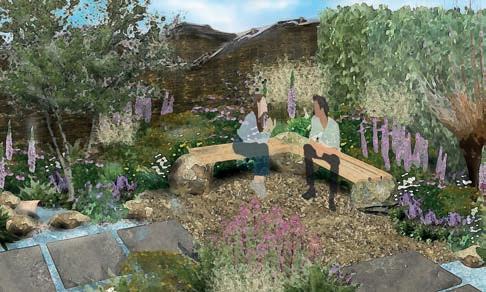
THE LUNAR GARDEN
Designer Queenie Chan
Contractor Topoforma
Landscape Ltd and Botanically
Inspired by the moon, this is a space that is lit up in the dark, creating a solar haven to avoid the harsh artificial lights of the streets and indulge in an atmospheric, almost romantic, sanctuary. With the use of circles and crescents to resemble the phases of the moon, surrounded by bamboo fencing, foliage and an abundance of white and silver vegetation, this garden combines oriental and western perspectives.
Affordability, sustainability and passion –an environment taking inspiration from the inner city, green developments and reinstating the belief that diversity of life can survive in a restricted space. A beautiful imagining of a space replicable on a small budget, with use of upcycling and pollinator-friendly planting.
THE WILDLIFE TRUSTS: RENTERS' RETREAT
Sponsor
The Wildlife Trusts
A pragmatic insight into the reality of our British population and the space we are limited to. With one in three households renting, and a national lockdown having forced us to stay in our four walls, Zoe Claymore highlights the methods in which anyone can do their part to help our world recover, with a demonstration of planting techniques that can be dismantled and relocated to suit all and any outdoor spaces.
THE INGHAMS WORKING WITH NATURE GARDEN
A celebration of the great outdoors, this garden aims to replicate the feeling of a great-British summer holiday and our escapes across Europe. Contrasting sizes in stone allow for water to be collected and filtered, with willow fencing following the natural flow and order of the landscape. Once completed, the garden will be reworked and donated to the ARK at Egwood – enhancing its safe, outdoor space, for people to engage with their surroundings.
prolandscapermagazine .com Pro Landscaper | July 2023 RHS HAMPTON COURT 62
Designer Butler & Parker Contractor Acacia gardens Sponsor Inghams
Designer Nicola Hale Contractor Landform Consultants Ltd Sponsor Landform Consultants Ltd
Designer Zoe Claymore Contractor Frogheath Landscapes Ltd


Bespoke Steel Garden Products www.luxunique.co.uk hello@luxunique.co.uk (t) 033 33 66 11 30 Planters | Ponds | Edging | Raised Beds Find your nearest stockist at hallstone.co.uk TOPSOIL | COMPOST | MULCH | WOOD CHIPPINGS | TURF For professional landscapers and builders. PREMIUM QUALITY. GREAT PRICES.
The Pro Landscaper and FutureScape Golf Challenge –held at the stunning Goodwood Golf Course and Estate on Thursday 15th June 2023 – proved to be a swinging success.


Bringing together industry professionals, enthusiasts, and golf lovers for a day of networking and bit of friendly competition, complete with a BBQ on the green to truly savour glorious sunshine. Featuring long sweeping greens and dramatic changes in elevation, this course is a dynamic challenge for both professionals and amateurs alike, a real treat for golf fans. We would like to thank everyone that joined us.
COMPETITION WINNERS
NEAREST TO THE PIN
SPONSORED BY TALASEY GROUP

GLYNN JEFFRIES, CTD
LONGEST DRIVE
SPONSORED BY FROSTS LANDSCAPES

ADAM WRAIGHT, MAYLIM
BEAT JAMES BRAID
SPONSORED BY THE PRO LANDSCAPER
BUSINESS AWARDS
NICK EBELTHITE, ELITE LANDSCAPES
INDIVIDUAL STABLEFORD


1 SIMON JACOB –NURTURE LANDSCAPES
2 LUKE CORNER – ADTRAK

3 LEE NOLAN –NURTURE LANDSCAPES
TEAM STABLEFORD


1 NURTURE LANDSCAPES
2 ADTRAK
3 CROWDERS NURSERIES
CONWAY LANDSCAPES
CROWDERS NURSERIES
CTD AND LITTLEWOOD FENCING
LONDON LAWN TURF AND ROLAWN
TALASEY GROUP
NURTURE LANDSCAPES
AT THE DOWNS
GOODWOOD
ELITE LANDSCAPES
REGISTER YOUR INTEREST FOR THE NEXT GOLF CHALLENGE ON 13 JUNE 2024
COURSE,
GLENDALE
FROSTS LANDSCAPES
ADTRAK
MAYLIM
THE OUTDOOR ROOM
CORE LANDSCAPE PRODUCTS
PRO LANDSCAPER AND FUTURESCAPE
PITCH perfect
Fiona Silk
Freelance garden designer
Before becoming a garden designer, Fiona Silk worked in the advertising industry, giving her a strong background in graphics, design, layouts, working with creative teams and, importantly, an insight into how to present and sell. "My feeling about presentations is that you are communicating an idea, and it's about selling that idea," she says. But getting the brief right is always essential. “I’ll take the brief, then through my design try to solve those problems while taking into account aesthetics, site, material and price considerations.”
Silk likes to meet the clients face to face to get an idea of who they are and understand how they live their lives. "I'll want to see inside the house, the kitchen, the rooms they use most, the art on the walls – that's really good at giving you some idea of what they like."
After the initial conversation, she sends back a bullet-pointed list confirming everything discussed and agreed upon. This allows the clients to raise issues they perhaps hadn’t considered and ensure time isn’t wasted later on. "I will then discuss with them whether they want something linear or a more organic, flowing shape, and usually, I'll go back with two to three design options.
"I do use SketchUp and Vectorworks, but I think you can’t beat the handdrawing process. I’ll take the site survey and sketch over it, and that iterative process of drawing again and again gives me the chance to refine the design. If I’m not entirely happy about an aspect of it, I’ll go out, walk the dogs, and return to it a few days later, chipping away at it until I’m happy. For me, if I jump too quickly onto the computer, I don’t have that time to think.”
"I prefer to present in person. I print it out nicely on A2 paper, sit with the client, and go through it. I then leave that with them and make it very clear that they have as much time as they want to think about it."
Silk explains how you come across to the clients is almost as important as the design presentation itself. "Say you're meeting a 30-year-old internet billionaire who has bought a £4m apartment with a roof terrace; the presentation has to be slick – maybe 3D renderings or something really swanky. Whereas if you're meeting someone who lives in a big rambling country estate, you won't wear a blazer and your shiniest black shoes with a London kind of efficiency mindset. It needs to be softer and more watercolour-y. You need to think about how to find the best visual style which will work with each project.”

With people nationwide treating their outside spaces as another room of their house, the demand for garden designers is increasing, and presenting ideas and designs to clients in a professional manner is a necessity. Anna Muggeridge meets four of the UK’s top designers and asks them to share their best practices.
prolandscapermagazine .com Pro Landscaper | July 2023 65
My feeling about presentations is that you are communicating an idea, and it's about selling that idea
FEATURE
Fiona Silk
Creative director at Earth Designs Katrina Kieffer-Wells
“Since the pandemic, people really value their outdoor space,” says Kieffer-Wells. “We live in this aspirational social media world, and technology has made things so much more accessible.”

The rise in online video communication has added new dimensions to Kieffer-Wells' business, and she now regularly has people contacting her from all over the world asking for design advice. “I do a lot of Zoom consultations now and have brainstorming idea sessions with people too. It is nice for them to access a garden designer without necessarily having the price tag they can’t afford. If people want ideas, it’s a fixed fee whether you’re in Sunderland or the USA.”
When people ask for a design consultation, they’ll often have a moodboard, which is a good start, especially as it leads to the essential topics of budget and time. “It’s important to ground them into what their budget is. People watch TV shows where the whole garden costs £5k and is completed in a weekend, so they think that’s how it works in real life. We are always keen to flag the budget up with the client and manage expectations.
I’ll indicate what things might have cost on their moodboard and advise them on how the look and feel can be achieved within their price tag. But it’s always better to see the garden in person,” Kieffer-Wells says, adding that clients aren’t looking for the same things as she is, such as access issues, parking restrictions, what the fences are like, etc.
“From the moment I arrive, I begin to cost it up straightaway because there are all sorts of things that will ramp up the cost before you’ve even started designing. Meeting in person also allows me to get a lot of readings from the interior of the client’s house, which you can’t get from Zoom. I’ll always ask to go to the loo.
It’s often a place people will put a silly picture up, and you can very quickly get a feel for what they are like because they have crazy taps, or the tiling is pretty out there. Conversely, if it’s beige and safe, you know they are unlikely to want to push any boundaries in the design.”
But what about if you can’t meet them face-to-face or a site is being developed? “It’s harder, but you can look at what they are wearing, their accessories, their hairstyles. Tune into that from the start.”
Rather than a pure ‘ta-da’ presentation, Kieffer-Wells likes the initial design consultation to be a collaborative process with the client so she will draw a sketch with them, which makes the clients feel included. It also means they know what to expect if they decide to go further and get the complete design package – a detailed scale plan, 3D visualisations, planting and lighting plans.
Kieffer-Wells says every client is different, and you have to build and develop a trusting relationship with each one. “There are some who are super pernickety and want to talk about every single plant in the plan and suggest alternatives. However, they don’t have the broader knowledge of our industry, so they aren’t aware of issues such as plant availability. Most people are really chilled, though, and just want to talk about the colours of tiles etc. I get lovely messages from clients who say, “I’m sitting in my garden, and I’m really enjoying the plants”. Or you get clients who insist they don’t like plants, and then six months later, you get a message from them asking which greenhouse to buy or showing pictures of their seedlings, and you’ve made them fall in love with gardening.”
People watch TV shows where the whole garden costs £5k and is completed in a weekend, so they think that’s how it works in real life. We are always keen to flag the budget up with the client and manage their expectations
FEATURE prolandscapermagazine .com Pro Landscaper | July 2023 66
Katrina Kieffer-Wells
Marc Lane
Design director at Landscapia

Marc Lane's presentations are always in CGI. "It blows people's socks off. After the first two presentations I did with it, I knew the investment in time and software was worth it. And it has been paid for tenfold." Not only does it wow the clients, but it also has its uses in ensuring the project flows more efficiently from start to finish. "I love design, but because I am from a contractual background, I find it easier to build in 3D; it's the way I would have built it on site, so for me, it is more natural to build it in 3D instantly," he says. “The contractor needs a master plan, including construction drawings and planting plans. But as a visual, I think it is important that the client sees the same as the contractor so they have the exact same image in their minds as to what it will look like.”
Starting out using SketchUp, Marc eventually invested heavily in upgrading his computers to make them compatible with the CGI software he had seen. “As soon as I got the CGI, our conversion rate increased massively. It’s because people knew exactly what they were buying. There weren’t any guesses. Likewise, when clients are using our design services only, the phone calls and questions have gone down too, as there isn’t the need for people to ask, “How is this supposed to look?” Both the client and contractor have the same copy of the visuals. It just puts everyone on the same page.”
Before the design and presentation, however, Lane has a specific process which he follows. "First, we have a phone conversation, and I have about 15 questions which I ask, all designed to answer everything I need to know. Not everyone knows exactly what they want when they get in touch, but they know what they want to get from it. That's the first thing I want to find out from them. How do you want to use it? What’s your family situation? Is it an area for entertaining or for relaxing? We’ll also discuss the costs, which are so important. You rarely get a project where you can tick every box because clients have budget constraints. But this is a partnership, so you work together to create a design that works for them within that budget.”
At the end of the 15 questions, Lane will meet the clients on site armed with all his notes from their initial conversation. He'll also ask clients to send visuals – photos of things they like or a Pinterest moodboard, which helps him get a good sense of the scheme or feel clients want from their garden. "By the time I come to design it, I'm about 95% there because we've done our homework."
When the design is completed, Lane sends the clients CGI snapshots of the garden and arranges a Zoom call a few days later, allowing them time to think about it. “Most clients are buzzing by the time we meet because they love the visual. It’s the Amazon era – people want it the next day!”
Lane’s now smooth-flowing design operation has been a learning curve of trial and error. One of the things he has learnt is that all conversations must include the decision-maker of the household.“I once had a client call me, and we ran through all the questions, and he liked my ideas. My process wasn’t the same as it is now, so I presented the design on a Zoom call to the husband and wife, and it was clear from the wife’s expression that she was not in love with the concept I had presented. I said to her,“This isn’t what you wanted, is it?” She said,“No, it’s the complete opposite.” Her husband was in the background, looking awkward. So, then we had to go through the entire process again and completely redesign the whole thing, which prolonged the process.”

After the first two presentations I did with it, I knew the investment in time and software was worth it. And it has been paid for tenfold
Marc Lane
FEATURE prolandscapermagazine .com Pro Landscaper | July 2023 67
CAD garden design by Landscapia
Garden designer at Tom Massey Studio Tom Massey
Perhaps not unsurprisingly, given his degree in animation, Massey’s preferred medium of design and presenting is a 3D visual. “In my degree, I used CAD software to create animated worlds, so I was already familiar with using computer software for design. For designing gardens, it’s a really efficient and collaborative way to work. I can sketch something up in 3D and send it to a colleague, and they can add to it. Equally, you can share files with architects and other professionals you may be working with to aid the design process.”
Aside from private residential clients, Massey’s business has expanded to working on commercial landscaping designs, often requiring a different approach to presenting information.
“We have a couple of architects we work with who specialise in public realm design, so they might have pitched for the work and won it and then engaged us to help with the horticultural aspect,” he says. “But we are also increasingly being invited to tender for public spaces as a studio too.”
Tendering involves putting together a document pack full of very detailed information that private clients wouldn’t normally require. The information is often collaboratively assembled by a team that might include architects, engineers and other subconsultants like ecologists or soil specialists. The environment is competitive, too, with multiple teams invited to pitch for the business.
Once the tenders are assessed, teams might be called for interview to present the plans and discuss the details in depth. “At this stage, there are all sorts of challenges that you might get asked about, e.g., health and safety issues or antisocial behaviour. For inner-city public parks, for example, the design team has to consider things like sight lines for police; the clients don’t want dense areas of vegetation to try to prevent antisocial behaviour and potential for rough sleeping; furniture also needs to be bolted down. There are many additional considerations to consider in those types of spaces. It’s a very different process than working with a private client, who is usually very lean and agile, and has their own money, so they can decide how and when they spend it. Often budgets for commercial jobs are more constrained, or it gets scaled back, and often the first thing cut back on is the landscaping.”
But Tom says the challenges are rewarding. “Personally, I like that our work is seen by members of the public and is open and accessible.”
DO'S AND DON’TS
• Do confirm the details of the brief.
• Do find out about your clients’ taste. The more you know about them, the more likely you will design a space that’s in tune with their lifestyle without needing countless redesigns.

• Do discuss the money. There is no point in going too far down the line with a design only to discover the clients can’t afford it. Everyone will be left disappointed.
• If the client is unsure about what they want, ask them to make a moodboard or Pinterest of things they like. Don’t say “Leave it with me, I’ve got some ideas,” because how do you know your ideas match?
• Do be prepared. Take your notes with you.
• Do use your clients’ language and turns of phrase in your presentation. It will make them feel listened to.
prolandscapermagazine .com Pro Landscaper | July 2023 68
I was already familiar with using computer software for design. For designing gardens, it’s a really efficient and collaborative way to work.
Tom Massey
FEATURE
Garden Building Collection

The M&M Timber garden building range is UK designed and manufactured to suit every size and style of garden or play area


Garden Gazebos

Machine round timber gazebos available from 3m up to 6m with timber, cedar or thatch roof and a selection of accessories.




Retreat, Greenhouses & Xtend
Privacy in gardens can be created using trees to hide or screen out an undesirable view. Trees grown for this purpose often have a clear stem up to fence panel height around 1.8-2m with a full bushy canopy above, forming a good screen above the fence line. This type of screening is particularly useful if the garden is overlooked by neighbouring properties or to retain lower-level exposure to an attractive wall or area.
Screening trees
Practicality Brown can supply a range of top quality trees for screening, which are particularly useful for creating privacy. We have a range over evergreen trees in stock at our nursery in Iver, Bucks:


Xtend Buildings
Call for brochure and prices
0333 003 5133

Pleached trees

We also have a range of pleached trees in stock, which can be used in the same way; pleached trees can be effective for formal screening and where space is limited.

tree & edge ursery

As well as the screening trees, Practicality Brown grows a range of premium quality Practical Instant Hedge™ at the nursery in Iver.
You are welcome to visit to view both trees and hedges.
Cushions & Curtains available in 2 colours Hexagonal 3m, 3.6m, 4m, 4.7m Oval 5.1m, 6m Square 3.5m Oval 5.1m, 6m Square 3.5m Square 3.5m
Thatch Roof Cedar Roof Timber Roof TableBenchCushionsCurtains
Retreat mm-buildings-ad-92x272.indd 1 15/02/2022 15:57
www.mmtimber.co.uk M&M Timber is a division of the Forest Garden Group Ltd 3m Hexagonal with cedar roof
Vale Greenhouses
Ilex Nellie R Stevens
Magnolia grandiflora
Ligustrum japonicum (pleached)
Ct PvC wt SC tS .pracbron.co.uk email: rees@pracbron.co.uk or call 01753 652022 for more informaion
Photinia Red Robin
On the
right p ath
At a dead end when incorporating a pathway? Matt Evans offers inspiration and advice for creating winning walkways
Pathways take us on a journey through a garden and form the crucial link between spaces within a design; and unless you live with a modest courtyard, you’ll likely need one of some description. They take us from the door to our bench for our morning coffee, to the compost heap with our grass cuttings, or to the bike store before we start our commute to work. A path can be an engineered structure with detailed calculations and structural drawings, or something as simple as a mown passage through long grass.
Moving through a garden should avoid the simple A-B unless you’ve a path with a purpose – by this, I mean something formal, that provides a sight line and forms part of
the focal point. Typically, a path moves you around a garden; they are the mechanism for bringing together the overall experience. Allowing us to appreciate the whole garden as we navigate the space. Avoiding the theory of ‘desire lines’ but instead diverting our eye from the path of least resistance, creating an immersive journey as we move between spaces, features and focal points.
An element of such importance rightly requires serious design consideration and, in

my opinion, there are two types of paths in a garden design; paths that divert us, and paths with function.
Other than how the path moves you through a design, the first consideration when it comes to designing is usually how it will look closely followed by how it is constructed. These two factors can be governed by various site-specific influences: the subbase or framework required to form it, budget, drainage, surrounding trees and planting, site levels – I could go on. Below are my thoughts on what’s hot at the moment in design and how to utilise these elements to maximum effect.
Boardwalks are an enticing way to lure people down a path. Best set out a short height above
prolandscapermagazine .com Pro Landscaper | July 2023 TRENDS 70
A path moves you around a garden; they are the mechanism for bringing together the overall experience
DESIGN AND PLANTING INSTALL BY THE GARDEN ROOM - LIVING AND LANDSCAPE STUDIO
Photographs ©Jake Baggaley
ground level planting; they create the feeling of floating through planting, leading you along the path but affording you time to take it in and walk slowly. From your boardwalk, you can create decked platforms or level changes into smaller areas with seating and focal points like sculpture or the use of water. The change in level really is key. With the deck boards elevating you above the planting as you navigate the garden, you quickly begin to notice things you may have missed originally – subtle details within underplanting and lighting after dark. Sudden changes in direction work well and help with creating the journey; rather than walking past a beautiful tree, why not walk around it?
(light vs shade), surrounding trees and crucially client motivation to work with maintaining it.
A less formal site or country garden affords you the opportunity to utilise more loose, free flowing and natural elements. These could include aggregates, reclaimed brick or clay pavers. There are many types of aggregate pathway – avoid the pea shingle so often used for filling drainage channels and look to suppliers like Allgreen which have a wealth of beautiful options from limestone and Cotswold stone to glacial pebbles or flint. Each has its own characteristics, colours and cost. A beautiful aggregate path like this typically needs edging to separate the border, planting and your chosen path material. A metal edging is my preferred method; malleable, adaptable and available in all sorts of finishes, there are various options that allow you to form curves, straight lines and angled junctions, and suppliers include CORE Landscape Products, Straightcurve and EverEdge.
A popular way to form paths at present is large format concrete; although on the face of it not the most environmentally friendly solution, certain suppliers such as Schellevis have some impressive sustainability statistics and manufacturing processes. Where appropriate, this finish can form seamless links to interior finishes and assist with creating dramatic level changes. Designers can make interesting shadow gaps and it provides a stunning alternative if floated above planting to the aforementioned boardwalk. Try 278 Create Ltd for more custom and bespoke commissions.
PATH TO SUCCESS Putting you on the
Schellevis
Schellevis
Schellevis® produces concrete paving and elements to connect architecture with nature. Always supporting and respecting the outdoor space they are placed in.


Price: From £60m2+ schellevis.nl/en
Natural tones tend to work with the style of site, and you can choose between natural and composite materials. Boardwalks tend to suit a relatively contemporary design, coastal and woodland gardens. There are examples of more industrial materials forming boardwalks; these are used to best effect in more commercial and architectural designs, where floating metal grids elevate you, whilst still providing light to shady planting beneath. Hardwood decking such as Iroko, yellow balau and cedar, are great for creating this look.
All have their pros and cons, and ongoing maintenance should be a key consideration when specifying, depending on their aspect
So, let’s give more thought to the humble path – where would we be without them?
Matt Evans is the managing director and design lead at The Garden Room Living and Landscape Studio, based in Poole, Dorset. The Garden Room is a young, creative design studio founded by partners in life and design, Matt and his wife Elle Evans. Located just a stone’s throw from the shores of Poole Harbour and the Jurassic Coast in Dorset, they operate across Dorset, London and the south of England offering garden design, project management and planting as well as specialist aftercare.
thegardenroomstudio.com
CORE EDGE
Forming sweeping curves, straight runs as well as corners to keep lawns pristine. Lawnmowersafe and strong enough to strim against.
Price: £39.99
corelp.co.uk
CORE Landscape Products Allgreen


Harleyford Blend
A traditional blend of Cotswold pebbles and self-binding fines to create an English country garden path and driveway surface.

Price: £124.91 allgreen.uk
*all prices inclusive of VAT
prolandscapermagazine .com Pro Landscaper | July 2023 TRENDS 71
Ongoing maintenance should be a key consideration when specifying
MATT EVANS
Pergola
Hampstead, London – designed by Fiona Lamb Design


Constructed from aluminium to give an impactful, contemporary and seamless finish using concealed fixings to achieve perfect square corners. Crisp and clean with the added benefit of being lightweight yet incredibly strong structurally. A durable finish in Traffic Black powder coating completed the look.


For more information visit: www.outdoordesign.co.uk


palmstead.co.uk/plants



Whatever you can imagine, we can make it a reality in metal Email: outdoordesignmail@gmail.com Call: 07860 456159 We grow more than 1 million containers and 200,000 field grown trees
love
Every one of them.
all the plants you need, when you need them. With assured biosecurity, live stock availability on our website and our own
of trucks, we’re the
for
your
needs.
We
plants.
We offer
fleet
one-stop-shop
all
planting
Best Inspirational Business 2022
new and old BLENDING
THE GARDEN COMPANY WEST HILL, BEDFORDSHIRE
PROJECT DETAILS
Project value
£100k+
Build time
3 months in total, completed in separate phases
Size of project 2500m2 Awards
BALI National Landscape Awards
2022 – Special Award for Best Design and Build
On moving into a new modern property in a Bedfordshire village, adjacent to older properties with more character, the owners were looking for a haven in their outdoor space for the family and friends to spend time together.

The rear garden had a small patio and no planting except for an existing mature holly hedge, and the awkwardly shaped front garden had a low-quality drive, lawn, and paved pathway. Fortunately, the homeowners had inherited handsome boundaries – a Victorian brick wall running along the back of the site and a holly hedge running from the rear boundary to the front – and a largely ‘blank canvas’ within.
To turn this into a haven, the family’s wishlist included a generous dining area, a good-sized lawn, a place to grow vegetables and a hammock to relax in. Room to entertain lots of people was a must, as were spaces for quiet retreat and – as suggested by one
teenage daughter – a fire pit. Creating a space that would attract wildlife was also important.
Following Fibonacci
Overall, the designer James Scott's intention was to create a warm, naturalistic feel. The house already had a good connection to the rear garden thanks to bi-fold doors which open straight from the kitchen/ family room into the outside space, and strengthening that connection was a vital element of the design concept. It was important to complement the original brick wall and to pay homage to the holly hedge. Unlike so many gardens that are long and thin, stretching away from the house, the rear garden spreads across the width of
prolandscapermagazine .com Pro Landscaper | July 2023 PORTFOLIO 73
1 Sunken fire pit and bespoke laser-cut Corten steel panel ©Clive Nichols
the property – leading to attractive views of the outdoor space from the family room/kitchen.

The rear garden now reflects the modern building through strong geometry, with planting and materials chosen to soften the effect. The garden has distinct zones for different activities, with framing of views through and within the garden from these areas.


A pale grey sandstone terrace flows from the kitchen, while the planters, low walls, and laser-cut art of the fire pit are all weathering steel that rusts to warm tones. Clay pavers leading to the fire pit complement the original brick wall at the rear, while the fire pit seating and raised beds in the vegetable garden are green oak. The terrace is home to four large ‘floating’ planters while the lawn has four generous quadrant beds. Both look like mass planting as the year progresses.
A handcrafted greenhouse designed by Scott was added in the final stages of the project. Next to the greenhouse is a small meadow from wildflower turf, embellished with spring bulbs and home to the hammock. The back border has been deepened to accommodate a bespoke Corten steel water feature, in keeping with the weathering steel featured elsewhere. Also designed by Scott and following Fibonacci mathematical principles, this has added visual dynamics and tranquil sounds, as well as attracting more wildlife to the space. The semi-sunken trampoline pit has recently been re-designed into
prolandscapermagazine .com Pro Landscaper | July 2023 PORTFOLIO 74
a sunken seating area, reflecting the changing needs of the family.
Mixed materials
The front garden now offers a sense of calm. A fluid organic design has diffused the garden’s uneven geometry, and different uses of rock has added visual interest and illustrated the journey from boulder to slab. The use of natural materials along with the addition of a water feature creates a harmonious flow towards the house.
On a practical note, the driveway has been modified to accommodate more vehicles when needed. The existing porch was small and rather dingy; part of the design solution was to replace this with a larger, lighter porch that blends the home’s modern architecture with the older properties nearby. This was designed in-house and crafted by The Garden Company’s joiner.
It is possible to view directly through the house from the front garden to the rear garden’s back wall, lining up on the water feature. The landscapers paid huge attention to detail with finishing touches including a stone-carved dog bowl and a stone seat next to the front path.
Edible additions
Overall, the soft landscaping complements the garden with seasonal colour and textural interest. Specimen trees add height and focal points or frame views. The rear garden’s planting is intricately layered, featuring different species and combinations. Each terrace bed is home to a multi-stemmed Amelanchier, underplanted with spring bulbs. This mitigates the lack of depth in the garden by creating foreground interest. Four naturalistic lawn beds include
alliums, nepetas, salvias, asters, achilleas, and grasses. When the perennials reach their full height and bloom in summer, this looks like one large block of planting. The perimeter borders are more of a woodland mix. The wildflower area provides visual interest for many months, offering great plant diversity and a changing colour palette throughout the seasons.
In addition to incorporating raised beds for fruit and vegetable growing into the garden design, there is also a small herb garden area near the kitchen door, making it easy to pop outside and grab fresh produce while cooking. The new greenhouse also provides fruit and vegetable plants with a safe haven protected from extreme weather and insects.
Creating habitats
There is a good balance between hard and soft landscaping throughout the front and rear gardens. In addition to a large lawn area in the rear garden, the plant borders are deep and abundant, and the terrace is enhanced with generous planters.


Pollinator-friendly plants were chosen to attract bees, butterflies and other beneficial creatures to the garden. A small wildflower meadow was also added to the rear garden and the long holly hedge – a great habitat for birds and other wildlife – has been carefully nurtured. The existing Victorian brick wall was partially covered in ivy which is great for nesting birds and insects, and this was preserved in the new design.

prolandscapermagazine .com Pro Landscaper | July 2023 PORTFOLIO 75
2 Garden stretching width of house ©Clive Nichols
3 Sunken garden area and planting ©James Scott
4 Geums, Salvia and Irises ©Clive Nichols
5 Bespoke water feature ©James Scott
The garden is reasonably self-sufficient with no need for ‘extreme’ garden maintenance techniques. It was designed with vernacular materials in mind, to cut back on the transport required to get materials to site and reduce the project’s carbon footprint. Materials with a high carbon footprint were avoided; hard landscaping relies largely on natural stone and weathering steel. Gravel was also used where possible, cutting down on hard, impermeable surfaces.
Three large compost containers are in use, providing a great habitat at different times of the year for many wildlife species and helping to cut down on landfill too. New water features in both the front and rear gardens not only add visual interest but are beneficial for birds and other wildlife.
Nationwide recognition
The location of the site in Bedfordshire meant that the ground conditions comprised of sandy soil, which tends to leach nutrients and dry out quickly. The Garden Company overcame this by plant choice, and the addition of organic matter during the soil preparation. The garden is also top dressed annually with compost produced from the garden and supplemented with composted bark or green waste compost if required.
Once digging began in the front garden it became apparent that the area had once been a Victorian/Edwardian ‘dumping ground’ for glassware and pots, leading to some slight delays while these were dug up and inspected.
Owing to the existing mature trees surrounding the front garden, there was a ‘no dig’ landscaping solution for the new driveway. The property is also accessed by a narrow lane, and so deliveries to the site needed to be via small vehicles.
Overcoming these challenges, the gardens are now enjoyed by the family on a daily basis. A full lighting scheme serves a practical function, as well as extends the time the family can spend outdoors.

The success of the scheme was reinforced at the end of 2022 when the British Association of Landscape Industries presented The Garden Company with a prestigious Special Award for the Best Design and Build project. Judges said: “The transformation from bland, uninspiring, 'new build' landscaping to a landscape designed and constructed to fill the heart and the senses is a joy to behold."
REFERENCES
Ebony Cloud sawn sandstone paving CED Stone Group cedstone.co.uk
Drive stabilisation grid Core Landscape Products corelp.co.uk
Plants Nederhoff Plants nederhoffplants.nl/en
Sawn Yorkshire paving, rocks and feature stones Rand and Asquith randandasquith.co.uk

Metalwork T Brown and Sons Ltd tbrownandsons.co.uk
ABOUT
Led by James Scott FSGD MBALI, The Garden Company Ltd creates places of enduring value through expert design and landscaping. Its awardwinning work is rich in detail and drawn from over 30 years’ experience of bringing clients’ dreams to life. The Hertfordshirebased company operates throughout South-East England and North London. thegardenco.co.uk
prolandscapermagazine .com Pro Landscaper | July 2023 PORTFOLIO 76
6 Wildflower mini-meadow & hammock ©James Scott
7 Cut stone boulder & planting ©James Scott
Who can enter?




People can either enter themselves, or nominate a colleague, manager or industry contact, whether that be in the supply chain, a subcontractor or from anywhere else. The nominee must currently work in the sector, and must have been with their current company for at least the last 12 months. The idea is that this initiative shines a light on those that show true commitment which may have gone unnoticed until now.

When is the award ceremony? The awards will be presented at a lunchtime champagne reception at FutureScape, Wednesday 22 November 2023.


Call the team today on 01278 455326 to order your FREE Deckorators® decking sample pack Explore the range online at storm-deckorators.co.uk Stunning mineral composite decking from Deckorators® LIGHTER Voyage decking is 35% lighter than traditional composite decking DURABLE Virtually no thermal expansion or contraction and holds less heat than other composite decking WIDER Available in two board widths, 140mm and our exclusive 235mm NEW IN 2023 Scan here for the application form prolandscapermagazine.com/unsung-heroes-awards Contact Tyler for more information on 01903 959390 or tyler.gould@eljays44.com
to
the
that would otherwise go unrecognised
Fulfilling the need
award those in
industry
| ExCeL London
22 November 2023
FutureScape
Wednesday


Scan the QR code to find your nearest dealership OFF-CUTS, WASTE RECYCLING PELLETS FINISHED PRODUCT LET’S MAKE A DIFFERENCE TOGETHER FOR THE ENVIRONMENT AND OUR FUTURE The first UK Artificial Grass Recycling plant is opening soon in the East Midlands ARTIFICIAL GRASS LET’S ARTIFICIAL GRASS LET’S www.letsrecycleartificialgrass.co.uk info@letsrecycleartificialgrass.co.uk Tel: (0115) 9654425 Contact us to become a member and to find out more information
PROJECT DETAILS
Project value
£9.2m
Build time
12 months
Size of project 3000m2
Connecting the COMMUNITY
MAYLIM REGENT’S PLACE
Placemaking and sustainability are at the heart of Regent’s Place, a 13-acre mixed-use development in London. The site is one of three ‘campuses’ for property developer British Land, with two million square feet of commercial space where big names such as Facebook, Lendlease and Santander reside. It borders the West End and the Knowledge Quarter, named for the area being home to 22 museums and galleries as well as science institutes, universities and research centres.

A new entrance was required to the campus that would be inviting for both residents and visitors, as well as linking to the surrounding areas. A series of pavilions were used to create spaces for people to gather, with inclusivity and accessibility being vital. The public realm also needed to be suitable for hosting events and for temporary uses that might better engage the community.
Commercial landscaping company Maylim had already completed the first phase of Regent’s Place – Triton Square –
and so was brought back on board as principal contractor in a full design and build contract for the next stage of the development.
A reduced dig excavation was carried out and recovered granite on the site was removed in order to be repurposed. Raised planter edges were sent to CED Stone Group to reuse whilst some of the existing paving was used to replace areas around the in-ground lighting. For the new paved area,
prolandscapermagazine .com Pro Landscaper | July 2023 PORTFOLIO 79
1 Luscious planting surround the path and seats
1,600m2 of Marshall’s Neso Granite was used alongside 650m2 of resin-bound gravel.
Corten steel edging forms curved raised planters, with a higher soil depth needed to mitigate a limited rooting depth. Benches have been incorporated into the design to make these planters dual purpose, and there are further opportunities for seating, each for different uses. Take the tables and benches for groups, or the longer benches ideal for events of up to 50 people.
In the evening, lighting highlights the pavilions along with other focal points such as the seating areas. Uplighting is used to great effect from beneath the trees and pendant lighting adds structure to the planting throughout the winter months. Lighting fixtures also illuminate the large green wall within the scheme.
Around 22,000 plants adorn the living wall system from Biotecture. Its patented BioPanel, which uses Grodan rockwool blocks as the growing medium, stretches three storeys, measuring 36m by 9.7m. For larger plants, more than 70 aluminium planters have been integrated, with smaller plants towards the top of the wall and large ferns and shrubs towards the base. To meet future biodiversity net gain requirements and attract wildlife to the site, 50 bug hotels have been added amongst the greenery.

The standout structures, though, are the three oak lattice pavilions built by specialist Xylotek. Each space is designed for a different audience, from small groups to children to a tiered performance space. More than 400 laths have been layered to create the pavilions, made from sustainably sourced oak. An oculus at the top of each of the two larger pavilions has been added to draw visitors’ eyes up towards the sky.
For the green wall framework, a solution was needed to ensure that it was a safe distance from the electricals within the substation whilst ensuring the plants would still thrive. So, a void was created behind the wall, and Maylim worked with Arup to make this fireproof by installing a fireboard to protect the UKPN substation.
Outside of the green wall, planting is more practical amongst the pavilions, with a focus on edible plants such as culinary herbs and fruit trees. Multi-stem trees


prolandscapermagazine .com Pro Landscaper | July 2023 PORTFOLIO 80
provide shade for the seating areas as well as year-round interest throughout the scheme. Maylim also worked with The Royal Parks to relocate trees that need to be removed from the site, and Regent’s Park is now home to these birch trees.


For the soil, a combination of of BS 3882 manufactured topsoils and lightweight topsoils was used, depending on the site requirements. Regent’s Place has also become the flagship
2 These paths double up as places to relax
3 The project holds a diverse array of unique spots
4 A living wall provides a new layer of greenery
5 Soft and hard landscaping unite perfectly
prolandscapermagazine .com Pro Landscaper | July 2023 PORTFOLIO 81
scheme for an ongoing research project between Maylim, Cranfield University and Bourne Amenity. The project explores the relationship between soils and the plant typologies they support, recognising the importance of soil as a resource and how understanding and managing it correctly is crucial to the success and longevity of a scheme, as well as in mitigating the impacts of climate change. More than just a home for residents or a workplace, Regent’s Place is one of many chances to explore climate-resilient landscapes as well as how a carefully planned public realm can engage the community and build a culture for years to come.
ABOUT
Maylim specialises in landscaping, external works and civil engineering projects. In 2022, the company celebrated 20 years in business, and its solid reputation for quality work and exceeding client expectations has helped them reach this milestone. Working to improve public spaces, they help develop new neighbourhoods and bring together existing communities. Maylim's integrated approach enables flexibility and adaptability to successfully deliver long-lasting, high-quality projects. maylim.co.uk
REFERENCES
Principal contractor Maylim maylim.co.uk
Client British Land britishland.com
Electrical MDN UK Ltd mdnuk.co.uk
Soft landscaping Willerby Landscapes willerby-landscapes.co.uk

Benches Kent Stainless kentstainless.com
Pavilions Xylotek xylotek.co.uk
Living wall Biotecture biotecture.uk.com
Metalwork McNealy Brown mcnealybrown.co.uk
Demolition Redbridge Construction redbridgeconstruction.co.uk
Structural engineer Arup arup.com
Other subcontractors
Waterwise waterwise.org.uk
Tom Boswell Tree Services tomboswelltrees.com
Token Cleaning Services tokencleaning.com
Euro Diamond Drilling eurodiamonddrilling.co.uk Limegate limegate.co.uk
Green roof products ZinCo zinco-greenroof.co.uk
Furniture
Urban Street Designs urbanstreetdesigns.co.uk
Soil
Bourne Amenity bourneamenity.co.uk
Bedding, mortars and grouts
Steintec steintec.co.uk
Plants
Robin Tacchi Plants robintacchiplants.com
Granite Marshalls marshalls.co.uk
prolandscapermagazine .com Pro Landscaper | July 2023 PORTFOLIO 82
6 Geometric sight lines give the space an elevated feel Photographs ©Paul Upward Photography

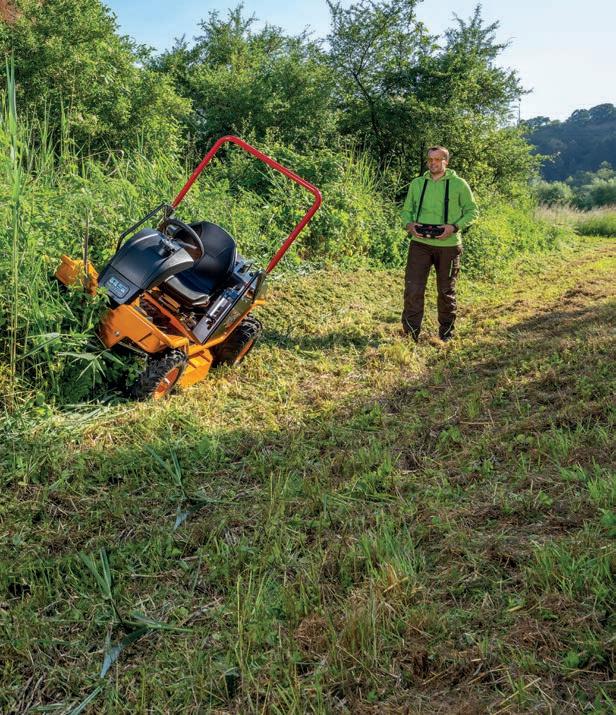


SPRAYING SPECIALISTS SINCE 1895 www.berthoud.fr/en/ HOZELOCK-EXEL - 891 route des Frênes - ZI Nord Arnas - BP 30424 - 69653 Villefranche Cedex France SAS au capital de 2 600 000 euros - SIRET 77965877200024 - APE 2830 Z - RC Villefranche B N° TVA intra-communautaire : FR 02 779 658 772 - Photos et images non contractuelles. POWERFUL ● ERGONOMIC ● PRECISE The most reliable and comfortable sprayers on the market PRO CONFORT ELECTRIC VERMOREL 1800 VERMOREL www.stonequarries.co.uk Limestone - Sandstone Building Stone - Flooring - Walling Masonry - Landscaping - Restoration 01386 584384 Walling Rockery Monolith Feature Stones Building & Masonry stone Sandstone & Limestone Restoration www.stonequarries.co.uk 01594 808716 01386 584384
NATURAL It's only
ELLICAR
SOUTHWELL NATURAL POOL
PROJECT DETAILS
Project value
£250k
Build time
14 months
Size of project
1,350m2 (approx.) Awards
National Landscape Awards 2022 –Best First Time Entrant and Special Award for Domestic Garden Construction Between £100k-£250k
With visions of a small natural swimming pool as the focal point of her new garden, this Nottinghamshire-based client brought in Ellicar to design the pool and surrounding space. It was to be a naturalistic garden for relaxing and entertaining friends and family, but also be a bolthole from their busy lives, as a place to wind down and reconnect with nature.

prolandscapermagazine .com Pro Landscaper | July 2023 PORTFOLIO 85
For Ellicar, the brief included everything it values: to bring wildlife and nature into the garden, and to create a beautiful natural swimming pool suitable for a family and their young grandchildren.


The borders were to be vibrant with bold architectural flowers reminiscent of the client’s upbringing in Kenya, yet soft and naturalistic with grasses. Her husband was keen to include a small stream to remind him of holidays in Scotland. As they were keen on growing vegetables and herbs, a productive garden for soft fruit, vegetables and cut flowers needed to be incorporated, along with a composting area and chicken pen. Both clients are healthcare professionals with an interest in botany and medicinal plants and so asked for a medicinal garden too, and a garden cabin already purchased had to be added.
Whilst the client enjoys gardening and was happy to take on some light garden maintenance, she asked for the garden to be easy to care for. The site was a blank canvas, sloping steeply 1:3 three ways with spectacular views across the rolling Nottinghamshire countryside.
Naturalistic look
Initially, Ellicar designed a concept plan of the garden, taking into consideration the topography of this undulating site. Damaged and old trees were cleared, with crowns thinned and lifted on retained trees. The natural pool is orientated to work with the prevailing wind. The cabin, situated within the contours of the site, opens onto the deck which covers the pool’s biological filters and pumps, and enjoys sunshine all day.
There is a side paved area for BBQs and outdoor dining, leaving the sun deck free for loungers and the bespoke pergola Ellicar designed and constructed. Gravel pathways wind around the pool softened with aromatics and creeping thyme, and generous borders wrap around the pool, deck and paving to create intimate living areas within the scheme.
Ellicar retained the garden with more than 80 linear metres of free flowing, curved railway sleeper walls which allowed the team to sculpt the land and grade the lawn into a slope that was safe to mow with a ride on mower. The stream sparkles down from the top of the garden, splashing into dropping pools, which are up lit with tiny spotlights set into cobbles under water. It appears to run into the natural pool under the deck walkway; in fact, it has a balance tank hidden here.
The stream runs through the scree garden, which has water-side planting lower down and aromatics and
prolandscapermagazine .com Pro Landscaper | July 2023 PORTFOLIO 86
grasses to soften the sleeper steps which form terraces and a way up to the vegetable garden. To the left of the scree garden is a medicinal garden, and a kitchen garden was constructed at the top of the site with raised beds for vegetables, a cut flower bed, cold frame, compost bays and a netted fruit cage. A tiny greenhouse was also installed, and a potting table built. The electrical housing unit is beautifully clad in dry stone walling and
used for a tool store. Further on at the top of the garden Ellicar constructed a fox-proof chicken pen.
Journeying through the top of the garden, an orchard has been planted, a native coppice with birch and hazel trees where Ellicar sowed bespoke grass mixes to allow longer growing grass which is beneficial for wildlife. There is an attractive border wrapping around the back of the cabin with roses around the paved area turning into woodland edge planting as the border passes into shade under the tall birch trees. The sleeper walls retain an access path around the cabin. Finally, from the clients’ bedroom, they can now access a new sunken garden.
Ecology in mind

For the soft landscaping, Ellicar designed an ecological planting scheme for the garden to create a naturalistic feel with bold colours wrapping around living areas to give the feeling of being surrounded by the garden but framing views out to the wider countryside.

Fifty trees were planted for structure with winter bark such as Betula utilis var. Jacquemontii, Prunus serrula, Salix alba ‘Britzensis’, blossom and beautiful leaves including Sorbus aria ‘Mitchellii’, Ginkgo biloba and a Populus tremula by the stream. A selection of orchard trees included ‘Vranja’ quinces, apples, pears and plums and crab apples for pollinating.
Seventy different shrubs were chosen to create a framework in the borders, provide screening, fragrance and colour throughout the seasons, including Daphne x collina ‘Eternal Fragrance’ and Osmanthus delavayi,
and for summer, Hydrangea arborescens
‘Annabelle’ and Rosa ‘Pearl Drift’. Climbers along the walls and pergola are Jasminum officinale, Trachelospermum jasminoides and Wisteria sinensis, amongst others, and various clematis and Lonicera species.
More than 2,500 perennials and grasses and 30,000 bulbs were weaved into a tapestry of colour which flows around the pool and living spaces. The colour scheme is mixed and bold; plants are chosen to flower and die gracefully, with their bleached foliage and seedheads being attractive through winter and a valuable source of food for birds.
Poolside plants
Around the pool edges, a matrix of Molinia ‘Edith Dudszus’ and Molinia caerulea
‘Moorhexe’ creates an airy meadow feeling, punctuated by geums, mixed Iris sibirica and Lythrum salicaria ‘Robert’.
Alpines and aromatics softened with airy Stipa tenuissima and billowing clumps of Gaura lindheimeri 'Whirling Butterfly’ wander up the scree garden which forms the banks of the stream. Behind the cabin the woodland garden comes into colour in spring with carpeting Brunnera and various Pulmonarias and Campanulas in the summer, with woodland grasses and late season woodland Asters and Anemones.
Marginal plants fringe the edges of the natural pool, flowering March to September,
1 Aerial pool views
2 Gravel pathways wind around the project
3 The space looks natural yet tactfully planned
4 It's not just a space for humans to enjoy!
5 Peaceful, reflective views from the pool

prolandscapermagazine .com Pro Landscaper | July 2023 PORTFOLIO 87
and deep aquatics such water lilies, Aponogeton and mixed oxygenators grow in the regeneration zones, the planting in the pool blends into the surrounding garden.


Au naturel
The pure, natural water and native submerged aquatic and marginal plants are a habitat for pond life including diving beetles, water boatmen, dragon flies, damsel flies and amphibians. Bats hunt over the water in the evenings, hedgehogs drink from the shallow edges in summer, and birds visit and bathe all year round. The pool is chemical free, filtered biologically with a regeneration zone of native submerged aquatics which are also part of the pool’s filtration system.
The pool is designed for natural thermal gain too – in summer it reaches 26oC heated by the sun. On top of this, the pool acts as a carbon sink, as CO2 drawn from the soil is pumped into the pool via a carbonator to boost plant growth; it is locked into the plants and stored as carbon as they photosynthesise.
The pool has a fluctuating water level meaning it does not need constantly topping up in summer and in winter it buffers rainfall. The pumps are submerged and sit below the deck in a pump house, with low energy requirements and operating on a timer.
Untreated Siberian larch was used for the decking and UK larch for the frame from a local sawmill. Gravel and aggregates, steel edging and plants were also sourced locally, while the retaining walls used recycled Jarrah wood.
Sourcing solutions
Throughout the project, there were quite a few unexpected challenges – Covid and the resulting lockdowns arguably being the least
predictable, causing the pool installation to draw to a halt for several weeks. Even when work could continue, there were issues with the supply chain and logistics.
So, spoil was removed by a local farmer and topsoil for grading was brought in by the lorry load as available. Ellicar collected aggregates and brought heavy Jarra reclaimed railway sleepers, which were in huge demand during the pandemic, from a local reclaim yard load by load in its own trailer.
prolandscapermagazine .com Pro Landscaper | July 2023 PORTFOLIO 88
There was a delay in moving the mains electric supply cable running through the garden right down the middle of the stream. Ellicar worked around this, with permission, by hand excavating and exposing cables and redirecting the stream.
The three-way sloping site with steep changes in levels called for retaining walls to be constructed and it was challenging to design a natural looking garden with such level changes. Ellicar decided to use reclaimed railway sleepers to blend into the garden, but the builders who were installing the sleeper walls were on furlough. The client asked Ellicar if it could construct the walls instead to keep the project moving, so founder Sarah Murch thought outside the box and asked her two sons to construct the 80m-long curved railway sleeper walls along with a member
of the team. As they were only 17 and 19 at the time, it was a huge achievement for them and kickstarted their landscaping careers. Ellicar’s tree surgeon cut the tops of the walls into a flowing curved finish.
The ground was also a challenge to prepare. The garden had previously been a chicken farm and the concrete buildings were all buried under a layer of thin, powdery soil from the local sugar beet factory. To plant even a small tree unearthed large pieces of concrete which had to be removed and cleared, and the soil was then improved with the incorporation of tonnes of soil conditioner.
On top of this, designing the stream and setting the levels proved difficult. The stream was to be viewed from the pool, paving, deck back door and various aspects of the garden. It was to look like it dropped into the pool;
however, the stream was kept separate to avoid complications with the pool’s balanced biologically filtered system. Ellicar wanted to filter the stream biologically, so it designed a system similar to a natural pool. To prevent nutrient overload form filling the balance tank with mains water, the stream is filled with water treated by a small domestic reverse osmosis filter. The stream switches off at night which allows the pebbles to dry to minimise filamentous algae growth. Since installation two years ago it has worked effectively with minimal algae on the pebbles and clear water.
6 Planting and pebbles create picturesque views

7 Aerial views highlight elevated design ideas
8 Diverse pops of colour fill the planting design Photographs ©io photography
ABOUT
Ellicar is an award-winning natural pool specialist renowned for some of the world's most beautiful natural swimming pools. From concept to completion, its design team combines biodynamic pool and landscape design with technical detailing, biological filtration and ecological planting schemes. These are brought to life by Ellicar’s skilled construction and landscape team, recognised for meeting the highest industry standards. Its sustainable pool and garden projects enrich lives, increase biodiversity and give back to the planet. ellicar.co.uk
REFERENCES
Landscape materials
Green-tech green-tech.co.uk
Pipework and fittings
Bosta bosta.com/en-gb
Hard landscaping and pool installation
Ellicar
ellicar.co.uk
Acer Landscapes
Design and Construction acer-landscapes.com
Biological water filtration equipment
Biotop gb.bio.top
Soft landscaping
Ellicar ellicar.co.uk
Plants and trees
Howards Nurseries howardnurseries.co.uk
Kenway Nurseries
kenu.co.uk
Arvensis Perennials arvensisperennials.co.uk
Gedney Bulb Company
gedneybulb.co.uk
Coles Nurseries colesnurseries.co.uk
Green Mile Trees greenmiletrees.co.uk
Jasmine Nursery
jasminenursery.co.uk
Tree surgeon
Charles Fenton
Deck boards
English Woodlands
Timber englishwoodlandstimber.co.uk
Pergola construction Arc Engineering arcengineering.co.uk
Electric works and lighting Dales Automation dalesautomation.co.uk
Pool excavation and concrete construction Eagle Building Specialists eaglebuildingspecialists.co.uk
Stone walling Noble Stonework noblestonework.com
prolandscapermagazine .com Pro Landscaper | July 2023 PORTFOLIO 89
The founding of Straightcurve is not entirely straightforward. You could argue that, without a visit to China, it may never have even happened. But its launch product – a steel modular edging – has gone from strength to strength, and its popularity has quickly spread beyond its founders’ base in Australia.
Product developer
Joeri Tuijn had moved to Australia from Holland but struggled to find suitable suppliers to manufacture products in line with his specialism of electronics and small product engineering. “Everything is big here,” says Tuijn, by way of explanation.
So, he moved to Vietnam and visited China for the first time in 2012. He was “quite
EDGECutting
First a hit in Australia, Straightcurve is now making waves in the UK market
anxious” about going,“only to find that China is one of the most advanced countries I’ve ever been to.” There was a huge variation between some of the factories that Tuijn visited, in terms of the working conditions, but during his second trip to the country, he came across a company that stood out.
“They contacted me for a product and said: ‘This is the material cost, the machinery cost, labour cost, packaging cost, our profit margin, and what you need to pay.’ I'd never seen that before; no company would ever share their profit margin. So, I went to see the company to find out what they were like, and they were really good; they looked after their people, were clean and organised, with daylight, fresh air, air conditioning. And better from an environmental perspective, which is important to me.”
The problem, Tuijn says, is that he had no product. So, he returned to Australia and started asking around,
to see if anyone needed reasonably priced sheet metal from this “amazing supplier.” At a party, he bumped into landscaper Dan Depiazzi. It was there that Depiazzi told him about steel garden edging, and the next day he saw the product for the first time in Depiazzi’s garden. He realised that they could make this exact product, and cheaper. But there was a snag – the edging was patented and so couldn’t be duplicated. Tuijn and Depiazzi were forced to think of an alternative that was significantly different. So, that’s what they did.

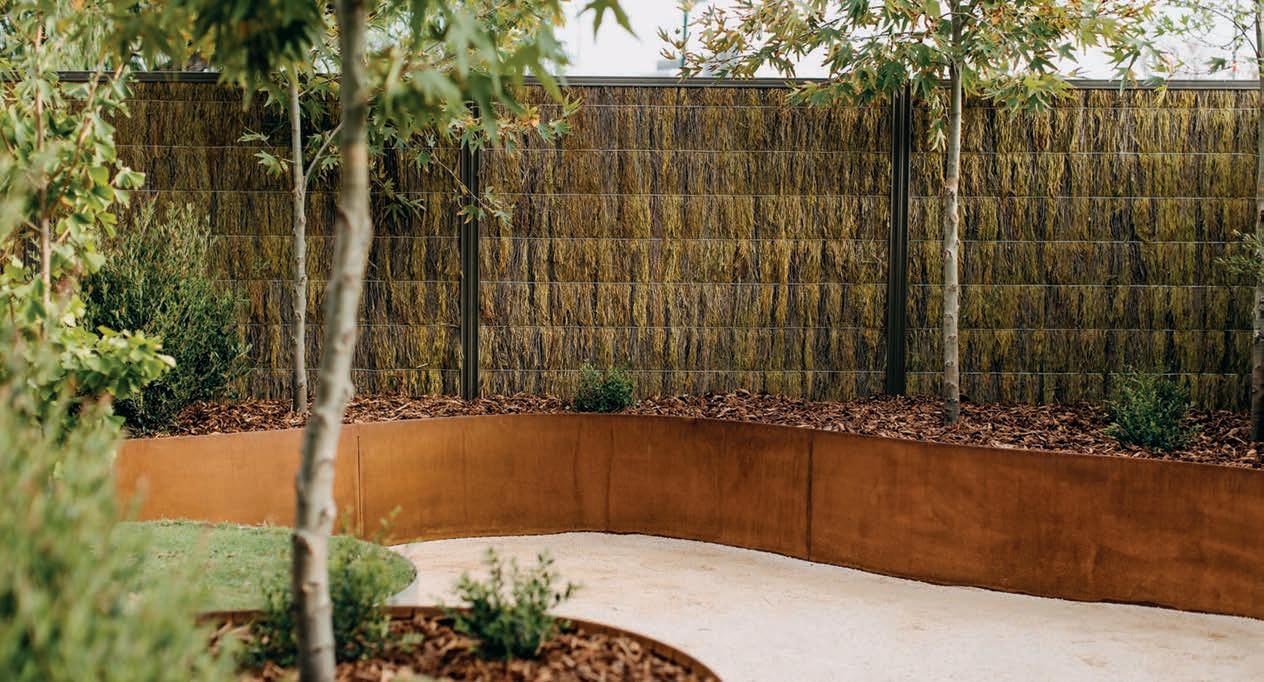
“We came up with a whole new way of doing it,” adds Depiazzi.“The steel edging always had to be bent in Australia, but we managed to create an edge that actually flexed, so we removed that limitation. That’s why it has been so embraced. People could just place it into position and flex it into shape, whereas previously they’d spent all that time trying to bend it and correct any mistakes they made in the process.”
Straightcurve edging arrives pre-drilled and ready to easily assemble, with no training required, making it ideal initially for the

prolandscapermagazine .com Pro Landscaper | July 2023 90
The steel edging always had to be bent in Australia, but we managed to create an edge that actually flexed, so we removed that limitation
FEATURE
JOERI TUJIN AND DAN DEPIAZZI
DIY market. But it quickly became popular amongst landscapers too. Its tagline sums it up: ‘Designed for DIY home gardeners. Loved by landscape professionals.’ Tuijn and Depiazzi began meeting local landscapers and taking any opportunity possible to showcase their new product.


The company has organically grown, and swiftly, from there. Straightcurve first launched in 2015, with both founders committing to the company full-time two years later. Now, they’ve expanded the range to three lines of steel garden edging, raised garden beds and planter boxes, all of which are suitable for both consumers and professionals. They can also all be shaped and adapted to the garden’s specifications on site, making them “unique to that particular garden” with no pre-fabrication necessary.

Straightcurve also caught the eye of distributors in other countries. The team was approached by a distributor in New Zealand, then they met with another in Holland, and it wasn’t long before they were also selling Straightcurve in the United States. They then brought the products to the UK, which Depiazzi says is a completely different market to Australia, where landscapers tend to order products and collect them from merchants around the country. In the UK, products tend to be delivered straight to site.
“Australia is so big, and delivery is so expensive, so it’s far more common to go to a store and pick it up yourself,” explains Tuijn. “The UK, on the other hand, has everything delivered – but our products were never designed with that in mind.”
Tuijn is talking about how the product is packaged, shipped and distributed. The product and its accessories are moved on
pallets to a dealer, where a landscaper would collect what they need. This isn’t suitable for dropshipping, where products are sold online and distributed through an external warehouse owner or operator. It wouldn’t be efficient for those working in a warehouse to have to collect accessories for the products across these pallets when an order is placed.
So, Straightcurve is adapting its packaging to suit dropshipping by placing the products into boxes. But it is also redesigning its products to accommodate this, such as removing the need for screws. All that will be needed now is a metal hammer to put together the products when they arrive on site or at home. On top of this, Straightcurve is changing its international model to be more in line with how it is operating in the UK, by setting up entities in these countries to manage the distribution more in-house.
“Every time we’re introducing changes because of perhaps what happens in one region, or targeting a particular market, it translates to all the rest. So, there’s continual
improvement behind it, and the next year is going to be amazing,” says Depiazzi. Then there’s Straightcurve’s environmental impact. Tuijn has already mentioned
how important this is to him when choosing a factory, and it is no different for his own company. So, they will be moving towards powder-coating, which uses no solvents, and creating a circular economy by taking back and repurposing products which have reached the end of their lifespan. Plastic packaging is also being removed and the pallets used to deliver the products are put together using screws rather than nails, ensuring they can be unscrewed and recycled or repurposed.
In just eight years since the launch – and now only in its second year of selling in the UK – Straightcurve is making huge strides, and showing how the company is just as adaptable as its products.
straightcurve.com/uk
prolandscapermagazine .com Pro Landscaper | July 2023 FEATURE 91
There’s continual improvement behind it, and the next year is going to be amazing
OPERATIONS MANAGER


GLENDALE
Location: Hertfordshire
Glendale is one of the largest green space management service providers in the UK and specialises in tree care and management, grounds maintenance and landscaping. Reporting to the General Manager, and as part of the Civic Trees management team, it seeks a strategically thinking professional to be responsible for planning and executing company operations in a timely and efficient manner. It is looking for a highly organised and adaptable individual capable of working under pressure and within tight timescales.


LANDSCAPE OPERATIVE/ TREE PLANTERS


GLENDALE (CIVIC TREES)
Location: Hertfordshire
Part of the Glendale group of companies, Civic Trees is seeking Landscape Operatives/Tree Planters to join the team. Candidates will ideally have experience in soft landscaping and will be required to contribute fully in the delivery of the high quality and visual works performed by the operational teams. Working alone and as part of a team the successful candidate will have a can-do attitude, the ability to work using their initiative and follow instructions from colleagues. Occasional nights away may be required as part of the role. A full driving licence is required, and a CSCS card will be an advantage.
HARD LANDSCAPERS

THE OUTSIDERS
Location: London
The Outsiders, a fast growing and well-respected garden design, landscaping and maintenance company are looking for skilled hard landscapers. They will be joining the team responsible for installing high-end, innovative domestic and commercial projects across London. You’ll need to possess excellent attention to detail, good time management, a pleasant customer manner and hardworking ethic combined with a broad range of landscaping skills to ensure our gardens are constructed to a high standard.


JUNIOR GARDENER
WE LOVE PLANTS
Location: Redhill, Surrey
We Love Plants specialises in designing, building, planting and maintaining beautiful gardens. It is looking for someone to join the soft landscaping team – duties will include the maintenance and upkeep of domestic gardens as well as assisting in the installations of new designs. This position is a fantastic opportunity for candidates looking to gain good technical gardening skills and to establish a good working knowledge of plants. The person appointed will be working within a small team, and it’s important that candidates have good communication skills, combined with a pro-active and flexible approach to their duties.

BESPOKE NATURAL STONE COPINGS | STEPS | PIER CAPS | WALLING ROCKERY | MASONRY | PAVING www.stoneworld.co.uk • Permeable • UV stable • Hardwearing www.sureset.co.uk • SuDS compliant • Low maintenance • 21 year guarantee mail@sureset.co.uk +44 (0)1985 841180 Landscape Urban Design Quarter Page – 88 mm wide x 132 mm high.indd 1 01/03/2023 10:21:58 For full details on all jobs, please go to horticulturecareers.co.uk Call 01903 777 570 or email mark.wellman@eljays44.com
GuidingLIGHT
Take away these top tips to avoid being in the dark when incorporating lighting into your domestic design
NITELUX BALANCE PLACEMENT AND STRENGTH OF LIGHTING
Ensure the garden has a good balanced feel to the placement and strength of various lighting elements throughout the garden. Consideration should be given to near ground, middle ground and far ground giving a feeling of depth to the overall scheme.
Key items to take into account are large trees, specimen planting, steps, pathways, garden buildings, pergolas and seating areas. Give consideration to the perimeter of the garden which will include fencing and/or brick walls using up lighting or wash lighting techniques.
Use different strengths of light to create depth, contrast, and visual interest. It allows for the highlighting of specific elements and the establishment of focal points. By combining various strengths of light along with the correct light placement, you can achieve a harmonious and visually inviting garden that suits different purposes and creates a visually pleasing area to spend your time in. nitelux.co.uk
LUMENA LIGHTS
When supplying lights to garden designers for any domestic project, we always give one main piece of advice: Think about lighting as early as possible within the project timeframe. Some considerable factors for this include project budget, cost of installation and cable placement, positioning of lights for desired lighting effects, and overall sustainability. Installation cost and cable placement are the main reasons, linked to all other considerations. For example, 12V lights are powered by a transformer which plugs into an outdoor socket. Designers can self-install 12V lights with safe, easy ‘plug and play’ cabling which needs to be located carefully (out of sight) within the design. For mains lighting, trenches are likely required meaning cables need to be laid before completion of the project. Lumena also supplies professional solar lighting for UK weather (‘Edisol’) which, although it may have a higher initial cost, is completely free to run.


DON’T LEAVE IT TO THE END!
lumenalights.com
prolandscapermagazine .com Pro Landscaper | July 2023 PRODUCTS 93
LIGHT VISUALS
There are a handful of basic principles to be considered when designing a lighting scheme for a domestic garden. One of the most important is regarding glare control, as it can destroy an otherwise perfect lighting scheme if not addressed properly.
BE SURE TO CONTROL THE GLARE!
No matter how good the design is, if appropriate glare control is not considered then your eye will be drawn to the brightest spot in the composition –i.e., the visible light source.
It doesn’t take much to hide the source and can be done by either aiming the fitting away from viewpoints by using angle cut glare shields, or by hiding the fitting behind a dense evergreen plant. You can also use deep snoots, filters and hex baffle louvres to reduce the amount of glare which is visible.
Ensuring glare is controlled will allow viewers to enjoy the garden after dark, without being drawn to one or multiple visual distractions. lightvisuals.co.uk
HUDSON LIGHTING DON’T BURY ELECTRICAL JOINT BOXES!
LANDSCAPEPLUS

At Landscapeplus, one of our mantras is ‘systems not products’ because a system is only as strong as its weakest link. When working with a lighting scheme, we always make it a point to take the entire system into account rather than just the light fixture(s). The first consideration is how the lights will be switched, with a host of options available to suit the clients’ requirements. For example, would they like to control their lighting zones on their smart phone, or would they prefer a wall switch or key fob? Would they like to dim their lighting? Next, you should consider the transformers; make sure they are IP rated and suitable for outdoor use (always choose low voltage where possible – that's a subject for another time). To ensure waterproof connections, we suggest resin-filled EasyTee connectors with glue lined heat-shrink tubing. This holistic approach leads to a long-lasting system and a happy client. landscapeplus.com

CONSIDER THE ENTIRE SYSTEM, NOT JUST THE PRODUCTS
In the captivating world of garden design, every detail matters, right down to the infrastructure that supports your vision. One of these is the placement of electrical joint boxes, a critical element that often goes unnoticed. A common mistake is burying these boxes, creating potential electrical issues down the line, increasing maintenance difficulty and potentially hindering safety. Instead, always specify that these indispensable units are never buried, but rather positioned above ground, out of sight.
This ensures easy access for future servicing and troubleshooting, enhancing the longevity and functionality of your outdoor lighting systems. Hide these boxes behind features, plantings or garden ornaments to retain the aesthetic appeal of your garden. This approach optimises both functionality and beauty, maintaining the seamless elegance of your designs. Remember, a well-functioning garden is as beautiful below ground as it is above. hudsonlighting.co.uk

prolandscapermagazine .com Pro Landscaper | July 2023 PRODUCTS 94
Pictorial Meadows Turf

The adaptive and resilient range providing high visual, ecological and robust planting

Transform your projects with instant perennial meadows using 100% flowers, with an average 30 species per mix and formulated to 150 plants per metre square.


Available in nine unique varieties, each nurtured and grown in a nursery setting, which allows a higher percentage of germination than seed-sown meadows. Call
At the heart of our symbols key is a collaborative effort between industry experts, designers, and contractors to provide the landscape community with a powerful tool for creating outstanding designs.
Download different versions of this key: https://www.hudsonlighting.co.uk/drawing-symbols.php

to
www.pictorialmeadows.co.uk
find out more: 0114 267 7635
Patchwork Quilt
Super Pollinator
Made in England Wall Light Spike light Directional recessed light Pendant W W R R FR FR E E Fixed recessed light Eyelid P Path way spike light P STAND OUT VERSION STANDARD VERSION DESCRIPTION
Woodland Fringe
TAKE BIODIVERSITY to new heights
BRIDGMAN & BRIDGMAN
“To attract wildlife and nature to a living roof it is important to ensure the substrate depth (growing medium) is as deep as possible – within the weight constraints of the roof – to support and sustain wildflowers. Our recommendation would be a minimum of 150mm.

In addition to wildflower and sedum species, it is worth considering dwarf bulbs such as snowdrops, muscari and even daffodils for spring interest.
Bringing biodiversity to a green roof can be done with a few considerations – one key part to get right is substrate depth


Get creative with the substrate formation on the roof and have varying depths and topography to create small microclimates. Key features such as small log piles, rock piles for invertebrates and sand mounds for ground nesting and solitary bees are great additions. If possible, a small shallow water pool is attractive to birds and insects too.” bridgmanlandscapes.co.uk
ZINCO
“The range of plant species, for example, can be extended by using various substrate depths. While a depth of 8cm is sufficient for low-growing, low-maintenance sedum types and other succulents, the root area for biodiverse herb, grass and wildflower vegetation can be increased with individual landscape mounds to a depth of 12-15cm. When choosing plants, particular attention can be paid to their significance as forage plants for insects and birds. Dead branches and logs are particularly valuable structural
elements for biodiverse roofs. They are used as a habitat by moss, lichens, fungi, beetles and flies. Vegetation-free spots with pebbles, boulders, gravels, and sands are an important enrichment, as they are used by insects and other roof inhabitants as a refuge, a breeding place and sun trap. Additional nesting aids such as bug hotels serve to encourage insect colonisation. Finally, even temporary water areas can be included to improve the availability of water for insects and birds.” zinco-greenroof.co.uk
PICTORIAL MEADOWS
“Start with a green roof turf that contains a diverse range of plant species, rather than a sedum-only matting. Pictorial Meadows Botanical Skyline green roof turf is an unrivalled product designed with 27 different perennial flowering species well adapted to rooftop conditions. Using a high diversity of plant species adds floral biodiversity from the get-go. A wide range of pollinators then benefit from the range of different flower types and long extended flowering season, while
seedheads and stems provide food and foraging habitat for birds and other wildlife.
Deeper substrate depths help support the widest range of plants, so 80-120mm substrate depth is recommended. Formulated with over 100 plants per square metre, Botanical Skyline turf contains sedums and fine fescue grasses, alongside a huge range of flowering perennials from Mediterranean, coastal, dry meadow and alpine habitats.” pictorialmeadows.co.uk
prolandscapermagazine .com Pro Landscaper | July 2023 96 PRODUCTS





Design, Installation & Maintenance of Landscape Irrigation Systems and Water Features 01963 824166 info@waterscapes.co.uk waterscapes.co.uk @waterscapesltd CLASSIFIED Shade Solutions Shade Solutions Tel 0345 230 9697 • www.lws.uk.com For all your golf, sportsturf and landscape irrigation needs. Buy online at www.lws.uk.com www.access-irrigation.co.uk • sales@access-irrigation.co.uk 01788 823811 FOR ALL YOUR IRRIGATION NEEDS Design and Advice • Irrigation Parts Catalogue 24/7 Online Parts Ordering Register your interest for 2024 01903 777570 | PROLANDSCAPERBUSINESSAWARDS.COM Contact the team or visit the website
Five minutes with CHLOE RYMAN

Azpects’ digital marketing assistant was recently awarded the title of Apprentice of the Year at the Pro Landscaper Business Awards

What sparked your interest in marketing?
When I went to college I studied fashion promotion, and I really liked the marketing side – particular the digital part. After lockdown, I got an apprenticeship job at Azpects, and that’s where I started learning more about the different side of digital promotion. I’ve always had a passion for digital design and social media, so it started from there.
Are you passionate about it outside of work too?
Yes! I’m type 1 diabetic and volunteer for the East of England Diabetes Network. I do a lot of their design work and go along to their kids’ camp as well. I struggled when I was younger, so it's quite nice to be able to give back to the people who helped me.
What attracted you to Azpects?
The whole workplace. We've got a small marketing team, so I get to cover quite a broad amount. But it's continuously growing, so my role changes quite a lot and I get to pick up on parts that I might not be able to at other companies. I get to work within different teams as well, working closely with the technical team, learning about the products and doing video shoots with them.
What about your biggest learning curve?
Being able to pick up on the data side, Google and social media analytics. I didn’t really know anything about it when I first joined, so being able to benchmark different posts and do A/B testing for advertisement as well.
What has been your proudest achievement at the company?
Definitely working with influencers and getting millions of views on TikTok. The influencers are great to work with and get their views on marketing, so being able to work closely with landscapers and progressing in the work that I do – to be able to fit into the landscaping industry.
How does it feel to have won the Apprentice of the Year award?
It was great! Unfortunately, I couldn’t attend the event, but it was really good to win. I was the only female on the shortlist as well and all the applicants
were in landscaping or labourers, so being able to win as part of a marketing department and be recognised within the industry is a great achievement.
So, what’s next?
I want to progress within digital marketing and work more closely with influencers – and obviously progress my way through Azpects. Now that I’ve finished my apprenticeship, I’m hoping that I’ll be able to continue what I’m doing now and grow our digital channels further and build more relationships. I’m also looking to do a university apprenticeship degree one day a week, and Azpects have been really supportive with progressing my career and development.
CONTACT
Chloe Ryman, Azpects
Tel 01473 760777
Email c.ryman@azpects.co.uk azpects.co.uk
prolandscapermagazine .com Pro Landscaper | July 2023 LAST WORD 98
Being able to win as part of a marketing department and be recognised within the industry is a great achievement
CHLOE RECEIVING THE PRO LANDSCAPER BUSINESS AWARDS APPRENTICE OF THE YEAR AWARD





Event partners Headline partner 21 - 22 November 2023 | ExCeL London futurescapeevent.com Have you booked your exhibition space? Contact James james.williams@eljays44.com 07833253979

green to the core PROVENDER Plant Healthy PROVENDER NURSERIES ... AUTHENTICALLY ETHICAL Provender Nurseries, The Landscape Centre, Leydenhatch Lane, Swanley, Kent BR8 7PS T: 01322 662315 E: sales@provendernurseries.co.uk W: www.provendernurseries.co.uk