INNOVATION & TECHNOLOGY - SUSTAINABILITY ISSN 2531-9620 490



Send an e-mail to: arsutoria@edizioniaf.com to receive a link and read the next issues of ARSUTORIA online for free

COVER
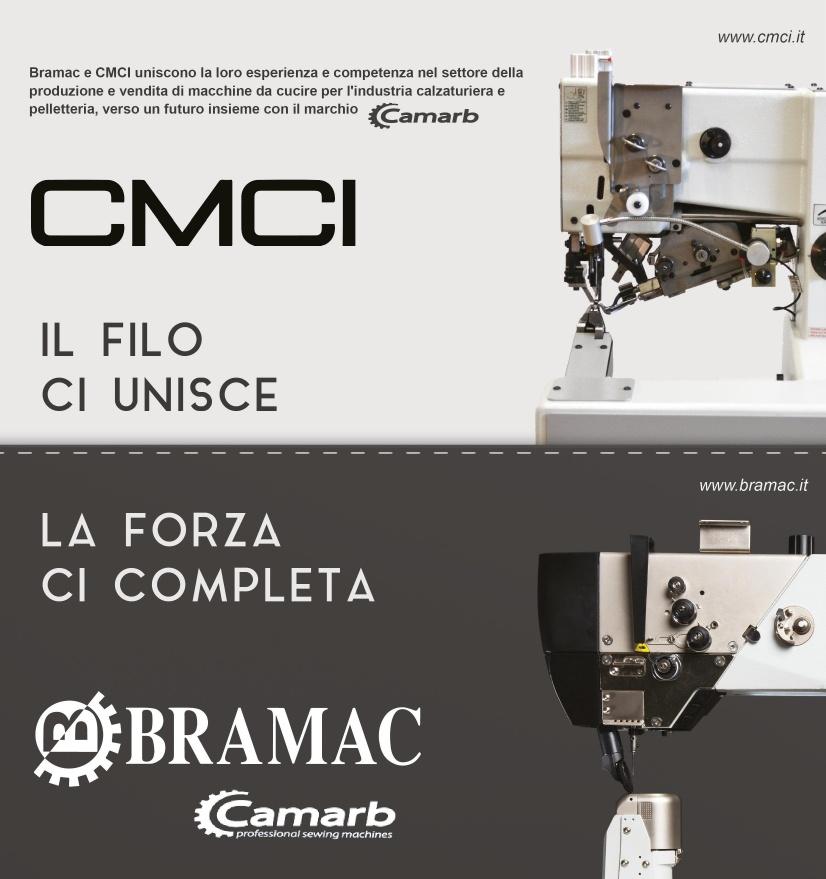
Bramac and CMCI join forces in Camarb for the production and sale of sewing machines for the footwear and leather goods industry.
www.cmci.it www.bramac.it
N° 06 / 2024
Poste Italiane Spa – Spedizione in abbonamento postale – Autorizzazione MBPA/LO-NO/049/A.P./2017 ART.1
COMMA1 – LO/MI.
Direttore Responsabile Matteo Pasca © Copyright 1967
Stampa: Porpora Group
Tutti i diritti di proprietà artistica e letteraria sono riservati. E’ assolutamente vietata la riproduzione totale o parziale di articoli, disegni e fotografie, in qualsiasi forma e modo, sia analogico che digitale, anche citandone la fonte, senza espressa autorizzazione della casa editrice. Ogni abuso sarà perseguito a norma di legge All artwork and copyrights are reserved. Total or partial reproduction is absolutely forbidden of articles, designs and photographs in any form, either analogical or digital, even if stating the source, without the express permission of the publishing house. Any abuse will be punished by law.
ISSN 2531-9620
Le inserzioni pubblicitarie sono pubblicate sotto la totale responsabilità del committente; la casa editrice non si assume alcuna responsabilità per il loro contenuto. Per ogni contestazione si rimanda all’indirizzo del committente pubblicato sulla sua stessa pagina pubblicitaria o, in mancanza, in fondo alla rivista. Adverts are published at the full responsibility of the client; the publishing house does not accept any responsibility for the contents. All notifications must be referred to the advertiser, whose address can be found either printed on his advertising page or, if this is not the case, in the end of the magazine.
Ai sensi dell’articolo 2 comma 2 del Codice di deontologia relativo al trattamento dei dati personali nell’esercizio dell’attività giornalistica, si rende nota l’esistenza di una bancadati personali di uso redazionale presso la sede di Milano, via Ippolito Nievo 33. Gli interessati potranno rivolgersi al responsabile del trattamento dei dati Ing. Matteo Pasca presso la sede di Milano, via Ippolito Nievo 33, per esercitare i diritti previsti dal D.L.GS. 30 giugno 2003, n.196
Direttore Responsabile
Matteo Pasca
Art director
Angelo Lanza
Editorial
Erika Alberti
Massimiliano Capuzzi
Emanuela Cecchetti
Alessandro Dorio
Enrico Martinelli
Sara Meneghetti redazione@edizioniaf.com
Digital
Maria Teresa Caruso
Domiziana Desantis
Simone Riccardi
digital@edizioniaf.com
Pr & Marketing
Mariella Catalano
Mariel Cuba marketing@edizioniaf.com
Advertising
Filippo Crepaldi
Lucio Luiselli
Stefano Migliavacca adv@edizioniaf.com
Operations
Massimo Ledda
Elisa Trasi
Andrea Zampieri operations@edizioniaf.com
Printing
Porpora Group porpora-group.it
CONTRIBUTORS

SUSTAINABILITY
Pg. 20
Pg. 24
Pg. 26
Pg. 38
Pg. 40
Pg. 42
Pg. 46
Pg. 61 SIMAC TANNING TECH
“We want a SIMAC TANNING TECH more and more connected to the world”
New logo for the 50th anniversary of Simac Tanning Tech
50 editions of SIMAC, a success story
‘Assomac around the world’: an international presence to promote Italian technologies
The Assomac merceological project
In 2024 the technology race slows down
IT-EX, the first association of Italian international trade fairs, is born
INNOVATION OUTLOOK
Pg. 96
Pg. 114
Pg. 120
Pg. 132
Pg. 142
Pg. 146
Pg. 152
New European sustainability regulations affect everyone, not just the big names
Mass balance: what it is and why it can represent the future of sustainable plastics
Attilio Imperiali and the Training Ship Amerigo Vespucci: a story of excellence and tradition
FDRA: Shoe Sustainability Progress Report 2023
Sustainability according to Vibram
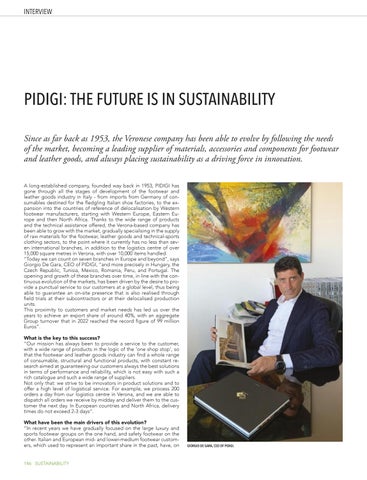
PIDIGI: the future is in sustainability
Second Hand Footwear, is there any good news?
CONTENTS 19
95
THE CALENDAR OF EVENTS AT EXPO RIVA SCHUH & GARDABAGS 101
All the events not to be missed during the days of the fair. An immersion in the world of shoes, bags and accessories with all their facets: from the product to technology, digital and innovation, and the trends of the coming seasons.

The trade fair in Riva del Garda continues to evolve and grow by focusing both on the main, traditional themes and by broadening its gaze on those complementary to the fashion industry. We are talking about innovation, trends, business opportunities designed ad hoc to bring supply and demand together, sharing knowledge, experience and ideas. Edition after edition, Expo Riva Schuh & Gardabags consolidates more and more its position of importance for all those involved in the sector who see in this fair not only an appointment to do business but also to stimulate interpersonal relations and share in the development of the entire sector. Let’s take an overview of the programme of events not to be missed for the fair days from 15 to 18 June 2024.
SATURDAY 15 JUNE
• h. 11.00 AM-12.00 PM: Opening ceremony in the Theatre (Hall D)Management presents the event in the presence of authorities and institutions
• h. 2.00 PM.-2.30 PM: Great user experience, powered by 3D/AR, result-
ing in whooping business outcome - Innovation Village (Hall B2)
• h. 3.00 PM-4.00 PM: Market Focus Asia: China, Hong Kong, India, Indonesia, Kazakhstan, Malaysia, Singapore, Thailand, Uzbekistan - Buyers Lounge (Hall C1)
• h. 4.00 PM-4.30PM: Women’s Shoes - Highlights Area (Hall D)
• h. 4.30 PM-5.30 PM: Market Focus America: Argentina, Canada, Chile, Colombia, Costa Rica, Ecuador, Mexico, United States, Uruguay, Venezuela - Innovation Village (Hall B2)
• h. 9.30 PM-1.00 PM: Summer Celebration Night (by registration only) - Spiaggia Olivi [on the online programme all details and how to participate].
SUNDAY 16 JUNE
• h. 10 AM-10.30 AM.: Men’s Bags - Highlights Area (Hall D)
• h. 10.30 AM-11.30 AM: Market Focus Africa and Middle East: Egypt, Kenya, Rwanda, Saudi Arabia, Tanzania, Uganda - Buyers Lounge (Hall C1)
8 FAIRS
• h. 11.30 AM-12.30 PM: Innovation Village Input #1: eCommerce Tools - Theatre (Hall D)
• h. 2.00 PM - 2.30 PM: Sneakers - Highlights Area (Hall D)
• h. 2.30 PM-3.30 PM: Innovation Village Input #2: AI: Beyond the Buzzword - Theatre (Hall D)
• h. 3.30 PM- 4.30 PM: Market Focus Europe: Denmark, Germany, Hungary, Poland, Romania, Spain, United Kingdom - Buyers Lounge (Hall C1)
• h. 4.30 PM-5.30 PM: Fashion & market trends for the DACH market (registration required) - Highlights Area (Hall D)
• h. 9.30 PM-1.00 PM: Summer Celebration Night (by registration only) - Spiaggia Olivi [on the online programme all details and how to participate].
MONDAY 17 JUNE
• h. 10.00 AM-10.30 AM: Women’s Handbags - Highlights Area (Hall D)
• h. 11.30 AM-12.30 PM: Innovation village Input #3: Efficiency & Sustainability in Retail - Theatre (Hall D)
• h. 2.00 PM-2.30 PM: Men’s Shoes - Highlights Area (Hall D)
• h. 3.00 PM-4.30 PM: Startup Competition - Theatre (Hall D)
• h. 9.30 PM-1.00 PM: Summer Celebration Night (by registration only) - Spiaggia Olivi [on the online programme all details and how to participate].
THE CALENDAR OF EVENTS AT EXPO RIVA SCHUH & GARDABAGS 101
Tutti gli eventi da non perdere durante i giorni di fiera. Un’immersione nel mondo di scarpe, borse e accessori con tutte le loro sfaccettature: dal prodotto alla tecnologia, al digitale e all’innovazione, passando per le tendenze delle prossime stagioni.
a fiera rivana continua a evolversi e crescere puntando sia sui temi principali e tradizionali sia ampliando lo sguardo su quelli complementari al settore della moda. Stiamo parlando di innovazione, di tendenze, di occasioni di business studiate ad hoc per far incontrare domanda e offerta, di condivisione di conoscenze, esperienze e idee. Edizione dopo edizione, Expo Riva Schuh & Gardabags consolida sempre di più la propria posizione di rilievo per tutti gli attori del settore che vedono in questa fiera non solo l’appuntamento per fare affari ma anche per incentivare le relazioni interpersonali e compartecipare allo sviluppo di tutto il settore. Vediamo il programma di eventi da non perdere per i giorni di fiera dal 15 al 18 giugno 2024.
SABATO 15 GIUGNO
• h. 11.00-12.00: Inaugurazione nel Theatre (Padiglione D) - il Management presenta la manifestazione alla presenza di autorità e istituzioni
• h. 14.00-14.30: Un’esperienza utente eccezionale potenziata da tecnologie 3D e da realtà aumentata - Innovation Village (Padiglione B2)
• h. 15.00-16.00: Market Focus Asia: China, Hong Kong, India, Indonesia, Kazakhstan, Malaysia, Singapore, Thailand, UzbekistanBuyers Lounge (Padiglione C1)
• h. 16.00-16.30: Scarpe da donna - Area Highlights (Padiglione D)
• h. 16.30-17.30: Market Focus America: Argentina, Canada, Chile, Colombia, Costa Rica, Ecuador, Mexico, United States, Uruguay, Venezuela - Innovation Village (Padiglione B2)


• h. 21.30-1.00: Summer Celebration Night (solo su registrazione)Spiaggia Olivi [sul programma online tutti i dettagli e come partecipare]
DOMENICA 16 GIUGNO
• h. 10.00-10.30: Borse da uomo - Area Highlights (Padiglione D)
• h. 10.30-11.30: Market Focus Africa and Middle East: Egypt, Kenya, Rwanda, SaudiArabia, Tanzania, Uganda - Buyers Lounge (Padiglione C1)
• h. 11.30-12.30: Innovation Village Input #1: Strumenti di eCommerce - Theatre (Padiglione D)
• h. 14.00 -14.30: Sneakers - Area Highlights (Padiglione D)
• h. 14.30-15.30: Innovation Village Input #2: AI: Oltre il gergo - Theatre (Padiglione D)
• h. 15.30-16.30: Market Focus Europa: Denmark, Germany, Hungary, Poland, Romania, Spain, United Kingdom - Buyers Lounge (Padiglione C1)
• h. 16.30-17.30: Moda e tendenze di mercato per il mercato DACH (su registrazione) - Area Highlights (Padiglione D)
• h. 21.30-1.00: Summer Celebration Night (solo su registrazione) - Spiaggia Olivi [sul programma online tutti i dettagli e come partecipare]
LUNEDÌ 17 GIUGNO
h. 10.00-10.30: Borse donna - Area Highlights (Padiglione D)
h. 11.30-12.30: Innovation village Input #3: Efficienza e Sostenibilità nel Retail - Theatre (Padiglione D)
h. 14.00-14.30: Scarpe uomo - Area Highlights (Padiglione D)
h. 15.00-16.30: Startup Competition - Theatre (Padiglione D)
h. 21.30-1.00: Summer Celebration Night (solo su registrazione)
- Spiaggia Olivi [sul programma online tutti i dettagli e come partecipare]
10 FAIRS

FUTURMODA WILL BE HELD ON 16 AND 17 OCTOBER 2024
Alicante's Fira Alacant will host the next Spanish event dedicated to Autumn Winter 2025/26.
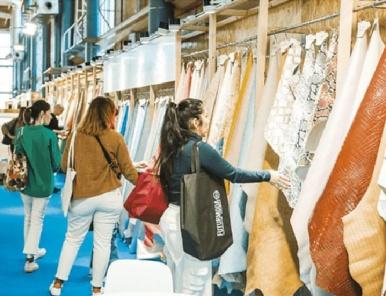
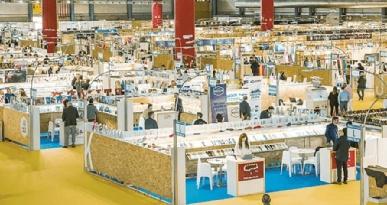
FUTURMODA is the international professional event held in Spain and brings together all sub-sectors belonging to the footwear, leather goods and fashion industry. More than 300 companies from Spain, Italy, Portugal, Turkey and Germany attended the last edition, which registered more than 7,000 visitors from all over the world, confirming it as a reference platform for footwear and leather goods manufacturers. Among the exhibitors at Futurmoda were companies that produce or market accessories in general (threads, cords, adhesive tapes, metal decorations, bows, floral ornaments, zips, etc.); footwear components such as lasts, soles, plates, insoles, heels, wedges or platforms; those who produce leather and skins yarns, textiles, fabrics and synthetics; exponents of chemicals and raw materials in general. They say from the trade fair: “Participating in FUTURMODA is not just an opportunity; it is a key strategy for enhancing one's presence in the footwear and leather goods industry”.
There are several reasons for this: the international scope, the possibility of establishing strategic business relationships, the visibility on the Spanish market, and the chance to benefit not only from a commercial event but a real strategic platform for growth and innovation.
FUTURMODA SI TERRÀ
IL 16 E 17 OTTOBRE 2024
Alla Fira Alacant di Alicante si terrà il prossimo appuntamento con la manifestazione spagnola dedicata al prossimo autunno Inverno 2025/26.
FUTURMODA è l’evento professionale internazionale che si tiene in Spagna e raccoglie tutti i sottosettori appartenenti all'industria calzaturiera, pelletteria e moda. Più di 300 aziende provenienti da Spagna, Italia, Portogallo, Turchia o Germania hanno partecipato alla scorsa edizione, che ha registrato più di 7.000 visitatori da tutto il mondo, confermandosi come piattaforma di riferimento per i produttori di calzature e pelletteria.
Tra gli espositori di Futurmoda spiccano le aziende che producono o commercializzano accessori in genere. (fili, cordoncini, nastri adesivi, decorazioni metalliche, fiocchi, ornamenti floreali, cerniere...); componenti per calzature come forme, suole, piastre, sottopiedi, tacchi, zeppe o piattaforme; chi produce cuoio e pelli Filati, Tessili, tessuti e materiali sintetici; esponenti di prodotti chimici e materie prime in genere.
Dicono dalla fiera: “Partecipare a FUTURMODA non è solo un'opportunità; è una strategia chiave per potenziare la propria presenza nell'industria delle calzature e della pelletteria”.
I motivi sono svariati: la portata internazionale, la possibilità di allacciare relazioni commerciali strategiche, la visibilità sul mercato spagnolo e la possibilità di usufruire non solo di un evento commerciale ma di una vera e propria piattaforma strategica per la crescita e l'innovazione.
12 FAIRS

CHINA SLOWS DOWN BUT REMAINS INDISPENSABLE
The 2023 figures show declines in Chinese leather and footwear production and exports but the numbers remain huge, especially in the automotive sector. The appointment is now set at the ACLE in Shanghai from 3 to 5 September
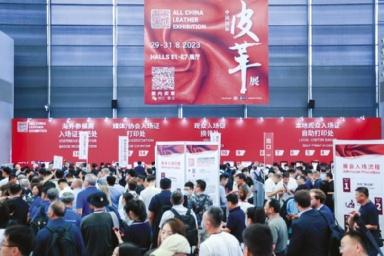
What is the state of health of the Chinese leather industry? Figures provided by China Leather Industry Association (CLIA) Vice-President Chen Zhanguang at the latest APLF in Hong Kong help to get an idea of the situation of what, in spite of a general slowdown affecting both leather and footwear production and exports, remains the world’s leading leather producing country by volume, as well as the leading outlet market for US raw hides.
According to data provided by CLIA, in 2023, revenues of the Chinese leather sector as a whole decreased by 5.4% year-on-year, with exports worth USD 97 billion (-7.6%) and imports worth USD 17.7 billion (+2.6%).
The Chinese tanning industry recorded a 6.9% drop in overall turnover, while the production of finished leather decreased by 6.8%. Imports of raw hides increased in volume by 16.8% (to USD 1.41 million tonnes) but decreased in value by 1.2% (to USD 1.33 billion). Imports of finished leather fell to USD 690 million (-14.8% in volume and -23.4% in value).
Revenues from the footwear sector also declined by -6% year-on-year. Last year, Chinese footwear exports amounted to 8.9 billion pairs (-2.5%) for a value of USD 49.34 billion (-12.6%). The decline is more pronounced when looking at exports of leather shoes alone: 580 million pairs (-18.3% in volume and -21.6% in value).
In contrast, footwear imports increased slightly: 190 million pairs (+0.9%) for USD 6 billion (+1.9%).
The leather goods/luggage industry showed an increase in turnover of 0.5%. Exports of Chinese bags and luggage amounted to USD 35.7 billion (+3.9%), while imports rose to USD 6 billion (+9.8%).
The leather garment segment confirmed a weak situation. In 2023, revenues decreased in value by 13.7 % and exports by 6.5 % to USD 160 million, while imports of leather goods amounted to USD 120 million, an increase of 9.9 %.
In 2023, vehicle sales grew in China by 11.7% to 30.13 million units of which 32% were new energy vehicles (NEVs). This was a number never seen before, and according to the China Passenger Car Association (CPAC), unit sales are forecasted to grow by 2%-3% in 2024.
The automotive and upholstery sectors are key drivers of leather demand in China and with GDP for 2024 forecasted to grow by 5.2%, backed up by positive Purchasing managers activity and solid consumer confidence.
ACLE Shanghai 2024
In order to get a first-hand experience of the Chinese reality, CLIA invites operators to attend the next edition of the All China Leather Exhibition (ACLE) scheduled in Shanghai from 3 to 5 September 2024, recalling the good performance of the 2023 edition that recorded a boom in visitors exceeding the most optimistic expectations: about 28,300 operators, 20% more than the previous edition in 2019.
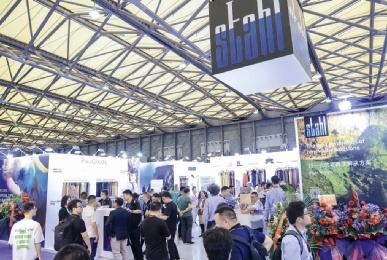
ACLE 2024 will take place on an area of 92,000 square metres (69,000 of which will be occupied by Chinese exhibitors) spread over 8 pavilions in the SNIEC (E1 – E7 and W1). Raw and finished leathers will be on show together with the latest technologies for the production of leather, footwear and synthetic materials. As far as foreign participation is concerned, a strong presence of manufacturers of chemical auxiliaries for leather and tannery machinery is expected, as is the tra-
14 FAIRS
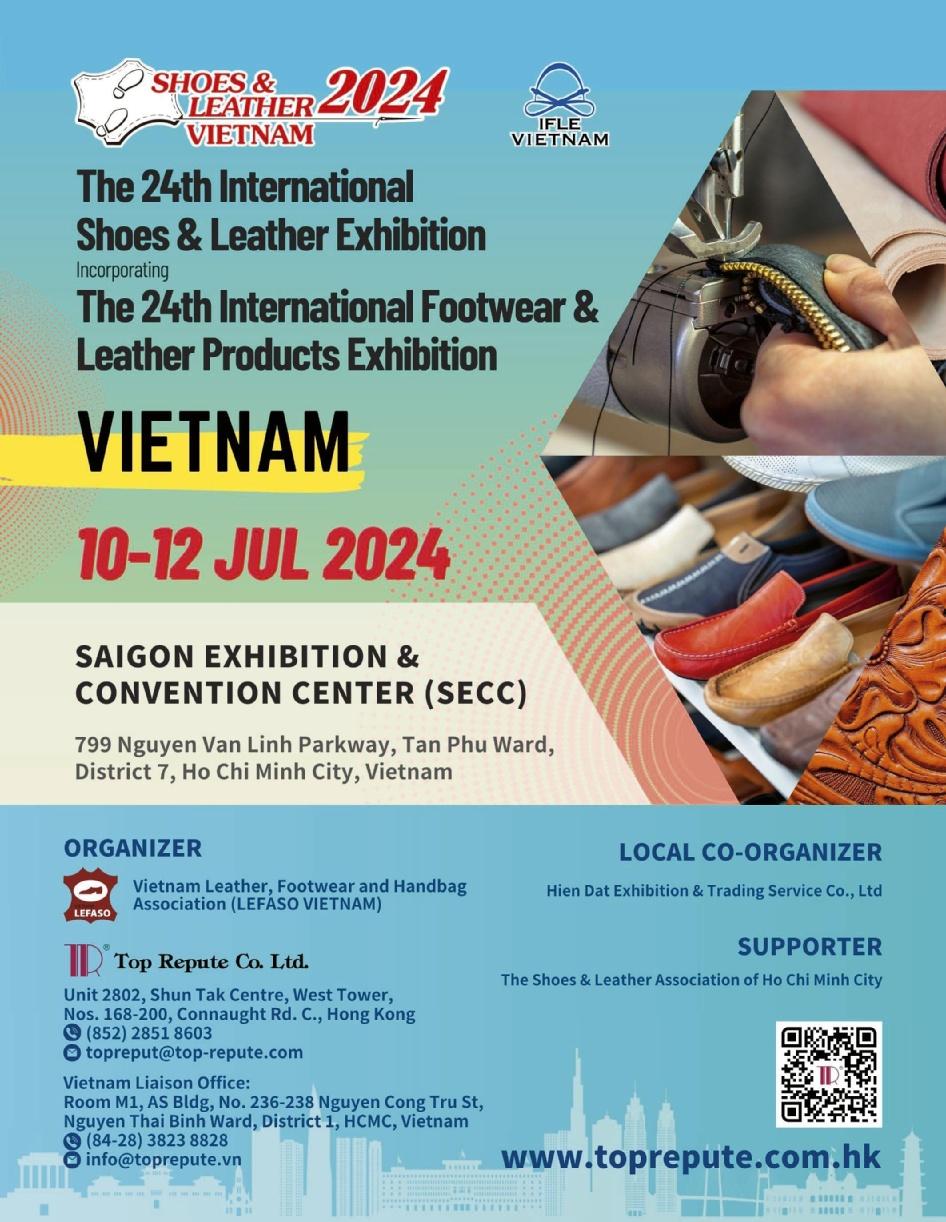
dition for this fair. This year will be no exception, as the following international suppliers have already confirmed their participation: TFL, Zschimmer & Schwarz, Smit and Zoon, ALPA, Stahl, Fenice, GSC Group, Cromogenia, Lintec, Sichuan TingJiang, Sichuan Decision, Buckman and Seaton.
Among the national pavilions already confirmed are Australia, Brazil, France, Italy, Pakistan, Spain, Thailand, Taiwan and the USA.
LA CINA RALLENTA
MA RESTA IMPRESCINDIBILE
I dati 2023 evidenziano cali nella produzione e nell’esportazione di pelle e calzature cinesi ma i numeri restano enormi soprattutto nel settore automotive. L’appuntamento è ora fissato alla ACLE di Shanghai dal 3 al 5 settembre
Qual è lo stato di salute dell’industria della pelle cinese? I dati forniti dal vicepresidente della China Leather Industry Association (CLIA) Chen Zhanguang in occasione dell’ultima edizione di APLF ad Hong Kong aiutano a farsi un’idea della situazione di quello che, a dispetto di un generale rallentamento che riguarda sia la produzione che le esportazioni di pelli e calzature, resta il primo Paese produttore di pelle del mondo in volume, nonché il primo mercato di sbocco delle pelli grezze statunitensi.
Secondo i dati forniti da CLIA, nel 2023 i ricavi del settore pelle cinese nel suo insieme sono diminuiti del 5,4% rispetto all’anno precedente con esportazioni per un valore complessivo di USD 97 miliardi (-7,6%) ed importazioni per USD 17,7 miliardi (+2,6%).
L’industria conciaria cinese ha registrato un calo del fatturato globale del 6,9% mentre la produzione di pelli finite è diminuita del 6,8%. Le importazioni di pelli grezze sono aumentate in volume del 16,8% (per un totale di 1,41 milioni di tonnellate) ma diminuite in valore dell’1,2% (per USD 1,33 miliardi). L’import di pelli finite è sceso a USD 690 milioni (-14,8% in volume e -23,4% in valore).
In calo anche i ricavi del settore calzaturiero che registra un -6% rispetto al 2022. Lo scorso anno le esportazioni di calzature cinesi sono ammontate a 8,9 miliardi di paia (-2,5%) per un valore di USD 49,34 miliardi (-12,6%). Più marcata la flessione se si guarda all’export delle sole calzature in pelle: 580 milioni di paia (-18,3% in volume e -21,6% in valore).
Le importazioni di calzature sono risultate invece in leggero aumento: 190 milioni di paia (+0,9%) per 6 miliardi di USD (+1,9%).
L’industria della pelletteria/valigeria evidenzia un aumento del fatturato dello 0,5%. L’export di borse e valigie cinesi è ammontato a USD 35,7 miliardi (+3,9%) mentre l’import è salito a USD 6 miliardi (+9,8%). Il comparto abbigliamento in pelle conferma una situazione di debolezza. Nel 2023 i ricavi sono diminuiti in valore del 13,7% e le esportazioni del 6,5% per un totale di USD 160 milioni, mentre le importazioni di capi in pelle sono ammontate a USD 120 milioni segnando un +9,9%.
Lo scorso anno le vendite di veicoli sono cresciute in Cina dell’11,7%, raggiungendo 30,13 milioni di unità, di cui il 32% costituito da veicoli a nuova energia (NEV). Si tratta di un numero mai visto prima e, secondo la China Passenger Car Association (CPAC), si prevede che le vendite di unità cresceranno del 2%- 3% nel 2024.
Il settore automobilistico e quello dell’arredo imbottito sono considerati i principali motori della domanda di pelle in Cina, con un PIL previsto in crescita del 5,2% per il 2024.
ACLE Shanghai 2024
Per toccare con mano la realtà cinese la CLIA invita gli operatori a partecipare alla prossima edizione della prossima edizione della All China Leather Exhibition (ACLE) in programma a Shanghai dal 3 al 5 settembre 2024, ricordando il buon andamento dell’edizione 2023 che registrò un boom di visitatori superando le più rosee aspettative: circa 28.300 operatori, il 20% in più rispetto all’edizione precedente del 2019.
ACLE 2024 si svolgerà su una superficie di 92mila mq (di cui 69mila occupati da espositori cinesi) articolati fra 8 padiglioni del centro espositivo SNIEC (E1 – E7 and W1). In mostra pelli grezze e finite insieme alle ultime tecnologie per la produzione di pelli, calzature e materiali sintetici. Per quanto riguarda la partecipazione straniera, si prevede, come da tradizione per questa fiera, una forte presenza dei produttori di ausiliari chimici per la pelle e di macchine per conceria. Quest’anno non farà eccezione, visto che i seguenti fornitori internazionali hanno già confermato la loro partecipazione: TFL, Zschimmer & Schwarz, Smit e Zoon, ALPA, TFL, Zschimmer & Schwarz, Smit and Zoon, ALPA, Stahl, Fenice, GSC Group, Cromogenia, Lintec, Sichuan TingJiang, Sichuan Decision, Buckman e Seaton. Tra i padiglioni nazionali già confermati spiccano quelli di Australia, Brasile, Francia, Italia, Pakistan, Spagna, Thailandia, Taiwan e USA.
16 FAIRS
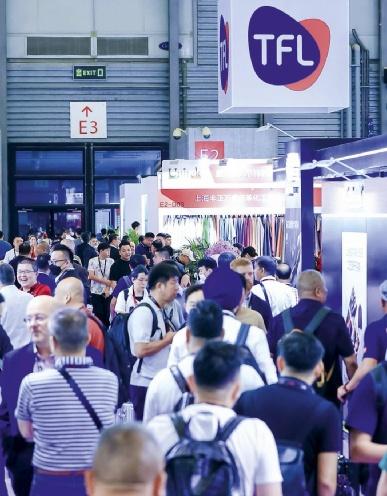
Un fantastico aiuto per aziende e professionisti che vogliono orientarsi nel mondo delle fiere B2B riguardo calzature, pelletteria e sicurezza.
A great help for companies and professionals who want to orient themselves in the world of b2b fairs of footwear, leather goods and safety.
Tutto il mondo delle fiere a tema Calzature, Pelletteria e Sicurezza.
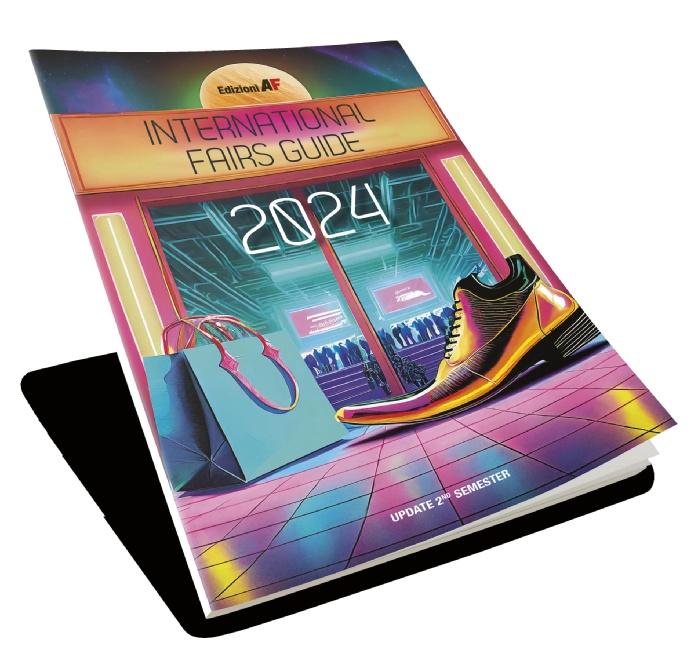
The world of footwear, leather goods and safety fairs.

INTERNATIONAL FAIRS GUIDE 2024 VISITA IL SITO VISIT THE WEBSITE edizioniaf.com/fairs

SIMAC TANNING TECH
“Road to 50th edition. From the first edition to the future. A history of success”

PART OF ARSUTORIA 490 ARCHIVIO STORICO DI FONDAZIONE FIERA MILANO
“We
want a SIMAC TANNING TECH more
and more connected to the world”
People often celebrate victories or achievements. In the case of the 50th edition of SIMAC TANNING TECH, a success story is celebrated with the awareness that the past behind us must serve as a springboard towards the future.
Agostino Apolito, Director of ASSOMAC, the event's organisers, explains it well: ‘In a difficult and complex economic moment to decipher, we believe that recovery can only come from getting to know better and better the various international markets in which we are present by weaving ever closer relations with market players and, together with them, looking to the future.
That is why the celebration of the 50th edition of the fair will be marked by events capable of promoting international connections and relations.
Such as the Gala Evening on 18 September, which will be an opportunity for the approximately 300 guests to develop increasingly effective networking with the different souls that inhabit the panorama of technology and innovation in the footwear, leather goods and leather sectors.
The dinner will also give guests the opportunity to attend a talk that will provide brief insights into the influence and repercussions that current geopolitical movements will have on the fashion industry, seeking to illuminate possible future scenarios and prospects.
The initiative planned for 17 September together with The European House - Ambrosetti is also along the same lines: a moment of encounter and comparison between technology suppliers and the most important brands in the fashion sector. “We want to interpret the mission of the fair in a broad sense and offer more and more occasions that help the upstream supply chain to get to know the needs of the players that are directly confronted with the demands of the market”.
There will be no shortage of opportunities to recall the past thanks to a celebratory supply chain exhibition that tells the story and the evolutions of the last 50 years of technological innovations, components and materials as well as finished products. “We want to illustrate - Apolito explains - the immense value of the complex work that the entire fashion supply chain carries out day after day. We want to talk about a history that has always looked to the future”.
Apolito concludes: “These 50 years of trade fairs have taught us that to imagine tomorrow there is no other way but to open up to the market. This is why we have thought of an edition of SIMAC TANNING TECH that will allow the 100-plus international delegates attending the fair to meet and get to know each other better so that together we can imagine a future of development
20 SIMAC TANNING TECH WELCOME
and growth. As ASSOMAC we particularly want to meet the many countries where we are well established - I am thinking of India, Vietnam, Pakistan and South America. But we also want to exploit the synergy with other concurrent events in the industry to open new channels with other markets, such as the United States. Probing new opportunities in markets with an important industrial fabric and that might need our technologies”.
Spesso si festeggia in occasione delle vittorie o dei traguardi raggiunti. Nel caso delle 50 edizioni di SIMAC TANNING TECH si festeggia una storia di successo con la consapevolezza che il passato ormai alle spalle deve servire come trampolino verso il futuro. Lo spiega bene Agostino Apolito, Direttore di ASSOMAC, organizzatrice della manifestazione: “In un momento congiunturale difficile e complesso da decifrare, crediamo che la ripresa possa passare solo dal conoscere sempre meglio i diversi mercati internazionali in cui siamo presenti tessendo relazioni sempre più strette con gli attori del mercato e, insieme a loro, guardare al futuro”. Perciò la celebrazione delle 50 edizioni della fiera sarà connotata da eventi capaci di promuovere connessioni e relazioni a livello internazionale.
Come la Serata di Gala del 18 settembre che sarà occasione, per i circa 300 invitati, di sviluppare un networking sempre più efficace con le diverse anime che abitano il panorama della tecnologia e dell’innovazione dei settori calzature, pelletteria e pelle.
La cena darà anche modo agli invitati di assistere a un talk che fornirà brevi spunti di riflessione riguardo l’influenza e le ricadute che i movimenti geopolitici attuali avranno sul comparto moda, cercando di illuminare eventuali scenari e prospettive future.
Sulla stessa rotta si stabilisce anche l’iniziativa pensata per il 17 settembre insieme a The European House – Ambrosetti: un momento di incontro e confronto fra i fornitori di tecnologie e i più importanti brand del settore moda. “Vogliamo interpretare la missione della fiera in senso ampio e offrire sempre più occasioni che aiutino la filiera a monte a conoscere le esigenze degli attori che si confrontano direttamente con le richieste del mercato”.
Non mancherà l’occasione di ricordare il passato grazie a una mostra celebrativa di filiera che racconti la storia e le evoluzioni degli ultimi 50 anni di innovazioni tecnologiche, di componenti e materiali nonché di prodotto finito. “Vogliamo illustrare – spiega Apolito – l’immenso valore del complesso lavoro che l’intera filiera della moda conduce giorno dopo giorno. Vogliamo parlare di una storia che da sempre guarda al futuro”.
Conlude Apolito: “Questi 50 anni di fiere hanno insegnato che per immaginare il domani non c’è altra via che aprirsi al mercato. Perciò abbiamo pensato ad un’edizione di SIMAC TANNING TECH che consenta alle 100 e più delegati internazionali presenti in fiera di incontrarsi e conoscersi sempre meglio così da poter immaginare insieme un futuro di sviluppo e crescita. Come ASSOMAC vogliamo in particolare incontrare i tanti Paesi in cui siamo ben radicati - penso all’India, al Vietnam, al Pakistan e al Sud America. Ma desideriamo anche sfruttare la sinergia con gli altri concomitanti eventi della filiera per aprire nuovi canali con altre piazze, come per esempio gli Stati Uniti. Sondare nuove opportunità su mercati dall’importante tessuto industriale e che potrebbero aver bisogno delle nostre tecnologie”.
22 SIMAC TANNING TECH WELCOME
NEW LOGO FOR THE 50TH ANNIVERSARY OF SIMAC TANNING TECH
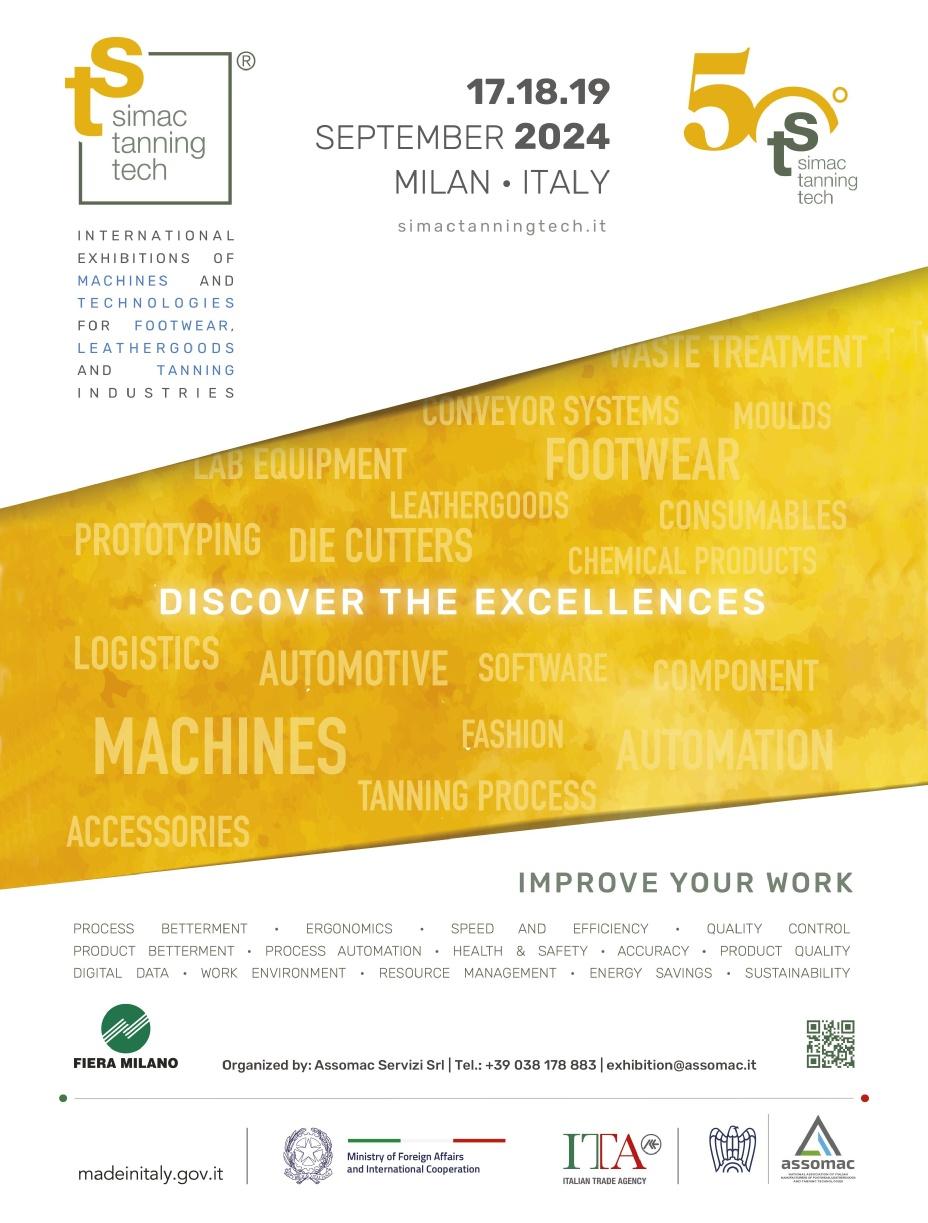
A modern and attractive design distinguishes the new logo celebrating the important milestone reached by the event, scheduled to take place from 17 to 19 September 2024.

On the occasion of the opening of registration applications for Simac Tanning Tech, the world's leading exhibition dedicated to technologies for the footwear, leather goods and tanning industry, the new official logo celebrating the 50th anniversary of the event was presented. The modern and attractive design retains the iconic elements of the original logo, while the number ‘50’ stands out in the foreground, highlighting the importance of the historic milestone reached. This edition promises to be full of novelties for technologies and machinery for the footwear, tanning and leather goods industry. Starting from the initiatives for the valorisation of the technological innovations presented at the fair, to the networking initiatives.
There will also be moments dedicated to the celebration of the historic anniversary, such as the setting up of an exhibition on technology, which will retrace the history of the sector in a fascinating journey through the evolution of the industry and its future.
The appointment, not to be missed, is therefore in Milan from 17 to 19 September 2024, with the presence of more than 300 exhibitors who will present the latest in technology for the footwear, leather goods and tanning industries.
Info: www.simactanningtech.it
NUOVO LOGO PER IL 50° ANNIVERSARIO DI SIMAC TANNING TECH
Un design moderno e accattivante contraddistingue il nuovo logo che celebra l’importante traguardo raggiunto dalla manifestazione, in calendario dal 17 al 19 settembre 2024.
In occasione dell’apertura delle domande di iscrizione a Simac Tanning Tech, la fiera leader mondiale dedicata alle tecnologie per l'industria calzaturiera, pellettiera e conciaria, è stato presentato il nuovo logo ufficiale per celebrare il 50esimo anniversario della manifestazione. Il design moderno e accattivante conserva gli elementi iconici del logo originale, mentre il numero "50" campeggia in primo piano, evidenziando l'importanza del traguardo storico raggiunto. Un’edizione, questa, che si preannuncia ricca di novità per le tecnologie e i macchinari per l'industria delle calzature, concia e pelletteria. A cominciare dalle iniziative di valorizzazione delle innovazioni tecnologiche presentate in fiera, per passare alle iniziative di networking. Non mancheranno, inoltre, momenti dedicati alla celebrazione dell’anniversario storico, come l’allestimento di una mostra sulla tecnologia, che ripercorrerà la storia del settore in un viaggio affascinante sull'evoluzione della filiera e del suo futuro.
L’appuntamento, da non perdere, è quindi a Milano dal 17 al 19 settembre 2024, con la presenza di oltre 300 espositori che presenteranno le ultime novità in materia di tecnologie per le industrie della calzatura, pelletteria e conceria. Info: www.simactanningtech.it

24 SIMAC TANNING TECH NEWS

50 EDITIONS OF SIMAC, A SUCCESS STORY
SIMAC TANNING TECH is much more than just a trade fair. It is a journey through the history of the footwear and leather processing industry, an event that celebrates its 50th edition with pride and innovation.
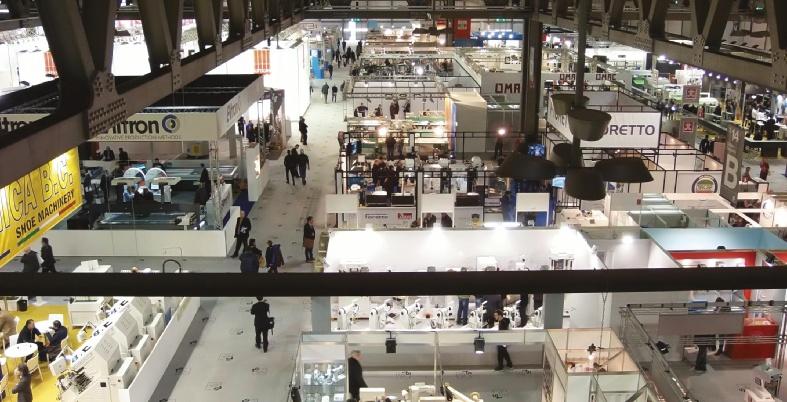
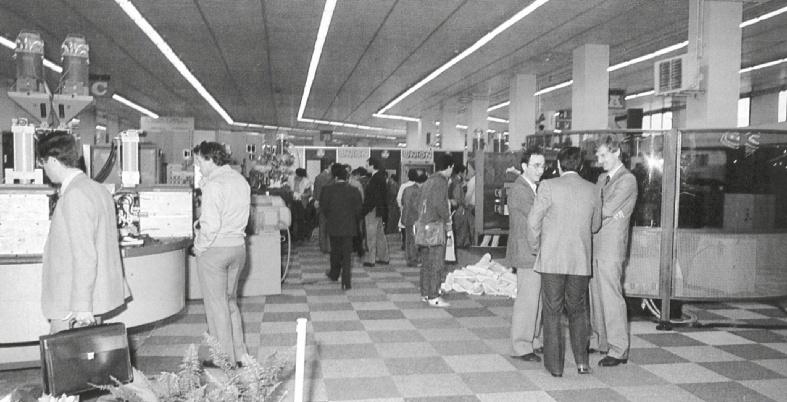
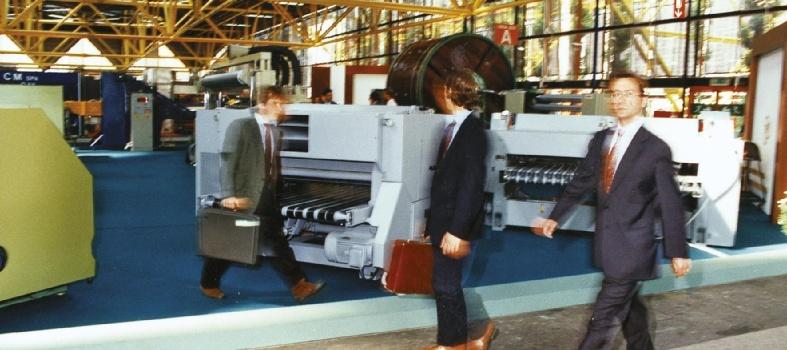
In Italy, the first edition of an autonomous exhibition where the machinery and technologies of the sector are the main protagonists took shape in 1973 with the realisation of an international exhibition of machinery for the footwear and tanning industry: SIMAC. The first edition was held in the Milan Trade Fair Building from 1 to 4 June of that year.
BEFORE SIMAC
Since the first half of the 20th century, footwear manufacturers had been exhibiting at generic or finished product events such as the ‘Fiera Campionaria’ in Milan, the ‘National Footwear Fashion Presentation’ in Bologna, which later became ‘Modacalzatura’, or the ‘Settimana Vigevanese’, which later became the ‘National Footwear Exhibition’ and then moved to Milan in 1969 under the name of Micam: ‘Mostra Internazionale delle Calzature, Concerie, Accessori e Macchine per calzature’, as well as the ‘Mostra della Calzatura di Civitanova Marche’ and the ‘Campionaria Internazionale di Calzature, Pelletterie e Cuoio’ in Florence, to which were added the ‘Preselezioni Italiane della Moda’,
biennial exhibitions reserved for manufacturers upstream of the shoe factories for the presentation of tanning, accessories and components production and, in particular, of stylists.
This productive vitality and the rapid development in the 1960s of the Italian industrial fabric of footwear and leather machinery were therefore the prelude to the creation of an event that could compete with the reference exhibition of the time, the ‘Internationale Messe für Shuhfabrikation’ (IMS) in Pirmasens, Germany, which was however held every three years.
SIMAC IS BORN
The birth of SIMAC as a new exhibition reality within this articulated framework was the result of a long and difficult negotiation between the pre-existing trade fair organisations and the Vigevano mechanical entrepreneurs. The clash was resolved with the co-ownership of the new event between A.N.C.I. (National Association of Italian Footwear
26 SIMAC TANNING TECH FAIRS
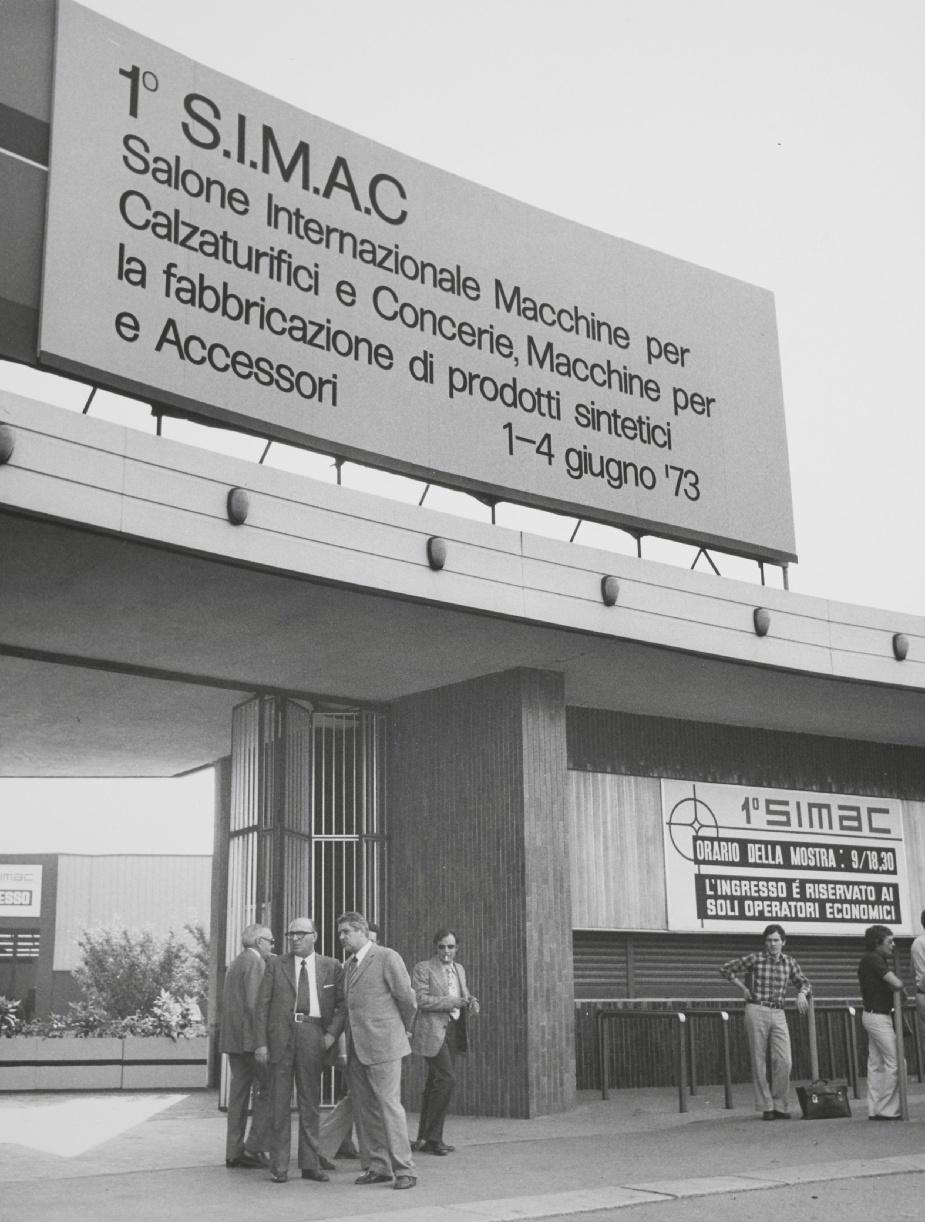
ARCHIVIO STORICO DI FONDAZIONE FIERA MILANO SIMAC TANNING TECH 27 FAIRS


Manufacturers) and the Bologna Trade Fair Authority, with the presidency entrusted to the Vigevano entrepreneur Antonio Capuano and the decision to alternate editions between Milan and Bologna. Following this agreement, the second edition of Simac was held in Bologna in 1974. In the following years, however, the exhibition always remained in the pavilions of the Milan Trade Fair.
In 1977, Simac and the Florence Trade Fair reached an agreement to create the ‘Simac-Italian Fashion Exhibition’, i.e. an exhibition where all sectors upstream of the finished product, from machinery to tanned leather, to components including footwear accessories, would converge.
IN THE HANDS OF ASSOMAC
We had to wait until the early 1980s to see ownership of the exhibition pass entirely to Assomacc, later to become Assomac, which, starting from the presidency of Mario Bruggi in 1983, managed it directly.
THE BOLOGNA YEARS
The move to Bologna took place in 1988 in conjunction with Lineapelle, the event created in 1981 with the absorption of the ‘Preselezione Italiana Moda’ trade fair.
Apart from the parenthesis of an ‘itinerant Simac’ held in 1991 at the IMS in Pirmasens, the exhibition remained in Bologna until 2013, moving in 2008 from the historic spring event to an autumn edition.
THE UNION WITH TANNING TECH
Since 2007, Simac has been organised in conjunction with TANNING-TECH, the exhibition that for a decade has brought together exhibitors of tanning technology and chemical auxiliaries in Bologna.
Originally organised by CIMACO, the group within ANIMA - National Association of Mechanical and Allied Industries that brought together the Italian manufacturers of machinery for the tanning industry, the event passed under the organisation of SIMAC in 1996, together with the confluence of the entire group of mechano-tanning companies within Assomac.
THE RETURN TO MILAN
The return of the event to Milan takes place in 2015, at the new exhibition centre in Rho, where it will be organised in February. At the same time, the rebranding of the two fairs to SIMAC TANNING TECH - International Exhibition of Machines and Technologies for the Footwear, Leathergoods and Tanning Industries takes place. In the post-pandemic period, it is decided to move the exhibition to September.
PRESENT AND FUTURE
The SIMAC TANNING TECH trade fair, thanks to its vitality and consolidated collaboration with Agenzia ICE, has benefited over the years from the presence of numerous buyers and visitors from every corner of the world.
Since the boom of the 1960s/70s and withstanding the various industrial crises that have occurred over time, SIMAC TANNING TECH has established itself as an unmissable international event, an important reference point for the entire footwear, leather goods and leather processing industry.
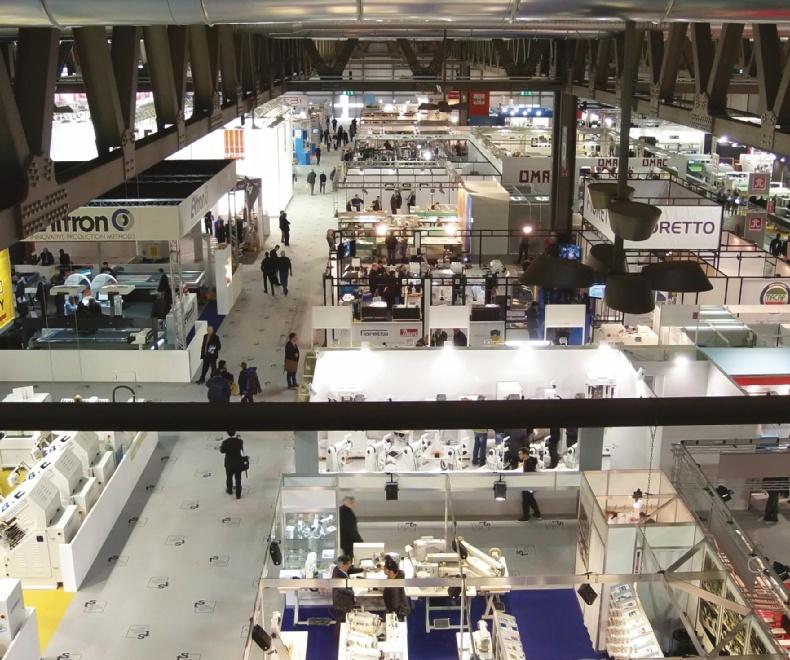
This year, on the occasion of its 50th edition, the fair will be held at Rho Fiera Milano from 17 to 19 September 2024 and will be a unique opportunity to celebrate the past and look to the future of an industry in continuous evolution.
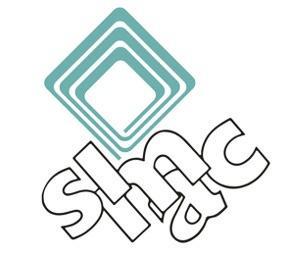
THE HISTORY OF THE EVENT CAN BE READ IN THE CHANGING LOGOS
28 SIMAC TANNING TECH FAIRS
NELLO MUTARE DEI LOGHI SI LEGGE LA STORIA DELLA MANIFESTAZIONE
50 EDIZIONI DI SIMAC, UNA STORIA DI SUCCESSO
SIMAC TANNING TECH è molto più di una semplice fiera. È un viaggio attraverso la storia dell’industria calzaturiera e della lavorazione delle pelli, un evento che celebra la sua cinquantesima edizione con orgoglio e innovazione.
In Italia la prima edizione di un salone autonomo dove le macchine e le tecnologie del settore sono le protagoniste principali di una manifestazione prende forma nel 1973 con la realizzazione di un salone internazionale delle macchine per l’industria calzaturiera e conciaria: il SIMAC. La prima edizione si tenne nel Palazzo della Fiera di Milano dall'1 al 4 giugno di quell’anno.
PRIMA DI SIMAC
Fin dalla prima metà del ‘900 le industrie meccaniche esponevano all’interno di manifestazioni generiche o del prodotto finito come la “Fiera Campionaria” di Milano, la “Presentazione Nazionale Moda della Calzatura” di Bologna, poi diventata “Modacalzatura”, o la “Settimana Vigevanese” poi diventata “Mostra Mercato Nazionale delle Calzature” e trasferitasi quindi nel 1969 a Milano con la denominazione di Micam: “Mostra Internazionale delle Calzature, Concerie, Accessori e Macchine per calzature”, oltreché la “Mostra della Calzatura di Civitanova Marche” e la “Campionaria Internazionale di Calzature, Pelletterie e Cuoio” di Firenze, a cui si affiancavano le
“Preselezioni italiane della moda”, mostre biennali riservate ai produttori a monte dei calzaturifici per la presentazione della produzione conciaria, di accessori e componentistica e, in particolar modo, degli stilisti.
Questa vitalità produttiva e il rapido sviluppo negli anni ’60 del tessuto industriale italiano delle macchine per calzature e della pelle furono il preludio quindi della creazione di una manifestazione che potesse competere con la mostra di riferimento di quel tempo, la “Internationale Messe für Shuhfabrikation” (IMS) di Pirmasens in Germania, che aveva però cadenza triennale.
NASCE SIMAC
La nascita del SIMAC come nuova realtà espositiva all’interno di questo quadro articolato fu il risultato di una lunga e difficile trattativa tra le pre-esistenti organizzazioni fieristiche e gli imprenditori meccanici vigevanesi, lo scontro si risolse con la co-titolarità della nuova manifestazione tra A.N.C.I. (Associazione Nazionale Calzaturifici Italiani) e l’Ente Fiera di Bologna, con la presidenza affidata all’imprenditore vigevanese Antonio Capuano e la decisione di alternare le edizioni tra Milano e Bologna.
A seguito di tale accordo la seconda edizione del Simac si tenne a Bologna nel 1974. Negli anni successivi, però, la Mostra rimase sempre nei padiglioni della Fiera di Milano.
Nel 1977 il Simac e la Campionaria di Firenze raggiunsero un accordo per dar vita al “Simac-Preselezione Italiana Moda”, cioè un’esposizione in cui convergessero tutti i settori a monte del prodotto finito, dalle macchine alle pelli conciate, ai componenti comprendendo gli accessori per calzature.
1984 30 SIMAC TANNING TECH FAIRS
SIMAC
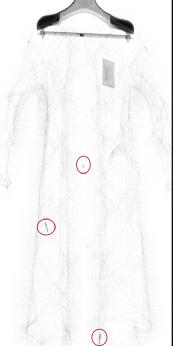

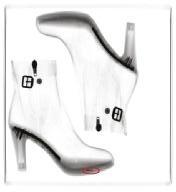
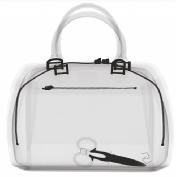
Serie MM e BAT: sistemi di ispezione a Raggi X, integrati con soluzioni gestionali e dispositivi RFID

The latest generation technologies used enable MM series machines to obtain exceptional results both in terms of foreign body detection and conformity clearance of the inspected products.
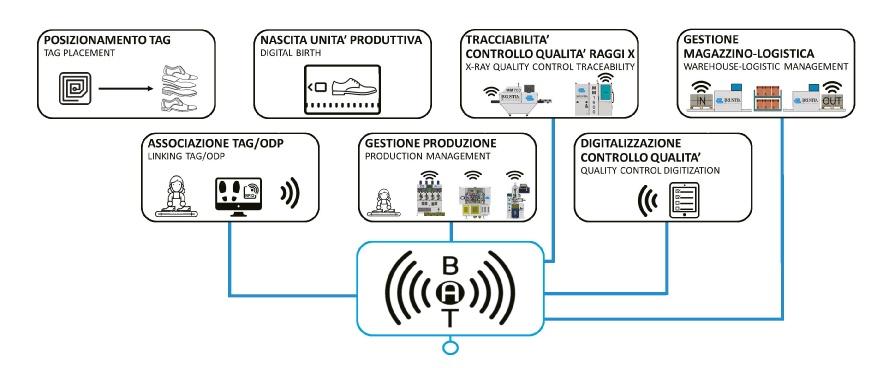
The new BAT management proposal is complementary to the MM series. Through RFID technology, machines and objects are interconnected and communicate with each other, so that:
1. machines can get prepared for a correct processing,
2. the progress of the production phases is tracked and monitored remotely,
3. the warehouse is easily managed and organised,
4. manual operations and control reports are digitised.
Le tecnologie di ultima generazione utilizzate consentono alle macchine della serie MM di ottenere risultati eccezionali per quanto riguarda sia il rilevamento di corpi estranei che la verifica della conformità dei prodotti ispezionati.
Ad integrazione della serie MM, la nuova proposta gestionale BAT. Mediante la tecnologia RFID, macchine e oggetti sono interconnessi e comunicano tra loro, cosicché:
1. le macchine si preparano per la corretta lavorazione,
2. l’avanzamento delle fasi di produzione è tracciato e monitorato da remoto,
3. il magazzino è facilmente gestito ed organizzato,
4. i report di operazioni e controlli manuali vengono digitalizzati.




Fax +39 0381 346953 - info@brustiaalfa.it www.brustiaalfa.it www.batechnology.it
BRUSTIA-ALFAMECCANICA s.r.l. 27029 Vigevano PV - ITALIA - Via Alfieri, 42 Tel. +39 0381 346970/346457
MM series and BAT: X-ray inspection systems, integrated with management solutions and RFID devices
NELLE MANI DI ASSOMAC
Bisogna attendere i primi anni ’80 pre vedere la titolarità della manifestazione passare interamente ad Assomacc, poi diventata Assomac, che a partire dalla presidenza di Mario Bruggi nel 1983 la gestirà direttamente.
GLI ANNI DI BOLOGNA
Lo spostamento a Bologna avviene nel 1988 in concomitanza con Lineapelle, la manifestazione nata nel 1981 con l’assorbimento della fiera “Preselezione Italiana Moda”.
A parte la parentesi di un “Simac itinerante” che nel 1991 si tiene all’interno della IMS di Pirmasens, la mostra rimarrà a Bologna fino al 2013, passando nel 2008 dallo storico appuntamento primaverile ad un’edizione autunnale.
L’UNIONE CON TANNING TECH
Dal 2007 il Simac viene organizzato in concomitanza con il TANNING-TECH, la fiera che per una decade ha raggruppato a Bologna gli espositori delle tecnologie conciarie e degli ausiliari chimici per la concia. Originariamente organizzata da CIMACO, il gruppo all’inter-
1992 SIMAC 2002 32 SIMAC TANNING TECH FAIRS
SIMAC
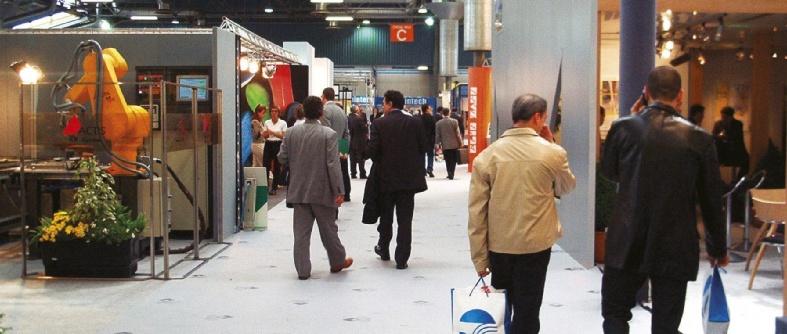
no di ANIMA (“Associazione Nazionale delle Industrie Meccaniche e Affini”) che riuniva i costruttori italiani di macchine per l’industria conciaria, la manifestazione passa nel 1996 sotto l’organizzazione di SIMAC insieme alla confluenza di tutto il gruppo di aziende meccano-conciarie all’interno di Assomac.
IL RITORNO A MILANO
Il ritorno della manifestazione a Milano avviene nel 2015, presso il nuovo quartiere fieristico di Rho, dove verrà organizzata nel mese di febbraio. Contestualmente avviene il rebranding delle due fiere in SIMAC TANNING TECH - Saloni internazionali delle macchine e delle tecnologie per le industrie calzaturiera, pellettiera e conciaria. Nel periodo post pandemico si decide di spostare la manifestazione a settembre.
PRESENTE E FUTURO
L’appuntamento fieristico di SIMAC TANNING TECH, grazie alla sua vitalità e alla consolidata collaborazione con Agenzia ICE, ha beneficiato nel corso degli anni della presenza di numerosi buyers e visitatori da ogni angolo del mondo.Dal boom degli anni '60/70 e resistendo alle varie crisi industriali che si sono verificate nel tempo, SIMAC TANNING TECH si affermato come un appuntamento internazionale irrinunciabile, un punto di riferimento importante per tutta l’industria calzaturiera, pellettiera e della lavorazione delle pelli.
Quest’anno, in occasione della 50ª edizione, la fiera si terrà a Rho Fiera Milano dal 17 al 19 settembre 2024 e sarà un’occasione unica per celebrare il passato e guardare al futuro di un settore in continua evoluzione.
34 SIMAC TANNING TECH FAIRS
SIMAC 2023

‘ASSOMAC AROUND THE WORLD’: AN INTERNATIONAL PRESENCE TO PROMOTE ITALIAN TECHNOLOGIES
The Association of Italian Manufacturers of Footwear, Leather Goods and Tanning Machinery continues in 2024 with its programme of participation in international trade fairs, which will end next September with the special edition for the 50th anniversary of Simac Tanning Tech.

The ‘Assomac around the world’ programme continues in 2024, which brings the National Association of Italian Manufacturers of Footwear, Leather Goods and Tanning Machinery to be present at some of the most important international trade fairs starting in January and ending next September, with the special edition for the 50th anniversary of Simac Tanning Tech, which will be held from 17 to 19 at the Milan Rho Fiera.
This intense trade fair activity is part of Assomac's internationalisation strategy, which aims to promote Italian technologies worldwide and strengthen the competitiveness of its member companies. The aim of these international presences is to promote Italian technologies in the world and strengthen the competitiveness of member companies.
‘Participation in these trade fairs is an important opportunity for our companies to meet international buyers and present their innovative solutions,’ said Agostino Apolito, Director General of Assomac. ‘We are convinced that technology is a key factor for the competitiveness of our sector and we are committed to supporting our companies in their path of innovation.’
The programme started last January with participation with stands and collectives at the Pakistan Mega Leather Show in Lahore, Pakistan. Then it was the turn of Lineapelle New York, from 31 January to 1 February; India International Leather Fair, from 1 to 3 February in Chennai, India; Lineapelle Milano, from 20 to 22 February in Milan, Italy; APLF Leather, from 19 to 21 March in Hong Kong, China. In April (9 -10/04), ‘Assomac around the world’ made a stop in Florence with participation in EP- Summit, the second edition of the Pitti Immagine event dedicated to the relationship between fashion and the digital world, held at the Stazione Leopolda. This was followed by AYSAF, Turkey 2-5 May.
Upcoming events will see the Association present at Shoes and Leather Vietnam, from 10 to 12 July in Ho Chi Minh, Vietnam; All China Leather Exhibition in Shanghai, China, from 3 to 5 September . To conclude with the organisation of the special 50th edition of Simac Tanning Tech, from 17 to 19 September.
Assomac participates in these fairs with a series of initiatives, including: company stands, where member companies can present their technologies and innovative solutions; events and workshops, to promote research and technological development in the sector; and B2B meetings, to encourage the creation of business relations between Italian companies and international buyers. In particular, Assomac is dedicating a focus to virtual reality (VR) with the use of visors. For the first time, during the last Simac Tanning Tech, Assomac in collaboration with PIN (Polo Universitario Città di Prato), presented a production plant with machinery for tanning, leather goods and footwear, which could be visited virtually thanks to 3D visors. Virtual reality provided an immersive learning experience, allowing users to explore, investigate and learn through a fist-person approach with a high degree of embodiement. This means that users were able to interact directly and voluntarily with the goods products and production technologies of the sector, enhancing their understanding of the operations involved in the production processes.
38 SIMAC TANNING TECH NEWS
‘ASSOMAC
AROUND THE WORLD’:
L’Associazione Costruttori Italiani Macchine per Calzature, Pelletteria e Conceria prosegue anche nel 2024 con il suo programma di partecipazione alle fiere internazionali che si concluderà il prossimo settembre con l’edizione speciale per i 50 anni di Simac Tanning Tech.
Anche nel 2024 prosegue il programma ‘Assomac around the world’, che porta l’Associazione Nazionale dei Costruttori Italiani di Macchine per Calzature, Pelletteria e Conceria ad essere presente ad alcune tra le maggiori fiere internazionali a partire dal mese di gennaio e fino al prossimo settembre, con l’edizione speciale per i 50 anni di Simac Tanning Tech, che si terrà dal 17 al 19 a Milano Rho Fiera.
Questa intensa attività fieristica è parte della strategia di internazionalizzazione di Assomac, che mira a promuovere le tecnologie italiane nel mondo e a rafforzare la competitività delle imprese associate. L'obiettivo di queste presenze internazionali è promuovere le tecnologie italiane nel mondo e rafforzare la competitività delle imprese associate.
“La partecipazione a queste fiere è un’occasione importante per le nostre imprese per incontrare i buyer internazionali e presentare le proprie soluzioni innovative”, ha dichiarato Agostino Apolito, Direttore Generale di Assomac. “Siamo convinti che la tecnologia sia un fattore chiave per la competitività del nostro settore e siamo impegnati a supportare le nostre imprese nel loro percorso di innovazione”.
Il programma è partito lo scorso gennaio con la partecipazione con stand e collettive presso il Pakistan Mega Leather Show a Lahore, Pakistan. È stata poi la volta di Lineapelle New York, dal 31 gennaio al 1 febbraio; India International Leather Fair, dal 1 al 3 febbraio a Chennai, India; Lineapelle Milano, dal 20 al 22 febbraio a Milano, Italia; APLF Leather, dal 19 al 21 marzo a Hong Kong, Cina. Ad aprile (9 -10/04), “Assomac around the world" ha fatto tappa a Firenze con la partecipazione a EP- Summit, la seconda edizione dell’appuntamento di Pitti Immagine dedicato ai rapporti tra moda e mondo digitale, che si è svolto alla Stazione Leopolda. In seguito AYSAF, Turchia 2-5 maggio. I prossimi appuntamenti vedranno l’Associazione presente a Shoes and Leather Vietnam, dal 10 al 12 luglio a Ho Chi Minh, Vie-
tnam; All China Leather Exhibition a Shangai in Cina, dal 3 al 5 settembre. Per concludersi con l’organizzazione dell’edizione speciale del cinquantesimo di Simac Tanning Tech, dal 17 al 19 settembre.
Assomac partecipa a queste fiere con una serie di iniziative, tra cui: stand aziendali, dove le imprese associate possono presentare le proprie tecnologie e soluzioni innovative; eventi e workshop, per promuovere la ricerca e lo sviluppo tecnologico nel settore e incontri B2B, per favorire la creazione di relazioni commerciali tra le aziende italiane e i buyer internazionali. In particolare, Assomac dedica un focus alla realtà virtuale (VR) con l'utilizzo dei visori. Per la prima volta, durante lo scorso Simac Tanning Tech, Assomac in collaborazione con PIN (Polo Universitario Città di Prato), ha presentato un plant produttivo con macchinari per conceria, pelletteria e calzature, visitabile virtualmente grazie a dei visori 3D. La realtà virtuale ha garantito un’esperienza di apprendimento immersiva, permettendo agli utenti di esplorare, investigare e apprendere tramite un approccio fist-person con un alto gradi di embodiement. Ciò significa che gli utenti hanno potuto interagire direttamente e in modo volontario con i prodotti merceologici e le tecnologie produttive del settore, migliorando la comprensione delle operazioni coinvolte nei processi produttivi.

UNA PRESENZA INTERNAZIONALE PER PROMUOVERE LE TECNOLOGIE ITALIANE
SIMAC TANNING TECH 39 NEWS
THE ASSOMAC MERCEOLOGICAL PROJECT
From the first multilingual printed catalogues to the launch in the 1990s of the Assomac website with its Merchandise Directory, then combined with SIMAC TANNING TECH, up to the VR Technological Guide presented last September 2023, which combines immersive Virtual Reality and the simulated environment of a digital showroom.

Assomac, founded in 1982, immediately began a study of the structure of the sector with a census of all the units, productive and otherwise, that make it up: equipment, machines and plants. The aims of this project are many. First of all, the desire to create an ‘Illustrative Volume’, destined to represent a real documented ‘Guide’ to the knowledge of the capacity and technological specialisations offered by the sector to the world production of leather products; secondly, the possibility of identifying the correct attribution of the sector's production within the ISTAT customs items for export.
Thus Assomac's first paper catalogues were born and soon the need was felt to translate this valuable information into the main European languages, and later into Russian and Chinese. The 1990s saw the information technology revolution, the increasing use of personal computers, new forms of data storage and the first timid connections to the internet.
In 1997, Assomac's product range was renewed and enriched with items relating to the mechano-concern sector. The need was felt to give further prominence to the Association's image and to expand the activity associated with communication through the use of ‘innovative’ technologies. This resulted in the production of the product directory in 6 languages of all Assomac companies in the complete version and three directories dedicated to the footwear, leather goods and tannery machinery sectors respectively. At the same time, the same content was also produced on CD-Rom. This project also gave rise to Assomac's first website, which hosted the ‘Merchandise Directory’ from its inception, where each company presented itself with all the relevant references and its own production, also with the inclusion of photographic material. In 2013, Assomac's new ‘Merchandise Catalogue’ project was presented, the one currently still in use in its structure.
The work carried out to date had catalogued all the types of machines present and produced more than 1,000 search entries. At the same time, there was also another sector product catalogue, the one relating to the SIMAC TANNING TECH trade fair, with a different logical approach. With the redevelopment of the association's merchandise directory, the ‘new’ classification also involves the trade fair catalogue, and is set up according to processing and process stages. Innovative and unique in the panorama of national and international association product catalogues was the decision to include ‘schematic examples’ of the machine headings as well as bibliographic descriptions that, translated into the languages of most significant interest, will facilitate the targeting of the main web search engines.
The ambitious project had among its objectives
- to be considered an international benchmark for the sector culture,
- identify technology by speaking the same language with the same codes,
- to help employees by means of visual diagrams and operating descriptions,
- create a digital sector directory with a maximum of 200/300 entries, - use simple descriptive texts.
In 2022 Assomac started working on a new project: ‘Assomac VR Technological Guide’, which consists in the creation by PIN Polo Universitario di Prato of a VR environment simulating a digital showroom. The aim is to allow users to access a wide range of information on the products, technologies and production processes of Assomac's three reference sectors.
A crucial part of the project was the re-presentation of the industry's equipment and technologies through 3D modelling. three-dimensional models of the machinery were adapted for use in VR and integrated within the various high-detail virtual environments created and modelled specifically for the representation of the complexity of the different steps involved in the industry's production processes.
Pin and Assomac aimed to offer a highly immersive experience, allowing users to explore, investigate and learn through a first-person approach with a significant degree of embodiment. This makes it possible to deeply engage users in the VR environment. One of the main goals is to ensure a high degree of immersiveness for users within the VR environment.
The VR Technological Guide was first presented in September 2023 at the Simac Tanning Tech and UITIC trade fair.
The combination of immersive Virtual Reality and the simulated environment of a digital showroom has proven at every opportunity to be a cutting-edge training tool that has revolutionised the way industry professionals gain knowledge and comprehension.
40 NEWS
IL PROGETTO MERCEOLOGICO ASSOMAC
Dai primi cataloghi cartacei multilingue al lancio nei
Novanta del sito web Assomac con relativo Repertorio
Merceologico abbinato poi a SIMAC TANNING TECH, fino alla VR Technological Guide presentata lo scorso settembre 2023, che combina Realtà Virtuale immersiva e ambiente simulato di uno showroom digitale.
Assomac, fondata nel 1982, avvia fin da subito uno studio della struttura del settore con il censimento di tutte le unità, produttive e non, che lo compongono: attrezzature, macchine e impianti. Le finalità di questo progetto sono molteplici. Innanzitutto la volontà di realizzare un “Volume illustrativo”, destinato a rappresentare una vera e propria “Guida” documentata alla conoscenza della capacità e delle specializzazioni tecnologiche offerte dal settore alla produzione mondiale di prodotti in pelle; in secondo luogo, la possibilità di identificare la corretta attribuzione della produzione di settore nell’ambito delle voci doganali Istat per l’esportazione. Nascono così i primi cataloghi cartacei di Assomac e presto si sente la necessità di tradurre queste preziose informazioni nelle principali lingue europee, e successivamente anche in russo e cinese. Negli anni 90 si assiste alla rivoluzione informatica, l’utilizzo sempre più diffuso dei personal computer, di nuove forme di archiviazione di dati e le prime timide connessioni alla rete internet. Nel 1997 il merceologico Assomac si rinnova e si arricchisce delle voci relative al settore meccano-conciario. Si sente la necessità di dare ulteriore rilievo all’immagine dell’Associazione e di ampliare l’attività associata alla comunicazione attraverso l’uso di tecnologie “innovative”. Tutto ciò si è tradotto nella realizzazione del repertorio merceologico in 6 lingue di tutte le aziende Assomac nella versione completa e in tre repertori dedicati rispettivamente ai comparti macchine per calzature, per pelletteria e per conceria. Parallelamente si realizza lo stesso contenuto anche su Cd-Rom.
Da questo progetto prende forma anche il primo sito web Assomac che ha ospitato, fin dalla sua nascita, il “Repertorio Merceologico”, dove ogni azienda presentava se stessa con tutti i riferimenti relativi e la propria produzione, anche con inserimento di materiale fotografico.
Nel 2013 viene presentato il nuovo progetto del catalogo merceologico di Assomac, quello attualmente ancora in uso nella sua struttura. Il lavoro svolto finora aveva catalogato tutte le tipologie di macchine presenti e prodotto oltre 1000 voci di ricerca. Parallelamente esisteva anche un altro repertorio merceologico di settore, quello relativo alla fiera SIMAC TANNING TECH, con una impostazione logica differente. Con la riqualificazione del merceologico associativo, la “nuova” classificazione coinvolge, invece, anche il catalogo fiera, ed è impostata secondo le fasi di lavorazione e processo. Innovativa e unica nel panorama dei merceologici associativi nazionali e internazionali è stata la scelta di inserire delle “esemplificazioni schematiche” delle voci macchine, oltre a descrizioni bibliografiche che, tradotte nelle lingue di più significativo interesse, favoriranno il puntamento dei principali motori di ricerca su web. L’ambizioso progetto aveva tra gli obiettivi:
· essere considerato punto di riferimento internazionale per la cultura di settore,
· identificare la tecnologia parlando la stessa lingua con gli stessi codici, · aiutare gli addetti tramite schemi visivi e descrizioni di funzionamento, · realizzare un repertorio digitale di settore con al massimo 200/300 voci, · utilizzare semplici testi descrittivi.
Nel 2022 Assomac inizia a lavorare ad un nuovo progetto: “Assomac VR Technological Guide” che consiste nella creazione, da parte di PIN Polo Universitario di Prato, di un ambiente VR simulante uno showroom digitale. Lo scopo è quello di consentire agli utenti di accedere a una vasta gamma di informazioni relative ai prodotti merceologici, alle tecnologie e ai processi produttivi dei tre settori di riferimento di Assomac.
Una parte cruciale del progetto è stata la riproposizione delle apparecchiature e delle tecnologie del settore mediante modellazione 3D. i modelli tridimensionali dei macchinari sono stati adattati all’utilizzo in VR e integrati all’interno dei vari ambienti virtuali ad alto dettaglio creati e modellati appositamente per la rappresentazione della complessità delle diverse fasi coinvolte nei processi produttivi del settore.
Pin e Assomac hanno mirato ad offrire un’esperienza altamente immersiva, consentendo agli utenti di esplorare, investigare e apprendere attraverso un approccio first-person con un notevole grado di embodiement. Questo rende possibile un coinvolgimento profondo degli utenti in ambiente VR. Uno degli obiettivi principali è quello di garantire un alto grado di immersività per gli utenti all’interno dell’ambientazione VR.
La presentazione della VR Technological Guide è avvenuta la prima volta a settembre 2023 in occasione della Fiera Simac Tanning Tech e della manifestazione UITIC.
La combinazione di Realtà Virtuale immersiva e l’ambiente simulato di uno showroom digitale ha dimostrato ad ogni occasione di essere uno strumento di formazione d’avanguardia, che ha rivoluzionato il modo in cui gli operatori del settore acquisiscono conoscenze e comprensione.

41 NEWS
IN 2024 THE TECHNOLOGY RACE SLOWS DOWN
2024 market outlook for the footwear, leather goods and leather technology and innovation sector.
Assomac, the national association that aggregates and represents Italian manufacturers of footwear, leather goods and tanning technology, presents the first six-monthly economic analysis 2024 and the sector data for 2023.
The Italian footwear, leathergoods and tannery machinery sector in the 2023 forecast shows growth in the sector, albeit at a lower rate than in previous years. In fact, 2022 had ended with a good performance compared to 2021. After a good start for exports in the first half of 2023, this suffered a setback in the last months of the year due to international conflicts and the consequent weakening of the global economic scenario.
From the data processed by Centro Studi Confindustria, it is clear that the outlook for the Italian economy in 2024 remains sluggish and uncertain. Downside risks are preponderant, due above all to the widening of geopolitical tensions, linked to the further war in the Middle East, the increased fragmentation of international production and the possible repercussions on commodity prices. There are various negative factors: the brake on trade flows in the Suez Canal persists, oil prices continue to rise, the rate cut is postponed again, and credit to companies remains in decline. A weak GDP is expected in Q1 2024. Only part of the economy is growing. In Q1 2024, Italian GDP grew (+0.3%), but industry output and consumption of goods contracted.
42 SIMAC TANNING TECH MARKET
Emblematic is the situation of machine tools, which well represent the instrumental mechanics sector: already at the end of 2023, between October and December, domestic orders had more than halved. Between January and March, the year-on-year fall was almost 20 points, halving demand in Italy compared to the average. The year 2024 started with worrying signs; in the first quarter of 2024, the ‘leather, leather goods and footwear’ sector presented the highest increase, at national level, of recourse to the Wage Compensation Fund: +128.6% compared to the same period in 2023.
Tuscany and Campania are the epicentre of the leather crisis. Here, the use also exceeded the record levels of 2010.
Surveys promoted by the supply chain associations to their members show that most of them believe that the recovery will not take place before 2025. It is not easy to make predictions at the moment, but it will certainly be a complex year.
As far as the tannery, footwear and leather goods machinery sector is concerned, the survey of a significant sample of companies shows:
- INTERNAL ORDERS: 76% of respondents expect a contraction and 24% expect them to remain unchanged;
- FOREIGN ORDERS: 47% expect a contraction, 35% expect them to stay the same and 18% expect them to increase.
The markets to which companies are exporting are mainly European - Spain, Germany, Portugal and France; America - United States, Canada, Mexico and Brazil; and in Asia - India, Indonesia and China.
The latest available Istat data for the first two months of 2024 show a contraction in exports compared to the same period last year. This contraction is more accentuated for the footwear and leather goods machinery sector (-33.52%), for the tannery machinery sector (-22.22%), while it is more contained for spare parts (-5.21%).
President of ASSOMAC and SIMAC TANNING TECH, Maria Vittoria Brustia, emphasises that “after a 2023 that was nevertheless positive, this first period of the year shows a negative start for foreign orders and concerns also on the domestic front, given the difficulties of the companies in the supply chain. The Israeli-Palestinian issue and the prolonged conflict between Russia and Ukraine, with the resulting uncertainties, weigh on all sectors”.

ASSOMAC Director Agostino Apolito points out that “without prospects of a recovery in sales and without guarantees of economic inflows, the propensity of companies to invest in technology remains low. This is why both Federmacchine and Confindustria have repeatedly stressed that investments must be relaunched by launching the implementation decrees of Industry 5.0, but not only that, by identifying a measure with a longer-term horizon”. Without the incentives for new tangible and intangible capital to embed digital innovations in production processes and to continue the energy transition, productivity growth remains stunted and so does their projection into global markets. For advanced nations, efficiency gains require investment in innovation and new skills, as well as well-designed incentives with respect to objectives. “If the push to remedy stagnating productivity is to be a priority, incentives cannot wait”, Apolito concludes.
NEL 2024 RALLENTA LA CORSA DELLA TECNOLOGIA
Prospettive di mercato per il 2024 del settore della tecnologia e innovazione di calzature, pelletteria e pelle.
Assomac, l’associazione nazionale che aggrega e rappresenta i costruttori italiani di tecnologie per calzature, pelletteria e conceria, presenta la prima analisi congiunturale semestrale 2024 e i dati di settore per il 2023.
Il settore italiano delle macchine per calzature, pelletteria e conceria nel preconsuntivo 2023 evidenzia una crescita del settore, seppure con un tasso inferiore rispetto agli anni precedenti. Il 2022 si era, infatti, concluso con una buona performance rispetto al 2021. Dopo una buona partenza dell’export nel primo semestre del 2023, questo ha subito una battuta d’arresto negli ultimi mesi dell’anno a causa dei conflitti internazionali e del conseguente indebolimento dello scenario economico globale. Dai dati elaborati dal Centro Studi Confindustria risulta evidente che per il 2024 le prospettive sull’economia italiana restano fiacche e incerte. Sono preponderanti i rischi al ribasso, dovuti soprattutto all’ampliamento delle tensioni geopolitiche, legate
 AGOSTINO APOLITO, DIRETTORE ASSOMAC
MARIA VITTORIA BRUSTIA, PRESIDENTE ASSOMAC E SIMAC TANNING TECH
AGOSTINO APOLITO, DIRETTORE ASSOMAC
ASSOMAC E SIMAC
TECH SIMAC TANNING TECH 43 MARKET
MARIA VITTORIA BRUSTIA, PRESIDENTE
TANNING
(IN
MACCHINE PER CALZATURE E PELLETTERIA
GENNAIO-FEBBRAIO 2024
DI €) % EUROPA 7,49 64,13 -35,71
1,6 13,7 -53,7
1,86 15,92 23,24
0,65 5,57 -26,32
OCEANIA 0,08 0,68 -1,09
TOTALE 11,68 100 -33,52
all’ulteriore guerra in Medio Oriente, alla maggiore frammentazione produttiva internazionale e alle possibili ripercussioni sui prezzi delle commodity. Vari i fattori negativi: si protrae il freno ai flussi commerciali nel canale di Suez, il petrolio continua a rincarare, il taglio dei tassi è rinviato ancora, il credito alle imprese resta in calo. Si prospetta un PIL debole nel 1° trimestre 2024. In crescita solo parte dell’economia. Nel 1° trimestre 2024 il PIL italiano è cresciuto (+0,3%), ma la produzione dell’industria e i consumi di beni si sono contratti.
Emblematica la situazione delle macchine utensili, che ben rappresentano il settore della meccanica strumentale: già a fine 2023, tra ottobre e dicembre, gli ordini interni si erano più che dimezzati. Tra gennaio e marzo, la caduta su base annua è stata di quasi 20 punti, arrivando a dimezzare la domanda in Italia rispetto alla media.
Il 2024 è iniziato con segnali preoccupanti; nel primo trimestre 2024 il settore “pelli, cuoio e calzatura” ha presentato il maggior incremento, a livello nazionale, di ricorso alla CIG: +128,6% rispetto allo stesso periodo del 2023.
Toscana e Campania sono l’epicentro della crisi della pelle. Qui il ricorso alla cassa integrazione ha superato anche i livelli record del 2010.
Dai sondaggi promossi dalle Associazioni della filiera nei confronti dei loro associati risulta che gran parte di essi ritengono che la ripartenza non avverrà prima del 2025. Al momento non è facile lanciarsi in previsioni, ma sicuramente sarà un anno complesso.
Per quanto concerne il settore delle macchine per conceria, calzature e pelletteria, dall’indagine effettuata presso un campione significativo di aziende risulta:
– ORDINI INTERNI: il 76% degli intervistati prevede una contrazione e il 24% che restino invariati;
- ORDINI ESTERNI: il 47% prevede una contrazione, il 35% che restino invariati e il 18% che aumentino.
I mercati sui quali le aziende stanno esportando sono soprattutto quelli europei - Spagna, Germania, Portogallo e Francia - America - Stati Uniti, Canada, Messico e Brasile - e in Asia India, Indonesia e Cina.
Gli ultimi dati Istat disponibili relativi al primo bimestre 2024 evidenziano una contrazione delle esportazioni rispetto allo stesso periodo dell’anno precedente. Tale contrazione è più accentuata per il settore delle macchine per calzature e pelletteria (-33,52%),
per quello delle macchine per conceria (-22,22%), mentre è più contenuta per le parti di ricambio (-5,21%).
La Presidente di ASSOMAC e SIMAC TANNING TECH, Maria Vittoria Brustia, sottolinea come “dopo un 2023 comunque positivo, questo primo periodo dell'anno mostra un avvio negativo degli ordini esteri e preoccupazioni anche sul fronte interno, viste le difficoltà delle aziende della filiera. Su tutti i settori pesano la questione israelo-palestinese e il prolungarsi del conflitto tra Russia e Ucraina, con le conseguenti incertezze”.
Il Direttore di ASSOMAC, Agostino Apolito, evidenzia che “Senza prospettive di ripresa delle vendite e senza garanzie di flussi economici in entrata rimane bassa la propensione delle imprese ad effettuare investimenti in tecnologia. Per questo sia Federmacchine che Confindustria hanno più volte ribadito che occorre rilanciare gli investimenti, varando i decreti attuativi di Industria 5.0, ma non solo, individuando una misura con un orizzonte più a lungo termine”.
Senza gli incentivi per il nuovo capitale materiale e immateriale per innestare le innovazioni digitali nei processi produttivi e per proseguire nella transizione energetica, la crescita della produttività resta frenata e così la loro proiezione sui mercati globali. Per le nazioni avanzate gli incrementi di efficienza richiedono investimenti in innovazione e nuove competenze, e anche incentivi ben disegnati rispetto agli obiettivi. “Se la spinta per porre rimedio a una produttività stagnante deve essere prioritaria, gli incentivi non possono attendere”, conclude Apolito.

VALORE
VARIAZIONE % GENNAIO-FEBBRAIO 2024/2023
MILIONI
ASIA
AMERICA
AFRICA
44 SIMAC TANNING TECH MARKET
IT-EX, THE FIRST ASSOCIATION OF ITALIAN INTERNATIONAL TRADE FAIRS, IS BORN
Promoted by Fondazione Fiera Milano together with the main players in the sector, its main objectives are to support the internationalisation and development of the Italian trade fair system.

Last February saw the signing of the memorandum of association that decreed the birth of IT-EX, the new association of Italian international trade fairs, which stands as an authoritative representative to support the interests and needs of the sector, promoting internationalisation.
IT-EX wants, in fact, to respond concretely to the international vocation of Italian industry with an industrial policy that favours exports and requires an equally international trade fair presence, which must develop along three lines: strategies to attract more and more exhibitors and visitors from abroad; direct organisation of Italian trade fairs abroad; offering, in terms of trade fair venues and services, high quality standards.
The new association is the result of the will of Fondazione Fiera Milano, a founding member, and of the constituent and constituent members - AIMPES Servizi S.r.l., A.N.C.I. Servizi S.r.l, ASSOMAC SERVIZI S.r.l., CEU - CENTRO ESPOSIZIONI UCIMU S.p.A., EICMA S.p.A., Federlegno Arredo Eventi S.p.A., Fiera Milano S.p.A., GE.FI S.p.A., IES S.r.l., Lineapelle S.r.l., Mifur S.r.l., Proposte Srl RX Italy S.r.l., S.I.TEX S.p.A. - to bring together and give voice to organisers and exhibition centres that are exclusively international, the Association will deal with industrial policy for the sector, giving a unified voice in relations with institutions and agencies that define the national strategy of export promotion and with the main European and world trade fair association organisations. As of today, these entities attract 67% of exhibitors and 53% of visitors from abroad; figures that could reach much higher percentages with the involvement of the remaining Italian players at international level.
President Antonio Intiglietta: ‘The Association has set itself the goal, which can no longer be postponed, of making people understand how international trade fairs are a fundamental asset for companies and must assume a central role in defining a development strategy and industrial policy in a complex and changing global scenario’.
NASCE IT-EX, PRIMA ASSOCIAZIONE DELLE FIERE INTERNAZIONALI ITALIANE
Promossa da Fondazione Fiera Milano insieme ai principali attori del settore, ha come obiettivi principali il supporto all’internazionalizzazione e lo sviluppo del sistema fieristico italiano.
È stato firmato nel febbraio scorso l’atto costitutivo che decreta la nascita di IT-EX, la nuova associazione delle fiere internazionali italiane, che si pone come rappresentante autorevole per supportare gli interessi e le esigenze del settore, favorendo l’internazionalizzazione. IT-EX vuole, infatti, rispondere concretamente alla vocazione internazionale dell’industria italiana con una politica industriale che favorisca l’export e che richiede una presenza fieristica altrettanto internazionale, che deve svilupparsi su tre direttrici: strategie per attrarre sempre più espositori e visitatori dall’estero; organizzazione diretta di fiere italiane all’estero; offerta, di quartieri fieristici e servizi, di standard qualitativi elevati.
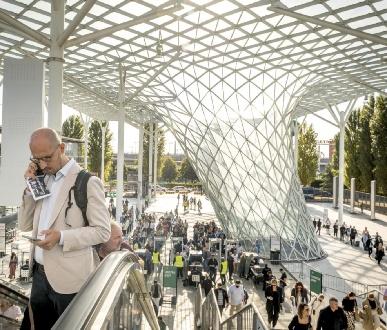
46 SIMAC TANNING TECH NEWS
La nuova associazione nasce dalla volontà di Fondazione Fiera Milano, socio fondatore, e dei soci costituenti e costituendi – AIMPES Servizi S.r.l., A.N.C.I. Servizi S.r.l., ASSOMAC SERVIZI
S.r.l, CEU - CENTRO ESPOSIZIONI UCIMU S.p.A., EICMA S.p.A., Federlegno Arredo Eventi S.p.A., Fiera Milano S.p.A., GE.FI
S.p.A., IES S.r.l., Lineapelle S.r.l., Mifur S.r.l., Proposte Srl RX Italy
S.r.l., S.I.TEX S.p.A. – per riunire e dare voce agli organizzatori e ai quartieri espositivi esclusivamente di livello internazionale, l’Associazione si occuperà della politica industriale per il settore, dando voce unitaria nei rapporti con istituzioni e agenzie che definiscono la strategia nazionale della promozione dell’export
e con le principali organizzazioni associative fieristiche europee e mondiali. Ad oggi, tali soggetti attirano il 67% di espositori e il 53% visitatori dall’estero; dati che potrebbero raggiungere percentuali ben più alte con il coinvolgimento dei restanti player italiani di livello internazionale. Il Presidente Antonio Intiglietta: “L’Associazione si pone l’obiettivo, ormai non più rimandabile, di far comprendere quanto le fiere internazionali siano l’asset fondamentale per le imprese e deve assumere un ruolo centrale nella definizione di una strategia di sviluppo e di politica industriale in uno scenario mondiale complesso e mutevole”.
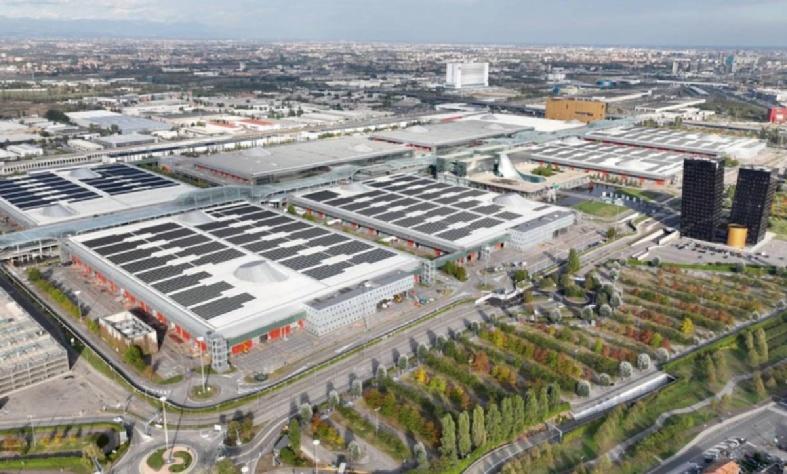
SIMAC TANNING TECH 47 NEWS
FRATELLI ALBERTI: FOCUS ON INNOVATION AND SAFETY
The Varese-based company focuses on modernisation and user safety, with products such as the new carterized table, and presents the latest-generation AV2NET SKIVING MACHINE / FAV520NET SPLITTING machines and AP COMBINING MACHINE.
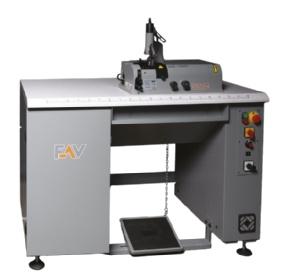
A benchmark among manufacturers of machines for the leather industry, Fratelli Alberti Srl has been carrying on a tradition of Italian excellence for over 75 years, and today represents a reference point for the production of skiving, splitting and combining machines for leather processing.
In recent years, the Varese-based company has focused in particular - alongside quality and service - on the innovation and safety factor, with the creation of products that have evolved in terms of Industry 4.0.
To this end, significant changes have been made to machinery that aim to guarantee greater safety for the end user, alongside a reduction in waste and a high level of quality.
Within the three macro-categories of leather processing machines (skiving, splitting and combining machines) that constitute the company's core business, several new features have been introduced, starting with the carterized skiving machine tables, designed to prevent accidental operations by the operator and the protection of moving parts. A filter upstream of the suction motor has also been introduced on this table to prevent the dispersion of fine dust into the air, with a view to environmental protection.
In terms of technological evolution, the graphic interface of the AP combining machines, AV2NET skiving machines and FAV430/520NET splitting machines has been made even more user-friendly. In the wake of the Industry 4.0 plan, computerised machines make work more precise, replicable and above all more productive, without altering its high quality.
FRATELLI ALBERTI: FOCUS SU INNOVAZIONE E SICUREZZA
L’azienda varesina punta sulla modernizzazione e la sicurezza dell’utilizzatore, con prodotti come il nuovo tavolo carterizzato, e presenta le macchine di ultima generazione SCARNITRICE AV2NET / SPACCAPELLI FAV520NET e ACCOPPIATRICE AP.
Punto di riferimento tra i produttori di macchine per l’industria della pelle, Fratelli Alberti Srl porta avanti da oltre 75 anni una tradizione di eccellenza italiana, rappresentando oggi una realtà di riferimento per la produzione di macchine scarnitrici, spaccapelli e accoppiatrici per la lavorazione della pelle. Negli ultimi anni, l’azienda di Varese si è in particolare focalizzata - accanto alla qualità e al servizio - sul fattore innovazione e sicurezza, con la realizzazione di prodotti evoluti in termini di Industria 4.0. A tal fine sono state apportate delle modifiche significative sui macchinari che mirano a garantire un’incolumità maggiore dell’utilizzatore finale, accanto ad una riduzione degli sprechi e ad un elevato livello di qualità. Nell’ambito delle tre macro categorie di macchine per la lavorazione della pelle (scarnitrici, spaccapelli e accoppiatrici) che costituiscono il core business aziendale, sono diverse le novità apportate, a partire dai tavoli per scarnitrici carterizzati, concepiti per impedire operazioni accidentali da parte dell’operatore e la protezione delle parti in movimento. Su questo tavolo è stato, inoltre, introdotto un filtro a monte del motore aspiratore, che impedisce la dispersione di polveri sottili nell’aria, in un’ottica di rispetto ambientale. In merito all’evoluzione tecnologica, l’interfaccia grafica delle macchine accoppiatrici AP, scarnitrici AV2NET e spaccapelli FAV430/520NET è stata resa ancora più user-friendly. Sull’onda del piano Industria 4.0, le macchine computerizzate rendono il lavoro sempre più preciso, replicabile e soprattutto più produttivo, senza alterarne l’alta qualità.

AV2MSAE FAV520NET AV2NET 48 SIMAC TANNING TECH NEWS

LAMEBO, SPLITTING BANDKNIVES ALSO MAKE INNOVATION
European steels, customization, fast delivery and continuous research, these are some characteristics of industrial splitting bandknives completely Made in Italy.
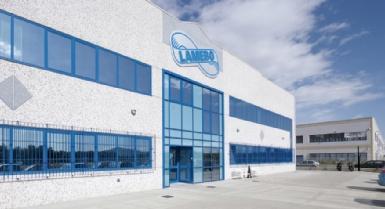
Sometimes it is precisely what is not apparent and what is most hidden that determines one's quality. The same could be said of a machine designed for splitting leathers. In this case it is the goodness and precision of the hidden, invisible bandknives that makes much of the difference. Lamebo, a leading manufacturer of splitting bandknives for industrial use, knows this well. So, it has never let its guard down since 1969, renewing itself year after year to continue to meet the growing and increasingly sophisticated demands of its customers.
The same values that guided Enrico and Rita Bocca, founders of the Piedmont-based company, now guide the Lamebo team and Gabriella Bocca who takes us on a discovery of just how much organization, technology and attention to detail lies behind what some might call a 'simple blade’.
After an interesting tour of the production department, which is clean, tidy, and incredibly organized in every aspect, we talk about innovation: "Lamebo makes bandknives that are used on machinery built by others, so we can't affect the final characteristics of a technology much anymore. What we can work on, and innovate, is our production process. For us, it means researching new materials that guarantee better and better blade performance, making more and more precise products, and offering optimal service at the lowest possible cost."
How do you achieve such results?
"The first secret is to prepare our employees very well. As much as many production steps can be automated today, some of the processing remains manual and must be done flawlessly. The training of those who work with us is crucial, it lasts an average of one and a half years, and we invest a lot of resources in it. We aim to create a work environment that gratifies people and convinces them to stay with us for a long time, not only so that the wealth of knowledge and experience is not wasted, but also because we are convinced that only satisfied people can lead a company to success."
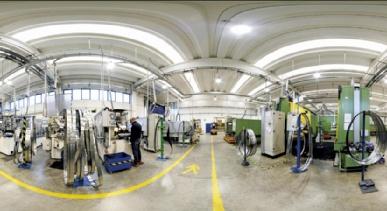
Are you hiding any other secrets?
"We use only European steels. Years ago, we chose this strategy both to preserve the quality of our blades and because we believe in the strategic importance of a short supply chain.
After all, maintaining excellent and stable relationships with our trusted steel mills allows us to be reliable in the market and not suffer from the scarcity of raw materials. We have experienced this just in recent months. Sure, we have also suffered more than 5 price increases, sometimes very substantial ones, but we have never run out of steel.
Another secret is to produce everything in house. We can call our blades 100% Made in Italy, and going back to raw materials, Made in Europe. We make all our bandknives in the factory in Leinì, in the province of Turin, so we keep every aspect under control and certify their quality."
While visiting the company, I noticed that every process is traced and every blade stamped...
"Traceability is a crucial issue for us. Our quality control system ensures that we can trace the entire history of a blade. We want to make sure that each reference matches exactly what the customer requested. We track everything from the original coil to the photographs that accompany the packaging before shipment."
What do you think are the services that your customers value most?
"Although we have structured an industrialized production system, we have maintained a degree of flexibility over time that allows us to meet customers' special requests with a good level of customization. We deliver on average within 7 to 10 days, and in cases of extreme necessity, we are able to fulfill an order even in less than 24 hours.
I think it is also highly appreciated that we have strong partnerships with major machinery manufacturers. The seamless integration of technology and bandknives allows us to achieve optimal results."
50 SIMAC TANNING TECH NEWS
Photos credit: Massimo Forchino
How do you envision Lamebo ten years from now?
"A company that is always on the move and offers the market, even outside the tannery, footwear and leather goods sphere, continuous innovations and blades suitable for the most varied and particular purposes. I envision a company that is more robust in terms of both production and organization, one that will continue to study to improve itself. A business reality that will continue to invest, renewing machinery and adopting innovative solutions.
It will not be a static company but will be able to seize the various and different opportunities that arise.
At the heart of our development is and will be, without a doubt, a great focus on sustainability issues and ESG certifications.
I firmly believe that every day and every year the company must evolve not only in the product, but also in the managerial vision and in improving the well-being of those who work there."
LAMEBO, ANCHE LE LAME A SPACCARE
FANNO INNOVAZIONE
Acciai europei, personalizzazione, consegne rapide e ricerca continua, queste alcune caratteristiche delle lame a spaccare industriali completamente Made in Italy.
A volte è proprio ciò che non appare evidente e quanto c’è di più nascosto a determinare la qualità di una persona. Lo stesso si potrebbe dire di un macchinario pensato per spaccare pelli. In questo caso è la bontà e precisione della lama nascosta e invisibile a fare buona parte della differenza. Lamebo, leader nella produzione di lame a spaccare ad uso industriale, lo sa bene. Perciò è dal 1969 che non abbassa mai la guardia, si rinnova anno dopo anno per continuare a soddisfare le crescenti e sempre più sofisticate richieste della clientela. Gli stessi valori che guidarono Enrico e Rita Bocca, fondatori dell’azienda piemontese, oggi guidano la squadra Lamebo e Gabriella Bocca che ci accompagna alla scoperta di quanta organizzazione, tecnologia e cura del dettaglio si nasconda dietro quella che alcuni potrebbero definire una ‘semplice lama’.
Dopo un’interessante visita al reparto produttivo, pulito, ordinato, incredibilmente organizzato sotto ogni aspetto, si parla di innovazione: “Lamebo realizza lame utilizzate su macchinari costruiti da altri, per cui non possiamo più di tanto influire sulle caratteristiche finali di una tecnologia. Quello su cui possiamo lavorare, e innovare, è il nostro processo produttivo. Per noi significa ricercare nuovi materiali che garantiscano performance delle lame sempre migliori, realizzare prodotti sempre più precisi, offrire un servizio ottimale a costi il più possibile contenuti”.
Come riuscite a ottenere tali risultati?
“Il primo segreto è preparare molto bene i nostri collaboratori. Per quanto oggi si possano automatizzare molti passaggi produttivi, una parte delle lavorazioni rimane manuale e deve essere effettuata in modo impeccabile. La formazione di chi lavora con noi è cruciale, dura mediamente un anno e mezzo e vi investiamo molte risorse. Puntiamo a creare un ambiente lavorativo che gratifichi le persone e le convinca a rimanere con noi a lungo, non solo per non disperdere il patrimonio di conoscenze e di esperienza, ma anche perché siamo convinti che solo persone soddisfatte possano portare un’azienda al successo”.
Nascondete altri segreti?
“Utilizziamo solo acciai europei. Anni fa abbiamo scelto questa strategia sia per preservare la qualità delle nostre lame, sia perché crediamo nell'importanza strategica di una filiera corta.
Del resto, mantenere ottimi e stabili rapporti con le nostre acciaierie di fiducia ci permette di risultare affidabili sul mercato e di non soffrire della scarsità di materie prime. Lo abbiamo sperimentato proprio in questi mesi. Certo, abbiamo subito anche noi più di 5 aumenti di prezzo, talvolta molto consistenti, ma non siamo mai rimasti senza acciaio. Un altro segreto è produrre tutto in casa. Possiamo definire le nostre lame Made in Italy al 100%, e tornando alle materie prime, Made in Europe. Realizziamo tutte le nostre lame nello stabilimento di Leinì, in provincia di Torino, così da tenere sotto controllo ogni aspetto e certificarne la qualità”.
Mentre visitavamo l’azienda ho notato che ogni passaggio è tracciato e ogni lama timbrata…
“La tracciabilità è per noi un tema cruciale. Il nostro sistema di controllo qualità ci assicura il poter risalire all'intera storia di una lama. Vogliamo essere certi che ogni referenza corrisponda esattamente a ciò che il cliente ha richiesto. Tracciamo tutto, dal coil originario fino alle fotografie che accompagnano l’imballo prima della spedizione”.
Quali crede siano i servizi che i vostri clienti più apprezzano?
“Pur avendo strutturato un sistema produttivo industrializzato, abbiamo mantenuto nel tempo un grado di flessibilità che ci consente di andare incontro alle particolari richieste dei clienti con un buon livello di personalizzazione.
Consegniamo in media entro 7 - 10 giorni e, in casi di estrema necessità, siamo in grado di evadere un ordine anche in meno di 24 ore.
Credo sia anche molto apprezzato il forte legame di partnership che intratteniamo con i più importanti produttori di macchinari. L’integrazione perfetta fra tecnologia e lama permette di conseguire risultati ottimali”.
Come immagina la Lamebo fra dieci anni?
“Un'azienda sempre in movimento che propone al mercato, anche al di fuori dell'ambito conceria, calzature e pelletteria, continue innovazioni e lame adatte ai più svariati e particolari scopi.
Mi immagino un'azienda più robusta sia a livello produttivo che organizzativo, che continuerà a studiare per migliorare se stessa. Una realtà imprenditoriale che continuerà a investire, rinnovando macchinari e adottando soluzioni innovative.
Non sarà un'azienda statica, ma sarà capace di cogliere le varie e differenti opportunità che si presenteranno.
Al centro del nostro sviluppo c’è e ci sarà, senza dubbio, una grande attenzione ai temi della sostenibilità e alle certificazioni ESG. Credo fermamente che ogni giorno e ogni anno l'azienda debba evolvere non solo nel prodotto, ma anche nella visione manageriale e nel migliorare il benessere di chi ci lavora”.

SIMAC TANNING TECH 51 NEWS
PHOTOS
MASSIMO FORCHINO
ELACHEM EPAFLEX POLYURETHANES®: INNOVATIVE SPIRIT
The group is recognised on the world market for the quality of its products, its customer focus and an excellent in-house R&D centre, which allows it to anticipate the needs of an ever-changing market by offering high-performance, flexible materials with a green footprint.
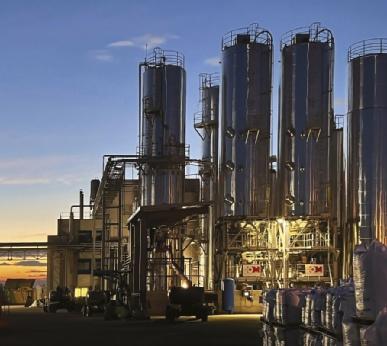
In recent years, the Elachem Epaflex Polyurethanes® Group has invested not only in plant engineering, in order to improve the quality and control of the products offered, but also in state-of-the-art laboratories and machinery for the analysis and synthesis of new polyesters, for their evaluation in classic working conditions at worldwide customer sites and, last but not least, machinery for the development of two-component polyurethane and thermoplastic PU systems for footwear.
Today, all process technologies in the footwear industry can be reproduced in-house in the company's laboratories, so that customers wishing to jointly develop new polyurethanes specific to their needs can be serviced.
In addition, a Main Group Technologies MGT® machine has recently been installed at the company's premises for the development and production of various types of work shoes and boots, which together with Italian production moulds and designs allow the Elachem Epaflex Polyurethanes® Group to export the best Italian technology to the world.
The Elachem Epaflex Polyurethanes® Group continues its policy of investment aimed at anticipating the needs of an evolving market, offering high-performance, flexible materials with a green footprint.
ELACHEM EPAFLEX POLYURETHANES®: SPIRITO INNOVATIVO
Il gruppo è riconosciuto sul mercato mondiale per la qualità dei suoi prodotti, l’attenzione al cliente e un eccellente centro di R&D interno, che permette di anticipare le esigenze di un mercato in evoluzione, offrendo materiali performanti, flessibili e con un'impronta green.
Negli ultimi anni il Gruppo Elachem Epaflex Polyurethanes® ha investito non solo nella parte impiantistica, per migliorare la qualità ed il controllo dei prodotti offerti, ma anche su laboratori e macchinari di ultima generazione per l’analisi e la sintesi di nuovi poliesteri, per la loro valutazione nelle condizioni di lavoro classiche presso la clientela mondiale e, non per ultimo, su macchinari per lo sviluppo di sistemi poliuretanici bicomponente e PU termoplastico per la calzatura. Ad oggi, tutte le tecnologie di processo presenti nel settore calzaturiero possono esser riprodotte internamente nei laboratori dell’azienda, così da dare un servizio di assistenza ai clienti che desiderano sviluppare in modo congiunto nuovi poliuretani specifici per le loro esigenze. Inoltre, è stata di recente installata presso la sede aziendale una macchina Main Group Technologies MGT® per lo sviluppo e produzione di scarpe da lavoro e stivali di varia tipologia, che unita con stampi di produzione e design italiani permettono al gruppo Elachem Epaflex Polyurethanes® di esportare la migliore tecnologia italiana nel mondo. Il Gruppo Elachem Epaflex Polyurethanes® prosegue nella sua politica di investimenti volti ad anticipare le esigenze di un mercato in continua evoluzione, offrendo materiali performanti, flessibili e con un'impronta green.
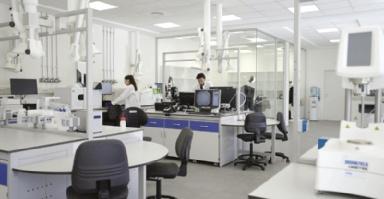
52 SIMAC TANNING TECH NEWS
ICAD 3D+ TO KEEP A MODEL'S COSTS UNDER CONTROL
Do you want to know directly all the material and production costs of your footwear models?With ICad 3D+, and its BOM and BOL modules, you can.
The footwear revolution starts from here: costs management. When making decisions to manufacture shoes, especially in their final stages of production, it is very important to take into account the cost of the different manufacturing steps, as well as the cost of all the materials involved, and, moreover, the direct impact on the final cost of any changes to these elements.
This is the reaseon why ICad 3D+ offers, fully integrated in its system, the Technical Package module, divided into BOM: Bill of Materials and BOL: Bill of Labours.
From the Bill of Materials we can directly consult all the cost of the materials applied to the different parts of our model, as well as the cost of accessories, soles, and any other element that we want to take into account.
In addition to ICad 3D+, also from ICad Workspace, you can create combinations of materials and export all this information in a .pdf or XML report to integrate directly with any ERP system.
All steps related to the model's instructions and production processes can be generated in the Bill of Labours module, where you can apply templates previously designed to fit the report you need to create. In addition, you can manage the time costs of each of these tasks.
The real strength of these features, as well as the strength of the other parts of ICad 3D+, is the synchronized connection between the other modules, which means that any changes made in them are automatically recalculated in this and all other modules.
ICAD
3D+ PER TENERE SOTTO CONTROLLO I COSTI DI UN MODELLO
Volete conoscere direttamente tutti i costi dei materiali e della produzione dei vostri modelli di calzature? Con ICad 3D+ e i suoi moduli BOM e BOL è possibile.
La rivoluzione delle calzature parte da qui: la gestione dei costi. Quando si decide di produrre calzature, soprattutto nelle fasi finali della produzione, è molto importante tenere conto del costo delle diverse fasi di lavorazione, così come del costo di tutti i materiali coinvolti e, inoltre, dell'impatto diretto sul costo finale di qualsiasi modifica di questi elementi.
È per questo che ICad 3D+ offre, completamente integrato nel suo sistema, il modulo Technical Package, suddiviso in BOM: Bill of Materials e BOL: Bill of Labours.
Dalla distinta base possiamo consultare direttamente tutti i costi dei materiali applicati alle diverse parti del nostro modello, così come i costi degli accessori, delle suole e di qualsiasi altro elemento che vogliamo prendere in considerazione.
Oltre che da ICad 3D+, anche da ICad Workspace è possibile creare combinazioni di materiali ed esportare tutte queste informazioni in un report .pdf o XML da integrare direttamente con qualsiasi sistema ERP.
Tutti i passaggi relativi alle istruzioni del modello e ai processi di produzione possono essere generati nel modulo Distinta base, dove è possibile applicare modelli precedentemente progettati per adattarsi al report da creare. Inoltre, è possibile gestire i costi temporali di ciascuna di queste attività.
Il vero punto di forza di queste funzioni, così come di tutte le altre parti di ICad 3D+, è la connessione sincronizzata tra gli altri moduli, per cui qualsiasi modifica apportata in questi ultimi viene automaticamente ricalcolata nel modulo interessato e in tutti gli altri moduli.
54 SIMAC TANNING TECH COST MANAGEMENT
BRAMAC WANTS MADE IN ITALY TO GROW
Bramac enters the capital of CMCI to realize a virtuous synergy that expands the commercial development of Italian technologies capable of innovation by finding simple, yet evolved solutions for the quality needs of the industry.
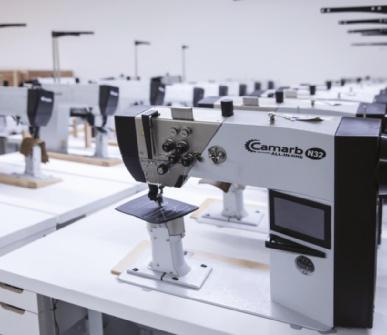
What projects guided Bramac's decision to invest in the capital of CMCI, another historical company in the footwear technology sector. We asked Alessandro Bracalente, a volcanic entrepreneur from the Marche region, the second generation of the Bramac company, founded 60 years ago by his father Masiero: “CMCI is an excellence of our territory, specialised for over 40 years in the production of sewing machines for the footwear industry, led by Mario Brutti, an entrepreneur with an uncommon passion for the design and production of high quality machines”.
It is clear how positive the synergy between the two companies can be: Bramac brings a capillary presence to its customers, particularly the factories that work with the great luxury maisons, which it supports on a daily basis to understand their needs and to propose the best technological and organisational solutions, while CMCI finds ingenious solutions to make technologies that perform complex operations simple, as in the best Italian tradition.
Bracalente continues: “The investment made, acquiring 50% of CMCI's capital, is the result of the conviction that in many countries of the world, not only in Italy, there is market space for Made in Italy technology, which is still recognised for its excellence. Moreover, this partnership allows us to create a short innovation chain, to react even faster to the needs emerging in the sector.”
BRAMAC VUOLE FAR CRESCERE IL MADE IN ITALY
Bramac entra nel capitale di CMCI per realizzare una sinergia virtuosa che espanda lo sviluppo commerciale delle tecnologie italiane capaci di innovare trovando soluzioni semplici, ma evolute, per le esigenze di qualità del settore.
Quale progettualità ha guidato la scelta di Bramac di investire nel capitale della CMCI, altra azienda storica nel comparto della tecnologia per la calzatura. Lo chiediamo ad Alessandro Bracalente, vulcanico imprenditore marchigiano, seconda generazione della azienda Bramac, fondata 60 anni fa da suo padre Masiero: “La CMCI è una eccellenza del nostro territorio, specializzata da oltre 40 anni nella produzione di macchine da cucire per l’industria calzaturiera, guidata da Mario Brutti, un imprenditore con una passione fuori dal comune per la progettazione e la produzione di macchine di alta qualità”. È evidente come possa essere positiva la sinergia fra le due aziende: Bramac porta una presenza capillare presso i clienti, in particolare le fabbriche che lavorano con le grandi maison del lusso che, ogni giorno, affianca per comprenderne le esigenze e per proporre le migliori soluzioni tecnologiche ed organizzative, mentre CMCI trova soluzioni geniali per rendere semplici le tecnologie che eseguono operazioni complesse, come nella migliore tradizione italiana. Prosegue Bracalente: “L’investimento fatto, acquisendo il 50% del capitale di CMCI, è frutto della convinzione che in molti paesi del mondo, non solo in Italia, ci sia spazio di mercato per la tecnologia Made in Italy, cui ancora oggi viene riconosciuta l’eccellenza. Inoltre, questa partnership ci consente di dar vita a una filiera corta dell’innovazione, per reagire in tempi ancor più brevi alle necessità che emergono nel settore.”
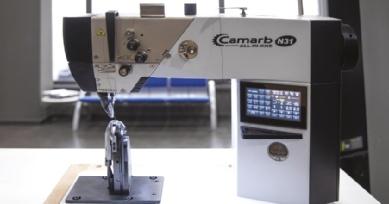
56 SIMAC TANNING TECH MARKET
INNOVATION, SUSTAINABILITY AND AUTOMATION ARE THE CENTRAL TOPICS AT THE DESMA HOUSE FAIR 2024
On 24
and 25 September
2024, the traditional event will host stakeholders from all over the world to inform them about the latest technologies in footwear production.
In line with this year’s motto, “PIONEERING. TOGETHER.”, the visitors of the Desma House Fair (24 and 25 September 2024) will find a comprehensive mix of product presentations, technical lectures and live demonstrations of tried-and-trusted DESMA technologies and services as well as the latest innovations. Desma is also expecting over 50 international co-exhibitors and more than 800 visitors.
SUSTAINABILITY
Sustainability is a key topic for the footwear industry. With particle dosing, DESMA showcases an option that adds the aspect of sustainability to round off the DESMA direct soling technology. The addition of granulated production waste or functional additives, for example, reduces both the amount of production waste as well as the consumption of material components, while simultaneously
increasing the functionality of the produced footwear. DESMA has already installed more than 1500 robotics and automation solutions throughout the world and in terms of sustainability, these help to reduce material consumption, improve working conditions and raise the general quality of the shoes. In addition to the advance in production sustainability, these solutions also enable to control production costs and reduce the impact of direct labour costs on the finished product.
CUSTOMISATION
Another prominent trend nowadays is customisation, with “lot size of 1 pair” as the benchmark. The challenge is to produce these lot sizes efficiently and cost-effectively. Once again, this is where you can rely on DESMA technology. Multi Section Injection (MSI©)
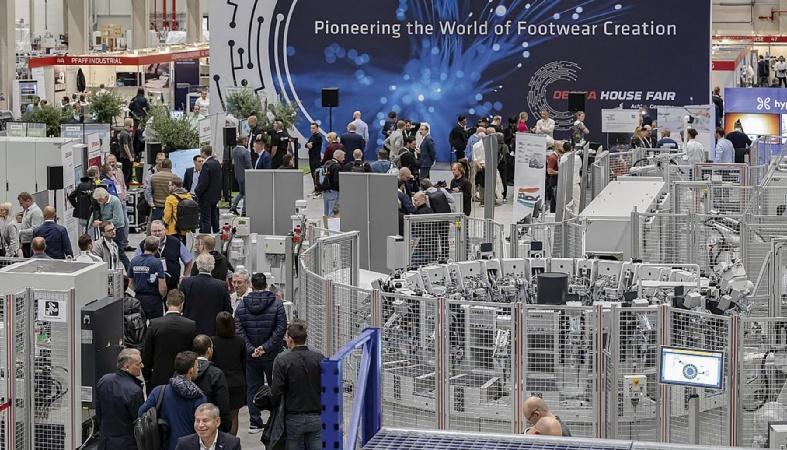
58 SIMAC TANNING TECH EVENTS
enables to change the physical properties of a midsole by injecting segmented material into different areas to achieve different properties such as varying hardness from section to section.
ARTIFICIAL
INTELLIGENCE
Artificial intelligence (AI) can add dynamics to the creative process, facilitate visualisation and enhance the sophistication of the design. DESMA already uses these tools and in consultation with customers, they can design mould or article concepts that suit client’s requirements, benefit from the Desma practical expertise and exploit the potential of artificial intelligence. DESMA’s design skills help to realise ideas and schemes with various mould options such as “Centre Wedge” and “DESwing”, that substantially increase the available design options and/or the range of features for multi-coloured soles in the production processes.
DIGITISATION AND SERVICE
Digital solutions and products from DESMA help to maintain industrial footwear production at a consistently high level of efficiency. They allow you to analyse production, energy and efficiency and also provide information that can facilitate production planning or help reducing the causes of downtime.
Visitors to the House Fair will have the opportunity to get to know the DESMA Customer Service Centre (CSC), which provides field service on the customer’s premises, uses intelligent remote control to save time and money, supplies spare parts, provides team training and produces samples without interrupting the production processes.
INNOVAZIONE, SOSTENIBILITÀ
E AUTOMAZIONE SONO I TEMI CENTRALI
DELLA DESMA HOUSE FAIR 2024
Il 24 e 25 settembre 2024, il tradizionale evento ospiterà gli operatori del settore provenienti da tutto il mondo per informarli sulle ultime tecnologie nella produzione di calzature.
In linea con il motto di quest'anno, “PIONEERING. TOGETHER.", i visitatori della Desma House Fair (24 e 25 settembre 2024) troveranno un mix completo di presentazioni di prodotti, conferenze tecniche e dimostrazioni dal vivo di tecnologie e servizi DESMA collaudati e affidabili, nonché delle ultime innovazioni. Desma attende anche oltre 50 co-espositori internazionali e più di 800 visitatori.
SOSTENIBILITÀ
La sostenibilità è un tema fondamentale per l'industria calzaturiera. Con il dosaggio delle mescole, DESMA presenta un'opzione che aggiunge l'aspetto della sostenibilità a completamento della tecnologia di suolatura diretta DESMA. L'aggiunta di scarti di produzione granulari o di additivi funzionali, ad esempio, riduce sia la quantità di scarti di produzione che il consumo di componenti materiali, aumentando al contempo la funzionalità delle calzature prodotte. DESMA ha già installato più di 1500 soluzioni di robotica e automazione in tutto il mondo che, in termini di sostenibilità, contribuiscono a ridurre il consumo di materiali, a migliorare le condizioni di lavoro e ad aumentare la qualità generale delle calzature. Oltre all'avanzamento della sostenibilità del-
la produzione, queste soluzioni consentono anche di controllare i costi di produzione e di ridurre l'impatto diretto del costo della manodopera sul prodotto finito.
PERSONALIZZAZIONE
Un'altra tendenza di rilievo al giorno d'oggi è la personalizzazione, con la “dimensione del lotto di 1 paio” come punto di riferimento. La sfida consiste nel produrre questi lotti in modo efficiente ed economico. Anche in questo caso, è possibile fare affidamento sulla tecnologia DESMA. L'iniezione multi-sezione (MSI©) consente di modificare le proprietà fisiche di un'intersuola iniettando materiale segmentato in aree diverse per ottenere proprietà diverse, come una durezza variabile da sezione a sezione.
INTELLIGENZA ARTIFICIALE
L'intelligenza artificiale può aggiungere dinamicità al processo creativo, facilitarne la visualizzazione e migliorare la sofisticatezza del design. DESMA utilizza già questi strumenti e, consultandosi con i clienti, progetta concetti di stampi o articoli che soddisfano i requisiti del cliente, beneficiando dell'esperienza pratica di Desma e sfruttando il potenziale dell'intelligenza artificiale. Le capacità di progettazione di DESMA aiutano a realizzare idee e schemi con varie opzioni di stampo, come “Centre Wedge” e “DESwing”, che aumentano in modo sostanziale le opzioni di design disponibili e/o la gamma di caratteristiche per suole multicolore nei processi di produzione.
DIGITALIZZAZIONE E SERVIZIO
Le soluzioni e i prodotti digitali di DESMA aiutano a mantenere la produzione di calzature industriali a un livello di efficienza costantemente elevato. Consentono di analizzare la produzione, l'energia e l'efficienza, oltre a fornire informazioni che possono facilitare la pianificazione della produzione o contribuire a ridurre le cause dei tempi di fermo.
I visitatori della House Fair avranno l'opportunità di conoscere il Centro Assistenza Clienti di DESMA, che fornisce assistenza sul campo presso il cliente, utilizza il controllo remoto intelligente per risparmiare tempo e denaro, fornisce parti di ricambio, offre formazione ai team e produce campioni senza interrompere i processi produttivi.
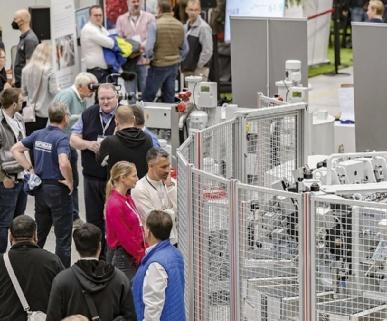
SIMAC TANNING TECH 59 EVENTS

PREVIEW
ABC EQUIPMENT & SOLUTIONS SPACE-SAVING BAG HOLDERS
PROCESS BETTERMENT, ERGONOMICS, SPEED AND EFFICIENCY, WORK ENVIRONMENT
Space in the factory is always critical, carts are essential to keep things tidy.
"Z" base allows carts to be stacked when not in use.
The arms can be positioned vertically in a very simple operation.
Once they are put back horizontally, the distance between the arms can be adjusted in a snap by the operator.
Lo spazio in fabbrica è sempre un aspetto critico, i carrelli sono indispensabili per tenere in ordine.
La base a "Z" consente di impilare i carrelli quando non sono utilizzati. I bracci possono essere posizionati in verticale con una semplicissima operazione.
Una volta rimessi orizzontali la distanza tra i bracci può essere regolata in un attimo dall'operatore.

ANZANI A SOFTWARE MODULE FOR QUALITY CONTROL IS ADDED TO THE LOGIMOVE SYSTEM
PRODUCTS BETTERMENT, QUALITY CONTROL
The LOGIMOVE Fully-automatic system dedicated to production management in uppers and leather goods companies is being enriched with a software module for quality control.
In addition to tracking operator productivity, the system will now also be able to track errors made (so as to help operators improve their quality level) and assign any repairs, which it will keep track of in terms of time. The system will thus provide a well-rounded view of production performance, both in terms of productivity and quality.
Il sistema LOGIMOVE Fully-automatic dedicato alla gestione della produzione in tomaifici e pelletterie si arricchisce di un modulo software per il controllo della qualità.
Oltre al tracciamento della produttività degli operatori, ora il sistema potrà anche tracciare gli errori commessi (così da aiutare gli operatori a migliorare il loro livello di qualità) e assegnare eventuali riparazioni, di cui terrà traccia in termini di tempo. Il sistema consentirà quindi di conoscere l'andamento produttivo a 360 gradi, sia per l'aspetto produttività che qualitativo.

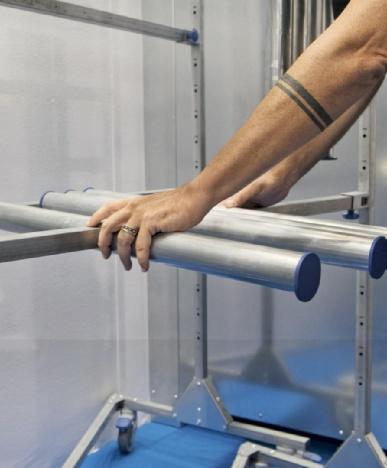
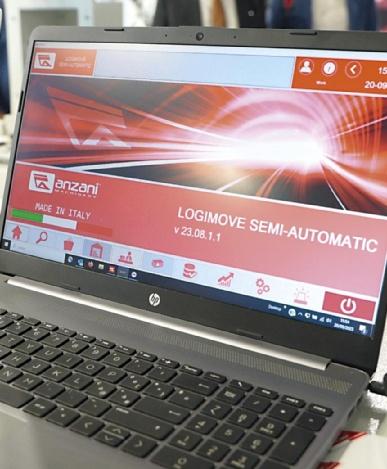
WATCH THE VIDEO WATCH THE VIDEO
228 SIMAC TANNING TECH INNOVATION
62 SIMAC TANNING TECH
ANZANI
NEW FLASH REACTIVATOR FOR MULTIPLEX CONTACT 4.0 CONVEYOR
PROCESS BETTERMENT, PRODUCTS BETTERMENT, ACCURACY
The Multiplex Contact 4.0 system is a motorized chain conveyor equipped with trolley stop stations for assembling and finishing footwear.
A new flash reactivator model has been integrated to the system with the ability to customize the settings and lamp temperatures for each floor so that the temperature of the shoe and sole in preparation for pressing is always correct.
Il sistema Multiplex Contact 4.0 è un trasportatore a catena motorizzata dotato di stazioni di fermo carrelli, per il montaggio e il finissaggio delle calzature.
Al sistema è stato integrato un nuovo modello di flash riattivatore con la possibilità di personalizzare le impostazioni e le temperature delle lampade per ogni piano così da mantenere sempre corretta la temperatura della scarpa e della suola in preparazione della pressatura.

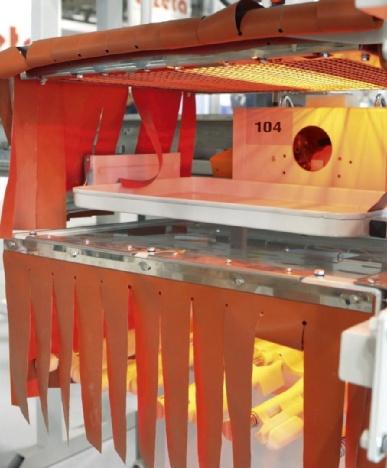
AP PLASMA CORPORATION
PLASMA FOR PLASTIC SOLES PREPARATION BEFORE BONDING
Plasma is an alternative to plastic sole preparation traditionally done by roughing and application of primers.
The automatic vision system determines the geometry of the sole and programs the automatic path of the robot. The vision system is also used for accurate final quality control.
Il plasma è una alternativa alla preparazione delle suole di materiale plastico tradizionalmente fatta con cardatura e primer.
Il sistema di visione determina la geometria della suola e programma il percorso automatico del robot.
Il sistema di visione viene utilizzato anche per una accurato controllo di qualità finale.

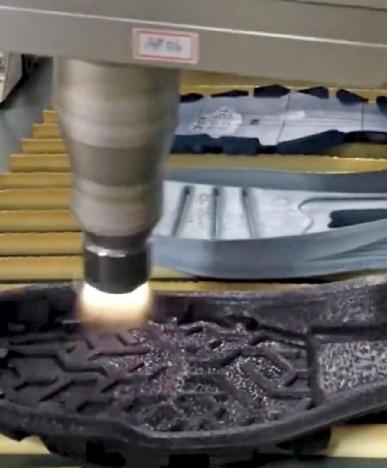
WATCH THE VIDEO WATCH THE VIDEO
SIMAC TANNING TECH 229 INNOVATION
PRODUCTS BETTERMENT, ACCURACY, PRODUCT QUALITY SIMAC TANNING TECH 63
ATOM IMPROVED THE 2185 MASTER FOR CUTTING MATERIALS.
PROCESS BETTERMENT, ACCURACY, DIGITAL DATA, SPEED AND EFFICIENCY
A new cleaning and blade height adjustment sensor enables automatic adjustment of the cutting height, avoiding mistakes and cutting the mat. Also new is the mat handling system. No more with a roller system, but through the use of two grippers. It allows for more precise handling steps, particularly when making resumption cuts, i.e., when I have to process pieces larger than the cutting area that require handling to complete the job. With the new handling system, cutting resumes from the exact point where it stopped.
Un nuovo sensore di pulizia e regolazione dell'altezza della lama consente di regolare in modo automatico l'altezza di taglio evitando di commettere errori e tagliare il tappeto. Nuovo anche il sistema di movimentazione del tappeto. Non più a rulli, ma tramite l'utilizzo di due pinze. Consente una maggior precisione delle fasi di movimentazione, in particolare quando si effettuano tagli in ripresa, cioè quando si lavorano pezzi più grandi dell'area di taglio che necessitano una movimentazione per completare il lavoro. Con il nuovo sistema il taglio riprende dal punto esatto in cui si era interrotto.

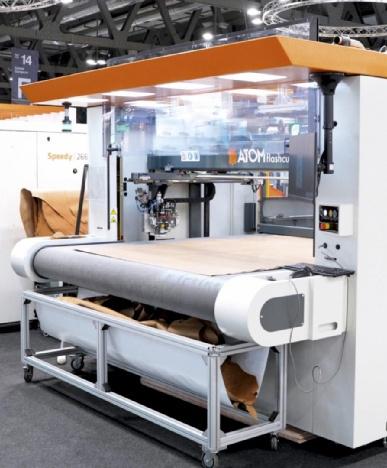
ATOM –SHOEMASTER ADVANCED DIGITIZATION OF MATERIALS WITH SCANNERS
PROCESS BETTERMENT, DIGITAL DATA, SPEED AND EFFICIENCY
Digitization of materials today can be accomplished automatically and easily with very affordable scanner. Software makes it easy to manage different maps. Transparencies and perforations are now also managed automatically. The digital materials are applied to 3d designs to obtain quality renders.
La digitalizzazione dei materiali oggi può essere realizzata in maniera automatica e semplice con scanner dai costi molto abbordabili. Il software permette di gestire facilmente le diverse mappe. Ora anche trasparenze e bucature sono gestite in maniera automatica. I materiali ottenuti vengono applicati ai design 3D per ottenere dei render di qualità.

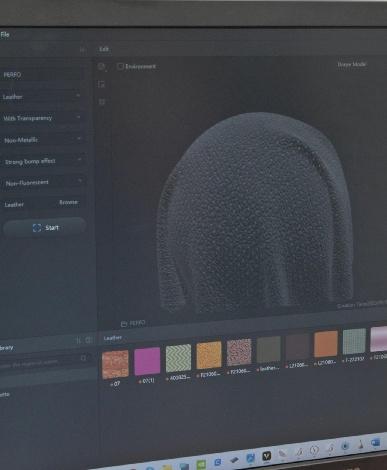
WATCH THE VIDEO WATCH THE VIDEO
230 SIMAC TANNING TECH INNOVATION
64 SIMAC TANNING TECH
ATOM –SHOEMASTER AUTOMATION OF SOLE 3D DESIGN
PROCESS BETTERMENT, DIGITAL DATA, SPEED AND EFFICIENCY
3D modeling of soles is a time-consuming task because of the complexity of the surfaces to be modeled.
Shoemaster has developed automatic 3D surface creation automatisms to speed up the modeling of soles.
The software automatically creates extrusions from a 2D drawing applied as a texture on a flat surface.
The file is accurate enough even for 3D printing.
La modellazione 3D delle suole è una attività che richiede tempo per via della complessità delle superfici da modellare.
Shoemaster ha messo a punto degli automatismi per la creazione automatica delle superfici 3D per velocizzare la modellazione delle suole. Il software crea automaticamente delle estrusioni a partire da un disegno 2D applicato come texture su una superficie piatta.
Il file è sufficientemente preciso anche per la stampa 3D.

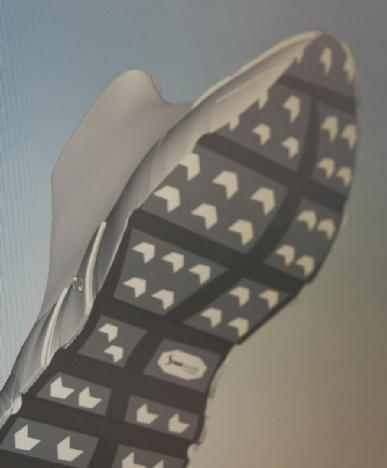
AVANTIUM
NEW BACK-LASTING MACHINE, THE BEST OF CERIM AND MB
PROCESS BETTERMENT, ACCURACY
The AV1 model brings together the best of Cerim and ATOM MB machines.
System of clamps, glue distribution, tracers and slanted nails for flawless back lasting. Adjustable height of the tools.
Il modello AV1 riunisce il meglio delle macchine Cerim e ATOM MB. Sistema di pinze, distribuzione colla, tracciatori e chiodi inclinati per una chiusura impeccabile della boetta. Altezza dei gruppi programmabile.

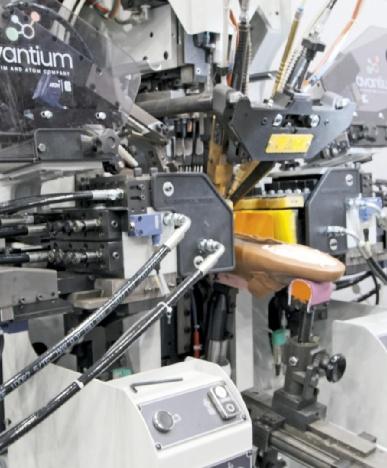
WATCH THE VIDEO WATCH THE VIDEO
SIMAC TANNING TECH 231 INNOVATION
SIMAC TANNING TECH 65
BAMAR
SKIVING MACHINE MOD. 12S
Bamar began as a company that sells spare parts for footwear and leather goods machines, and offers repair service and sale of used machines. From 2022 they enter the new market by offering the first internally manufactured machine, the Skiving Machine mod. 12S. The machine is used for beveling (thickness reduction) of any kind of leather or synthetic material in various fields. Special features:
- Cleaning of the grinding wheel with a manual system that allows not having to open the protective door.
- Fully electronic foot pedal (without any levers) that solves space problems and makes the operation more convenient.
Bamar nasce come azienda che vende pezzi di ricambio per macchine per calzatura e pelletteria, e offre servizi di riparazione, assistenza e vendita di macchine usate. Dal 2022 entra nel mercato del nuovo proponendo la prima macchina prodotta internamente, la Scarnitrice mod. 12S. Macchina utilizzata per la smussatura (riduzione dello spessore) di ogni tipo di pellame o materiale sintetico in vari settori. Caratteristiche peculiari:
- Pulizia della mola con un sistema manuale che consente di non dover aprire lo sportello di protezione.
- Pedale completamente elettronico (senza alcuna leva) che risolve problemi di spazio e rende più comoda l'attuazione da parte dell'operatore.
WATCH THE VIDEO

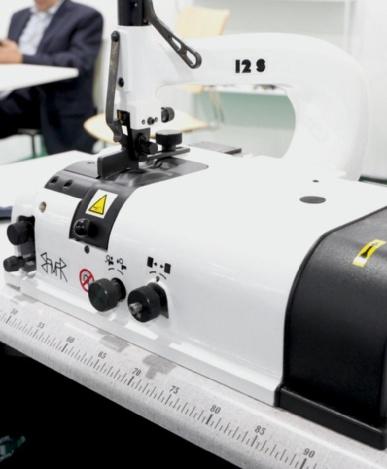
BIBO
CNC PRINTING AND STAMPING MACHINE
Automatic programmable stamping machine with 4 stations and 6 selectable work sequences.
The pressure of each stamp can be automatically adjusted at each machine position by choosing which paper or color, of the two available, is to be applied.
Stampatrice programmabile automatica con 4 stazioni e 6 sequenze di lavoro selezionabili.
La pressione di ogni stampo può essere regolata automaticamente in ogni posizione della macchina scegliendo quale carta o colore, delle due disponibili, deve essere applicato.
WATCH THE VIDEO

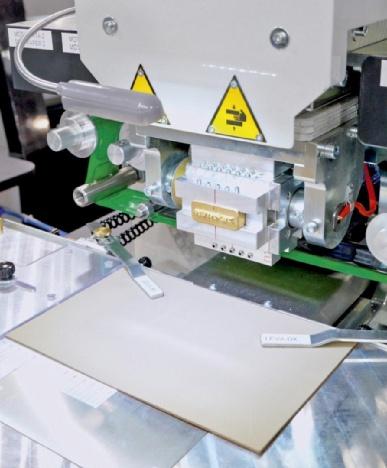
232 SIMAC TANNING TECH INNOVATION
BETTERMENT,
PROCESS AUTOMATION, PRODUCTS BETTERMENT, SPEED AND EFFICIENCY 66 SIMAC TANNING TECH
PROCESS
ERGONOMICS
BOMBELLI – NUOVA GINEV RENOVA STATION FOR CLEANING AND SANITIZING SHOES, BAGS, LEATHER GOODS
PRODUCTS BETTERMENT, SUSTAINABILITY
The machine is endowed with a foaming brush; with 3 nebulizer guns for waterproofing and softening products; with an oven for the drying and sanitizing of the articles treated; with a vacuum cleaner for solid and liquid waste.
On demand, it is possible to have the steam option. The upper structure (equipped with LED light) and the work plan are made of stainless steel.
La macchina è dotata di una spazzola schiumogena; di 3 pistole nebulizzatrici per prodotti impermeabilizzanti e ammorbidenti; di un forno per l’asciugatura e la sanificazione degli articoli trattati; di un’aspirapolvere per solidi e liquidi.
A richiesta l’opzione a vapore. La struttura superiore (dotata di luce a led) e il piano di lavoro sono realizzati in acciaio inox.

BOZZIDEE DI BOZZOLAN ALBERTO NO MORE LASTING NAILS IN THE MOUTH
HEALTH AND SAFETY, PROCESS AUTOMATION, ERGONOMICS, WORK ENVIRONMENT
Up to 4 loaders can be installed for both right- and left-handed operators. The nails are picked up by a rotating comb and placed in a guide. The nail is served to the operator who with can conveniently pick it up. To secure it in the shoe while keeping it in the correct position at all times. An effective solution to make work more efficient and safer.
Si possono installare fino a 4 caricatori sia per operatori destri sia per mancini.
I chiodini vengono raccolti da un pettine rotante e posizionati in una guida. Il chiodo viene servito all'operatore che con lo può prelevare comodamente. Per fissarlo nella calzatura mantenendolo sempre nella corretta posizione.
Una soluzione efficace per rendere il lavoro più efficiente e più sicuro.
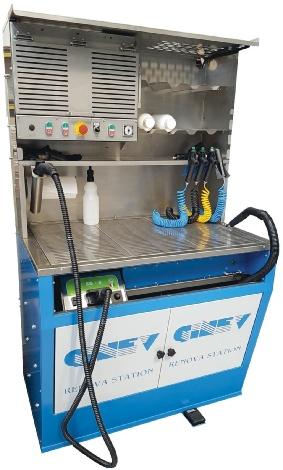

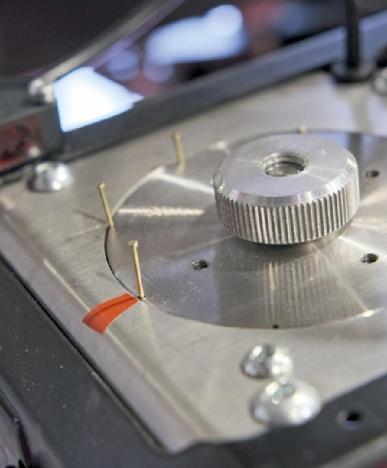
WATCH THE VIDEO
THE VIDEO
WATCH
SIMAC TANNING TECH 233 INNOVATION
SIMAC TANNING TECH 67
BRAMAC AUTOMATED MARKING IN THE STITCHING DEPARTMENT
PROCESS AUTOMATION, PROCESS BETTERMENT, ACCURACY, SPEED AND EFFICIENCY
The scanner automatically acquires the geometry of the cardboard pattern and the position of the guides for marking (alternatively DXF file from CAD).
The operator places the cut pieces on the belt that transports them inside the machine.
The machine can deposit solvent, water-based and thermal ink with either continuous line or hatching for consistently accurate and fast marking.
Lo scanner acquisisce automaticamente la geometria del cartone fibrato e la posizione dei canalini per la segnatura (in alternativa file DXF dal CAD).
L'operatore posiziona i pezzi tagliati sul nastro che li trasporta all'interno della macchina.
La macchina può depositare inchiostro solvente, base acqua e termico sia con linea continua sia con tratteggio per una segnatura sempre precisa e veloce.

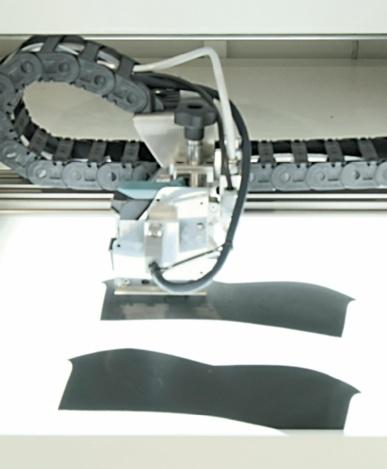
BRUSTIA
AUTOMATIC LEATHER DEFECT DETECTION
PROCESS AUTOMATION, PRODUCTS BETTERMENT, QUALITY CONTROL
The new automatic vision system developed by BAT automatically recognizes defects on the surface of the leather.
Il nuovo sistema di visione automatica messo a punto da BAT riconosce automaticamente i difetti sulla superficie della pelle.

WATCH THE VIDEO WATCH THE VIDEO
234 SIMAC TANNING TECH INNOVATION
68 SIMAC TANNING TECH
BRUSTIA
ARTIFICIAL INTELLIGENCE + X-RAY TO IDENTIFY UNWANTED NAILS OR STAPLES LEFT INSIDE THE PRODUCTS
X-ray technology already employed for quality control has been further enhanced through the use of AI.
La consolidata tecnologia ai raggi X per il controllo qualità è stata ancora migliorata grazie all'impiego della AI.

BUZZI ULTRA PRECISE POSITIONING FOR HIGH FREQUENCY
High frequency causes permanent cold deformation by electromagnetic wave.
The mold requires absolute precision of the position of the object to be molded.
Buzzi has developed a machine that uses a laser pointer instead of the traditional frame and an innovative rotation system that causes no displacement.
Alternatively a Hi-Res camera for perfect alignment on the screen.
L'alta frequenza provoca una deformazione permanente a freddo mediante onda elettromagnetica.
Lo stampo richiede una precisione assoluta della posizione dell'oggetto da stampare.
Buzzi ha messo a punto una macchina che utilizza un crocino laser invece della tradizionale dima ed una rotazione del piano di lavoro che non provoca spostamento.
In alternativa una telecamera Hi-Res per un perfetto allineamento sullo schermo.

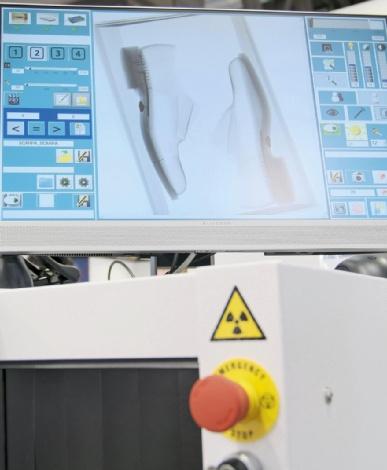
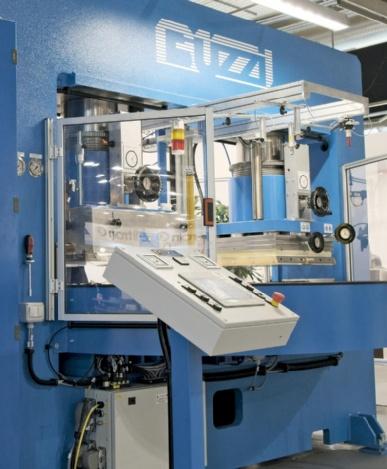
WATCH THE VIDEO WATCH THE VIDEO
SIMAC TANNING TECH 235 INNOVATION
PRODUCTS BETTERMENT, QUALITY CONTROL PROCESS BETTERMENT, PRODUCTS BETTERMENT, ACCURACY SIMAC TANNING TECH 69
CAMOGA
HEPA FILTER ON SPLITTING MACHINES
The structure of all the machines in the PLUS line has been redesigned. Noise reduced and suction made more powerful. There is now a HEPA filter on board the machine.
È stata riprogettata la struttura di tutte le macchine della linea PLUS. Ridotto il rumore e resa più potente l'aspirazione. Ora è presente un filtro HEPA a bordo della macchina.

CIUCANI
DOUBLE MOVEMENT MACHINE FOR SEWING OF SIDEWALL SOLES (AND BAGS)
Cicuani has further improved the machine that allows double arm movement to reach the most difficult stitches. Also ideal for stitching the bottoms of bags.
Ulteriormente migliorata la macchina che permette un doppio movimento del braccio per raggiungere i punti più difficili. Ideale anche per la lavorazione dei fondi delle borse.

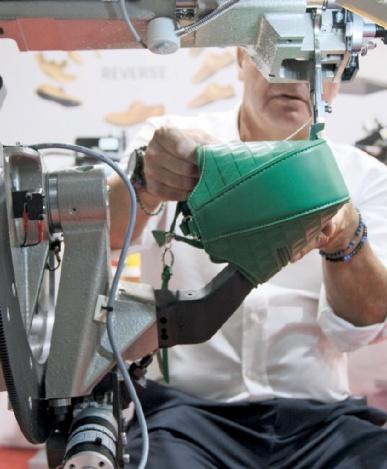
THE VIDEO WATCH THE VIDEO
WATCH
236 SIMAC TANNING TECH INNOVATION
HEALTH AND SAFETY, WORK ENVIRONMENT PROCESS AUTOMATION, PROCESS BETTERMENT, ACCURACY, SPEED AND EFFICIENCY 70 SIMAC TANNING TECH
CIUCANI OPANKA CONSTRUCTION WITHOUT
LASTING
A new machine that invents a new type of footwear construction. No insole is needed because the stitching is direct between the upper and sole.
Una nuova macchina che inventa una nuova tipologia di costruzione delle calzature.
Non serve alcun sottopiede perché la cucitura è diretta tra tomaia e suola.

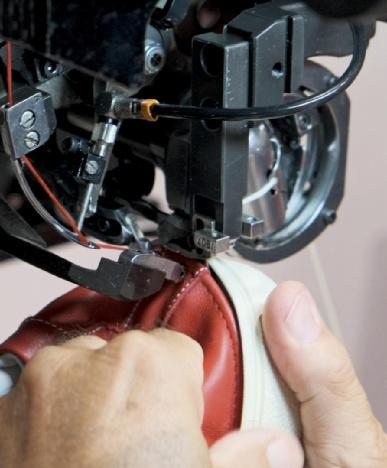
COMEC
AUTOMATIC SKIVING MACHINE SC23 (INDUSTRY 4.0) FOR SOLES MADE OF LEATHER, THUNIT OR OTHER MATERIAL
Automatic speed and phase adjustments via PLC system
Easy construction and positioning of the roller that copies the pattern to be skived out and improves cutting.
Automatic vertical loader fully adjustable according to sole patterns and in phase with the roller. Transport of the pieces is done by a suction cup system.
Since the machine is perfectly on axis, it is easy to change the settings to make left and right pieces.
Regolazioni automatiche di velocità e messa in fase tramite sistema PLC
Facilità nella costruzione e posizionamento della matrice che copia la sagoma da scarnire e ne migliora il taglio.
Caricatore automatico verticale completamente regolabile in base ai modelli di suola e in fase con la matrice. Il trasporto dei pezzi è effettuato da un sistema di ventose.
Il cambio di impostazione per realizzare i pezzi destri e sinistri è semplice, essendo la macchina perfettamente in asse.

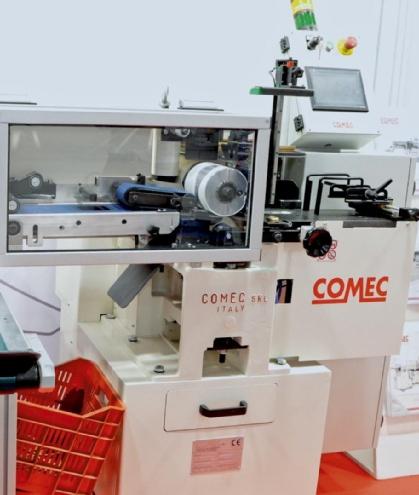
WATCH THE VIDEO WATCH THE VIDEO
SIMAC TANNING TECH 237 INNOVATION
PROCESS AUTOMATION, PROCESS BETTERMENT, SPEED AND EFFICIENCY PROCESS AUTOMATION, PROCESS BETTERMENT, ACCURACY, SPEED AND EFFICIENCY SIMAC TANNING TECH 71
COMELZ
DATA COLLECTION AND PERFORMANCE ANALYSIS PORTAL
Aurelia is Comelz's platform that collects data from devices and analyzes them.
The patterns to be cut are recorded for each individual work order. Digital leather inventory can also be organised in the platform to determine cutting yields.
Aurelia è la piattaforma di Comelz che raccoglie i dati delle macchine e permette di analizzarli.
Per ogni singolo ordine di lavoro sono registrati i pezzi da tagliare. È possibile mantenere nella piattaforma anche il magazzino digitale dei materiali per calcolare le rese di taglio.

COMELZ
AUTOMATIC DEFECT RECOGNITION ON NEK TABLES
The Comelz table can now pull the leather and allow more accurate highlighting of defects.
The high-resolution cameras and the lights located to best illuminate the surface of the leather.
The operator can still integrate the automatically collected information and thus train the algorithm.
Ora il tavolo può tirare la pelle e consentire una evidenziazione più precisa dei difetti.
Il sistema di telecamere ad alta risoluzione e di luci posizionate per illuminare al meglio la superficie della pelle.
L'operatore può comunque intervenire per integrare le informazioni raccolte automaticamente ed allenare in questo modo l'algoritmo.

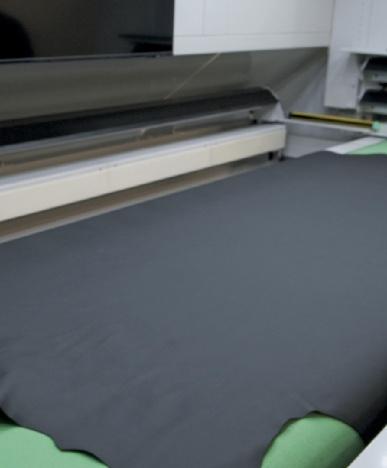
WATCH THE VIDEO WATCH THE VIDEO
238 SIMAC TANNING TECH INNOVATION
PROCESS AUTOMATION, PROCESS BETTERMENT, DIGITAL DATA PROCESS BETTERMENT, ACCURACY, PRODUCT QUALITY, QUALITY CONTROL 72 SIMAC TANNING TECH
CO.ME.TA
AUTOMATION FOR SEWING AND TRIMMING HANDLES IN LEATHER GOODS
The machine was created for trimming the handles of briefcases, bags, pochettes.
It automatically recognizes the length and position of the handle, not depending on the precision with which the operator prepares the piece.
The system makes it possible to reproduce an identical seam on each handle regardless of its length or position, without varying the stitch length, which can be chosen by the operator.
In the last step, excess material is trimmed according to the distance chosen by the operator.
La macchina nasce per rifilare i manici di ventiquattrore, borse, pochette.
Riconosce in automatico la lunghezza e la posizione del manico, non dipendendo dalla precisione con cui l'operatore prepara il pezzo.
Il sistema permette di riproporre una cucitura identica su ogni manico a prescindere dalla sua lunghezza o posizione, senza variare la lunghezza del punto che può essere scelta dall'operatore.
Nell'ultimo passaggio viene rifilato il materiale in eccesso in base alla distanza scelta dall'operatore.

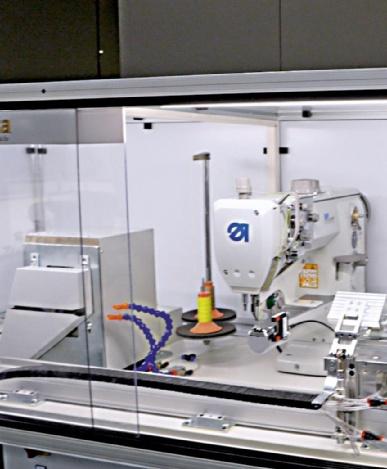
COSMOPOL
SOLE ROUGHING IN PREPARATION FOR GLUING
The Tender X1 model was developed to accurately and quickly perform roughing of flat surfaces.
The parameters are adjusted on the touch screen.
The machine can also work from the side.
The Electa S1.D model is designed for processing non-flat surfaces. The machine can also process part of the material by managing the movement in the two directions forward and backward.
The C70 model can manage the preparation of side-wall soles using different tools.
Il modello Tender X1 è stato sviluppato per eseguire in maniera precisa e veloce la cardatura di superfici piatte.
La regolazione dei parametri avviene attraverso touch screen.
La macchina aperta può lavorare anche di lato.
Il modello Electa S1.D è progettato per la lavorazione di superfici non piatte.
La macchina può lavorare anche parte del materiale gestendo il movimento nei due versi avanti e indietro.
Il modello C70 permette di gestire la preparazione delle suole a cassetta grazie ad un varietà di utensili.

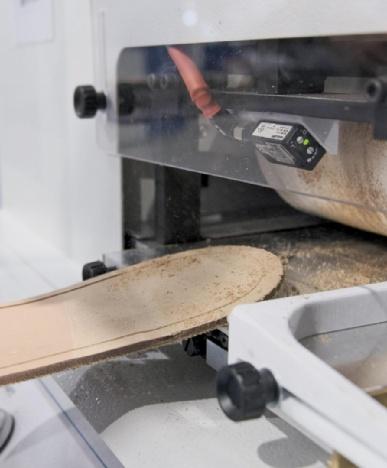
WATCH THE VIDEO WATCH THE VIDEO
240 SIMAC TANNING TECH INNOVATION
PROCESS AUTOMATION, ACCURACY, SPEED AND EFFICIENCY PROCESS BETTERMENT, SPEED AND EFFICIENCY SIMAC TANNING TECH 73 INNOVATION
DESIGN & DEVELOP 3D DESIGN AND DEVELOPMENT OF SHOES WITH RHINOCEROS
PROCESS BETTERMENT, DIGITAL DATA, SPEED AND EFFICIENCY
Botcha is a 3D shoe modeling system based on Rhino. It starts with 2D models in Rhino, the company has also developed Jevero for the 2D pattern making.
Thanks to Botcha's tools, the 2D model is wrapped around the last and the 3D shoe is created to which the sole is added, which is typically already modeled in Rhino.
Botcha è un sistema di modellazione 3D delle scarpe basato su Rhino. Si parte dai modelli 2D in Rhino, la società ha sviluppato anche Jevero per la progettazione tecnica dei modelli 2D. Grazie agli strumenti di Botcha il modello 2D viene avvolto attorno alla forma e creata la scarpa 3D cui è aggiunta la suola che era già stata modellata in Rhino.

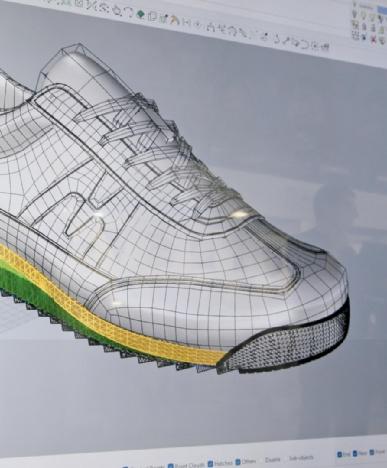
DURKOPP ADLER
DELTA 888 STEP-MOTOR AND MUCH MORE
Many new features on board the new 888, first and foremost the step-motor that guarantees absolute precision to the movement. All operating parameters can be adjusted from the touch screen panel. The new magnetic sensor detects the thickness of the material and automatically adjusts the stitch length and other parameters such as thread tension.
All the "e" series machines have energy-saving features such as automatic shutdown after a number of minutes of inactivity.
Tante le novità a bordo della nuova 888, in primo luogo il motore passo-passo che garantisce una precisione assoluta al movimento. Tutti i parametri di funzionamento sono regolabili dal pannello touch screen. Il nuovo sensore magnetico rileva lo spessore del materiale e regola in automatico la lunghezza del punto e altri parametri quali la tensione del filo. Tutte le macchine della serie "e" hanno funzioni di risparmio energetico come lo spegnimento automatico dopo un numero di minuti di inattività.

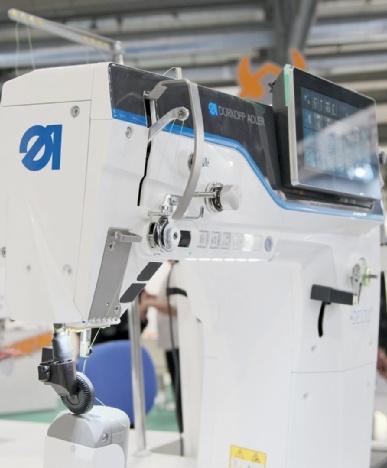
WATCH THE
THE
VIDEO WATCH
VIDEO
SIMAC TANNING TECH 241 INNOVATION
PROCESS BETTERMENT, SUSTAINABILITY, ACCURACY, ENERGY SAVING, SPEED
EFFICIENCY 74 SIMAC TANNING TECH INNOVATION
PROCESS AUTOMATION,
AND
EGAS CONSULTING
PRODUCTS
The leather cold molding system presented in 2022 has been refined and is now performing quite well on other materials.
Accurate molding of nabuck leather on fussbeds that preserves the typical "writing" effect.
The last can be used as a mold to recreate the artisan process that is typically performed by wetting the leather and pulling it over the last. Shaping without heat allows the grain of the leather to remain intact.
Il sistema di formatura della pelle presentato nel 2022 è stato messo a punto ed ora è efficace anche su altri materiali. Insellatura dei fussbed anche su pelle nabuck che non perde l'effetto "scrivente" tipico.
La forma può essere usata come clichè per ricreare il procedimento artigiano che viene eseguito tipicamente bagnando la pelle e tirandola sulla forma.
La sagomatura senza calore permette di mantenere intatto il fiore della pelle.

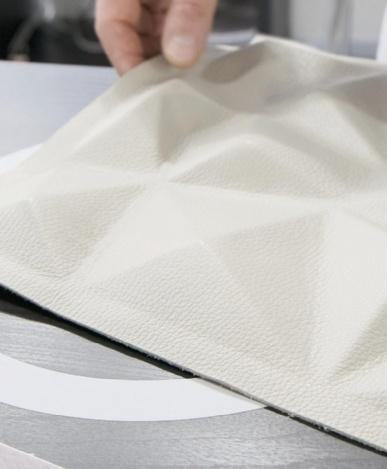
ELETTROTECNICA BC
VACUUM OVEN AND REFRIGERATOR
All BC machines today are equipped with touch screens for faster and more precise adjustment of operating parameters.
Trolleys for automatic transport of 4+4 shoes inside the tunnels. The vacuum has been placed at the end of the tunnel of the ovens and refrigerators.
This proocess completely removes moisture from the footwear with all the obvious advantages that come with it.
Tutte le macchine BC oggi sono dotate di touch screen per una regolazione dei parametri di funzionamento più veloce e precisa. Carrelli per trasporto automatico di 4+4 scarpe all'interno dei tunnel. È stata posizionata una campana per il sottovuoto al termine del tunnel dei forni e dei frigo.
Il sottovuoto toglie completamente l'umidità dalle calzature con tutti gli evidenti vantaggi che ne derivano.

WATCH THE VIDEO WATCH THE VIDEO
242 SIMAC TANNING TECH INNOVATION
COLD THERMO-MOLDING NOW WORKS PROPERLY NOT ONLY ON LEATHER
PROCESS AUTOMATION, PROCESS BETTERMENT, PRODUCTS BETTERMENT, DIGITAL DATA, PRODUCT QUALITY, SPEED AND EFFICIENCY SIMAC TANNING TECH 75 INNOVATION
BETTERMENT, PRODUCT QUALITY
ELITRON THE BOOSTER CUTTING SYSTEM
Featuring two separate work areas, Booster is a high-productivity system that can have up to 7 tools on board for all cutting jobs.
It features the most advanced camera recognition technology for printed materials and leather: the Seeker System recognition technology. The sophisticated camera and software system identifies printed reference points and uses them to synchronize and manage the cutting path with extreme precision, automatically.
Dotato di due aree di lavoro distinte, Booster è un sistema ad alta produttività che può avere a bordo fino a 7 utensili per tutti i lavori di taglio. Presenta la più avanzata tecnologia di riconoscimento con fotocamera per materiali stampati e pelle: la tecnologia di riconoscimento Seeker System. Il sofisticato sistema di fotocamere e software identifica i punti di riferimento stampati e li utilizza per sincronizzare e gestire il percorso di taglio con estrema precisione, in modo automatico.
WATCH THE VIDEO

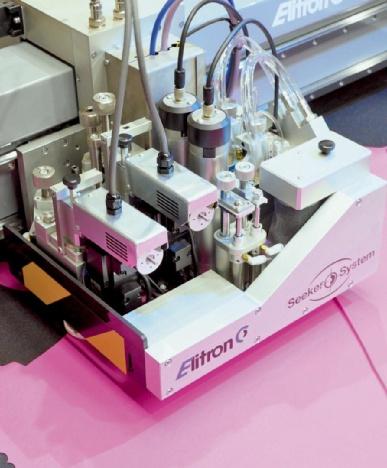
FALMACH
BOTTOM ROUGHING, HEALTH AND SAFETY AT ANOTHER LEVEL
The most advanced roughing machine on the market today. A blade of air protects the operator and the powerful vacuum system combined with sensors that detect the amount of dust keep the work environment healthy.
Ergonomic adjustments and simple and effective machine set-up. Operating parameters adjustable from touch screen and machine 4.0 remotely monitorable.
HEPA filters, "cyclonic" dust extraction technology and dual fire suppression system unmatched in the industry.
La macchina cardatrice più avanzata attualmente sul mercato. Una lama d'aria protegge l'operatore e il potente sistema di aspirazione unito ai sensori che rilevano la quantità di particolato mantengono l'ambiente di lavoro salubre.
Regolazioni ergonomiche e set-up della macchina semplici ed efficaci. Parametri di funzionamento regolabili da touch screen e macchina 4.0 monitorabile da remoto.
Filtri HEPA, tecnologia "ciclonica" per l'aspirazione polveri e doppio sistema antincendio senza eguali nel settore.
WATCH THE VIDEO

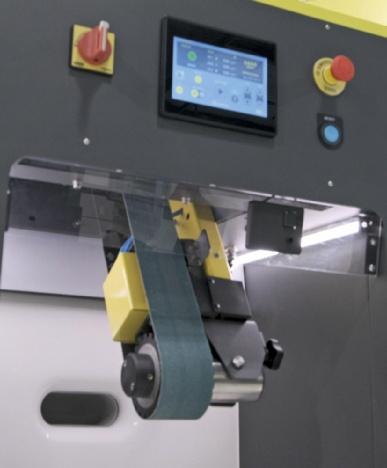
246 SIMAC TANNING TECH INNOVATION
PROCESS AUTOMATION, ACCURACY, SPEED AND EFFICIENCY HEALTH AND SAFETY, DIGITAL DATA, WORK ENVIRONMENT 76 SIMAC TANNING TECH
FIORETTO MUCH LONGER-LASTING STAMPS
The collaboration between Fioretto and the Stand Up company from Padua leads to the presentation of the Improlux patent.
The system makes up for the shortcomings of traditional gold or silver stamping, whose hold is always very labile and depends heavily on the bottom of the leather. The Improlux system first places a glue on the piece and then adds a foil. This ensures a greater mechanical seal and thus a better quality of stamping.
The various steps are all done on board the machine ensuring industrial-level productivity.
La collaborazione fra Fioretto e la società Stand Up di Padova porta alla presentazione del brevetto Improlux.
Il sistema permette di sopperire alle mancanze della tradizionale tibratura in oro o argento, la cui tenuta è sempre labile e dipende molto dal fondo della pelle. Il sistema Improlux prima posiziona una colla sul pezzo per poi aggiungere una lamina. Ciò assicura una maggior tenuta meccanica e quindi una qualità migliore della timbratura.
I vari passaggi vengono tutti realizzati a bordo macchina garantendo una produttività di livello industriale.

FAV – FRATELLI ALBERTI LUBRICATION SYSTEM FOR FLESHING MACHINES
Innovative lubrication system for fleshing machines for tips and counters. The spray and drip system are combined.
Coolant is injected in the form of droplets but a pump allows the flow to be channeled more precisely.
Advantages:
- optimized lubricant consumption
- easier maintenance of the machine.
The system can also be implemented on machines already in use.
Innovativo sistema di lubrificazione per le scarnitrici dedicate a puntali e contrafforti.
Il sistema di nebulizzazione e il sistema a goccia vengono combinati. Il liquido refrigerante viene iniettato sottoforma di gocce ma una pompa permette di incanalare il flusso in maniera più precisa.
Vantaggi:
- consumo ottimizzato del lubrificante
- una manutenzione più semplice della macchina.
Il sistema può essere implementato anche su macchine già in uso

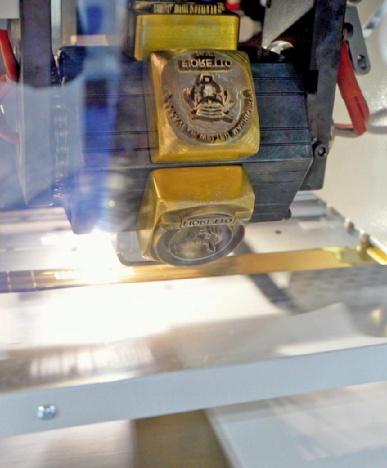
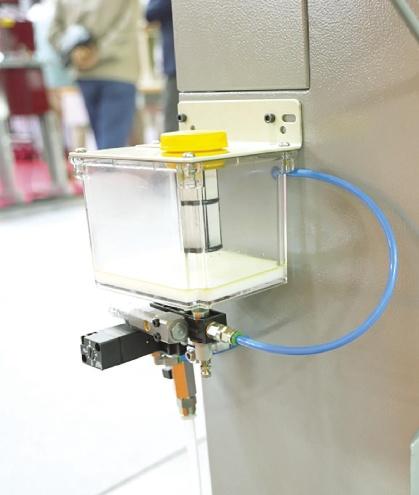
WATCH THE VIDEO WATCH THE VIDEO
SIMAC TANNING TECH 247 INNOVATION
PROCESS
PROCESS BETTERMENT, PRODUCTS BETTERMENT, ACCURACY, PRODUCT QUALITY, SPEED AND
PRODUCTS BETTERMENT, ACCURACY, PRODUCT QUALITY SIMAC TANNING TECH 77
AUTOMATION,
EFFICIENCY
FAV – FRATELLI ALBERTI
SPLITTING MACHINE 4.0
The heart of the machine has remained unchanged, but now its management can be done remotely as is already the case with the other machine lines, skiving and combining machines.
Automatic adjustments can be made, save them online and share sets of settings.
Direct connection with the order department is possible.
Il cuore della macchina è rimasto invariato, ma ora la sua gestione può essere effettuata da remoto come già accade per le altre linee di macchine, scarnitrice e accoppiatrice.
È possibile effettuare regolazioni automatiche, salvarle online e condividere i set di impostazioni.
È possibile il collegamento diretto con l'ufficio ordini.

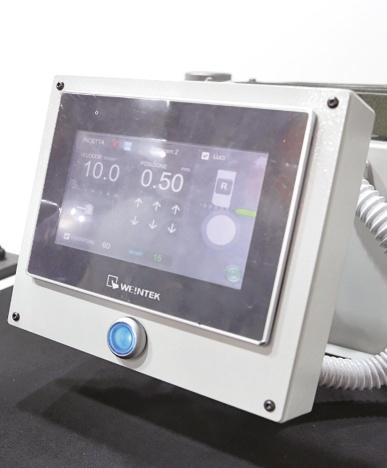
GALLI ENERGY SAVING
Today, energy saving is a priority for any company. Galli's new ovens and dryers reduce consumption by up to 30 percent. Internal supports can be configured by the customer according to their needs.
Maximum modularity of work areas designed with the customer.
Oggi il risparmio energetico è una priorità per qualsiasi azienda. I nuovi forni ed essicatoi della Galli riducono fino al 30% i consumi. I supporti interni sono configurabili dal cliente secondo le proprie necessità. Massima modularità delle isole di lavoro studiate con il cliente.

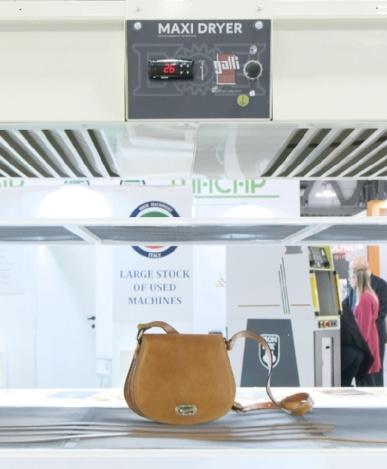
WATCH THE VIDEO WATCH THE VIDEO
248 SIMAC TANNING TECH INNOVATION
PROCESS BETTERMENT – DIGITAL DATA SUSTAINABILITY, ENERGY SAVING 78 SIMAC TANNING TECH
GALLI MACHINES ARE ALWAYS SMARTER
Electronics and touch controls are now fitted to all Galli machines. Companies today demand flexibility and certainty of quality.
All machine control parameters can be saved and recalled by the operator for fast and precise setup.
Machines are interconnected (industry 4.0) and allow the management of remotely dispatched jobs.
L'elettronica ed i controlli touch sono oggi montati su tutte le macchine Galli.
Le aziende oggi chiedono flessibilità e certezza di qualità. Tutti i parametri di regolazione della macchina possono essere salvati e richiamati dall'operatore per un setup veloce e preciso. Le macchine sono interconnesse (Industry 4.0) e permettono la gestione di commesse inviate da remoto.

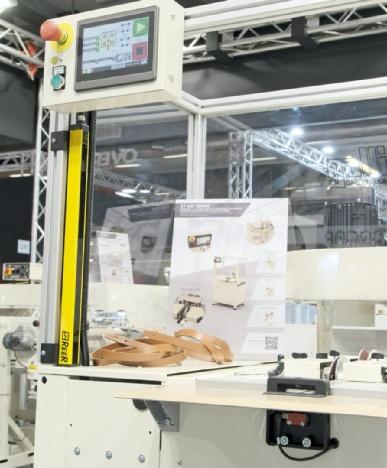
GILMA TECHNOLOGY
AUTOMATIC CALCULATION OF PATTERN
PERIMETER TO DETERMINE CUTTING-DIES PRICING
G-MP2 is an automatic pattern part vision system that calculates the perimeter of each pattern and determines the cost of dies. Several pieces can all be entered together under the vision system. The cost of a die depends on the length of the steel blade and thus on the calculation of the perimeter of each pattern. The system determines the perimeter of each piece in real time.
G-MP2 è un sistema di visione automatica dei pezzi dei modelli che calcola il perimetro di ciascun pezzo e determina il costo delle fustelle. Diversi pezzi possono essere inseriti tutti assieme sotto il sistema di visione. Il costo di una fustella dipende dalla lunghezza della lama in acciaio e quindi dal calcolo del perimetro di ciascun pezzo. Il sistema determina in tempo reale il perimetro di ciascun pezzo.

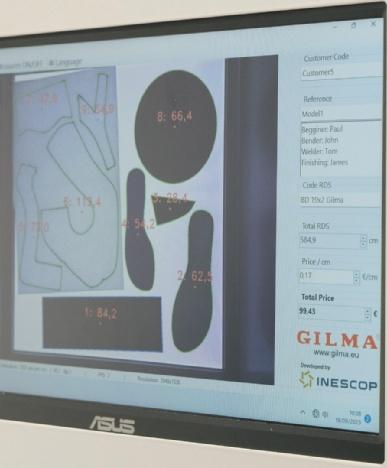
WATCH THE VIDEO WATCH THE VIDEO
250 SIMAC TANNING TECH INNOVATION
PROCESS AUTOMATION, DIGITAL DATA, SPEED AND EFFICIENCY PROCESS AUTOMATION, DIGITAL DATA SIMAC TANNING TECH 79 INNOVATION
GTO ROBOT FOR TAMPOGRAPHIC PRINTING
The robot can perform up to 4 different prints by drawing ink from 4 separate tanks.
Speed and accuracy of execution.
Il robot può eseguire fino a 4 diverse stampe attingendo l'inchiostro da 4 vasche separate.
Velocità e precisione di esecuzione.

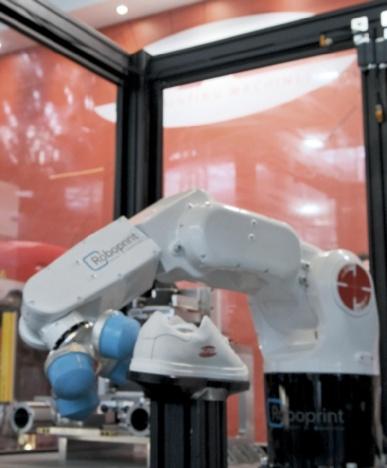
HIWIN
MECHATRONICS SERVING FOOTWEAR AND LEATHER GOODS MACHINES
Hiwin, a leading mechatronics company, serves several industries including footwear and leather goods machines.
Many machines in the industry adopt Hiwin systems, such as linear guides, ballscrews, linear axes, harmonic gearboxes... The manipulator robot is capable of moving and automating a loading line or end of line in the leather goods or soles industry. The tools that the robot can use are defined according to the customer's needs.
Hiwin, azienda leader nel settore della meccatronica, serve diversi settori, fra cui quello delle macchine per calzature e pelletteria. Molte macchine adottano i sistemi Hiwin, come guide lineari, viti a ricircolo di sfere, assi lineari, riduttori armonici...
Il robot manipolatore è in grado di movimentare e automatizzare una linea di carico o un fine linea nel campo della pelletteria o dei suolifici. Gli strumenti che il robot può utilizzare sono definiti in base alle esigenze del cliente.

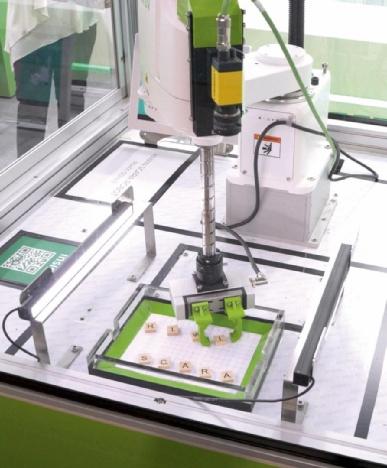
THE VIDEO WATCH THE VIDEO
WATCH
252 SIMAC TANNING TECH INNOVATION
PROCESS AUTOMATION, ACCURACY, SPEED AND EFFICIENCY PROCESS AUTOMATION, ACCURACY, SPEED AND EFFICIENCY 80 SIMAC TANNING TECH
LAMEBO
SPLITTING BANDKNIVES ALSO MAKE INNOVATION
PROCESS BETTERMENT, ACCURACY
European steels, customization, fast delivery and continuous research on materials, these are some characteristics of industrial splitting bandknives completely Made in Italy.
Traceability and quality control always come first Sustainability at the forefront of both production facilities and processes.
Acciai europei, personalizzazione, consegne rapide e ricerca continua sui materiali: alcune caratteristiche delle lame a spaccare industriali completamente Made in Italy.
Tracciabilità e controllo qualità sempre al primo posto Sostenibilità in primo piano sia negli impianti di produzione che nei processi.

MAIN GROUP POLYURETHANE RECYCLING SYSTEM
SUSTAINABILITY, RESOURCE MANAGEMENT
The system recovers 5% PU average waste made during the processing stages of the supply chain and destined for landfill. The material is shredded, pulverized and fed back into the footwear production cycle. A production scrap recovery kit is combined with rotary injection molding carousels. The scraps are then conveyed to a material shredding and pulverization line. The resulting powder ends up in a pre-mixing tank (15 percent recycled product versus 85 percent virgin material) and then fed back into the production loop. Not only PU can be recycled, but other families of materials (EVA or rubber, for example) can also be incorporated into the new blends.
Il sistema recupera il 5% di scarto di PU realizzato in media durante le fasi di lavorazione della filiera e destinato alla discarica. Il materiale viene triturato, polverizzato e inserito di nuovo all'interno del ciclo produttivo delle calzature. Un kit di recupero degli sfridi di produzione viene abbinato alle giostre rotative per iniezione. Gli scarti vengono poi convogliati verso una linea di triturazione e polverizzazione del materiale. La polvere così ottenuta finisce in una cisterna di pre-miscelazione (15% di prodotto riciclato a fronte di un 85% di materiale vergine) e quindi immessa di nuovo nel circolo produttivo. È possibile riciclare PU, ma anche altre famiglie di materiali (EVA o gomma, per esempio) possono essere inglobate nelle nuove mescole.

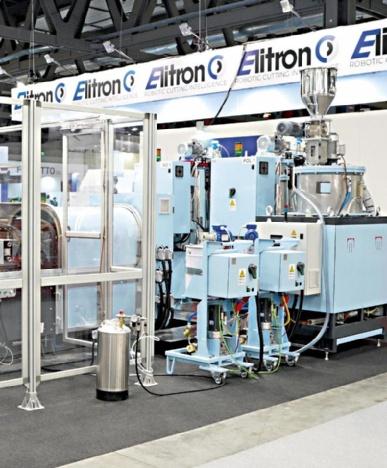
WATCH THE VIDEO WATCH THE VIDEO
SIMAC TANNING TECH 253 INNOVATION
SIMAC TANNING TECH 81
MAIN GROUP AUTOMATION GAMMA, FOR AUTOMATED GLUING OF FASHION SOLES
The Gamma machine can glue not only molded soles but also models with a shape that is not easily transported.
A clamping system combined with a robotic arm that follows the nonlinear conformations of the structures allows for precise application of the adhesive.
The vision system in combination with the cad-cam system allows perfect programming of the machine.
La macchina Gamma può incollare oltre alle suole stampate anche i modelli che presentano una forma non facilmente trasportabile.
Un sistema di bloccaggio unito a un braccio robotico che segue le conformazioni non lineari delle strutture consentono l'applicazione precisa dell'adesivo.
Il sistema di visione in combinazione con il sistema cad-cam permette la perfetta programmazione della macchina.

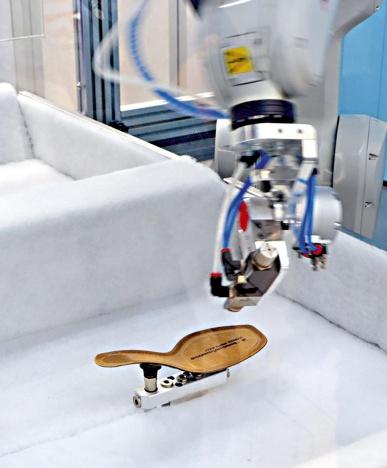
MASTEK
CUTTING-EDGE NON-YELLOWING ADHESIVES
Expanded range of non-yellowing products designed for leather goods and footwear. Adhesives that do not undergo the color variations that spoils quality productions. FIXECÓ 836, a water-based spray-applicable non-yellowing product, is designed specifically for materials that are more difficult to bond. Its variants 887 or 883 applicable by brush or sponge have the same characteristics and can be applied to leathers and fabrics, including technical ones. FIXECÓ 2330 is another non-yellowing product, but designed to solve bonding problems on metal and wood.
Ampliata la gamma di prodotti non ingiallenti studiati per pelletteria e calzatura. Adesivi che non subiscono il viraggio di colore che rovina le produzioni di qualità. Il FiXECÓ 836, prodotto a base acqua da applicare a spruzzo non ingiallente è studiato nello specifico per i materiali più difficili da incollare. Le sue varianti 887 o 883 applicabili a pennello o con spugnetta presentano le stesse caratteristiche e sono applicabili su pelli e tessuti, anche tecnici. Il FiXECÓ 2330 è un altro prodotto anti-ingiallente, ma studiato per risolvere le problematiche di incollaggio su metallo e legno.

THE
WATCH THE VIDEO WATCH
VIDEO
254 SIMAC TANNING TECH INNOVATION
PROCESS AUTOMATION, ACCURACY, SPEED AND EFFICIENCY PRODUCTS BETTERMENT, ACCURACY, PRODUCT QUALITY 82 SIMAC TANNING TECH
MCM LOCKING UPPERS WITH HOOKS IN THE EYELETS
PROCESS BETTERMENT, SPEED AND EFFICIENCY
The machine allows plastic hooks to be inserted into the eyelets to lock the upper before assembly without using laces. The operation can also be performed on the lining side when the upper material is very delicate.
The positions of the hooks can be changed quickly and simply.
La macchina consente di inserire i ganci di plastica negli occhielli per bloccare la tomaia prima del montaggio senza usare le stringhe. L'operazione può essere eseguita anche lato fodera quando il materiale di tomaia è molto delicato.
Le posizioni dei ganci sono modificabili velocemente e semplicemente.

MICC
COLOR DISPERSION FOR PU SHOE SOLES
PRODUCTS BETTERMENT, PRODUCT QUALITY
For over 35 years, the company has been in the textile, leather, sole industry. It produces pigment dispersion inks, coatings, release agents for PU, PVC, TPU, TPR footwear. The company specializes in the production of fluorescent, prismatic, and color shifting colors. Polycol Color Dispersions are a unique technology for coloring Polyurethanes. The colorants selected for the Polycol Color Dispersions do not change the shade when they are exposed to the temperature generated in the course of the foaming process.
Da oltre 35 anni l’azienda opera nel settore dell'industria tessile, della pelle, delle suole. Produce inchiostri a dispersione di colore, rivestimenti, agenti di rilascio per calzature in PU, PVC, TPU, TPR. L'azienda è specializzata nella realizzazione di colorazioni fluo, prismatiche, e in grado di cambiare colore. Le dispersioni di colore Polycol sono una tecnologia unica per la colorazione dei poliuretani. I coloranti selezionati per le dispersioni colore Polycol non cambiano tonalità quando sono esposti alla temperatura generata dal processo di schiumatura.

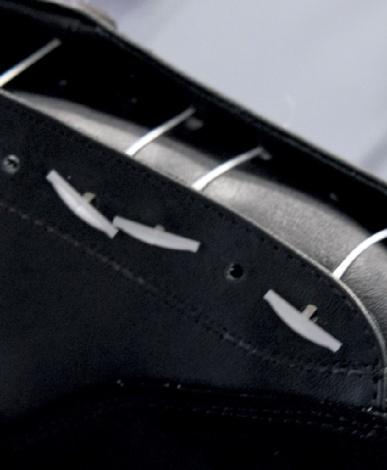
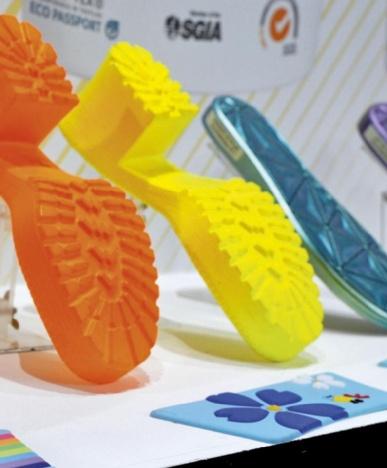
WATCH THE VIDEO
THE VIDEO
WATCH
256 SIMAC TANNING TECH INNOVATION
SIMAC TANNING TECH 83 INNOVATION
NUOVA GINEV
ACCURATE SMALL LEATHER GOODS WORKING WITH MOLDS
Precision workings with press and molds. Folding, cutting and stamping can be performed. Technology requires absolute precision in part design but allows complex operations to be performed in a matter of seconds.
Lavorazioni di precisione con pressa e stampo. Possono essere eseguite ripiegature, tagli e stampa. La tecnologia richiede una precisione assoluta nella progettazione dei pezzi ma permette di eseguire operazioni complesse in pochissimi secondi.

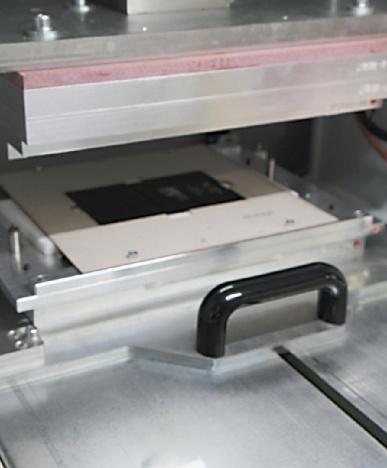
OLYMPIC
Hot and then cold station for unparalleled crimping. Operating parameters and programs manageable from touch screen. Quick and easy replacement of molds.
Stazione calda e poi fredda per una cambratura senza confronti. Parametri di funzionamento e programmi gestibili da touch screen. Sostituzione attrezzature semplice e veloce.

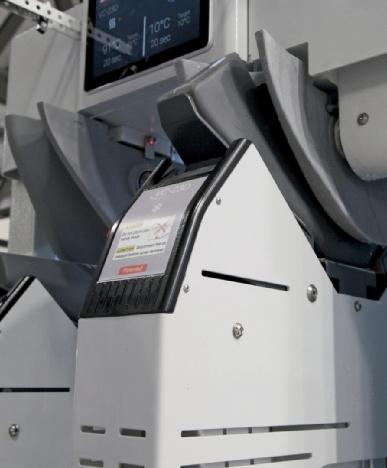
WATCH THE VIDEO WATCH THE VIDEO
SIMAC TANNING TECH 257 INNOVATION
VAMP CRIMPING AT THE HIGHEST LEVEL PRODUCTS BETTERMENT, ACCURACY, PRODUCT QUALITY PRODUCTS BETTERMENT, PRODUCT QUALITY 84 SIMAC TANNING TECH INNOVATION
Hot and cold station for tip pre-shaping. Operating parameters and programs manageable by touch screen.
Stazione calda e fredda per una pre-sagomatura della punta. Parametri di funzionamento e programmi gestibili da touch screen.
OLYMPIC TOE PRE-SHAPING OMAC NEW ULTRASONIC HUMIDIFICATION SYSTEM

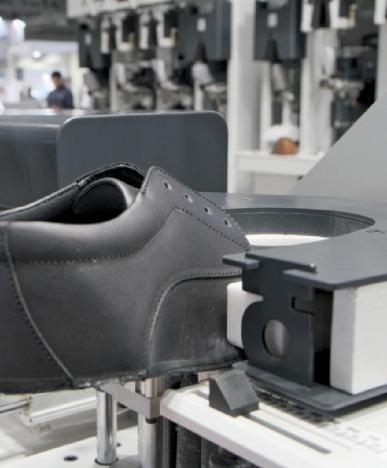
A new technology based on ultrasonic plates generates cold misting that humidifies the leather without wetting it. All Omac machines have a simple touch screen interface to adjust, save and recall operating parameters the leather remains soft and workable but absolutely not wet.
Una nuova tecnologia basata su piastre ad ultrasuoni genera una nebulizzazione a freddo che umidifica la pelle senza bagnarla. Tutte le macchine Omac hanno una interfaccia semplice su touch screen per regolare, salvare e richiamare i parametri di funzionamento. La pelle rimane morbida e lavorabile ma assolutamente non bagnata.

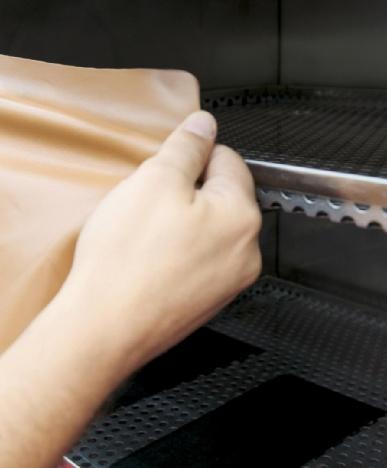
THE VIDEO WATCH THE VIDEO
WATCH
258 SIMAC TANNING TECH INNOVATION
PRODUCTS BETTERMENT, ACCURACY, PRODUCT QUALITY PRODUCTS BETTERMENT, PRODUCT QUALITY SIMAC TANNING TECH 85 INNOVATION
OMAC
EFFICIENT AND ERGONOMIC OVENS AND DRYERS
PROCESS BETTERMENT, DIGITAL DATA, ERGONOMICS
Omac presents the new line of ovens and dryers.
The operator can open and close with a simple movement of the foot. All paremeters are controllable in real time and adjustable from the touch screen.
Each zone can be adjusted independently.
Presentata anche la nuova linea di forni ed essicatoi.
L'operatore può aprire e chiudere con un semplice movimento del piede. Tutti i paremetri sono controllabili in tempo reale e regolabili dal touch screen.
Ogni zona può essere regolata in maniera indipendente.

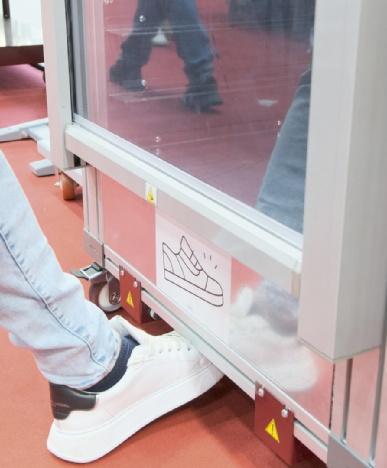
ORMAC
ROTOR 142 RC CARDING MACHINE
EVEN FOR HEAVY MATERIALS
PROCESS BETTERMENT, ACCURACY, PRODUCT QUALITY
Patented carding machine with double head for independent sequential processing.
Diamond brush, optical pointer for programming and touch screen with graphic display of the working path.
The classic wire brush for carding can be replaced by an Invidia Router capable of removing heavy and difficult materials.
Ribattitrice cardatrice brevettata con doppia testa per lavorazioni sequenziali indipendenti.
Diamantatore spazzola, puntatore ottico per la programmazione e touch screen con visualizzazione grafica del percorso di lavoro.
La classica spazzola a fili metallici per la cardatura può essere sostituita da una Fresa Invidia in grado di asportare materiali pesanti e difficili.

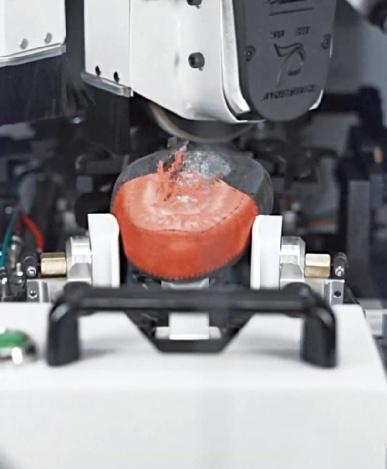
VIDEO
THE VIDEO
WATCH THE
WATCH
SIMAC TANNING TECH 259 INNOVATION
86 SIMAC TANNING TECH INNOVATION
PRISMA TECH
ICAD3D+
INTEGRATES BLENDER RENDERING AND NEW COLLABORATION TOOLS
Within Icad3D+, a few simple parameters are set, and automatically and transparently Blender's powerful render engine is leveraged to achieve quality images.
New developments in the Workspace platform integrated with Icad3d+ for collaboration among workgroups.
Integration with the Wacom Cintiq for a user experience more geared towards designers.
All'interno di Icad3D+ si impostano pochi semplici parametri e in maniera automatica e trasparente viene sfruttato il potente motore di render di Blender per ottenere immagini di qualità.
Nuovi sviluppi nella piattaforma Workspace integrata con Icad3d+ per la collaborazione tra i gruppi di lavoro aziendali. Presentata in anteprima anche l'integrazione con la Wacom Cintiq per una interfaccia di lavoro dedicata ai designer.

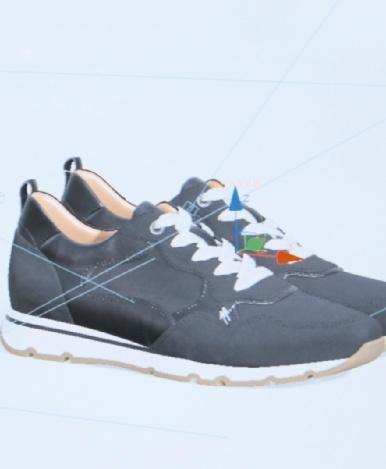
R.A.M.
NEW MODELS OF AUTOMATIC SEWING MACHINES TO COVER AN ADDITIONAL MARKET PRICE
Introduced alternating-arm pallet transport technology to offer the market a lower-priced alternative while maintaining the company's typical quality.
The head remains fixed and the frame is moved.
The frame on board the machine allows to intervene on the work program and modify it.
For perfect stitching even in the most difficult places.
Introdotta la tecnologia di trasporto del pallet a bracci alternati per offrire al mercato una alternativa a prezzo minore mantenendo la qualità tipica della azienda.
La testa resta fissa e viene movimentato il pallet. Il pannello a bordo macchine consente di intervenire sul programma di lavoro e modificarlo.
Per una cucitura perfetta anche nei punti più difficili.

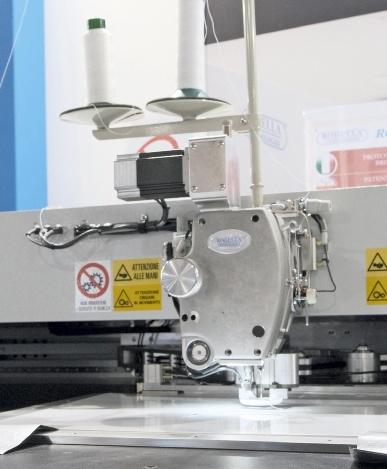
WATCH THE VIDEO WATCH THE VIDEO
260 SIMAC TANNING TECH INNOVATION
PROCESS BETTERMENT, DIGITAL DATA PROCESS BETTERMENT SIMAC TANNING TECH 87 INNOVATION
RAM SYSTEM
DIGITAL WATER-BASED PRINTING FOR SYNTHETICS
PRODUCTS
Digital printer designed to print on large synthetic products (up to 190 cm span) and on various thicknesses.
The novelty is the use of totally water-based inks that have no degree of toxicity or harmfulness.
Once the printing is done, the color is fixed with a heat source that allows the water to evaporate, fixing the pigment on the fabric. Very high resistance to elongation and abrasion. The print is impalpable to the touch.
Stampante digitale studiata per stampare su prodotti sintetici di grandi dimensioni (fino a 190 cm di luce) e su vari spessori. La novità è l'utilizzo di inchiostri totalmente a base acqua che non presenta alcun grado di tossicità o nocività.
Una volta effettuata la stampa, il colore viene fissato con una fonte di calore che permette l'evaporazione dell'acqua fissando il pigmento sul tessuto.
Altissima resistenza agli allungamenti e all'abrasione. La stampa risulta impalpabile al tatto.

SABAL
DETACHMENT OF THE HEEL ALREADY NAILED
Thanks to a mix of heat and induction the machine allow the heel to be removed after nailing to fix any inaccuracies.
Grazie ad un mix di calore ed induzione la macchina permettere di rimuovere il tacco dopo l'inchiodatura per sistemare eventuali imprecisioni.

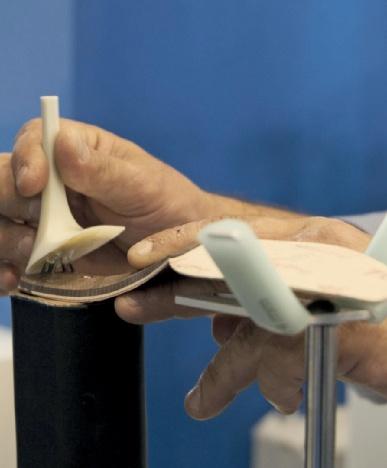
WATCH THE VIDEO WATCH THE VIDEO
262 SIMAC TANNING TECH INNOVATION
PROCESS BETTERMENT 88 SIMAC TANNING TECH
BETTERMENT, SUSTAINABILITY, PRODUCT QUALITY
SAGITTA
SC 75 CR3, SKIVING MACHINE WITH 2 SEPARATE MOTORS FOR
THE KNIFE AND THE FEEDING
Skiving machine complete with table, motor and waste exhauster system with wide container and dust filter.
The sharpening system is mounted on bearings. The sharpening is fast with adjustable pressure.
Equipped with 2 separate motors for the knife and the feeding.
Smussatrice completa di tavolo, motore e sistema di aspirazione scarti con ampio contenitore e filtro polvere.
Sistema di affilatura su cuscinetti. Affilatura ad innesto rapido con pressione regolabile.
La lama ed il trasporto sono azionati da due motori indipendenti.

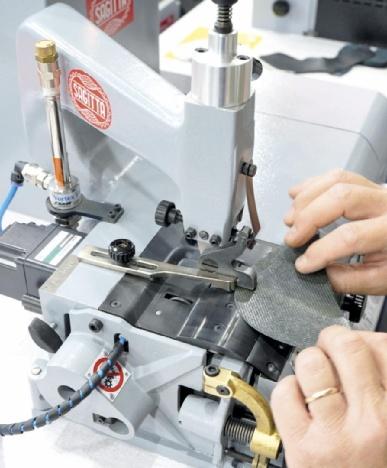
SEIT
EVOLUTION OF INSOLE LASERING
Major leap forward in insole lasering. The process is being automated and made more reliable and less operator-dependent. A 3D scanning system, based on a patent filed by SEIT in 2019, allows for real-time scanning of each individual piece and readjusting machining files based on the scanned product. This process considers every minute difference between part and part and enables the excellent quality demanded by fashion today. The system also improves productivity over previous versions and works autonomously. Finally, a second scan allows the result obtained to be checked.
Importante salto in avanti nella laseratura dei sottopiedi. Il processo viene automatizzato, reso più affidabile e meno dipendente dall'operatore. Un sistema di scansione 3D, basato su un brevetto depositato da SEIT nel 2019, permette di scansionare in tempo reale ogni singolo pezzo e riadattare i file di lavorazione in base al pezzo scansionato. Questo processo considera ogni minima differenza fra pezzo e pezzo e consente di raggiungere l'eccellente qualità richiesta oggi dalla moda. Il sistema migliora anche la produttività rispetto alle versioni precedenti e lavora in autonomia. Una seconda scansione, infine, permette di controllare il risultato ottenuto.

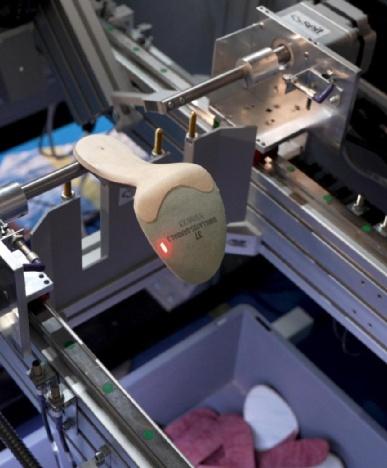
WATCH THE VIDEO
THE VIDEO
WATCH
264 SIMAC TANNING TECH INNOVATION
HEALTH AND SAFETY, PROCESS BETTERMENT, ERGONOMICS, SPEED AND EFFICIENCY, WORK ENVIRONMENT PROCESS AUTOMATION, PROCESS BETTERMENT, PRODUCTS BETTERMENT, ACCURACY, DIGITAL DATA, PRODUCT QUALITY, SPEED AND EFFICIENCY SIMAC TANNING TECH 89 INNOVATION
S.P.S. TECNOLOGIA MECCANICA PLC SYSTEMS FOR A BETTER CONTROL AND SAFETY
PROCESS BETTERMENT, DIGITAL DATA, SPEED AND EFFICIENCY
All automatic machines for applying technical and ornamental small parts are equipped with a PLC system, which allows for greater machine control, greater safety and even more precise management of on-board accident prevention systems. The PLC system also makes it possible to simplify the adjustment of the pneumatic system consisting of many valves that are not easy to manage.
SPS continues to produce technologies tailored to customer needs.
Tutte le macchine automatiche per applicare ornamenti, minuterie e forature, vengono equipaggiate con un sistema PLC che consente un maggior controllo della macchina, una maggior sicurezza e una gestione ancor più precisa dei sistemi di anti-infortunistica a bordo macchina.
Il sistema PLC permette anche di semplificare la regolazione del sistema pneumatico costituito da molte valvole di non facile gestione. SPS continua a produrre tecnologie personalizzate in base alle esigenze del cliente

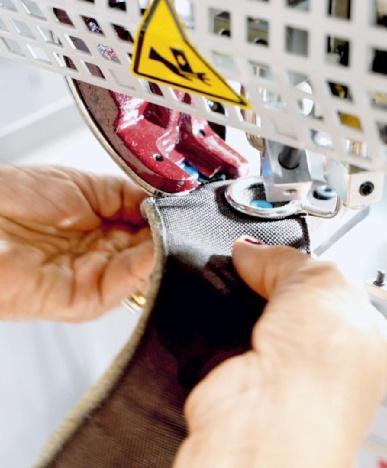
STEMMA
THE RECYCLING OF POLYURETHANE
SUSTAINABILITY, RESOURCE MANAGEMENT
RE-YU Recycling Technology allows polyurethane waste (and more) to be fed back into the production cycle for greater environmental and economic sustainability of processes.
RE-YU Recycling Technology permette di reimmettere nel ciclo produttivo gli scarti del poliuretano (e non solo) per una maggior sostenibilità ambientale ed economica dei processi.

WATCH THE VIDEO WATCH THE VIDEO
SIMAC TANNING TECH 265 INNOVATION
90 SIMAC TANNING TECH INNOVATION
PROCESS BETTERMENT, SPEED AND EFFICIENCY
Insoles preforming machine with automatic extraction and conveyors for a 3.000 pairs daily production in 8 working hours.
The pair of insoles are alternately pressed and the double pressing movement of the upper molds helps for insoles locking.
The rear stop for insole positioning is adjustable.
The collection of insoles is made easier thanks to the automatic unloading of pieces with suckers and thanks to the conveyor belts.
Pressa per la garbatura di sottopiedi con estrazione automatica e nastri di trasporto per una produzione di circa 3000 paia in 8 ore di lavoro.
La pressatura/garbatura dei sottopiedi avviene in modo alternato e un doppio movimento degli stampi superiori agevola il bloccaggio dei sottopiedi
Il fermo posteriore è regolabile per facilitare il posizionamento del sottopiede.
La raccolta dei sottopiedi è facilitata dallo scarico automatico dei pezzi tramite ventose e dai nastri di trasporto.

VOLONTÈ SYSTEM CONVEYOR
CONVEYOR SYSTEMS FOR THE FOOTWEAR AND LEATHER-GOODS INDUSTRIES
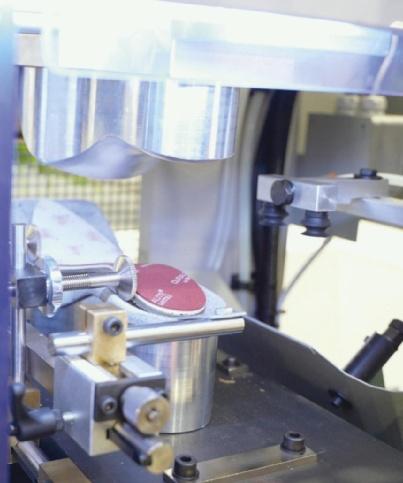
Made in Italy conveyor for the footwear industry, reserving for each customer the possibility of an 'ad hoc' study of new solutions for particular needs.
Wide range of highly reliable conveyor systems for the footwear and leather goods industry, which includes conveyors for use in the seam, assembly, and finishing departments, as well as tunnels to be applied to the conveyors, capable of facilitating suction operations, after gluing, drying, glue reactivation, and cooling. Designed to improve productivity keeping ease of maintenance and robustness.
Nastri trasportatori di produzione italiana per il settore calzaturiero studiati ad hoc per le necessità dei clienti.
Ampia ed affidabile gamma di trasportatori, per calzaturifici e pelletterie, da utilizzare nei reparti giunteria, montaggio, finissaggio, nonché tunnel da applicare sui trasportatori, in grado di agevolare operazioni di aspirazione, dopo incollatura, essicazione, riattivazione colla, raffreddamento. Studiati per incentivare la produttività mantenendo facilità di manutenzione e robustezza

WATCH THE VIDEO WATCH THE VIDEO
266 SIMAC TANNING TECH INNOVATION TECNO
T3000, INSOLES
2
PREFORMING MACHINE
PROCESS AUTOMATION, PROCESS BETTERMENT, DIGITAL DATA, SPEED AND EFFICIENCY SIMAC TANNING TECH 91 INNOVATION
ZÜND
DIVA,
DIGITAL LEATHER ACQUISITION SYSTEM
The system makes it possible to do preparatory operations for cutting more efficient as well as to better manage delocalized production with respect to the materials warehouse. The operator marks quality zones as well as defects and performs manual, or interactive or automatic nesting.
In the case of large volumes, a scan-to-stop can be carried out, which allows you to scan a batch of hides, put them in stock by registering them in the company's management system, performing server-side nesting and drawing up a quality ranking of the hides.
Il sistema consente di rendere più efficienti le operazioni preparatorie al taglio nonché di gestire al meglio le produzioni delocalizzate rispetto al magazzino materiali.
L'operatore marca le zone qualitative così come i difetti ed esegue un nesting manuale, oppure interattivo o automatico.
Nel caso di volumi importanti può essere effettuato uno scan-tostop che permette ti scansionare un batch di pelli, di metterle a magazzino registrandole nel gestionale dell'azienda, effettuando dei nesting lato server e redigendo una classifica di qualità dei pellami.

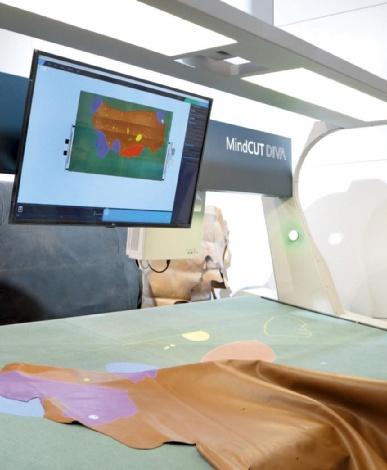
ZÜND
D3, IN-LINE LEATHER CUTTING WITH HIGH PRODUCTIVITY AND PRECISION
D3, an evolution of the G3 model, is a machine used on multiple fronts in both textile and technical fields, including leather goods. A 3-zone machine with loading area, an area equipped with both automatic and interactive acquisition system, and cutting area. All zones are served by a single conveyor belt so as to avoid errors due to material movement. The double bridge of the cutting area (each bridge equipped with 3 interchangeable heads) doubles productivity especially on small parts. The unloading area is equipped with projectors to assist workers in picking up the different parts
D3, evoluzione del modello G3, è una macchina utilizzata su più fronti, sia in ambito tessile che tecnico, tra cui la pelletteria. Una macchina a 3 zone con area di carico, area dotata di sistema di acquisizione sia automatico che interattivo, e area di taglio. Tutte le zone sono servite da un unico nastro trasportatore così da evitare errori dovuti alla traslazione del materiale. Il doppio ponte dell'area di taglio (ogni ponte dotato di 3 teste intercambiabili) raddoppia la produttività soprattutto su pezzi piccoli. L'area di scarico è dotata di proiettori che aiutano gli addetti nel prelievo delle differenti parti

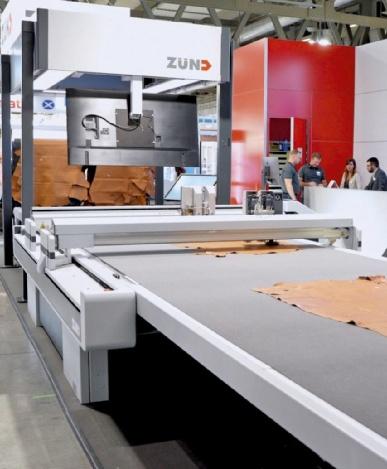
THE
WATCH THE VIDEO WATCH
VIDEO
268 SIMAC TANNING TECH INNOVATION
PROCESS AUTOMATION, PROCESS BETTERMENT, ACCURACY, DIGITAL DATA, QUALITY CONTROL PROCESS AUTOMATION, PROCESS BETTERMENT, ACCURACY, DIGITAL DATA, SPEED AND EFFICIENCY 92 SIMAC TANNING TECH
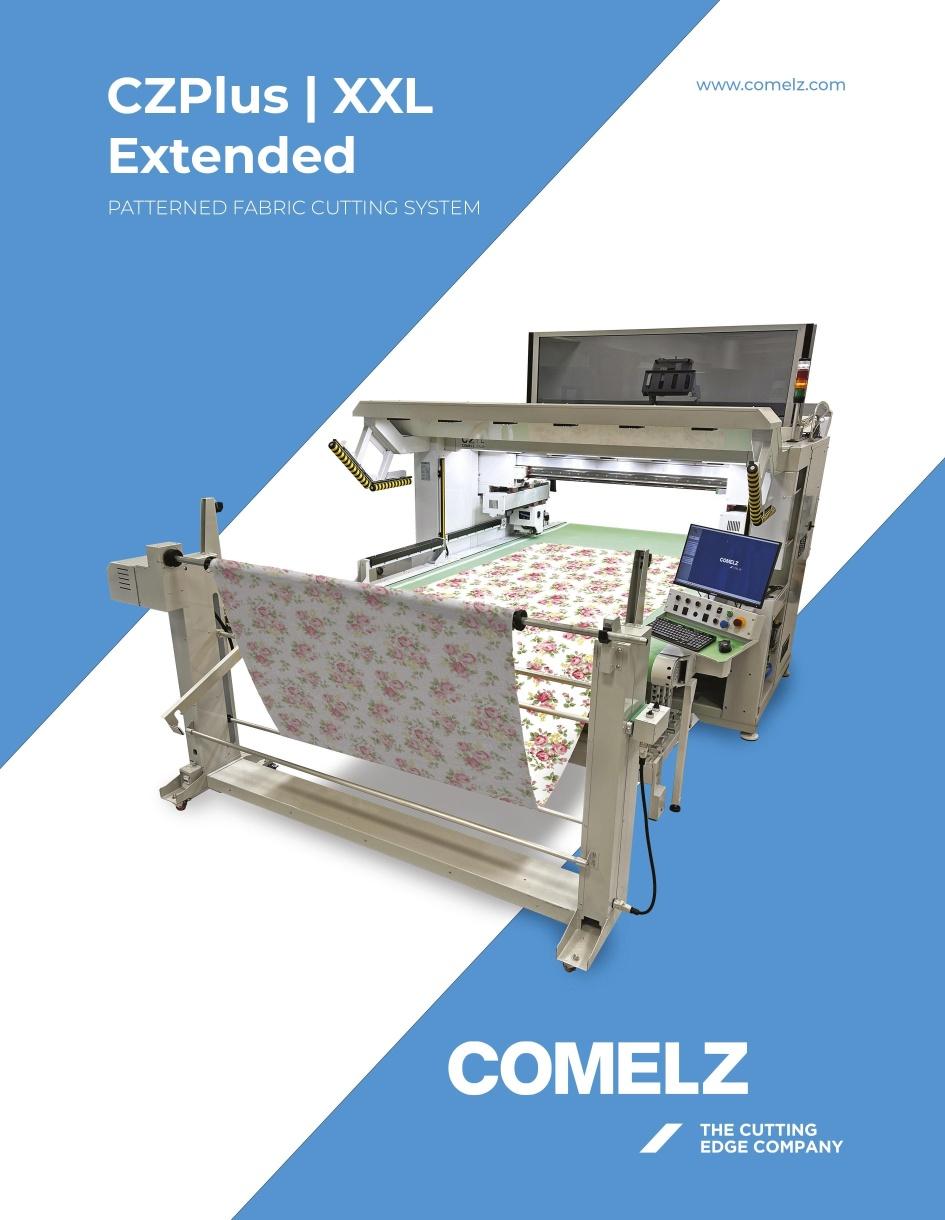
SUSTAINABILITY
New regulations from UE - Second Hand market - US sustainability report
PART OF ARSUTORIA 490
NEW EUROPEAN SUSTAINABILITY REGULATIONS AFFECT EVERYONE, NOT JUST THE BIG NAMES
There is no more time, the new regulations approved at EU level will affect entire production chains, not just the big names. In order not to lose customers, data must be consciously collected, managed and communicated.

“According to EU rules, companies must provide truthful information to consumers and must refrain from deceiving them in order to influence their choices. EU rules on unfair commercial practices allow national enforcement authorities to curb a wide range of unfair commercial practices.” So reads part of the article published at the end of February on the European Commission’s website about Zalando’s commitment, following a dialogue with the European Commission itself, to remove misleading sustainability labels and icons appearing next to products offered on its platform. Indications that could mislead consumers about the environmental characteristics of products. Instead, Zalando will provide clear information about the environmental benefits of products, such as the percentage of recycled materials used. This is just a case study to introduce the topic of this article which would like to make the shoe and bag production chain aware of the important changes coming up on the sustainability front: the Green Deal promoted by the European Union is in full implementation and companies need to be increasingly aware
of this so as to organise themselves adequately to comply with the demands coming from their customers, on pain of a loss of competitiveness that could put them out of the market.
STATE OF THE ART OF EUROPEAN REGULATIONS
European regulations are pushing companies towards environmentally friendly design, reporting and monitoring of supply chains in order to provide reliable and measurable information. After the entry into force of the Zero Deforestation Supply Chains Regulation (approved in 2023), CSRD and Green Claims, the European Parliament passed two more measures on 24 April: the Ecodesign Regulation and the CSDDD Directive. The Zero Deforestation Supply Chain Regulation and the Corporate Sustainability Due Diligence Directive (CSDDD) require companies to have greater control over their supply chain. The most recent CSDDD requires large companies (1,000 employees and 450 million revenue and above) to check that practices that harm the environment, workers and local communities do not occur along their supply chains. The Green Claims and CSRD directives, on the other hand, are about communicating the level of sustainability of products and the impact of fashion companies. They aim to reduce greenwashing practices by substituting reliable or measurable information for ‘green’ and ‘sustainable’ claims and consolidate sustainability reporting obligations. The approved Ecodesign Regulation (ESPR) will oblige companies, by 31 December 2030, to design products to be circular and durable, to equip them with a digital passport tracking their production steps and to provide consumers with information on how to maintain or repair the product. Finally, it will prohibit the destruction of unsold products. All these regulations envisage a cultural change in a broad sense for companies: measuring the real impact of products based on scientific data.
THE DIFFICULT PROCESS OF THE CSDDD STANDARD
Examining the complicated process that led to the approval of the CSDD standard allows us to highlight the pros and cons of the legislative framework from the outset. The directive, which was approved at second reading in Strasbourg on 24 April, had a complex process that led to a significant reduction in its scope of application.
“Thanks to pressure from the Italian Confindustria (Confederation of Italian Industry) and the German equivalent, at the urging of Confindustria Moda together with national trade associations, the EU was asked to revise the rule that initially would have involved all large and medium-sized companies in our sector”, says Giovanna Ceolini, President of Assocalzaturifici. “The revision of the rule in terms of timing and implementation has avoided a devastating impact on the entire fashion production chain”.
Specifies Martina Schiuma, Impact Manager at The ID Factory: “Italy has opposed these laws not so much on the merits, which everyone
96 SUSTAINABILITY EUROPEAN REGULATIONS

considers to be correct, but because the costs of compliance for a company that has never structured processes aimed at due diligence dynamics are not measurable. Because the investments it implies do not only concern the auditing of suppliers, but the company structure itself, at the level of management systems, which is often inadequate. The issue becomes more complicated if we consider that, to date, the management systems used by companies are many, and not shared along the supply chain. It is in this specific context that The ID Factory and Ympact were born, two SaaS solutions structured for the collection of extended supply chain data and the return of this data within the management systems currently in use in each company”.
A regulation approved following many compromises that particularly concerned the company size of application. Although the rule, rewritten with respect to December 2023, reduces the companies involved by almost 50%, in reality the implications on smaller companies remain and will be very real, even if to date little perceived.
ALL COMPANIES ARE AFFECTED
Right now, according to Ceolini, the real issue is not to ask which companies actually fall within the scope of the rule, but what will be
the impact of the rule on the many companies, large and small, that work for the most prominent brands. “There is still very little awareness in the industry of how much these regulations will affect all the companies in the supply chain, which will be obliged to provide data on their production activities”, says Ceolini.
Francesca Rulli, CEO and Founder of Process Factory and 4sustainability®, also agrees, explaining her point of view by broadening the picture: “Europe is the first continent aiming for Net Zero by 2050, so it pays very strong attention to the issue of reducing environmental impact.
Simplifying, the Green Deal’s regulatory complex covers 3 areas:
- ECO-DESIGN: which pushes organisations to design the product differently right from its conception;
- SUPPLY CHAIN: which broadens the due diligence on the supply chain to assess the environmental and social risks and impacts of the production system;
- PRODUCT: which leads to the management of data on the product and its production method through the Digital Product Passport to give transparency to the consumer and the logic of extended responsibility or circularity”.
According to Rulli, this strategic framework can only lead to all com-
SUSTAINABILITY 97 EUROPEAN REGULATIONS
panies having to map, analyse and assess their risks and impacts, and if necessary implement strategies to limit or solve them: “When we ask ourselves - continues Rulli - to whom these regulations apply, the formally correct answer is ‘only to the largest companies for the time being’, but in reality all the links upstream in the chain are inevitably involved, the rationale of the whole strategy being to control production systems on the one hand and to extend the life cycle on the other.
And for small or medium-sized companies, it is important that this awareness spreads: the challenge to be faced is to consciously manage their data. It is essential that companies collect data competently, respond to assessments and monitoring systems with a scientific and structured approach, because that information and that data will determine their rating, their impact assessment. “It is essential to be aware that the data you provide is relevant and determines risk and impact assessments that weigh on your own business and that of your customers”, reiterates Rulli.
From these considerations and from the collaboration with hundreds of companies in the fashion supply chain as well as numerous Brands,
the 4sustainability® system was born, which allows the collection of impact data on 6 environmental and social dimensions aligned to the best market methodologies, stimulating the implementation of risk and impact reduction actions periodically verified to design from green and social washing.
There are now thousands of supply chain companies on the Ympact platform running the 4sustainability model, of which more than 500 have verified data and more than 250 have achieved certified levels of implementation. It is precisely these supply chains, capable of managing data and improving it, that are better able to meet current market demands and, tomorrow, will face the challenges of regulation.
WHAT TO DO
In 2026, the first reports on the tracking of supply chain risks involving Tier 1 and 2 w ill have to be formulated. So, what to do in view of these deadlines?
Let’s start with the data collection methodology on which the regulation is based, the one proposed by the OECD - Organisation for Eco-
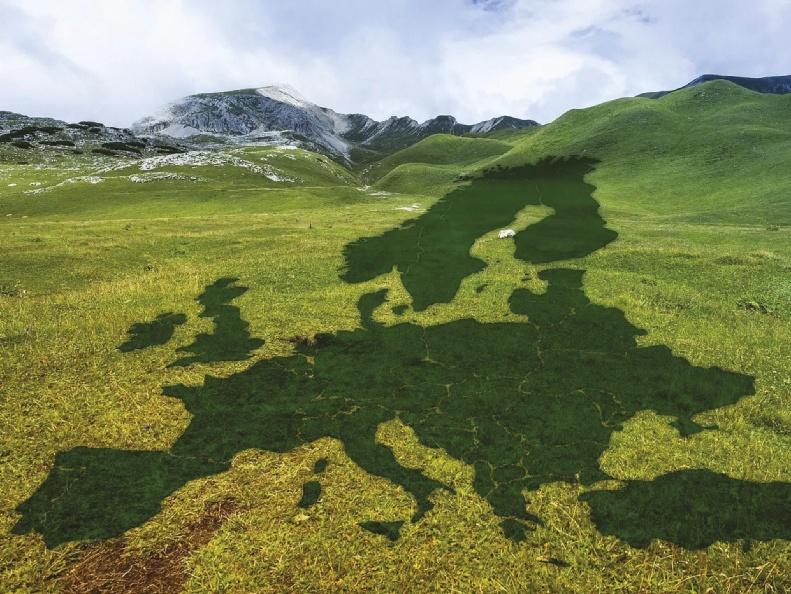
98 SUSTAINABILITY EUROPEAN REGULATIONS
nomic Co-operation and Development, which outlines the 4 steps needed to express one’s ability to manage risks:
- map suppliers;
- collect data to assess risk and environmental and social impact;
- implementing mitigation actions (correction of processes, correction of risk assumptions, even redesigning one’s supply chain);
- report periodically. This step is linked to the Sustainability Reporting legislation.
“If these are the requirements, it is easy to understand - Martina Schiuma argues - that companies will also have to structure themselves from a technological point of view, since the duty of reporting will force them to abandon manual, poorly organised and fragmented methods of data collection, otherwise they will be unable to demonstrate the validity of their actions.
Therefore, we will not only witness a social and environmental revolution, but also a technological one, because if those players who have not been able to promote their activities through the new online media have lost their customers, today those who will not be able to
structure themselves with an internal data collection and a system of analysis and sharing with their corporate customers will suffer a considerable loss of competitiveness, to the point of risking being ousted from the market”.
Schiuma continues with a very clear piece of advice: “It is important to equip oneself, as a company or, even better, as a group of companies, with one’s own data collection and analysis platform so as to be able to manage it in the best possible way without ‘suffering’ customer demands. Those who do not choose this path risk finding themselves in the situation of having to report on many different systems, which would turn into a cost rather than added value. The moment that the account of my virtuous actions is available to everyone without the need for special efforts, but only against a good organisation, a potential competitive advantage over competitors would be achieved”.
Lorenzo Saa of Clarity AI is of the same opinion: “You have to be prepared to have in-depth data, people and systems capable of managing it and delivering it to your customers, bearing in mind that the demands might be similar in substance but different in form.

SUSTAINABILITY 99 EUROPEAN REGULATIONS
One has to be ready to change one’s processes in case they do not conform to customers’ risk assessments”. Given the complexity of the subject, Clarity AI is betting heavily, as the name suggests, on the use of Artificial Intelligence: “Because we think it is a tool through which we can bring scale, efficiency and quality to the information that we then make available to investors, clients and consumers. You think that once you get past the first level of suppliers, you very quickly find yourself having to report on a wide range of different companies. Perhaps located in countries outside the EU and that provide very little information, which can also be difficult to find due to the language and cultural barrier. In this case, the help of Artificial Intelligence can be not only successful, but also indispensable”. Giovanna Ceolini notes, however, a critical issue inherent in the regulations: “The sustainability certification label for footwear companies VCS - Verified and Certified Steps, which we are proposing as Assocalzaturifici, responds exactly to the demands and requests for data sharing and certification by major brands. But footwear companies still have a very lukewarm approach to the topic of sustainability. The reason is simple: all the platforms available today are a cost that
companies struggle to meet. We are advising companies to equip themselves with these tools, but we realise the sacrifice and the difficulties that companies have to face”.
CRITICALITY
This is not the only shadow hanging over the new European legislation. “It is certainly important to record the courage and positive impact of the regulations that the EU is proposing; however, one cannot fail to note some difficulties in grounding them”, says Saa of Clarity AI. And they continue: “The lack of specific parameters indicating which data to collect, how to collect it and according to which criteria to assess risk, expose the industry to uncertainty, confusion and relativism. The supply chain could be faced with a considerable amount of different requests, including data requests from its customers. More detail on the specific methodologies to be adopted in data collection and evaluation by the European Commission or other authorities may be useful”. Ceolini elaborates further: “Unfortunately, those that have been passed are directives and not regulations. Therefore, it will be up to each state to apply them and formulate its own laws in this regard.

100 SUSTAINABILITY EUROPEAN REGULATIONS

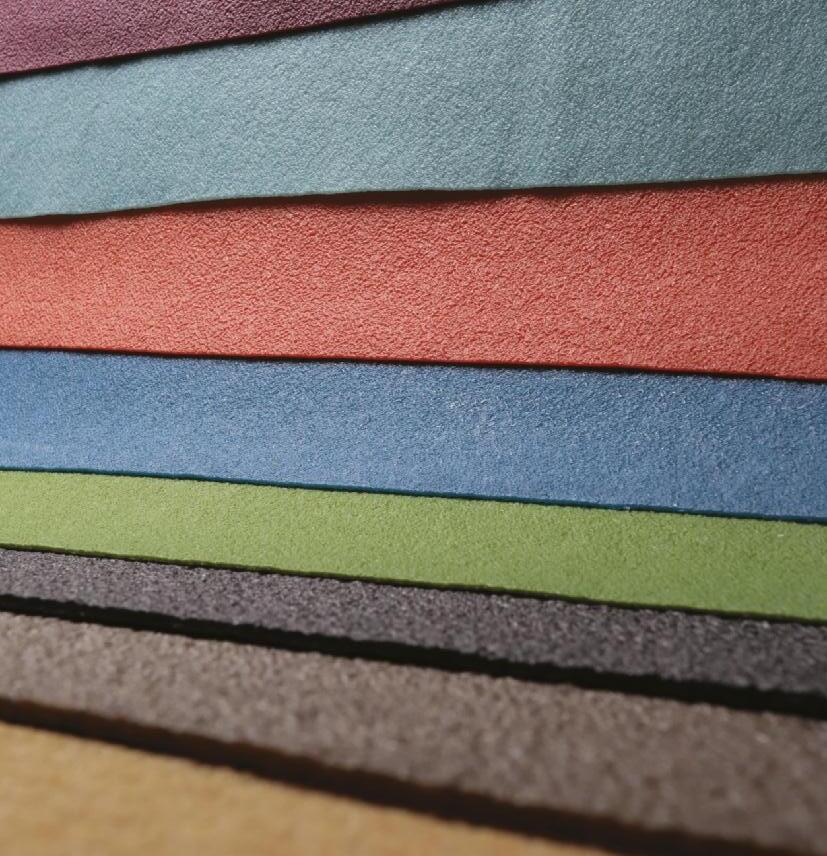

GEA_GOMMA PRODUTTORI DI PARA NATURALE PER CALZATURE GEA GOMMA s.r.l. 27030 Castello D’Agogna (PV) Italy · Via Milano 65 - Tel. +39 0384.561.01 · Fax +39 0384.561.64 www.geagomma.com - welcome@geagomma.com ecosostenibili dal 1952
Richiedi i nostri prodotti Certificati FSC®
This is a very negative aspect because there is a high risk of inhomogeneity within the European Union itself. The landscape in which we will have to operate will be even more complex”.
Assocalzaturifici warns against 3 other critical aspects: “The obligation for large brands to control and be responsible for the supply chains could lead to the further growth of the take-over phenomenon, which has already been going on for some time. This is a systemic risk, as it could impoverish our industry in terms of skills and human resources. Another issue that we are strongly submitting to the legislator concerns international competition. It would be good if the obligations to which European production is currently subject were also extended to all products sold in Europe, otherwise the risk that the market will be further distorted by non-compliant, but much more competitive imports will increase even more”.
Finally, Assocalzaturifici notes a fact: “It is true that companies must become more aware of the importance of sustainability issues and plan development plans to structure themselves in this sense. At the same time, at the moment, the sustainability theme is very much felt upstream of the product, i.e. by big brands, but much less so down-
stream, by consumers. Our data, in fact, tell of a consumer who today does not recognise any pluses in sustainable products. It is not true that buyers are willing to spend more for a sustainable product. Today, the market is strongly polarised between those who can still afford luxury, which has in any case lost its inspirational allure, and those who are looking to buy good mid-range products while paying close attention to price”.
CONCLUSION
“Italy must live this historic moment as a great opportunity to capitalise on the great work done in the past decades, measure it and communicate it. We are excellent in many areas, we must also become excellent in data management”, Francesca Rulli concludes positively. Organising oneself to comply with the new regulations can therefore become a competitive advantage, despite the many difficulties highlighted, but it must be done as soon as possible through training and corporate structuring processes that can no longer be postponed, as well as structured and market-validated tools, from which users will easily benefit.

102 SUSTAINABILITY EUROPEAN REGULATIONS
LE NUOVE NORME EUROPEE SULLA SOSTENIBILITÀ RIGUARDANO TUTTI, NON SOLO I GRANDI
Non c’è più tempo, i nuovi regolamenti approvati a livello di Unione Europea coinvolgeranno intere filiere produttive, non solo le grandi firme. Per non perdere clienti bisogna raccogliere, gestire e comunicare i dati in modo consapevole.
Secondo le norme dell’Unione Europea, le imprese devono fornire informazioni veritiere ai consumatori e devono astenersi dall’ingannarli per influenzarne le scelte. Le norme dell’UE sulle pratiche commerciali sleali consentono alle autorità nazionali di controllo di arginare un’ampia gamma di pratiche commerciali sleali.” Così recita parte dell’articolo pubblicato a fine febbraio sul sito della Commissione Europea in cui si parla dell’impegno preso da Zalando, a seguito di un dialogo con la stessa Commissione Europea, a rimuovere le ingannevoli etichette e icone di sostenibilità che compaiono accanto ai prodotti offerti sulla sua piattaforma. Indicazioni che potevano indurre in errore i consumatori riguardo le caratteristiche ambientali dei prodotti. Zalando fornirà, invece, informazioni chiare sui vantaggi ambientali dei prodotti, come la percentuale di materiali riciclati utilizzati. È solo un caso di studio per introdurre il tema di questo articolo che vorrebbe rendere consapevole la filiera produttiva di scarpe e borse degli importanti cambiamenti in arrivo sul fronte sostenibilità: il Green Deal promosso dall’Unione Europea è in piena attuazione e le aziende devono esserne sempre più consapevoli così da organizzarsi in modo adeguato per risultare conformi alle richieste che giungeranno dai propri clienti, pena una perdita di competitività che potrebbe porle fuori dal mercato.
STATO DELL’ARTE DELLA NORMATIVA EUROPEA
Le normative europee spingono le aziende verso una progettazione eco compatibile, la rendicontazione e il monitoraggio delle catene di approvvigionamento, così da poter fornire informazioni attendibili e misurabili.
Dopo l’entrata in vigore del regolamento sulle catene di fornitura a deforestazione zero (approvato nel 2023), della CSRD e della Green Claims, il 24 aprile scorso il Parlamento Europeo ha licenziato altri due provvedimenti: il regolamento Ecodesign e la direttiva CSDDD. Il regolamento sulle Catene di Approvvigionamento a Deforestazione Zero e la Corporate Sustainability Due Diligence Directive (CSDDD) impongono alle aziende un controllo maggiore sulla propria filiera. La più recente CSDDD impone alle grandi aziende (da 1.000 dipendenti e 450 milioni di ricavi in su) di controllare che lungo le loro supply chain non si verifichino pratiche che danneggiano l’ambiente, i lavoratori e le comunità locali. Le direttive Green Claims e CSRD riguardano, invece, la comunicazione del livello di sostenibilità dei prodotti e dell’impatto delle aziende della moda. Si punta a ridurre le pratiche di greenwashing sostituendo informazioni attendibili o misurabili alle diciture “green” e “sostenibile”, e si consolidano gli obblighi di rendicontazione della sostenibilità. L’approvato regolamento sull’Ecodesign (ESPR) obbligherà le aziende, entro il 31 dicembre 2030, a progettare i prodotti affinché siano circolari e durevoli, a dotarli di un passaporto digitale che ne tracci i passaggi produttivi e fornisca ai consumatori informazioni per mantenere o riparare il prodotto.
Infine, vieterà la distruzione dell’invenduto.
Tutte queste norme prevedono un cambio culturale in senso lato per le aziende: la misurazione del reale impatto dei prodotti basandosi su dati scientifici.
IL DIFFICILE ITER DELLA NORMA CSDDD
Esaminare il complicato iter che ha portato all’approvazione della norma CSDDD ci permette di evidenziare fin da subito pro e contro dell’impianto legislativo.
La direttiva, approvata in seconda lettura a Strasburgo il 24 aprile, ha avuto un iter complesso che ha comportato una riduzione sensibile del suo perimetro di applicazione.
“Grazie alle pressioni della Confindustria italiana e dell’equivalente tedesco, su spinta di Confindustria Moda insieme alle associazioni nazionali di categoria, si è chiesto all’UE di rivedere la norma che inizialmente avrebbe coinvolto tutte le grandi e medie imprese del nostro settore”, racconta Giovanna Ceolini, Presidente di Assocalzaturifici. “La revisione della norma nei tempi e nei modi di attuazione ha evitato una ricaduta devastante su tutta la filiera produttiva della moda”.
Specifica Martina Schiuma, Responsabile d’Impatto presso The ID Factory: “L’Italia si è opposta a queste norme non tanto nel merito, da tutti ritenuto corretto, ma perché non sono misurabili i costi di adeguamento per un’azienda che non ha mai strutturato processi finalizzati a dinamiche di due diligence. Perché gli investimenti che implica non riguardano solo l’auditing dei fornitori, ma la stessa struttura aziendale, a livello di sistemi gestionali, spesso non adeguata. Il tema si complica se si considera che, ad oggi, i sistemi gestionali usati dalle aziende sono tanti, e non condivisi lungo la filiera. In questo contesto specifico sono nate The ID Factory e Ympact, due soluzioni SaaS strutturate per la raccolta dati di filiera estesa e la restituzione di tali dati all’interno dei sistemi gestionali attualmente in uso in ciascuna azienda”.non esistono sistemi tecnologici così avanzati da poter coprire ogni casistica e in poco tempo rendere conformi le aziende alle richieste della normativa”. Una normativa approvata a seguito di molti compromessi che hanno riguardato in particolare la dimensione aziendale di applicazione. Per quanto la norma, riscritta rispetto a dicembre 2023, riduca di quasi il 50% le aziende coinvolte, in realtà le implicazioni sulle aziende più piccole restano e saranno molto concrete, anche se ad oggi poco percepite.
TUTTE LE AZIENDE SONO COINVOLTE
In questo momento, secondo Ceolini, il tema vero non è chiedersi quali aziende rientrino effettivamente nel perimetro della norma, ma quale sarà l’impatto della norma sulle tante aziende, grandi e piccole, che lavorano per i marchi più in vista. “Nel settore c’è ancora pochissima consapevolezza di quanto queste norme andranno a riverberarsi su tutte le aziende della filiera, le quali saranno obbligate a fornire dati sulla propria attività produttiva”, dichiara Ceolini.
Concorda anche Francesca Rulli, CEO e Founder di Process Factory e 4sustainability®, che motiva il suo punto di vista ampliando il quadro: “L’Europa è il primo continente che tende a Net Zero entro il 2050, quindi pone un’attenzione molto forte al tema della riduzione dell’impatto ambientale.
Semplificando, il complesso normativo del Green Deal riguarda 3 ambiti:
- ECO-DESIGN: che spinge le organizzazioni a progettare in modo diverso il prodotto fin dalla sua ideazione;
- FILIERA: che allarga il dovere di diligenza sulla filiera, per valutare rischi e impatti ambientali e sociali del sistema produttivo;
104 SUSTAINABILITY EUROPEAN REGULATIONS
-
PRODOTTO: che porta alla gestione dei dati relativi al prodotto e alla sua modalità di produzione attraverso il Digital Product Passport per dare trasparenza al consumatore e alle logiche di responsabilità estesa o circolarità”.
Secondo Rulli, questo impianto strategico non può che portare tutte le aziende a dover mappare, analizzare e valutare i propri rischi e impatti, e nel caso implementare strategie per limitarli o risolverli: “Quando ci si chiede – continua Rulli - a chi sono applicabili queste norme, la risposta formalmente corretta è ‘solo alle aziende più grandi per il momento’, ma in realtà sono inevitabilmente coinvolti tutti gli anelli a monte della catena, essendo la ratio di tutta la strategia quella del controllo dei sistemi produttivi da una parte e di estensione del ciclo di vita dall’altra”.
E per le piccole o medie imprese è importante che questa consapevolezza si diffonda: la sfida da fronteggiare riguarda una gestione consapevole dei propri dati. È fondamentale che le aziende raccolgano dati con competenza, rispondano ad assessment e sistemi di monitoraggio con approccio scientifico e strutturato, perché quelle informazioni e quei dati determineranno il loro rating, la loro valutazione di impatto.
“È essenziale essere consapevoli che i dati che si forniscono sono rilevanti e determinano valutazioni di rischio e di impatto che pesano sul proprio business e su quello dei clienti”, ribadisce Rulli.
Da queste considerazioni e dalla collaborazione con centinaia di aziende della filiera moda oltre che di numerosi Brand, è nato il sistema 4sustainability®, che permette di raccogliere i dati di impatto su 6 dimensioni ambientali e sociali allineate alle migliori metodologie di mercato, stimolando l’implementazione di azioni di riduzione del rischio e dell’impatto verificate periodicamente per progettere da green e social washing.
Sono migliaia oggi le aziende di filiera presenti nella piattaforma Ympact che esegue il modello 4sustainability, di queste oltre 500 hanno hanno dati verificati e oltre 250 hanno raggiunti livelli di implementazione attestati. Proprio queste filiere, capaci di gestire dati e migliorarli, meglio affrontano le richieste attuali del mercato e, domani, affronteranno le sfide della normativa”.
COSA FARE
Nel 2026 dovranno essere formulati i primi report riguardanti il tracciamento dei rischi di filiera che coinvolgeranno i Tier 1 e 2. Quindi, cosa fare in vista di queste scadenze? Partiamo dalla metodologia di raccolta dati su cui si basa la normativa, quella proposta dalla OECD - Organization for Economic
Co-operation and Development, in cui vengono indicati i 4 passi necessari per esprimere la propria capacità di gestire i rischi:
- mappare i fornitori;
- rilevare i dati utili a valutare il rischio e l’impatto ambientale e sociale;
- porre in atto azioni di mitigazione (correzione di processi, correzioni delle ipotesi di rischio, finanche il ridisegno della propria filiera);
- rendicontare periodicamente. Questa fase è collegata alla normativa sul Reporting di sostenibilità.
“Se queste sono le esigenza è facile capire – sostiene Martina Schiuma - che le aziende dovranno strutturarsi anche dal punto di vista tecnologico poiché il dovere di rendicontazione obbligherà ad abbandonare metodi manuali, poco organizzati e frammentati di raccolta dati, pena l’incapacità di dimostrare la validità delle proprie azioni”. Non si assisterà, quindi, a una rivoluzione solo sociale e ambientale, ma anche tecnologica, perché se quegli attori che non sono stati in grado di promuovere le proprie attività attraverso i nuovi media online hanno perso i propri clienti, oggi chi non sarà in grado di strutturarsi con una raccolta dati interna e un sistema di analisi e condivisione con i propri clienti corporate, subirà una notevole perdita di competitività, fino a rischiare l’estromissione dal mercato. Schiuma prosegue con un consiglio molto chiaro: “È importante dotarsi, come azienda o, ancora meglio, come gruppo di aziende di una propria piattaforma di raccolta e analisi dei dati così da poterla gestire al meglio senza ‘subire’ le richieste dei clienti. Chi non sceglie questa strada rischia di trovarsi nella situazione di dover rendicontare su tanti sistemi diversi, il che si trasformerebbe in un costo piuttosto che in un valore aggiunto. Nel momento in cui il racconto delle mie azioni virtuose è a disposizione di tutti senza la necessità di particolari sforzi, ma solo a fronte di una buona organizzazione, si conseguirebbe un potenziale vantaggio competitivo rispetto ai concorrenti”.
È della stessa idea Lorenzo Saa di Clarity AI: “Bisogna prepararsi a disporre di dati approfonditi, di persone e sistemi in grado di gestirli e fornirli ai propri clienti, tenendo in conto che le richieste potrebbero essere simili nella sostanza, ma differenti nella forma. Bisogna essere pronti a modificare i propri processi nel caso non fossero conformi alle valutazioni di rischio dei clienti”. Vista la complessità del tema Clarity AI sta puntando molto, come il nome stesso lascia immaginare, sull’utilizzo dell’Intelligenza Artifi-

106 SUSTAINABILITY EUROPEAN REGULATIONS

ciale: “Perché pensiamo che sia uno strumento attraverso il quale possiamo portare scala, efficienza e qualità alle informazioni che poi mettiamo a disposizione di investitori, clienti e consumatori. Si pensi che, una volta superato il primo livello di fornitori, ci si ritrova molto rapidamente a dover rendicontare riguardo un’ampia gamma di aziende diverse. Magari situate in paesi al di fuori dell’UE che mettono a disposizione pochissime informazioni, difficili da reperire anche a causa della barriera linguistica e culturale. In questo caso l’aiuto dell’Intelligenza Artificiale può risultare non solo vincente, ma anche indispensabile”.
Giovanna Ceolini rileva, però, una criticità insita nella normativa: “Il marchio di certificazione della sostenibilità per le aziende calzaturiere VCS - Verified and Certified Steps, che proponiamo come Assocalzaturifici, risponde esattamente alle richieste e alle sollecitazioni di condivisione dei dati e della loro certificazione da parte dei grandi marchi. Ma le aziende calzaturiere hanno un approccio ancora molto tiepido verso il tema della sostenibilità. Il motivo è semplice: tutte le piattaforme oggi disponibili sono un costo che le società faticano ad affrontare. Noi stiamo consigliando le aziende di dotarsi di questi strumenti, ma ci rendiamo conto del sacrificio e delle difficoltà che le imprese devono fronteggiare”.
CRITICITÀ
Quella appena rilevata non è l’unica ombra a pesare sulla nuova legislazione europea. “È certo importante registrare il coraggio e l’impatto positivo delle regolamentazioni che l’UE sta proponendo; tuttavia, non si possono non rilevare alcune difficoltà legate alla loro messa a terra”, dichiara Saa di Clarity AI. E proseguono: “La mancanza di parametri specifici che indichino quali dati rilevare, con quali modalità e secondo quali criteri valutare il rischio, espongono il settore a incertezza, confusione e relativismo. La catena di fornitura potrebbe trovarsi a fronteggiare una quantità notevole di richieste differenti, tra cui richieste di dati da parte dei propri clienti. Sarebbe stato utile un maggior approfondimento delle specifiche metodologie da adottare nella raccolta e valutazione dei dati da parte della Commissione Europea o altre autorità”. Ceolini approfondisce ulteriormente il tema: “Purtroppo quelle varate sono direttive e non regolamenti. Perciò, sarà competenza di ogni Stato applicarle e formulare le proprie leggi a riguardo. Un aspetto molto negativo perché si rende elevato il rischio di disomogeneità all’interno della stessa Unione Europea. Sarà ancor più complesso il panorama in cui ci si troverà ad operare”. Assocalzaturifici mette sull’avviso rispetto ad altre 3 criticità: “L’obbligo per i grandi brand di dover controllare ed essere responsabili delle filiere potrebbe condurre alla ulteriore crescita del fenomeno delle acquisizioni, già in atto da tempo. Un rischio sistemico, poiché potrebbe impoverire la nostra industria dal punto di vista delle competenze e delle risorse umane. Un altro tema che stiamo sottoponendo con forza al legislatore riguarda la competizione internazionale. Sarebbe bene che gli obblighi a cui oggi devono sottostare le produzioni europee fossero estesi anche a tutti i prodotti venduti in Europa, altrimenti crescerà ancor più il rischio che il mercato venga ulteriormente falsato da importazioni non conformi, ma molto più competitive”. Assocalzaturifici rileva, infine, un dato di fatto: “È vero, le aziende devono rendersi maggiormente conto dell’importanza dei temi connessi alla sostenibilità e programmare piani di sviluppo per strutturarsi in tal senso. Al tempo stesso, in questo momento, il tema sostenibilità è molto sentito a monte del prodotto, quindi dai grandi marchi, ma molto meno a valle, dai consumatori. I nostri dati, infatti, raccontano di un consumatore che oggi non riconosce alcun plus ai prodotti sostenibili. Non è vero che chi acquista è
disposto a spendere di più per un prodotto sostenibile. Oggi, il mercato è fortemente polarizzato fra chi ancora può permettersi il lusso, che ha comunque perso la sua allure ispirazionale, e chi cerca di acquistare dei buoni prodotti di livello medio ponendo grande attenzione al prezzo”.
CONCLUSIONE
“L’Italia deve vivere questo momento storico come una grande opportunità per mettere a frutto il grande lavoro di filiera compiuto negli scorsi decenni, misurarlo e comunicarlo. Siamo eccellenti in tanti ambiti, dobbiamo diventarlo anche nella gestione del dato”, conclude positivamente Francesca Rulli.
Organizzarsi per essere conformi alle nuove normative può quindi divenire un vantaggio competitivo, nonostante le tante difficoltà messe in luce, ma deve essere fatto al più presto attraverso processi di formazione e di strutturazione aziendale non più rinviabili, oltre che di strumenti strutturati e validati dal mercato, da cui gli utilizzatori trarranno facilmente beneficio.
4SUSTINABILITY
4sustainability.it
It is an innovative implementation framework and a registered trademark certifying the sustainability performance of the fashion and luxury supply chain.
È un framework di implementazione innovativo e un marchio registrato che certifica le performance di sostenibilità della catena di fornitura della moda e del lusso.
ASSOCALZATURIFICI
assocalzaturifici.it
Assocalzaturifici is the Association that represents, on a national level, industrial companies operating in the footwear production sector. It has about 500 member companies. Assocalzaturifici è l’Associazione che rappresenta a livello nazionale le imprese a carattere industriale che operano nel settore della produzione delle calzature. Conta circa 500 aziende iscritte.
CLARITY AI
clarity.ai
A sustainability technology company that provides data, insights, and tools to help investors, companies and consumers make their decisions through a sustainability lens.
Azienda tecnologica che si occupa di sostenibilità e che fornisce dati, approfondimenti e strumenti per aiutare gli investitori, le aziende e i consumatori a prendere le loro decisioni attraverso una lente di sostenibilità.
THE ID FACTORY
theidfactory.com
The ID Factory is a supply chain traceability platform (SaaS) that, through the creation of a unique digital passport, enables fashion companies to achieve complete transparency of their global supply chain. The ID Factory è una piattaforma di tracciabilità della filiera (SaaS) che, attraverso la creazione di un passaporto digitale unico, consente alle aziende di moda di ottenere una trasparenza completa della propria filiera globale.
108 SUSTAINABILITY EUROPEAN REGULATIONS

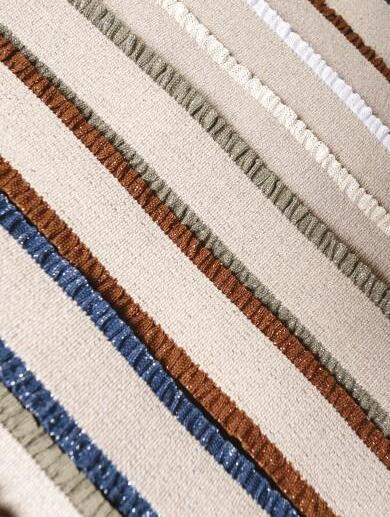

NEUTRA LAUNCHES THE NEW SIMBIOSI MODEL
Created in collaboration with VIBRAM and BYBORRE, Simbiosi represents the optimal synthesis of form, functionality and craftsmanship.
The Dutch trainer brand launches its new Simbiosi model, developed in collaboration with the world leader in the development and production of high-performance rubber soles Vibram and the avant-garde textile company BYBORRE. Inspired by the concept from which it takes its name, the Simbiosi model was born from the fusion of the identities of both brands into a single product. Designed with the award-winning BYBORRE Create design tool, the textile upper is made from sustainable materials and revisits the brand's most distinctive patterns and tones. Each shoe is unique thanks to the cut-out pattern. Simbiosi also features VIBRAM's lightweight Megagrip rubber sole and is finished with a unique lacing system. In particular, the Simbiosi model is the first trainer ever to feature Vibram's Sphike Wrap sole. Thanks to Vibram Wrap Tech, the grip-optimised technology that wraps around the upper of the shoe, the sole is able to define a bold unconventional style that gives the shoe a unique personality. The Vibram Sphike Wrap sole is made with Vibram Megagrip compound, the best solution in terms of grip on wet and rough terrain, and Vibram Litebase technology, which reduces the thickness of the rubber at the base of the sole, while maintaining the same arrangement and shape of the tread blocks.
NEUTRA LANCIA IL NUOVO MODELLO SIMBIOSI
Nato in collaborazione con VIBRAM e BYBORRE, Simbiosi rappresenta la sintesi ottimale di forma, funzionalità e cura artigianale.
Il brand di sneakers olandese lancia il suo nuovo modello Simbiosi, sviluppato in collaborazione con il leader mondiale nello sviluppo e nella produzione di suole in gomma ad alte prestazioni Vibram e con l’azienda tessile di avanguardia BYBORRE. Il modello Simbiosi, ispirandosi al concetto da cui prende il nome, nasce dalla fusione delle identità di entrambi i marchi in un unico prodotto. Disegnata con il pluripremiato strumento di progettazione BYBORRE Create, la tomaia in tessuto è realizzata con materiali sostenibili e rivisita i motivi e le tonalità più distintivi del marchio. Ogni scarpa è unica grazie al motivo cut-out. Simbiosi si caratterizza anche per la leggera suola in gomma Megagrip di VIBRAM, ed è rifinita da un sistema di allacciatura unico nel suo genere. In particolare, il modello Simbiosi costituisce la prima sneaker in assoluto con la suola Sphike Wrap di Vibram. Grazie alla Vibram Wrap Tech, la tecnologia con grip ottimizzato che avvolge la tomaia della scarpa, la suola è in grado di definire uno stile audace non convenzionale, che conferisce alla scarpa una personalità unica. La suola Vibram Sphike Wrap è realizzata con mescola Vibram Megagrip, la soluzione migliore in termini di grip su terreni bagnati e accidentati, e con la tecnologia Vibram Litebase, che riduce lo spessore della gomma alla base della suola, mantenendo inalterata la disposizione e la forma dei tasselli.
112 SUSTAINABILITY NEWS

INDUSTRIE CHIMICHE
The
mass balance concept applied to the choice
of sustainable materials for their productions will assume increasingly more importance. Let us find out why.
The chemical industry uses a restricted number of raw materials to create tens of thousands of different products. The majority of chemical production begins in the cracker, which is used to split or “crack” naphtha, a long-chain hydrocarbon, into smaller molecules. These molecules serve as building blocks for the downstream production of plastics.
Naphtha, therefore, is the chemical base from which the plastic elements originate. Different raw materials can be used to obtain naphtha: materials of fossil or biological origin, from recycling, from recycled biological substances, as well as a mix of these elements.
ATTRIBUTION CLASSES
Depending on the type of raw material used to produce naphtha, the materials resulting from the various chemical processes are attributed to different classes. The classes that make up the reference framework considered by a mass balance are different (according to the ISCC scheme).
Bio Attributed (BA)
Bio-based products. Bio-naphtha derives from organic raw materials specifically grown for this purpose.
Bio Circular Attributed (BCA)
Bio-naphtha derives from organic industrial or household waste.
Circular Attributed (CA)
Naphtha derives from a pyrolysis process applied to recycled plastic waste.
CHAINS OF CUSTODY
How is it possible to keep track of the many and various manufacturing processes that give life to a plastic material and therefore define its class of attribution? Thanks to chains of custody. The term chain of custody indicates the system used to trace the history of a material and guarantee its origin and composition.
Mass Balance is a chain of custody model. There are others: preserved identity, segregation and book and claim with trading of certificates

within open markets. These different chains of custody vary in terms of detailed knowledge of the product source, the implementation complexity, and the renewable content of the final product.
MASS BALANCE CONCEPT
Mass balance is one of several well-known chain of custody approaches, designed to trace the flow of materials through the value chain. In recent years, the mass balance approach has prevailed in the chemical industry. As an important milestone on the path to circular economy and bioeconomy, it was designed to trace the flow of materials through a complex value chain. Since chemically or bio-based recycled raw materials are typically blended in the production complex, the physical segregation of the recycled content is often economically and in practice unrealisable, also due to an evident scarcity of bio recycled raw materials. The mass balance approach makes it possible to trace the quantity and sustainability feature of the circular and/or biobased content in the value chain and attribute it on the basis of verifiable accounting.
Mass Balance helps the plastics industry in its commitment to accelerate the adoption of renewable raw materials. By using these raw materials in existing production plants and supply chains, gradually reducing the contribution of fossils, the demand and supply of renewable materials will be further increased along the entire value chain thanks to large-scale and efficient plants in terms of resources.
AN EXAMPLE TO BETTER UNDERSTAND THE MASS BALANCE MODEL
The principle of Mass Balance is similar to what consumers encounter when purchasing “green” or “clean” electricity. While consumers cannot be sure that the electricity they use in their homes is directly derived from renewable sources, the overall share of green energy in the grid increases with demand. In the chemical industry, renewable or recycled raw materials are added at the beginning of the production process and assigned to the final product.
We try to explain this concept even better by bringing an example of the footwear world. A single heel made with a material that has a bio circular attributed mass balance certificate could be entirely composed of biocircular material, or even only in part, or even not at all. What matters, in fact, is knowing that that material was produced by a company that has used a certain amount of biocircular substances within its production cycle and certified an equivalent result of outgoing biocircular material. The single heel may not contain biocircular material, but we know for sure that other heels (perhaps even not certified as biocircular) will contain it.
Let us say it in another way, as the concept of physical disjunction is not so easy to understand: the single product does not contribute to the defense of the environment, but the certified company that makes the material of that single product helps the environment as it uses
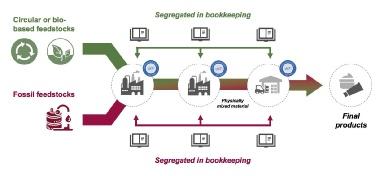
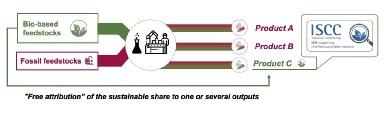
recycled and organic raw materials for part of its production. By purchasing materials from that company, you are thus helping to support a production that has embarked on a sustainable strategy.
WHY CHOOSE MASS BALANCE
The main purpose of a mass balance is simple: accelerate the use of renewable raw materials in chemical processes. Climate protection, reduce greenhouse gas emissions and save fossil resources are key elements for a more sustainable future. Encouraging the use of renewable raw materials in chemical processes historically exclusively based on fossil sources, as the Mass Balance does, helps to overcome these challenges.
ADVANTAGES OF THE MASS BALANCE APPROACH
This calculation-based principle offers multiple advantages: it reduces greenhouse gas emissions and fossil raw materials, while product quality and properties remain unchanged. As a result, products can be processed exactly like traditionally produced materials. It is therefore not necessary to adapt formulations, plants or processes. Customers who purchase balanced products in bulk can use them like traditional products, benefiting from the same quality level and without the need for further approvals. It is a traceable solution since each step must be certified by a sustainability declaration.


If you want more information Desideri maggiori informazioni bit.ly/bilmass
MASS BALANCE CERTIFICATION (ISCC)
Independent bodies audit the allocation (i.e. how the volumes of the sustainable raw material are mathematically assigned to the final product).
Based on customer needs, ISCC offers two chain of custody methods. Materials can be physically segregated in production processes throughout the supply chain (Based on customer needs, ISCC offers two chain of custody options. Materials can be physically segregated in production processes throughout the supply chain (“physical segregation”) or mixed in production, but separated at registration (“mass balance”).
To obtain the ISCC certification, all the players in the supply chain must trace each transformative step and draw up an ISCC certified mass balance. Starting from farmers or collection centres, passing through all the production units, up to warehouses and the distribution channel, everyone must draw up a Mass Balance. Each time the material is sold and changes hands it must be accompanied by a sustainability declaration indicating the quantity of sustainable material allocated and, optionally, from which sources it was obtained, and the country of origin.
One of the main advantages of the ISCC PLUS mass balance approach is the possibility of gradually increasing the share of biobased and/or circular raw materials in the production process. Moreover, the calculated share of biobased and/or circular raw materials can be attributed on an equivalent basis to one or more outputs.
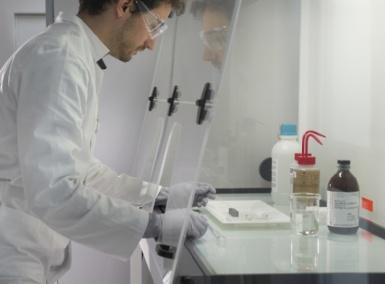
COMPLEXITY OF A MASS BALANCE
Like any method, the Mass Balance system also presents complexities. Logistics: because every single movement, waste or return must be traced. Communication: the relationship with all the players in the supply chain must be very punctual and traced. Requirements: the application of stringent regulations that must be followed by those who want to be certified.
MARKETING
The ISCC certification allows the use of a logo and a claim on the product. The trademark can also be licensed to those who sell the finished product to the public without having transformed the material.
FINAL CONSIDERATIONS
The Mass Balance approach is certainly a temporary solution. It is part of the long path to make plastic increasingly less impact on the environment. It is obvious that, in order to obtain a perfect circular economy result, the goal is to keep increasing the quantity of biocircular materials at the beginning of the process and extensively implement the Circular Attributed approach, so as to close the circle by ensuring a total reuse of plastics at end-of-life. The near future of the plastics market will undoubtedly see the coexistence of different systems that will gradually lead to zero impact plastics.
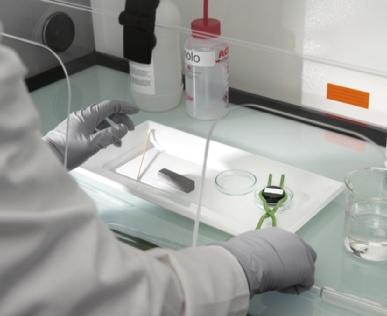

Il concetto di bilancio di massa applicato alla scelta di materiali sostenibili per le proprie produzioni assumerà sempre più importanza. Scopriamone il motivo.
L'industria chimica utilizza un numero limitato di materie prime per creare decine di migliaia di prodotti diversi. La maggior parte della produzione chimica inizia nell'impianto di cracking, utilizzato per scindere o "crackare" la nafta, un idrocarburo a catena lunga, in molecole più piccole. Queste molecole servono, poi, come elementi costitutivi per la produzione a valle delle plastiche.
La nafta, quindi, è la base chimica da cui si originano gli elementi plastici. Per comporre la nafta si possono utilizzare materie prime differenti: di origine fossile, di origine biologica, da riciclo, da riciclo di sostanze biologiche, come anche un mix di questi elementi.
LE CLASSI DI ATTRIBUZIONE
A seconda della tipologia di materia prima utilizzata per produrre la nafta i materiali risultanti dai vari processi chimici vengono attribuiti a differenti classi. Le classi che costituiscono il quadro di riferimento considerato da un bilancio di massa sono diverse (secondo lo schema ISCC).
Bio Attributed (BA)
Prodotti a base biologica. La bio-nafta deriva da materie prime organiche coltivate appositamente per tale scopo.
Bio Circular Attributed (BCA)
La bio-nafta deriva da materie prime organiche da rifiuti industriali o casalinghi.
Circular Attributed (CA)
La nafta deriva da un processo di pirolisi applicato a plastiche di riciclo.
LE CATENE DI CUSTODIA
Come è possibile tenere traccia dei molti e vari processi di lavorazione che danno vita a un materiale plastico e quindi poterne definire la classe di attribuzione? Grazie alle catene di custodia.
Il termine catena di custodia indica il sistema utilizzato per tracciare la storia di un materiale e garantirne la provenienza e la composizione. Il Bilancio di Massa è un modello di catena di custodia. Ve ne sono altri: identità preservata, segregazione e book and claim con commercio di certificati all'interno di mercati aperti. Queste diverse catene di custodia variano in termini di conoscenza dettagliata della fonte del prodotto, di complessità di implementazione e di contenuto rinnovabile del prodotto finale.
COS’È IL BILANCIO DI MASSA
Il bilancio di massa è uno dei numerosi approcci noti alla catena di custodia che possono essere utilizzati per tracciare il flusso di materiali attraverso la catena del valore. Negli ultimi anni, l'approccio basato sul bilancio di massa ha prevalso nell'industria chimica. Come importante pietra miliare nel percorso verso l'economia circolare e la bioeconomia, è stato progettato per tracciare il flusso di materiali attraverso una complessa catena del valore. Poiché le materie prime riciclate chimicamente o a base biologica sono tipicamente miscelate nel complesso produttivo, la segregazione fisica del contenuto riciclato è spesso inattuabile dal punto di vista pratico ed economico, anche a causa di una evidente scarsità di materie prime riciclate bio. L'approccio del bilancio di massa consente di tracciare la quantità e le caratteristiche di sostenibilità del contenuto circolare e/o biobased nella catena del valore e di attribuirlo sulla base di una contabilità verificabile.

Con il Bilancio di Massa si aiuta l'industria della plastica nel suo impegno ad accelerare l'adozione di materie prime rinnovabili. Utilizzando tali materie prime negli impianti di produzione e nelle catene di fornitura esistenti, via via riducendo l’apporto del fossile, la domanda e l'offerta di materiali rinnovabili saranno ulteriormente incrementate lungo tutta la catena del valore grazie a impianti su larga scala ed efficienti dal punto di vista delle risorse.
UN ESEMPIO PER CAPIRE MEGLIO IL BILANCIO DI MASSA Il principio del Bilancio di Massa è simile a quello che i consumatori incontrano acquistando elettricità "verde" o "pulita". Anche se i consumatori non possono essere certi che l'elettricità che usano nelle loro case provenga direttamente da fonti rinnovabili, la quota complessiva di energia verde nella rete aumenta di pari passo con la domanda. Nell'industria chimica, le materie prime rinnovabili o riciclate vengono aggiunte all'inizio del processo di produzione e assegnate al prodotto finale.
Spieghiamo ancora meglio portando un esempio del mondo calzatura. Un singolo tacco realizzato con un materiale che possiede un certificato di bilancio di massa bio circular attributed potrebbe essere interamente composto da materiale biocircolare, o anche solo in parte, o anche per nulla. Ciò che conta, infatti, è sapere che quel materiale è stato prodotto da un’azienda che ha utilizzato un certo quantitativo di sostanze biocircolari all’interno del suo ciclo produttivo e che ha certificato un equivalente risultato di materiale biocircolare in uscita.

Il singolo tacco potrebbe non contenere materiale biocircolare, ma sappiamo per certo che altri tacchi (magari anche non certificati come biocircolari) lo conterranno.
Diciamolo ancora in un altro modo, perché non è semplice comprendere il concetto di disgiunzione fisica: non è il singolo prodotto a contribuire alla difesa dell'ambiente. È l’azienda certificata che realizza il materiale di quel singolo prodotto ad aiutare l’ambiente in quanto utilizza, per parte della sua produzione, materie prime riciclate e biologiche. Quindi acquistando i materiali da quell’azienda si contribuisce a sostenere una produzione che ha intrapreso una strategia sostenibile.
PERCHÉ SCEGLIERE IL BILANCIO DI MASSA
Lo scopo principale di un bilancio di massa è semplice: accelerare l'uso di materie prime rinnovabili nei processi chimici. La protezione del clima, la riduzione delle emissioni di gas serra e il risparmio di risorse fossili sono elementi chiave per un futuro più sostenibile. Incentivare l'uso di materie prime rinnovabili in processi chimici storicamente basati esclusivamente su fonti fossili, come fa il Bilancio di Massa, contribuisce a vincere queste sfide.
I VANTAGGI DEL BILANCIO DI MASSA
Questo principio basato sul calcolo offre molteplici vantaggi: riduce le emissioni di gas serra e le materie prime fossili, mentre la qualità e le proprietà del prodotto rimangono invariate. Di conseguenza, i prodotti possono essere lavorati esattamente come i materiali prodotti in modo tradizionale. Non è quindi necessario adattare formulazioni, impianti o processi. I clienti che acquistano prodotti bilanciati in massa possono utilizzarli come i prodotti tradizionali, beneficiando dello stesso livello di qualità e senza la necessità di ulteriori omologazioni. È una soluzione tracciabile visto che ogni passaggio deve essere certificato da una dichiarazione di sostenibilità.
LA CERTIFICAZIONE ISCC DEL BILANCIO DI MASSA
Organismi indipendenti verificano l'allocazione (cioè il modo in cui i volumi della materia prima sostenibile vengono matematicamente assegnati al prodotto finale).
In base alle esigenze dei clienti, l'ISCC offre due opzioni di catena di custodia. I materiali possono essere segregati fisicamente nei processi produttivi lungo tutta la catena di fornitura ("segregazione fisica") o mescolati in produzione, ma separati in fase di registrazione ("bilancio di massa"). Per ottenere la certificazione ISCC tutti gli attori della filiera devono tracciare ogni passaggio trasformativo e devono redigere un bilancio di massa certificato ISCC. A partire dai coltivatori o dai centri di raccolta, passando per tutte le unità produttive, fino ai magazzini e alla distribuzione, tutti devono redigere un Bilancio di Massa. Ogni volta che il materiale viene venduto e passa di mano deve essere ac-
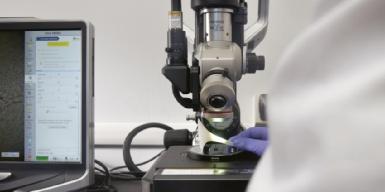
compagnato da una dichiarazione di sostenibilità dove viene indicato il quantitativo di materiale sostenibile allocato e, opzionalmente, da quali fonti è stato ricavato, e il paese di provenienza. Uno dei principali vantaggi dell'approccio del bilancio di massa ISCC PLUS è la possibilità di aumentare gradualmente la quota di materie prime biobased e/o circolari nel processo produttivo. Inoltre, la quota calcolata di materie prime biobased e/o circolari può essere attribuita su base equivalente a uno o più output.
COMPLESSITÀ DI UN BILANCIO DI MASSA
Come ogni metodo anche il Bilancio di Massa presenta delle complessità. Logistiche: perché ogni singola movimentazione, scarto o reso deve essere tracciata. Di comunicazione: deve essere molto puntuale e tracciata la relazione con tutti gli attori della filiera. Requisiti: l’applicazione di regolamenti stringenti che chi desidera la certificazione deve seguire.
MARKETING
La certificazione ISCC consente l’utilizzo di un logo e un claim sul prodotto. Il marchio può essere dato in licenza anche a chi vende il prodotto finito al pubblico senza aver trasformato il materiale.
CONSIDERAZIONI FINALI
Il Bilancio di Massa è di certo una soluzione transitoria. È parte del lungo percorso che vuole portare la plastica ad avere un sempre più ridotto impatto ambientale. È ovvio che, per ottenere un perfetto risultato di economia circolare, l’obbiettivo è aumentare sempre di più il quantitativo di materiali biocircolari all’inizio del processo e implementare in modo esteso l'approccio Circular Attributed, così da chiudere il cerchio assicurando al fine vita di una plastica un totale riutilizzo.
Il futuro prossimo del mercato della plastica vedrà senza dubbio la convivenza di diversi sistemi che gradualmente condurranno a plastiche ad impatto zero.
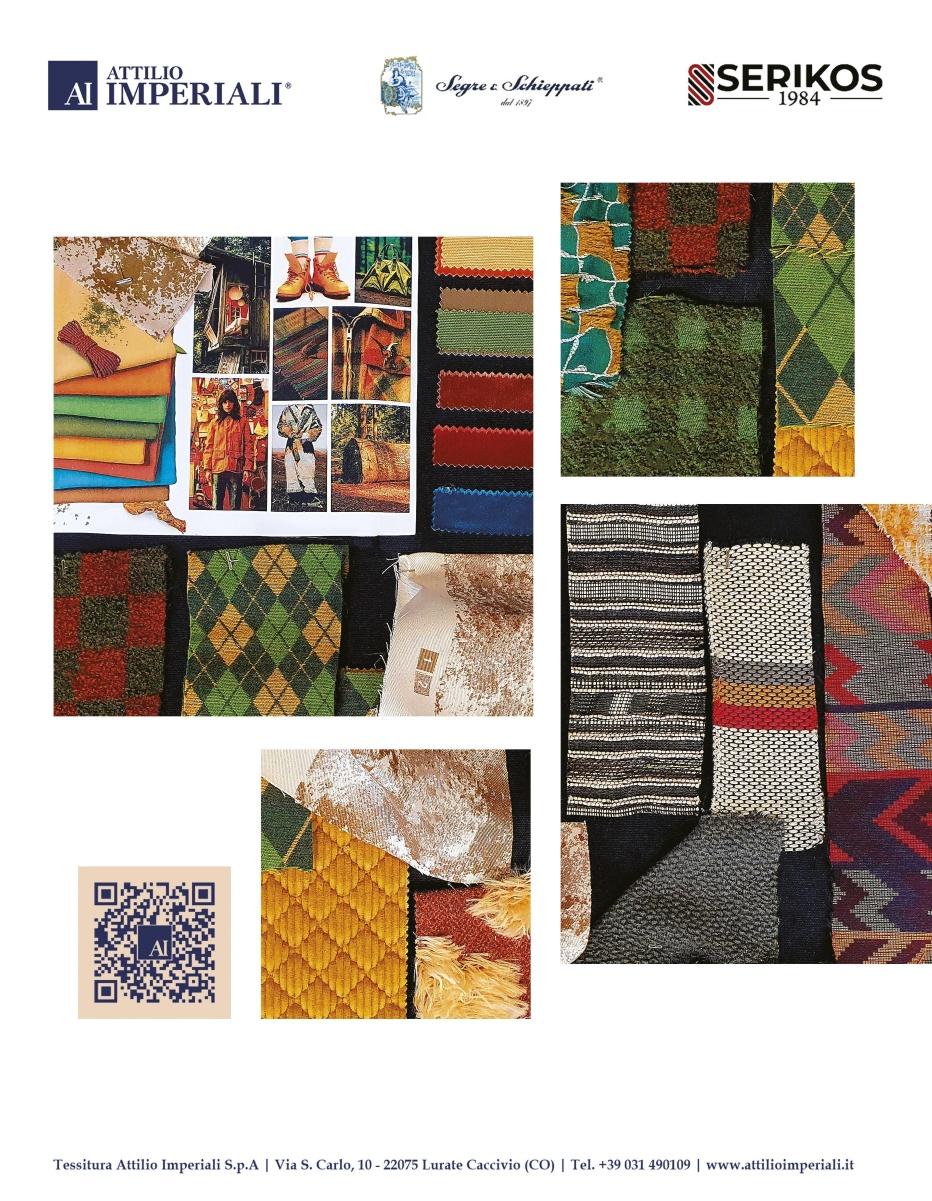
IMPERIALI_ATTILIO_TESSITURA
ATTILIO IMPERIALI AND THE TRAINING SHIP AMERIGO VESPUCCI: A STORY OF EXCELLENCE AND TRADITION
The beating heart of the global fashion industry resides in Italy, a land of craftsmanship and timeless refinement.
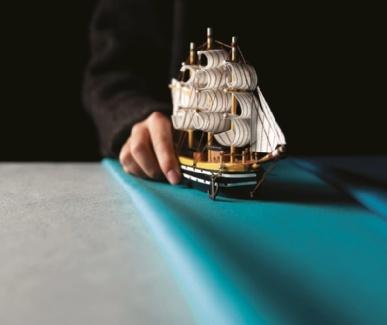
In this narrative of style and identity, the Amerigo Vespucci Training Ship and Segre & Schieppati fabrics – exclusively proposed by Attilio Imperiali – stand as tangible symbols of this extraordinary heritage. Their story is woven with passion, commitment, and dedication to perfection.
The Amerigo Vespucci Training Ship, dating back to 1913, embodies excellence in its purest form, navigating the world’s oceans with mastery and timeless grace. Similarly, Segre & Schieppati fabrics, born in 1897, carry forward a legacy of Italian craftsmanship passed down through generations. The union of Italian heritage with these two icons and our fabrics pays tribute to the tradition, innovation, and passion that characterize Made in Italy.
Every thread, every stitch tells a story of artisanal mastery and a commitment to uncompromising quality. Through this partnership with the Amerigo Vespucci Training Ship, Attilio Imperiali is committed to promote and preserve the values that make Italy a beacon in the world of fashion and craftsmanship, and a special bond between two iconic brands, linked toghether by the fabric of the Amerigo Vespucci sails: Olona Canvas.
“We are proud to offer Segre & Schieppati fabrics, which embody the elegance, resilience, and timeless beauty of Italian craftsmanship”, they say from the company. “Join us on this journey through the soul of Italy, where the past and present merge in timeless harmony”.

120 SUSTAINABILITY TRADITION
ATTILIO IMPERIALI E LA NAVE SCUOLA
AMERIGO VESPUCCI: UNA STORIA DI ECCELLENZA E TRADIZIONE
Il cuore pulsante della moda mondiale batte in Italia, terra di eccellenza artigianale e raffinatezza senza tempo.
In questa narrazione di stile e identità, la Nave Scuola Amerigo Vespucci e i tessuti Segre & Schieppati – esclusiva di Attilio Imperiali – si ergono come simboli tangibili di questo straordinario patrimonio. La loro storia è intessuta di passione, impegno e dedizione alla perfezione.
La Nave Scuola Amerigo Vespucci, risalente al 1913, incarna l’eccellenza nella sua forma più pura, solcando gli oceani del mondo con maestria e grazia senza tempo. Analogamente, i tessuti Segre & Schieppati, nati nel 1897, portano avanti un’eredità di puro artigianato italiano, tramandata da generazioni. Il connubio tra l’italianità di queste due icone è un tributo alla tradizione, all’innovazione e alla passione che caratterizzano il Made in Italy
Ogni filo, ogni cucitura ed ogni tessuto raccontano una storia di maestria artigianale e di impegno per la qualità senza compromessi. Attraverso questa partnership con la Nave Scuola Amerigo Vespucci, Attilio Imperiali si impegna a promuovere e preservare i valori che rendono l’Italia un faro nel mondo della moda e dell’artigianato tessile di lusso, e un legame speciale tra due brand iconici, legati tra loro dal tessuto delle vele Amerigo Vespucci: la Tela Olona. “Siamo fieri di poter offrire l’eccellenza dei nostri tessuti a marchio Segre & Schieppati che incarnano l’eleganza, la resistenza e la bellezza intramontabile dell’artigianato italiano”, dicono dall’azienda. “Unitevi a noi in questo viaggio attraverso l’anima dell’Italia, dove il passato e il presente si fondono in un’armonia senza tempo”.



SUSTAINABILITY 121 TRADITION
NEW MONO[PA6] BACKPACK FROM FREITAG: ONE MATERIAL, MANY RECYCLES
The first circular FREITAG backpack - made from a single material, designed as a multifunctional 2-in-1 companion for everyday life.

After three years dedicated to development FREITAG launches another circular innovation: the Mono[PA6] backpack is not only functional, durable and water-repellent, but also recyclable in its entirety and therefore entirely circular. From the fabric to the zips to the buckles, the backpack is made from a single material so that it can be easily recycled as a whole at the end of its life cycle. The material chosen is polyamide 6 or PA6, better known as nylon: versatile, robust and multifaceted. With the launch of this innovative product, the Zurich-based bag manufacturer closes a material loop and takes a new important step towards its vision of a circular economy. FREITAG also followed a co-creative approach in the product design phase: the Mono[PA6] backpack was developed together with British designer Jeffrey Siu and features the musette, a small, removable bag and at the same time a homage to an iconic cycling accessory, which can be worn as a practical shoulder bag or attached to the backpack at several points as an additional outer bag. The volume of the rucksack can also be expanded or reduced thanks to the folded bottom and flexible roll-top closure.
NUOVO ZAINO MONO[PA6] DI FREITAG: UNICO MATERIALE, TANTI RICICLI
Il primo zaino FREITAG circolare – realizzato con un unico materiale, concepito come compagno multifunzionale 2 in 1 per la vita quotidiana.
Dopo tre anni dedicati allo sviluppo FREITAG lancia un’altra innovazione circolare: lo zaino Mono[PA6] è non solo funzionale, longevo e idrorepellente, ma anche riciclabile nella sua interezza e quindi interamente circolare. Dal tessuto alle zip fino alle fibbie, lo zaino è realizzato con un solo materiale, così da potere essere facilmente riciclato nel suo insieme al termine del suo ciclo di vita. Il materiale scelto è la poliammide 6 o PA6, meglio nota come nylon: versatile, robusto e poliedrico. Con il lancio di questo prodotto innovativo, l’azienda zurighese produttrice di borse chiude un ciclo dei materiali e compie un nuovo importante passo verso la sua visione di economia circolare. FREITAG ha seguito un approccio co-creativo anche nella fase di progettazione del prodotto: lo zaino Mono[PA6] è stato sviluppato insieme al designer britannico Jeffrey Siu e propone la musette, una piccola borsa rimovibile e allo stesso tempo un omaggio a un iconico accessorio del ciclismo, può essere indossata come una pratica borsa a tracolla oppure agganciata allo zaino in più punti come ulteriore borsa esterna. Il volume dello zaino può, inoltre, espandersi o ridursi grazie al fondo ripiegato e alla chiusura roll top flessibile.
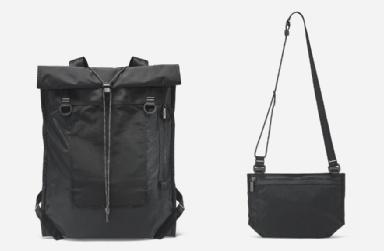
122 SUSTAINABILITY NEWS

DOCKSTEPS TOGETHER WITH LEGAMBIENTE DURING EARTH DAY 2024
On the occasion of World Earth Day on 22 April, Docksteps donated its trainers to the environmental association for the volunteers involved in the requalification of the Martin Luther green area in Bergamo.

The Italian footwear brand joined Legambiente on Earth Day 2024, the international day celebrating the need to conserve the planet's natural resources, by providing specially selected footwear for the volunteers who take part in the maintenance of the ‘Martin Lutero’ Park in Bergamo: an area, also known as Trucca, that represents an important green lung within the city.
Docksteps is proud to collaborate with Legambiente to promote environmental awareness and to support concrete actions for the protection of the territory and biodiversity.
DOCKSTEPS INSIEME A LEGAMBIENTE
DURANTE L’EARTH DAY 2024
In occasione della Giornata mondiale della Terra il 22 aprile scorso, Docksteps ha donato all’associazione ambientalista le sue sneakers per i volontari impegnati nella riqualificazione dell’area verde Martin Lutero di Bergamo.
Il brand italiano di calzature si è unito a Legambiente durante l’Earth Day 2024, la giornata internazionale che celebra la necessità della conservazione delle risorse naturali del Pianeta, fornendo calzature appositamente selezionate per i volontari che partecipano alla manutenzione del Parco "Martin Lutero" a Bergamo: un’area, nota anche come Trucca, che rappresenta un importante polmone verde all'interno della città.
Docksteps si è dichiarata orgogliosa di collaborare con Legambiente per promuovere la sensibilizzazione ambientale e per sostenere azioni concrete a favore della tutela del territorio e della biodiversità.

124 SUSTAINABILITY NEWS


 SERENA CECCHINI

GREEN: MAKE IT HAPPEN WITH LUIGI CARNEVALI
The company has taken a significant step toward sustainability and innovation by obtaining GRS certification for its textile-based reinforcements.

The milestone achieved by Luigi Carnevali represents a new standard for the industry, aimed at promoting product quality and eco-friendliness.
The Global Recycled Standard (GRS) certification demonstrates a commitment to the responsible use of resources so as to contribute to the reduction of environmental impact and the promotion of a circular economy.
The company is keen to emphasize that its focus on sustainability and the presence of recycled materials in no way compromises the quality of its textile reinforcements, which, in fact, maintain excellent standards in terms of strength, durability and versatility, ensuring state-of-the-art performance at all stages of processing.
Investing in GRS-certified textile reinforcements represents not only a
commitment to a quality finished product, but also an affirmation of a corporate image that testifies to a long-term vision linked to innovation and sustainability.
FOOTWEAR
"For now," they explain from Luigi Carnevali, "we have decided to GRS-certify the main and historical products: both jersey bases and cotton canvas, to which new polyester versions will be added that, in addition to being better performing than those made of cotton fiber, will be able to offer, from a GRS perspective, a higher percentage of recycled material within the fiber, and consequently in the finished product, while maintaining the same excellent performance.”
126 SUSTAINABILITY MATERIALS
Carnevali also strongly supports the design of reinforcements with a soft, gentle texture that can improve the comfort of the upper and, consequently, the experience of the footwear wearer. An approach welcomed by the world's leading brands. However, applying this philosophy to all types of leathers or upper fabrics is not always smooth, especially when it comes to materials such as patent leather or rubberized fabrics. In response to these challenges, the company has introduced a new type of adhesive to its range of thermoadhesives that has received extremely positive feedback, particularly in situations where the reinforcement is subjected to great stress during processing.
"Parallel to the fashion sector, we have a wide line of reinforcements recommended especially for the safety shoe that we can now also offer with GRS certification, guaranteeing the same high standards of performance and resistance," they continue in Carnevali.
LEATHER GOODS
In addition to introducing, alongside the current microfiber, the GRS-certified version, Carnevali has included, in the already rich product portfolio, additional reinforcements with technical characteristics that can better support both leathers and fabrics intended for those who produce bags or small leather goods. Part of these new products, at a later date, will be added to the list of GRS-certified references.
"Although our 115 years in business may suggest an image tied to tradition, we demonstrate on a daily basis that our company is constantly evolving and distinguished by its dynamism, with a constant obsession for finding the perfect reinforcement in response to every need."
LUIGI CARNEVALI, LA SOSTENIBILITÀ DIVENTA REALTÀ
L'azienda ha compiuto un passo significativo verso la sostenibilità e l'innovazione ottenendo la certificazione GRS per i suoi rinforzi su base tessile.
Il traguardo raggiunto dalla Luigi Carnevali rappresenta un nuovo standard per il settore, finalizzato a promuovere la qualità e l'ecocompatibilità dei prodotti.
La certificazione Global Recycled Standard (GRS) testimonia l’impegno nell'utilizzo responsabile delle risorse così da contribuire alla riduzione dell'impatto ambientale e alla promozione di un'economia circolare.
L’azienda tiene a sottolineare come l’attenzione per la sostenibilità e la presenza di materiali riciclati non comprometta in alcun modo la qualità dei suoi rinforzi tessili che, infatti, mantengono standard eccellenti in termini di resistenza, durata e versatilità, garantendo performance all'avanguardia in tutte le fasi di lavorazione. Investire in rinforzi tessili certificati GRS rappresenta non solo l‘impegno per un prodotto finito di qualità, ma anche l'affermazione di una immagine aziendale che testimonia una visione a lungo termine legata all'innovazione e alla sostenibilità.
CALZATURA
“Per il momento – spiegano dalla Luigi Carnevali - abbiamo deciso di certificare GRS i principali e storici prodotti: sia le basi in jersey che le tele in cotone, a cui verranno aggiunte delle nuove versioni

in poliestere che, oltre a essere più performanti rispetto a quelle realizzate in fibra di cotone, potranno offrire, in ottica GRS, una percentuale maggiore di componente riciclata all'interno della fibra, e conseguentemente nel prodotto finito, pur mantenendo le stesse eccellenti performance”.
Carnevali sostiene fermamente anche la progettazione di rinforzi dalla consistenza morbida e delicata in grado di migliorare il comfort della tomaia e, di conseguenza, l'esperienza di chi indossa le calzature. Un approccio accolto positivamente dai principali marchi di fama mondiale.
Tuttavia, non è sempre agevole l'applicazione di questa filosofia su tutti i tipi di pellami o tessuti per tomaia, specialmente quando si tratta di materiali come la vernice o i tessuti gommati. In risposta a queste sfide, l’azienda ha introdotto nella gamma di termoadesivi un nuovo tipo di collante che ha ottenuto riscontri estremamente positivi, in particolare nelle situazioni in cui il rinforzo è sottoposto a forti stress durante le lavorazioni.
“Parallelamente al settore della moda, disponiamo di una vasta linea di rinforzi consigliati soprattutto per la scarpa antinfortunistica che oggi possiamo offrire anche con la certificazione GRS, garantendo gli stessi elevati standard di prestazioni e resistenza”, continuano in Carnevali.
PELLETTERIA
Oltre ad aver introdotto, a fianco dell’attuale microfibra, la versione certificata GRS, Carnevali ha inserito, nel già ricco portafoglio prodotti, ulteriori rinforzi con caratteristiche tecniche in grado di supportare al meglio sia pellami che tessuti destinati a chi produce borse o piccola pelletteria. Parte di questi nuovi prodotti, in un secondo tempo, andranno ad aggiungersi all’elenco di referenze certificate GRS.
“Nonostante i nostri 115 anni di attività possano suggerire un’immagine legata alla tradizione, dimostriamo quotidianamente che la nostra azienda è in continua evoluzione e che si distingue per la sua dinamicità, con un’ossessione costante per la ricerca del rinforzo perfetto, in risposta ad ogni esigenza”.
SUSTAINABILITY 127 MATERIALS
GARMONT UNCHARTED: INNOVATION AND RESPONSIBILITY
The Garmont Unit dedicated to sustainable experimentation unveils at Pitti Uomo the novelties of the upcoming SS25 and the expansion of the ACBC x Garmont capsule collection.
The creative workshop set up with the aim of promoting sustainability through synergies and partnerships, the beating heart of all UNCHARTED projects, presents two new Garmont-branded models at the next edition of Pitti Uomo, designed for lifestyle and streetwear use but with an outdoor aesthetic: 9.81 URBAN ENGAGE and 9.81 URBAN SPEED. The former is a trail and fast hiking inspired model that enhances the fast&light nature thanks to an engineered mesh upper and heat applied tpu film. Pure performance, on the other hand, is conveyed by the VIBRAM Durmast tread, exclusive to Garmont, with Traction Lug technology and a perfect lug design for excellent grip on all urban surfaces. The 9.81 URBAN SPEED, on the other hand, is inspired by a trail running model from the early 1990s. The upper is made of recycled fabric, featuring PU film with suede effect and ultasoft leather inserts. The sole inspired by the original features a TPU stabilising element drowned inside the midsole for maximum safety. The partnership with ACBC also continues for the ACBC x Garmont capsule collection, which sees the entry alongside the iconic Lagom, revisited with canvas uppers and cork and natural rubber inserts, of Element and Ramè, two models designed for everyday use, 100% animal free and with reduced CO2 impact.
GARMONT UNCHARTED: INNOVAZIONE E RESPONSABILITÀ NEL LIFESTYLE
La Unit Garmont dedicata alla sperimentazione sostenibile svela a Pitti Uomo le novità della prossima SS25 e l’ampliamento della capsule collection ACBC x Garmont.
Il laboratorio creativo nato con l’obiettivo di promuovere la sostenibilità attraverso in cui nascono sinergie e partnership, cuore pulsante di tutti i progetti UNCHARTED, presenta alla prossima edizione di Pitti Uomo due nuovi modelli a marchio Garmont pensati per un utilizzo lifestyle e streetwear ma dall’estetica outdoor: 9.81 URBAN ENGAGE e 9.81 URBAN SPEED. Il primo è un modello d’ispirazione trail e fast hiking che esalta la natura fast&light grazie a una tomaia in mesh ingegnerizzato e film in tpu applicati a caldo. Performance pura invece quella che trasmette il battistrada VIBRAM Durmast, esclusivo Garmont, con tecnologia Traction Lug e un design dei tappi perfetto per un grip eccellente su tutte le superfici urbane. 9.81 URBAN SPEED, invece, si ispira a un modello trail running dei primi anni ’90. La tomaia è in tessuto riciclato, caratterizzata da film in PU con effetto suede e inserti in pelle ultasoft. La suola ispirata all’originale presenta un elemento stabilizzante in TPU affogato all’interno della midsole, per il massimo della sicurezza.
Prosegue anche la partnership con ACBC per la capsule collection ACBC x Garmont, che vede l’ingresso al fianco dell’iconica Lagom, rivisitata con tomaia in canvas e inserti in sughero e gomma naturale, di Element e Ramè, due modelli pensati per un utilizzo quotidiano, 100% animal free e a ridotto impatto di CO2.
9.81 URBAN SPEED
128 SUSTAINABILITY NEWS
URBAN ENGAGE

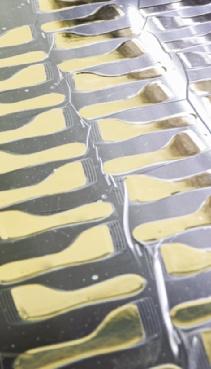
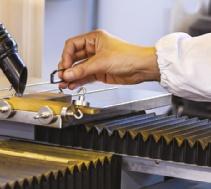
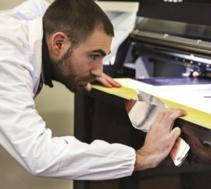
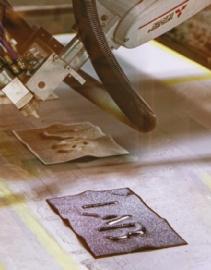
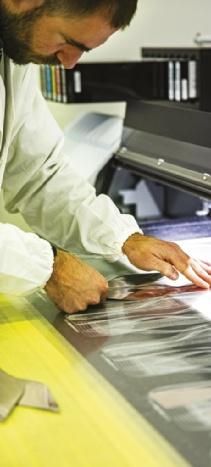

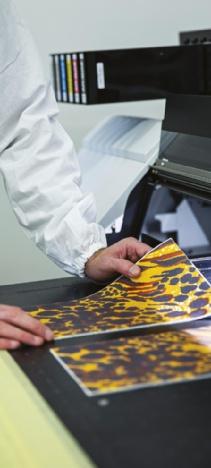

“i dettagli fanno la perfezione e la perfezione non è un dettaglio”
www.labmoda.eu
Leonardo da Vinci




























www.centroaccessori.eu +120.000 ARTICOLI A TUA DISPOSIZIONE

THE CONSCIOUS COLLECTION

GRS - GLOBAL RECYCLED STANDARD CERTIFIED COMPANY

FDRA: SHOE SUSTAINABILITY PROGRESS REPORT 2023
A focus produced by the Footwear Distributors and Retailers Association of America on the progress made by footwear professionals and the challenges and critical issues that still remain on the path to more sustainable production.
FDRA - Footwear Distributors and Retailers of America - is the largest and most important trade association in America, representing over 95% of the entire industry in the country. In total, it supports over 250 companies and more than 500 brands that design, manufacture and sell footwear worldwide.
In collaboration with Jones&Vining, FDRA has produced an analysis of the US footwear industry's progress in sustainability for the fifth consecutive year. The Report is based on a survey conducted between last October and November among footwear industry professionals involved in materials, development and sourcing of footwear. The aim is to enable companies to benchmark their operational efforts to improve sustainability along their supply chains. The survey also provides key information on common challenges faced by footwear companies, enabling the industry to prioritise work on collective solutions, increasing the impact of measures taken and reducing costs.
Sustainability strategy within the company
The survey shows that 60 per cent of the responses are similar to last year's, with a growing split within the sector: some companies are, in fact, making great strides in terms of their strategies to
support sustainability, while others are still working to develop an action plan and involve working groups, and others have stalled due to constraints or economic difficulties. About half of the respondents state that they are at a standstill or declining progress in their sustainability strategy.
Materials and production
63% of respondents say they use more recycled material than last year, and 68% say they intend to increase their use in the future. This means that the footwear industry has understood how to best incorporate recycled material into the shoe-product, without any performance and performance issues. The challenge for the industry is rather to understand how to verify and certify recycled materials.
As for bio-materials, these represent a new challenge for many companies, despite the persistence of some difficulties: it is, in fact, difficult to compare bio-materials, as some are very sustainable, while others are produced with unsustainable processes. Furthermore, companies are still learning how to incorporate biological content without performance problems, and this despite the fact that it is beginning to be noticed that biological materials are surpassing traditional plastics in terms of use for the first time. Another difficulty is that biological materials cost on average more than traditional foams or other materials, and the pressure on companies to reduce costs has certainly not helped. In the absence of clear strategic goals and operational rules, many companies have therefore backed out. What is encouraging, however, is that companies are generally moving towards bio much more than in years past, and biomaterials are increasingly seen as the key to reducing the environmental footprint in the industry.
Mapping the supply chain
Traceability is a big challenge for the footwear sector, since a shoe - unlike a T-shirt, which on average consists of 3 different materials - is made from more than 60 materials and components, from multiple suppliers often located on different continents. 29% of the respondents (compared to 24% in the previous year) claim to have a complete map of all material suppliers (total traceability), which means that 61% claim not to have a complete mapping of their supply chain at present. While there has been some progress since last year, the numbers continue to be worrying, especially with regard to the problems of working conditions and deforestation that the supply chain often brings.
Some considerations
The survey reveals a wide variety of responses, some positive, some neutral and some negative. This is because footwear has 436 different
132 SUSTAINABILITY NEWS
style classifications, based on different constructions and materials (this number, set by US Customs, is the minimum number). Each company and brand must, therefore, approach sustainability differently based on product type, customer preferences, retail price constraints and their own supply chains. These divergent variables lead to different responses. Some companies focus strongly on product durability and longevity, while others work on sustainability mainly by focusing on the types of materials used and possible recycling alternatives. Overall, the positive aspect that emerges from the survey is that the last five years have seen continuous progress in the area of sustainability and an increased awareness of priorities and ways to address them. Even in a difficult economic environment such as that of 2023, where the pressure to reduce costs has been very strong, companies have moved forward in their sustainability strategies, with 80% of the companies surveyed stating that they have made progress in environmental compliance. There remains a substantial division between companies that have more control over supply chains and greater agility in terms of retail prices and those that are more constrained by market conditions. However, it is important that many of them have some sort of strategy, or are in the process of discussing it, because it provides a more solid foundation for the industry than in years past. Furthermore, companies seem to have a good grasp of recycled material for products, while continuing to search for alternative plantbased materials. The problem with biomaterials remains cost, but many bio-based components are surpassing traditional plastic-based components in terms of use.
Even with the laws n existence, supply chain mapping remains a major challenge for footwear companies, given the multitude of different materials involved in making a shoe and their sourcing from companies in different countries. However, the aim is to continue to focus efforts on tracking and mapping supply chains, not only to comply with regulations, but also to optimise cost and environmental decisions. There is also increasing talk of remanufacturing and circularity, although the many constraints on recycling are holding back progress in this area and - with reduced budgets and fewer personnel involvedthere is more of an attempt to optimise current processes and choices.
FDRA: SHOE SUSTAINABILITY PROGRESS REPORT 2023
Un focus realizzato dall’Associazione dei distributori e retailer americani sui progressi compiuti dai professionisti della calzatura e sulle sfide e le criticità che ancora permangono nel percorso verso una produzione più sostenibile.
FDRA - Footwear Distributors and Retailers of America - è la più grande e importante associazione di categoria d’America, che rappresenta oltre il 95% dell’intera industria del Paese. Complessivamente, supporta oltre 250 aziende e più di 500 marchi che progettano, producono e vendono calzature in tutto il mondo. In collaborazione con Jones&Vining, FDRA ha realizzato per il quinto anno consecutivo un’analisi dei progressi portati avanti dall’industria della calzatura statunitense nell’ambito della so-
stenibilità nel corso del 2023. Il Report si basa su un'indagine condotta tra l’ottobre e il novembre scorso tra i professionisti della calzatura del settore che si occupano di materiali, sviluppo e approvvigionamento di calzature. L’obiettivo è di permettere alle aziende di effettuare un benchmarking degli sforzi operativi in grado di migliorare la sostenibilità lungo le loro catene di fornitura. L'indagine fornisce, inoltre, informazioni chiave sulle sfide comuni che le aziende calzaturiere si trovano ad affrontare, consentendo all'industria di settore di dare priorità al lavoro nelle soluzioni collettive, aumentando l'impatto delle misure adottate e riducendo i costi.
La strategia di sostenibilità all’interno dell’azienda
Dal sondaggio emerge come il 60% delle risposte sono simili a quelle dello scorso anno, con una crescente spaccatura all’interno del settore: alcune aziende stanno, infatti, facendo passi da gigante in termini di strategie a sostegno della sostenibilità, mentre altre stanno ancora lavorando per sviluppare un piano d’azione e coinvolgere i gruppi di lavoro, e altre ancora si sono invece arrestate a causa di vincoli o difficoltà economiche. Circa la metà degli intervistati dichiara di essere in una situazione di stallo o di declino dei progressi nella loro strategia di sostenibilità.
Materiali e produzione Il 63% degli intervistati dichiara di utilizzare più materiale riciclato rispetto allo scorso anno, e il 68% afferma di volerne incrementare l’uso in futuro. Questo significa che l'industria calzaturiera ha capito come incorporare al meglio il materiale riciclato all’interno del prodotto-scarpa, senza problemi di prestazioni e performance. La sfida per il settore è piuttosto quella di capire come verificare e certificare i materiali riciclati. Quanto ai materiali biologici, questi rappresentano una nuova sfida per molte aziende, nonostante la persistenza di alcune difficoltà: è, infatti, difficile confrontare i biomateriali, poiché alcuni sono molto sostenibili, mentre altri sono prodotti con processi non sostenibili. Inoltre, le aziende stanno ancora imparando ad incorporare il contenuto biologico senza problemi di prestazioni e questo nonostante si inizi a notare che i materiali biologici stanno superando per la prima volta, in termini di utilizzo, le plastiche tradizionali. Un’altra difficoltà è legata al fatto che i materiali biologici costano in media di più delle schiume tradizionali o di altri materiali e le pressioni sulle aziende per ridurre i costi non hanno certo aiutato. In assenza di obiettivi strategici e regole operative certe, molte aziende si sono quindi tirate indietro. L'aspetto incoraggiante è però che le aziende si stanno in generale orientando verso il bio molto di più che negli anni passati, e i biomateriali
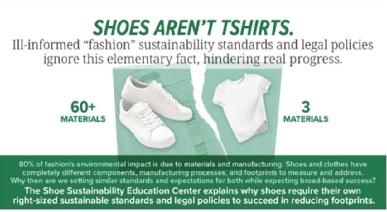
SUSTAINABILITY 133 NEWS
sono sempre più visti come l’elemento chiave per ridurre l'impronta ambientale nel settore.
La mappatura della catena di fornitura
La tracciabilità è una grande sfida per il settore calzaturiero, dal momento che la scarpa – a differenza di una T-shirt che in media è composta da 3 materiali diversi – è realizzata con oltre 60 materiali e componenti, provenienti da più fornitori localizzati spesso in diversi continenti.
Il 29% degli intervistati (contro il 24% dell’anno precedente) afferma di avere una mappa completa di tutti i fornitori di materiali (totale tracciabilità), il che significa che il 61% dichiara di non avere allo stato attuale una mappatura completa della propria supply chain. Se si notano quindi alcuni progressi rispetto all'anno scorso, tuttavia i numeri continuano ad essere preoccupanti, soprattutto per i problemi legati alle condizioni di lavoro e alla deforestazione che la catena di fornitura porta spesso con sé.
Alcune considerazioni
Dal sondaggio emerge un’ampia varietà di risposte, alcune positive, altre neutre e altre ancora negative. Questo perché le calzature hanno 436 classificazioni stilistiche diverse, basate su costruzioni e materiali diversi (questo numero, stabilito dalla dogana degli Stati Uniti, è il numero minimo). Ogni azienda e marchio deve, quindi, affrontare la sostenibilità in modo diverso in base al tipo di prodotto, alle preferenze dei clienti, ai vincoli dei prezzi al dettaglio e alle proprie catene di fornitura. Queste variabili divergenti determinano risposte diverse. Alcune aziende si concentrano con forza sulla durata e sulla longevità del prodotto, mentre altre lavorano sulla sostenibilità soprattutto concentrandosi sui tipi di materiali utilizzati e sulle possibili alternative di riciclo. In generale, l'aspetto positivo che emerge dal sondaggio è che
negli ultimi cinque anni si assiste a continui progressi nell’ambito della sostenibilità e ad una maggiore consapevolezza rispetto alle priorità e ai modi per affrontarla. Anche in un contesto economico difficile come quello che ha caratterizzato il 2023, in cui la pressione sulla riduzione dei costi è stata molto forte, le aziende sono andate avanti nelle loro strategie di sostenibilità, tanto che l'80% delle aziende intervistate afferma di aver fatto progressi nel rispetto ambientale. Resta una sostanziale divisione tra le aziende che hanno un maggiore controllo sulle catene di approvvigionamento e una maggiore agilità in termini di prezzi al dettaglio e quelle che sono più vincolate dalle condizioni di mercato. Tuttavia, è importante il fatto che molte di esse hanno una sorta di strategia, o ne stanno discutendo, perché costituisce una base più solida per il settore rispetto agli anni passati.
Inoltre, le aziende sembrano avere una buona padronanza del materiale riciclato per i prodotti, pur continuando a ricercare materiali alternativi a base vegetale. Il problema dei biomateriali rimane il costo, ma molti componenti a base biologica stanno superando in termini di impiego i componenti tradizionali a base di plastica.
Anche con le leggi in vigore, la mappatura della supply chain resta una sfida importante per le aziende calzaturiere, data la molteplicità di materiali diversi coinvolti nella realizzazione di una scarpa e la loro provenienza da aziende dislocate in paesi diversi. Tuttavia, l’obiettivo è di continuare a concentrare gli sforzi per tracciare e mappare le catene di fornitura, non solo per rispettare le normative, ma anche per ottimizzare le decisioni in termini di costi e ambiente.
Si parla inoltre sempre di più di rigenerazione e circolarità, nonostante i numerosi vincoli sul riciclo frenino i progressi in questo settore e - con budget ridotti e meno personale coinvolto – si cerca piuttosto di ottimizzare i processi e le scelte attuali.

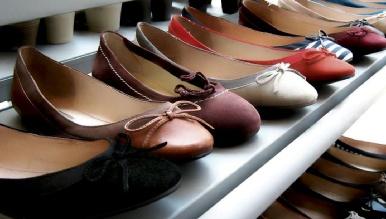
134 SUSTAINABILITY NEWS



PELLAMI DUE C S.p.A. via San Martino 5 63010 Monte S. Pietrangeli AP Italy T +39 0734 969 604 F +39 0734 960 484 www.duecspa.com info@duecspa.com DUE C Lining S.A. de C.V. Rio Balsas 422-2 Col. San Miguel C.P. 37390 León, Gto. Mexico T 477 770 75 00 mexico@duecspa.com
IFABA'S MANY FACES OF SUSTAINABILITY
International leader in the production of lasts for footwear, Ifaba focuses on an innovative approach to production that combines all-round sustainability with product and service quality.

Among the company's choices already made in favour of the environment, of primary importance is the installation of a photovoltaic system at the Parabiago headquarters, which makes it possible to considerably reduce emissions, with 97,500 kilos of CO2 saved and a total power output of 183 kWp: numbers that translate into an environmental benefit comparable to the planting of 1772 trees. Even more recent is the plant in Pieve a Nievole, with a total power output of 80 kWp, also capable of significantly reducing emissions, with 42,640 kilos of CO2 saved per year and an environmental benefit comparable to the planting of 776 trees; the Fossò site in Veneto, soon to be opened, is also preparing to become IFABA's new flagship, especially in terms of sustainability.
In addition to what has already been mentioned, there is the installation of a new plastic moulding machine in Parabiago - which will make machine stoppages close to zero, reducing energy consumption on an annual basis by 28% compared to the previous decommissioned plant, - and the overhaul of the numerical control lathes present in all the factories of the industrial group, which will significantly reduce energy requirements thanks to the use of innovative software capable of controlling and optimising consumption in real time. Discarded lasts for shoe factories will be recovered to be shredded and sent for recovery and recycling to finally be reused by the last makers as raw material for new lasts: this joint effort will maximise the recovery of materials, minimising the use of resources and promoting circularity.
An agreement with the company Omnisyst also ensures the company monitors CO2 savings. Thus, the industrial group based in Parabiago (MI) - which has two branches in Italy and one in Romania - is
preparing to obtain ISO 9001 certification on quality management systems, ISO 14001 on environmental management systems and ISO 45001 on safety in the workplace in the course of 2024.
I MOLTEPLICI VOLTI DELLA SOSTENIBILITÀ IFABA
Leader internazionale nella produzione di forme per calzature, Ifaba punta su un innovativo approccio alla produzione capace di coniugare la sostenibilità a 360 gradi con la qualità di prodotto e di servizio.
Tra le scelte aziendali già effettuate in favore dell’ambiente, risulta di primaria importanza l’installazione di un impianto fotovoltaico nella sede di Parabiago che consente di abbattere considerevolmente le emissioni, con 97.500 chili di CO2 risparmiata e una potenza complessiva di 183 kWp: numeri, questi, che si traducono in un beneficio sull’ambiente paragonabile alla piantumazione di 1772 alberi. Ancor più recente l’impianto su Pieve a Nievole, con una potenza complessiva di 80 kWp, anch’esso in grado di abbattere in maniera importante le emissioni, con 42.640 chili di CO2 annua risparmiata e un beneficio ambientale paragonabile alla piantumazione di 776 alberi; anche la sede di Fossò in Veneto, di prossima apertura, si prepara per diventare il nuovo fiore all’occhiello di IFABA, soprattutto in termini di sostenibilità.
A quanto già citato vanno ad aggiungersi l’installazione di una nuova macchina di stampaggio abbozzi in plastica a Parabiago - che rende i fermi macchina prossimi allo zero, abbattendo i consumi di energia su base annua del 28% rispetto al precedente impianto dismesso, - e le revisioni dei torni a controllo numerico presenti in tutti gli stabilimenti del gruppo industriale, che permetteranno di ridurre significativamente il fabbisogno energetico grazie all’impiego di innovativi software in grado di controllare e ottimizzare in tempo reale i consumi. Le forme per calzaturifici dismesse verranno recuperate per essere triturate e avviate al recupero e riciclaggio per tornare infine ad essere riutilizzate dai formifici come materia prima per nuove forme: questo sforzo congiunto permetterà di massimizzare il recupero di materiali, riducendo al minimo l'uso di risorse e promuovendo la circolarità. Un accordo con la società Omnisyst garantisce inoltre all’azienda di monitorare il risparmio di CO2. Così, il Gruppo industriale con sede a Parabiago (MI) - che conta due filiali in Italia e una Romania - si prepara ad ottenere nel corso del 2024 le certificazioni ISO 9001 sui sistemi di gestione per la qualità, ISO 14001 sui sistemi di gestione ambientale e ISO 45001 sulla sicurezza negli ambienti di lavoro.
138 SUSTAINABILITY NEWS

MICRO LENZI, THE NEW ENVIRONMENTALLY FRIENDLY TEXTILE REINFORCEMENT
A resin-free ‘coagulated’ textile material that stays clean when cut and is strong and firm when fleshed.

Lenzi Egisto is sustainable from start to finish. In the sense that the Tuscan company was born with recycling in mind, and even today, after more than a century, its research and development has led it to bring to market a new environmentally conscious material that is in demand in the manufacturing world. But let's go in order and start from the beginning, precisely.
In Prato, in 1898, Egisto Lenzi began his business of recovering noble fibers from discarded clothing. An activity that in our days we would call ‘virtuous fiber recycling’.
After a few years during which the recycled fibers were sold on the local market, he started his own fabric production business and the company's first production nucleus came into being. Developments were rapid and, in 1936, it became necessary to increase production by adding the Vaiano production site, with a larger industrial area, where the headquarters and part of Lenzi Egisto's production is still located today. The production of ‘unconventional’ fabrics and the continuous search for innovative textile solutions began in the immediate postwar period. In the last thirty years, however, the great technological transformations that have taken place in the textile sector have allowed the consolidation of new business strategies, the search for innovative textile solutions in the fields of military clothing, protective textiles and functional fashion. Sometimes ‘visionary’ solutions, but which have confirmed Lenzi Egisto as a brand synonymous with quality textile innovation. Lenzi's research and development have always been aimed at proposing novel materials, developed to solve specific and concrete market demands. As happened in the mid-1990s when Jacquard fabrics made with high-tech fibers were introduced,
even among the big Fashion brands, which guaranteed resistance and functionality even to the fashion accessory while maintaining extremely 'glamorous' look and feel. In the early 2000s Lenzi launched barrier fabrics for anti-puncture insoles in safety footwear, which could replace the uncomfortable and heavy steel sheets. Since then, the world of safety footwear has never been the same. It was said that Lenzi Egisto is a sustainable company from start to finish. We come, then, if not to the end, to the present day. Today, LENZI has taken up the market demand to find a solution to the problem of leather reinforcements. Traditional microfiber reinforcements, produced by ‘aggressive’ chemical processes, are no longer acceptable.
"In order to propose a sustainable, environmentally friendly and zero-kilometer solution, we needed to be able to make an alternative product in-house, a textile material 'coagulated' without resins, which would remain clean when cut, resistant and compact during fleshing," they tell in Lenzi Egisto. Thus MICRO LENZI was born, the new textile reinforcement that is the result of research conducted on innovative fibers that manage to remain cohesive without the need to use resins of any kind. A polyamide-based fibers of European production.
MICRO LENZI materials are entirely woven and finished in the factories in Vaiano, near Prato, Tuscany.
Micro Lenzi products, while resin-free and sustainable, are easy to use. They are suitable for bonding to leather, are trimmed without any problem, and can be fleshed out leaving a clean, fray-free edge, even with a raw cut. It is available in three colors (White, Gray and Black) and in five weights to cover the various reinforcement needs of different types of leather.
140 SUSTAINABILITY MATERIALS
MICRO LENZI, IL NUOVO RINFORZO
TESSILE RISPETTOSO DELL’AMBIENTE
Un materiale tessile ‘coagulato’ senza resine, che resta pulito al taglio ed è resistente e compatto in fase di scarnitura.
Lenzi Egisto è sostenibile dall’inizio alla fine. Nel senso che l’azienda toscana è nata con il riciclo e ancora oggi, dopo più di un secolo, la sua attività di ricerca e sviluppo l’ha condotta a portare sul mercato un nuovo materiale attento all’ambiente e richiesto dal mondo della produzione. Ma andiamo con ordine e cominciammo dell’inizio, per l’appunto.
A Prato, nel 1898, Egisto Lenzi inizia la sua attività per il recupero delle fibre nobili dagli abiti dismessi. Attività che ai giorni nostri chiameremmo “riciclo virtuoso delle fibre”.
Dopo alcuni anni durante i quali le fibre riciclate venivano vendute sul mercato locale, iniziò l’attività di produzione in proprio di tessuti e prese vita il primo nucleo produttivo dell’azienda. Gli sviluppi sono rapidi e, nel 1936, si rese necessario aumentare la produzione aggiungendo il sito produttivo di Vaiano, con una superficie industriale più ampia, dove tuttora si trova la sede principale e parte della produzione della Lenzi Egisto. La produzione di tessuti “non convenzionali” e la continua ricerca di soluzioni tessili innovative inizia nell’immediato dopoguerra. Nell’ultimo trentennio, invece, le grandi trasformazioni tecnologiche intervenute nel settore tessile hanno consentito il consolidamento di nuove strategie commerciali, la ricerca di soluzioni tessili innovative nei settori dell'abbigliamento militare, del tessile di protezione e della moda funzionale. Soluzioni talvolta "visionarie", ma che hanno confermato Lenzi Egisto come un marchio sinonimo di innovazione tessile di qualità. La ricerca e lo sviluppo della Lenzi sono
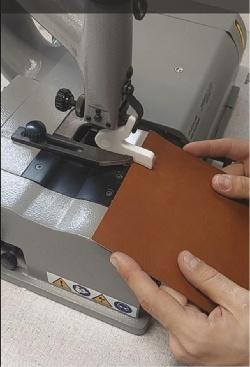
sempre state volte a proporre materiali inediti, sviluppati per risolvere richieste specifiche e concrete del mercato.
Come accadde nella metà degli anni '90 quando vennero introdotti, anche fra i grandi marchi della Moda, i tessuti Jacquard realizzati con fibre ad alto contenuto tecnologico, che garantivano resistenza e funzionalità anche all'accessorio moda mantenendo aspetto e tatto estremamente ‘glamour’.
Nei primi anni 2000 Lenzi lanciò i tessuti barriera per le solette anti-perforazione delle calzature antinfortunistiche, in grado di sostituire le scomode e pesanti lamine in acciaio. Da allora il mondo della calzatura di sicurezza non è più lo stesso.
Si diceva che Lenzi Egisto è un’azienda sostenibile dall’inizio alla fine. Arriviamo, quindi, se non alla fine, all’attualità. Oggi LENZI ha raccolto la richiesta del mercato di trovare una soluzione al problema dei rinforzi di soppannatura delle pelli. I tradizionali rinforzi in microfibra, prodotti con processi chimici "aggressivi", non sono più accettabili.
“Per proporre una soluzione sostenibile, rispettosa dell’ambiente e a chilometro zero, bisognava poter realizzare in azienda un prodotto alternativo, un materiale tessile ‘coagulato’ senza resine, che restasse pulito al taglio, resistente e compatto in fase di scarnitura”, raccontano in Lenzi Egisto. È nato così MICRO LENZI, il nuovo rinforzo tessile risultato di una ricerca condotta su fibre innovative che riescono a restare coese senza bisogno di utilizzare resine di qualsiasi tipo. Fibre a base Poliammidica di produzione europea.
I materiali MICRO LENZI sono interamente tessuti e rifiniti negli stabilimenti di Vaiano, vicino a Prato, in Toscana.
I prodotti Micro Lenzi, seppur privi di resine e sostenibili, sono facili da utilizzare. Sono adatti all’incollaggio sulla pelle, vengono rifilati senza alcun problema, possono essere scarniti lasciando un bordo pulito e senza sfilacciature, anche a taglio vivo.
È disponibile in tre colori (Bianco, Grigio e Nero) e in cinque grammature, per coprire le varie esigenze di rinforzo delle varie tipologie di pelli.
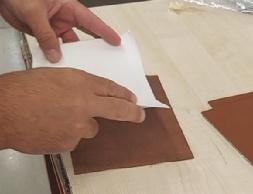
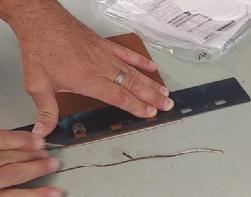
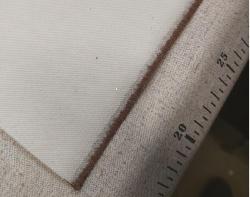

SUSTAINABILITY 141 MATERIALS
SUSTAINABILITY ACCORDING TO VIBRAM
Marco Guazzoni, Director of Sustainability at Vibram, tells us how this leading company in the sector, which has always been at the forefront, is committed to respecting the environment.
The topic of sustainability is always very topical, especially in the light of the European regulations that continually keep the spotlight on it. We talked about it with one of the major players in the footwear sector, Vibram, world leader in the development and production of high performance rubber soles for outdoor and leisure, fashion, work and safety footwear.
What demands do you receive from the market, be it fashion, performance or safety with regard to the topic of sustainability?
At the moment, many requests come in related to product certifications. More advanced companies, on the other hand, are trying to understand Vibram's sustainability principles and the strategy behind it.
In my opinion, the industry is still at the beginning of the journey towards sustainability and until before the Green Claims Act, especially in the US market, companies mainly based their interest on what story they could tell. Now the focus has shifted to the scientific data supporting the claims.
There is, moreover, a high level of interest in the subject of ‘resealing’. In fact, in the lifestyle and sports sector, some brands are espousing our Repair If You Care campaign, which promotes the resole of certain shoe lines with a sole specifically identified in partnership with the brand, in order to prolong the life of the shoe. What better way to act sustainably! Resoling is not yet applicable to Work & sfaety, as it would involve recertifying footwear, but we are studying alternative solutions.
Rubber in itself doesn't sound like a particularly sustainable material... how does Vibram manage to express its commitment to being increasingly sustainable?
Rubber, especially synthetic rubber, derived from petroleum is certainly not an example of a natural material, but it offers high-tech performance that cannot be achieved with natural materials.
VIBRAM is of course constantly researching innovative materials, especially in the direction of circular materials, both as raw materials and as design according to Ecodesign principles.
The greatest successes we can count at the moment, however, are related to process improvement and impact reduction due to energy consumption, the use of renewable energies and the reduction of waste and wastage, which are the real relevant themes of Vibram's sustainability
Another key to our sustainable product commitments is the issue of durability. Not only have we measured most of our products through the LCA system, so we try to innovate following impact priorities, but one of the characteristics that make Vibram soles famous is durability, which, considering the use, allows us to reduce the impact over the long term use of our products.
What are the most important initiatives of your ‘The Sustainable Way’ programme?
In addition to measuring our impacts in order to strategically identify which issues are the most relevant and on which we can invest

142 SUSTAINABILITY NEWS
MARCO GUAZZONI, DIRECTOR OF SUSTAINABILITY AT VIBRAM MARCO GUAZZONI, DIRETTORE DELLA SOSTENIBILITÀ DI VIBRAM
in research and development and new technologies for production processes, we have created a real strategic plan for sustainable development.
Other cornerstones of the strategy are related to collaboration with companies in the supply chain, with our customers, both to work on eco-design issues, and to develop industry standards that allow us to reduce the time it takes to demonstrate our level of sustainability, dedicating more investment to real impact reduction actions.
One of these investments in the field of fashion is Sda Bocconi's Monitor for Circular Fashion, through which - together with the companies in this sector - we speak to the European Community and the United Nations periodically, so that legislators can improve regulations that push all companies in the same direction.
Can you tell us about a project where the focus on sustainability is particularly evident, perhaps created for the Work&Safety world?
As far as Work&Safety is concerned, companies are starting to become more and more aware and demand more information and certifications. The difficulty is related to the fact that chemical materials for certain applications are definitely under the magnifying glass or even banned in other sectors, so being able to improve impacts is possible, making products certifiable in certain respects is much more complicated. For example, our collaborative project with Bluesign, aimed at creating a market standard for our sector that meets the needs of the supply chain, for outdoor is possible, while for W&S to date we definitely see it as more complex.
Certainly, we continue to work on improving the impact of our products. At the moment we have a specific compound for the accident prevention sector called Vibram Ecostep pro, made with about 30%
recycled rubber from production waste. But our R&D departments are working on new solutions to reduce the impact on the environment, while maintaining the levels of performance we consider necessary for soles with the yellow octagon.
Traceability and certification are now key words in the discourse on traceability. How do you interpret them?
Traceability and transparency are the big topics of the future. We are trying to prepare ourselves within our production adequately by means of Industry 4.0 interventions that have allowed us to innovate some machines that are not technologically advanced, with the dual purpose of tracking better and being more efficient, thus reducing waste and energy consumption.
One of the difficulties is related to the secrecy of the know-how of several companies in the supply chain, which makes it difficult to know every aspect of our supply chain. This is why we are increasingly creating partnership situations, instead of the classic customer-supplier relationship. Furthermore, we collaborate with upstream and downstream companies in order to use the same systems or systems that allow us to integrate information between us.
Vibram is a company dedicated to research and innovation. Without revealing any particular secrets, what can we expect from you in the near future with respect to sustainability?
As usual, we focus a lot on technologies and eco-design. Technologies and materials are internal innovation. For ecodesign, on the other hand, although the projects are much more long-term, we focus on reinventing the shoe, the sole or the service we offer together with our customers, rethinking the construction of the shoe and its end of life, so as to optimise, where possible, the impact on the environment.
SUSTAINABILITY 143 NEWS
LA SOSTENIBILITÀ SECONDO VIBRAM
Marco Guazzoni, Direttore della Sostenibilità di Vibram, ci racconta come quest’azienda leader nel settore e da sempre all’avanguardia, sia impegnata sul fronte del rispetto dell’ambiente.
Il tema sostenibilità è sempre molto attuale, soprattutto alla luce delle normative europee che di continuo tengono viva l’attenzione. Ne abbiamo parlato uno dei maggiori player del settore calzaturiero, Vibram, leader mondiale nello sviluppo e produzione di suole in gomma ad alte prestazioni per l’outdoor e il tempo libero, calzature moda, da lavoro e sicurezza.
Quali richieste vi giungono dal mercato sia esso moda, performance o sicurezza rispetto al tema sostenibilità?
Al momento arrivano molte richieste legate a certificazioni di prodotto. Le aziende più evolute, invece, cercano di capire i principi di sostenibilità di Vibram e la strategia che c’è dietro.
A mio avviso, il settore è ancora agli inizi del viaggio verso la sostenibilità e fino a prima della legge dei Green claims, soprattutto nel mercato US, le aziende basavano principalmente l’interesse su che storia poter raccontare. Ora l’attenzione si è spostata sui dati scientifici a sostegno delle dichiarazioni.
C’è, inoltre, un elevato interesse verso il tema ‘risuolatura’. In ambito lifestyle e sportivo, infatti, alcuni brand stanno sposando la nostra campagna Repair If You care, che promuove la risuolatura di alcune linee di calzature con una suola individuata ad hoc in partnership con il brand, in modo da prolungare la vita della calzatura. Quale modo migliore per agire in maniera sostenibile! Il discorso risuolatura non è ancora applicabile all’ambito Work & sfaety, poiché comporterebbe l’esigenza di ricertificare le calzature, ma stiamo studiando delle soluzioni alternative.
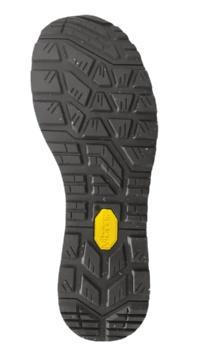
La gomma di per sé non suona come un materiale particolarmente sostenibile… come riesce Vibram a esprimere il suo impegno ad essere sempre più sostenibile?
La gomma, soprattutto sintetica, derivata dal petrolio non rappresenta certo un esempio di materiale naturale, però offre performance di alta tecnicità che non si riescono ad ottenere con materiali naturali. VIBRAM ovviamente ricerca costantemente materiali innovativi, soprattutto nella direzione di materiali circolari, sia come materie prime, che come progettazione secondo i principi di Ecodesign. I maggiori successi che possiamo annoverare al momento sono però legati al miglioramento dei processi e alla riduzione di impatto dovuta al consumo di energia, all’impiego di energie rinnovabili e di riduzione di scarti e sprechi, che sono i veri temi rilevanti della sostenibilità di Vibram
Un altro punto fondamentale per i nostri impegni legati ai prodotti sostenibili è il tema della durabilità. Non solo abbiamo misurato la maggior parte dei nostri prodotti mediante il sistema LCA, quindi cerchiamo di innovare seguendo le priorità di impatto, ma uno delle caratteristiche che rendono famosa la suola Vibram è la durabilità che, considerando l’utilizzo, permette di ridurre l’impatto nell’utilizzo prolungato dei nostri prodotti.
Quali sono le iniziative più importanti del vostro programma "The Sustainable Way"?
Oltre ad aver misurato i nostri impatti in modo da identificare strategicamente quali siano i temi più rilevanti e su cui possiamo investire in ricerca e sviluppo e in nuove tecnologie per i processi produttivi, abbiamo creato un vero e proprio piano strategico di sviluppo sostenibile.
Altri punti cardine della strategia sono relativi alla collaborazione con aziende della filiera, con la Supply chain, con i nostri clienti, sia per lavorare su temi di eco design, sia per elaborare standard di settore che ci permettano di ridurre il tempo di dimostrazione del nostro livello di sostenibilità, dedicando maggiori investimenti alle vere azioni di riduzione di impatto.
Uno di questi investimenti nel campo della moda è il Monitor for Circular Fashion di Sda Bocconi, attraverso il quale - assieme alle azien-
144 SUSTAINABILITY NEWS
de di questo settore - parliamo alla Comunità Europea e alle Nazioni Unite periodicamente, affinché il legislatore possa migliorare le normative che spingono tutte le aziende nella stessa direzione. Ci può raccontare un progetto in cui è particolarmente evidente l’attenzione per la sostenibilità, magari creato per il mondo Work&Safety?
Per quanto riguarda il settore del lavoro e sicurezza, le aziende iniziano ad essere sempre più consapevoli e a richiedere più informazioni e certificazioni. La difficoltà è legata al fatto che i materiali chimici per alcune applicazioni sono sicuramente sotto la lente di ingrandimento o addirittura proibiti in altri settori, quindi riuscire a migliorare gli impatti è possibile, rendere i prodotti certificabili sotto certi punti di vista è molto più complicato. Ad esempio, un nostro progetto di collaborazione con Bluesign, volto a creare uno standard di mercato per il nostro settore che risponda all’esigenza della filiera, per l’outdoor è possibile, mentre per il W&S ad oggi lo vediamo sicuramente più complesso.
Di sicuro, continuiamo a lavorare per migliorare l’impatto dei nostri prodotti. Al momento abbiamo una mescola specifica per il settore antinfortunistico che si chiama Vibram Ecostep pro, realizzata con circa il 30% di gomma riciclata dagli scarti di produzione. Ma i nostri dipartimenti R&D stanno lavorando per studiare nuove soluzioni, in grado di ridurre l’impatto sull’ambiente, pur mantenendo inalterati i livelli di performance che riteniamo necessari per le suole con l’ottagono giallo. Tracciabilità e certificazioni sono ormai parole chiave nel discorso sulla tracciabilità. Voi come le interpretate?
Tracciabilità e trasparenza sono i grossi temi del futuro. Stiamo cercando di prepararci all’interno della nostra produzione in maniera adeguata mediante interventi di Industria 4.0 che ci hanno permesso di innovare alcune macchine non tecnologicamente avanzate, con il duplice scopo di tracciare meglio ed essere più efficienti, quindi riducendo scarti e consumo di energia.
Una delle difficoltà è legata alla segretezza del know how di diverse aziende della filiera, che rende difficile conoscere ogni aspetto della nostra supply chain. Per questo motivo stiamo creando sempre di più situazioni di partnership, invece del classico rapporto cliente-fornitore. Inoltre, collaboriamo con le aziende a monte e a valle, al fine di utilizzare gli stessi sistemi o sistemi che permettono di integrare le informazioni tra di noi.
Vibram è un’azienda votata alla ricerca e all’innovazione. Senza svelare particolari segreti, cosa ci possiamo aspettare da voi nel prossimo futuro rispetto al tema sostenibilità?
Come al solito puntiamo molto sulle tecnologie e sull’ecodesign. Le tecnologie e i materiali sono innovazione interna. Per l’ecodesign, invece, anche se i progetti sono molto più di lungo respiro, puntiamo sul reinventare la scarpa, la suola o il servizio che offriamo assieme ai nostri clienti, ripensando alla costruzione della calzatura e al suo fine vita, in modo da ottimizzare, dove possibile, l’impatto sull’ambiente.
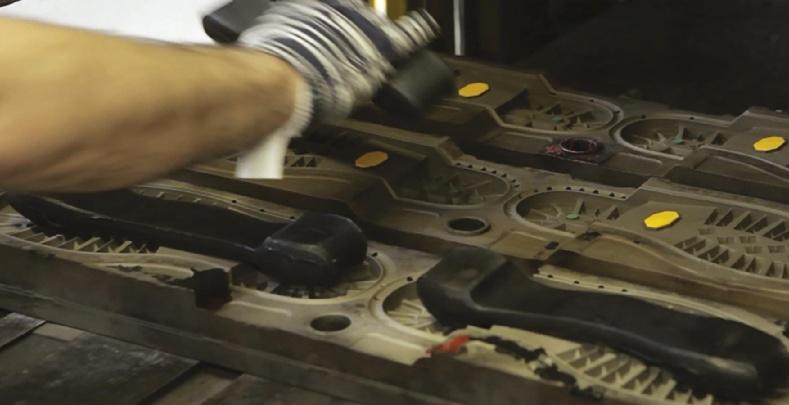
SUSTAINABILITY 145 NEWS
PIDIGI: THE FUTURE IS IN SUSTAINABILITY
Since as far back as 1953, the Veronese company has been able to evolve by following the needs of the market, becoming a leading supplier of materials, accessories and components for footwear and leather goods, and always placing sustainability as a driving force in innovation.
A long-established company, founded way back in 1953, PIDIGI has gone through all the stages of development of the footwear and leather goods industry in Italy - from imports from Germany of consumables destined for the fledgling Italian shoe factories, to the expansion into the countries of reference of delocalisation by Western footwear manufacturers, starting with Western Europe, Eastern Europe and then North Africa. Thanks to the wide range of products and the technical assistance offered, the Verona-based company has been able to grow with the market, gradually specialising in the supply of raw materials for the footwear, leather goods and technical-sports clothing sectors, to the point where it currently has no less than seven international branches, in addition to the logistics centre of over 15,000 square metres in Verona, with over 10,000 items handled.
“Today we can count on seven branches in Europe and beyond”, says Giorgio De Gara, CEO of PIDIGI, “and more precisely in Hungary, the Czech Republic, Tunisia, Mexico, Romania, Peru, and Portugal. The opening and growth of these branches over time, in line with the continuous evolution of the markets, has been driven by the desire to provide a punctual service to our customers at a global level, thus being able to guarantee an on-site presence that is also realised through field trials at their subcontractors or at their delocalised production units.
This proximity to customers and market needs has led us over the years to achieve an export share of around 40%, with an aggregate Group turnover that in 2022 reached the record figure of 99 million Euros”.
What is the key to this success?
“Our mission has always been to provide a service to the customer, with a wide range of products in the logic of the ‘one shop stop’, so that the footwear and leather goods industry can find a whole range of consumable, structural and functional products, with constant research aimed at guaranteeing our customers always the best solutions in terms of performance and reliability, which is not easy with such a rich catalogue and such a wide range of suppliers.
Not only that: we strive to be innovators in product solutions and to offer a high level of logistical service. For example, we process 200 orders a day from our logistics centre in Verona, and we are able to dispatch all orders we receive by midday and deliver them to the customer the next day. In European countries and North Africa, delivery times do not exceed 2-3 days”.
What have been the main drivers of this evolution?
“In recent years we have gradually focused on the large luxury and sports footwear groups on the one hand, and safety footwear on the other. Italian and European mid- and lower-medium footwear customers, which used to represent an important share in the past, have, on

146 SUSTAINABILITY INTERVIEW
GIORGIO DE GARA, CEO OF PIDIGI.
the other hand, gradually shrunk in line with the market trend and now represent a minority share of our business. The two directions in which we have grown the most in recent years are certainly, on the one hand, the technical-textile one - with innovative solutions for safety footwear, trekking and trainers - and on the other hand, the structural materials, for which we have a specialised division”.
Tell us more in detail about this division specialising in structural materials for footwear and leather goods...
“This is a very important division, dedicated to sustainable materials for footwear (insoles, counters, toe caps, etc.) and leather goods, such as cellulosic, regenerated leather, fibreboard, and natural plant-derived materials. Products that we manufacture in production units in partnership or of our own, such as Konitex in Slovenia, a company we acquired in 1996 and in which we have developed the concept of recycled raw materials and circular economy, with the reuse of waste materials from our own processes”.
Are you referring to the PIDIGI Recycle System?
“In March 2020, the European Parliament presented the Green Deal, the action plan for a new circular economy, which includes proposals on more sustainable product design and waste reduction. PIDIGI fully shares this vision and has therefore set out in the PRS - Pidigi Recycle System the plan to make its materials increasingly circular. Today, three product families fully respond to circularity: Regenerated Leather, Cellulosic Material and Fibreboard. Production waste generated by customers who use them is collected by us and fed back into the production process. Our commitment is to increase the number of customers and the number of articles involved in this project in a zero-waste logic, also by promoting the development of single-component products”.
So, sustainability, circularity, but also certification...
“Process and product certification is another important trend in which we have been actively involved for years. We have decided to be GRS - Global Recycle Standard certified, both as a company and as products, and to choose partners upstream in the supply chain who hold this same certification. In addition, our paper and forest products are FSC-certified, as they only contain wood from responsibly managed forests according to strict environmental, social and economic standards. We also have the REACH (Registration, Evaluation, Authorisation and Restriction of Chemicals) declaration for chemical products and OEKO-TEX certification for textiles. We believe it is important to invest energy and resources on serious and recognised certifications, in a context such as the current one where there is great confusion”.
A very hot topic in recent years is energy efficiency. Have you also moved in this direction?
“Since the end of 2010, we have initiated various actions aimed at achieving energy autonomy, through the construction of photovoltaic systems at our company sites, starting with the Verona headquarters, and which today has led us to count on a total of 10 photovoltaic systems for an installed power >2,500 kWp, an annual production of 2,780,000 kWh, and an annual reduction of Co2 gas >1,200,000 kg. We are proud to say that today we have an energy autonomy of around 90%. We are counting on increasing this to 100% with the expansion of the photovoltaic plants at the Verona site in 2025, in order to achieve so-called energy neutrality”.
How important is sustainability within your product catalogue?
“We see a strong focus and demand for sustainable products from fashion and sports brands, in the wake of an increasingly important market trend that sees the new generations as protagonists, as well as
marketing requirements. Product sustainability is also the key to entering new markets. Within our product range, the quantity of certified sustainable products is already substantial and is set to grow further in the coming period”.
Is there a product for the footwear world that you consider most interesting right now within your offer?
“For safety footwear, I would definitely say the certified recycled composite toe cap, which is attracting a lot of interest from our customers, because it is able to maintain the same technical and safety performance as traditional toe caps, but with a focus on the environment. In the area of footwear in general, one of the leading innovations is our Foam Free Recycled line of shoe liners, which is a sustainable alternative to foam rubber, particularly suitable for sports footwear. It is a single-material product with a 3D textile structure, made from certified recycled PES or PA yarns, which replaces common foam rubber or plastic derivatives, while guaranteeing the same requirements in terms of thickness and compressive strength. Among the major advantages it offers are a significant increase in the percentage of recycled material in the construction of the footwear, high breathability and elimination of molds and odours, and the possibility of Jacquard weaving”.

PIDIGI: IL FUTURO È NELLA SOSTENIBILITÀ
Dal lontano 1953 l’azienda veronese ha saputo evolversi seguendo le esigenze del mercato, diventando leader nella fornitura di materiali, accessori e componenti per calzature e pelletteria, e ponendo sempre la sostenibilità come motore nell’innovazione.
Azienda storica, nata nel lontano 1953, PIDIGI ha percorso tutte le tappe di sviluppo dell'industria della calzatura e della pelletteria in Italia – dalle importazioni dalla Germania di materiali di consumo destinati ai neonati calzaturifici italiani, all’espansione nei paesi di riferimento della delocalizzazione da parte dei calzaturifici occidentali, a cominciare dall'Europa occidentale, dell'est e poi del Nord Africa. Grazie all’ampia gamma di prodotti e all’assistenza tecnica offerta, l’azienda veronese ha saputo crescere insieme al mercato, specializzandosi progressivamente nella fornitura di materie prime per il settore calzaturiero, della pelletteria e della confezione tecnico-sportiva, fino a mettere all’attivo allo stato attuale ben sette filiali internazionali, che vanno ad aggiungersi al centro logistico di oltre 15.000 mq. a Verona, con oltre 10.000 articoli movimentati.“Oggi possiamo contare su sette filiali in Europa ed extra Europa – racconta Giorgio De Gara,
SUSTAINABILITY 147 INTERVIEW
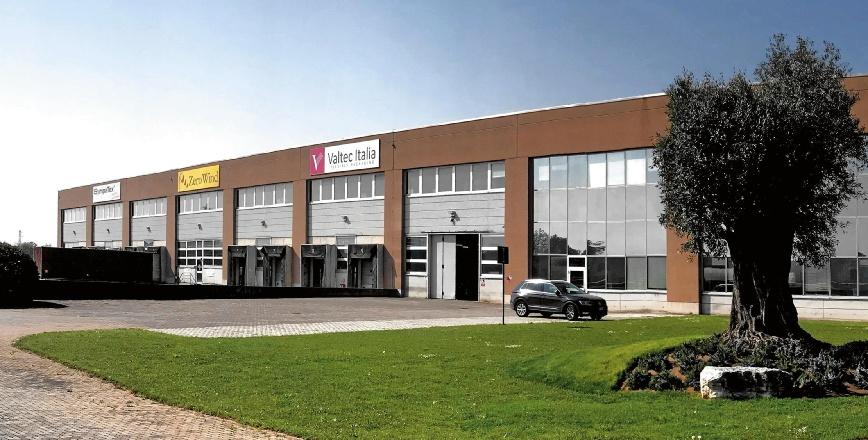
Ceo di PIDIGI – e più precisamente in Ungheria, Repubblica Ceca, Tunisia, Messico, Romania, Perù, Portogallo. L’apertura e la crescita di queste filiali nel tempo, in linea con la continua evoluzione dei mercati, è stata guidata dalla volontà di dare un servizio puntuale ai nostri clienti a livello globale, potendo così garantire una presenza in loco che si concretizza anche tramite prove sul campo presso i loro terzisti o presso le loro unità produttive delocalizzate.Questa vicinanza al cliente e ai bisogni del mercato ci ha portato negli anni a raggiungere una quota di export che si aggira intorno al 40%, con un fatturato aggregato di Gruppo che nel 2022 ha toccato la cifra record di 99 milioni di Euro”.
Qual è la chiave di questo successo?
“La nostra missione è sempre stata quella di dare un servizio al cliente, con un’ampia gamma di prodotti nella logica del ‘one shop stop’, in modo tale da consentire al calzaturificio e alla pelletteria di trovare tutta una serie di prodotti di consumo, strutturali e funzionali, con una costante ricerca volta a garantire ai nostri clienti sempre le migliori soluzioni in termini di performance e affidabilità, cosa non facile con un catalogo così ricco e un ventaglio così ampio di fornitori.Non solo: cerchiamo di essere innovatori nelle soluzioni di prodotto e di offrire un elevato servizio logistico. Ad esempio, dal nostro centro logistico di Verona evadiamo 200 ordini al giorno e siamo in grado di far partire tutti gli ordini che riceviamo entro mezzogiorno, per consegnarli al cliente il giorno successivo. Nei paesi europei e in nord Africa i tempi di consegna non superano i 2-3 giorni”.
Quali sono state le direttrici principali di questa evoluzione?“Negli ultimi anni ci siamo via via focalizzati sui grandi Gruppi del lusso e della calzatura sportiva da un lato, e della calzatura di sicurezza, dall'altro. I clienti di calzature di fascia media e medio-bassa italiani ed europei,
che rappresentavano una quota importante in passato, si sono invece progressivamente ridotti in linea con il trend del mercato e oggi rappresentano una quota minoritaria del nostro business. Le due direttrici su cui siamo cresciuti maggiormente negli ultimi anni sono sicuramente, da una parte, quella tecnico-tessile - con soluzioni innovative per la calzatura di sicurezza, trekking e sneaker - e dall’altra parte, l’insieme dei materiali strutturali, per i quali abbiamo una divisione specializzata.
Ci parli più nel dettaglio di questa divisione specializzata in materiali strutturali per calzature e pelletteria…
“Si tratta di una divisione molto importante, dedicata ai materiali sostenibili per calzature (sottopiedi, contrafforti, puntali ecc.) e pelletteria, come cellulosico, rigenerato di cuoio, cartone fibrato, materiali naturali di derivazione vegetale. Prodotti che noi realizziamo in unità produttive in partnership o di nostra proprietà, come la Konitex in Slovenia, azienda che abbiamo acquisito nel 1996 e nella quale abbiamo sviluppato il concetto di materia prima riciclata e di economia circolare, con il riutilizzo di materiali di scarto di nostre lavorazioni”.
Si riferisce al PIDIGI Recycle System?
“A marzo 2020 il Parlamento Europeo ha presentato il Green Deal, il piano di azione per una nuova economia circolare, che include proposte sulla progettazione di prodotti più sostenibili e sulla riduzione dei rifiuti. PIDIGI condivide in pieno questa visione e per questo motivo ha fissato nel PRS - Pidigi Recycle System il progetto per rendere sempre più circolari i propri materiali. Oggi ben tre famiglie di prodotto rispondono in pieno alla circolarità: Rigenerato di Cuoio, Materiale Cellulosico e Cartone Fibrato. Gli scarti di produzione generati dai clienti che li utilizzano vengono da noi ritirati e reimmessi nel processo produttivo. Il nostro impegno è aumentare il numero di clienti e il nu-
148 SUSTAINABILITY INTERVIEW
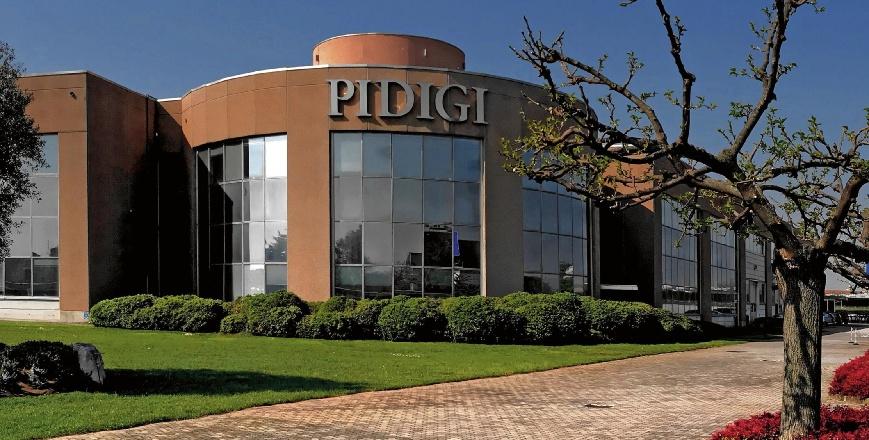
mero di articoli coinvolti in questo progetto in una logica di zero waste, anche promuovendo lo sviluppo di prodotti monocomponenti”.
Quindi sostenibilità, circolarità ma anche certificazione…“La certificazione dei processi e dei prodotti è un altro trend importante che da anni ci vede coinvolti attivamente. Abbiamo deciso di essere certificati GRS - Global Recycle Standard, sia come azienda, che come prodotti, e di scegliere partner a monte della filiera che detengano questa stessa certificazione. Inoltre, i prodotti di derivazione cartaria o forestale sono certificati FSC, poichè contengono solo legno proveniente da foreste gestite in modo responsabile secondo rigorosi standard ambientali, sociali ed economici. Disponiamo anche della dichiarazione REACH (Registration, Evaluation, Authorisation and Restriction of Chemicals) per i prodotti chimici e della certificazione OEKO-TEX per quelli tessili. Crediamo sia importante investire energie e risorse su certificazioni serie e riconosciute, in un contesto come quello attuale in cui vi è grande confusione”.
Un tema molto caldo in questi anni è quello dell’efficienza energetica. Vi siete mossi anche in tal senso?
“Dalla fine del 2010 abbiamo avviato diverse azioni finalizzate a conseguire l’autonomia energetica, attraverso la realizzazione di impianti fotovoltaici nelle nostre sedi aziendali, a cominciare dal quartier generale di Verona, e che oggi ci ha portato a contare su un totale di 10 impianti fotovoltaici per una potenza installata >2.500 kWp, una produzione annua di 2.780.000 kWh e la riduzione annua di gas Co2 > 1.200.000 kg. Siamo orgogliosi di poter affermare che oggi registriamo un’autonomia energetica che si aggira intorno al 90%. Contiamo di portarla al 100% con l’ampliamento degli impianti fotovoltaici nella sede di Verona nel 2025, per raggiungere la cosiddetta neutralità energetica”.
Quanto incide la sostenibilità all’interno del vostro catalogo prodotti?
“Riscontriamo una forte attenzione e richiesta di prodotti sostenibili da parte delle griffe e dei brand sportivi, sulla scia di un trend del mercato sempre più importante che vede protagoniste le nuove generazioni, oltre che le esigenze di marketing. La sostenibilità dei prodotti è, inoltre, anche la chiave per entrare in nuovi mercati. Nell’ambito della nostra gamma di prodotti, la quantità di prodotti sostenibili certificati è già consistente e destinata a crescere ulteriormente nei prossimi tempi”.
C’è un prodotto per il mondo della calzatura che ritenete più interessante in questo momento nell’ambito della vostra offerta?
“Per le calzature di sicurezza direi sicuramente il puntale in composito riciclato certificato, che sta riscuotendo un grande interesse da parte dei nostri clienti, perché in grado di mantenere le stesse performance tecniche e di sicurezza dei puntali tradizionali, ma con un’attenzione all’ambiente.
Nell’ambito della calzatura in generale, una delle novità di punta è la nostra linea di fodere per calzature Foam Free Recycled, che rappresenta un'alternativa sostenibile alla gommapiuma, particolarmente indicata per le calzature sportive. Si tratta di un prodotto monomateriale con struttura tessile 3D, realizzato con filati di PES o PA riciclato certificato, che sostituisce la comune gommapiuma o i derivati della plastic a, pur garantendo gli stessi requisiti in termini di spessore e resistenza alla compressione.
Tra i maggiori vantaggi che offre troviamo l’aumento significativo della percentuale di materiale riciclato nella costruzione della calzatura, l’elevata traspirabilità ed eliminazione di muffe e odori, e la possibilità di tessiture anche Jacquard”.
SUSTAINABILITY 149 INTERVIEW
NATIVA™ COTTON
The world’s leading supplier of regeneratively farmed luxury fibers, is introducing cotton to its offer.

NATIVA™ Cotton accelerates the shift towards a more sustainable production system, from farm to brand. Made in Europe, NATIVA™ Cotton is a one-stop solution that certifies cotton growing, sourcing and production under the NATIVA™ Regenerative Program. The NATIVA™ Regenerative Agriculture Program is a robust system with a triple impact based on scientific research and backed by data.
NATIVA™’s Regenerative Agriculture Program protects the land by bettering soil quality, safeguards crops by ensuring soil health, and supports farmers and local communities by improving their livelihoods. These multidisciplinary efforts further result in greater water quality and increased CO2 capturing levels. Measured over a five-year period, NATIVA™ aims to achieve a 20% increase of organic materials (natural nutrients) in the soil through its regenerative agricultural practices. This is supported by a 25% reduction in pesticides, with an eventual goal of zero pesticide use throughout time, and the effective eradication of tillage.
“As part of NATIVA™’s goals of positively impacting the supply chain for a more sustainable system, we wanted to expand our reach from wool into new fibers. With cotton playing such a significant role in the fashion industry, it was only natural to extend our programme to this iconic fiber.”
said Maria Estrada, NATIVA™ Global Director.
NATIVA™ Regenerative Cotton’s founding partner, Nafpaktos Textile Industry SA, is based in Greece. Every step from the cultivation to the fiber processing and yarn making takes place in Greece – resulting in a farm to fiber cycle fully accomplished within the EU and complying with EU standards in labour and environmental conservation rights. Among partner brands NATIVA we find Stella McCartney, Gucci, Pangaia.
NATIVA™ COTTON
Il leader mondiale nella fornitura di fibre di lusso coltivate in modo rigenerativo introduce il cotone più sostenibile nella sua offerta.
NATIVA™ Cotton accelera il passaggio a un sistema di produzione più sostenibile, dall'azienda agricola al marchio. Made in Europe, NATIVA™ Cotton è una soluzione unica che certifica la coltivazione, l'approvvigionamento e la produzione del cotone nell'ambito del Programma Rigenerativo NATIVA™. Il Programma di Agricoltura Rigenerativa NATIVA™ è un sistema solido con un triplice impatto basato sulla ricerca scientifica e supportato dai dati.
Il Programma di Agricoltura Rigenerativa NATIVA™ protegge la terra migliorando la qualità del suolo, salvaguarda le colture garantendo la salute del suolo e sostiene gli agricoltori e le comunità locali migliorando i loro mezzi di sussistenza. Questi sforzi multidisciplinari si traducono in una maggiore qualità dell'acqua e in un aumento dei livelli di cattura della CO2. Misurato su un periodo di cinque anni, NATIVA™ mira a ottenere un aumento del 20% dei materiali organici (nutrienti naturali) nel suolo grazie alle sue pratiche agricole rigenerative. Ciò è supportato da una riduzione del 25% dei pesticidi, con l'obiettivo finale di azzerare l'uso di pesticidi nel tempo, e dall'effettiva eliminazione della lavorazione del terreno. “Nell'ambito degli obiettivi di NATIVA™ di incidere positivamente sulla catena di approvvigionamento per un sistema più sostenibile, abbiamo voluto espandere la nostra portata dalla lana a nuove fibre. Dato che il cotone svolge un ruolo così importante nell'industria della moda, è stato naturale estendere il nostro programma a questa fibra iconica", ha dichiarato Maria Estrada, Direttore globale di NATIVA™. Il partner fondatore di NATIVA™ Regenerative Cotton, Nafpaktos Textile Industry SA, ha sede in Grecia. Ogni fase, dalla coltivazione alla lavorazione della fibra e alla produzione del filato, si svolge in Grecia, dando vita a un ciclo di produzione della fibra completamente realizzato all'interno dell'UE e conforme agli standard europei in materia di diritti del lavoro e conservazione dell'ambiente. Tra i marchi partner NATIVA troviamo Stella McCartney, Gucci, Pangaia.
150 SUSTAINABILITY NEWS
TOGETHER BY THEMOIRÈ // CHAPTER 03 COLOMBIA
The iconic brand of responsible fashion launches the third chapter of the TOGETHER by THEMOIRè project with the SS24 special COLOMBIA and the opening of a ‘dedicated’ temporary pop-up at La Rinascente in Milan.
The Milanese brand of 100% vegan bags, internationally recognised for its strong values of environmental and social responsibility, has launched the third chapter of the TOGETHER by THEMOIRè project with the SS24 special capsule collection COLOMBIA, thus continuing the macro-project linked to the brand that aims to valorise the artisanal heritage of certain minorities in vulnerable situations. TOGETHER by THEMOIRè // CHAPTER 03 was made in Sandonà, southern Colombia, working with a community of two hundred women who have made weaving the natural fibres of Iraca - totally biodegradable - their work and passion. From iconic models such as Tia and Bios and Kobo, to the new models, Flor and Phoebe, hand and shoulder bags with a soft, contemporary shape. Each model, 100% hand-woven, is developed in three colours inspired by the shades of Colombian cities. 100% of the proceeds from the sale of the capsule will go to assist the children of tejedoras with disabilities and special needs. To launch the capsule, TOGETHER by THEMOIRè also opened a customised popup at La Rinascente in Milan's Piazza Duomo from 14 May to 24 June. ‘We are thrilled with this new goal achieved. THEMOIRè is a project that was born at the end of 2019 and has seen significant results since its inception. As of today, we have a widespread presence in over 300 multibrand stores worldwide, of which about 100 in Italy, and we are proud to be able to consolidate the relationship with our strategic customers such as La Rinascente in our Milan,’ say Francesca Monaco and Salar Bicheranloo, Creative Directors and Founders.
TOGETHER BY THEMOIRÈ // CHAPTER 03 COLOMBIA
Il brand simbolo della moda responsabile lancia il terzo capitolo del progetto TOGETHER by THEMOIRè con la SS24 speciale COLOMBIA e con l’inaugurazione di un temporary pop up ‘dedicato’ presso La Rinascente di Milano.
Il brand milanese di borse vegane 100%, riconosciuto a livello internazionale per i forti valori di responsabilità ambientale e sociale, ha lanciato il terzo capitolo del progetto TOGETHER by THEMOIRè con la SS24 speciale capsule collection COLOMBIA, proseguendo così il macro-progetto legato al brand che si pone come obiettivo la valorizzazione dell’heritage artigianale di alcune minoranze in situazioni di vulnerabilità. TOGETHER by THEMOIRè // CHAPTER 03 è stato realizzato a Sandonà, nel sud della Colombia, collaborando con una comunità di duecento donne che hanno fatto della tessitura delle fibre naturali di Iraca – to-
talmente biodegradabili – il loro lavoro e la loro passione. Dai modelli iconici come Tia e Bios e Kobo, ai nuovi modelli, Flor e Phoebe, borse a mano e a tracolla da uno shape morbido e contemporaneo. Ogni modello, 100% intrecciato a mano, è sviluppato in tre colorazioni ispirate alle sfumature delle città colombiane. Il 100% dei ricavi della vendita della capsule saranno destinati all’assistenza dei figli delle tejedoras con disabilità e bisogni speciali. Per il lancio della capsule, TOGETHER by THEMOIRè ha anche inaugurato dal 14 maggio al 24 giugno un pop up personalizzato presso La Rinascente in Piazza Duomo a Milano. “Siamo entusiasti di questo nuovo obiettivo raggiunto. THEMOIRè è un progetto nato a fine 2019 e ha riscontrato sin dagli esordi risultati significativi. Ad oggi siamo presenti in modo capillare in oltre 300 multimarca nel mondo, di cui circa 100 in Italia e siamo orgogliosi di poter consolidare la relazione con i nostri clienti strategici come La Rinascente nella nostra Milano”, affermano Francesca Monaco e Salar Bicheranloo, Direttori Creativi e Fondatori.
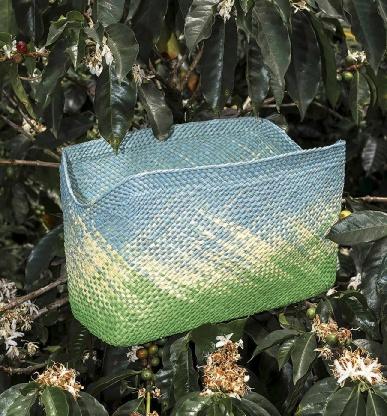
SUSTAINABILITY 151 NEWS
SECOND HAND FOOTWEAR, IS THERE ANY GOOD NEWS?
The global second-hand footwear market is growing due to sustainable fashion trends and conscious consumption. The market, dominated by non-athletic footwear and led by female consumers, is projected to reach $218 billion by 2026.
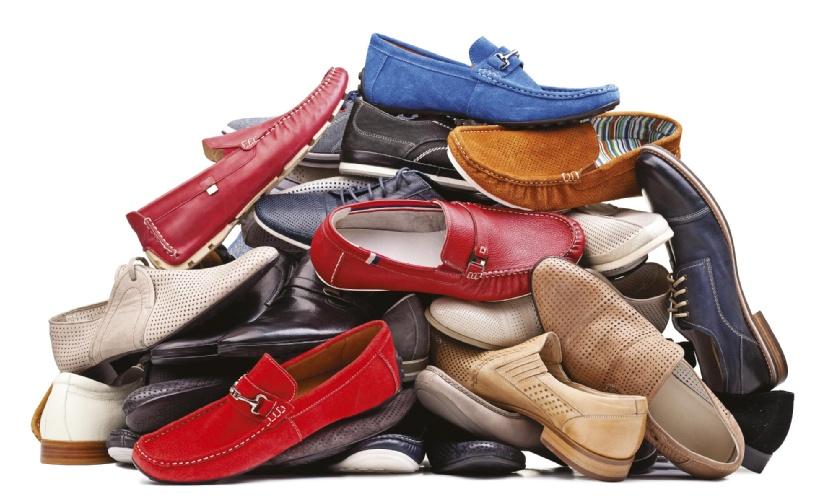
The second-hand footwear market is experiencing a remarkable growth trajectory, setting the stage for substantial expansion in the foreseeable future. With a valuation of US$ 12.8 billion in 2021, industry forecasts project a significant surge to reach US$ 43.1 billion by 2032, reflecting a robust Compound Annual Growth Rate (CAGR) of 12.5%.
These data, taken from a report by Persistance Market Research, speak of a growing market for which it is not easy to identify the driving factors as they are multiple and varied, certainly intertwined with each other even in a different way depending on the geographical areas in which you are located. Europe and Africa seem to be the main players in this market, both
for financial, income and economic crisis issues, and for the greater attention to sustainability issues. Not to be overlooked is the appeal that in certain markets exerts the possibility of obtaining shoes from griffes at more affordable prices.
Other data reported by a research conducted by Statista clarify the growth dimension of the commercial phenomenon of the sale of second-hand shoes. The global second-hand shoe market is on an upward trajectory, with projections indicating a substantial value of $218 billion by 2026, surging from $119 billion in 2022. This growth is chiefly attributed to the rising inclination of younger consumers towards cost-effective and sustainable clothing alternatives.
152 SUSTAINABILITY SECOND HAND
EMBRACING SUSTAINABILITY
A pivotal driver behind the surge in second-hand footwear demand is the escalating sustainable fashion trend. Consumers are increasingly drawn towards eco-conscious practices and mindful consumption, fueling an inclination towards pre-owned footwear items. This shift not only resonates with sustainability objectives but also offers individuals a platform to express their unique fashion identity.
PRODUCT AND CONSUMER LANDSCAPE
The non-athletic segment dominates the market, capturing a substantial 61.3% share. This category encompasses a range of casual and stylish footwear like flats, sandals, and boots, appealing to consumers seeking trendy yet affordable options. Women stand out as key contributors to market demand, projected to hold a significant share of 47.6%. The influence of fast fashion culture among women is instrumental in driving their preference for second-hand footwear, while the men's segment shows promising growth, highlighting evolving consumer preferences.
PRICE RANGE DYNAMICS
While mass-market second-hand footwear retains a strong foothold, the premium segment is anticipated to experience a surge in sales. The allure of luxury and high-end footwear among millennials is fueling demand for premium second-hand footwear items, signaling a shifting market trend towards upscale offerings.
RETAIL LANDSCAPE AND CONSUMER PREFERENCES
Thrift stores, op-shops, and online platforms play a pivotal role in the second-hand footwear market, offering consumers a diverse array of choices. Thrift shopping imparts an element of excitement, coupled with the convenience of online resale platforms, resonating well with tech-savvy generations like Gen Z and millennials. Consumers acknowledge the environmental benefits of opting for second-hand shoes, underscoring the significance of sustainable fashion practices.
FUTURE OUTLOOK AND INDUSTRY EVOLUTION
As consumer behaviors evolve, the second-hand footwear market is witnessing a notable transition. Growing acceptance of pre-owned clothing, including shoes, across various demographics underscores a shift towards sustainability and conscious consumerism. Brands aligning with sustainability and the resurgence of resale are primed for success, heralding a transition away from the dominance of fast-fashion giants towards a more sustainable and consumer-centric fashion landscape.
SERVICES AND RENTING
The above consideration only reinforces a possible future scenario that, already in other sectors, sees rental over property, service over possession, excel. This is a trend particularly encouraged by technological innovation that allows, and will increasingly allow, many commercial sectors (the simplest example is that of the automotive industry) to abandon the business model of selling consumer goods to turn towards the sale of subscription or short- and long-term rental services. Some examples of subscriptions already exist in the fashion sector and it can be ruled out that the large revenues of the future, especially for the most established and attractive brands, will derive from the rental of premium garments or footwear that pass from hand to hand.
CONCLUSIONS
In conclusion, the second-hand footwear market presents a promising outlook characterized by sustainability, evolving consumer perceptions, and economic influences. As the industry progresses towards eco-conscious practices and consumer-driven initiatives, second-hand footwear emerges as a preferred choice for individuals seeking style, affordability, and environmental accountability in their fashion choices.
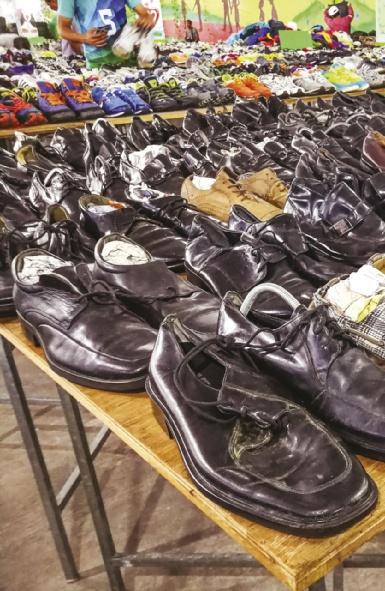
SUSTAINABILITY 153 SECOND HAND
CALZATURE DI SECONDA MANO, CI SONO BUONE NOTIZIE?
Il mercato globale delle calzature di seconda mano sta crescendo grazie alle tendenze della moda sostenibile e al consumo consapevole. Il mercato, dominato dalle calzature non sportive e guidato dalle consumatrici, dovrebbe raggiungere i 218 miliardi di dollari entro il 2026.
Il mercato delle calzature di seconda mano sta vivendo una notevole traiettoria di crescita, ponendo le basi per una sostanziale espansione nel prossimo futuro. Con una valutazione di 12,8 miliardi di dollari nel 2021, le previsioni del settore immaginano un'impennata significativa fino a raggiungere i 43,1 miliardi di dollari entro il 2032, con un robusto tasso di crescita annuale composto (CAGR) del 12,5%.
Questi dati, tratti da un rapporto di Persistance Market Research, parlano di un mercato in crescita per il quale non è facile individuare i fattori trainanti in quanto molteplici e variegati, certamente intrecciati tra loro anche in modo diverso a seconda delle aree geografiche in cui ci si trova.
L'Europa e l'Africa sembrano essere i principali attori di questo mercato, sia per questioni finanziarie, di reddito e di crisi economica, sia per la maggiore attenzione ai temi della sostenibilità. Da non trascurare è l'appeal che in alcuni mercati esercita la possibilità di ottenere scarpe griffate a prezzi più accessibili.
Altri dati, riportati da una ricerca condotta da Statista, chiariscono la dimensione del fenomeno commerciale della vendita di scarpe di seconda mano. Il mercato globale delle scarpe di seconda mano è in crescita, con proiezioni che indicano un valore sostanziale di 218 miliardi di dollari entro il 2026, in aumento rispetto ai 119 miliardi di dollari del 2022. Questa crescita è attribuita principalmente alla crescente inclinazione dei consumatori più giovani verso alternative di abbigliamento economiche e sostenibili.
ABBRACCIARE LA SOSTENIBILITÀ
Un fattore determinante per l'aumento della domanda di calzature di seconda mano è la crescente tendenza alla moda sostenibile. I consumatori sono sempre più attratti da pratiche eco-consapevoli e da un consumo consapevole, alimentando l'inclinazione verso le calzature usate. Questo cambiamento non solo è in linea con gli obiettivi di sostenibilità, ma offre anche agli individui una piattaforma per esprimere la propria identità di moda.
PANORAMA DEI PRODOTTI E DEI CONSUMATORI
Il segmento delle calzature non sportive domina il mercato, con una quota sostanziale del 61,3%. Questa categoria comprende una gamma di calzature casual ed eleganti come scarpe basse, sandali e stivali, che attraggono i consumatori alla ricerca di opzioni di tendenza ma accessibili. Le donne si distinguono per il contributo fondamentale alla domanda del mercato, con una quota significativa del 47,6%. L'influenza della cultura del fast fashion tra le donne è determinante nel guidare la loro preferenza per le calzature di seconda mano, mentre il segmento maschile mostra una crescita promettente, evidenziando l'evoluzione delle preferenze dei consumatori.
154 SUSTAINABILITY SECOND HAND
DINAMICA DELLE FASCE DI PREZZO
Mentre le calzature di seconda mano del mercato di massa mantengono una forte posizione, si prevede che il segmento premium subirà un'impennata nelle vendite. Il fascino delle calzature di lusso e di fascia alta tra i millennial sta alimentando la domanda di calzature di seconda mano di qualità, segnalando un cambiamento di tendenza del mercato verso le offerte di alta gamma.
PANORAMA DELLA VENDITA AL DETTAGLIO E PREFERENZE DEI CONSUMATORI
I negozi dell'usato, gli op-shop e le piattaforme online svolgono un ruolo fondamentale nel mercato delle calzature di seconda mano, offrendo ai consumatori un'ampia gamma di scelte. L'acquisto dell'usato comprende un elemento di eccitazione, unito alla convenienza delle piattaforme di rivendita online, che ben si adatta alle generazioni più attente alla tecnologia come la Gen Z e i millennial. I consumatori riconoscono i vantaggi ambientali dell'acquisto di scarpe di seconda mano, sottolineando l'importanza delle pratiche di moda sostenibile.
PROSPETTIVE FUTURE ED EVOLUZIONE DEL SETTORE
Con l'evoluzione dei comportamenti dei consumatori, il mercato delle calzature di seconda mano sta assistendo a una notevole transizione. La crescente accettazione dell'abbigliamento usato, comprese le scarpe, da parte di varie fasce demografiche sottolinea il passaggio alla sostenibilità e al consumo consapevole. I marchi che si allineano alla sostenibilità e si aprono a un concetto di rivendita sono pronti per
il successo, preannunciando una transizione dal dominio dei giganti del fast fashion verso un panorama della moda più sostenibile e incentrato sul consumatore.
SERVIZI E NOLEGGIO
Le considerazioni precedenti non fanno che rafforzare un possibile scenario futuro che, già in altri settori, vede primeggiare l'affitto sulla proprietà, il servizio sul possesso. Si tratta di una tendenza particolarmente incoraggiata dall'innovazione tecnologica che consente, e consentirà sempre più, a molti settori commerciali (l'esempio più immediato è quello dell'industria automobilistica) di abbandonare il modello di business della vendita di beni di consumo per orientarsi verso la vendita di servizi in abbonamento o di noleggio a breve e lungo termine. Alcuni esempi di abbonamento esistono già nel settore della moda e non si può escludere che i grandi ricavi del futuro, soprattutto per i marchi più affermati e attraenti, deriveranno dal noleggio di capi o calzature premium che passano di mano in mano.
CONCLUSIONI
In conclusione, il mercato delle calzature di seconda mano presenta prospettive promettenti caratterizzate da sostenibilità, percezione dei consumatori in evoluzione e influenze economiche. Mentre l'industria progredisce verso pratiche eco-consapevoli e iniziative guidate dai consumatori, le calzature di seconda mano emergono come scelta preferita per gli individui che cercano stile, convenienza e responsabilità ambientale nelle loro scelte di moda.
SUSTAINABILITY 155 SECOND HAND
Design inspirations from the past, present and future
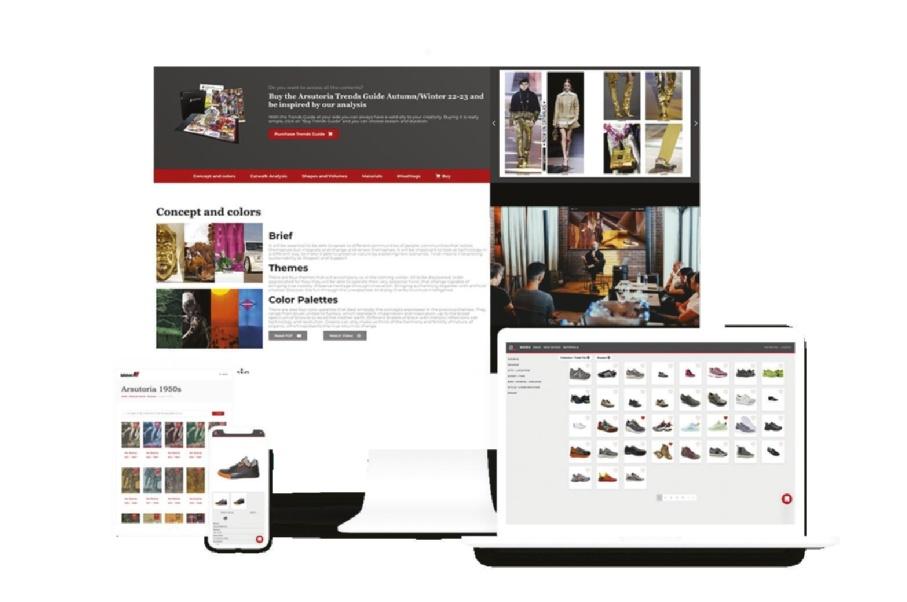
Many of the top shoe and bag designers worldwide use Arsutoria Studio to create their new collections and to find new market opportunities.
We have a simple mission: help you turn your ideas into products
arsutoriastudio.com
arstrends
arsutoria
Arsutoria provides you complete information on footwear, leather goods and accessories industries, reporting the latest shoe and handbags trends, focusing on special topics such as sports, sustainability or technology. Arsutoria editorial plan now includes a complete Trends guide, reports for tanning industries, safety shoes and much more.
Online database of photos of shoes, bags and materials, categorized by style, season, events and much more. Hundreds of new pictures uploaded every week from fairs collection, catwalks, retail windows and e-commerce.
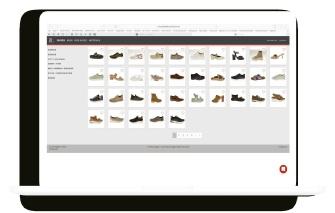

historical archive
Arsutoria (shoes) and Arpel (bags) historical archives available online. Arsutoria magazines from 1947 to 1980 and Arpel magazines from 1965 to 1980
ISSN 2531-9620 Send an e-mail to: arsutoria@edizioniaf.com to receive link and read the next issues of ARSUTORIA online for free 465 SS2023 TRENDS GUIDE CONCEPT, INSPIRATIONS, THEMES, COLOURS SS2023 VISION LAB NEXT MATERIALS FOR THE NEXT COLLECTIONS FOCUS SUSTAINABILITY B-CORP, NEW MATERIALS SUSTINABLE VISIONS AND FIGURES SAFETY SHOES INNOVATION, TECHNOLOGIES, NEW COLLECTIONS
10 Issues
Arsutoria offers the most complete information for footwear & leather manufacturers and designers: collections, materials and technology.

arsutoriamagazine.com
ARSUTORIA ONLY SHOES / ONLY BAGS
Hard cover book of over 200 pages of shoes and bags presented for each season on fair sand catwalks.


An overview on medium-end footwear market: news, articles and pictures. Foto Shoe 30 is a must have for wholesalers and mass retailers..
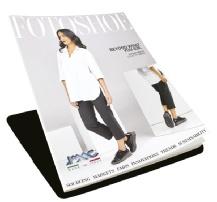
fotoshoemagazine.com
FOOTWEAR DICTIONARY
• 500 illustrated pages • 1000 terms in five different languages (IT-EN-ES-DE-FR)
• Only Printed edition
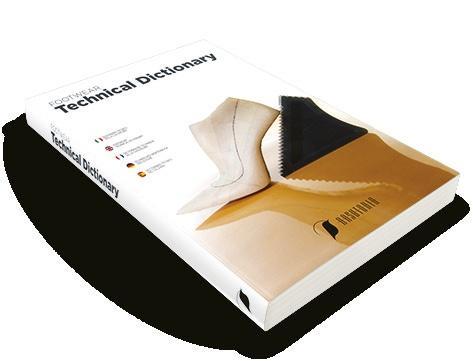

MAGAZINES & BOOKS www.edizioniaf.com subscriptions@edizioniaf.com ph. +39 02 3191 2331 fax +39 02 3361 1619 FOTO SHOE
30 6 Issues
ARSUTORIA
subscriptions@edizioniaf.com
ph. +39 02 3191 2331
fax +39 02 3361 1619
Arsutoria magazine trends webinars
(1 YEAR) SILVER + arstrends, photos of collections, catwalks, retail of shoes, bags and materials
Prices include FedEx
ORDER FORM * Prices are subject to VAT: only for Italy and private UE clients ** Available from January 2022 COMPANY ADDRESS CITY ZIP CONTACT EMAIL PHONE VAT NBR COUNTRY +_____/______________________________ CREDIT CARD _ _ _ __ _ _ __ _ _ __ _ _ _ EXP. DATE / CVV/CVC CARDHOLDER NAME SIGNATURE ____________________________________ BANK TRANSFER IBAN: IT 49 Z 01030 01604 000002285956
MAGAZINES & BOOKS ISSUES ITALY EUROPE REST OF THE WORLD ARSUTORIA - magazine 1 YEAR 10 300 € 500 € FOTOSHOE30 - magazine 1 YEAR 6 150 € 250 € FOOTWEAR TECHNICAL DICTIONARY* - book 1 book 1 120 € ARSUTORIA ONLY SHOES - book 1 YEAR 1 2 250 € 450 € ARPEL ONLY BAGS - book 1 YEAR 1 250 € ARSUTORIA STUDIO** USERS DIGITAL ITALY EUROPE REST OF THE WORLD SILVER
YEAR)
3 200 € 300 € 500 € GOLD
5 FULL 500 € 600 € 800 € PLATINUM
YEAR)
10 FULL 1200 € 1250 € 1450 € PAPER
shipment
Monte Paschi Siena Swift: PASCITM1MI4
(1
(1
GOLD + historical archive


AIMPES SERVIZI s.r.l. tel. +39 02.584.511 segreteria@mipel.com www.mipel.com pag. 18
ALBERTI F.LLI s.r.l. tel. +39 0332.333.619 www.fratellialberti.com pag. 48
APEGO s.r.l. tel. +39 0381.963.01 info@apego.it www.apego.it pag. IV cover
APICCAPS tel. +351 22.507.41.50 aicep.milan@portugalglobal.pt www.apiccaps.pt pag. 3
APLF LTD. tel. +852 282.762.11 info@aplf.com www.aplf.com www.aclechina.com www.fashionaccess.aplf.com www.leatherfair.aplf.com pag. 14-16
ARSUTORIA SCHOOL s.r.l. tel. +39 02.319.121 school@arsutoria.com www.arsutoria.com pag. 94-129
ASSOMAC SERVIZI s.r.l. tel. +39 0381.788.83 info@assomac.it www.assomac.it pag. from 19 to 47
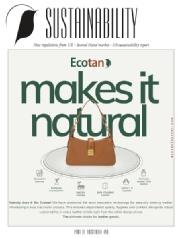
BRAMAC s.r.l. tel. +39 0734.890.103 bramac@bramac.it - www.bramac.it pag. Cover-56
BRUSTIA-ALFAMECCANICA s.r.l. tel. +39 0381.346.970/346.457 info@brustiaalfa.it www.brustiaalfa.it - www.batechnology.it pag. 31
CALL ME COMPANY Ltd. tel. +886 4.2567.5992 amy@cleanmold.com.tw www.cleanmold.com.tw pag. 57
CARNEVALI s.a.s. tel. +39 02.488.67.33 carnevali@carnevali.it www.carnevali.it pag. 125-126-127
CENTRO ACCESSORI S.p.A. tel. +39 0733.837.137 info@centroaccessori.eu www.centroaccessori.eu pag. 130-130bis-130ter-131
COMELZ S.p.A. tel. +39 0381.424.01 info@comelz.com - www.comelz.com pag. 4-23-35-93-161-III cover
DESMA Schuhmaschinen GmbH tel. +49 4202.9900 info@desma.de - www.desma.de pag. II cover-58-59
ELACHEM S.p.A. tel. +39 0381.327.112 info@elachem.com - www.elachem.com pag. 25-52-53
ERRE EMME SUOLE s.r.l. tel. +39 0733.800.722 info@rmsuole.com - www.rmsuole.com pag. 109
EXPO RIVA SCHUH RIVA DEL GARDA FIERECONGRESSI S.p.A. tel. +39 0464.520.000 info@exporivaschuh.it - www.exporivaschuh.it pag. 8-10
FAINPLAST s.r.l. tel. +39 0736.403.605 info@fainplast.com www.fainplast.com pag. 45
FORME IFABA s.r.l. tel. +39 0331.55.446 ifaba@ifaba.it - www.ifaba.it pag. 138
FRAMAS info@framas.com www.framas.com pag. 60
FUTURMODA - AEC FERIAS SL tel. +34 96.546.01.58 info@futurmoda.es - www.futurmoda.es pag. 12-13
GEA GOMMA s.r.l. tel. +39 0384.561.01 welcome@geagomma.com www.geagomma.it pag. 101
GOLDENPLAST S.p.A. tel. +39 0733.880.420 info@goldenplast.com www.goldenplast.com pag. 135
160 CONTACTS June 2024 490
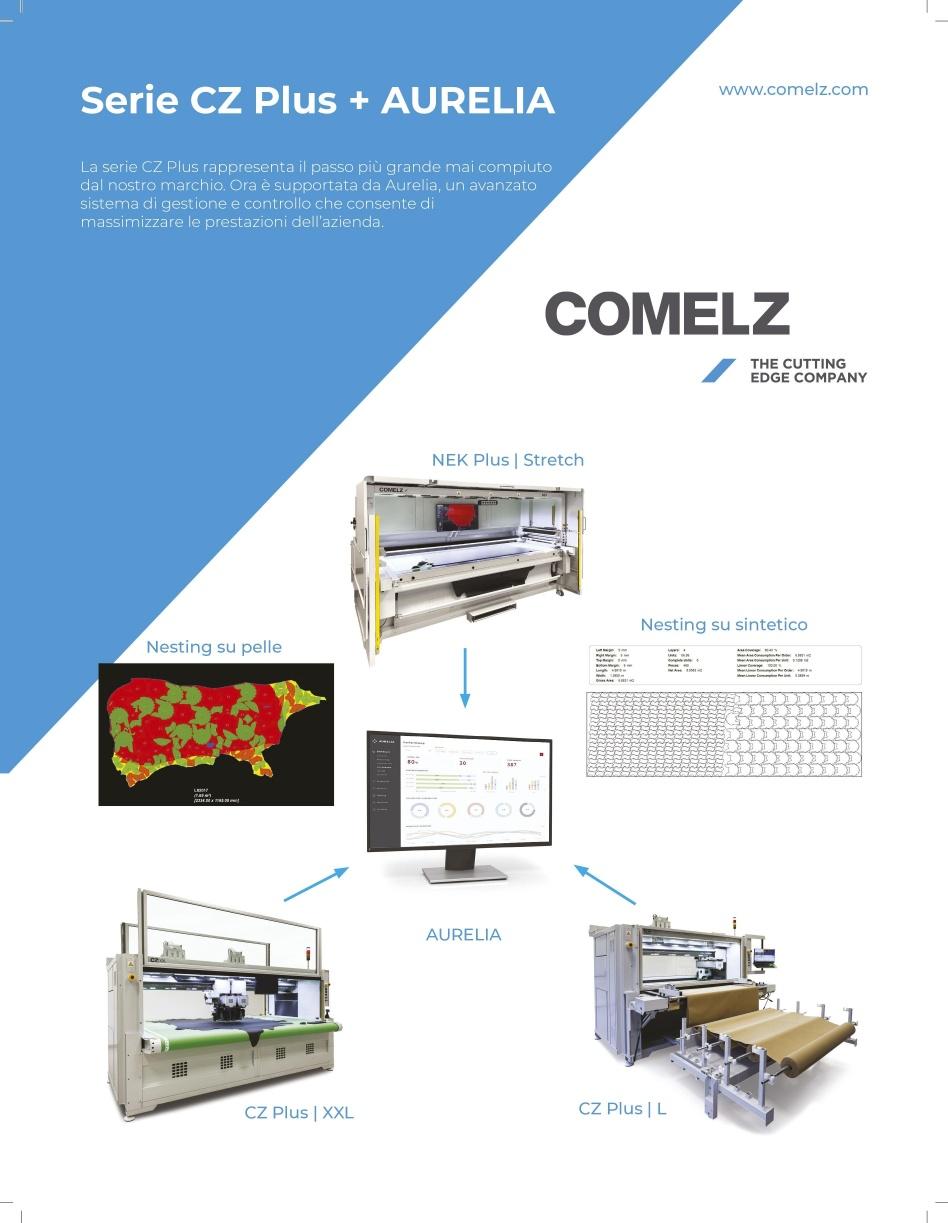
IMPERIALI ATTILIO TESSITURA S.p.A. tel. +39 031.490.109 info@attilioimperiali.it www.attilioimperiali.it pag. 119-120-121
INDUSTRIE CHIMICHE FORESTALI S.p.A. tel. +39 02.972.141 info@forestali.com www.forestali.com pag. 113
INESCOP tel. +34 965.395.213 www.inescop.com pag. 54-55
IPR S.p.A. tel. +39 0733.898.421 ipr@iprspa.com www.iprspa.com pag. 107
LAMEBO s.r.l. tel. +39 011.991.03.83 lamebo@lamebo.it - www.lamebo.it pag. 49-50-51
LENZI by F.F. s.r.l. tel. +39 0574.94.60.30 www.lenziegisto.it pag. 139-140-141
LINEAPELLE s.r.l. tel. +39 02.880.77.11 lineapelle@unic.it - www.lineapelle-fairs.it pag. 11
MAIN GROUP TECHNOLOGIES s.r.l. tel. +39 041.576.121 sales@maingroup.com www.maingroup.com pag. 33
MESSE FRANKFURT FRANCE SAS tel. +33 155.268.989 visitorservice@france.messefrankfurt.com www.leatherworld-paris.com pag. 9
NEW STEP s.r.l. tel. +39 0733.801.539 info@newstepsrl.it www.newstepsrl.it pag. 123
PELLAMI DUE C S.p.A. tel. +39 0734.969.604 tel. +39 0734.958.064 info@duecspa.com www.duecspa.com pag. 136-137
PREMIERE VISION SA tel. +33 04.72.60.65.55 blandinemartin@club-internet.fr www.premierevision.com pag. 5
RIFRA NASTRI s.r.l. tel. +39 039.604.05.56 info@rifranastri.it www.rifranastri.it pag. 110-111
SABAL S.p.A. Officina Meccanica tel. +39 0381.236.13 sabal@sabalgroup.it www.sabalgroup.it pag. 29
SERENA CECCHINI DESIGN sas tel. +39 0583.051.272 office@serenacecchinidesign.com www.serenacecchinidesign.com pag. 98bis-98ter
SILVACHIMICA s.r.l. tel. +39 0174.220.254 tan@silvateam.com www.silvateam.com pag. 95
SNEAKNIT s.r.l. tel. +39 0733.183.20.64 info@sneaknit.it www.sneaknit.it pag. 103
TACCHIFICIO
VILLA CORTESE s.r.l. tel. +39 0331.431.153 tvc@tvcgroup.it www.tvcgroup.it pag. from 114 to 118
TECNOGI S.p.A. tel. +39 0321.888.21 tel. +39 0321.885.422 info@tecnogi.com www.tecnogi.com pag. 105
TOP REPUTE CO., LTD tel. +852 285.186.03 topreput@top-repute.com www.toprepute.com.hk pag. 15
VIBRAM S.p.A. tel. +39 0331.999.777 vibram@vibram.it www.vibram.com pag. 112-142-143-144-145
WTRENDY TEAM s.r.l. tel. +39 0587.346.436 info@wtrendyteam.it www.wtrendyteam.it pag. 36-37
162 CONTACTS June 2024 490