
The EARCOS Triannual JOURNAL
A Link to Educational Excellence in East Asia SPRING 2026

Featured in this Issue
Cognitive Development
Move More to Learn More: Reclaiming Movement in International Schools
Humanities in Action
Conlationes Humanitatum
Leadership
The Leadership Transition Gap: What International Schools Must Get Right
Action Research
Equation for Empowerment: How Problem-Based Teacher Training
Shapes Educator Math Self-Efficacy
THE EARCOS JOURNAL
The ET Journal is a triannual publication of the East Asia Regional Council of Schools (EARCOS), a nonprofit 501(C)3, incorporated in the state of Delaware, USA, with a regional office in Manila, Philippines. Membership in EARCOS is open to elementary and secondary schools in East Asia which offer an educational program using English as the primary language of instruction, and to other organizations, institutions, and individuals.
OBJECTIVES AND PURPOSES
* To promote intercultural understanding and international friendship through the activities of member schools.
* To broaden the dimensions of education of all schools involved in the Council in the interest of a total program of education.
* To advance the professional growth and welfare of individuals belonging to the educational staff of member schools.
* To facilitate communication and cooperative action between and among all associated schools.
* To cooperate with other organizations and individuals pursuing the same objectives as the Council.
EARCOS BOARD OF TRUSTEES
James Dalziel (NIST International School), President
Maya Nelson (Jakarta Intercultural School), Vice President
Jim Gerhard (Seoul International School), Secretary
Rami Madani (The International School of Kuala Lumpur), Treasurer
Catriona Moran (Saigon South International School), Past President
Karrie Dietz (Incoming Head of School, Nexus International School Singapore)
Margaret Alvarez (WASC), Ex-Officio
Marta Medved Krajnovic (Western Academy of Beijing)
Matthew Parr (Nagoya International School)
Sam Mills (Sias International School in Zhengzhou)
Andrew Hoover (Office of Overseas Schools, REO, East Asia Pacific)
EARCOS STAFF
Edward E. Greene, Executive Director
Cameron Janzen, Deputy Director
Bill Oldread, Assistant Director Emeritus
Kristine De Castro, Office Manager & Assistant to the Executive Director
Maica Cruz, Events Coordinator
Porntip (Joom) Rattanapetch, Administrative Assistant & Membership Coordinator (Bangkok Office)
Kanjanarat (KJ) Visanjaron, Professional Learning Events Coordinator (Bangkok Office)
Yanee Na Ranong, Professional Learning Events Coordinator (Bangkok Office)
Edzel Drilo, Web, Marketing, & Digital Platforms Manager
RJ Macalalad, Accounting Staff
Rod Catubig Jr., Office Staff
East Asia Regional Council of Schools (EARCOS)
39/7 Soi Nichada Thani, Samakee Road, Bangtalad Sub-District, Pakkret District Nonthaburi 11120, Thailand
Brentville Subdivision, Barangay Mamplasan, Binan, Laguna, 4024 Philippines
Phone: +63 (02) 8779-5147 Mobile: +63 917 127 6460
Sophie Li
Loan Dubreuil
for Understanding and Stronger Results: Four Moves for International Schools
Heart of Change: Connecting Community Engagement and Service Learning with Inner Development
Meredith Robinson and Alice Whitehead
Welcome from the Executive Director ,,
Welcome to the Spring 2026 issue of the EARCOS Journal. Within this issue you will find, once again, proof positive of the tremendous talent and expertise that define this region as a leader in international education. EARCOS educators step forward time and time again, be it through articles in this journal, presentations and workshops at the University Admissions, Leadership, and Teachers’ Conferences, through our webinars and Weekend Workshops and other events, to share world-class ideas with one another. It is a privilege to be able to support the conversations that nourish the continued growth of excellence across this region of 240 international schools--and its more than 200,000 students.
As many of you will know, EARCOS has undergone a great deal of change over the past two years. With the support of an ever-supportive Board of Trustees, EARCOS has shifted its home base of operations from the small suburb of Brentville, south of Manila, to the campus of the International School of Bangkok. The strategic value of this relocation has become immediately evident. Not only is Bangkok where nearly all our major events take place—the ETC, the ELC, and the University Admissions Conference, it is also a busy intersection through which a small horde of leaders in education and leadership pass through on a weekly basis. We are grateful to the International School of Bangkok for their generous hospitality and assistance as we established a new home office on the top floor of their cultural arts center. With each passing day, it feels more and more like home.
While the strategic value of the relocation has been clear, so too has the impact on the Brentville team. Due to personal reasons as well as work permit regulations in Thailand, the team that has served us so well will not be able to relocate. Therefore, as of July 31, the members of the Brentville team will be moving on to other opportunities in the Philippines. I would like to take this opportunity to express my deepest appreciation to that wonderful and dedicated team in the Philippines: Kristine De Castro , Assistant to the Director, Office Manager and conference coordinator par excellence; Maica Cruz , webinar and conference coordinator; RJ Macalalad accountant; VerCastro , IT and Membership Coordinator; and the ever dependable and innovative EdzelDrilo , editor of this journal, webmaster, and manager of all things digital for over twenty years. Their talents and skills, and their kindness, have helped create a community of professional learning that is known for many things--not the least of which is its personal and caring touch.

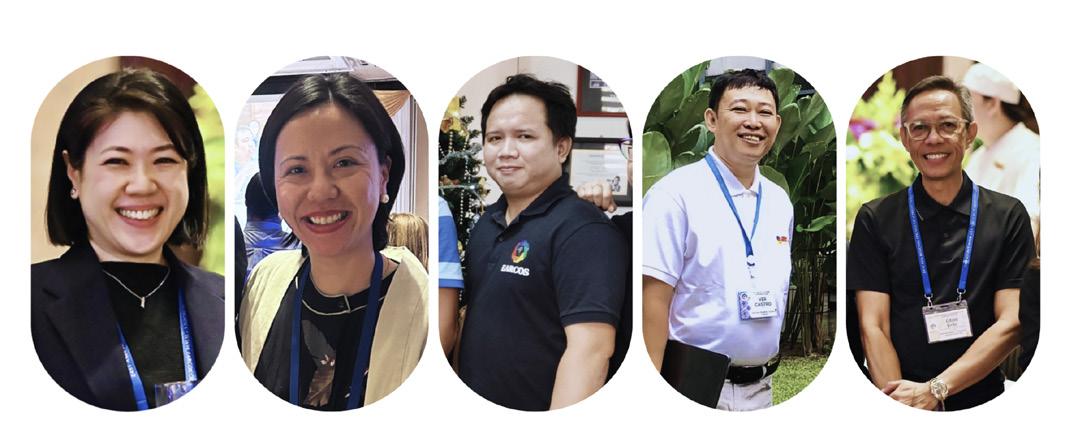
Kristine Maica RJ Ver Edzel
I thank each of them for their contributions, their collegiality and friendship over our years together. Please rest assured that the Board of Trustees has taken the necessary steps to ensure that the transition for each our staff members has been handled graciously and generously.
And, with that in mind, I would like to dedicate this issue of the EARCOS Tri-annual Journal to Kristine, Maica, Ver, RJ and Edzel in recognition and celebration of all they have created, given to EARCOS over the years. They move forward on their own paths, knowing that they leave behind something very special, something that will continue to shine for many years to come. I thank them for their gifts, as should we all.
With heartfelt appreciation to each of them,

Edward E. Greene, Ph.D. Executive Director







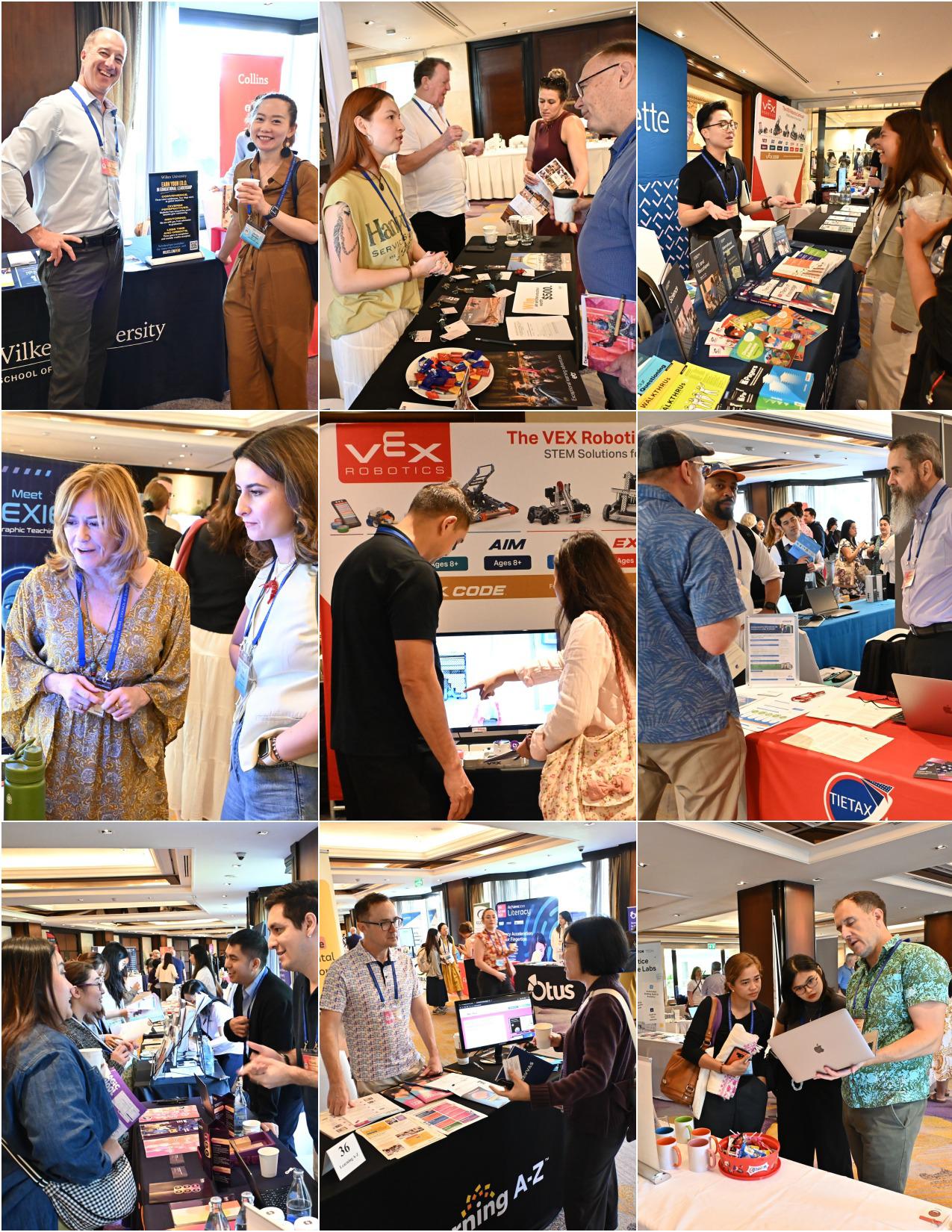
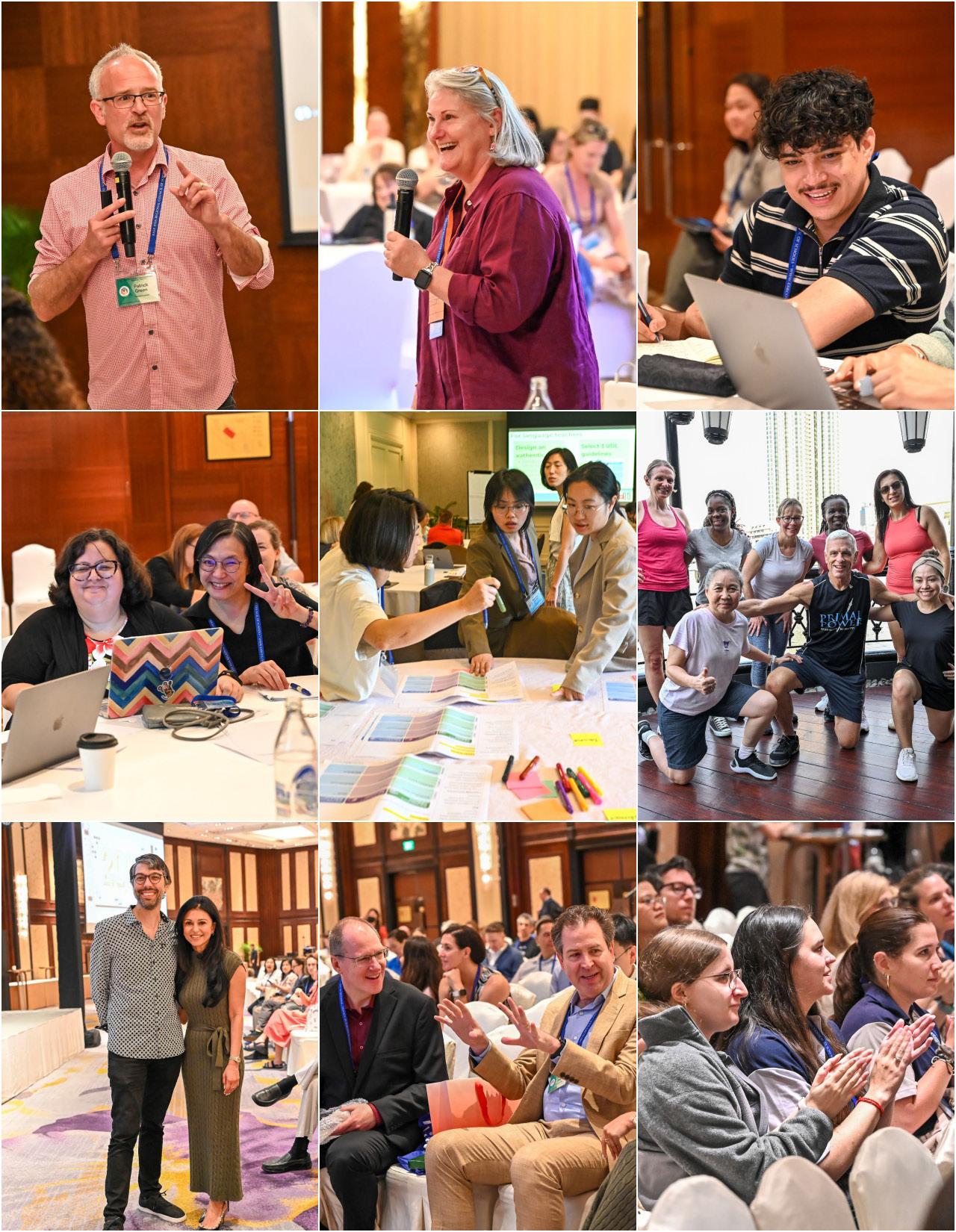
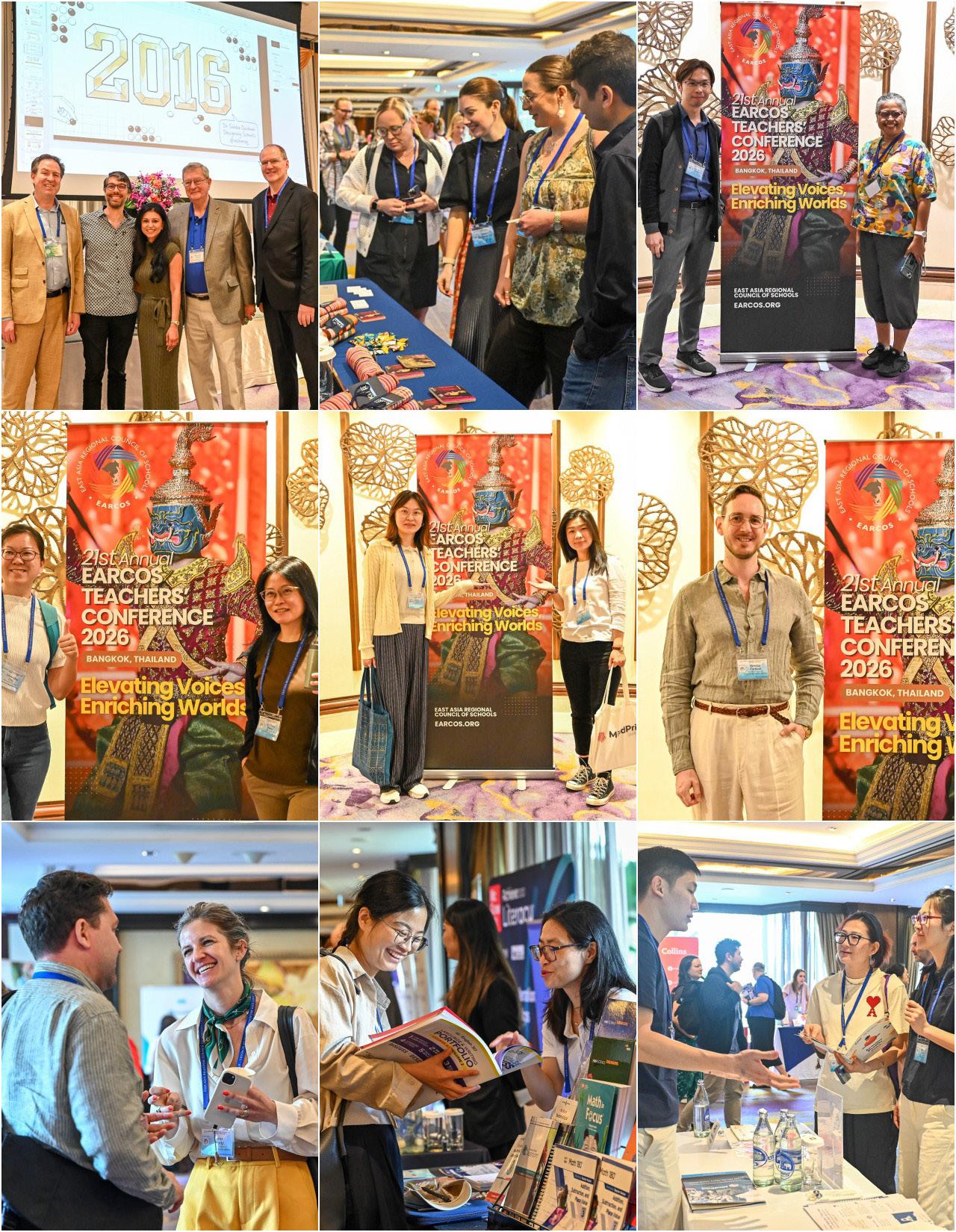
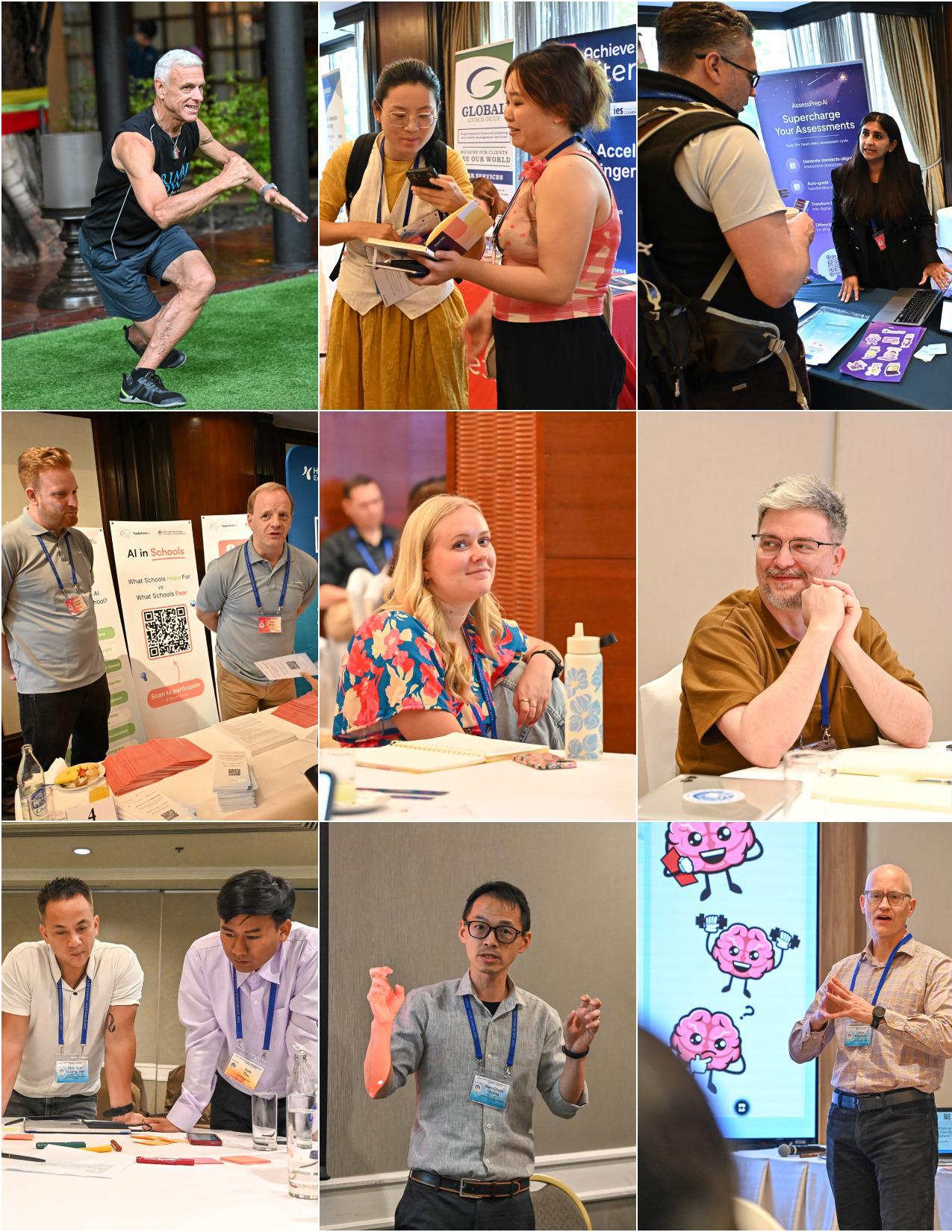
The 21st EARCOS Teachers' Conference 2026 “Elevating Voices, Enriching Worlds”
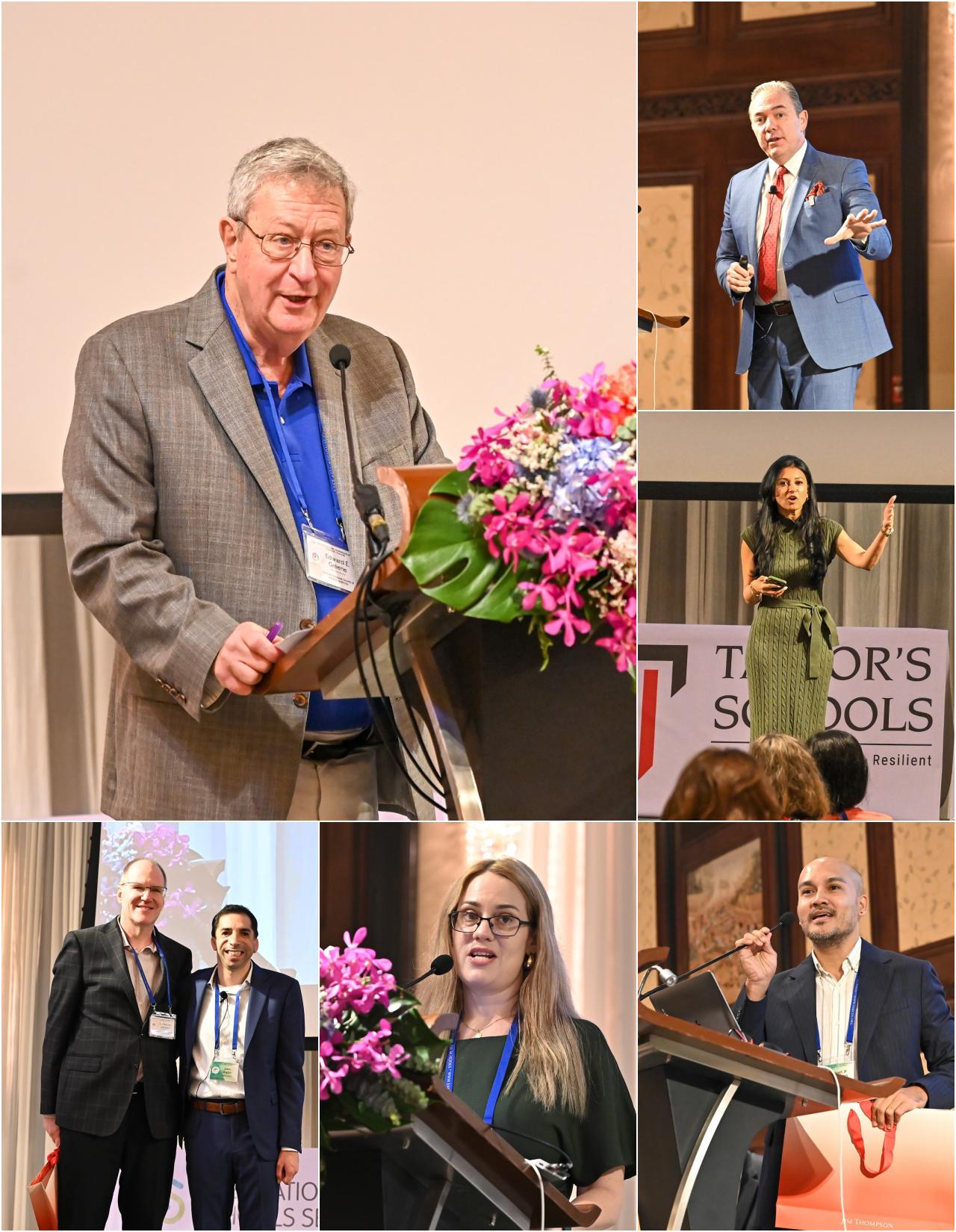
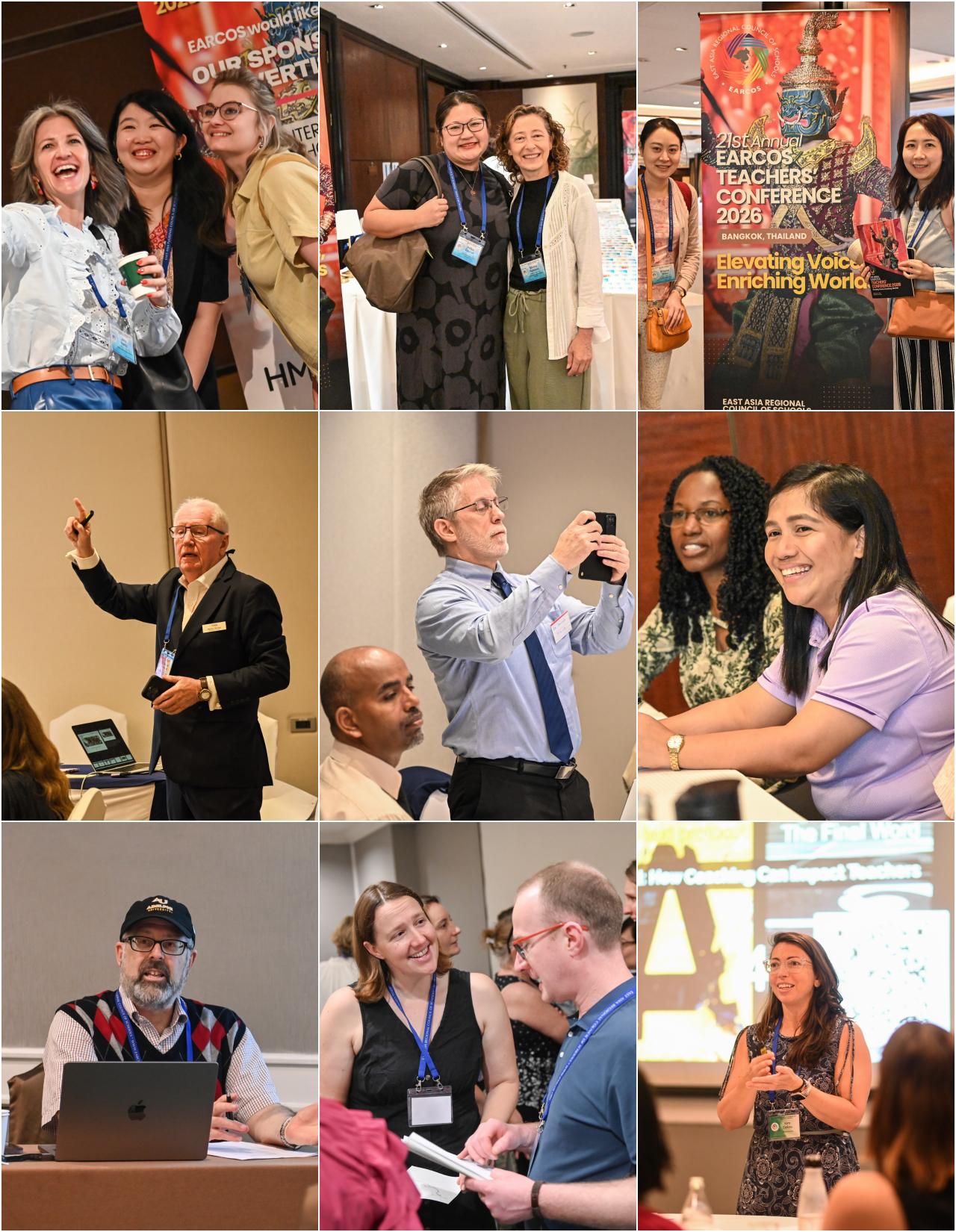
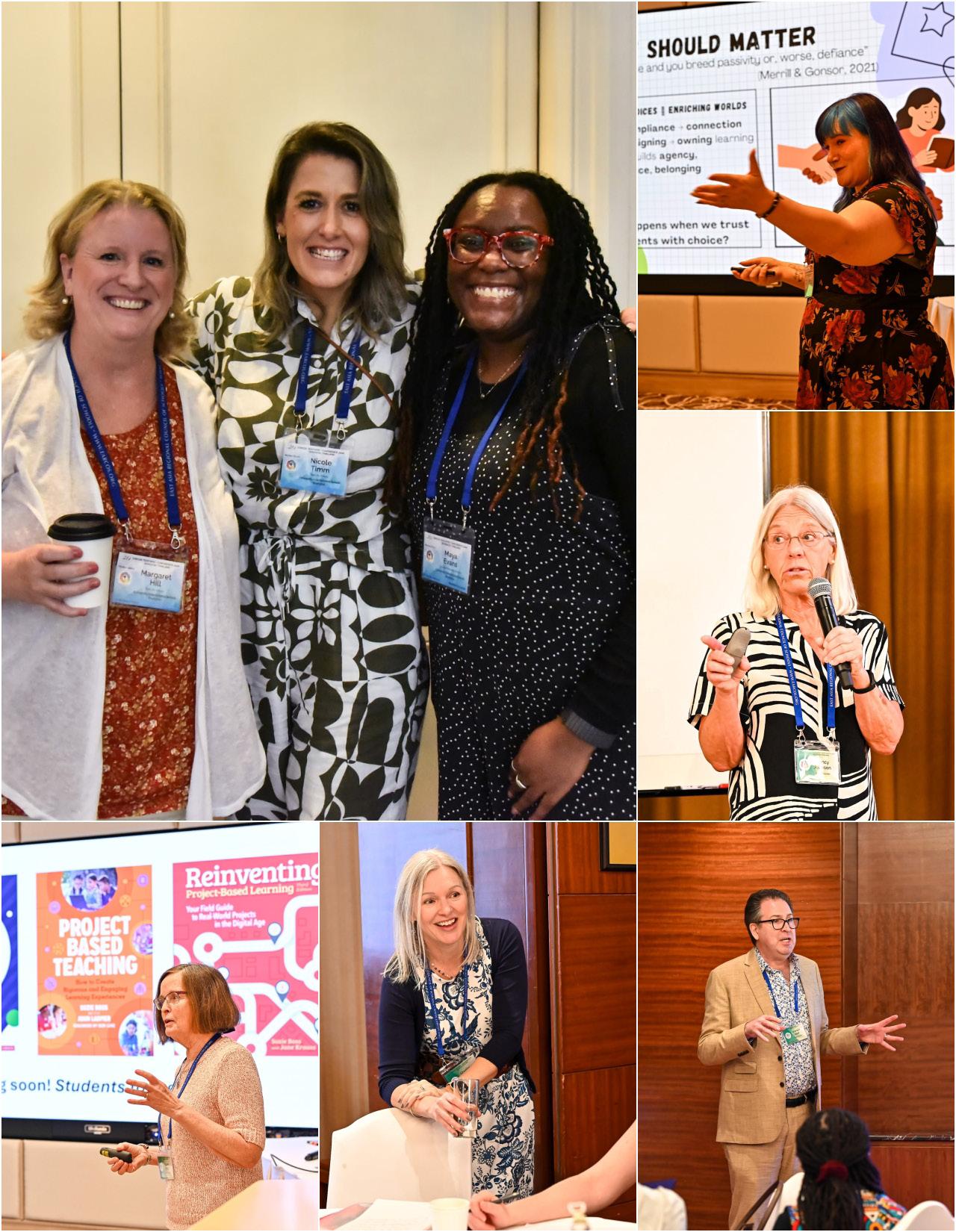
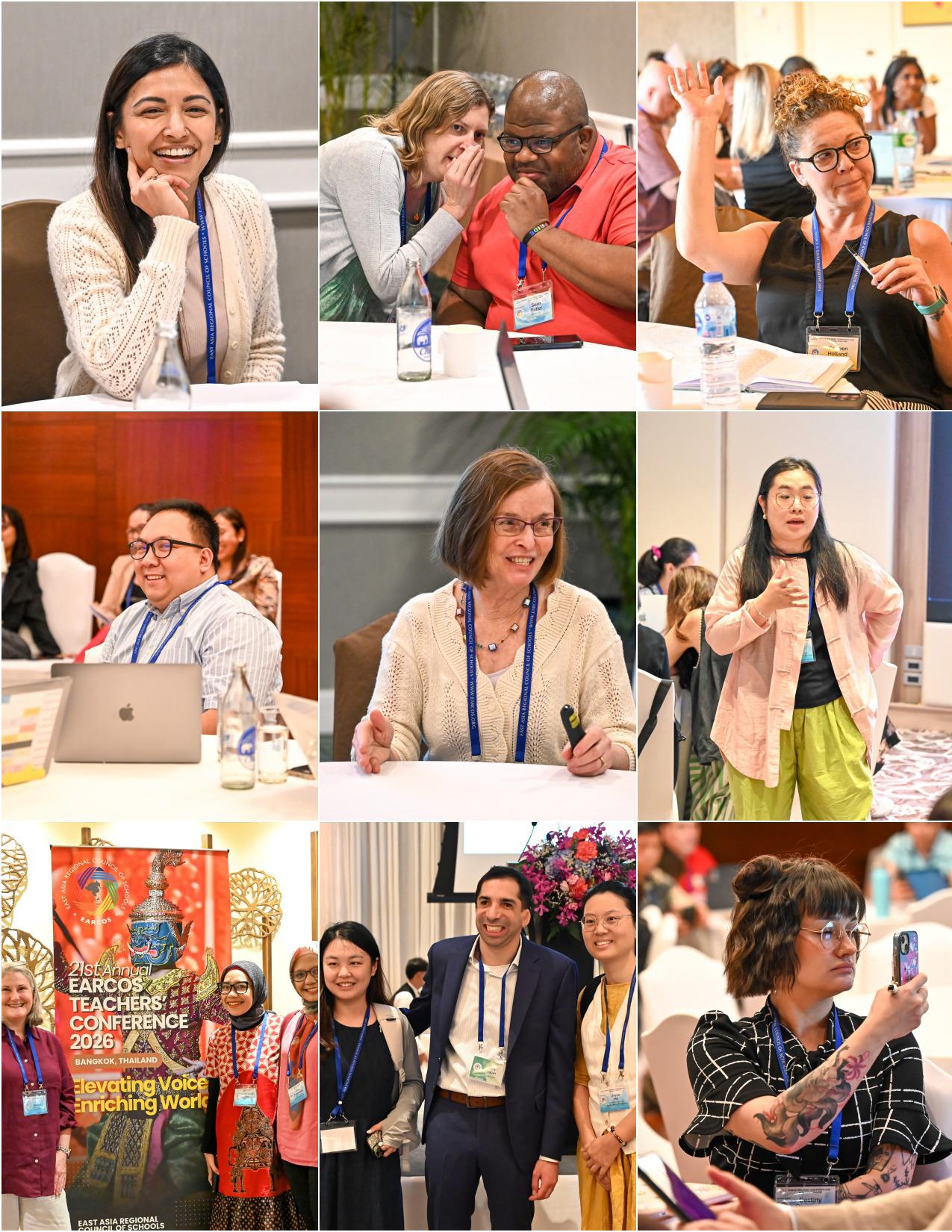
With 980 delegates enjoying three outstanding keynotes, a dozen pre-conference sessions and some 220 breakout sessions, the days were as full as they were enriching. It was clear that the teachers came ready to take full advantage of all that was on offer—session rooms were packed all day every day. Keynote speakers Tom Schimmer (Humanizing Assessment), Sam Drazin (The Power of Inclusive Schools) and Sabba Quidwai (The Human Advantage of AI) all received high marks and set a positive, focused tone for each day.
Invited guest presenters included authors Nancy Robinson, Miranda Paul and Matt La Pena, along with Joy Marchese, Suzie Boss, Cathy Berger Kaye, Jennifer Abrams, Kelly Armitage, Patrick Green, Sara Lev, Meghan Hargrave, Jennifer D. Kline, Stephen Shore, Monica Medina Olds, Markus Meir, Shelly Hawkes, Sian Jorgensen and Shei Ascencio. And, as is always the case, workshops delivered by over 100 educators from our member schools provided delegates with exciting new ideas and strategies that will plant the seeds of innovation and excellence across this region.
The Survey results served to underscore the sense we all shared—that this gathering was one to remember! The messages we received following the conference’s closing were remarkably positive. Here’s a brief sampling:
It was truly a pleasure to be part of the EARCOS Teachers' conference and to connect with such an inspiring group of educators. I’m grateful for the opportunity to contribute and for the care your team put into creating such a meaningful experience.
A huge thank you and congratulations for another wonderful Teacher’s Conference.
The teaching and learning was top notch and the feedback was wonderful. What an honor to work with such dedicated educators.
This has been the conference experience of a lifetime and I'm so very grateful to you for the work you've done to make EARCOS such a welcoming and receptive community for invited guests.
It always is a pleasure to work with you on the EARCOS conferences and in various other ways. You make it easy and enjoyable to be a part of EARCOS. I look forward to continuing our partnership with you.
Thank you for hosting yet another amazing EARCOS Teacher Conference. We are thankful to be part of an amazing educator community. We truly know that making an event like this requires a lot of behind-the-scenes work. Looking forward to joining future EARCOS events!
Just wanted to send a huge THANK YOU for the chance to be part of the EARCOS Leadership and Teacher Conferences. What a pleasure!
Thank you so much for the invitation to take part in this amazing event once again. Everything about the conference was exceptional--the inspiring keynotes, the interest and engagement of participants, and the chance to reconnect with colleagues in a beautiful setting. All best to you and your team.
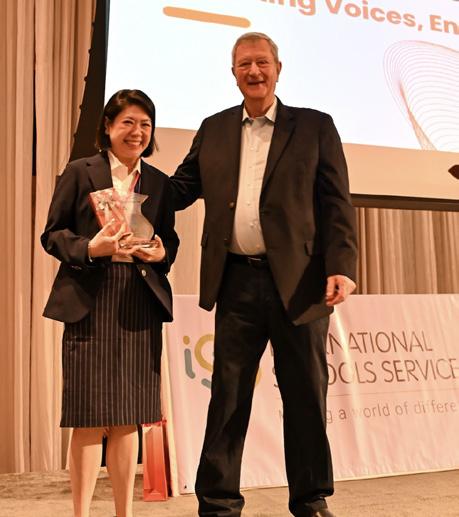
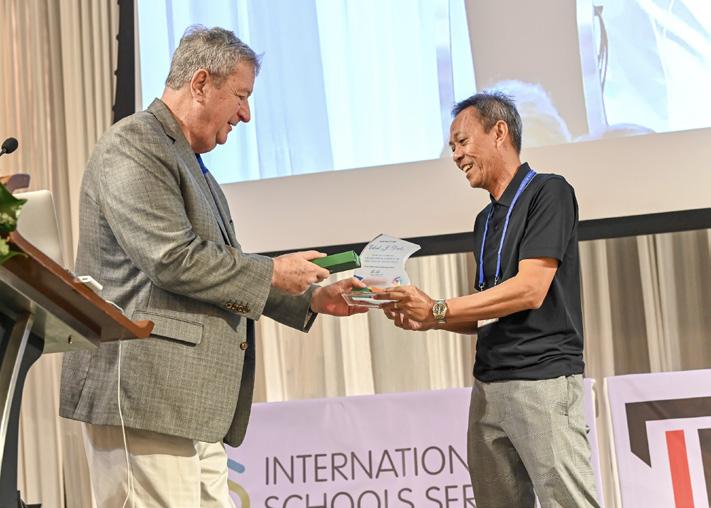
During the opening plenary we took a moment to recognize Kristine De Castro for her many, many contributions over the past six years as Assistant to the Director, Office Manager, and conference planner extraordinaire!
On the third day, we presented Edzel Drilo with a plaque to commemorate his 20th Anniversary with EARCOS. Congratulations and thank you to both Edzel and Kristine.
A special note of appreciation goes to the Teacher Advisory Committee who provided inspirational guidance on the conference theme and recommended many of the invited speakers. We are also indebted to Jennifer Delashmutt and the PLACE Committee for their vital work on the review of the several hundred proposals we received.
Plans are already underway for next year’s ELC in Bangkok form March 18-20, 2027! Subject strands include mathematics, science, social studies, global citizenship and service learning.

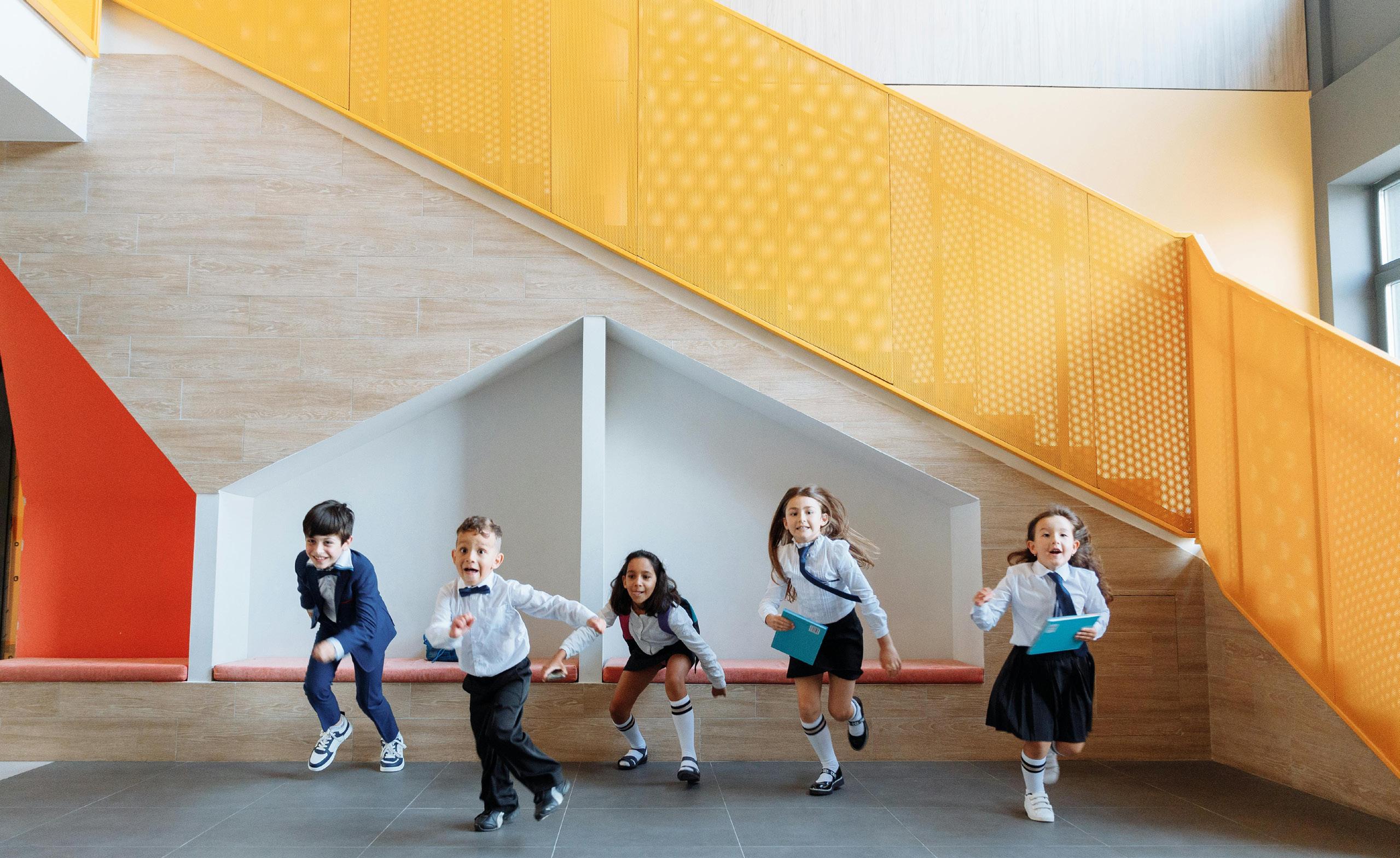
Cognitive Development Move More to Learn More: Reclaiming Movement in International Schools

By Lynne Kenney, PsyD & Michael Kuczala, MME
Introduction
Across disciplines from neuroscience to kinesiology, developmental psychology, embodied cognition and neuroeducation, a clear and consistent message has emerged: many children learn best when they move. Physical activity, play, rhythm, music, and engagement with the natural world are not peripheral to learning; they are foundational to it. It is important to point out that though this article focuses mostly on early childhood, movement is critical for all school-age students including high schoolers.
Yet in many schools today, particularly in high-performing international contexts, movement has been gradually reduced in favor of increased academic time, expanded use of technology, and more sedentary classroom structures. While these shifts are often wellintentioned, they raise an important question:
Are our daily school experiences aligned with how children develop and learn?
In international schools, where academic expectations are high, instructional minutes are tightly scheduled, and diverse student needs must be met, the tension between learning and development can be especially pronounced. This article argues that movement is not a break from learning, but a primary mechanism through which learning occurs. Reclaiming movement as an essential and foundational aspect of learning is essential for supporting the whole child.
Development Is Sequential and Physical
Human brain development follows a predictable trajectory: from the bottom up and from the inside out. Early developing brain regions such as the brainstem and cerebellum lay the foundation for higher-order cognitive processes, including attention, language, and executive function.
These foundational systems develop through movement.
Sensorimotor experiences: rolling, crawling, balancing, climbing are not simply physical milestones; they are neurological building blocks. Through these motor experiences, children develop the vestibular and proprioceptive systems that support coordination, spatial awareness, and self-regulation.
Importantly, this development is sequential. Each stage builds upon the previous one. When movement experiences are limited, rushed, or skipped, the integrity of later-developing cognitive systems may be affected.
Development requires time, repetition, and variation. Children need opportunities to move in diverse ways: spinning, jumping, hanging, pushing, pulling, to fully integrate these foundational systems.
From an embodied cognition perspective, thinking is not confined to the brain alone but is deeply rooted in bodily interaction with the environment. When movement is restricted, opportunities for building these brain–body connections are diminished.
What Happens in the Brain
Movement directly influences brain structure and function through mechanisms associated with neuroplasticity. Physical activity increases levels of brain-derived neurotrophic factor (BDNF), which supports neuronal growth, connectivity, and survival.
Neuroimaging studies have shown that physically active children often demonstrate increased volume in key brain regions, including the hippocampus (memory) and basal ganglia (procedural learning).
Additionally, the cerebellum, traditionally associated with coordination, has extensive connections with the prefrontal cortex, a
region central to executive function. Movement experiences that challenge balance, timing, and coordination appear to strengthen these networks.
In practical terms, this means that movement helps build the neural architecture required for learning.
Executive Function: Built Through Movement
Executive function (EF) including self-regulation, attention, working memory, inhibitory control, planning, and cognitive flexibility is one of the strongest predictors of academic success. A growing body of evidence indicates that EF is highly responsive to movement, particularly when that movement is rhythmic and cognitively engaging.
Activities that combine physical exertion with decision-making, such as games with rules, coordinated group movement, dance, or martial arts, create ideal conditions for EF development. These experiences require children to:
• Regulate impulses
• Shift attention
• Remember patterns and sequences
Adapt to changing demands
Why Movement Impacts Learning
Consistent associations between physical fitness and performance across multiple cognitive domains, including attention and working memory are reported in the literature.
Movement, in this sense, does not distract from focus ~ It develops it.
The benefits of movement extend directly to academic domains. Research demonstrates that physical activity improves attention, on-task behavior, and working memory in classroom settings. These effects are particularly pronounced for children with ADHD, where exercise helps to regulate neurochemical systems associated with attention and self-control.
Movement also supports domain-specific learning:
• Language Development: Physically active play is associated with stronger vocabulary acquisition and verbal fluency. Embodied experiences provide concrete reference points for abstract language concepts.
• Mathematics: Movement enhances spatial-temporal reasoning, a foundational skill for mathematical thinking. Integrating movement into math instruction has been shown to improve problem-solving, particularly among lower-performing students.
A Classroom Snapshot
In a Grade 2 classroom, students explore number patterns by stepping, clapping, and turning in sequences. As they physically represent mathematical relationships, they are not only engaged, but they are also encoding concepts through spatial and rhythmic experience. The result is a deeper understanding and improved retention.
Sensory Integration and Regulation
Movement is essential for organizing the sensory system.
Through activities such as swinging, balancing, and navigating space, children integrate input from vestibular, proprioceptive, and tactile systems. These experiences support attention, coordination, and emotional regulation.
Children with strong sensory integration are typically better able to:
Focus in auditorily-complex environments
• Transition between tasks
• Regulate emotional responses
• Down-regulate when stressed
Motor Competence and Long-Term Development
Fundamental movement skills: running, jumping, and throwing form the basis for more complex physical and cognitive abilities. Early motor competence has been shown to predict later physical activity levels and overall health.
Recent research also highlights a connection between motor skill development and executive function. Capio et al. (2024) found that improvements in object-control skills were associated with corresponding gains in EF among young children.
Both structured and unstructured movement experiences play important roles. While structured activities provide targeted skill development, unstructured play allows children to experiment, problem-solve, and develop creativity in movement.
Social and Emotional Development Through Movement
Movement-based play provides a powerful context for social and emotional growth.
Through group activities, children learn to:
• Negotiate rules
• Cooperate with peers
• Communicate effectively
• Interpret social cues
Participation in physical activity has been associated with improved social competence, including cooperation and self-control.
Movement also supports emotional well-being. Regular physical activity is linked to reduced anxiety and improved stress regulation.
Even rough-and-tumble play contributes meaningfully, helping children distinguish between playful and aggressive interactions while learning to regulate intensity (Smith & St. George, 2022).
A Classroom Snapshot
In an early year’s classroom, the day begins with rhythmic movement and song. Over time, teachers observe improved attention, smoother transitions, and increased peer connection, outcomes aligned with research on rhythm, regulation, and social synchrony.
Implications for International Schools
For international schools, the implications are significant.
In contexts where academic rigor is prioritized and instructional time is tightly structured; it may be tempting to reduce movement in favor of increased “learning time.” However, the evidence suggests that this approach may be counterproductive.
Movement is not time away from learning, it is a driver of it.
Schools that intentionally integrate movement into the daily experience of students are more likely to support:
• Sustained attention
• Improved behavior
• Stronger academic outcomes
• Higher social skill competency
• Enhanced well-being
Implications for Practice
To better align with how children develop and learn, schools might consider:
• Integrating movement into academic instruction, not just transitions
• Protecting and prioritizing recess as a developmental necessity
• Expanding physical education beyond skill drills to include coordination, rhythm, and play
• Designing flexible classrooms that allow for standing, moving, and repositioning the body in space
• Incorporating music, rhythm, and coordinated movement into daily routines
• Providing time for unstructured, child-led play, particularly in early years settings
• Leveraging outdoor environments as spaces for both learning and movement
Conclusion
The evidence is increasingly clear, and the implications for schools are difficult to ignore.
Movement is not an enhancement to learning, it is a fundamental mechanism through which learning occurs. From supporting brain development and executive function to enhancing academic performance and social competence, physical activity plays a central and irreplaceable role in child development.
As educational systems continue to evolve, there is an opportunity to realign practice with what research and experience have consistently shown: children learn best when they are active, engaged, and connected to their environment.
Reclaiming movement in schools is not about adding more academic curricula. It is about returning to what works, rhythmic physical activity, motor tasks with cognitive demands, outdoor play, recess, and double Dutch jump rope.
If we want students to learn more, we must ensure that they can move more.
References
Capio, C. M., Mendoza, N. B., Jones, R. A., Masters, R. S. W., & Lee, K. (2024). The contributions of motor skill proficiency to cognitive and social development in early childhood. Scientific reports, 14(1), 27956. https://doi.org/10.1038/s41598-024-79538-1
Chen, D., Zhao, G., Fu, J., Shun, S., Su, L., He, Z., Chen, R., Jiang, T., Hu, X., Li, Y., & Shen, F. (2024). Effects of structured and unstructured interventions on fundamental motor skills in preschool children: a meta-analysis. Frontiers in public health, 12, 1345566. https://doi. org/10.3389/fpubh.2024.1345566
Cheng, G., Song, C., & Hong, X. (2025). The impact of physical activity on working memory in children with ADHD: a meta-analysis. Frontiers in psychiatry, 16, 1578614. https://doi.org/10.3389/fpsyt.2025.1578614
Cundari, M., Vestberg, S., Gustafsson, P., Gorcenco, S., & Rasmussen, A. (2023). Neurocognitive and cerebellar function in ADHD, autism and spinocerebellar ataxia. Frontiers in systems neuroscience, 17, 1168666. https://doi.org/10.3389/fnsys.2023.1168666
Erickson, K. I., Hillman, C., Stillman, C. M., Ballard, R. M., Bloodgood, B., Conroy, D. E., Macko, R., Marquez, D. X., Petruzzello, S. J., Powell, K. E., & 2018 PHYSICAL ACTIVITY GUIDELINES ADVISORY COMMITTEE* (2019). Physical Activity, Cognition, and Brain Outcomes: A Review of the 2018 Physical Activity Guidelines. Medicine
and science in sports and exercise, 51(6), 1242–1251. https://doi. org/10.1249/MSS.0000000000001936
Kuczala, M. & Kenney, L. (2026). Move More, Learn More! Harnessing the Brain–Body Connection in Early Childhood. Teachers College Press
Martín-Rodríguez, A., Herrero-Roldán, S., & Clemente-Suárez, V. J. (2025). The Role of Physical Activity in ADHD Management: Diagnostic, Digital and Non-Digital Interventions, and Lifespan Considerations. Children (Basel, Switzerland), 12(3), 338. https://doi. org/10.3390/children12030338
Miendlarzewska, E. A., & Trost, W. J. (2014). How musical training affects cognitive development: rhythm, reward and other modulating variables. Frontiers in neuroscience, 7, 279. https://doi. org/10.3389/fnins.2013.00279
Petrigna, L., Thomas, E., Brusa, J., Rizzo, F., Scardina, A., Galassi, C., Lo Verde, D., Caramazza, G., & Bellafiore, M. (2022). Does Learning Through Movement Improve Academic Performance in Primary Schoolchildren? A Systematic Review. Frontiers in pediatrics, 10, 841582. https://doi.org/10.3389/fped.2022.841582
Smith, P. K., & St George, J. M. (2023). Play fighting (rough-and-tumble play) in children: developmental and evolutionary perspectives. International Journal of Play, 12(1), 113–126. https://doi.org/10 .1080/21594937.2022.2152185
Tillmann, B., Goswami, U., & Moghimi, S. (2026). Rhythm Processing Across Development: Origins, Links to Language Processing, and Perspectives for Intervention. Annals of the New York Academy of Sciences, 1556(1), e70161. https://doi.org/10.1111/nyas.70161
About the Authors
Mike Kuczala has delivered keynotes, given presentations, facilitated professional development and taught graduate courses on 4 continents. His presentations, courses, books, and videos have reached more than 200,000 teachers, trainers, corporate executives, and parents. He is also the coauthor of the Corwin Bestseller and Association of Educational Publishers’ Distinguished Achievement Award nominated, The Kinesthetic Classroom: Teaching and Learning through Movement, a book and philosophy that has changed the view of teaching and learning around the world. His 5th book, Move More, Learn More! Harnessing the Brain/Body Connection in Early Childhood, was released in February by Columbia University’s Teachers College Press.
Dr. Lynne Kenney is the nation’s leading pediatric psychologist in the development of classroom cognitive-physical activity programs for students in grades K-6. Dr. Kenney develops curriculum, programming, and activities to improve children’s cognition through rhythmic cognitive-motor movement, executive function skill-building strategies, and social-relational learning.
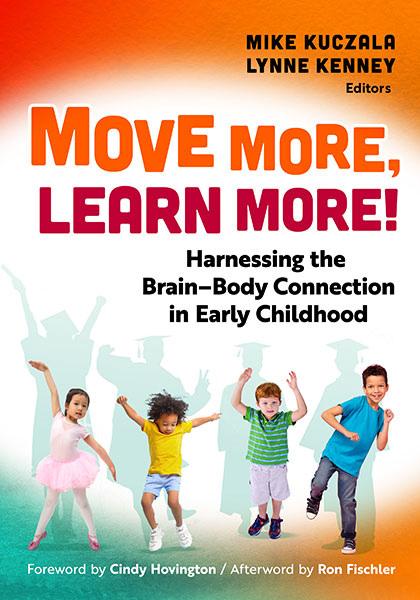
Book Features:
• Chapters written by international experts in the fields of movement, music, language, and cognition provide activities to strengthen executive function, self-regulation, attention, and sensorymotor development in Pre-K–3rd grade.
• Over 50 evidence-based activities that specifically target both learning strengths and differences.
• An ideal book for graduate-level courses in education, physical education, and early care, as well as developmental psychology, speech pathology, and occupational therapy.
EARCOS LEADERSHIP COMMUNITY
Transformative Wellbeing Leadership Certificate
September 2026 – May 2027 · Online Cohort
A comprehensive, cohort-based experience for international school leaders who want to move beyond wellbeing as a program and lead it as a core leadership practice.
PERSONAL CARE
Sustaining Yourself
Self-awareness, regulation, and leadership habits that allow you to remain grounded, steady, and effective over time and under pressure
COLLECTIVE CARE
Shaping Adult Culture
Psychological safety, trust, and relational conditions that enable teams to do hard work well even during strain and complexity.
Course #1: Self Care Tuesdays at 7pm HKT | Fall 2026
Sep 15 · Sep 29 · Oct 13 · Oct 27
Course #2: Collective Care Tuesdays at 7pm HKT | Winter 2027
Jan 19 · Feb 2 · Feb 16 · Mar 2
INSTITUTIONAL SYSTEMS
Designing by Default
Embedding wellbeing into roles, routines, structures, and decision-making so it becomes part of how the organisation functions not an add-on
Course #3: Institutional Systems Tuesdays at 7pm HKT | Spring 2027
Mar 26 · Mar 30 · Apr 13 · Apr 27
THREE INTEGRATED LEADERSHIP DOMAINS
“How do we keep educator momentum going with the shifts of NGSS?”


SBy Heather Rich & Britta McCarthy
ilence. Paul Andersen, an international science consultant, had asked this question during a debrief of a Tri-Association NGSS Partnership conference. One hundred science educators from Mexico, Colombia, and Central America had gathered for five days to share practices and deepen their understanding of the instructional shifts called for by the Next Generation Science Standards (NGSS) (NGSS Lead States, 2013). Participant data showed gains in how educators and administrators viewed their knowledge and skills related to NGSS after attending five days of conference workshops. Wasn’t that enough?
Back in 2021, a team of three educators—Heather from the American School of Monterrey in Mexico, Britta from the Columbus School in Medellín, Colombia, and John Mark from Colegio Nueva Granada in Bogotá, Colombia—had just hosted their second regional conference aimed at building NGSS expertise collectively across the region. Since the release of the NGSS in 2013 and the earlier K–12 Framework for Science Education (National Research Council, 2012), international educators have been working to understand and implement major shifts in science teaching and learning described by the performance expectations, framework, and the appendices to the standards that describe the major shifts.
Through their work as teachers, coaches, and coordinators, Heather, Britta, and John Mark observed a common challenge: NGSS could be mistakenly viewed as simply a new set of stand-
ards to replace an older set of standards, rather than a fundamental shift in curricular design and pedagogy. Across the region, schools did not tend to have a science point person or champion-- typically a coach or passionate teacher took on science coordination within an existing role. An adoption of NGSS calls for student-centered, three-dimensional learning, where students build scientific understanding by engaging with real-world phenomena; but working with the standards in isolation, even phenomena as a major shift, is easy to miss. Adopting the standards represents a significant departure from traditional content delivery by educators and standards that meant students could perform rote tasks as evidence of learning, but schools needed to build capacity beyond the conference weeks.
International schools often experience annual staff turnover and competing initiatives frequently limit time for sustained professional learning. The team saw this challenge not only in their own schools but across the region. Conferences were valuable for sparking interest and building community, but they weren’t enough to maintain long-term growth. Similarly, when schools around the region worked with consultants, it elevated practice across the schools for some time, but that positive momentum could be diminished by several years of turnover.
Next Generation Science Standards (NGSS)
So they returned to Andersen’s question: how might they sustain momentum while also bringing new educators into the work? Their first response was the nine hour “NGSS Crash Course” provided to teachers in the region in 2021. The course attracted more than 500 educators across Latin America and it provided a flexible, accessible entry point into NGSS while supporting those already engaged in implementation. The following year, hundreds more educators signed up to what they revamped as the NGSS Foundations Course.
In 2024, the course offering expanded to the EARCOS region, reaching over 100 educators across 18 schools while continuing to support educators in Latin America. By 2025, more than 1,500 educators across both regions had participated, and shared ideas and connections with educators implementing NGSS around the world. The course has been a versatile tool—supporting schools in maintaining momentum, onboarding new teachers, and strengthening collaborative professional learning within teams.
What in their own words was valuable for EARCOS participants about the NGSS Foundations Course?
"My biggest takeaway from this course is that science teaching works best when students explore, ask questions, and engage with phenomena, helping them build understanding while feeling capable and included."
One major shift in NGSS is the use of phenomena—observable, real-world events—to drive instruction. Rather than beginning with abstract concepts, students explore and make sense of phenomena, building understanding through inquiry. Many educators reported that the course helped them grasp both the purpose and practical application of this approach. At the start of the course, 21% of EARCOS cohort participants were new to using phenomena, and only 15% felt proficient. By the end, 40% reported proficiency, while those new to the approach dropped to 4%.
"I realized that the NGSS framework is less about memorizing facts and more about helping students use practices, crosscutting concepts, and core ideas together to figure things out."
Another critical shift is the integration of three dimensions within each standard: disciplinary core ideas, science and engineering practices, and crosscutting concepts. Instead of teaching these elements in isolation, NGSS emphasizes their interconnected use in making sense of real-world situations. Initially, only 11% of participants felt proficient in identifying these three dimensions, with 16% somewhat proficient. After completing the course, 44% reported proficiency and 23% felt somewhat proficient.
"This shifts my role from being the ‘giver of knowledge’ to being a guide and facilitator, creating equitable opportunities for all students to engage in authentic science."
Participants also described a shift in understanding their instructional role. Rather than acting as the primary provider of knowledge, teachers shift to facilitators who guide students through inquiry and sensemaking. This transition can be challenging, but the course supports it through classroom videos and teacher reflections that model inquiry-driven instruction. Over a quarter of participants reported increased confidence and skill in facilitating inquiry-based learning as a result.
"I liked the focus on teacher reflection and progression, which helps educators plan actionable next steps for themselves while supporting student learning."
Participants particularly valued the emphasis on their own reflection and growth. The course encourages educators to consider their current practice, identify next steps, and take actionable steps toward more student-centered instruction in their science classes. This reflective process helps sustain momentum beyond the course itself.
"The lesson length, activities, and resources are all very easy to manage within a busy life!"
The structure of the course itself contributes to its effectiveness according to participant feedback. Its asynchronous design allows educators to engage at their own pace—an important feature given the demands of teaching and working in schools. Discussion boards foster meaningful interaction, enabling participants to share ideas, reflect on practice, and learn from colleagues across the globe without engaging in synchronous structures that could be stressful or prohibitive.
As the school year comes to a close, the impact of the course is spreading. Educators across the EARCOS region are deepening their understanding of NGSS and making meaningful shifts in their classrooms through self-reporting on course indicators. In the 2025 cohort data seen in Table I, participants rated themselves on a scale from 1 (New to this practice) to 5 (Highly proficient/Resource provider). In almost every category, there was a significant migration from participants perceiving themselves in the lower levels (1 and 2) to the proficient levels (4 and 5). These efforts contribute to a larger vision: ensuring that all students develop the skills and understanding needed to be scientifically literate members of their communities.
Table I. Change in participant self-reported proficiency before and after the NGSS Foundations Course
1. Pedagogical Shifts (Indicators 1.1 - 1.3)
Indicator 1.1: Facilitating active science learning and avoiding less effective practices
Indicator 1.2: Using phenomena-based learning to empower students
Indicator 1.3: Facilitating inquiry practices over the rigid scientific method
Proficiency Level Before % After % Change
5 — Highly Proficient 5.0% 16.8% +11.8%
4 — Proficient 20.0% 42.2% +22.2%
3 — Somewhat Familiar 34.2% (est.) 30.1% (est.) -4.1%
2 — Background Knowledge 22.5% 8.1% -14.4%
1 — New to Practice
<5.0% (est.) Decrease
2. Three Dimensional Learning & Planning (Indicators 2.1 - 2.3) Indicator 2.1: Informing instruction/assessment with the 3 NGSS dimensions.
Proficiency Level Before % After % Change
5 — Highly Proficient 10.0% 9.8% -0.2%
4 — Proficient 10.0% (est.) 30.5% +20.5%
3 — Somewhat Familiar
2 — Background Knowledge
1 — New to Practice
(est.) 44.3% (est.) +18.5%
<10.0% (est.) Decrease
<5.0% (est.) Decrease
Indicator 2.1 (Identification): Identifying SEP, CCC, and DCI for planning
Proficiency Level
5
4
3 — Somewhat Familiar 19.2% (est.)
2 — Background Knowledge
1 — New to Practice
<10.0% (est.) Decrease
<5.0% (est.) Decrease
Indicator 2.2: Developing instruction/assessment with all three dimensions present
4
1
Indicator 2.3: Identifying/using strong phenomena
3. Mindset & Resources (Indicators 3.1 - 3.3)
Indicator 3.1: Creating equitable and engaging science environments
Indicator 3.2: Evaluating resource quality for NGSS alignment
Indicator 3.3: Reflective of learning process and next steps
The NGSS Foundations Course will again be offered to the EARCOS region in the September–October 2026 cohort, continuing to support educators in building equitable, student-driven science learning experiences.
References
National Research Council. (2012). A framework for K-12 science education: Practices, crosscutting concepts, and core ideas. The National Academies Press. https://doi.org/10.17226/13165
NGSS Lead States. (2013). Next Generation Science Standards: For states, by states. The National Academies Press. https://doi. org/10.17226/18290
NGSS Lead States. (2013). Next Generation Science Standards: For states, by states. Appendix A: Conceptual Shifts. The National Academies Press.
NGSS Lead States. (2013). Next Generation Science Standards: For states, by states. Appendix D: All Standards, All Students. The National Academies Press.
McCarthy, B., & Rich, H. (2025). NGSS foundations onboarding 2025 cohort summary.
Humanities in Action
Conlationes Humanitatum
By Jared Rock, HS Literature Teacher and Brendan Donahue, HS History Teacher
Our tumultuous times underscore the need for a living Humanities, across society and in our schools. Pervasive existential uncertainty, from job and market depletion, the squeezing out of global middle classes, the largely unregulated rise of AI, eroding democracy, and the mounting threats of war and ecological catastrophe demands sustained, serious, inclusive global dialogue about our institutions and what constitutes the good life.
The skills of deliberative civics, and the content and discoveries of thinking and arguing through our biggest questions, are things that our schools should be cultivating and sending out to the larger world. This is true for civic engagement, personal enrichment, and expanding democratic empowerment in any time, but the pressures of uncertainty in a transforming world make it truly indispensable at this moment. Despite the clear need, many schools hesitate to act. Conlationes Humanitatum offers one way forward.
Con Hum and its Educational Context
Ideally, living Humanities programs would be a significant part of the school curriculum, combining perennial questions, traditions of thought, and current problems and action. After all, creating an understanding of what it is to be human and all its attendant implications is relevant and essential for everyone at all times. And, the answer is always developing. Opening belonging in a

global conversation is both empowering and the route to expansive democracy.
However, the very tumult that most urgently underscores the need for a living Humanities also leads to a kind of paralysis for many schools. In the face of broad instability, clinging to what is “safe,” looking for legitimacy from national or corporate exambased education programs instead of our own practices, shifting to career-focused programs, or just doubling down on what we already do brings a modicum of manufactured security against the whirlwinds of our reality. If anything, the Humanities and liberal education may suffer in this time. Massachusetts, perhaps the greatest home of liberal education for its own sake, recently approved pilot three year bachelor degree programs for efficiency and workplace readiness over the broad liberal exposure of a traditional four year degree (Executive Office of Education & Department of Higher Education, 2026). A March 2026 article in The Atlantic argues that Humanities inquiry at top levels has been narrowed by the priorities of private funders, especially the Andrew W. Mellon Foundation, serving a more partisan agenda than maintaining broad, open communal discussion (Tyler Austin Harper, 2026). Closer to home, some of our EARCOS schools are currently scaling back their prominent Humanities programs, looking for safety in more standard programming.
Conlationes Humanitatum (“Con Hum”) is a light-touch, schoolwide living Humanities program designed by the authors at a
school in Europe to bring relevant life discussion, place-based learning, and action to the school community without regular class scheduling needs or additional planning loads for teachers. In volatile times when schools are less likely to bring aboard disruptive innovation to the standard curriculum, but where reallife discussion of our biggest questions is all the more necessary, Con Hum provides a low commitment but high-engagement method of providing a living Humanities program that is easy for schools to integrate without fear of interruption or change to their core programming. The Con Hum program was piloted in Madrid in 2023-2024 and rolled out as a full high school program in 2024-2025. We want to share it here as a model for other schools to consider, modify, and adopt.
Overview
Con Hum was designed to bring the entire high school community together in discussion around big questions about the human condition and society that call for renewed contribution of every generation. This was undertaken through three seminar discussions in small groups, a Con Hums Day dedicated to investigating the question in a real world setting, and completion of a project and essay.
The design is intentionally flexible. It easily scales to different school sizes and can be integrated into a range of existing schedules and structures. Its emphasis on open-ended questions and locally grounded experiences allows each school to adapt the program to its own cultural context while maintaining a shared commitment to inquiry and dialogue.
Core Questions
Con Hum fosters community focus around a shared concern through the central question. Central questions are big questions, that we defined as being (1) open-ended with a multitude of valid answers, (2) concerned with some enduring issue of the human experience, (3) more likely to provoke points of disagreement than full consensus around answers, (4) likely to take students out of their intellectual comfort zone, and (5) lend themselves to considerations that touch upon the good life, and lives of purpose.
These could be questions like “what does justice in a society look like?”, “how certain can we be of the truth of moral claims?”, or “when is it permissible to limit freedom?”.
Each trimester the school community sets a core question for focus in Con Hum discussions and activities. While these questions are only mandatorily covered in Con Hum, they easily find their way into classroom discussions, talks in the hallways, and other parts of the students’ and faculties’ lives.
Seminar Discussions
If the core question is the blood of Con Hum, then the seminar discussions held in symposium groups is its beating heart. All students are placed into symposium groups of 10-20 student members, led by 2-4 faculty facilitators. The symposium group holds three meetings over the trimester (i.e. one per month) where the groups investigate the question, answers, and disagreements together. Each symposium group takes on a different character based on its members’ interests and personalities. This diversity of approaches to examining the communal core question is one of the strengths that enriches the larger conversations that flow out of these groups.
The symposium group also brings decision-making and responsibility directly to the students, as these groups are responsible for setting their Con Hums Day field trip itinerary and projects.
To run these seminar discussions without adding work to busy
schedules, time was used from existing periods normally dedicated to advisory work. In schools without school meeting, advisory, or other recurring work times that can be repurposed once a month, a little planning can equitably draw from class time with enough warning to plan around the curricular disruption and with negligible impact on planned classes.
During our run we experimented with holding the final discussion prior to Con Hums Day or following Con Hums Day. Both approaches have their benefits, and in the end some term-to-term variance on the order is probably best.
We set groups in mixed grade groups (10th-12th) based on some common affinity or interest which was gathered through a survey shared at the beginning of the school year. The freshmen were in grade-specific groups, and that year was treated more as introduction to the type of discussion and learning expected of the program. Students stayed in their groups for the entire academic year. Other than keeping groups together for the entire academic year, allowing time for synergies and group character to reveal themselves, we would not strongly suggest any form of group-setting over another (whether mixed-grade or gradelevel, intentional or random membership, etc.).
Con Hums Day
The culmination of the trimester Con Hum experience for most students is Con Hums Day. Con Hums Day is a day-long offcampus exploration of the core question in a place-based fashion out in our real world. This helps to build connections to the school’s community and see the implications of what we discuss under the core question to real-life.
Practicing self-direction in their learning, each symposium group is tasked with setting its own day-long field trip location and itinerary for off-campus learning. When our school took up the core question “How has society defined the ‘good life’?”, one group spent a portion of their day at a nursing home in conversation with its residents, another group spent part of their day in a cathedral drawing copies of its famous frescos, another conducted ethnographic studies in high-end shopping malls and a traditional food market, while the rest of the groups went elsewhere.
Con Hums Day carries the heaviest impact of this program on the regular school schedule and workload. The alternative learning that happens and durability of the experience for all involved more than make up for its total three day impact on the yearly schedule. Though the initial plan forms in symposium groups, we set aside one full regularly planned faculty meeting per term for handling Con Hums Day logistics so as not to add to teachers’ loads.
Projects
Completing a project is one of the two products of the Con Hum term. Projects are unique to each symposium group, which set the goal and expectations for projects that demonstrate learning. Some symposium groups undertook projects together, others in small groups, and others individually. Usually, projects were started on Con Hums Day, tied to the field trip activities and extending upon them toward some meaningful product. Symposium groups set a date by which the final projects are to be submitted to the group’s faculty members for assessment. In order to avoid additional marking responsibilities, the faculty members only needed to indicate satisfactory or unsatisfactory completion of the assignment without comments or grades.
Essays
The other Con Hum term product is a final reflective essay where students answer the core question, developing their ideas with evidence and a line of reasoning. The essay is meant to cap-
ture the students’ current thoughts on the question and provide some space for reflection on their thinking about the question over the trimester.
In order to minimize the time impact of the Con Hum essay, it was integrated into the English program, being the only explicit requirement to fall on a department and integrated into a class. One English period in all classes was set aside for students to handwrite their Con Hum essays. The English teachers reported satisfactory completion of this requirement, and those results were shared back with the symposium group faculty members.
Awards
We purposefully wanted to keep Con Hum outside of the grade system. This is not only part of our attempt to minimize its overall impact on teachers’ workloads, but also necessary to the ethos of a living Humanities program. We did not want students’ contributions to Con Hum to be colored or restrained by the pressures to perform for a certain grade outcome.
In lieu of a grade, student accomplishments can be recognized by school-issued awards in front of the school community. For each trimester, faculty members of each symposium group reported the students who satisfactorily contributed to the discussions in each of their three meetings, participated in Con Hums Day activities, and satisfactorily completed the project and essay. These students received a certificate indicating the accomplishment of their work. A special award was given at the end of the year for students who earned a certificate each trimester, reflecting that they had fully completed the entire year of Con Hum. The English department also issued an award each term for the best Con Hum essay.
Closing
In times that call for the formation of more deliberative democratic skills and a focus on big questions of meaning and pur-
pose, Conlationes Humanitatum offers a high impact option for authentic engagement with questions that speak across time, all without major disruption or modification to schools’ existing core programs. The ease with which Con Hum can be grafted onto a school’s existing program structure helps to open up this rich and needed opportunity to all schools without the concerns that hold reluctant schools back from larger curricular changes.
We would like any school who can use Con Hum to feel free to adopt and adapt the program to its community. We modified the program guidebook to a template version that any school can use, accessible for download through this link: https://drive. google.com/file/d/18UcWrXLIrzNditecaENF18F71MZYC4Ms/ view?usp=sharing
Interested schools and teachers can write to jaredrock@jaredrockeducation.com for more Con Hum information and material.
References
Executive Office of Education, & Department of Higher Education. (2026, February 10). Massachusetts Opens the Door to Three-Year Degrees and Other Innovative Approaches to Higher Education. Mass.gov. https://www.mass.gov/news/ massachusetts-opens-the-door-to-three-year-degrees-andother-innovative-approaches-to-higher-education
Harper, T. A. (2026, March). The Multibillion-Dollar Foundation that Controls the Humanities. The Atlantic. https://www.theatlantic.com/magazine/2026/03/mellon-foundation-humanities-research-funding/685733/


Building a Data Culture
Applying Kotter’s Eight-step Leading Change Model to Build Data Culture Through Distributed Leadership, Trust, and Clarity
By Trevor Poole and Nicholas Kolentse, with contributions by Natalie Harvey
Daniel Coyle, in The Culture Code, reminds us that “Culture is not something you are. Culture is something you do” (Coyle, 2018).
In schools, we talk a lot about building a data culture. We invest in dashboards, platforms, and reports, but culture rarely emerges from spreadsheets. It emerges from the conversations teachers have about student learning, the trust they feel when examining evidence together, and the clarity leaders create about why the work matters. We will share the story of how we moved from numbers to narratives, and how distributed leadership helped make that shift possible. In this article, we describe how we applied Dr. John Kotter’s Eight Steps for Leading Change to strengthen data culture in our school, and we offer reflection points for leaders considering similar work in their own contexts.
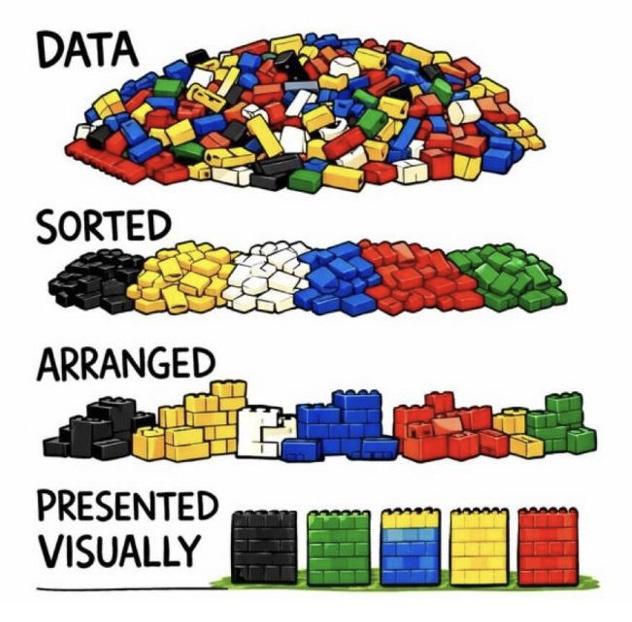
Think about your own schools for a moment: Where would you place your current data culture? Is data mainly reported? Is it analyzed? Or is it driving professional learning and instructional enhancements?
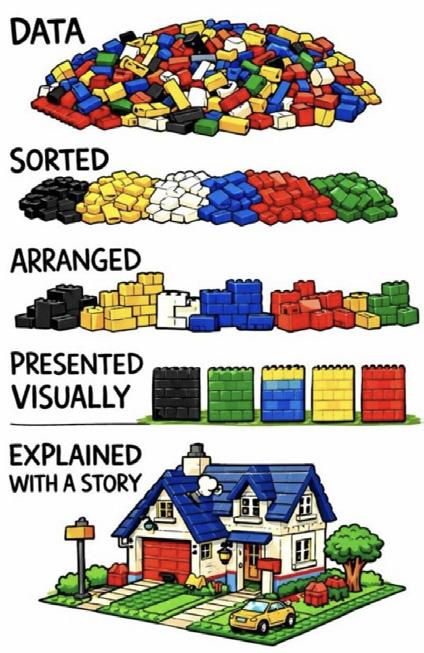
When we started this work, we had what many schools have: a lot of data in many different places. Assessment data. Benchmark data. IB data. Internal reports. But despite all that information, the impact on classroom practice was limited. In many ways we were data rich, but insight poor. The real question became: How do we move from collecting data to creating change and meaning from it? Types of data, as a Lego build progression (Stoddart, 2026) Dr. John Kotter’s 8 Steps for Leading Change as a circular model (The 8 Steps for Leading Change, 2026)
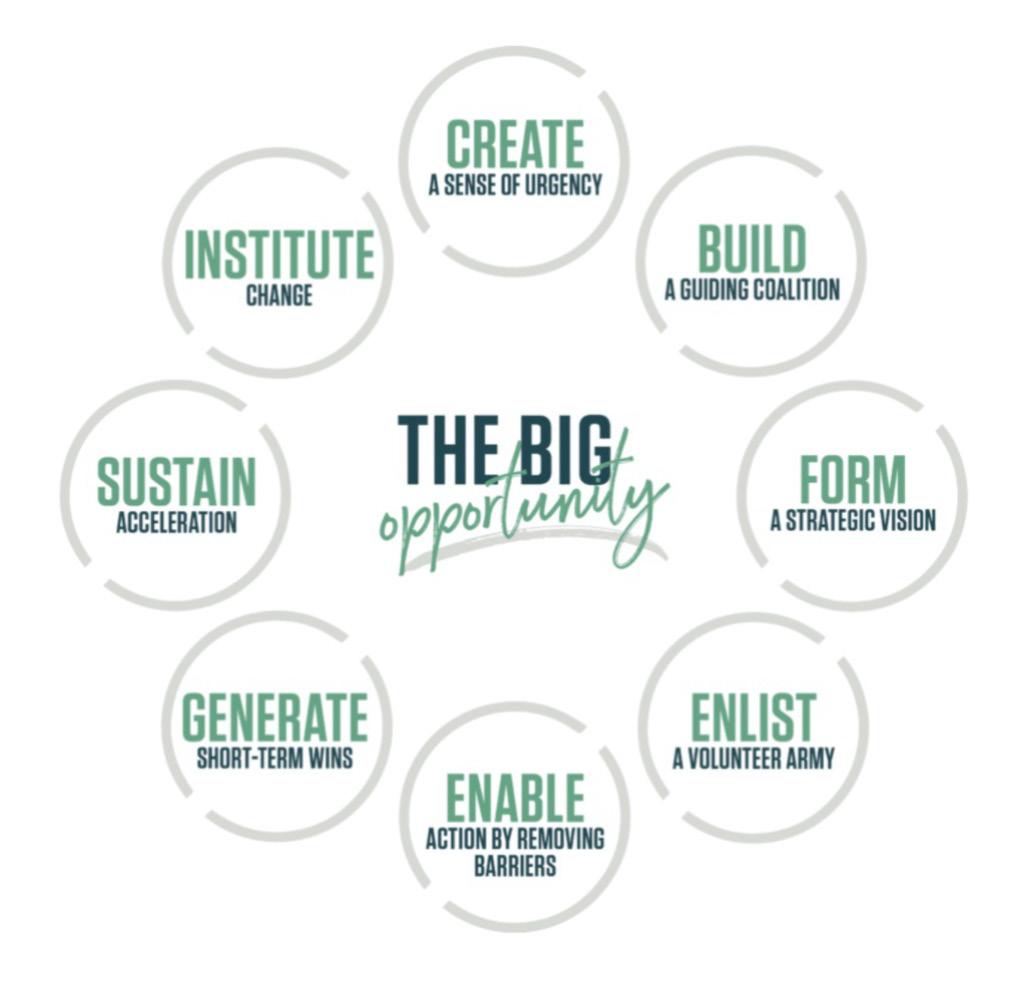
We framed our journey through the lens of the model for leading change developed by Dr. John Kotter. Kotter’s model reminds us that meaningful change rarely happens through a single initiative or tool. Instead, it unfolds through a series of deliberate leadership steps. There were several key moments in our journey that helped move our school from numbers on a page to narratives about student learning.
Step 1: Create a Sense of Urgency - View challenges as opportunities
The first step in Kotter’s model is creating a sense of urgency. In theory, this sounds straightforward, but in schools it can be more complex. In our context, several factors slowed momentum in the early stages, including changing demographics, a growing English Language Learning (ELL) population, and the sheer volume of data available in our school. We were data rich, but what story were we trying to tell? We struggled at first to know where to begin and how to have teachers engage with data in meaningful, integrated ways.
Time, Capacity, and Competency
Time - Teachers were already balancing full teaching loads, pastoral responsibilities, and curriculum demands. Asking them to engage deeply with data often felt like one more initiative added to an already full plate.
Capacity - Even when time was created, there was not always a clear structure for how teams should work with data together. Without that structure, the work could feel fragmented or inconsistent.
Competency - Many educators are highly skilled practitioners, but not all have had formal training in data literacy or collaborative inquiry around evidence of learning.
The challenge was not convincing people that student learning matters. We all share that commitment. The challenge was creating the conditions where engaging with data felt purposeful, manageable, and professionally empowering rather than overwhelming.
As we reflected on these barriers of time, capacity, and competency, we were reminded of a line from Marcus Aurelius, “The impediment to action advances action. What stands in the way becomes the way” (Holiday, 2014). In many ways, that captured our experience perfectly. The challenges we faced did not simply slow the work, they clarified the pathway forward. If time was the barrier, then we needed to think carefully about how leadership structures created space for meaningful collaboration. If capacity was the challenge, we needed to ensure that the work was shared across a broader leadership team rather than concentrated in a few roles. If competency was the issue, then professional learning and collective inquiry needed to become central to the process. In other words, the obstacles themselves helped us understand the path forward. That realization helped us move into the next steps in Kotter’s model; building a guiding coalition and developing a shared vision for the work ahead.
Step 2: Build a Guiding Coalition, and Step 3: Form a Strategic Vision
These two steps work in tandem, though typically created separately. We wanted to create an empowered, distributed leadership team, a guiding coalition. You could consider the Two Pizza
Rule, coined by Jeff Bezos, where if you can feed the group with two pizzas, you have the right size...around 5-15 people (BiteSize Learning, 2024). We created a Data Committee, which was later re-imagined as the Data Integration Team to better impact its contribution in our school. Over the span of 3+ years, our data culture has grown, and our systems and leadership have evolved.
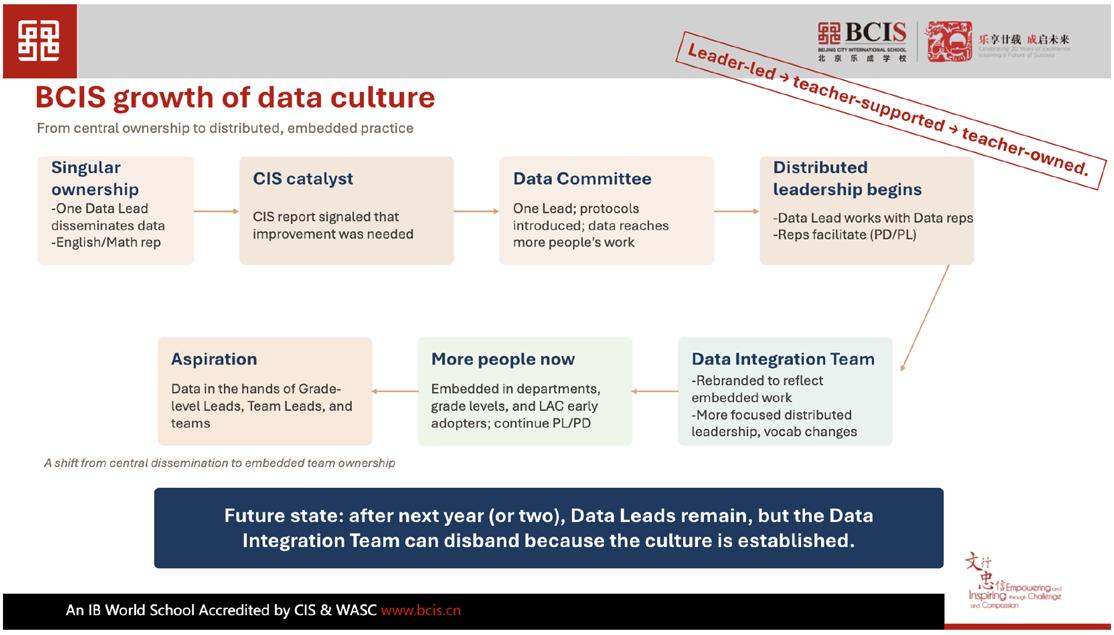
Timeline of data culture growth at BCIS.
Pre-Year-1: A single Data Lead, sending out data, with some parttime reps from a couple of departments.
Year 1: Data Committee established. Data Team Lead was leading more than facilitating. Data protocols were introduced, and teachers were starting to use data in targeted ways. Capacity building was key; we needed to support the growth in our team and build collective efficacy.
Year 2: We implemented our strategy of using a distributed leadership model and the Data Lead doing more facilitation with the Team; department-level data leads empowered; how we say things matters, so we changed the vocabulary to MAP ‘assessments’, rather than ‘tests’, to take some pressure off students and parents; re-named Data Integration Team, rather than Data Committee, to reflect the more sustainable, ongoing impact of the members, and; building through focusing on our strategic goals, using Kotter’s model, and then expanding collaboration, clarity, trust, capacity, and instructional coherence. The goal was not data dashboards, but increasing professional dialogue with data as a foundation for our discussions and teachers taking ownership over actionable classroom interventions.
Years 2 and 3: Data discussions to support teaching and learning are becoming embedded within departmental and grade level teams; proposal and then purchase of a data visualization platform, Learning Analytics Collaborative (LAC), which started in year 3, and early-adopters of LAC joined at the halfway point this year. There were strategic moves and investments made here, including release time for a newly created role of getting the data tool ready for teachers, continued protected time for Data Integration Team to facilitate workshops, continued protected time for departments to engage with data, and the recruitment of early-adopters (Clark, 2015; Collins, 2001) for the new data visualization platform.
Step 4: Enlist a Volunteer Army
It is not about being a data expert. Leading and empowering people is the goal. Engaging everyone in the school is key, as everyone can be a part of the volunteer army. We see building the culture/climate as having three main pieces: Distributed
leadership and empowerment of all; trust through teams, norms, and creating psychological safety, and; clarity through unified structures and protocols.
Distributed leadership - Empowering the learning
Our distributed leadership model included department-level data members, focused on empowerment, building capacity amongst teams, members taking ownership, and people taking the lead. Our rationale for creating a Data Integration Team is that they better understand the dynamics of teams and their department and subject areas (Clark, 2015; Collins, 2001). Also, this was not a top-down model, but a shared, continuous improvement model. This team would gain capacity to successfully lead whole-staff sessions, department-level workshops, and grade-level collaboration. A personal reflection should be noted: We should have been transparent about the use of the Kotter’s framework from the beginning, rather than part-way along the journey, allowing everyone to see the educational theory behind the steps we were taking and changes we were making.
Trust through teams, norms, and creating psychological safety
There are many ways to do this. We purposefully have team members reflecting on our three norms to start each meeting and each workshop, inviting dialogue around the norms to center people to our task at hand. We purposefully have team members reflecting on celebrations to start each meeting and each workshop; anything school-related is good to celebrate, not just data-related pieces. We offer to share the facilitation role to build capacity, and we use roles such as timekeeper and notetaker (as well as people to share bringing snacks, if they choose to), to spread the leadership. Data discussions in teams and within the school should be clearly not evaluative or judgmental, but through the lens of inquiry. We strive to create a safe, brave space for discussions that promote dialogue and include everyone. We celebrate wins (Step 6)!
Clarity through unified structures & protocols
We aligned structures across the school, including access to data, inquiry through data/discussion protocols (consistency), and unified goals, structures, and strategies. School-wide coherence and structured facilitation drive sustainable impact; we worked within the same norms, celebrations, goals, and protocols, while people took ownership over the workshops, strategies, and next steps. This year, we started framing our workshops and meetings with using data to tell the story or narrative of our students, which seems to have given some clear purpose and direction.
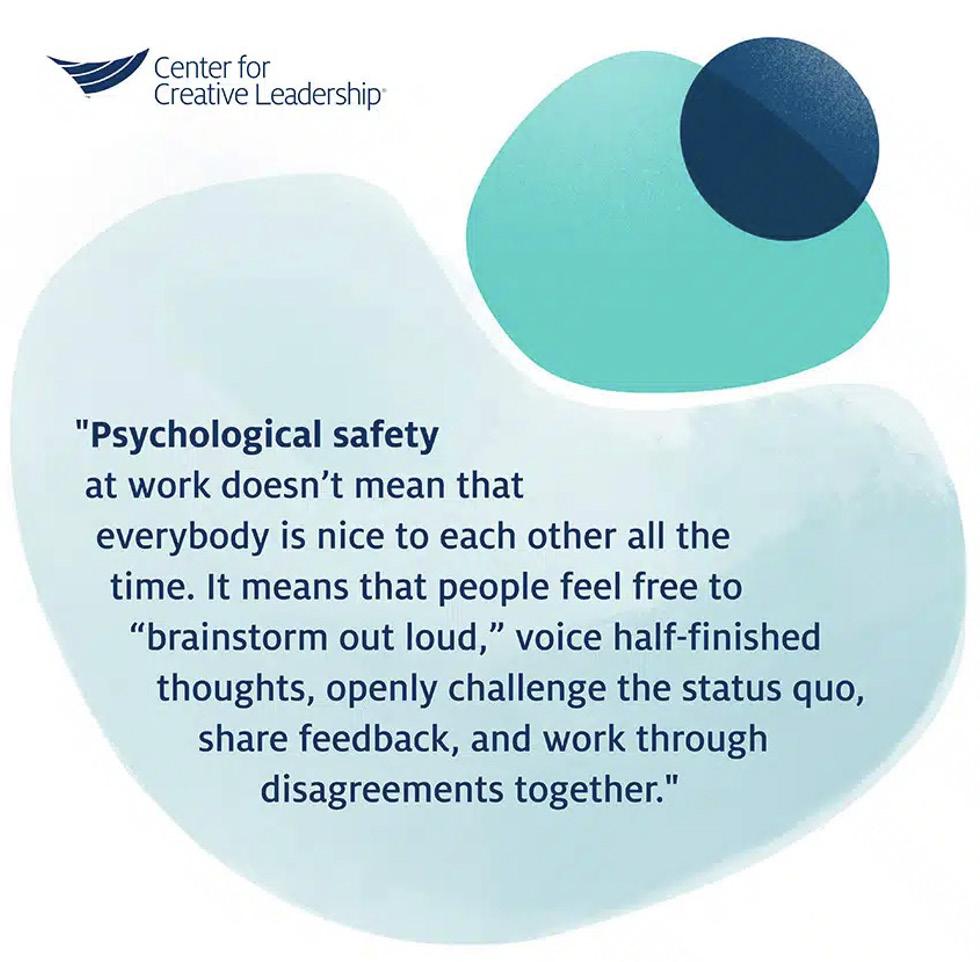
Take a moment now and pause as you are reading. Reflect on: How have you found success in building trust and psychological safety in your school or workplace? What could your next steps be?
Step 5: Enable Action by Removing Barriers
Early in the work, the Data Lead and school leadership removed practical and psychological barriers by creating time for collaboration, the Data Integration Team provided accessible visualizations, and both leadership and Data Team modeled data conversations so teachers could begin engaging with evidence confidently.
Sorted into five categories, here are some ways that we enabled action by removing barriers:
• Structural: Protected time for meetings and reviewing data; Data Integration Team meeting time; release time for Data Visualization lead to implement LAC; purchase of LAC (data visualization tool) infrastructure
• Access: Curated data sets for teacher to engage with, so they did not need to be data experts; increased accessibility to eliminate reliance on multiple sources
• Cognitive: Visualizations that help teachers (curated first); structured protocols for data and discussion
• Capacity: Workshop facilitation training for Data Integration Team subject-area representatives; time for practicing leading (data) conversations; facilitating workshops in pairs/groups for the gradual release of leadership responsibility
• Psychological: moving from fear of data to exploration; creating a safe, brave space; using data as a thinking tool; using data for observation, not judgments; leadership modelling conversations
Step 6: Generate Short-term Wins
Where can you be successful early-on in any change initiative? Early wins emerged when teachers began interpreting data together, designing their own instructional responses, and facilitating conversations within their teams. These shifts built confidence and led to measurable improvements in literacy growth, wellbeing, and targeted student support.
Sorted into four categories, here are some ways that we generated short-term wins:
Building the Climate: Psychological safety allows for trust to happen, for people to take risks, and for clarity and structures to thrive
(Leading EffectivelyArticles | Center for Creative Leadership (CCL), 2024)
• Cultural wins: Teacher collaboration; professional dialogue; inquiry, not evaluation; snacks at meetings (this is small, and cannot be your only cultural move, but it goes toward creating shared spaces and emotional connection); teachers supporting/teaching teachers; peers facilitating workshops; confidence; Secondary and Elementary teachers showing interest
• Capacity wins: Data Integration Team facilitating workshops; teacher confidence increased; teacher owning strategies in each grade-level and department team; teachers requesting more data
• Engagement wins: Increased teacher participation, teacher-owned strategies, and next steps; 30+ early-adopter teachers to the new data visualization tool; more engagement in data-informed collaboration
• Student learning wins: MAP literacy growth exceeded projections; stronger alignment with interventions and practice; more targeted student support; wellbeing im-
provements; student-owned goal setting; measurable strategies; tangible results
Systems can both remove barriers and generate short-term wins. These are powerful because they show the system is working. Here are a few that we have implemented, along with the removed barrier and short-term win:
• Visualization tools: Barrier of data complexity; Win of teachers discussing patterns
• Workshops (by Data Integration Team): Barrier of facilitation skill; Win of teacher-led data conversations, distributed leadership within Grade-levels and Departments, teacher ownership
• Workshops (for leaders): Barrier of capacity; Win of getting on the same page for leading others with data championing their team
• Providing curated data: Barrier of overwhelming data; Win of teachers engaging, more collaboration
• Teacher collaboration with data: Barrier of isolated data, capacity to embed data; Win of collaborative inquiry
• Early-adopters: Barrier of capacity, psychological safety; Win of more people leading
Step 7: Sustain Acceleration - Keep going and keep celebrating!
At this stage, we needed to identify how to sustain and accelerate implementation. We have, and will continue, to examine how shared practices, routines, and rituals can anchor faculty in consistent, high-quality data discussions, embedding them as a systemic part of our culture. One next move will be to intentionally build data discussion cycles into our yearly professional learning plans.
Other ways that we are sustaining momentum include: continuing to have professional dialogue with embedded data as the standard across Secondary School; continuing to have the Data Integration Team lead and facilitate workshops, including new grade-level initiatives, alongside department-level workshops; Data leads in each Department Teams building capacity and learning about how to lead data conversations, as it is not about being a data expert; introduce LAC (last year and the year before, many people would not have been ready for a data visualization tool, but we built collective capacity through distributed leadership, trust, empowerment, and clarity); LAC integration supported through the creation of technical and academic roles, and; continued capacity-building through our LAC early-adopters, who are already moving forward and excited about it. Some of these clearly show the change moving beyond the initial stages of data culture building.
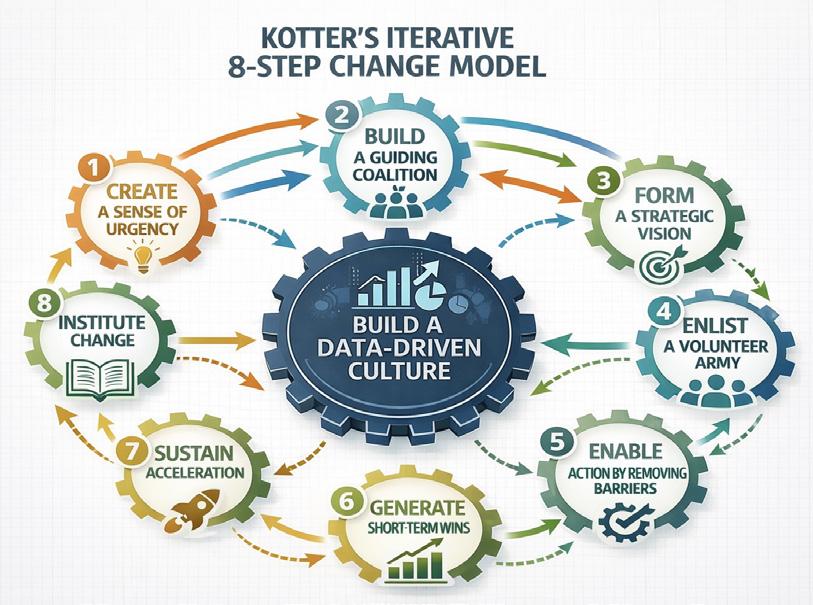
An iterative version of Kotter’s 8 Steps for Leading Change model (OpenAI, 2025)
In the second-half of this school year, we are also going back to Step 2: Building the Guiding Coalition. In international schools, there is usually turnover each year, so we always need to revisit steps as well as continue to plan for program expansion. Phase 1 is in the Secondary School, where Team Leaders and Data Integration department leads continue to be trained on how to build data culture and data literacy. This will help the early-adopters continue moving forward. Phase 2 is the program expansion in other areas of our school. As well, additional challenges will keep emerging.
Step 8: Institute Change - Facilitate change sustainably
Data integration is becoming a sustainable part of how Secondary School works, as data culture and data literacy take hold, and we are successfully working toward being less dependent on individuals. We are still moving around Kotter’s change model circle, toward institutional change, but going back through the cycle and starting anew for other sections of the school. Some parts that we feel need to stay: Distributed leadership, continued building of trust and psychological safety, protected time, protected main lead positions, and continued investment in data tools to help make data more accessible.
Our future: Maybe a year or two down the road, we are considering and reflecting on if we could possibly disband the Data Integration Team, although keep Data Integration leads, as capacity and data literacy has been built. We wonder if we can now put data more fully into the hands of teachers and leaders, facilitated by department and grade leaders. We will see how things go, and we look forward to reflecting on the journey as we take it.
About the Authors
Now, we will return to the Lego building narrative. What is the next step in your data culture story? How will you tell the story? What narrative is it telling?
Where will you invest time as a leadership team to develop data as a part of the living and breathing DNA of your school culture?
Data, as a Lego build, that tells the narrative of our learners (Stoddart, 2026)
Trevor Poole is the Data Integration Team Lead, Nicholas Kolentse is the Director of Teaching and Learning, and Natalie Harvey is the Principal of Secondary School at Beijing City International School. Together, they support the development of (data) culture and data visualization across the school, with a focus on distributed leadership, professional learning, and using data to strengthen teaching and learning.
References
BiteSize Learning. (2024). Kotter’s 8-Step change model, explained. BiteSize Learning; BiteSize Learning. https://www. bitesizelearning.co.uk/resources/kotters-8-step-changemodel
(continuedonpage45)
Curriculum
Cultivating Calm in the Chaos: Teaching Resilience as a Foundation for Crisis Preparedness
By Dr. Gregory A. Hedger and Ms. Sandy Sheppard
When something unexpected happens at school, such as a sudden lockdown, a natural disaster, or an unexpected interruption, students often look to the adults around them for guidance on what to do. Most students are not explicitly taught how to stay calm, think clearly, and control their emotions when things get tough. In today’s increasingly unpredictable world, resilience is becoming an essential skill for young people to develop.
At The International School Yangon, this reality prompted an important question: Can resilience be intentionally taught in ways that help students feel more confident and capable when facing challenging or unexpected situations? We engaged in an action research project with students in grades 4 and 8 to look into this question. The goal was to find out if structured resilience training could help students feel more confident and manage their emotions better when things get tough or go wrong at school. Our action research statement was: This action research project will explore how intentional resilience-building activities influence students’ emotional responses and sense of confidence during crisis situations. The study will examine whether teaching specific coping strategies helps students feel calmer, more prepared, and more in control when faced with unexpected events at school.
The research was conducted over a number of months by teaching a targeted resilience curriculum to Grades 4 and 8. This curriculum was purposely designed to focus on three key ideas: understanding how the brain responds to stress, developing practical strategies for emotional regulation, and reframing mistakes as opportunities for growth. The lessons for fourth graders focused on practical tips such as deep breathing, finding trusted adults, and recognizing that making mistakes makes the brain stronger. Eighth-grade students learned more about the science of resilience. They looked at how stress affects cognitive performance and how regulatory strategies can help people stay focused when things get tough.
To evaluate the impact of the lessons, students completed surveys before and after the intervention. Additional evidence was gathered through written reflections, collaborative activities, observation, and experiential challenges that allowed students to practice resilience in real time.
The first survey results showed that many students lacked a clear understanding of how to deal with stress when things went wrong. Some students said they did not know how to stay calm, and others voiced that they mostly relied on external cues, like following instructions or staying close to friends. Despite being older, many Grade 8 students described similarly passive approaches, such as remaining quiet or trying not to react, rather than using intentional strategies to manage their emotions.
Following the resilience lessons, however, student responses shifted noticeably. Students were able to share specific ways they could control their feelings and stay calm when things got stressful. Younger students talked about ways to calm down, like deep breathing, counting, or using fidget tools. Older students were more thoughtful, saying that they could take a moment to think about the situation and focus their thoughts before reacting.
Students also began to view school safety practices differently. Prior to the lessons, drills were often seen simply as procedures to follow. After learning about resilience and brain science, many students understood that practicing these routines helps develop the mental pathways needed to remain calm during real emergencies. They understood that drills were opportunities to apply resilience strategies rather than moments of uncertainty.
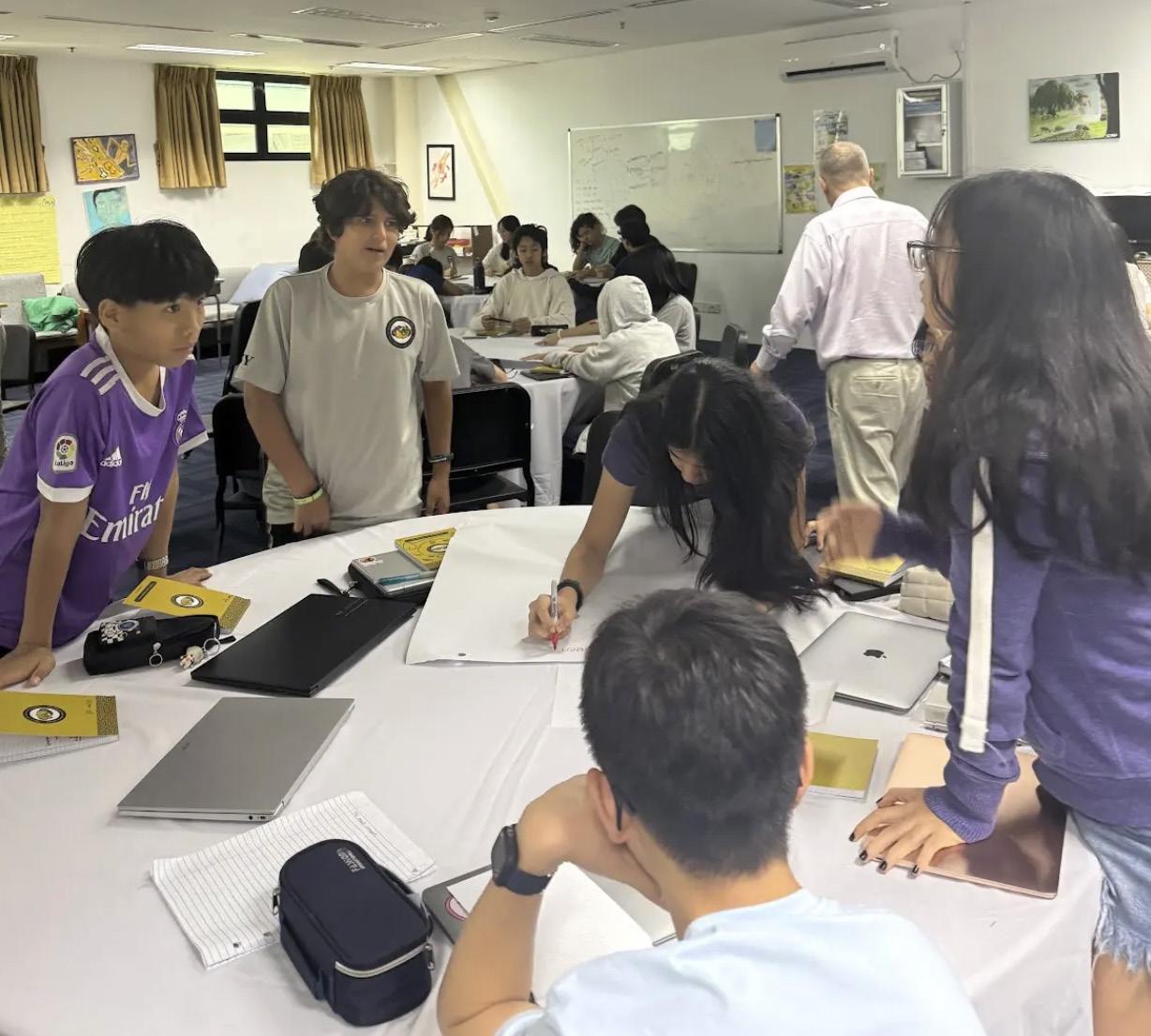
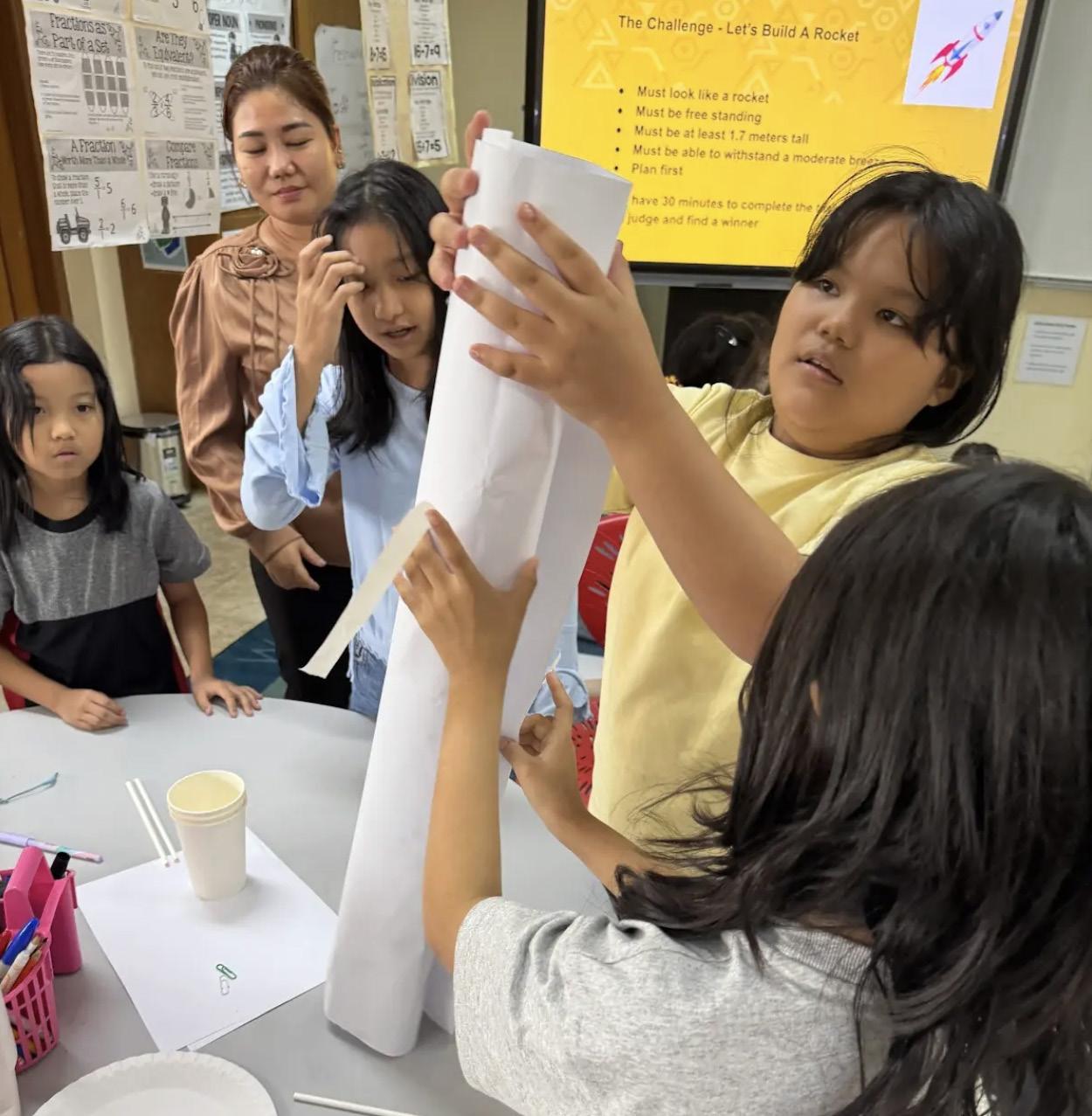
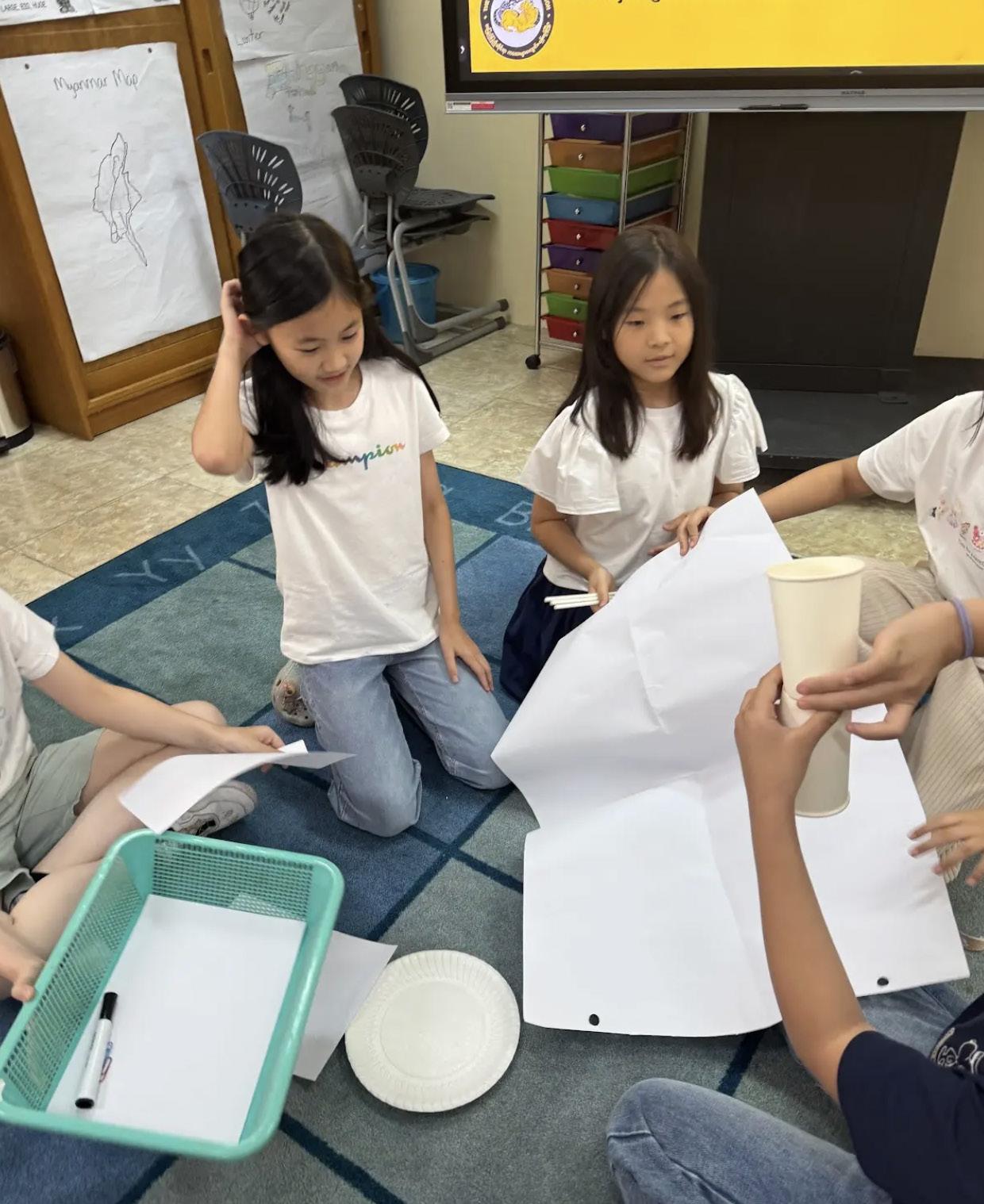
Experiential learning played a big part in making these ideas stronger. During the lessons, students worked together on projects, for example, building paper rockets with limited resources as part of a "Rocket Build Challenge." The goal was to test their ability to work together and keep going. When the rockets fell apart, the students were told to rebuild them and think about how difficulties can help them get better at solving problems. The activity demonstrated resilience in action, with students reflecting that being persistent and open-minded were important.
The results of this research showed that resilience is not just something people are born with; it is a skill that can be learned through careful teaching. Students gain confidence when they are given the words to describe their feelings, an understanding of how their body reacts to stressful situations, and the tools to deal with them.
Implications for Educators
For schools seeking to strengthen students' resilience, several practical lessons emerged from this project:
• Normalize struggle as part of learning. Making it clear that mistakes are okay and even helpful in the classroom helps students realize that growth is hard. Students are more likely to keep going when tasks get hard if teachers talk openly about how the brain grows through challenge.
• Teach emotional regulation strategies explicitly. Students benefit from having a “toolbox” of strategies they can draw upon when they feel overwhelmed. Techniques such as deep breathing, movement breaks, mindfulness, or structured reflection help students shift from emotional reactions to thoughtful responses.
• Connect resilience learning to real-world situations. Linking resilience strategies to school safety drills or challenging learning tasks helps students see the relevance of these skills. When students understand why they practice drills, they begin to view them as opportunities to build confidence and preparedness.
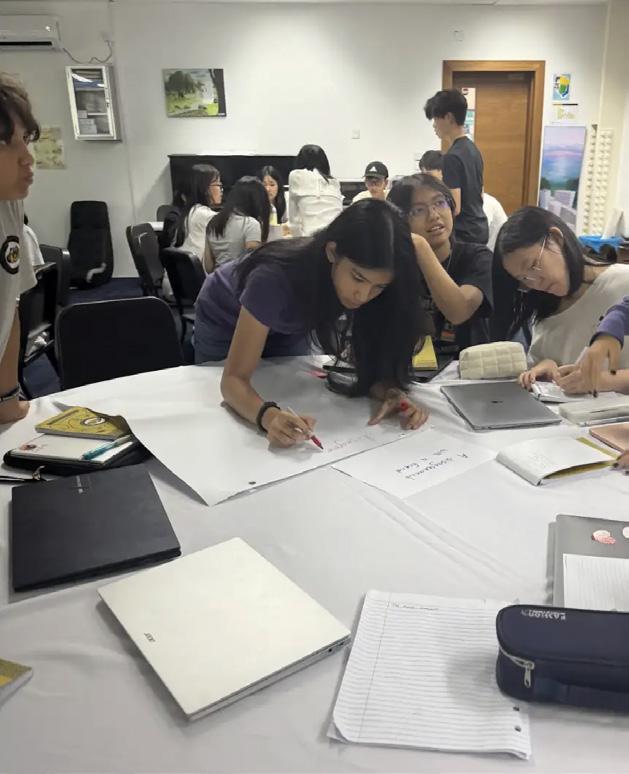
• Provide opportunities to practice resilience. Hands-on activities, collaborative challenges, and reflective discussions allow students to apply resilience strategies in authentic situations. Through repeated practice, students begin to internalize these skills and use them independently.
Resilience education is not just about getting students ready for emergencies. It is about giving young people the right attitude and tools to deal with the problems that come up in school and in life. When schools intentionally teach resilience, they help students develop confidence, adaptability, and a sense of agency in the face of uncertainty.
As one Grade 8 student reflected at the conclusion of the project, “You cannot control every challenge, but you can control your response.” This insight captures the heart of resilience education: empowering students with the understanding and skills needed to face challenges with calm, clarity, and confidence.
To access the full action research report click here
Curriculum Beyond AI Theory: Teaching AI Literacy in Real Classrooms
By Sophie Li Western Academy Beijing

"After understanding the environmental impact of AI, this activity has made me aware of the significant harm AI has on environmental sustainability. Understanding alternative ways to navigate my learning can contribute to combating climate change.”
When you read a student’s reflection like this, how do you feel? As a teacher, I feel very encouraged to see my students’ deep understanding of AI’s impact beyond their own learning and life, their awareness of making informed choices, and their progress to become a global citizen. But here's what impressed me most: this depth of AI literacy didn’t come from a computer science class—it came from my Grade 9 language acquisition unit.
Since the release of ChatGPT in late 2022, we've seen numerous AI tools enter our lives, and they iterate at a fast pace that makes it very challenging for us as human beings to understand and utilize them critically. Therefore, AI literacy has become unprecedentedly vital for us to critically evaluate AI and use it purposefully. Moreover, the role of education is to prepare students for a world full of volatility, uncertainty, complexity and ambiguity. AI literacy is definitely one key skill that could help students better fit into such a future.
Many of you might think teaching AI literacy should be mainly the work of Computer Science teachers. However, as we use AI in almost all subject areas, I believe every teacher should be an AI literacy teacher. In this article, I want to share with you one of my AI literacy-embedded language acquisition unit, showing you how we can integrate AI literacy teaching into our alreadybuilt curriculum, support students’ AI literacy development as well as their progress in subject knowledge and skills. You could easily adapt these activities into your respective subject. I use the UNESCO AI Competency Framework for Students (UNESCO, 2024) as my guidance. Below is a table I made to reflect the basic structure of this framework.
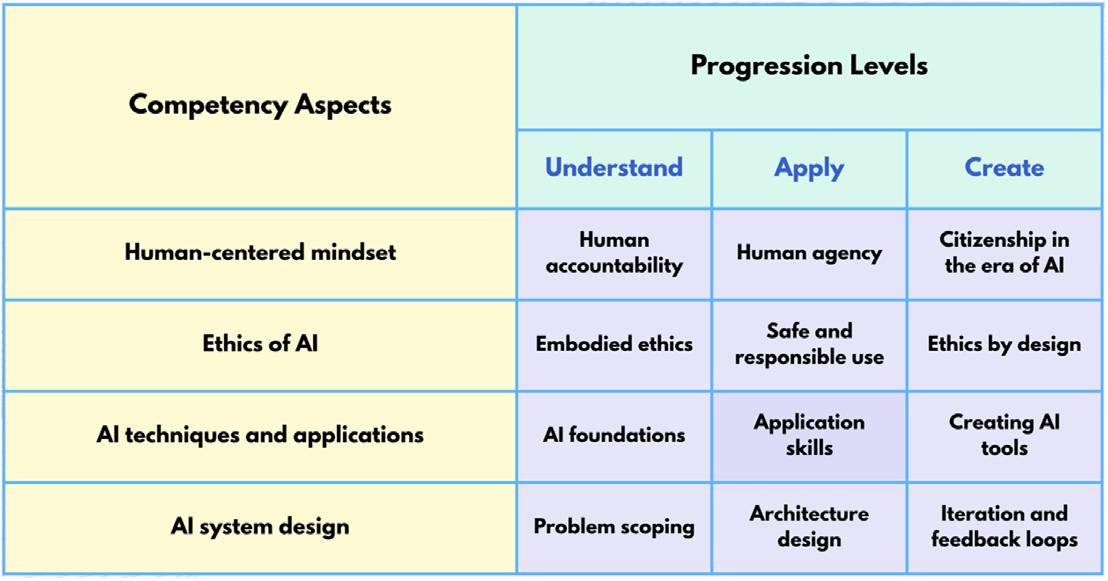
Table 1: The competency aspects and progression levels of UNESCO AI Competency Framwork for Students, created
Four Practical Activities for AI Literacy Integration
Activity 1: Vocabulary Learning
Bilingual Vocabulary List: Students use both ChatGPT and Flint (one general-purpose AI and one educational AI tool) to make a bilingual vocabulary list.
Key reflection questions include:
1. How many rounds of communication does it take for AI to provide the product you want? When AI didn’t provide what you look for, what did you do and how did AI respond to your adjusted actions?
2. Compare: What are the strengths and weaknesses of ChatGPT and Flint in making vocabulary lists? What do you think caused these differences? Which one do you prefer to con-
tinue using in the future in vocabulary learning and why?
3. In your interaction with AI tools, what do you find smooth, and what challenges do you face? What do you think caused the challenges? What have you learnt to better communicate with AI?
4. How do you validate the reliability of the information AI provides?
5. What are the ethical concerns you have when you were using ChatGPT and Flint?
This activity takes approximately 45-60 minutes and works well as homework followed by in-class discussion.
Activity 2: Grammar Learning
The teacher provides a key grammar list. Students feed this list to Flint and Magic School (two educational AI tools), to design an AI activity that supports them in learning the grammar.
Key reflection questions include:
1. What do you find are the key principles for AI prompting?\
2. Compare: What are the strengths and weaknesses of Flint and Magic School in grammar learning? What do you think caused these differences? Which one do you prefer to continue using in the future in grammar learning and why?
3. How do you validate the reliability of the information AI provides? Do you trust the feedback AI provided on your sentences?
4. Compare teacher-led and student-led grammar learning with AI, which way do you like and why? Should we hand over all grammar learning to yourselves and AI? How would you expect the teacher’s role to change?
5. What are the main differences between general-purpose AI and educational AI?
Allow 20-30 minutes for students to explore both platforms and design their learning activity.
Activity 3: AI Environmental Footprint Estimator
Students use the AI Environmental Footprint Estimator (Stephen Taylor, 2025) to calculate the energy consumption of their AI use, understand how human’s AI use impacts the environment, and reflect on how to make informed choices when using AI.
Key reflection questions include:
1. How much energy is consumed by your AI use?
2. What strategies can you develop to reduce the environmental impact of AI?
3. What role can individual users play in promoting sustainable AI technologies?
This 30-minute activity works best after students have used AI tools in Activities 1 and 2.
Activity 4: Review Bot Design
Students use one AI tool, to design a bot that could help them review all the key contents learnt in this unit.
Key reflection questions include:
1. Which AI tool do you choose and why?
2. What are your review needs? How did you communicate
by Sophie Li
your needs with AI? (Please share your prompts.) What data do you need to feed AI? How many rounds of iterations did you go through until you created a satisfying review bot? 3. Reflect on your AI skills, which parts do you feel improved? Which parts you are struggling with? Please explain with examples.
This culminating project typically requires longer time, possibly across multiple class periods.
Competency
Aspects Coverage by Activity
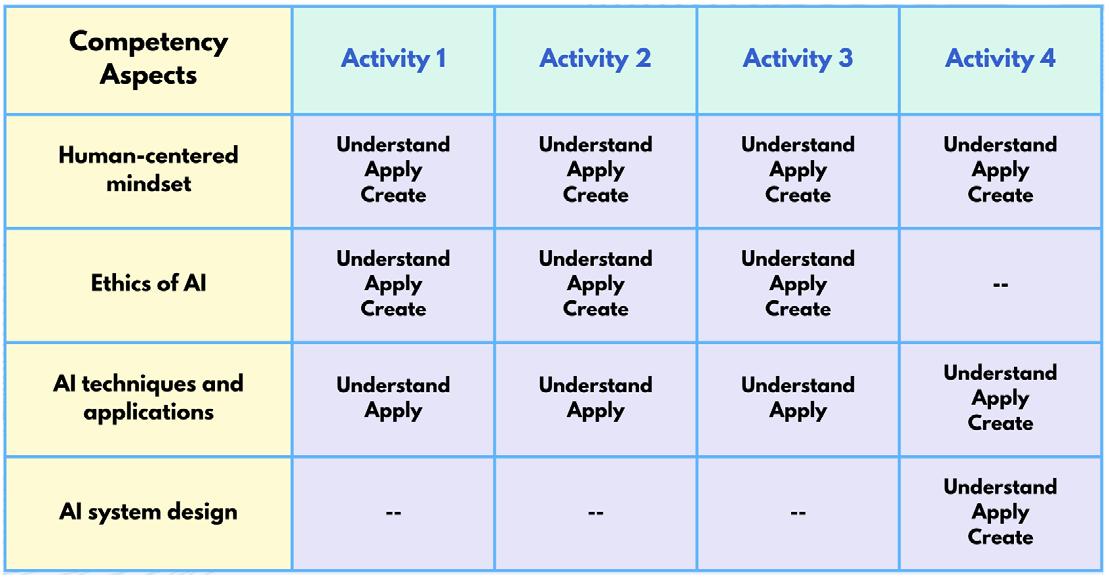
Table 2: Overview of Competency Coverage by Activity, created by Sophie Li
These four activities follow a scaffolded progression designed to systematically develop students' AI literacy. The sequence moves from foundational understanding to advanced creation: Activities 1 and 2 establish core competencies in AI interaction, prompting, and critical evaluation through practical language learning tasks. Activity 3 deepens ethical awareness by connecting AI use to real-world environmental impact. Building on this foundation, Activity 4 challenges students to synthesize their learning by designing their own AI-powered review system. This progression is reflected in the progression levels, which shift from lower-level competencies (understanding AI foundations, embodied ethics) in early activities toward higher-level competencies (creating AI tools, AI system design, iteration and feedback) in Activity 4. By the final activity, students apply holistic knowledge across the competency areas, demonstrating their growth as critical and capable AI citizens.
Assessment
of students’ progress in AI
literacy
skills
Testing AI literacy skills should not be a single score-based assessment; instead, it should be an ongoing process, where both qualitative and quantitative data are recorded and compared. I used Teachers’ Log, Students’ Reflection Padlet and End-of-unit Survey as three main methods to record progress. Here I’ll share some evidence.
“Students mentioned that many teachers assume all students are using AI, so they’ve adapted their teaching based on this assumption. They are very much bothered by this, as they do not like to use AI that much. They are also aware that they need to check with their teachers to see if AI is allowed to use. Like in a language acquisition class, many tasks, especially assessments, should ban the use of AI.”
“Students found the grammar learning activity more successful than the previous vocabulary one. We had an extended discussion: why have you all achieved the learning goal in this activity, but not the vocabulary learning activity? What’s the reason? After the discussion, students realized well-structured prompts and clear reference fed to AI are the key.”
——From teacher’s log
“ChatGPT only gave me the words with pinyin and English, although Flint, as an educational tool, created a lesson with practice activities and discussion questions. Both AI tools were able to scan the text and produce a table of key vocabulary, but Flint was more effective in creating a lesson and asking questions to help us learn.”
——From students’ reflection padlet
“Educational AI usually asks questions so you can figure out the answer yourself. Whereas general-purpose AI is there to provide quick answers. Educational AI is what typically guides students to think on their own, without directly giving them the answers.”
——From students’ reflection padlet
“I feel like I've become better at giving AI prompts and knowing what it will understand and what not. Something I'm struggling with is dependence: I'm scared that the more I use AI, the more I will rely on it, and eventually not know how to do work or study without it anymore. This is why I usually still study by myself.”
——From students’ reflection padlet
At the end of the unit, all students completed a survey reflecting on their confidence gains.
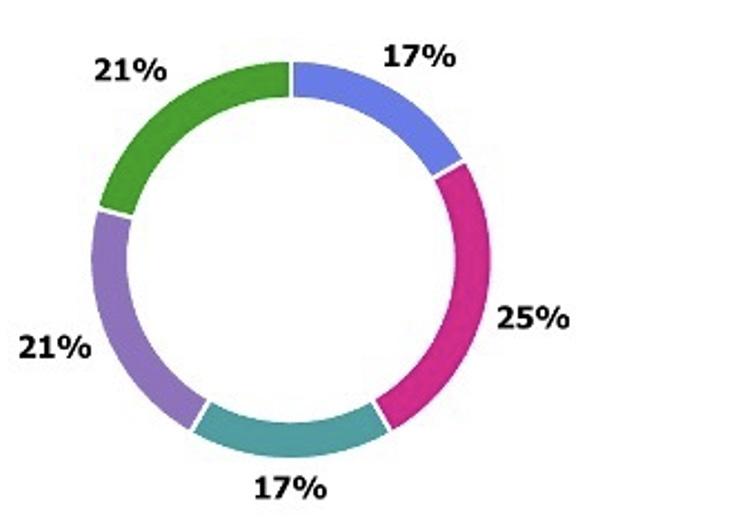
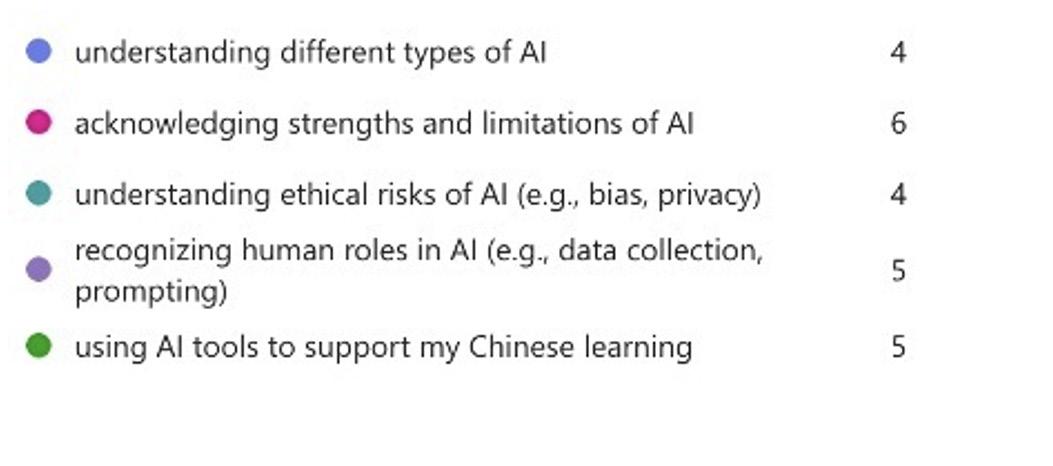
——From teacher’s log
If you're wondering where to begin with AI literacy integration, here are some tips for you:
• Start small by embedding it into existing lessons rather than creating entirely new units.
• You don't need to be an AI expert—in fact, learning alongside your students and modeling curiosity is more valuable than having all the answers.
• Use the UNESCO framework as a guide by asking four simple questions: Are students reflecting on their role with AI? Are they considering ethical implications? Are they learning how AI works and how to use it effectively? And for advanced activities, are they creating or critiquing AI systems? If your activity addresses even one or two of these areas, you're teaching AI literacy.
• Activity 1 (Vocabulary Learning) is the most accessible entry point—it requires minimal setup, works across subject areas, and introduces fundamental concepts like comparing tools, validating information, and recognizing ethical concerns. From there, you can build toward more complex activities as both you and your students grow more comfortable.
In Chinese, we have a saying 'throw out a brick to attract jade.' My examples are like bricks, and I hope they inspire you to create gem-like valuable ideas and activities that support students' AI literacy development. What will your first AI literacy activity look like?
References
UNESCO. (2024). AI competency framework for students. https://www.unesco.org/en/articles/ai-competency-framework-students
Stephen Taylor. (2025). AI Footprint Estimator. https://sjtylr.net/2025/01/27/ai-footprint-estimator/
About the Author
Sophie Li is the Head of High School Languages Department in Western Academy of Beijing.
She is also a certified Flint Innovative Educator, a NEASC school visitor and an IB workshop leader.
wida.wisc.edu/assess/model
Purchase from the WIDA Store: wceps.org/store
Use WIDA MODEL to
Gather immediate English language proficiency level scores
Screen students for identification and placement decisions
Monitor student progress over time
Inform instructional planning as well as curricular and program planning
Support decisions related to exiting students and services
Interpret proficiency in terms of Common European Framework of Reference for Languages (CEFR) levels
Curriculum Using MTSS to Support Every Student: A Collaborative Approach by ISCA & SENIA International
By Brooke Fezler International School Counselor Association (ISCA)
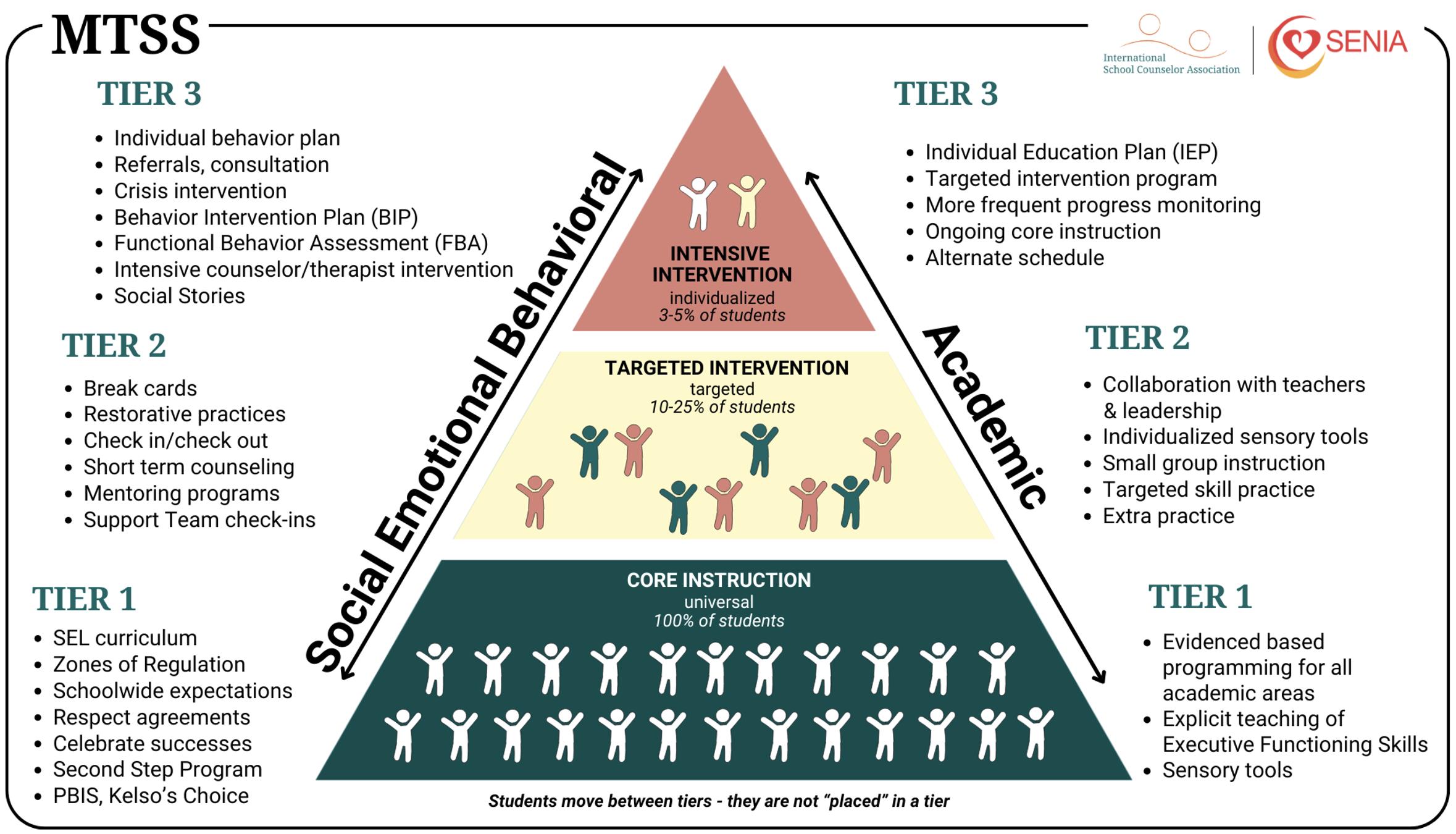
An important component of both the International School Counselor Association (ISCA) Model and SENIA International’s inclusive practices is the Multi-Tiered System of Supports (MTSS)—a framework designed to ensure that all students receive the academic, social-emotional, and behavioral support they need to succeed. By implementing a structured, tiered approach, school counselors, educators, and support teams can create equitable learning environments where no student falls through the cracks.
Understanding
the MTSS Framework
MTSS thrives as a whole-school approach, drawing strength from the collective commitment of all members of a school community. This collaborative model brings together school
leaders, educators, specialists, counselors, and support staff, creating a unified effort in supporting student success. By fostering a shared responsibility and leveraging diverse expertise, MTSS becomes a powerful tool for creating inclusive, supportive learning environments. This team-based approach ensures that interventions are comprehensive, consistent, and tailored to meet the unique needs of every student. When the entire school community embraces MTSS, it leads to more effective implementation, better resource allocation, and ultimately, improved outcomes for all learners.
The graphic created through the collaboration of ISCA and SENIA is unique in its comprehensive and integrated approach to MTSS. This visual representation stands out for several reasons:
1. Holistic Integration: The graphic seamlessly incorporates SEL, behavior, and academics into a single MTSS framework, emphasizing the interconnectedness of these areas in student support.
2. Lens-Specific Examples: ISCA and SENIA have provided examples of support for each tier through their respective lenses, offering a more nuanced and specialized perspective on implementing MTSS in international school settings.
3. Collaborative Expertise: By combining the expertise of both ISCA and SENIA International, the graphic reflects a multidisciplinary approach to student support, ensuring a more comprehensive and inclusive model.
4. International Focus: The collaboration between these two international organizations results in a graphic that is specifically tailored to the unique needs and challenges of international schools, making it particularly relevant for educators in diverse global settings.
5. Practical Application: The graphic provides concrete, actionable examples for each tier, making it easier for educators to implement MTSS strategies in their specific contexts.
This collaborative effort by ISCA and SENIA demonstrates a commitment to creating a more inclusive and supportive educational environment for all students in international schools, regardless of their academic, behavioral, or social-emotional needs.
Tier 1: Universal Support for All Students (100%)
This tier focuses on proactive, evidence-based strategies that support the entire school community. Key components include:
• ●SEL & Life Skills Development
• Schoolwide Expectations & Respect Agreements
• Restorative Practices & Positive Behavior Interventions
• Executive Functioning Skill Development
These preventative strategies help build a strong foundation for student success by fostering emotional regulation, resilience, and a sense of belonging in every student.
Tier 2: Targeted Support for Some Students (10–25%)
For students who need additional social-emotional, academic, or behavioral support, Tier 2 provides more focused interventions, such as:
• Small Group Counseling & Mentoring Programs
• Check-in/Check-out Systems
• ●Targeted Skill Practice & Extra Academic Support
• Flexible Seating & Sensory Tools
By collaborating with teachers, school leaders, and families, counselors and educators can ensure students receive timely interventions that help them stay engaged in learning.
Tier 3: Intensive, Individualized Support (3–5%)
For students requiring more significant supports, , personalized and intensive interventions are necessary. Tier 3 strategies include:
• Individualized Behavior Plans (BIP) & Functional Behavior
Assessments
(FBA)
• Crisis Intervention & Intensive Counseling Support
• Individualized Education Plans (IEP) & Alternative Schedules
• Collaboration with External Therapists & Specialists
It’s important to note that not all students who have an IEP require tier 3 support.
Students are not placed in a tier permanently—they move fluidly between levels based on their progress and response to interventions.
By closely monitoring progress and adjusting interventions, educators can ensure that students receive the right level of care to help them thrive.
Why MTSS Matters for International Schools
The success of MTSS relies on several key principles:
◊ Data-Driven Decision Making – Using assessments, teacher observations, and student feedback to tailor support.
◊ Collaboration Across Stakeholders – School counselors, learning support teams, teachers, and families work together to create a seamless support system.
◊ Proactive & Preventative Approach – Rather than waiting for students to struggle, MTSS ensures that support is in place before challenges escalate.
By integrating MTSS within international school settings, we create inclusive learning environments that promote student wellbeing, equity, and success.
ISCA and SENIA International remain committed to helping schools implement and refine their MTSS frameworks, ensuring that all students—regardless of ability, background, or need—receive the support necessary to reach their full potential.
Would you like to learn more about implementing MTSS in your school? Explore resources from ISCA (www.iscainfo.com) & SENIA (www.seniainternational.org) today!
Three Pedagogical Lessons from an Art Project on Fungi
By Caitlyn Homol & Yvette Stride International School of Beijing
Collaboration is often celebrated and desired in our classrooms, but it's challenging to pull off in ways that truly reflect what it looks like beyond our school walls. At times, it results in undesirable permutations: one student completing all the work, disagreements that require teacher mediation, students approaching after the task is graded to complain about a group member’s contributions, and so on. The undesirable consequences are often tiring enough to make teachers wish they had simply given it as an individual assignment.
In the arts, structuring opportunities to learn and practice collaboration has its own considerations and challenges. Creativity is often an individualized competency (we describe individuals as creative, but rarely groups), and art is also often regarded as an expression of personal identity and experience. Yet so much of the art we enjoy is the increasingly a product of partnership and art collectives – shouldn't we prepare aspiring artists for the reality of the art industry?
I’ve had so much fun talking to Yvette Stride about a phenomenal learning experience she co-constructed with artist-in-residence Niamh Cunningham for our students at the International School of Beijing. Here are some deep lessons we can take from their exemplary art unit, which culminated in a collaborative piece titled, Wall of Whispers. It is truly a marvel of authentic learning within the disciplines of art, ecology, and sustainability; it has been a pleasure to write this analysis of their work.
Three curricular insights are introduced with direct quotes from student reflections completed after the project. Just as the final end-ofresidency exhibition itself featured Wall of Whispers, a multi-media woven tapestry that includes small text capsules one can unroll and read, I invite you to sample student thoughts woven throughout this article.
... I never knew that trees could communicate with one another, but after these few classes with Niamh Cunningham, I learned about the mycelium network.
The artist in residence brought me a different perspective of making art...
A critical element that led to student engagement and learning was collaborating with an external partner on an externally showcased exhibition. Ms. Stride and ISB HS Art leader Joseph Stewart are both active in the Beijing art community. Through their participation in residencies and local art events they forged a partnership with Irish artist Niamh Cunningham. Eventually, this led to Niamh’s invitation in 2024 to collaborate with ISB’s art classes as an artist-in-residence. After a series of iterative discussions with ISB’s art faculty, Niamh, intern and alumna Emma Yang, and art students, they eventually settled on the theme of mycelial networks: fungal connections underground that stretch between trees and plants, carrying messages between them.
Evidence from student reflections shown above reveals that this partnership with Niamh helped them learn about both ecological systems and art. It’s also illustrative of the importance of enabling teachers to take part in discipline-specific experiences, whether it’s
through artist residencies, local art shows, consultant visits, or professional learning opportunities that offers experiences as learners within a subject. Without our art teachers’ engagement in their subject outside of the context of art education, this project may never have occurred. I shared this contemplation with Ms. Stride, and here’s her take:
“It may have occurred, because artists are often willing to show up when invited to residencies at school... But our relationship and comfort with one another enabled us to deepen the meaning of the process for students. Students were able to see and experience true risk-taking, problem-solving, and collaboration as we navigated ambiguity in a realistic rather than contrived setting.”
As many schools are contemplating authentic assessment and transferable competencies, it’s hard to overstate the impact of creating an organizational culture that grants teachers room to build and then action through these relationships.
We had a mind map which allowed us to drop down our own suggestions for the project... and how it would fit with the values of Mrs. Niamh...
I appreciated the difficulty of collaboration since this improved my communication skills and let me know my peers more.
Ms. Stride used a number of strategic moves to help students collaborate within and across hierarchies. Constraints are real-world, and Niamh and Ms. Stride were upfront and clear about the requirements for the project so that it would fit Niamh’s goals for the exhibition: no glue, strictly natural or reused materials, and reference to an ecological theme. In the ‘real world’ beyond schooling, we almost always build, create, or perform within constraints that are given to us from higher up along a hierarchical structure, and it’s a great opportunity to have a collaborator other than a teacher to set those constraints and have students practice the discipline required to meet them.
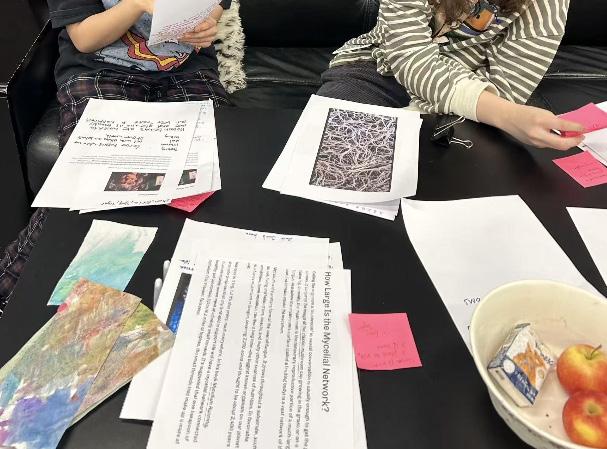

At the same time, Ms. Stride carefully managed her influence on the process and final piece. Typically, the more we intercede the less learning students do about how to actually work together. Adults have power in classrooms even when not actively participating. It’s critical to consider how we may be unintentionally subverting student collaboration by setting required tasks and roles that remove their opportunities to initiate, adjust, and respond to each other. Sometimes she would physically remove herself from brainstorming conversations or peer feedback sessions so that students could speak freely without monitoring her non-verbal reactions. When progress stalled, she’d insert herself only to impose a concrete deadline for a smaller deliverable within the project. Whether it was an addition to the mind map or one woven length of yarn, the ‘chunking’ of tasks kept student self-efficacy high, which continued to fuel collaboration. It also guaranteed that every student contributed many small parts of the final piece. On occasion, she’d intervene by prompting students in ways that pushed their artistic expression and execution – never losing sight of the overall course goals despite the unit’s focus on collaboration and ecology.
Another key instructional choice was a public survey of the skills students brought with them that could be useful to the project. The survey itself became a touchstone Ms. Stride referred to throughout the unit to remind students that the final artwork was a shared effort, of which one person (herself and Niamh included) could not exert complete creative control over. The skills survey surfaced that some students had fiber arts and jewelry-making experience, which combined with the constraints and the discovery of surplus wool and yarn in the arts department led to the core aesthetic of the project. Many of the workdays in the unit consisted solely of students teaching and learning weaving, knotting, crocheting, and knot tying with one another. The skill-sharing was a major component in this unit that Ms. Stride and I believe helped with the release of individual ownership of the final piece.
Last, it was also a crucial and intentional choice to only assess their reflections: had Ms. Stride decided to assess the work itself in any capacity, it may have made it harder for some students to focus on the value of the process.
Mycelium refers to how fungi grow and spread underground, not unlike how people work in tandem... I immediately found it very relevant to our class, working that way ourselves to help out one another, growing stronger as a unit.
... the connection between human and nature [is] shown straightly in our visual... In general, the artwork has to do with nature and collaboration.


Finally, the focus of the collaborative experience should be intentionally selected to facilitate student meaning-making. Alignment between content and target practices and mindsets help facilitate conceptual transfer for students. That alignment is multiplicative. As Ms. Stride and I read student reflections we were surprised to see how often they created profound analogies between mycelial networks and their collaborations with peers in class, as well as mycelial networks and broader phenomena such as the internet.
Many teachers and curriculum staff have an intrinsic understanding of this synergy, but at times we may sacrifice it for other considerations like an idealized, spiraled curriculum, SEL/learner profile theming by term, or other structures that help us map out curriculum on paper. It’s important for us to frequently pause and consider what approaches help us best create those multiplicative learning environments. Ms. Stride and I agreed, as we took a retrospective look at student work samples, that students were able to transfer ecological lessons to the human experience precisely because of the resonance between the subject matter, medium, and process.
“A mycelial network teaches us that survival is not about competition, but collaboration, resilience and an unseen harmony.” - Joanna Macy.
A student selected quote from systems theorist Joanna Macy encapsulates the metacognitive aspects of this project that make it exemplary. Our students have been able to tap into rich personal, artistic, and ecological learnings through this experience. Building bridges in our curriculum for students to appreciate the interconnectedness between the natural and human world is essential if we are to prepare students who can live sustainably. Teaching them to effectively collaborate so they and see and feel the benefits reminds them of why that goal is important. I’m deeply grateful to Yvette Stride for allowing me to engage in reflective conversation with her about her unit, and to Niamh Cunningham for her partnership with ISB.
Yvette Stride has published her unit plan for public access on her website here. She has written a complimentary response about her experience with this unit, which is also available on her website.
Read more about Niamh Cunningham’s work as an eco-artist here.

Action Research
Equation for Empowerment: How Problem-Based Teacher Training Shapes Educator Math Self-Efficacy
By Evan Hershberger & Danny O’Leary International School of Beijing
Abstract
This action research investigates how problem-based math teacher training affects educators' self-efficacy for mid-career elementary teachers in an international education context. Utilizing a pretest/posttest design, the study compares the scores of teachers who took part in an 8-session training program as measured by the Math Teaching Self-Efficacy Belief Instrument (MTEBI). The findings indicate significant improvements in teacher confidence and instructional capacity, suggesting that problem-based training could serve as a scalable model for international school professional learning.
Equation for Empowerment: How Problem-Based Teacher Training
Shapes Educator Math Self-Efficacy
Teacher self-efficacy, the belief in one’s ability to promote student learning, has been shown to influence instructional quality and student achievement. This study explores whether problem-based professional development can enhance mathematics teaching efficacy among mid- career educators in an international school setting. The research was conducted with a group of mid-career educators in the Elementary School Division at The International School of Beijing. Over the course of the first semester of school, 15 teachers engaged in a problem-based training named “The Math Sandbox”. Participants reflected on how math identity and mindset shape classroom practice. Through a sequence of hands-on, problem-based sessions, participants explored foundational math concepts from counting to geometry, not as isolated skills, but as interconnected ideas.
Teachers' self-efficacy and content knowledge influence the effectiveness of mathematics instruction in classroom settings. Teacher efficacy, defined as a teacher's belief in their ability to promote student learning, has been shown to impact teaching practices and student outcomes (Gonzalez & Maxwell, 2019). High math efficacy is associated with improved instructional quality and student achievement. Teachers with greater confidence in their abilities are more likely to utilize effective teaching strategies and foster a positive learning environment (Zhu & Kaiser, 2022). Additionally, research has demonstrated that content knowledge impacts teaching practices and student outcomes (Goe, 2007). Alshehri and Youssef (2022) found that elementary teachers’ mathematical selfefficacy is closely tied to their mathematical knowledge for teaching, suggesting that deeper conceptual understanding directly strengthens teachers’ confidence in instructional decisionmaking.
Given that both content knowledge and self-efficacy are crucial for effective teaching, it is essential for teacher professional development programs to focus on these areas to improve educational outcomes (Newton et al., 2012). The research demonstrates that in order to enhance teaching practices and significantly improve students' learning experiences, it is essential to prioritize the development of self-efficacy and content knowledge. The implications of developing teacher efficacy extend beyond student achievement and can also affect curriculum adaptation efforts.
Charalambous and Philippou (2010) concluded that teachers' beliefs about efficacy are crucial to their willingness and ability to adopt curriculum reforms. One conclusion of their research was that professional development should address content knowledge and self-efficacy to support successful implementation. This research project aims to quantify the instructional training methods that lead to the development of mathematical knowledge and efficacy among mid-career teachers. Teacher mathematics self-efficacy was measured using the Mathematics Teaching Efficacy Belief Instrument (MTEBI), developed by Enochs, Smith, and Huinker (2000). This inventory is a validated tool designed to help preservice teachers assess their beliefs about teaching efficacy in mathematics.
The problem-based teacher training program, “The Math Sandbox”, is a professional structure designed to create a psychologically safe learning environment where teachers can play with math ideas to deepen content knowledge. Previous research has shown a positive correlation between problem-based teacher training curricula and improved efficacy (Caukin et al., 2016). The context of the Caukin et al. research was general education and not specifically for mathematics teacher training. This action research project investigated the effect of problem-based mathematics teacher training on teacher’s pedagogical efficacy and content knowledge for mid-career elementary teachers in an international education context.
Methodology
Sample
The study involved 15 mid-career elementary teachers at an international school who volunteered to participate in a professional development program focused on curriculum neutral problem-based mathematics instruction. Teachers ranged in subject areas from kindergarten to fifth grade, including Chinese
Dual Language teachers, English as an Additional Language (EAL) and Learning Support (LS) teachers. Two teachers did not complete the final survey, leaving our study sample size to be n=13.
Instruments
Two instruments that were used:
1. The Mathematics Teaching Efficacy Beliefs Instrument (MTEBI) to measure teachers' beliefs about their ability to teach mathematics effectively (Enochs et al., 2000).
2. A Math Knowledge Test to assess teachers' understanding of their number sense and content- specific mathematical concepts.
The Mathematics Teaching Efficacy Beliefs Instrument (MTEBI), developed by Enochs, Smith, and Huinker (2000), is a validated measure designed for preservice teachers to assess their beliefs and overall teaching efficacy in mathematics. It is derived from the Science Teaching Efficacy Belief Instrument (STEBI-B). It comprises 21 items, divided into two subscales: Personal Mathematics Teaching Efficacy (PMTE), with 13 items, and Mathematics Teaching Outcome Expectancy (MTOE), with 8 items.
Design
A single-group pretest-posttest design was utilized to measure changes in teachers' self- efficacy in mathematics and their content knowledge following a professional learning intervention. Before participating in the "Math Sandbox" training, all participants completed both assessments to gather baseline data.
Teachers then participated in 8 sessions of problem-based math exploration to enhance their mathematical proficiency and foster a growth mindset in problem-solving. These sessions covered topics such as counting, place value, operations, geometry, and fractions, with activities that emphasize collaborative inquiry and hands-on problem-solving. An overview of the full training session and project plan is shown in Figure 1. At the conclusion of the program, participants retook both the content assessment and the survey. During the final session, teachers also provided qualitative reflections on their learning experiences during a consolidation and celebration meeting.
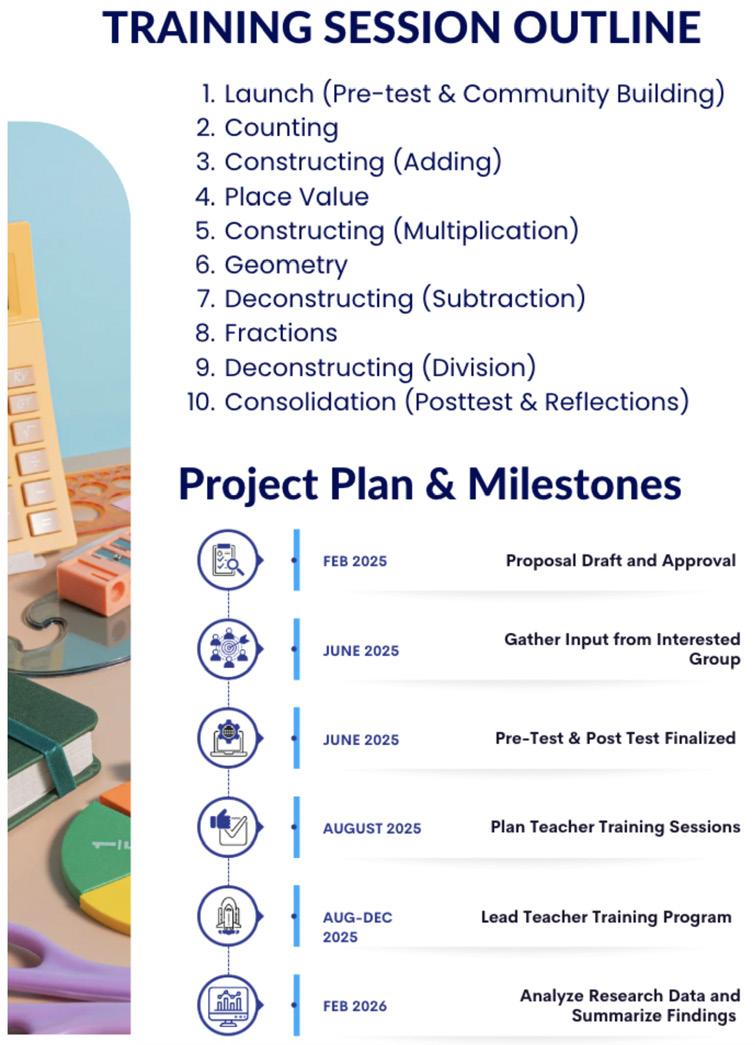
Figure 1. Training Session Overview
Results
To evaluate changes in teacher mathematics self-efficacy, a paired-sample t-test was conducted on pretest and posttest scores for each item of the Mathematics Teaching Efficacy Beliefs Instrument (MTEBI). This test was selected because the same participants completed both assessments, allowing for comparison of related measurements. Results were summarized in Table 1, which reports pretest and posttest means, t-statistics, and p-values for each item. A grouped bar chart (Figure 2) was also created to visually illustrate the magnitude of change across survey items.
Table 1: Pretest and Posttest Means, t-Statistics, and p-Values for Teacher Self-Efficacy
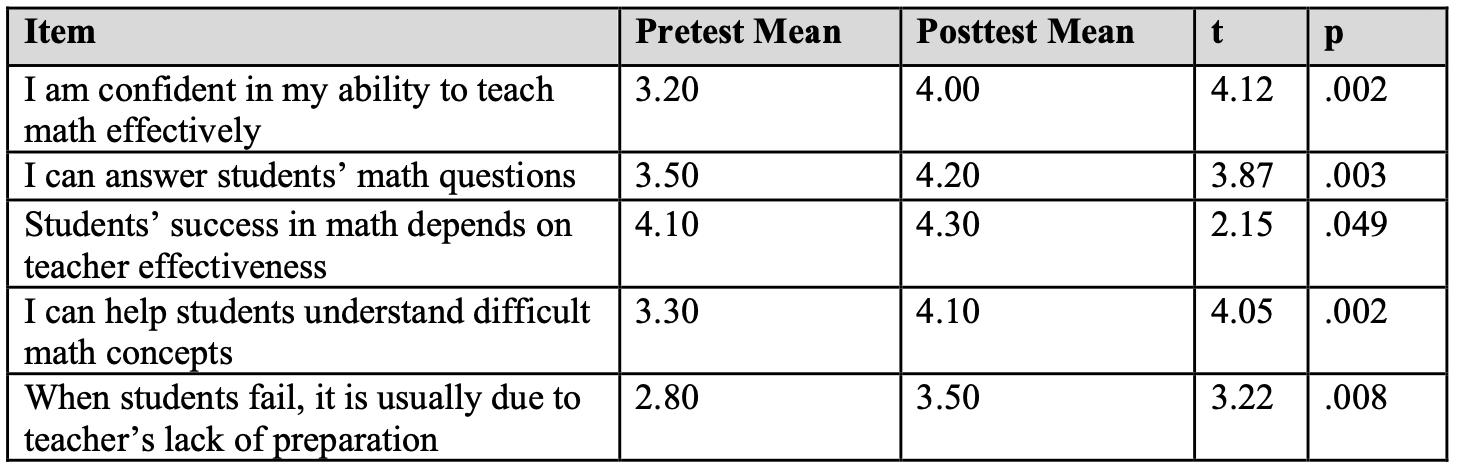
Figure 2. Chart comparing Pretest and Posttest Response Means
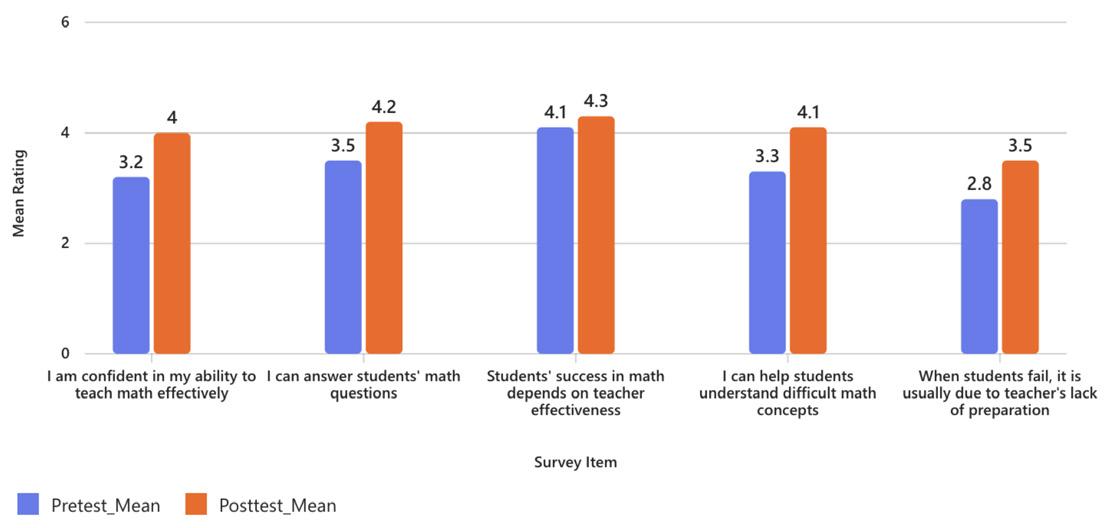
Quantitative Analysis
Analysis of pretest and posttest scores revealed significant improvements in teacher mathematics self-efficacy following participation in the problem-based professional development program. Paired-sample t-tests indicated that selected items demonstrated growth, with p-values below the .05 threshold, confirming statistical significance. The largest gains were observed in teachers' confidence in teaching mathematics effectively and in their ability to assist students with challenging concepts, each showing mean increases of approximately 0.8 points. Effect size calculations using Cohen's d ranged from moderate to large (d ≈ .45-.85), suggesting that these changes were not only statistically significant but also practically meaningful. The other items on the MTEBI did not show significant changes and are not included in this analysis. The selected quantitative findings indicate that the professional learning intervention, "The Math Sandbox", successfully enhanced teachers' beliefs in their instructional capacity, aligning with the study's hypothesis and supporting the potential of problem-based training as an effective professional development model.
Qualitative Analysis
One of the goals of this program was to simulate the student experience for our teachers. The purpose is to give teachers a
challenging, engaging math class experience so they can replicate it in their own classrooms. We aimed for the participant experience to focus on:
1. Discussion-based teaching and learning
2. Collaborative exploration of mathematical concepts
Each session featured a short warm-up task followed by a larger, more complex problem.
The warm-up prompt encouraged participants to consider the day's topic. During these activities, participants usually worked alongside their grade-level partners. For the second, larger task, they were randomly assigned to groups and worked on vertical whiteboards. Pedagogically, both the warm-up and the larger prompt followed a similar structure. Teachers are given a task, then work collaboratively to make sense of and solve a complex mathematical problem. When they became stuck, facilitators would try to shift thinking through pre-planned questions. Hints or tips were used only as a last resort and were built on the work teachers had already done. This was intentional, as we believed that if we gave hints, they would see their work as less valid. However, if they were able to solve the problem on their own, even with guidance, they would feel successful, making their learning more meaningful.
One takeaway for the facilitators was how group interactions changed throughout the sessions. At the beginning, the teachers who considered themselves "bad at math" tended to remain silent unless they were called upon or made self-deprecating jokes about their work. During the warm-up task in our first session, we asked the teachers to form a circle and count aloud by sevens. Many of these teachers expressed their discomfort with the activity. Some admitted that they didn't pay attention to others; instead, they focused on counting ahead and waited for their turn to respond. For some, they answered with uncertainty, phrasing their response as a question to check with the group if they were correct. Gradually, however, these teachers became more comfortable in expressing their math thinking.
In our eighth session, on division, much of the conversation was led by participants who were much quieter in the beginning. The concluding discussion for that session centered around how teaching division is difficult because it requires conceptual understanding of nearly every mathematical concept across elementary school. Participants not only shared their struggles but offered insights into how they teach division. This element contributed significantly to the establishment of equity, fostering a secure environment in which all educators were able to engage in learning. The facilitators interpreted this as implicit evidence of building group efficacy. As teachers became more confident in their math abilities, they were more willing to work with teachers who they perceived at a different skill level. This leveling was instrumental in creating a safe environment for teachers to learn in. If people who struggled with math never witnessed their peers struggling, it would not be conducive to building efficacy. We posit that this is the result of consistent problem-based instruction, randomized grouping, and a heavy focus on discussion.
In our first session, teachers were exposed to the idea of the Learning Pit (Nottingham, 2007). The driving idea behind the learning pit is that struggle or, “being in the pit”, is a necessity of deep learning. If you can hop over the pit, you have already learned that concept and you are now practicing. One of the goals of the series was to keep teachers in the pit as much as possible while they were problem solving. The facilitators did this through intentional planning of rich tasks. All tasks had a low floor
and high ceiling, which meant that all teachers could access the task and begin solving it, and extensions were provided to groups that were able to move forward. For each task, there was a desired extension the facilitators wanted all teachers to reach. The math discussion at the end of the session was centered around this extension level so that everyone could participate and learn. Due to this structure, every teacher was engaged in math during the problem-solving portion of each session. As such, there was nobody who was finished first, or stillworking on the first question, which are often seen as indicators of math ability.
The series was intentionally independent of any curricular connections. At the time of the professional learning series, the teachers were in the second year of implementing a new math curriculum (Illustrative Math - IM). Facilitators did not create opportunities for teachers to make connections between their learning in The Math Sandbox sessions and IM. Rather, the focus stayed on the pedagogy and math content. This had a two-fold impact on the group. First, conversation did not stray into normal teacher topics like how today’s lesson went, or what they need to plan for tomorrow. Second, because teachers were not unpacking the curriculum, the content became “grade-level neutral.” Every teacher could engage with the work, even if it was something they would not be teaching. This grade-level neutral thinking led to teachers connecting content from other grade levels to their current teaching, essentially building a content scope and sequence. An example of this was in the session on fractions. Teachers were instructed to regard fractions as a new item to count, rather than a new type of number. Grade one and two teachers commented that they could see how their work in counting and simple adding led to fraction understanding in grade three, and had conversations about how they could teach their content differently to lead into fractions.
The emphasis on collaboration and discussion-based instruction, along with the practice of keeping teachers "in the pit," may explain the consistent growth reflected in the survey results. When teachers who do not consider themselves "math people" find themselves alongside those who are recognized as "math people" and are facing similar challenges, the labels begin to lose their significance, and all teachers become learners together. Additionally, when a struggling teacher shares their solution or strategy with the whole group and receives positive feedback, or when their explanation helps the group reach a deeper understanding, it demonstrates that they are often more capable in math than they initially believed. Ultimately, this collaborative environment not only fosters personal growth in each teacher but also cultivates a culture of shared learning and confidence in teachers’ mathematical abilities.
Recommendations
Considering the findings from this action research project, several avenues for future research are recommended to enhance educators' professional development (PD). First, exploring curriculum-neutral professional development could provide valuable insights into how flexibility in PD offerings allows teachers to engage with diverse teaching paradigms. Additionally, focusing on problem-based PD can foster a more dynamic learning environment in which teachers can tackle real-world challenges collaboratively, promoting peer learning and innovation. Subjectspecific PD should also be examined to assess its effectiveness in equipping educators with specialized skills that align with their teaching areas. These varied approaches can contribute to a more comprehensive understanding of how PD can be tailored to suit different contexts and needs. This may also have different implications in research with secondary teachers, who spend
their entire day immersed in their subject-area content. Further research into middle and high school teachers could offer different ways to apply this curriculum-neutral approach.
Moreover, further investigations into how general teacher problem-based strategies could offer deeper insights into their impact on professional growth and student outcomes. Examining random grouping practices, where everyone works with everyone, can reveal its effectiveness in promoting collaborative learning among educators. Additionally, expectations and content norming should be studied to ascertain how shared standards can influence the overall rigor and alignment of educational practices within different learning environments. By pursuing these recommended areas of research, the education field can better support teachers' development, ultimately leading to improved classroom experiences for students.
Acknowledgements
We want to express our sincere appreciation to Angela Maez for her invaluable support in facilitating and designing the training sessions. Her expertise and collaboration greatly strengthened the quality of this work. We would also like to thank Carolyn Michael for her ongoing support of the action research project. Finally, our gratitude extends to all participants for their commitment to their professional learning and their thoughtful engagement throughout the process.
References
Alshehri, K. A., & Youssef, N. H. (2022). The influence of mathematical knowledge for teaching towards elementary teachers’ mathematical self-efficacy. EURASIA Journal of Mathematics, Science and Technology Education, 18(6), em2118. https://doi.org/10.29333/ejmste/12086
Caukin, N., Dillard, H., & Goodin, T. (2016). A Problem-Based Learning Approach to Teacher Training: Findings After Program Redesign. Journal of Problem-Based Learning in Higher Education, 4(1), 1-15.
Enochs, L. G., Smith, P. L., & Huinker, D. (2000). Mathematics Teaching Efficacy Belief Instrument (MTEBI) [Database record]. APA PsycTests. https://doi.org/10.1037/t08389- 000
Goe, L. (2007). The link between teacher quality and student outcomes: A research synthesis. National Comprehensive Center for Teacher Quality. https://link.springer.com/chapter/10.1007/978-1-4614-5149-5_9
Gonzalez, K., & Maxwell, G. M. (2019). Mathematics teachers’ efficacy, experience, certification and their impact on student achievement. AABRI Journals.
National Council of Teachers of Mathematics. (2014). Principles to actions: Ensuring mathematical success for all. NCTM. https://www.nctm.org/principlestoactions
Nottingham, J. (2007). Learning Pit. The Learning Pit. https://learningpit.org/learning-pit/
Zhu, Y., & Kaiser, G. (2022). Impacts of classroom teaching practices on students’ mathematics learning interest, mathematics self-efficacy and mathematics test achievements: A secondary analysis of Shanghai data from the international video study Global Teaching InSights. ZDM: Mathematics Education, 54(3), 581–593. https://doi.org/10.1007/s11858022-01343-9
Action Research
When Learning French Becomes Child’s Play: Grammar Retention in Young Learners through Games and Narrative Reformulation
By Loan Dubreuil Renaissance International School

Abstract
Young learners in multilingual international-school settings often develop early French vocabulary but struggle to retain and transfer core grammar beyond a practiced classroom routine. This action-research study compared two instructional approaches for supporting grammar retention and spontaneous use in beginning French: (a) a structured, game-based grammar sequence designed to elicit high-frequency, accurate production of five core sentence frames and (b) a story-based narrative reformulation sequence designed to prompt learners to reuse the same frames more flexibly while retelling and creatively adapting a story. The same eight 7- to 8-year-old learners participated in both phases (two ~10 week cycles). Student talk was audio-recorded, transcribed, and coded by reformulation type (identical repetition, meaning-changing deviation, paraphrastic reformulation, and other innovations/errors). Across 931 Phase 1 utterances, identical repetitions dominated (74.2%), and an end-of-phase picture-prompt assessment showed that 80% of learners could produce all five target frames. In Phase 2 (~700 utterances across three interactive story sessions), identical repetition decreased (~60%) while paraphrastic and innovative language increased, and learners more frequently attempted spontaneous transfer of the target frames to novel content. Findings suggest that games efficiently build confidence and initial control of form, while narrative reformulation better supports flexible, communicative deployment. A blended sequence games for introduction and high-frequency rehearsal followed by story-based reformulation for transfer offers a practical model for early FFL (French as a Foreign Language) classrooms.
Keywords: action research; early foreign language education; grammar retention; language games; narrative reformulation
Acknowledgements
I thank the participating students and their families for allowing classroom learning to be audio-recorded for research purposes. I also thank Carlos who assisted with discussion of ambiguous coding cases and supported reflective analysis. Finally, I thank the school for allowing me to lead my research and always supported me in doing so.
Introduction
Teaching grammar to young children in a foreign language involves a tension between what is developmentally appropriate and what classrooms require for communication. In early French as a Foreign Language (FFL) programs, learners can quickly acquire classroom phrases and topic vocabulary, yet teachers often observe that grammatical frames (e.g., “Il y a…”, agreement patterns, or basic word order) remain fragile and context bound. In multilingual international schools, this challenge can be amplified: students are simultaneously building literacy and academic language in the school’s main language of instruction while French may function as an additional (often third or fourth) language.
This study investigated two classroom-friendly approaches intended to strengthen grammar retention and promote spontaneous, communicative use in beginner young learners. The guiding question was:
To what extent do (a) game-based grammar instruction and (b) narrative reformulation activities differ in fostering long-term retention and spontaneous usage of basic French grammatical structures in 7–8-year-old learners?
The practical aim was not to “prove” one method superior in general, but to identify a sequence of routines that (1) reliably elicits high-quality student output, (2) supports transfer to new contexts, and (3) can be implemented within the constraints of a primary classroom.
Literature Review and Rationale
For young beginner foreign-language learners, grammar learning is most productive when it is embedded in meaningful activity and supported through interaction. From a sociocultural perspective, development is mediated through social interaction and tools; learning is supported when teachers provide temporary scaffolding within learners’ zone of proximal development (Vygotsky, 1978). Bruner’s account of early language learning similarly emphasizes “formats” recurrent, predictable interactional routines in which children learn language by participating in structured exchanges (Bruner, 1983). In classroom terms, this suggests that the design of routines (games, shared stories, retellings) matters because routines shape what learners can do independently and what they can do with support.
Second language acquisition theory further clarifies why “practice” must be more than repetition. Krashen’s input hypothesis foregrounds the need for comprehensible input and emphasizes that low anxiety and high engagement improve conditions for acquisition (Krashen, 1982). However, classroom improvement questions about grammar retention and spontaneous use also require attention to output and interaction. Swain’s output hypothesis argues that producing language can push learners to notice gaps, test hypotheses, and move from meaning-based communication toward more controlled language use (Swain, 1985). Long’s interactionist account emphasizes that interaction can facilitate development when learners receive feedback, negotiate meaning, and modify output in response to communicative demands (Long, 1996). For a classroom study comparing game-based routines with narrative reformulation, these perspectives predict different strengths: games may deliver abundant supported turns (input + low affect + high repetition), while narrative reformulation may increase communicative pressure to adapt language to meaning (output + noticing + interactionally mediated feedback).
Play theory helps refine the pedagogical logic of “games for grammar.” Huizinga describes play as structured activity with rules and voluntary engagement, features that can make classroom practice feel lower stakes while maintaining clear constraints (Huizinga, 1955). Brougère cautions, however, that play is not automatically instructional; learning outcomes depend on how play is framed and how the adult mediates participation (Brougère, 2005). In classroom design terms, games can efficiently stabilize high-utility sentence frames if the routine repeatedly elicits the same syntactic pattern, but games can also bind language to the game context if transfer is not explicitly engineered.
A task-based pedagogy perspective clarifies how narrative reformulation can serve as a transfer engine. Ellis characterizes tasks as meaning-oriented activities that can support communicative use while enabling focus on form through design features and interaction (Ellis, 2003). For young learners, Cameron
emphasizes that teachers must build meaning-first activity with repeated opportunities to recycle language and with scaffolds that help children attend to patterns without relying on abstract grammatical explanation (Cameron, 2001). Together, these sources support a practical improvement hypothesis for early FFL: sequence high-frequency, low-risk game practice to establish basic control of target frames, then follow quickly with narrative reformulation tasks that require learners to retrieve and adapt the same frames in novel meaning contexts, supported by teacher prompts, recasts, and visual scaffolds.
Method
Setting and participants
The study took place at Renaissance international school in Ho Chi Minh City, Vietnam. The participant group consisted of eight beginner learners aged 7–8. Students’ first language was Vietnamese, and English served as the primary medium for most subjects; French therefore functioned as an additional language for the group. Before the study, learners could use basic greetings and isolated vocabulary but did not reliably produce complete sentences using high-utility frames (e.g., Il y a…, noun–verb patterns, être + adjective).
Design
A within-subject (same-group) two-phase design was implemented across one school year. Each phase lasted approximately ten weeks. The approach was implemented within the existing French program; no deviations from established curriculum or assessment practices were made without written administrative approval. Phase 1 (“Grammaire en jeu”) used structured language games to elicit repeated production of target frames. Phase 2 (“L’histoire”) used interactive storytelling, retelling, and creative variation to encourage reformulation and flexible reuse.
Design snapshot table
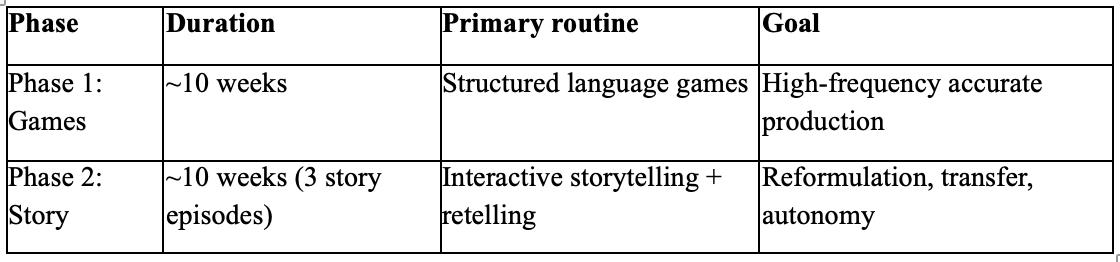
Target grammar frames table
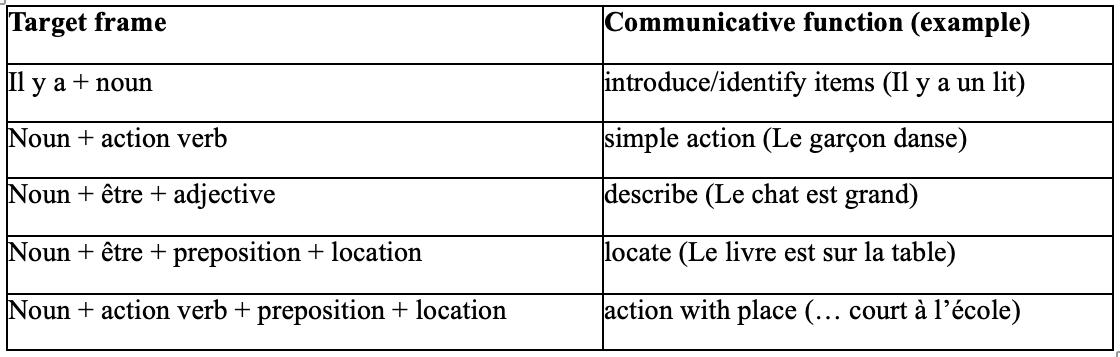
Data sources
Three data sources were used:
1. classroom audio recordings of student utterances during activities, 2. teacher observation notes, 3. picture-prompt assessments focusing on production of the target frames.
Unit of analysis and coding
An utterance was defined as one meaningful student production intended as a response or contribution (word, phrase, or sentence). Transcripts were coded into four categories: (a) identical repetition of the modeled frame, (b) meaning-changing deviation (often indicating inaccurate substitution or misunderstanding), (c) paraphrastic reformulation that preserved meaning with variation, and (d) other innovations/errors (partial attempts, novel combinations, or non-target productions). Ambiguous cases were reviewed with a colleague to improve consistency.
Assessment
At the end of Phase 1, learners completed an individual pictureprompt task requiring production of each target frame (e.g., prompted description of a picture expected to elicit Il y a…). Short informal prompts were also used throughout Phase 2 to check whether learners could reuse frames during retellings.
Ethics
The study was conducted in the teacher’s normal instructional setting with non-invasive data collection. Student names were anonymized in the write-up, and examples were selected to protect confidentiality. The instructional aim was to support confidence and to “do no harm,” consistent with EARCOS ethical expectations for research involving students.
Findings
Quantitative comparison of reformulation types.
Emergent flexibility in narrative reformulation
In the story phase, learners produced more variable language, including partial but meaningful reformulations. For example, in attempting a negative structure introduced in the story (Il n’y a pas de X), learners generated approximations such as “Il y a pas une petite sœur” or “Il y a pas deux petites sœurs.” Although inaccurate in formal terms, these attempts showed that learners were experimenting with negation to express meaning, a kind of productive risk-taking rarely observed in tightly cued games. Overall, the evidence suggests a pattern: games supported accuracy and confidence; narrative reformulation increased opportunities for autonomous selection and adaptation of frames, even at the cost of increased error.
Four actionable classroom claims
Claim 1 (Games build fast accuracy and confidence). During Cycle 1, talk was highly accurate and participation was broad. Of 931 utterances, 74.2% were identical reformulations of the modeled frames (Table 1). On an end-of-cycle prompt, 80% of learners produced all five frames at least once.
Classroom takeaway: games are an efficient ‘form-control’ routine for beginners and a useful warm-up for later work.
Claim 2 (Accuracy inside a routine does not guarantee transfer). When the class shifted to a new unit (e.g., describing bedrooms), learners did not spontaneously use Il y a… despite extensive game practice; they tended to list nouns without the frame.
Classroom takeaway: transfer needs deliberate engineering (bridging tasks and spaced retrieval), not just more repetition in the same game.
The Modern Foreign Language Department team members. Ira Mathur is second from the left.
Table 1 summarizes the distribution of coded utterances across the two phases. In Phase 1, identical repetitions dominated: learners were highly accurate when the game structure cued a specific sentence frame. In Phase 2, identical repetition decreased while paraphrastic reformulation and other innovative language increased, indicating that learners were more frequently attempting to adapt frames to new content rather than reproducing a single model.

Table 1. Distribution of student utterances by reformulation typ9
Immediate learning after games
Phase 1 assessment results suggested strong short-term mastery: six of eight learners (80%) produced all five target frames at least once on an individual picture-prompt task. During the games themselves, learners often produced fluent, near-automatic repetitions with only minor pronunciation issues.
Limits of transfer after games alone
A later classroom episode (outside the game routine) illustrated a key limitation. When learners moved to a new topic (the home), the teacher invited them to describe their bedroom objects. Although Il y a + noun would have been directly applicable (e.g., “Il y a un lit”), none of the learners spontaneously used Il y a in this new context; they instead listed vocabulary items without a sentence frame. This suggested that a highly practiced structure may remain “attached” to the original routine unless transfer is explicitly engineered.
Claim 3 (Stories increase reformulation attempts and flexible reuse). In Cycle 2 story sessions, identical reformulations dropped to ~60% while meaning-change attempts rose to ~10% and other innovations to ~25% (Table 1). Learners produced more self-initiated attempts to adapt frames, including approximations such as “Il y a pas une petite sœur.”
Classroom takeaway: story-based reformulation encourages productive risk-taking and reveals where scaffolds are needed.
Claim 4 (Sequencing improves practice: games for control, stories for transfer). The evidence suggests a practical sequence: use games to establish accurate sentence skeletons, then shift to narrative reformulation so learners must reuse the same skeletons for new meanings. This sequence aligns classroom time with two different learning needs, control and transfer, and reduces the likelihood that grammar remains routine-bound.
Discussion and Implications
The two cycles functioned as complementary tools. Games created the conditions for success, high engagement and accurate repeated output, but also risked binding grammar to the routine that cued it. Story-based reformulation did not eliminate error; instead, it surfaced learners’ attempts to use the frames as communicative tools. For classroom improvement, the key shift is to treat transfer as a design target: after a game, learners need a different task type that forces the same forms to travel.
Pedagogical implications for early FFL teaching
Sequence matters: a practical model is a two-step routine, practice, then transfer.
Step 1: use structured games to establish accurate form and a positive speaking atmosphere.
Step 2: follow with story-based reformulation tasks that require reusing the same frames in a different communicative situation (retelling, role-play, and creative substitutions).
To strengthen transfer within this sequence, the teacher can explicitly signal when a frame should be reused in a new context (“Use Il y a to describe your room”), recycle frames across multiple topics over time (spaced retrieval), provide sentence starters and visual supports during open tasks, and use gentle recasts and prompts rather than extended rule explanations.
Concise rationale tied to classroom practice
Play-based routines can lower the perceived risk of speaking and generate many repetitions of a small set of forms, useful when learners are beginners. However, repeated output inside a single routine can produce routine-bound language: learners can reproduce a modeled sentence inside the game but fail to select it independently when the situation changes. Narrative routines add a different kind of practice: retelling and adapting a story encourages learners to reuse the same frames while changing details, which can reveal whether a structure is becoming a flexible resource rather than a memorized chunk. Given the observed transfer gap, Cycle 2 was designed as a transfer engine: the same target frames became tools for meaning making during story retellings.
Limitations
The study involved a small sample (n=8) in one setting. The phase order was not counterbalanced; Phase 2 followed Phase 1 and may have benefited from foundations built earlier. Because Phase 2 elicited more open-ended talk, participation was voluntary and uneven, and some totals were approximate. Category boundaries also involve interpretation even with colleague review. Results therefore support local decision-making rather than broad generalization.
Conclusion
In this action-research project, game-based instruction efficiently strengthened initial control of five foundational French sentence frames in young beginners, as indicated by frequent accurate repetitions and strong immediate assessment performance. Narrative reformulation, while producing more errors, elicited greater variation and more attempts at spontaneous transfer.
For early FFL classrooms, particularly in multilingual international-school contexts where French competes with other languages, these findings support a blended approach: introduce and rehearse grammar through playful games, then extend learning through story-based reformulation so that learners must mobilize the same frames for new meaning. Overall, learning French grammar became “child’s play” when play was paired with purposeful opportunities to reuse language flexibly.
References
Brougère, G. (2005). Jouer/Apprendre. Economica. Bruner, J. S. (1983). Child’s talk: Learning to use language. W. W. Norton.
Cameron, L. (2001). Teaching languages to young learners Cambridge University Press. doi:10.1017/CBO9780511733109
Ellis, R. (2003). Task-based language learning and teaching Oxford University Press.
Ferrance, E. (2000). Action research. Northeast and Islands Regional Educational Laboratory at Brown University.
Huizinga, J. (1955). Homo ludens: A study of the play-element in culture. Beacon Press. (Original work published 1938)
Krashen, S. D. (1982). Principles and practice in second language acquisition. Pergamon Press.
Long, M. H. (1996). The role of the linguistic environment in second language acquisition. In W. C. Ritchie & T. K. Bhatia (Eds.), Handbook of second language acquisition (pp. 413–468). Academic Press.
Swain, M. (1985). Communicative competence: Some roles of comprehensible input and comprehensible output in its development. In S. M. Gass & C. G. Madden (Eds.), Input in second language acquisition (pp. 235–256). Newbury House Publishers.
Vygotsky, L. S. (1978). Mind in society: The development of higher psychological processes (M. Cole, V. John-Steiner, S. Scribner, & E. Souberman, Eds.). Harvard University Press.Z
The Leadership Transition Gap: What International Schools Must Get Right

By Kevin Baker Director, American International School of Guangzhou
The Moment We Underestimate
Leadership transitions are among the most consequential moments in the life of an international school. They shape culture, influence direction, and determine whether a school accelerates or stalls. And yet, despite their importance, transitions remain one of the least systematically designed processes in our industry.
Across international schools, significant time and resources are invested in recruitment. Search processes are rigorous. Candidate pools are global. Due diligence is extensive. And yet, once the appointment is made, something critical happens.
The system largely lets go. There is a massive “whitespace” here – a void.
The question that guided my 2025 Leaders in Transition study was simple but urgent:

Why do so many capable, experienced leaders struggle during transitions—and what can we learn from their lived experiences?
The answer, drawn from 241 leaders across 74 international schools, is both clear and confronting: leadership transitions don’t fail because leaders lack skill - they fail because expectations, context, and success criteria are unclear.
The Study: Listening to Leaders in Transition
The Leaders in Transition study was designed to capture what we often miss: the lived experience of leaders as they move into new roles. This study utilized a presentative purposive sample and mixed-methods approach which gathered both quantitative data and qualitative insights to ensure both breadth and depth. This is also among the first studies to examine leadership transitions across three leadership levels simultaneously:
• Strategic Leaders (Heads, Directors)
• Operational Leaders (Principals, Division Heads)
• Frontline Leaders (Coordinators, Program Leaders)
Rather than focusing solely on outcomes, the study asked:
• What did you expect going into the role?
• What actually happened?
• Where were the biggest gaps?
This approach revealed a consistent and compelling pattern; not of leadership failure, but of system misalignment.
What Leaders Experience: Four Global Patterns
Across countries, roles, and school contexts, four recurring patterns emerged.
1. The Expectation Gap Leaders enter new roles with confidence. They have been selected for their experience, track record, and perceived readiness. But very quickly, many leaders encounter ambiguity. As one leader reflected: “I didn’t know what success actually looked like…”. This insight became one of the defining findings of the study: Confidence without clarity is the norm. This insight aligns with Watkins’ (2013) work on leadership transitions, which highlights how early misalignment can derail even highly capable leaders.
2. Invisible Context
A second pattern was the presence of what I call invisible context - the cultural, historical, and political dynamics that are not surfaced during recruitment or known about prior to arrival.
Leaders described unwritten rules, legacy tensions, and hidden stakeholder expectations just to name some specific examples of context challenges discovered once in the role. As one participant noted: “The real challenges weren’t visible in the hiring process…”. This finding resonates with Schein’s (2010) work on organizational culture, which emphasizes that what is most influential in organizations is often what is least visible.
5 Actions Boards Can Take Tomorrow
If leadership transitions are predictable, they should be designable.
Here are five high-impact actions boards can implement immediately:
1. Define Success Before Day One
Align as a board on what success looks like in the first 90 days, first year, and beyond. Make expectations explicit; not assumed.
2. Co-Create a Transition Success Profile
Work with the incoming leader to clarify priorities, key relationships, and early indicators of progress.
3. Design a Structured Onboarding Process
Move beyond informal introductions. Establish a transition committee and develop a clear onboarding plan that includes stakeholder mapping, cultural orientation, and governance alignment.
4. Establish Regular, Protected Checkpoints
Schedule intentional check-ins (30, 60, 90 days and beyond) focused on clarity, support, and alignment; not just performance.
5. Provide Continuous Support - Not Just Early Support
Ensure access to coaching (which has the largest ROI factor for positive leadership transitions), feedback, and reflection throughout the first two years - not just the first few months.
Bottom line: Supporting the leader is supporting the school.
3. Misaligned Success Criteria
Even when expectations are discussed, they are rarely aligned. Transitioning leaders reported uncertainty about who defines success, how success will be measured and over what timeframe. This creates a fundamental risk, particularly in governance-driven environments where boards and leaders may hold different assumptions. Charan, Drotter, and Noel (2011) emphasize that clarity of role and expectations is essential for leadership effectiveness. This study suggests that such clarity is often missing at the very moment it matters most.
4. Isolation in Decision-Making
Despite stepping into positions of authority, many leaders described feeling isolated and unsupported. Leadership transitions often involve high-stakes decisions, limited feedback, and few safe spaces for reflection. Heifetz and Linsky (2002) describe this as the inherent isolation of leadership, particularly during adaptive challenges. Leadership transitions, by their nature, are deeply adaptive.
A Reality Check for Our Industry
When these findings are viewed collectively, a clear conclusion emerges: We do not have a leadership problem. We have a transition design problem. The LeadershipTransition Gap (Baker,
2026) whitepaper reinforces this with a stark reality check: across schools, structured onboarding, aligned expectations, and sustained support are inconsistent or absent. This is not a marginal issue. It is systemic.
Connecting to Transition Theory
Across the social sciences, the concept of “transition” has evolved within multiple intellectual traditions, each emphasizing different dimensions of change. This study is informed by, and extends, the work of many academic experts and particularly the work of William Bridges. It positions leadership transition not as a single event, but as a complex, multi-level phenomenon shaped by individual adaptation, organizational dynamics, social and cultural contexts, identity and meaning-making, and systems of support.
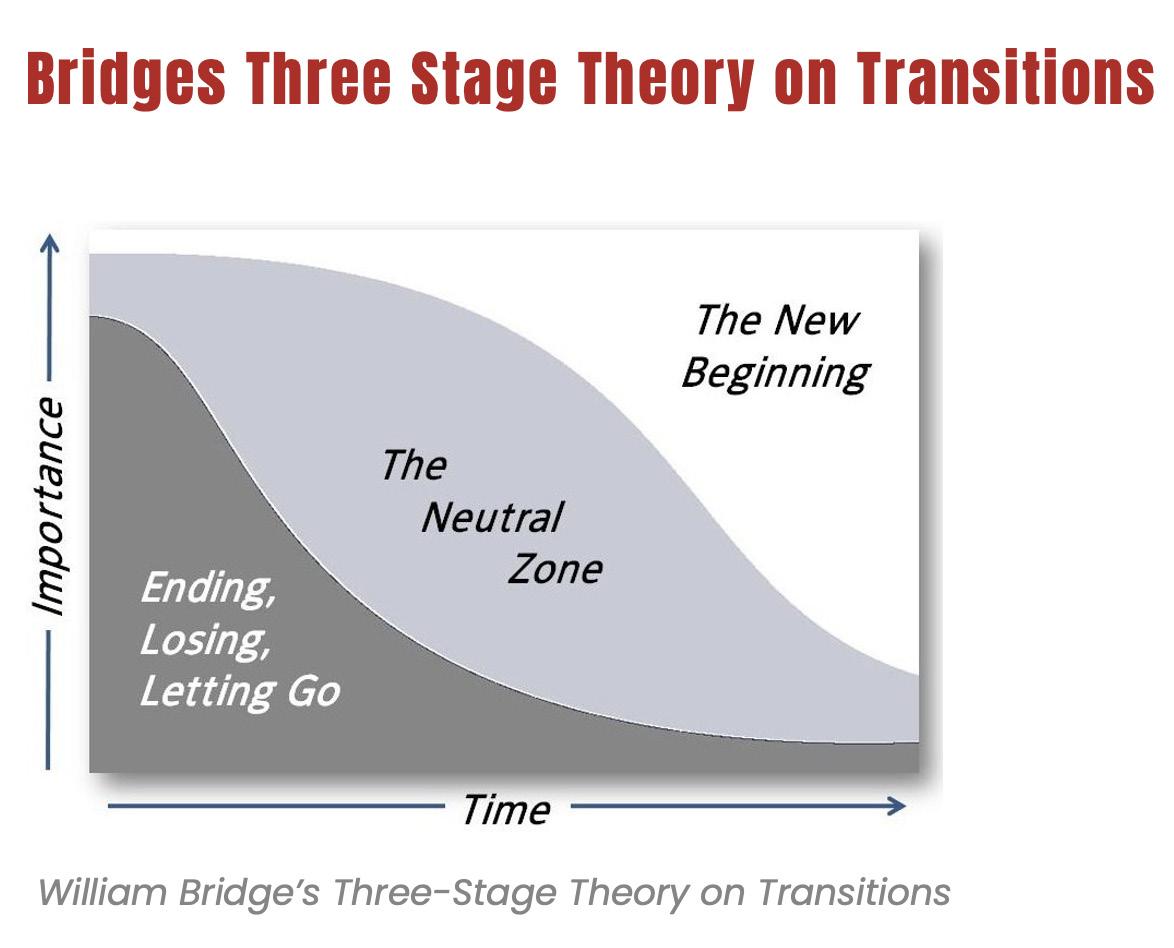
Bridges (2004) reminds us that transitions are not events, but psychological processes consisting of three phases: EndingNeutral Zone - New Beginning. Bridges argues that “It isn’t the changes that do you in, its the transitions. Change is not the same as transition. Change is situational: the new site, the new boss, the new team roles, and the new policy. Transition is the psychological process people go through to come to terms with the new situation. Change is external; transition is internal.”
What the Leaders in Transition study highlights is that many leaders are placed into the “neutral zone” without sufficient structure, clarity, or support. They are expected to perform while still making sense of their role, their context, and their success criteria. In other words, they are navigating transition without a map.
From Insight to Action: a Simple by Powerful Framework
Through synthesis of the data and through presentations at various professional organizations such as EARCOS, AAIE, NAIS, and ACAMIS, a clear framework emerged:
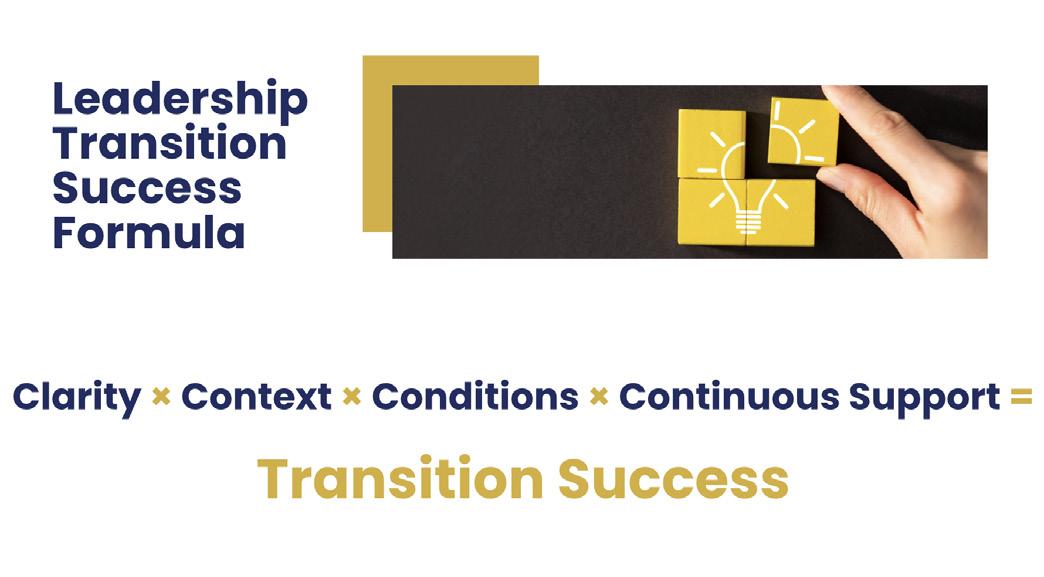
This is not a theoretical construct. It is grounded in the lived experiences of leaders across our industry.
Clarity
Do leaders know what success looks like? Are expectations explicitly defined and aligned?
Context
Do leaders understand the culture, history, and political dynamics of the school?
Conditions
Are there structures in place such as onboarding, governance alignment, and decision protocols that support success?
Continuous Support
Is support sustained beyond the first few weeks? Are coaching, feedback, and reflection built into the process?
The multiplicative nature of this framework is critical. Weakness in any one area increases risk significantly.
Implications for Practice
For Boards
Boards are central to transition success. Boards are a quite force multiplier, either for success or for failure. Key actions include defining success criteria before the leader begins, aligning expectations internally, and providing structured onboarding and regular feedback.
For Leaders
Incoming leaders can increase their likelihood of success by seeking clarity early and often, investing deeply in understanding context, and building networks to reduce isolation.
For Schools and Systems
At a systems level, we must shift our mindset from: “We hired the right person.” to “We designed the right transition.” This requires intentional and explicit transition planning, shared frameworks across schools, and ongoing research and collaboration.
A Reframe: Design, Not Hoping
One of the most important shifts emerging from this work is a simple but powerful reframe:
If transitions are predictable, they should be designable. For too long, leadership transitions have been treated as individual challenges, anchored in personality-dependent outcomes, with “wait and see” processes. The evidence in this study suggests otherwise: Transitions follow patterns.
What follows patterns can be designed.
The Future of Leadership Depends on This
The international school industry is facing increasing complexity: greater scrutiny, shorter leadership tenures, and rising expecta-
tions from communities and boards. In this context, leadership transitions are not peripheral - they are central.
The findings from the Leaders in Transition study point to a clear and urgent conclusion:
The future of leadership in international schools will depend on how intentionally we design leadership transitions. This is not simply about supporting individual leaders.
It is about installing the architecture to strengthen our schools. When we get transitions right leaders thrive, communities stabilize, and schools move forward with clarity and purpose. When we do not even the most capable leaders struggle, momentum is lost, and trust erodes. The opportunity in front of us is significant.
We can continue to rely on hope and individual resilience. Or we can strategically design transitions - intentionally, systematically, and together.
References
Baker, K. (2026). The leadership transition gap: Navigating leadership transitions in international schools. Baker Solutions International.
Bridges, W. (2004). Transitions: Making sense of life’s changes. Da Capo Press.
Charan, R., Drotter, S., & Noel, J. (2011). The leadership pipeline Jossey-Bass.
Heifetz, R., & Linsky, M. (2002). Leadership on the line. Harvard Business School Press.
Schein, E. H. (2010). Organizational culture and leadership. Jossey-Bass.
Watkins, M. (2013). The first 90 days. Harvard Business Review Press.
About the Author
Kevin is the Head of School at American International School Guangzhou. He has served almost twenty years in EARCOS in a variety of leadership roles.
The Research Continues
Leadership transitions don’t end in year one and neither does the research.
Building on the Leaders in Transition study, a followup qualitative research project will be conducted during the 2026-2027 school year, focusing on:
The Second Year Transition Experience
This study will explore:
• How leadership evolves after the initial entry phase
• What new challenges emerge in year two
• Where transitions stabilize or begin to unravel
• What sustained success actually requires
Through a series of structured focus groups, this research will capture the lived experiences of Heads of School and senior leaders as they navigate the critical second year of transition.
We are currently seeking participants. If you are a Head of School or senior leader entering your second year and are interested in contributing to this important research, please contact Kevin Baker to participate in the study and focus groups.
Your experience can help shape the future of leadership transitions in international schools.
BuildingaDataCulturefrompage20
References (continued)
Clark, R. (2015). Move your bus: an extraordinary new approach to accelerating success in work and life. Touchstone.
Collins, J. (2001). Good to Great. Random House.
Coyle, D. (2018). The Culture Code: The Secrets of Highly Successful Groups. Random House Uk.
Holiday, R. (2014). The obstacle is the way: the timeless art of turning trials into triumph. Portfolio/Penguin.
Leading Effectively Articles | Center for Creative Leadership (CCL). (2024, April 10). Center for Creative Leadership; CCL.
https://www.ccl.org/articles/leading-effectively-articles/ what-is-psychological-safety-at-work/
OpenAI. (2025). ChatGPT. Chat.openai.com; OpenAI. https://chat.openai.com. Iterative image of Kotter’s 8-step change model.
Stoddart, T. (2026, February). Data isn’t an asset. It’s just noise. LinkedIn. https://www.linkedin.com/posts/timstodz_data-isnt-an-asset-its-just-noise-most-activity7432039208657145856-9HLG/
The 8 Steps for Leading Change. (2026). Kotter; Kotter International Inc. https://www.kotterinc.com/methodology/8steps
Teaching for Understanding and Stronger Results: Four Moves for International Schools
By Federico Verri IBDP Economics/A-Level Business British International School of Timisoara
Four Moves for Stronger Learning and Stronger Results
A practical framework for international schools
1. Start with the learning
Name the intended understanding, the likely misconception, and the performance students will need to produce.
3. Build retrival and transfer
Use cumulative retrieval every week and design tasks that ask students to apply familiar knowledge in less familiar contexts.

2. Make expert thinking visible
Model how strong answers are built, then move through co-construction, guided practice, and independent work.
4. Make assessment produce action
Turn each significant assessment into a response: precise feedback, a clear next step, and adjustment by the team.
Departments can use these four moves as a shares design routine across unit planning, classroom instruction, retrieval practice, and post-assessment response.
Schools tend to be forced into a false decision when the pressure of exams increases: do we teach to learn or do we teach to achieve good grades? Departments that perform well do not. They develop knowledge in such a manner that enhances better performance.
The assessment discourse is easily distorted in most international schools. One side fears that external examinations make the curriculum narrow and learning technique only. The other concerns are that rich classroom experiences do not translate to high performance when students are introduced to high-stakes tasks that are timed. The two concerns are reasonable, yet the decision is not true. In properly structured classrooms, more in-depth knowledge and better performance strengthen each other, not each other.
This is acute in international-school environments. Departments tend to cross programs, multilingual classes, mobile students and externally evaluated courses. Inequality is costly in such a setting. When one teacher focuses on conceptual knowledge, another focuses on procedures, and a third focuses on test
tricks, students get conflicting messages on what quality really means. Increased coherence results in improved outcomes. The most powerful schools link curriculum, teaching, recall and feedback in such a way that performance develops out of more powerful learning.
1. Begin with the learning and not the activity. The initial planning question is not supposed to be what the students will do. It must be, What must students know and be capable of explaining, using, or defending by the conclusion of this sequence? Wiggins and McTighe (2005) used this logic as the core of backward design: determine the intended knowledge, establish the admissible evidence, and construct the learning sequence. That is, in exam classes, teachers are supposed to label the conceptual target, the probable misconception, and the type of answer that students will ultimately be asked to give.
Such a change is minor, but it alters the quality of planning. Activities may be interesting but not long-lasting. A discussion, simulation, case study, or lab may seem successful at the time and leave students incapable of organizing their thoughts when as-

sessed. The lesson design is more disciplined when teams start with the learning. In practice, departments can manage this by settling on three shared anchors of each unit: the big idea, the common misconception, and the performance students need to master.
2. Visualize expert thinking.
Strong final answers are usually presented to the students but not demonstrated how they were constructed. They view the product, but not the thinking. According to Rosenshine (2012), small steps, guided practice, close questioning, and frequent checks of understanding are the keys to effective instruction. In international schools, this implies that teachers should be able to put the rationale of good performance in front of students, and then request them to generate the same on their own. In economics, as an example, students must see how a definition turns into analysis and how analysis turns into evaluation. They must observe the process of evidence selection, interpretation, and connection to a claim in science. In humanities, they must observe how an argument develops out of evidence as opposed to the assertion. The departments work best when they progress gradually through teacher modelling, co-construction, supported practice, and independent performance. The quality of discipline should not be determined through trial and error by the students.
3. Transfer and build retrieval to regular instruction.
One of the pitfalls is to view retrieval as an event that occurs around exams. It is too late by that time. Dunlosky et al. (2013) single out practice testing and distributed practice as some of the most effective learning techniques that teachers can use. The school implication is simple: retrieval must enter into the routine of the classroom. Cumulative quizzes, brief retrieval prompts, mixed practice and low-stakes review help students to remember more when teachers intentionally reintroduce earlier learning into the classroom.
Retrieval is not sufficient. Transfer is also required by students. They are required to apply familiar knowledge in less familiar contexts, with less scaffolding and predictable wording. This is the area where most of the otherwise competent students fail. They are able to work within the pattern of the lesson sequence but not outside it. Departments must thus strategize a gradual transition towards assisted practice to some degree of autonomy and then to practice in a new setting. When the classroom is overly predictable, the exam will seem more difficult than the preceding learning.
4. Have all assessments actionable.
The evaluation of learning can only enhance learning when it alters the subsequent occurrence. The effectiveness of formative assessment was demonstrated by Black and Wiliam (1998) decades ago, but the fact that assessment is used by many schools primarily to award marks remains true. That is administratively effective, but instructionally poor. A more robust culture considers every evaluation as a piece of evidence: what did students learn, what did they mislearn, and what is now to be done about it?
This does not involve complex systems. It involves rigorous practices. Helpful feedback is precise, controllable, and leads to a specific student action: rewrite one paragraph, correct one data response, rewrite one line of reasoning, or complete one focused retrieval assignment. Hattie and Timperley (2007) suggest that feedback is effective when it assists the learners to understand where they are heading, how they are heading and
their next destination. At department level, the teams should also compare the results to determine not only who was struggling, but also what design, sequencing, or explanation of the tasks might have caused unnecessary confusion.
What leaders need to seek.
This framework must be manifested in the practice of school leaders. Misconceptions, exemplars, retrieval plans, and common success criteria should be discussed in department meetings by teachers. During classroom walkthroughs, leaders ought to observe an evident boundary between what is supposed to be learned, what students are working on, and what evidence is being gathered by the teacher. Upon evaluation, teams must be in a position to justify what students have found challenging and what will be altered due to the same. Whether classrooms appear busy is not the fundamental question of leadership. Whether the teaching design increases the likelihood of longterm learning and high performance is the question.
A comfortable point of departure.
Schools do not require a big project to start. There are four commitments that a department can make within the next month to improve. Determine the desired meaning and the probable misconception and then plan the lesson activity first. Second, model the performance of experts and then request students to do it on their own. Third, apply cumulative retrieval on a weekly basis rather than prior to examinations. Fourth, make each major assessment produce a student action and departmental response. These four moves are easy to apply, visible to observe, and effective to enhance the quality and outcomes of learning.
Once these habits are regular, the ancient dichotomy between good teaching and good results begins to dissolve. Students feel safer as the way to success is more obvious. Teachers are more accurate since they are teaching to observable evidence. The leaders are better informed on the implementation of the curriculum in different classes and grade levels. Above all, more effective outcomes are the product of more effective learning, not its alternative.
References
Black, P., & Wiliam, D. (1998). Assessment and classroom learning. Assessment in Education: Principles, Policy & Practice, 5(1), 7–74. https://doi.org/10.1080/0969595980050102
Dunlosky, J., Rawson, K. A., Marsh, E. J., Nathan, M. J., & Willingham, D. T. (2013). Improving students’ learning with effective learning techniques: Promising directions from cognitive and educational psychology. Psychological Science in the Public Interest, 14(1), 4–58. https://doi. org/10.1177/1529100612453266
Hattie, J., & Timperley, H. (2007). The power of feedback. Review of Educational Research, 77(1), 81–112. https://doi. org/10.3102/003465430298487
Rosenshine, B. (2012). Principles of instruction: Research-based strategies that all teachers should know. American Educator, 36(1), 12–19, 39.
Wiggins, G., & McTighe, J. (2005). Understanding by design (Expanded 2nd ed.). ASCD.
Service Learning
The Heart of Change: Connecting Community Engagement and Service Learning with Inner Development
By Meredith Robinson and Alice Whitehead

“When all is said and done, the only change that will make a difference is the transformation of the human heart”. - Peter Senge
Let’s explore what this acclaimed thought leader, whose work centers on promoting a shared understanding of complex issues and shared leadership for healthier human systems, means by this. If the only change that makes a difference is the transformation of the human heart, how do we as educators respond? How might we guide the next generations to change from the heart?
The ‘Why’: A Planet in Crisis
The necessity for this shift is grounded in the stark realities of 2026. Humanity faces a series of escalating challenges: over a billion people live in extreme poverty, global waste is projected to reach four billion tons per year by the end of the century, tens of thousands of species are facing extinction1 , and the world is currently experiencing the highest number of active, deadly conflicts since 19462 . Today’s problems will continue to escalate if we do not radically change course. However, meaningful solutions require more than just external action; they require internal transformation.
1 sdgzone.com/learn/why-do-we-need-sdgs, 2022
2 www.unwomen.org/en/news-stories/press-release/2025/10/wars-on-women-escalate-as-global-conflicts-reach-record-highs. 2025 48 EARCOS Triannual Journal
Examining Motivations for Community Action
Many schools are well connected with these issues and this pressing need; many have programs in place to advance Global Citizenship Education and Education for Sustainable Development. These programs often involve a community based component, where students learn through real-world action and partnerships with community groups and organisations like non-profits. However, in some cases, educators are struggling to encourage students to approach community engagement from their hearts. Students can be more driven by competitive university applications and other extrinsic motivators such as certificates, box-ticking or ‘counting hours’.
While the United Nations' Sustainable Development Goals (SDGs) provide a blueprint for a better future, the Inner Development Goals (IDGs) serve as a toolkit to achieve them3 . The IDGs offer the "how" behind the "what," focusing on the skills and capacities needed to navigate and transform a complex world. The IDGs are a framework of capabilities and qualities that can be relevant and useful in certain contexts, and seek to outline the inner journey that is necessary to bridge the gap between individualism and collective positive change. Peter Senge is an Advisor and key contributor to the IDGs, bringing his expertise in systems thinking and organisational learning to the initiative.
The IDG framework is divided into five key domains: Being, Thinking, Relating, Collaborating, and Acting, All these domains are interconnected, with the Being and Relating domains linking most closely with the idea of ‘Transforming the Human Heart’. The Being domain is related to “Cultivating Our Inner Life”, and the Relating domain to “Caring for Others and the World”.
Changemaking from the Heart: Moving Beyond Checkboxes
Senge’s “human heart” refers to the core of a person’s beingtheir values, their deepest motivations. If we are to move towards collective wellbeing, we need to align these inner drivers with the greater good of people and planet - through compassion, empathy, kindness, and altruism. By guiding students to align their inner drivers with the greater good, educators can support the shift towards action that comes from a heart-centered place. This requires students to connect their personal passions with local and global needs.
A practical ‘inward-outward’ model helps students identify their ‘Why’:
• What do I care about? Identifying topics that spark energy or frustration, such as environmental protection or mental health.
• Who is affected? Connecting with the stories of those impacted, such as refugees or children in under-resourced schools.
• Where is the need? Observing these issues locally, as well as on a global scale.
• What skills do I have? Integrating unique talents, such as graphic design or tutoring, into a purposeful action plan.
Real-World Impact: Reciprocity in Action
To illustrate this approach, consider a project-based initiative by students at AUPP Liger Leadership Academy in Cambodia,
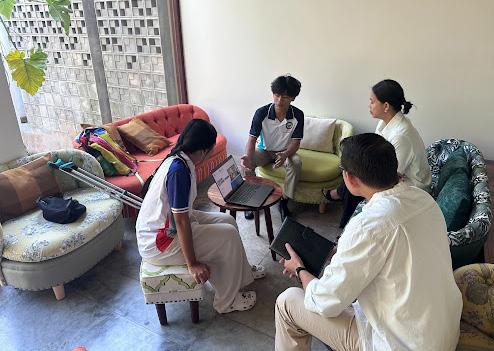
where students learned about a crisis at Spean Chivit in Siem Reap, a local resource centre for youth that had lost its funding.
Rather than a typical fundraiser, the students spent time consulting with the centre. They discovered that Spean Chivit excelled at soft skills training and subsequently pitched an idea to local hotels: the centre could provide staff training programs as a new revenue stream. This demonstrates reciprocity, where service is grounded in mutual benefit and empowers the recipient longterm. Students were able to connect in compassion and empathy with the youth at this resource center and, over time became deeply motivated to take action.
Another example comes from high school students at KIS International School Bangkok. The club founders were keen to take positive action for wild animals in Thailand, so they began researching the problems surrounding wild animals and the work that non-governmental organisations (NGOs) do in the country. After speaking with biologists and experts from a variety of NGOs, the students decided to tackle ethical tourism with the school community as their target audience. Thus began weeks of research and deep dives into a variety of animals.
The students took an assets-based approach, looking specifically at their strengths as a club, and decided to take action by writing a book series on ethical animal interactions. Each book in their series features a specific wild animal and how to engage (or how not to engage) with them when travelling: avoid photo ops with slow lorises, monkey shows, and never ride or bathe an elephant! The club members are in the process of publishing their final versions of the stories and are excited to add them to the primary school library at KIS International School Bangkok.
Staying in the Heart: Resilience and Self-Care
Navigating local and global issues is emotionally taxing and can lead to overwhelm for students and educators. ‘Staying in the heart’ and aligned with core values requires intentional practice to maintain balance and connection with oneself. By engaging in practices such as mindfulness, connection with nature, and nurturing qualities such as hope and gratitude, students and educators can build the sustainability required to lead change with resilience rather than reactive stress.
Students from AUPP Liger Leadership Academy pitching to a hotel in Siem Reap
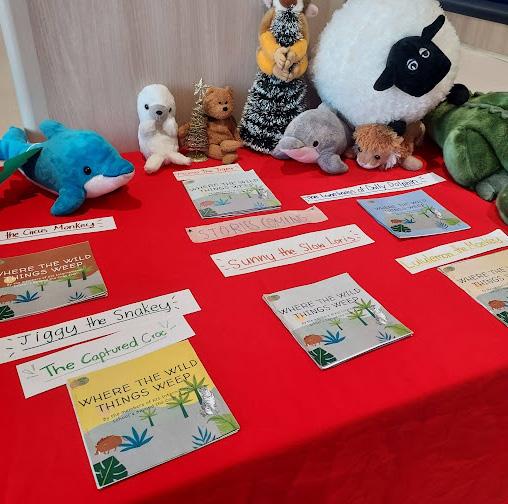
KISB Students developing their book series on ethical animal interactions
Being aware of the concept of ‘staying in the heart’ is important when relating to others. Building connections that are grounded in understanding is crucial. Understanding can be grown through awareness. What does this look like in action? Asking questions, listening and learning about others with different viewpoints. Cultivating ‘open-hearted connections’ that are grounded in empathy can also bridge the gap between differing viewpoints.
Learning to intentionally choose compassion over judgment supports people to stay positively connected even if they have polarised or differing views.
Conclusion: A Legacy of Hope
Education for a sustainable future is not just about what students know, but who they are. By focusing on inner development, schools can equip young people with the agency to become true changemakers grounded in compassion, empathy, kindness, and altruism. This approach connects the Sustainable Development Goals with the human heart by aligning inner values with action.
About the Authors
Meredith Robinson is the MYP Community Engagement & Global Citizenship Coordinator at KIS Bangkok, working with students to strengthen service learning and build meaningful community partnerships. With teaching experience across nine countries in both primary and secondary schools, Meredith has consistently been involved in developing service, sustainability, and DEIB.
Alice Whitehead is an educator and passionate advocate for change. As a former teacher, service coordinator, and alumna of United World College of South East Asia, she is deeply committed to the UWC mission of education for peace and a sustainable future. To help schools bridge the gap between theory and action, Alice founded Orenda Learning and co-developed Be The Change: a hybrid, direct-to-student program designed to amplify impact and provide a clear, ready-to-go path for Global Citizenship and Sustainability programming.



Sept 1-Oct 6, 2026
Instructor: Dr Lee Ann Jung

IMPLEMENTING INTEGRATED MTSS
Nov 3-Dec 8, 2026
Instructor: Dr Johanna Cena

THINKING LIKE UNIVERSAL DESIGNERS
Jan 5-Feb 12, 2027
Instructor: Dr Lee Ann Jung
HIGH-IMPACT STRATEGIES FOR FOUNDATIONAL SKILLS
Feb 16-Mar 16, 2027
Instructor: Dr Abigail Love

PLANNING INTERVENTION & MEASURING PROGRESS
Mar 30-Apr 27, 2027
Instructor: Dr Lee Ann Jung
COACHING FOR CONTINUOUS IMPROVEMENT
May 11-Jun 1, 2027
Instructor: Shannon Beckley

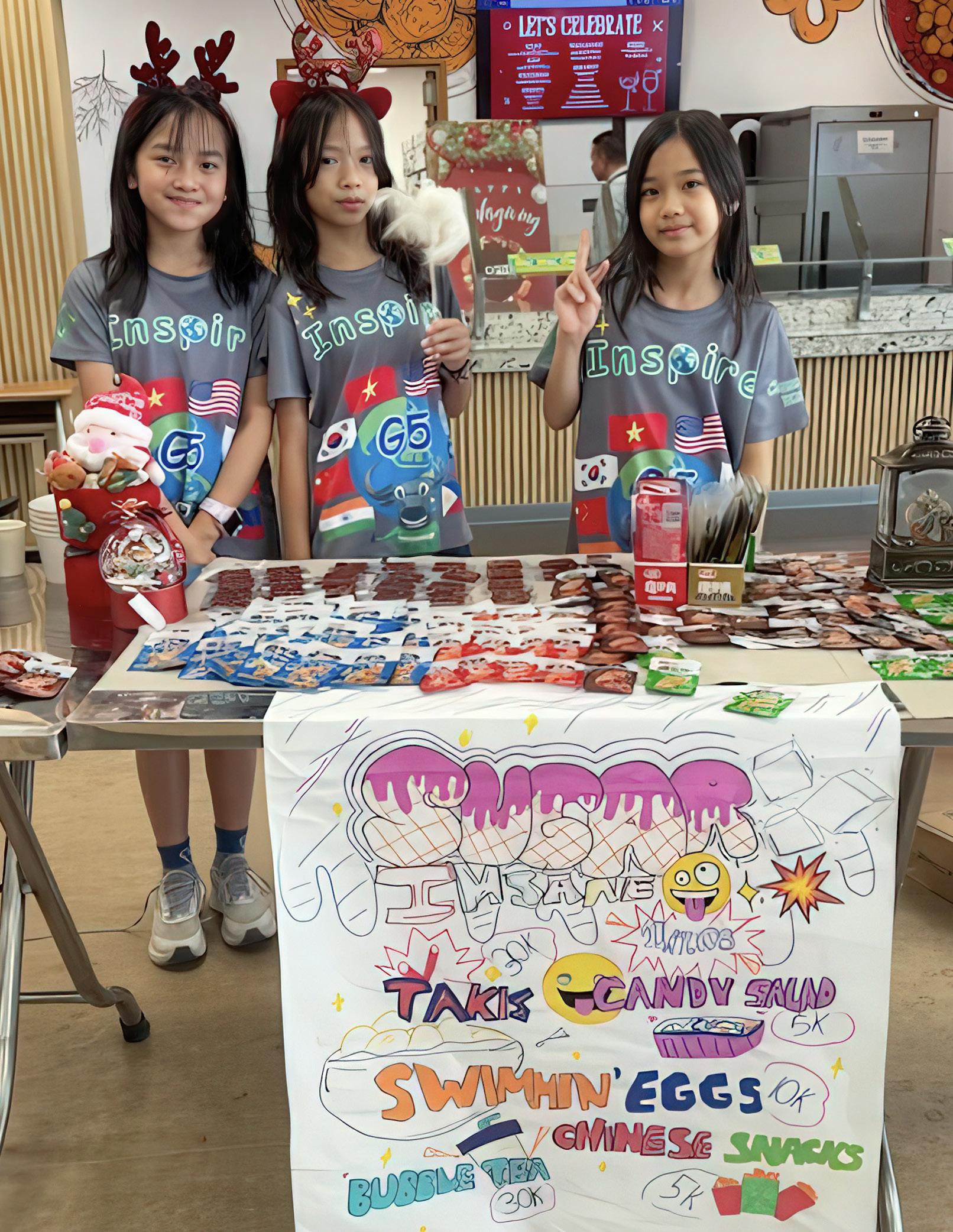
Service Learning
Inspiring Action Through Service
By Michael Mills Concordia International School Hanoi
At Concordia International School Hanoi (CISH), service learning is a vital part of how students connect classroom learning with meaningful action. Through service learning projects, students apply academic skills while working alongside community partners, developing empathy, leadership, and a sense of responsibility for the world around them.
Service learning at CISH is intentionally aligned with our Expected Student Learning Results (ESLRs), which emphasize effective communication, responsible citizenship, collaboration, and compassionate leadership. By engaging students in real-world contexts, these experiences support meaningful educational outcomes while helping students understand how learning extends beyond the classroom.
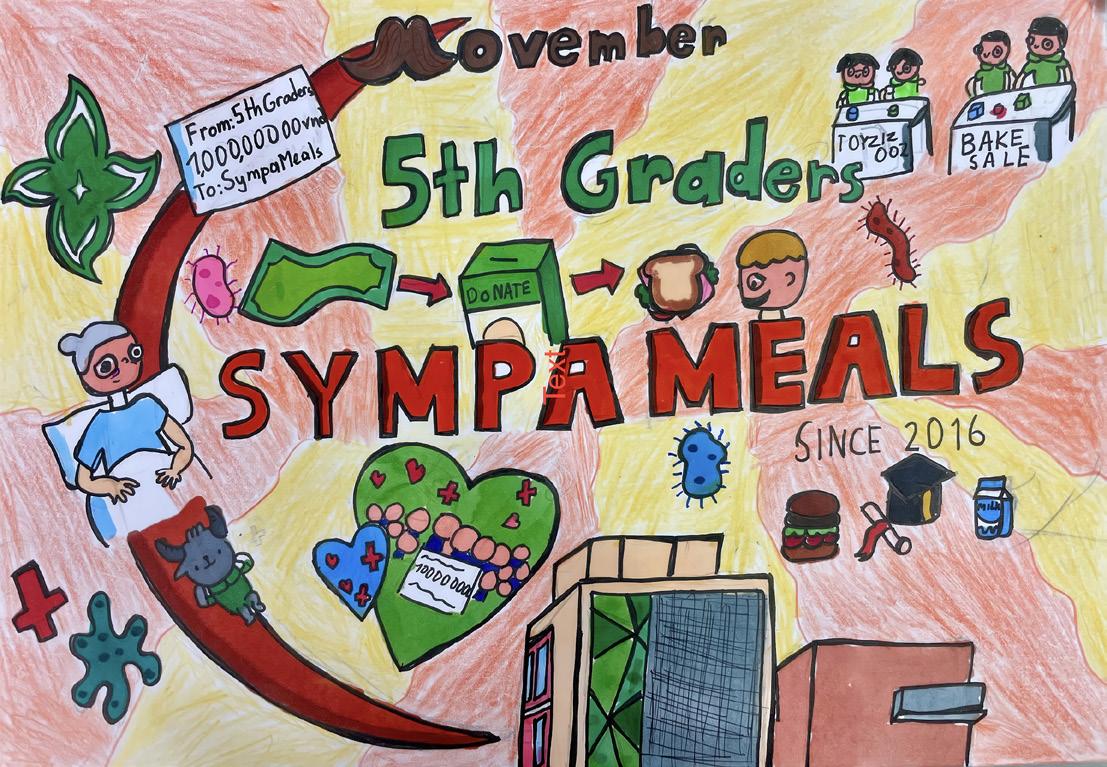
Grade 5 Movember: Turning Awareness Into Action
Each November, Grade 5 students at CISH lead our annual Movember service learning project, aligned with this year’s schoolwide theme, Inspire. This student-driven initiative raises awareness about cancer and supports families affected by the disease here in Hanoi.
Movember is a global campaign centered on growing moustaches during the month of November to spark conversations about health and cancer awareness. At CISH, students extend this idea through literacy, communication, and advocacy. Fifth graders write persuasive letters, analyze real-world impact, and organize school wide fundraising events, including a bake sale and an annual staff moustache-growing challenge.
Over the past 10 years, this project has raised more than 1 billion VND, with all proceeds donated to SympaMeals, a local organization that supports individuals undergoing cancer treatment and their families by providing meals, medicine, educational support, and community care.
Through Movember, students learn that their voices and actions matter. They practice applying academic skills with purpose while discovering how awareness can lead to tangible change.
Elementary Students Inspiring Change: SympaKids ASA
Service learning at CISH continues beyond the classroom through opportunities such as the SympaKids After School Activity (ASA). SympaKids is a program within the SympaMeals organization that focuses specifically on supporting children who have a family member affected by cancer, ensuring that these children receive care, stability, and opportunities for connection during an incredibly challenging time.
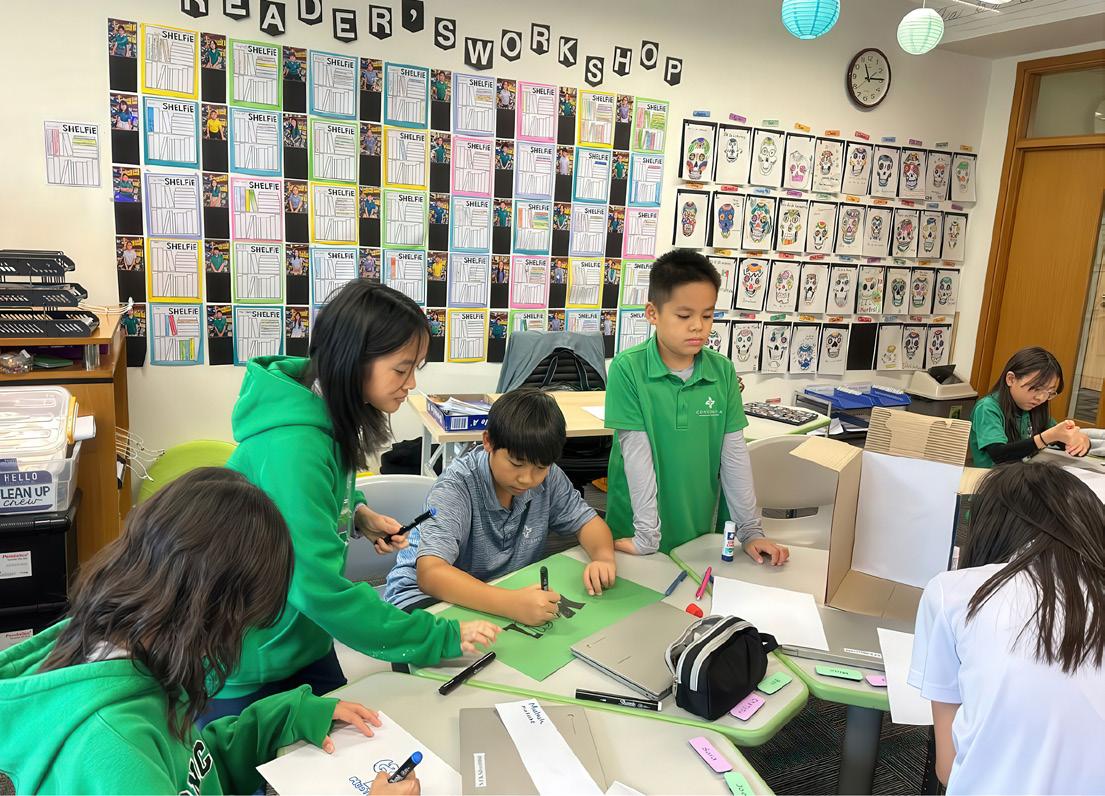
This Grade 5 ASA centers on building relationships with SympaKids families while helping students understand how organizations like SympaMeals support not only patients, but entire family systems. Throughout the ASA, students explored what it means to serve with compassion and purpose. They collaborated to collect essential supplies while learning how community organizations respond to real needs.
The program culminated in a special on-campus event where SympaKids families visited CISH. Students planned and led a full day of activities designed to build connection and joy, including music, games and athletics, creative art experiences, math and STEM challenges, shared mealtime, and the distribution of donated items.
The impact of this experience was deeply felt by everyone involved. The leader of the SympaKids program shared how grateful she was not only for the warm welcome and meaningful gifts, but also for the joy and compassion the students brought. She noted that the children were truly happy and that the day brought light and belonging to families facing very difficult circumstances, as each child has a family member battling cancer. Building on this meaningful partnership, the SympaKids service learning experience will continue and expand with additional opportunities planned for Spring 2026.
Living Our Learning: Implications for Educators
These service learning experiences reflect Concordia International School Hanoi’s Expected Student Learning Results and demonstrate how students grow academically, socially, and ethically. By connecting learning with action, students deepen their understanding of academic concepts while developing empathy, agency, and leadership.
For educators, projects like Movember and SympaKids highlight the power of service learning when it is intentionally designed, student-centered, and rooted in authentic community partnerships. When students are trusted to lead, reflect, and engage with purpose, service learning becomes more than an activity— it becomes a meaningful pathway for inspiring lifelong learners and compassionate global citizens.
Through projects like Movember and SympaKids, CISH elementary students are learning that inspiration is most powerful when it is shared through service.
About the Author
Michael Mills teaches Grade 5 Math, Science, and Social Studies at Concordia International School Hanoi.
Campus Development Lessons from Construction Design
By Matt Sawatzky Morrison Academy
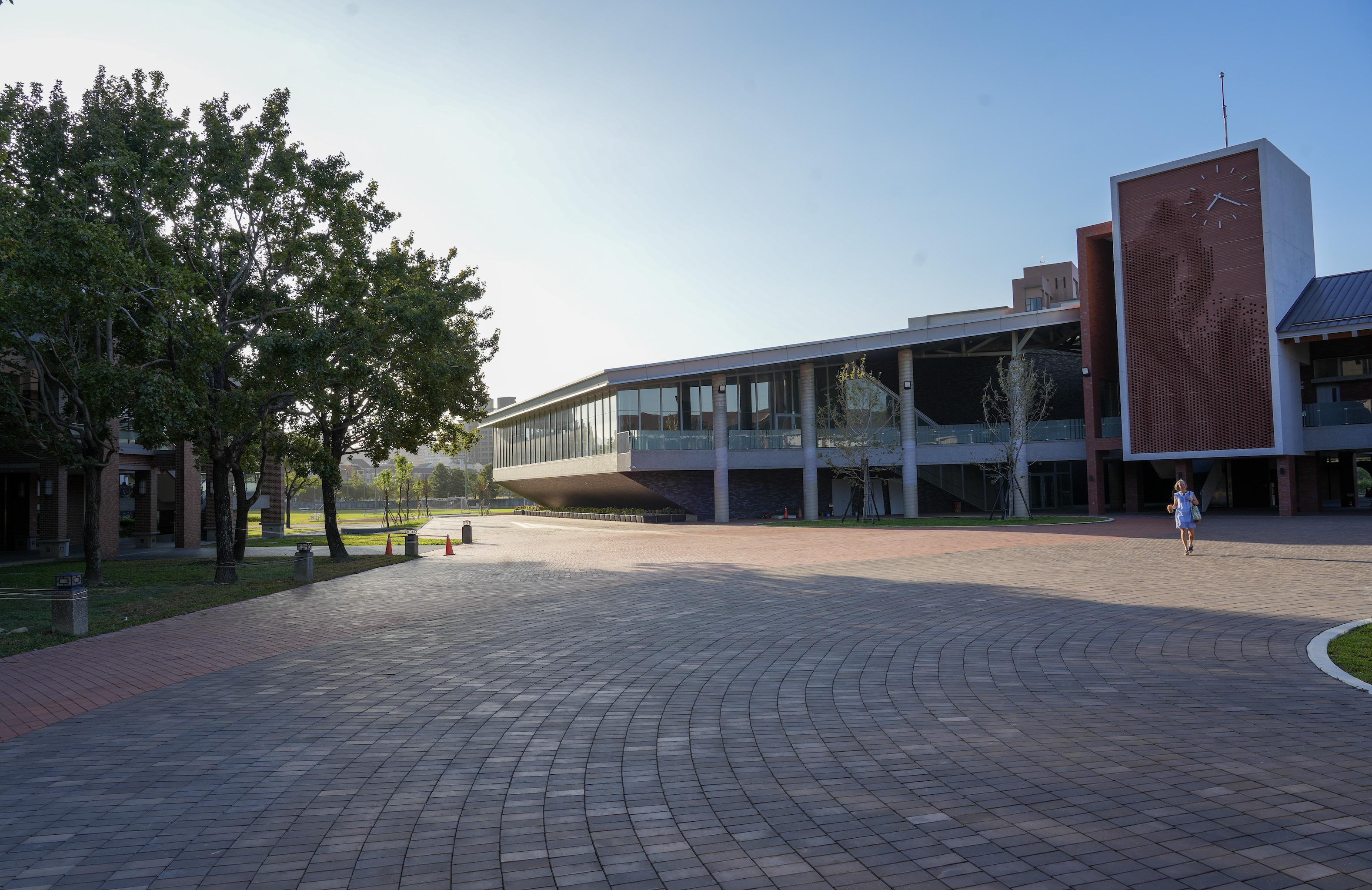
Does your school have aging buildings and a strategic plan to replace them, but starting the design process seems daunting?
During 2021-2025, I oversaw the design and construction process for replacing 50-year-old worn out buildings on Morrison Academy’s Taichung campus. The school’s Board of Trustees had a multi-decade strategic plan to replace aging buildings, but the government brought urgency with a deadline for us to either strengthen or rebuild the buildings that didn’t comply with updated and more stringent school building codes.
The following are some lessons I learned in leading a school facility design process.
Don’t rush the design process: The design process can be both inspiring and infuriating, (sometimes at the same time). As a finance-and-spreadsheets person, I had to adjust to a more circular, rather than linear, process. The concepts or layouts produced after long meetings seemed solidified. But when circling back on a design element after some time had passed, it often became apparent that further refinement was needed. Or, sometimes a complete change altogether was warranted. For example, the staircase that seemed necessary in earlier drafts turned out to be redundant and could be eliminated in one stroke and the space opened up for a more useful purpose. Allowing ample time for design leads to a smoother construction process and superior result.
“Allowing ample time for design leads to a smoother construction process and superior result.”

New performing arts center with school plaza in the foreground
Clarify your identity and needs: Early in the process, I formed a design committee from among the school community that included parents, staff, administrators, and even students. We met half a dozen times over the course of four months. We discussed our identity and school culture and how we envisioned new spaces supporting that culture into the future. We shared things we liked and disliked about certain school spaces and what feelings they evoked. After a few meetings as a committee, I invited the architects to join us and listen to our discussion to inform them as they began drafting conceptual drawings.
Provide specifications, not floor plans: After the design committee had done its work, I drafted a detailed specification document explaining our culture, our programs, desired dimensions for spaces, photos of things we liked, and the anticipated relationships between spaces. The architect then produced schematic designs that brought these concepts to life. As a school, it’s important to know the key components and characteristics you want in the new design and be able to articulate that in detailed, written form. However, avoid drawing floor plans yourself; leave that to the architect, whose creative solutions will often exceed your expectations. It’s also important to stay focused on whom you are serving when there are many great ideas but simply not all feasible. We wanted some features that honored our alumni and our rich history, but knowing that new buildings would primarily serve current and future students helped us stay focused in carefully selecting those historical features.
Stay true to your vision: International schools often need to navigate cultural differences in design. For example, the principal’s office in many Taiwan schools is palatial and intentionally less accessible. Our principal’s office is smaller, more functional, and located closer to staff and students.
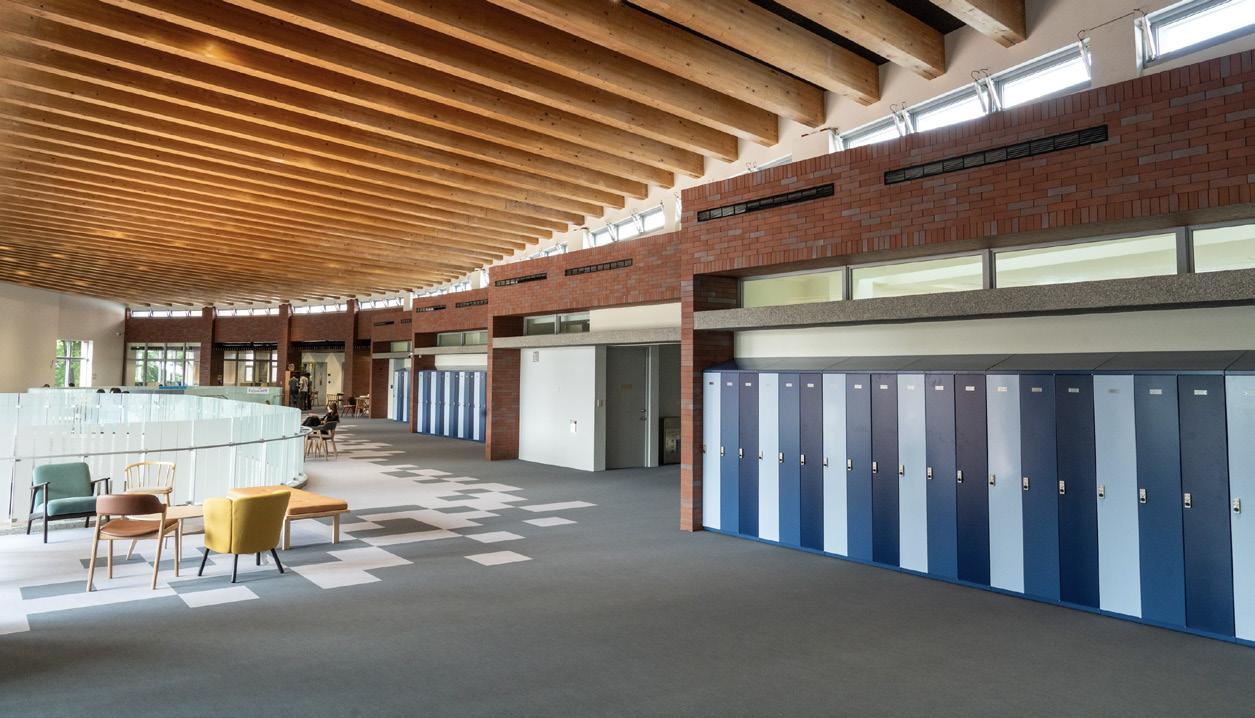
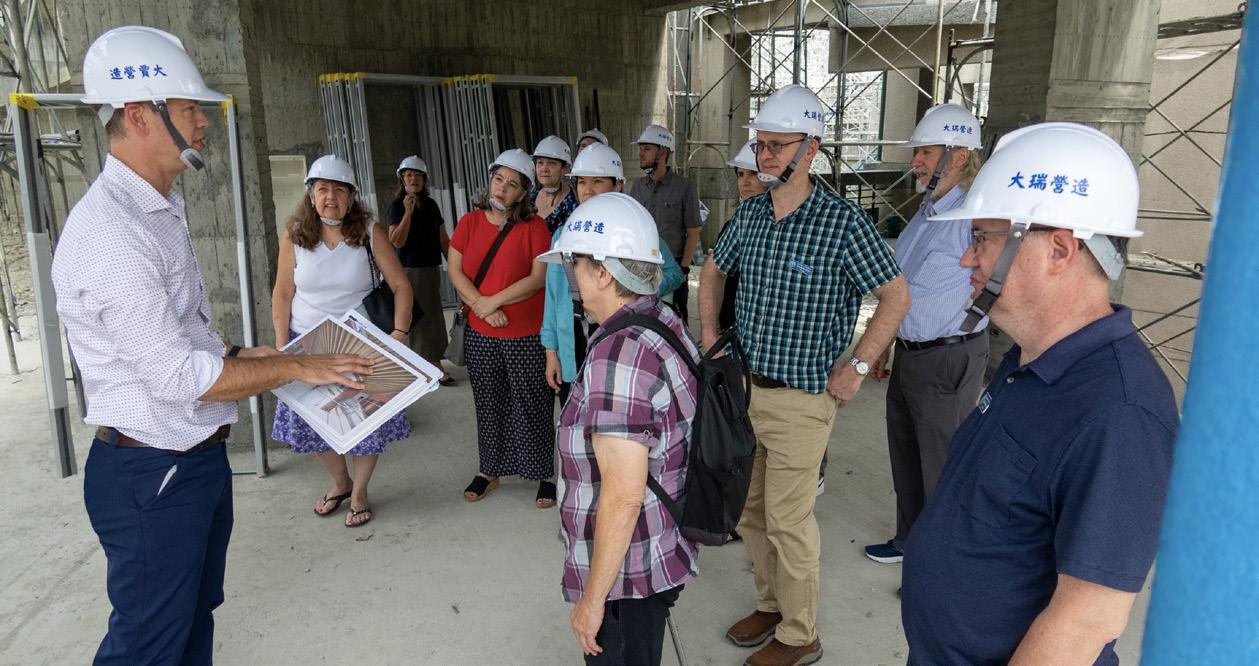
The more clarity on who you are and what you want as a school, the more you stay true to your vision. Without construction experience, most school leaders may be tempted to defer to the architect on all decisions but the end result may or may not end up being what your school needs. You will of course need to rely on your team of experts for fleshing out your vision, but it’s important to maintain ownership and continue to clearly communicate that vision along the way.
Involve user groups: As your architecture firm develops more detailed drawings, select a variety of small groups of people within your community to review certain aspects of the design. Approach these conversations by trying to envision how the new end-users of the facility will use the space. How would one of your cleaning personnel move throughout the building? Where would students place their musical instruments during the school day? The list can go on and on. Even though you know the drawings more intimately than they, you will be surprised at what nuggets surface from their perspective that may inform a further refinement. At the least, these conversations can affirm the direction of the design thus far and serve to help others sense ownership of the new facilities.
Maintain a unified team: The owner (the school), the architect, and the general contractor (the builder) are the three main parties involved in a construction project. It takes clear communication, mutual respect, and trust to keep this triangular relationship in balance and moving forward together as a team. As the owner, you need to determine your non-negotiables and assert your will when needed. At other times, you need to let your architect fly with his or her creativity and come up with ideas that inspire. A good contractor will keep you both focused on the buildability of the design and have insights that add value. When you are able to maintain unity and teamwork among all three parties, the sky is the limit to what you can accomplish together.
“We shape our buildings; thereafter they shape us.” Winston Churchill
Clock tower with artistic brickwork and high school academic buildings
High school academic pod that facilitates community among students
The author leading a tour of the construction site for Morrison trustees



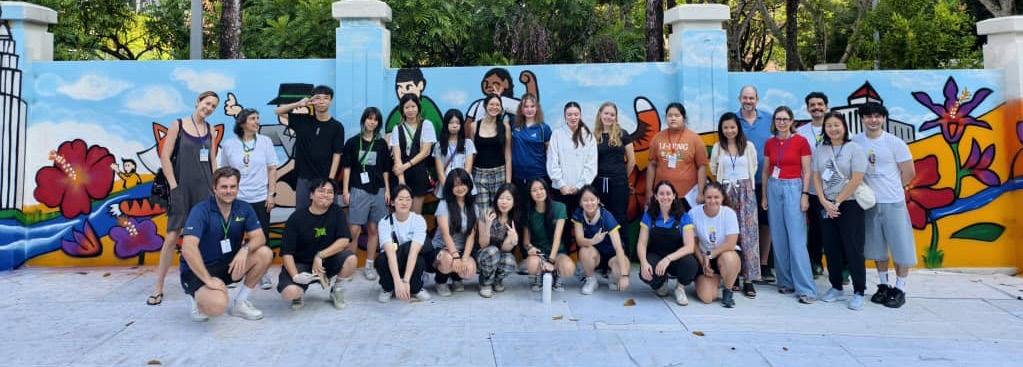
Canvas of Kuala Lumpur: SEASAC Arts Festival 2026
By Kelli Cody
DP/MYP Visual Arts Teacher, Head of Grade 12
National Art Hour Society Advisor Mont'Kiara International School
Over one inspiring weekend, Mont’Kiara International School hosted the SEASAC Arts Festival 2026, welcoming approximately 70 M’KIS students alongside participants from six visiting Southeast Asian schools. The campus was transformed into a vibrant creative hub where young artists, performers, and designers collaborated, experimented, and celebrated the arts together.
SEASAC Arts Festival 2026 brought a dynamic weekend of creativity and cultural exchange to Kuala Lumpur. The festival celebrated the arts in all forms, combining hands-on workshops with inspiring excursions to Batu Caves, Central Market, Ilham Gallery, and GMBB. These excursions allowed students to engage directly with Malaysia’s rich artistic heritage and contemporary creative scene, deepening their understanding of place, culture, and community.
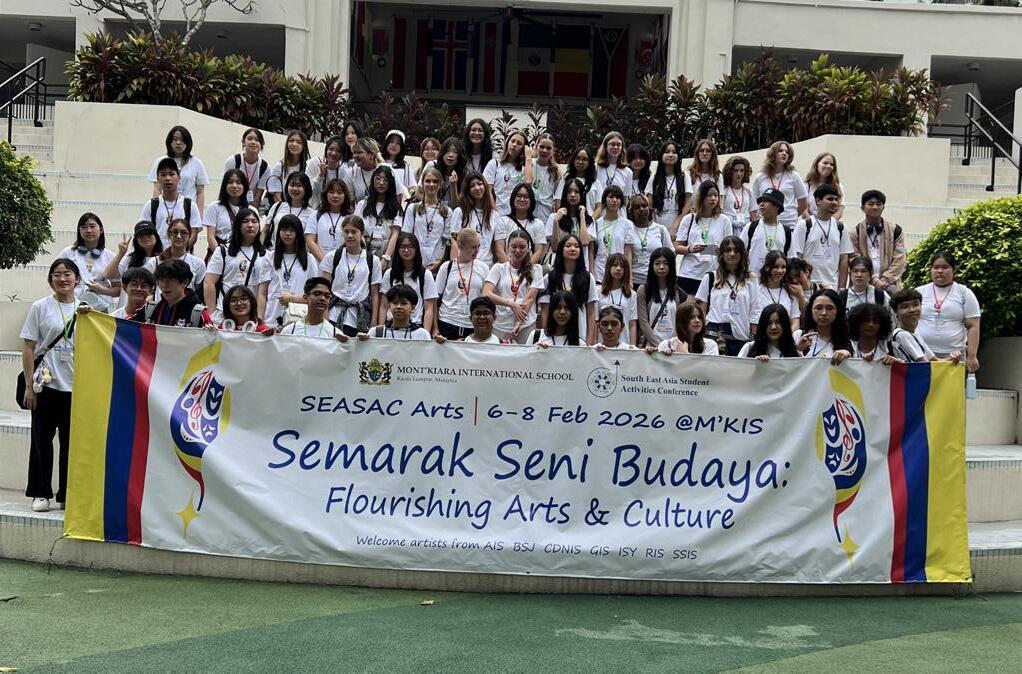
The festival opened with elegant violin performances by Hsia and Goh Studio, setting the tone for a memorable celebration of collaboration and regional arts culture. Students selected from a diverse menu of workshops, including Malaysian-style hip hop, Shakespearean theatre, street art mural-making, gelli printing, acrylic painting, a heritage sketch walk, and ceramic tile design. Several sessions were led by respected Kuala Lumpur–based creatives such as Gladys
Teo Simpson, KOS Kreations, and Siti Nadhziehah Bt Mohd Sukarno, giving students the invaluable opportunity to learn directly from practicing artists.
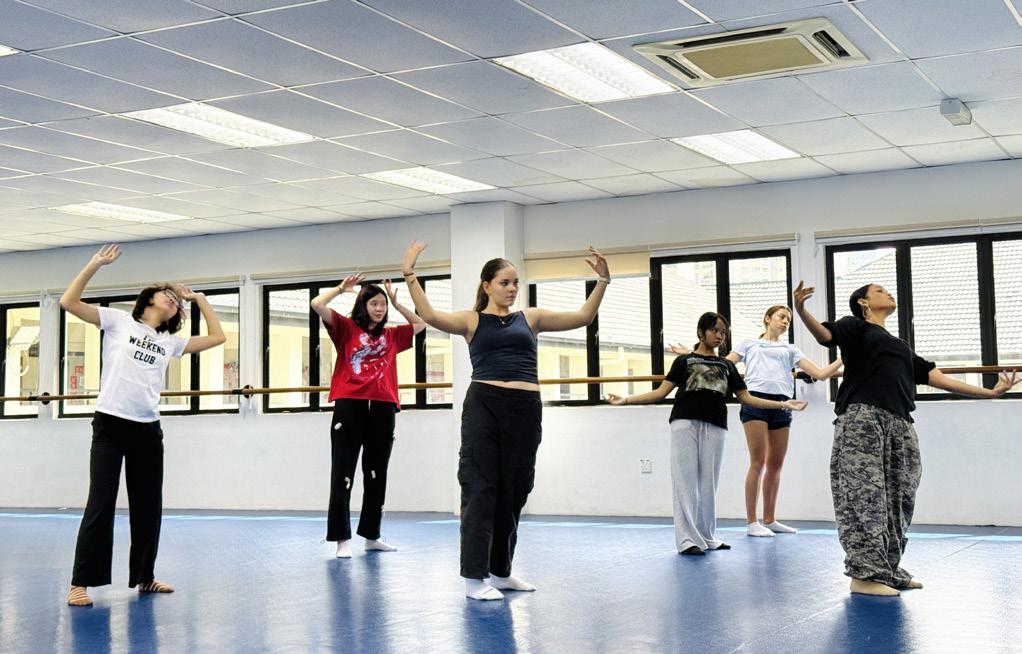
Throughout the weekend, classrooms and studios buzzed with energy as students stepped beyond their comfort zones, experimented with new techniques, and built connections across schools and cultures. The festival not only showcased artistic talent but also strengthened friendships, fostered confidence, and highlighted the power of the arts to unite communities across the region.
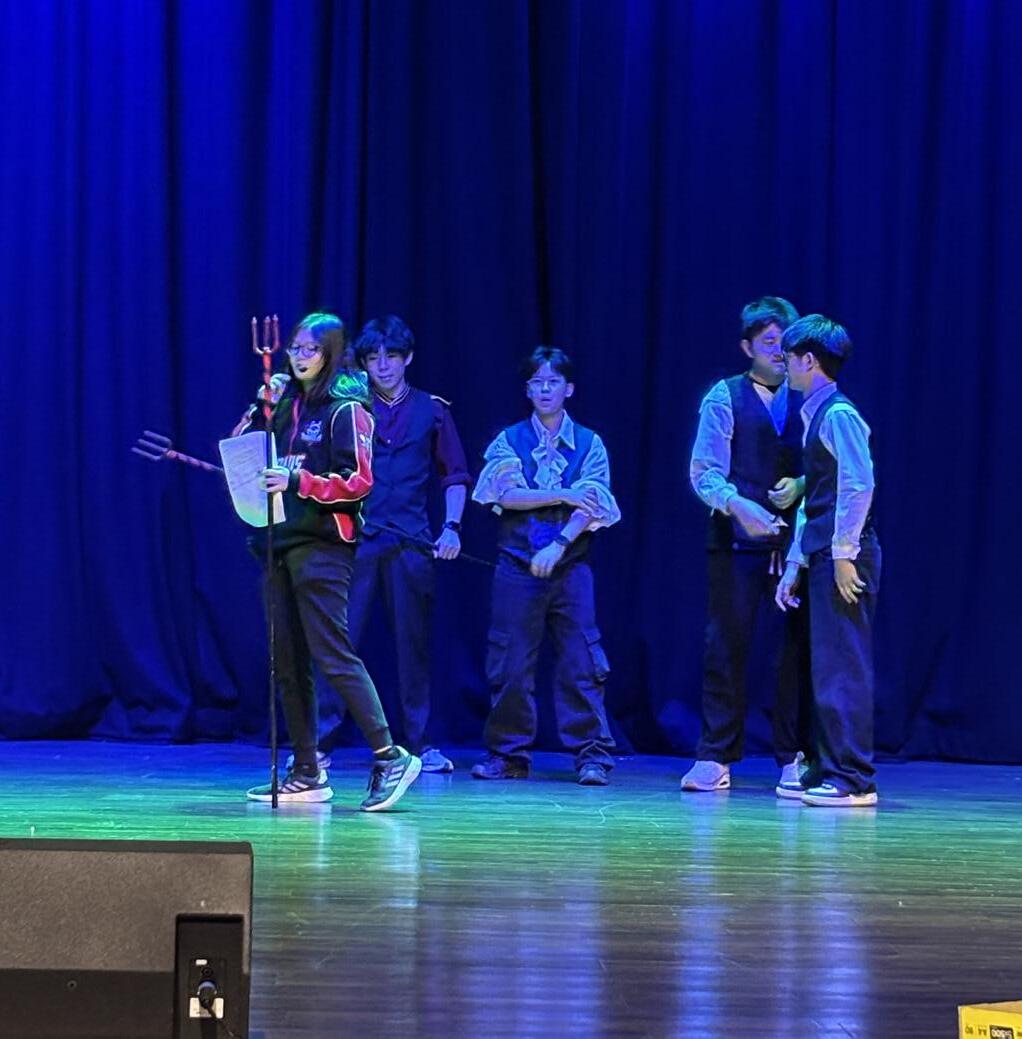
In Memoriam
Rovita "Vitz" Abigania Baltero
July 3, 1958 - March 21, 2026
By Edzel Drilo

With deep sadness and profound gratitude, we remember and honor Vitz Baltero, EARCOS’s first employee, who began her service in 1999 at the office in the Philippines.
Vitz was there at a pivotal moment in EARCOS history, becoming its first employee when the office moved from Melawati Campus of the International School of Kuala Lumpur(August 1, 1991) to Brent International School Subic(1998) in the Philippines—working alongside Executive Director Richard Krajczar and Assistant Director Sherry Krajczar. Through the years, she remained a constant and reassuring presence, continuing her service during the leadership of Bob & Linda Sills, and once again with Richard Krajczar upon his return and Bill Oldread, Assistant Director, until her well-earned retirement. Her journey with EARCOS is woven into the very history of the organization.
To many of us, Vitz was more than a colleague. She was someone we relied on, someone who quietly kept things moving, and someone whose dedication never wavered. She carried an incredible depth of knowledge, but more importantly, she carried a genuine care for the people around her. Her kindness, humility, and gentle strength left a lasting impression on everyone who had the privilege to work with her.
Vitz witnessed EARCOS grow and evolve over the years, and through it all, she remained steady, loyal, and deeply committed. Her contributions may not always have been in the spotlight, but they were essential—and will never be forgotten, especially through the many EARCOS conferences she helped support.
As we remember Vitz, we also celebrate the life she lived and the legacy she leaves behind within our community. She will always be part of the heart and story of EARCOS.
We extend our heartfelt condolences to her family, friends, and all who knew and loved her.
Rest in peace, Vitz. You will always be remembered with warmth and gratitude.
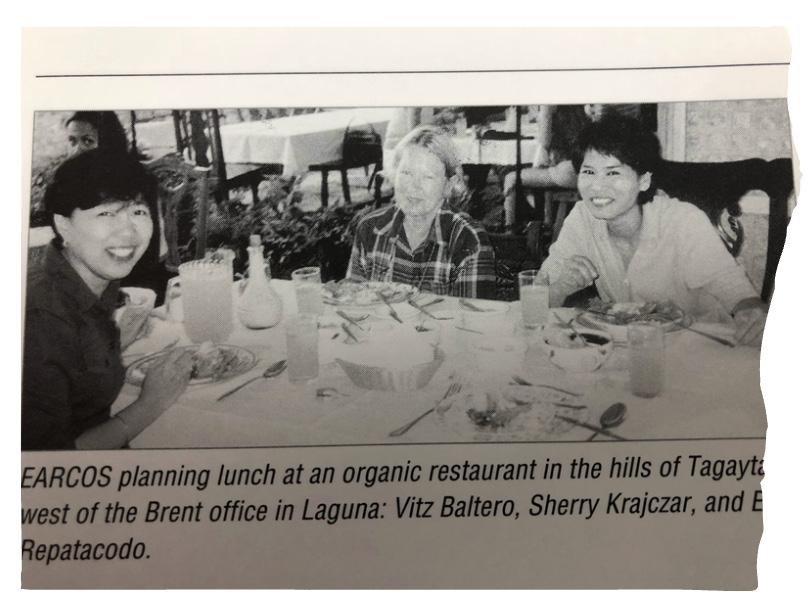
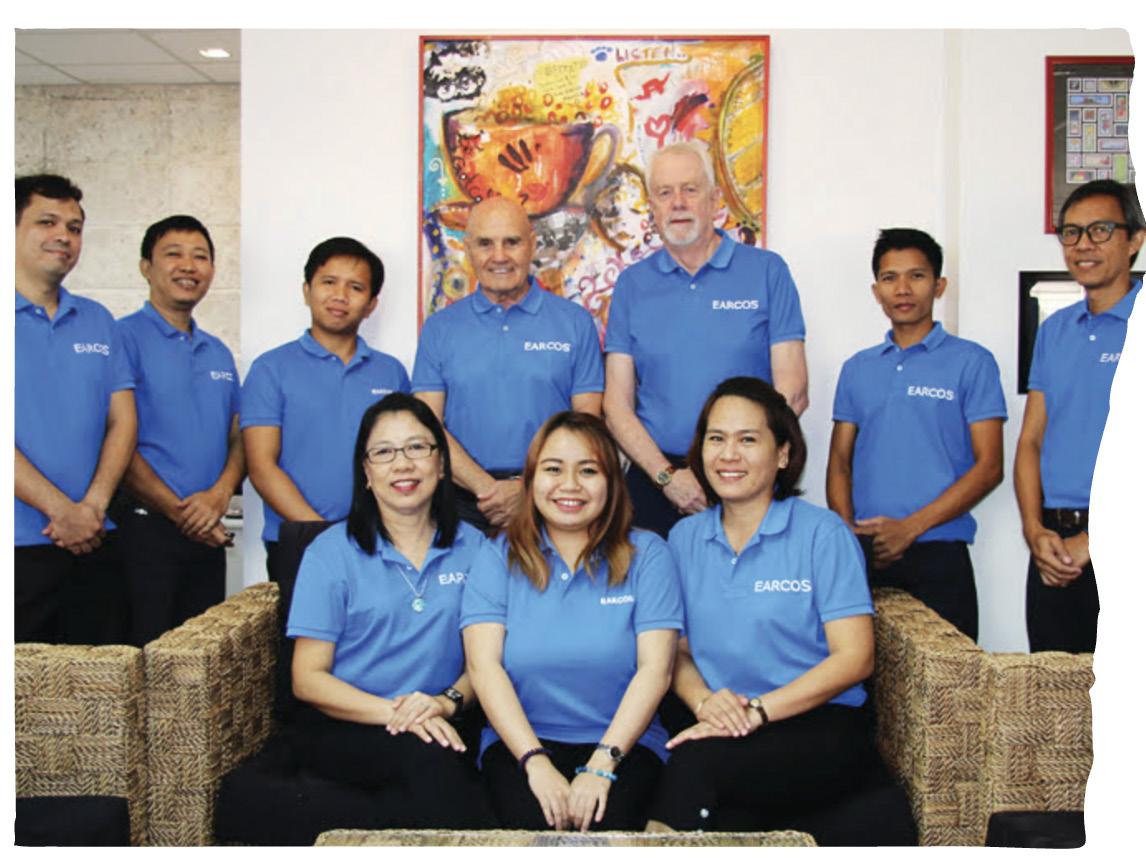
High School Art Gallery

“Frida Kahlo” Jungwon K., 11th Grade Fabric, Thread, and Batting Cheongna Dalton School

Seoul International School Hanna Zhao, Grade 10
“Amalgam of My Heritage” Seojin (Lina) K., 11th Grade Fabric, Thread, and Batting Cheongna Dalton School
Seoul International School (Middle) Regina Kim, Grade 10

Untitled Hangyul P., 10th Grade Mixed Media Cheongna Dalton School


Seoul International School Ryan Jin, Grade 10