7 minute read
Cord blood donation: A mother's perspective

Cord blood donation:
A MOTHER’S PERSPECTIVE
Cheryl Abrams

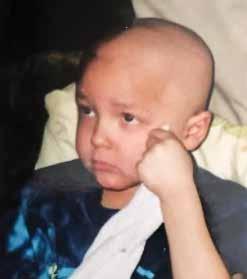
Each time Geralyn Saya sees her son, Jared, she sees another mother who helped save his life when he was just four years old. She sees that mother in labor who had chosen to donate the leftover blood from her umbilical cord, which is typically discarded immediately after a baby’s delivery.
She sees a mother who she would like to hug with all her might and say thank you to over and over.
Born healthy and happy, Jared was diagnosed at age two with a severe case of acute myeloid leukemia. After having been treated with powerful chemotherapy in large doses, the toddler survived. Yet two years later, Jared suffered a recurrence of the disease.
Doctors said the only treatment that would save his life was a bone marrow transplant. “Preparation for this would have taken at least three months, from securing a marrow donor to transplant,” says Geralyn. “There just wasn’t time since his case was too advanced when the disease was diagnosed.” Another option presented was a transplant of cord blood.
When Mari, Geralyn and her husband Joseph’s second child, was born several years prior, they had learned about the rich, life-saving stem cells contained in the umbilical cord. With forethought about Jared’s chances for a relapse, the couple opted to have those cells extracted and preserved by a private company for future use.
Using those stored cells, a cord blood transplant was performed, and the couple then waited anxiously with hope and prayers for several weeks; it wouldn’t be known whether the transplant had been effective since it takes 21-40 days for the cells to engraft in the body.
Jared’s leukemia was very aggressive, and the treatment did not provide the outcome everyone wished for, most likely due to a lack of viable cells in the cord blood collected after Mari’s birth. The family’s healthcare team proposed doing a second transplant, this time using cord blood donated anonymously to a public cord blood bank. The cells transplanted into Jared’s body were from the umbilical cord of a mother who had delivered in the New York City area.
The second infusion was successful, and Jared, along with his mother, spent more than 100 days in isolation at Strong Memorial in Rochester to prevent any kind of infection from entering his body. They also spent additional time in isolation at a Ronald McDonald House, while Joseph remained at home in Syracuse caring for their young baby, Mari.
Jared, now 25, graduated from Christian Brothers Academy and St. John Fisher College and is an insurance broker. He says he doesn’t remember the transplant but does recall the nurses and others who helped during his illness. An unforgettable experience was when Make-a-Wish Central New York granted his one request: to build sandcastles. The organization arranged for him and his family to go to Myrtle Beach, S. C., where a huge sandcastle contest was set up on the beach. With a laugh, he adds, “Naturally, I won!”
A teacher in the Syracuse City School District, Geralyn says the entire journey of Jared’s illness has made her a kinder, more patient person, and she tries to live every day with gratitude. “To think that a woman simply donated her umbilical cord blood that saved my son’s life many years ago is overwhelming,” she says. “I’m not sure why every mother delivering a baby would not want to do this.”
Meghan Shea-Frederick, RN, agrees. As a nurse on the Labor and Delivery unit at Upstate at Community Hospital, Meghan witnessed the process after babies were born, and the cord blood was collected. “No blood is taken from the baby or the mother. It simply gets taken from the umbilical cord that is very often — sadly — just thrown away.

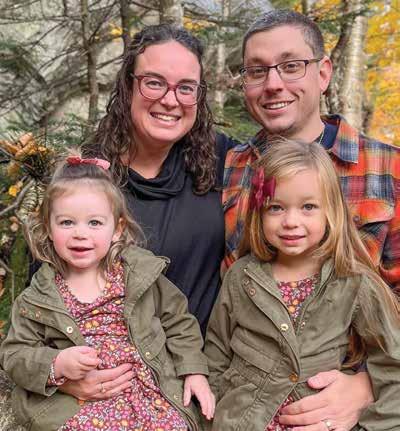
She should know: Meghan donated her own cord blood when each of her two daughters, now four and two, were delivered. Besides learning about the cord blood collection process while she was a nurse on L&D, Meghan’s primary reason for giving was simple: her dad. Having had leukemia, her father underwent a bone marrow transplant. Seeing that treatment first-hand made the decision to donate very clear. “If I had a chance to help save somebody’s life by donating my cord blood, I was going to do it,” she said emotionally.
Today, Meghan works in the Pediatric Nephrology and Rheumatology Clinic at Upstate. Every day she witnesses children who are very sick and may need, as Jared once did, a cord blood transplant. “I have

Continued on page 15 Family & Cosmetic Dentistry
“Don’t be afraid of the dentist, Dr Shapero is not only a dentist, but a good friend. Thanks to everyone there for making the trip to the dentist a painless and friendly experience.” - - Phillip E., patient
635-6643
www.baldwinsvilledentist.com
Jussara Potter Photography
Our Advanced Services performed in a safe environment with our state-of-the art filtration system
We Accept: Cigna
1 Charlotte Street, Baldwinsville (across from the Police Station) In the old Post Office building opposite the Village Hall


a whole new perspective on blessings and how one mother can greatly impact the life of one other adult or child in need,” she says.
This view is also shared by the five-person team at the Upstate Cord Blood Bank, led by Medical and Laboratory Director Matthew Elkins, MD, PhD. The other four on staff are Business Manager, Ann Marie Straight, MBA; Quality Systems and Laboratory Manager, Patricia Pontello, BS, BB (ASCP), CHS (ABHI); and Clinical Lab Technologists Emily Lee, CLT, (ASCP-i) and Sarah Anderson, CLT (ASCP).
The team members don’t view their work merely as jobs, but as being a mission to help others. “The collection and processing of cord blood is highly regulated by both state and federal agencies,” says Patricia. “While not glamorous, we provide a lifesaving option to people who cannot find an adult bone marrow match. We are here to save lives.” Emily and Sarah echo this sentiment. “Stem Cell Technology is the future, says Emily. “It gives hope to those who are sick and suffering.” According to Sarah, the purposes for use and research in stem cells keeps expanding. “I am proud to be a part of this life-saving technology.”
Ann Marie shares that during her career, she’s worked with many different types of labs, yet could not pass up the opportunity to work somewhere that directly impacts lives. “I actually relocated my family for my job at the Upstate Cord Blood Bank,” she says. “It is why we are all here. We want to save lives.”
The cord blood bank, which opened on the Upstate at Community Hospital campus on Onondaga Hill in 2017, is the only public cord blood center in New York State. Collections occur during deliveries of babies at the Family Birthing Center at Upstate, at St. Joseph’s Health and at Crouse Health.
The staff works with OB practices throughout Onondaga County to help raise awareness about and encourage mothers-to-be to donate their cord blood. They also work with the OB teams at each of the three Syracuse hospitals to educate them about proper cord blood collection methods. The more blood that’s taken from the umbilical cord after a delivery increases the chances that the stem cells will useful and viable in patients. The cord blood bank’s policies and procedures are stringently guided by FDA regulations, as well as oversight by the hospitals, to ensure patient safety and confidentiality.
Taking into account the number of births in Syracuse each year adds up to the potential for more lives being saved. As Geralyn Saya can attest, that sum is priceless. SWM


Celebrating 14 years as a Medicare specialist Medicare consultation & enrollment services

