




By Paul Byrne
STORM Chandra may have only come with a yellow warning but it’s affects have caused significant disruption across the County with severe rainfall causing flooding in numerous areas as well as fallen trees and closed roads. In Dundalk Bay Estate was badly affected with severe flooding in many estates including Cluan Enda, Maple Drive, Willow Dale and Holly Drive.
Louth County Council’s Operations and Fire & Rescue Team were active across the county in response to the significant rain that fell on Monday evening and most of yesterday.
Council crews responded on a prioritised basis to reports of flooded roads and fallen trees. All available operational staff and resources were deployed
across the county.
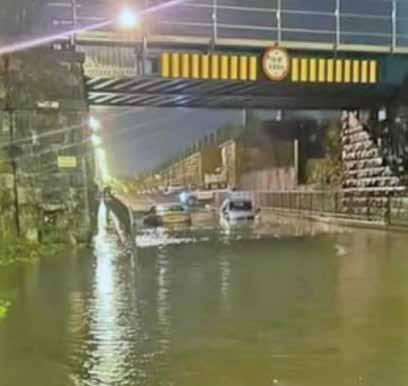
In Dundalk, Louth County Council Fire & Rescue Service assisted an ambulance stuck in floodwater under the Castletown Road railway bridge at approximately 6am yesterday morning. Firefighters, wearing water rescue PPE and using water rescue equipment, safely guided two ambulance crew members to dry land. The bridge reopened just before 8am.
Members of the Fire & Rescue Service also removed a fallen tree on the R172 Blackrock to Dundalk Road at The Loakers shortly after 9am.
Multiple areas in the town centre experienced flooding, including Cluan Enda, Greenacres, Pearse Park, McEntee Avenue, Bay Estate, Red Barns Road, St Alphonsus Road and Oakvale.
Continued on Page 2

From Page 1
Rural areas such as the Monascriebe Road in Faughart, Major’s Hollow, sections of the N52 at Gibstown, Stephenstown Pond, Stephenstown Cottages and the L5168 at Grange were also affected, while the Fane River burst its banks on the Green Road in Dunmahon.
Crews were on site at Haynestown/Haggardstown, where a tree fell, blocking the road. In the Cooley Peninsula, surface water runoff from the mountains caused several rivers and streams to overflow.


Crews attended locations including Jenkinstown Cross, Cornamucklagh, Lower Jenkinstown Road and the junction at the Waterworks on the Old Newry Road.
Fallen trees were reported at Deerpark, with its removal affected by the presence of overhead lines, the L3085 in Dulargy and at Flagstaff, and flooding impacted Junction 20 near the Carrickdale Hotel, Annaverna,
Ravensdale and the R173 at Omeath. Minor damage was also reported at the Carlingford slipway. In Mid-Louth, Fire & Rescue and Operations teams remain at the N2 Drogheda Road in Ardee, where an OPWmanaged stream overflowed onto the roadway, putting nearby properties at risk. Crews are assisting residents with sandbags, and a stop/go traffic system is in operation. Surface water has affected several routes, including the R166 and R171 near Tallanstown and the N52 Kells-Ardee Road.
Speaking yesterday afternoon before further forecast rain in the afternoon, Fine Gael Councillor Robert Nash said he was inundated with calls all day as local residents contacted him with concerns about flooding around the town.
Cllr. Nash expressed his own concerns to the Dundalk Leader about the high levels of the Blackwater River which he says he had never seen so bad before.
“The pumping station is full to capacity and there is severe flooding in parts of Bay Estate including Cluan Enda and
Maple Drive,” explained Cllr. Nash. “It is lunchtime now and the rain has eased after heavy rain throughout the night and all morning but the bad news is there is more wind and rain forecast for this afternoon and that is a big worry. I am looking at the Blackwater River behind the estate and I don’t remember ever seeing the water levels so high which is a huge worry for local residents. We have had sandbags delivered and we are having a meeting at 4pm with residents to see who is in need of help and we are just do-
ing all we can to help each other. This morning I had to call Bus Eireann and Halpenny’s Coaches asking them to divert their normal route as Hazlewood Avenue was flooded and traffic pushes water into people’s gardens and homes.
“We are battling against the elements here and to a point we are helpless but going forward we need to work with Louth County Council to help alleviate the levels of flooding. Look at the Blackwater River for instance. I have been calling for the river to be cleaned out for a long time now. It is overgrown and badly in need of cleaning. I have been told that there are no capacity issues in the waste water plant on the Point Road but I am not convinced and I will be asking more questions about that in council meetings. We have the Flood Relief Scheme coming on board soon and hopefully that will alleviate the problems but it’s very tough for the residents around town who are forced to deal with these flooding issues on numerous occasions each year at this stage,” added Nash.
St Patrick’s Day Parade will go ahead
There was good news this week as the on/off St Patrick’s Day Parade saga was finally resolved with an announcement that the Parade will indeed go ahead in March. Last week at the monthly Louth County Council meeting it was announced by the current parade committee that the event would be cancelled due to prohibitive costs believed to be in the region of €60,000. That news was widely met with disappointment but behind the scenes work began to ensure the event would take place. On Friday it was officially revealed that the Parade would indeed go ahead following positive discussions

on Friday between local bodies and stakeholders - including the Dundalk St Patrick’s Day Organising Committee, Louth County Council, Dundalk Municipal District Councillors, Dundalk Credit Union, Dundalk BIDS and the Dundalk Chamber of Commerce.
A number of Councillors were involved in those discussions including Independent councillor Ciarán Fisher who insisted the Parade must go ahead.
“The cancellation of the Dundalk St Patrick’s Day parade would be a blow to our town. This

isn’t just about a procession through the streets—it’s about bringing our communities together, celebrating our Irish heritage, boosting local retailers and businesses, and creating lasting memories for families and children. Dundalk without a St Patrick’s Day parade feels unthinkable, especially as one of Ireland’s larger towns.”
He added: “While I understand the challenges faced by the current group, including spiralling costs and the timing now being too late for 2026, we cannot allow this tradition to fade away. If the existing committee has stepped down or is unable to continue, then it is time to establish a fresh, dedicated organising committee immediately. Those with experience on the old committee still willing to make a go of it, and new people to put the shoulder to the wheel could get the job done. I think it’s important.
“I would be more than willing to lend my help to this, but I think it’s very important that all the relevant stakeholders get a sit down as soon as possible: I’m talking the council, sponsors, Dundalk Chamber of Commerce and anyone with the vision to make this happen.
“I’m confident that with renewed energy, fresh ideas, and strong community backing, we can rebuild momentum and ensure the parade goes ahead this year and beyond.
We’ve seen the positive impact the parade
has on our town in previous years—vibrant streets, proud participants from schools and bands, and a real sense of unity. Losing that momentum would be a mistake we can avoid by acting now.”
Cllr Fisher pledged to work with colleagues on the Council and community representatives to facilitate discussions and support the formation of a new organising body and the results of those discussions have resulted in a positive result with the Parade now confirmed to take place on March 17th in Dundalk. .
120 vacant or derelict properties brought back into use in Louth through Vacant Property Refurbishment Grant
FIGURES released today by the Department of Housing, Local Government today show that 120 previously vacant or derelict homes in Louth have been brought back to use, thanks to €6.625m in funding to Louth applicants under the Vacant Property Refurbishment Grant since the scheme launched. The figures also reveal that there is a robust pipeline of pro-
jects set to transform vacant and derelict properties into use as homes in Louth as there have been 362 applications and 269 approvals since the introduction of the grant in July 2022.
Nationally, as the scheme continues to gain momentum, the pace of delivery has also increased significantly, with the rate of grant payments in 2025 more than doubling compared
to 2024. In total last year, 3,066 grants were paid out nationally compared to 1,349 in 2024. This represents an increase of 127%.
Overall, between July 2022 and December 2025; 16,607 applications have been received, 12,096 approved and 4,514 grants paid out on completion of works to a total of almost €247m.
Under the Vacant Property
Refurbishment Grant, you can receive a payment of up to €70,000 to turn a vacant or derelict house or former commercial building into your permanent home or a rental property. The grants are paid upon the completion of the works and the submission of the required paperwork demonstrating the work approved has been delivered.
GARDAÍ and emergency services attended the scene of a fatal road traffic collision on the R215 at Newtownfane (Ardee Road), Dundalk, Co. Louth yesterday afternoon, Sunday 25th January 2026. The collision, involving two cars, occurred at approximately 2.50pm.
The male driver of one of the cars, aged in his 50s, was
pronounced deceased at the scene. His body has been removed to the Louth County Hospital and a post-mortem examination will be carried out in due course.
A man, aged in his 50s, was taken to our Lady of Lourdes Hospital to be treated for non life-threatening injuries.
The coroner has been notified.
The scene has undergone a technical examination by Garda Forensic Collision Investigators.
Gardaí are appealing to anyone who may have witnessed this collision to contact them.
Any road users, who may have camera footage (including dash-cam) and were travelling in the area at the time
between 2:30pm and 3:00pm are asked to make this footage available to investigating Gardaí.
Anyone with information is asked to contact Dundalk Garda Station on (042) 9388400, the Garda Confidential Line on 1800 666 111, or any Garda station. Investigations are ongoing.
















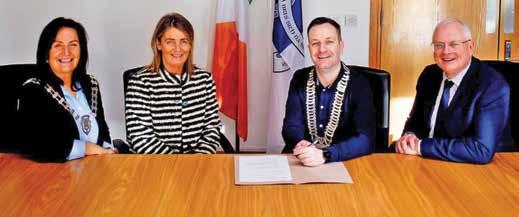
LOUTH County Council has signed a contract with Francis Haughey Construction Ireland Limited for the regeneration of Ardee Castle.
The Ardee Castle regeneration is a major heritage project aimed at restoring the historic 15thcentury tower house. Works on site are expected to take 18 months and are scheduled to commence in early spring.
The project includes structural conservation; refurbishment of the castle, bridewell building and courtyard; improved public access to all four floors of the tower; and integration of the castle into the wider Ardee 2040 regeneration vision, with the goal of increasing tourism, supporting local business, and strengthening community engagement.
Commenting on the pro-
“Continued
ject, Cllr Seán Kelly, Cathaoirleach of Louth County Council, said:
“Ardee Castle is one of County Louth’s most important heritage landmarks and today marks a major step forward in securing its future. This project will not only preserve the building but will also help bring new life into the heart of Ardee.”
Cllr Dolores Minogue, Cathaoirleach of Ardee Municipal District, added:
“The regeneration of Ardee Castle is something the local community has looked forward to for many years. Its restoration will create a focal point for residents and visitors alike, and I am delighted to see this transformative project moving ahead.”
David Conway, Chief Executive of Louth County
Council, said:
“This investment demonstrates Louth County Council’s commitment to protecting our built heritage while driving sustainable regeneration in our towns and villages. Revitalising this historic asset in the centre Ardee will enhance the town’s tourism potential, creating an inviting and accessible destination for visitors. We look forward to working closely with Francis Haughey Construction to deliver a project that will benefit the people of Ardee for generations to come.”
The regeneration of Ardee Castle is funded by Louth County Council and the Department of Rural and Community Development and the Gaeltacht through the Rural Regeneration and Development Fund (RRDF).
FIANNA Fáil TD for Louth Erin McGreehan has received confirmation that significant progress is being made on flood relief measures across County Louth, while stressing that continued urgency is required to avoid “thousands of Louth homes being impacted by floods.”
The Office of Public Works is currently leading the delivery of five major flood relief schemes across the Louth region at Dundalk and Blackrock South, Drogheda, Carlingford and Greenore, Baltray and Ardee. These projects are at various stages of delivery.
In a recent exchange with Minister Jack Chambers during Dáil questions, the Louth TD received confirmation that significant progress is being made on a number of these projects under the State’s Catchment based Flood Risk Assessment and Management Programme.
Speaking afterwards, Deputy McGreehan said river flooding poses an existential threat to thousands of homes across the
country. She said that as weather patterns continue to change, more and more properties will be at risk.
“That is why we need to be prepared, to give homeowners peace of mind,” she said.
“This is not sensational. We have seen similar situations with homes, including last year in Dublin when sections of a home fell into the Camac River.”
During the parliamentary questions, the Minister confirmed that funding of €339,480 for flood relief works in Ardee, which will protect approximately 30 properties, was approved by the OPW in July 2025. These works are being progressed by Louth County Council and are expected to be completed by the fourth quarter of 2026.
The Dundalk and Blackrock South Flood Relief Scheme, which will protect approximately 1,880 properties, is progressing through design and environmental assessment. Design options for this scheme are expected to be presented to the public in the first quarter of 2026, with
a preferred option to be identified by mid 2026.
The Drogheda and Baltray scheme, which will protect 425 properties, has advanced following additional modelling work, with emerging options to be presented to the public in the second quarter of 2026.
In Carlingford, OPW funded works at Brown’s Lane and Newry Street have now been completed and are already reducing surface water flooding. Further measures are currently being assessed to improve the wider drainage system.
Concluding, Deputy McGreehan said:
“While it is promising that significant progress has been made on multiple major projects, thousands of homes remain at risk until they are completed.
“Renewed urgency in 2026 is needed to ensure the timely progression of these projects and to provide homeowners across Louth with peace of mind that their homes are safe.”

LOUTH TD Paula Butterly has welcomed the Government’s approval of a landmark Stateled early learning and childcare investment programme, describing it as “a vital step forward for families who have been struggling to access affordable childcare.”
Deputy Butterly said “I am delighted with this announcement. I have highlighted the acute shortage of childcare
places, especially for children aged 0–2, which has prevented many parents particularly women from returning to work. The State’s commitment to acquiring properties for use as childcare facilities, run by not-for-profit community providers, is exactly the kind of decisive action we need.”
The programme will deliver larger centres capable of providing at least 100 places, with
a strong emphasis on expanding provision for children aged between 1 and 3. It will also involve collaboration with the Land Development Agency, local authorities, and other State bodies to ensure childcare facilities are developed alongside new housing projects.
“This is a positive first step and further efficiencies should also be pursued with this momentum. We specifically need

an overhaul of the planning guidelines for childcare facilities so they are built and put into use, ending the practice where childcare facilities can lie empty for years,” said the Fine Gael TD.
Deputy Butterly said “I have previously called for developers to be required to include childcare facilities in new housing estates. Families moving into new homes should not face years of waiting for childcare places to materialise. Childcare must be integrated into housing development from the outset, not treated as an afterthought.”
Deputy Butterly also emphasised the importance of strengthening the community childcare sector, “Community providers play a crucial role in delivering affordable, high-quality childcare, but they need targeted support to expand and remain viable. To-

day’s announcement is a positive first step, but further measures must follow to ensure the sector can grow sustainably.”
“This capital programme builds on commitments in the Programme for Government, the National Development Plan, and the Early Years Ac-
tion Plan. It signals real progress, but continued focus and follow-through will be essential. Families across Ireland deserve a childcare system that works for them, and I will keep pressing for integrated solutions to make that a reality,” said Deputy Butterly.
A TRIAL date has been fixed for 31-year-old Robert O’Connor who is charged with a triple murder at his family home in Co Louth last year.
Robert O’Connor of Drumgowna, Co Louth, is charged with the murder of his mother Louise Doherty O’Connor, his father Mark O’Connor and his brother Evan O’Connor at their family home in Drumgowna, on 29 September last year.
At the Central Criminal Court, defence counsel, Michael Bowman SC, said there is a “psychiatric dimension” to the case.
Mr Justice Paul McDermott listed the matter for trial on 5 October next and case management on 18 February, with the accused remanded in custody.



Opens Monday to Saturday 9am - 7pm. Home delivery when you order via Whatsapp at 0894500544.
CHRISTINE O’Hara is a maths and religion teacher in an all-boys secondary school in Cork City. In 2022 after joining a Catholic teachers whatsapp group she was surprised to find out that one of the teachers was thinking of starting a rosary group in her school. Christine decided to ask her principal for permission to introduce something similar in her school and to her delight he gave her the green light.
One might think that a rosary might not be warmly welcomed by a group of teenage boys but to Christine’s delight the Rosary groups took off with huge numbers embracing the rosary and speaking of feeling calm and warmth in their hearts. The success of Christine’s Rosary group has made headlines around the world with religious documentary makers from the USA covering the story last year.
Now, Christine is hoping that the success of her Rosary groups can be replicated across the country and speaking to the Dundalk Leader last week she encouraged any teachers in Louth to embrace the idea and give students

a chance to find peace and inner strength through the Rosary.
“I have to say I was pleasantly surprised by the response I got from the boys when I launched the Rosary group. I genuinely didn’t expect it to grow as much as it did. I teach in a secondary school called St Francis College in Rochestown and it is a wonderful school. The boys have been very open and showed a real appetite for the Rosary and they tell me they love the peace and calm in brings them.
The feedback from parents has been very positive and they have
told me that their children find the Rosary very calming, and it has helped students’ mental health and well-being. It has also helped with their school work as mentally they are in a better place. Being a teenager can be a confusing and a hard time and I think when they are in the Rosary group they can feel love and children need to know they are loved by God.
“We have Rosary groups for both senior and junior students in the school and I would highly encourage any teachers in Dundalk to start a Rosary group in their school. I know they might think it will be a hard sell but believe me they will be surprised at just how receptive students will be to it. I do think there is a lot of negativity and bad stuff happening around the world and this is just a nice antidote to all of that and I would dearly love to see Rosary Groups spread across the country,” added Christine.
A small documentary of the positive impact of Christine’s Rosary Group can be watched at https://www.youtube.com/ watch?v=ojJ0Numi Ak.
By Darren Crawley
FREEDOM of Information
(FOI) is an important legal right that allows people in Ireland to access records held by public bodies. It plays a key role in promoting transparency, accountability, and public trust in how decisions are made. Whether you are a journalist, community group, student, or private citizen, FOI gives you the power to see how public services operate and how public money is spent.
In Ireland, FOI is governed by the Freedom of Information Act 2014. This law gives individuals three main rights:
The right to access records held by public bodies; The right to correct personal information that is incorrect or misleading; The right to receive reasons for decisions that affect them.
A “record” can include emails, letters, reports, meeting minutes, plans, photographs, and digital files. The aim is to make as much information as possible available to the public, while still protecting privacy and sensitive material.
Anyone can make an FOI request. You do not need to be an Irish citizen, and you do not have to explain why you want the information. FOI is designed
to be accessible and easy to use. Requests can be made by individuals, journalists, businesses, or community organisations.
FOI applies to a wide range of public bodies, including: Government departments; Local authorities (county and city councils); Health service organisations State agencies; Many schools, colleges, and universities.
Private companies are not covered unless they are carrying out public functions on behalf of the State.
Making an FOI request is straightforward. You simply need to write to the public body that holds the information you want. This can be done by email or letter. Your request should: Clearly state that it is being made under the Freedom of Information Act; Describe the records you want as clearly as possible; Include your contact details. You do not need to use legal language. A simple, clear request is enough.
There is no fee to submit an FOI request. However, public bodies may charge for search, retrieval, and copying if the request is large or complex. Personal information requests are usually free.

Public bodies must normally respond within 20 working days. If they need more time, they must inform you and explain the reason for the delay.
FOI can be used to access many types of information, including: Policies and procedures; Planning and development records; Spending and budgeting information; Council decisions and meeting minutes; Reports and internal documents; Correspondence about public projects.
This makes FOI a valuable tool for understanding how decisions are made at both national and local level. However, not all records can be released. Some information may be withheld to protect: Personal privacy;
National security; Commercially sensitive data; Ongoing legal cases; Internal government discussions. If a request is refused, the public body must explain why and refer to the relevant section of the law.
If you are unhappy with the response, you have the right to appeal. There are two stages: Internal Review A more senior staff member in the same organisation reviews the decision; External Review If you are still unhappy, you can appeal to the Office of the Information Commissioner, which is independent of government.
The Information Commissioner can order a public body to release records if the refusal is not justified.
FOI is especially useful at local level, where decisions directly affect people’s daily lives. Lo-
cal authorities hold information about housing, roads, planning, environmental issues, community funding, and public services.
Residents can use FOI to access records about local developments, council spending, traffic management, housing lists, or environmental concerns. This helps people stay informed and hold local decision-makers accountable.
For example, if a new housing project is planned, residents may request documents about the decision-making process, environmental assessments, or funding arrangements. Community groups can also use FOI to understand how grants are allocated or how local services are managed.
FOI strengthens democracy by giving people access to information that was once difficult to obtain. When citizens understand how decisions are made, they can take part more effectively in public debates, consultations, and elections.
Journalists use FOI to investigate issues of public interest. Researchers use it to study government policy. Ordinary citizens use it to understand matters that affect their families and communities.
FOI also encourages better
record-keeping and decisionmaking within public bodies, because officials know their work may be reviewed by the public.
To improve your chances of getting a useful response: Be clear and specific about what you want; Limit the time period of your request;
Avoid very broad or vague wording;
Check the organisation’s website first – the information may already be published; Keep copies of all correspondence. If you receive a refusal, don’t be afraid to ask for a review. Many decisions are changed at the appeal stage.
Freedom of Information is a powerful tool that helps make government more open, transparent, and accountable. In Ireland, the FOI system allows people to access a wide range of public records, from national policy documents to local council files.
At local level, including in towns like Dundalk, FOI enables residents to understand how their community is managed and how public money is used. By using FOI wisely, citizens can play an active role in shaping a more informed and democratic society.

Ruairí Ó Murchú, TD.
CHILDREN in Louth
‘deserve better’, Dundalk TD Ruairí Ó Murchú has said after new figures from the HSE revealed that there are 989 children waiting on Child and Adolescent Mental Health Service (CAMHS) appointments in the Dublin-Northeast area.
The figures, which were released to Sinn Féin spokesperson on Mental Health, Sorca Clarke TD, show how the Dublin-Northeast HSE area has the third highest overall waiting list, with 190 children waiting for more than a
year. Of the 989 on the waiting list in this region, 277 are waiting less than three months, with 201 waiting between 12 and 26 weeks, 196 waiting 26 to 39 weeks and a further 125 waiting for 26 to 52 weeks. The figures provided relate to the most up to date information available from November 2025.
Deputy Ó Murchú said that children in Loth deserve better mental health services and should not have to wait to access them.
He said: “The Mental Health Commission’s
ON Monday, as part of an intelligence-led operation involving Revenue Customs Service, the Garda National Drugs and Organised Crime Bureau (GNDOCB), and Dundalk Drugs Unit, 7.5 kg of suspected herbal cannabis, with an estimated value of €150,000, was seized in Co. Louth.
One male in his 30s was arrested by An Garda Síochána under the provisions of Section 2 of the Crim-
inal Justice (Drug Trafficking) Act 1996 and is currently being detained in a Garda station in Co. Louth.
Investigations are ongoing.
This seizure is part of Revenue’s ongoing operations targeting the importation of illegal drugs. If businesses, or members of the public, have any information regarding smuggling, they can contact Revenue in confidence on 1800 295 295.
report in 2024 into CAMHS highlighted a number of issues with the service, including children lost to follow up, lack of monitoring of psychiatric medicines, unacceptable waiting times for high risk referrals and many
more operational issues.
“We have also seen the unacceptable postcode lottery of care continue to exist with certain counties receiving a lower quality of care.
“Children with a dual diagnosis of mental illhealth and an intellec-
tual disability are falling through the cracks as are neurodiverse children.
“There has been a multidisciplinary treating consultant for Louth-Meath mental health services appointed, but the team is not
up and running yet, so this needs to happen as soon as possible.
“Parents, children and stakeholders have been highlighting the crisis in children’s mental health which has gotten worse under this Government.
“The government has to get serious about tackling these waiting lists for vital care for children and young people. There needs to be a proper and sustained recruitment campaign for vacant posts”.

1—Can you name the two counties that St Brigid is generally most associated with?
2—Budget Day in Ireland is typically held during which month?
3—What planet is known as the Red Planet?
4—The cloning of Dolly the Sheep took place in 1996. What country did it take place in?
5—Where in Dundalk would you find a building with a large sign saying with the words ‘Trust House’ written?
6—Can you name two of the three countries in Africa that have four letters in their name?
7—What was L. Ron Hubbard best known for?
8—Can you name the four main characters from the British children’s TV series Teletubbies?
9—What have Dunmore Head in County Kerry and Lambay Island in Co. Dublin got in common?
10—How many Oscars for best director did Alfred Hitchcock win?
The Stinker—Can you name three chocolate bars which have space themed names?
1/ Louth and Kildare, 2/ October, 3/ Mars, 4/ Scotland (Edinburgh). 5/ 34 Clanbrassil St. 6/ Togo, Mali and Chad.7/ He was the founder of the Church of Scientology, 8/ Dipsy, La La, Tinky Winky and Po, 9/ Dunmore East is the most westerly point of the Republic of Ireland and Lambay Island is the most Easterly point. 10/ Zero. The Stinker: Star Bar, Mars, Milky Way, Galaxy, Starburst, Magic Stars. ANSWERS









By Paul Byrne
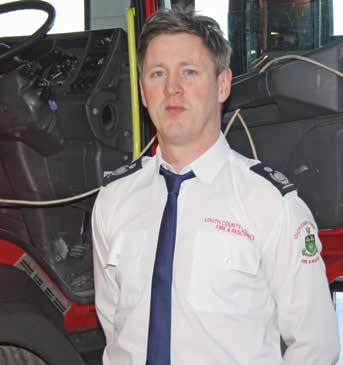
CASTLEBLAYNEY man Colm
Lambe is currently the Acting Senior Assistant Chief Fire Officer at Dundalk Fire Station. He works in the fire prevention section where his daily tasks include issuing fire safety certificates and ensuring all buildings around the county are safe.
“We get on average maybe 150160 certificates submitted to us each year and I assess them and maybe go back to the consultant and look for further information. When I am happy with everything I will then grant a fire safety cert. On receipt of the fire safety cert, the developer or builder can go ahead and build the building once they have that cert.
“From a fire safety point of view we would be making sure that there are fire alarms, fire extinguishers, emergency lighting, access for the fire fighters to get into the building so they would be the main things we look at before handing out fire certs.
“We also do a lot of inspections on buildings and under the Fire Service Act and we would prioritise the bigger venues such as hotels and nightclubs because obviously on occupancy alone there are going to be a lot more people in those venues so we try and prioritise those. For instance we recently did an inspection in Ridleys Nightclub for a teenage disco and the first thing I would ask is how many people are in the building and making sure it’s not overcrowded. We’d check the escape routes are unobstructed, there’s no padlocks on emergency doors etc.
We cover all of Louth and it’s a huge area. Just to break it up for you we have the Chief Fire Officer, Senior Assistant Fire Officer, I’m acting senior Assistant Fire Officer, and we have two assistant fire officers. And that team is broken into operations and prevention.
“The great thing for me about working in the fire service is that no days are ever the same. It is so diverse. Every one in five weeks as a rostered officer we would go on call so if there’s a major incident we would take over the incident. The lads will go out, the operation crews, the station officer and his crew will go out but if they feel the incident has protracted they would call us as a rostered senior fire officer and we would attend the scene. That could be anything from a serious motorway incident or a huge house fore or industrial fire. Later
on that day you could be back in the office doing a fire safety cert or you might be doing an inspection of a building.
“Recently we’ve been doing quite a number of inspections of the IPAS buildings which there are quite a few of in Louth. And buildings like that would be considered high risk purely down to the numbers in them. And then we would also deliver primary school programmes where the crews will go out and deliver fire safety talks to 3rd and 4th class kids about fire safety in the home, smoke alarms and all the rest. And I’d oversee that as well with the crew.
Colm, originally from Castleblayney has been with the local authority since 2007, beginning his career as a graduate engineer in the housing section before moving on to an assistant engineer post. In 2019 he threw his name in the hat for a post that came up in the fire section and it’s a move he is glad he made.
“As I said earlier I really love the diversity of the job. I have a civil engineering background so I love assessing the fire certs and looking at the drawings coming in for building projects. With regards to the operations side of the job I would say it can be tough going. It’s a tough gig and in fairness to the lads here that are doing that side of the job they are fantastic. Dundalk and Drogheda are both full time stations while we have Carlingford Ardee and Dunleer as retained stations. Here in Dundalk the station is manned 24/7 365 days a year. There’s generally five maybe six on a crew at any given time.
“For me, being a fire fighter is the best job in the world”
By Paul Byrne
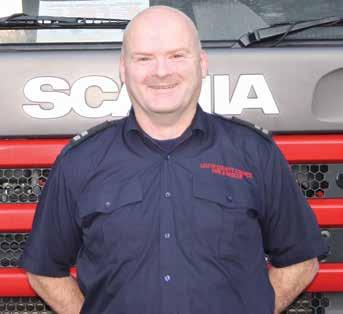
Dundalk man Paul McEneaney has been working as a fire fighter with Louth County Council Fire and Rescue Service for 18 years. Stationed in Dundalk, Sub Officer Paul believes he has the best job in the world and last year he even convinced his wife to join the fire service with his better half now stationed in Carlingford. According to Paul the job can be tough at times but it’s one he wouldn’t trade for anything.
“Obviously in this job you can see some traumatic things and there is a CISM system (Critical Incident Stress Management) which we offer to the crews if there is something serious like that horrendous car accident on the Ardee Road before Christmas for example. They can talk to a professional about what happened and if they want to relive what happened and get it off their chest that option is there for them. Some guys take it up but others don’t as sadly they become accustomed to it.
“It’s all men here at the station but that is changing and changing for the better. We have a recruits course on here at the moment and I think we have six female firefighters on the course and we have a female firefighter sub officer from Carlingford and Dunleer and we will have up to seven or eight female firefighters by the end of the year.
“The biggest cause of house fires at the moment is probably the likes of batteries from E-Scooters. Maybe an E-Scooter charging in a communal hallway in an apartment block which overheats. That has come across our table a couple of times recently. Then you have the likes of phone chargers, overloading sockets and stuff like that.
“It’s a great job and there’s loads of scope for promotion and loads of room to better yourself if you put your head down and work hard. As I said earlier the operations side of things is tougher but it is a very important job and one which the boys do brilliantly every single day,” concludes Colm.
“From 2005 maybe, I was working in adventure centres teaching kayaking, canoeing, rock climbing and all that sort of stuff. I then spend the next summer kayaking in the French Alps and when I came back to Dundalk I seen the role of fireman advertised in the local newspaper and it kind of felt like a natural progression from what I was doing because there was a lot of technical similarities with the jobs and with the outdoor aspect as well so it went from there and I got it.
“To get in to the fire service there is an element of fitness you have to have and a medical you have to pass. You have to come into the station and do a claustrophobia test, heights test, dexterity test and then once you pass all that you go to interview and then after the interview is your recruit course and once you pass that and your breathing apparatus course then you’re officially in the door.
“I’m full time now but when I initially joined I was part of the retained service so the system was different then to what it is now. I was working in a shop in Dundalk at the time called Outdoor Exchange which I was managing for Jock McArdle. When I joined the Fire Service as a retained officer I had to get a letter from Jock to say I was allowed to leave work if a call came in from the fire station.
I remember talking to some of the lads who were working in here at the time and they were telling me it was generally very quiet during the day and the majority of call outs were at night time. So I told that to Jock and he was happy with that.
“On my very first day as a retained officer on call I was called out almost as soon as I got into work in Outdoor Exchange for two house fires and a shop fire and I was literally gone for the whole day and it’s easy to say Jock wasn’t too best pleased, considering I sold it to him as ‘no I won’t be out much during the day at all” laughs Paul.
“I’ve been doing this job a long time now and although I
wouldn’t say you get nervous going out on a call you are definitely conscious of what you could be going into. We are training all the time and every shift we work we are doing drills here in the station so there is constant drills which help us prepare for those calls and what we might come across. We work with the same crew all the time so the six of us are very familiar with each other and we rely on each other and help each other on the job. It’s always challenging. Now I’m a sub officer on the crew so at times I’m taking charge of the incidents so it’s a bit different then as you’re making decisions on what is happening and how to deal with the situations.
“The six of us in our crew get on really well which is a huge bonus. There’s six different personalities there and thankfully we all gel together well. The craic is good and you deal with things the best you can and sometimes the best way to deal with the particularly tough call outs is to just talk it out with each other over a cup of tea in the Recreation Room table here in the station.
We’ve had a couple of nasty jobs recently you know and I find that the best way to deal with stuff like that is to just talk about it amongst ourselves.
“It can be tough to leave the job at work and not to take it home depending on what you are dealing with and I suppose for me personally it’s when you’re dealing with jobs were kids are in trouble it’s always that little bit harder to deal with than other incidents. Especially when you have kids at home you kind of think of your own you know?
“Having that good crew around you and not just the crew we have a great bunch of lads in the station and you know that you can go and talk to anybody if needs be.
“Things have changed since I started in here 18 years ago and there is a more onus on our health now compared to years ago and that’s just thanks to recent studies highlighting the likes of carcinogens and stuff like that. It used to be the case that when you were finished working on a house fire you’d come out and throw your breathing apparatus in the truck. Nowadays we don’t put that in the truck anymore.
“We’re now bagging that so we are not bringing the carcinogens into the truck with us. Obviously technology is always getting better but then again the budget will determine what technology we can buy so that’s above my pay grade with regards to that sort of stuff,” laughs Paul.
When asked if it is a job that he would recommend to others, Paul laughs again saying that he convinced his wife to join last year.
“So my wife is now just over a year in the service. She is with Carlingford fire service. She was very apprehensive about joining but she is loving it so far. She’s in a different station which is great and will help our marriage last a little longer which is great.
“For me, I find this to be the best job in the world. I could not see myself working anywhere else. I love the challenge of it, I find the job very rewarding when you are able to help someone in times of need. I always like to push myself and challenge myself and everytime the hooter goes off it’s a challenge. You’re going out and you’re working with different personalities, you’re working with different scenarios and I enjoy that aspect of it. I find it a very rewarding job, and I’m not necessarily talking financially, just rewarding in the sense that you were able to help somebody,” concludes Paul.
By Paul Byrne
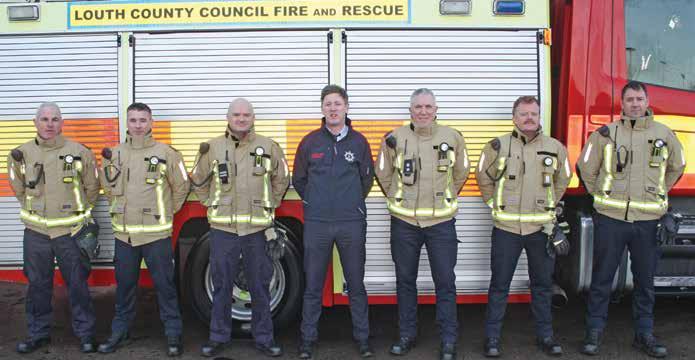
ROBERT Page, the Chief Fire Officer at Louth Fire & Rescue Service believes that the constant messaging from the fire service is gradually beginning to yield results with call outs for house fires reducing drastically over the last few years. Robert who succeeded Eamonn Woulfe in the role of Chief Fire Officer spoke to the Dundalk Leader recently about his role.
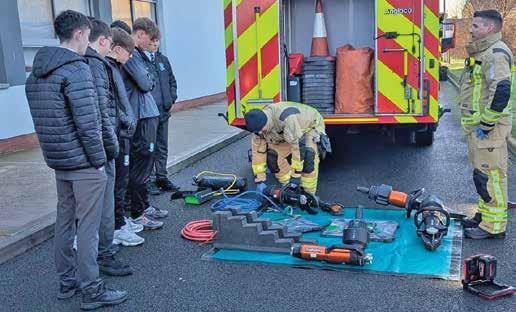
“In Dundalk fire station we have two crews. We have a full time crew and a retained crew. We have 12 in our retained crew and 25 full time fire fighters. We have two front line appliances, we have a water tanker, we have a withdrawing platform and we have an ET emergency tender bravo unit which rolls out to large incidents and Road Traffic Accidents. We also have some support vehicles as well so it’s a large station.
“As Chief Fire Officer I am mainly based here in Dundalk but I’m also down in Drogheda as well sometimes. Last year was the busiest year for Louth Fire and Rescue over the last 15 years. Mainly now 50% of our calls will be RTC’s and false alarms with good intent. House fires have reduced a lot and that’s mainly down to the fire safety messaging we’ve been rolling out to the public but that’s something we have to continually hammer home. Fire safety and road safety messaging is very important and it does save lives.
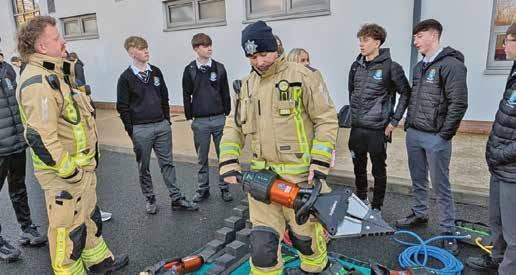
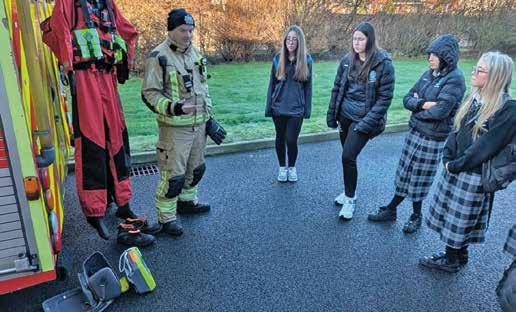
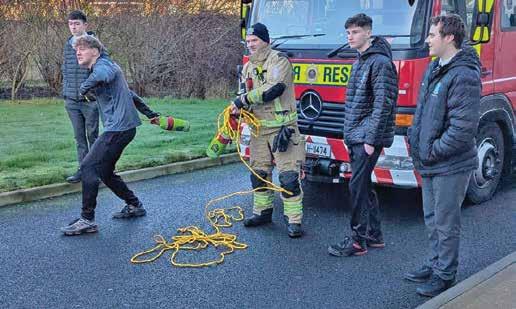
“I think there’s a knowledge out there these days about how to minimise the chances of fire in the home and I think most people know to have two smoke alarms at least in each premises, one downstairs and one upstairs. We’ve also got a fire safety education scheme and we are going into the schools pushing out that message all the time as well.
If people want to come in and ask us for advice we have no problem giving them advice and guidance on fire safety in the home as well. I also think
that the building stock is quite good now and that has helped reduce the number of fires we see nowadays.
“I am originally from Kil-
dare and came to work in Louth 8 years ago. I became Chief Fire Officer last May and I have to say I love it. It is the best job in the world. We
have a great team here. We are lucky to have a great senior officer team here and a fantastic fire crew and good teams all around,” explained Robert.























in all sizes From 3 Cubic Yard to 40 Cubic Yard Call 042-932 2594 or email


FIANNA Fáil TD for Louth, Erin McGreehan, has welcomed the establishment of the Garda Troubles Legacy Liaison Unit, saying the new service will provide greater access to information and support for families who lost loved ones during the Troubles.
The unit delivers on a key commitment under the Joint Framework on the Legacy of the Troubles, announced by the Irish and British Governments on 19 September 2025. It will act as a single point of contact for co-operation with UK
authorities on Troublesrelated legacy cases, while also serving as a central hub for victims and families engaging with An Garda Síochána on related investigations.
The Garda Troubles Legacy Liaison Unit will endeavour to answer questions from victims and families and, where possible, provide family reports on investigations carried out by An Garda Síochána.
Speaking on the announcement, Deputy McGreehan said:
“This new unit will make a real difference for fami-
lies who have been seeking clarity for many years.
Having one dedicated point of contact will help people access information and support much more easily.
“It reflects the move towards a more compassionate and victim-focused approach to policing.
Survivors and relatives deserve straightforward communication and a clear pathway when they are looking for answers about past cases.
“It also ensures that Irish authorities are playing a stronger and more proactive role in addressing the
legacy of the conflict and supporting those who continue to live with its impact.”
Deputy McGreehan encouraged anyone who may need support from the unit to make contact by phone on 01-6661322, which is dedicated to public calls, or by email at Troubleslegacyliaisonunit@garda.ie.
Concluding, she said:
“Our priority is to make this process less daunting for victims and families and to support ongoing efforts to establish truth and accountability wherever possible.”

NOVENA TO THE SACRED HEART
Dear Heart of Jesus, in the past I asked you for many favours. This time, I ask for this special favour (mention it). Take it, dear Heart of Jesus and place it within your own broken heart, where your Father sees it. Then in His merciful eyes, it will become your favour, not mine.
Amen. Say this prayer for three days. Promise publication and favours will be granted. (Never known to fail).
M.C.
NOVENA TO THE SACRED HEART
Dear Heart of Jesus, in the past I asked you for many favours. This time, I ask for this special favour (mention it). Take it, dear Heart of Jesus and place it within your own broken heart, where your Father sees it. Then in His merciful eyes, it will become your favour, not mine.
Amen. Say this prayer for three days. Promise publication and favours will be granted. (Never known to fail).
C.K.
NOVENA TO THE SACRED HEART
Dear Heart of Jesus, in the past I asked you for many favours. This time, I ask for this special favour (mention it). Take it, dear Heart of Jesus and place it within your own broken heart, where your Father sees it. Then in His merciful eyes, it will become your favour, not mine. Amen. Say this prayer for three days. Promise publication and favours will be granted. (Never known to fail). M.O’R.

ATTENTION LANDLORDS—We supply furniture & Beds for any rental properties you have. Beds from €180, Bedroom Furniture Sets from €249 Call us today www.bedstore.ie, Coes Rd, Dundalk Tel 042 932 0927.
CHIMNEY & STOVE CLEANING—10kg bags of Beech and Olive (hardwood) for sale. Tel Paul McArdle 087 6660094 / 042 9332491 Email:tribalky@yahoo.com.
CHIMNEY CLEANER—The Clean sweep, clean & tidy, no dust. Brush & Vac. Also gutter cleaning. Contact - Cathal 087-2259799.
PROPERTY MAINTENANCE—Repairs, building, plumbing, painting, roof repairs, tiling, bathroom refurbishments, plastering, gardening, power washing, PVC facia and soffits, Over 20 yrs experience. References available. Whatsapp or Tel 085-762-3758 for quotation.
HEDGE CUTTING—Tree pruning, general garden maintenance & clearance, power washing & painting, Gutter Cleaning. Contact 087 2296441.
LOUTH COUNTY COUNCIL—We, Dundalk Fabrication and Coatings Ltd., intend to apply for full permission for an extension comprising of additional light industrial areas to a development previously granted under planning reference number 2460740

RELAY For Life is making its return to Dundalk for the first time since 2014. The event Relay For Life is the biggest cancer fundraising initiative in the world. The Irish Cancer Society is a proud Global partner alongside 35 other countries that host these special events.
Relay For Life is a 24-hour event that sees local communities coming together to celebrate cancer survivors, remember loved ones lost to cancer, and stand shoulder to shoulder with those facing cancer.
The event helps to raise awareness of the services provided by the Irish Cancer Society and raises much needed funds to support life-saving cancer research and free services for cancer patients and their loved ones.
The Dundalk Relay For Life ran for six years raising close to €400,000 before finishing in 2014. Now, a new organising committee have formed and will bring the event back to Dundalk. They will have a launch night this Saturday in Dundalk Stadium. Oliver Morgan the Chair of the new committee says all are welcome to attend.
“We are delighted to inform you that in association with the Irish Cancer Society we are bringing Relay for Life back to Dundalk in September 2026.
“Our launch night will take place on Saturday 31st January 2026 from 7.30pm-9pm. The night will feature a PowerPoint presentation by Representatives from the Irish Cancer Society, short testimonies from a nurse and/or a voluntary bus driver.
“Nikki Murphy, a survivor from Dundalk and Committee Member and one of our Ambassadors, Collette O`Hagan, will also say a few words.
“There will also be an opportunity to register teams on the night to participate in the Relay which will take place at the Stadium from 2pm on Saturday 12th September to 2pm on Sunday 13th September.
“As Event Chair I would like to invite you all to attend our launch night to chat with and met the reps from Irish Cancer Society and our Relay For Life Committee members.
The Launch Night will be held in Dundalk Stadium,” stated Oliver.
GRIMLEY’S DUBLIN ST. DUNDALK— Televisions, TV aerials, satellite, Freeview & Saorview, new installations, sales, service & repairs. Free estimates 042 935 4343.
DUNDALK GARDEN SERVICES—Tree topping, felling, hedge trimming, grass cutting & strimming. Rubbish Removals/Garage clearance, House & Garden refuse. Permit holder. Contact Ben 085-840-7707.
FORTUNE TELLER—Available for appointment, private or group bookings. Tel. Alison 042 933 5102 or 087-67-51229.
ROOF LEAKS MASTER—We repair all types of roof/tile, slate, bangor blues. Repair torch on roofs, scrape & clean, chimneys & chimney pots, chimney bird guards, gutter facia & soffits. All work guaranteed, 25 years experience. Tel. 086 8184827.
CARPENTRY & JOINERY—Maintenance and repairs, roofing, 1st & 2nd fix carpentry, sash window repairs. No job too big or small. Contact Seandon Carpentry 087 298 5110.
MOBILE HOME TRANSPORT—Transported throughout 32 Counties. Contact Eugene 086-607-1702.
CARPET & OVEN CLEANING—Carpet, upholstery & specialist oven cleaning available. Call MVI Cleaning Dundalk on 042 94 21300 or visit www.mvicleaning.ie.
TAKE THE HASSLE OUT of your garden. I do it all. Grass cutting, Hedge Cutting, Weeding, Strimming, Power washing, Gutter Cleaning, Fence Painting, General DIY, Flat Pack Assembly, Removals. Contact Catriona 087 3172109.
ROOFING AND BUILDING contractor available. Repairs and new builds. Fully insured. Contact Mark Carney on 087 1302040 for enquiries.
TREE SERVICES—Tree surgery, stump grinding, wood chipping & pruning. Conifer hedge reduction and ash die back removal. Fully Insured & Certified. Contact Chambers on 087 2750825 Email—rchambers2008@ yahoo.ie.
EXPERIENCED CARPENTER AVAILABLE—Free quotes available. Services include Doors, Locks, Flooring, Skirting, Damp and Leak Repairs, Architraves, Built in Units, Roofing, Fencing, Side gates, Partician Walls and Plasterboarding. Any small Jobs also included. Contact Mark 083 4162364.
KEVIN McMAHON ELECTRICAL DUNDALK—Small household jobs, safe electrical approved. 087 2548221 after 5pm.
MAN WITH A VAN—Hedges, tree topping, painting, facia & Soffit, patios, concreting, garage clear-outs, outside taps. Call Kevin for a free & honest quote 089-4016728.
PAINTING SERVICES AVAILABLE—Interior and exterior plus Wallpapering, also sprayed and hand painted kitchens, all work carried out by professional trades men. Tel Brian 087 7558506. CARPET AND UPHOLSTERY CLEANING— Trusted for over 30 years. Expert care, sparkling results. Call Patrick on 0872492325 or visit www.carpetcleaningservices.ie ‘February Sale Now On’.
ALL-IN-ONE PROPERTY MAINTENANCE—Painting & decorating, general building maintenance carried out, domestic or commercial, gutter cleaning, dust free sanding, no job too big or too small, quality but affordable, contact Ian 0874158238.
CHARA COUNSELLING—20 years’ experience, currently taking appointments. Supporting you with emotional intelligence for relationship issues, your mental health, grief, all addictions & past traumas. For a strictly private consultation call Martin today on 083 3402766.
REIKI VISIONS—Tera Mia Reiki and Seichem Master. Book your treatment today. Call or Whatsapp Sean on 087 4580129.
PAT THE PAINTER—Indoor & outdoor decorating. Wallpapering, Power Washing, Picture, Mirror and Curtain Pole Hanging, Painting Kitchen Units & Furniture, DIY. Free quotations Email patthepainter1@gmail. com Mob 087 2951047.
ALL-SEASONS GARDENING SERVICES— Gardens cleaned and cleared, tree felling, hedge cutting, stone, gravel, chippings. Steam cleaning roofs & driveways. Roof repairs. Local, professional, fully insured Tel Sean 087 349 5477.
LOCAL POWER WASHING—No job too big or too small. Patios, driveways, walls, also grass cutting, gutter cleaning and furniture removals, recycling or rubbish removals. Contact James 0862086141 for free quotation.
WILL’S GARDENING—Power and pressure washing, hedge cutting, strimming, gutter cleaning, house and furniture removals Tel 089 9531751.
GET FIT the fun way and learn to dance, the Waltz, Quickstep, Foxtrot and Jive, now taking place in the Lisdoo, Dundalk Tuesday’s from 8pm – 10pm, no partner required. First wedding dance lessons and private lessons also available. Contact 086 357 3271 for further information.
DRUM LESSONS INCLUDING BODHRAN—For adults & children aged 8 years upwards. One to one lessons. Phone 087 414 4228.
FRENCH GRINDS AVAILABLE for Junior and Leaving cert, All levels. Individual and small group options. Tel 086 8723340.
SEWING CLASSES—Starting Wednesday, 18th February. Adults 10am-12pm and 6:30-8:30pm. Kids 3:30-5:30pm. Venue: 6 Jocelyn St. Dundalk. Contact Bláthnaid 0860312003.
EASY-GOING country lad, mid 50s with GSOH seeks light-hearted female companion late 40s/mid 50s with no ties. For walks/ talks and to share the simple things in life. Tel—0868220403.
CONSTRUCTION STAFF REQUIRED IN DUNDALK—Skilled & General Labourers, Groundworkers, Carpenters, Plumbers, Electricians, Plant Operators. Send CV to megan@clsrecruitment.ie or call 01 4773414.
(Construction of a light industrial building with ancillary accommodation to include reception area, offices, storage & canteen facilities, parking provision & hard standing areas, 2no. gated accesses, boundary treatments, connection to existing road network & drainage system as previous approved under Planning Ref—19492; signage and all associated site development works) and currently under construction with all associated site development works at Sites 04, 06 & 08 Dundalk Retail Park, Upper Marshes, Dundalk, County Louth. The planning application may be inspected, or purchased at a fee not exceeding the reasonable cost of making a copy, at the offices of the planning authority during its public opening hours. A submission or observation in relation to the application may be made in writing to the planning authority on payment of the prescribed fee, €20, within the period of 5 weeks beginning on the date of receipt by the authority of the application, and such submissions or observations will be considered by the planning authority in making a decision on the application. The planning authority may grant permission subject to or without conditions, or may refuse to grant permission. C/o Bernard DowdallMRIAI - Architect – Carrickedmond, Kilcurry, Dundalk, Co. Louth. Tel. (042) 9429558; (087) 6657148; E-mail - bernard@dowdallarchitects.ie.
LOUTH COUNTY COUNCIL—We, Gearóid & Catríona Carroll, intend to apply for full planning permission for development at Waterville House, Mountainpark, Commons, Carlingford, Co. Louth. Development will consist of a new vehicular site access, partially closing the existing access to provide a pedestrian gate, and associated site development works. This planning application may be inspected or purchased at a fee not exceeding the reasonable cost of making a copy, at the offices of Louth County Council from 9.30am to 4.30pm Monday to Friday. A submission or observation in relation to the application may be made to the Authority in writing within a period of 5 weeks from the date of receipt by the Authority of the application and on payment of the prescribed fee of €20.00.
LOUTH COUNTY COUNCIL—I, Hugh Morgan, intend to apply for planning permission for development at Carrickcarnan TD, Dundalk, Co. Louth. The development will consist of: The construction of a single storey extension to the rear of the existing dwelling. The extension of the site curtilage (to the West), to facilitate the proposed extension. New Wastewater Treatment System with soil polishing filters. Relocation of existing site entrance to the North of the site, with new entrance piers and all other associated ancillary site works. The planning application may be inspected or purchased at a fee not exceeding the reasonable cost of making a copy at the offices of Louth County Council, Town Hall, Crowe Street, Dundalk from 9.30am to 4.30pm Monday to Friday. A submission or observation in relation to the application may be made to the Authority in writing within a period of 5 weeks from the date of receipt by the Authority of the application and on payment of the prescribed fee of €20.00. Signed: McMahon Associates.
LOUTH COUNTY COUNCIL—I, Evelyn Foley, intend to apply for Retention Permission for development at 5 Assumption Place, Dundalk, Co. Louth A91 X4F8. The development will consist of—Retention of—a front porch, part conversion of existing first floor areas with ancillary velux windows to an existing dwelling house, a domestic garage and associated site development works. This planning application may be inspected or purchased at a fee not exceeding the reasonable cost of making a copy, at the offices of Louth County Council, Town Hall, Crowe Street, Dundalk, from 9. 30 am to 4.30 pm Monday to Friday. A submission or observation in relation to the application may be made in writing to the planning authority on payment of the prescribed fee €20.00 within the period of 5 weeks beginning on the date of receipt by the authority of the application, and such submissions or observations will be considered by the Planning Authority in making a decision on the application. The planning authority may grant permission subject to or without conditions, or may refuse to grant permission. Signed—AMC Loss Assessors & Surveyors, Upper Faughart, Dundalk, Co. Louth. Tel. 0879529699. E-mail aidan@amcla.ie. LOUTH COUNTY COUNCIL—I, Michael English, intend to apply for Planning Permission for development at Main Street, Blackrock, Co. Louth. The proposed development comprises the construction of 4no. new 3- bedroomed semi-detached dwellinghouses, new waste water treatment plant and all ancillary and associated site development works including site clearance works, new vehicular entrances off the Main Street, car parking spaces, hard and soft landscaping and boundary treatment works. This planning application may be inspected or purchased at a fee not exceeding the reasonable cost of making a copy, at the offices of Louth County Council from 9.30am to 4.30pm Monday to Friday. A submission or observation in relation to the application may be made to the Authority in writing within a period of 5 weeks from the date of receipt by the Authority of the application and on payment of the prescribed fee of €20.00.
LOUTH COUNTY COUNCIL—I, Aishling Dullaghan, intend to apply for Outline Planning Permission for development to comprise new dwellinghouse, septic tank and percolation area and all associated site works at Seecrin, Riverstown, Dundalk, Co. Louth. This planning application may be inspected or purchased at a fee not exceeding the reasonable cost of making a copy, at the offices of Louth County Council from 9.30am to 4.30pm Monday to Friday. A submission or observation in relation to the application may be made to the Authority in writing within a period of 5 weeks from the date of receipt by the Authority of the application and on payment of the prescribed fee of €20.00.
FOR SALE—2008 X Type Jaguar Diesel. Phone 087 920 2980.
Brigid of Faughart, Lady of Spring help us and heal us your praises we sing.
The cloak of your kindness spread over our land and hold us, your children in your divine hand.
Brigid of Faughart, Lady of Spring renew our old faith in the Lamb, the King. Embrace us with mercy as today we redeem our belief in your honour, your miracle stream.
Brigid of Faughart, Lady of Spring for protection from evil white lilies we bring. Bless our rags and our rushes humble crosses of green with your graces, your strength our great Gaelic Queen.
Brigid of Faughart, Lady of Spring help us and heal us your praises we sing. The cloak of your kindness spread over our land and hold us, your children in your divine hand.
—Seán Brannigan.
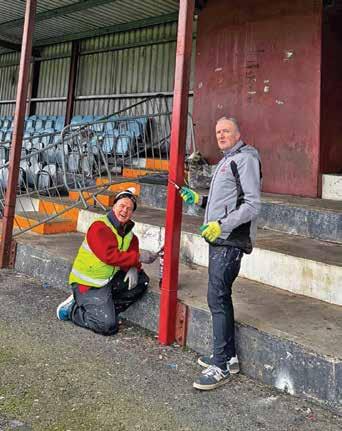
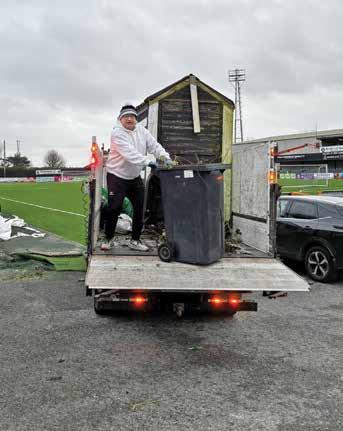
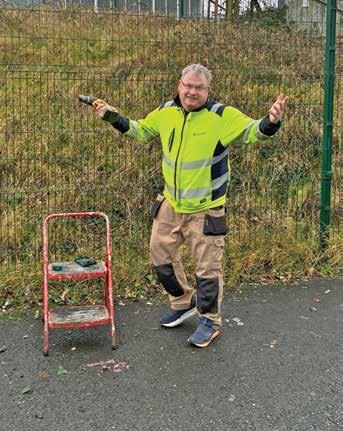
DUNDALK FC held a successful Clean Up Day at Oriel Park on Saturday, with a large number of supporters volunteering their time to help improve the stadium and surrounding areas. The initiative saw extensive work carried out across the ground, with far more achieved over the course of the day than initially anticipated.
Executive Director Chris Clinton praised the effort and commitment shown by those involved, highlighting the importance of community-led initiatives within the club.
“The local support for this effort was outstanding. This is the way forward. We are a community club in the truest sense, and this community effort had real heart. Thank you all so much for leading this — it was magnificent.”
Supporters played a central role throughout the day, contributing their time, skills, and energy to a wide range of tasks. The Clean Up Day was organised and supported by the Dundalk FC Supporters Trust, the 1903, and the Shedside Army, alongside many individual supporters who volunteered to take part.
The club also received generous assistance from local businesses and organisations, whose support helped ensure the day ran smoothly. Dundalk FC would like to thank Ever Kleen Cleaning Service, Mo Chara, Oxygen, Terry Kelly Paint Store, AV Direct, Louth County Council (including support from the Integration Support Coordinator), Brian McKeown, David Lynch of Ice Tech Refrigeration & Air Conditioning, and Brew Crew for their contributions.
Dundalk FC would like to sincerely thank everyone who took part in the Clean Up Day. The event was a positive and productive example of supporters and the wider community coming together to support the club.