THE developers of a proposed mosque at the Longwalk in Dundalk have been asked by the Planning Authority to provide further detail of the proposed use and operations of the community building/place of worship to assess any potential impact of the proposal on neighbouring residential development and traffic and pedestrian safety. Plans were lodged in March this year by Yaqeen Islamic Community Centre asking for ‘Permission for the change of use from retail warehouse to community facility/ place of worship’. The building was formerly known as Dundalk Paint Store but is currently lying vacant.
Local residents under the banner of North End Residents As-
sociation which represents people living in the Long Walk, Demesne Road, McSwiney Street, Oliver Plunkett Park, O’Hanlon Park, Fr Murray Park and the Laurels have already sent in submissions arguing that the proposed plan would have a ‘major impact on parking and traffic disruption in our area especially if there is multiple services throughout the day’
A decision was due to be made on the 25th of May but the Planning Section of Louth County Council have asked for further information before a decision will be reached. In a letter to Yaqeen Islamic Community Centre the planners asked for details of the activities for the proposed use and a timetable of how often any events would take place.
Continued on Page 2
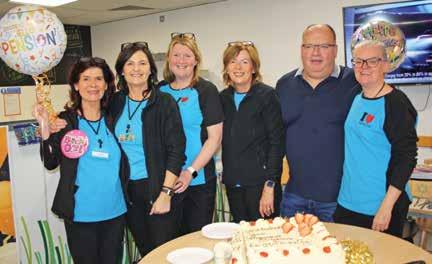
Laura Corrigan (Left) said goodbye to her colleagues last Thursday having worked with Penneys for 51 years. Full story page 4.
CARERS REQUIRED URGENTLY
We are actively looking for part-time/full-time home care staff in the Dundalk, Carlingford, The Cooley Peninsula and Omeath area for an immediate start.
Interested send in your CV to recruitment@hhci.ie or enquiries contact: 0877724202
Woman arrested in connection with disappearance and murder of Kyran Durnin
GARDAÍ investigating the disappearance and murder of Kyran Durnin (6 years) have arrested a woman in connection with the investigation.
A search under warrant was carried out at a domestic residence in Drogheda, Co. Louth, on Monday morning.
The woman (aged in her 50’s) is currently detained pursuant to Section 4 of the Criminal Jus-
tice Act 1984, at a Garda Station in the Eastern Region.
INVESTIGATIONS ONGOING
Kyran was reported missing in August 2024, and a homicide investigation was launched in October 2024.
The last confirmed sighting of the then six year old was in June 2022 and gardaí believe he was killed at some point in those two years.
A number of properties had been searched by gardaí since the launch of the investigation, including one on the Castletown Road in Dundalk where the Durnin family once lived but no trace of Kyran was found.
The woman arrested on Monday is the third person to be arrested as part of this investigation.
Student stole over €400 worth of goods from Marshes Shopping Centre
A 19-YEAR-old student who acted ‘out of character’ when stealing goods from a number of shops was spared a conviction when she pleaded guilty to the offences at Dundalk District Court.
Bethel Dopamu of Manorfields Green, Clonee, Dublin 15, admitted taking items worth €426.64 from four outlets at the Marshes Shopping Centre on March 26th this year.
On hearing the evidence, Judge Stephanie Coggans accepted that it was an isolated incident and struck out the charges after the defendant made a donation of €350 to charity.
Court Presenter Richie Browne told the court that on the date in question Gardai responded to a call from Penneys in The Marshes Shopping Centre after security had observed the defendant enter
the premises, before picking up a suitcase and filling it with multiple items to the value of €217.25. She left with out paying.
When stopped Ms Dopamu handed back the property but was also found to have another bag with items to the value of €48.96 from Dunnes Stores, €138.48 from Boots and €21.95 from Easons. All items were returned to the stores.
The defence barrister told the court that the defendant is a Pharmaceutical Science student and DkIT and that this incident was out of character. He said she had never been in court before and had references attesting to her good character. He added that the incident was a concern to her parents and that the defendant was attending her GP to see if anything was going on in the background.
The Court Presenter pointed out that if the theft took place from only one premises, the matter could have been dealt with by way of an adult caution.
Judge Coggans stated that she was pleased to see the defendant being supported by her parents and that she would not impose a conviction if a donation was made to charity.
Further info sought on proposed mosque site
From Page 1
They also asked for details for the number of visitors in attendance ie the maximum number of seats proposed within the community facility/place of worship. There was also a request for the number of staff proposed for the facility and intended hours and days of operation. The question was also asked if the call to prayer (Adhan) is intended to be broadcasted externally via an amplified audio system.
The applicant was also asked to provide documentary evidence on whether the proposed development would have any undue impact upon the residential development in terms of noise and disturbance resulting from any activity. It was also asked what plans were in place for parking and how parking on adjacent footpaths to the site will be prevented. The applicant has
six months from when the letter was sent (May 13th) to respond with further information.
The four week period for making a decision will commence when this information is received.
A number of submissions have been lodged with the Planning Authority objecting to the proposed mosque with many of them stating that the development would be contrary to the proper planning and sustainable development of the area as
outlined in the Louth County Development Plan 2021-2027. Reasons given included: Traffic Hazard and Public Safety. Inadequate Parking Provision.
Fergal Cassidy, CEO of local business Measuresoft Development Limited submitted his objection citing concerns over fire safety concerns.
“The existing building is designed for retail/warehouse. The materials used and the building design are not
to the fire safety standards for a class 7 place of worship/religious instruction. The 3 exits are not sufficient for a class 7 place of worship/religious instruction. There is no exit on the west side of the building and two exits on the east side of the building lead onto a narrow alley which would be congested in the event of a evacuation of a full building. This leaves only one viable fire exit at the front of the building catering for the evacuation of a
large crowd. The permission has no thorough assessment of the fire exists in relation to the potential number of users of the building,” he stated.
He also outlined the potential impact on residential amenity asking if the proposed development is near residential areas and would they haveto listen to loud broadcasts of calls to prayer many times per day which he says he has previously experienced on business trips to Islamic countries.
The Dundalk Leader asked a representative of the Yaqeen Islamic Community Centre for a comment on the proposed development and a spokesperson stated that ‘they are committed to being considerate and responsible neighbours should planning permission be granted.
“Thank you for reaching out and for
sharing the concerns raised by the North End Residents Association.
“We are committed to being considerate and responsible neighbours, and we genuinely value maintaining a positive relationship with the local community but at present, we are unfortunately unable to arrange a meeting or provide a detailed response to the concerns raised by the association. This is due to an ongoing matter with the landlord regarding the tenancy arrangement, which is currently being resolved.
“Until this situation is clarified, we are not in a position to comment further or engage in discussions with the Association members. We hope you and the Association understand our position and appreciate your patience during this time,” read the statement.
The old Dundalk Paint Store building on the Longwalk.
The late Kyran Durnin.
A1 PAVING SPECIALISTS
Laura says goodbye to Penneys after 51 years
LAURA Corrigan began working in Penneys in the old Dundalk Shopping Centre in 1975 when she was just 14 years of age. Last Thursday, 51 years after that first day of work, Laura said goodbye to her many friends in Penneys on what was an emotional day for the Fatima native who now lives in Carrick with her husband Tom.
Laura was summonsed to the canteen in Penneys where she was surprised with a cake and balloons as her friends and family gave her the send off she deserved. Speaking to the Dundalk
Leader, an emotional Laura said she was sad to be leaving but at the same time ready to go.
“I will miss all the team here in Penneys so very much. They are a brilliant group to work with and the laughs we’ve had here during the years has kept me young and ensured I enjoyed coming into work every day. I started off in Penneys in the old Shopping Centre before moving to the Longwalk and then finally I moved over here to the Marshes. I have to say I’ve seen a lot of managers down through the years and they’ve all
been fantastic with me. But as I said before, the craic here with the girls and boys was fantastic and that’s what I will miss most.
“My husband Tom is a farmer so I suppose I’ll have to help him out on the farm now that I’ll have more free time,” laughed Laura. “I was very emotional this morning coming in knowing it was my last day but at the same time I am ready to go and I will be popping in to see the girls regularly so they definitely haven’t seen the last of me!,” added Laura.
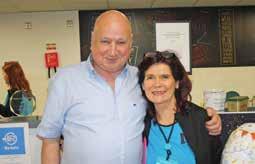
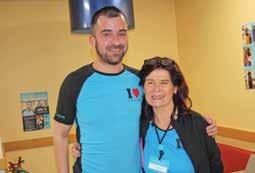
Laura Corrigan with her husband Tom. Marie Kelly, Laura Corrigan, Emma Savage, Paula Watters and Amy Watters.
Laura with her now former Penneys colleagues at her leaving do.
Linda Martin and Laura Corrigan.
Danny O’Connell and Laura Corrigan. Siobhan McGahon and Laura Corrigan.
Laura Corrigan, Sharon Ward, Mary Amanda Kieran, Paulinr Murnaghan, John Callan and Jenny O’Hare at Laura’s surprise farewell do in the Penny’s canten in teh Marshes Shpping Centre.
Tenders are invited for Land Licencing for a period of 24 months at the following location:
Location
Haynestown, Dundalk, Co. Louth
Hectares Usage
Approx. 7.91 Hectares Grazing only
Licensee will indemnify IDA against all liability and be responsible for the removal of ragwort and any other noxious weeds from the land. The Licensee will be responsible for any fencing necessary to keep cattle from trespassing outside of the area allocated. The lands shall be licenced for the grazing of disease-free cattle only.
Land Licence shall be for 24 months subject to termination at one month’s notice, should the lands be required in whole or in part by IDA Ireland.
Tender Price shall be the annual fixed price excluding VAT for the 24-month Agreement to be paid for in full, in advance. Current Tax Clearance Certificate will be required prior to the Licence being put in place. In addition to the Tender Price, VAT at 23% will be charged. A map of the subject can be requested via email from enda.clifford@ida.ie
Tender envelopes marked “TENDERS FOR LAND Licence in Haynestown, Dundalk, Co. Louth” and clearly stating the price per annum offered.
Submissions by email to propertytenders@ida.ie on or before 12.00pm on June 12th 2026.
Cuirtear fáilte roimh thairiscintí Ceadúnaithe Talaimh ar tréimhse 24 mí ag an suíomh a leanas: Suíomh
Baile Héine, Dún Dealgan, Co. Lú Heicteár Úsáid Timpeall 7.91 Heicteár Féarach amháin
Tabharfaidh an ceadúnaí slánaíocht do GFT in aghaidh gach dliteanas agus glacfaidh sé freagracht as buachaláin agus fiailí díobhálacha eile a ghlanadh amach ón talamh. Glacfaidh an ceadúnaí freagracht as aon chlaí riachtanach a chur ann ar mhaithe le cosc a chur ar eallaigh dul amach ón limistéar leithroinnte. Beidh an talamh ceadúnaithe le haghaidh innilte eallaigh atá saor ó aon ghalair.
Beidh an Ceadúnas Talaimh i bhfeidhm ar feadh 24 mí faoi réir foircinn le fógra mhí amháin, má bhíonn an talamh ag teastáil ó GFT Éireann go hiomlán nó go páirteach. Beidh praghas na tairisceana comhionann leis an bpraghas seasta bliantúil lúide VAT don Comhaontú 24 mí le bheith íoctha go hiomlán roimh ré. Beidh Teastas Imréitigh Cánach ag teastáil sula bhfuil an Ceadúnas curtha i bhfeidhm. Sa bhreis le Praghas na Tairisceana, gearrfar VAT ag 23%. Déantar léarscáil den limistéar atá i gceist a iarradh trí r-phost ó enda.clifford@ida.ie
Seoltar clúdaigh litreach tairisceana marcáilte “TAIRISCINTÍ DO CHEADÚNAS TALAIMH i mBaile Héine, Dún Dealgan, Co. Lú” a luann go soiléir an praghas bliantúil ofráilte. Déantar iarratais trí r-phoist chuig propertytenders@ida.ie ar nó roimh 12.00in ar an 12ú Meitheamh 2026.
Louth County Council confirm work will soon commence on Dowdallshill Graveyard
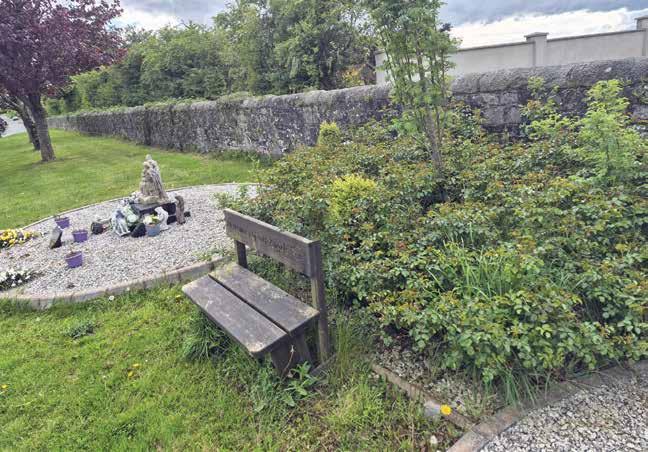
A LOCAL parent has urged Louth County Council to refurbish and carry out maintenance work to the Angel’s Plot in St Patrick’s Cemetery, Dowdallshill, Dundalk. The Angels Plot is a dedicated, respectful space for the burial of stillborn babies and those lost to miscarriage and is situated inside Dowdallshill Graveyard.
Craig and Danielle Corr lost baby Aleigha four years ago when Danielle suffered a miscarriage and it was in the aftermath of that experience where Craig and Danielle realised that parents of stillborn children or babies who die in pregnancy had to bury their children in Drogheda given the fact the Angels Plot in Dowdallshill had been closed at that stage for a number of years.
The couple campaigned for the Angels Plot in Dundalk to be reopened and in 2023 it was announced that Louth County Council would re-open it. Although he was delighted at the time that the plot was re-opened, Craig has become upset and angry in recent months at what he calls the ‘sheer neglect’ shown by Louth County Council for the plot over the last number of months.
“It’s just been completely neglected and to be honest when I went up there recently I was shocked at how bad it looked. There were weeds and overgrown grass and it was obvious nobody had gone near it in a long time. We were promised at a council meeting when it re-opened that it would be tended to. I have a full time job and kids to look after and only
for that I’d do it myself if I could. I have done it before but I just can’t commit to doing it regularly and it shouldn’t be up to me to have to do it. I was told there would be potting plants and landscape work done and that the plot would be maintained. Unfortunately it has been left to get into a bit of a state and I really hope it will be looked at very soon,” stated Craig.
When asked if there were plans to do any work on the plot, Louth County Council told the Dundalk Leader that works are scheduled to begin in the coming months in time for the annual Blessings of the Graves in Mid-July.
“Louth County Council advises that additional maintenance and landscaping works are scheduled to take place at Dow-
dallshill Graveyard in the coming months, in advance of the annual Blessings in mid-July. These works will include enhanced weeding and grass cutting throughout the graveyard. The Angel Plot, in particular, has been identified as an area that will receive special attention as part of this programme.
“The Council is very mindful of the significance of the Angel Plot for many families. Staff will carry out all works in this area with the utmost sensitivity, care, and respect,” read the statement.
Having seen that response Craig stated that while he appreciated the statement he wanted further assurances that the plot would be maintained regularly and not just once a year in advance of the Blessings of the Graves.
Man avoids conviction for ‘out of character’ behaviour
A MAN who turned to alcohol after breaking up with his partner and acted ‘out of character’ avoided a conviction at Dundalk District Court after making a donation to charity.
Damien Crawford of Drive 1, Muirhevnamor, Dundalk, pleaded guilty to two public order offences but had the case struck out after making a payment of €200 to North Louth Hospice.
Court Presenter Richie Browne outlined that on December 15th, 2025, Gardai received a report of dangerous driving at Lidl car park, St Helena, Dundalk. The saw Mr Crawford beside a vehicle that matched the description of the van, but he denied he was driving it.
He squared up to Gardai and verbally abused them using a number of profanities. He was arrested after refusing to stop.
Solicitor Niall Breen stated that his 47-year-old client apologised to Gardai for his behaviour, which was out of character. He added that the defendant had broken up with his partner and turned to alcohol to cope.
Louth County Council have said that additional maintenance and landscaping works are scheduled to take place at Dowdallshil Graveyard in the coming months in advance of the annual Blessings of the Graves.
DUNDALK’S FREE NEWSPAPER
NEWSPAPER PICK-UP
16,400 Weekly Copies
DUNDALK Town Centre
Dundalk Leader
Dundalk Library
Tesco Extra
Marshes Shopping Centre
Tesco Longwalk
Bus Station Longwalk
Country Fresh Patrick Street
Dunnes Stores Muirhevnamor
ALDI Ramparts Road
LIDL St Helena’s Tce
Aura Swimming Pool
Louth County Council
Park Café Coes Road
Applegreen Retail Park
DkIT Campus
DkIT Gym
Imperial Hotel
Gateway Hotel
Redeemer Community Centre
Mace Alphonsus Road
DUNDALK Ardee Road
Londis - Clarkes Filling Station
DUNDALK Carrick Road
Train Station
Mace
DUNDALK Ecco Road
McEneaney’s XL Cox’s
Redeemer Community Centre
DUNDALK Avenue Road
LIDL
SPAR Greenacres
McCreeshes
Sloane’s
Daybreak Bay Estate
DUNDALK Castletown Rd
Mace Maxol
Rock’s Londis
Pimis Foodstore
DUNDALK Newry Road
ALDI
Applegreen
Go Service Station
Conyards
DUNDALK
Quay Street
Brodigan’s Londis
DUNDALK
Dublin Road
Louth Hospital
Mace
Niall Clarke Oils
Maxol (opposite DkIT)
Flanagans Circle K
SuperValu
Fairways Hotel
Gateway Hotel
Felda Gym
DUNDALK
Clanbrassil Street
Clanbrassil Street Centre (Boyds)
McEvoys
Nearby Central
Costcutter
BLACKROCK
Centra
ARDEE
Londis
Centra
SuperValu
Lidl
Spar
Aldi
Texaco XL
M1 MOTORWAY
Applegreen North
Applegreen South
DUNLEER
Centra
Weldons Spar
DROMISKIN
Centra
CASTLEBELLINGHAM
Applegreen
Village Stores
TALLANSTOWN
Smyth’s Centra
LOUTH VILLAGE
Village Stores
Finnegan’s Daybreak
KNOCKBRIDGE
Foley’s
INNISKEEN
Daybreak XL
FORKHILL
Murphys
JONESBOROUGH
McGeoughs Spar
COOLEY PENINSULA
Londis Ravensdale
Carrickdale Hotel
Junction 20 Filling Station
McCrystals Jenkinstown
Niall Clarke Oils
Londis Bellurgan
The Station House Cafe Lordship
Sheelans Riverstown
Costcutter Riverstown
Barrys Grange
Centra Carlingford
Four Seasons Hotel Carlingford
Mace Omeath
Dundalk set to honour The Corrs
this Friday evening.
LOUTH County Council are set to host a Civic Reception in honour of The Corrs, one of Dundalk, County Louth and Ireland’s most successful and much loved bands.
The event will take place on Friday, 29 May, in An Táin Arts Centre, Town Hall, Dundalk.
The Corrs which comprise of siblings Caroline (drums), Andrea (lead vocals), Sharon (violin) and Jim (guitar) are undoubtedly the most successful group to come from Dundalk have had a number of massive hits around the world including Runaway, Breathless, So Young and their version of the Fleetwood Mac
classic ‘Dreams’ Their debut album ‘Forgiven, Not Forgotten’ was released in September 1995 and has since sold over 3.3 million copies worldwide.
The Corrs from Ard Easmuinn were inspired to go into the music business through their parents Gerry and Jean who performed as a group in Dundalk for many years under the name ‘Sound Affair’. While the events are primarily for invited guests only there will be a limited number of people from the general public there thanks to a draw which took place on Monday through Louth County Council.
Friday’s events will see the
official unveiling of the recently completed Corrs mural at the Longwalk Dundalk which will be followed by an exhibition in the County Museum before the Civic Reception takes place later that evening in the Town Hall.
Event Details Dundalk
BIDS: Official Viewing of The Corrs Mural; Venue: Longwalk, Dundalk; Time: 2.30pm. Exhibition: ‘All The Way Home’ A Celebration of The Corrs; Venue: County Museum, Dundalk; Time: 3.30pm
Civic Reception. Venue: An Táin Arts Centre, Doors open: 6.45pm.
Man who stole alcohol given opportunity to avoid conviction
A MAN who admitted stealing two bottles of vodka was given the opportunity to avoid a conviction at Dundalk District Court.
Arturas Petraitis, Castletown Road, Dundalk, pleaded guilty to theft on April 9th this year at Dunnes Stores,
Marshes Shopping Centre. The items were valued at €66.
Solicitor Niall Breen stated that his 62-year-old client had come a long way without a conviction and that he had been struggling with alcohol. He asked the court to
leave Mr Petraitis without a conviction.
Judge Stephanie Coggans put the case back to September 16th and stated that it would be struck out of a €100 donation was made to charity.
Woman was abusive to Gardaí
A DUNDALK woman who was abusive to Gardai outside her home was given the chance to avoid a conviction at Dundalk District Court by making a donation to the Court Poor Box after pleading guilty to public order charges.
Donna Rogers of Moorland Row, Armagh Road, Dundalk, was told by Judge Stephanie Coggans that she would ad-
journ the case to September 16th this year when the matter will be struck out if she makes a payment of €200.
Court Presenter Richie Browne outlined that at 10.35 on March 5th this year, Gardai were called to Dundoogan, Clermont Road, Dundalk, and discovered Ms Rogers outside where she was unsteady and shouting. She called one Garda
a ‘wee bitch’ and her to ‘f*** off’, The defendant failed to leave as directed and was arrested after she continued to be aggressive.
Solicitor Peter Lavery stated that his 49-year-old client had apologised for her actions on the night. He stated that she had been doing well with alcohol prior to this episode, and has been doing well since.
Intoxicated on Church Street
A 47-YEAR-old man was given a one-week sentence after pleading guilty to a public order offence at Dundalk District Court.
Robert Maguire of St Helena
Park, Fair Green Road, was arrested after Gardai found him intoxicated and lying on Church St on September 29th, 2025.
Solicitor Conor MacGuill
stated that his client, who is currently serving a sentence, pleaded guilty to the offence. Judge Stephanie Coggans convicted the defendant and imposed a one-week sentence.
Contempt of Court: The Law You Could Break Without Realising
By Darren Crawley
IT is often said that ignorance of the law is no defence, but there are few areas where this feels more true than contempt of court. Unlike many legal issues, contempt does not require elaborate planning or deliberate wrongdoing. In fact, it is entirely possible to commit it accidentally, particularly in today’s world of instant communication. For communities like Dundalk, where local cases can quickly become the subject of public discussion, understanding this area of law is more important than ever.
At its simplest, contempt of court refers to behaviour that interferes with the administration of justice or undermines the authority of the court. It is not a single offence but a category of actions that can arise in different ways, some obvious, others less so.
One of the most common forms is known as “sub judice” contempt. This occurs when someone comments publicly on a case that is ongoing or
pending before the courts in a way that could influence its outcome. Traditionally, this applied to newspapers and broadcasters. Today, however, social media has expanded the scope dramatically. A post, comment, or even a shared article expressing an opinion about a live case could potentially fall into this category. Consider a situation where a local case is being heard at Dundalk Courthouse. It might be tempting for members of the public to discuss it online, especially if it involves someone known in the community. However, speculating about guilt, sharing unverified information, or attempting to sway opinion can risk interfering with the fairness of proceedings. The key principle is that cases should be decided in court, based on evidence presented, not influenced by public commentary.
Another form of contempt arises from disobeying court orders. This could include failing to comply with a directive, such as ignoring an order to produce documents,
breaching an injunction, or refusing to follow the terms of a judgment. While this may sound more deliberate, there are instances where individuals underestimate the seriousness of such orders, treating them as optional rather than legally binding.
There is also contempt in the face of the court, sometimes referred to as “in facie curiae.” This involves behaviour that disrupts proceedings directly—such as refusing to remain silent, acting aggressively, or otherwise undermining the authority of the judge. While less common, it highlights the expectation that courtrooms remain controlled
and respectful environments. The consequences of contempt can be significant. Courts have the power to impose fines or even imprisonment, depending on the severity of the conduct. Importantly, these penalties are not about punishment alone, they are about protecting the integrity of the legal system. Without safeguards against interference, the fairness of trials could be compromised.
In Ireland, the administration of justice is overseen through institutions such as The Courts Service of Ireland, but the responsibility for respecting the process extends to everyone. Whether attend-
ing court, reporting on proceedings, or simply discussing a case, individuals play a role in upholding these standards.
What makes contempt particularly challenging is the line between legitimate discussion and unlawful interference. People are entitled to express opinions and engage in public debate. However, once a case becomes active, those freedoms are balanced against the right to a fair trial. This balance is not always obvious, which is why caution is essential.
For Dundalk residents, the practical advice is straightforward. If a case is ongoing, avoid commenting on it publicly—especially in a way that suggests an outcome or introduces new information.
Be mindful that social media posts are not private, even if shared within a limited circle.
And if attending court, follow directions carefully and respect the formality of the setting.
In a close-knit community, where news travels quickly and opinions are often shared freely, this can require a conscious effort. The instinct to discuss local matters is natural, but when those matters enter the courtroom, a different standard applies.
Ultimately, contempt of court is less about catching people out and more about preserving fairness. It serves as a reminder that the justice system depends on respect, for the process, for the parties involved, and for the principle that decisions should be made based on evidence, not influence.
In that sense, the safest approach is also the simplest: when in doubt, say less. Because sometimes, the easiest way to stay within the law is knowing when not to speak at all.
There is also a broader lesson about how the legal system functions. Courts rely not only on laws and procedures but also on public cooperation. The concept of contempt exists to ensure that justice is administered fairly, free from external pressure or disruption.
The Corrs (Sharon Corr, Jim Corr, Andrea Corr and Caroline Corr) will be given a Civic Reception in Dundalk
Retrofitting social housing in Louth needs to be a priority—Ó
WHEN will all social houses in Louth be properly retrofitted? That was the question posed in the Dáil last week by Dundalk TD Ruairí Ó Murchú who asked housing minister James Browne for an update as to when council houses will be retrofitted – and didn’t get an answer.
The Sinn Féin TD said Louth County Council had been ‘very good at delivering on retrofitting and has at times gone beyond its targets’ and they should be given the facility to get through the entire cohort of social housing units that require to
be retrofitted.
In response, Minister Browne said the government would continue to engage with the council ‘to look at how we can accelerate the delivery of retrofitting to improve the quality of lives of people living in social homes in Louth’, but didn’t give a specific timeframe.
Deputy Ó Murchú said Louth has one of the longest lists for social housing and doesn’t have enough money for maintenance.
He said: “The reality is that from time to time you
Blackrock Tidy Towns prepare for Judging Season
JUNE marks the beginning of the National Tidy Towns judging season. Blackrock currently holds a Gold Medal in the competition and has proudly earned the title of Ireland’s Tidiest Small Town on two occasions — in 2019 and again in 2024.
Blackrock continues to rank highly at national level and is only a few points behind last year’s overall winner. It is important to remember that judging is based on all aspects of the village, not solely the work of the Tidy Towns committee.
Marks are awarded across eight categories, including:
Community; Streetscape and Public Spaces; Nature and Biodiversity; Sustainability; Tidiness and Litter Control; Residential Streets and Housing; Approach Roads, Streets and Lanes. These categories provide many opportunities to demonstrate progress and improvement throughout the village.
Blackrock’s success is a testament to the strong community spirit within the village and to the commitment shown by so many people over many years. Judging for the National Tidy Towns competition is unannounced, so we never know when adjudicators will visit. High-scoring centres such as Blackrock will receive two visits during the summer judging period.
In addition to the ongoing work around the village, Blackrock will this year represent Ireland in the international Entente Florale competition. A visiting panel will judge the village on Wednesday, 8 July. Blackrock has also continued to perform strongly in the county competitions, Sli Glas Lú and Louth Looking Good, both of which will be judged in the coming weeks.
As we prepare to defend our position in the coming season, everyone can help by: Keeping boundaries neat and well presented; Painting walls and controlling weeds; Cutting back growth that obstructs pedestrians on footpaths; Avoiding the use of weedkiller — it damages biodiversity, creates unsightly brown patches, and is highly visible; Assisting neighbours who may be elderly or unable to maintain their property; Joining our evenings of action every Monday at 7.00pm at the Sundial (except Bank Holidays); Presenting bins carefully, especially green bins, ensuring lids are secure so that litter cannot blow out and birds cannot access contents.
Thank you for continuing to support your community.
are robbing Peter to pay Paul and cannot always deliver to meet actual needs.
“People who have been tenants for many years and who may not have looked for anything from the local authority previously will come to you with issues, particularly in relation to windows and doors. In a perfect situation, if you can get them on the list for retrofitting, it means that at least you can ensure that they are in a house that is properly insulated and warm and that they will not be facing astronomical costs during the
cost-of-living and cost-offuel crises.
“It is about ensuring that we can deliver in respect of the need that is out there. I am of the view that the timeline is never going to be met”.
Minister Browne said he had visited Louth recently to officially open new housing units although he acknowledged the large waiting list for social housing and the levels of homelessness.
But Deputy Ó Murchú said the focus of his question was on retrofitting and said Louth County Council
had previously been able to retrofit above the number in the targets it was given.
He said: “Even at some stages, they had produced more one year than the target and funding they were provided for again. It is about ensuring we get a timeline that is achievable within the near future, because we want to see the whole issue of retrofitting and the issue of the insufficient maintenance budget dealt with for those who are not in appropriate places”.
Minister Browne said it was recognised that retro-
fitting is important for people’s quality of life and said the council had an excellent record of delivering in housing. He said: “It is a council that other councils could look up to in terms of how it delivers and maintains properties.
“I acknowledge there are particular challenges Louth faces as a rapidly growing county with two rapidly growing towns, so it is incumbent on the Department of housing to keep focus and to support local authorities”.
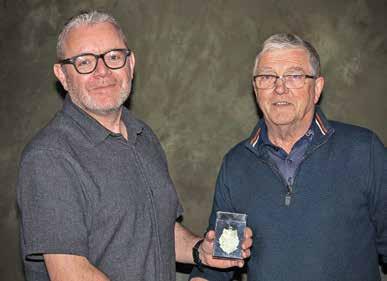
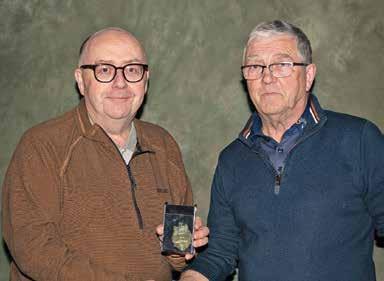
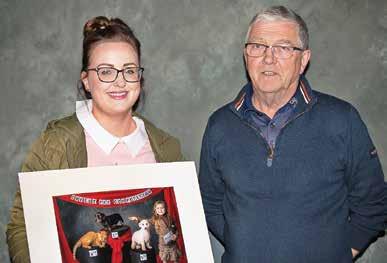
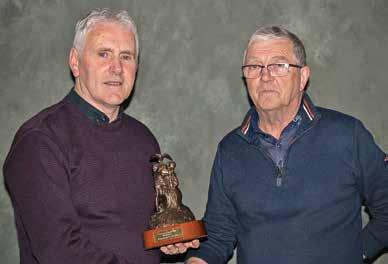
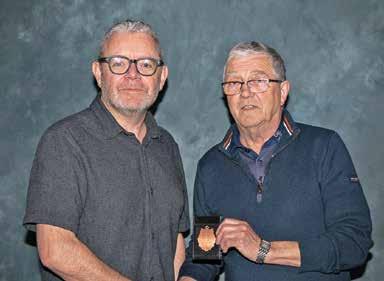
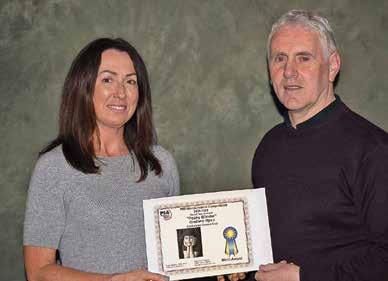
Cuchulainn Camera Club End of Year Awards
Ruairí Ó Murchú, TD.
Paul Harmon Gold medal in Advanced Colour section.
Amy McArdle winning Print of the year. Amy also received a Silver Medal in Advanced Mono section.
Derek McDonnell Gold medal Intermediate Mono & Silver in Colour.
Freddie McArdle Bronze medal in Advanced Colour & Mono sections. Grainne Ryan PSA (Photographic Society of America) award.
Declan Gernon Advanced Photographer of the year with a Gold medal Mono & Silver in Advanced Colour sections.
FAMILY NOTICES
IN MEMORIAM IN MEMORIAM
CONNOLLY
Teresa 6th ANNIVERSARY
In Loving Memory of Teresa, whose anniversary occurs on the 3rd of June, 2026.
Anniversary Mass will be celebrated in St Joseph’s Church, Fatima, on Saturday evening 30th May, at 6:00p.m.
Mam
If we could visit Heaven, even for a day, Maybe for a moment, the pain would go away.
I’d put my arms around you, and whisper words so true, That living life without you is the hardest thing to do. No matter how we spend our days,
No matter what we do, There’s no morning dawns, or evening falls When we don’t think of you.
—Forever loved and missed, Sharon and Jim.
Nanny
Deep are the memories, Precious they stay, No passing of time, Can take them away.
—Loved always Shauna x.
Daughter
As each day dawns I think of you,
As each night falls I pray for you,
And throughout my life no matter where, In my heart you are always there.
—Loved and missed, your mother Rose.
Sister
Softly the leaves of memory fall, Gently we gather, and treasure them all,
We will always remember, no matter how long.
Loved and missed Michael, Marie, James and Arthur.
Godmother
To us you were someone special,
Someone set apart, Your memory will live forever, Engraved within our hearts.
—Love Michelle and Charlie.
Aunty
Sometimes it seems a lifetime, Sometimes only a day, But deep within our hearts, You are never far away.
—Love nieces and nephews.
DULLAGHAN
Ursula 3rd ANNIVERSARY
Dear friend Ursula Dullaghan, late of Ashbrook Dundalk.
—Always remembered by her friend John Callan and family Belfry Drive.
KAVANAGH-QUINN
Lee-Jay BIRTHDAY REMEMBRANCE
Remembering Lee-Jay, whose 27th birthday occurs on 31st May, 2026.
As I look at your picture, Sweet memories I recall
Of a face full of sunshine And a smile for one and all.
Lonely is my home without you, Life is not the same, All the world would be like Heaven, If I could have you here again. Happy Birthday, my handsome grandson.
—Love and miss you always, Nannie Annie. XX.
NOVENA
MIRACULOUR PRAYER TO THE HOLY SPIRIT
Holy Spirit, you who makes me see everything and shows me the way to reach my ideal, you who gives me the divine gift to forgive and forget all the wrong that is done to me and you who are in all instances of my life with me. I, in this short dialogue, want to thank you for everything, and affirm once more that I never want to be separated from you no matter how great the material desires may be. I want to be with you and my loved ones… in your perpetual glory. Amen. To that end, and submitting to God’s holy will, I ask from you… (mention your favor). You must pray this prayer 3 consecutive days. After the 3rd day your wish shall be granted no matter how difficult It may be. Promise to publish the dialogue as your favour has been granted. M.C.
PRAYER TO THE BLESSED VIRGIN
Oh most beautiful flower of Mt Carmel, fruitful vine, splendor of Heaven. Blessed mother of the Son of God, Immaculate Virgin, assist Me in my necessity. Oh Star of the Sea, help me and show me here you are my mother. Oh Holy Mary Mother of God, Queen of Heaven and Earth , I humbly beseech you from the bottom of my heart to succor me in my necessity(make request). There are none who can withstand your power. Oh Mary, conceived without sin, pray for us who have recourse to thee (three times). Say this prayer for three consecutive days and then you must publish it and it will be granted. L.C.
Make Way Day launched
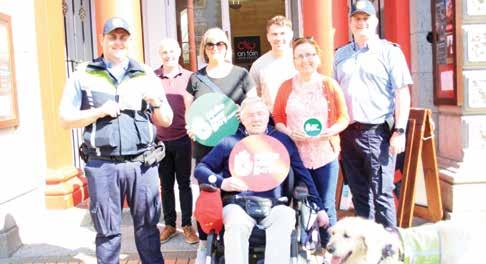
MAKE Way Day was launched in Dundalk for the ninth year running in a bid to raise awareness about the difficulties facing wheelchair users when trying to get around town.
Sgt Ronan Loftus, Garda Darragh Prior, Cllr. Maeve Yore, local wheelchair user and disability rights campaigner John Morgan, newly appointed Access Officer for Louth County Council Susan Deerey, Louth County Council Senior Executive Engineer Paddy Callan and Executive Engineer Martin Hearty met outside the town hall on Crowe Street yesterday, (May 26th) to highlight the day.
John, from Siul na Mara on the Point Road was joined by his assistance dog, Jamie. John suffered an injury in 2012 and has been in a wheelchair ever since. He explained the importance of Make Way Day and was delighted to report that things have been improving since the very first Make Way Day in 2017.
“The purpose of today is to make people aware of the difficulties facing wheelchair users and the visually impaired while walking around Dundalk. It’s not just wheelchair users that face problems either.
People walking with buggies or prams also encounter difficulties getting around due to careless and illegal parking and we just want to tell people to be aware when they are
parking and to make sure they are not potentially blocking anybody,” explained John.
“Thankfully things are getting better every year and the message is starting to sink in. Make Way Day is an initiative from the Disability Federation of Ireland and Louth was the first place outside of Dublin to get on board with the idea.
“We see people parking in disabled bays all the time who don’t have a permit and they come out with the excuse that they are only parking there for a minute but that’s not good enough.
“People with disabilities have enough adversity to overcome without having to deal
Lis na Dara estate praised by ecologist for biodiversity efforts
THE residents of Lis na Dara received a glowing endorsement for their environmental efforts recently following a site visit from an expert ecologist representing The Hare’s Corner project.
The initiative, which helps local communities and landowners carve out dedicated spaces for nature, marked a significant milestone for the Dundalk estate as it looks to expand its green footprint.
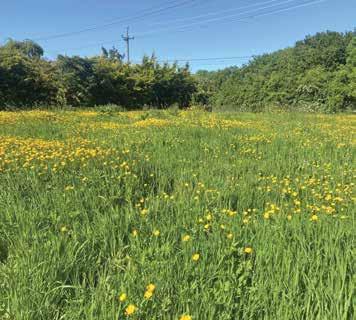
During her assessment, Evelyn expressed high praise for the extensive work already undertaken by the community to support native habitats. The standout highlight of the visit occurred estates native grass meadow, where a patch of Cuckoo Flower (Cardamine pratensis) was discovered in full bloom.
The visit is just the beginning for the estate’s biodiversity journey. The Hare’s Corner project team is currently compiling a bespoke report and tailored action plan specific to Lis na Dara, which is expected to be delivered to residents in the coming weeks.
The residents association extend a massive thank you to all the residents and Haggardstown Garden Centre & Landscaping who continue ensure the estate remains a welcoming, thriving haven for local biodiversity.
For more information on the initiative, visit theharescorner.ie.
with people taking one of the limited amount of disabled parking spots around the town or parking carelessly which causes blockages to wheelchair users.
“I’m here today with Cllr. Maeve Yore who has been a great advocate for the disabled in the council. We also have Susan Deerey who was recently appointed as the brand new Access Officer for Louth and her new role will provide support, assistance and guidance to people with disabilities accessing Louth County Council services which is fantastic to see.
This is our ninth year raising awareness for this issue
and thankfully we are making progress,” concluded John. Cllr. Yore said: “Make Way Day is about educating people and raising awareness about the difficulties that people with disabilities face.
“We have been getting great support from the Gardaí and we have the fabulous Community Garda Darragh Prior and Sgt Ronan Loftus here with us today.
“Today is all about educating and informing people about the challenges faced by people with disabilities. It’s tough enough being in a wheelchair without facing obstacles on the footpath too.”, stated Cllr Yore.
The Hare’s Corner Project is a dedicated space in Lis Na Dara for nature to thrive.
Garda Darragh Prior, Louth County Council Senior Executive Engineer Paddy Callan, Louth County Council Access Officer Susan Deerey, Louth County Council Executive Engineer Martin Hearty, Cllr Maeve Yore, Sgt Ronan Loftus with John Morgan and Jamie.
FOR SALE—Brand new Michael Kors
Ladies Runners. Size 37 White with gold trim. €100 ONO. Contact 086 3802257.
WANTED—All your old GAA, Dundalk, Irish programmes and Tickets, the older the better. Check you attics and your sheds. Contact Ger on 086 2630363 or GCProgrammes@gmail.com.
ATTENTION LANDLORDS—We supply furniture & Beds for any rental properties you have. Beds from €180, Bedroom Furniture Sets from €249 Call us today www.bedstore.ie, Coes Rd, Dundalk Tel 042 932 0927.
ROOM AVAILABLE for rent in large residential home. Own kitchen, sitting room, shower room and bedroom.
Separate from owner. May suit student/ professional person. Carrick road area Phone 087 9536395.
CHIMNEY CLEANER—The Clean sweep, clean & tidy, no dust. Brush & Vac. Also gutter cleaning. Contact - Cathal 087-2259799.
ADVERTISE YOUR SERVICE to over 60,000 readers for only €5 per week up to 20 words Phone Dundalk Leader 042 932 0888. WE CAN DISTRIBUTE your leaflets from €75 + vat per thousand Phone Dundalk Leader 042 932 0888.
GRIMLEY’S DUBLIN ST. DUNDALK— Televisions, TV aerials, satellite, Freeview & Saorview, new installations, sales, service & repairs. Free estimates 042 935 4343.
TAKE THE HASSLE OUT of your garden. I do it all. Grass cutting, Hedge Cutting, Weeding, Strimming, Power washing, Gutter Cleaning, Fence Painting, General DIY, Flat Pack Assembly, Removals. Contact Catriona 087 3172109.
ROOFING & BUILDING contractor available. Repairs and new builds. Fully insured. Contact Mark Carney on 087 1302040 for enquiries.
TREE SERVICES—Tree surgery, stump grinding, wood chipping & pruning. Conifer hedge reduction and ash die back removal. Fully Insured & Certified. Contact Chambers on 087 2750825 Email rchambers2008@ yahoo.ie.
QUALIFIED CARPENTER—Looking to transform your home.? I specialise in Architraves, Panelling, Doors, Flooring and all carpentry aspects. Contact Mark. R 083 4162364.
MAN WITH A VAN—Hedges, tree topping, painting, facia & Soffit, patios, concreting, garage clear-outs, outside taps. Call Kevin for a free & honest quote 089-4016728.
PAINTING SERVICES AVAILABLE— Interior and exterior plus Wallpapering, also sprayed and hand painted kitchens, all work carried out by professional trades men. Tel Brian 087 7558506.
PROPERTY MAINTENANCE— Repairs, building, plumbing, painting, roof repairs, tiling, bathroom refurbishments, plastering, gardening, power washing, PVC facia and soffits, Over 20 yrs experience. References available. Whatsapp or Tel 085762-3758 for quotation.
ALL-IN-ONE property maintenance, painting & decorating, general building maintenance carried out, domestic or commercial, gutter cleaning, dust free sanding, no job too big or too small, quality but affordable, contact Ian 0874158238.
REIKI VISIONS—Tera Mia Reiki and Seichem Master. Book your treatment today. Call or Whatsapp Sean on 087 4580129.
CARPET AND UPHOLSTERY CLEAN-
ING—Trusted for over 30 years. Expert care, sparkling results. Call Patrick on 0872492325 or visit www.carpetcleaningservices.ie
PAT THE PAINTER—Indoor & outdoor decorating. Wallpapering, Power Washing, Picture, Mirror and Curtain Pole Hanging, Painting Kitchen Units & Furniture, DIY. Free quotations Email patthepainter1@ gmail.com Mob 087 2951047.
DMC GARDEN Maintenance services. Hedges, shrub trimming, shaping or removal. Large lawns mowed ride on mower, strimming, weeding beds, moss removal, demolition and removal of old sheds, fencing etc and more. All works to a very high standard at keen rates. For free quote please call 087 7019178.
PLUMBER AVAILABLE—Bathroom renovations, Oil Boiler fitting and servicing, Attic Tanks and cylinder replacements. Can also install inside and outside taps etc etc. No Job too small. Contact Paul on 086 8897989.
ALL-SEASONS Gardening Services. Gardens cleaned and cleared, tree felling, hedge cutting, stone, gravel, chippings. Steam cleaning roofs & driveways. Roof repairs. Local, professional, fully insured Tel Sean 087 349 5477.
POWER WASHING—All your power washing needs patios, walls, work yards, driveways, domestic and commercial including Schools/creches, no job to big or 2 small Telephone Ian 087 4158238.
KEVIN McMAHON ELECTRICAL Dundalk, small household jobs, safe electrical approved Tel 087 2548221 after 5pm.
PLASTERING DONE to high standard. Small, internal jobs only. Contact Matt 086 8188277.
DIAMOND SHARPENING SERVICE—
Sharpening scissors, dog & equestrian blades, chef and household knives. Fast turnaround, Dundalk. Call/Text 085 130 6646 or find us on Facebook @ DiamondSharpeningService.
GRAVE CARE—We provide a reliable and caring service throughout Dundalk and surrounding areas. Grave Tending, Headstone Cleaning, Lettering Repainting, Flower and Wreath Placement and Regular Care visits available. - Caring for your loved ones’ final resting place - For enquiries please call 0892521646 or email grainne@ cherishgraves.com Follow us on Instagram cherish graves or check out our website www.cherishgraves.com.
REFACE YOUR KITCHEN/wardrobes. Transform your old kitchen units with a respray. 40 years + experience. Tel Shanlis Kitchens 087 9839695.
CHARA COUNSELLING—Twenty years’ experience, currently taking appointments. Supporting you with emotional intelligence for relationship issues, your mental health, grief, all addictions & past traumas. For a strictly private consultation call Martin today on 083 3402766.
HEALING AVAILABLE for skin conditions, migraines, sinus, hand foot and mouth, ezema. Contact Faith on 087 7188450.
WE CAN DISTRIBUTE your leaflets from €75 + vat per thousand Phone Dundalk Leader 042 932 0888.
GET FIT the fun way and learn to dance, the Waltz, Quickstep, Foxtrot and Jive, now taking place in the Lisdoo, Dundalk Tuesday’s from 8pm - 10pm, no partner required. First wedding dance lessons and private lessons also available. Contact 086 357 3271 for further information.
DRUM LESSONS INCLUDING BODHRAN—For adults & children aged 8 years upwards. One to one lessons. Phone 087 414 4228.
LOUTH COUNTY COUNCIL—We, Dagan Fleming & Caroline Ryder, intend to apply for planning permission for alterations and extensions to our existing two storey dwelling, new single storey domestic garage, new effluent treatment system / percolation area, new soakaways, alterations to the existing vehicular entrance with all associated site development works at Brohatna, Ravensdale, Dundalk, County Louth, A91 H998. The planning application may be inspected, or purchased at a fee not exceeding the reasonable cost of making a copy, at the offices of the planning authority during its public opening hours. A submission or observation in relation to the application may be made in writing to the planning authority on payment of the prescribed fee, €20, within the period of 5 weeks beginning on the date of receipt by the authority of the application, and such submissions or observations will be considered by the planning authority in making a decision on the application. The planning authority may grant permission subject to or without conditions, or may refuse to grant permission.
LOUTH COUNTY COUNCIL—I, Ciarán Byrne, intend to apply for retention and permission for development on lands at Fane Valley, Allardstown, County Louth. The development seeking retention permission consists of: (a) Retention of use of the site as a joinery workshop as farm diversification. (b) Retention existing timber cutting Shed No. 02. (c) Retention of existing commercial timber joinery workshop Shed 04; (d) Retention of an Existing single office and meeting room building and permission for use as ancillary to the joinery workshop; (e) Removal of existing temporary canteen, office block B, store building B and toilet facilities; The development seeking permission consists of: (f) Permission for Extension to timber joinery workshop Shed no. 04; (g) Alterations to and part change of use of Shed no. 01 from timber store to office and staff facilities building with elevational changes; (h) Removal of existing temporary canteen, office block B, storage building B and toilet facilities; (i) Provision of new car parking, EV charging points, bike store, yard areas with all hard and soft landscape works with external lighting, planting and boundary treatments; (j) Installation of a New effluent treatment system and percolation area; (k) New soakaways and attenuation systems; (l) All ancillary site development / construction works. The planning application may be inspected, or purchased at a fee not exceeding the reasonable cost of making a copy, at the offices of the planning authority during its public opening hours. A submission or observation in relation to the application may be made in writing to the planning authority on payment of the prescribed fee, €20, within the period of 5 weeks beginning on the date of receipt by the authority of the application, and such submissions or observations will be considered by the planning authority in making a decision on the application. The planning authority may grant permission subject to or without conditions, or may refuse to grant permission. c/o Bernard Dowdall (Agent)– MRIAIArchitect – Carrickedmond, Kilcurry, Dundalk, Co. Louth. Tel. (042) 9429558; (087) 6657148; E-mail – bernard@ dowdallarchitects.ie
LOUTH COUNTY COUNCIL—We, Roisin and Brendan McVerry, intend to apply for permission for a new dwelling house, new site entrance and associated site works as previously granted under Planning Ref. No. 211083 and 2360141 at 15 Village Green, Blackrock, Co. Louth. This planning application may be inspected or purchased at a fee not exceeding the reasonable cost of making a copy, at the offices of Louth County Council from 9.30am to 4.30pm Monday to Friday. A submission or observation in relation to the application may be made to the Authority in writing within a period of 5 weeks from the date of receipt by the Authority of the application and on payment of the prescribed fee of €20.00
LOUTH COUNTY COUNCIL—We, Darren Mulligan, and Ruth Hughes intend to apply for Full Planning Permission alterations to dwelling houses under construction and granted under ref: 2560670, the alterations include the conversion of roof space, increase in ridge height and associated alterations to roof design at Racecourse Road, Dundalk, Co. Louth. This planning application may be inspected or purchased at a fee not exceeding the reasonable cost of making a copy, at the offices of Louth County Council from 9.30am to 4.30pm Monday to Friday. A submission or observation in relation to the application may be made to the Authority in writing within a period of 5 weeks from the date of receipt by the Authority of the application and on payment of the prescribed fee of €20.00.
LOUTH COUNTY COUNCIL—I, Niamh O’Connor, intend to apply for Full Planning Permission alterations to dwelling houses under construction and granted under ref: 2560672, the alterations include the conversion of roof space, increase in ridge height and associated alterations to roof design at Racecourse Road, Dundalk, Co. Louth. This planning application may be inspected or purchased at a fee not exceeding the reasonable cost of making a copy, at the offices of Louth County Council from 9.30am to 4.30pm Monday to Friday. A submission or observation in relation to the application may be made to the Authority in writing within a period of 5 weeks from the date of receipt by the Authority of the application and on payment of the prescribed fee of €20.00
LOUTH COUNTY COUNCIL—I, Keith Ui
Chonghaile, intend to apply for Retention
Permission & Permission for development at Mullaghalin Road, Mullagharlin, Dundalk, Co. Louth A91 CTK8. The development will consist of: Retention of a 2.87m high block wall & piers to the north eastern boundary of the site and associated site development works. Permission for: 1. A new 2.4m high boundary wall to the south western boundary of the site. 2. A new 0.9m high boundary wall and 1.2m high metal railing to the North Western (front) boundary of the site. 3. Reconfiguration of the existing approved entrance serving the 2 existing dwelling houses with new piers and wing walls with railing. 4. A new domestic garage. 5. And associated site development works. This planning application may be inspected or purchased at a fee not exceeding the reasonable cost of making a copy, at the offices of Louth County Council, Town Hall, Crowe Street, Dundalk, from 9. 30 am to 4.30 pm Monday to Friday. A submission or observation in relation to the application may be made in writing to the planning authority on payment of the prescribed fee €20.00 within the period of 5 weeks beginning on the date of receipt by the authority of the application, and such submissions or observations will be considered by the Planning Authority in making a decision on the application. The planning authority may grant permission subject to or without conditions, or may refuse to grant permission. Signed: AMC Loss Assessors & Surveyors, Upper Faughart, Dundalk, Co. Louth. Tel. 0879529699. E-mail aidan@amcla.ie.
LOUTH COUNTY COUNCIL— We, Alternative Heat Limited, intend to apply for permission for development at this site on lands at Mullagharlin Townland and Haggardstown Townland, Dundalk. The proposed development consists of the following works: 1. The provision of a new manufacturing and assembly facility including production and storage areas at ground floor, main office area in adjoining 3 storey block consisting of office space, reception, meeting rooms, canteen, staff welfare facilities and circulation areas and production office facilities within adjoining 2 storey block. 2. The provision of a new service road with footpath and cycle lane connecting existing service road to new proposed service road as granted under planning reference 2560200. 3. Pedestrian and vehicular access and egress points along with HGV access and egress point onto the new proposed service road along with an additional proposed HGV access and egress point onto new proposed service road granted under planning reference 2560200. 4. The provision of associated car parking spaces along with provision for electric vehicle charging spaces. 5. The provision of a covered bicycle storage space. 6. Associated service yards which will cater for parking, loading along with associated security access barrier and skip storage. 7. Ancillary structures including for an ESB substation building, an external plant area, a security hut, a bin storage compound, smoking shelters and a forklift charging compound. 8. Provision of associated site lighting, security fencing, boundary treatments and gates. 9. The installation of PV panels at roof level. 10. The installation of associated façade signage, directional signage and an illuminated totem sign. 11. The provision of all hard and soft landscaping works and associated site works for service connections along with attenuation works. A Natura Impact Statement has been prepared and accompanies this application. The planning application together with the Natura Impact Statement may be inspected or purchased at a fee not exceeding the reasonable cost of making a copy, at the offices of the Planning Authority during it’s public opening hours. A submission or observation in relation to the application may be made in writing to the planning authority on payment of the prescribed fee of €20 within the period of five weeks beginning on the date of receipt by the Planning Authority of the application, and such submissions or observations will be considered by the Planning Authority in making a decision on the application. The Planning Authority may grant permission subject to or without conditions or may refuse to grant permission. Signed: Michael Fitzpatrick Architects (Agent) Main Street, Butlers Bridge, Co. Cavan H12 P2N8.
Dundalk Leader Local Democracy Reports
By Lauren Ross
Dundalk mobility hub scheme to go ahead after residents win changes Call for probation period for new council tenants in Louth
A NEW mobility hub scheme for Dundalk is to go ahead, but with five proposed sites dropped after councillors said residents’ concerns over some locations could not be ignored.
The National Mobility Hubs Pilot, brought forward by Louth County Council (LCC) and the National Transport Authority, had originally proposed 41 hubs across Dundalk and Blackrock, offering shared e-bikes, e-scooters and car-share vehicles.
Following public consultation, councillors in Dundalk Municipal District agreed to amend the proposal, removing five of the sites that had drawn concern locally.
The five locations now removed are Cluan Enda, Bellewsbridge Road/Fatima Park and Park View/ Park Villas in Dundalk, along with St Fursey’s Terrace and the Blackrock seafront location.
Under the proposal, the hubs would include shared mobility services including e-bikes, escooters, car share vehicles, Sheffield bicycle stands, e-scooter parking stands, information poles, dropped kerbs, road markings and small sections of footpath or pavement where needed. Six of the original sites were also proposed to include EV charging stations, with up to two 22kW plugs at each location.
The scheme is intended to make shorter journeys around Dundalk easier without always needing the car, however, councillors said the concern was not the pilot itself, it was whether some of the locations chosen made sense for the people living beside them.
According to LCC, 120 submissions were received during public consultation, including 117 from members of the public. It noted that 101 of those public submissions were identical, but signed by different individuals.
Concerns raised included the loss of green space, anti-social behaviour, loitering, litter, noise, safety, the impact on residential amenity and the proximity of some hubs to homes.
Though he was “happy” with most of the scheme, Cathaoirleach of Louth County Council, Seán Kelly he questioned the need for a hub at Bellewsbridge/Fatima Park when there were other locations nearby, adding the estate has around 140 homes and already has “too much going on” because of nearby schools and sports clubs.
“What is the point of public consultation?” he asked, if strong local objections did not lead to changes.
While welcoming the plan, Cllr John Reilly (FG) also raised concerns about Fatima with regards to secondary school traffic, adding there was daily “pandemonium” with buses and congestion there.
Cllr Maeve Yore (Ind) said she supported the pilot, but had “reservations about certain locations”. She also raised the issue of maintenance, saying some green areas may be council-owned but are often looked after in practice by residents themselves, with the council officials confirming that maintenance would be handled by the service provider, with performance targets included in the contract and monitored.
Regarding Blackrock, Cllr Shane McGuinness (FF) said he supported the scheme in principle, but raised concerns about locations where parking and space are already under pressure.
Cllr Ciarán Fisher (Ind) said he thought the plan “represents great investment” but voiced concerns about the use of e-scooters, in terms of speeding and safety.
He referred to previous motions regarding the use and regulation of e-scooters and said he was “cautious” of the council being seen to endorse something that may become a problem, particularly near schools where young people may be encouraged to use them to get to and from school.
“I would be willing to support it, but the pilot needs to be flexible enough and humble enough to step back if it’s a problem,” he said, adding that if issues came up around safety, speeding or nuisance, the council could “acknowledge it and fix it”.
Other councillors were keen that Dundalk would not lose out on the wider opportunity, with Cllr Marianne Butler saying, “This is a pilot, are there issues with it? Definitely, but I think we have to give it a go. I am glad we were picked, Drogheda were raging they weren’t!”
She also raised the possibility of e-cargo bikes being included for people who might use them to do their shopping and asked if ducting would be installed for electric vehicle owners to use.
Cllr Emma Coffey (FF) also welcomed the investment, but questioned the first phase of sites, noting that some appeared very close together while Clarke railway station was not included, despite being an obvious location for people arriving into Dundalk by train. She also questioned the strategy of including hubs in areas with a more elderly demographic, which she said “didn’t make sense.”
Cllr Kevin Meenan (SF) said most of the proposal appeared acceptable, but suggested that a small number of contentious locations needed further work rather than rushing the whole scheme through unchanged.
Officials said lessons would be learned from the first pilot scheme in Wexford, with service providers responsible for maintaining the hubs, adding that performance targets would be included in the service provider contract and monitored. The meeting also heard that hired vehicles would be fitted with speed limiters with a 20km/h limit.
A second phase will also look at other locations, including DkIT, WuXi, Dundalk Retail Park, Mount Avenue, Clarke Railway Station amongst others.
A CALL has been made for Louth County Council to consider a probation period for new tenants, amid concerns over anti-social behaviour in some estates.
Cllr Robert Nash (FG) raised the issue at the May meeting of Dundalk Municipal District as the council prepares to distribute around 1,000 new tenant handbooks, asking whether more could be done at the beginning of a tenancy to set expectations and deter serious anti-social behaviour.
He asked whether new council tenants are subject to a probationary period when they move into local authority homes, saying councillors are receiving calls from residents about anti-social behaviour, citing a “serious increase” in anti-social behaviour in private housing estates where councillors are now housing social tenants.
Council officials said vetting checks are already carried out as
part of the allocation process and that, depending on the outcome, the council may defer a housing decision for a period of time.
Cllr Nash said he accepted that background checks and vetting are carried out, but argued that a probationary system should be considered as an additional safeguard.
However, officials explained the council has a duty to house people and has to consider that applicants
can have different histories and circumstances.
The meeting heard that introducing a probation period would require a change to the council’s housing allocation scheme.
Speaking afterwards, Cllr Nash explained that though the scheme had only been recently updated, any proposal to amend it could still be brought through the Strategic Policy Committee process and he would continue to push for a probationary period to be considered.
He said that while he understands complaints or allegations must be dealt with through the proper council and due process, he believes there should be a stronger deterrent for serious anti-social behaviour in council properties.
Council to seek Irish Rail meeting amid concerns over Louth stations
LOUTH councillors are to seek a meeting with Irish Rail amid mounting frustration over a lack of answers on railway station issues across the county.
The matter was raised at the latest meeting of Louth County Council by Cllr Maeve Yore (Ind), who asked if the council could formally invite Irish Rail to County Hall to discuss both the future development of stations and current concerns in Drogheda, Dunleer and Dundalk.
The wider concerns include parking pressure at Dundalk’s Clarke railway station, calls, and long-running discussions around future rail infrastructure, including Dunleer and a potential north Drogheda station.
Cllr Yore said local representatives were not getting answers from Irish Rail and asked that a request for a meeting be sent at county level.
Her comments followed con-
cerns she had raised at the May meeting of Dundalk Municipal District, where she criticised what she described as a “generic and insulting” email response to Louth representatives.
She said at that meeting that the way Irish Rail was treating councillors was “unacceptable”, adding that representatives simply wanted to know what was happening.
Cllr Antóin Watters (SF) sup-
“For me, there should be a “zero tolerance” approach for serious behaviour such as drug dealing in council properties”, he said. ported Cllr Yore’s remarks, saying she was right to highlight the issue of generic replies being sent to elected representatives by Ministers and government departments.
He said a response he had received in relation to the Carlingford Greenway was “an insult” and appeared to be little more than a repeat of correspondence sent to him in February.
David Jones, Director of Services, said at the Dundalk meeting that he was not aware if a response had been received from Irish Rail in relation to parking capacity at the Dundalk station, with Cathaoirleach Cllr Seán Kelly (FF) clarifying at the full council meeting on May 18th that that no response had been received to date.
The Cathaoirleach added that given the lack of response, the council could now write to Irish Rail at county level requesting a meeting.
Road markings sought amid cycle lane concerns on Jocelyn Street
A CALL has been made for faded road markings on Jocelyn Street in Dundalk to be renewed amid concerns over driver behaviour and cyclist safety.
Cllr Ciarán Fisher (Ind) raised the issue at the latest Dundalk Municipal District meeting, saying cars are being driven into cycle lanes along the street and said a number of line markings in the area have faded and should be renewed, including markings on the approach to Jocelyn Street from Castle Road, Jocelyn Drive and Distillery Lane. Council officials said road safety marking works are underway and that the location raised was noted.
Five proposed sites have been dropped from the plans.
Cllr Robert Nash.
Cllr Maeve Yore.
Dundalk Leader Local Democracy Reports
By Lauren Ross
Blackrock swimmers left without regular water tests councillor warns
PEOPLE are swimming at Blackrock every day, yet the area is not being tested as an official bathing water, Louth County Council has been told.
Cllr Sionnan McCann (SF) raised the issue at the May meeting of the council, saying Priest’s Beach has always been used by swimmers and that its lack of official designation does not change that reality.
“I know we don’t test it because technically we don’t see it as bathing water, but there are people swimming on Priest’s Beach every single day,” she said.
“You’ll see them every morning coming into warm weather. This isn’t something that has just started. People have always swam at Blackrock.”
Cllr McCann asked if the council was “sticking its head in the sand” by not testing the water.
“I’m just wondering, just because we say it’s not a designated bathing water area doesn’t mean people aren’t swimming there,” she said.
Referencing concerns reported in the area from last summer in relation to water quality and seaweed, she told the meeting that it “doesn’t look good” when the council “don’t really have anything to come back to those
people with because we aren’t testing it.”
Cllr McCann said she believed it should be the council’s responsibility to make sure the water is clean, and said she was of the opinion testing should be undertaken at Blackrock Beach because “it’s a massive issue.”
Responding, David Hanratty, Acting Director of Services, Operations and Environment Delivery with Louth County Council, said monitoring is carried out under the marine monitoring programme, involving bodies including the EPA, National Parks and Wildlife Service, Marine Institute and Inland Fisheries Ireland.
He told the meeting that the status of the water in the area is
considered “moderate” and that the council had seen no evidence or information to suggest it is polluted.
“We have seen no evidence or information to say water is polluted there,” he said, adding Blackrock is not a designated bathing area and that a public consultation process had already taken place.
“There’s various elements, not just water quality, like infrastructure, amenity and safety of the bathing area,” he said.
Mayor of Drogheda Michelle Hall (Lab) further raised concerns about seaweed which washed up on Blackrock beach last summer, saying she had read reports from Brittany in France, where decomposing seaweed has been linked to health and safety concerns, and asked whether seaweed could be tested “to make sure it isn’t the same thing” if a similar build-up happened locally again this year.
Mr Hanratty said he was not familiar with the specific case referenced by Cllr Hall, but invited her to send on the details so it could be looked into further.
“There are many different types of seaweed with many characteristics and we have to be sure we are comparing like with like,” he said.
Council urged to finish Chapel
Pass resurfacing in full
RESIDENTS in Blackrock could be left waiting for the full resurfacing of Chapel Pass, with Cllr Shane McGuinness (FF) calling for what he described as an old “historic” route to be made a priority at the May meeting of Dundalk Municipal District.
Cllr McGuinness said the wellused walkway had recently been recently undergoing major service work including water, electricity, communications upgrades and works by the council.
The route, traditionally used by local people walking to Mass, remains a busy link for residents travelling between nearby estates and the church.
While Cllr McGuinness wel-
comed the investment in new services, he said he was disappointed that current resurfacing plans appear to cover only half of the pass. He explained the issue was not with the upgrade works themselves, but with the possibility that one section could be reinstated while the remainder is left unfinished due to a lack of available funding.
He said residents could accept a phased approach if there was a clear commitment that the rest of Chapel Pass would be completed “in its entirety” and he wanted Louth County Council to treat the remaining section as a priority and ensure the job is not left “on the long finger.”
Residents should not
up one day” to
“wake
drones outside homes councillor warns
RESIDENTS should not have to “wake up one day” to delivery drones outside their homes without public consultation, a Louth councillor has warned, after concerns were raised about how any future drone delivery service in Dundalk would be regulated.
Cllr Sionnan McCann (SF) raised the issue at a recent Louth County Council meeting, asking whether the local authority had made contact with a drone delivery company about any potential plans for the town.
She said she understood the chief executive of the company involved had made comments about bringing the service, which uses small aircraft to deliver items such as food, groceries and other goods, to Dundalk.
She told the meeting she was aware of concerns being raised by a community group in Dublin in relation to drone activity, which she said had “seen backlash in all of those respective areas”.
Cllr McCann said her concern was that councils could end up reacting to new technology only after it had arrived, rather than dealing with the planning, regulatory and community issues in advance.
“My perspective is that the legislation doesn’t really exist around drones to enforce it in a way that would be beneficial,” she said.
“I would just hate to see us react to this, as opposed to being proactive with what’s coming down the line.
Parking
“I wouldn’t like to wake up one day and see a drone flying outside my house, or have any of my constituents tell me that had been happening without any public consultation.”
Replying, Director of Services, Thomas McEvoy said the company referred to was Manna Drone Delivery, which he described as an Irish-owned company operating in Ireland and internationally. He confirmed that while Louth County Council had not approached the company, it had met representatives of Manna at a Chamber event two weeks previously.
Addressing concerns, he told members that airspace is regulated by the Irish Aviation Authority, and that any service operating in the air would require authorisation from the aviation regulator.
However, Mr Mc Evoy said any premises from which a drone delivery service would operate would require planning permission.
Cllr Ciarán Fisher (Ind) strongly supported the concerns raised
by
Cllr McCann, saying he believed there was a gap in legislation around the day-to-day impact drone deliveries could have on residents.
He said he had read accounts from people in Cork who said drones were not always simply “in and out in 10 seconds, “that’s not the reality” adding it was more like 30 seconds to a minute of what he described as “loud strimming noise” near a house or window, which he said would happen every time neighbours order a product.
He also pointed to reports of disturbances with “children being woken up or animals going absolutely berserk inside the house and dogs going crazy.”
Referencing the gap in legislation, he said he was strongly in favour of a public consultation if the issue were to affect Dundalk.
Mr Mc Evoy agreed that legislation may need to be examined as drone delivery is a new and emerging service.
“This is a new service and, when there’s a new service, legislation has to try to catch up with technology and innovation,” he said. adding that this was a matter for the Oireachtas.
He reiterated that planning permission would be required for any development taking place on land in connection with such an operation.
“Any proposals for an operation in Louth will require planning permission from us,” he said.
gap raises EV charging questions in Dundalk
A COUNCILLOR has asked Louth County Council to clarify what options are available to tenants and residents who buy electric vehicles but do not have a parking space outside their home.
At the May Dundalk Municipal District meeting, Cllr Robert Nash (FG) raised the issue in relation to a case on Peter Street, Dundalk where he said new residential accommodation had been developed without dedicated parking spaces
or electric vehicle charging points. He said one resident now has an electric car but no obvious way to charge it from their home.
Cllr Nash asked whether a council tenant would need permission from the local authority to install an EV charger,
and whether a road opening licence would be required if works were needed across a footpath.
“This is probably going to get more common with the increase in electric cars,” he said.
Cllr Nash said the issue raises wider questions around planning, park-
ing and EV infrastructure, particularly in older streets and new developments where homes may be approved without private parking, while residents may later face practical difficulties if they decide to move to electric vehicles. He asked the council to set out the proper procedure for anyone in that situation, including whether council permission is required. Council officials said they would look into the issue and come back with a response.
Cllr Sionnan McCann.
Cllr Shane McGuinness.
ALL TYPES OF BLINDS SUPPLIED & FITTED CHOOSE IN THE COMFORT OF YOUR OWN HOME, WE CALL, MEASURE AND SHOW YOU SAMPLES The Professionals Reaghstown, Ardee (Over 30 years in business) Whatsapp/Text/Phone 087 2134490 E:dave@theprofessionals.ie We
Monday 1st June: Bank Holiday; Monday 8th June: Thai Chi with Alan; Monday 15th June: Day trip to Banbridge and Newcastle with evening meal in the Carrickdale. Bus leaves at 10am sharp. Any queries call Anne on 087 7850917. Dundalk Active Retirement starts at 2:30pm sharp in Carroll Mead Hall in Pearse Park. All welcome.
Pilgrimage To Garabandal
PILGRIMAGE Garabandal Spain - Monday June 15th, 2026 to Friday, June 19th, 2026. Flying Via Aer Lingus – Pilgrims have to book their own flight Dublin to Bilbao. Hotel Accommodation, bus transfers, tour guide and full board – Sharing 470 Euro, Single Room 570 Euro. Everybody welcome. Enquiries: Laurena0851833110.
Vintage Car Show For MS
THE Multiple Sclerosis Ireland Louth Voluntary branch is holding their annual Vintage Car Show next Saturday, May 30th, from 10am-4pm at the Ardee Parish Centre, Co. Louth. The event is held in memory of the late Sinead McArdle who was the driving force of the branch.
There will be entertainment, a car boot show and a raffle on the day! All are welcome to come along and join in the festivities. Donations are especially welcome for the car boot sale. For further information contact Ronny on: 087 2243868.
Knockbridge Annual Road Run
KNOCKBRIDGE Vintage Club is holding its annual Road Run and Coffee Morning on Sunday 31 May. The day will kick off at 11.00am with a Coffee Morning in Knockbridge Community Centre. The Road Run will depart at 1.30pm. Cars and tractors are all welcome to join the Road Run. Afterwards, the convoy will return to the Community Centre for a BBQ and entertainment. All proceeds raised on the day will be donated to local charities.
Preparations are also underway for Knockbridge Vintage Club’s 20th Anniversary Vintage Rally on Sunday 23 August. Anyone interested in getting involved, helping with preparations, or volunteering on the day is encouraged to contact 087 220 4261 or any member of the committee.
Dundalk Poetry Festival
DUNDALK Poetry Festival returns this year on Friday 29th May and Saturday 30th May. Festival attendees can look forward to poetry readings, workshops, live music and a lively open mic night.
On Saturday 30th May, Dundalk Writers are delighted to welcome Annemarie Ní Churreáin and Ron Carey. Annemarie is a poet from the Donegal Gaeltacht and has won many awards. Ron is an award winning poet from Limerick but based in Dublin. He began writing seriously in his sixties. Both poets will read from their collections in Dundalk County Museum at 2pm on Saturday 30th May. Traditional musician Róisín Ward Morrow will perform at this reading.
Later that evening at 8.00pm in the Spirit Store, a Poetry Open Mic will bring together visiting festival poets and members of Dundalk Writers. Music by North Louth band Ridibundi.
A highlight of this year’s festival is the special opening event in Roe River Books on Friday 29th May at 5 30pm. This events celebrates Seamus Heaney’s groundbreaking book North. There will be readings and reflections by visiting poets. This will be followed with a reading by Fermanagh poet Trish Bennett. Trish is a seasoned performer with an entertaining style. Music will be performed by Ines Tola. Dundalk Writers are grateful to their supportive partners: Louth County Council, Visit Louth, County Museum Dundalk and Roe River Books, Spirit Store.
Intercultural Football Tournament
REGISTER now for All Ireland Intercultural Football Tournament. The countdown begins! We are excited to officially launch the All-Ireland Intercultural Football Tournament & Family Fun Day 2026 - a vibrant celebration of football, culture, family, diversity, and community spirit across Ireland.
Saturday, 18th July 2026, Dundalk Sport Centre, 9:00am - 6:00pm. Register
Today: https://linktr.ee/aifsportireland.
Football Team Registration; Family & Individual; Community Stalls & Vendors; Sponsors & Partners; Volunteers & Cultural Groups.
This is more than football. It is a space where people from all cultures and communities come together to connect, celebrate, and belong.
A place where: families create memories; cultures connect; friendships begin; communities unite through sport.
Football Tournament; Live Music & Cultural Performances; Food & Community Stalls; Family Fun Activities; Networking & Community Connection; A Celebration of Unity Through Sport
We are now welcoming: Football Teams; Families & Individuals; Vendors & Community Stalls; Sponsors & Partners; Volunteers & Cultural Groups.
Registration Deadline: 7th July 2026. aifsportireland@gmail.com; 087 146 0980. One Game. One Family. One Community.
Statement from Erin McGreehan
on
the suspension of the Carlingford Lough Ferry Service
I AM deeply disappointed by the confirmation that the Carlingford Lough Ferry service will not operate during 2026. The ferry has become an important tourism and community link between Counties Louth and Down since it first launched in 2017, supporting local businesses, tourism operators and visitors on both sides of Carlingford Lough.
This is undoubtedly a setback for the wider Cooley Peninsula and Mourne region. However, we also have to be honest about the longterm reality.
The service, while hugely valued, has struggled to achieve the level of commercial viability needed to sustain yearround and long-term operations without ad-
ditional public support.
Over recent months, I have been working closely with Louth County Council, the Shared Island Unit, and in particular with Minister Peter Burke to progress a proposal that could finally provide a sustainable future for this vital cross-border route.
The proposal being advanced by Louth County Council is centred around a PSO-style model — similar to
Five music venues in Louth to receive up to €20,000
MUSIC venues in Louth will receive funding as part of the Grassroots Music Venues Support Scheme to support emerging local musicians, said a Fine Gael TD.
Following a pilot scheme in 2025, an increased fund of €1 million has been provided in funding in 2026 to both support grassroots music venues and to showcase the talent of emerging artists across Ireland.
Sixty venues around the country have been offered funding of up to €20,000 from the Scheme, an increase from the 34 venues supported in 2025. In addition, grant recipients include venues platforming Irish comedy and comedians.
Fine Gael Minister for Culture, Communications and Sport, Patrick O’Donovan said:
“Our grassroots venues are central to nurturing emerging artists and providing them with an opportunity to hone their talent, and it is very important that we recog-
nise their contribution to the live performance industry, particularly given the challenges these venues face.
Deputy Paula Butterly said. “This increased funding will continue to support small, established grassroots music venues to showcase the talent of emerging musicians from Louth and across the country.
“This is a great opportunity for musicians who are starting out in Louth in their playing careers to get the exposure and experience of performing in their local venue.
The venues in Louth receiving funding are: Spirit Store, Dundalk; Toales Bar, Dundalk; McHugh’s Public House, Drogheda; Mo Chara, Dundalk; Odd Mollie’s, Drogheda.
“In particular, I’m pleased to see funding awarded to a number of venues outside of our major cities. We have a rich talent base and it’s wonderful to see them being encouraged to develop their craft through this funding, Deputy Butterly concluded.
the lough. It is clear that without structured government partnership and support, services of this nature face enormous challenges in remaining viable.
public service obligation supports used successfully in other transport sectors — which would recognise the ferry not simply as a private commercial venture, but as critical tourism, regional connectivity and economic infrastructure for the entire Carlingford Lough region.
I believe that approach offers the best opportunity to secure a stable, sustainable and long-term future for ferry connectivity across
The Carlingford Lough Ferry has been much more than a transport link. It has been part of the identity and tourism offering of the region, connecting communities, supporting hospitality businesses and showcasing one of the most beautiful natural landscapes on this island.
I will continue engaging intensively with the Minister, the Shared Island Unit and all stakeholders to ensure every possible avenue is explored to restore a sustainable ferry service for the future.
Guilty of theft charges
A MAN who pleaded guilty to theft charges at Dundalk District Cout was sentenced to seven days in prison.
David Ward of Clifden House, Ravel, Dunleer, admitted taking goods to the value of €2.40 from Londis, Castletown Road, Dundalk, on May 27th, 2025. Court Presenter Richie Browne stated that the goods were not recovered.
Solicitor Paula Tiernan stated that her 36-yearold client, who is currently serving a prison sentence, regretted the incident and wanted to deal with it as soon as possible.
Judge Stephanie Coggans heard that the defendant had a number of previous convictions for theft as she convicted and imposed a one-week sentence.
QUIZ
1—Who recently broke the record for most assists in the Premier League?
2—Saint Petersburg, Stockholm, Helsinki and Riga are all cities situated on which sea?
3—Which film has the following as its last line - “I do wish we could chat longer, but... I’m having an old friend for dinner. Bye.”
4—What is Tenzing Norgay best known for?
5—The Corrs parents played music around Dundalk under the name ‘Sound Affair’ for many years. Can you name the first names of those parents?
6—Which comedian starred in the 2009 film “Bruno” and is known for his satirical characters such as Ali G and Borat?
7—St Christopher is generally considered to be the Patron Saint of what/who?
8—What is the capital city of Kenya?
St Francis NS pupils celebrate First Holy Communion
A TOTAL of 37 pupils from the two 2nd classes at St Francis NS Blackrock made their first Holy Communion at St Oliver Plunkett Church on Saturday.
After the mass, all the pupils and their families attended a reception party in the school hall, hosted by the Parent’s Association, before going on
to their private family celebrations.
Kavanagh Photography.
9—Generally seen on a dating app/ad what do the initials GSOH stand for?
10—Which famous singer (now deceased) is often attributed with the quote ‘“Life is what happens to you while you’re busy making other plans.”?
ANSWERS
Alongside Sir Edmund Hillary, he became the first person to climb to the summit of Mount Everest. 5— Jean and Gerry Corr, 6—Sacha Baron Cohen. 7—Patron Saint of Travellers/Motorists, 8—Nairobi, 9—Good Sense of Humour, 10—John Lennon. The Stinker: Waterford Utd, Derry City, Sligo Rovers and Galway Utd.
The Stinker—The League of Ireland Premier Division consists of ten teams. Six of these teams are in Leinster. Can you name the four outside Leinster? Bruno Fernandes (Man Utd), 2— Baltic, 3—Silence of the Lambs (Said by Hannibal Lecter) 4—