FIANNA Fáil TD for Louth Erin McGreehan has called for immediate clarity from the HSE on the cost of the enhanced influenza vaccine for people aged 65 years and older. Her call follows reports that the vaccine was not offered this season because it was “not deemed costeffective”.
The enhanced vaccines contain an additional ingredient known as an adjuvant that boosts the immune response compared with standard vaccines.
Deputy McGreehan said that influenza cases are doubling nationwide and more than 500 people are currently hospitalised with
flu. She stressed that “every measure should be taken to reduce pressure on hospitals”.
Speaking she said:
“The lack of transparency around the cost of these vaccines is extremely concerning. It leaves too many things open to speculation, particularly whether the potential additional costs of hospital overcrowding were fully considered.
“I fully appreciate that the health service has finite funding and resources must be allocated responsibly. But without knowing the cost offered to the HSE for the enhanced vaccine we are left with speculation rather than informed decision-making.
Continued on Page2
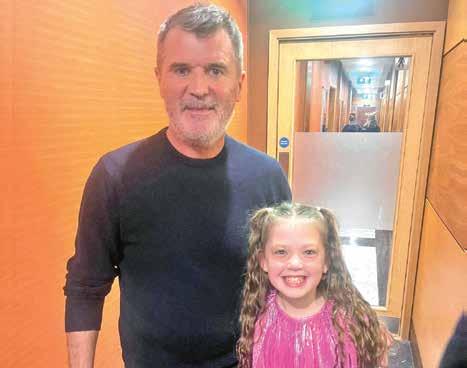
That’s her job! Lily O’Hare met Irish soccer legend Roy Keane after her performance on the Late Late Toy Show stage in Dublin on Friday evening.
“Clarity needed on how HSE costed ‘enhanced’ flu vaccine”
Continued From Page 1
A Health Information and Quality Authority (HIQA) report last year estimated that switching to a adjuvanted vaccine for people 65 years and older, rather than the standard flu vaccine, may be the best use of resources.
However, the best value option would depend on the price the HSE would need to pay for each type of vaccine and these prices are
confidential.
Deputy McGreehan continued:
“If the cost was only marginally higher it would be completely morally unacceptable not to provide a vaccine that is proven to offer enhanced protection and to leave our hospitals to face the brunt of the flu season without adequate measures in place, especially when we know these vaccines offer stronger protection for older adults and could reduce the
Clayotic, all but chaotic! Air-drying and non-messy, the first Irish brand of modelling clay, celebrates 15 years in business. Folks, if you ask for Play Dough on your Santa’s list, you’ll get the wrong stuff!
Better writing down CLAYOTIC!
Only available online on www.Clayotic.ie and at the Buttercrane Shopping Centre*, in Newry, from Saturday 13th to Tuesday 23rd of December. *1£ for 1€
‘MISTY ’
Still Missing/Stolen from Bachelors walk area, for over two years now.
If anyone has ANY information could they please contact: 089 956 0171
He is sorely missed and just wants to be home.
SUBSTANTIAL REWARD OFFERED
need for hospital beds.
“Transparency is essential if we are to understand whether the correct choice was made.”
Deputy McGreehan said that with evidence showing enhanced vaccines provide greater protection it must be established whether the HSE had access to them at a price that would have been considered reasonable under HIQA’s cost-effectiveness framework.
“We need clarity on the figures. What was the price? What mod-
elling was used? Were all factors, including the cost of additional hospital capacity, taken into account?
“Without this information we cannot evaluate whether the decision not to offer the enhanced vaccine this winter was the right one.”
The HSE states that the effectiveness of standard IIVs (An IIV vaccine (Inactivated Influenza Vaccine) is a type of flu shot containing killed (inactivated) flu viruses, delivered via injection,
that teaches your immune system to fight the flu without causing the illness.) can be suboptimal in certain population groups. As a result, enhanced influenza vaccines have been developed that aim to improve vaccine effectiveness.
When asked by the Dundalk Leader to provide clarity as to why the enhanced vaccine was not being issued a spokesperson stated ‘enhanced vaccines for older adults did not meet the cost-effectiveness criteria set out at
the HTA at the prices offered.
“The selection of vaccines for the HSE influenza vaccination programme was informed by recommendations from the National Immunisation Advisory Committee (NIAC), the HIQA Health Technology Assessment (HTA) and Department of Health policy and was carried out in accordance with HSE procurement processes. The flu vaccine is available now and it reduces risk of serious illness and death from
influenza. We urge all people who are eligible to get vaccinated as soon as possible.
“This year, enhanced vaccines for older adults did not meet the cost-effectiveness criteria set out in the HTA at the prices offered.
“All influenza vaccines used in the HSE programme are safe and effective and comply with WHO recommendations and NIAC advice, and therefore we continue to encourage all those in recommended groups to avail of the influenza vaccine. Enhanced vaccines may offer additional protection in older age groups. However, influenza related complications including hospitalisation patterns, depend on a wide range of factors. These include the specific influenza strains circulating, the effectiveness of the vaccine, timing and intensity of the flu season, overall vaccine uptake and co-circulation of other respiratory viruses such as RSV and COVID-19,” concluded the statement.
Lily wows on Toy Show stage
By Kate Pritchard
LILY O’Hare, from Kingswood, Blackrock Road, Dundalk, wowed the Late Late Toy Show with a pitch perfect performance of the Rose and Bruno Mars hit ‘APT’ on Friday evening. The ten-year old who is no stranger to the stage thanks to her performances with S.O.N.G and local dance group Funky Feet looked right at home as she gave an energetic performance of the smash hit song.
Speaking with the Dundalk Leader, Lily’s mother, Kirsty, said her daughter took the experience in her stride while describing her as a “natural born performer”.
“Before the performance, Lily was not at all nervous,” revealed Kirsty. “She was excited for what was to come as she loves being on stage and performing. All of her relatives and friends from her primary school, St Francis N.S, were watching, as well as her dad and two siblings.
“Lily was able to send a message to all her loved ones after her performance with a wink to the camera, and was absolutely beaming afterwards”.
“We were told that there were over 4000 kids auditioning so as not to get our hopes up too much but to be honest we were just delighted to be called up at all. We went up to Dublin for the audi-
tion at the start of October and then we got another call at the end of October asking us to come back for a second audition.
“It was probably the start of November when we got the amazing news that Lily would be performing on the Toy Show and it’s just been full on excitement since then. Lily loves performing and recently played Molly the orphan in S.O.N.G’s production of Annie having also starred in Matilda earlier in the year. She has been a member of Funky Feet Dance Group since she was three and I have to say Stacey Murnaghan who runs Funky Feet has been amazing with her.
“After her performance she got to meet all of the celebrity guests in the green room which was just
the icing on the cake of a great day. Lily met and got pictures with Roy Keane, Patrick Kielty and the lead singer of Kingfisher, Eddie Keogh. Patrick Kielty couldn’t have been nicer. He was interacting with all of the children during rehearsals and creating a fun and lighthearted atmosphere”.
“After the performance, Lily was on cloud nine, absolutely beaming about her time on camera and fantastic experience on the Toy Show. The phone was hopping with family and friends messaging me to give their support and congratulations both before and after the show.
“On Sunday, the whole family got together and rewatched the show as Lily didn’t really get to watch it on Friday due to the excitement of the perfor-
mance and the hustle and bustle of the green room. Myself, my husband Barry, Lily, her eight-year old brother Finn and seven-year old sister Molly all watched it on Sunday evening at home and it was just very exciting to see Lily on the TV.
“All in all its been a fantastic year for Lily as she was also called up the Maureen V Ward talent agency in Dublin so things are going great for her. I was also a member of Funky Feet when I was a kid so I suppose Lily gets her love of the stage from me. She is still in her little Toy Show bubble and probably will be for a while. We are all so proud of her and it is a day we will remember forever,” stated Kirsty.
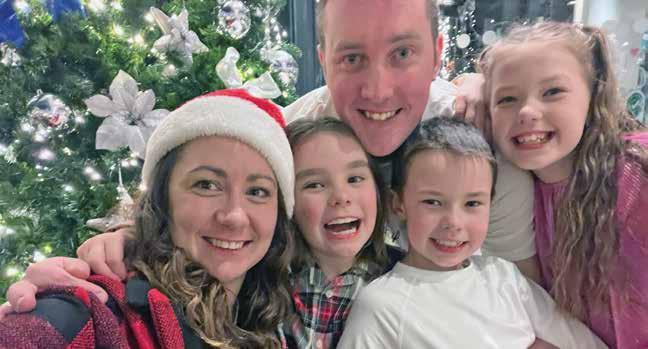
Kirsty and Barry O’Hare with their three children Molly, Finn and Lily.
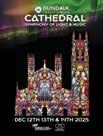
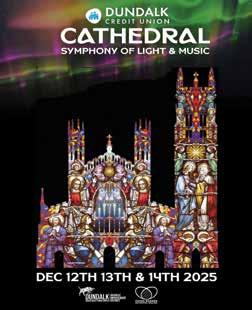
Spectacular Symphony of Light and Music to illuminate Saint Patrick’s Cathedral
‘CATHEDRAL - A Symphony of Light and Music’ will transform the iconic facade of St Patrick’s Cathedral into a kaleidoscope of colour, imagery, and motion - a vivid celebration of the cathedral’s enduring role as a place of peace and reconciliation in the heart of the community.
This three-night open-air experience showcases the power of music and creativity to inspire peace, and is made possible by the support of main commercial partner Dundalk Credit Union in association with Dundalk BIDS, The Cross Border Orchestra of Ireland and St Patrick’s Cathedral.
The majestic audiovisual shows will take place on Friday 12th (6 - 7pm), Saturday 13th (5 - 6pm) and Sunday 14th of December (4.30 - 5pm and 6.45 - 8pm).
Audiences of all ages are invited to gather for this free community
celebration where light, architecture, and music combine to create an unforgettable festive experience in the centre of Dundalk. Attendees are encouraged to dress warmly and arrive early to enjoy the atmosphere and secure the best viewing points.
Adding to this spectacular visual display, on Sunday a magnifi-
cent concert by the internationally acclaimed Cross Border Orchestra of Ireland (CBOI), renowned for its musical excellence and its mission of peace, will take place in the Cathedral. This ticketed event fully sold out in record time, which is a testament to these exceptionally talented young musicians from across the island
of Ireland.
Founding Director of CBOI, Sharon TreacyDunne said, “We’re so thrilled to bring our Christmas concert ‘Peace & Light’ to St. Patrick’s Cathedral, Dundalk this year, especially as we celebrate the 30th anniversary of the Cross Border Orchestra of Ireland. Billy Doyle, CEO of Dundalk Credit Union, added “Christmas is a time for celebration, reflection and remembrance. We hope this event will draw people together to enjoy the spectacle of light and music at St Patrick’s Cathedral, and also to step inside to light a candle for the loved ones our community has lost this year. We are incredibly proud to support an event that celebrates peace, unity and the enduring sense of community that defines the North East.”
CHRISTMAS MASS TIMES for the Dun Dealgan Pastoral Area
ST PATRICK’S
CHURCH
CAROL SERVICE
21st December 7pm
Confessions 20th to 24th Dec
After all Masses; Also Christmas
Eve 12 Noon to 2pm
CHRISTMAS EVE CAROLS
8.30pm Mass at 9pm
CHRISTMAS DAY
9am and 11am
ST NICHOLAS
CHURCH
Confessions 20th to 24th Dec
After all Masses; Also Christmas
Eve 12 Noon to 2pm
CHRISTMAS EVE CAROLS
7.30pm Mass at 8pm
CHRISTMAS DAY MASSES
8.30am, 10.30am and 12 Noon
ST JOSEPH’S
REDEMPTORIST
Confessions 22nd, 23rd and 24th Dec 10am to 12 Noon and 4pm To 6pm
CHRISTMAS EVE
MORNING MASS
8.30 and 9.30am
VIGIL MASS CAROLS
11.30pm Mass 12 Midnight
CHRISTMAS DAY
9.30am, 11am and 12.30pm
HOLY FAMILY CHURCH
Confessions 20th to 24th Dec
After all Masses; Also Christmas
Eve 12 Noon to 2pm
CHRISTMAS EVE
4pm Children’s Mass
Carols 6.30pm
Mass At 7pm
CHRISTMAS DAY
10.30am and 12 Noon
HOLY REDEEMER
CHURCH
Confessions 20th to 24th Dec
After all Masses; Also Christmas
Eve 12 Noon to 2pm
CHRISTMAS EVE CAROLS
5.30pm Mass at 6pm
CHRISTMAS DAY
10am and 11.30am
ST MALACHY’S
FRIARY CHURCH
Confessions 23rd Dec
10.30am to 12 Noon
Wednesday 24th 11am to 1pm and 3pm to 5pm
CHRISTMAS EVE
Carols 8.30 pm; Mass 9pm and 12 Midnight
CHRISTMAS DAY 8am, 10am, 12 Noon
ST STEPHEN’S DAY Mass 10am Only
Wishing all Parishionersour a Happy Christmas and Prosperous New Year - Stay Safe
THE MARIST
CHRISTMAS EVE CAROLS
6.30pm Mass 7pm
CHRISTMAS DAY MASS
7am and 10am
26th, 27th, 28th No 7am Mass 27th 7pm Mass
Confessions 5pm
ST OLIVER PLUNKETT
BLACKROCK
CHRISTMAS EVE CAROLS 2.30pm Mass 3pm Carols 5pm Mass 5.30pm
CHRISTMAS DAY MASS 12 Noon
ST FURSEYS
HAGGARDSTOWN
CHRISTMAS EVE CAROLS 6.30pm Mass 7pm
CHRISTMAS DAY 9am and 10.30am
Penitential Service 10am
Saturday 20th Dec
Dundalk teaching graduate receives top award
PRIMARY Education graduate, Jason Finnegan, from Dundalk, had double cause for celebration after achieving ‘top of his class’ status at the 25th annual Hibernia College conferring ceremony, held at Dublin’s Convention Centre recently, and at which the Minister for Further and Higher Education, Research, Innovation and Science, James Lawless TD was guest of honour.
In addition to receiving his Masters qualification, Jason was honoured with the Research Prize for achieving the highest overall grade in the Research module of his cohort.
A teacher at Gaelscoil Dhún Dealgan, Jason was one of what was a record number of over 1,000 graduates from all 26
counties to qualify with Masters in Primary and Post-Primary teaching, and, for the first time, a Masters or Postgraduate Diploma in Inclusive and Special Education, or a BSc in Nursing.
Congratulating the graduates and acknowledging the remarkable achievements of each and every one of them, Dr Mary Kel-
ly, President of Hibernia College Group, emphasised that those gathered had demonstrated exceptional dedication and resilience throughout their studies. She affirmed her confidence that “each graduate will go on to make a vital and valuable contribution to their chosen profession”.
Jason Finnegan pictured celebrating with his girlfriend Mary-Jane Mulligan at Dublin’s Convention Centre during the 25th annual Hibernia College Conferring ceremony
Licensing and the Law: Who decides what opens on your street?
By Darren Crawley
IT’S the most wonderful time of the year for so many and we are now in the real countdown to Christmas. This is the time where Dundalk’s streets begin to glow with lights, decorations, and the bustle of shoppers and social gatherings. Pubs fill up, restaurants extend their bookings, and takeaways and latenight venues experience their busiest weeks of the year. Yet behind the festive activity lies a complex web of Irish licensing, planning law, and local regulation that determines which businesses can operate, when they can open, and how they must run.
It’s a system most people rarely think about, until a new takeaway opens near their home, a pub seeks later hours, or a vacant building suddenly becomes a nightlife spot. With December bringing a surge in hospitality activity, now is the ideal time to understand who actually has the authority to shape the business landscape of Dundalk.
In Ireland, the first and most important regulatory layer is planning permission—decided in Dundalk by Louth County Council. Before any business can open its doors, it must have the correct planning use class. This
determines whether a building can become a pub, a restaurant, a takeaway, a retail shop, or stay residential.
This is particularly relevant in the run-up to Christmas, a time when:
vacant units in the town centre may seek temporary or “pop-up” permissions; hospitality venues may look to expand or change use to meet seasonal demand; and extra scrutiny is placed on noise, traffic, and late-night activity as streets become busier.
Changing a unit from retail to takeaway, for example, is not automatic—it requires explicit planning approval. Likewise, turning a traditional pub into a late-night venue would almost certainly need updated permission and public consultation.
Dundalk’s Local Area Plan guides these decisions, promoting a lively town centre while protecting residential districts such as Avenue Road, Blackrock Road, Bay Estate, Muirhevnamor, and Castletown from commercial creep.
The festive season is when alcohol licensing comes into sharper focus. Unlike planning permission, alcohol licences are granted by the District Court, with Gardaí and fire officers playing a major role.
To secure a pub licence, late bar exemption, or restaurant wine licence, a business must show:
the premises complies with planning and fire safety rules; the operator is a fit and proper person; and there are no Garda objections regarding public order. This process becomes especially relevant in December, when many Dundalk pubs apply for Special Exemption Orders to stay open later for Christmas parties, St. Stephen’s Night festivities, and New Year’s celebrations.
Clanbrassil Street, Park Street and all the areas in the centre of town often see an increase in late-night activity during this
time, and Gardaí monitor closely to balance festive enjoyment with community safety.
Takeaways often face more public scrutiny during the holidays, when late-night queues grow and streets can become busier and noisier. Any takeaway in Dundalk must have planning permission specifically for takeaway use, with Louth County Council able to impose strict conditions regarding: opening hours; litter control; noise management; odour extraction systems.
As Christmas brings more footfall to areas around Park Street, Crowe Street, Long Walk and the Shopping Centre, enforcement and compliance
checks become more active to ensure seasonal trading doesn’t negatively impact residential neighbours.
All Dundalk restaurants, cafés, bakeries and takeaways must register with the HSE Environmental Health Office. With the Christmas period being peak trade for hospitality, HSE inspection, often unannounced, ensure businesses maintain hygiene and safety standards during their busiest weeks.
This affects everything from hotel Christmas dinners to popup festive coffee stands.
Christmas events, full restaurants, and packed pubs mean fire safety compliance is even more critical. Business owners must hold valid Fire Safety Certificates where required, maintain emergency exits, and comply with capacity limits.
Local fire officers may visit premises more frequently in December because of increased crowding, decorations, and temporary electrical setups.
Residents in Dundalk have a legal right to comment on planning applications and to object to licence applications in the District Court. During Christmas, when late-night noise and traffic can escalate, this public role becomes especially important.
If a new pub or takeaway seeks extended opening hours or a late bar exemption, the community has a say.
Christmas is when Dundalk feels most alive; shopping, socialising, nights out, concerts, and the traditional gatherings in local pubs. But it’s also when the town’s regulatory systems work hardest. Licensing laws ensure: streets stay safe; businesses operate responsibly; and residents’ rights are protected during the busiest season of the year.
From pop-up Christmas shops to late-night venues catering for festive crowds, every opening you see in Dundalk is shaped by a layered legal process balancing economic vibrancy with community wellbeing.
As Dundalk enters the Christmas season, understanding who decides what opens on your street helps explain why the town functions as it does during its busiest and brightest time of year. Licensing, planning law, the courts, the HSE, fire services, and the public all play essential roles in shaping the festive landscape. The result is a town where Christmas activity can flourish, safely, legally, and in harmony with the people who call Dundalk home.
Famine Graveyard launch fundraiser
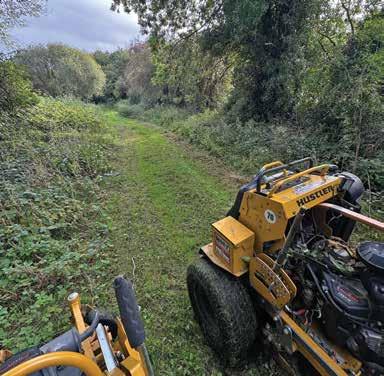
THE Dundalk Famine Graveyard Association is launching a GoFundMe fundraiser and are seeking funds for the upkeep and maintenance of the Sidella Greenway, a 1.5–2km lane that runs past the graveyard.
This laneway was historically significant, serving as a route into Dundalk town in the 1800s, including for the procession of bodies from the Dundalk Workhouse to the paupers’ graveyard (now known as the Dundalk Famine Graveyard). The graveyard itself has already been restored by local volunteers.
The Sidella Greenway is rich in wildlife and features St. Clare’s Well, a holy well discovered recently, which is locally known to have cured a dog
Dundalk Famine Graveyard on the Ardee Road.
years ago. We hope that the success of this campaign will support efforts to maintain other local amenities and greenways in the area. You can find information on the fundraiser on the Dundalk Famine
Graveyard Website or check out the GoFundMe website under “maintenance of Sidella Greenway at Dundalk Famine Graveyard.” Access to the greenway is via the A91E76N brown laneway gate.
A diamond ring is
Louth ABC Programme celebrates 10 years of transforming childhood outcomes
THE Louth Area Based Childhood (ABC) Programme is proud to announce its 10-Year Celebration Event, marking a decade of dedicated work improving outcomes for children and families across the county. This milestone highlights the collaborative efforts of local services, community partners, and families who have worked together to ensure every child has the best possible start in life.
Since its launch in 2015, the Louth ABC Programme has focused on early intervention, education, health, and family support, delivering evidencebased initiatives that make a real difference in the lives of children aged 0–12 and their families. Over the past ten years, the programme has supported thousands of families, strengthened community networks, and championed innovative approaches to child development.
Quote from Programme Manager, Gavin McGee:
“This celebration is not just about looking back—it’s about acknowledging the incredible partnerships that have made this work possible and setting our sights on the future. Together, we’ve built a strong founda-
tion for children and families in Louth, and we’re excited to continue this journey.”
The event hosted a wide range of community members, service providers, and families who have contributed to or benefited from the programme.
The event was opened by Louth Local Development’s ABC Manager, Gavin McGee, who welcomed a wonderful performance from the children of Gaelscoil Dhún Dealgan Rang 4 & 5.
Further inputs were given by Tusla National ABC Manager, Bernie Laverty, and National Coordinator for the Prevention & Early Intervention Network (PEIN), Dr. Maria O’Dwyer, with a festive performance from Ardee Monastery NS in between.
Amidst this, Niall Weldon, Coordinator of SCP Dún Dealgan, hosted a panel discussion which reflected on the past, present and future impact of The Louth ABC Programme. Valuable contributions were made by Joanne Murphy (Louth CYPSC), Wendy Hoey (Playroom Project), Vicky Gregory (Drogheda ACT), and former Marymount NS Principal &
current LLD Board Member, Bairbre English.
However, there wasn’t a dry eye in the house as a video sharing the stories of four parents, Aine Reid, Jenny Meehan, Sophie O’Hanlon & Vicky Gregory told a beautiful tale of how the ABC Programme impacted the lives of their children, and indeed themselves as parents.
The event was taken to a conclusion by Louth Local Development CEO, Ciaran Reid, who thanked the staff of the Louth ABC Programme for their invaluable work to date and commended the joint effort of Louth Local Development who provide a wide range of services, from Baby Massage to Walking Path Development in the Cooley Mountains.
The Louth ABC Programme, housed within the Louth Local Development Company is part of a national initiative funded by Tusla – The Child & Family Agency, aimed at improving outcomes for children through integrated, evidence-based services. The programme works in partnership with local agencies, schools, and community organisations to deliver high-quality supports for families.
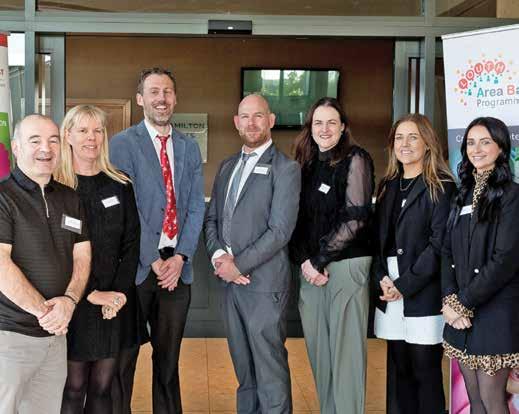
ABC Programme Manager, Gavin McGee (centre) with colleagues at a ten year celebration event in the Gateway Hotel, marking a decade of improving outcomes for children and families in Co. Louth.
Craft Fair raffle in the Fairways raises €372 for Dochas Palliative Care
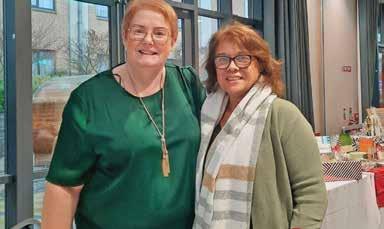
A Craft Fair organized by Linda Baldwin took place in the Fairways Hotel last weekend. A total of €372 Euros was collected in the Raffle with the proceeds going to Dochas Palliative Care. The prizewinners were as follows: First Prize—Donated by Liquidation Bathrooms, Won by Gerard Baldwin; Second Prize—Donated by Supervalue, Won by Peter; Third Prize—Donated by Linda Baldwin, Won by Rose White. Piictured are Dorothy Murphy, and Monique, from Dochas Palliative Care, Drogheda.
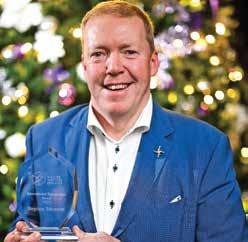
Stephen Staunton received an International Recognition Award at the Soccer Writers Ireland Awards at Clontarf Castle last weekend.
Pic credit: Stephen McCarthy/ Sportsfile.
Piece of Dundalk history returned to Badminton club
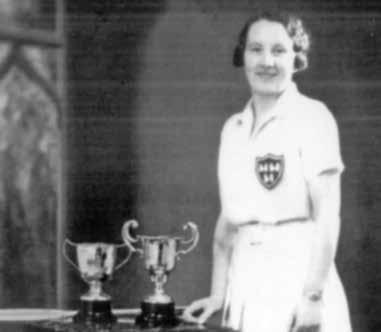
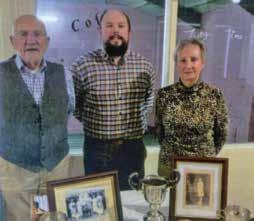
THE Dundalk Tennis Badminton Squash Club is now in possession of a piece of Dundalk history after local man Ken Ramsey returned a number of badminton trophies which were won by his aunt, Marion Alisia Ramsey between the years 1928 and 1935. The trophies were handed over to Gerard Rafferty, chairman and representative of the Dundalk and District Tennis and Badminton Club by Marion’s nephew Ken and her grandniece Lesley McEneaney (nee Ramsey).
According to Ken he had been in possession of the trophies for the last thirty years and rather than see them gather dust in an attic somewhere he wanted to give them back to the Dundalk Badminton Club which his aunt had helped to set up almost a hundred years ago.
“I knew that the badminton club had a cabi-
net for trophies so I went in and made contact with the chairman of the club, Gerard Rafferty and asked if the club would be interested in acquiring my aunt’s trophies for their cabinet. He got somewhat of a surprise when I told him how old they were but when he seen the trophies he was happy to accept them.
“I have had them for 30 years after my brother (who now lives in Marion’s old house) gave them to me knowing I was into artefacts and local history. My aunt lived in number 1 Ardee Terrace and she was a fiercely determined woman and a very good
badminton player. Her father who was originally from Derry came to Dundalk to work with the railway but he died quite young from appendicitis when Marion was only 18. She had to grow up pretty quickly after that as she had younger siblings. She got a job in Byrne and Maguire and in her spare time she would play badminton which she became very good at.
“At that time there were badminton club’s run by the railway and the presbyterian church and she played in both but later on she along with a number of her peers decided to start a badmin-
ton club of their own which is still going today at Dundalk Tennis Badminton Squash Club. If you go into the badminton court you can see a plaque on the wall with the names of all the founding members including my aunt.
“I was happy to hand my aunt’s trophies over to the club as I feel it is better that they are there for people to see then lying around in my house and gathering dust. The trophies are very much part of Dundalk and its history and I’m glad they are now on public display,” stated Ken.
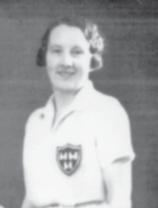
Marion Alisia Ramsey pictured in 1931. Ken Ramsey, Gerard Rafferty and Lesley McEneaney (Grand-Niece of Marion).
NEWS BRIEFS
For a free no obligation quotation
Callsave: 1850 774455
Tel. 042 9333513
Web: www.senatorwindows.ie
Email. senatordundalk@gmail.com
Or Visit our Showrooms on Ard Easmuinn Road, Dundalk. Eircode: A91 N5FN.
OPENING HOURS
Monday-Friday 9- 5
After hours by appointment Is it time to upgrade or replace your Velux Windows?
Divine Mercy Conference
A COACH will travel from the old Magnet Cinema Dundalk to the RDS in Dublin on Saturday, February 28th, 2026. Further details: Phone Laurena - 0851833110.
Dundalk Sub Aqua
DUNDALK Sub Aqua Search and Recovery Unit assist in search operation in Navan
Dundalk Sub Aqua Search and Recovery Unit assisting in the ongoing search of missing person Benjamin Scott (14) on day 19 of a search operation in Navan. This is a multi-agency operation with agencies and other search and rescue teams out daily.
Anyone with information on Benjamin’s whereabouts is asked to contact Navan Garda Station on 046 9036100, the Garda Confidential Line on 1800 666 111, or any Garda station.
Light Up Your Yoke
FAUGHART Community Group would like to thank everyone who helped make their first Santa tractor run such a huge success. Hundreds of locals came out to see the moving spectacle and none were disappointed. It was the ideal way to add to the buzz and excitement of the Toyshow preparations
“Light Up Your Yoke” had over 40 participants including fire engines, tractors, cars and most importantly of all, Santa’s sleigh. All of the owners put in a dazzling effort to light up the convoy as it snaked its way around Faughart with Christmas music filling the air.
Santa was delighted to see so many children and parents along the route. He stopped his sleigh at Faughart Graveyard and at St. Brigid’s Shrine, to give selection boxes to all the kids who were delighted to see him in the flesh.
The event cumulated with a raffle in Faughart National School which will receive all funds raised from this fun event. Faughart Community Group would like to thank all who drove in the convoy, Dundalk Fire Brigade, school staff, sellers, sponsors and all the volunteers who, together made this event an outstanding success.
??? QUIZ ???
1—The Feast of the Immaculate Conception was traditionally seen as the start of the Christmas period in Ireland. What date is the Feast of the Immaculate Conception?
2—What is the capital of Malaysia.
3—What connects a Boot, dog, racing car, iron, ship, thimble, top hat and wheel barrow?
4—Can you name the Olympic gold medallist who also played soccer with Ireland?
5—Which pub in Dundalk, established in 1799 by the 1st Earl of Roden, Robert Jocelyn was previously known as The Inn and The Oriel Bar?
6—Which popular RTE TV series aired its final episode in 2001 having been on RTE 1
weekly since 1983?
7—KLM is the national airline for which country?
8—What is the name of the home of the Greek Gods?
9—What is the name of the biggest technology company in South Korea?
10—What is the name of the phenomenon when the moon covers the sun?
The Stinker: Which is the deepest ocean trench in the world?
Wheelie Bins
ARTICLES FOR SALE
DRY SEASONED Hardwood Logs for sale. Ash and Beech, cut and split to size, large and small loads Delivered. Tel David 087 1752533.
LADY’S BICYCLE for sale, brand new, extra-large side bags, only bought a couple of weeks ago, best bargain, full receipts available Tel 089 2497902.
WANTED—All your old GAA, Dundalk, Irish programmes and Tickets, the older the better. Contact Ger on 0862630363 or GCProgrammes@gmail.com.
ATTENTION LANDLORDS—We supply furniture & Beds for any rental properties you have. Beds from €180, Bedroom Furniture Sets from €249 Call us today www.bedstore.ie, Coes Rd, Dundalk Tel 042 932 0927.
CHIMNEY & STOVE CLEANING—10kg bags of Beech and Olive (hardwood) for sale. Tel Paul McArdle 087 6660094 / 042 9332491 Email:tribalky@ yahoo.com.
CHIMNEY CLEANER—The Clean sweep, clean & tidy, no dust. Brush & Vac. Also gutter cleaning. Contact - Cathal 087-225-9799.
GRIMLEY’S DUBLIN ST. DUNDALK—Televisions, TV aerials, satellite, Freeview & Saorview, new installations, sales, service & repairs. Free estimates 042 935 4343.
TAKE THE HASSLE OUT of your garden. I do it all. Grass cutting, Hedge Cutting, Weeding, Strimming, Power washing, Gutter Cleaning, Fence Painting, General DIY, Flat Pack Assembly, Removals. Contact Catriona 087 3172109.
ROOFING AND BUILDING contractor available. Repairs and new builds. Fully insured. Contact Mark Carney on 087 1302040 for enquiries.
TREE SERVICES—Tree surgery, stump grinding, wood chipping & pruning. Conifer hedge reduction and ash die back removal. Fully Insured & Certified. Contact Chambers on 087 2750825. Email rchambers2008@yahoo.ie.
EXPERIENCED CARPENTER available. Free quotes available. Services include Doors, Locks, Flooring, Skirting, Damp and Leak Repairs, Architraves,. BUILT IN UNITS—Roofing, Fencing, Side gates, Partician Walls and Plasterboarding. Any small Jobs also included. Contact Mark 083 4162364.
MAN WITH A VAN—Hedges, tree topping, painting, facia & Soffit, patios, concreting, garage clearouts, outside taps. Call Kevin for a free & honest quote 089-4016728.
PAINTING SERVICES AVAILABLE—Interior and exterior plus Wallpapering, also sprayed and hand painted kitchens, all work carried out by professional trades men. Tel Brian 087 7558506.
PROPERTY MAINTENANCE—Repairs, building, plumbing, painting, roof repairs, tiling, bathroom refurbishments, plastering, gardening, power washing, PVC facia and soffits, Over 20 yrs experience. References available. Whatsapp or Tel 085-762-3758 for quotation.
ALL-IN-ONE property maintenance, painting & decorating, general building maintenance carried out, domestic or commercial, gutter cleaning, dust free sanding, no job too big or too small, quality but affordable, contact Ian 0874158238.
ALL SEASONS Gardening Services. Gardens cleaned and cleared, tree felling, hedge cutting, stone, gravel, chippings. Steam cleaning roofs & driveways. Roof repairs. Local, professional, fully insured Tel Sean 087 349 5477.
TREE SERVICES—Handy man available to collect fallen trees. Taken away for free, Call Paul or Daniel on 086 1536789 after 6pm.
CHARA COUNSELLING—20 years’ experience, currently taking appointments. Supporting you with emotional intelligence for relationship issues, your mental health, grief, all addictions & past traumas. For a strictly private consultation call Martin today on 083 3402766.
CARPET AND UPHOLSTERY Cleaning – Trusted for over 30 years. Expert care, sparkling results. Call Patrick on 0872492325 or visit www.carpetcleaningservices.ie.
PAT THE PAINTER—Indoor & outdoor decorating. Wallpapering, Power Washing, Picture, Mirror and Curtain Pole Hanging, Painting Kitchen Units & Furniture, DIY. Free quotations Email patthepainter1@ gmail.com Mob 087 2951047.
FABSOFT—Carpet/upholstery & leather suite cleaning by professionals. Soft chemical steam cleaning. Eco friendly and ultra hygienic. Call 0874752809. Email fabsoft77@gmail.com.
DIAMOND SHARPENING SERVICE—Sharpening scissors, dog & equestrian blades, chef and household knives. Fast turnaround, Dundalk. Call/Text 085 130 6646 or find us on Facebook @DiamondSharpeningService.
KEVIN McMAHON Electrical Dundalk, small household jobs, safe electrical approved Tel 087 2548221 after 5pm.
PLANNING NOTICES
LOUTH COUNTY COUNCIL—I, Keith White, intend to apply for retention permission for a two-storey replacement dwelling that has replaced an original one and two storey dwelling, new soakaways and all associated site development works at Templetown, Carlingford, County Louth. The planning application may be inspected, or purchased at a fee not exceeding the reasonable cost of making a copy, at the offices of the planning authority during its public opening hours. A submission or observation in relation to the application may be made in writing to the planning authority on payment of the prescribed fee, €20, within the period of 5 weeks beginning on the date of receipt by the authority of the application, and such submissions or observations will be considered by the planning authority in making a decision on the application. The planning authority may grant permission subject to or without conditions, or may refuse to grant permission. C/o Bernard Dowdall - MRIAI - Architect – Carrickedmond, Kilcurry, Dundalk, Co. Louth. Tel. (042) 9429558; (087) 6657148; E-mail - bernard@dowdallarchitects.ie.
LOUTH COUNTY COUNCIL—I, Marie McKenna, intend to apply for planning permission for retention of converted attic storage area and retention of changes to floor plans and all elevations and all associated site development works at Teach Lochra, Mullaharlin Road, Dundalk (A91 W2XP) from that previously granted under planning ref no. 91/138. The planning application may be inspected, or purchased at a fee not exceeding the reasonable cost of making a copy, at the offices of the planning authority during its public opening hours. A submission or observation in relation to the application may be made in writing to the planning authority on payment of the prescribed fee, €20, within the period of 5 weeks beginning on the date of receipt by the authority of the application, and such submissions or observations will be considered by the planning authority in making a decision on the application.
The planning authority may grant permission subject to or without conditions, or may refuse to grant permission.
LOUTH COUNTY COUNCIL—We, Dundalk Fabrication and Coatings Ltd., intend to apply for full permission for an extension comprising of additional light industrial areas to a development previously granted under planning reference number 2460740 (Construction of a light industrial building with ancillary accommodation to include reception area, offices, storage & canteen facilities, parking provision & hard standing areas, 2no. gated accesses, boundary treatments, connection to existing road network & drainage system as previous approved under Planning Ref: 19492; signage and all associated site development works) and currently under construction with all associated site development works at Sites 04, 06 & 08 Dundalk Retail Park, Upper Marshes, Dundalk, County Louth.The planning application may be inspected, or purchased at a fee not exceeding the reasonable cost of making a copy, at the offices of the planning authority during its public opening hours. A submission or observation in relation to the application may be made in writing to the planning authority on payment of the prescribed fee, €20, within the period of 5 weeks beginning on the date of receipt by the authority of the application, and such submissions or observations will be considered by the planning authority in making a decision on the application. The planning authority may grant permission subject to or without conditions, or may refuse to grant permission. C/o Bernard Dowdall - MRIAI - Architect – Carrickedmond, Kilcurry, Dundalk, Co. Louth. Tel. (042) 9429558; (087) 6657148; E-mail - bernard@dowdallarchitects.ie.
LOUTH COUNTY COUNCIL—We, Castlebar Drinks Emporium Ltd., intend to apply for retention permission for a change of use from an off licence and ancillary store facilities to a public bar and ancillary facilities, external smoking area with additional signage to Park Street facade and all associated site development works at 40 Park Street, Dundalk, County Louth. The planning application may be inspected, or purchased at a fee not exceeding the reasonable cost of making a copy, at the offices of the planning authority during its public opening hours and that a submission or observation in relation to the application may be made to the authority in writing on payment of the prescribed fee within the period of 5 weeks beginning on the date of receipt by the authority of the application, and such submissions or observations will be considered by the planning authority in making a decision on the application. The planning authority may grant permission subject to or without conditions or may refuse to grant permission. C/o Bernard Dowdall - MRIAI - Architect - Carrickedmond, Kilcurry, Dundalk, Co. Louth. Tel. (042) 9429558; (087) 6657148; E-mail - bernard@ dowdallarchitects.ie.
LOUTH COUNTY COUNCIL—I, Seamus Laverty, intend to apply for Planning Permission for development to comprise extension, alterations and elevational changes to existing dwellinghouse and all associated site works at ‘Dunard’, Chapel Pass, Blackrock, Co. Louth. This planning application may be inspected or purchased at a fee not exceeding the reasonable cost of making a copy, at the offices of Louth County Council from 9.30am to 4.30pm Monday to Friday. A submission or observation in relation to the application may be made to the Authority in writing within a period of 5 weeks from the date of receipt by the Authority of the application and on payment of the prescribed fee of €20.00.
LOUTH COUNTY COUNCIL—I, Patrick McGrath, intend to apply for Retention and completion Permission for extension and alterations to existing dwellinghouse and all associated site works at Ballagan, Greenore, Co. Louth, A91 CF10. This planning application may be inspected or purchased at a fee not exceeding the reasonable cost of making a copy, at the offices of Louth County Council from 9.30am to 4.30pm Monday to Friday. A submission or observation in relation to the application may be made to the Authority in writing within a period of 5 weeks from the date of receipt by the Authority of the application and on payment of the prescribed fee of €20.00.
LOUTH COUNTY COUNCIL—SIGNIFICANT FURTHER INFORMATION & REVISED PLANS. Name of applicant: Hollywood Developments Limited. Reference number of the application: 2560215. Location: Lands at Doylesfort Road & Adjoining The Lios Dubh Housing Estate, Dundalk, County Louth. The development applied for consisted of permission for a total 44no. residential units as follows: (a)The provision of a total of 23no. two storey residential dwellings which will consist of 15no. 3 bed units and 8no. 4 bed units. (b)The provision of a total of 21no. apartments / duplex units consisting of 3no.1 bed units and 18no. 2 bed units across 2no. buildings. Block A comprises 15no. 2 bed units over four storeys & block B comprises 3no.1 bed units and 3no. 2 bed units over two storeys.(c)Provision of associated car parking at surface level via a combination of in-curtilage parking for dwellings and via on-street parking for the duplexes and apartment units.(d) Provision of electric vehicle charge points with associated site infrastructure ducting to provide charge points for residents throughout the site.(e) Provision of associated bicycle & bin storage facilities at surface level adjoining the apartment / duplex units.(f)Creation of a new access points from Doylesfort Road and the existing Lios Dubh housing estate with associated upgrade works to sections of the existing adjoining access roads to facilitate vehicular, pedestrian and cycle access.(g)Provision of internal access roads and footpaths and associated works.(h)Provision of residential communal open space areas to include a formal play area along with all hard and soft landscape works with public lighting, planting and boundary treatments to include boundary walls, railings & fencing.(i)Provision of 1no. ESB substation. (j) Internal site works and attenuation systems. (k)All ancillary site development / construction works to facilitate foul, water and service networks for connection to the existing foul, water, gas and ESB networks. A Natura Impact Statement (NIS) has been prepared and accompanies this application. Significant Further Information and Revised Plans have been furnished to the Planning Authority in respect of this proposed development including: Revised site plans denoting a revised development arrangement comprising of a total 45no. residential units as follows: (a)The provision of a total of 21no. two storey residential dwellings which will consist of 13no. 3 bed units and 8no. 4 bed units. (b) The provision of a total of 24no. apartments / duplex units consisting of 6no.1 bed units and 18no. 2 bed units across 2no. buildings. Block A comprises 15no. 2 bed units over four storeys & block B comprises 6no.1 bed units and 3no. 2 bed units over two storeys. A copy of the application and the Natura Impact Statement are available for inspection or purchase at a fee not exceeding the reasonable cost of making a copy at the offices of Planning Authority during it’s public opening hours. A submission or observation in relation to the Further Information or Revised Plans may be made in writing to the planning authority not later than five weeks after the receipt of the newspaper notice and site notice by the Planning Authority. A submission or observation must be accompanied by the prescribed fee of €20, except in the case of a person or body who has already made a submission or observation. Signed: Bernard Dowdall C/o Bernard Dowdall - MRIAI - Architect – Carrickedmond, Kilcurry, Dundalk, Co. Louth. Tel. (042) 9429558; (087) 6657148; E-mail - bernard@dowdallarchitect.ie.
EASY-GOING country lad, mid 50s with GSOH seeks light-hearted female companion late 40s/mid 50s with no ties. For walks/talks and to share the simple things in life. Tel 0868220403.
LOUTH COUNTY COUNCIL—FURTHER INFORMATION. I, Hugh Barton, have submitted to the planning authority significant Further Information in relation to planning application Ref: 25152 for Planning Permission for development at Omra Park, Drumullagh, Omeath, Co Louth. Omra Park is identified as a Protected Structure (Protected Structure Ref: LHS002-005 & NIAH Ref: 13833005). The development to comprise change of use of Dwelling house and Outbuilding to Guest House accommodation including extensions, alterations, refurbishment, elevational changes of the dwellinghouse and outbuilding and all associated site works. The significant further information comprises retention permission for the existing use as an apartment accommodation at first floor level to the outbuilding, proposed new passing bays along the entrance driveway and modifications to the boundary wall each side of the main entrance to facilitate visibility requirements. The significant further information in relation to the application has been furnished to the planning authority, and is available for inspection or purchase at a fee not exceeding the reasonable cost of making a copy, at the offices of the authority during its public opening hours, and a submission or observation in relation to the further information may be made in writing to the planning authority on payment of the prescribed fee of €20.00, not later than two weeks after receipt of this newspaper notice and site notice by the planning authority.
LOUTH
COUNTY COUNCIL—We, Fastfix Limited, intend to apply for Permission for development at Units 3 and 7 Coes Road Industrial Estate, Coes Road, Dundalk, Co. Louth A91 WV8P. The development will consist of the following: 1. A warehouse extension (floor area 273sq. m and maximum height of 6.3m) to the rear of the existing buildings at Units 3 and 7. 2. Modifications to the existing car parking layout, with provision for additional parking to the front of the existing buildings inclusive of all associated site development works. This planning application may be inspected or purchased at a fee not exceeding the reasonable cost of making a copy, at the offices of Louth County Council from 9.30am to 4.30pm Monday to Friday. A submission or observation in relation to the application may be made to the Authority in writing within a period of 5 weeks from the date of receipt by the Authority of the application and on payment of the prescribed fee of €20.00. Signed: Andrew Connolly.
GET FIT the fun way and learn to dance, the Waltz, Quickstep, Foxtrot and Jive, now taking place in the Lisdoo, Dundalk Tuesday’s from 8pm - 10pm, no partner required. First wedding dance lessons and private lessons also available. Contact 086 357 3271 for further information.
DRUM LESSONS INCLUDING BODHRAN—For adults & children aged 8 years upwards. One to one lessons. Phone 087 414 4228.
FRENCH GRINDS available for Junior and Leaving cert, All levels. Individual and small group options. Tel 086 8723340.
TUITION IN GUITAR—Qualified teacher. 1st Lesson free of charge. Please Call 087 3327651.
1494858.
19-YEAR-OLD MALE currently studying ID pre nursing. Available for caring work at weekends. Contact 085
CONLON CAROLAN
Michelle
1st ANNIVERSARY
In loving memory of a dear wife and mother late of Hughes Park Dundalk whose anniversary occurs on 13th December, We think about you always, We talk about you still, You will never be forgotten and you never will, We hold you close within our hearts and there you shall remain,
To walk and guide us through our lives until we meet again.
—Loved and missed every day by your heartbroken family, husband Michael; daughters Caitlin and Jenna and son Cian.
MICHELLE
It does not take a special day for us to think of you, Each mass we hear, each prayer we say is offered up for you.
—Sadly missed and always remembered by Bernadette, Davy and family.
MICHELLE
You never failed to do your best, Your heart was true and tender, You worked and toiled for all you loved and left us to remember.
In tears we watched you sinking, we watched you fade away, And though our hearts were breaking, we knew you could not stay. You left behind some broken hearts that loved you most sincere, We always shall and always will hold your memory near.
—Sadly missed and lovingly remembered by Kathleen and Laurence.
MICHELLE
You did so much for us, Your heart was kind and true, And when we needed someone’s help we could always count on you. We love and miss you Shelly. —Trina and Eadaoin.
MICHELLE
Those we love don’t go away, They walk beside us every day, Unseen, unheard but always near, Still loved, still missed and very dear.
—Always remembered by Catherine and boys. Mass will be held on Saturday 13th December, at 7pm in Holy Family Church.
ST. GERARD MAJELLA NOVENA PRAYER
Almighty God, from his boyhood years you blessed St. Gerard with generosity of soul, and led him to do your will in heroic ways. By your grace he lived his brief life in intense love for you and for those in need. Hear his prayers now for us and for all poor souls in trouble. St. Gerard, friend of sinners, friend of the poor, friend of mothers and children, it is our joy and consolation to come to your novena to remember the goodness of your life, your burning sense of God your tender love for Our Lord and his mother, Mary, your kindness and care for everyone in need. Pray for us now in our time of need. Pray for us in our sickness. Pray for us in our confusion and despair. Pray for us in our struggle with life and its mysteries. Remember especially those who long for children and mothers about to give birth. Remember those who have wandered from the practice of the faith and need the grace of reconciliation. Remember all of us poor sinners in our particular needs. Amen. F.K.
DOUGAN Emma
1st ANNIVERSARY
First anniversary of Emma Dougan, late of O’Hanlon Park.
The days are longer and the house is quieter, A place that can never be filled, You will always be our sunshine.
—Sadly missed and always loved by her broken-hearted parents, Rory and Marie; brother David and sisters Ann Marie and Claire.
SISTER
A bouquet of beautiful memories, Sprayed with a million tears, Wishing God could have spared you, If just for a few more years.
It does not take a special day, For us to think of you, Each Mass we hear, each prayer we say, Is offered up for you.
We cannot bring the old days back, When we were all together, Our family chain is broken now, But memories live forever.
It was a sudden parting, Too bitter to forget, Only those who loved you, Are the ones who will never forget.
—Your loving brother David, your nieces and nephew, Abbie, James, Rebecca and Sophie.
SISTER
In loving memory of our wonderful sister Emma.
Of all the special gifts in life, However great or small,
To have you as our sister, was the greatest gift of all. May the winds of love blow softly and whisper in your ear,
“We love and miss you sister and wish that you were here.”
Deep in our hearts, your life is kept to love and cherish, not forget.
No more tomorrows we can share, But yesterdays are always there, A silent thought, a secret tear keeps your memory ever near.
In our hearts forever, Emma. —Love and miss you, sister Ann, sister Marie and brother-in-law Peter; sister Claire and families.
AUNTY
Aunty, it’s been a year, But the ache of missing you remains, Your laugh, your love and your gentle ways, Emma, we remember you today.
One year on dear Aunty, since you gained your peaceful rest,
Your presence was a blessing and your memory is a treasure!
—Forever loved, forever missed, your nieces, nephew and grand-niece. Mass on Sunday, 14th December, at 12pm in St Nicholas’ Chapel.
NOVENA TO THE SACRED HEART
Dear Heart of Jesus, in the past I asked you for many favours. This time, I ask for this special favour (mention it). Take it, dear Heart of Jesus and place it within your own broken heart, where your Father sees it. Then in His merciful eyes, it will become your favour, not mine. Amen. Say this prayer for three days. Promise publication and favours will be granted. (Never known to fail). M.B.
ROGERS Frank (Fra) 14th ANNIVERSARY
In loving memory of Frank (Fra) Rogers, late of Bay Estate, Dundalk, who died on 12th December, 2011.
To our beloved husband, father, grandfather and great-grandfather. You’re quietly remembered every day even though it hurts,
But no matter where you are we know that you are beside us.
We are so thankful for all the treasured memories we shared, for which we will never part.
—Sadly missed and loved so much by your wife Philomena; children Francis, Catherine, Margaret and Thomas; sons-in-law Gerard and Mark; grandchildren and greatgrandchildren Mia and Zack.
TUITE
Brendan 4th ANNIVERSARY
Remembering Brendan Tuite, late of 14 Mountain View, on his 4th anniversary 16th December.
A golden heart stopped beating, Hard working hands at rest, It broke our hearts to see you go, God only takes the best. They say that memories are golden, Well maybe that is true But we never wanted memories, We only wanted you. Your life was love and labour, Your love for your family true, You did your best for all of us, We will always remember you.
We sat beside your bedside, Our hearts were crushed and sore, We did our duty until the end, Till we could do no more.
In tears we watched you sinking, We watched you fade away, And though our hearts were breaking, We knew you could not stay. Our lips cannot speak, How much we loved you, Our hearts cannot tell what to say, But God only knows how we miss you,
In our home that is lonely today.
—Loved and missed by your loving wife Maureen; children Paul, Brian, Brenda, and Lorraine; sons-in-law Marco and Stephen; daughter-in-law Andrea; grandchildren Leah, Nadia and Patrick and great-grandson Jayden. Anniversary Mass will be held on 13th December, at 6.30pm, in St Josephs Redemptorist Church.
St Patrick’s Parish Soup Kitchen bucket collection
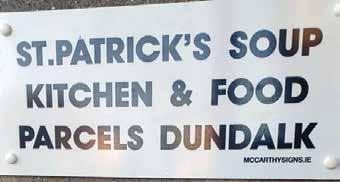
AN appeal is being made for the local community to dig deep this Friday (December 12th) to help support the work of St Patrick’s Parish Soup Kitchen and Food Parcels.
Volunteers will be located throughout Dundalk for their major fundraiser - their annual bucket collection.
The group, which receives no government funding or grants, relies completely on donations from the public, local schools, businesses, sports clubs and other organisations.
The cost of running the soup kitchen at Roden Place and a weekly food bank will be approximately €47,000 this year.
St Patrick’s Parish Soup Kitchen opens nightly from Monday to Saturday from 7-8pm and on Sundays from 2-3pm with a hot meal and drink provided to those in need.
Their annual Christmas Food Drive is also underway. All donations will be used for the food parcels every Friday (from 10am to 11am) when those in need of extra support can get a bag of basic food essentials like bread, milk, eggs, soup, cereals, rice/ pasta, curry/pasta sauce etc. Those who attend on Fridays are
asked to bring a bag for life with them to help reduce costs and be more environmentally friendly!
Volunteers from the Food Parcels will be in the Soup Kitchen for those dropping off nonperishable food donations from 12pm to 4pm this week until Thursday (11th) and next week from Monday 15th to Thursday 18th. Just ring the doorbell at the glass porch on the left hand side of St Patrick’s Church car park.
For those interested in supporting the food drive the following items would be gratefully received: Tinned beans, peas, sweetcorn, (dried) pasta, rice (packet or microwaveable), noodles, packet or tinned soup, passata/pasta sauce, curry sauce, spaghetti hoops, tinned tuna/
salmon, gravy, sachet mixes, breakfast cereals, porridge, biscuits, crackers, crisps, tinned fruit, creamed rice, custard, jelly and jam. Also tea, coffee and diluted orange/blackcurrant or sweets/chocolates,mince pies and soft drinks for Christmas. If you aren’t in Dundalk this Friday and can’t support the food drive, but would like to support the work that the group does, you can donate on Christmas Eve at the church gate collections. For those who don’t have any spare cash or coins on them, QR codes will be on all collection boxes which means you can donate online through a link to their i-Donate page, which appears when you point the camera on your smartphone at the code.