Last month a number of residents in Barrack Street woke up to find their cars had been damaged overnight.
A male in his 20s with an address at Dundalk Simon Community was arrested in relation to the incident which saw six cars and two vans damaged. As part of his bail terms he was told to stay with his brother in Monaghan and stay out of Dundalk. For frustrated residents this was just the latest in a long line of anti-social behaviour that they say they have had to endure for years.
Speaking to the Dundalk Leader last week a number of local residents aired their frustrations and fears about what may lie ahead for them now that planning permission has been granted to build apartments on the site of the old Labour Exchange at Barrack Street in Dundalk.
Louth County Council has approved plans for the demolition of existing derelict properties at 63, 65 and 67 Barrack Street and the construction of a 3-storey block of 21 apartments which will be used to house vulnerable people. Continued on Page 2
Members of Louth Village Youth Club celebrate Easter with an Easter Egg Hunt and arts and crafts activities in the Louth Villlage Community Centre.
Barrack Street residents fearful of further anti-social behaviour
From Page 1
The planning application was lodged by the Dublin Simon Community for the development of one-bedroomed residential units as well as a single storey utility and plantroom building comprising ESB substation, switch room, water services and bin store and a low profile, combined bulk storage and secured bicycle store.
That planning application saw a number of submissions from con-
cerned residents and local businesses expressing concerns about an increase in anti-social behaviour and safety risks which they believe will increase given their experiences for the past number of years with certain residents from the Dundalk Simon Community.
Speaking last week, a number of residents who didn’t want to be named for fear of being targeted stated that they felt helpless as nobody
seemed to be taking responsibility for the constant incidents which they have been subjected to down through the years.
“We do understand that people need housing and we have no issue with that whatsoever but what we do have issues with is the fact that nobody ever takes responsibility or accountability for the huge number of anti-social incidents which stem from residents living in the Dundalk Simon Community.
“They are openly dealing drugs and taking drugs down a laneway down here in Barrack St. There are needles discarded on the laneway and in the street and we have parents down here worried sick about letting their kids out to play. We get told that once the residents leave the Dundalk Simon Community there is nothing the Simon Community can do about their behaviour.
“There is no extra garda presence down here despite the fact that these people are openly selling and taking drugs in broad daylight and it just feels like they are maybe happy to keep all this sort of stuff hidden away down here and away from the town
centre. The new building which is going to be three stories high is going to be overlooking a number of our houses as well as blocking sunlight. This is just going to lead to more anti-social behaviour and as far as we can see nothing is being done to protect us.
“Last month a number of us had our cars keyed causing thousands worth of damage and we are told that we have to claim off our insurance which means losing no claims bonus for something that is not our fault.
“These are people living in the shelter with serious addictions and there is nobody qualified in there to help them. They are just left
to their own devices and if anything their behaviour gets worse because drugs are so freely available in the shelter.
“We are listening to music blaring at 3am in the morning and there have been incidents where our windows have been smashed, residents have been burgled and people are actually afraid to walk on the streets day or night. Our houses have lost value and that’s not going to change anytime soon. We have requested meetings with Gardaí and asked Louth County Council for help but nobody is listening to us,” bemoaned one of the residents.
“This whole area needs regeneration or
at the very least more CCTV cameras need to be installed and a larger Garda presence. We just feel abandoned and have felt that way for years. Who is responsible to protect us from all these acts of anti-social behaviour?
Who is going to help us when these incidents undoubtedly increase when these new apartments are built by the Dublin Simon Community?
“Why is this area of town being subjected to more of these people who unfortunately in the main are crippled with addictions and in some cases are out on our streets dealing drugs and robbing houses to fund their ad-
dictions? There seems to be no plan to help these people. They are just put down here into the Simon in Barrack St and there is absolutely no professional help available to them in the shelter. Why not put the shelter in the countryside somewhere and get them to work on the land and give them a purpose?,” asked one of the residents. When asked by the Dundalk Leader if the Dublin Simon Community had any plans to engage with local residents or to have an information session to listen to their concerns the organisation stated that it would not be appropriate to comment further on the develop-
ment while the planning process is ongoing.
“At Dublin Simon Community, ending homelessness is at the heart of our work. Ireland is facing an unprecedented housing and homelessness crisis, and County Louth is no exception. While homelessness is a complex problem that requires multiple supports, delivering social housing is a vital part of the solution, particularly for people who need stability to move forward with their lives.
“The proposed development at Barrack Street represents an opportunity to deliver much-needed housing for people on the Louth County Council waiting list.
“While the planning process is ongoing, it would not be appropriate to comment further at this stage. However, we remain committed to progressing this development, subject to approval, and to ensuring more people have access to a home.
The housing development will be undertaken by Dublin Simon Community and is not an extension to existing homeless services operated by Dundalk Simon Community,” read the statement.
Dundalk Fire Station set for major redevelopment
THE Minister for Housing , Local Government and Heritage, James Brown TD has announced a major allocation of funds for the redevelopment of Dundalk Fire Station. Funds have also been allocated towards a new fire station in Dunleer.
The funding is part of a landmark €328.5 million National Fire Services Capital Programme (2026–2030), developed by the National Directorate for Fire and Emergency Management (NDFEM), sets out a comprehensive plan to modernise Ireland’s
€5 million has been allocated for a major upgrade for Dundalk Fire Station at Meadow Grove which was originally built at a cost of £750,000 in 1980 replacing the previous station which was located in Defenders Row. A further €3 million will be allocated towards a new fire station in Dunleer.
€8,300 drugs seized at Hackballscross
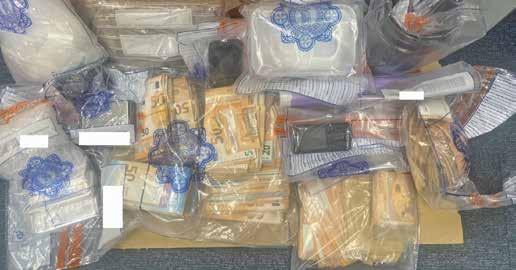
As part of Operation Tara, Gardaí carried out a search under warrant of a domestic residence in Hackballscross, Co. Louth on Sunday, 5th April 2026.
During the search Gardaí from the Dundalk Crime and Drugs Units seized approximately €3,500 worth of suspected cocaine and €4,800 worth of suspected cannabis herb, €80,000 in cash and three 1kg solid silver bars valued at approximately €7,500. A man (30s) who was arrested at the scene has since been charged and is due to appear before a special sitting of Dundalk District Court at 1pm this afternoon, Monday 6th April 2026.
The seized drugs will be sent to Forensic Science Ireland for analysis.
fire service fleet, infrastructure, training capability and communications systems to meet the evolving risks facing communities nationwide.
Under the plan a new €500,000 Class B fire appliance is being allocated to Louth County Council. According to Minister Browne, this investment will help the local fire stations meet the challenges they face and reinforce the public’s safety in
our communities.
“This programme represents a significant investment in the safety, resilience and wellbeing of communities across Ireland. It ensures our fire services across the country will have a modern fleet, upgraded facilities and equipment required to meet the challenges they face, with a changing climate, a growing population and increasingly complex emergency risks.
“This investment in the fire service will reinforce public safety in our communities and ensure that our critical infrastructure and essential services are protected. Having fire services that are recognised as dependable, well trained and well equipped is crucial to the communities they serve and this injection of significant funding will future proof the service they provide,” stated the Minister.
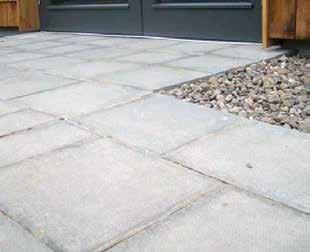
The site at Barrack Street where the proposed development of 21 one bedroomed residential units will be built.
Money and drugs were seized from a residence in Hackballscross on Sunday.
DNG Duffy celebrate 25 years of business in Dundalk ACCOLADES
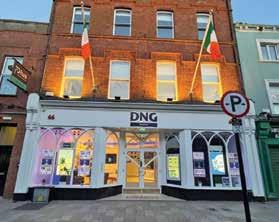
FROM humble beginnings in 2001, DNG Duffy has spent the last quarter of a century growing to a point where they are now firmly established as the biggest sellers of new homes in the North East. The company has built a strong reputation in property services and specialised advisory offerings, primarily serving the North East area from its base on Clanbrassil St. in Dundalk.
Keith Duffy, Managing Director of DNG Duffy started the business in 2001 in Park St operating as Duffy Property Services before joining the DNG group in 2007 which has over 80 branded offices spread across major towns and cities in Ireland.
From those humble beginnings in 2001 when the staff consisted of just Keith, the business has grown to the powerhouse it is today with fourteen staff members in the Dundalk Office on Clanbrassil Street where the business moved to in 2016.
According to Keith, who is a board member of Institute of Professional Auctioneers and Valuers, the growth of the business was very organic and
although there were tough times to navigate, DNG Duffy has never been as strong as it is today.
“When the business started in 2001 it was just myself but we grew each year and did it very organically and then when the recession hit we did the best we could to get through that time. From there we went deep into selling second hand homes and rentals and the business just grew and grew to the point where we are now the number one seller of new homes in the North East.
I think our clients respect the fact we tell them exactly what is going on and that we are able to give them the best
advice possible.
“Selling has always been in my blood and I can still remember my granddad who owned shops around town such as the Beehive in Castletown and Fatima Stores. My dad Jim was an insurance broker and I saw his work ethic and the time he put in to his work which was inspiring to me. I think our business has got to where it is today because of that work ethic and because of the fact we are always available to clients to give direct honest advice.
“People don’t like to be lied to and
“Obviously the last number of years has seen the explosion of social media and technology and we have embraced that. During COVID we adapted and began doing virtual viewings and we use that today especially when selling to foreign buyers. We also have a 24/7 bidding system available for all of our homes to make life easier for the buyer. The business never sleeps and it is pretty much 24/7 for 365 days of the year.
“We are acutely aware of our staff having a good work/life balance and that is why we use technology to do
some jobs that can be done during unsocial hours to allow people who work here time off when needed. At DNG Duffy, we foster a culture of innovation and strive for continuous improvement. Our team of qualified professionals excels in a range of disciplines, allowing us to offer a diverse and comprehensive service portfolio. This enables us to provide effective solutions to various customer queries and interests, catering to their specific needs. We are innovating all the time and we are now practically a paperless office. By the end of this year we have committed to becoming 100% paperless.
“Dundalk is home for all of us and we love given back to the community and we have been honoured to sponsor numerous sports clubs in town including the Clans, Rock Celtic, Shamrocks FC and the Geraldines. We are proud to serve the good people of the North East and we will continue to grow and improve and we look forward to the next 25 years,” concluded Keith.
2017—DNG Duffy has been recognised on the national stage, securing the DNG Nationwide Best Shop of the Year Award for 2017. The accolade reflects the firm’s commitment to excellence in customer service and its strong performance within a competitive property market.
2018—DNG Duffy has continued its upward trajectory, earning the DNG Leinster Best Town Agent Award for 2018. The award acknowledges the agency’s professionalism, local market expertise, and consistent delivery of results for clients.
2020—DNG Duffy has been awarded the All-Ireland Business Certificate for Thought Leadership in 2020, highlighting the firm’s innovation and forward-thinking approach within the property sector.
2021—For a second consecutive year, DNG Duffy has received the All-Ireland Business Certificate for Thought Leadership, reinforcing its reputation as a progressive and influential voice in the Irish property market. 2022—DNG Duffy has once again been recognised with the All-Ireland Business Certificate for Thought Leadership in 2022, marking three successive years of distinction for strategic insight and industry leadership. 2023—DNG Duffy has been honoured with a Going Above and Beyond award in 2023, recognising the team’s exceptional dedication to client service and community engagement.
In the same year, the firm was also named a finalist in the DNG Large Branch of the Year category, underlining its continued growth and operational excellence.
2024—DNG Duffy has achieved significant recognition in 2024, with Keith Duffy receiving the DNG Outstanding Contribution Award in acknowledgement of his leadership and long-standing service to the industry. The firm was also honoured with the Outstanding Contribution to the Industry Award, sponsored by DNG, further cementing its standing within the national property sector.
Additionally, DNG Duffy was named a finalist in the DNG Large Branch of the Year category, reflecting another year of strong performance.
2025—DNG Duffy has been awarded DNG Branch of the Year for the Mid-East Region in 2025. This prestigious accolade recognises the firm’s continued excellence, market leadership, and unwavering commitment to delivering outstanding results for its clients.
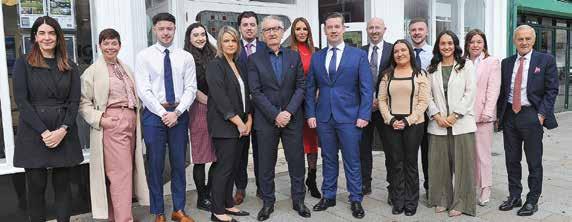
Keith Duffy, Managing Director. DNG Duffy Team along with Niamh Comber (2nd left) and Tony Forte (far right) Franchise Directors DNG Nationwide.
Paul Clarke, Senior Negotiator and Valuer. 66 Clanbrassil St. Dundalk. Celebrating 25 years.
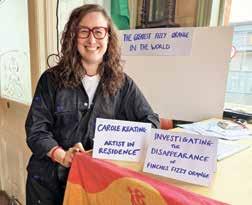
CAROLE ON A QUEST TO FIND OUT MORE ABOUT ‘THE GREATEST FIZZY ORANGE IN THE WORLD’
AS a child Carole Keating would regularly travel with her parents from her home in Manchester
for holidays in Dundalk to visit relations.
Carole has many fond memories of those visits
, but by far the fondest memory was the unforgettable experience of getting to drink a bottle
of Finches orange which she describes as ‘The greatest fizzy orange in the world’. Finches was
bottled for many years in Dundalk by United Beverages on the Coes Road.
“I’m originally from Dundalk but I grew up in Manchester. I can remember as a kid coming over to Dundalk at Christmas and a couple of times during the year to visit relations and very quickly I became completely obsessed with Finches Orange. I thought it was the greatest fizzy orange in the world and miles ahead of the likes of Fanta, Club or Tango. You couldn’t get it in the UK so whenever we were leaving Dundalk to go back to Manchester I’d be begging my parents to fill up the car boot with bottles of Finches for the journey home on the ferry,” laughs Carole.
“I was devastated when it disappeared from the shelves a few years ago and for some reason I decided to create an art project called ‘The Greatest Fizzy Orange in the World’ which I hope to have completed by the end of the year. In the meantime I am trying to piece together as much information as I can about Finches Orange.
“From what I have gathered so far it was originally invented in 1990 and made in the ABC factory on Mary St. North which coincidentally is where my Dad grew up. Later the factory was bought out and production contin-
ued on the Coes Road under United Beverages. It was made in Dundalk for many years until it was sold to a company from Tipperary in 2004 and at that point the factory shut down with nineteen people losing their jobs.
“At some point Finches was quietly discontinued around Covid. My mission is to try and find the recipe and also to hopefully speak to some of those nineteen people who worked on the Coe’s Road bottling Finches until the factory closed in 2004. I’ve already had a few people come forward and I’ve managed to speak to people this week during my Residency in Mo Chara so I’ve been slowly building up a history of Finches.
“I’m hoping somebody somewhere might have an old bottle from before 2018 when the
Sugar Tax came in so that I can look at the ingredients list on the back of it. I am also looking for Finches memorabilia and I’ve already been given a lovely Finches towel from a lady in Dublin so if anybody has any Finches related memorabilia at all please get in touch.
“The plan is to put on a show which will be fun and interactive later on in the year here in Dundalk so I’m really looking forward to that,” states Carole.
My website is www. Carolekeating.com where you can find my email and contact me with any stories or information about Finches. I’m hoping to get in some funding or some patrons to help put this together so again if anybody is interested please get in touch via the contact details in my website,” concluded Carole.
As part of an intelligence-led operation, Revenue officers seized 50kg of suspected cannabis with an estimated street value of €1 million, on Wednesday, 1st April 2026 in Castlebellingham, Co Louth. The joint operation was conducted by the
Garda National Drugs and Organised Crime Bureau (GNDOCB), and Revenue’s Customs Service.
Two males (aged in their 40s) were arrested by An Garda Síochána in connection with the investigation, and is currently detained pur-
suant to Section 2 of the Criminal Justice (Drug Trafficking) Act, 1996, at a station in the Garda North Western Region. The seized drugs are now subject to analysis by Forensic Science Ireland. Investigations are ongoing.
Carole Keating is on a mission to find out all she can about Finches Orange.
A1 PAVING SPECIALISTS
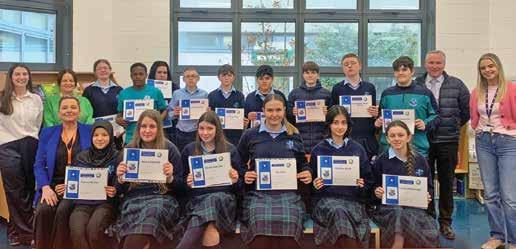
Castletown Girls’ School Celebrates Champion School of Sanctuary Status
CASTLETOWN Girls’ School, Dundalk, is celebrating its recent recognition as a Champion School of Sanctuary, following a successful monitoring visit by the Schools of Sanctuary Ireland team last year.
The school is the first school in Dundalk to receive the title. The award acknowledges the school’s ongoing commitment to the core principles of the programmelearn, take action and share -with a strong focus on creating a safe, welcoming and inclusive environment for all pupils and their families.
In March, members of the School of Sanctuary committee from the school were invited to attend the Champion School of Sanctuary Awards Ceremony at TU Dublin, Grangegorman.
Members of the School of Sanctuary committee, accompanied by three teachers, proudly represented the school at the event.
As part of the celebrations, the committee performed a poem on stage, reflecting on their journey towards achieving Champion status.
The ceremony also featured performances from other schools, including songs, poetry and short drama pieces. The pupils and teachers also listened to powerful contributions from Schools of Sanctuary Ambassadors and guest speakers, who shared their personal experiences of feeling safe, welcomed, and included in Ireland.
During the ceremony, Castletown Girls’ School was presented with a certificate and commemo-
rative plaque. Pupils also had the opportunity to meet members of the Schools of Sanctuary Ireland team, Ambassadors, the Chairperson of TU Dublin and the Lord Mayor of Dublin. Adding to the excitement of the day, two pupils were interviewed by RTÉ News2Day and featured on the programme.
The students also received goody bags from Schools of Sanctuary Ireland. Staff at Castletown Girls’ School expressed immense pride in all of the pupils and their families for their dedication to the initiative. They emphasised that becoming a School of Sanctuary is not just an achievement, but an ongoing journey that the school is committed to continuing into the future.
Faughart Community Group
The unveiling of the St Brigid’s Holy Water Vessel which was sponsored by
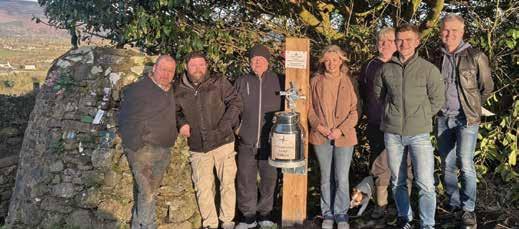
FAUGHART Community Group with Fabricator Paul Quigley and sponsor Cllr. Fiona Mhic Conchoille, at the official unveiling of the St. Brigid Holy Water Vessel which is erected beside St. Brigid’s Holy Well, to make it safer for people to collect the Holy water.
Cllr Fiona MhicConchoille praised the initiative stating that it was a great example
of local pride combined with teamwork.
“It was a pleasure to join the Faughart Community Group for the unveiling of St Brigid’s Well holy water vessel — a great example of local pride and teamwork. I was also delighted to sponsor the vessel and support such a meaningful initiative.
“I would like to acknowledge the continued support of
Louth County Council in the Faughart area, particularly in backing community-led projects and local events.
“There is strong momentum building, with plans to further develop and promote Faughart’s rich history and tourism potential. Well done to Faughart community group their dedication is making a real difference,” stated the Sinn Fein Councillor.
Cllr. Fiona MhicConchoille.
Castletown Girls’ School, is celebrating its recent recognition as a Champion School of Sanctuary.
Cross Cooley Challenge Launch Night Ahead of 2026 Hike Inaugural Meeting of the Louth County Council Tenants’ Forum
The Cross Cooley Challenge is inviting the local community to come together for the official launch of its 2026 event, taking place on Thursday 16 April at 7pm in the Condil Suite at McGeough’s Bar, Roden Place, Dundalk. All are welcome to attend.
Now entering its 14th year, the Cross Cooley Challenge has become one of County Louth’s most established and well-supported fundraising events, raising vital funds for North Louth Hospice and the Maria Goretti Foundation. Since it was founded in 2013, the event has raised over €487,000, with last year alone bringing in €56,000 thanks to the support of nearly 500 participants.
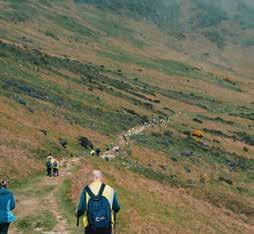
The 2026 challenge will take place on Saturday 23 May and will see participants take on a 15.4km hike from Ravensdale to Carlingford, crossing the Cooley Mountains and taking in some of the most scenic views in the region. The event is open to eve-
The Cross Cooley Challenge launch takes place on Thursday 16th April.
ryone and is designed to be completed at your own pace, making it suitable for individuals, groups of friends, families, and corporate teams.
The launch night on Thursday 16 April offers an opportunity for anyone interested in taking part to learn more about the event, meet the organisers and the charities involved, and pick up sponsorship cards ahead of the challenge. It is also a chance to hear more about the impact the event contin-
ues to have locally, with every euro raised going directly to two organisations providing essential support within the community.
North Louth Hospice provides care and support to cancer patients and their families, while the Maria Goretti Foundation supports children with disabilities through its purpose-built respite centre in Lordship, Co. Louth.
On the day of the challenge, transport will be provided to and from the route. Buses will run
from Dundalk to the starting point near the Lumpers Bar in Ravensdale, with return transport from Carlingford back to Dundalk after the walk.
Registration will be available on the day, while sponsorship cards can be collected in advance from the Greenore Railway Saloon, the organising team, and on the night of the launch. Donations can also be made online via iDonate.
The Cross Cooley Challenge has gone from strength to strength, with growing support each year from individuals, families and local businesses. It’s a great day out, bringing people together in support of two important local charities.
All are welcome to attend the launch night, and all are encouraged to take part in this year’s challenge.
For more information, visit the Cross Cooley Challenge Facebook or Instagram pages
Louth County Council held the first meeting of its new Tenants’ Forum on Friday, 27 March 2026 at the Monasterboice Inn, Drogheda.
The Tenants’ Forum brings together local authority tenants from across Louth, along with representatives from community organisations, Healthy Ireland, Louth Local Development, the HSE and other partner groups. The Forum provides a clear way for tenants and the Council to communicate with each other. It ensures that the experiences, concerns, and ideas of tenants help shape social housing policies, estate management, and services across the county.
The Forum has been set up at the same time that Louth County Council is developing a new Tenant Engagement and AntiSocial Behaviour Strategy. The Forum will play an important role in shaping this strategy by identifying local priorities, highlighting challenges, and supporting how the
strategy is put into practice.
Commenting on the newly established forum, Cllr Seán Kelly, Cathaoirleach of Louth County Council, said:
“The Tenants’ Forum is an important step in making sure the voices of our citizens and communities are central to the work we do. It gives us real opportunities to work together, spot issues earlier, develop better solutions, and deliver services that meet people’s needs. I want to thank everyone who has taken part so far and encourage more tenants to get involved.”
Speaking about the importance of the Forum, Ger Murphy, Director of Service, Louth County Council, said:
“The Tenants’ Forum shows our commitment to open, responsive, and tenant focused services.
By bringing tenants, community partners, and Council staff together, we can tackle challenges more effectively, improve quality of life and strengthen communities. I want to thank all participants for their positive engagement so far, and I look forward to working with the Forum.”
As part of developing
the new strategy, Louth County Council will host a series of consultation events to hear views from the wider community. These sessions will take place from 9:30am to 1:00pm on the following dates: Tuesday, 14 April – Imperial Hotel, Dundalk; Wed, 22 April – Marcy Hotel, Drogheda; Tues, 28 April – Muldoon’s, Ardee. Anyone wishing to attend must register in advance. To register for a consultation session or to find out more about the Tenants’ Forum, please email estatemanagement@louthcoco.ie.
WHAT HAPPENS WHEN DIALLING 999?
By Darren Crawley
AN emergency call from Dundalk begins in a quiet room hundreds of kilometres away, long before a Garda car, ambulance, or fire engine ever reaches the scene. When someone in the town dials 999, they enter a system designed to respond within seconds, coordinate multiple agencies, and make lifeordeath decisions based on the information given. Understanding how that system works is part of understanding how local democracy, public services, and community safety function in a town like Dundalk. All emergency calls in Ireland—whether made from Dundalk or anywhere else, are routed to the Emergency Call Answering Service (ECAS). Operators are trained to answer quickly, with national targets aiming for 80% of calls to be picked up within seven seconds. Their first task is simple but crucial: identify which service you need. The options are Gardaí, ambulance, fire brigade, or coast guard. Both 999 and 112 connect to the same system, and both are free to call.
Once the operator knows which service you require, the call is transferred immediately. If you ask for Gardaí, you will be connected to a Garda calltaker; if you ask for an ambulance, you will reach the National Ambulance Service dispatcher. The operator will also confirm your number in case the call drops, and they will ask for your exact location. This is especially important in Dundalk, where calls may come from rural areas, industrial estates, the M1 corridor, or the busy town centre. When a Garda emergency call is passed on, the dispatcher assesses the urgency and deploys the nearest available unit. Gardaí prioritise lifethreatening incidents and aim to reach urban emergencies within 15 minutes. Dundalk Garda Station, one of the busiest in the region, covers a large population and a wide geographic area, so response times depend on where units are located when the call comes in.
Ambulance calls follow a different pathway. Once connected to the ambulance service, callers are asked structured questions about the patient’s condition, whether they are
breathing, conscious, injured, or in immediate danger. This information determines whether the call is categorised as lifethreatening, urgent, or nonurgent. The National Ambulance Service then dispatches the nearest available crew, which may come from Dundalk, Ardee, Drogheda, or even across the border if crossjurisdictional cooperation is required.
Fire service calls in Dundalk are handled by Louth County Fire & Rescue Service. Firefighters respond not only to fires but also to road collisions, chemical incidents, and rescues. The control centre alerts the Dundalk station, and crews
are mobilised within minutes. Calltakers rely on clear, calm information. They will ask for: the phone number you are calling from the exact address or location what has happened whether anyone is injured or in danger
For medical emergencies, callers may be asked to describe symptoms, provide the patient’s age, and follow instructions such as CPR guidance. These steps help dispatchers prioritise the call and prepare responders for what they will face on arrival.
For people with hearing or speech impairments, Ireland operates an emergency SMS
service that routes messages to ECAS, ensuring accessibility for all residents.
Emergency calls often play a role in court cases in Dundalk District Court. Gardaí rely on 999 recordings to establish timelines, verify witness accounts, and demonstrate the urgency of an incident. Call logs can show how quickly Gardaí responded, what information was given, and how events unfolded. In cases involving assaults, burglaries, domestic incidents, or dangerous driving, the 999 call may be one of the first pieces of evidence presented.
False or malicious 999 calls are also a recurring issue. These calls waste resources and can delay responses to genuine emergencies. They are taken seriously and can lead to prosecution, with penalties ranging from fines to imprisonment depending on the severity and impact.
Dundalk’s location, close to the border, with a large commuter population, major transport routes, and a busy town centre, means emergency services must coordinate across agencies and sometimes across jurisdictions. Know-
ing how the 999 system works helps residents understand what to expect, how to communicate effectively in a crisis, and how local services operate under pressure.
It also highlights the democratic importance of emergency services. Response times, staffing levels, and resource allocation are all matters of public accountability. When residents understand how the system functions, they are better equipped to scrutinise it, support it, and advocate for improvements.
Dialling 999 is something most people hope they never have to do, but in Dundalk, as in every community,it remains one of the most important public services. Behind every call is a chain of trained professionals, from ECAS operators to Gardaí, paramedics, and firefighters, all working to protect the town and its people. Understanding what happens when you make that call is not just practical knowledge; it is part of understanding how local democracy and public safety function in everyday life.
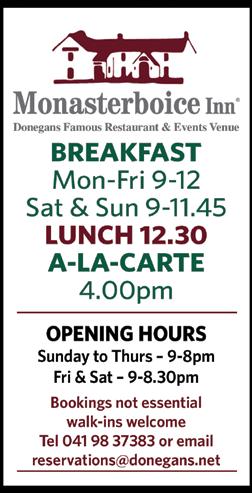
The inaugral meeting of the Louth County Council Tenants Forum.
FAMILY NOTICES
NOVENA
NOVENA TO THE SACRED HEART
Dear Heart of Jesus, in the past I asked you for many favours. This time, I ask for this special favour (mention it). Take it, dear Heart of Jesus and place it within your own broken heart, where your Father sees it. Then in His merciful eyes, it will become your favour, not mine. Amen. Say this prayer for three days. Promise publication and favours will be granted. (Never known to fail).
A.D.
NOVENA TO THE SACRED HEART
Dear Heart of Jesus, in the past I asked you for many favours. This time, I ask for this special favour (mention it). Take it, dear Heart of Jesus and place it within your own broken heart, where your Father sees it. Then in His merciful eyes, it will become your favour, not mine. Amen. Say this prayer for three days. Promise publication and favours will be granted. (Never known to fail).
C.R.
Fatal road traffic collision at Rassan
GARDAÍ and emergency services responded to a road traffic collision on the N53 at Rassan, Dundalk, Co. Louth, on the evening of Monday, 6th April 2026.
The incident, which involved two cars, occurred at approximately 10:15pm. The driver of one vehicle, a male aged in his late 60s, was pronounced dead at the scene. His body has been removed to Louth County Hospital, where a post-mortem examination will take place.
A woman in her 20s, who was travelling in the second car, was taken to Our Lady of Lourdes Hospital to be treated for nonlife-threatening injuries.
The coroner has been notified. The scene remains preserved for technical examination by Garda Forensic Collision Investigators, and traffic diversions are currently in place.
Gardaí are appealing to anyone who may have witnessed the collision to come forward. Road users who may have camera footage (including dash-cam) from the area at the time are also asked to make this available to investigating Gardaí.
Anyone with information is urged to contact Dundalk Garda Station on (042) 9388400, the Garda Confidential Line on 1800 666 111, or any Garda station. Investigations are ongoing.
ARTICLES FOR SALE
FREE TO TAKE—2 soft leather armchairs free for collection. In very good condition. Navy/Blue in colour. 1 recliner and 1 standard. Blackrock area. Contact 083 0098695.
CALLAWAY GOLF CLUBS for sale 5 to 9 + SW & PW excellent condition €140 Tel 086 8513736.
ARTICLES WANTED
WANTED—All your old GAA, Dundalk, Irish programmes and Tickets, the older the better. Check you attics and your sheds. Contact Ger on 086 2630363 or GCProgrammes@gmail.com.
PROPERTY/RENTALS
ATTENTION LANDLORDS—We supply furniture & Beds for any rental properties you have. Beds from €180, Bedroom Furniture Sets from €249 Call us today www.bedstore.ie, Coes Rd, Dundalk Tel 042 932 0927.
HOUSE TO LET—2 Bed Terraced House In Carlingford available to rent immediately. Kitchen/Diner, Sitting Room, Downstairs Toilet. Can be furnished or Unfurnished. Contact 0044 7799125428.
TAKE THE HASSLE OUT of your garden. I do it all. Grass cutting, Hedge Cutting, Weeding, Strimming, Power washing, Gutter Cleaning, Fence Painting, General DIY, Flat Pack Assembly, Removals. Contact Catriona 087 3172109.
TREE SERVICES—Tree surgery, stump grinding, wood chipping & pruning. Conifer hedge reduction and ash die back removal. Fully Insured & Certified. Contact Chambers on 087 2750825 Email rchambers2008@yahoo.ie.
EXPERIENCED CARPENTER
AVAILABLE—Free quotes available. Services include Doors, Locks, Flooring, Skirting, Damp and Leak Repairs, Architraves, Built in Units, Roofing, Fencing, Side gates, Partician Walls and Plasterboarding. Any small Jobs also included. Contact Mark 083 4162364.
MAN WITH A VAN—Hedges, tree topping, painting, facia & Soffit, patios, concreting, garage clear-outs, outside taps. Call Kevin for a free & honest quote 089-4016728.
PAINTING SERVICES AVAILABLE— Interior and exterior plus Wallpapering, also sprayed and hand painted kitchens, all work carried out by professional trades men. Tel Brian 087 7558506.
PROPERTY MAINTENANCE—Repairs, building, plumbing, painting, roof repairs, tiling, bathroom refurbishments, plastering, gardening, power washing, PVC facia and soffits, Over 20 yrs experience. References available. Whatsapp or Tel 085-762-3758 for quotation.
HEDGE CUTTING—Tree pruning, general garden maintenance & clearance, power washing & gutter cleaning. Lawns cut large and small in Darver and surrounding areas. Contact 087 2296441.
ALL-IN-ONE property maintenance, painting & decorating, general building maintenance carried out, domestic or commercial, gutter cleaning, dust free sanding, no job too big or too small, quality but affordable, contact Ian 0874158238.
CARPET AND UPHOLSTERY CLEANING—Trusted for over 30 years. Expert care, sparkling results. Call Patrick on 0872492325 or visit www. carpetcleaningservices.ie.
PAT THE PAINTER—Indoor & outdoor decorating. Wallpapering, Power Washing, Picture, Mirror and Curtain Pole Hanging, Painting Kitchen Units & Furniture, DIY. Free quotations Email patthepainter1@gmail.com Mob 087 2951047.
DMC GARDEN Maintenance services. Hedges, shrub trimming, shaping or removal. Large lawns mowed ride on mower, strimming, weeding beds, moss removal, demolition and removal of old sheds, fencing etc and more. All works to a very high standard at keen rates. For free quote please call 087 7019178.
ROOFING AND BUILDING contractor available. Repairs and new builds. Fully insured. Contact Mark Carney on 087 1302040 for enquiries.
PLUMBER AVAILABLE—Bathroom renovations, Oil Boiler fitting and servicing, Attic Tanks and cylinder replacements. Can also install inside and outside taps etc etc. No Job too small. Contact Paul on 086 8897989.
ALL SEASONS GARDENING Services. Gardens cleaned and cleared, tree felling, hedge cutting, stone, gravel, chippings. Steam cleaning roofs & driveways. Roof repairs. Local, professional, fully insured Tel Sean 087 349 5477.
CARPET AND UPHOLSTERY Cleaning services. Keen Rates. Contact Michael 086 8603089.
LOCAL PAINTING SERVICES—Interior & Exterior Painting. Kitchen Cabinet & Furniture Painting – Renew your Kitchen with a fresh look. Domestic/ Commercial & Industrial. For a professional, reliable service Tel 085 7280503.
POWER WASHING—All your power washing needs patios, walls, work yards, driveways, domestic and commercial including Schools/creches, no job to big or 2 small Telephone Ian 087 4158238.
KEVIN McMAHON ELECTRICAL Dundalk, small household jobs, safe electrical approved Tel 087 2548221 after 5pm.
LOCAL POWER WASHING—No job too big or too small. Patios, driveways, walls, also grass cutting, gutter cleaning and furniture removals, recycling or rubbish removals. Contact James 0862086141 for free quotation.
WILL’S GARDENING—Power and pressure washing, hedge cutting, strimmimg , gutter cleaning, house and furniture removals. Tel 087 4464960.
GET FIT the fun way and learn to dance, the Waltz, Quickstep, Foxtrot and Jive, now taking place in the Lisdoo, Dundalk Tuesday’s from 8pm - 10pm, no partner required. First wedding dance lessons and private lessons also available. Contact 086 357 3271 for further information.
DRUM LESSONS INCLUDING BODHRAN—For adults & children aged 8 years upwards. One to one lessons. Phone 087 414 4228.
FRENCH GRINDS available for Junior and Leaving cert, All levels. Individual and small group options. Tel 086 8723340.
WEEKLY BEGINNER Sewing Classes starting 15th April in Jocelyn Street, Dundalk Wednesdays and Thursdays Contact Blathnaid 086 0312003.
GUITAR LESSONS available, beginners to intermediate, all ages welcome, Dundalk area Tel 083 1572608.
TABLE TENNIS CLASSES in Dundalk Sports Centre, Muirhevnamore available for Children & Adults from beginners to veterans Enquires to 089 4346936. All welcome.
LADY AVAILABLE for housework, Blackrock area. Tel 086 3502686.
LOUTH COUNTY COUNCIL—I, Hugh Murphy, intend to apply for Permission for development at lands at Gosling’s Terrace, Dundalk, Co. Louth. The development will consist of minor alterations to a single storey type dwelling house, previously granted planning permission under planning reference no. 24115. The alterations include the provision of two bedroom windows to the front façade (i.e. Goslings Terrace side) and modification to the internal layout inclusive of all associated site development works This planning application may be inspected or purchased at a fee not exceeding the reasonable cost of making a copy, at the offices of Louth County Council from 9.30am to 4.30pm Monday to Friday. A submission or observation in relation to the application may be made to the Authority in writing within a period of 5 weeks from the date of receipt by the Authority of the application and on payment of the prescribed fee of €20.00
Signed: Hugh Murphy.
LOUTH COUNTY COUNCIL—I, Matloob Hussain, intend to apply for Full Planning Permission to demolish existing garage and construct 2 storey extension to the side, single storey extension to the rear of dwelling and associated works at 164 Glenwood, Dundalk, Co. Louth, A91 V8Y8. This planning application may be inspected or purchased at a fee not exceeding the reasonable cost of making a copy, at the offices of Louth County Council from 9.30am to 4.30pm Monday to Friday. A submission or observation in relation to the application may be made to the Authority in writing within a period of 5 weeks from the date of receipt by the Authority of the application and on payment of the prescribed fee of €20.00.
LOUTH COUNTY COUNCIL—We, Nargis
Irfan and Malik Irfan Awan, intend to apply to Louth County Council for Full Planning permission for a single storey extension to the rear and two storey extension to the side of dwelling, new pedestrian access to rear and associated works at 119 Dundoogan, Haggardstown, Dundalk, Co. Louth, A91 W52F. This planning application may be inspected or purchased at a fee not exceeding the reasonable cost of making a copy, at the offices of Louth County Council from 9.30am to 4.30pm Monday to Friday. A submission or observation in relation to the application may be made to the Authority in writing within a period of 5 weeks from the date of receipt by the Authority of the application and on payment of the prescribed fee of €20.00.
LOUTH COUNTY COUNCIL—I, Barry McGuinness, intend to apply for Retention Permission for development at 34 Mary Street South, Dundalk, Co. Louth A91 Y8N9. The development will consist of: Retention of a single storey rear extension to an existing dwelling house and associated site development works. This planning application may be inspected or purchased at a fee not exceeding the reasonable cost of making a copy, at the offices of Louth County Council, Town Hall, Crowe Street, Dundalk, from 9. 30 am to 4.30 pm Monday to Friday. A submission or observation in relation to the application may be made in writing to the planning authority on payment of the prescribed fee €20.00 within the period of 5 weeks beginning on the date of receipt by the authority of the application, and such submissions or observations will be considered by the Planning Authority in making a decision on the application. The planning authority may grant permission subject to or without conditions, or may refuse to grant permission. Signed: P. Herr & Associates, Block 4, Third Floor, Quayside Business Park, Mill Street, Dundalk, Co. Louth. A91 KA9R. Tel. 0429330019. E-mail info@pherr.ie. LOUTH COUNTY COUNCIL—I, Craig McGuinness, intend to apply for Permission for development at Galtrimsland, Riverstown, Dundalk, Co. Louth. The development will consist of: A dwelling house, waste water treatment system and associated site development works. This planning application may be inspected or purchased at a fee not exceeding the reasonable cost of making a copy, at the offices of Louth County Council, Town Hall, Crowe Street, Dundalk, from 9. 30 am to 4.30 pm Monday to Friday. A submission or observation in relation to the application may be made in writing to the planning authority on payment of the prescribed fee €20.00 within the period of 5 weeks beginning on the date of receipt by the authority of the application, and such submissions or observations will be considered by the Planning Authority in making a decision on the application. The planning authority may grant permission subject to or without conditions, or may refuse to grant permission. Signed: P. Herr & Associates, Block 4, Third Floor, Quayside Business Park, Mill Street, Dundalk, Co. Louth. A91 KA9R. Tel. 0429330019. E-mail info@pherr.ie.
Ó Murchú calls for better cancer strategy in Louth
‘ OUTDATED rosters, outdated equipment and resources’ need to be radically improved in order for cancer services in Louth to be improved, Dundalk TD Ruairí Ó Murchú has said.
The Sinn Féin deputy was speaking during his party’s recent motion in Leinster House on the need for a better cancer strategy to be developed. He said that many people have ‘harrowing stories to tell’ and while many attest
that the system is ‘brilliant once you get in’, there is far too much slippage lately.
He said: “Some 15% of chemotherapy patients and 23% of radiotherapy patients do not start treatment on time. It is as
simple as that.
“There are delays in surgical care, with 61% of prostate cancer surgeries, 45% of breast cancer surgeries and 39% of lung cancer surgeries not happening within the recom-
Storm Dave fails to dampen
mended timeframes.
“That speaks for itself. It is just not good enough”.
He highlighted statistics from Our Lady of Lourdes Hospital in Drogheda which ranks 16th out of the 25 hospitals providing
chemotherapy with 17% of people not getting chemotherapy within the target timeframe of 15 working days.
“We know that there are issues with resources, outdated rosters and outdated equipment. They just need to be dealt with”.
He said: There were 67 people in Drogheda who faced serious delays for chemotherapy in 2025. That is not good enough whatsoever.
Lis na Dara residents’ spirit St Nicholas’ Parish Church supports local charities
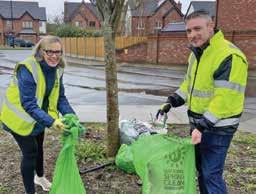
THE residents of Lis na Dara held their annual spring clean and coffee morning last Saturday, managing to stay one step ahead of Storm Dave.
With the wind warning, the committee moved the event into the Clann community room to keep everyone dry. It turned out to be a busy morning, with a great turnout of neighbours in for a coffee and a chat, while the local kids got their Easter eggs before the rain arrived. Once the rain passed everyone got out to collect litter and tidy the estate.
The committee would like to
Dundalk Women’s Shed
13/4 GERRY McHugh - Local expert Gardener. 20/4 Sinead Mallon from Becoming Hair & Scalp - hair and scalp specialist.
27/4 Marianne Butler Green Party Councillor who will be accompanied by an Environmentalist from Louth County Council.
All Monday events take place from 10am11:30am in Wellington Hall, St Mary’s Road, Dundalk. email womenssheddundalk@gmail.com or check out Dundalk Womens Shed on facebook. All women over 18 welcome. Phone 0870009890 for further details.
thank Clann Housing for the use of the community room, Adrian of Brew Crew for the excellent coffees, and Cllr Ciaran Fisher for coming along to support. Despite the forecast, it was a productive and social weekend for the estate with many bags of litter collected.
Upcoming Pilgrimages
PILGRIMAGES: Enquiries: Laurena 0851833110
- Lough Derg Pilgrimage, May 4, 2026, Bank
Holiday Monday, One Day Retreat. Admission fee €50, Bus fee depending on numbers. Knock Pilgrimage :Sunday, May 31, 2026, Chief Celebrant & Homilist, Most Rev. Eamon Martin. Task Community Care Alarm System
Would you be interested in a Care Link Alarm System in case of an emergency in your home?
Installation and monitoring fees are covered by Task Community Care. Enquiries: Laurena –0851833110.
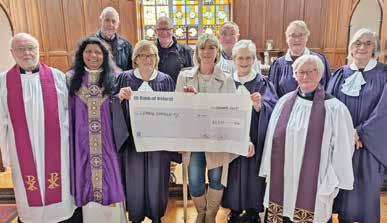
MEMBERS of the ministry team and choir of St Nicholas’ Parish Church, Dundalk (Green Church), recently presented cheques to both the Simon Community and Dundalk Women’s Aid.
The funds were raised during the church’s annual Carols by Candlelight service held in December — a muchloved event in the parish calendar that brings the community together in celebration of the Christmas season.
Pictured are members of the ministry team — the Reverend Shirley
Murphy, the Reverend Richard Moore, and the Reverend Rita Arthur — along with choir conductor Mrs Sharon Eveson, members of the
church choir, and Mr Trevor Patterson and Mr John Fitzsimons, as they present the donations.
The parish expressed its sincere gratitude to
all who attended and contributed, helping to support two vital organisations working within the local community.
??? QUIZ ???
1—Why was the name ‘Artemis II’ in the news this week?
2—Which emperor built a wall across northern Britain?
3—Which city was divided by Checkpoint Charlie?
4—Only one country has participated in every single FIFA World Cup? Can you name them?
5—Can you name the building that was built on the Dublin Road at a cost of €500,000 and was officially opened on 3rd
July 1959?
6—Who was the only Irish Taoiseach not born in Ireland?
7—Can you name the largest country in the world that has no rivers?
8—What is approximately 499km long and runs from Lough Foyle in the North West of Ireland to Carlingford Lough in the north-east?
9—What animal was on the old 5p Irish coin? (decimal currency)
10—What is the southernmost capital city in the world? The Stinker—Which city lies on two continents?
Hybrid Martial Arts Shine at International Yokoso Open in Amsterdam
ATHLETES from Hybrid Martial Arts, Dundalk, delivered an exceptional performance at the prestigious Yokoso Open, held in Amsterdam from March 27th to 29th, competing against elite international opposition across multiple disciplines.
Five athletes represented the club across a full spectrum of competition — from children’s divisions through to veteran level, spanning point fighting, light contact, kick light, and traditional kata. The performances reflected not just results, but consistent work, structure, and a growing understanding of the demands of competing across multiple disciplines at international level.
Ethan Joyce delivered a commanding performance in the Older Cadet -47kg division,
securing double gold in light contact and kick light against high-level opposition. He also partnered with Logan Lambert in the Older Cadet tag team division, where the pair battled all the way to silver after an extratime final, narrowly missing out in a high-level contest. As training partners and teammates, Joyce and Lambert continue to set the standard within the club through their consistency and ability to perform under pressure.
Logan Lambert produced a high-level and hard-earned performance in the Older Cadet advanced divisions, securing silver in -57kg light contact, bronze in -63kg point fighting, and silver in the Older Cadet tag team alongside Joyce. In the -63kg points division, Lambert was
from
narrowly beaten in the semifinal by just two points against a high-level opponent, highlighting the level he is now operating at. His performances reflected a fighter closing the gap at international level and developing real control and understanding of his game.
Dan Connolly delivered an
outstanding performance in the Children’s divisions, competing across both intermediate and advanced levels and securing silver in -30kg intermediate point fighting, bronze in -33kg intermediate point fighting, bronze in -30kg advanced point fighting, and gold in -30kg advanced kick light. Compet-
ing across multiple categories at such a young age, Connolly showed exceptional courage, adaptability, and competitive drive, stepping confidently into higher-level competition and delivering strong results.
Claire Dougan competed in the Veteran Ladies advanced divisions -65kg and +65kg, securing gold and bronze across the two categories. A consistent presence at the top level in recent years, she continues to set the standard in her division while building toward bigger targets ahead.
Anne-Marie O’Connor continued her upward progression in Traditional Kata, delivering a confident and composed performance, showing a clear improvement on her previous outing.
Attention now turns to the Irish National Championships on April 18th and 19th at the National Stadium, where athletes will look to build on this momentum and challenge for selection on the Irish team. Hybrid Martial Arts is affiliated with Kickboxing Ireland and WAKO, providing athletes with clear pathways to national and international competition. The club would also like to acknowledge the continued support of Advantage Forwarding Limited who have been supporting the club for a no of years now. We would also like to take this oppertunity to reach out to any local businesses who would like to get behind our International Athletes, who work so hard to make their dreams a reality.
Helping out at the Lis na Dara annual spring clean. Cllr Ciarán Fisher (second from left) dropped by to give a helping hand at the clean up.
Students
Hybrid Martial Arts, delivered an exceptional performance at the prestigious Yokoso Open in Amsterdam.
Hospital,
DeValera
in
Kingdom border.
Wellington. The Stinker: Istanbul.
•
Jinx set to embark on latest tour
JINX Lennon embarks on the ‘’Epstein War Spring Tour’’ starting with Cyprus Avenue Cork on Saturday 11th April with Cork band Wasps v Humans and ending in Mc Chuills Glasgow on May 17th.
In the middle of the tour, there’s an appearance in An Tain Centre on Saturday May 2nd at 8pm. Jinx will be accompanied by Castleblayney musician Jamie Bishop who also performs as his own solo act Muckno and is part of psychedelic country act the Shamrock Showband and Chris Barry who runs Aiflionn Studios in Drumcondra and has engineered a run of great albums by the likes of Junior Brother, Deadlians, Mary Wallopers and Dave Keenan.
Jinx recorded his last record with Chris ‘’The Hate Agents Leer at the Last Isle Of Hope’’ described by Will Russell of Hot Press as ‘’mightily comparable to Dylan Thomas’ Under Milkwood’ with its epic ambition, magnificent wordplay and the erudite eye of its omniscient narrator’’.
Jinx was also featured in the award winning movie about the New Wave of Irish folk music ‘’Celtic Utopia ‘’which received the Grand Prix Award at Locarno Film Festival and he recorded two live songs as part of the music series recorded at Black Gate Galway Cumasc: Seisiuin Sa black Gate on BBC 2 .
Special guests at An Tain are Kerry based act News for The Deaf who are two brothers who play a head scratchingly brilliant bass heavy set of songs on drums and guitar and local man the tattoo artist and sometimes musician Gus Cullen formerly of the Big Midweek who has gone solo with a minimal wave sound with a Dundalk twist .
Tickets for An Tain May 2 are available from www. antain.ie.
First Year Students complete the “Road to Resilience” Programme at Ó Fiaich College
THIS week, first year students at Ó Fiaich College took part in the “Road to Resilience programme”, facilitated by Ms. McDonnell.
The workshop provided students with an opportunity to reflect on their journey since transitioning to secondary school, highlighting the personal growth, challenges overcome, and achievements reached along the way.
The programme focused on
building resilience and encouraging students to recognise just how far they have come in a short space of time. It was a valuable experience that allowed students to develop confidence, strengthen their coping skills, and celebrate their progress both inside and outside the classroom.
Congratulations to classes Ferdia, Setanta and Danann, who successfully completed the workshop with great enthusiasm and engagement. Their participation
and positive attitude made the programme a resounding success.
Students are pictured alongside Ms. McDonnell, their tutors Ms. Kelly and Ms. Everitt, their SNAs Ms. Dolan, Ms. McLoughlin and Ms. McNulty, their Year Head Ms. Ketterick, and Deputy Principals Ms. Flood and Mr. Caraher. Well done to all involved in making this a meaningful and memorable experience for our first year students.
First Year students at O Fiaich College who took part in the “Road to Resilience” Programme.