




By Paul Byrne
THE quick thinking and awareness of an Ardee publican combined with the bravery of a local healthcare worker helped save a man from drowning in the River Dee on Friday evening. Tom Muldoon, owner of Brian Muldoon’s Pub in Ardee and Dean Enright, a healthcare worker from Blackrock who was working on the door in Muldoons on Friday night have been hailed for their quick response and bravery as they saved a man from drowning in the River Dee.
According to Tom, owner of Brian Muldoon & Sons bar in Ardee both he and Dean were talking outside at the
door of the pub just after 8pm on Friday evening when they saw three men heading down towards the river. Shortly afterwards just two of them came back which set off alarm bells in Tom’s head.
“I felt something was wrong when I saw just two men coming back from the direction of the river when three of them had gone down that way a short time earlier. They hadn’t been in the pub but we saw them passing and when just two of them came back walking up the street I asked Dean, my doorman, to come down with me to the river to make sure nobody was in trouble,” explains Tom.
Continued on Page 2


We are actively looking for part-time/full-time home care staff in the Dundalk, Carlingford, The Cooley Peninsula and Omeath area for an immediate start.
Interested send in your CV to recruitment@hhci.ie or enquiries contact: 0877724202

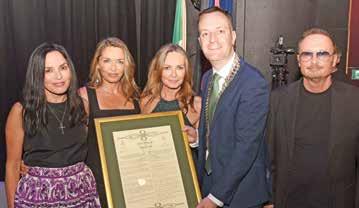
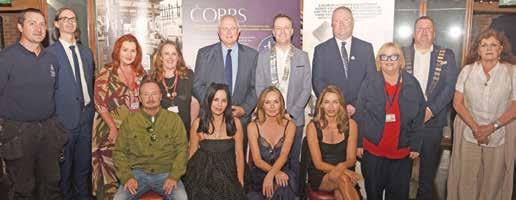
A CIVIC Reception was held in An Táin Arts Centre, Dundalk, on Friday, May 29, to honour The Corrs, one of Dundalk, County Louth, and Ireland’s most successful and muchloved bands.
Hosted by Louth County Council, the event celebrated the remarkable career and global success of Andrea, Caroline, Jim and Sharon Corr, whose achievements have brought international acclaim and pride to their hometown and county.
As the highest honour a local authority can bestow, a Civic Reception recognises individuals or groups whose achievements have made a significant impact at local, national and international level - a distinction reflected in The Corrs’ exceptional musical career and global success.
After forming the band in 1990, the siblings from Ard Easmuinn in Dundalk quickly established themselves as one of Ireland’s most recognisable musical exports.
Over the course of their career, The Corrs have sold more than 40 million albums worldwide and have achieved numerous international awards and accolades, including recognition as one of the world’s biggestselling Irish acts. They have performed on some of the world’s most prestigious stages, from Glastonbury to
global charity events, and have also lent their support to numerous charitable and humanitarian causes, while continuing to enjoy enduring success and a loyal global fanbase.
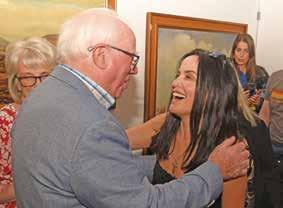
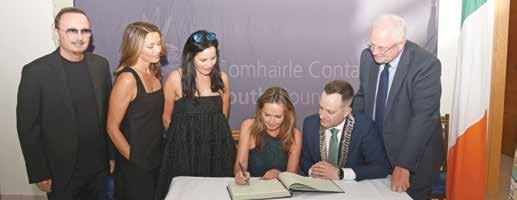
After signing the County Roll of Honour, The Corrs took their seats as the ceremony began with a welcome from Joanna Kelly, Acting Director of Services, Louth County Council, who invited Dita Durse, Glenn Shields and Stephen Grey from Louth County Council Fire & Rescue Service to display the National Flag and the flag of County Louth.
The Corrs were then presented with a Civic Honour Scroll by Cllr Seán Kelly, Cathaoirleach of Louth County Council. They also received specially commissioned pieces of jewellery, created by Garrett Mallon Design House in Carlingford.
A live Fireside Chat with music journalist
Dave Fanning followed, where the band spoke about their musical journey before firefighter Niall Clarke, from Louth County Council Fire & Rescue Service, brought the ceremony to a close with a performance of the National Anthem.
After a brief interval, The Corrs returned to the stage where the invited guests - including members of the public who secured tickets through a special public draw - were treated to an intimate performance, the band’s first in Dundalk in almost three decades.
It capped an incredible end to a memorable day, which also saw the siblings attend the official viewing of The Corrs mural at the Longwalk and the opening of a new exhibition, All The Way Home: A Celebration of The Corrs, at the County Museum, Dundalk.
Cllr Seán Kelly, Cathaoirleach of Louth
County Council, said:
“This Civic Reception represents the highest honour we can bestow as a local authority, and it is richly deserved.
“The Corrs are not only globally successful artists, but proud Dundalk natives whose story began here in Ard Easmuinn, where their love of music first took shape. Many people will fondly associate their early days with McManus’ Bar in Seatown, a place woven into the fabric of the town, where they performed and worked as young musicians, long before international fame followed.
A statement from The Corrs said: “It is with immense gratitude that we accept this civic honour, the highest recognition that Louth County Council and the people of Dundalk and County Louth can bestow. To be recognised in this way, in a place so rich in community spirit and shared history, is something we
Continued From Page 1
“We went down to the embankment and sure enough there was a man lying face down at the side of the river. I called the Gardaí straight away and we pulled him away from the river and he was very agitated and when he stood up he fell back into the river and was drifting towards the middle away from the bank. Dean, jumped in straight away and thankfully he was able to get a hold of him and drag him back to shore.
“He was drifting in and out of consciousness and we stayed with him until the emergency services arrived,” explained Tom.
Meanwhile, Dean Enright who jumped in to save the man said that he didn’t really think too much before jumping in as he knew the man was in trouble and his instincts just kicked in as he jumped in to try and save him.
“We don’t know what happened him initially but there is a big drop down to the riverbank and he was obviously in trouble. When he fell into the river I immediately jumped in to try and get him back to dry land. Thankfully, I’m a decent swimmer and although it was hard to get him back to shore as he didn’t seem to be conscious I managed to do it and thankfully he is ok now. I don’t think it would have ended well for him had myself and Tom not got down to him but we are both just happy that we were able to help him and get him back on dry land,” stated Dean.
“In the moment you are not thinking too much about what’s going on as you are just running off instinct and adrenaline but afterwards there was just a sense of relief that he was ok,” added Dean.
Gardaí confirmed that they attended the scene on Friday evening.
“Gardaí attended a public order incident at Bridge Street, Ardee, Co Louth, at around 8:40pm on 29th May 2026.
“A man, aged in his 30s, was taken from the River Dee and subsequently arrested and detained at a station in the Garda North Western Region. He was later released without charge. Investigations are ongoing,” read the statement.

could never have imagined. It is a moment we will cherish for the rest of our lives.
“We extend our sincere thanks to the Cathaoirleach of Louth County Council, Cllr Seán Kelly, the elected members, Chief Executive David Conway and all of the Council staff who have worked so hard to make this occasion possible. We are deeply grateful to our family, friends and all those who have supported us over the years - from our earliest days to the present - whose
encouragement and belief have meant more than words can express.”
“This recognition from our hometown is especially poignant. Our parents, Jean and Gerry Corr, who inspired our love of music and instilled in us the values that have guided us, would have been incredibly proud. We dedicate this honour to their memory, and to the people of Dundalk and County Louth, whose warmth and support have always meant so much to us.”
For large tillage farm in Mid-Louth area IMMEDIATE START Tel 087
UPSTAIRS IN THE LISDOO CONFERENCE CENTRE, DUNDALK
Dancing from 8.30pm to Live Music, Supper & Raffle Adm €10
Tomorrow, Thursday 4th June – Glen Flynn Thursday 11th June – Magic Moments Thursday 18th June – Liam McLaughlin Thursday 25th June – Matt Leavy NEW MEMBERS WELCOME

All proceeds raised go to our school in Cameroon Enquiries 087 2523710






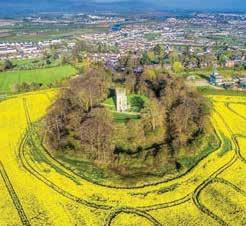
A LOCAL resident has started a petition urging the relevant local authorities to protect Cú Chulainn’s Castle and the surrounding landscape. The petition comes amid a proposed residential development from Grandspect Limited who applied to Louth County Council for planning permission for a development beside Cú Chulainn’s Castle on the Castletown Road which would see the construction of 1,058 new homes, three new retail units, a community/medical unit as well as a childcare facility.
Nicola Bishop, a professional photographer from Dundalk is calling on Louth County Council and all relevant planning authorities to protect Cú Chulainn’s Castle and the surrounding landscape from the proposed development. She argues that the Castle and its surroundings are richly important in terms of history and culture and should be preserved for future generations.
Cú Chulainn’s Castle is an important historic, cultural, and archaeological landmark closely connected to the heritage and mythology of Dundalk and County Louth. The open fields surrounding the castle form part of its historic setting and natural beauty and should be preserved for future generations.
“The proposed construction of over 1,000 homes beside the site risks permanently damaging the visual character, heritage value, and archaeological integrity of the area. There are also longstanding local accounts of possible underground tunnels and archaeological features beneath the castle grounds that warrant further professional investigation before any development proceeds. My brother can remember going through the tunnels in the 90’s so they are definitely there and we need to preserve that whole area and utilise it as a viable tourist attraction,” explained Nicola.
“There is so much potential up there and it would be fantastic to see the development of a visitor centre and educational centre celebrating the legend of Cúchulainn and the history of the region.
“Americans coming over to Ireland love looking at old castles and hearing about the history and folklore of Ireland and we have all of this on our doorstep. We need to preserve the area and surrounding landscape and begin an archaeological excavation and investigation.
“This site is part of the identity and history of Dundalk. Once its surrounding landscape is lost, it can never truly be restored.
“We respectfully urge the relevant authorities to reconsider any proposed development plans and prioritise the protection and preservation of this unique heritage site,” urged Nicola.
“I do feel passionately about this and I thought rather than just sit back and moan I would try and do something to start a conversation so I started this petition on Thursday and by Tuesday
morning I had over 1000 signatures. The plan now is to send the petition to Louth County Council and relevant planning agencies.
“We have to respect our history and we have so many wonderful places around the country such as Knowth in Co. Meath where you can stand beside and look down across Co. Meath and almost feel the history and culture attached to that whole area.
“As well as preserving history I feel that the area in question is not equipped to deal with over 1000 extra houses. The roads are already busy around there and the infrastructure is simply not in place to cater for all of those extra people. I know that we need houses but it has to be done properly and we can’t build them without a plan and at the expense of our history,” added Nicola.
If you would like to sign Nicola’s petition you can do so by following tis link: https://surl.li/ hnzjux
A decision is due on the application by 22 July 2026, with submissions due by 1 July.
A DUNDALK woman who failed in an attempt to avoid a conviction for drink driving was banned from driving for two years at Dundalk District Court.
Forty-year-old Andresa Lucio of Maple Close, Avenue Road, Dundalk, claimed that the evidence regarding her period of observation at Dundalk Garda Station was contradictory. However, Judge Nicola Andrews ruled that the evidence was in order.
The court heard evidence that on December 14th, 2024, Gardai
observed a car driving back and forth across the road on the Avenue Road. Gda Donnelly spoke to the driver, Ms Lucio, and formed the opinion that she was under the influence of an intoxicant. She was arrested and taken to Dundalk Garda Station. Evidence was given that Sgt Hugh Jordan began conducting the 20-minute observation at 1.03am but as the defendant - who told Gardai she was eight weeks pregnant - needed to go to the toilet, an new 20-minute period of observation was started at
1.13am. Ms Lucio was accompanied by a female Garda.
Sgt Jordan then conducted an evidenzer test which revealed that the defendant was over the legal limit for driving.
Defence Barrister, Niall Mackin, stated that evidence given by Garda Donnelly and Sgt Jordan was contradictory in relation to when and where the observation took place.
Insp Martina Gallagher stated that Sgt Jordan was in charge of the period of observation and that he had given very detailed information in relation to this.
Judge Andrews ruled that there was a case to answer and that she was satisfied that evidence in relation to the period of observation was in order.
Mr Mackin stated that his client is the mother of a 19-year-old daughter and works as a care assistant. The conviction will cause a huge financial burden as she may lose her employment. In convicting, Judge Andrews imposed a two-year disqualification and a €200 fine.

















Tenders are invited for Land Licencing for a period of 24 months at the following location:
Location
Haynestown, Dundalk, Co. Louth
Hectares Usage
Approx. 7.91 Hectares Grazing only
Licensee will indemnify IDA against all liability and be responsible for the removal of ragwort and any other noxious weeds from the land. The Licensee will be responsible for any fencing necessary to keep cattle from trespassing outside of the area allocated. The lands shall be licenced for the grazing of disease-free cattle only.
Land Licence shall be for 24 months subject to termination at one month’s notice, should the lands be required in whole or in part by IDA Ireland.
Tender Price shall be the annual fixed price excluding VAT for the 24-month Agreement to be paid for in full, in advance. Current Tax Clearance Certificate will be required prior to the Licence being put in place. In addition to the Tender Price, VAT at 23% will be charged. A map of the subject can be requested via email from enda.clifford@ida.ie
Tender envelopes marked “TENDERS FOR LAND Licence in Haynestown, Dundalk, Co. Louth” and clearly stating the price per annum offered.
Submissions by email to propertytenders@ida.ie on or before 12.00pm on June 12th 2026.
Cuirtear fáilte roimh thairiscintí Ceadúnaithe Talaimh ar tréimhse 24 mí ag an suíomh a leanas: Suíomh
Baile Héine, Dún Dealgan, Co. Lú Heicteár Úsáid Timpeall 7.91 Heicteár Féarach amháin
Tabharfaidh an ceadúnaí slánaíocht do GFT in aghaidh gach dliteanas agus glacfaidh sé freagracht as buachaláin agus fiailí díobhálacha eile a ghlanadh amach ón talamh. Glacfaidh an ceadúnaí freagracht as aon chlaí riachtanach a chur ann ar mhaithe le cosc a chur ar eallaigh dul amach ón limistéar leithroinnte. Beidh an talamh ceadúnaithe le haghaidh innilte eallaigh atá saor ó aon ghalair.
Beidh an Ceadúnas Talaimh i bhfeidhm ar feadh 24 mí faoi réir foircinn le fógra mhí amháin, má bhíonn an talamh ag teastáil ó GFT Éireann go hiomlán nó go páirteach. Beidh praghas na tairisceana comhionann leis an bpraghas seasta bliantúil lúide VAT don Comhaontú 24 mí le bheith íoctha go hiomlán roimh ré. Beidh Teastas Imréitigh Cánach ag teastáil sula bhfuil an Ceadúnas curtha i bhfeidhm. Sa bhreis le Praghas na Tairisceana, gearrfar VAT ag 23%. Déantar léarscáil den limistéar atá i gceist a iarradh trí r-phost ó enda.clifford@ida.ie
Seoltar clúdaigh litreach tairisceana marcáilte “TAIRISCINTÍ DO CHEADÚNAS TALAIMH i mBaile Héine, Dún Dealgan, Co. Lú” a luann go soiléir an praghas bliantúil ofráilte. Déantar iarratais trí r-phoist chuig propertytenders@ida.ie ar nó roimh 12.00in ar an 12ú Meitheamh 2026.
Phone: 042 932 0888 Email: editorial@dundalkleader.com
EARLIER this month
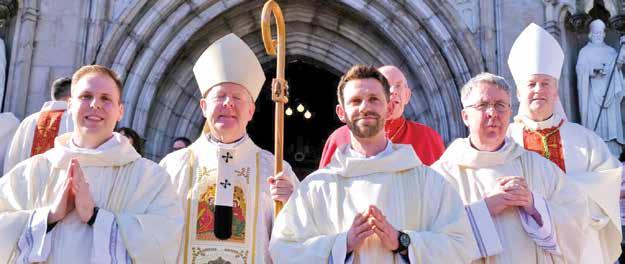
Archbishop Eamon Martin
ordained Gabriel Neal, Jacek Tuszkiewicz and Paul O’Reilly to the priesthood in Saint Patrick’s Cathedral, Armagh. Fr Gabriel Neal is originally from the USA, Fr Paul O’Reilly from Cork and Fr Jacek Tuszkiewicz is from Poland. All three undertook years of spiritual, pastoral and academic formation in the Redemptoris Mater Seminary in Dundalk.
Redemptoris Mater Seminary was established in De La Salle Terrace, Dundalk, in 2012. It was set up as a new undertaking of the Archdiocese of Armagh to form priests for the New Evangelisation who will be both diocesan and missionary. Upon Ordination the seminarians are incardinated into the local diocese and serve in the parishes and institutions of that diocese. After some time of priestly ministry in their diocese, according to the discernment of the Bishop, they are available to be sent in mission.
In his homily, Archbishop Eamon reflected on the generosity and courage required in responding to God’s call in the modern world, encouraging the newly ordained priests to remain close to Christ and close to the people they are called to serve.
The ordinations bring to
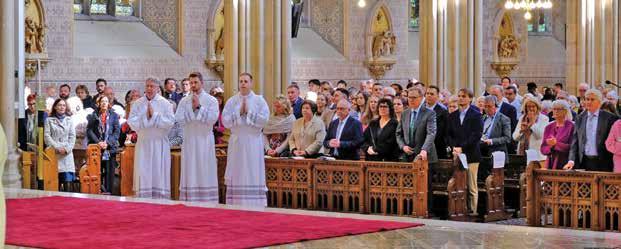
twelve the number of priestly ordinations in the Archdiocese of Armagh in recent years and were received as a sign of encouragement and hope for the local Church.
The three new priests reflect the international char-
acter of priestly life within the Archdiocese today.
The Archdiocese also acknowledged the role of the Redemptoris Mater Seminary and formation community in Dundalk, where the newly ordained priests
undertook years of spiritual, pastoral, human, academic and human formation.
Fr. Giuseppe Pollio the Rector in the Redemptoris Mater Seminary in Dundalk, as well as Fr. Davis Haberkorn the assistant to the Rector, stated that they are glad to see the work that the Lord is carrying out in the lives of the three newly ordained priests, and hope that they will bring the joy of Christ to many people throughout their ministries.
A DUNDALK woman was told that she failed to take numerous chances afforded to her, was sentenced to four months in prison at Dundalk District Court.
Sharon McDonagh, of Harbour View, Coulter Place,
Dundalk, was told by Judge Nicola Andrews that she had reached the end of the road and that pleas for another chance were “too little, too late”.
The 25-year-old defendant pleaded guilty to the theft of
alcohol worth €28.20 from Maxol, Castletown Road, Dundalk, on June 1st, 2025.
Solicitor Paula Tiernan, stated that many of her client’s 110 previous convictions were from when she was a juve-
nile, and added that her client had been doing better recently and asked for more time to engage with Probation Services.
However, Judge Andrews stated that Ms McDonagh had been given every chance but decided
not to take them, as she imposed a six month sentence with the last two months suspended for two years.
“She has an appalling record and it is too little, too late. I have done everything for her
but we are now at the end of the road. I have sympathy for her and that is why I sent her to the Probation Services but she has declined that chance”, stated Judge Andrews.

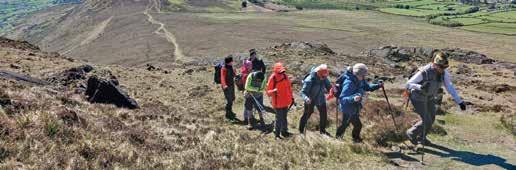
THE 2026 Táin International Hillwalking Festival returns to the scenic surroundings of the Cooley Mountains on Saturday and Sunday the 20th and 21st of June.
The inaugural Táin International Walking Festival took place in The Cooley Mountains in 2019 and is now known as one of the best walking festivals in Ireland. Each day there are three different grades of walk to suit most fitness levels.
Tickets cost €15 for one day or €25 for both days (includes transport to and from walks) and are available on Eventbrite. You can sign up online at www.eventbrite.com or register on the day at the registration centre which will be in the Dundalk Tourist Office at Market Square from 8:30am to 9:30am. Tea and biscuits will be served at registration.
The following walks will take place on the Saturday with three graded walks on the day to suit all levels of walkers. Expect to see some majestic scenery on the walk on Saturday as you are led up the mountain passing Carlingford, Slieve Foye Forest, Carlingford mountains, Split Rock, White Bog, Slieve Foy, Barnavave, Paddy’s Top, Deserted Village and back to Carlingford.
Grade 1 Walk covers a distance of 13.6kms with a height gained of 820 metres. Grade 2 covers a distance of 9kms with a height gained of 595 metres while Grade 3 will cover 7.2kms at 9.7k and climb to a height of 352 metres.
On Sunday the route will see walkers walk from the Lumpers, Round Mountain, The Castle Slievetrasna, Carnawaddy, Clermont Cairn, Carabane and Doolargy before returning to The Lumpers.
Grade 1 will cover a distance of 16.6kms with a height gained of 686 metres. Grade 2 will cover 11.5kms with a height gained of 458 metres while Grade 3 covers 9.7kms and a height gained of 382 metres.
Grade 1 walks are very challenging and strenuous. They should only be undertaken by experienced hillwalkers. Grade 2 walks are less strenuous but still take place on open mountains and require a reasonable/ high level of fitness.
According to event organiser Jock McArdle, the event is getting bigger every year with people from all over the country attending every June.
“It’s growing all the time and I think the word is spreading amongst the walking community across Ireland of the won-
derful scenery we are blessed with in this part of the country. Everything is in place now for a wonderful weekend of walking and now we just pray that the weather Gods are kind to us.
“For anybody driving to Dundalk the car park in the Longwalk is €2 on Saturday and free on Sunday. There will be a bus out to the Lumpers leaving from the tourist Office at Market Square and that is included in the price you pay when registering. For anybody local who has never experienced the spectacular scenery up on the mountains I would urge you to come along this weekend and sample it for yourself,” added Jock.
All walks and hikes are led by experienced leaders and those participating are encouraged to wear waterproof clothing and suitable walking boots. They should also carry a daysack containing spare clothing, waterproof jacket and bottoms, food and drink. No jeans. No boots, no walk! No animals or children under 18 allowed. For further info contact tainwalkfestival@gmail.com.
Disqualified
A 45-YEAR-old woman was disqualified from driving for two years after she failed in an attempt to avoid a drink driving conviction at Dundalk District Court.
Judge Nicola Andrews ruled that Niamh Croke of Dromin Manor, Dromin, Co Louth, had a case to answer after her barrister claimed that evidence in relation to the period of observation at Dundalk Garda Station was contradictory.
The court heard from Dt Garda Murphy that on June 16th he observed a car on the Dublin Road, Marshes Upper, driving south that was crossing over and back the white line, and almost
collided with road islands.
The car continued on to the N52 at Haggardstown without indicating and failed to stop after Gardai signalled to do so.
The car continued to be driven in an erratic manner for approximately 90 seconds, although not at speed, and mounted a kerb before at a roundabout, before coming to a stop.
The Garda spoke to the driver, Niamh Croke, and formed the opinion that she was under the influence. She was arrested at Crumlin, Dundalk, and taken to Dundalk Garda Station, where a breath test revealed that she was over the liming for driving.
After evidence was given in
relation to the period of observation, Barrister Niall Mackin, stated that it was ambiguous as it did not identify who observed the defendant, and also didn’t mention Ms Croke making a phone call during that time.
However, Judge Andrews ruled that the Garda gave very clear evidence in relation to the period of observation, and was satisfied that this evidence was in order.
Mr Mackin stated that his client had good employment with the HSE and that the loss of her licence could have an impact. In convicting, Judge Andrews imposed the two-year ban and a €2500 fine.
By Darren Crawley
PLANNING disputes rarely begin with the intention of becoming legal matters. More often than not, they arise from everyday situations, a neighbour’s extension, a new housing development, or a proposed commercial project. Yet, once concerns are raised, these issues can quickly move from informal disagreement into the structured world of planning law. In communities like Dundalk, where development continues to shape the town’s character, understanding how planning disputes work is increasingly important.
At the heart of Ireland’s planning system is a balance: enabling development while protecting the rights of individuals and the wider community.
Local authorities, including Louth County Council, are responsible for assessing planning applications. They consider factors such as zoning, environmental impact, traffic implications, and how a proposal fits within the local development plan.
For residents, the first point of engagement often comes when a planning notice appears on a nearby site or in a local newspaper. This notice signals that an application has been made and that members of the public have a limited window—typically five weeks,
to make submissions or observations. It is at this stage that many potential disputes begin.
Common concerns include overshadowing, loss of privacy, increased traffic, or the perceived impact on property values. While not all concerns carry equal weight in planning law, they are nonetheless part of the broader assessment process. Importantly, objections must be grounded in planning considerations rather than personal preference. For example, a dislike of a proposed building’s appearance may be less persuasive than concerns about access, drainage, or compliance with zoning regulations. If a person wishes to object, the process is relatively straightforward but must be followed carefully. A written submission, accompanied by a small fee, is sent to the local authority within the prescribed timeframe. Missing this deadline can mean losing the opportunity to have one’s concerns formally considered.
Once a decision is made by the council, it is not necessarily the end of the matter. Applicants and objectors alike have the right to appeal to An Bord Pleanála, an independent body that reviews planning decisions. This appeal process introduces a further layer of scrutiny and can significantly extend the timeline of a project.

In Dundalk, planning disputes can be particularly sensitive given the town’s mix of historic areas, residential estates, and ongoing commercial development. Proposals near landmarks such as St Patrick’s Church or within established neighbourhoods often attract close attention from residents keen to preserve the character of their surroundings.
However, it is important to recognise that not all disputes are adversarial in nature. In many cases, concerns raised during the planning process lead to modifications or conditions being attached to a development. These might include changes to design, restrictions on working hours, or requirements for additional infrastructure. In this way, the system is designed not just to approve or refuse, but to refine proposals
in response to legitimate issues.
From a legal perspective, planning disputes highlight the importance of procedure. The strength of a concern is only part of the equation; how and when it is raised can be equally significant. Failure to follow the correct steps, such as lodging an objection on time or providing sufficient detail, can weaken a position, regardless of its merits.
There is also a broader lesson about communication. Many disputes escalate because of a lack of early engagement between developers and local residents. While the formal planning process provides a structured avenue for objections, informal dialogue at an early stage can sometimes resolve issues before they become contentious.
In a close-knit community like Dundalk, this approach can be particularly effective.
For those involved in a planning dispute, seeking professional advice is often worthwhile. Planning consultants and solicitors can help interpret complex regulations and ensure that submissions are framed in a way that aligns with legal requirements. While this may not always change the outcome, it can provide clarity and confidence in navigating the process.
Ultimately, planning law is about more than rules and regulations, it
is about shaping the spaces in which people live and work. In Dundalk, ongoing development brings both opportunity and challenge. New housing, businesses, and infrastructure projects contribute to the town’s growth, but they also require careful management to ensure that this growth is sustainable and respectful of existing communities.
Understanding the planning process empowers individuals to participate constructively. Whether supporting a development, raising concerns, or simply staying informed, residents play a vital role in shaping their local environment. The law provides the framework, but it is community engagement that gives it meaning.
As with many areas of law, the key to avoiding unnecessary conflict lies in awareness. Knowing how the system works, what rights exist, and how to exercise them can make a significant difference. In the context of planning disputes, this knowledge transforms what might otherwise be a source of frustration into an opportunity for meaningful input.
In the end, planning disputes are not just about buildings or land, they are about people, communities, and the future of places like Dundalk. And with the right understanding, they can be managed in a way that benefits all involved.
Dundalk Leader
Dundalk Library
Tesco Extra
Marshes Shopping Centre
Tesco Longwalk
Bus Station Longwalk
Country Fresh Patrick Street
Dunnes Stores Muirhevnamor
ALDI Ramparts Road
LIDL St Helena’s Tce
Aura Swimming Pool
Louth County Council
Park Café Coes Road
Applegreen Retail Park
DkIT Campus
DkIT Gym
Imperial Hotel
Gateway Hotel
Redeemer Community Centre
Mace Alphonsus Road
DUNDALK Ardee Road
Londis - Clarkes Filling Station
DUNDALK Carrick Road
Train Station
Mace
DUNDALK Ecco Road
McEneaney’s XL Cox’s
Redeemer Community Centre
DUNDALK Avenue Road
LIDL
SPAR Greenacres
McCreeshes
Sloane’s
Daybreak Bay Estate
DUNDALK Castletown Rd
Mace Maxol
Rock’s Londis
Pimis Foodstore
ALDI
Applegreen
Go Service Station
Conyards
DUNDALK
Quay Street
Brodigan’s Londis
DUNDALK
Dublin Road
Louth Hospital
Mace
Niall Clarke Oils
Maxol (opposite DkIT)
Flanagans Circle K
SuperValu
Fairways Hotel
Gateway Hotel
Felda Gym
DUNDALK
Clanbrassil Street
Clanbrassil Street Centre (Boyds)
McEvoys
Nearby Central
Costcutter
BLACKROCK
Centra
ARDEE
Londis
Centra
SuperValu
Lidl
Spar
Aldi
Texaco XL
M1 MOTORWAY
Applegreen North
Applegreen South
DUNLEER
Centra
Weldons Spar
DROMISKIN
Centra
CASTLEBELLINGHAM
Applegreen
Village Stores
TALLANSTOWN
Smyth’s Centra
LOUTH VILLAGE
Village Stores
Finnegan’s Daybreak
KNOCKBRIDGE
Foley’s
INNISKEEN
Daybreak XL
FORKHILL
Murphys
JONESBOROUGH
McGeoughs Spar
COOLEY PENINSULA
Londis Ravensdale
Carrickdale Hotel
Junction 20 Filling Station
McCrystals Jenkinstown
Niall Clarke Oils
Londis Bellurgan
The Station House Cafe Lordship
Sheelans Riverstown
Costcutter Riverstown
Barrys Grange
Centra Carlingford
Four Seasons Hotel Carlingford
Mace Omeath
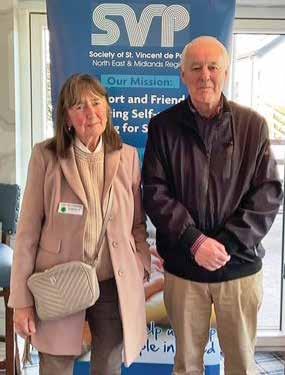
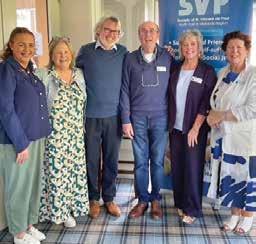
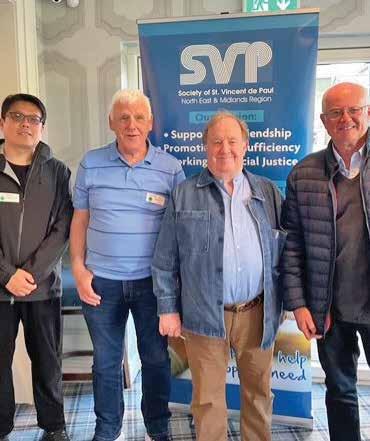
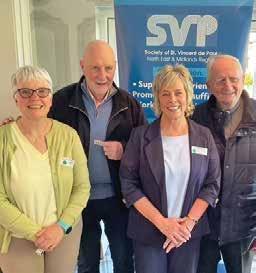
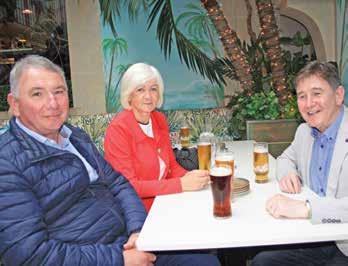
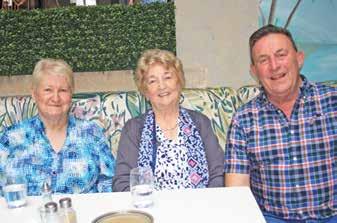
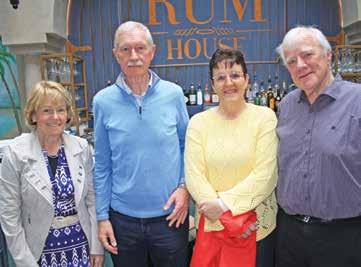
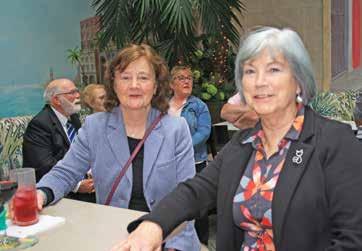
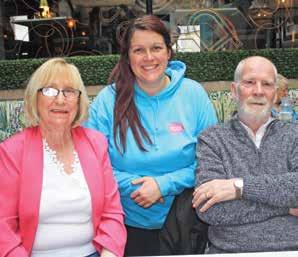
Members of the Society of St Vincent de Paul from Dundalk, Drogheda and Mid-Louth recently gathered for the first Co. Louth Area Gathering, which took place in the Monasterboice Inn on 14th May.
Held under the theme “An Evening of Connection and Hope,” the event was a warm and uplifting occasion, bringing SVP members from across the county together to meet, reconnect, share experiences and strengthen links between local Conferences.
Helen Grant, Area President for Dundalk, welcomed those in attendance on behalf of Deirdre Seery, Area President for Drogheda, and Fintan Harmon, Area President for Mid-Louth. She said they were delighted to see so many members come together for what was a very special evening for SVP in Co. Louth.
The evening began with a thoughtful reflection on hope from Father Brendan Callanan C.Ss.R. of St Joseph’s Redemptorist Church, Dundalk. “Hope is the conviction that to do the
gospel thing, is the right way to go” said Fr. Callanan who added “to assist those in need, to build up community, to help people feel they belong, that they matter, that somebody cares - all these things are worth undertaking because hope needs help. A way of doing this is to identify goodness, belief in others”. His words created a meaningful and positive opening to the gathering, reminding members of the importance of hope in the work they carry out every day.
This was followed by an informative presentation from Carmel Denning, Community Welfare Officer, who spoke about the important role of the Community Welfare Service in supporting people on low incomes who are experiencing hardship or exceptional need. Carmel’s presentation helped members gain a deeper understanding of how the CWO service can work alongside SVP to support individuals and families with dignity, compassion and practical assistance when they need it most.
Members also took part in discussions based on a number of important case studies. The evening also included an inspiring success story from Carina Richardson of St John’s Conference, showing the important and often life-changing work carried out by SVP volunteers in communities across Louth.
The gathering concluded with a beautiful reflection on hope in our work, delivered by Deirdre Seery, Area President for Drogheda.
The first Co. Louth Area Gathering was warmly received by all who attended and served as a wonderful celebration of the dedication, compassion and community spirit of SVP members across Dundalk, Drogheda and Mid-Louth.
SVP Dundalk is currently seeking volunteers to visit people in need in the community, as well as volunteers to assist with IT and accounting tasks.
Interested in volunteering? Email: Dundalk.areacouncil@ svp.ie
2nd ANNIVERSARY
In loving memory of Briege, late of 102 St Nicholas Ave, Dundalk.
She is Gone
You can shed tears that she is gone
Or you can smile because she has lived
You can close your eyes and pray that she will come back
Or you can open your eyes and see all that she has left.
Your heart can be empty because you cannot see her
Or you can be full of the love that you shared
You can turn your back on tomorrow and live yesterday
Or you can be happy for tomorrow because of yesterday.
You can remember her and only that she is gone
Or you can cherish her memory and let it live on
You can cry and close your mind, be empty and turn your back
Or you can do what she would want, Open your eyes, love and go on.
—Always remembered and never forgotten by your loving husband Willie. Anniversary Mass is the 7th June 2026 St Nicholas Church at 10.30am.
We lost a mother with a heart of gold
How much we miss her can never be told,
She shared our troubles and helped us along,
If we follow her footsteps, we will never go wrong.
We miss you from your fireside chair,
Your loving smile and gentle air, Your vacant place no one will ever fill,
We miss you mother and always will.
She was a mother so very rare, Content in her home and always there, On earth she toiled, in heaven she rests, God bless you mother, You were one of the best.
Each time we look at your picture, you seem to smile and say Don’t be sad but courage take, and love each other for my own sake.
—Always remembered and sadly missed by your daughters Elizabeth and Helena; sons Sean and Peter; daughter-in-law Fiona; son-in-law Pat, grandchildren and great-grandchildren.
NOVENA OT THE SACRED HEART
Dear Heart of Jesus, in the past I asked you for many favours. This time, I ask for this special favour (mention it). Take it, dear Heart of Jesus and place it within your own broken heart, where your Father sees it. Then in His merciful eyes, it will become your favour, not mine. Amen. Say this prayer for three days. Promise publication and favours will be granted. (Never known to fail).
A.D.
NOVENA OT THE SACRED HEART
Dear Heart of Jesus, in the past I asked you for many favours. This time, I ask for this special favour (mention it). Take it, dear Heart of Jesus and place it within your own broken heart, where your Father sees it. Then in His merciful eyes, it will become your favour, not mine. Amen. Say this prayer for three days. Promise publication and favours will be granted. (Never known to fail).
P.M.
NOVENA OT THE SACRED HEART
Dear Heart of Jesus, in the past I asked you for many favours. This time, I ask for this special favour (mention it). Take it, dear Heart of Jesus and place it within your own broken heart, where your Father sees it. Then in His merciful eyes, it will become your favour, not mine. Amen. Say this prayer for three days. Promise publication and favours will be granted. (Never known to fail).
K.K.
SAINT GERARD MAJELLA
NOVENA PRAYER
Almighty God, from his boyhood years you blessed St. Gerard with generosity of soul, and led him to do your will in heroic ways. By your grace he lived his brief life in intense love for you and for those in need. Hear his prayers now for us and for all poor souls in trouble. St. Gerard, friend of sinners, friend of the poor, friend of mothers and children, it is our joy and consolation to come to your novena to remember the goodness of your life, your burning sense of God your tender love for Our Lord and his mother, Mary, your kindness and care for everyone in need. Pray for us now in our time of need. Pray for us in our sickness. Pray for us in our confusion and despair. Pray for us in our struggle with life and its mysteries. Remember especially those who long for children and mothers about to give birth. Remember those who have wandered from the practice of the faith and need the grace of reconciliation. Remember all of us poor sinners in our particular needs. Amen. F.K.

WANTED—All your old GAA, Dundalk, Irish programmes and Tickets, the older the better. Check you attics and your sheds. Contact Ger on 086 2630363 or GCProgrammes@gmail.com
ATTENTION LANDLORDS—We supply furniture & Beds for any rental properties you have. Beds from €180, Bedroom Furniture Sets from €249 Call us today www. bedstore.ie, Coes Rd, Dundalk Tel 042 932 0927.
DOUBLE BEDROOM to rent in Dundalk with private bathroom and living room. All mod cons Tel 086 3637749 between 5.30 & 7pm.
CHIMNEY & STOVE CLEANING—Tel Paul McArdle 087 6660094 / 042 9332491
Email—tribalky@yahoo.com
CHIMNEY CLEANER—The Clean sweep, clean & tidy, no dust. Brush & Vac. Also gutter cleaning. Contact - Cathal 087-2259799.
ADVERTISE YOUR SERVICE to over 60,000 readers for only €5 per week up to 20 words Phone Dundalk Leader 042 932 0888.
WE CAN DISTRIBUTE your leaflets from €75 + vat per thousand Phone Dundalk Leader 042 932 0888.
GRIMLEY’S DUBLIN ST. DUNDALK— Televisions, TV aerials, satellite, Freeview & Saorview, new installations, sales, service & repairs. Free estimates 042 935 4343.
DUNDALK GARDEN SERVICES—Tree topping, felling, hedge trimming, grass cutting & strimming. Rubbish Removals/ Garage clearance, House & Garden refuse. Permit holder. Contact Ben 085-840-7707.
FORTUNE TELLER—Available for appointment, private or group bookings. Tel. Alison 042 933 5102 or 087-67-51229.
ROOF LEAKS MASTER—We repair all types of roof/tile, slate, bangor blues. Repair torch on roofs, scrape & clean, clean Solar panels, chimneys & chimney pots, chimney bird guards, gutter facia & soffits. All work guaranteed, 25 years experience. Tel. 086 8184827.
CARPENTRY & JOINERY—Maintenance and repairs, roofing, 1st & 2nd fix carpentry, sash window repairs. No job too big or small. Contact Seandon Carpentry 087 298 5110.
MOBILE HOME TRANSPORT—Transported throughout 32 Counties. Contact Eugene 086-607-1702.
CARPET & OVEN CLEANING—Carpet, upholstery & specialist oven cleaning available. Call MVI Cleaning Dundalk on 042 94 21300 or visit www.mvicleaning.ie
TAKE THE HASSLE OUT of your garden. I do it all. Grass cutting, Hedge Cutting, Weeding, Strimming, Power washing, Gutter Cleaning, Fence Painting, General DIY, Flat Pack Assembly, Removals. Contact Catriona 087 3172109.
ROOFING & BUILDING contractor available. Repairs and new builds. Fully insured. Contact Mark Carney on 087 1302040 for enquiries.
TREE SERVICES—Tree surgery, stump grinding, wood chipping & pruning. Conifer hedge reduction and ash die back removal. Fully Insured & Certified. Contact Chambers on 087 2750825 Email rchambers2008@yahoo.ie
QUALIFIED CARPENTER — Looking to transform your home.? I specialise in Architraves, Panelling, Doors, Flooring and all carpentry aspects. Contact Mark. R 083 4162364.
MAN WITH A VAN—Hedges, tree topping, painting, facia & Soffit, patios, concreting, garage clear-outs, outside taps. Call Kevin for a free & honest quote 0894016728.
PAINTING SERVICES AVAILABLE—Interior and exterior plus Wallpapering, also sprayed and hand painted kitchens, all work carried out by professional trades men. Tel Brian 087 7558506.
PROPERTY MAINTENANCE—Repairs, building, plumbing, painting, roof repairs, tiling, bathroom refurbishments, plastering, gardening, power washing, PVC facia and soffits, Over 20 yrs experience. References available. Whatsapp or Tel 085-7623758 for quotation.
ALL-IN-ONE property maintenance, painting & decorating, general building maintenance carried out, domestic or commercial, gutter cleaning, dust free sanding, no job too big or too small, quality but affordable, contact Ian 0874158238.
REIKI VISIONS—Tera Mia Reiki and Seichem Master. Book your treatment today. Call or Whatsapp Sean on 087 4580129.
CARPET AND UPHOLSTERY CLEANING—Trusted for over 30 years. Expert care, sparkling results. Call Patrick on 0872492325 or visit www.carpetcleaningservices.ie
PAT THE PAINTER. Indoor & outdoor decorating. Wallpapering, Power Washing, Picture, Mirror and Curtain Pole Hanging, Painting Kitchen Units & Furniture, DIY. Free quotations Email patthepainter1@ gmail.com Mob 087 2951047.
DMC GARDEN Maintenance services. Hedges, shrub trimming, shaping or removal. Large lawns mowed ride on mower, strimming, weeding beds, moss removal, demolition and removal of old sheds, fencing etc and more. All works to a very high standard at keen rates. For free quote please call 087 7019178.
PLUMBER AVAILABLE—Bathroom renovations, Oil Boiler fitting and servicing, Attic Tanks and cylinder replacements. Can also install inside and outside taps etc etc. No Job too small. Contact Paul on 086 8897989.
ALL-SEASONS Gardening Services. Gardens cleaned and cleared, tree felling, hedge cutting, stone, gravel, chippings. Steam cleaning roofs & driveways. Roof repairs. Local, professional, fully insured Tel Sean 087 349 5477.
POWER WASHING—All your power washing needs patios, walls, work yards, driveways, domestic and commercial including Schools/creches, no job to big or 2 small Telephone Ian 087 4158238.
KEVIN McMAHON ELECTRICAL Dundalk, small household jobs, safe electrical approved Tel 087 2548221 after 5pm.
DIAMOND SHARPENING SERVICE— Sharpening scissors, dog & equestrian blades, chef and household knives. Fast turnaround, Dundalk. Call/Text 085 130 6646 or find us on Facebook @DiamondSharpeningService.
GRAVE CARE—We provide a reliable and caring service throughout Dundalk and surrounding areas. Grave Tending, Headstone Cleaning, Lettering Repainting, Flower and Wreath Placement and Regular Care visits available. - Caring for your loved ones’ final resting place - For enquiries please call 0892521646 or email grainne@ cherishgraves.com Follow us on Instagram cherish graves or check out our website www.cherishgraves.com
PLASTERING DONE to high standard. Small, internal jobs only. Contact Matt 086 8188277.
REFACE YOUR KITCHEN/wardrobes. Transform your old kitchen units with a respray. 40 years + experience. Tel Shanlis Kitchens 087 9839695.
CHARA COUNSELLING—Twenty years’ experience, currently taking appointments. Supporting you with emotional intelligence for relationship issues, your mental health, grief, all addictions & past traumas. For a strictly private consultation call Martin today on 083 3402766.
HEALING AVAILABLE for skin conditions, migraines, sinus, hand foot and mouth, ezema. Contact Faith on 087 7188450.
WILLS GARDEN SERVICES—Power washing, grass cutting, strimming, hedge cutting, garden cleanups, painting, van removals/deliveries. Call Will 0858604048.
WE CAN DISTRIBUTE your leaflets from €75 + vat per thousand Phone Dundalk Leader 042 932 0888.
GET FIT the fun way and learn to dance, the Waltz, Quickstep, Foxtrot and Jive, now taking place in the Lisdoo, Dundalk Tuesday’s from 8pm - 10pm, no partner required. First wedding dance lessons and private lessons also available. Contact 086 357 3271 for further information. DRUM LESSONS INCLUDING BODHRAN—For adults & children aged 8 years upwards. One to one lessons. Phone 087 414 4228.
FRIENDLY UKRAINIAN lady living in Dundalk Town Centre looking for Full or Part Time work in restaurant, home help, cleaning work, etc Tel Julia 087 2435690
EASY-GOING country lad, mid 50s with GSOH seeks light-hearted female companion late 40s/mid 50s with no ties. For walks/talks and to share the simple things in life. Tel 087 3417181
LOUTH COUNTY COUNCIL—We, Mark Shiels and Jennifer Dunne, wish to apply for Planning Permission to carry out development works to their property at:- Midsummer, Milestown, Castlebellingham, County Louth, A91 T650. Work to include:- Demolition of existing side annex and to build in its place an attached, ground floor, single story kitchen extension. Include for conversion of existing garage to a bedroom and mud room, with front facing double doors. Converted garage to be connected to main house, via new kitchen extension. Include also for BIo Disc / Klargestor waste water treatment unit, new fencing and other works, of a minor nature, all at the above address. The planning application may be inspected or purchased at a fee not exceeding the reasonable cost of making a copy, at the offices of the planning authority during its public opening hours and that a submission or observation in relation to the application may be made to the authority in writing on payment of the prescribed fee within the period of 5 weeks beginning on the date of receipt by the authority of the application.
LOUTH COUNTY COUNCIL—I, Ciarán Byrne, intend to apply for retention and permission for development on lands at Fane Valley, Allardstown, County Louth. The development seeking retention permission consists of—(a) Retention of use of the site as a joinery workshop as farm diversification; (b) Retention of shed No. 01 & ancillary sanitary facilities; (c) Retention existing timber cutting shed No. 02; (d) Retention of existing commercial timber joinery workshop Shed 04; (e) Retention of an existing single office and meeting room building which is ancillary to the joinery workshop; The development seeking permission consists of—(f) Demolition / removal of existing shed 03, temporary canteen, office block B, store building B and toilet facilities; (g) Permission for extension to timber joinery workshop Shed no. 04; (h) Alterations to and part change of use of Shed no. 01 from timber store to office and staff facilities with associated elevational changes; (i) Provision of new car parking, EV charging points, bike store, yard areas with all hard and soft landscape works with external lighting, planting and boundary treatments; (j) Provision and upgrade of access roads, including extended / passing area; (k) Installation of a New effluent treatment system and percolation area; (l) New soakaways; (m) All ancillary site development works; The planning application may be inspected, or purchased at a fee not exceeding the reasonable cost of making a copy, at the offices of the planning authority during its public opening hours. A submission or observation in relation to the application may be made in writing to the planning authority on payment of the prescribed fee, €20, within the period of 5 weeks beginning on the date of receipt by the authority of the application, and such submissions or observations will be considered by the planning authority in making a decision on the application. The planning authority may grant permission subject to or without conditions, or may refuse to grant permission. c/o Bernard Dowdall (Agent)– MRIAI - Architect – Carrickedmond, Kilcurry, Dundalk, Co. Louth. Tel. (042) 9429558; (087) 6657148; E-mail bernard@dowdallarchitects.ie LOUTH COUNTY COUNCIL—I, Padhraic Conlon, intend to apply for planning permission for demolition of part of the existing ground floor public house / bar and associated facilities and various stores to the rear of an existing public house and retail unit with all associated site development works at 80 & 81 Bridge Street, Dundalk, County Louth. The planning application may be inspected, or purchased at a fee not exceeding the reasonable cost of making a copy, at the offices of the planning authority during its public opening hours. A submission or observation in relation to the application may be made in writing to the planning authority on payment of the prescribed fee, €20, within the period of 5 weeks beginning on the date of receipt by the authority of the application, and such submissions or observations will be considered by the planning authority in making a decision on the application. The planning authority may grant permission subject to or without conditions, or may refuse to grant permission.
By LAUREN ROSS l lauren@dundalkleader.com
COUNCILLOR Robert Nash has called for the restoration of a crossborder water connection to provide a backup supply for customers in North Louth during unexpected outages.
This week, one of the hottest periods of the year so far, has left customers in Hackballscross, Rassan, Shelagh and Annavacky without water for up to two days as Irish Water continues to deal with serious pumping problems, largely caused by the extreme heat.
According to Cllr Nash,
an issue at the Dunbin reservoir was not discovered for quite some time due to communication cable failures.
“It was only when customers in Hackballscross began reporting outages that the problem at Dunbin was identified and rectified,” he said.
Unfortunately, the pumping station at Fintan Callan’s is supplied from Dunbin, and it takes several hours for water pressure to build back up before the pumps can restart.
“It is also my under-
standing that the extreme heat, combined with ventilation problems, caused pumps to overheat and that additional ventilation had to be installed,” added Cllr Nash.
In the meantime, customers including many cattle farmers were left without water for extended periods during one of the busiest and most demanding times of the farming year.
“I have received countless calls this week from frustrated and worried farmers who are deeply
concerned about the welfare of their livestock,” he said.
“This is the height of the farming season. Farmers are working around the clock to keep their operations going, provide for their animals, and produce the food supplies that our entire country depends on. The least they should be able to rely on is a basic water supply.”
“You wouldn’t see this in a third world country,” stated Cllr Nash. “It is simply not good enough in this day and age for families,
homes and farms to be left without water for this length of time.”
While acknowledging that Irish Water did provide emergency supplies through water tankers, Cllr Nash said this was far from adequate for farmers with large numbers of cattle.
“For years there was a cross-border water connection available for situations exactly like this, and I do not believe it would take a huge amount of work to restore it,” he said.
“We already have multiple memorandums of un-
derstanding and agreements for cross-border cooperation between organisations North and South. It is clearly time for Irish Water to engage with their counterparts in Northern Ireland and put a permanent backup solution in place.”
“Clearly this is not an isolated incident. We have seen repeated outages over the past 12 months, and with rising temperatures and increasing pressure on infrastructure, this issue is not going away.”

LOUTH has no shortage of places worth visiting, from the Cooley Peninsula and Carlingford Lough to the River Boyne, greenways, festivals, food, heritage and historic towns, but the question now is how the county turns that into longer stays, more visitors, and more money spent in local businesses.
That was the main thread running through discussion of Louth County Council’s new five-year tourism strategy, which sets out plans to grow the county as a distinctive and sustainable visitor destination within Ireland’s Ancient East and the Boyne Valley.
Members heard that tourism is a major national employer, with 9% of workers in the sector and 70% of those jobs outside Dublin.
The strategy was shaped by consultation with visitors, community members, tourism businesses and travel trade experts, and sets out seven themes, 15 recommendations and 55 key performance indicators, focusing on food and drink, festivals, outdoor recreation, wellness, spiritual tourism and accessible visitor experiences.
While the plan was welcomed across the chamber, councillors repeatedly came back to the same practical issue, visitors need places to stay if tourism is to deliver properly for the county.
Cllr Emma Coffey (FF) described the strategy as “very ambitious” and said much of what had come through the consultation process could be seen in the final report. However, she said accommoda-
tion remained one of the big challenges.
“One of the big issues is accommodation, particularly in the south of the county,” she said.
Mayor of Drogheda Cllr Michelle Hall (Lab) agreed, saying Drogheda had long been affected by a shortage of hotel beds.
“It was very glaring that the problem with driving tourism towards Drogheda was accommodation,” she said, adding anything that could increase accommodation in south Louth was “really important”.
She also referred to the D Hotel’s contract as an IPAS centre, saying Drogheda was already disadvantaged when it came to attracting tourism.
A council official told the meeting that accommodation is not just a Louth issue, but a national challenge. “We know there is a problem there, and we want to expand and deliver more accommodation across the county.”
With accommodation already identified as a challenge, campervans and motorhomes were raised as one way of giving visitors more options.
Cllr Marianne Butler (GP) pointed to the strategy’s target of establishing motorhome facilities at three key locations by 2030, saying suitable sites need to be identified and secured early.
“If we’re going to have them by 2030, we need to be identifying those sites now, securing those sites now,” she said.
She also asked what work had begun on finding locations and said an operator would need to be put in place for the sites.
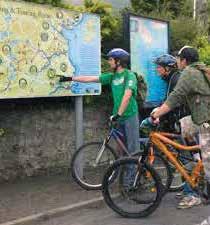
Cllr Maeve Yore (Ind) said there was “huge potential” in motorhome and campervan tourism, but said the council should not only look at beaches or scenic locations.
“There’s also potential for motor home locations in town centres,” she said, adding that visitors parking in towns are more likely to spend money in local shops, cafés and restaurants.
Annagassan was given as one example of a place where campervan tourism is already taking off, with Cllr Kevin Meenan (SF) pointing to the number of campervans visiting the area, particularly around weekends and busier periods, and said he had met visitors from as far away as Utrecht in Holland.
He suggested there could be value in looking more closely at who is coming, how often they visit, where they are travelling from and what services they need and
separately, he said more could be done around religious heritage, shrines and sporting events at Dundalk Racecourse.
Councillors heard motorhome facilities had already been raised several times and that possible sites are being examined, likely on a phased basis.
Greenways were also raised as part of the same wider picture with Cllr Hall saying the importance of “greenway tourism” had emerged strongly from the strategy, and pointed to the potential to work with Meath County Council on links with the Boyne Greenway, while Cllr Antoin Watters (SF) said cross-border tourism should remain on the agenda, particularly through the council’s work with Newry, Mourne and Down District Council and with the Narrow Water Bridge progressing.
Focus also turned on Louth’s location between Dublin and Belfast, and whether the county is doing enough to make visitors stop rather than pass through.
Cllr Robert Nash (FG) said tourists and buses coming from Dublin Airport should be encouraged to turn towards Drogheda and Dundalk, instead of automatically heading into Dublin city. The aim, he said, should be to get visitors to “go left” towards Louth.
Cllr Sionnan McCann (SF) who said she previously worked on bus tours, said visitors were already travelling past Louth on routes to Belfast and elsewhere, despite the county having “so much potential” around mythology, folklore, the Irish language, heritage and ancestry tourism.
She said sightseeing bus tours were “a really easy way” for tourists to explore. The meeting heard that targeting the travel trade will form part of the work, along with practical issues such as coach parking.
Other ideas raised included the Táin Trail, Poc Fada, Dundalk racecourse, spiritual sites and shrines, religious heritage, the Boyne Camino, cruise tourism opportunities at Greenore and Drogheda Port, and the proposed American Presidents Trail.
Cllr Yore (Ind) said the Brigid Festival was rooted in Louth’s identity and described Poc Fada as a one-day event that is “unique to Louth”, adding that there was interest from people attending it in exploring Dundalk and north Louth.
She also turned attention to accessible tourism, saying Louth could lead the way with better visitor experiences and accommodation for people with disabilities and mobility issues.
Advocating for Ardee, Cllr Dolores Minogue (FG) described the strategy as “excellent” and said anything that could help promote the county was welcome, pointing to the town’s tourism potential and the ongoing development of Ardee Castle. Cathaoirleach Cllr Seán Kelly said the strategy now needed to be promoted strongly.
“We need to sell this document as much as possible and get it across the line to build tourism in our county,” he said. An official launch of the tourism strategy is expected in early June.
By LAUREN ROSS l lauren@dundalkleader.com
ADDITIONAL planning enforcement staff could help Louth County Council avoid future costs linked to unresolved planning issues, Cllr Maeve Yore (Ind) has said.
The councillor raised the matter at the May meeting of Louth County Council, where she called for more resources to be assigned to the planning enforcement section.
She acknowledged that staffing was an executive matter, but said she would continue to raise the issue.
“You’re going to tell me it’s an executive function, but I’m going to keep asking until we get more staff into it,” Cllr Yore told officials.
“We need more staff in it. In the long run, it’ll save the county council money in not having to address deficiencies and outstanding issues with planning conditions being enforced, so I’m asking again, can we have more

staff in, as the staff there are under pressure too.”
Responding, Thomas McEvoy, Deputy Chief Executive and Director of Services, Economic Delivery with Louth County Council, said staffing was indeed an executive matter and contended that planning conditions are not being met.
He said where planning conditions are not being met, the council follows up through its enforcement team and with developers.
“Where conditions are not being met, we follow up with our enforcement team and various developers, and that actually is very active at the moment,” he said.
Mr McEvoy said developers may be allowed to progress developments, but cannot have them fully completed until the relevant planning conditions have been complied with.
“A developer will not have a complete development until they comply,” he said.
“They might progress their developments and are allowed to progress their developments, but until they meet the conditions, they can’t have completion of compliance.
“That’s our position from the enforcement side.”
PEOPLE searching public bins for plastic bottles are leaving litter scattered on streets across Louth, a councillor has warned.
Cllr Maeve Yore (Ind) raised the issue at a recent Louth County Council meeting, saying she had seen the problem firsthand.
“We have a problem with bins across Louth,” she said.
“I’ve witnessed people scattering litter and emptying bins for plastic bottles.”
Cllr Yore then asked whether practical changes could be made to public bins to help stop rubbish being pulled out and left behind.
“We need to install shelves on bins to stop this, or can we replace bins on main streets?” she asked.
Responding, Director of Services David Hanratty said the council would look at the idea, noting that a similar approach had already been piloted in Dublin city.
He added that Louth County Council’s environment team would be asked to contact Dublin City Council to find out how its pilot scheme had worked and what lessons could be learned.
“Yes, it is a problem for scattering litter and bottles,” he said.
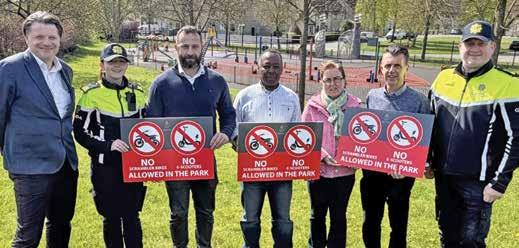
AN awareness event has been held at Aisling Park in Dundalk to highlight new regulations under Grace’s Law and reinforce public safety messages around the use of scramblers and e-scooters in public places.
The event was organised by Louth County Council, with support from An Garda Síochána, and was attended by elected members of Dundalk Municipal District, council representatives and local Gardaí.

The new legislation prohibits the use of scrambler bikes and certain e-scooters in all public places, including parks, green spaces, footpaths, roads, housing estate and other public amenities.
The legislation, Grace’s Law, was named in memory of 16-year-old Grace Lynch, who died after being struck by a scrambler bike in Dublin earlier this year and is intended to improve safety and prevent serious injuries from the illegal and dangerous use of these vehicles.
Cllr Seán Kelly, Cathaoirleach of Louth County Council, said the event would help raise awareness about protecting communities and keeping public spaces safe and accessible.
“Scrambler bikes and escooters being used illegally in parks and estates pose a real danger, particularly to children, older people and families,” he said.
“These new regulations provide vital clarity, and Louth County Council fully supports their enforcement in partnership with An Garda Síochána.”
Adrian O’Sullivan, Road Safety Officer with Louth County Council, said the campaign was about “awareness, prevention and education”.”
“As we unfortunately saw with Grace Lynch, the misuse of scramblers and e-scooters can have a devastating impact,” he said.
“We are asking people to understand the law, the risks involved, and to make responsible choices that prioritise safety.”
Garda Ronan Loftus, Sergeant of the Community Policing Unit in Dundalk, said Gardaí would continue to work with Louth County Council to enforce the regulations and address illegal and dangerous behaviour involving scrambler bikes and escooters.
“Our priority is public safety, and we urge parents and guardians to consider the serious consequences - both legal
and personal - of allowing these vehicles to be used inappropriately. People must educate themselves in relation to the use of these vehicles, and I would encourage people to visit the RSA website, which has all the information they need,” he said.
The impact on parks and green spaces was also highlighted, with Elias Milimba, Assistant Parks Superintendent with Louth County Council, saying illegal scrambler use causes damage to grassed areas, walking routes and recreational facilities.
Mr Milimba explained the behaviour creates safety risks, leads to costly repairs and causes anti-social disruption in spaces intended for the whole community, adding,
“This behaviour not only creates safety risks but also results in costly repairs and antisocial disruption. Our parks are shared spaces - and protecting them is a key priority.”
Both Louth County Council and An Garda Síochána are encouraging people to familiarise themselves with the new regulations and report dangerous or illegal use of scrambler bikes and e-scooters in public places. More information can be found via the Road Safety Authority at www.rsa.ie.
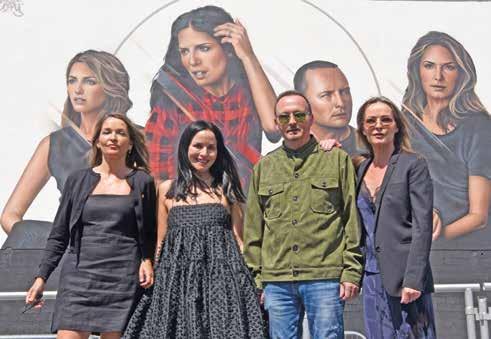
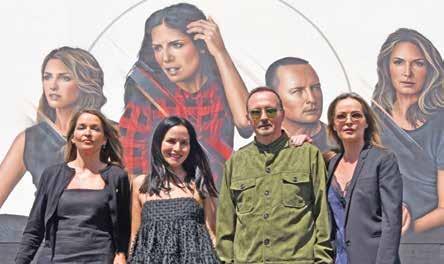
DUNDALK BIDS Office, in partnership with Louth County Council, welcomed The Corrs to the official viewing of a striking new mural which celebrates the homegrown and internationally renowned band.
In what was a truly feel-good occasion, the band, Andrea, Caroline, Jim and Sharon Corr joined Cllr Seán Kelly, Cathaoirleach of Louth County Council, and Town Centre Manager, Martin McElligott, to see the larger-than-life artwork for the first time.
The sun shone brightly as locals and visitors gathered at the Longwalk, creating a lively, celebratory atmosphere befitting Dundalk’s most famous musical family, who were treated to a special performance by Dance Kids Stage School.
Commissioned by Dundalk BIDS Office as part of the EPSO initiative, the mural is the latest addition to the town’s growing street art trail, bringing colour, culture and a strong sense of local pride right into the heart of Dundalk.
The piece was created by internationally renowned South African muralist Mister Copy, who has already made a significant contribution to the town’s street art landscape. His previ-
ous works include the mural Enbarr, inspired by the mythical horse that could travel across land and sea, on Francis Street, a depiction of Cú Chulainn’s final stand on Patrick Street, and The Hound of Ulster on Church Street, which portrays the story of the young warrior Setanta and his transformation into the legendary hero.
Speaking at the event, Cllr Seán Kelly, Cathaoirleach of Louth County Council, praised the project and its impact on the town: “This mural is a fantastic celebration of Dundalk talent at its very best. The Corrs have brought our town to audiences all over the world, and it’s only right that we celebrate them here at home. It’s a proud day for Dundalk and a wonderful example of what we can achieve when we invest in our public spaces.”
A statement from The Corrs said: “It’s incredibly special to see something like this in the place we call home. Dundalk has always been a huge part of who we are, and to have that recognised in such a beautiful and creative way really means a lot to us.
“We have such fond memories of growing up here, and it’s amazing to see those con-
nections reflected in a piece of public art that everyone can enjoy. To come back and share this moment with people in the town makes it all the more meaningful. We’re very grateful for this tribute, and it’s something we’ll always cherish.”
Martin McElligott, Dundalk Town Centre Manager, highlighted the benefits the project brings to the town: “This is exactly what Dundalk is all about - celebrating who we are in a vibrant, creative way. The Long Walk has always been a key part of the town, and now it has a landmark piece that people will travel to see. It’s about creating moments, bringing people in, and making Dundalk an even better place to spend time.”
The official viewing was just one part of a wider celebration of The Corrs, which took place in Dundalk on Friday, 29 May, culminating in a Civic Reception at An Táin Arts Centre, where the band were honoured for their remarkable contribution to music and their ongoing connection to their native town.
The mural is expected to quickly become a must-see spot for fans, visitors and anyone looking to experience a piece of Dundalk’s story up close.

THE Corrs attended the launch of a new exhibition at the County Museum on Friday, 29 May, which celebrates the musical journey and enduring legacy of the internationally acclaimed Dundalk band.
Showcasing a unique collection of personal artefacts and memorabilia, the exhibition offers visitors an intimate glimpse into the family’s early beginnings and their rise to global fame. Among the highlights are the family organ around which the siblings gathered to sing in their youth, a guitar owned by Jim Corr and purchased in Cummiskey’s Music Shop, and a bodhrán played by Caroline.
Also on display are Sharon’s violin, Andrea’s tin whistle, and a leather jacket bearing The Corrs logo from their 1996 tour. Music industry recognition is reflected in a signed double platinum disc presented to the band by Warner Music Australia for sales of their acclaimed album Talk on Corners.
The exhibition further brings the Corrs’ story to life through screenings of All the Way Home, a documentary chronicling their journey from Dundalk to international stardom. Featuring demo recordings, footage of their first live performance, rare photographs, and interviews with the band and their long-time manager, the film provides a comprehensive insight into their career.
The opening formed part of a day of celebration for The Corrs, which culminated in a Civic Reception at An Táin Arts Centre,
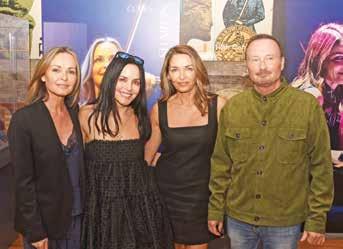
where Louth County Council honoured the band’s outstanding contribution to music and their enduring connection to Louth.
Speaking at the exhibition, Cllr Seán Kelly, Cathaoirleach of Louth County Council, said: “The Corrs are one of Dundalk’s greatest cultural ambassadors, bringing Irish music and heritage to audiences around the world. This exhibition beautifully captures not only their extraordinary success, but also the strong family roots and local connections that shaped their journey.”
Speaking on behalf of the band at the official opening, Caroline Corr, said: “It’s incredibly special to see these moments from our lives brought together here in Dundalk. In addition to our music, this exhibition reflects the people, places, and memories that have shaped us along the way.
“So much of what is here brings us right back to where it all began, to family, to home, and to the encouragement we received from the community around us. To share that with people in Dundalk, in the place it all started, means a great deal to us.”
County Museum Curator, Brian Walsh, emphasised the significance of the exhibition, stating: “This collection offers a rare and personal insight into The Corrs’ story, from their musical beginnings at home in Dundalk to achieving international recognition. It is a celebration of their talent, dedication, and lasting impact on Irish music.”
The exhibition will run until Saturday, 27 June, and admission is free.
For further information, contact the County Museum at 042 939 2999.
LOUTH’S reward for their sensational victory over Dublin in the All-Ireland Senior Football Championship is a home tie against Armagh to be played on the weekend of the 13th/14th June.
Despite receiving a home draw the game may still have to be played at a neutral venue with Louth still homeless while their new stadium is currently being built. Discussions will take place this week to iron out a potential venue for the eagerly anticipated match.
Louth earned the right to play Kieran McGeeney’s 2024 All Ireland winning side thanks to a sensational victory over Dublin in Croke Park on Sunday. Having lost to the same opposition by ten points a month earlier in the
Leinster Championships SemiFinal expectations were tempered for this game despite Dublin having lost to Westmeath two weeks ago in the Leinster Football final. And those expectations were diminished further following the opening half on Sunday in Croke Park with Dublin going in at the break with a six point lead. However, whatever was said in the Louth dressing room at half-time worked wonders with the Wee County side coming out like men possessed after the restart with James Maguire scoring two goals in quick succession to turn the game on its head.
The introduction of Ciaran ‘Casey’ Byrne and Ryan Burns ultimately proved to masterstrokes from Louth manager Gavin Devlin with both men making imme-

diate impacts as Louth swarmed all over a shellshocked Dublin scoring 2-5 to Dublin’s solitary point in the opening ten minutes
of the second half. That left Louth 3-11 to 1-13 in front having been 1-12 to 1-6 behind at the break. Dublin did manage to get back
THE murder of Dundalk man
Seamus Ludlow, whose 50th anniversary was marked on May 2, was raised again in Leinster House by Louth TD Ruairí Ó Murchú, who said there is a need for the Minister for Justice and the Garda Commissioner to meet with the family.
The Sinn Féin TD told Taoiseach Micheál Martin that the Ludlow family ‘has been failed’ and outlined the history of the case.
Deputy Ó Murchú said: “The initial Garda investigation shut up shop within three weeks. The RUC provided the names of those believed to be involved back in 1979.
“We are talking about loyalists and some of them were members of the British Army. They were questioned in 1998 by the RUC. Admissions were made in relation to a number of them being there when the murder happened.
“They had a moment of hope with a new investigation but what they discovered was a new

witness, who was not even questioned during that investigation, had seen suspicious activity in a car the morning Seamus was found that turned out to be connected to SAS incursion that happened soon after in Omeath”.
He said there had been ‘no ac-
tion over the years’ and the family have had to go to court and to the European Parliament. Deputy Ó Murchú said the family has not been properly supported.
Deputy Ó Murchú said: “This is not acceptable in any way, shape or form. There is a need for the Minister for justice and Garda Commissioner to meet the family who have been failed for far too long”.
The Taoiseach said he could assure the Dundalk TD that he will ‘talk to the talk to the authorities about the murder of Seamus Ludlow’.
Mr Martin said: “Whether it falls within the legacy framework or not, that is perhaps the best avenue to pursue it. If we can get the legislation completed in Westminster and here, we will. That is an important aspect of it.
“Even though it happened in 1976 the trauma goes on for the second generation - the grandchildren, cousins and nieces - and the need for closure continues with each succeeding generation”.
GARDAÍ are appealing for witnesses following a fatal road traffic collision that occurred on the N52 at Dunmahon, Co. Louth on Sunday 31st May 2026. The collision, involving two motorcycles and a jeep occurred shortly before 12:30pm.
A driver of a motorcycle, an adult male (aged in his 50s) was pronounced deceased at the scene. His body was removed to the local mortuary where a postmortem examination was due to take place. The coroner was notified.
The second driver of a motorcycle, an adult male (aged in his 40s) was conveyed to Our Lady of Lourdes Hospital Drogheda for treatment of serious injuries.
The driver of a jeep, an adult male (aged in his 40s) was conveyed to Our Lady of Lourdes Hospital Drogheda for treatment of injuries believed to be non-life threatening at the time.
The road was closed for a technical examination by Garda Forensic Collision Investigators. Gardaí are appealing for any
witnesses to this collision to come forward.
Road users who may have camera footage (including dash-cam) who were travelling in the area of the N52 near Dunmahon, Co. Louth between 12:15pm and 12:45pm on Sunday 31st May 2026, are asked to make this footage available to investigating Gardaí.
Anyone with any information is asked to contact Dundalk Garda Station on (042) 938 8400, the Garda Confidential Line on 1800 666 111, or any Garda Station.
into the game and for the last 20 minutes momentum swung one way then another in what was becoming an end to end thrilling game of football. The sides were level on six separate occasions down the stretch before one of the two All Stars on the Louth team stepped up to make a crucial contribution. Ciarán Downey’s two point effort hit the woodwork before falling to Louth Village man Craig Lennon who somehow created a scoring angle before firing home to score Louth’s fourth goal with just minutes remaining.
Dublin needed a goal in the dying seconds to force extra time but those hopes were extinguished as man of the match Ciarán Byrne rose majestically into the Dublin sky to catch a Niall
McDonnell kickout and effectively end Dublin’s hopes. In the stands the Louth supporters celebrated jubilantly as their heroes on the pitch recorded Louth’s first victory over Dublin since way back in 1973.
Louth: Niall McDonnell; Daire Nally, Donal McKenny, Emmet Carolan; Conall McKeever, Dara McDonnell (0-02, tp), Craig Lennon (1-02); Seán Callaghan, Ciarán Downey (0-02); Conor Early, Sam Mulroy (0-05, 1 tpf, 0-02f), Conor Grimes; Conall McCaul, James Maguire (2-00), Kieran McArdle (1-01). Subs: Ryan Burns (0-02, tp) for Early h/t, Ciarán Byrne (0-03) for McCaul 42, Tommy Durnin for Callaghan 42, Paul Matthews (0-01) for Grimes 53, Leonard Gray for Maguire 64.
A NEW cross-community collaborative arts programme supported by the Louth PEACEPLUS Programme has officially launched in County Louth, aiming to promote reconciliation, cultural understanding, and social inclusion through a programme of creative engagement. PEACEPLUS is a cross-border funding Programme designed to support peace and prosperity across Northern Ireland and the border counties of Ireland and has a total value of €1.14 billion, to be delivered over the next four years.
Louth County Council PEACEPLUS Programme Manager Grainne Flanagan said “We are excited to see the launch of the Louth PEACEPLUS Collaborative Arts Programme. This programme will showcase the talents and musical heritage of participants, while bringing people together via a cross-community approach.
Delivered by Capacity Ireland in partnership with Louth Local Development SICAP Programme and Music Generation Louth and supported by [Louth County Council / SEUPB) this initiative aims to engage more than 500 participants from across Louth and neighbouring cross-border communities over the next two-year period. The programme is rooted in principles of equality, diversity, and inclusion, with targeted outreach
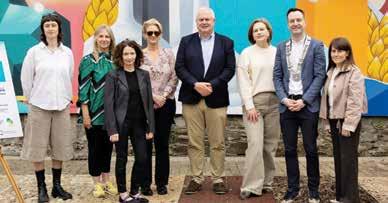
to underrepresented groups. It will bring together young people, artists, musicians, and community groups from diverse backgrounds to explore identity, creative expressions and shared futures through music and participatory arts.
The initiative is structured across five interconnected programme elements: COMPOSERIN-RESIDENCE PROGRAMME
A professional composer will collaborate with young people and musicians to create original works inspired by their young creative minds.
YOUTH MUSIC PROGRAMME
Seven schools and 200 students will take part in a 10-week music education programme, combining skills development with creative exploration of global musical traditions.
“Songs from Home” Project
Working with ethnic minority communities,
participants will share songs from their countries of origin. These will be preserved in a published resource for use in schools, supporting intercultural learning and integration.
COMMUNITY ARTS PROGRAMME
Up to 200 participants from women’s groups, Muslim communities, older adults, and individuals from disadvantaged areas will collaborate on creative projects designed to build connections and challenge division.
ANNUAL PEACE ARTS FESTIVAL
The programme will culminate in a public event and celebration featuring performances, dialogue, and exhibitions showcasing participants’ work. The project has successfully completed its initial development phase, including contract signing, staff recruitment, and programme design. Participant recruitment is now actively underway
across schools and community settings, with delivery beginning.
Sinead Dowling, Collaborative Arts Manager for Capacity Ireland said:
“This programme creates a space for people from different backgrounds to come together, share experiences, and build connections through creativity. By engaging with the community and delivering each element with artists we are encouraging participation and dialogue that brings communities together through a shared and inclusive purpose across County Louth and beyond.
LOOKING AHEAD
The first phase of programme delivery will continue throughout 2026 and 2027, expanding participation and deepening cross-community engagement. If you are a community member who would like to be involved or participate please reach out to us.






ALL TYPES OF BLINDS SUPPLIED & FITTED CHOOSE IN THE COMFORT OF YOUR OWN HOME, WE CALL, MEASURE AND SHOW YOU SAMPLES The Professionals Reaghstown, Ardee (Over 30 years in business) Whatsapp/Text/Phone 087 2134490 E:dave@theprofessionals.ie













1—Louth beat Dublin for the first time since what year last Sunday?
2—Which planet is closest to the Sun?
3—What is the capital city of Canada?
4—In what year did the reunification of Germany take place?
5—Where in Dundalk did The Corrs grow up?
6—By what name is the patella more generally called?
7—What is the common, more popular name for an orca?
8—Which famous movie star starred in the classic films “Roman Holiday,” “Breakfast
at Tiffany’s”, “Sabrina”, and “War and Peace”?
9—In the popular game of baseball, to which city do the Red Sox belong?
10—Which capital city gave its name to a culinary specialty consisting of cooking a fillet of beef in puff pastry stuffed with foie gras?
The Stinker: What was the first ever toy to be advertised on television?


Surgery, Stump Grinding, Wood Chipping & Pruning. Conifer Hedge Reduction. Ash Die Back Removal.





MONDAY 8th June: Thai Chi with Alan; Monday 15th June: Day trip to Banbridge and Newcastle with evening meal in the Carrickdale. Bus leaves at 10am sharp. Any queries call Anne on 087 7850917. Dundalk Active Retirement starts at 2:30pm sharp in Carroll Mead Hall in Pearse Park. All welcome.
CLERMONT Chorale will host a unique concert on Wednesday the 3rd of June in Dundalk featuring guest choirs: Chor Leventate (from Ulm in Germany) and the Drogheda Male Voice Choir. Chor Leventate Ulm were founded in 1984 initially as the Third World Choir Ulm and have supported events for peace with groups such as Amnesty International. They perform a wide variety of music from the Baroque era to modern works such as Karl Jenkins Mass: The Armed Man. They have toured internationally in Japan, Chile, Greece, Portugal and Spain; this is not their first time in Ireland –they toured here 10 years ago.
Drogheda Male Voice Choir were formed in 2013; they are a 50 strong chorus and frequently perform for major local, national, and international audiences. Over the last decade, they have raised nearly €200,000 for charity. Their major highlights include performing for Pope Francis in Rome and singing at the Royal Albert Hall in London
The Clermont Chorale were formed in 2023; they are a highly competitive, prize-winning choir. They have secured top honours at major national events including Lyric FM’s Community Choir of the Year in 2025 and have travelled extensively including the US and Russia. Previously, they performed with the Chor Leventate in 2016; in Ireland (in Dundalk) and in Ulm itself. Tickets: €20 available on Eventbrite.
DUNDALK Dog Rescue (DDR) is inviting dog lovers and the wider community to take part in its Sponsored Dog Walk on Sunday, 14th June at St Helena’s Park, Dundalk.
The approximately 4km walk starts and finishes in the park and is suitable for all ages and abilities. Registration opens at 2.30pm, with entry costing €20, which includes a goodie bag and, for the first time ever, a commemorative medal for participants.
Sponsorship cards are now available — simply contact DDR for details. And you don’t need to own a dog to join in. Everyone is welcome to take part in what promises to be another enjoyable and family-friendly afternoon. A raffle featuring some fabulous prizes will also take place on the day.
“At Dundalk Dog Rescue we believe every dog deserves a safe future. By remembering Dundalk Dog Rescue in your will, you ensure our doors stay open for the next generation of rescues. After you’ve looked after your own loved ones, please consider leaving a gift to help us keep our promise to the dogs. Pick up a flyer at our centre or speak with your solicitor.”
REGISTER now for All Ireland Intercultural Football Tournament. The countdown begins! We are excited to officially launch the All-Ireland Intercultural Football Tournament & Family Fun Day 2026 - a vibrant celebration of football, culture, family, diversity, and community spirit across Ireland. Saturday, 18th July 2026, Dundalk Sport Centre, 9:00am6:00pm. Register Today: https://linktr.ee/aifsportireland.
Football Team Registration; Family & Individual; Community Stalls & Vendors; Sponsors & Partners; Volunteers & Cultural Groups.
This is more than football. It is a space where people from all cultures and communities come together to connect, celebrate, and belong.
A place where: families create memories; cultures connect; friendships begin; communities unite through sport. Football Tournament; Live Music & Cultural Performances; Food & Community Stalls; Family Fun Activities; Networking & Community Connection; A Celebration of Unity Through Sport
We are now welcoming: Football Teams; Families & Individuals; Vendors & Community Stalls; Sponsors & Partners; Volunteers & Cultural Groups.
Registration Deadline: 7th July 2026. aifsportireland@ gmail.com; 087 146 0980. One Game. One Family. One Community
PartsForCars IRX Irish Rallycross Championship Final had come to a finale in Mondello Park for final rounds seven and eight of the series, with Dundalk driver Logan Hoey once again at the centre of the action in the ultra-competitive Junior category.
With 13 cars gridded over the weekend, the IRX Junior class was competitive with a brand-new track layout being tested for the upcoming FIA European Rallycross Championship in July.
For Logan the competition was high as he recalled “The competition in this class is brilliant. The racing is fast and I am reaching quicker top speed on the longer straight now with the new track layout. It took some time getting used to it!”
Logan Hoey took this weekend in his stride, with winning all 10 races over the course of two days. Logan responded “I was lucky to get good exits out of the corners which
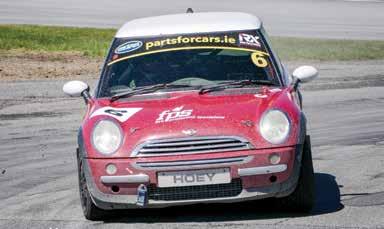
helped me massively in finding the extra speed to win the heats. I was lucky to get the quickest lap record this weekend considering the quick competition I had”. After this round Logan has secured his third Championship victory crowning him Junior RallyCross Champion. This achievement has never been accomplished before by a junior driver and everyone in the race paddock is now wondering where Logan Hoey will move to when he changes to his
senior license. The future is bright for Logan. Logan’s final comment on the weekend was “All I want to say is thank you to everyone who has supported me in my time racing. I want to thank my dad Anthony who brings me to the races and helps me with everything and also my sister Colleen Hoey who helps me with media and my mam and brother for supporting me in my journey. I would like to thank the supporters who came out to watch me throughout the week-
end. I would also say a huge thank you to my sponsors as we wouldn’t have gotten so far without their help.”
Logan is sponsored by, Fire Protection Specialists (FPS), Dynamite Fireworks, Napa Auto Parts, DuPrint Labels and Swan Rock Quarries. They are still looking for new sponsors so if you are interested in helping this young man reach his racing goals, please reach out via Instagram at LoganHoeyRacing.

A MAJOR overhaul of rural housing rules will significantly increase supply in Louth, Louth Fine Gael TD Paula Butterly has said. Butterly said, “For too long rural planning policy has been inconsistent, restrictive, and unfair to people in Louth who want to build a home in their own area and live in the community they grew up.
“These changes will fix those issues. Fine Gael is determined to ensure that people who have a genuine connection to their area will be able to build, subject to normal planning rules.”
The proposed changes were considered at a Government
meeting recently involving Fine Gael leader and Tánaiste Simon Harris and Junior Housing Minister John Cummins. “I’m working with my Fine Gael Government colleagues to ensure more homes can be built in rural areas. The changes will allow those who have a social/economic need to live in a rural area or those who have lived in a rural area for a defined period of time at any point in their life have a reasonable expectation they can achieve planning subject to normal planning considerations.
Approximately 5,000 one-off rural homes are built annually, including in Louth. The relaxation
SAINT Vincent’s School transition year students were busy last week as they prepared for the much anticipated Grandparents Day, where the school opens its doors and it’s heart to beloved family members. Undoubtedly one of the highlights of the school calendar, there was music, dancing and warm smiles all around as the capacity crowd enjoyed tea and treats baked by TY students as well as personalised tours of the school.
Teacher Edel McNulty who helped to organise the popular event was delighted with the turnout.
‘The girls are always so excited to welcome their grandparents into the school, and to show them around. It’s heartwarming to see the genuine affection and love between the generations.’
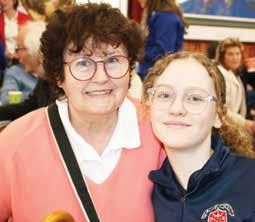

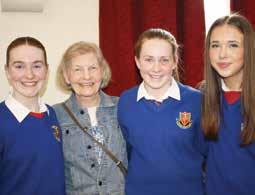
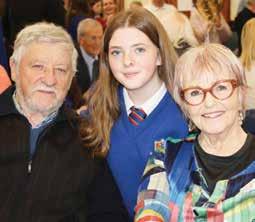

of these rules is expected to increase that number considerably, helping to address housing demand in Louth and supporting better regional balance in housing supply,” Butterly said.
A National Planning Statement will be brought to Cabinet in early June.
Deputy Butterly said, “Fine Gael has been clear this is a relaxation of rules which doesn’t mean a free-for-all.
“Normal planning considerations in Louth will continue to apply and consistency of approach on issues such as ribbon and backland development will be brought through a new framework.”