Redefining Packaging for a Changing World

Sustainability Report 2021
2
4
6
7
8
16
Learn

Sustainability Report 2021
2
4
6
7
8
16
Learn
Our Purpose
Redefining Packaging for a Changing World
Our vision
To be the leading supplier of sustainable packaging solutions
Our Values
We have a clear set of values that we expect all our employees to own and live by
Be caring
We take pride in what we do and we care about our customers, our people and the world around us
Be challenging
We are not afraid to constructively challenge each other and ourselves to find a better way forward
Our strategic goals
To delight our customers
To lead the way in sustainability
Where we operate
Our corrugated packaging business operates in four geographic segments, three in Europe and one in North America. Recycling and Paper form an integrated part of our operations.
Be trusted
We can always be trusted to deliver our promises
Be responsive
We seek new ideas and understanding and are quick to react to opportunities
Be tenacious
We get things done
To realise the potential of our people
To double our size and profitability
All of our sites are now integrated in our Group-wide global sustainability programme and all of our recent acquisitions are included in figures reported for this year.
100%
of our designers trained on our Circular Design Principles
Turn to page 21
-4%
reduction in CO2e per tonne of production versus last year
Turn to page 33

57
biodiversity projects launched in our local communities
Turn to page 40
-5%
reduction in water abstraction per tonne of like-for-like paper production versus last year
Turn to page 35
-32%
reduction in waste to landfill per tonne of like-for-like paper production versus last year
Turn to page 37
-14%
reduction in Lost Time Accidents versus last year
Turn to page 43
-23%
reduction in CO2e per tonne of production versus 2015
Turn to page 33
37.5%
female representation on Plc Board
Turn to page 44

AA
MSCI score improved compared to A last year
Turn to page 7

A-
Circulytics score improved compared to B+ last year
Turn to page 13
Please note: Some of the images in this report were taken before the Covid-19 pandemic and the need for social distancing.
Our Purpose is ‘Redefining Packaging for a Changing World’. It’s our reason for being. It’s why we exist. It captures the value we bring to all our stakeholders and the wider world. We keep an eye on the future and recognise the changing world in which we operate. Towns, cities and entire populations are rapidly transforming. The growth in digital technology is revolutionising the way we shop, live and work. We increasingly expect to purchase products tailored for us, whenever we want them, delivered in a way that fits our busy lifestyles. We want more choice and convenience, but with less impact on the world around us.
We are different because we see the opportunity for packaging to play a powerful role in the world around us. We help our customers respond to changing shopping habits with sustainable packaging solutions that our society needs. Sustainability and the circular economy sit at the heart of our business and are core to our Purpose. As the pace of change in the world accelerates and consumers demand more of the products and services they buy, there is in parallel an expectation that organisations of all kinds must radically reduce their impact on the natural world. And, wherever possible, create a positive impact for people and planet.
This presents huge opportunities for all of us, but also requires new ways of thinking. How do we deliver more products, without more vehicles making our cities more congested? How do we deliver more to people’s homes, without filling them with excess packaging? How can companies adapt to changing shopping habits, while running their operations smoothly and efficiently? How can we make products available across borders, while ensuring consistency everywhere, every time? There’s a need for a new approach to packaging. And a need for strong leadership in our industry. This is what drives us and why we have a shared purpose of Redefining Packaging for a Changing World.

1. Aligned to
Circular products are core to our Purpose and therefore constitute the vast majority of our revenues. In 2020/21 £5,928m of our revenues were associated with products which are recyclable or reusable1. We have again been awarded the LSE Green Economy Mark, recognising that we derive substantial revenues from environmental solutions.
Learn more about our Purpose

We’re working hard to accelerate the transition to a circular economy. Circularity is built into everything we do, and we are already taking a leading role in our industry, including in our partnership with the Ellen MacArthur Foundation
We are a leading international packaging company, specialising in corrugated circular solutions

We are Europe’s largest cardboard and paper recycler, managing c. 6 million tonnes of waste material every year, which is more than we need to produce the packaging we sell
We operate a circular business model, supporting our customers to close the loop over the entire life cycle
We are committed to using only 100 per cent recycled and chain of custody certified papers to protect our natural resources
We are one of only 19 Strategic Partners of the Ellen MacArthur Foundation – the recognised global authority on the circular economy
”I
am immensely proud of the way we have responded to the outbreak of Covid-19. We pulled together to support each other, strengthening our focus on health, safety and wellbeing whilst ensuring that we continued to serve our customers. This is a testament to the values we have embedded across the business.”
Miles Roberts Group Chief Executive
Adopting new ways of working
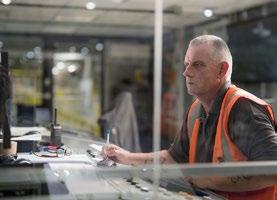
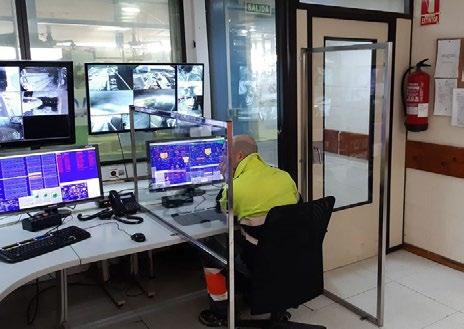
As a critical part of the supply chain, we had to work hard to quickly ensure that we continued to operate efficiently and safely from the beginning of the coronavirus outbreak. Our top priority is the health of our employees and a new series of measures, including strict cleaning procedures, has been adopted at all our sites to protect our people. In Iberia, Dueñas paper mill installed glass walls between the offices in the stock preparation control room and reception to ensure social distancing. The mill also sealed the floor with safety floor tape, to remind everyone to maintain required social distancing. Meanwhile at Alcolea paper mill, a shoe disinfector was installed to reduce the risk of contamination.
Keeping our people safe and our business running Over the past year, the global Covid-19 pandemic has reshaped many of our lives in ways in which we never previously thought possible. Throughout the pandemic, we collectively worked together to remain steadfast in these challenging times. Our number one priority has been to protect the health and safety of our people, whilst continuing to service the needs of our customers, given the critical role we and the wider packaging industry play across global, national and regional supply chains. Not only is our packaging used to transport and protect food and personal care items and to deliver goods to peoples’ homes through e-commerce, we also serve the vitally important pharmaceutical sector. It is the continued production of paper and packaging that has allowed these goods to get to where they are most needed and that is why our teams continue to go to work every day to support our customers’ businesses.
As the world around us rapidly changed, we adapted our business and our offering with it
• We developed essential provisions boxes to support people living in lockdown
• We supported the delivery of the first Covid-19 vaccine safely and securely
• We partnered with Touchguard to develop virusresistant surface coatings
• We manufactured cardboard furniture solutions for hospitals and home offices
• We supported the community, through donations and over half a million items to help people in need
CASE STUDY
Delivering the first vaccine in the UK
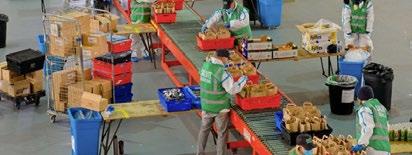
We played a role in the delivery of the first Covid-19 vaccine, with thousands of our boxes travelling across the United Kingdom, ensuring the safe delivery of the vaccine to hospitals and clinics. Working closely with our customers and supporting safe vaccine transportation, we proudly played a role in this important aspect in the fight against the pandemic.

CASE STUDY
Donating cardboard hospital bedside tables
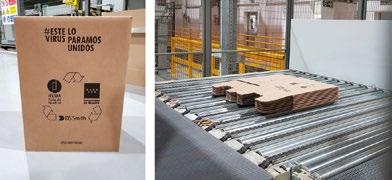
Under the slogan #WeStopThisVirusTogether, workers at our packaging plant in Madrid played their part by manufacturing 10,000 multipurpose auxiliary tables made from corrugated cardboard. This cardboard furniture does not need to be disinfected or cleaned and can be easily destroyed when no longer needed. The campaign hashtag was printed on the tables as part of their design, conveying a positive message of encouragement for patients.
”From the beginning of the pandemic, we have been reminded of our key worker status and the vital role we play in the UK supply chain. Using our boxes to transport the vaccine to hospitals across the country was a proud moment for us all.”
Chris Murray UK and Ireland Managing Director, Packaging
Partnering with the SalutetheNHS.org campaign effort
We joined the SalutetheNHS.org campaign effort, developing, manufacturing and delivering boxes to ship personal care packs to frontline NHS staff as the pandemic took hold. The boxes included personal care products donated by Unilever and were delivered to hospitals and isolating frontline workers’ homes. Our team worked around the clock to provide 75,000 boxes at record speed.
CASE STUDY
Distributing essential goods during lockdown
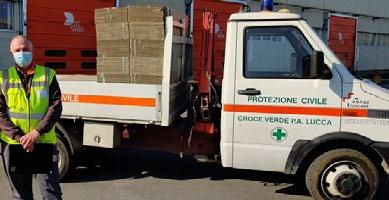
Our packaging plant in Lucca, Italy donated around 300 boxes to help Civil Protection volunteers in Italian municipalities distribute essential goods, ensuring efficient delivery of food to vulnerable people through the donation of recyclable, sustainable cardboard boxes. Our boxes ensured that food was delivered at a time of uncertainty and change.
Looking beyond the pandemic to what comes next
As we look to the future, we will continue to drive forward with our Purpose to continue ‘Redefining Packaging for a Changing World’. Our Purpose sits at the heart of everything we do and will always be the inspiration behind the strides we take as a business to serve our customers, protect our environment and support our future generations. As the world changes, we will evolve with it, with circularity, digitalisation, innovation and sustainable packaging remaining at the core of our journey.
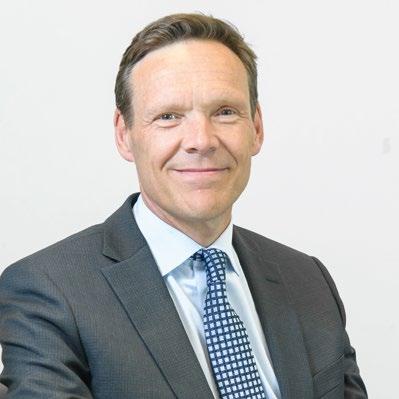
”I am pleased to announce our commitment to reach Net Zero emissions by 2050 and a sciencebased target for 2030.”
The past year has seen unprecedented change globally for our customers, our employees and our communities. The need to remain safe has shifted societal outlook and consumer behaviour dramatically, and with many of these trends predicted to remain, we must continue to adapt our supply chains, revolutionise our technology and innovate our products. Through this period of uncertainty, we have remained committed to sustainability. Our Purpose of ‘Redefining Packaging for a Changing World’ has never felt more appropriate.
Although we have achieved 23 per cent reduction in CO2e per tonne of production since 2015, we must go further as climate change continues to affect our lives. I am pleased to announce our commitment to reach Net Zero emissions by 2050 and a science-based target for 2030. Whilst this will drive our work to decarbonise the energy used to power our circular business, this is only part of the solution. How we live our lives and run our businesses, including how we make, consume and dispose of products needs to be challenged, inviting fully renewable and recyclable packaging to play a vitally important role. Therefore, championing the transition to the circular economy is as important as reducing greenhouse gas emissions.
Building on the achievements of the past year, from training 100 per cent of our designers in our Circular Design Principles to implementing water stress mitigation plans at all relevant sites, the launch of our new sustainability strategy, Now and Next, was an important step for us. It creates new opportunities driven by customer innovation and industry collaboration. Our new strategy allows us to move beyond just having a strong circular business model ourselves to delivering more circular solutions for our customers and wider society – replacing problem plastics, taking carbon out of supply chains and providing innovative recycling solutions.
At the heart of our commitment is our circular business model, which ensures that all our designs start with the circular economy in mind. It is why we are trusted by the world’s biggest brands to partner with them to tackle some of the biggest sustainability and circular challenges and respond to consumer demands. As a Strategic Partner of the Ellen MacArthur Foundation, we continue to reinforce our leadership within the packaging industry and work to engage our employees and communities around circularity.
Miles Roberts Group Chief Executive

ESG and sustainability ratings
We are highly ranked by a range of respected ESG rating agencies, whose scores are considered by both customers and investors. Through good disclosure, we seek to maximise the recognition of our sustainability actions and strategy by these agencies.
• MSCI: Rated AA
• EcoVadis: Rated Gold
• Circulytics: Rated A-
• CDP: Rated B (Climate Change), B (Forests) and A(Water Security)
• DJSI: Rated 51
• FTSE4Good: Included since 2012
• ISS: Rated ‘Prime’ B-
• LSE Green Economy mark
• Support the Goals: Rated 4 out of 5 stars
• Sustainalytics: Rated 15.9 ‘Low ESG Risk’
• UN Global Compact: Member since 2013





Sustainability is at the heart of our business. Investors rightly see ESG as integral to a company likely to deliver good financial returns as well as for customers, employees and the wider environment in which we operate. For us, sustainability is a commercial opportunity and growth driver, as we help customers to participate in the circular economy.
How will your sustainability focus drive growth?
Circular packaging is a core growth driver for our business. As a recent Greenpeace investigation highlighted, 688,000 tonnes of plastic waste was exported from the UK to other countries last year. In many cases this plastic waste was dumped or burned in the open air, damaging human health and harming wildlife and the oceans. In contrast, corrugated packaging is a widely recycled alternative to many applications of plastic. We are capitalising on the growing demand for more carbon efficient, circular and sustainable products and packaging, by partnering with customers to develop innovative solutions for these changes and challenges.
How do you align your business to the circular economy? Our business activities and operations are inherently circular, as we recycle used paper, turn that into packaging, and then collect used corrugated packaging to start the loop again. The fibre we use from forestry assets is sustainably sourced. We are a net-positive recycler as our recycling operations collect more used fibre than we use for our packaging, and we can ensure that the fibre we recover is used responsibly. As such, we embody the circular economy and have done so for many years. I’m pleased that we have been recently awarded the London Stock Exchange’s ‘Green Economy’ mark, recognising that the majority of our revenues are from sustainable products and services.
How do you demonstrate your commitment to sustainability?
We have a very consistent track record of ESG performance and in setting targets for our own environmental footprint, starting in 2010 and culminating in the Now and Next strategy launched in September 2020. We continue to perform very well as measured by third party ESG ratings agencies. This year we have been upgraded by MSCI from an ‘A’ to ‘AA’, the highest grade achieved by any industry peers, been upgraded by ISS ESG from C- to B-, again in the top decile among peers, and once again been listed on the FTSE4Good indices, among other measures. As we look forward in a world where sustainability is becoming ever more important, our commitment to continued progress remains undiminished.
The role of packaging in the circular economy
In the traditional economic model, manufacturing firms extract natural resources and process them to create products which are sold to consumers who use and eventually dispose of the product. The circular economy is an opportunity to transition from this ‘take, make, dispose’ model towards a model based on the principles of designing out waste and pollution, keeping products and materials in use and regenerating natural systems.
Designing packaging for the circular economy
We believe that circularity is largely a consequence of the decisions made at the design stage. We have begun to view waste and pollution as design flaws, rather than an inevitable consequence of manufacturing. This begins with the understanding that our customers want packaging that delivers a certain performance depending on the product and supply chain. We agree and guarantee this performance and then get to work on designing the precise, optimised box using the fewest natural resources possible.
Packaging is growing in the conscience of consumers, due to campaigns by environmental pressure groups and the increase in e-commerce, with more packaging arriving in our homes particularly during a time of lockdowns. Consumers, like us, see the urgency in transitioning to a circular system that is built for multiple, long-term life cycles. We believe there is an enormous opportunity to do more with cardboard to accelerate the transition to a circular economy, particularly as an alternative to plastic, which remains difficult to recycle in practice.
Circular by nature, our cardboard is produced from fibres sourced from responsibly managed forests that can be recycled multiple times. By improving circularity of materials, as well as decarbonising energy sources, business and society can work together in the fight against climate change. However, there are still ways to reduce waste and pollution further, keep materials in use for even longer and do more to regenerate natural biological systems. A lot of this potential is determined at the design stage and then put into action by a robust circular infrastructure for recycling and sustainable manufacture.
Circular Design Principles
We have 80 Circular Design Principles Champions who are ambassadors of circular design amongst our 700 designers globally. Applying the Principles means we can improve our value proposition for our customers, whilst helping them lower their packaging impact and meet their sustainability targets.
We protect brands and products
Designers must always ensure that packaging successfully protects its product. Damaged products from poor packaging have an economic and environmental impact
We use no more materials than necessary Optimised use of packaging materials saves resources and reduces waste
We design for supply cycle efficiency
Our designers drive efficiency by changing the layout of products within boxes for stacking in delivery vehicles
We keep packaging materials in use
We eliminate waste by keeping packaging products in use for as long as possible. We can ‘close the loop’ for customers in 14 days by recycling packaging into new products
We find a better way
We empower our designers to challenge the status quo and support customers in the drive for a circular economy
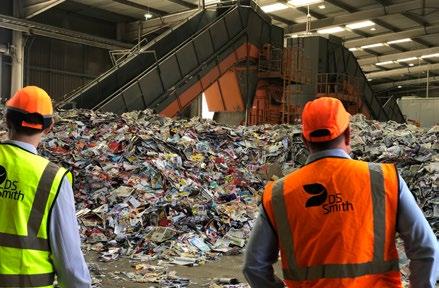
CASE STUDY
Net-positive recycler
During the past year, we collected, sorted, reprocessed, managed or transported c. 6 million tonnes of material for recycling. This is more waste material recycled than the total volume of packaging we sold.
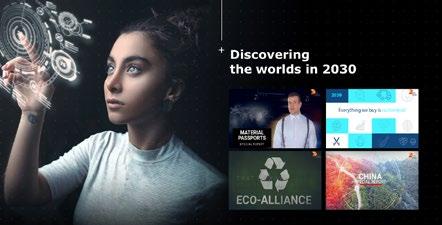
CASE STUDY
Business models of the future
Our Brands & Experience team launched FuturesProofing, an exciting digital experience for customers to test their business, product and packaging strategy for the future. Alongside our packaging experts, customers explore potential future worlds, from climate scenarios that lead to new eating habits and demand for reusable packaging to deforestation scenarios that lead to more circular flows of materials and energy. Over the coming year, we will invite more customers to join these workshops.
CASE STUDY
Helping our customers to be circular ready
Our customer value proposition summarises the benefits our customers experience from using our products and services. Previously, this was ’More Sales’, ‘Lower Cost’ and ‘Risk Managed’ and whilst sustainability was already integral to this, for example as lowered costs through eco-efficiency, the addition of a fourth pillar, ‘Circular Ready’ provides a springboard to firmly position ourselves as the leading supplier of circular packaging solutions, reinforcing our circular business model. We believe that this will elevate our innovation credentials as we help more of our customers to embrace the circular economy.
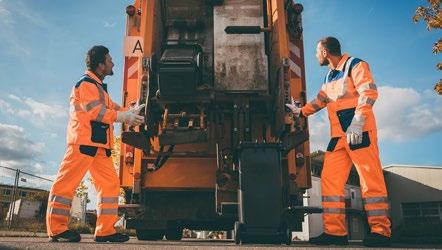
“We continue to see growing demand from customers to design packaging that eliminates plastic and is recyclable, reducing waste. This is driven by consumer demand, which in turn needs to be met by producers and enabled by infrastructure to put the circular economy into action with renewable corrugated packaging.”
Wouter van Tol, Head of Sustainability, Government and Community Affairs
Every day across Europe and North America we collect waste paper and cardboard for recycling. This provides raw material for our paper mills, where we manufacture 100 per cent recyclable
papers. From this we make packaging, using only 100 per cent recycled or chain of custody certified papers. This is the journey from one box to another in 14 days at DS Smith.
Creating value in forestry and paper manufacturing
• 100 per cent of our papers are recycled or chain of custody certified
• 83 per cent of the papers we use are recycled papers
• Three trees are planted for every tree that is harvested in our supply chain
Creating value in pulping and bleaching
• Mono-material and tape-free pack design reduce the contamination and energy consumption of the pulping process
• We are making our paper waste streams more circular
• We use Total Chlorine Free (TCF) processes in all of our paper mills
Creating value in collection and recycling
• We provide total waste management solutions to recycle all segregated wastes
• We have been at the forefront of difficult to recycle waste, such as coffee cup recycling
• No plastics collected by our Recycling Division are exported to Asia
Creating value in distribution
• We delight consumers by eliminating empty space void fill wherever possible
• We optimise box size for most efficient product fill, palletisation and on-shelf efficiency – removing lorries from the road and taking carbon emissions out of supply chains whilst reducing customer cost
Creating value in corrugated manufacturing
• Over 700 designers and innovators create circular products
• We optimise every fibre through performance paper specifications
• We optimise ink coverage and minimise trim waste
• Over 98 per cent of our packaging production waste is recycled Creating value in conversion and packing
• We improve packaging line efficiency with optimised pack designs and real-life testing
• We reduce manual handling through optimised ergonomics
Creating value in retail and use
• Well-designed Shelf-Ready Packaging (SRP) improves the efficiency of transport, storage and replenishment cycles
• Over 99 per cent of our packaging is reusable or recyclable in domestic or commercial waste streams
• We advise on best practice on-pack sustainability communication
We solely produce fibre-based corrugated board across our three main operations. Our integrated operations work together in tandem to create a circular loop. We believe that corrugated packaging is the sustainable replacement to single-use and problem plastic packaging and our circular business serves as the gateway for our customers to the circular economy.
We are a leading international packaging company, delivering sustainable corrugated packaging solutions and the highest quality service across Europe and North America.
c. 24,000 employees
30 countries
We are a leading global manufacturer of sustainable corrugated case material, operating 14 recycled fibre mills, 2 virgin fibre mills and c. 14,300 ha. of forest.
c. 4,000 employees
11 countries
Our circular business is focused on corrugated packaging and supported by upstream paper production and recycled paper collection. We transform various ’capitals’ sustainably and responsibly to create value for all our stakeholders:
Financial capital: financial health and efficiency
As a FTSE 100 company, we are funded by equity capital from investors, debt from banks and reinvested cash flow. We support the economy through the products we produce and sell, the goods and services we buy, salaries and taxes we pay and the value we create for our investors.
Human capital: peoples health and wellbeing, safety, skills and experience
We are passionate about working together safely, sharing ideas and exploring new ways to innovate and delight our customers in a modern, diverse and engaged workforce where everyone has the opportunity to realise their potential.
Intellectual capital: knowledge, systems and processes
Our business runs on the expertise of not only our people, but also the systems and processes that keep us running. From R&D to engineering solutions in our factories, our knowledge is used to develop cutting-edge solutions in response to the greatest challenges.
Manufactured capital: machinery, offices and IT
We recycle wastepaper to produce recycled paper and packaging which is then repeated in a circular loop using the machinery and infrastructure to power this process. We also generate and export electricity from these operations that powers homes and businesses.
We are Europe’s largest cardboard and paper recycler, managing c. 6 million tonnes of waste per year. We provide integrated recycling and total waste management services.
c. 1,000 employees
9 countries
Natural capital: resources we rely on from the environment
We rely on the natural world to provide fresh fibre, sourced from sustainably managed forests to supplement recycled waste that feeds our paper mills. We use water to produce steam and transport fibre throughout our manufacturing processes.
Social capital: relationships, reputation and trust
The relationships we have with our stakeholders help us achieve our Purpose of Redefining Packaging for a Changing World. We are active in our communities and work with governments and non-governmental organisations to accelerate the transition to a circular economy.
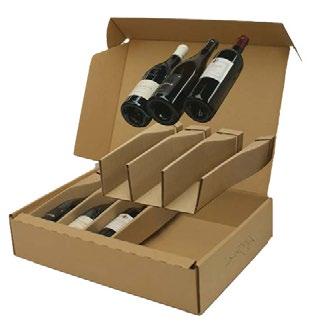
With Laithwaites Wine, the UK’s No.1 destination for buying wine online, we demonstrated a fully traceable closed-loop model for their cardboard arriving at their distribution centre. We can close the loop on over 1,000 tonnes of cardboard packaging, ensuring materials are kept in the supply cycle for as long as possible and that maximum value is obtained. As well as removing plastic, our redesigned packaging offers protection from all the jolts and impacts of the courier delivery network.

We became a Strategic Partner of the Ellen MacArthur Foundation because we wanted a partner to challenge us, help us drive design and innovation and further embed circular economy thinking into our business in new ways.
In the second year of our partnership, we…
• Collaborated on the development and roll-out of key innovation projects for our customers;
• Co-created content for circular economy training and engagement for our people and others;
• Co-hosted virtual events on circular design and circular economy, engaging with customers and suppliers;
• Contributed to the development of key workstreams at the Foundation, from circular economy policy goals to the development of Circulytics, the most comprehensive circularity measurement tool for companies.
The timeline below includes some of the highlights from the second year of our strategic partnership with the Ellen MacArthur Foundation.
Since becoming a Strategic Partner of The Foundation almost two years ago, DS Smith has been an active voice in our network, particularly by taking a leading role in the adoption of circular design and circular economy measurement.
On design, DS Smith has set ambitious goals, establishing and adopting circular design guidelines, training over 700 of its Designers and Innovators in circular design methods, and embedding circular economy curriculum in its core training programmes – which has been inspiring to see.
DS Smith has also led the way through their participation in the development and adoption of The Foundation’s Circulytics measurement tool, using it to both track adoption of circular economy solutions internally and more widely across their value chain as a tool to engage with suppliers.
We are pleased to be partnering with DS Smith in their ongoing and ambitious efforts to drive development and scale adoption of innovative circular economy customer solutions, and we look forward to their continued leadership as a front-runner in the transition to a circular economy.
Andrew Morlet CEO, Ellen MacArthur Foundation
May 2020: Beginning of Year 2 of our strategic partnership
Contributed to The Foundation’s ’Financing the Circular Economy’ white paper
Launched our Circular Design Principles with expert speakers from The Foundation
Hosted a virtual customer event at our Fordham Impact Centre with The Foundation
Co-signed The Foundation’s ’Build Better Growth’ Financial Times communication
Achieved A- score in Circulytics 2.0 and supported the launch campaign
Showcased ClimaCell and HexcelWrap in The Foundation’s Upstream Innovation Guide

Q&A with Alan Potts, Design and Innovation Director
How has the way our designers work transformed over the past year?
We have completed the engagement phase with the whole of our design network and have had a fantastic response. The network is enthusiastic to ‘find a better, more circular way’, so it is about empowerment, providing the tools and processes and involving all our colleagues across the business supporting the network to help our customers in their circular transition.

Q&A with Ann-Louise Hancock, Head of Learning and Development
What has been the benefit of working with The Foundation?
Collaborating with The Foundation has given us access to many leading experts in the field of circular economy and the opportunity to connect with other businesses who are on the same journey. We have been able to provide creative, impactful and timely communications and learning and development interventions designed and delivered for our colleagues.
What is coming next for learning and development?
We will be evolving our community interactions, particularly our engagement with schools and universities to educate and attract the next generation to get involved and champion the circular economy.

Q&A with Charlotta Lyon, Head of Communications – Packaging
What has been most exciting this year?
The launch event hosted with The Foundation for the Circular Design Principles brought the benefits and importance of circular design to life, with a lot of interest from our customers and others.
What are you looking forward to next year?
We will take big steps to significantly raise awareness and interest in the circular economy among our customers. With this now at the heart of our value proposition, we will drive the circular packaging innovation agenda so that together we play our part in accelerating the transition to a circular economy.
Invited a group of suppliers to measure their circularity using Circulytics
Ran a Circular Design Sprint with Mondelez and The Foundation
CASE STUDY
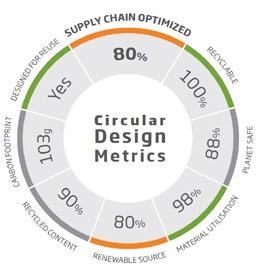
Circular Design Metrics
We developed our Circular Design Metrics to help customers compare the ‘circular readiness’ of different solutions at a glance. As choices tend to conflict, such as renewable materials versus recyclability or recycle versus reuse, this helps customers choose according to their priorities. We begin by recommending the most innovative solutions and then use data to help our customers choose the optimal design and specification. This year, we piloted the metrics with customers, designers and experts from The Foundation and over the coming year we will introduce more customers to the metrics.
CASE STUDY
Measuring circularity with Circulytics®

We’re using Circulytics, the most comprehensive circular economy performance measurement tool for companies, to evaluate our circular business model in greater detail than ever. Going beyond assessing products and material flows, Circulytics reveals the extent circularity is achieved across entire operations. In 2020/21, we scored A-, with strong performance on critical enablers including strategy, innovation, people and skills. There are improvements to be made in how we engage with suppliers on the circular economy. In response, we invited suppliers to use Circulytics to gain insight into how we can more closely collaborate with suppliers on the circular economy (find out more on page 39). As a Circulytics sounding board member, we continue to contribute to the development of the tool.
Collaborated on an article on circular design with The Foundation and Ikea
Participated in The Foundation’s Summit, with our Group Chief Executive
Implemented the Circular Procurement Framework in our Procurement Enablement team
Provided circular design examples for The Foundation’s Circular Procurement Framework
April 2021: Planning for Year 3 of our strategic partnership
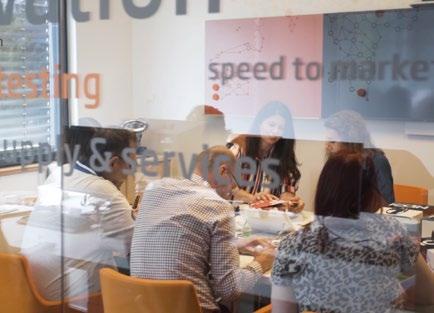
Innovation Sprint with Mondelēz
We invited Mondelēz to a circular economy Innovation Sprint with experts from The Foundation. Over a series of workshops, together we accelerated momentum, engagement and commitment to implementing circular economy principles into packaging design. Guided by trained coaches, participants were organised into multidisciplinary and diverse teams and explored challenges and opportunities as well as future possibilities to accelerate circular economy implementation. The sprint concluded with a business case and roadmap for a selection of new and exciting circular economy initiatives.
Universal circular economy policy goals
Alongside other businesses and policy makers, we contributed to The Foundation’s universal circular economy policy goals, which aim to create a common framework for circular economy policy. The policy goals are ‘stimulate design for the circular economy’; ‘manage resources to preserve value’; ‘make the economics work’; ‘invest in innovation, infrastructure and skills’; and ‘collaborate for system change’. We believe that these goals present a significant opportunity to close material loops and prevent natural resources from being lost and continue to advocate for policy that supports the transition to a circular economy.
Sharing knowledge and experiences
Over the past year, we contributed our expertise to several white papers and other publications authored by The Foundation, including ‘Financing the Circular Economy’, ‘Upstream Innovation Guide’ and ‘Build Better Growth’. Our partnership with TemperPack, featuring the ClimaCell technology, was showcased as a plant-based insulation material for perishable shipments alongside HexcelWrap, which we are using to reduce storage space and provide superior protection with less overall material use.
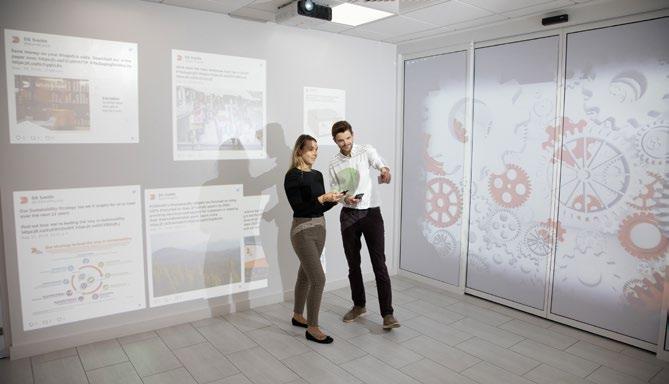
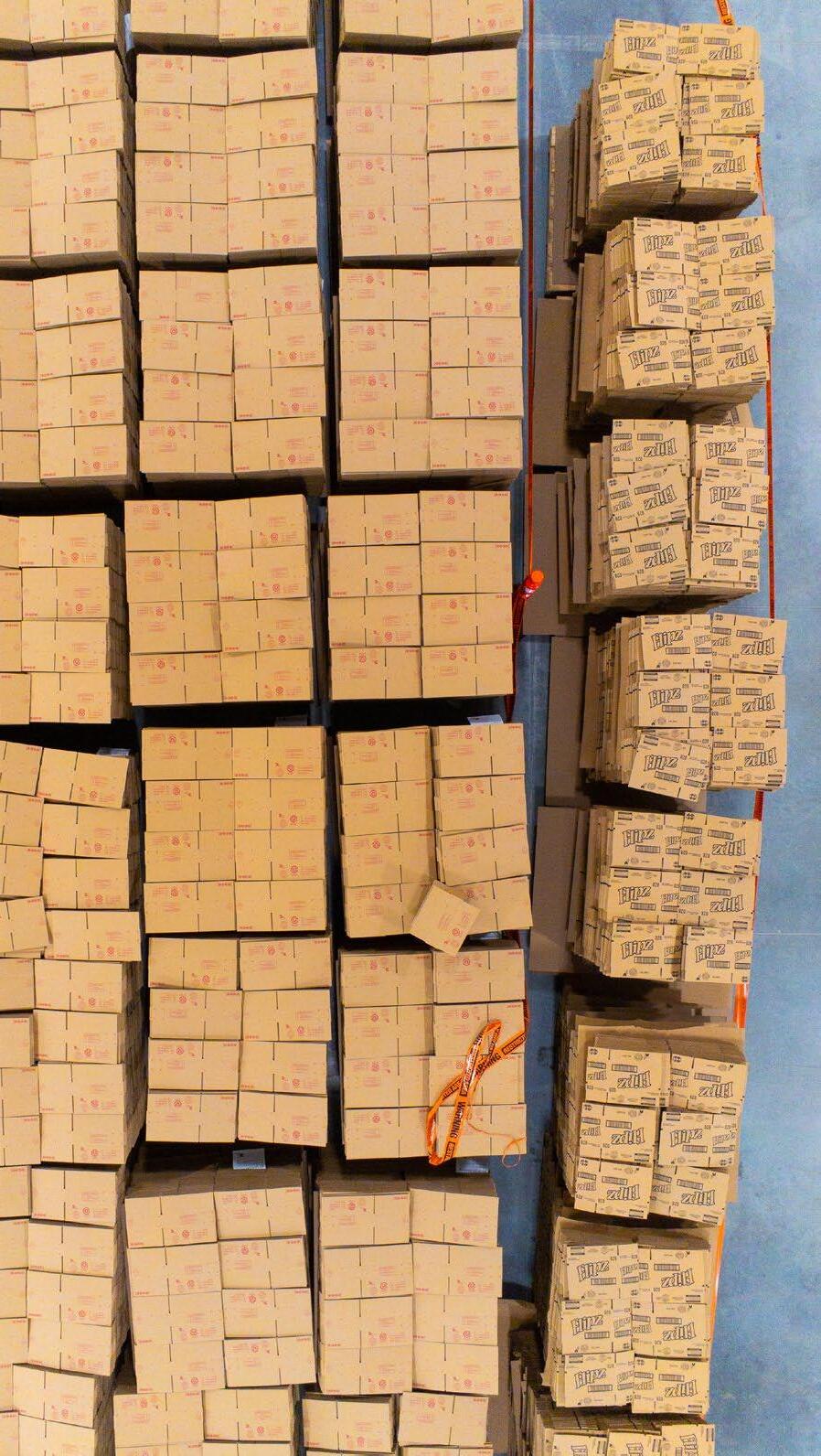
As we lead the packaging industry and wider society towards the circular economy, we wanted to invite the leading thinkers on this topic into our business to challenge us and to help drive this agenda further, for ourselves and for our customers.
Working closely in partnership with the Ellen MacArthur Foundation is helping us to:
• turbocharge our circular economy design and innovation agenda
• support our customers with their circular economy challenges
• educate our people on the circular economy
The Foundation has played a key role in helping to develop our new Now and Next sustainability strategy. In the spirit of partnership, we also contribute our own expertise and resources, working closely with other members of The Foundation’s network to support many of their priority initiatives.
Over the coming year, the focus of our work together will turn from products to systems as we begin to explore what role new business models, including reuse and e-commerce e-collection, might play in the circular economy.
We are focusing on the sustainability challenges we are facing today, as well as those that will impact future generations.
Our focus is on:
Closing the loop through better design Protecting natural resources by making the most of every fibre
Reducing waste and pollution through circular solutions
We will continue to: Drive carbon reduction Care for forests and their biodiversity
By 2025 we will protect forests and enhance biodiversity wherever we operate
Equipping people to lead the transition to a circular economy
By 2030 we will reduce our CO2 emissions by 30% per tonne of production against a 2015 baseline1
Maintain that 100% of in-scope sites are ISO 50001 certified each year2
Managing water responsibly
• By 2021, all sites in current or future water stressed areas will have a mitigation plan in place
• By 2025, achieve zero nonconformances with consents to discharge
• By 2030, all paper mills to operate at or below internal benchmark rates for water consumption
• By 2030, send zero waste to landfill
Sourcing sustainably
• By 2025, ensure that 100% of our suppliers comply with our sustainability standards
• By 2025, we will measure and improve biodiversity in our own forests
• Maintain that 100% of the papers we purchase are recycled or chain of custody certified each year3
We work with customers to design circular packaging solutions that achieve more from less, delivering for rapidly changing consumer lifestyles with minimum impact on the world around us.
By 2021, we will train 100% of our designers on Circular Design Principles By 2023, we will manufacture 100% reusable or recyclable packaging
By 2025, we will optimise fibre use for individual supply chains in 100% of our new packaging solutions
By 2025, we will take 1 billion pieces of problem plastics off supermarket shelves, take 250,000 lorries off the road and work with partners to find solutions for ‘hard to recycle’ packaging
By 2025, we will engage 100% of our people on the circular economy
• Maintain that 100% of relevant sites are FSC certified each year4
Contributing to our communities
• By 2025, launch 100 biodiversity projects across Europe and North America
• By 2025, all of our paper mills will run a biodiversity programme in their local community
Redefining Packaging for a Changing World
Our Purpose is our driving force and our reason for being, capturing the value we bring to the wider world. Our vision is to be the leading supplier of sustainable packaging solutions. We achieve this through our four strategic goals:
• To lead the way in sustainability
• To realise the potential of our people
We will work together with partners to develop fully circular strategies, from design to production and supply to recycling, creating positive impact packaging for our changing world.
By 2030, we aim for all of our packaging to be recycled or reused and to pilot 20 new business models for improving post-consumer waste quality and recycling rates
By 2030 we are aiming to optimise every fibre for every supply chain
By 2030 our aim is to use packaging and recycling to enable the circular economy by replacing problem plastics, reducing customer carbon and eliminating consumer packaging waste
By 2030 we will engage 5 million people on the circular economy and circular lifestyles
People are the foundation of our success and we prioritise their health, safety and wellbeing and contribute to our communities
• To delight our customers
• To double our size and profitability
Now and Next is our sustainability strategy, underpinning our strategic goal to lead the way in sustainability and ensuring our activities deliver long term value to all stakeholders by placing sustainability at the heart of our business.
The UN Sustainable Development Goals (UN SDGs) are an ambitious plan to create a better world by 2030.
Although we impact many of the goals, we have identified four that are most relevant to our business and where we can make a significant contribution:
Responsible Consumption and Production: We keep materials in use for longer, reduce waste and pollution and protect natural resources
Climate Action: We reduce our emissions to combat climate change and its impacts
Life on Land: We minimise our use of sustainably sourced fibre, protecting and restoring ecosystems
Decent Work and Economic Growth: We commit to being a responsible employer, underlining our ethical, labour and employment standards
• Maintain that 100% of our sites are engaged in community programmes each year5
Respecting human rights
• By 2022, we will conduct a human rights risk assessment.
1. Upgraded to a Net Zero emissions commitment and science-based target – see page 33
2. Includes sites accounting for at least 90 per cent of overall Group energy consumption.
3. Includes certification to controlled wood standard as a minimum.
4. Includes Packaging, Paper and Paper Sourcing sites that trade or manufacture products derived from timber.
5. Includes sites with greater than 50 employees.
Since launching Now and Next last September, we have spent time developing roadmaps with clear governance and oversight, in addition to standards and policies with regular review mechanisms to achieve our new targets. In the pages that follow, we share the progress we have made towards our sustainability targets over the past year.
Theme Target
Closing the loop through better design
Reducing waste and pollution
By 2021, we will train 100% of our designers on Circular Design Principles
By 2023, we will manufacture 100% recyclable or reusable packaging
By 2030, we aim for all our packaging to be recycled or reused
By 2030, we will pilot 20 new business models for improving post-consumer waste quality and recycling rates
By 2025, we will take 1 billion pieces of problem plastics off supermarket shelves
By 2025, we will remove 250,000 lorries from the road
By 2025, we will work with partners to find solutions for ‘hard to recycle’ packaging
Equipping people to lead the transition to a circular economy
Protecting natural resources
By 2025, we will engage 100% of our people on the circular economy
By 2030, we will engage 5 million people on the circular economy and circular lifestyles
By 2025, we will optimise fibre use for individual supply chains in 100% of our new packaging solutions
By 2030, we aim to optimise every fibre for every supply chain
20-21
track 20-21
20-21
20-21
24-25
24-25
track 24-25
track 28-29
28-29
track 30-31
30-31
By 2021, all of our forests will have forest management certification Achieved 30-31
By 2025, we will measure and improve biodiversity in our own forests
Maintain that 100% of our sites are FSC certified
Driving carbon reduction By 2030, we will reduce our CO2e per tonne of production by 30% against a 2015 base year
Managing water responsibly
Sending zero waste to landfill
Sourcing sustainably
Contributing to our communities
Maintain that 100% of in-scope sites are ISO 50001 certified each year
By 2021, all sites in current or future water stressed areas will have a mitigation plan in place
By 2025, achieve zero non-conformances with consents to discharge
By 2030, all paper mills to operate at or below internal benchmark rates for water consumption
By 2030, send zero waste to landfill
By 2025, ensure that 100% of our suppliers comply with our sustainability standards
Maintain that 100% of the papers we use are recycled or chain of custody certified each year
By 2025, launch 100 biodiversity projects across Europe and North America
By 2025, all of our paper mills will run a biodiversity programme in their local community
started 30-31
30-31
32-33
32-33
34-35
track 34-35
track 34-35
36-37
38-39
38-39
40-41
track 40-41
Maintain that 100% of our sites are engaged in community programmes each year Achieved 40-41
Promoting human rights
By 2022, we will conduct a human rights risk assessment

46

“Now and Next moves beyond having a circular business to scaling up circular solutions for our customers and society – replacing problem plastics, taking carbon out of supply chains and providing innovative recycling solutions. I’m proud of the progress we’ve achieved since launching our new sustainability strategy.”
Greg Dawson, Director of Corporate Affairs and Sustainability
Key figures
$1 trillion
cost savings globally from less material use by 2025 (World Economic Forum) 80%
of a product’s impact determined at the design stage (European Commission)
25x
the average number of times fibre travels around our circular business

Context
As circularity is largely a consequence of design decisions, conscious design that considers the impacts a product has through its entire life cycle ensures that materials are more likely to be kept in use. At the system-level, how materials flow through the entire economy must be transformed. Designing for circularity leads to solutions that minimise supply chain impact, reducing impact on the planet.
Contribution to the UN SDGs
Better design helps substantially reduce waste generation through prevention, reduction, recycling and reuse.
100 per cent of our designers trained on circular design In 2020/21, we achieved our target to train 100 per cent of our designers on the circular economy, ensuring our 700 designers are skilled in building circularity into packaging design for our customers. This means that our designers are now actively applying the Circular Design Principles to hundreds of thousands of new packaging designs. We have trained around 80 Circular Design Principles Champions who act as ambassadors and are accountable for educating their local teams. Kick-started in January by our Group Chief Executive, this blended learning journey has helped our Design and Innovation community become experts in circular design through webinars, workshops, dedicated learning modules and micro-learning modules through our mobile learning platform. The Principles encourage us to think beyond our circular business model and look for new ways to keep value in circular packaging solutions for our customers.
Circular Design Principles
With expert input from the Ellen MacArthur Foundation, we created a set of Circular Design Principles to design better packaging for the circular economy. The five Principles are: ‘we protect brands and products’; ‘we optimise materials and structure’; ‘we maintain and recover materials’; ‘we maximise supply cycle efficiencies’, and ‘we find a better way’. Following these principles will benefit the environment and drive growth for the packaging industry. Learn more on page 8.
• By 2021, we will train 100% of our designers on Circular Design Principles
• By 2023, we will manufacture 100% recyclable or reusable packaging1
Percentage of designers trained on Circular Design Principles in FY2020/21 (%)
• By 2030, we aim for all our packaging to be recycled or reused
• By 2030, we will pilot 20 new business models for improving post-consumer waste quality and recycling rates
Recyclable or reusable packaging
We have progressed well against our target to manufacture 100 per cent recyclable or reusable packaging1, a target originally set with a deadline of 2025 but that we have brought forward to 2023, with 99.2 per cent (2019/20: 98 per cent) of the packaging we manufactured in 2020/21 meeting this standard. We continue to pilot substitutes for a small remainder of materials that are presently difficult to recycle, for example wax coatings. Although there are some commercial challenges such as expense and line speed, initial recyclability tests for alternatives are promising. A significant challenge that we have yet to overcome is increasing customer acceptability of recyclable alternatives and ensuring they are perceived as more advantageous compared to the existing solution. However, we are excited to tackle this by continuing to demonstrate the benefits of circular business models.
Our 2030 goal is to aim for all our packaging to be recycled or reused. Although the European average recycling rate for paper and cardboard is the highest amongst packaging at around 85 per cent (FEFCO), there is an opportunity to increase this, keeping more material in the loop. We have been calculating a DS Smith-specific recycling rate by modelling material flows with major partners. As this evolves, we are investigating opportunities to trial new business models to collect corrugated waste from households, focussing on the UK initially and then looking to scale in time. As we are at the beginning of this journey, progress over the past year has focused on identifying supply chain data gaps to understand the system-level changes that are needed to measure this reliably.
•
• Close the remaining gap to achieve 100% recyclable or reusable packaging1
• Build circular design into new starter induction to maintain that 100% of designers are trained
• Pilot a ‘light house’ model in Germany for tracking packaging that is recycled or reused
Percentage of total packaging volume (SQM) that is reusable or recyclable (%)
CASE STUDY
Signify
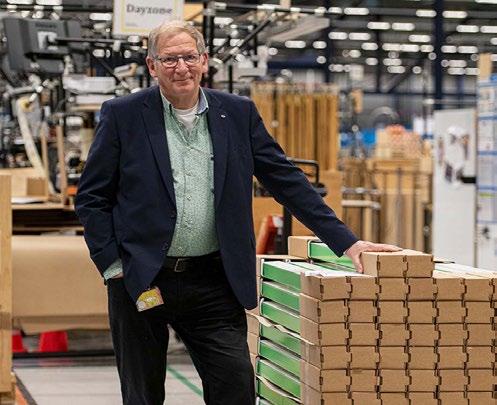
We helped Signify, a world leader in lighting technology, achieve carbon neutrality with an innovative packaging solution for LED fixtures. The packaging uses ‘end caps’, which are placed on either side of the product, using 76 per cent less material. This enables the products to be stacked, reducing the risk of damage and minimising empty space in the transportation of goods. It is 100 per cent recyclable.
“Working together with our engineers, designs are coordinated from the beginning to never use more material than is strictly necessary.”
Johan Damkot, Senior Buyer at Signify
CASE STUDY
ClimaCell®
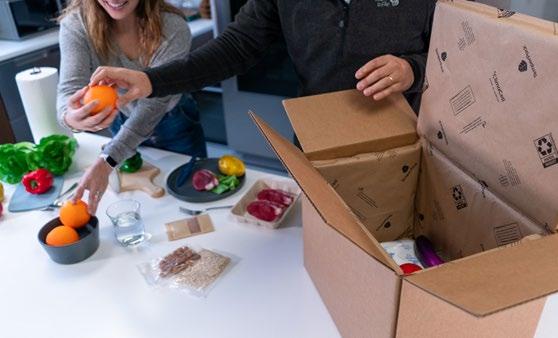
With TemperPack, we introduced ClimaCell®, a sustainable thermal insulation barrier for temperature sensitive goods such as meal kits, perishable groceries and medical products. Made from paper and bio-based materials, it can be easily recycled and is the ideal alternative to difficult to recycle expanded polystyrene foam, reducing carbon emissions by around 65 per cent.

Our customers tell us that they are under pressure to tackle plastic pollution, improve recycling rates and develop circular business models. We are capitalising on the significant economic benefits of the circular economy by embedding circularity into all of our product development so that the
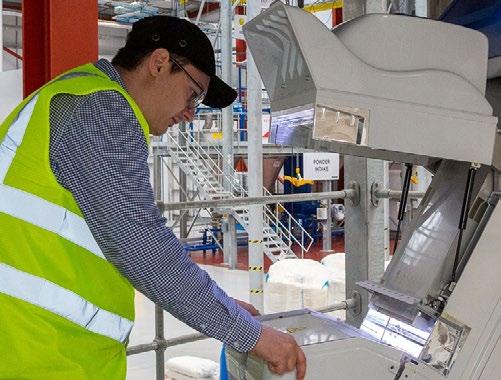
We are committed to utilising partnerships and leading industry innovations to develop more sustainable packaging solutions. One such partnership has been developed with Aquapak, an innovative developer of biodegradable polymer. We have conducted a series of trials with combined materials, focusing on performance and recyclability. This includes a range of fibre-based packaging where traditional plastic films can potentially be replaced with Aquapak’s Hydropol™, a biodegradable and water-soluble polymer that will help to improve the recycling process. With a focus on tackling hard to recycle items, this technology will allow for less contamination in the recycling and paper-making process.
“We are proud to be partnering with Aquapak as part of our strategy in developing fully recyclable packaging alternatives to non-recyclable plastics. Aquapak’s technological advances in novel barrier chemistries combined with our broad range of packaging applications can help us work together to solve many of the most pressing packaging recyclability issues.”
Nick Thompson, Materials Development Director
environmental impact of our sustainable packaging solutions is reduced throughout the entire life cycle. Circular design criteria are considered in the development of new products and services so that our customers are ready to compete in a circular economy that is regenerative by nature and sustainable in the long term.

We supply Koen Pack with packaging for flowers and plants, facilitating a fully auditable and traceable closedloop model that turns 100 per cent of Koen Pack’s cardboard recycling back into new boxes in the Netherlands. Nijssen Recycling collects cardboard recycling from Koen Pack’s plant in Amstelveen. We collect this waste and make recycled brown liners at De Hoop mill, which are manufactured into new boxes, providing an efficient solution within a specific local market that cuts costs and unnecessary road miles.

From the outset of the design process, with BrewDog and Glenhaze, we worked closely together to ensure that 1.5 million cans of beer and over 66,000 advent calendars could be shipped worldwide in protective, sustainable packaging. The solution involved our designers working closely with BrewDog to limit any additional materials and maximise supply cycle efficiency, following the Circular Design Principles. BrewDog was able to take to market a sustainable calendar solution that spreads their message of being carbon negative loud and clear.
Key figures
70%
increase in annual waste generated globally by 2050 (World Bank)
25% of UK consumer packaging is flexible plastics, yet only 4 per cent is recycled (WRAP)
2x
expected increase in last mile deliveries in mature markets over coming decade (McKinsey)
Context
We demand packaging to be delivered to our homes in ways that suit our busy lifestyles. There is an opportunity to reduce waste and pollution by replacing common waste, such as plastic, and optimising packaging to reduce the number of delivery vehicles on the road. Circular packaging ensures that waste and pollution are not created in the first place.
Contribution to the UN SDGs
Reducing waste and pollution helps to promote sustainable consumption and production patterns.
Replacing problem plastics
Plastics are perceived to be the least sustainable form of packaging and we believe that corrugated material is the more sustainable alternative. Our designers have created over 650 designs for hundreds of thousands of products geared towards plastic replacement and in 2020/21 we have accelerated this.
In 2020/21, 53.9 million pieces of problem plastics1 were removed form supply chains and replaced with our corrugated alternatives that can be recycled. Over the coming year, we will continue to do more to accurately capture every unit we replace.
Many of our FMCG customers, particularly major brands and retailers, are moving away from plastics that can be difficult to recycle or are simply rarely recycled owed to a lack of appropriate infrastructure. We are helping our customers reconsider their use of plastics through the entire supply cycle, from replacing plastic sealing tape with self-locking flaps to replacing plastic labels with print direct onto cardboard.
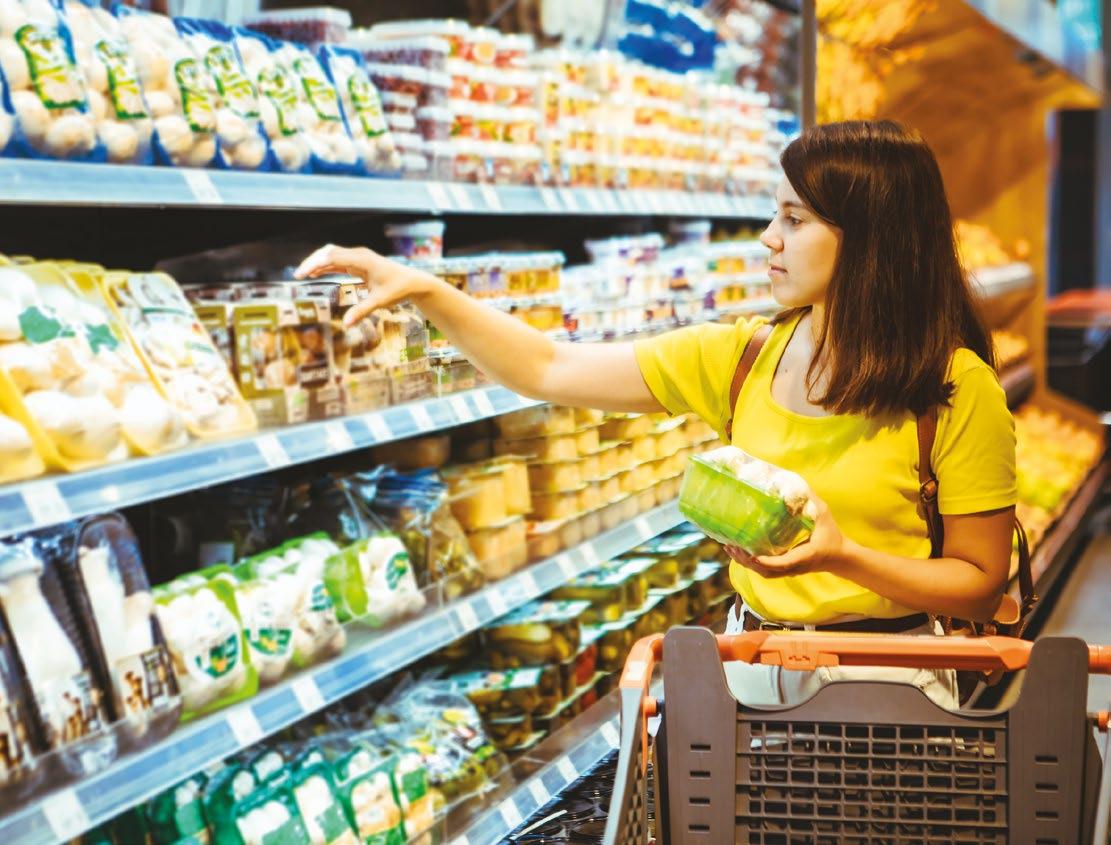
With an average recycling rate across Europe of 85 per cent (FEFCO), corrugated packaging offers additional benefits for brands, such as digital printing and customisation, as well as helping our customers meet their own sustainable packaging goals. We are therefore targeting opportunities for innovation or substitution in retail, such as plastic display trays, fresh produce punnets, shrink wrap and ready meals.
We will continue to drive adoption of corrugated replacements amongst our customers, capitalising on the strong approval rate for cardboard compared to plastic amongst consumers.
Removing lorries from the road
We are lessening the impact of transport by developing solutions to remove wasted space in transit and reduce the number of lorries2 on the road by fitting more packaging into fewer vehicles. In 2020/21, we begun to invest in developing the reporting capability within our Value Tool to gather data needed to measure progress against this target. Over the coming year, we aim to increase usage of the Value Tool across the business so that we can accurately measure the impact that our packaging is having in terms of vehicles on our roads at which point we will be able to accurately report our progress on this target. In the long term, we plan to explore new business models for the rise in e-commerce waste, explore innovative alternative materials and offer carbon-neutral packaging.
Finding solutions for ‘hard to recycle’ packaging
As part of the 4evergreen industry alliance, which seeks to increase awareness of the benefits of fibre-based packaging materials in a circular economy, we are driving innovation in recyclability and optimised collection and recycling infrastructures. Coffee cups are a famous example of hard to recycle packaging, typically produced with a polyethylene lining to prevent the hot drink from leaking. Some recycling facilities cannot separate these materials, but after a series of trials at Kemsley paper mill, we have developed the capacity to recycle up to 2.5 billion coffee cups a year. We are continuing to increase our own capabilities, as well as across the industry to find scalable solutions for hard to recycle packaging.
More information and policies
To learn how we are managing the waste generated from our own operations, turn to pages 36-37.
• By 2025, we will take 1 billion pieces of problem plastics off supermarket shelves
• By 2025, we will remove 250,000 lorries from the road
• By 2025, we will work with partners to find solutions for ‘hard to recycle’ packaging
• Continue our plastics replacements drive with fibre-based circular solutions through our innovation pipeline and data capture through our CRM
• Encourage sharing of plastics replacement designs across the business
• Increase use of the Value Tool to support customers in supply chain optimisation
Replacing problem plastics with corrugated solutions
CASE STUDY
Asda
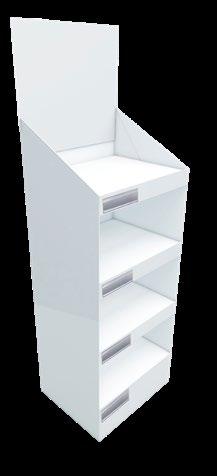
As part of Asda’s accelerated target to reduce own brand plastic by 15 per cent by 2021, the retailer is working to make in-store displays more sustainable, cutting down on plastic and non-recyclable materials. We helped Asda find a sustainable alternative for shelf edge label holders that will replace 1 million pieces of unnecessary plastic from its displays this year.
“Removing unnecessary plastic is at the top of our minds and is very important to our customers. This project with DS Smith has enabled us to remove the plastic shelf edge label holder, making it easier for our shipper units to flow through our cardboard recycling stream.”
CASE STUDY
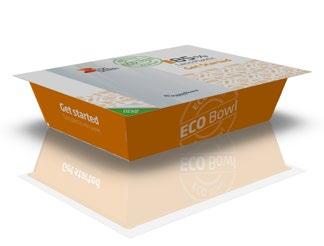
EcoBowl
Aimed at replacing plastic packaging for frozen, chilled and ambient food, EcoBowl consists of a corrugated cardboard tray and a thin plastic skin and lid film. With a light and rigid structure, the amount of material used is reduced to a minimum that can be easily separated for recycling. This solution replaces traditional, unrecyclable polypropylene trays and reduces the amount of plastic used by up to 85 per cent. Because of its excellent barrier properties, we can guarantee equal shelf life when compared to traditional packaging for fresh food.
Lisa Walker, Packaging and Print Specialist at Asda
CASE STUDY
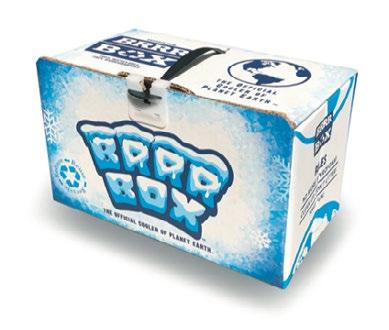
BRRR Box
We partnered with Vig Pak LLC to develop BRRR Box, a 100 per cent recyclable, biodegradable cooler that incorporates some of the most modern technologies available in cardboard packaging. Named ‘The Official Cooler of Planet Earth’, BRRR Box uses our proprietary Greencoat corrugated moisture-resistant and FDA food contact-safe material to coat its Styrofoam alternative. Unlike typical plastic foam coolers, it is biodegradable.
Why we focus on the entire life cycle
Whilst designing a circular product, it is important to consider how the product can be kept in use, including the impacts it will have after it has left our factory. In our circular business, waste paper and cardboard are recycled into new paper from which new circular packaging solutions are made. By being
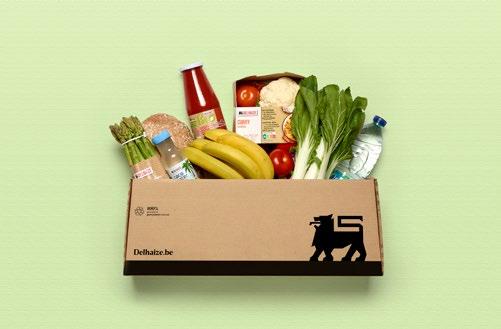
We worked with Delhaize Belgium, the leading supermarket chain, to optimise a new box design made from 100 per cent recycled cardboard, which is fully recyclable. As a result of the redesign, a total of 160 tonnes of packaging material will be saved on an annual basis. This also means there will be 32 fewer trucks required in the supply chain and the need for storage space will be reduced by over 1,000 pallets.
L’Oréal
L’Oréal Luxe wanted to redesign their e-commerce packaging in a way that would convey sustainability and their premium brand, whilst being cost effective and efficient. Through a series of collaborative workshops, our designers embraced the challenge, developing a physical concept that was laboratory tested to ensure the box could withstand all the challenges of complex supply chains. The solution was a 100 per cent recyclable cardboard solution that reduced void fill usage by 50 per cent and reduced overall corrugated usage by 23 per cent, creating a global box suite with a lesser impact.
intensely focused on resource efficiency throughout this circular life cycle, we can make improvements to our product that make it more beneficial than less sustainable alternatives. Compared to plastic, cardboard is far more likely to be returned for recycling and we can optimise for logistics in unique supply chains to reduce carbon emissions.
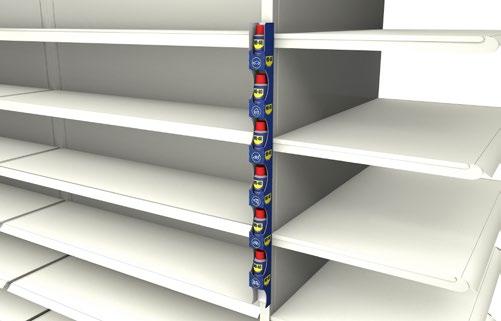
We collaborated with WD-40 to develop a 100 per cent recyclable shelf construction for the dispensing of spray cans that is easy to erect and fill, providing a safe and secure holder that can be reused before being recycled. Not only does this solution remove over half a million individual pieces of plastic including clip strips, shelf hooks and tags per year, but it also achieved a 22 per cent uplift in outbound pallet utilisation.
Key figures
+700,000
jobs expected to be created in the EU by the circular economy by 2030 (Cambridge Econometrics)
$700 million
potential annual cost savings for FMCG sector from circularity (Ellen MacArthur Foundation)
€3,000
predicted average increase in disposable income for EU households owed to circular economy by 2030 (Ellen MacArthur Foundation)
Context
Although we are already championing the circular economy, there is an opportunity to go further in embedding circular economy knowledge into our culture. Growing awareness, skills and commitment to action are key to enabling our people to own the circular economy. We are taking our expertise into our communities so that the next generation is empowered to live more circular lifestyles.
Contribution to the UN SDGs
Increasing knowledge and skills on circular economy helps to promote sustainable development.
So that all of our people are equipped with the knowledge and skills to lead the transition to a circular economy, we are providing tailored circular economy training to our people in partnership with experts at the Ellen MacArthur Foundation and the University of Exeter Business School Centre for Circular Economy.
Developing our knowledge of the circular economy
In 2020/21, we focused on building the foundations of our programme, targeting employees in roles with a significant impact. This year, 100 per cent of our initial target audience (c. 2,500 employees in design, senior management and leadership, graduate and procurement roles) have completed formal circular economy training programmes and accessed our wealth of learning materials which are available to all. So far, we have reached 9 per cent of our employees overall. In early April we began to engage sales and marketing teams as we continue to extend learning opportunities to eventually reach all our colleagues.
The Ellen MacArthur Foundation Circular Economy Masterclass, delivered by the University of Exeter is a six week online course which has been provided to 57 of our senior leaders and others so far, who are able to make a significant impact. This is an opportunity to connect and learn directly from leading experts in the field of circular economy and enables participants to develop skills to drive the circular economy.
In small project teams, colleagues gained practical knowledge and skills required to implement innovative circular economy projects, with programme content based on the latest circular economy research findings and practitioner insights, including learning from case studies of other innovative organisations.
“The Exeter Centre for Circular Economy course was both challenging and thoughtprovoking, a real opportunity to expand circular economy thinking across the business and in doing so drive new ways of thinking to deliver for our business, our customers and wider society.”
Susana Aucejo, Surface and Barrier Director
Furthermore, in collaboration with the Ellen MacArthur Foundation we have created a bespoke e-learning module which we plan to circulate to over 12,000 colleagues. In addition, we are driving local initiatives to inspire all our colleagues to embrace the circular economy both at work and also in their day-to-day life choices.
the public on the circular economy
In 2020/21, we engaged over 519,000 people on the circular economy and circular lifestyles through online content, including posts ‘liked’ and shared, videos viewed and reports downloaded. We developed a lesson plan and learning materials for in-school engagement. Due to Covid-19 restrictions we have had to find innovative ways to use social media and video to reach learners. We streamed a pilot of a live lesson via YouTube, where over 100 children and their families participated. We hope to be able to spend more time in our local communities next year to promote the circular economy and circular lifestyles.
More information and policies
• Ellen MacArthur Foundation Learning Hub
• The Exeter Centre for Circular Economy Masterclass
• By 2025, we will engage 100% of our people on the circular economy
• By 2030, we will engage 5 million people on the circular economy and circular lifestyles
Next steps:
• Invite Sustainability Champions and senior leaders to join the circular economy masterclass
• Continue rolling out circular economy e-learning to engage more of our people
• Increase access of the public to resources that promote circular economy and circular lifestyles
Key figures
3x
planet Earths needed by 2050 to continue consuming resources at today’s levels (UN)
2x
estimated increase in global consumption of materials over next 40 years (OECD)
1,500
football pitches equivalent daily forest growth in Europe between 2005-15 (Two Sides)
Context
Forestry provides biodiverse natural habitats, recreational value and carbon storage to tackle climate change. By using only recycled fibres wherever we can and optimising fibre consumption for every pack, we can minimise our reliance on fresh fibres from the natural environment. We use only chain of custody certified papers and 100 per cent of our sites are FSC certified.
Contribution to the UN SDGs
Protecting natural resources contributes to conservation, restoration and sustainable use of ecosystems and their services, in particular forests.
In 2020/21, fibre use in almost a quarter of new packaging solutions was fully optimised for individual supply chains. Our leading packaging performance programme, PACE (Performance, Assurance, Consistency and Environment), continues to optimise pack designs that reduce fibre use, ensuring that whilst we use recycled fibre where we can, virgin fibre consumption is minimised as far as practicable. We work closely to understand the supply chains through which our packaging travels so that our solutions always meet performance requirements. By understanding our customers’ supply cycles end to end, and by collecting valuable data at each touchpoint, we can accurately predict the required packaging performance targets.
With our design and innovation expertise and with the use of our prediction tool, the accuracy of which improves with the more supply chain data we obtain, we can find the right materials and structure combinations to meet the required performance targets using no more material than necessary. The effective use of materials that are regenerative and recyclable and the avoidance of over-specification enables us to help save natural resources and reduce unnecessary waste. Fibre optimisation not only results in a leaner finished product but also lesser impact overall, as transporting fewer fibres through the production process requires less water and energy. There is therefore a significant opportunity to increase this figure over the coming year as we optimise new packaging solutions for unique supply chains. With recent challenges concerning the collection of waste paper and cardboard due to changes in how packaging is consumed in today’s world, proactively driving optimisation across our entire customer portfolio remains a priority. Over the coming year, we will continue to optimise fibre use in more packaging solutions.
• Maintain FSC certification at 100% of our sites1
• By 2021, all of our forests will have forest management certification
• By 2025, we will optimise fibre use for individual supply chains in 100% of our new packaging solutions
CASE STUDY
In 2020/21, 100 per cent of our sites1 maintained chain of custody certification. We achieved our target for all of our forests to be certified, meaning that we comply with the highest sustainable forestry standards on the market.
Measuring and improving biodiversity
For the c. 14,000 ha. of forestry we own in North America, Portugal and Spain, we are beginning to investigate a suitable measure for improving biodiversity so that our forest assets remain healthy and sustainable ecosystems.
More information and policies
• Sustainable Forest Management and Fibre Sourcing Policy
• CDP Forests response
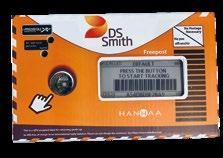
In partnership with Hanhaa, we trialled ParceLive, enabling real time visibility into packaging performance as it travels through global supply chains. The advanced multi-sensory tracker travels within packaging to continuously record real-time data linked to supply chain conditions, such as temperature, humidity, location, and even if the parcel is dropped, tilted or opened. This enables real-time monitoring of supply chain conditions, allowing for subtle changes to further optimise and tailor packaging specifications with the potential to reduce fibre use. Percentage
our forests with forest management certification in 2020 (%)
1. In-scope sites include Packaging, Paper and Paper Sourcing sites that trade or manufacture products derived from timber.
• By 2025, we will measure and improve biodiversity in our own forests
• By 2030, we aim to optimise every fibre for every supply chain
• Continue to optimise fibre use in more packaging solutions
• Maintain 100% site FSC and forest management certifications
• Begin identifying appropriate methodologies to measure biodiversity in our own forests
Key figures
1.5°C
limit to temperature increase to avoid catastrophic effects of climate change (IPCC) -31%
reduction in our CO2e emissions per tonne of production since 20111
of our emissions are from natural gas, with few alternatives presently available at scale
Context
Decarbonising the economy presents businesses and policymakers with a range of challenges and opportunities, not least for energy-intensive industries such as paper and pulp. Reducing carbon emissions substantially will require a combination of technological development, resource efficiency, renewables deployment and policy change, contingent on break-through technologies in order to mitigate the worse effects of climate change.
Contribution to the UN SDGs
Driving carbon reduction strengthens capacity on climate change mitigation, adaptation and impact reduction.
We have delivered strong progress against our target, achieving 23 per cent (2019: 20 per cent) reduction in CO2e per tonne of production since 2015, demonstrating pace ahead of our plans, driven mostly by investment in energy efficiency and equipment upgrades made at our mills since 2015. Our Group carbon emission intensity for 2020 was 212kg CO2e /t nsp (2019: 220kg CO2e /t nsp). This is a reduction of 4 per cent compared to last year on a like-for-like basis, driven by several key projects.
Carbon reduction projects at our paper mills
At Belišće Mill, c.27,000 tonnes of carbon has been saved by switching to green electricity produced from renewable sources such as solar, wind, geothermal, biogas, biomass and hydroelectric. Since August 2020, steam generation at Kemsley Mill is powered by the neighbouring Wheelabrator waste-toenergy facility. This facility processes local waste that would otherwise have been sent to landfill to generate power. This has helped reduce the mill’s reliance on fossil fuels, removing c.8,000 tonnes of carbon per year. At Lucca Mill, a new aeroderivative gas turbine has been installed in partnership with GE Gas Power. This turbine offers higher output and increased efficiency, delivering a 2 per cent increase in efficiency, removing c. 4,000 tonnes of carbon per year. Finally, a new biomass dry line has been installed at Viana Mill, saving c. 3,100 tonnes of carbon per year.
Carbon reduction projects at our packaging plants
At our packaging plants, our LED lighting rollout now has 36,672 lamps installed at 96 sites, saving c.14,000 tonnes of CO2e per annum. An additional nine sites are under review and if progressed will increase the number of installed lamps to around 40,000. The past year was the first complete year of operation for our state-of-the-art biomass boiler that uses residual low grade timber waste to generate energy to our plant in Värnamo, Sweden; saving c.2,200 tonnes CO2e by switching from LPG.
Additionally, new CHP plants have been operational for around one year at Blunham and Fordham. These plants generate electrical power for the sites whilst also harnessing the waste heat for the process, increasing overall efficiency.
Continously improving energy management
We maintained ISO 50001 certification at 100 per cent of our in-scope sites2, continuing to drive energy efficiency.
Committing to Net Zero emissions by 2050
Our recent materiality assessment ranked climate change as a high priority for our stakeholders, who increasingly expect companies to help prevent the worst effects of climate change. Although we have achieved a reduction of 31 per cent over the past ten years1 whilst significantly growing our business, we recognise the opportunity to go further and faster. In 2020/21, we challenged consultants to optimise our decarbonisation roadmap. We are pleased to announce our new commitment to a science-based target for 2030, which will require at least a 40% reduction in CO2e emissions per tonne of production compared to 2019 and to reach Net Zero emissions by 2050. Over the coming months, we will seek validation of our target from the ScienceBased Targets initiative (SBTi), paving the way for our circular packaging to play a powerful role in helping brands and consumers reduce their carbon footprint.
More information and policies
• Carbon and Energy Efficiency Policy
• Energy Management System Policy
• CDP Climate Change response
In this report, we are restating our base year and historic carbon emissions following the Greenhouse Gas Protocol. Refer to page 54 for historic emissions, both recalculated and as reported.
• Maintain that 100% of in-scope sites are ISO 50001 certified each year2
• By 2030, reduce our CO2e emissions by 30% per tonne of production against a 2015 base year
Next steps:
• Start-up short-term projects to reduce emissions that are currently under construction
• Begin a three-year project to install Solar PV across the business
• Secure funding for mediumterm projects that are in planning stages
Key figures
55%
expected increase in global water demand by the middle of the century (Deloitte)
500 million
people likely to live in water stressed areas by 2050 (Stockholm Resilience Centre)
75%
of the water we withdraw is returned to the natural environment after use
Context
Water is a precious natural resource and the effects of mismanagement can be visible in the form of polluted and empty reservoirs, with significant impacts on communities. Water converts wastepaper back into pulp, removing contaminants and suspending fibres as they pass through the papermaking process. Steam dries paper at paper mills and then at packaging plants to bond layers of paper together to create corrugated board, as well as to dilute starch and inks.
Contribution to the UN SDGs Managing water responsibly improves water quality, efficiency and scarcity, protecting and restoring water ecosystems.
We continue to focus on three important areas with targets covering water efficiency, water quality and water risk.
Reducing water use through improved efficiency
Although as the business has grown in recent years our water consumption has increased in absolute terms, in 2020 water abstraction reduced by 5 per cent per tonne of paper production versus last year on a like-for-like basis, driven by behaviour change and improvements made to our operational processes. Over the year, six of our mills operated at or within our benchmark rates for water consumption, with plans to bring one additional mill per year beneath our benchmark rates, enabling cost savings through improved efficiency.
We require sites to report non-conformances with consents to discharge1 monthly, and in the past year we received 21 nonconformances (2019/20: 79), a substantial decrease resulting from stronger monitoring and management. A significant challenge relates to the level of metals (e.g. copper) in discharge caused by commonly used inks. We set up an inks and effluent working group to share knowledge and solutions, with a potential solution to be piloted using centrifugal technology to separate heavy metals from discharge.
In the past year we achieved our target “all sites in current or future water stressed areas will have a risk mitigation plan in place”. This involved implementing water stress risk mitigation plans at 25 sites identified as being at high risk of water stress by the WRI Aqueduct Water Risk Atlas tool. These plans involve identifying opportunities for water reduction, reuse and
recycling, regular reporting on water performance and engagement with local stakeholders, such as the water authority. Aligned to our annual CDP Water Security response, which achieved a score of A-, we continue to monitor water stress as a long term climate-related risk, described on page 49.
More information and policies
• Water Stewardship Policy
• WRI Aqueduct Water Risk Atlas
• CDP Water Security response
CASE STUDY
Recirculating water at De Hoop and Lucca Mills
De Hoop and Lucca use a partial-closed loop to retain water in the system so that it can be treated and reused, drawing less from the natural environment. By filtering and reducing salinity, they reinforce their water loops and reduce consumption. This saves effluent treatment and discharge costs and lessens pressure on the water supply – a smart way to improve efficiency by recycling a precious natural resource.
• By 2021, all sites in current or future water stressed areas will have a mitigation plan in place
• By 2025, achieve zero non-conformances with consents to discharge
• By 2030, all paper mills to operate at or below internal benchmark rates for water consumption
Next steps:
• Identify more water reduction opportunities to bring more mills beneath the benchmark
• Embed an ‘Effluent Management’ Minimum Standard to establish best practice across the business
• Repeat the water risk assessment to monitor changes in future likelihood of water stress risk
Key figures
3.4 billion
tonnes of global annual waste expected by 2050, up from 2 billion in 2016 (World Bank)
$1 trillion lost value annually through waste which could be recycled but is not (Accenture)
98.3%
recycling rate for waste in our Packaging Division, up from 96.7% in 2016
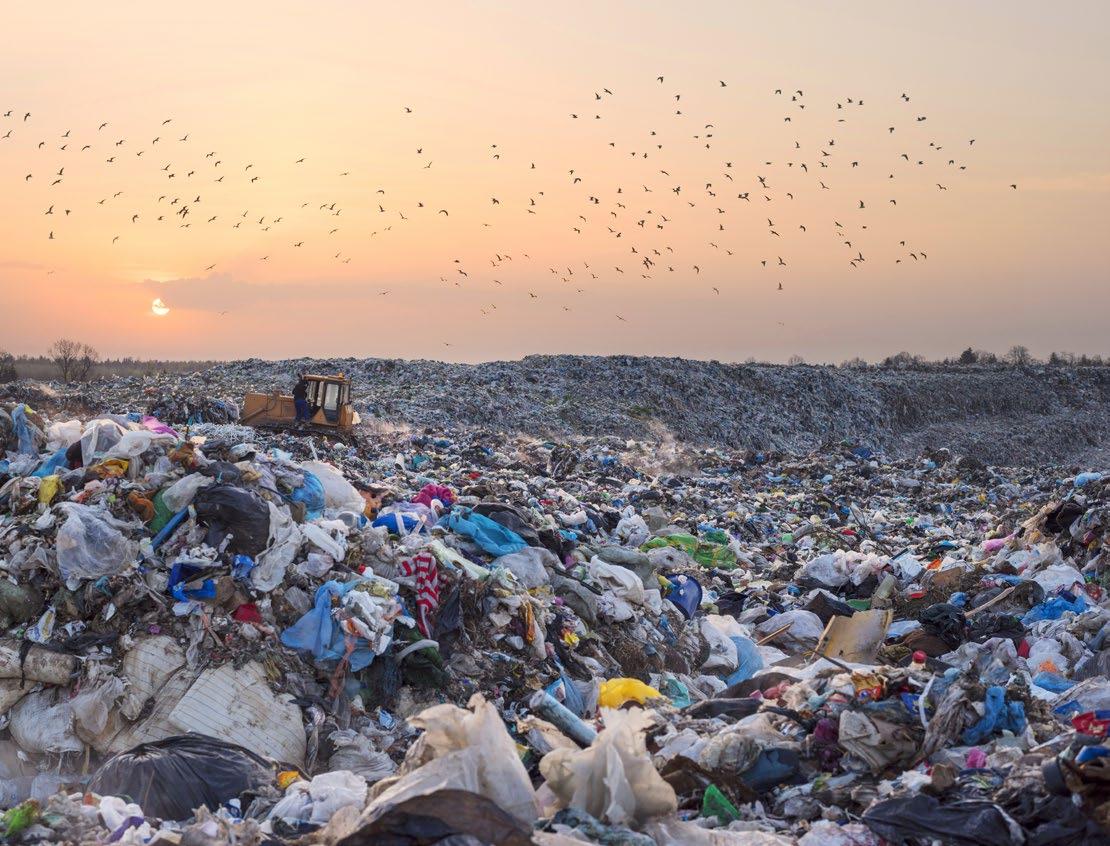
Context
Landfills have a direct effect on the climate, impacting ecosystems and wildlife, as well as human health and wellbeing. In an ideal world, only fibre would enter our recycling operations, but the reality is that other materials often end up mixed with papers which must then be removed before papermaking begins. There are opportunities to divert waste from landfill through the circular economy.
Contribution to the UN SDGs Sending zero waste to landfill involves substantially reducing waste generation through prevention, reduction, recycling and reuse.
Performance
Furthering the circular economy, we are actively identifying productive uses for the waste generated in our operations. In the past year, 1,612 kt of waste was generated (2019: 1,301 kt), an increase driven by growth through acquisitions. Of this, 65 per cent of this waste was recycled, 11 per cent used for landspread, 7 per cent was incinerated and 17 per cent landfilled. In 2020, 268 kt (2019: 348 kt, on a like-for-like basis) of waste was sent to landfill. In total, 92 per cent of the waste landfilled was landfilled by our Paper Division.
Landfill reduction projects at our paper mills
In 2020, overall waste sent to landfill from our paper mills decreased by 32 per cent per tonne of production compared to last year on a like-for-like basis, driven predominantly by significant improvement at Zarnesti Mill, which achieved zero operational waste to landfill in the past year. Aschaffenburg, De Hoop and Witzenhausen paper mills sent zero waste to landfill during the past year. At the remaining mills, we are developing innovative, circular solutions for waste. For example, Lucca Mill reduced its landfill by 62 per cent compared to last year owed to reducing rejects and utilising sludge to produce bricks. Pazardzhik Mill diverted landfill waste partly to biogas and compost production, a reduction of 82 per cent compared to last year. Riceboro Mill reduced landfill by 24 per cent through landspread.
Landfill reduction projects at our packaging plants
Only 1.1 per cent of the waste generated by our Packaging Division remains to be diverted from landfill. This year, we undertook a project to identify common sources of landfilled waste and held a series of workshops to train sites on new waste reduction, reuse and recycle opportunities, leading to a 13 per cent reduction. A common source of landfill waste in the Packaging Division is ink-derived sludge or cake from waste
water treatment plants. There may be optimisations we are able to make to address this, and over the coming year we will focus on sharing best practices between our sites to manage this issue.
More information and policies
• Zero Waste to Landfill Policy
CASE STUDY
Riceboro Mill
Riceboro Mill in

Georgia USA partnered with a soil producer to reuse hundreds of tonnes of wood ash, a mineral-rich by-product of the mill’s on-site energy generation process that can be used to improve soil health.
Now and Next
• By 2030, we will send zero waste to landfill
waste
to
(Kt)
CASE STUDY
Zarnesti Mill
Zarnesti is an example of a recent acquisition with lower environmental standards that caused a significant increase in our landfill figures when it came into our business. We have been able to deliver rapid improvements as part of our integration process.
Next steps:
• Deliver landfill reduction through key projects and new contracts coming online next year
• Begin optimisation of waste water treatment plants to reduce Packaging Division landfill
• Improve the quality of waste data collected from our recycling depots
Waste destinations in 2020 (%)
Key figures
90% of environmental impact in consumer-packaged goods is in the supply chain (McKinsey)
5.5x
average size of supply chain emissions versus typical company direct operations (CDP)
200 million
hectares of forest certified to FSC standards across the world (FSC)
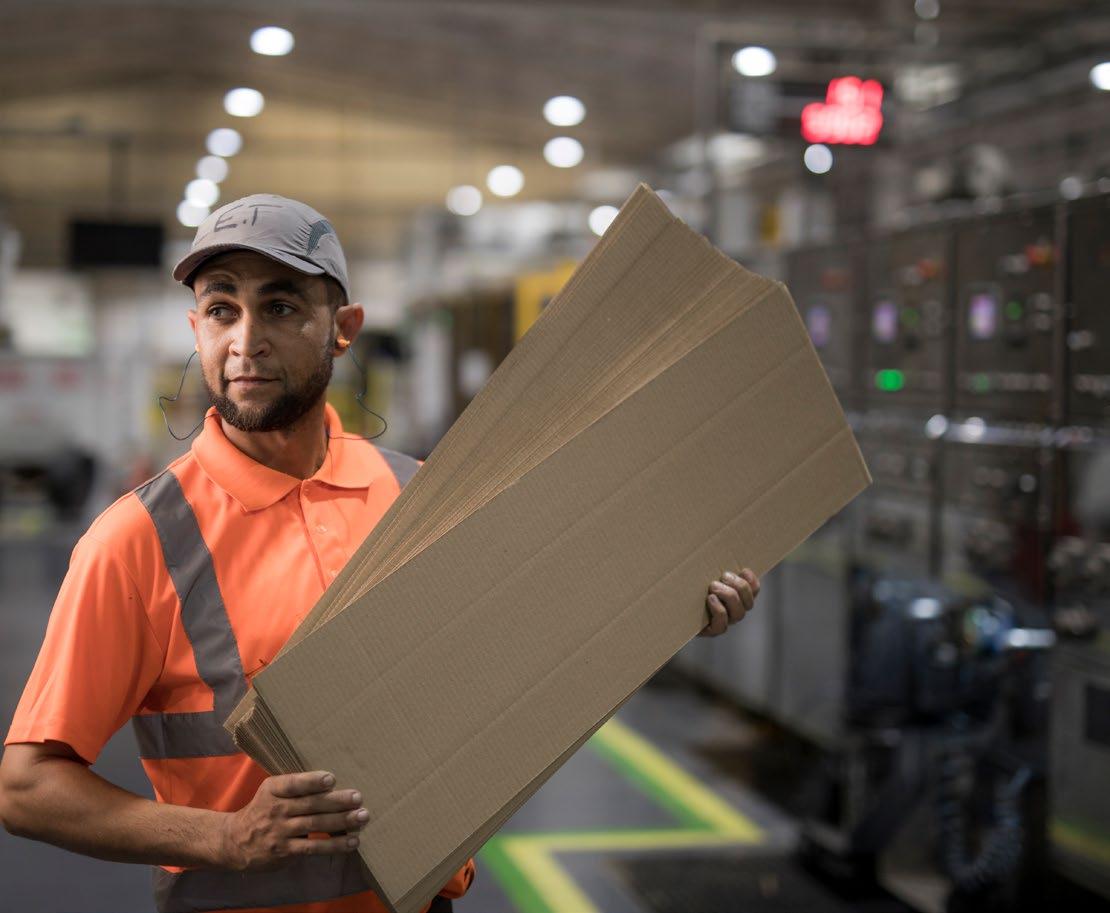
Context
Increasingly complex global supply chains are where many of the greatest impacts occur for most businesses. We can improve the resiliency of our supply chain by collaborating with suppliers through the products and services we buy. We assess the sustainability of our suppliers and help them to improve so that we can work together to deliver progress on sustainability.
Contribution to the UN SDGs
Sourcing sustainably involves protecting labour rights and promoting safe and secure working environments.
Setting standards and evaluating risk
We require our suppliers to agree to the standards set out in our Global Supplier Standard (GSS). In 2020/21, 100 per cent (2019/20: 74 per cent) of our strategic suppliers and 45 per cent (2019/20: 11 per cent) of our suppliers overall agreed to support, comply and engage with our standards, with plans in place to engage with the remaining 55 per cent to achieve 100 per cent acceptance by 2025. We use EcoVadis IQ to apply predictive intelligence to monitor supply chain risk. This tool enables us to identify suppliers, countries and categories that potentially pose risk within our supply chain and address the risk appropriately.
Assessing suppliers and helping them improve
We assess supplier sustainability, involving 100 per cent of our strategic suppliers in our programme so far. We proactively share scorecards with suppliers, developing Corrective Action Plans to address weaknesses on environmental, labour, human rights and ethical issues. This provides a clear view of the challenges and opportunities within our supply chain, allowing us to choose not to buy from suppliers whose performance is deemed inadequate.
Certified paper sourcing
We achieved our target to source 100 per cent recycled or chain of custody certified papers1 in 2019/20 and continue to challenge paper suppliers to produce chain of custody certification for all papers purchased as a standard business practice. With regular checks in place2, we can offer our customers confidence that their packaging is produced responsibly, enabling them to communicate their responsible sourcing credentials and meet their own commitments to zero deforestation. In 2020/21, we integrated our North American business into this standard and following checks, we stopped purchasing from two suppliers who were unable to provide chain of custody certified papers. We continue to apply a ban on fibre from 12 high-risk countries.
• Maintain that 100% of the papers we use are recycled or chain of custody certified1 each year
More information and policies
• Global Supplier Standard (GSS)
• Sustainable Forest Management and Fibre Sourcing Policy
• CDP Forests response
CASE STUDY
Circular suppliers
Having trained our Procurement team to become Circular Procurement Champions, in January 2021 we became the first company to involve suppliers in Circulytics (turn to page 13), inviting suppliers to assess their readiness for the circular economy. A group of strategic suppliers used Circulytics and shared their results to understand challenges and opportunities for circularity in our supply chain.
Spare parts
In some circumstances, sourcing sustainably may involve not sourcing at all but rather engaging the circular economy to obtain more value from the things we already own. This year, we adopted a spare parts inventory whereby sites can share stock, ensuring that obsolete or excess inventory such as motors, pumps and electrical components do not go to waste.
“Thisprojecthelpsusfunctionsustainably,efficiently andreduceworkingcapitalbyapplyingcircularthinking beyondourbusinessmodelandthroughour operations.”– Andrea Morselli, Category Manager
• By 2025, ensure that 100% of our suppliers comply with our sustainability standards
Next steps:
• Increase the number of suppliers who have agreed to our Global Supplier Standard (GSS)
• Improve collaboration and engagement with suppliers on the circular economy
Percentage of suppliers agreed to Global Supplier Standard
Key figures
of people consider volunteering essential to employee well-being (Forbes)
Context
of purchasing decisions are influenced by a company’s charitable giving (Mintel)
of our sites engaged in community activities during 2020/21
Performance
Increasingly, there is an expectation that companies give to their communities. Throughout the global pandemic, in addition to our usual community activities, we have grown closer to our communities, supporting them to meet the challenges presented by Covid-19 and maintaining that 100 per cent of our sites1 engaged in community activities.
Contribution to the UN SDGs
The majority of our community projects are focused on inspiring the next generation through circular lifestyles and protecting our environment through biodiversity.
In 2020/21, 57 projects to improve biodiversity were funded by the DS Smith Charitable Foundation, with a further 47 projects under consideration, from wildflower meadows and community gardens to bug hotels and ponds. This places us substantially ahead of our ambition to launch 100 projects by 2025. Over the past year, three mills have launched multi-year biodiversity programmes with a further two at the planning stage. Aschaffenburg Mill is aiming to grow wild plant species and significantly improve soil quality at the site, attracting butterflies and bees. At Kemsley Mill, a wildflower meadow and a variety of educational initiatives are being planned. These programmes will improve the environment for plants and animals, protect natural habitats and enhance species diversity. Over the next year, we will continue to fund new biodiversity projects and programmes.
• Maintain 100% of our sites engaged in community projects
• By 2025, launch 100 biodiversity projects across Europe and North America
• By 2025, all of our paper mills will run a biodiversity programme in their local community
• Continue to launch biodiversity projects and take more circular economy learning into our communities
• Support our remaining paper mills with developing plans to improve biodiversity at their sites and local communities
Percentage of sites1 taking part in community activities (%)
Number of biodiversity projects launched across Europe and North America
FY20/21 57
Number of biodiversity projects
Number of our paper mills running a biodiversity programme in their local community FY17/18
FY20/21 3
Number of paper mills running biodiversity programme
1. Sites with 50 employees or more.
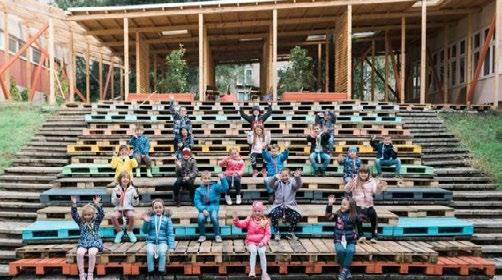
Ecological Classroom in Budapest (SDG 4)
Over 100 volunteers, including DS Smith colleagues, came together to build an ecological classroom on the outskirts of Budapest, Hungary. The purpose of the classroom is to provide a space for future generations to learn about the circular economy and the environment, their connection to it and how important it is to protect it.
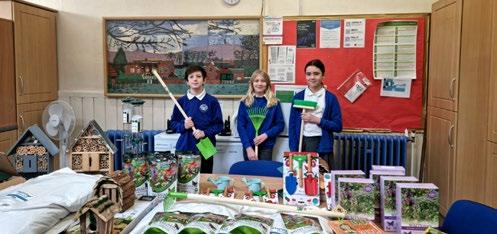
Crudgington Primary School (SDG 4)
Funding was used to support the gardening club at Crudgington Primary School, where one of our Packaging Graduate and Commercial Analysts is a former pupil. The money has been used to purchase gardening equipment, seeds, bug houses, bird boxes and feeders.
Cardboard discoveries at Savoie (SDG 4)
Savoie plant invited college pupils for a presentation, workshop and factory tour to experience the circular economy in action, with pupils creating their own projects from cardboard samples.
Community forest at Launceston (SDG 15)
Launceston plant helped to develop a community forest in 12 acres of woodland, including facilities such as footpaths, wheelchair-friendly routes and picnic areas. The planting of wildflower rich meadows will benefit pollinating insects and the woodland will provide shelter for wildlife including mice, owls and bats.

Treeplanting at Kielce (SDG 15)
Kielce plant involved 130 employees in planting over 5,000 trees on nearby land. Colleagues, their families and friends came together to join in with the project, learning about the surrounding nature and importance of trees as a tool for climate change mitigation and of recreational value.

Beehives at Louth (SDG 15)
Louth plant donated funds to support a second hive for the Trinity Bees Project. This will enable the project to produce more honey and aid pollination of plants within a three mile radius, as well as funding for ongoing costs, new equipment and new honey jars.
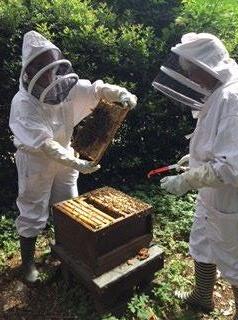
Key figures
88% of millennials want to work for companies with a purpose and shared values (PwC)
76% of job seekers consider diversity an important factor when evaluating jobs (Glassdoor)
37.5%
female representation on DS Smith Plc Board as of 30 April 2021
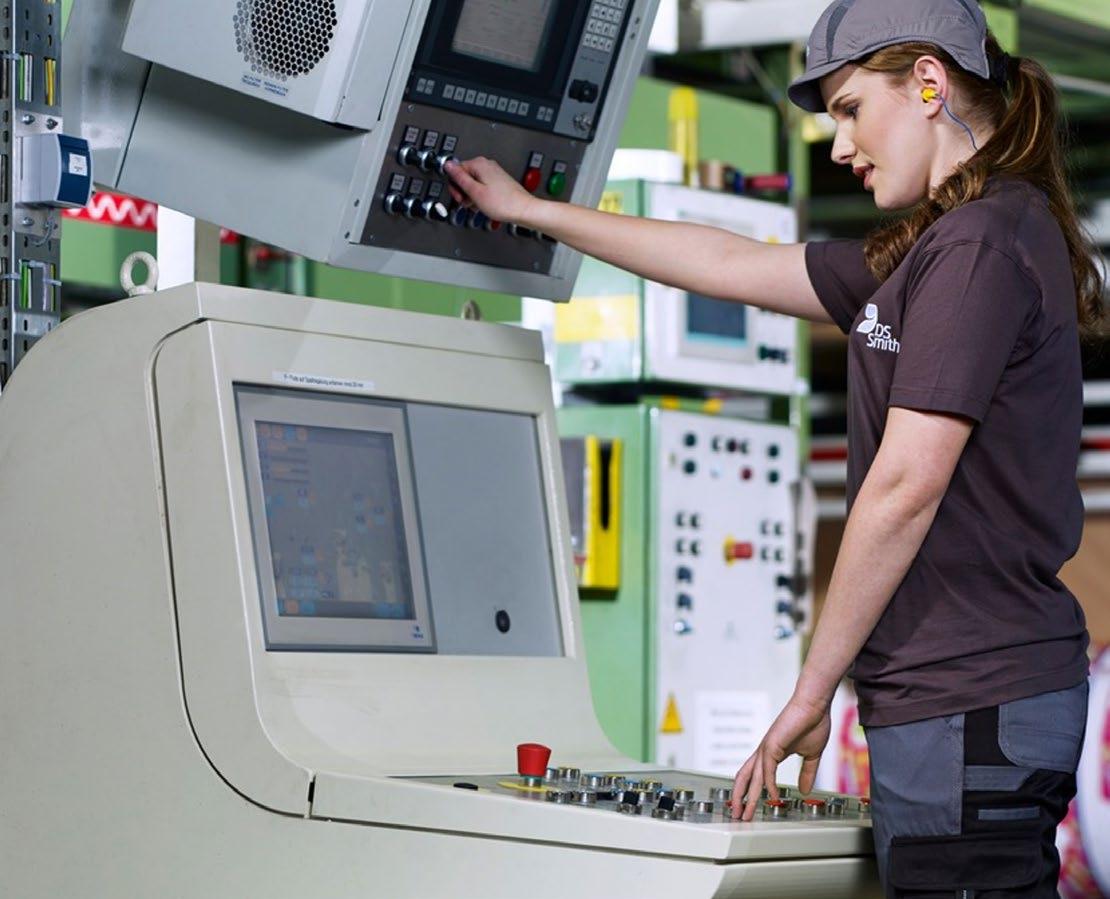
Context
People expect varied and fulfilling careers in a workplace that is modern, diverse, motivating and engaging, where everybody can realise their potential. As an employer of c. 29,000 people across Europe and North America, we create a workplace that people are proud of, ensuring the health and safety and wellbeing of all and a commitment to building capability for the future.
Contribution to the UN SDGs By caring for our people, we provide equal pay for work of equal value in a safe and productive working environment.
Our people are the foundation of our success and we prioritise their health, safety and wellbeing
Throughout Covid-19, our top priority has been the health and wellbeing of our people whilst continuing to serve our customers and to support our communities. We have not lost focus or momentum on building an inclusive workplace, recognising the contribution of colleagues across the business and providing development opportunities for all. As we look forward, we are building on the experience and learning gained through the pandemic to shape new sustainable ways of working that recognise the importance of flexibility, connectedness and mental health and wellbeing.
Health and safety
We are ambitious about health and safety with a focus on continual improvement and high standards to achieve our target of zero harm. Our vision is to provide a working environment and culture where our people actively engage in our drive to continuous health and safety excellence. The campaign for zero harm focuses on our four main strategic goals: leadership, engagement, processes and culture.
Our successful health and safety onboarding programme has continued this year, albeit virtually, inducting all new and promoted site managers into the behaviours and mindsets required to perform as health and safety leaders.
Our new proactive internal KPI, the health and safety engagement rate (measuring the number of near misses/ safety observations per person), has increased significantly this year by 15 per cent. This reflects engagement with seeing and raising health and safety standards.
We completed a Group-wide auditing process this year which resulted in an overall audit score increase of 8 per cent.
Lost Time Accidents (LTAs)

Accident Frequency Rate (AFR)
FY17/18 FY18/19
Accident Frequency Rate (AFR)
We are pleased with the progress all sites are making to meet our very high standards and in 2021/22 we will continue to develop our Group-wide minimum standards.
We firmly believe that we are building the foundations to drive the change in our culture. This year we celebrated 246 sites with zero accidents.
For further commentary and explanation of our health and safety performance, refer to DS Smith Annual Report 2021.
Additional health and safety metrics can be found on page 57.
Health
The changing world, with restrictions and lockdowns has meant increased demands on physical and mental wellbeing. This year we refreshed and consolidated our health and wellbeing strategy, incorporating best practice from internal and external benchmarking. Our new framework is designed to build positive healthy working environments enabling our people to thrive and perform sustainably, focusing on four key areas:
• Taking The Lead – Encouraging everyone to visibly and demonstrably set the example and champion health and wellbeing
• Learning & Development – Providing knowledge and information to empower people to take ownership of their physical and mental well-being
• Engagement – Working together, involving and including all our colleagues to continuously improve health and well-being
• Toolkits – Providing best practice tools to inspire and motivate positive and healthy people and workplaces
Formal implementation of the strategy is due in 2021/22.
For us, inclusion starts with the belief that everyone, regardless of background, is valued, respected and has the opportunity to flourish. Over the past year we have delivered the actions in our diversity and inclusion plan, building awareness and ownership and embedding the principles of inclusion and diversity in all aspects of our people policies and practices. Recognising that meaningful change starts at the top, we developed an inclusive leadership virtual workshop built around a simple but powerful framework of ‘Courage, Curiosity and Trust’. Over 100 of our leaders have participated so far and they now form an internationally and culturally diverse alumni group who are extending the principles into their teams.
As a global business, diversity and inclusion challenges differ between our regions. We established a diversity and inclusion forum with broad representation to build the inclusive networks and local action plans that will have the greatest positive impact for our people and the communities they serve. The UK leadership team hosted roundtable events with external speakers, sharing insights and ideas on a range of diversity and inclusion topics. From celebrating Black History Month with our US team to hosting a range of events and activities on International Women’s Day, colleagues are taking the lead on inclusion. The coming year will see us increasingly connecting our work across inclusion and wellbeing as both are at the heart of a sustainable healthy workplace.
It has been historically challenging to attract women into our industry, but we are determined to make progress. As a result of our targeted actions on graduate recruitment 2020 saw us achieve gender parity in our graduate offers. We are a corporate member of the WISE (Women In Science and Engineering) campaign that promotes opportunities for women in STEM careers and are working with our recruitment team to reach a broader audience, showcasing our female talent and demonstrating the diversity of opportunities available across the business. We are currently ranked 4th in our industry sector (general industrials) for Board diversity, with 37.5 per cent women on the plc Board.
For gender pay gap reporting we choose to report not only on the UK legal entities where headcount is above 250, but on the UK total figures to provide a comprehensive view. This year the mean gender pay gap was 3.5 per cent (2019: 4.7 per cent) whilst the median gender pay gap was 6.2 per cent (2019: 6.7 per cent). The improvement is encouraging but to move further we need more women in senior positions and are working hard to deepen the leadership pipeline, with 32 per cent female representation in our global senior management population. We know that gaining exposure to strategy development is key for executive succession and three female leaders now sit on two of the Group Executive Committees. During 2021/22 we will pilot and launch a new mid-level female career development programme to accelerate the progression of female talent into senior leadership roles. We have also further extended mentoring and executive coaching support.
Gender diversity
Employee engagement
By giving all employees a voice, we create the opportunity to improve their work experience and feel pride in working for DS Smith. During the year, responding to the need to support and engage colleagues working remotely we deployed a real-time pulse survey in which nearly 3,500 colleagues participated. Feedback told us that they felt supported by their managers and had confidence their safety was being prioritised but there was more we could do to help them manage some of the challenges of remote working. The findings directly influenced the immediate response locally and are now shaping new ways of working that support greater flexibility, working in remote teams and staying connected with colleagues as well as informing our new health and wellbeing strategy.
Leadership and management during the pandemic All employees – Total: 28,864
My manager has been supportive of my e orts to adapt to new ways of working
Senior leadership has made the right decisions during the pandemic
Senior leadership has been considerate of wellbeing and safety
The Smithies
In 2020 we launched a global recognition programme – The Smithies – to recognise and celebrate individuals and teams who go above and beyond and excel at what they do – our hidden gems of DS Smith. The first Smithies event was held virtually in September recognising 28 finalists and seven winners, watched by thousands of employees across the world. In a post-event poll, 99 per cent said they were more inspired to recognise their colleagues.
Access to development opportunities remains a core priority and during 2020/21 our learning and development community rose to the challenge to continue to increase the range and accessibility of the learning offer. Covid-19 challenged us to reconsider how we deliver learning, and we accelerated our move to providing more blended solutions using virtual learning, immersive learning and e-learning. We are committed to our learning and development strategy which is to:
• Deliver a sustainable, accessible and measurable learning and development proposition
• Have a model of learning that blends structured learning with workplace application
• Provide colleagues with support and accountability for their own development
• Prioritise our interventions to ensure we can focus on the skills and capabilities that will contribute to the future growth of our business.
We deliver this through online learning and resources as well as curated content on core management and leadership skills and dedicated professional development content for functional and specialist colleagues. Our Global Leadership Programme and Aspire Programmes, in partnership with Oxford Saïd Business School, were moved successfully to virtual delivery over the past year and our internal ‘Fundamentals of First Line Management’ programme was also rapidly redesigned for virtual delivery by our team of 50 in-house trainers, reaching 3,000 managers by the end of 2020/21. Finally, webinars and other resources have covered content as diverse as boundary management – juggling home and work-life, parenting, mindfulness and wellbeing.
Enabling our managers
Having capable managers who enable our people to thrive and perform at their best is a core pillar of our strategic goal, to realise the potential of our people. Our Group values and management standards provide clarity around expectations and consistency in our management practices across the Group. During 2020/21 we launched our refreshed and simplified standards with four core standards on health, safety and environment, customer, team management and our focus on continuous improvement – ‘the DS Smith Way’. The standards are embedded in our performance management approach and underpinned with guidance and training to bring them to life.
More information and policies
• Board Diversity and Inclusion Policy
• UK Gender Pay Reporting
Talent development
Average hours of training and development per FTE 24
“The Aspire programme helped me grow confidence in my leadership skills with new perspectives learned from colleagues across the business.”
Marina Wimmer, Head of Commercial Finance, Austria
Now and Next
• People are the foundation of our success and we prioritise their health, safety and wellbeing
• Zero accidents
• Vision zero harm. In the context of our health and safety aim of zero harm, our target Accident Frequency Rate is 0 and we continue to ensure the health, safety and wellbeing of all
Next steps:
• Progress our new sustainable ways of working with a renewed focus on flexibility and wellbeing
• Continue to invest in the capability of our managers and leaders to build high-performing teams
• Provide consistent and standardised training to further develop our technical and operational capability
• Continue progress to build an inclusive and diverse workplace
• Open up development opportunities even further, blending technology with face-to-face learning
See DS Smith Annual Report 2021 to learn more about how we are achieving our strategic goal, to realise the potential of our people.
Ethical business conduct and compliance with local, national and international legislation are fundamental to our way of doing business. We have a clear set of values that we expect all our employees to own and live by. These are to be caring, challenging, trusted, responsive and tenacious. Everything we do is aligned to these values.
Our Code of Conduct describes expectations that apply to all our employees, providing guidance on our approach to ethical business practices, human and labour rights and the environment. It is made available to employees as part of their induction and has been translated into 27 languages. All employees are encouraged to report suspected misconduct, non-compliance or unethical behaviour.
It is a fundamental right of employees to have the freedom of association and collective bargaining. In our Code of Conduct, we state that we recognise and respect the rights which employees have under local and transnational laws, including, where applicable, the right of employees to collective representation and bargaining. Employees will not be subjected to any detriment because of their involvement in legitimate trade union activities. In 2020/21, c. 85 per cent of our global workforce were covered under collective bargaining agreements. Our European Works Council (EWC) provides a forum for information sharing and consultation. Information about this can be found in DS Smith Annual Report 2021.
Our most recent materiality assessment identified human rights as a foundation topic. We are therefore conducting a Human Rights Impact Assessment (HRIA) to identify, understand, assess and ultimately address potential adverse effects of business activities in our supply chain on human rights. In 2020/21, we planned and scoped our HRIA, selected a partner and identified key stakeholders to involve. In 2021/22 we will implement the high-level assessment, which will highlight the parts of our business with the greatest risk to human rights. Following this, clear actions to manage and mitigate these risks will be identified and addressed. In 2020/21, there were no known breaches of human rights, including incidents of violations of the rights of indigenous peoples.
No political donations were made in 2020/21 (2019/20: nil). DS Smith has a policy of not making donations to political organisations or independent election candidates or incurring political expenditure anywhere in the world, as defined in the Political Parties, Elections and Referendums Act 2000.
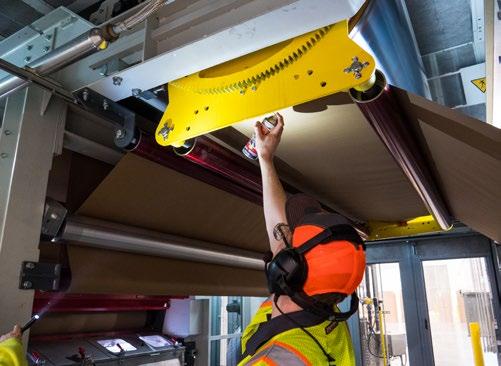
Our Speak Up! policy is communicated to all employees via our employee handbook. It encourages employees to ask for advice or raise their concerns internally about unethical behaviour and explains the various internal grievance channels: reporting via line manager or local HR, internal email address direct to Company Secretary, Speak Up! telephone number or website, or reporting via local representatives of the European Works Council.
Speak Up! is available not only to employees, but a range of other third parties. It is supported by an independent, 24/7 telephone number and website that is available in local languages. Confidentiality is maintained throughout the whole process and reasonable steps are taken to ensure that the reporter is not subjected to any retaliation from raising the report. In 2020/21, 25 (2019/20: 33) reports were received, investigated and resolved through our Speak Up! processes.
We aim to manage our tax affairs in a proactive and responsible way. Our Group Tax Strategy outlines the approach we adopt to manage the tax obligations and activities of the Group.
• Anti-Bribery and Anti-Corruption Policy
• Code of Conduct
• Modern Slavery Policy
• Modern Slavery and Human Trafficking Statement
• Speak Up! Policy
• Tax Policy
Conduct in our own business
We have been an AB Member of Sedex since 2014, as part of our commitment to respect and support human rights. Over 90 of our sites are subject to external audit, based on the Sedex Members Ethical Trade Audit (SMETA), which provides external assurance of the management of ethical supply chain risks for our customers.
SMETA methodology uses the Ethical Trading Initiative (ETI) code and local law as a foundation, covering:
• Labour standards: wages, working hours, children and young employees, freedom of association, non-discrimination, forced labour and human rights
• Health and safety: management, training, emergency and fire safety and worker health
• Environment: management, waste, raw materials, water, energy and pollution
• Business ethics: anti-bribery and anti-corruption. In 2020/21, approximately 94 per cent of our global operations have been assessed via SEDEX and 30 per cent via SMETA overall.
Conduct in our supply chain
Suppliers are required to agree to our Global Supplier Standard, which is written into our standard purchasing ’Terms and Conditions’. We monitor and assess risk and ethical business conduct in our supply chain using EcoVadis. This is described on page 39.
We have a duty to ensure that all our products achieve legal compliance. Within the packaging industry, the most significant product safety impact is in food packaging. This is of upmost importance to us, with FMCG and consumer goods, including food, comprising the majority of our customer base. We actively follow regulatory initiatives to ensure compliance with the most recent laws and standards, work together with our suppliers to select only safe additives and raw materials for our paper mills and packaging sites, manufacture paper and food contact products according to Good Manufacturing Practice (GMP) principles and conduct regular testing of paper purity as part of compliance schemes. In the Packaging Division, 100 per cent of our food contact products are risk assessed before production. We would not knowingly produce a product that does not comply with the applicable laws or poses an unacceptable risk to consumers. In 2020/21, we had zero product safety-related recalls.
• Global Supplier Standard (GSS)
We are committed to ensuring that our products and operations are safe, and this extends to downstream users of our products, including consumers. We ensure that any chemicals or hazardous substances used in our manufacturing processes are deployed in a manner that minimises risk to people and the environment. Where possible, we are selective in our use of materials, chemicals and substances that may be of human health and/or environmental concern and we substitute or eliminate Substances of Very High Concern (SVHCs) from our manufacturing processes.
Process for identifying substances of concern
We ensure compliance with the Regulation EC 1907/2006 on the Registration, Evaluation, Authorization and Restriction of Chemicals as amended (“REACH Regulation”) for all personnel involved in the procurement, storage, handling and use of chemicals. This involves monitoring the candidate list of SVHCs to ensure that additions to the list are evaluated with respect to our products. If substances appear on this list, they are identified, and relevant stakeholders are notified where appropriate.
Process for managing substances of concern
Every two years, comprehensive reviews to identify all chemicals stored and used at sites are undertaken. These identify where, and in what quantity SVHCs are present, their purpose, whether they are part of the Company’s product formulation, and whether they can be substituted or eliminated. These are reported to the Group Health, Safety and Environment (HSE) function to assess potential risks to the environment, health & safety, product safety and legal compliance.
Where possible, efforts are made to substitute or eliminate SVHCs. Where we operate in geographies that are not covered by the REACH Regulation, all management and use of chemicals complies with all applicable local or national regulations in addition to complying with our REACH Policy and the hazardous chemical management standards set by REACH (where these are applicable or possible).
We have also issued this year an internal Health Safety and Environment Minimum Standard for Chemical Safety to support our sites on this topic.
More information and policies
• REACH Policy
As the pace of change in the world around us increases, it is becoming more apparent that we only have limited time in which to act if the world is to avoid the worst effects of climate change. This presents businesses and policymakers with a range of challenges and opportunities, not least for energy-intensive industries such as papermaking. In our circular business, materials are kept in use for longer, which reduces waste and pollution. Energy is used to transform materials as they move through this system in a circular process. Lowering carbon emissions requires a combination of resource efficiency, technological advances, renewables deployment and policy measures, as set out in the CEPI 2050 roadmap.
We are supportive of the Paris Agreement on climate change, recognising the urgent need to limit the increase in global average temperature to 1.5°C above pre-industrial levels by the end of the century, substantially reducing the impact of climate change. We have implemented the recommendations set out by the Task Force on Climate-related Financial Disclosures (TCFD), taking the opportunity to evaluate potential financial and strategic implications arising from climate change and develop appropriate responses.
Our Purpose is Redefining Packaging for a Changing World. Amongst other megatrends, climate change is a force reshaping the world, calling for rapid decarbonisation of the global economy. Consumers demand greater performance from our circular packaging solutions, which reduce emissions through reusability and recyclability. The environmental performance of our packaging is driven largely by energy consumed during manufacture, which exposes the Group to regulation aimed at increasing the cost of greenhouse gas emissions (for example, carbon taxes such as the EU Emissions Trading Scheme (ETS)). There is therefore an opportunity to minimise our spend on carbon taxes by lowering our emissions through utilisation of renewable energy sources and energy efficiency measures that in turn improve the environmental performance of our product. Our greatest opportunity is to meet the increasing demand for environmental performance in the design, use and disposal of our products, responding to consumer preferences that favour low-impact packaging. Once deployed, our roadmap of carbon reduction investments will increase the long-term resilience of our energy supply, providing reliable, affordable and clean energy and improving the environmental performance of our packaging. In the long term, shifts in market forces and changes in weather patterns have the potential to threaten the supply or cost of key raw materials such as recyclate, pulp and starch. There is a chance that without substantial climate action, more disruptive physical risks such as water scarcity take hold. This invites opportunities to reduce reliance on key resources through efficiency and technological measures that reduce operating costs, increase supply chain resilience and our ability to operate under various conditions.
We applied several peer-reviewed reference scenarios to our most material risks and opportunities to consider the effect of various plausible future conditions on our business. In each scenario, we assumed that we have the same business activities that we have today and focus on a specific material risk or opportunity. We used a combination of quantitative and qualitative methods in our analysis, giving preference to quantitative information where good quality, decision-useful data is available from reputable sources. We worked with a leading climate change consultancy, who validated our climate scenario analysis findings to date and have recommended that we continue to develop this work to inform our approach to climate change. Where good quality data is available from these scenarios, we calculated the financial implications of material risks and opportunities as illustrative estimates based on present day costs and in the context given within each scenario.
The estimated impacts therefore should be considered in the context of current financial performance and the actual future impact will vary according to prevailing costs and pricing at that time.
IEA SDS 1.5°C Pulp & Paper1: In this scenario, growth in production and energy consumption are decoupled to achieve decarbonisation to the extent required to be on track with the Sustainable Development Scenario by 2030.
IEA ETP SDS 2°C2: In this scenario, mitigation measures are applied to carbon intensive industries, alongside technological advancements to the extent required to limit global warming to within 2°C by 2100 versus pre-industrial levels.
IPPC RCP 8.5 6°C3: In this scenario, a ‘business as usual’ state of no policy changes leads to growth in emissions, causing some of the physical effects of climate change to be felt with greater severity.
Under EU ETS, our European mills must purchase additional carbon allowances to cover their emissions. In 2020, we paid €39 million to the scheme. The free-issued allowances are being reduced whilst the price of additional allowances is increasing, therefore increasing our operating costs. There is a risk that by 2030 the price could increase, for example, from €50 to 110 per tonne of carbon which were this to happen could result in an annual cost of c. €80 million by 2030, depending on the allocation of free allowances. There is the possibility that the scheme could be extended or that new carbon taxes could be introduced in other parts of the world to incentivise decarbonisation. For example, the IEA ETP 2°C scenario describes the introduction of a North American carbon tax rising to $210 per tonne by 2050. If this tax were applied to our projected future emissions, this could result in an additional cost of c. £9 million annually by 2030.
Increasing cost of raw materials or threat to supply Key raw materials (e.g., pulp, recyclate or starch) could become more expensive and/or difficult to acquire because of climate change. This could be due to chronic physical reasons (e.g., extreme variability in weather patterns), regulatory change (e.g., caps on resource extraction) or market disincentives (e.g., licences for extraction). Aspects of climate change are likely to affect forest growth and productivity, impacting the virgin fibre market. Although our exposure to this market is limited as our packaging is primarily manufactured from recycled fibres (c. 83 per cent of the papers used by our Packaging Division are from 100 per cent recycled content), potential future yield losses could drive up the price of virgin fibre and changing input prices may be passed on to us by suppliers and have a subsequent impact on papers for recycling. Using data from the Global Forest Products Model to assume, for example, that average virgin paper price increases by 5 per cent by 2030, this could result in an additional cost, which would likely have to be recovered through increased pricing to our end customers. Paper and fibre price volatility and security of supply are considered principal risks for the Group and are balanced over the long term by optimising the best fit between paper production, fibre sourcing and packaging demand.
Increasing likelihood of water stress Competition for limited water resources could increase in the long term in river basins. Using the WRI Aqueduct tool4, we identified 25 sites at risk of future water stress and in 2020/21 we achieved our target to implement a water stress mitigation plan at these sites. This involves business continuity planning and regular water performance reviews, requiring that sites maintain contact with external stakeholders (e.g. water authority and community). We are implementing water reduction, reuse and recycle opportunities, for example at our De Hoop and Lucca Mills, where water is recirculated before it is returned to the natural environment. In the IPCC RCP 8.5°C scenario, the worst-case scenario suggests that ten further sites become at risk of water stress during the period 2030-40. Initial analysis suggests that this would be unlikely to have a material impact in our most pessimistic scenario, valued at less than c. £1 million business interruption value at risk by 2030.
Growth in demand for sustainable packaging
As society transitions to a low emissions economy, we see an opportunity for circular packaging to play a powerful role in helping brands and consumers reduce their carbon footprint. There is an opportunity to grow market share and value in meeting the demand for sustainable packaging and we continue to invest in innovation that balances cost, service, quality and sustainability. Led by our strategic goal, ‘to double in size and profitability’, we continue to drive organic growth, maximise the opportunities from acquired businesses and invest in growing areas of the corrugated packaging market. In the IEA SDS 1.5°C scenario, annual paper production is described as growing by 1.2 per cent annually over the decade to 2030, meeting demand for packaging and necessitating greater recycling. This presents a growth opportunity that could be valued at c. £32 million increase in EBITA per year by 2030.
Use of emerging renewable technologies
In order to avoid the worst consequences of climate change, the global energy system must radically reduce emissions, calling for rapid deployment of low-carbon energy generation. Delivering our carbon reduction target requires a mixture of energy efficiency, fuel-switching and plant upgrade measures. As energy systems and technologies evolve, there is an opportunity to be at the forefront of adoption, for example increasing the use of alternative fuels to reduce reliance on fossil fuels. In the IEA SDS 1.5°C scenario, energy use in the Pulp and Paper sector is described as declining by 0.6 per cent per year to get on track with the Sustainable Development Scenario (SDS) by 2030. A reduction in energy consumption results in a lesser cost, an opportunity that could be valued at c. £16 million per year by 2030 based on current energy costs. An example of realising this opportunity is at our Lucca Mill, where in 2020/21 in partnership with GE Gas Power, we deployed a new gas turbine which will result in a 2 per cent improvement in efficiency, reducing gas consumption and carbon emissions per tonne of product.
We can achieve greater resource efficiency by encouraging markets to improve recycling infrastructure, including increasing waste segregation to create raw material streams that are cleaner and require less processing. Access to high quality wastepaper for recycling means less processing (therefore less energy and water consumption) and less volume of recyclate needed overall, which generates cost savings for our papermaking operations. We continue to advocate for separate collection of paper and cardboard recyclables to improve quality of material by reducing contamination, increasing recycling rates, lowering environmental impact and cost for local authorities as part of our engagement with policymakers to contribute to realising this opportunity.
Whilst the climate scenario analysis suggests that there could be some financial risk to DS Smith by 2030, predominantly due to increased costs which would need to be managed, we would not have to make material changes to our business model. There are opportunities to increase the sophistication of our modelling. For example, we have not considered the financial implications of secondary impacts, for example reputational damage that may occur under some of the scenarios. Particularly as new, higher quality data becomes available (for example, better long-term projections of future raw material supply under various conditions), we will continue to use climate scenario analysis to understand the effects climate change may have on our business and ensure we have appropriate mitigations in place to remain competitive in the future environment in which we will operate.
1. IEA Pulp & Paper Analysis: https://www.iea.org/reports/pulp-and-paper
2. IEA Energy Technology Perspectives – Sustainable Development Scenario: https://www.iea.org/reports/world-energy-model/sustainabledevelopment-scenario
3. Intergovernmental Panel on Climate Change Representative Concentration Pathways: https://www.wri.org/resources/data-sets/aqueduct-waterstress-projections-data
4. WRI Acqueduct Water Risk Atlas: https://www.wri.org/aqueduct
We undertake regular materiality analysis to ensure our sustainability priorities remain aligned to those of our stakeholders. In our most recent analysis, conducted in late 2019, we consulted stakeholders on a range of climate issues, asking them about their perception of each issue as a risk or opportunity to our sustainability strategy. This assessment, combined with a range of other credible sources (such as Cepi and CDP), is used to evaluate the likelihood of occurrence and the estimated severity of resulting financial or strategic impact over the short term (0-1 year), medium term (1-3 years) and long term (3+ years). Based on this assessment, material risks are evaluated in greater depth, considering our operations, supply chain, stakeholder expectations and regulation. Transition risks are assessed by Group Strategy and Group Sustainability teams, collaborating across multiple functions to develop responses to the financial and strategic implications. Physical risks are assessed by each Division, supported by the Group Risk and Insurance team, involving other internal stakeholders and drawing on expertise from specialist organisations. Whether to mitigate, transfer or accept a risk is influenced by a range of factors, including but not limited to site location and added value, prioritising strategic locations. Our risk management processes require that our material business risks, including climate risks are graded on a scoring scale from negligible to critical using specific impact criteria such as a financial value range. By way of example, a financial impact between 2.5 per cent and 10 per cent of operating income or net profit is considered moderate financial or strategic impact. Climate risks are evaluated using the Group’s common risk language and are incorporated into our enterprise risk assessments where such risks could materially affect the business during our corporate plan time horizon. All Divisions produce formal principal risk assessment reports twice per year, and undertake frequent risk reviews, considering the ratings, trends and controls. The most material climate risks and opportunities have been selected for climate scenario analysis, prioritising those for which good quality data is available.
Members of the Board, Audit Committee and Health, Safety, Environment and Sustainability (HSES) Committee maintain oversight of climate risk. Risks are monitored as part of our standard operating processes to ensure that appropriate mitigations are in place and are regularly reviewed by management. Climate issues are assessed by the sustainability leadership team (SUS LT) and HSES Committee when developing strategies and policies. These are reported to executive management on an ongoing basis, providing updates on the delivery of plans. Progress against our targets for addressing climate issues is monitored by the Board and Group Operating Committee (GOC), chaired by the Group Chief Executive. The Board receives periodic updates on risk mitigation methods and progress.
We use metrics and targets to report progress to external audiences annually and review performance internally on a monthly basis. We have set a range of targets in our Now and Next sustainability strategy that address climate risk, such as our carbon reduction target (p.32-33) and water stewardship targets (p.34-35). Metrics are used to monitor progress towards these targets, including monitoring metrics such as ‘carbon intensity per tonne of production (kg CO2e/tnsp)’ (p.53) and ‘total water consumption in areas at risk of water stress (%)‘ (p.55), in addition to mitigation metrics, such as ‘total energy consumption (GWh)’ (p.53) and ‘sites at risk of current or future water stress with mitigation plans in place (%)‘ (p.35). We publish a range of audited non-financial data, including detailed materials, energy and water consumption and carbon emissions that can be found on pages 54-55. In addition, in recognition of the importance and commitment to sustainability, an ESG underpin has been introduced into the 2021/22 Executive Director annual bonus plan. Further detail can be found in the DS Smith Annual Report 2021.
More information and policies
• CDP Climate Change response
• DS Smith Annual Report 2021
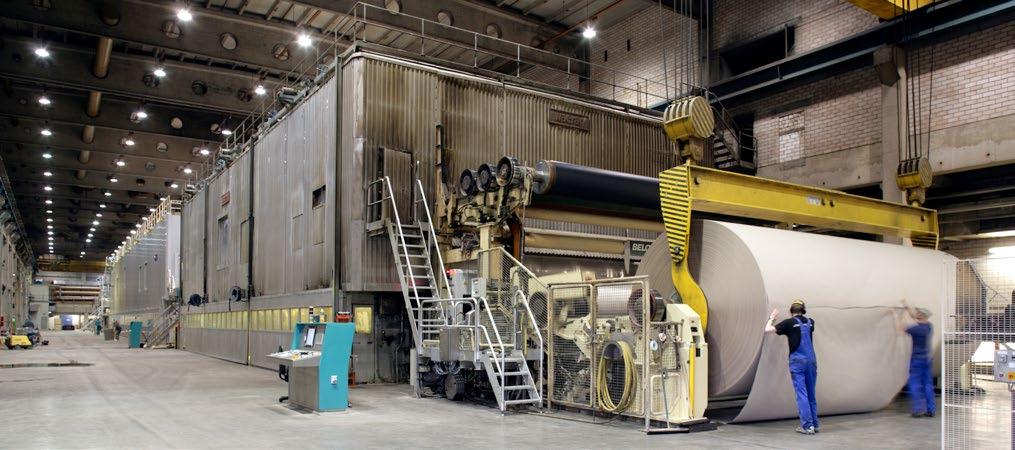
Transition Risk
1.5˚C 6˚C
Average increase in global temperature by 2100
Expected to create more:
Physical Risk
Policy Reputational Technological Market Changing weather patterns
Extreme weather events
Greater demand for circular packaging
Increases in revenue, profit and market share
Capitalise on the demand for circular packaging with our sustainable solutions
Read more on pages 8-15
Which could lead to:
Greater exposure to increasing carbon taxes
Greater chances of supply chain disruption
Potentially causing:
Increases in operating costs
Increases in operating costs
Encouraging us to:
Deploy emission reduction investments to reduce our carbon emissions
Read more on pages 32-33
Exploit resource efficiency opportunities so that we create more from less
Read more on pages 30-31
Drought
Greater likelihood of water stressed areas
Increases in instances of business interruption
Mitigate water stress incidents through strong management
Read more on pages 34-35
We use sustainability reporting to communicate a balanced account of our strategy performance, governance, risks and opportunities to our stakeholders.
Recalculation and restatement of data
Following Greenhouse Gas Protocol guidance and our Group Sustainability Data and Reporting Policy, which sets out our standards for collecting, managing and disclosing non-financial information, we are now retroactively including estimations of emissions from acquisitions in our base year and historical years. This enables meaningful comparison of emissions on a like-forlike basis over a long period. Both recalculated and reported emissions are disclosed on page 54.
Reporting boundaries
Reporting is based on a financial control boundary covering 249 sites. This includes 17 paper mills, 194 packaging plants, 30 recycling depots, 1 timber mill, 3 warehouses and 4 logistics depots operating in 30 countries across Europe and North America.
Reporting period
This period is FY2020/21 (May ‘20 – Apr ‘21) with the exception of the environmental KPIs which are reported on a calendar year basis (2020) to accommodate our audit programme.
Changes in this reporting period
Our EuroPac acquisition is included in our reporting for the first time. There is also the addition of one new site, Papillion Füzesabony, which began reporting in September 2020. We have consolidated our North American Packaging sites into the ‘Packaging’ figures and North American Paper sites into the ‘Paper’ figures. We have continued to develop methodologies to follow best practice, meaning that some figures have been restated. An example of this is improvements made to the coverage of data captured within our Scope 3 carbon emissions.
How we collect, analyse and report data
The majority of our key non-financial information is collected monthly from sites and held within a central database which is independently audited. We aim to ensure that our processes achieve sufficient accuracy to reduce uncertainties, providing reasonable assurance of the integrity of non-financial information.
Greenhouse gas emissions
We calculate CO2e emissions using DEFRA 2019 greenhouse gas reporting conversion factors for all fuels. Where available, we use the emissions factor for bought electricity from the supplier of energy to our business (Scope 2 market value). If this figure is unavailable, the country’s emissions factor from the IEA is used (Scope 2 location value). Emissions from national grids use the AIB Residual Grid Emissions Factors for European countries for which they are available, otherwise location emissions factors from the International Energy Agency (IEA) 2017 v1.03 (AR5 Applied).
The CHP supplying steam to Witzenhausen Mill is fired predominantly by refuse-derived fuels, with a factor estimated as 32.77 kg CO2e/MWh. The CHP supplying steam and electricity to Belišće Mill and corrugator is fired by a combination of natural gas and flare gas, with a factor estimated as 240 kg CO2e/MWh. The steam supplied by Wheelabrator to Kemsley Mill is estimated as 165 kg CO2e /MWh.
Total production is the sum of paper and printed reels from our paper mills, recovered fibre and other materials collected and processed through our recycling depot network, finished wood products from our timber business and boxes and sheets sold to third parties from our packaging sites and other types of packaging production from these sites. Recycling figures exclude ’traded tonnes’, i.e. volumes outside of our depots.
Waste figures relate to waste generated by our own operations and exclude waste materials collected for recycling.
We follow The Greenhouse Gas Protocol: A Corporate Accounting and Reporting Standard, Revised Ed. and Corporate Value Chain (Scope 3) Accounting and Reporting Standard for reporting emissions. The report is produced in accordance with the Global Reporting Initiative (GRI) Standards: Core option and the Sustainability Accounting Standards Board (SASB) Containers & Packaging standard. Turn to pages 62-63 to locate disclosures.
Bureau Veritas UK Limited (Bureau Veritas) has been commissioned by DS Smith Plc (DS Smith) to provide an independent opinion on the following environmental performance indicators: total energy consumption; total energy exported; Scope 1 and 2 greenhouse gas (GHG) emissions; raw material usage; water consumption; total water effluent; landfill waste; discharge to air and water; and total production, for calendar year 2020. The reporting boundaries cover DS Smith’s global operations. Based on our verification activities and scope of work, nothing has come to our attention to suggest that the reported data does not provide a fair representation of environmental performance across the DS Smith group for the defined period. A full verification statement including methodology, limitations and exclusions can be found on the DS Smith website at https://www.dssmith.com/ company/sustainability/our-environment/performance.
Refer to our Sustainability Data and Reporting Policy for more information
The following tables have been prepared for stakeholders who require a greater level of quantitative detail about our non-financial performance. All data is global and annual, unless otherwise stated.
Packaging
Paper
Greenhouse gas (GHG) emissions (recalculated to include acquisitions and remove disposals)
Greenhouse gas (GHG) emissions (as reported)
(Scope 1) CO2e
(Scope 2) CO2e
CO2e (net
Scope 3 greenhouse gas (GHG) emissions (restated following methodological improvements)
1. Excludes ’traded tonnes’ (refer to p. 52).
2. Refer to page 61 for the definition of this indicator.
3. Some historic data may not be given owing to limited coverage.
Health and safety
1. Excludes employee turnover owed to divestments.
2. Scope: Partial data coverage representing c. 56 per cent of the workforce at this
3. Scope:
Management system certifications
Paper certifications7
Sustainable procurement
4. Sedex Members Ethical Trade Audit (SMETA).
5. Scope: Sites accounting for at least 90 per cent of overall Group energy consumption.
6. Scope: Packaging, Paper and Paper Sourcing sites that trade or manufacture products derived from timber.
7. Scope: Papers purchased through our centralised Paper Sourcing platform.
Some historic data may not be given owed to limited coverage.
Regular communication with our stakeholders informs our activities and strategy. We maintain ongoing dialogue with a range of stakeholders, listening to them to shape our priorities. We are taking a leading role in our industry to shape the agenda and accelerate the transition to a circular economy.
Stakeholder Who we engage
Customers We equip our Sales, Marketing and Innovation teams to be able to support our customers with their sustainability challenges
Investors We engage with many of our largest shareholders, as well as some smaller shareholders on topical issues of particular interest to them
Employees We involve colleagues in not only delivering but also making our sustainability plans, drawing on key expertise and skills from across the business both internally and through the European Works Council
Suppliers We focus on engaging our strategic suppliers – those we have long-term, mutually co-operative relationships with mutual commitment and mutual value operational capabilities
What they tell us
Driven by consumer trends, customers want to compare product specifications to calculate the environmental impact of packaging, as well as assess our sustainability performance generally
Investors expect to see honest and transparent communication, primarily focused on carbon, forestry and water and the opportunity for DS Smith with sustainability as a growth driver across the packaging industry
Our people want to feel proud of their employer, that their personal values are reflected in their workplace and that they feel like they can make real impact and a difference in their job
Suppliers want to know how they can support us in delivering our sustainability plans through the products and services we purchase from them
Regulators and policy makers
Media, consultancy and education
• European Commission and Parliament representatives
• Country level government representatives, e.g. UK Government, Members of Parliament, ambassadors
• Policy advisors and researchers
• Local government representatives, e.g. mayors, councillors
The primary focus of regulators and policy makers has been on:
• Covid-19
• Climate
• Brexit
• Plastic packaging
• Waste
• Eco-design
• EPR (Extended Producer Responsibility)
Trade associations and industry bodies
• Ipsos Mori
• Key financial, business and consumer editors and reporters including CNBC, Reuters, Financial Times and Sunday Times
Our interactions with media and consultants have been focussed on:
• Company financial performance
• Trends in sustainability, plastic replacement, e-commerce and recycling
Nongovernmental organisations and charities
• FEFCO (European Federation of Corrugated Board Manufacturers)
• Cepi (Confederation of European Paper Industries)
• EUROPEN (The European Organisation for Packaging
• and the Environment)
• 4Evergreen
• National trade associations, including:
• CPI (The Confederation of Paper Industries)
• The Packaging Federation
• WRAP (Waste and Resources Action Programme)
• BPF (British Plastics Federation)
• FCCG (Food Contact Coordination Group)
• Ellen MacArthur Foundation
• Forest Stewardship Council
• UN Global Compact
• SASB (Sustainability Accounting Standards Board)
• NGO partners in various projects
• Organisations related to Covid-19 relief (e.g. food distribution)
• Charities near our sites
• Charities related to the DS Smith Charitable Foundation
Driven by government and policy makers, trade associations have been focused on regulatory developments around:
• plastic
• waste
• recyclability
• eco-design
• food contact
• carbon
• awareness of the benefits of corrugated
• implications of the above on product design
• Organisations like the Ellen MacArthur Foundation tell us what we’re doing well and what we could do better in their area of expertise
• SASB sets standards to guide the disclosure of financially material sustainability information to investors
• Charities tell us about local needs and how DS Smith can help drive biodiversity and education for circular economy (the focal points for the DS Smith Charitable Foundation)
What we are doing
• Applying Circular Design Principles
• Developing Circular Design Metrics
• Responding to sustainability data requests from customers
• Showcasing our latest circular packaging innovations
• Improving our performance in ESG ratings
• Providing analysts with non-financial information
• Equipping our people to lead the way in the circular economy
• Regular employee survey and ‘pulse’ surveys which inform local action plans and sharing of best practice
• Communicating our minimum supplier standards in our Global Supplier Standard, assessing supplier sustainability performance and helping them to improve
• Identifying opportunities to collaborate and work in partnership towards tackling common sustainability challenges
• Introducing suppliers to Circulytics
• Meetings with MPs about our local operations about relevant developments, e.g. Brexit
• Engaging on climate topics, including COP26 and emissions
• Responding to a range of government consultations, typically through industry associations
Our campaigns this year focused on:
• ‘Catalysed by Covid’
• ‘Now and Next Launch’
• Sustainable Packaging trends with Ipsos Mori
• ‘Unnecessary seasonal packaging – Don’t Delay the Sleigh’
• ‘The Wrong Bin’
Technical experts across our business were involved in the following:
• 4evergreen, a cross-industry initiative to drive the recycling rate of paper products in Europe to 90 per cent by 2030
• Input into legislative processes, e.g. around eco-design for e-commerce packaging
• Food contact matters
• Continuing our strategic partnership with the Ellen MacArthur Foundation
• Offering our expertise on ESG and sustainability reporting at the SASB Standards Advisory Group (SAG)
• In 2020/21, we donated more than £436,000 (2019/20: £375,000) to a variety of groups involved in sustainability and circular economy education.
Focusing on the issues that matter the most We regularly assess the materiality of issues to ensure that our priorities remain aligned to those of our stakeholders. An assessment conducted in late 2019 was used to inform our Now and Next strategy, focusing on the issues that matter to our stakeholders and where we believe we can have the greatest impact. These were identified through dialogue with investors, customers and suppliers, competitors and peers, colleagues, NGO and pressure groups and regulators.
In this most recent assessment, we found that several downstream issues relating to sustainable consumption of packaging were not well-reflected in our strategy. This led to a much stronger focus in Now and Next, responding to both internal and external stakeholder demand for new circular business models and solutions as a top opportunity and key differentiator. We continue to listen to the rapidly changing world around us in our dialogue with stakeholders so that our priorities remain relevant and meet stakeholder expectations.
Materiality analysis
Increasingly, stakeholders are interested not only in what we do, but how we do it. Strong governance is essential to deliver our Purpose of ‘Redefining Packaging for a Changing World’ and vision of being the leading supplier of sustainable packaging solutions. We are committed to maintaining strong governance, accountability and reporting.
Our people actively contribute to realising our Purpose of Redefining Packaging for a Changing World, moving the Company towards its vision of being the leading supplier of sustainable packaging solutions. In doing so, sustainability is placed at the heart of our business, uniting our functions, divisions, sites and teams across the world. By nurturing respect, care and ownership, empowerment to lead change and a sense of pride in our strong performance, we have created a culture where everybody can contribute diverse ideas that often become shared ways for how we do business.
The United Nations Sustainable Development Goals (SDGs) set a clear agenda for tackling the challenges of our changing world. Throughout this report we have set out in detail how our Purpose, circular business model, Now and Next strategy and sustainable packaging contribute to these goals. Alignment and cooperation internationally are essential to achieving our Purpose and we align with the following international standards:
• United Nations Global Compact
• United Nations Declaration of Human Rights and the Convention on the Rights of the Child
• International Labour Organization Eight Fundamental Conventions
• Organisation for Economic Co-operation and Development Guidelines for Multinational Enterprises.
Following the United Nations Principle 15 of The Rio Declaration on Environment and Development, we apply the precautionary principal to reduce our impact on the environment. This is also applied in our assessment of risk and our approach to data and reporting.
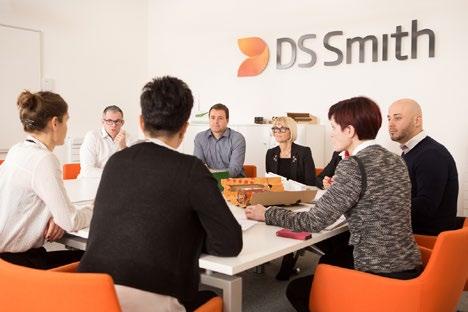
Our culture is led by our leadership, where our Group Operating Committee (GOC), the Group Chief Executive’s management board for leading Group-wide priorities, includes sustainability at the heart of its agenda. Accountability ultimately lies with the Group Chief Executive and sustainability risks, opportunities and strategy are considered by the Board of Directors as core to the Group’s operations. These are reviewed monthly by the Health, Safety, Environment and Sustainability (HSES) Committee.
Topics discussed this year included:
• Now and Next strategy launch and ongoing performance
• Carbon emission reduction plans
• Circular economy
• Government policy developments
• Community affairs
• Biodiversity projects
• ESG ratings performance
The HSES Committee is supported by the Sustainability Leadership Team (SUS LT), a cross-divisional and multifunctional steering group which contains Director-level membership established for efficient and effective decisionmaking. The SUS LT is advised by the Group Sustainability Team, which partners with the business to deliver on the Now and Next strategy and provide analysis and reporting.
We have implemented policies to effectively manage ESG and sustainability topics which are periodically reviewed, including:
• Anti-Bribery and Anti-Corruption Policy
• Board Diversity and Inclusion Policy
• Carbon and Energy Efficiency Policy
• Code of Conduct
• Community Engagement Policy
• Compliance Framework Policy
• Conflict Minerals Policy
• Employee Charter
• Energy Management System Policy
• Gifts & Hospitality Policy
• Global Supplier Standard (GSS)
• Group Tax Policy
• Health and Safety Policy Statement
• Legal Policy
• Modern Slavery Policy
• Speak Up! Policy
• Supplier Standards Policy
• Sustainability Data and Reporting Policy
• Sustainable Forest Management and Fibre Sourcing Policy
• Water Stewardship Policy
• Zero Waste to Landfill Policy
Responsibility for making certain decisions, achieving targets and progressing projects is delegated to various functions, with oversight on a quarterly basis by the SUS LT.
Compliance with local, national and international legislation is fundamental to our way of doing business. It is a licence to operate and a condition of trading. Building trust in our stakeholders and protecting our reputation are crucial, as they lead to repeat business and sustainable financial growth. Monitoring ethics and compliance and providing associated annual training to our employees is the responsibility of our legal teams. All employees are encouraged by our SpeakUp! Policy to report suspected misconduct.
In 2020/21, there were 38 (2019/20: 47) minor environmental incidents. There were 0 major incidents (defined as incidents of significant impact reportable to local or national authorities, or potentially resulting in legal prosecution and >£10,000 cost) during the reporting period.
systems
In order to manage our material sustainability issues effectively, we have clearly defined Group policies, management systems, standards, processes and support, such as toolkits, in place to apply a consistent approach throughout our company. Coverage of our certified management systems, such as ISO 14001 can be found on page 57. Group-wide and local networks and working groups provide collaborative platforms for productive ideation and decision-making.
management
Our Group Risk Policy provides the framework to ensure that there is a common understanding of risk management practices across the Group. It ensures we identify, evaluate and make informed decisions to either manage or accept the risks put on our business and is fully integrated into our annual corporate planning process. Please refer to DS Smith Annual Report 2021 for detail on how we manage risk and our Group Principal Risks register. In 2020/21, we completed implementation of the recommendations set out by the Task Force on Climate-related Financial Disclosure (TCFD). This disclosure can be found on pages 48-51.
We are committed to continuing to develop our Sustainability Report to keep our stakeholders informed about the progress we are making. We welcome comments regarding our report. The team can be contacted via email at sustainability@dssmith.com
Health, Safety, Environment and Sustainability (HSES) Committee
Chaired by our Group Chief Executive, this committee reviews Group and Divisional sustainability performance processes, standards and strategies and monitors compliance with responsibilities and commitments.
Cross-divisional and multi-functional group with Director level membership from multiple divisions, which leads delivery of sustainability strategy.
Part of Corporate Affairs, this team partners with the business to deliver Now and Next, further our government and community affairs agenda and provide ESG analysis and reporting.
This report has been prepared in accordance with the GRI Standards: Core option. Aligned to the relevant targets of the
Sustainable Development Goals (SDGs), disclosures can be located in Sustainability Report 2021 (‘SR’) or
For the second year running, we have implemented the SASB Containers & Packaging industry standard, providing investors with consistent, comparable and reliable information on the ESG factors most relevant to financial performance and enterprise value. Disclosures for the accounting metrics can be located directly in the table, with further explanation provided on the pages referenced. Topic
Greenhouse gas emissions
Gross global Scope 1 emissions, percentage covered under emissions-limiting regulations
Discussion of long-term and short-term strategy or plan to manage Scope 1 emissions, emissions reduction targets, and an analysis of performance against those targets
Air quality Air emissions of the following pollutants: (1) NOx (excluding N2O), (2) SOx, (3) volatile organic compounds (VOCs), and (4) particulate matter (PM)
Energy management (1) Total energy consumed, (2) percentage grid electricity, (3) percentage renewable, (4) total self-generated energy
Water management 1) Total water withdrawn, (2) total water consumed, percentage of each in regions with High or Extremely High Baseline Water Stress
Description of water management risks and discussion of strategies and practices to mitigate those risks
Number of incidents of non-compliance associated with water quality permits, standards, and regulations
Waste management Amount of hazardous waste generated; percentage recycled
Product safety
Product lifecycle management
m3; %
and analysis
Number of recalls issued; total units recalled
and manage
Percentage of raw materials from: (1) recycled content, (2) renewable resources, and (3) renewable and recycled content
Revenue from products that are reusable, recyclable and/or compostable £ ‘000
0; 0
83; 17; 100 21, 39
5,928 2 Discussion of strategies to reduce the environmental impact of packaging throughout its lifecycle
Total aluminium purchased, percentage from certified sources1 Tonnes; % RT-CP-430a.2 0; 0
1. We consider this indicator immaterial as we are a purely fibre-based packaging business. DS Smith Sustainability Databook 2021,
DS Smith Plc 350 Euston Road London NW1 3AX
Telephone
+44 (0) 20 7756 1800
www.dssmith.com
Keep in touch
@dssmithgroup
@dssmith.group
DS Smith
DS Smith