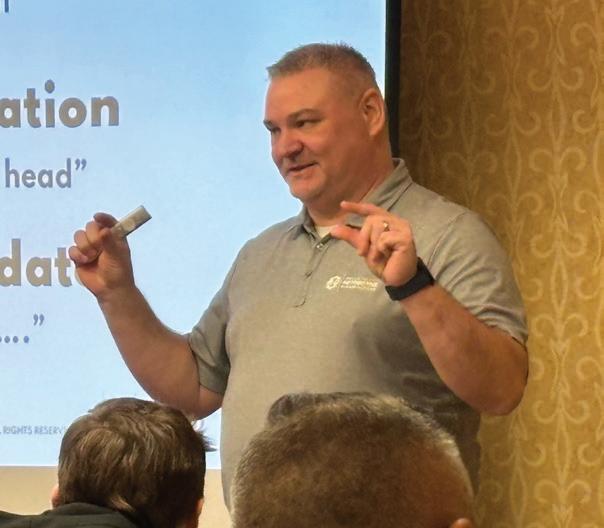
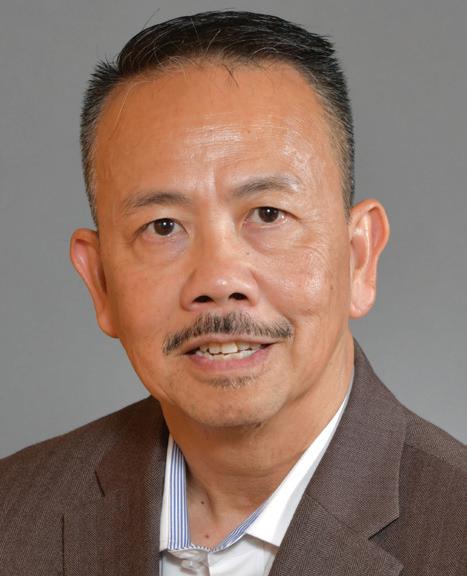
Leadership training expert David Rogers shares tips for fi nding your next shop manager PAGE 22
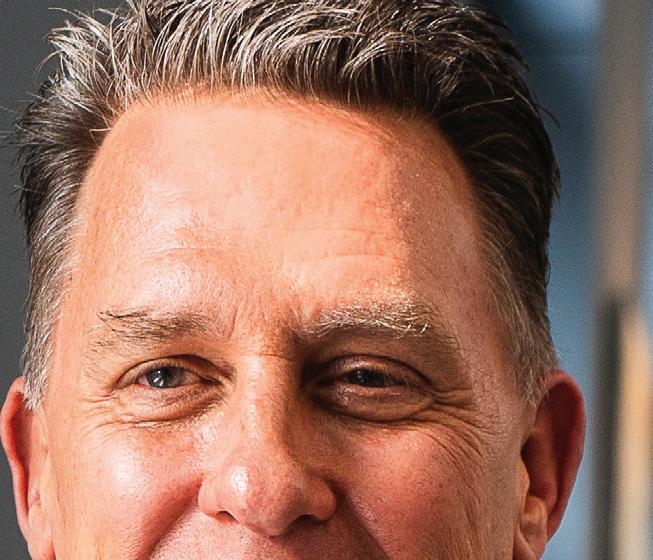
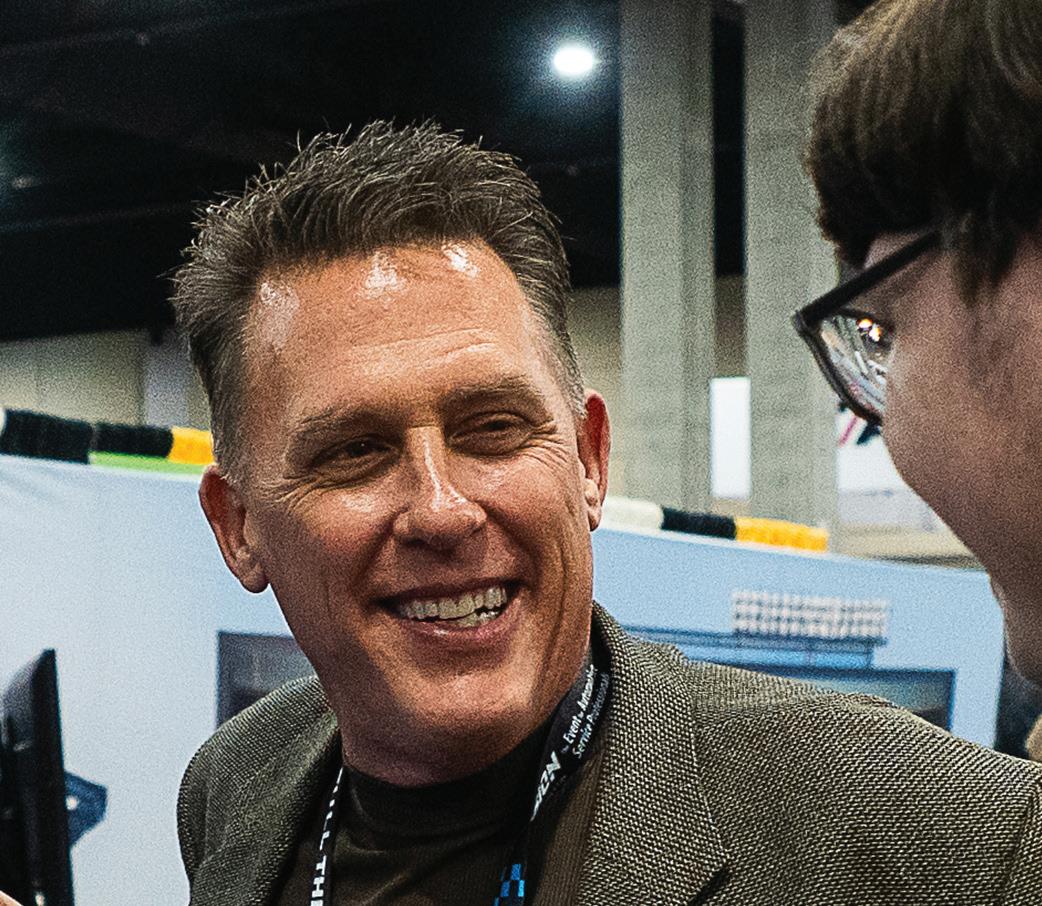
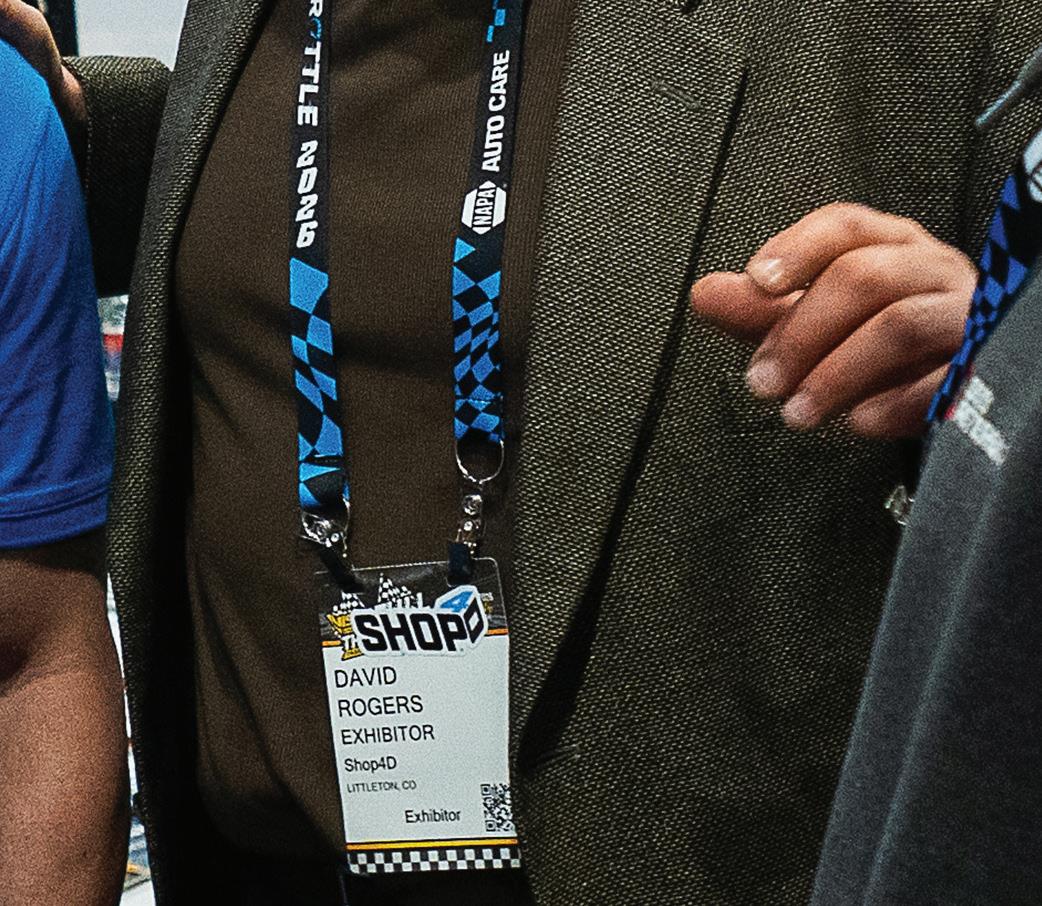
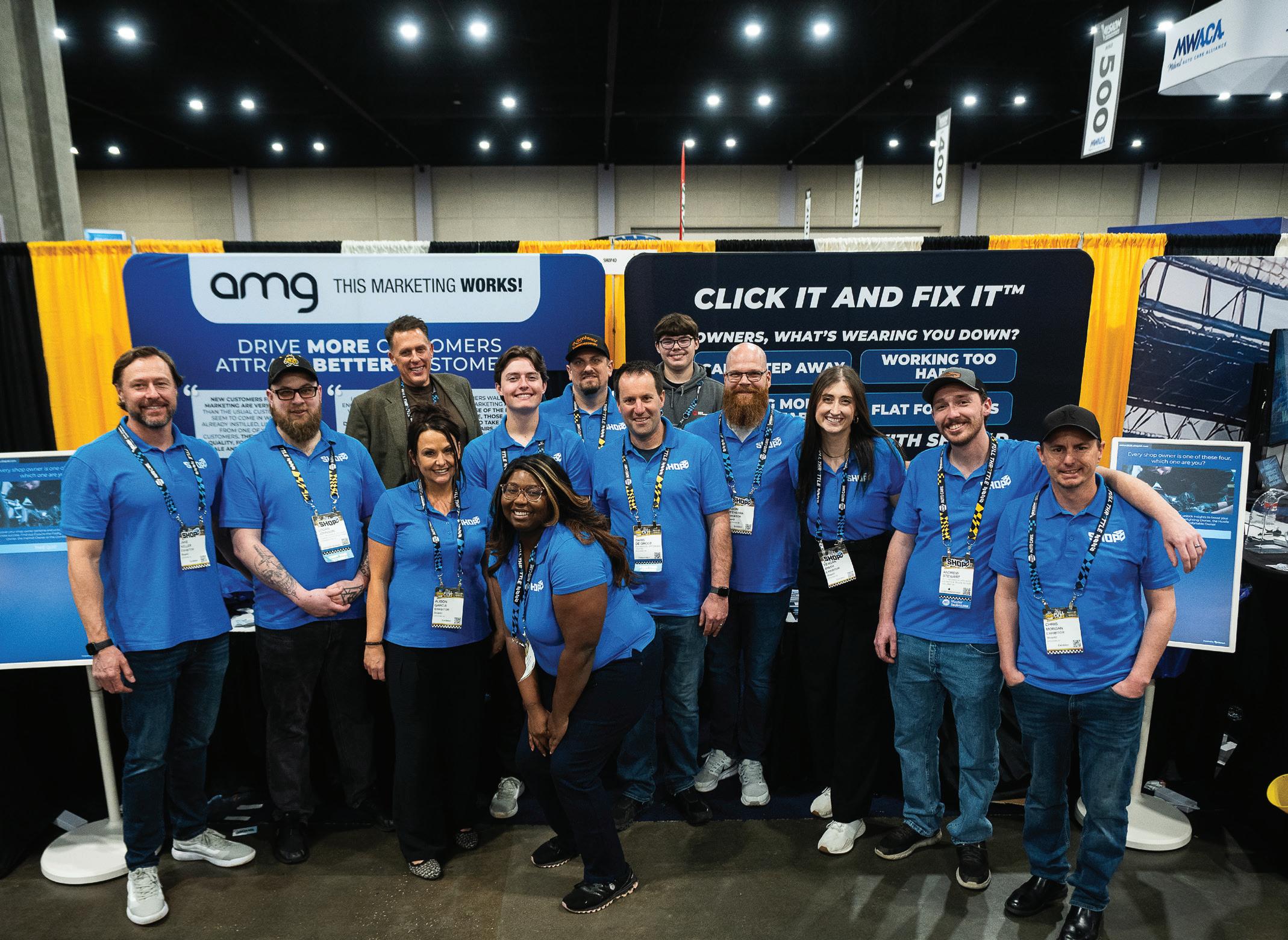
Speaking from Experience David Rogers, co-founder of Auto Profit Masters and Shop4D, has three decades in the industry.
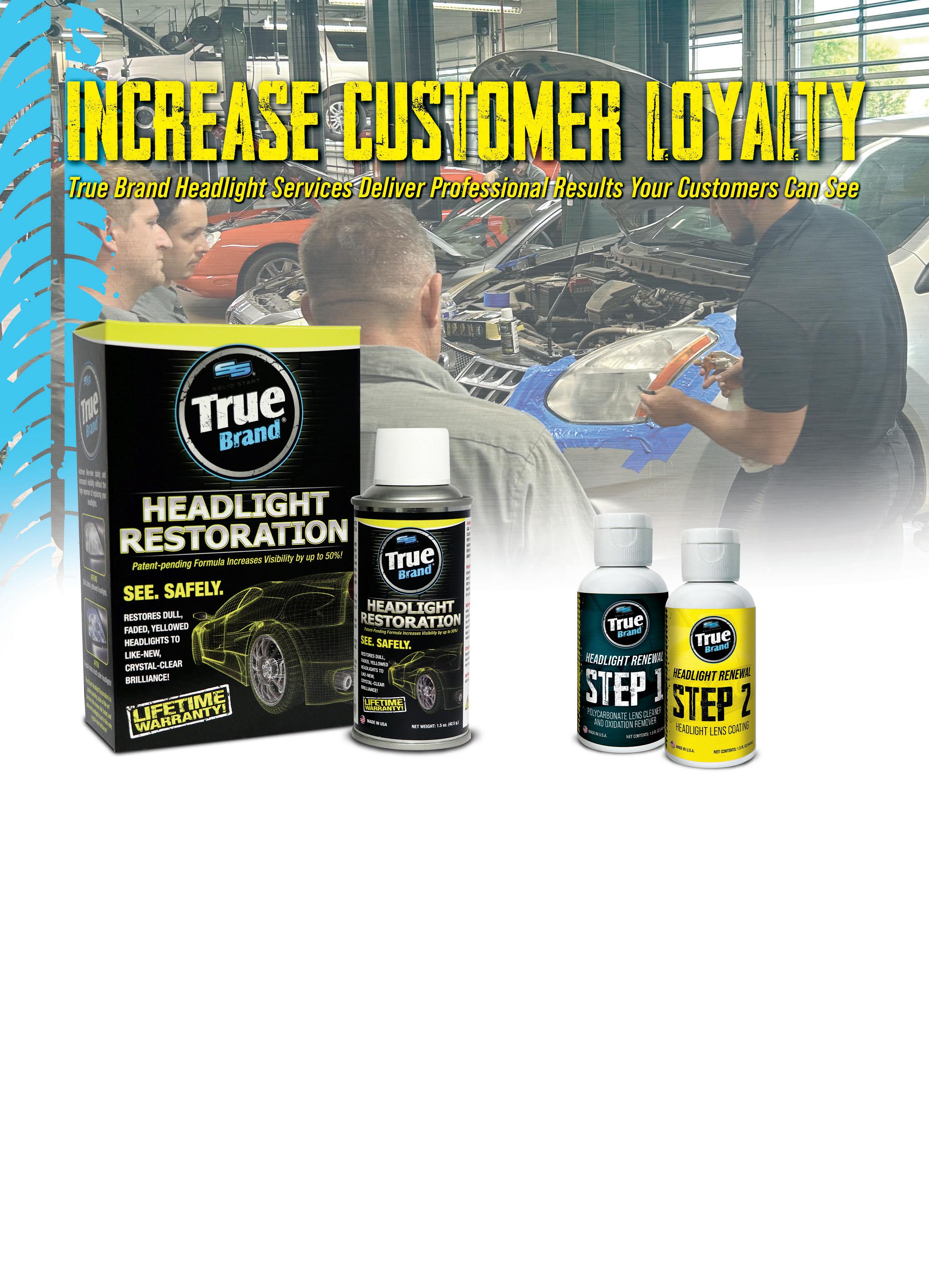
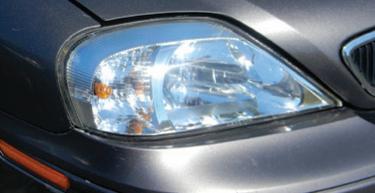
• Restores Visibility and Safety
• 1-Step Prep - No Tools Required
• Easy Aerosol Application
• Lifetime Warranty!
• Renews Headlight Lens Clarity
• Easy 2-Step Wipe-On Process
• No Tools or Sanding Required
• Fast and Easy Results
PN: T605
PN: T601
ADVERTISER/PRODUCT INDEX
NOLN (USPS PERMIT 23608), (ISSN 1071-1260 PRINT) IS PUBLISHED 10 TIMES YEARLY (JANUARY/FEBRUARY, MARCH, APRIL, MAY, JUNE, JULY, AUGUST, SEPTEMBER, OCTOBER, NOVEMBER/DECEMBER) BY ENDEAVOR BUSINESS MEDIA, LLC. 201 N MAIN ST 5TH FLOOR, FORT ATKINSON, WI 53538.
PERIODICALS POSTAGE PAID AT FORT ATKINSON, WI, AND ADDITIONAL MAILING OFFICES. POSTMASTER: SEND ADDRESS CHANGES TO NOLN, PO BOX 3257, NORTHBROOK, IL 60065-3257. SUBSCRIPTIONS: PUBLISHER RESERVES THE RIGHT TO REJECT NON-QUALIFIED SUBSCRIPTIONS. SUBSCRIPTION PRICES: U.S. ($93 PER YEAR). ALL SUBSCRIPTIONS ARE PAYABLE IN U.S. FUNDS. SEND SUBSCRIPTION INQUIRIES TO NOLN, PO BOX 3257, NORTHBROOK, IL 60065-3257. CUSTOMER SERVICE CAN BE REACHED TOLL-FREE AT 877-382-9187 OR AT NATIONALOILLUBENEWS@OMEDA.COM FOR MAGAZINE SUBSCRIPTION ASSISTANCE OR QUESTIONS.
PRINTED IN THE USA. COPYRIGHT 2026 ENDEAVOR BUSINESS MEDIA, LLC. ALL RIGHTS RESERVED. NO PART OF THIS PUBLICATION MAY BE REPRODUCED OR TRANSMITTED IN ANY FORM OR BY ANY MEANS, ELECTRONIC OR MECHANICAL, INCLUDING PHOTOCOPIES, RECORDINGS, OR ANY INFORMATION STORAGE OR RETRIEVAL SYSTEM WITHOUT PERMISSION FROM THE PUBLISHER. ENDEAVOR BUSINESS MEDIA, LLC DOES NOT ASSUME AND HEREBY DISCLAIMS ANY LIABILITY TO ANY PERSON OR COMPANY FOR ANY LOSS OR DAMAGE CAUSED BY ERRORS OR OMISSIONS IN THE MATERIAL HEREIN, REGARDLESS OF WHETHER SUCH ERRORS RESULT FROM NEGLIGENCE, ACCIDENT, OR ANY OTHER CAUSE WHATSOEVER. THE VIEWS AND OPINIONS IN THE ARTICLES HEREIN ARE NOT TO BE TAKEN AS OFFICIAL EXPRESSIONS OF THE PUBLISHERS, UNLESS SO STATED. THE PUBLISHERS DO NOT WARRANT EITHER EXPRESSLY OR BY IMPLICATION, THE FACTUAL ACCURACY OF THE ARTICLES HEREIN, NOR DO THEY SO WARRANT ANY VIEWS OR OPINIONS BY THE AUTHORS OF SAID ARTICLES.
EDITORIAL
EDITORIAL DIRECTOR Chris Jones
EDITOR Tom Valentino
ASSISTANT EDITOR Kacey Frederick
SPECIAL PROJECTS EDITOR Emily Kline
CONTRIBUTING WRITERS
Adam Tatum, Scott Hempy, Carol Badaracco Padgett, Peter Suciu, Enid Burns
EDITORIAL ADVISORY BOARD
Adam Tatum, DIRECTOR OF OPERATIONS, VIRGINIA GROUP
Scott Hempy, CEO, OILSTOP DRIVE-THRU OIL CHANGE AND HAPPY’S DRIVE-THRU CAR WASH
Aleisha Hendricks, OWNER/OPERATOR, GREASE MONKEY QUICK LUBE AND MONKEY SHINE CAR WASH
Shawn Gilfillan, OWNER, AUTOMOTIVE MAGIC AND MAGIC LUBE & RUBBER
SALES
PUBLISHER Greg Smith gsmith@endeavorb2b.com
ACCOUNT EXECUTIVES
Kyle Shaw kshaw@endeavorb2b.com
Diane Johnston
djohnston@endeavorb2b.com
Marianne Dyal mdyal@endeavorb2b.com
Chad Hjellming chjellming@endeavorb2b.com
Cortni Jones cjones@endeavorb2b.com
Lisa Mend lmend@endeavorb2b.com
Sean Thornton sthornton@endeavorb2b.com
ART AND PRODUCTION
ART DIRECTOR Erin Brown
PRODUCTION MANAGER Rita Fitzgerald
AD SERVICES MANAGER Jen George
ENDEAVOR BUSINESS MEDIA, LLC
CEO Chris Ferrell
COO Patrick Rains
CDO Jacquie Niemiec
CALO Tracy Kane
CMO Amanda Landsaw
EVP TRANSPORTATION GROUP Chris Messer
VP OF CONTENT STRATEGY, TRANSPORTATION
Send
Endeavor
PODCAST | REFLECTING ON THE QUICK LUBE INDUSTRY’S EVOLUTION (WITH AMBER KOSSAK AND CRYSTAL MATHEWS OF SOLID START/TRUE BRAND)
As part of National Oil and Lube News’ 40th anniversary celebration, the NOLN Podcast recently welcomed Solid Start CEO Amber Kossak and President Crystal Mathews to reflect on the quick lube and fast maintenance industry’s evolution. Kossak, who has more than 30 years of experience in the business, and Mathews, who joined the industry in 1999, shared insights on game-changing moments, major developments, short-lived fads, and common threads that have defined the industry for decades.
TECHNICIAN’S TOOLBOX | TATUM: WHEN TRAINING TECHS, BUILD SKILL, SAFETY, AND SERVICE EXCELLENCE
NOLN columnist Adam Tatum’s Technician’s Toolbox series returns with a look at why cars becoming more complex and customers more informed means it has never been more critical to develop a team of skilled lube technicians.
Head online to check out NOLN’s library of podcast interviews. Hear from quick lube leaders about new strategies, service stories, and innovative operations that push the industry forward.
Listen and subscribe at: noln.net/podcasts or subscribe to the NOLN Podcast on your favorite listening app.
Have you subscribed to the newsletter? NOLN will send the latest industry news, strategies, and profiles straight to your inbox. Sign up at: noln.net/subscribe.
TRAINING SOLUTIONS
We’re more than the goods we deliver. Our industry-leading training programs include hands-on, in-store, and digital opportunities that drive productivity and profitability. With 800+ experienced BG Reps in the field ready to address your shop’s unique needs, we’ll prepare your team to sell more services and boost your bottom line. our
Explore our award-winning training offerings.
EXPERIENCE COUNTS
As the fast oil change industry matures, the average tenure for quick lube facility managers and lube techs is increasing
The quick lube industry is maturing, and so is its workforce—especially at the managerial level.
Participants in the 2025 NOLN Operator Survey were asked about the average tenure for their shops’ managers and lube technicians. About 70% of respondents said the average tenure of their managers is at least six years.
Here is a breakdown of how they responded:
1995
3.8 years Managers
1.8 years Lube Technicians
2005
4.8 years Managers
A dive into the NOLN archives shows the average tenures of both managers and techs has steadily increased over the past three decades: AVERAGE MANAGER TENURE
2.1 years Lube Technicians
2015
6.9 years Managers
2.3 years Lube Technicians
The pages of NOLN are full of stories from shops that are way above average. Check out noln.net
API-LICENSED ENGINE OILS
DRIVE PERFORMANCE
Improve engine performance and fuel economy, fight everyday wear and tear and help reduce emissions.
API-licensed oils display an API certification mark to signify the highest performing oils.
To search the complete list of licensed companies and products, visit our licensee directory at: API.org/EOLCS
AUTO CARE ASSOCIATION NAMES DIRECTOR OF REGULATORY AFFAIRS
The Auto Care Association has announced the addition of Grant MacIntyre as its newest director of regulatory affairs and senior attorney, according to a press release.
MacIntyre will support and lead ACA’s regulatory and legislative engagement at the federal and state levels. He will serve as a key advisor on policy matters impacting the auto care industry, including automotive regulation, transportation safety, environmental policy, and consumer protection. MacIntyre will also help develop and execute advocacy strategies, strengthen relationships with federal agencies and policymakers, and provide strategic guidance to association members on emerging regulatory issues.
MacIntyre joins ACA with a diverse background spanning public service, private practice, and higher education. He began his legal career with the United States Environmental Protection Agency’s Office of General Counsel, where he served as an Administrative Procedure Act expert, advising rule writers, policymakers, and political appointees on regulatory development under major environmental statutes, including the Clean Air Act and the Clean Water Act.
PREMIUM GUARD INC. EXPANDS PRODUCT PORTFOLIO WITH STRATEGIC ACQUISITION FROM FIRST BRANDS GROUP
Premium Guard Inc. announced that it has signed an agreement to acquire key intellectual property and related assets from First Brands Group in a recent press release.
The transaction was subject to
bankruptcy court approval, among other closing conditions, and an official completion of the sale was announced on April 16.
The acquisition supports PGI’s expansion into additional maintenance categories, including ignition and spark plugs. Combined with PGI’s existing offerings in filtration, wiper blades, and related maintenance products such as drain plugs, this creates a more complete maintenance-product portfolio for the company.
The broader offering of products will enhance PGI’s category management capabilities, as well as enhance its foundation for expansion in global markets with the addition of internationally recognized brands. PGI emphasized that this transaction does not change its core business model.
“This is a meaningful step forward for PGI,” said Anan Bishara, founder and CEO of PGI. “The know-how, patents, and engineering capabilities we are acquiring, particularly in wiper blades, spark plugs, and diesel filtration, significantly strengthen our platform, enabling us to continue developing advanced, reliable, and complete solutions across multiple tiers. This will allow us to better support our customers with differentiated products in highly competitive categories, while accelerating innovation and speed to market.”
PISTON LUBE CENTERS LAUNCHES FIRST ROYAL PURPLE POWERED LOCATION IN KYLE, TEXAS
Piston Lube Centers has announced its first “Powered by Royal Purple synthetic lubricants” location in the United States in a recent press release.
Piston Lube Centers now oper-
ates more than 90 locations across Texas, while Royal Purple products are manufactured and distributed within the state. As such, Kyle, Texas, was selected for the first branded location due to its strong growth and proximity to the Austin metro politan area.
Through the Royal Purple quarterly consumer promotions, customers who receive an oil change may submit a claim for a service certifi cate toward their next service at the store. The partnership will also bring branded signage approved by Royal Purple provided by Piston Lube Centers, along with point-of-sale materials, such as product display racks, barrel wraps, and in-store consumer education materials.
Piston Lube Center technicians have also participated in a Royal Purple product-specific training program, which includes both e-learning and on-site training.
“Customers can feel confident bringing their vehicle to Piston Lube Center in Kyle with our fast and friendly maintenance services using quality Royal Purple products,” said Wendy Lee, marketing manager for Piston Lube Centers.
API APPROVES NEW PC-12 HEAVY-DUTY ENGINE OIL SPECIFICATION FOR 2027
The American Petroleum Institute announced that the new API Proposed Category 12 (PC-12) heavy-duty engine oil specification has been formally approved and will be incorporated into API 1509, the Engine Oil Licensing and Certification System document, according to a press release.
With the announcement, the API Service Category CL-4 and API FB-4 “Donut” certification marks are now available. Oil marketers can begin
finalizing formulations and preparing product packaging to meet the new specifications ahead of the first licensing date of Jan. 1, 2027.
To further support industry readiness, the API licensee portal will open on June 1.
This early-access period will allow licensees to proactively enter new API CL-4 and API FB-4 products into the system.
The new engine oil specifications aim to improve oxidation resistance, enhance wear protection, expand elastomer compatibility, improve after treatment system protection, and provide support for lower viscosity grades aimed at improving fuel economy.
“To support the next generation of heavy-duty engine technology and emissions standards, PC-12 establishes a strong technical foundation for performance, durability and environmental protection,” said Bill O’Ryan, director-EOLCS/DEF with API. “Making the CL-4 and FB-4 service symbols available now allows oil marketers to prepare for a smooth transition as we approach the 2027 model year.”
ASE, AUTO CARE ASSOCIATION NAME 2026 WORLD CLASS TECHNICIANS
The Auto Care Association and the National Institute for Automotive Service Excellence have announced the newest automotive professionals to earn the World Class Technician designation in 2026 in a recent press release.
The ASE World Class Technician designation recognizes automotive service professionals who have demonstrated technical expertise and commitment to ongoing training and certification. To earn the designation, technicians must pass a rigorous series of ASE certifica-
tion tests across multiple specialty areas.
This year’s newly recognized ASE World Class Technicians represent a wide range of experience across the automotive service industry, including independent repair facilities, fleet operations, education, dealerships, and emerging electric vehicle service roles.
Editor’s note: An extended version of this story that includes a complete list of technicians who earned ASE World Class Technician designation is available on NOLN.net.
VALVOLINE ACHIEVES SECOND CONSECUTIVE YEAR IN ENTREPRENEUR’S FASTEST-GROWING FRANCHISES LIST
Valvoline Inc. was recently recognized in Entrepreneur’s 2026 Fastest-Growing Franchises ranking.
The Entrepreneur Fastest-Growing Franchises 2026 ranking highlights the companies that saw the greatest franchise unit growth in the U.S. and Canada from July 2024 to July 2025. The ranking appears in the March/April 2026 issue of Entrepreneur.
This marks the second consecutive year the brand has been recognized, rising to No. 21, up from No. 41 in 2025, and securing the top position in its category on this year’s list.
CHRYSLER ISSUES RECALL OVER CURTAIN AIRBAG FAULT
A recall has been issued for Chrysler Pacifica and Voyager vehicles due to a defect with its air bags, according to MotorBiscuit.
Included in the recall are certain 2022 to 2026 model year Chrysler
Pacifica and Voyager vehicles. Per NHTSA, the issue lies with the right and left side curtain air bags, which may have been manufactured with improperly sealed seams. This can prevent the air bag from achieving the correct pressure when used in an accident.
Chrysler will be notifying impacted vehicle owners via mail, with letters being sent out beginning May 14. The company will have the side curtain air bags replaced as necessary.
AARON BECKER OF AIRSEPT RE-ELECTED AS CHAIR OF MACS
Aaron Becker, president of AirSept, was recently re-elected by the Mobile Air Climate Systems Association executive committee to serve as chairman for another term at the association’s 2026 Annual Conference, as shared in a press release.
MACS, founded in 1981, is a trade association that assists service technicians with EPA 609 certification and delivery of technical training for service professionals. Becker, who previously served as chairman in 2025, was handily elected to serve a second term. The MACS board of directors guides the MACS association on education, awards, virtual and in-person training, meetings, and all aspects of membership solicitation and benefits.
In addition to his board duties, Becker is also president of AirSept, a manufacturer of automotive solutions for complex repair problems for MVAC systems, including Smart Splice line connectors, Recycle Guard, and most recently, Refrigerant Port Adaptors for retrofitting to new, low-GWP refrigerants now available on the market. He has
spent over 30 years in the mobile HVAC industry and has been a MACS member for 26 years.
Additionally, he serves on multiple SAE committees and has extensive experience collaborating with OE engineers, manufacturers, and distributors.
BENDPAK INTRODUCES THE APEX AL10C 10,000 LB TWO-POST LIFT
BendPak has recently introduced the APEX AL10C two-post lift, a new 10,000 lb. car lift for professional shops and home garages.
The APEX AL10C provides the most-popular two-post lift features, including clearfloor design, flexible arm positioning, triple-telescoping front arms and dual-stage rear arms, automatic safety locks, and telescoping screw pads and stackable adapters.
The lift is built with oversized base plates and a heavy-duty large tubular steel carriage to withstand demanding shop environments. This is in addition to a box-beam overhead structure that reinforces the lifting frame to reduce stress on the columns.
It uses a direct-drive hydraulic system with dual full-stroke hydraulic cylinders, with a focus on fewer parts. It’s equipped with self-lubricating UHMW polyethylene guide blocks, oversized cable sheaves, and aircraft-quality equalizer cables.
The lift is also built with safety features, including automatic safety locks which engage every three inches throughout the lift range.
A padded overhead shutoff bar paired with an industrial-grade limit switch automatically stops the lift if a vehicle is raised too high.
Automatic swing arm restraints keep the arms in place, and a full-
size rubber carriage guard reduces door dings.
WORLDPAC JOINS THE PRONTO NETWORK TO ENHANCE AFTERMARKET SUPPORT AND GROWTH
Worldpac and The Pronto Network announced a strategic partnership, effective April 1, marking a major shift towards increased cooperation within the independent automotive aftermarket.
The partnership aligns a pair of industry-leading organizations focused on advancing the aftermarket. By joining The Pronto Network, Worldpac brings its long-standing commitment to technical education, OE-quality parts, and enhanced catalog technology, complementing The Pronto Network’s focus on member support, strategic growth, and supply chain collaboration.
“Joining The Pronto Network allows us to align with an organization that shares our vision for innovation and customer success,” said John Hamilton, president and CEO of Worldpac. “As the aftermarket continues to evolve with new technologies, vehicle complexities, and changing consumer expectations, we are now better positioned to support customers with shared resources and enhanced capabilities.”
YANG ANNOUNCES 2026 NEXT STEP PROGRAM SCHOLARSHIP RECIPIENTS
The Young Auto Care Network Group announced its 2026 Next Step Program scholarship recipients for this year’s YANG programming at Auto Care Connect in a recent press release.
The scholarship recipients will
experience and engage in YANG programming at Connect and Spring Leadership Days, part of Auto Care Connect week, all taking place May 11-14 at the Hyatt Regency Atlanta in Atlanta, Georgia.
The scholarship covers the entire cost to attend the 2026 Auto Care Connect week and provides access to networking opportunities for each of the scholarship recipients. The Next Step scholarship recipients can participate in up to 25 meetings and network with more than 450 veteran industry leaders during this three-and-a-half-day program.
The 2026 Next Step Program Scholarship recipients are:
• Tiffany Auyeung, Genuine Parts/ NAPA
• Shelby McLean, CRC Industries
• Dina Nikocevic, Parts Authority
• Samantha Schearer-Higdon, Schearer’s Sales & Service, Inc.
• Joseph Pedorenko, TERREPOWER
FORD INVESTIGATES AND EXPANDS RECALL AFTER REPEATED WINDSHIELD WIPER FAILURES
Ford has issued a recall for over 400,000 vehicles, expanding a previous recall having to do with faulty windshield wipers, reports Motor1.
Included in Ford’s recent recall is the 2021-2023 Ford Expedition, the 2022-2023 Ford Super Duty, and the 2021-2023 Lincoln Navigator. A total of 422,613 vehicles are covered by the recall.
The vehicles’ supplier, Trico, had provided wipers with improperly staked retention plates. These plates are responsible for securing the arm head to the wiper arm, and—if defective—could strip the splines on the wiper arms.
FEATURES
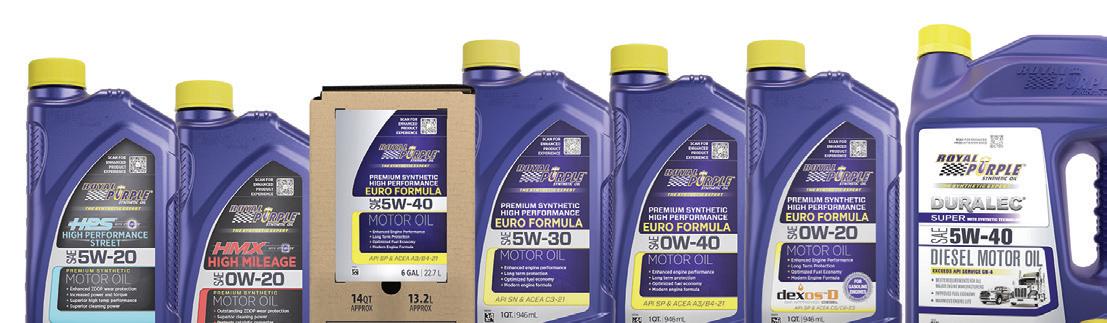
An all-new, streamlined online certification program designed exclusively for installers who want to confidently recommend and sell Royal Purple® products, and drive higher ticket averages in the process. PurplePro Training equips your team with practical product knowledge, selling confidence, and on-demand learning that fits into the real-world shop environment.
+24/7 online access—train anytime, anywhere
+Short, engaging modules designed to fit into the workday
+Easy employee progress tracking for shop owners and managers
+Optional specialized in-store training for qualified installers
What It Delivers to Your Shop BENEFITS TO THE INSTALLER
+More confident, knowledgeable service advisors
+Stronger selling skills and improved employee retention
+Higher ticket averages and AROs from Royal Purple services
+Promotions designed to drive customers back to your location
4 TAKEAWAYS FROM THE AUTOMOTIVE TRAINING EXPO
Considered the largest automotive training event on the West Coast, the three-day conference provided attendees with insights on teambuilding, customer service, and branding
BY KACEY FREDERICK
SHOP OWNERS, MANAGERS, service advisors, and technicians from across the Pacific Northwest convened in late March for three days of team building, customer service, and branding insights.
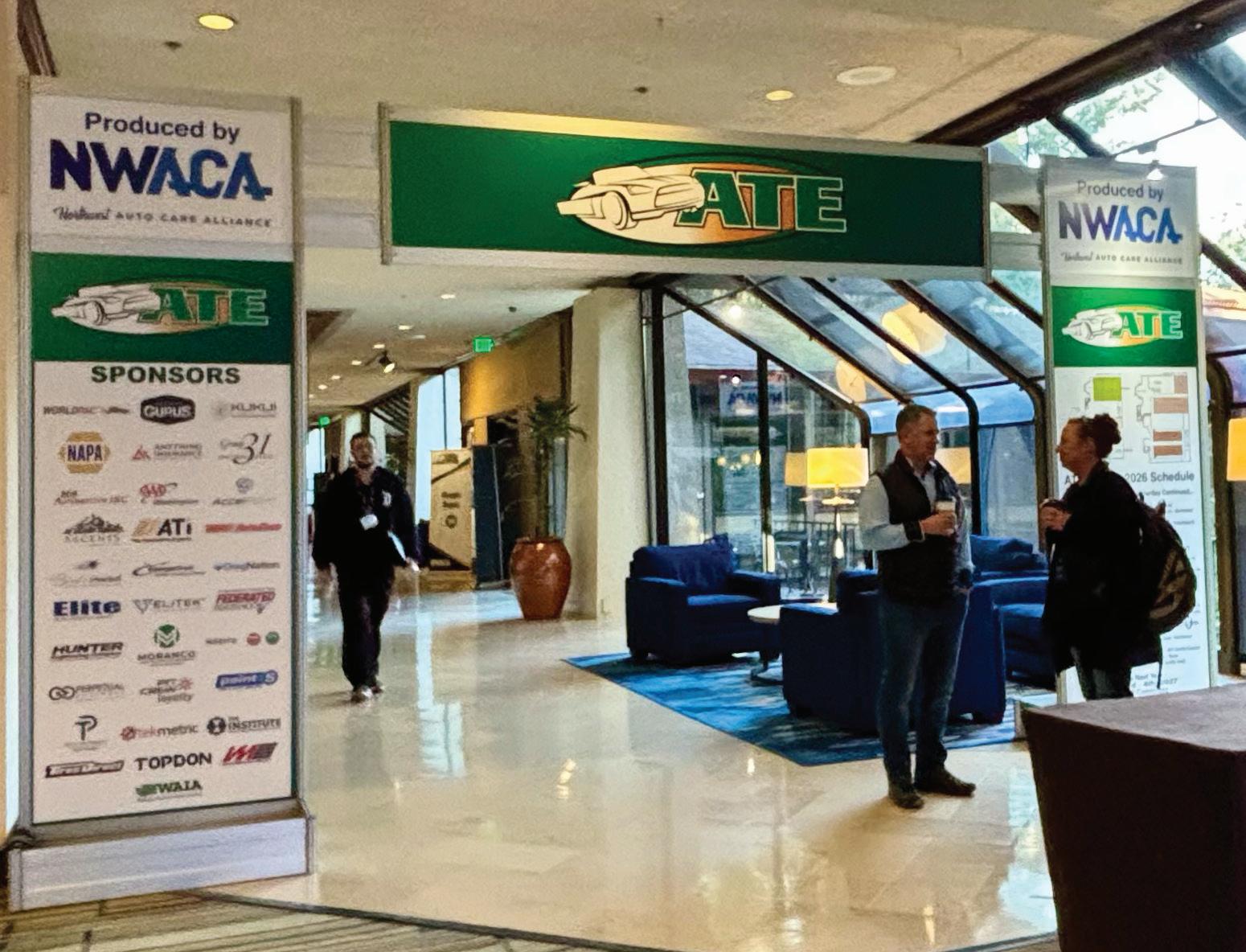
Hosted by the Northwest Auto Care Alliance, the Automotive Training Expo took place at the DoubleTree by Hilton Hotel Seattle Airport from March 27-29. National Oil and Lube News attended the show all weekend and returned with four key takeaways that you can take back to your own shop.
Understanding Psychology
Seawell: Understanding the Role Psychology Plays in Auto Repair
In the automotive industry, people are at the center of everything. From ensuring the safety of each driver to
maintaining a standard of living for your employees, understanding how to work with different types of people is crucial—and there are solid strategies for how to do so. In his session, “Mastering Challenging Situations,” Mark Seawell outlined how tools like the DiSC personal assessment help break down different behaviors and personality types into categories that help you understand how to connect with different kinds of attitudes.
Whatever type of personality you may be interacting with, one factor remains the same: Customers want to feel heard. Having a deeper understanding of how you can adapt to accommodate different needs will achieve just that.
“The D people, they really want you to be brief, be bright, be gone,” surmised Seawell. “The I people just want to be involved. The S people want you to show them that they care. And the C people need all the details.”
Schindler: Make it Easy for Your
Customer
For most customers, entrusting their vehicle to a stranger can be anxiety inducing. Since most have enough on their plate to worry about, avoid making the process of doing business with you another troublesome task for them to navigate.
Brittany Schindler, owner of Rod’s Japanese Auto, showed how there
Keep It Simple
are measures you can put in place to ensure peace of mind for the customer, including shuttle services, financing options, or after-hours drop-off. Shops that offer these amenities are instantly elevated over those that aren’t as flexible.
“Customers want you to be ridiculously easy to do business with. They do not want there to be friction in there. Like, ‘Aw, man, I gotta go drop it off at night,’” Schindler said. “We don’t want that to happen unless your customer’s like, ‘Sweet, I can drop it off tonight. That makes it easy.’”
Amero: Empower Your Staff to Succeed
Every shop is looking for that superstar service advisor, but it’s a fruitless endeavor if you don’t have a system in place where they can flourish. Tom Amero, director of operations at Elite Worldwide, touched on what businesses can do to bolster performance and productivity.
Amero shared the story of a shop owner, who had an employee that repeatedly struggled with maintaining the same productivity levels as his colleagues. He was nearly at his wit’s end—but upon taking the time to stand back and observe the employee during a shift one day, he saw that a simple policy
PHOTOS: KACEY FREDERICK
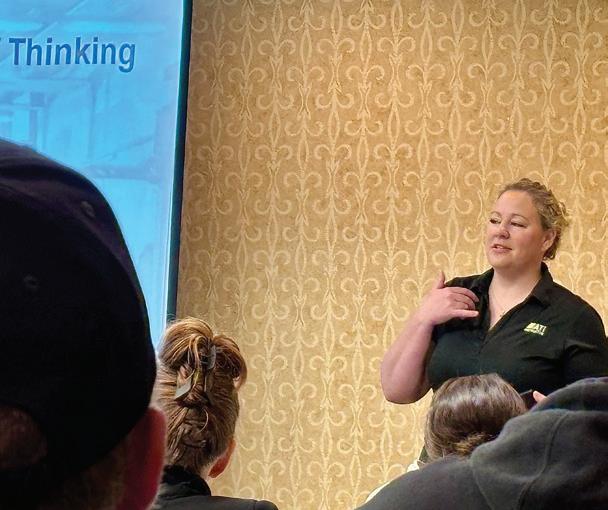
Working with different personality types is a critical skill, says Mark Seawell.
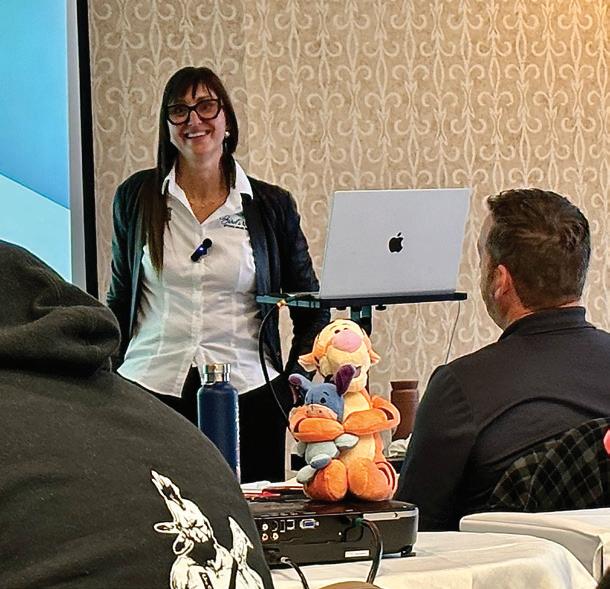
Shops that reduce customers’ anxiety excel, says Brittany Schindler.
misunderstanding was causing the advisor to perform the process incorrectly. Once he was corrected, his productivity numbers rose to match his coworkers.
The story underscores not only the importance of having a standardized process in place for employees to follow but making sure that everyone is on the same page for every step.
“How many times do we have employees in the shop and we think, ‘Oh my gosh, this behavior is bad; somebody is really inefficient; my service advisor can’t close these deals; every time this situation
happens on their phones, they botch it.’ And we think it’s them, when really maybe we’ve just got a bad process,” said Amero.
Patterson: A Shop That Can Run Independently
Melissa “Birdie” Patterson has nearly 30 years of experience in the automotive industry, which included working alongside the late Maylan Newton. In her session, “W.W.M.D. - What Would Maylan Do?,” Patterson helped wrap up the conference by sharing insight from Newton, one of the aftermarket’s most impactful figures.
Talking Shop
Having a polished, professional image is undoubtedly important. But Patterson took time to remind attendees that customers are also looking for a connection as well. They want to feel like they’re working with a person who cares about them, not just their money. When you look at your business’ online presence, what does it say about you and your team?
While shops should avoid having busy, cluttered websites, having a simple “About Us” page for customers to see makes you more memorable in their mind. They know the names and the faces behind the team to whom they’re entrusting their vehicle, and who they’ll be coming to with questions. As Newton would have said, the auto repair industry is not just about fixing cars but helping people make decisions.
“People are buying peace of mind. They’re not buying a brake pad. They’re buying how it feels to work with you,” Patterson said. “They’re asking, ‘Do I feel safe; do I feel part of the community?’ So, you want to make sure that you are providing that.”
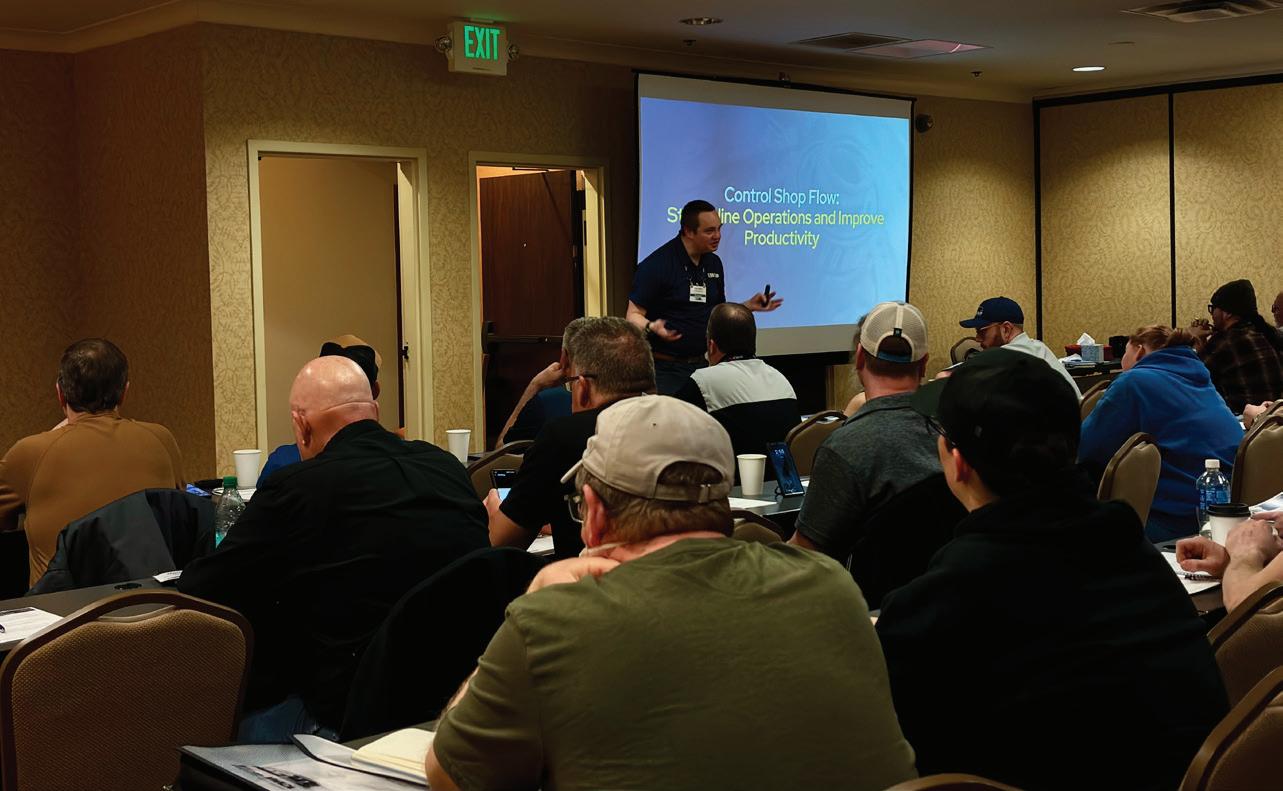
Tom Amero (bottom left) and Melissa “Birdie” Patterson (above) share insights with Automotive Training Expo attendees.
QUICK LUBE Q&A: SEAN
NGUYEN, PENNZOIL TECHNICAL SCIENTIST AND AUTOMOTIVE LUBRICANT SPECIALIST
With the average age of passenger vehicles on the rise, quick lube shops should be prepared to educate customers on the benefits—and limitations— of high-mileage oil formulations
BY TOM VALENTINO
AS THE AVERAGE AGE OF passenger vehicles in the U.S. continues to climb, a switch to high-mileage oil can help keep drivers on the road and their cars running smoothly. But at what point should such a change be considered, and what else should drivers know when deciding if making the switch is right for their vehicle?
Recently, National Oil and Lube News caught up with Sean Nguyen, a Pennzoil technical scientist and automotive lubricant specialist. Nguyen has worked with Shell for more than 25 years, holding various positions that include lubricant technical advisor, lubricant product researcher, and lubricant technology trainer.
In this interview, Nguyen identifies the threshold at which drivers generally should consider switching to high-mileage oil in their vehicles, the biggest misconceptions about high-mileage oil, the key points quick lube shops should be prepared to present to guests when discussing high-mileage oil, and more.
NOLN: Why is 75,000 miles considered a key threshold for switching to high-mileage oil?
Sean Nguyen: You may see more visible signs of wear in the engine at 75,000 miles. This is also an important time for drivers to help extend the longevity of their engine as they journey forward.
As vehicles log more miles, internal parts such as seals and piston rings can gradually lose flexibility. This can contribute to minor leaks, increased oil consumption, or a slight decline in efficiency over time. These changes don’t happen all at once; however, they can signal that the engine could benefit from more specialized protection.
High-mileage motor oils are formulated with these needs in mind. Products like Pennzoil Platinum High
Mileage Full Synthetic use synthetic base oil combined with a tailored additive package, including seal conditioners designed to help maintain seal pliability and reduce oil burn-off, while continuing to protect against wear and sludge. The goal isn’t to change how the engine operates, but to help it continue running smoothly as it ages.
NOLN: Does that number vary by vehicle make/model? In other words, are there certain vehicles for which a switch to high-mileage oil is recommended sooner/later than that 75,000-mile mark?
Sean Nguyen: The short answer: It depends.
Several factors can play a role, including the engine, materials, and overall build quality. Some vehicles will show signs of wear earlier, while others may stay strong well beyond that point. Vehicles that experience frequent short trips, are regularly in stop-and-go conditions, operate in extreme temperatures, or do not keep up with maintenance recommendations may benefit from switching sooner.
That said, mileage alone shouldn’t be the deciding factor. Paying attention to how the engine is performing, including observing a potential increase in oil consumption or small leaks, can provide a clearer signal that it may be time to switch.
NOLN: What are the biggest misconceptions among consumers regarding high-mileage oil?
Sean Nguyen: One of the most common misconceptions is that high-mileage oil is simply a marketing ploy or that it offers no real difference from standard motor oil. In reality, it is
Vehicles that experience frequent short trips, are regularly in stopand-go conditions, operate in extreme temperatures, or do not keep up with maintenance recommendations may benefit from switching sooner.
–SEAN NGUYEN
formulated with a specialized additive package designed specifically for aging engines. These additives can include seal conditioners and enhanced detergents that help address common wear-related issues.
Another frequent myth is that switching to high-mileage oil can cause leaks. These oils are designed to do the opposite. By helping maintain seal flexibility, they can reduce the likelihood of minor leaks and help manage oil consumption as engines accumulate miles.
It’s also important to clarify that high-mileage oil isn’t intended to fix major mechanical problems. Instead, it plays a supportive role: helping manage normal wear and maintain performance over time as part of a broader maintenance approach.
NOLN: What key points should quick lube shops present to their customers when discussing the use of high-mileage oil in their vehicles?
Sean Nguyen: Quick lube shops should focus on making high-mileage oil relevant to each customer’s vehicle and driving habits. The first step is educating the customer through a simple conversation about how high-mileage oil formulations are designed to address engine aging while
helping maintain performance.
It’s also important to review the vehicle’s condition, maintenance history, and how it’s being used. This helps customers feel more confident that the recommendation is tailored to their specific needs.
Framing high-mileage oil as a proactive maintenance choice can be especially effective. This positions the product as a way to help extend engine life, improve reliability, and support long-term performance— rather than as a reaction to a problem.
NOLN: Is there anything else that quick lube shops should know about high-mileage oil that we’ve not yet covered?
Sean Nguyen: One key point is that high-mileage oil is not a solution for major mechanical issues. Its role is to help address typical, age-related wear and concerns as part of a customer’s consistent maintenance routine.
Shops should also reinforce that switching to high-mileage oil doesn’t replace standard maintenance practices. Customers should continue to follow manufacturer recommendations for oil type, viscosity, and service intervals to ensure optimal performance and protection over time.
The Second Visit is More Important Than the First
Guest retention tells an operator more about the health of their business than almost anything else
Scott Hempy leads the team at Oilstop Drive-Thru Oil Change and Happy’s Drive-Thru Car Wash. Oilstop and Happy’s are rapidly growing their footprint of oil change and express car wash locations across the West Coast, combining convenience with an outstanding emphasis on guest experience. Prior to Oilstop & Happy’s, Scott was the founder and CEO at Filld, a SaaS-based software solution for last-mile oil and gas delivery companies. He was recognized as a member of the Forbes 30 Under 30 class of 2016 for starting Filld.
.COM
IN THE QUICK LUBE BUSINESS, WE SPEND a lot of time measuring what just happened. We track car count, average ticket, service time, and many other performance metrics. Those numbers do matter but they all share the same blind spot. All of these metrics measure a single visit, not the ongoing guest relationship. And the automotive services business isn’t built on the first visit. It’s built on the second.
Almost every service center can generate a first visit. A good location, a coupon, or a Google search ad can all capture the frustrated guest looking for a new place to try out an oil change. But that first visit is often low commitment. The guest is trying you out. It’s hard to build trust on a first visit because the guest has no reference point.
But a second visit is different. A second visit means the guest came back. It means the first experience was good, and now the guest is coming back and looking to see if they can trust your service on a regular basis. The second visit is when a transaction turns into a relationship.
The problem is, most of us in the quick lube world don’t measure it.
Ask any operator how yesterday went, and you’ll get a detailed answer. Ask how many of last year’s first-time guests came back, and you’ll usually get a guess. This is a big opportunity. Guest retention tells you more about the health of your business than almost anything else.
You don’t need perfect data to start. Just pick a group, such as all first-time guests who visited your service center last year. Then track how many of them return within three or six
months. That’s your second visit rate. It doesn’t need to be fancy. It just needs to be real.
When you actually look at it, it can be humbling. Most operators overestimate their retention. In reality, a high percentage of guests just never come back, which means you’re constantly replacing people just to stay even. This is where the hidden cost shows up. If guests aren’t returning, you start leaning harder on discounts and marketing to keep car count growing. It turns into a treadmill. You’re busy, but you’re not really building anything sustainable.
The good news is retention isn’t random. Retention is created during the first visit. Improving your guest retention comes down to focusing on how the experience feels from the driver’s seat. Creating an experience that builds trust is what will bring them back. Guests don’t come back because you sold them something. They come back because they believed you. Sometimes the strongest move is telling a guest they don’t need or aren’t due for a certain service today. That memory sticks.
It’s a small shift, but an important one. Instead of asking how to maximize today’s ticket, start asking what would make this guest come back. How could you change your service process to communicate with a first-time guest differently? You could take a moment to explain your service process, introduce yourself and your team, or thank them, ask how you could improve, and welcome them back again at the end of the service.
A guest’s second visit isn’t just another transaction. It’s the visit that starts your relationship with that guest.
SCOTT @OILSTOPINC
SCOTT HEMPY
PHOTO: SCOTT HEMPY
Unlocking Potential Leadership training expert David Rogers helps shops prepare their next managers.
Leadership management training expert David Rogers, co-founder of Auto Profit Masters and Shop4D, shares insights on identifying and training potential shop managers
By Tom Valentino
PHOTO:
hat makes a quick lube employee an ideal manager?
In the timeless debate of nature vs. nurture, David Rogers, co-founder of Auto Profit Masters and Shop4D, says quick lube shop management roles require a bit of both.
“You’ve got to understand the difference between skill and talent,” says Rogers, relaying a bit of wisdom from a close friend. “You’re born with talent. You work for skills. It takes both to be successful.”
Rogers, who has 28 years of shop ownership experience, specializes in leadership training for independent shop operators through his Auto Profit Masters business. Shop4D is the company’s shop management system.
After working in hospitality, running high-end hotels and fine dining establishments, Rogers says he experienced a culture shock when he transitioned into the automotive maintenance sector in the mid-1990s.
Process is one-inone with our brand. Our process is based on care, education, and protection. We’re protecting customers. We’re protecting each other. We’re protecting the business. We’re caring for everybody.
–DAVID ROGERS, CO-FOUNDER OF AUTO PROFIT MASTERS AND SHOP4D
“I walked out probably day 3,” he says. “I went to the owner and said, you know, I don’t know that this is for me. I’m not accustomed to people yelling at me. I’m not accustomed to people viewing me as an adversary. And I don’t know why you guys put up with all this chaos. This is insane.”
Ultimately, Rogers stayed in the industry, but sought to shift the paradigm of the relationships between management and staff, as well as employees and customers in the fast maintenance industry. After brief stints working for two other auto shops, Rogers joined Keller Bros. Auto Repair in Littleton, Colorado, as a service advisor before becoming its chief operating officer.
Rogers recently spoke with NOLN about how shop owners can identify potential leaders on staff (as well as outside their shop) and prepare them for management roles.
CHOOSING WISELY
When considering potential candidates for manager positions, Rogers says shop employees should fall into one of two categories: “yes” or “not on your life.”
“We’re really looking for someone who is 100% loyal to the process,” Rogers says. “Process is onein-one with our brand. Our process is based on care, education, and protection. We’re protecting customers. We’re protecting each other. We’re protecting the business. We’re caring for everybody. There is no other thing. That’s the thing I’m looking for. They have to accentuate that. They have to be that kind of material.”
That mindset of looking out for one another plays into a key tenet of Rogers’ general approach to leadership that he instills upon trainees, which he calls “the management triangle.”
“There are three sides to the triangle: There’s customers, there’s the employees, and then there’s the company, including ownership and the company itself, the entity,” he says. “If I understand those three sides are all critical to my survival and my future as an employee or as a manager or owner … It doesn’t matter—the rules are the same for everybody.
“And I’ve got bad news for owners who want to be high and mighty. Your ego is in the way, and if you think you’re better or more important than those people working for you, you are sorely mistaken, my friend.”
Rogers works with shops that promote from within and make outside hires for leadership roles. Preparing to become a manager takes time, Rogers says, because a successful manager needs to understand the responsibilities that come with the role and how the shop operates. For that reason, he strongly recommends against hiring someone from outside and dropping them into a position of authority on day one.
“Never hire a shop manager. I will never do it,” he says. “You have to come in and learn and live
Perfect Combination
Becoming a successful shop manager requires both skill and talent, says David Rogers.
and love our process. You have to master the process. Otherwise, you’re going to come in and bite me on the process and tell me how much more you know about it, even though you were unemployed when I hired you.
“I consult with hundreds of shop owners, and I’m telling you, it’s a problem. Don’t hire outside managers. Hire inside and grow them.”
Rogers later clarifies his philosophy about outside hires: “When I say don’t hire a manager from outside, I mean, we hire plenty of people as manager trainees. We hire plenty of people in assistant manager roles. We just don’t let anyone come in and be over everybody until they’ve earned everyone’s respect and mastered the system. Nobody’s going to feel comfortable having them interact with customers or train employees if they haven’t mastered our system and prove they’re proficient in all aspects.”
IDEAL LEADERSHIP TRAITS
When choosing your next shop manager— whether it’s a promotion for someone on staff or an outside hire to be trained—prioritize character and take the time to find the right individuals for
the job. Even during the busiest times of the year, hiring a warm body just to fill a position is a recipe for disaster.
“Hire people for character,” Rogers says. “Even if they don’t have skills, if they’ve got character, then they’re worth it.”
Be on the lookout for signs of dishonesty, including sins of omission. Ideal potential managers are those employees who are inclusive by nature, “looking at everyone in the circle and all the pieces of the puzzle is what you have to work with today. That’s what you’re going to make the most out of, and that’s what you’re overjoyed to have the opportunity to be part of,” Rogers says.
Pay attention to prospective leaders’ word choices, Rogers recommends.
“When you start thinking about the language someone uses every day, are they an inclusive person or an exclusive person?” he says. “Is it ‘we’ or is it ‘they’ or ‘him’? Was it their fault, his fault, her fault, or my fault? Did I drop the ball here? Is this a person that takes full responsibility, even for sometimes things that maybe were not quite totally their responsibility?
–DAVID ROGERS
“And not because they’re a people pleaser, but because they understand that each of us, there’s a part in every problem where every single one of us could have done something just a little bit differently or a little bit sooner or recognized something and maybe changed the outcome.”
Find someone who understands leadership, reflects your values, and doesn’t just preach about what they can do for your business. “Talk to them, and make sure what they’re talking about is the kind of environment you want to have in your business,” Rogers says.
More often than not, Rogers says, managers will self-select. For example, when looking for potential managers, take notice of employees who are quick to offer help when work needs to be done, whether it’s managing inventory or interacting with customers.
High-potential candidates can also be seen lifting up those around them, taking those who struggle under their wing and making them feel more a part of the team, Rogers says.
“Those are the people that are leaders, man,” Rogers says. “They’re showing you who they are. Skills, I can develop. That can be a very systematic, clear process.”
TRAINING FOR SUCCESS
In Rogers’ program, training starts with customer interactions over the phone and at the counter. This is followed by understanding how the shop is organized, and being able to handle inquiries about the status of vehicles, educate customers, and review work orders to confirm services were completed properly.
Next comes facility upkeep, from cleaning bathrooms to taking care of coffee for customers. Managers in Rogers’ program are then coached on vehicle maintenance tasks so they understand how they’re done and why they are important.
“We’re going to go through that whole process, and I know some people are sitting here going, ‘Oh my gosh, you’re a pain in the rear,’” Rogers says. “Well, my friends, the more of a pain in the rear you are on the front side of it, the less of any of this you’ll ever have to worry about later.”
Having spent three decades in the business, Rogers says he takes pride in seeing new employees whom he has never previously met saying words that he taught the new hires’ managers when they came on board 15 or 20 years ago—a sure sign his message is resonating and the culture is strong.
“How cool is that?” says Rogers. “I’m so grateful.”
And the training doesn’t have to stop, even after employees have completed a certain amount of education to be certified for a leadership role. Ongoing education can present opportunities to drill deeper into different aspects of the business, level up management skills, and create pathways to further promotions and upper management roles.
“Remember that all of us want to be heard. All of us want to make a difference,” Rogers says. “You don’t grow managers to be like perfect little list takers that sit in the box and come out whenever you want them to and then go back in the box and be quiet. If you want leaders, OK, then you’ve got to find people and grow their passion.”
Familiar,
Forward Fast,
How Quick Lube Shops Modernized Without Slowing Down
Two pioneer brands in the fast maintenance industry explain how their shops have evolved with the times
By Tom Valentino
At its core, the quick lube industry has remained fairly consistent in how shops are designed.
Whether pulling into a franchise location of a large national chain or a family-owned independent business, drivers can usually expect to see bays with either lifts or pits, large roll-up doors, and a staff of lube technicians ready to change oil and perform quick vehicle maintenance services.
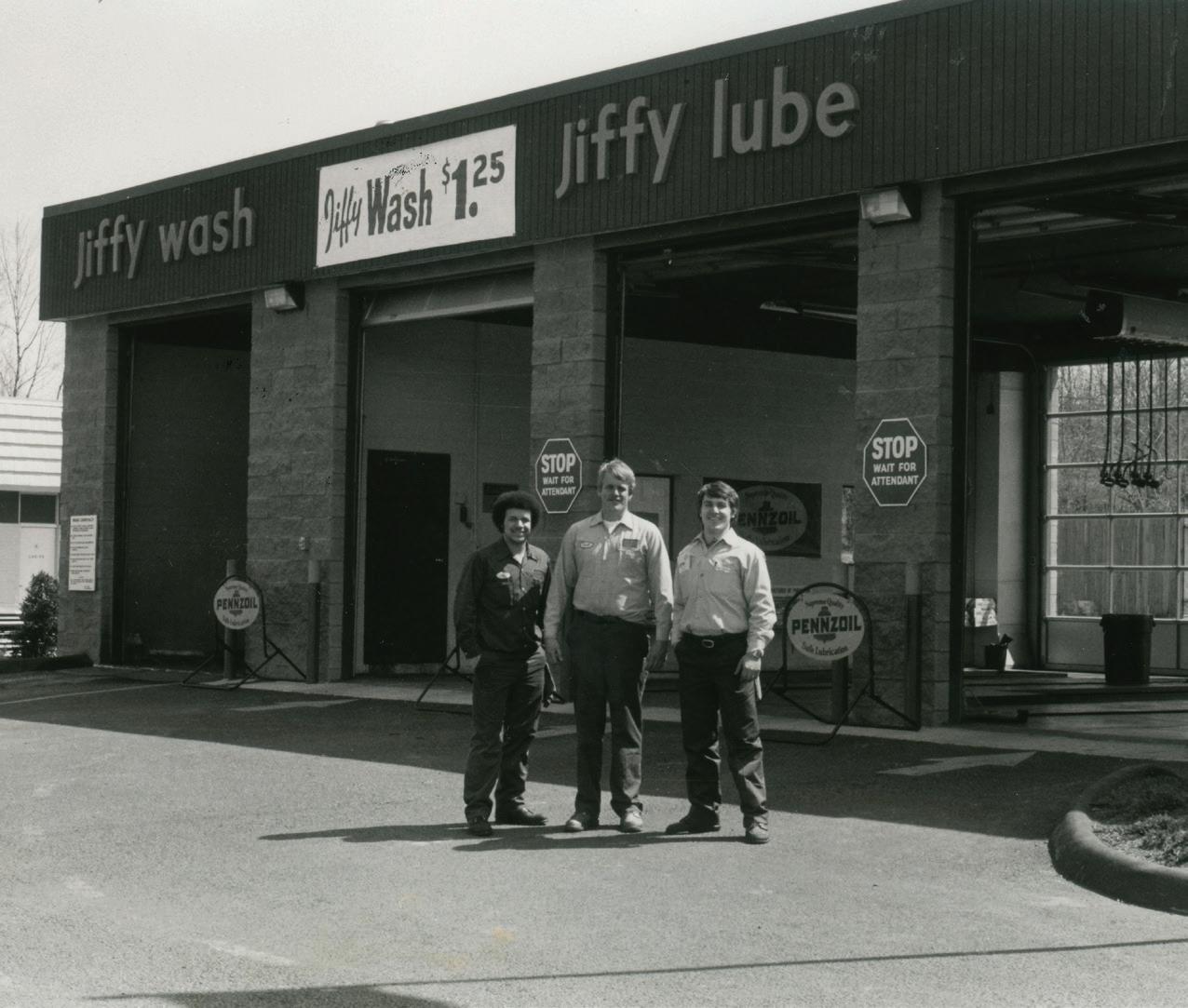
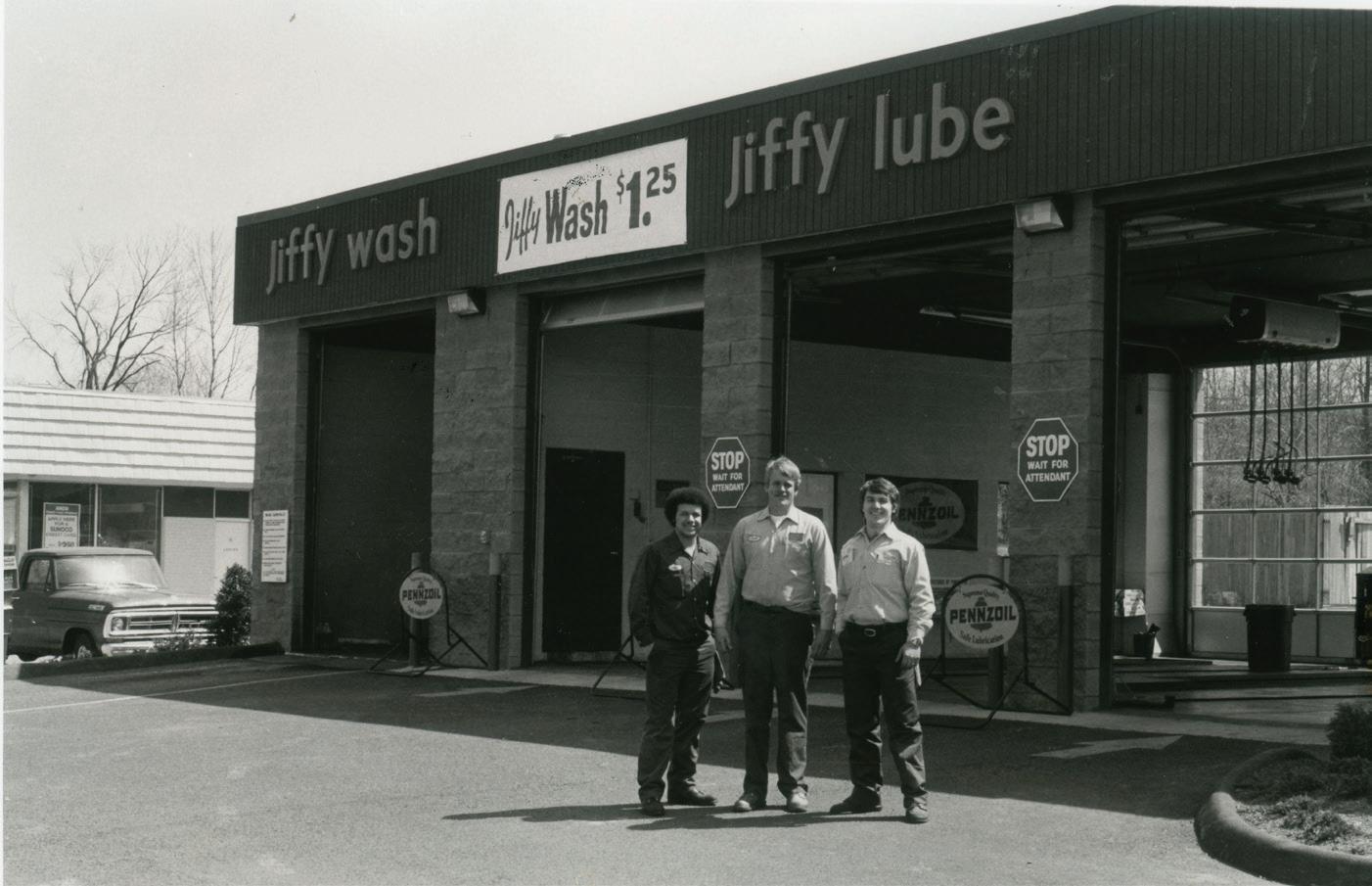
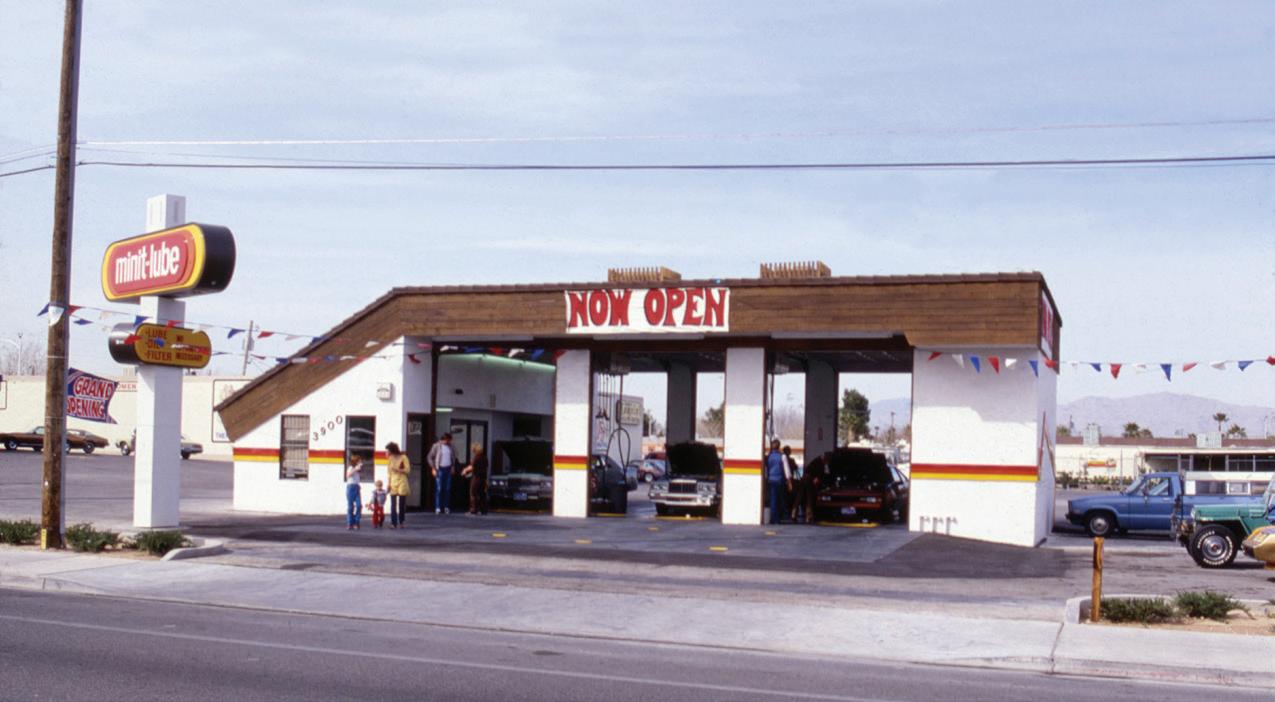
Jiffy Lube is credited as the nation’s first major fast lube chain, dating back to 1979. Take 5, meanwhile, is recognized as the brand that launched the first stayin-your-car quick lube model when it began in 1984.
Four decades later, both companies are still heavyweights in the industry. NOLN recently caught up with representatives from both Jiffy Lube and Take 5 to understand how their shops have evolved over the years—both in terms of what has remained consistent since they first opened their doors and what modern innovations have kept them at the forefront of the field.
Changing with the Times
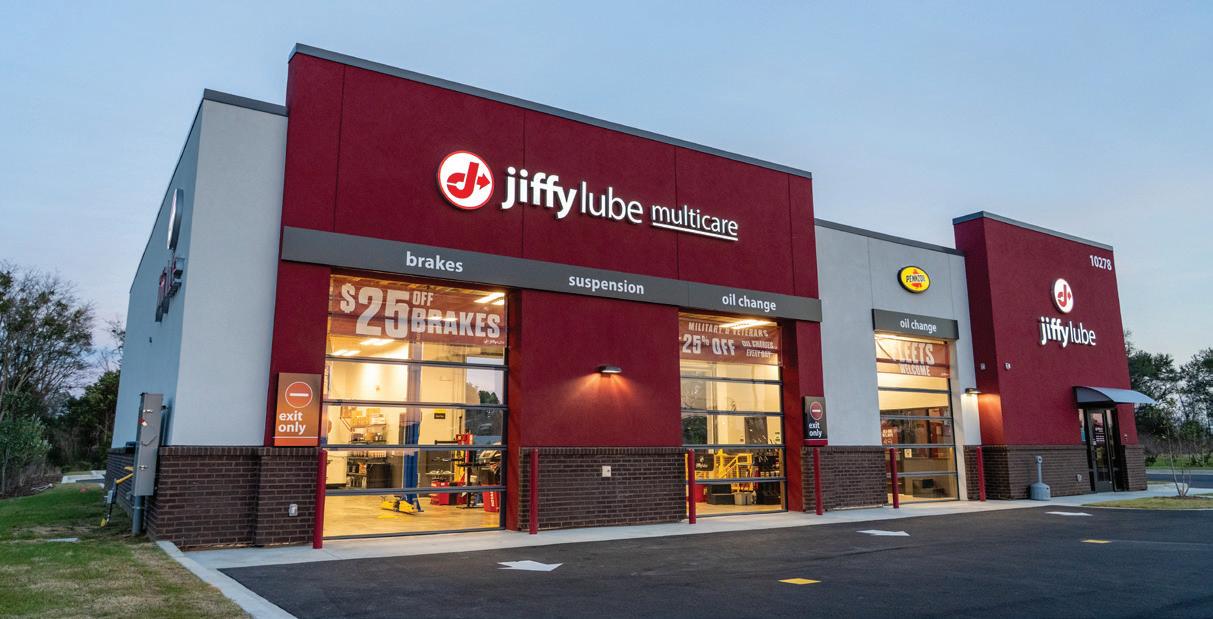
Jiffy Lube has updated its service offerings since opening its first location in 1979. Today, the company features a "Multicare" model with additional services.
PHOTOS:
JIFFY LUBE
Four decades ago, Jiffy Lube service centers were designed with three goals in mind: accommodate efficient vehicle flow, technician safety, and service consistency, says Jiffy Lube International President and CEO Mauricio Quezada. Shops were built with a minimum of two service bays. Customers exited their vehicles upon arrival and waited in a designated guest area while technicians performed service.
“The layout emphasized quick access to under-vehicle service areas (with a full basement design) and standardized equipment placement to support fast, repeatable maintenance,” says Quezada.
In Take 5’s early years, its shops were focused mostly on very simplistic car maintenance services.
“There was not a lot of room, just a couple of roll-up doors. Get cars in, get cars out,” says Amy Hine, Take 5 vice president of operational excellence.
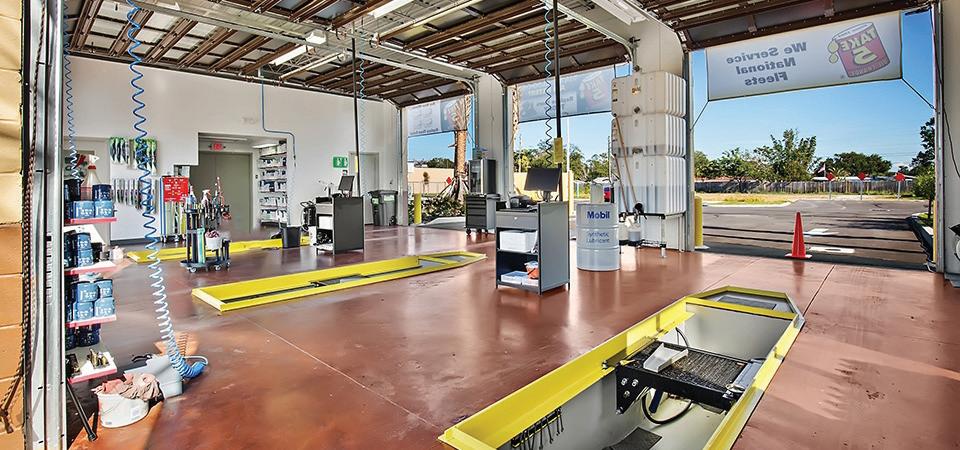
“But they did have a few small things, like equipment to do tires. Some (locations) had basements where they could store bulk oil and pull them up, almost like a gas pump. But it was a very simplistic layout because they wanted to focus on what if we let our customers just stay in their car while they had these basic services.
“There was not a lot of room for inventory, just a box with a little bit of an office, and everything else happened on the floor, like an open kitchen.”
EVOLVING WITH GROWTH
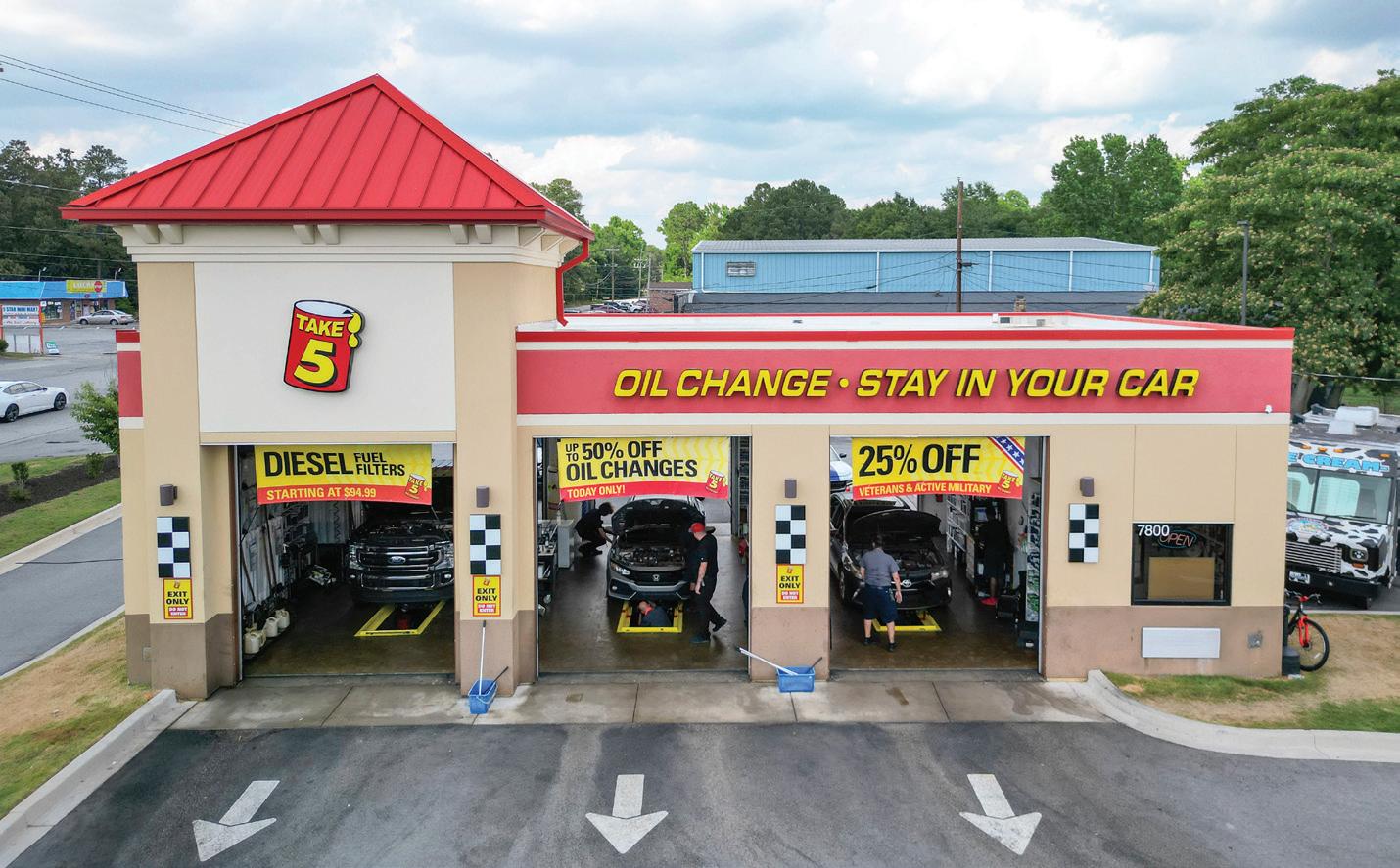
As Take 5 began to expand, the company stuck to a consistent layout for its new locations as much as possible. Variances in most cases came from mergers and acquisitions of independent shops, some of which were full-service maintenance facilities that wanted to sell, Hine says. Lifts were removed from any shops that had them at the time of acquisition, as Take 5 focused on its stay-in-your-car service model, which necessitated vehicles staying on the ground.
Take 5 ramped up its expansion in the mid-1990s. At that point, the company decided to go all-in on the stay-in-your-car, 10-minute oil change model it pioneered. This meant getting rid of tire services and other longer tasks.
“So, about 1996, that’s when we started to say that this is what we’re focused on, just the 10-minute, stayin-your-car oil change. This is all we’re going to do,” Hine says. “We’re going to design our shops around that. We’re going to build around that. Any services we add will just be something we can also do, but not impact that fast service and not make you get out of the car.”
For Jiffy Lube, the drive-through bay configuration and customer lounge with observational windows were standard design features across all locations.
“We have always had the belief that we want our customers to see how we are taking care of their vehicles,” Quezada says.
Bay count is one aspects of Take 5’s business model that has been tinkered with.
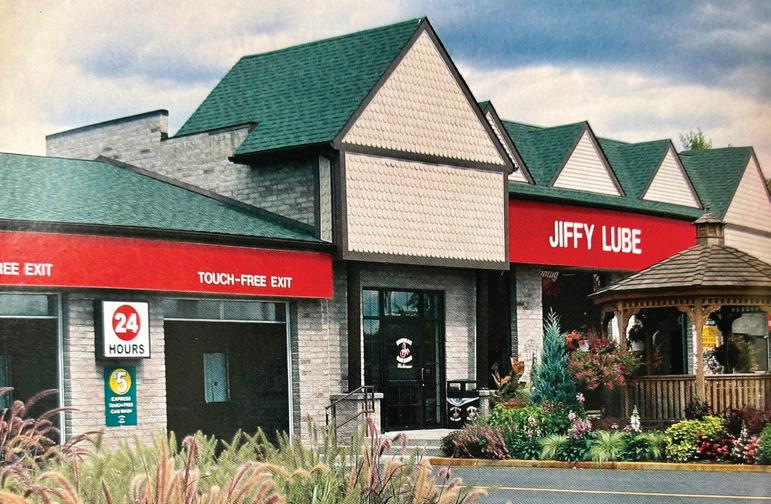
Evolving, But Consistent Jiffy Lube and Take 5 have made technological improvements while maintaining their core values.
“If you have a smaller area and you want to do two bays, we find that that does impede traffic a lot,” says Hine. “Single bays are something we really never wanted to go forward with. The double bay we have in some places, but only where we have to.
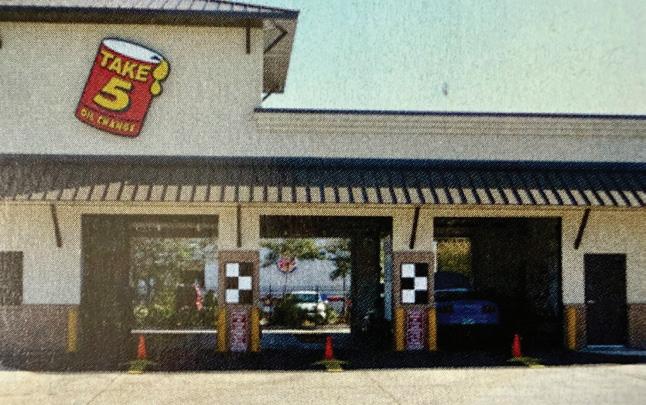
“We’ve also played with the idea of four, five, and six bays. … We’ve found that once you get past the fourth bay, it’s really hard to manage that. So, we’ve found the sweet spot is three bays, which is what we stick to, unless there are real estate constraints that we have to consider.”
The three-bay model has also allowed Take 5 to plan its labor more efficiently, Hine adds.
There have been a number of adjustments made to the standard Jiffy Lube facility. Over the years, locations have been expanded to multi-bay service layouts based on car count demand and expanded service offerings, as well as trying to adapt to changing consumer and vehicle technologies, says Quezada.
The increase in service bays has, in turn, led to increases in labor costs to accommodate additional staff.
“As vehicles have become more complex, a higher-level skill set is
PHOTOS:
required of service center technicians, which is also reflected in today’s labor costs,” says Quezada, noting that the company has provided ongoing learning opportunities for employees through online training courses, coaching, instructor-led courses, and computer-based simulation.
Quezada says that changes to vehicles—technological advancements, more high-performing parts and components—and changing customers have driven other developments in how Jiffy Lube shops operate. In 2018, the company launched its “Multicare” model, incorporating brake, tire, and other wear-related maintenance services as drivers held onto their vehicles longer.
Quezada notes one other area in which Jiffy Lube shops have evolved from the company’s early days: increased safety protocols.
“When Jiffy Lube launched, stores did not have safety nets covering the pit area,” he says. “Today, safety is a top priority with numerous
processes and procedures in place to help ensure the safety of service center employees and customers.”
STRATEGIC INVESTMENTS IN TECHNOLOGY
Technological improvements at Jiffy Lube locations have been implemented with the goal of enhancing the experiences of both customers and employees.
“From VIN scanners, ID/DL scanners, mobile bay tablets, and mobile payment processing, continuous innovation and use of technology is critical,” Quezada says. “Additionally, Jiffy Lube offers an instant online estimate tool to help drivers research services and receive a price estimate for their upcoming visit.
“Technology has clearly evolved— from a manual process at checkout, requiring managers to manually handwrite invoices and use a cash register tape to today’s current POS and payment systems.”
Take 5 has taken a measured
approach to new technology, sticking with what works until it doesn’t, Hine says.
“Sometimes, what worked then probably still works now, like a good old wrench,” Hine says. “What I like is we don’t always chase what is the shiny penny that’s new. You don’t see us with digital menu boards at this time. You don’t see us trying to throw every piece of technology and saying how this is going to help. One, for the technicians in our shop, we want to keep it (uncomplicated). This is what we want them to know and how to service the guest. Our guest experience and our customers are our No. 1 priority. We don’t need to be flashy. We need to be authentic.”
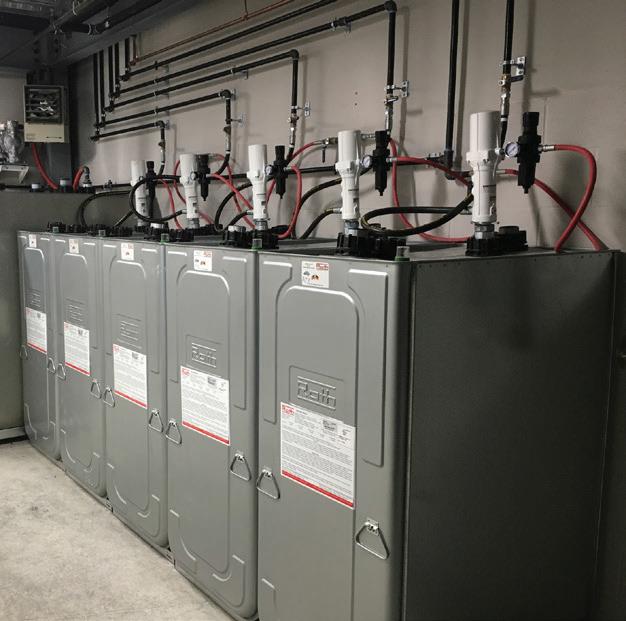
On the flip side, though, Take 5 will invest in new tech if it will help to address a very specific problem in the shop, Hine adds. One example is the installation of bulk oil tank monitors to help with tracking usage and planning overall inventory. Take 5 has also found new uses for previously installed equipment, Hine says.
“The one that we’re really into right now is using all of our cameras in the system, our loss prevention cameras that we’d had in there before,” Hine says. “We have converted them into AI cameras and are using that from a technology perspective to understand whether we are giving the optimal guest experience.”
This includes tracking wait times, bay times, how many cars are driving off, whether customers are being promptly greeted with a smile and a water, and whether managers are visiting vehicles at the end of each service.
“But our overall goal is if it doesn’t support the guest experience and if it doesn’t support efficiency, then it’s probably not something we need to do right now,” Hine says.
SHOW-AND-TELL APPROACH TO SELLING SERVICES BUILDS TRUST
Shops must walk a fine line when selling add-on services, offering only what the customer already needs to avoid it being seen as a transparent cash grab
BY PETER SUCIU
ANYONE WHO HAS STOPPED for a quick bite at lunchtime has almost certainly been asked if they’d like an appetizer, drink, dessert, or something else. Call it the “would you like fries with that” approach to adding some extra. This isn’t limited to food service.
Across the retail sector, offering something extra is an effective way to increase sales and, in turn, profits. It can include extended warranties, maintenance plans, product bundles, or other offerings. This is sometimes called an “upsell,” and most consumers expect it. However, studies have shown it must be done right to
be effective. Consumers may expect the upsell, but they strongly dislike irrelevant, high-pressure, or untimely offers that can make them feel manipulated. When done incorrectly, such as pushing a service that isn’t needed, it can break customer trust and, in turn, lower customer loyalty.
In the automotive service industry, where consumer trust isn’t as high as it could be, shops will need to walk a fine line when selling add-on services. Offers should match what the customer already needs to avoid it being seen as a transparent cash grab, which will only lead to churn. Moreover,
customers should never feel that they lost control by being forced into decisions they didn’t ask for.
Ben Capelle, owner and operator of Costa Oil 10 Minute Oil Change franchise locations in Mentor-onthe-Lake and Perry, Ohio, explains that a little education goes a long way.
“We take an educated approach versus a traditional hard sell,” Capelle tells National Oil and Lube News.
“You never want to force a sale, and instead you want to try to educate someone, and in some cases that involves showing them what the product can do or how it will help them.”
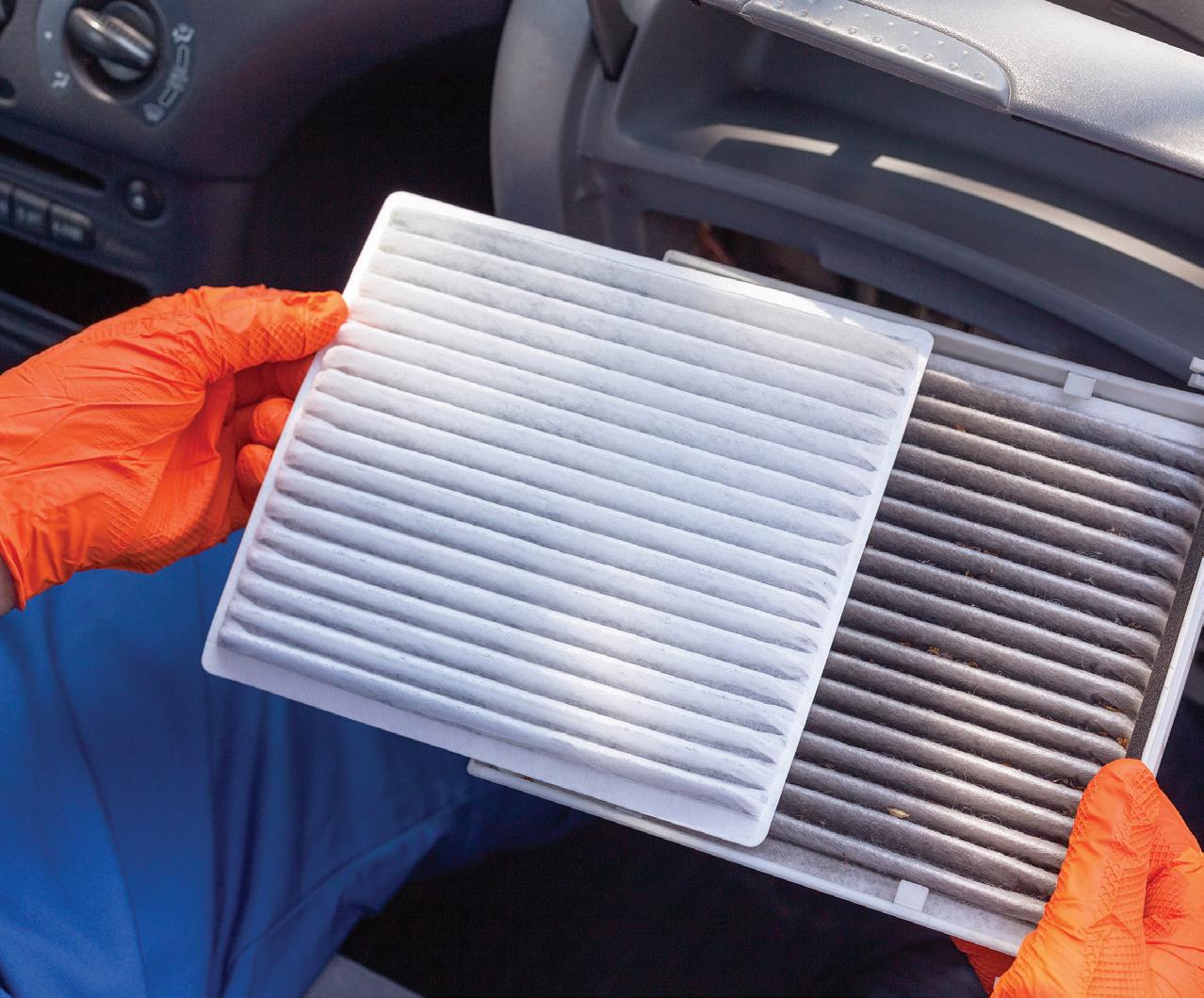
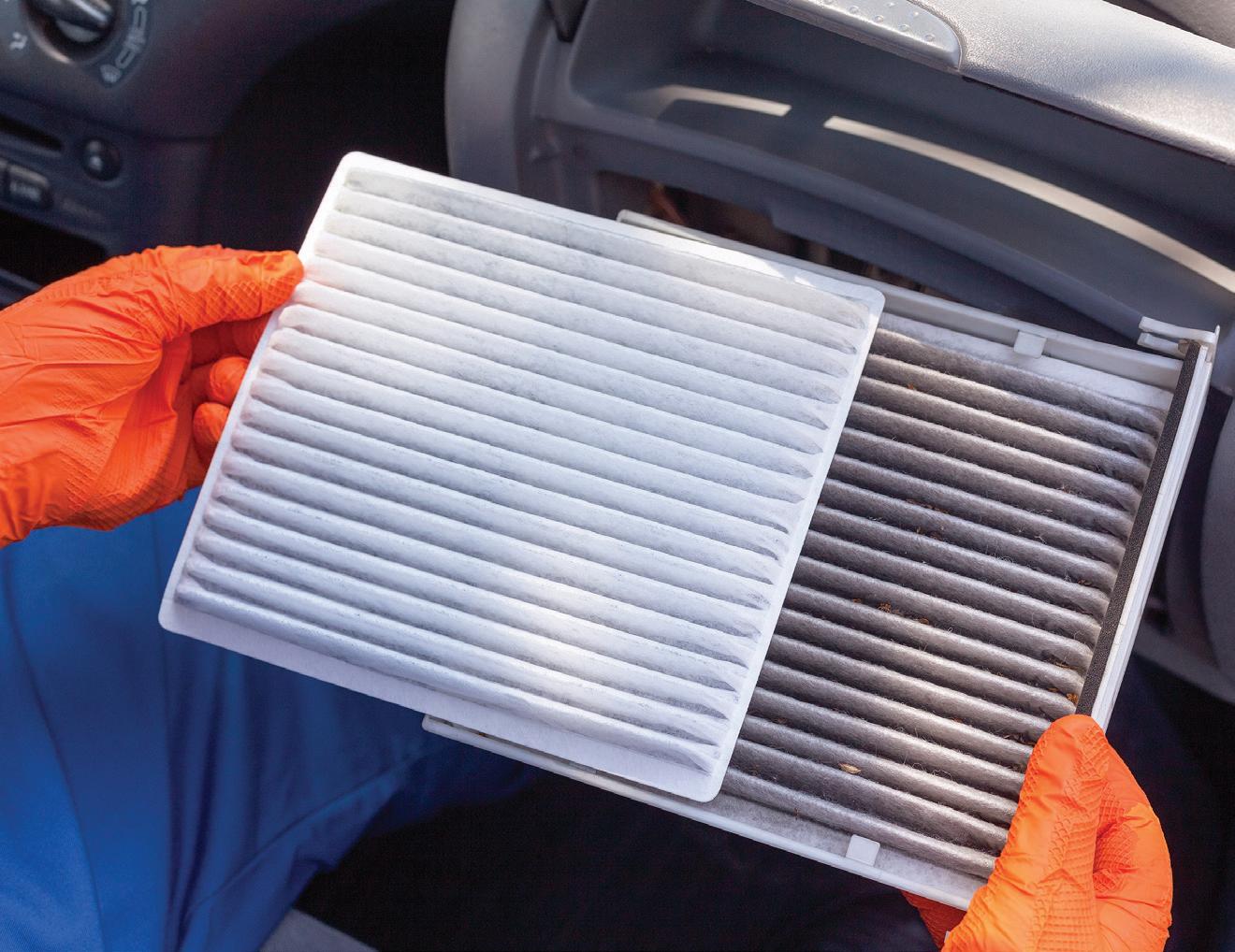
A Dirty Air Filter May Be All It Takes
Customers who go in for an oil change largely don’t see the process. They are paying for a service that may extend the life of their cars, but it doesn’t look or even operate any differently when they pull out of the parking lot. Convincing those clients to pay for even more services presents a challenge, because they’re not getting fries with that.
Capelle says that his guys are trained to pull out an air filter, which can be presented to the customer. It is part of a “show-and-tell” approach to offer extra services to the clients. This allows the customer to see what they are paying for.
“Sometimes this is a clean oil filter, and we tell the customer they don’t need to do anything,” adds Capelle. “Other times, they’ll see it is dirty, and they can show the customers and say, ‘This one has seen better days.’ That presents a visual, as people know what a dirty filter looks like. Sometimes during a coolant exchange, we’ll show them so they can see what really dirty coolant looks like.”
That builds trust, especially among repeat customers who will understand that the upsells aren’t
routine. For other services, there will still need to be an explanation of why something might be needed.
“If it is an additive, it is about education,” says Capelle. “We need to stress, ‘This is going to help you get better fuel economy. Have you done it in the past?’ Then we can explain it to them.”
According to Capelle, Costa Oil 10 Minute Oil Change remains very committed to getting customers in and out of the shop quickly, which limits the number of extra services it can offer. It hasn’t added or even dropped many of the add-ons.
“We have a very limited pool of value-added we offer the customer,” admits Capelle. “We’re very much an oil change shop, and don’t offer a lot of services. But it is still about education.”
Let the Customer Decide
Extra services should be offered, but if the client declines, it should be left at that in most cases. Unless something presents a real danger, the customer is always right. Attempting to add a few dollars during what the customer expected to be a quick oil change won’t result in repeat business.
“We are very low pressure, and we try to let the customer decide,” Capelle tells NOLN.
Instead of a high-pressure sale, customers should see value. This is also where promotions can come into play, and Capelle says he will offer package deals customers can choose from. That helps the client feel in charge.
Extra services can also be mentioned when going over pricing at the
start of the process, and presented if needed. If a tech sees an issue, they should say something, and whether it results in an add-on service, it may still build customer trust.
“If someone comes in with a car that has more than 150,000 miles, we’ll mention a high-mileage additive, and then leave it to the customer to decide,” says Capelle. “Other products, we can ask after we’ve started the work. While my bottom side guy is under the car, we’ll ask about wiper blades.”
This is where the show-and-tell while educating comes into play again.
“If you show someone a dirty cabin filter, nine times out of 10, they’ll see it is really gross and say ‘I want a new one,’” says Capelle. “So, we see this as ‘show-and-tell’ with a very heavy emphasis on education.”
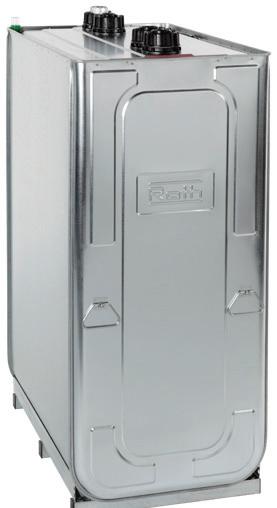
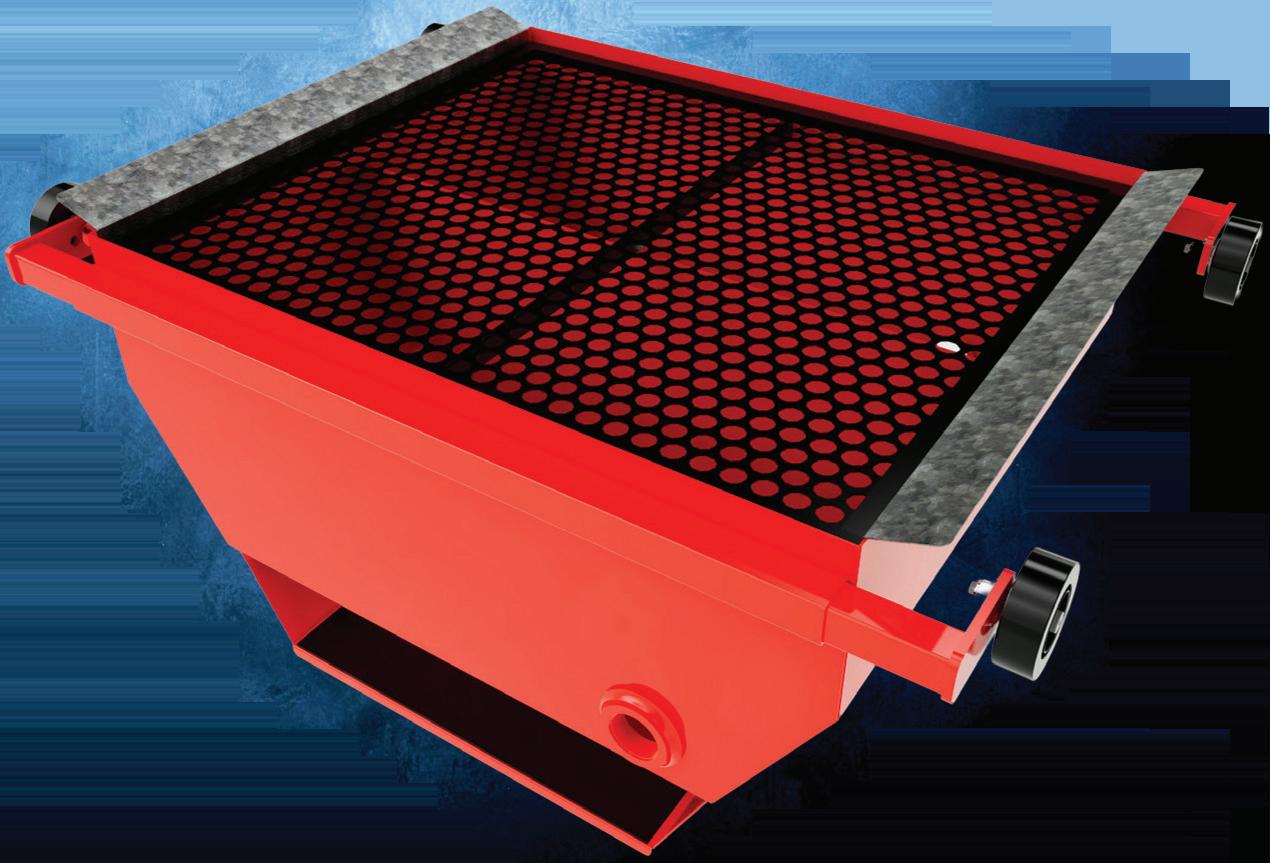
• Multiple sizes, available in 28”, 30”, 32”, and
• Holds 30 to 40 gallons of oil
• Adjustable axles to fit pit openings from 30”
• Interior baffle system reduces wave action and adds stability during movement
• Dual 1.5” NPT drain outlets
• Smooth ball l - bearing roller casters for effortless mobility
• Optional magnetic tool shelf with 100 LB capacity
PACKAGE DEALS KEEP CUSTOMERS COMING BACK
Bundling quick maintenance services creates value for guests and builds loyalty to your shop
BY CAROL BADARACCO PADGETT
THE HIGH COST OF LIVING means a bumpy road for just about every driver going down the road today. But that doesn’t mean your customers should skip quick maintenance, which can end up saving them big time in the long haul. As a quick lube and quick
maintenance shop operator, now is an ideal time to come up with smart package deals that both give drivers a break and get them rolling into your business for service.
Here’s how those packages are formulated at Oil Express, a 44-year-old business 20 miles north
of downtown Cincinnati in West Chester, Ohio, according to District Manager Robert Gallatin, with five straightforward considerations.
Consider your clientele. As district manager for the past 11 years, Gallatin has made it a priority to look out for
the shop’s loyal legion of customers.
“We are very, very customer-oriented,” he says, even when the road is smoother, economically. “As a business, we realize that without the customers, we are unemployed.”
Working-class drivers make up the main bulk of Oil Express’s clientele—men and women driving back
and forth to Cincinnati for work, rideshare drivers, and food delivery gals and guys. Fleet maintenance business is a smaller part of the team’s mix.
“Our clientele being working-class, there’s pretty much packages on everything,” Gallatin says. “For instance, the oil change, cabin air filter, and the air filter package we have going on right now saves the customer $45.”
Cover all the basics. For Oil Express, the basics include all primary fluids, such as transmission, coolant, differential, transfer case, brake, power steering, and every other vital fluid in addition to oil.
Gallatin says, “Of these, oil is the least lasting one, even good oils. We recommend 5,000 miles on synthetic oil and 3,000 miles on semi-synthetic.”
Other valuable services drivers can find right now at Oil Express come with coupons. “Coupons for coolant flushes, for transmission flushes, for differential services, and brake fluid services—those are $15 off per service,” Gallatin says.
Coordinate with the seasons. Part of putting the customer first is also considering the conditions in which they’re driving, weather-wise.
Through email, standard mailing, and opportunities for multiple coupon mailing distribution, such as Valpak, Gallatin says Oil Express keeps its foot on the marketing pedal.
“(Our packages) are very seasonal. Right now, AC services are getting ready to show up in our coupons,” Gallatin says. “We’re going to run a $25 coupon on that.”
In wintertime, the business’s coupons focus more on coolant flushes and oil changes. “There’s also packages with oil changes and tire rotations,” Gallatin adds.
Another popular package at Oil Express is wiper blades and oil change, where the wipers are buy-one-get-one-free.
Target what customers truly need. Gallatin says his customer-focused crew helps drivers save by consistently checking their vehicles’ fluids, which can help people steer clear of impending car trouble.
Brake fluid and coolant can hint at future issues. For example, pH balance can indicate that coolant needs changing, while water in brake fluid can signal “sweating inside the lines,” Gallatin says, due to humidity.
“So, we test on the life of these fluids” and find out what customers truly need, Gallatin notes.
This diligence also helps Gallatin figure out what packages and components of those packages will be most helpful to Oil Express customers.
Because quick maintenance is only part of the equation in keeping people safely on the road, Oil Express has a sister company, Express Pro, that’s a full service center.
“They work on the bigger jobs that we don’t handle,” Gallatin says.
Keep a clear focus. While the maintenance and repair jobs and packages may be different at Oil Express and Express Pro, the main business objective is always the same.
“They’re pretty much set up the same way as us—where customers matter (most),” Gallatin states.
This customer-first mentality is what keeps Gallatin happy in his job.
“I know when my friends or family tell me I’ve got to try something, there is no coupon or package that can sell me like they can,” he says. “That’s one of the things that has kept me with the company for so long. It’s hard to find businesses that really care.”
He adds, “It’s not always about the profit.”
COMMUNICATION WITH COMMUNITY LEADERS COUNTERS NIMBYISM
Faced with NIMBY—“Not in My Back Yard”—sentiment from
officials
in Charlotte, North Carolina, Valvoline Instant Oil Change ultimately gained approval through constructive dialogue
BY ENID BURNS
NIMBY, WHICH STANDS FOR
“Not in My Back Yard,” is a phrase common in bedroom communities and in quaint towns. It can even appear in population centers with a busier main street. It’s when residents oppose the development of institutions or businesses in their community. Support or opposition, in many cases, is in the eye of the beholder. One resident might be opposed to a chain or big-box store moving into town because of the excess traffic it will bring or the increased demand on resources. A neighbor might see
benefits in convenience and jobs brought to the area. It is very individual.
Situations of NIMBY can go either way. Very often, the business or institution is blocked by opposition. Just as many times, a business can proceed and open. Some residents may continue to boycott the business, while others will patronize the establishment and even discover the benefits it brings to the area.
Fast oil change businesses aren’t immune from “NIMBYism.” Even when a community lacks a quick lube, residents might still oppose
the construction of one. In Charlotte, North Carolina, a Valvoline Instant Oil Change franchisee faced such opposition after a zoning change allowed for the business to move in.
“We believed that the community had a need for the services that Valvoline Instant Oil Change provides,” says Joel Stanley, franchisee of the North Carolina location.
Residents opposed breaking ground on the business. News reports quoted attendees at area demonstrations saying the business would affect the neighborhood’s
walkability and that there were options for quick lube services in the area. Those opposed to the shop went so far as to post a petition on Change.org. It garnered roughly 1,000 signatures. Ultimately, though, the franchise overcame community opposition.
The Challenge
A change to zoning laws in Charlotte, North Carolina—the 2023 Unified Development Ordinance— opened the door for a Valvoline franchise to obtain a contract on a vacant lot at a busy intersection. Residents opposed the construction of the new, two-bay shop. The community opposed the national chain.
“There were concerns with a national brand eroding the local, community feel for the surrounding neighborhoods, given the rich history of supporting local business,” Stanley explains.
The Solutions
Ultimately, the Valvoline franchise was built and opened for business on Jan. 9, 2026. Stating a clear message of the business and what it offered to the community helped overcome community resistance.
No significant concessions were required.
“We did make sure we were clear on the exact nature of our business and the expectations of the building and our landscape,” Stanley tells NOLN. The prior landscape was a vacant lot.
A presence at community meetings and an open, clear dialogue helped the business obtain approval for the location.
The Aftermath
In the first few months of business, many within the community have patronized the quick lube.
“It would appear our assessment of the need in that community was accurate,” says Stanley. “So, we’re pleased to be able to support it.”
“When we open any store, we aim to understand what’s important to that community and get involved, as we are part of the community,” Stanley emphasizes. “This was particularly the case with this store because our headquarters is in Charlotte and we have people who live in the neighborhood.”
Listening to the community paid dividends in Valvoline’s pursuit of gaining approval for the new shop, Stanley says.
Presenting research on the need for such a business in the community is essential for a business plan. It can also help in easing any concerns nearby residents have about the impact on the community.
The Takeaway
The operator, like many quick lube franchisees, focuses on the community and seeks ways to serve it beyond simply providing oil changes.
“We met with local community leaders to determine how they would propose we support the community in addition to our core business, as well as attending a neighborhood board meeting to introduce ourselves,” Stanley says. “We have mutually agreed upon a number of opportunities.”
These opportunities are a way to bring the business closer to the community and even form bonds with it.
One activity the shop took part in was sponsoring a community Easter egg hunt. “Our area manager and his wife helped hide the eggs for the children of the community,” tells Stanley. “We are very excited about our partnership with the community.”
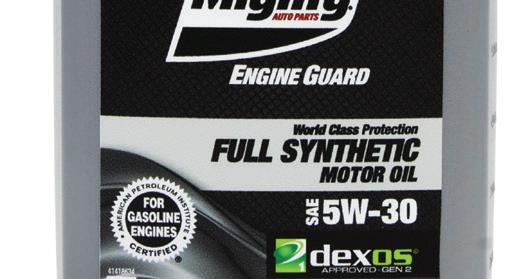
MOTOR OIL MOTOR OIL MOTOR OIL
EVERY OIL CHANGE IS EITHER AN OPPORTUNITY GAINED TO BETTER SERVICE today’s vehicles or an opportunity lost as your shop lacks the necessary inventory to get the job done.
Which will your next oil change be?
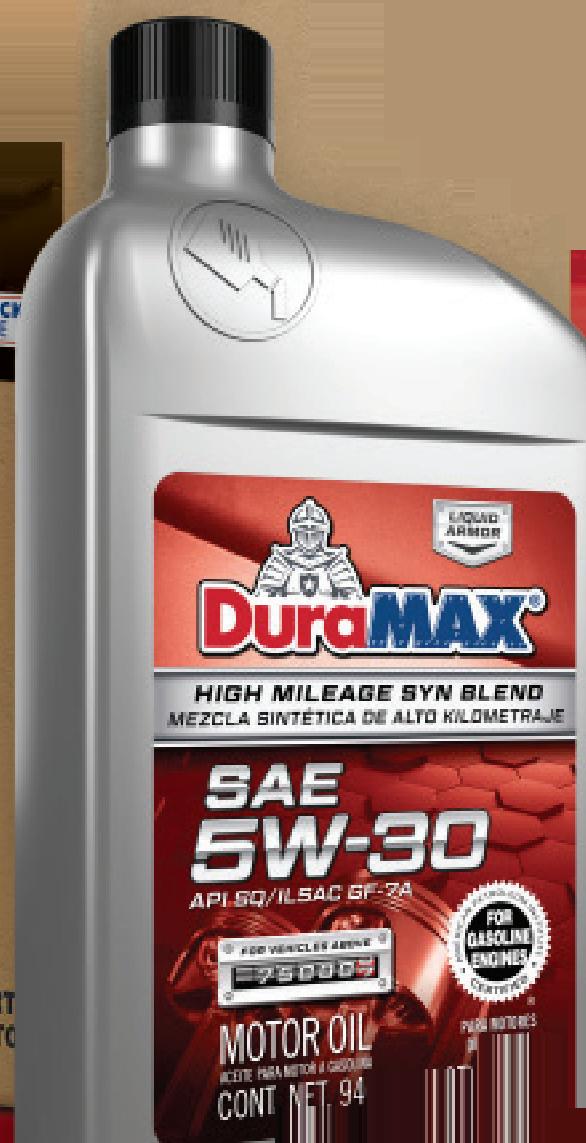
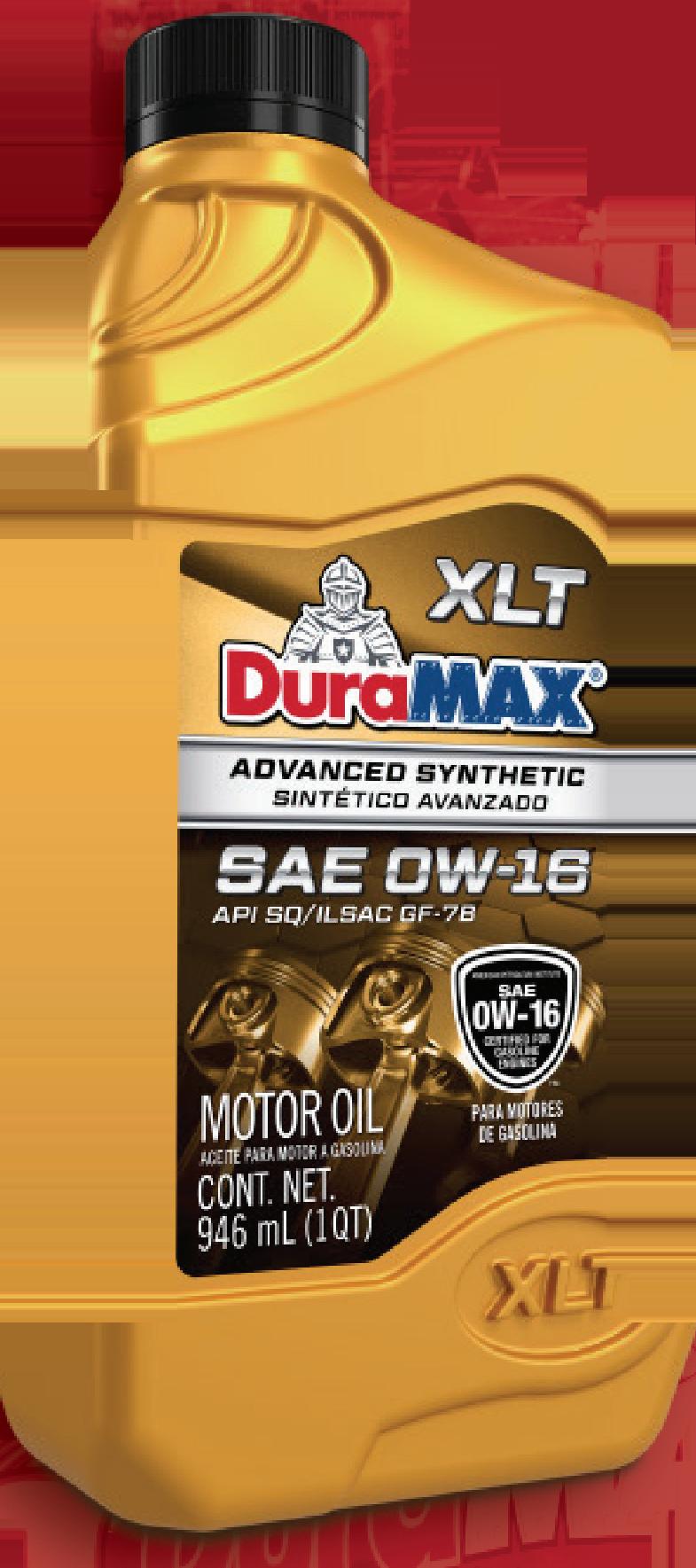
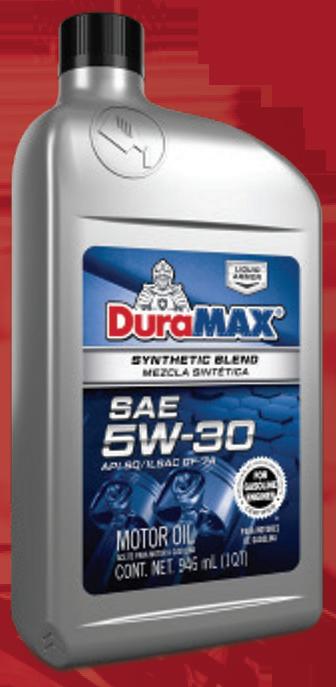
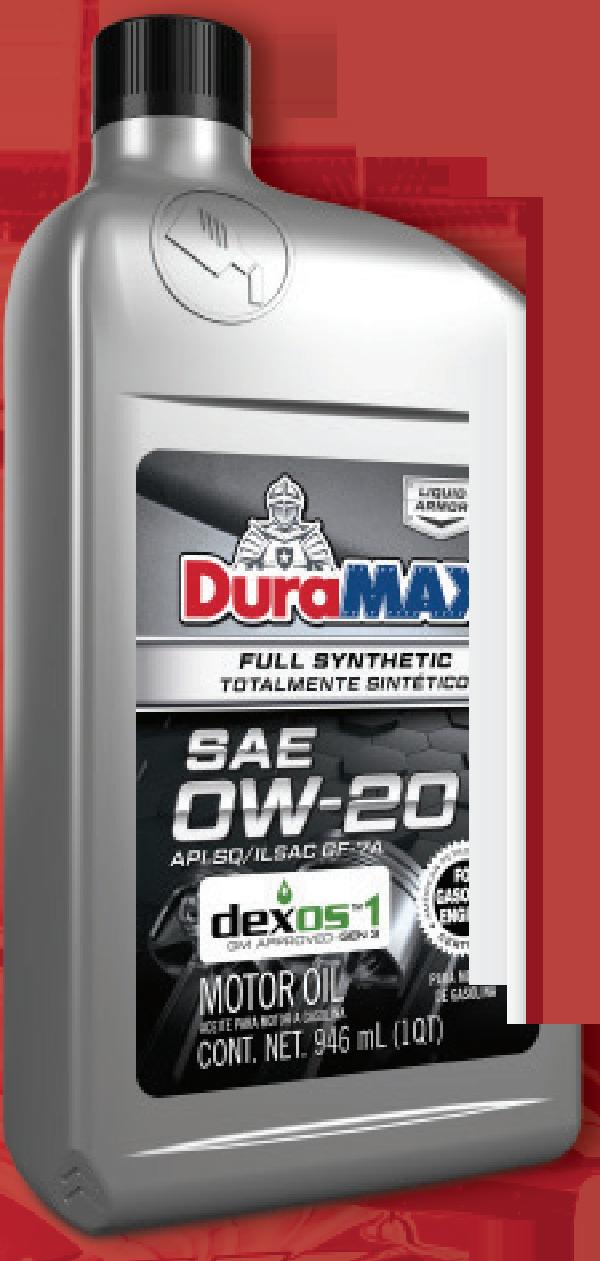
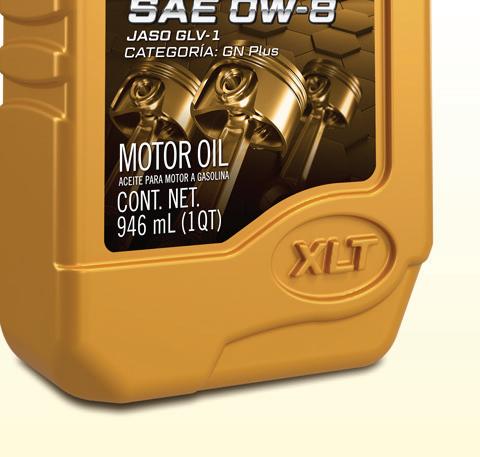
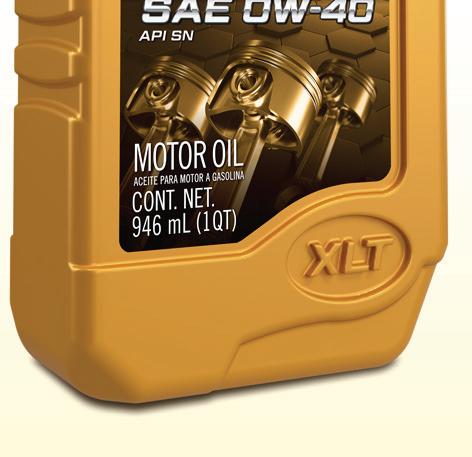
As more rigorous and specifi c recommendations come from OEM factory fl oors, the range of new specialized oils has expanded exponentially to meet those needs. If you don’t stock the specialty motor oils—varieties of synthetic, synthetic blend, high-mileage, and diesel— to service the vehicles rolling through your bays, rest assured your competitors are taking advantage. That’s why NOLN has compiled the annual Specialty Motor Oil Guide presented by Valvoline Global Products, a comprehensive list of the specialty motor oils available.
What is specialty motor oil? It’s anything that falls outside the term conventional oil. Inside, you’ll find a growing list of high-tech synthetic oils as well as synthetic blends. These oils cater to a growing array of SAE grades as required by manufacturers, but they also address driver needs. Varieties of high-mileage, truck oil, and even hybrid oils have been developed to help customers choose the right product.
NOLN also lists which engine oil specifi cations a product meets, be it API, ILSAC, ACEA, dexos or other.
Don’t let tomorrow’s opportunity pass you by. Be sure your shop is stocked with every oil the market demands.
Product Name API Specs Met
Specs Met
Specs Met
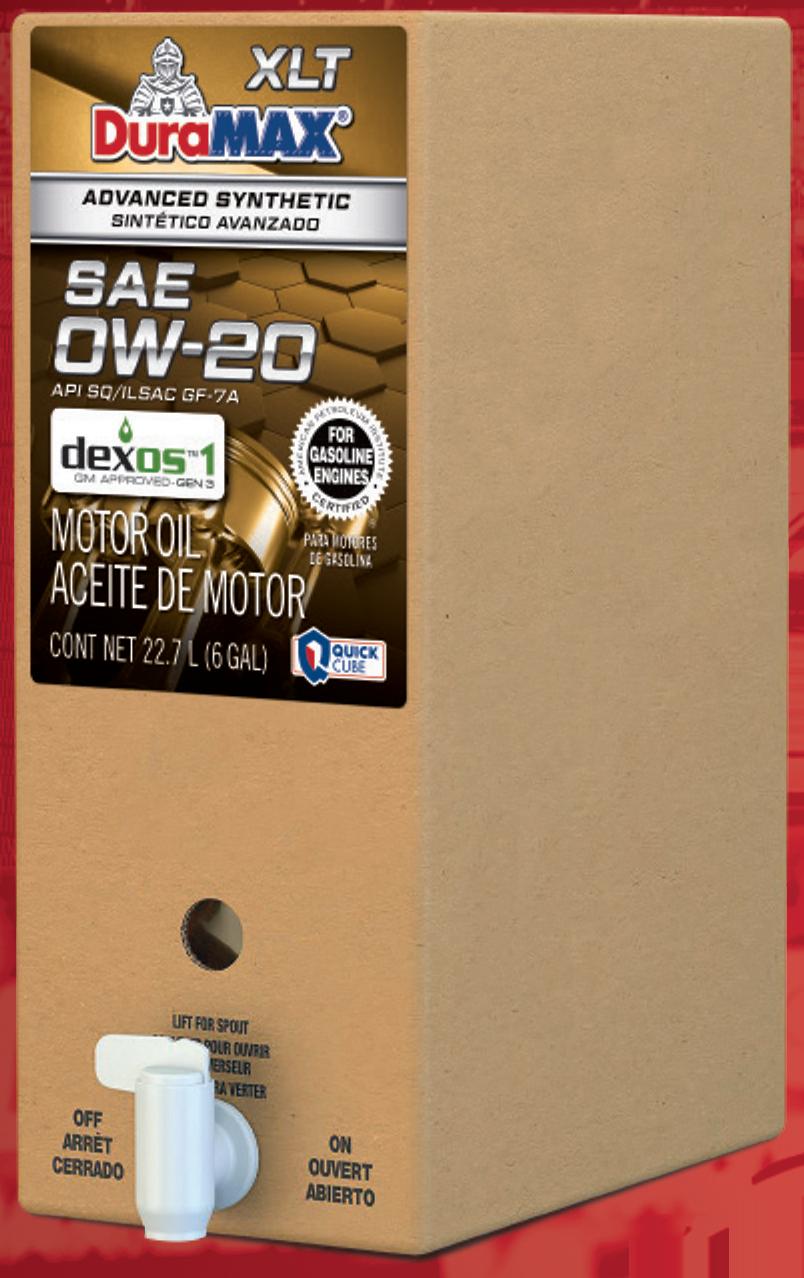
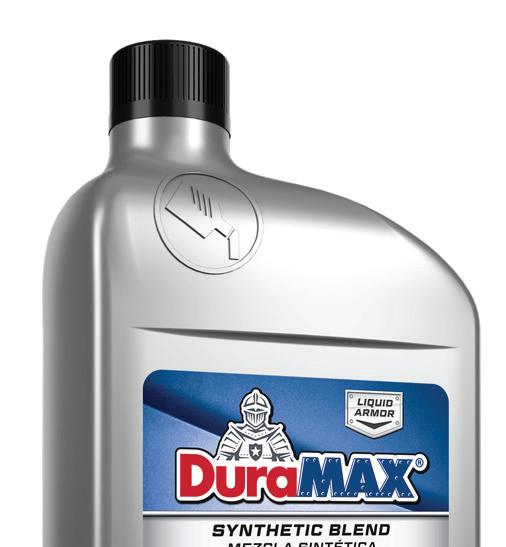
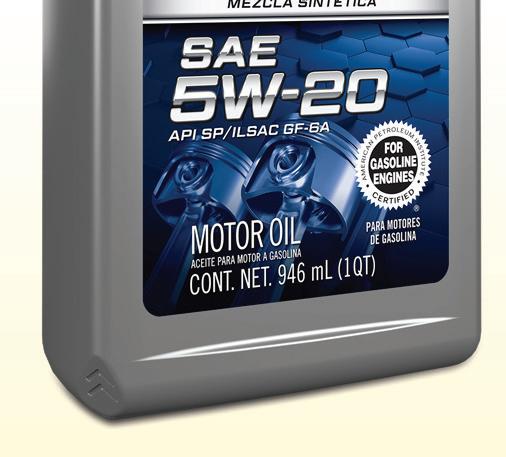
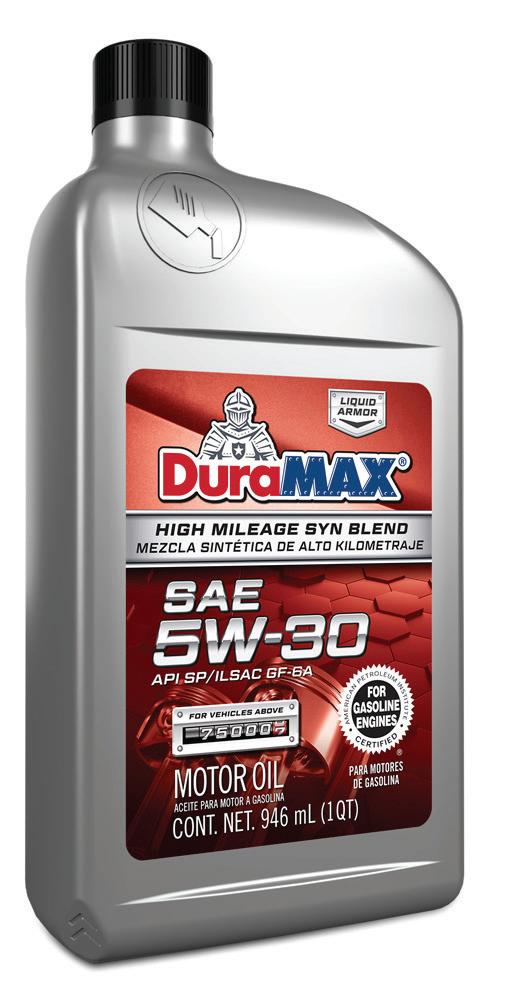
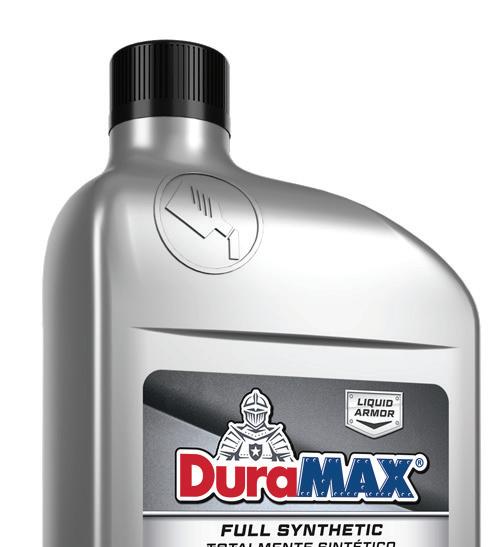
DuraMAX Full Synthetic dexos D SP, SN Plus C5, C6
DuraMAX Full Synthetic SQ Resource Conserving GF-7A
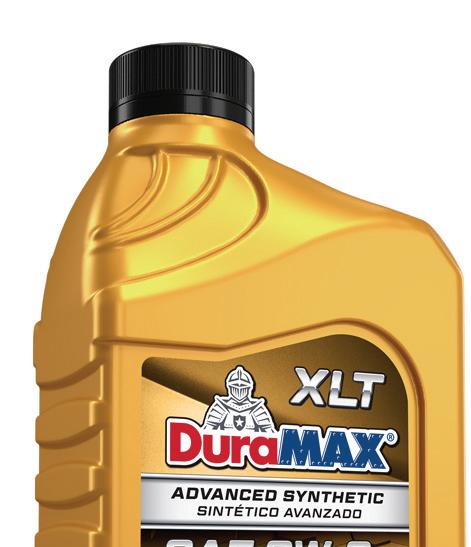
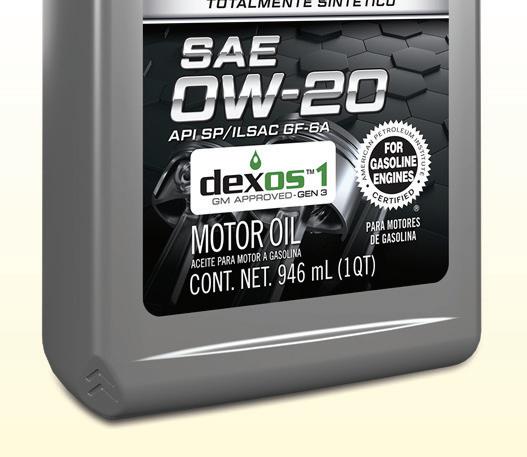
DuraMAX XLT Full Synthetic SQ Resource Conserving GF-7A
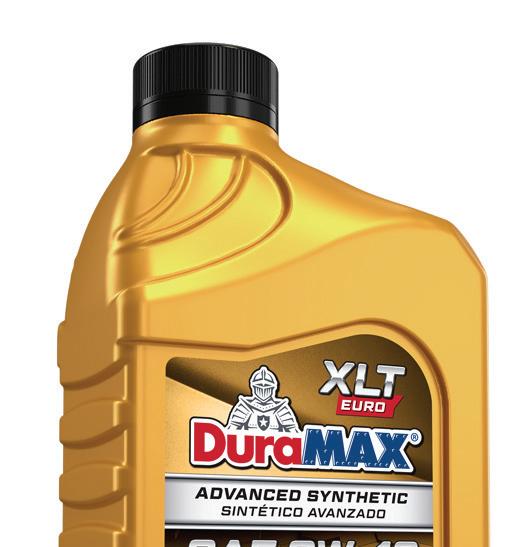
DuraMAX XLT Full Synthetic SQ Resource Conserving GF-7B
BMW Longlife-01, MB 226.5, MB 229.3, MB 229.5, Renault RN 0710, VW 502.00, VW 505.00
BMW Longlife-01, MB 226.5, MB 229.3, MB 229.5, Peugeot-Citroën PSA B71 2296, Renault RN 0700/RN 0710, VW 502.00, VW 505.00
API CK-4, CJ-4, CI-4+
ACEA E7-16, E9-16
"CAT ECF-3; Cummins CES 20086; Daimler MB 228.31; Detroit Diesel DFS 93K222; Deutz DQC III-10 LA; Ford WSS-M2C171-F1; JASO DH-2; Mack EO-S4.5; MTU Type 2.1; Renault RLD-4; and Volvo VDS-4.5"
0W-20, 5W-20, 5W-30, 10W-30
5W-20, 5W-30, 10W-30, 10W40, 20W-50
10W-30, 5W-40, 15W-40
10W-30, 15W-40
Challenges Pu ing Operators to the Test
Current events, technological change creating a complex environment for industry
Adam Tatum is director of operations for the Virginia Group, a Jiffy Lube franchisee with 11 locations.
He has over a decade of experience in the industry with a proven track record of building customer counts and sales, as well as using innovative ways to bring a new look to the automotive field for both the customer and the employee. Performance comes from growing your business through people.
THE YEAR 2026 HAS TESTED THE RESILIENCE of the quick lube industry like few others before it. A sector built on efficiency, repetition, and customer trust is finding itself at the intersection of global conflict, economic volatility, and technological change. Quick lube operators across the United States—from nationwide franchises to independent family shops—are facing a renewed reckoning with forces far beyond their control. The ongoing Iran conflict, record-high oil prices, supply disruptions, labor challenges, and the accelerating shi toward electric vehicles have combined to make 2026 one of the most complex years in the industry’s modern history.
The conflict in the Middle East has had an outsized influence on global oil markets. The closure of the Strait of Hormuz—the world’s most critical oil transit chokepoint—has driven Brent crude prices up more than 50% within a month. Energy analysts now warn that if the conflict persists, oil could climb well past $150 a barrel.
In the quick lube business, where nearly every product is derived from petroleum or shipped using fuel-dependent logistics, these price hikes are devastating. Wholesale lubricant costs have doubled since early spring, forcing shop owners to either absorb shrinking margins or increase service fees. Neither choice is sustainable. When prices at the pump surpass $4 per gallon, consumers start cu ing back on discretionary spending—and that means stretching oil change intervals. Fewer visits mean less revenue, even as operating costs climb.
Small and midsize lube shop chains are contending with erratic supply chains. The very same tankers rerouted away are now arriving late to U.S. ports, and material bo lenecks are elevating the costs of packaging and filters. These global pressures have collided with a local problem: finding enough skilled technicians to keep bays open.
The quick lube industry has long relied on entry-level labor. However, 2026 brings labor market conditions that are reshaping expectations. Inflation and rising housing costs have put pressure on wages, forcing you to raise pay to compete with other jobs. For small operators that already run on tight margins, paying more without hiking prices is nearly impossible.
Leaders are discovering that pay alone doesn’t guarantee retention. Workers want clear career paths, better training, and a sense of pride in their work. That has led forward-thinking owners to emphasize professional development, offering certifications, cross-training in inspection and repair. But this transition costs money and time, and it’s happening as the broader economy slows under the weight of conflict-driven inflation.
Leaders face a delicate balancing act. Raising service prices risks alienating cash-strapped drivers, while sticking with old pricing models erodes profit. Some shops have turned to subscription-based maintenance plans or loyalty programs to steady revenue. Others use digital reminders and customer apps to encourage timely repeat business. Still, the data shows visits declining as consumers postpone service to save money in the short term.
At the same time, modern consumers expect online booking, real-time service updates, and mobile payment options. The operators who thrive are those that can communicate value—not just speed, but reliability, expertise, and integrity at a time when every dollar feels stretched.
The quick lube industry has proved resilient before, and 2026 is no exception. The shops that survive will do so by embracing adaptability— diversifying services and training their teams to handle all vehicles. In many cases, their success will hinge on community connection. Independent operators who anchor themselves in customer relationships, transparency, and trustworthy service o en outlast broader industry downturns.
But long-term survival requires change, not just crisis management. Industry advocates are pressing for stronger suppliers, workforce through trade schools, and better communication with regulators to clarify how evolving automotive technologies fit within standards.
The challenges of 2026 reveal an uncomfortable truth: The future of fast, affordable vehicle maintenance may depend as much on geopolitics and innovation as on the mechanics turning wrenches in America’s garages. But every crisis contains opportunity. Those willing to adapt now stand poised to define the next chapter of the industry.
PHOTO: LUCAS MOORE
The 2026 NOLN Operator of the Year Award nominations are now open!
FOR DECADES, National Oil and Lube News has recognized elite quick lube shop owners with its annual Operator of the Year Award.
Since 1989, the NOLN Operator of the Year has been presented to operators who excel in all aspects of shop ownership—from business performance to staff leadership to community involvement.
NOLN Operator of the Year Award nominations are evaluated based on the following criteria:
• Demonstrate exceptional business performance
• Personal or professional achievements
• Examples of staff leadership/ mentorship/professional development
• Examples of community involvement
• What makes the shop owner stand out from his/her peers
To qualify for the NOLN Operator of the Year, nominees must own a quick lube facility, either an independent business or franchise location. Single- and multisite operators are eligible.
To submit a nomination or for more information, visit noln.net/awards