SHOW ME THE WAY


































SHOW ME THE WAY

40Increase Engagement, Reduce Waste
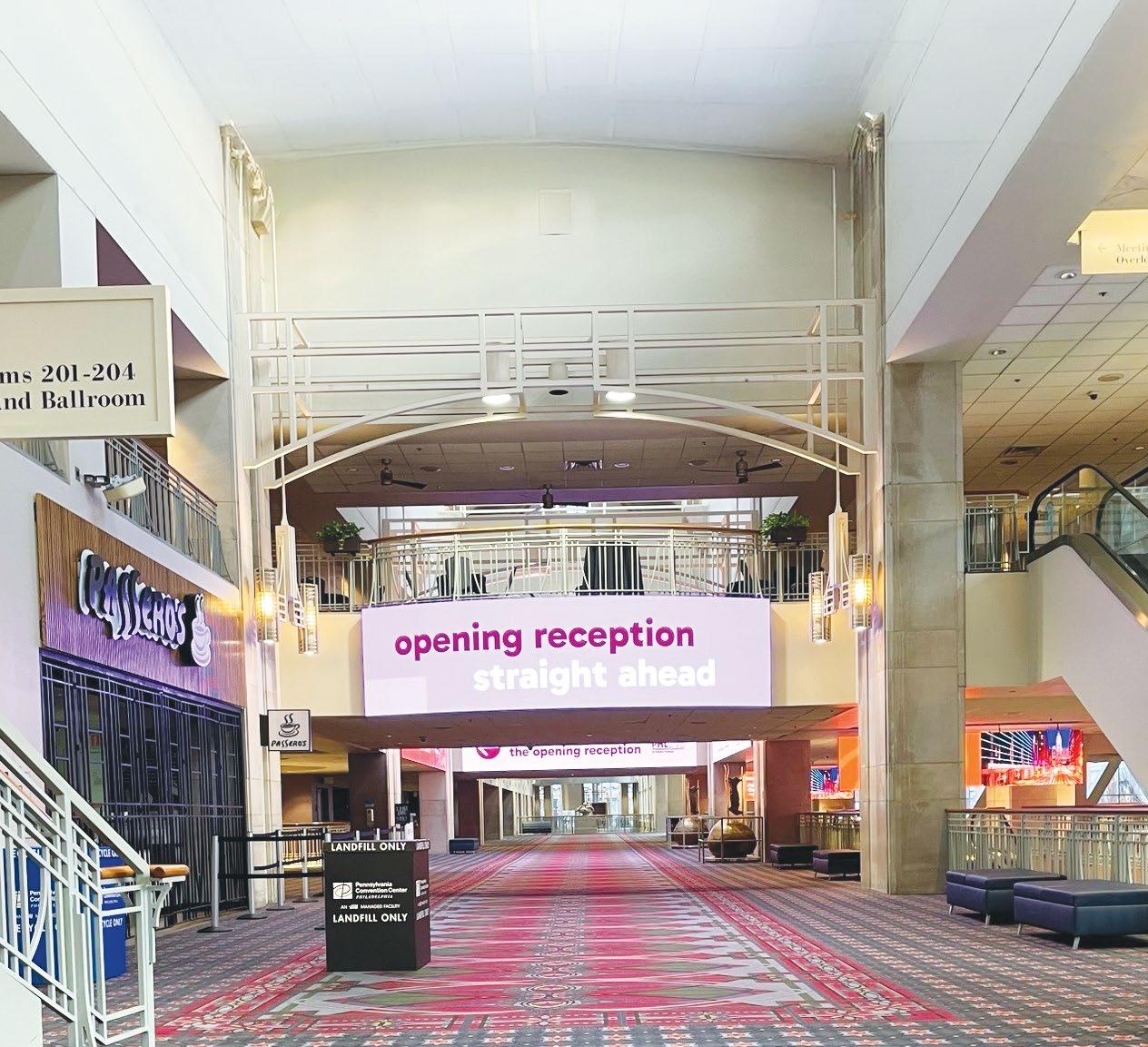
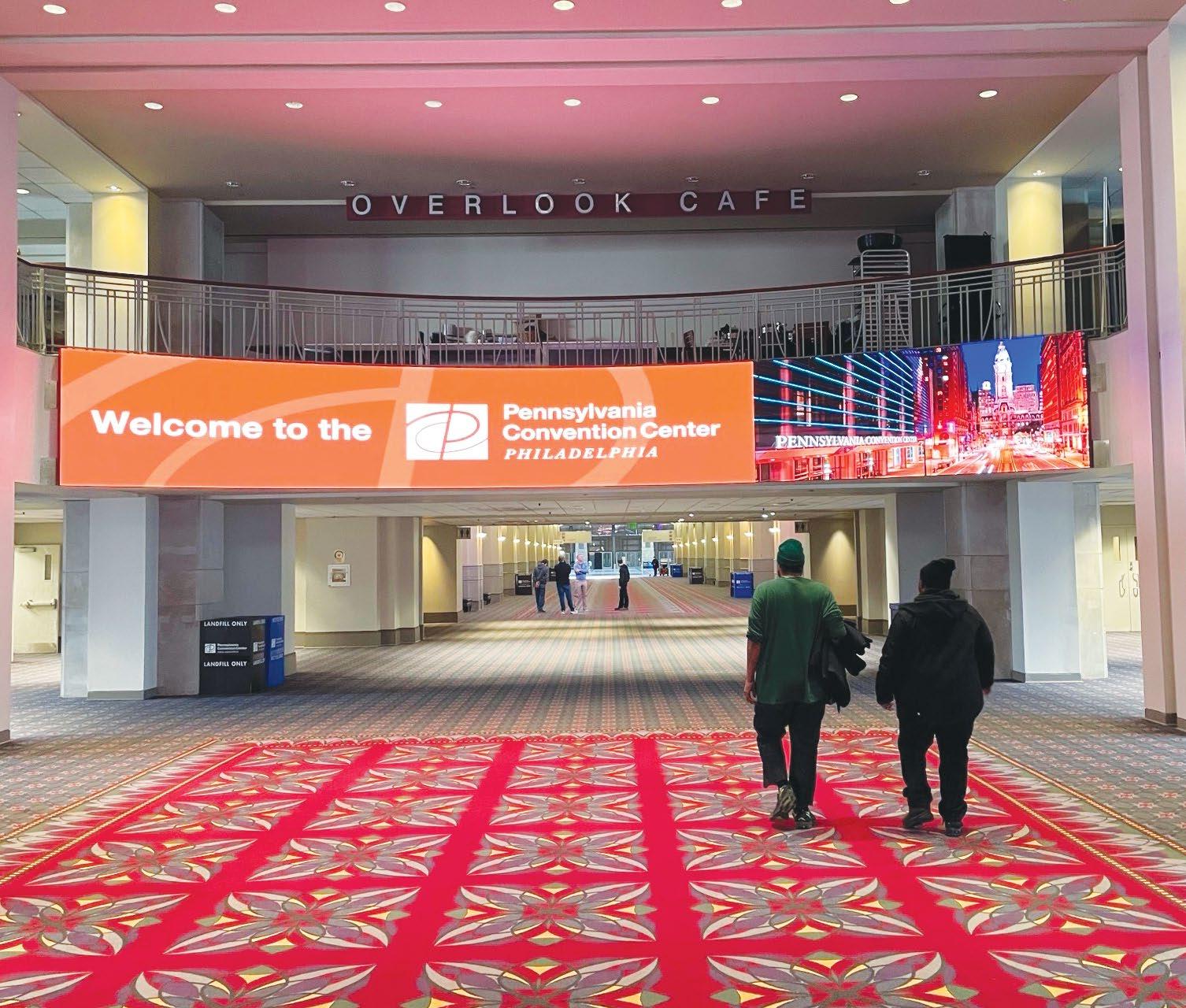
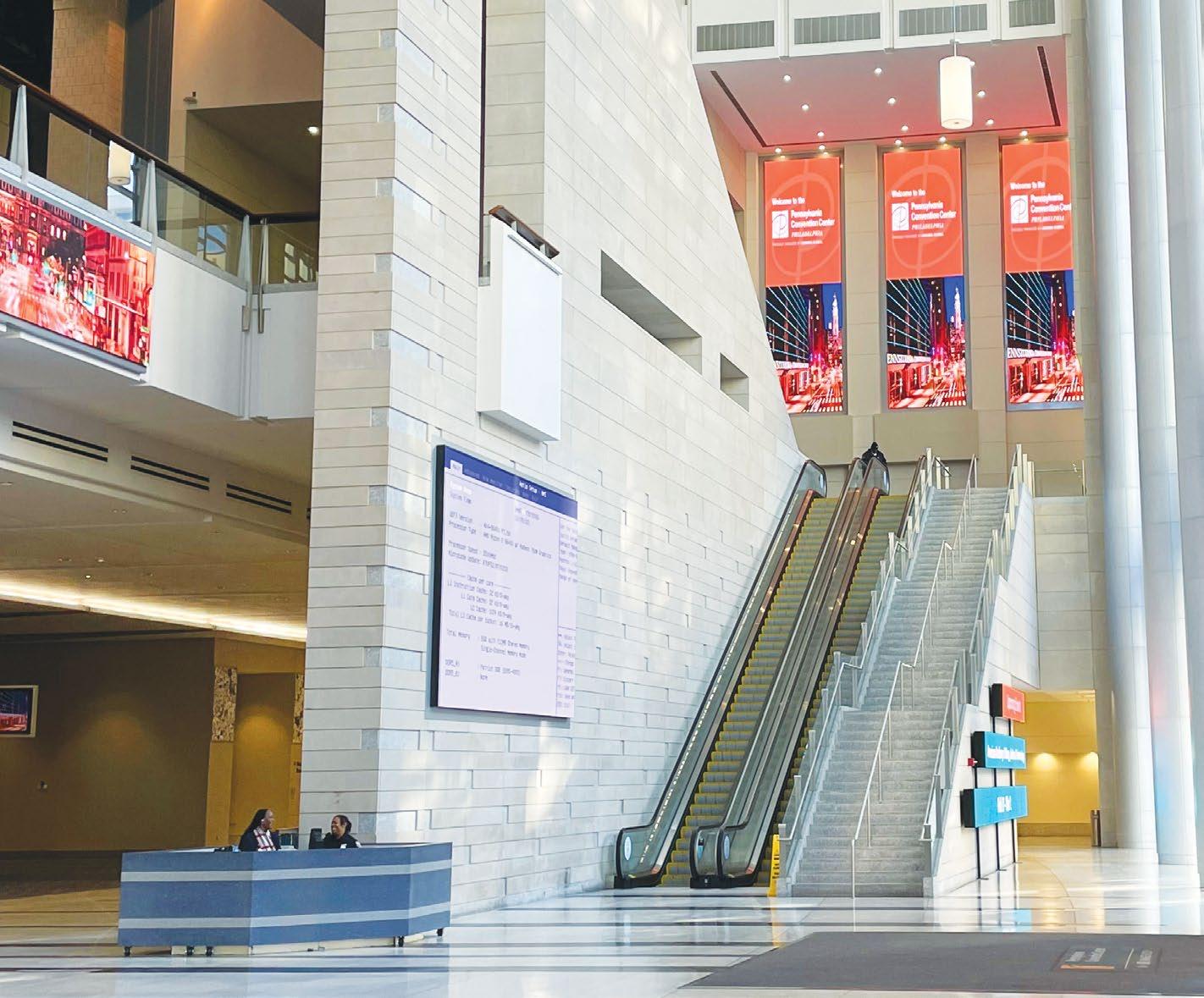
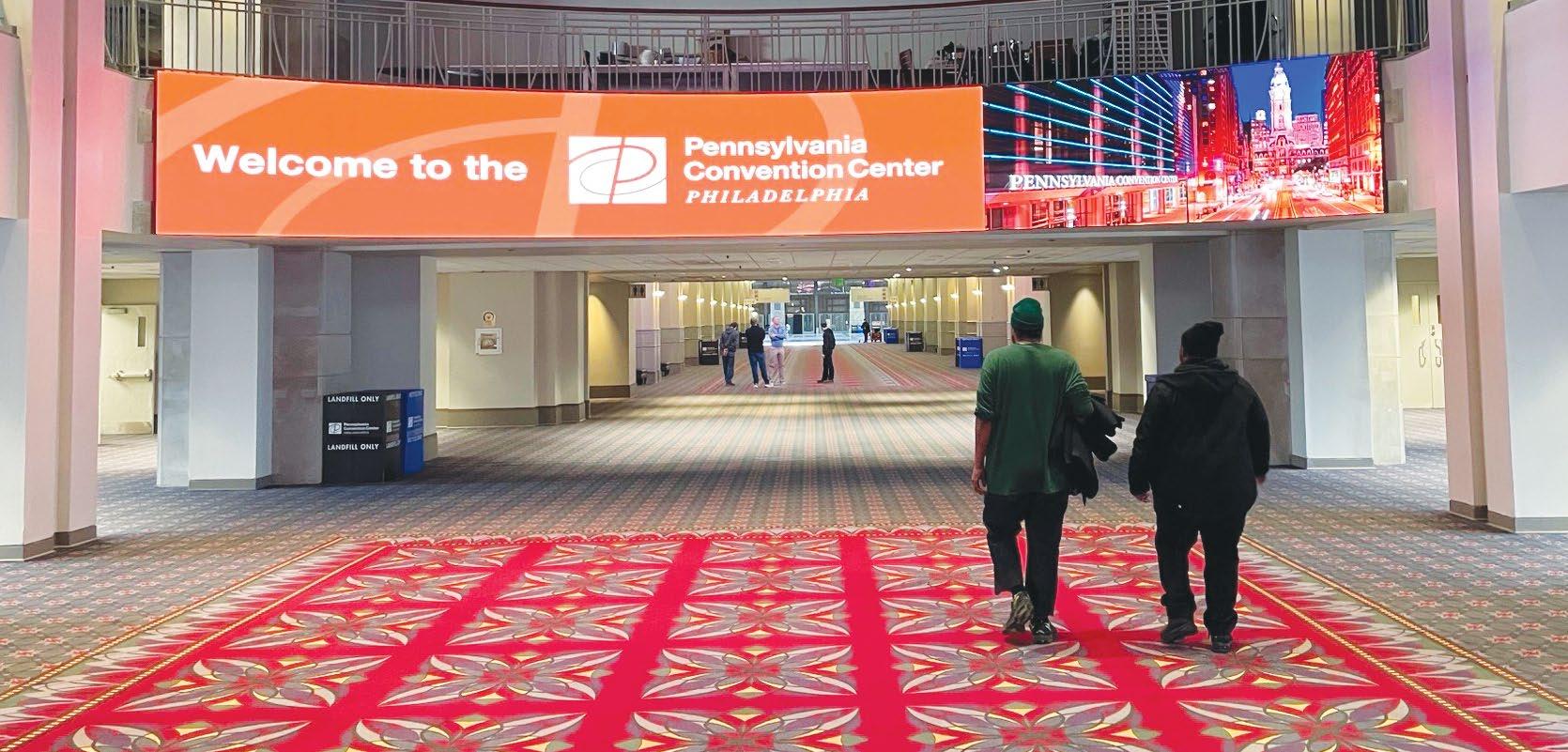
The Pennsylvania Convention Center has a sophisticated new digital signage network. By Jennifer Guhl
18 On Your Business
Planning to attend InfoComm or another trade show? Make the most it. By Steve Greenblatt
20 Executive Q&A
EM Acoustics is building its U.S. presence with a disruptive approach to speaker design. By Mark J. Pescatore
24 Convergence: What’s Next?
Pro AV experts identify emerging technologies that will drive the next phase of development. By Mark J. Pescatore
28 InfoComm 2026: Exhibitors Talk Top Trends
Exhibitors share their plans for this month’s big event in Las Vegas. By Wayne Cavadi
30 Blueprint for Success
Live production wants to move into the cloud, but that’s not necessarily an easy transition. By Nigel Spratling
Cornhuskers Coverage Conversion
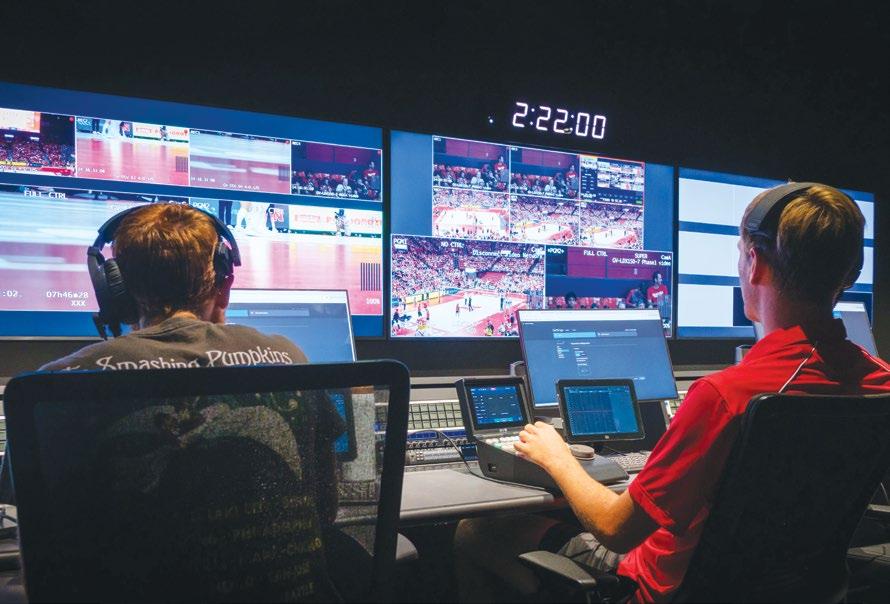
HuskerVision streamlines sports production across campus with its move to ST 2110. By Michael Grotticelli
42 More in Store
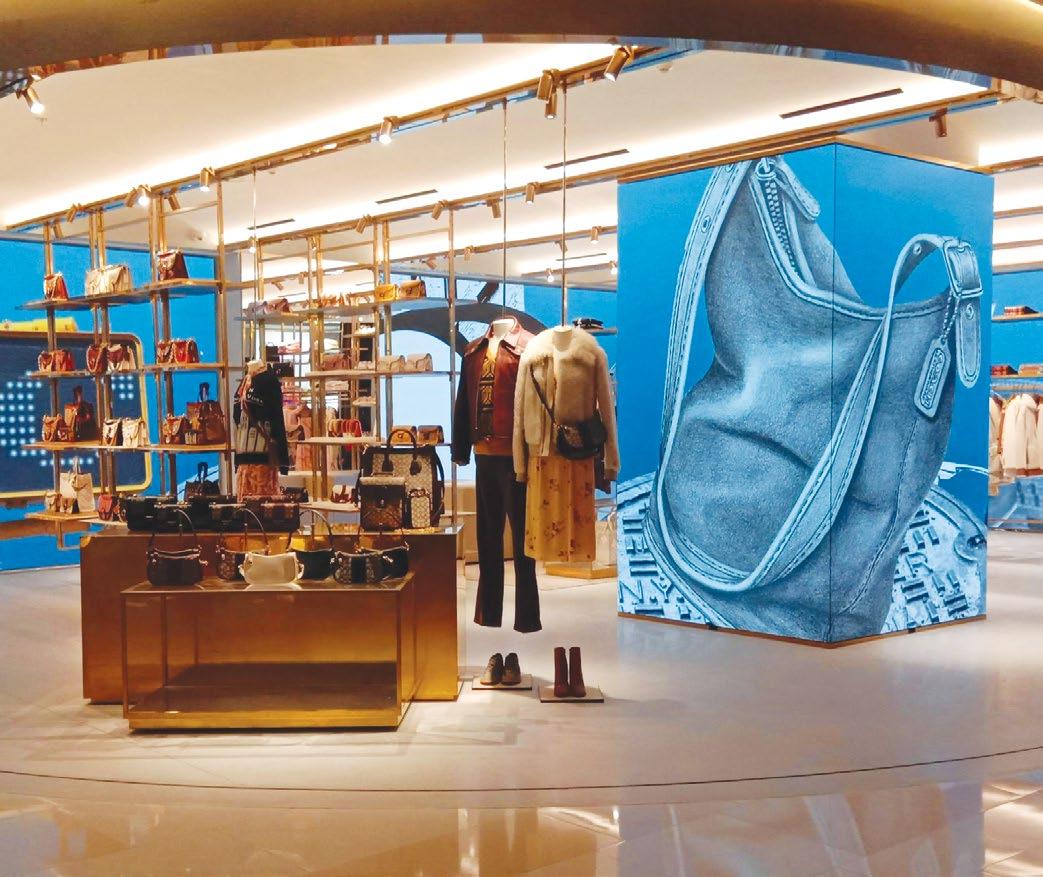
Retail AV helps brands drive foot traffic while creating income possibilities for integrators. By Carolyn Heinze
44 Stanford University Embraces Adaptive Teaching Environments
The new Computer and Data Science building is packed with elaborate Pro AV extras. By Jennifer Guhl
By the Numbers As the industry preps for InfoComm, how does AI fit into the overall Pro AV picture? By Sean Wargo
When Visibility Becomes
Jakub Kolacz
the
SYSTEMS CHECK

Studies Show Workers Conflicted on Hybrid
SurveyMonkey recently conducted a study on remote and hybrid work, collecting responses from more than 3,500 U.S. workers. Based on the statistics the company shared, I think we can agree that when it comes to hybrid work, the workforce agrees to disagree.
Between 2017-2018, before COVID-19 introduced us all to face masks and elbow bumps, less than one-quarter of almost 35 million full-time workers had never exercised their option to work from home. In fact, almost half of us had never worked from home at all, according to Statista. As we all remember, things changed quickly.

Now, a little more than six years after the initial shutdowns, the pendulum has swung back the other way, with almost 40% of workers reporting that their “ideal work arrangement” has shifted. In 2025, based on a survey of 849 companies, Resume Templates reported that about 80% of companies were increasing their return-to-office enforcement measures, while about 27% of companies were returning to a five-day, in-office work week.
Why do companies want employees back in the office? The primary reasons, based on the Resume Templates data, were improved collaboration, productivity, and communication. But here’s where it gets a little messy: According to SurveyMonkey’s research, while 23% of workers want more remote work opportunities, 14% want more in-person opportunities. Turns out there’s no one-size-fits-all for this whole hybrid thing.
What draws folks back to the office? Collaboration and improved focus (32%) were highest on the list, with visibility (31%) and higher productivity (29%) not far behind. However, there’s also a healthy dose of personal worry to go with those company-first sentiments.
Employees want remote work. And in-person opportunities. And boundaries. And they are generally worried about all of it.
More than 45% of respondents were concerned about missing the opportunity to build relationships with co-workers. One-quarter of respondents were worried about missing out on unplanned learning with members of the senior team, and one-quarter thought hybrid would lead to declining trust between employees and management.
Remote work has its share of selling points, too. More than half (52%) of respondents noted the lack of a commute, while 44% reported higher productivity levels outside of the office. The majority of remote (72%) and hybrid (68%) workers say remote work provides a better work-life balance. That said, hybrid isn’t always an ideal situation, as about one-third were worried about home and work boundaries.
To summarize, remote workers want to avoid commuting and can be more productive at home, but they’ve also got career FOMO and can be more productive in the office. Wait, what? Welcome to the joy of statistical analysis, where you can use the same numbers to plead either side of the case.
Gallup recently estimated 26% of U.S. workers in remote-capable jobs are exclusively remote, while 52% are hybrid. Again, there’s no official number, and “remote-capable” is open to interpretation, but Neat research from last year indicated more than 32.6 million Americans work remotely. That’s about 19% of the civilian labor force, based on March numbers from the U.S. Bureau of Labor Statistics.
Now that we’ve cited stats and research from various sources, what does it all mean? We can talk corporate culture or managerial motivations as much as you’d like—but whether they’re happy or worried, you’ve got more than 32 million Americans who work outside of the office at least part of the time, and more than 6 million of those never work there.
The return-to-office trend may continue, and I’ll concede that some workers may head back to the office full time. However, hybrid and remote work opportunities are not going to suddenly disappear, and neither is the workforce’s reliance on videoconferencing for conducting internal and external business. Statistically speaking, there are more than 32 million reasons for Pro AV to keep effective and reliable meeting room and collaborative technologies as the top priority at InfoComm this year.
CONTENT
Content Director Mark J. Pescatore, Ph.D. mark.pescatore@futurenet.com
Senior Content Manager Wayne Cavadi
Contributors Steve Greenblatt, Michael Grotticelli, Jennifer Guhl, Carolyn Heinze, Jakub Kolacz, Nigel Spratling, Sean Wargo Art Editors
Rob Crossland, Sam Richwood
Production Managers Nicole Schilling, Heather Tatrow
ADVERTISING SALES
Managing Vice President of Sales, B2B Tech Adam Goldstein, adam.goldstein@futurenet.com, 212-378-0465
Sales
John Casey, john.casey@futurenet.com, 845-678-3839
Janis Crowley, janis.crowley@futurenet.com, 845-414-6791
Debbie Rosenthal, debbie.rosenthal@futurenet.com, 212-378-0468
Zahra Majma, zahra.majma@futurenet.com 845-678-3752
Andi Tureson, andi.tureson@futurenet.com, 646-544-0007
SUBSCRIBER CUSTOMER SERVICE
To subscribe, change your address, or check on your current account status, go to avnetwork.com and click on About Us, email futureplc@computerfulfillment. com, call 888-266-5828, or write P.O. Box 254, Lowell, MA 01853.
LICENSING/REPRINTS/PERMISSIONS
SCN is available for licensing. Contact the Licensing team to discuss partnership opportunities. Head of Print Licensing Rachel Shaw licensing@futurenet.com
MANAGEMENT
SVP, MD, B2B Amanda Dawrman-Allen
VP, Global Head of Content, B2B Carmel King MD, Content, AV Anthony Savona
Global Head of Sales, Future B2B Dena Malouf Managing VP of Sales, B2B Tech Adam Goldstein VP, Global Head of Strategy & Ops, B2B Allison Markert VP, Product & Marketing, B2B Andrew Buchholz Head of Production US & UK Mark Constance Head of Design, B2B Nicole


AJA Video Systems Acquires Comprimato
AJA Video Systems finalized its acquisition of Comprimato, a live video encoding and processing software provider for virtualized and cloud productions and broadcasts, at the 2026 NAB Show in April. The company’s first acquisition since its founding in 1993, the move unified the AJA and Comprimato development teams behind AJA’s BRIDGE LIVE family of IP streaming products.
Comprimato CEO and co-founder, Jiří Matela, and the entire Comprimato leadership, development, and operations team have joined AJA. Comprimato will continue to operate as a separate brand under AJA and retain its European offices. Sales structures, including sales, channels, customer support, and currently shipping products, will not be impacted.
As part of the agreement, AJA acquired Comprimato’s Live Transcoder for video encoding and transcoding, Live Standards Conversion for flexible frame rate conversion, the Twenty-One SMPTE ST 2110 encoding appliance, and the JPEG 2000 Codec SDK.
“Comprimato has proven to be a trusted, strategic AJA partner for years now, supporting us through the continued evolution of our BRIDGE LIVE line of IP video solutions. This agreement sets our R&D, support, sales, and manufacturing on track to become tightly intertwined, which will allow us to accelerate development of the BRIDGE LIVE and Comprimato lines,” shared Nick Rashby, president of AJA. “The synergies between our companies and technology are undeniable, and together, we’ll be able to address rapidly evolving customer needs faster than ever and break new ground in broadcast production.”
ARRI Acquired by Thomas Riedel
Thomas Riedel, founder and owner of Riedel Communications and the Riedel Group, acquired ARRI, the Munich-based premium manufacturer of camera and lighting technology for motion picture and live entertainment, in April. ARRI marks the largest acquisition of his career to date.
Under Riedel’s new ownership, ARRI’s existing management team will continue to lead the company and further advance its ongoing transformation. The company will retain independent operations and remain headquartered in Munich.
“My entrepreneurial path has been closely tied to ARRI for years,” said Riedel. “I have great respect for this exceptional brand, its outstanding products, and its strong team. At the same time, I see tremendous potential and am confident that, together, we can position ARRI for long-term stability and future success.”
Through the acquisition of ARRI, Riedel establishes a close strategic alignment between ARRI and the Riedel Group, expanding its expertise across the entire production chain, from camera optics to distribution. ARRI’s ecosystem of camera, lighting, and systems technology complements the Riedel Group’s existing portfolio and opens up new technological and strategic market opportunities for both companies.

Inaugural Resonate Expo Rocks Nashville
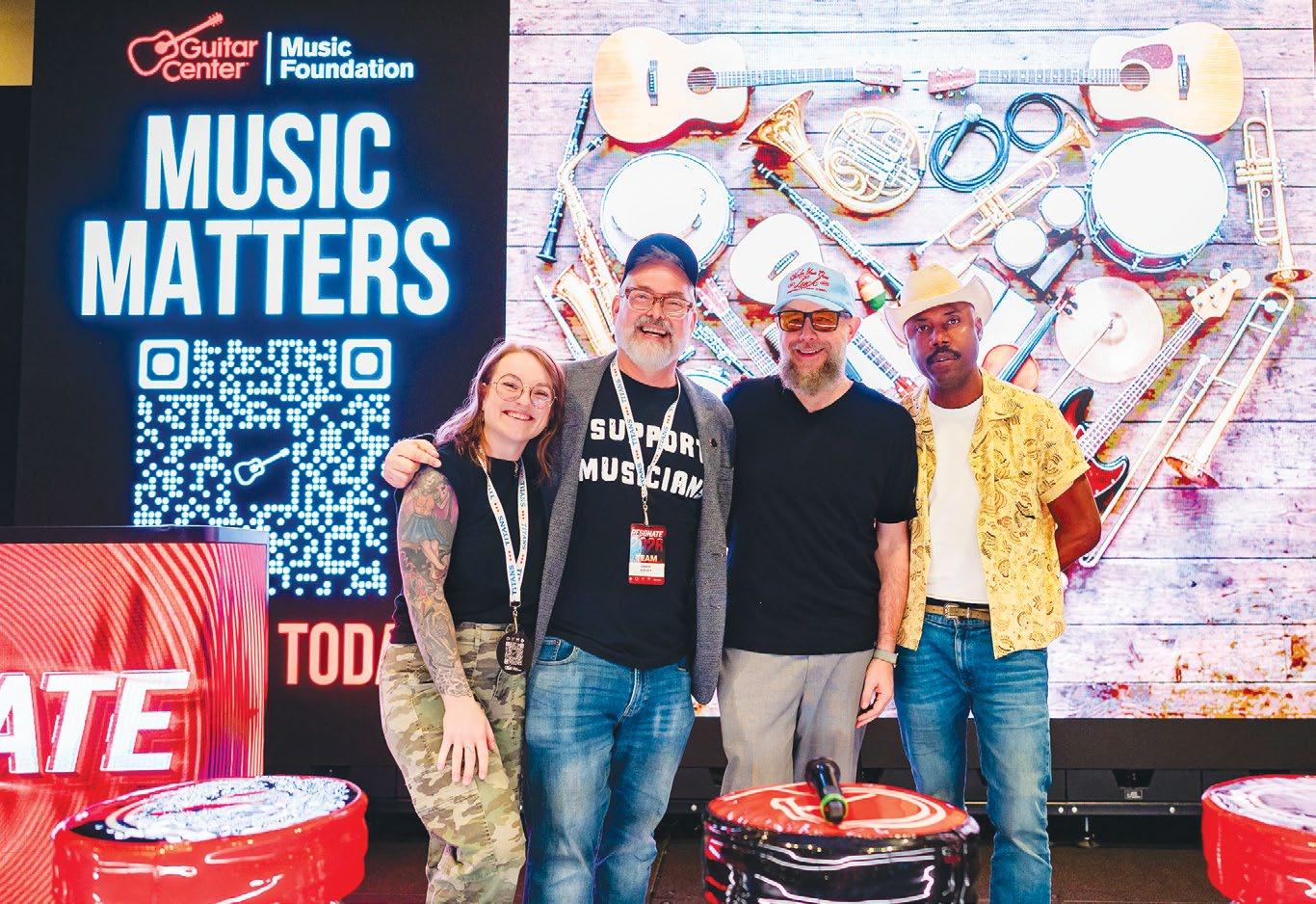
Guitar Center Business Solutions hosted Resonate, its inaugural integrated technology expo, at Nashville’s Music City Center on April 9. The free, oneday event brought together all the account managers across the Business Solutions brands, more than 30 manufacturer partners, and hundreds of industry professionals, innovators, and creators for a day of education, demonstrations, and live experiences focused on the future of AV and integrated systems.
“Resonate was an excellent opportunity to bring together all the Business Solutions account managers, our key manufacturer partners and decision-makers across music, education and enterprise,” said Curtis Heath, president of Guitar Center Business Solutions. “As systems are converging faster than organizations can adapt, the industry needs clear leadership around how everything connects, and Guitar Center Business Solutions is proud to meet that challenge. The Resonate expo marked a firm tentpole in that journey, with plenty more to come.”
Resonate explored the tools shaping today’s creative and technical workflows, with a robust program of presentations offering insight into emerging technologies and industry trends. The event reflects Guitar Center’s continued evolution into a full-scale professional ecosystem serving schools, studios, venues, and commercial environments nationwide.
“What intrigued us about Resonate was its different approach, bringing together GC Pro, Custom House ,and AVDG to engage a broader, more diverse customer base,” said Jeff McDonald, senior sales manager, Shure North America.
MAXHUB Opens New North American HQ
In April, MAXHUB officially opened its new North American headquarters and Experience Center in Irvine, CA. The new facility signals a long-term investment in the company’s commitment to the North American market, and demonstrates its investment in local support and inventory, which is intended to elevate brand awareness and visibility while strengthening business partner confidence and trust.
The new corporate Experience Center represents MAXHUB’s dedication to empowering the AI connected workplace with innovative technology that enables people to communicate more effectively. During the grand opening, attendees had the opportunity to experience MAXHUB products and solutions. Plus, guests learned about the Microsoft/MAXHUB partnership, which has grown into a total solution for everything from huddle spaces to large rooms for both MTR Windows and MTR Android environments.
“Our new Irvine office provides world-class facilities for running the day-today operations of our business while also providing a state-of-the-art facility for demonstration and training—furthering our ability to be viewed as a trusted enterprise collaboration provider,” said Darren Lin, CEO of MAXHUB US. “Simply put, this investment underscores MAXHUB’s ability to dramatically advance corporate communications and collaboration.”
Thomas Riedel
A pro audio solutions panel was part of Resonate’s extensive presentation program.
CANAAN KAGAY

NAB 2026: Show Floor Feedback
By Mark J. Pescatore
Back home in the refreshed Central Hall of the Las Vegas Convention Center, with additional exhibits spread across the North Hall and West Hall, the 2026 NAB Show closed its show floor on April 23. According to show officials, there were more than 58,000 registered attendees, an increase from last year. Almost half were first-time attendees, and more than 20% of registered attendees were international, with 146 countries represented. Plus, there were 132 first-time exhibitors. Beyond the numbers, here were a couple of trends I observed.
There’s a new buzzword.
AI is still making the most noise in the industry, but another buzzword has quietly become part of a lot of conversations: security. Whether you call it network security, IP security, or cybersecurity, minimizing the risk of intrusion or cyberattacks via Pro AV hardware and software is now a point of emphasis. And just to bring this to a full buzzword circle, AI is a great tool for bad actors.
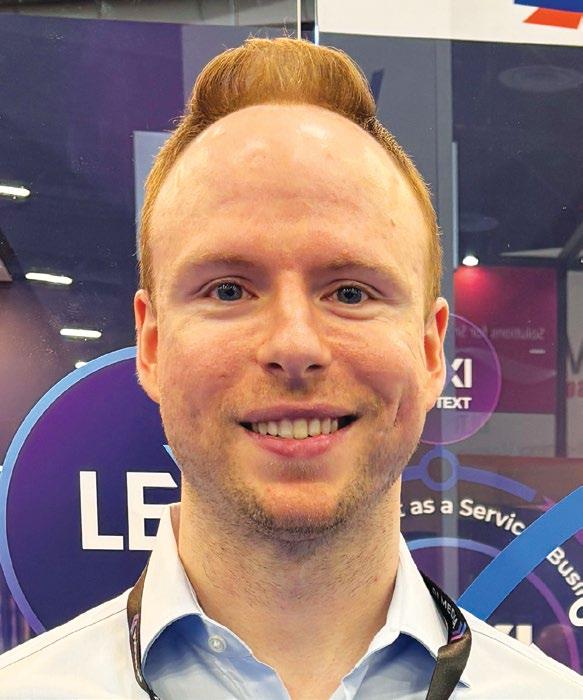
“Every device on-prem is a potential liability,” agreed Frank Zovko, VP of engineering at AI-Media. The company used NAB 2026 to introduce its new LEXI Voice Encoder and LEXI Text Encoder for use in the creation of written and spoken captions, transcripts, and translations. Zovko said the company did its due diligence for security, with updated systems, an overhauled web interface, SOC 2 compliance, and more. AI-Media has also committed to quarterly updates for added security protections.
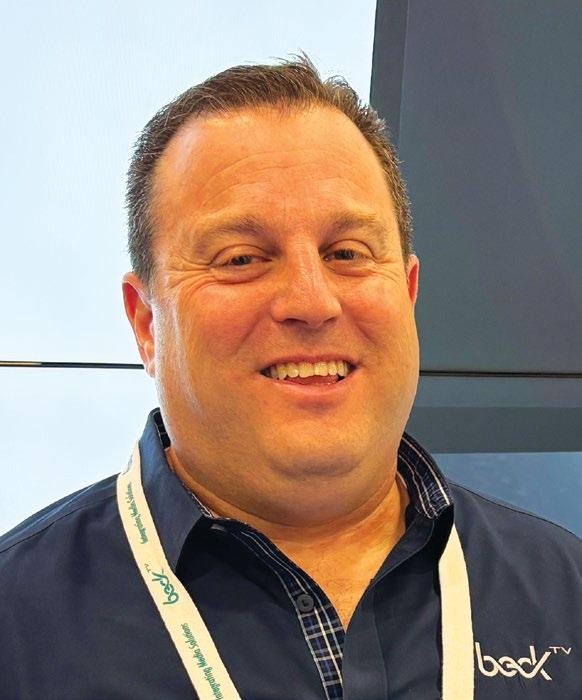
Security was top of mind for BeckTV at NAB, where the company launched BeckFlow, its webbased, broadcast-centric schematic documentation platform that doesn’t rely on traditional CAD workflows. Matt Weiss, VP business development for BeckTV, has noticed there is more security awareness in the industry; in fact, he mentioned that BeckFlow is SOC 2 compliant and has authentication features.
NETGEAR is so serious about security that it acquired Exium, a cybersecurity company, last year. There was less concern about security when connectivity was defined by an HDMI cable, but today’s IP-based workflows has “raised the bar for the need for security,” according to NETGEAR AV’s John Henkel. He advised keeping AV separated from other IT assets on its own network.

AI is getting some serious training. “We’ve gotta use AI.”
I wonder how many companies have declared mandates like this—and then promptly left their teams to their own devices to figure out how to do just that. Thankfully, I’m happy to report that there are Pro AV manufacturers that are avoiding vague “and it’s got AI” declarations and really focusing their AI efforts into meaningful products and workflows.
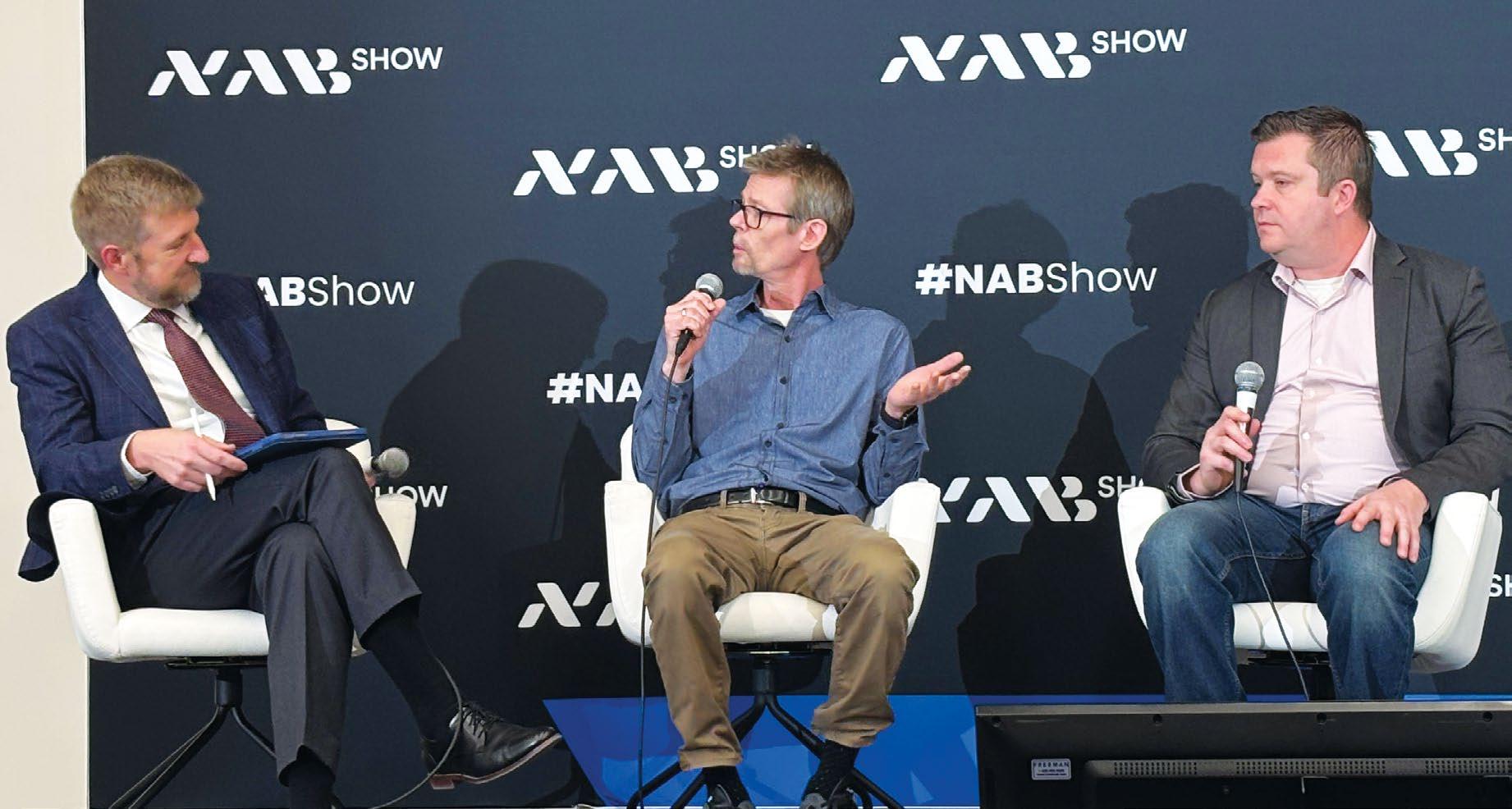
For example, I learned about Shure’s Action Isolator software during a session in the Broadcast Engineering and IT Conference. Shure’s Chad Wiggins, associate VP of innovation, and Brent Shumard, senior staff acoustic engineer, had a fireside chat with John Clark, NAB’s chief innovation officer and SVP of emerging technology, about why audio has lagged behind with AI.
Beyond an “if it ain’t broke, don’t fix it” mentality, Shumard said audio is often messy and chaotic. However, AI adoption for processing is starting. Action Isolator uses AI to remove unwanted sounds. So, if you’re shooting a basketball game, you can have the sounds of the basketball hitting the rim, dribbling the ball down the court, even the squeaking of the sneakers all on one fader, minimizing the sounds of the crowd or the band or the PA announcer.
How does Action Isolator do it? The first part is the right hardware. Shure’s DCA901 broadcast microphone array offers eight channels of audio with
very steerable pickup zones that can identify and prioritize key sounds in real time. But the secret sauce is training. The company is currently training the software for basketball, baseball, and hockey. Shumard said the trick is getting clean audio data for training the AI.
On the video side, Vizrt introduced AI Keyer at the show. Vizrt’s chief marketing officer, Chris Black, said the company wants its AI applications to be transformative and capable of simplifying human workflows through agentic AI. AI Keyer is certainly designed to simplify VR and XR workflows, because it enables a production to change backgrounds and insert graphics without a greenscreen or special lighting. Indoor, outdoor, on a set, on location—it doesn’t matter.
Again, AI training is the key. Vizrt is training its AI to recognize human shapes as well as humans holding objects, maintaining the key while allowing your talent to walk and chew gum at the same time. Vizrt is also working on training the AI to recognize hats and hairstyles, too.
Is it perfect? No. But like previous technological leaps in our industry, this first generation is the worst it’s ever going to look. And it’s already more than good enough for prime time. All I’m saying is that if you’ve been keeping extra stock of green paint for the cyc, you might as well use it now, because you probably won’t need it in the near future.
Frank Zovko
Shure's fireside chat at NAB 2026 discussed the company's use of AI to isolate sounds during live productions.
Matt Weiss
John Henkel
AI Technology Powering the Next Generation of AVoIP Distribution

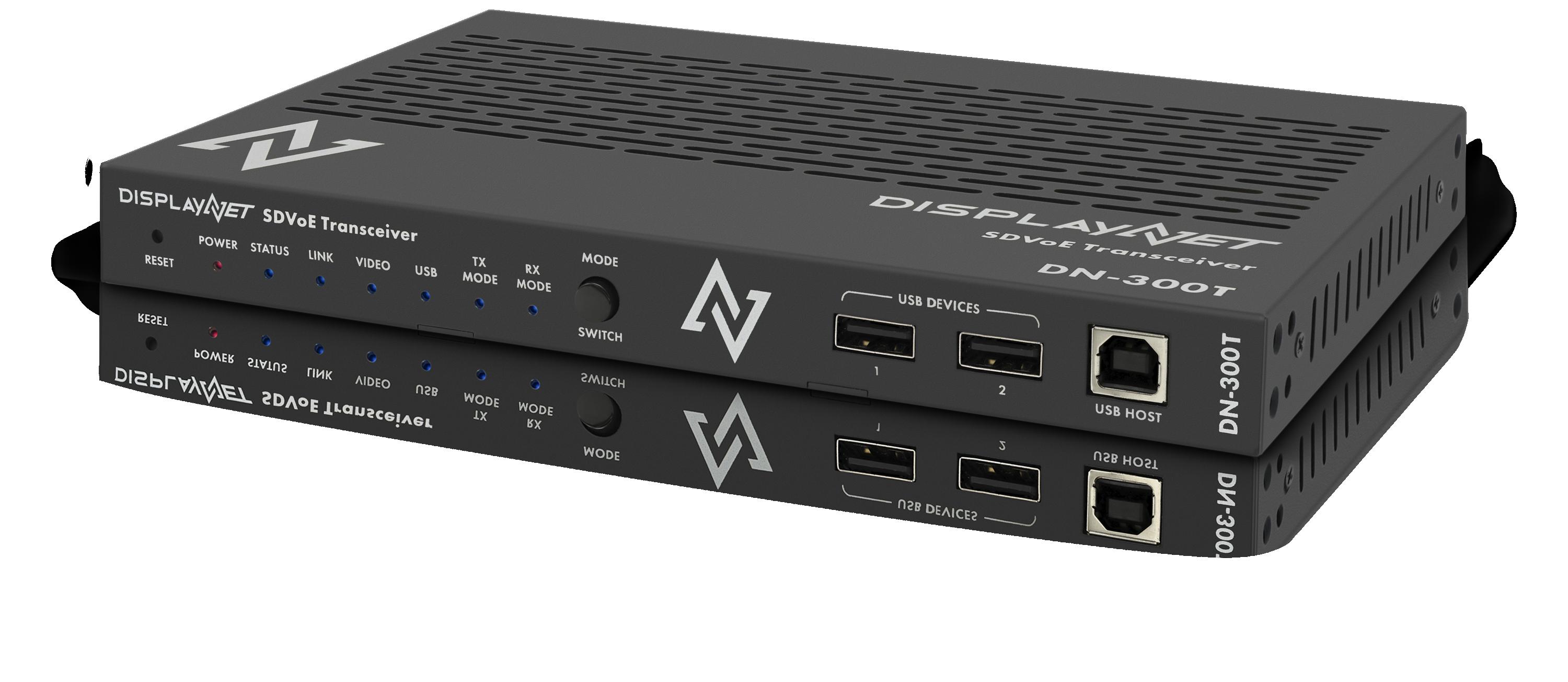
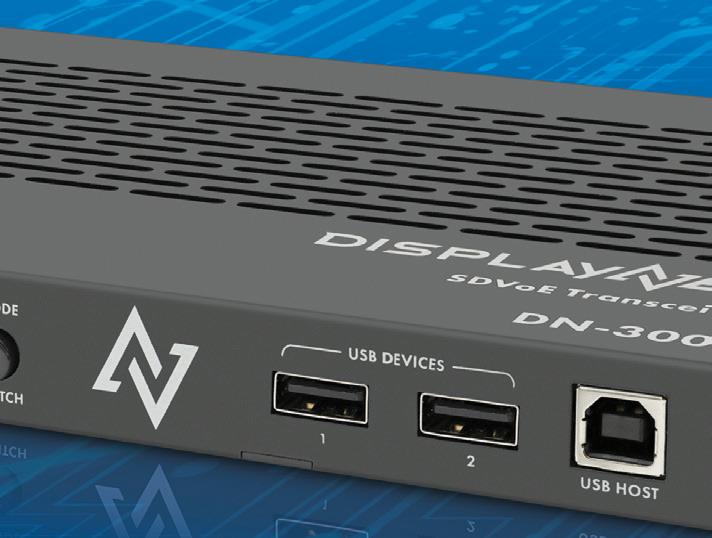
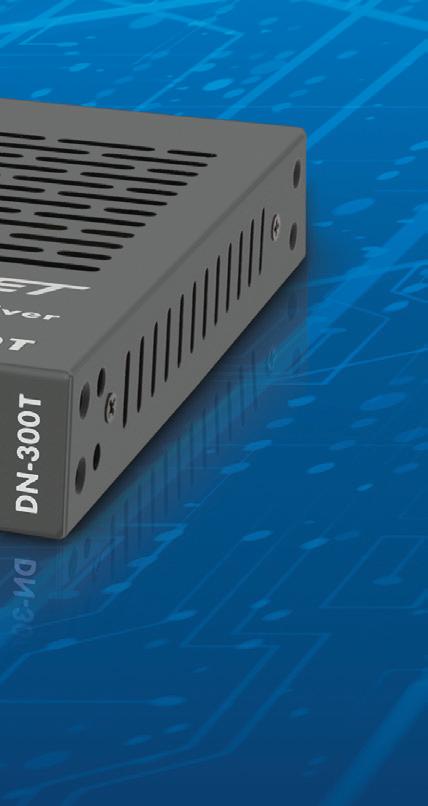
DisplayNet Signal Distribution has redefined the apex of AVoIP performance with a powerful AI-ready control interface that enables definition and deployment of complex AVoIP systems in minutes using natural-language instructions and with no prior knowledge of the underlying API. DisplayNet is the first AV-over-IP system to ship native Model Context Protocol (MCP) support, making it directly controllable by Claude, OpenAI Codex, Gemini CLI, or any MCP-compatible AI agent out of the box.
The DN-300 Series , DisplayNet’s award-winning endpoints, deliver flawless 4K/60 (4:4:4) video distribution with limitless scalability, zero-frame latency and zero image artifacts. These features allow system designers to deploy highly versatile AV signal distribution systems with robust performance, scalability, versatility and reliability at a fraction of the cost of traditional AVoIP systems.
Contact us today to see how DisplayNet can move your next AV system into the future.
ZERO COMPROMISE – INFINITE POSSIBILITIES
sales@dvigear.com (888) 463-9927 www.displaynet.com

Sustainability: How Far Has Pro AV Come?
By Wayne Cavadi
Sustainability is not a new innovation in Pro AV. The industry has long strived to reduce its carbon footprint for a greener tomorrow, whether that be replacing packaging to more biodegradable products or advancing the longevity and recyclability of hardware solutions. There have been major advances in just a few years, but there is much work to be done.
Recently, SAVe has been front and center in the Pro AV sustainability revolution. Since its founding in 2022, the nonprofit has seen progress within the AV industry toward meeting the 2030 Sustainable Development Goals. “But let’s be honest,” said Tim Alevizos, SAVe board member and co-chair of marketing and PR, “the scope of the challenge we’re facing is gigantic. If the 2030 SDGs are to be achieved, it’s going to take a concerted global effort that goes well beyond what we can achieve in the AV sector.”
Whether it is events like the SAVe 2026 Global Conference (coming this October) or manufacturers making impactful changes, SAVe applauds incremental progress and efforts to reduce e-waste and longevity of products. However, as Alevizos explained, SAVe is a catalyst for change on a larger scale.
“To fulfill our mission, we need more volunteers— and, specifically, more leaders—to step up for the sake of future generations and, indeed, the planet itself,” he noted. “Our advice is for people in our industry, and far outside it, to take action as individuals and as organizations, but not to step there: We need to act collectively in a broader sense, and that requires leaders who can inspire, educate, unite, and organize people and resources to achieve the 2030 Agenda for Sustainable Development.”
Here is how some companies are paving the way for reaching these goals.
‘Ecofficient’ and Paper Packaging
Extron has made sustainability a major focal point. Its Ecofficient initiative, developed in response to the sunsetting of the ENERGY STAR program for commercial AV devices, spotlights energy-efficient excellence across its entire AV product portfolio. It signals Extron’s ongoing commitment to reducing power consumption, lowering operating costs, and supporting global sustainability goals.
“At Extron, we’ve always believed that sustainability and performance go hand in hand,” said Joe da Silva, VP of marketing, Extron. “Opportunities for sustainability and conservation are evaluated at every step of a product’s life, from power supply designs leveraging GaN [gallium nitrade] technology for cooler and more efficient operation, to shipping materials optimized for recyclability, to our product

recycling program that minimizes landfill waste.”
One way to reduce Pro AV’s environmental footprint is about how the technology is delivered. Switching to eco-friendly packaging is big step, reducing shipping costs and providing much greener transport.
Lightware Visual Engineering, which has already reduced its carbon footprint by designing and manufacturing its solutions in a centralized headquarters, switched to all-paper packaging in the next step of its ESG strategy. The biodegradable, recyclable paper-only packaging will be used for Taurus UCX, Taurus TPX, Taurus TPN, OPTX, and OPTN products. Packaging is still secure, yet it offers plenty of benefits for a greener tomorrow.
Sustainable and Socially Responsible
Sustainability has long been a part of the PPDS philosophy. The display manufacturer was ecoconscious before it was trendy in Pro AV. PPDS focuses on low-energy solutions with long-lasting shelf life. For example, PPDS e-paper solutions, like the Philips Tableaux, save energy and maximize technology uses, further reducing a carbon footprint.
As the saying goes, the apple doesn’t fall too far from the tree.
Last August, TPV Technology, the parent company behind PPDS as well as TP Vision, MMD Monitors and Displays, and AOC, earned the EcoVadis Platinum Medal. Founded in 2007, EcoVadis provides business ratings, having screened more than three million companies across 185 countries, awarding bronze, silver, gold, or platinum honors. The platinum recognition places TPV Technology in the top 1% globally as one of the most sustainable and socially responsible manufacturers in Pro AV.
Not long ago, Kinly’s net-zero targets were
validated by the Science Based Targets initiative (SBTi). This achievement—which, per Kinly, made it the first global systems integrator to have the honor— validates the work the company has done towards achieving “net-zero greenhouse gas emissions across the value chain by 2050; reducing absolute scope 1 and 2 GHG emissions 54.6% by 2033 from a 2023 base year, as well as scope 3 GHG emissions by 61.1% per EUR value added within the same timeframe,” according to a recent release.
It isn’t simply big displays and packaging that are focused on enhancing the carbon footprint. Last summer, L-Acoustics invested in French-based MagREEsource. Per the company’s report on the partnership, it introduces a “breakthrough circular economy model for the professional audio industry” that focuses on magnet recycling and manufacturing technology.
There are many hands in the pot helping to stir a greener future in Pro AV. And that is exactly what SAVe’s goal continues to be. “It won’t be easy,” Alevizos admitted. “Systemic change is required. But there is strength in numbers, and we have the numbers on our side to create the groundswell necessary to achieve the 2030 Agenda for Sustainable Development. We won’t be satisfied until the potential of our movement for change is fully realized.”
Extron's Ecofficient initiative spotlights energy efficiency across the company's AV product portfolio.

Shure Partners with EDGE Sound Research
Shure has become a minority investor in EDGE Sound Research, a start-up company that is developing new experiential audio technologies that redefine how many audiences consume sound.
EDGE Sound Research was founded in 2019 by two University of California, Riverside students, Ethan Castro and Valtteri Salomaki. Castro was inspired by his life experiences as a hard-of-hearing music producer and engineer, while Salomaki has been focused on information systems and marketing strategy. Together, they have grown into an innovative organization working to revolutionize entertainment.
The two companies have already been collaborating on new innovations. Shure’s DCA901 array microphone tailored for broadcast, brings an improved immersive experience to every home with the help of EDGE Sound Research’s Virtual Sound Engine. The software analyzes the detailed audio from games captured by the DCA901 and automatically identifies and isolates the sound objects that define emotion, pace, and connection.
“Through this partnership, Shure aims to leverage EDGE Sound Research’s groundbreaking developments to further its mission of delivering exceptional audio quality and innovation,” said Chris Schyvinck, president and CEO of Shure. “By combining Shure’s 100-plus years of expertise and market presence with EDGE Sound Research’s breakthrough technologies, this collaboration aligns perfectly with Shure’s commitment to pushing the boundaries of audio technology and creating extraordinary listening experiences.”


AVIXA Revises InfoComm EDGE Plans
With the geopolitical situation in the Middle East remaining unpredictable, AVIXA has revised its plans for AV industry engagement in the region. InfoComm EDGE, originally scheduled for October 2026 at the Festival Arena in Dubai, will now take place at the same location in October 2027.
AVIXA will also host a highly curated, invitation-only EDGE Preview in Dubai, Q4 2026, with confirmed dates to come. Positioned as a focused working forum, EDGE Preview will bring together senior decision-makers and end users across key sectors—government and enterprise, leisure and entertainment, education, and retail—alongside AV industry stakeholders and international consultants.
“The positive response to our announcement of InfoComm EDGE earlier this year reinforced a clear market need for a different kind of event—one focused on how integrated AV delivers real-world outcomes,” said David Labuskes, CEO of AVIXA. “After close consultation with our partners in the region, we’ve taken a deliberate decision to move the full event to 2027 to ensure it lands with maximum impact—particularly at a time when government bodies are aligning investment decisions with long-term strategic priorities.”




Advanced 8K Fiber Optics for Extreme AV Extension




8K Fiber Optic Technology that Goes the Distance
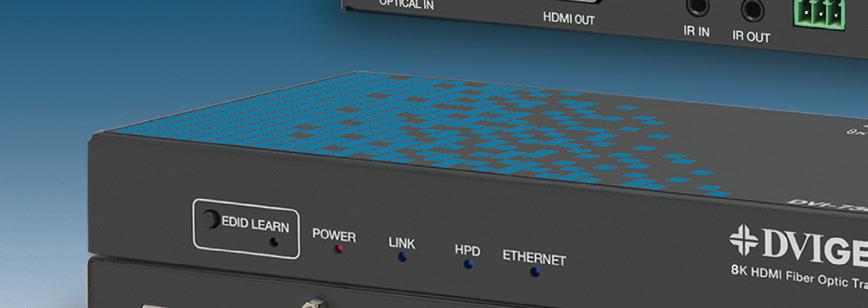
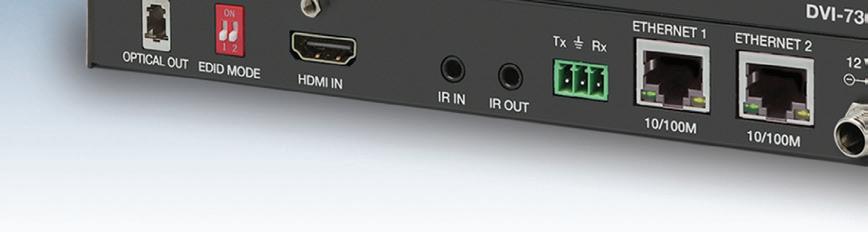
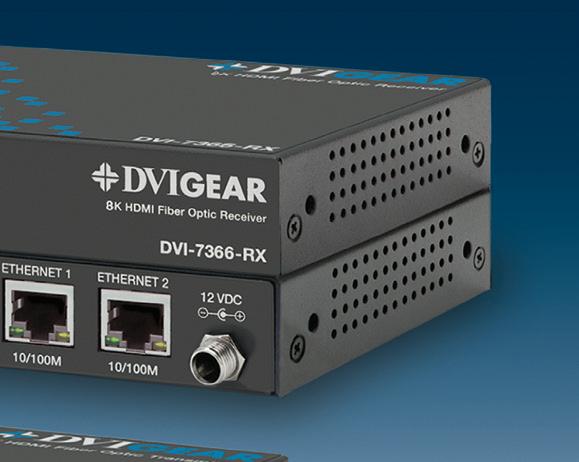
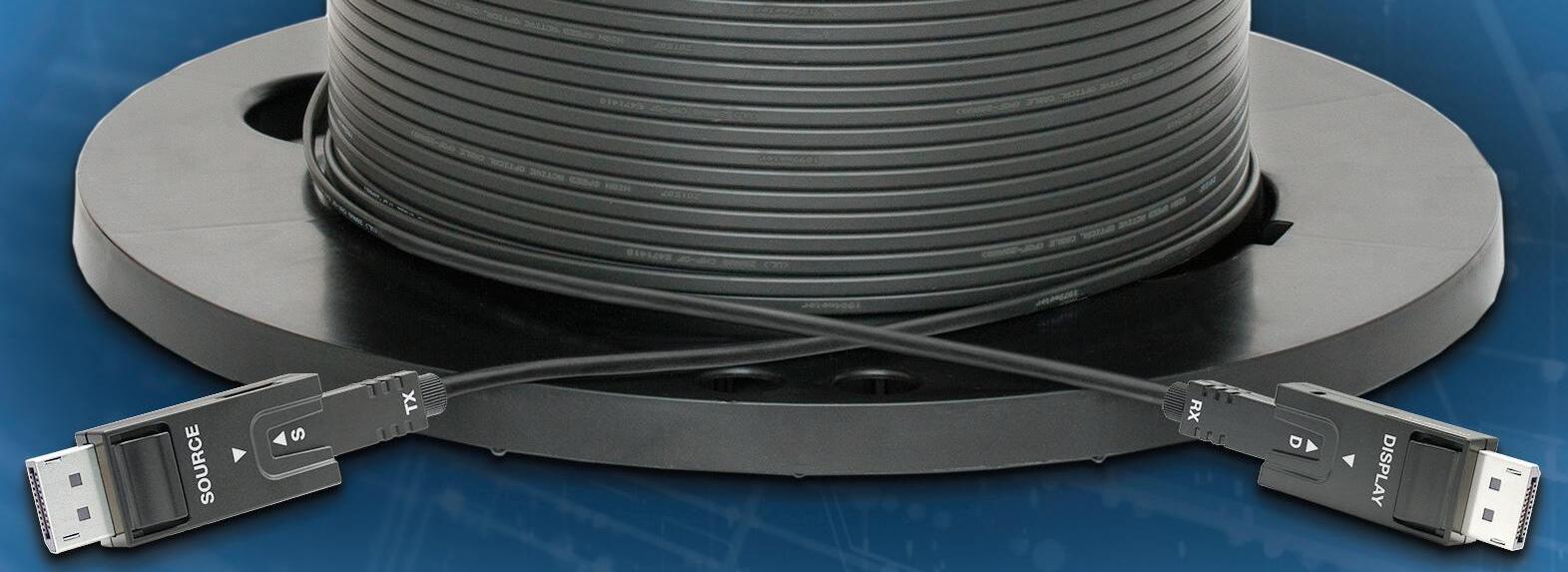
DVIGear’s 8K HDMI and DisplayPort Fiber Optic Extenders are highperformance, cost-effective Optical Extenders designed to meet and exceed the most demanding system requirements. They support uncompressed, high-resolution signal distribution over very long distances using only a single fiber optic cable. These models offer embedded audio, bi-directional IR, RS-232 and two 10/100 BaseT Ethernet ports.
The DVI-7366 8K HDMI Fiber Optic Extender supports up to HDMI 8K /60p, with signal extension over cable distances of up to 2,000 ft. (600 meters) using single-mode fiber (SMF). For added versatility, these units provide Advanced EDID Management.
463-9927
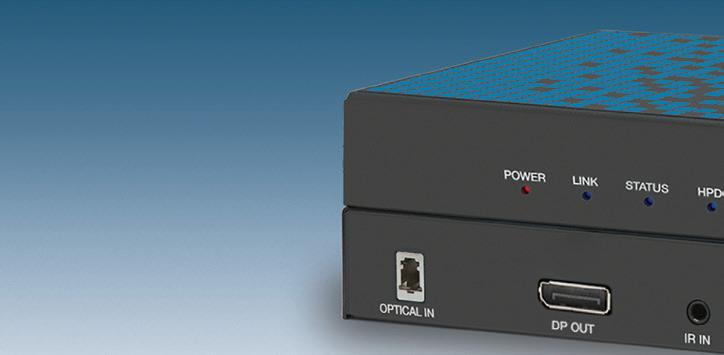
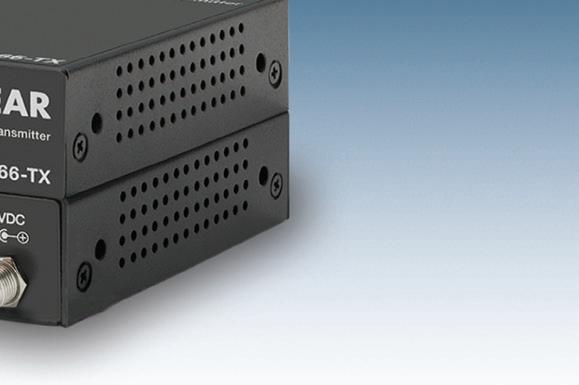

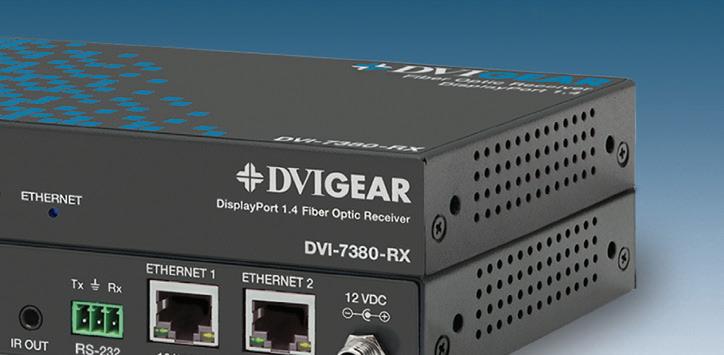




The DVI-7380 DisplayPort Fiber Optic Extender supports DisplayPort HBR3 signals with resolutions up to 8K /30p. It can extend these signals over cable distances of more than 5.0 miles (> 8,000 meters) using single-mode fiber (SMF).
Contact us today to learn more or to request a free demonstration.

Haverford Systems Transitions to EmployeeOwned Company
Smaller or family-owned enterprises often choose to sell out to larger competitors or private equity firms when leadership decides to make their exit. However, Haverford Systems, a longtime provider of AV integration services based in Downington, PA, has chosen a different approach.
Rather than going public or merging with another company, Haverford instead turned the entire family-owned enterprise over to its employees by forming a 100% employee stock ownership plan (ESOP). The transfer of ownership became official on Jan. 23.
ESOPs are a long-term retirement benefit utilizing a trust that holds company stock for eligible employees to transition ownership of the company to its employees. They are a no-cost
wealth building tool for everyday workers to grow their retirement benefits by simply continuing to work.
“Haverford Systems has thrived as a familyowned business for nearly 40 years, and it was very important to our founders, Hugh and Eileen Richards, that the company continued to thrive after stepping away from ownership,” said Joseph Mulcahy, president of Haverford Systems. “We believe the transition to an ESOP accomplishes that, and will not only reward our team, but also help foster growth, encourage innovation, and create yet another incentive for future employees to consider joining our organization.”
Becoming an ESOP presents a variety of benefits for the Haverford team. For example, it allows for a succession plan that creates continuity in company
leadership and culture, because leadership can remain in place and employees maintain ownership of the company. Plus, because that ownership is represented by shares in the company distributed to employees over time, the ESOP creates a retirement benefit in addition to other savings plans.
Haverford Systems joins approximately 6,300 other ESOP companies around the United States that include 10.7 million active employee-owners. Its clients and partners can look forward to increased employee engagement and motivation, increased focus on long-term value for all stakeholders, and continuity of company culture that will continue to prioritize client experience and quality of work.
“Rewarding the commitment of our employees was our top priority in planning the evolution of our business,” Mulcahy said.



By Erin Budnik
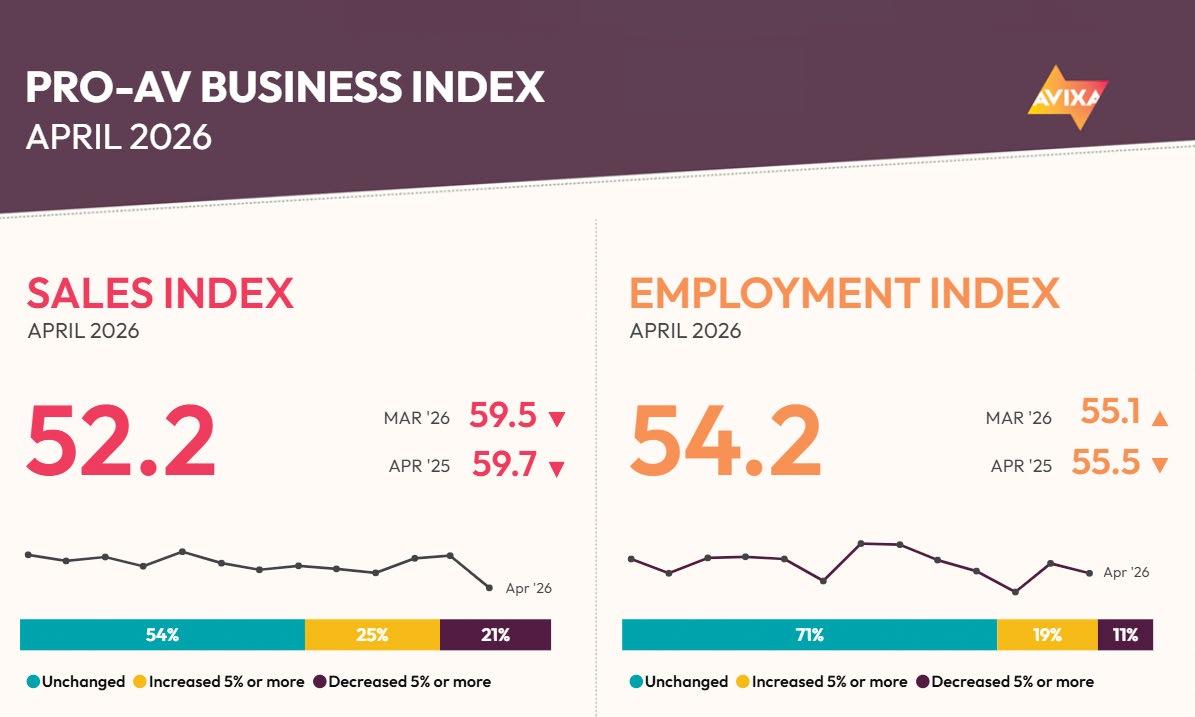
The AV Sales Index (AVI-S) for April dropped 7.3 points to 52.2, with 21% of survey respondents reporting they saw a decrease in sales for the month. This most likely means buyers are still active but are moderating spend, leading to softer revenue outcomes despite continued deployment activity. Companies are stating they have a good pipeline through 2026.
Tariff uncertainty, geopolitical conflict, and economic instability are the dominant concerns, making it difficult to forecast, price projects, and close sales. However, seasonal patterns in education and a


few other vertical markets provide optimism for the coming months.
“Constantly changing tariff add-ons make it difficult to provide clients with accurate cost assessment for projects. In addition, frustration with paying tariffs to vendors knowing they’ll be the ones to collect any refunds instead of giving them back makes one question the legality of vendors even being allowed to charge them to us in the first place,” shared an end user in North America.
The March AV Employment Index (AVI-E) remained steady at 54.2 in April. The U.S. job growth rebounded but at a slower pace than last year’s norms. Some are finding it hard to hire skilled employees while others are freezing hiring.
Increasing Costs Slow Demand in April
The Pro AV Business Index report is derived from a monthly survey of the AVIXA Insights Community, a research community of industry members that tracks business trends in commercial AV. The report comprises two diffusion indexes: the AV Sales Index (AVI-S) and the AV Employment Index (AVI-E). In each case, an index above 50 indicates an increase in sales or employment activity.
Visit www.avixa.org/AVindex to access the free monthly Pro-AV Business Index reports and learn more about the methodology. For more information about joining the AVIXA Insights Community, visit www.avixa.org/AVIP.
Erin Budnik is the manager of market insight for AVIXA.





Make the Most of Your Trade Show
Getting ready for InfoComm? Make sure you plan ahead.
By Steve Greenblatt
Trade shows are among the most powerful opportunities the AV industry has to connect, learn, network, and advance business relationships. Whether it’s InfoComm, ISE, NAB, CEDIA, or a local conference, these gatherings condense months’ worth of conversations, connections, relationship building, and business development into just a few days, making it critical to make the most of these opportunities.
While exhibitors and event hosts invest months in planning, promoting, and preparing for a successful trade show or conference, attendees must also adopt a strategy for success to make the most of their time and energy—or the event will pass by in a flash, leaving them with overwhelming exhaustion and regret.
Attending a trade show effectively is not about how much you do; it’s about how well what you do aligns with your goals. Preparation, intentionality, execution, discipline, and follow through can be the difference between being busy and producing results or simply feeling busy.
Start With Purpose
Before you even register for the event, outline your objectives for attending, identify your “must have” meetings, connections, or conversations. Define what success looks like or what would constitute a good return on investment. Next, document those clear goals and objectives so you can measure outcomes and identify tangible results afterward. Trade shows reward those who prepare.
Without defined objectives, it becomes too easy to get caught up in the excitement of the event and the frenzy of the crowds, have conversations that are more social than business-focused, attend random sessions, and return home having done a lot yet getting little done. With purpose, every conversation and meeting becomes part of a strategy rather than a coincidence.
Whenever possible, schedule appointments with exhibitors, partners, colleagues, and clients in the weeks leading up to the event. Take advantage of opportunities to meet on the show floor, outside the show, or at a social event. Invite them to meet for a meal or coordinate a time to meet at a hotel lounge. Stay on schedule so outcomes and results become
routine rather than random. Planning ahead ensures you’re prioritizing meetings with the people and companies that matter most.
It’s also critical to be strategic in meeting planning and to map routes across the show floor to make the most of your time, minimize backtracking, and conserve energy. When scheduling times, it’s critical to build buffers between meetings and account for “commute” time between booths. Conversations may run long, appointments can be delayed, crowds will slow movement, impromptu conversations happen, and, most importantly, opportunities arise. Leaving breathing room provides scheduling flexibility, keeps stress levels manageable, and creates opportunities for short, valuable breaks.
Being booked from morning to night may sound productive, but it’s not sustainable. Understand and stick to limits. It’s OK to have downtime, especially when it boosts overall effectiveness. A few minutes to decompress between meetings or time to rest between the day’s meetings and evening activities can dramatically improve focus, engagement, and stamina.
Beyond meetings, plan logistics thoughtfully. Make reservations early and stay at a hotel that balances convenience and value while aligning with predefined objectives. For example, if networking is important, stay at a high-traffic hotel. If social activities are a priority, seek out the hot spots. If recharging outside the show is key, stay at a quieter hotel with ample dining options. Hotels near the convention center also reduce steps and commuting time, offering convenience for breaks when needed.
Prioritize What Matters Most
Trade shows offer more opportunities than anyone can realistically handle. Beyond meetings with exhibitors and clients, there are networking opportunities, educational sessions, invitation-only events, social gatherings, and random conversations, all competing for limited time.
The key to intentional prioritization is to remember the goals and objectives first established during the planning process. This means aligning time allocation with business objectives by scheduling the “must have” activities first. Then, plan the next tier of meetings and activities in order of importance. After that, fill in the gaps with nice-to-have appointments to round out the schedule. Be sure to avoid
overbooking or scheduling unnecessary events, especially when they could threaten priorities. Prioritization isn’t only about business goals. It also pertains to personal effectiveness. Many attendees focus solely on time management, but effective trade show participation also requires managing energy and mental bandwidth. Large crowds, loud environments, and information overload can quickly diminish your ability to engage meaningfully.
Through the #HealthyAV movement, first brought to light in 2024, Brittany DiCesare and I shared a personal experience that organically led to a commitment to being our best at trade shows and conferences, and it gained traction in our industry. It applies to anyone and entails recognizing that professional performance at industry events can be directly tied to physical and mental well-being.
Making good choices to treat yourself well, including eating and drinking in moderation, getting enough sleep, staying hydrated, exercising, and recharging when needed, can be a winning formula for being at your best when it counts the most.
Have Fun on Your Terms
Trade shows are among the few times our industry gathers in person, and maintaining connections and relationships matters. Take advantage of opportunities to have fun and socialize. The trick is balancing that value with your broader goals and priorities.
Evenings at trade shows often bring a flood of invitations: receptions, dinners, meetups, parties, and private gatherings. These events can be valuable opportunities to strengthen relationships in a relaxed setting, but they can also consume a lot of time and drain energy.
Instead of trying to be everywhere, evaluate each invitation with priorities in mind. Which events align with objectives? Which relationships would benefit most from face-to-face time? Where is the greatest likelihood of meaningful conversations?
Selective participation leads to greater engagement rather than rushing from event to event just to show up, make an appearance, and gain little value at high cost in fatigue. The #HealthyAV mindset reinforces this approach. When we treat wellness as part of our professional strategy, we show up better for our teams, partners, clients, and ourselves.
Ultimately, the value of a trade show is not measured by how many steps you log, how many booths you visit, or how many people you meet. It’s measured by the actions taken, knowledge gained, opportunities created, and outcomes achieved. By approaching events with intention, preparation, and self-awareness, success becomes a more predictable outcome rather than a matter of chance.
Steve Greenblatt, CTS, is the founder of Control Concepts, Inc., which provides specialized software and services for the Pro AV industry. Contact him at steveg@controlconcepts.net.
Doing Something Different
EM Acoustics continues to build its U.S. presence with a disruptive approach to speaker design.
By Mark J. Pescatore
SCN: What made you decide to establish EM Acoustics?
Mike Wheeler: Loudspeaker design fascinated me as a young man, and as a student, I spent my vacations working for a well-known British loudspeaker manufacturer, which did nothing to dampen my enthusiasm. Long-standing friends since school days, Ed Kinsella (technical director) and I came to realize how well we worked together, and starting a commercial enterprise together felt like a strong choice. Forming EM Acoustics was a logical progression, something we could undertake to create something new and innovative and simultaneously get a great deal of enjoyment out of the journey.
SCN: How important is R&D to EM Acoustics?
MW: R&D is critical to any company developing advanced technology, and we are no exception. What we are really interested in is doing something different. Just because something is done a particular way traditionally, and many other manufacturers follow that path, doesn’t mean it’s the best way to approach a design. As a relative newcomer (and something of a disrupter), we have to offer something more than the “big” names. So, we utilize our strength and depth in our “pure science” theoretical background (Ed studied natural sciences at Cambridge) to approach any problem from a new direction wherever we can.
SCN: Why does EM Acoustics use natural materials instead of plastics for speaker construction?
MW: The answer to this is simple: Natural materials sound much better. Plastic has the advantage of good inherent weather resistance and lighter weight, but plastic enclosures have a particular sonic signature, and it’s not great. There is also a strong environmental argument—in a time when we are doing all we can to reduce carbon footprint and oil consumption, keeping with a sustainable material that can be safely turned into energy at end-of-life feels like a much more responsible choice to me.
SCN: EM Acoustics offers a variety of speakers, but what’s the secret to building a great subwoofer?
MW: It’s all about moving air and keeping enclosures rigid. In our opinion, horns are the best
way to go—you get around the impedance mismatch between air and the cone surface. While the need for efficiency that originally governed the use of horns (due to amplifier powers being low) is less relevant these days, their speed, impact, and clarity cannot be beaten by a conventional reflex-loaded subwoofer. Our MSE-118 “Quake” subwoofer, a product from the early 2000s, is still one of the best subwoofers ever made.
SCN: What makes the Reference Series unique?
MW: The Reference Series is, without question, the most adaptable and flexible point source loudspeaker series on the market. It's a complete family of products, from 4 inches up to 12 inches, with a consistent character and gorgeous, elegant voicing, that also has the flexibility created by single-channel passive operation and interchangeable waveguides. The series is still unmatched even now, five years after the R10 originally launched. They are also very competitively priced, and the return on investment for rental companies is extremely attractive, particularly considering the exceptional performance of the product. The series has proved instantly popular and continues to attract designers and integrators previously unfamiliar with our range.
SCN: What are some of your key markets?
MW: Theater is very strong for us, not least because we have worked with companies like Autograph for many years. We are also very active in corporate and themed attractions, and we are installed in a huge range of entertainment venues. We are, in fact, becoming the de facto installation brand for theaters in the U.K. Stadiums and the marine sector are building well; indeed, we are developing a number of bespoke products for the cruise ship market.
SCN: How important are immersive audio projects for EM Acoustics?
MW: EM has been involved in a significant number of immersive projects across diverse environments, and it remains a hot field worldwide. Our approach to immersive has been to remain agnostic as far as the processing side is concerned. This has allowed designers and integrators using our amplifiers and loudspeakers to use the technology appropriate to the project freely, without the constraints inherent in manufacturer-specific processors.

Mike Wheeler
Position: Operations Director
Company: EM Acoustics
Overtime: In my spare time, I am a keen (though out-of-practice) drummer, and I enjoy photography. I can also often be found trying to persuade my two pugs to go for a walk.
SCN: I know you’re trying to build your U.S. presence, so I have to ask: How challenging is it to find sales reps?
MW: The U.S. is an exciting and challenging market, not least because the country is so vast! But it’s a fantastic territory to be working in, if you get it right—and we really want to do it the right way. That takes time. We’ve had early successes on the East Coast, and we’re now actively looking for a solid distribution partner, one that shares our approach and ethics. It is a challenge to find the right fit, yes, but we now have an extensive and fully matured offering, and we are undertaking that challenge with confidence.
SCN: As a manufacturer in a crowded loudspeaker market, what is the greatest challenge you face?
MW: Simply put, getting people to move away from the uniformity of the big-name brands. We appreciate sound is a very subjective field, which ultimately is what makes it so satisfying to work in, so a manufacturer will always be up against people’s personal preferences. We often find, however, that once potential clients take the time to listen to our product without prejudice—and even better, try it out in a real-world scenario—they are quickly captivated. Once people find us, they tend to stick with us. There is also a lot of marketing hype around this industry to overcome, with some pretty wild and often patently inaccurate numbers thrown around, so it can be challenging to cut through that background noise.
SCN: How can systems contractors better position themselves to profit from products and/or services you have to offer?
MW: One of the key selling points of EM Acoustics is our approachability; we have a very open and transparent approach to business, and this is a real advantage to those dealing with us commercially worldwide. We are also a supple and fluid operation when it comes to R&D and engineering, allowing us to offer contractors bespoke solutions to often highly complex problems. The lack of bureaucracy within the organization means that lead times on custom orders are routinely much shorter. We are a privately owned company and have actively avoided the sometimes eye-watering price rises seen in other brands.

PEOPLE NEWSMAKERS
ADAPTIVE TECHNOLOGIES
GROUP has appointed MC MARKETING to represent its audio and video mounting and rigging designs in Southern California, Southern Nevada, Arizona, and Hawaii. MC Marketing is an AVL manufacturer’s rep firm with more than three decades of experience in the AVL marketplace and highly recognized by the touring, installed live sound, and AV integration markets.
LECTROSONICS has appointed MIZZEN MARKETING as its new manufacturers’ representative firm for the TOLA (Texas, Oklahoma, Louisiana, and Arkansas) region. Mizzen Marketing represents the full Lectrosonics product line, bringing its technical expertise and customer support to the Pro AV, house of worship, and production sound markets in the territory. Founded in 2005, Mizzen Marketing has established a strong reputation for providing superior support to manufacturers and integration partners.
PLEXUSAV announced a new partnership with independent manufacturer representative firm BASSETT SALES CORPORATION, strengthening PlexusAV’s growth strategy across Southwest territories of the United States, including Southern California, Southern Nevada, Arizona, and Hawaii. Bassett Sales Corporation has a long-standing reputation within the physical safety and security markets, representing Pro AV brands. Its recent expansion into Pro AV brings strong synergies as AV and IT infrastructures continue to converge.
POWERHOUSE ALLIANCE has added four new vendor partners: AV PLUS, CLEERLINE, LOEWE, and OPTOMA. The additions expand PowerHouse's offerings across fiber optic cabling and connectivity, premium home entertainment, projection and display, and residential security. AV Plus provides coverage across Southern California and Southern Nevada, Cleerline delivers fiber optic connectivity solutions, LOEWE brings design-forward OLED TVs and integrated audio systems, and Optoma adds depth across both residential and commercial display segments.

AMPETRONIC | LISTEN TECHNOLOGIES have named MARK COOMBES VP of international sales. Coombes is leading the brands’ international sales and business development efforts across Europe, AsiaPacific, the Middle East, and Africa, helping shape and execute the brands’ global expansion strategy.



MIKEY SHAFFER was also promoted to VP of North American sales, where she is responsible for accelerating revenue growth, expanding market presence, and optimizing channel performance across North America, while leading the North American sales teams and channel partners.
KASEY KAUMENS was appointed to national account manager and named ROBERT C. LUCKEY consultant liaison. Kaumans and Luckey work closely with national partners across the Pro AV channel and within the consultant community, respectively, to meet their customers’ need for assistive listening and communication solutions that promote audio accessibility in commercial venues and public settings.

DAKTRONICS hired DANSON KINCAID as the new sales representative for sign companies throughout North Texas. Kincaid serves as a primary point of contact for sign partners in the region, providing information on Daktronics LED display solutions, product resources, and support for upcoming projects. His role includes assisting sign companies with project coordination and customer support.


EASTERN ACOUSTIC WORKS (EAW) has promoted ORLANDO ROSARIO to inside sales manager, international, and CHRISTINA LUCCINI to inside sales support for the United States and Canada. After serving as inside sales manager for the U.S. market and supporting the LATAM market, Rosario now oversees international inside sales operations. He brings more than 15 years of experience in sales, operations, and technical roles. Luccini’s promotion follows her marketing and sales internships. In her new position, she provides sales support and customer service across North American markets.

KOKUSAI DENKI ELECTRIC AMERICA has appointed MONDAE HOTT as regional sales manager for the Northeast. Hott leads sales and business development across the Northeast down through North Carolina,
working closely with dealers, systems integrators, broadcasters, and production teams to help customers get the most from KOKUSAI DENKI’s broadcast camera and imaging solutions. A key part of her duties includes supporting partners and end users directly, which is an approach that’s central to the company’s strategy.

NEAT has appointed JAVED KHAN as CEO. Khan, a seasoned technology executive with a proven track record in AI-driven transformation, takes the helm as the company gears up for global expansion. He joins Neat following his tenure at Aptiv, where he served as EVP of intelligent systems, building edge solutions across automotive, transportation, robotics, aerospace, and defense. Prior to Aptiv, Khan was the SVP and general manager of Cisco Collaboration.

RIEDEL COMMUNICATIONS appointed JAN SCHAFFNER as VP, managed technology Americas. Schaffner joined Riedel in 2018 and has played a key role in developing the company’s managed technology activities in the Americas. Having most recently served as program manager responsible for the division’s regional expansion, he has contributed to multiple innovation initiatives across global sports leagues and live event environments. In his new role, Schaffner leads the continued growth of the Managed Technology Division in the Americas.

SOUNDTUBE ENTERTAINMENT has appointed JIMMY MARTIN as design sales engineer. Based in Austin, TX, Martin supports integrators, consultants, and distribution partners with system design, pre-sales engineering, and technical sales support across SoundTube’s expanding portfolio. His career includes technical support at Screen Innovations, custom microphone and analog console manufacturing with Wunder Audio, and inside sales and design roles at Biamp and HARMAN.

RALPH ANNUZIATA has joined USSI GLOBAL as SVP of operations. In his new role, Annunziata is focused on driving enterprise-wide process improvements, operational efficiency, and scalable execution to support the company’s continued growth while overseeing operations for on-site repairs, depot repair, and logistics. Annunziata has more than 30 years of experience in the IT and services industries, with previous leadership positions at Stratasys, RCA Communications Systems, and Eastman Kodak.
Mark Coombes
Mikey Shaffer
Orlando Rosario
Christina Luccini
Mondae Hott
Javed Khan
Jan Schaffner
Kasey Kaumans
Robert C. Luckey
Danson Kincaid
Ralph Annuziata
Jimmy Martin
Convergence: What’s Next?
Pro AV experts identify AI and other emerging technologies that will drive the next phase of development.
By Mark J. Pescatore
Consider the expectations of your clients officially raised.
The continuing convergence of broadcast and Pro AV technologies means corporate, education, and other verticals want broadcastquality productions—as do their audiences— coupled with systems that are more user-friendly and a lot less expensive than traditional broadcast studios. So, what technologies are driving the next phase of convergence?
From the integrator’s perspective, Ben DandolaGrubb, VP of technical integration for Verrex, said the next phase of convergence will be driven by technologies that blend high-end AV hardware with software-centric, IP-based workflows. “We’re seeing clients pair advanced cameras and professional audio with IP standards like Dante, NDI, and SRT, while simple tools like OBS and Stream Deck controllers make sophisticated graphics accessible to everyone,” he explained. “As these ecosystems mature, the shift toward full AVoIP—eventually including ST 2110 and IMPX—will accelerate even faster.”
For Will Waters, principal product manager for Audinate, the most significant driver is a shift toward software-defined media platforms, which can be seen increasingly in universities, enterprises, and media organizations. “Organizations are moving away from fixed, device-centric systems toward environments where routing, processing, and control are implemented in software,” he said. “This abstraction allows workflows to be deployed across on-premises infrastructure, virtualized environments, and cloud services using consistent management and security models.”
To that end, KVM will also have a part to play in the next chapter of convergence. Anna Kozel, VP of marketing for VuWall | G&D, said technologies like
KVM over IP are “enabling operators to access and manage video and data workflows more flexibly across facilities and remote locations. At the same time, centralized management platforms are becoming critical, allowing teams to control video walls, sources, and KVM systems through a single intuitive interface.”
Security is also a major driver, Kozel added, particularly in government and enterprise environments where secure remote access, encryption, and compliance with standards like Federal Information Processing Standards (FIPS) and Common Criteria are essential. “Ultimately, convergence is about operational flexibility, bringing AV, IT, and broadcast workflows together on a shared, scalable infrastructure,” she said.
Emphasis on Infrastructure
Sebastian Mucha, MultiDyne’s executive VP of sales and strategy, said IPMX is accelerating convergence by “bringing broadcast-grade IP transport into Pro AV without the complexity traditionally associated with ST 2110. This lowers the barrier to entry for high-performance IP systems.”
Distributed workflows—where processing happens closer to the source, rather than centralized control rooms—is another trend. “This aligns with
“This makes it far easier to produce more content without rebuilding systems each time or buying infrastructure to cover occasional peak events.”
With software as a driving force, IP networking will (not surprisingly) continue to play a huge role in convergence. “Moving video workflows from the world of baseband into IP is opening new doors, especially as more timing-aware technology surfaces, and high-bandwidth, managed IP equipment becomes easier and more cost-efficient to set up and maintain,” said Abe Abt, senior product consultant for AJA Video Systems. “Tools have come down substantially in price, and we’ll continue to see more of this in the years to come.”
“As everything moves to an IP infrastructure, the next ‘phase’ is software-defined workflows all running on COTS servers either on-prem, in data centers, or in the public cloud, eliminating bespoke hardware,” added Rick Seegull, SVP of technology and business development for Riedel Communications. “These innovations will promote true interoperability between vendors’ software within the broadcast, Pro AV, and IT systems, having all software access the media directly in memory and enabling seamless communication across multi-vendor environments. By supporting open standards and flexible architectures, they allow customers to select best-of-breed components while building scalable, future-ready workflows.”
A Place for AI

AI will play a role, Lyth acknowledged, but he said its early impact will be largely focused on reducing day-today workloads, rather than changing how Pro AV content is created. “Tasks like system monitoring, tagging content, preparing clips,
SCALABLE NETWORKING SIMPLIFIED.
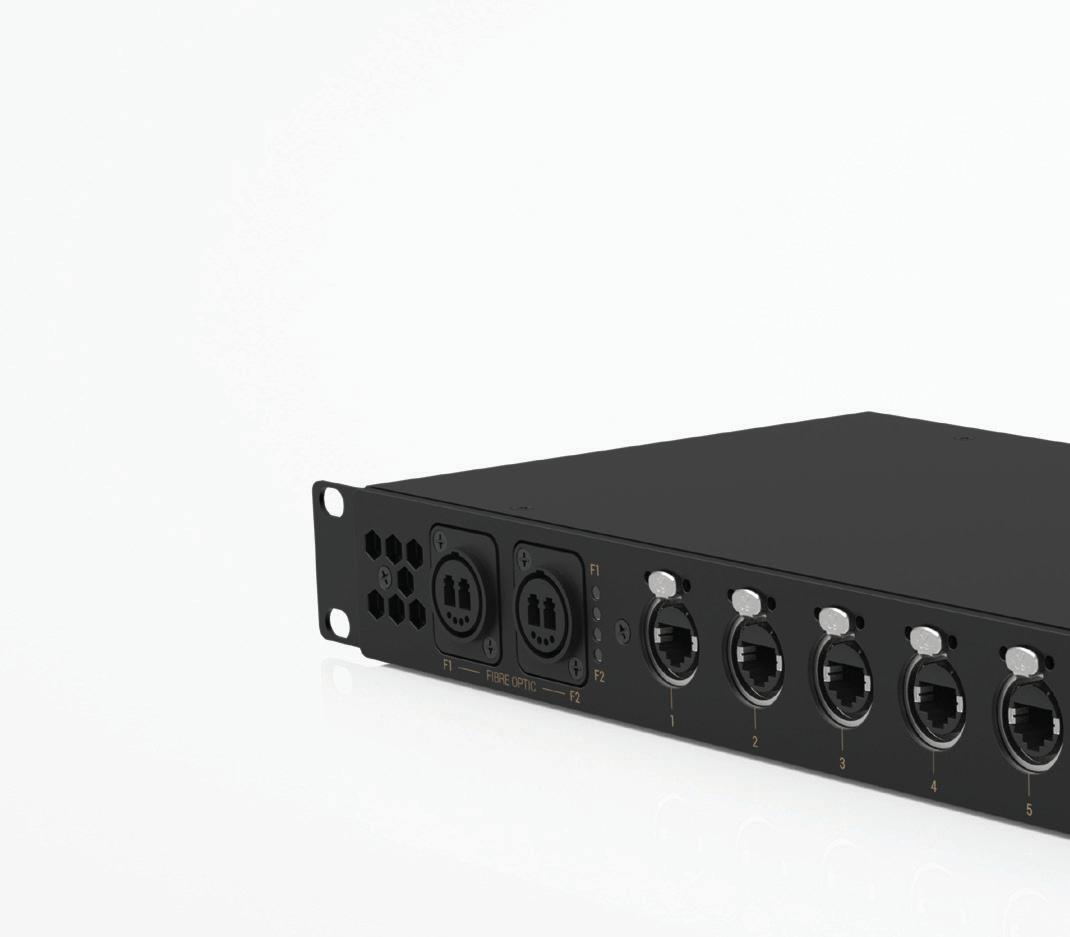
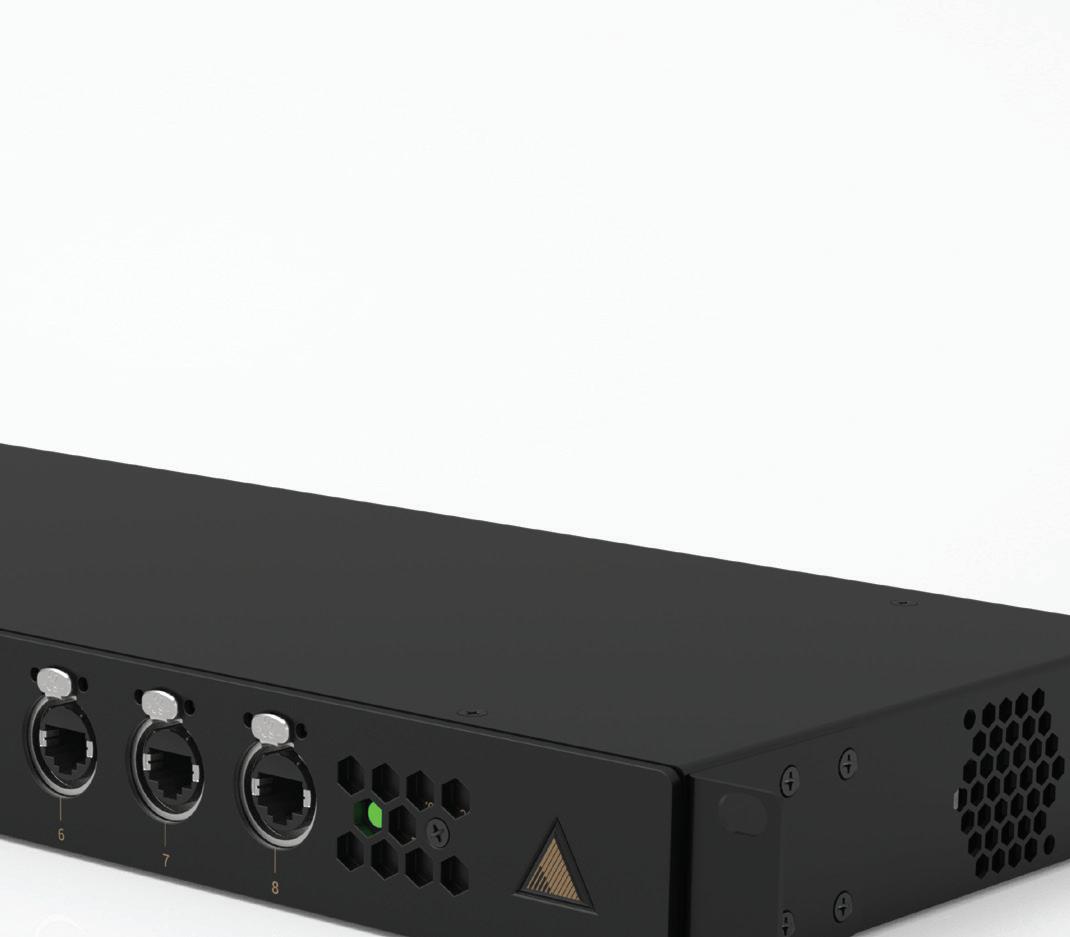



Whether deploying a redundant or primary-only network topology, the MS8.2 Milan network switch is perfectly suited to simplify mobile, installed systems and spatial audio applications.


Booth #N6445 I Demo Room #N203
Exhibitor Invitation Code: ADA167
June 17 - 19, 2026





and checking quality control can increasingly be automated, helping teams to deliver more frequent productions more reliably, making live production easier to repeat and manage at scale,” he said.
According to Abt, some live sports networks are already using AI to quickly produce highlight reels




for distribution on social media platforms. “AI is another emerging technology that both industries are just beginning to explore, and it’s already showing a lot of promise for enhancing media asset management and the setup and configuration of live productions,” he added.
While Waters said AI and automation will support monitoring, diagnostics, provisioning, and content management, their value depends on a strong foundation of software and management. “For decision-makers, convergence means applying IT and platform thinking to media operations. Prioritizing vendors that offer flexible deployment models, open APIs, and systems proven at scale helps create ecosystems that balance usability, control, and long-term sustainability,” he said.
Michael Bergeron, Panasonic’s senior category manager–advanced video production technology, believes the challenge with technologies such as cloud or AI is determining where each has its maximum benefit. “We tried cloud everywhere in the early 2020s,” he recalled, “and it stuck in places where scalability was required or where rarely used assets needed to be delivered—cases in which on-prem support of the same functionality might be cost prohibitive. We may see a similar shakedown with AI. GenAI content is still too easily recognized as such, but AI with a human operator is a force multiplier.”
















From top left, Ben Dandola-Grubb, Will Waters, Anna Kozel, Sebastian Mucha, Rick Seegull, Abe Abt, Jonathan Lyth, and Michael Bergeron
InfoComm 2026: Exhibitors Talk Top Trends
By Wayne Cavadi
InfoComm 2026 is primed to take over the Las Vegas Convention Center June 13-19 (exhibit hall open June 17-19). SCN reached out to a select group of exhibitors to discuss the trends and buzzwords they expect to address during the show.

Sean Shallenberger, Director of Sales, U.S., Adamson
One of the topics at InfoComm that we will probably have a lot of questions about is immersive audio. We’re seeing interest from consultants, integrators, and end users alike, all looking to better understand how this technology can be applied in real-world environments. Capabilities like precise localization, enhanced creative storytelling, and greater consistency across the listening area are reasons to look at an immersive solution. As a result, immersive audio is quickly shifting from a niche concept to a practical tool that many in the industry are actively exploring. At the show, we will be demonstrating our own solution, the Fletcher Machine. We will show meaningful improvements in control, clarity, and overall audience experience.

John Halksworth, Senior Product Manager, Adder
We are expecting to see a big focus on interoperability, security, and the convergence of AV and IT. As systems become more network driven, there’s an increasing demand for solutions that are not only high performance but that are also scalable, easy to manage, and secure. AI-assisted workflows and smarter, more intuitive system monitoring are also likely to be key themes, with the overall conversation shifting from individual products to complete and integrated ecosystems—and this is exactly where we’re focused.

Bob Caniglia,
Director of Sales Operations, Americas, Blackmagic Design
We’re seeing growing interest in IP-based workflows, remote production capabilities, and tools
that reduce complexity without sacrificing quality. As more organizations are producing video content in-house, there’s a strong focus on solutions that are intuitive and robust, without requiring highly specialized teams to operate them. We’re highlighting how organizations can build end-to-end workflows that are easy to implement, cost effective, and still deliver broadcast-quality results. It’s less about any single product and more about how everything connects to support today’s level of content creation and distribution.

Joel Mulpeter, Senior Director, Product Marketing, Crestron
We anticipate a focus on how systems connect and deliver real insight. AI generates a lot of attention, but translating its capabilities into a better understanding of the workspace and the workforce will be invaluable. Customers are looking for practical, scalable solutions that improve reliability and lead to meaningful outcomes, not just new features. This year at InfoComm, we’re telling a cohesive story that brings together our recent product introductions across content, collaboration, and control. Individually, these innovations solve real workplace challenges. Together, they help build environments where collaboration feels intuitive, productivity increases, and teams truly thrive.

Karam Kaul VP of Audio, HARMAN Professional Solutions
At InfoComm 2026, we expect to hear a lot of buzz around performance-first technology, platform-agnostic AV, and simplified device configuration in AV ecosystems— trends that align closely with HARMAN Professional’s latest innovations. Rather than treating audio, video, and control as separate layers, we’re showing how a single, standards-based architecture can deliver consistent, predictable performance across the network, even in enterprise-scale environments.

Robert Detwiler,
Senior Director of Product Management, Planar
As far as display technology is concerned, we expect to see significant advancements in
visual performance, durability, and efficiency. These span improved viewing angles, enhanced brightness, and color performance, protective treatments like encapsulation, and designs for effective heat dissipation. We see steady demand for ultra-wide format displays, especially in the case of supporting collaboration and enhanced productivity. Of course, with a growing emphasis on blending displays into architecture, we also find more manufacturers releasing creative platforms that support custom and visually distinctive installations. This includes curved displays, wrapped columns, halos, 90-degree right angle, and cube designs that are being used to create truly one-of-a-kind deployments.

Sean Bowman
Associate VP of North America Sales, Shure
AI will be a major theme, especially how it’s being used to deliver real value to customers, applied to simplify workflows, save time, and improve collaboration. We’ll also see strong momentum around software, cloud platforms, and deeper integration between AV and IT systems. Our flexible solutions, available on Windows and Android, with devices certified for Microsoft Teams and Zoom, can be remotely managed via our cloud service, ShureCloud, providing IT teams and AV professionals global scalability and ease of management for any AI-powered environment.

Mina Shin, Vertical Marketing Manager, ViewSonic
We expect the buzz to be less focused on chasing “bigger and brighter” displays and more focused on how to simplify solutions for use in real-world environments. We will be showcasing our MIP technology, which will certainly provide a “wow” factor, but it’s not the whole story. We want customers and partners to understand real-world use cases, and how ViewSonic products and technologies can help them grow and expand. We also expect conversations to move toward removing the friction between technology and the people who use it every day. For displays, that means All-in-One innovations, easier-todeploy setups, and enabling human experiences through AV technology.

When Hardware Becomes Software
Live production wants to move into the cloud, but that’s not necessarily an easy transition.
By Nigel Spratling
In live production, switching happens in the moment. In sports, for example, no one knows what’s coming next—and if the operator misses the shot, it’s gone. Even in news, where rundowns provide structure, switching still has to react dynamically to what’s happening on air.
The pressure hasn’t gone away. But the systems behind it have evolved.
In my previous column, I said that FPGA changed the trajectory of production tools by letting engineers evolve a switcher instead of rebuilding it. Functions that once required fixed hardware can now be designed in software and loaded onto programmable silicon. If something needs fixing, it can be reprogrammed. If requirements change, it can often be reworked, provided the FPGA has been sized correctly.
A production switcher can be built to meet today’s requirements. When a customer asks whether the system could also do something it wasn’t originally designed to do, the question becomes whether that capability can be added within the existing architecture.

Cloud With Constraints
Across the industry, business models are under pressure. More content is being delivered over the internet and OTT platforms. Long-established broadcasters are rethinking how they operate. Sports organizations stream directly to audiences, corporate teams run significant production infrastructure, and independent producers put content online every day. The production landscape has grown, and with it, the infrastructure decisions.
Five years or so ago, the industry buzzed about moving everything to the cloud. With income and turnover reducing, many organizations needed to find ways to cut both operating costs and CapEx budgets— and the cloud seemed like the answer. Providers like AWS and Azure offer massive amounts of compute power, so the whole industry began working on virtualizing what we’ve typically done in hardware and FPGAs.
Some parts of media production made that shift easily. Media playout, for example, has always suited the cloud, Netflix being the obvious example.
But live production is different. The challenge isn’t insurmountable, but it’s technically complex. Getting multiple feeds into the cloud, producing there, and getting the output back requires compromises, including a lot more compression. Still, if it can save money, people want to make it work.
More recently, early enthusiasm about the cloud has given way to a shift in thinking. Without major advances in technology,

putting everything in the cloud remains, for live production at least, something closer to a utopian dream than a practical reality, except at relatively small scales
Bursting into the Cloud
In live production, systems have always been built for the biggest day—the worst-case size and production need. That means a lot of capacity sits idle most of the time. Every studio in the world is overbuilt on purpose, sized for the maximum need, even though that maximum might only happen a few times a year.
Bursting offers a different approach. Rather than investing in permanent infrastructure to handle rare peaks, the cloud can supplement an existing system when demand briefly exceeds the base setup.
Elections are a good example. A broadcaster may suddenly need additional camera feeds for a few hours or a few days, more than the on-prem system can support. In those cases, extra capability can be added temporarily by bursting into the cloud.
Used this way, the cloud doesn’t replace on-prem systems; it complements them. For many use cases, putting everything in the cloud can end up costing more than running systems on-prem. As a supplement, however, there can be enough affordable horsepower to make it worthwhile.
That’s why the conversation has shifted. It’s no longer about on-prem or cloud, but how to combine the two in a way that fits organizations, workflows, and business models. The hybrid approach will be the real game changer. And as it matures, so will the tools and services that support it.
For most, the future looks hybrid.
Nigel Spratling is the VP of production switchers and servers at Ross Video.
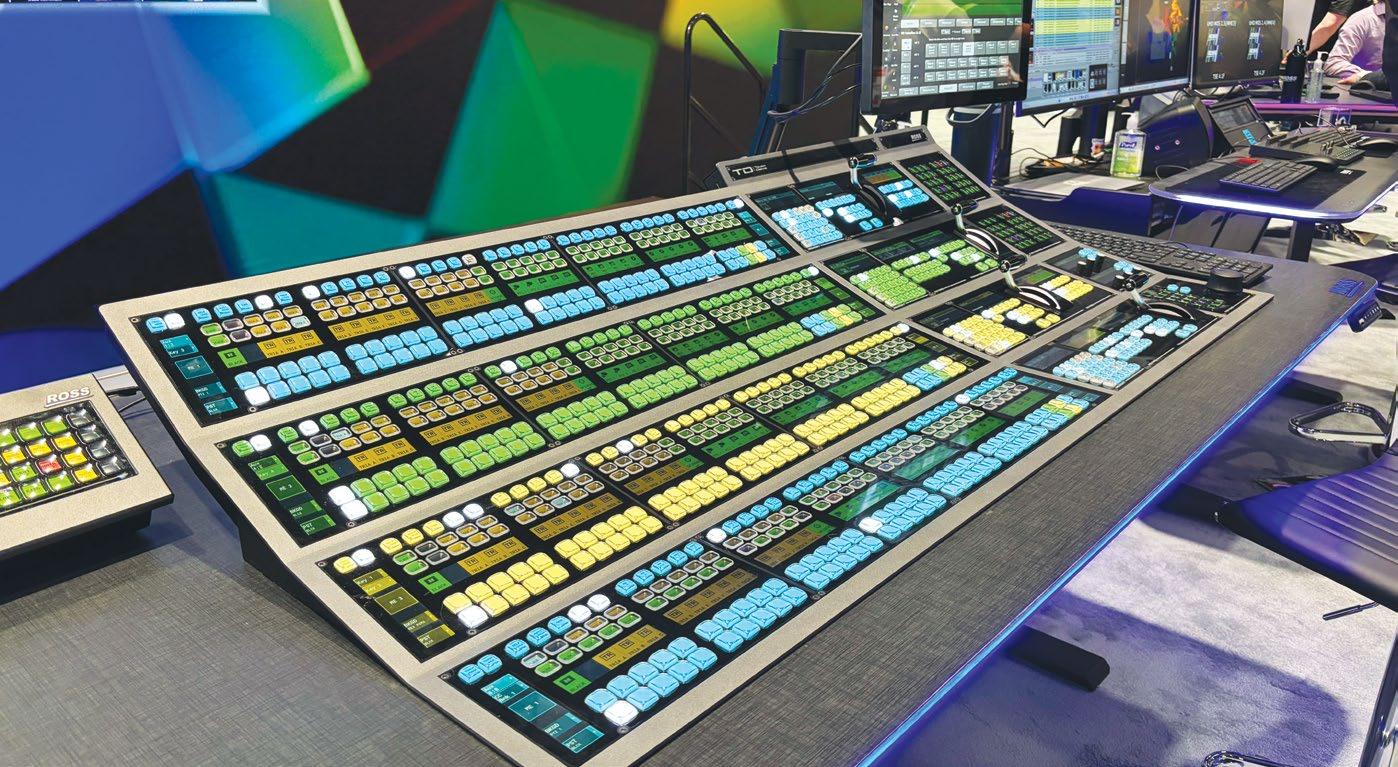
Most studios are overbuilt for the occasional big production, but bursting allows the cloud to supplement a system for a short amount of time.





AI Technology Powering the Next Generation of AVoIP Distribution




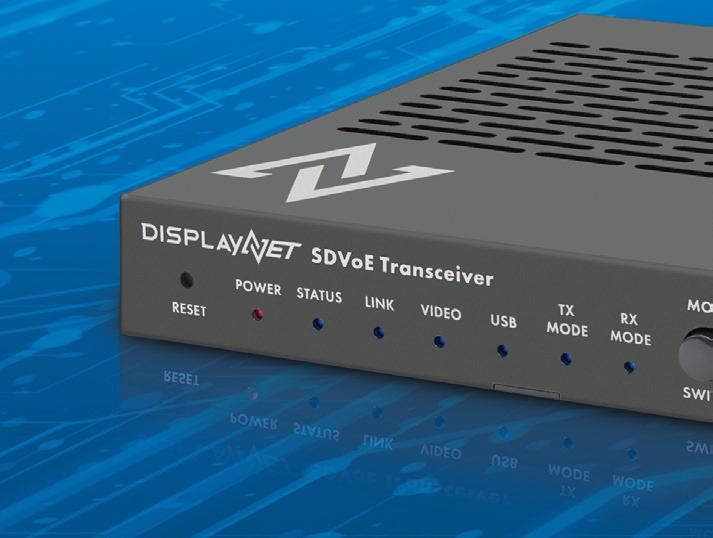
DisplayNet Signal Distribution has rede ned the apex of AVoIP performance with a powerful AI-ready control interface that enables de nition and deployment of complex AVoIP systems in minutes using natural-language instructions and with no prior knowledge of the underlying API. DisplayNet is the rst AV-over-IP system to ship native Model Context Protocol (MCP) support, making it directly controllable by Claude, OpenAI Codex, Gemini CLI, or any MCP-compatible AI agent out of the box.
The DN-300 Series , DisplayNet’s award-winning endpoints, deliver awless 4K/60 (4:4:4) video distribution with limitless scalability, zero-frame latency and zero image artifacts. These features allow system designers to deploy highly versatile AV signal distribution systems with robust performance, scalability, versatility and reliability at a fraction of the cost of traditional AVoIP systems.
Contact us today to see how DisplayNet can move your next AV system into the future.


ZERO COMPROMISE – INFINITE POSSIBILITIES
sales@dvigear.com (888) 463-9927 www.displaynet.com




AVOIP
Cornhuskers Coverage Conversion
HuskerVision streamlines sports production across campus with its move to ST 2110.
By Michael Grotticelli
As Garrett Hill, director of technology at HuskerVision, explained, since moving to an IP-based signal distribution infrastructure that connects seven main sports facilities/buildings, the biggest benefit has been the “flexibility to work smarter.”
Upon completion of a multi-million-dollar upgrade from existing SDI-based workflows last summer, the production arm of the University of Nebraska at Lincoln Athletics Department can now create more Cornhuskers content, cover more live events, and send virtually any signal to any destination on the 861-acre campus with an elastic, softwaredefined architecture.
The Road to Efficiency
HuskerVision’s journey to the SMPTE ST 2110 format began in 2023 with a transition to audio over IP. Lessons learned during that time helped devise a plan for video a year later.
“Doing audio first seemed like the right move,” recalled Hill. “We learned a lot of the networking requirements more intensely by doing that. We learned the importance of boundary clocking, device discovery, stream management, and PTP on switches. And now that we’ve done both audio and video, I can tell you that audio is easier to deploy, although not
without its challenges as well.”
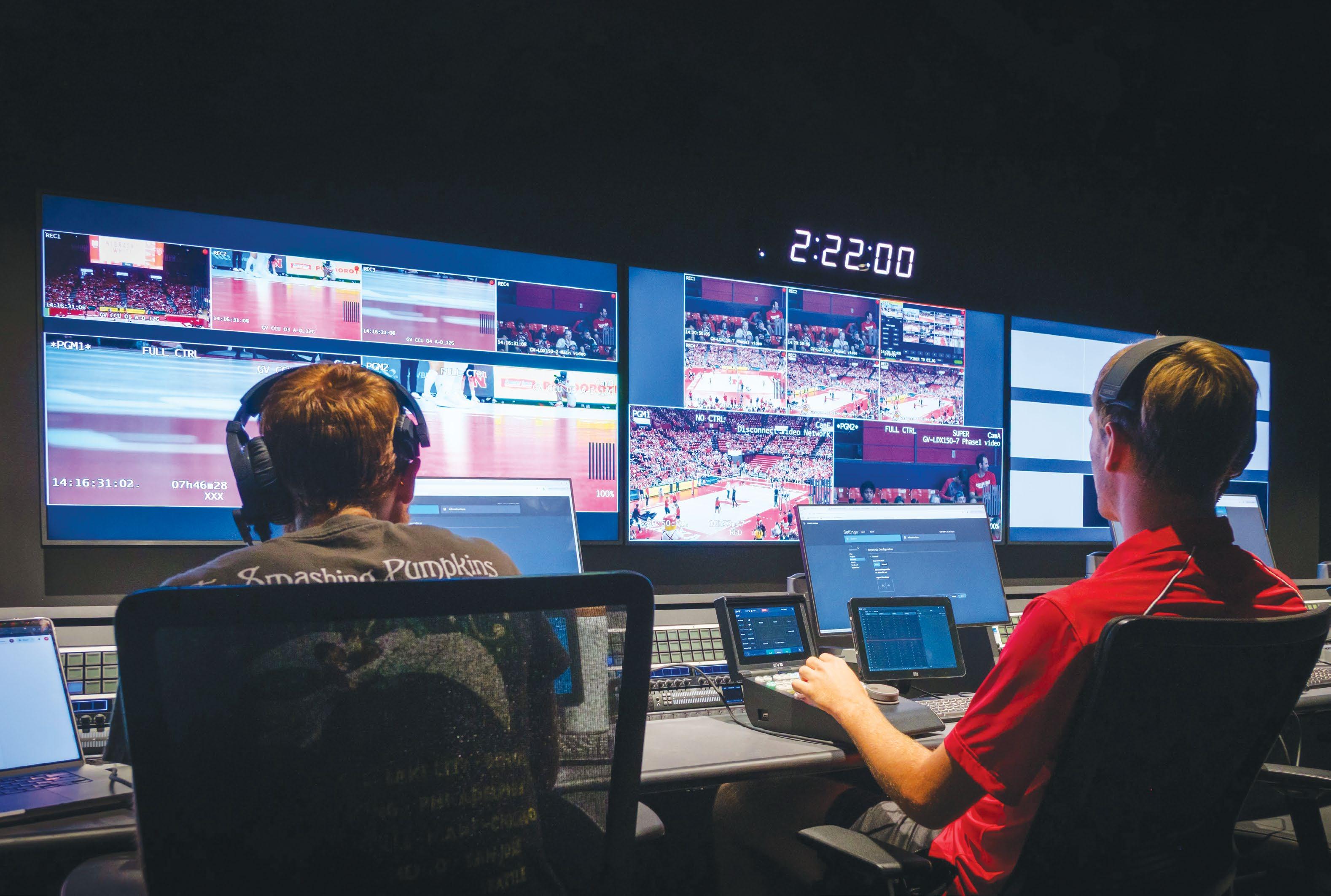
Under Hill’s guidance, the school’s HuskerVision team unveiled a completely renovated second floor of an existing building in September 2025. It now works out of a 25,200-square-foot production hub featuring three SMPTE 2110, 4K HDR-capable control rooms, complete with new 4K switcher and camera technology from Grass Valley and a HOME IP orchestration software environment from Lawo. Lawo A__UHD Core audio DSP engines and mc²56 consoles were part of the audio upgrade. (Meanwhile, the old football offices of North Stadium now house more than 100 students associated with the school’s programs for HuskerVision, Creative and Emerging Media, the Huskers Radio Network, and Athletic Photography.)
Thanks to the scalability of packet-based signal delivery (IP), all the school’s venues, as well as the various video scoreboards, can now be fed the highest quality signals from the same centralized place over a fiber optic network. The control rooms can be set up to work in tandem for larger events or used separately as required for smaller functions.
“It was important to deploy a scalable production system that could support all of the events that people want us to do and make it far easier to troubleshoot remotely, allowing us to reliably send signals from one end of campus to another,” Hill said. “And it’s mainly run by students, which speaks to the ease of use of the various systems in place.”
Mixed Format Architecture
Once system design plans were finalized, BeckTV was brought in to make it all work. Brock Raum, senior engineer for BeckTV who was a HuskerVision team member when he attended the school, led the integration team that handled the equipment and systems buildout.
“They wanted a complete UHD HDR workflow, but the budget didn’t really allow for it,” Raum said. “But we still wanted to give them a UHD HDR workflow, so we incorporated some legacy baseband and other favored components. It’s a true mixed format architecture.
There’s a large amount of 12G and 3G 1080p content interacting across the entire plant, which necessitated a handful of 12G endpoints and 3G endpoints. “Planning with Garret and his team in advance where those endpoints were, and what they needed, really helped us focus in on a system design that fit within their budget, but still gave them the features that they really wanted for their plant today and for the long term,” Raum added.
HuskerVision had a large amount of legacy equipment that it still wanted to use, things that didn’t necessarily need to be 12G UHD, such as encoders, decoders, and native 1080p Ross Video graphics machines. As a result, being able to intermix formats seamlessly was a big priority for them.
“We tried to streamline the configurations and the workflows as much as possible,” Raum said.
HuskerVision now has three control rooms to produce coverage of sporting events across campus.
INTEGRATION GUIDE AVOIP
“So, we sat down with Garrett, Kirk Hartman [assistant athletic director] and Scott Guthrie [former chief engineer], and we talked about what needed to be done.”
The solution was anchored by a Grass Valley K-Frame SXP IP switcher with a Kayenne 4 ME panel, because it can accept either 3G or 12G. “When you’re running 12 UHD on that switcher, you can accept either format,” Raum explained. “Then on the edges, we just had to figure out, OK, can this device natively do 12G? Can it natively do 1080p? And once we put that puzzle together, we built out workflows that they don’t really have to think about in their day-to-day operations.”
Lawo’s .edge platform is used both as a highdensity gateway and full IP processing node. Multiple .edge frames provide 3GSDI and 12GSDI ingest, while native ST 2110 connectivity and 100 Gbps interfaces feed the production fabric.
Single-Threaded Core
The control rooms were completed by August of 2025, when students and some professional crew began training on the new equipment. At the core of the IP architecture is a Cisco 9364 IP switch with 64 ports (400 Gb capacity). That can scale to more than 2,133x2,133 ports, even at 12G.
“Even if they dropped all the 1080p and they said we’re only going 12G, that’s still a router that your facility isn’t going to outgrow anytime soon,” Raum said. “So, it gives them a large amount of expandability in a small footprint. And that’s one of the big selling points of ST 2110.”
Interestingly, the IP core production and distribution infrastructure is devised as a single path, with all signals riding on it, as opposed to a more complex (and expensive) dual-path design. This was a budgetary decision made to deploy a single-sided network, but HuskerVision can grow into a 2022-7 redundant network design if/when additional resiliency is desired.
“We call it ‘single threaded,’ and it was a cost efficiency thing, as we were trying to balance the budget that we had,” Hill said. “We know the production trucks do it this way and it seems to work fine for them. And so far, the fact that it’s single threaded has not been a problem.”
Redundancy to protect against system failures is managed using “lots of spare parts” and swapping out COTS servers when necessary. Because they can have any signal go anywhere, it’s never been easier to work around a hardware failure. It can be managed automatically or manual via Lawo’s Virtual Studio Manager (VSM) platform, used to control all production devices, their parameters, and functionalities from a single user interface.
Communication Is Key
As for the challenges of upgrading an entire network of venues to bi-directional IP operations, Hill said the hardest part might be getting the networking and all
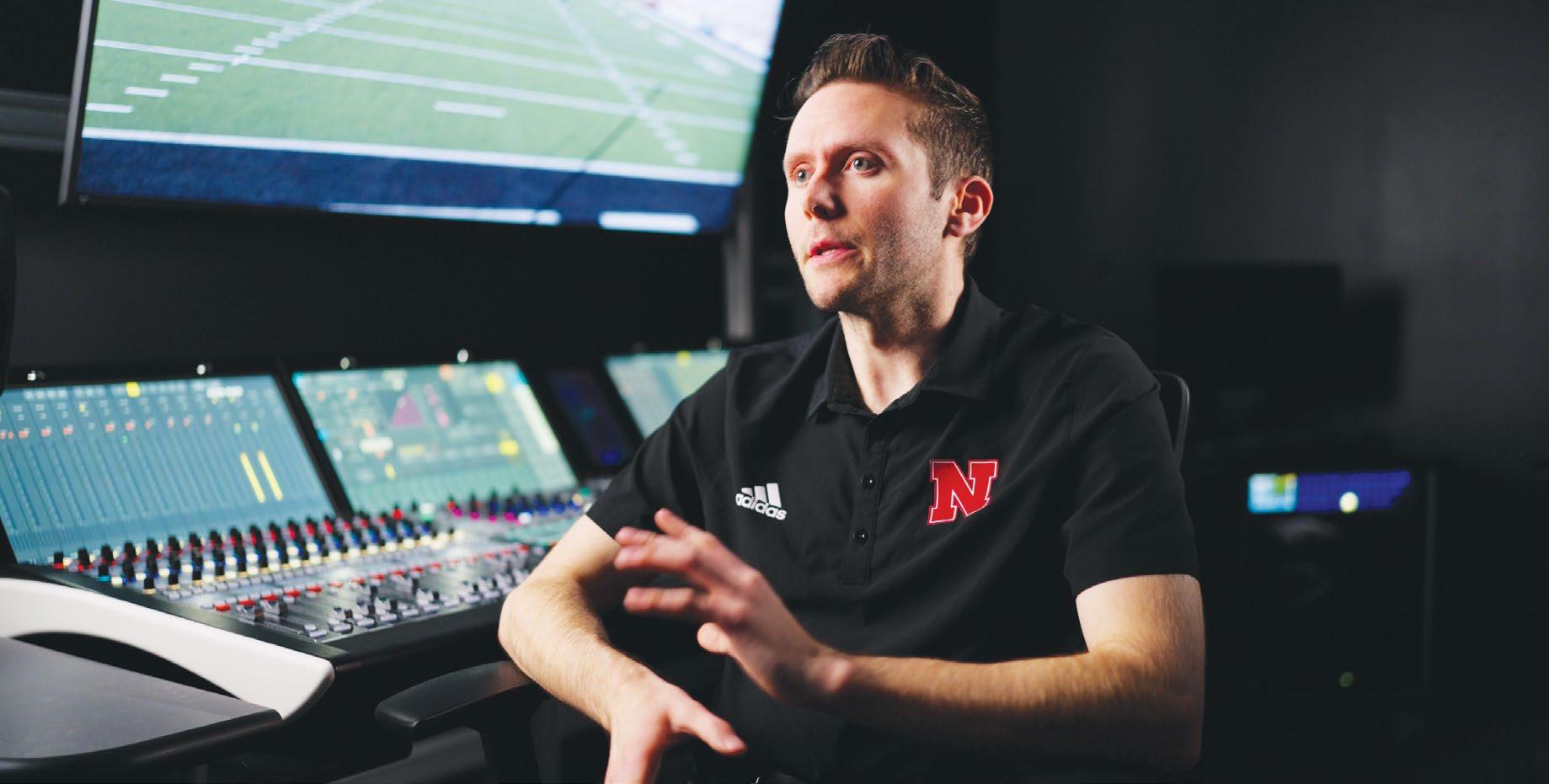
the devices on it to communicate correctly. “I’ve been dealing with networking for quite a few years now, but it’s just a little bit different with ST 2110 because it’s only multicast,” he offered. “How do you set up a network that is different than your regular corporate, core-access/edge or core-aggregate-access/edge model if you’ve only got devices and VLANs at the edge? Whereas here we’re doing routing between switch ports. We’re not switching, we’re routing through an entire fabric. So that was new to me.”
Another key to the success of the HuskerVision IP model is the use of software-defined HOME applications from Lawo. HOME is a cloud-native, browser-based management platform designed to connect, manage, and secure IP-based media infrastructures. HuskerVision is using several of the apps, including those for the control rooms’ multiviewers, signal conversion, color correction, and downstream keying.
The benefit of the HOME apps is that they can be turned on or off at will, saving cost and resources. Also, as a customer of Lawo, HuskerVision has access to what Lawo calls “flex credits” as part of the agreed upon software license subscription. “These credits can be applied to any of the HOME apps,” said Kevin Broce, key accounts manager at Lawo. “[HuskerVision] has a pretty hefty number of credits available on their system, which allows them to turn on every function in our portfolio. That includes access to any solution we offer now and anything we release in the future.”
The flex credits can be scaled out to hardware functions like frame syncs on gateways. In the HuskerVision infrastructure, there are Lawo edge video gateways in the venues, control rooms, and truck docks. Basically, they have lots of I/O everywhere and can use those flex credits that turn on any HOME app for use anywhere on the network. The system’s ability to present SDI inputs as network “proxies” gives HuskerVision high scalability with minimal bandwidth overhead.
This software license model also allows HuskerVision to turn on additional gateway functionality, so it doesn’t have to buy perpetual licenses for every one of these gateways, because
they’re not using them all at the same time. Rather than enabling that functionality in every location and sitting on it, maybe using it only 5% of the time, HuskerVision uses the credits to its advantage.
Audio Education
The HuskerVision hub facility is also complemented with three Lawo mc²56 audio consoles, a dedicated console for studio A, plus consoles in studio B studio C (for streaming). The layout was adopted specifically to support the school’s teaching efforts. Also included are Lawo A__stage 64 and A__mic 8 interfaces, as well as HOME Management for routing and orchestration.
“They’ve decided to dedicate these consoles to specific purposes so that the kids ultimately get experience with dedicated hardware and dedicated workflows,” said Broce. He added that while Lawo’s audio solution includes virtual mix interfaces (MXGUI), they also added tactile, physical MC2 console surfaces in the control rooms.
“A great thing about our audio solution, at the push of a VSM button, you can completely change the console use case and workflow,” he explained. “You can remotely access the console from anywhere. Say a new student is struggling with something on the desk; Garrett can log in remotely from his office or the stadium and troubleshoot the issue with access to every parameter and function via MXGUI.”
HuskerVision’s new IP infrastructure serves two key purposes: It helps the department deliver higherquality content for fans, educators, and students, while offering students hands-on experience with top-tier equipment, IT networking, and scalable IP-based workflows. The result is a campuswide media fabric capable of handling simultaneous shows from centralized control rooms.
“We’re definitely growing into the system and learning some things every day, but by and large it’s been working great,” said Hill. “We now have the capability to do whatever the school’s athletic department throws at us and are confident the system will perform as designed. The use of IP infrastructures for college sports production is increasing every day, and we now can clearly see why.”
Garrett Hill
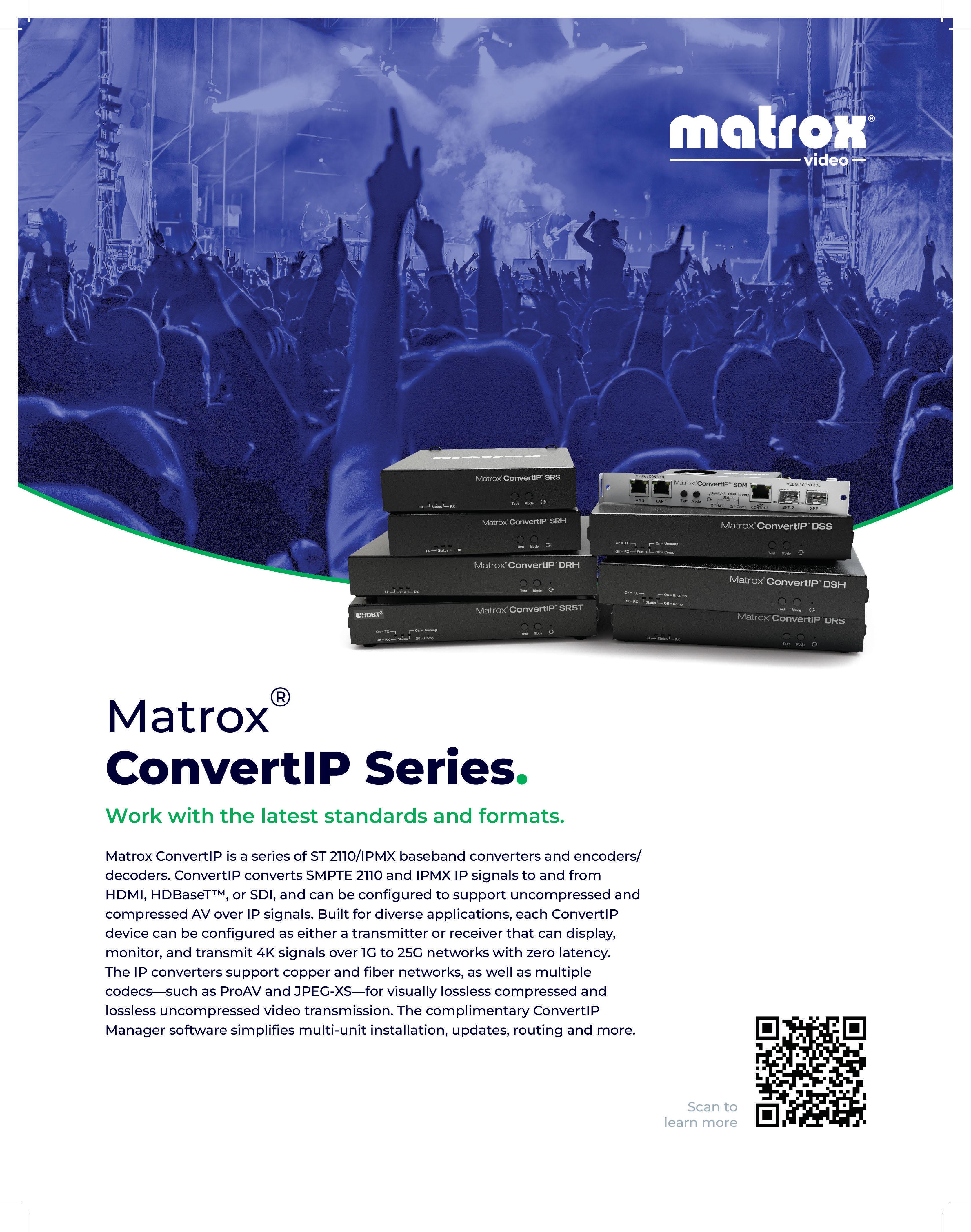
INTEGRATION GUIDE AVOIP
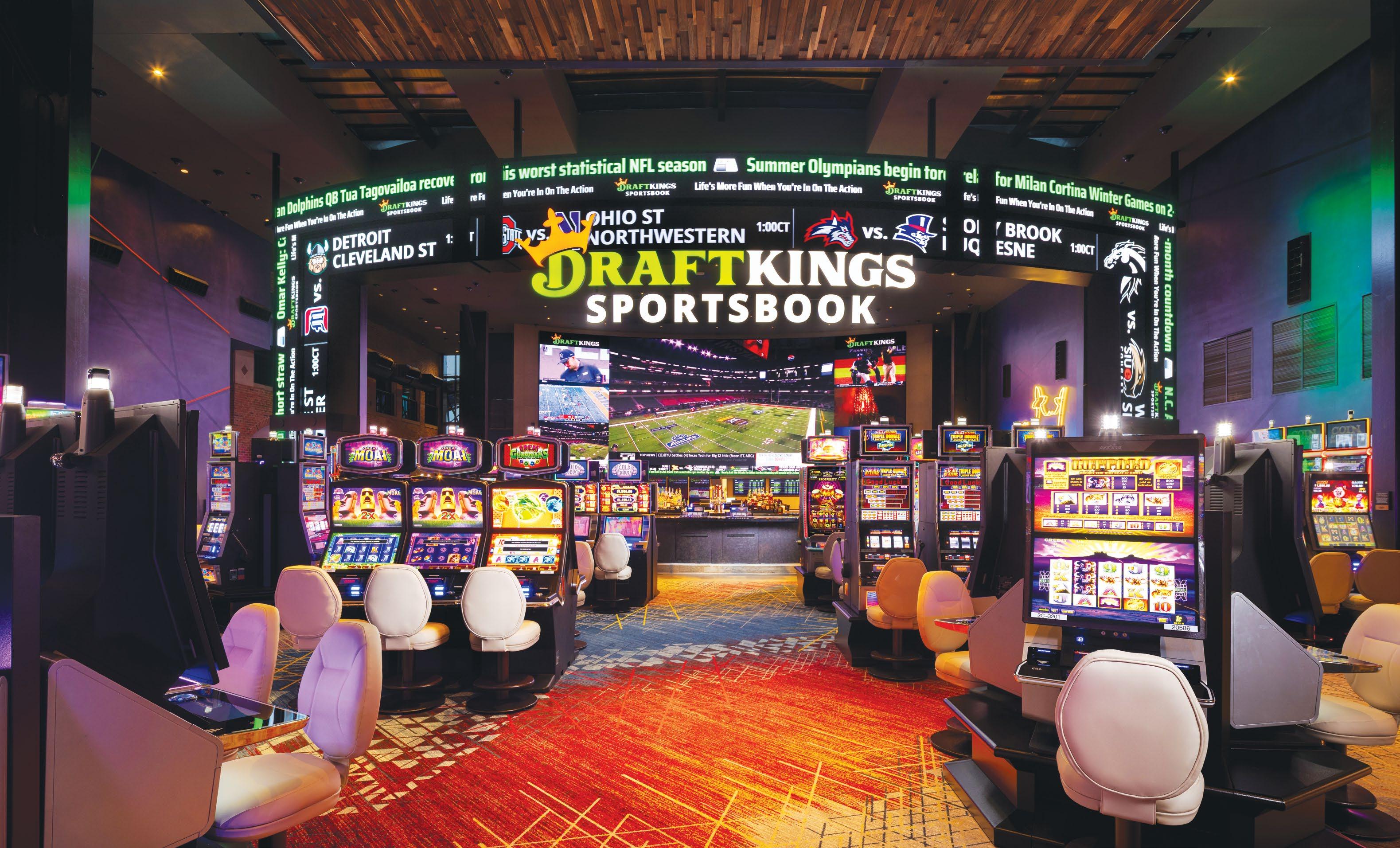
Bally’s Baton Rouge Renovates with AVoIP
Alpha deployed the SAVI iQ platform to unify AV elements under one system.
Bally’s Baton Rouge has been transformed into a modern, vibrant entertainment destination, converting the historic Belle of Baton Rouge into a fully reimagined hotel and casino. The new casino represents a shift from Bally’s previous riverboat operation to a permanent land-based venue. Opened last December as part of a $144 million redevelopment, the centerpiece is a 50,000-square-foot glass-enclosed atrium, once part of a rail and marketplace complex, now alive with gaming, a dedicated sportsbook, dining, and immersive social experiences.
To power the transformation, Bally’s turned to SAVI iQ’s AV over IP platform purpose-built for gaming and resort environments. Implemented by technology integrator Alpha, the solution unifies video distribution, audio control, and digital signage into a single, intuitive platform, eliminating friction and enabling seamless experiences across the property.
“In today’s casino and hospitality sectors, guest expectations are increasingly shaped by high-impact visual experiences, real-time content, and seamless operation across multiple zones—demands that have traditionally required multiple standalone systems, adding cost and complexity,” explained Kevin Higginbotham, senior account executive specializing in casino AV integration at Alpha. “At Bally’s Baton Rouge, those functions are now consolidated within a single, networked SAVI solution, simplifying day-to-day operation while enabling a more dynamic and responsive environment.”
For Alpha, the challenge was not simply to deploy AV systems at scale, but to unify them within a complex, historically constrained building while delivering the flexibility and usability expected of a contemporary
casino. “So much of this project came down to how do we take an old historic building and turn it into something completely new without losing the vision for the space,” Higginbotham added.
The glass-enclosed atrium now houses a modern 25,000-square-foot casino floor featuring nearly 800 slot machines and more than 20 live table games. Within this environment, SAVI provides control for a 46-foot video wall capable of showing multiple games simultaneously, alongside a real-time sports ticker. The sportsbook entrance is marked by a distinctive architectural feature: an archway incorporating two nested LED tickers.
Like many casino developments, the project began with a basis-of-design specification built around multiple standalone systems. To meet the demands of a modern, lively environment, Alpha reworked the design around SAVI, consolidating those systems into a unified platform that reduces inefficiency, improves scalability, and streamlines long-term operation.
Underpinning the entire experience is SAVI’s AVoIP infrastructure, anchored by SAVI Server Pro. Across the casino environment, more than 70 LG commercial displays run on webOS, enabling direct integration with SAVI Canvas and eliminating the need for costly external media players or set-top boxes. Video is distributed across the casino by SAVI STREAM.One 4K encoders handling broadcast television, sportsbook feeds, and in-house content, alongside integration with third-party technologies from Vantiva, Q-SYS, and NovaStar.
Just as critical as scale was simplicity. With SAVI Glass, operators have customized, branded control of the entire system from 5-inch SAVI TOUCHPAD.Ones
and iPads—no dedicated apps or extensive training required. “The SAVI interface fundamentally changes how staff interact with the system,” said Fred Martinez, AV specialist at Alpha. “Instead of navigating channel lists or trying to remember inputs and display locations, they can search for a game, select it, and send it directly to the screen. That simplicity is what makes it effective.”
A fully zoned audio system, comprising more than 180 speakers, delivers consistent coverage across the gaming floor, sportsbook, bars, and dining areas. As part of the wider SAVI integration, staff can control source selection and volume by zone, while automated adjustments maintain a consistent atmosphere throughout the day.
“The goal was to maintain a consistent level of energy across the venue,” said Higginbotham. “We implemented automated audio adjustments based on time of day, so levels adapt without requiring manual intervention, ensuring the space always feels active and engaging regardless of occupancy.”
Another advantage was the elimination of a separate digital signage CMS. Using SAVI Show, Bally’s can create, schedule, and distribute content within the same platform used for control and video distribution, while the direct integration with LG webOS displays further reduces hardware requirements by removing external playback devices.
“One of the biggest drivers for the client was removing the need for a third-party signage platform,” said Higginbotham. “That’s not just an upfront saving; it also removes an entire layer of complexity. Everything lives in one environment, which makes it easier to deploy, manage, and support over time.”
The sportsbook entrance at Bally’s Baton Rouge has a high-tech archway.

INTEGRATION GUIDE
DisplayNet DN-300T SDVoE Transceiver
DisplayNet DN-300T is a true SDVoE transceiver that simultaneously transmits and receives HDMI 4K/60p video over 10 GbE. In properly designed systems, one DN-300T replaces a separate transmitter and receiver, reducing endpoint count and cost. The unit includes full-bandwidth USB 2.0 routing, dual copper, and fiber 10 G interfaces supporting up to 328 feet (100 meters) on Cat 6A or more than 18 miles on single-mode fiber, plus PoE+ support and silent fanless operation. Four units mount in a single 1 RU of rack space.
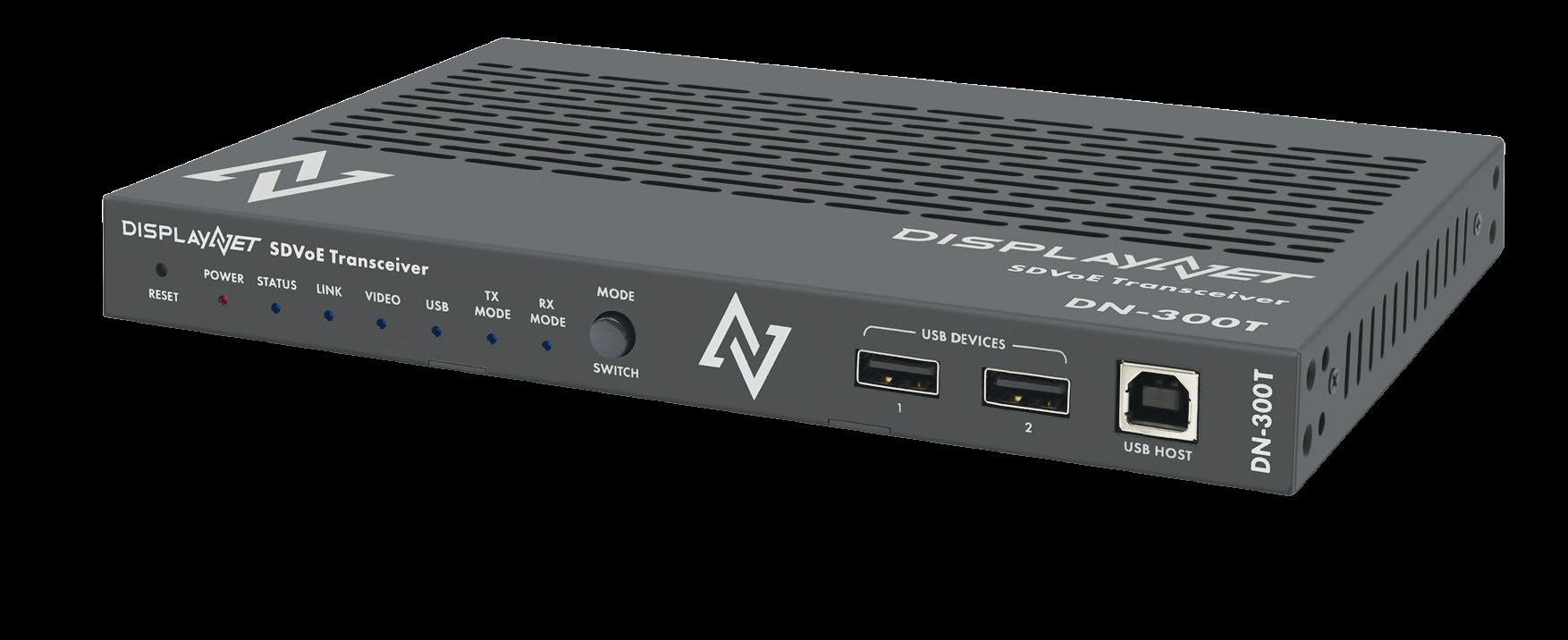
Atlona LumaStream
Atlona’s AVoIP H.264/H.265 LumaStream encoder/decoder builds high-quality, low-latency AV, and control into a single cable transport solution over most existing network infrastructures, simplifying deployment. Features such as local control, Dante audio, video wall, live RTMP publishing, and customizable branding, including logo and multilingual directional ticker support, suit it perfectly for digital signage, hospitality, houses of worship, NOCs, and education, while optionally leveraging Atlona’s CS31 switcher as a decoder.
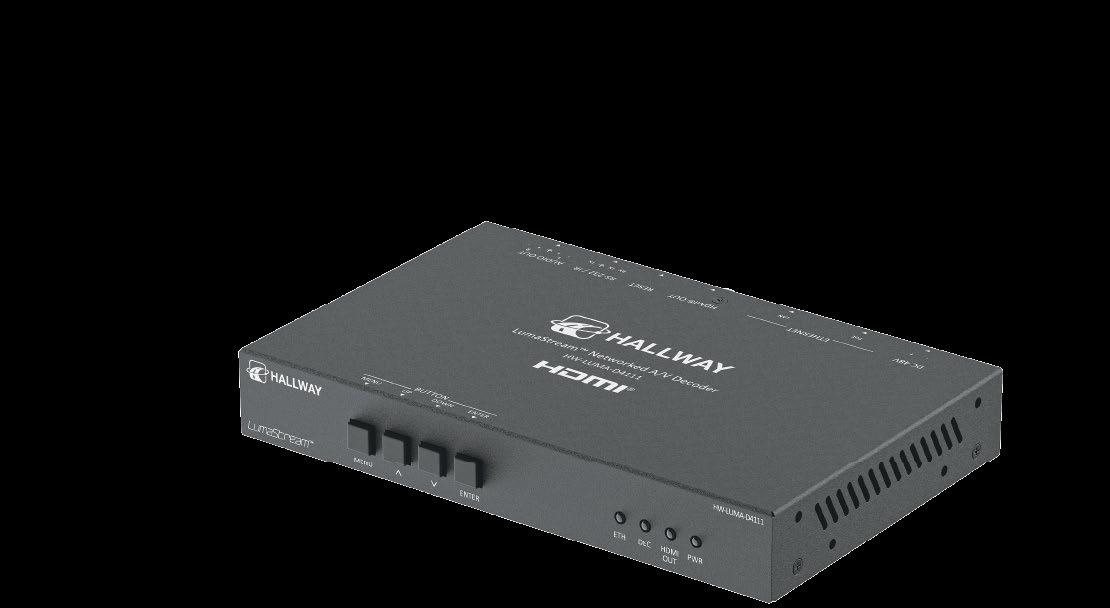
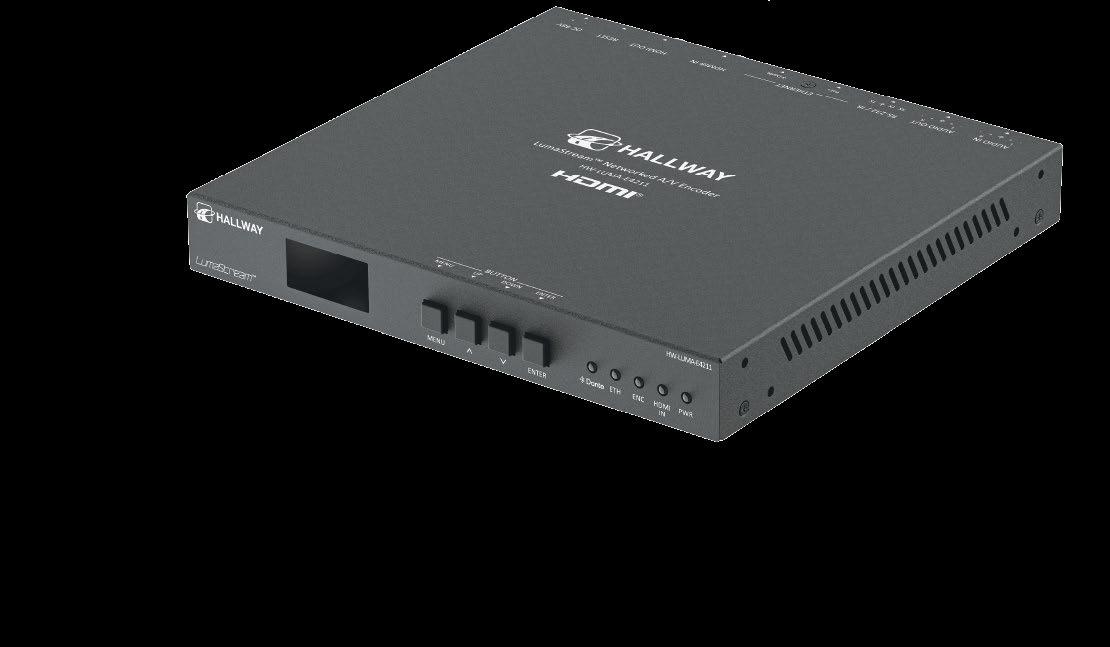
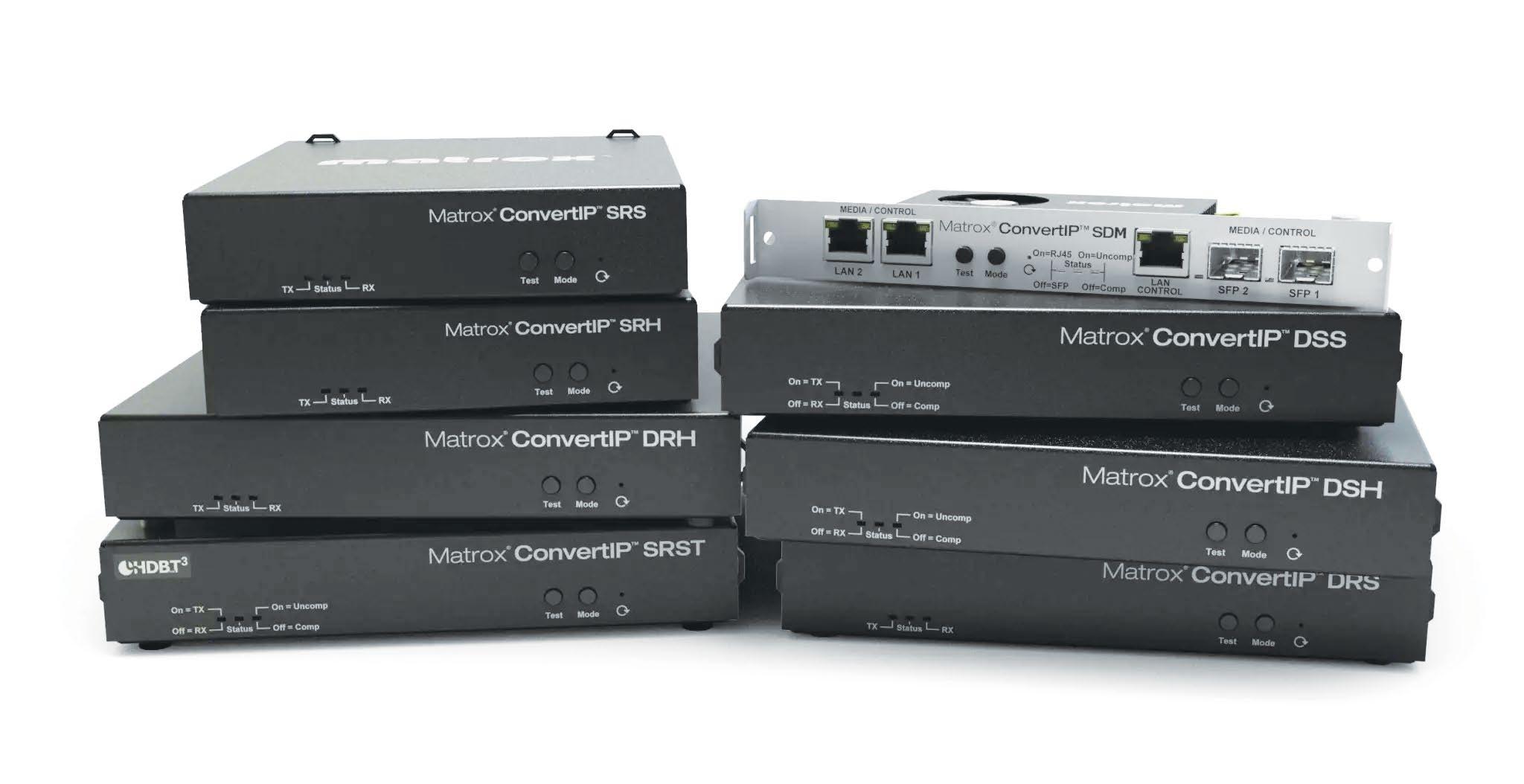
baseband converters and encoders/decoders. ConvertIP converts SMPTE 2110 and IPMX IP signals to and from HDMI, HDBaseT, or SDI, and can be configured to support uncompressed and compressed AV over IP signals. Built for diverse applications, each can be configured as a transmitter or receiver that can display, monitor, and transmit 4K signals over 1 G to 25 G networks with zero latency. The IP converters support copper and fiber networks, as well as multiple codecs, such as ProAV Colibri and JPEG-XS, for visually lossless compressed and lossless uncompressed video transmission.
Just Add Power AMP
AMP—Advanced Matrix Programmer—is in-house configurator software built for Just Add Power AV over IP distribution systems. It accelerates deployment by configuring supported network switches and preparing each Omega, Ultra, or MaxColor device with the correct operational profile for dependable performance. AMP unifies configuration, expansion, maintenance, firmware management, diagnostics, and system takeovers, transforming complex AV over IP installations into streamlined, scalable systems that are easier to deploy and manage with confidence.
AVOIP INTEGRATION

At Issue
What are some of the challenges associated with adopting an AVoIP workflow?


Steven Barlow President, DVIGear
Three key issues stand out. First is AV/IT convergence: AVoIP demands fluency in signal flow and enterprise networking, and few teams have both. Second is the compromise trap. Many AVoIP protocols squeeze video onto 1 GbE by sacrificing resolution, frame rate, or latency, leaving integrators to live within limits and resulting in image artefacts. Third is legacy design thinking, where teams still manually manage IP addresses, multicast groups, and channel assignments instead of letting modern protocols handle them. Modern standards like SDVoE on 10 GbE solve most of these: Channel numbers, multicast groups, and IP assignments are abstracted via the API, and 10 GbE removes compression tradeoffs. What’s left is organizational.

Catherine
Koutsaris Product Marketing Manager, Matrox Video
Adopting an AVoIP workflow brings key challenges centered on IT integration and network design. Success depends on close collaboration with IT teams, as AV traffic must coexist with existing data on the network. Proper bandwidth planning is critical to ensure reliable, high-quality media distribution. Organizations must also design networks with future growth in mind, avoiding costly rework as requirements scale. AVoIP demands in-house networking expertise for both enterprise IT and media networks. Choosing AV components that optimize quality while minimizing bandwidth usage is also essential to ensure efficient, scalable, and high-performance deployments.

Wylie Dunham
Senior Network Engineer, Atlona
Adopting an AVoIP workflow introduces a different set of challenges compared to traditional AV systems. Instead of simple point-to-point connections, everything relies on the network, making a network-first approach essential. Factors like multicast traffic, IGMP configuration,
bandwidth management, PoE budgets, and switch capacity all add layers of complexity. However, when properly designed and implemented, AVoIP offers significant advantages. By treating video as data, organizations gain flexibility and scalability, allowing a single source to be distributed across an entire campus, reducing hardware duplication, simplifying infrastructure, and ultimately improving overall ROI.

Ninoshka Lopez
Senior Technician, Just Add Power
The real AVoIP challenge has never been the technology itself. It lives in the gap between a seasoned AV engineer’s instincts and an increasingly IP-driven world. Network configuration, device compatibility, and team readiness are where most deployments stumble. Forward-thinking companies are closing that gap not by forcing their teams through years of networking education, but by rethinking how tools, training, and infrastructure management work together. When switch configuration, AV device management, and professional development live within a single intelligent workflow, the complexity dissolves. AVoIP stops feeling like a disruption and starts feeling exactly like what it always promised to be: progress.


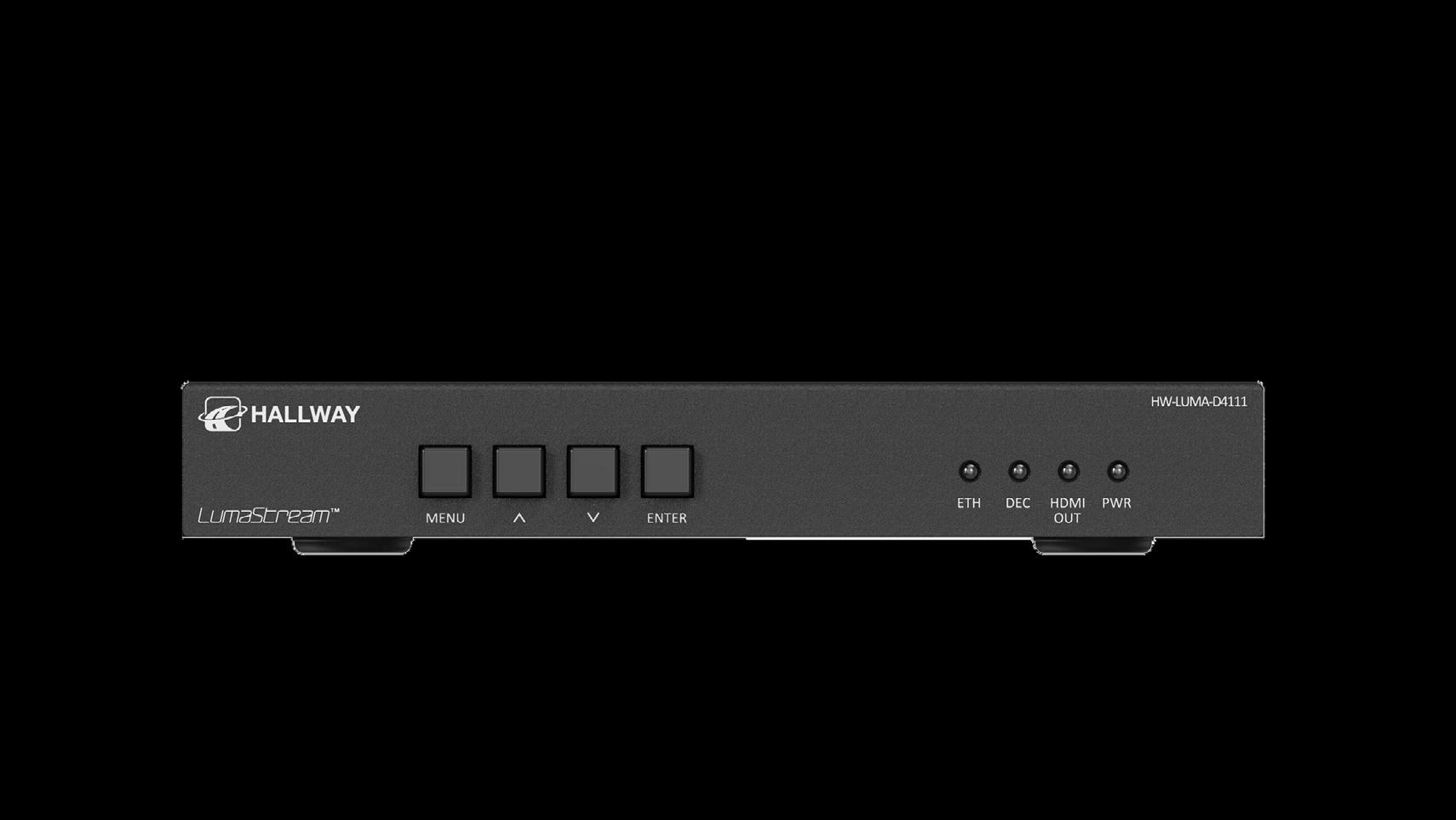
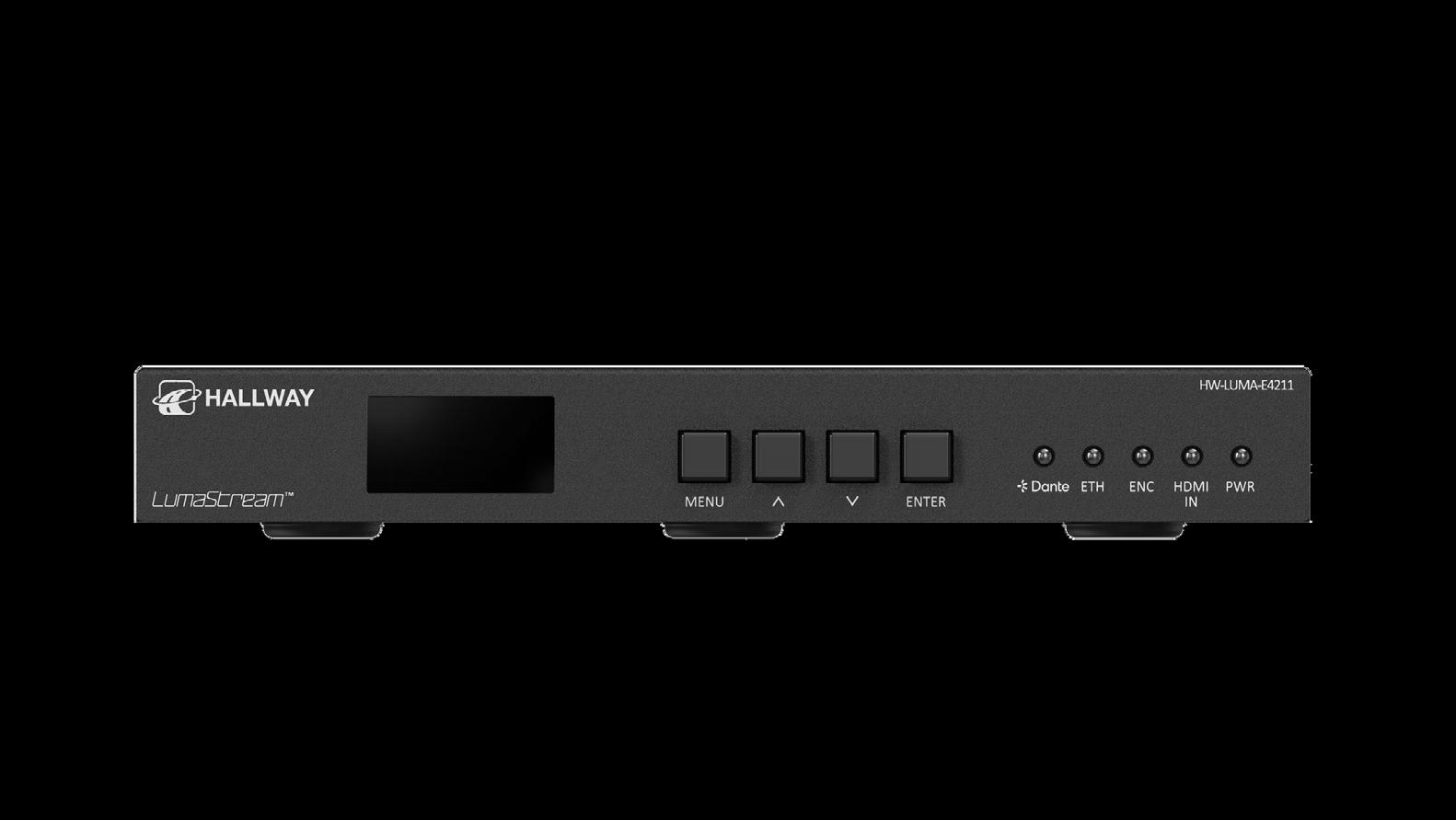

Increase Engagement, Reduce Waste
The Pennsylvania Convention Center has a sophisticated new digital signage network.
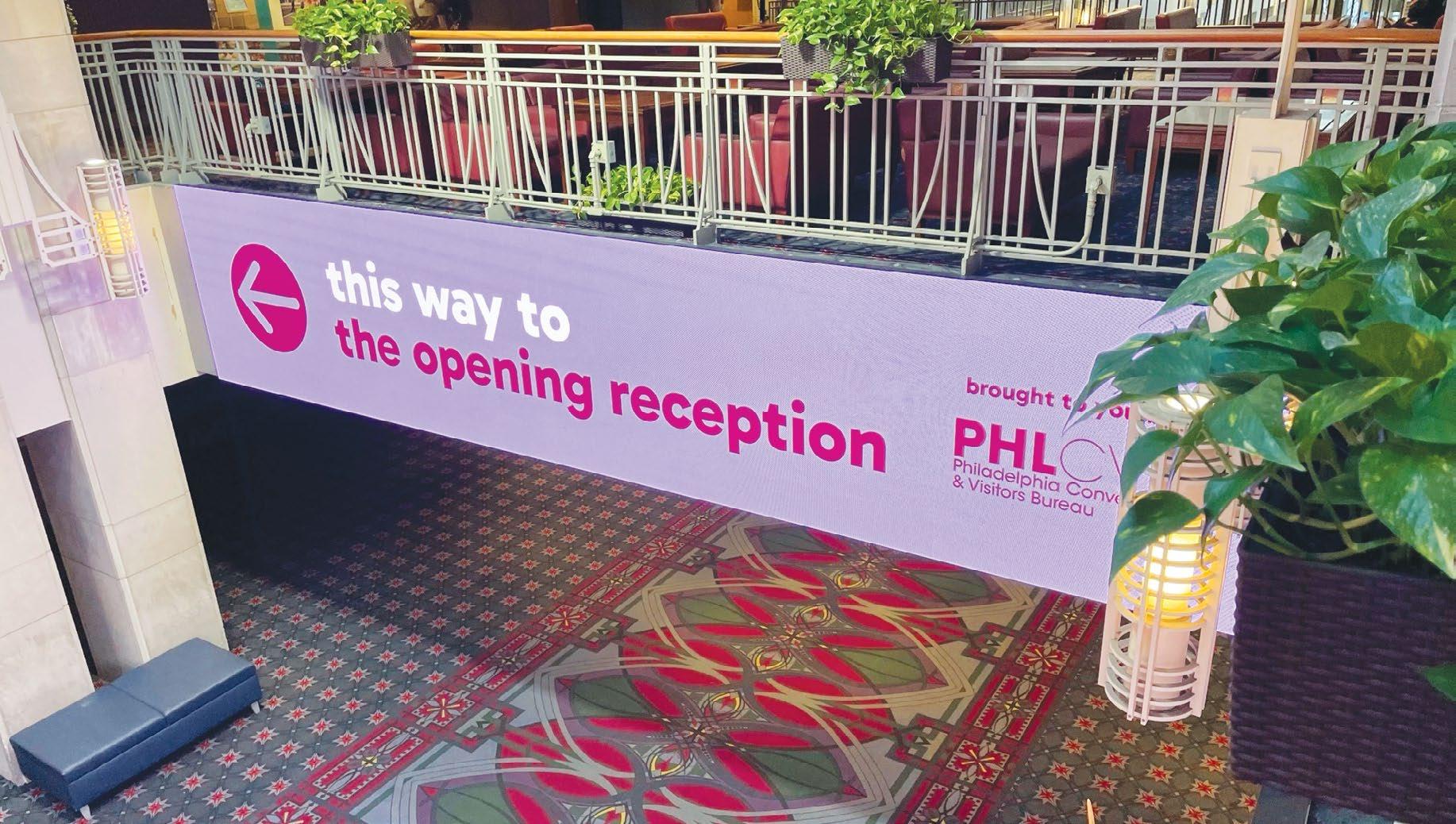
By Jennifer Guhl
After weathering some tough years during the pandemic, the events industry is booming again. According to Market Intelo, the global convention center market is projected to reach $89.3 billion in 2034, riding a 7% compound annual growth rate (CAGR).
This growth presents an opportunity, and many convention centers are investing in infrastructure and logistics upgrades to enhance the customer experience. This includes the Pennsylvania Convention Center (PCC) in Philadelphia, which recently unveiled one of the largest and most sophisticated digital display networks in a U.S. convention center.
The project was something John McNichol, president and CEO of the PCC, said had been on the agenda for a few years. The goal was to enhance the east side of the building, which opened in 1993, to match the more modern amenities of the west side expansion, which opened in 2011.
“The customer experience is always top of mind in everything we do,” he explained. “Having such a wide array of digital signage at the venue now allows our customers to incorporate striking, creative, and budget-friendly signage options for their events, while also providing a more seamless, intuitive, and engaging experience for event attendees, organizers, and exhibitors.”
Across the Venue
Completed in January, the new network was developed in partnership with technology consulting firm
an opportunity to create a venue-wide communications platform featuring more than 150 displays, including approximately 4,700 square feet of LED video wall displays and LCD displays in public and meeting spaces.
The network allows the venue and event organizers to enhance event branding, improve attendee navigation, offer new sponsorship opportunities, and modernize the overall guest experience. AJP provided turnkey concept development, system design, and construction management, while Eastern Sign Company and HB Frazer supported the physical implementation.
One of the most striking elements of the network is the 79-foot digital ribbon in the Broad Street Atrium, along with three towering 28-foot vertical LED displays, which were treated as permanent digital
architecture, creating a cathedral-like experience as guests travel to the upper floors. Curved screens were placed at key intersections, wrapping around the walls. UberDisplays manufactured and delivered all LED video walls for the project.
Prior to the modernization, PCC relied heavily on static signage and temporary printed banners, with each event producing something new that was then discarded. This project allowed them to change that. “The primary goal was basically two things: communication and to be more environmentally friendly and cost-effective with signage,” said David Watroba, managing director with AJP.
To determine placement, PCC traffic patterns, historical banner locations, and natural guest interaction points were evaluated to identify where displays would have the greatest impact without detracting from the venue’s architectural features, which pay homage to its deep Philadelphia roots. This strategic placement in high-traffic areas would catch guests at natural points in the venue where they would look for directions, reducing their need to seek help from staff.
“Our goal with this project was to provide a modern and innovative signage solution without overpowering the elements that make the Pennsylvania Convention Center a one-of-a-kind event venue,” McNichol added.
Central Control
The new network also dramatically improves realtime communication by providing a central control system that allows staff to instantly update messaging across the building’s display network. “We can push instant updates regarding room changes, keynote alerts, or emergency notifications across the entire facility simultaneously,” McNichol said. “By providing this information on demand, we allow
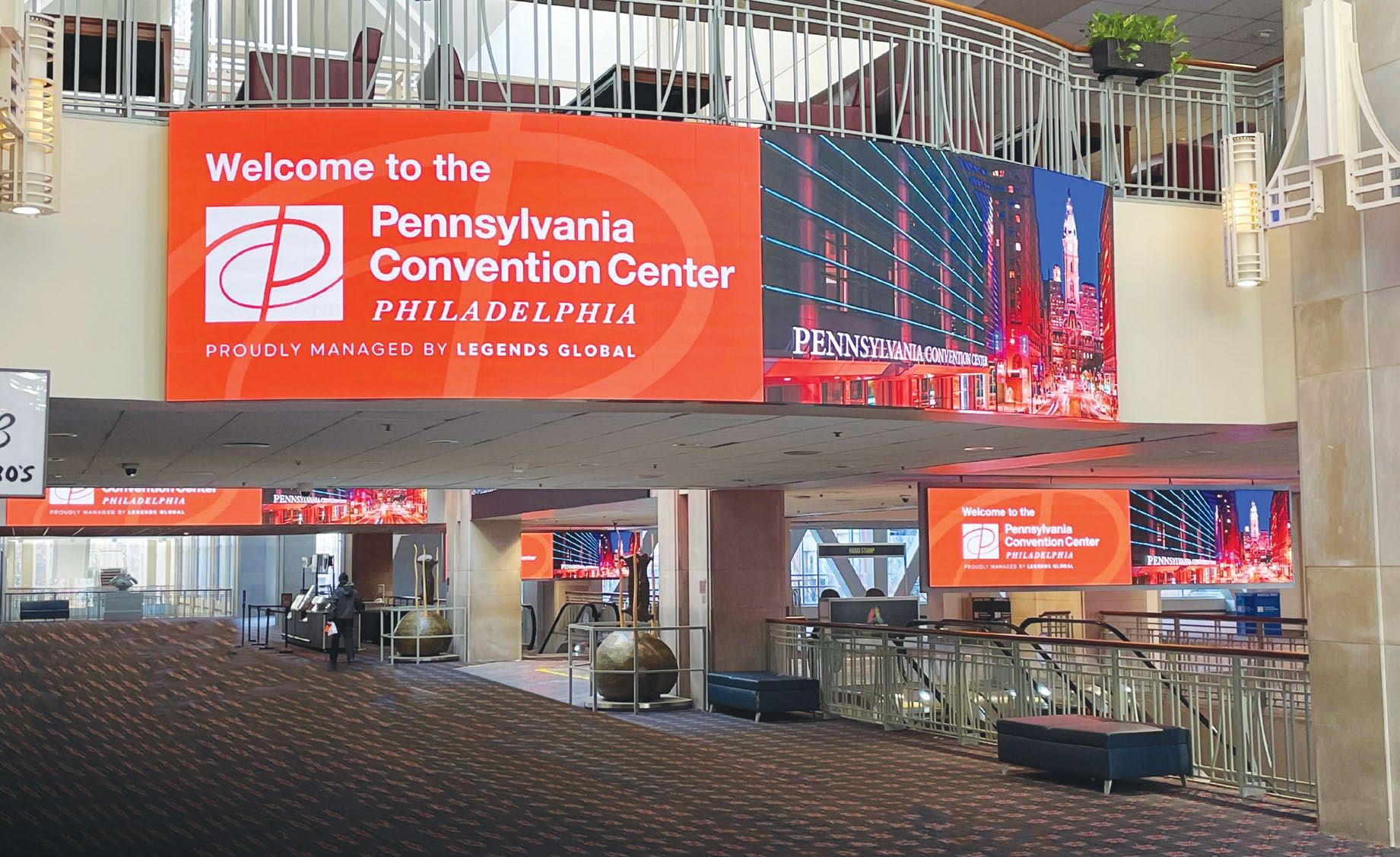
Anthony James Partners (AJP). Together, they saw it as
The PCC’s new digital signage network features more than 150 displays.
The PCC’s digital signage network can provide wayfinding, messaging, and even sponsorship opportunities.
visitors to focus on their event rather than the logistics of finding and navigating it. It turns the building into a responsive environment that guides the visitor through their experience.”
Messaging can be distributed across the network, and event organizers can decide what content goes where. “They can put wayfinding on it. They can put information on it. They can put the weather on it. It’s whatever they want to do with it,” added Watroba.
It also provides organizers with additional monetization opportunities by selling space across the digital network and increasing the value to event sponsors. “A high-visibility digital wall can now showcase multiple sponsors in a high-definition loop,” McNichol noted. “This increases the share of voice for brands and creates significantly more inventory for show organizers to monetize, all while maintaining a clean, modern aesthetic throughout the halls.”
The system also helps PCC better support concurrent events within the venue, which in the past required significant lead time, manual labor, and substantial physical waste when printed materials were replaced as events transitioned back and forth. “Now, we can execute a total ‘brand flip’ for the entire facility almost instantaneously via the digital signage,” said McNichol. “We can transition the messaging, color schemes, and logos for a massive convention to a private gala with no downtime and zero physical footprint.”
New Expectations
AJP had to ensure that construction did not affect events occurring during the installation process. “We did a lot of coordination with them just to make sure that our three to four-week look ahead wasn’t just dedicated towards the material and the physical installation, but what it looks like to not make a mess or make noise around where certain events were,” said Jeremy Lomax, senior project manager with AJP.
The network debuted while the venue hosted the Professional Convention Management Association (PCMA) Convening Leaders event, offering convention and meeting planners from across the country the chance to see the network and its capabilities firsthand.
“The additions have been extremely well received by our customers who have stated that the signs have elevated their event experience,” McNichol said.
The digital display network is part of PCC’s broader, multi-year improvement program, which focuses on technology upgrades, operational efficiency, and the overall experience for event organizers and attendees. Future phases are already underway, including the recently completed display installations in the Grand Hall, which was designed as a synchronized media zone with approximately 760 square feet of wall-mounted displays.
An entirely new power and data infrastructure, included in Phase 1, was designed to support the additional loads in future phases. “We made sure that when we sized the transformers and the new panel
boards, they would be able to handle the additional loads in a proposed Phase 2 or Phase 3,” said Lomax. Many installations don’t account for data and power needs for future technology integrations, but knowing that future phases were already underway made it clear to all involved that this was an
important Phase 1 investment. “Establishing this foundation during Phase 1 was key, not only to support the current power and data needs, but also to support our future requirements as we continue to develop our digital signage offerings,” added McNichol.
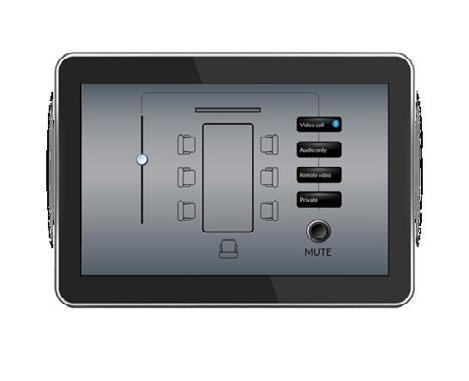
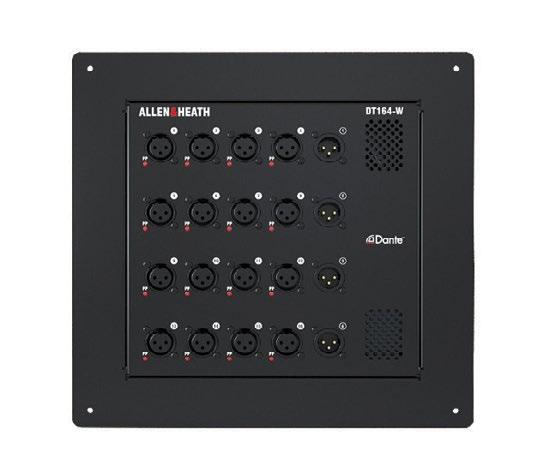
More in Store
Retail AV helps brands drive foot traffic while creating income possibilities for integrators.
By Carolyn Heinze
For a while, retailers have recognized the value that Pro AV technology can bring to the instore shopping experience. Savvy brands are using these systems to attract consumers to their brick-and-mortar locations, keep them there for as long as possible, and hopefully spend money while on site. On the back end, companies are taking advantage of data and analytics capabilities to monitor the experiences they’re delivering. One of their biggest priorities: deploying and managing these systems and the content they’re distributing on a global basis.
“We’re seeing a shift away from focusing on individual display technologies toward building a connected display infrastructure,” said Dana Corey, SVP and global general manager at Avocor. “Retailers still deploy a mix of LCD, LED, and increasingly, EPD [e-paper] depending on the use case, but the real change is that these are now treated as endpoints within a larger network.”


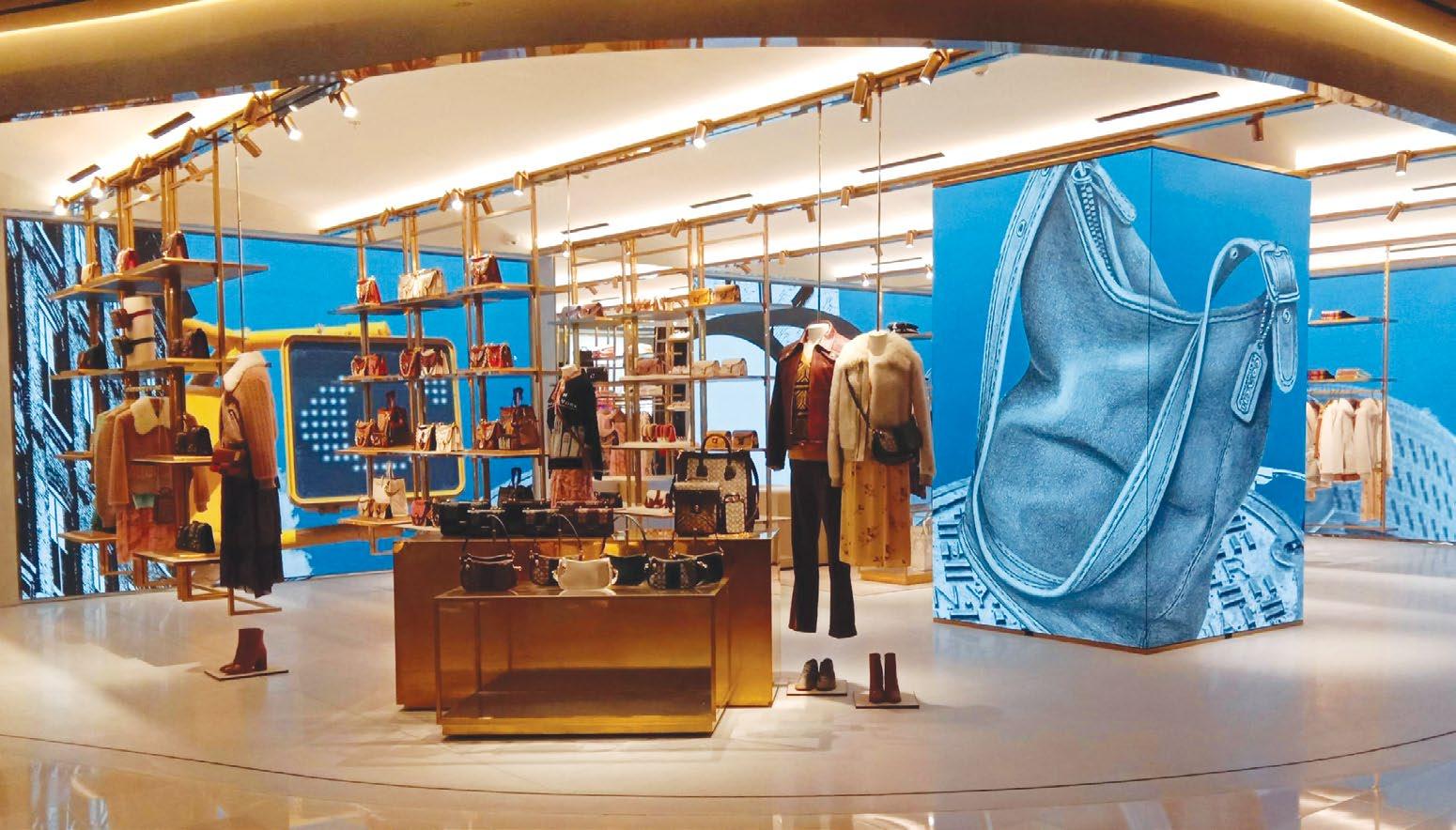
Corey added that retailers are seeking cloud connectivity solutions that incorporate AI, as well as API integration, which gives them the ability to manage content across potentially hundreds or even thousands of locations—and make adjustments based on real-time data and analytics.
Video (and Audio) Use Cases
Many retailers leverage Pro AV technology not only to facilitate the shopping experience, but to make money while doing so through retail media. For AV designers and integrators, it may not be the sexiest AV application, but it can prove practical and lucrative for the client. A grocery chain, for example, may choose to deploy video screens that run promotions for the products that fill their shelves, and the brands involved pay for this advertising. Wayfinding is another popular use case, especially in large retail outlets.
It’s when retailers utilize audio and video to augment the in-store experience that things get interesting, argued Ben Phelps, retail industry director at Absen. With this approach, the goal is to give people


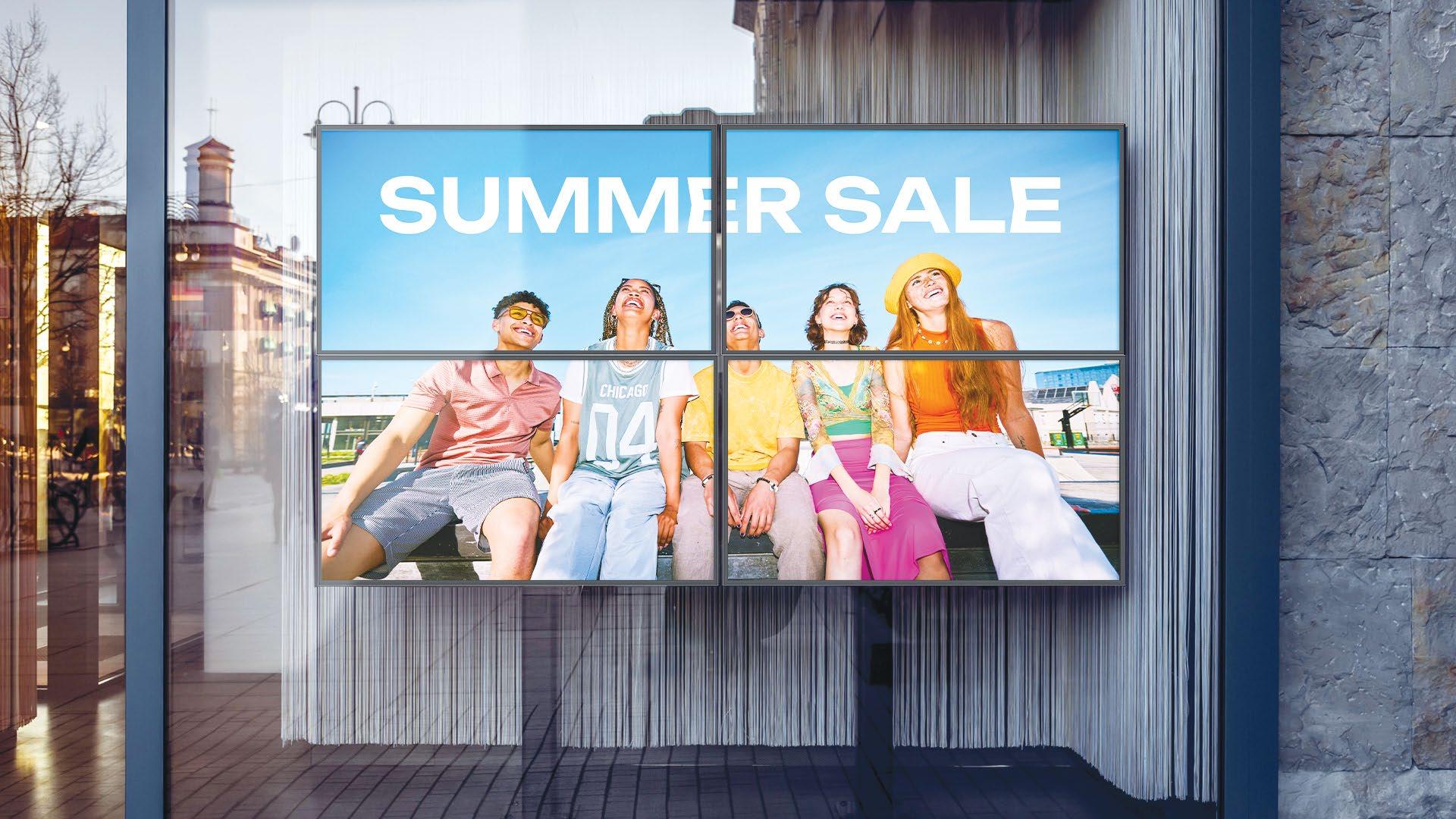
a good reason to visit brick-and-mortar locations instead of shopping online.
A large video wall may serve as an architectural element, drawing customers into a location or to a specific area of the store. Or an interactive screen may serve up gamification to engage shoppers in a sporting goods outlet, granting them discounts or prizes when they win. Some chains integrate video screens into their storefront window designs and program their content management systems to customize what they display based on the local weather. (For example, when it starts to rain, ads for umbrellas will be prioritized.)
“It all depends on each individual retailer and what they want to achieve,” Phelps said. “A surprising amount of time it’s because they think they should [deploy retail AV], but on the nice occasions it’s because they’ve actually got a story to tell.”
Good storytelling is the primary ingredient in successful retail AV deployments, and as Phelps hinted, not all brands recognize this. He said that many times, retailers express that they need to install video screens into their locations because that’s what the competition has done. He argued that this is not just a bad strategy, it’s not a strategy at all.
“If you’re talking to an IT department, it’s not the ideal scenario because it’s just another thing that they have to do,” Phelps illustrated.
More than that, IT professionals aren’t designers. Phelps said that ideally, discussions focused on retail AV should include the customer’s marketing personnel, architect, and the interior designers charged with outfitting store locations. With these individuals leading the conversation, the likelihood of a successful deployment is greater.
With audio being a major contributor to the in-store experience, it’s necessary for stores to stay on brand. Retailers invest significant resources into the thoughtful curation and distribution of playlists, and most don’t want their employees interfering with music selection. There is also no need for humans to tinker with volume or music style when the system— equipped with ambient noise compensation tools— does this automatically.
Graeme Harrison, VP and general manager at Bluesound Professional, said this is why it’s best to give staff limited, if any, control over the sound. He also noted that employee turnover in retail can be high, and that training new hires on a complex audio interface is impractical.
“You’ve got to make it easy for them,” Harrison said. “That’s why no control or really limited control is the right way of doing it. The control interface is super-important.”
From left, Ben Phelps, Graeme Harrison, Dana Corey, and Stephen Glancey
Good storytelling is the primary ingredient in successful retail AV deployments.
Display manufacturers are seeing a shift toward connected display infrastructures.
Scaling Up
Corey noted that retailers have transitioned from a project-based approach, where the focus is on the design or deployment at one single location, to an at-scale process that takes the entire chain into consideration. The goal is to implement systems that can be rolled out, managed, and updated across expanded networks with little or no hassle.
“That brings new considerations such as integration with existing IT systems, remote device management, security, and long-term operational costs,” Corey said. “In many cases, simplicity and standardization become more important than highly customized installations, as they allow retailers to scale efficiently.”
Thinking at scale is also necessary for AV firms that want to help their retail clients with budget allotment. Stephen Glancey, digital practice leader at Diversified, said that one challenge retailers face is determining how much they will invest in the AV systems that reside at their flagship location versus the funds they will attribute to deployments at locations across the country or even the globe. This is an important decision to make—when one considers that most customers will never have the opportunity to visit a flagship location.
“That’s where we begin to talk about creating repeatable elements that allow for lower budgets for stores with smaller footprints and less foot traffic, but still enable them to participate in the global digital strategy,” Glancey explained. “It really comes down to blending that bespoke, unique experience that you can’t have anywhere else, and how to scale that to mediumsized and smaller stores.”
While AV designers and integrators may not be content development specialists, there is an opportunity for AV pros to generate recurring revenue from retail AV deployments if they adopt a content-focused mindset.
Taking Measurement
While retailers may strive to differentiate the bricks-and-mortar experience from shopping online, they still want to measure what’s happening in their stores the same way they do with their websites. Avocor’s Dana Corey argued that consumers continue to spend more money offline, which means that these locations generate valuable data.
“This is driving demand for systems that can deliver measurable outcomes, whether that’s improving engagement, optimizing operations, or increasing conversion,” Corey said. “There is also growing interest in connecting display networks with data, whether through sensors or analytics, to better understand what’s happening in-store. Ultimately, these systems are becoming part of a broader digital infrastructure rather than standalone solutions.”
Phelps noted that content adaptation and distribution— formatting video so that it can be displayed and delivered properly—is one ongoing service that AV firms can offer.
“A retailer with 50 stores can train themselves to handle a platform that distributes the content correctly,
or quite often they will subcontract that to the integrator,” Phelps said. “That’s where your recurring income comes from, because you can charge for the license for the content management platform and you can charge for content management as well. Content opens up more business to the integrator.”


TECHNOLOGY CLASSROOM AV
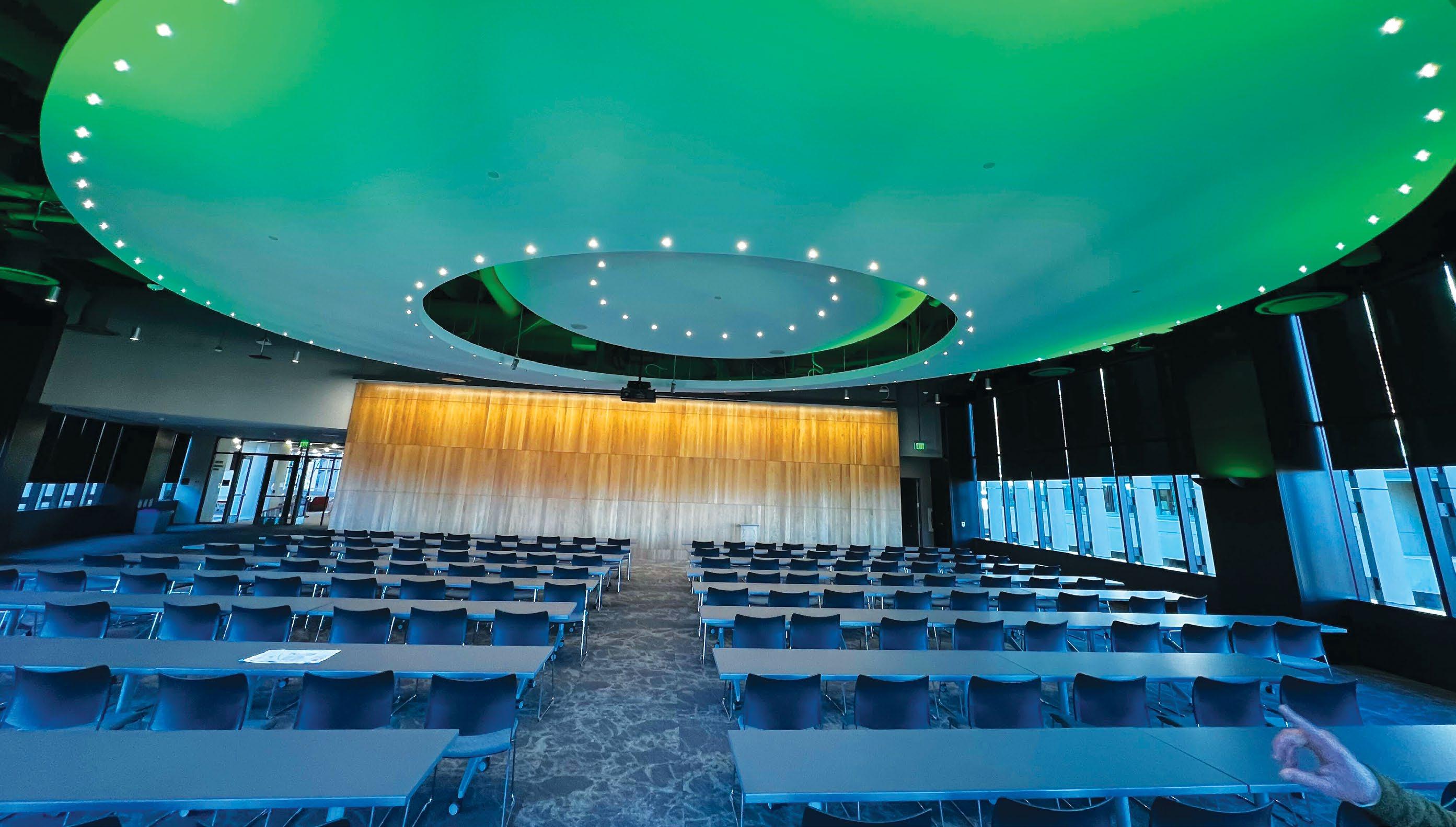
Stanford University Embraces Adaptive Teaching Environments
The new Computer and Data Science building is packed with technology and elaborate Pro AV extras.
By Jennifer Guhl
When California’s Stanford University unveiled its new Computer and Data Science building, known on campus as CoDa, the goal was to reshape how students, professors, and researchers across departments collaborate to create. This 167,000-square-foot hub, located at the crossroads of the schools of Engineering and Humanities and Sciences, is not just another academic building; it was designed to transform how people think and work.
Behind the scenes, this project centered on a complex infrastructure with two four-story buildings connected by bridges at every level, dozens of standardized collaboration rooms, three highfunctioning classrooms, and an elaborate digital art installation that was introduced late in the project.
High Expectations, Long Timeline
Audio Visual Design Group (AVDG), a longtime collaborator with Stanford University, was tasked with leading the AV design and integration across classrooms, conference and seminar rooms, collaboration spaces, and more than 60 small, flexible rooms that could be quickly used by students, professors, or researchers for a variety of purposes. Katie Benson, senior key account manager at AVDG, noted that working with an esteemed institution like Stanford also comes with high expectations.
“This is a well-regarded institution of higher learning that provides technology that meets the
standards for education and collaboration,” she said. “We’ve done many projects on the Stanford campus, but the CoDa project was one of the largest and most unique in scope. A project of this size and diversity of AV spaces was going to require dedicated attention to detail, and we were up to the task.”
When they were invited to lead the AV systems design in 2019, AVDG had to navigate a long timeline that has become common in higher education installations; the project broke ground in 2022 and the building officially opened in February 2025. The project also required an extensive preconstruction phase, during which the integrator had to navigate evolving needs and technology requirements. Early in the process, AVDG shifted its focus to the infrastructure required to support the technology to follow, including structural supports, screen locations, and ceiling coordination to ensure a smooth execution during the install phase.
“During the programming phase in the first year, which included identifying room types, quantities, and the typical technology in each, and approximate cost, we had to be nimble and adapt to the changes and track cost variances accordingly,” Benson recalled. “As the project progressed, we became more engaged with the project team, including the architects, user representatives, and those affected by AV, such as the network team and other trades providing infrastructure for AV.”
Ambitious Audio
Across the two-building complex, AVDG outfitted 36 team rooms, 26 huddle rooms, and six large and eight
medium conference rooms, including some with overflow that opens via bifold doors. In addition, AVDG identified three larger classrooms as standouts, including one with the second-largest Meyer Sound Constellation acoustic system in the world.
This ambitious classroom is highlighted by Meyer Sound’s variable-acoustics deployment, which reshapes the room’s acoustics in real time using microphones and a distributed loudspeaker network. This is combined with an integration with QSC Seervision Automatic Camera Position Recall (ACPR). The room was also equipped with nearly 100 microphones and 128 loudspeakers, requiring approximately 50,000 feet of cable in the ceiling alone.
“Nobody’s ever done ACPR and Seervision with a Constellation system. It was something that hadn’t been tested before,” said Chris Bubp of AVDG, who served as project manager on the CoDa project and is also the production manager for AVDG on the West Coast.
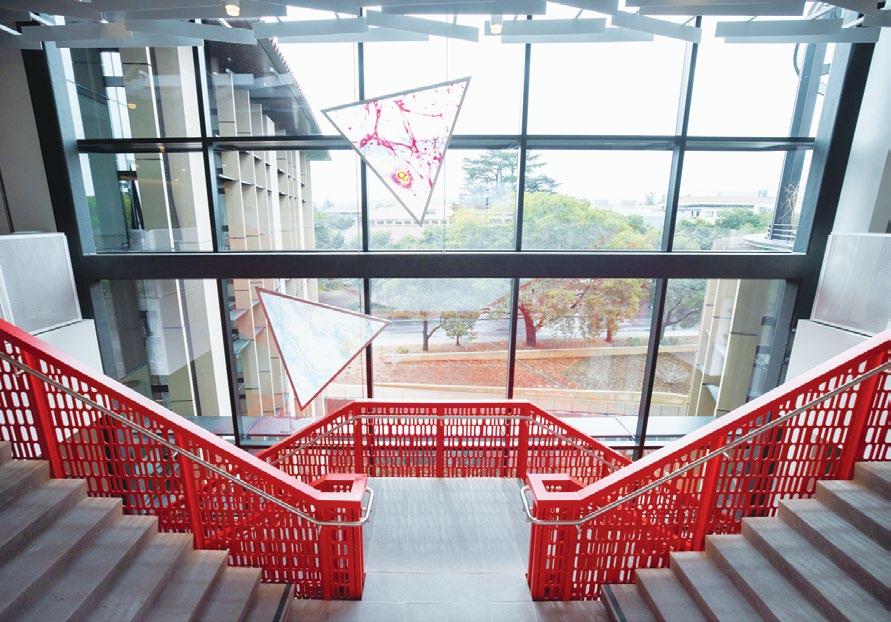
AVDG outfitted dozens of conference rooms in addition to classrooms in CoDa.
Given the ambitious scope of the AV installation, some challenges could be expected, but AVDG reported very few issues. “Given the complexity of the largest classroom in the building, there was a lot there that could go wrong, but it ended up working out really well,” added Bubp.
Displays All Around
In the same classroom, AVDG had to install and configure five projectors, facing different directions, mounted 20-25 feet above the floor within a massive oval ceiling. This required careful planning and coordination with other trades to ensure that the projectors were at the correct distance from the custom-sized projection screens. Serviceability of the classroom systems, which was considered throughout the installation, required AVDG to build custom slide-out frames and pulleys to facilitate component access and servicing.
Among the other spaces in CoDa, technology included projectors from Panasonic and Epson, displays from Samsung, conferencing platforms from Cisco, and control systems from Crestron and Cisco, all aligning with Stanford’s standards within each space. Although many of these spaces were standardized, some still required special attention, such as a fourthfloor event space that required AVDG to install a 21-foot-long, 750-pound projection screen Without a freight elevator, it took a full morning to move it into the space.
Despite intermittent severe weather in California that the team had to work around, the general contractor, Whiting-Turner, and its foreman, Owen Barcelona, kept the install on track. “I called him the Iceman because it didn’t matter what challenge a trade threw at him, he seemed unfazed and ready to find a solution,” said Bubp.
Digital Art Challenges
Early in the construction phase, the university announced a multi-story digital art installation for the stairwell between the two buildings. “We’d been working on this building for a number of years, and we were introduced to this nuanced, specialty art installation that was a new, exciting challenge to the project,” Benson said.
To bring the art display to life, AVDG used four NEC projectors with inverted lenses, cameras to capture live imagery, and a Crestron control system that adjusted for changing daylight in the space. Given that the stairwell is the building’s architectural centerpiece, the AV aesthetics were critical, and the projection system with cameras had to be incorporated so it would almost disappear within the space. A major challenge of the project required technicians to work suspended from four floors while installing cameras, cabling, and support hardware.
When integrating the projector, there was little margin for error in achieving exact geometry, so the art was projected as the arts team intended. “One of them
CLASSROOM AV TECHNOLOGY
was a short-throw reverse image projector that had to point in the opposite direction with a snorkel lens on it,” Bubp explained. “We had to get that as accurate as possible because there are no zoom adjustments or anything on those. So, it was a lot of measuring, a lot of testing, a lot of late nights trying to get the art people
exactly what it was that they were looking for.”
More than a year later, students and professors are successfully using the spaces within CoDa. AVDG credits the smooth process to extensive planning, which enabled the team to address any issues that arose.


May We Live in Interesting Times
As the industry preps for InfoComm, how does AI fit into the overall Pro AV picture?
By Sean Wargo
Take a moment to consider all the disruptions we are facing in the broader context of the global economy—changing trade policies through tariffs, supply chain challenges linked to conflict in the Middle East, rising energy costs due to the same, climate change, aging workforces, and of course AI.
The last is perhaps the one that the Pro AV industry is contemplating the most. A quick review of the news coming out of NAB provides a firehose of announcements of the next wave of use cases for AI. In fact, there is a good amount to talk about there, as the exact applications within AV solution sets crystalize. We’ll get to that, but first let’s back up a moment. What exactly is the context?
Optimism or Pessimism?
Coming out of a muted 2025, which saw lower growth rates for GDP and Pro AV specifically, has everyone wondering how 2026 might fare. Starting with GDP, IMF estimates show some challenges, particularly once the Iranian conflict is factored in. Growth rates for the Middle East were cut fairly substantially, creating a ripple effect around the rest of the world.
Estimates now show GDP in 2026 growing 3.1%, down from 3.4% last year. This means a weaker context for Pro AV, as arguably there is less capital to be invested overall, even if technology may win a disproportionate share, as it often does.
The counterpoints to a pessimistic outlook aren’t hard to find. A quick search reveals continued growth in corporate profits, historically low jobless claims, low unemployment rates, and robust consumer spending. Each of those provides a good fundamental for Pro AV investment generally speaking.
Economists continue to talk about an experience economy, in which consumers’ discretionary spending shifts to “micro-luxuries.” Witness travel, entertainment, and dining related outlays here. The challenging news is that data shows a slower rate of growth in normalized consumer spending since the peak of the pandemic recovery.
The U.S. World Bank estimates for global household consumption numbers are growing at a slower rate over the past several years and into 2026 once the data is normalized to 2015, rising only 2.7% in
2025. As an early indicator of downstream investment in technology, this could portend softness ahead.
Fortunately, since corporate profits are up, even if consumer spending weakens over the near term, there is room for investment, assuming executives do not also become cautious in light of rising costs. One indicator suggesting the contrary is the Purchase Manager’s Index, a gauge of corporate buying intent. As with any similar diffusion index, scores above 50 indicate growth; the Q1 result shows 52.5, a slight increase from last year.
With consumer spending growth down and corporate plans improving, economists suggest we are entering a late-stage economy wherein growth comes from corporate investments to improve operations and gain efficiencies, instead of one driven by consumers. This is perhaps a good sign for Pro AV, though with many projects being driven more by experiences, this is only partially positive.
“Project work may be less profitable for the channel as rising hardware costs eat up the budget.”
Evaluating the Outlooks
With context in mind, let’s turn to the actual outlooks. According to AVIXA, 2025 was a low watermark for growth and 2026 will rebound a bit. Caretta Research shows similar, though with a bit more conservativeness. Both put overall Pro AV spending growth closer to 4%. Based on past differences between GDP and Pro AV, these figures may appear a bit low, but not out of keeping with a general climate of concern. A tepid year of growth, with perhaps an upside more toward 5% is reasonable.
Multi-source data from Q1 helps shed light on the trajectory so far. AVIXA’s AV Business Index, a diffusion index based on surveys submitted by AV professionals, shows a slight uptick in March to near 60. Those paying close attention will immediately notice that March is typically the highwater mark for
a given year and should be taken with a grain of salt. In fact, the March peak was even higher in each of the last four years. Though one month doesn’t make the year, the tone that signal sets is a bit of a cautionary tale. Respondents did indicate rising costs as a chief concern, which echo in other data indicating that the impact of tariffs may be finally showing up in the data.
Turning to the Jetbuilt project management platform for AV dealers and installers offers another signal of a strong start to 2026. The total value of projects created on Jetbuilt increased 38% over the same period last year. While some of this is due to just the increasing usage of the platform, that is well above the baseline growth of 15% in project value for 2025. Thus, it is a clear sign of more projects in the pipeline at a higher value.
Here’s the bigger issue—while the average project values are increasing, the percentage of project costs from hardware is on the rise. While it hovered around 40% over the past few years, it shot up more than 50% in late 2025. This puts pressure on integrators from a margin perspective, as more of the revenue is consumed by hardware rather than markups or service. Once again, we have a potential signal of tariff impacts.
Two examples of the hardware cost increases felt by integrators can be found in data from PMA Research, a market research company focused on the display market. While a bit bouncy, the average prices in the Pro AV channel for both flat-panel displays and projectors have shown 10-20% spikes over the past several months. In the case of FPD and dvLED, this occurred in December with slight improvement since.
Projector prices have risen more steadily both for integrators and at the distributor level with increases more in the 25% range. Given that display prices had been dropping over the past several years due to a surge in inventories, this further supports the theory that inventory has diminished to the point where tariff impacts can be felt.
So where does this leave us as we come together at InfoComm to get a renewed pulse on the evolutions in AI? Here’s what we know: The volume and value of projects in the AV pipeline are showing good growth over last year. But project work may be less profitable for the channel as rising hardware costs eat up the budget. This will further require integrators to be creative in how they gain efficiencies to maintain margin.
Fortunately, AI may be poised to help provide process improvements. AI-powered design recommendation tools coming from project management platforms are emerging to help integrators create and deploy reference designs in a more efficient way.
Sean Wargo is a principal of Apogee Insight, a data, analytics, and insight company serving Pro AV and its adjacencies.
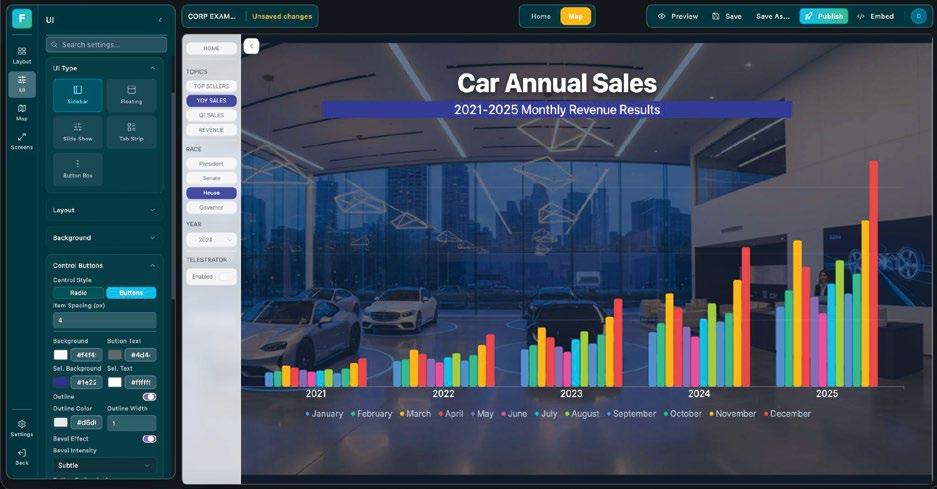
Emergent Fusion
Developed for both the modern corporate media environment and the broadcast newsroom, Fusion empowers producers to visualize “interactive anything” without the need for traditional programming. It’s a no-code application builder designed to transform complex live data into immersive interactive storytelling experiences. As media organizations face increasing pressure to deliver sophisticated data visualizations, Fusion provides an intuitive interface to quickly overlay images, video, and HTML5 graphics onto dynamic maps and dashboards. While the platform offers specialized pre-built templates, its flexible architecture makes it an essential tool for telling any story, such as real-time corporate financial results. Users can also upload their own data sets and enable them in seconds. Publish an unlimited number of apps and launch them in studio monitors, stream into production control, or embed them into websites and apps.
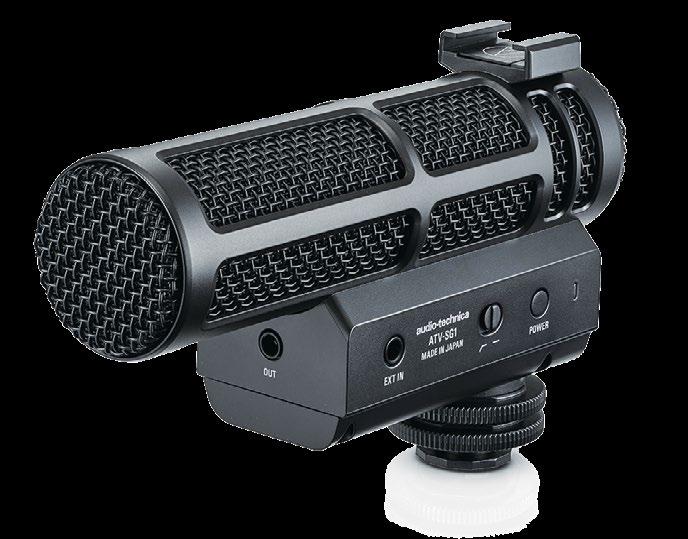
Audio-Technica ATV-SG1 / ATV-SG1LE
Built for professional videographers and content creators, the ATV-SG1 and ATV-SG1LE on-camera shotgun microphones deliver natural, high-fidelity audio from a feature-rich, easy-to-use device. The compact mics are designed for use with DSLR, mirrorless SLR, and other cameras. The flagship ATV-SG1 offers dual-channel flexibility with matrix switch that lets users choose duplicate left/right channels, primary track paired with a -6dB safety track, or primary microphone track alongside a wireless lavalier feed, all sent directly into the camera’s stereo input. The ATV-SG1LE is a more streamlined mic without the safety track/lavalier channel. Both feature a highly directional 100mm acoustic tube for focused pickup and a 14mm large-diameter diaphragm for high sensitivity and low noise. A built-in USB rechargeable battery provides up to 24 hours of continuous operation, while an integrated shock mount dissipates unwanted handling noise.
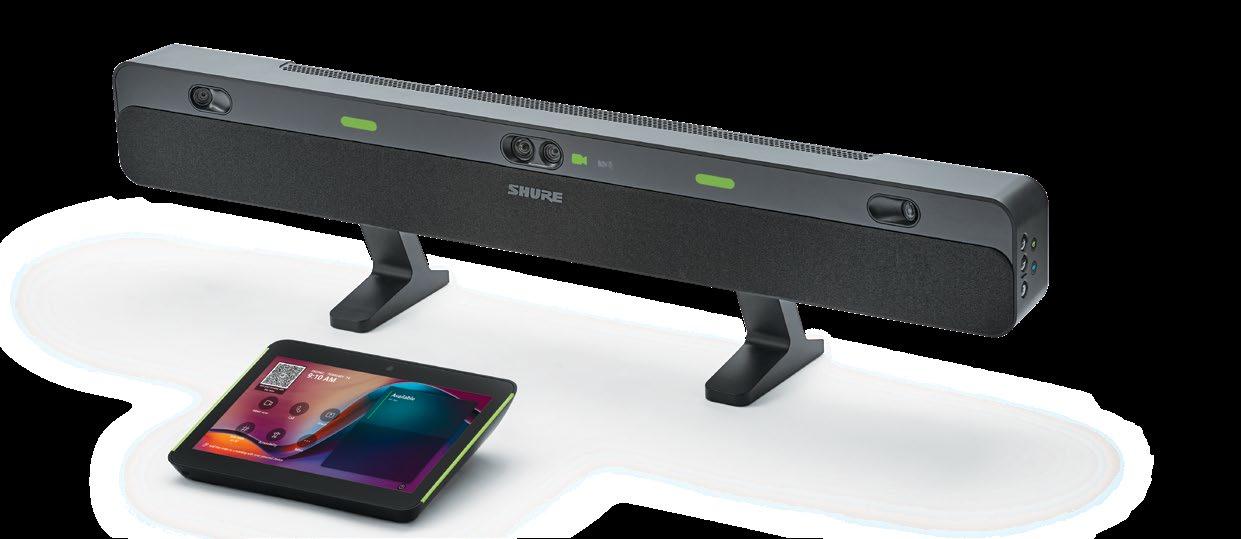
Shure IntelliMix Bar Pro
Shure’s new IntelliMix Bar Pro videobar delivers exceptional audio and video coverage from a single device, making it ideal for medium to large meeting spaces. Four 4K cameras offer a combined 135-degree wide-angle field of view to ensure full-room visibility and highlight active participants. Shure IntelliMix View AI framing technology accurately frames participants and enables precise capture of nonverbal cues, creating more engaging and productive meetings for all participants. The IntelliMix Bar Pro integrates Shure Microflex Advance array microphones with highoutput, premium stereo loudspeakers to deliver superior audio for meeting experiences. Onboard IntelliMix processing enhances audio clarity by reducing background noise and isolating voices, supporting precise transcriptions for AI tools like Copilot in Microsoft Teams. built on MDEP, the Android-based IntelliMix Bar Pro, includes an onboard compute that simplifies setup, reduces potential points of failure, and lowers overall maintenance.
AVPro Edge MXnet USP Series
The MXnet USP (Universal Streaming Platform) Series is a lineup of AV over IP transceivers designed with AVPro Flow technology, delivering the scalability, flexibility, and interoperability that integrators require to deploy large commercial AV distribution systems, achieving the exact resolution required for each zone. With advanced features like video wall processing, native multiview capability, integrated signage player, and seamless third-party interoperability, USP provides the foundation for hybrid AV environments. The series includes three models. The USP-PR (Pro) offers 4K60 H.265/H.264 with HDMI, USB-C input with 60-watt power delivery, 16-window multiview, integrated signage player, and two-channel Dante/AES67 audio. The USP-PL (Plus) also supports 4K60 with a sevenwindow multiview capability and more, while the compact USP-ES (Essential) offers 1080p60 support with a four-window multiview and more.
SoundTube Rockustics CBG5
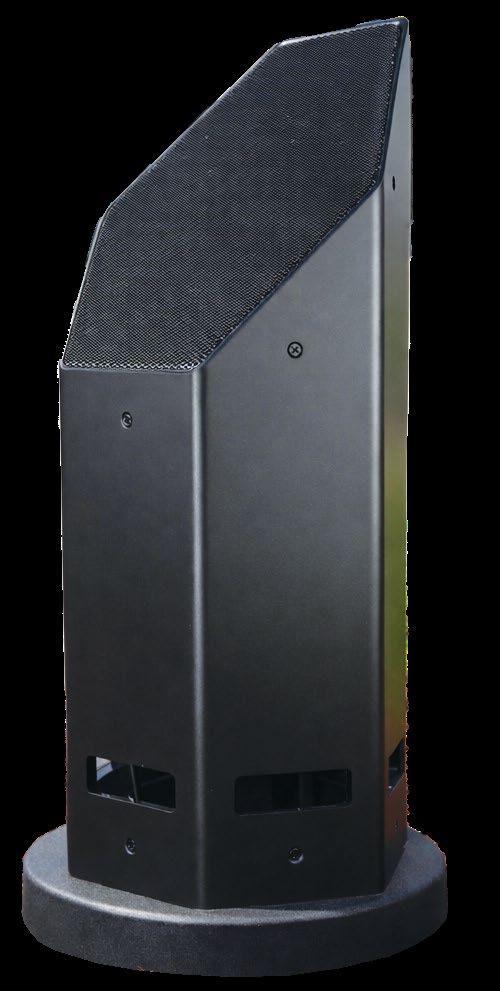
The Rockustics Cherry Bomb Galaxy (CBG5) is a highperformance outdoor bollard speaker engineered to deliver full-range landscape audio from a single, compact enclosure. Challenging the convention of hidden landscape audio, the Cherry Bomb Galaxy is intentionally designed as a visible design element, combining architectural presence with high-performance sound. It features a patented threeway system architecture that integrates a 5.25-inch double-chamber bandpass subwoofer, 4.5-inch midrange driver, and 0.75-inch titanium dome tweeter into a single outdoor-bollard. The design keeps all frequencies originating from the same physical location, eliminating the phase alignment challenges and variations in bass energy that often occur when subwoofers are installed separately. The result is uniform bass from a coherent, full-range outdoor speaker with faster and simpler installs. Constructed from rotomolded LLDPE with a weatherized aluminum grille, the unit is designed for long-term durability in outdoor installations.
UNICOL Orbit AV Trolley
The Orbit AV Trolley mobile display solution is engineered to make installation simple, efficient, and precise for AV integrators. It’s designed for Pro AV environments including collaboration spaces and flexible meeting areas. The Orbit AV Trolley features tidy cable management and a stylish wooden shelf with integrated pen tray. Finished in Sinterflex black or white, it includes a simple rear cover with space to hold small devices, making it ideal for videoconference-ready screens such as the Neat Board Pro. The solution incorporates practical features including cable clips down the legs, in-bracket four-way power socket, and under shelf cable tie for improved convenience during installation and neat, cable-free movement between rooms. Engineered with mobility and flexibility in mind, the Orbit AV Trolley supports screens up to 65 inches (larger screen and LED versions and customization also available).
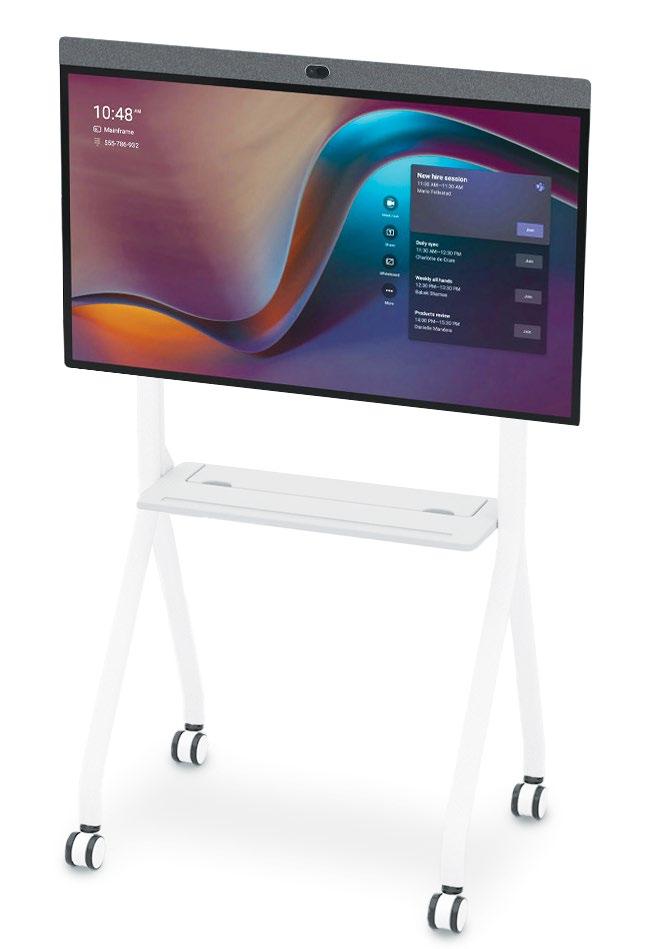
TECHNOLOGY NEW PRODUCTS
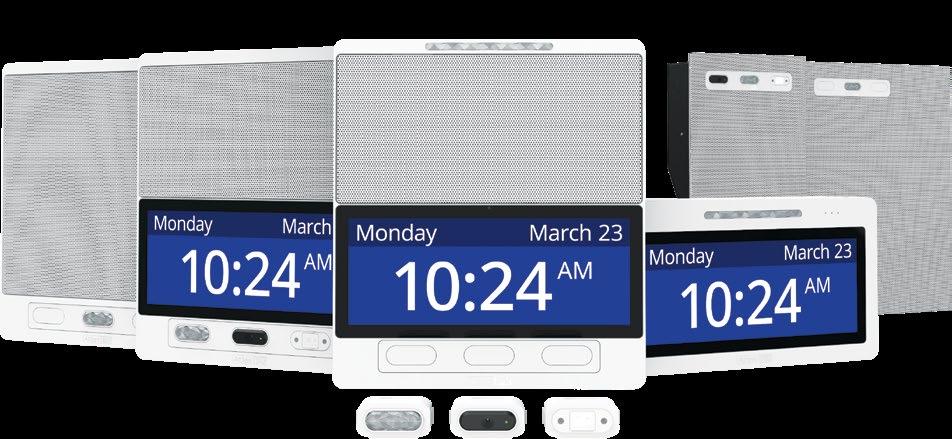
AtlasIED AIX
The new AIX platform is designed to help integrators move beyond reactive security toward smarter prevention and situational awareness—while fitting cleanly into real-world security deployments. Designed with a modular architecture, PoE++ for power-hungry applications, and integrated AI expansion pathways, AIX combines audio, visual notification, multi-sensing, and intelligent edge capability into a single adaptable platform. By consolidating multiple system functions onto a single network drop, it simplifies infrastructure while expanding capability. Key features include ONVIF compatibility, modular and expandable hardware, a structured priority model for deterministic behavior and consistent overrides during simultaneous events, and Site Manager software for centralized, scalable management. The initial AIX ecosystem launch includes loudspeakers, visual displays, LED flashers, expansion modules, and accessories. All initial devices include expansion slots for advanced gunshot detection, camera, and flasher modules.
Sound Devices
Astral Mini Plus
The latest Astral compact wireless transmitter bodypack, the new Mini Plus offers a familiar ergonomic form factor and rugged performance for challenging location sound, live music, and live theater productions. It has been engineered for extended battery life with the XL-B14500 rechargeable cell, ensuring consistent, dependable performance for up to eight hours, plus it can be topped off easily via USB-C for additional power flexibility. Astral Mini Plus features Sound Devices’ SpectraBand extended 169-1525 MHz tuning range, which provides RF control to find clean, usable, and legal frequency bandwidth anywhere in the world. The transmitter can be operated anywhere, regardless of local spectrum regulations, making it ideal for international productions. Astral Mini Plus is also rated IP67 for water resistance. The transmitter also includes an ePaper display and new usability features for reduced setup times and faster on-the-fly adjustments.



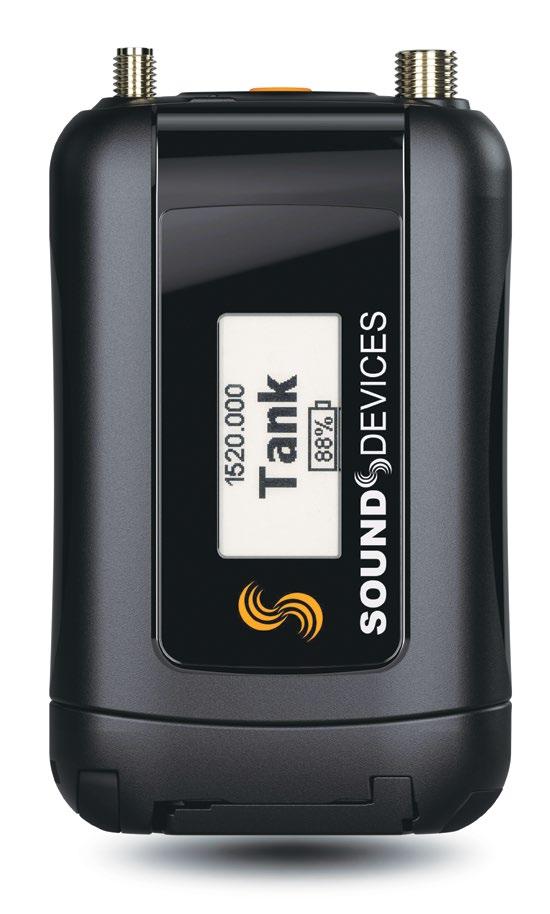

Samsung Spatial Signage
Spatial Signage is a new glasses-free 3D commercial display that uses Samsung’s 3D Plate technology. Powered by a custom optical layer that bends light and generates depth perception directly within the image panel, the result is multidimensional depth delivered in a 2-inch panel for seamless placement in hightraffic environments, such as stores or museums. Powered by Samsung’s advanced Quantum Processor, the display maintains sharp detail and accurate contrast, while an anti-glare panel helps preserve brightness and definition under varying indoor lighting conditions. With Samsung Visual eXperience Transformation (VXT) built-in capabilities, organizations can create and deploy immersive content at scale. AI Studio, Samsung’s new AI-powered content app, transforms static images into video optimized for Spatial Signage without external tools or manual setup. The 85-inch model (SM85HX) is available now, with additional sizes coming soon.

CONNECTORS & ADAPTORS FIBER CABLES
FLYPACKS & ROAD CASES

By Jakub Kolacz
AWhen Visibility Becomes Reliability
Cloud-based device management will define the future of networked audio.
cross modern workplaces, lecture halls, and collaboration environments, AV and IT systems are becoming more closely intertwined. What was a once a simple plug-and-play relationship has transformed into a vast web of interconnected devices, all competing for resources on the network.
This new landscape has led both AV and IT professionals to greater collaboration, but it’s not without its challenges. One of the most significant issues is the absence of clear, continuous visibility into how networked technology behaves, especially across multi-site deployments.
As networked audio systems scale across hybrid workforces and multi-building estates, traditional methods of on-site monitoring and room-by-room oversight are unable to keep pace with operational demands. When teams lack a centralized view of device health, configuration status, and performance conditions, they are effectively working blind, leaving them to react to issues only after they disrupt communication.
Emerging Solutions
To address this shift in expectations, the industry has accelerated toward cloud-based device management. Visibility has become the foundation of reliability, enabling teams to anticipate problems instead of responding to them. This visibility helps AV/IT teams to understand their audio infrastructure as a unified living system rather than a series of isolated endpoints. In environments where uptime is essential, the ability to observe device behavior, detect inconsistencies, maintain firmware alignment, and track overall performance from any location has become a defining requirement for successful operations.
A new generation of centralized management platforms is emerging to solve this challenge. These platforms, currently in development across the industry, are designed to unify device oversight into a single, intuitive interface accessible from any location. They enable secure, role-based management across teams and campuses, allowing organizations to organize rooms and devices in ways that reflect how their environments function.
By operating entirely through a web browser, they streamline deployment and remove installation barriers, offering fast, flexible management for
integrators, IT staff, and AV teams alike. While these systems represent meaningful progress, their deeper significance comes from how they evolve after launch. Cloud-based platforms do not remain static; they become living ecosystems shaped by the organizations that use them.
Real-time diagnostics, usage patterns, and operational insights create a feedback loop that informs future development. Instead of guessing what features customers may need, developers gain continuous visibility into emerging behaviors and challenges, enabling smarter, more targeted enhancements. Over several years, such platforms often become far more capable than anyone could have forecast at the outset.
Let’s Add AI
As cloud-based visibility becomes the norm, the next phase of evolution will be defined by intelligence layered on top of that visibility. Centralized platforms already aggregate telemetry, configuration data, and performance indicators across distributed environments. As these data sets mature, they create the foundation for intelligent systems that can interpret conditions, recognize patterns, and recommend—or initiate—action. Rather than simply presenting status information, future management layers will increasingly function as active participants in system operations, reducing the burden on AV and IT teams and shortening the distance between insight and resolution.
Advances in AI agents and large language model–driven orchestration point toward a future where device
management becomes intent-based rather than task-based. Instead of manually interrogating individual endpoints, teams will define outcomes— maintaining audio consistency across rooms, validating system readiness before meetings, or isolating anomalies before users notice them—and intelligent agents will handle the underlying complexity. Enabled by standardized APIs and secure context-sharing protocols, these agents will be able to understand device states, correlate events across vendors and systems, and execute corrective workflows autonomously while remaining governed by enterprise security and authorization policies.
This shift will further blur the traditional boundaries between AV, IT, and building systems. As intelligent management layers gain the ability to reason across audio, networking, control, and collaboration platforms, networked audio will no longer operate as an isolated discipline.
Instead, it will become part of a broader, softwaredefined environment in which performance, reliability, and user experience are continuously optimized by systems designed to learn and adapt over time. In this context, long-term value will be driven less by static feature sets and more by openness, interoperability, and the ability to participate in intelligent ecosystems that evolve alongside the organizations they support.
As hybrid work continues to expand and distributed learning becomes more entrenched, this shift will influence the entire lifecycle of networked audio deployments. Visibility will become as essential as sound quality, and the ability to oversee devices remotely will be viewed not as an advanced feature but as a baseline expectation. Organizations will invest in systems that can adapt over time, accommodate new spaces and workflows, and provide the kind of real-time intelligence that allows teams to stay ahead of issues rather than chasing them.
The future of networked audio will be defined by platforms that give organizations the ability to understand their environments holistically. When systems can be observed in real time, refined continuously, and secured centrally, collaboration becomes more dependable for everyone who relies on it. In an era where communication is mission-critical, the most transformative advancement is not any single device—it’s the ability to finally see the entire landscape and act with confidence.
Jakub Kolacz serves as lead product manager software at Sennheiser.
Cloud-based device management enables teams to anticipate problems instead of responding to them.