Keepers of culture: Heritage brands’ licensing lessons
Measuring maturity: POC’s latest tool made for you IN THIS ISSUE:
Future Positive is Smiley’s initiative to drive change within the licensing and consumer products industry by offering a curated collection of more sustainable products across a wide range of categories.
Developed in partnership with manufacturers who share our values, each item is made with responsibly sourced materials, lower-impact production methods, and innovative approaches to reducing environmental harm. The entire project and its brand guidelines are designed with sustainability at the core, aligning with future US and EU regulations to ensure a positive impact for both people and the planet.
Future Positive is the only globally trademarked brand with a consistent program around creating sustainable products in every category, it is a unique message to engage with the public, and demonstrate Smiley’s support for better practice in the licensing industry.
To work with Future Positive and build your own range of sustainable products reach out to one of the team at sales@smiley.com.
REPRESENTING THE FUTURE
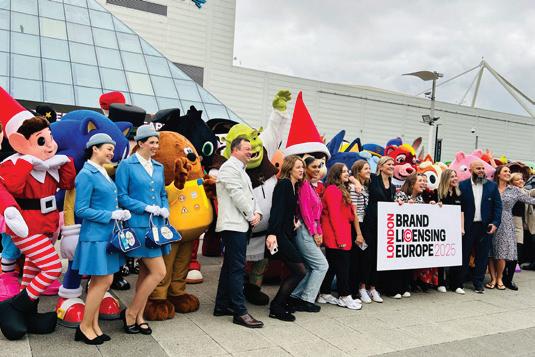
This year’s Autumn/ Winter POC mag is a double-hitter, covering both Brand Licensing Europe (BLE) and the POC Conference, all in one mag – so lots to pack in, let me tell you!
So of course, we have coverage of both these events, taking you through what POC will be delivering at BLE, the sessions we will be hosting, and the exciting innovations we will be showcasing on our stand, all in the name of circularity.
And then there is your sneak peek at the POC Conference on 5 November, and some of the incredible content we have lined up already, reminding you to grab your tickets for you latecomers that haven’t already!
Our other content in the mag has ties throughout to both events, with our regular legislation feature giving you a preview into the Legislation Lookbook we have created for attendees to BLE, and the Heritage and Music Merchandise articles giving you a deeper dive into two of the talks that will be taking place at the Conference.
And then we can’t leave you without providing you a healthy dose of what we’ve been up to – as it has been a lot! Between the launch of the Partner Maturity Index, our new Ambassadors, our fantastic ongoing partnerships, or a rundown of some of the brilliant companies that have recently joined the POC Membership Community, there is plenty to get your teeth into, to find out just what makes the POC Community, and your part in it, a driving force for good.
For press or content enquiries please contact the editor: kathryn@productsofchange.com For general enquiries contact: nicola@productsofchange.com For advertising enquiries please contact: ianh@max-publishing.co.uk
Kathryn Brand Editor and Content Manager
Helena MansellStopher CEO
Willis Director
Brown Director MEET THE TEAM
Loveday Group Editor
Nicola Webster, Social Media and Community Manager
07 NEWS
The latest sustainability updates from across the industry and the POC Member network.
12 BRAND LICENSING EUROPE PREVIEW
POC is placing circularity and the value that can be created from it, front and centre at Brand Licensing Europe this year.
14 REWRITING THE RULES OF BUSINESS AT THE POC CONFERENCE
Returning for 2025, the POC Conference will demonstrate sustainability is not a side-project but smart business, with a line-up of leading companies and speakers.
19 MUSIC MAKES MAGIC WITH TEXTILE RECYCLING
Organic Sound and Bravado have come together to put the circular in band tees and the sustainable in concert keepsakes.
23 PROGRESS YOU CAN MEASURE
Introducing the POC Partner Maturity Index: a brand-new tool developed by POC to efficiently capture data for the brand licensing industry.
24 NEW POC MEMBER ROUNDUP
A selection of some of the companies who have recently become POC Members and an insight into some of the fantastic things they are already up to.
27 AMBASSADORS
We welcome two fantastic new ambassadors, Louise Lindquist, Ambassador for Brand Agents, and Marina Narishkin, Ambassador for France.
29 TRUSTED BY TIME AND LEADING WITH RESPONSIBILITY
From eco-friendly products to responsible licensing, heritage brands prove that legacy and sustainability are inseparable.
32 YOUR LOOK TO LEGISLATION
POC provides the latest legislative updates and what they mean for your business, as well as the very real opportunities they provide.
34 THE POC ECOSYSTEM
As our ecosystem is every growing, we share a selection of our current partnerships and the work we are achieving to drive sustainable change, together.
DANILO SETS OUT 2025 SUSTAINABILITY PLAN, TARGETING NET ZERO BY 2050
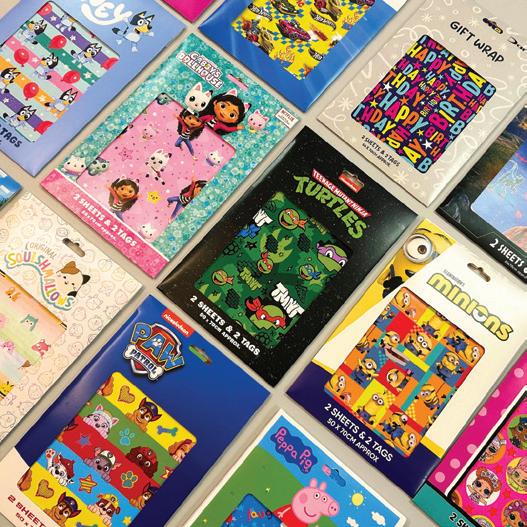
Licensed greeting card, calendar, and gift wrap company, Danilo, has unveiled its 2025 Sustainability Plan – a roadmap designed to drive the business, its partners, and the wider industry towards Net Zero by 2050.
The company is already seeing meaningful change. In 2024, 85% of its products left the press in plastic-free packaging and 99% were FSC-certified. Now, the focus shifts to the biggest challenge: Scope 3 emissions, which make up the vast majority of its footprint.
IMMEDIATE LOOKS TO DRIVE CULTURAL SHIFT TO SUSTAINABILITY
Media business, Immediate, is launching its latest Sustainability Report, which spotlights some of its fantastic achievements to incorporate the planet and its needs into its business.
For example, it has reduced its carbon emissions by 50% since 2019, and now has a verified SBTi net zero target of 30% by 2030 to reach net zero by 2045 and is tracking 8% ahead of target.
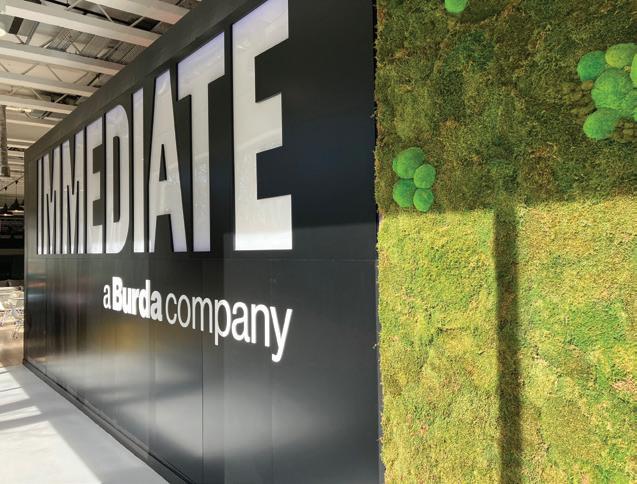
ABOVE: Immediate is embedding sustainability in all of its content and business practices. Credit: Immediate.
As Immediate continues to work on the sustainability of its company, it is also looking to use its reach and content to further its impact on shaping the sustainability of those it touches.
A central step will be joining the Science Based Targets initiative (SBTi), with near-term targets validated against a 1.5°C pathway.
Looking ahead, Danilo is also preparing for Digital Product Passports, in line with the EU’s Eco-design for Sustainable Products Regulation (ESPR). SKUlevel material data and traceability will begin rolling out between 2026–2027. On packaging, the ambition is by 2030, every pack should be recyclable, reusable or compostable, with universal recycling and material labelling introduced by 2027.
Closer to home, Danilo continues to cut its operational footprint. In 2024, nearly half of its office energy came from onsite solar panels, supported by EV charging points and Cycle to Work schemes. A full heat and energy audit in 2025 will highlight the next steps for Scope 1 reduction.
ESCP TO LAUNCH RECYCLED MATERIAL ASSESSMENT FOR THE INDUSTRY
POC partner, the Ethical Supply Chain Program (ESCP), is due to launch its Recycled Material Chemical Safety Assessment (RCSA) to streamline data sharing and improve both cost and resource efficiencies.
Companies are increasingly seeking a standardised process for RCSA to streamline compliance and improve efficiencies. The work ESCP is doing will create a unified approach to enable the scaling and sharing of relevant data, reduce duplication for suppliers, and create clarity and consistency across the industry.
ABOVE: TESCP’s RCSA will enable more use of recycled materials in products such as toys. Credit: ESCP.
The ESCP is a recognised expert in assessment and assurance, and has been asked to work with stakeholders to develop an RCSA programme that can be applied across companies of all sizes and sectors.
The programme’s objectives include establishing clear procedures and standards, easing the compliance process to increase supplier participation, sharing best practices to drive innovation and quality, and demonstrating the industry’s commitment to regulators.
Through its title, Good Food, Immediate embeds sustainable eating habits and cooking tips into its recipes and meal plans, such as utilising leftovers and low-power cooking methods. Another campaign is its Make a Metre Matter from BBC Gardeners’ World, which encourages everyone to dedicate one square metre of outdoor space to support nature, biodiversity, or food growing.
Throughout all of Immediate’s editorial content, it embeds sustainability communications, hosting workshops for its creators on climate language, in doing so normalising environmentally conscious behaviours in its audience, enabling them to feel part of the bigger movement and that there is collective action towards sustainability goals.
PURE TABLE TOP SHARES ITS ACHIEVEMENTS IN LATEST IMPACT REPORT
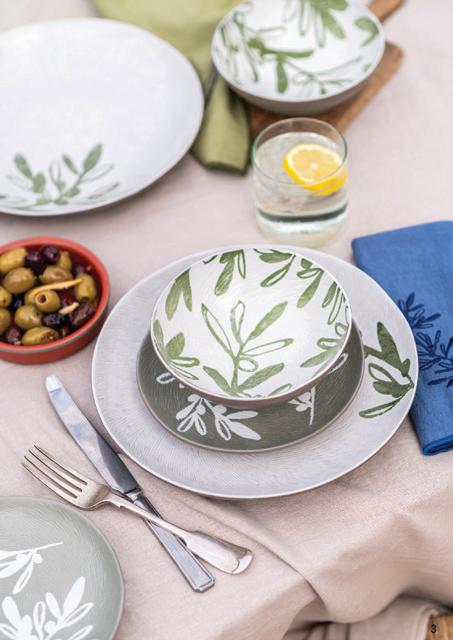
ABOVE: Pure Table Top’s Eden Project collection with DPPs. Credit: Pure Table Top.
Conscious tableware business and POC Member, Pure Table Top, has just released its latest Impact Report, spotlighting a number of its achievements from the past year.
Highlights include: two industry awards won; 81% of its products purchased with an environmental and/or social certificate; a 43% reduction its scope 1, 2, and 3 emissions; 100% of its tier 1 factories independently audited; 226 hours of staff volunteering; and over £3,000 donated to charity partners.
Decarbonising its business operations has been one of Pure Table Top’s primary goals over the last year, with the company becoming SBTi approved in April 2024. Pure is committed to reaching net zero emissions by 2040, and to date has achieved a 43.05% reduction from its baseline year, and 14% reduction from FY24/25 across all three scopes. This achievement puts it ahead of its 2040 net zero target. With its social sustainability being just as valued as its environmental, Pure has invested in multiple charity partners, such as the Vayyu Foundation – with which Pure worked with on a volunteering day last year, collecting 27.3kgs of plastic waste from the banks of the River Soar.
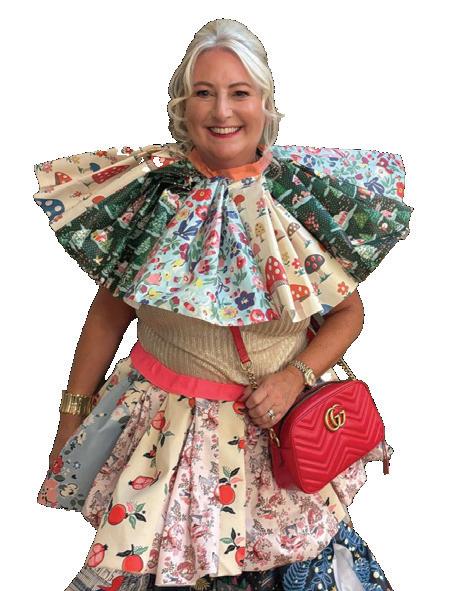
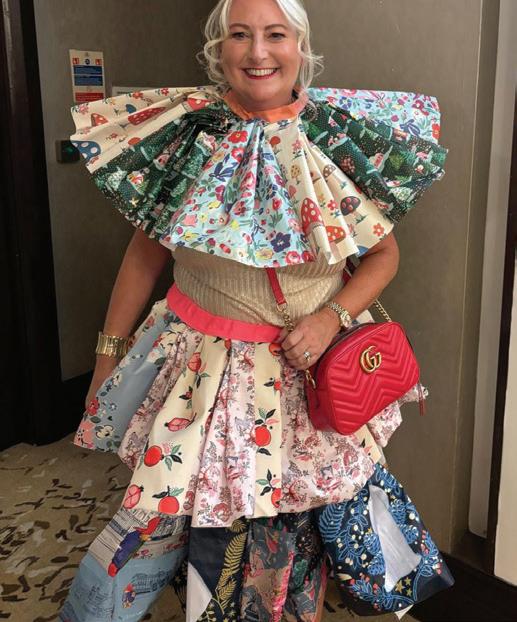
Mel Beer, head of license, at the Solent Group, represented her products in more ways than one at the Licensing Awards on Tuesday 16 September, by sporting a dress made entirely of licensed reuseable bags for life.
Mel Beer teamed up with Solent Group’s senior designer, Hannah Marshall, to create her get-up for this year’s Licensing Awards.
The sustainability-driven licensee, Solent Group, produces a range of licensed bags for life, including a selection made from up to 100% recycled materials, which is what Mel decided would make the perfect showstopping Licensing Awards ensemble, befit with a sustainable message.
The outfit was created using Solent Group’s rPET and PP Woven bags which feature some of its licenses, including Cath Kidston, Peter Rabbit, and The Snowman, which can be found mainly stocked in Tesco.
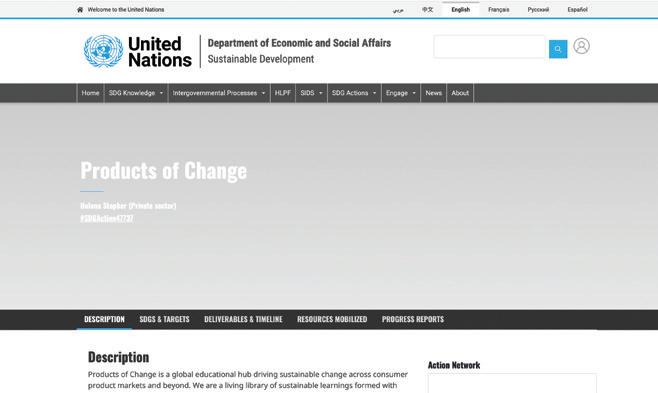
UN NAMES POC AS PLATFORM FOR SUSTAINABLE DEVELOPMENT
This recognition by the United Nations demonstrates POC’s commitment and alignment with the UN Sustainable Development Goals and the work it is facilitating for its Members.
This year marks two anniversaries for global sustainability: 10 years of the Sustainable Development Goals (SDGs) and 25 years of the United Nations Global Compact.
This year also marks five years to go to the EU’s Sustainable Development Goals 2030 target, so is a good opportunity to reflect on the progress achieved so far, and the progress still needed to be made. Businesses play a pivotal role in driving sustainable development, and through POC they can embed sustainability into the core of their business strategy for long-term impact.
POC will continue to champion the UN SDGs at the POC Conference (5 Nov) this year, which will include POC’s SDG Awards, founded in collaboration with the United Nations and Caroline Petit, deputy director of the United Nations’ Regional Information Centre. The awards celebrate the pioneers, the innovators, and the leaders who are shaping the future of our industry.
POC IS SUPPORTING THE LIGHT FUND’S 5-3-1 PEAKS CHALLENGE
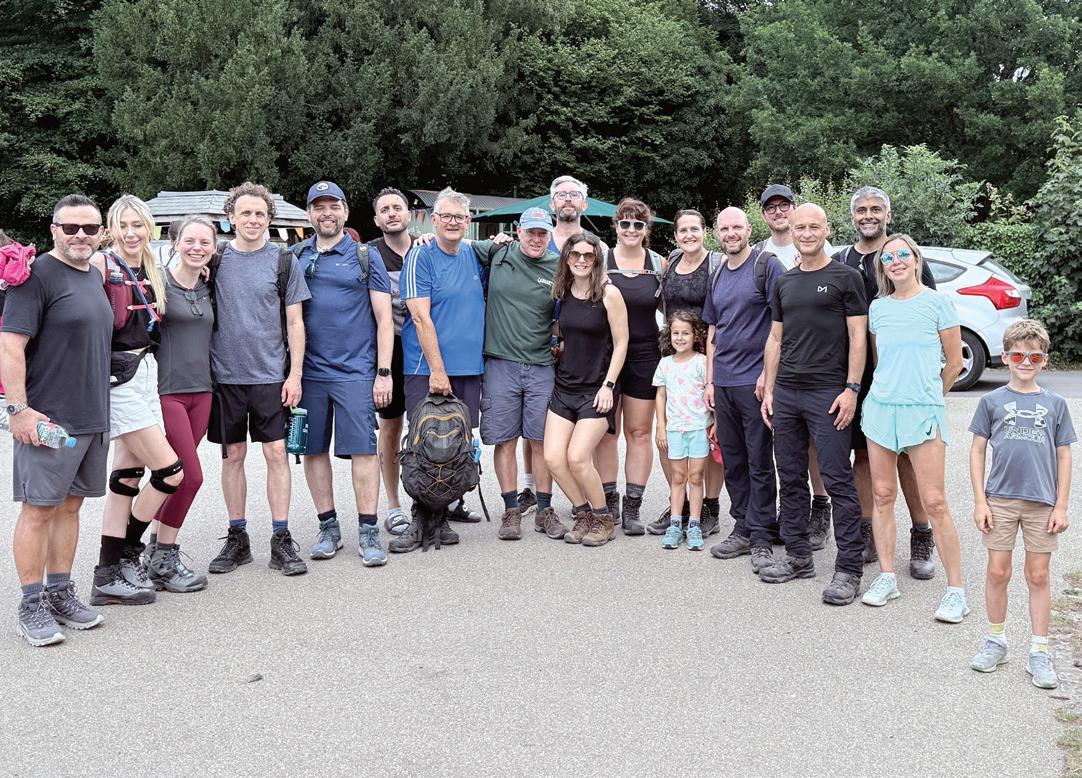
Nicola Webster, POC’s community manager and social media strategist, joined a host of other licensing industry professionals, including our colleagues from POC’s sister company, Max Publishing, to take on the latest Light Fund charity fundraising challenge.
The 5-3-1 Challenge saw over 100 people climbing Mount Snowdon, a large group of some 90 taking on the 3 Peaks (Snowdon, Scafell Pike and Ben Nevis) and around 40 took on the 5 Peaks (the aforementioned three, plus Carrauntoohil and Slieve Donard).
Sponsorship money is all going directly to the licensing industry charity, The Light Fund, which distributes funds to charities at the end of each year. A proportion of the 5-3-1 Peaks Challenge money will be going to the England & Wales Mountain Rescue charity.
SUSTAINABILITY SUPPORT AT YOUR FINGERTIPS WITH POC’S NEW RESOURCE HUB
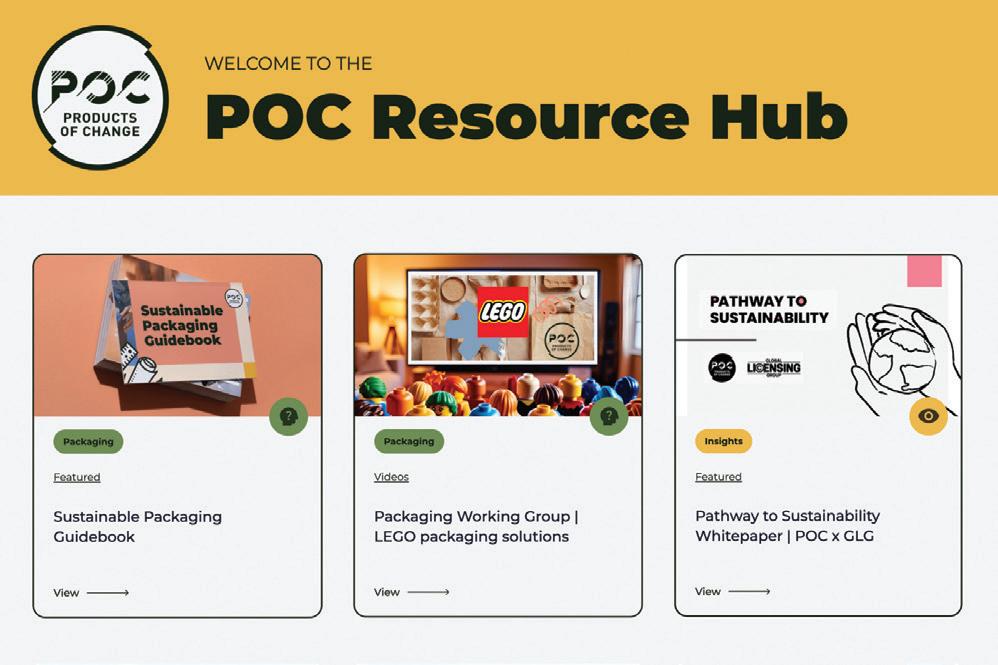
Products of Change has debuted its brand-new Resource Hub for its Members, providing a more user-friendly platform to explore its myriad webinars, whitepapers, and presentations for the industry to utilise on its sustainability transition.
The new Products of Change Resource Hub is designed to provide you with easy access to key sustainability insights for the brand and licensing industry. Here, POC Members can explore recordings of past webinars, download the latest resources, and review sessions from previous POC conferences – all in one convenient place.
To help streamline navigating the Hub, resources are organised by area of interest, such as Green Claims, Carbon, Packaging, or Legislation. There are also dedicated pages for licensors (brand owners), licensees (product manufacturers) and retail, ensuring the most relevant information can be quickly found.
Products of Change invites you to explore, learn, and be part of the positive change shaping our industry. If you are not already a POC Member, and are interested in becoming one and joining the industry community that is driving change.
The challenge was organised by a team from The Light Fund alongside specialist event company, Adventurous Ewe, which specialises in responsible and sustainable travel experiences.
ABOVE: POC on the United Nations Sustainable Development page. Credit: POC.
ABOVE: Nicola Webster and other licensing professionals on a training walk at Box Hill. Credit: Nicola Webster.
ABOVE: Mel Beer sporting her bags for life dress at the Licensing Awards. Credit: Solent Group.
ABOVE: POC has refreshed its Resources Hub for its Members. Credit: POC.
SMILEY AND (RED) UNITE IN A ‘ONCE-INA-GENERATION’ CAMPAIGN FOR 2026
For the first time in its history, Smiley is turning red – the globally recognised brand for positivity, is joining forces with (RED), the organisation founded by Bono and Bobby Shriver in 2006 to help fight global health injustices, for a ‘once-in-a-generation’ collaboration launching in 2026.
The alliance marks the 20th anniversary of (RED) and brings together the two brands which will co-lead a global campaign while raising funds for life-saving programmes that support women and girls in vulnerable communities.
To date, (RED) has generated over USD $800m for the Global Fund, helping more than 325 million people.
Brands are being invited to co-create limited edition capsules or collections which feature the Smiley x (RED) mark.
Partner brands will benefit from integration in a global cultural calendar, including activations across International Day of Happiness, Pride Month, fashion events and holiday gifting; amplified exposure via digital campaigns, celebrity ambassador content, global press and retail experiences; and access to storytelling assets and community engagement platforms that align with both Smiley’s and (RED)’s brand values.
POC MEMBERS SHOW UP IN FORCE AT THE LICENSING AWARDS 2025
The annual Licensing Awards, held 16 September 2025 at the Grosvenor House Hotel, London, this year saw many POC Members scooping up awards, such as Tesco, Hasbro, LEGO, Paramount, Penguin Ventures, Disney, Character.com, Fashion UK, Teemill, and BBC Studios.
Credit: Max Publishing.
In particular, for the ‘Best Sustainable Licensed Product’ category, there was an almost clean sweep of POC Members across its finalists list, demonstrating the hard work that POC Members and their partners are putting in to future-proof their product categories and the industry recognition they are receiving.
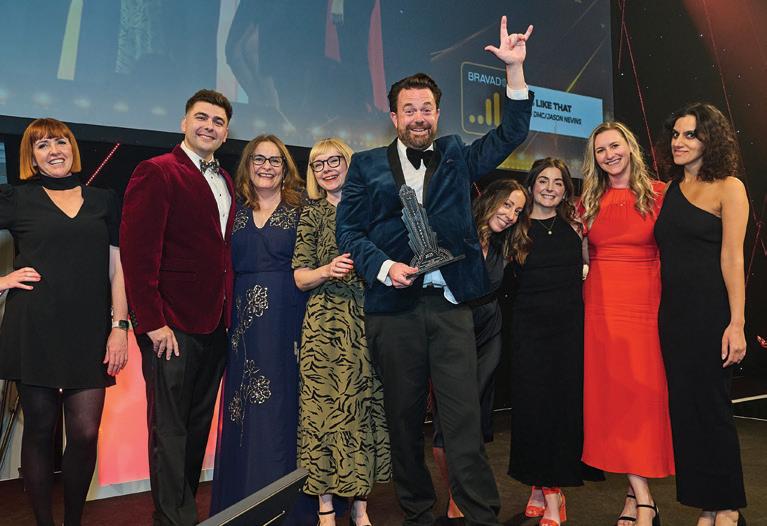
Teemill and Aardman ended up taking home the trophy for the Best Sustainable Licensed Product award for their Wallace & Gromit Vengeance Most Fowl Store. With such fantastic finalists in that category, it is an outstanding achievement to have come out on top, and a real testament to the collection.
Sponsored by POC Member, BBC Studios, The Sustainable Licensed Product Award is for a licensed item or range of any discipline and recognises and rewards the credentials of a licensed product/range on a sustainability front. The products had to be launched into UK retail between 1 June 2024 and 31 May 2025.
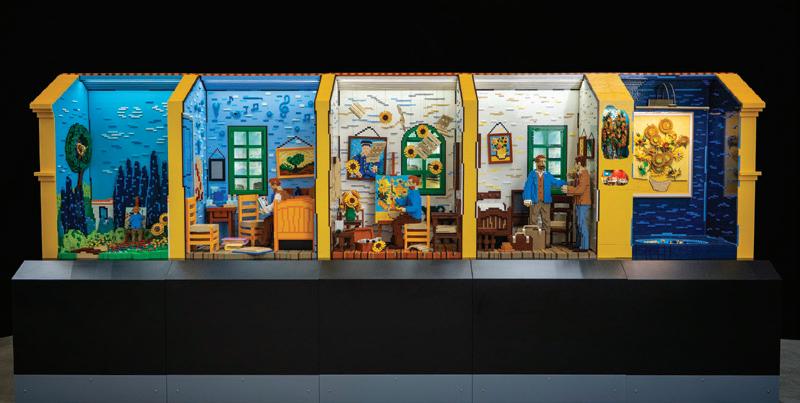
LEGO INSTALLATION UNVEILED AT THE VAN GOGH MUSEUM
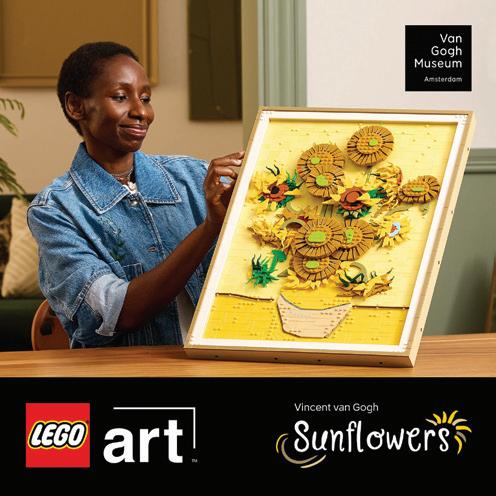
An exciting collaboration between two POC Members brought the story behind Vincent Van Gogh’s famous sunflower paintings to life at the Van Gogh Museum in Amsterdam.
The Yellow House installation has been made from 182,109 LEGO bricks, and is comprised of five rooms, bringing to life the place where Vincent Van Gogh created his iconic sunflower paintings. The installation takes visitors through Vincent’s artistic journey in Arles, from his first inspiration by the colourful gardens, his friendship with Paul Gauguin, to his reputation as a master of colour and form.
The installation follows on from the two companies’ collaboration that began earlier this year, with the launch of LEGO Art Vincent Van Gogh – Sunflowers set.
The Yellow House was displayed in the Van Gogh Museum until 28 September 2025, after which it is being relocated to LEGO House in Billund, followed by LEGO World in Utrecht.
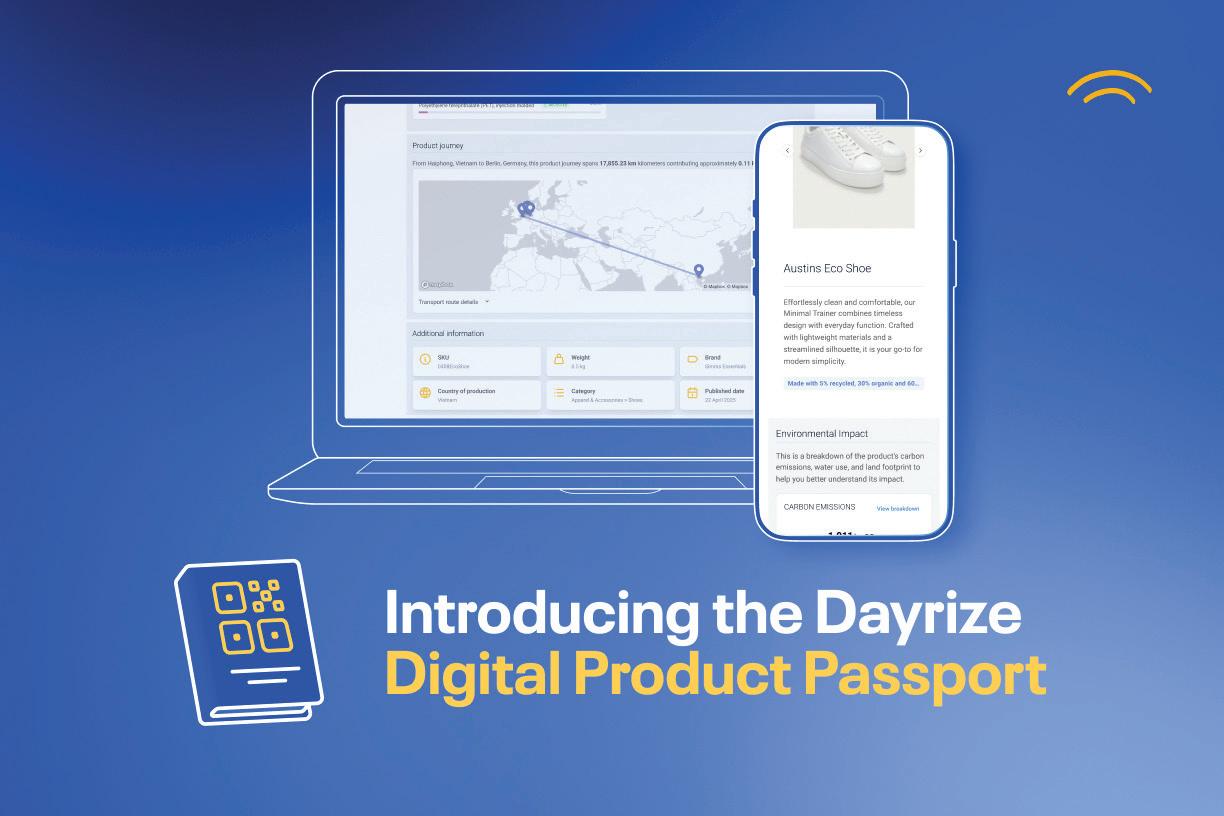
DAYRIZE LAUNCHES DPP CAPABILITIES AHEAD OF EU REGULATION
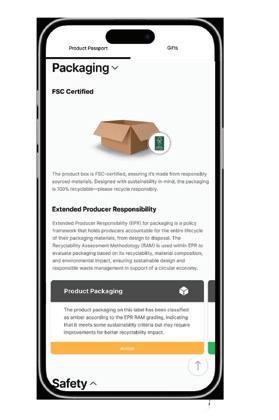
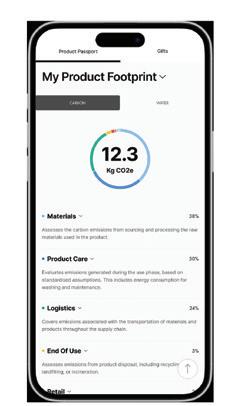
POC member and partner, Dayrize, has launched its own Digital Product Passport (DPP) for every product type and category, in alignment with EU regulations, and slotting into its existing data collection and compliance software.
Dayrize offers two DPP options: a fully-fledged passport that is created for companies by Dayrize, and a partial solution which provides all the data though an API for a company to create its own DPP, depending on preference.
Dayrize’s DPPs include essential product information, such as materials used, country of origin, certifications, and the environmental impact across water and carbon. When the product data is updated, the passport is also automatically updated so will always have the most current information. This means as regulations are updated and different data points are required, by EU legislation for example, the passports can adapt accordingly, since there is still some ambiguity as to what the DPP requirements will be.
Dayrize is anticipating its DPP launch will encourage its customers to not only upload more data, but more accurate data, as it will be more readily visible, therefore encouraging transparency and building trust with partners.
ABOVE: The Teemill and Aardman teams receivingheir trophy for Best Sustainable Licensed Product.
ABOVE: Smiley and (RED) are collaborating on a global campaign. Credit: Smiley.
ABOVE: Dayrize has launched its own DPP. Credit: Dayrize
ABOVE: LEGO’s installation at the Van Gogh Museum. Credit: LEGO Group.
CONTINUED
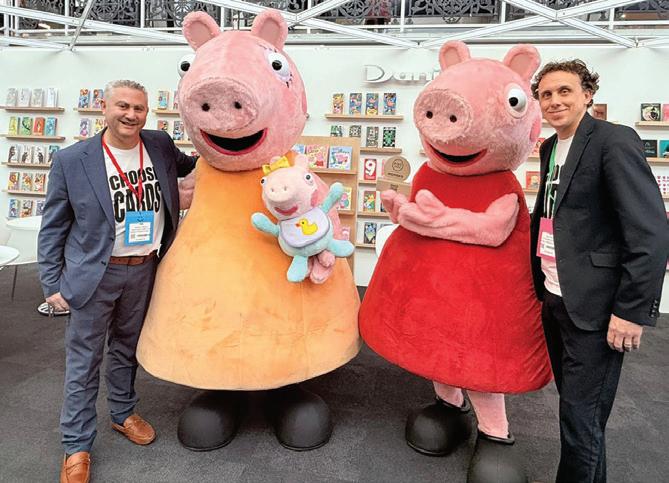
POC MEMBERS WELCOME PEPPA PIG’S NEW BABY SISTER AT PG LIVE
Greeting card tradeshow, PG Live saw POC Members, Danilo, and Rainbow Productions, host one of the first appearances of Evie, Mummy Pig’s new baby and a muchanticipated addition to Peppa Pig’s family.
The ever-popular children’s brand, Peppa Pig, is owned by POC Member Hasbro, which announced the addition of Baby Evie at Licensing Expo. PG Live is one of the first in-person sightings of Evie, courtesy of another POC Member, Rainbow Productions. Claire Bates, senior marketing and sustainability leader at Danilo, comments, “As proud Products of Change members, it’s been brilliant to exhibit at PG Live this year and see so much excitement around our official new card ranges. Our clean, crisp stand – with its creamy white backdrop, wooden shelves and natural furniture – gave the perfect setting to showcase our latest designs. And we were thrilled to welcome Peppa, Mummy Pig and Baby Evie herself to the stand for one of her first ever appearances to see our new official Peppa Pig and Baby Evie card range! They certainly caused a stir, drawing crowds, smiles and plenty of photo ops – a joyful moment that perfectly captured the spirit of the show.”
THE CONSUMER GOOD FORUM STREAMLINES COMPLIANCE REPORTING
Seeking to harmonise sustainability data across the consumer goods sector, The Consumer Goods Forum (CGF) has launched its Common Data Framework, a pioneering initiative developed through its Climate Transition Coalition, with support from Boston Consulting Group (BCG).
Designed to tackle fragmentation in emissions and deforestation reporting, the framework marks a major milestone in building transparent, future-proofed value chains.
For businesses across the sector, inconsistent data requirements have long stood in the way of meaningful progress. Differing metrics and formats can hinder supplier engagement, inflate administrative burdens, and obstruct accountability. The Common Data Framework aims to break down these barriers by offering a shared structure for collecting and reporting two high-priority data areas.
Alongside the CGF’s Data Driven Value Chain (DDVC) team, the Climate Transition Coalition will continue refining the framework, collaborating with industry platforms, and identifying opportunities to streamline supplier requests further.
You can learn more about the Climate Transition Coalition and access the new framework at The Consumer Goods Forum’s website.
PLASTIC-FREE PLAYTIME WITH PLAYPRESS’ LATEST LAUNCHES
POC Member, Playpress, has released a number of exciting launches, utilising the joy of construction, the convenience of flat packing, and some special licensors – from the Natural History Museum, RNLI, Moomins, The Gruffalo and Friends, and Shaun the Sheep.
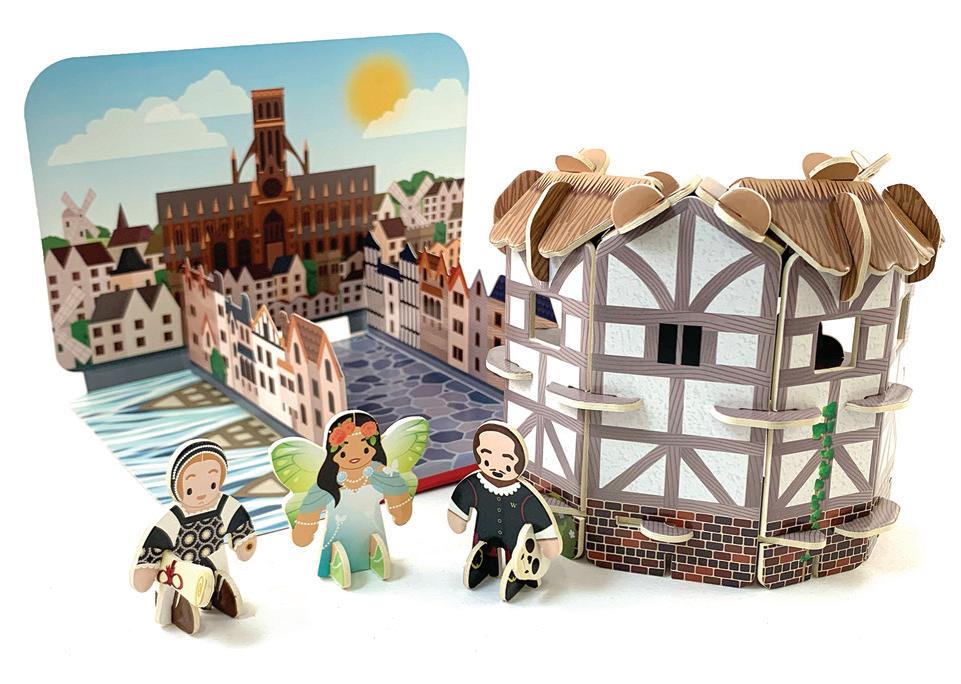
For Summer 2025, Playpress launched three new sets: two with English Heritage, comprising of a Legends Castle befit with its very own dragon, and Stonehenge, including a tour bus and of course a couple of roaming sheep; the other is with Shakespeare’s Globe, a delightful miniature of the famous theatre, including its very own Bard and a selection of his board-treading characters.
All of Playpress’ products are plastic-free and use FSC certified material, with entirely water-based and vegan inks, glues and varnishes. They are also manufactured locally in the UK to minimise air miles. Its sustainability priorities also factor into its decision-making for the licensors it works with, prioritising those that align with its values rather than trying to make the sets as cheaply as feasibly possible.
THE GOOD PLAY GUIDE TO GREENER TOYS
The Good Play Guide has put together a collection of toys with a reduced environmental impact that it recommends for the more eco-conscious consumer.
With sustainability of growing interest to parents and caregivers, now the Good Play Guide, in association with Products of Change, is using its expertise to highlight the toy companies that are endeavouring to provide more sustainable options.
The Good Play Guide was founded by Dr Amanda Gummer to help parents sift through the myriad toys available on the shelves and spotlight the ones that are expertly reviewed and best suited for children’s imagination and development
ABOVE: The Good Play Guide recommends and reviews toys for consumers.
Credit: Good Play Guide.
Dr Amanda Gummer, founder of the Good Play Guide, comments: “At the Good Play Guide, we believe in the importance of choosing toys that not only support children’s development but also care for the world they’ll grow up in. As environmental awareness grows, the toy industry is beginning to respond with greener choices for eco-conscious families.”
Toys with a reduced environmental impact combine fun with responsibility – and increasingly, brands are recognising that parents care about both.
ABOVE: Peppa Pig, Mummy Pig, and Baby Evie with Danilo at PG Live. Credit: Danilo.
INSET: The Consumer Goods Forum framework supports sustainability reporting. Credit: Shutterstock.
FROM POLICY TO PROFIT: CIRCULARITY’S ROLE IN BUSINESS SUCCESS
Products of Change is placing circularity and the value that can be created from it, front and centre at Brand Licensing Europe this year, as well as answering questions on the hot topic of legislation and regulatory challenges.
Once again partnering with the Global Licensing Group and Informa to bring the conversation of sustainability to the biggest global licensing shows, POC is representing BLE’s ‘Green Zone’ at stand D254, nearby the Networking Hub.
Circularity is the business model that sustainable practices are working towards, enabling resources to be reused and repurposed in a loop, not only minimising waste, but preserving value. There are already companies demonstrating the possibilities and realities of circular business, which POC is providing an insight to on its stand at BLE this year.
COFFEE WITH A CONSCIENCE
POC is working with show organisers to collect used coffee cups from the thousands of attendees at BLE, in collaboration with Coffeenotes, which will recycle the cups into stationery, eliminating waste and creating a new product and value from something that would otherwise be discarded.
Coffeenotes’ signature recycled coffee cup paper is crafted by UK papermakers James Cropper using its pioneering CupCycling process. Each year, worldwide, over 50 billion coffee cups go to landfill – Coffeenotes is helping change that. Its process recycles 95% of the cup’s fibre into premium writing paper and converts the remaining plastic lining into energy.
In addition to this paper, the company uses boards that are manufactured using waste-derived fibres from agro-industrial processing, textile manufacturing, brewing, and even grass.
Sarah Downey, cofounder of Coffeenotes, comments on the BLE initiative: “I hope it will encourage visitors to consider the genuine sustainability of the stationery products they produce or purchase. Branded stationery can be more sustainable
without compromising on quality or design, and education and communication are core to Coffeenotes. I view POC as a driving force in educating and supporting brands to be more sustainable, so we are delighted to be working with them.”
Look out for the collection bins on the show floor or come by the POC stand for more information on the circular process and the complexities of coffee cup recycling.
WRITING RECYCLED
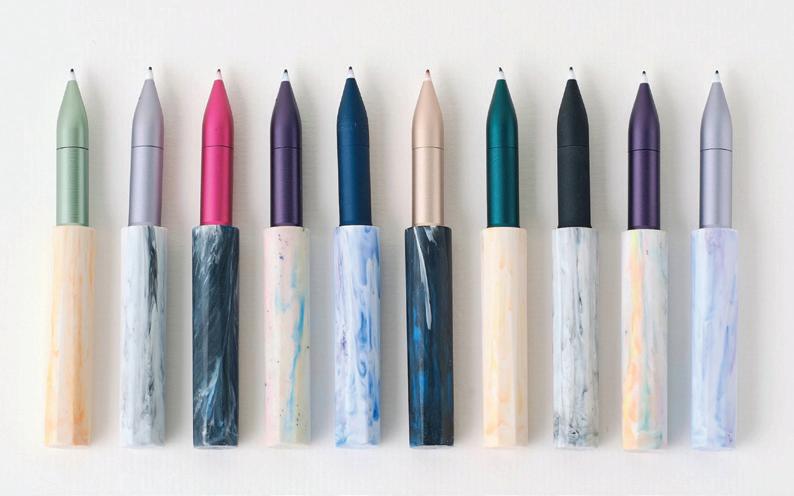
Keeping on the theme of circularity, POC is also showcasing product from refillable pens for life manufacturer, Tom’s Studio. The company started out with Tom Gyr hand-making pens out of discarded copper, Corian, denim off cuts or resin discard from surfboards. Then about five years ago, Tom pivoted
POC STAND 2254
Daily: Legislation questions drop-on the POC stand.
Tuesday 7 October
4pm-5pm: POC Power Hour, at the Networking Hub: 4-4:30pm: Beyond compliance: Legislation driving change.
4:30-5pm: From soap to screen: Sustainable partnerships in action.
5-6pm: POC Member Drinks at the POC stand.
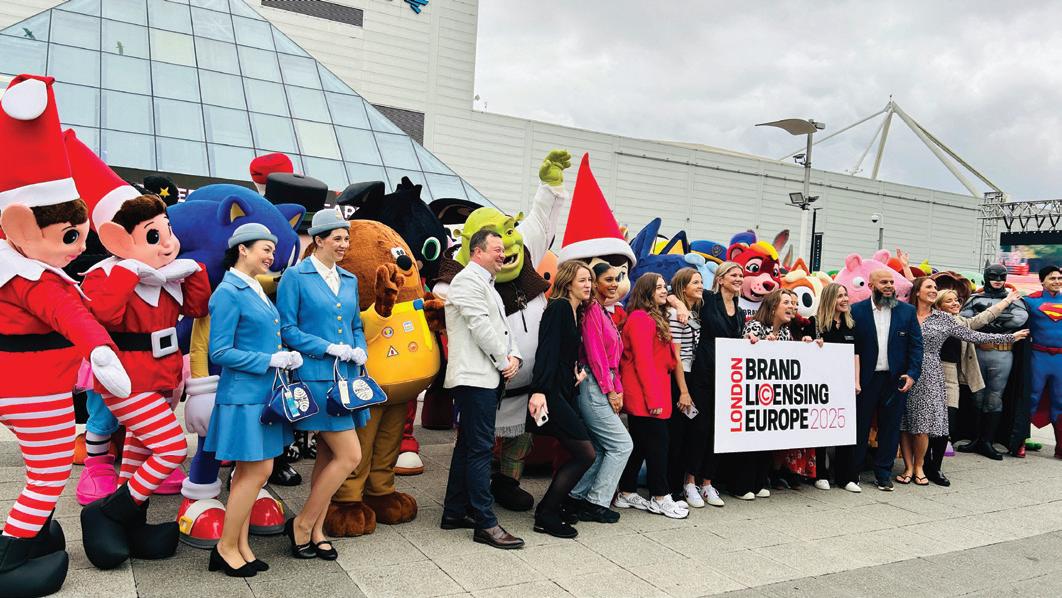
RIGHT: Brand Licensing Europe returns to the Excel Centre for 2025. Credit: POC.
BELOW: Studio’s
The Wren – Write Off pen with recycled pen lid. Credit: Tom’s Studio.
from making handmade small scale pens to designing products for a bigger market that could have a larger impact. Most recently this has led to him collecting discarded pens from schools in his local area and melting them down to create pen lids for his products.
“We’ve worked out that around 60 million pens are thrown away just in schools in the UK, and then 9 billion are thrown away globally, which is just an astronomical amount of waste. So we’ve made it our mission to not only make products that are completely the antithesis of that but also can potentially take some of that waste out of the system and turn them into products for life,” says Tom Gyr, founder of Tom’s Studio.
Tom’s Studio has recently joined the Products of Change Membership Community, and BLE serves as the perfect opportunity to highlight its work and ongoing initiative to reduce waste and innovate away from the throwaway culture.
FORGING A FUTURE WITH PRINT-ON-DEMAND
POC will be hosting a daily drop-in between 12-1pm on its stand, to answer show attendees’ questions and provide the latest updates on legislation. This is available to anyone, whether a POC Member or beyond, to stop by with your queries.
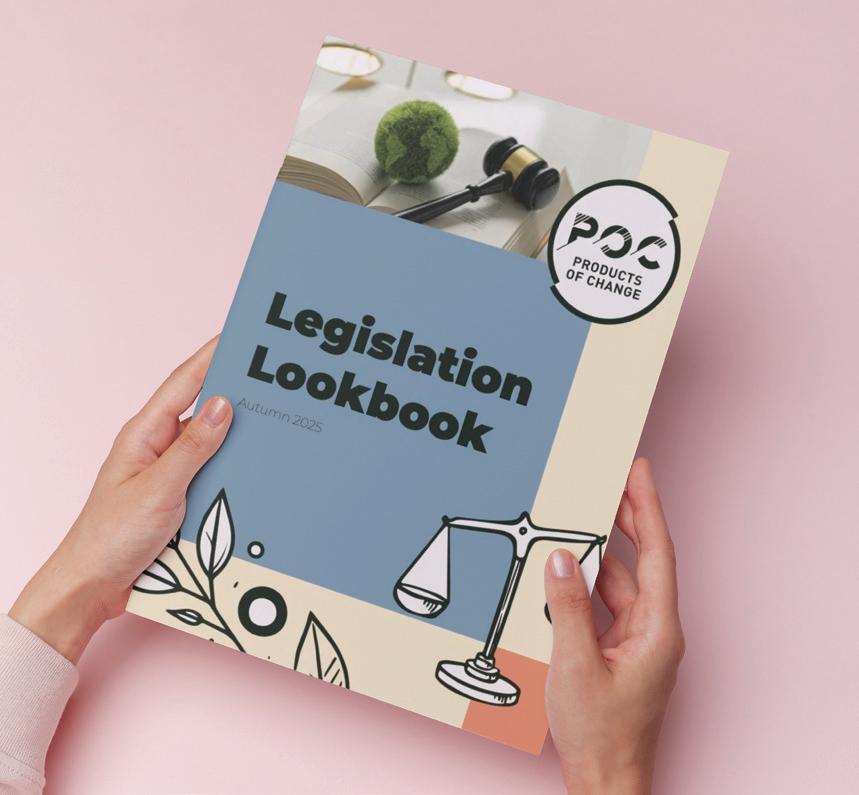
This will be further supported by a Legislation Lookbook, a helpful printed guide of the latest updates, which will be available on the POC stand.
Continuing POC’s partnership with the show and our championing of sustainability at BLE, we will be on stage at the Networking Hub on Tuesday 7 October at 4pm for a ‘POC Power Hour’ session.
Titled: ‘Beyond compliance: Legislation driving change’, the first half of the hour-long session will spotlight the global and European regulations brand owners and licensees need to know, providing an overview of the latest updates and the steps needed to be taken to stay ahead and compliant. This section will also feature an exclusive sneak peek of POC’s pioneering Maturity Index, an industry-first tool designed to efficiently capture and showcase environmental maturity data from manufacturing partners (licensees) for the brand owners within the industry (across all brand types – brand owner and retailer).
This will immediately be followed at 4:30pm in the Networking Hub by a discussion with Steve Sheffield, collaborations account executive at sustainable cosmetics brand, LUSH, and Alexandra Filletti, senior creative director, EMEA & ANZ of Paramount.
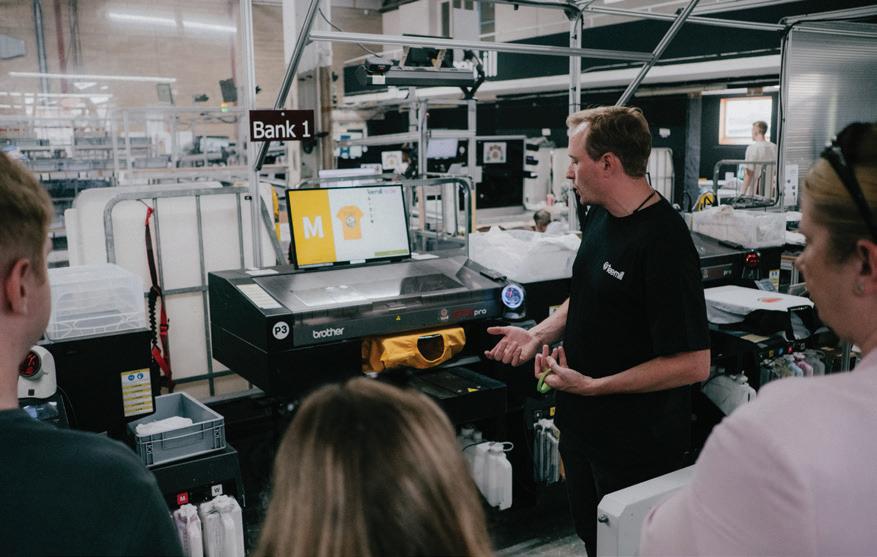
Teemill, an ongoing partner of POC will also be on the stand to demonstrate its circular printon-demand technology, a model which is has open-sourced for companies to use, to enable easy adoption and growth of the circular system, which sees the creation of closed-loop packaging, low-impact printing, and its innovative Remill operation to recycle old tees into new ones.
The company will be showcasing how circularity can be built into licensing to reduce waste, cut costs and accelerate speed to market through its proprietary technology. On the stand, Teemill will have examples of licensing collaborations with products people can see, touch and feel.
“BLE is the perfect event because everyone who can influence real change in the industry is under one roof. It’s a rare chance to demonstrate both the technology and the results directly to the people who matter most,” comments Rob Caulfield, senior business development, Teemill. “We want to connect with new and existing partners and show how working with Teemill can help brands achieve sustainability goals while unlocking new revenue. Ultimately, our aim is to drive meaningful change in how licensed products are made and sold.”
EDUCATION AND INSPIRATION FROM POC
While circularity is very much a target for the sustainable development of the industry, there is no ignoring the ongoing present reality of legislative challenges. With changing regulations and compliance queries being at the forefront for many,
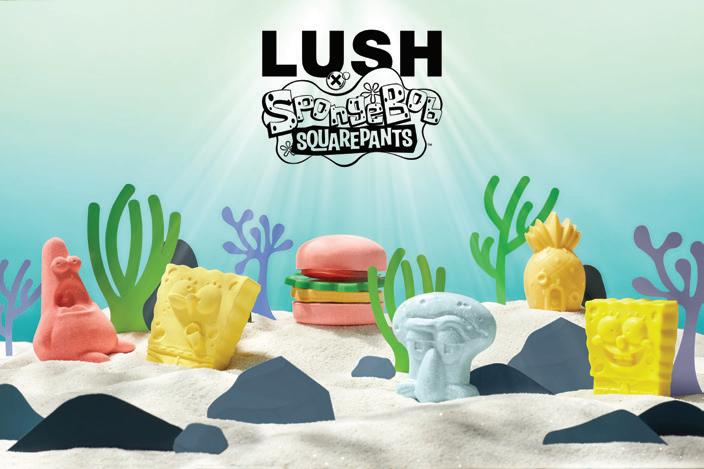
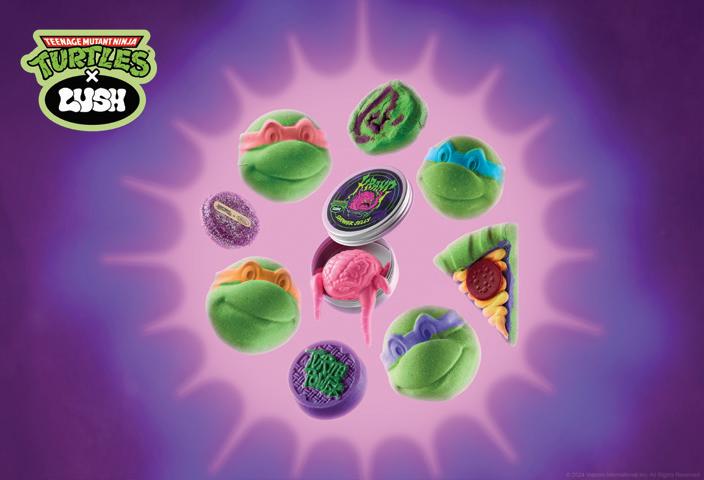
For LUSH, Paramount was one of the first companies it spoke to as it began its licensing programme and it has since worked with the entertainment brand on a number of collaborations, most notably SpongeBob SquarePants and Teenage Mutant Ninja Turtles. The SpongeBob collaboration was part of Paramount’s Operation SeaChange, an ocean clean-up initiative, particularly for marine plastic. In keeping with this, the SpongeBob collection, and then to follow the Ninja Turtle collection, were entirely plastic-free. The LUSH team created exciting and impactful products without relying on plastic packaging in any way; Steve explains that working with a brand’s IP and plasticfree requirements “breeds innovation” and enables new ground to be broken, creating both engaging, hugely popular, and sustainable consumer products.
Products of Change will be hosting its Member drinks on its stand D254 at 5pm on Tuesday 7 October (straight after the POC Power Hour in the Networking Hub). So come and join the team and network with other licensing professionals also on their journey towards more a sustainable and resilient licensing industry. ■ JOIN US: BOOTH D254
LEFT: A demonstration of Teemill’s print-on-demand technology to the POC Community earlier this year. Credit: Teemill.
LEFT: Alexandra Filletti, senior creative director, EMEA & ANZ, Paramount.
LEFT: Steve Sheffield, collaborations account executive, LUSH.
TOP: LUSH and Paramount’s SpongeBob SquarePants range. Credit: LUSH.
With various pressures on businesses – from legislation, to tariffs, supply chain challenges, and changing customer demands – many organisations find themselves putting sustainability on the back burner or considering it a non-urgent – and expensive – problem to tackle. This doesn’t have to be the reality, which is what we will demonstrate this year at the Products of Change Conference on 5 November 2025.
REWRITING THE RULES OF BUSINESS FOR A GREENER FUTURE
ABOVE: The Tony’s Chocolonely team speaking at the Conference last year.
Credit: POC
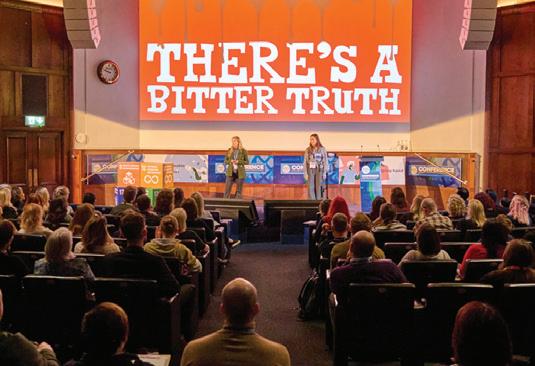
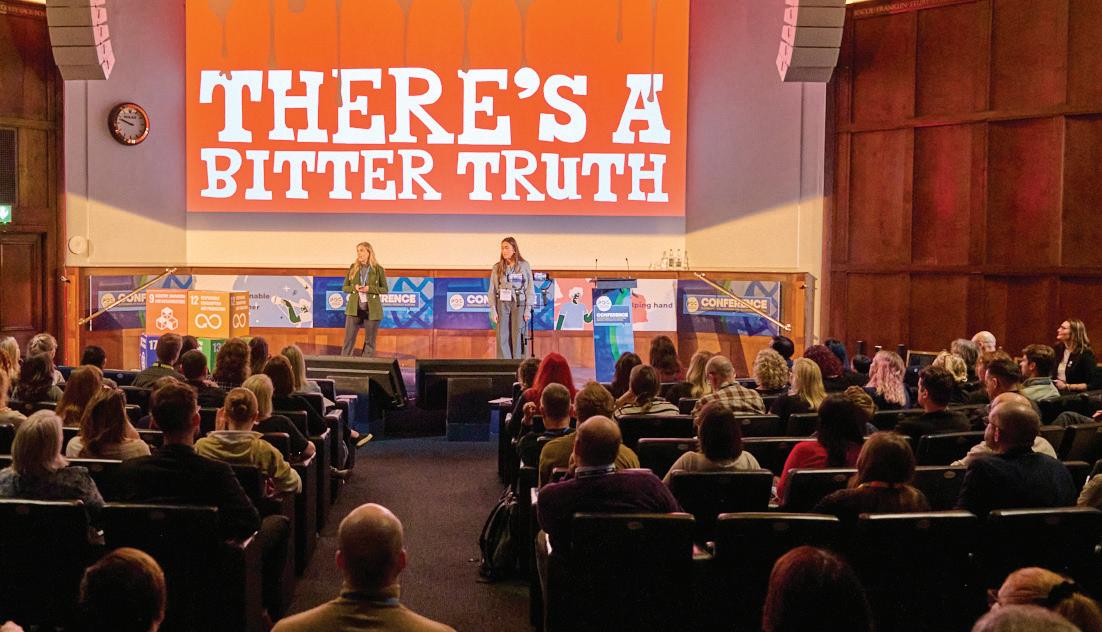
Hosted annually at the Royal Geographical Society in London and streamed online for its global audiences, the Products of Change Conference will go beyond the usual topics of climate and compliance to focus on real-world implementation and business benefits. It has become increasingly clear that sustainability is not a side-project but smart business, which will be demonstrated by the roster of companies and speakers that will present at the POC Conference.
OPENING WITH A SPLASH
BELOW: POC’s founder, Helena Mansell-Stopher will bring the industry together again at the POC Conference 2025.
Credit: POC.
Products of Change is thrilled to have the Open Planet team open the Products of Change Conference this year on 5 November, creators of David Attenborough’s latest documentary ‘Ocean’ which detailed through striking – and at times harrowing – visuals the splendour of our ocean life and the devastating impact humankind is having on it.
Open Planet will give attendees an insight into the makings of the documentary and how sustainable change can be inspired and driven by telling a powerful story in the right way, to foster real-world impact.
A LEGISLATIVE LOWDOWN
With environmental legislation representing ever-moving and challenging goal posts, rife with complexities and uncertainties, the Products of Change advisors will provide an update on global legislation and what it really means
for your business. Together, we’ll cut through the complexity, highlight the key regulations you need to know, and explore how businesses across our community are responding.
GUARDIANS OF THE FUTURE
From preserving wildlife to protecting cultural history, heritage organisations carry a unique responsibility – and an unparalleled opportunity – to inspire and create change. Licensing is becoming a vital extension of this mission, transforming consumer products into vehicles for education, impact, and sustainable practice. In this conversation, the Natural History Museum, the RSPB, Curating Cambridge, and ZSL London Zoo will explore how their licensing programmes are not only building revenue to support their causes, but also embedding environmental and social responsibility into the very fabric of their brand partnerships.
LEGO’S BUILDING BLOCKS OF PACKAGING
What if better packaging could cut costs, reduce waste, and boost efficiency all at once?
Christian Lanckman has proven it can. As LEGO’s sustainable packaging manager, he has optimised 50% of LEGO’s licensing partners’ packaging – delivering major cost savings while driving measurable sustainability improvements.
By creating LEGO’s packaging optimisation programme, Christian developed a unique performance prediction algorithm that helps
partners design packaging that uses less material, lowers EPR taxes, improves logistics, and strengthens sustainability credentials –showing how smarter design unlocks both environmental and financial value.
TESCO TALKS EPR
Continuing the conversation of EPR and packaging insights will be Paul Earnshaw, packaging strategist for Tesco. Paul will unpack the latest developments in EPR regulations from a retailer’s perspective and explore what they mean for packaging strategies moving forward.
Tesco has implemented RAG (red-amber-green) classifications for packaging, setting out what it will not accept, what needs improvement, and what is passable, from its suppliers. Paul will discuss the financial implications of EPR and the importance of reducing packaging weight and increasing recyclability in order to comply, as well as the necessity of accurate data reporting.
SMOL CHANGES, BIG IMPACT
Also speaking on the business benefits of sustainable change, will be Hilary Strong, CMO of Smol, challenger brand and direct-to-consumer home cleaning essentials provider.
Smol was launched to challenge the laundry detergent market with genuine innovative, smart design and a more sustainable alternative. The results speak for themselves: delivering over 1 million washes per week across the UK, achieving 37% revenue growth to £43.5 million in the last year alone, and steadily grabbing market share from FMCG giants.
In this session, discover how a challenger brand is reshaping homecare, driving both environmental progress and commercial success.
CIRCULAR MUSIC MERCH WITH ORGANIC SOUND
Last year POC welcomed Matt Young, president of Bravado, the music merchandising arm of record label giant, Universal Music Group, to the Conference. Matt detailed the beginnings of Bravado’s sustainability journey, and this year POC is continuing this conversation with apparel designer and manufacturer, Organic Sound, to speak about its new ground-breaking partnership with Bravado to create fully circular textiles for its music merchandise.
Laura Bonareu from Organic Sound will talk Conference attendees through the details of this project and how scalable solutions are possible and in action right now, with some of the biggest names in the industry.
Read more into the details of the collaboration, ahead of the Conference, on page 19.
FLAT-PACKED SUSTAINABILITY
IKEA is proving that sustainability and business growth can go hand in hand with its ambitious sustainability journey; a journey about how largescale retail companies can operate in the face of climate change. As part of this transformation, IKEA is embedding sustainability into the core of its operations by empowering its country managers as chief sustainability officers (CSOs).
At IKEA, sustainability is no longer a separate function, but a shared responsibility across the business – deeply connected to value creation, customer experience, and long-term growth.
This session explores how a retail giant is transforming operations to build a low-impact, future-fit model – showing that what’s good for the planet can also fuel commercial success.
MATERIAL INNOVATION OF TOMORROW
Looking ahead to future innovations is vital for the industry. That’s why Products of Change is proud to partner with The Mills Fabrica – a global investor in sustainable technologies – to bring its latest innovators to the POC Conference. Together, these trailblazers showcase the technologies reshaping how consumer goods and licensed products are made.
Joining the session are a selection of innovators from The Mills Fabrica, who will showcase the future of material innovation, and that the solutions we need are already at our fingertips. Amy Tsang, head of Europe at The Mills Fabrica, will then bring the innovators together into a panel discussion with the audience to evaluate how we, as an industry, can scale these innovations and future-proof our businesses and the products they create.
CELEBRATING THE CHANGEMAKERS
Across the Products of Change community, more than 1,500 individuals are driving sustainability action within their businesses. But who is going above and beyond? Join us as we celebrate the pioneers, the innovators, and the leaders who are shaping the future of our industry. Together, these awards honour those who are not only making change within their organisations, but also inspiring progress across the wider community.
This year’s Conference is made possible by a line-up of industry supporters, including: Dreamtex, Character World, Warner Bros, TDP, BBC Studios, Natural History Museum, Mattel, Fabacus, The Wombles, Bravado, Difuzed and Drew Pearson, RDP, ESCP, Pure Table Top, and Disney. ■
Find out more about the POC Conference, or get your tickets at www.productsofchange. com/poc-sustainability-conference
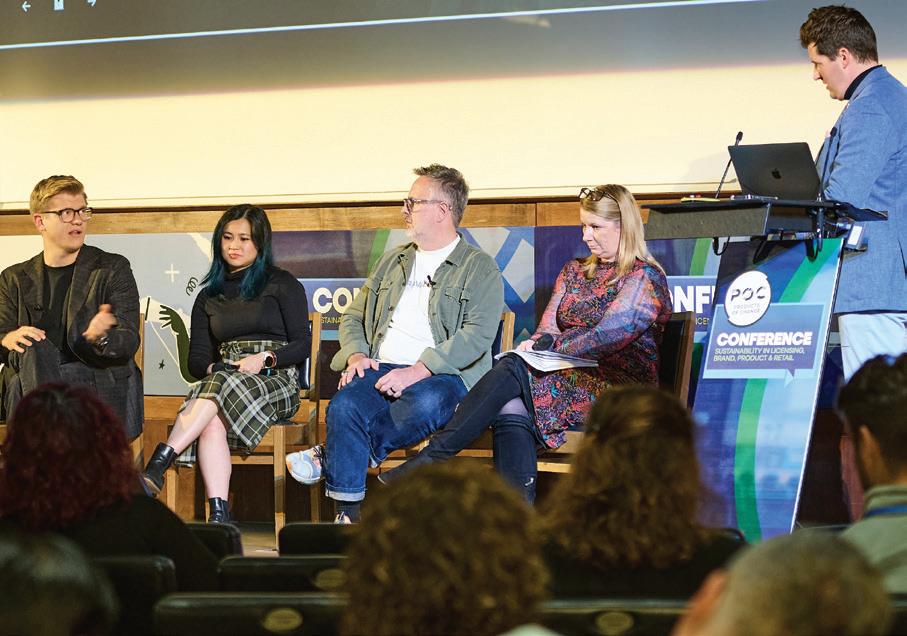
LEFT: A panel session from the 2024 Conference. Credit: POC.
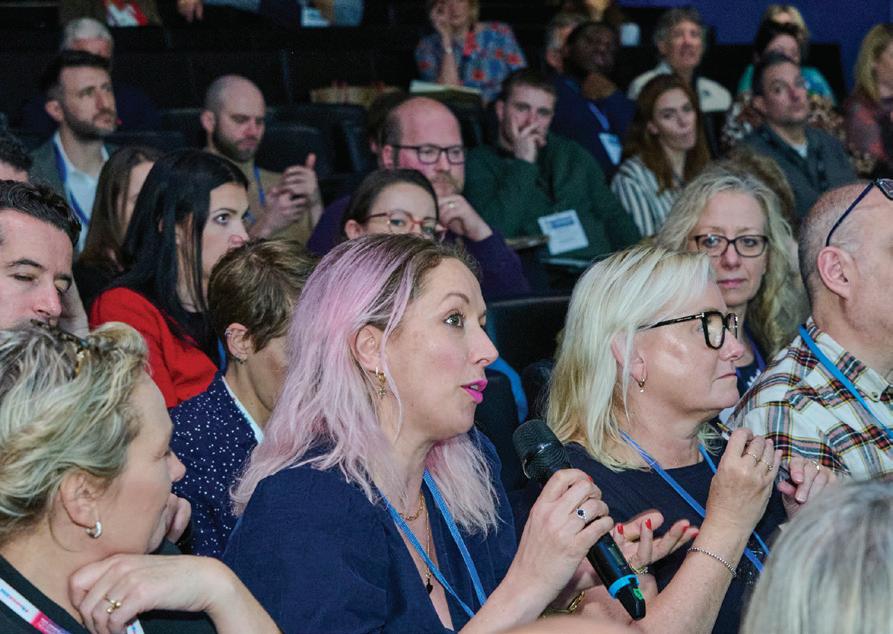
BELOW LEFT: Attendees at the POC Conference 2024. Credit: POC.
BELOW: Jonathan Baker, CCO at Fabacus speaking at last year’s Conference. Credit: POC.
•Suitable for fridge, freezer, microwave and dishwasher
•Rectangular, round, and round with three compartments
•75 years of constant innovation
•Proudly made in the Netherlands
•B-Corp certified
•Inclusive workplace for all ages & abilities
MUSIC MAKES MAGIC
WITH TEXTILE RECYCLING
In a project that creates brand new music merch from old, music merchandise designer and manufacturer, Organic Sound, and music merchandiser, Bravado, have come together to put the circular in band tees and the sustainable in concert keepsakes. Organic Sound will tell all at the POC Conference on 5 November, but read more for your early glimpse.
When we talk about the blight of fast fashion, we bring to mind the cheaply produced, micro-trend garments that last for a season at best before being discarded. This is not, says Matt Young, president of Bravado, what happens with music merchandise; “That’s something they’re going to keep forever, and as long as they can fit in it, they’re going to wear it,” he says.
However, that’s not to say it doesn’t have an environmental impact – a fact that presented Bravado, the merchandising arm of Universal Music Group (UMG) – with a unique opportunity.
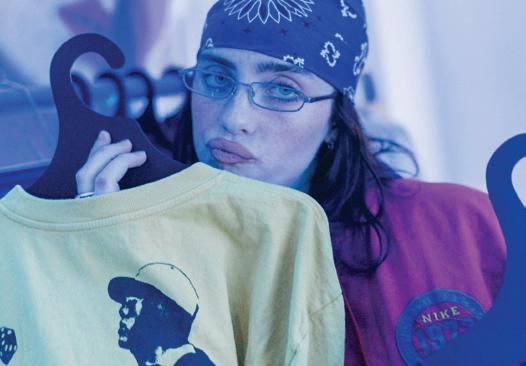
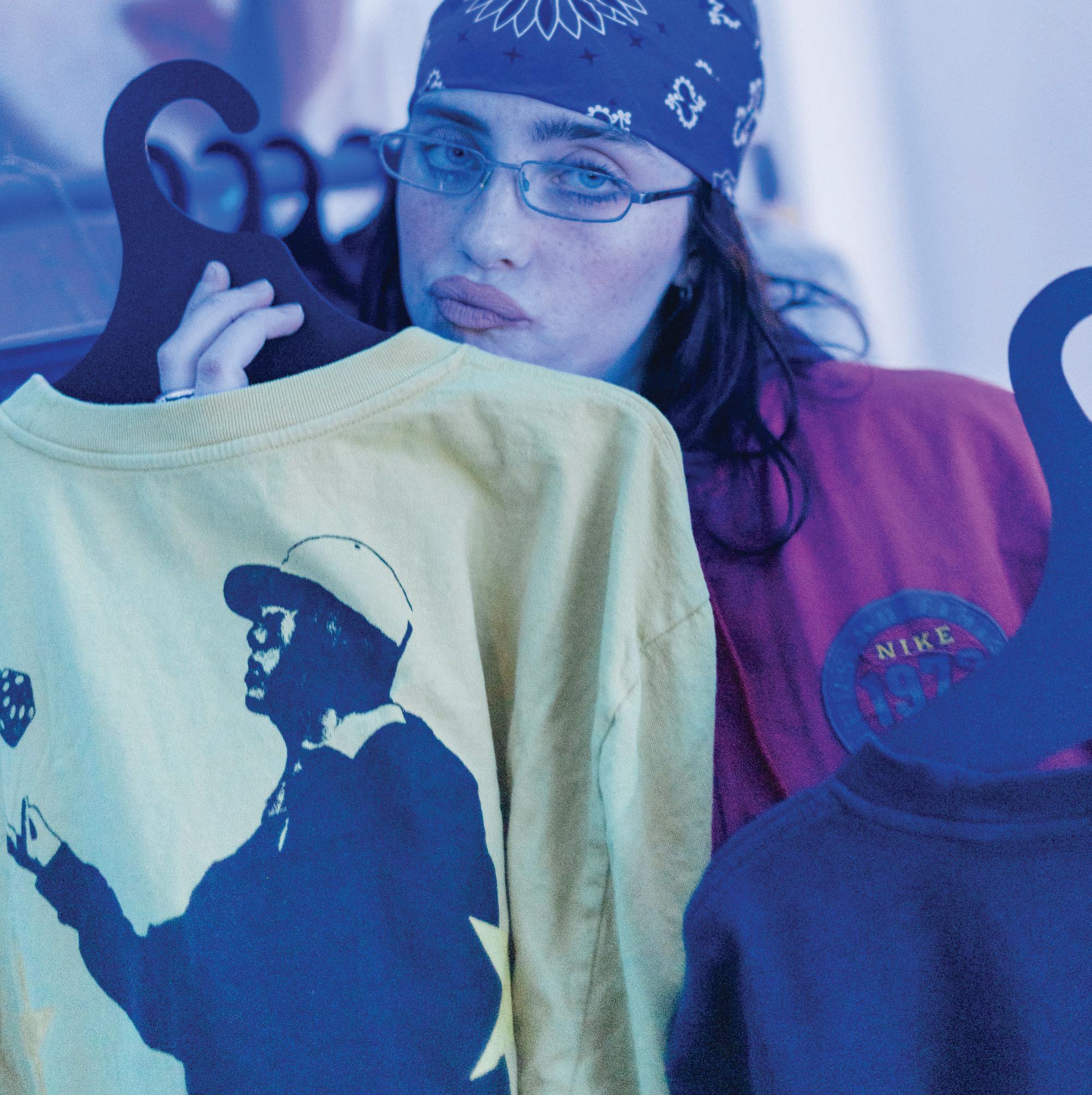
Billie Eilish has been signed with UMG for a number of years now, so when she and her mother, actress and activist, Maggie Baird, requested that Bravado create her merchandise more sustainably, a solution needed to be found.
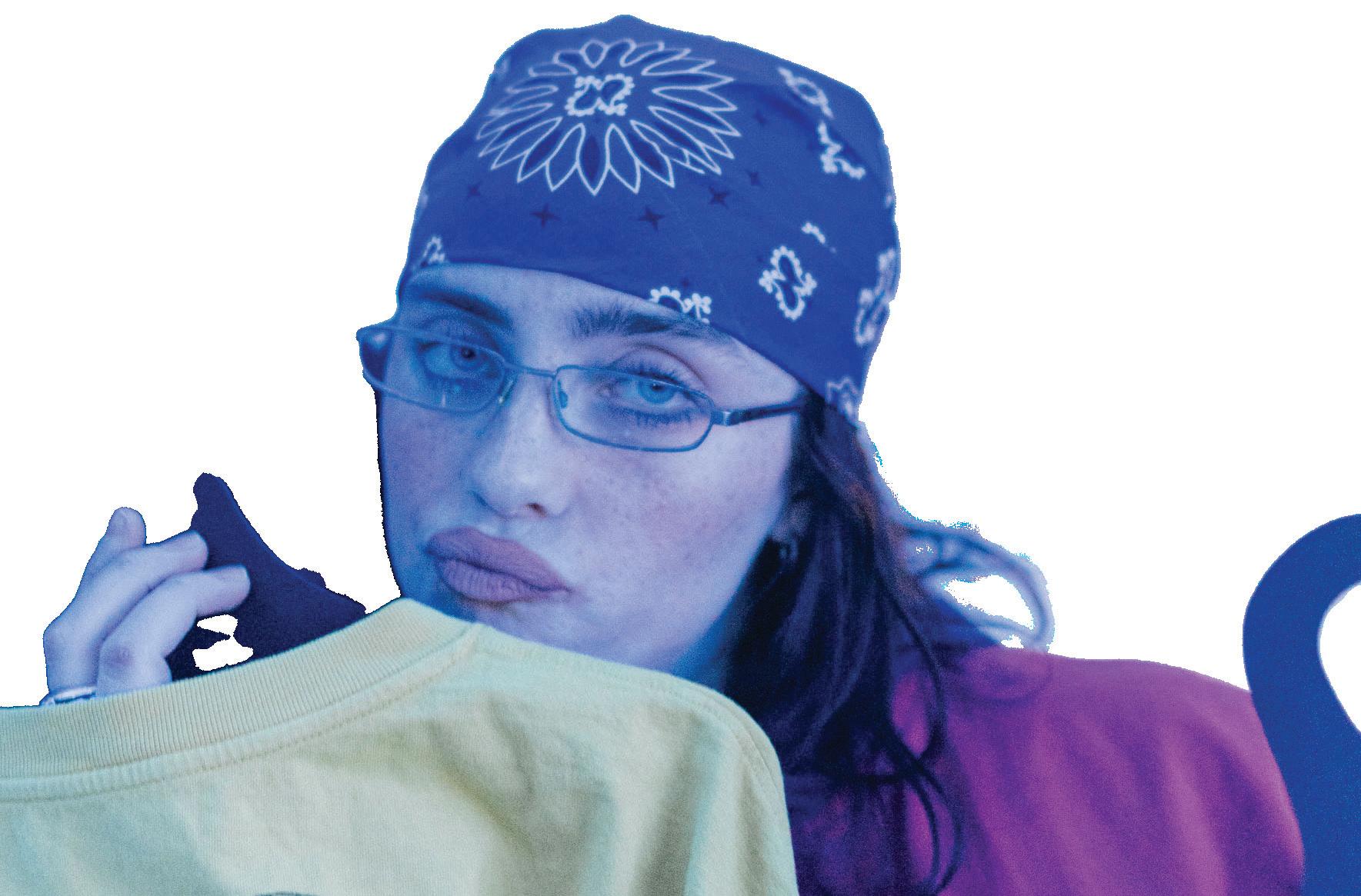
LEFT: Billie Eilish posing with some of her tour merch. Credit: Bravado.
ABOVE: The full range of Bravado merch for Billie Eilish’s tour. Credit: Bravado.
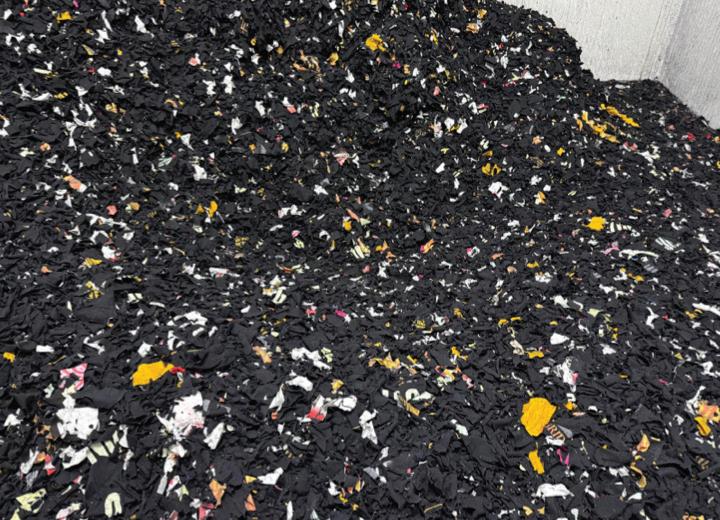
ABOVE: Processed Bravado stock ready for recycling.
Credit: Organic Sound.
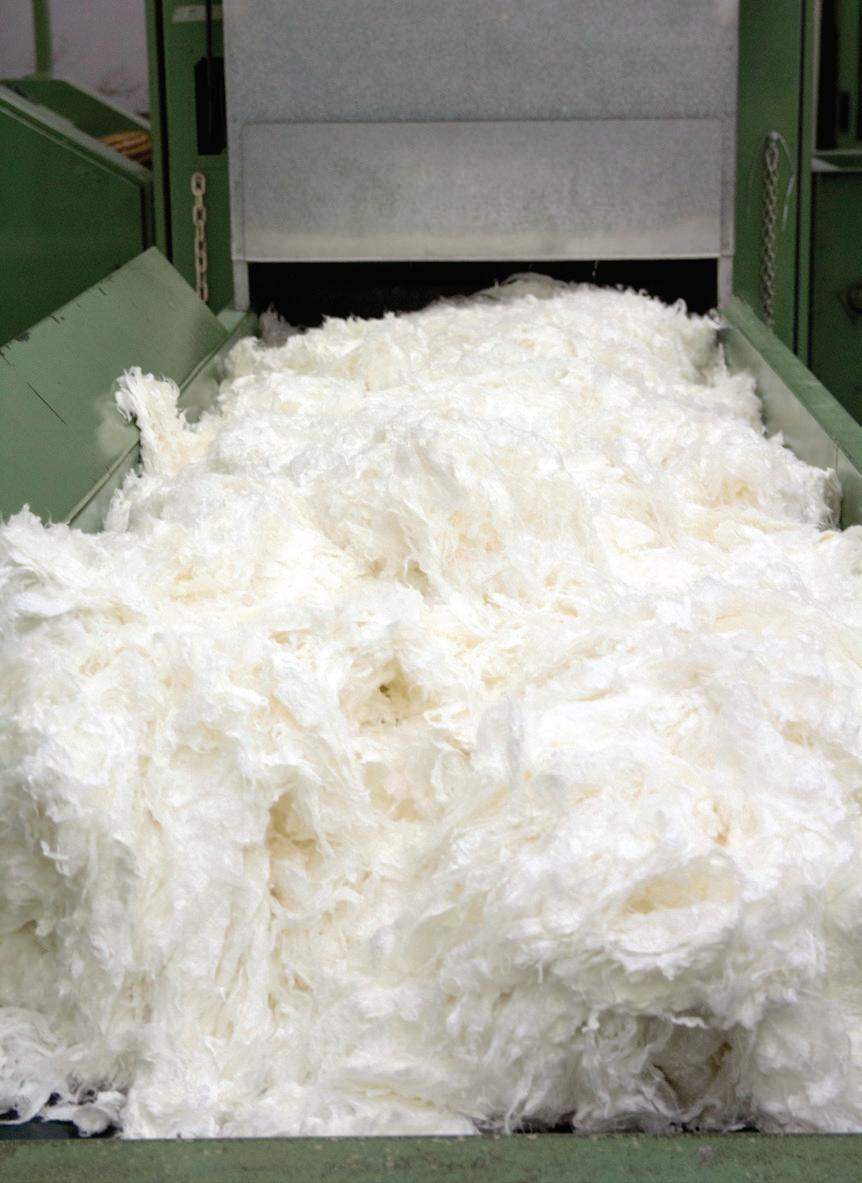
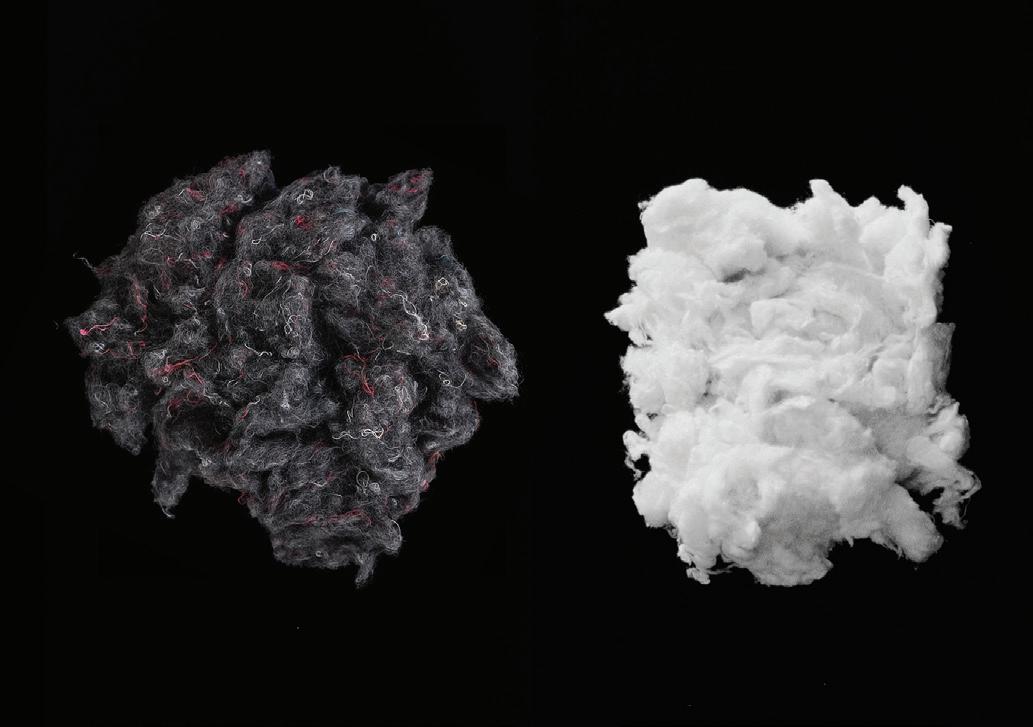
RIGHT: Samples of fibres from recycled Bravado apparel.
Credit: Organic Sound.
“She [Maggie] was driving us to be better, and I was like ‘yeah, let’s do it. F*ck it.’ It’s Universal Music – we’ve got the money, we’ve got the resources – let’s figure it out,” Matt comments. This was also around the time EU Extended Producer Responsibility (EPR) legislation was being announced and Bravado began its work with POC, so Matt recognised this was the future and a competitive step to make.
Meanwhile, Organic Sound, which operates under Hallotex, a designer and manufacturer of yarns, fabrics, and garments for other brands, had already been working with Bravado and had yet to pique the company’s interest with its pitch for recycled textiles – until now.
FINDING THE VALUE IN TEXTILE WASTE
Organic Sound has two major textile circularity and recycling projects: one which recycles
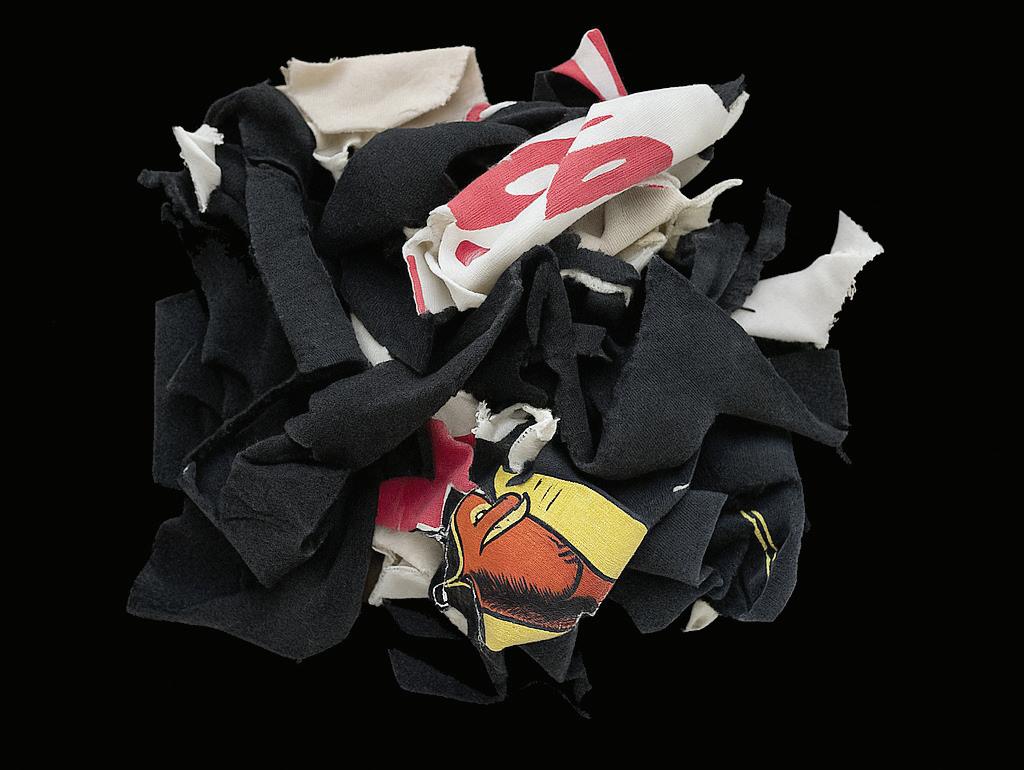
post-consumer/post-industrial garments, and the other which utilises pre-consumer waste from all the cut-offs and waste generated through the cutting process. The material is then turned back into fibre which Organic Sound uses to make new garments.
Laura Bonareu, board member of Hallotex and co-founder of Organic Sound, explains that this material would often previously be downcycled, “But I think being really circular is putting this waste back into the same industry, because you have to take responsibility of what you’re creating,” she comments. While it isn’t a perfect solution, as prints and additional elements have to be separated, and it is dependent on the fabric composition for the mechanical recycling process, it is much more scalable than its chemical recycling process counterpart and much more accessible.
“I think if you can offer a solution for a part of the problem, then of course, we have to keep innovating in other things, but we have to start being real with what we are offering, because the problem is, we don’t have more time to keep waiting for the perfect solution,” says Laura.
“It’s about responsibility towards giving a solution to a real problem now in the world, which is the waste. Because we have produced so many garments that, for many years, have been sent to Africa or burning in landfills, and now the government is saying this cannot be done anymore. What solutions do you have? And the industry doesn’t have real, scalable solutions at a cost that can be accessible for the brands.
“So, our goal with this project is to give these solutions to the brands, particularly with Bravado. What we are doing is we talk with them about post-industrial because what they have is stock,” Laura explains.
A HARMONIOUS DUET
And stock is exactly what Bravado has: over 400,000 items of it which have now been sent to Organic Sound from Bravado’s Nashville warehouse, comprising of unsold stock, from a cancelled tour or excess unneeded volumes. Organic Sound is then recycling these garments into new blanks to sell back to Bravado. “In terms of the music industry, [Bravado] is the first company that is doing something like this, and is committed to doing all of these initiatives,” says Laura.
Organic Sound is also able to provide Bravado with complete traceability of the materials – where and how they have been incorporated and the impact this has had. This is made even more thorough because Organic Sound controls and houses the entire recycling and manufacturing process on one site, so the full chain of the project is visible and accessible. This ownership and visibility of the production process was also something of a motivation to begin this project, explains Laura, as it was easy to be very aware of the waste; “when you see the reality with your eyes every day, I think you are more aware about the impact, so it makes you do better.”
Even though Bravado is the first music merchandising company to be undertaking
this sort of project – and it currently has the competitive edge as a result – Matt hopes his competitors won’t be far behind. One of the biggest challenges of the project, Matt explains, is the scalability: “The factories that do it are small, and they’re getting bigger now because of the investment we’re making.” But once the demand increases even further and the process continues to scale, it will all become more affordable and mainstream, and “ideally any other option will be secondary,” comments Matt.
In the meantime, Billie has been showing a video at the beginning of each of her shows to tell the story of the production of her merchandise: how it is utilising recycled materials, how it has less impact, and therefore why it might cost that bit more. “You have to educate them on the why,” says Matt, “And Billie helps with that, and people are starting to learn.”
Music artists in modern day, and in fact as long as there has been music and popular culture, have huge amounts of influence over their fans; people idolise them and listen to what they have to say. Which is why global artists, such as Billie Eilish, have an opportunity to use that influence to have real positive impact.
Dylan Sieglar, head of sustainability at Universal Music Group adds, “Music has the power to unite, inspire, literally to heal – and any touchpoint artists have with their fans, from a breakthrough song to a special merch drop to a social campaign, can change the cultural narrative. It’s our job, through initiatives like the upcycled merch initiative with Organic Sound, to give artists more ways to be a force for good.”
ONLY THE BEGINNING
Other artists under the UMG label have been opting for more sustainable options for their merchandise. “They [Billie and Maggie] have blazed the trail, which enables us to roll out more ways to help artists use their power in the authentic way that Billie does – true to her aesthetic, her values, and her brand,” comments Dylan.
Matt has been open in the past, no least in his talk at our Products of Change Conference last year, that Bravado has a long road ahead of it to make it entirely more sustainable. He explains that out of the 40 million pieces of merch the company made last year, only 10% of it was sustainable, but this percentage is continuing to grow year on year.
“We’ve started the race. We’re past the starting line, on mile two or three of the 26 mile marathon […] We’re just getting started, and it’s
Not only is the music merchandising industry a fantastic sector for recycled textile innovation to grow within because of the storytelling capabilities, but because from a very technical and practical point of view, the garments they make are well suited to the utilisation of recycled material. If you think of the concert merchandise you buy, it is hoodies or sweaters, or heavy-weight t-shirts, all of which require a thicker yarn. Laura explains: “The style of the yarn is much thicker, the weight is much higher, so the style allows you to put more recycled content in,” without any compromise on quality. Music merchandise also happens to be largely black or dark fabrics, which are also more suited to recycled content as they can be comprised of any colour and simply dyed over.
a bit of an uphill race. We’re committed to doing it. We’re committed to putting the resources in and making it happen. I think if we look back in five years, we’re going to laugh at where we started and have made some real impact,” Matt says. Dylan adds, “Bravado is ambitious when it comes to sustainability, and dozens of their artists opt in to merch with sustainable attributes. Under Matt Young, Bravado has led the charge since before I arrived, and with their whole incredible team, we’re laying the groundwork for big moves in the months and years to come. Watch this space!”
Products of Change will be following the partnership between Bravado and Organic Sound closely in the coming months and is excited to be bringing this conversation to the POC Conference on 5 November, where Laura Bonareu from Organic Sound will detail the journey of this remarkable project and all it has achieved so far. ■
LEFT: Shredded stock ready for recycling.
Credit: Organic Sound.
LEFT: Recycled fibres ready for processing.
Credit: Organic Sound.
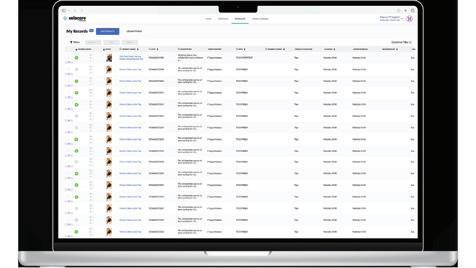
Introducing the POC Partner Maturity Index: your efficient data capture technology to measure yours and your partners’ progress towards a more sustainable brand and licensing industry, available for free for our POC Member Community.
YOU CAN MEASURE PROGRESS
Products of Change has joined forces with children’s and family audience insights company, Kids Industries, to develop the POC Partner Maturity Index for the brand and licensing industry. It has been designed to capture environmental maturity data from licensees for brand owners, allowing each to assess their progress or maturity and the work that still needs to be done.
The story began at the POC Conference in 2023, when the LEGO Group and Netflix spoke on how important it was for them to have visibility into the sustainability maturity of their partners. This is because they, and big brands like them, have made sustainability commitments, and want to be able to keep them; also because the vast majority of a brand owners’ Scope 3 impact comes from their licensees, which they are responsible for.
In order for brand owners to engage with their licensees on reducing their impact, they need to understand where they already are and have a tool for measuring this, in an efficient and reliable manner. This is where Products of Change came in. POC, alongside Kids Industries, the POC Advisors and some of our Membership Community has developed data gathering software that licensees fill in and gets pulled into the dashboards of brand owners so that they can see the journey of maturity that its partners are on, category by category, region by region. This became the Maturity Index.
Helena Mansell-Stopher, founder and CEO of POC, explains, “The POC Maturity Index is a two-year, industry-funded initiative. Phase one
helps brand owners understand their partners’ sustainability journey, while Phase two enables licensed manufacturers to benchmark their own sustainability maturity against the industry and identify clear opportunities to progress.”
The index is aligned with the key impact areas that POC set out in its Sustainability Framework: a plan for the industry in alignment with the 2030 climate goals. As the licensees input their data, they are able to see where they sit compared to both where the industry average is, and where they need to be to hit the 2030 climate goals.
Environmental legislation is taking effect with increasing amounts of data required for compliance, but there is also a lack of clear and standardised measurements.
Jelena Stosic, strategy director at Kids Industries, explains, “At its core, this sheds light and provides data and insight in an area where we have very little in the way of diverse, in-depth, specific benchmarks. At the same time, it is an area where we ought to make better decisions and comply with regulations and legislation change. We’re here to support our partners and the industry in this process; we need to know where we are, what comes easier, what is more challenging, and what kind of progress is being made, in order to make those better decisions.”
The Maturity Index simplifies the process for both the brand owners and the licensees and provides a single tool for the industry to use. “We’re looking at how we can take the industry on a journey over the next five to ten years,” comments Helena, “and that journey or evolution is what the scoring for the Maturity Index is based on.”
Products of Change will review the data each year and produce a report on where the industry is at and where it needs to be, with anonymised data. Jelena adds, “The kind of data the Maturity Index will capture is very broad: from how sustainability teams are formed, to legislation awareness, to energy practices, product and packaging composition, sustainability targets and more – and knowing where we are with that, as well as how we are progressing, is what we hope to provide.”
Using this, POC can look to better meet the industry where it is at and provide resources and support to help companies in the areas they are falling behind on. ■
ABOVE: The POC Maturity Index will streamline environmental impact reporting for the brand and licensing industry. Credit: Shutterstock.
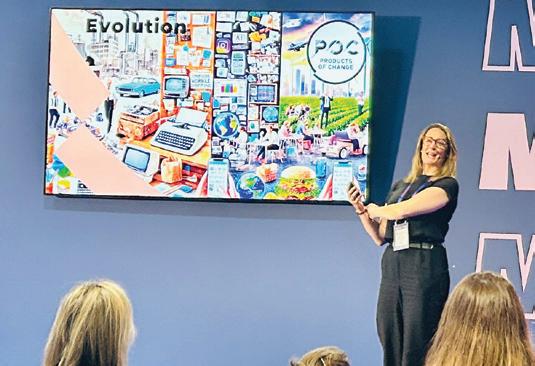
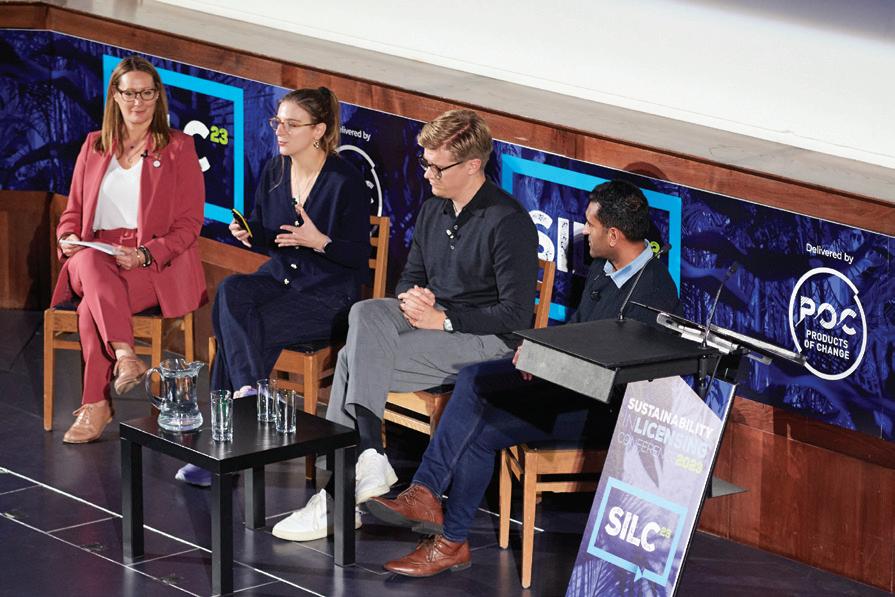
Helena announcing the beginning of the Maturity Index initiative at the POC Conference (SiLC) 2023, alongside
Credit: POC.
LEFT:
Jelena Stosic, Kids Industries; Jakob Max Hamann, The Lego Group; and Rikesh Desai, Netflix.
A ROUNDUP OF SOME OF THE NEW MEMBERS THAT HAVE RECENTLY JOINED THE POC COMMUNITY
The POC Community is evergrowing, in size but also in variety, demonstrating the widening ambition and urgency of businesses to undertake sustainable change, for both the future of their business and for the future of our planet. We are delighted to share a selection of some of the companies who have recently become POC Members and an insight into some of the fantastic things they are already up to.
Media business
Willsow joins Products of Change to flip the script on sustainable print
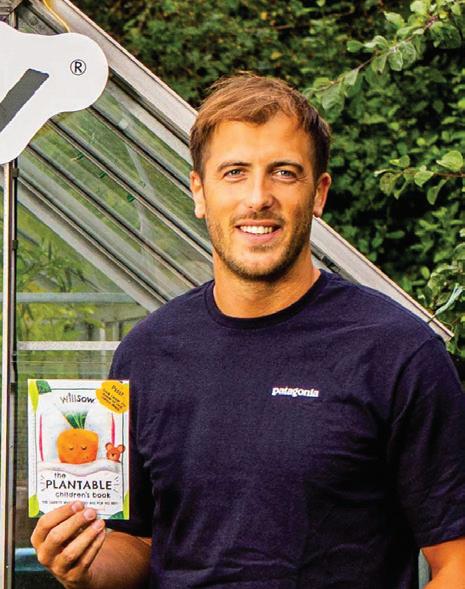
Fourth-generation printer and founder of Willsow, Tom Willday, has joined the Products of Change community with a mission to breathe new life into a heritage industry – and shake things up along the way.
At the helm of Willday Printers, Tom is celebrating 80 years of family craftsmanship while leading the way in sustainable print innovation. Alongside the print business, he founded Willsow – creators of the world’s first plantable children’s book – which has since grown into a range of plantable cards, calendars, and even Christmas crackers. More recently, Tom launched SeedPrint, a white-label seed paper printing company, and established the UK’s first new paper mill in more than 75 years, turning wastepaper into new sheets of seed paper designed to grow wildflowers and vegetables.
For Tom, sustainability is far more than a buzzword. “Businesses naturally take from the world –whether that’s resources, energy, or materials – and I believe it’s our duty to find ways of giving back to nature,” he explains. “Sustainability isn’t just about minimising harm, it’s about creating a positive impact.”
That philosophy runs through everything Willsow does, from helping children engage with the outdoors by planting their own books, to rethinking how businesses communicate through marketing materials that leave a lasting, natural legacy.
“Publishing eats paper and energy, but that’s also the opportunity,” says Tom.
“Why not flip the script and make print that gives back?” he adds.
Education also sits at the heart of Willsow’s mission. Tom believes in inspiring children to learn about nature in a hands-on way – without screens – so they understand where food comes from, why recycling matters, and how they can play a role in protecting the planet. By joining Products of Change, Tom hopes to connect with like-minded changemakers, spark ideas that lead to action, and collaborate on projects that prove sustainability can be bold, creative, and fun. “I’ve always wanted to be part of the Products of Change gang,” he says. “This is about more than talking – it’s about rolling up sleeves, laughing along the way, and planting a few million flowers together.”
With big ambitions ahead –including new products set to launch next year – Willsow’s journey shows how even the most traditional of industries can reimagine its role for a sustainable future. And as Tom puts it,
“Sustainability should be something you can touch, plant, and watch grow.”
joins POC with its own sustainable licensing mission
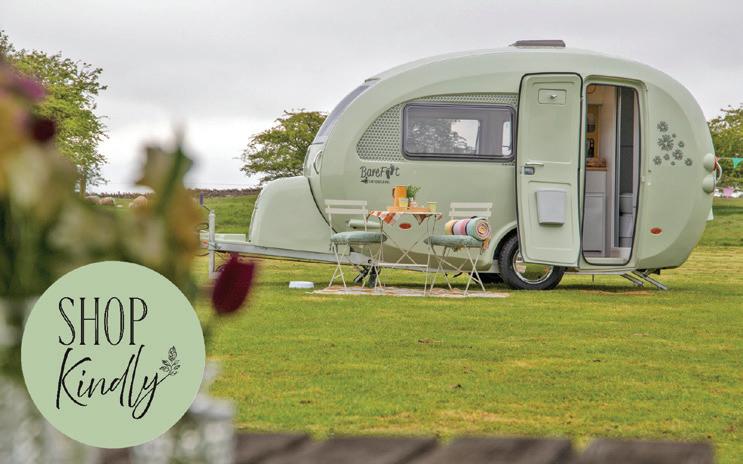
Hearst has just launched its brand-new Shop Kindly initiative for eco-conscious licensed product creation and brand messaging. Hearst itself has set and achieved a number of impressive sustainability targets, such as 100% renewable electricity, PEFC certified paper, and a validated SBTi near term goal building to a 65% emission reduction by 2030. With its experienced ESG team, a roster of iconic and trusted media brands, from Esquire and Cosmopolitan to Country Living and Good Housekeeping, and a highly engaged audience that has an especial interest in sustainability – 85% of Hearst audiences are more likely to shop for brands with sustainable values versus the national average of 57% – Hearst is now turning its attention to sustainable products and marketing them accordingly, without greenwashing. Its goal is to turn the power
of Hearst and its 20 million audience towards sustainability
This initiative is beginning with Hearst’s licensing contingent, a programme which has seen the company become an eight-time B&LLAs award winner, opening the doors to new partnerships with brands that have some sustainability commitments and want to ensure that the efforts they are putting in are communicated in the right way to customers.
Speaking to Angharad Moynes, licensing sales director at Hearst UK, she says that while this initiative was created and is beginning with Hearst licensing, “Shop Kindly is a dedicated strand of our overall licensing programme, through which we’re aiming to create more sustainable product ranges with our partners. We are however striving to be conscious of sustainable practices in all our licensing partnerships.”
ABOVE: Tom Willday, founder of Willsow, holding one of its plantable books. Credit: Willsow.
This means working with partners on product design, offering their expert team’s insight on sustainability implications along the way. However, Angharad comments that “we offer the most value to potential licensing partners in the storytelling and the messaging,” as, after all, Hearst is a media company at heart, with a portfolio of successful and long-standing consumer titles, that regularly feature themes of sustainability, and an especial focus on celebrating the outdoors and working with small businesses.
Hearst has now joined the Products of Change Community as it develops this initiative
Angharad explains: “We’re working closely with our in-house sustainability team on future licensing initiatives at Hearst, and we felt that becoming a POC member was the perfect way to learn from licensing industry experts, amplify our ESG credentials and connect with potential partners through the
amazing POC network.”
We at POC are looking forward to working alongside Hearst and watching its fantastic initiative develop to support its partners to create responsible and sustainable product.
Modern Cloth Nappies: Pioneering sustainable parenting
In a world where convenience often trumps sustainability, Modern Cloth Nappies is redefining what it means to be a conscious parent. Founded by Stephanie Revill, a passionate entrepreneur driven by her own journey through postnatal anxiety and a desire to create a better future for her children, Modern Cloth Nappies is on a mission to make sustainable choices accessible, practical, and appealing.
Stephanie’s story began with a simple frustration: the lack of reusable nappies that truly worked for her family. Drawing on her background in business management and product design, she set out to create a nappy that combined the ease of disposables with the environmental benefits of reusables. The result is a thoughtfully designed product that grows with the child, using adjustable sizing and durable materials to ensure longevity and comfort.
At the heart of Modern Cloth Nappies’ innovation is a commitment to sustainability without compromise. The nappies feature
a waterproof polyurethane outer shell and a core made from hemp and cotton – materials chosen for their absorbency, durability, and lower environmental impact. “It was essential to balance sustainability with functionality,” Stephanie explains. “There’s no point in a nappy being eco-friendly if it doesn’t work for parents and babies.”
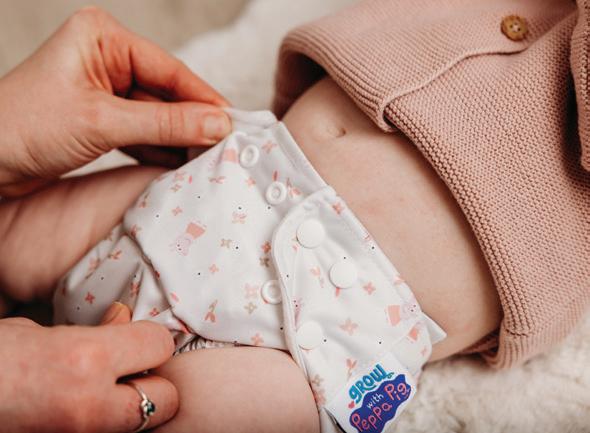
Modern Cloth Nappies’ recent collaboration with POC Member, Hasbro’s Peppa Pig marks a significant milestone, bringing beloved characters to the world of sustainable parenting. The Peppa Pig range, launched in May, is designed to be both tasteful and ontrend, helping to normalise reusable nappies and make them more appealing to a new generation of families. “If something looks good, you’re more likely to use it,” Stephanie notes.
Despite the challenges of being a small, single-run business, Modern Cloth Nappies is making waves – recently launching with John Lewis and soon to be available on Amazon. Stephanie’s vision extends beyond product sales; she’s committed to education, community, and making sustainable choices mainstream.
Modern Cloth Nappies is inspiring parents to make small changes that add up to a big difference for the planet and future generations.
Wool Pots takes root with Products of Change to tackle plastic in horticulture
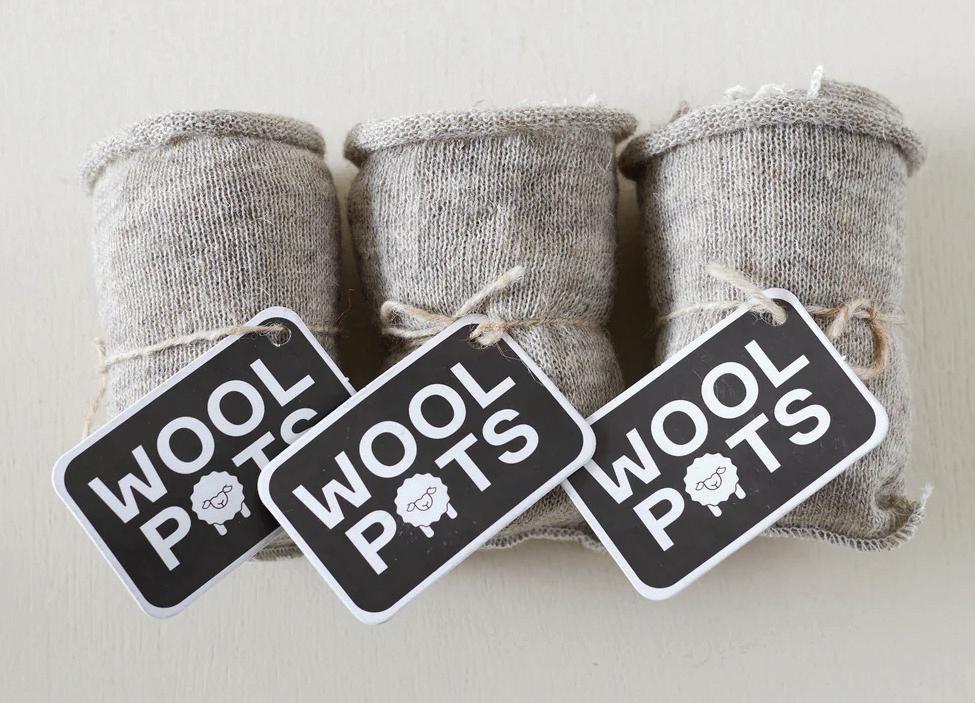
Every year in the UK, more than 500 million plastic plant pots are sent to landfill – a staggering number that sparked the creation of Wool Pots, a zero-waste, plastic-free alternative made from British wool.
The idea was born when founder, Graham Saltmarsh, discovered the scale of plastic waste in horticulture while speaking with a farmer friend who revealed that her wool had so little value she often burned it. Determined to find a solution, and drawing on years of product development experience, Graham set out to design a pot that not only replaced plastic but brought additional benefits to growers.
After much trial and error, Wool Pots was launched
– and have since been put through rigorous trials by POC Member, the Eden Project, which confirmed the pots do far more than simply avoid waste. Wool’s natural properties mean the pots:
■ Allow more oxygen to the roots, encouraging stronger, healthier plant growth.
■ Act as a natural slug and snail deterrent.
■ Provide insulation, protecting plants from temperature extremes.
■ Retain moisture, reducing water use by 20–30%.
■ Encourage air pruning – meaning when roots reach the base, plants are ready to be planted straight into the ground with no root disturbance. It’s a simple but powerful innovation – one that’s already making measurable impact.
At the end of last year, Wool Pots sold its one millionth unit. That milestone represents one million fewer plastic pots produced, used, and discarded, alongside a significant reduction in carbon emissions. As Lancaster University research highlights, for every 1kg of plastic produced, 6kg of CO₂
LEFT: Modern Cloth Nappies’ Peppa Pig collection. Credit: Modern Cloth Nappies.
BELOW: Wool Pots are striving to replace single-use plastic plant pots. Credit: Wool Pots.
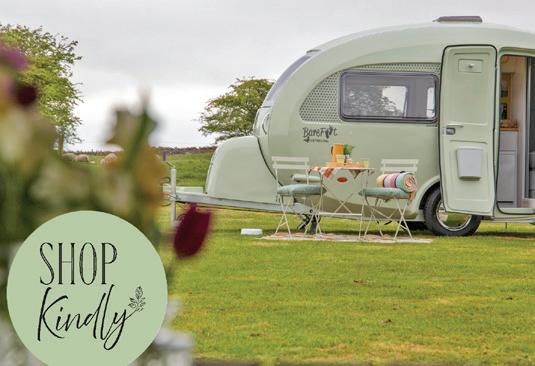
ABOVE: Heart’s Shop Kindly initiative has included its partnership with Barefoot Caravans. Credit: Hearst.
is created – making Wool Pots’ substitution a meaningful contribution to lowering horticulture’s footprint.
For Graham, sustainability is about cutting through the noise of greenwashing and proving genuine alternatives. “If you say your product is sustainable then it really has to be,” he explains. That means both reducing single-use plastics and supporting British farmers by creating new value for a traditional resource. By joining Products of Change, Wool Pots hopes to connect
with like-minded changemakers, share knowledge, and inspire wider adoption of its innovation across horticulture. Large-scale growing trials are set to begin next year, with ambitions for Wool Pots to be stocked by major retailers – preventing plastic from entering the chain at all.
As Graham puts it: “If you can grow healthier plants, save water, cut costs, and avoid plastic, it just makes sense. First the UK, then the world.”
Pink Sheep: Championing ethical licensing in fashion
In an industry often challenged by fast fashion and fleeting trends, Pink Sheep is a beacon for ethical licensing and sustainable brand growth. Founded in 2019 by Katie McKenna, a seasoned fashion industry professional with over a decade of experience, Pink Sheep was born from a desire to support independent brands committed to making a positive impact – both environmentally and socially.
Katie’s journey began in London as a trend forecasting analyst before moving into design and, eventually, public relations. Witnessing firsthand the struggles of ethical brands to gain visibility in a market dominated by larger, less sustainable players, she recognised a gap: many PR agencies lacked the expertise or passion to help these brands thrive on a budget. Pink Sheep was created to fill that void, offering tailored PR, marketing, and brand strategy services to independent, sustainable, and ethical fashion brands.
At the heart of Pink Sheep’s approach is a commitment to transparency and honest communication. “It’s not about judging companies for not being perfect,” Katie explains, “but about supporting those making an effort and being open to doing better.” This ethos guides Pink Sheep’s client selection, ensuring alignment of values and a shared vision for positive change.
Navigating the complexities of greenwashing is
a central challenge. Pink Sheep works closely with clients to clarify what sustainability means in practice, helping brands articulate their efforts authentically and avoid misleading claims. The agency also acts as a connector, directing clients to educational resources and industry experts to further their sustainability journey.
Pink Sheep’s impact is tangible: by securing high-profile placements for small brands –such as a Vogue feature for a petite-focused sustainable label – the agency helps level the playing field, enabling ethical brands to compete with industry giants. The ultimate goal is to foster a more inclusive, accessible, and responsible fashion ecosystem, where doing good and doing well go hand in hand.
As the industry continues to evolve, Pink Sheep remains dedicated to empowering brands that prioritise people and planet, proving that ethical licensing and sustainable growth are not just possible, but essential for the future of fashion.
StudioCanal joins Products of Change to embed sustainability into licensing
StudioCanal Kids & Family, home to the beloved Paddington brand, has joined the POC community as part of its mission to create quality, responsible products with lasting value.
Leading the charge is Sissel Henno, head of global licensing, sales and retail, who oversees licensing activities across all categories – from publishing and FMCG to videogames and experiential – alongside management of the Paddington flagship store at Paddington Station.
For Sissel, sustainability is about being intentional at every step. “Sustainability to me means creating quality products that are made in a thoughtful, responsible way,” she explains. “It’s about being mindful in our sourcing and licensing activities, always looking for opportunities to reduce environmental impact while ensuring long-lasting value.”
The company has already taken significant strides. Its licensing programme has been overhauled to reduce the number of
SKUs, minimising waste and improving efficiency. Best-in-class partners are carefully selected to ensure shared sustainability values, with natural materials prioritised over plastic. Where plastic is required, it is recycled and never single use.
Within retail, the Paddington flagship store has transitioned all apparel to GOTS-certified organic cotton, OEKO-TEX compliant, and PETA-approved.
Joining Products of Change represents the next step in StudioCanal’s sustainability journey. “POC offers great support to educate our teams and help us focus on the most urgent priorities,” says Sissel. “This will lay the foundation for us to formalise our licensing processes around sustainability and allows us to track and improve on key metrics.”
The ambition is clear: eliminate single-use plastic across licensed products, reduce carbon emissions, and create a supply chain that makes a measurable difference. This aligns with the wider CSR goals of StudioCanal’s parent company Canal+, underlining a group-wide commitment to lowering environmental impact.
Sissel recognises the challenges, but also the opportunities. “Sustainability can be daunting, but the solution is to break it into manageable challenges with clear timelines,” she reflects. “There is so much innovation happening with new materials and processes. Companies that lean into sustainability will not only help the planet, but also deliver real value to consumers, retailers, licensees, and licensors alike.”
RIGHT: POC’s advisor, Andrea Green (left), with Pink Sheep’s Katie McKenna. Credit: POC.
ABOVE: StudioCanal’s Paddington and Wild Deodorant. Credit: StudioCanal.
MEET YOUR NEW ADDITIONS TO THE POC AMBASSADOR TEAM
Products of Change has been fortunate to welcome two fantastic new ambassadors into its fold this year.
Meet them below with a Q&A into their invaluable experience and ambitions for championing sustainability and the POC ethos through their work.
Louise Lindquist POC Ambassador for Brand Agents
Tell me a bit about yourself – a short bio of your career and what you do
At the start of my career in licensing, I initially joined an agency with the intention of working just for the summer, but I quickly discovered a genuine passion for the industry. Since then, I’ve built a diverse career across various licensing roles. Today, I’m proud to be part of WildBrain CPLG, where I serve as a key account director, based in Sweden, working across our extensive portfolio of brands.
Why have you joined the POC ambassadors?
Four years ago, I earned a diploma in Business Sustainability Management from Cambridge University, which deepened my commitment to integrating sustainability into the licensing space. I’m passionate about growing as a coaching leader and am dedicated to making a positive impact within the industry.
I’ve been following Products of Change for many years and have always admired the work the community does to drive real, lasting change. It is truly inspiring. So, when the opportunity to get involved came up, it was an enthusiastic and immediate ‘YES!’
Why is it important sustainability is championed in brand agencies?
Fans care about where the products they buy come from, and brands are increasingly focused on what their IP stands for. As licensors, partners, agencies, and storytellers, we have a powerful opportunity to shape culture in ways that reflect these values. It’s about building a business with lasting impact – one that’s better for people and better for the planet.
Why is sustainability important to you?
The way we create, share, and license entertainment is evolving – and that’s a positive shift.
Sustainability goes beyond environmental concerns; it’s about building a licensing ecosystem that is ethical, forward-thinking, and built to endure.
What do you hope to achieve in this role?
I hope to inspire others by spotlighting the vital work Products of Change is doing, while actively contributing to purposeful transformation across the industry.
Marina Narishkin POC Ambassador for France
Tell me a bit about yourself – a short bio of your career and what you do
After studying in seven countries, I started my career in public relations, then at 27 accepted the management of Copyright Promotions Licensing Group France and helped grow the company internationally with my colleagues. After redesigning the IPs, structure and strategy of TF1 Licensing, I joined the oldest European independent animation studio, Millimages, to head up TV production, distribution, TV sales, digital divisions, ecommerce, the Chinese office and the 15 agents across the world with a fantastic team of people.
Why is sustainability important to you?
I think the first time I was aware of caring for our planet, was as a small child living in Holland on a lake, with the animals we saved each year from the ice, sailing since I was five and parents who knew what living without electricity and water was like.
The Earth will survive us. If we don’t make changes to our lifestyles, animals and humans will suffer. Millions of people will be confronted with viruses, natural catastrophes and poverty. I believe we can avoid this if we work together and make change.
Why are you joining POC?
I met Helena. Max Publishing’s Ian Hyder was witness and supportive of our first passionate discussions about sustainability, change and the lack of information, ideas and support in our industry. The movement POC is spearheading is fantastic. The industry is ready and willing. I can’t imagine anyone not adhering and simply, I’d like to use my network for good and help out.
What is your opinion on where French business is at/ headed with sustainability?
There is a latent positive attitude which is a good start but to my knowledge, the French business is very government, legal and rule driven. POC brings a more realistic answer to sharing ways of improvement between experts and partners to becoming a more sustainable industry. And it’s just much more fun to address these subjects as a team, with support. Finding answers together and celebrating advancements together.
How do you think your regional support could help drive POC’s mission in France?
I hope POC brings answers and support, and reasons to gather the French licensing industries, media, sports and entertainment companies together to find solutions for a better way of producing and manufacturing, in line with POC’s mission statement. As the saying goes “Where there’s a will there’s a way”; and I really believe the French are willing.
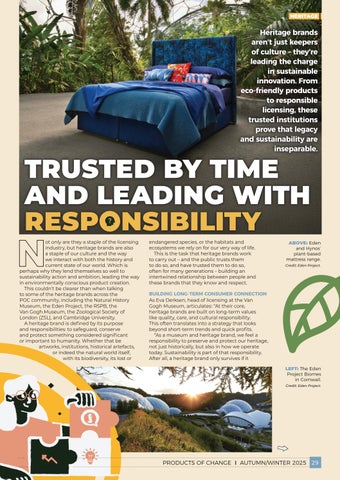
Heritage brands aren’t just keepers of culture – they’re leading the charge in sustainable innovation. From eco-friendly products to responsible licensing, these trusted institutions prove that legacy and sustainability are inseparable.
TRUSTED BY TIME AND LEADING WITH RESPONSIBILITY
Not only are they a staple of the licensing industry, but heritage brands are also a staple of our culture and the way we interact with both the history and current state of our world. Which is perhaps why they lend themselves so well to sustainability action and ambition, leading the way in environmentally conscious product creation.
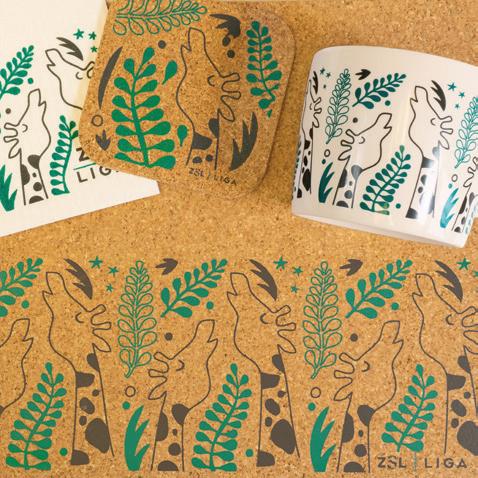
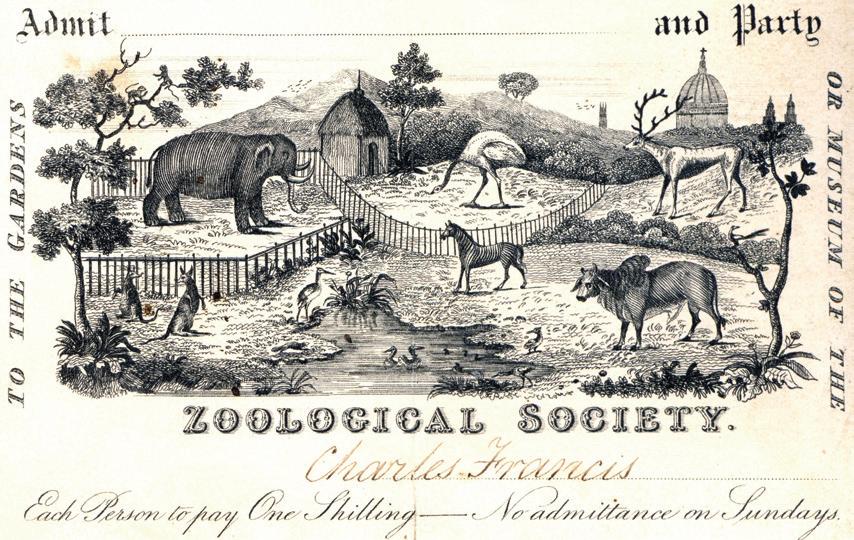
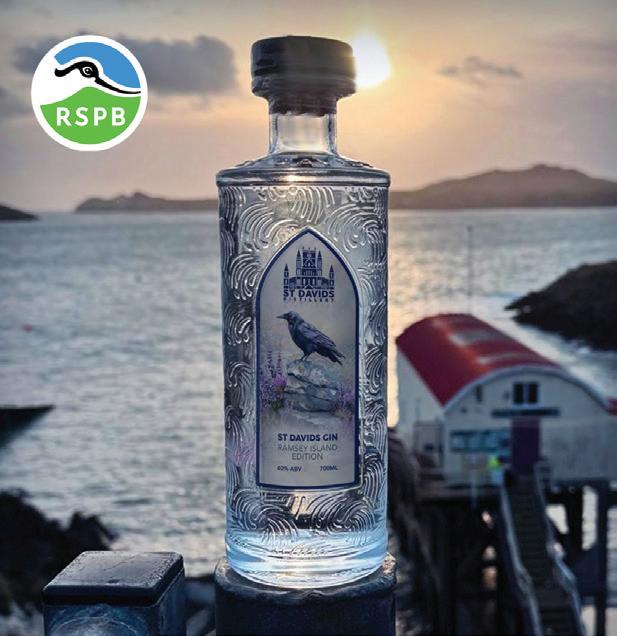
This couldn’t be clearer than when talking to some of the heritage brands across the POC community, including the Natural History Museum, the Eden Project, the RSPB, the Van Gogh Museum, the Zoological Society of London (ZSL), and Cambridge University.
A heritage brand is defined by its purpose and responsibilities: to safeguard, conserve and protect something considered significant or important to humanity. Whether that be artworks, institutions, historical artefacts, or indeed the natural world itself, with its biodiversity, its lost or
endangered species, or the habitats and ecosystems we rely on for our very way of life.
This is the task that heritage brands work to carry out – and the public trusts them to do so, and have trusted them to do so, often for many generations – building an intertwined relationship between people and these brands that they know and respect.
BUILDING LONG-TERM CONSUMER CONNECTION
As Eva Derksen, head of licensing at the Van Gogh Museum, articulates: “At their core, heritage brands are built on long-term values like quality, care, and cultural responsibility. This often translates into a strategy that looks beyond short-term trends and quick profits.
“As a museum and heritage brand, we feel a responsibility to preserve and protect our heritage, not just historically, but also in how we operate today. Sustainability is part of that responsibility. After all, a heritage brand only survives if it
ABOVE: Eden and Hynos’ plant-based mattress range.
Credit: Eden Project.
LEFT: The Eden Project Biomes in Cornwall.
Credit: Eden Project.
ABOVE: The Natural History Museum’s partnership with Dunelm produces an increasing number of Conscious Choice products.
Credit: Natural History Museum.
ABOVE
RIGHT: The Natural History Museum’s historic building and gardens.
Credit: Natural History Museum.
RIGHT: ZSL’s new product range with responsible design brand, Liga.
Credit: ZSL.
RIGHT: A historical ticket to London Zoo.
Credit: ZSL
remains relevant and responsible over time.”
This longevity creates trust, and therefore a level of expectation that a heritage brand is going to be making the right choices, which, for many, means more sustainable choices; they are expected to lead by example.
“We, and a lot of the heritage brands, are part of society; they are a part of the UK. They’ve been around forever, and people trust them. They know what they’re about,” says Freddie Hack, sustainability manager for RSPB.
This reputation that is created by and for heritage brands is an opportunity for them to communicate in meaningful ways with their consumers. “[Our] legacy gives us a strong platform to engage people – particularly families and children – with stories that matter,” adds Abbie Taylor, brand licensing manager at ZSL. Longevity and legacy are essential to heritage brands, something which ZSL is particularly aware of as it approaches its 200-year anniversary in 2026.
ETHOS MEETS PRODUCT
Licensing has the potential to expand this legacy and relationship with the consumer further with the products that they create, growing their reach to new audiences. As a result, every heritage brand we spoke to has implemented, or is implementing sustainability requirements and guidelines for their licensees and partners to adhere to.
For example, the RSPB’s partnership with Gibson Games, another POC Member, to create jigsaws, which were finalists in the Sustainable product award at the 2025 Licensing Awards. Due, at least in part, to the RSPB’s recyclable packaging policy and sourcing requirements, Gibsons developed paper jigsaw bags and packaging, eliminating single-use plastic from its products, in addition to moving the production of said paper packaging to the UK.
This is also exemplified so well in the Eden Project’s licensing programme, with the creation of its homewares range with Pure Table Top, resulting in the first ever digital product passport (DPP) in homewares, and another industry first with Hypnos Beds to create mattresses made from 15 plantbased materials, many found in Eden’s Biomes.
“The launch of Pure Table Top’s
responsibly sourced ceramics or Hypnos’ plant-based mattress range are strong examples of how licensing can push industries forward – while encouraging positive shifts in consumer behaviour,” comments Tracey Smith, commercial partnerships and licensing manager at the Eden Project.
The opportunity for a licensing partnership to be sustainabilityorientated is even more prevalent with new projects. Curating Cambridge, the licensing division of the University of Cambridge has recently begun its Polar Museum licensing programme.
Hannah Aspey, head of brand licensing for Curating Cambridge, explains that when beginning this programme, it was clear that sustainability had to be deeply fundamental to the choices that were made, in line with what the brand represents.
For this licence, Cambridge “requires all licensing partners to demonstrate strong environmental credentials in their business practices, manufacturing, and material choices. A similar sustainability-led approach is now in development for the Cambridge University Botanic Garden,” says Hannah.
The Polar Museum has now launched its first licensed product: a 2026 calendar with Flame Tree, featuring images capturing moments from the Polar expeditions of Captain Robert Falcon Scott and Sir Ernest Shackleton. The calendar is plastic-free and printed with soy-based inks on recycled FSC sourced paper stock.
A TOUCHPOINT FOR STORY AND ACTION
One of the key reasons any brand licenses is to spread its storytelling ability, and this is even more true when it comes to heritage brands and sustainable product licensing – the storytelling opportunity is everything, from the brand’s mission to the teachings it wants to share. Take the Van Gogh Museum’s partnership with sustainable and ethical fragrance company, Floral Street, which uses nature and flowers as inspiration for all its fragrances.
“What makes this partnership meaningful is the connection to Van Gogh himself, who had a deep admiration for nature. As he once wrote in one of his letters, which we preserve at the museum, ‘If you truly love nature, you will find beauty everywhere.’ This shared respect for the natural world creates a strong and authentic foundation for our collaboration where values, creativity, and purpose come together. This is always the number one condition when starting a partnership: the storytelling has to be authentic and needs to match with our values,” comments Eva. For this partnership, the storytelling is all about the creativity, using Van Gogh’s art in a creative way by
transforming it into beautiful – and sustainable – perfumes, while also aligning so closely to the way in which ingredients and materials are sourced and the environmental impact it has.
Storytelling can also come in the form of education, particularly of the consumer – the way brands can share their story through their products and inform consumers of what sustainable product creation and responsible practices can look like.
Tracey articulates this: “Every licensed product is designed to be more than just a transaction – it’s a touchpoint for storytelling and a catalyst for positive action. By placing regenerative seeds in the hands of gardeners, offering recycled glassware for homes, or providing compostable coffee pods for kitchens, Eden demonstrates that sustainable choices are possible, accessible, and joyful. These products extend the Eden experience beyond Cornwall, carrying the mission into people’s everyday lives and inspiring them to act as advocates for the planet.”
BEING THE BEST MEANS EXPECTING THE BEST
This also goes both ways in that these heritage brands are having sustainability expectations placed on them by their customers. “Sustainability credentials are increasingly important to our audience; they want to support brands that reflect their values,” says Abbie. And if they are attending something like ZSL’s London or Whipsnade Zoos, they are more likely to hold such values due to the very theme of conservation that ZSL represents.
“This demand is influencing retailers and licensees to seek partnerships with conservationdriven organisations like ZSL. By working with us, they not only meet consumer expectations but also contribute to real-world impact,” comments Abbie. ZSL is committed to working with partners who are serious about making progress, and wants to support them on that journey, which it does through its Sustainable Business Advisory Service.
than clean,” adds Freddie, so they ensure that the licensees these brands work with and the products they create are always made with sustainability in mind. It can be a challenge “ensuring that due diligence is supported by sufficient evidence and that agreed sustainability standards are consistently met
For a heritage brand, that motivation to do good, and do so sustainably, is so deeply intertwined in its story and image, the partnerships it creates are of utmost importance, which is why due diligence with its licensees is paramount. “[We ensure] that sustainability is raised and discussed early in all conversations with potential partners,” says Maxine Lister, head of licensing at the Natural History Museum, which corresponds with the factory audits, certifications, and environmental policies required by each heritage brand we spoke to.
“We have to be cleaner
across all licensees.
“With partners of varying sizes and capabilities, maintaining consistency and transparency can be complex,” Hannah comments.
Another challenge, like with almost every sector which has any thought towards sustainability, is, of course, price, “especially now as the cost of living is still a significant decision in consumer spending. Retailers of course always have to look at how costs impact their buying decisions which can of course determine how much sustainable product is on shelves,” says Maxine. However, Maxine also adds that consumers are often willing to pay a bit more for a product from a heritage brand as they perceive them to be virtuous and trustworthy brands with sustainable commitments.
“Therefore, embedding more sustainable practises into the process, which usually increase costs, is more achievable.”
Heritage brands have this marvellous opportunity to create a product that aligns with their message of conservation, longevity, and responsibility. Therefore, sustainability should naturally go hand in hand, enabling these brands to innovate and really explore the possibilities of sustainability in licensing. This provides the rest of the licensing industry with a point of proof and inspiration to look to when on its journey to improve the sustainability of their products. Heritage brands prove that sustainability can add value, enhance storytelling and consumer trust, resulting in exciting partnerships and new products that lead the industry forward. ■
ABOVE: Floral Street’s fragrance inspired by Van Gogh’s ‘Almond Blossom’.
Credit: Van Gogh Museum.
LEFT: Van Gogh’s ‘Sunflowers’ rendered in LEGO in recent licensed project.
Credit: Van Gogh Museum.
LEFT: Curating Cambridge’s Polar Museum calendar from Flame Tree.
Credit: Curating Cambridge.
LEFT: Cambridge’s licensed children’s books with Nosy Crow.
Credit: Curating Cambridge.
BELOW LEFT: RSPB has licensed games and jigsaws with Gibsons.
Credit: RSPB.
LEFT: Ramsey Island gin made from botanicals collected by RSPB wardens as part of their habitat conservation work.
Credit: RSPB
With environmental legislation a frontof-mind topic for every business right now, and a point of concern for many, POC is continuing to serve our role to guide the industry through the latest updates and what they mean for your business, as well as the very real opportunities the regulations provide.
YOUR LOOK TO LEGISLATION
POC is taking that one step further beyond our usual legislation magazine feature, with our POC Legislation Lookbook, created in partnership with Informa and the Global Licensing Group for this year’s Brand Licensing Europe (BLE). The Lookbook will provide you with a full overview of the key regulations already shaping the brand and licensing industry and help you prepare with confidence. It will be distributed to attendees at BLE, at the POC stand D254, and during POC’s talks at the Networking Hub (see page 11 for more detail on this), and will be made available digitally online as part of our Resources Area.
In the meantime, as readers of the POC magazine, here is a glimpse into the vital information and insights it contains.
The pace of environmental lawmaking is accelerating worldwide – and Europe is setting much of the agenda with its European Green Deal. This has four key pillars or objectives:
1. Climate neutrality by 2050
of its licensees – affecting both brand equity and the stability of royalty income streams.
For the EU, new legislation such as the Corporate Sustainability Reporting Directive (CSRD) and the Corporate Sustainability Due Diligence Directive (CSDDD) introduces double materiality (explained below).
Meanwhile for UK and global markets, while these specific EU laws don’t apply, brand owners are still expected to report against international standards like the ISSB IFRS S1/S2 and SASB frameworks, focusing on financially material sustainability risks and opportunities.
DIGGING INTO EU CSRD AND CSDDD
CSRD (Corporate Sustainability Reporting Directive) requires double materiality, meaning brands must report both the financial effects of sustainability issues on the company in addition to the company’s impact on people and the environment across the entire value chain, including licensed products.
2. Clean energy and energy efficiency
3. Circular economy and sustainable industry
4. Biodiversity and farm-to-form transition
BUSINESS MODEL CONTEXT FOR BRAND OWNERS
This is creating a cascade of new regulations hitting the consumer goods sector which have an impact on both the brand owners and the licensed manufacturers.
Many brand owners earn a significant share of their revenue by licensing their intellectual property (IP) to third-party manufacturers and distributors.
Although the brand owner doesn’t manufacture these licensed products directly, its financial performance is tightly linked to the sustainability practices
CSDDD (Corporate Sustainability Due Dilligence Directive) obliges companies to identify, prevent, and remedy adverse humanrights and environmental impacts throughout their operations and supply chain.
These both apply to large EU entities and non-EU companies with >€150 million EU turnover plus an EU branch/subsidiary.
KEY GLOBAL REQUIREMENTS OUTSIDE EUROPE United Kingdom
Sustainability Disclosure Requirements (SDR) is rolling out 2025-2026, in alignment with ISSB IFRS S1/S2. Mandatory TCFD reporting already applies to large listed and >500-employee companies, focusing on climate-related financial risk (single materiality). International (global baseline)
For the wider global outlook, ISSB IFRS S1 requires general sustainability disclosures on financial material ESG risks/opportunities. ISSB IFRS S2 covers climate-specific disclosures (governance,
ABOVE: POC delivers legislative updates at global events to keep the industry informed. Credit: POC.
strategy, risk management, metrics and targets, including Scope 1-3 emissions). These standards are rapidly being adopted or referenced in major markets including the UK, Canada, Japan, Australia, Singapore, Hong Kong, Brazil and others.
United States
SEC Climate Disclosure Rule (2025 start) requires large public companies to report climate-related financial risks, GHG emissions (Scope 1 and 2 mandatory, Scope 3 if material), and climate-related targets. Many companies also follow SASB industry standards for investor-focused ESG reporting. Highlights from Asia-Pacific
■ Japan: TCFD-aligned disclosures mandatory for listed firms.
■ Australia: Mandatory climate reporting aligned with ISSB proposed from FY2024/25.
■ China and Hong Kong: Exchanges requiring TCFD/ISSB-aligned ESG disclosures for listed companies.
TAKEAWAYS FOR LICENSORS
Royalty income and IP value are financially exposed to licensee ESG performance. Even if headquartered outside the EU, European sales or licensees can bring the brand under CSRD/CSDDD. Investors and partners worldwide increasingly expect ISSBaligned reporting, so aligning with IFRS S1/S2 and SASB is becoming a de-facto global requirement.
There are certain environmental risk areas, specific to brand owners engaging in licensing, however, there are also numerous opportunities; sustainability trends can enhance enterprise value through a brand’s licensing business:
■ Sustainable innovation: Expanding licensing into circular and low-carbon product categories.
■ Premium positioning: Building brand equity through ESG-aligned collaborations (e.g., sustainable fashion, reduced impact packaged consumer goods).
■ Market access: Partnering with retailers prioritising sustainable product lines.
LEGISLATION AND ITS IMPACT ON LICENSED MANUFACTURERS
Licensed manufacturers (licensees) now face some of the heaviest regulatory pressure under the EU Ecodesign for Sustainable Products Regulation (ESPR). The regulation reaches far beyond product design and pushes responsibility across the entire lifecycle.
Designing out waste: Products must be conceived for durability, reuse, repair, and recyclability – minimising waste from the start and tackling issues like dead stock.
End-of-life financing: Producers are financially responsible for the systems that enable products to be collected, reused, or recycled at end of life.
Full supply-chain transparency: Digital Product Passports (DPPs) will capture and
share detailed information on materials, repairability, and environmental impact.
For licensed manufacturers this means integrating circular design, robust data systems, and transparent sourcing into every contract and production process, while budgeting for the ongoing costs of end-of-life management.
THE EU GREEN DEAL FOR LICENSEES
The Eco-Design for Sustainable Products Regulation (ESPR) was adopted on 18 July 2024 and sets a framework for eco-design requirements for products placed on the EU market to enhance product circularity. ESPR mandates each product to have a unique data carrier that links to a digital product passport, helping consumers make more informed, eco-conscious choices.
For Extended Producer Responsibility (EPR), it is being implemented in both the UK and EU, which aim to ensure that producers cover the full costs of managing the waste from their packaging. See the table for how these compare.
Meanwhile, the European Union Deforestation Regulation (EUDR) enforcement has just been delayed again to December 2026 (after being pushed back previously from 2024) and aims to minimise the EU’s contribution to deforestation and forest degradation worldwide. It is applicable to cattle, cocoa, coffee, palm oil, rubber, soya, and wood.
TO CONCLUDE
With the surge of legislation coming over the next few years, our main recommendation at POC is to start collecting your data now. Work closely with your supply chain to track the volume, type and weight of materials you buy and sell.
Many companies are already saving significant costs by streamlining packaging, avoiding unnecessary taxes, and cutting waste, using these savings to produce with lower impact materials.
At POC, we will continue to share and showcase these success stories on our platform to inspire and guide the industry. ■
THE POC
ECOSYSTEM
The Products of Change ecosystem is ever growing, with connections and partnerships across many segments of the consumer product and licensing industry.
As we know, collaboration and crossindustry connection is the best facilitator of innovation and the most effective route to widespread, meaningful action. In this section we take you through a selection of our current partnerships and the work we are achieving to drive sustainable change, together.
FSPA | Bringing sports and play on the journey
POC’s partnership with the Federation of Sports and Play Associations (FSPA) enables FSPA’s members to utilise the educational resources and information platform that Products of Change provides.
This collaboration opens up the plethora of resources and support that Products of Change offers to FSPA members, and FSPA members join the POC Community, providing new voices and influence across the sports and play sector, as we build the steps forward for every sector of our industry.
Nick Palmer, FSPA CEO, comments on the partnership, “We are well aware that there are many challenges that businesses are facing with the current landscape, and there is more to come that our members may not even know about. We want to make sure that they are equipped ahead of upcoming regulations.”
FSPA and POC host regular meetings for its members throughout the year, ensuring the sports and play associations are informed and supported throughout the partnership.
The FSPA provides this support to its members to enable them to be at the forefront of sustainable change. “We don’t want to just be paying lip service to this important topic,” said Nick Palmer, “We want to be the forerunners.”
South Pole | Forging Scope 3 methodology for the licensing industry
In 2024, the world’s leading carbon asset developer and climate consultancy, South Pole, began its partnership with POC to develop the first globally applicable guidance for calculating greenhouse gas (GHG) emissions in the brand licensing industry.
Until now, emissions from licensed products were a major blind spot in Scope 3 reporting. This new methodology provides a consistent, credible, and practical framework for brand owners to close that gap, strengthen their climate strategies, and prepare for disclosure requirements.
The methodology was co-created with POC members and tested through workshops and surveys beginning in May 2024. Over 30 global brands contributed, including LEGO, Disney, BBC, Paramount, Microsoft, Unilever, and Manchester City Football Club, ensuring the framework is both practical and robust. In October 2024, it was formally submitted to the Greenhouse Gas Protocol World Resources Institute for consideration in their revised Scope 3 Standard, expected in 2026.
“South Pole partnered with POC because of its unique convening power and collaborative approach, making it the ideal partner to codevelop a methodology designed for the industry, by the industry. Looking ahead, this partnership has the potential to do more than fill today’s reporting gaps,” comments Himani Gupta, head of climate advisory, North America, South Pole.
Together, South Pole and POC are laying the foundation for consistent industry standards, and preparing companies for future reporting requirements. By working with POC, South Pole is helping accelerate meaningful change in a sector with global reach and influence.
Informa/GLG | Bringing sustainability to the global licensing stage
The Global Licensing Group (GLG) creates international tradeshows, media and educational programmes, advancing the business of licensing and brand collaboration. It has been a strategic partner of Products of Change since the beginning.
GLG’s partnership with POC is aiding the group towards its sustainability goals as part of its FasterForward programme, by bringing the conversation of sustainability to both of its major trade shows, Licensing Expo and Brand Licensing Europe. This partnership expands the reach of sustainable education and opportunities to a wider audience.
For Licensing Expo earlier this year, POC and GLG jointly published the Pathway to Sustainability Whitepaper, which showcases how to set business ambitions through the structure of the United Nations’ 17 Sustainable Development Goals.
“The strategic partnership between Informa Markets and Products of Change has been instrumental in advancing sustainability within the licensing industry,” shares Anna Clarke, senior vice president of the Global Licensing Group at Informa Markets. “This initiative with POC is about transforming how we operate and how we can support our entire ecosystem to embrace more sustainable practices. We recognise our responsibility as industry leaders to not only reduce our own environmental impact but to accelerate positive change and inspire new methods of environmental excellence throughout the licensing community.”
ESCP | Driving standards in supply chains
The Ethical Supply Chain Program (ESCP) was founded by the International Council of Toy Industries (ICTI) to champion social integrity and supply chain sustainability across all sectors. POC has made ESCP its social partner to enable members of both organisations to access a broader range of tools that will help them to create products in more ethical and environmentally friendly ways. The two not-for-profits offer complementary resources that cover the different
Wastebuster | Innovating a circular toy stream
Wastebuster’s innovative toy recycling initiative has been developed alongside Products of Change and a number of UK children’s publishers and toy companies.
The initiative enables children and parents to trade in their unwanted or broken hard plastic toys for book vouchers. With the support of Mattel, Tesco, and Products of Change, Recycle to Read is being rolled out in 166 Tesco stores in the UK, and supports a significant cross-sector international research programme into the application of the principles of the circular economy to the toy industry.
An estimated 370 million toys were sold in the UK in 2018 but currently there are limited options for recycling broken plastic toys in the UK, and globally. The objective is to reduce the number of toys sent to landfill or incineration (without energy recovery), to engage and inform children about the science behind innovative plastic recycling, and to inspire the adoption of responsible consumer behaviours with compelling characters and entertainment for social change.
A key part of the Recycle to Read programme is to undertake research into finding new solutions for hard to recycle items, to maximise resource recovery and to showcase cutting-edge recycling technologies.
aspects of social and sustainability compliance, such as POC’s Maturity Index Tool that assesses sustainable practices within product development and operations.
Carmel Giblin, CEO and president at the Ethical Supply Chain Program, said: “ESCP and Products of Change have a shared mission; working together brings a wealth of different expertise to our members. We’re both striving to positively impact global supply chains by helping
Running Point | Placing people who care
As Products for Change continues to grow its ecosystem to drive sustainable development and support the industry on its sustainability journey, it’s become clear how vital it is to help companies build the right teams to lead this change.
So POC has partnered with Running Point Recruitment to develop the capabilities of POC to provide for the industry.
“We started Running Point because recruitment was starting to feel like speed dating gone rogue. Too rushed, too many disappearing acts, and not nearly enough heart. It felt transactional when it should have been transformational. So, we set out to do things differently. More care. More connection. More of what actually matters,” says Hallane.
Running Point Recruitment focuses on real partnerships with companies, to understand a business’ culture and ambitions so that it can introduce people who are immediately on the same page.
businesses operate more ethically and sustainably. Working together enables us to support more organisations in achieving these objectives.”
The two organisations also support businesses with data collection and reporting to help members meet social and environmental regulations – at a national and international level.
Hallane Hill, founder of Running Point Recruitment comments: “We’re excited to be teaming up with Products of Change. We both believe business has the power to shape a better and more thoughtful future that puts people and planet at the heart of the conversation. Products of Change helps organisations bring sustainability and purpose into focus. Running Point makes sure they have the right people to turn big ideas into action.
“At Running Point, we stand by integrity, transparency and long-term thinking. We look beyond the CV to build meaningful connections between forward thinking brands and people who care about doing brilliant work that truly matters. Together we’re creating positive change that lasts.”