CIVIELE TECHNIEK
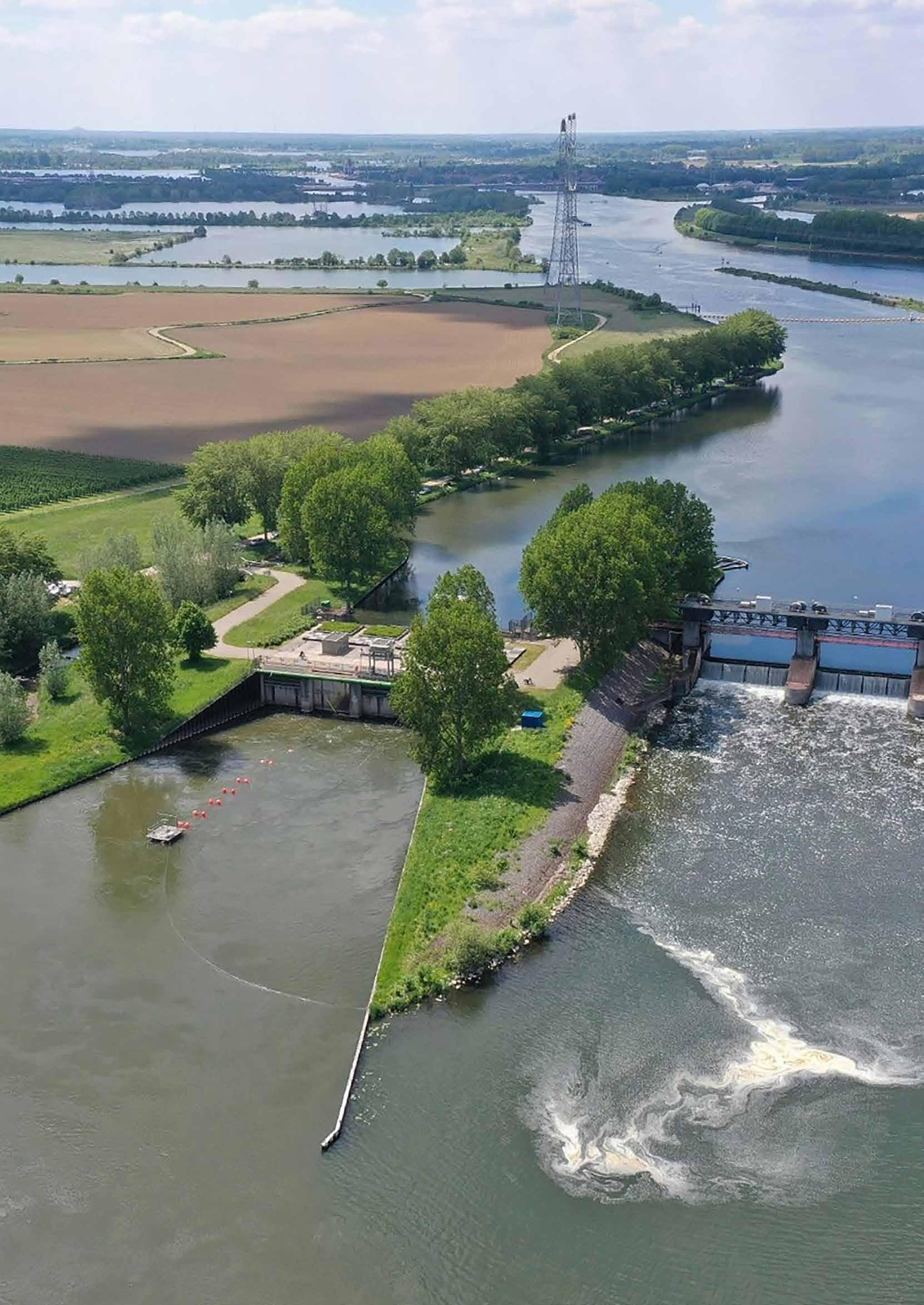
EMISSIELOZE METINGEN & INZICHT IN WATERKWALITEIT
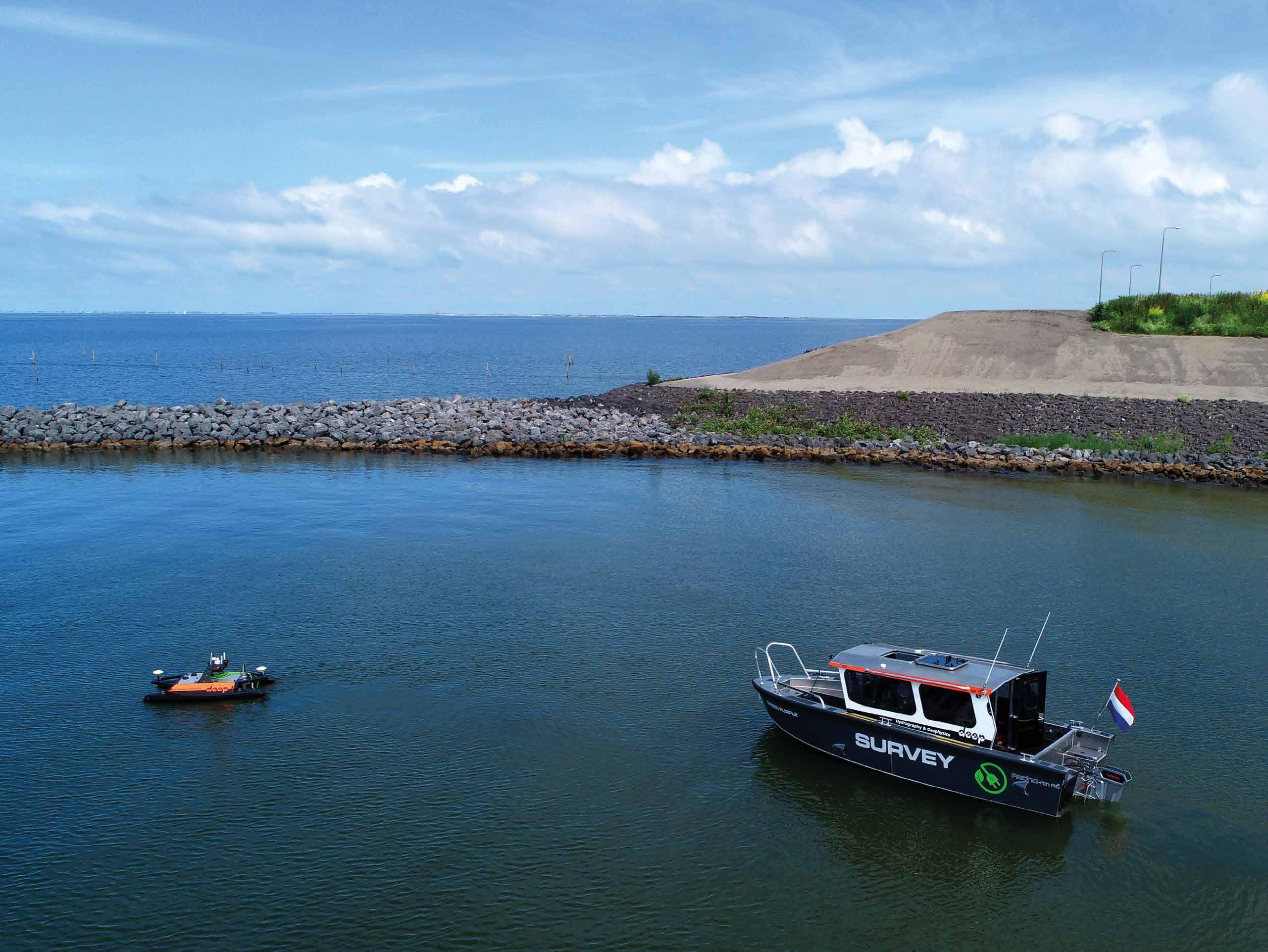
EMISSIELOZE METINGEN.
Met Deep Green biedt Deep BV emissieloze hydrografische & geofysische metingen aan. Met onze vloot van elektrische vaartuigen, aangevuld met drones en een elektrisch wagenpark, helpen we aannemers, waterschappen, gemeenten en andere partijen om de impact van CO2 op (bouw)projecten te verminderen. Dit levert een positieve bijdrage aan de EMVI en duurzaamheidscriteria bij aanbestedingen.
INZICHT IN WATERKWALITEIT.
Schoon water is essentieel voor mens en milieu. Daarom is inzicht in waterkwaliteit van groot belang. Met Deep Green zetten wij onze ervaring, vaartuigen en meetapparatuur in om hieraan een bijdrage te leveren. Met onze elektrische vaartuigen voeren we vlakdekkende waterkwaliteitmetingen
MEER WETEN?
+31 (0)20 634 3676 green@deepbv.nl
www.deepbv.nl/deep-green
Deep Green is onder andere in te zetten voor:
~ Binnenwateren
~ Rivieren en kanalen
~ Bouwkuipen
~ (Jacht)havens
Benieuwd wat Deep Green voor jouw project kan betekenen? Neem gerust contact met ons op. uit, waarmee we lokale verschillen in kwaliteit kunnen meten. Zo kunnen we helpen om de bron van vervuilingen op te sporen, wat onze opdrachtgevers helpt om te voldoen aan de Kaderrichtlijn Water (KRW).

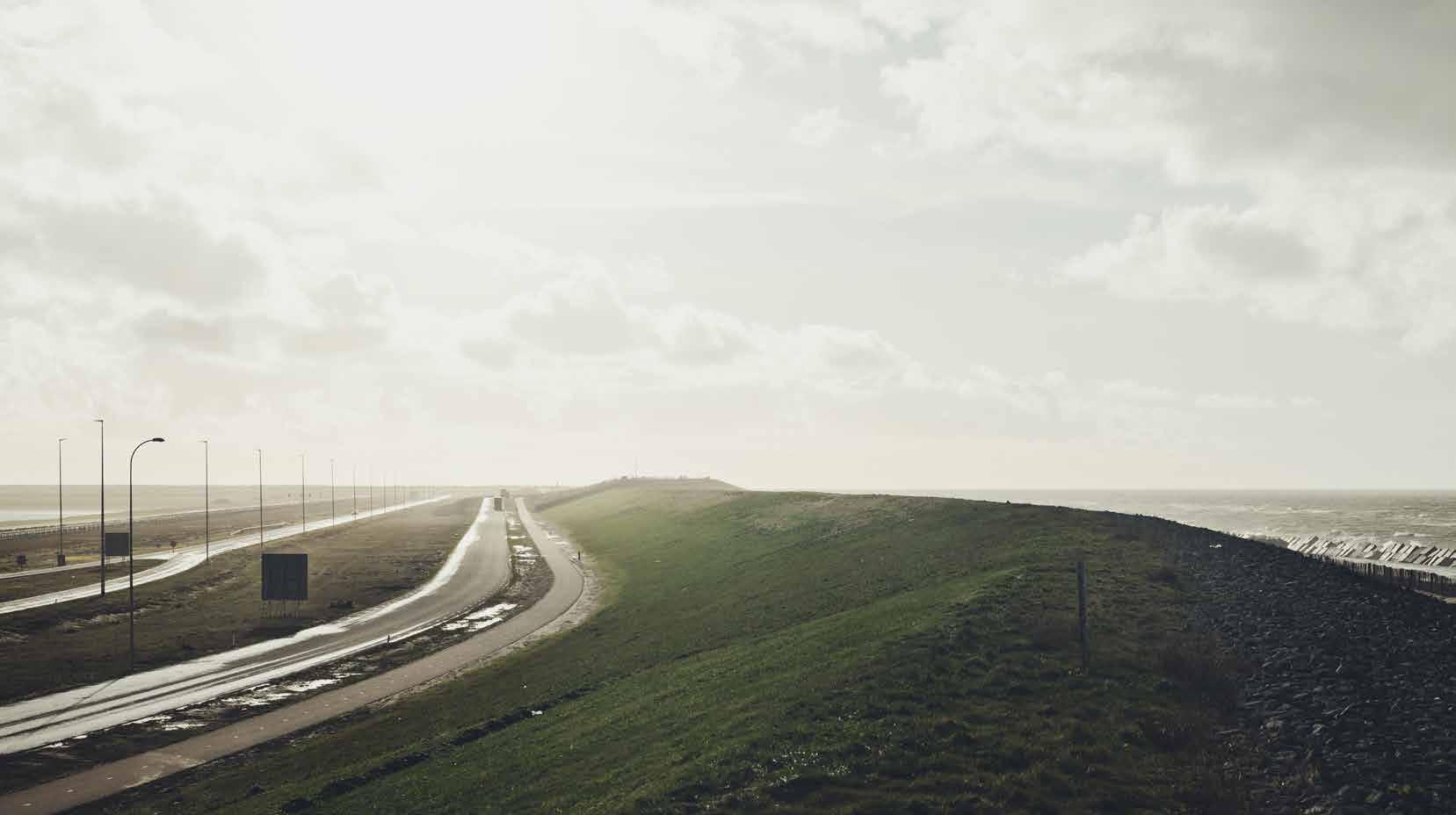
De waterbouwsector opereert midden in de samenleving en staat voor grote uitdagingen. Naast de gevolgen van klimaatverandering en zeespiegelstijging worden we geconfronteerd met geopolitieke spanningen, digitale dreigingen en de noodzaak om transport- en energienetwerken veilig en robuust te houden. Onze dijken, kunstwerken, havens en kabels op de Noordzee vormen de ruggengraat van onze economie en maatschappij - en vragen om veerkracht en weerbaarheid.
Waterbouwers zouden geen waterbouwers zijn als ze niet in oplossingen denken. Hoe wapenen we ons waterbeheer tegen cyberaanvallen? Hoe waarborgen we de continuïteit van de haven van Rotterdam? De Waterbouwdag 2025 heeft daarom als thema ‘weerbare waterbouw!’
De dag laat zien hoe onze sector bijdraagt aan een veilige en toekomstbestendige samenleving.
In deze speciale editie van Civiele Techniek vindt u onder meer bijdragen over veiligheid in geopolitiek perspectief (admiraal Ben Bekkering), de Eems Energy terminal die in recordtijd is neergezet en cyber security in de waterbouw.
Dit jaar wordt ook de Jan Agemaprijs uitgereikt tijdens de waterbouwdag. Een prijs die eens in de vijf jaar wordt gegeven voor het beste en meest innovatieve waterbouwkundige project dat daadwerkelijk gerealiseerd is. De projecten tonen de veelzijdigheid en innovatiekracht van de Nederlandse waterbouw in de periode 2020 - 2025. Tevens laten de inzendingen zien hoe stevig duurzaamheid inmiddels verankerd is in de waterbouw.
Speciaal woord van dank aan Didi te Gussinklo Ohmann, die als gastdagvoorzitter een belangrijke bijdrage levert aan de Waterbouwdag 2025. Didi is uitstekend bekend binnen de sector, vanuit haar jarenlange ervaring in binnen- en buitenland en haar huidige rol als Project Director Offshore Wind bij Van Oord. Naast techniek en organisatie heeft ze oog voor jong talent en de positie van vrouwen in de sector. Een bron van inspiratie derhalve; we zijn er trots op dat zij dit jaar deze rol wil invullen.
We wensen u veel leesplezier met deze Civiele Techniek Waterbouwdagspecial!
Bestuur Waterbouwdag
Stefan Aarninkhof
Bas Jonkman
Robert de Roos
Andrea Vollebregt
COLOFON
Civiele Techniek
Verschijning: zeven maal per jaar Onafhankelijk vaktijdschrift voor civieltechnische ingenieurs werkzaam in de grond-, weg- en waterbouw en verkeerstechniek. De redactie staat open voor bijdragen van vakgenoten. U kunt daartoe contact opnemen met de redactie.
Hoofdredactie
Gerard van Nifterik
SJP Uitgevers
Kalkhaven 53, 4201 BA Gorinchem tel. (0183) 66 08 08
e-mail: info@civieletechniek.net www.civieletechniek.net
Abonnementen
Abonnementsprijs Nederland (2024) € 100,90 (excl. BTW).
België: € 115,70
Overige landen Europa: € 149,70
Studenten aan de TU, HBO-techniek en MBO komen in aanmerking voor 65% korting. Te bestellen bij de uitgeverij.
Prijzen worden jaarlijks aangepast op basis van inflatiecorrectie.
Abonnementen worden automatisch verlengd, tenzij voor 1 november schriftelijk wordt opgezegd.
Advertenties
drs. Petra Schoonebeek SJP Uitgevers telefoon (0183) 66 08 08 e-mail: p.schoonebeek@civieletechniek.net
Niets uit deze uitgave mag worden verveelvoudigd en/of openbaar gemaakt door middel van herdruk, fotokopie, of op welke wijze dan ook zonder voorafgaande schriftelijke toestemming van de uitgever.
4 Oosterscheldekering
De Oosterscheldekering beschermt al sinds 1986 een groot deel van Zeeland tegen hoogwater. Na bijna 40 jaar gebruik is renovatie en vervanging van grote onderdelen van de kering nodig. In opdracht van Rijkswaterstaat voerde kennisinstituut Deltares daarom schaalmodelproeven uit om de hydrodynamische belastingen op afzonderlijke onderdelen van de Oosterscheldekering nauwkeurig in kaart te brengen.
De constructie van de diepzeekade bestaat uit een betonnen ontlastvloer (L-vorm) opgelegd op een combiwand aan de waterzijde en een dubbele rij vibropalen aan de landzijde. De horizontale verankering wordt voorzien met behulp van schroef-injectie (SI-) ankers. Tot slot is er een op palen gefundeerde achterkraanbaan gerealiseerd. Voorafgaand aan het project is een paalproef uitgevoerd met schroefinjectiepalen, vibropalen en prefab betonpalen. Tijdens het project is een bezwijkproef uitgevoerd op het toegepaste ankersysteem.
10
The Energy Transition has proven a paradigm shift in both the energy sectors, and shift in industrial developments. With ambitious targets for near carbon neutral societies, and the need to create a Climate Change future proof society, the stressors in societies are increased. The Netherlands, have a long history in successfully conquering the Seas, but now new target will lead us to rethink the way forwards.
11 EemsEnergyTerminal Energiezekerheid en weerbaarheid
Direct na de invasie van Rusland in de Oekraïne is Gasunie in gesprek gegaan met de minister van Klimaat en Energie over de mogelijkheden om infrastructuur aan te leggen ten behoeve van de import van LNG. In korte tijd zijn chartercontracten getekend voor twee FSRUs (floating storage and regasification units) en is begonnen met het ontwerp en bouw van de EemsEnergyTerminal (EET) in de Eemshaven.
12 Inzet van Nature-based Solutions met MANABAS COAST
De Noordzeeregio staat voor grote uitdagingen door klimaatverandering, zoals zeespiegelstijging, zware stormvloeden en kusterosie. Het MANABAS COAST-project werkt aan oplossingen door in te zetten op Nature-based Solutions (NbS). Dit zijn innovatieve maatregelen die de kracht van de natuur benutten om kustgebieden te beschermen en te versterken.
16 Golfremmende vooroever versterkt IJsselmeerdijk en natuur
De IJsselmeerdijk is de zwaarst belaste waterkering langs het IJsselmeer. Door de noordwestelijke oriëntatie krijgt de dijk bij stormen te maken met hoge waterstanden en krachtige golven. Tegelijkertijd beschermt de dijk een polder die vijf meter lager ligt dan het gemiddelde meerpeil. Door aangescherpte veiligheidsnormen en klimaatverandering voldoet de dijk niet langer aan de eisen. Waterschap Zuiderzeeland is daarom in het kader van het Hoogwaterbeschermingsprogramma gestart met een grootschalig en toekomstgericht versterkingsproject.
18 Waterbouwers uit heel het land werkten aan Julianakanaal
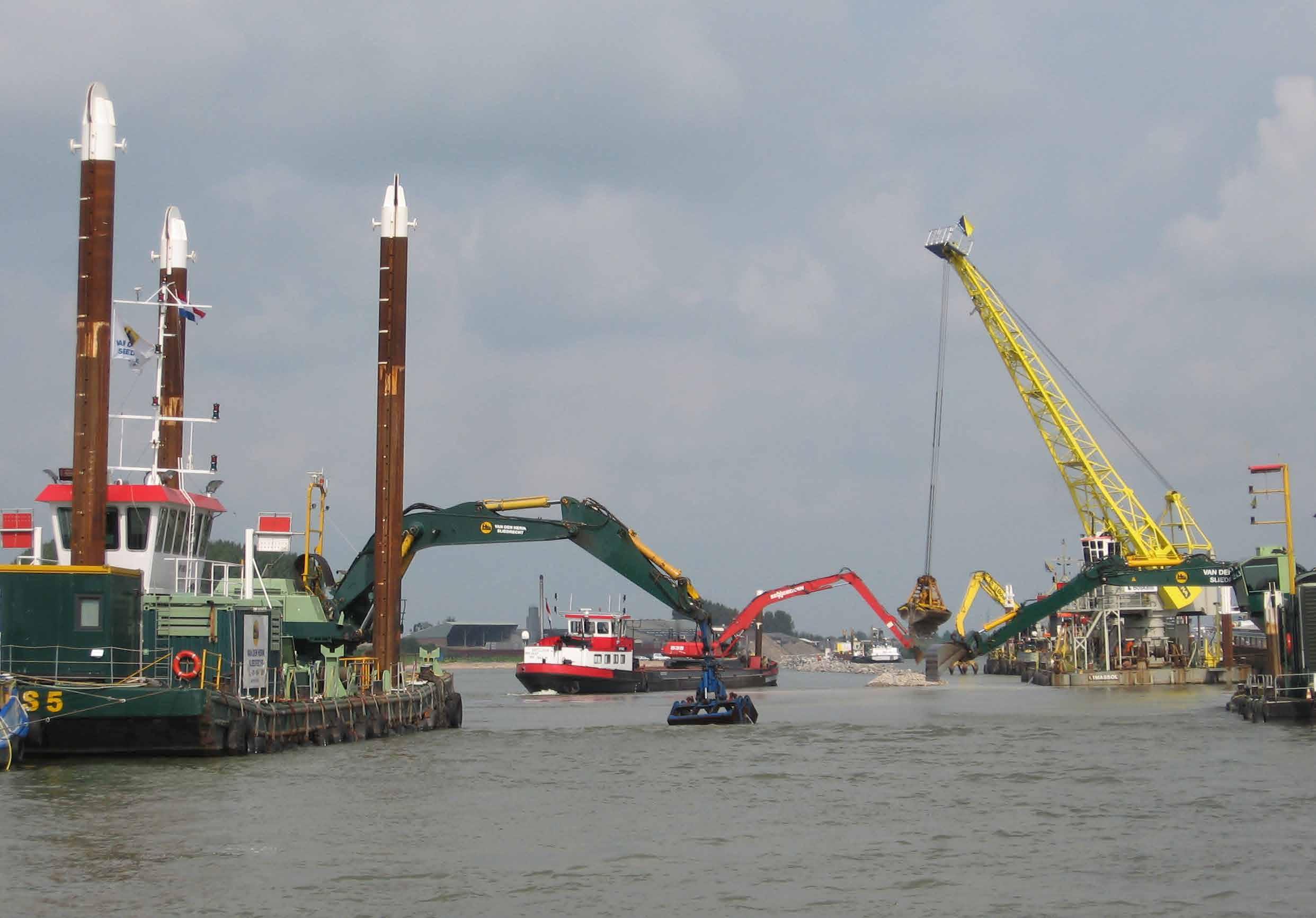
In Zuid-Limburg werkten Rijkswaterstaat en aannemer Van den HerikSliedrecht maandenlang aan de verruiming van het Julianakanaal. Het kanaal tussen Berg en Obbicht werd over een lengte van vier kilometer drooggelegd . Een bijzonder project met als grootste uitdagingen: tijd en omvang.
22 Werken aan de stuwen van de Maas is nooit af Zo’n honderd jaar geleden heeft Rijkswaterstaat op zeven locaties stuwen en sluizen gebouwd, zodat de Maas beter bevaarbaar werd. Dit was nodig om Nederland met schepen te kunnen voorzien van Limburgse steenkool. De stuwen zijn dus onze ‘grande dames’.
26 Klimaatverandering, water en veiligheid: Grimmige wereld
Twee onderwerpen halen voortdurend het nieuws: oorlogsgeweld en natuurgeweld. Meerdere oorlogen duren voort, ondanks afwisselend als historisch, vleiend of beschamend aangeduide toppen. Overstromingen, bosbranden en hittegolven veroorzaken wereldwijd enorme schade, steevast in verband gebracht met klimaatverandering. Het verband tussen klimaatverandering en conflict wordt echter zelden gelegd. Onterecht.
30 Noodmaatregelen bij dijkdoorbraken, casus BresDefender
Noodmaatregelen maken het mogelijk de dijk lokaal te versterken waar deze minder sterk is of waar de belasting hoger uitvalt dan verwacht. Nu de verwachting is dat de belasting op dijken door klimaatverandering toeneemt en tevens de geopolitieke situatie verandert, is het belangrijk om goed voorbereid te zijn op onverwachte situaties.
32 Duurzame energie is vrijheidsenergie
Nederland en Europa staan voor grote opgaven: we willen weerbaarder worden en op eigen benen leren staan, nu er oorlog op ons continent heerst. Landen gebruiken fossiele brandstoffen als drukmiddel. Wat gebeurt er als na Poetin ook Trump de gaskraan dichtdraait? Gelukkig zijn we hard aan het werk met de oplossing: schone, duurzame energie van eigen bodem.
34 Digitaal weerbare waterbouw
We worden steeds afhankelijker van de beschikbaarheid en het correct functioneren van computer-apparatuur, terwijl die afhankelijkheid een toenemend risiconiveau met zich meebrengt. Hoe kunnen we die risico’s beheersen?
36 Grote waterbouwkundige uitdaging
Vernieuwing sluiscomplex Weurt
De nieuwe zeesluis bij Terneuzen is dit voorjaar succesvol geopend. Voorlopig de laatste in een rij van grote nieuwe schutsluizen. We staan als Rijkswaterstaat nu voor een misschien wel grotere uitdaging: het op orde houden van alle infrastructuur die inmiddels voor een groot deel aan vernieuwing toe is. Welke keuzes maken we? Wanneer vervangen we wat met welke kwaliteit, prijs en risico? Hoe zorgen we dat we duurzaam renoveren en een groenere sluis of brug opleveren? Met welke klimaatscenario’s moeten we rekening houden en gelden ontwerpnormen ook voor renovaties? Hoe gaan we om met versnipperde informatie van ons areaal? Kortom: een grote uitdaging.
Elk jaar stelt de Vereniging van Waterbouwers de Waterbouwprijs ter beschikking aan studenten die afstuderen in de waterbouwkunde of een aanverwante studierichting aan een Technische Universiteit of Hogeschool. Met de Waterbouwprijs wil de Vereniging van Waterbouwers studenten stimuleren om binnen dit vakgebied af te studeren en zo de belangstelling voor de waterbouw te vergroten. De prijs biedt talentvolle
Naam Onderwerp
Universiteit
Arend Timmer Satellite Derived Bathymetry as Input for Wave Modelling at The Gambian West Coast UTwente
Cilia Boot Sustainable Development of Long Island - Singapore TU Delft
Daan Akerboom Stability of open geotextiles TU Delft
Jurren SnijdersBlok Characterizing the deformation of lumpy fills using micro-CT scanning TU Delft
Quinten Oostwegel Bank erosion hotspots in the Msimbazi River, Tanzania TU Delft
Danian Tams & Thijs van der Woude De invloed van kwelderbreedte op golfhoogtereductie Hogeschool Windesheim
Eline van Looij Betrouwbaarheid van ADM debietmetingen in droge perioden Haagsche Hogeschool
Finn van den Ende Klinkers van Bagger Hogeschool Rotterdam
Kerstynn Jones Modeling and Improving Dike Durability Hogeschool Zeeland
William Slobbe Toepassing van jute bij zink- en kraagstukken Hogeschool Rotterdam
Dion Jurriens Rendementsonderzoek project Rhederlaag
Dordrecht Academy *AD
studenten een podium aan het begin van hun carrière. De Vereniging van Waterbouwers beoogt met de Waterbouwprijs tevens een bijdrage te leveren aan het ontwikkelen van innovatieve oplossingen voor de maatschappelijke uitdagingen waar Nederland in deze tijd voor staat.
Om voor de Waterbouwprijs in aanmerking te komen, moet een afstudeerscriptie betrekking hebben op het ontwerpen en uitvoeren van waterbouwkundige projecten. Deze projecten dienen bij te dragen aan de waterveiligheid, het waterbeheer, de energievoorziening of de ontwikkeling van de natte infrastructuur –of aan een combinatie van deze thema’s.
Een meerwaarde is wanneer in het ontwerp en de uitvoering expliciet aandacht wordt besteed aan de eisen die de huidige maatschappij stelt aan duurzaamheid en de natuurlijke omgeving.
De jury heeft de afstudeerprojecten op de volgende vier pijlers beoordeeld: Innovativiteit, Praktische toepasbaarheid, Multidisciplinaire aanpak en Duurzaamheid
Links een overzicht van de genomineerden voor de Waterbouwprijs 2025.
De Vereniging van Waterbouwers is de werkgevers- en ondernemersorganisatie van aannemers en dienstverleners in de waterbouw. De vereniging vertegenwoordigt circa 100 lidbedrijven, die gezamenlijk zo’n 80 procent van het waterbouwvolume in Nederland realiseren.
De lidbedrijven zijn actief in binnen- en buitenland op terreinen zoals landwinning, baggerwerk, kust- en oeverwerk, constructieve waterbouw, havenontwikkeling, bodemsanering en gebiedsinrichting. De sector onderscheidt zich door zijn duurzame, kapitaalintensieve, innovatieve en internationale karakter.
Meer informatie: www.waterbouwers.nl
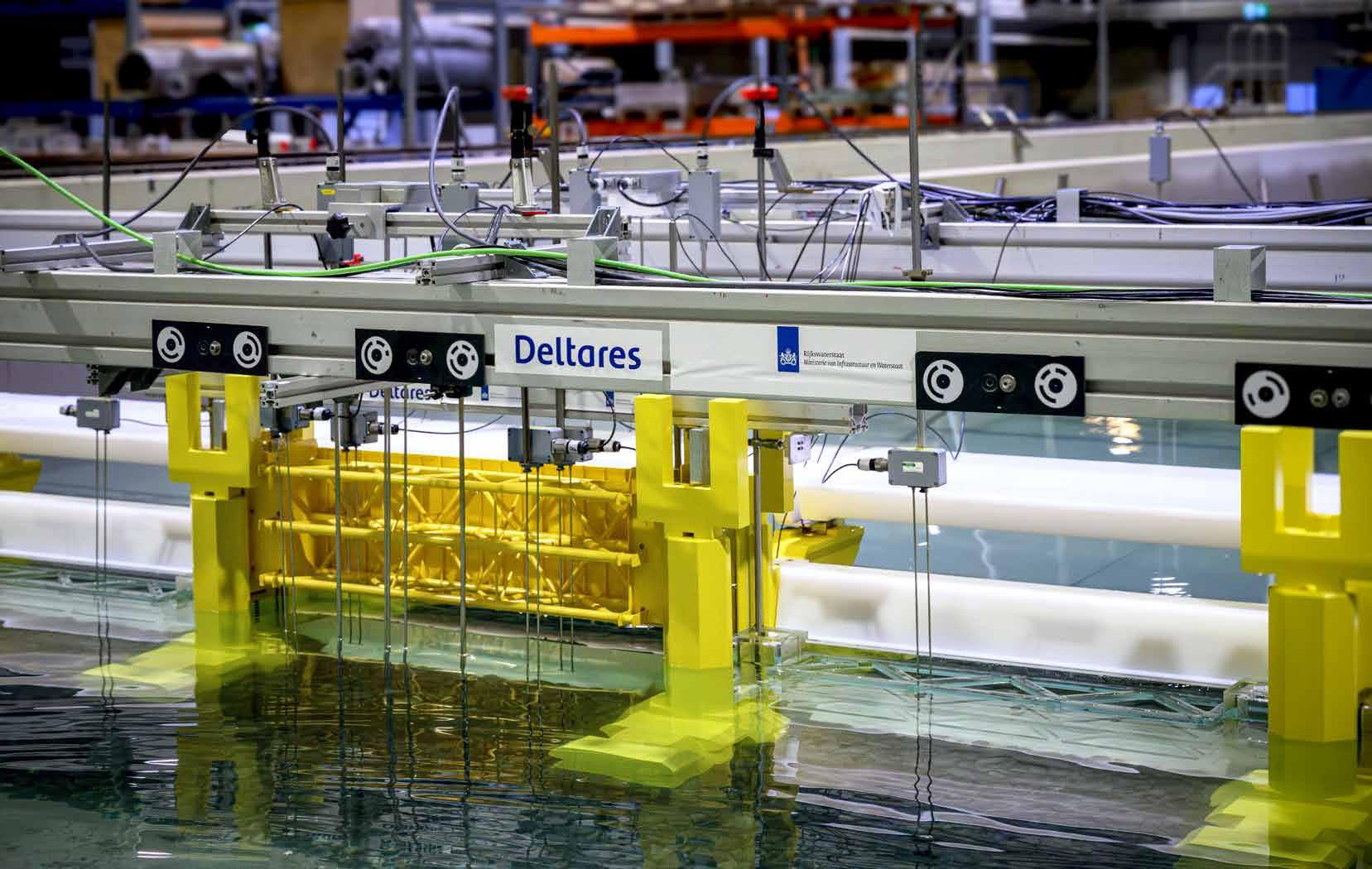
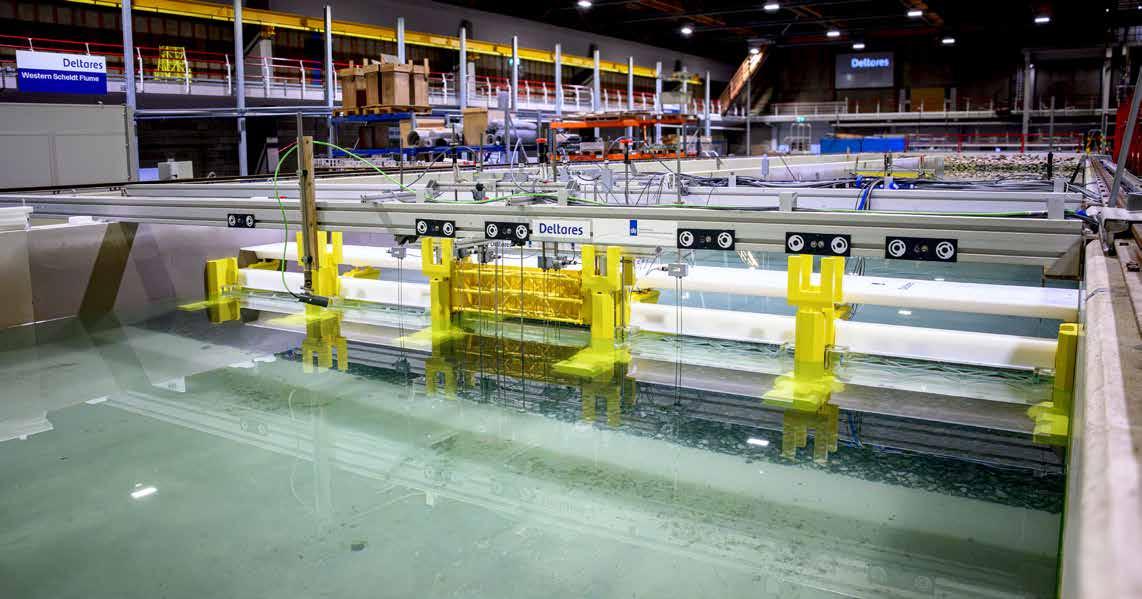
De Oosterscheldekering beschermt al sinds 1986 een groot deel van Zeeland tegen hoogwater. Gemiddeld één keer per jaar sluit de kering tijdens een zware storm. Na bijna 40 jaar gebruik is renovatie en vervanging van grote onderdelen van de kering nodig. Bovendien zijn de huidige inzichten over zeespiegelstijging heel anders dan men in de jaren ‘80 kon weten. In opdracht van Rijkswaterstaat voerde kennisinstituut Deltares daarom schaalmodelproeven uit om de hydrodynamische belastingen op afzonderlijke onderdelen van de Oosterscheldekering nauwkeurig in kaart te brengen.
Deltares en Rijkswaterstaat maken in dit onderzoek gebruik van de nieuwste technieken op het gebied van fysieke modeltesten, waaronder geavanceerdere golfmachines. De testresultaten maken het voor Rijkswaterstaat mogelijk om lopende en aankomende onderhoudswerkzaamheden te optimaliseren. Daarnaast worden de uitkomsten ingezet om uit te
werken hoe de kering in de toekomst zo goed mogelijk inzetbaar zal blijven.
Reverse-engineering
Voor het oorspronkelijke ontwerp van de Oosterscheldekering zijn veel modeltesten en numerieke berekeningen uitgevoerd. Voor dit unieke
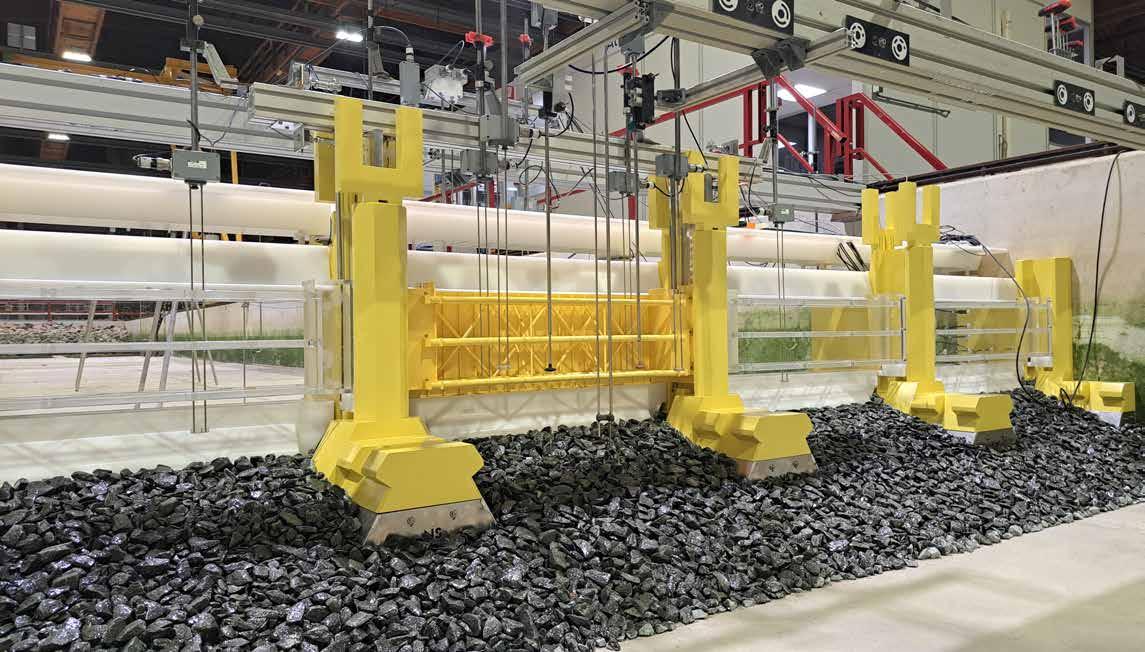
Overzichtsfoto opstelling hoogste schuifmaat
waterbouwkundige object zijn destijds nieuwe (reken-) technieken ontwikkeld, die ook nu nog worden ingezet, zoals bijvoorbeeld een spectrale beschrijving van golfkrachten inwerkend op de kering. Ondanks de ruime beschikbaarheid van informatie uit de ontwerpperiode, zijn er echter na 40 jaar ook nieuwe vragen over de belastingen en het ontwerp. Anders dan ten tijde van het ontwerpproces dienen er nu geen ontwerp-iteraties plaats te vinden maar gaat het om vragen als: wat kan de kering - zoals uiteindelijk gebouwd - aan? Met welke ontwerpbelastingen dient rekening te worden gehouden bij vervanging en renovatie? En op welk moment in de tijd dienen onderdelen te worden vervangen? Een soort reverse-engineering. De genoemde vragen beantwoorden begint bij het in detail vaststellen van de hydrodynamische krachten die inwerken op de verschillende keringsdelen.
Schaal 1:40
Voor het vaststellen van die krachten heeft Deltares in opdracht van Rijkswaterstaat een schaalmodel van een deel van de Oosterscheldekering ontworpen en gemaakt op schaal 1:40. Er zijn twee losse opstellingen gemaakt met elk vijf stroomopeningen: een set voor de laagste en een set voor de hoogste schuif. Het onderste deel van de modelpijlers is gemaakt van gezet aluminium en het meer complexe bovenste pijlerdeel is gemaakt in een 3D-printer, met 0,1 mm nauwkeurigheid. De centrale meetschuif is in detail nagemaakt in roestvrijstaal.
De andere schuiven, twee aan beide zijden van de centrale meetschuif, zijn aangemaakt in transparant kunststof en hebben een benaderde vorm.
Geavanceerde krachtsensoren in een stijf schaalmodel
In het schaalmodel zijn geavanceerde en nauwkeurige krachtsensoren ingezet om de krachten vanuit golven en stroming op de centrale meetschuif, de cilinderstangen, de bovenbalk en de verkeerskoker te meten.
De toegepaste krachtsensoren zijn met hun behuizing weggewerkt in de geometrie van de kering (schuif, pijlers) om zo de golven en stroming rondom de constructie niet te beïnvloeden.
Om de inwerkende hydrodynamische krachten zuiver te meten is een stijf model gemaakt. Dat betekent ook dat de onderdelen waar de krachten op worden gemeten net iets vrij moeten worden gehouden van andere keringsdelen, zodat alle krachten alleen via de sensoren kunnen worden afgedragen. De eis van voldoende stijfheid geldt voor de verschillende keringsdelen afzonderlijk, maar ook voor het zware meetframe dat rondom de centrale meetschuif is toegepast om die schuif geheel stijf op te kunnen nemen in het model. Dat meetframe valt in het schaalmodel weg binnen de pijlervorm.
Twee testseries
De opstelling voor de hoge en voor de lage schuif zijn achtereenvolgens ingezet bij verschillende waterstanden (tot aan +7 m NAP) en meerdere verticale schuifposities (gesloten, gedeeltelijk geopend, geheel geopend). Uit elke test zijn vanuit de meetopstelling ruim 100 signalen tegelijkertijd opgeslagen (golfhoogtes, stroomsnelheden, krachten, etc.). In een eerste serie tests zijn stroming en loodrecht inkomende golven bekeken in een smalle en lange meetfaciliteit (9 x 80 m). Een tweede
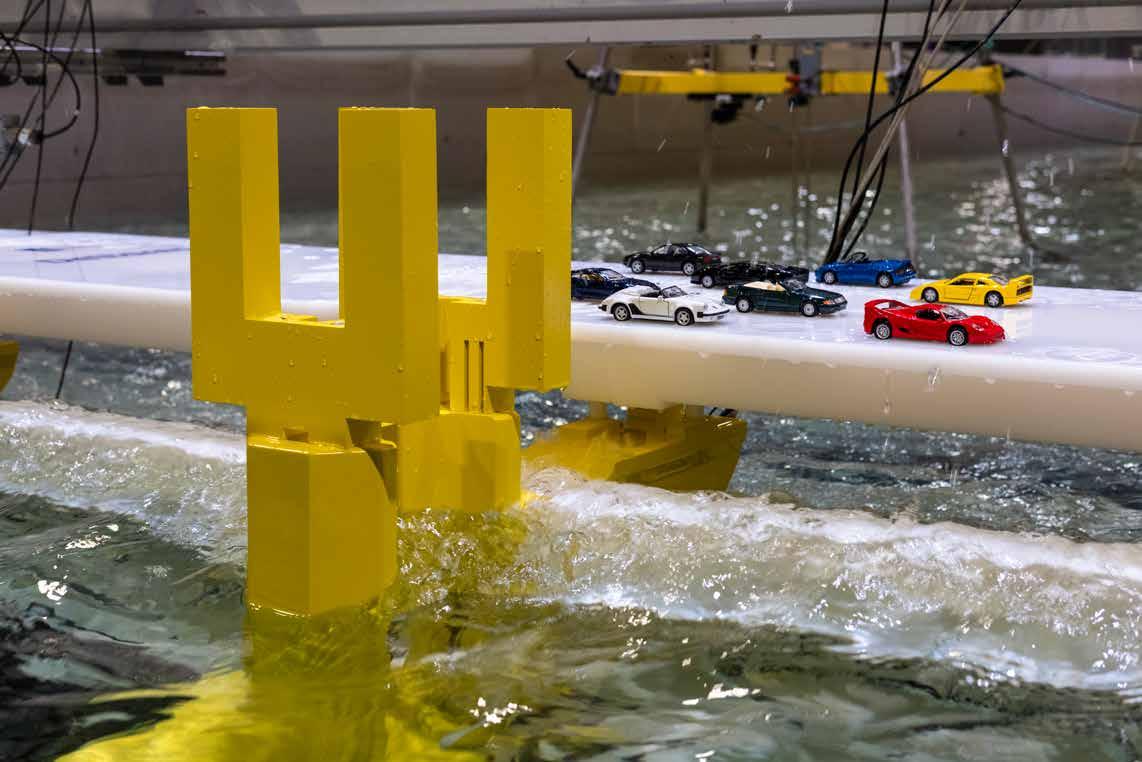
serie testen vond plaats in een grote golffaciliteit (50 x 50 m) en was gericht op andere inkomende golfhoeken en op golfrichtingsspreiding. Golfcondities met herhaaltijden tot aan 300.000 jaar zijn met de golfmachines in de meetfaciliteiten opgewekt. In totaal zijn meer dan 180 situaties opgenomen in een grote dataset.
Deskstudies
Op dit moment worden de deskstudies afgerond die na afloop van de modelmetingen zijn opgestart
en waarin de metingen worden geanalyseerd en geïnterpreteerd. Gemeten krachtswaarden op keringsdelen worden vergeleken met berekende uitkomsten, om zo rekentools te valideren. Die tools worden ingezet ter ondersteuning van het geplande groot onderhoud en om input te geven voor langetermijnvraagstukken over de inzet van de Oosterscheldekering in de toekomst.
Martijn de Jong, Deltares, Wilbert Huibregtse, Jesse Simonse, Rijkswaterstaat
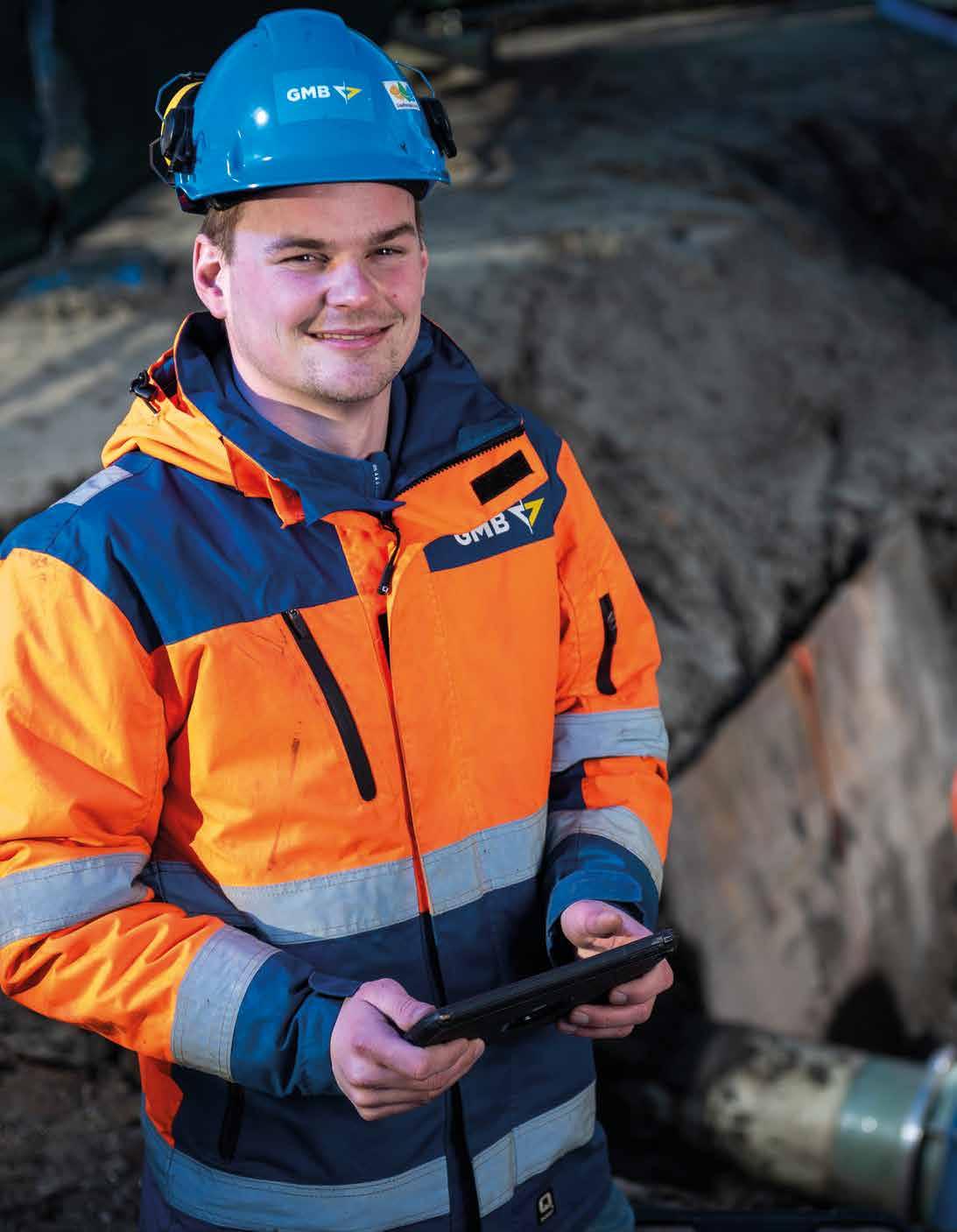
Werken bij GMB betekent werken bij een familiebedrijf waar mensgericht ondernemen centraal staat. Bij GMB krijg je veel vrijheid om je functie in te vullen vanuit je eigen kracht en talenten. Zo draag je daadwerkelijk bij aan de missie van GMB om duurzame oplossingen te bedenken en realiseren op het gebied van waterkwaliteit, waterveiligheid, bio-energie en industriële bouw en infra.
Met zo’n 550 medewerkers hebben we veel kennis en vakmanschap in huis in allerlei disciplines. Samen werken we aan veelzijdige uitdagingen en toonaangevende projecten in heel Nederland. Dankzij de verdeling in zes clusters, waarvan de grootste zo’n 120 medewerkers telt, houden we korte lijnen en een persoonlijke werksfeer. Bij GMB houden we van uitdagingen aangaan, heerst er een sterk saamhorigheidsgevoel en is er veel ruimte voor lol met elkaar.
Zie jij jezelf wel werken bij GMB? Kijk op werkenbijgmb.eu en solliciteer direct op een leuke vacature.

Typisch jij. Bij GMB.



We bieden jou:
• Fijne werksfeer
• Een goed salaris
• 40 vrije dagen per jaar
• Veel ontwikkelmogelijkheden
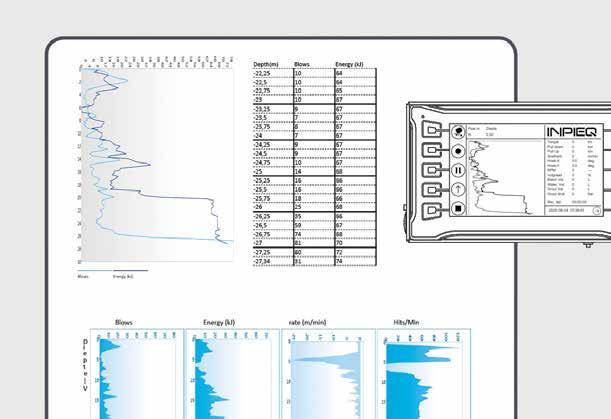
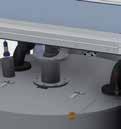
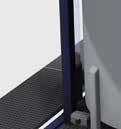

Op de Tweede Maasvlakte in Rotterdam is een nieuwe diepzeekade geconstrueerd in de Prinses Amaliahaven. Dit betreft in totaal 1820 meter diepzeekade en 160 meter binnenvaartkade om de toekomstbestendigheid van de Rotterdamse haven te waarborgen. De nieuwe kade is geschikt voor de huidige, grootste containerschepen ter wereld met afmetingen van 400 x 61,5 x 16,5 m (24.000 TEU) en kan in de toekomst verder verdiept worden zodat toekomstige schepen (met afmetingen tot 430 x 66,5 x 18,5 m (circa 28.000 TEU) er ook terecht kunnen. Door de kade geschikt te maken voor nog grotere schepen en door toepassen van veel sensoren en uitgebreide funderingsregistraties, kan de kademuur zich aanpassen aan toekomstige behoeften.
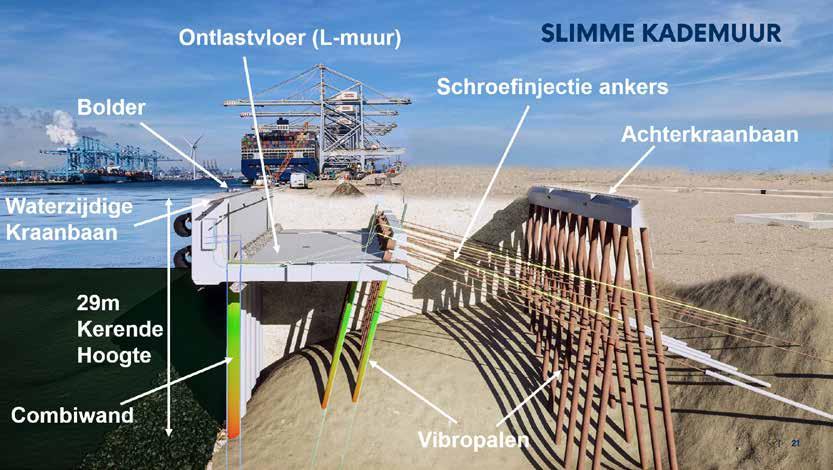
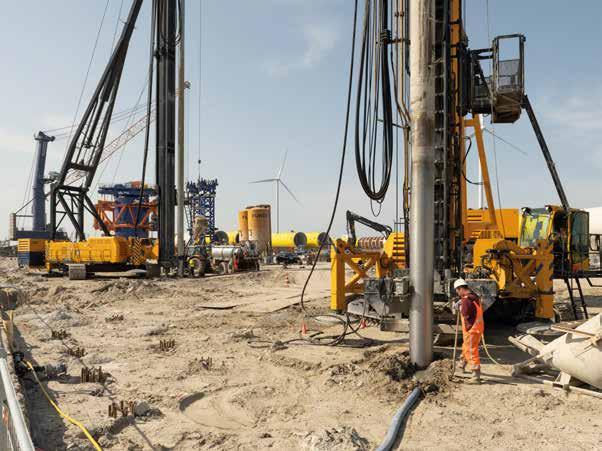
De constructie van de diepzeekade bestaat uit een betonnen ontlastvloer (L-vorm) opgelegd op een combiwand aan de waterzijde en een dubbele rij vibropalen aan de landzijde. De horizontale verankering wordt voorzien met behulp van schroef-injectie (SI-) ankers. Tot slot is er een op palen gefundeerde achterkraanbaan gerealiseerd ten behoeve van de grote containerkranen. De diepzeekade is ontworpen op een kerende hoogte van 29 meter.
Voorafgaand aan het project is een paalproef uitgevoerd met schroefinjectiepalen, vibropalen en prefab betonpalen. Tijdens het project is een bezwijkproef uitgevoerd op het toegepaste ankersysteem.
Slotopening
Al jaren wordt in de Rotterdamse haven met succes een combiwand toegepast als fundering
en grondkering in kademuren. Bij de uitvoering treden weinig problemen op. Dit leek ook het geval bij de Prinses Amaliahaven; de uitvoering liep gesmeerd. Echter bij het vrijbaggeren is een slotopening geconstateerd. In mei 2024 gaf de ontgrondingsdetectie een duidelijk alarm. Daarop werd een peilboot naar de locatie gestuurd en was uitstroom van grond zichtbaar. Duikers constateerden vervolgens op circa NAP-15m dat de damwand uit het slot gelopen was door toedoen van een oude scheepstros. Om de opening dicht te krijgen zijn in eerste instantie noodvoorzieningen aangebracht en is er achter de wand weer aangevuld. Toen de reparaties nagenoeg gereed waren (NAP-23,5m), is er grondbreuk opgetreden onder de reparatie door, waardoor wederom grote hoeveelheden grond zijn uitgestroomd. Daarop zijn nieuwe plannen gemaakt om de opening tijdelijk en permanent te sluiten. Dankzij de inspanning van alle betrokkenen is de opening ruim een jaar na het ontstaan definitief afgesloten.
In de komende jaren bereikt ongeveer de helft van de kademuren in de haven van Rotterdam het einde van haar ontwerplevensduur. Door onzekerheden in de modellering van dergelijke complexe, geotechnische constructies is het moeilijk om de werkelijke levensduur te bepalen.
Daarom wordt deze nieuwe kademuur uitgebreid gemonitord om deze onzekerheden beter te kunnen begrijpen. Uiteindelijk is het doel om een hogere functionaliteit en/of levensduur van de kadeconstructie te verkrijgen.
De focus van de monitoring ligt op de onderbouw, bestaande uit de combiwand, vibropalen en de SI-ankers. De bovenbouw (betonnen ontlastvloer) kan namelijk als quasi-statisch bepaald worden
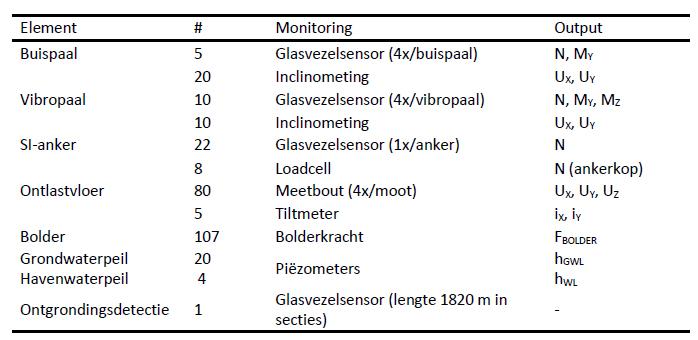
beschouwd, waardoor de bovenvermelde onzekerheden in relatie tot vervormingen slechts in beperkte mate doorspelen in de krachtsverdeling van de ontlastvloer. Dit in tegenstelling tot de onderbouw. De monitoring bestaat hoofdzakelijk uit het meten van vervormingen, rekken, krachten en randvoorwaarden zoals samengevat in tabel 1.
Data-analyse buispaal
Op kwalitatief niveau worden de data van de glasvezelsensoren geanalyseerd door de ontwikkeling van de (relatieve) rekken te visualiseren ten opzichte van
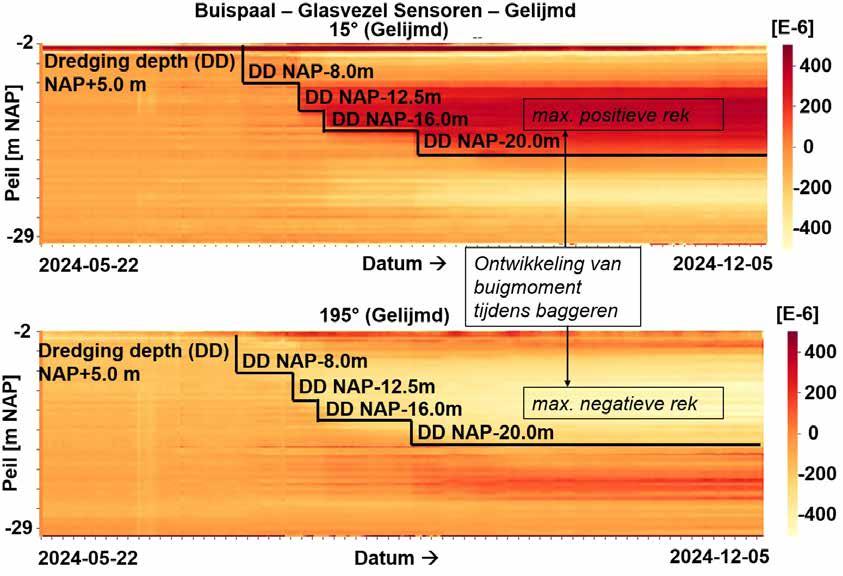
het baggerproces. Hieruit volgt een duidelijke correlatie zoals zichtbaar in figuur 2.
Op kwantitatief niveau worden deze (relatieve) rekken uit de glasvezelsensoren omgerekend tot buigmomenten My. Ditzelfde gebeurt voor de inclinometingen, waarbij de vervorming wordt omgezet tot een kromming. Tot slot kunnen deze buigende momenten worden vergeleken met het Plaxis2D-model. De conclusie is dat beide meetmethoden relatief goed
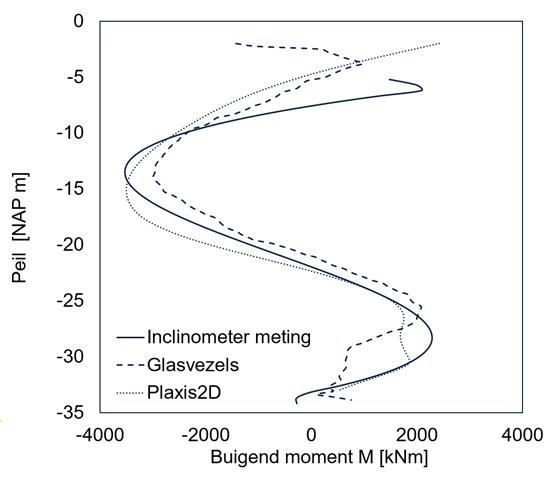
overeenkomen met het Plaxis2D-model, waarbij de inclinometing vooral goed overeenkomt bij het veldmoment. De glasvezelsensor laat daarentegen aan de kop van de buispaal betere overeenkomsten zien. Hiermee worden de mogelijkheden van ‘(Structural Health) Monitoring’ getoond. Met een toekomstige proefbelasting voor de gelijkmatig verdeelde terreinbelasting is de verwachting dat de kademuur meer richting de limiet kan worden belast, zodat het niet-lineaire gedrag kan worden gemeten. Uiteindelijk is het doel om via ‘Reverse Engineering’ de constructie inclusief haar mogelijkheden opnieuw te evalueren. Ofwel, deze slimme kademuur is nog niet klaar met leren.
Joris Bruens, Port of Rotterdam, Chris van Marrewijk, MariTeam (SBE + MUC + Iv)
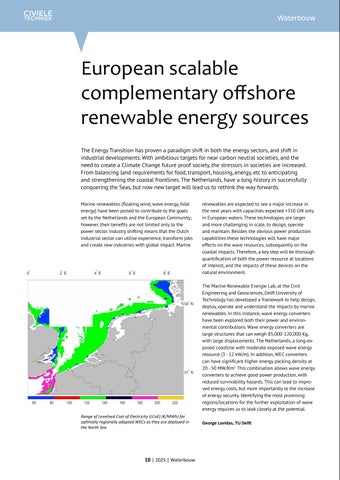
The Energy Transition has proven a paradigm shift in both the energy sectors, and shift in industrial developments. With ambitious targets for near carbon neutral societies, and the need to create a Climate Change future proof society, the stressors in societies are increased. From balancing land requirements for food, transport, housing, energy, etc to anticipating and strengthening the coastal frontlines. The Netherlands, have a long history in successfully conquering the Seas, but now new target will lead us to rethink the way forwards.
Marine renewables (floating wind, wave energy, tidal energy) have been poised to contribute to the goals set by the Netherlands and the European Community; however, their benefits are not limited only to the power sector. Industry shifting means that the Dutch industrial sector can utilise experience, transform jobs and create new industries with global impact. Marine
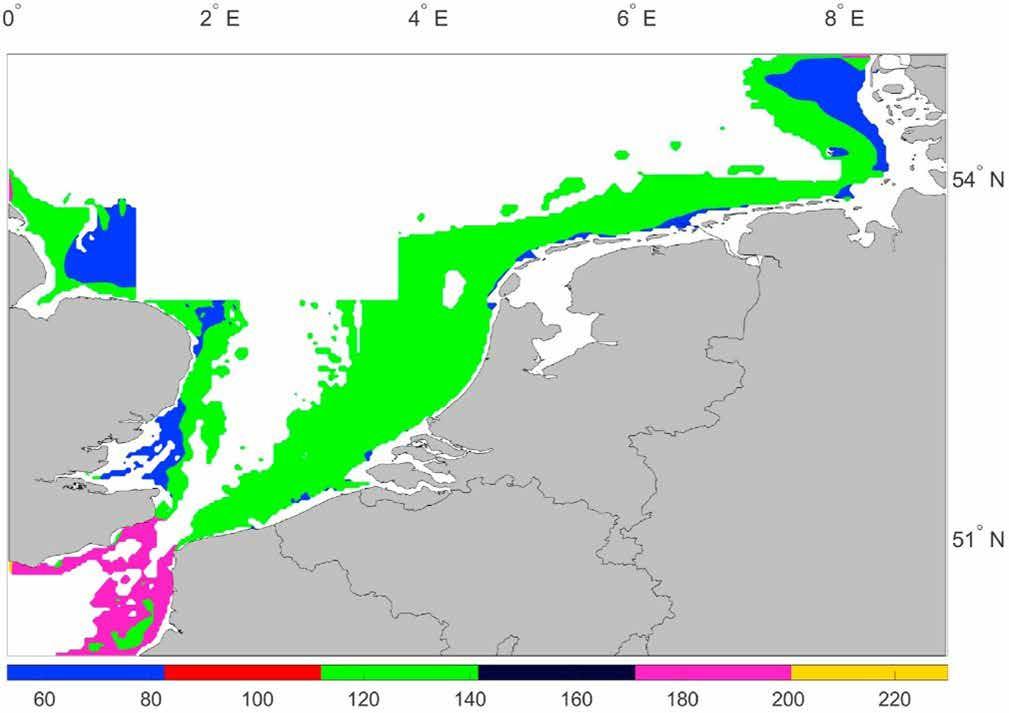
Range of Levelised Cost of Electricity (LCoE) (€/MWh) for optimally regionally adapted WECs as they are deployed in the North Sea
renewables are expected to see a major increase in the next years with capacities expected >350 GW only in European waters. These technologies are larger and more challenging in scale, to design, operate and maintain. Besides the obvious power production capabilities these technologies will have major effects on the wave resources, subsequently on the coastal impacts. Therefore, a key step will be thorough quantification of both the power resource at locations of interest, and the impacts of these devices on the natural environment.
The Marine Renewable Energie Lab, at the Civil Engineering and Geosciences, Delft University of Technology has developed a framework to help design, deploy, operate and understand the impacts by marine renewables. In this instance, wave energy converters have been explored both their power and environmental contributions. Wave energy converters are large structures that can weigh 85,000-120,000 Kg, with large displacements. The Netherlands, a long-exposed coastline with moderate exposed wave energy resource (3 - 12 kW/m). In addition, WEC converters can have significant higher energy packing density at 20 - 50 MW/Km2. This combination allows wave energy converters to achieve good power production, with reduced survivability hazards. This can lead to improved energy costs, but more importantly to the increase of energy security. Identifying the most promising regions/locations for the further exploitation of wave energy requires us to look closely at the potential.
George Lavidas, TU Delft
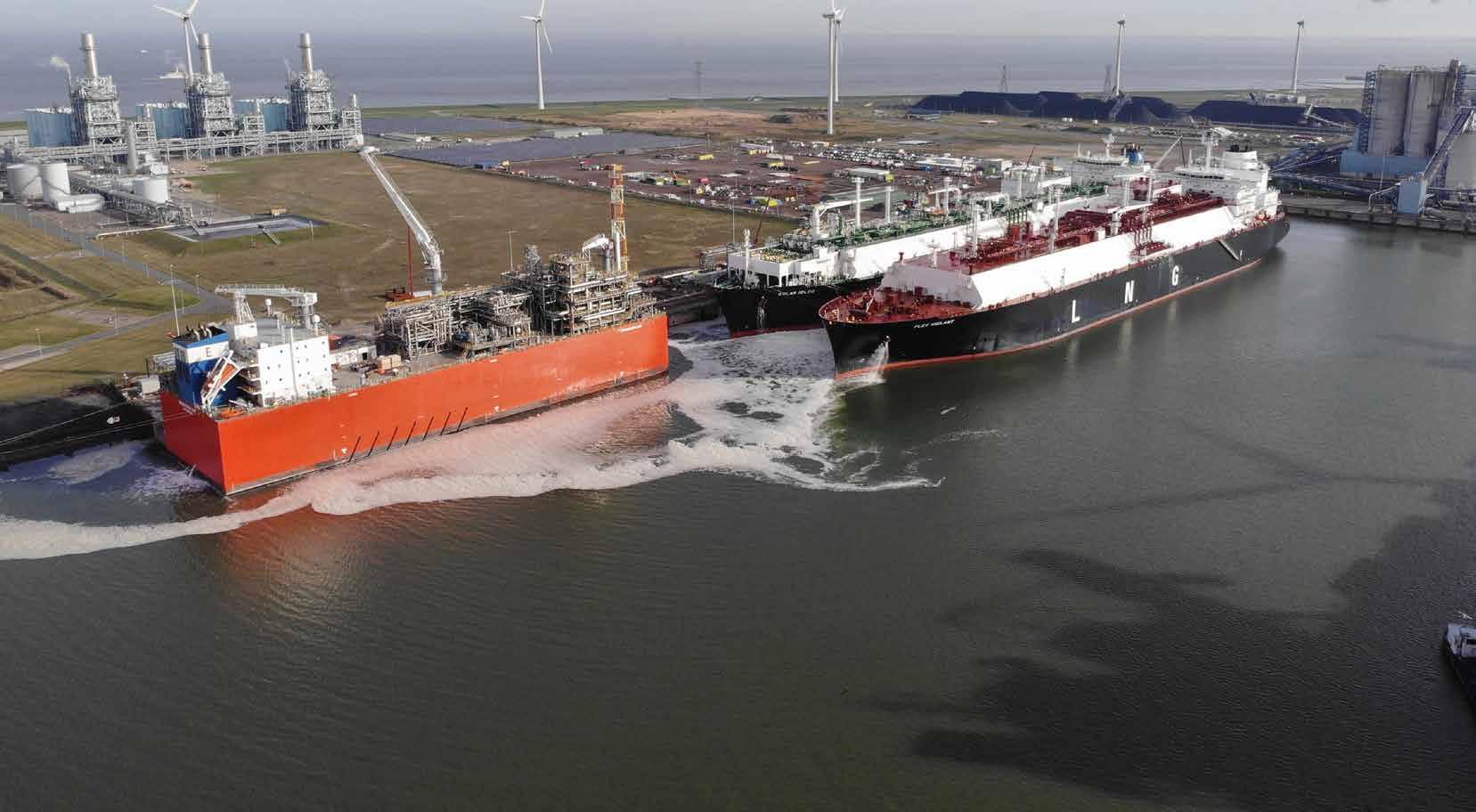
Direct na de invasie van Rusland in de Oekraïne is Gasunie in gesprek gegaan met de minister van Klimaat en Energie over de mogelijkheden om infrastructuur aan te leggen ten behoeve van de import van LNG. Om daarmee de afhankelijkheid van Russisch aardgas zo snel mogelijk te beperken. In korte tijd zijn chartercontracten getekend voor twee FSRUs (floating storage and regasification units) en is begonnen met het ontwerp en bouw van de EemsEnergyTerminal (EET) in de Eemshaven.
Het projectteam met ingenieursbureaus en aannemers heeft een onmogelijke klus geklaard en een importterminal gerealiseerd met een capaciteit van acht miljard kubieke meter aardgas, in minder dan zes maanden van idee tot eerste levering van aardgas.
LNG is vloeibaar aardgas dat wordt aangevoerd met een temperatuur van -160 graden Celsius en moet worden opgewarmd om in het aardgasnetwerk gebracht te kunnen worden.
Een helder en relevant projectdoel waarvan iedereen de urgentie begreep, hebben enorm bijgedragen aan de motivatie van alle projectpartners en stakeholders om het project tot een succes te maken. Een voortdurende reeks aan uitdagingen die stuk voor stuk zijn overwonnen beslaat een zeer breed speelveld. Een commercieel open season waarbij shippers commerciële contracten sloten voor het gebruik van de terminal werd in korte tijd doorlopen. Het technische project vereiste bevestiging van de mogelijkheid om LNG-schepen veilig de Eemshaven in te manoeuvreren, zonder daarbij de bestaande scheepvaart te beïnvloeden. De Eems-Dollard is betwist gebied tussen Duitsland en Nederland, waardoor ook medewerking
van de Duitse autoriteiten vereist was.
In de haven was baggerwerk vereist om de schepen naar de kade te kunnen manoeuvreren. De kade is aangepast om de schepen onder 100-jaars stormcondities veilig af te meren. Op de kade zijn de benodigde veiligheidssystemen en leidingen aangelegd om LNG tussen de schepen te kunnen verplaatsen. Om het aardgas in het netwerk te kunnen brengen is drie km leiding aangelegd naar het dichtstbijzijnde deel van het nationale aardgasnetwerk. Ten slotte is, om warmte te leveren om LNG te kunnen verdampen, een warmtekoppeling gemaakt met een nabijgelegen elektriciteitscentrale met een capaciteit van 200 MW.
Het project heeft eerder onder meer de prijs van LNGproject van het jaar gewonnen.
Sinds september 2022 is de LNG-terminal in gebruik en levert het een constante bijdrage in de energiezekerheid van Nederland en West Europa. Op dit moment wordt onderzocht of het gebruik van de terminal kan worden verlengd.
Merijn Zuidgeest, Gasunie
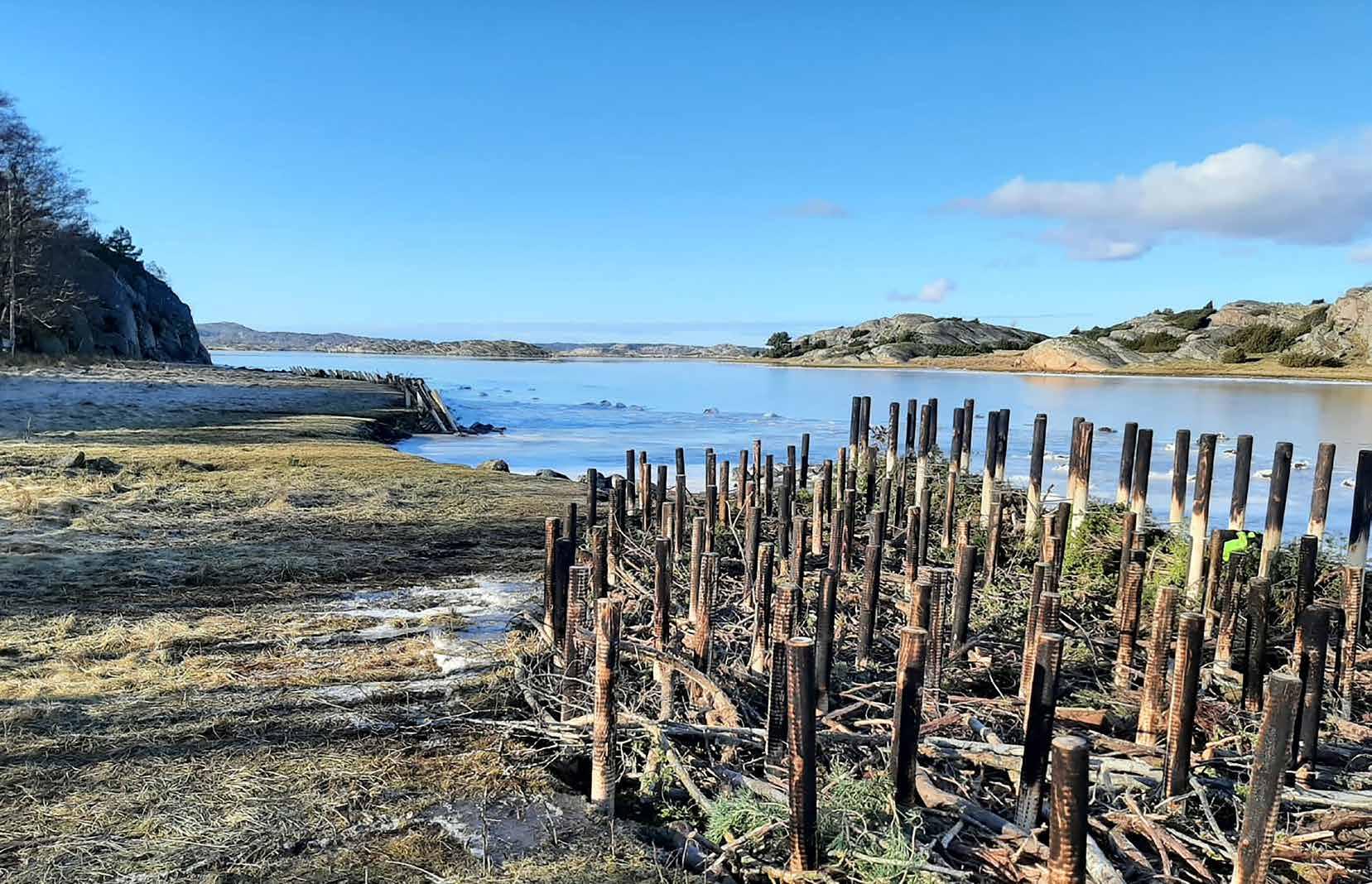
De Noordzeeregio staat voor grote uitdagingen door klimaatverandering, zoals zeespiegelstijging, zware stormvloeden en kusterosie. Het MANABAS COAST-project werkt aan oplossingen door in te zetten op Nature-based Solutions (NbS). Dit zijn innovatieve maatregelen die de kracht van de natuur benutten om kustgebieden te beschermen en te versterken.
NbS bieden veel perspectief als antwoord op klimaatuitdagingen, maar worden nog te weinig toegepast als primaire vorm van kustbescherming. MANABAS COAST wil daar verandering in brengen. Het project heeft als doel om NbS een standaardoplossing te maken. Daarvoor is het nodig om de kennis over NbS te vergroten en het implementatieproces makkelijker te maken. Het project bouwt voort op ervaringen uit eerdere NbS-projecten en pilots, en brengt voorwaarden voor succesvolle toepassingen van NbS in kaart. Denk bijvoorbeeld aan technologische innovaties, samenwerkingen tussen stakeholders en integraties in beleid.
Van praktijk naar raamwerk
Met meerdere pilotsites in de Noordzeeregio ontwikkelde MANABAS COAST een algemeen en toegankelijk raamwerk voor de toepassing van NbS in kustsystemen. Dit raamwerk integreert regionale strategieën en capaciteitsopbouw, en ondersteunt de transitie naar een duurzame toekomst waarin kustweerbaar-
heid, biodiversiteit en menselijk welzijn hand in hand gaan. Daarnaast worden aanvullende instrumenten en richtlijnen ontwikkeld, geïnspireerd door voorbeelden uit onder meer Zweden en Frankrijk.
In MANABAS COAST werken kustautoriteiten uit Zweden, Denemarken, Duitsland, Nederland, België en Frankrijk samen aan de integratie van Flood and Coastal Erosion Risk Management (FCERM) en biodiversiteitsdoelen om een duurzame toekomst voor de Noordzeeregio te realiseren. MANABAS COAST is een Interreg North Sea Programme-project, mede gefinancierd door de Europese Unie.
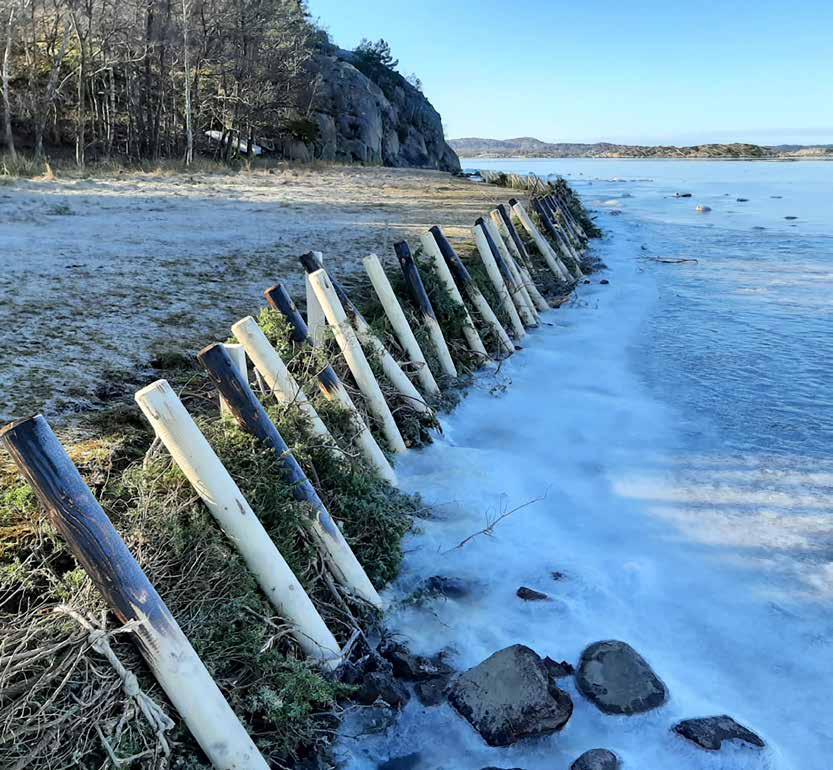
Een ander voorbeeld van NbS binnen een Zweedse pilot van MANABAS COAST. Deze ‘brushwood dam’ beschermt de kust tegen erosie
Reflecteren om vooruit te gaan
De implementatie van NbS kent uitdagingen op sociaal, ecologisch en bestuurlijk vlak. MANABAS COAST ontdekte dat regelmatig reflecteren essentieel is om strategieën te verfijnen en praktijkervaringen te vertalen naar concrete handvatten voor kustbeheerders. Bij reflecties wordt kritisch gekeken naar:
• De bijdrage van het raamwerk aan Europese strategieën en beleid
• De samenhang met beleid en besluitvorming op verschillende niveaus
• De wisselwerking tussen EU-, nationale, regionale en lokale beleidskaders
Door deze reflectie worden de resultaten van MANABAS COAST relevanter en breder toepasbaar, wat uiteindelijk bijdraagt aan klimaatadaptatie.
Saskia van Gool, Program manager MANABAS COAST Programmamanager Kennisprogramma
Zeespiegelstijging
Volledig circulaire waterbufferingsvoorzieningen
Buffering, hybride & infiltratie
Zwaarste verkeersklasse
Modulair en circulair
Mantoegankelijk
Snelle realisatie
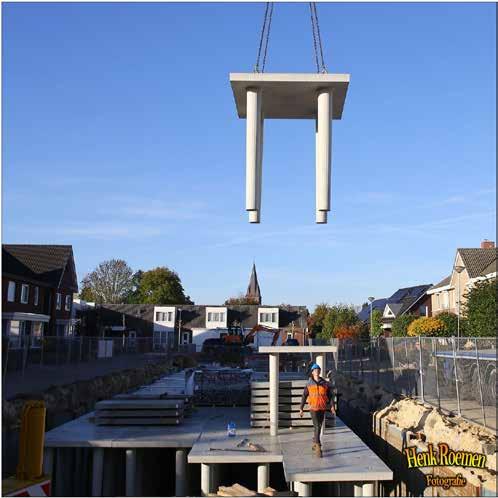
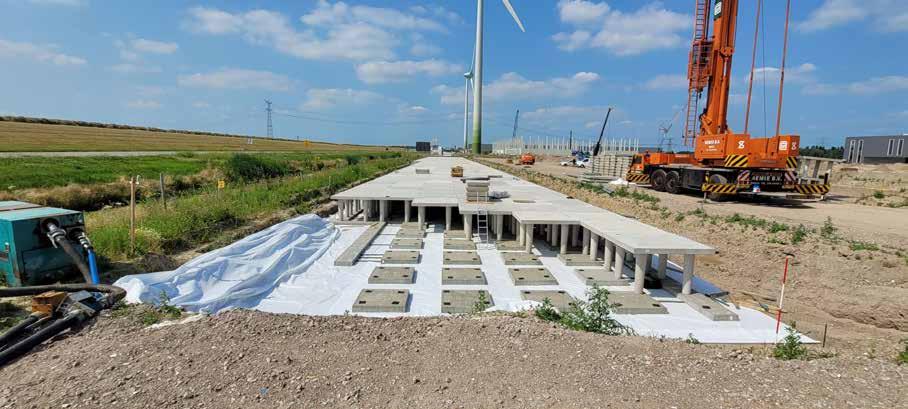
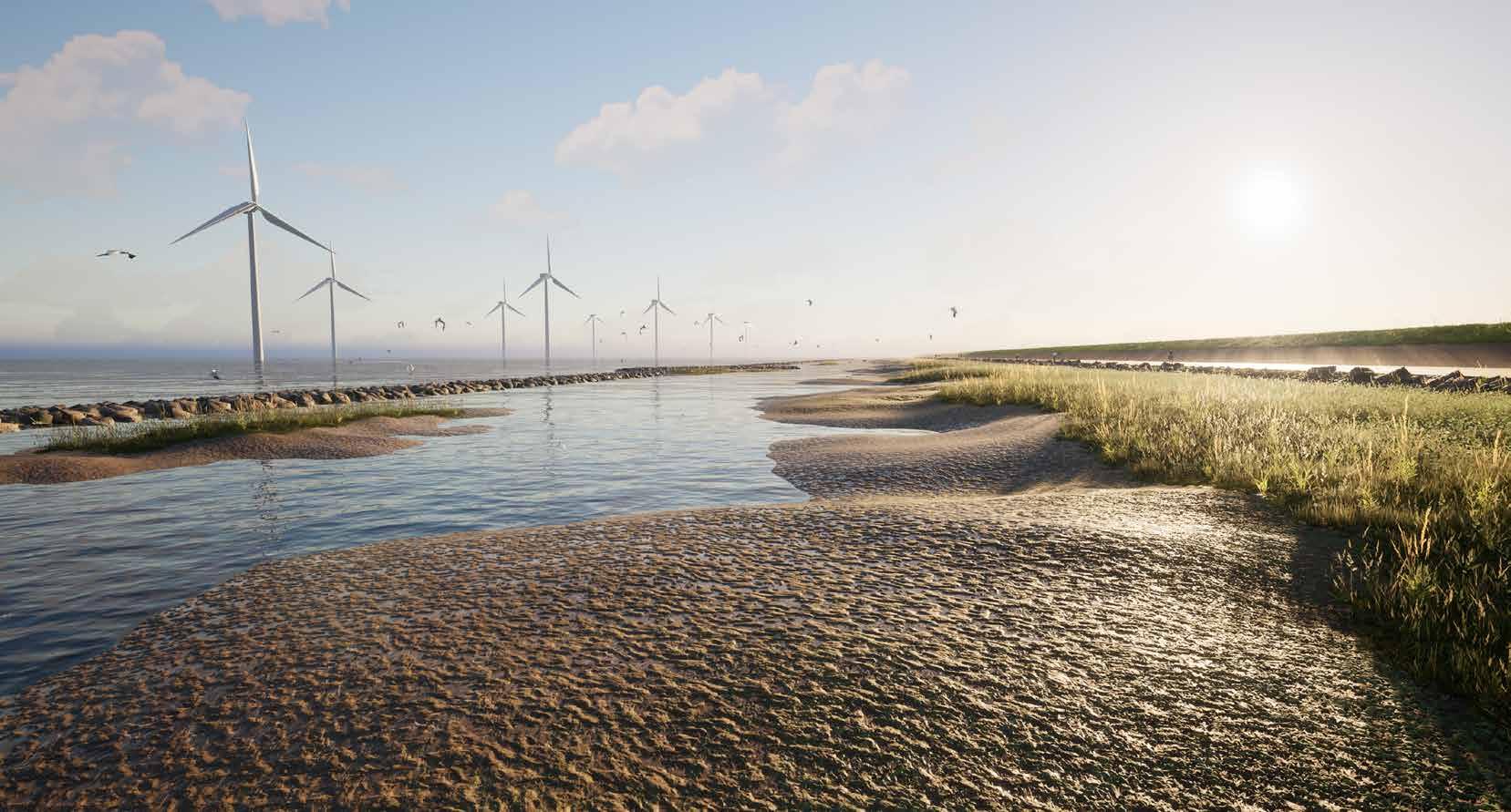
De IJsselmeerdijk is de zwaarst belaste waterkering langs het IJsselmeer. Door de noordwestelijke oriëntatie krijgt de dijk bij stormen te maken met hoge waterstanden en krachtige golven. Tegelijkertijd beschermt de dijk een polder die vijf meter lager ligt dan het gemiddelde meerpeil. Een doorbraak zou leiden tot langdurige overstroming en grote maatschappelijke schade. Door aangescherpte veiligheidsnormen en klimaatverandering voldoet de dijk niet langer aan de eisen. Waterschap Zuiderzeeland is daarom in het kader van het Hoogwaterbeschermingsprogramma gestart met een grootschalig en toekomstgericht versterkingsproject.
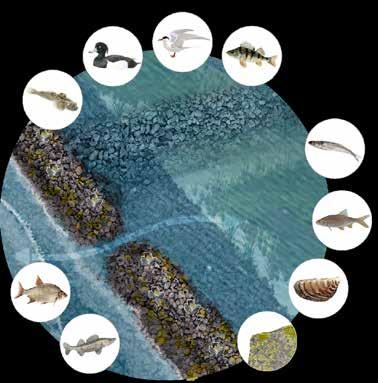
In de planfase is gekozen voor een innovatieve oplossing: de aanleg van een golfremmende vooroever. Dit concept, bedacht door Haskoning en Waterschap Zuiderzeeland, benut actief een deel van het Natura 2000-gebied IJsselmeer. Waar normaal gesproken ingrepen in beschermde natuurgebieden worden vermeden, toont dit project aan dat waterveiligheid en natuurontwikkeling uitstekend samengaan. Brede, ondiepe zones met rietkragen, eilandjes en open water creëren een aantrekkelijk
leefgebied voor vogels, vissen en waterplanten. Zo ontstaat een nieuw natuurgebied dat veiligheid, ecologie en recreatie verenigt.
Werking van de vooroever
De vooroever bestaat uit een langgerekte dam en een achterliggend zandlichaam. Golven worden eerst afgeremd door de dam en vervolgens verder gedempt door het ondiepe water en zand. Hierdoor vermindert de golfbelasting op de dijk aanzienlijk. Dankzij deze
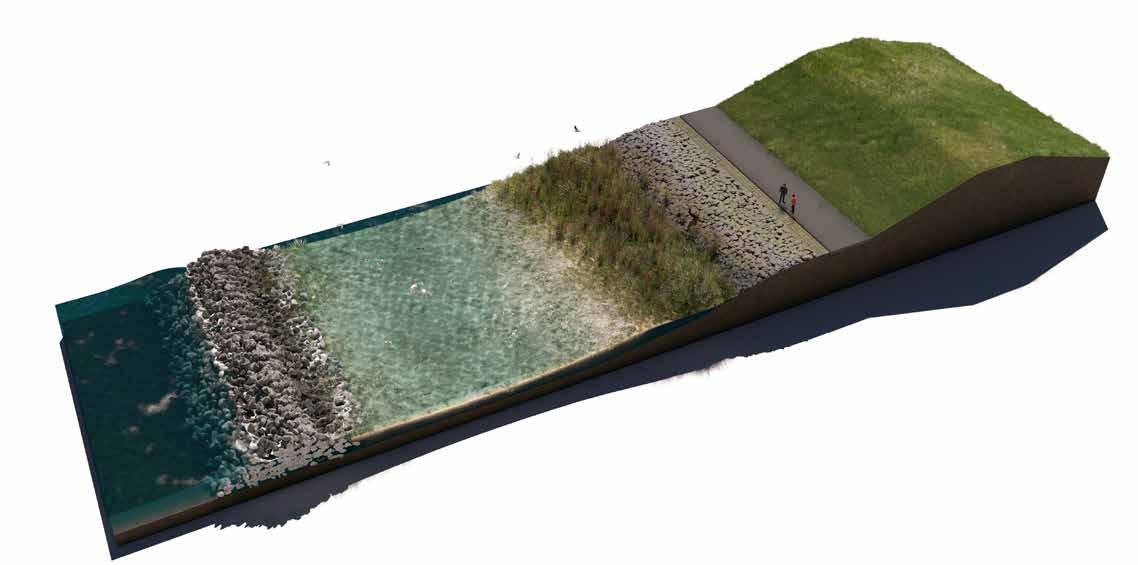
Toekomstig dwarsprofiel vooroever IJsselmeerdijk
golfremming zijn slechts beperkte aanpassingen aan de bestaande dijk nodig; in plaats van een volledige vernieuwing van de dijkbekleding en een forse verhoging, volstaan kleine aanpassingen. In het project is aangetoond dat dit oplossingsconcept - op deze locatie - goedkoper is dan een traditionele dijkversterking. Daarnaast levert de oplossing niet alleen een kostenbesparing op, maar is de oplossing ook veel adaptiever en duurzamer dan een traditionele dijkversterking.
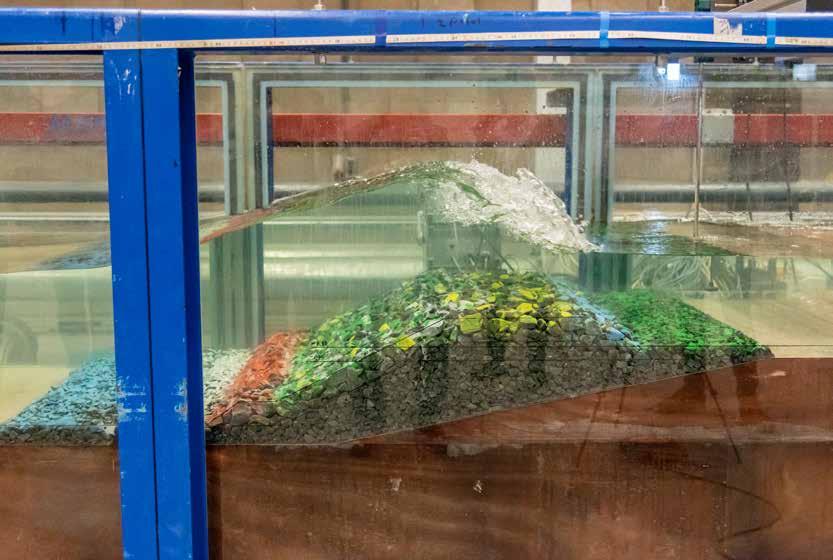
Onderbouwing via golfgootproeven
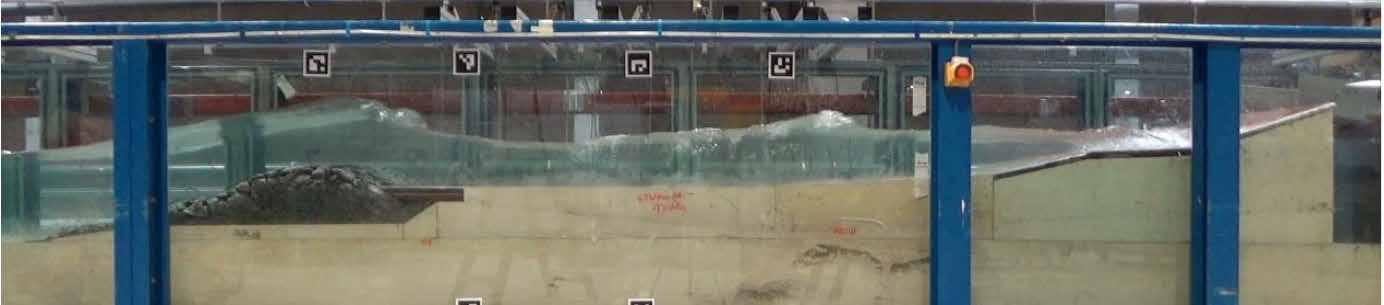
Om de effectiviteit van het concept te onderbouwen, zijn bij Deltares uitgebreide golfgootproeven uitgevoerd. Deze proeven bootsen op schaal na hoe golven zich gedragen over de vooroever en de dam. De proeven hadden twee doelen: het valideren van het ontwerp en het vaststellen van een toetsingskader voor de aannemer. De aannemer krijgt relatief veel ontwerpvrijheid, maar moet aantonen dat het eigen ontwerp minimaal dezelfde golfremmende werking heeft als het referentieontwerp uit de proeven.
De golfgootproeven bevestigen dat het vooroeverconcept effectief werkt; bij de juiste dimensies remt de vooroever de golven voldoende af, zodat er geen aanpassingen aan het dijkprofiel nodig zijn. De proeven hielpen ook bij het optimaliseren van het ontwerp van de langsdam. Hierdoor is een slanker en lichter ontwerp gerealiseerd dan ontwerpregels aanvankelijk voorspelden.
Slimme keuzes in ontwerp en uitvoering
Tijdens de aanbesteding heeft het Waterschap vijf criteria meegegeven aan de inschrijvende partijen: waterveiligheid, zettingsbeheersing, maakbaarheid, duurzaamheid en ecologische meerwaarde. De Combinatie Van Oord/Boskalis, in samenwerking met Witteveen + Bos en Arcadis, heeft het


Waterplantenzone NAP-2,5m
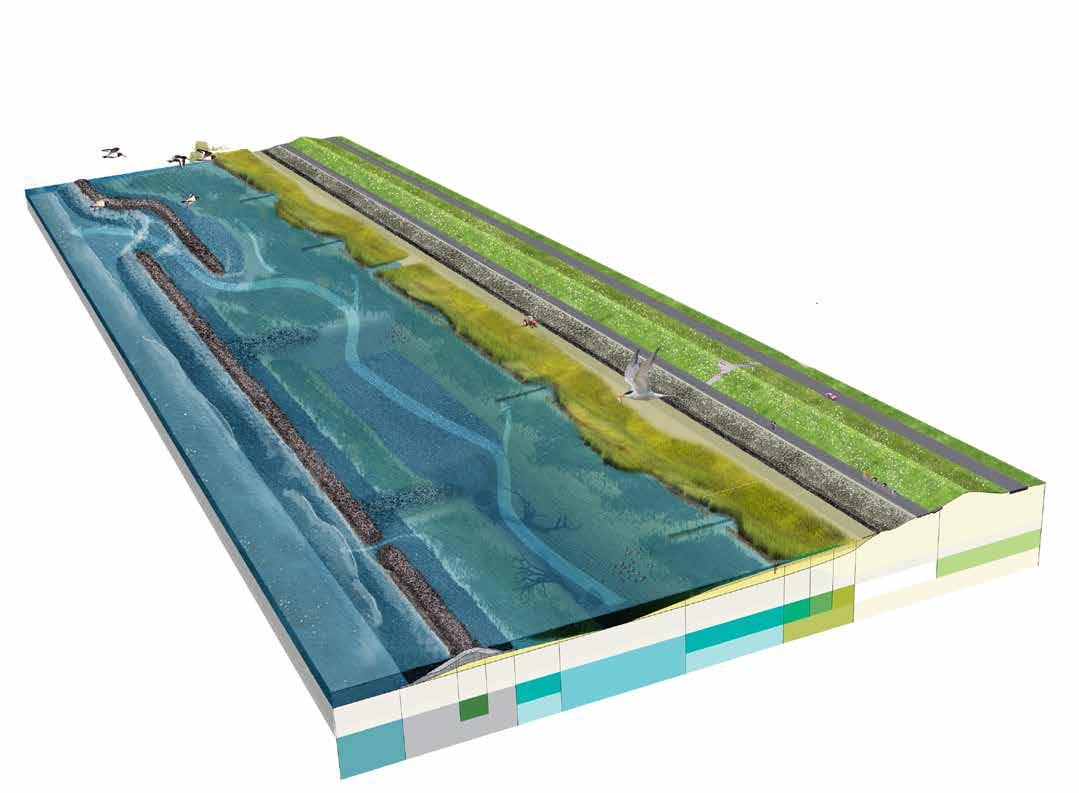
Beheertoegang
Stroming richting rietkraag
Mosselzone NAP-3m Vissenbos Palenrij
korstmossen
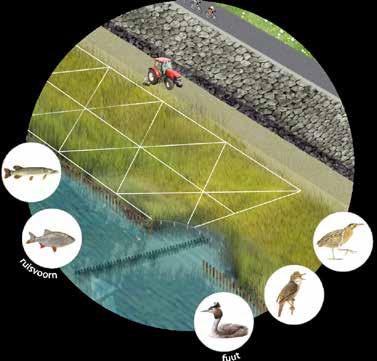
bestaande dijk bloem- en kruidenrijke dijk stromingsriet landriet waterriet
waterplanten ondiep water rietzone
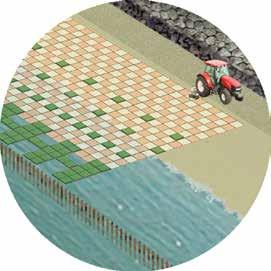
referentieontwerp verder geoptimaliseerd. Voor de vooroeverdam zijn diverse oplossingen onderzocht, waaronder geotubes, slibblokken en betonelementen. Uiteindelijk bleek een traditionele oplossing met zand en waterbouwsteen het meest effectief. Deze keuze scoort gunstig op kosten, duurzaamheid en de EMVIcriteria.
De dam wordt opgebouwd uit secundair zand dat vrijkomt uit de nabijgelegen vaarroute. Door het aantal lagen waterbouwsteen te beperken tot twee, verloopt de uitvoering eenvoudiger en efficiënter. Het vooroeverlichaam bestaat uit zand met een 20 meter brede rietkraag. Door verschillende aanplantmethoden toe te passen, wordt de slagingskans van de vegetatie vergroot. Daarnaast worden waterplanten, mosselpercelen en vissenbossen aangelegd om de biodiversiteit te versterken. Deze ecologische invulling draagt bij aan een robuust en levendig ecosysteem.
Bijzonder is dat de waterveiligheid van het ontwerp ook door de aannemer al in de tenderfase is getest via golfgootproeven. Hierdoor beschikt het Waterschap vooraf over zekerheid over de prestaties. Ook op het gebied van zettingen biedt het ontwerp betrouwbaarheid, dankzij aanvullend onderzoek, proefterpen, monitoring en locatiegerichte
maatregelen die zettingen versnellen.
De verwachte beheerkosten blijven laag door de stabiele opbouw van de dam en de beperkte onderhoudsbehoefte van het zandlichaam. Tijdens de uitvoering wordt een uitgebreid monitoringsprogramma opgezet, gericht op morfologie, zettingen en ecologische ontwikkeling. Op basis van deze gegevens ontwikkelt de Combinatie samen met het Waterschap en Haskoning een toekomstgerichte monitoringsaanpak, waardoor het beheer voorspelbaar, veilig en efficiënt is.
De versterking van de IJsselmeerdijk is innovatieve, integrale waterbouw. Door techniek, ecologie en recreatie te combineren, ontstaat een toekomstbestendige dijk die niet alleen veilig en landschappelijk goed is ingepast, maar ook de biodiversiteit aanzienlijk versterkt.
David-Jan Smeenge (namens opdrachtgever Waterschap Zuiderzeeland), Sander Post (namens ingenieursbureau Haskoning) en Mark Caljouw (namens aannemerscombinatie Van Oord/Boskalis)

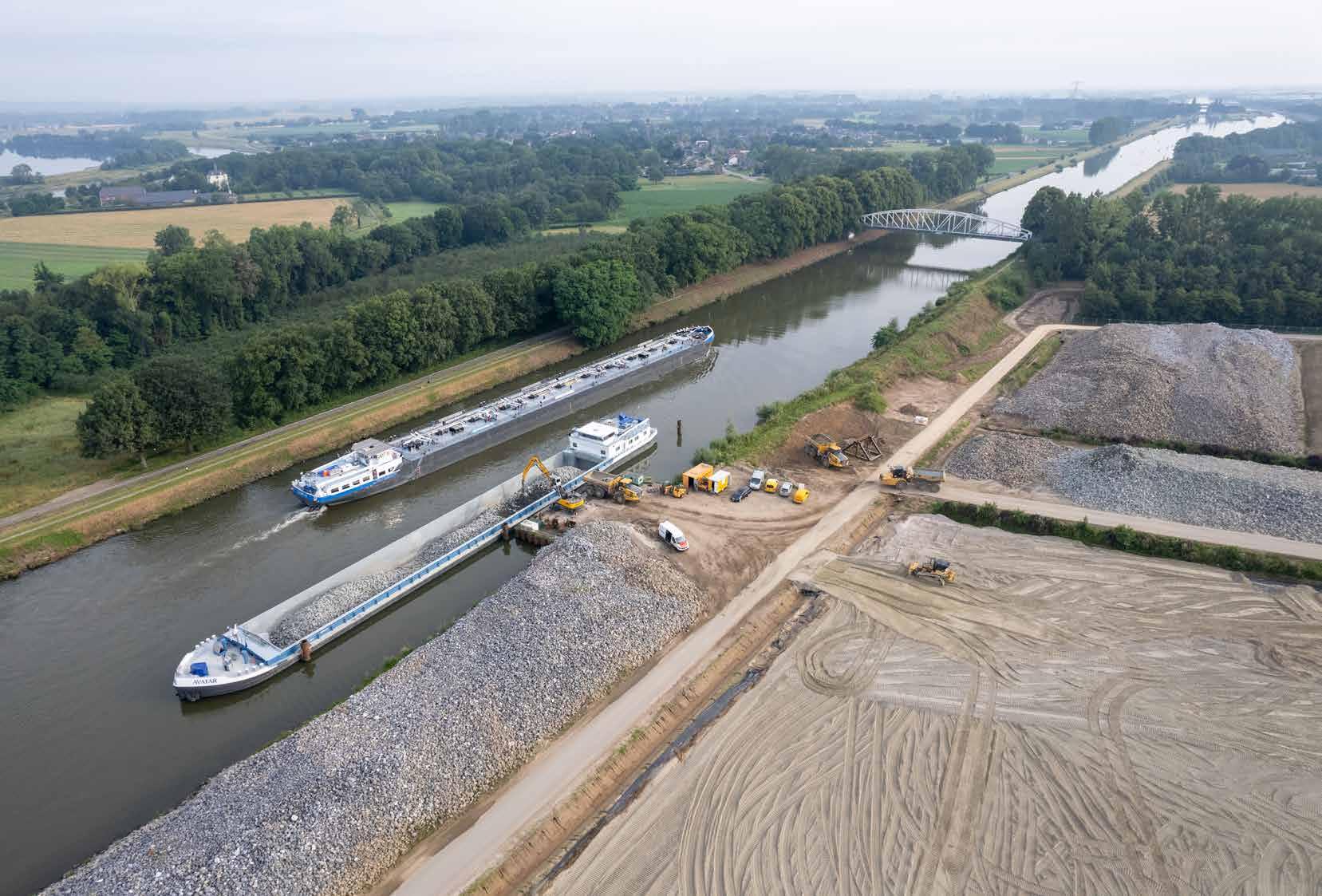
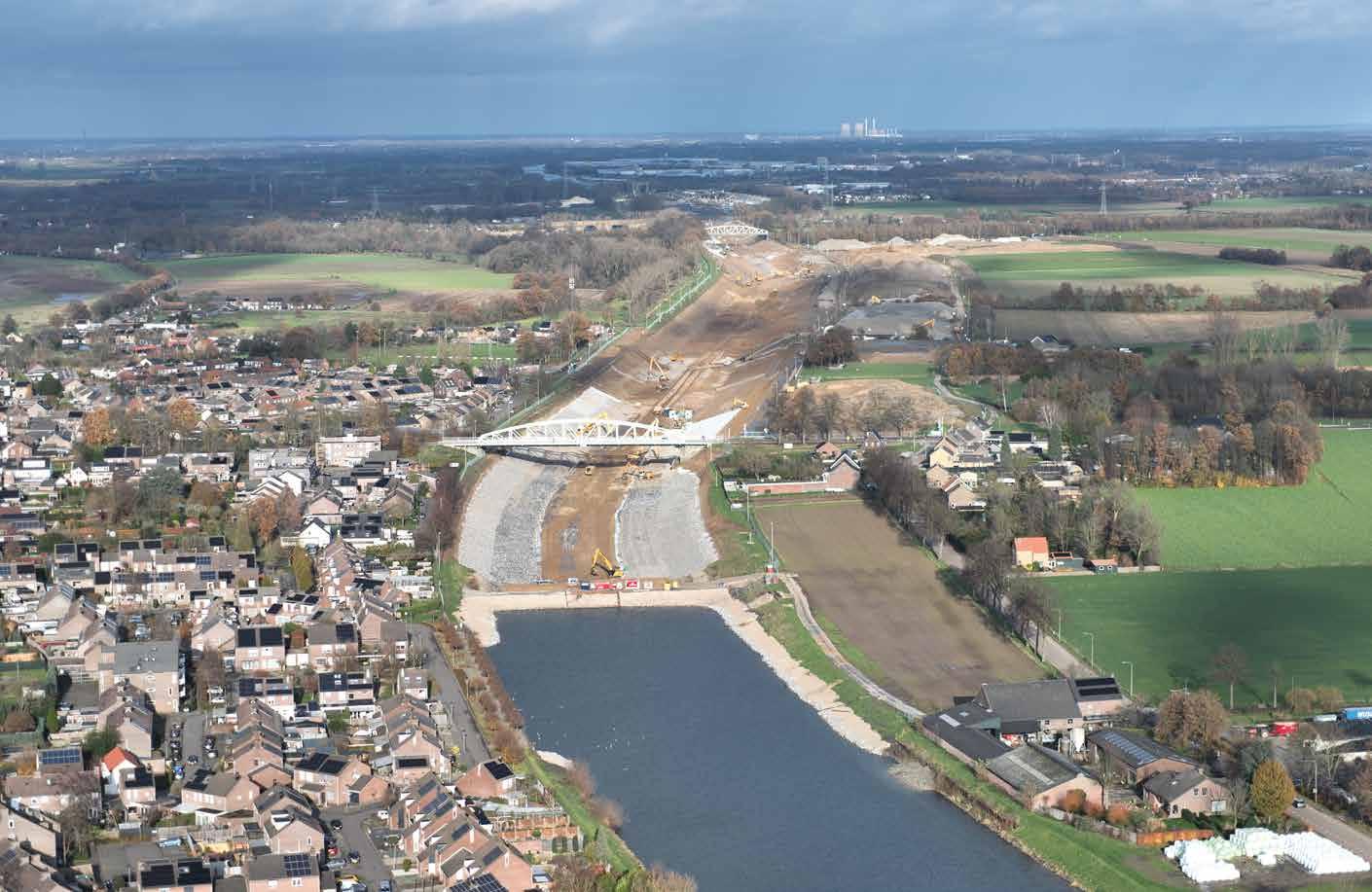
In Zuid-Limburg werkten Rijkswaterstaat en aannemer Van den Herik-Sliedrecht maandenlang aan de verruiming van het Julianakanaal. Het kanaal tussen Berg en Obbicht werd over een lengte van vier kilometer drooggelegd. Een bijzonder project met als grootste uitdagingen: tijd en omvang.
De verruiming van het kanaal was nodig om het geschikt te maken voor tweebaksduwvaart van 190 meter lang, 11,40 meter breed en met een diepgang van 3,50 meter. De stremming van de vaarweg startte op 12 augustus 2024. Daarna is er heel veel werk verzet. Dagelijks was er gemiddeld zo’n 200 man aan het werk. Met soms wel 180 machines tegelijk, een megaproject. Op 11 april 2025 werd het Julianakanaal weer heropend.
Strakke planning en logistiek
Eind maart 2024 kreeg Rijkswaterstaat ZuidNederland van toenmalig minister Mark Harbers toestemming om het Julianakanaal droog te gaan leggen. Dat was de enige optie om de laatste vier kilometer nog niet verruimde vaarweg aan te pakken. Want de halfdroge methode met lange bouwkuipen
over de halve breedte van het kanaal (waar de scheepvaart langs kon varen) bleek hier helaas niet geschikt. Eerder was de wand van de eerste bouwkuip bezweken tijdens de werkzaamheden en de kuip stroomde vol water. De machinisten die op de kanaalbodem aan het werk waren, wisten zichzelf en hun materieel nog net in veiligheid te brengen. Rijkswaterstaat koos daarom voor een volledige drooglegging van de vaarweg. Tot grote frustratie van de scheepvaart, de lokale politiek en het bedrijfsleven. De minister had beloofd aan de scheepvaartbranche dat de stremming zo kort mogelijk zou duren, maar nooit langer dan acht maanden. Er was haast bij, daarom werden eind augustus de eerste voorbereidende werkzaamheden opgepakt, zoals de aanvoer van stenen en materieel, maar ook het inrichten van het werkterrein. Waar normaal minimaal
één jaar tot twee jaar nodig is om alles te regelen, werd dat nu in vier maanden gedaan.
Er werden drie depotterreinen gereedgemaakt.
Hiervoor is 30 hectare aan grond gehuurd van agrariërs en andere grondeigenaren in de omgeving.
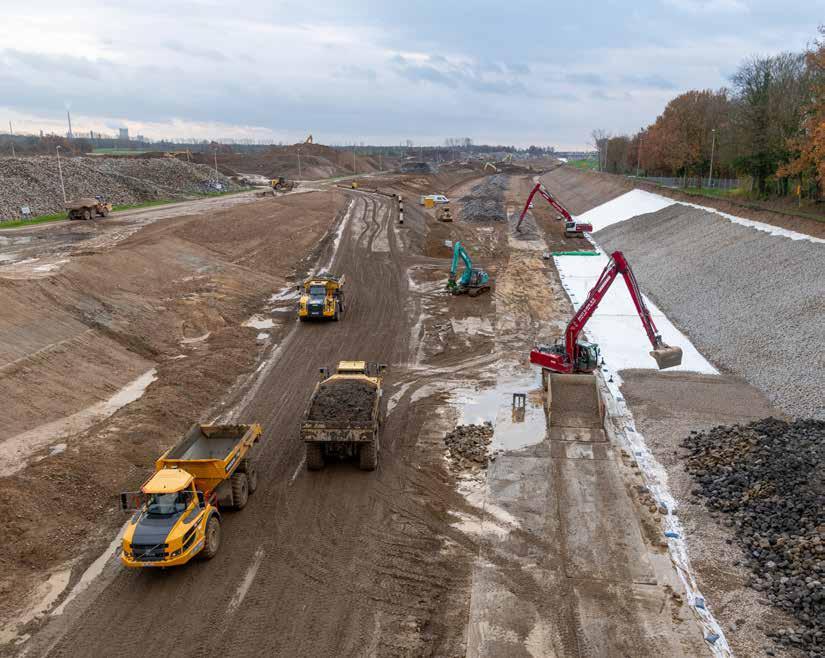
Op deze terreinen lagen bergen breuksteen, steenslag en grind opgeslagen, zo’n half miljoen ton in totaal.
Om vrachtverkeer te weren in de omgeving is er gekozen voor aanvoer over water, het was zaak dit klaar te hebben voor de stremming.
Gezien de omvang en tijdsdruk is het traject in drie werkvakken opgedeeld: Noord, Midden en Zuid. Van den Herik was eindverantwoordelijk en werkte met een team in vak Noord. Jac Rijk en Boskalis gingen het werk in de vakken Midden en Zuid uitvoeren. Dit maakte dat er drie keer zoveel werk verzet kon worden in dezelfde tijd. Al in een eerdere fase is er bodemonderzoek gedaan. Vak Noord (bij sluis Born) bleek behoorlijk meer slib te bevatten dan gedacht. De afvoer van die grote hoeveelheid slib vroeg om de nodige creativiteit om de planning toch te halen. Van den Herik heeft daarom een speciale grondpers ontwikkeld die het afgegraven slib op sluis Born over een afstand van zo’n 20 meter horizontaal transporteerde en met een trechter in de schepen bracht die het naar verschillende Rijksdepots vervoerden. Dat was een snelle, veilige en efficiënte oplossing. Op een bepaald moment ging de afvoer van het slib naar de rijksdepots niet snel genoeg om de openstelling in april te halen. Toen is er in de westelijke voorhaven van het kanaal, bij de oude sluiskolk van Born een tijdelijk depot aangelegd.
Slib wat men niet kwijt kon is daar tijdelijk opgeslagen om later afgevoerd te worden.
Korte lijnen en snel schakelen is heel belangrijk bij zo’n groot project. Dan weet iedereen overal en altijd wat er speelt op de bouwplaats. Dan begrijpt men de noodzaak om snel en constructief mee te denken. Van den Herik en Rijkswaterstaat werkten samen in een bouwteamachtige constructie vanuit één bouwkeet om snel besluiten te kunnen nemen.
Door de werkzaamheden aan het Julianakanaal kreeg Limburg er een nieuwe attractie bij. Niet echt natuurlijk, maar op zonnige dagen leek het er wel op. Het was een komen en gaan van mensen die
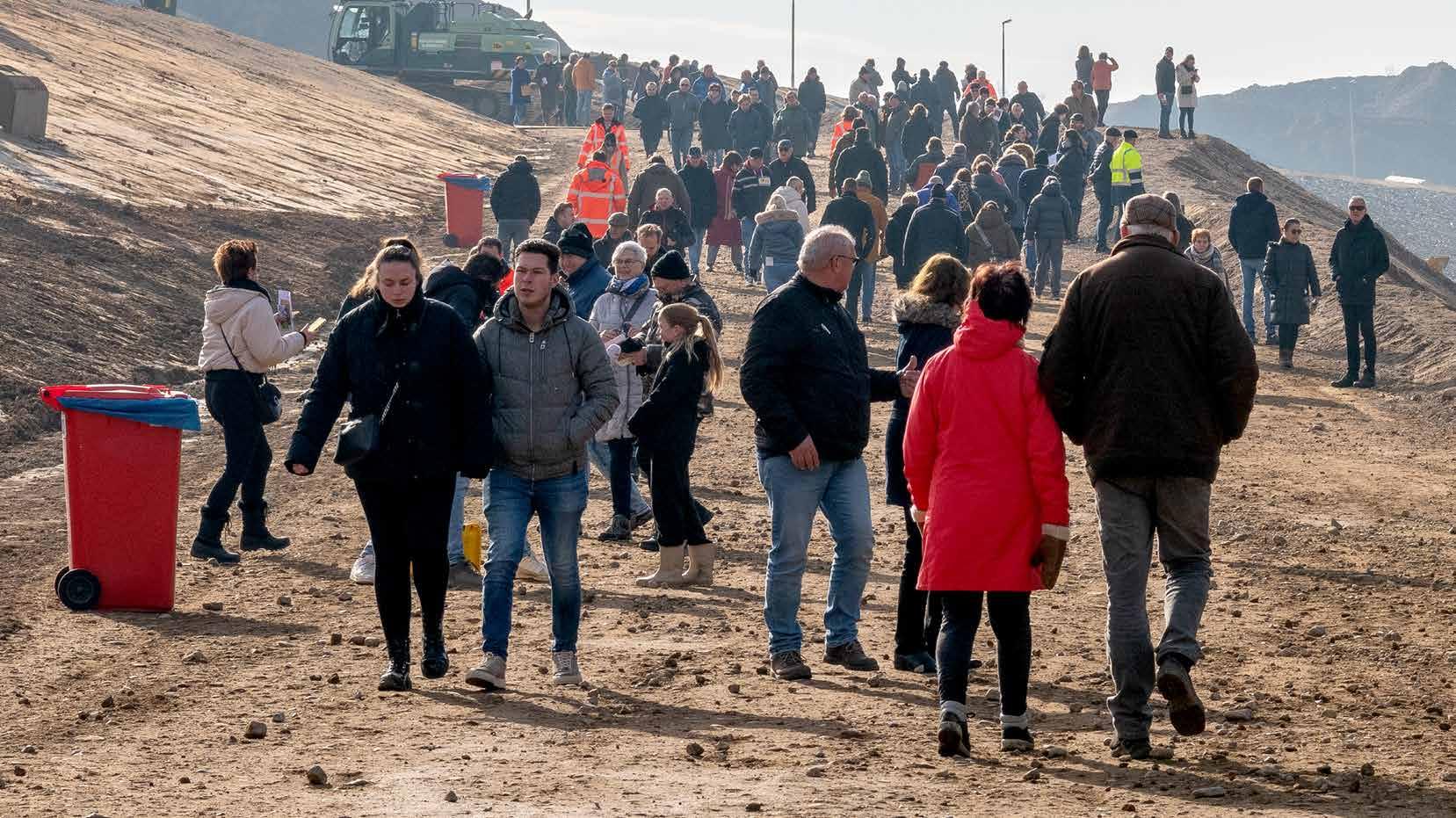
even stopten om de bodem aandachtig te bekijken. Voor sommigen roept het kanaal bijzondere herinneringen op. Verschillende voorbijgangers deelden hun ervaringen over het ongewone tafereel: een leeg Julianakanaal. Ook de lokale en landelijke media kwamen wekelijks kijken. In februari stelde Rijkswaterstaat en Van den Herik eenmalig het kanaal open voor publiek. Ruim 3000 mensen maakten tijdens een succesvolle open dag een wandeling over de bodem. Van den Herik heeft daarnaast vele groepen studenten en geïnteresseerden rondgeleid op het terrein om ze warm te maken voor het werk in de mooie waterbouwsector.
Suzanne Maas, Rijkswaterstaat, Robin Koorengevel, Van den Herik
Nog geen abonnee? Neem nu een abonnement op Civiele Techniek (papier of digitaal) en ontvang twee nummers gratis! Mail naar info@civieletechniek.net
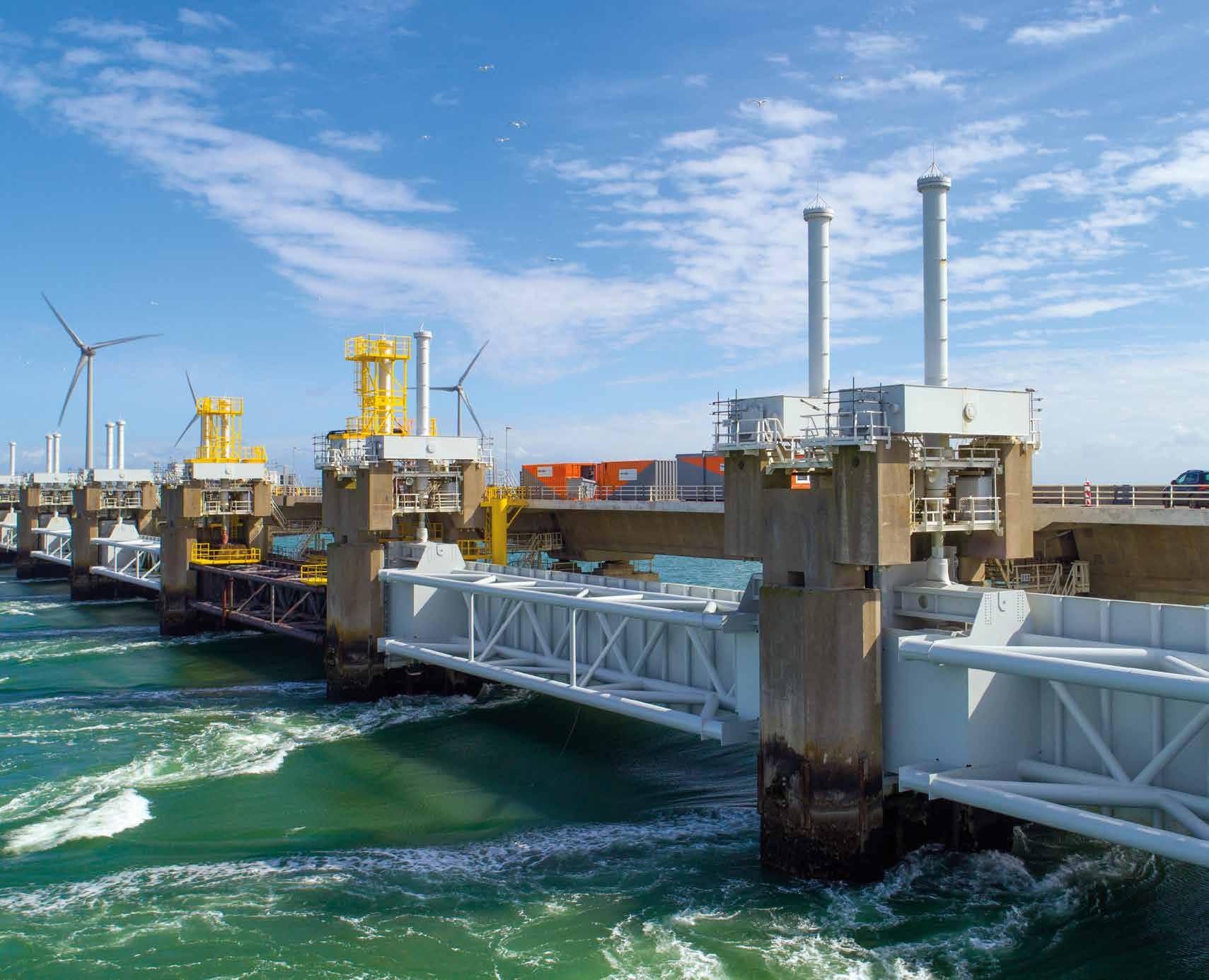
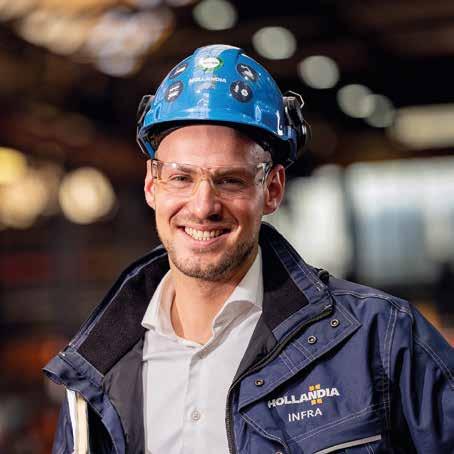
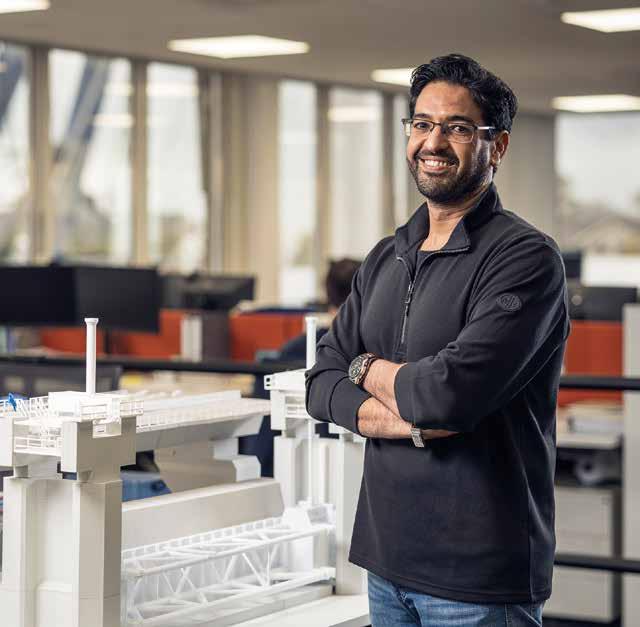
Hollandia realiseert bruggen, sluizen, stuwen, (stormvloed)keringen en specials. Van ontwerp, fabricage en montage tot aan renovatie en (groot) onderhoud op het gebied van: Staalconstructies, WTB, E&I en Hydrauliek. Dit maakt Hollandia tot een ijzersterke strategische partner binnen de Vervanging & Renovatie opgave van de Nederlandse infrastructuur. Zo helpen we Nederland (hoogwater)veilig en bereikbaar te houden.
Sluit je aan! Kijk op werkenbijhollandia.nl of hollandia.biz
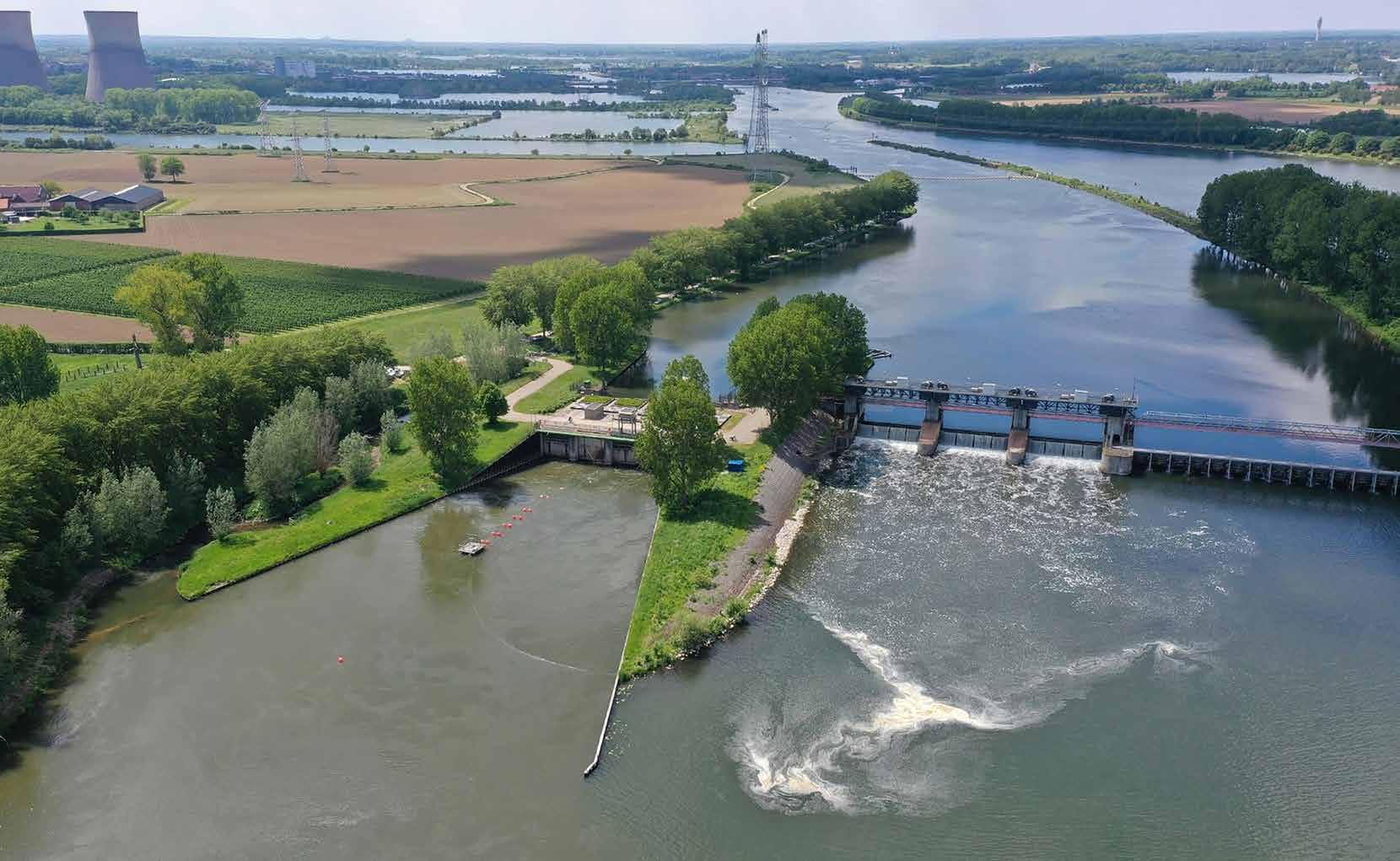
(Foto: Rijkswaterstaat - Flying Eye)
Zo’n honderd jaar geleden heeft Rijkswaterstaat op zeven locaties stuwen en sluizen gebouwd, zodat de Maas beter bevaarbaar werd. Dit was nodig om Nederland met schepen te kunnen voorzien van Limburgse steenkool. De stuwen zijn dus onze ‘grande dames’.
Stuwen hebben niet alleen effect op de scheepvaart, maar ook op de waterhuishouding. Zo zorgen ze in tijden van droogte dat landbouw en natuur in het Maasgebied niet zo snel verdroogt. Ook blijft er heel lang water beschikbaar voor de industrie en elektriciteitscentrales. Op twee locaties zijn er waterkrachtcentrales die groene stroom kunnen opwekken. En uiteraard zorgen de stuwen ervoor dat ook ’s zomers voldoende voorraad aanwezig is voor drinkwater.
Voor de riviernatuur van de Maas zijn de stuwen geen positieve ontwikkeling; bijvoorbeeld doordat de stroming een stuk minder is en het feit dat stuwen obstakels zijn voor de vismigratie. Hier is wel aandacht voor.
Onderhoud korte en lange termijn
Naast regulier cyclisch onderhoud is er de afgelopen en komende jaren sprake van omvangrijk groot onderhoud. Voorbeelden hiervan staan in het kader. Dan gaat het om werktuigbouwkundig, civieltechnisch en elektrotechnisch onderhoud. Maar ook is
Techniek van de stuw
Een stuw is een afdamming en houdt het water in de Maas ‘vast’. Schuiven in de stuw kunnen open om meer of minder water door te laten. In Nederland hebben stuwen vaak een Poirée-deel en een Stoney-deel.
Het Poirée-gedeelte bestaat uit stalen schuiven die boven elkaar, tussen stalen jukken, zitten. De jukken zijn de staanders die op de bodem van de Maas staan. Afhankelijk van de afvoer van de Maas kunnen er rijen schuiven worden verwijderd tot dit deel van de stuw, inclusief jukken, geheel verwijderd is. Dan is de stuw gestreken en kan de scheepvaart over dit deel van de stuw varen. Het Stoney-gedeelte van de stuw is het hogere deel met betonnen pijlers. Hierin zit het mechanisme waarmee de schuiven worden ingesteld. Deze torens blijven altijd staan.
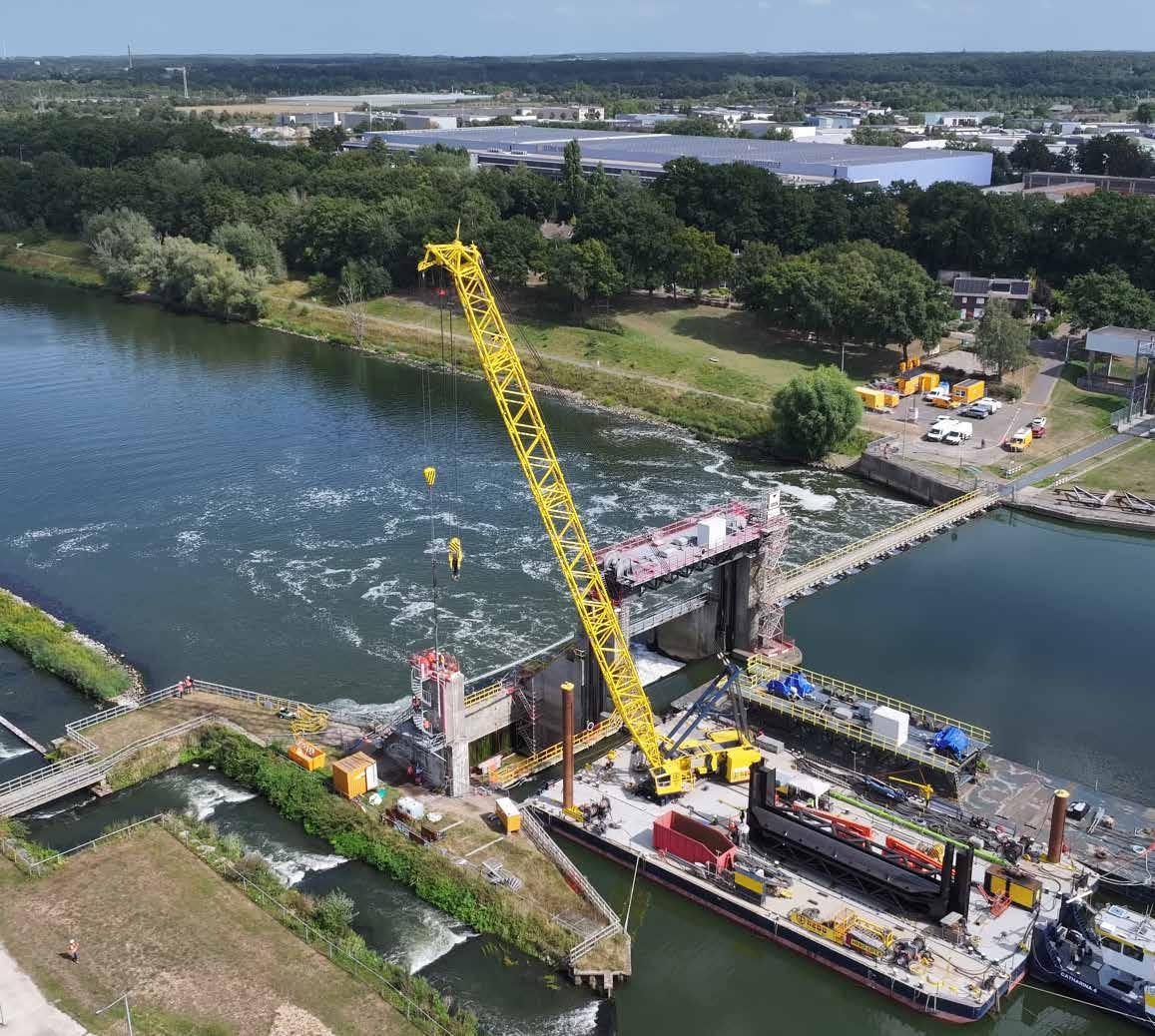
onderhoud nodig aan de bodem en oevers rondom de stuwen.
Dit grote onderhoud is nodig om ervoor te zorgen dat de komende jaren de stuwen betrouwbaar hun werk kunnen blijven doen, zonder grote risico’s op calamiteiten.
Een grote uitdaging voor het onderhoud is datgene wat niet bekend is. We weten heel veel dingen wel. Maar een aantal onderdelen zitten onder water, waarvan de staat niet altijd bekend is. En ook de kwaliteit van het gebruikte (100 jaar oude) beton is iets wat nog goed in beeld moet worden gebracht. Daarvoor worden komende tijd boringen uitgevoerd. Belangrijk is het om samen met de markt een complex of onderdeel goed te onderzoeken. Om zo samen de beste ideeën te vinden. Bijvoorbeeld op het gebied van duurzaamheid.
Terwijl de stuwen in een stabiele conditie moeten blijven, kijkt Rijkswaterstaat ook naar te toekomst. Binnenkort start de planvorming van de Stuwen van de Toekomst. Hierin geven we antwoorden op vragen als: wat moet een stuw kunnen presteren in de toekomst; hoe zien die er dan uit en in welke volgorde en planning moeten ze worden aangepakt? Hierbij rekening houdend met zaken als klimaat, ecologie, beschikbaarheid van data, en arbo.
Werk aan de winkel dus, zowel voor Rijkswaterstaat als voor alle waterbouwers.
Zo blijven we investeren in een betrouwbare, veilige en toekomstbestendige infrastructuur voor Nederland. Ook op de Maas.
Teun Ruijters, Projectdirecteur Rijkswaterstaat Zuid-Nederland
Onderhoud stuwen
Al een aantal jaren wordt gewerkt aan groot onderhoud aan de stuwen in Borgharen, Linne, Roermond, Belfeld, Sambeek Grave en Lith. Dit zijn projecten die miljoenen kosten en met name tijdens de laagwaterperiode kunnen worden uitgevoerd. Die periode loopt grofweg van april tot oktober. Een greep uit de werkzaamheden:
• Bij Borgharen is de bodem en scheepvaartopening hersteld. Dit is de grootste opening in de stuw. Een aanvaring van vorig jaar oktober zorgde ervoor dat dit jaar opnieuw de bodem moest worden hersteld.
• In Linne worden onder meer alle schuiven van de Stoney vervangen en worden de bedieningsbruggen opgeknapt. Dat wordt over drie jaar verdeeld, dit is het tweede jaar.
• In Roermond zijn in 2023 de Poirée-jukken vervangen waarbij een tijdelijke dam is aangelegd. Daar wordt dit jaar onder andere een nieuwe stuwkraan geïnstalleerd.
• Bij Belfeld worden de bedieningsbruggen verwijderd om te worden geconserveerd. In de bedieningsbruggen zit het mechanisme verwerkt waarmee de vernieuwde Stoney-schuiven straks kunnen worden ingesteld. Dit gebeurt vanuit de bediencentrale in Maasbracht.
• Bij stuw Sambeek is een deel van die Stoney schuiven al vervangen, het volgende deel komt volgend jaar aan bod.
• Stuw Grave heeft vorig jaar 20 nieuwe jukken en 60 nieuwe schuiven gekregen. Dit jaar worden verschillende aandrijfwerken vervangen.
• Bij stuw Lith zijn de besturingssystemen vorig jaar vervangen en diverse zaken hersteld.

Arcadis Nederland B.V. Piet Mondriaanlaan 26 Postbus 220 3800 AE Amersfoort
Tel. +31 (0)88 4261 261 info@arcadis.com www.arcadis.com
ArcelorMittal
Mannesmannweg 5 4794 SL Heijningen
Postbus 52, 4793 ZH Fijnaart
Tel. +31 (0)88 0083 700 www.arcelormittal.com/projects
B.V. Aannemingsbedrijf De Klerk Beatrixhaven 43 4251 NK Werkendam
Tel. + 31 (0) 183 508666 info@deklerkbv.nl www.deklerkbv.nl


Baars BV Rivierdijk 276 3361 AV Sliedrecht
Tel. 31 (0) 184 415 566 rental@baarsbv.com www.baarsbv.com

edilon)(sedra BV Nijverheidsweg 23 2031CN Haarlem
Tel. 023-531 95 19 bouw@edilonsedra.com www.edilondex.nl
Beens Groep Nylonstraat 16 8281 JX Genemuiden www.beensgroep.nl
Funderingstechnieken Verstraeten BV Brugsevaart 6 4501 NE Oostburg info@fundex.nl www.fundex.nl

Boskalis Nederland Rosmolenweg 2 3356 LK Papendrecht
Tel. +31 (0)78 20 65 000 www.boskalis.com/nederland
Deep B.V.
Johan van Hasseltweg 39-D 1021 KN Amsterdam
Tel: +31 (0)20 634 3676 sales@deepbv.nl www.deepbv.nl
GMB Beheer
Postbus 2 4043 ZG Opheusden
Tel. +31 (0)88 - 88 54 000 www.gmb.eu
HKV lijn in water B.V. De kennisondernemer voor water & veiligheid Botter 11-29, 8232 JN Lelystad
Tel. +31 (0)320 294242 info@hkv.nl www.hkv.nl
Hollandia BV Schaardijk 23 2921 LG Krimpen aan den IJssel Tel. 0180 540 540 info@hollandia.biz www.hollandia.biz
Martens en Van Oord Damweg 50 4905 BS Oosterhout
Tel. +31 (0)162 47 47 47 www.mvogroep.nl /company/martens-en-van-oord

NETICS BV Edisonweg 10 - 300 2952 AD Alblasserdam info@netics.nl www.buildingwithnature.com
Oceaa Pesetastraat 40, 2991XT Barendrecht info@oceaa.nl Tel. +31 85 048 05 00 www.oceaa.nl
Havenbedrijf Rotterdam N.V. Postbus 6622
3002 AP Rotterdam
Tel +31 (0)10 252 10 10 SecretariaatPD@portofrotterdam.com www.portofrotterdam.com
Solmax Netherlands B.V. Europalaan 206 7559 SC Hengelo ezengerink@solmax.com www.solmax.com
Sweco Nederland
De Holle Bilt 22
3732 HM De Bilt
Tel. +31 (0)88 811 66 00 info@sweco.nl www.sweco.nl
TAUW bv Hoofdkantoor: Handelskade 37 Deventer, 7417 DE Ruth Nijkamp (recruiter) Tel. 06-11791891 recruitment@tauw.com
Van den Herik Sliedrecht
Industrieweg 24
3361 HJ Sliedrecht
Tel. +31 (0)184 - 412881 sliedrecht@herik.nl www.herik.nl
Van Oord Schaardijk 211 3063 NH Rotterdam
Tel. +31 (0)88 8260000 info@vanoord.com www.vanoord.com
Svašek Hydraulics Kratonkade 23
3024 ES Rotterdam
Tel. +31 (0)10 467 13 61 www.svasek.nl
Trewatin B.V. Achtmaalseweg 152a 4881AX Zundert info@trewatin.nl www.trewatin.nl
WSP Nederland BV
Tramsingel 2 4814 AB Breda
Tel. +31-88-9102000 www.wsp.com/nl-nl
2024
Nog geen abonnee? Neem nu een abonnement op Civiele Techniek (papier of digitaal) en ontvang twee nummers gratis! Mail naar info@civieletechniek.net
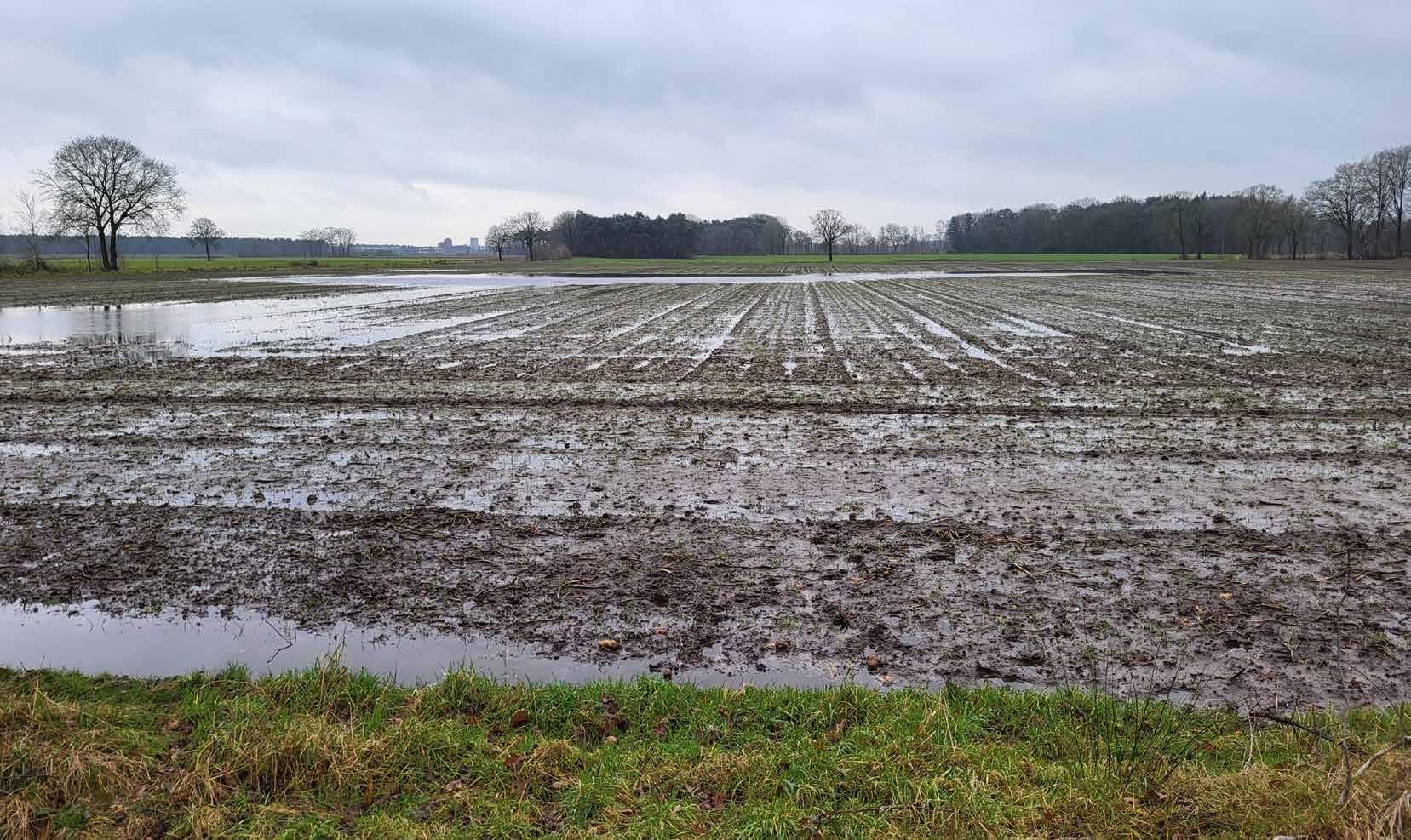
Twee onderwerpen halen voortdurend het nieuws: oorlogsgeweld en natuurgeweld. Meerdere oorlogen duren voort, ondanks afwisselend als historisch, vleiend of beschamend aangeduide toppen. Overstromingen, bosbranden en hittegolven veroorzaken wereldwijd enorme schade, steevast in verband gebracht met klimaatverandering. Het verband tussen klimaatverandering en conflict wordt echter zelden gelegd. Onterecht.
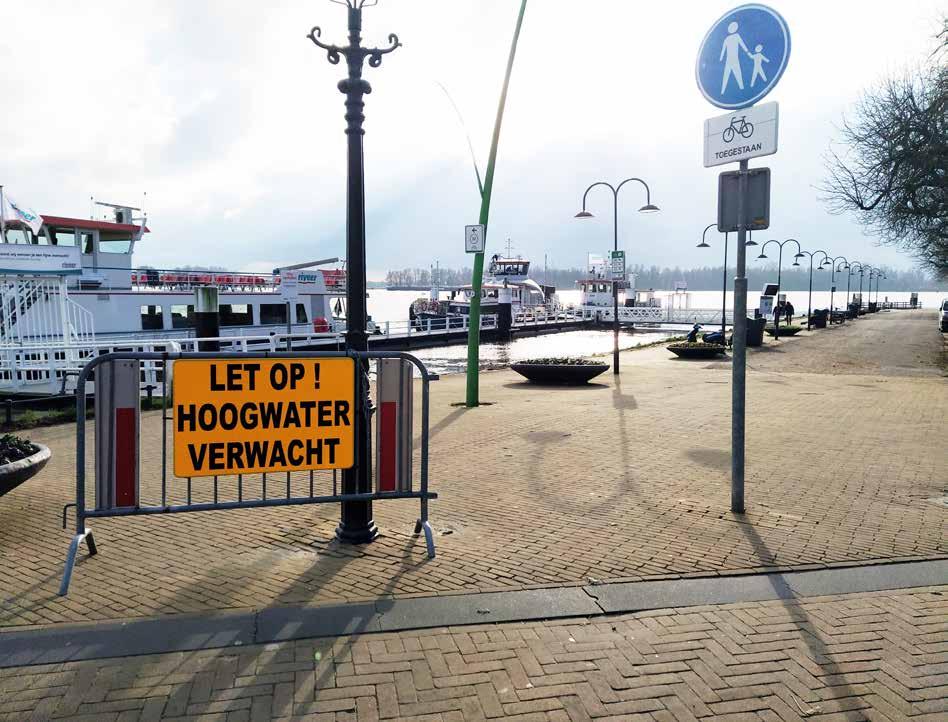
Dat verband wordt duidelijk als water wordt toegevoegd als verbindend element. Neem de kwetsbare kusten. Extreme regenval landinwaarts enerzijds en door stormen opgestuwd water vanuit zee anderzijds maken kustgebieden kwetsbaar en onleefbaar. Bevolkingsgroei, uitdijende kuststeden en verdwijning van natuurlijke kustbescherming doen risico’s verder toenemen. Groeiende migratiestromen en instabiliteit zijn het gevolg. Inzet van krijgsmachten bij rampenbestrijding weerhoudt ze van hun kerntaak: afschrikking van agressors.
Aanhoudende droogte en ontoereikend waterbeheer putten grondwaterbassins uit, vaak in gebieden waar bevolkingsgroei, sociale ongelijkheid en zwak bestuur bestaan. Het leidt tot sociale onrust, migratiestromen en interne conflicten. Het trekt extremistische en criminele organisaties aan. Mondiale en regionale machten zien kansen om toegang te krijgen tot aanwezige grondstoffen. Sub-Sahara Afrika is de spreekwoordelijke kanarie in de kolenmijn. Europa ziet
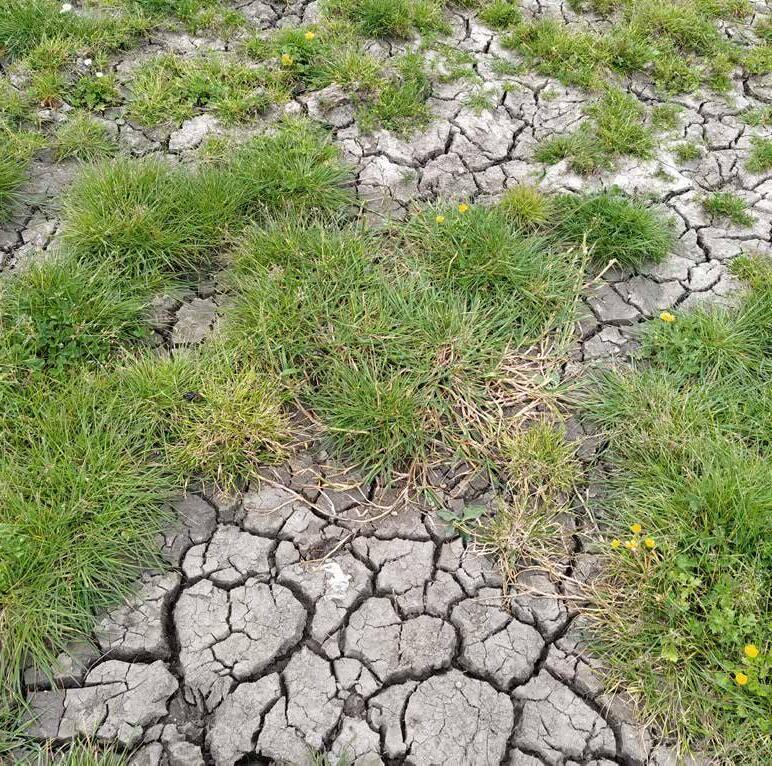
de instabiliteit in haar periferie toenemen, maar kan of wil steeds minder passend antwoord geven. China en Rusland spelen daar behendig op in.
Wereldwijd wordt gewerkt aan dammen om de grote rivieren te controleren en energie te verkrijgen. Bovenstroomse landen krijgen zo invloed op bene-
denstroomse landen. NAVO-bondgenoot Turkije bouwt dammen in de Eufraat en Tigris en raakt daarmee direct Irak en Iran. The Renaissance-dam in Ethiopië beïnvloedt de Nijl, van existentieel belang voor Egypte. In Tibet, waar de meeste, grote Aziatische rivieren ontspringen, bouwt China dammen en krijgt zo controle over bijvoorbeeld de Indus, Ganges en Mekong. Opwarming en verdwijnende gletsjers doen waterschaarste toenemen en doet landen inzetten op meer controle. Water wordt zo een machtsmiddel, recent nog ingezet door India tegen Pakistan bij een conflict in Kashmir.
De oceanen en zeeën vormen de blauwe long van onze planeet. Zij leveren elke tweede teug adem. Hun opname van CO2 houdt de temperatuur op aarde graden lager. Stromingen en circulaties zorgen voor verdeling van warmte en reguleren zo klimaten en fenomenen zoals de moessons. Die functies staan door vervuiling en menselijke activiteiten onder druk: minder opname van CO2, minder aanleveren van O2 en afname van oceaancirculaties. Moessons worden grimmiger, poolkappen en permafrost smelten. Het tot stilstand komen van de Atlantische oceaancirculatie kan echter ook zo maar leiden tot uitdroging van zuidelijk Europa, dichtvriezen van noordelijk Europa en een heel nat Nederland. Tegenover de zeespiegelstijging en ‘verdrinken’ van eilandstaten staat echter elders betere toegankelijkheid van grondstoffen, juist in een tijd dat grootmachten en regionale machten daarop jacht maken. Zij claimen steeds meer zeegebied en
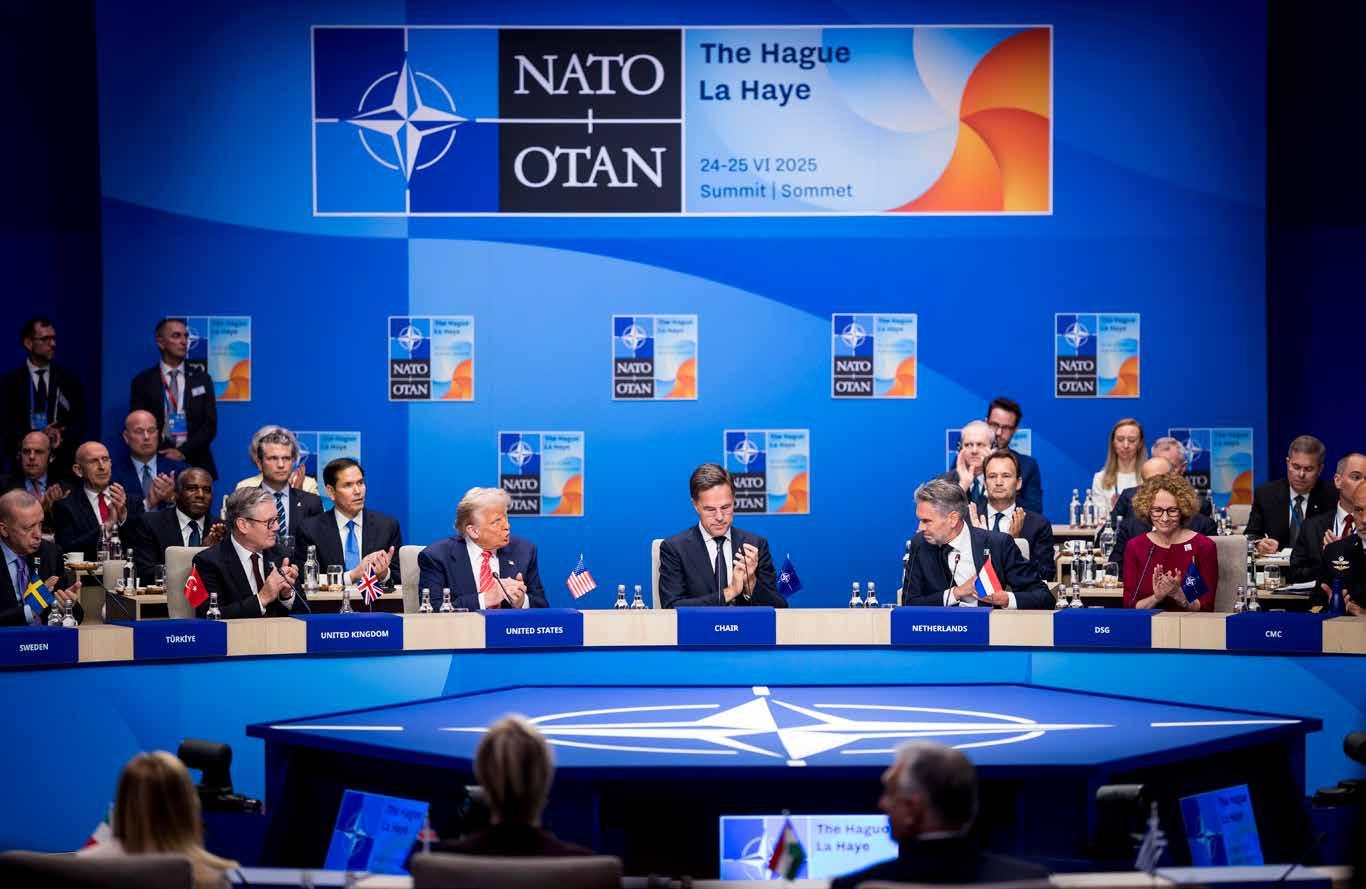
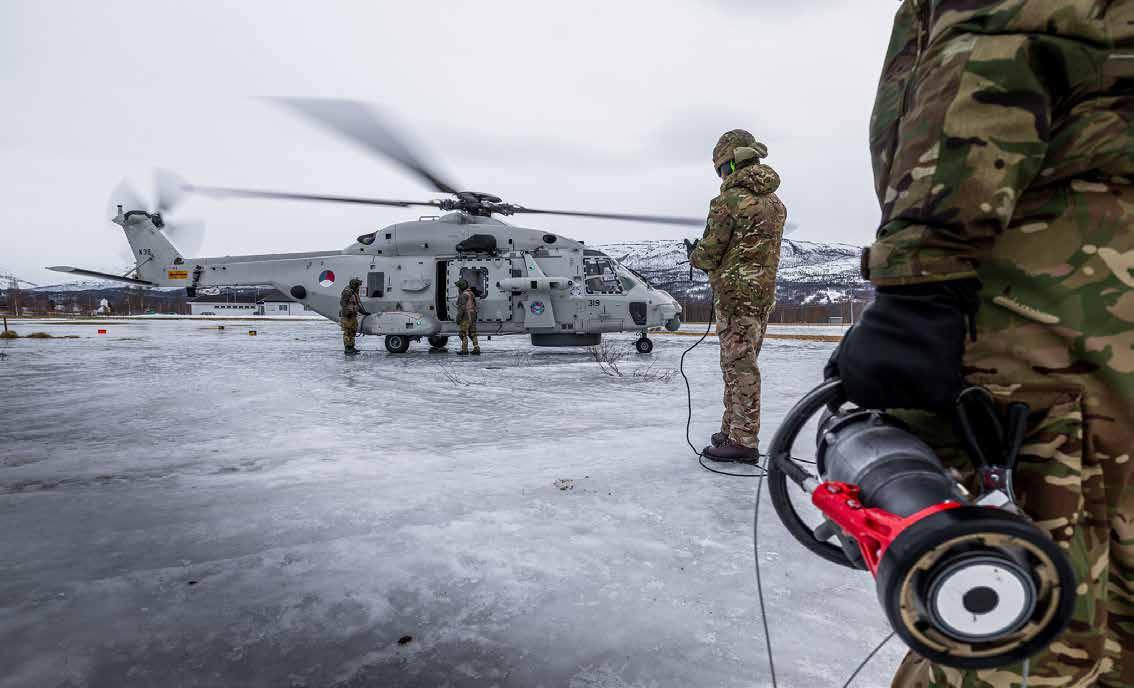
De jacht op grondstoffen in kwetsbare gebieden verdringen een mondiale aanpak van effecten van klimaatverandering naar de achtergrond (Foto: Ministerie van Defensie)
weerleggen het internationaal zeerecht. Oceanen en zeeën worden zo strijdtoneel in plaats van onderwerp van collectieve zorg.
De effecten van klimaatverandering zijn dus overal voelbaar. Zij raken direct en indirect mondiale welvaart, welzijn en stabiliteit. De na de Tweede Wereldoorlog ingerichte internationale rechtsorde moest dat juist garanderen. Aangevoerd door de Verenigde Naties, met de VS als hoeder, zou de rechtsorde voor alle landen, groot en klein, machtig en zwak, soevereiniteit garanderen en aansluiting tot het mondiale, economische stelsel faciliteren. Voor eventuele geschillen bestonden arbitragemogelijkheden. Het bleek in de praktijk niet perfect, maar zorgde wel aantoonbaar voor mondiale groei.
Die orde staat nu onder druk. Grote landen laten hun macht gelden. Ze beogen invloedsferen, jagen naakte eigenbelangen na, leggen arbitrage naast zich neer en dwingen buurstaten met economische en/of militaire dwang in het gareel. Onderling gaan ze de confrontatie aan. De VS acteert niet langer als ‘universele politieagent’, de VN oogt tandeloos. Klimaattoppen bereiken steeds minder resultaat. Zo gaat de kans verloren om verantwoord en gecoördineerd klimaatverandering te beteugelen en mondiale leefbaarheid te garanderen.
Na decennialang uitbesteden van energie (aan Rusland), productie (aan China) en veiligheid (aan de VS), moet Europa op eigen benen gaan staan. In een tijd
dat grootmachten Europa niet zien staan, Europa in technologisch opzicht achterblijft, informatie gedomineerd wordt door lastig te reguleren Big Tech en transnationale criminaliteit rechtstaten aantast, is dat geen sinecure. Het vraagt om een zelfbewuster Europa, met een eenduidig buitenland- en veiligheidsbeleid, gebaseerd op de internationale rechtsorde, waarin dilemma’s tussen waarden en belangen worden benoemd en standpunten van potentiële partners zoals India en Brazilië erkend. De beoogde Europese inclusiviteit bijt echter met innovatiekracht en slagvaardigheid. Dus heeft Europa kopgroepen nodig: groepjes landen die op een onderwerp het voortouw nemen.
Voor Nederland, met zijn internationale oriëntatie en sterke kennisbasis, biedt dit kansen. Nederland kent immers niches waarmee ze een leidende rol kan spelen. Dat is goed voor Nederland en voor Europa. Zo’n Nederlandse niche betreft ‘alles wat met water te maken heeft’, van scheepsbouw tot waterbeheer, van energie tot logistiek, van marine tot jachtenbouw. Het sterker maken van die niche-familie, in een ecosysteem van wetenschap, kennisinstituten, industrie (van start-ups tot grown-ups), gebruikers en investeerders, op basis van onderling vertrouwen en rolvastheid, vraagt om een whole-of-society benadering en politieke steun. Dat draagt bij aan welvaart, welzijn en stabiliteit, schraagt de internationale rechtsorde en helpt conflicten voorkomen. Dat geeft vervolgens ruimte om aandacht te geven aan existentiële, mondiale dreigingen, klimaatverandering voorop.
Ben Bekkering, Vice-admiraal bd. Voormalig Hoofd Permanente Militaire Vertegenwoordiging bij de NAVO en EU
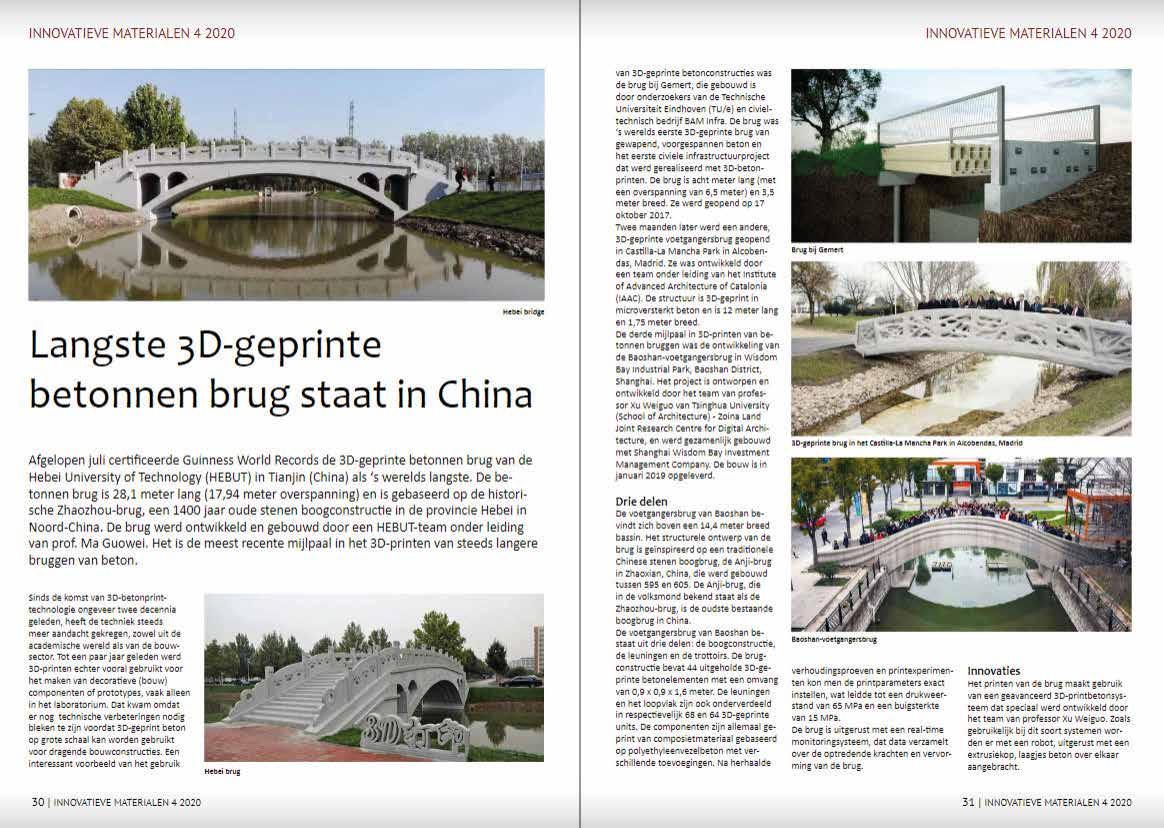
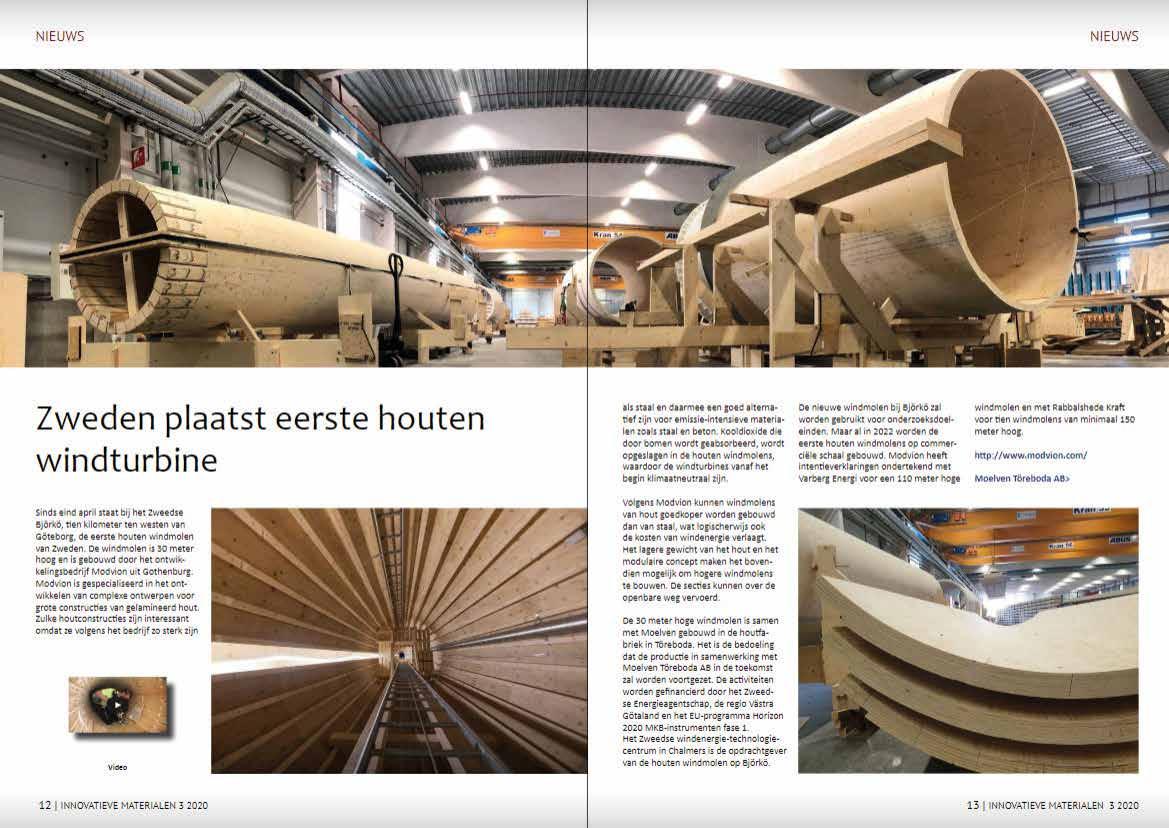
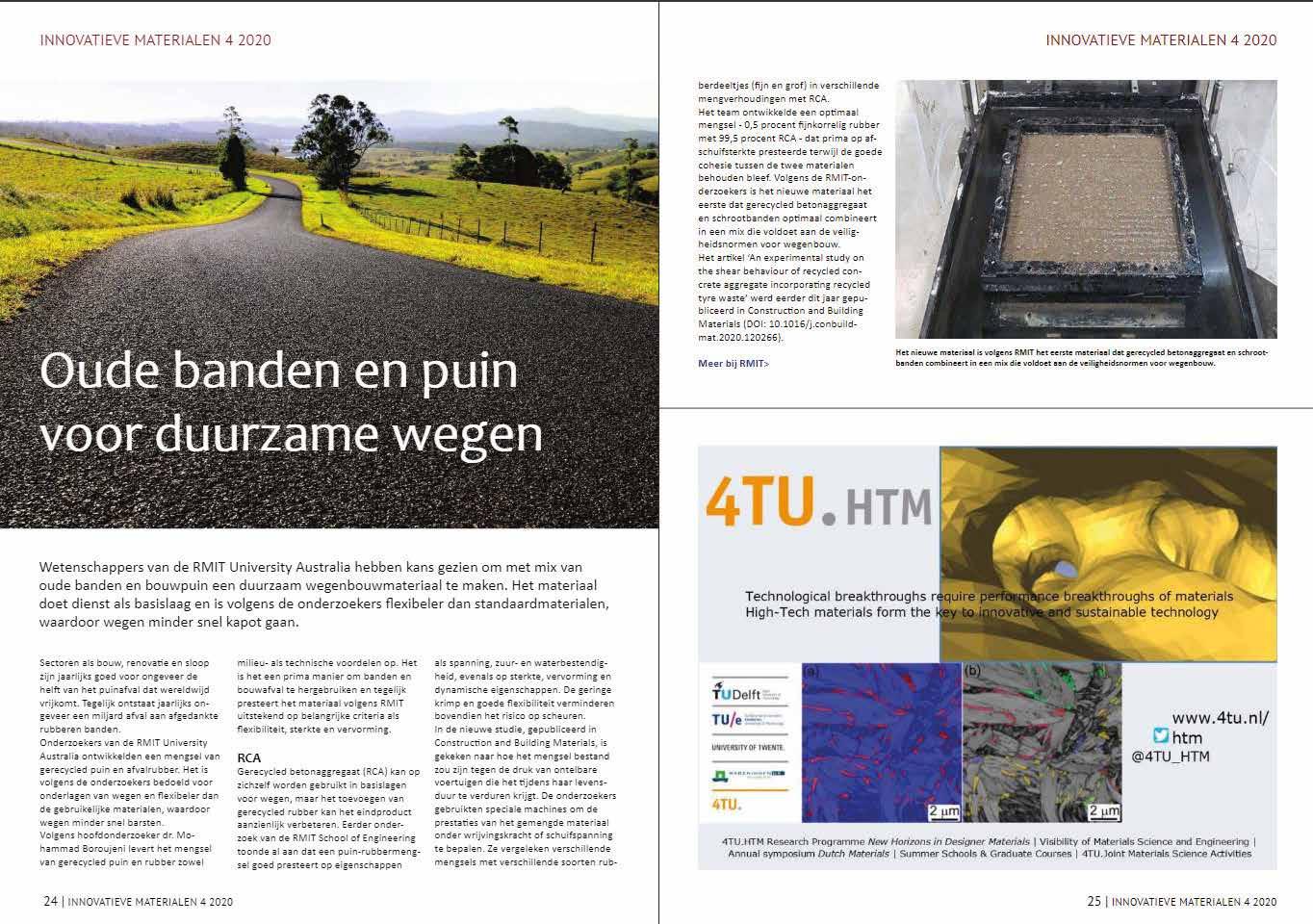
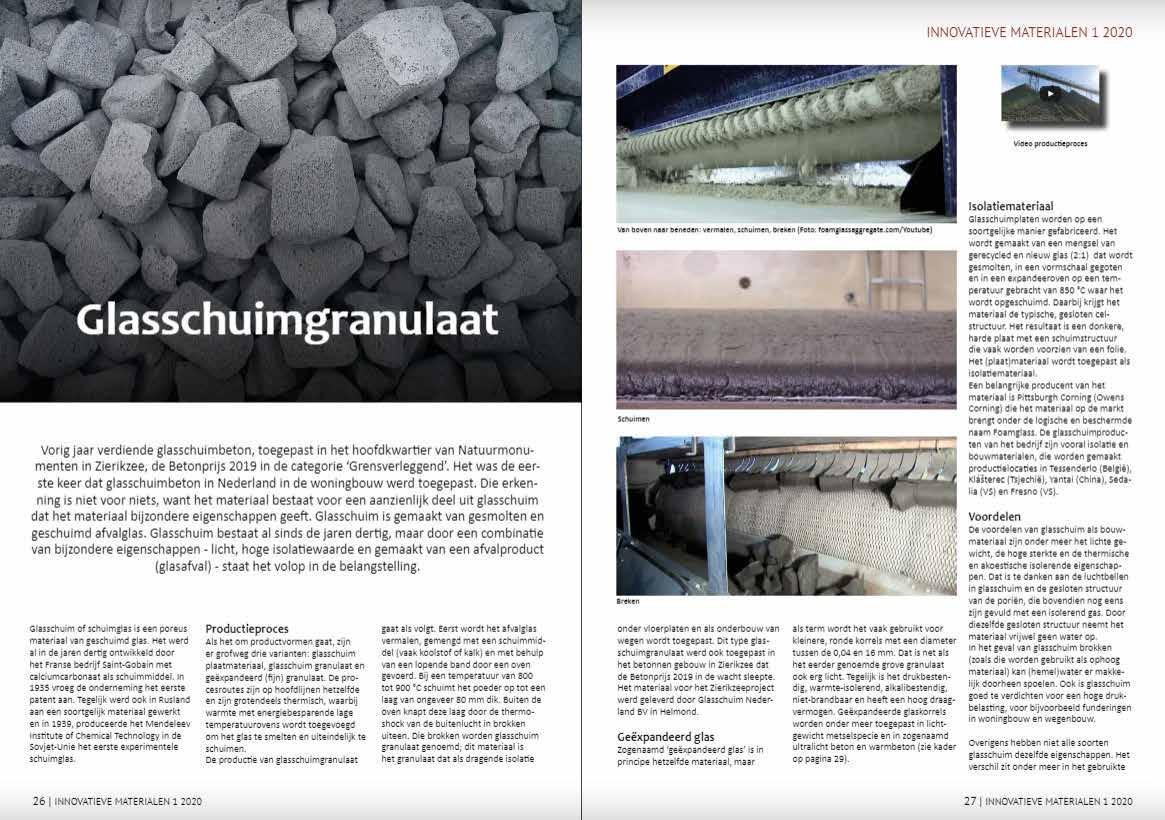
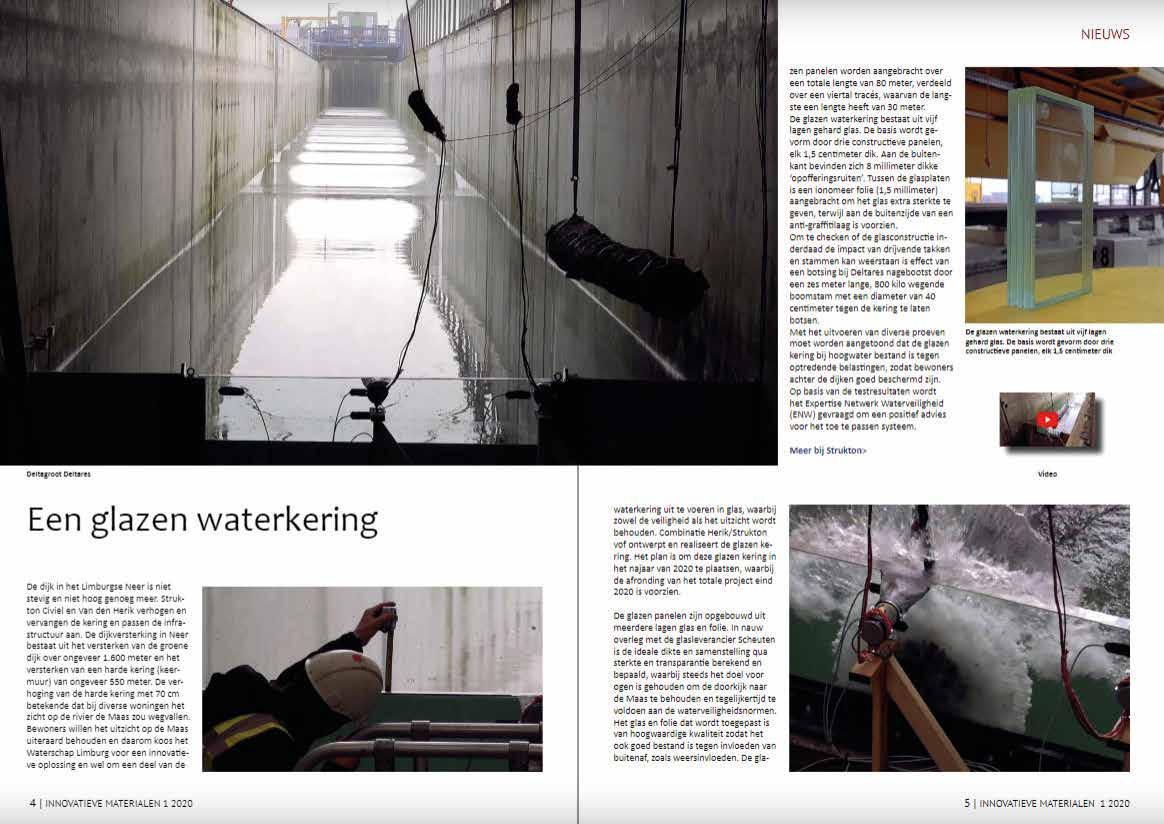
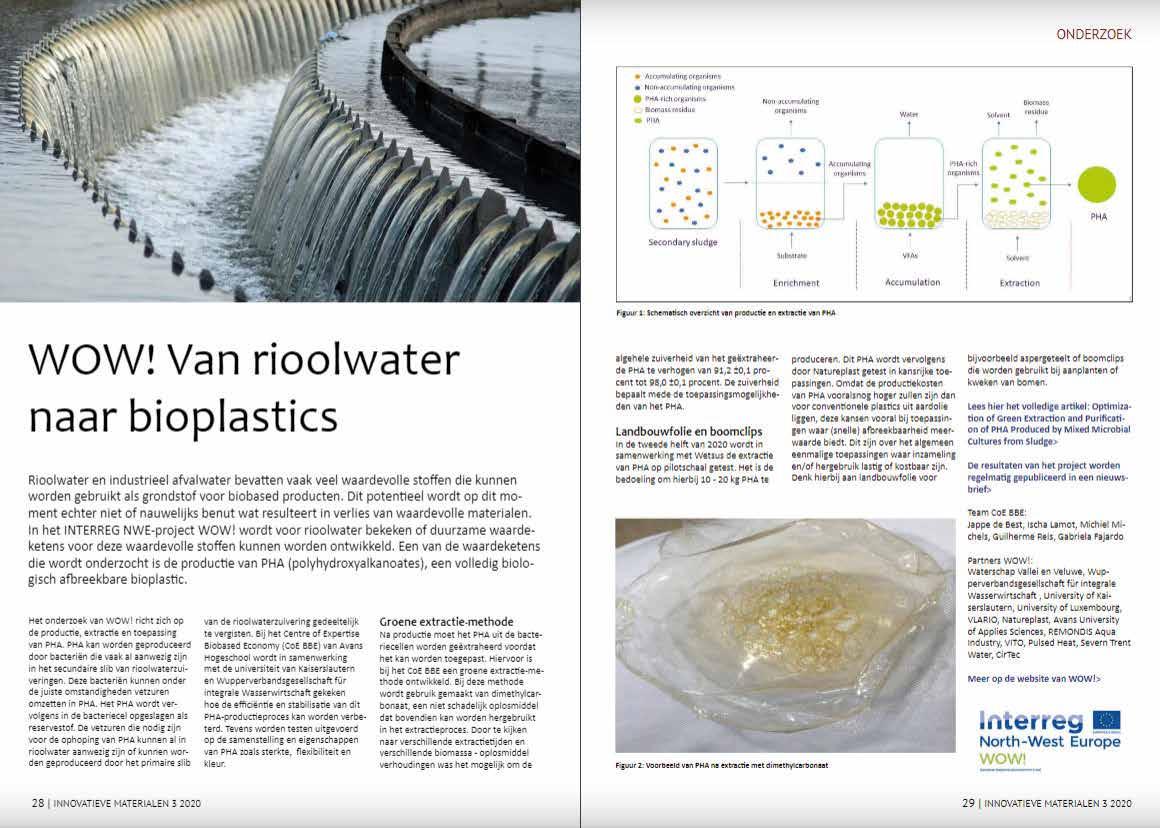
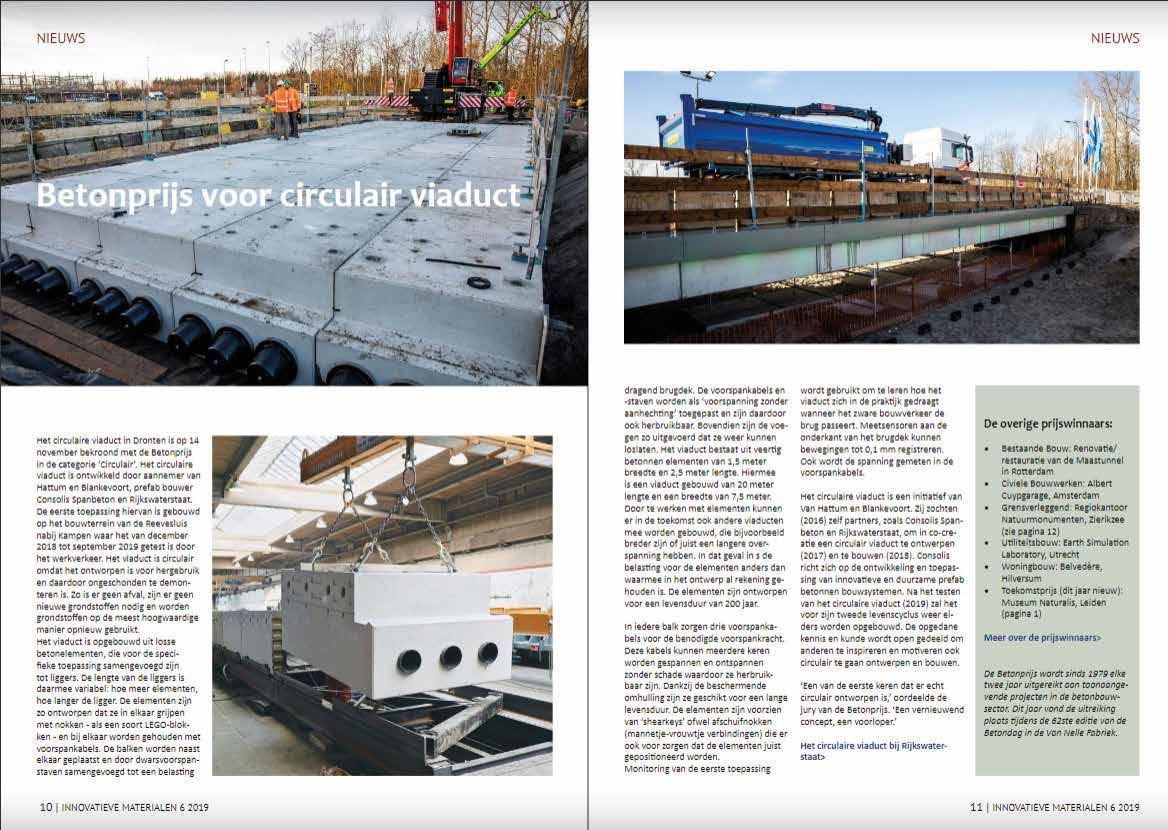
Materiaalkeuze wordt ook voor de GWW steeds belangrijker. In de eerste plaats stellen opdrachtgevers steeds scherpere eisen aan duurzaamheid en milieuprestaties (zoals carbon footprint en cradle to cradle). En daarnaast leggen grote, opdrachtgevende partijen meer en meer verantwoordelijkheid bij de markt. Precies daar liggen kansen. Door te kiezen voor slimme, duurzame innovatieve materialen is het voor marktpartijen steeds beter mogelijk zich te onderscheiden. Innovatieve Materialen kan daarbij helpen.
Innovatieve Materialen gaat over materiaalinnovatie in het algemeen, maar is speciaal gericht op de civieltechnische sector, bouw, architectuur en design.
Circulariteit
Innovatieve Materialen besteedt veel aandacht aan ontwikkelingen op het gebied van duurzame, innovatieve materialen en/of de toepassing daarvan in bijzondere constructies. Maar ook circulariteit, milieufootprint en hergebruik zijn regelmatig terugkerende onderwerpen.
Verspreiding
Het tijdschrift wordt verspreid onder civieltechnici, ingenieurs- en adviesbureaus, uitvoerende en opdrachtgevende organisaties in de bouw en GWW, plus verspreiding via het intranet van Rijkswaterstaat.
De lezers zijn overwegend van WO/HBO+ niveau.
Innovatieve Materialen is een digitaal tijdschrift. Het wordt als zodanig verspreid via ons eigen platform, maar ook via onze partners.
(zie www.innovatievematerialen.nl)
Video
Voordeel van die digitale vorm is bovendien dat er allerlei informatie in wordt gepresenteerd, die niet of moeilijk in een papieren tijdschrift kan worden opgenomen, zoals rapporten, dissertaties en videomateriaal.
Innovatieve Materialen verschijnt zowel in het Nederlands als in de Engelse taal.
Interesse in een gratis en vrijblijvend kennismakingsexemplaar?
Stuur een mailtje naar: info@innovatievematerialen.nl
Innovatieve Materialen
SJP Uitgevers
Kalkhaven 53 4201 BA Gorinchem tel. (0183) 66 08 08 www.innovatievematerialen.nl
Noodmaatregelen kunnen tijdens een hoogwatersituatie worden ingezet om een dijkdoorbraak te voorkomen, kritieke infrastructuur te beschermen of een dijkdoorbraak te stabiliseren. Noodmaatregelen maken het mogelijk de dijk lokaal te versterken waar deze minder sterk is of waar de belasting hoger uitvalt dan verwacht. Nu de verwachting is dat de belasting op dijken door klimaatverandering toeneemt en tevens de geopolitieke situatie verandert, is het belangrijk om goed voorbereid te zijn op onverwachte situaties.
Onderzoek toont aan dat de belangrijkste succesfactor voor het inzetten van een noodmaatregel een goede voorbereiding is. Bij hoogwater is de reactietijd voor het inzetten van noodmaatregelen beperkt, omdat schade aan de dijk zich snel ontwikkelt. Het verkorten van de reactietijd van een noodmaatregel is mogelijk door vooraf scenario’s te analyseren waarbij de succeskans het hoogst is. Belangrijke aspecten hierbij zijn onder andere de te verwachte waterstand en de benodigde kerende hoogte. Parameters die de reactietijd van een noodmaatregel mede bepalen zijn besluitvorming, commandovoering en logistieke factoren, zoals de afstand van de opslag tot de inzetlocatie. De uitvoeringssnelheid op locatie hangt sterk af van hoe goed het personeel getraind is.
BresDefender
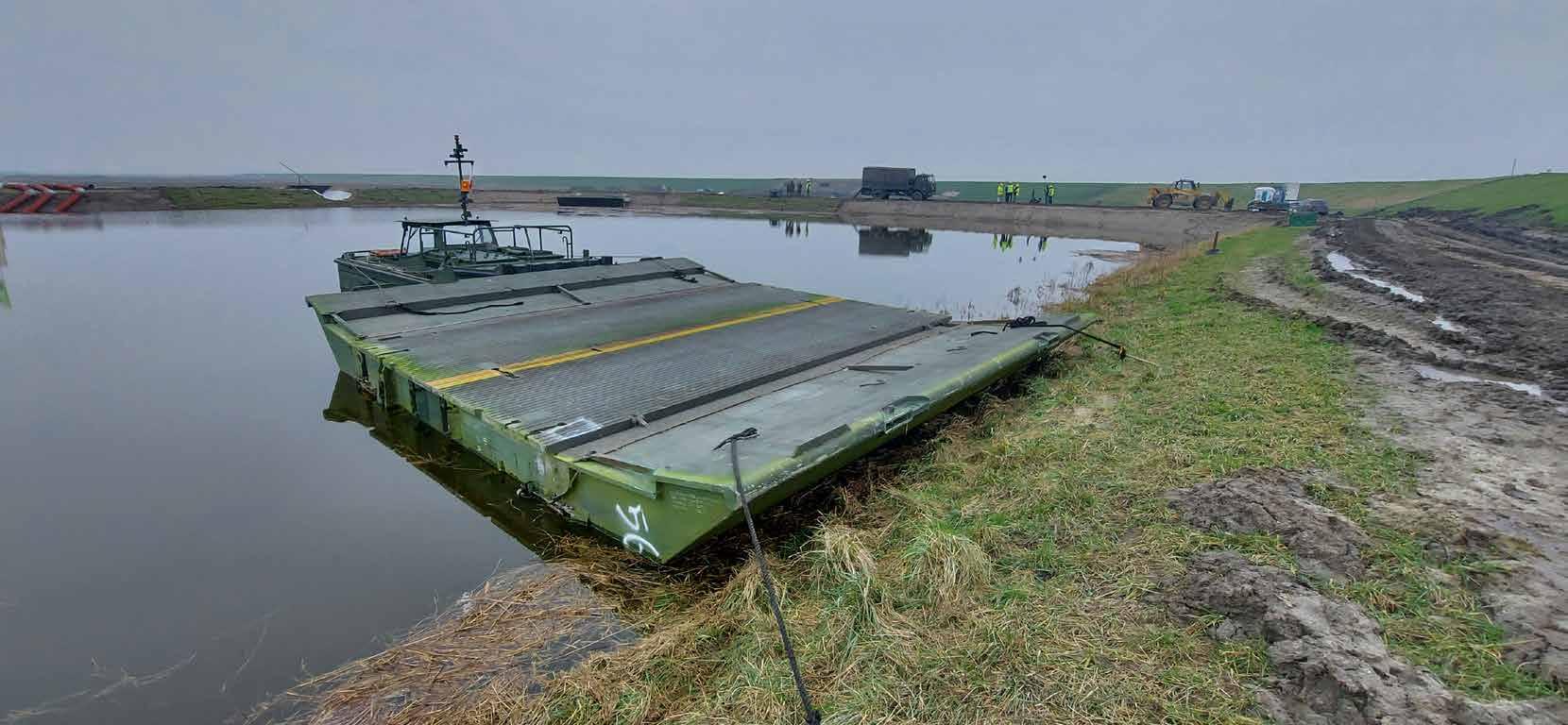
Een mogelijke noodmaatregel om een beginnende dijkdoorbraak te voorkomen of te vertragen is de BresDefender (figuur 1). Dit is een aangepast militair ponton dat tegen een dijk kan worden afgezonken om zo de stroming door een beginnende bres grotendeels tegen te houden. Hierdoor ontstaat de mogelijkheid om aanvullende maatregelen te treffen die de dijk lokaal versterken gedurende de hoogwaterperiode. Het concept van de BresDefender is onderzocht binnen Flood Proof Holland, Delft, en in de Hedwige Prosperpolder, op de grens van Nederland en België. In deze experimenten is het effect van een ondoorlatende constructie op de stromingen over en door de dijk onderzocht.
In de Hedwige-Prosperpolder zijn experimenten uitgevoerd die het effect van een ponton op de stroming door een beginnende bres hebben onderzocht. Voor de experimenten is een bres in een experimentele dijk gegraven. De bres was een halve meter diep en drie meter breed. Na plaatsing van het ponton voor de bres en het verhogen van het waterniveau in het bassin, werd het lekdebiet door de bres gemeten. De resultaten lieten een debietreductie van meer dan 99 procent zien ten opzichte van een situatie zonder ponton. Een belangrijke verbetering van het ponton is het gebruik van een flexibel zeil dat zich vormt naar de oneffenheden van de dijk. Zonder dit zeil bedraagt de reductie in debiet slechts 77 procent. In de toekomst zal nader onderzoek worden verricht naar het afsluitingsproces van de bres en de daarbij optredende stromingsveranderingen.
In een reeks experimenten in Flood Proof Holland is onderzocht in welke mate een ondoorlatende plaat kan worden ingezet om het freatisch vlak door de dijk te beïnvloeden. De dijk bestond uit een zandige kern omringd door een laag klei. Tijdens deze experimenten is de verandering van het freatisch vlak door de dijk met en zonder plaat en in de gevallen met en zonder schade aan de kleilaag met elkaar vergeleken. Dit gebeurde door het water gedurende een bepaalde periode tegen een aanvankelijk ongesatureerde dijk te
laten staan. Uit de metingen bleek dat de uiteindelijke evenwichtstoestand van het freatisch vlak gelijk bleef, zowel met als zonder plaat. Het duurde echter wel langer om dit evenwicht te bereiken in het experiment met de plaat. De experimenten lieten zien dat het bereiken van evenwichtscondities met de plaat 12 procent langer duurde bij een onbeschadigd buitentalud en 25 procent langer bij een buitentalud met schade aan de waterondoorlatende laag. Hieruit blijkt dat het afdichten van een zwakke doorsnede van een dijk met een plaat de dijksterkte tijdelijk beïnvloedt.
De implementatie van noodmaatregelen om de waterveiligheid te verbeteren is afhankelijk van diverse factoren. Bij een goede voorbereiding kunnen deze maatregelen een dijkdoorbraak uitstellen of zelfs volledig voorkomen. Dit vergt inzicht in de toepassingsgebieden van de noodmaatregelen, training van de personen die de maatregelen moeten plaatsen en beslissingen moeten nemen, en een zorgvuldige logistieke planning. Het is belangrijk om van te voren te weten waar de middelen zo efficiënt mogelijk kunnen worden benut, vanwege beperkingen in personeel, middelen en materieel.
Danny Janssen, onderzoeker bij de Nederlandse Defensie Academie
De Biobased Economy speelt een belangrijke rol in de duurzame ontwikkeling van Nederland en biedt nieuwe kansen voor het bedrijfsleven. Via de kennisbank kunt u kennis vergaren en delen over de beschikbaarheid en toepassingsmogelijkheden van biobased materialen, producten en bouwconcepten. Samen versterken we zo de biobased economie.
Ruim dertig partijen in de bouwsector ondertekenden de green deal biobased bouwen. Deze producenten, architecten, adviseurs en kennisinstellingen delen hun kennis rond kansrijke mogelijkheden van biobased bouwen. Ook de ministeries van Binnenlandse Zaken (Wonen en Rijksdienst), Economische Zaken, en Infrastructuur en Milieu ondersteunen de green deal.
Bouw ook mee aan de biobased economie en voeg uw project- of productbeschrijvingen toe aan deze kennisbank.
Kijk op www.biobasedbouwen.nl voor meer informatie>
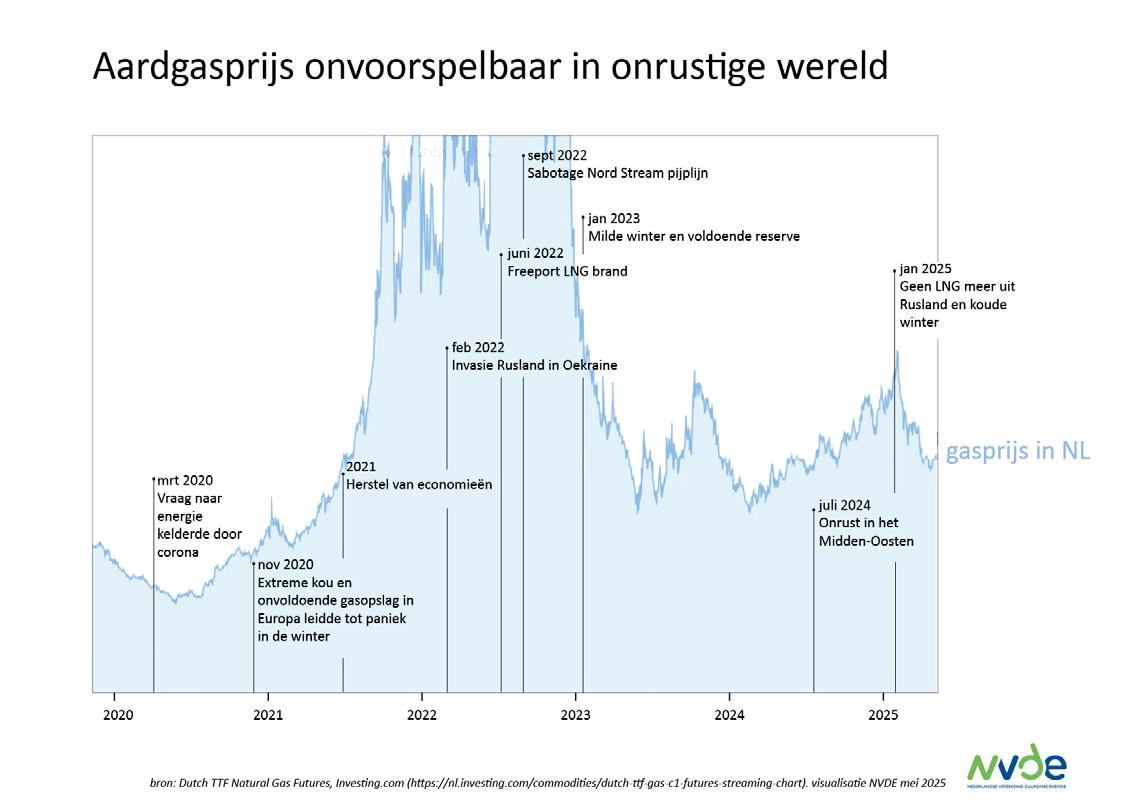
Nederland en Europa staan voor grote opgaven: we willen weerbaarder worden en op eigen benen leren staan, nu er oorlog op ons continent heerst. Naast dreiging uit het oosten, mogen we ook niet meer blind vertrouwen op onze Amerikaanse bondgenoot in het westen. Landen gebruiken fossiele brandstoffen als drukmiddel. Wat gebeurt er als na Poetin ook Trump de gaskraan dichtdraait? Gelukkig zijn we hard aan het werk met de oplossing: schone, duurzame energie van eigen bodem.
Om minder afhankelijk te worden van import en de energierekening beter bestand te maken tegen prijsschommelingen, moeten we zelf meer energie opwekken uit duurzame bronnen als zon, wind en de aarde zelf. Oranje-groene energie is vrijheidsenergie. Het biedt zekerheid in een roerige wereld en maakt onze economie weerbaar. En het loopt lekker: meer dan de helft van onze elektriciteit komt al uit schone bronnen en het aandeel duurzame energie is de afgelopen tien jaar verviervoudigd. De afbeelding illustreert het: in 2020 waren we voor een groot deel afhankelijk van energie uit het buitenland, omdat aardgaswinning in Groningen wegviel. Over 25 jaar hebben we zoveel hernieuwbare energie dat we bijna volledig op eigen, oranje-groene benen staan. Er zijn knelpunten. Denk aan netcongestie, het arbeidstekort in de techniek en lange procedures voordat er kan worden gebouwd. Maar de ingezette
route naar onafhankelijkheid is niet te stoppen. Tot 2040 wordt er alleen in Nederland al per jaar 11 miljard euro geïnvesteerd in energie-infrastructuur. Mensen die werken aan energie-infrastructuur en de verduurzaming van gebouwen zijn vrijheidsstrijders. Ze maken Nederland elke dag een stukje onafhankelijker en schoner.
Olof van der Gaag, voorzitter van De Nederlandse Vereniging Duurzame Energie (NVDE)
De NVDE maakt zich sterk voor een energievoorziening die volledig is gebaseerd op hernieuwbare energie door het bundelen van krachten uit de gehele sector. De aangesloten bedrijven zijn actief in hernieuwbare elektriciteit, warmte en gassen en in duurzame mobiliteit, de gebouwde omgeving en de industrie. De activiteiten voor duurzame energie bij 1.600 aangesloten bedrijven vertegenwoordigen een omzet van ruim € 43 miljard en bijna 200.000 werknemers in Nederland.


WWW.FUNDEX.NL


Grote waterbouwkundige uitdaging
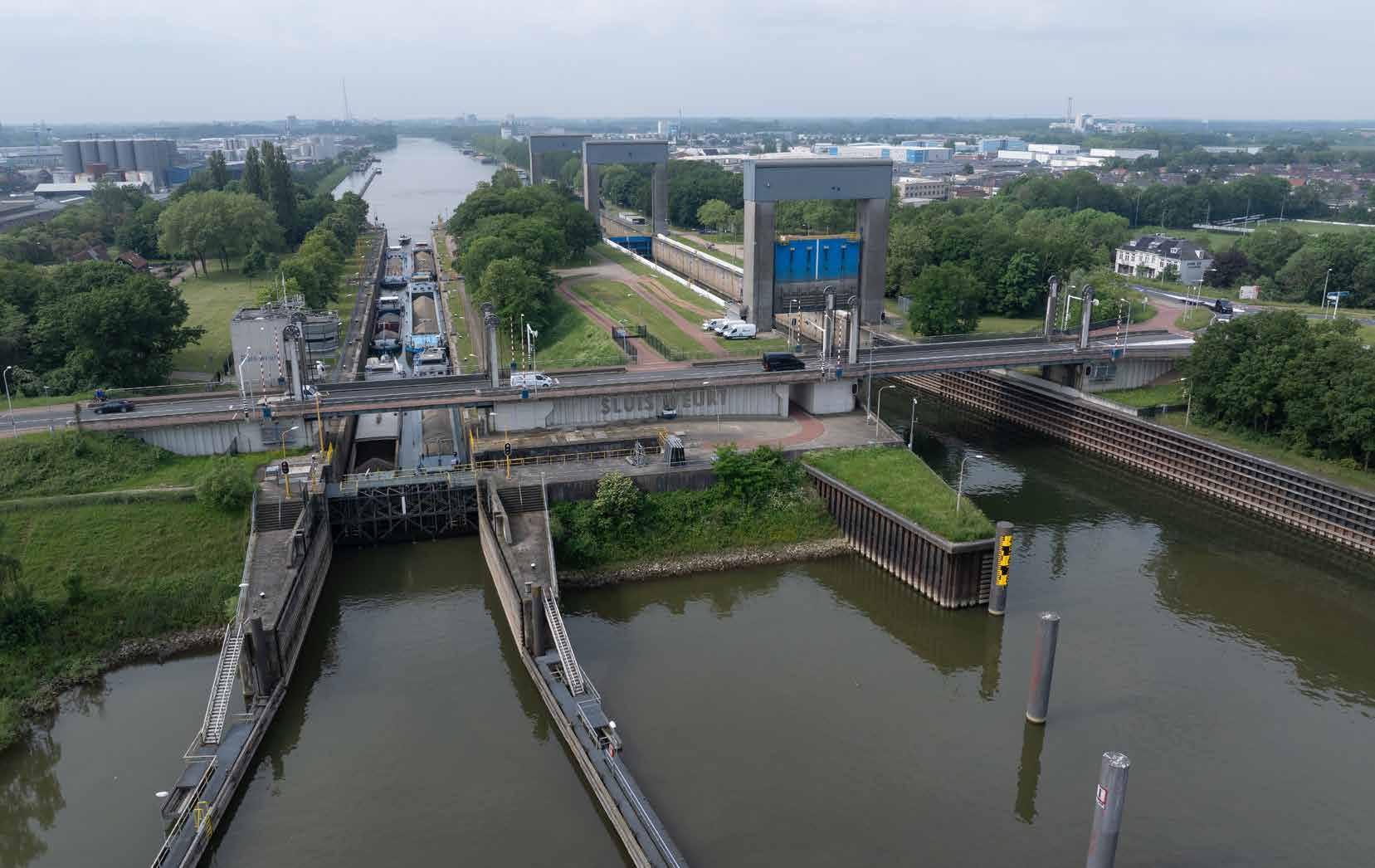
Sluiscomplex Weurt, gezien vanaf de Waalzijde
De nieuwe zeesluis bij Terneuzen is dit voorjaar succesvol geopend. Voorlopig de laatste in een rij van grote nieuwe schutsluizen. We staan als Rijkswaterstaat nu voor een misschien wel grotere uitdaging: het op orde houden van alle infrastructuur die inmiddels voor een groot deel aan vernieuwing toe is. Welke keuzes maken we? Wanneer vervangen we wat met welke kwaliteit, prijs en risico? Hoe zorgen we dat we duurzaam renoveren en een groenere sluis of brug opleveren? Met welke klimaatscenario’s moeten we rekening houden en gelden ontwerpnormen ook voor renovaties? Hoe gaan we om met versnipperde informatie van ons areaal? Kortom: een grote uitdaging.
Alle 86 schutsluiscomplexen zijn in beeld, de renovatieopgave is helder, er worden kennisprogramma’s opgericht en er wordt intensief samengewerkt met de markt en geleerd van elkaar. Maar we zijn er nog niet. Er moet nog veel gebeuren. Zo is de renovatie van de Spooldersluis bijna gereed, de Marijkesluis volgt binnenkort en onder meer de Krammersluizen, Koninginnensluis en Houtribsluizen zijn in voorbereiding. Hierbij worden de opgaves anders op de markt gezet dan op de klassieke Design en Construct-manier. Ook de renovatie van de sluiscomplexen bij Weurt en Heumen in het Maas-Waalkanaal kent grote uitdagingen die de komende tijd worden opgepakt.
Het Maas-Waalkanaal vormt een belangrijke verbinding voor de scheepvaart en speelt een belangrijke rol bij het waterbeheer tussen de Maas (bij het sluiscomplex Heumen) en de Waal (bij het sluiscomplex Weurt) bij Nijmegen. Het sluiscomplex bij Heumen bestaat uit een keer- en schutsluis en een gemaal. Het sluiscomplex Weurt omvat twee schutsluizen en twee beweegbare bruggen over de Waalhoofden. Verschillende onderdelen van de sluiscomplexen hebben inmiddels een leeftijd tussen de 50 en 100 jaar. Ze zijn gevoelig voor storingen, wat leidt tot hinder voor de scheepvaart. De sluiscomplexen moeten grootschalig worden
vernieuwd, zodat ze voor de lange termijn veilig en beschikbaar blijven voor de scheepvaart.
De Oostsluis van Weurt vereist speciale aandacht. De drempel van dit 100 jaar oude rijksmonument ligt hoger dan de bodem van de Waal, omdat die bodem de afgelopen eeuw steeds verder is geërodeerd. Bij lage waterstanden (circa 100 dagen per jaar) is er geen scheepvaart mogelijk door deze sluis, enerzijds door gebrek aan waterdiepte, anderzijds omdat de drijfkisten van de deur onvoldoende functioneren en de rolwagens onderin de deur bij beweging te zwaar belast zouden worden. Er wordt binnen het programma IRM nagedacht over diverse toekomstscenario’s, maar op dit moment is de bodemerosie op de Waal nog steeds gaande met circa 1,5 cm/jaar. Dit alles maakt dat schutsluis Weurt-Oost moet worden vervangen door een nieuwe lager gelegen sluis. Dat betekent dat onder andere de brug die gefundeerd is op deze sluis ook moet worden vervangen. Zo staan verschillende objecten in verbinding met elkaar en wordt het vernieuwen van de sluiscomplexen een uitdagende opgave.
Om beheerst overzicht te kunnen houden over de uitvoering wordt de opgave opgeknipt in scopedelen. Rijkswaterstaat gaat daarom dit project door middel van een raamovereenkomst op de markt zetten voor één aannemerscombinatie, waarbinnen successievelijk de verschillende scopedelen worden gegund met (nadere) overeenkomsten. Door de complexe samenhang van de verschillende objecten wordt de aanpak, de volgorde en het ontwerp
van de vernieuwingsopgave sterk bepaald door de uitvoeringsmethode, waarvan de aannemer de expertise heeft. Daarom doorloopt RWS het ontwerpproces van de verschillende scopedelen samen met de aannemer. Dit is de eerste fase van een tweefasenaanpak. In de tweede fase gaat de aannemer het scope-onderdeel uitvoeren op basis van een fixed price. Met deze aanpak wil RWS tot een eerlijke en gezonde risicoverdeling komen. Een voorwaarde voor succes is een goede samenwerking op basis van wederzijds vertrouwen, waarbij RWS een partnerschap wil vormen met de aannemerscombinatie.
Schutsluis Weurt Oost is regelmatig voor langere periodes gestremd. Dit vormt een groot probleem voor de beschikbaarheid voor de scheepvaart. Een belangrijke oorzaak is een diepgang-tekort door voortschrijdende bodemerosie op de Waal en veranderende Rijnafvoeren door klimaatverandering, wat leidt tot langdurige periodes van laag water. Dit heeft onder andere geleid tot het voorgenomen besluit om de schutsluis te vervangen en een verkenning te starten naar de randvoorwaarden voor het ontwerp van een nieuwe sluis. Voor deze laagwaterproblematiek zijn er geen standaard instrumenten beschikbaar, dus zijn de onzekerheden vanuit verschillende klimaatscenario’s in kaart gebracht en vertaald naar een voorstel voor de nieuwe drempeldiepte. Al met al een waterbouwkundige uitdaging, waarbij in de nabije toekomst veel ontwerpaspecten aanbod komen.
Roy Stroeve, Bart Noordman, Rijkswaterstaat
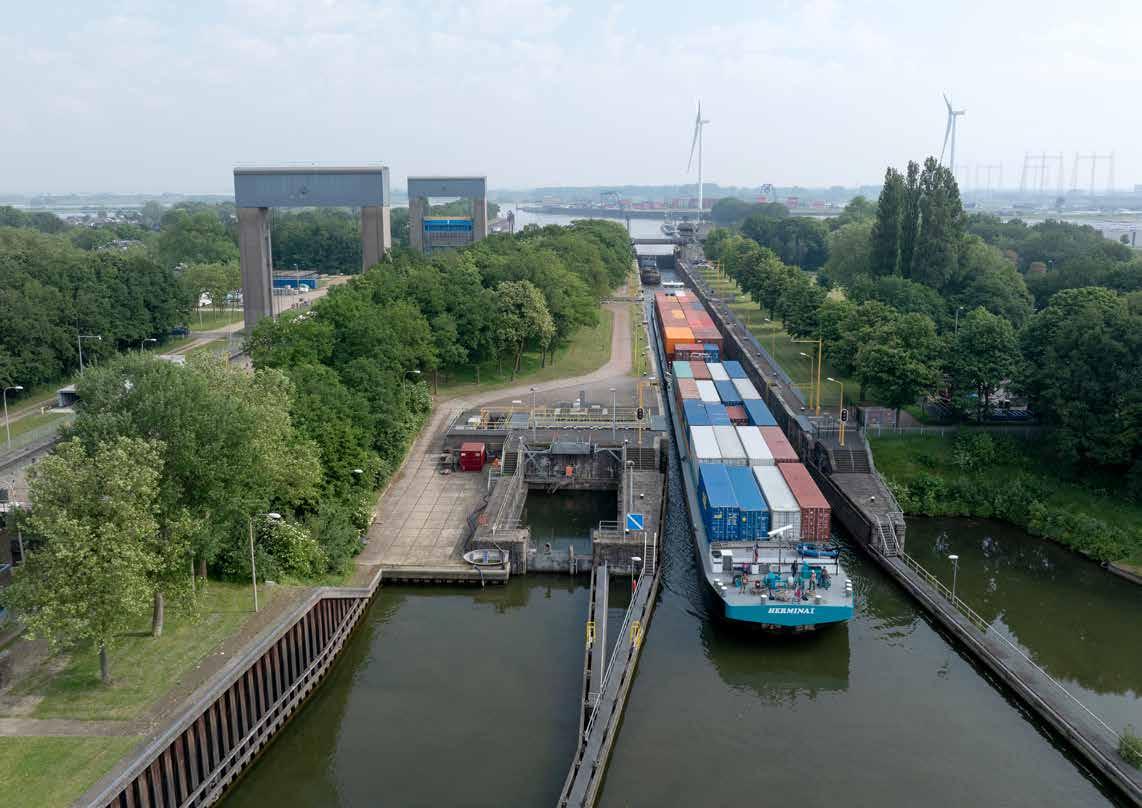
(Foto: Rijkswaterstaat, Tineke Dijkstra)
We worden steeds afhankelijker van de beschikbaarheid en het correct functioneren van computer-apparatuur, terwijl die afhankelijkheid een toenemend risiconiveau met zich meebrengt. Hoe kunnen we die risico’s beheersen?
De digitalisering in de waterbouw introduceert risico’s die we op dezelfde manier kunnen aanpakken als dat in andere sectoren al gebeurt. Risico’s liggen op het gebied van informatie (denk aan gestolen blauwdrukken) en op het gebied van installaties (denk aan hackers die apparatuur overnemen).
Deze risico’s kun je behandelen door een risico-inventarisatie; per risico inschatten wat de waarschijnlijkheid is dat het zich voordoet en de aard en omvang van de impact ervan. Vervolgens vaststellen wie de eigenaar is en wat de risicobeheersingsstrategie moet zijn. Definieer een acceptabel restrisico, en beoordeel of de maatregelen dat niveau bereiken.
Wet- en regelgeving
In de laatste jaren is wet- en regelgeving verschenen met als doel om de weerbaarheid van Europa te vergroten. Hieronder de relevante regels op het gebied van cybersecurity:
Europees niveau
• NIS2-Directive (2022/2555)
Europese verordening die bijna is omgezet in landelijke wetgeving. Meest opvallend zijn de delen die gaan over de opleiding van de bestuurders, zorgplicht, meldplicht en rechten die een entiteit heeft.
• CER-Directive (2022/2557)
Deze verordening stelt regels en rechten vast voor de fysieke weerbaarheid van door de lidstaten aan te wijzen kritieke entiteiten, en stelt dat deze entiteiten ook moeten voldoen aan NIS2.
• Verordening Machineproducten (2023/1230)
Deze vervangt de Machinerichtlijn, en is daarmee minder vrijblijvend. Opvallend is het deel dat het ontwerp voortaan rekening moet houden met voorzienbare kwaadwillenden, zoals hackers.
• CRA (2024/2847)
De Europese wet regelt dat ‘alles met een stekker’ veilig moet zijn en blijven. Niet alleen het product moet veilig zijn, ook het ontwikkelproces
moet veilig zijn, zorgend dat security is ingebakken in het product. Een consequentie van deze wet is dat leveranciers van apparatuur beveiligingsupdates gratis beschikbaar moeten stellen, gedurende de levensduur van het product. En die levensduur moet reëel zijn.
Nationaal niveau
• Cyberbeveiligingswet
Het wetsvoorstel ‘Cyberbeveiligingswet’ is de Nederlandse implementatie van de NIS2-directive.
• Cyberbeveiligingsbesluit
Dit (beoogd) besluit geeft aanvullende regels over hoe voldaan kan worden aan de Cbw. De korte samenvatting kan zijn ‘richt een ISMS in conform ISO 27001’
• Wwke
Het wetsvoorstel ‘Wet weerbaarheid kritiek entiteiten’ is de Nederlandse implementatie van de CER-directive.
• Bwke
Dit (beoogd) besluit geeft aanvullende regels over hoe voldaan kan worden aan de Wwke.
Stuwdam in Noorwegen
In april 2025 verkreeg een (vermoedelijk Russische) groep hackers toegang tot de besturing van een kleppensysteem in een stuwdam .
De hackers konden de kleppen, die de minimale doorstroming van de dam regelen, vier uur lang 100 procent openzetten, waardoor 497 liter water per seconde meer door de dam stroomde dan het voorgeschreven minimum. De totale capaciteit van de dam bedraagt 20.000 liter per seconde, dus het werd niet als een kritiek incident beschouwd. De betreffende dam levert water aan een visboerderij.
Dit incident laat zien hoe belangrijk beveiliging van infrastructuur is. Wat als het een belangrijkere dam was geweest, of als alles open of dicht was gezet, en de besturing was vernietigd?
Voor het ontwerp van de Blankenburgverbinding waren in het contract eisen opgenomen voor cybersecurity. Daaronder de mate van inbraakwerendheid van de dienstgebouwen. De vereiste inbraakvertraging was groter dan wat met normaal verkrijgbare materialen kan worden verkregen. Desgevraagd stelde Rijkswaterstaat dat te realiseren met een twee meter hoog hek. In dit geval is één dienstgebouw door de architect ingepast in de landelijke omgeving, daar past een twee meter hoog hek niet bij.
Een alternatieve oplossing is een tweede toegangsdeur met paslezer die een sluis creëert. Bij het bespreken (vroeg in het ontwerptraject) van de ontwerptekening van het dienstgebouw naar aanleiding van deze eis was het genoeg om met één potloodstreep aan te geven waar die tweede deur zou gaan komen. Deze aanpassing is daarna in het gehele ontwerptraject meegegaan en heeft extra kosten voorkomen. De ontwerper nam daarna de materiaalkeuze van de wanden mee in het ontwerp. Dit voorbeeld illustreert het voordeel van ‘security by design’. Dat impliceert dat vooraf wordt nagedacht over beveiligingseisen.
Ir J.L. Braams, Leading Professional Cybersecurity IA, Haskoning
Definities:
• Cybersecurity is het geheel aan maatregelen dat schade voorkomt aan digitale systemen;
• Cyberweerbaarheid is het geheel aan maatregelen dat de gevolgen van die schade beperkt;
• Risico-acceptatie is de mate waarin je schade of gevolgen accepteert, zoals een aantal dagen downtime, of het verliezen van gegevens of apparatuur.






ABT
Postbus 82 6800 AB Arnhem http://abt.eu info@abt.eu
Iv Noordhoek 37
3351 LD Papendrecht Nederland www.iv.nl
Movares Nederland
Daalseplein 100
Postbus 2855 3500 GW Utrecht www.movares.nl
TAUW bv
Hoofdkantoor: Handelskade 37 Deventer, 7417 DE
Ruth Nijkamp (recruiter) 06-11791891 recruitment@tauw.com
Civiele werken
Beens Groep Nylonstraat 16 8281 JX Genemuiden www.beensgroep.nl
Gebr. De Koning Scheepvaartweg 1, 3356LL Papendrecht Postbus 88, 3350AB Papendrecht 078 644 2644 www.gebrdekoning.nl
Geotechniek
Fugro NL Land B.V. Veurse Achterweg 10 Postbus 63 2260 AB Leidschendam Tel 070 311 13 33 www.fugro.nl
Interesse in vermelding in deze rubriek?
Neem contact op met de uitgever: 0183 66 08 08 info@civieletechniek.net

Funderingstechnieken Verstraeten BV
Brugsevaart 6 4501NE Oostburg info@fundex.nl www.fundex.nl
Van ‘t Hek Groep BV
Postbus 88 1462 ZH Middenbeemster
Tel. 0299 313020 www.vanthek.nl
Interesse in vermelding in deze rubriek?
Neem contact op met de uitgever: 0183 66 08 08 info@civieletechniek.net
ArcelorMittal Mannesmannweg 5 4794 SL Heijningen
Postbus 52, 4793 ZH Fijnaart
Tel. 088 0083 700 www.arcelormittal.com/projects
Easystairs BV
Tel. 085 0092070 info@easystairs.nl www.easystairs.nl
Water engineering
Vanderkamp Hoekerweg 1, 8042 PH Zwolle info@vdkamp.eu
Tel. 038 4222009 www.vdkamp.eu
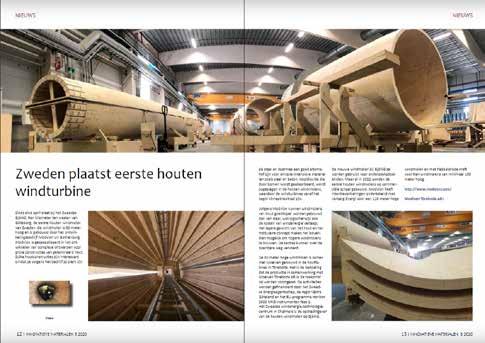
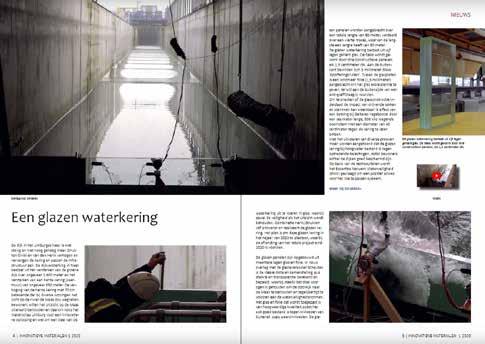
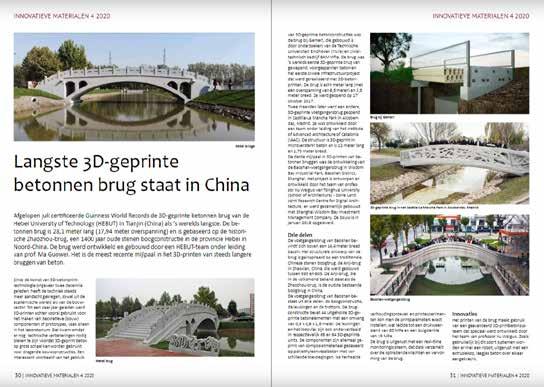
Materiaalkeuze wordt ook voor de GWW steeds belangrijker. In de eerste plaats stellen opdrachtgevers steeds scherpere eisen aan duurzaamheid en milieuprestaties (zoals carbon footprint en cradle to cradle). En daarnaast leggen grote, opdrachtgevende partijen meer en meer verantwoordelijkheid bij de markt. Precies daar liggen kansen. Door te kiezen voor slimme, duurzame innovatieve materialen is het voor marktpartijen steeds beter mogelijk zich te onderscheiden.
Innovatieve Materialen kan daarbij helpen.
Innovatieve Materialen gaat over materiaalinnovatie in het algemeen, maar is speciaal gericht op de civieltechnische sector, bouw, architectuur en design.
Innovatieve Materialen besteedt veel aandacht aan ontwikkelingen op het gebied van duurzame, innovatieve materialen en/of de toepassing daarvan in bijzondere constructies. Maar ook circulariteit, milieufootprint en hergebruik zijn regelmatig terugkerende onderwerpen.
Innovatieve Materialen verschijnt zowel in het Nederlands als in de Engelse taal.
Interesse in een gratis en vrijblijvend kennismakingsexemplaar?
Stuur een mailtje naar: info@innovatievematerialen.nl
ArcelorMittal stalen damwanden: De duurzame keuze voor waterbouwkundige projecten.
De damwanden zijn gemaakt uit schroot en zijn trillingsvrij aan te brengen. Dit resulteert in milieuvriendelijke oplossingen voor tijdelijke en permanente toepassingen.
Bezoek onze website voor meer informatie

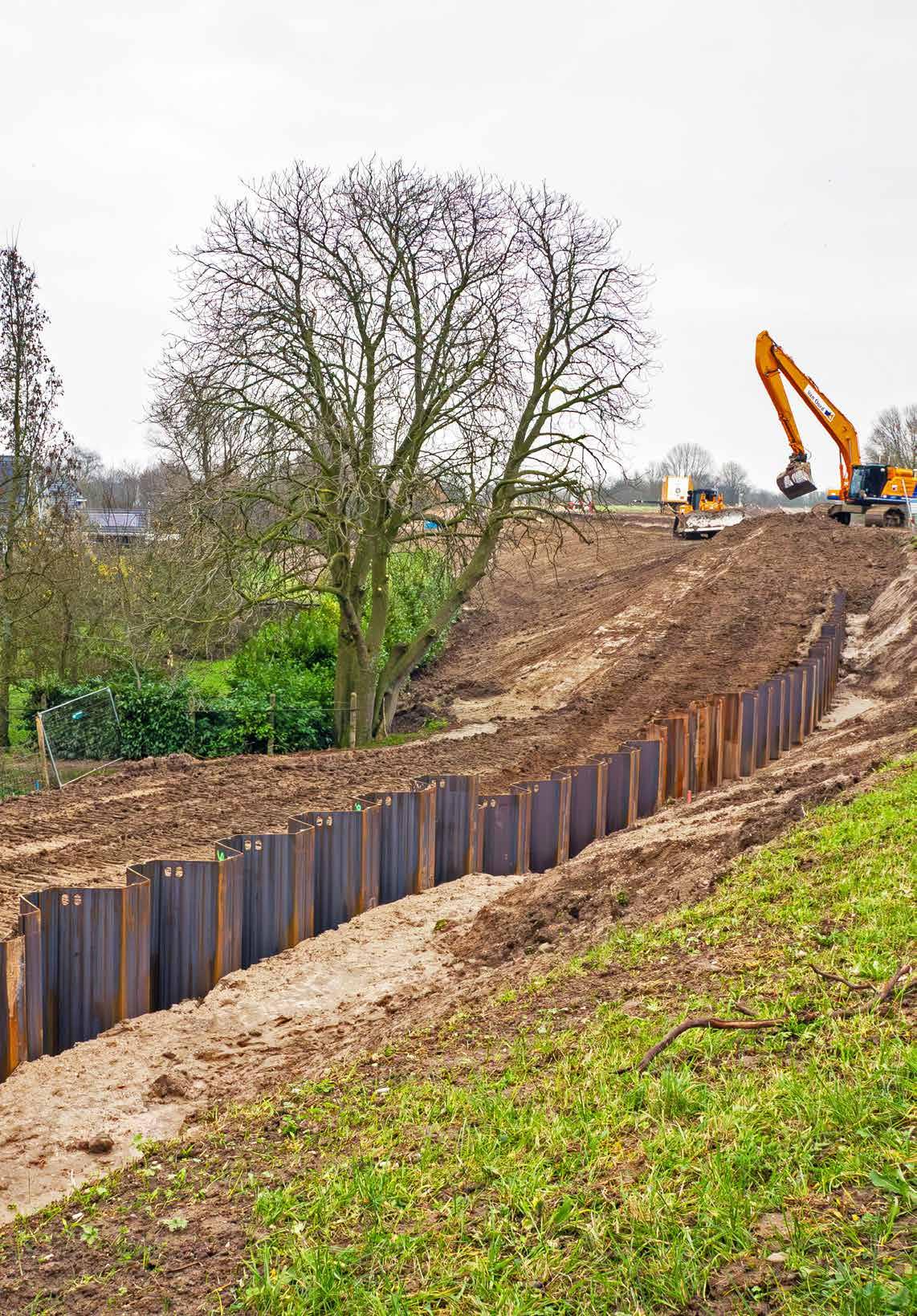
Haal de beste waterbouwer
jezel lf
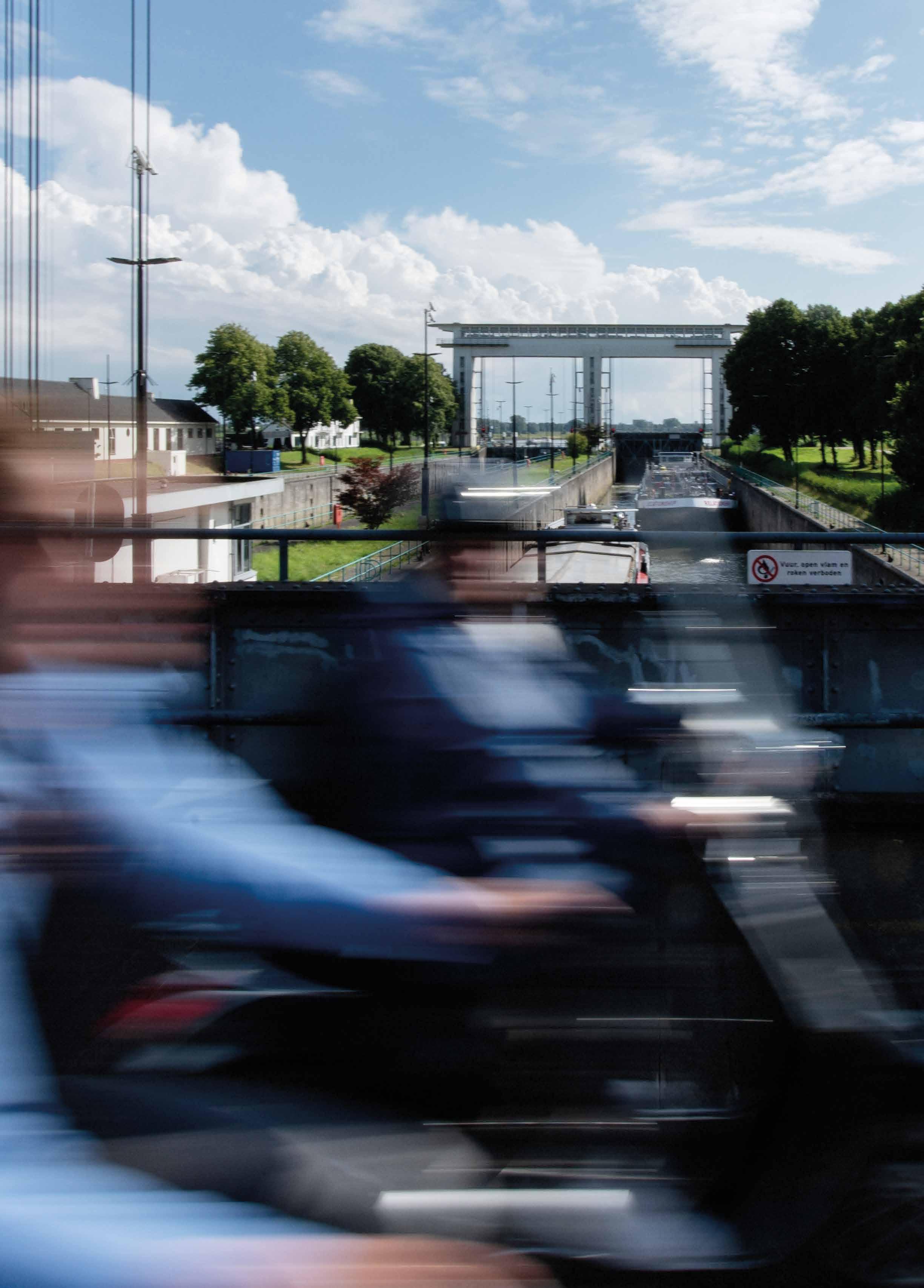

Wij zoeken de beste mensen. De beste waterbouwers die willen werken aan technisch complexe projecten én het verschil voor de toekomst willen maken.
Wij zoeken een Integraal Projectmanager Waterbouw, Technisch Manager HWBP, Manager Projectbeheersing, Constructeurs, Adviseurs en Projectleiders. Ga mee vooruit. www.sweco.nl/carriere