
Grid-Enhancing Technologies 22 | Wildfire Mitigation 26 | Protection and Grounding 30 MAY 2024 tdworld.com
Lucia: Island of Resilience, Pg. 14
St.


ADVANCE
RENEWABLES PROJECTS WITH PREMIUM CONDUIT
Low coefficient of friction allows for smooth pulls
No burn-through eliminates elbow repairs

DOWNLOAD FIBERGLASS VS GRC COMPARISON
Fault resistance makes repairing cables easy
Mechanical strength protects cables

BIM/REVIT
©2016 Champion Fiberglass, Inc.
Champion Fiberglass® Elbows

 ©2024 Hubbell Incorporated. Trademarks are the property of their respective owners.


T&D World | May 2024 2 IN THIS ISSUE Vol. 76 | No. 5 DEPARTMENTS 6 Global Viewpoint Island Power and Wildfire Challenges: Navigating Reliability By NIKKI CHANDLER, Executive Editor 9 Charging Ahead Disrupting Energy Storage By GENE WOLF, Technical Writer 12 Quick Clips National Grid To Invest $4 Billion To Upgrade Upstate New York Power Grid By T&D WORLD Staff 46 Focus: A Lineworker’s View Meet Colton and Dalton Dial By AMY FISCHBACH, Field Editor 47 Advertising Index 48 Straight Talk Moving to the Grid of the Future By MICHAEL PESIN, U.S. Department of Energy FOLLOW US ONLINE twitter.com/@tdworldmag facebook.com/tdworldmag linkedin.com/company/t-d-world-magazine 14 Winds of Change for St. Lucia’s Electric Grid GRID RESILIENCE By RANDALL WOOD and MIKE ALLISON, POWER Engineers FEATURES 22 Great River Energy Unlocks Hidden Capacity GRID-ENHANCING TECHNOLOGIES By MICHAEL CRAIG, Great River Energy, and DAG DREJER, Heimdall Power Inc. 26 Cutting Wildfire Risk WILDFIRE MITIGATION By THUAN TRAN, JESSE RORABAUGH and ANDREW SWISHER, Southern California Edison 30 Protect Wind Turbines from Lightning Strikes PROTECTION AND GROUNDING By SAMEER KULKARNI and DR. AHMED EL-RASHEED, Megger Group Ltd. 36 T&D World Interview: ATC CEO Teresa Mogensen EMPOWERED: WOMEN IN ENERGY By JEFF POSTELWAIT, Senior Editor ELECTRIC UTILITY OPERATIONS 40 Faces Of The Future 42 A Slice of Life in the Florida Keys By JASON RICHARDS, Florida Keys Electric Cooperative 44 Parting Shot SHOW INSIGHTS 26 14 See page 8 T&D World Live Update: Topic Focus Areas







E S S E N T I A L D I S C U S S I O N S SEPTEMBER 4-6, 2024 | HYATT REGENCY RESTON | RESTON, VA DCFtrends.com Presented by: Owned & Operated by:

Grid Innovations: The Unique Opportunities and Challenges of Virtual Power Plant Implementation

The virtual power plant (VPP) is an increasingly popular choice for realizing the aggregation, optimization, and control of flexible resources that are not necessarily within the same geographical area ... https://tdworld. com/21285114
Electrification: The Evolving Landscape of Electric Vehicle Charging

Given the use cases of EV batteries, it is, therefore, safe to predict that V2G integration is the pathway through which players in the V2G space, including automotive OEMs, utilities, and CPOs, will push to tap into the electricity market … https://tdworld.com/55000280
Future Grid:
Adopting AI Is Just the Beginning for Utility Companies

As utility leaders begin to execute their 2024 digital strategies, now is the time to be crystal clear about the roles, responsibilities, and risks associated with digitizing such critical legacy systems … https://tdworld. com/212846059


T&D World | May 2024 4
tdworld.com
the website daily for breaking news, videos and photo galleries.
New on
Visit
Executive Editor Nikki Chandler nchandler@endeavorb2b.com Senior Editor Jeff Postelwait jpostelwait@endeavorb2b.com Associate Editor Ryan Baker rbaker@endeavorb2b.com Art Director Susan Lakin slakin@endeavorb2b.com Field Editor Amy Fischbach EOUeditor@endeavorb2b.com Technical Writer Gene Wolf GW_Engr@msn.com Community Editor Rich Maxwell tdwmediapartners@gmail.com Senior Editor-at-Large Geert de Lombaerde gdelombaerde@endeavorb2b.com VP, Market Leader, Energy Mark Johnson mjohnson@endeavorb2b.com Director, Business Development Steve Lach slach@endeavorb2b.com Director of Marketing Angie Gates agates@endeavorb2b.com Senior Production Operations Manager Greg Araujo garaujo@endeavorb2b.com Ad Services Manager Shirley Gamboa sgamboa@endeavorb2b.com Classified Production Designer Terry Gann tgann@endeavorb2b.com Audience Marketing Manager Sonja Trent strent@endeavorb2b.com Audience Development Manager James Marinaccio jmarinaccio@endeavorb2b.com Endeavor Business Media, LLC tdworld.com T&D World (USPS Permit 795-660, ISSN 1087-0849 print, ISSN 2771-6651 online) is published monthly by Endeavor Business Media, LLC. 201 N Main St 5th Floor, Fort Atkinson, WI 53538. Periodicals postage paid at Fort Atkinson, WI, and additional mailing offices. Canadian GST #R126431964. POSTMASTER: Send address changes to T&D World, PO Box 3257, Northbrook, IL 60065-3257. SUBSCRIPTIONS: Publisher reserves the right to reject non-qualified subscriptions. Subscription prices: U.S. ($137.50); Canada/Mexico ($170.00); All other countries ($210.00). All subscriptions are payable in U.S. funds. Send subscription inquiries to T&DWorld, PO Box 3257, Northbrook, IL 60065-3257. Customer service can be reached toll-free at 877-382-9187 or at tdworld@omeda. com for magazine subscription assistance or questions. REPRINTS: To purchase custom reprints or e-prints of articles appearing in this publication, contact Reprints@endeavorb2b.com PHOTOCOPIES: Authorization to photocopy articles for internal corporate, personal or instructional use may be obtained from the Copyright Clearance Center (CCC) at 978-750-8400. Obtain further information at copyright.com PRIVACY POLICY: Your privacy is a priority to us. For a detailed policy statement about privacy and information dissemination practices related to Endeavor products, please visit our website at www.endeavorbusinessmedia.com CORPORATE OFFICE: Endeavor Business Media, LLC, 30 Burton Hills Blvd, Ste. 185., Nashville, TN 37215, U.S.; www.endeavorbusinessmedia.com. © Copyright 2024 Endeavor Business Media, LLC. All rights reserved. Printed in the USA. CEO: Chris Ferrell President: June Griffin COO: Patrick Rains CRO: Paul Andrews Chief Digital Officer: Jacquie Niemiec Chief Administrative and Legal Officer Tracy Kane EVP Endeavor Business Intelligence: Paul Mattioli EVP Industrial and Energy Group: Mike Christian VP, Accounting: Angela Mitchell VP, Digital Business Development: Paul Andrews VP, Content: Travis Hessman VP, Customer Marketing: Angie Gates VP, Digital & Data Innovation: Ryan Malec VP, Digital Finance: Jessica Klug VP, Production Operations: Curt Pordes VP, Sales Operations: Missy Zingsheim VP, Technology: Glen Scheithauer





OUR ONE ASPLUNDH APPROACH DELIVERS TO OUR CLIENTS, PARTNERS AND COMMUNITIES, THE BEST EQUIPMENT, SERVICES AND RESOURCES THROUGH A SINGLE POINT OF CONTACT ACROSS OUR FULL SUITE OF VEGETATION, ENGINEERING AND UTILITY INFRASTRUCTURE SERVICES.
AS ONE ASPLUNDH WE CAN SCALE OUR RESOURCES TO CREATE MORE INNOVATIVE SOLUTIONS TO MEET THE DIVERSE NEEDS OF TODAY’S UTILITIES. BRINGING TOGETHER THE BEST PEOPLE, PROCESSES, EQUIPMENT AND KNOWLEDGE RESULTS IN A FUTURE THAT IS MORE CLIMATE READY, RESILIENT AND SUSTAINABLE FOR EVERYONE.
ASPLUNDH.COM 1.800.248.TREE
Island Power and Wildfire Challenges: Navigating Reliability
We had the privilege of traveling to Hawaii’s Big Island about 13 years ago. It wasn’t a trip that we had planned; my husband’s company sent him to work on an engineering project there, so I tagged along. It was one of the best trips I have taken. The island is magical and beautiful. But as I sat on the patio overlooking the ocean, I felt a bit claustrophobic, realizing we couldn’t go very far without a plane (or a boat). That is probably the result of my having lived in the middle of the United States my entire life. I am about as landlocked as you can get.
Electricity supply and reliability on an island gives me pause when I have the obvious, anxious thought that it’s not part of a huge, interconnected grid. But I suppose being part of an interconnected grid doesn’t always guarantee reliability. It is interesting, however, to consider the challenges and characteristics unique to island power.

We have covered Hawaii and Puerto Rico quite a bit, with Hawaii’s renewable energy push and wildfire devastation, and Puerto Rico’s rebuild after multiple hurricanes. This time, we travel to St. Lucia, an island nation in the Lesser Antilles, known for beautiful white sand beaches and the Piton Mountains. But as with so many other places, the island nation is seeing more frequent and more powerful large storms. St. Lucia Electricity Services Ltd. (LUCELEC) is trying to figure out the smartest way to strengthen resilience for its transmission and distribution system. The story in this issue focuses specifically on how LUCELEC identified some easy wins, but we will also check back in with them at some point, as the island works to decrease its reliance on imported diesel fuel for generation.
Wildfire Season
It has been eight months since Hawaii’s Maui Island experienced a disastrous wildfire that killed more than 100 people and destroyed more than 2,000 acres. While the fire is still under investigation, there seems to have been a perfect storm with a moderate drought, vegetation issues, underestimated risk, and strong winds.
The prevalence of wildfires has become a pressing global concern, with electric utilities facing scrutiny regarding their role in sparking or exacerbating wildfires, infrastructure protection from wildfires, and restoration afterward. Utilities are taking this seriously and are learning about and investing in advanced technology and infrastructure upgrades to mitigate wildfire risks, including enhanced monitoring systems, vegetation management and proactive maintenance protocols.
The U.S. Department of Energy (DOE) has also allocated up to $3.46 billion for 58 projects across 44 states to enhance electric grid resilience and reliability, which include projects with strategies to protect against wildfires, such as undergrounding vulnerable overhead lines, removing hazardous vegetation, installing sensors, fire-resistant poles, and improving modeling capabilities.
Southern California Edison has been a leader for the industry with its wildfire mitigation initiatives and continually shares its experiences and best practices with T&D World. In “Cutting Wildfire Risk,” on page 26, SCE iterates that it uses several layers of protection in mitigation including inspections, vegetation management, weather monitoring and public safety power shutoffs.
And be sure to read through our annual Wildfire Mitigation supplement included with this issue. The supplement is a two-time winner of Best Special Issue/Supplement from the American Society of Business Press Editors and is proof that the electric utility industry is moving forward quickly in dealing with wildfires in its processes and new technologies. Senior Editor Jeff Postelwait gives an update on utility wildfire mitigation efforts in his Editor’s Letter, and you hear from Idaho Power, Salt River Project and FortisAlberta.
Storm Season
In keeping with the theme of reliability threats, we include an article this month that focuses on a renewable power source and its biggest maintenance problem: lightning strikes. Although not primarily transmission or distribution, you might be interested in learning about how wind turbine operators can make sure their lightning protection systems are installed and working correctly.
We will continue to deal with storms, wildfires, attacks, and aging in generation and in T&D, and with renewable and fossil fuel sources. As I have said before, our industry has the best and brightest people working on all these problems, and we will continue to see progress and solutions in resilience and the energy transition. I continue to be amazed at how the utilities have gone from taking weeks to rebuild infrastructure after a hurricane, to days in many cases.
T&D World also foresee a future with utilities being able to stop wildfires before or soon after they start to prevent widespread damage. They will be the ones that have active monitoring, AI, and vegetation management. Collaboration across multiple stakeholders, including firefighting agencies, communities, technology providers, policymakers, research institutions, and other utilities, will be essential.

T&D World | May 2024 6
GLOBAL VIEWPOINT BY NIKKI
, EXECUTIVE EDITOR
CHANDLER


SAVE THE DATE October 1-3, 2024 The Hilton Atlanta | Atlanta, GA MORE DETAILS COMING SOON events.tdworld.com OWNED & PRODUCED BY PRESENTED BY
SHOW INSIGHTS
T&D World Live Update: Topic Focus Areas
T&D World is heading to the vibrant city of Atlanta, Georgia. You’ll learn about the latest tools and trends in energy transformation that are shaping the ever-evolving grid. Get ready for inspiring keynotes, utility-led case studies and user stories and open discussion because this conference has been designed to educate you, motivate you, and spark new ideas that will drive change. To register, visit https://events.tdworld.com/2024.
DER Integration
As utilities and their customers embrace DERs, ensuring unparalleled power quality and reliability becomes paramount. This track will delve into the intricacies of DER integration and how utilities must proactively address the technical challenges that impact the grid and pave the way for a more efficient and sustainable future.
Topics Include:
• DERMS (Distributed Energy Resource Management Systems)
• Electrification
• Energy Storage
• Microgrids
• Power Electronics
• Prosumers
• Electric Vehicles
• Renewable Energy
Grid Resiliency & Black Sky Hazards
Delivery of electricity is an essential service, one that provides for the well-being of our modern society. This is evident especially when disasters occur; the first order of business for public health and safety is to maintain reliable power. This track will explore how we assess and strategically plan for a multitude of extreme climate risks and physical threats to bolster and fortify the grid’s ability to withstand adversity.
Topics Include:
• Climate Change/Weather Events
• Wildfire
• Security – Cyber and Physical
• Risk Mitigation
• Grid Hardening and Infrastructure Planning
• Microgrids
• Power Restoration
• Policy – State and Federal
• Reliability
• Underground vs. Overhead
• Response and Recovery
Future Transmission and Distribution Grid
As the power grid evolves, it becomes more intricate and staying at the forefront of evolution can be challenging. This track will examine the rising demands, emerging trends and cuttingedge advancements in transmission and distribution technologies that are defining the next generation of transmission and distribution grids.
Topics Include:
• Advance Metering
• Infrastructure
• Advanced Distribution Management System (ADMS)
• Communications Technology
• Decarbonization
• Capacity Shortages
• Customer Engagement
• Digitalization
• Load Management

• Planning and Construction
• Policy and Regulation
• Security
– Cyber and Physical
• Supply Chain
• System Protection
• Vegetation Management
• Voltage Regulation
• Workforce
AI & Digitalization
Harnessing the power of data, analytics, artificial intelligence and IoT will revolutionize the way manage, optimize, and support the full spectrum of people, services and resources that empower performance improvement and decision-making within the Utility. This track will explore how we use data to lead to better business outcomes.
Topics Include:
• AI, AR, VR, Machine Learning
• Cloud • Condition Monitoring
• Customer Data
• Data Collection
• Digital Components/Sensors
• Enterprise Data Analytics
• IT-OT Convergence
• Life-Cycle Planning
• Operational Data
• Prescriptive Analytics
• Risk Modeling and Asset Management
• Spatial Data Analytic
• Workforce Management
• Advanced Metering
Electrification & eMobility
A flexible grid with ample capacity is needed to provide clean power to support the large number of electric vehicles being deployed, as well as electrification of commercial, industrial and residential consumers’ equipment. Explore cutting-edge strategies, technologies and business models reshaping the energy landscape, from the integration of electric vehicles into smart grids to the optimization of transmission systems for enhanced carbon-free electrification. This track will help you understand electrification and the evolving infrastructure that powers it.
Topics Include:
• Fleet EVs
• Grid Equity
• Home electrification - HVAC, heat pumps.
T&D World | May 2024 8
Disrupting Energy Storage

Have you been following the south pole lunar lander adventure? I find space exploration coverage a great place for discovering cutting-edge technologies that are about to become part of our daily life. That’s where the computer mouse and wireless headsets came from, along with many others. This latest lunar lander, nicknamed Odie, gave me lots to think about technology-wise too.
Odie tripped upon landing and ended up on its side rather than the normal upright position. It impacted the mission by compromising its solar panels. They could not provide enough power for the full mission and now the weeklong mission was reduced to a few days. Why was it so short in the first place? Well, at the south pole landing site the solar day is only a little over a week and the long lunar night freezes electronics. I hadn’t read much about the lunar day/night cycles or the challenge they represent to providing sustainable electricity for permanent lunar bases.
Extraterrestrial power generation is a pressing issue and researchers are turning to technology for dependable power supplies. They ranged from radioisotope power plants to solar panels mounted on a fleet of lunar rovers dragging power cables behind them as they followed the movement of the sun. There’s also a great deal of research taking place with battery technologies to find a viable alternative to lithium-ion (Li-ion) batteries, which will find its way to the power grid.
Old is New Again
Metal-hydrogen batteries have been around for a long time, and have been used in some amazing space applications, which have proven to be dependable on long missions in the severe conditions of space. Recent advancements in metalhydrogen batteries have made them more attractive for power grid applications. EnerVenue announced an advancement in the metal-hydrogen chemistry that reduces costs and improves metal-hydrogen battery performance. They are planning to open a metal-hydrogen battery gigafactory in Kentucky.
The redox-flow battery is another established battery technology that has been getting attention lately as researchers improve its characteristics. Basically a redox-flow battery consists of two tanks and stores energy in liquid electrolytes containing ions. The two electrolytes are pumped through separate electrodes separated by a thin membrane. The membrane keeps the two fluids apart, but permits the exchange of ions producing current. These conventional redox-flow batteries are extremely bulky with their large tanks housing the large volumes of electrolytes and have a low energy density.
Still the principles behind redox-flow technology have proven sound, and power output and energy capacity can be

increased by increasing the volume of the battery. As a result, several companies have developed conventional redox-flow batteries for utility-scale energy storage applications. Over the past decade research on redox-flow found capacity can be increased with nanofluid technology. Nanofluids are more energy-dense and can remain suspended in the fluid indefinitely. This nanoelectrofuel (NEF) has reshaped redox-flow batteries.
Move Over Li-ion
The nanoelectrofuel-flow battery utilizes four tanks, two for charged electrolytes and two for discharged electrolytes along with pumps, and membranes. The nanofluids take up a much smaller space so the configuration is more compact. NEF fluids have ultra energy density compared to the conventional redox battery fluids. A press release from Influit Energy said it has developed a NEF-flow battery that has a 23% higher energy density than Li-ion batteries and it’s cheaper. It is projecting its second-generation NEF battery should have five times the energy density of today’s Li-ion batteries, and they are nonflammable and non-explosive.
DARPA has been funding the development of NEF batteries used for electric vehicles (EVs). The military needs EVs that can perform anywhere, and the NEF batteries are meeting the challenge. An EV NEF-flow battery provides the driving range needed by both military and civilians. Plus NEF-flow batteries can be recharged like Li-ion batteries, but they also allow the battery to be recharged by removing the depleted electrolyte and replaced with charged electrolyte. It’s about a five-minute process and it’s a gamechanger for EVs.
On the utility side, grid-scale energy storage NEF-flow batteries have a lot going for them too. They are more environmentally friendly than Li-ion batteries because of the materials they use and the have longer cycle life. It’s estimated these NEF-flow batteries can be charged/discharged at least 30,000 times in their lifetimes, which is much better than Liion batteries. By all indications, NEF-flow batteries appear to be ready to go mainstream and become an energy storage disrupter that we need to watch!
May 2024 | T&D World 9
CHARGING AHEAD NEW TECHNOLOGIES & NEW OPPORTUNITIES FOR UTILITIES BY GENE WOLF, TECHNICAL WRITER
Redox NEF battery diagram. Courtesy of NASA.
Reimagining The Future Grid
A changing environment means the grid’s technologies have to be flexible.
Modernizing and decarbonizing the power delivery system has never been for the fainthearted, but incentives are definitely making it more palatable. Federal and state governments have made available billions of dollars in financial inducements and tax credits. Utilities, grid operators and their customers have access to mechanisms like the IRA (Inflation Reduction Act), IIJA (Infrastructure Investment and Jobs Act) and state tax related tax inducements. There are also grants from the Department of Agriculture to encourage rural and tribal utilities to deploy renewable energy systems.
These measures are providing stimulus that’s encouraging clean-energy and the more efficient use of that energy. The incentives are seen as a once-in-a-lifetime boost to upgrade the power system and improve the efficiency of power consumption. Distribution energy resources (DERs) are critical elements in this process and the consumers taking advantage of them. Governmental inducements along with private investments are having a major impact in every sector of the grid. The Department of Energy (DOE) calls it “reimagining and rebuilding the power grid,” and it’s coming at an opportune time. It’s not, however, without its challenges.
Success is Costly
Interestingly, the customers’ purchases of electric vehicles (EVs) and chargers, heat pumps, DERs, and other efficient devices are having a surprising effect. It’s been reported that after several decades of flat electrical demand, the power grid is now experiencing an increase in demand, which is approximately 4.7% per year. A recent Washington Post headline said, “Amid explosive demand, America is running out of power.” The gist of the story was that utilities are scrambling to find more capacity in their aging transmission grids and distribution networks.
In addition to those future grid-reimagining issues there is the pesky fact that the environment has not reached the new normal, climate change is still accelerating. The agencies setting policy to deal with this are shifting targets on what needs to be accomplished and/or when. Recently, one body said the world must add or replace about 50 million miles (80 million km) of transmission lines by 2040 to meet the world’s climate goals. Another group set 2030 as the necessary date for tripling the world’s installed renewable energy capacity to meet climate challenges, which in tangible terms is approximately 11,000 gigawatts.
The bottom line here is that there are a lot of thorny issues to deal with and shifting goals are better than the alternative. As long as global warming and climate change continue growing, the targets and goals need to be shifting. Thankfully the
technological toolbox is bulging with adjustable techniques for addressing those quirky issues. One of the most adaptable are the grid enhancing technologies (GETs). They are designed to move right along with the varying targets and keep them within reach (see “The Impossible Takes Longer” in the December 2023 T&D World issue for details).
It’s All Manageable
DOE says GETs “maximize the electricity transmission across the existing system.” These technologies include dynamic line rating systems, power-flow control systems, smart meters, and energy management systems (EMS) to name a few. Their aim is to meet the growing demands without necessarily having to build more time consuming infrastructure. GETs cover a great deal of smart grid applications, so let’s concentrate on one of them attracting attention: the advanced EMS. These platforms are becoming so popular that they can be found at all levels of the grid, from the transmission system to the distribution network and beyond.
Some are designed for specific utility customer types (i.e., industrial, commercial, and residential applications) while others are suitable for grid-scale operations. This set of technologies takes advantage of cloud computing, sophisticated software, and artificial intelligence. Real-time data and analytics provide the technology with advantages over the more traditional methods. Controlling all elements of a power grid transitioning to a modern interconnected system can be simple or complicated depending on the sophistication of the system doing the managing.
With that in mind, “Charging Ahead” contacted Hitachi Energy’s Michael Atkinson, senior vice president Grid Automation: North America Market, to understand the technology firsthand. Our discussion began with Atkinson saying, “Not too long ago we ran the power grid with 15% to 20% spare capacity because we really didn’t have good control, metering, measuring, etc. to operate it with less of a cushion. As technologies improved, it was possible to operate with closer margins and operating margins were reduced to 10% and in many cases around 7%. But the success came with costs, and you can only control so many elements at the transmission level.”
Atkinson continued, “When digital technologies found their way to the distribution level, advanced distribution management systems (ADMS) were required by the distribution network. As the distribution system became more diverse and multi-directional with greater deployments of distributed energy resources and energy storage, it became apparent a third level of control was needed. It was also evident that the control had to be much closer to those assets. For efficient operation,
T&D World | May 2024 10
CHARGING AHEAD BY GENE WOLF, TECHNICAL WRITER

these controls had to know exactly what was going on and where they were as opposed to an average understanding of an overall view. Hitachi Energy’s e-mesh was designed to operate with that level of accuracy.”
Atkinson explained, “e-mesh is specifically designed to manage multiple sources such as renewables, conventional power generation, DERs, and controllable loads like relays and electric vehicle (EV) chargers. In addition, leveraging the e-mesh PowerStore battery energy storage system (BESS), it can better manage these assets to solve the technical problems of the day. The e-mesh portfolio can improve power import capabilities while supplying frequency support, voltage control, and reactive power support. The combination also stores clean power generated overnight by wind turbines for use when the load is going up during the day. Customers are finding value in the non-wire options available.”
Atkinson pointed out, “The grid has been under invested in for years, which has led to problems providing the capacity needed for the influx of renewable energy generation and new electric loads like EVs, but that’s changing. Using the e-mesh portfolio to unlock the benefits of BESS delivers the ability for renewable shifting and peak shaving for base load leveling. The technology has been configured to function as a microgrid for islands in the event of extreme weather, as one example. Microgrids have also allowed utilities to delay the need for reconductoring an existing feeder. In some cases, the microgrid is a more cost-effective alternative to building another line for a remote load, which helps to defer capital investment and stretch the operating budget.”
Growing Market
EMS platforms offer a versatility needed for reimagining the future grid, which explains why they are generating so much global interest. Advanced EMS platforms with connectiveness provide the situation awareness needed for climate change. It helps that utilities add renewables plus storage, which makes those installations more efficient. A good example is PG&E’s
Calistoga substation microgrid. The 293 megawatt-hour microgrid consists of a hybrid-hydrogen fuel cell and a BESS that can supply power for up to 48 hours. The system is controlled by Energy Vault’s advanced EMS platform and is expected to be in service in 2024.
Late last year, Baltimore Gas and Electric (BGE) energized its Fairhaven substation’s 2.5 megawatt BESS to meet high electricity demands during the winter months. The BESS is a Hitachi Energy e-mesh and PowerStore BESS scalable microgrid. BGE installed the system to improve year round reliability and solve a specific winter peaking issue. This area had a spike in winter demand due to the customers’ use of electric heating. There were times that demand surpassed the capacity of the single 34.5 kV line feeding the area. Hitachi Energy’s EMS and BESS solved the problem and allowed BGE to forego the expensive underground upgrades for 10 miles of electric distribution equipment.
The potential for EMS platforms has come into focus at last, which is good for both the technology and the power grid. According to MarkertsandMarkets’ 2023 research report “Energy Management System Market,” the global EMS market size was estimated at US$40.7 billion in 2023. It’s projected to grow at a 13.2% CAGR (compound annual growth rate) reaching US$75.6 billion by 2028. It will be interesting to see how the revised targets for millions of miles of transmission and thousands of gigawatts of renewables will affect these spending projections.
Those global warming goals moved to 2030 are somewhat unsettling. After all, 2030 is less than six years away, but maybe that’s not as bad as it seems. Humans tend to ignore project schedules with long due dates such as the 2050 climate change goals. Maybe a five-year goal will inspire action; ultimately we are talking about reimagining the future grid. It’s like that old saying, “the longest journey starts with the first step.” Luckily these advanced EMS platforms are off-the-shelf items and are available worldwide from a variety of suppliers. Reimagining the future grid is possible with tools like these!
May 2024 | T&D World 11
CHARGING AHEAD
Multisource advanced energy. Courtesy of Hitachi Energy.
QUICK CLIPS BY
NATIONAL GRID TO INVEST $4 BILLION TO UPGRADE UPSTATE NEW YORK POWER GRID
National Grid plans to invest more than $4 billion to transform its energy delivery system and propel economic growth across Upstate New York through a project called Upstate Upgrade.
The project is a collection of transmission enhancement projects to deliver a smarter, stronger, cleaner energy grid to support a more resilient energy network for future.
The utility is planning more than 70 projects to generate many new jobs and more than $1 billion in additional economic growth, while ensuring the energy grid meets customers’ growing demand for electricity, through 2030.
The upgrades will not only help achieve the state’s climate goals as outlined in New York’s Climate Leadership and Community Protection Act but also benefit Upstate New York customers by:

• Improving the Energy Grid’s Resilience: The project will provide greater resilience during extreme weather, such as blizzards, tornadoes, and severe windstorms, which are destructive to grid infrastructure, by reinforcing and upgrading infrastructure like transmission lines and substations.
• Advanced security measures also will be implemented to safeguard our network from external threats.
• Strengthening the Upstate Economy: The project will benefit local economies by bringing over 1,700 new construction jobs, and associated residual spending to local communities, which in turn will create many additional jobs, and at least $1.9 billion in overall economic output during and after construction, according to a third-party analysis by the consultancy West Monroe. The analysis forecasts the Upstate
• Upgrade to create up to 2% economic growth in the project areas through 2030.
• Powering Upstate’s Energy Future: The upgrade will ensure the electric grid to meet customers’ increasing demands, including the needs of growing industries, while encouraging more investment and creating new jobs.

National Grid will construct or rebuild more than 1,000 miles of transmission line, 45 substations, and install new technologies to prevent load loss, monitor load fluctuations, and resolve congestion. This work will also protect the transmission grid against extreme weather conditions.
NATIONAL GRID DROPS OUT OF TWIN STATES CLEAN ENERGY LINK TRANSMISSION PROJECT
A proposed new $2 billion transmission project between Quebec and New Hampshire has lost its electric utility partner, National Grid US.
The Twin States Clean Energy Link, a 211-mile, 1,200 MW high voltage direct current power line, was awarded a capacity contract as part of the Department of Energy’s Transmission Facilitation Program. National Grid determined, according to multiple reports, that the project was not viable at this time. The project was intended to be bidirectional, bringing hydroelectricity from Quebec to New England when economic conditions were right.
“National Grid thanks the dozens of route communities and

PROCEED WITH CONFIDENCE
Contact us today 2403TDW_NewparkMats.indd 1 2/15/24 4:18 PM
Confidently execute and protect your projects from start to finish.
T&D WORLD STAFF
regional partners who engaged with us and supported this project,” it said. “We will continue to pursue paths to building much-needed transmission capacity.”
Twin States was one of three that was selected for a piece of the $1.3 billion tranche that the DOE program had offered to transmission
line developers. The other two were the Cross-Tie 500kV Transmission Line Project (Nevada to Utah) and the Southline Transmission Project (Arizona to New Mexico). According to the DOE, needs studies forecast that the U.S. Northeast region will need 1.5 GW of new transfer capacity with its neighbors.
DOE RELEASES PLAN FOR ELECTRIC FREIGHT TRUCK EV CHARGING CORRIDOR
The Department of Energy’s Joint Office of Energy and Transportation released a strategy it calls the National ZeroEmission Freight Corridor.
Released jointly with the Department of Transportation and the Environmental Protection Agency, this strategy intends to deploy charging station infrastructure to support medium and heavy-duty shipping using electric trucks.

“The strategy is designed to meet growing market demands by targeting public investment to amplify private sector momentum, focus utility and regulatory energy planning, align industry activity, and improve air quality in local communities heavily impacted by diesel emissions,” according to a release from the DOE.
The strategy also includes hydrogen-powered vehicles. The federal government has set goals to reach at least 30 percent ZE-MHDV sales by 2030 and 100% sales by 2040.
A key facet of the strategy is meeting freight truck and technology markets where they are today, determining where they are likely to develop next, and setting goals to achieve decarbonization with transportation electrification. The strategy designates highways and other important roadways as parts of the National EV Freight Corridor.
• Phases of the strategy include:
• Establishing priority hubs based on freight volumes (2024-2027)
• Connecting hubs along critical freight corridors (2027-2030)
• Expanding corridor connections initiating network development (2030-2035)
• Achieving national network by linking regional corridors for ubiquitous access (2035-2040)

2405TDW_HuskieTools.indd 1 4/16/24 4:15 PM QUICK CLIPS

Faced with bigger and stronger storms, St. Lucia continues to make grid resilience its priority.
T&D World | May 2024 14
For island economies reliant on tourism income, prolonged electrical outages can have dire consequences that negatively impact the economy.
Photo by LUCELEC
Winds of Change for St. Lucia’s Electric Grid
By RANDALL WOOD and MIKE ALLISON, POWER Engineers, Inc.

Nestled midway through the Lesser Antilles — the emerald arc of the Caribbean islands — the island nation of St. Lucia is situated farther out to sea than any neighboring island but Barbados. It is located squarely within Hurricane Alley, the belt of warm water that spans the Atlantic between the Tropic of Cancer and the Equator. Within this belt, hurricanes spawn, gather strength, and barrel westward across the Caribbean and onward.
While often spared by the many storms that travel just to the north of the island, St. Lucia nonetheless has suffered several catastrophic storms over the last four decades. They have included Hurricane Allen (1980), which made nearly 10,000 people homeless; Hurricane Debbie (1994), which hit St. Lucia as a tropical storm and destroyed between 60% and 80% of the island’s crops; Hurricane Tomas (2010), which killed 14 people despite its less dangerous Category 1 storm classification; and the Christmas Eve Trough of 2013, which dumped 10 inches (254 mm) of rain on the island overnight and left several communities physically isolated from the rest of the island for several weeks. Hurricane Elsa, the first hurricane of 2021, tore across the Lesser Antilles, killing one person in St. Lucia and destroying 80% of its crops.
May 2024 | T&D World 15


Such storms show every sign of continuing. St. Lucia is now one of many island nations drawing attention in world forums to the fact that large storms are becoming increasingly frequent, more powerful, and deadlier because of global climate change and the warming of the oceans. St. Lucia Electricity Services Ltd. (LUCELEC) is the country’s vertically integrated electric utility and sole provider of power to the island’s 180,000 residents and 300,000 annual tourists. It faces a challenge familiar to many electric utilities, but with greater urgency and higher stakes: how best to strengthen its T&D systems to withstand stronger, more dangerous, and more frequent storms, and how best to allocate resources to ensure value for money.
These urgent initiatives take place in the context of broader ongoing policy and strategy questions at the national level, such as how best to decrease reliance on imported diesel fuel for generation, integrate privately managed sources of generation, and determine what role renewable energy (including wind, solar and geothermal assets) will play in the generation portfolio and broader economic, consumer and market initiatives that sup port commercial, residential and industrial markets in St. Lucia.
Resilience and Reliability
Established in 1964, LUCELEC has provided power to the is land’s growing economy for nearly 60 years, helping to make possible the country’s incredible economic growth led by tourism and agriculture. The country is 100% electrified, with 72, 000 customers. LUCELEC’s generation portfolio consists of 86.2 MW of generation, a 66-kV transmission backbone and seven distribution substations that supply power to 32 distribution feeders running at 11 kV. The T&D systems are largely overhead, with some key segments recently placed underground. Utility


T&D World | May 2024 16 GRID RESILIENCE
LUCELEC has provided power to the island’s growing economy for nearly 60 years, helping to make possible the country’s incredible economic growth led by tourism and agriculture. Photo by LUCELEC
The challenge is greater in tropical nations like St. Lucia, where the humid, maritime climate means faster and more aggressive degradation of untreated wood due to humidity, rot, and wood-boring or consuming insects like termites.
Photo by LUCELEC
During a large-scale power outage event, customers are more concerned with when will the power be restored than the root cause of why the pole failed. Photo by LUCELEC
poles are a mix of wood and reinforced concrete poles.
In late 2022, LUCELEC worked with POWER Engineers Inc. and its partner K&M Advisors LLC to establish risk metrics and identify a portfolio of ranked projects with the potential to improve resiliency and reliability in the face of strengthening storms.
Grid reliability and grid resilience are related but different. Grid reliability is clearly understood and measured, as established by IEEE 1366, the well-known standard for power distribution reliability indices used by the electric power industry for decades. However, building consensus on a precise definition and metric for resiliency has been an industry challenge for many years that may not yet be fully resolved. In general, resiliency is specified in terms of prevention, recovery and survivability. Many definitions conflate resilience with reliability or provide notional directives while failing to establish metrics.

or to adapt to and compensate for the resultant strains so as to minimize compromise via graceful degradation.”
Reviewing the Opportunities
J.D. Taft of the Pacific Northwest National Laboratory stated in a paper, the Electric Grid Resilience and Reliability for Grid Architecture: “Reliability measures are not useful for quantifying resilience. Resilience is in large part about what does not happen. Grid resilience is the ability to avoid or withstand grid stress events without suffering operational compromise
LUCELEC and POWER Engineers began their collaboration by reviewing the nature and frequency of previous outages, characterizing the technical, commercial and economic consequences of different outages and damages to grid infrastructure. Team leads from the utility’s engineering, construction, customer care, distribution grid planning and generation groups provided data


GRID RESILIENCE
One challenge confronting not only St. Lucia but many electric utilities worldwide: The majority of the world’s distribution systems were built decades ago. Photo by LUCELEC.

and insights as well as recommended project priorities worth considering. Given the many technical and climatic challenges the utility faces, two factors bode well for LUCELEC: It is financially self-sustaining and profitable, and its technical teams are highly competent with excellent firsthand experience.
One challenge confronting not only St. Lucia but many electric utilities worldwide: The majority of the world’s distribution systems were built decades ago. The construction standards were less stringent than today’s standards and developed in the context of smaller, less-frequent and weaker storms. Like the rest of the Caribbean, St. Lucia finds itself needing to establish improved construction standards that correspond to Category 5 hurricane wind loads. This has important economic consequences for utilities and their customers, as reinforced utility poles can mean billions of dollars in investment.
LUCELEC and POWER looked at reinforcing key segments of the utility’s grid, including feeders supporting key customers, important segments of the cross-island transmission backbone and distribution lines that had shown proclivity to damage in previous storm events. The teams examined not just material design
requirements but also improvements to foundation design to reduce vulnerability of utility poles during landslide events stemming from heavy rain. Having welldeveloped construction, operations and maintenance standards that are reviewed and updated regularly is essential in helping a utility provide resilient service to its customers during these types of events.
POWER and LUCELEC then reviewed the existing maintenance programs in place. Vegetation management is at the core of every electric utility’s success. Trees, branches, and debris can all be blown onto lines during storm events, causing short circuits, breaking insulators, and simply downing lines. While LUCELEC records do show tree branches and fallen trees continue to cause challenges, the team’s joint review of the maintenance being undertaken on a continuous basis revealed LUCELEC had a maintenance and vegetation management program in place sufficient to meet the needs of the utility.
Identifying Easy Wins
The review of maintenance and inspection led to an interesting opportunity to make recommendations for pole inspection. Thorough inspection of distribution poles is an arduous, expensive and time-consuming task that challenges even large utilities. The challenge is greater in tropical nations like St. Lucia, where the humid, maritime climate means faster and more aggressive degradation of untreated wood due to humidity, rot, and wood-boring or consuming insects like termites.
Drone technology is increasingly a viable and cost-effective solution here, and numerous commercial providers now offer comprehensive pole inspection services. For example, POWER Engineers has partnered with Buzz Solutions, which offers a combination of drone-based imaging and inspection combined with artificial intelligence (AI) software trained to identify damage, weakness or anomalies to grid hardware. POWER recommended drone inspection providers whose equipment also provides infrared (IR) inspection, which can recognize hot spots, damaged insulators, and anomalies in conductor and mounting hardware invisible to the naked eye.

Drone technology is increasingly cost effective and, when faced with the risk of prolonged outages to key customers, provides excellent value for the money. For island economies reliant on tourist income, prolonged electrical outages affecting the hotel industry can have reputational consequences that negatively impact the tourism economy overall.
Together, POWER and LUCELEC identified another easy win for the utility, one

T&D World | May 2024 18 GRID RESILIENCE
Initiatives are happening in the context of broader ongoing policy at the national level, such as how best to decrease reliance on imported diesel fuel for generation, integrate privately managed sources of generation, and determine what role renewable energy will play. Photo by LUCELEC
LUCELEC and POWER looked at reinforcing key segments of the utility’s grid, including feeders supporting key customers, important segments of the cross-island transmission backbone and distribution lines that had shown proclivity to damage in previous storm events. Photo by LUCELEC.
that could cost less than expected. Like many electric utilities, LUCELEC finds its utility poles used by several other third parties, including communications providers. In more densely populated areas, the number of third-party attachments on LUCELEC-owned infrastructure can be significant. Like utilities around the world, LUCELEC found its guidelines were not always followed to the letter, leading to skewed guy wires, awkward angles and other anomalies — resulting in stressed utility poles.
During a large-scale power outage event, customers are more concerned with when will the power be restored rather than the root cause of why the pole failed. It is typically up to the electric utility to ensure that attachments to their infrastructure are executed in a safe manner that does not cause undue stress on that infrastructure.

Fortunately, enforcing one’s own rules is practically free, relative to other initiatives. However, it does require a significant public communication, outreach and stakeholder engagement program. Importantly, getting third-party attachments to comply must happen before each hurricane season passes over.
Starting with the Basics
POWER and LUCELEC reviewed several other project opportunities — some more costly than others — such as relocating
substations, improving the sectionalization of the grid topology and several options for renewable energy. These are the kinds of analyses electric utilities worldwide find themselves studying. In preparing for strong storms, it is tempting to focus immediately on the big-ticket upgrades. These require large investments, procurement, engineering design and construction oversight. Many of them are timely and necessary.




GRID RESILIENCE
www.edmlink.com | Fort Collins, Colorado USA | 800.687.4196 | info@edmlink.com +
most advanced, user-friendly Phase Identification system available, the PhaseTrakker Jr+ is the essential tool for identifying phase and phase angle on overhead, underground and substation assets. Works indoors or outdoors, 0.5V - 500kV, or 10A - 600A. P HASE T RAKKER J R + OPTIMIZE LOAD BALANCE AND SYSTEM EFFICIENCY
Initiatives are happening in the context of broader ongoing policy at the national level, such as how best to decrease reliance on imported diesel fuel for generation, integrate privately managed sources of generation, and determine what role renewable energy will play. Photo by LUCELEC
The

Ensuring the grid provides alternate routes to key population centers is invaluable but may require large and costly investments in transmission towers, transformers and switchgear. Of lower cost but still high value is a more extensive use of autoreclosers and a supervisory control and data acquisition system that reports faults and enables utility management teams to react during a storm.
However, grid resilience and reliability can often be accomplished simply by starting with the basics: An effective operation
and maintenance plan, for example, should be every utility’s first step. Regular inspection of assets should be the second. Over the longer haul, building to the more stringent construction standards for stronger storms is essential.
Keeping electric power flowing to consumers is more necessary than ever in the modern world. As LUCELEC can attest, getting the fundamentals in place before a storm hits is an important part of delivering value to the thousands of consumers who depend on a utility.
RANDALL WOOD is a senior project manager at POWER Engineers in its Government Services division. He has led power sector and infrastructure projects worldwide for nearly thirty years, and currently oversees POWER’s assignments in Latin America, Asia, Africa and the Caribbean.
MIKE ALLISON is a senior project engineer at POWER Engineers in its Power Delivery division. Prior to joining POWER, Allison spent over thirty years with municipal utilizes in multiple roles, ranging from construction, engineering, operations and management.
For More Information
K&M Advisors | www.km-advisorsllc.com
Buzz Solutions | www.buzzsolutions.co
POWER Engineers | www.powereng.com


T&D World | May 2024 20 GRID RESILIENCE
2405TDW_Hastings_halfpg.indd 1 4/11/24 8:53 AM
Grid resilience and reliability can often be accomplished simply by starting with the basics: An effective operation and maintenance plan, for example, should be every utility’s first step. Photo by LUCELEC




Great River Energy Unlocks Hidden Capacity
By installing sensors to perform dynamic line ratings, the utility’s transmission line capacity improved more than 25%, nearly 70% of the time.
By MICHAEL CRAIG, Great River Energy, and DAG DREJER, Heimdall Power Inc.
With the growing demand for electricity globally, it is expected to nearly double over the next 30 years, according to the U.S. Energy Information Administration. As a result, electric utilities are looking for ways to meet this demand while also lowering operational costs and reducing emissions.
In October 2023, the U.S. Department of Energy announced it would be investing up to US$1.3 billion in three new interregional transmission lines aimed at adding 3.5 GW of grid capacity. However, building new power lines alone is not a viable solution for short-term needs. Electric utilities need to unlock more capacity from existing infrastructure.
Grid Optimization
Across both Europe and the U.S., utilities have significant untapped grid capacity they cannot access. As a result, many are embarking on seven- to 12-year projects to build additional infrastructure. However, they remain at a loss when it comes to meeting immediate demand.
Another way to unlock untapped capacity — and thereby decrease costs — is identifying and reducing sources of congestion
in transmission systems. This is what Great River Energy set out to achieve when it partnered with Heimdall Power Inc. that specializes in grid optimization.
The electric power cooperative initiated talks with Heimdall Power when it learned how the Norway company had successfully increased grid capacity for European utilities like Swissgrid, Austrian Power Grid AG and TenneT by 30% before setting up U.S. operations in Houston, Texas.
Great River Energy conducted a two-year study to identify the sources of congestion with the highest financial impact on its operations. From there, the cooperative pinpointed one of its key lines as the most critical to address. This line became the site for its first pilot with Heimdall Power’s Neurons, which are sphere-shaped sensors that can be installed by autonomous drones on energized high-voltage power lines.
In September 2023, the cooperative installed four Neurons — also known colloquially as magic balls — to collect and measure real-time data on current, line angle, temperature and weather conditions. This data is processed by Heimdall Power’s software platform, which uses machine learning algorithms to understand the real-time capacity of power lines.

T&D World | May 2024 22 GRID-ENHANCING TECHNOLOGIES
Great River Energy conducted a two-year study to identify the sources of congestion with the highest financial impact on its operations. From there, they pinpointed one of its key lines as the most critical to address. (Inset) Great River Energy tested Heimdall Power ‘Neurons’ on its lines. Photos by Heimdall Power.
The Limiting Factor
The congestion in a given area typically follows the wind flow, which means there are no typical patterns in the daily load of a line. However, there is a silver lining. When power production from wind farms increases, the actual transmission capacity of nearby lines usually also significantly increases, considering the same wind that powers wind turbines will cool down the overhead lines used to transmit electricity. This enables the lines in question to transfer more power safely, given proper usage of dynamic line rating (DLR) technologies.
Before embarking on the project with one of its key lines, Great River Energy identified it was the conductor on this line that was the No. 1 capacity-limiting factor during summer congestion. Typically, when there is an increase in the load on a line, utilities will address other limiting components beyond the conductor. Great River Energy believed it could increase capacity on this very conductor by 25% without reaching the next limiting element of the line.
Line Capacity Forecasting

system. In short, the technology involves optimizing transmission line ratings based on real-time data, rather than relying on static line ratings with no data input.
In preparation for the 2025 FERC Order 881 on ambient adjusted ratings, Great River Energy relied on DLR technology to evaluate other capacity-increasing approaches across its trans-mission


Prior to this, the cooperative used historical data and an estimated average temperature component to generate seasonal ratings. Based on Heimdall Power’s aggregated data from a wide number of countries, grid operators that adopt Heimdall DLR in their grid can increase their transmission capacity by more than 30% on average.


GRID-ENHANCING TECHNOLOGIES
SEDIVER - Your trusted insulator partner in North America for 55+ years info.usa@sediver.com - info.canada@sediver.com - www.sediver.com TOUGHENED GLASS INSULATORS WHAT YOU SEE IS WHAT YOU GET NO HIDDEN DEFECTS = SAFETY
In September 2023, Great River Energy installed four Neurons to collect and measure real-time data on current, line angle, temperature and weather conditions. Photo by Heimdall Power.

Real-Time Insights
To get the most out of Great River Energy’s move to DLR, Heimdall Power needed to provide it with the most accurate local data.
Nearly every power line today is operating without real-time insights into the strongest factors that influence power line capacity: hyper-local weather conditions, the temperature, and the current and angle of the high-voltage line. This results in utilities unknowingly leaving a significant portion of their grid’s full capacity untapped.
Data gathered by the Neurons and analyzed with the company’s software quickly revealed that the capacity gains Great River


on
data from a wide number
Energy could realize with DLR exceeded that of its seasonal line ratings by more than 25% — and were doing so nearly 70% of the time.
This insight effectively eliminated the conductor as the dimensioning constraint for a significant duration of time. In reality, the primary constraint was a lack of insight into realtime local conditions and a reliance on overly conservative, static ratings.
Increasing Capacity
Although the project’s timeline has yet to encompass a full summer season, the data amassed so far reveals the actual capacity for the line is, on average, 42.8% higher than ratings provided by the traditional seasonal line rating method. This provides a revealing glimpse into the significant impact of hyper-local conditions on grid capacity and why being able to monitor them in real time is key to unlocking grid capacity that otherwise would not be utilized.
Neuron sensors have been installed on power lines near Morris, Minnesota, in connection to wind farms and adjacent to other generation facilities in Minnesota.
By actually knowing the real-time capacity of its transmission lines, Great River Energy and other grid operators can optimize their transmission and set safe, new operational limits to keep customer tariffs low and integrate more renewable energy into the existing grid.
MICHAEL CRAIG ( MCraig@GREnergy.com
), supervising manager of energy and distribution management systems at Great River Energy, is a professional engineer in the state of Minnesota with an electrical engineering degree and MBA degree from the University of Minnesota-Twin Cities. Craig has worked at Great River Energy for 13 years and helps to ensure reliable operation of the supervisory control and data acquisition system as well as working with new technologies pertaining to system operations and the electric utility industry.
DAG DREJER (dag@heimdallpower.com
), head of data science at Heimdall Power Inc., is a professional engineer based in Oslo, Norway. He is currently in his fifth year at Heimdall Power, where he is responsible for the continuous optimization and improvement of the company’s advanced software models. Drejer holds dual master’s degrees in energy and environmental engineering as well as entrepreneurship from the Norwegian University of Science and Technology.

T&D World | May 2024 24 GRID-ENHANCING TECHNOLOGIES
The Neurons contain sensors and can collect real-time data on current, line angle, temperature and weather conditions. Photo by Heimdall Power.
2405TDW_TechProducts.indd 1 4/3/24 10:16 AM
Based
Heimdall Power’s aggregated
of countries, grid operators that adopt Heimdall DLR in their grid are able to increase their transmission capacity, on average, by more than 30%. Photo by Heimdall Power.
Cutting Wildfire Risk
The Southern California utility’s multi-layered approach effectively mitigates the wildfire challenge.
By THUAN TRAN, JESSE RORABAUGH and ANDREW SWISHER, Southern California Edison
Albert Einstein once said: “A clever person solves a problem. A wise person avoids it.” To mitigate the wildfire challenge, a utility must be both clever and wise.
Southern California Edison (SCE) continues to drive down the wildfire threat by hardening the grid to avoid or prevent faults that could result in potential ignitions. The company’s multi-layered wildfire mitigation strategy includes fault prevention and avoidance, incipient fault detection and fault energy reduction. The utility diligently performs industry benchmarking, conducts testing, and pilots hardening materials, equipment and technologies before developing design and installation standards for deployment.
The utility continues to conduct equipment inspections for repairs and maintenance, manage vegetation around power lines as well as enhance situational awareness capabilities by having one of the largest weather station networks in the country with more than 1,700 weather stations in high fire risk areas that provide wind speed, humidity and temperature data, among other variables, that is updated every 10 minutes. Furthermore, more than 180 wildfire cameras are installed in high fire risk areas [HFRA] and use artificial intelligence technology with satellite imagery to notify fire agencies about possible ignitions. The utility also uses Public Safety Power Shutoffs during extreme fire conditions as a tool of last resort.
Fault Prevention and Avoidance
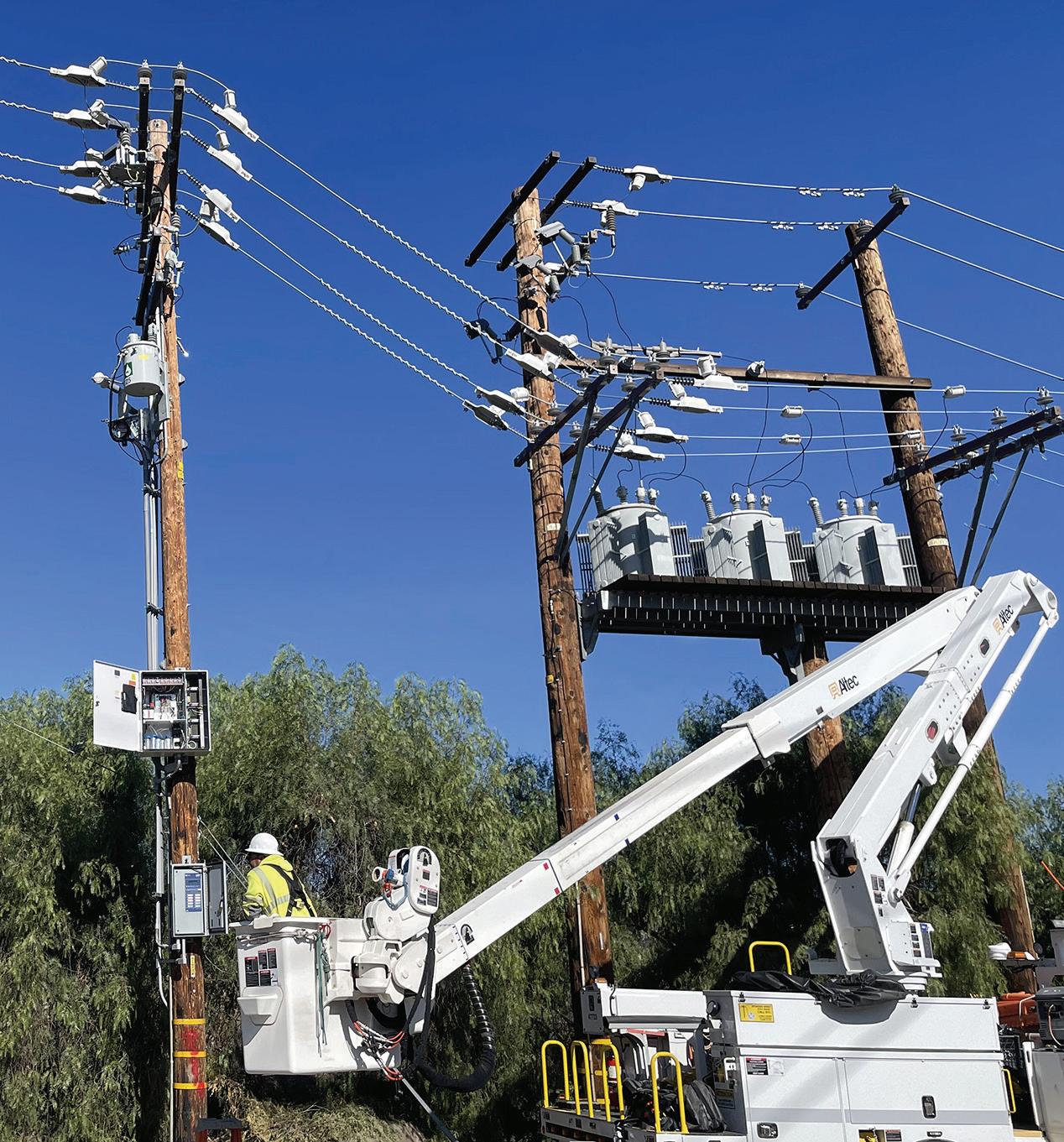
Replacing bare overhead wire with covered conductor or coated electrical wire plays a critical role in the grid-hardening process as well as undergrounding power lines in severe risk areas. SCE performs various tests in both the field and laboratory to validate covered conductor performance in mitigating faults that could result in ignitions, including contact with other objects, such as animals, vegetation, metallic balloons and other conductor. To structurally support covered conductor installations, SCE calculates and validates the proper mechanical strength of existing poles to support the larger conductors. If an existing pole does not have adequate strength for covered conductor installation, SCE replaces the traditional wood pole with a fire-resistant pole, either a shielded composite pole or an intumescent-wrapped wood pole.

The pole replacement strategy provides adequate mechanical strength and resilience to the utility’s infrastructure. SCE also installs wildlife protection covers to cover exposed conductor and connections. Wood is replaced with composite crossarms, insulators and transformers as needed, and regular arresters with spark-preventing lightning arresters. SCE found on fully covered segments, there have not been any ignitions due to failure of covered conductor.
Materials and Standards
SCE conducts thorough research and development of a robust covered conductor specification to ensure effective protection
T&D World | May 2024 26 WILDFIRE MITIGATION
Grid hardening with covered conductor, wildlife covers, fire resistant wrapped wood pole, etc. Photo by SCE.
against phase-to-ground and phase-tophase faults from contact with animals, vegetation, conductor-to-conductor and metallic balloons.
Sample cable is manufactured according to SCE’s specification for testing. SCE performs comprehensive tests itself and uses an independent laboratory to demonstrate the effectiveness of covered conductor in mitigating contact faults. Meticulous test cases have been developed for each type of contact. For example, various types of tree branches and palm fronds are placed between two energized covered conductors. Video and infrared cameras are used to observe any ignition from the contact. Furthermore, each conductor is dissected at the point of contact and put under a microscope to inspect any internal damage to the insulation.
Fire-resistant (FR) poles play a key role in maintaining resiliency of the electric system in the event of a wildfire. SCE deploys two types of FR poles: composite and intumescent-wrapped wood pole. Before deploying FR poles, SCE performed rigorous testing. These tests proved the poles could withstand a typical ground fire observed in Southern California. FR poles are subjected to 1,800°F (982°C) with a frame height three


May 2024 | T&D World 27 WILDFIRE MITIGATION
Sensing technology, EFD, installed on electric pole to monitor, detect damaged equipment before failure. Photo by SCE.
Ground Fault Neutralizer, a Rapid Earth Fault Current Limiter (REFCL) installed substation for detecting, reducing fault energy and isolating ground fault before progressing into ignition. Photo by SCE.
times the typical chaparral height of 6 ft (1.8 m) and a duration of 3 minutes.
SCE uses FR composite poles mostly in [HFRA]. The FR composite poles serve a dual purpose of preventing ignition and withstanding a ground fire. FR composite poles are selfextinguished once a flame is removed. This helps to prevent ignition in the event of an equipment fault on a pole top. In addition, SCE uses a composite layer as a fire shield over the
composite pole to increase the pole capability to withstand a typical ground fire in Southern California.
Another FR pole SCE uses is a wood pole wrapped with an intumescent layer, which becomes activated when a ground fire generates heat on the pole. This layer protects the pole from burning and falling in case of an incoming ground fire.
Incipient Fault Detection
SCE installs sensing technologies, such as early fault detection (EFD), to monitor and detect equipment defects as well as dispatch crews to validate, repair and maintain equipment. EFD sensors are installed on poles every few miles and spaced every 3 miles for distribution and 5 miles for sub-transmission lines to monitor for radio frequency discharges, which may signal a location is experiencing early signs of degradation. A circuit’s topology and length are the main drivers of installation cost for EFD. Therefore, SCE typically installs EFD in the high-risk fire portions of a circuit, thus limiting its cost. This type of sensing technology helped SCE to identify various incipient fault conditions, such as damaged insulators, broken strands, loose connectors and even vegetation contact with energized conductors. Upon receiving and verifying alarms, SCE’s operation center dispatches crews to the suspected site for visual identification and performing repairs. Successful results are validated after repair work is completed and alarms automatically cleared.
The use of new technology is not without challenges. The integration of new procedures for the technical review of alerts and responses to faults on the network is critical to the success of these technologies. With advancements in data from customer meters, greater connectivity to distribution automation equipment, distributed energy resources and monitoring systems like EFD, offer the capability to reduce faults and outages on the system to both improve electric service reliability and reduce ignition risk.

Fault Energy Reduction
It is understandable a minority of faults are unavoidable even after deploying grid-hardening work and making proactive repairs on incipient fault alarms from sensing technologies. SCE further mitigates residual ignition risks

T&D World | May 2024 28 WILDFIRE MITIGATION
An overhead Isolation Bank for repid earth fault current limiter (REFCL) on feeder to detect, reduce and isolate ground fault before becoming an ignition. Photo by SCE.
A mylar balloon is made to contact live equipment in a test of a rapid earth fault current limiter. Photo by SCE.
by implementing fault energy reduction technologies, such as fast curve settings, current-limiting fuses (CLF) and rapid earth fault-current limiters (REFCL).
Fast curve settings are installed on automatic recloser and circuit breaker relays that can quickly operate and remove a fault from the system. In many cases, the quick operation effectively reduces fault energy in half. Fast curve settings along with blocking of automatic reclosing operations are activated during high-risk-fire weather conditions.
CLFs are installed on small branches or a section of a circuit. A CLF is designed to reduce both fault-current magnitude and operation time. A CLF’s energy reduction varies based on faultcurrent levels, but generally results in a reduction of 25 times the fault energy.
The REFCL is a more advanced technology and implemented for wildfire reduction in Australia, which can increase fault sensitivity to a half ampere while reducing ground fault energy to a level that boasts a 90% ignition reduction from ground faults on three-wire systems. With REFCL protection, the fault energy of the contact between a metallic balloon and an energized conductor is significantly reduced.
Cutting Wildfire Risk
SCE’s multi-layered approach to wildfire mitigation effectively prevents and avoids contact faults, resulting in about 70% fault reduction on fully covered circuits. Sensing and fault reduction technologies have helped to further reduce ignition
risks for residual faulted events, such as equipment damage and deterioration.
The ongoing deployment of covered conductor, undergrounding, enhanced inspections, expanded vegetation management and more targeted use of Public Safety Power Shutoffs (PSPS) allowed the company to achieve an 85-88% reduction in catastrophic wildfires associated with its equipment since pre-2018 levels.
THUAN TRAN (thuan.tran@sce.com) is principal manager of asset engineering at SCE. His team is responsible for performing studies, preparing specifications, standards, and commissioning of transmission, substation and distribution electrical equipment. He holds a California Professional Engineer license in electrical engineering.
JESSE RORABAUGH ( jesse.rorabaugh@sce.com) is a senior engineer at SCE. He received bachelor’s degrees in physics, chemistry and biology from Fresno State, a master’s degree in biomedical engineering from Cornell University and a Professional Engineer license as an electrical engineer in the state of California. He is an active IEEE member and serves as chair for the G4 working group responsible for IEEE Std. 1246 and 1268 and as vice chair for the G9 working group responsible for IEEE Std. 837.
ANDREW SWISHER (andrew.swisher@sce.com) is a consulting engineer at SCE. He earned a bachelor’s degree in electrical and computer engineering with an emphasis in power systems engineering from California State Polytechnic University at Pomona as well as a master’s degree in engineering and a certificate in power system protection and relaying from the University of Idaho. He is a registered Professional Engineer with the state of California.
WILDFIRE MITIGATION
WUNPEECE
VISIT WWW.UDEVICES.COM AND EXPERIENCE THE FUTURE OF UNDERGROUND POWER INSTALLATION
OUR
TRANSMISSION SPACERS REDEFINE THE INDUSTRY STANDARD FOR UNDERGROUND POWER TRANSMISSION INSTALLATIONS. WITH PRECISION ENGINEERING AND UNMATCHED QUALITY,
Protect Wind Turbines from Lightning Strikes
Wind turbine owners and operators should ensure their lightning protection system has been installed correctly and regularly check it is working properly.
By SAMEER KULKARNI, ENERCON, and DR. AHMED EL-RASHEED, Megger Group Ltd.

The share of wind power in total electric power generation is expected to increase, and with that comes a requirement for this carbon-free source to be more reliable. The most important component of a wind power system, the wind turbine, is exposed to harsh environmental conditions and electrical transients such as lightning strikes. Understanding the lightning protection scheme of the wind turbine and checking its integrity is vital to ensuring reliable operations. Recent international studies have shown 80% of insurance claims on wind turbines in one European country resulted from lightning-related damage. Similarly, a major U.S. utility reported over 85% of its wind turbine downtime was from lightningrelated damage.
Wind turbine manufacturers take great care in designing the lightning protection system. Turbine owners and operators should ensure the system has been installed correctly and regularly check it is working properly as part of their maintenance program.
Wind Power
Renewable energy is growing at a rapid pace. In 2020, new installations of wind power provided 93 GW globally. The year-over-year growth is 53% with both the U.S. and China leading the world in new installations of wind power generation. Wind power answers the pressing needs and circumstances of the day. It is a relatively inexpensive and green energy source that addresses constrained infrastructure budgets as well as climate-change policies. Most market analysts indicate wind power development will continue to grow at a fast rate — because all the driving factors of its adoption continue to persist. This is great news for the electric power industry, as there will be growth and opportunity for many years to come. However, this growth will need improved maintenance programs to protect the investments in wind power and maximize the profits.
Lightning Protection
The biggest maintenance problem for wind power is lightning strikes. According to Vestas CEO Henrik Lightning damage to wind turbines, causing a fire in the nacelle.
T&D World | May 2024 30 PROTECTION AND GROUNDING
Photo courtesy of Megger.
Andersen, intense lightning strikes were the biggest driving force behind the record warranty claims of €175 million (US$212 million) in the second quarter of 2020. Wind turbine manufacturers and installers like Vestas recognize the immense danger of lightning strikes and take great care in the design of turbines. Still, operators and owners of wind turbines must ensure a robust and effective maintenance program for their assets.
A growing number of studies speculate rotating wind turbines may be more susceptible to lightning strikes than stationary structures. Wind turbines are at an increased risk of being struck by lightning because of their height and the locations used for wind farms. Lightning faults cause more loss in wind turbine availability and production than the average fault.
Wind turbines are equipped with lightning protection to minimize damage from direct lightning strikes, and shield sensitive equipment integral to wind turbine operation. A lightning strike not only has a large magnitude of current but also creates an unwanted electromagnetic field across components housed in the nacelle and base of the tower. The lightning protection system performs the function of directing current strikes to ground.
To facilitate the coordination of protection functions, it is prudent to divide the wind turbine into different zones, known as lightning protection zones (LPZ). The LPZ concept is a structuring measure for creating a defined electromagnetically compatible environment in an object while being cognizant of the object’s stress-withstand capability.
IEC 62305 Standard for Lightning Protection defines the LPZ for structures and can be applied to a wind turbine. The

different zones are classified into external and internal zones based on their exposure to direct lightning.
External Zones
The external zones consist of the following:
• LPZ 0A — This is the zone that could be threatened by direct lightning flashes and the full lightning electromagnetic field. The internal systems may be subjected to full lightning surge current.
• LPZ 0 B — This zone is protected against direct lightning flashes, but the full lightning electromagnetic field remains a threat. The internal systems may be subjected to partial lightning surge currents.

The rolling sphere method is used to determine LPZ 0A , the parts of a wind turbine that could be subjected to direct lightning strikes, and LPZ 0B, the parts of a wind turbine that are protected from direct lightning strikes by external air-termination systems or

May 2024 | T&D World 31 PROTECTION AND GROUNDING
Lightning damage to wind turbine, causing the fiberglass composite blades to wilt and break. Photo courtesy of Megger.
External lightning protection zone show on simplified wind turbine. Graphic courtesy of Megger. Current path for lightning discharges. Graphic courtesy of Megger.

air-termination systems integrated in parts of a wind turbine (for example, in the rotor blade).
Internal Zones
• LPZ 1 — The surge current in this zone is limited by current sharing and isolating interfaces, as well as by surge protection devices (SPD) at the boundary. Spatial shielding may attenuate the lightning electromagnetic field.
• LPZ 2 to LPZ n — The surge current may be further limited in this zone by current sharing and isolating interfaces, as well as by additional SPDs at the boundary.
PROTECTION AND GROUNDING
Foundation earth electrode at wind turbine base. Graphic courtesy of Megger.
Additional spatial shielding may be used to further attenuate the lightning electromagnetic field.
The lightning protection system essentially works by taking the form of a low-resistance path to ground. The path goes from the blade’s tip to the base of the turbine.
In the event of a lightning strike, current flows to ground through the lightning protection system, not the sensitive equipment in the wind turbine. As the lightning current dissipates through the grounding system, it is important not to cause thermal or mechanical damage or arcing that may lead to fires or personnel injuries. To ensure protection in the zones will work when needed, the resistance of the path to ground should be measured at regular intervals, ensuring it meets the limits specified by the turbine manufacturer (typically limited to 15 mΩ to 30 mΩ, depending on the turbine size). For these tests, use of a low-resistance ohmmeter is recommended.
Verification Methods
Measurement of low resistance is affected by key factors such as measurement type, test current magnitude, length of measurement leads, and placement of leads and probes. The four-wire method is most appropriate because it uses separate current probes to inject direct current and separate potential probes to measure the voltage drop across the test specimen.
In some practical cases, a Kelvin measurement — where current and potential probes are 180 degrees apart — also is employed to measure low-resistance values. The use of any other methods, such as a two-wire method, may not be suitable because the measurement contains contact resistance values of the probes, thereby clouding the measurement.
Testing The Protection
The most important part of the lightning protection system is to test the conductor from the blade tip to the down conductor inside the hub that ultimately connects to the ground grid. The conductor is placed under significant strain when the blade flexes with the wind during normal operation. Under strain, the conductor could fracture. Unfortunately, it is not enough to simply check continuity, because if the fractured conductor is touching at the break point during a continuity test, the result will not be satisfactory. Consequently, a test current magnitude of 1 A or more is recommended for this test.
The size of the turbines can pose a problem because lowresistance ohmmeter test leads typically are very short. Because of the size of the wind turbines, some extra-long leads are required, often up to 100 m (328 ft). This is a huge increase in length over standard test leads for low-resistance ohmmeters. The long leads must be designed with a low enough resistance to ensure a measurement is still possible. To achieve this, it is important to understand the test instrument design.
Some instruments have a compensation factor to allow for power loss in standard test leads. When using long test leads, the compensation for power loss will no longer be sufficient. As a result, the test range of the instrument will be reduced. When the resistance of the test leads increases, the total value of the resistance of load also increases, as shown in this equation:
P = I 2 R, where R = (resistance of load) + (resistance of test leads),


P = output power of the test instrument and I = output current of the test instrument.
Since the maximum power output of the test equipment cannot change, the rise in test lead resistance will cause the maximum current to be reduced. Lead length impacts the ability of an instrument to measure low resistances. Accurate and repeatable measurements will be a combination of test current, lead length and resolution.
The performance of the low-resistance tester at 1A (2.5 W) is most desirable for lead lengths typically used to measure wind turbine lightning protection systems. For wind turbine applications, use the proper range and test current magnitude because it

May 2024 | T&D World 33 PROTECTION AND GROUNDING
Four-wire method. Graphic courtesy of Megger.
Lightning conductor resistance measurement at blade tip. Photo courtesy of Megger and Vestas Wind Systems.
Lightning conductor resistance measurement at wind turbine hub. Photo courtesy of Megger and Vestas Wind Systems.
the length of measurement leads accommodate the length of the wind turbine’s blades.
Results
Testing of the lightning protection system was performed on a wind turbine with 32-m-long (105-ft-long) blades using a low-resistance ohmmeter. The instrument was used in its long-test-lead mode, which applies a 1-A test current and can measure accurately down to 0.01 mΩ when using 100-m-long (328-ft-long) test leads. The lightning system testing consisted of measuring the system’s resistance from the tip of each blade to the hub and from the hub to the base. The lightning system terminates with interconnected ground rods at the base of the turbine tower.
Each measurement was taken three times to evaluate repeatability. The variance meter on the instrument automatically recorded three measurements in a row and calculated their variance. The low variance provides confidence in the measurement. In the field, test engineers must take care to remain safe and follow best practices. This will provide the best possible measurements. The manufacturer of this wind turbine provided a pass level for the lightning system of 20 mΩ or less. This test proves the lightning system had been installed correctly and was in good working order. Therefore, this turbine had good lightning protection as per the manufacturer’s design.
Recurring Maintenance
Lightning is a damaging threat to wind turbines. As wind power installations continue increasing around the world, the requirement to protect these assets becomes even more important. Manufacturers of wind turbines take great care in designing their lightning protection system, because of the known damage that lightning can cause. Owners and operators of turbines must ensure the lightning protection system has been installed correctly. Additionally, they must regularly check the lightning protection system as part of their maintenance program.
Testing and verifying the lightning protection system’s effectiveness is based primarily on low-resistance measurements. Some challenges exist in measuring resistances at the milliohm level when dealing with large structures like wind turbines, so a balance between test energy, accuracy, resolution and test lead length must be established. However, the right tools for the task can make this a simple job. Lightning
protection maintenance should be a regular recurring task for owners and operators. This will avoid lightning damage to wind turbines and ensure these assets are protected.
Acknowledgement
This article was provided by the InterNational Electrical Testing Association. NETA was formed in 1972 to establish uniform testing procedures for electrical equipment and systems. Today the association accredits electrical testing companies; certifies electrical testing technicians; publishes the ANSI/NETA Standards for Acceptance Testing, Maintenance Testing, Commissioning, and the Certification of Electrical Test Technicians; and provides training through its annual PowerTest Conference and library of educational resources.
SAMEER KULKARNI, PE, (k.sm2491@gmail.com) is is the engineering supervisor for the Electrical Design Engineering group at ENERCON. He has nine years of experience in electrical engineering across nuclear power generation and electrical testing. Kulkarni has led the design and implementation of electrical projects across several nuclear plants and has extensive experience in testing power transformers, current and potential transformers, batteries, circuit breakers, inverters, motors, relays and analyzing test results.
DR. AHMED EL-RASHEED (ahmed.el-rasheed@megger.com) is a business development director at Megger and has over 14 years of experience in electrical engineering. He is a member of several international standards organizations and has published papers on ground testing, insulation testing and multi-sensor integration using AI.
T&D World | May 2024 34 PROTECTION AND GROUNDING
Test Current Range Of Leads Resolution Comments Standard 30 m (98 ft) 60 m (197 ft) 100 m (328 ft) 0.1 mA 0 Ω to 2500.0 Ω 0 Ω to 2499.9 Ω 0 Ω to 2499.6 Ω 0 Ω to 2499.2 Ω 0.1 Ω Test current insufficient Resolution innaccurate 0.1 mA 0 Ω to 250.00 Ω 0 Ω to 249.85 Ω 0 Ω to 249.60 Ω 0 Ω to 249.20 Ω 0.01 Ω 1 mA 0 Ω to 25.000 Ω 0 Ω to 24.850 Ω 0 Ω to 24.600 Ω 0 Ω to 24.200 Ω 1 mΩ 10 mA 0 mΩ to 2500.0 mΩ 0 mΩ to 2350.0 mΩ 0 mΩ to 2100.0 mΩ 0 mΩ to 1700.0 mΩ 0.1 mΩ 100 mA 0 mΩ to 250.00 mΩ 0 mΩ to 100.00 mΩ Out of range Out of range 0.01 mΩ Insufficient range 1 A 0 mΩ to 25.000 mΩ Out of range Out of range Out of range 1 μΩ 10 A 0 µΩ to 2500.0 µΩ Out of range Out of range Out of range 0.1 μΩ 1 A (2.5W) 0 mΩ to 2500.0 mΩ 0 mΩ to 2350.0 mΩ 0 mΩ to 2100.0 mΩ 0 mΩ to 1700.0 mΩ 0.1 mΩ Optimum conditions 10 A (25W) 0 mΩ to 250.00 mΩ 0 mΩ to 100.00 mΩ Out of range Out of range 0.01 mΩ Insufficient range
Table 1. Resistance range for varying test current magnitudes for popular low-resistance tester.
Section Tested Test 1 (mΩ) Test 2 (mΩ) Test 3 (mΩ) Variance Average (mΩ) Blade A 7.81 7.81 7.79 0.9% 7.80 Blade B 7.85 7.86 7.86 0.4% 7.86 Blade C 7.51 7.52 7.52 0.4% 7.52 Tower 3.17 3.20 3.20 1.3% 3.19
Table 2. Raw measurements, variance and averages.
20
Lightning Path Total Resistance (mΩ) Pass/Fail Blade A To Ground 10.99 Pass Blade B To Ground 11.05 Pass Blade C To Ground 10.71 Pass
Table 3. Total resistance values and results. Manufacturer’s Pass Level
≤
mΩ


SAVE THE DATE October 16-19, 2024 • Overland Park Convention Center Overland Park, KS •linemansrodeokc.com
EMPOWERED: WOMEN IN ENERGY
BY JEFF POSTELWAIT, SENIOR EDITOR
T&D World Interview: ATC CEO Teresa Mogensen
Transmission utility ATC hired an industry veteran as its CEO, and she answers T&D World’s questions about the utility industry.
Editor’s Note: This interview is part of a series T&D World is doing with women in the electric utility industry. At T&D World Live, Oct. 1-3 at the Hilton Atlanta, we will highlight the work of women in this industry at the Empowered Breakfast — Inspired by Women in Energy. Register for T&D World Live 2024 at https:// events.tdworld.com/2024/registration
ATC, which has its headquarters in Pewaukee, Wisconsin, named transmission industry veteran Teresa Mogensen its CEO last year. In this T&D World interview, Mogensen offers her take on the state of the electricity industry, her career thus far, and ATC’s plans for offering reliable service into the future. Mogensen has more than 30 years of experience inside the utility industry, most recently with Xcel Energy Generation, following a decade with Xcel Energy Transmission where she led that utility’s CapX2020 transmission collaboration.
T&D World: What are the big challenges facing transmission-only utilities in 2023, and what partners do such companies have to rely on to meet them?

Teresa Mogensen: Transmissiononly utilities face the same challenges as the transmission parts of vertically integrated utilities in responding to the changing resource mix, enabling interconnection of new generators and loads, managing assets for security, reliability, and resiliency, and operating in compliance with all applicable requirements in situations of increasing complexity. All transmission

utilities work in collaboration with state, regional and federal entities, neighboring utilities, and industry groups because everyone is interconnected.
An advantage for transmission-only utilities can be privilege of focus, where the transmission utility’s sole goal is to meet needs for reliable and affordable transmission, and there is not internal competition for attention and resources.
A challenge for transmission-only utilities can be not having the same level of internal resources to draw upon or share with other areas within the same company. However, there are plenty of suppliers and contractors that can be engaged as partners to provide resources. It is important for any company to be able to use a mix of internal and external resources to flex with demand and keep costs down.
Our biggest challenges are related to the changing energy mix. As the electric industry moves toward renewable generation sources, we are transforming our system to continue delivering energy reliably and safely. ATC works closely with entities including the Midcontinent Independent System Operator, the regional grid operator, and North American Transmission Forum members
T&D World | May 2024 36
facilities with a combined total of 450 MW of solar and 125 MW of battery storage in southeastern Wisconsin. The generation developments will be jointly owned by ATC customers and utility owners We Energies, Wisconsin Public Service, and Madison Gas and Electric when in service by the
of 2024.
Teresa Mogensen, chair, president and chief executive officer, ATC. Photo courtesy of ATC. A new 345-kV/138-kV transformer was installed to support the interconnection of two
end
Photo courtesy of ATC.
to meet the challenges that lie ahead.
TDW: Can you tell me a bit about your time at Xcel Energy Transmission, and the work you did there, including the CapX2020 effort?
Mogensen: I led the Transmission business at Xcel Energy for around 10 years. Early on we were ramping up to meet an increasing level of demand for new transmission, including the CapX2020 initiative projects. CapX2020 was a unique collaboration of utilities of different types (investor-owned utilities, cooperative, municipal) coming together to plan and implement a set of “no regrets” transmission projects that were critical to meeting collective future needs.
It was very powerful to have a unified group supporting a collaborative plan, and that helped us achieve necessary approvals. We worked out ways of efficiently implementing the projects with utilities taking different lead roles on different projects. The overall portfolio was supported by agreements and a governance approach to drive collaboration between utilities for the good of the whole initiative.
This is essentially what ATC is, encompassing this diversity within one

company via different types of utility owners, charged with meeting all the customer and stakeholder needs of their collective service territories with a collaborative plan and process.
TDW: I see you hold a degree in electrical engineering from Marquette University and that you are a registered professional engineer. What are you hearing from your engineer colleagues about the industry today, and how can you bring their point of view to ATC?
● Nordic’s PSP-151530-MG-CB-FIBER pedestal is the enclosure for a fiber optic enclosure.
●Lockable & Removable lid allows open access foreasytrainingoffiber strands inside the flared base.
●Pedestal’s built-in mounting bracket makes it easy to attach the fiber optic enclosure.
●Large expansive interior cavity for easy fiber enclosure installation.
●Accommodates a variety of fiber enclosures
●The word “FIBER” is imprinted on the top lid.
●*Hand holes available for other fiber applications.
Mogensen: First, the industry needs more engineers! Engineers are critical to utilities and serve in a wide array of important functions. In particular, we need the logical problem-solving approaches that engineers are trained to bring to any situation; the ability to break any presenting issue down into component parts and apply innovative thinking, based in technical reality, to drive new solutions.


May 2024 | T&D World 37 EMPOWERED: WOMEN IN ENERGY
ATC’s biggest challenges are related to the changing energy mix. As the electric industry moves toward renewable generation sources, it is transforming its system to continue delivering energy reliably and safely. Photo courtesy of ATC.
ORDIC FIBERGLASS, INC. “Quality Products for the Electric Utility Industry” P.O. Box 27 Warren, MN 56762 Tel: 218-745-5095 Fax: 218-745-4990 www.nordicfiberglass.com Nordic’s Home for Fiber Enclosures *Weight loading limited to Pedestrian traffic only PHH-161912-MG PHH-161918-MG PHH2-152315-MG PSP-151530-MG-CB-FIBER 2405TDW_NordicFiberglass.indd 1 4/2/24 11:31 AM

ATC engineers see the electric utility industry undergoing an unprecedented transition as we shift from large centrally located, continuously operating synchronous generators such as coal, oil, and gas, to smaller dispersed, intermittent, inverter-based resources such as wind, solar, and batteries. Not only does the resource shifting and relocation require significantly changing the network to reliably address multiple new power flow patterns, the loss of auxiliary services from synchronous generation (e.g., voltage regulation, inertia) requires the implementation of new technologies to maintain system stability. This is occurring at a time when the grid is integrating more large new point loads, like data centers, and supply chain
implement the system changes necessary to maintain grid reliability.
By working with industry organizations, offering additional training opportunities and openly communicating these issues between groups, engineers at ATC expect to fulfill our obligation to provide a safe, reliable and environmentally responsive transmission system to our stakeholders at a reasonable cost.
TDW: Do you have any insights on women in utility leadership, or how the industry is supporting the next generation of women utility leaders?
Mogensen: I am proud to be the first woman CEO at ATC, and one of a small, but growing, number of women CEOs in the utility industry. Part of this is a numbers game, considering propor-

and opportunity to make it to the top leadership position. It is a constant challenge to increase diversity in STEM-heavy industries and occupations. I have been fortunate throughout my career to have worked for companies and leaders that cared about development and gave me opportunities to grow. I think the utility industry is especially good at this. We want our workforces to reflect the diversity of the communities we serve.
ATC is partnering with community members and educators to build awareness of STEM and energy careers throughout our community, including among women and other groups of people who have been traditionally underrepresented in our industry. We are seeking to create early career opportunities and exposure to the electric utility industry, the skills and commitment needed to be successful and advancement opportunities within the electric utility industry.
TDW: How does ATC’s geographic position, near the Canadian border, adjacent to the Great Lakes, situated in the middle of the US, provide advantages and challenges to its operation?
Mogensen: ATC’s geographic position creates some unique circumstances. While we are not an electrical island, we have historically been a kind of electrical peninsula located in a corner of the MISO region, with Lake Michigan to the east, Lake Superior to the north and limited transmission connections to the west. Adding to the complexity is the fact that to our south ATC’s system borders a different regional transmission operator (Commonwealth Edison in northern Illinois is a member of the PJM interconnection while all of Wisconsin is part of MISO).
The cost of construction across the Great Lakes has historically limited building of new transmission connections to ATC’s north and east, though ATC did strengthen the northern tie around Lake Michigan near the Straits of Mackinac.
EMPOWERED: WOMEN IN ENERGY
ATC has constructed multiple new 345-kV lines, the most recent of which is the Cardinal-Hickory Creek Transmission Line Project. ATC’s portion of the project was placed into service on Dec. 7, 2023. Over 160 renewable generation projects are dependent upon its construction and operation. Photo courtesy of ATC.
The limited transmission connections to the Upper Peninsula of Michigan require strong working relationships with the utilities that own and operate generation in the UP and serve the end-use customers in that area. The presence of Ontario near the Eastern UP presents a potential connection opportunity with appropriate technology when system needs emerge.
As recent weather events have shown (e.g., 2021 Winter Storm Uri, 2022 Winter Storm Elliot), transmission connections are essential to keeping the lights on for the end-use customer. Multiple connections mean the system has more capability to move power where it is needed, either within the Midwest or for other regions. A well-connected network provides significant value for those connected to it.

delivering value to our customers and stakeholders and looking for the win-win wherever possible.
TDW: Last year, we editors at T&D World heard a lot about T&D equipment becoming harder to find, with longer lead times for projects. Is this a trend you’ve observed, and how do you see it developing?
Mogensen: Yes, equipment is absolutely harder to find. Part of this is the continuing after-effect from the pandemic shutdowns, and part of it is increasing demand. This trend will likely continue for some time. We look at suppliers as a critical stakeholder and seek a longer-term partnership approach to minimize lead time to the extent possible and ensure adequate supply.
ATC has constructed multiple new 345-kV tie lines, which have alleviated many of the past reliability concerns for Wisconsin and allowed MISO to transfer needed power across its footprint during extreme weather events.
Having strong transmission network connections to neighboring electrical utilities is a significant advantage in terms of maintaining reliable service. A strong regional transmission grid allows for geographic diversity in terms of accessing wind and solar resources – it may be sunny and windy in one part of the Midwest but not in another.
In recent years, ATC has worked to strengthen our connections to the west and has also taken action to implement the recommendations coming out of various North American Electric Reliability Corporation event reports to better prepare our system for a future that is more
reliant on variable resources such as wind and solar farms.
Being relatively centrally located within MISO is an advantage in terms of access to the regional energy market, but only to the extent the regional transmission grid can support transfers of energy. Continuing to develop a strong transmission backbone throughout the Midwest will provide regional benefits to ATC and all other interconnected utilities.
TDW: How are the relationships between ATC, electric utilities, cooperatives, and grid operators evolving nowadays?
Mogensen: Relationships overall are generally positive and productive. No one stands alone in a network. We affect and are affected by each other, so we all have a vested interest in each other’s success. Sometimes that inherent need for collaboration is negatively affected by rules that drive competition, but even in competitive situations we all aim to be able to work together at the end of the day. I am bringing an increased focus on
TDW: There have been calls by industry groups such as APPA and NRECA for the adoption of a more streamlined process for transmission permitting. Can you provide any insight on this problem, and how state, federal, local authorities can help needed transmission get built?
Mogensen: Permitting processes are present for a good reason, and that is to help ensure that the right projects are built and sited in the public interest, as they serve a public need and provide a public service. So, we support working through them in collaboration with affected stakeholders to result in the most reasonable societal outcome.
That said, some processes and jurisdictions are not streamlined or coordinated, especially for projects that cross political boundaries like state lines. This can add significant time and complexity that increases costs and may prevent needed projects from being timely built. We do need more coordinated and streamlined permitting processes for projects deemed in the public interest, as the public ultimately suffers from the gridlock.
EMPOWERED: WOMEN IN ENERGY
ATC supports STEM education through a number of partnerships like the Milwaukee Bucks Math Hoops powered by ATC. Math Hoops is a fast-paced board game that helps students develop fundamental math skills through the game of basketball. Mogensen and Bucks Guards Andre Jackson Jr. joined students from the Boys & Girls Clubs of Greater Milwaukee to play a live version of the game in December 2023. Photo courtesy of Milwaukee Bucks.
FACES OF THE FUTURE

Zackery Gough
Pedernales Electric Cooperative
• 4th Year Apprentice
• Went to Northwest Lineman College before joining PEC
• Training at PEC’s Marble Falls, Texas, facility
• Enjoys hunting and traveling around exploring new and different places
• Won the International Lineman’s Rodeo apprentice division twice
Inspiration to Work in the Trade
My dad told me about linework after seeing some guys working while he was driving home one day. It got me thinking about it, plus my uncle works as an engineer for Southern California Edison. I love the outdoors and always knew that I wanted to work outside. The opportunity to build a career and travel all heavily influenced my desire to become a lineworker.
Training on the Job
I recently became an Apprentice 4 and am on my last step to becoming a journeyworker. At PEC, we’re fortunate to have access to incredibly robust training through the program they’ve built. PEC has a training center in Marble Falls, Texas, with classrooms, instructors and training yards. This year we’re working on switching and reclosures, system protection, as well as in-depth hot work and leadership skills. We have many opportunities to explore and gain exposure to new things. Having our training here at home is also nice because we don’t have to drive far and when we need to practice on something we can just go to the training center.
Observing Crews at Work
I like how we get to travel to other areas of the co-op (other districts) and see how other crews work. This helps you really pick up things here and there and I feel like we learn things at the training center that we may not learn in the field. It provides
us some exposure to things we wouldn’t normally see — like transmission. All of this helps us to be more well-rounded and versatile in our skills, which is something I’m grateful for.
Rewards and Challenges in the Line Trade
In Texas, working in the summer heat can be a challenge. If we’re working storms or callouts, there can be some long hours in either intense heat or freezing cold weather with rain and ice. Running outages and being on-call, however, are my favorite parts of being a lineworker. Once you have a good group of guys and it all clicks, everything runs so smoothly. We’re all here to help each other out, and that’s what I enjoy about it. I completely trust the guys I work with and love working with them. Being a lineworker, you’re in a big community, and it’s nice to be part of it.
Working Storms
I was at PEC for the last two ice storms — Winter Storm Uri in 2021 and Winter Storm Mara in 2023. We worked long hours and for three weeks straight during the most recent storm. I worked with another guy on the night crew, picking up lines and splicing lines everywhere. We fixed broken poles, crossarms, and everything that was damaged from the weight of the ice. The colder temperatures overnight and working in the dark were challenging. I remember about a week-and-ahalf into it, we were tired, but we knew folks were counting on us. It’s something I’ll never forget, being out there in the middle of the night and then closing a switch and bringing a whole subdivision on. To see how thankful everybody is, that’s my favorite part of the job — helping people get their power restored, especially when they’ve been out for a while.
Words of Wisdom
I would absolutely encourage anyone interested to pursue a career in line work. When it comes to excelling in the field, my advice would be to always think ahead. Be thinking about the next step ahead of the lineworker and the crew you’re working with. Figure out what they need and have it ready for them before they need it. It shows that someone is determined, paying attention to safety and part of the team, which I think is the best thing you can do. To be successful in an apprenticeship in the line trade, it takes a certain dedication to it and wanting to do it. There’s a lot of hard work and a lot of knowledge you need to do it well. It can be a mental game sometimes, not just grunt work. PEC is committed to a culture of safety, so it’s important to be steadfast and pay attention to the details. You want to carry that commitment in everything you do.
Future of Line Work
I foresee a lot more stuff coming out safety-wise and possibly even changing the ways in which people work and their practices. I can see the industry growing and a lot more people getting involved, especially given how electricdriven everything is nowadays. I think it’s going to be even more demanding.
T&D World | May 2024 40
BY AMY FISCHBACH, FIELD EDITOR


A Slice of Life in the Florida Keys
Florida Keys Electric Cooperative connects with the local community on vegetation management.
Responsible for bringing power from mainland Florida to the Keys, Florida Keys Electric Cooperative (FKEC) serves about 33,000 accounts from the Monroe County line to the beginning of the Seven Mile Bridge. The system only runs about 700 miles and serves a very small, tight-knit community.
Throughout the last few decades, the goal of FKEC has never changed. The cooperative has always sought to educate its community, city and planners. Many people don’t take power lines into consideration when they are planning landscaping projects, but the cooperative helps them design landscaping with power lines in mind and help them choose foliage that will be able to last without crowding power lines or becoming dangerous during storms.
Educating the Community
Over the years, public outreach has been a big part of FKEC’s system. Not only does the cooperative send out a membershipwide monthly newsletter, but it also sends an outreach forester out to Upper and Middle Florida Keys elementary schools on Florida’s Arbor Day to pass out seeds and discuss native plants. FKEC also offers a native tree giveaway every October. Since 2010, the cooperative has been recognized as part of the Arbor Day Foundation’s Tree Line USA program. The cooperative provides
BY JASON RICHARDS, FLORIDA

education on the best kind of native plants to have in yards, how to identify native plants and when to call a utility vegetation management specialist.
Part of this education consists of the lateral movement of coconut trees during storms and heavy winds. Floridians love their palm trees; however, they don’t realize that Washingtonia Palms can grow 3 ft to 4 ft a year, and for every 5 ft of trunk, there is 1 ft of movement, meaning these trees move a great deal during storms and high winds.
While FKEC strives to communicate fully with its customers and serve them to the best of its ability, all while trying to be

T&D World | May 2024 42 ELECTRIC UTILITY OPERATIONS
ELECTRIC COOPERATIVE
KEYS
Each January, Florida Keys Electric Co-op celebrates Florida’s Arbor Day with a “Seeds for Students” Program providing fourth graders throughout the Upper and Middles Keys with FKEC planting kits, which include everything needed to grow native Bahama senna trees. Pictured, Stanley Switlik Elementary students show off the contents of their kits.
FKEC tree crews trim trees in Key Largo, Florida, to maintain line clearance as part of the co-op’s year-round work implementing a comprehensive vegetation management program to prevent outages caused by vegetation.
as cost-effective as possible, the cooperative has run into some problems. For example, cataloging every palm tree in the system located 10 ft or less from a power line is complex and time-consuming. This process involves catching all the problem trees and tagging them, writing a letter to notify the community member of plans to remove the tree and coordinating with them to either cut it down or move it. Once FKEC takes the tree down, palms generally don’t chip well, leading to a cost of $300 to $600 per load just to dispose of the tree properly, raising costs dramatically.
Forging a Partnership
FKEC started with one crew consisting of three men and a chipper. This system was extremely difficult to get on a cycle, and the crew was constantly jumping around and putting out fires. With the change in management, FKEC was able to shift to a super crew system — consisting of three crews, each with a chipper and a bucket. By the end of year one, it had decreased calls by 60%, and while the pricing strategy time and equipment/time and materials (T&E/M) system got FKEC through the first few years, the team members were quickly becoming disillusioned with the system.
FKEC was working with its previous partner for 10 years on a T&E/M project and spending $10,000 to $11,000 per mile. With no dormant season in the Florida Keys and year-round utility vegetation management and tree pruning, the cooperative needed a better solution than the T&E/M projects. For two years, FKEC worked to move to a unit-based pruning solution and finally received the budget and green light after gaining approval from the Board of Directors.
After reviewing options, the cooperative decided on ACRT’s software. FKEC can now implement a unit-based contract, which is saving time and money on surveying and creating work orders. In the past, the vegetation manager had to figure out what needed to be done, survey for hotspots and create orders for the in-house crew. Now, it’s possible to focus on the overall picture while ACRT handles contractors.
This gives the crews the opportunity to focus on educating community members about the dangers tall trees can pose when a storm hits.
ACRT designed a new VM program for FKEC, updated its line clearance and handled all the bids, allowing the vegetation manager to focus on talking to homeowners about what is going on with their foliage. They want to be involved and informed as


ELECTRIC UTILITY OPERATIONS May 2024 | T&D World 43
Big jobs call for big purchases. Or do they? Tallman Equipment Rentals Save time and money with Scan to start saving! • Stringing Blocks & Attachments • Grounded Stringing Blocks • Helicopter Stringing Blocks • Fiberglass Hot Arms • Chain Hoists • Compression Tools & Dies • Cutting Tools • Impact Wrenches • Magnetic Drill Presses • Battery Tools • Hydraulic Pole Pullers • Traveling Grounds • Groundsets & Jumpersets • And much more! 877-860-5666 tallmanequipment.com/rentals 2405TDW_TallmanEquipment_rev.indd 1 4/11/24 11:38 AM

the seventh year,
to what is happening with their property. Having these conversations without having to worry about finding contractors opens the door to better communication about what needs to be done and why. That way, the homeowner is content and the crews can get the job done.
Because the software is easy-to-use and user-friendly, it allows the team members to gather the necessary data and information quickly. If they run into issues, the vendor’s team is available to provide assistance.
The Future of Florida Keys Electric Cooperative
With climate change progressing and the heat index continuing to climb, FKEC is faced with the challenge of figuring out how

to keep employees safe while continuing to get the job done. Many UVM companies are facing the same issues with severe weather putting a strain on power lines and field workers. The cooperative’s current plan is to pull crews in early in the afternoon to avoid them being out during the hottest parts of the day. Since FKEC does not see this changing, it will continue to make strides toward safety, and turn to ACRT to see what their safety practices entail.




The Florida Keys power grid has also faced some strain thanks to the influx of people that occurred after the COVID-19 pandemic. New people are moving to the Florida Keys due to its tropical climate, however, a lot of these new owners and customers do not understand the necessity of tree pruning and UVM. This is where the need for education comes into play. Partnering with ACRT allows FKEC to focus heavily on educating these new clients about the importance of native trees and UVM.
FKEC’s top priorities are making sure customers are educated and doing everything it can to keep the community safe. Most people don’t think about how pruning trees can help prevent fallen power lines during storms or how a tree 10 ft from a line can cause damage. The cooperative’s job is to provide them with the information they need, and the services that keep their homes and businesses running.
JASON RICHARDS has been with the Florida Keys Electric Cooperative for 32 years. He started as a tree trimmer in 1991 and went on to work in multiple positions, including tree crew leader, journeyman substation electrician and in system operations before overseeing FKEC’s vegetation management in 2004. He is also a certified arborist from the International Society of Arboriculture.
ELECTRIC UTILITY OPERATIONS T&D World | May 2024 44
FKEC Tree Crew Leader Marcus Martin and his crew trim trees using arborist cuts to protect tree health and power reliability through proper line clearance.
Our commitment to a sustainable future is translated into actions
more about the full life cycle of porcelain insulators and their environmental impact. www.ppcinsulators.com Reduce your carbon footprint with PPC’s CO2 compensated insulators 2405TDW_PPCInsulators.indd 1 4/2/24 8:24 AM
For
FKEC worked with the Arbor Day Foundation to offer an energy-saving tree program to benefit its members and the local environment. FKEC employees and Kristen Bousquet of the Arbor Day Foundation distributed 250 native trees to members who participated in the tree giveaway.
Learn
PARTING SHOT
BY AUSTIN GILLEY, SLTC


Electric Utility Operations May 2024 | T&D World 45
A student from Class 73 climbs to new heights on a 65-ft lattice tower as part of Southeast Lineman Training Center’s 15-week Electrical Lineworker Program.
Meet Colton and Dalton Dial Duke Energy
Line Technicians Colton and Dalton Dial are brothers in real life and in the line trade.
• Born and raised in Mount Dora, Florida.
• Colton is married to McKenzie, and they have a fivemonth-old son, Hudson and Dalton is married to Aeryn.
• Enjoys working out together every month, playing golf, taking the boat out and going fishing and doing just about everything together.
• At Duke Energy, they are doing a lot of storm hardening like self-healing technology, upgrading poles and undergrounding.

Early Years
Our brother-in-law inspired us. We saw the lifestyle he had, and he really introduced us to the career. Actually, we saw him compete at a Lineman’s Rodeo way back when and that kind of did it for us.
Day in the Life
Both of us started at 18 years old and started working for different contractors. We both came in as apprentices and worked our way up to lineworkers. For our day-to-day work, we do maintenance and pole change outs. We also get called to do outages and storm response.
Challenges and Rewards
The challenges are you are on call 24/7 and sometimes weather can be a challenge. We live in Florida so the heat can be tough, but there’s a lot of opportunities to get overtime. It’s a rewarding career. People are fun to work with, and we are like family. We love getting the lights on for our customers.
Memorable Storm
Safety Lesson
During our monthly safety meetings, we talk about the importance of safety and work methods. We also go over events or near-misses as a team and talk about ways we mitigate hazards. During one of these meetings, we actually played a 911 call of one of our team members. Because of our culture of safety, our teams knew how to respond to our teammate who was having a heart attack. It was just amazing to see and hear our teams’ quick response and how what we practice on a day-to-day basis helps us in a real-life situation. Safety is number one at Duke Energy and hearing how our team responded and ended up saving a coworkers life just made it that much more impactful.
Responding to Hurricane Ian down in Lee County was a storm experience we will never forget. We were there together for 13 days, including on our birthday. Just seeing the devastation and being able to replace the poles on an entire island was one of the most rewarding deployments. Even though we don’t serve customers in Lee County, it felt good to assist our neighboring utilities.
Plans for the Future
We would absolutely do it again. We plan to try to move up in the company, become supervisors and help lead the next generation of lineworkers.
Editor’s Note: All profiled lineworkers will receive a tool package from Milwaukee Tool for their dedication to the line trade. If you would like to nominate a journeyman lineworker for the Lineworker Focus department, please email Field Editor Amy Fischbach at amyfischbach@gmail.com.
T&D World | May 2024 46 FOCUS: A LINEWORKER’S VIEW BY AMY FISCHBACH, FIELD EDITOR
VP, Endeavor Energy Group
T&D World & Utility Analytics Institute
Mark Johnson
Phone: 720-371-1799
Email: mjohnson@endeavorb2b.com
Director, Business Development
Stephen M. Lach
Phone: 708-542-5648
Email: slach@endeavorb2b.com
Account Manager
Brent Eklund
Phone: 303-888-8492
Email: beklund@endeavorb2b.com
Account Manager
Steve Rooney
Phone: 781-686-2024
Email: srooney@endeavorb2b.com
Account Director
Bailey Rice
Phone: 630-310-2598
Email: brice@endeavorb2b.com
Account Manager
John Blackwell
Phone: 518-339-4511
Email: jblackwell@endeavorb2b.com
Sales Director, Energy
Jeff Moriarty
Phone: 518-339-4511
Email: jmoriarty@endeavorb2b.com
Sales Support Manager
Debbie Brady
Email: dabrady@endeavorb2b.com
International Linemen’s Rodeo, T&D World Buyers Guide and Events
Sam Posa
Phone: 913-515-6604
Email: sposa@endeavorb2b.com
Utility Analytics Institute Memberships
James Wingate
Membership Development Manager
Phone: 404-226-3756
Email:
May 2024 | T&D World 47
Analytics Institute, Smart Utility Summit and Smart Water Summit Website Advertiser Page # Aspen Inc. 32 www.aspeninc.com
Tree Expert Co 5 asplundh.com
Fiberglass,
jwingate@endeavorb2b.com Utility
Asplundh
Champion
Inc. IFC championfiberglass.com
17
19
Hastings Hot Line Tools & Equipment .... 20-21
hfgp.com Hubbell Power Systems ................. 1 ..... hubbell.com/hubbellpowersystems Huskie Tools Llc ...................... 13 ..... www.huskietools.com International Lineman’s Rodeo ........... 35 ..... www.linemansrodeokc.com Krenz & Company, Inc ................ 38-39 ..... www.krenzvent.com Newpark Mats & Integrated Services ...... 12 ..... newpark.com/mats-integrated-services Nordic Fiberglass, Inc. 37 www.nordicfiberglass.com PPC Insulators 44 www.ppcinsulators.com Quanta Services BC quantaservices.com Sediver 23 www.sediver.com Smart Utility Summit 25 www.smartutilitysummit.com T&D World/Job Center IBC https://jobs.tdworld.com/search T&D World/T&D World Live 7 events.tdworld.com Tallman Equipment Company 43 tallmanequipment.com/rentals Tech Products Co 24 www.techproducts.com Underground Devices 29 www.udevices.com Youngstown Glove Company 41 ytgloves.com
Data Center Frontier Trends Summit 3 DCFtrends.com ECO Electrical Systems
ecoelectrical.com EDM International, Inc. .................
..... www.edmlink.com
.....
Moving to the Grid of the Future

The electric utility industry faces a monumental transformation. Evolving generation portfolio, increasing demand, and shifting patterns in electricity consumption, and the imperative to maintain a reliable, resilient, secure, and affordable electric grid drive this transformation, creating immense challenges. To navigate this complex landscape successfully, strategic coordination among technology, markets, and policy is not just advisable — it’s essential.
The Current Landscape
Our generation portfolio is undergoing rapid changes, impacting the way the electric grid operates. The shift toward cleaner power sources is necessary to address new expectations for environmental sustainability. However, this transition places a strain on our aging electrical infrastructure, particularly as more loads switch to electricity as their primary energy source. Growing threats, including more frequent and severe natural disasters and an increased risk of physical and cyber-attacks, also impact the grid’s transformation.
Changes are taking place at both ends of the grid: generation and load. However, none of these transformations can occur without support from the Electricity Delivery System: Transmission and Distribution—the most complex part of the grid. The Office of Electricity (OE) leads national efforts to develop next-generation technologies for the electricity delivery system, ensuring a reliable, resilient, and secure electric grid in the U.S.
The Role of Office of Electricity
The Office of Electricity focuses on software, hardware, modeling, and storage that address systems integration, security, policy, and other cross-cutting issues. By driving electric grid modernization through research, demonstrations, analytics, and partnerships, OE is shaping the future of the electricity delivery system. This intricate system goes beyond merely transporting electric energy—it involves the management of interconnected components and business structures, coherently designed, and reliably operated under constantly changing conditions.
Challenges: Technical and Non-technical
The primary driver of change is our commitment to decarbonize the grid and the U.S. economy. However, we face a myriad of challenges, both technical and non-technical. Technical challenges include the rise of non-dispatchable generation requiring additional grid flexibility, the impact of invertor-based generation on grid stability, and the complexities introduced by growing distributed generation at the grid edge. Non-technical challenges encompass physical and cyber
threats, energy justice concerns, workforce demands, and the globalization of supply chains.
Pathways to Net-Zero Emissions
The most plausible pathways to achieving net-zero emissions demand a significant expansion of renewables and the electrification of multiple sectors, such as buildings, industry, and transportation. Achieving this goal requires not only transitioning power production to cleaner sources but also substantial upgrades to the grid’s structure and operation. The transmission and distribution network need modernization, expansion, and improvements in both efficiency and stability.
A Coordinated Strategy for Success
Moving forward, fundamental changes are necessary within the emerging grid. To succeed, the electric industry must change the way it plans, designs, and operates the electric grid. Overcoming key challenges and addressing needs in areas such as institutional decision-making, planning and analysis, system operations, and systems and components is paramount.
• Institutional Decision-Making: Creating institutional processes that align policies, customer expectations, and grid investment strategies is critical. These processes must bridge the gap between technology development and adoption, ensuring a seamless transition.
• Planning and Analysis: Developing modeling, simulation, and analytical tools is imperative to support holistic planning and system design. These tools will enable the industry to anticipate challenges and design resilient systems.
• System Operations: Performing operations with realtime situational awareness, analytics, control, and coordination is vital under varying system conditions, configurations, and market schemes. This will enhance the reliability and responsiveness of the grid.
• Systems and Components: Instituting modular and sustainable systems and components with fast dynamics will enable the grid to adapt to evolving demands and technological advancements.
Transforming the electric grid requires a coordinated strategy between technology, markets, and policy. The Office of Electricity is actively engaging all stakeholders to ensure the success of this transition. By embracing innovation, overcoming challenges, and fostering collaboration, we can build a resilient, reliable, and sustainable electric grid that meets the needs of the present while preparing for the future. The journey may be ambitious, but with strategic coordination, it is a journey we can embark on with confidence and determination.
MICHAEL PESIN
deputy assistant secretary for the Grid Systems and Components Division in DOE’s Office of Electricity.
T&D World | May 2024 48
STRAIGHT TALK BY
, U.S. DEPARTMENT OF ENERGY
MICHAEL PESIN
is

Find your next electric utility job, for roles like these:
• Electricians
• Engineers
• Technicians
• Lineman
• Project Managers
• Analysts
• Executives
https://jobs.tdworld.com/search


Get a 50% discount on job postings in May using this coupon code:
MAYPOWERFLOW
SCAN
VISIT
TO
POWER UP YOUR JOB SEARCH POWER UP YOUR HIRING
Visit the T&D World Job Center, log in, and select your package. At checkout, enter the promo code above.
https://jobs.tdworld.com/search JOB SEEKERS EMPLOYERS


Quanta is the largest infrastructure solution provider in North America. The unique expertise and integrated capabilities of our family of companies make Quanta the first choice for enabling the energy transition. TO LEARN MORE, VISIT QUANTASERVICES.COM POWERING POSSIBILITIES

SPECIAL SUPPLEMENT MAY 2024 tdworld.com
Prepared?

Grid resilience

Defend against wildfires with our MGA solution and elevate reliability, slash SAIDI, and proactively manage risks. Our priority-based approach and advanced sensors detect and locate high impedance faults caused by vegetation, ensuring optimal grid performance and safety.
Invest in predictive maintenance and choose resilience today!


Learn more at https://solutions.megger.com or scan the QR code.
Stopping the Fire Before it Starts
By JEFF POSTELWAIT
Years and years ago, I was working my very first job in newspapers after college in a small Oklahoma town. It was an extremely dry summer, which is unusual as the Sooner State typically has stormy summers. I was talking to some local firefighters about the fire risk, and what might lower the risk of people accidentally sparking a fire. That was where I learned that firefighters refer to anything in the path of a fire that can be burned as “fuel.” That means forests, grass, shrubs, etc.
Now I live out West in Oregon’s Willamette Valley and have friends who work in forestry services. They too use the word fuel this way. It makes me think that if fire were a living, thinking being, it would think of anything dry or exposed enough to burn as its fuel. I suppose if you are in the wildfire mitigation business, one must think like a fire would. Denying a fire its fuel is only one method of controlling wildfires.

The toolkit utilities have today for limiting the risk of fire continues to grow, and these Wildfire Mitigation supplements always give me a chance to stay up to date on the techniques and tactics applied to halt deadly blazes before they start.
Unfortunately, the threat of wildfires continues to grow and spread with all the fury of an out-of-control blaze. I wanted this issue to stress this point, and that is why you will see the growing geography of the problem. When we put out the call for contributions to this issue, we got responses from electric utilities in Arizona, California, Idaho, Canada and even South Korea (not all of these could be prepared in enough time to get them in the issue). In past issues, we also heard about people in Australia and Israel-Palestine who were looking into wildfire solutions, strategies and systems.
And of course, one of the biggest news stories of the past year was the blaze that engulfed Hawaii, in particular Maui’s historically fascinating port town of Lahaina, which lost some 80% mostly residential structures to the wildfire, as well as scores of people. In Hawaii, the danger comes from a similar trend as it does in many others: Drying conditions, hotter air temperatures and the unchecked spread of non-native or invasive vegetation.
What this adds up to is: Utilities in places you might not associate with extreme fire danger still have to think much about
this problem. Electric utilities with service territories that previously did not need to worry about fire prevention all that much are now finding themselves stepping up their mitigation efforts, policies, hiring, modeling and planning.
Something I learned since coming to live in the Pacific Northwest is some wildfires are simply too massive and fast-spreading to even attempt to fight. The phrase “0% containment” becomes pretty terrifying if your home is near these kinds of wildfires.
It turns out Smokey Bear was correct — it’s always preferable to prevent a fire than to fight one, no matter how ready you think you are for that fight. Most of the mitigation technology and techniques we use in the utility industry are designed to prevent fires from sparking, remove fuel from potential fires or prepare for the outages that may result.
Keeping a close eye on power lines can be achieved with sensors, networked systems, thermal cameras and other data collection techniques. This obviously produces a lot of data, but some utilities are applying machine learning/artificial intelligence to the problem, which they say makes spotting a potential area of failure on specific equipment much easier.
Something I had not heard of before until this year is lines that aren’t overhead or underground, but along the ground. This is something Pacific Gas & Electric Co. is working on, and they call it ground-level distribution system (GLDS). Instead of burying lines, the utility covers lines with specially built conduits that use basalt rebar ties, geopolymer cement and thermoplastic caps to create a sort of elongated box for power lines. This prevents vandalism, but it also shields the area from any sparks. Undergrounding can’t be done everywhere, it is expensive and lines are hard to get to again once you have buried them. From what I have read about GLDS, it sounds like it combines the best qualities of overhead and underground — at least from a wildfire prevention and utility servicing perspective.
I am always glad to work on our Wildfire Supplement issue because it is so important to track the progress the industry is making on this problem. I end up with a feeling that even though wildfires are growing more destructive and deadly, there are some extremely smart and talented people out there working on halting fires before they become out-of-control blazes.
May 2024 | T&D World 1 WILDFIRE MITIGATION

Collaboration
Commmunity
By DANI SOUTHARD, Idaho Power
Southern Idaho All Lands Partnership group discusses wildfire risk and evaluates project prioritization during July 2022 field tour in Wilderness Ranch, Idaho. Photo by Idaho Power.
Idaho Power leverages public-private partnerships to reduce wildfire risk in southern Idaho.
Like all utilities, Idaho Power places safety and reliability at the heart of its operations. It never stops working to make the grid safer and more resilient, and to protect the communities and wildlands that make southern Idaho and eastern Oregon so special. The company’s wildfire mitigation plan includes proactive strategies to limit wildfire risk. These strategies include the installation of wildfiremitigating equipment, situational awareness tools and capabilities that support fire-weather forecasting, and operational practices and procedures aimed at further limiting the risk of wildfire.
Utilities across the West share many approaches to wildfire mitigation. Idaho Power and an impressive group of partners are

using a novel approach on top of traditional methods. Through prioritized forest restoration projects that include fuel clearing across the public-private divide, this group is working to break down a perennial brick wall that has frustrated attempts to address wildfire risk at a scale necessary for the broader good.
Partner-Driven
Idaho Power works alongside the U.S. Forest Service, Bureau of Land Management, U.S. Fish and Wildlife Service, Idaho Department of Lands, counties, fire protection organizations, and several nonprofits to plan for and implement large projects aimed at protecting local communities and the grid from
May 2023 | T&D World 3
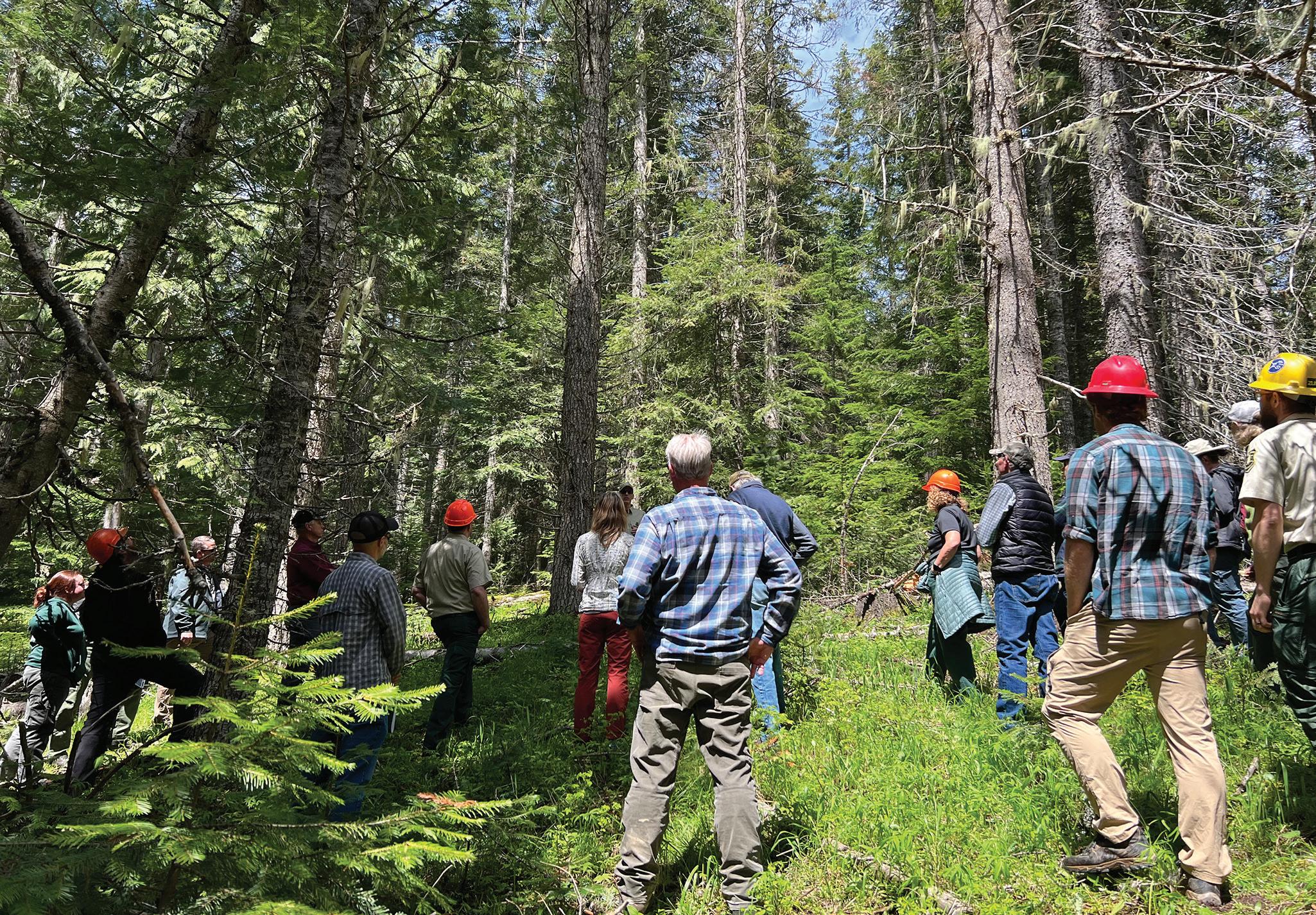
wildfire. The effort spans 2 million acres (809,371 hectares) in southern Idaho and incorporates partner-driven strategies for vegetation management. For example, trees that may be a fuel source for wildfire are being thinned or removed next to
powerlines at a pace and scale that would have been hard to imagine just a few years ago.
“It really is impressive to see what we can all do when we put our heads together,” Idaho Power T&D Engineering and Reliability Senior Manager Jon Axtman said. “It just goes to show that agencies across the West, whether they’re at the federal, state or local level, care about getting wildfire mitigation right.”

A Strategic Initiative
Protecting the grid while safely powering customers’ homes, farms and businesses is growing more complicated as wildfires become more common in the West. For the last 100 years, wildfire suppression has been a leading strategy across western forests in the U.S., resulting in fuel accumulation and forest conditions that have driven up wildfire risk.
Meanwhile, the population has soared in Idaho Power’s service area. Boise, Idaho, is often listed as one of the 10 fastest growing cities in the nation. More and more of its residents are seeking out the natural places that draw people to the state. For example, some customers
T&D World | May 2024 4 WILDFIRE MITIGATION
Field meetings have and continue to serve as a forum for discussing project goals and implementation priorities. Photo by D. Southard.
Forested section of Boise National Forest that has not been treated for fuel reduction. This area is slated for work in 2024.
build homes in the sagebrush, forests and other wildfire-prone areas, further complicating the task of reducing wildfire risk while continuing to provide reliable energy.
In Ada County, where Boise is located, the intermingling of people, buildings and vegetated land known as the wildland-urban interface (WUI) more than doubled between 1990 and 2020. A patchwork of private and state ownership interspersed with areas managed by the U.S. Forest Service or Bureau of Land Management make widespread fuel reduction difficult to implement across large areas.
That is where the teamwork between Idaho Power and land management agencies, local government and private groups comes in. In 2021, the U.S. Forest Service announced a 10-year initiative, Confronting the Wildfire Crisis: A Strategy for Protecting Communities and Improving Resilience in America’s Forests. The strategy aims to dramatically increase the scale and pace of forest health treatments over the next decade by allowing the Forest Service to treat up to an additional 20 million acres (8 million hectares) on National Forest System lands and up to an additional 30 million acres (1.2 million hectares) of other federal, state, tribal and private lands.
A cornerstone of the initiative is encouraging partnerships that strategically focus on reducing wildfire fuels and use science to guide prioritization. The selection of 10 initial landscapes, including the Boise National Forest, for focused investment from Bipartisan Infrastructure Law funding accompanied the initiative’s introduction.
Working Together
As part of its wildfire mitigation efforts, Idaho Power already has a robust vegetation management program that focuses on clearing vegetation around its overhead power lines to create a safety envelope, or buffer, between utility facilities and vegetation. This work is important for reducing fire risk, particularly in forested areas. However, utilities often do not have access or must seek permission to manage vegetation on lands and rights-of-way they do not control.


May 2024 | T&D World 5 WILDFIRE MITIGATION
Fuel reduction outside of the powerline right of way lowers wildfire risk and complements mitigation efforts Idaho Power is doing inside of its right of way, including powerline hardening work. Photo by Idaho Power.
Logs from fuel reduction efforts being loaded on trucks for transport to community firewood bank programs. Photo by D. Southard.
The Wildfire Crisis strategic initiative presented a new opportunity to think about wildfire risk while working with partners to influence planning and implementation.
“When it comes to collaboration, there’s no substitute for a comprehensive plan that touches a need acknowledged by everyone,” Axtman said. “Once we all recognized that we are working to achieve the same thing, we just needed to develop a strategy to move the ball forward together and then get to work. That’s exactly what we’re doing.”
Idaho Power’s partnership with federal, state and local land management agencies as well as the nonprofit community is already reducing fuel buildup in areas the utility has identified
as at high risk for wildfires. In 2023, approximately 48,000 acres (19,425 hectares) of high fuel-loaded forests were thinned, including 800 acres (324 hectares) near Idaho Power lines and other equipment in locations identified as high-risk fire zones in the utility’s wildfire mitigation plan.
Fundamental to these accomplishments is the ability to work across ownership boundaries, outside of the utility rights-of-way and with already mobilized contractors.
“There’s a ton more work to do, but we’re moving in the right direction,” Axtman said. “Every acre that is cleaned up makes our customers, employees, communities, and equipment safer and more prosperous. That’s a goal worth working together for.”


The Southern Idaho All Lands Partnership group is now working to develop the portfolio of projects that will be implemented over the next five years.
While wildfire risk reduction through fuel clearing remains the primary goal of this initiative, there are ancillary benefits. Local economies are seeing increased activity through work opportunities for smaller-scale forest operators. These opportunities help communities in the project area and surrounding tribal nations through firewood banks and other programs. They also help to protect the health of major drinking water source watersheds vital to Idaho, including the Boise, Payette and Weiser subbasins.
Partnership Approach
The partnership approach has provided a conduit for identifying and securing additional funding that might not be available to a single group. This has amplified the U.S. Forest Service’s investment in the Wildfire Crisis strategic initiative. Over the next 10 years, partners in this initiative expect additional investments of more than US$180 million to reduce wildfire risk in southern Idaho, showcasing a holistic, community-built solution for addressing wildfire risk. This risk reduction could not be realized without the public and private network working together. Idaho Power has high hopes for this collaborative model and believes it could be replicated and scaled in other Western states.
DANI SOUTHARD (dsouthard@idahopower.com) is the wildfire mitigation program manager for Idaho Power. She is a participant in the Southern Idaho All Lands Partnership group on the Boise and Payette National Forests.
T&D World | May 2024 6 WILDFIRE MITIGATION 2405TDW_Wildfire_MarmonUtilityLLC.indd 1 4/3/24 11:40 AM

The Brightest Ideas In Vegetation Management Start Here.


1.Transmission & Distribution World’s Vegetation Management Resource Center
It’s your resource for management from programs and safety, to tools and technology. Regulatory compliance, public health standards and environmental topics are also covered. tdworld.com/vegetationmanagement
2.Vegetation Management Insights
Arrives Monthly In Your Inbox
Our monthly e-newsletter from the editors of T&D World keeps you current with industry info. Stay ahead of vegetation management best practices. Don’t miss a thing. subscribe.tdworld.com/subscribe


A 360-Degree Approach to Wildfires in Canada
FortisAlberta combines conventional and innovative approaches to manage wildfire risk in a diverse operating environment.
By CURTIS ECK, FortisAlberta Inc.
With the Rocky Mountains on its western border and prairies to the east, the Canadian province of Alberta boasts a wide variety of natural landscapes. An abundance of forested locations and prairie grasslands in FortisAlberta Inc.’s service area means managing wildfire risk has always been a critical part of this pure-play distribution utility’s operations. As owner and operator of approximately 60% of Alberta’s electric distribution system, FortisAlberta serves almost 600,000 customer sites of various kinds and continues a decades-long tradition of providing safe and reliable service to Albertans living outside of the province’s two major centers, Calgary and Edmonton.
FortisAlberta’s approach to mitigating the risk of ignition events on its more than 1.1 million poles and 129,000 km (80,157 miles) of conductor combines the use of time-proven traditional practices, like detailed line patrols and effective vegetation management,
with the thoughtful and targeted deployment of innovative technologies. The utility takes a 360-degree approach to managing wildfires and their operational consequences for customers by supplementing mitigation practices aimed at decreasing the likelihood of ignition events with resilience investments that can mitigate wildfire-related restoration timelines and costs.
These strategies, combined with FortisAlberta’s award-winning operational approach to coordinating response and restoration efforts with local authorities when incidents occur, positions the utility to continue to provide effective and cost-efficient holistic wildfire mitigation for the benefit of its customers.
Right-Sizing Strategy
FortisAlberta has always taken a practical and multifaceted approach to wildfire risk mitigation. In Alberta, the government has designated certain wooded areas as being part of the province’s
T&D World | May 2024 8 WILDFIRE MITIGATION
Early fault detection keeps a watch over rights of way.
Photo by Michael Simone.
Forest Protection Area (FPA). The utility is required to implement a wildfire control plan to support its operations in the FPA, and it has leveraged its experience in this regard to support the development of a wider wildfire risk mitigation strategy.
Key components of FortisAlberta’s strategy include using situational awareness tools to quickly adjust its operations as weather conditions evolve; fine-tuning asset and vegetation management programs in high-risk fire areas (HRFA); and leveraging engineering standards and technologies to enhance overall mitigation of ignition risks and create a resilient system.
In preparation for establishing a wildfire control plan, FortisAlberta retained a thirdparty consultant to complete analyses that would allow the utility to better understand the impact of wildfire on land-based infrastructure near its power lines using different mapping techniques. The consultant first developed a map that identified HRFAs in the utility’s service area based on an assessment of various factors, such as prevailing climate conditions and proximity to fuel sources, to enable FortisAlberta to understand locational differences in these variables.

Next, the consultant developed ignition-point risk maps for locations where the utility’s infrastructure is located. These maps integrate critical metrics that indicate potential fire intensity and impact in a specific area. Measuring the intensity of simulated fires and their consequences enables the utility to assess the potential overall severity of wildfire impacts at various locations.
In parallel, the utility developed its own wildfire-specific electronic map (eMap) solution that overlays information from a variety of sources — including weather alerts from Environment Canada, satellite detection of thermal hot spots, ongoing fire activities such as local fire bans, advisories and active fires, and information from the Canadian Wildland Fire Information System (CWFIS) fire danger index — to provide nearreal-time information to FortisAlberta’s control center regarding current ignition risks.
These digital mapping tools are vital observational and analytical resources that enable continuous monitoring of environmental changes, including variations in moisture levels, wind conditions and local weather phenomena. Such innovative surveillance approaches aid in detecting changes in operational conditions, thereby enabling informed decision-making in wildfire management and mitigation efforts.
A key advantage of the utility’s eMaps-based approach is it enables control center operators to use both installed technology and workforce
management approaches to reduce the overall risk of an ignition event. For example, the remote disabling of reclosing technology in areas identified by the eMaps as presenting a risk can prevent potential fire ignition from fallen tree branches contacting conductors. Operationally, routine construction and maintenance work can be stopped in areas flagged as high risk to prevent potential ignition from vehicles and tools. Additionally, field

May 2024 | T&D World 9 WILDFIRE MITIGATION
Early fault detection technology safeguarding treed and mountainous terrain in FortisAlberta’s service area, Photo by Michael Simone.
FortisAlberta employee undertaking work to protect the electric distribution system in Kananaskis, Alberta. Photo by FortisAlberta
By The Numbers
FortisAlberta Inc. had to contend with three major wildfires in the spring of 2023. Following is a look at key numbers from those wildfires. Keep in mind, the utility owns and operates electric distribution facilities, so damage to the transmission system and generation are not included in these numbers:
• Zero preventable injuries and reportable vehicle accidents
• Approximately 42 miles (68 km) of distribution line replaced
• Approximately 7000 total sustained outages at the peak of the event
• 835 distribution poles and 50 transformers replaced
• Approximately 16,000 employee hours, supplemented by contractors — without the need for mutual assistance from other utilities
employees deployed to higher-risk areas are equipped and prepared to provide first response to wildfires by carrying water packs, fire brooms, axes and shovels to ensure work plans address fire safety and risk mitigation aspects.
Asset and Vegetation Management
FortisAlberta leverages wildfire risk assessment tools to strategically prioritize asset maintenance and repair activities. Power line technicians use the utility’s HRFA maps when conducting line patrols to help them precisely locate critical infrastructure components, including pole line hardware, conductors, porcelain switches and insulators at increased risk of failure and, consequently, targeted for priority repair or replacement.
The utility has refined its vegetation management program to align with industry best management practices around maintaining clearances and ensuring reliability of the distribution system. The goal of the utility’s program is to use integrated vegetation management (IVM) following stakeholder consultation and approval. This approach includes the removal of incompatible (that is, faster-growing or taller) vegetation from rights-of-way and allowing compatible vegetation (that is, lower-growing) vegetation to overtake these areas.
Standards and Technologies
FortisAlberta has piloted and, in some cases, adopted new practices and technologies to enhance the resilience and reliability of its distribution system against environmental challenges, including wildfire risks. Some of the technologies existing on the utility’s system serve a dual purpose of helping to maintain reliability and minimize restoration times, while also helping to mitigate wildfire risk. One example of this is FortisAlberta’s use of supervisory control and data acquisition (SCADA) equipment.
The utility has replaced hydraulic reclosers with SCADAcapable electronic reclosers and introduced non-expulsion-type fuses and cutout-mounted reclosers across its system. In HRFAs, FortisAlberta currently is evaluating the introduction of adaptive protection setting enhancements for SCADA devices. Using
traditional protection settings, SCADA-enabled reclosers are configured with fixed parameters that do not change in response to the network’s operational state. However, using adaptive protection settings, the utility can adjust these parameters in real time or near real time to optimize local protection schemes according to current conditions on the electrical system.
Changing the reclosers’ trip settings, fault detection sensitivity and timing of the reclosing sequence in response to local conditions affecting wildfire risk can mitigate the risk of ignition events, by deenergizing discrete areas in response to phenomena that would not normally trigger a SCADAsupported response.
To guide engineering design and material selection for power line construction, FortisAlberta has developed region-specific wind maps to enhance resilience in high-wind zones in the province. The utility considers system reliability, resilience and safety to be closely related concepts.
In this regard, FortisAlberta has used its wind loading zone maps to support the development of engineering standards that reflect its system’s operating environment to ensure outage events (however they are caused), restoration times and any attendant rebuild costs are minimized.
The utility is exploring the integration of innovative wildfire resilience technologies, such as the application of fire-retardant coatings on wood poles and the adoption of alternative materials for structures located in water-crossing areas, to bolster its wildfire resilience measures and ensure required rebuilds are cost efficient.
Janine Sullivan, FortisAlberta’s president and CEO, says the utility’s approach to the deployment of innovative technology is thoughtful and cost conscious: “We embrace a ‘smart follower’ philosophy that uses the local piloting of proven technologies in areas of greatest benefit. It’s how we ensure that customers are receiving the best value from the related investments.”
Smart Follower In Action
Implementation of early fault detection equipment is the most recent and technologically advanced operational practice FortisAlberta has introduced, and it is already showing promising results through its ability to alert the utility to power line or transformers displaying signs of stress prior to failure. Developed in Australia by IND Technology Pty Ltd., early fault detection is deployed in several U.S. utilities.
After assessing the available options and conducting a pilot, FortisAlberta became the first in Canada to implement early fault detection devices. Ease of deployment and precision were key deciding factors. The technology can identify potential equipment failures, such as broken conductor strands, within a 10-m (33-ft) range, preventing full-fledged faults.
Within the first year of having the new technology on part of its system, FortisAlberta is seeing benefits with 17 actionable repairs identified to date, including broken strands, damaged conductor, foreign material interference and arcing contact. The utility installed sensors at 60 sites in 2022 and approximately 200 additional sites in 2023. It plans to add 300 more sites in 2024. The utility anticipates seeking further funding from its regulator to complete coverage in HRFAs.

T&D World | May 2024 10 WILDFIRE MITIGATION
When A Wildfire Does Happen
FortisAlberta will continue to regularly review its plans and introduce safeguards to help the system withstand fires when they happen. When the inevitable occurs, the utility focuses on restoring power quickly and cost effectively. In fact, it received the Edison Electric Institute’s Emergency Response Award for its wildfire response efforts in 2023.
In spring 2023, three major wildfires impacted FortisAlberta’s facilities within the northern part of its service territory, resulting in the stand-up of the utility’s emergency operations center (EOC) to manage the event. The EOC remained active for five weeks in May and June with fires impacting large portions of Brazeau and Yellowhead, two counties located within 200 km (124 miles) west of Edmonton, with the final estimated burn area totaling approximately 330,000 hectares (815,448 acres).
While no loss of life resulted from these wildfires, thousands of people were displaced, many of whom lost their homes and other property. Beginning as seven individual fires, the situation evolved quickly into three large, highly unpredictable fires compounded by crossover fire conditions, including wind, extreme heat and low humidity.
Looking back on this event and FortisAlberta’s response to it, Cam Aplin, the utility’s vice president of operations and customer experience, observed, “Even with all the complexities and challenges involved, we maintained a clean safety record throughout, with zero preventable injuries or vehicle

incidents. This only makes us prouder of how quickly and effectively our employees were able to respond and restore power to our customers.”
CURTIS ECK (curtis.eck@fortisalberta.com) has more than 30 years of engineering experience in the electricity industry. In his role as vice president, engineering, at FortisAlberta, Eck is responsible for providing leadership and direction to the utility’s engineering function He serves on the utility’s climate adaptation committee. He holds a master’s degree in engineering from the University of Colorado and is a registered Professional Engineer in Alberta, Canada.
WILDFIRE MITIGATION
FortisAlberta employee undertaking work to protect the electric distribution system in Kananaskis, Alberta. Photo by Sergei Belski, FortisAlberta

Utility Investment in Forest Restoration
Salt River Project brings together nonprofit, private, federal, state and local partners to fund and implement landscape-scale forest thinning projects.
By ELVY BARTON, Salt River Project
Over the last 10 years, Arizonans have watched as large wildfires ravaged the watershed in and around the Salt and Verde Rivers — a critical source of water for central Arizona and the Phoenix metropolitan area. The devastation proves one important fact that must be addressed now: U.S. forests are unhealthy. Unhealthy and overgrown forests on National Forest System (NFS) lands act as fuel for large catastrophic wildfires that affect water and power infrastructure. Large-scale, high-severity wildfires make average precipitation events extremely destructive; accelerating flood flows and toxic runoff, eroding soils, depositing sediment into water storage reservoirs and, ultimately, causing millions of dollars in infrastructure damage and reduced water storage capacity.
Wildfires also create a direct threat to T&D infrastructure, which can result in widespread power outages. Additionally, fires in the wildland-urban interface, the area where houses and other structures meet undeveloped wildland vegetation, can lead to prolonged poor-air quality, flash flooding and direct economic losses that can threaten the fabric of local communities.
According to a study published in the Nature Sustainability journal in July 2023 — Human and Infrastructure Exposure to Large Wildfires in the United States — primary population exposure to wildfires in the U.S. increased 125% from 2000 to 2019. Salt River Project (SRP) and the communities it serves have seen firsthand the direct and long-term impacts of wildfire.
An Ambitious Goal
SRP is a community-based, not-for-profit organization that provides water and power to more than 2 million people in central Arizona. The utility operates and maintains seven reservoirs, owned by the Bureau of Reclamation, that provide a reliable, affordable and sustainable water supply to the Phoenix metropolitan area. On the power side, SRP provides a diverse portfolio of generation resources across Arizona to meet customer needs. The prevention of catastrophic wildfire is critical to the long-term sustainability and reliability of SRP’s power and water supplies and infrastructure.
T&D World | May 2024 12 WILDFIRE MITIGATION
Overgrown forest surrounding C.C. Cragin Reservoir. Photo by Salt River Project.


Since 2000, the watersheds SRP depends on have experienced seven megafires, which are wildfires that burn in excess of 100,000 acres (40,469 hectares). These megafires burned more than 3.5 million acres (1.4 million hectares).
In 2019, SRP’s Board and Council recognized the urgency of wildfire risk across the watersheds and the need to dramatically increase the pace and scale of forest restoration by establishing a forest health goal of helping to thin 800,000 acres (323,749 hectares) by 2035 — an ambitious goal that shows SRP’s dedication to stewardship of the watersheds and valley communities. The utility’s commitment is an investment, but in a cost-benefit analysis conducted by the Electric Power Research Institute, it was concluded the cost of wildfire and post-wildfire impacts is 10 times higher than the cost of preventive forest restoration work to reduce catastrophic wildfire risk.
Securing Funding
SRP cannot achieve its forest health goal alone. The utility has been working diligently to bring together nonprofit, private, federal, state and local partners to collaboratively fund and implement landscapescale forest thinning projects. Since about 60% of the land in SRP’s watersheds is managed by the U.S. Forest Service, partnership with the agency and their collaboration on projects via a Good Neighbor Authority agreement with the Arizona Department of Forestry and Fire Management has been a crucial foundation in increasing the pace and scale of restoration.
Through SRP’s experience in helping to fund more than 31,000 acres (12,545 hectares) of restoration to date and its commitments to fund an additional 62,000 acres (25,091 hectares) over the next 10 years, the utility has learned one of the largest barriers to landscape-scale forest restoration
implementation and wildfire risk reduction is securing long-term and consistent funding sources. Most forest restoration projects SRP engages in require additional funding outside of the utility’s investments to accomplish the desired project outcomes. SRP has built a strong foundation of long-term partners through memorandums of understanding that provide consistent funding for projects with benefits that align to mutual interests and goals.
Corporate Investments
One way SRP has proven successful in financing restoration projects is through modeling and quantifying the water and carbon co-benefits of forest thinning projects — particularly by packaging these quantified benefits together to attract corporate investments. For example, SRP’s water benefit modeling efforts have shown that the removal of forest cover and vegetation density increases water yields by decreasing evapotranspiration, leading

May 2024 | T&D World 13 WILDFIRE MITIGATION
Damaged power infrastructure. Photo by Salt River Project. Smoke and fire impacts to transmission lines. Photo by Salt River Project.
Woodland vegetation thinning operations. Photo by Salt River Project.


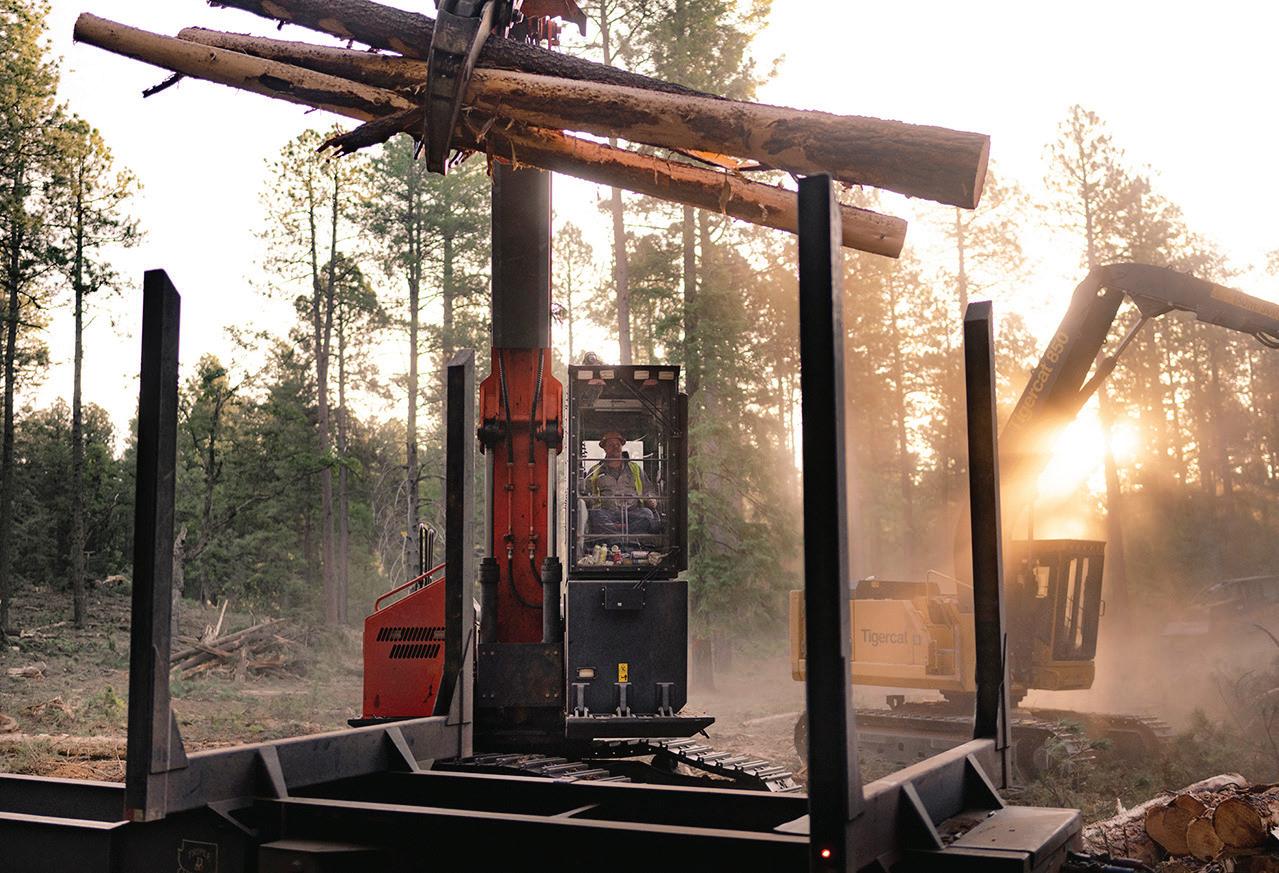
to more resilient ecosystems and improving watershed health. Additional modeling has shown these restoration treatments help to avoid carbon dioxide emissions from wildfires and protect the carbon stored in existing trees.
In the last year, several corporations, including PepsiCo Inc., Google LLC and EdgeCore, have announced investments in SRP’s restoration projects, totaling more than US$1.2 million, in exchange for receiving co-benefits that can help them to achieve their own corporate sustainability goals.
Building on this success, SRP was awarded $500,000 in 2023 through the U.S. Endowment for Forestry and Communities’ Innovative Finance for National Forests grant program. This grant will help to facilitate three main goals and outcomes:
• SRP will streamline its existing water benefit model into a scalable, efficient web-based platform to quantify the water supply impacts of forest restoration treatments.
• The utility will package the water and carbon model results with additional project co-benefits to expand and diversify the composition of funding from long-term partners and private investors, through the development of a comprehensive project portfolio. The pairing of quantified water and carbon benefits into one watershed project has proven to attract private contributions with a public-private partnership model.
• Lastly, recognizing that forest restoration implementation is vast and urgent and affects many western states, SRP will engage in national networks and platforms to share its innovative finance strategies to inspire other utilities to scale their efforts and investments in forest restoration projects across the U.S.


Get more value out of your inbox.
Get more of what you need to stay in the know with valuable insights and timely product news. Sign up today for one of our newsletters.
ENERGIZING
Delivers timely news and information from the power-delivery industry.
SMART UTILITY
Follows the utility industry’s progression to an automated and efficient power grid.
LINEMAN LIFE
Insights into the culture and work life of electric line workers: field operations tools and techniques, r odeo news and photo galleries.
PROJECTS IN PROGRESS
Shares how utilities and their partners are building out T&D infrastructure.
Sign up today at: tdworld.com/newsletters/signup
T&D World | May 2024 16 WILDFIRE MITIGATION
Pine thinning operations. Photo by Salt River Project.
2008TDW_House_Newsletter_HalfPage.indd 1 7/8/20 7:52 AM
Collective Efforts
In 2025, SRP looks forward to sharing its innovative funding strategies with other electric and water utilities, so together the industry can accomplish nationwide reductions in wildfire risk, protect critical infrastructure, and ensure resilient power and water supplies for future generations. Although SRP is a regional organization, the work it has done so far has paved the way for other utilities across the nation to invest, advance and expand this paramount work beyond Arizona.
A financial model that blends funding streams, is backed by a public utility and uses additional implementation partners can be replicated across the U.S to address forest restoration challenges. SRP encourages other utilities to recognize the pressing need to join and amplify the collective efforts to achieve landscapescale restoration needs.
ELVY BARTON (elvy.barton@srpnet.com)

is senior manager of the water and forest sustainability group at the Salt River Project (SRP). Her team leads SRP’s efforts on water conservation and forest health. In addition to working at SRP, Barton is an Academic Associate for Arizona State University’s school of sustainability. Prior to
working at SRP, Barton was a senior policy advisor at the Arizona legislature, working on natural resource and water policy. Barton has a bachelor’s degree in political science, a master’s degree in public administration and an executive master’s degree in sustainability leadership from Arizona State University.




May 2024 | T&D World 17 WILDFIRE MITIGATION
AerialGuard® Cable Systems 15 kV, 25 kV, 35 kV Tree Wire and Spacer Cable Solutions buyawg.com • sales@buyawg.com • 800.342.7215 2309TDW_AmericanWireGroup.indd 1 8/2/23 2:15 PM
One way SRP has proven successful in financing restoration projects is through modeling and quantifying the water and carbon co-benefits of forest thinning projects. Photo by Salt River Project.
System Hardening with Aerial-Covered Conductor
Covered conductor systems, both spacer cable and tree wire, are cost-effective design tools for wildfire mitigation.
By BRIAN J. TRAGER, Marmon Utility LLC
Electric utilities in the U.S. and around the world have been increasingly grappling with wildfires over the last couple of decades. Of particular concern are wildfires caused by power lines. These are especially troublesome considering public safety concerns and property losses. As such, a fundamental goal in designing power lines for operation in wildfire-prone regions is to ensure the lines are hardened against the potential to ignite a fire. The emphasis here is not about wildfire survival but rather preventing wildfire ignition in the first place.
While numerous techniques exist to harden a system to survive wildfires — such as brush clearing, prediction, monitoring, smart grid, pole changeouts and public safety power shutoffs — the ultimate goal is to prevent ignition by system design.
Bare Wire Lines
Wildfire ignition incidents connected with power lines have been tied exclusively to bare wire lines, which are fundamentally susceptible to being a source of ignition. Bare wire lines can contact trees or fall to the ground and start a fire. Even if a line falls to the ground deenergized, it can encounter a stone or hard object and throw a spark, causing ignition. Some protective-relaying schemes have been devised to anticipate a line falling to the ground and deenergizing the line before it hits the ground. While this is a valuable tool, if bare metal hits a rock and throws a spark, ignition can still occur.
Some utilities have chosen to use interphase spacers on bare wire lines, posing the risk of conductor clashing — in which
high winds cause one conductor to blow into another, producing high-temperature plasma particles that inevitably fall to the ground and serve as a potent source of ignition. The interphase spacers are installed between the phase conductors, midspan, and prevent the conductors from touching during high-wind events.
A more recently introduced strategy is the use of flame-retardant (FR) insulators. Wildfires can reach temperatures of 1100°F to 2000°F (593°C to 1093°C), yet the high-density polyethylene (HDPE) material used in distribution insulators can ignite at a much lower temperature—around 650°F (343°C)—so a passing, or static, wildfire can still ignite the insulator at the top of the pole. In contrast, if FR insulators are ignited, they self-extinguish when the flame is removed and prevent flaming drips of polyethylene from dropping down onto ignitable material that may be lying on the crossarm or ground below.
Undergrounding Power Lines
Undergrounding has become a standard go-to strategy for wildfire mitigation. Popular among residents and regulators alike, underground lines are aesthetic, cannot throw a spark onto dry brush and are not bothered by vegetation contact.
The first and perhaps insurmountable obstacle is underground lines often cost five times to 10 times the cost of bare wire construction — and are even more costly to install in locations with legacy infrastructure. So, while undergrounding is a technically viable and extremely attractive option for wildfire mitigation, it also comes with a cost structure that may be difficult to justify systemwide.

Aerial-Covered Conductor
Another option utilities have is to use aerial-covered conductor to minimize the potential for wildfire ignition. There are two types of construction: spacer cable and tree wire.
Spacer cable systems consist of three heavily covered yet unshielded phase conductors. The conductors are usually all-aluminum conductor (AAC) when in a spacer configuration, because there is no tension on the phase conductors, but
T&D World | May 2024 18 WILDFIRE MITIGATION
Tree branch spanning two phases of power line can become ignited and fall to ground, igniting dry brush or grass on ground. Photo by Marmon Utility.
aluminum conductor steel-reinforced (ACSR) or all-aluminum alloy conductor (AAAC) when installed in a selfsupported, or tree wire, configuration.
In spacer cable construction, the phase conductors are attached to a messenger by spacers, installed every 30 ft (10 m) along the messenger. The messenger is a high-strength alumoweld (AW) or alumoweld-aluminum (AWA) conductor, which has several functions. The messenger is the mechanical strength member, holding the phase conductors up. The messenger can also be used as a system neutral, serve as a lightning shield and provide a mechanical protection function by protecting the phase conductors from any items (such as leaves branches and trees) that can fall onto the bundle from above. The spacers are made of HDPE, as are the pin or line-post insulators used on the angles, to ensure dielectric compatibility with the phase conductors.

other pole. This is one fundamental and vital function of the overhead messenger: to protect the phase conductors beneath it from objects that may fall on the power line from above.
On the other hand, tree wire systems look more like bare wire construction. They use the same three-layer covered conductor design, but the phase conductors are usually either ACSR or AAAC (since they are fully self-supported and tensioned). Tree wire systems are strung in an open wire configuration on crossarms with polyethylene insulators.
While there are numerous differences in operational effectiveness between spacer cable and tree wire systems, with regard to their efficacy as wildfire mitigation tools, the following three attributes of covered conductor systems directly help to mitigate the risk of power line-related ignitions in wildfire-prone areas:
• If a covered conductor line blows into trees or branches, there is not enough contact current to cause ignition.
• If a covered conductor line is impacted physically and falls to the ground, there is not enough current to ignite dry brush or other fuel that may be present.
• If a covered conductor line falls to the ground and hits a rock, the polyethylene covering does not cause a spark to be thrown (unlike a bare wire, where a spark and subsequent ignition of dry brush would be possible.)
The Differences
A few differences exist between spacer cable and tree wire systems with respect to wildfire mitigation effectiveness. If a tree wire configuration is used, an overhead tree could fall onto the line, abrade the conductor covering over time and result in a failure. This can reduce the attractiveness of tree wire in wildfire-prone areas that have an abundance of trees, in favor of spacer cable. Additional differences arise in relation to the presence, removal and trimming of foliage, since spacer cable uses less right-of-way (ROW) than tree wire.
For the spacer cable configuration, even with fully compliant clearances, much more of the tree remains intact. The reduced ROW (and, hence, additional remaining foliage) does not increase the risk of ignition when using the spacer cable configuration. If branches become weighted down with wind or rain and touch the power bundle, they will be supported by the high-strength messenger, which is suitably grounded at every pole, or every
Not all power line-related wildfires initiate with branches falling from above. A significant part of the wildfire-prone landscape consists of dense scrub, tangled bushes and what is more commonly known as chaparral. These plants do not threaten power lines from up above but are a potent source of fuel for wildfires from below.
Further, there are cases of palm fronds being ignited by fire and traveling hundreds of yards with the wind. A palm frond flying between two phases of a bare wire system can be a concern. Note that fire is plasma and conducts electricity, since it is essentially an ionized gas consisting of ions and free electrons. If the ignited palm frond gets between the two bare wire phases, a flashover is likely. This could create a new wildfire location beneath the power line. The use of a covered conductor can prevent this scenario. As such, when there are no trees, it is viable to use covered conductor in a tree wire configuration.
Conversely, when trees are present, spacer cable is recommended because it will prevent ignition and protect the phase conductors from objects that threaten the power line from above and below.
Operational Strategy
Utilities can design power lines with covered conductor to minimize the potential for wildfire ignition. However, can this have ramifications for electric utility operational strategies during wildfire season? Common to wildfire-prone areas are public safety power shutoffs, whereby a utility can turn off the power if conditions (high winds, dry climes, high fuel load on the ground)

May 2024 | T&D World 19 WILDFIRE MITIGATION
Tree wire configuration. Photo by Marmon Utility.
Tree wire on the left and spacer cable on the right with respect to tree trimming. Graphics by Marmon Utility.

indicate a wildfire is a possibility. At least one utility has stated that, in addition to its wildfire mitigation benefits, covered conductor has some public safety power shutoff benefits as well, raising the threshold for when to enact this to higher wind speeds
than those used for bare wire systems. The threat of wildfires being ignited by power lines is a reality for electric utilities. While bare wire, underground and covered conductor line designs all have mitigating strategies available in the design stage, those strategies also have their own costs and effectiveness (or lack thereof). Covered conductor systems, both spacer cable and tree wire, are proven and cost-effective design tools for wildfire mitigation.
BRIAN J. TRAGER (btrager@marmonutility.com) is a Senior Life Member of the IEEE. He received his BSEE and MSEE degrees from Rensselaer Polytechnic Institute in New York in 1978 and 1980, respectively, and a MBA degree in finance from the University of Pittsburgh in 1986. Trager has held various positions in engineering, consulting and management at American Electric Power Co., Cooper Power Systems and Fisher-Pierce, and most recently at Hendrix Wire and Cable, where he is currently employed as director, technology and international. He has taught electric power engineering at Ohio State University, West Virginia University and Pennsylvania State University, in addition to teaching courses to utility clients, and has authored over 75 technical papers and articles for the IEEE and other national and international organizations.
When the Discussion Turns to Undergrounding You Should Turn to


•Undergrounding
•Reference
•Power
As professionals from the North American power industry value chain, PDi2 members work to determine the most viable, reliable, resilient and cost-effective solutions for the installation of transmission and distribution systems. PDi2 educates stakeholders on investment decisions based on data-driven life-cycle cost analysis.
Join the Discussion Today!
For more information, go to pdi2.org, email info@pdi2.org, or call (703) 212-7745.
WILDFIRE MITIGATION
Spacer cable system. Photo by Marmon Utility.
Research
White Papers & Presentations
•Webinars,
Library & Helpful Links
Delivery Expertise
Find your next electric utility job, for roles like these:
• Electricians
• Engineers
• Technicians
• Lineman
• Project Managers
• Analysts
• Executives
https://jobs.tdworld.com/search
Get a 50% discount on job postings in May using this coupon code:
MAYPOWERFLOW
SCAN
VISIT
TO
POWER UP YOUR JOB SEARCH POWER UP YOUR HIRING
Visit the T&D World Job Center, log in, and select your package. At checkout, enter the promo code above.
https://jobs.tdworld.com/search JOB SEEKERS EMPLOYERS
Integrate DLR and EEMS for a Future-Ready Grid
Will the implementation of dynamic line rating and engineered electrical mechanical shunt technologies aid in increasing transmission conductor capacity?
By CARL R. TAMM, SEYDOU DIOP and CHRIS COSTANZO, Classic Connectors USA Inc.
The U.S. electrical grid is a critical component of the modern economy, providing safe, reliable and cost-effective electricity to customers. However, it faces multifaceted challenges, ranging from the need to improve transmission capacity to addressing the escalating risk of wildfires. Offering a potential remedy to these challenges is the promising synergy of dynamic line rating (DLR) and engineered electrical mechanical shunt (EEMS) technologies.
With a history spanning more than 125 years, the U.S. electric power system is a sophisticated machine, intricately woven with generators, substations, towers, wires, transformers, switches and poles. With more than 240,000 miles (386,243 km) of high-voltage transmission lines and 5.5 million miles (8.9 million km) of local distribution lines, the grid operates within a mosaic of federal, state, tribal and local regulatory jurisdictions. The Federal Energy Regulatory Commission and North American Electric Reliability Corporation oversee the reliability of the bulk power system, but the challenges are diverse and evolving.
With a significant portion of the power system far exceeding 25 years, the aging infrastructure of the electric grid poses a looming threat to reliability. The transition from dispatchable to alternative generation sources adds layers of complexity. Transmission congestion, a concern where changes in demand or generation

surpass a line’s electrical capacity, could lead to suboptimal energy commitments and dispatch of generators, escalating the cost of electricity. Traditional solutions entail substantial investments in expanding and upgrading transmission line capacity, which come with hefty price tags and extended lead times. Meanwhile, the intensifying frequency and severity of wildfires pose a considerable threat, especially to overhead electrical lines, necessitating innovative solutions for enhancing reliability and mitigating the risks of falling conductors.
Dynamic Line Rating
DLR is emerging as a transformative technology capable of reshaping the landscape of transmission capacity management. It engages in real-time assessments of the electrical capacity of transmission lines using actual weather condition variables, such as temperature and wind speed as well as measured conductor temperature. Unlike static line ratings that are intentionally conservative, DLR provides real-time understanding of a transmission line’s acutal loading capabilities, allowing for adding capacity above the static rating.
By continuously monitoring environmental conditions, conductor temperature, and adjusting line ratings accordingly, DLR facilitates precise control of the power transmission network. This

T&D World | May 2024 22 WILDFIRE MITIGATION
Transmission line sensor used to collect conductor behavior data for use with Lindsey’s SMARTLINE DLR system. Photo by Lindsey Systems.
A burned up splice. One of the pivotal features of EEMS is its dual role in restoring mechanical integrity to dead ends, splices, joints, and suspension clamps and systems while enhancing the electrical ampacity of a line. Photo by Classic Connectors.

is particularly crucial in regions with air temperature and wind variations, where static line ratings may result in underutilization during mild conditions or overheating during peak demand periods. It is important to note the additional current on the electrical interface of the connectors remains unaffected by wind or cooler temperatures. Neglecting to address the overheating of connectors due to higher loading from a DLR program could result in catastrophic consequences.
Transmission lines using aluminum conductor steel-supported (ACSS) conductor built before the year 2001 used mineral oil-based inhibitor, which itself has thermal limitations of 163°C (325°F) and leads to failed connectors. With age, these connectors deteriorate faster and fail sooner.
Scientific studies, industry standards and empirical evidence over the past 30 years provide the evidence that an increase in conductor current flow results in accelerated aging and connector degradation at the electrical interface, and ultimately result in earlier connector failure. Neglecting to address the impact on connectors in the process of adding DLR could lead to catastrophic failures, line-down incidents and unplanned outages.
The vulnerabilities inherent in the energized components of the transmission system, particularly connector failures leading to dropped conductors, underscore the urgency of implementing effective connector mitigation strategies. Typically occurring under tension, these failures result from the degradation of the electrical interface between connectors and conductors, leading to increased internal resistance and thermal runaway. The consequences range from electrical outages to potential wildfires from dropped conductors, posing significant risks to life and property.
Risk Mitigation
Mitigating these risks requires proven strategies to restore damaged and compromised components to their original or an
How Does DLR Affect Connectors?
By J.D. RENOWDEN, P.E., JDR Engineering Inc.
Why do increasing line loads accelerate the deterioration of line connections?
• Dynamic line rating (DLR) allows a line to be loaded above its normal static ampacity rating when current weather conditions cool it below its maximum conductor operating temperature (MCOT).
• The allowable increase in line load is calculated by DLR software to keep the conductor temperature at or below its MCOT, mainly to prevent ground clearance violations but also to limit annealing.
• Even though the conductor temperature is at or below its MCOT, the internal heating in the connection interface is greater due to the higher I2R heat there.
• The higher current and internal heating accelerates the deterioration of the interface and increases the resistance, all other deterioration factors such as installation errors and water ingress, etc., being equal.
Why should the resistance of a connector be the indicator of its absolute condition?
• Resistance is what increases as the connection deteriorates and is directly measurable.
How has this been determined?
• Direct measurement of resistance on energized in-service connectors, with a hot-line Ohmstik, correlates with heating shown by Infrared imaging.
May 2024 | T&D World 23 WILDFIRE MITIGATION
Electrical mechanical shunt (EEMS) technologies can restore deteriorated power line dead ends and prevent conductors from falling. Photo by Classic Connectors.
improved condition, mechanically and electrically, without necessitating an outage. Additionally, assessing the life extension of aging overhead assets involves considering various factors, such as component condition, long-term plans, regulatory requirements and environmental concerns. Proactive measures like hardening the lines and implementing preventive maintenance are vital for enhancing resilience and reliability.
Enter EEMS, under the trade name ClampStar, a complementary solution designed to address the challenges of an aging grid. One of the pivotal features of EEMS is its dual role in restoring

mechanical integrity to dead ends, splices, joints, suspension clamps and systems while restoring the electrical ampacity of a line. This dual functionality marks a significant leap forward, considering electrical capacity limits often hinge on the thermal capacity of connector-conductor systems.
The amalgamation of DLR and EEMS technologies presents a holistic solution to the multifaceted challenges faced by the U.S. electric grid. By integrating real-time assessments of transmission line capacity with mechanisms to enhance mechanical and electrical integrity, the electric power system can achieve unprecedented levels of reliability, safety, and efficiency.
As wildfires continue to pose a significant threat to public safety, EEMS technology assumes a crucial role in risk mitigation by reducing grid vulnerability and the chances of wire-down situations, which can be a possible cause of wildfire. The enhanced mechanical strength provided by EEMS contributes to the overall resilience of the power infrastructure against many environmental hazards.
Higher Integrity Connection
In fact, after a few recent years of destructive wildfires devastating California, utilities in the state have installed over 50,000 of these types of shunts as a way to harden the grid for wildfire mitigation purposes. Since connectors are the weakest link in the system, it only makes sense to protect them. Correcting automatic splices or any overhead connectors with EEMS is faster, much less expensive than replacement and results in a connection of significantly higher integrity than even that of an original, properly installed connector. The installation can be performed without a power interruption, and the result is a thermally uprated connection and a visible indication that steps have been taken to protect the public against the possibility of yet another power line on the ground as a result of a failed connector.
EEMS provides a substantially higher integrity connection by several orders of magnitude than any other option, enabling a line to operate at increased ampacity without the limitation of connectors and allowing for system uprate and DLR implementation. DLR, on the other hand, directly addresses the challenges of transmission congestion and aging infrastructure. By dynamically assessing transmission line capacity based on real-time environmental conditions, DLR allows for the optimal utilization of existing infrastructure. This not only enhances transmission capacity but also minimizes the need for extensive and costly line upgrades. A recent report on California’s wildfire mitigation plan found that transmission line failures were responsible for 37% of wildfire ignitions in high fire-threat districts. These failures were often attributed to connector corrosion, fatigue, thermal cycling or improper installation.
Prioritizing the installation of EEMS and employing DLR technology enables utilities to significantly mitigate the risk of catastrophic failures, safeguard communities and safely increase electric grid capacity.
Reliability and Sustainability
In addition to addressing immediate challenges, DLR and EEMS technologies are essential to the broader context of energy transition and environmental sustainability. As utilities
T&D World | May 2024 24 WILDFIRE MITIGATION
DLR Load Increase above 907 amp rating @ 75°C (%) Load current (amps) I 2 R in splice (watts) I 2 R increase in splice (%) 0 907 20.5 0.0 5 952 22.5 10.0 10 997 24.6 20.7 15 1043 27.1 31.9 20 1088 29.5 43.6 25 1133 32.0 55.7
Table 1. Example: 795 kcmil 26/7 ACSR, Drake, Ampacity = 907 amps at 75°C conductor temperature.
DLR Load Increase above 1119 am rating @ 100°C (%) Load current (amps) I 2 R in splice (watts) I 2 R increase in splice (%) 0 1119 35.6 0.0 5 1174 39.2 10.0 10 1230 43.0 20.7 15 1286 47.0 32.0 20 1342 51.2 43.8 25 1398 55.6 56.2
Table 2. Example: 795 kcmil 26/7 ACSR, Drake, Ampacity = 1119 amps at 100°C conductor temperature.
Tables of additional DLR interface heating effects for 75°C and 100°C ampacity ratings.
Correcting automatic splices or any overhead connectors with EEMS is faster, much less expensive and results in a connection of significantly higher integrity than even that of an original, properly installed connector. Photo by Classic Connectors.
modernize electric infrastructure, prioritizing resilience and sustainability is paramount. By investing in technologies like EEMS and DLR, utilities not only enhance the reliability of their grid but also contribute to a more sustainable and resilient energy future.
In conclusion, the evaluation process for improving transmission lines should encompass a thorough condition assessment of overhead conductor connectors, considering their impact on system safety, efficiency, and capacity. This evaluation ensures the reliable operation of the electric grid while minimizing the risks of connector failures and subsequent disruptions. Many utilities have successfully used EEMS over the last 15 years to uprate splices and dead ends, significantly increasing ampacity and prolonging the life of conductors indefinitely. When combined with DLR technology in the uprating process, there is a high level of confidence in achieving positive outcomes. The integration of DLR and EEMS marks a paradigm shift, promising not just enhanced efficiency and safety but a resilient and future-ready electric power system.

SEYDOU DIOP (sdiop@classicconnectors.com) a principal engineer at Classic Connectors USA Inc., brings 15 years of experience in the electrical industry and holds key roles in IEEE OHL and ANSI C119 committees. As a former NEETRAC board member and chair of the ANSI C119.4 committee, he specializes in designing and qualifying overhead line hardware, with advanced expertise in failure analysis. Diop has served as an expert witness, in various legal proceedings related to wire-down incidents.
CARL TAMM (crtamm@classicconnectors.com) is president of Classic Connectors USA Inc. and a 35-year veteran in the electric industry. He is a voting member of CIGRE’s U.S. National Committee, the IEEE Power & Energy’s TP&C committees, the ANSI C119 committees and former chair of the ANSI C119.7 committee. His extensive forensic analysis of hundreds of failed connectors has made him a leading authority and subject matter expert in connector failure causes on overhead power lines.
CHRIS COSTANZO (ccostanzo@classicconnectors.com
) is director of marketing and communication and one of the founding members of Classic Connectors USA Inc. He has over 40 years of experience as a sales and marketing professional, with 20 of those years in the electric utility industry and 5 years in the electrical contractor industrial market. He is a content developer, writer and editor in the electric utility industry, focusing on topics related to wire-down incident prevention.

May 2024 | T&D World 25 WILDFIRE MITIGATION
Power line EEMS applied to dead-ends on a Dominion line. Photo by Classic Connectors.
The intensifying frequency and severity of wildfires pose a considerable threat, especially to overhead electrical lines, necessitating innovative solutions for enhancing reliability and mitigating risks. Photo by Classic Connectors.
Strategies to Mitigate Wildfire Risk
By combining equipment upgrades, like current limiting protectors, with a distribution automation system, utilities can mitigate risk.
By ALEX COCHRAN, KATE M. CUMMINGS and ANDREW GARCIA, G&W Electric Co.
In today’s energy landscape, ensuring reliable and efficient power delivery while mitigating wildfire risks is a paramount concern for utilities. The increasing frequency and intensity of wildfires necessitate proactive measures to safeguard communities and protect infrastructure.
That is why utilities are moving to adopt distribution automation (DA) systems and upgrade equipment to include currentlimiting protectors, improved reclosers and sensors. With support from suppliers, these changes enable utilities to better mitigate wildfire risks within their distribution systems.
Understanding Wildfire Risks
When it comes to power grids, wildfire risks run in both directions. Grid faults can spark wildfires, and wildfires threaten power grid equipment and personnel. Threats are classified as:
• Direct damage — Infrastructure damage from wildfires can include downed power lines, destroyed transformers, and compromised substations. This leads to widespread outages and potential ignition points for further fires.
• Indirect impacts — Smoke and ash from wildfires can disrupt critical communication systems and sensors within the grid. This disruption hinders situational awareness, hampers restoration efforts and increases health risks for field employees.
Equipment Upgrades
The following equipment upgrades can combine to enhance a utility’s wildfire mitigation efforts:
• Current limiting protectors (CLiP) combine the benefits of multiple over-current protective devices to deliver reliable and current-limiting electrical protection, helping keep workers and equipment safe from electrical hazards. These protectors mitigate wildfire risk by
clearing faults in less than one-half of an electrical cycle. The fast-clearing time of these protectors can reduce arc-flash incident energy by 90%, relative to a five-cycle breaker and by 83%, relative to a three-cycle breaker. Common applications for current-limiting protectors include arc-flash energy reduction, power transformer protection, and protecting over-dutied equipment by limiting current.
• Protective devices like reclosers can coordinate easily with current-limiting protectors, as the protector is programmed to trigger at a customer-selected instantaneous current value. Reclosers minimize fault duration through faster trip times, which is particularly crucial in extensive overhead distribution systems. The reduced trip time

T&D World | May 2024 26 WILDFIRE MITIGATION
Protective devices like Viper-ST reclosers can coordinate easily with CLiP, as the protector is programmed to trigger at a customer-selected instantaneous current value. Photo by G&W Electric.
has been proven to reduce the risk of wildfires. Certain reclosers can provide additional safety and reliability benefits. For example, a magnetic actuator system on some recloser models provides local and remote operation of the recloser on battery backup if the alternating-current source power is lost or interrupted. Furthermore, built-in wildlife protectors reduce the threat of wildlife-caused wildfires.
• A robust array of medium-voltage sensors provides real-time data and insights on voltage levels, power quality and fault identification. This improved monitoring enables utilities to make informed decisions, reduce downtime and improve overall performance. Furthermore, utilities can use this sensor data to assess equipment health and predict maintenance needs. Sensors also can be deployed to monitor weather conditions, such as wind speed and humidity, which can exacerbate wildfire risks.
Distribution Automation
Many utilities are adopting DA systems that offer benefits such as improved system reliability, enhanced crew safety and reduced outage durations — all of which mitigate wildfire risk.
DA involves the integration of intelligent devices, communication networks, and software applications to automate various tasks on the grid. It enables utilities to respond more quickly and more accurately to system events. If a fault occurs in a system with DA, then power can be restored to unaffected areas prior to a truck being sent for repairs.


Utilities seeking a reliable DA solution should evaluate single-phase fault location, isolation, and service restoration (FLISR) technologies. FLISR can automatically identify faults, isolate them from the rest of the system, and restore power to affected areas in minutes, seconds or even cycles, significantly reducing outage times.
Communication schemes are not required to implement FLISR, but they enhance automation capabilities by offering real-time insights for swifter and more sophisticated responses, especially with a larger number of devices. Alternatively, noncommunicating loop schemes can be implemented such that reconfiguration decisions are based on voltages, currents and operations within the circuit (typically limited to 15 devices). Some automation platforms can handle both types of schemes.
Vendors can provide either script- or model-based automation options on single switches and multi-loop configurations. While script-based solutions rely on preprogrammed logic, model-based solutions leverage real-time data and system modeling for dynamic adaptability. The choice between the two hinges on the scale of the utility’s existing system, need for future scalability, and complexity of user-definable contingencies.
Working Together
G&W Electric offers a CLiP current limiting protector that works by detecting and reducing the voltage and current of downed power lines to prevent sparking. Then it sends a signal to the
May 2024 | T&D World 27 WILDFIRE MITIGATION
G&W Electric’s CLiP current limiting protectors combine the benefits of circuit breakers and overcurrent protective devices to deliver reliable multi-hazard electrical protection that helps to keep workers and equipment safe from arc flashes and system damage.
Photo by G&W Electric.
CLiP current limiting protectors, view from top. These protectors mitigate wildfire risk by clearing faults in less than one-half of an electrical cycle. Photo by G&W Electric.
upstream G&W Electric Viper-ST recloser to open and clear all three phases. At the same time, current-limiting proectors can send a signal to its LaZer automation platform to compensate for the downed lines, reducing the risk of customer outages. All these functions are supported by the sensor-based real-time monitoring system.
Beyond Infrastructure Upgrades
Utilities that operate in regions with high wildfire danger should consider adopting additional risk mitigation efforts:
• Vegetation management — Regular vegetation management around power lines can play a crucial role in preventing wildfires.
• Community collaboration — Utilities can collaborate with fire departments, local authorities and surrounding communities to develop comprehensive wildfire mitigation plans and communication strategies.
• Public awareness — Educating the public on wildfire risks and safe practices can help to prevent accidental ignitions.
Protecting Communities
By combining advanced equipment and technology, a modern DA system, and a comprehensive understanding of wildfire risks, utilities can enhance the safety, reliability, sustainability and resiliency of their power grids and protect the communities they serve — from wildfires and many other risks.
ALEX COCHRAN (acochran@gwelec.com) joined G&W Electric as global product manager for overhead technologies in late 2023. She has over a decade of experience in marketing, marketing management, product management and engineering as well as working with medium-voltage switchgear, overhead apparatus and power transformers. Additionally, she is an active member of various standards committees, including the IEEE Switchgear committee, and currently serves as Chair of the IEEE Technology and Innovation subcommittee. Cochran has an MBA degree from the University of Central Florida and a BSEE degree from the University of Florida.
KATE CUMMINGS (kcummings@gwelec.com) started at G&W Electric in 2008 in the production electronics engineering group, where one of her responsibilities was to assist customers in customizing and implementing ATC programs (auto transfer based on loss of voltage). Cummings is currently manager, power grid automation distribution automation group. She assists customers in specifying automation packages to fit their system needs and requirements. She also participated in the design and installation of the microgrid at G&W Electric’s headquarters. Cummings earned a BSEE degree from the University of Illinois at Chicago and is an active participant in IEEE PES and NEMA.
ANDREW GARCIA (angarcia@gwelec.com) started at G&W Electric in 2022 as the CLiP current limiting protection system analyst. One of his responsibilities is to assist customers in implementing CLiP in their electrical systems. He developed a predictive model for the CLiP current limiting system that he utilizes to determine the coordination of CLiP with the rest of an electrical system. His knowledge of power systems and technical facets of the CLiP enable him to provide invaluable aftermarket support. Garcia graduated with a BSEE degree from University of Illinois Urbana-Champaign. He is a participant in CIGRE.


WILDFIRE MITIGATION
THE BEST METHOD TO PERMANENTLY PROTECT & IMPROVE THE SAFETY OF OVERHEAD CONNECTIONS Prevent power outages due to failed connectors while creating a safer, more reliable smart grid. ClampStar units available for conductors ranging from #6 AWG - 2515 kcmil CALL 800.269.1462 TODAY Visit www.ProtectMyLine.com/Now for additional details and videos. ClassicConnectors.com info@ClassicConnectors.com 382 Park Ave. East, Mansfield, OH 44905 ClampStar units available for: Splices | Deadends | Suspension Clamps Damaged Conductor | OHSW & OPGW
Rising to the Wildfire Challenge
By RIAZ MOHAMMED, Edison Electric Institute
The increased frequency and severity of extreme weather events are challenging utilities and the communities they serve. Reducing wildfire risks and ensuring the ability of electric companies to invest in mitigation is a top priority for America’s investor-owned electric companies. A national, holistic approach is needed to help all stakeholders enhance safety and reduce wildfire risks.
Key Objectives
The Edison Electric Institute (EEI) and our member companies have identified — and are working toward — three broad objectives to help electric companies across the country address wildfire risks and liability. We are committed to:

• Sharing leading practices and establishing a common understanding of the range of risk-informed wildfire mitigation activities that can be undertaken to reduce ignitions from electric infrastructure.
• Expanding partnerships with the full complement of stakeholders needed to address wildfire risk at the community, state, and federal levels.
• Working closely with regulators, policymakers, ratings agencies, and investors to ensure that electric companies are well-positioned to continue supporting national and economic security; building a clean, resilient energy sector; and helping electrify other sectors.
EEI members are working to limit potential wildfire ignitions related to their infrastructure and deploying new technologies to ensure better situational awareness and wildfire detection capabilities. This includes selectively undergrounding high-priority and high-risk lines; the use of covered conductors to strengthen lines and to prevent sparking when debris comes into contact with broken power lines; and the expanded use of automatic reclosers with more sensitive settings to prevent sparking when the system detects an anomaly.
Managing vegetation on electric transmission and distribution rights-of-way is another key to reducing risks. Utilities must have timely access to ROWs to perform necessary vegetation management, as well as routine operations and maintenance work.
Electric infrastructure also can be used to enhance situational awareness. Sensors and weather stations can help system operators identify high-risk areas, and these technologies are especially helpful for monitoring hard-to-reach areas. Functioning like high-tech fire lookout towers, this information is driving enhanced coordination with first responders to help ensure any fires — regardless of the ignition source — can be quickly detected and controlled, ultimately limiting damages.
Electric companies also are partnering with technology companies and the DOE’s national labs to develop and test new ways to operate and manage the energy grid. Through this partnership, this industry is working to find new solutions to reduce
wildfire risk and to ensure electric companies are prepared to respond safely and efficiently when incidents do occur.
Members also are using existing mutual assistance frameworks to expedite emergency response capabilities to restore power after extreme weather events and to implement, when necessary, proactive shutoffs to minimize the risk of wildfires during certain weather conditions.
De-energizing power lines is a tool of last resort used to address imminent wildfire threats and to minimize the possibility for catastrophic damage and loss. When evaluating whether to utilize proactive shutoffs, system operators need to coordinate with customers, emergency responders, and other critical infrastructure stakeholders. They must also consider the response time it can take to inspect lines before they can be turned back on safely.
The Holistic Approach
Most wildfires impacting individuals and communities are caused by events other than those involving electric companies. In the United States, the two largest causes of wildfires are lightning strikes and human activities. While electric companies are making investments to address the risks that their equipment might pose, the increasing frequency and destructive force of wildfires must be addressed holistically.
Today, EEI is working with its members and other stakeholders to identify potential legislative and financial options to mitigate risk and to address uncertainties around liabilities. EEI and its members are also educating Congress, the Administration, and state and local governments about the risk that wildfires pose to the financial health of electric companies and their ability to provide customers with affordable, resilient clean energy.
EEI member companies, in partnership with the Electricity Subsector Coordinating Council’s Wildfire Working Group, are actively engaged with the U.S. Forest Service; Departments of Agriculture, Energy, and Interior; the National Security Council; and the Federal Aviation Administration to advance strategies to enhance industry-government coordination; harmonize allocation of resources; and identify barriers to the industry’s detection, mitigation, and restoration capabilities. EEI also is working closely with state regulators as they partner with electric companies to reevaluate risk profiles and to identify prudent investments that can be made to drive down risk. EEI will continue to work with these federal and state agencies and will expand efforts with FEMA and the FCC, as well as with federal firefighting resources, to ensure we are mobilizing a whole-of-industry and whole-ofgovernment response to the growing wildfire threat.
RIAZ
May 2024 | T&D World 29 WILDFIRE MITIGATION
MOHAMMED is the senior director of Resiliency and Environmental Policy at the Edison Electric Institute.


