












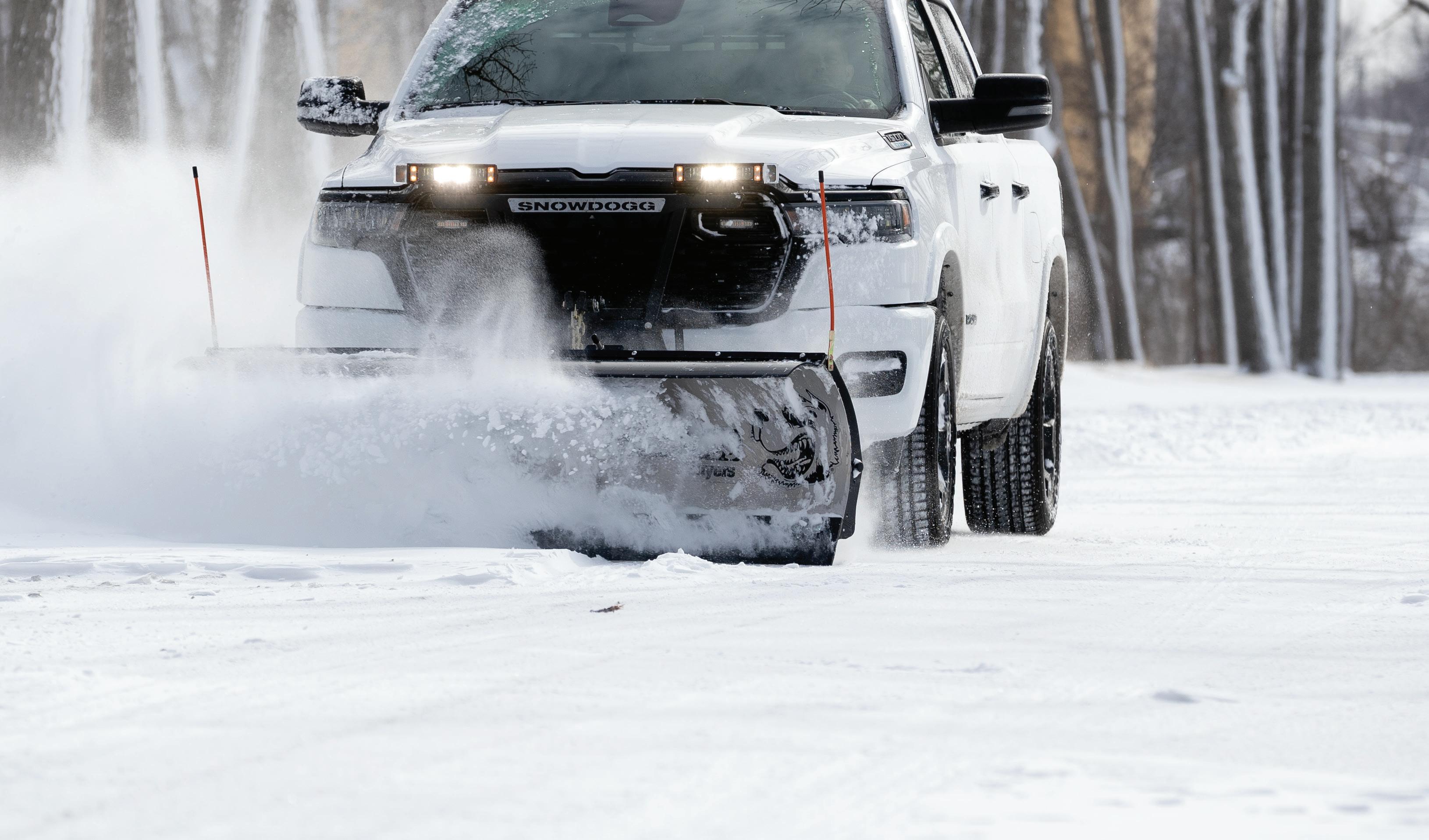



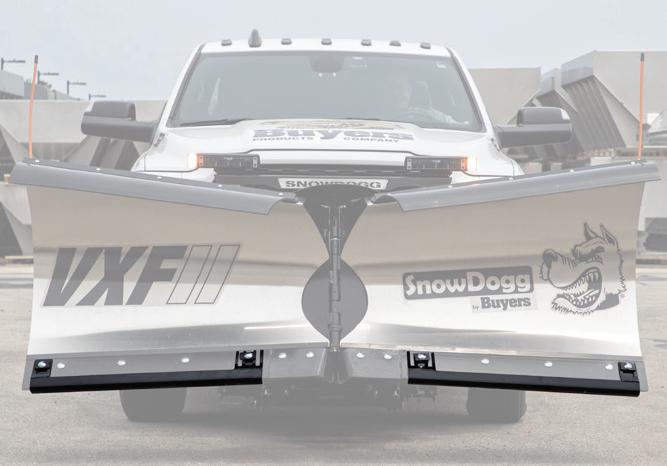
Wide range of SnowDogg® plows for trucks 1/2-ton and up
SAE J595 CLASS 1 AND IP67 RATED
Combines marker and strobe functions in one light. 2 in. or 2 1/2 in. round recessed design. Available in Amber/Red or Amber/Amber configurations. Each light offers 10 high-output LEDs and 4 flash patterns.
Designed to combine a steady-burning marker light with a powerful strobe, providing enhanced awareness without adding extra components or installation complexity. Each light offers 3 high-output LEDs and 14 flash patterns.



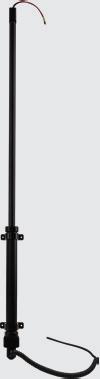
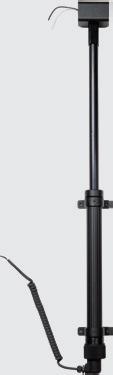








FOR PLOWS
AR-200 ABRASION RESISTANT STEEL
Engineered to prevent your plow from digging into soft, unfrozen surfaces like gravel or dirt. Helps minimize surface displacement, reduce cleanup, and avoid costly repairs. Fits tight to the cutting edge.


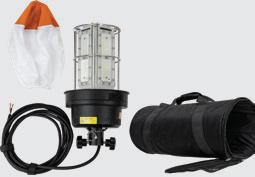
SnowDogg® Illuminator ™ LP
Low Profile LED Plow Lights Part No. 16160900
LEARN MORE about the SnowDogg® MXII
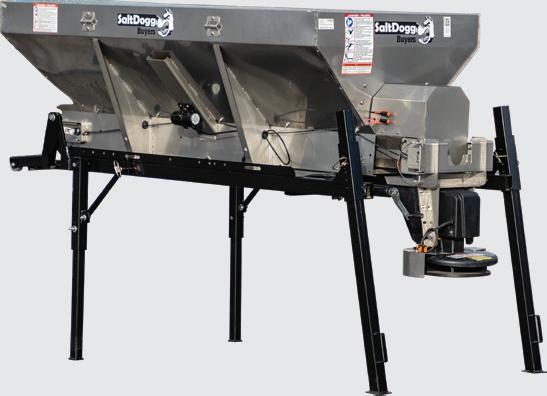
SIMPLIFIES LOADING, UNLOADING, AND STORAGE OF YOUR SALTDOGG SPREADER
Designed for use with 1.5-2.0cy SST and Poly SHPE/PRO Spreaders in 3/4T+ truck beds. Available in black powder-coated or hot dipped galvanized finish. Patent Pending loading/unloading mechanism.

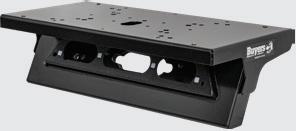
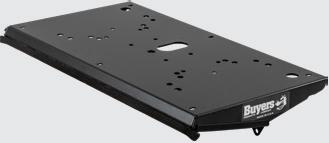
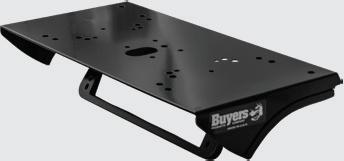
PRO SERIES DRILL-FREE LIGHT BAR CAB MOUNTS FOR FORD®, GM®, AND RAM® PICKUP TRUCKS
Mount strobes, light bars, and other work lights without Having to drill into the truck. Mounts to the vehicle's OEM third brake slot. Durable, corrosion-resistant aluminum construction.


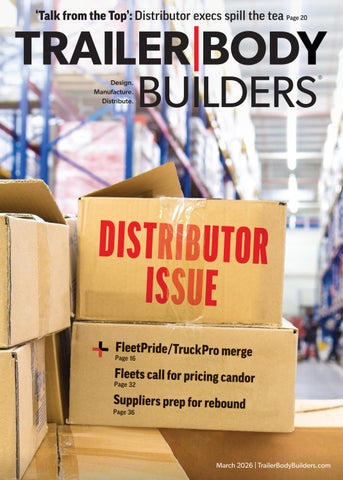
Distributor Issue
• Cummins reveals Meritor MFLEX4 air disc brake pad
• High Bar Brands’ booth highlights product range
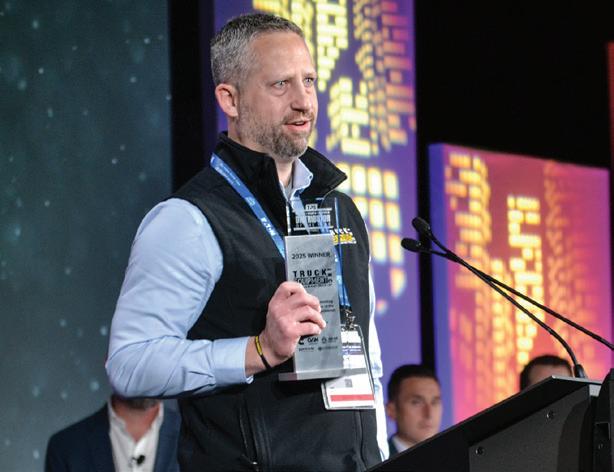
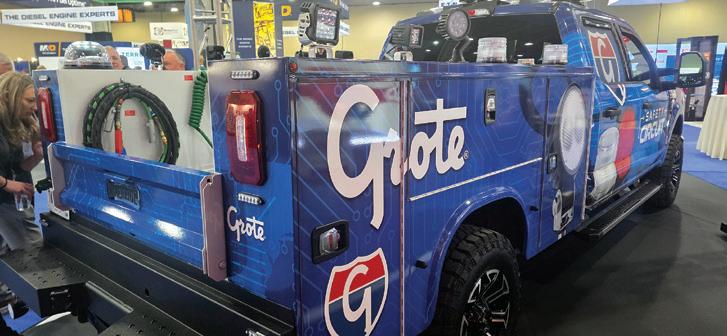
• Grote debuts Safety Circuit Roadshow truck, shows range
• Hendrickson showcases aftermarket parts portfolio
• ACC Heavy Duty launches component reengineering program, extends service life
• MAHLE showcases range of HD solutions Features Section
20 Unvarnished ‘Talk from the Top’
Distributors spill the tea on supplier relationships in annual MEMA Survey
24 Playing out of a ‘divot’: aftermarket outlook
Economic indicators suggest a chance of recession this year; otherwise, the industry can be certain of uncertainty
32 The price is right? Fleets question that and demand vendor transparency
Fleets call for suppliers to be up-front about costs—and provide a human to deal with
34 Fleets can’t ‘defy gravity’ forever
DTNA’s Backeberg discusses tariffs, uncertainty, and helping fleets weather high costs
36 Supplier challenge: Be prepared for good news
As the aftermarket races ahead with innovation, it must continue to support existing technology, systems
Trailer|Body Builders
Market Leader
Commercial Vehicle Group – Dyanna Hurley dhurley@endeavorb2b.com
Editorial Director – Kevin Jones kjones@endeavorb2b.com
Senior Editor – Jason McDaniel jmcdaniel@endeavorb2b.com
Associate Editor – Matthew Rand mrand@endeavorb2b.com
Marketing/Advertising – Dan Elm delm@endeavorb2b.com
Art Director – Jennifer Dakas jdakas@endeavorb2b.com
Directories/Listings – Maria Singletary msingletary@endeavorb2b.com
Audience Development Manager – Laura Moulton lmoulton@endeavorb2b.com
Endeavor Business Media, LLC
CEO Chris Ferrell
COO Patrick Rains
CDO Jacquie Niemiec
CALO Tracy Kane
CMO Amanda Landsaw
EVP Transportation Group Chris Messer
VP of Content Strategy, Transportation Group Josh Fisher
TRAILER|BODY BUILDERS (USPS Permit 636660, ISSN 0041-0772 print, ISSN 2771-7542 online) Volume 67 Issue 5, is published monthly by Endeavor Business Media, LLC. 201 N Main St, 5th Floor, Fort Atkinson, WI 53538. Periodicals postage paid at Fort Atkinson, WI, and additional mailing offices. POSTMASTER: Send address changes to Trailer/Body Builders, PO Box 3257, Northbrook, IL 60065-3257. SUBSCRIPTIONS: Publisher reserves the right to reject non-qualified subscriptions. Subscription prices: U.S. ($81.37 per year); Canada/Mexico ($81.37 per year); All other countries ($161.71 per year). All subscriptions are payable in U.S. funds. Send subscription inquiries to Trailer/Body Builders, PO Box 3257, Northbrook, IL 60065-3257. Customer service can be reached toll-free at 877-382-9187 or at trailerbodybuilders@omeda.com for magazine subscription assistance or questions.
Printed in the USA. Copyright 2026 Endeavor Business Media, LLC. All rights reserved. No part of this publication may be reproduced or transmitted in any form or by any means, electronic or mechanical, including photocopies, recordings, or any information storage or retrieval system without permission from the publisher. Endeavor Business Media, LLC does not assume and hereby disclaims any liability to any person or company for any loss or damage caused by errors or omissions in the material herein, regardless of whether such errors result from negligence, accident, or any other cause whatsoever. The views and opinions in the articles herein are not to be taken as official expressions of the publishers, unless so stated. The publishers do not warrant either expressly or by implication, the factual accuracy of the articles herein, nor do they so warrant any views or opinions by the authors of said articles.
Corporate Office: Endeavor Business Media, LLC, 30 Burton Hills Blvd, Ste. 185, Nashville, TN 37215 USA; 800-547-7377
Visit Trailer-BodyBuilders.com for more information from stories in this issue, plus online exclusives on pertinent topics in the trailer manufacturing industry.
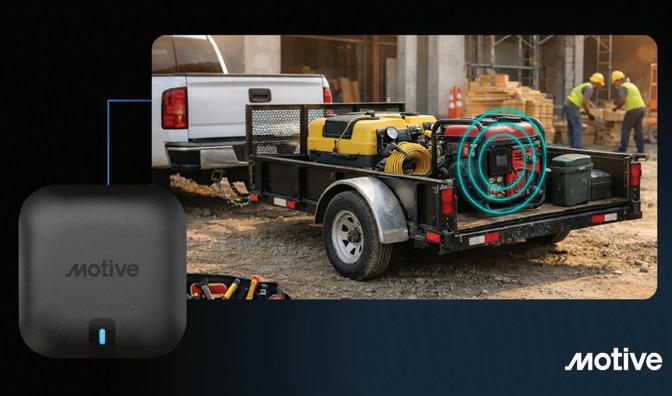
Motive launches Beacon to track equipment, maximize utilization Seven weeks a year lost searching for lost stuff Trailer-BodyBuilders.com/55360813
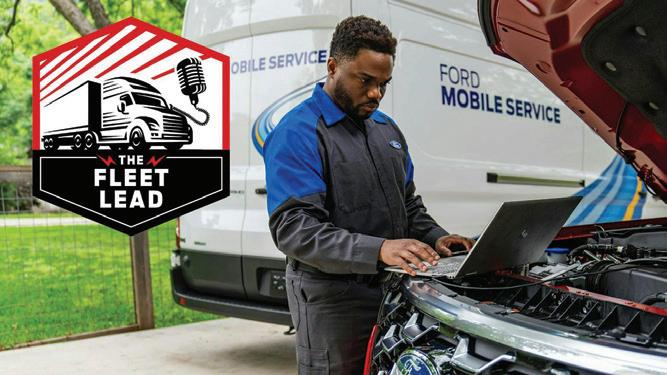
Podcast: Ford Pro on work truck TCO, the journey to zero downtime Keeping up with latest work truck trends Trailer-BodyBuilders.com/55357885
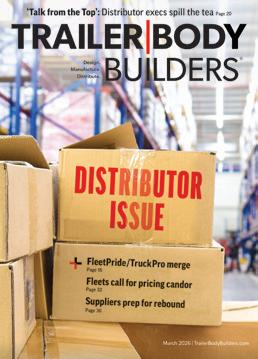
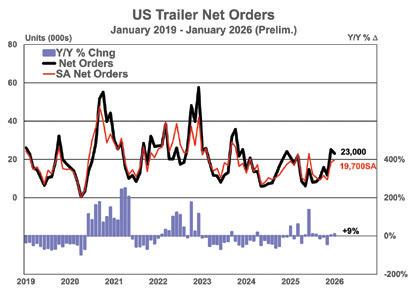
Trailer orders show resilience amid market uncertainty Trailer-BodyBuilders.com/ 55359260
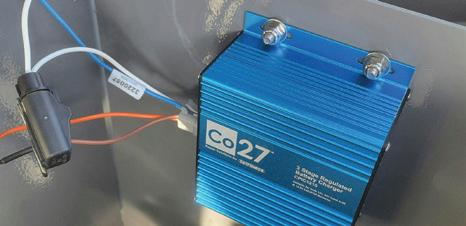
Optronics unveils DC-DC charger for trailer batteries Trailer-BodyBuilders.com/ 55360812


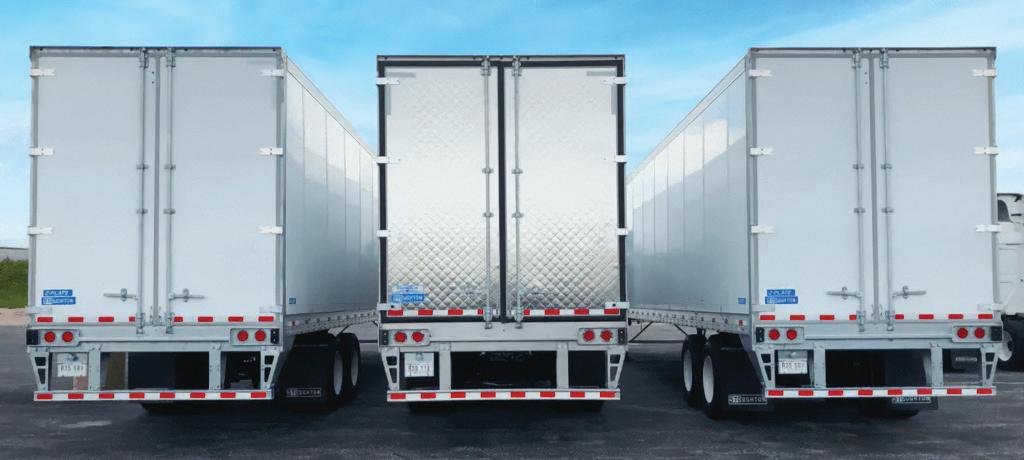
Stoughton Trailers LLC has significantly expanded its presence in Western United States with the addition of TEC Equipment to the Stoughton dealer network.
TEC Equipment will represent the Stoughton brand in Washington, Oregon, California, Idaho, Montana, Nevada and Arizona. Founded in 1976, TEC Equipment has over 30 locations in 8 states serving the trucking industry. TEC Equipment has become one of the largest
full-service truck and trailer dealerships in the United States.
“Our entire company is excited about adding TEC Equipment to our dealer network” said Jeremy Sanders, chief commercial officer for Stoughton Trailers. “The addition of the TEC service locations and sales team members will quickly expand Stoughton’s brand presence. Trucking fleets in the Western U.S. will have the opportunity to discover why the Stoughton
Novae unveils refresh of 11 trailer brands in its portfolio
Novae recently revealed a comprehensive update for 11 brands in its portfolio. This marks a “key moment” that gives dealers and customers distinctly different brand and product choices from the company’s broad trailer portfolio, according to the news release.
“We took a hard look at how each of our brands shows up not only in our portfolio but across the industry,” said Jeanine Gaffke, Novae’s senior vice president of marketing. “We saw opportunities to contemporize the brands and connect with the people who buy and use our products every day. Novae is well known for its highly engineered products that our customers can rely on.”
The new brand positioning will enable Novae to provide dealers with “differentiated choices” within the portfolio that will provide “clarity of communication with a whole new generation of end users,” Gaffke added.
“Our people are at the center of everything we do,” Carrie Tenny, Novae’s chief human resources officer said. “Their ideas and innovative spirit consistently improve the way we design, engineer, build, sell, and service our trailers. Our updated portfolio is built to represent those same standards and the craftsmanship our teams bring to every product.”
brand is so revered across the rest of the US and Canada.”
Stoughton Trailers “is a natural fit,” noted Grant Small, SVP of dealership operations at TEC.
“We believe in providing our customers with high-quality equipment solutions from companies similarly dedicated to solving customer needs,” Small said. “Stoughton is aligned in that focus and we couldn’t be more excited for this new partnership”.
Added Jon Warren, VP of regional sales, “We are confident the model line-up from Stoughton, coupled with the high quality of the trailers and support we have at TEC to back the parts and service of those trailers creates incredibly strong value for our customers,” he said. “Top to bottom, our team is excited to be working with Stoughton, and to be able to offer another top-of-the-line equipment option to customers.”
The brands within the Novae family encompass the entire range of trailer needs: open and enclosed products, manufactured in aluminum and steel. The brand update is designed to increase differentiation within this portfolio, enabling dealer partners to clearly communicate the essence and value of each brand to their customers.
The rollout is the culmination of months of effort across the company and impacts 11 brands, including Midsota, Sure-Trac, CAM Superline, H&H Trailers, Formula Trailers, Pace American, LOOK, Impact, Cargo Express, Compass, and ITI Cargo.

Global Tank keeps growing its fleet and footprint. The family-owned tanker equipment and service specialist recently partnered with MAC Trailer as an authorized dealer in North Carolina and Louisiana, and opened a new location in Parkersburg, West Virginia.
The agreement with MAC includes the manufacturer’s dry bulk trailers and its liquid tankers, which previously ran under the MAC LTT logo. Global will stock MACs for sale and lease, and the orders are already placed.
“We’re proud to partner with Global Tank,” Bill McKenzie, MAC president of sales, told Bulk Transporter. “This partnership strengthens our capabilities and positions us to deliver greater value and exceptional service to our customers.”
MAC started over 30 years ago as a one-man trailer repair shop. It’s now one of the country’s leading manufacturers of liquid and dry bulk pneumatic trailers,
dumps, flatbeds, and drop decks, with 10 facilities spread across six states.
“Since the beginning, Global Tank has been built on family-owned service and a commitment to providing reliable, high-quality equipment,” said Grant Stinson, Global director of leasing. “As we continue to expand and innovate, we’ve been intentional about partnering with companies that share those values. We found that alignment with MAC Trailer.
After touring their plant in Kent, Ohio, we saw firsthand the craftsmanship and product lineup that fit what we want to deliver to both our sales and leasing customers.”
Global’s new full-service terminal in Parkersburg is open now. The six-bay, R-stamp-certified facility is a Global Service Center and Global Tank Leasing hub offering leasing and sales, maintenance, and 3,000 sq. ft. of parts.
“To further support our customers, Global Tank is opening its seventh service
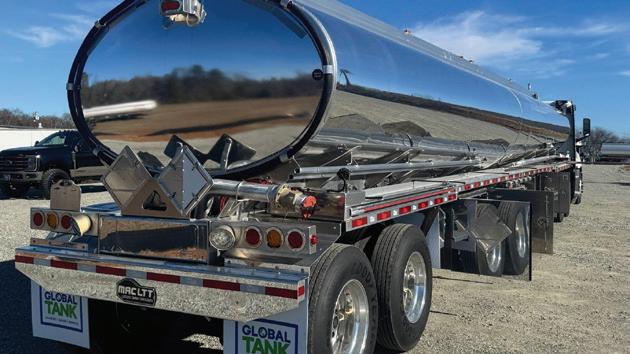
Global Tank is now an authorized dealer of MAC Trailer’s liquid and dry bulk tank trailers in North Carolina and Louisiana. Global also recently opened a new full-service location in Parkersburg, West Virginia.
location in Parkersburg, West Virginia,” Stinson said. “We selected Parkersburg as a natural bridge between our current service footprint and the next phase of growth in the Ohio River Valley, strengthening our ability to support more customers in the region with the same speed, consistency, and service-first standards Global Tank is known for. This facility will offer HM inspections, welding and fabrication, brake and suspension work, transportation support, and more.”










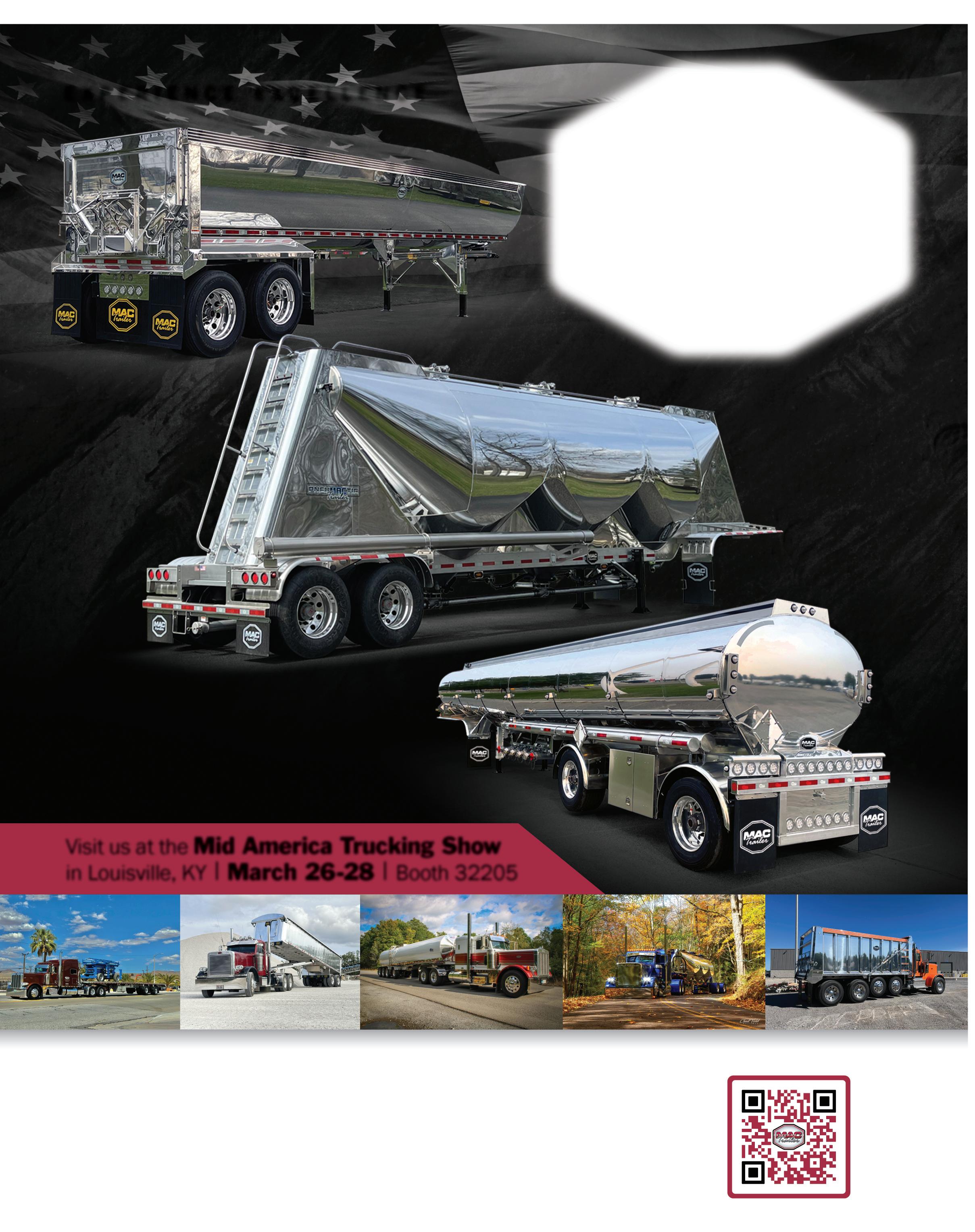
Visit us at the Mid America Trucking Show in Louisville, KY | March 26-28 | Booth 32205
MAC LTT is rebranding as part of the MAC Trailer product lineup, bringing everything together under one trusted name, MAC Trailer. From dump, flatbed, and transfer trailers, to pneumatic tanks, liquid tanks, and dump truck bodies, MAC Trailer delivers a complete range of solutions backed by the same people, products, and performance youÕve always relied on.
Hiab has signed a strategic dealer agreement with Custom Truck One Source Inc., expanding the distribution and service network for HIAB loader cranes and MOFFETT truck mounted forklifts.
Custom Truck operates in more than 40 locations across North America. It also
provides a 24/7 service call center to support customers around the clock and maintains a rental fleet of over 10,400 units and offers in-house financing options.
“Partnering with Custom Truck is a major milestone for us getting close to full coverage of the U.S. market for HIAB
loader cranes,” said Pauliina Kunvik, senior vice president, sales and services, North America at Hiab. “This agreement secures the extensive coverage in the crucial West region of the U.S. that has been a long-standing strategic priority for Hiab, while also reinforcing our presence in the high-volume New York market.
“The partnership also significantly enhances our MOFFETT truck mounted forklift distribution. With Custom Truck’s scale and commitment to service excellence we can ensure our customers across these vital regions receive bestin-class product support for our innovative products.”
The partnership for HIAB loader cranes will cover sales and services in 12 important states: California, Oregon, Washington, Idaho, Nevada, Arizona, Kansas, Missouri, Wisconsin, Pennsylvania, West Virginia, and New York.
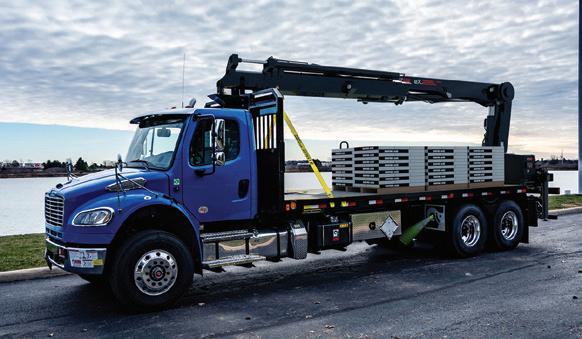
The partnership for MOFFETT truck mounted forklifts will cover sales and services in eight states: New York, New Jersey, Delaware, Massachusetts, Rhode Island, Maryland, Connecticut, and parts of Pennsylvania.
“We are delighted to partner with a global leader like Hiab. Their commitment to innovation and quality mirrors our own focus on providing complete and reliable solutions to our customers,” said Custom Truck CEO Ryan McMonagle. “This portfolio expansion will allow us to better serve the growing demand for smart, high-performance loader cranes across our extensive operational footprint.”
Lift and crane truck body specialist Altec has revealed an expansion project for its Mount Airy, North Carolina production facility. This initiative will make a significant investment to strengthen its existing operations, resulting in the creation of 100 new jobs.
Dubbed Project Poplar, the expansion represents the next phase of Altec’s growth in Mount Airy. The project will begin with construction of a new maintenance facility, allowing maintenance staff to relocate from an existing wing of the current building to a new structure adjacent to Altec Way. Once vacated, that portion of the facility will be retooled into additional assembly space, increasing production output and enabling the hiring of more than 100 new associates.
Project Poplar will be supported in part by a $500,000 grant from the North Carolina Department of Commerce’s Rural Infrastructure Authority, utilizing Building Reuse funds to support job creation and economic growth in rural communities. In addition, the Surry County Board of Commissioners approved a local cash grant valued at approximately $329,000 as part of the competitive effort to secure the project.
“As Altec celebrates our 10-year anniversary in Mount Airy, this expansion is especially meaningful for our entire team. Over the past decade, we’ve become
deeply connected to this community, and we’re grateful for the continued support we’ve received along the way,” said Ben Griffin, general manager for Altec Mount Airy. “The investment made through this grant, along with the partnership of the State of North Carolina, our Surry County Commissioners and the Surry County Economic Development Partnership, has played an essential role in making this project possible. We look forward to growing our workforce, strengthening our operations and continuing our commitment to being a proud part of the Mount Airy community for many years to come.”
of new employment opportunities,” said Chairman Bill Goins. “The Board is pleased to support Altec in this endeavor and looks forward to them continuing to invest in our community and our people.”
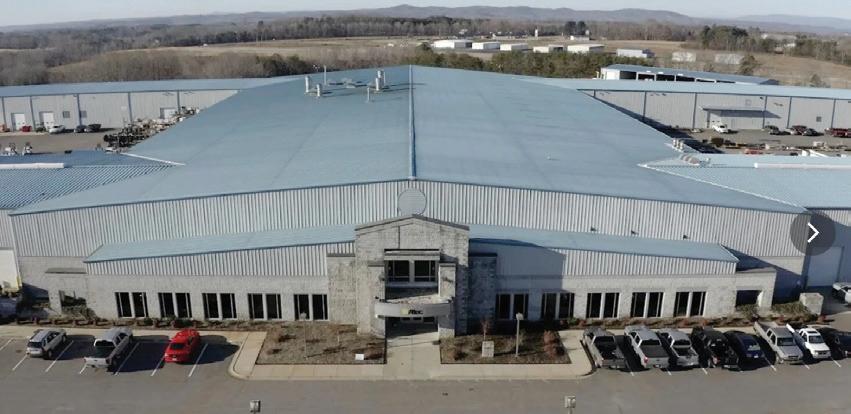
In addition to the new maintenance facility, an addition will be completed in an existing portion of the plant to further expand production capacity. The project will also include utility improvements and facility upgrades to support long-term operational efficiency and growth.
Local leaders emphasized the significance of the project not only for job creation, but also for reinforcing Mount Airy’s role as a competitive manufacturing hub.
“The Surry County Board of Commissioners is excited to see another existing industry announce a significant investment and the creation
Diesel USA Group has joined VIPAR Heavy Duty, adding seven U.S. locations to the distributor network. The company supplies a broad range of diesel engine components, including turbochargers, fuel systems, exhaust and emissions components, electrical parts, filtration and charged air products, as well as technical services like DPF cleaning, component repair, remanufacturing and full-service parts distribution.
Founded in 1950 by World War II
veteran Lloyd A. Bailey as Diesel Injection Service Company in Louisville, Kentucky, the company played an early role in shaping the post-war diesel service market.
In 2019, Diesel USA Group was acquired by Jasper Holdings Inc., parent company of Jasper Engines & Transmissions.
The company operates as an independent brand within Jasper’s employee stock ownership structure and retains its existing leadership team.
Altec Industries has operated in Mount Airy since its purchase of the facility from Pike Electric in March 2016. Since that time, the company has steadily grown both production capacity and staffing levels, establishing the Mount Airy facility as a key assembly plant within Altec’s national manufacturing network.
The Mount Airy operation specializes in assembling aerial devices and other equipment for the utility industry, equipment most commonly known as “cherry pickers.” The facility is one of three Altec manufacturing locations in North Carolina, along with plants in Burnsville and Creedmoor.
Construction and implementation timelines for Project Poplar are expected to begin soon with hiring anticipated to occur in Q4 of 2026.
“In evaluating the opportunity, we recognized the value-added benefits of aligning with VIPAR Heavy Duty’s network and expanding access to complementary product lines,” said Jerry Mabis, corporate Liaison at Jasper Holdings.
Diesel USA Group serves commercial fleets and equipment owners nationwide through facilities in Louisville, Cincinnati and Columbus, Ohio; Indianapolis, Fort Wayne and Crown Point, Indiana; and Fontana, California.
W&B Service Company has acquired Sanders Trailer Service, an established full-service semi-trailer dealership and service provider with a focus on grain hoppers, livestock, drop deck, low boy and end dump trailers. This acquisition reflects W&B Service Company’s ongoing strategy to expand its geographical footprint and product capabilities with three new locations in Kansas and Western Missouri, enabling W&B to provide South to North coverage in the Midwest. Terms of the deal were not disclosed.
“Sanders Trailer Service is a strong cultural and operational fit for W&B,” said Justin Keppy, CEO of W&B Service Company. “They have built a reputation for customer service, technical expertise with an employee first culture, and those values align closely with how we do business. This acquisition allows us to expand our trailer offerings while continuing to deliver the level of service, reliability and responsiveness our customers expect.”
The partnership expands W&B Service Company’s capabilities into the agricultural markets and expands its footprint across the Midwest to support customers with the combined offering of trailer


products and parts and service. Sanders Trailer Service customers will have access to expanded resources and parts and service capabilities.
“Joining W&B Service Company positions Sanders Trailer Service for continued growth while preserving the values and customer-first approach that have defined our success,” said Kevin Bartsch, CEO of Sanders Trailer Service.
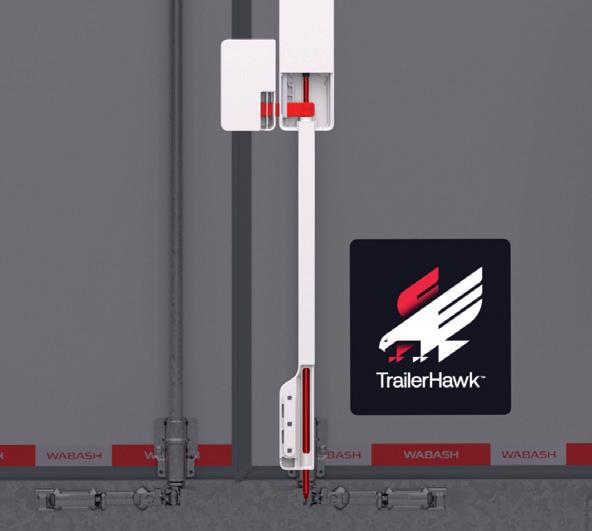
Wabash debuted its next-generation cargo assurance solution at the recent Manifest 2026 in Las Vegas. This patent pending integrated solution pairs a digitally connected cargo door and intelligent locking system with the TrailerHawk.AI technology platform to link physical access control with real-time visibility and actionable assurance events to help prevent cargo theft.
Cargo theft remains a growing challenge across the U.S. supply chain. The Wabash solution is designed to help shippers, carriers and 3PLs transition from after-the-fact loss response to earlier detection and clearer accountability by providing verified access, exception alerts and an end-to-end record of custody.
Founded in 1952, W&B Service Company operates through more than 20 full-service locations and a large mobile service fleet.
W&B serves customers across Texas, Arkansas, Louisiana, Oklahoma, Illinois and Ohio, supporting fleets with dependable equipment, expert technicians, and responsive service. W&B is a portfolio company of Stellex Capital Management.
Sanders Trailer Service operates three locations in Wichita and Garden City, Kansas and Carthage, Missouri serving customers throughout Kansas and Missouri.
The company provides new and used semi-trailers, including grain hoppers, livestock trailers, drop deck trailers, low boy trailers and end dump trailers.
In addition to sales, Sanders Trailer Service offers parts, rentals and comprehensive trailer repair services, representing trusted brands such as Timpte, Demco, East and Muv-All.

“The industry can no longer afford to rely on disconnected cargo security tools that lack true access control and don’t verify who is touching the freight,” said Brett Suma, managing director at Wabash. “Wabash is taking a new approach to overcoming these challenges with our cargo assurance solution, showing how the trailer itself becomes part of a secure, connected system that helps prevent theft.”
Wabash’s cargo assurance solution combines a purpose-built cargo door and intelligent locking system with TrailerHawk. AI’s connected platform, delivering realtime visibility and alerts wherever the cargo travels. The new solution transforms cargo assurance from passive monitoring into active assurance by creating multiple secure points of contact at the cargo door, enabling encrypted communication, in-transit monitoring and proactive intervention.
The solution is also designed to combat “strategic” or orchestrated cargo theft, where legitimate drivers are unknowingly used in fraud schemes due to broken information chains. By validating driver identity and carrier relationships and connecting those checks to physical access at the cargo door, customers can reduce uncertainty at handoffs and strengthen in-transit control.
The solution will first launch as a retrofit option for TaaS Pools in 2026. Next, it will be available as an option on new Wabash trailers or as a Wabash trailer retrofit in 2027 and expand from there.



Metalforming manufacturers forecast stable economic activity over the next three months, while reported shipping levels rose in January, according to the February 2026 Precision Metalforming Association (PMA) Business Conditions Report. Prepared monthly, PMA’s report
provides an economic indicator for the next three months of manufacturing, sampling 90 metalforming companies in the United States and Canada.
“PMA’s February Business Conditions Report highlights the resilience of our members,” said PMA President David Klotz.
• Universal fit for multiple truck & trailer bodies
• Electric or manual operation available
• Durable steel or aluminum options
• Side or underbody mount configurations
“Metalformers continue to benefit from the tax certainty and pro-manufacturing provisions included in the One Big Beautiful Bill Act, including the restoration of 100% bonus depreciation and full expensing of R&D investments. These policies are helping manufacturers invest in equipment and innovation.
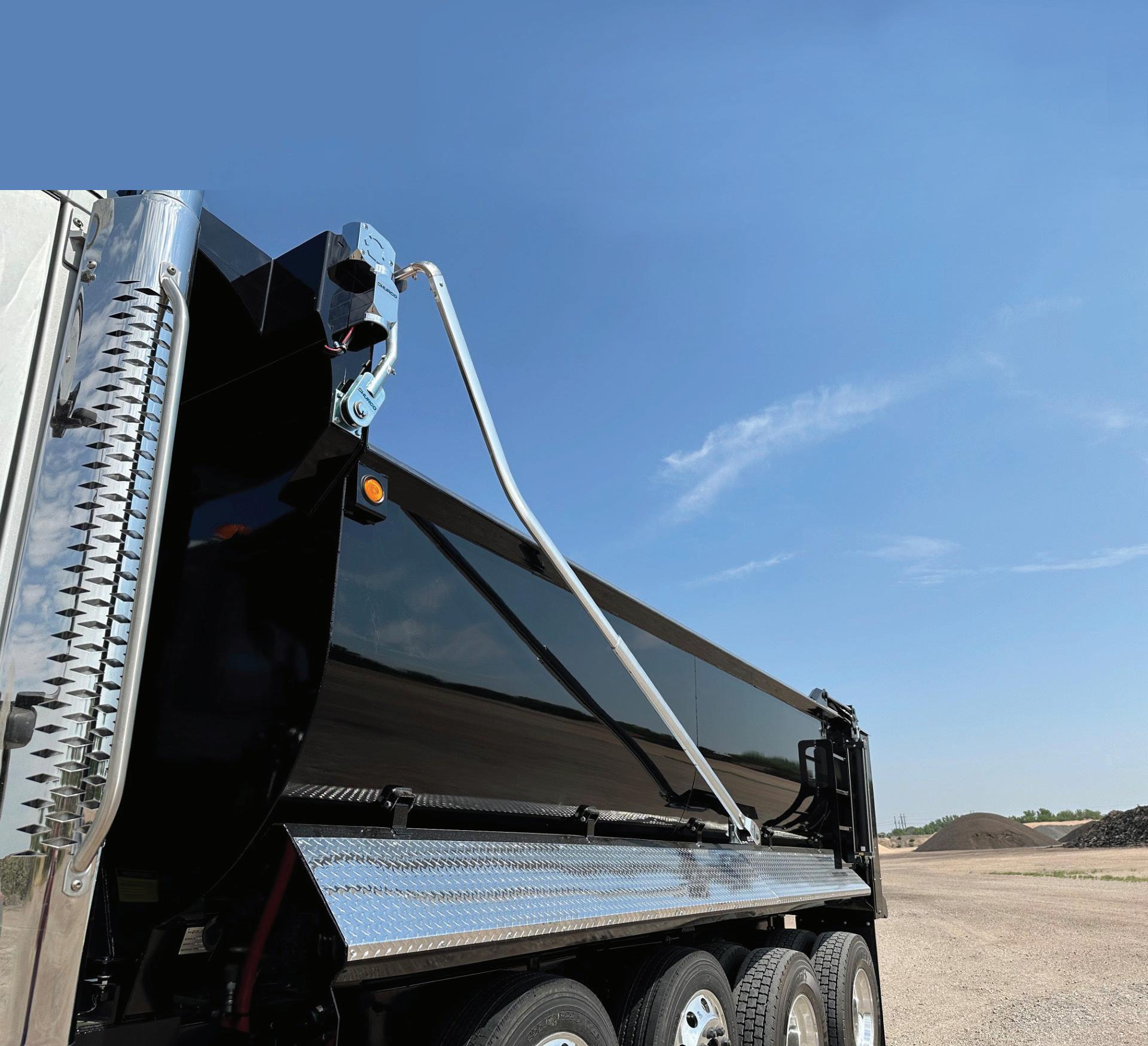
“At the same time, ongoing volatility surrounding tariffs and trade policy— including the implications of the recent Supreme Court decision on IEEPA tariffs—continues to create uncertainty for manufacturers planning for the months ahead. Greater clarity and predictability in trade policy will be critical to sustaining growth.”
PMA’s February report shows that 41% of manufacturers surveyed expect an increase in general economic activity in the next three months (compared to 49% in January), 53% predict no change in activity (compared to 43% last month) and 6% forecast a decrease in activity (down from 8%).




Metalformers anticipate an uptick in incoming orders in the next three months, with 57% of survey respondents predicting an increase in orders (up from 53% in January), 41% expecting no change (compared to 37% last month) and only 2% forecasting a decrease in orders (down from 10%).
Shipping levels in February rose for the second month in a row. Thirty-four percent of metalformers surveyed reported an increase in current average daily shipping levels in February (up from 20% in January), 50% reported no change (the same percentage reported last month) and 16% reported a decrease in shipping levels (down from 30% in January).
In addition, the survey showed that only 2% of respondents had workers on short time or layoff in February, decreasing from 6% in January and at its lowest level since January 2023, while 33% are currently expanding their workforce (the same percentage reported last month). Lead times decreased slightly in February. TBB

GRAPEVINE, Texas—A deal is a deal, but some deals are bigger than others. The FleetPride/TruckPro merger last October was a really big deal, and one that was still generating buzz during various presentations and hallway discussions at Monday’s Heavy Duty Aftermarket Dialogue here.
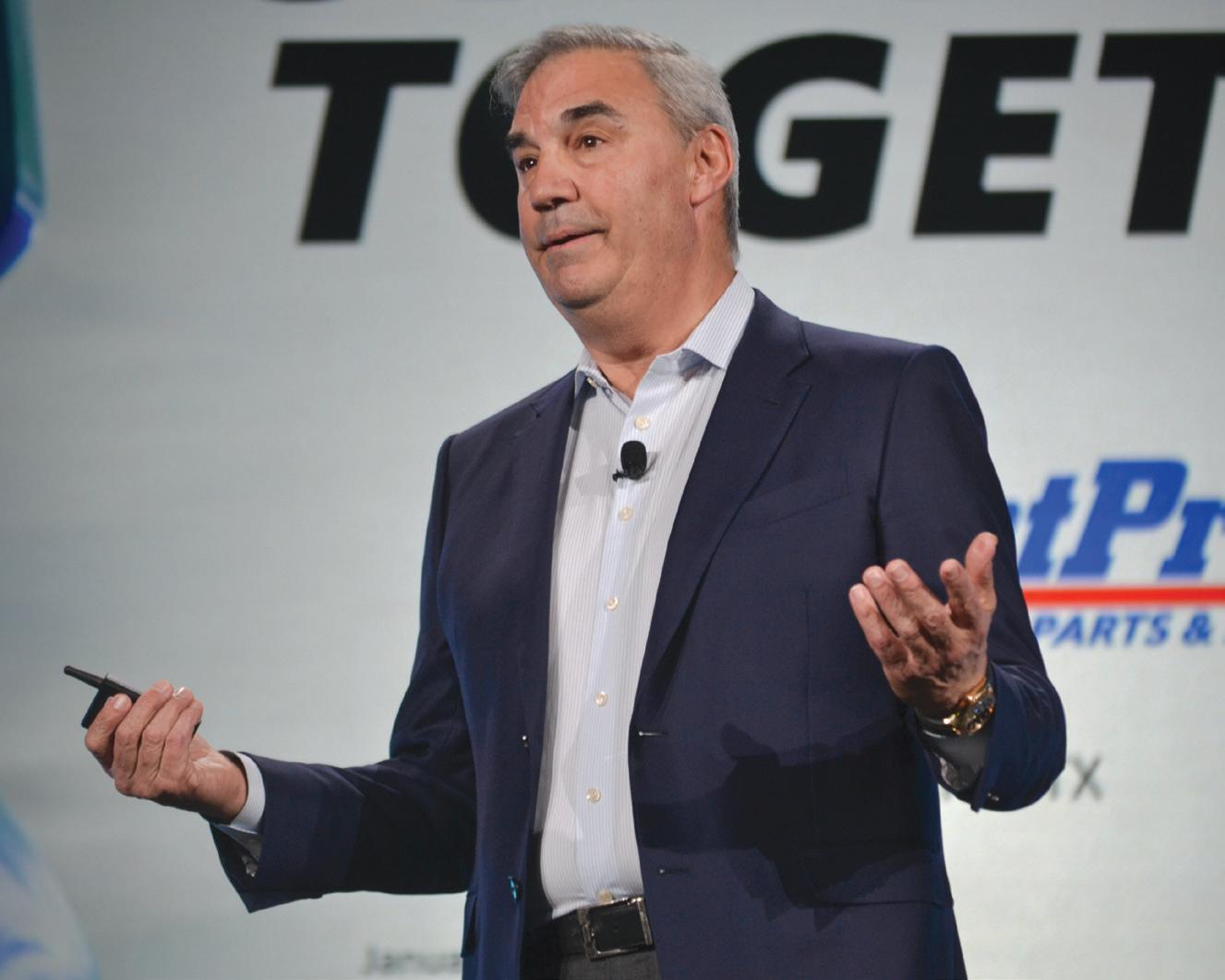
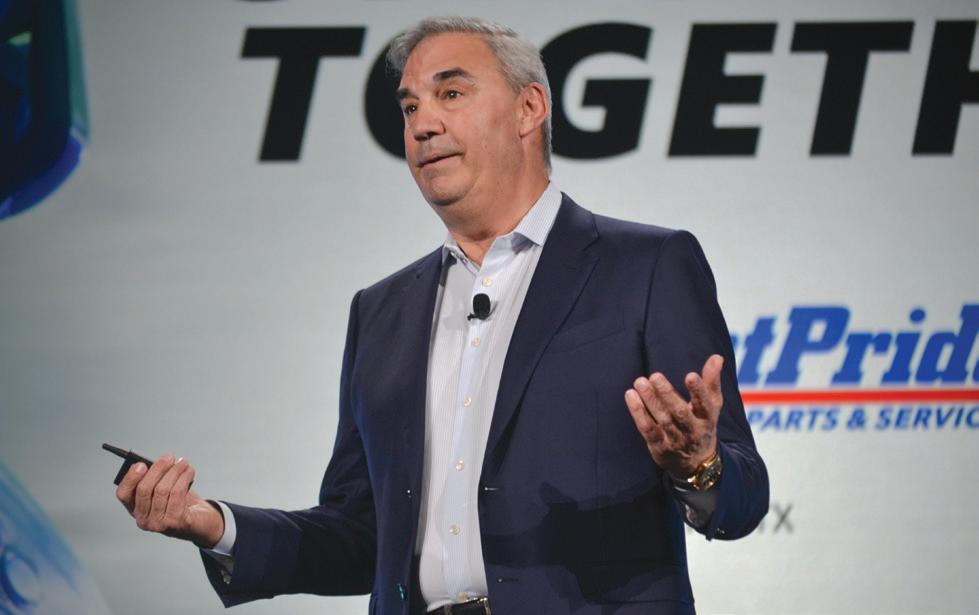
So FleetPride CEO Tom Greco took to the stage to outline his vision for the industry giant during the distributor keynote presentation.
The business combination is now the nation’s leading independent distributor in the heavy-duty aftermarket, with more than 450 locations, 110 service centers, and six distribution centers. Greco, who took the helm in July 2025, emphasized that this strategic move is designed to create a “stronger, faster-growing company” through enhanced scale and innovation.
Beyond synergies: A plan for sustained growth
Greco’s strategy for the merger centers on a crucial distinction between low-hanging cost cuts and long-term value creation.
While consultants often warn that 80% of mergers fail, Greco noted, he is focused on the 20% that flourish by prioritizing people and culture over simple financial maneuvers.
“We’re trying to retain all the good things that came from TruckPro, all of the good things that came from FleetPride,

and obviously evolve the culture,” he said. “Culture is not a light switch; you can’t just change it overnight. It evolves over time, and you have to pay a lot of attention to it.”
He explicitly warned against focusing solely on “capturing synergies”—such as eliminating redundant corporate roles— at the expense of the front line. Many mergers “go sideways” when they achieve their synergy targets but suffer a growth slowdown that wipes out those gains,
To ensure the merger results in true scale, the “Stronger Together” strategy focuses on unit growth and operational efficiency.
“We’ll finish that up by the end of February and be able to share more with our suppliers, in terms of what we’re doing,” he added.
The company plans to leverage its combined logistics network to service locations from the most geographically logical distribution centers, such as using a California hub to service local branches rather than shipping from Memphis.
By identifying five key value drivers—availability, category management, customer experience, frontline capabilities, and technology—the leadership team aims to shift the focus from administrative tasks to customer-serving time, turning the merger’s raw scale into a frontline competitive advantage.
“There’s a lot of things that we ask our people to do in our branches that are task oriented, that take time away from serving our customers,” Greco said. “How do we do that and get our team members super excited about it?”
The FleetPride push for growth comes during a persistent “freight recession,” the dominant theme during the HDAD presentations throughout the day.







































How do you anticipate the FleetPride–TruckPro merger will affect the distribution channel and broader aftermarket?
Having those 2 big gorillas together- they will look at what are the synergies for supplier agreements and how to improve their costing. They will put pressure on manufacturers, and will open up opportunities to distributor competition at the same time
We anticipate store mergers to happen quickly. We feel like there is a talent pool that will be soon available, both from local stores and at HQ level. This is a big opportunity for local distributors.
The national fleets will take a better look at FleetPride, with more locations and better coverage, but that will not significantly impact our business.
Its not going to be one and one equals two. There will be some consolidation. It won't have as much ripple effect as people think.
In the near term they'll have their hands full with combining the 2 organizations, that typically creates some disruption. It will create some opportunity for the independent distributor in the local market.
They will be a much more formidable force to reckon with, assuming they can get the merge done smoothly.
Ideally it makes us all stronger - FleetPride has better investment in technology and ecommerce. Others will have to increase their investment in those resources in order to keep up and compete- that might be a positive.

The slide above comes from MEMA’s “Talk from the Top” survey of aftermarket distributor executives. See Page 20 for the full report.
Greco pointed to vehicle miles traveled (VMT) as the metric most closely correlated with aftermarket demand. While 2021 and 2022 saw stimulus-driven growth, the last three years have trended negatively.
“We polled all of our suppliers on a call we had recently, asking ‘What do you think about the year? What are your growth expectations for the year?’” he explained. “And many of them said what you heard this morning: a little bit better than 2025, but probably back-half [fr 2026] weighted.”
To win in this environment, the new, even bigger FleetPride is investing in a frictionless customer experience, particularly through digital assets and e-commerce. Greco noted that the “Amazon effect” has permanently raised expectations for parts availability and delivery speed—again, a recurring theme at HDAD.
“We’re going to build a formidable digital asset as we build up the new FleetPride,” he said.
Strategic supplier partnerships
Greco’s outlook for the distributor market involves moving beyond transactional supplier relationships, another theme at HDAD.
“We’re looking for ideas to really get out of the gates quickly in 2026, and many of you have already stepped up and helped us with that,” he said. “But, over time, we are looking for a longer-term strategic relationship with each of you.”
A four-step “joint business planning” process—discovery, big bet planning, joint execution, and measurement— is the model to ensure mutual success. Vendors need to be “thought partners” in innovation and training, and the best solutions are “win-win” propositions, he explained.
“We want to be thoughtful as we make decisions on assortment, on brands, on what gets emphasized,” he said. “All of those things will be considerations for us but, having spent 30 years on the supplier side, I know that we’re not going to win long term if you’re not winning, too.”
Indeed, Greco’s goal is that in three years suppliers, customers, and team members will all agree they “won big” because of this merger.
“We’re going to put the customer at the center of everything we do. However, as you think about what we need to do going forward to operationalize our plan, we’re going to put the people rst in our organization.”
Tom Greco
“Again, we’re going to put the customer at the center of everything we do,” he said. “However, as you think about what we need to do going forward to operationalize our plan, we’re going to put the people first in our organization. So our customers would say that we were serving them better than we ever did as individual companies, and our team members would find new opportunities that potentially they weren’t able to realize in an individual company.
“If they all say those things, I’m very confident that the financials [of the merged companies] will be something we can all be proud of.” TBB



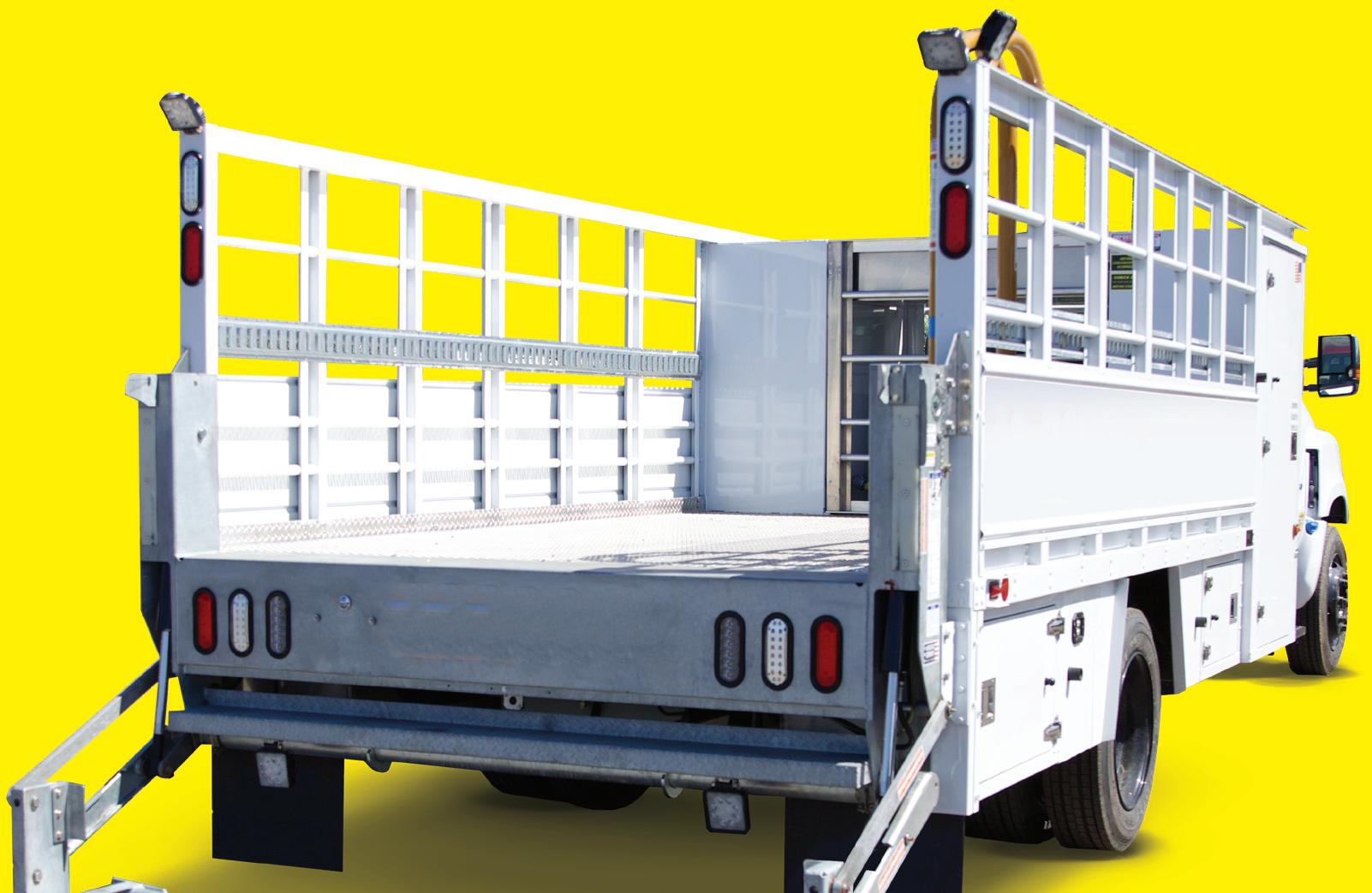



Designed for the demands of tire service, the new Maxon MLA delivers heavyduty performance with 1,600- or 2,000-lb capacities and a unique geometry that lets large tires clear with ease. A galvanized finish comes standard for long-lasting corrosion protection, while greaseable pivots make maintenance simple and fast. Choose from steel or aluminum platforms, plus a variety of ramp and tire-rack options — all backed by Maxon’s nationwide service and support network.
Explore maxonlift.com/products/light-duty/mla to learn more.
By Kevin Jones
If you’re a supplier who’s ever wanted to read the minds of your channel partners or, if you’re a distributor, to read the minds of your competitors, MEMA’s third annual “Talk from the Top” survey was released at HDAD. The report features anonymous chats between leading heavy-duty aftermarket executives and Shannon O’Brien, senior director of programming and strategy, and commercial vehicle aftermarket lead, for MEMA Aftermarket Suppliers.
“This program is designed to give suppliers direct unfiltered feedback from senior leaders across the heavy duty aftermarket,” O’Brien said. “These are candid one-on-one conversations with executives who are making sourcing and strategic decisions every day. The goal is not to critique, but to share real perspectives suppliers can use to strengthen partnerships and better serve the channel.”
MEMA will host a thorough review of the report in coming weeks.
How was business performance in 2025?
• We are seeing some growth. Unfortunately, a portion of it is tied to cost increases.
• Good performance, despite unprecedented uncertainty that generated a lot of turmoil and extra work.
• The customers have continued to be pretty grouchy—reluctantly spending their money on maintenance. Largely stagnant is the word I use for 2025.
What was positive from 2025?
• It was a year where we really listened

and adapted to our customers needs and helped them to be more successful.
• Any time the revenue is stagnant, it gives you opportunity to work on internal things. It gave us a chance to become efficient.
• We saw some really strong partners emerge this year that you don’t get to see when things were good.
What is your 2026 business outlook?
• Fairly moderate growth, mid-single digit forecast for the year. Driven less by macro economics and more around taking market share thru better operational performance. A little bit of inflation in there too.
• Our outlook is pragmatic, that we’re just not planning for anything to be any better than what we’ve seen, or maybe even a little bit worse. Controlling the things we can control, like cost control, b/c we’re not getting any help from the economy.
WDs are increasingly offering private label as an alternative … what’s the impact?
• There is a best, better, good menu out there, and we should have those
choices for our customer so they can make the purchase they want to.
• If the tier ones are only focusing on the OE and the immediate placement part, they miss out on second, third, fourth owner. It’s an opportunity for suppliers to actually gain some share, with a good program.
• We have refused to get into private label; we have tried to promote quality brands.
• This trend is not healthy. The impact is a downward pressure on premium brands and profitability. Suppliers have to get back to selling on quality vs selling on price and help their channel partners differentiate on that.
• There are people doing private label sourcing with no knowledge about product safety requirements.
To what extent does brand equity still influence purchasing decisions?
• Having the brand with a perceived quality still matters, but it doesn’t get you premium pricing anymore. Your “best value for the money” type of approach—branded, with the right price point, still can win.
• Suppliers have to invest and differentiate themselves on quality instead of price. The distributor still has a great influence over the end user’s preference. Give them the tools to help influence that brand decision.
• Brand is important—and when we say “brand” it doesn’t just mean OE. White box is OUR brand; we stand behind it. They are not competing with a no-name. They are competing with a house brand.
How has low truck and trailer build impacted the way suppliers are treating their AM customers?
• We predicted a refocus on suppliers caring about the aftermarket that traditionally don’t. There were a good 15 suppliers we thought would change their tune, and only saw a crumb of a difference from 2-3 of them.
• Some of our suppliers treat us like crap when builds are up, and they just think we’re the greatest thing in the world when builds are down. We don’t do long term planning with companies like this.
• Some are leaning in and being intentional about working with distribution partners, knowing this is their opportunity to offset their OE decline. But it’s interesting how many just don’t.
How would you describe the level of tariff disruption for your business?
• It was very highly disruptive when it all first started. It changed daily and weekly. And on top of that you would see variations in the ways suppliers managed these changes.
• It’s as much of a mess for the distributor as it is with the supplier. Being handed pricing actions in different ways with different vendors at different times. And then addressing that with the variety of customers.
Are tariffs here to stay?
• Nobody knows. Whatever is in place at the end of next year is probably here to stay. But it feels like we’re not done with the musical chairs yet.
• They probably are. Once politicians find a revenue stream, they don’t seem to go backwards. The really high ones will probably be curtailed, as we negotiate deals with other countries, but overall they will be here to stay.
What key considerations should suppliers keep in mind as they invest in their training programs?
• Make it manageable: How much time does that person have to train? There’s a lot of competing needs for that person’s time, whether its on the vehicle, at the counter or in the field.
• Today’s trainings are assuming you have knowledgeable workers who
want to absorb information. This is not where things are going in 5-10 years. Suppliers need to think more about AI and on-demand training, and less about an in-person oneand-done training.
Training expectations of younger industry entrants
• They want to move faster. It’s good to see an energetic generation that’s hungry for knowledge. They want to earn and make more money. They want speed and ease. And they are more technically savvy.
• How this generation uses AI will change everything we do. Just like email replacing typewriters and letters- my generation has never used those.
ago. Things are evolving. But if you compare that to any other B2C type business we’re really far behind.
What actions or behaviors are causing suppliers to lose business—perhaps without realizing it?
• Complacency about their brand recognition. If you are #1 in a category, and you rely only on this, it’s a behavior that will make you lose business.
• There are some that treat the aftermarket as an afterthought. It’s easy to spot when it happens.
• Suppliers are trying to go direct, around the traditional model. They are creating competitors, that they could have had as partners.

• They’re not as interested in learning every detail and every part number. The world they live in is “I can go look it up.” They don’t come with the idea that they need to study and memorize.
Have you seen meaningful improvements in product data from suppliers this past year?
• I do think we’re seeing a lot better product data. Every supplier is still sending data in their own way, but the data they have is definitely better.
• No, not a meaningful improvement. But, they are coming around to the realization that they have to have it.
• Sure. When you look as a whole, we’re super farther than 10, 5 years
What are some “quick wins” suppliers could implement in 2026 to strengthen their standing with you?
• Really getting your reps up to speed and ready to go out and promote your product. Your one rep affects our 12 reps—it’s exponential.
• Put a concrete plan together with some identifiable goals that help both sides get a win. And execute to that—that’s the #1 thing.
• Hear what our concerns are, and adapt to get the business. If they truly want to sell…work with us. Sometimes they forget that the aftermarket distributors are the customers, not the end user. They forget we are the ones that have to sell to the end user. TBB
In 1953 we invented the truck/trailer roll-up door and started an industry!

Economic indicators suggest a chance of recession this year; otherwise, the industry can be certain of uncertainty
By Kevin Jones
The heavy-duty aftermarket is moving into a period of heightened uncertainty as it transitions from a turbulent 2025 into a 2026 that experts warn will be “very challenging”. During the recent Heavy Duty Aftermarket Dialogue (HDAD), Dr. Bob Dieli, economist and proprietor of MacKay & Company’s economic reports, and Dave Kalvelage, senior market analyst at MacKay & Company, provided a data-driven analysis of the 2025 “freight recession” and a sobering forecast for the year ahead.
Their collective analysis suggests that while nominal market values are rising, the industry is grappling with “recession eligibility,” tariff-driven price volatility, and a fundamental shift in fleet purchasing behavior.
“We have to make plans under conditions of uncertainty, some of which are likely to be resolved because they do not involve directly economic conditions, rather political and judicial conditions; we simply have to wait for those decisions to be announced,” Dieli explained. “The major policy risks are the same. Tariffs and monetary policy which are very much unsettled and could come out in any number of ways that are almost impossible to predict. 2025 was challenging; 2026 is going to be very challenging.
But you folks are resilient. You know how to do this. This is not your first rodeo.”
The macro perspective: recession eligibility, ‘sideways’ economy
Dieli’s assessment of the 2026 landscape begins with a warning: the U.S. economy remains “recession eligible.”
Using his proprietary Enhanced Aggregate Spread (EAS), Dieli pointed out for three years the economy has
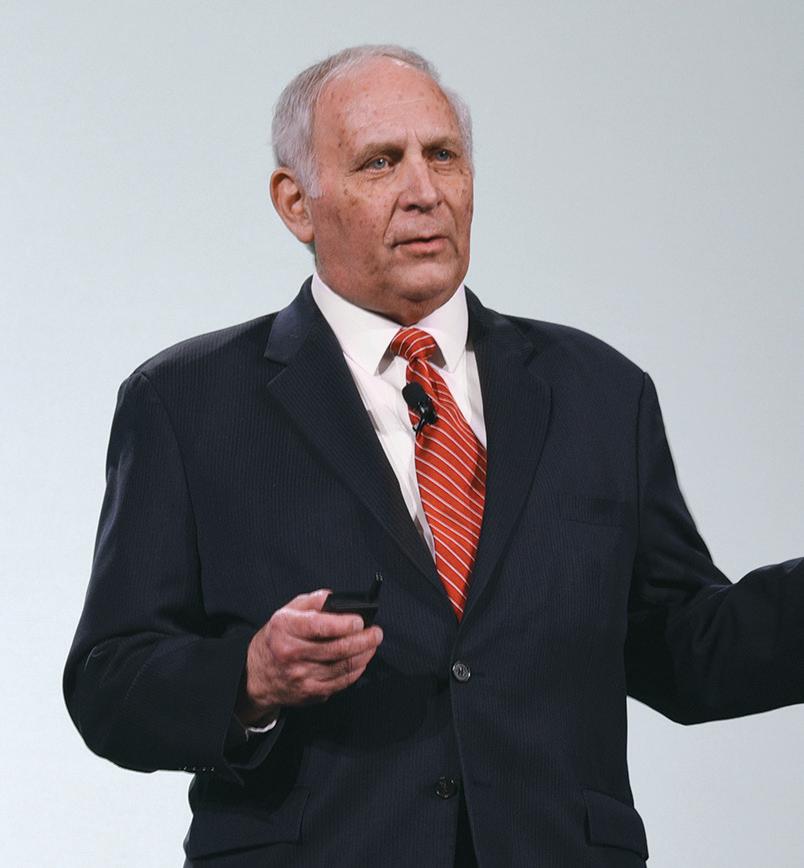
After starting the year at 4% growth, it experienced a “trip through six” percent before settling at 2.3%. This surge was not driven by organic demand but by a massive influx of imports and inventories as businesses rushed to beat impending tariffs. For 2026, Dieli expects TEA to continue moving “sideways” at a growth rate of approximately 2.3%.
Dieli emphasized that 2026 will be defined by three “unsettled” risks that are unlikely to be resolved before midyear: the Supreme Court ruling on tariff legality, the mandatory USMCA review on July 1st, and the confirmation of a new Federal Reserve chair. Until these political and judicial milestones are met, business capital expenditure will likely remain restrained by uncertainty.
Aftermarket forecast: growth driven by population, not volume Dave Kalvelage’s outlook for the aftermarket provides a more granular view of the industry’s financial health.
In 2025, the U.S. heavy-duty aftermarket reached $54.4 billion, a 5.5% increase over the previous year. However, Kalvelage noted that this was largely “phantom” growth; approximately 4% of that increase was attributed to pricing inflation, leaving real volume growth at a meager 1.5%.
“FTR’s Class 8 utilization has been flat for two years and their current forecast is also continuing to be flat,” Kalvelage said. “FTR’s trailer utilization was down in 2025 but they’re also expecting improved conditions for 2026, and we just talked about operating populations. So a lot of mixed signals. We’re still monitoring a lot of the economic variables and all these signals that out there.”
been characterized by instability and a Federal Reserve in a “bad mood.” The EAS currently sits in what Dieli calls a “divot”—a level below the 200-basispoint mark that has preceded every recession since 1955.
The primary metric for the trucking industry, Truckable Economic Activity (TEA), saw a unique trajectory in 2025.
For 2026, MacKay & Company forecasts a total North American aftermarket value (hard parts only) of approximately $69 billion. The U.S. market is expected to grow by 3.9%, while Canada and Mexico are projected to see increases of 3.5% and 6.2%, respectively. Crucially, with pricing expected to stabilize at a more historical 2.5%, the “real” volume growth for 2026 will remain minimal, likely around 1%.
The primary engine for this growth
is not increased vehicle activity but the growing vehicle operating population. Despite a sharp decline in retail sales for Class 6-8 trucks and trailers in 2025—which saw drops of 11% to 13% in the U.S. and even steeper declines in Mexico—the total number of trucks on the road continues to rise. This expanding “installed base” provides a natural floor for parts demand, even as individual truck utilization fluctuates.
Fleet realities: low utilization, shift to value lines
The “freight recession” is perhaps most visible in fleet utilization rates. Kalvelage reported that Class 6-8 truck utilization ended 2025 at 84%, slightly below the long-term average. More concerning is the trailer utilization rate, which plummeted to 83% in the fourth quarter of 2025. Fleet managers are pessimistic about the start of 2026, forecasting further drops in activity. This environment of low freight rates and high operating costs has forced fleets into survival mode. Surveys conducted by MacKay & Company reveal that fleets are adopting defensive strategies, including:
• Delaying major equipment purchases to preserve cash.
• Extending service intervals and delaying “cosmetic” repairs.
• In-sourcing repairs rather than using outside service providers. A significant trend emerging in 2026 is the migration toward non-OE or “value-line” parts. While genuine parts still command about two-thirds of the market, 21% of fleets admit that tariff-related price hikes have driven them to purchase more non-genuine components. On average, fleets are looking for a 32% cost savings before they are willing to switch brands.
Distributor struggle: margin erosion, tariff pass-through Distributors and dealers are caught between rising supplier costs and cash-strapped customers. Their top concerns for 2026 include parts availability, labor issues, and margin erosion. The impact of tariffs has been
particularly disruptive; while only 19% of distributors have changed suppliers due to tariffs, the financial pressure is widespread.
The data shows a divide in how distributors manage these costs. Two-thirds of distributors are passing the full cost of tariffs through to their fleet customers, while the remaining third are absorbing some or all of the impact to remain competitive. On average, about three-quarters of the total tariff cost is being passed down the supply chain.
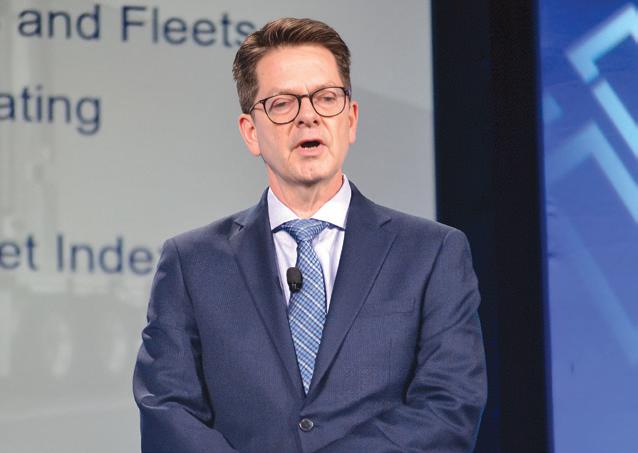
Distributors are now calling on manufacturers to “keep a lid on prices” and improve lead times to help them navigate the lean months of 2026.
On the plus side, even under pressure, only 19% of the dealers and distributors surveyed by MacKay said they’ve changed suppliers, meaning 4 in 5 are standing pat and sticking with their current suppliers.
policy and the ‘pause and pivot’
As the industry looks for relief from high interest rates, Dieli offered a cautionary note regarding the Federal Reserve. While there is much speculation about how a new Fed chair might change direction, Dieli argued that institutional inertia usually prevails. Historically, the track of the Fed funds rate does not change direction simply because the leadership changes; policy tends to stay consistent during transition periods.
Dieli reminded the audience that the Fed operates by a “majority vote” of 12 members, meaning a new chair
represents only one vote. He expects the Fed to continue its “pause and pivot” strategy, and he cautioned that a contentious confirmation process for the next chair could add another layer of market uncertainty in early 2026.
“There will be a great deal of talk about how if we get a new Fed chair, we’re going to get some change in monetary policies,” Dieli said. “We might eventually, but during the transition period, especially when the new chair takes over, what had been the policy is likely to stay the policy. Rates are already coming down. And the idea that someone that Mr. Trump might appoint will make a difference to this in the short run is not the case.”
The 2026 outlook for the heavy-duty aftermarket is a study in resilience. While the macro-economic indicators suggest “more of the same” sideways growth, the operational reality for fleets and distributors is one of intense pressure. The industry is essentially waiting for the “political and judicial conditions” regarding tariffs and trade treaties to be resolved mid-year.
“How can dealers and distributors assist fleets in 2026?” Kalvelage said, again pointing to the survey. “Notice the common theme here: Again, we’ve got reducing prices, parts availability, improving customer service. So make sure you’re on top of your customer service with fleets.”
Dieli’s closing sentiment summarized the industry’s mood: most stakeholders want things to “remain the same but get better,” but the reality is that things will simply be “different.” Success in 2026 will not come from market-wide tailwinds but from the ability of individual businesses to manage costs, maintain customer service, and adapt to a structural shift where price transparency and parts availability are the ultimate competitive advantages.
For those who can weather the “divot” of 2026, the long-term growth of the vehicle population offers a light at the end of the tunnel. TBB
GR APEVINE, Texas—Heavy Duty Aftermarket Week, North America’s premier gathering of heavy duty aftermarket professionals, celebrated another year of product innovations, professional connections, and thought leadership in 2026.
Over four days at the Gaylord Texan Resort & Convention Center, HDAW’26 brought together nearly 3,000 executives and managers from various industry sectors—including more than 800 distributors— and it remained the meeting spot for distributors, suppliers, service providers and manufacturers.
This year, the industry honored William A. Nolan III, president and CEO of PBS Truck Parts, as the 2026 Heavy Duty Aftermarket Hall of Fame inductee; Truck Equipment Inc. as the Distributor of the Year; and Shelley Sheagley, senior vice president of product and pricing at Aurora Parts & Accessories LLC, as the second-ever Women in Leadership Award recipient.
Themed “Eyes on the Road,” HDAW’26 emphasized how aftermarket companies are leveraging analytics, AI, product data and forecasting tools to adapt and lead through change. With a sold-out show floor exceeding 143,000 square feet and nearly 330 exhibitors, the event showcased an industry committed to staying ahead in a fast-changing landscape. A record number of entries in the New Product Showcases further illustrated the sector’s growth and dedication to innovation.

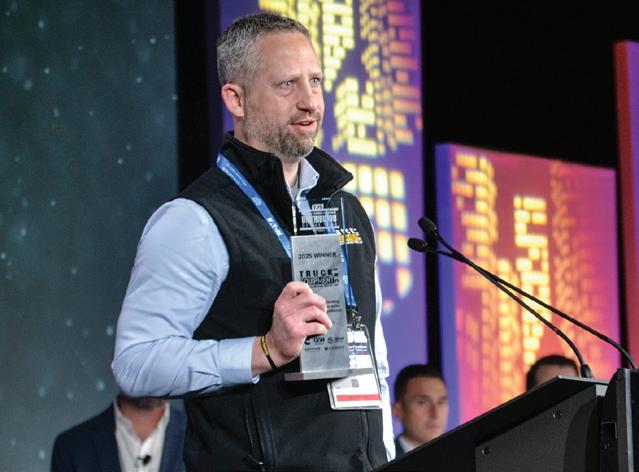

HDAW’26 again featured the industry’s leading One-on-One Business Meetings program, with more than 2,200 meetings pre-scheduled between distributors and suppliers. This popular program continues to expand each year and to foster an environment for distributors and suppliers to engage in meaningful connections and make the most of faceto-face deal-solidifying opportunities.
Attendees actively engaged in a wide range of networking programs: The Leaders of Tomorrow (LOT) program brought emerging professionals together to connect and collaborate, helping cultivate the industry’s next generation of leaders. The crowd was wall-to-wall at the Welcome Reception on Monday as arriving distributors and suppliers gathered and made plans for the week.
The HDAWomen Reception offered a vibrant forum for professionals to
support women in the heavy duty aftermarket, build meaningful connections, exchange insights, and explore ways to inspire confidence in future generations.
The Wild West Wednesday Reception, held on-site at the Gaylord, was a high-energy, record-breaking closing event for HDAW’26.
The education program opened with an inspiring keynote session presented by Noelle Russell, an award-winning technologist and leading voice in applied AI. She focused on how the industry is evolving due to the implementation of generative and applied AI technologies; she also attended the HDAWomen Reception and signed copies of her book, “Scaling Responsible AI: From Enthusiasm to Execution.”
Wednesday’s education session, led by David Garza, Founder and CEO of COMPASS Human Capital Advisors, shifted to how distributors and suppliers can strengthen their businesses, today and into the future, through strategic people leadership.
Throughout the week, free AI consulting sessions were also offered to all in attendance as a follow up to last year’s Wednesday education session, courtesy of HDAW’25 speaker, Lauren McCullough.
HDAW’27 is scheduled to take place January 18-21, 2027. Next year’s event will be the final HDAW in Grapevine, Texas before the event moves to Kansas City in 2028 and Charlotte in 2029.
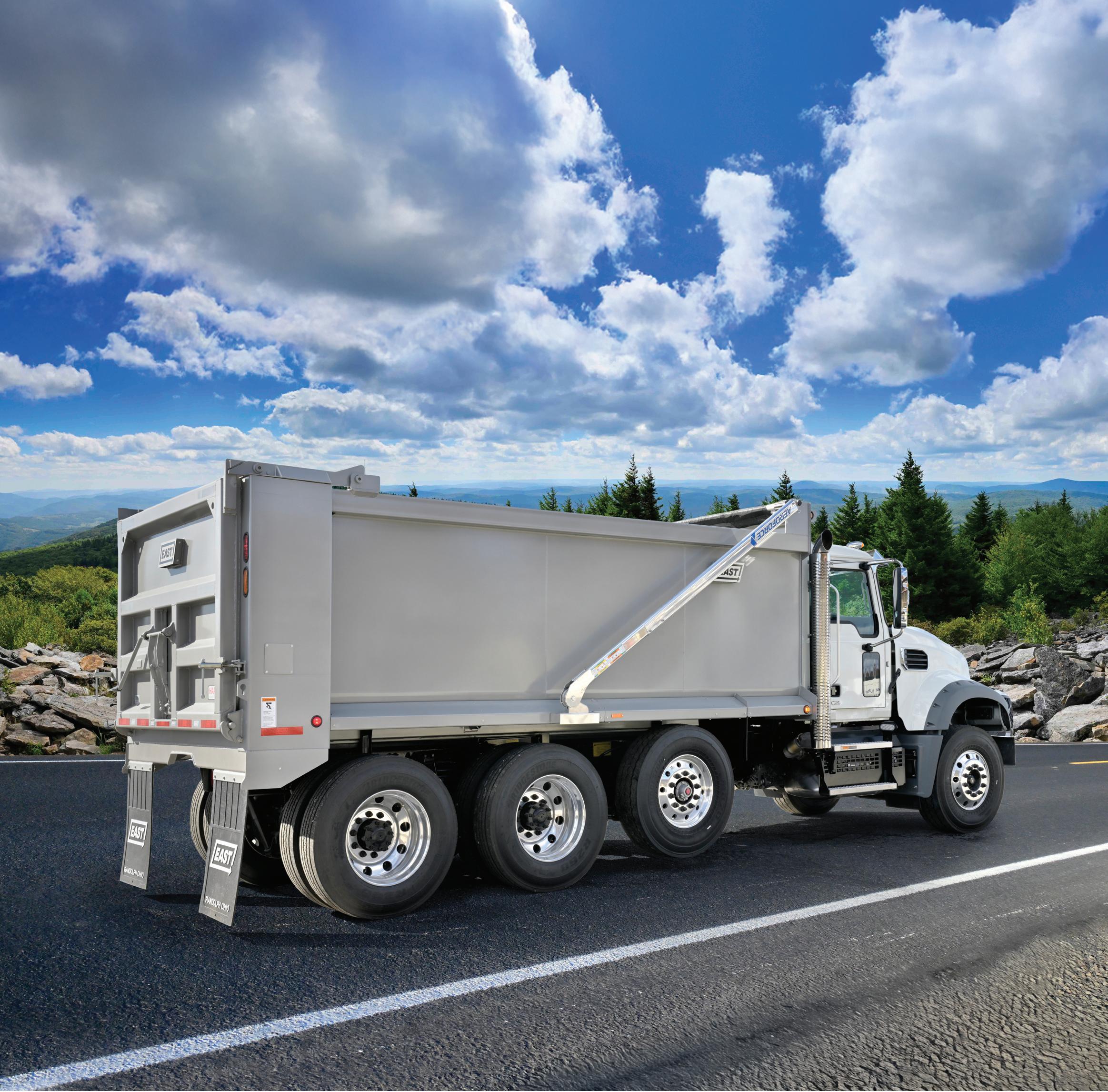

Engineered to meet the exact hauling demands of your operation, the East steel dump truck body delivers uncompromising durability, performance and long service life. Built with Hardox 500 TUF steel, it combines high strength and exceptional hardness in a single wear plate for the industry’s most punishing applications. A 3/16-inch floor and sidewalls with an optional 1/4-inch, provide superior durability. With body lengths from 10 to 22 feet and sidewalls from 24 to 60 inches, East offers configurations that outlast and outperform. When rugged jobs call for rugged, workhorse dump truck bodies, call East.

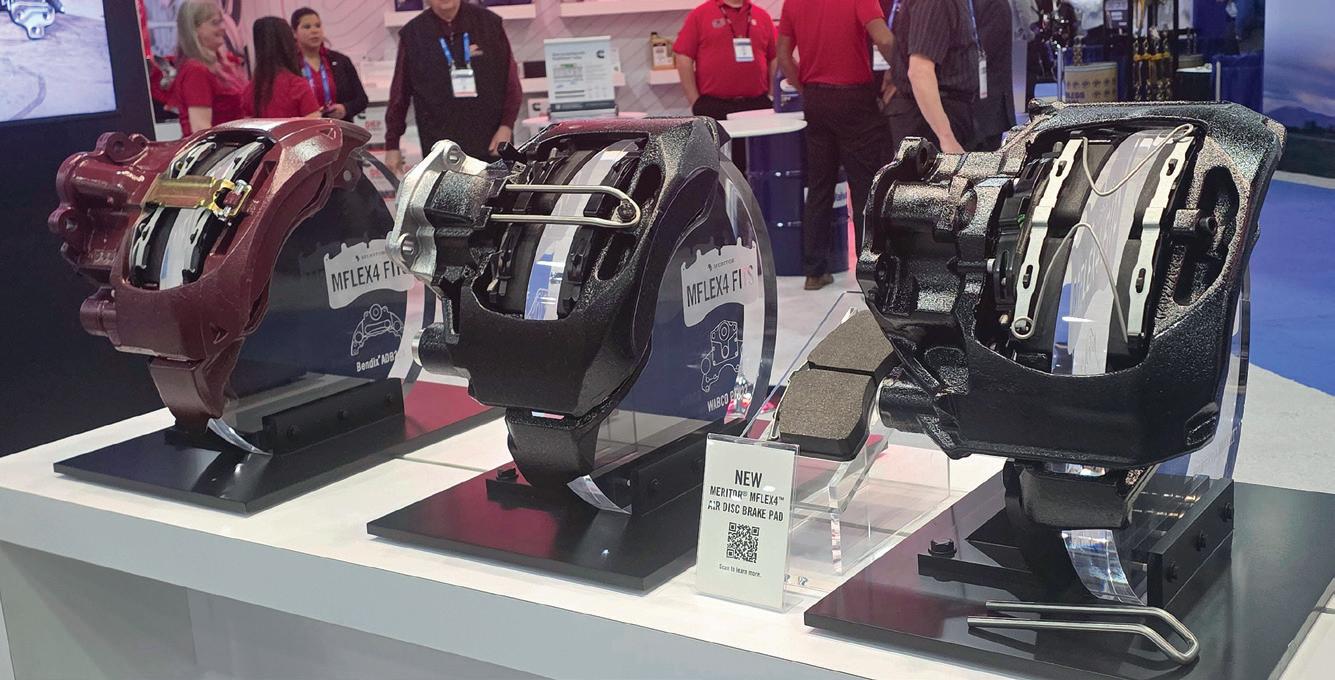
Cummins Inc. revealed the Meritor MFLEX4 air disc brake pad here at HDAW 2026. The patent-pending solution has been engineered for durability, versatility and broad fitment coverage for the heavy-duty aftermarket.
“This is a game changer for the industry,” Jason Soika, North American aftermarket general manager – Cummins Drivetrain and Braking Systems, explained at a Cummins HDAW media event. “It’s a patent-pending design that simplifies service, inventory, and procurement. It fits four of our major competitors’ calipers so, if you’re a distributor, this gives you the opportunity to limit the inventory that you need to carry and still service 90% of the rolling fleet in the market today.”
The MFLEX4 pad is designed to fit four commonly used air disc brake caliper models: the Bendix ADB22X, Hendrickson MAXX22T, WABCO MAXXUS, and WABCO PAN22. This compatibility enables estimated coverage of up to 70% of the Class 8 truck and trailer market based on current industry data, with Meritor’s own air disc brakes accounting for another 20%, supporting both linehaul and severe-service applications.
Key features for fleets, distributors
The MFLEX4™ pad is designed to support reduced complexity and operational efficiency across the value chain:
• Simplified inventory: Fewer SKUs to help streamline ordering and stocking.
• Efficiency-focused design: Meritor Positive Pad Retraction (PPR) Springs are designed to help improve fuel efficiency and extend rotor and pad life under typical operating conditions.
• Performance options: Two friction mixes—linehaul and severe service—are engineered to meet or exceed applicable original equipment (OE) pad performance standards.
• Predictable pricing: Uniform pricing across all four caliper applications intended to support cost predictability.
• Warranty coverage: Includes a limited one-year warranty, along with continued Bendix ADB22X caliper warranty coverage.
• All-in-one installation kits: Each kit is designed to include everything technicians need for installation.
Developed by Cummins Drivetrain and Braking Systems (formerly Meritor), the MFLEX4 pad delivers a combination of broad fitment coverage, performance-focused features, and operational efficiency to support fleet
maintenance and parts management, according to the company.
“The MFLEX4 is a technician-friendly solution that directly addresses common challenges, such as fitment complexity, parts proliferation and service efficiency,” Soika said. “By combining Meritor’s OE expertise with aftermarket insights, we’re empowering parts dealers and distributors to streamline their operations and helping fleets maximize uptime with a high-quality, cost-effective product.”
The MFLEX4 pad is available through Meritor aftermarket distributors across North America. To order or learn more, visit MeritorPartsXpress.com.
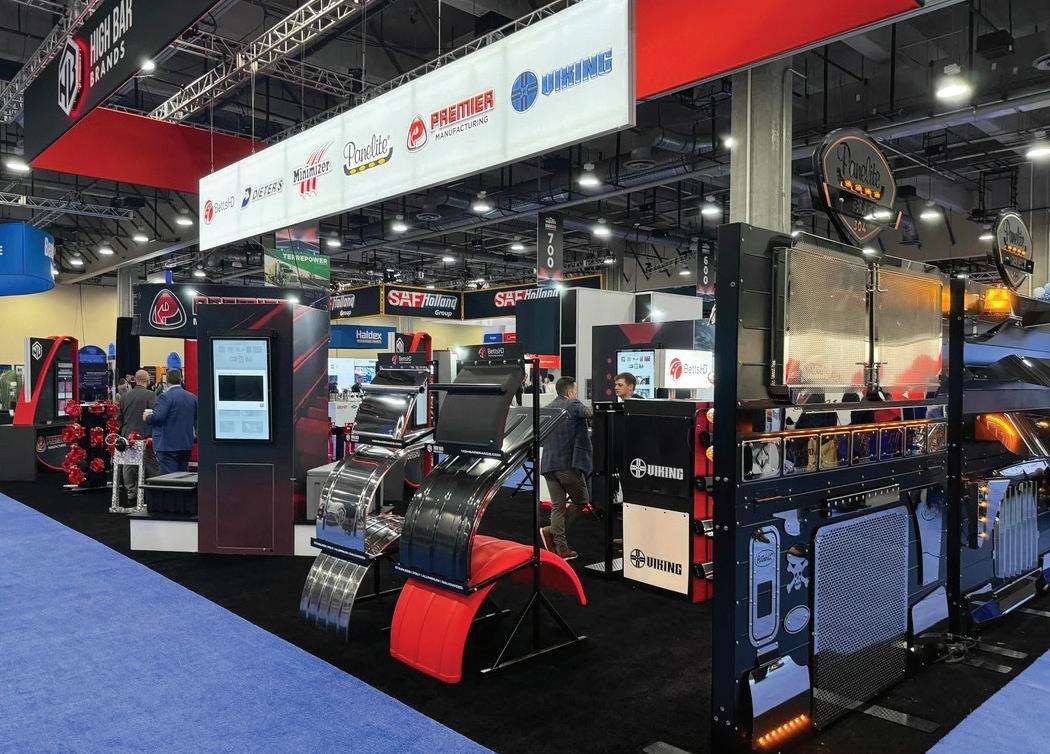
High Bar Brands wrapped up a strong showing at HDAW 2026, combining new product launches with a highly interactive booth experience that drew significant traffic throughout the show.
High Bar Brands showcased a 20x50 booth representing its six brands— Minimizer, Premier Manufacturing, Dieter’s Accessories, Panelite, BettsHD, and Viking Mud Flaps—giving distrib -
utors the opportunity to see products up close.
“HDAW continues to be one of our most important events because of the distributor interaction,” said Steve Hansen, vice president of marketing and communications for High Bar Brands. “It’s where we have meaningful conversations around product fit, category
Continued on p.30








































































































Continued from p.28
coverage, and what customers are asking for at the counter.”
Premier Manufacturing introduced three new receiver models at HDAW— 185, 186, and 187—expanding its receiver offering to support a broader range of applications. The additions provide distributors with increased flexibility when matching receiver options to customer needs while maintaining Premier’s focus on durability and reliability.
Panelite also debuted its new 430 Select line, offering distributors a value-focused stainless steel option designed for corrosion-resistance and long-term performance. The new products—which include sun visors, bug deflectors, and fender guards—give distributors additional flexibility when aligning material choice and price point with specific vehicle applications.
“These were practical product additions that directly support distributor sales,” Hansen said. “They’re designed around real-world use and feedback we hear from the field.”
The High Bar Brands booth was designed to support distributor decision-making through a mix of touchscreen monitors and hands-on product displays. Interactive screens allowed attendees to browse products, view video content, and learn more about individual brands, while physical displays enabled side-by-side evaluation of materials, construction, and finish.
“The ability to physically compare products is a big advantage,” Hansen said. “It helps distributors clearly understand where each product fits within a category.”
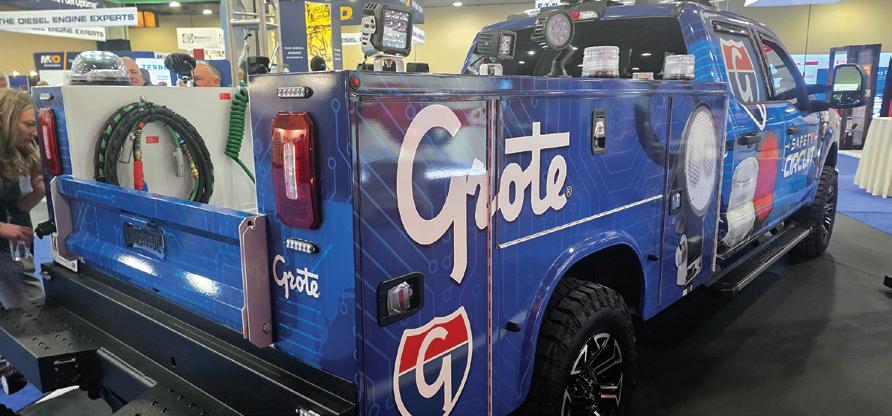
Grote Industries launched its new Safety Circuit Roadshow at HDAW 2026.
Consistent with this year’s show theme, “Eyes on the Road,” the booth featured a road design with one of the two new show trucks as the main display.
Featuring more than 70 Grote lighting and safety products, these Ford F-250s with Knapheide bodies will tour the country to demonstrate emergency lighting, warning and hazard lights, alarms and sirens, and work lighting. Throughout the year, the trucks will be at distributor and fleet events, where customers can interact with the products and learn about their operation and benefits.
aftermarket sales. “They’re a great way to bring our products to the customer so they can see the quality and performance we offer firsthand.”
Grote will document the tour across social media while hosting demonstrations at customer locations and industry events, Forner noted.
“We’re excited to get these trucks on the road,” said Matt Forner, director of
“We’ll be scheduling 10 months of tour stops for demonstrations, so customers still have time to contact their Grote representative to lock in a slot for their location or event,” he said.
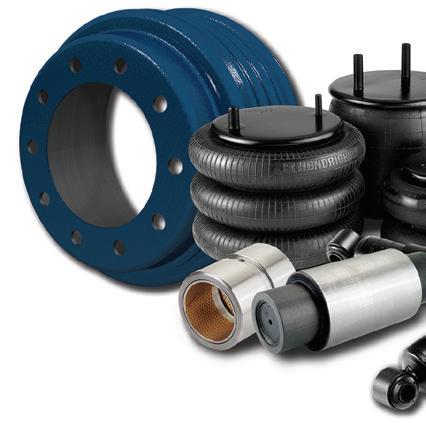
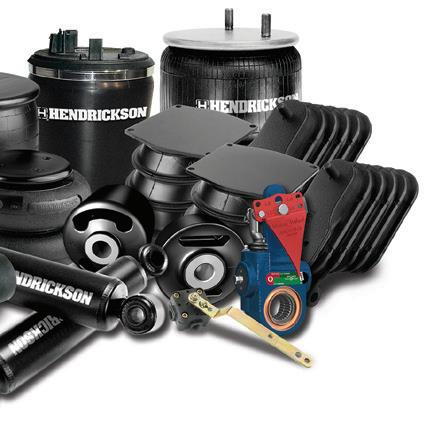
Hendrickson showcased a broad range of genuine aftermarket components across its Truck, Trailer and Specialty product divisions at HDAW 2026.
Hendrickson Genuine Parts are engineered as part of complete ride systems, offering OE-quality replacement components.
Attendees also discovered how the company goes beyond suspensions with solutions such as TIREMAAX tire inflation systems, brake and wheel-end systems, and patented technologies including its brake cam tube and Zero Maintenance Damping air springs. All solutions are backed by a vast sales and service team and supported by MAAXUPTIME. com, Hendrickson’s centralized portal for genuine parts support, training resources and diagnostic tools.
Subject matter experts were present at the booth to discuss the strategic components Hendrickson designs for the commercial vehicle industry, including Motor Wheel steel jacket brake drums and automatic brake adjusters, Hendrickson brakes, ride and damping components, controls, and elastomer components.
ACC Heavy Duty, a division of Multi Parts Solutions, introduced ACC Fleet Solutions at HDAW 2026. The innovative program provides fleets experiencing chronic component failures with custom-engineered replacement parts at no up-front cost.
The ACC Fleet Solutions program addresses a growing challenge facing commercial fleets: As economic pressures extend vehicle service life, aging trucks encounter part failures that existing aftermarket options cannot adequately solve. Through the program, fleets identify problematic components, and ACC Heavy Duty’s engineering team develops improved replacement parts designed to outlast and outperform the original equipment. As a byproduct of this no-cost engineering service, ACC Heavy Duty is building a portfolio of superior aftermarket parts to support the commercial vehicle industry.
The program leverages the engineering infrastructure ACC Heavy Duty gained through its 2023 acquisition by Multi Parts Solutions.
The company’s proprietary Sigma development process and $12 million investment in engineering and testing equipment enable rapid product development timelines, with most custom-engineered parts ready for fleet testing within six to 12 months.
“As we head into year four of a freight recession, fleets face unprecedented pressure on their bottom lines,” said Scott Robertson, vice president of sales for Multi Parts Solutions. “Vehicles are staying in service longer, which creates new failure patterns that OEM engineers—focused on future platforms— aren’t addressing. ACC Fleet Solutions enables fleets to eliminate persistently failing components and replace them with dependable, engineered solutions.”
The company has already completed pilot programs demonstrating the model’s effectiveness. Working with a major national fleet, ACC Heavy Duty’s
engineers addressed chronic fuel pump failures by analyzing failed components, identifying design weaknesses and engineering an improved replacement. A separate project tackled premature turn signal switch failures—a legacy component design more than 40 years old—by engineering an updated version with improved reliability.
Brett Delp, as commercial fleet sales manager, will lead the initiative.
Delp brings more than 15 years of CV experience to his role, combining technical knowledge with national account management expertise.
“I grew up in this industry, starting as a technician wrenching on trucks and wondering why engineers designed things the way they did,” Delp said. “Now I get to apply that perspective working alongside engineers who can actually build better solutions.”
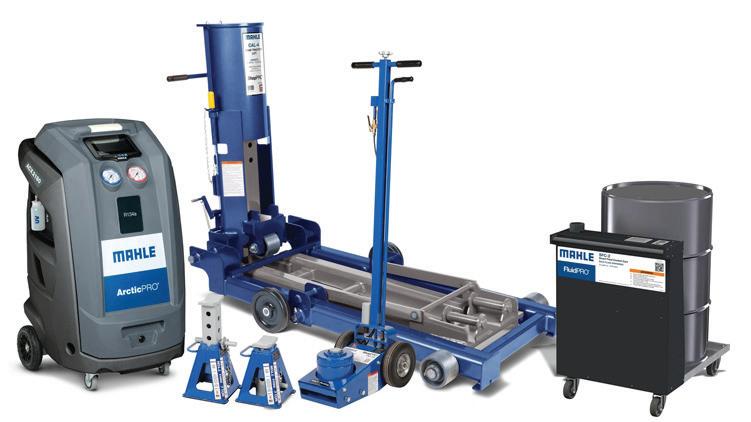
MAHLE Lifecycle and Mobility displayed its full portfolio of parts and service solutions for heavy-duty, agricultural, and industrial applications at HDAW 2026.
Exhibition highlights included heavy-duty engine kits featuring CLEVITE engine parts and MAHLE gaskets, advanced cooling and air conditioning solutions—including BEHR thermostats, A/C compressors, and radiators—as well as rotating electric components. The novel MAHLE FluidPRO Smart Fluid Control Unit for smart fluid management complemented the product offering.
“Our customers receive more than just parts in a box from MAHLE: they invest in proven quality and reliable service—a standard that extends across all MAHLE divisions,” said Sergio Copriva, head of powertrain and mechatronics, MAHLE Lifecycle and Mobility North America. “With our broadened portfolio, we position ourselves as a partner for future demands—especially in the heavy-duty sector.”
Among the latest MAHLE solutions on display at this year’s HDAW show were two new heavy-duty reservoir expansion tanks for Kenworth and
Freightliner trucks, as well as an HVAC blower motor for Freightliner. In addition to a wide range of air and fuel filters custom-fit for popular applications, MAHLE unveiled a heavy-duty oil filter engineered to provide dependable performance for Detroit Diesel engines.
MAHLE also presented the new FluidPRO Smart Fluid Control Unit, a service machine designed for shop owners and technicians that can handle 16-to-55-gallon quantities of vehicle fluid, making the job smoother, cleaner, more streamlined, and safer overall.
The OE certified MAHLE ArcticPRO ACX2180 R134a refrigerant handling system featuring an ergonomic door for best-in-class serviceability and integrated oil / UV dye injection also was on display. The group’s expanded line of ShopPRO lift equipment, including an axle jack, vehicle support stands and air lifts also were highlighted during the show. TBB
By Kevin Jones
GRAPEVINE, Texas—Pricing transparency: Is that too much to ask? In most business relationships, no.
With tariffs looming over trucking right now—invoices and estimates are like Russian nesting dolls, as each hidden cost covers another—it probably is a lot.
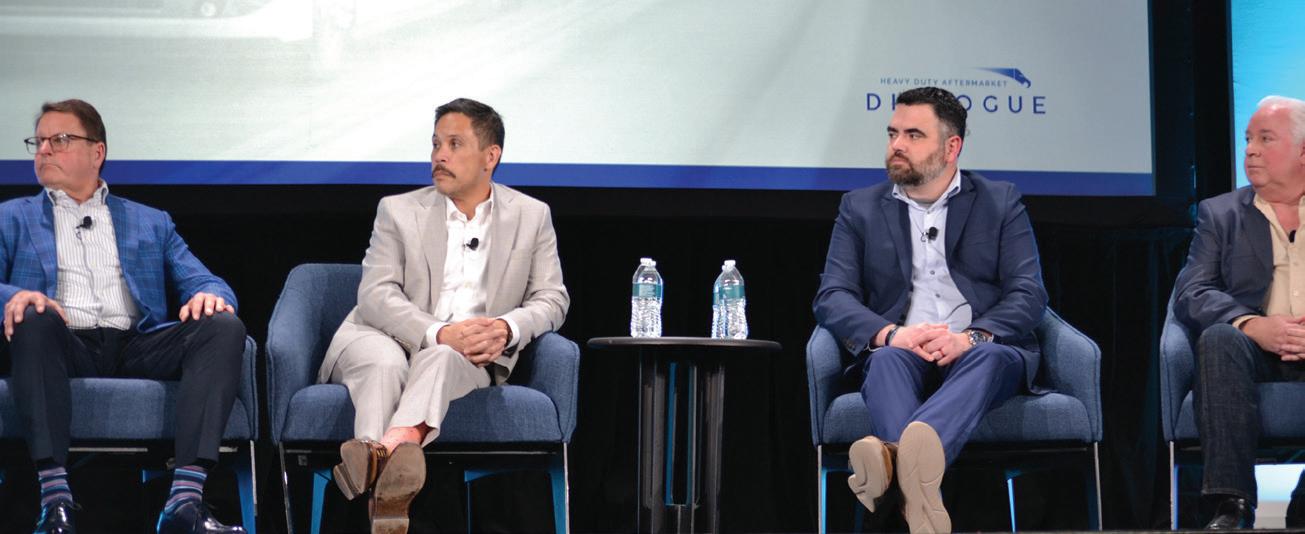
But that didn’t stop veteran fleet leaders from demanding it at the 2026 Heavy Duty Aftermarket Dialogue during the Fleet Perspective panel, which overall addressed changing trends in buying behavior due to the current economic landscape. The fleet executives shared a sobering look at the state of the trucking industry. Heading into year four of the Great Freight Recession, freight rates remain low but operating costs are soaring. That means every penny-per-mile
counts, and fleet leaders are under pressure to find savings.
And this isn’t just one corner of the industry. This panel represented diverse sectors—from automotive steel and bulk chemical hauling to agricultural cooperatives and port containers— and featured:
• Jim Burg, president and CEO of James Burg Trucking Company
• Dennis Meyer-Razon, category manager at CHS Inc.
• Joseph Richley, VP of maintenance at Groendyke Transport
• and David Schnautz, president of Clark Freight Lines
They all hail from different markets, but carried the same message for their OEM and aftermarket suppliers: The traditional “strategic partnership” with vendors is under significant strain. And more than ever, equipment vendors and
service providers have an opportunity to strengthen partnerships—or ruin them.
With this more discerning and frugal fleet crowd, a vendor can’t get by on its logo and reputation alone. The panelists emphasized that strength can be gained from communication, transparency, accountability, and of course, a demonstrated return on investment (ROI), which they agreed are now the most critical factors in maintaining vendor relationships.
Here’s the breakdown.
Transparency deficit: tariffs, pricing frustrations
Topping the panel’s list of concerns was the lack of clear communication regarding pricing, particularly concerning tariffs. Groendyke’s Richley noted that while tariffs are often announced and paused with high visibility, OEMs have struggled to provide accurate, detailed pricing. Fleets are frustrated and want to see the specific impact of tariffs on invoices, down to the penny.
Schnautz noted that while suppliers are quick to pass on tariff-related price increases, they are rarely as fast to lower those prices when costs drop. This perceived lack of honesty has led some fleets to “bake in a question mark” for their budgets, relying on best guesses rather than reliable data from their partners.
The economic pressures of 2025 and 2026 have forced fleets into a “cost-savings mode,” which in turn has changed how they view their suppliers. MeyerRazon observed that the term “strategic partnership” often feels one-sided in the current market.
Consequently, fleets that once prioritized loyalty are increasingly “shopping around” for parts to maximize spend and ensure availability.
This shift is most evident in the move toward value-line parts and e-commerce. Schnautz admitted that when an OEM cannot provide a part for a month, his team will turn to Amazon or eBay to find the same component.
As Richley put it, while he prefers a partner he can hold accountable, “price is king” in an environment where freight rates are low and parts costs continue to rise. As long as a part meets quality standards, does not violate warranties, and demonstrates a clear ROI, the brand name on the box is becoming less important than the bottom line.
Despite the rise of online platforms, the panel was unanimous in their support for face-to-face sales relationships. While they appreciate the efficiency of e-commerce for simple ordering, they believe digital platforms cannot replace the knowledge base of a dedicated sales representative.

“I want my salespeople,” Schnautz said, emphasizing that a good representative knows the specific needs of a fleet and can offer solutions that e-commerce cannot.
The panelists value reps who can visit shops, check inventory, and troubleshoot failures, which is a level of support that returning a part through an online portal cannot match. However, the panelists emphasized that scheduled visits were important, rather than “unannounced pop-ins,” reflecting a desire for more professional, less disruptive communication.
As the industry moves through 2026, fleets are asking their vendors to do more than just sell parts; they are asking for demonstrated ROI.
Meyer-Razon challenged suppliers to take on more responsibility for cost fluctuations rather than simply passing
every increase to the customer. The panelists’ “rapid-fire” demands for 2026 centered on four pillars:
• Transparency: Openness about costs and delivery.
• Availability: Ensuring parts are on the shelf to keep trucks running.
• Understanding: Truly knowing the client’s business needs.
• Quality: Not jeopardizing the longterm integrity of the vehicle for short-term gains.
Ultimately, while the economy remains the primary concern keeping these leaders up at night, the strength of their vendor relationships serves as their primary tool for navigating that uncertainty.
For vendors, the message from the HDAD panel was clear: those who provide clear data, reliable support, and honest communication will be the ones to survive this cycle alongside their fleet partners. TBB
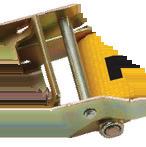
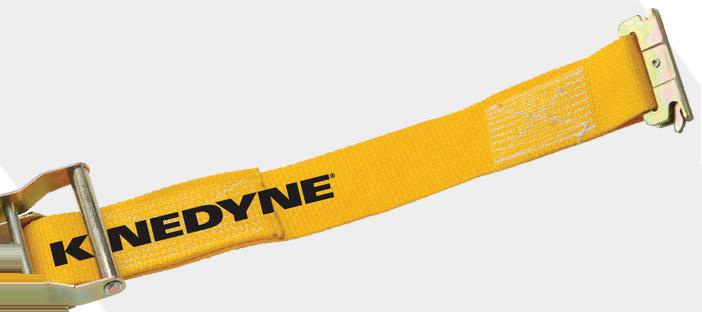
Crafted to meet your exact needs, design your perfect solution with options ranging from specialized stenciling to custom webbing and hardware, and boost performance, safety, and efficiency in every mile traveled.



By Alex Keenan
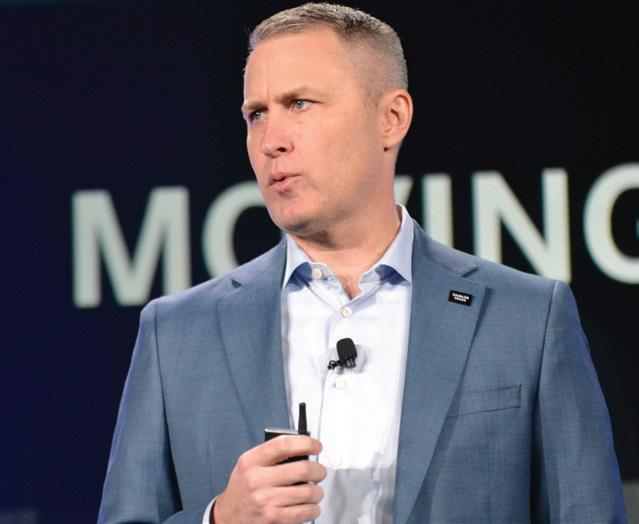
During the Heavy Duty Aftermarket Dialogue portion of Heavy Duty Aftermarket Week, panelists discussed several ongoing challenges facing the transportation industry, from the ongoing freight recession to parts availability and delivery speed, and ultimately how to move beyond transactional supplier relationships. In his OEM Perspective address, Drew Backeberg, SVP of the Aftermarket of Daimler Truck North America, touched on many of these themes again and noted how DTNA is grappling with them.
“We recognize that the current market is incredibly dynamic and challenging right now,” Backeberg said. “The culprit is pretty obvious. Despite the relatively healthy economy, our customers are experiencing the longest freight recession in memory.”
According to Backeberg, freight softness, overcapacitization, higher borrowing costs, price inflation, and general uncertainty, have all created a “waitand-see” attitude across the market. And keeping the economy moving while the industry wades through that uncertainty means addressing its root causes and adapting to them where possible.
Backeberg noted a few of the elements that were causing the most uncertainty for the transportation industry right now, including: tariffs, emissions regulations, new truck market headwinds, and supplier expectations.
The first of these, tariffs, is unusual, he said, “because unlike other regulatory measures, tariffs don’t impact all OEMs and all suppliers equally.”
He said could vary by production footprint, component, and country of origin.
To cope with this, the executive said that DTNA was working with suppliers to understand the upstream impacts from tariffs, and then “responsibly” pass uncovered costs on to the market while staying competitive. Backeberg also said
that the company was pairing this work with “resilience measures” that included on-shoring and nearshoring practices, saying that businesses that did not adapt now were going to be left behind.
And while “that dust has mostly settled” in regards to emissions regulations, big changes are on the way with the upcoming EPA 27 regulations that require new trucks to have cleaner engines and aftertreatment systems.
“We now have a pretty clear picture of what the rules will be for the future ahead,” he said. “And I would say at this point, what’s really important is how we navigate these changes for our customers, but also as an industry, regardless of policy cadence, [that] our stance as an OEM is firm.”
This stance includes playing the powertrain field and providing plenty of options, from electrified vehicles and buses to stocking charging service parts and remanufacturing batteries and e-drive components. Backeberg also took a moment to shout out DTNA’s partnership with Greenlane and their charging network, while also highlighting that the company would continue to develop their ICE technology “for the foreseeable future.”
Finally, Backeberg said that one of the reasons for uncertainty in the trucking industry was the new truck market. But in this instance, he emphasized how weakness in the new truck market was
creating opportunity for the aftermarket “to serve as the constant amongst all of the other variability.”
In particular, Backeberg explained that the freight recession was pushing fleets to stretch trade cycles and park vehicles, and, in some cases, defer maintenance and repairs as well.
“But they can’t defy gravity for long, until they need to maintain the investment to keep those vehicles in operation on the road and generating revenue,” Backeberg said. “And hypothetically, even if new truck demand were to rebound, let’s say this year, we believe that the industry wouldn’t have the capacity to replace all of those deferred purchases, and therefore we expect parts and service demand to rise in the near future as a result of this dynamic.”
This is where the aftermarket could provide some stability, he explained, in terms of helping to provide the parts fleets need to keep trucks on the road. However, that opportunity could also come with greater expectations for the aftermarket, especially in a transportation environment that’s doing more with less income.
“Lately, we’ve seen a pretty noticeable change with what our customers are looking for,” Backeberg asserted. “As I mentioned earlier, they’re scrutinizing
every expense, and we’re seeing a shift in their buying behavior from, let’s say, premium genuine parts, to lower-costvalue products.”
For OEMs, the DTNA SVP said, this means that they need to adjust and refine their product offerings so that fleets have options across the value spectrum.
In response to this uncertainty, Backeberg emphasized DTNA’s greater reliance on e-commerce, digital services, and warranty offerings to meet fleet needs.
For the company’s e-commerce offerings, Backeberg lauded how the company’s online platform, first launched in 2020, has achieved $1 billion in annual parts sales. And he stated that it’s a channel that DTNA is looking to grow.
“This platform is a key enabler today, but we view it as a future channel of engagement, not just for parts, but also for services,” Backeberg said. “Going


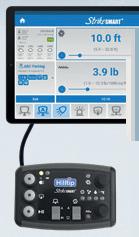
forward, e-commerce through Daimler Truck, will be a one-stop-shop across all retail opportunities.”
Additionally, DTNA is responding to the dips in the new truck market by strengthening their warranty offers for second-life-use trucks.
“Second and third owners often rely on third-party warranty coverages as well as lower-cost service alternatives, which limits our ability as an OEM to stay connected with them,” Backeberg stated. “By expanding our second-life warranty program targeting that used truck market, we can engage these customers and to bring them back into our brand and into our dealer network.”
Taken together, these efforts are making DTNA and their suppliers stronger partners in their services.
“This is a little bit cliché, but we’re not looking for a stereotypical OEM-supplier relationship that’s more transactional in nature,” Backeberg said. “That means that it’s a give and take, in that we are
effectively arm-in-arm in our efforts to grow our mutual businesses.”
This is especially true since Backeberg said he didn’t anticipate that any shifts in the political climate in three years will have a large impact on the economic one.
“It’s very difficult for the Treasury to walk away from [tariff] revenue,” Backeberg noted. “These tariffs are going to be sticky, and so we are pursuing nearshore and onshore opportunities so that we minimize those costs.”
But despite the prospect of ongoing economic strain, Backeberg ended his address on a positive, yet realistic note.
“I don’t know that the fundamentals of the economy necessarily change, so the demand side of the freight equation probably doesn’t change very much,” he concluded. “But having fewer trucks on the road is going to put our customers in a more healthy position that will create some optimism and drive both truck sales and aftermarket business in 2026.” TBB









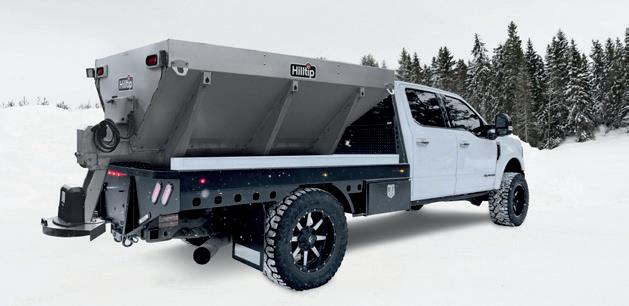
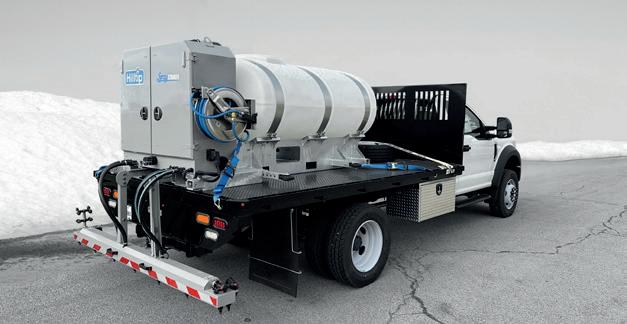
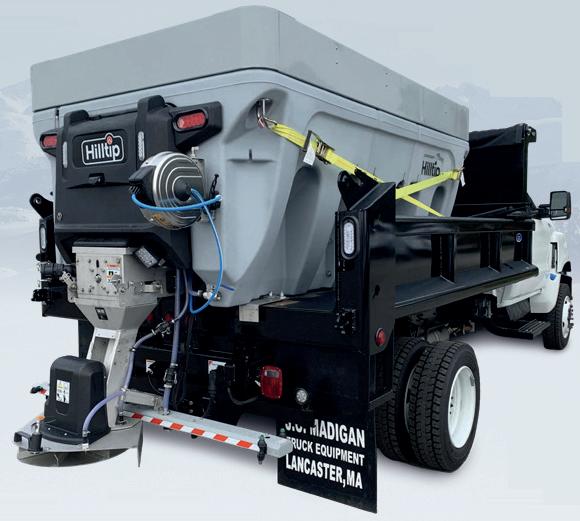

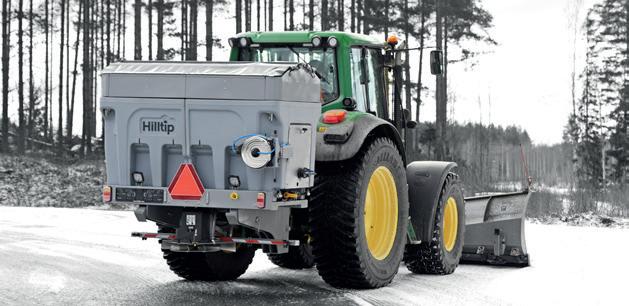


As the aftermarket races ahead with innovation, it must continue to support existing technology, systems
By Kevin Jones
As the heavy-duty industry gathered for the recent Heavy Duty Aftermarket Dialogue (HDAD), the atmosphere was one of calculated resilience.
While economists debated the “recession eligibility” of the broader economy, a panel of top-tier suppliers—Tim Bauer (Eaton), Nicole Oreskovic (Bendix), and Paige Petroni (Fontaine Fifth Wheel)—offered a “boots-on-the-ground” look at the reality of the freight recession. Their discussion, moderated by MEMA’s Emily Poladian, outlined how suppliers are pivoting their strategies to survive a stagnant 2025 and prepare for a projected “rebound” in 2026.
The myth of the ‘recession-proof’ aftermarket
For decades, a common axiom in trucking has held that the aftermarket is counter-cyclical: When new truck and trailer sales drop, the aftermarket thrives as fleets repair older equipment.
However, the current cycle has challenged this assumption. Petroni noted that the “recession-proof” nature of the business depends heavily on what is driving the downturn. In 2025, the industry is grappling with significant overcapacity, which changes the math for fleets.
If an online listing lacks clear pictures or descriptions, the e-commerce customer will simply move to another product.
“Fleets are going to park trucks, and they’re certainly not going to repair trucks that are parked,” Petroni said. Furthermore, the “bucket of money” fleets have for equipment and repairs has not expanded to match inflation. When parts cost more, fleets make difficult choices: They extend maintenance intervals, delay non-critical repairs, or even “cannibalize” parts from parked vehicles to keep active ones running. Bauer added that the aftermarket is often a leading indicator, signaling both the start of a downturn and the eventual recovery.

independent aftermarket: growing opportunities Despite the overall freight slump, suppliers are seeing a silver lining in the Independent Aftermarket. Both Oreskovic and Petroni reported that the IAM is playing an increasingly larger role in their business models. This shift is driven by an aging vehicle population; as trucks move beyond their warranty periods, fleets are increasingly looking for repair options outside of the traditional dealer network.
Bauer noted that his team saw actual growth in the IAM from 2024 into 2025. This wasn’t accidental but the result of a deliberate strategy to find the “right partners” who share a vision for market support.
“It’s also a key part of our future strategies of how we continue to support that market segment, especially as our products are evolving—as they’re increasing in the complexity and the knowledge and the skill set on how to be able to replace and repair,” he said. “We’re really focusing, to make sure that that independent aftermarket has those tools and access to the education to be able to do so.”
For suppliers, the IAM offers a path to the end-user that is often more direct and flexible than the OE channel, provided they can equip these independent shops with the necessary technical data and training.
The digital tide: From catalogs to code
One of the most profound shifts discussed was the rapid
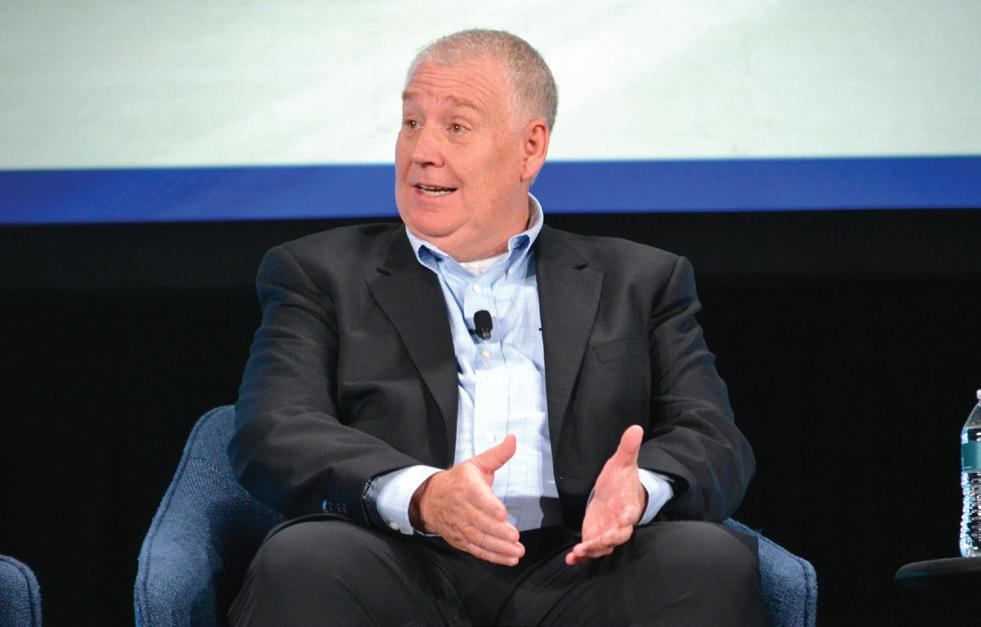
technological evolution of the industry. The panel was unanimous: the era of the paper catalog is over.
“A catalog anymore is not going to help you service these new trucks,” Oreskovic said.
As vehicles become “rolling computers,” suppliers are under pressure to provide high-quality digital data, including 3D images and detailed cross-references, to facilitate “frictionless” repairs.
This digital shift is also a survival mechanism for lean organizations. Petroni pointed out that smaller suppliers often lack the “boots on the ground” to visit every shop. Consequently, their e-commerce platforms and digital assets must serve as the primary educator. If an online listing lacks clear pictures or descriptions, the customer will simply move to another product.
Furthermore, suppliers are now experimenting with AI and data analytics to predict when a truck in a specific neighborhood might need a repair, though they emphasized that technology should augment, not replace, the human relationships that define the industry.
As the industry moves toward more complex systems, the “Right to Repair” debate has taken center stage. While the panelists expressed support for equitable access to data, they issued a stern warning regarding safety and product integrity.
Oreskovic highlighted that modern collision mitigation and braking systems are highly integrated and sophisticated. Suppliers have an obligation to ensure that anyone touching these parts understands how to return them to OE specifications.
“When a fifth wheel hangs from a bridge, you want to make sure that wherever they took it was the best possible place and had the best knowledge,” Petroni added, emphasizing that safety-critical components cannot be repaired with “guesswork”.
Looking toward 2026, the remanufacturing of electronics is poised to become a critical sub-sector.
“Try and find a cell phone component for your iPhone ... from a product that’s 6 or 8 years old; you’ll never find it,” Bauer said.
And for heavy-duty trucks with a 15-year lifespan, this creates a massive service gap.
To combat this, suppliers like Eaton are creating “electronic ecosystems” around remanufacturing to extend the service life of aging vehicles. However, this comes with challenges.
Oreskovic noted that while basic electronics can be remanufactured, safety-critical electronics must meet the same rigorous standards as original parts to avoid future liabilities.
Despite the “painful” speed of technological change and the current market stagnation, the panel ended on a high note of cautious optimism for 2026. The panelists described 2025 as a year of “distractions” and “challenges,” but they believe “lights at the end of the tunnel” are finally appearing.
The forecast for 2026 suggests a stronger second half, fueled in part by clarity around EPA 2027 mandates, which may trigger a “pre-buy” of current technology. However, this optimism is tempered by a fear of “supply chain whiplash.”
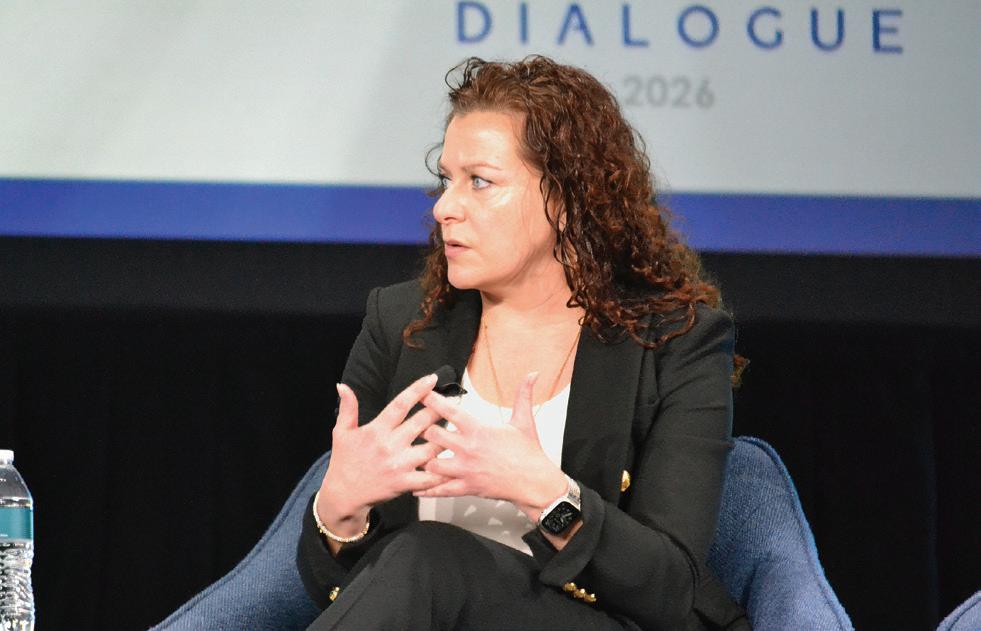
Oreskovic noted that her greatest concern is preparing for the “up”. If demand surges by 15% to 30% in the second half of 2026, suppliers risk “chasing” the market as they did post-COVID.
Ultimately, the supplier perspective on 2026 is one of strategic positioning. Suppliers are applying “80/20” principles— focusing on the products and partners that matter most—and building new skill sets in software and telematics.
As Tim Bauer jokingly remarked, the heavy-duty sector is a “green industry” because “no one ever leaves... we just change shirts and go to different suppliers.”
This deep-rooted institutional knowledge, however, combined with an embrace of digital innovation, suggests that while the “thorns” of the 2025 recession are sharp, the suppliers who invest in data, safety, and training are well-positioned for the “bloom” of 2026. TBB
Slip Robotics has unveiled SlipLift, a new platform designed to extend autonomous trailer loading and unloading beyond short-haul, high-frequency routes to heavier freight, regional distribution, and last mile delivery applications. SlipLift is designed to bring Slip’s speed, safety, and simplicity to a broader set of dock operations without requiring changes to facilities, trailers, or IT infrastructure.
SlipLift is a core architectural shift that decouples the robot from the payload.
SlipBot enables trailers to be loaded and unloaded in five minutes, delivering fast, highly consistent dock turns that make operations predictable. SlipLift builds directly on that foundation, extending Slip’s robots-as-a-service model to routes and applications where payload weight, route length, or dock variability previously limited automation.
As Slip worked with customers across manufacturing, distribution, and logistics, a clear pattern emerged.
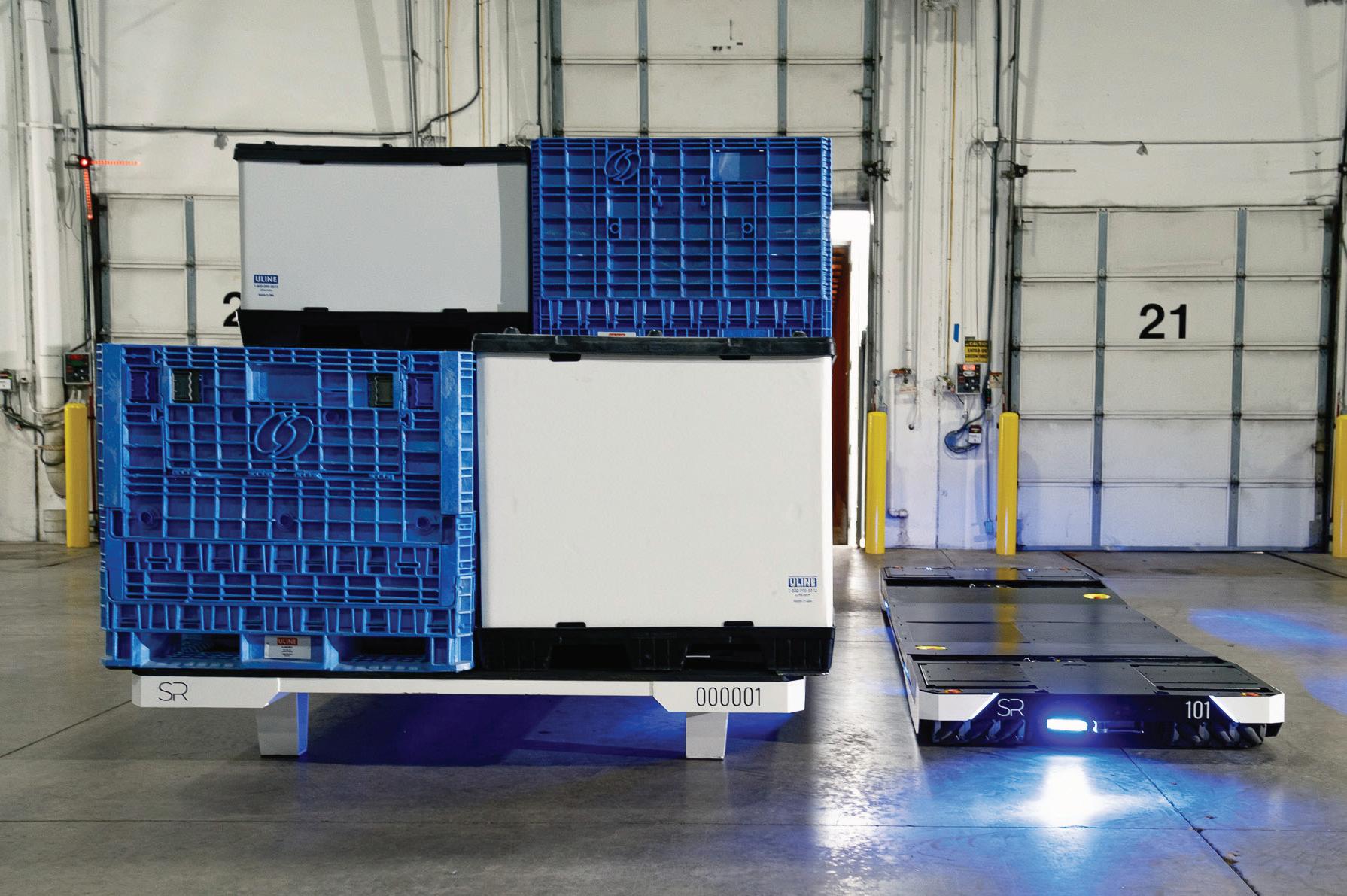
This approach delivers SlipBot-level speed, safety, and labor savings while allowing fewer robots to cover more docks, resulting in faster and more predictable dock operations, according to the company.
“We’ve always focused on removing uncertainty at the dock,” said Chris Smith, CEO of Slip Robotics. “SlipLift extends that philosophy. Customers get fast, repeatable load and unload times across more routes, without adding robots or complexity.”
Slip Robotics introduced SlipBot to solve short-haul, high-frequency, closedloop loading. In those environments,
“We kept hearing the same thing from customers,” said Smith. “They wanted the same fast, predictable dock turns we deliver today, but for heavier freight and more routes. SlipLift came directly out of those conversations—it’s about meeting customers where their operations actually are.”
Heavy short-haul, high-velocity operations such as food and beverage, packaging and paper products, and dense automotive assemblies benefit from SlipLift’s support for payloads up to 20,000 pounds, enabling automation for heavier freight while maintaining fast, consistent dock turns.
Regional and medium-haul distribution networks, including consumer packaged goods, cold chain hubs, and furniture distribution, can use fewer robots to service more doors. Decoupling robots from individual shipments allows automation to scale across multi-site networks without requiring a robot at every door.
Last-mile delivery operations benefit from SlipLift’s ability to pre-stage freight ahead of daily routes. Morning loadouts can be completed in minutes, enabling more deliveries per day while reducing driver dwell time and congestion at the dock.
“Pre-staging changes the economics of last-mile loading,” said Lauren Marneni, head of product at Slip Robotics. “When freight is ready on a SlipCarrier, loading becomes a quick, repeatable process instead of a daily scramble.”
SlipLift operates through a simple, repeatable workflow. A SlipLift picks up a loaded SlipCarrier from the dock, autonomously places it inside a trailer, and exits before repeating the process until the load is complete. Operators remain outside the trailer using a handheld controller, while the robot handles navigation, alignment, and placement.
“Our goal was to make autonomy feel natural for operators,” added Marneni. “The operator stays in control, but the robot does the hard, dangerous work inside the trailer. That’s how you improve safety without slowing things down.”
SlipCarriers are a key enabler of this flexibility. Instead of modifying robots to handle new freight types, SlipCarriers can be customized to support different payloads, simplifying configuration and expansion. When empty, SlipCarriers stack up, saving dock space and enabling efficient transport.
“SlipLift lets customers scale automation without scaling complexity,” said Smith. “We’re delivering faster and more predictable dock operations, keeping people out of trailers, and making deployment as simple as rolling the system onto the dock.”
Visit www.sliprobotics.com.
Polar King recently launched its Everest Edition walk in refrigerated and freezer trailer, billed as the industry’s first solar as sist mobile solution.
The Polar King Everest Edition builds on the company’s all electric foundation by integrating solar assist technology designed to extend runtime, improve energy efficiency and enhance opera tional flexibility.
“Everest Edition represents the next evo lution of electric refrigeration,” says Danny Gaviria, national sales manager for Polar King’s trailer division. “By integrating solar assist into our proven electric platform, we’re giving operators longer runtime, reduced charging dependence, and zero on site emissions, all in a plug and play solution ready for real world use.”
Polar King debuted the Everest Edition refrigerated and freezer trailer at Trailer Tech Expo in Reno.
Solar assist: A new layer of efficiency
At the core of the Polar King Everest Edition is a hybrid solar assist and DC
charging system engineered to supple ment battery power and extend opera tional runtime. Solar panels help offset daily energy consumption, while primary DC charging ensures consistent, depend able replenishment.
Key features include:
• Solar assist charging to extend bat tery runtime
• Intelligent power management designed to prioritize battery health and uptime
• Battery powered refrigeration for silent, zero on site emissions operation
• No engine, no fuel and no mechani cal generator
Rather than relying solely on solar, the system uses solar as an efficiency enhancer, supporting daily operation while maintaining the dependability of conventional DC charging when needed.
In addition to solar assist and DC charging, the trailer supports dual voltage AC charging:
• 110V AC charging for convenient
KEITH Manufacturing Co. has introduced RX3 Technology, its new flagship heavy‑duty Walking Floor drive engineered for the rigorous demands of waste and recycling applications. Designed as the long‑term replacement for the Running Floor II DX, RX3 builds on KEITH’s proven reliability while delivering a new level of performance, protection and control for high‑cycle, severe‑duty operations.
Purpose‑built for waste handling and other abrasive, heavy bulk materials, RX3 is optimized for demanding transfer station and fleet environments. Operators gain a drive designed around real‑world conditions: heavy loads, contaminants and high duty cycles, KEITH explained. RX3 incorporates comprehensive thermal protection, integrating an over‑temperature switch and electric heat sensor designed to safeguard the drive during the toughest unloading cycles. By monitoring system temperature and reacting before damage can occur, RX3 helps prevent heat‑related failures and protects critical hydraulic and mechani cal components, reducing the risk of unplanned downtime.
The RX3 hydraulic circuit is designed to run cleaner, featuring an oil pressure filter that promotes cleaner oil and monitored inlet conditions. This contributes to smoother performance,
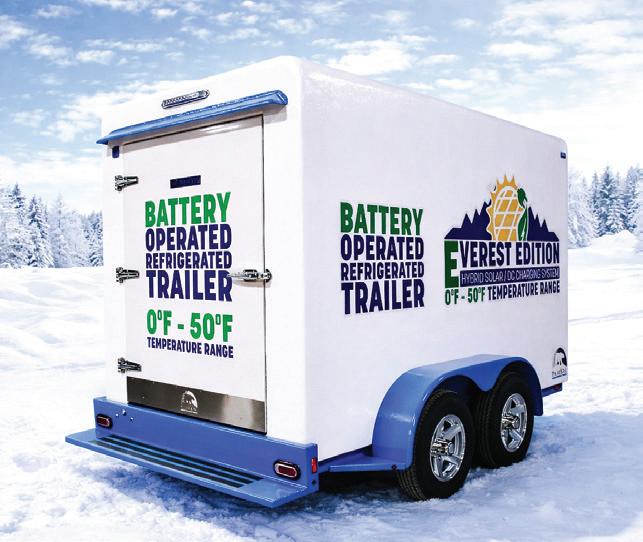
overnight charging from standard outlets
• 220V AC charging for faster recharge times where higher capacity power is available
The Polar King Everest Edition rests on a 6’x12’ trailer platform and maintains all the same built to last characteristics of every Polar King over the road solution. The all fiberglass interior and exterior keep internal products safe from external conditions. The Everest Edition maintains a 0°F to 50°F temperature range. Visit polarking.com.
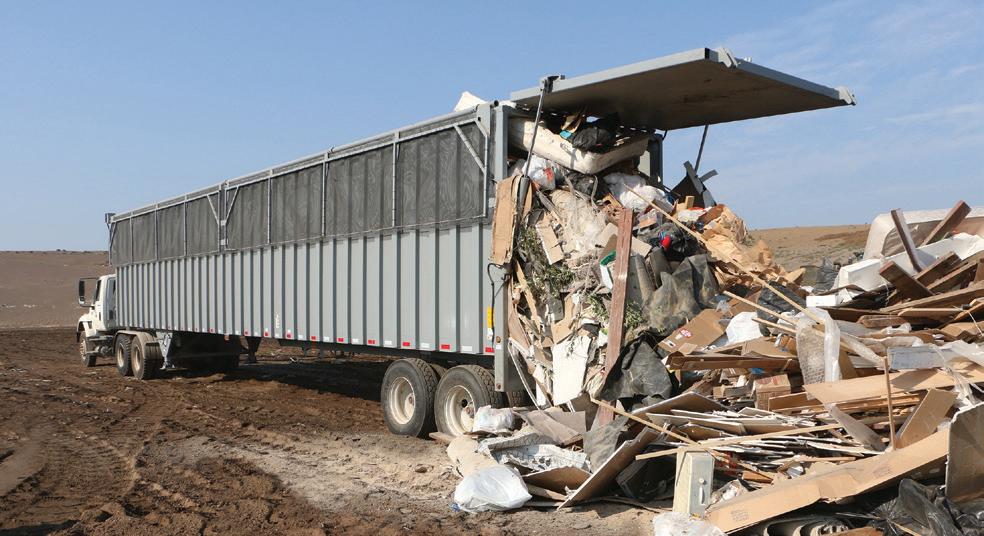
longer component life and a reduced maintenance burden over the life of the trailer, KEITH noted. RX3 also reduces com plexity with internal check valves and fewer parts, eliminating adjustments at the switching valve and minimizing potential leak points. The simplified layout makes field troubleshooting easier, speeds service and helps lower total maintenance costs for waste and recycling fleets.
Smarter controls are a core part of RX3 Technology.
To learn more, visit www.keithwalkingfloor.com.
March 16-19, 2026
TMC Annual Meeting & Exhibition Music City Center, Nashville, TN tmcannual.trucking.org
March 26-28, 2026
Mid-America Trucking Show Kentucky Expo Center, Louisville, KY www.truckingshow.com
April 19-22, 2026
NTTC 2026 Annual Conference & Exhibits Baltimore, MD www.tanktruck.org
April 29-May 2, 2026
TTMA 84th Annual Convention Loews Ventana Canyon Resort Tucson, AZ www.trucktrailer.org


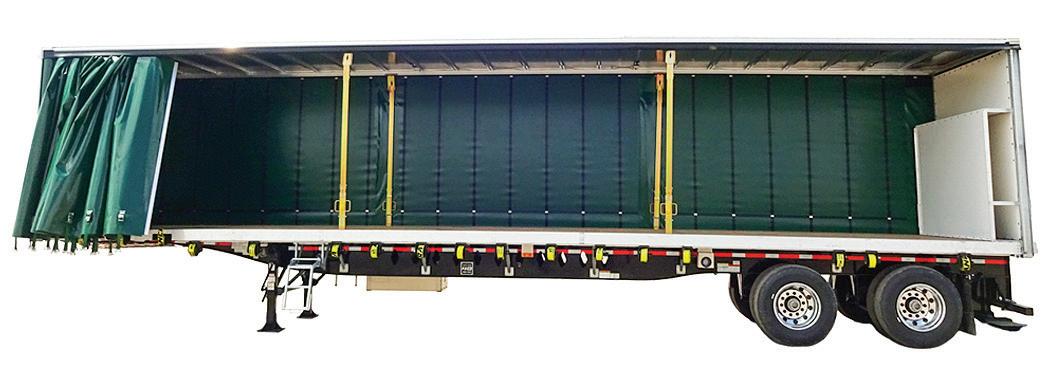
May 4-7, 2026
ACT Expo
Las Vegas (NV) Convention Center www.actexpo.com
May 9-11, 2026
NPTC Annual Conference and Exhibition Orange County Convention Center Orlando, FL www.nptc.org
May 31-June 3, 2026
Electric Utility Fleet Managers Conference Williamsburg (VA) Conference Center www.eufmc.com
August 31-September 3, 2026
FTR Transportation Conference, Union Station, Indianapolis, IN www.ftrconference.com
September 1-3, 2026
North American Trailer Dealers Association (NATDA) Trailer Show, Music City Center, Nashville, TN www.natda.org/trailer-show
September 14-16, 2026
Intermodal Association of North America (IANA) Intermodal EXPO Long Beach Convention Center Long Beach, CA www.intermodal.org
October 7-9, 2026
NTDA 36th Annual Conference
TPC Sawgrass Marriott Golf Resort & Spa Ponte Vedra, FL www.ntda.org
October 13-14, 2026
2026 Commercial Vehicle Upfitting Summit
Kalahari Resorts & Conventions Sandusky, OH www.ntea.com
October 21-23, 2026
FABTECH USA
Las Vegas (NV) Convention Center www.fabtech.com
October 25-28 2026
ATA Management Conference Charlotte (NC) Convention Center mce.ata.org
November 3-5, 2026
AAPEX
The Venetian, Las Vegas, NV www.aapexshow.com
November 3-6, 2026
SEMA Show
Las Vegas Convention Center, NV www.semashow.com




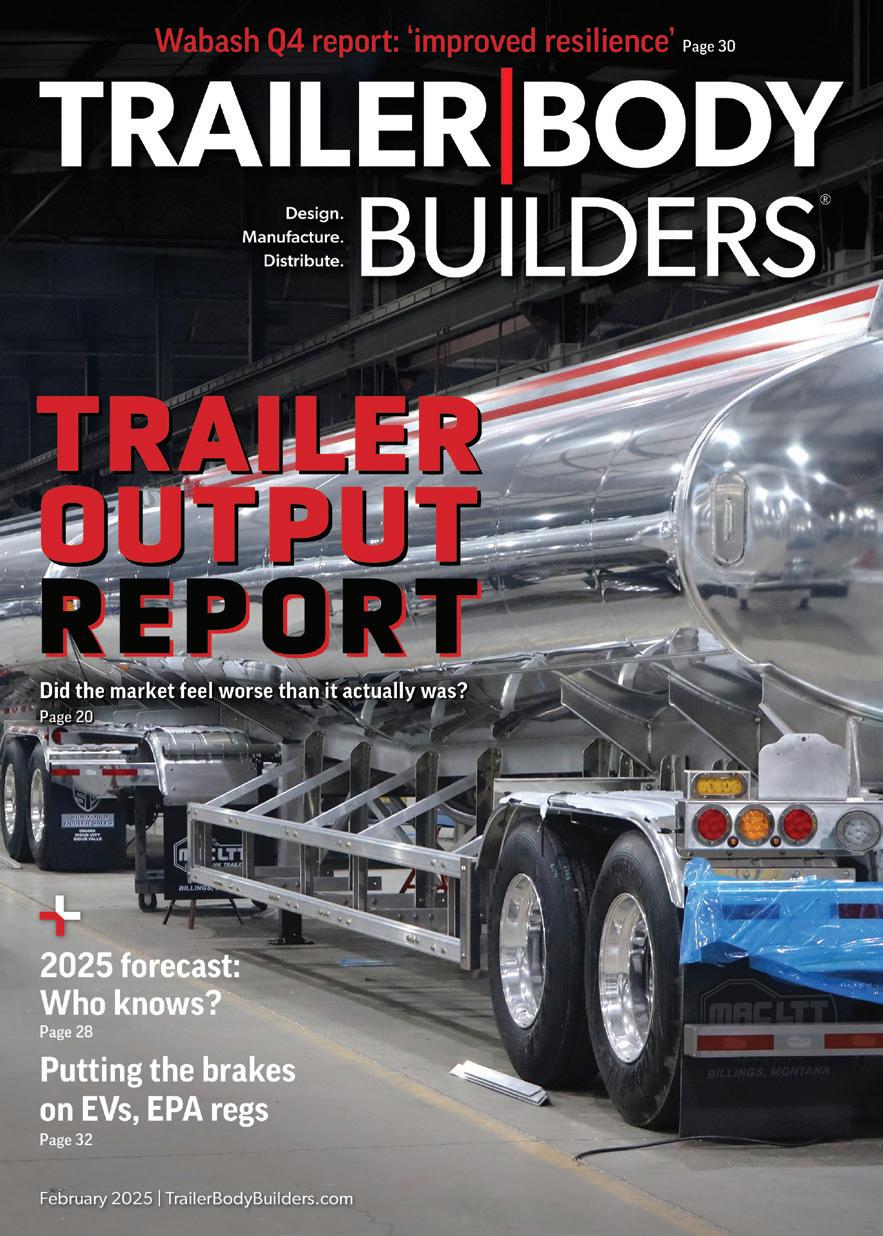



TerraVest Industries recently selected Guillaume Cloutier to succeed Marilyn Boucher as chief financial officer. Cloutier is an accomplished executive with experience in finance, strategy, and business transformation. He has held senior leadership positions in several industry-leading manufacturing businesses across North America, most recently serving as CFO at DCM Group.

FlowBelow Aero Inc. recently appointed Jason Skoog to its board of directors. Skoog brings extensive leadership experience in the commercial vehicle industry, most recently serving as General Manager of Peterbilt Motors Company. In this role, he oversaw strategic direction, operations, and market growth, and drove innovation and performance across the organization. His deep industry knowledge and commitment to advancing transportation technologies will support FlowBelow’s continued expansion and product innovation.
DENSO Corp. has named Daisuke Yamaoka president of DENSO Products and Services Americas Inc. Yamaoka took charge of the aftermarket products and services arm of the leading global mobility supplier Jan. 1. In his new executive role, Yamaoka leads more than 550 employees across all DENSO Products and Services Americas automotive, commercial and industrial business groups.

Continental Battery Systems (CBS) recently named Mike Harris as its new CEO. He succeeds Chris Alberta, who will transition to the role of executive chairman of the board. Harris brings over 20 years of leadership in distribution, operations, and commercial growth, most recently serving as the president of FleetPride.
FordDirect recently appointed Tracy Noonan Fred as its new chief operating officer. She will oversee daily operations across product, dealer engagement, analytics, and enterprise functions. Fred has over 30 years of automotive industry experience, including leadership roles at Toyota, Nissan, Mitsubishi, Mazda, and Cox Automotive.
Littlejohn Tank & Equipment recently added Brian Shonebarger as executive vice president of sales. Shonebarger will utilize his experience across all facets of the tank trailer industry to help the company achieve its strategic goals.

Dana Inc. has named Byron Foster CEO, effective July 1, with R. Bruce McDonald remaining as chairman of the board. Foster currently serves as senior vice president and president of light vehicle systems, Dana’s largest business unit, and has led strong sales growth and profit margin improvement. Foster has more than two decades of senior leadership experience, including Adient plc, and serves on Wabtec Corporation’s Board of Directors.




Jacques Tremblay, who acquired A&L Tougas in 1989, renamed it Tremcar, and then partnered with his son to transform the business into one of North America’s leading tank trailer manufacturers, died Feb. 2 in Saint-Jean-sur-Richelieu, Québec, Canada. “My father was passionate in everything he did,” Daniel Tremblay, who succeeded Jacques as Tremcar president, told TBB. “He was a devoted politician, a passionate historian at heart—even after retirement—and he remained a dedicated ambassador for Tremcar. We owe him the Tremcar logo—the snowy owl—which is the emblematic bird of the province of Québec and a powerful symbol of our people.” He was 83 years old. Tremblay served as Tremcar president and chairman before retiring in 2017. Tremblay, a lifelong entrepreneur and philanthropist, spent most of his career in the concrete industry before purchasing A&L, founded as a milk tank manufacturer in 1962. Tremblay is survived by his wife, Jocelyne; three children, Chantal, Annie, and Daniel; six grandchildren; and three great grandchildren.

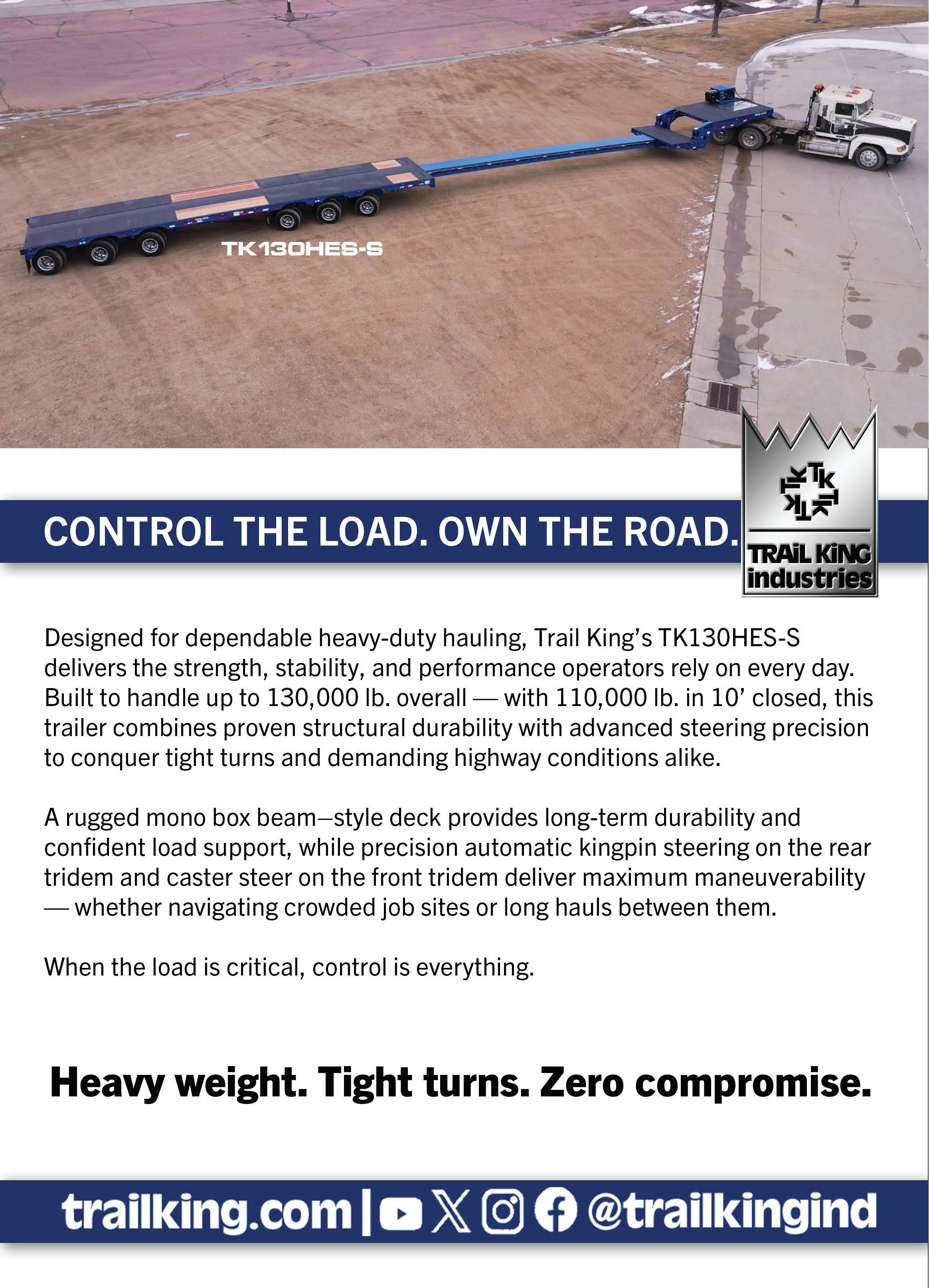

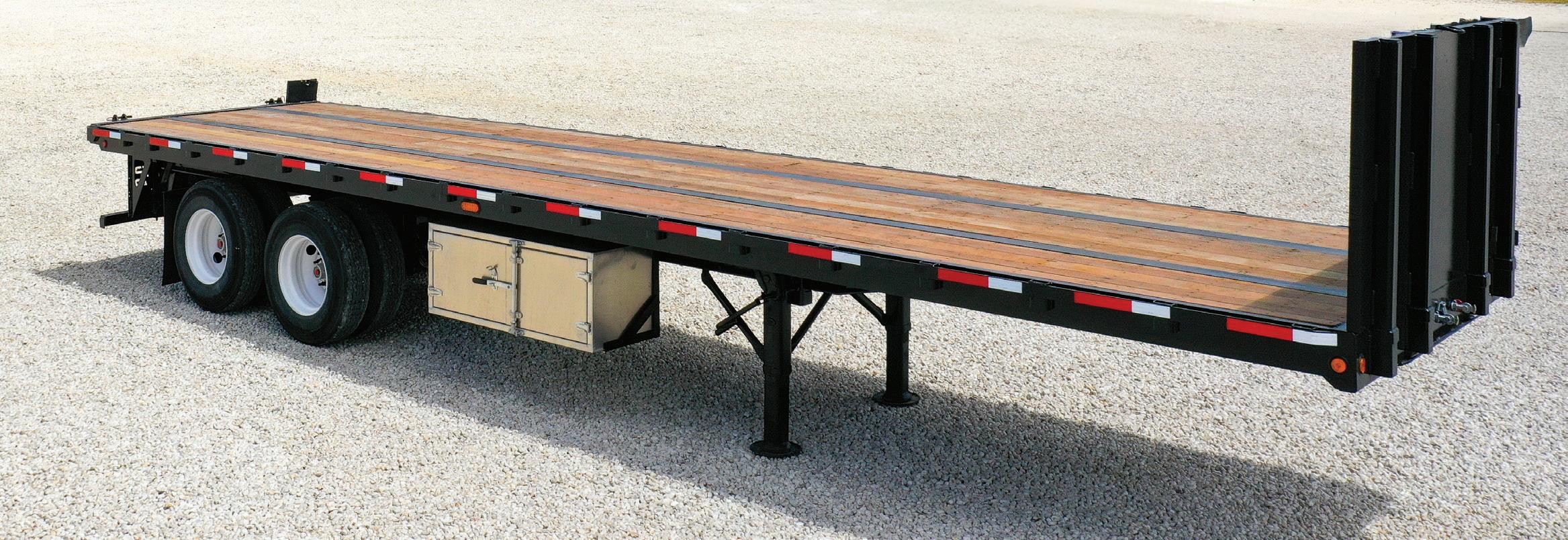
• 1-1/8” x 5” & 7” Shiplap
• 1-5/16” x 5” & 7” Shiplap
• 1- 3/8” x 5” & 7” Shiplap
• Road Load Tested® Floor Kits