

Prologue | 3 | Module 2
Prologue | 3 | Module 2
How do people learn about space?
Great Minds® is the creator of Eureka Math® , Eureka Math2® , Wit & Wisdom® , Arts & Letters™, and PhD Science®
Published by Great Minds PBC greatminds.org
© 2025 Great Minds PBC. All rights reserved. No part of this work may be reproduced or used in any form or by any means—graphic, electronic, or mechanical, including photocopying or information storage and retrieval systems—without written permission from the copyright holder. Where expressly indicated, teachers may copy pages solely for use by students in their classrooms.
Printed in the USA A-Print 1 2 3 4 5 6 7 8 9 10 XXX 27 26 25 24 23
ISBN 979-8-88811-250-2
Prologue Module Overview
Prologue to L8
• Learning Goal | Write an opinion.
• Language Progress | Use a subordinating conjunction to expand ideas.
Prologue to L9
• Learning Goal | Examine vocabulary related to the universe.
• Language Progress | Form regular plural nouns.
Prologue to L10
• Learning Goal | Compare different ideas about the universe.
Prologue to L3
• Learning Goal | Describe the characters and settings in The Star People
• Language Progress | Take turns with others when speaking.
Prologue to L5
• Learning Goal | Describe what happens to Young Wolf and Sister Girl in The Star People
• Language Progress | Use a subordinating conjunction to expand ideas.
14
22
• Language Progress | Use a subordinating conjunction to expand ideas.
Prologue to L11
• Learning Goal | Examine a quotation from Galileo that describes how he built a telescope.
• Language Progress | Write in simple, compound, and complex sentences.
Prologue to L13
• Learning Goal | Describe Galileo’s work as an astronomer.
• Language Progress | Elaborate on the evidence you use.
Prologue to L14
• Learning Goal | Use subordinating conjunctions to discuss Galileo’s life and work.
• Language Progress | Use a subordinating conjunction to expand ideas.
30
36
42
48
54
60
Prologue to L18
• Learning Goal | Describe what happens during the Apollo 11 mission in Moonshot.
• Language Progress | Use a subordinating conjunction to expand ideas.
Prologue to L20
• Learning Goal | Discuss contributions that made the Apollo 11 mission successful.
• Language Progress | Elaborate on the evidence you use.
Prologue to L22
• Learning Goal | Describe the Moon.
• Language Progress | Build on others’ ideas.
Prologue to L23
• Learning Goal | Examine nonliteral language in One Giant Leap.
• Language Progress | Build on others’ ideas.
Prologue to L25
• Learning Goal | Describe challenges of the Apollo 11 mission.
• Language Progress | Use a subordinating conjunction to combine ideas.
Prologue to L26
• Learning Goal | Describe different phases of the Apollo 11 mission.
• Language Progress | Use a subordinating conjunction to expand ideas.
66
Prologue to L28
• Learning Goal | Describe key events in Dorothy Vaughan’s life.
• Language Progress | Write in simple, compound, and complex sentences.
106
74
80
86
92
98

Prologue to L29
• Learning Goal | Examine President Kennedy’s words in a speech.
112
• Language Progress | Write in simple, compound, and complex sentences.
Prologue to L31
• Learning Goal | Analyze the title Hidden Figures.
• Language Progress | Take turns with others when speaking.
Prologue to L32
• Learning Goal | Discuss how astronomers, astronauts, and mathematicians explore space.
• Language Progress | Take turns with others when speaking.
118

In module 2, Arts & Letters Prologue™ lessons focus on helping students deepen their understanding of how people learn about space.
• Prologue lessons support reading development by providing opportunities for students to discuss key events and details from each module text. Students learn how stars are an important part of the Lakota culture in The Star People. They learn about Galileo’s scientific discoveries in Starry Messenger. Students learn about the Apollo 11 mission in Moonshot and One Giant Leap. Finally, students learn about four Black women who made significant contributions to space exploration in Hidden Figures.
• Prologue lessons support writing development by helping students write simple and complex sentences. This support prepares them to write opinion essays for the module tasks.
• Prologue lessons support speaking and listening development by including instruction and practice for the module’s speaking and listening goals: Take turns with others when speaking, build on others’ ideas, and elaborate on the evidence you use. Use the Module 2 Speaking and Listening Goal Tracker to track progress toward these goals.
• Prologue lessons support language development by providing opportunities for students to create complex sentences by using subordinating conjunctions.
Books
Literary
• The Star People: A Lakota Story, S. D. Nelson
Literary Nonfiction
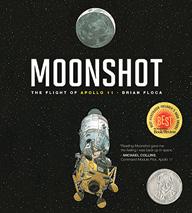
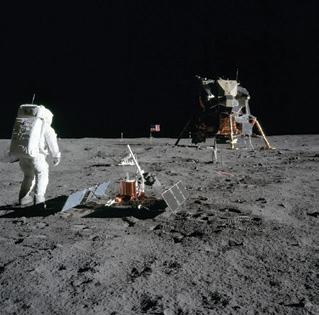
• Moonshot: The Flight of Apollo 11, Brian Floca
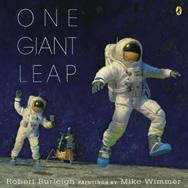
• One Giant Leap: A Historical Account of the First Moon Landing, Robert Burleigh and Mike Wimmer
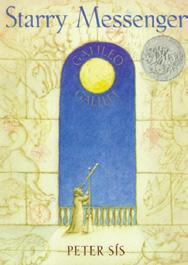
• Starry Messenger: A Book Depicting the Life of a Famous Scientist, Mathematician, Astronomer, Philosopher, Physicist, Galileo Galilei, Peter Sís
Informational
• Hidden Figures: The True Story of Four Black Women and the Space Race, Margot Lee Shetterly, Winifred Conkling, and Laura Freeman
Video
• “Solar System,” Shutterstock

• For thousands of years, humans have been using the stars and other celestial bodies for navigation and seasonal planning.
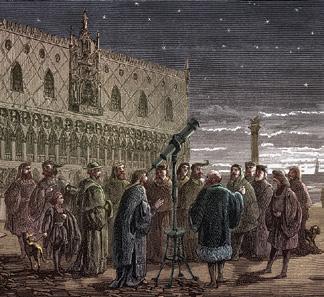
• Early astronomers established the foundation for contemporary understanding of space.
• People can document and share observations of scientific phenomena.
• Space exploration requires knowledge, collaboration, and courage.
• The vastness of space sparks human curiosity and imagination.
Prepare the following materials for use throughout the module.
• Determine how to access the module texts.
• Determine how to display Prologue reference charts, Prologue student resources, and select Learn book pages. These are listed in the Materials section of each lesson.
• Print or copy student resources from the Prologue Student Resources appendix. These are listed in the Materials section of each lesson.
• Determine how to access the Module 2 Speaking and Listening Goal Tracker from the Great Minds® Digital Platform.
• Ensure access to the module 2 Knowledge Cards.
• Ensure students have paper for short responses. They can use their journals or other paper.
• For a comprehensive list of all the materials used in the module, see the digital platform.
Arts & Letters Prologue lessons for module 2 provide additional language support to develop the following English Language Development (ELD) standards. Educators should consult their state’s ELD standards and proficiency descriptors to identify the best ways to help multilingual learners reach the module’s learning goals. See the digital platform for a lesson-by-lesson breakdown of ELD standards.
ELD-SI.K-3.Narrate: Multilingual learners will
• Share ideas about one’s own and others’ lived experiences and previous learning
• Connect stories with images and representations to add meaning
• Recount and restate ideas
ELD-SI.K-3.Inform: Multilingual learners will
• Describe characteristics, patterns, or behavior
• Sort, clarify, and summarize ideas
• Summarize information from interaction with others and from learning experiences
ELD-SI.K-3.Explain: Multilingual learners will
• Share initial thinking with others
• Compare and contrast objects or concepts
ELD-SI.K-3.Argue: Multilingual learners will
• Support own opinions with reasons
ELD-LA.2-3.Narrate.Interpretive: Multilingual learners will interpret language arts narratives by
• Identifying how character attributes and actions contribute to event sequences
ELD-LA.2-3.Inform.Interpretive: Multilingual learners will interpret informational texts in language arts by
• Identifying the main idea and key details
• Referring explicitly to descriptions for themes and relationships among meanings
• Describing relationship between a series of events, ideas or concepts, or procedural steps
Standard 1: An ELL can construct meaning from oral presentations and literary and informational text through grade-appropriate listening, reading, and viewing.
Standard 2: An ELL can participate in grade-appropriate oral and written exchanges of information, ideas, and analyses, responding to peer, audience, or reader comments and questions.
Standard 3: An ELL can speak and write about grade-appropriate complex literary and informational texts and topics.
Standard 4: An ELL can construct grade-appropriate oral and written claims and support them with reasoning and evidence.
Standard 7: An ELL can adapt language choices to purpose, task, and audience when speaking and writing.
Standard 8: An ELL can determine the meaning of words and phrases in oral presentations and literary and informational text.
Standard 10: An ELL can make accurate use of standard English to communicate in grade-appropriate speech and writing.
Students’ home languages and cultures are assets that everyone in the school setting should value and celebrate. Teachers can support the strategic use of home languages to facilitate activating background knowledge, acquiring ELA knowledge and world knowledge, and engaging with grade-level content. This can happen individually or in groups. Teachers should encourage students to draw explicit metalinguistic connections between English and their home language through cognates and morphological awareness.
Multilingual learners in the United States speak a variety of languages, but an increasing majority speak Spanish at home. In 2019, more than 75 percent of students who were identified as “English learners” spoke Spanish as a home language (National Center for Education Statistics). For this reason, we offer a number of supports for Spanish speakers.
This module focuses on helping students create simple and complex sentences. Prologue lessons help students understand the correct use of subordinating conjunctions. For students who also speak other language(s), the grammatical rules of English may be confusing. Here are some grammatical differences for which students may need extra explanation and modeling of this structure. In addition to Spanish, we compare English to Arabic and Mandarin Chinese, the second and third most common languages spoken among multilingual learners in the United States (National Center for Education Statistics).
Language Similarity Difference
Spanish Subordinating conjunctions are also used in Spanish to join clauses to form complex sentences.
Arabic Subordinating conjunctions are also used in Arabic to join clauses to form complex sentences.
There is not a 1:1 correspondence between English and Spanish subordinating conjunctions. There may be confusion between since, so that, and because.
There is not a 1:1 correspondence between English and Arabic subordinating conjunctions.
Mandarin Chinese Subordinating conjunctions are also used in Mandarin Chinese to join clauses to form complex sentences. There is not a 1:1 correspondence between English and Mandarin Chinese subordinating conjunctions.
Here are Spanish cognates for terms taught in module 2 Prologue lessons. Teacher notes in the lessons draw attention to Spanish cognates. Use an online Spanish dictionary for pronunciation guidance or to play a recording of the Spanish cognate for students.
Term Cognate
astronaut (n.)
astronomer (n.)
calculate (v.)
astronauta (s.)
astrónomo (s.)
calcular (v.)
contribution (n.)
elaborate (v.)
explore (v.)
figure (n.)
mathematician (n.)
nonliteral (adj.)
opinion (n.)
planet (n.)
spirit (n.)
telescope (n.)
trajectory (n.)
universe (n.)
contribución (s.)
elaborar (v.)
explorar (v.)
figura (s.)
matemático (s.)
no literal (adj.)
opinión (s.)
planeta (s.)
espíritu (s.)
telescopio (s.)
trayectoria (s.)
universo (s.)
Know D(L) akota Star Map
excerpts from D(L) akota Star Map Constellation Guidebook
Distill Starfield
Space Object Box
= assessment = Prologue lesson
Lesson 7
Know
The Star People
D(L) akota Star Map
excerpts from D(L) akota Star Map Constellation Guidebook
Starfield
Space Object Box
Lesson 17
Wonder Moonshot
Lesson 24
Reveal Moonshot
One Giant Leap
Lesson 18
Organize Moonshot
Lesson 25
Distill Moonshot
One Giant Leap
Lesson 19
Reveal Moonshot
Lesson 26
Know Moonshot
One Giant Leap
Lesson 20
Distill Moonshot
Lesson 21
Wonder One Giant Leap
Lesson 22
Organize One Giant Leap
Module Task 1 completed
Lesson 23
Reveal One Giant Leap
Lesson 27
Wonder Hidden Figures

Essential Question | How do people learn about space?
Students describe the characters and settings in The Star People. As they discuss these story elements, students practice taking turns with others when speaking. This work prepares students to identify story elements in lesson 3.
Describe the characters and settings in The Star People.
LEARNING TASK: Draw and label a setting from The Star People.
In this lesson, students work on this module speaking and listening goal: Take turns with others when speaking.
To support students with beginning English proficiency, prompt them to decide who speaks first and then alternate this responsibility. To support students with intermediate English proficiency, encourage them to ask their partner this question: Would you like to share your idea first?
prairie (n.)
spirit (n.)
• The Star People
• setting story stone (Prologue Reference Charts appendix)
• The Star People Preparation
• The Star People is an unpaginated text. Number your text; begin with the title page as page 1. Pages on the left will be even, and pages on the right will be odd.
• Make a setting story stone by cutting out the story element image from the page in the Prologue Reference Charts appendix. Alternatively, cut out the image and paste it onto a real stone.
1. Display The Star People. Instruct students to look closely at the images in the stars on the front cover. Ask this question:
What objects do you see in the stars?
2. Instruct students to share their responses at the same time. Ask this question:
What did you notice about our discussion?
3. Summarize students’ responses, and emphasize the importance of taking turns with others when speaking.
4. Ask this question:
Why is it important to take turns with others when speaking?
Key Ideas
• to hear ideas
• to respect the speaker
• to learn new ideas
5. Pair students and instruct them to discuss what objects they see in the stars. Prompt students to take turns when speaking. Ask this question:
What did you notice about your discussion?
6. Invite students to share what they noticed. Reinforce the idea that taking turns with others when speaking makes the discussion better.
7. Tell students that they will practice taking turns discussing the characters and settings in The Star People.
1. Display the setting story stone. Ask this question: What does this story stone represent?
2. Reinforce the correct response: when and where the story takes place.
3. Direct attention to the illustration on pages 2–3 of The Star People. Ask this question:
What do you notice about the setting?
Key Ideas
• daytime
• a lot of grass
• hills
• a river
• few trees
Language Support


For students with beginning English proficiency, point to specific parts of the illustration and ask these questions:
• What do you see outside?
• When is this taking place?
4. Explain that the setting is a prairie. Introduce the vocabulary term prairie by displaying the term and definition. Engage students in Vocabulary Exploration.
Definition
prairie (n.): a large, mostly flat area of grassland in North America
5. Remind students that Young Wolf and Sister Girl go for a walk across the prairie. Instruct students to listen to find out what Young Wolf sees in the clouds during their walk. Read aloud page 5, starting with “‘And horses!’ said.” Ask this question:
Who does Young Wolf see?
6. Reinforce the correct response: the Cloud People and Grandmother Elk Tooth Woman.
7. Instruct students to Think–Pair–Share to answer this question:
Who are the Cloud People?
Key Ideas
• cloud spirits that take the shape of animals and people
• clouds that are alive and take different shapes
8. Tell students that the Cloud People are cloud spirits, which are people, animals, and ancestors or relatives who once lived on Earth.
9. Introduce the vocabulary term spirit by displaying the term and definition. Engage students in Vocabulary Exploration. Explain that the spirits comfort the children and safely guide them home.
Language Support
The term spirit has a Spanish cognate: espíritu. Share this language connection with students whose home language is Spanish.
10. Direct attention to pages 8–11. Ask these questions:
What is the setting?
What is happening?
11. Reinforce the correct responses:
• setting—The setting is a prairie.
• happening—The children and animals are running from the prairie fire.
Definition spirit (n.): the force within someone that is believed to give the body life, energy, and power
12. Remind students that Young Wolf and Sister Girl get lost after the fire. Instruct students to listen for details about where they go after the fire. Read aloud page 14, starting with “‘Look, Brother,’ I.” Ask this question:
What is the setting?
Key Ideas
• nighttime
• on the banks
• far away from the village
13. Direct attention to pages 16–17. Ask this question:
What do you see on these pages?
Key Ideas
• Young Wolf and Sister Girl
• stars
• shapes in the stars
14. Tell students that the shapes in the sky are characters. Instruct students to listen to find out more about these characters. Read aloud page 16, starting with “‘Sister Girl,’ Young.”
15. Instruct students to Think–Pair–Share to answer this question:
What new characters are mentioned in this part of the story?
16. Reinforce the correct response: the Star People. Explain that the Star People are spirits, like the Cloud People.
17. Direct attention to pages 20–25. Explain that the setting changes to the children’s dream. Instruct students to look closely at the illustrations on these pages. Then tell them to take turns with a partner asking and answering these questions:
Who are the characters?
What are they doing?
Key Ideas
• characters: The characters are Young Wolf, Sister Girl, Mother, Father, and animals.
• doing: Mother and Father are looking for the children.
• doing: Animals are coming out of their holes.
• doing: All the characters are dancing.
Language Expansion
For students with intermediate English proficiency, prompt them to describe two characters and the characters’ actions. Prompt students to use transition words (e.g., also, additionally) to expand their ideas.
18. Read aloud page 28, starting with “Finally we came.” Ask these questions:
What is the setting?
What are the characters doing?
Key Ideas
• setting: The setting is on the hilltop near the village during nighttime.
• characters: The characters are returning to the village.
• characters: The characters are hugging each other.
• characters: Grandmother Elk Tooth Woman tells the children she will always be with them.
19. Instruct students to work with a partner to identify the main characters and the different settings of the book. Remind students to take turns when others are speaking.
Key Ideas
• characters: Young Wolf, Sister Girl, Grandmother Elk Tooth Woman, the Star People
• settings: prairie, sky, daytime, nighttime, children’s dream, village
1. Introduce the learning task. Instruct students to draw and label a picture of one of the settings from The Star People.
Analyze Student Progress
Monitor: Do students draw a setting from the story?
Offer Immediate Support: If students need additional support drawing and labeling the setting, direct attention to pages 28–29 and ask them this question: Where does this take place?
2. Invite a few students to share their drawings.
Key Ideas
• hilltop overlooking the village
• prairie
• village
3. Summarize that readers describe characters and settings to help understand what happens in a text.
Essential Question | How do people learn about space?
Students describe what happens to Young Wolf and Sister Girl in The Star People. As they examine events, students practice using the subordinating conjunction when to expand ideas. This work prepares students to determine the central idea in lesson 5.
Describe what happens to Young Wolf and Sister Girl in The Star People.
LEARNING TASK: Write a sentence by using the conjunction when to describe how the Star People help Young Wolf and Sister Girl in The Star People.
In this lesson, students work on this module language goal: Use a subordinating conjunction to expand ideas.
To support students with beginning English proficiency, use this sentence frame to model how to use the word when to describe two events that happen at the same time during common school activities: When , I . To support students with intermediate English proficiency, provide examples of two events that happen at the same time. Prompt students to connect the two events in a sentence with the conjunction when.
none
• The Star People
• The Star People
• The Star People is an unpaginated text. Number your text; begin with the title page as page 1. Pages on the left will be even, and pages on the right will be odd.
1. Display and Echo Read these sentences:
• The children are on the prairie.
• They see shapes in the clouds.
2. Remind students that they have used conjunctions to combine ideas into one sentence.
3. Display and Echo Read this new sentence:
• When the children are on the prairie, they see shapes in the clouds.
4. Instruct students to Think–Pair–Share to answer this question:
What do you notice about this new sentence?
Key Ideas
• When starts the sentence.
• It is only one sentence.
5. Annotate when. Emphasize that the word when connects these two events into one sentence to show that they happen at the same time.
Teacher Note
To reinforce the use of subordinating conjunctions, model how to use when by writing sentences about students and classroom activities.
6. Tell students that they will use the word when to describe what happens to the children in The Star People.
1. Direct students to The Star People, and instruct them to look closely at the illustrations on pages 3–11. Ask this question:
What is happening in this part of the story?
Key Ideas
• The children wander across the prairie.
• The children see lightning hit the ground.
• A prairie fire starts.
2. Instruct students to listen to find out what happens when the fire starts. Read aloud page 10, starting with “We joined the.” Ask this question:
What happens when the prairie fire starts?
Key Ideas
• The children run away from the fire.
• The children follow the animals to safety.
3. To help students use a subordinating conjunction to connect events, provide this sentence frame: When the prairie fire starts, . Tell students that they can use this sentence frame to tell what happens when the prairie fire starts.
4. Think aloud to model how to add a detail to the sentence frame. Emphasize that both events are happening at the same time.
The children follow the animals to safety. This happens at the same time the prairie fire starts. I can say, “When the prairie fire starts, the children follow the animals to safety.”
5. Instruct students to use the sentence frame with a partner to explain what happens to the children when the prairie fire starts.
Language Support
For students with beginning English proficiency, Echo Read the first clause and prompt students to answer in a complete sentence what the children do. Then Echo Read the complete response while pausing between clauses.
Language Expansion
For students with intermediate English proficiency, prompt them to use while or as to connect both events.
6. Invite a few students to share their responses.
Key Ideas
• When the prairie fire starts, the children follow the animals to safety.
• When the prairie fire starts, the children run away from the fire.
7. Direct attention to pages 14–15. Ask this question:
What is happening in this part of the story?
Key Ideas
• The children are safe from the fire.
• Sister Girl realizes she cannot find the village.
• Sister Girl comforts Young Wolf.
8. Reinforce that the children are alone at night.
9. Tell students that they will form a sentence about what happens when the children are alone at night. Display and Echo Read this sentence frame: When the children are alone at night, .
10. Instruct students to listen to find out what happens when the children are alone at night. Read aloud page 16, starting with “‘Sister Girl,’ Young.” Ask this question: What happens when the children are alone at night?
Key Ideas
• The Star People give the children light.
• The Star People encircle the children.
• The Star People help the children feel safe.
11. Instruct students to use the sentence frame to discuss with a partner what happens to the children when they are alone at night. Invite a few students to share their responses.
Key Ideas
• When the children are alone at night, the Star People give them light.
• When the children are alone at night, the Star People encircle them.
• When the children are alone at night, the Star People help them feel safe.
12. Instruct students to Think–Pair–Share to answer this question: How do you think the children feel to be alone at night?
Key Ideas
• afraid
• scared
• lonely
13. Direct attention to pages 18–19, and explain that this illustration shows who helps the children when they feel this way. Ask this question:
Who helps the children in this part of the story?
14. Reinforce the correct response: Grandmother Elk Tooth Woman.
15. Remind students that they can use the word when to explain what is happening in this part of the story. Think aloud to model how to use the word when to explain what is happening in this part of the story.
16. Instruct students to take turns with a partner using the word when.
Language Support
For students with beginning English proficiency, provide this sentence frame: When the children feel , Grandmother Elk Tooth Woman
17. Invite a few students to share their responses.
Key Ideas
• When the children feel afraid, Grandmother Elk Tooth Woman tells them she is here to keep them safe.
• When the children feel scared, Grandmother Elk Tooth Woman hugs them.
• When Grandmother Elk Tooth Woman rocks them back and forth, the children feel better.
18. Highlight that these events have shown how the children are helped in the story. Display pages 8–11, 16–19, and 22–25 and review these events.
I said that the children feel lonely. I know that Grandmother Elk Tooth Woman helps them. This is my sentence: When the children feel lonely, Grandmother Elk Tooth Woman helps them.
1. Introduce the learning task. Instruct students to write a sentence using the word when to describe how the animals or spirits help the children.
Analyze Student Progress
Monitor: Do students use when and evidence from the book to describe what happens to the children at the same time as the animals, the Star People, or Grandmother Elk Tooth Woman?
Offer Immediate Support: If students need additional support to describe what happens to the children, direct attention to pages 8–11 and emphasize that the prairie fire starts. Then ask this question: What is happening when the prairie fire starts?
2. Invite a few students to share their responses.
Key Ideas
• When the children are trapped in the fire, the animals lead them to safety.
• When the children are alone, the Star People encircle them.
• When the children feel afraid, Grandmother Elk Tooth Woman comforts them.
3. Summarize that writers can use when to combine two ideas into one sentence.
Essential Question | How do people learn about space?
Students write an opinion supported by a reason. As they form their opinions, students practice using the subordinating conjunction because to expand ideas. This work prepares students to examine an opinion essay in lesson 8.
Write an opinion.
LEARNING TASK: Write an opinion about which scientist is liked best.
In this lesson, students work on this module language goal: Use a subordinating conjunction to expand ideas.
To support students with beginning English proficiency, model how to form an opinion by using the word because when providing a reason. To support students with intermediate English proficiency, instruct pairs to ask each other their opinion about a topic of their choice. For example, Partner A asks, “What is your opinion about ?” Partner B responds, “I think . I think this because .”
Vocabulary opinion (n.)
• Starfield (digital platform)
• Space Object Box (digital platform)
• The Boating Party (digital platform)
• The Great Wave (digital platform)
• The Fantastic Undersea Life of Jacques Cousteau
• Solving the Puzzle Under the Sea
• two different-colored writing utensils
• none
• Determine how to display side by side Starfield and Space Object Box, and The Boating Party and The Great Wave. See the Launch and Learn sections for details.
• Gather the following previously used texts: The Fantastic Undersea Life of Jacques Cousteau and Solving the Puzzle Under the Sea. See the Learn section for details.
1. Display Starfield and Space Object Box side by side. Remind students that they have looked closely at each work of art to discuss the colors, shapes, and lines. Ask these questions:
Which do you like best? Why?
Language Support
If possible, pair students who speak the same home language, and instruct them to share which artwork they like best.
2. Explain that what students just shared is an opinion, or a personal choice. Tell students that someone else may like the other piece better.
3. Introduce the vocabulary term opinion by displaying the term and definition. Engage students in Vocabulary Exploration.
Language Support
The term opinion has a Spanish cognate: opinión. Share this language connection with students whose home language is Spanish.
4. Tell students that they will share their opinions about familiar topics.
1. Explain that while giving their opinion, students also explained why they selected the artwork. Tell students that this explanation is called a reason. Instruct students to repeat the word.
Definition opinion (n.): what someone thinks about a particular thing
2. Display and read aloud this sentence: I like Space Object Box because the artist uses different objects and shapes. Use one color to annotate the reason: The artist uses different objects and shapes. Tell students that this reason explains why you like Space Object Box.
3. Direct attention to because. Annotate this word in a different color. Explain that because can be used to introduce a reason.
4. Display and Echo Read this sentence frame: I like because . Tell students that they can use this sentence frame to share their opinion and provide a reason for their opinion.
5. Instruct pairs to use the sentence frame to share their opinion and reason about Starfield and Space Object Box. Invite a few students to share their responses.
Key Ideas
• I like Space Object Box because I like the different lines.
• I like Starfield because it looks like the night sky.
• I like Starfield because there are so many stars.
6. Tell students that they will practice using because to share an opinion and reason about another piece of art. Display The Boating Party and The Great Wave side by side. Remind students that they looked closely at each work of art to discuss what it looks like and what it shows. Ask these questions:
Which do you like best? Why?
Prompt students to use the sentence frame to organize their ideas.
Key Ideas
• I like The Boating Party because it reminds me of summer.
• I like The Boating Party because the artist includes people.
• I like The Great Wave because the artist shows how beautiful the sea can be.
• I like The Great Wave because the artist shows the wave as dangerous.
7. Display The Fantastic Undersea Life of Jacques Cousteau and Solving the Puzzle Under the Sea side by side. Remind students that they read these books about scientists who help people learn about the wonders and beauty of the sea. Ask this question:
Who are the scientists?
8. Reinforce the correct responses: Jacques Cousteau and Marie Tharp.
9. Instruct students to Think–Pair–Share to discuss which scientist is their favorite.
Key Ideas
• I like Jacques Cousteau because he explored the sea.
• I like Jacques Cousteau because he filmed different sea animals.
• I like Marie Tharp because she was a woman who made a scientific discovery.
• I like Marie Tharp because she discovered mountains on the seafloor.
10. Tell students that they can also use this sentence frame to write a sentence about their opinion and reason: I like because . Think aloud to model using the sentence frame to write a sentence about a scientist.
11. Display and Choral Read this sentence: I like Jacques Cousteau because he filmed different sea animals. Invite a student to annotate the reason in this sentence.
12. Invite a student to share their response. Reinforce the correct response: He filmed different sea animals.
Sample Think Aloud I like Jacques Cousteau and his films about sea animals. I can use the sentence frame to write this sentence: I like Jacques Cousteau because he filmed different sea animals.
1. Introduce the learning task. Instruct students to write an opinion about which scientist they like best. Prompt students to use this sentence frame to organize their thoughts: I like because .
Analyze Student Progress
Monitor: Do students write an opinion statement that is supported by a reason introduced by the word because?
Offer Immediate Support: If students need additional support writing an opinion, instruct them to first identify the scientist that they like best. Then prompt them to explain why they like this scientist.
2. Invite a few students to share their opinion statement.
3. Summarize that students can form opinions and share reasons to explain how they feel about a topic.
Essential Question | How do people learn about space?
Students examine terms related to the universe. As they discuss the terms, students practice forming regular plural nouns. This work prepares students to identify and organize important events in Galileo’s life in lesson 9.
Examine vocabulary related to the universe.
LEARNING TASK: Use a plural noun in a sentence.
In this lesson, students work on this module language goal: Form regular plural nouns. To support students with beginning English proficiency, practice changing singular nouns into regular plural nouns with different suffixes, using words from books they have read (e.g., map, beach, and discovery). To support students with intermediate English proficiency, encourage them to work with a partner to look through The Star People and Starry Messenger to identify nouns with the suffixes -s, -es, and -ies.
astronomer (n.)
revolve around universe (n.)
TEACHER
• Universe image (digital platform)
• Knowledge Cards: universe, astronomer
• “Solar System” (digital platform)
STUDENTS
• none
• none
1. Display the Universe image. Instruct students to Think–Pair–Share to answer this question:
What do you notice in the image?
Key Ideas
• round objects or planets
• stars
• bright lights
• different colors
Language Support
If possible, pair students who speak the same home language, and instruct them to describe what they notice in the Universe image.
2. Tell students that this is a picture of the universe. Introduce the vocabulary term universe by displaying the Knowledge Card. Engage students in Vocabulary Exploration. Direct attention to the image on the Knowledge Card to reinforce the term’s meaning.
Language Support

The term universe has a Spanish cognate: universo. Share this language connection with students whose home language is Spanish.
3. Tell students that they will discuss terms related to the universe.
Definition
universe (n.): everywhere and everything on Earth, in the air, and in space, including all the stars and other planets
1. Display “Solar System” without playing it. Direct attention to the Sun in the middle. Ask this question: What do you notice about this object?
2. Reinforce the correct response: The object is the Sun. Instruct students to repeat this word. Tell students that the Sun is the bright object that they see in the sky during the day.
3. Direct attention to the planets. Tell students that these are called planets. Instruct students to repeat this word.
Language Support
The term planet has a Spanish cognate: planeta. Share this language connection with students whose home language is Spanish.
4. Tell the students that the words planets and Sun are both nouns. Remind students that a noun is a person, place, or thing. Display and Echo Read these words: planets and planet. Ask this question:
What do you notice that is different about the words?
Teacher Note
If students have difficulty identifying the difference between the two words, direct attention to the ends of the words.
5. Reinforce the correct response: Planet does not end in -s and planets does end in -s. Annotate the -s in planets. Explain that -s is added to the end of plural nouns. Remind students that plural means “more than one.” Direct attention to the multiple planets in the video to support students’ understanding.
6. Tell students to focus on the planets, and play “Solar System.” Instruct students to answer this question with a partner:
What do you notice about the planets?
Key Ideas
• different colors, sizes, and patterns
• moving around the Sun
Language Expansion
For students with intermediate English proficiency, encourage them to use transition words such as also or additionally in their response (e.g., The planets are different colors. Additionally, they are moving around the Sun).
7. Introduce the vocabulary term revolve around by displaying the term and definition. Engage students in Vocabulary Exploration. Play “Solar System” to support students’ understanding of the term.
Language Support
For students with beginning English proficiency, invite them to act out the phrase revolve around. For example, instruct students to hold up an object and move the other hand in a circular motion around the object.
8. Instruct students to work with a partner to create a sentence that uses the phrase revolve around and explains what is happening in the video. Invite a student to share their response.
9. Reinforce the correct response: The planets revolve around the Sun.
10. Remind students that there is a special name for people who study the Sun and planets. Ask this question:
What is the name for a person who studies stars, planets, and other objects found in space?
11. Reinforce the correct response: astronomer.
Definition revolve around: to move in a curved path around a center point
12. Review the vocabulary term astronomer by displaying the Knowledge Card. Engage students in Vocabulary Exploration.
13. Direct attention to the definition of astronomer. Instruct students to Think–Pair–Share to answer this question:
What nouns are in this definition?
14. Reinforce these correct responses:
• scientist
• stars
• planets
• objects
• space
15. Display these words: scientist, stars, planets, and objects. Ask this question:
Which of these nouns are singular and which are plural?
16. Reinforce the correct response: Scientist is singular, and stars, planets, and objects are plural.
Definition
astronomer (n.): a scientist who studies stars, planets, and other objects found in space
17. Display these words: scientist and astronomer. Direct attention to the image on the Knowledge Card. Tell students to make the words scientist and astronomer plural to talk about the people in the picture. Instruct students to share the new forms of these words with a partner.
18. Invite a few students to share their responses. Reinforce the correct response: scientists and astronomers. Add -s to the ends of both words.
1. Introduce the learning task. Instruct students to work with a partner to form sentences by using one of these words and a plural noun: astronomer, revolve around, and universe.
Analyze Student Progress
Monitor: Do students use one of the vocabulary words and a plural noun in a sentence?
Offer Immediate Support: If students need additional support forming sentences, direct their attention to the Knowledge Card for astronomer and ask this question: What are they doing?
2. Invite a few students to share their sentences.
Key Ideas
• The astronomers study the sky.
• Planets revolve around the Sun.
• The universe is made up of many planets.
3. Summarize that students can use singular and plural nouns to describe events.
Essential Question | How do people learn about space?
Students compare different beliefs about the universe. As they sort the details, students practice using the subordinating conjunction while to expand their ideas. This work prepares students to organize events leading up to and following Galileo’s trial and punishment by the Catholic Church in lesson 10.
Compare different ideas about the universe.
LEARNING TASK: Write a sentence by using the conjunction while to compare what the Church believed with Galileo’s observations.
In this lesson, students work on this module language goal: Use a subordinating conjunction to expand ideas.
To support students with beginning English proficiency, show an image of the Sun and Earth. Prompt students to describe what is different about each object by using this sentence frame: While the Sun is , Earth is . To support students with intermediate English proficiency, encourage them to use other subordinating conjunctions (e.g., although or even though).
astronomer (n.)
• Starry Messenger
• Knowledge Card: astronomer
• Galileo vs. Church Chart (Prologue Reference Charts appendix)
• none
• Starry Messenger is an unpaginated text. Number your text; begin with the title page as page 1. Pages on the left will be even, and pages on the right will be odd.
1. Display Starry Messenger. Ask this question: What do you know about Galileo?
Key Ideas
• He was born in Pisa, Italy.
• He was curious.
• He studied math and physics.
• He observed the sky.
• He built a telescope.
2. Review the vocabulary term astronomer by displaying the Knowledge Card. Engage students in Vocabulary Exploration. Emphasize that Galileo was an astronomer.
Language Support
The term astronomer has a Spanish cognate: astrónomo. Share this language connection with students whose home language is Spanish.
3. Explain that Galileo studied space and made observations.
4. Tell students that they will compare ideas about space.
Definition astronomer (n.): a scientist who studies stars, planets, and other objects found in space
1. Explain that Galileo’s observations about the universe were different from what most people believed during the sixteenth and seventeenth centuries.
2. Read aloud the portion of page 3 of Starry Messenger from “For hundreds of” to “revolved around it.”
Instruct students to listen for what most people believed. Ask this question: What did people believe about the universe?
Language Support
For students with beginning English proficiency, direct them to the illustration on pages 4–5 and prompt them to point to Earth, the Sun, and other planets to help them visualize what people believed.
3. Reinforce the correct responses:
• Earth was the center of the universe.
• The Sun, Moon, and planets revolved around Earth.
4. Remind students that revolve around means “to move in a curved path around a center point.” Demonstrate the term’s meaning by using a gesture (e.g., making a circular motion around a stationary object).
5. Read aloud the portion of page 3 from “They did not” to “just followed tradition.” Explain that tradition was based on the Catholic Church’s beliefs in the sixteenth and seventeenth centuries.
6. Display the Galileo vs. Church Chart. Explain that students will use this chart to discuss how Galileo’s observations about the universe were different from the Church’s beliefs.
7. Add these sentences to the Church side of the chart: Earth was the center of the universe. The Sun, the Moon, and other planets revolved around Earth.
8. Read aloud page 4, starting with “Then one man.” Instruct students to listen for what Galileo observed. Ask this question:
What did Galileo observe?
Language Support
For students with beginning English proficiency, direct attention to the illustration on pages 4–5 and prompt them to point to the Sun, Earth, and other planets to help them visualize what Galileo observed.
9. Reinforce the correct response: Earth and other planets moved around the Sun. Add this response to the chart.
10. Display and Echo Read this sentence frame: While the Church thought , Galileo knew . Direct attention to while. Explain that while can be used to connect two ideas that contrast, or are different from one another.
Language Expansion
For students with intermediate English proficiency, explain that they can use the conjunctions although or even though in place of while to contrast the ideas. Model how to use although and even though, and prompt students to use these conjunctions when sharing their ideas with a partner.
11. Review the three statements on the chart. Instruct students to Think–Pair–Share to identify the two contrasting statements.
12. Reinforce the correct responses: The Sun, the Moon, and other planets revolved around Earth. The Moon, Earth, and other planets moved around the Sun.
13. Tell students that both statements are about how the planets move. Explain that each statement says that the planets move in a different way; therefore, these are contrasting ideas.
14. Think aloud to model how to use the sentence frame to share these contrasting ideas. Instruct students to repeat the sentence.
15. Direct attention to this belief on the chart: Earth was the center of the universe. Remind students that this was the Church’s thought at the time and that Galileo’s observations were different. Instruct students to Think–Pair–Share to answer this question: What did Galileo say was the center of the universe?
16. Reinforce the correct response: the Sun. Add this sentence to the chart: The Sun was the center of the universe.
17. Instruct students to use the sentence frame with a partner to discuss these contrasting ideas. Invite a few students to share their responses.
18. Reinforce the correct response: While the Church thought that Earth was the center of the universe, Galileo knew that the Sun was the center of the universe.
Sample Think Aloud
I can use the sentence frame to explain how the Church’s beliefs are different from Galileo’s observations. This is my sentence: While the Church thought that the planets revolved around Earth, Galileo knew that Earth and other planets revolved around the Sun.
1. Introduce the learning task. Instruct students to write a sentence that includes the conjunction while to compare the Church’s ideas with Galileo’s observations.
Monitor: Do students use the conjunction while to compare the two contrasting statements?
Offer Immediate Support: If students need additional support using the conjunction while, direct attention to the class chart and ask them the following question: What did the Church think? What did Galileo observe?
2. Invite a few students to share their sentences.
Key Ideas
• While the Church thought that Earth was the center of the universe, Galileo knew that the Sun was the center of the universe.
• While the Church thought that the Sun, the Moon, and other planets revolved around Earth, Galileo knew that Earth, the Moon, and other planets moved around the Sun.
3. Summarize that readers can use conjunctions to contrast details about a topic.
Essential Question | How do people learn about space?
Students read a quotation from Galileo. As they determine the meaning of the quotation, students practice writing simple sentences. This work prepares students to describe Galileo’s telescope in lesson 11.
Examine a quotation from Galileo that describes how he built a telescope.
LEARNING TASK: Write two or three sentences that explain what the quotation says about Galileo’s telescope.
In this lesson, students work on this expectation for the End-of-Module Task: Write in simple, compound, and complex sentences.
To support students with beginning English proficiency, model how to form simple sentences about themselves using familiar topics (e.g., Maria likes to read books). Then ask them to identify whom the sentence is about and what the subject is doing. To support students with intermediate English proficiency, prompt them to identify the subject and predicate in their complete sentences when they summarize Galileo’s quotation.
telescope (n.)
• Starry Messenger
• Knowledge Card: astronomer
• Galileo’s Quotation (Prologue Reference Charts appendix)
• none
• Starry Messenger is an unpaginated text. Number your text; begin with the title page as page 1. Pages on the left will be even, and pages on the right will be odd.
1. Display the Knowledge Card for astronomer. Direct attention to the image. Ask this question:
What are the astronomers doing?
Key Ideas
• looking at the sky
• talking
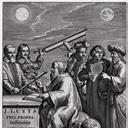
2. Direct attention to the telescopes in the image. Explain that the astronomers are using telescopes to study the stars and planets.
3. Introduce the vocabulary term telescope by displaying the term and definition. Engage students in Vocabulary Exploration.
Language Support
The term telescope has a Spanish cognate: telescopio. Share this language connection with students whose home language is Spanish.
4. Tell students that they will discuss how Galileo built a telescope.
minutes
Examine Galileo’s Words
1. Display Starry Messenger, and read aloud page 14, starting with “Then one day.” Ask this question: What did Galileo hear about?
2. Reinforce the correct response: a new instrument to see things that are far away.
Definition telescope (n.): a device or tool used to observe distant objects
3. Direct attention to the quotation on page 14 of the text. Explain that authors often use quotations, or other people’s exact words, to support their own writing. Display Galileo’s Quotation. Tell students that Galileo’s words appear here in four parts and that they will take a closer look at his words to determine what they mean.
4. Read aloud part 1 of the quotation on the chart. Annotate “I” to reinforce that these are Galileo’s words. Instruct students to Think–Pair–Share to answer this question:
What is the problem mentioned in this quotation?
Language Support
For students with beginning English proficiency, reread page 14 and prompt them to think about what Galileo wanted to do.
5. Reinforce the correct response: Galileo wanted to know how to make a telescope for himself.
6. Summarize that Galileo heard about the telescope and thought about how to make one for himself. Invite students to act out this part of the quote.
7. Add the phrases hears about the telescope and starts thinking about how to make one for himself to the chart.
Language Expansion
For students with intermediate English proficiency, encourage them to write complete sentences when explaining what this part of the quotation means. Prompt them to write in complete sentences for the remainder of the explanations.
8. Read aloud part 2 of the quotation. Explain that the phrase “sparing neither” means that Galileo was not concerned about using too much labor or too many expenses. Tell students that labor is another word for work and expense is another word for money. Annotate the quote by adding work above labor and money above expense.
For students with beginning English proficiency, provide a definition of sparing (e.g., sparing no effort means “doing everything you can”).
9. Reread this part of the quote, substituting work and money for labor and expense. Instruct students to Think–Pair–Share to answer this question:
What do you think this part of the quote means?
10. Reinforce the correct response: Galileo worked hard and spent a lot of money. Invite students to act out working hard and spending a lot of money. Add the phrases worked hard and spent a lot of money to the chart.
11. Read aloud part 3 of the quotation on the chart. Explain that “succeeded” means that Galileo was able to do something. Direct attention to “constructing.” Instruct students to Think–Pair–Share to answer this question:
What do you think “constructing” means?
12. Reinforce the correct response: to build or make something.
13. Ask this question: What did Galileo construct, or make?
14. Reinforce the correct response: a telescope. Explain that Galileo said the telescope was “excellent,” or very good. Invite students to act out constructing a telescope. Add the phrase made a telescope to the chart.
15. Direct attention to part 4 of the quotation. Tell students that this part explains why Galileo’s telescope was excellent. Read aloud part 4 of the quotation. Instruct students to Think–Pair–Share to answer this question:
What made Galileo’s telescope excellent?
16. Reinforce the correct response: It made objects appear larger and closer. Explain that “regarded with our natural vision” means being able to see without a telescope or other instruments. Invite students to act out not using a telescope to see something far away. Add the phrase objects appeared larger and closer to the chart.
17. Reread the entire quotation. Invite students to act out each part as it is read.
1. Introduce the learning task. Instruct students to write two or three sentences explaining, in their own words, what the quotation says about Galileo’s telescope.
Monitor: Do students write summaries that include accurate, text-based responses for all elements from the previous discussion questions?
Offer Immediate Support: If students need additional support summarizing the quotation, direct attention to the What Does It Mean? column of the chart, and ask them to explain what a part of the quote means. Then ask students to orally rehearse their sentence before they write.
2. If time allows, invite a few students to share their summaries.
3. Summarize that readers can examine a quotation to help them understand a topic.
Essential Question | How do people learn about space?
Students describe Galileo’s work as an astronomer. As they discuss Galileo’s work, students practice elaborating on the evidence they use to describe Galileo’s work. This work prepares students to determine the central idea in lesson 13.
Describe Galileo’s work as an astronomer.
LEARNING TASK: Elaborate on evidence in Starry Messenger that describes Galileo’s work as an astronomer.
In this lesson, students work on this module speaking and listening goal: Elaborate on the evidence you use.
To support students with beginning English proficiency, invite them to share favorite things in their life, such as a book, a movie, or a toy. Then prompt them to tell you more about their favorite thing. To support students with intermediate English proficiency, encourage them to elaborate by having a brief discussion about themselves with a partner. For example, Partner A says, “I am a kind person.” Partner B says, “Tell me more.”
astronomer (n.)
elaborate (v.)
• Starry Messenger
• Knowledge Card: astronomer
STUDENTS
• Starry Messenger
• Talking Tool (Learn book)
• Starry Messenger is an unpaginated text. Number your text; begin with the title page as page 1. Pages on the left will be even, and pages on the right will be odd.
1. Remind students that explore means “to look at (something) in a careful way to learn more about it.” Instruct students to answer this question by saying the word sea or space, according to their choice:
Would you prefer to explore the sea or space?
2. Ask this question:
Did you explain why you would prefer to explore the sea or space?
3. Reinforce the correct response: no. Explain that students need to elaborate on this response and tell more about their choice.
4. Introduce the vocabulary term elaborate by displaying the term and definition. Engage students in Vocabulary Exploration.
Language Support
The term elaborate has a Spanish cognate: elaborar. Share this language connection with students whose home language is Spanish.
5. Instruct students to Think–Pair–Share to answer these questions:
Would you prefer to explore the sea or space? Why?
Language Support
If possible, pair students who speak the same home language, and instruct them to discuss these questions.
6. Tell students that they will elaborate on evidence about Galileo’s work.
Definition elaborate (v.): to tell more about an idea
Describe Galileo’s Work as an Astronomer
1. Display Starry Messenger. Ask this question: Who is the book about?
2. Reinforce the correct response: Galileo. Remind students that Galileo was an astronomer. Review the vocabulary term astronomer by displaying the Knowledge Card. Engage students in Vocabulary Exploration.
3. Tell students that they will find evidence that describes Galileo’s work as an astronomer. Direct attention to pages 16–17. Instruct students to listen to find out details about Galileo’s work.
4. Read aloud page 16, starting with “Night after night.” Ask this question:
What is Galileo doing?
Language Support
For students with beginning English proficiency, explain that when Galileo gazed through a telescope, he looked at the Moon for a long time. Model how to gaze through a telescope, and invite students to mimic your gesture.
Key Ideas
• using a telescope
• observing space
• writing down his observations
5. Summarize that Galileo is studying space. Tell students that they will use evidence from this page to discuss how Galileo studies space. Echo Read the phrase “Night after night.” Ask this question:
What does the phrase “Night after night” explain about how Galileo studies space?
6. Reinforce the correct response: He studies space every night.
Definition astronomer (n.): a scientist who studies stars, planets, and other objects found in space
7. Instruct students to Think–Pair–Share to answer this question:
Why do you think Galileo studies space every night?
Key Ideas
• He loves space.
• He loves learning.
• He wants to learn all that he can about space.
Language Expansion
For students with intermediate English proficiency, prompt them to make a personal connection to one of the descriptions in their response.
8. Remind students that they are practicing elaborating. Explain that students can practice this goal by using a sentence frame. Direct students to the Talking Tool, located in the Learn book. Echo Read this sentence frame: This evidence shows . Tell students that they can use this sentence frame to elaborate on what the evidence about working night after night shows about Galileo.
9. Think aloud to model how to use this sentence frame to describe Galileo’s work.
10. Instruct students to work with a partner by using the sentence frame to elaborate on this evidence: Galileo worked night after night.
11. Invite a few students to share their responses.
Key Ideas
• This evidence shows that Galileo worked hard to learn about space.
• This evidence shows that Galileo was passionate about space.
• This evidence shows that learning about space was very important for Galileo.
Sample Think Aloud
I think that the phrase night after night shows that Galileo wanted to learn more about space and was determined to learn all that he could. I can say, “Galileo worked night after night. This evidence shows that Galileo really wanted to learn about space.”
12. Direct attention back to page 16. Tell students that they will find another piece of evidence about how Galileo worked as an astronomer.
13. Tell students that they will follow the Repeated Reading instructional routine to closely examine a part of the text. Explain that this routine has four parts. First, the teacher reads aloud to model fluent reading. Then, students participate in a shared reading by Echo Reading, Choral Reading, or partner reading. Next, students ask questions about pronunciation and the meaning of words. The teacher may read aloud again. Finally, students read independently, either silently or in a whisper.
14. Engage students in Repeated Reading of page 16, starting with “Night after night.” Ask this question:
What else did Galileo do to study space?
15. Reinforce the correct responses:
• He wrote down everything he observed.
• He published his observations in a book.
16. Instruct students to Think–Pair–Share to discuss these questions:
Why did Galileo write down his observations?
Why did Galileo publish his discoveries in Starry Messenger?
17. Tell students that they will now practice elaborating on one of the pieces of evidence they have been discussing. Tell students that they should explain what the evidence shows about how Galileo studied space. Instruct students to select the piece of evidence they would like to discuss with a partner.
1. Introduce the learning task. Instruct students to work with a partner to elaborate on their selected evidence to describe Galileo’s work as an astronomer. Remind them to use this sentence frame: This evidence shows .
Analyze Student Progress
Monitor: Do students explain what their evidence shows about Galileo’s approach to his work?
Offer Immediate Support: If students need additional support elaborating on the evidence, ask questions to guide their thinking (e.g., Why do you think Galileo would want to write down everything he observed? Why do you think this was important to Galileo?).
2. Invite a few students to share their responses.
Key Ideas
• This evidence shows that Galileo wanted to share his knowledge.
• This evidence shows that Galileo studied space carefully and in detail.
• This evidence shows that Galileo wanted to remember what he learned.
3. Summarize that readers can elaborate on evidence to discuss what they learn from a text.
Essential Question | How do people learn about space?
Students discuss Galileo’s life and work. As they connect sentences about events in his life, students practice using the subordinating conjunctions before and after to expand ideas. This work prepares students to express knowledge about Galileo in lesson 14.
Use subordinating conjunctions to discuss Galileo’s life and work.
LEARNING TASK: Write a sentence about Galileo using the subordinating conjunction before or after.
In this lesson, students work on this module language goal: Use a subordinating conjunction to expand ideas.
To support students with beginning English proficiency, provide two examples of familiar routines (e.g., brushing teeth, getting dressed). Model how to use the conjunctions to connect both routines. To support students with intermediate English proficiency, encourage students to choose two daily school routines. Then ask them to work with a partner to decide which conjunction to use in their sentence.
none
• class Galileo’s Subordinating Conjunction Practice (Prologue Student Resources appendix)
• two sticky notes
• Galileo’s Subordinating Conjunction Practice (Prologue Student Resources appendix)
• two sticky notes per pair
• Label sticky notes with one of the following subordinating conjunctions: after and before. Create a class set and enough sets for pairs. See the Learn section for details.
• Cut out sentence strips from Galileo’s Subordinating Conjunction Practice (Prologue Student Resources appendix). Create a class set and enough sets for pairs. See the Learn section for details.
1. Display and read aloud these sentences:
• We eat lunch before we have recess.
• Before we have recess, we eat lunch.
Ask this question:
What do you notice about these two sentences?
2. Reinforce that both sentences include the same ideas but are written in different ways. Remind students that they have been using conjunctions to connect ideas. Tell students that they will discuss a new type of conjunction called a subordinating conjunction. Direct attention to before in each sentence. Tell students that before is a subordinating conjunction. Ask this question:
What do you notice about the location of the word before?
3. Reinforce that the conjunction before can be used at the beginning of a sentence or in the middle of a sentence. Ask this question:
How does before connect eating lunch and having recess?
4. Reinforce the correct response: It tells us which of these things happened first. Explain that writers use subordinating conjunctions to show the order of events.
5. Tell students that they will use subordinating conjunctions to discuss events related to Galileo’s life and work.
1. Tell students that they will connect ideas about Galileo’s life and work. Display and read aloud the first pair of ideas from Galileo’s Subordinating Conjunction Practice: Galileo made a telescope; he looked through the telescope.
2. Ask this question: Which did Galileo do first?
Language Support

For students with beginning English proficiency, invite them to act out the two ideas. Then prompt students to determine which one had to happen first.
3. Reinforce the correct response: made a telescope. Emphasize that Galileo could not look through the telescope if it was not yet made.
4. Display the sticky note labeled before. Explain that before can be used to show that Galileo built the telescope first and then looked through the telescope. Display and connect the first two ideas as a complete sentence by placing the sticky note labeled before at the beginning of the sentence. Echo Read this sentence: Before he looked through the telescope, Galileo made a telescope.
5. Remind students that before can be used at the beginning or in the middle of a sentence. Distribute sticky notes labeled before and a set of cut apart sentences from Galileo’s Subordinating Conjunction Practice to pairs. Instruct students to work with their partner to use the sticky note to connect the ideas in a different way.
Teacher Note
Label and place the cut apart sentences in envelopes or plastic bags to assist with organization during this activity.
6. Invite a student to share their response. Reinforce the correct response: Galileo made a telescope before he looked through the telescope. Display and Echo Read the sentence.
7. Tell students that they will connect two new ideas. Display and read aloud the second set of ideas: Galileo observed the Moon; he shared what he saw. Remind students that observe means “to watch someone or something carefully.” Ask this question:
Which did Galileo do first?
8. Reinforce the correct response: observed the Moon.
9. Instruct students to work with their partner to use their sticky note to connect these ideas in two different ways.
10. Invite two students to share their responses. Reinforce the correct responses:
• Before he shared what he saw, Galileo observed the Moon.
• Galileo observed the Moon before he shared what he saw.
11. Display and Echo Read the sentences.
12. Display and read aloud the sticky note labeled after. Tell students that after can also be used to connect ideas and show when events happen. Explain that after is used to show that one event follows or happens later than another event. Explain that Galileo first observed the Moon and then shared what he saw. Display and connect the second two ideas as a complete sentence by placing the sticky note labeled after at the beginning of the sentence. Echo Read this sentence: After Galileo observed the Moon, he shared what he saw.
13. Tell students that, like before, the conjunction after can also be used either at the beginning or in the middle of a sentence. Distribute sticky notes labeled after to pairs. Instruct them to use the sticky note to connect the ideas in a different way. Remind students that they may need to change the order of the sentences.
14. Invite a student to share their response. Reinforce the correct response: Galileo shared what he saw after he observed the Moon. Display and Echo Read the sentence.
15. Tell students that they will connect one final set of ideas. Display and read aloud the third set of ideas: Galileo became famous; he got in trouble with the Catholic Church. Remind students that the Church was upset that Galileo shared what he saw because he was going against what the Church believed was correct. Ask this question:
Which did Galileo do first?
16. Reinforce the correct response: became famous.
17. Instruct students to work with their partner to use their sticky notes to connect these two ideas. Reinforce these correct responses:
• Before he got in trouble with the Catholic Church, Galileo became famous.
• Galileo became famous before he got in trouble with the Catholic Church.
• After Galileo became famous, he got in trouble with the Catholic Church.
• He got in trouble with the Catholic Church after Galileo became famous.
Language Expansion
For students with intermediate English proficiency, write down these ideas: Galileo died; his ideas lived on. Prompt students to decide whether before or after is the best conjunction to connect these two ideas. Then ask students to work with a partner to connect the ideas.
18. Invite a few students to share their responses.
1. Introduce the learning task. Instruct students to write a sentence about Galileo using the subordinating conjunction before or after.
Monitor: Do students use before or after to connect two ideas about Galileo?
Offer Immediate Support: If students need additional support using a conjunction to connect two events, direct attention to this sentence: Galileo observed the Moon. Then ask this question: What happened after Galileo observed the Moon?
2. Invite a few students to share their responses.
Key Ideas
• Galileo made a telescope before he observed the Moon.
• Before Galileo became famous, he made a telescope.
• After he became famous, Galileo got in trouble.
• After Galileo shared what he saw, he got in trouble.
3. Summarize that students can use subordinating conjunctions to connect ideas when discussing a topic.
Essential Question | How do people learn about space?
Students describe what happens during the Apollo 11 mission. As they discuss the mission, students practice using the subordinating conjunction after to expand ideas. This work prepares students to organize the phases of the Apollo 11 mission in lesson 18.
Describe what happens during the Apollo 11 mission in Moonshot.
LEARNING TASK: Write one sentence explaining what happens after the astronauts leave the Moon.
In this lesson, students work on this module language goal: Use a subordinating conjunction to expand ideas.
To support students with beginning English proficiency, ask them to explain what they do after a specific school activity (e.g., What do you do after you eat lunch?).
To support students with intermediate English proficiency, provide examples of two events that commonly happen in sequential order. Prompt them to combine the two events in one sentence with the conjunction after.
Vocabulary
astronaut (n.)
• Moonshot
• Knowledge Card: astronaut
• Moonshot Events (Prologue Reference Charts appendix)
• Moonshot
• Moonshot is an unpaginated text. Number your text; begin with the title page as page 1. Pages on the left will be even, and pages on the right will be odd.
1. Display the illustrations on pages 6–7 of Moonshot, and ask this question:
What are the people doing?
Key Ideas
• putting on space suits
• walking to the spaceship
• preparing to go to the Moon
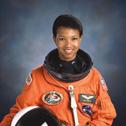
2. Explain that the people in the illustrations are astronauts. Introduce the vocabulary term astronaut by displaying the Knowledge Card. Engage students in Vocabulary Exploration. Direct attention to the image on the Knowledge Card, and explain how the astronauts are similar to the illustrations in the book.
3. Remind students that there are many different objects in outer space, such as planets, stars, and our Moon. Ask this question:
Where are the astronauts in this story going?
4. Reinforce the correct response: to the Moon.
5. Tell students that they will describe what happens when the astronauts travel to the Moon.
Definition
astronaut (n.): a person who travels in a spacecraft into outer space
1. Direct attention to the astronauts in the illustration on page 13. Remind students that the astronauts are in the rocket during this part of the story. Instruct students to listen to find out what happens after the astronauts get into the rocket. Read aloud pages 12–15, starting with “10 … 9 … 8 ….” Ask this question:
What happens after the astronauts get into the rocket?
Key Ideas
• The countdown starts.
• Flames push out of the rocket.
• Liftoff begins.
2. Remind students that they have been using conjunctions to expand ideas. Display Moonshot Events, and Echo Read the first sentence frame: After the astronauts get into the rocket, . Tell students that they can use this sentence frame to describe something that happens next, after the astronauts board the rocket.
3. Think aloud to model how to use the sentence frame to explain what happens after the astronauts get into the rocket, emphasizing the order of events.
Moonshot Events
After the astronauts get into the rocket,
After the astronauts lift off, they
After the astronauts enter outer space, they
After the astronauts land on the Moon, they
After the astronauts leave the Moon, they
4. Instruct students to repeat this sentence: After the astronauts get into the rocket, the liftoff begins. Add “liftoff begins” to the chart.
Sample Think Aloud
I can use the word after to explain that liftoff happens after the astronauts get into the rocket. This is my sentence: After the astronauts get into the rocket, the liftoff begins.
5. Direct attention to pages 12–15. Instruct students to Think–Pair–Share to use the sentence frame to explain what else happens after the astronauts get into the rocket.
Language Support
For students with beginning English proficiency, direct them to the illustrations on pages 12–13 and instruct them to select one detail to describe. Model how to combine both events into one sentence by using the conjunction after. Instruct students to repeat the sentence.
Language Expansion
For students with intermediate English proficiency, prompt them to use the conjunction and to combine two ideas in their response.
Key Ideas
• After the astronauts get into the rocket, the countdown starts.
• After the astronauts get into the rocket, flames push out of the rocket.
• After the astronauts get into the rocket, people watch the liftoff.
6. Instruct students to listen to find out what happens next. Read aloud page 16, starting with “It climbs the.” Ask this question:
What is happening?
7. Reinforce the correct response: The astronauts are lifting off.
8. Direct attention to the illustrations on pages 18–21. Ask this question:
What happens after liftoff?
Key Ideas
• The astronauts climb higher in the sky.
• The astronauts enter outer space.
9. Echo Read the second sentence frame on the chart: After the astronauts lift off, they . Instruct pairs to use the sentence frame to explain what happens after liftoff.
Key Ideas
• After the astronauts lift off, they climb higher in the sky.
• After the astronauts lift off, they enter outer space.
10. Invite a few students to share their responses.
11. Direct attention to pages 20–21. Read aloud the portion of page 20 from “They go rushing” to “in the sky.” Ask this question: What is happening in this part of the story?
12. Reinforce the correct response: The astronauts have entered outer space.
13. Tell students that they will now discuss what happens after the astronauts enter outer space. Echo Read the third sentence frame on the chart: After the astronauts enter outer space, they .
14. Instruct pairs to look closely at the illustrations on pages 26–32. Tell them to use the sentence frame to explain what happens after the astronauts enter outer space.
Key Ideas
• After the astronauts enter outer space, they fly toward the Moon.
• After the astronauts enter outer space, they see the Moon.
• After the astronauts enter outer space, they land on the Moon.
15. Direct attention to pages 32–33. Read aloud the portion of page 33 from “Armstrong, calling from” to “made for Earth.” Ask this question:
What is happening in this part of the story?
16. Reinforce the correct response: The astronauts have landed on the Moon.
17. Tell students that they will now discuss what happens after the astronauts land on the Moon. Echo Read the fourth sentence frame on the chart: After the astronauts land on the Moon, they .
18. Instruct pairs to look closely at the illustrations on pages 34–39. Tell them to use the sentence frame to explain what happens after the astronauts land on the Moon.
Key Ideas
• After the astronauts land on the Moon, they walk on the Moon.
• After the astronauts land on the Moon, they explore the Moon.
• After the astronauts land on the Moon, they see Earth from the Moon.
19. Invite a few students to share their responses.
20. Direct attention to pages 42–43. Read aloud the portion of page 43 from “They leave the” to “from the Moon.” Ask this question:
What is happening in this part of the story?
21. Reinforce the correct response: The astronauts are leaving the Moon.
22. Tell students that they will now discuss what happens after the astronauts leave the Moon. Echo Read the last sentence frame on the chart: After the astronauts leave the Moon, they .
1. Introduce the learning task. Instruct students to use the sentence frame to write one sentence about what happens after the astronauts leave the Moon.
Analyze Student Progress
Monitor: Do students describe what happens after the astronauts leave the Moon?
Offer Immediate Support: If students need additional support describing what happens after the astronauts leave the Moon, direct attention to page 47 and ask them what the astronauts are doing.
2. Invite a few students to share their responses.
Key Ideas
• After the astronauts leave the Moon, they fly back to Earth.
• After the astronauts leave the Moon, they land in the water.
3. Summarize that writers can use the conjunction after to clarify the order in which two or more events happen.
Essential Question | How do people learn about space?
Students discuss the contributions that made the Apollo 11 mission successful. As they discuss these contributions, students practice elaborating on evidence. This work prepares students to determine the central idea in lesson 20.
Discuss contributions that made the Apollo 11 mission successful.
LEARNING TASK: Share an example of a contribution that made the Apollo 11 mission a success.
In this lesson, students work on this module speaking and listening goal: Elaborate on the evidence you use.
To support students with beginning English proficiency, model how to elaborate by using images of familiar activities, such as reading a book or playing soccer. Tell students that the image is the evidence. Prompt them to elaborate by asking them to tell you more about the image. To support students with intermediate English proficiency, invite them to explain how elaboration tells more about the evidence.
contribution (n.) success (n.)
• Moonshot
• Knowledge Card: contribution
• Contributions Chart (Prologue Reference Charts appendix)
• Moonshot
• Moonshot is an unpaginated text. Number your text; begin with the title page as page 1. Pages on the left will be even, and pages on the right will be odd.
1. Ask this question:
What is something you learned to do well?
Language Support
If possible, pair students who speak the same home language, and instruct them to discuss this question.
2. Explain that students shared examples of things that were a success. Introduce the vocabulary term success by displaying the term and definition. Engage students in Vocabulary Exploration.
3. Display Moonshot. Remind students that this text is about the Apollo 11 mission. Ask this question:
Was the Apollo 11 mission a success?
4. Reinforce the correct response: yes.
5. Ask this question:
Why was the Apollo 11 mission a success?
Key Ideas
• Nobody died in space.
• The rocket did not crash.
• The astronauts walked on the Moon.
Language Expansion
For students with intermediate English proficiency, prompt them to share their knowledge as a complete thought using the term success
6. Emphasize that the mission was a success because the astronauts were trying to land on the Moon and were able to do this on their mission.
Definition success (n.): the correct or desired result of an attempt
7. Explain that the Apollo 11 mission and many of the successes that students shared required help from others. Remind students that this type of help is called a contribution. Review the vocabulary term contribution by displaying the Knowledge Card. Engage students in Vocabulary Exploration.
8. Tell students that they will discuss contributions to the Apollo 11 mission.
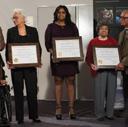
Definition contribution (n.): an action, invention, or idea a person adds to a mission or body of knowledge
20 minutes
Discuss the Success of the Apollo 11 Mission
1. Direct attention to page 11 of Moonshot. Tell students that this illustration shows one way that people made a contribution to the Apollo 11 mission—or helped make it a success. Remind students that this is an illustration of Mission Control, where people check that everything is working on the spaceship.
2. Direct attention to page 4. Tell students that this page shows many different contributions that people made to the mission. Instruct students to listen to find out what other contributions people made. Read aloud page 5, starting with “Here below there.” Ask this question:
What other contributions are mentioned on this page?
Key Ideas
• making plans
• sewing suits
• assembling a spaceship
• writing codes
3. Display the Contributions Chart. Explain that students have gathered evidence of contributions that made the Apollo 11 mission a success. Tell students that they will now elaborate on this evidence. Remind students that elaborate means “to tell more.” Explain that one way to elaborate on the evidence from the chart is to explain how the contributions made the Apollo 11 mission a success.
Keep the elaboration section of the chart covered during this part of the discussion.
4. Tell students that they will match provided elaboration to each piece of evidence. Read aloud each piece of elaboration.
5. Think aloud to model how to match an elaboration to a piece of evidence.
6. Add the number 1 next to “This helped the astronauts stay safe in the spaceship.”
7. Review the remaining evidence and elaboration sentences by Echo Reading each one. Instruct students to work with a partner to determine which elaboration supports each contribution.
8. Invite a few students to share their responses. Reinforce the correct responses:
• making plans—This helped the astronauts know how to get to the Moon.
• sewing suits—This helped the astronauts safely walk on the Moon.
• assembling a spaceship—This helped the astronauts fly to the Moon.
9. Explain that students can now use the evidence of the contributions and the elaboration to explain how the contributions made the Apollo 11 mission a success. Display and Echo Read this sentence frame: People contributed to the Apollo 11 mission by .
Sample Think Aloud I know that one contribution was checking the spaceship. I think this helped the astronauts stay safe in the spaceship.
10. Think aloud to model how to use the sentence frame to explain how one of the contributions made the Apollo 11 mission a success.
11. Instruct students to select one contribution and corresponding elaboration to share with a partner.
1. Introduce the learning task. Pair students with a new partner, and instruct them to share an example of a contribution that made the Apollo 11 mission a success.
Monitor: Do students use the contributions as evidence and elaborate on the evidence by describing how the contribution helped?
Offer Immediate Support: If students need additional support elaborating on the evidence, direct their attention to this contribution: assembling a spaceship. Then ask this question: How did making a spaceship help the mission?
2. Invite a few students to share their responses.
Key Ideas
• People contributed to the Apollo 11 mission by making plans. This helped the astronauts know how to get to the Moon.
• People contributed to the Apollo 11 mission by sewing suits. This helped the astronauts safely walk on the Moon.
• People contributed to the Apollo 11 mission by assembling a spaceship. This helped the astronauts fly to the Moon.
3. Summarize that readers can elaborate on evidence to explain more about a topic.
I said that people in Mission Control were checking the spaceship, which helped the astronauts stay safe. This is my sentence: People contributed to the Apollo 11 mission by checking the spaceship. This helped the astronauts stay safe in the spaceship.
Essential Question | How do people learn about space?
Students discuss how the Moon is described in One Giant Leap. As they share details about the Moon, students practice building on others’ ideas. This work prepares students to organize the phases of the Apollo 11 mission in lesson 22.
Describe the Moon.
LEARNING TASK: Build on others’ ideas to describe the Moon.
In this lesson, students work on this module speaking and listening goal: Build on others’ ideas.
To support students with beginning English proficiency, prompt them to build on others’ ideas while sharing about a shared interest, such as a favorite food or movie, by saying “yes, and” to build on others’ ideas. To support students with intermediate English proficiency, prompt them to ask their partner questions such as “What would you like to add?”
none
• One Giant Leap
• fine sand or similar material
STUDENTS
• One Giant Leap
• paper clip (one per student)
• One Giant Leap is an unpaginated text. Number your text; begin with the title page as page 1. Pages on the left will be even, and pages on the right will be odd.
• Gather enough paper clips for each student to have one. See the Launch section for details.
• Gather a small amount of fine sand, dirt, or a similar material to help students understand the description of the Moon’s surface. See the Learn section for details.
1. Tell students that they will build on others’ ideas in this lesson. Explain that to build on others’ ideas means to agree and add a related idea.
2. To help students build on others’ ideas, provide this sentence frame: I agree, and I will add that . Explain that students can use this sentence frame to build on others’ ideas.
3. Distribute one paper clip to each student. Invite a student to share one thing they know about the Moon. Model how to use the sentence frame to build on this student’s idea as you connect your paper clip to the student’s paper clip.
4. Instruct students to share with a partner what they know about the Moon. Prompt students to use the sentence frame and paper clips to build on their partner’s ideas.
Key Ideas
• round • in space
• revolves around Earth
5. Tell students that they will build on others’ ideas as they describe the Moon.
Describe the Moon
1. Display One Giant Leap. Remind students that this text is about the first time astronauts explored the Moon. Instruct students to listen to find out how the astronauts describe the Moon. Read aloud the portion of page 17 from “They pause to” to “endless, mysterious wasteland.” Based on your students’ needs, pause to define select words with a synonym (e.g., gaze, endless, wasteland). Ask this question: How do the astronauts describe the Moon in this part of the text?
2. Reinforce the correct response: as an endless, mysterious wasteland.
3. Explain that the astronauts might have described the Moon as mysterious because it is a mystery, or something that is unknown, and they are the first to explore the Moon.
4. Instruct students to listen for other ways the astronauts describe the Moon. Read aloud the portion of page 17 from “Whose distant hills” to “at all. Unbelievable.” Instruct students to discuss with a partner how the Moon is described in this part of the text. Prompt them to use the sentence frame to build on their partner’s ideas.
5. Invite a few students to share their responses. Prompt them to build on others’ ideas during the discussion.
Key Ideas
• hills in the distance
• no water
• no wind
• no sound
• no life
6. Direct attention to page 18. Explain that the astronauts are getting out of the spaceship to explore the Moon. Read aloud this sentence on page 19: “The surface is as fine as powdered charcoal.” Tell students that surface means “the outside part or layer of something.” Invite students to touch the top of their desk or other surface to understand the term’s meaning.
7. Ask this question:
How do the astronauts describe the surface of the Moon?
8. Reinforce the correct response: fine as powdered charcoal.
9. Explain that this means that the surface of the Moon is covered in very small pieces of material. Tell students that the material is like sand or dirt. Display the sand or other material. Invite students to explore the texture of the material to understand this description.
10. Instruct students to describe the Moon in this part of the story to their partner. Invite a few students to share their responses.
Key Ideas
• covered in material that feels like powdered charcoal
• covered in material that feels like dirt
• covered in material that feels like sand
11. Direct attention to the illustration on pages 20–21. Tell students that the astronauts are continuing to explore the Moon. Read aloud this portion of page 20: “Like two boys bouncing on a trampoline.” Explain that a trampoline is something that people can jump on to bounce high in the air.
Language Support
For students with beginning English proficiency, show them an image of a trampoline. Make the connection to something that may be familiar to students, such as an inflatable bounce house or a trampoline park.
12. Instruct pairs to describe the Moon in this part of the story. Invite a few students to share their responses.
Key Ideas
• like a trampoline
• like a bounce house
13. Explain that the Moon feels like a trampoline because the gravity on the Moon is less than the gravity on Earth. Explain that gravity is what keeps things on the ground on Earth.
Language Expansion
For students with intermediate English proficiency, invite them to share a sentence that describes the Moon and includes the term gravity.
14. Direct attention to pages 22–23. Tell students that they will learn about the rocks on the Moon’s surface. Read aloud the portion of page 22 from “Some are slippery” to “or even purple.”
15. Instruct students to discuss with their partner what they learned about the Moon in this part of the story. Invite a few students to share their responses.
Key Ideas
• There are rocks that sparkle.
• There are rocks that look tan.
• There are rocks that look purple.
Language Support
For students with beginning English proficiency, show them an image of objects that sparkle (e.g., glitter, diamonds).
1. Introduce the learning task. Tell students that they will follow the instructional routine Mix and Mingle to discuss the Moon. To prepare for the routine, instruct students to determine one thing they have learned about the Moon from the discussion.
2. Remind students to use this sentence frame to build on others’ ideas: I agree, and I will add that . Lead students through a Mix and Mingle.
Monitor: Do students describe the Moon and use the sentence frame to build on their partner’s idea?
Offer Immediate Support: If students need additional support describing the Moon, direct attention to the illustration on pages 20–21. Ask this question: How did the astronauts describe the Moon in this portion of the text?
3. Invite a few students to share what they remembered about the Moon and what they learned about the Moon from their partners.
Key Ideas
• There is no water, wind, or sound.
• The surface is like powdered charcoal.
• The Moon has rocks that sparkle.
• It is like a trampoline.
4. Summarize that readers can build on others’ ideas to contribute to knowledge about a topic.
Essential Question | How do people learn about space?
Students examine nonliteral language in One Giant Leap. As they deconstruct the words and phrases, students practice building on others’ ideas. This work prepares students to analyze literal and nonliteral language in lesson 23.
Examine nonliteral language in One Giant Leap. LEARNING TASK: Explain an example of nonliteral language in One Giant Leap.
In this lesson, students work on this module speaking and listening goal: Build on others’ ideas.
To support students with beginning English proficiency, model how to build on a partner’s idea and instruct students to echo your sentence. To support students with intermediate English proficiency, prompt them to build on their partner’s ideas by adding an idea and then supporting it with evidence from the text.
nonliteral (adj.)
TEACHER
• One Giant Leap
• Earth photograph (digital platform)
STUDENTS
• One Giant Leap
• Nonliteral Language Practice (Prologue Student Resources appendix)
• One Giant Leap is an unpaginated text. Number your text; begin with the title page as page 1. Pages on the left will be even, and pages on the right will be odd.
1. Display the Earth photograph. Tell students that this is a picture of Earth from space. Instruct students to Think–Pair–Share to answer this question: Does Earth look like a pizza, a marble, or a flying disk?
2. Reinforce the correct response: a marble.
3. Display and read aloud this sentence: The earth is a marble in the sky.
4. Explain that this is an example of nonliteral language to describe Earth.
5. Introduce the vocabulary term nonliteral by displaying the term and definition. Engage students in Vocabulary Exploration.
6. Tell students that they will explain nonliteral language that appears in One Giant Leap.
1. Display One Giant Leap. Remind students that this text is about the Apollo 11 mission to the Moon. Tell students that the author uses nonliteral language to describe what happens during the mission and to help readers create pictures in their mind of what the astronauts did or saw in space. Direct attention to pages 26–27. Remind students that the astronauts are inside the spaceship looking out the window during this part of the story.
Definition nonliteral (adj.): involving a meaning that is not ordinary or usual
2. Display Nonliteral Language Practice, and distribute copies to students. Direct attention to number 1. Explain that these sentences describe what the astronauts see when they look out the window in this part of the book.
3. Tell students that they will listen to the sentences and create a picture in their mind of what is being described. Invite students to close their eyes as you read aloud the sentences.
Language Support

For students with beginning English proficiency, explain the meaning of eyeball by pointing to your eyes and instructing students to say “eyeball.”
4. Direct attention to the word stares in the first sentence. Explain that stare means “to look at something for a long time.” Model how to stare at an object. Instruct students to repeat this word as they stare at an object.
5. Echo Read the sentences. Instruct students to Think–Pair–Share to discuss what they pictured in their mind.
Language Support
If possible, pair students who speak the same home language, and instruct them to discuss what they picture.
6. Direct attention to the box under the sentences. Explain that students will draw a sketch of what they pictured in their mind.
7. Invite a few students to share their sketches. Emphasize that this nonliteral language says that Earth seems like an eyeball when seen from space.
8. Instruct students to discuss this question with their partner, and remind them to build on their partner’s ideas:
How is Earth similar to a blue eyeball?
Language Expansion
For students with intermediate English proficiency, prompt them to use content vocabulary such as planet in their response (e.g., this is nonliteral language because Earth is a planet and cannot stare).
9. Invite a few students to share their responses.
Key Ideas
• Earth is round, and an eyeball is also round.
• Earth looks mostly blue from space.
10. Ask this question:
Does Earth stare like an eyeball?
11. Reinforce the correct response: no. Emphasize that the fact that Earth does not actually stare is a reason why the sentence is an example of nonliteral language.
12. Instruct students to discuss this question with their partner, building on their partner’s ideas:
How is Earth like an eye that stares?
Key Ideas
• Earth is round like an eyeball, and we can imagine it staring at those who look at it from space.
• Earth is like an unblinking eye; it has no lids.
• Earth is like an eye that cannot look away. It is always there in space.
13. Tell students that they will look at another example from the text. Direct attention to number 2. Explain that this sentence describes what happens as the spaceship lands on the Moon. Invite students to close their eyes as you read aloud the sentence.
14. Echo Read the sentence. Instruct students to Think–Pair–Share to discuss what they pictured in their mind.
5 minutes
1. Introduce the learning task. Instruct students to work with a partner to explain why the text compares Eagle’s movements to a dance. Prompt students to build on their partner’s ideas as they share.
Monitor: Do students explain how Eagle’s movements during its descent were similar to those of a person dancing?
Offer Immediate Support: If students need additional support explaining the similarities between Eagle’s movements and a dance, invite them to act out dipping and zigzagging. Then invite them to act out dancing. Ask this question: Are these movements similar?
2. Invite two students to share their responses. Prompt students to build on others’ ideas as they share.
Key Ideas
• Eagle zigs, zags, and dips as some people do when they dance.
• As Eagle moves, its shadow moves, like two partners in a dance.
3. Summarize that nonliteral language helps readers visualize what the text describes.
Essential Question | How do people learn about space?
Students examine Moonshot and One Giant Leap to describe challenges faced by the astronauts on the Apollo 11 mission. As they discuss the challenges, students practice using the subordinating conjunction because. This work prepares students to discuss the central idea in Moonshot and One Giant Leap in lesson 25.
Describe challenges of the Apollo 11 mission.
LEARNING TASK: Explain a challenge from the Apollo 11 mission.
In this lesson, students work on this module language goal: Use a subordinating conjunction to combine ideas.
To support students with beginning English proficiency, ask them to choose between two familiar topics (e.g., sea or space, mystery or adventure). Then prompt students to answer why they chose it by using this sentence frame: I choose because . To support students with intermediate English proficiency, encourage pairs to ask and answer why they like a specific activity (e.g., Partner A asks, “Do you like to ?” and Partner B says, “I like to because .”).
Vocabulary challenge (n.)
• Moonshot
• One Giant Leap STUDENTS
• Moonshot
• One Giant Leap
• Moonshot is an unpaginated text.
Number your text; begin with the title page as page 1. Pages on the left will be even, and pages on the right will be odd.
• One Giant Leap is an unpaginated text.
Number your text; begin with the title page as page 1. Pages on the left will be even, and pages on the right will be odd.
1. Instruct students to Think–Pair–Share to answer this question: What is something difficult that you learned to do?
Teacher Note
Provide a grade-appropriate example (e.g., learning to write your name) if students are unable to answer this question.
2. Explain that students described something that was a challenge. Introduce the vocabulary term challenge by displaying the term and definition. Engage students in Vocabulary Exploration.
3. Display and read aloud this sentence frame: is a challenge. Model how to use the sentence frame to identify a challenge.
4. Pair students and instruct them to share their challenges by using the sentence frame.
5. Tell students that they will describe some of the challenges that happen on the Apollo 11 mission.
1. Display Moonshot and One Giant Leap. Remind students that both books are about the Apollo 11 mission. Explain that this mission was the first time astronauts traveled to the Moon and that there were many challenges in making this mission a success.
2. Tell students that they will find evidence of the challenges and practice explaining why each was a challenge.
Definition challenge (n.): a difficult task or problem; something that is hard to do
3. Display and read aloud this sentence frame: is a challenge because . Direct attention to because in the sentence. Tell students that because is used to combine two ideas and provide an explanation.
4. Think aloud to model how to use the sentence frame.
5. Tell students that they will identify a challenge faced during the mission. Direct attention to page 24 of Moonshot. Remind students that the astronauts are eating. Instruct students to listen for challenges that are mentioned in this part of the story.
6. Read aloud the portion of page 24 from “Here, where everything” to “the peanut cubes.” Ask this question:
What challenges are mentioned in this part of the story?
Language Support
For students with beginning English proficiency, direct attention to the illustration on page 24. Ask these questions:
• What do you see floating?
• What is the astronaut’s hand trying to do?
7. Reinforce the correct responses:
• Everything floats.
• Some skill is needed to eat a meal.
• Soup is dry as dust.
Sample Think Aloud
I know that this was the first time astronauts visited the Moon. I think that people did not know much about the Moon, which made preparing a challenge. I can say, “Preparing to visit the Moon was a challenge because people had never been to the Moon and did not know how to prepare.”
8. Emphasize that eating in space is much different from eating on Earth. Direct attention to the illustration on page 24. Ask this question:
Why is eating in space a challenge?
9. Reinforce the correct responses:
• Eating in space is a challenge because everything floats.
• Eating in space is a challenge because some skill is needed to eat a meal.
• Eating in space is a challenge because soup is dry as dust.
10. Direct students to One Giant Leap. Tell students that they will discuss a challenge mentioned in this text. Direct attention to pages 22–23. Remind students that the astronauts are collecting rocks in this part of the story.
11. Instruct students to listen for challenges that are mentioned as the astronauts collect rocks. Read aloud the portion of page 22 from “Armstrong checks the” to “slippery with dust.” Instruct students to Think–Pair–Share to answer this question:
What challenges are mentioned in this part of the story?
12. Reinforce the correct responses:
• They only have two hours.
• The rocks are slippery.
13. Instruct pairs to answer this question:
Why is collecting rocks a challenge?
Prompt them to use the sentence frame during their discussion.
14. Reinforce the correct responses:
• Collecting rocks is a challenge because the astronauts only have two hours.
• Collecting rocks is a challenge because the rocks are slippery.
Language Expansion
For students with intermediate English proficiency, encourage them to evaluate each other’s responses by asking this question: Which reason is a bigger challenge when collecting rocks?
15. Invite a few students to share their responses.
16. Explain that students will work in small groups to find additional challenges in one of these texts. Form two groups, and distribute Moonshot to one and One Giant Leap to the other. Direct each group to the portion of their assigned text.
• Moonshot: page 40
• One Giant Leap: pages 20–21
Teacher Note
Assign Moonshot to students reading above grade level, as they may need to read some text to identify the challenges from this part of the story. Alternatively, read aloud the portion of page 40 from “Armstrong and Aldrin” to “full of dust.”
17. Instruct students to answer these questions with their group:
What are the astronauts doing?
Why might this be a challenge?
1. Introduce the learning task. Instruct students to work with a partner who read a different text to explain the challenge from their text. Prompt students to use this sentence frame during their discussion: is a challenge because .
Analyze Student Progress
Monitor: Do students describe a challenge the astronauts face in their assigned text?
Offer Immediate Support: If students need additional support explaining the challenge, instruct them to first describe what is happening in their assigned text. Then prompt them to explain why this is a challenge.
2. Invite a few students to share their responses.
Key Ideas
• Walking on the Moon is a challenge because of the Moon’s lesser gravity.
• Walking on the Moon is a challenge because the Moon is like a trampoline.
• Sleeping in the spaceship is a challenge because it is cold.
• Sleeping in the spaceship is a challenge because it is crowded.
3. Summarize that writers can use the conjunction because to combine two ideas and provide an explanation.
Essential Question | How do people learn about space?
Students describe different phases of the Apollo 11 mission. As they discuss each phase, students practice using the subordinating conjunction when to expand ideas. This work prepares students to express knowledge gained from Moonshot and One Giant Leap in lesson 26.
Describe different phases of the Apollo 11 mission.
LEARNING TASK: Write a sentence that describes what happens when the astronauts explore the Moon, using the conjunction when.
In this lesson, students work on this module language goal: Use a subordinating conjunction to expand ideas.
To support students with beginning English proficiency, use this sentence frame to model how to use the word when to describe two events that happen at the same time during common school activities: When , I . To support students with intermediate English proficiency, provide examples of two events that happen at the same time. Prompt students to connect the two events in a sentence with the conjunction when.
explore (v.)
• Moonshot
• One Giant Leap STUDENTS
• One Giant Leap
• Moonshot is an unpaginated text.
Number your text; begin with the title page as page 1. Pages on the left will be even, and pages on the right will be odd.
• One Giant Leap is an unpaginated text.
Number your text; begin with the title page as page 1. Pages on the left will be even, and pages on the right will be odd.
1. Display Moonshot and direct attention to page 33. Ask this question:
What is the family doing?
Key Ideas
• watching television
• celebrating
2. Summarize that the family is watching the astronauts land on the Moon for the first time. Ask this question:
How do you think the family feels?
Key Ideas
• happy
• proud
• excited
3. Remind students that they can use when to connect events that happen at the same time. Model how to use when to describe what is happening. Instruct students to repeat this sentence: When the astronauts land on the Moon, the family feels happy.
4. Pair students and instruct pairs to complete this sentence frame: When the astronauts land on the Moon, the family .
5. Invite a few students to share their responses.
Key Ideas
• When the astronauts land on the Moon, the family watches the event on television.
• When the astronauts land on the Moon, the family celebrates.
• When the astronauts land on the Moon, the family feels excited.
6. Tell students that they will describe events that happen during the Apollo 11 mission.
20 minutes
Phases of the Apollo 11 Mission
1. Display Moonshot and One Giant Leap. Remind students that both books are about the Apollo 11 mission. Explain that students will look at Moonshot to discuss what happens before the astronauts enter outer space.
2. Direct attention to page 17 of Moonshot. Ask this question: What is happening in this part of the book?
3. Reinforce the correct response: The rocket is rising into the air.
4. Tell students that this part of the mission is the ascent. Explain that ascent means “rising” or “going up.” Say the term aloud, and instruct students to repeat it. Demonstrate the term’s meaning by using a gesture (e.g., moving your hand up toward the ceiling).
5. Display and read aloud this sentence frame: When the rocket begins its ascent, . Tell students that they will use this sentence frame and details from the text to explain what happens when the rocket begins its ascent.
6. Instruct students to listen to find out what happens when the rocket begins its ascent. Read aloud page 16, starting with “It climbs the.” Ask this question:
What happens when the rocket begins its ascent?
Prompt students to use the sentence frame as they answer the question.
Key Ideas
• When the rocket begins its ascent, it shakes the air.
• When the rocket begins its ascent, it shakes the earth.
• When the rocket begins its ascent, it makes a mighty roar.
7. Instruct students to listen to find out what else happens when the rocket begins its ascent. Read aloud the portion of page 18 from “Armstrong, Collins, Aldrin” to “explode, engines ignite.” Instruct pairs to answer this question:
What else happens when the rocket begins its ascent?
Language Support
For students with beginning English proficiency, explain that shed means “to get rid of something.” Direct attention to the loose parts in the illustration on page 18 to help students understand.
Key Ideas
• When the rocket begins its ascent, the astronauts are pressed against their seats.
• When the rocket begins its ascent, it sheds its parts.
• When the rocket begins its ascent, engines ignite.
8. Direct students to One Giant Leap. Tell students that they will now discuss what happens in this book during a different part of the mission. Direct attention to page 7 of One Giant Leap. Ask this question:
What is happening in this part of the book?
9. Reinforce the correct response: The rocket is preparing to land on the Moon.
10. Tell students that this part of the mission is the descent. Explain that descent means “lowering” or “going down.” Say the term aloud, and instruct students to repeat it. Demonstrate the term’s meaning by using a gesture (e.g., moving your hand down toward the floor). Tell students that ascent and descent are opposites.
11. Display and read aloud this sentence frame: When the rocket begins its descent, . Tell students that they will use this sentence frame and details from the text to explain what happens when the rocket begins its descent.
12. Instruct students to listen to find out what happens when the rocket begins its descent. Read aloud the portion of page 8 from “The astronauts look” to “Their eyes widen.” Instruct pairs to answer this question:
What happens when the rocket begins its descent?
Language Expansion
For students with intermediate English proficiency, encourage them to use the conjunctions while and as to describe what happens when the rocket begins its descent.
Key Ideas
• When the rocket begins its descent, the astronauts look outside.
• When the rocket begins its descent, the astronauts stand up.
• When the rocket begins its descent, the astronauts’ eyes widen.
13. Tell students that they will now discuss what happens during a different part of the mission. Direct attention to page 18. Ask this question: What is happening during this part of the book?
14. Reinforce the correct response: The astronauts are getting out of the rocket.
15. Tell students that the astronauts are preparing to explore the Moon. Introduce the term explore by displaying the term and definition. Engage students in Vocabulary Exploration.
16. Explain that students will work with a partner to find out what happens when the astronauts explore the Moon.
17. Display and read aloud this sentence frame: When the astronauts explore the Moon, . Tell students that they can use this sentence frame to explain what happens when the astronauts explore the Moon.
18. Distribute One Giant Leap to pairs. Instruct students to use pages 20–25 to discuss what happens when the astronauts explore the Moon.
Definition explore (v.): to look at something in a careful way to learn more about it
1. Introduce the learning task. Instruct students to write a sentence that describes what happens when the astronauts explore the Moon, using the conjunction when.
Analyze Student Progress
Monitor: Do students use the conjunction when to explain what happens when the astronauts explore the Moon?
Offer Immediate Support: If students need additional support using the conjunction when, instruct them to first identify the illustration that they want to discuss. Then ask them this question: What is happening in this illustration?
2. Invite a few students to share their responses.
Key Ideas
• When the astronauts explore the Moon, they bounce like kangaroos.
• When the astronauts explore the Moon, they collect rocks.
• When the astronauts explore the Moon, they place a flag on the Moon.
3. Summarize that students can use the conjunction when to explain that two events happen at the same time.

Essential Question | How do people learn about space?
Students discuss key events in Dorothy Vaughan’s life. As they share these details, students practice using conjunctions to write in simple, compound, and complex sentences. This work prepares students to identify key details about the work of Dorothy Vaughan, Mary Jackson, Katherine Johnson, and Christine Darden in lesson 28.
Describe key events in Dorothy Vaughan’s life.
LEARNING TASK: Write sentences using a conjunction to describe key events in Dorothy Vaughan’s life.
In this lesson, students work on this expectation for the End-of-Module Task: Write in simple, compound, and complex sentences.
To support students with beginning English proficiency, model how to write because in the beginning and middle of a sentence. Use these sentence frames: I am because . Because , I am . Practice this strategy with even though. To support students with intermediate English proficiency, encourage them to work with a partner to write sentences about themselves, using conjunctions they’ve learned (e.g., because, even though, and but).
Vocabulary
mathematician (n.)
• Hidden Figures
• Knowledge Card: mathematician
STUDENTS
• Sentence Strategies for Module 2 (Learn book, Writing)
• Dorothy Vaughan Conjunction Practice (Prologue Student Resources appendix)
• Hidden Figures is an unpaginated text. Number your text; begin with the title page as page 1. Pages on the left will be even, and pages on the right will be odd.
1. Display the front cover of Hidden Figures. Ask this question:
What is this book about?
Key Ideas
• the space race
• women who were good at math
• four Black women who made history
2. Direct attention to and read aloud the subtitle: The True Story of Four Black Women and the Space Race. Remind students that the book is mostly about the four women on the cover who are mathematicians.
3. Introduce the vocabulary term mathematician by displaying the Knowledge Card. Engage students in Vocabulary Exploration.
Language Support
The term mathematician has a Spanish cognate: matemático. Share this language connection with students whose home language is Spanish.
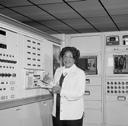
4. Direct attention to the word expert in the definition. Explain that experts are people who are really good at something. Remind students that the four women in Hidden Figures were really good at math.
5. Tell students that they will discuss details about the life of one of the women from Hidden Figures.
Definition
mathematician (n.): a person who is an expert in mathematics
1. Remind students that they have been using conjunctions to connect ideas. Display Sentence Strategies for Module 2, and direct students to the page in their Learn book. Choral Read the examples of coordinating conjunctions and subordinating conjunctions. Tell students that the author of Hidden Figures uses some of these conjunctions in the text.
2. Tell students that they will identify conjunctions that the author uses to describe the life of Dorothy Vaughan. Instruct students to listen for a conjunction as you read aloud. Read aloud the portion of page 6 from “Because Dorothy was” to “as a computer.” Explain that in this context, a computer is a person who works with numbers, making calculations and solving math problems. Ask this question: What conjunction did you hear?
Language Support
For students with beginning English proficiency, read the sentence twice, stressing the conjunction. Repeat as needed throughout the lesson.
3. Reinforce the correct response: because.
4. Remind students that the events from this book occurred many years ago. Explain that Black and White people did not work together back then. Reread the portion of page 6 from “Because Dorothy was” to “as a computer.” Ask this question: Why did people think that Dorothy would not be able to get a job as a computer?
5. Reinforce the correct response: because she was a Black woman.
6. Explain that the conjunction because introduces the reason people thought Dorothy would not get a job as a computer: Dorothy was a Black woman. Think aloud to model how because connects the two ideas about Dorothy.
7. Explain that Dorothy eventually got a job as a computer. Instruct students to listen for a conjunction as they find out what happened once Dorothy got a job as a computer. Read aloud page 9, starting with “Even though they.” Ask this question:
What conjunction did you hear?
8. Reinforce the correct response: even though.
9. Ask this question:
What two ideas does even though connect in this sentence?
10. Reinforce the correct responses:
• The Black and White computers worked on the same assignments.
• The Black and White computers were separated.
11. Explain that the conjunction even though connects two contrasting, or different, ideas. Tell students that this sentence shows how things were different for Black computers, such as Dorothy, and White computers.
Language Expansion
For students with intermediate English proficiency, remind them that the subordinating conjunctions even though and although work in similar ways. Encourage students to use although interchangeably with even though when discussing Dorothy’s life.
Sample Think Aloud Dorothy was a Black woman. People thought she could not get a job as a computer. I can connect these two ideas: Because Dorothy was a Black woman, people thought she could not get a job as a computer.
12. Remind students that Dorothy first wanted to become a computer to help the United States during the war. Tell students that they will listen to find out what happens after the war. Instruct students to listen for a conjunction as you read aloud the portion of page 10 from “America won the” to “faster and safer.” Ask this question:
What conjunction did you hear?
13. Reinforce the correct response: but.
14. Explain that the conjunction but connects the idea that America won the war with the idea that Dorothy stayed on at her job. Ask this question:
How does the conjunction but connect the two ideas in this sentence?
15. Reinforce the correct response: It shows that they are differing ideas. Explain that instead of looking for a different job after the war was over, Dorothy decided to continue working as a computer.
16. Explain that but and even though are both used when ideas are contrasting, or different; however, but is typically used in the middle of a sentence.
17. Tell students that they will use the conjunctions because, even though, and but to complete sentences about Dorothy.
1. Display the Dorothy Vaughan Conjunction Practice, and distribute copies to students. Echo read the sentences.
2. Introduce the learning task. Instruct students to complete the Dorothy Vaughan Conjunction Practice.

Analyze Student Progress
Monitor: Do students accurately use because, but, and even though to complete the sentences?
Offer Immediate Support: If students need additional support determining the correct conjunction, instruct them to first identify the two ideas in the sentences. Then ask these questions to help students determine the relationship between the ideas: Are these ideas the same or different? Does one of these ideas explain the other?
3. Invite a few students to share their sentences. Reinforce the correct responses:
• Dorothy was a high school math teacher, but she wanted a job as a computer.
• Even though Dorothy was really good at math, she had a hard time getting a job as a computer.
• Because Dorothy was good at her job, she became NASA’s first Black supervisor.
4. Summarize that conjunctions can be used to connect ideas and express the relationship between the ideas.
Essential Question | How do people learn about space?
Students examine President Kennedy’s words in a speech to Congress. As they determine the meaning of President Kennedy’s words, students practice writing simple, compound, and complex sentences. This work prepares students to examine relationships among key events in Hidden Figures in lesson 29.
Examine President Kennedy’s words in a speech.
LEARNING TASK: Write two or three sentences that explain what President Kennedy’s speech was about.
In this lesson, students work on this expectation for the End-of-Module Task: Write in simple, compound, and complex sentences.
To support students with beginning English proficiency, provide different examples of subjects and predicates and ask them to write a simple sentence in the correct order. To support students with intermediate English proficiency, encourage them to write simple sentences about themselves, using the words commit and achieve.
Vocabulary none
Materials
TEACHER
• Hidden Figures
STUDENTS
• President Kennedy’s Words (Prologue Student Resources appendix)
• Hidden Figures is an unpaginated text. Number your text; begin with the title page as page 1. Pages on the left will be even, and pages on the right will be odd.
1. Ask this question:
What does the principal of the school do?
Key Ideas
• helps students
• helps teachers
• keeps the school safe
2. Display Hidden Figures. Direct attention to page 21. Explain that the man in the illustration is John F. Kennedy, and he was president of the United States. Tell students that a principal and the president are similar because they are both in charge of a group of people. Explain that both a principal and the president work to keep things in order and make sure that people are safe.
3. Explain that President Kennedy is giving a speech in this illustration. Direct attention to the television, and tell students that President Kennedy’s speech was very important and that many people watched it.
4. Ask this question:
When does the principal of the school give speeches?
Key Ideas
• during ceremonies
• on the first day
• during an open house
5. Explain that both the principal of a school and the president of the United States often give speeches about important things or events.
6. Tell students that they will look closely at President Kennedy’s words in his speech about space.
1. Display President Kennedy’s Words, and distribute copies to students. Explain that these words are from one of President Kennedy’s speeches. Tell students that they will first listen to the speech and then write what the speech means. Read aloud lines one through five of the speech.
2. Direct attention to the first line. Echo Read this line. Ask this question: Who is the I in this sentence?
3. Reinforce the correct response: President Kennedy. Explain that the I refers to President Kennedy because these are his words, and he was sharing what he believed. Instruct students to add President Kennedy believes to the third column next to line one on the handout.
4. Direct attention to the second line. Echo Read this line. Explain that nation is another word for country. Ask this question:
What country was President Kennedy in charge of?
5. Reinforce the correct response: the United States of America. Instruct students to add the United States of America should to the third column.
6. Direct attention to the third line. Echo Read this line. Explain that another word for commit is promise. Instruct students to add promise to the third column.
Language Support
For students with beginning English proficiency, model how to make a promise. Then prompt students to share a promise they have made to help them make a personal connection to President Kennedy’s words.
7. Direct attention to the fourth line. Echo Read this line. Remind students that a goal is something a person wants to be able to do. Instruct students to Think–Pair–Share to answer this question:
What do you think it means to achieve a goal?
Language Expansion
For students with intermediate English proficiency, encourage them to share an example of one of their personal goals when discussing what they think achieve a goal means.
8. Reinforce the correct response: to make the goal happen. Instruct students to add make the goal happen to the third column. Tell students that they will discuss the goal later in the lesson.
9. Direct attention to the fifth line, and Echo Read it. Explain that a decade is a 10-year period. Tell students that decades begin with years ending in zero (e.g., 1960) and end with years ending in nine (e.g., 1969). Explain that President Kennedy gave his speech in 1961, and he wanted this goal to be met before the end of the 1960s. Instruct students to add before the end of the 1960s to the third column.
10. Tell students that they have created a summary of this part of President Kennedy’s speech. Direct attention to the third column. Choral Read this summary: President Kennedy believed that the United States of America should promise to reach the goal before the end of the 1960s.
11. Direct attention to the sixth line. Tell students that this line explains the goal mentioned in the fourth line. Read aloud the sixth line. Ask this question:
What was the goal?
12. Reinforce the correct response: land a man on the Moon and return him safely to Earth.
1. Introduce the learning task. Direct attention to the Learning Task section of President Kennedy’s Words. Instruct students to work with a partner to write two or three sentences that answer this question: What was President Kennedy’s speech about?
Analyze Student Progress
Monitor: Do students explain that President Kennedy’s speech was about his promise to land a man on the Moon and return him safely?
Offer Immediate Support: If students need additional support explaining what President Kennedy’s speech was about, direct attention to students’ annotations on the handout and ask these questions: What did President Kennedy want the United States to do? What was the goal? Then invite them to orally rehearse their sentences before writing them.
2. Invite a few students to share their sentences.
Key Ideas
• President Kennedy said that he wanted the United States of America to make a promise. (Shetterly 21)
• The promise was to make a goal happen.
• The goal was to land a man on the Moon and return him safely to Earth.
3. Summarize that readers can examine words to help them understand the meaning of a text.
Essential Question | How do people learn about space?
Students explain the meaning of hidden figures. As they discuss Dorothy Vaughan’s, Mary Jackson’s, and Katherine Johnson’s experiences as hidden figures, students practice taking turns with others when speaking. This work prepares students to determine the central idea in lesson 31.
Analyze the title Hidden Figures.
LEARNING TASK: Explain how Dorothy Vaughan, Mary Jackson, and Katherine Johnson were hidden figures.
In this lesson, students work on this module speaking and listening goal: Take turns with others when speaking.
To support students with beginning English proficiency, encourage them to use a nonverbal signal (e.g., a thumbs-up) when they finish speaking to signal that it’s their partner’s turn to speak. This allows the partner to continue the conversation without interruption. To support students with intermediate English proficiency, encourage them to work with a partner to agree on an appropriate cue when they finish speaking (e.g., saying, “your turn”).
hidden (adj.)
TEACHER
• Hidden Figures
• Heavy Rainfall photograph (digital platform)
STUDENTS
• none
• Hidden Figures is an unpaginated text. Number your text; begin with the title page as page 1. Pages on the left will be even, and pages on the right will be odd.
1. Display the Heavy Rainfall photograph. Instruct students to Think–Pair–Share to answer this question:
What is happening in this photograph?
Key Ideas
• It is raining.
• People are using umbrellas.
• People are walking in the rain.
2. Tell students that the photograph shows it is raining a lot. Explain that there is a phrase people use in English to describe how much it is raining.
3. Display and read aloud this sentence: It is raining cats and dogs outside. Ask this question:
Do cats and dogs fall from the sky when it rains?
4. Reinforce the correct response: no.
5. Explain that this sentence uses nonliteral language to describe how much it is raining. Remind students that nonliteral means “involving a meaning that is not ordinary or usual.”
6. Tell students that they will analyze the literal and nonliteral meaning of the title Hidden Figures.
1. Display the cover for Hidden Figures. Read aloud the title of the book. Tell students that they will first discuss the literal, or usual, meaning of these words.
2. Introduce the vocabulary term hidden by displaying the term and definition. Engage students in Vocabulary Exploration. Hide the book under a table or in another location to support students’ understanding of the term.
3. Direct attention to the term figures in the title. Explain that figures are people. Ask this question:
Who are the figures, or people, in this book?
Key Ideas
• Black mathematicians
• Dorothy Vaughan
• Mary Jackson
• Katherine Johnson
• Christine Darden
4. Remind students that the title Hidden Figures refers to the four women on the front cover. Direct attention to several pages from the book. Ask this question:
Are the women hidden?
5. Reinforce the correct response: no. Tell students that the women do not seem like they are hidden because they can be seen in the pictures. Explain that students will take a closer look at the text to see how these women were hidden.
Definition hidden (adj.): not seen or known
6. Display pages 16–17. Tell students that these pages are about Katherine Johnson. Remind students that Katherine’s job was to test airplanes to make sure that they would not crash. Explain that Katherine was really good at her job and helped prevent many crashes.
7. Instruct students to listen for details about how Katherine was hidden. Read aloud the portion of page 16 from “Katherine wanted to” to “else—maybe better.” Ask this question:
What did Katherine want?
8. Reinforce the correct response: to attend meetings with other experts.
9. Ask this question:
Why wasn’t Katherine allowed to attend the meetings?
10. Reinforce the correct response: Women were not allowed to attend.
11. Direct attention to the vocabulary term hidden and its definition. Think aloud to model explaining how and why Katherine was hidden.
12. Direct attention to pages 8–9. Tell students that these pages are about Dorothy Vaughan. Remind students that Dorothy worked as a computer for NASA, which means that she did math.
13. Instruct students to listen for details about how Dorothy was hidden. Read aloud pages 8–9, starting with “At work, blacks.” Instruct students to Think–Pair–Share to answer this question:
How was Dorothy hidden?
14. Reinforce the correct response: She had to work in a separate location. Explain that Dorothy may have felt hidden even though the illustration shows that Black and White computers saw each other. Tell students that Black and White computers were in separate buildings and probably did not see each other that often.
Sample Think Aloud I know that hidden means “not seen or known.” I think that Katherine was not seen in the meetings and that the other experts may not have known about her work. I think Katherine was hidden because she was a woman.
15. Ask this question:
Why was Dorothy hidden?
16. Reinforce the correct response: because she was a Black computer.
17. Direct attention to pages 12–13. Tell students that these pages are about Mary Jackson. Instruct students to listen for details about how Mary was hidden. Read aloud the portion of page 12 from “Mary wanted to” to “classes were taught.” Instruct students to Think–Pair–Share to answer these questions:
How was Mary hidden?
Why was she hidden?
Language Support
For students with beginning English proficiency, direct attention to the illustration on pages 12–13. Ask these questions: Where does Mary want to go? Where is Mary? Where are the men?
Language Expansion
For students with intermediate English proficiency, encourage them to combine their response into one sentence by using the conjunction because. If necessary, provide this sentence frame: Mary because
18. Reinforce the correct responses:
• how—Mary was not allowed to be an engineer nor was she allowed to attend classes.
• why—She was a woman, and she was Black.
1. Introduce the learning task. Instruct students to share answers to this prompt with a partner: Explain how Dorothy Vaughan, Mary Jackson, and Katherine Johnson were hidden figures. Remind students to take turns with their partner as they share.
Analyze Student Progress
Monitor: Do students explain that the women were hidden because they were Black and female?
Offer Immediate Support: If students need additional support explaining why the women were hidden figures, direct attention to the pages about one of the women. Then ask these questions: What could she not do? Where could she not go?
2. Invite a few students to share their responses.
Key Ideas
• Black computers were often kept separate from White computers.
• The women were often not allowed to do the same things as men.
• The women worked hard and were successful mathematicians, yet they were not celebrated until recently.
3. Summarize that understanding nonliteral language helps readers grasp the meaning and message of a text.
Essential Question | How do people learn about space?
Students review and use module terms to discuss space exploration. As they discuss space exploration, students practice taking turns with others when speaking. This work prepares students to collect evidence about how mathematicians explored space in lesson 32.
Discuss how astronomers, astronauts, and mathematicians explore space.
LEARNING TASK: Use module terms to describe how astronomers, astronauts, or mathematicians explore space.
In this lesson, students work on this module speaking and listening goal: Take turns with others when speaking.
To support students with beginning English proficiency, encourage them to ask their partner if they would like to go first. To support students with intermediate English proficiency, tell them to use the phrase my final point to signal that they are about to finish speaking.
astronaut (n.)
astronomer (n.)
calculate (v.)
mathematician (n.)
mission (n.)
observe (v.)
trajectory (n.)
• Hidden Figures
• One Giant Leap
• Starry Messenger
• all module 2 Knowledge Cards
• Hidden Figures
• One Giant Leap
• Starry Messenger
• Hidden Figures is an unpaginated text. Number your text; begin with the title page as page 1. Pages on the left will be even, and pages on the right will be odd.
• One Giant Leap is an unpaginated text. Number your text; begin with the title page as page 1. Pages on the left will be even, and pages on the right will be odd.
• Starry Messenger is an unpaginated text. Number your text; begin with the title page as page 1. Pages on the left will be even, and pages on the right will be odd.
1. Remind students that they have been practicing taking turns with others when speaking. Tell students that they will practice this goal as they discuss what they have learned about space during this module.
2. Display the Knowledge Card for space without reading the definition. Form groups of three. Instruct students to take turns answering this question with their group:
What have you learned about space?
Language Support
If possible, pair students who speak the same home language, and instruct them to discuss this question.
3. Invite a few students to share their responses.
Key Ideas
• lots of stars and planets
• far away
• astronauts travel there
4. Explain that students have learned ways that different people explore space.
5. Tell students that they will use words from this module to discuss how different groups of people explore space.
1. Review the vocabulary terms astronaut, astronomer, and mathematician by displaying the Knowledge Cards. Engage students in Vocabulary Exploration. Remind students that they have read about how astronauts, astronomers, and mathematicians explore space.
2. Display Hidden Figures, One Giant Leap, and Starry Messenger. Ask these questions:
Which book is about how astronauts explore space?
Which book is about how astronomers explore space?
Which book is about how mathematicians explore space?
3. Reinforce the correct responses:
• astronauts—One Giant Leap
• astronomers—Starry Messenger
• mathematicians—Hidden Figures
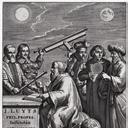
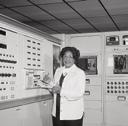
Definitions
astronaut (n.): a person who travels in a spacecraft into outer space
astronomer (n.): a scientist who studies stars, planets, and other objects found in space
mathematician (n.): a person who is an expert in mathematics
4. Explain that students will use module terms to explain how these groups explore space. Review the vocabulary terms calculate, mission, observe, and trajectory by displaying the Knowledge Cards. Engage students in Vocabulary Exploration.
5. Direct attention to the illustration on pages 22–23 of Hidden Figures. Think aloud to model how to use the vocabulary terms to explain how mathematicians explored space in this part of the text.
6. Direct attention to the Knowledge Cards. Instruct students to Think–Pair–Share to answer this question, using one of the vocabulary terms:
How else do mathematicians explore space?
Language Support
For students with beginning English proficiency, display the Knowledge Cards for mathematician and calculate side by side. Prompt students to respond to the question by using this sentence frame: Mathematicians explore space by calculating
Key Ideas
• Mathematicians explore space by helping plan missions.
• Mathematicians explore space by calculating numbers related to missions.

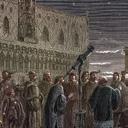
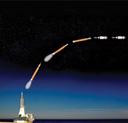
7. Explain that students will work in small groups to describe how astronauts or astronomers explore space. Tell students that they can use other words from this module to describe how these groups explore space. Display and review the remaining module Knowledge Cards by reviewing the terms only.
Definitions calculate (v.): to solve a mathematical problem mission (n.):
1. a person’s assigned task or a job they have to do
2. a flight by an aircraft or a spacecraft to perform a specific task
observe (v.): to watch someone or something carefully trajectory (n.): the curved path along which an object moves through the air or through space Sample Think Aloud I remember that the mathematicians helped calculate the spaceship’s trajectory. I can say, “Mathematicians explore space by calculating a spaceship’s trajectory.”
8. Form two groups. Distribute One Giant Leap to one group and Starry Messenger to the other group. Tell the group assigned to One Giant Leap to discuss how astronauts explore space. Tell the group assigned to Starry Messenger to discuss how astronomers explore space. Instruct students to take turns speaking as they work with their group and to use module terms in their discussion as needed.
Language Support
For students with beginning English proficiency, display the Knowledge Cards for astronomer and observe side by side. Prompt students to respond by using this sentence frame: Astronomers explore space by .
Language Expansion
For students with intermediate English proficiency, encourage them to use module terms such as figure, layer, and telescope.
9. Invite a few students to share how their group explores space.
Key Ideas
• Astronomers explore space by observing constellations.
• Astronomers explore space by observing the trajectory of stars and planets.
• Astronauts explore space by going on missions.
• Astronauts explore space by collecting materials from the universe.
10. Explain that students will draw a picture of and write a sentence about one of these groups of people. Tell students to select either astronauts, astronomers, or mathematicians. Instruct them to draw a picture and write a sentence about how their selected group explores space.
1. Introduce the learning task. Pair students with a partner who selected a different group. Instruct students to take turns sharing their drawings and sentences with their partner.
Monitor: Do students correctly use one or more of the module terms to explain how their selected group explores space?
Offer Immediate Support: If students need additional support writing a sentence about the group they selected, provide this sentence frame: explore space by . Then instruct students to use details in their drawing that are related to what their group might do to explore space.
2. Invite a few students to share their sentences.
Key Ideas
• Astronomers explore space by observing constellations.
• Astronauts explore space by going on missions.
• Mathematicians explore space by helping plan missions.
3. Summarize that students can use specific vocabulary to discuss a topic.
astronaut (n.)
a person who travels in a spacecraft into outer space
to lessons 18 and 32 | lesson 18
astronomer (n.)
a scientist who studies stars, planets, and other objects found in space

contribution (n.)
an action, invention, or idea a person adds to a mission or body of knowledge
to lesson 20 | lesson 12

to lessons 9, 10, 13, and 32 | lesson 6
calculate (v.) to solve a mathematical problem
to lesson 32 | lesson 28
challenge (n.)

a difficult task or problem; something that is hard to do
to lesson 25

elaborate (v.)
to tell more about an idea
to lesson 13
explore (v.) to look at something in a careful way to learn more about it
to lesson 26
hidden (adj.) not seen or known
to lesson 31
mathematician (n.)
a person who is an expert in mathematics to lessons 28 and 32 | lesson 28

mission (n.)
1. a person’s assigned task or a job they have to do
2. a flight by an aircraft or a spacecraft to perform a specific task
to lesson 32 | lesson 18

nonliteral (adj.) involving a meaning that is not ordinary or usual
to lesson 23 | lesson 23
observe (v.) to watch someone or something carefully
to lesson 32 | lesson 2
opinion (n.) what someone thinks about a particular thing to lesson 8

prairie (n.)
a large, mostly flat area of grassland in North America to lesson 3 | lesson 3
trajectory (n.)
the curved path along which an object moves through the air or through space to lesson 32 | lesson 30

revolve around to move in a curved path around a center point to lesson 9 | lesson 9
spirit (n.)
the force within someone that is believed to give the body life, energy, and power to lesson 3 | lesson 3
success (n.)
the correct or desired result of an attempt to lesson 20
universe (n.) everywhere and everything on Earth, in the air, and in space, including all the stars and other planets to lesson 9 | lesson 9

telescope (n.)
a device or tool used to observe distant objects to lesson 11 | lesson 11

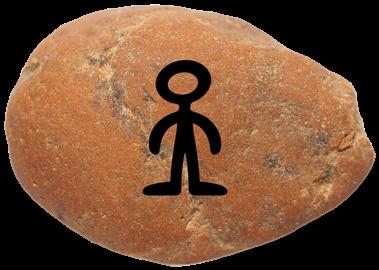
A two-column chart with headings labeled Galileo and Church.
A three-column chart with headings labeled Part, Galileo’s Quotation, and What Does It Mean?
1 2 3
“Upon hearing the news, I set myself to thinking about the problem … Galileo’s Quotation
4
Finally, sparing neither labor nor expense, I succeeded in constructing for myself so excellent an instrument that objects seen by means of it appeared nearly one thousand times larger and over thirty times closer than when regarded with our natural vision.”
What Does It Mean?
After the astronauts get into the rocket,
After the astronauts lift off, they
After the astronauts enter outer space, they
After the astronauts land on the Moon, they
After the astronauts leave the Moon, they
A two-column chart. One column has sentence starters and the other column is blank.
2 3 4
checking the spaceship Evidence making plans sewing suits assembling a spaceship
A two-section chart with headings Evidence and Elaboration.
Elaboration
This helped the astronauts safely walk on the Moon.
This helped the astronauts stay safe in the spaceship.
This helped the astronauts fly to the Moon.
This helped the astronauts know how to get to the Moon.

Cut on the dotted lines.
Three rows with events about Galileo’s life in cutout boxes.
1 he looked through the telescope Galileo made a telescope
2 he shared what he saw Galileo observed the Moon
3 he got in trouble with the Catholic Church Galileo became famous
Draw a picture to illustrate the meaning of the sentences.
1. “The Earth stares down. ‘A big blue eyeball,’ he thinks” (27).
2. “[The spaceship] [d]ances over its own dark shadow” (12).

Two boxes. One box is labeled Conjunctions.
The other box has the conjunctions Because, But, and Even though.
Use the conjunctions below to complete the sentences.
Because but Even though
1. Dorothy was a high school math teacher, she wanted a job as a computer.
2. Dorothy was really good at math, she had a hard time getting a job as a computer.
3. Dorothy was good at her job, she became NASA’s first Black supervisor.
Learning Task: Write two or three sentences to explain what President Kennedy’s speech was about.
This page may be reproduced for classroom use
Burleigh, Robert. One Giant Leap. 2009. Illustrated by Mike Wimmer, Puffin Books, 2014.
Floca, Brian. Moonshot: The Flight of Apollo 11. 2009. Expanded ed., Atheneum Books for Young Readers, 2019.
National Center for Education Statistics. “English Learners in Public Schools.” Condition of Education, US Department of Education, Institute of Education Sciences, 2022, nces.ed.gov/programs/coe /indicator/cgf.
Nelson, S. D. The Star People: A Lakota Story. Abrams, 2003.
Shetterly, Margot Lee. Hidden Figures: The True Story of Four Black Women and the Space Race. HarperCollins Publishers, 2018.
Sís, Peter. Starry Messenger: A Book Depicting the Life of a Famous Scientist, Mathematician, Astronomer, Philosopher, Physicist, Galileo Galilei. Farrar Straus Giroux, 1996.
WIDA. WIDA English Language Development Standards Framework 2020
Edition: Kindergarten–Grade 12. Board of Regents of the University of Wisconsin System, https://wida.wisc.edu/sites/default/files/resource /WIDA-ELD-Standards-Framework-2020.pdf.
Great Minds® has made every effort to obtain permission for the reprinting of all copyrighted material. If any owner of copyrighted material is not acknowledged herein, please contact Great Minds for proper acknowledgement in all future editions and reprints of this module.
Cover, Starfield, 2010, Vija Celmins, Mezzotint and drypoint, 58.3 × 83.2 cm Courtesy of Vija Celmins and Matthew Marks Gallery; page 1 – NASA/JPLCaltech/STScl (pages 37 and 131), Wellcome Images/Science Source (pages 40, 43, 49, 56, 126 and 130); page 2 – Moonshot: The Flight of Apollo 11 book cover, Copyright © 2009 Brian Floca. Book design by Brian Floca and Michael McCarthey, published by Atheneum Books for Young Readers, One Giant Leap book cover, Text © 2009 Robert Burleigh. Illustrations © 2009 Mike Wimmer,
Karen Aleo, Trevor Barnes, Allie Beman, Madison Bonsignore, Kelsey Bordelon, Sarah Brenner, Mairin Broadwell, Beth Brown, Catherine Cafferty, Melissa Chung, Emily Climer, Ashley Cook, Julia Dantchev, Camille Daum, Laurie Delgatto-Whitten, Enaka Enyong, Jen Forbus, Pamela Frasier, Nina Goffi, Caroline Goyette, Lorraine Griffith, Emily Gula, Shelley Hampe, Nicole Harris, Elizabeth Haydel, Sara Headley, Robin Hegner, Sarah Henchey, Patricia Huerster, Sara Hunt, Holli Jessee, Stephanie Kane-Mainier, Lior Klirs, Liana Krissoff, Karen Latchana Kenney, Karen Leavitt, Farren Liben, Brittany Lowe, Whitney Lyle, Liz Manolis, Meredith McAndrew, Cathy McGath, Emily McKean, Maia Merin, Patricia Mickelberry, Julie Mickler, Andrea Minich, Lynne Munson, Katie Muson, Gabrielle Nebeker, Amy Ng, Vivian Nourse, Carol Paiva, Catherine Paladino, Michelle Palmieri, Aashish Parekh, Marya Parr, Elizabeth Patterson, Katie Pierson, Eden Plantz, Natalie Rebentisch, Rachel Rooney, Miguel Salcedo, Lori Sappington, Amy Schoon, Carolyn Scott, Nicole Shivers, Danae Smith, Rachel Stack, Susan Stark, Sarah Turnage-Deklewa, Kati Valle, Kara Waite, Keenan Walsh, Katie Waters, Sarah Webb, Erika Wentworth, Margaret Wilson, Eleanor Wolf
Starry Messenger book cover, NASA/Aubrey Gemignani, Brian Donovan/Alamy Stock Photo; page 3 – NASA/JSC Media Services Center, Science Source, World History Archive/Alamy Stock Photo; pages 14 and 22 – ESA/Hubble & NASA, R. Cohen; pages 30, 36, 42, 48, 54, 60 and 143 – NASA/Goddard; pages 66, 74, 80, 86, 92, 98 and 144 – NASA; pages 67, 126 and 130 – (ASTRONAUT) NASA; pages 76 and 130 (CONTRIBUTION) – NASA; Pages 106, 112, 118, 124 and 145 – 146 –NASA; pages 107, 126 and 130 – NASA; page 127 and 130 – Ground Picture/ Shutterstock.com, NASA/JSC Media Services Center; Page 127 and 131 – NASA; page – xpixel/Shutterstock.com; Page 135 – xpixel/Shutterstock.com.
All other images are property of Great Minds.
Ana Alvarez, Lynne Askin-Roush, Stephanie Bandrowsky, Mariel Bard, Rebeca Barroso, Brianna Bemel, David Blair, Charles Blake, Lynn Brennan, Adam Cardais, Dawn Cavalieri, Tatyana Chapin, Christina Cooper, Gary Crespo, Lisa Crowe, David Cummings, Cherry dela Victoria, Sandy Engelman, Tamara Estrada Del Campo, Ubaldo Feliciano-Hernandez, Soudea Forbes, Diana Ghazzawi, Laurie Gonsoulin, Kristen Hayes, Marcela Hernandez, Sary Hernandez, Abbi Hoerst, Ashley Kelley, Lisa King, Sarah Kopec, Drew Krepp, Jennifer Loomis, Christina Martire, Siena Mazero, Alicia McCarthy, Thomas McNeely, Cindy Medici, Ivonne Mercado, Brian Methe, Sara Miller, Christine Myaskovsky, Mary-Lise Nazaire, Tara O’Hare, Tamara Otto, Christine Palmtag, Katie Prince, Jeff Robinson, Gilbert Rodriguez, Karen Rollhauser, Richesh Ruchir, Isabel Saraiva, Gina Schenck, Leigh Sterten, Mary Sudul, Deanna Thomann, Tracy Vigliotti, Bruce Vogel, Dave White, Charmaine Whitman, Nicole Williams, Glenda Wisenburn-Burke, Samantha Wofford, Howard Yaffe
Prologue lessons support students’ vocabulary acquisition, and oral language development. Through this research-based instructional approach, students—including multilingual learners and those with language-based disabilities—gain confidence and are better prepared to build enduring knowledge.
Prologue prepares every student to succeed.
ON THE COVER
Starfield, 2010
Vija Celmins
Mezzotint and drypoint, 58.3 × 83.2 cm
Module 1 | The Sea
Module 2 | Outer Space
Module 3 | A New Home
Module 4 | Artists Make Art
ISBN 979-8-88811-250-2