FEATURING
• Tech Showcase: Best of Show at ISE 2026
• H ome Security Gets Stylish
• G uide to Projectors and Screens
• Tech Showcase: Best of Show at ISE 2026
• H ome Security Gets Stylish
• G uide to Projectors and Screens
An Interior Designer Talks About Technology and Working With the People Who Supply It
Review: Sony Next-Gen 1000XM6 and LinkBuds Clip Headphones
18 Case Study
Hidden Gems
Wall-Smart’s custom flush mounts help Newport Home Theaters turn high-tech ambition into architectural art, blending luxury design with invisible innovation.
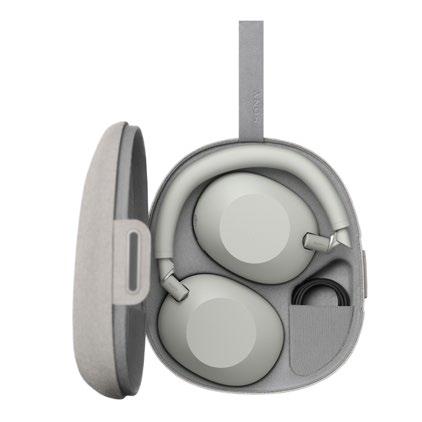
30 Review Sony Next-Gen 1000XM6 and LinkBuds Clip Headphones
Sony has long been one of the leaders in wireless, noise-canceling headphones and is now on the sixth generation of both its WF-1000XM6 wireless in-ear buds and WH-1000XM6 over-ear headphones. Brand new here is the LinkBuds Clip, which are an open-ear design that clip onto your outer ear.
By John Sciacca
By Richard Agnew,
14 Ask the Interior Designer
Designer and general contractor Lauren Lerner discusses working with technology and the people who supply it.
18 Superior Sound With a Stunning Look
Interior designer Maria Deschamps teams with Grimani Systems and AVA Systèmes to create a stylish, high-performance home theater out of a difficult space.
20 Tech Showcase — Best of Show Winners at ISE 2026
Here are descriptions of the winners of the Residential Systems Best of Show Awards at ISE 2026 taken directly from their entries.
24 Integration Guide to Projectors and Screens
Go Big and Go Home
Today’s projection systems offer clients more large-screen options and features than ever before.
By Karen Mitchell


BY ANTHONY SAVONA
Recently, I started the “Residential Systems Integrator Advisory Board,” which, at the moment, is made up of five working integrators who regularly interact with the brand through the newsletter, website, and/or magazine. The goal is to keep me honest by making sure I am covering the topics that are most important to the readership.
I get to speak to integrators fairly often at events and as the subjects of stories, and our columnists all work in the field, but the purpose of this group is to specifically talk about the brand and what it should be covering and doing to help keep integrators informed and successful. I normally try not to make anything in Resi about me, but that’s what this Board is all about.
The plan right now is to meet every quarter virtually, as I am very conscious of the amount of time integrators have to spare (which is pretty close to none). We had the first meeting in February, where I received some excellent feedback.
One of the items we discussed was the need for a centralized location where all industry training programs could be found. There are times when a shop knows a light week is coming up, and knowing what was available at that time would be helpful.
Some research led me to a robust calendar plugin for the Resi website, which was easy to install. Filling it with training dates is another thing… That is where we are right now. The Training Calendar is live (you can access through the “Calendar” menu on the home page), and it has some of the key education providers such as CEDIA, IntegrateU, and HTA. We’ve reached out to more groups, and we are waiting on responses. Plus, if we get an email with training dates, we will add them, too.
The Calendar is able to be presented in a scrolling view or in a traditional calendar setting, and links are provided for more information and registration details. Where given, pricing is available, and each event is tagged for its purpose (i.e., lighting education sessions are tagged as “Lighting”).
I realize there are a lot more events that need to be added to make this a useful tool for integrators, and I’m working on it. For now, I invite you to check it out and provide feedback to make sure it

addresses your needs. I will also take requests — let me know what training programs you would like to see added and I will reach out and try to get it done.
As is the case with these things, getting it launched is the tough part. Ideally, it will provide a benefit for all, and that will help keep it up to date and useful.
Speaking of useful: Are you a successful integrator who interacts with Residential Systems and has opinions to share? Maybe you would like to do that as part of the Integrator Advisory Board? Drop me a line at anthony.savona@ futurenet.com and I can share more details. (That is also the place to provide feedback for the new Training Calendar.)
The more involved you can get, the better Residential Systems will be for it.

April 2026
Volume 27, Number 4
KATYE MCGREGOR BENNETT
Katye McGregor Bennett is chief strategist and CEO of KMB Communications and an avid podcaster. Podcasts include Connecting Tech + Design and AV Trade Talk.
MATT BERNATH
Matt Bernath is a CE veteran with more than two decades in retail, wholesale, CI, and business coaching. In 2021, Matt and a group of partners acquired VITAL, and Matt now serves as the company’s president/CEO.
GORDON VAN ZUIDEN
Gordon van Zuiden is president of cyberManor, a Daisy franchise and home networking and systems integration firm based in Los Gatos, California.
BEN GOFF
Ben Goff is an award-winning, private cinema designer and technical director at Cinema Buro. A co-chair of CEDIA’s RP32 work effort and contributor to multiple industry standards, he specializes in RP22-aligned engineering.
JOHN SCIACCA
John Sciacca is a principal with Custom Theater and Audio, in Myrtle Beach, South Carolina. In his free time, he blogs prolifically about the CE industry. cineluxe.com
RICHARD AGNEW
Richard Agnew has been with Nice North America since 2015. He currently serves as a product manager overseeing the company’s extensive portfolio of residential and commercial security solutions.








Residential Systems (ISSN 1528-7858) is published monthly by Future B2B. 130 W. 42nd St, 7th Floor, NY NY 10036. Periodicals postage paid at New York, NY and at additional mailing offices. POSTMASTER: Send address changes to PO Box 848 Lowell MA 01853. PRINTED IN THE USA.

Industry experts share practical advice on turning great projects into compelling award entries.
BY KATYE MCGREGOR BENNETT, FOUNDER & CEO, KMB COMMUNICATIONS
If you work in the residential technology integration industry long enough, you eventually notice a seasonal rhythm that rivals football or the Oscars: awards season.
CEDIA Smart Home Awards, CE Pro Home of the Year, Technology Designer Performance Home Awards, and other awards programs offer an opportunity to showcase the ingenuity, collaboration, and craftsmanship that define our channel. Yet many brands and integration firms skip entering altogether. The most common reason? Time.
During a recent AV Trade Talk podcast conversation, I asked KMB team members and seasoned industry veterans Lisa Montgomery, longtime technology journalist and judge for numerous industry awards programs, and Robert Archer, former editor at CE Pro, to share what separates a strong entry from one that quietly fades into the judges’ pile. Their message was refreshingly clear: Award-worthy entries are less about perfection and more about preparation, storytelling, and strategy.
When judging category entries, Montgomery says the first thing she looks for isn’t a long list of technologies.
“I want to understand the story of the project,” she explains. “Why was the technology installed? What problem did it solve for the homeowner? When entries clearly communicate the challenge and the outcome, it becomes much easier for judges to appreciate the work.”
In other words, judges are not simply evaluating gear lists — they are evaluating solutions. Archer agrees. In his experience reviewing submissions, the entries that rise to the top are those that explain the journey.
Another reality many entrants overlook: Judges are reviewing dozens — sometimes hundreds — of submissions. That means clarity matters.
“Judges are busy people,” Montgomery notes. “If the entry is difficult to follow or the information is buried, it can be challenging to evaluate the project properly.”
Her advice is simple: Make the narrative easy to digest. Clear explanations, concise descriptions, and organized visuals help judges quickly grasp the significance of a project. If they have to hunt for the important details, the entry may lose momentum.
If storytelling explains the project, photos and videos bring it to life. Archer emphasizes that strong imagery is often the element that separates
finalists from the rest of the field.

“You can have an incredible installation,” he says, “but if the photos don’t show it well, judges may never fully appreciate what was achieved.”
Professional photography is not just about aesthetics — it helps demonstrate craftsmanship, integration with the design, and how technology complements the living environment.
For many firms, however, the obstacle isn’t the project, it’s the paperwork. Between installations, service calls, and managing teams, writing a thoughtful awards submission can feel like one task too many. That’s where outside help can be valuable.
Many integration firms partner with marketing professionals or PR teams (like KMB Communications) who are experienced in preparing award-worthy submissions for the channel. These specialists can interview stakeholders, gather project details, and shape the narrative into a compelling entry that aligns with the judging criteria.
Winning an award is exciting, of course, but the value extends well beyond the ceremony. Award recognition can strengthen relationships with architects, designers, and builders. It can help potential clients understand the quality of your work. And it provides a powerful marketing asset that continues working long after the project is completed. Perhaps most importantly, it gives teams the recognition they deserve.
At the end of the day, awards are about celebrating the creativity, problem-solving, and collaboration that define this industry. If you’ve completed a project you’re proud of, chances are you already have the most important ingredient of an award-worthy entry. The rest, according to Montgomery, is simply telling the story.
“Brands and integration firms do amazing work every day,” she says. “Awards programs are just one way to make sure that work gets the recognition it deserves.”
If awards season is already on your radar — and even if it isn’t quite yet — consider this your friendly nudge. Look back at the projects your team completed over the past year. Chances are there’s at least one that deserves a moment in the spotlight. While entering may feel like one more task on an already busy list, the recognition, visibility, and long-term marketing value can make the effort well worthwhile.
Telling the story of great work is one of the ways our industry continues to grow. And if you need a little help shaping that story, drop me a line (katye@kmbcomm.com).
What do you think your 2029 will look like?
BY MATT BERNATH
There’s a reason most goal-setting attempts lose steam before spring. The goals weren’t bad. The intentions were real. What’s often missing are the steps that make reaching a goal feel inevitable rather than exhausting.
In a recent episode of The Flywheel Effect podcast, I laid out a framework for planning and goal-setting that cuts through the noise and gives business owners something genuinely actionable. And with Q1 already behind us, right now is exactly the right time to put it to work.
Most annual planning starts with, “What do I want to accomplish this year?” I’d suggest a different perspective.
Before you think about 2026, give yourself permission to think about 2029. A three-year vision is table stakes for any serious entrepreneur. Think of it as a picture of your business and your life, three years from now, if everything goes your way.
The prompt that unlocks this exercise is simple and powerful: If I had everything my way, 2029 would look like this.
Don’t filter it by what seems realistic or achievable just yet. Right now, the job is to get honest about what you actually want. Write it down. Put it somewhere you see it every day. The single most important test for your three-year vision is whether it energizes you when you read it. If it doesn’t hit you, go a little deeper.
One clarification worth making: Be specific about the destination without detailing the journey. Knowing you want to take a two-week trip to Japan with your family in 2029 is a great vision element. Figuring out the cost of airfare right now is a distraction. Specific endpoint, yes. Execution details, not yet.
Once your three-year vision exists, the next question becomes: What would have to be true at the end of 2026 for me to feel on track?
Notice the framing. It’s what needs to be true, not what you need to do. There’s a meaningful difference. “I need to earn $X in income this year” is a condition of truth. The actions that produce that result come next. Starting with the condition of truth keeps you thinking at the right altitude before dropping into tactics.
With Q1 now behind you, this step comes with a real advantage. You have actual data. Revenue came in from somewhere. Margins landed somewhere. You’re working from a real starting point, not a guess. Use that information to sharpen what the remaining three quarters need to accomplish.
Once you know what needs to be true by year-end, ask yourself: What would make that outcome inevitable?

That question changes everything. You stop thinking about hoping and start thinking about engineering. If you consistently did certain things, what would make success a near-certain result? A fixed daily calorie target and exercise five times a week makes losing 25 pounds inevitable. Equivalent levers exist in your business for revenue, margin, client acquisition, and team development.
Identify those levers, then reward yourself for executing them. The goal is the mountaintop. The inevitable behaviors are the daily steps that get you there without having to look up at how far you still have to go.
Once you’ve identified what would make success inevitable, turn those commitments into SMART goals: specific, measurable, achievable, realistic, and time-bound.
Specific means you can answer yes or no to whether you did it. Measurable means you have a way to track progress over time. Achievable and realistic mean the goal connects to the life and business you’re actually operating in. Time-bound means there’s a clear deadline attached.
This is where goal-setting gets less glamorous and more functional, and that’s exactly the point. The vision and the backward mapping create the energy, the SMART structure creates the accountability.
One important guardrail: Keep it focused. Owners who try to simultaneously transform their business, overhaul their personal habits, and rebuild their relationships tend to spread themselves thin. Pick two or three areas that matter most right now and commit fully to those. Progress in a few areas compounds. From there, you build.
Here’s something worth sitting with: Most people don’t fall short of their goals because they lack ambition. They fall short because their daily habits aren’t aligned with what they say they want.
A goal is a destination. Habits are the vehicle. When your habits and your goals point in the same direction, momentum builds naturally. The framework above is designed to create that alignment: the threeyear vision sets the direction, the annual milestones create context, the inevitable behaviors build the habits, and the SMART goals provide the guardrails.
There’s no magic in any single step. The power comes from doing all of them in sequence and writing them down.
If this kind of structured, practical thinking is what you’re looking for more of, The Flywheel Effect podcast delivers it every episode. Brent and Matt dig into the business fundamentals that integration owners can use, without the fluff. Find it wherever you listen to podcasts and subscribe so you don’t miss what’s next.
BY HALEY PATTERSON
Dashboards. Reports. Spreadsheets. Dozens of metrics being tracked every week, yet it’s still unclear whether the business is truly on track. The problem usually isn’t a lack of information. It’s that teams aren’t tracking the numbers that actually matter.
Instead of measuring what truly drives the business forward, many companies end up tracking vanity metrics — numbers that may look good on paper but don’t meaningfully impact results. I see this all the time when working with leadership teams. It usually starts with good intentions. Leaders want visibility into the business. They want to show progress and stay informed. So they begin tracking more and more numbers. But over time, those metrics pile up. Instead of creating clarity, the numbers create noise.
This is where a Scorecard can make a huge difference. A Scorecard is simply a short list of the most important numbers in your business — the ones that tell you whether things are moving in the right direction. Think of it like the dashboard in your car. You don’t need dozens of gauges to know if something is wrong. You just need the few indicators that tell you whether you’re on track or if something needs attention. When done right, a Scorecard helps leadership teams stay focused on the numbers that drive results — not just the ones that look good in a report.
The purpose of a Scorecard is to give leadership teams a weekly snapshot of the health of the business. Instead of relying on gut instinct or waiting for monthly financial reports, a Scorecard allows leaders to see trends in real time and identify issues earlier.
Each number on the Scorecard should answer one simple question: Are we on track or not? When a number is off track, the team can address the issue quickly before it becomes a larger problem. For integrators managing multiple projects, service teams, and client relationships at once, having that visibility can make a significant difference in how effectively the business operates.
The most effective Scorecards are surprisingly simple. Many leadership teams track between five and 15 key measurables each week. When teams try to track too many numbers, the Scorecard becomes cluttered and loses its usefulness. When deciding what belongs on your Scorecard, ask yourself:
• Does this number directly impact the health of our business?
• Can we measure it weekly?
• Does someone on the leadership team own it?
When done right, a Scorecard helps leadership teams stay focused on the numbers that drive results — not just the ones that look good in a report.

• If this number is off track, will it prompt action?
If the answer is no, it likely doesn’t belong on the Scorecard. The goal isn’t to collect data. The goal is to track the numbers that help leaders make better decisions.
Your business is constantly changing, and your Scorecard should evolve with it. The numbers that mattered a year ago may not be the most important ones today. As your strategy shifts, your Scorecard should shift, as well.
For many leadership teams, creating a Scorecard for the first time can feel overwhelming. There are so many possible metrics to track that it’s easy to get stuck trying to design the “perfect” one. My biggest piece of advice is don’t wait for perfect — just start.
Begin with a handful of numbers you believe are most important today. As your team reviews the Scorecard each week, you’ll naturally begin to see which metrics are helpful, which ones aren’t, and what might be missing. Over time, the Scorecard evolves into a powerful tool that gives your leadership team a clear pulse on the business.
Leadership teams should periodically review their Scorecard and ask:
• Are these still the most important numbers for us to track?
• Are we missing any leading indicators?
• Are there numbers on this list that no longer serve us?
Making small adjustments over time helps ensure the Scorecard stays relevant and useful.
If a Scorecard isn’t helping leadership teams make better decisions, one of these issues is usually present:
Tracking too many numbers: More data doesn’t necessarily lead to more clarity.
Tracking numbers no one owns: Every measurable should have someone accountable for it.
Only tracking lagging indicators: Revenue and profit are important, but they show what already happened. Leading indicators help teams see potential issues earlier.
Reviewing numbers without taking action: The purpose of the Scorecard is not just reporting. It’s identifying issues and solving them.
When leadership teams implement a clear and focused Scorecard, something powerful happens. Meetings become more productive, conversations become more objective, and issues are identified earlier, before they turn into larger problems. Instead of relying on gut instinct, leaders are aligned around the numbers that matter most. And when everyone is looking at the same data each week, leadership becomes simpler — and far more effective.
Integrators turn their attention toward performance verification and clarity in product specs.
BY BEN GOFF
Walking the residential halls at Integrated Systems Europe this year, something felt different.
The conversations were more technical. Less speculative. Less driven by adjectives, and more driven by data. There was still creativity, still ambition, still beautifully executed demonstration rooms. But alongside that there was a noticeable shift toward engineering discipline.
Residential private cinema is maturing. Not in marketing language, but in measurable, structural ways.
One of the clearest indicators was the first “beta” training delivery of CEDIA RP32, hosted by CEDIA at ISE. Twenty-two participants spent a full day not discussing how to design a great room, but how to verify one. That distinction matters.
Over the last few years, the industry has seen a shift toward designed performance targets. CEDIA RP22 established a framework for defining what constitutes Levels 1 through 4 immersive audio performance. It provided clarity around SPL capability, spatial consistency, and objective benchmarks. But defining a target and proving it has been achieved are not the same thing.
RP32 addresses that gap. It formalizes system verification, defining what should be measured, how it should be documented, and how compliance with stated performance levels should be demonstrated. In other words, it moves us from intent to evidence.
The significance of that shift should not be underestimated. Verification introduces accountability, creates repeatability, reduces ambiguity, and, perhaps most importantly, protects the client experience by ensuring that the delivered system performs as specified, not merely as expected.
Running in parallel is the imminent release of CEDIA RP1, which has now reached peer review. RP1 will ultimately prove to be just as transformative, if not more, for our industry.
At its core, the first sections of RP1 standardize how loudspeaker and amplifier performance data are presented. That might sound procedural, but it addresses a longstanding challenge in residential cinema design.
Verification introduces accountability, creates repeatability, reduces ambiguity, and, perhaps most importantly, protects the client experience by ensuring that the delivered system performs as specified, not merely as expected.

Engineering decisions are only as robust as the data that underpins them. When manufacturers present specifications inconsistently, or selectively, system modeling becomes guesswork.
Performance Facts change that, outlining a structured, comparable format for reporting key metrics. They allow designers to assess capability with greater confidence, they enable meaningful comparisons across product categories, and they support predictive design rather than retrospective correction.
The appetite for this level of rigor was evident in the well-attended training sessions at ISE dedicated to understanding and applying RP1 data. Integrators were not simply curious, they were engaged. They wanted to understand how to interpret the engineering data effectively in order to align product capability with performance targets. RP1 is a gamechanger for product specification, simplifying the selection of the right product for any use case.
This is a meaningful evolution. For many years, demonstration performance in a trade show environment was a primary reference point. Now, increasingly, professionals are seeking certainty of outcome. They want to model SPL capability before installation. They want to understand headroom margins. They want to predict whether a room will achieve a defined performance level before construction is complete.
Perhaps most encouraging was the corresponding shift visible among manufacturers in the residential halls. More brands were prepared to discuss engineering data openly. More were comfortable sharing measured performance metrics. Conversations about limits, constraints, and appropriate application felt less guarded and more transparent.
That transparency is not accidental. As integrators raise their technical expectations, manufacturers respond. A standards-driven market rewards clarity, it favors data over narrative, and it creates an environment in which engineering credibility becomes a distinct competitive advantage.
None of this diminishes the artistry of private cinema. Design, aesthetics, and experiential impact remain fundamental. As the sector grows, professionalism must underpin creativity. Standards such as RP22 define what excellence looks like, and RP1 provides the data framework to design toward it. RP32 ensures it is then verified and documented.
Taken together, these developments signal something important. Residential private cinema is transitioning from an aspirational craft to a measurable discipline. Education is expanding, verification is formalizing, manufacturers are engaging more transparently, and integrators are embracing engineering accountability.
Professionalism is no longer a differentiator in this space. It is rapidly becoming the baseline expectation.

To improve customer satisfaction, we need to focus on the client’s long-term experience.
BY GORDON VAN ZUIDEN, DAISY BRANCH PARTNER, SILICON VALLEY
My wife and I recently spent a week hiking several of the trails along the St. Lawrence River just north of Quebec, Canada. I love hiking for the beautiful natural scenery and the great health benefits, but the other reason I like to hike is that it allows me to spend several uninterrupted hours thinking more deeply about topics that randomly pop into my head.
On one of our river hikes I kept thinking about our industry and the marketing fascination we have with the concept of providing home technology experiences. Over the last several years we’ve been told repeatedly that we should be selling our residential clients experiences, not products. It’s the lighting scene that matters most, not the specifications of the lighting fixtures or keypads. I can’t dispute the logic of that statement — in fact, our Daisy Los Gatos branch built a New Home Technology Experience Center specifically to show our builder partners and potential clients the experience of living in a smart home.
Then I thought more about why the average smart home customer rates their home technology experience as a 4 on a scale of 1 to 10 — meaning they are so dissatisfied with their home technology experience they would not recommend it to others (this result is based on a recent survey by one of the industry’s largest home technology control companies). What happened to this wonderful smart home experience that we were delivering to our clients? How did it go so awry?
At about five miles into my 10-mile hike came my “aha” moment. The term home technology experience was missing two key adjectives — “short-term” and “long-term.” As an industry, we are great at providing short-term home technology experiences. We design and install beautiful integrated technology solutions for our homeowners. Our clients move into their new or remodeled home and they often marvel at the wholehouse audio/video, comfort, security, and communication solutions that we elegantly integrate into the construction of their home. They use their touchscreens, keypads, universal remote controls, phones, and increasingly voice to control all the technology in their home — smart home nirvana! Their short-term home technology experience matches the home technology experience we promised they would enjoy.
We need to establish long-term aftercare service programs with the same level of detail and responsiveness as we do for the initial project design, installation, and programming.

The problem is that clients typically don’t live in their homes for the short term. They live in their homes for 5, 10, 20 years and often longer. For a client to truly enjoy their home technology experience requires that our industry satisfy these long-term experience needs with the same attention that we give to the short-term experience.
We need to establish long-term after-care service programs with the same level of detail and responsiveness as we do for the initial project design, installation, and programming. Without this long-term attention to servicing the smart home, our future customers will come to us jaded by the bad smart home experience they had in their previous home and limit the wonderful home technology experiences that we know that we can provide for them. How often has a new client come into your office stating that their lighting control system never worked properly so now they just want wall switches? Or the universal remote for their TV surround sound system never worked consistently so now they just want a TV?
Taken as a whole, the custom home electronics integrator industry has let down the long-term service needs for our smart home clients. We are already feeling the backlash and skepticism of our clients wanting to implement all of today’s wonderful smart home solutions. Fortunately, it’s not too late to counter those concerns, but it will require that our industry shift our focus from leading with projects that have ongoing service requirements to leading with services that will stimulate new project sales.
That’s a major shift in all of our business models — and, for many of us, this service-first business model is too difficult to implement on our own. Companies like Daisy, OneVision, Parasol, and several others have emerged over the last several years to provide the backend support to help custom electronics integration companies navigate from a project-first to a service-first business model. The faster that our industry embraces and rewards this service-first business model the quicker we will be able to deliver and maintain the memorable smart home technology experiences that we first promised our clients.
I purchased my Lexus, a car that I still drive today, in 2007. It has 175,000 miles on it, it’s been serviced by my Lexus dealer about once each year, and still drives great. If asked, I would definitely buy another Lexus, and I would appreciate all the new features that a model almost 20 years later would provide. It’s been a great short- and long-term experience.
That’s the type of short- and long-term experience that our industry should strive for — one where all our potential clients would happily install our home technology solutions in their homes and brag to their friends that they couldn’t live without it (or us!). When that day comes, I’ll feel that the smart technology has truly reached its full potential to improve all our lives in the most important place on earth — our home.

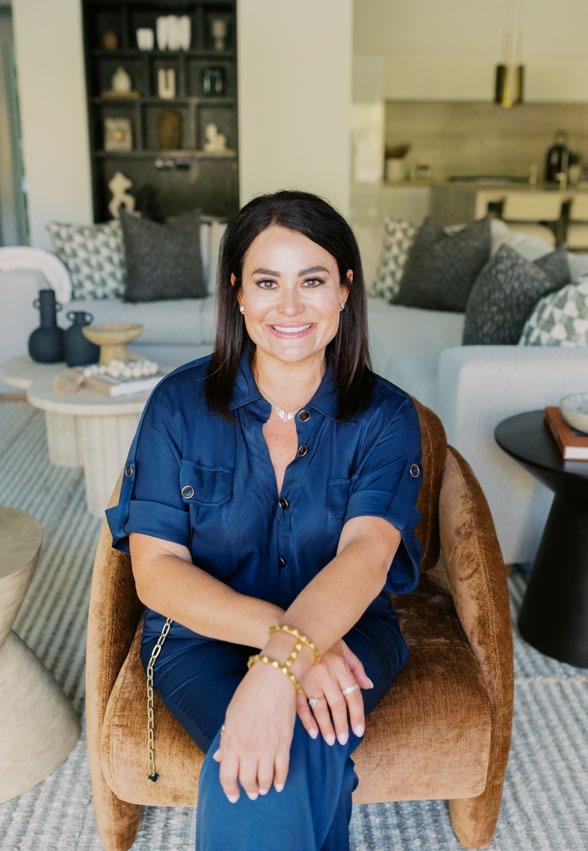
Designer and general contractor Lauren Lerner discusses working with technology and the people who supply it.
Lauren Lerner is the founder and principal designer of Living with Lolo, a nationally recognized Scottsdale, Arizona-based design firm that is known for creating refined, livable luxury.
As both a full-service interior designer and licensed general contractor, she leads projects from concept to completion, blending design, construction, and furnishings into one experience. Her work spans custom homes and full-service remodels for clients across the country, including professional athletes and high-profile individuals.
Residential Systems recently sat down with Lerner for her perspective on working with technology and custom integrators as both a designer and general contractor.
RESIDENTIAL SYSTEMS: Can you provide a little background on your company and your history of working with custom integrators?
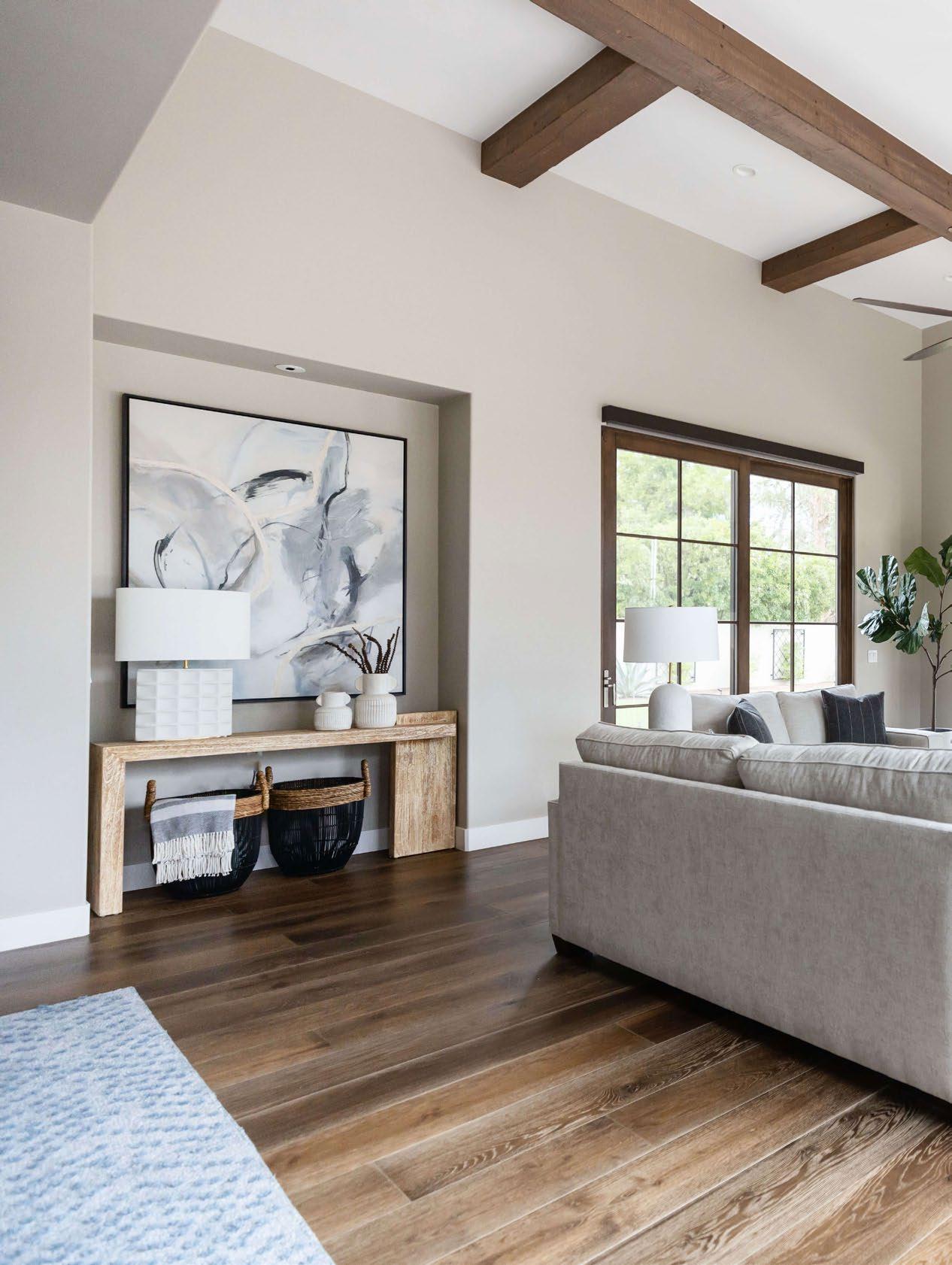
LAUREN LERNER: Living with Lolo is a full-service interior design and design-build firm specializing in high-end residential homes throughout Scottsdale, Paradise Valley, and Phoenix. Because many of our projects involve whole-home renovations or ground-up construction, we regularly collaborate with custom integrators to seamlessly incorporate lighting control, automated shading, whole-home audio, security, and smart kitchen systems. The key is bringing integrators into the process early, during architectural planning, so infrastructure, millwork, and sightlines are aligned from the start. That coordination ensures technology enhances the home’s function and livability without visually competing with the design.
The most successful projects are the ones where the integrator is treated as a core member of the build team, not an afterthought. That approach prevents costly retrofits and allows us to conceal wiring, panels, and equipment within custom cabinetry and wall assemblies.
At what phase of the design-build process do you prefer to bring in the technology integrator?
We prefer to bring the technology integrator in during the initial discovery phase, well before architectural plans are finalized.
When we are discussing how a client lives in the home, how they entertain, and what daily routines look like, that is when technology decisions should start taking shape. Early involvement allows the integrator to coordinate infrastructure, equipment locations, ceiling details, and millwork requirements before anything is drawn too tightly. It prevents last-minute compromises like awkward speaker placements, visible control panels, or cabinetry that has to be redesigned to house equipment.
Once architectural plans are solidified, changes become more expensive and more disruptive. Bringing the integrator in early ensures the technology feels seamlessly embedded in the architecture rather than layered on top of it.
Integrators often talk in “specs,” while designers focus on the “psychology of space.” How can an integrator better translate their technical solutions into the emotional benefits you want for your clients?
Instead of leading with lumens, bandwidth, or processor speed, I encourage them to describe what the client will actually feel. For example, “This lighting system allows the kitchen to shift from bright and energizing in the morning to warm and intimate for dinner” is much more meaningful than a list of fixture capabilities. Or, “You will never see a wire, and you will not have to think about how anything works” speaks directly to the calm and ease we are trying to create.
Design is ultimately about how a space supports daily life. When integrators frame their solutions around comfort, simplicity, and atmosphere, it aligns naturally with the psychology of space. The technology becomes invisible, and the emotional benefit becomes the headline.

Considering that you focus heavily on the energy of natural light and the emotion of color, how do you view the role of automated shading and circadian lighting in your projects?
Automated shading and circadian lighting are tools that allow us to shape how a home feels throughout the day, not just how it looks in photographs. In the desert especially, natural light is intense and beautiful, but it has to be managed. Automated shading lets us soften glare, protect furnishings, and maintain privacy without sacrificing the connection to the outdoors.
Circadian lighting builds on that by subtly shifting color temperature and intensity from cooler, energizing light in the morning to warmer, calming tones in the evening. That progression supports how the body naturally wants to function, which makes the home feel intuitive and restorative.
The key is restraint. If the technology is noticeable or overly complex, it disrupts the emotional experience. When it is thoughtfully programmed and layered into the architectural lighting plan, clients simply feel better in the space without thinking about why.
What is the number one thing a custom integrator can do to make your life easier as a lead designer and general contractor?
The number one thing a custom integrator can do is communicate proactively and visually, not just technically.
As the lead designer and general contractor, I am managing sightlines, millwork details, ceiling conditions, and construction sequencing all at once. When an integrator provides clear reflected ceiling plans, equipment elevations, and coordination notes early, it allows us to resolve conflicts before framing or cabinetry begins. That level of clarity protects the design intent and prevents costly field changes.
The most helpful integrators anticipate how their systems impact trim details, ventilation, access panels, and cabinetry interiors. When they think beyond their scope and consider the whole room, it streamlines decisionmaking and keeps the project cohesive from concept through installation.
When a client is hesitant about the cost or complexity of home technology, do you prefer to lead that conversation yourself, or do you want your integrator to take the lead as the subject matter expert?
I prefer it to be a collaborative conversation, but I typically lead that conversation. As the lead designer and general contractor, I understand the client’s priorities, investment comfort level, and how they want the home to
function. I frame the technology in terms of lifestyle and long-term value, then bring in the integrator to walk through the specifics. That sequencing keeps the discussion grounded in the client’s goals rather than turning into a technical presentation.
When cost or complexity feels overwhelming, it is usually because the benefits have not been clearly tied to daily life. The most effective integrators simplify the explanation, outline phased options if needed, and focus on reliability and ease of use. Clients are far more confident when they understand what they are gaining and how seamlessly it will operate.
As a firm that provides white-glove service, your reputation is on the line with every trade you recommend. What are the “red flags” that would make you stop working with a specific technology partner?
The biggest red flag is a lack of accountability. In a white-glove environment, responsiveness and follow-through matter just as much as technical skill. If an integrator misses coordination meetings, delays drawings, or blames other trades instead of collaborating on solutions, it creates friction that clients feel immediately. Another concern is overpromising on performance or timelines. In luxury residential work, expectations are high, and credibility is everything.
I also pay close attention to how they communicate with homeowners. If explanations feel overly technical, dismissive, or sales-driven, it erodes trust.
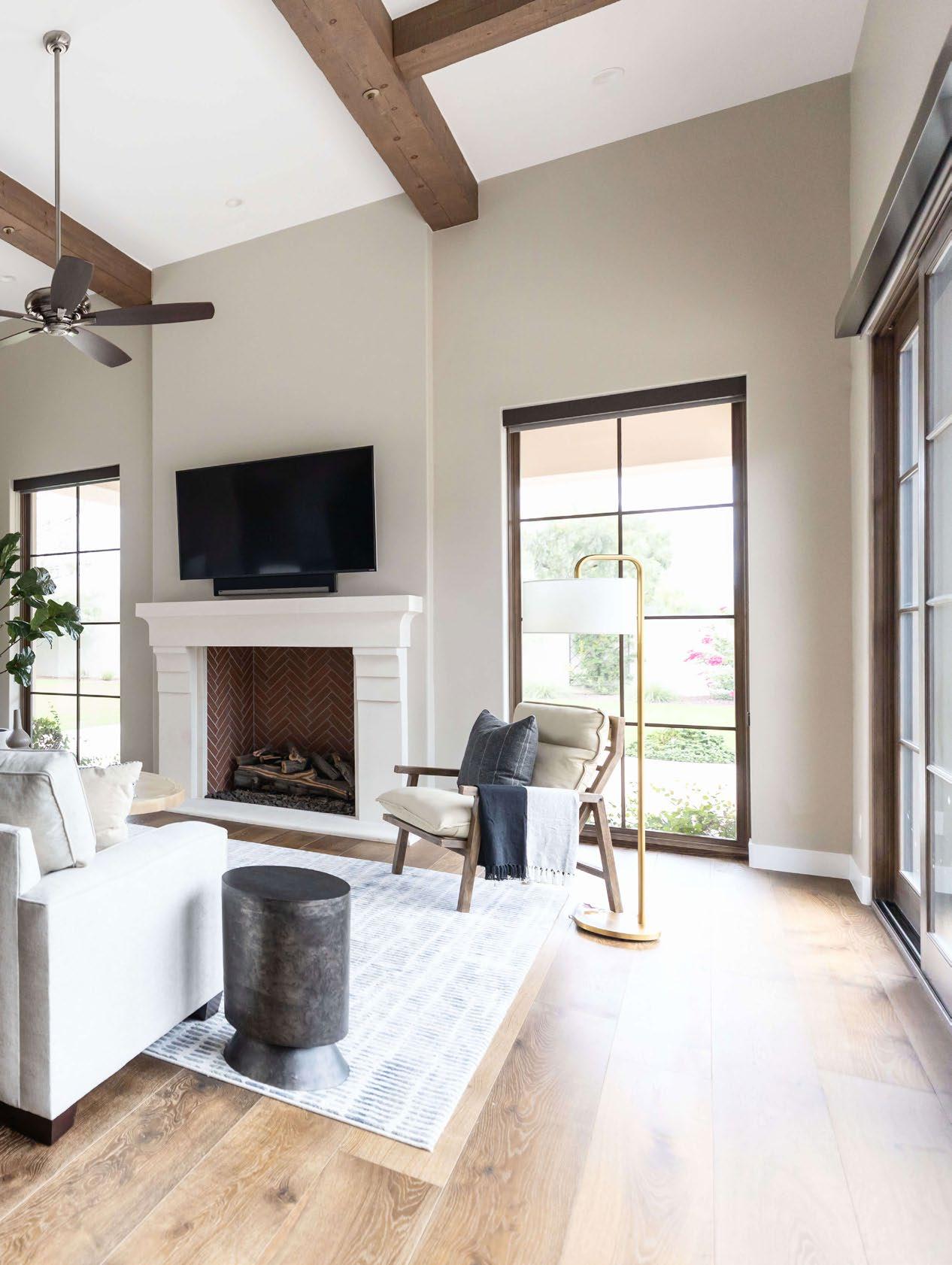
The right technology partner understands that they are an extension of our brand and treats the client experience with the same level of care we do from concept through final walkthrough.
You’ve warned against homes that are “too tech-heavy.” Can you give an example of a smart home feature that you think has crossed the line from being a luxury to being a nuisance? Also, the flip side: What tech do now see as a “must” in your designs?
A common example is over-automation, where every light, shade, and appliance is tied to complex scenes that the homeowner cannot easily override. When a client has to pull out a phone or remember a sequence just to adjust a single fixture, it stops feeling like a luxury and starts feeling like a system they are managing. Technology should reduce friction, not create it.
On the flip side, thoughtful lighting control and automated shading have become essentials in our projects, especially in Arizona. Layered lighting that can shift intensity throughout the day and motorized shades that respond to sun exposure protect finishes, improve comfort, and quietly support how the home functions. When these systems are intuitive and minimally visible, they enhance daily life without competing with the design.
What are your biggest frustrations and biggest opportunities when it comes to integrating tech into outdoor entertaining spaces?
The biggest frustration with outdoor technology is when durability and design are not considered together from the start. In Arizona, extreme heat, dust, and monsoon conditions are real factors. I have seen beautiful outdoor living spaces compromised by visible conduit, poorly scaled speakers, or screens that cannot withstand direct sun. When technology is valueengineered too late or specified without understanding the climate, it affects both performance and aesthetics.
The biggest opportunity is creating seamless indoor to outdoor continuity. Discreet landscape audio, glare-resistant displays, integrated heaters, and automated shading can extend the usability of a space well beyond sunset or peak heat hours. When these systems are coordinated early with architecture and millwork, outdoor entertaining feels effortless rather than like a separate zone that requires its own learning curve.
When an integrator wants to partner with you, what should they show you to prove they understand what you are looking for?
I want to see detailed coordination drawings, clean installations, and examples where speakers, keypads, and panels are thoughtfully aligned with architectural elements. Photos that demonstrate restraint are powerful. Show me how equipment was concealed within millwork, how ceiling layouts remained balanced, and how exterior technology blends into landscaping. That tells me they understand proportion, sightlines, and materiality.
It is also helpful when they can articulate the client experience, not just the system components. If they can explain how they simplified controls, reduced visual clutter, and supported the way a homeowner actually lives, that signals we share the same priorities.
If you could give the integrators one piece of advice on how to build a strong partnership with a top-tier design firm like yours, what would it be?
Take the time to understand the aesthetic language of the firm, how we document projects, and how we communicate with clients. When an integrator aligns their drawings, timelines, and client conversations with our process, it creates a unified experience. Consistency builds trust, and trust is what allows us to confidently bring a partner into high-level projects.
The strongest relationships are built on anticipation. If you can foresee coordination challenges, propose solutions before they become problems, and protect the client experience at every stage, you become indispensable to the team rather than interchangeable. For more information, visit www.livingwithlolo.com.
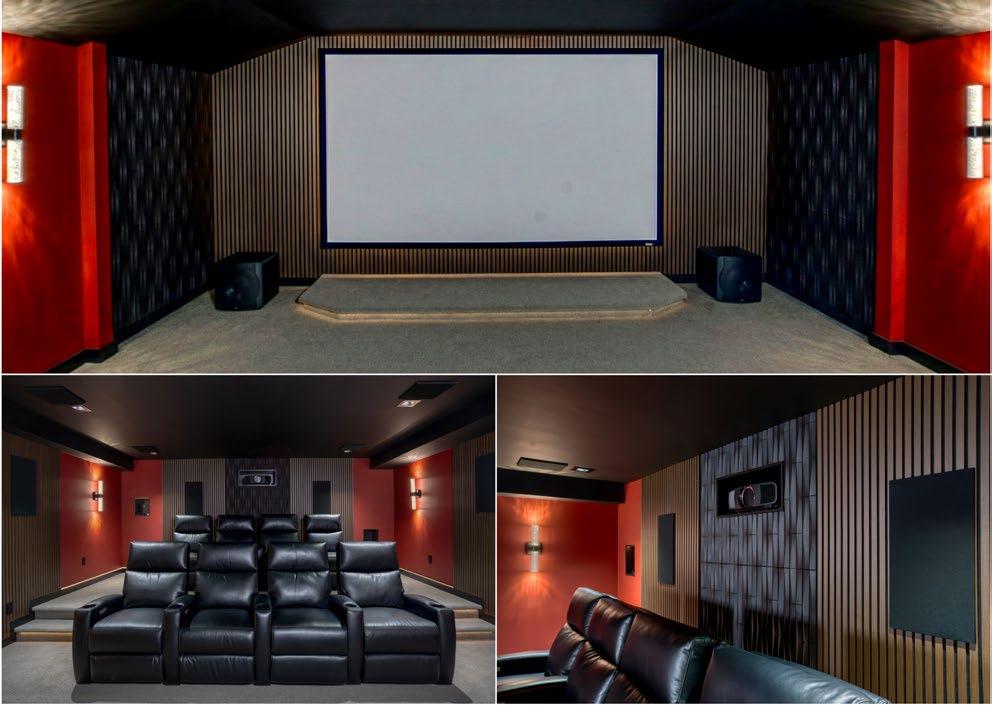
Interior designer Maria Deschamps teams with Grimani Systems and AVA Systèmes to create a stylish, high-performance home theater out of a difficult space.
hen interior designer Maria Deschamps of Maria Deschamps
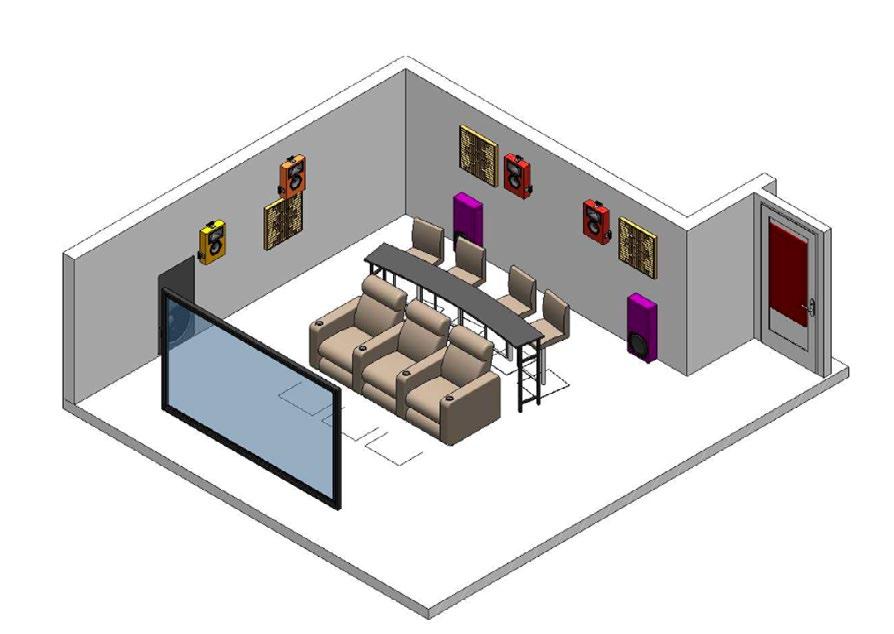
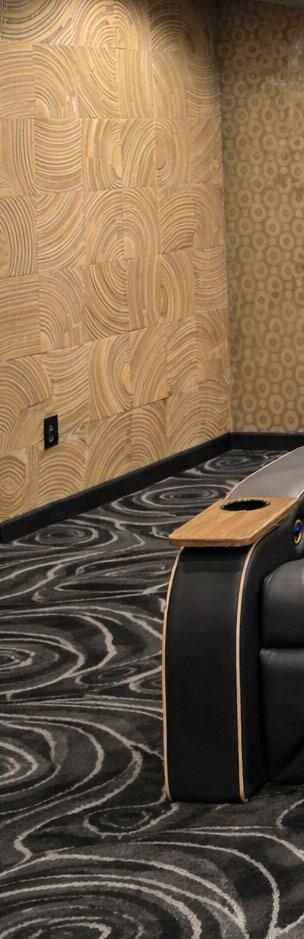
WDesign was first engaged on a private home theater project, the space presented immediate challenges. The room was small, a nearly square 20-by-20-foot space, and included a structural column that could not be removed. Every surface condition was different, and each design decision carried acoustical implications.
From the beginning, the client made one priority clear: sound quality would lead the project.
Deschamps recommended several trusted integrators, and the client ultimately selected Quebec-based AVA Systèmes. As system discussions progressed, AVA Systèmes proposed working with Grimani Systems, a recommendation Deschamps immediately supported.
“I had met Anthony Grimani years ago and always wanted to work with him,” she says. “His understanding of acoustics is well known.”
Unlike many projects where manufacturers remain in the background, Grimani Systems served as an active technical partner. In addition to supplying loudspeakers, the team provided comprehensive engineering documentation, including speaker layouts, acoustical treatment specifications, and seating placement, as well as detailed 3D CAD drawings. As a result, acoustic performance requirements were seamlessly integrated with the architectural vision.
The clarity of Grimani Systems’ drawings allowed Deschamps to quickly verify proportions, sightlines, and finishes while ensuring acoustical elements integrated seamlessly into the design. Adjustments were made thoughtfully, not reactively.
“For me, it’s never just about how the room looks,” Deschamps says. “The final result has to support the sound.”
Concealed acoustical panels, diffusers, and Grimani Systems speakers were selected and positioned to optimize performance while maintaining the room’s visual balance and scale.
For AVA Systèmes, the project aligned closely with its engineering-first approach to audiovisual integration, home automation, and smart living technologies. Rather than adapting a conventional residential theater package to fit the space, AVA Systèmes approached the project as a ground-
up design, evaluating the room’s physical constraints alongside the client’s performance goals.
The project began with a complete rebuild of the room. The existing walls and ceiling were removed, sound isolation was added, and the space was reconstructed from the ground up.
While the rebuild allowed AVA Systèmes to address noise control and infrastructure under the guidance of Grimani Systems’ room engineering, the fundamental geometry of the room remained unchanged. Its nearly square layout posed inherent challenges for low-frequency behavior. Plus, the structural column and beam further limited layout options.
“The biggest challenge was working within a space that had clear physical limits,” says Patrice Bouchard, owner of AVA Systèmes. “We could rebuild the room, but we could not change its proportions or eliminate the column.”
AVA Systèmes used a Grimani Systems-based engineering and speaker solution that differed from the conventional residential theater designs commonly offered in the local market, which typically rely on consumer audiovisual receivers and passive loudspeakers. Instead, the system architecture centered on active loudspeakers with an AES67 Audio-over-IP
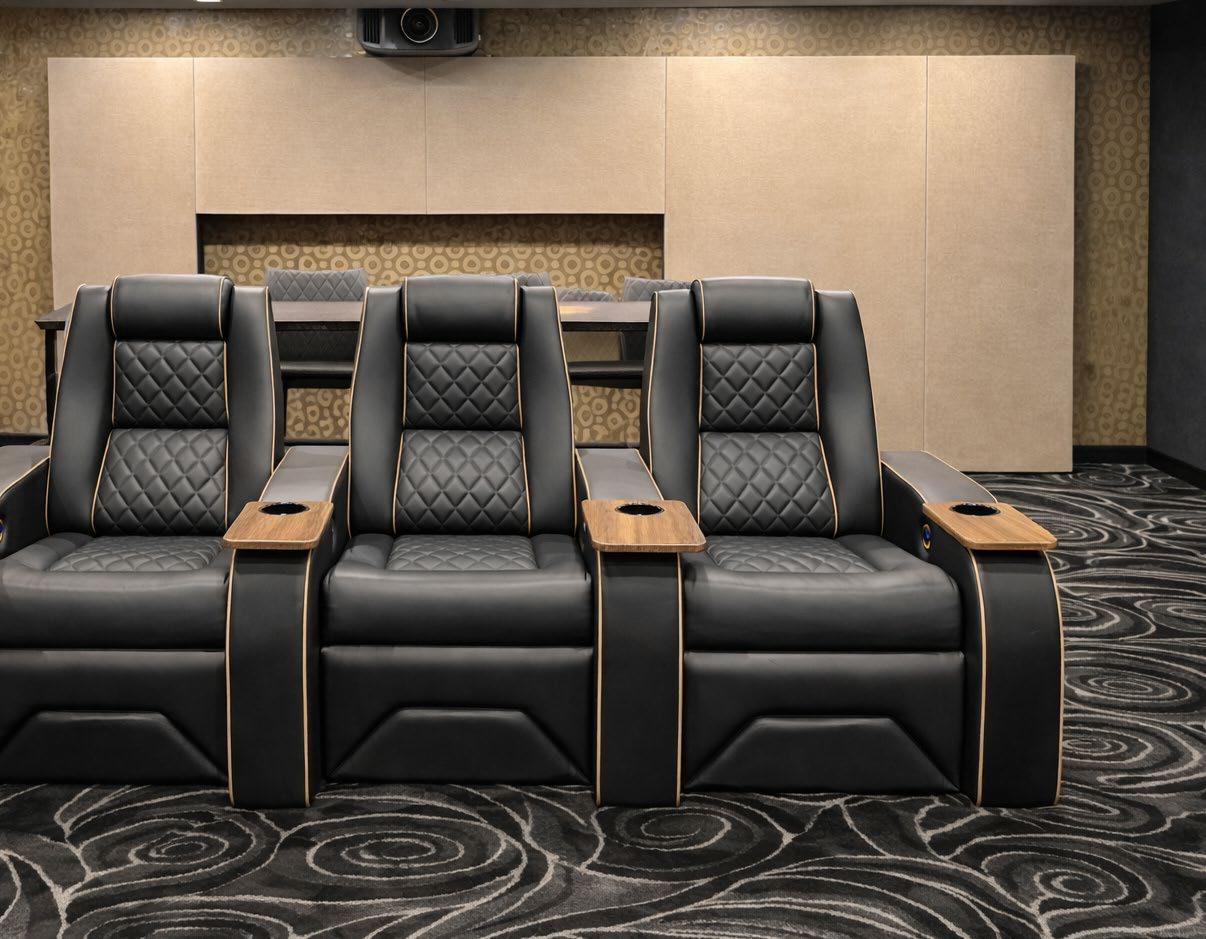
network and digital signal processing.
Following the proposal, the client conducted independent research, reviewing technical material and online content related to Grimani Systems and the calibration process. According to Bouchard, that research helped reinforce confidence in the approach. “Most integrators proposed similar systems with familiar brands,” he says. “We presented a solution that addressed the room in a different way, and the client understood why.”
Grimani Systems provided detailed system engineering documentation, including loudspeaker placement, signal routing, and amplification requirements. This was AVA Systemes’ first installation using Grimani Systems, and the plans made the process very straightforward and error-free.
During commissioning, Anthony Grimani performed manual calibration on site, focusing on manually aligning loudspeaker timing, phase, and frequency response to compensate for the room’s acoustical thumbprint. The system was then tuned as a reference-grade dedicated cinema environment.
“The system already sounded extremely good before calibration,” Bouchard says. “However, after the measurements and adjustments were completed, the improvement was immediately clear.”
Following completion, the client expressed a high level of satisfaction with the theater’s performance. For AVA Systèmes, the project stands out as a benchmark installation. “This is the best home theater realization I’ve completed,” Bouchard says. “The room layout, the system design, and the calibration all worked together.”
From the designer’s perspective, the project highlights the value of early collaboration and manufacturer-led system engineering in complex residential environments. “If we hadn’t all been on the same page, it wouldn’t have worked,” says Deschamps.
While not every homeowner requires this level of technical involvement for clients who understand and value performance, it can be decisive.
The completed theater demonstrates what’s possible when interior design, integration, and acoustical engineering are aligned from the start. The room delivers cinema-level performance without sacrificing aesthetics or proportion.”
For more information, visit www.mariadeschamps.com, avasystemes.com, and grimanisystems.com.
More details on these noteworthy products from Barcelona.
Here are the winners of the Residential Systems Best of Show Awards at ISE 2026. The products were nominated by the manufacturers and were decided by a team of judges who rated the products on a number of criteria, including its value, impact, and how unique it was to the market. Here are descriptions of the winning products taken directly from their entries.
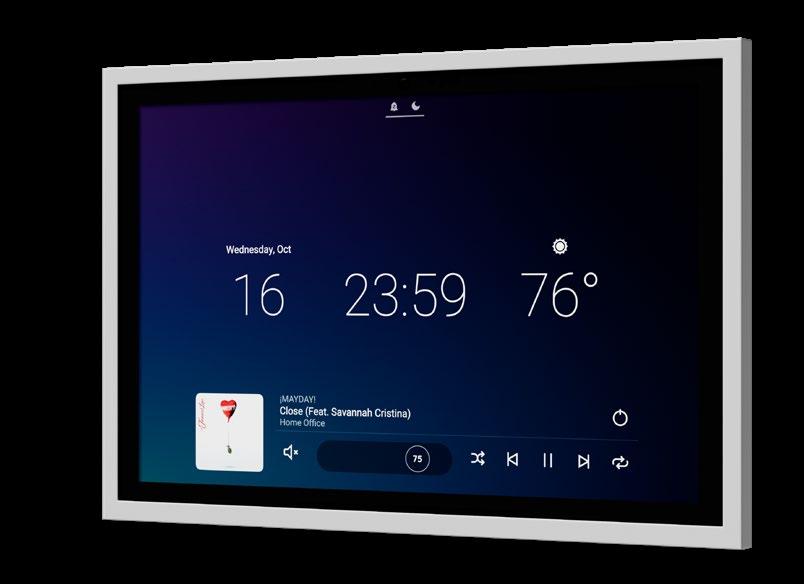
Powered by Control4 X4, the new T5 In Wall Touchscreen delivers a more modern and intelligent experience. It features a sleek, built-in look with a slim frame and snug mounting, plus magnetic trims with Lux Lighting color-matching options for a seamless home aesthetic. Everyday use feels effortless with a proximity sensor that wakes the screen as users approach. The new dynamic screensaver provides instant access to media and common actions with just a tap. The new Dark Mode adds to the experience by reducing visual distractions.
More Info: https://www.adiglobaldistribution.us/Catalog/shop-brands/ control4
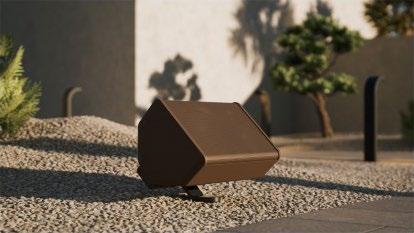
The Triad Stratus Series delivers high-performance outdoor audio engineered for cinema-quality sound. Featuring IPX6/IPX7-rated enclosures, UV-resistant finishes, and rust-proof aluminum components, these speakers and subwoofers ensure long-term reliability in harsh
environments. The satellite speakers are available in 6-, 8-, and 10-inch models while the burial subwoofers are available in 12- and 15-inch models to ensure there are plenty of options when designing expansive outdoor entertainment zones. There are flexible installation options that include surface mounts and an optional extruded aluminum stake for landscape integration, while hands-free mounting brackets streamline wiring and reduce install time. The scalable system design is supported through 70V/8-ohm tap settings and compatibility with Triad Hybrid Amplifiers. The compact burial subwoofers with integrated lowering ropes simplify placement in constrained spaces.
More Info: https://www.adiglobaldistribution.us/Catalog/shop-brands/ triad
ASCENDO Immersive Audio GmbH has unveiled its most ambitious loudspeaker yet — THE HALO 10 Pro Active Ext Cardioid, which is a three-way active speaker that redefines precision, power, and elegance in high-performance audio. Unlike conventional speakers that radiate sound omnidirectionally — often causing unwanted reflections and bass buildup — THE HALO 10 leverages cardioid bass technology, directing low-frequency energy forward while minimizing rear-wall interactions. This results in tighter, more controlled bass, reduced room resonance, and
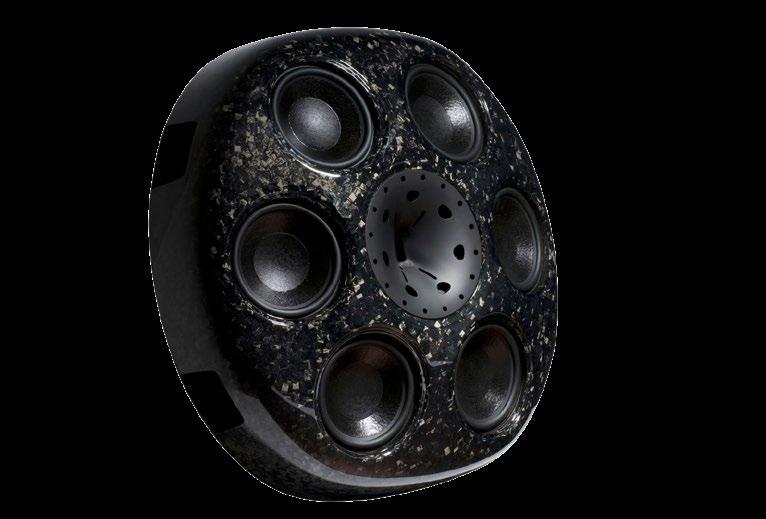
a cleaner, more precise soundstage that is designed for critical listening environments where every detail matters. The HALO 10 PRO is designed for DSP-driven amplification, with recommended power ranging from 600–1200 watts (HF), 2000–2500 watts (midrange), and 2000–5000 watts total for the woofers. Customizable in matte, high-gloss, or carbon finishes, it’s as much a statement of design as it is performance.
More Info: https://www.aia-cinema.com/products/halo-10-pro-activeext-cardioid
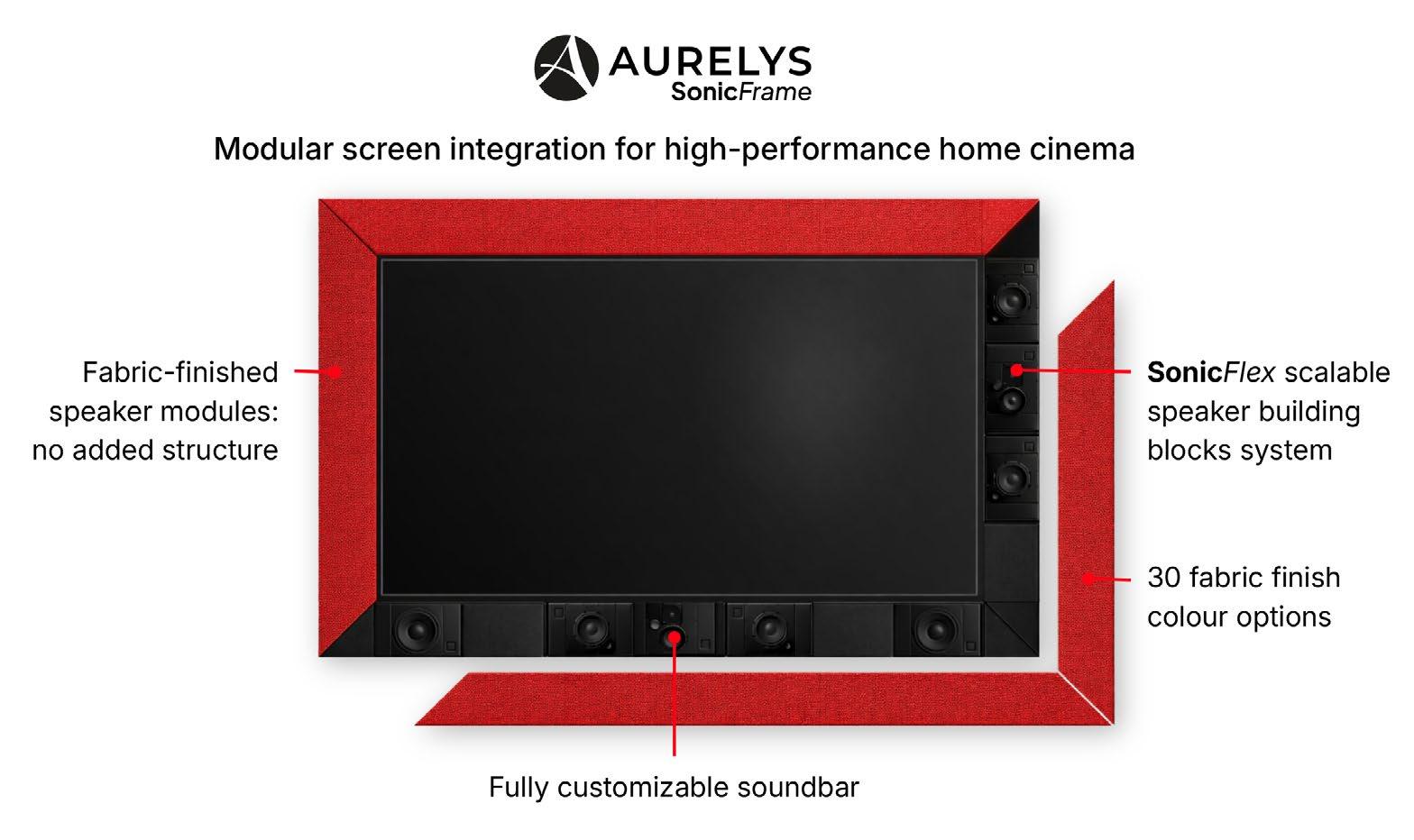
Aurelys SonicFlex and SonicFrame form a modular architectural solution that delivers a visually integrated sound system around the screen. SonicFlex and SonicFrame turn the screen perimeter into an integrated framework of Aurelys wall-mounted loudspeaker building blocks, delivering scalable performance and seamless visual integration. Integrators can design the front stage around the exact screen size and wall geometry while maintaining clean proportions, precise alignment, and visual discipline. By systemizing the relationship between screen position, loudspeak-
er layout, and custom finish layers, SonicFlex and SonicFrame reduce the cost of one-off construction — making premium installations repeatable across projects. For clients and design teams, the outcome is equally clear: a screen-aligned sound system that fits naturally into the interior, with clean lines and refined finishes.
More Info: https://aurelysaudio.com/sonic-frame
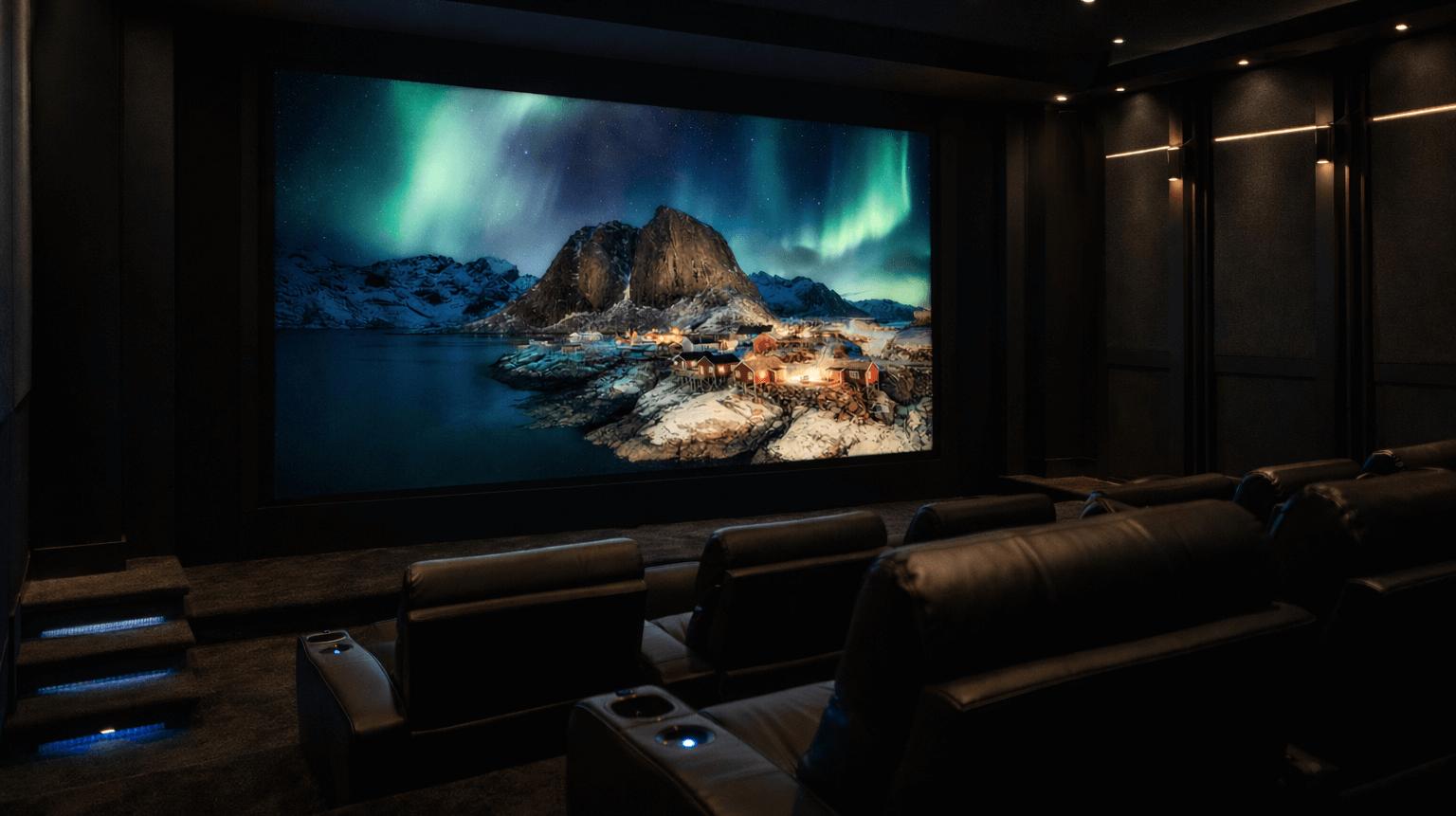
Barco Residential presents Runar, an LED wall designed exclusively for luxury home cinema and scheduled for DCI (Digital Cinema Initiatives) certification under the latest HDR standards — the highest bar today for cinema LED. With a 0.9mm pixel pitch and native DCI 4K resolution (4096 x 2160), Runar brings uncompromising cinematic quality into the home. Runar features state-of-the-art Micro LED in Package technology and is engineered for future-proof compliance with premium DCI-HDR content. It delivers high contrast and color precision, with 100,000:1 contrast, ultra-deep 0.005 cd/m2 black level, and full DCI-P3 coverage. Engineered for HDR performance, Runar brings DCI-grade HDR at 300 nits and con-
sumer HDR at 1000 nits to life with accuracy, while also handling standard content effortlessly.
More Info: https://www.barco.com/en/solutions/cinema/residential/ portfolio#led-walls
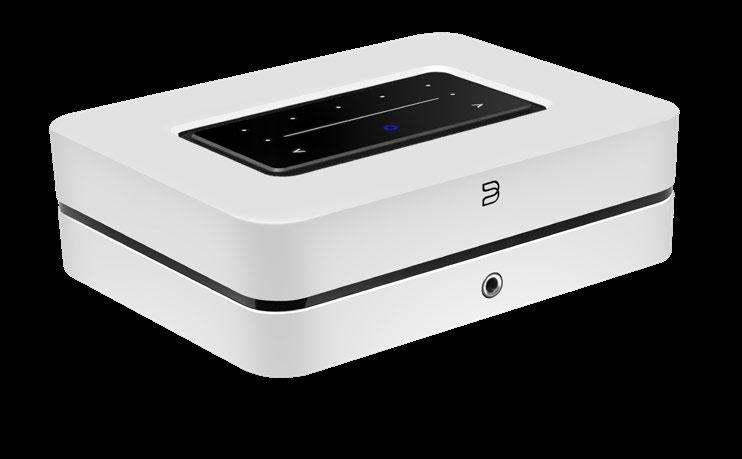
Bluesound POWERNODE is a compact, high-performance multiroom streaming amplifier that blends power, precision, and modern design. Built on Bluesound’s DirectDigital amplification platform, it delivers 100 watts per channel into 8 ohms, producing clarity and ultra-low distortion in a space-saving form factor. Designed for intuitive everyday use, the POWERNODE features a glass touch panel with proximity sensing and five programmable quick-access presets. The POWERNODE offers straightforward AV integration with HDMI eARC, left-center-right speaker outputs, and wireless pairing with Bluesound rear speakers and subwoofers. At its core, BluOS provides access to over 20 streaming services, internet radio, local music libraries, and direct device playback in up to 24-bit high-resolution audio. Powered by a quad-core ARM Cortex A53 processor, the POWERNODE is Dirac Live Ready and supports MQA, DSD256, AirPlay 2, Spotify Connect, and TIDAL Connect.
More Info: https://www.bluesound.com/can/powernode
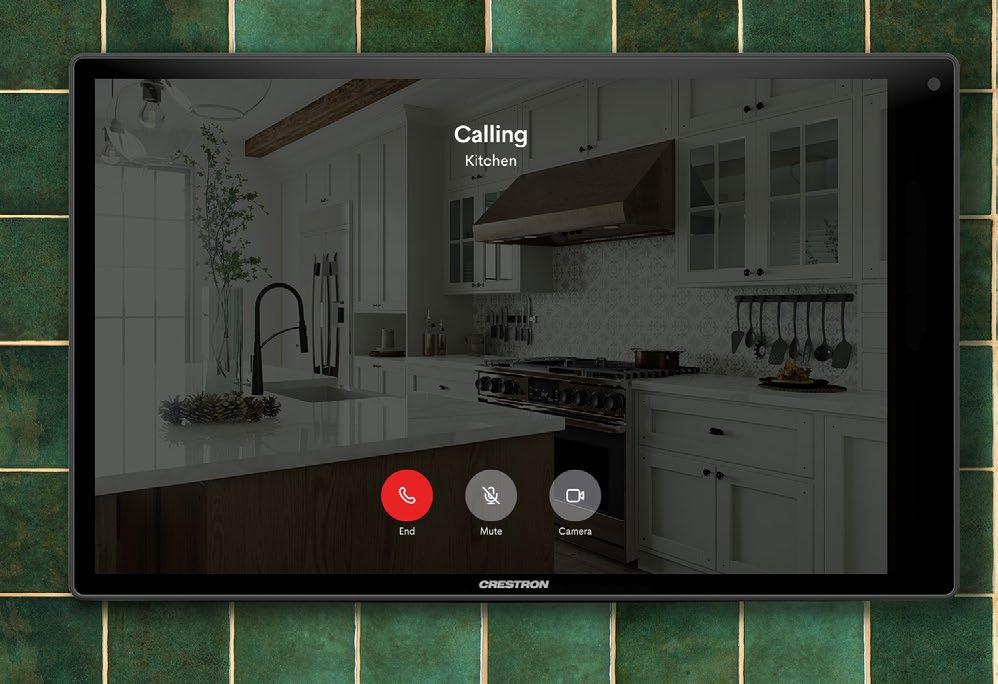
The 80 Series lineup is the result of continuous engineering refinement, delivering Crestron’s fastest and most responsive touch screen experience to date. The 80 Series ensures smooth navigation, instant feedback,
and solid reliability. Native integration with Crestron Home OS provides a familiar, intuitive interface across every room. Homeowners, guests, and family members can access scenes, schedules, and controls without unlocking a mobile device or switching between apps, making the experience more accessible for children, guests, and users of any technical ability. The 80-Series introduces Crestron’s most advanced radar-based proximity detection to date, so the touch screen wakes instantly as someone approaches. A newly positioned ambient light sensor automatically adjusts screen brightness for visibility in any lighting condition, from bright daylight in the kitchen to dim evening light in a bedroom or theater. Dramatically improved microphones and speakers deliver superior paging and intercom clarity throughout the home.
More Info: https://www.crestron.com/Products/Featured-Solutions/80Series
D-Tools Cloud is a web-based, end-to-end business management platform with newly released native Mobile App, Interconnect Diagrams for mapping wiring, and an AI-powered tool. Those features join its existing modules for CRM, multimedia proposal creation, in-app communications, payment processing and accounting integration, comprehensive reporting and analytics, and full management of projects, service, change orders, and inventory. The most recent update to D-Tools Cloud includes several major enhancements, including D-Tools AI, which allows users to generate scopes of work, manipulate quote structures, search using natural language, and apply financial logic such as margin adjustments, and In-
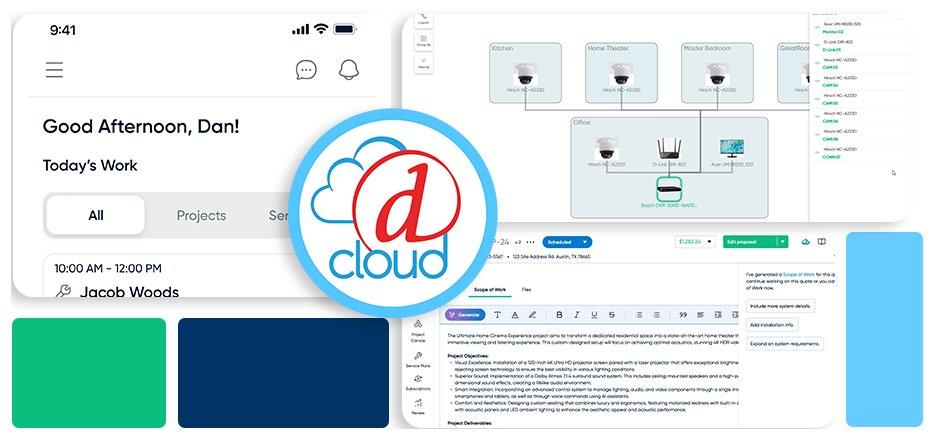
terconnect Diagrams, which is an intelligent wiring connectivity tool built directly into D-Tools Cloud that provides a dynamic, visual, and interactive environment for mapping how devices are wired across a project by system, phase, or room.
More Info: https://www.d-tools.com/cloud
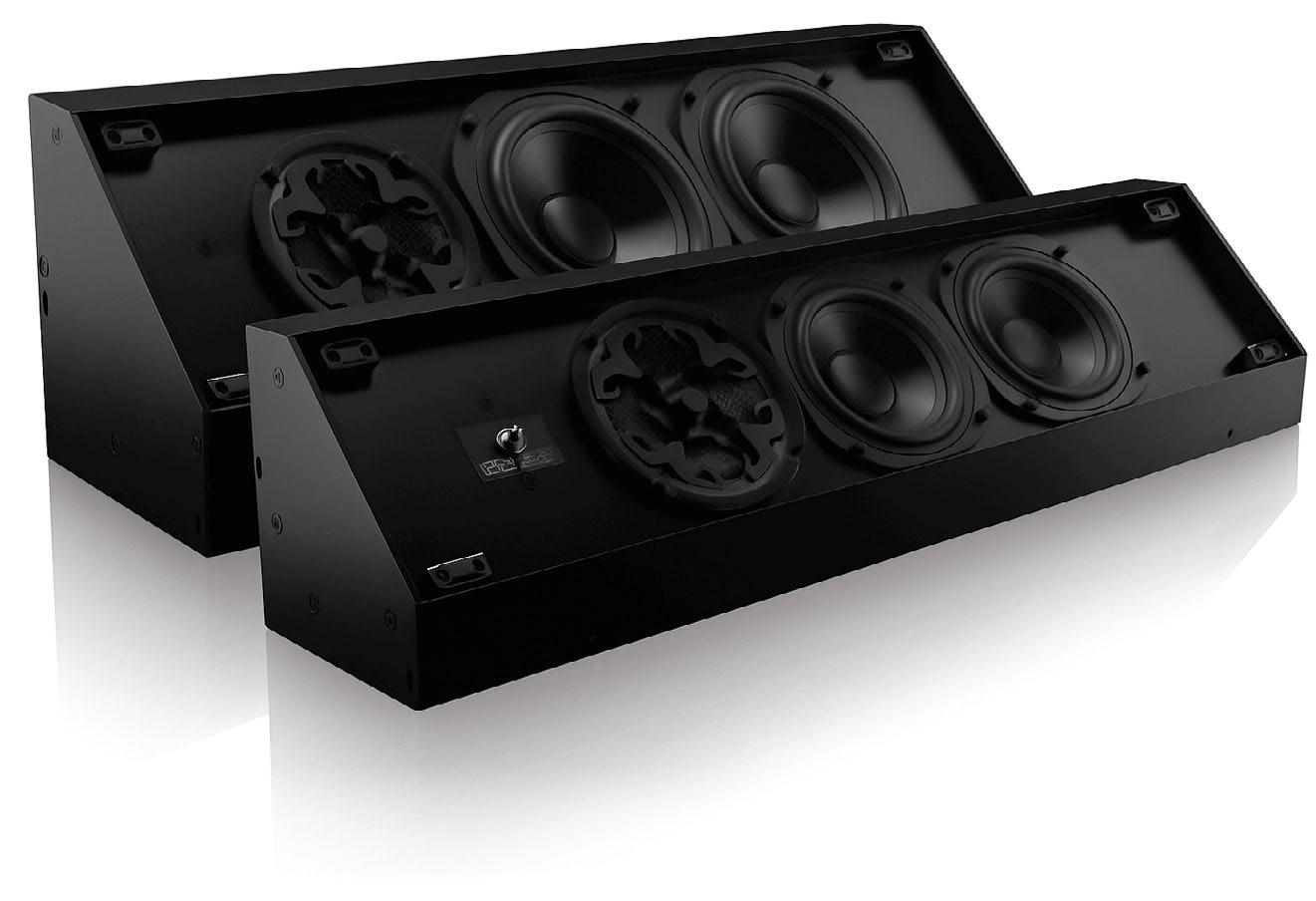
The James Wedge WX Series redefines performance and installation ease for 90-degree architectural spaces. Engineered from direct customer feedback, it features advanced Quadratech tweeter technology, all-new woofers for full-range bass, and intuitive installation improvements. Each speaker is built-to-order for precise wall-to-ceiling integration, constructed from marine-grade aluminum for durability in demanding environments. Enhanced crossovers deliver neutral voicing with consistent coverage, while a boundary switch optimizes sound for any placement — wall, ceiling, corner, or free space. With customizable 1-, 2-, and 3-channel configurations, integrated mounting hardware, and a robust grille system, the WX Series offers powerful, flexible performance with streamlined setup.
More Info: https://sonance.com
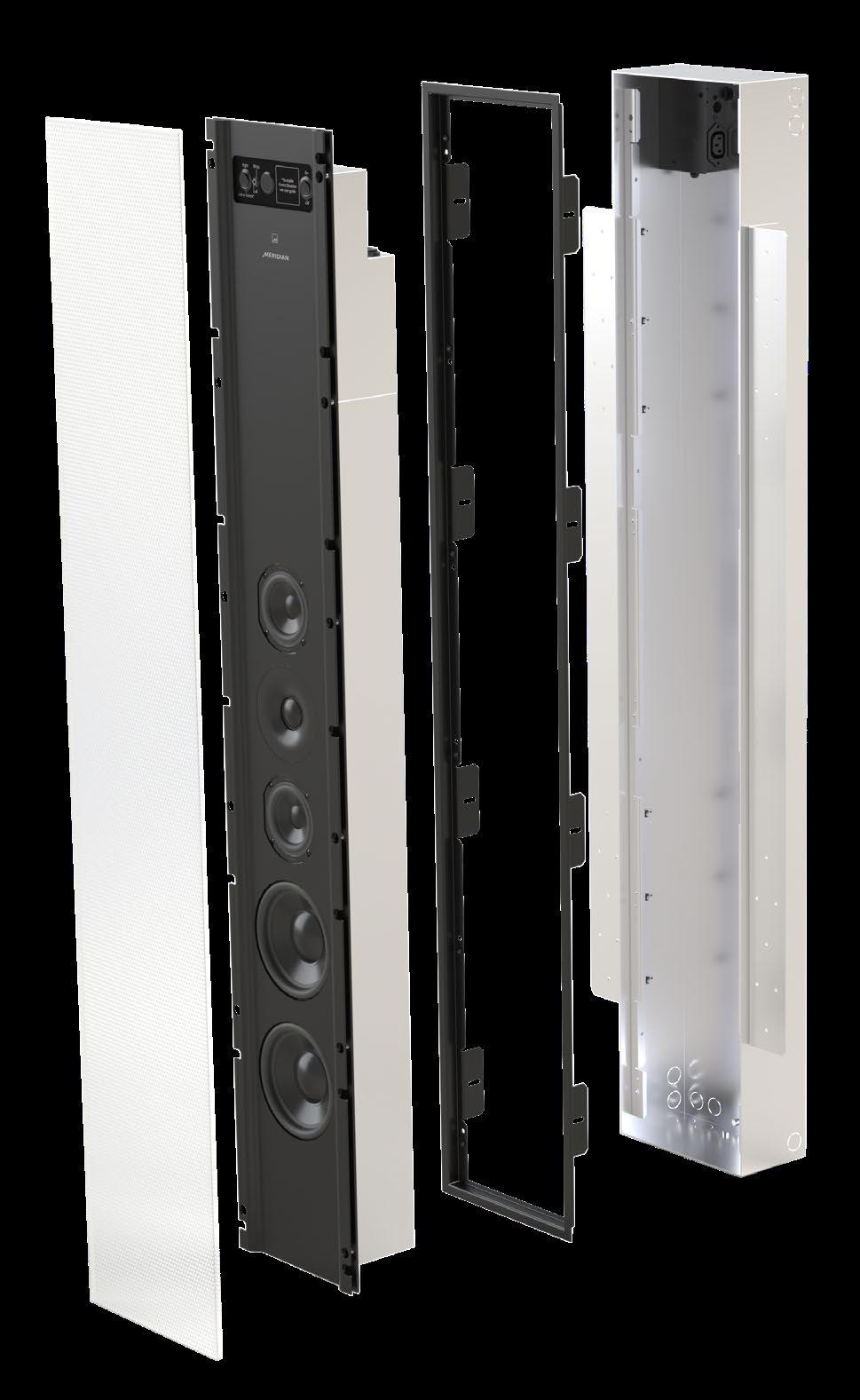
Engineered with advanced driver technology, precision acoustic design, and proprietary digital signal processing, the Meridian 2026 Edition Reference DSP750 in-wall loudspeaker delivers exceptional output, ultra-low distortion, and high imaging accuracy. Central to its innovation is Meridian’s Image Elevation technology, supported by a comprehensive suite of DSP features derived from the company’s research in psychoacoustics, ensuring dialog, vocals, and key sound elements appear to emanate directly from the picture even when mounted below the screen. Its ultra-shallow 100mm profile and fully sealed aluminium enclosure provide consistent, predictable performance across diverse wall types and room conditions, while eliminating air leaks and resonances. Thermal management, vibration control, and internal damping are engineered from the outset, removing the need for additional isolation or reinforcement. A billet-machined secondary baffle plate and acoustically damped mid-range chambers maintain structural rigidity, even at high playback levels.
More Info: https://www.meridian-audio.com/products/loudspeakers/ reference-series-in-wall/dsp750/
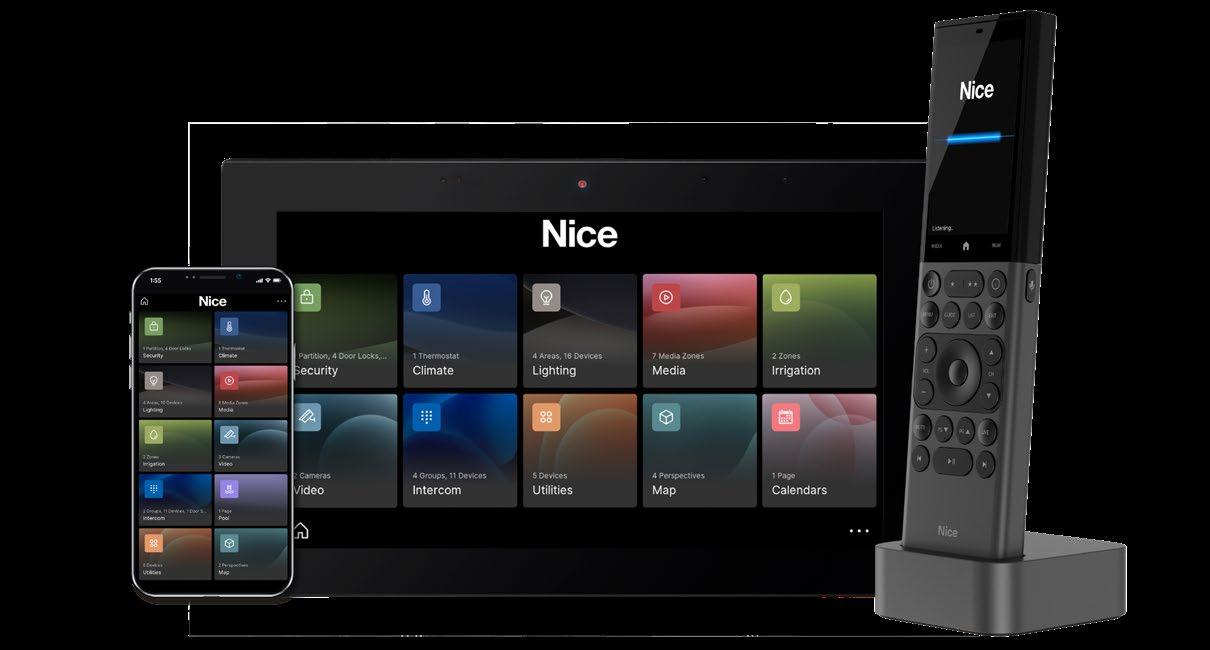
Unlike consumer platforms that layer automation on top of disconnected devices, Nice ELAN OS unifies lighting and shading, climate, media, security, surveillance, utilities, entry control, and voice into a single, cohesive control architecture. At its core, Nice ELAN OS 9.0 combines local system intelligence with light cloud-enabled services to deliver fast, reliable performance without sacrificing flexibility or security. Automation and device control, and real-time interactions run locally on dedicated controllers, ensuring configured behavior even when internet connectivity is spotty or unavailable. Cloud services enhance local operation by enabling secure remote access, configuration management, analytics, and continuous feature updates. New in Nice ELAN OS 9.0 are smarter native voice [“Hey Mylo”] integration, streamlined surveillance user experience, event-aware video summary and timelapse options, real-time bidirectional audio between all endpoints, and a unified user experience.
More Info: https://www.niceforyou.com/na/control-systems/elan-os-9
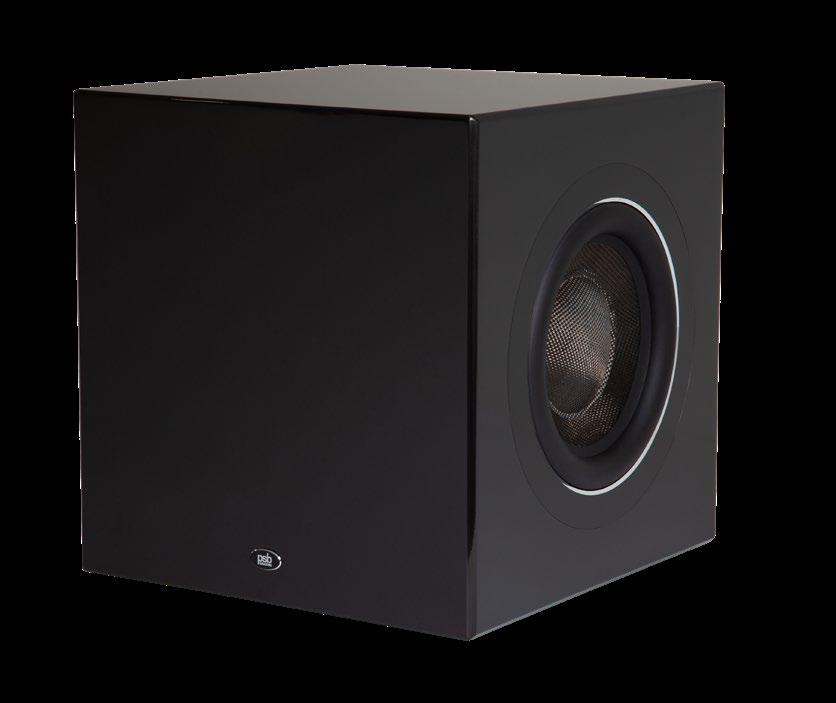
The BP12 Subwoofer was created with the goal of matching the same level of detailed, low-frequency performance achieved by PSB’s flagship Synchrony speakers. Its objective is not merely to produce deep bass at high sound pressure levels, but to do so with exceptional control, linearity, and harmonic integrity. Each woofer is powered by its own 500-watt Purifi amplifier. The BP12 woofers are derived from and enhanced beyond those used in the Synchrony Series. Driver cones are made of woven carbon fiber with doped paper backing, and filleted driver surround. Each woofer houses an 89mm voice-coil coupled with a 4.25 Kg magnet. These features result in a woofer with quick, piston like travel that can hold its shape from full incursion to full excursion with inaudible levels of resonance and excellent linear peak to peak travel.
More Info: https://www.psbspeakers.com/int/subseries-bp12-subwoofer
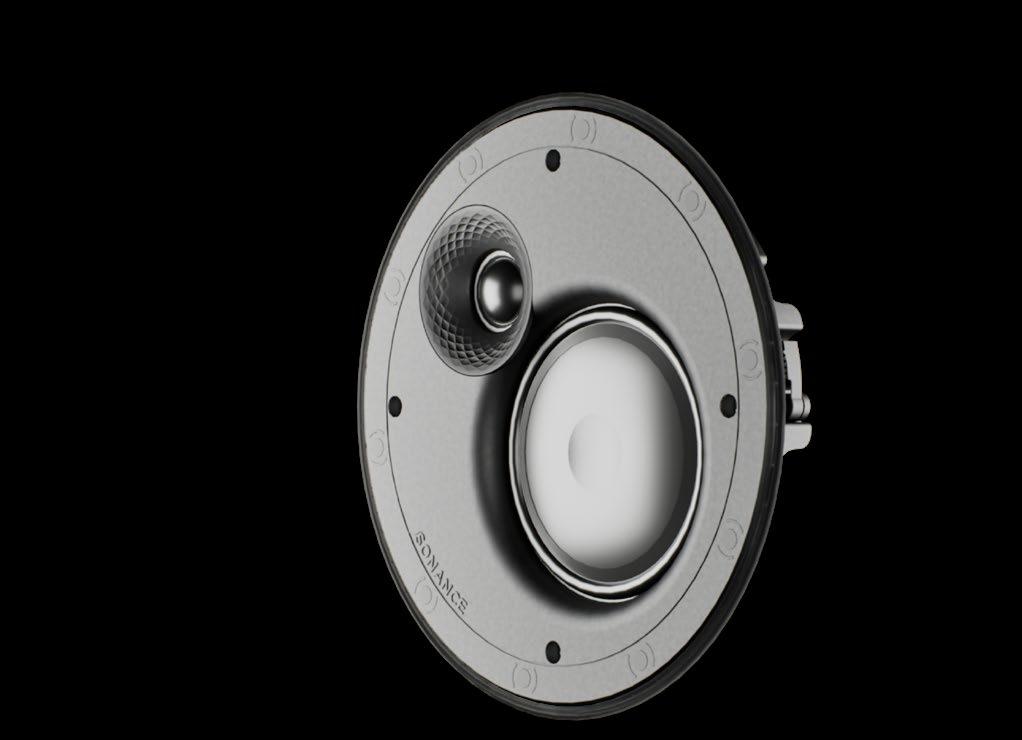
The Sonance Visual Experience Ultra Thin-Line In-Ceiling Speaker delivers the same performance and discreet aesthetic that defines the Visual Experience Series, now in an ultra-slim profile. Engineered with state-of-the-art materials and the latest acoustic innovations from the new Sonance Experience lineup, this model offers seamless architectural integration without compromising sound quality, even in shallow ceiling cavities.
More Info: https://sonance.com
Today’s projection systems offer clients more large-screen options and features than ever before.
By Karen Mitchell
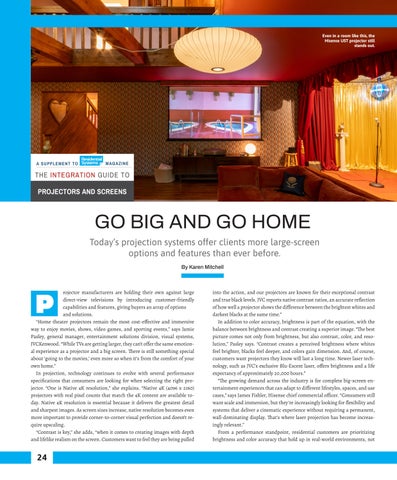
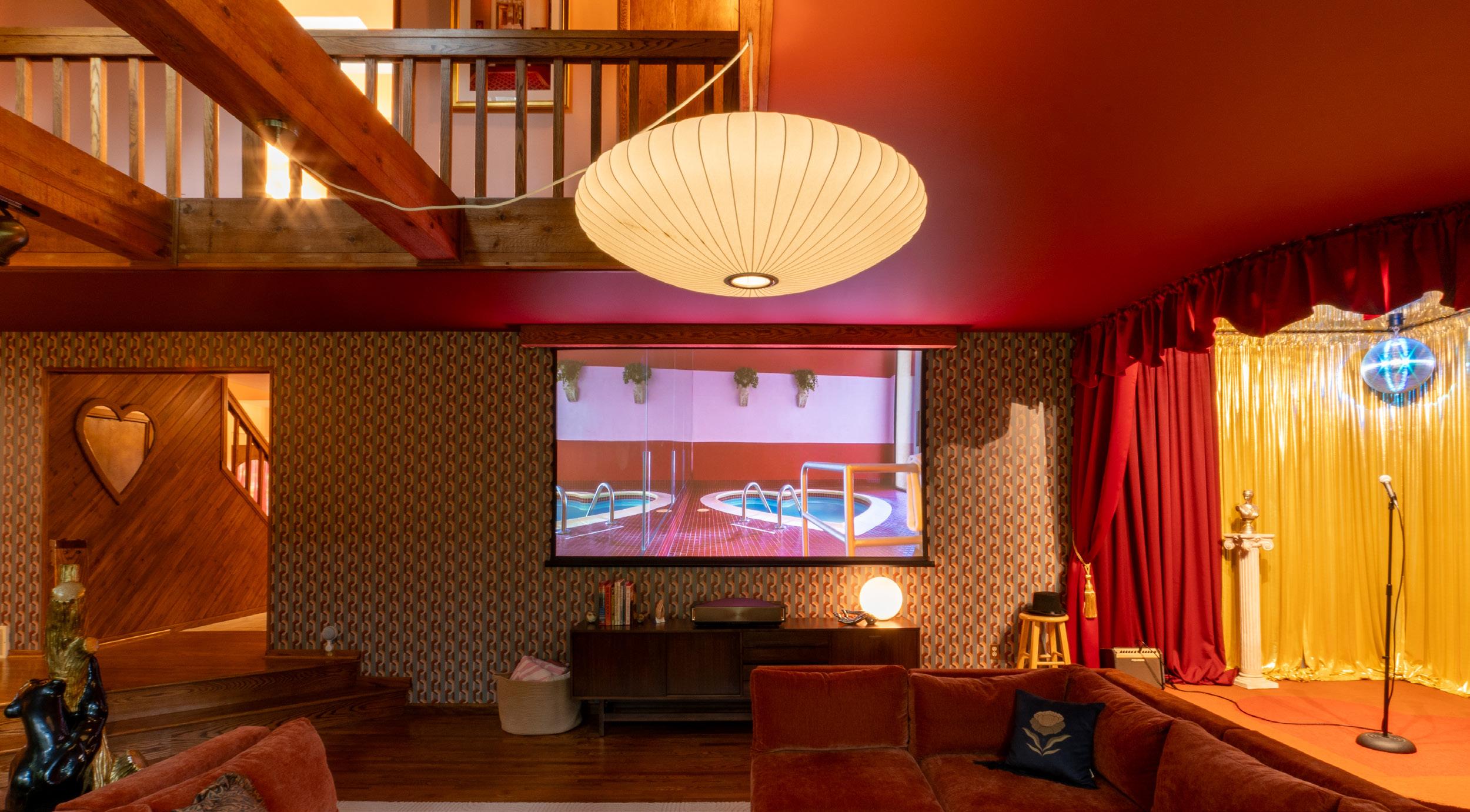
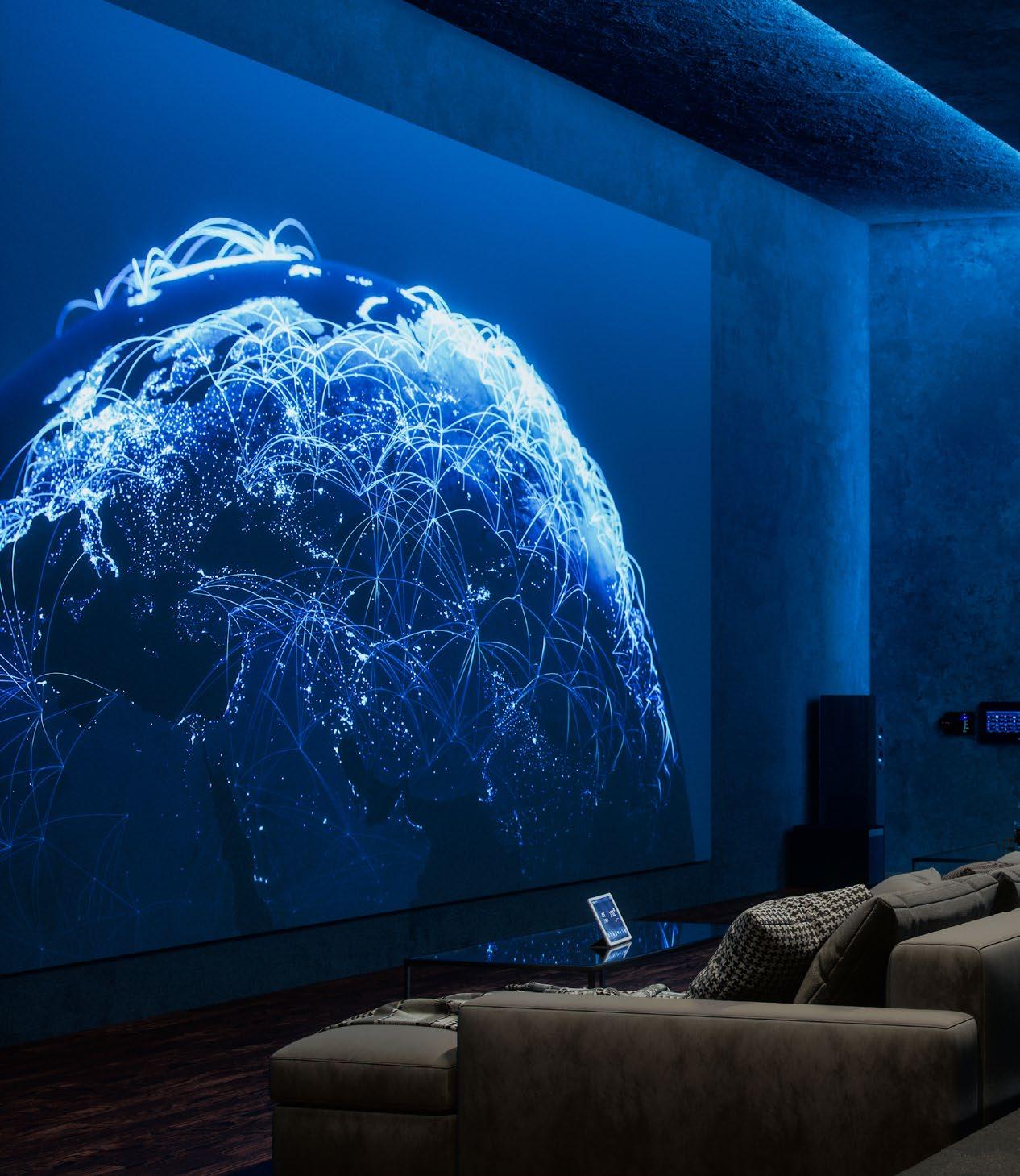
Projector manufacturers are holding their own against large direct-view televisions by introducing customer-friendly capabilities and features, giving buyers an array of options and solutions.
“Home theater projectors remain the most cost-effective and immersive way to enjoy movies, shows, video games, and sporting events,” says Jamie Pasley, general manager, entertainment solutions division, visual systems, JVCKenwood. “While TVs are getting larger, they can’t offer the same emotional experience as a projector and a big screen. There is still something special about ‘going to the movies,’ even more so when it’s from the comfort of your own home.”
In projection, technology continues to evolve with several performance specifications that consumers are looking for when selecting the right projector. “One is Native 4K resolution,” she explains. “Native 4K (4096 x 2160) projectors with real pixel counts that match the 4K content are available today. Native 4K resolution is essential because it delivers the greatest detail and sharpest images. As screen sizes increase, native resolution becomes even more important to provide corner-to-corner visual perfection and doesn’t require upscaling.
“Contrast is key,” she adds, “when it comes to creating images with depth and lifelike realism on the screen. Customers want to feel they are being pulled
into the action, and our projectors are known for their exceptional contrast and true black levels. JVC reports native contrast ratios, an accurate reflection of how well a projector shows the difference between the brightest whites and darkest blacks at the same time.”
In addition to color accuracy, brightness is part of the equation, with the balance between brightness and contrast creating a superior image. “The best picture comes not only from brightness, but also contrast, color, and resolution,” Pasley says. “Contrast creates a perceived brightness where whites feel brighter, blacks feel deeper, and colors gain dimension. And, of course, customers want projectors they know will last a long time. Newer laser technology, such as JVC’s exclusive Blu-Escent laser, offers brightness and a life expectancy of approximately 20,000 hours.”
“The growing demand across the industry is for complete big-screen entertainment experiences that can adapt to different lifestyles, spaces, and use cases,” says James Fishler, Hisense chief commercial officer. “Consumers still want scale and immersion, but they’re increasingly looking for flexibility and systems that deliver a cinematic experience without requiring a permanent, wall-dominating display. That’s where laser projection has become increasingly relevant.”
From a performance standpoint, residential customers are prioritizing brightness and color accuracy that hold up in real-world environments, not

As flat-panel TVs continue to grow in size, they still can’t match the scale and immersion of a projection screen, maintains Benjamin Ramos, product marketing, Elite Screens. “That’s why customers continue to go bigger, choosing projector screens that deliver a true cinematic experience well beyond traditional television dimensions.”
With the rising popularity of ultra-short throw (UST) projectors, EPV Screens has expanded its lineup of Ceiling Light Rejecting (CLR) screen materials into larger sizes to combat the washout effects of ambient light. These advanced surfaces are designed to reject up to 85 percent of overhead light, preserving contrast, color accuracy, and brightness in both dark home theaters and everyday living spaces. The result is a consistently bright, high-contrast image, whether lights are on or off.
“Today’s customers want more than just size; they want performance,” Ramos notes. “From dedicated home theaters to multi-purpose living rooms, viewers expect accurate color reproduction, deep contrast, and a truly immersive big-screen experience. With a variety of ISF-certified screen materials, EPV Screens offers tailored solutions designed to optimize image quality for specific room environments and projector types.”
Not so long ago, Ultra-Short Throw Ceiling Light Rejecting screens were limited in size. “Now, EPV Screens has pushed the category forward, offering CLR technology in sizes up to 152 inches diagonally,” Ramos says. “Product series such as the DarkStar UST 3 Elevate and PowerMax DarkStar UST 3 are among the first in the market to deliver this combination of expansive scale and advanced light rejection technology, allowing customers to go big without compromising picture quality.
“As EPV Screens continues to develop and expand the product lineup, we keep in mind the growing number of options available in today’s market, particularly price-conscious home theater packages that are emerging to compete with affordably priced TVs. To stay ahead of this trend and deliver the performance our customers expect, EPV Screens will soon introduce a new line of ISF Certified acoustically transparent fixed frame screens, combining reference-level image quality with accessible pricing for the modern home theater enthusiast.”
only dark theaters anymore. “They want images that remain vibrant during daytime viewing, along with contrast and detail that make movies, sports, and other content feel immersive,” notes Fishler. “Ease of use is also critical. Features like flexible placement, automatic image correction, and integrated smart platforms such as VIDDA are no longer differentiators, they’re baseline expectations for any modern projection system.
“Features such as IMAX Enhanced support and 3D playback are becoming more popular as consumers lean into that cinematic experience at home, and low-latency gaming capabilities have expanded how people use projection. Not long ago, gaming on a projector felt niche. Today, customers expect responsiveness and smooth motion alongside cinematic scale.”
“The best experience goes beyond picture quality,” says Kathleen Thomas, head of custom install channel, Sony Electronics, North America. “The best experience is seamless, with smaller, attractive design, quiet and cool operation, ease of integration, and great picture quality out of the box. Customers usually rely on the integrator to find a solution that will give them that.”
And the latest generation of Sony projectors are smaller and quieter than ever before. “We offer both white and black color options on key models so you can easily integrate them into your décor,” Thomas notes. “At the same time, we have not sacrificed image quality and have improved brightness and processing power significantly. While every projector can use a little tweaking once in the room, the picture quality is always great out of the box with minimal calibration. On the BRAVIA Projector 7, we introduced a new feature so you can easily change aspect ratio on the fly without needing lens memory or an outboard scaler. It also added our best processing to our smallest form factor at a great sub $10k price point.”
“We understand that customers have several options when it comes to the display they select for their home use,” Pasley says. “Price remains one of the
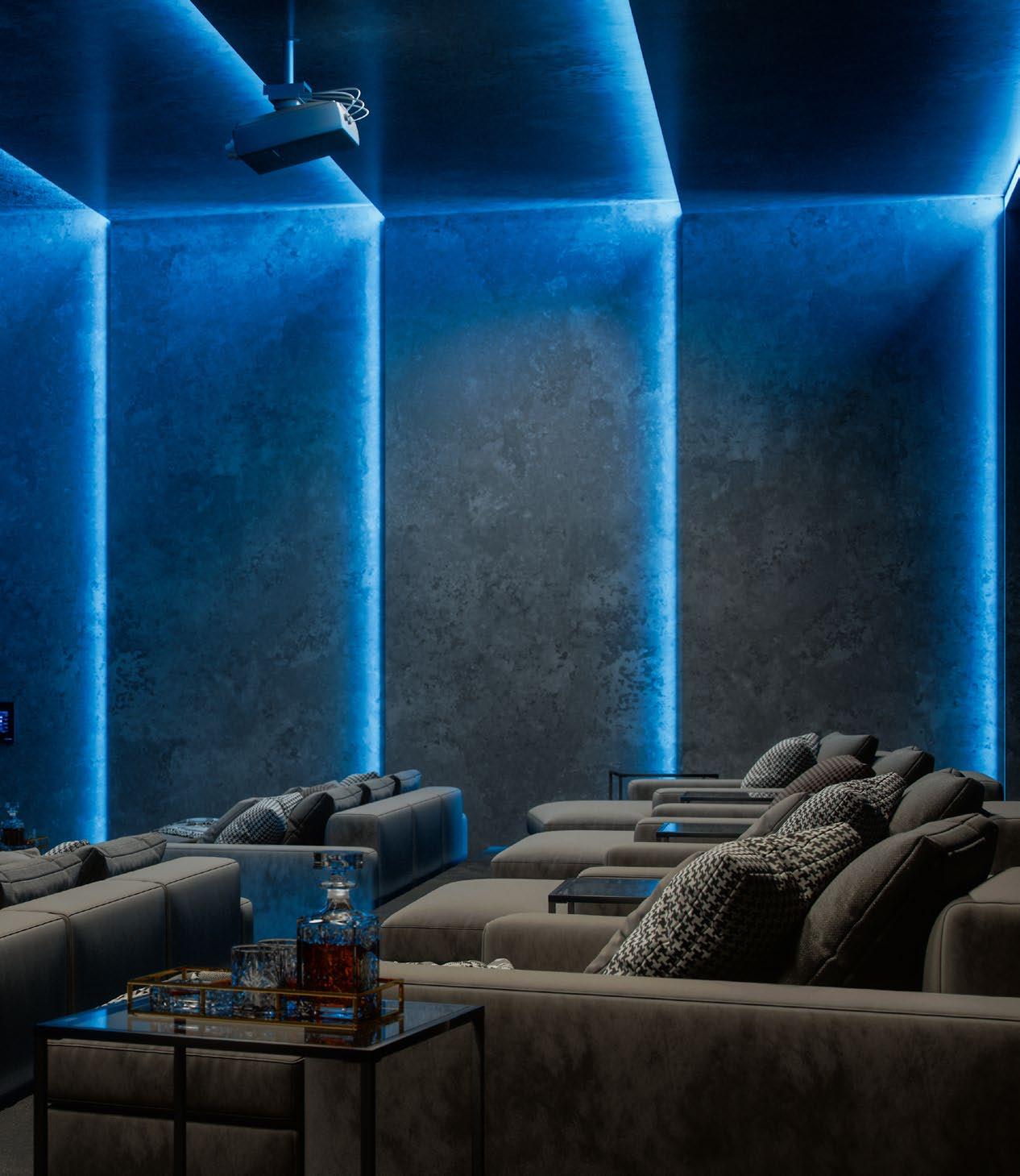
most important factors when considering what to purchase, and a 140-inch or larger screen paired with a JVC home theater projector still offers the best cost per square inch for a true cinematic experience. Larger screen sizes represent one reason why projection is still the clear winner. JVC offers a variety of projector models that can perfectly display 4K/8K images up to a 300-inch screen, which can be built on site. Projector screens have different materials and designs that can be tailored to the room’s lighting conditions. Customers can creatively incorporate drop-down options, hide speakers with acoustic transparent screens, and even incorporate them into the aesthetics of the room.
“Projectors also offer a more natural viewing experience with reflected light from the screen,” she adds. “This is different from a TV where the backlight is being emitted directly at you, which can cause eye strain, especially during long viewing sessions.”
So, why is the projector/screen pairing still the best way to go? “For over 25 years, JVC has been refining our D-ILA (Direct-Drive Image Light Amplification) technology to offer customers projectors that rival reality,” Pasley says. “This proprietary technology allows for unmatched picture quality with high contrast, superior resolution, and natural color reproduction. The D-ILA devices are the heart of our projectors and play an important role in projecting beautiful images. A JVC projector and screen pairing offers a true, cost-effective cinematic experience with customization and other features.”
At Hisense, the foundation of its offering in the market goes back to its LPU Laser Digital Engine, alongside its Triple Laser light source. “Audio also remains a focus for us, as we chase the best performance with partnerships with audio leaders, including Devialet, JBL, and Harman Kardon,” Fishler says. “Building upon those foundations, we’re meeting market demands by offering a wide price range of products to consumers that are built for different lifestyles and use cases, from the most powerful XR10 to the most accessible M2 Pro. Our goal is to make it possible for people to experience the brilliance of a Triple Laser projector at a range of price points.
“The XR10, coming later this year,” he adds, “is a great example of how the company is pushing the bounds to show the market and our customers what features and performance capabilities are possible. The XR10 achieves higher brightness (6000 ANSI lumens) and screen size (up to 300 inches), and it also sets new standards for flexibility. By combining the new IRIS lens and expanded lens-shift capability, the XR10 reduces the traditional tradeoffs between performance and placement, which reflects a broader shift toward projection systems that can adapt to real-world spaces.”
“On the long-throw side,” Fishler notes, “we see clear differences in how customers use projection, and we design accordingly. The M2 Pro is a great example of a lifestyle-first product: compact, easy to set up, and optimized for flexible use cases. Meanwhile, the C2 Ultra delivers exceptional performance in brightness, color, and sound, in a relatively compact form and at a price point that represents strong value for customers who want premium performance without stepping into ultra-high-end territory. We’re not focused on chasing specs in isolation. What matters is whether performance, form factor, and usability come together in a way that makes sense for how customers actually live.
“What we’re hearing consistently from dealers is that projection has moved out of being a niche category,” he concludes. “Customers are open to it as long as the experience feels intuitive and dependable. When built-in smart platforms, strong audio, and auto-setup work the way people expect, it removes hesitation and makes the category easier to sell. Dealers also respond best to portfolios with clear use cases. When it’s obvious whether a product is meant for a living room, a flexible lifestyle setup, or a dedicated theater, it makes the decision process faster for everyone.’’
Photos by Jonathan Young Photography
turn high-tech ambition into architectural art, blending luxury design with invisible innovation.
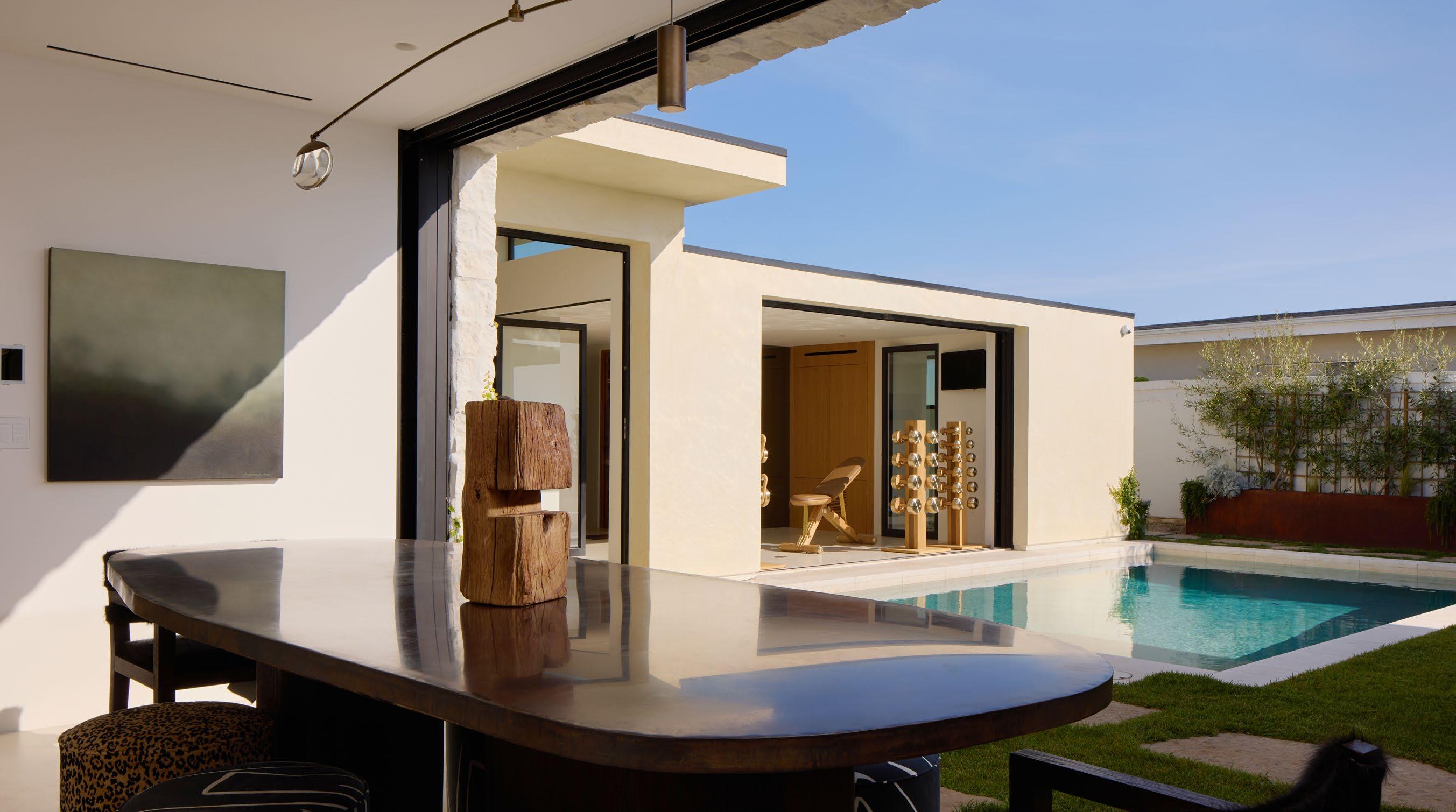
When a design-savvy homeowner and her technologyenthusiast husband set out to build their dream residence in Corona del Mar, California, they shared one bold vision: to infuse it with every high-tech innovation imaginable without letting any of the technology show. Newport Home Theaters rose to the seemingly impossible concealment challenge, delivering a $1.5 million smart home masterpiece that hides 17 miles of communication cabling and hundreds of connected devices within just 4000 square feet — a compact footprint for such a plethora of smart products.
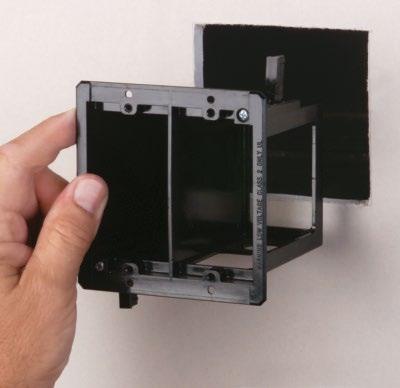
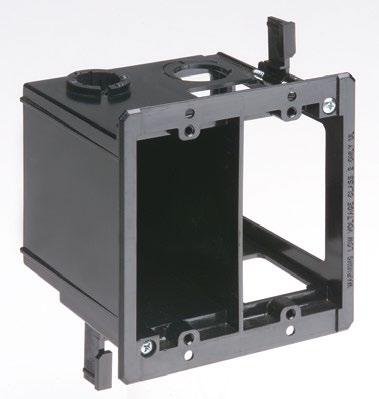
A vital element of the ambitious project was Wall-Smart flush mounts, which allowed critical user interfaces like Savant touch panels and keypads, along with Josh.ai Nano voice assistants, to sit perfectly flush within the home’s walls and cabinetry. The result is a beautiful, comfortable, and efficient home that marries technical sophistication with visual serenity, proving that even an extraordinary amount of technology can remain
beautifully unseen yet deeply appreciated.
The home’s single-story construction on a slab foundation with a flat roof offered no attic or basement space. Traditional wiring pathways didn’t exist, forcing Newport Home Theaters to coordinate closely with every trade to share ceiling and wall real estate. Every inch of space mattered.
At the same time, the homeowners’ priorities couldn’t have been more different. The wife, an interior designer and art gallery owner, prioritized aesthetics and visual continuity, while her husband wanted cutting-edge capabilities. “The mission from the beginning,” explains Newport Home Theaters president Courtney Tiziani, “was to fit a crazy amount of tech and conceal it as much as possible.”
Every visible element, from outlets to temperature sensors, was purposefully chosen to align with this objective of concealment, cohesion,
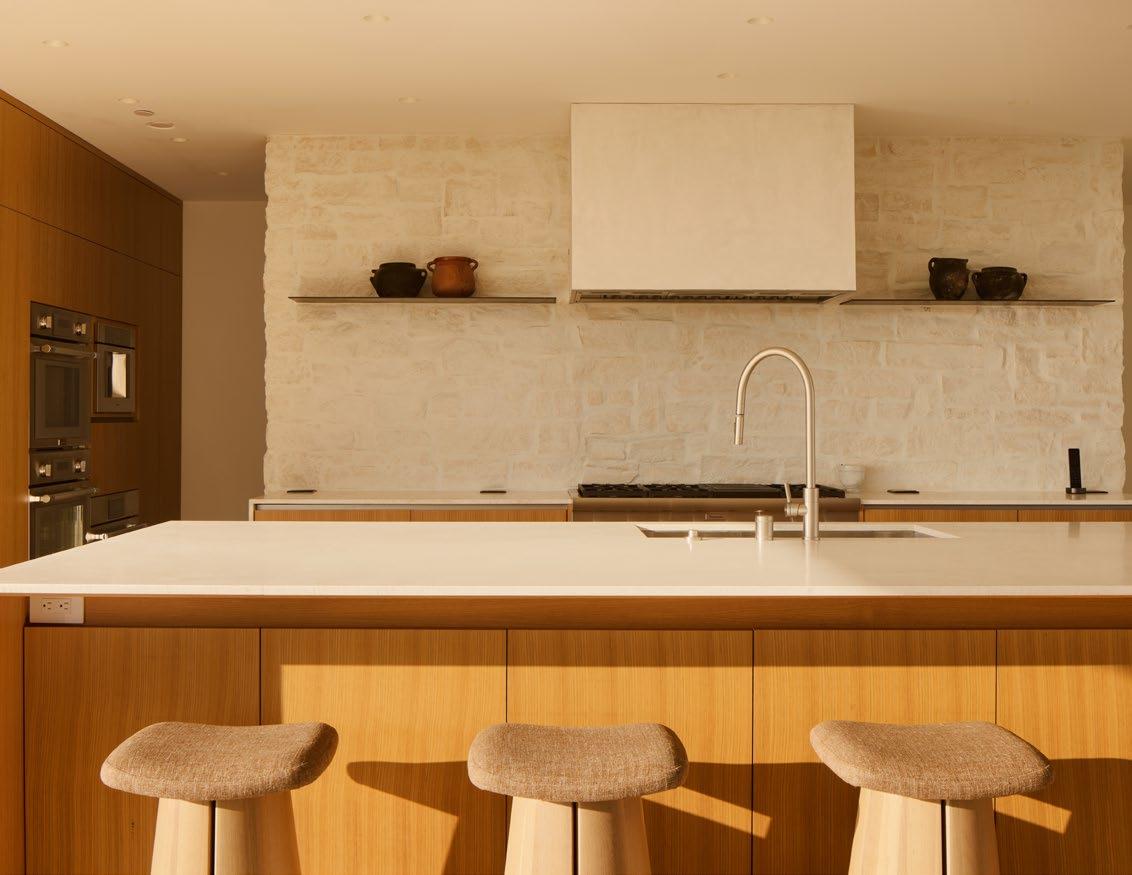
and visual elegance, yet still be fully functional. “Wall-Smart gave us the bridge between design and technology,” Tiziani says. This was Newport Home Theaters’ first experience installing Wall-Smart solutions, and the impact was immediate. “The product is beautifully thought-out and manufactured,” Tiziani remarks. “There was a learning curve, but once you understand the installation process, the results are flawless. It won’t be our last Wall-Smart project. We’re already planning to use it again.”
Nearly every Savant keypad and touch panel was installed using a combination of Wall-Smart’s custom flush mounts. Uniquely engineered for drywall installation and tailored to each specific device, including Savant Ascend keypads and 5- and 8-inch touch panels, these trimless, recessed mounts achieve a seamless transition between technology and architecture. Even the few control points integrated into custom millwork, along with the specialty circular mounts used to recess the quarter-sized Josh.ai Nano microphones, virtually disappear into their surroundings.
Although the homeowners rely on these devices to manage architectural lighting, climate control, AV systems, and more, each interface feels like an organic part of the home’s design rather than a technological intrusion. Whether through voice, mobile app, or tactile control, every interaction feels intuitive and unobtrusive. In a residence where every detail, from speakers and thermostats to outlets and sensors, was chosen for aesthetic harmony, Wall-Smart delivered the invisible elegance that brings it all together.
Because the family’s needs were diverse, including accommodating a child with autism, a “one-size-fits-all” control approach simply wouldn’t work. Therefore, Newport Home Theaters developed a layered, adaptive control system combining:
• Josh.ai voice control for natural, hands-free operation
• Savant Home Automation for deep customization and scheduling
• Custom-engraved Savant keypads and touch panels for tactile, intuitive control
• Savant handheld remote controls for convenient control from the couch
• App-based control for home management from individual smartphones and tablets
Wall-Smart flush mounts
• Savant home control
• Savant climate control
Infratech outdoor heating system
• Lutron lighting and shade control
• DSC security
2N security
• IC Realtime surveillance
• Sonos distributed audio
Sonance amps
• James Loudspeaker speakers
• Sony AV receivers
Sony displays
• Samsung The Frame TVs
• Future Automation motorized TV lifts
WattBox surge protector/power conditioner
• SurgeX uninterrupted power supplies
• Middle Atlantic racks
Netgate, Araknis, Ruckus, and Netgear networking
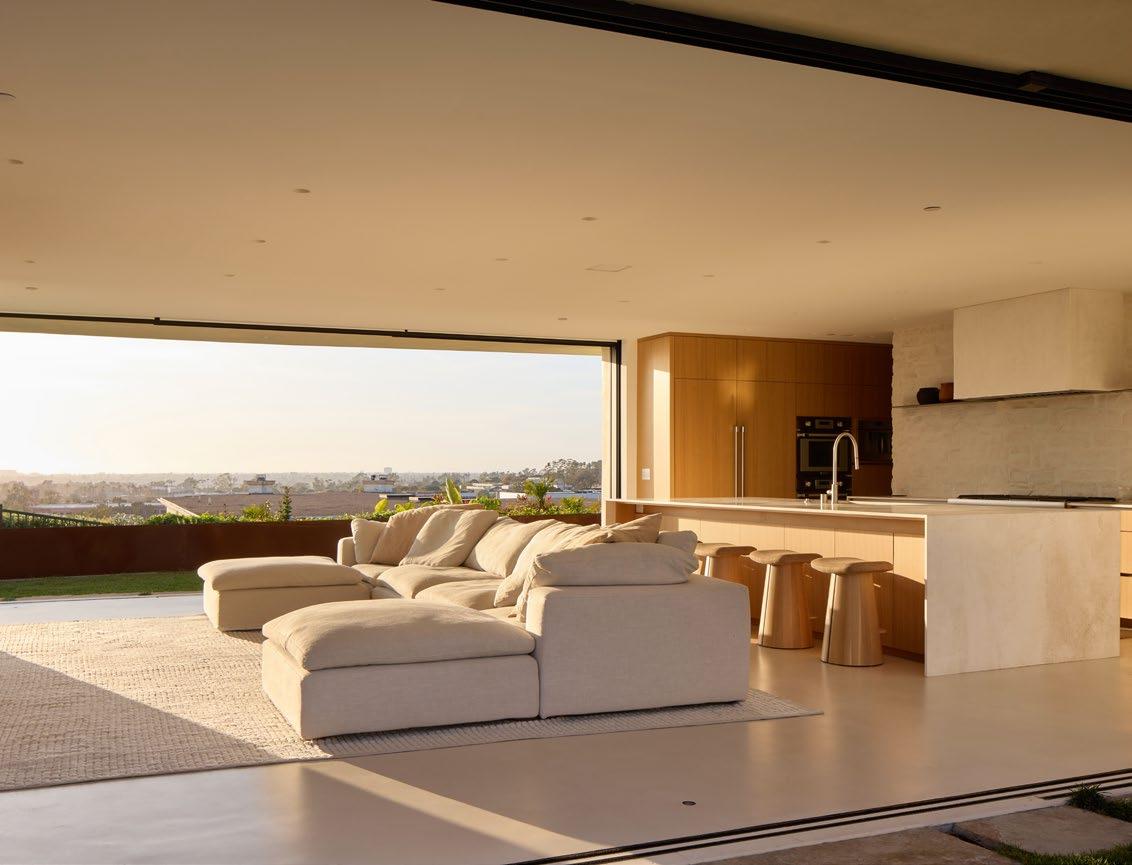
Each family member can interact with the home in their preferred method but without juggling an unruly, confusing, visually disruptive assortment of user interfaces.
This project proves that challenges such as a home’s size, design, or even differing homeowner priorities are no match for innovative solutions like WallSmart’s custom flush mounts and the installation expertise of Newport Home Theaters. With clear objectives, close collaboration among designers and architects, and a thoughtful selection of products, Newport Home Theaters seamlessly integrated an extraordinary amount of technology into a complex architectural framework, all while maintaining the home’s clean, refined aesthetic.
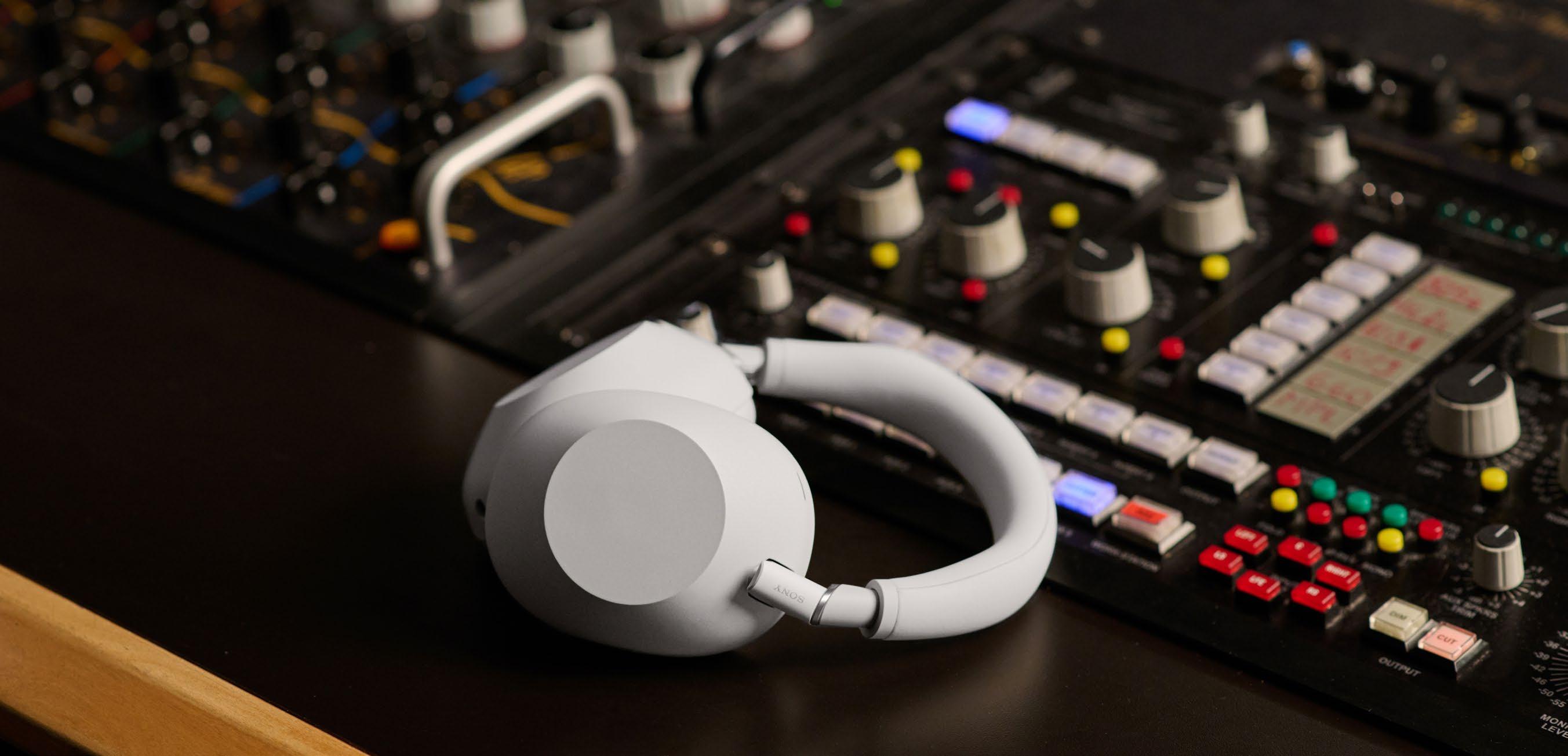
Sony just dropped three new headphone models, and all fit a different listening and lifestyle choice.
Sony has long been one of the leaders in wireless, noise-canceling headphones, and with these latest iterations, we are now on the sixth generation of both its highly regarded WF-1000XM6 wireless in-ear buds and WH1000XM6 over-ear headphones. Brand new here is the LinkBuds Clip, which are an openear design that clip onto your outer ear, kind of like an earring.
Some people have strong feelings about in-ear versus over-ear, but since Sony has upgraded its flagship wireless offerings in both these categories, you won’t have to pick last-gen tech to get your preferred style. And while the XM5s were already stellar performers, the XM6 models all receive notable upgrades.
With the in-ear WF Series, Sony made upgrades to improve noise cancelation, sound reproduction, call quality, and comfort. Sony upgraded just about everything: a new QN3e processor that’s three-times faster with 25% better
ANC, eight microphones instead of six, improved adaptive noise canceling, redesigned drivers for smoother sound, better call performance with AI noise reduction and beamforming, and a new shape that boosts both comfort and seal.
Additionally, the XM6 features a 1.5-times larger Bluetooth antenna for better connectivity.
The phones deliver up to eight hours listening on their own and 24 hours with the case, and can provide an hour of play time with a five-minute charge. Also nice is that, in addition to USB-C charging, the case features Qi technology for easy wireless charging. The phones come with four different sizes of ear tips to help find the ideal fit. These are currently offered in either Black or Platinum Silver colors.
The on-ear WH Series are also powered by the QN3 processor, which is seven-times faster than the XM5 version, and upgrades to 12 microphones versus eight with new Adaptive NC optimizing. To improve call performance, there are now six microphones (versus four) with AI beamforming. The XM6 retain the 30-hour battery life with NC on, and give up to three hours of operation with just a
three-minute charge;however, the XM6 now allows simultaneous listening and charging. The phones also have a new foldable design, making them more compact for travel, feature Sony’s 360 Reality Audio upmix technology for spatial sound from 2-channel sources, and provide a new touch-to-mute operation. The phones include a travel case and mini-to-mini headphone cable.
The LinkBuds Clip (LBC) are a different animal, designed for more passive, background listening. Sony describes the C-shaped design as an “open ear listening experience [that] lets users hear their surroundings and music at the same time.” Since the phones are neither in or on the ear, but rather clipped onto the outside, they are very comfortable, fit a wide variety of ear shapes, and could easily be worn for hours without fatigue.
As the LBC are meant to keep users aware of their surroundings, they don’t feature any active noise cancellation. They can also deliver up to nine hours of listening with the earbuds and up to 37 hours with the charging case, and can provide up to an hour of listening after three minutes of charging.
By John Sciacca
877-865-7669
Sound and Active Noise Canceling terrific on both WF and WH MX6 models; LinkBuds Clip incredibly comfortable; Sound Connect app offers tons of configuration options
Finding perfect fit with WF tips
All models feature Bluetooth 5.3 connectivity
WF-1000XM6 and WH-1000XM6 feature industry-leading active noise cancellation with eight (WF) and 12 (WH) microphones
WF-1000MX6 weigh 6.5 grams each; 8 hours battery (NC on), 24 hours with case; 8.4mm drive unit; IPX4 rating; USB-C or Qi wireless case charging
WH-1000MX6 weigh 254 grams; 30 hours battery (NC on); supports simultaneous charge/listen; 30mm drive unit; USB-C charging; mini-jack headphone connection; includes travel case
LinkBuds Clip weigh 6.4 grams each; 9 hours battery (NC on), 37 hours with case; 10mm drive unit; IPX4 rating; USB-C charging
While you can simply turn any of the phones on and pair them with the Bluetooth in your device — all of which are Bluetooth 5.3 and support LE, and are compatible with Auracast — and start listening, you’ll be missing out on a ton of configuration and adjustments by not installing Sony’s Sound Connect app (Android and iOS).
Now, normally I’m kind of against having to download a new app to do something, but there are so many features in the Sound Connect app, it really goes hand-in-hand with using the phones and is required to get the most out of them. While taking notes during my review, I wrote down about 1500 words describing different features the app offered, so I’m going to greatly condense that here.
The app is divided into My Device, Scene, Discover, and Menu options to quickly navigate
to different functions. When you open the app, you are shown the currently connected phones along with battery level of both phones and case, if applicable. You can configure what items appear on the home screen, from Ambient Sound Control, Listening Mode, Equalizer, Connect to 2 devices simultaneously, Speak-to-Chat, and Bluetooth Connection Quality. Touching any of these takes you into their settings to make further adjustments. There is also a tab to drill deeper into the device’s settings.
Additionally, it shows what content is currently playing, along with some basic (skip -/+ and play/pause) transport controls and a volume slider. One thing I really liked was a real-time sound pressure meter that shows how loud the current content is in dB with a link to a chart showing the sound allowance recommended by World Health Organization. If you have enabled the ability to simultaneously connect to two devices, it will show the two devices you’re connected to, and which is currently providing audio, and allow you to easily switch between, say, a phone and a computer. The phones play an audible chime as it creates (or drops) both of the connections, so you know it is connected to both.
There are five EQ presets with the names Heavy, Clear, Hard, Soft, and Game, plus a manual mode and two custom slots. All of them let you adjust 10 bands from 31 Hz to 16 kHz by ±6 dB. There’s also a “Find Your Equalizer” mode that lets you listen to several different settings to personalize what sounds best, and then automatically saves that to Custom 2.
Device settings offers deeper adjustments to many of the choices above, plus more configurations. For example, you can customize what function happens when tapping the WF or LBC’s left or right earbuds, select which noise canceling modes to toggle through, use head gesture (nod or shake) to accept/decline phone calls, whether or not to pause music when phones are removed, and so on.
With the WH and WF you can select whether to use Voice Control or Voice Assistant. With Voice Control enabled, say, “Hey, Headphones,” and then ask for a variety of things like play/ pause music, skip or replay song, raise/lower volume, check battery level, set Noise Cancel or Ambient mode. You can also say “Assistant” and activate your device’s voice control features (i.e., Siri). I’m not much into the habit of using voice control for simple commands; it’s almost
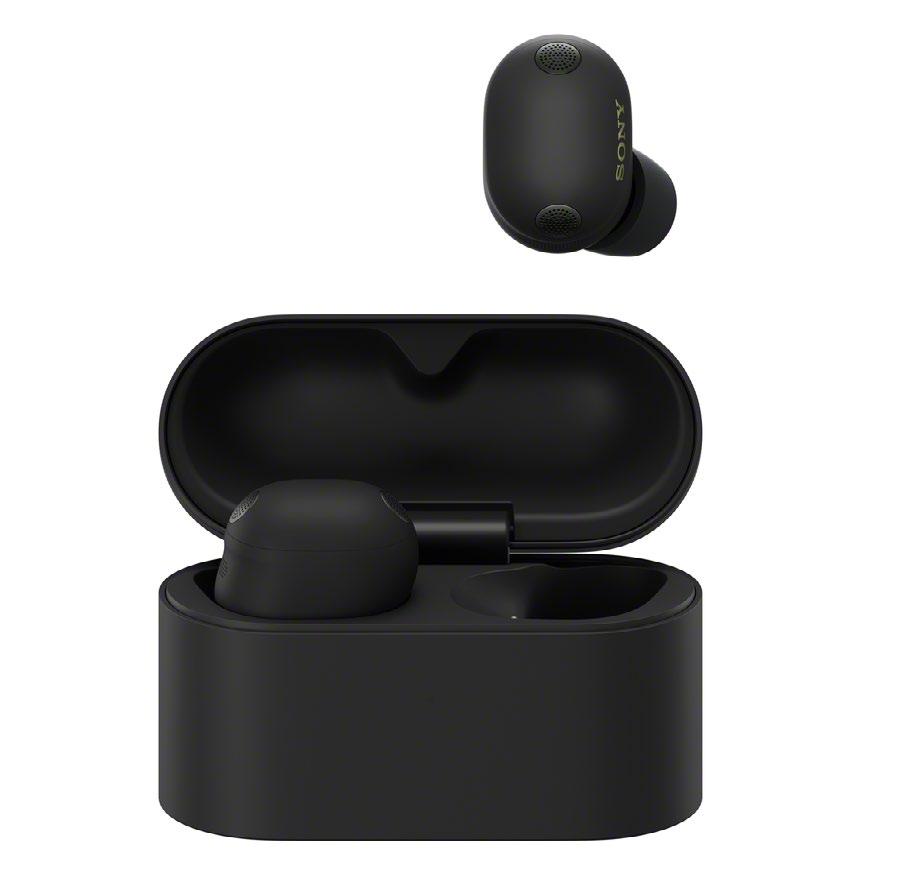
always faster and simpler to just use the touch sensor to adjust volume or skip tracks than sit there talking to myself to do it, but it’s there if you want it. Voice Assistant allows you to use the headphones to access your device’s voice assist function. Or you can turn voice control off completely.
There’s a Quick Access setting to configure launching Amazon Music, Apple Music, Endel, Spotify, and YouTube Music.
Under Scene you can configure the phones to automatically begin playing content and/or use adaptive sound control when you are doing a variety of activities like commuting, walking, running, at the gym, etc. You can also store locations you frequent like your home, work, or a gym to automatically trigger content. You can enable a voice cue that will tell you the date and day’s weather when you first put the phones on for the day, announce the time on each hour, or read messages/notifications automatically as they come in. This can be configured for what announcements you want to hear, such as Messages, LinkedIn, What’s App, or X. I really liked the Voice Cue, especially the auto message reading and hourly notifications, but it is configurable and defeatable if you don’t like it. Note: Enabling always-on location services is required for some of these features to work.
Discovery presents a history of your listening, showing your weekly percentage of safe sound allowance, enabling a safe volume control setting that automatically limits volume levels if you are exceeding weekly safe limits, and shows how much the noise canceling reduced unsafe ambient sound levels for the week. With multiple headphones registered, it gives a report of the average listening level and time


FOLLOW US twitter.com/resisys facebook/resisys
CONTENT
MD, Content, AV Anthony Savona anthony.savona@futurenet.com
Contributors: Katye McGregor Bennett, Matt Bernath, Sam Cavitt, Henry Clifford, Dave Donald, Tim Fitzpatrick, Jason Griffing, Anthony Grimani, Karen Mitchell, Lisa Montgomery, Todd Anthony Puma, John Sciacca, Lisa Slayman, Gordon van Zuiden
Production Manager Heather Tatrow
Art Editors Matt Lochrie & Rosie Webber
ADVERTISING SALES
Managing Vice President of Sales, B2B Tech Adam Goldstein, adam.goldstein@futurenet.com 212-378-0465
SUBSCRIBER CUSTOMER SERVICE
To subscribe, change your address, or check on your current account status, go to residentialsystems.com and click on About Us, email futureplc@computerfulfillment.com, call 888-266-5828, or write P.O. Box 848, Lowell, MA 01853.
LICENSING/REPRINTS/PERMISSIONS
Residential Systems is available for licensing. Contact the Licensing team to discuss partnership opportunities. Head of Print Licensing: Rachel Shaw, licensing@futurenet.com
MANAGEMENT
SVP, MD, B2B Amanda Darman-Allen
VP, Global Head of Content, B2B Carmel King MD, Content, AV Anthony Savona
Global Head of Sales, Future B2B Tom Sikes
Managing VP of Sales, B2B Tech Adam Goldstein VP, Global Head of Strategy & Ops, B2B Allison Markert VP, Product & Marketing, B2B Andrew Buchholz
Head of Production US & UK Mark Constance Head of Design, B2B Nicole Cobban FUTURE US, INC.
130 West 42nd Street7th Floor New York, NY 10036

of each pair of headphones, broken down by day/week, month, or year. It will also suggest registering newly learned locations, give you a breakdown of listening history, and award badges for unlocking different achievements like daily and weekly listening, using different settings, viewing tutorials, etc. A tutorial feature shows different functions/ settings of the phones and app.
If you’ve linked the headphones to a Sony online account (my.account.sony.com), you can back up and restore your data and settings.
Once you get used to using the app to adjust settings and features and check things, it becomes really valuable. Plus, there are features and configurations you just don’t have access to without the app.
If you want to learn more, both the WH and WF models have a thorough, 140-plus-page online help guide that details all the features.
The WF and LBC were the first to arrive, though I had actually been given a pressonly demo of them prior to launch at CES. And, honestly, I was really unimpressed with the WF phones at CES. I found both the bass performance and noise cancelling to be virtually nonexistent. I was certain Sony couldn’t have missed this badly on the product, so I was eager to give them a closer listen at home.
Turns out, the phones ship with the medium ear-tips installed — what I assume was used at the demo — and those were too small for my ears to create the proper fit. (Four sets of tips are included, ranging from extra-small to large). With in-ear headphones, finding the right tip for the correct fit is vital.
Also cool is that there is a wearing test in the app that will check to make sure you have the WF headphones installed correctly, and then another test that will play a brief tone and measure how much sound is escaping to confirm you have them properly seated. It was a night-and-day difference after I had the correct tips and the phones properly positioned inside my ears.
Getting these properly set deeply in my ears introduced some ear fatigue, and after a couple of hours of wearing, I was ready to pull them out and take a break. Though, to be fair, this is generally true for me with most in-ear phones. Could I wear them for a gym
session or plane flight? Yes. Could I wear them for eight hours at work? Probably not.
In contrast, the LBCs are very intuitive and comfortable to install and wear, easily clipping onto the outside of your ears. They stayed firmly in place whether I was jogging, moving around at the gym, or even playing pickleball. I daresay, because the design greatly eliminates ear fatigue, you could actually forget that you’re wearing them. I could see myself easily wearing these for an entire workday.
Finally, we have the WH over-ear headphones. Once removed from the case, the first thing I noticed was how light they are. Many premium headphones are heavier, and end up feel like they’re rubbing into the top of my head after a bit. At 254 grams (8.96 ounces), the WH’s felt noticeably lighter than other phones I’ve worn, which translated to longer/ more comfortable wearing time.
The first step in using the phones is to pair them to your device. If using a smart phone, I’d suggest using the Sound Connect app for this; however, if pairing to something else like a laptop, you would press and hold the power button on the WH models to put them into pairing mode (they start announcing “Pairing…pairing…”), or opening the lid of the charging case (with the phones in them) and then pressing a small button on the back of the case. With all the models, I never had any issues with them after they had been paired. Also nice is that if you have multiple pairs, the Sound Connect app does a nice job juggling between them as you connect/disconnect.
Both the WF and WH models sound terrific, and I think for many people it will simply come down to which style they prefer. The over-ear WH kind of silently declares, “Don’t bother me,” which some people like, while the more subtle in-ear WF can be more socially inviting. In truth, even with ambient mode engaged, having a real conversation with the music playing was difficult at best. When I was in environments that required my ongoing attention, the LBCs were the definite go-to, letting me enjoy music while still holding a conversation and hear what was going on around me.
I loved that both phones offer a Quick Attention mode that heavily mutes the music and turns on the mics for listening to the outside world for a quick interaction. To
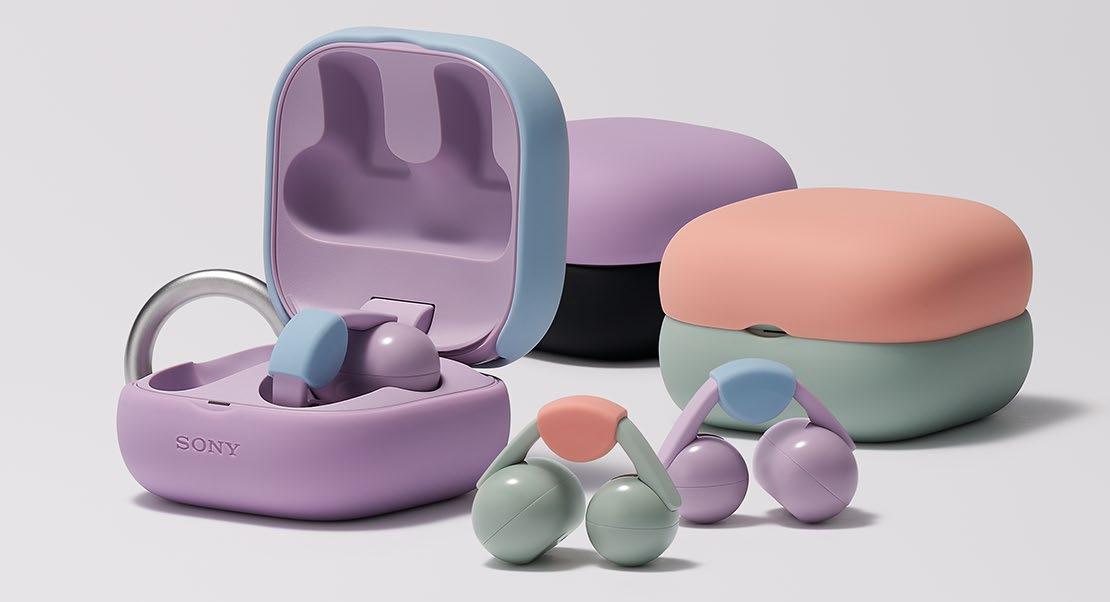
activate this, you put your hand over the right earcup of the WH and it instantly engages, and with the WF you press and hold the left earbud. Removing your hand/finger returns the volume and NC settings. I used this feature quite a bit as my family grew exasperated of my inability to hear them while wearing the phones for hours during this review, and it's great.
For control, the WH uses touch tap and swipe functions on the right cup. Tap twice to play/ pause music or accept/end a call, swipe forward or backward to skip songs, swipe up or down to adjust volume, tap and hold to activate your voice assistant. These all worked smoothly, intuitively, and consistently. The left cup has the ANC button, which can be configured for different functions based on one, two, or three presses. A quick press on the power button announces the battery status.
As mentioned earlier, both the WF and LBC models allow configuration of the button taps of both the left and right buds within the Sound Connect app. My button tap success was greater with the WFs than the LBCs, as they had a larger tap surface area, but there were lots of times when I’d pause when I meant to skip, or vice-versa, or just forget how I’d configured each model.
All the phones offer at least Standard and Background Music listening modes. The LBC adds a Voice Boost and Sound Leakage Reduction options, and the WH adds a Cinema one. Background Music adjusts “the spread of sound” to make it sound like you are in a different listening environment, and gives choices for My Room (which doesn’t actually have any relationship to your actual room), living room, and café. This pushed the sound out into the distance, with café having the biggest effect, but if I wanted music more in
the background, I preferred just lowering the volume. But if you like music to sound like it’s off in the distance, maybe while studying or reading, the option is there.
Voice Boost is designed to increase the volume of voices, but seemed to raise the volume of everything by up to 10 dB. When wearing the LBCs in a noisy environment, like the gym, this was a good mode to focus on the music rather than the noise. Sound Leakage Reduction “suppresses high-pitched sounds and reduces sound leakage into the environment” and would be good if you were wearing the LBCs in a quiet environment with people in close proximity to you. Sitting next to my wife in bed, she said it definitely muted what she was able to hear.
Cinema employs Sony’s 360 Reality Audio Upmix technology to try and create a more immersive experience from any 2-channel source. It also seemed to produce slightly deeper, more cinematic bass and created a nice surround effect, placing objects at different points around your head. It was more “spacious,” with sound feeling like it was bigger than the headphones.
Another mode that both the WH and WF models share is Speak-to-Chat, which can be turned on/off and has three sensitivities: Automatic, High (when it doesn’t hear you well), and Low (when it hears you too well). In theory, this is a fantastic feature. You start talking, the headphones mute the music and use the mics to enhance voices so you can have a conversation with someone. On Automatic sensitivity, it triggered frequently in noisy places like the gym, or if I breathed a little too hard or hummed under my breath. On Low, it didn’t trigger as easily, but I’d often have to
be speaking for a few seconds before it would trigger. Something like, “Hey, what’s up?” often wouldn’t be enough to do it. When it does trigger, you can immediately close it with a quick press of the ANC button. This feature definitely seemed to work better in quiet environments, and I ultimately turned it off and just used the Quick Attention mode.
As you might expect from the number of microphones employed in each model, the WH offered the best call quality, with the WF a close second, and the LBCs a distant third. In a quiet room, the WH and WF were very close, but when there was a lot of background noise, the WH did a better job of muffling that for the person on the other end.
As far as noise-canceling performance goes, again the WH and WF were close — which is to say fantastic from both — but the WH just did a better job. With both phones, putting them on in a room with normal background volume introduced near-total silence. Things like fan noise, the vacuum, or a running shower were completely gone. I played airplane engine sounds from my Sonos Move speaker at volumes reaching 100 dB, far louder than actual incabin noise, and the amount of reduction was amazing. Both pairs reduced this from, “Wow! That’s loud!” to “I hear some noise off in the distance.” Interestingly, the WF buds seemed slightly better at blocking low-frequency noise, probably because of how they seal in the ear, while the WH did a more complete job across the full spectrum, especially with higher-frequency sounds. Neither pair seemed to have any issues with changing NC sounds or effectiveness when I would turn my head left and right.
While I really enjoyed the WFs, the WHs were ultimately my go-to. For one, I just found them more comfortable to wear over long periods. Also, I never worried about the fit as they always just stayed in place. And while the WFs were among the best-sounding in-ear models I’ve heard, the larger drivers of the WH delivered superior, deeper, and more authoritative bass. Tracks like Billie Eilish’s “bury a friend” or Kendrick Lamar’s “HUMBLE.” just hit harder. I also found the sound to be more spacious and “out of my head,” especially while watching movies.
With the new WF-1000MX6 and WH1000MX6, Sony has shown that it wants to remain king of the wireless, noise-canceling headphone market, while the LinkBuds Clip offer a nice alternative to lifestyle headphones that require all-day wear with awareness of your surroundings. And all of them give Sony dealers a slam-dunk sale add-on opportunity.
BY RICHARD AGNEW, PRODUCT MANAGER, NICE NORTH AMERICA
When people think of “design-friendly” technology, security rarely tops the list. Lighting, shading, and sleek touch panels tend to define that conversation. Security, by contrast, has long been viewed as strictly utilitarian, an essential part of a home, but not elegant. However, that perception is changing, and systems integrators are uniquely positioned at the center of this shift.
Today, striking the right balance between form and function may be more important in security than in any other smart home category. Security devices occupy prime visual real estate: walls, ceilings, windows, doors, and exterior surfaces. They are seen, touched, and interacted with daily. That visibility makes thoughtful specification and placement critical to maintaining a home’s aesthetic integrity.
For manufacturers like Nice, this shift begins with intentional industrial design. Influenced by its Italian-based design team, the company approaches every product, including security, with the belief that technology should visually align with the home. If it’s going on a wall, it must complement the space. Even rack-mounted components receive aesthetic consideration rather than being treated as basic hardware.
The evolution mirrors that of thermostats over the past decade. Once purely functional, they are now architectural accents. Security is following a similar path. Across the smart home industry, industrial designers are influencing product development more than ever. Softer edges, a choice of matte and gloss finishes, neutral palettes, and refined proportions are replacing the boxy plastics of previous generations.
Nowhere is this evolution more apparent than in sensors. Door and window contacts, PIRs, glass break detectors, smoke sensors, and keyfobs have all undergone a subtle but meaningful redesign. The latest 2GIG 345S sensors, for example, feature slim profiles, muted finishes, and softened edges that integrate naturally with contemporary interiors.
When full concealment isn’t possible, attention to color and finish becomes critical to an eye-pleasing installation. Offering your customers standard whites that align with common lighting and switch plates helps ensure devices feel cohesive rather than conspicuous.
Installation flexibility brings even greater design harmony to the home. Sensors can be surface-mounted with spacers for a clean, tailored look or recessed to reduce their visual presence further. Select sensors also offer both wall- and ceiling-mount installation options.
Advancements in detection technology are also reducing visual clutter. Expanded detection ranges in motion sensors and surveillance cameras can decrease the total number of devices required in some cases. Pantilt-zoom cameras may replace multiple fixed units. Fewer devices translate to cleaner sightlines. Wireless topology further enhances design

integration. Eliminating hardwired pathways in finished spaces preserves architectural integrity and simplifies retrofits.
If sensors are meant to disappear, control panels often serve as a design anchor. Touchscreens such as the 2GIG GC Touch combine a sleek, modern design with rounded corners, subtle backlighting, and a larger 7-inch display. Rather than appearing as purely security hardware, these panels can function as lifestyle interfaces. Touchscreens that transition from a security dashboard into a digital photo frame deliver a distinctive design element while maintaining their core security features.
Open integration of subsystems also enhances a security system’s aesthetic appeal. By unifying automation and security into a single platform, whether via touchscreen or mobile app, integrators can eliminate redundant wall clutter and deliver clients streamlined functionality and a cohesive visual experience.
Surveillance introduces a nuanced design question: Should cameras blend in or stand out? In many residential applications, discretion is preferred. Cameras can be integrated into soffits, landscape elements, or architectural details with low-profile housings and neutral finishes. In other cases, visibility serves a purpose. Cameras equipped with integrated lighting, even flashing strobes, can act as effective deterrents. The objective isn’t to create an industrial appearance, but to communicate presence without overwhelming the façade.
Video intercoms and doorbells, however, are trending decisively toward refined aesthetics. A matte-black video doorbell looks more like contemporary hardware than a warning device. Similarly, access control is shifting toward slim intercom panels, smartphone credentials, biometric readers, and integrated gate hardware that complements exterior finishes.
Perhaps the most meaningful change is happening earlier in the process. Security components are increasingly discussed during the design phase rather than after construction begins. Flush-mounted keypads, concealed wiring paths, recessed sensors, and coordinated finishes can be planned alongside lighting layouts and millwork details.
Integrators who collaborate closely with architects, builders, and interior designers elevate security from an afterthought to an intentional part of the design narrative. That early coordination results in cleaner installations, stronger design cohesion, and more satisfied clients who increasingly expect technology to be as visually refined as it is functional.