Technology & news for radio decision makers
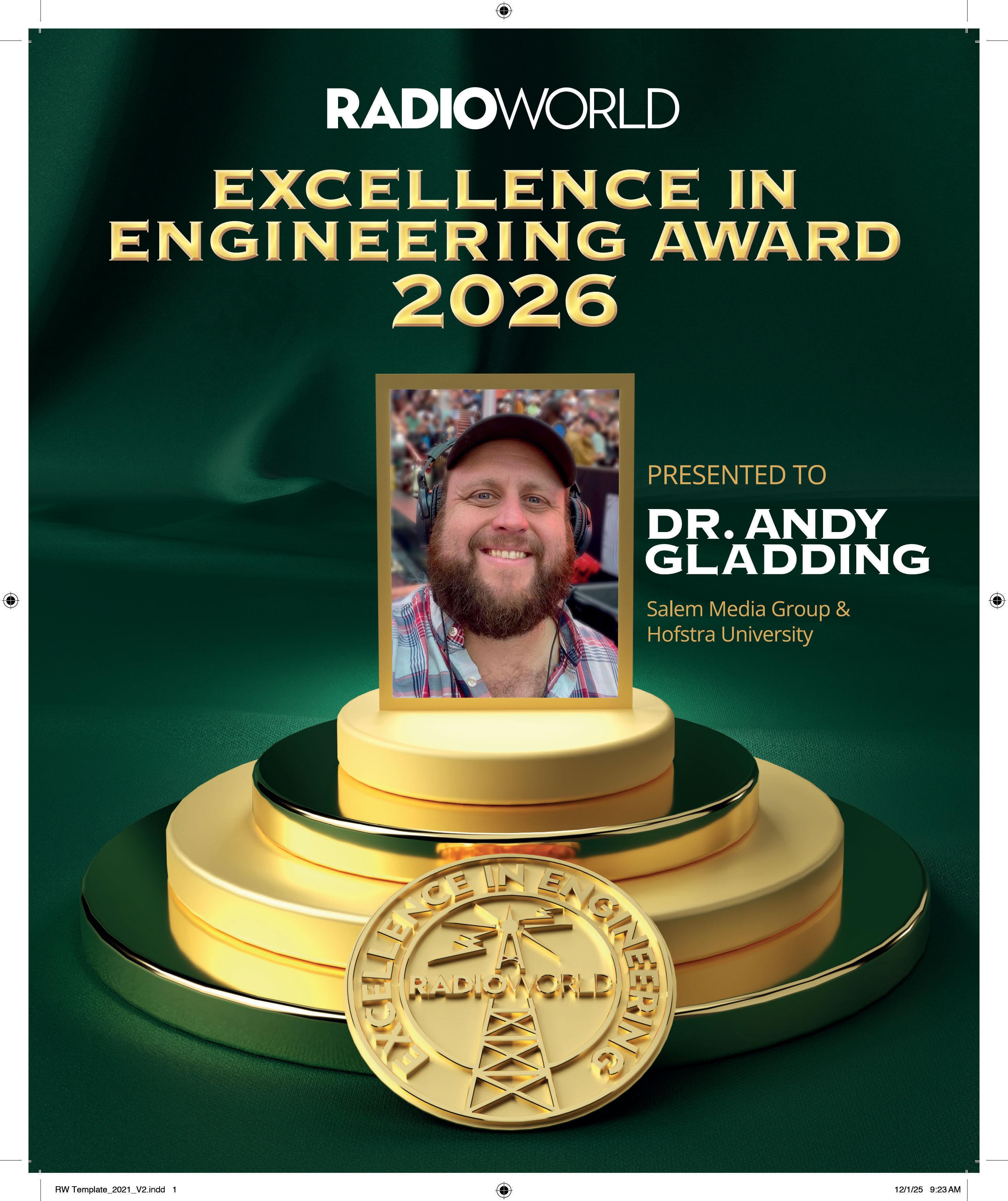
The recipient of the Radio World Excellence in Engineering Award is a professional dynamo and an advocate for helping young technologists learn and find jobs.
Give us a beat No, wait! Get rid of the beat ... that AM co-channel beat.
Kudos to Frank & Dave
The principals of Hertel Engineering are honored by the Kentucky Broadcasters Association.
Buyer’s Guide
Antennas, RF support and power protection products from American Amplifier, Broadcast Devices, Commercial Radio, DAC System, Dielectric, Information Station Specialists and Sine Control.
Vol. 49 No. 26 | December 17 2025 www.radioworld.com
FOLLOW US
www.twitter.com/radioworld_news
www.facebook.com/RadioWorldMagazine www.linkedin.com/company/radio-world-futureplc
CONTENT
Managing Director, Content & Editor in Chief Paul J. McLane, paul.mclane@futurenet.com, 845-414-6105
Assistant Editor & SmartBrief Editor Elle Kehres, elle.kehres@futurenet.com
Content Producer Nick Langan, nicholas.langan@futurenet.com
Technical Advisors W.C. “Cris” Alexander, Thomas R. McGinley, Doug Irwin
Contributors: David Bialik, John Bisset, Edwin Bukont, James Careless, Ken Deutsch, Mark Durenberger, Charles Fitch, Donna Halper, Alan Jurison, Paul Kaminski, John Kean, Larry Langford, Mark Lapidus, Michael LeClair, Frank McCoy, Jim Peck, Mark Persons, Stephen M. Poole, James O’Neal, T. Carter Ross, John Schneider, Gregg Skall, Dan Slentz, Dennis Sloatman, Randy Stine, Tom Vernon, Jennifer Waits, Steve Walker, Chris Wygal
Production Manager Nicole Schilling
Senior Design Director Lisa McIntosh
Senior Art Editor Will Shum
ADVERTISING SALES
Senior Business Director & Publisher, Radio World John Casey, john.casey@futurenet.com, 845-678-3839 Advertising EMEA Raffaella Calabrese, raffaella.calabrese@futurenet.com, +39-320-891-1938
SUBSCRIBER CUSTOMER SERVICE
To subscribe, change your address, or check on your current account status, go to www.radioworld.com and click on Subscribe, email futureplc@computerfulfillment.com, call 888-266-5828, or write P.O. Box 1051, Lowell, MA 01853.
LICENSING/REPRINTS/PERMISSIONS
Radio World is available for licensing. Contact the Licensing team to discuss partnership opportunities. Head of Print Licensing Rachel Shaw licensing@futurenet.com MANAGEMENT
SVP, MD, B2B Amanda Darman-Allen
VP, Global Head of Content, B2B Carmel King MD, Content, Broadcast Tech Paul J. McLane
Global Head of Sales, Future B2B Tom Sikes Managing VP of Sales, B2B Tech Adam Goldstein VP, Global Head of Strategy & Ops, B2B Allison Markert VP, Product & Marketing, B2B Andrew Buchholz Head of Production US & UK Mark Constance Head of Design, B2B Nicole Cobban

Future US LLC, 130 West 42nd Street, 7th Floor, New York, NY 10036
All contents ©Future US, Inc. or published under licence. All rights reserved. No part of this magazine may be used, stored, transmitted or reproduced in any way without the prior written permission of the publisher. Future Publishing Limited (company number 02008885) is registered in England and Wales. Registered office: Quay House, The Ambury, Bath BA1 1UA. All information contained in this publication is for information only and is, as far as we are aware, correct at the time of going to press. Future cannot accept any responsibility for errors or inaccuracies in such information. You are advised to contact manufacturers and retailers directly with regard to the price of products/services referred to in this publication. Apps and websites mentioned in this publication are not under our control. We are not responsible for their contents or any other changes or updates to them. This magazine is fully independent and not affiliated in any way with the companies mentioned herein.
If you submit material to us, you warrant that you own the material and/ or have the necessary rights/permissions to supply the material and you automatically grant Future and its licensees a licence to publish your submission in whole or in part in any/all issues and/or editions of publications, in any format published worldwide and on associated websites, social media channels and associated products. Any material you submit is sent at your own risk and, although every care is taken, neither Future n or its employees, agents, subcontractors or licensees shall be liable for loss or damage. We assume all unsolicited material is for publication unless otherwise stated, and reserve the right to edit, amend, adapt all submissions.
Radio World (ISSN: 0274-8541) is published bi-weekly by Future US, Inc., 130 West 42nd Street, 7th Floor, New York, NY 10036. Phone: (978) 667-0352. Periodicals postage rates are paid at New York, NY and additional mailing offices. POSTMASTER: Send address changes to Radio World, PO Box 1051, Lowell, MA 01853.
Please recycle. We are committed to only using magazine paper which is derived from responsibly managed, certified forestry and chlorine-free manufacture. The paper in this magazine was sourced and produced from sustainable managed forests, conforming to strict environmental and socioeconomic standards. The manufacturing paper mill and printer hold full FSC and PEFC certification and accreditation.
Tell me what’s on your mind too
Paul McLane Editor in Chief
hat questions about our industry are on your mind as we head into a new year?
I wonder what kind of technology decisions and innovations radio organizations around the world might explore in 2026 to protect and grow their businesses.
Will the U.S. radio industry provide continued employment for people who currently still work in this field?
Will the growing use of tools that rely on artificial intelligence erode human employment in radio?
Will iHeartMedia set a new precedent for radio with its “Guaranteed Human” initiative, which promises that it will not use AI-generated personalities or synthetic vocalists?
How will the long-term trend toward using software instead of hardwarebased tools in the air chain change facility planning? How will it affect our vendor ecosystem?
Will more companies reduce their studio footprints and make increasing use of regional centers and NOCs? Will they outsource more of their operational systems to third parties, extending a trend we’ve seen in network monitoring and ad traffic management?
Will the FCC eliminate restrictions on local radio ownership? Will President Trump’s recent signals to the FCC that he opposes further deregulation of TV ownership make a difference to what the FCC does with radio?
How will public radio stations navigate their challenging new financial landscape after seeing their longstanding federal funding yanked out from under them?
Will one or more of the largest U.S. commercial broadcasters file for financial reorganization, as debt continues to gnaw at them?
Will Educational Media Foundation continue to expand its presence and acquisition of FM signals, programming them with a national Christian syndication model?
Will OTA broadcast reception become harder and harder to find in the menus of car dashboards? Will the auto industry at large actually remove FM reception as well as AM from more dashboard designs? Will Congress approve an AM mandate; and would it ever consider an FM version?
Will plans by the NAB Show for a concentration of broadcast vendors plus on-floor conference presentations boost the convention experience for radio and TV attendees?
Will the Trump administration come to regret defunding U.S. international broadcast entities like VOA, Radio Free Europe/Radio Liberty and Radio Free Asia?
What questions are you keeping in mind? Drop me a line at radioworld@ futurenet.com. Meanwhile, here’s to the best of new years for you and your colleagues and loved ones.
On the cover
iHeartRadio pledged that it does not and will not “use AI-generated personalities” or that it will “play AI music that features synthetic vocalists pretending to be human,” Billboard reported. It cited a memo from Chief Programming Officer and President Tom Poleman.
It reported that the pledge marks the beginning of a “Guaranteed Human” initiative and said Poleman’s memo
included podcasting in the promise.
“‘Guaranteed Human’ is a core part of our brand,” Poleman wrote in the memo. “You’ll hear it in our imaging, and we want listeners to feel it every time they tune in.” iHeartRadio DJs must now add a line to their hourly legal IDs about being “Guaranteed Human.”
Wheatstone founder and owner Gary Snow will retire from the company by the end of next year.
Snow, 77, started the firm with his wife Kathy in 1974. Its brands include Audioarts, Wheatstone and Voxpro. Since 1998 it has been based in New Bern, N.C.
“Wheatstone’s management team of 50-plus years, including VP of Technology Andy Calvanese, will continue to support the company’s large installed base of customers in the U.S. and around the world,” the company said in a statement to Radio World.
Wheatstone began as Audioarts Engineering. “A classic garage start–up, Audioarts began with $400 cash in hand, in the attic of the Snow’s small one-bedroom home in rural Bethany, Conn.,” according to its website.
“At that time they designed and hand-built small mixing boards for live bands, as well as a club mixer … A year later in 1976, a parametric equalizer, a feedback suppressor and an electronic crossover for high-end sound reinforcement systems were added to the product mix.” Its first broadcast audio console was sold to WGBH in Boston in 1984.

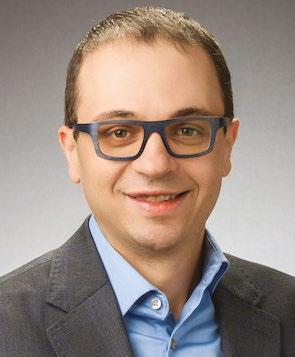
Writer Nick Langan
The author profiled engineer Dave
in a recent cover story.
From Hofstra to the Meadowlands to Red Hook, our honoree builds for tomorrow
If you’ve spent any time in this industry, you’ve heard repeatedly about the need for a pipeline of younger talent.
Radio’s viability with younger listeners was a research motivation of Andy Gladding, who now holds a Ph.D. in the subject.
Gladding is chief engineer for Salem Media’s New York City stations, which include 570 WMCA(AM), its 102.3 FM translator and 970 WNYM(AM).
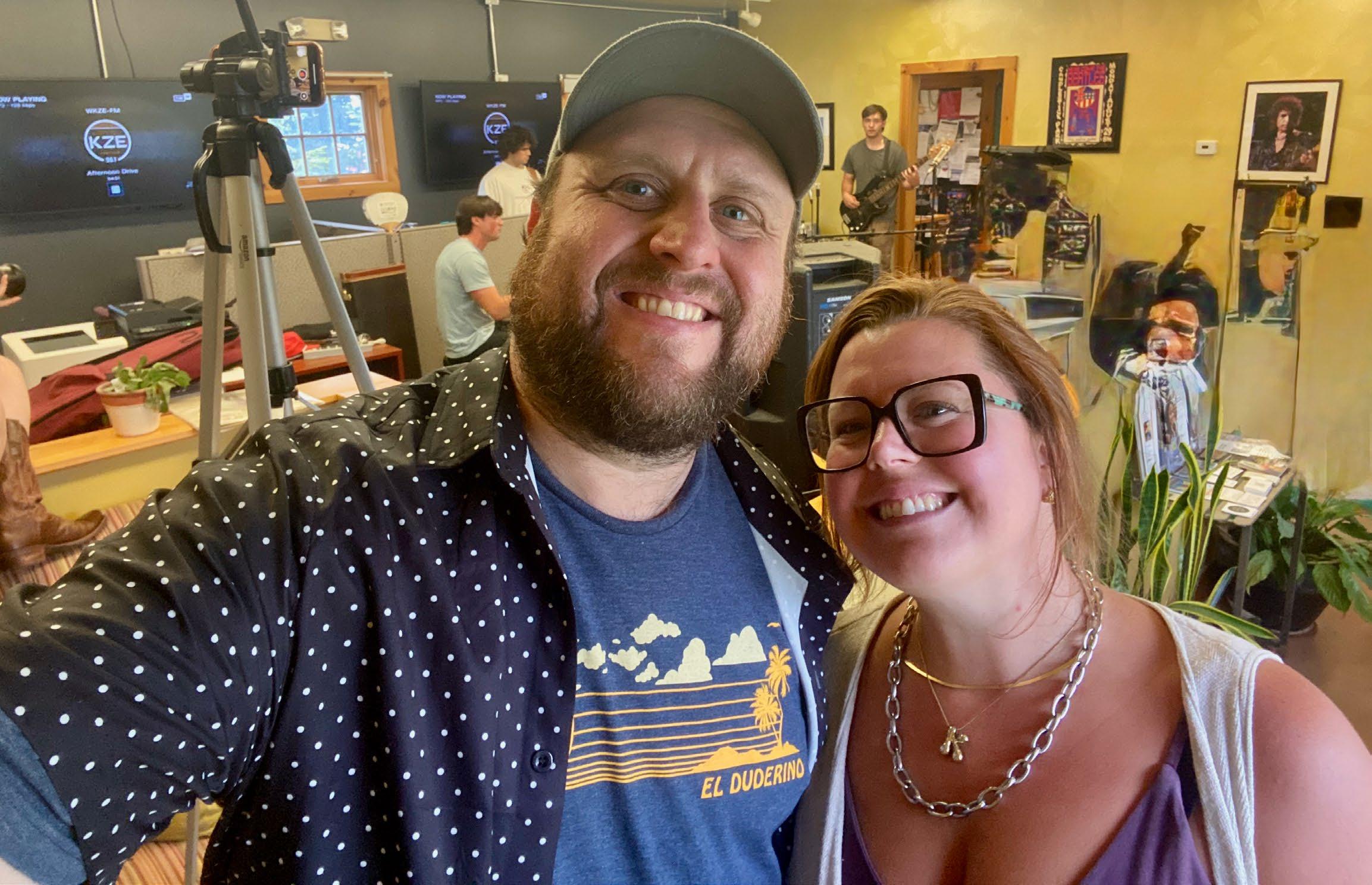
The native of Suffolk County, N.Y., and his wife Katie also are the owner/operators of 98.1 WKZE(FM), licensed to Salisbury, Conn.
Gladding also is vice chairman of the New York City chapter of the Society of Broadcast Engineers.
And then there’s his work with his alma mater, Hofstra University in Hempstead, N.Y. Gladding is chief engineer for its award-winning student-run station, 88.7 WRHU(FM).
“Ever since I’ve known him as a teenager, he’s been dedicated to the advancement of radio,” said Sara Hendricks, who graduated a year ahead of him at Hofstra in 2003 and came back to WRHU as a professional in residence.
Shayna Sengstock, broadcast engineer for New York Public Radio and 2022 graduate, said, “Andy has been one of the most impactful people in my life to date.”
Gladding’s work ethic, connection with young people and passion for radio are among the reasons he is the recipient of the Radio World Excellence in Engineering Award.
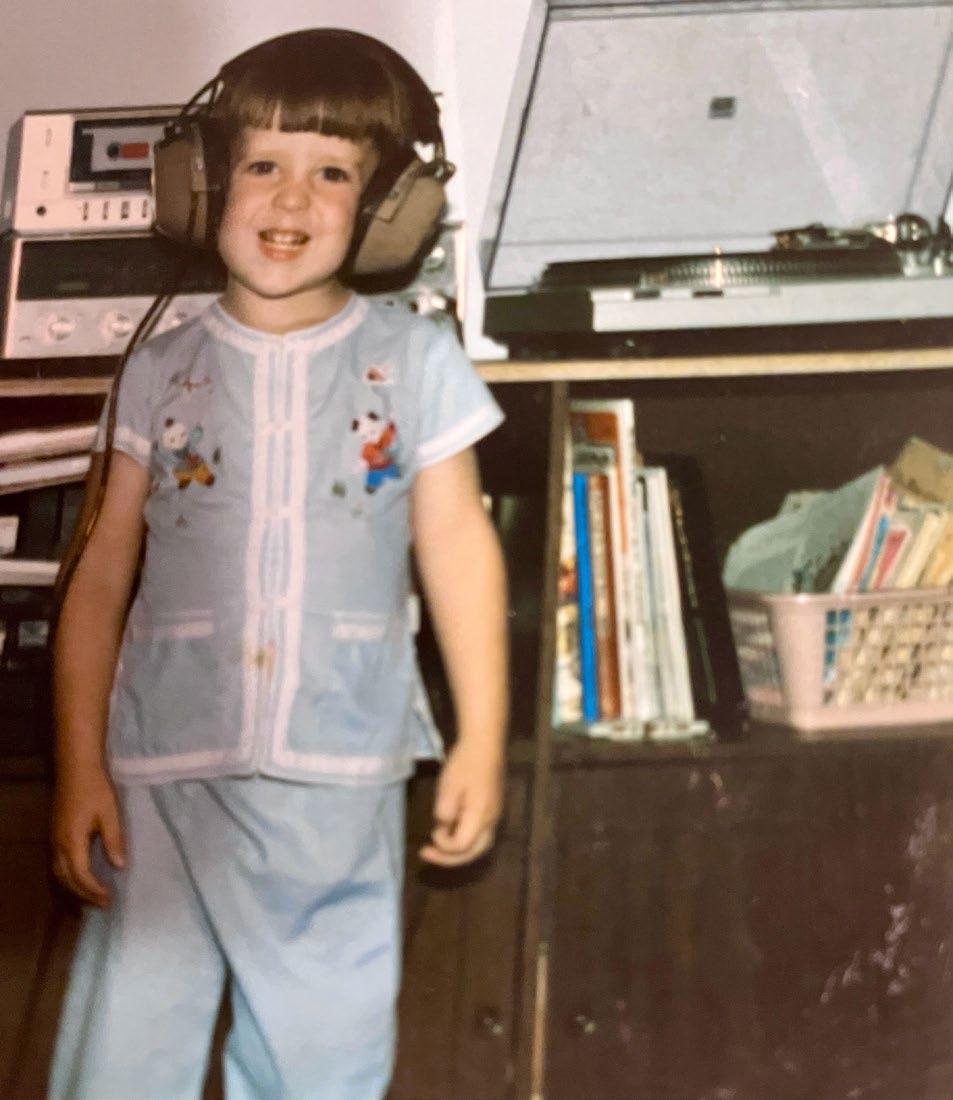
Above Gladding’s early interest in audio and engineering was boosted by his grandfather John, a radar RF engineer for Grumman.
Above right
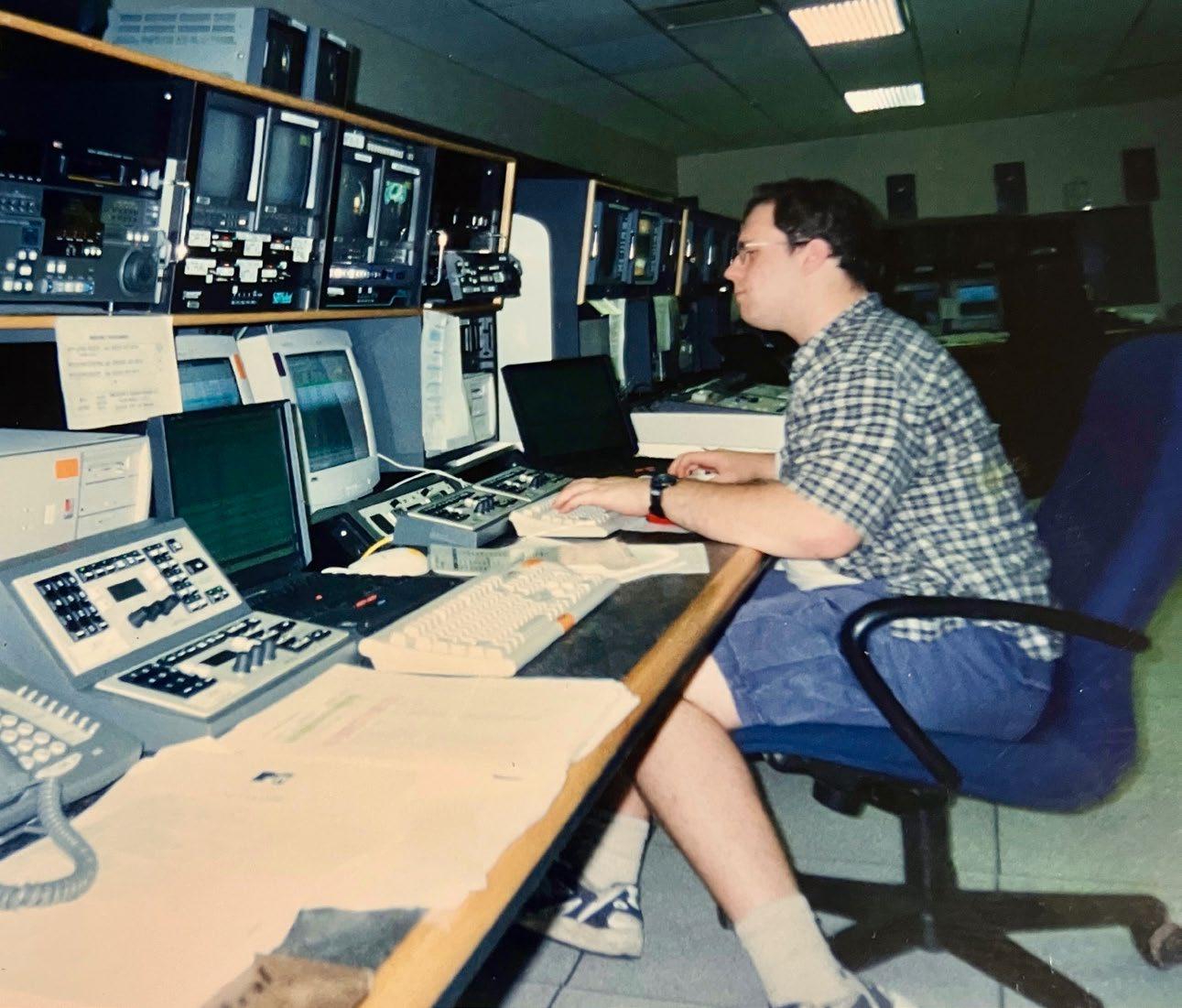
A young Gladding at the controls of MTV Latin America in 1999. While in high school, he got a job at MTV’s satellite uplink center in Hauppauge.
“Andy is a dynamo who believes deeply in the power of radio and the importance of building the next generation of engineers and broadcasters,” Radio World Editor in Chief Paul McLane said.
Keeping heritage AMs on the air from the Meadowlands is some kind of dream for Gladding, 43, a lifelong resident of the metropolitan area.
He fondly remembers getting his hands on an analog tuner. “But FM always fascinated me more — that little stereo light would come on and it just sounded so cool.”
At Northport High School, Gladding aspired to be a record producer. At 17, he got a job at MTV’s satellite uplink center in Hauppauge. As an undergraduate at Hofstra, Gladding joined WRHU and earned a reputation for tinkering.
Sara Hendricks recalled being delegated to listen to the station late nights to ensure FCC compliance. Once she heard Gladding crack the mic when he wasn’t supposed to be on the air. “I was like, ‘What are you doing right now?’”
Gladding quickly found a rapport with the station’s chief engineers, Joe Derosa and Marc Weiner, who were eager to share their knowledge.

After graduating in 2004, he took a job at Fox News Radio as it prepared to launch. He was hired to run master control overnights, until Director of Engineering Doug Butler handed him a drill.
“Now you’re our chief engineer,” Gladding recalled him saying.
Gladding subsequently did engineering for Westwood One and WBLS(FM) and WQHT(FM). He also worked on the TV side for Newsmax. He briefly left broadcasting to run IT operations for a polyvinyl manufacturing company, but he stayed connected via Chapter 15.
The pre-Radio Shack generation
Hofstra’s broadcast program has been no stranger to cultivating media talent, including the iconic Dan Ingram.
WRHU may be the most active college station in the U.S., based on participation. It’s the largest student group of any activity in the university. “Kind of remarkable for a so-called dead medium,” Gladding said.
It has won the NAB Marconi Award for College Radio Station of the Year five times, including in 2025.
Cody Hmelar came to Hofstra as an undergraduate in 2021 with a video background. Midway through his time in the broadcast journalism program, at age 19, he became chief engineer for Salem Media’s 990 WNTP(AM).
He recalled the WRHU engineering department alone having 47 student members.
Gladding is well known for Tech Thursdays, an initiative that encourages students to hang out and learn the craft.
“I was working with Andy,” Hmelar said, “and all of a sudden he asked me: ‘You’ve never been to a Radio Shack in your life, have you?’”
Sengstock is appreciative that Gladding took the time to show her how to solder and build an XLR cable.
Under Sengstock, WRHU’s first student technical director, Tech Thursdays became part of the station’s curriculum. They start at 7 p.m. and can go deep into the night.
According to General Manager John Mullen, there’s one key ingredient for consistent attendance: “Pizza.”
There’s also a social benefit. “You tie in industry-level equipment, tools you never thought you’d get to work with,” Gladding said. “Then, suddenly Erica from your math class, who was giving you the cold shoulder, you find out is hosting the ‘Rock ‘n’ Roll Oasis.’ She loves Zeppelin, and so do you.”
Gladding encourages “open-door engineering,” providing a space for experimentation. Mullen, who has overseen WRHU since 2005 and is a New York radio veteran, supports the philosophy.
With the backing of Mullen and the late Bruce Avery, then chief engineer at WRHU, the equipment was fair game. Mullen told Gladding it was OK for students to break things so they could learn how to put it all back together.
“Andy is one of the most creative people I’ve ever known,” said Mullen, who described him as a problem-solver and cool under pressure.
The station is the broadcast home for New York Islanders hockey. Gladding works with a crew of approximately 17 students to test and troubleshoot connectivity to partner outlets, including SiriusXM.
Gladding said approximately 50 students have evolved into advanced engineering roles since he became chief engineer 10 years ago.
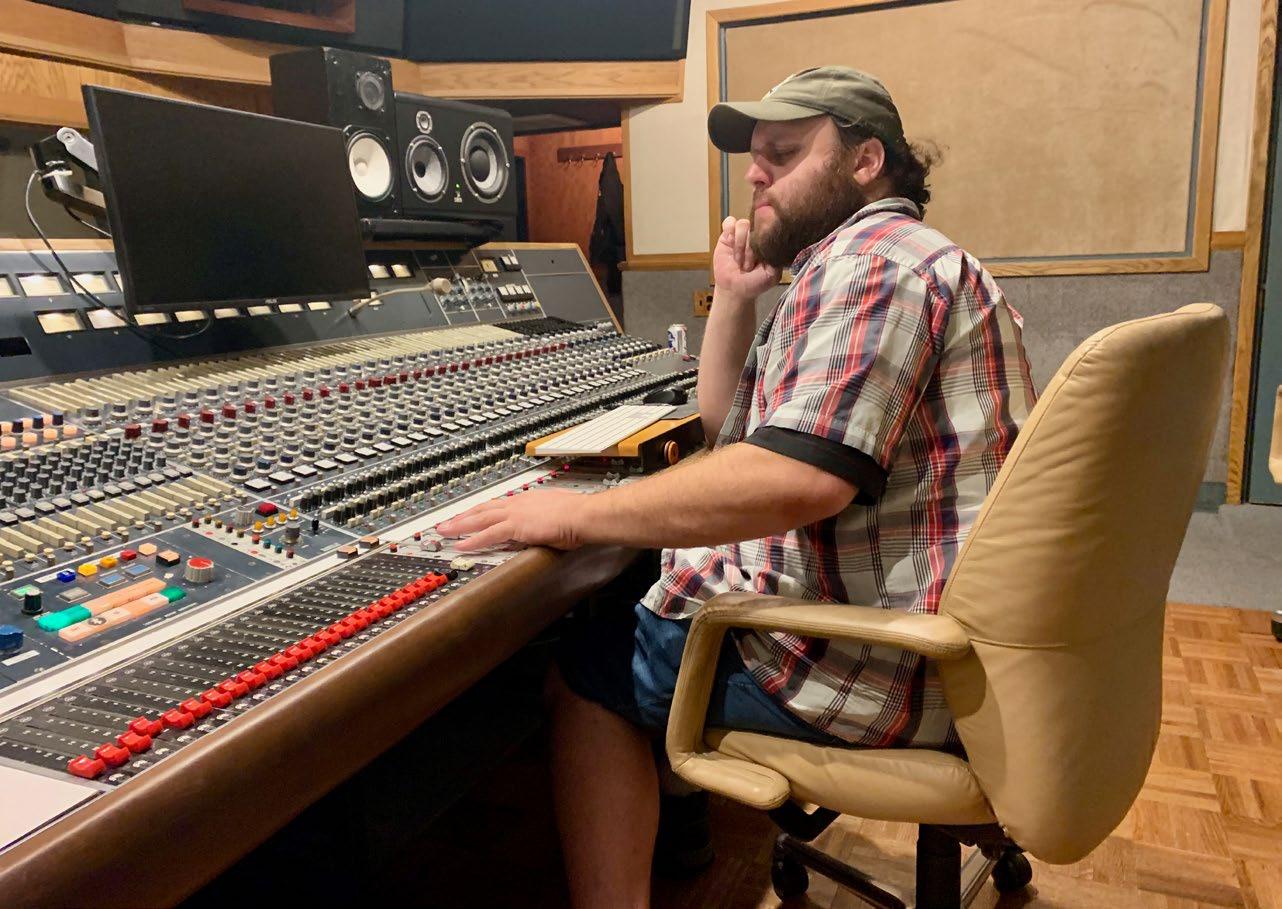
Above Gladding reviews mixes at the Hyde Street Studios in San Francisco in 2019.
Hmelar used his exposure at Salem Media to get the CE role in Philadelphia. He now is pursuing a doctorate at the University of Pittsburgh.
Sengstock has been an engineer with NYPR since 2022. Gladding’s success in helping women enter the industry is notable. Radio World has also profiled Jade He, Hofstra class of 2024 and former WRHU technical director,

who went on to employment with the NEP Group as a broadcast engineer.
“To be able to connect and relate this to women and make them feel welcome, he deserves a lot of credit for that,” Hendricks said.
One plus one equals three New York-based engineer and station owner Bud Williamson met Gladding after the latter returned to Hofstra in 2015 for about 20 hours a week and was in need of more hours.
Williamson’s firm Digital Radio Engineering hired Gladding, who excelled in its contract-based work with myriad variables. Williamson said he simply got things done. “He’d be lying on the floor, terminating Cat-5 cables, always with a smile on his face.
“I am a believer that if you find the right person you could work with, one plus one can equal three,” Williamson said.
The pair hit it off and have collaborated to lead the active SBE Chapter 15, with Williamson as chair and Gladding as vice chair.
They focus on young talent. “We ended up in leadership positions around the same time, and so it was the perfect opportunity to gear some of our programming toward students,” Gladding said.
When Williamson’s client, SUNY New Paltz, sought an AoIP station buildout, several Hofstra students, including Cody Hmelar and Jade He, built out the station under Gladding’s supervision.
And when the chief engineer role at Salem Media’s New York stations opened in 2020, Gladding felt ready. “AM is a little more complex. But by that time, through SBE and Bud, I had a network of people I was communicating with. I felt like I wasn’t going in alone.”
Matthew Sambolin, operations manager at Salem New York, said, “In our search, candidates were either only good
“Andy is a dynamo who believes deeply in the power of radio and the importance of building the next generation of engineers and broadcasters.

at transmitters or only good at IT,” he said. “Andy had the perfect mix.”
Gladding sought to create a pipeline of students for Salem. It now connects to his day job: At Salem New York, Gladding said approximately 40% of its staff are WRHU students.
Sambolin said the average age of a Salem engineer is approximately 60, so the benefit of attracting new candidates is clear.
The company also has reserved money for a paid engineering apprenticeship program. Gladding said Salem’s Scott Foster, Jeff Reisman, Jerry Crowley and Laura Shaefer have supported this work.
After Gladding returned to Hofstra, Avery suggested he study for a master’s degree. His doctorate followed two years later.
Sean Fanelli, former president of Nassau Community College, oversees the doctoral program in which Gladding enrolled. He encouraged Gladding to base his dissertation on college radio. “I’m allowed to do that?” Gladding asked incredulously.
He dove into the research, exploring whether students — Gen-Z — listened to FM radio.
Gladding found that students came to their respective radio outlets with a general interest in audio or music — they “liked the idea of radio.” They didn’t necessarily care about terrestrial FM initially. But by the time they graduated, he said, they’d grown to be full-blown advocates.
The unknown variable of who is currently listening — Gladding dubbed it the “Brad from Massapequa effect” — was captivating.
“It gave me the research needed to determine if I wanted to run a station of my own.”
Without traffic — a dubious qualifier — it’s about a twohour drive up the Taconic State Parkway from Gladding’s home in Brooklyn to the studios of 98.1 WKZE(FM) in Red Hook.
Williamson helped orchestrate the deal for the Gladdings to acquire WKZE. After former owner Wil Stanley died in 2021, his wife Barbara had connected with Williamson to find someone to take the station on.
Williamson saw value in the property and its profile in the eastern Hudson Valley. “It’s a special place and it generates revenue.”
Above
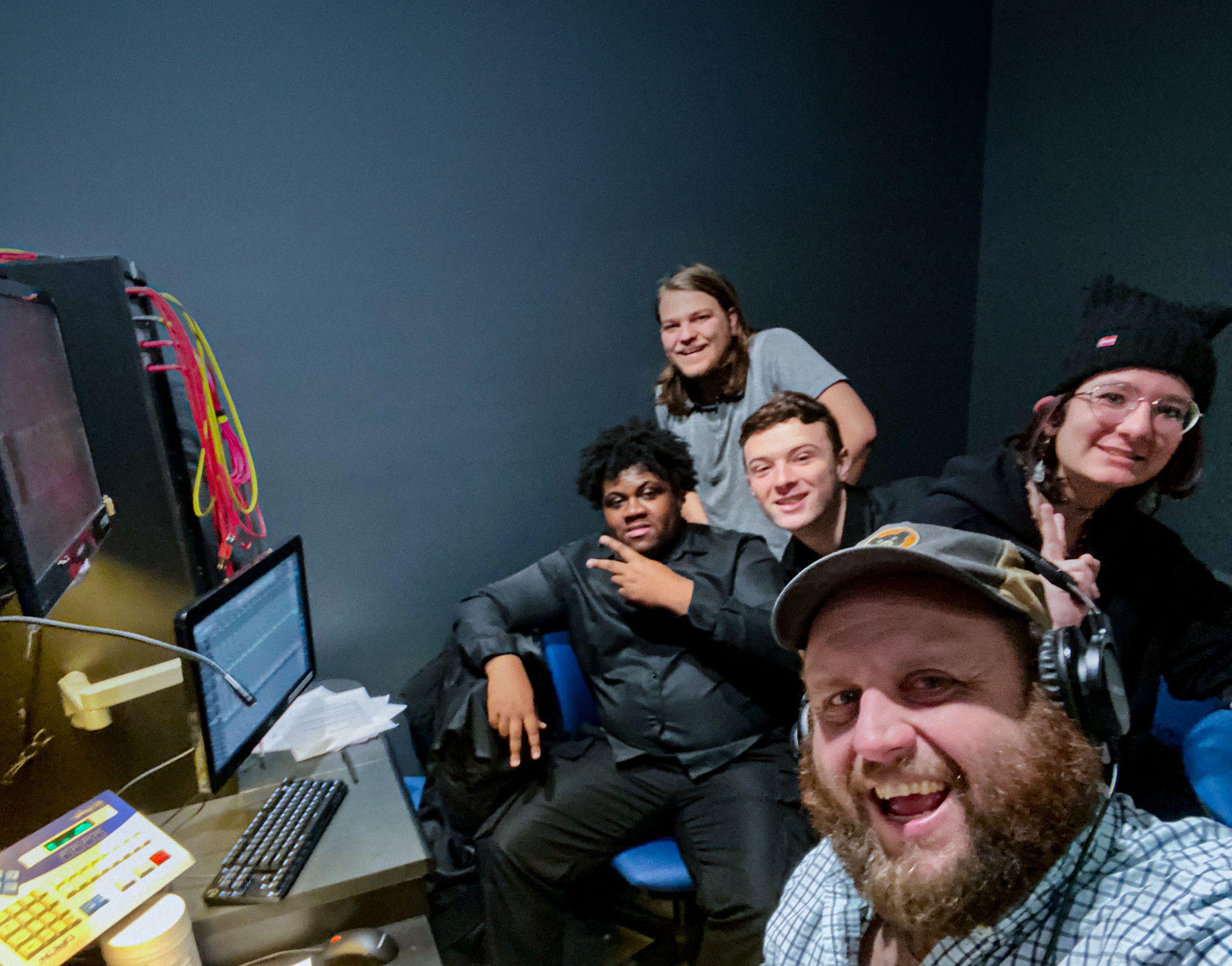
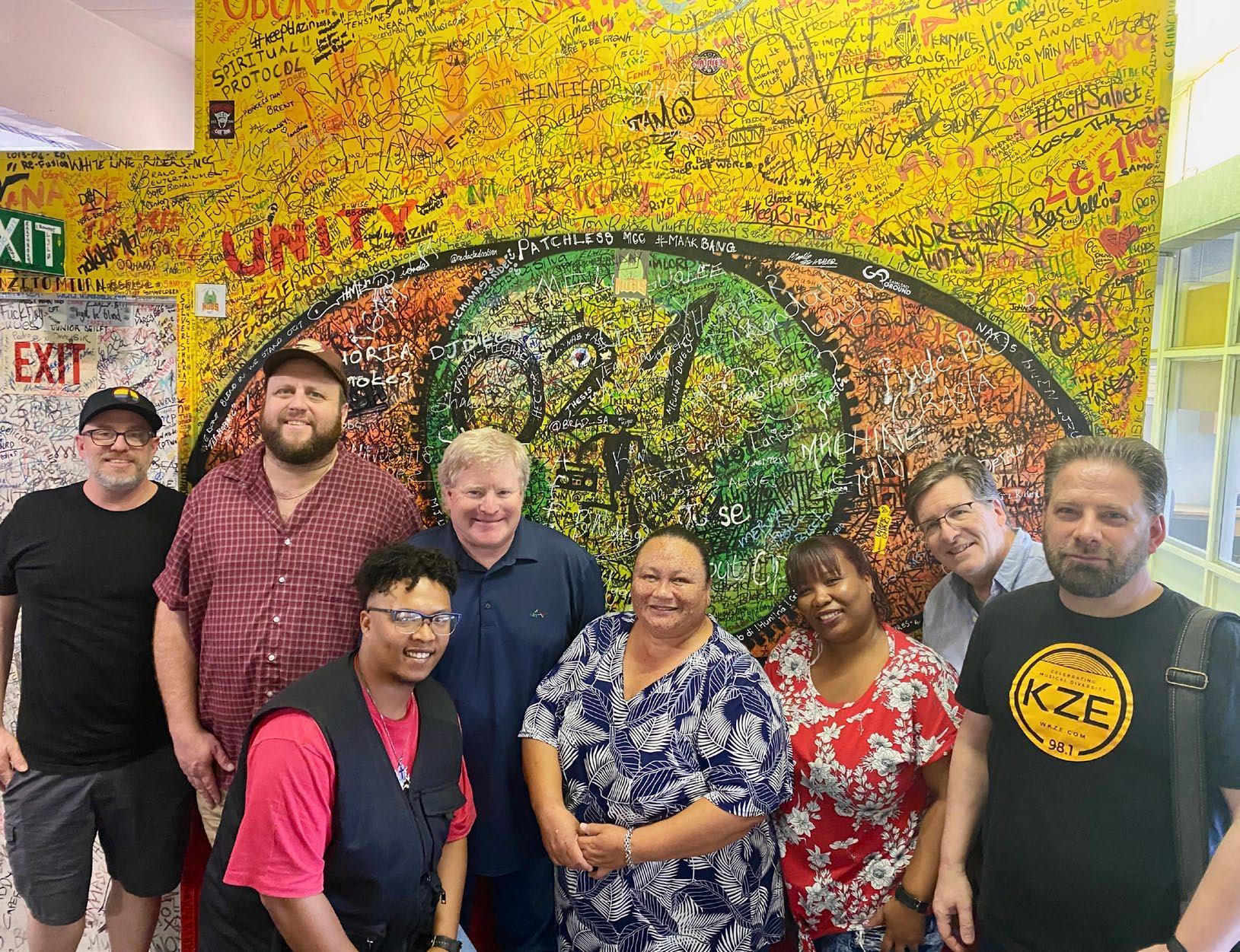
In February, Gladding and members of WRHU, WCWP, WKZE and Sturgeon Records visited the 89.5 FM Bush Radio Studios in Cape Town, South Africa as part of a global radio exchange.
Right
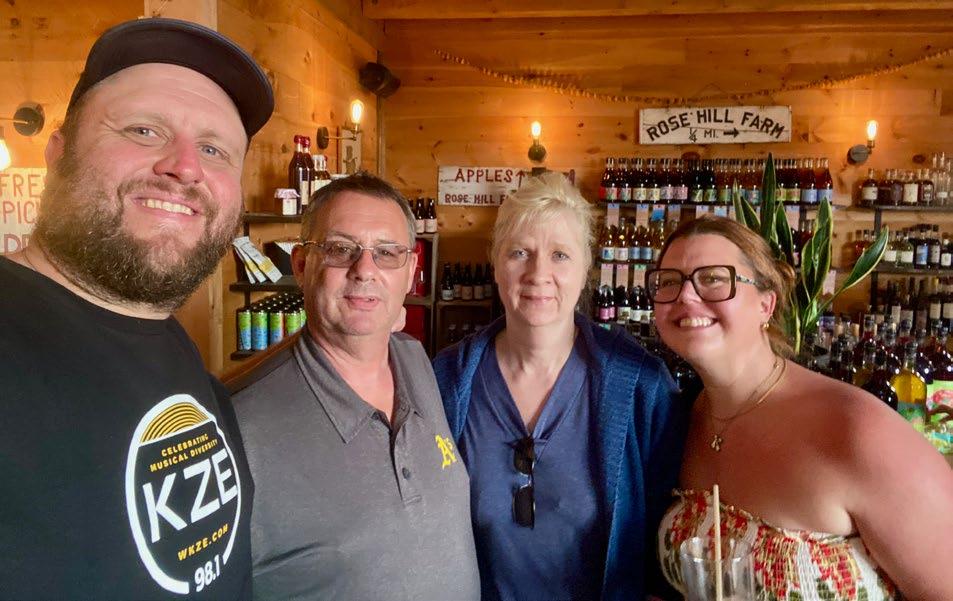
Andy and Katie Gladding, left and right, are with Neversink Media Group owner Bud Williamson and his wife Juli at WKZE’s “Frolic at the Farm” concert at Rose Hill Farms in Red Hook, N.Y., in August.
He went to Gladding at the chapter’s 2023 summer barbeque at the WFAS transmitter site and pledged help on the sales end. Gladding saw it as an opportunity to lean into localism.
Gladding completely rewired the studios and now makes the trip at least once a week. WKZE’s studio is on North Broadway, the main drag in town. The location makes it perfect for events, such as broadcasting the Veterans Day parade.
Katie has a digital media background. The two met in 2018 in Brooklyn. “Here I thought I’d have to travel the world to find my soulmate,” Andy said.
They record commercial spots for WKZE together, as most advertising is produced in-house.
Andy said Katie has enjoyed the ability to reach out to potential customers and has grown quickly as an owner
and senior manager. “She’s using skills I didn’t even know she had.”
And how do you get young people excited about radio?
“Put them on the air,” Gladding said.
On the weekends, the station carves out time for anyone in the community to guest host. WKZE’s lineup includes a Chamber of Commerce show, a Saturday storytelling series, “Tasting Tuesdays” and “Friendsday” where bands are interviewed and perform original music. The station just picked up Darren DeVivo, who was at New York’s 90.7 WFUV(FM) for 41 years.
It all seems to be working for this radio power couple. WKZE’s listener numbers and the cash register are trending upward.
At the beginning of every academic year, Gladding provides WRHU students with a classic boombox and a smartphone.
“I ask them, whoever can play WRHU faster on these two devices, you win.” Gladding said it takes almost 60 seconds for students to find a suitable app to stream WRHU, versus about six seconds to turn the dial and find the 88.7 overthe-air frequency. “I always feel a little validation.”
In September, Williamson and Gladding orchestrated an SBE15 mentorship and engagement session at Hofstra. They’re looking to add recurring meetings, perhaps monthly, geared to students for networking.
At 43, it’s a little soon for Gladding to ponder a legacy. But for him, in the era of content creators, it comes back to the magic of radio, for the students he works with, the shows he helps keep on the air for Salem and the WKZE listeners with whom he interacts.
He recommends finding local heroes, whether it’s the school bus driver, the VFW members or high school students telling stories and playing music.
“Those are your real celebrities, your local heroes,” Gladding said.
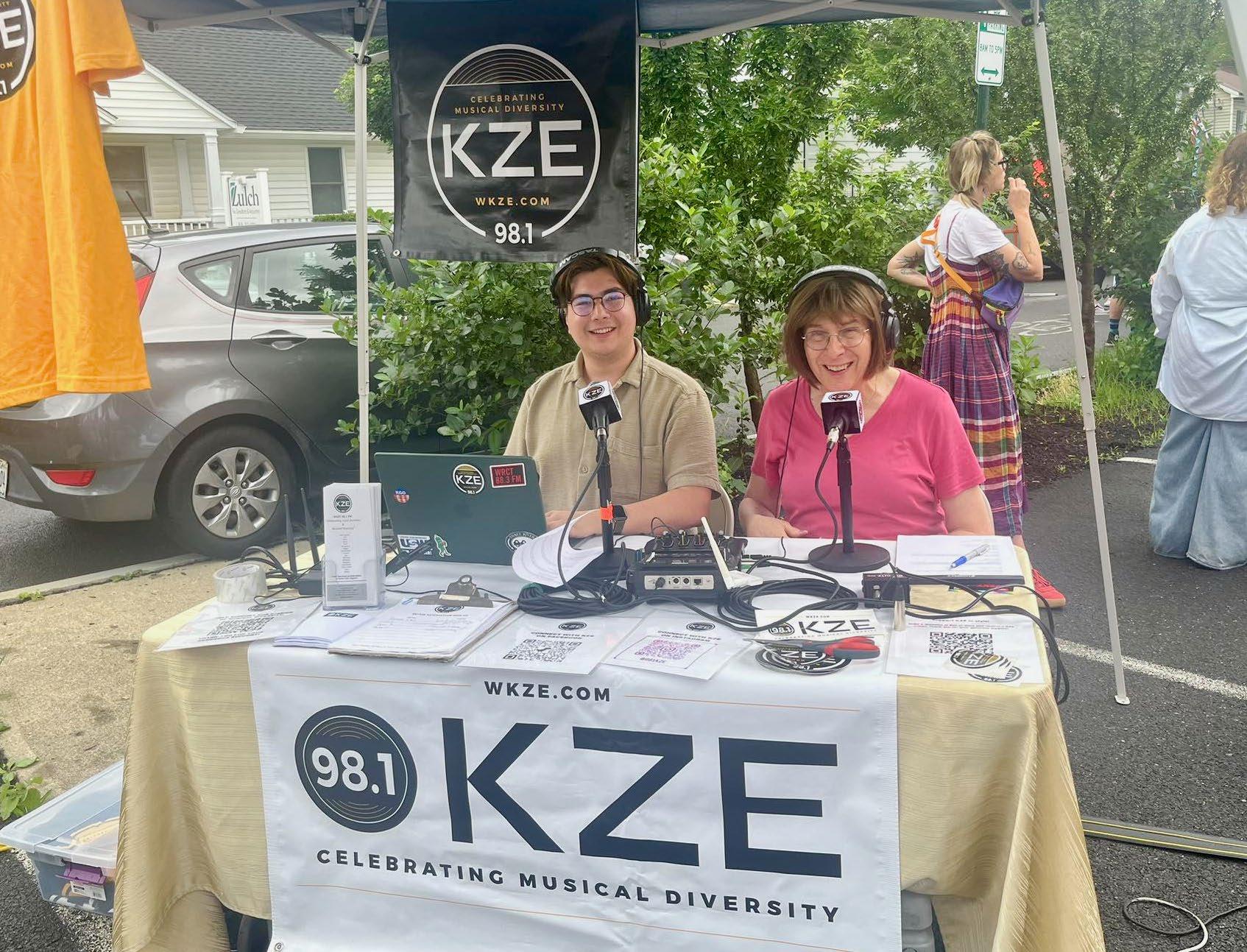
Above Hofstra graduate and WRHU alum Cody Hmelar, left, with Bernie Wagenblast, former Shadow Traffic reporter, on air during WKZE’s coverage of the BeckHook Pride Day Festival in June. “If Andy was not at WRHU, I don’t think even half of the people who went on to a career in media would have actually ever gotten to that point,” Hmelar said.

John Bisset
CPBE
The author is in his 35th year of writing Workbench. He handles western U.S. radio sales for the Telos Alliance and is a past recipient of the SBE’s Educator of the Year Award.
Send your tips Workbench submissions are encouraged and qualify for SBE recertification credit. Email johnpbisset@ gmail.com.
In September, Frank and Dave Hertel, principals of Hertel Engineering and frequent contributors to Workbench, were honored by the Kentucky Broadcasters Association with its Clarance Henson Technology Award. Though based in Indiana, they’ve served a number of stations in the Bluegrass State over the years.
“Frank and Dave are not only well deserving of this honor but are also a great story of broadcast engineering legacy,” Chris Winkle, president/CEO of the KBA, told Radio World’s Nick Langan.
Serious fun
We featured Mr. Potato Head in the last issue, and now Play-Doh!
No, it’s not a second childhood for Workbench. Turns out that the fun stuff we played with as children has another useful quality: It traps dirt.
Above
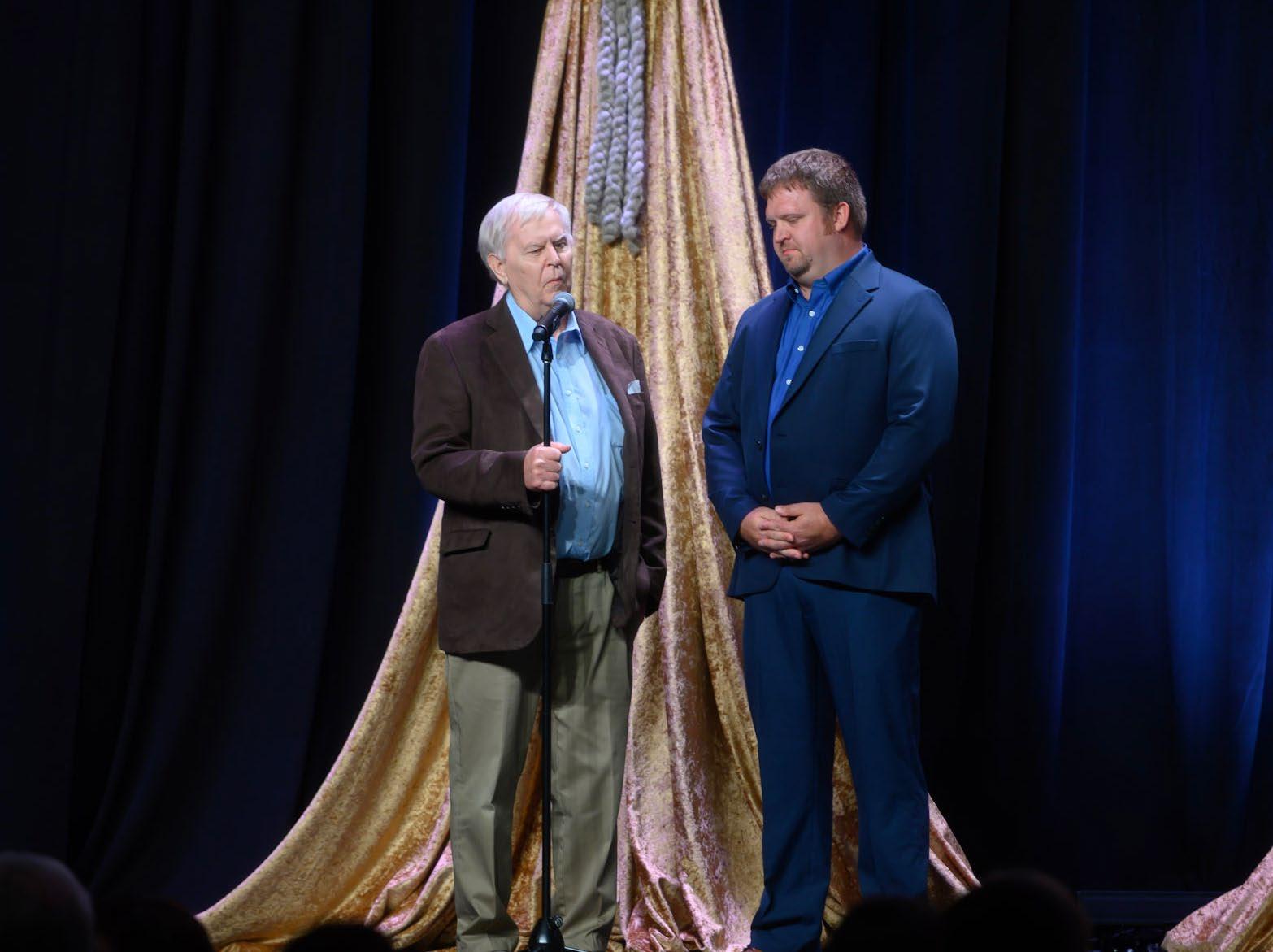
Frank and Dave Hertel received the Clarance E. Henson Technology Award from the Kentucky Broadcasters Association.
Frank, 81, earned his FCC license when he was 18 and specialized in electronics while serving in the Indiana National Guard. He continues to build and support radio and TV stations, performing bench service and field measurements while Dave does most of the field work.
Dave started going on service calls with his dad when he was five years old. His portfolio includes engineering for 100 kW Class C1 98.9 WSIP(FM) in Paintsville, Ky.
Tom McNew, executive director for Armor of God Catholic Radio, writes to tell us that Play-Doh brand modeling compound is great for getting schmutz out of crevices and spaces where fingers or rags can’t reach. In fact, so is Slime, the squishy, oozy non-toxic compound introduced by Mattel in 1976.
Where might you use this tip? I’m thinking of dirt magnets like console on/off switches, but Tom also uses Play-Doh in his truck to slurp up crumbs, dirt and dust. Silly Putty would probably work too.
Got unconventional cleaning ideas of your own? Share them with me at johnpbisset@gmail.com

(Slime is a registered trademark owned by Paramount Global. Silly Putty belongs to Crayola, and Potato Head and Play-Doh are trademarks of Hasbro. Did you know that the scent of Play-Doh also is recognized by the U.S. Patent and Trademark Office as a registered trademark of the brand?)
Radio World’s daily morning SmartBrief newsletter recently reshared Karl Zuk’s 2024 article providing soldering tips for beginners.
Contributor Dan Slentz writes that when he teaches students how to solder, he tells them, “At some point you will drop the soldering pencil. Let it fall to the ground, don’t try to catch it!”
It’s human nature to grab what we drop in the moment, so train your brain by thinking about it ahead of time. Then with luck the brain will be prepared to react in time to stop your hand from making an unfortunate grab and getting singed.
(Do you receive the Radio World SmartBrief email each weekday morning? At http://radioworld.com click Subscribe and follow the prompts to subscribe to SmartBrief.)
No identification is necessary, to protect the innocent, as they say.
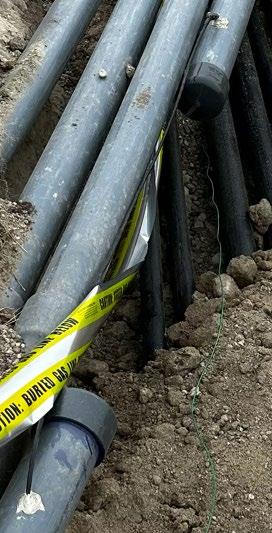
While working on a system, a piece of conduit was damaged by a backhoe. The damaged piece was cut out, the conduit ends were capped, and the splicing wire was fed out of and back into holes that were drilled in the top of the surviving conduit and then caulked.
You can see these holes and the wire at the top and bottom of the accompanying photo.
Contributors Paul Sagi and Harold Hallikainen were discussing copper theft recently.
Harold related an instance during the construction of a three-tower AM in Morro Bay, Calif. Wooden reels of copper radial wire sat in the field, waiting to be taken out and plowed under. A couple of guys drove a station wagon onto the field, sticking the reels in the rear of the car.
Imagine their surprise when the weight caused the car to sink into the marshy ground! As they tried to get out, a sheriff drove by and arrested them. Bwomp-womp!
Above
The “repaired” conduit. You can see where a splicing wire connects two sections of conduit, at the upper and lower edges of the photo.
Below
The J-211 is one of several radio models made by Prunus.
And Paul reports from Malaysia that several people were fried when they tried to remove the neutral (ground) conductor, thinking it would be safe. But this was the neutral bus at a substation. At the time, Malaysian houses were fed 415V not 240V.
Radio World recently featured a story by Kevin Curran about the retirement of the Electro-Voice 635A microphone.
Buc Fitch, P.E., recalls that two of his 635As were stolen off their stands when he was a neophyte engineer.
These days, Buc shrink wraps the output end of the mic where it feeds the connectorized cable. Applying two layers of heatshrink makes it very hard for someone to remove the mic from the cable without a knife or razor blade. The barrel of the 635A made it one of the easiest to secure, and no more theft.
Buc poses an interesting question to Workbench readers: What types of things are prone to theft at your studio facilities, and how have you resolved the issue? Drop your answer to me via email at johnpbisset@gmail.com.
One of the most obvious solutions is to lock the door of the production room or other unoccupied studio. This not only prevents theft but also keeps curious fingers off critical equipment.
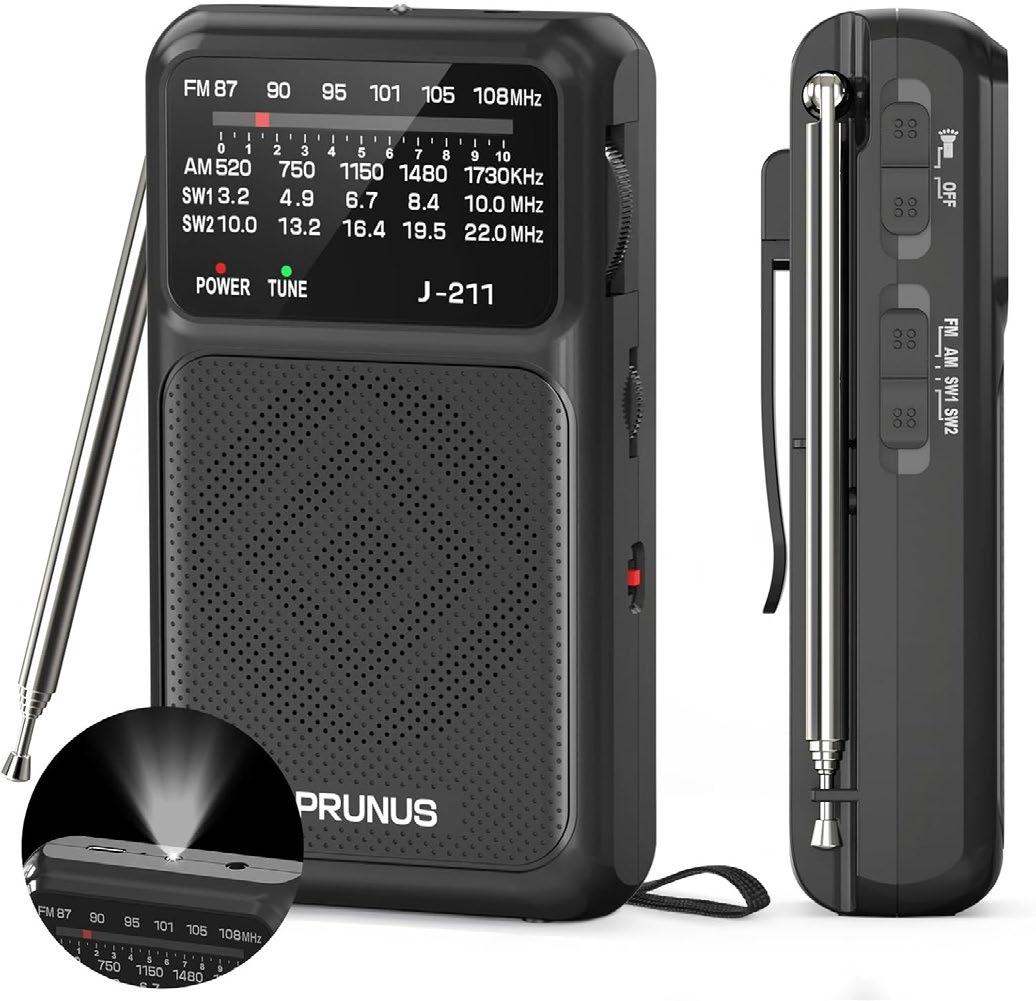
Reader Lawrence Cohen shares a sweet little radio that he bought for $15 from Amazon. If you’re looking for a small but solid gift, you can’t go wrong with this one. Search for PRUNUS J-211 Portable AM/ FM Radio.
In addition to USB-C charging, the radio is AA-battery powered and includes an LED flashlight, a back clip, lanyard and headphone jack.
Other Prunus models include weather radios, rechargeables, hand-crank models, Bluetooth and retro tabletop designs. Its website is www.prunustech. com. Prunus is based in China but according to its website, its chips are made in the United States.

Writer
Mark Persons
CPBE, CBNT, AMD
The author wrote recently about the rebirth of WELY in Ely, Minn.
Lower right
The cover of the NRSC guideline described in the text.
Little known to almost everyone, the AM Improvement Working Group of the National Radio Systems Committee has been working on characterizing AM radio performance and on solutions to improve AM radio reception.
Info
Read the full text of the G102 document at www. nrscstandards.
The NRSC is cosponsored by the National Association of Broadcasters and the Consumer Technology Association. It is a group of scientists and broadcast engineers pooling their talents to find solutions to broadcast transmission problems.
An NRSC guideline describes technology that can aid AM stations with their coverage and improve listener experience.
You have heard it many times: a beat note between cochannel AM stations in fringe reception areas. Stations on the same frequency as the one you’re listening to can create an annoying low-frequency hum or beat in received audio. It is distracting and can cause listeners to tune away. According to FCC rules, the AM transmitter carrier frequency tolerance
is +/– 20 Hz. That means two transmitters could be as much as 40 Hz apart and still be legal.
An audio beat of that kind between two stations can be quite annoying. The most common example happens when listeners are driving out of a station’s protected contour and are continuing to listen to a popular program. Interference from another station, on the same frequency, causes listener fatigue and tuneout.
A worse case is when stations are about 1 Hz apart. Listeners hear a station’s audio rise and fall every second. It is common when a station is pounding in via skywave during critical hours. That is often when advertisers are paying to get impressions to listeners during drive time. Ouch!
For years, a handful of AM stations with on-channel AM boosters have successfully synchronized their transmitter frequencies to minimize interference to listeners. That same idea can be applied to co-channel AM stations everywhere. It has been shown

that a 3 dB or more improvement in listener audio signal-to-noise ratio (SNR) can be achieved with carrier synchronization. That is the equivalent of doubling transmitter power!
Think of this as extended coverage. The greatest benefit is to co-channel stations that know they are interfering with each other but have had no option to remedy the problem until now.
Technology
Hardware is readily available to discipline the carrier frequency of an AM station to its exact licensed frequency. GPS satellites can be used as frequency references to do the work. A typical cost of $1,000 for hardware with installation can get almost any AM station synched up, so to speak.
Most AM transmitters today have 10 MHz reference oscillators, which are divided down to the station’s operating frequency. The transmitter then amplifies it up to licensed power. That 10 MHz oscillator can be replaced by an external source, usually via a jumper change within the transmitter. Some older transmitters might want an external RF input to be on the carrier frequency, but that is doable too.
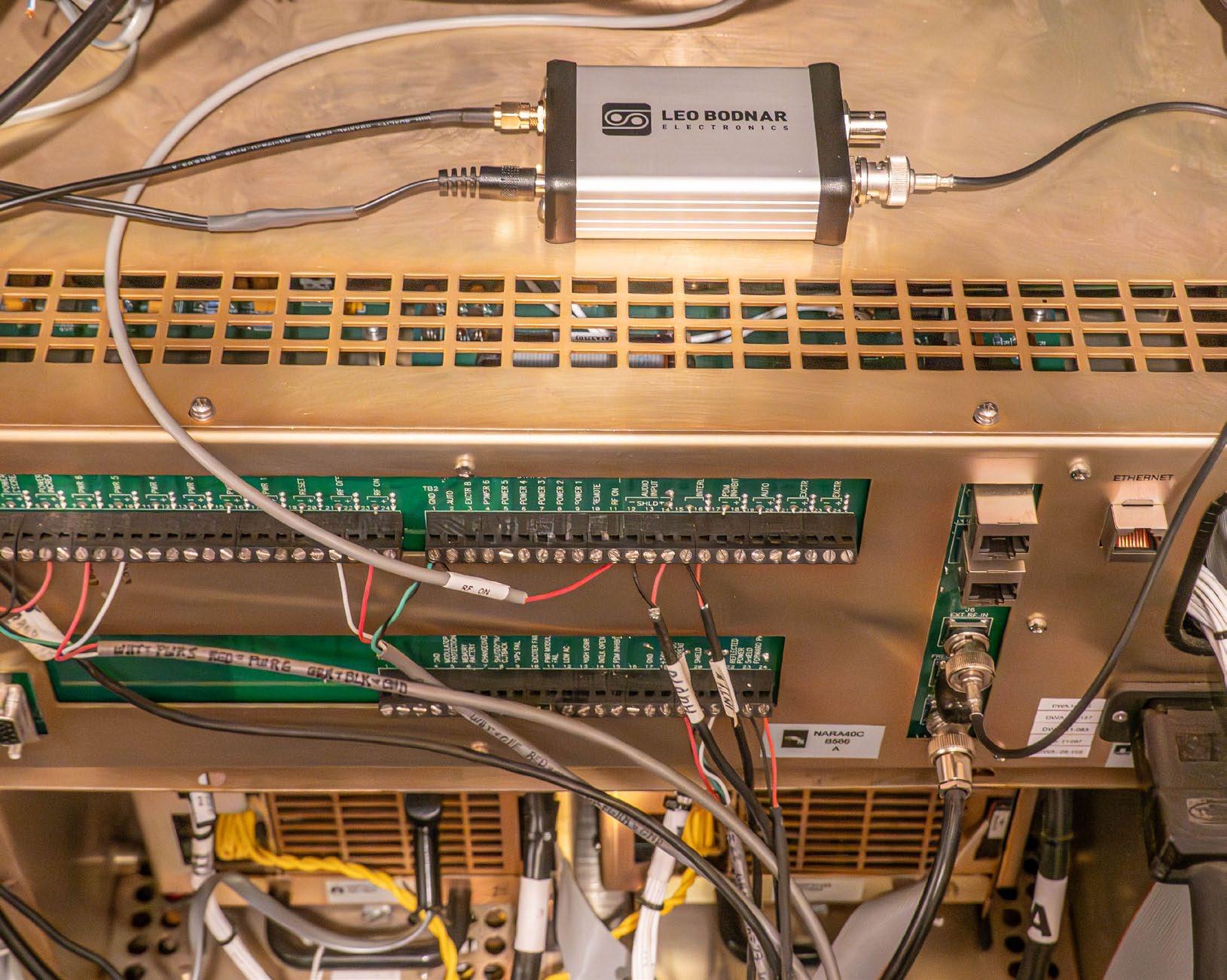
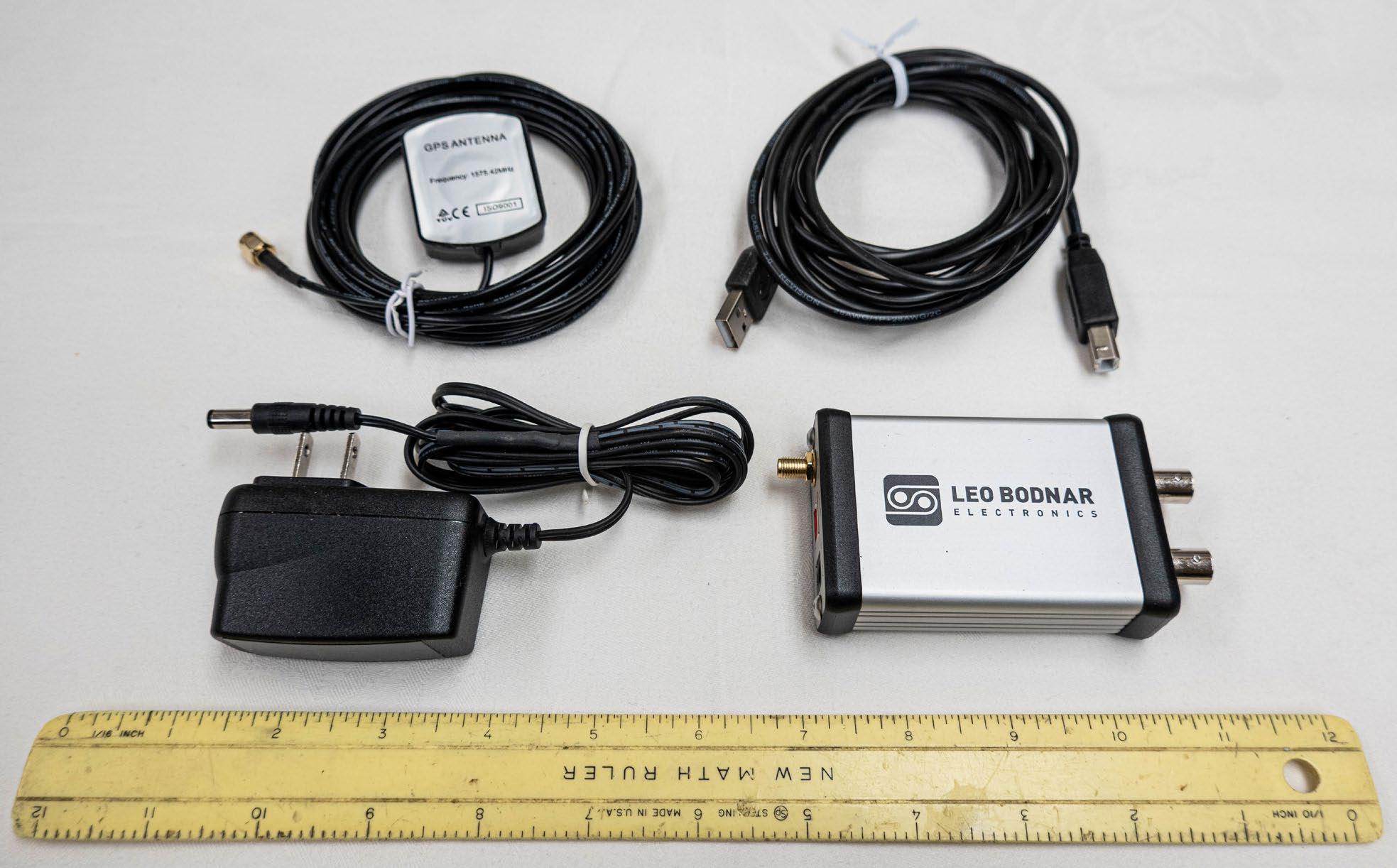
Almost any GPS synchronized time base could work. The unit I tested, shown in Fig. 1, was a Leo Bodnar Precision GPS Reference Clock. It comes with a small GPS antenna and 16-foot cable for $233.95. See www.leobodnar.com. They also have GPS antennas for outdoor use, which have 33- and 98foot cables. This might be required in many situations.
This particular unit can be programmed to generate any frequency between 450 Hz and 800 MHz. It will continue working if GPS signals are lost due to antenna problems or whatever. The RF output will be very close to correct and will move back to the exact frequency when the GPS input it restored.

In listener tests between two synchronized stations, it is amazing to hear how reception cleans up. Audio from the weaker station may be heard in the background, but the annoying beat note between carriers is gone.
Note that this is voluntary. All stations should be synchronized to get the greatest benefit on the frequency to be synchronized. All stations on all frequencies could and should synchronize.
Regarding local Class C channels, this will likely benefit the daytime. But with dozens of stations heard at night,
“
Stations on the same frequency as the one you’re listening to can create an annoying lowfrequency hum or beat in received audio.
there will be more audio than carrier. Therefore, there is no guarantee that this technology will work for every station in every situation.
Fig. 2 shows a typical installation on a Nautel J1000, a 1 kW AM transmitter. A Leo Bodnar Precision GPS Reference Clock is fed into a BNC jack on the back of the transmitter, replacing the transmitter’s RF oscillator. A small GPS receive antenna mounts outside the transmitter building.
There is no harm in AM broadcasters synchronizing their carriers. No FCC paperwork is required, although it would be best to confirm all is well during an annual NRSC occupied bandwidth and RF harmonic test.
Comment on this or any article. Write to radioworld@ futurenet.com.
Above

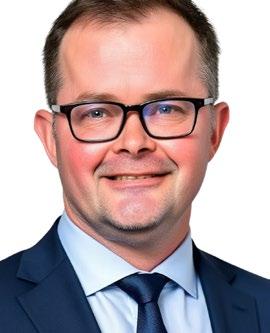
Joe Tymecki was among the broadcast veterans inducted into the Vermont Association of Broadcasters Hall of Fame. He is senior vice president of engineering and technology at Vermont Public Radio. Before that, he served as chief technology officer at VPR and Vermont PBS and held chief engineer positions for Sison Broadcasting and then at WCAX(TV). Also inducted were Joe Carroll and, posthumously, John Hill
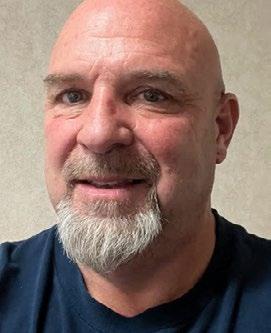
ZTransform announced the hiring of Jason Tyler He will be the company’s inside sales and procurement manager. ZTransform is a technology solutions provider and integrator to business sectors including broadcast.
Tyler served in a leadership role at
Encompass, where he managed workflows across its media facilities. He has also held roles with Crawford Communications and Broadcast Facilities. …

Quu promoted Joe Marshall to vice president of technical success. In this expanded role, Marshall will lead Quu’s technical support services, helping stations integrate the company’s Visual Radio technology. He will continue to report to Steve Newberry, CEO of Quu. …
Wheatstone promoted Darrin Paley to vice president of business accounts, a new position at the manufacturer. Paley has been with Wheatstone since 2001 as a senior sales engineer. Previously,

he spent six years at family businesses Oakwood Broadcast and Ron Paley Broadcast, which focused on broadcast facility design, project management and installation, particularly with Wheatstone equipment. He is based in New Bern, N.C. …
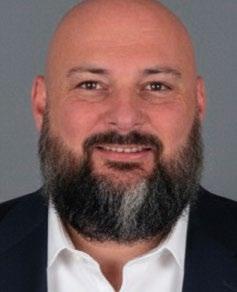
Broadcast Electronics hired Dustin Vance as its western regional sales manager. He is based in Newport News, Va., and he will lead sales efforts for BE’s transmission products and services in the western U.S. and Canada. It is a new position within the company. He spent several years as an engineer for Harris Broadcast, followed by 11 years with GatesAir as an application technician. He recently was a customer service technician for Ingersoll Rand.
Send announcements for People News to radioworld@futurenet.com.
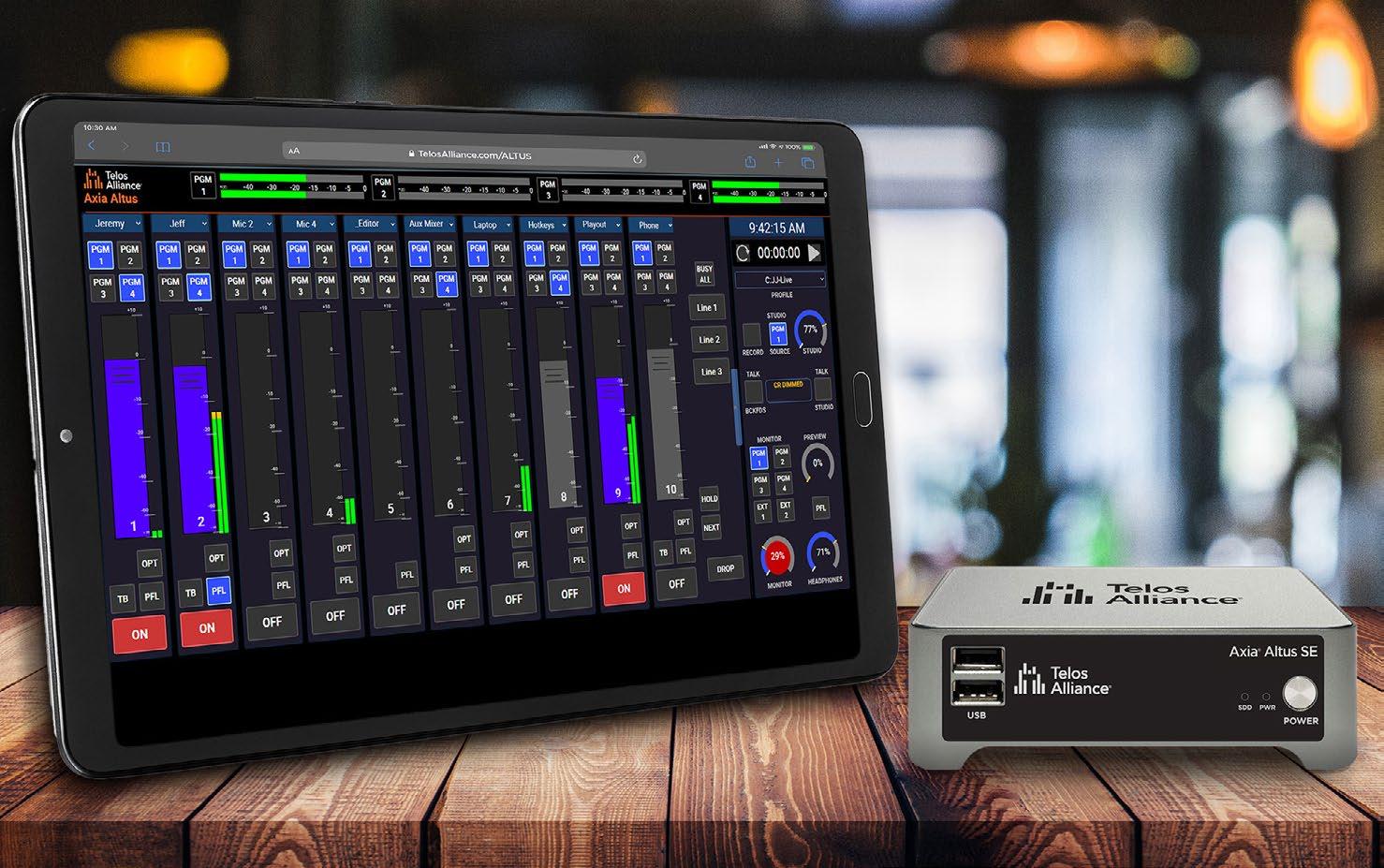
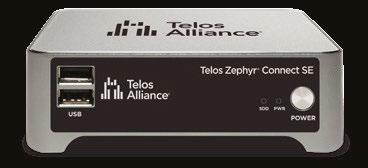
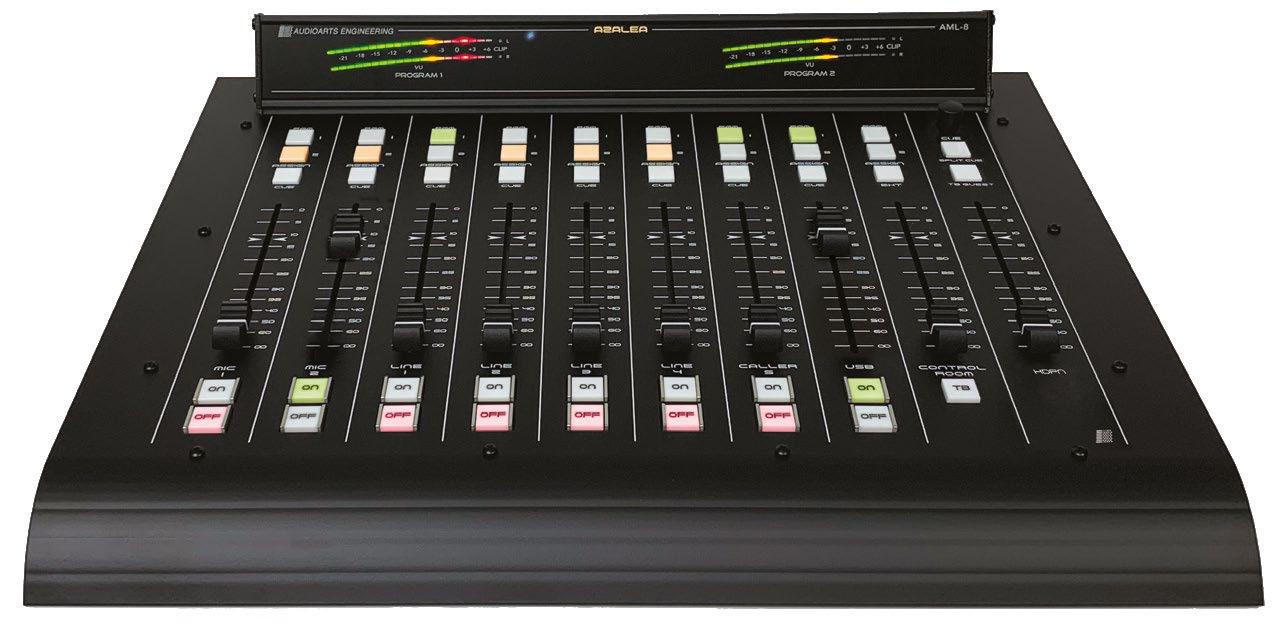
The Altus SE is part of the Telos Alliance Studio Essentials family of virtual broadcast products.
“It delivers an advanced AoIP console to any computer or tablet without the complexity that sometimes accompanies software container deployment,” according to the company.
“Its compact, silent hardware platform is ideal in the studio, on remote or anywhere a virtual console makes life easier, and its intuitive HTML5 UI makes it feel like a fullsize Axia mixer.”
Network connectivity is at a single click, with support for the Telos Pathfinder Core

PRO broadcast controller to make the most of the Livewire+ AES67 protocol.
A standard Altus SE license includes eight faders, expandable to up to 24. WebRTC can be added with optional Spotlight SaaS signaling server and Telos partners at Xirsys.
New Logic Profiles add GPIO triggers, 25-Seven PDMX virtual program delay control and programmable user buttons in the channel strip.
Info: http://telosalliance.com/altusse

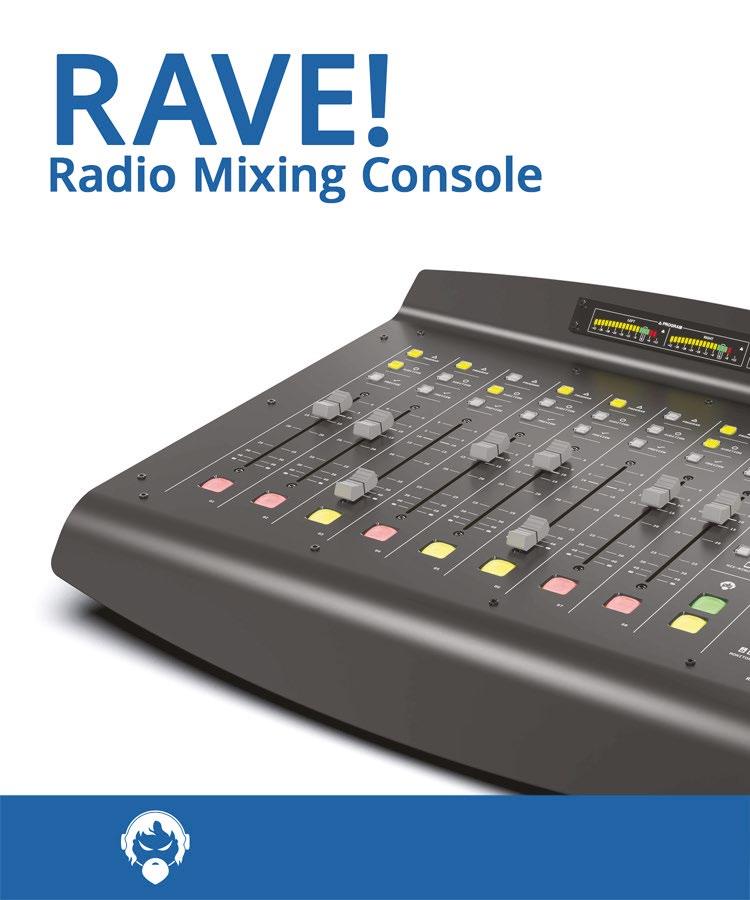


The Buyer’s Guide section appears in every other issue, focusing on a particular category of equipment and services. It is intended to help buyers know what’s on the market and gain insight into how their peers are using such products.
Half-wave-spaced arrays and a 10-station combiner create a high-efficiency backup for DFW stations
With the largest privately-owned portfolio of broadcast towers in the U.S., Vertical Bridge is seeking opportunities to add value and strengthen its position. The company said it does so by maximizing the performance of its assets, through the latest technology, resulting in measurable benefits to radio and TV stations that use its towers and improving operational efficiency across the sector.
Consolidation has resulted in the development of master antenna and combiner systems that can accommodate multiple broadcasters. Many stations are adding backup master systems to protect valuable on-air systems.
The master backup plan came into action on a Vertical Bridge tower in Cedar Hill, Texas. Installers from Tower King raised a Dielectric RingMaster auxiliary system to radiate FM and HD Radio signals for 10 stations serving the Dallas-Fort Worth market.
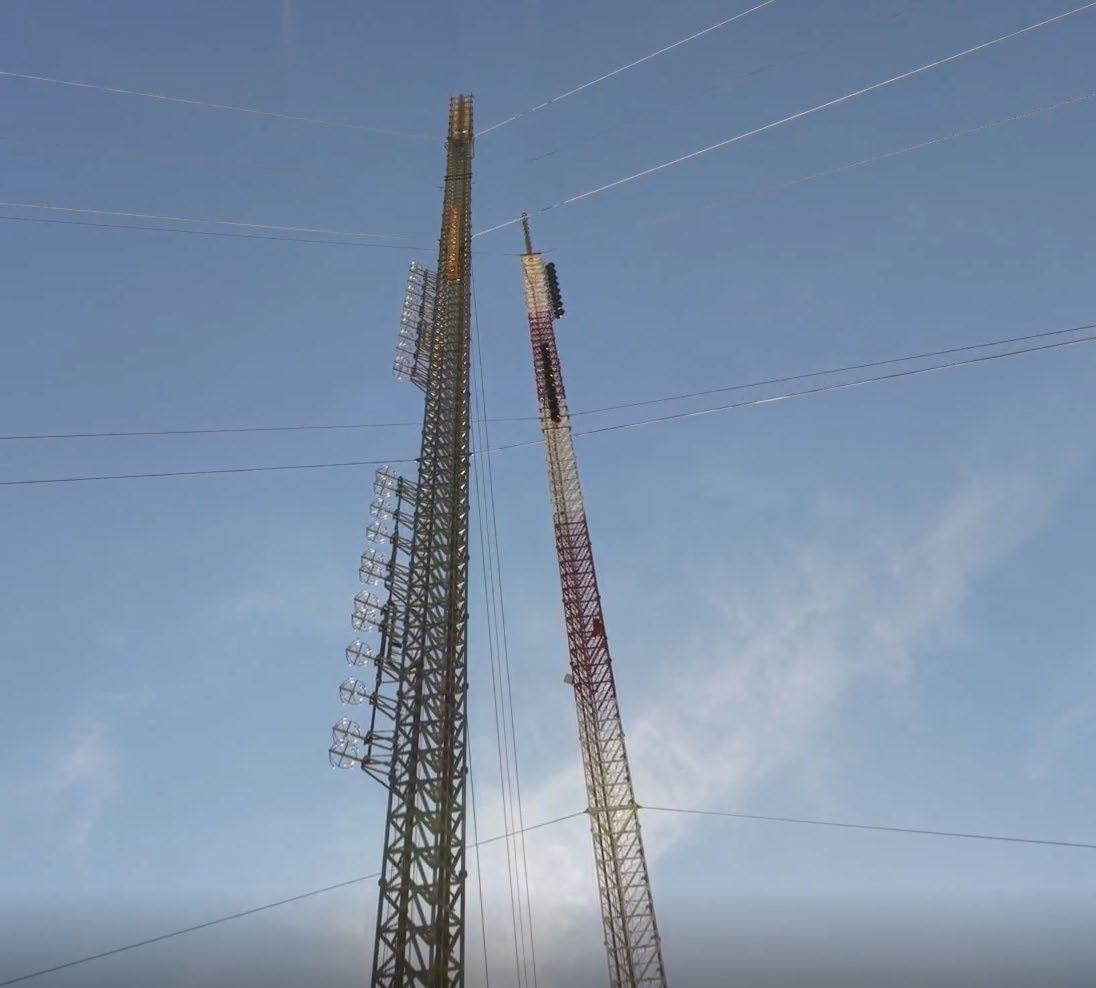
Vertical Bridge sought similar redundancy to legacy antenna systems in most major markets that have the flexibility to immediately switch to a backup if the main master has an issue.
“The RingMaster series offered the perfect auxiliary solution,” Joe Meleski, vice president of broadcast towers leasing for Vertical Bridge, said.
Dielectric’s RingMaster antennas use a blend of RF technology to result in an adaptable side-mount solution. The half-wave-spaced antenna arrays are able to reproduce the quality of full-bandwidth FM through optimized wavelength spacing, the company said.
The opti-spaced design positions the antenna elements with half-wave and full-wave spacing to improve bandwidth.
The Cedar Hill RingMaster system includes two 12-bay antennas with a “left- and right-hand” design with five frequencies fed into each side.
The right-hand DCR-U12CD supports FM signals KZPS, KSPF, KJKK, KVIL and KHKS. The left-hand HDCR-U12D supports FM signals for KSCS, KPLX, KDGE, KRLD and KMVK, with additional bandwidth for HD Radio signals.
Dielectric also supplied the master constant impedance combiner, designed to support 10 Class C FMs. Its HFSS simulation software was integral in developing antenna designs suitable for the DFW market.
Thousands of optimizations were produced using HFSS to present a range of patterns, ensuring the most effective configuration was chosen for the auxiliary systems.
“Everything we did here, from the building, its generators, HVAC systems and the redundant RF system on the tower, is state-of-the-art,” Meleski said.
Broadcast Devices is highlighting its suite of RF measurement, monitoring, protection and control products.
BDI said the products are suitable for single transmitter sites as well as complex, multi-site operations.
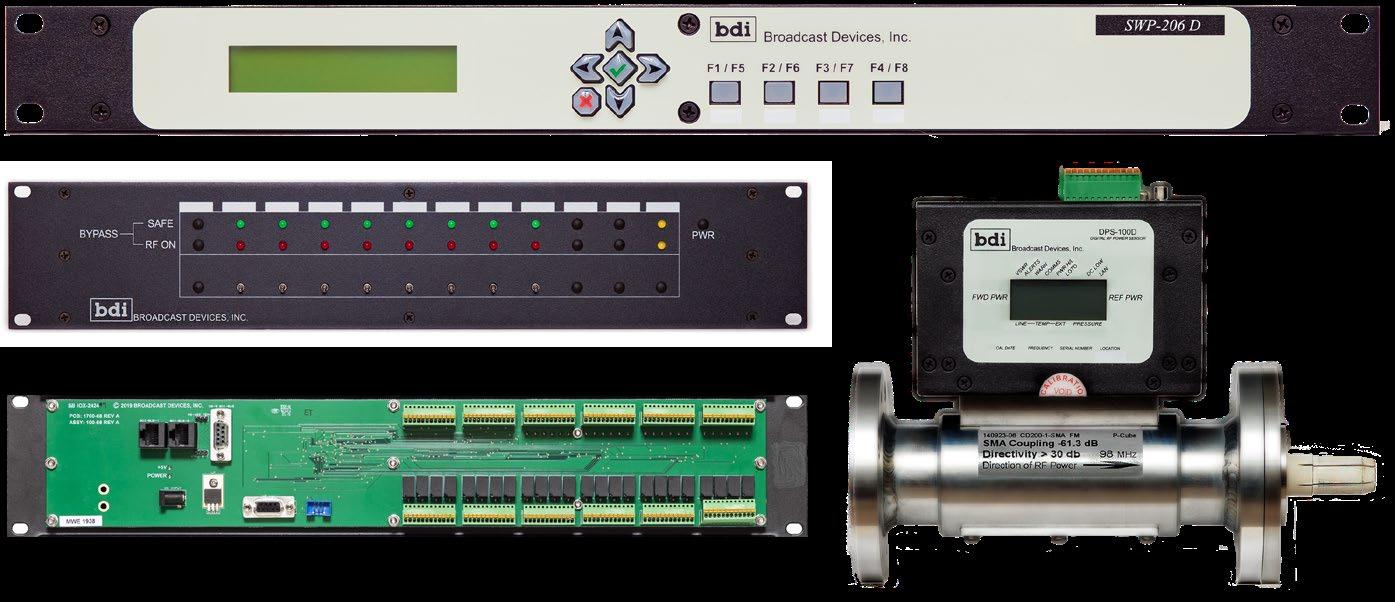
The DPS-100D digital RF power measurement system is an RMS power meter that provides forward and reflected power readings with accuracy of within 5 percent. It also measures transmission line temperature and pressure.
Key features include its directional coupler and proprietary threestrike VSWR protection, suitable for sustained high VSWR conditions. It supports standalone operation or integrates with up to 255 sensors for networked site monitoring.
Its onboard web server supports remote access and integrates with modern control systems via SNMP v2. The device has multiple programmable relays and analog outputs for alarms and remote metering.
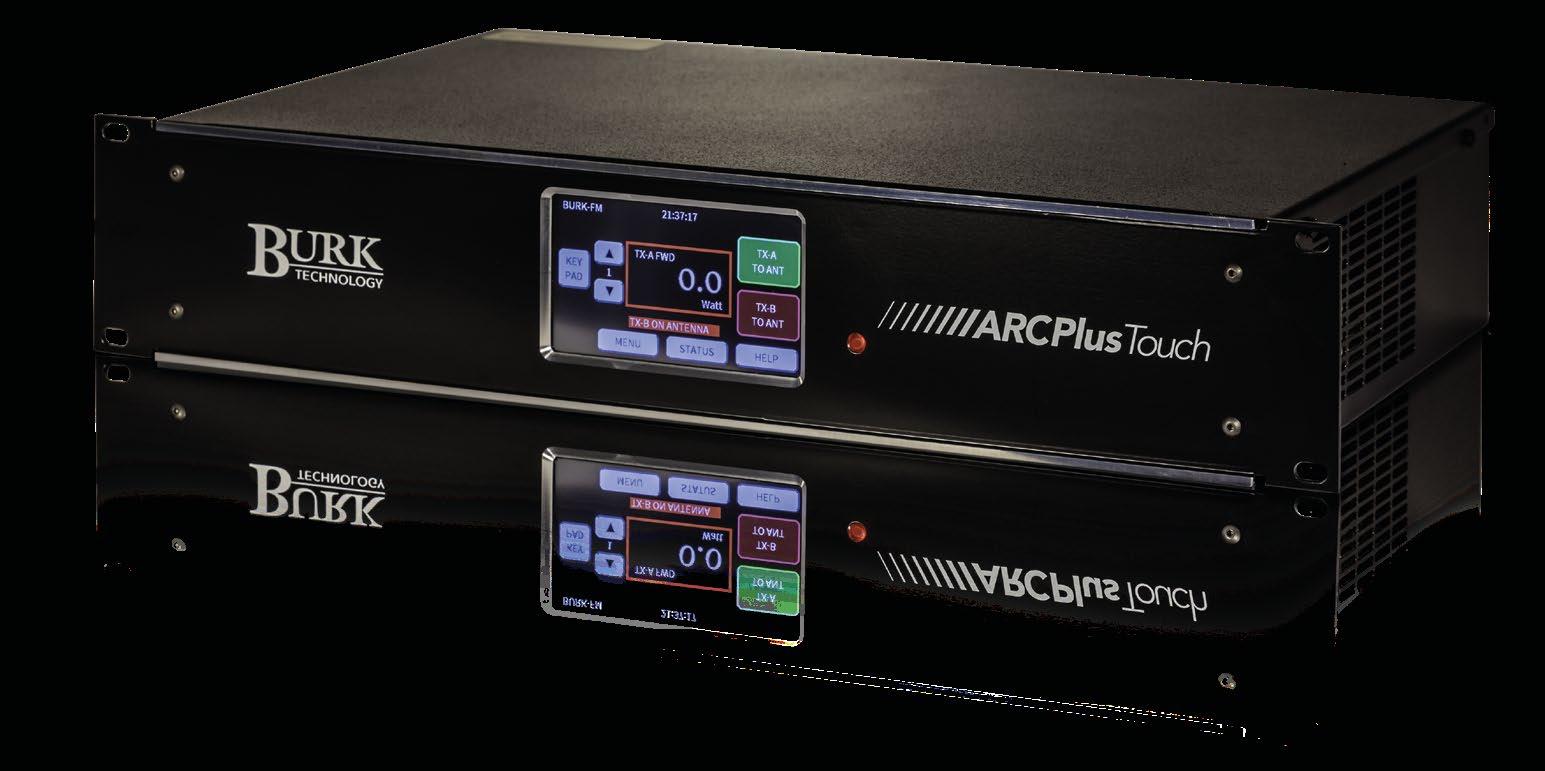
BDI’s suite of switch controllers and remote control products offer flexibility for transmitter and antenna switching. SWP-2500 series products include single and dual models for main and standby switching. The ISC-200 dual RF switch controller provides independent control of two switches.
The SWP-206D provides antenna monitoring. The SWP-300 RF site controller provides web-enabled remote control, integration with motorized RF switches and compatibility with the DPS-100D.
BDI’s IOX-24 remote control expander panel and the ICP800 interlock consolidation panel allow expansion and safety management, suitable for complex transmission sites. Info: www.broadcast-devices.com
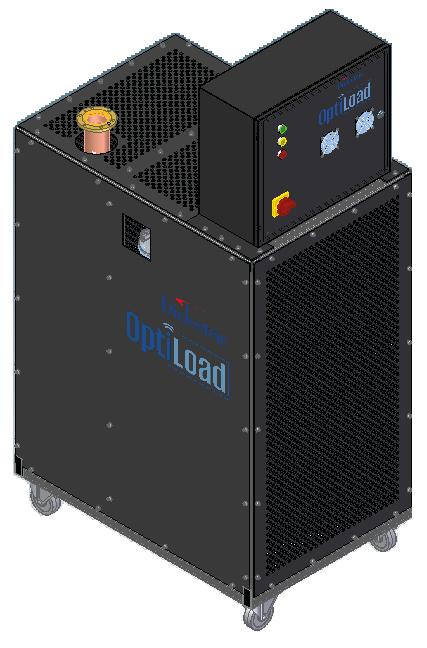
Ever wish you could monitor your antenna and feedline in real time?
American Amplifier Technologies has introduced the EmPower Controller VNA. It’s a vector network analyzer system that allows engineers to evaluate an antenna and feedline without needing to take a transmitter off the air.
As part of AAT’s EmPower Controller ecosystem, it uses the remote-control platform to trigger alarms and actions when problems occur.
“Schedule analysis as desired to identify issues before they turn into outages,” AAT said.
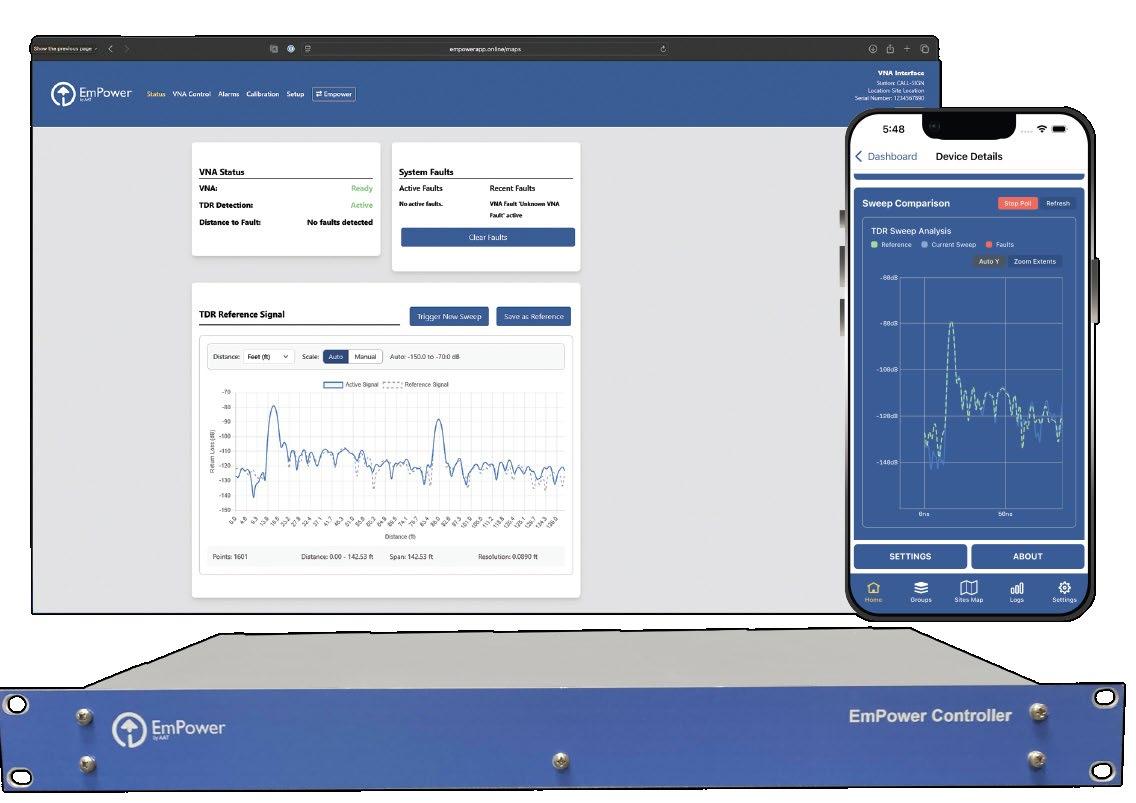
Using a stored reference, the analyzer provides data that gives a full picture of system performance. Automated analysis compares current conditions against reference points and alerts engineers when variance exceeds defined thresholds.
AAT’s EmPower Mobile app provides results from analysis, visual overlays and historical comparison. The company said operators
DAC System, based in Switzerland, is highlighting its RFHawkeye platform and Apollo IoT software suite.
Designed for FM, DAB and TV networks, the company said RFHawkeye provides visibility across the RF chain, from transmitter output to antenna feedpoint. It said the system is used by broadcasters in the U.S. and Europe.
can correlate VNA findings with power monitoring, transmitter performance, environmental data and other telemetry supported by the platform.
The Empower Controller VNA is part of AAT’s suite of RF infrastructure solutions, which includes offerings from subsidiaries Shively Labs and Kathrein-Scala.
Info: www.americanamptech.com
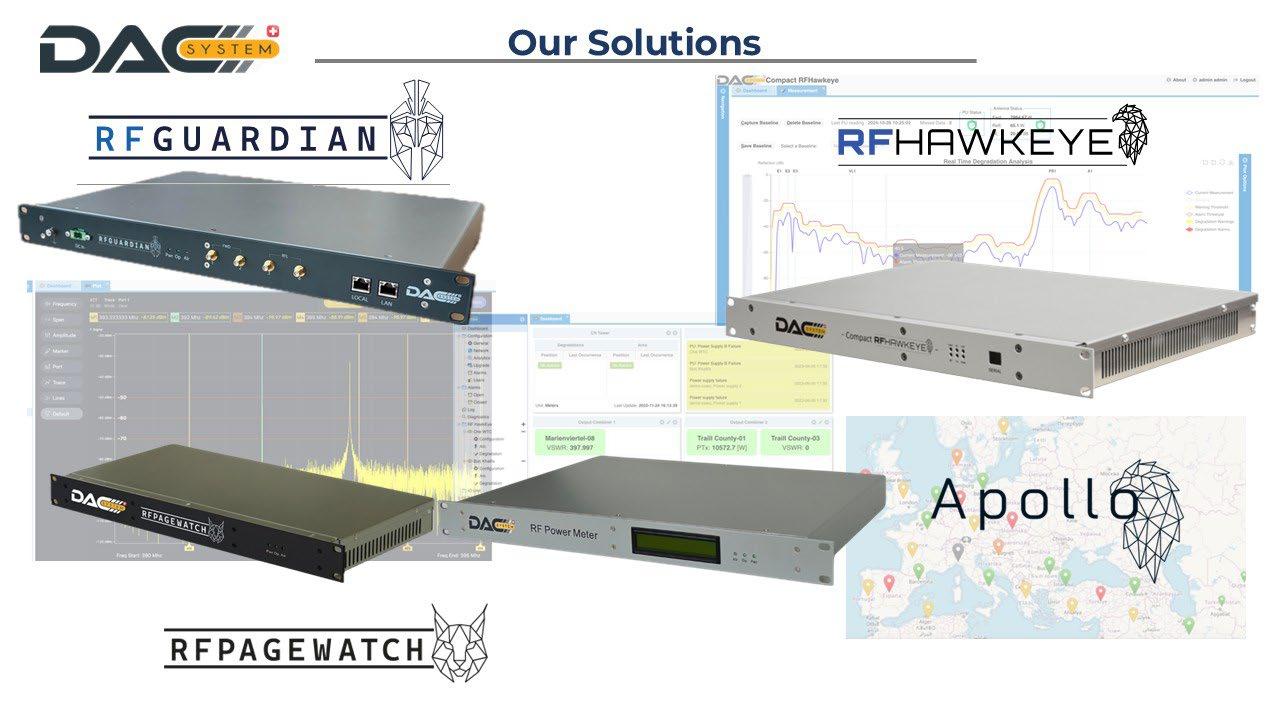
The platform monitors return loss, VSWR and reflected power, detecting drifts before they become failures.
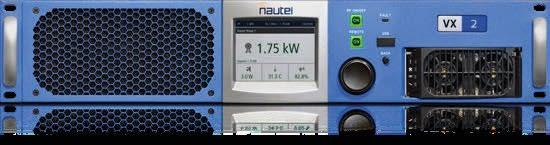
“The result: fewer outages, faster response and maximum uptime,” DAC System said.
Field data are collected and analyzed in Apollo IoT, DAC’s cloudbased dashboard that gives engineers access to performance trends, alarms and network health. The platform supports integration of power meters, directional couplers and environmental sensors, which DAC said creates a full picture of transmission system behavior.
Info: www.dacsystem.ch
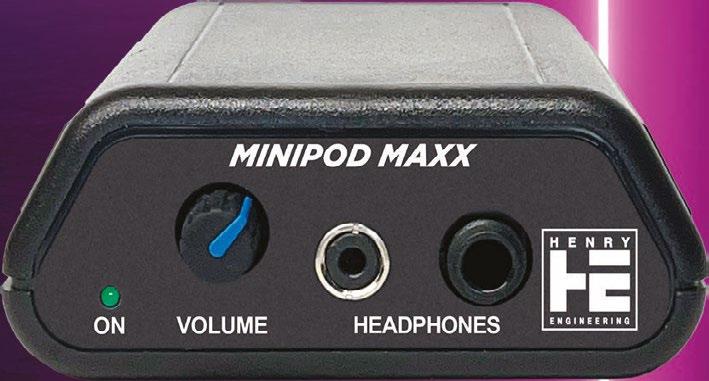
One of the most important conditions to monitor at a remote transmitter site is the incoming AC line voltage.
“Any variation in supply voltage will have an effect on transmitter performance,” Henry Engineering states.
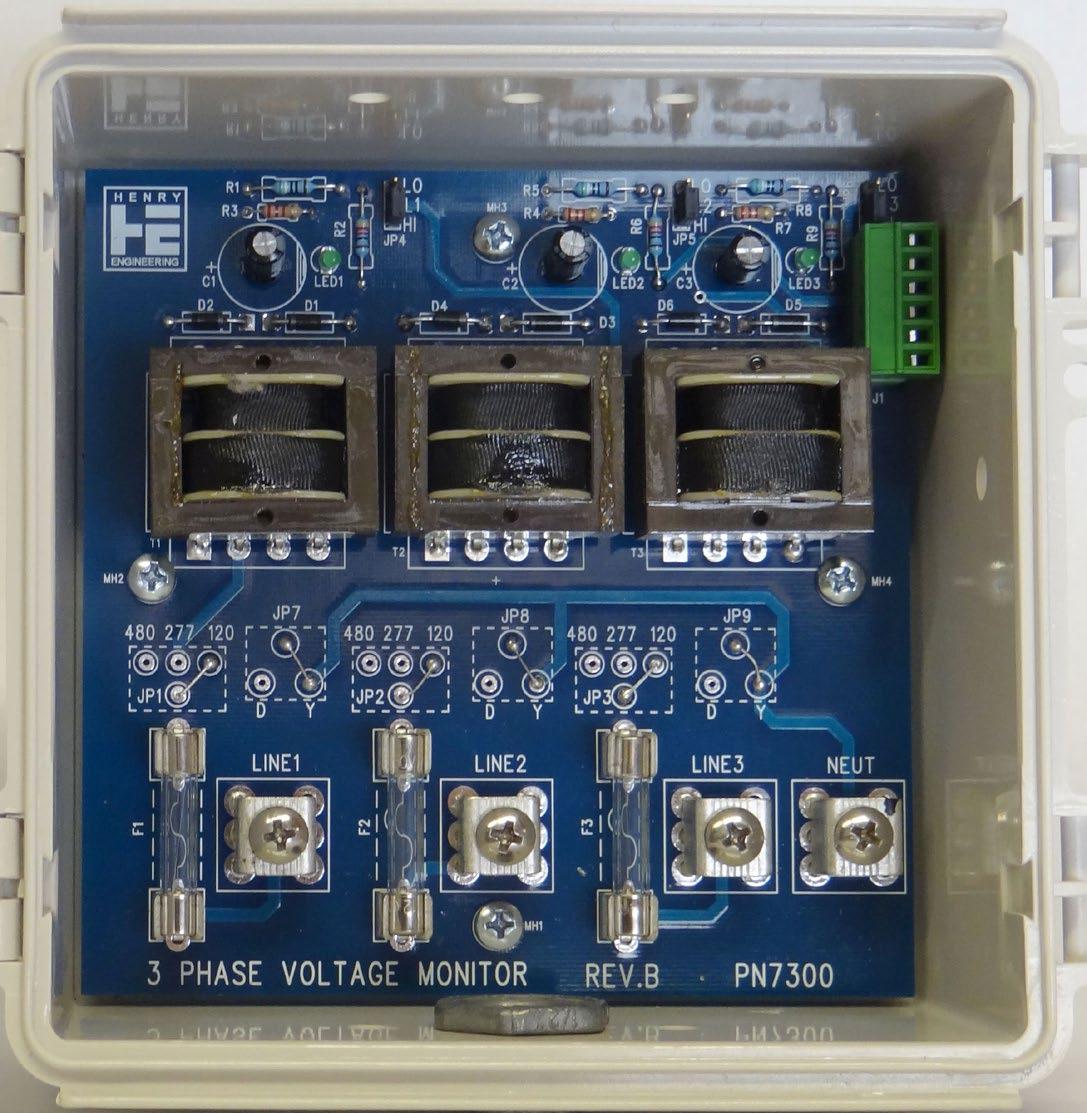
PowerTracker, a product from its subsidiary Sine Control Technology, allows transmitter site AC voltage to be monitored remotely using virtually any transmitter remote control or telemetry system.
The product is suited to be connected to the AC mains as close to the utility entry point as possible. It generates a low-voltage DC output that is proportional to the AC input voltage. The DC sample is fed to a telemetry input channel on the transmitter site’s remotecontrol system. Once the system is calibrated, the DC sample can be monitored remotely to indicate the site’s AC supply voltage. The remote-control system’s HI and LO limits can be set to trigger an alarm if the DC sample goes out of tolerance.
Henry Engineering said PowerTracker can monitor both singlephase as well as three-phase Wye and Delta service. Any line voltage can be monitored: 120, 208, 240, 277 or 480 volts.



































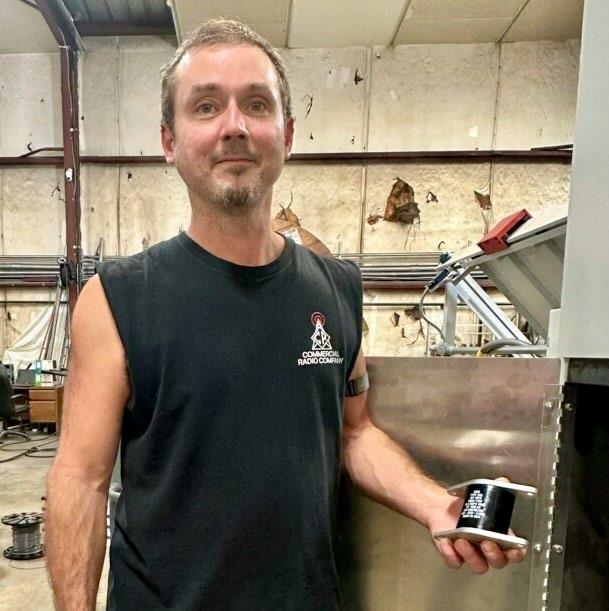
The Vermont-based Commercial Radio is a stocking distributor for Cornell-Dubilier mica capacitors.
“Mica capacitors offer distinct advantages when compared to alternatives like electrolytic capacitors, particularly in high-frequency and precision applications,” the company said.
Cornell Dubilier’s Types 271, 272, and 273 transmitting mica capacitors are specialized, high-performance components designed for high-current and high-voltage radio transmitter circuit applications. They operate across a frequency range of 100 kHz to 3 MHz.
The company said that they are a suitable choice for demanding radio environments, with a wide capacitance range and rated for high voltages.
The capacitors are cast in rectangular cases and are highly shockresistant. Operating temperatures range from –55 C to 125 C.
The design includes options for convenient mounting, such as optional aluminum mounting plates. Specifically, the Type 273 is designed to permit stand-off mounting.
Commercial Radio offers direct shipping from its Vermont facility of both mica capacitors and Isolantite insulators.
Info: www.commercialradiocompany.com
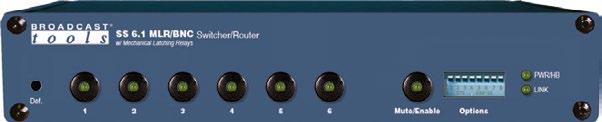
Information Station Specialists says its AMReady products allow broadcasters who suffer downtime to get back on the air quickly.
Employed for emergency and temporary applications, the AMReady products include low-power transmitters and antennas of various sizes and efficiencies that fill a cost-effective void when it might be needed most. The units can be rented or purchased.
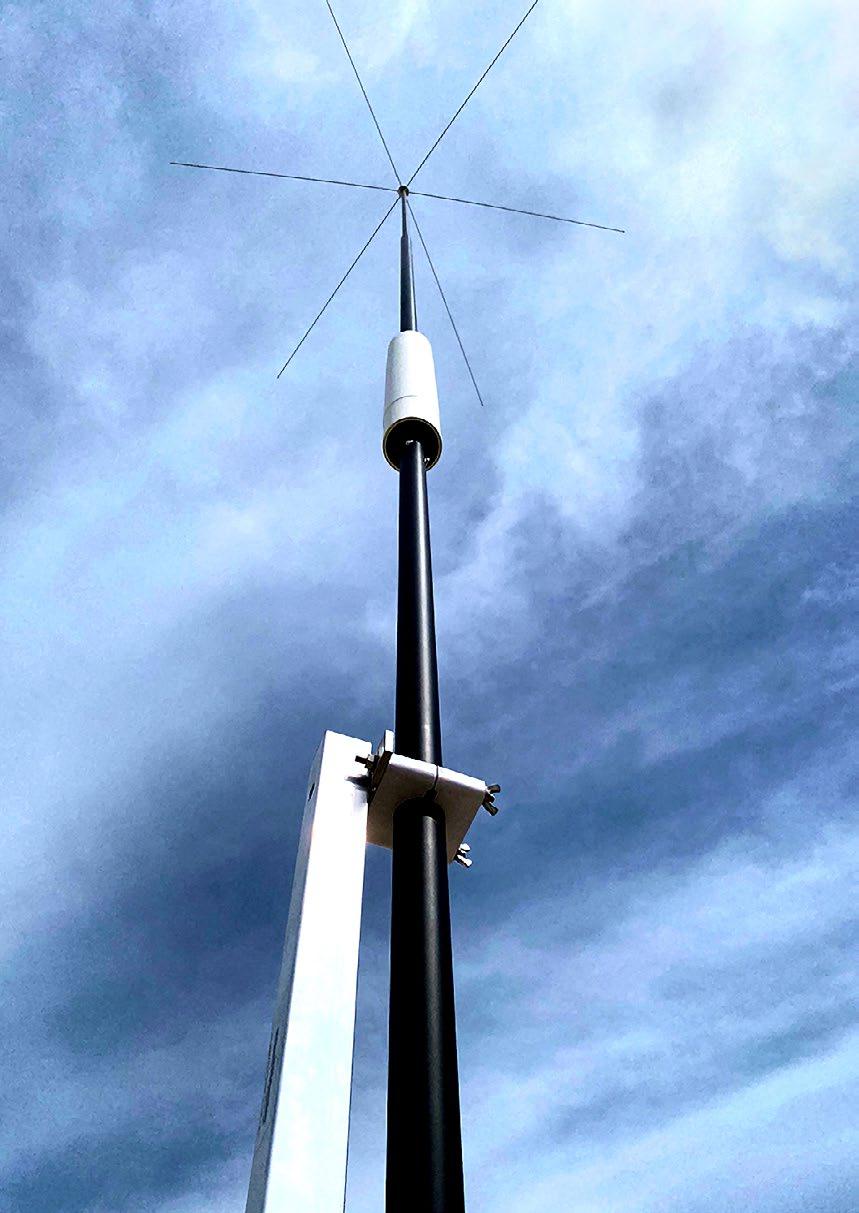
Its Magnum.K1 antenna can be used from a small parcel of land or even a rooftop. ISS also is working to design a 1,000-watt antenna efficient enough to be licensed fulltime in most AM classes.
Accessories include quick-deploy groundplanes, support masts and mounting hardware.
The company said it will stage shipments at a “moment’s notice.”
Its EventCAST system, meanwhile, focuses on delivering information to motorists as they approach local events or find themselves navigating unexpected detours or emergencies — “an entire radio station in a box, with an audio system onboard,” ISS said.
Info: https://theradiosource.com/products/amready.htm


A new Radio World ebook explores best practices for streaming for radio. This is an excerpt.
Jeff McGinley is the vice president of engineering at SummitMedia.
How important is streaming to SummitMedia’s operations?
Jeff McGinley: It’s incredibly important. I’d say it’s almost on the same level as keeping


At this point, streaming is as important as
the terrestrial broadcast, and it will only get more so as newer automobiles have more internet and Wi-Fi capabilities.
What is one of the most common technical mistakes you see with streaming?
McGinley: I think it goes back to audio fidelity. A lot of engineers are still in the mindset that people are listening on a laptop speaker and won’t hear a difference. As the stream becomes as important as the terrestrial signal, you cannot sleep on that. You can’t just pull out an old Aphex 320A Compellor or an Orban 8100 out of the closet and say “That’s good enough.” It’s not. People really need to pay attention to sound quality for their streams now.
Read the full interview in “Streaming Best Practices” at http://radioworld. com/ebooks.























Writer Rolf Taylor Principal Rocket Engineering & Consulting
In a letter to the editor a while back, Dan Ramos wrote: “With all the talk of removing AM radio from motor vehicles, I would recommend that reception of NOAA Weather Radio be enabled in all vehicles to take the place of AM broadcast reception.”
I have no objection to the idea of NOAA Weather Radios in cars, but if we are to consider it as a replacement for AM I think it is worth remembering the purpose of federal EAS involvement.
The Emergency Alert System and its predecessors EBS and Conelrad were conceived with an eye on what we might call “The Big One,” namely a nuclear attack. There are other hazards, such as an unfortunately timed solar coronal mass ejection, that would also qualify.
Even aficionados of small government would probably agree that preparation for such events is best handled or coordinated at the federal level.
But we may also consider the remarkable uses that state, local, territorial and tribal authorities have made using the FCC-mandated system. Lack of training has been a problem, and improvements are ongoing. But non-federal entities do use EAS, frequently to good effect.
Unfortunately, since most Americans know of EAS through these local uses, many of us have forgotten the original purpose of the system.
Back to The Big One. It would seem that the need for preparation is growing. An electromagnetic pulse or EMP event would disable critical infrastructure over large areas for an extended period of time. The power grid would be affected and many electronic devices could be destroyed. Internet access and mobile towers would be disrupted.
It is in this context that the National Public Warning System will need to do its job, allowing the president or the administrator of FEMA to inform the public, to offer hope and advice and to help reduce panic.
So I think it prudent to compare and contrast the NOAA Weather Radio system and the National Public Warning System. See the accompanying table.
Note that in the event of a “Big One,” lack of power could greatly reduce the usual sources of interference to AM signals. Also, in a crisis of long duration, non-NPWS stations with limited fuel would drop off, reducing co-channel and adjacent-channel interference over time.
While other sorts of systems are possible, this public-private partnership, combined with AM’s inherent strengths, gives the taxpayers a lot of bang for their buck — for example, 77 stations providing coverage that equals or exceeds the NOAA Weather Radio network.
* NOAA claims this range. However, users often struggle with reception
Daisy chain to other broadcast/cable partners.
Primary Entry Point conversion to 100% underway.
Requires user verification
Radio World’s cover feature earlier this year about tower safety struck a chord with me.
While towers for broadcast require a host of safety rules and regulations for safe and cost-effective use, other radio services would do well to effect and enforce safety practices in their tower work, lest they end up emulating the climbing accident of Rev. Paul Bittner, W0AIH, who became a silent key hours before the November Sweepstakes domestic radio competition in 2018.
The San Diego contest club, NX6T, has access to the “antenna farm” at WA6TQT’s mountaintop location in Anza, Calif. For several years, we have “suffered” a failed phasing cable on the 160-meter Tri-Square antenna array, consisting of horizontal wires strung between three 100-foot towers.
Had the wires been hoisted properly using pulleys and heavy-duty rope, it would be a simple matter to lower them and make repairs in a couple of hours. Unfortunately it seems that tower climbing will be necessary to resolve this problem. We are unqualified to do such work, and a competent climber wants $1,000+ to do that for us.
That’s a lot of money for a small contest club. Nevertheless, we are not foolish enough to attempt our own repairs. A possibility would be to use a drone to install pulleys and a new set of wires. Until that happens, we will continue to consider ideas such as base-loading three of the towers using phasing cables to effect proper directional characteristics.
Proper installation in the first place limits disasters later. There are no “do-overs” from most tower accidents. Better to be safe and alive. While 160 meters is important to us, it’s not that important.
How to submit Radio World welcomes comment on all relevant topics. Email radioworld@ futurenet.com with “Letter to the Editor” in the subject field.
This opens up a whole world of air talent that you would never have access to any other way. Think of the programming opportunities and the potential for savings related to studio space.
Using cloud-based AI like Super Hi-Fi to generate some portion or all of a broadcaster’s programming is certainly worth investigating, or even for programming HD-2 and HD-3 channels. Some AI automation vendors have “off the shelf” formats that can be rolled out quickly and cost-effectively. Add station branding and talent voices and off you go.
Commercial broadcasters have embraced this technology to downsize studios and office space at significant savings without impacting quality. Dozens of AI-based channels are on the air with more being added every month.
Another option for saving money lies in the delivery of content to the transmitter. We’re working with a broadcaster that is delivering content to hundreds of sites using Starlink with 5G backup. It’s cheaper than satellite, which is what they had been using, and gives them much more flexibility in station programming. Can this same cost savings be scaled down to a smaller, rural broadcaster? If you’re scratching your head over how to replace your aging STL equipment,


We all want to help keep you on the air. Embracing some of the newest technologies could be an answer to reducing some of your
Mike Pappas SVP, Global Sales Orban Labs Pennsauken, N.J.
FM broadcast was a form of high-quality audio distribution (“Trends in Audio Processing,” radioworld.com/ebooks). But with all the processing, it no longer is.
There’s no doubt that the budget rescissions are going to have a serious impact (“Public Media Stations Confront Money Crisis,” Oct. 8 issue), especially in smaller markets where fundraising capabilities are limited. Even the large markets are going to feel an impact.
How about thinking outside of the box from a technical standpoint?
Covid taught the industry that you can work from home and make great radio too. Coupled with AI, air talent can be located anywhere there is internet access.
HD Radio was going to save FM but it will not, again due to all the processing involved.
It would have been better if all the dynamic range processing was in the receivers for their intended environment. But that ship has sailed. Let’s just continue with loudness wars and pray that listener fatigue drives our audience away for good.
Dennis Romo Las Vegas