Welcome to this issue of International Transport Manufacturer, which you might notice has undergone a subtle facelift. Regular readers will be aware that – in line with the ever-accelerating shift towards electrification – we have been focusing much of our coverage in this direction. Now, we have rejigged our regular sections to reflect this direction more boldly.
Many of our usual focus areas remain untouched; we’re still committed to bringing you the latest technological advances and product innovations within powertrain (page 8), materials (page 32), testing & safety (page 22) and lightweighting (page 30). However, we have now added specific sections that will cover battery technology (page 12), charging technology (page 18), and software & connectivity (page 38) in greater detail.
With these new focus areas, we aim to cover the entire length and breadth of the electric and hybrid transportation market more comprehensively, while continuing to cover the key trends and emerging technologies driving our industry forward. Our regular skills zone and show preview sections remain untouched, so flip to pages 42 and 44 respectively to hear about the latest upskilling opportunities and industry events from across the sector.
Alongside our increased coverage of the electrified transport market, our reporters will also be on the ground at all the major global events and conferences across automotive, rail, aviation and e-mobility. If you have a new product, story or opinion to shout about, don’t hesitate to share it with us!
Hayley Everett Editor
14
Sodium-ion shift
Louise Davis profiles the technology that aims to accelerate the future of EV charging
POWERTRAIN
8
High-efficiency hybrids
How amorphous motor technology is enabling more efficient hybrid powertrains 10 Transmission transition
Axial flux electric drive units are reducing development timelines
16
How sodium-ion batteries are transitioning from the lab to commercial viability
Electrode entrainment
Addressing entrainment challenges in battery electrode manufacturing
18 Solar-powered systems
Assessing the technical maturity of solar-powered EV charging systems 20 Mega moves
Taking a closer look at BYD’s megawatt flash charging platform TESTING & SAFETY
Tackling the test & measurement challenges of electric drivetrains
More robust roads
How sensor-based road quality assessment is optimising commercial vehicles
Looped in
A new partnership is accelerating integrated virtual engineering environments
Facility flex
Accelerating high-current battery development in the UK
Flight focus
How material innovation is supporting more sustainable aircraft design
PUBLISHER
Jerry Ramsdale
EDITOR
Hayley Everett heverett@setform.com
DESIGN – Dan Bennett, Jill Harris
HEAD OF PRODUCTION
Luke Wikner production@setform.com
HEAD OF SALES & PARTNERSHIPS
David Pattison
ACCOUNT DIRECTORS
John Abey | Peter King
SENIOR ACCOUNT MANAGERS
John Davis | Darren Ringer | Roy Glasspool
ACCOUNT MANAGERS
Paul Maher | Iain Fletcher | Marina Grant e advertising@setform.com
32 Composite catch-up
The latest advances in composite transport applications as seen at JEC World
Larger than life
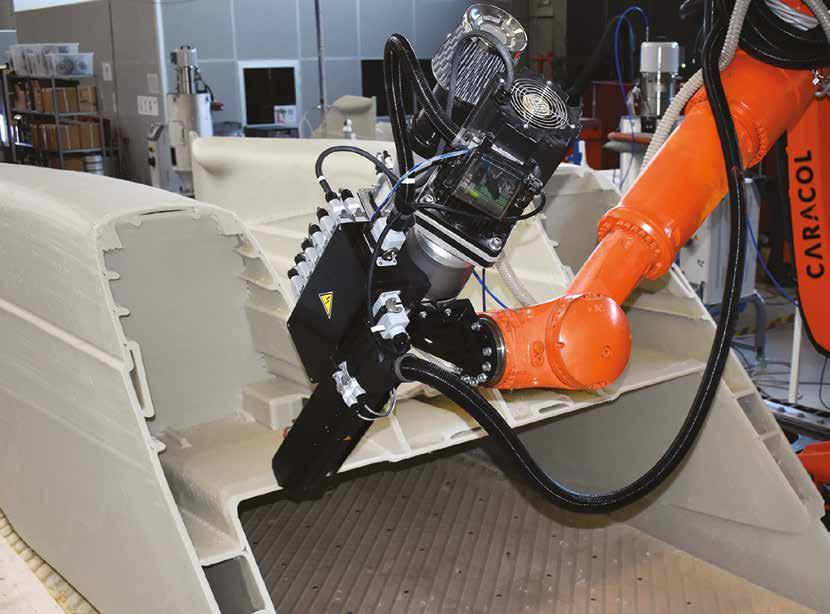
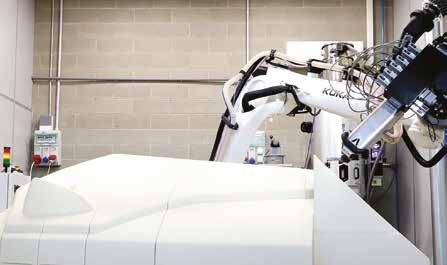
How robotic LFAM is enabling new composite transport applications
38 AI-based validation
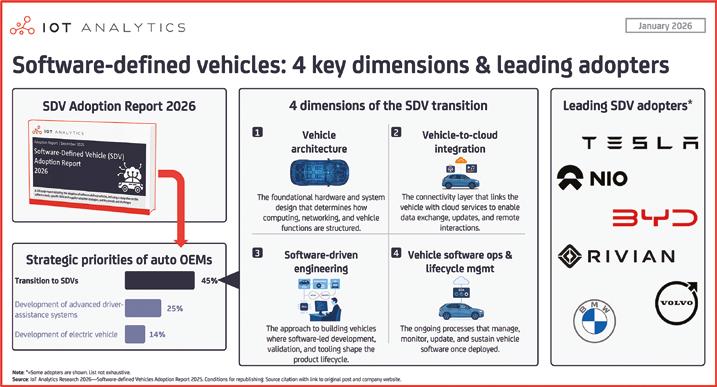
How AI-driven systems are advancing software-defined vehicle validation
Advancing end-to-end AI for ADAS
Electric opportunities
The latest upskilling opportunities across the EV manufacturing sector
What’s next in automotive?
Automotive Europe heads to Frankfurt in June
Cells and systems in focus Battery Cells & Systems Expo takes over the NEC in July
Smarten up in June
The fifth edition of Smart Manufacturing Week returns to Birmingham
Setform’s international magazine for transport is published twice quarterly and distributed to senior engineers throughout the world. Other titles in the company portfolio focus on Process, Design, Energy, Oil and Gas, Mining and Power.
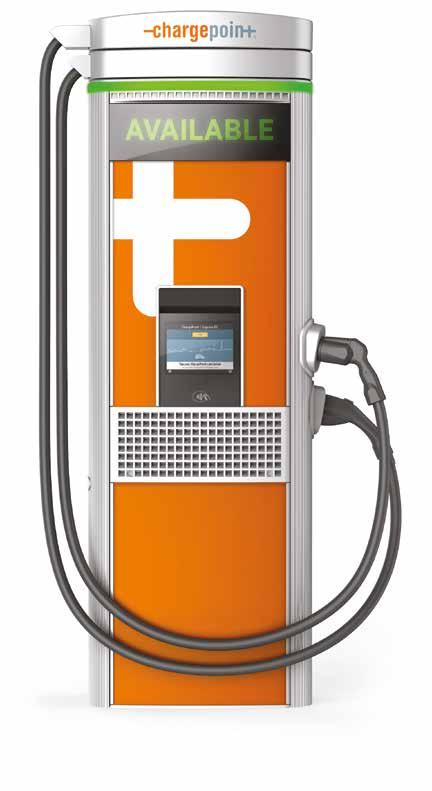
ChargePoint believes its Express Grid range will solve some of the most prevalent grid limitations
EXPRESS DELIVERY
Louise Davis profiles the technology that aims to accelerate the future of EV charging
One of the most interesting stories in EV charging tech of late comes from a partnership between two US-based experts who joined forces to launch ultrafast Direct Current (DC) vehicle-to-grid (V2G) chargers along with the associated power infrastructure.
EV charging solutions provider ChargePoint worked with intelligent power management company Eaton to create the ultrafast charging architecture with end-to-end power infrastructure for public charging and fleets. ChargePoint Express Grid, powered by Eaton, is a vehicle-toeverything (V2X) capable solution that delivers up to 600kW of power for passenger EVs and can provide megawatt charging for heavy-duty commercial applications.
ChargePoint is clear that Express isn’t just proving a concept; it’s a full product line, with a range of chargers for a variety of applications in the pipeline. And Eduardo Guraieb, a senior manager at ChargePoint, explains that the company has big plans for this new tech: “Express will solve some of the most prevalent grid limitations, often circumventing the need to secure additional grid service
by allowing site owners to integrate on-site energy storage (BESS) and solar energy production,” he explains.
Discussing the technology itself, Guraieb says the key innovation involved from the charger-side infrastructure is the ability of Express to receive direct DC input. “BESS supply DC output, and traditional charging infrastructure relies on AC/DC power conversion via standalone inverters. This generates two different conversion losses, at the standalone inverter and at the station’s rectifier, which are omitted by our capability to receive direct DC input,” the expert explains.
THE HOT TOPIC
Delivering up to 600kW raises challenges around heat, efficiency and connector durability. So, what specific advances in its charging hardware enable ChargePoint to safely and reliably operate at these power levels?
“Redesigned, proprietary ventilation systems not only keep the units in operating temperature but also do so quietly in any environment,” begins Guraieb. “Our liquid-cooled cable technology delivers superior performance because it leverages the high thermal efficiency of water glycol coolant to maintain stable
Express Plus is a flexible, fast charging platform
temperatures. Water glycol solutions offer high specific heat capacity, enabling them to absorb and remove heat more effectively than air or less conductive coolants, which supports higher continuous current flow and prevents thermal throttling during fast charging sessions,” he adds.
Guraieb explains that this enhanced cooling allows the Express system to reliably deliver more than 1MW of sustained power, reducing charging times while protecting connectors, cables and internal power modules from heat-related degradation. “The result is a fast-charging experience that is consistent, durable and reliable across a wide range of operating conditions. The rated operating temperature of the system is from -40 to 55°C,” he details.
MODULAR APPROACH
The Express Grid solution integrates charging, storage and renewables. Guraieb describes the underlying charging architecture as “incredibly modular and adaptable” and says that it was built as a set of componentry that can be configured to a specific use case with ease. He comments: “We don’t build for a use case, we build the ‘Lego blocks’, help our customers by understanding their use
STRENGTH IN NUMBERS
The Eaton partnership is just one example of how ChargePoint is teaming up with other automotive manufacturers to drive progress in emobility. In 2024 it collaborated with General Motors (GM) to further accelerate EV infrastructure growth in the USA. Together, the companies installed hundreds of ultra-fast charging ports at strategic locations, featuring the latest innovations in EV charging to improve access to chargers and help drivers get back on the road quickly. Speaking at the time, Rick Wilmer, ChargePoint’s CEO, said: “The transition to electric mobility continues to be driven by leaders such as General Motors offering innovative EVs and committing to make chargers as ubiquitous as possible. Our collaboration with GM represents a significant investment in the infrastructure to enable fast and easy charging for all. Together, ChargePoint and GM will deliver a seamless fast charging experience via reliable charging hardware managed by our leading software platform.”
case and then spec the solution they need based on those components.”
As well as prioritising customer relationships, it’s evident that ChargePoint is also highly focused on cross-industry partnerships. “Our Express solution is made even more compelling to customers thanks to its integration with Eaton’s power infrastructure and expertise. We see cross-industry partnerships as a key driver of progress towards the next chapter of broad-scale EV adoption,” explains Guraieb.
“When independent companies’ perfect technology and tailor it to match customer needs, cross-industry partnerships can drive mass adoption by lowering capital and operating expenses through efficiency gains. One example of this is how, by co-selling solutions integrated by Eaton hardware and ChargePoint equipment, we’re able to reduce the time-to-value for our customers via simplified ordering processes and streamlined deliveries that ensure every component is built to spec and delivered at the right time in a project’s construction,” he continues.
When asked what’s next for ChargePoint, Guraieb can’t discuss any specific products or developments on the horizon, but he does offer a hint as to the company’s next focus area. “We have some interesting ACcharging announcements coming later this year,” he reveals.
cooling tech allows the Express system to reliably deliver fast charging while protecting its components from heat-related degradation
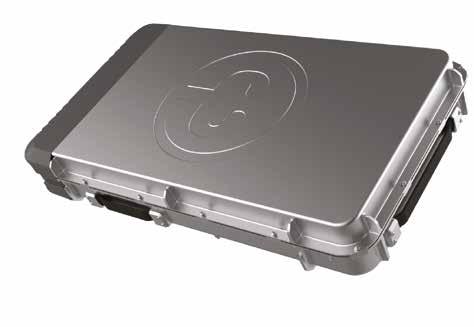
An example of a ChargePoint Express Plus power module
Enhanced
HIGH-EFFICIENCY HYBRIDS
Ingo Scholten shares how amorphous motor technology is enabling more efficient hybrid powertrains
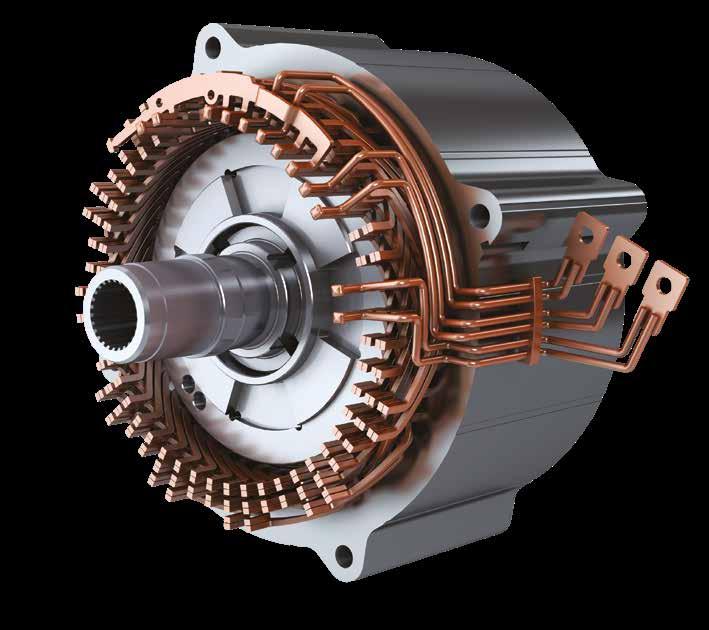
Horse Powertrain, a global leader in innovative and low-emission powertrain systems, supports automotive OEMs with a range of systems including engines, transmissions, power electronics and integrated hybrid platforms. The company recently made the global debut of its groundbreaking “Amorphous Motor” technology, achieving industry-leading efficiency of 98.2% and enabling a 1% reduction in whole-vehicle fuel consumption.
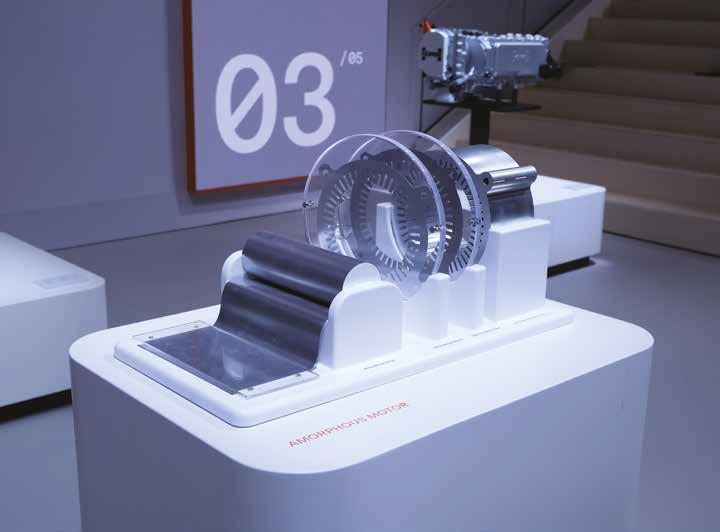
The Amorphous Motor uses amorphous steel – a steel alloy with incredibly high durability, strength and magnetic permeability. Leveraging these properties has enabled Horse Powertrain to dramatically reduce the thickness of the steel layers that make up a motor stator to just 0.025mm thick – one tenth the thickness of steel used in traditional motors.
“This latest innovation demonstrates Horse Powertrain’s continued commitment to research and development, providing suppliers and OEMs with the tools to raise the bar when it comes to fuel economy and emissions performance,” says Ingo Scholten, deputy chief technology officer at Horse Powertrain. “The Amorphous Motor is an ideal tool to power a new generation of highefficiency range-extended EVs, hybrids and plug-in hybrids, ensuring these technologies continue to play a substantial role in automotive’s decarbonisation journey.”
Amorphous steel is highly conductive, allowing the motor’s losses to stator iron to be reduced by 50% compared to equivalent designs. As a result, 98.2% efficiency is achieved while outputting a maximum power of 140kW at 360Nm.
TECH-NEUTRAL APPROACH TO DECARBONISATION
Horse Powertrain’s continued innovation across the hybrid and combustion component stack is powered by a global footprint of 17 manufacturing plants, five R&D centres, and 19,000 employees. This latest innovation follows the recent announcement of several new highefficiency technologies that form part of Horse Powertrain’s global strategy, focusing on a technologically neutral approach to decarbonisation.
“Shifting the global vehicle parc towards electric BEVs is one approach to decarbonisation. But it’s not the only approach - electrification alone cannot get us all the way there,” says Scholten. “In many markets, carbon-intensive electricity grids, lack of grid infrastructure, and critical material bottlenecks prevent
The Amorphous Motor
Amorphous steel has incredibly high durability, strength and magnetic permeability
BEVs from being the most effective mass mobility option that reduces transport emissions.”
Instead, Horse Powertrain champions an approach that centres around selecting the best technology to reduce transport emissions in a particular market. Scholten explains, “That means that in those markets where combustion and hybrid technology remain a staple – which will be much of the world, since at least 50% of vehicles will still feature an engine by 2040 – we should focus on technologies that bring down the emissions footprint of these vehicles.”
Horse Powertrain’s philosophy is to drive efficiency gains in combustion and hybrid technology to reduce the long-term emissions produced by fleets built atop these powertrains.
“Our Amorphous Motor is a great case in point of this philosophy in action – using a fundamental breakthrough in material science to improve the efficiency of hybrid transmissions
and cut down fuel use,” Scholten adds. “We are also developing alternative and flex-fuel engines, which further contribute to decarbonisation without the need for the massive infrastructure investment required for electric vehicles - you can already see the success of this in the Brazilian market.”
“For OEMs, this gives them time and flexibility. We are handling combustion and hybrid technology, allowing OEMs to invest in electric powertrains while also still providing combustion and hybrid offerings. By doing this, OEMs can cater to a truly global market and provide tailored solutions to different regions while remaining cost-effective and adaptable to change.”
AUTOMOTIVE’S DECARBONISATION JOURNEY
Taking a wider view of the automotive sector’s progress towards low-emission vehicles and technologies, Scholten notes the clear
shift towards electrification over the past decade. “While BEV adoption has increased, the growth of hybrids has also been significant, with demand in the UK alone increasing by 35% between 2024 and 2025,” he observes. “While it was originally supposed that hybrid vehicles would operate as a transitional technology, it is now becoming clear that hybrids are set to be a long-term staple of the global vehicle parc.”
Crucial to this strategy is continued investment and research into combustion and hybrid engine technology, Scholten adds: “The future of the industry will still include combustion engines. It is vital that we continue to improve these engines and powertrains to make them as efficient and low-emission as possible. The auto industry is still adjusting to this new reality. Hybrid innovation is key to longterm decarbonisation, not simply a stepping-stone along the way.”
TRANSMISSION TRANSITION
Axial flux electric drive units are reducing development timelines for electrified powertrains
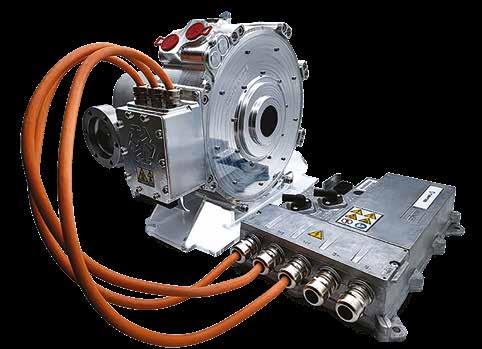
Turntide Technologies recently introduced its latest fully integrated axial flux electric drive unit (EDU), positioning the system as a scalable, pre-validated solution aimed at reducing development timelines for electrified powertrains. The announcement reflects a broader industry shift away from discrete component sourcing – motors, inverters, and driveline elements – towards integrated propulsion architectures that offer improved packaging efficiency and accelerated deployment.
REDUCED TESTING TIME
For transport engineers, the significance lies in the EDU’s systems-level validation. Conventional electrification programmes often require extensive component-level testing and integration, with validation cycles extending from several months to multiple years. Turntide explicitly frames its solution as a response to this constraint, noting that its platform, “can remove months, if not years, of component-level testing, decreasing time and cost to market.”
By delivering a pre-engineered and validated assembly, the EDU enables original equipment manufacturers (OEMs) to bypass much of the iterative integration process, directly addressing time-to-market pressures and integration risk.
AXIAL FLUX ADVANTAGES
At the core of the system is axial flux motor technology, which differs fundamentally from the more common radial flux topology. Axial flux machines generate torque through a disc-shaped rotor-stator arrangement, enabling shorter magnetic flux paths and improved torque density. Turntide reports a 53% increase in torque density compared to equivalent radial flux systems, alongside reductions of 58% in volume and 37% in mass. For vehicle designers, these gains translate into more flexible packaging options, particularly in space-constrained off-
highway and commercial platforms where underbody volume is limited.
THE NEW EDU
The EDU is designed as a modular architecture, supporting both single and stacked motor configurations. Nominal power outputs range from 73kW to 220kW, with peak outputs between 300kW and 700kW. This scalability underpins the platform’s intended applicability across diverse vehicle categories. As CEO Steve Hornyak states, “We’ve created a highly configurable and scalable EDU that easily fits into a wide range of applications from high-performance recreation vehicles to electric construction equipment.” He adds that, “by handling the integration, validation, and testing upfront, our EDU decreases the risk, time and cost of bringing new products to market.”
One notable engineering advantage of the axial flux configuration is its high torque output at low rotational speeds. This characteristic allows for simplified transmission architectures, potentially reducing or eliminating the need for multi-speed gearboxes. Turntide highlights that, “low-speed, high torque performance enables the use of less complex gear design,”
Turntide’s axial flux electric drive unit
contributing to reduced mechanical complexity, lower system weight, and improved reliability. For applications such as construction machinery and off-highway vehicles – where durability and serviceability are critical – these factors are particularly relevant. Field validation has been conducted under extreme operating conditions, including participation in a major off-road endurance event. The company reports that its vehicle platform completed more than 600 miles of desert terrain with no issues, demonstrating robustness under sustained vibration, thermal stress, and dust ingress. These insights have informed ongoing refinement of the EDU, particularly in sealing, cooling, and durability.
The introduction of a configurable, integrated EDU aligns with growing demand for electrification across off-highway, commercial, and specialist vehicle segments. By shifting complexity from the OEM to the supplier, Turntide’s approach may enable broader adoption of electrified drivetrains, particularly among manufacturers seeking to reduce development overhead while maintaining performance and reliability.
The RTX Hybrid Electric Flight Demonstrator
HYBRID PROPULSION
Exploring the latest technological advances and engineering challenges in hybrid-electric flight
Hybrid-electric propulsion at the regional aircraft scale introduces a multidimensional engineering challenge: integrating electrical and thermal power sources while satisfying stringent airworthiness requirements under CS-25/Part 25 regulations. In this context, the battery is a vital safetycritical, certifiable subsystem. Recent progress on the RTX Hybrid-Electric Flight Demonstrator underscores this, with H55 delivering a 200kWh aviation-grade Energy Storage System (ESS) that is structurally embedded into the certification strategy of the propulsion system.
The RTX demonstrator, led by Pratt & Whitney Canada and Collins Aerospace, targets up to 30% improvement in fuel efficiency through a parallel hybrid architecture combining a thermal engine and a 1MW-class electric motor. Achieving this level of efficiency gain depends not only on power density, but also on the ability to safely manage high-energy electrical systems under dynamic flight conditions.
H55’s ESS plays a central role by serving as a pre-validated certification baseline. Unlike many experimental battery systems, H55’s architecture has accumulated over 2,000 flight hours and undergone European Union Aviation Safety Agency (EASA) validation campaigns. This operational pedigree enables system integrators to
At the core of H55’s system is a modular, lightweight battery architecture designed explicitly for aviation constraints. The modularity allows distributed placement within the airframe, optimising centre-ofgravity management and structural integration, all of which are key considerations for retrofitting platforms such as the De Havilland Canada Dash 8-100 demonstrator aircraft. More critically, the system is engineered around a “certifiable by design” philosophy. This includes:
Independent cell characterisation and screening to address variability in commercial lithium-ion cells
Redundant safety layers, including thermal containment, fault isolation, and controlled failure modes
Worst-case scenario testing aligned with regulatory expectations, rather than nominal operating conditions
This approach reflects a broader industry realisation: compliance cannot be retrofitted onto highenergy systems. Instead, certification requirements must inform architecture from the outset, particularly in areas such as thermal runaway propagation, electromagnetic compatibility, and
system-level fault tolerance.
SCALING FROM CS-23 TO CS-25
A notable aspect of this programme is the scalability of H55’s technology. Originally developed for CS-23 (small aircraft) applications, the same underlying cell-level safety philosophy has been extended to a CS-25 hybridelectric demonstrator. This transition is substantial, as scaling energy storage systems involves nonlinear challenges in thermal management, structural integration, and failure containment.
For example, increasing system capacity to 200kWh significantly amplifies heat generation and fault energy. Maintaining safety margins requires not just larger systems,
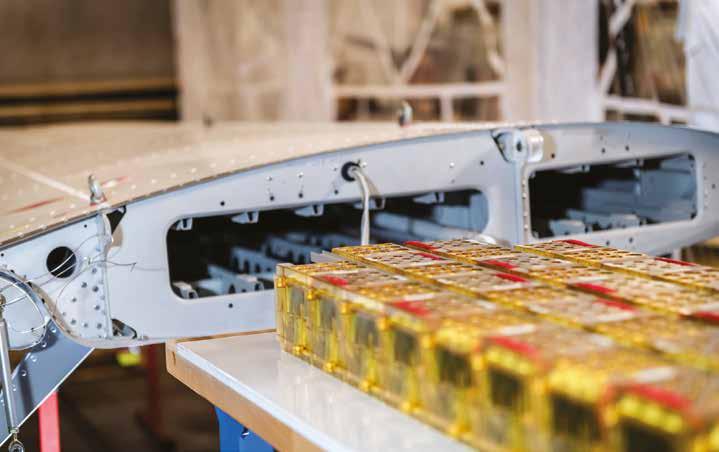
The H55 battery module
H55’s
ESS plays a central role by serving as a pre-validated
certification baseline
but fundamentally robust design principles that remain valid at higher power levels. The RTX demonstrator thus serves as a proving ground for scaling certified architectures into the regional transport category.
CONTEXT WITHIN BROADER INDUSTRY ADVANCES
H55’s progress aligns with parallel developments across the hybridelectric aviation ecosystem, particularly in high-power electric propulsion and energy systems.
At Fraunhofer IISB, engineers have recently developed a 750kW traction motor using hairpin winding technology, achieving a specific power density of approximately 8kW/ kg. This represents a significant improvement over conventional winding techniques, enabling lighter and more compact propulsion units— an essential factor for hybrid-electric aircraft where weight penalties directly impact range and payload.
Similarly, National Research Council Canada is advancing integrated electric propulsion systems through coordinated research in power
electronics, thermal management, and system integration. Their work emphasises end-to-end optimisation, including high-voltage distribution architectures and cryogenic or advanced cooling techniques to manage the thermal loads associated with megawatt-class systems.
On the energy storage front, initiatives such as the Frenchbacked development of dual-use battery systems by Ascendance Flight Technologies highlight a growing emphasis on versatility and lifecycle integration. These systems aim to bridge aviation and ground-based applications, improving economic viability while addressing sustainability and supply chain considerations.
TOWARD FLIGHT TESTING
The RTX Hybrid-Electric Flight Demonstrator is now progressing toward full aircraft integration and flight testing. This phase will be critical in validating not just component performance, but also system-level interactions such as thermal coupling between propulsion
elements, transient load management, and failure response dynamics.
Flight testing will also provide empirical data to refine certification frameworks, which are still evolving for hybrid-electric architectures. Regulators must address novel failure modes and system interactions that do not exist in conventional propulsion systems, making demonstrator programmes essential for informing future standards.
The RTX Hybrid-Electric Flight Demonstrator illustrates a key inflection point in electric aviation: the transition from experimental systems to certifiable, scalable technologies. By anchoring the propulsion architecture in a validated battery system, the programme reduces technical and regulatory uncertainty, accelerating progress toward commercial viability.
As parallel advances in motors, power electronics, and integrated systems continue, the convergence of these technologies will define the next generation of regional aircraft. In this landscape, energy storage systems will become central to both performance and certification, as well as the broader success of hybrid-electric flight.
H55 has a proven track record in aircraft integration
SODIUM-ION SHIFT
This recent partnership is demonstrating how sodium-ion batteries are transitioning from the lab to commercial viability
The global transition to electrified mobility is increasingly shaped by advances in battery chemistry, and a recent collaboration between CATL and Changan marks a notable inflection point. Their joint unveiling of a mass-production passenger vehicle powered by sodium-ion batteries signals a shift from laboratory-scale innovation to commercially viable deployment, with implications for energy security, thermal performance, and supply chain resilience.
THE NAXTRA PLATFORM
At the centre of this development is CATL’s Naxtra sodium-ion battery platform, which introduces a new performance envelope for non-lithium chemistries. With a reported energy density of up to 175Wh/kg, the system approaches parity with lithium iron phosphate (LFP) cells while leveraging sodium’s material abundance. This is a critical distinction: sodium is far more
widely available than lithium, reducing exposure to geopolitical and resource constraints while enabling more scalable manufacturing.
The partnership reflects a broader architectural shift toward complementary battery ecosystems. As described by Gao Huan, CTO of CATL’s China e-car business in the announcement, “The arrival of sodium-ion technology marks the beginning of a dual-chemistry era. Changan’s vision shows both its responsibility for energy security and its strategic foresight. Much as it embraced electric vehicles years ago, Changan is once again taking the lead with its sodium-ion roadmap. At CATL, we value the opportunity to work alongside such an industry leader and fully support its strategy, combining our expertise to bring safe, reliable, and high-performance sodium-ion technology to market.”
SODIUM-ION SPECIFICS
From an engineering standpoint, the most compelling aspect of sodium-ion
technology lies in its low-temperature performance. The Naxtra battery demonstrates stable operation down to –50 °C, with over 90% capacity retention at –40 °C. Even at low states of charge, performance degradation is minimal - an area where lithiumbased systems typically struggle due to electrolyte viscosity and lithium plating risks. Additionally, discharge power at –30 °C is reported to be nearly triple that of comparable LFP batteries, making sodium-ion particularly attractive for cold-climate applications and heavy-duty use cases.
The system’s safety characteristics are equally significant. Unlike conventional lithium-ion chemistries, which rely heavily on external safety mechanisms, the Naxtra battery is engineered for intrinsic safety at the material level. Mechanical abuse tests, including crushing, drilling, and sawing, reportedly result in no fire or smoke, while the battery continues to deliver power. This suggests a fundamental shift from reactive safety design to inherently stable electrochemical behaviour.
Cycle life and durability further strengthen the case for sodium-ion adoption. With over 10,000 chargedischarge cycles, the Naxtra platform significantly reduces lifecycle costs, particularly in fleet and highutilisation scenarios. For commercial vehicles, CATL’s parallel development of a 24V sodium-ion start-stop battery demonstrates additional advantages, including long service life and deep discharge capability, positioning it as a viable replacement for lead-acid systems.
Beyond performance metrics, the strategic implications are substantial. Sodium-ion batteries enable diversification of raw material sourcing, reduce environmental impact through simpler extraction and recycling processes, and support localised supply chains. This aligns with projections of rapid market growth and increasing demand for alternative chemistries.
Pioneering the next generation of efficient transportation
Innovative solutions for the market of tomorrow
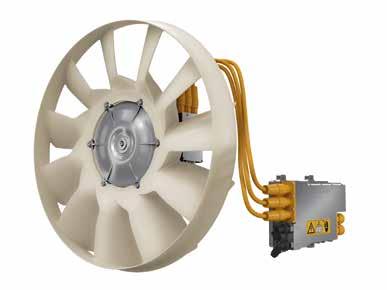
Customized cooling
Our high-voltage eFan ensures efficient cooling in all-electric heavy-duty trucks.
ELECTRODE ENTRAINMENT
A new whitepaper from UKBIC addresses air entrainment challenges in battery electrode manufacturing
The UK Battery Industrialisation Centre (UKBIC) has released a new white paper detailing pioneering work to tackle one of the most persistent manufacturing challenges in lithium-ion battery production, the air entrainment in electrode slurries during wet slurry casting.
UKBIC is the UK’s national manufacturing development facility, providing scale-up, laboratory expertise, module and pack assembly, and helps to develop skills to support the sector. In addition to providing equipment, technical expertise and training to support manufacturers,
Dr
The report addresses air entrainment in electrode slurries during wet slurry casting
UKBIC also supplies its own benchmark products for component testing and delivers specialist training to develop the skills required for a battery-powered future.
AIR ENTRAINMENT CHALLENGES
Air bubbles introduced during slurry mixing and delivery can create defects in coated electrodes, ultimately compromising battery performance, reliability, and safety. In response, UKBIC has delivered a programme of research and engineering development to understand, mitigate, and prevent air entrainment at every stage of the manufacturing process.
Helen Walker, senior process simulation engineer at UKBIC
The new paper outlines the methodologies, models, and equipment improvements implemented by UKBIC’s in house technical teams to address this issue. The work spans process optimisation, formulation refinement, and equipment redesign, thereby demonstrating that defect prevention requires an integrated approach across technology teams.
A SYSTEMS-LEVEL APPROACH
UKBIC’s research combines physicsbased modelling with experimental validation to better understand the mechanisms of degassing and bubble behaviour. Led by senior process simulation engineer Dr Helen Walker, the team developed advanced models to predict degassing performance under different viscosity, density and vessel geometry conditions.
The team also implemented targeted design improvements to slurry delivery systems to reduce air ingress points and minimise opportunities for air entrainment. Alongside this, they refined coating parameters to ensure bead stability during slot die coating via CFD and analytical modelling which helped to define robust operating windows.
“The findings demonstrate UKBIC’s commitment to strengthening the UK’s battery manufacturing competitiveness through process insight, practical engineering solutions, and collaborative R&D,” says Walker. “The centre’s work provides manufacturers with clearer tools, models, and best practices to reduce defects, improve yields and produce higher performance electrodes at scale.”
The paper highlights several important insights for battery manufacturers. The first: air entrainment is a critical
manufacturing challenge, strongly influencing coating quality, electrochemical performance, and long-term cell reliability. As a direct result, understanding degassing behaviour is essential: while vacuum degassing accelerates bubble removal, its effectiveness depends on material properties and vessel design.
MIXING PROCESSES
The first step in electrode manufacturing is to combine active materials, binders, conductive additives, and solvents to form a homogeneous slurry. This mixing process is highly turbulent, and most of the air in the slurry is entrained at this point. Poor mixing can lead to particle agglomeration and nonuniform dispersion, resulting in uneven electrode thickness, inconsistent porosity, and weak adhesion to the current collector—all of which degrade battery performance and reduce manufacturing yield. Optimising solids content, additives and mixing processes can significantly reduce viscosity and shorten degass times.
AGITATOR DESIGN
Additionally, agitator geometry and slurry delivery system complexity have a strong impact on air ingress and degassing efficiency. During degassing, slurries are agitated to prevent separation and sedimentation. Agitator design significantly influences degas efficiency. While most agitators generate strong circumferential flow, only some designs effectively induce vertical circulation. Vertical currents help transport bubbles upward, allowing them to burst at the surface. Streamlined delivery systems minimise opportunities for re-entrainment.
COATING CONSIDERATIONS
Air bubbles introduced during slurry mixing or pumping can persist into the coating stage, where they burst during coating or drying, leaving voids or fisheyes in the electrode layer that may penetrate the entire electrode layer. These defects disrupt the uniformity of the active material layer, leading to discontinuities in the conductive network and uneven current
distribution across the electrode surface. The result is localised overpotential and thermal hotspots that accelerate side reactions and mechanical degradation, while portions of active material remain underutilised, reducing energy density. Coating stability acts as a final safeguard. Slot-die coating requires precise control of bead stability, governed by viscous, capillary, and inertial forces. CFD and analytical models help define the operating window to prevent air entrainment at the coating stage. Meanwhile, effective defect mitigation improves product yield and reliability, reducing defects and enabling more uniform coatings, a higher energy density and longer cycle life.
FUTURE DEVELOPMENT
According to UKBIC’s whitepaper, a key area for future work is minimising air entrainment during slurry preparation. Without costly expenditure on new equipment which enables mixing in a vacuum, this could perhaps be achieved through optimised mixing strategies such as reducing mixing speeds, controlling the rate of material addition, and refining the order of addition. Transitioning from batch degassing to inline deaeration would represent a major process improvement, reducing overall processing time and eliminating unnecessary transfers between multiple vessels.
Read the full whitepaper at: www.ukbic.co.uk/white-paper-optimising-electrodequality-controllng-air-in-battery-slurries-for-superiorcoating-performance
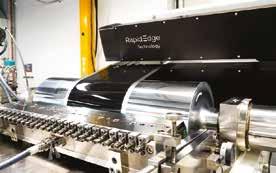
Pinholes or voids in wet (left) and dry (right) coating. These are defects which penetrate through the entire depth of the coating exposing bare foil
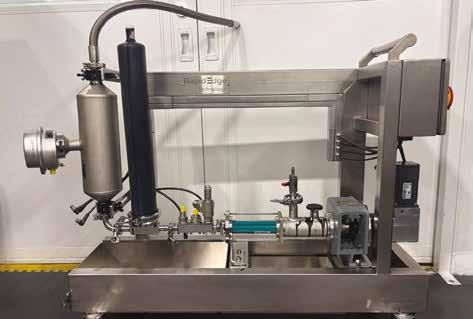
Streamlined slurry delivery system at UKBIC with mechanical seal pump, inline gauges, reduced number of clamps and a purge value immediately prior to the pump
SOLAR-POWERED SYSTEMS
The technical maturity and remaining engineering challenges of solar-powered EV charging systems
Easee and Subaru demonstrated fully off-grid solar EV charging in Canada’s sub-Arctic
The integration of solar photovoltaic (PV) systems with electric vehicle (EV) charging infrastructure is emerging as a critical pathway toward decarbonising transport while alleviating grid constraints. Recent academic literature, combined with real-world pilot projects, provides a comprehensive view of both the technical maturity and the remaining engineering challenges of solar-powered EV charging systems.
SYSTEM ARCHITECTURES
Both ‘An integrative review of standalone solar powered EV charging stations: Standards, policies, design aspects, and future directions’ in Science Direct’s Energy Reports journal, and Springer Nature’s ‘Solar powered electric vehicle charging system: a comprehensive review’ converge on a core architectural framework: solar-powered EV
charging systems are typically classified into off-grid, grid-connected, and hybrid configurations.
• Off-grid systems rely entirely on PV generation and battery energy storage systems (BESS), making them suitable for remote or underserved regions.
• Grid-connected systems supplement solar generation with utility power, improving reliability.
• Hybrid systems combine both approaches, balancing resilience and cost.
A central design challenge identified in both studies is system sizing and optimisation. Effective operation depends on maximum power point tracking (MPPT), DC–DC converter topology, and battery integration, all of which must be tailored to local irradiance profiles and charging demand. Battery storage is a critical enabler, typically operating at 85–95% efficiency, ensuring continuity of supply despite solar intermittency.
ENERGY MANAGEMENT, PERFORMANCE AND EFFICIENCY
A key technical trend identified within both papers is the shift toward integrated energy management systems that coordinate PV generation, storage, and charging demand. Research highlights the growing role of smart grids and control algorithms in balancing supply-demand mismatches and mitigating grid impacts.
Performance modelling demonstrates the sensitivity of system output to environmental variables. For example, increasing solar irradiance from 400 to 1000W/m2 can yield ~47% higher PV output, directly improving EV charging rates. Another important trend is the development of DC microgrid-based charging architectures, which reduce conversion losses and improve system efficiency compared with conventional AC-coupled designs.
However, the papers also highlight
the technology’s remaining challenges: Solar intermittency and diurnal variability, voltage instability and grid integration issues, and landuse constraints for large-scale PV deployment.
ECONOMIC AND ENVIRONMENTAL PERFORMANCE
Both papers emphasise the strong environmental case for solar-powered charging. Substituting grid electricity with solar PV can reduce CO2 emissions by up to 75%, depending on the regional energy mix. From an economic perspective, the systems exhibit higher upfront capital costs (PV panels, inverters and storage) but lower lifecycle costs, due to reduced energy purchases and maintenance. Notably, solar-powered charging supports energy independence, particularly in regions reliant on imported fossil fuels.
KEY TRENDS
Both works indicate the emergence of several consistent trends. The first is the integration of battery storage and hybrid PV-grid systems to overcome intermittency and ensure reliability. The second centres around decentralised and off-grid deployment: Solar EV charging is increasingly positioned as a solution for remote and weak-grid regions, enabling electrification without extensive infrastructure upgrades. Additionally, advanced control strategies such as AI-driven demand response and smart scheduling, are
being explored to maximise solar utilisation and minimise grid stress. There is also growing emphasis on design standards, simulation tools and techno-economic modelling to accelerate deployment and ensure interoperability.
REAL-WORLD VALIDATION
Recent innovations in this space provide tangible validation of these research findings, particularly in extreme environments. A 2026 pilot reported by Easee and Subaru demonstrated fully off-grid solar EV charging in Canada’s sub-Arctic. Using portable PV panels and battery storage, the system successfully charged an EV despite harsh winter conditions and limited sunlight. Charging was achieved at around 25% of a standard 7kW charger rate and the system operated without any grid connection. Similarly, one UK-based example is the model deployed by British sustainable energy company Gridserve, which develops solar farms alongside EV charging hubs. According to the company, a single acre of solar panels in England can generate enough electricity annually to power approximately one million miles of electric vehicle driving. Gridserve operates a growing network of “Electric Super Hubs” and electric forecourts capable of ultra-fast charging, with power outputs of up to 350kW. The network has expanded to numerous motorway service areas, helping provide long-distance EV charging across the country. This highlights increasing deployment
of solar-integrated charging hubs, reflecting a broader trend toward decentralised, renewable-powered infrastructure. These systems are being positioned as a means to reduce grid congestion and align EV charging with renewable generation profiles.
EMERGING ENGINEERING CHALLENGES
Despite this progress, several unresolved issues remain in regards to solar-powered EV charging:
• Intermittency mitigation: Improved storage technologies (e.g., solid-state and flow batteries) are needed
• System scalability: Land use and infrastructure costs limit large-scale deployment
• Grid interaction: Managing bidirectional power flows and avoiding instability
• Standardisation: Lack of universal design and interoperability standards Addressing these challenges will require coordinated advances in power electronics, energy storage, and digital control systems.
Though challenges remain, recent advances indicate the technology offers clear advantages in decarbonisation, energy independence, and grid resilience, particularly in remote or constrained environments. As pilot projects continue to validate performance under real-world conditions, the pathway toward scalable solar-powered EV infrastructure is becoming increasingly well-defined for the transport engineering sector.
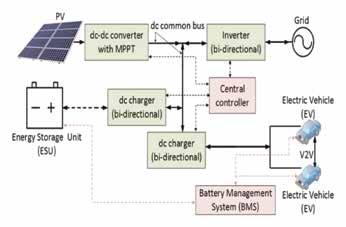
General block diagram of the PV-grid charging system. Image via Springer Nature
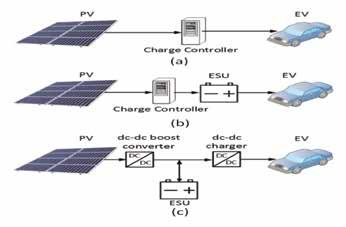
PV-standalone charging system: (a) without a battery, (b) and (c) with a battery. Image via Springer Nature
MEGA MOVES
BYD’s Super e-Platform moves megawatt charging from demonstration to deployment
Megawatt-scale charging has long been positioned as the breakthrough required to align electric vehicle (EV) usability with the expectations set by internal combustion engine refuelling. With the unveiling of its Super e-Platform, BYD has taken a significant step toward that objective, introducing a production-ready architecture capable of delivering charging power at the megawatt level.
At the core of this development is a tightly integrated system built around what the company describes as a “full-domain 1000V high-voltage architecture.” Unlike earlier highvoltage platforms that primarily focused on the traction battery and inverter, this approach extends 1000V capability across the entire vehicle system, including auxiliary loads such as thermal management and air conditioning. For transport engineers, this represents a fundamental shift in vehicle electrical design, requiring new insulation strategies, power electronics, and safety protocols.
FLASH CHARGING BATTERY
Central to the Super e-Platform is BYD’s Flash Charging Battery engineered specifically for extreme charge rates. The system supports a charging current of 1000A and a charge rate of 10C - figures that place it at the upper boundary of current lithium-ion performance envelopes.
From an electrochemical and thermal management perspective, this is enabled by a redesign of the internal cell structure. By creating ultra-fast ion transport pathways between electrodes, the battery reportedly reduces internal resistance by 50%. Lower resistance directly translates into reduced heat generation under high current, which is critical when operating at megawatt power levels.
The result is a system capable of delivering 1MW charging power, enabling what BYD describes as “the world’s highest peak charging speed of one second for 2km’.” In practical terms, this equates to approximately 400km of range added in five minutes— bringing EV charging into parity with
conventional refuelling times.
For engineers, this raises important considerations around thermal runaway prevention, current distribution, and connector design, as sustained operation at 1000A introduces significant challenges in conductor sizing, cooling, and contact reliability.
POWER ELECTRONICS
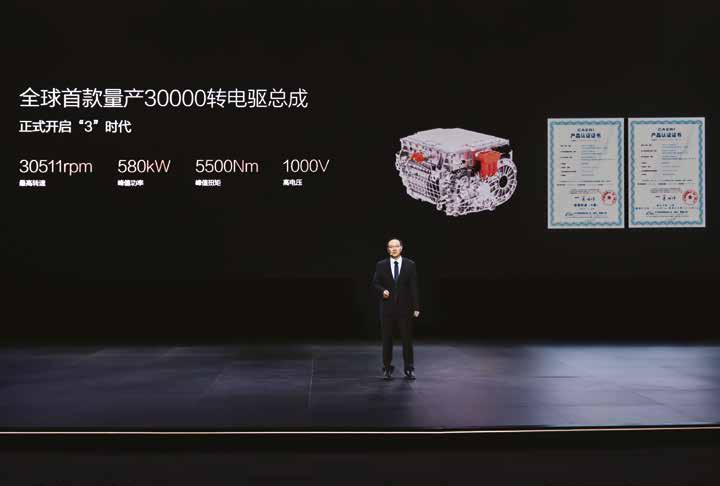
Supporting this charging capability is a new generation of automotive-grade silicon carbide (SiC) power devices. Rated up to 1500V, these chips are critical for handling the higher voltage levels efficiently, reducing switching losses and enabling compact inverter designs. In parallel, BYD has introduced a 30,000 RPM electric motor, which contributes to higher power density and reduced system mass. As noted by senior vice president Luo Hongbin, “The 30,000 RPM motor not only significantly boosts the vehicle’s speed but also greatly reduces the motor’s weight and size, enhancing power density.”
This reflects a broader systems engineering approach in which
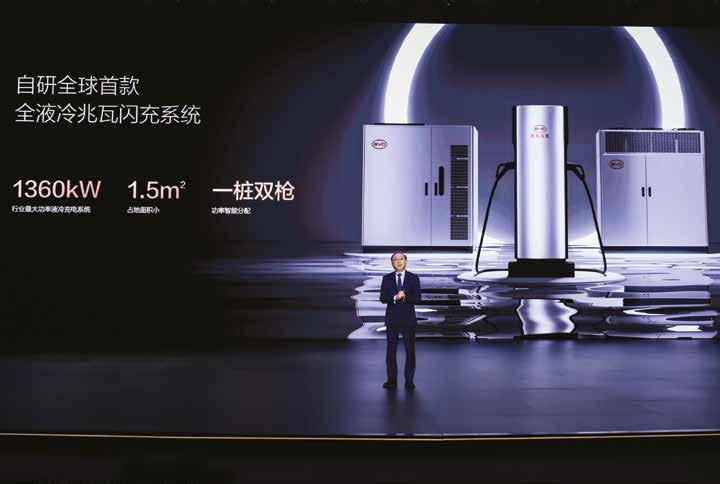
BYD’s all-liquid-cooled Megawatt Flash Charging Terminal system
The introduction of megawatt flash charging has several broader implications for the transport sector
BYD has introduced a 30,000 RPM electric motor
high-voltage architecture, power electronics, and drivetrain components are co-optimised.
CHARGING INFRASTRUCTURE
Megawatt charging at the vehicle level necessitates equivalent advancements in infrastructure. BYD has addressed this with the development of a liquidcooled megawatt charging terminal, capable of delivering up to 1360kW.
As executive vice president Lian Yubo explained, “BYD has self-developed the world’s first all-liquid-cooled Megawatt Flash Charging terminal system, with a maximum output capacity of up to 1360kW. In the future, we plan to build over 4,000 Megawatt Flash Charging stations in China. Additionally, BYD’s unique dual-gun charging technology can instantly transform existing supercharging piles into flash charging ones and fast charging piles into supercharging ones. Our worldfirst intelligent voltage boost charging technology is fully compatible with public fast charging piles, ensuring users can charge at any station.”
Rather than requiring a complete overhaul of existing charging networks, BYD’s approach attempts to bridge current and next-generation systems through voltage boosting and parallel charging strategies. Liquid cooling, in particular, is essential at these power levels. Conventional air-cooled connectors are insufficient for sustained megawatt transfer due to thermal limits, making fluid-based thermal management a necessity for both cables and power electronics.
SYSTEM-LEVEL IMPLICATIONS
The introduction of megawatt flash charging has several broader implications for the transport sector. One of these is grid integration. A megawatt represents a significant load, comparable to industrial equipment. Scaling this across fleets will require advanced load management, local storage and potentially dedicated station infrastructure.
Standardisation is also a factor. Current charging standards such as CCS are not fully designed for
sustained megawatt operation in passenger vehicles, raising questions about interoperability and safety certification. In terms of battery degradation, operating at 10C charging rates introduces stress on interfaces and electrolyte stability, necessitating long-term durability. Additionally, both vehicles and charging stations must incorporate advanced cooling solutions to maintain safe operating temperatures.
TOWARD REFUELLING PARITY
The Super e-Platform debuts in BYD’s Han L and Tang L models, marking the first commercial deployment of this technology. While challenges remain - particularly in term of infrastructure scaling and grid impact - megawatt flash charging represents a convergence of high-voltage architecture, advanced materials, and system-level optimisation. By compressing charging times to the order of minutes, it directly addresses one of the most persistent barriers to EV adoption.
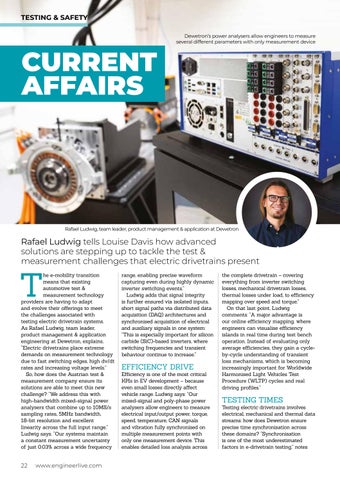
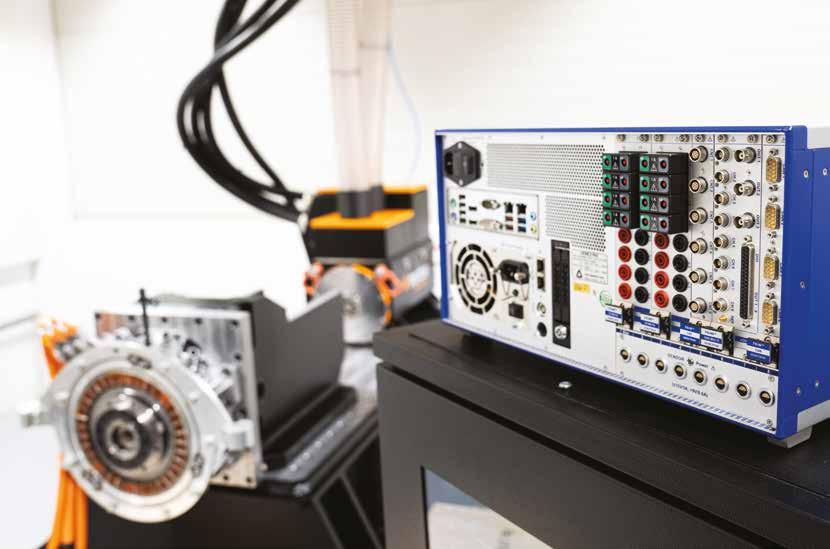
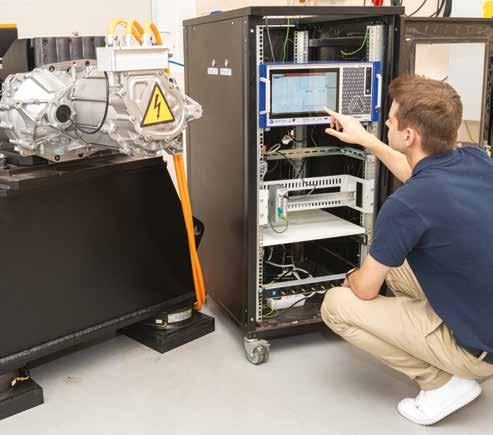
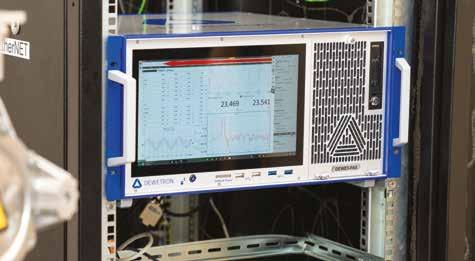
Dewetron’s power analysers allow engineers to measure several different parameters with only measurement device
CURRENT AFFAIRS
Rafael Ludwig tells Louise Davis how advanced solutions are stepping up to tackle the test & measurement challenges that electric drivetrains present
The e-mobility transition means that existing automotive test & measurement technology providers are having to adapt and evolve their offerings to meet the challenges associated with testing electric drivetrain systems. As Rafael Ludwig, team leader, product management & application engineering at Dewetron, explains, “Electric drivetrains place extreme demands on measurement technology due to fast switching edges, high dv/dt rates and increasing voltage levels.”
So, how does the Austrian test & measurement company ensure its solutions are able to meet this new challenge? “We address this with high-bandwidth mixed-signal power analysers that combine up to 10MS/s sampling rates, 5MHz bandwidth, 18-bit resolution and excellent linearity across the full input range,” Ludwig says. “Our systems maintain a constant measurement uncertainty of just 0.03% across a wide frequency
range, enabling precise waveform capturing even during highly dynamic inverter switching events.”
Ludwig adds that signal integrity is further ensured via isolated inputs, short signal paths via distributed data acquisition (DAQ) architectures and synchronised acquisition of electrical and auxiliary signals in one system: “This is especially important for silicon carbide (SiC)-based inverters, where switching frequencies and transient behaviour continue to increase.”
EFFICIENCY DRIVE
Efficiency is one of the most critical KPIs in EV development – because even small losses directly affect vehicle range. Ludwig says: “Our mixed-signal and poly-phase power analysers allow engineers to measure electrical input/output power, torque, speed, temperature, CAN signals and vibration fully synchronised on multiple measurement points with only one measurement device. This enables detailed loss analysis across
the complete drivetrain – covering everything from inverter switching losses, mechanical drivetrain losses, thermal losses under load, to efficiency mapping over speed and torque.”
On that last point, Ludwig comments: “A major advantage is our online efficiency mapping, where engineers can visualise efficiency islands in real time during test bench operation. Instead of evaluating only average efficiencies, they gain a cycleby-cycle understanding of transient loss mechanisms, which is becoming increasingly important for Worldwide Harmonised Light Vehicles Test Procedure (WLTP) cycles and real driving profiles.”
TESTING TIMES
Testing electric drivetrains involves electrical, mechanical and thermal data streams: how does Dewetron ensure precise time synchronisation across these domains? “Synchronisation is one of the most underestimated factors in e-drivetrain testing,” notes
Rafael Ludwig, team leader, product management & application at Dewetron
Ludwig. “Losses and noise, vibration, harshness (NVH) effects often originate from interactions between electrical switching behaviour, torque ripple, thermal drift and control responses. If these domains are not precisely time-aligned, root-cause analysis becomes unreliable.
“We solve this with a single mixedsignal architecture, where all signal types –such as voltage, current, torque, speed, temperature, vibration, CAN (FD), FlexRay and even video – are acquired with 100% hardware synchronisation in one platform,” he details.
This ‘one-stop-shop’ approach is increasingly of value for issues such as e-axle integration, torque ripple investigations, e-NVH correlation and functional safety validations.
“The more integrated the drivetrain becomes, the more crucial exact timing is,” observes Ludwig.
Dewetron has invested heavily in the necessary R&D to ensure that its products are able to meet the new test & measurement challenges that are arising as the automotive industry evolves. Ludwig explains: “The move toward 800V+ architecture, SiC
TESTING & SAFETY BEHAVIOURAL ANALYSIS
Ludwig says that one of the biggest industry shifts is the move from isolated measurement domains toward holistic mixedsignal power analysis. “Future drivetrain optimisation is no longer about measuring voltage and current alone. Engineers need to understand how electrical switching behaviour affects torque ripple, acoustics, thermal stress and ultimately, efficiency and durability,” he emphasises.
“This is where our advanced power analyser portfolio, especially the Dewe3-PA8 and modular Trion(3) power modules, provides strong value. These systems combine: 0.03% power accuracy; up to 10MS/s; up to 16 power phases; full raw data recording; real-time efficiency maps; test bench integration; and license-free post-processing with our Oxygen software.”
semiconductors and integrated e-axles introduces three major challenges. The first is higher dynamic bandwidth requirements (fast SiC switching edges require significantly higher acquisition rates and bandwidths). More complex signal correlation is the second challenge; electrical, thermal, mechanical and acoustic effects are becoming tightly coupled. And the third issue is increased system integration (with integrated e-axles, engineers need synchronised insight into inverter, motor, gearbox, cooling and control behaviour simultaneously).
“To meet these new demands, we’re evolving by expanding our highspeed modular Trion(3) platform, enabling customers to combine power, thermal, vibration, bus and acoustic measurements in one scalable system,” confirms Ludwig.
The expert explains: “Our focus is on higher mixed-signal bandwidth, easier test bench integration, scalable distributed data acquisition, online efficiency and loss analysis, e-NVH + e-power correlation, and seamless automation interfaces. This approach offers engineers one synchronised source of truth for next-generation EV powertrains.”
The power analysers offer easy test bench integration and boast user-friendly software
Using one platform for many inputs helps simplify the complex demands of electric drivetrain testing
MORE ROBUST ROADS
Sensor-based road quality assessment is optimising commercial vehicles, public roads and buses
German vehicle monitoring specialist monalysis offers commercial vehicle manufacturers as well as local transport authorities and road maintenance departments significant potential for optimising their vehicles, roads and cost structures. Extremely robust, high-precision analogue and digital ASC accelerometers of superior data acquisition and processing capabilities are utilised in the bespoke process, developed to record, evaluate and categorise diverse road conditions: the so-called Road Quality Procedure.
ROAD CONDITIONBASED VEHICLE OPTIMISATION
“Innovative manufacturers offer a broad portfolio of trucks, buses and other commercial vehicles for use in the most diverse parts of the world,” says Benedikt Mundl, engineer at monalysis, a spin-off from Kempten University of Applied Sciences, Germany. “Road types, surfaces and environmental conditions vary greatly, however. Therefore, they want to know how these local conditions impact their products and components.” By adapting components to those typical stress loads and patterns expected in the field, developers can ensure that their vehicles and equipment keep operating safely for longer. This will also improve ride comfort, reduce breakdowns, wear and tear and help schedule necessary maintenance timely. “Manufacturers can hand over to their customers a vehicle optimised by real-life conditions, for the longest possible service life,” says Mundl.
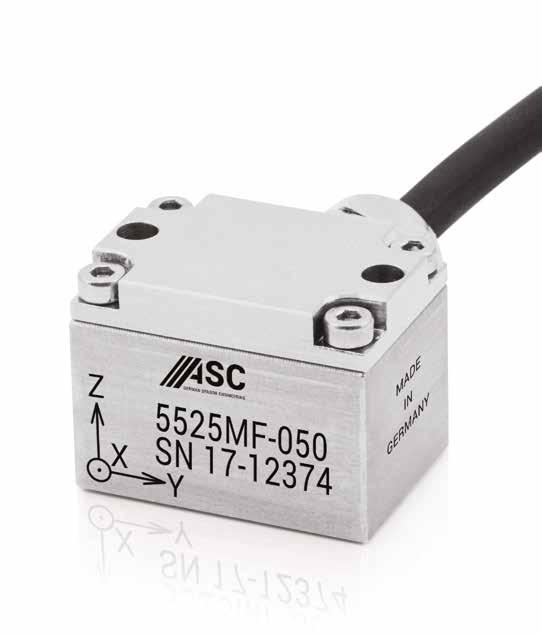
ASC 5525MF accelerometer
ASC DiSens ECO-3321 digital accelerometer
ACCELEROMETERS REDUCE TESTING COSTS
On board test drives around the globe: ASC 5525MF triaxial capacitive accelerometers. With measuring ranges from ±2 to ±200g and a wide frequency response, they are particularly suitable for capturing low and medium frequencies. The robust design in a stainless-steel housing ensures high resistance to repetitive shock loads of up to 6,000g. They work accurately and reliably at temperatures up to +125°C. To that end, this analogue sensor is ideally suited for precise data acquisition under widely varying, sometimes unexpected and adverse terrain, environmental and climatic conditions.
REAL-TIME ROAD SURFACE TRACKING
Analogue sensors are typically installed in vehicle prototypes alongside comprehensive test
equipment, for temporary test drives. While public buses, for example, can conveniently be retrofitted with ASC’s digital accelerometers to scan for and regularly transmit road quality data during active service.
“In its digital adaptation, our method is also relevant to local transport and road maintenance authorities,” Mundl confirms, as many German roads are in a poor state. Following cold winters in particular, cracks, potholes and progressive road damage tend to spread.
To change that, the town of Kempten is running the ErNeSt pilot, in which the Kempten University of Applied Sciences and monalysis are developing and analysing approaches to continuously monitor road conditions. To realise this, monalysis integrated digital ASC DiSens ECO-3321 accelerometers with CAN interface into public transport buses. While moving along standard bus routes, the triaxial accelerometers constantly
Our method is also relevant to local transport and road maintenance authorities
Categorising diverse road conditions
measure for deviations in road surface quality caused by obstacles or emerging damage. This happens throughout the day, autonomously, without burden on operators nor disrupting schedules. Road conditions are recorded and classified along a desired scale. The acceleration events on relevant route sections are categorised into various frequency ranges and evaluated accordingly.
FIXING ROAD DAMAGE BEFORE IT PROGRESSES
The digital interface options and filter settings of this sensor allow for smooth data transfer. While the repetition of consistent conditions – same day to day routes, traffic volumes, vehicle condition, driving behaviour, etc. – provides a stable basis for evaluating deviations from normal state. “On that basis, road departments can intervene quickly to fix problematic areas before more serious damage occurs.” Which also keeps public buses running along these routes in better condition, and repair costs at bay.
Written by Oliver Stohlmann on behalf of
LOOPED IN
A new partnership is moving the needle toward integrated
virtual engineering environments
As modern electric vehicle systems grow more complex, the need for more efficient development and validation methodologies also grows. Against this backdrop, a new partnership between AVL Mobility Technologies and Ansible Motion signals a further shift toward integrated virtual engineering technologies for electrified powertrains, advanced driver assistance systems (ADAS) and software-defined architectures.
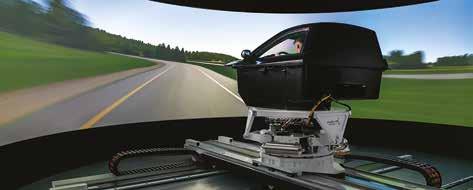
The partnership brings together AVL’s Vehicle Simulation Model (VSM) software with Ansible Motion’s Driver-in-the-Loop (DiL) simulators, creating a unified toolchain for real-time vehicle development and evaluation. The significance of this collaboration lies in the ability to combine high-fidelity system modelling with human-in-the-loop validation at much earlier stages of the design cycle.
REALISTIC REAL-TIME MODELLING
AVL’s VSM is positioned as a comprehensive simulation platform capable of modelling components, subsystems and complete vehicle architectures in real time. Its core strength is the ability to evaluate vehicle dynamics and system interactions under realistic operating conditions, enabling engineers to assess performance trade-offs across multiple domains simultaneously. This includes chassis dynamics, powertrain behaviour and safety-critical systems. When integrated with a DiL simulator, the virtual model is no longer limited to purely computational analysis. Instead, engineers and test drivers can interact directly with the simulated vehicle, enabling subjective and objective evaluation of design changes through immersive virtual test drives. This approach is particularly relevant for refining vehicle handling characteristics,
calibrating ADAS functions, and assessing drivability in edge-case scenarios that would be costly or impractical to reproduce physically.
REDUCING PHYSICAL PROTOTYPES
The combined platform enables rapid iteration cycles that would traditionally require extensive prototype builds and track testing. As Gary Newton, AVL’s vice president of business development, explains, “By combining AVL VSM with Ansible Driver-in-theLoop simulators, manufacturers can move critical decisions to the front of the development cycle, dramatically reducing physical prototypes and test iterations. This tool combination can have an enormous impact on timeline and budget. Imagine validating 70-plus track scenarios per day in multiple conditions, surfaces and drive events. The result isn’t incremental improvement—it’s months saved and millions preserved.”
From an engineering workflow perspective, this represents a shift toward front-loaded development, where design validation occurs earlier and more frequently in a virtual environment. The ability to simulate dozens of scenarios per day - across varying road conditions, environmental factors, and vehicle configurations - offers a level of throughput that is unattainable with conventional testing methodologies.
SUBJECTIVE EVALUATION
While objective metrics such as acceleration, braking, and energy consumption can be modelled with high accuracy, driver perception remains a critical factor in vehicle development. According to Ansible Motion’s business development director Salman Safdar, “Through our continuing collaborative efforts with AVL, we’re developing new ways to conduct subjective and objective evaluations of qualified concepts much earlier in the vehicle design cycle. Connecting our simulators seamlessly with a feature-rich simulation environment like AVL VSM elevates the virtual vehicle development process for manufacturers seeking to shorten development times, realise cost savings, and reduce environmental impacts.”
To support adoption, AVL has implemented an Ansible Motion Theta Seat simulator at its technical centre in Ann Arbor, Michigan. This installation enables customers to directly experience the integrated simulation environment, bridging the gap between digital models and physical perception. Furthermore, the platform can be combined with AVL’s broader validation ecosystem, including Software-in-the-Loop (SiL), Hardware-in-the-Loop (HiL), and Virtual Test Bed (VTB) solutions.
The VSM and DiL combination is designed to reduce development, testing and validation time and cost
AVL’s VSM simulation tool in action
Accurate. Precise. Certified.
■ Accurate: ASC sensors produce results that are very close to the actual value
■ Precise: ASC sensors remain very consistent across repeated measurements
■ Certified: The ASC RAIL series are certified to applicable norms including EN 50155, EN 50121-3-2 and EN 45545. They provide reliable solutions that meet national and international standards
■ Reliable: Robust to prevail extreme testing and operational conditions
Worldwide, railway manufacturers and operators rely on tailor-made solutions from ASC. When may we have the opportunity to convince you?
Rethinking Powertrain Testing
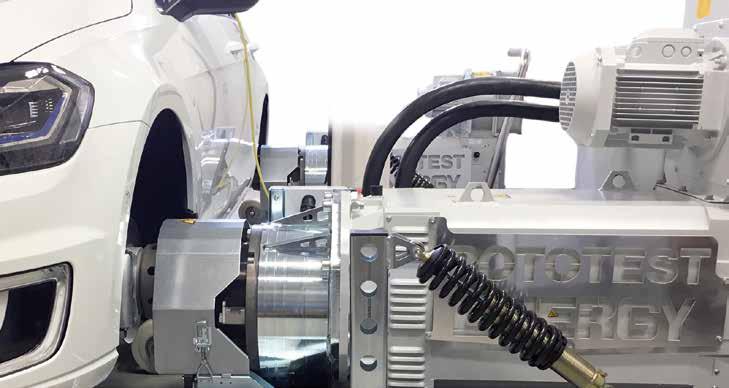
Rototest has established a new benchmark for Powertrain Dynamometers. Time optimizing and cost reducing solutions that will advance your R&D into the next decade, providing an unprecedented versatility to meet the demands of tomorrow.
FACILTY FLEX
The opening of a new battery testing lab is accelerating high-current battery development in the UK
Purpose-built facilities for electric powertrain testing are crucial to meeting the evolving needs of electric mobility. The ability to assess not only batteries, but also hydrogen fuel cells, electric motors, inverters and power electronics, is key to advancing development timelines and innovation across all aspects of powertrain engineering.
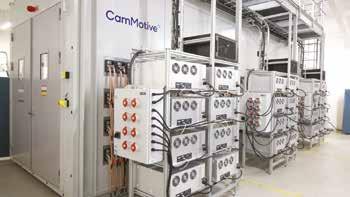
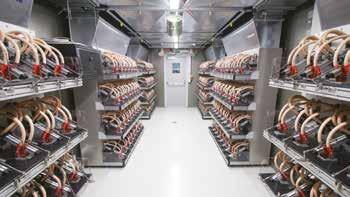
E-powertrain development consultancy CamMotive has opened a new 800-channel, state-of-the-art battery testing lab in Cambridge, UK. Representing a considerable investment in the UK’s advanced battery testing infrastructure, the facility features a high-capacity test cell capable of cycling hundreds of large-format cells under controlled conditions. Delivering up to 800A per cell to support rigorous performance evaluations, the new site is one of the very few test facilities in the UK with equivalent capacity and current capability. At it’s core, the facility is designed to accelerate battery technology by helping OEMs to achieve compliance and improve range, lifespan and charging efficiency.
“The launch of our new test facility marks the latest phase of CamMotive’s commitment to
advancing battery technology and its applications,” says Bruce Campbell, director at CamMotive. “We provide solutions across the entire battery ecosystem, from early concept to end-of-line validation. Working with our UK cell developers and digital modellers, manufacturers and integrators, we combine world-class testing infrastructure with decades of powertrain expertise to help our partners deliver sustainable solutions for road, air, sea transportation and stationary applications.”
HIGH-CURRENT CAPABILITY
The lab’s high-current capability is designed to test large automotive cells and other high-power, high-capacity battery technologies including those used in eVTOLs, data centres and stationary battery energy storage systems (BESS). Its extensive channel count is useful to companies with high volume testing requirements, allowing hundreds of cells to be tested simultaneously under varying conditions. High-precision cyclers and advanced EIS tests also enable accurate long-term analysis and performance characterisation,
KEY TECHNOLOGY HIGHLIGHTS
Over 800 high current channels of cell cycling capability Dynamic climatic chambers operating from -40°C to +180°C
including cell ageing and end-oflife simulation, with modelling and calibration expertise provided by CamMotive’s specialist engineers. The facility offers additional technical capability and services including dynamic climatic chambers to replicate varying temperature conditions, and process thermostats for real world thermal management testing. For high-power module and pack testing, the lab provides capability up to 1MW.
SUPPORTING INNOVATION
The primary purpose of the new laboratory is to support automotive OEMs and accelerate development timelines by gathering data for modelling, compliance, and improved understanding, leading to enhanced performance, longer useful life and faster charging strategies. In addition to the main facility, the laboratory also houses several lower current cyclers for testing of smaller capacity cells. In this way, the company aims to support innovation in battery technology, including start-ups working on latest chemistries and organisations exploring battery options for new applications.
Process thermostats for precise cooling and heating Advanced measurement techniques including electrochemical impedance spectroscopy (EIS) and swelling analysis
CamMotive’s new facility expands UK test capacity
The 800-channel, high-current battery testing lab in Cambridge
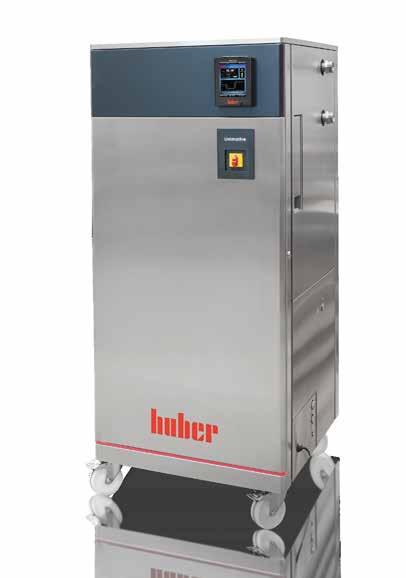
• -45 °C to +150 °C
• Efficient Heating and cooling
• Flow & pressure control
• Single/multiple fluid circuits
• Automated drain & refill
• Integrated pressure overlay
• Heat exchange pump option
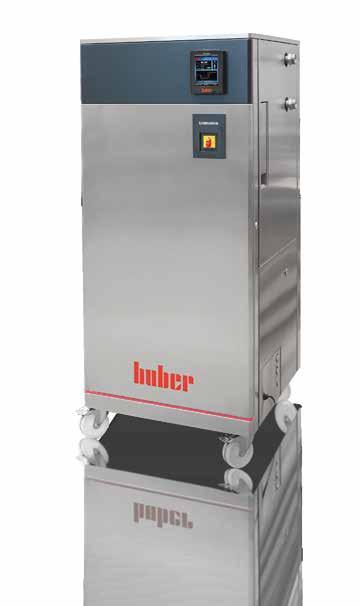
Inspired by temperature
The Unimotive range is specially designed for applications in the automotive industry. Typical applications include temperature simulations as well as material testing and temperature-dependent stress and load tests for automotive parts and functional components.
www.huber-online.com
NEW: GREEN LINE models with natural refrigerant CO2
FLIGHT FOCUS
How material innovation is supporting more sustainable aircraft design
Captions to go here
Lightweighting remains one of the most powerful levers available to aerospace engineers seeking to reduce fuel consumption and emissions. As sustainability targets tighten across both commercial aviation and emerging segments such as urban air mobility, materials innovation -
particularly in advanced composites - is playing an increasingly central role. Recent developments from Westlake Corporation’s epoxy division highlight how resin systems, processing technologies, and circularity strategies are converging to support next-generation aircraft design.
COMPOSITE EXPERTISE
Westlake Epoxy’s current portfolio builds on a long legacy of chemical expertise in aerospace applications.
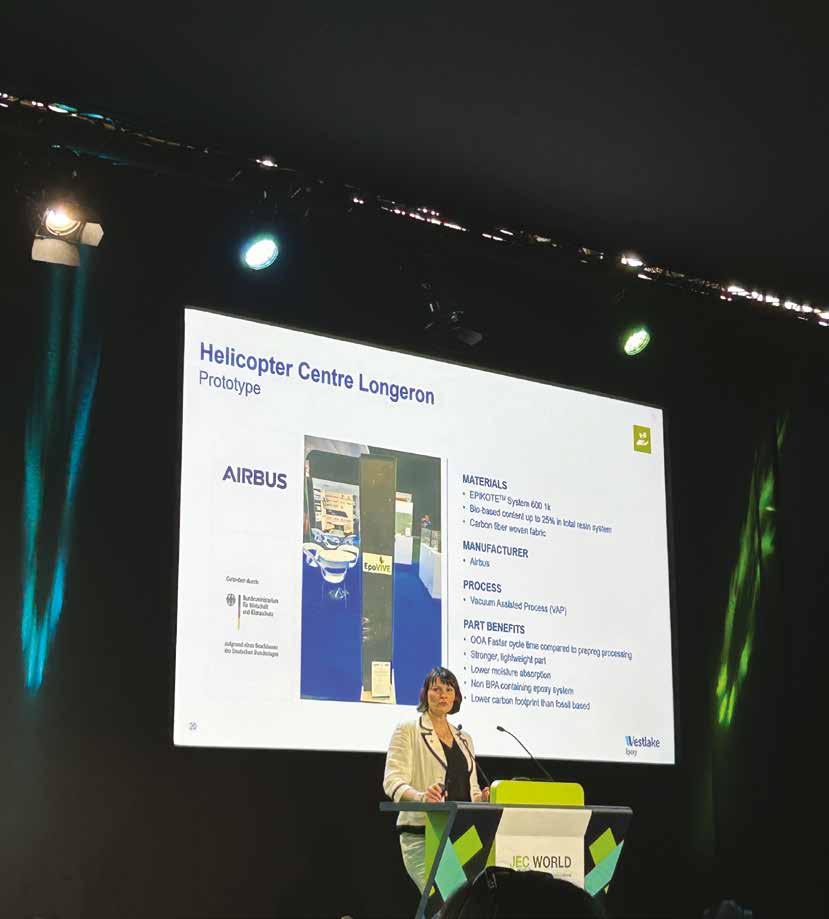
As Claire Quinten, technical business development manager for aero, space & defence at Westlake Epoxy, explained in a recent seminar: “The name lies behind more than a century
Claire Quinten, technical business development manager for aero, space & defence at Westlake Epoxy, speaking at JEC World 2026
of expertise and innovation within epoxy and phenolic chemistry by industry pioneers.”
This heritage includes early adoption in commercial aviation prepregs and high-performance applications such as space systems. “Our heritage is clearly rooted through aerospace, taking off in the 1980s with Bakelite qualified epoxy and family resins for the use in commercial aviation prepegs, with resin families used in space shuttle engine nozzles and with epoxy formulations qualified for light aviation applications,” Quinten noted.
Today, that experience is being applied to address modern engineering constraints, including production scalability, cost efficiency, and sustainability.
LIGHTWEIGHTING AS A PRIMARY DRIVER
Across aerospace segments, lightweighting remains a fundamental requirement. Quinten highlights that, “three segments are driven by the need of lightweight and fuel efficient aircraft,” referring to general aviation, business aviation, and military platforms.
Reducing structural weight directly lowers fuel burn and extends range, making composite materials indispensable. However, the challenge for engineers is balancing lightweight performance with manufacturability and cost. This is where resin system innovation becomes critical.
Westlake’s epoxy systems are designed to support multiple composite manufacturing methods, including resin transfer moulding (RTM), infusion, and prepreg processing. These systems enable the production of lightweight, highstrength structures while maintaining mechanical performance and durability over long service lives.
FAST-CURING RESINS
A key trend identified by Westlake is the need to significantly increase production rates without compromising quality. Quinten explained, “manufacturers face hard constraints like production ramp up, cost controlling and securing resilient supply chains.”
Fast-curing epoxy systems are central to addressing this challenge. By reducing cure times from several
hours to minutes, these materials enable higher throughput and greater automation. “Fast curing resin systems dramatically enhanced the production rate increase by reducing the cycle time from almost six to eight hours down to 15 minutes, part to part, and also enabling high automation,” she said.
For transport engineers, this has important implications. Shorter cycle times not only improve manufacturing efficiency but also reduce energy consumption, particularly when combined with out-of-autoclave processing techniques.
RTM processing delivers both cost and sustainability benefits
RTM PROCESSING
The shift away from energy-intensive autoclave processing is another important development. Westlake’s Resin Transfer Moulding (RTM) portfolio supports out-of-autoclave manufacturing, which reduces both capital expenditure and operational energy requirements.
Quinten noted that, “RTM processing delivers both cost and sustainability benefits, you simplify your supply chain, you lower your energy consumption due to room temperature, storage and transportation.”
This approach also improves logistics and safety while maintaining structural performance. For high-rate production environments - such as urban air mobility platforms and drones - these benefits are particularly significant.
SUSTAINABLE MATERIALS
Beyond processing efficiency, Westlake is also advancing the use of renewable feedstocks in epoxy formulations. Through its EpoVive
sustainability framework, the company is targeting reductions in carbon footprint while maintaining material performance.
“By using epichloridine for biosourced glycerol, we achieve a bio content between 30-46% while reducing the CO2 footprint down by 20% if we compare to a fossil based option,” Quinten said. These bio-based epoxy systems are certified under ISCC Plus, providing traceability and validation of sustainable sourcing. For aerospace applications, where certification and material consistency are critical, this represents a meaningful step toward lower-carbon composites.
In addition to renewable materials, Westlake is investing in composite recycling and circularity. A collaboration with French company Alpha Recycled Composites focuses on recovering high-quality carbon fibre from end-of-life components. Quinten described the objective: “Through this collaboration, our objectives are clearly to address circularity across the entire composite value chain.”
The process uses steam-based pyrolysis to recover fibres with minimal degradation. “You achieve recovered carbon fibre of very high quality,” she noted, adding that the resulting materials show, “mechanical performance which makes them very suitable for new application use.”
For engineers, this opens new possibilities for incorporating recycled composites into secondary structures or non-critical components, reducing material waste and lifecycle emissions.
ENABLING NEXT-GEN AIRCRAFT
The convergence of lightweight materials, fast-curing processes, and sustainable chemistry is particularly relevant for emerging aerospace segments. Urban air mobility, electric aviation, and unmanned systems all require lightweight structures produced at higher volumes and lower cost.
Westlake’s epoxy systems are being applied in demonstrator components that showcase rapid processing and structural performance. These developments indicate how material innovation can support both performance and sustainability objectives simultaneously.
COMPOSITE CATCH-UP
The latest advances in composite materials within transport applications, straight from the show floor of JEC World 2026
The 2026 edition of JEC World 2026 saw increased focus on transport applications, particularly in regard to e-mobility and electrification. Across aerospace, automotive and advanced mobility applications, exhibitors showcased innovations in lightweighting, manufacturability, digitalisation and structural intelligence – all key enablers for next-generation vehicles.
STRUCTURAL LIGHTWEIGHTING
One such announcement was the
introduction of Composites Busch’s Black-Shark technology. Positioned as a disruptive manufacturing process, the technology directly addresses one of the longstanding limitations of composite materials: their inability to efficiently replace small, geometrically complex titanium components. Despite composites accounting for more than half of modern aircraft structures, titanium remains widely used in brackets, connectors and load-bearing components due to manufacturing constraints. BlackShark aims to overcome this barrier through a compression moulding
process using qualified prepregs that preserves fibre continuity and orientation. The result is a combination of structural integrity and manufacturability, with reported weight reductions of up to 40% compared with titanium equivalents. From an engineering perspective, the ability to maintain fibre alignment while forming intricate geometries is critical. The process improves fatigue resistance and reduces porosity – two key factors in aerospace certification and lifecycle performance. The implications extend beyond weight savings to include
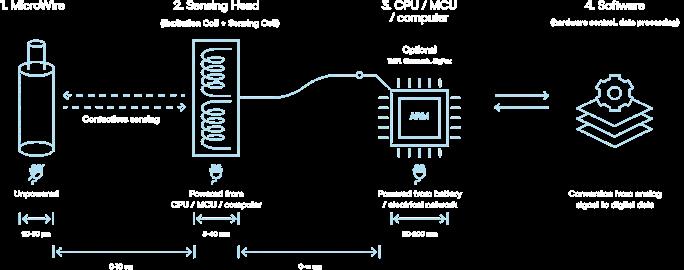
The sensing mat developed by RVmagnetics and Airbus is based on the former’s MicroWire sensor
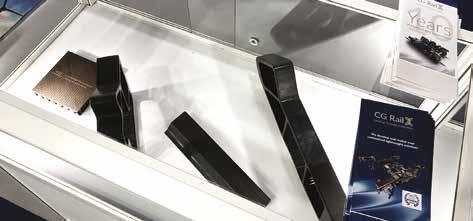
Composites Busch’s Black-Shark technology converts structural metal parts with complex geometries
CompPair’s healable skins are combined with Diab’s foam cores
reduced material costs and improved supply chain resilience, particularly in light of titanium availability constraints.
ADVANCED TEXTILE ARCHITECTURES
Material architecture was another key theme, with Karl Mayer presenting developments in warp knitting technologies for composite reinforcement. These systems enable the production of highly tailored fibre preforms with controlled orientation and bulk, supporting load-optimised structures.
For transport applications, such textile-based reinforcements are increasingly important in achieving lightweight designs without compromising stiffness or crash performance. Warp-knitted fabrics allow engineers to place fibres precisely where loads occur, reducing unnecessary material usage and enabling more efficient structures.
In automotive and aerospace contexts, this translates into lower mass, improved energy efficiency and enhanced structural performance. Moreover, the scalability of textile processes aligns with the industry’s push toward higher production rates, particularly for electric vehicles and urban mobility platforms.
CORE MATERIALS
Structural cores also featured prominently, with a partnership between Diab Group and CompPair Technologies focusing on integrating damage tolerance into lightweight sandwich structures. The collaboration combines Diab’s expertise in foam core materials with CompPair’s HealTech self-healing resin systems. This approach enables composite structures that can recover from microcracks and minor damage, extending service life and reducing maintenance requirements.
Particularly in aerospace and rail, this represents a move towards more resilient structures. Lightweight sandwich panels are widely used for their high stiffness-to-weight ratios, but damage tolerance has historically been a limitation. Embedding selfhealing capabilities at the material level could significantly enhance durability while maintaining low mass.
These long profiles with complex chamber structures are created through the novel use of Karl Mayer’s non-crimp fabrics and multiaxial warp knitting machines
AI-DRIVEN DESIGN
Digital engineering tools were another key focus at JEC World 2026, with Purdue University and AnalySwift launching CompositesAI, a platform designed to accelerate composite design and optimisation using artificial intelligence (AI). The tool leverages machine learning to predict material behaviour, optimise layups and reduce the need for extensive physical testing. This indicates a shift toward data-driven design workflows where simulation and AI augment traditional testing and validation processes.
In transport applications, where certification requirements are stringent and development cycles are long, such tools can significantly reduce time-to-market. By enabling rapid exploration of design processes, CompositesAI supports more efficient lightweighting strategies and improved structural performance.
EMBEDDED SENSING
Another important development came from RVmagnetics in collaboration with Airbus, focusing on embedding sensing capabilities within composite structures. The technology integrates microscale magnetic sensors into composite materials, enabling real-time monitoring of strain, temperature and structural health. This approach aligns with the broader trend toward smart structures, where materials not only bear loads but also provide continuous feedback on their condition.
In aerospace, this capability has significant implications for maintenance and safety. Real-time structural health monitoring can reduce inspection intervals, enable predictive maintenance
and improve operational reliability, while minimising additional weight.
CONVERGING TRENDS
Taken together, the innovations presented at JEC World 2026 illustrate several trends actively shaping the future of composite materials in transportation applications:
• Manufacturing scalability: Processes such as compression moulding and textile preforming enabling higher production rates
• Material intelligence: Integration of self-healing systems and embedded sensors
• Digital transformation: AIdriven design tools accelerating development and optimisation
• Lifecycle sustainability: Reduced material usage, extended service life and improved recyclability These trends reflect the increasing maturity of composite technologies as they transition from specialised applications to mainstream adoption across transport sectors. They also highlight the need for a multidisciplinary approach to composite design as material selection, process engineering, digital tools and system integration are becoming increasingly interconnected. While challenges remain in areas such as certification, cost and largescale manufacturing, composites are poised to play an increasingly important role in enabling the next generation of lightweight, efficient and intelligent transport systems.
Composites
Trade Association
“Composites UK has been really important to us as a company over the last few years. It provides access to industry specific advice that an SME like us would struggle to source otherwise. Additionally, the networking opportunities give us a place to keep upto-date with industry developments.”
Lyndon Sanders, Director, Far-UK
Composites UK is the Trade Association for the UK composites industry.
Across the UK each member of Composites UK receives the opportunity to:
• Save money
• Save time
• Boost their impact
• Expand their network
• Secure their future
Capitalise on the growth of the Global composites market and join the expanding list of Composites UK member companies today.
“Our visibility across the composites community has not only increased since becoming members but also continues to allow us to deepen our knowledge about this innovative sector by working with our industry peers and specialists. Everyone at Composites UK is a pleasure to work with and we are looking forward to what is next in store.”
Julia Loeser, Sales and Marketing, DK Holdings
core platform integrates an industrial robotic arm, extrusion system, modular build surfaces and proprietary automation software
LARGER THAN LIFE
Caracol founder Francesco De Stefano shares how robotic large-scale additive manufacturing is enabling new composite transportation applications
Large-scale additive manufacturing (AM) is rapidly moving from prototyping into production across industries such as automotive, rail, maritime and aerospace. One of the companies driving this transition is Caracol, which has developed robotic platforms designed specifically for the large-format production of composite components.
According to founder and CEO Francesco De Stefano, the company’s technology was created to address a gap in additive manufacturing capabilities at industrial scale.
“Caracol was a company founded from a research programme to start from the advantages of additive
manufacturing, but bring them to the large scale,” he explains. “Back in 2015 there were very few solutions for printing over the metre, we had the intuition of combining a six-axis robotic tool with geometrical flexibility to build an integrated platform.”
This approach resulted in the Heron AM robotic additive manufacturing system capable of producing large composite components using industrial robots, extrusion-based printing systems and integrated automation software.
FROM SERVICE BUREAU TO TECHNOLOGY PLATFORM
In the early stages of its development, Caracol validated its technology
through internal manufacturing services before commercialising its systems. “We started as a service bureau using our own technology, created the applications for it, and then scaled up to offer our turnkey platform,” De Stefano explains.
A key differentiator for the company is the vertical integration of hardware, software, materials and process development. “We develop our software, hardware and automation in-house to offer a complete solution, as well as a full ecosystem with application support and materials,” De Stefano adds.
Caracol maintains production facilities in Italy where the company designs, manufactures and tests its systems. The facilities include
Caracol’s
R&D, machine assembly and an aerospace-certified manufacturing centre. Operating internal production environments allows the company to continuously refine its manufacturing technology.
ROBOTIC AM FOR COMPOSITE STRUCTURES
Caracol’s Heron AM platform integrates an industrial robotic arm, extrusion system, modular build surfaces and proprietary automation software.
“We started with our platform, integrated robotic arm, extruder feeding system, different types of printing beds, as well as our automation and software behind to program the machine,” De Stefano explains.
The system enables large composite structures to be produced directly from digital models. One example being demonstrated live at JEC World 2026 was a maritime air-grid structure. “Finished parts for maritime were one of the first applications of production we unlocked three years ago and now certified parts from Caracol systems are all over the yachting industry, shipbuilding industry, as well as different types of maritime applications,” De Stefano says.
a composite roof component for a motorsport vehicle.
“The process today is still very manual, so you need to make a mould for such a complex geometry which has a long lead time and generates a lot of waste across the process if you’re milling out the parts of the mould. And of course, the high cost to put together the mould for low volumes,” he explains. “Our approach replaces all that by printing the part directly and post-processing it with the addition of glass fibre, lamination and wrapping wherever needed to increase the mechanical strength.”
This hybrid workflow retains traditional finishing techniques while eliminating costly tooling. “We’re removing a step that does not allow composite companies to be flexible,
the only company in the world that is certified for printing railway parts for interior and exterior in the large-scale application segment, and we’re very proud of this collaboration, because rail standards are very, very complex.”
AUTOMATION AND AI-DRIVEN MANUFACTURING
Automation and AI play a central role in the platform’s manufacturing workflow. Caracol’s software converts CAD models into robotic toolpaths and simplifies programming for operators.
“Through our software, we try to make it as automated as possible to programme the part,” De Stefano says. “You don’t need to be a robotic operator, the way we have developed the software allows you to have a userfriendly interface to guide you through simulation,” De Stefano explains.
one that is very expensive, timeintensive and unable to be customised,” he adds.
These applications highlight how large-scale additive manufacturing can move beyond prototyping into functional end-use production components.
IMPROVING TRADITIONAL MOULDING
One significant benefit of the technology lies in its ability to remove traditional mould-based manufacturing steps. This is particularly relevant in industries where production volumes are relatively low but part complexity is high, such as motorsport. De Stefano describes a project involving
CERTIFIED PRODUCTION IN RAIL APPLICATIONS
The company has also demonstrated the technology in rail transportation through collaboration with French rail manufacturer Alstom. Rail vehicles often involve large composite components produced in limited volumes, making them well suited for large-format AM.
“With Alstom, we did a two-year qualification programme in which we eliminated the mould, again, printed the part directly, and then finished with a material that is fulfilling the railway standards in terms of interior and exterior,” De Stefano says. “We are
Caracol has also introduced digital monitoring and AI capabilities throughout its software ecosystem.
“Our second module is an IoT platform that allows you to manage printer fleets, read what the system is printing, gather data around it and generate statistics, but most importantly, to monitor the process,”
De Stefano says. The company is now integrating machine learning into the system to enable adaptive printing.
“The ability to use the data that you’re gathering allows the machine to become smart, learn and adjust as it prints, not only to automate and shorten the process, but also to reduce downtime and eventual mistakes,” he explains.
Looking ahead, Caracol is targeting more demanding applications in aerospace and space systems. “The next step is enabling production for the aerospace industry not only at the tooling level but for applications such as manufacturing the fuselage for unmanned drones and producing high-strength composite parts for the space sector.”
Robotic large-format 3D printing a luxury yacht component
IoT Analytics’ report identified four common vehicle architectures
AI-BASED VALIDATION
Marelli and AWS are pioneering AI-based system for validation of software-defined vehicle solutions
As vehicle platforms become increasingly softwaredefined, engineering teams are tasked with managing an ever-growing list of requirements, engineering data and system specifications, all while ensuring full consistency and traceability. With these demands in mind, automotive technology supplier Marelli, together with Amazon Web Services (AWS), has developed a next-generation, AIdriven System Test Generation (STG) agent. The STG agent is designed to automate one of the most critical and work-intensive steps in the validation process: the generation of system test cases from engineering system requirements.
“The STG agent represents an important step forward in how we validate solutions for softwaredefined vehicles,” says Daniele Russo, head of system performance optimisation in Marelli’s electronics engineering team. “By combining our engineering expertise with
advanced AI capabilities from AWS, we significantly accelerate validation cycles and ensure consistent quality across global programmes. This solution enables us to support our customers faster and more efficiently, strengthening the foundation for the next generation of software-defined vehicles.”
IMPROVING EFFICIENCY AND CONSISTENCY
Developed with the expertise of the AWS Generative AI Innovation Centre and using Amazon Nova foundation models, Amazon Bedrock Knowledge Bases and the Strands Agents framework, the STG agent is billed as a ‘pioneering solution’ that helps Marelli to improve efficiency and boost consistency in how product features are validated against customer requirements. The tool is designed to reduce validation time and achieve stronger alignment between system requirements and validated product behaviours.
According to Marelli, these features will help vehicle manufacturers to accelerate product development for software-defined vehicles, while also delivering new functionalities with greater reliability. Designed for seamless integration with requirement management tools, the tool supports compatibility with existing automotive engineering workflows.
HOW IT WORKS
Within Marelli’s development process, customer requirements are first translated by research & development engineers into system requirements. This is a human-driven step that defines what the product is intended to do. The STG agent then analyses and identifies the expected behaviours implied by each system requirement, before automatically generating corresponding clear, structured, traceable system test cases that support Marelli’s engineers in validating that each feature behaves exactly as intended.
“Marelli’s approach to automating system validation demonstrates the transformative potential of generative AI in automotive engineering,” adds Giulia Gasparini, country leader of AWS Italia. “By leveraging Amazon Nova foundation models and Amazon Bedrock, companies are setting new standards for how software-defined vehicles are developed and validated. This solution shows how advanced AI can accelerate innovation while maintaining the rigorous quality and safety requirements that define the automotive industry.”
SOFTWARE-DEFINED STATE-OF-PLAY
According to IoT Analytics’ Softwaredefined Vehicles Adoption Report 2026, 45% of automotive OEMs and suppliers currently rank the transition to software-defined vehicles as their top strategic priority. The survey of over 80 automotive OEMs and suppliers found that for 45% of respondents, the transition to SDVs ranks higher than the development of both advanced driver-assistance systems (25%) and electric vehicles (14%).
According to the report, four key dimensions of software-defined vehicles are being adopted by automotive OEMs. The first is vehicle architecture, which refers
to the hardware and system design that determines how computing, networking, and vehicle functions are structured. The report states the most significant architectural change in the automotive industry is the move away from complex distributed or domainbased electrical/electronic (E/E) systems, where electronics are either distributed across many independent electronic control units (ECUs) or are organise-d by function, toward two streamlined architectures: centralised zonal architecture and fully/advanced zonal architecture.
The second is vehicle-to-cloud integration; the connectivity layer that links the vehicle with cloud services to enable data exchange, updates, and remote interactions. The top role for cloud integration, as identified by automotive OEMs and suppliers in the research, is over-the-air updates (73% OEMs; 71% suppliers), where end-to-end platforms orchestrate the packaging, signing, distribution, and lifecycle management of software and firmware updates for vehicles. Other key roles include real-time data processing and analytics (68% OEMs; 73% suppliers) and collaborative design and development (59% OEMs; 45% suppliers).
The third dimension is softwaredriven engineering, revolving around
the approach to building vehicles where software-led development, validation, and tooling shape the product lifecycle. The research found that companies that prioritise SDVs also prioritise a softwarefirst engineering approach due to the SDV’s software-centric nature. With SDVs, the vehicle development lifecycle is becoming increasingly software-centric, with ECUs, middleware, and operating system layers designed, tested, and updated using Agile methodologies and DevOps practices. This enables faster iteration, continuous integration, and decoupling software updates from hardware production timelines.
The final aspect identified by the report is vehicle software operations and lifecycle management, which involves the ongoing processes that manage, monitor, update, and sustain vehicle software once deployed. Vehicle software operations represent a completely new operational capability for automakers. These operations are the ability to perform runtime software updates and dynamic feature deployments, all enabled by a flexible service-oriented architecture (SOA), which allows different software components to communicate and be updated independently
The four dimensions of SDV adoption according to IoT Analytics
Qualcomm’s unified platform for SDV innovation began with automotive connectivity solutions
AGENTIC AI
Advancing production-ready end-to-end AI for ADAS and automated driving
The definition of the ‘smart car’ is continually evolving, most recently entering the era of agentic AI and the increasingly coined term ‘AIdefined vehicle’ (AIDV). AIDVs are shaped and refined by AI models, agentic agents and data-driven processes, essentially meaning a vehicle can learn, adapt and improve continuously.
A recent technical collaboration between Qualcomm and Wayve is driving this development forward through the delivery of a pre-integrated advanced driver assistance and automated driving system (ADAS/AD) for vehicle manufacturers, supporting entrylevel hands-off driving assistance up to eyes-off automated driving. The partnership combines Wayve’s AI Driver software with Qualcomm’s Snapdragon Ride platform and Active Safety software to offer an additional high-performance platform option for ADAS/AD.
WAYVE AI DRIVER
Wayve AI Driver is a data-driven AI driving software stack that learns driving behaviour directly from largescale real-world data. The software enables adaptable performance across regions, road types and driving environments.
“Wayve AI Driver is designed as a flexible, vehicle-agnostic software that serves as the intelligence layer for autonomy for any vehicle, anywhere,” says Alex Kendall, co-founder and CEO of Wayve. “Our collaboration with Qualcomm Technologies provides global automakers building on Snapdragon Ride with a streamlined path to deploy market-leading, end-to-end AI automated driving capability alongside Qualcomm’s Active Safety Stack.”
By pre-integrating Wayve’s AI Driver with Snapdragon Ride, vehicle manufacturers gain an additional option for a modern, proven framework to deploy advanced ADAS/ AD, as well as providing a path for higher levels of driving capability over
the vehicle lifecycle.
“By combining our embodied AI driving intelligence with Qualcomm Technologies’ compute performance, platform maturity and global scale, we are expanding choice and delivering immediate value to automakers across ADAS and automated driving systems with natural progression from hands-off to eyes-off operation,” Kendall continues.
QUALCOMM’S SNAPDRAGON RIDE
Snapdragon Ride is built on an open, unified architecture that scales seamlessly from premium Snapdragon Ride Elite systems to mainstream vehicle platforms. This design helps give vehicle manufacturers consistent high performance and robust AI acceleration across different vehicle programmes and levels of driving capability. It is also designed to provide flexibility in system design and integration, while supporting the growing need for software and AI portability and reuse across platforms, tiers, and model years.
“ADAS is where scale, safety and real-world impact matter most for automakers today,” says Anshuman Saxena, vice president and general manager, ADAS and robotics, at Qualcomm Technologies. “Snapdragon Ride is built to support the widest range of long-term platform strategies,
enabling automakers to standardise across programmes and regions while retaining flexibility.”
Snapdragon Ride with Active Safety Stack brings together Qualcomm’s automotive compute leadership and high-performance processing for on-device AI within a safety-certified architecture that incudes redundancy, real-time monitoring and secure system isolation.
Saxena adds, “Together with Wayve, we’re empowering automakers with more choice for how advanced driving systems are developed, deployed and scaled, while also helping them reduce development cycles, effort and risk.”
BENEFITS FOR AUTOMAKERS
Designed to serve as an advanced ADAS/AD foundation, the preintegrated platform enables vehicle manufacturers to deploy capable, advanced features quickly, while also enabling customisation, future scaling and upgrading. By reducing the integration complexity of bringing together the SoC, active safety systems and the AI Driver, automakers can implement advanced, reliable ADAS/ AD faster and with less time and effort.
At its core, the system is engineered to support global deployment and long-term vehicle lifecycle and platform strategies. As part of the partnership, the companies plan to leverage Qualcomm’s SoCs in future Level 4 robotaxi applications.
The platform’s open approach aims to increase flexibility while reducing cost, complexity and risk when compared to fragmented and closed approaches. This flexibility, combined with scalability, enables vehicle manufacturers to standardise across platforms and regions while retaining the ability to differentiate brand experiences and model tiers. Going forwards, the partnership will focus on simplifying implementation and meeting the priorities of vehicle manufacturers regarding safety, reliability, scalability and time-to-market.
NEXT-GEN VEHICLE INTELLIGENCE
The integration of advanced generative AI into platforms such as Qualcomm’s Snapdragon ride are
Qualcomm’s SDV expertise includes in-vehicle infotainment and digital cockpit systems
ADAS is where scale, safety and real-world impact matter most for automakers today
transitioning vehicles from reactive machines into proactive, intelligent ‘companions’ capable of understanding complex natural language, anticipating driver needs and delivering personalised experiences. The true benefit of advanced AI is its ability to communicate and coordinate across vehicle systems, rather than being confined to specific areas or domains.
According to Qualcomm, the shift from hardware-centric machines to software-defined vehicles (SDVs) is opening up ‘unprecedented’ possibilities for how mobility is experienced. Looking to the future, the company envisages that vehicle value will be increasingly defined by the intelligence and experiences of its digital cockpit, the sophistication of its ADAS and its connection to the world around it, including cloud-based services and continuous innovation.
BUILDING THE SNAPDRAGON DIGITAL CHASSIS
As vehicle architectures shift from dozens of isolated electronic control units (ECUs) to centralised compute models, automakers need a scalable, unified platform. Qualcomm’s unified platform for SDV innovation began with automotive connectivity solutions, establishing a strong foundation in connectivity and telematics. The company then expanded into in-vehicle infotainment and digital cockpit systems, and when ADAS emerged Qualcomm committed significant resources to building system-on-chips, comprehensive software stacks, cloud data, development tooling and safety certifications.
Eventually, the Snapdragon Digital Chassis was born; providing security and safety-focused, automotive-grade solutions that helped to bring the AIDV and SDV to life. Since then, the company has partnered with the likes of Volkswagen Group, BMW, Mercedez-Benz and Toyota to supply technologies for their SDV architectures.
ELECTRIC OPPORTUNITIES
Rounding up the latest upskilling opportunities across the electric vehicle manufacturing sector
As the transport industry undergoes rapid electrification and decarbonisation, a parallel challenge has emerged: the urgent need to upskill the engineering workforce. Recent UK initiatives –spanning battery manufacturing, electric vehicle (EV) infrastructure and renewable energy integration –highlight a shift toward more agile, industry-aligned training models designed to address immediate skills gaps while supporting long-term growth.
ACCELERATING SKILLS FOR GIGAFACTORYSCALE PRODUCTION
One of the most significant recent developments is linked to the new gigafactory being developed by
Agratas in Somerset. The facility, part of the Tata Group ecosystem, is expected to create 4,000 jobs and play a central role in the UK’s EV battery supply chain.
To support this scale, a new battery manufacturing apprenticeship unit has been developed in collaboration with Skills England and UCS College Group. Notably, the programme was created in just three months following rapid consultation with industry stakeholders. Andy Berry MBE, CEO at UCS College Group, described the initiative as a turning point: “This represents a pivotal moment for the battery manufacturing sector in the UK.”
Unlike traditional apprenticeships, which can span several years, the new training unit is designed to be delivered over one to 16 weeks, with
a duration of 30 to 140 hours. This modular approach reflects a broader trend toward compressed, targeted training that aligns closely with immediate operational requirements.
From an engineering perspective, the emphasis is firmly on practical, production-relevant skills. Bhavik Mistry, head of learning and development at Agratas, explained that the course, “ensures learning is closely aligned to the realities of modern battery manufacturing, making sure it is high quality and closely matched to daily life in battery production”.
This focus on hands-on capability is critical in a gigafactory environment, where process consistency, quality control, and safety are paramount. Engineers entering such facilities must be
proficient not only in electrochemical fundamentals but also in automated manufacturing systems, quality assurance protocols, and highthroughput production processes.
APPRENTICESHIPS FOR EMERGING INFRASTRUCTURE
Complementing the battery manufacturing initiative is a broader government-led reform of its own apprenticeship system. Backed by £1 billion in funding, the programme aims to create 200,000 new jobs and training opportunities, with a particular focus on sectors central to the energy transition.
Among the most relevant additions for transport engineers are new apprenticeship units in:
• EV charging point installation and maintenance
• Solar photovoltaic (PV) installation and maintenance
These roles are essential to the
ADDRESSING LONG-TERM SKILLS CHALLENGES
While these initiatives represent a significant step forward, they also underscore the scale of the challenge facing the transport sector.
Electrification, digitalisation, and sustainability are transforming engineering roles at a pace that traditional education systems have struggled to match.
KEY CHALLENGES REMAIN, INCLUDING:
• Ensuring consistent training standards across providers
• Scaling programmes to meet national demand
• Integrating emerging technologies such as AI and digital twins into curricula
• Retaining skilled workers in a competitive labour market
expansion of EV infrastructure and the integration of renewable energy into transport systems.
The introduction of short-form apprenticeship units reflects recognition that traditional training pathways are often too slow to meet rapidly evolving industry needs.
The UK government has framed this as the most significant overhaul of apprenticeships in a decade. Prime Minister Keir Starmer emphasised the strategic importance of the initiative, stating: “Backing young people is one of the most important investments we can make in this country’s future. We are determined to tackle the rise in youth unemployment by expanding practical routes into work, boosting apprenticeships, and giving employers the clarity they need. These reforms underpin our ambition to create an economy that works for everyone, closing the skills gap and supporting more young people into meaningful employment.”
ENGINEERING IMPLICATIONS
These developments highlight several important shifts in workforce development through the EV transport sector. The move toward shorter, focused training units enables faster deployment of skilled workers into critical roles. This is particularly relevant in fast-scaling sectors such as battery manufacturing and EV infrastructure, where demand for skilled labour is outpacing supply.
Programmes are increasingly being designed in direct consultation with employers, ensuring that training reflects real-world operational requirements. Modern transport systems require expertise across multiple domains, including electrical engineering, software systems, materials science, and energy management. Training programmes are beginning to reflect this interdisciplinarity, particularly in areas such as EV charging and solar integration.
Andy Berry, CEO of UCS College Group (left) and Becki Robertson, vice president human resources at Agratas (right)
WHAT’S NEXT IN AUTOMOTIVE?
As Europe’s automotive sector navigates one of the most transformative periods in its history, Automotive Europe 2026 arrives at a critical moment. Taking place 30 June–1 July in Frankfurt, the event will bring together OEM leaders, suppliers, and technology innovators to address the industry’s most pressing challenges, from electrification and software-defined vehicles to supply chain disruption and intensifying global competition.
With over 40 world-class speakers, 65% OEM attendance, and more than three-quarters of delegates at director level or above, the event is positioned as a key forum for decision-makers shaping the future of mobility. Across 17 hours of networking and interactive sessions, the focus will be firmly on collaboration and actionable strategies.
A central theme for 2026 is the transition toward AI-powered,
software-defined vehicles. Sessions will explore how artificial intelligence is reshaping vehicle architecture, enabling continuous over-the-air updates, enhanced personalisation, and faster development cycles. Engineers will gain insight into deploying AI for advanced driver assistance systems (ADAS) and autonomous driving, as well as managing the data, connectivity, and cybersecurity frameworks required to support these capabilities at scale.
Beyond vehicle technology, the event will address the growing importance of software as a revenue driver. From predictive maintenance to subscription-based features, OEMs are increasingly leveraging digital platforms to extend value across
the vehicle lifecycle. Supply chain resilience and next-generation manufacturing will also take centre stage. With global competition intensifying, sessions will examine how automation, AI, and advanced production methods can improve efficiency, reduce costs, and strengthen operational agility.
For more information visit: www.events.reutersevents.com/automotive/automotive-europe
CELLS & SYSTEMS IN FOCUS
With the UK accelerating its transition toward electrification and energy security, Battery Cells & Systems Expo 2026 marks a key date in the transport sector’s calendar. Taking place 8–9 July at the NEC, the event will showcase the technologies and partnerships shaping the next generation of battery systems.
The UK battery industry is entering what many describe as a breakout phase, driven by significant public and private investment and the emergence of gigafactory-scale production. Against this backdrop, the expo brings together engineers, OEMs, and suppliers from automotive, energy storage, defence, and electronics to explore the full battery value chain, from raw materials and
R&D through to cell manufacturing and system integration.
A key strength of the event is its co-location with the Vehicle Electrification Expo, The Advanced Materials Show, and The Advanced Ceramics Show, creating a crosssector platform for innovation and collaboration. This integrated approach reflects the increasingly interdisciplinary nature of battery development, where materials science, manufacturing processes, and system-level engineering must align.
Across two days, attendees can explore advances in cell chemistries, battery management systems (BMS), and high-performance manufacturing techniques. The conference programme will provide practical insights into real-world engineering challenges, including thermal
July
management, lifecycle sustainability, and production scalability.
For transport engineers, the event offers a valuable opportunity to engage directly with the technologies and suppliers driving electrification. Whether optimising battery performance or sourcing new partners, Battery Cells & Systems Expo 2026 provides a focused environment to stay ahead in a rapidly evolving global market.
Automotive Europe returns to Frankfurt in June
Battery Cells & Systems Expo 2026 takes place 8–9
SMARTEN UP IN JUNE
As the UK manufacturing sector continues its transition toward digitalisation and automation, Smart Manufacturing Week 2026 returns for its fifth edition as a flagship gathering for engineers and industry leaders. Bringing together more than 13,500 attendees, 200+ speakers, and 450 exhibitors, the event positions itself as the UK’s largest festival of advanced manufacturing.
Designed to go beyond the traditional trade show format, Smart Manufacturing Week combines technical insight with an immersive, high-energy environment. Set against a distinctive “festival” backdrop, the event blends live demonstrations, interactive experiences, and networking
opportunities with a comprehensive programme of conferences and solution-led presentations.
For transport and manufacturing engineers, the focus is firmly on practical application. Across multiple stages and solution theatres, attendees can explore real-world case studies, technical sessions, and panel discussions covering design engineering, smart factory systems, and maintenance strategies. These sessions aim to address immediate operational challenges while offering insight into future-ready production models.
The exhibition floor will showcase cutting-edge technologies spanning
automation, robotics, digital manufacturing, and predictive maintenance. Networking remains a core element of the event, with dedicated sessions and informal gatherings providing opportunities to connect with peers and technology providers. The Top 100 Awards will also highlight excellence across UK manufacturing, recognising innovation and leadership within the sector.
Smart Manufacturing Week 2026 takes place 3-4 June and offers a dynamic platform for engineers to engage with the tools, technologies, and ideas shaping the next generation of industrial production.
Innovation Alley at Smart Manufacturing Week
AVIATION LOGISTICS NETWORK
The Aviation Logistics Network provides 24/7 logistics support to the Aviation Industry. We ensure commercial aircraft continue to fly via the co-ordination and delivery of components, spare parts, engines etc. into the supply chain and maintenance bases.
T +44 (0) 1753 688021
E ralph.perkins@aln.aero
W www.aln.aero
KRYTOXTM PERFORMANCE LUBRICANTS
From spacecraft to harsh manufacturing conditions, Krytox™ performance lubricants thrive on tough challenges in the most unforgiving environments in a wide array of industries.
E www.krytox.com/en/contact
W www.krytox.com
For more than 125 years, tesa® has remained as one of the world’s leading manufacturers of industrial adhesive tapes for a broad range of sectors and applications, improving the work, products and lives of customers
T +49 40 888 99 0
E converter.europe@tesa.com
W www.tesa.com
HILLIARD
Hilliard offers a diversified product line for industrial applications in a wide variety of industries. Hilliard products are designed, manufactured and sold according to our customers' applications.
T +1 607 733 7121
E sales@hilliardcorp.com
W www.hilliardcorp.com
North Composites Engineering
A highly professional company who over the last 14 years have trained and actively empowered the composite sector. Experts in composite services, we provide world class training, consultancy and equipment to the Aerospace, Marine, Wind Turbine and Automotive sectors.
T +44 (0) 1942 665292
E info@northcompositesengineering.co.uk
W www.northcompositesengineering.co.uk
KLUBER LUBRICATION
Klüber Lubrication is one of the world's leading manufacturers of speciality lubricants offering high performance solutions to virtually all industries and markets worldwide..
T +44 (0)1422 205 115
E sales@uk.klueber.com
W www.klueber.com/uk/en
TEFLONTM FLUOROPOLYMERS
Experience unmatched versatility and performance. TeflonTM fluoroplymers deliver superior chemical and themal resistance, optimizing automotive performance and unlocking innovation.