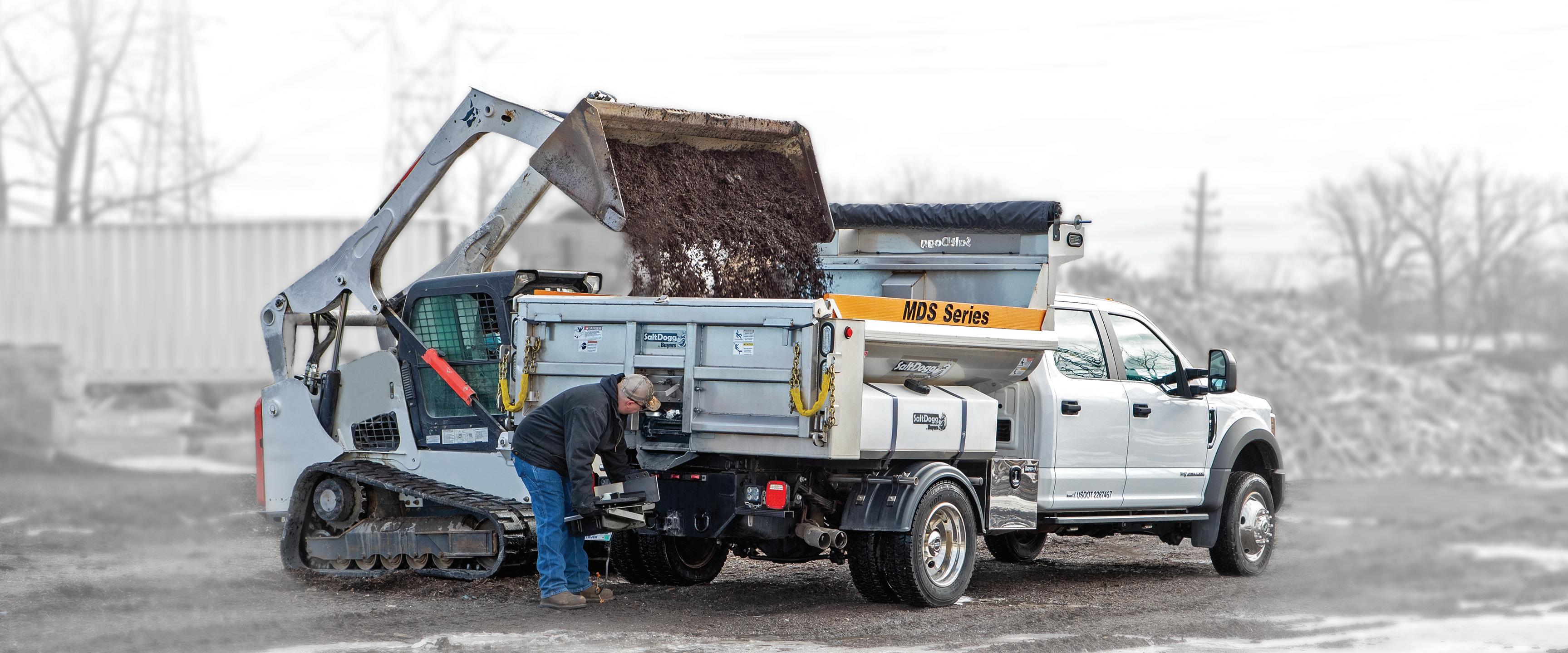
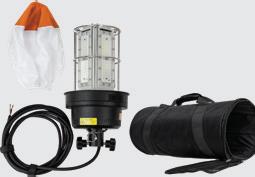
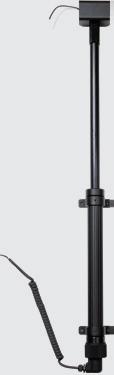
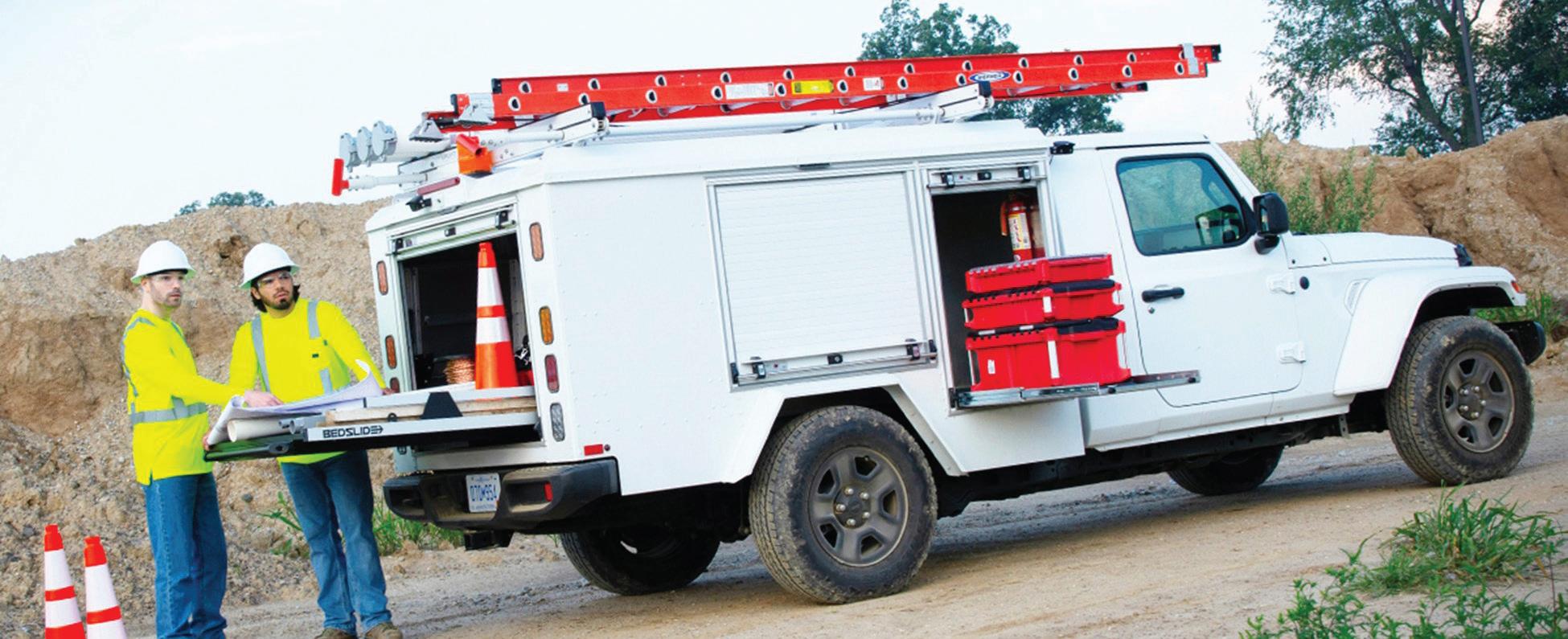
SaltDogg® Municipal Dump Spreader Series ready for All-Season Use
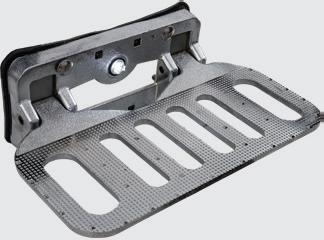
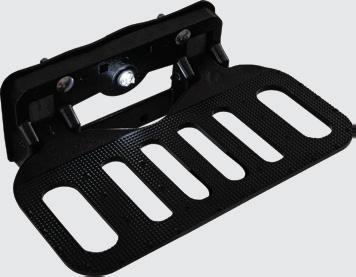
ALUMINUM FOLDING STEP WITH RECESSED 12V LIGHT NON-SLIP OPEN TREAD AND 12V LED LIGHT PROVIDE SECURE, ILLUMINATED FOOTING
Die cast aluminum construction supports up to 500 lbs. Available in corrosion-resistant chrome or black powder-coated finishes, offered in bolt-on, 2" receiver, or 2.5" receiver mounting options.
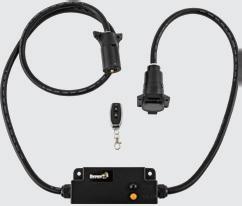
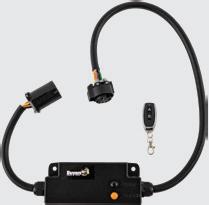
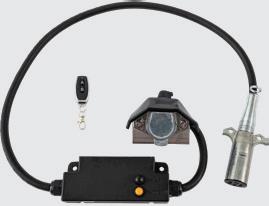
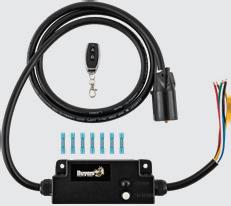
TRAILER CONNECTOR STROBE KITS
ADD FLASH AND STROBE FUNCTIONALITY TO YOUR EXISTING TRAILER LIGHTS
Patented, plug-and-play design for RV, OEM, or round pin 7-way trailer connectors with no additional wiring needed. Includes wireless remote.
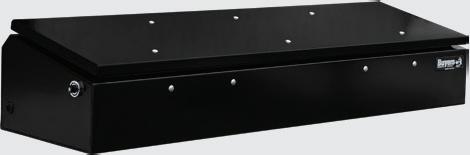
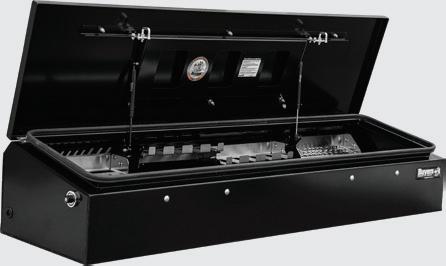
Truck Tool Boxes available in Steel, Stainless Steel, and Polymer
WEDGE TRUCK TOOL BOX SERIES FEATURED
OPTIMAL STORAGE ON FLATBED PICK-UP TRUCKS Offset design allows the lid to open a full 90° when placed against the truck cab. Push-button locks on either side of the box. Four unique tool holder trays included for added organization. Heavy-duty 12-ga carbon steel construction.
1703945 shown
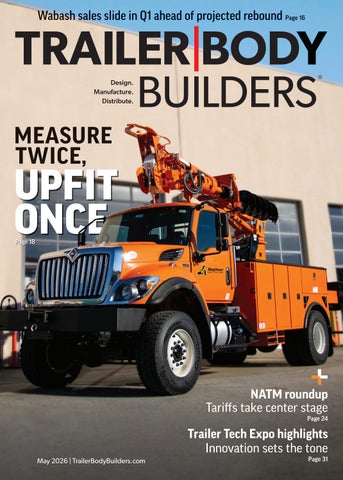
Proper spec’ing and upfitting pays off down the road, as well as on Day One
16 Wabash sales slip 20% in Q1 amid ‘uncertain’ markets
Record Roundup
NATM 2026 convention breaks records with industry innovation and engagement
• NATM recognizes leadership, innovation
• Trailer Trends & Tech Showcase winners
• Trailer Safety Week returns June 7-13
31 Dealer education, new tech define 2026 Trailer Tech Expo
• The rise of ‘blue-collar’ AI
• Three pillars of trailer dealership service profitability
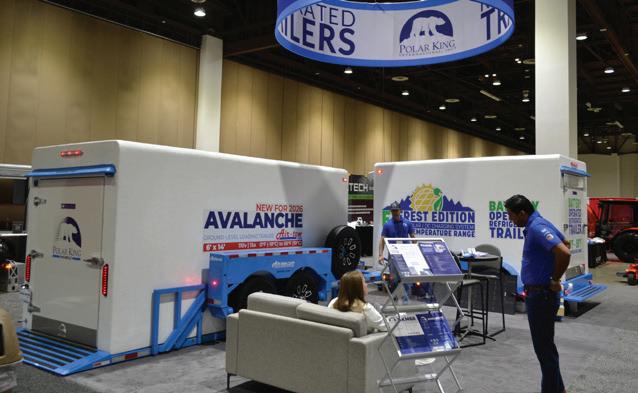
• Polar King unveils solar assist electric reefer
NAFA I&E Coverage
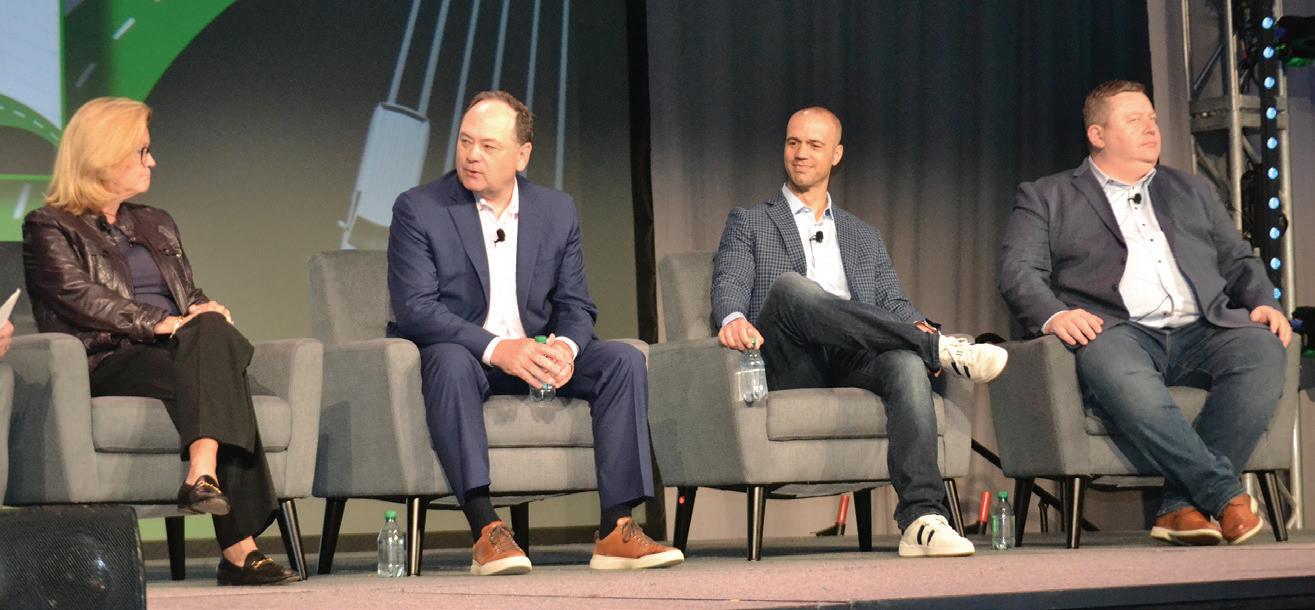
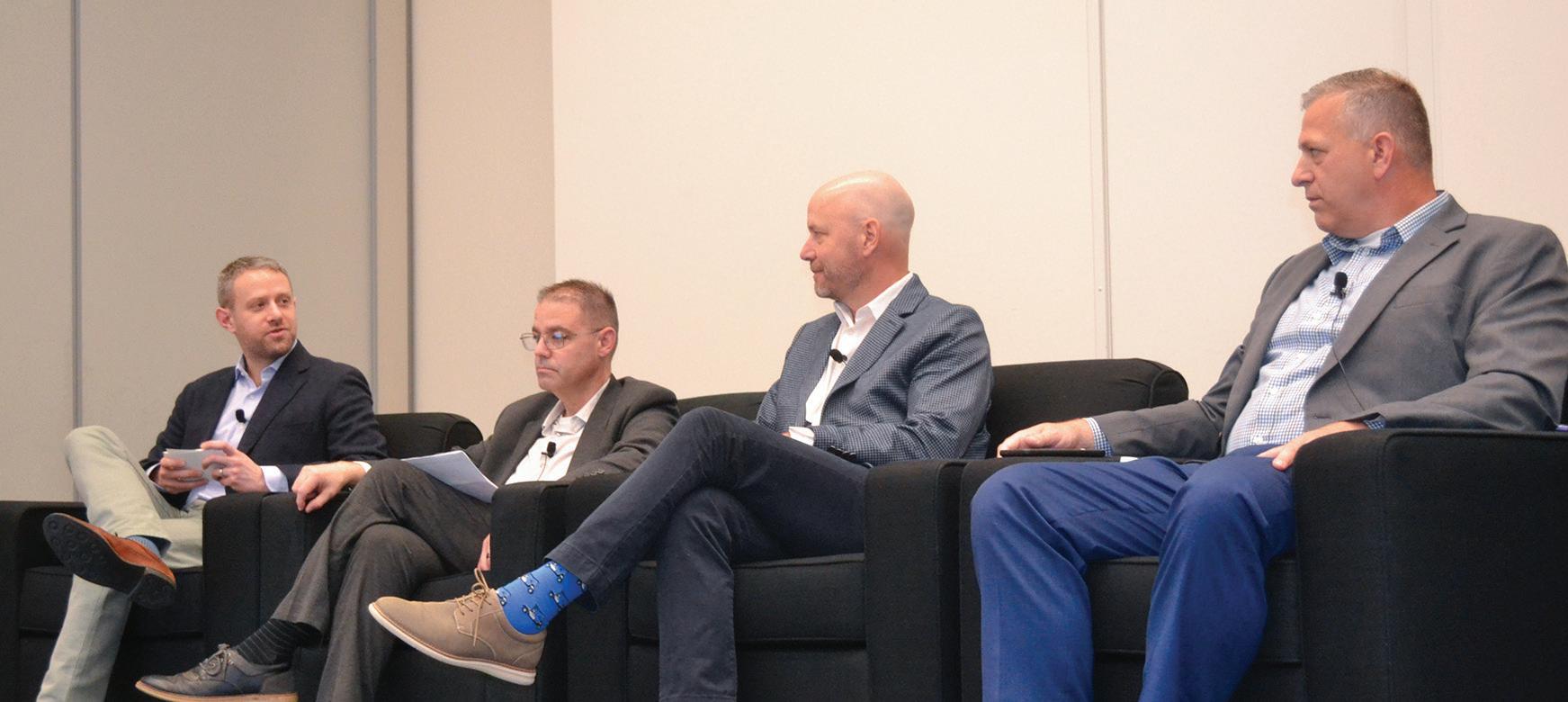
36 New normal: Adapting to chaos NAFA 2026 OEM panel embraces resilience, suggests customers do the same
• Getting the jump on 2030
• Right to repair: Steps to ensure data access
Trailer|Body Builders
Market Leader
Commercial Vehicle Group – Dyanna Hurley dhurley@endeavorb2b.com
Editorial Director – Kevin Jones kjones@endeavorb2b.com
Senior Editor – Jason McDaniel jmcdaniel@endeavorb2b.com
Marketing/Advertising – Dan Elm delm@endeavorb2b.com
Art Director – Jennifer Dakas jdakas@endeavorb2b.com
Directories/Listings – Maria Singletary msingletary@endeavorb2b.com
Audience Development Manager – Laura Moulton lmoulton@endeavorb2b.com
Endeavor Business Media, LLC
CEO Chris Ferrell
COO Patrick Rains
CDO Jacquie Niemiec
CALO Tracy Kane
CMO Amanda Landsaw
EVP Transportation Group Chris Messer VP of Content Strategy, Transportation Group Josh Fisher
TRAILER|BODY BUILDERS (USPS Permit 636660, ISSN 0041-0772 print, ISSN 2771-7542 online) Volume 67 Issue 7, is published monthly by Endeavor Business Media, LLC. 201 N Main St, 5th Floor, Fort Atkinson, WI 53538. Periodicals postage paid at Fort Atkinson, WI, and additional mailing offices. POSTMASTER: Send address changes to Trailer/Body Builders, PO Box 3257, Northbrook, IL 60065-3257. SUBSCRIPTIONS: Publisher reserves the right to reject non-qualified subscriptions. Subscription prices: U.S. ($81.37 per year); Canada/Mexico ($81.37 per year); All other countries ($161.71 per year). All subscriptions are payable in U.S. funds. Send subscription inquiries to Trailer/Body Builders, PO Box 3257, Northbrook, IL 60065-3257. Customer service can be reached toll-free at 877-382-9187 or at trailerbodybuilders@omeda.com for magazine subscription assistance or questions.
Printed in the USA. Copyright 2026 Endeavor Business Media, LLC. All rights reserved. No part of this publication may be reproduced or transmitted in any form or by any means, electronic or mechanical, including photocopies, recordings, or any information storage or retrieval system without permission from the publisher. Endeavor Business Media, LLC does not assume and hereby disclaims any liability to any person or company for any loss or damage caused by errors or omissions in the material herein, regardless of whether such errors result from negligence, accident, or any other cause whatsoever. The views and opinions in the articles herein are not to be taken as official expressions of the publishers, unless so stated. The publishers do not warrant either expressly or by implication, the factual accuracy of the articles herein, nor do they so warrant any views or opinions by the authors of said articles.
Shell Rotella opens registration for 2026 SuperRigs
Annual show runs June 25-27 in Bristol, Tenn. Trailer-BodyBuilders.com/55375070
Van interior upfits that boost residual value?
The ROI behind basic equipment protection Trailer-BodyBuilders.com/55371990
Trailers orders close Q1 with big surge Trailer-BodyBuilders.com/ 55375068
EQUIPMENT
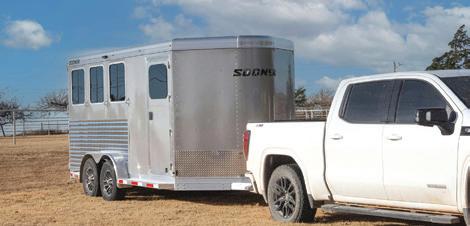
Sooner Trailers unveils new lineup of Lariat horse trailers Trailer-BodyBuilders.com/ 55375064
Sooner Trailers
Shell Rotella
LEGEND
How to x ‘a jumbled mess’
NATM calls on industry to take action
Kevin Jones Editor
linkedin.com/company/ trailer-body-builders
One reason I look forward to summer is it means the most hectic part of spring show season is in the rearview mirror. I write this having just returned from the TTMA convention and we still have staff at ACT Expo. Through one of the quirks of TBB tradition, this issue is where we finally get around to print coverage of some shows from earlier this year: NATM, Trailer Tech Expo, NAFA.
I’d note here that NATM did what I never seem to do with our magazine schedule: The convention organizers broke with tradition and tried something different. And, based on full banquet halls and lively participation, the new programs were big hits.
environment where the cost of doing business can change by the hour.
Panelist Leo Akins, GM at Forest River Inc., noted even a company under the Berkshire Hathaway umbrella and with access to the best available data, can’t keep up with pricing changes for materials.
The Government Affairs Lunch & Learn replaced the opening banquet and keynote. To say NATM members were engaged in the discussion on tariffs would be an understatement.
As presented by representatives of K&L Gates, the NATM public policy representative in Washington, the discussion featured some very recent good news: The Supreme Court Feb. 20 decided to strike down the Trump administration’s tariffs under the International Economic Emergency Powers Act.
You really need to make tight partnerships with your key suppliers and make sure that everyone’s in lockstep. — Leo Akins
But—there’s always one of those—the administration quickly implemented a 15% global “stop-gap” tariff allowed under The Trade Act of 1974, meaning there’s an expiration date unless Congress acts to cancel, modify, or extend beyond the statutory 150 days, or July 24.
And then we still have the Section 301 (China) and Section 232 (steel and aluminum) tariffs.
In sum, ongoing uncertainty (there’s that word again) means the light and medium-duty trailer industry is caught in an exceptionally volatile trade @trailerbb Follow
“While it’s difficult to forecast [with constant changes], you really need to make tight partnerships with your key suppliers and make sure that everyone’s in lockstep, so that you know when you’re absorbing those price increases,” Akins said. “It’s a jumbled mess anyway, but try to stay on top of it. Otherwise, you feel like you’re just getting price increases constantly, and you don’t understand why.” There is however, something the industry can do— and that discussion was the key takeaway from the government affairs update. Get involved.
Indeed, direct engagement with policymakers is now a strategic necessity for business survival, as the panel. A major legislative challenge is “identity and education,” as D.C. staffers often confuse lightduty trailers with heavy tractor-trailers. This leads to inappropriate mandates, such as side underride protection, which creates ground-clearance hazards for smaller trailers.
While NATM had its Regulatory Roundup in April, members don’t have to wait for the next organized visit to the Capitol. Know who your representatives are and keep in touch. Invite them to visit a plant to understand the importance of your business; seeing the “tangible connection” between trade policy and local jobs often shifts a representative’s perspective. Akins, who also chairs the NATM government affairs committee, praised the work done by association staff alongside K&L Gates.
“To put it in a nutshell, I think we have a focus. We have good relationships built, and we take action,” Akins said. “We don’t have a lot of mindless busywork. We’re networking in a way that is meaningful. I work with numerous organizations that do a lot of lobbying and do a lot of work on The Hill, and what the NATM has done is actually very impactful. There’s opportunity for anyone who wants to be involved, to be involved.” TBB
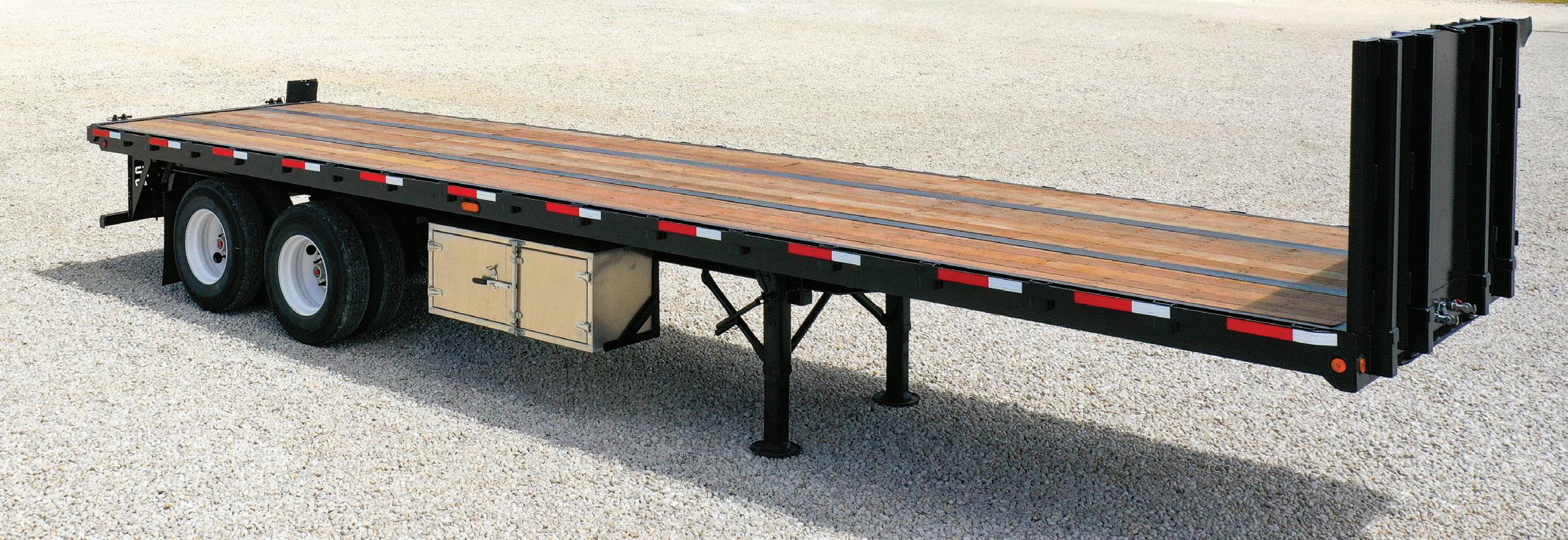
TRAILER FLOORING
FLATBED FLOORING
• 1-1/8” x 5” & 7” Shiplap
• 1-5/16” x 5” & 7” Shiplap
• 1- 3/8” x 5” & 7” Shiplap
• Road Load Tested® Floor Kits
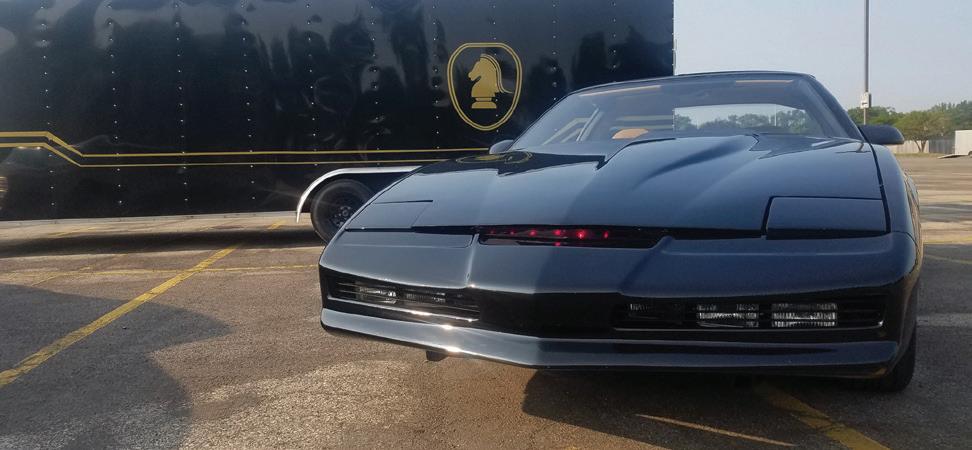
Dorsey Trailer supports restoration of iconic ‘Knight Rider’ command center
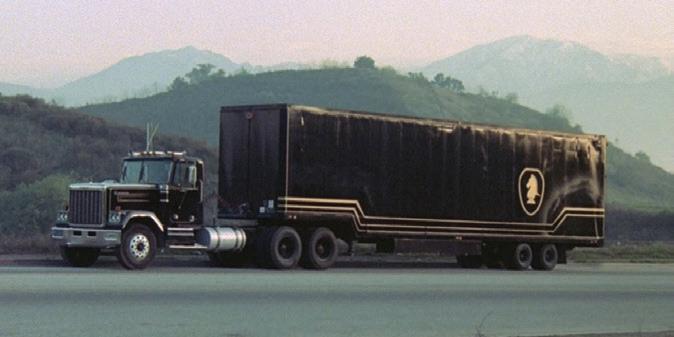
Dorsey Trailer is collaborating with Knight Rider Historians to help complete the restoration of the original screen-used semi trailer featured in the iconic 1980s television series Knight Rider.
The trailer, originally manufactured by Dorsey Trailer in the 1980s, served as the mobile command center for the show’s high-tech operations. After decades out of the spotlight, it has been carefully restored by the Knight Rider Historians, a dedicated group known for preserving and documenting the legacy of the series.
As the restoration enters its final phase, Dorsey Trailer has stepped in to support the project by providing primer and gloss black paint materials, helping ensure the trailer is finished to a standard that reflects its original on-screen appearance.
Re-premiere set for September
The fully restored trailer is expected to make its public debut at Retro Con in Pennsylvania this September, where fans will get their first look at the completed command center. Dorsey plans to attend the unveiling and will be recognized on-site for its contribution to the project.
“This is a special moment for us,” said Joseph Scott of Dorsey Trailer. “To be part of bringing back what may be the most recognizable Dorsey trailer ever built is something we’re incredibly proud of. It just feels right to help finish what we started decades ago.”
In addition to supplying materials, Dorsey Trailer is working to recreate a historically accurate VIN plate for the trailer, an effort that reflects the company’s commitment to authenticity and craftsmanship, even when original manufacturing methods are no longer in use.
Dakota Bodies announces huge expansion
Dakota Bodies will expand in Liberty, Missouri, investing more than $21.9 million and creating 172 new jobs, the company recently reported. The expansion is meant to “significantly” improve the facility’s overall manufacturing capacity and customer experience.
“Dakota Bodies’ expansion in Liberty is another strong example of a strategic investment that’s driving Missouri’s economy forward,” Missouri Governor Mike Kehoe said. “With more than $21.9 million invested and 172 new jobs being created, this project brings meaningful opportunities to hardworking
“This project has always been about honoring the legacy of Knight Rider,” said Joe Huth of Knight Rider Historians. “Having Dorsey involved in the final stages brings everything full circle. Their support means a lot, not just to us, but to fans who have followed this journey.”
The Knight Rider Historians have documented much of the restoration process for their growing audience, which includes more than 125,000 subscribers on YouTube. Their work has attracted attention from fans and media alike, with upcoming coverage expected to highlight the collaboration and final reveal.
Missourians and reinforces our state’s reputation as a place where businesses can grow and succeed.”
Dakota Bodies is doubling the size of its manufacturing footprint in Liberty to support its long-term commitment to growth. The facility’s upgrades include advanced laser cutting technology, stateof-the-art metal forming capabilities, and enhanced power coating systems. These improvements are designed ensure faster production, shorter lead times, and more consistent customer delivery. This expansion is a direct response to growing demand from the
company’s distributor and fleet partners, according to Dakota Bodies.
“At ATW Truck Equipment, our goal is to lead the industry in quality, innovation, new products, and the fastest lead times, while continuing to invest in a best-inclass work environment for our team,” said Braden Edwards, SVP and GM of parent company ATW Truck Equipment.
Knight Rider Historians / Facebook
Dakota Bodies
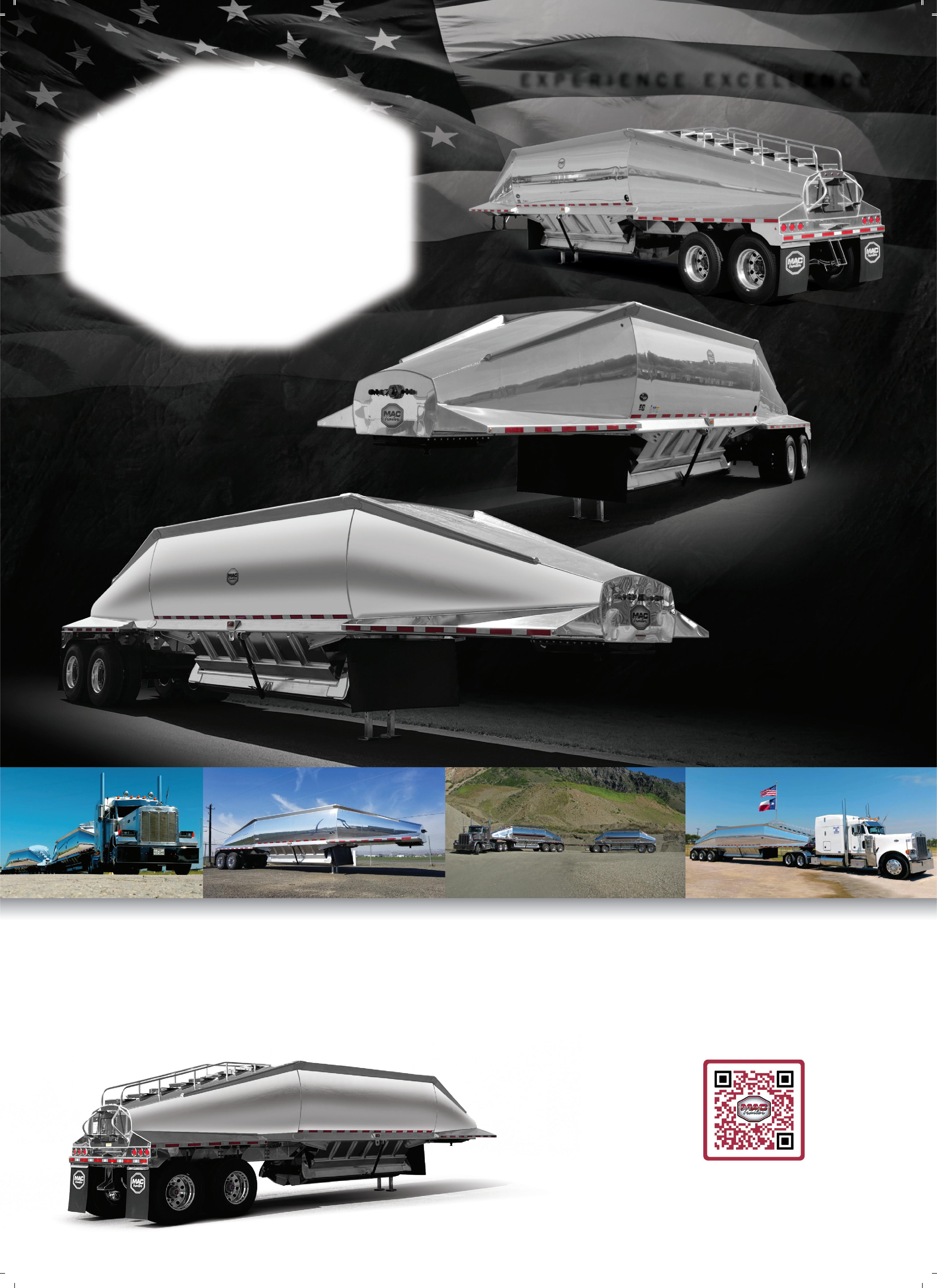
MAC BULLETª – Continuing the legacy
Trusted for almost five decades, the Bullet™ is the finest aluminum bottom dump trailer in the industry. Whether you haul coal, sugar, beets, or aggregate, its lightweight strength and aerodynamic design deliver maximum efficiency. When weight matters, the MAC Bullet™ is the choice to keep you hauling more with less.
NATDA, NCM partner for trailer dealer training
The North American Trailer Dealers Association (NATDA) has entered into a new strategic partnership, naming NCM Associates as an education partner and the exclusive Service Management Training Provider.
Focused on trailer dealership operations, the partnership delivers access to trailer-only 20 Groups, workshops, industry insights, and member-only scholarships and training savings.
As part of the partnership, NATDA members can participate in NCM Associate’s 20 Groups tailored specifically to the light and mediumduty trailer industry. 20 Groups bring together noncompeting businesses to help improve dealer profitability and operational performance through confidential financial benchmarking, best practice sharing, accountability, and expert facilitation.
A new Express 20-Group option, for even the smaller dealerships, delivers the same core benefits in a flexible, hybrid
format, offering consistent insights and engagement while reducing travel costs —an efficient solution for NATDA members seeking a dealer 20 Group experience.
NATDA Trailer Show sneak peek
As part of the partnership, NCM Associates will deliver three dedicated sessions during the NATDA Trailer Show held September 1-3 in Nashville, giving dealers direct access to practical education and a firsthand look at NCM’s peer learning model.
Planned sessions include:
• Parts Management: Proven Practices to Drive Profitability
• Maximizing Profitability in Your Service Department
• Mock 20 Group Session, offering attendees an inside look at what a 20 Group is.
“NCM Associates is proud to partner with NATDA to bring support and resources to its members and the Trailer Industry,” said Mark Spader of
NCM Associates. “Together, we’re providing trailer dealers with access to proven insights, benchmarking, and peer collaboration designed to help them make smarter decisions and drive sustainable growth.”
This partnership also includes:
• Two yearly Scholarships available to NATDA members for NCM Training (valued up to $3395)
• Trend insights and benchmarking summaries will be shared through NATDA channels
• Member only discounts for NCM training workshops
• Expanded educational initiatives between NATDA & NCM
Details to follow in the coming months.
High Bar Brands acquires HD supplier Globetech Manufacturing
Commercial vehicle supplier High Bar Brands has acquired Globetech Manufacturing, an Ohio-based manufacturer of essential components for the heavy-duty trucking industry.
Founded in 2002, Globetech is a family-owned business that produces high-quality, high-turn products, including ABS and air system components, mud flaps, and other critical trailer and mechanical parts. Over its history, the company has produced more than 20 million mud flaps serving OEM and aftermarket customers across North America.
Globetech’s product portfolio, including electronic control units, wheel-end accessories, trailer components, and mud flaps, aligns closely with High Bar Brands’ existing platform and enhances its ability to serve customers with a more complete set of solutions.
The acquisition is designed to strengthen High Bar Brands’ position in core replacement and OEM-focused categories while expanding its ability to deliver a broader, more integrated product offering to aftermarket distributors, fleets, and manufacturing partners.
“Globetech’s products fit naturally within our distribution network and directly align with what our customers need,” said Derek Quys, SVP of sales and business development at High Bar Brands. “This acquisition gives us additional scale in key categories and creates new product opportunities to support our partners with a broader and more integrated offering.”
The companies will work closely to integrate operations while maintaining continuity for customers, suppliers, and employees.
“High Bar Brands continues to execute on its growth strategy in a dynamic market environment,” said Christopher Thorpe, president and CEO of High Bar Brands. “Globetech adds products that are used every day across the heavy-duty industry, helping us build a more balanced portfolio of essential components while expanding what we can offer customers across both OEM and aftermarket channels.”
“Globetech has always been focused on delivering reliable products and taking care of customers,” said Tim Begley, president of Globetech Manufacturing. “Joining High Bar Brands allows us to build on that foundation, expand our reach, and continue delivering the quality and service our customers expect.
“Their commitment to growth, investment, and customer relationships gives us confidence in the future of the business and the opportunities ahead for our team.”
High Bar Brands
Great Dane marks milestone at Statesboro plant
Great Dane’s Statesboro, Georgia, manufacturing plant recently produced its 25,000th trailer since opening in 2012.
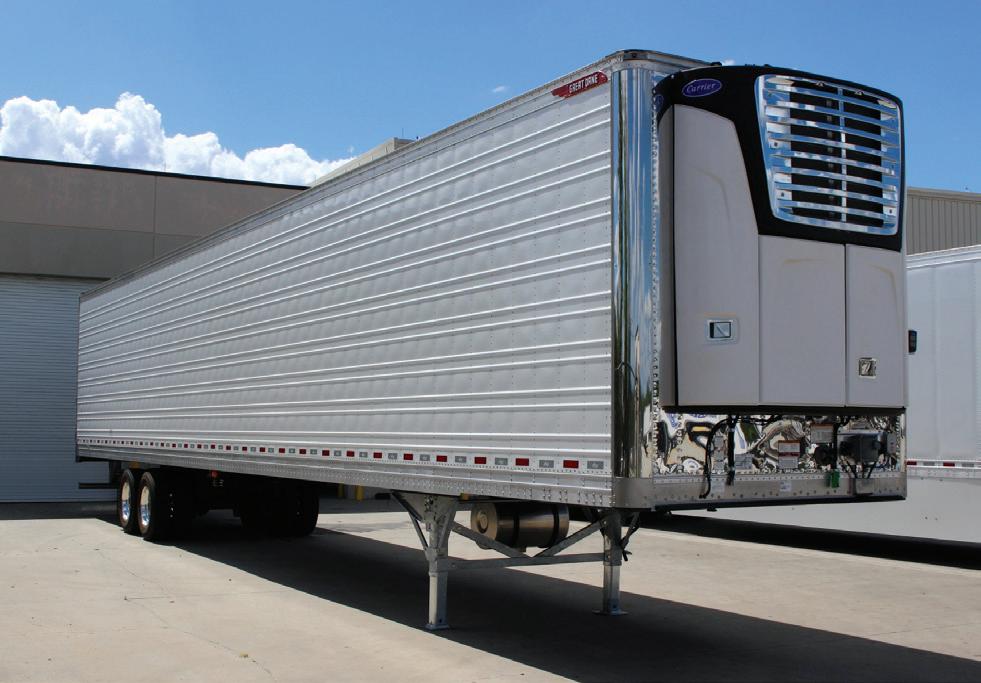
The company, which manufactures trailers for freight and refrigerated transport applications, reached the milestone with a 57-ft. refrigerated Everest reefer built for Nolt Transportation.
“Building high-quality trailers and reaching this milestone takes an incredible amount of hard work, skill, and collaboration,” Ron Jones, Great Dane Statesboro plant manager, stated. “This achievement belongs to every single person on our factory floor because they give their best every day. I’m proud to work alongside them.”
The Statesboro facility is the only Great Dane plant capable of producing trailers of this length. The trailer supports Nolt Transportation’s refrigerated hauling operations, including produce shipments to central Pennsylvania and temperaturecontrolled freight to the Pacific Northwest.
“Having a Great Dane trailer since the beginning of my refrigerated LTL work has proven the quality of work and reliability behind their trailers,” said Timothy Nolt, owner of
Stoughton adds Southeast dealer group
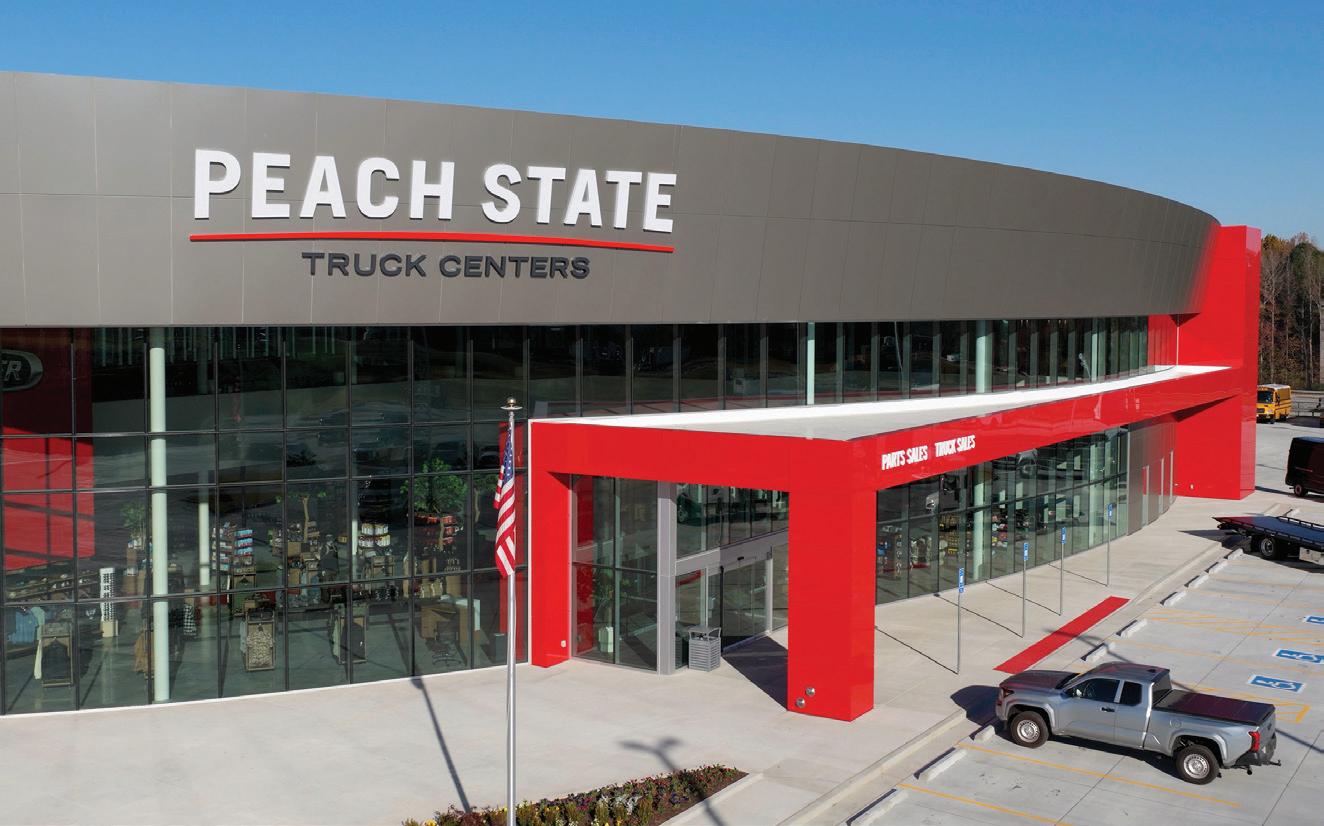
Stoughton Trailers has added Peach State Truck Centers as an authorized dealer through the formation of Sovereign Trailers. Sovereign Trailers, a new dedicated commercial trailer dealership, will represent Stoughton in the states of Georgia, Alabama and Mississippi.
Peach State is one of the largest commercial vehicle dealer groups
Nolt Transportation. “A reliable and heavy duty trailer is one of the biggest advantages for getting the job done, especially in the LTL world that depends on reliable delivery and temperature control.”
in the Southeast with more than 700 employees and 14 locations. Peach State represents Freightliner and Western Star Class 8 trucks.
“We are thrilled to add the team at Sovereign to our dealer network,” said Derrick Washington, VP of sales for Stoughton Trailers. “Peach State is well known and highly regarded in the region
for their industry knowledge and service. Their facilities and team members are top notch. We are confident the creation of the Sovereign Trailers business will provide fleet customers in the Southeast with excellent trailer sales and service.” Sovereign Trailers and Peach State Truck Centers bring together 5 decades of commercial vehicle expertise.
“The launch of Sovereign Trailers and our partnership with Stoughton Trailers reflect our continued commitment to making a positive difference for our customers, extending the same standard of service, expertise, and long-term relationships that have defined us for decades, into the trailer business,” said Rick Reynolds, President of Peach State Truck Centers.
Sovereign Trailers will inventory Stoughton dry vans and refrigerated trailers at locations in Jefferson and Villa Rica, Georgia and Birmingham, Alabama. Trailer sales and trailer parts sales and service will be provided at Peach State locations across the southeast.
Great Dane
Stoughton Trailers
Netradyne, Hyundai Translead launch OEM integration to improve fleet safety visibility and reduce blind spots
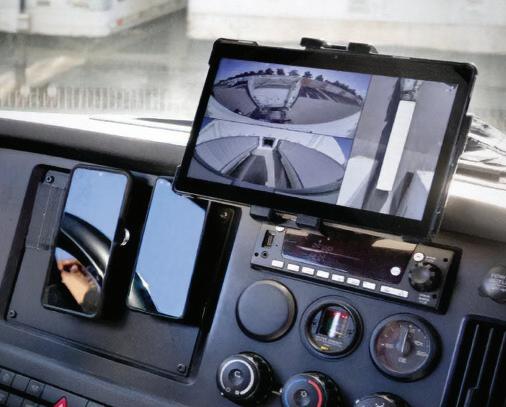
Netradyne recently integrated with Hyundai Translead’s HT LinkVue trailer visibility system, bringing wireless trailer video into the Driver•i platform to deliver a unified 360-degree view of tractor, trailer, cab, and road activity. The company, which provides AI-powered fleet safety and performance solutions, is combining trailer video with its existing safety alerts and coaching workflows to give fleets a single environment for monitoring and review.
The integration is designed to address trailer-related incidents such as sideswipes, cargo damage, and security events, which are often costly and difficult to investigate when video sources are disconnected. By consolidating trailer and tractor footage in one platform, fleets can reduce the need to manually retrieve video, shorten claims cycles, and streamline incident review and driver coaching.
The wireless system transmits highdefinition trailer video directly to the cab and into the cloud, reducing installation complexity and vehicle downtime while supporting driver adoption. Safety teams gain access to complete drive-time footage across both tractor and trailer, enabling more consistent coaching and faster operational follow-up.
Labatt Food Service has deployed the integration in its San Antonio, Texas, fleet and plans to expand use to additional locations, focusing on reducing backing incidents and improving driver performance.
“The integration was seamless—our drivers didn’t need any training—and we no longer have to manually pull video off the trailer transmitter,” John Cole, senior analyst and manager of outbound freight at Labatt Food Service, stated. “Having trailer
video unified in Netradyne means we can tie 360-degree trailer visibility directly to our AI-powered safety alerts and coaching workflows, especially around helping our drivers improve their backing skills, which is a major focus for us.”
Hyundai Translead
M.H. Eby adds truck body distributors in Pennsylvania, Utah, Louisiana
Aluminum trailer and truck body manufacturer M.H. Eby Inc. has added three new partners to its North American distributor network. These new partnerships expand Eby’s truck body distribution and service coverage for aluminum truck body solutions and upfitting partners, designed to strengthen service coverage in key regional markets.
The newly appointed distributors are:
• Robinson Brothers, Baton Rouge, Louisiana
• John Bonham Road Equipment & Supply, Honesdale, Pennsylvania
• Cowboy Upfitters, Ogden, Utah
These additions reflect Eby’s continued investment in building a strong, servicefocused distribution and upfitter network, the company noted. By partnering with established upfitters and equipment providers, Eby is positioned to improve product availability, technical support,
Isuzu, Toyota to launch light-duty fuel cell truck
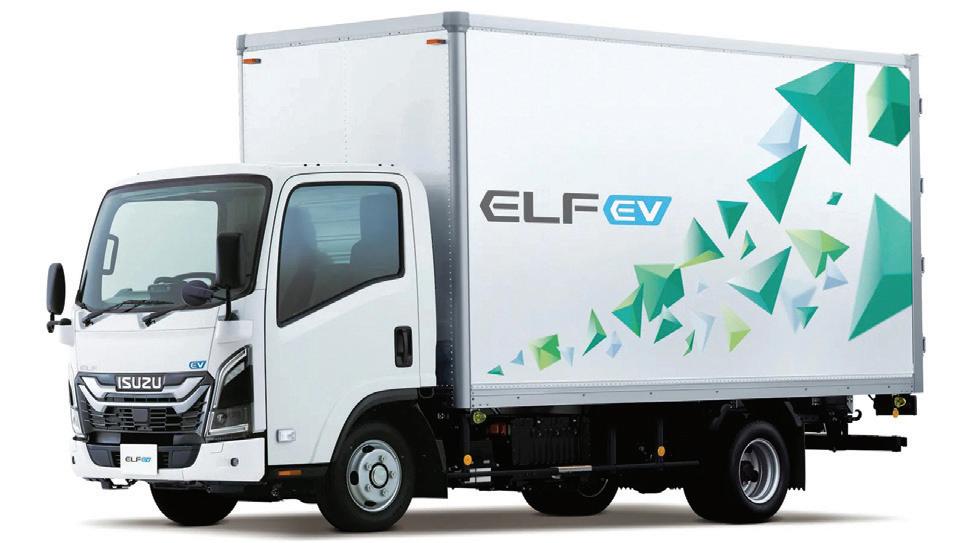
Isuzu Motors Limited and Toyota Motor Corporation have formed a strategic partnership to jointly develop a next-generation light-duty fuel cell (FC) electric truck, with mass production slated to begin in fiscal year 2027. This collaboration represents Japan’s first initiative to bring a mass-produced light-duty fuel cell vehicle (FCEV) to the commercial market, aiming to accelerate the transition toward carbon-neutral logistics and a hydrogen-based society, according to the joint statement.
The upcoming vehicle will be built upon the foundation of Isuzu’s “ELF EV,” utilizing the company’s modular product development platform known as I-MACS. This platform will be integrated with Toyota’s advanced third-generation fuel cell system. By combining their respective technical expertise, the two manufacturers intend to enhance vehicle durability and service life, ensuring the reliability required for the high-utilization operating conditions typical of commercial vehicles.
The decision to focus on light-duty fuel cell trucks addresses a critical gap in the logistics sector. These vehicles are primarily
and customer responsiveness across multiple regions.
“Expanding our distributor network allows us to better support customers at the local level,” said Craig Bonham, SVP of business development for Eby Truck Bodies. “These partners bring strong market knowledge, service capabilities, and a shared commitment to delivering quality equipment and customer support.”
The addition of these distributors enhances Eby’s ability to serve commercial fleets, municipalities, and contractors with durable, lightweight aluminum truck bodies engineered for long service life.
used for daily deliveries to supermarkets and convenience stores, tasks that often require long operating hours, extended driving ranges, and the use of refrigeration units.
While battery electric vehicles (BEVs) are an important part of the green transition, they often face challenges such as long charging times. FCEVs, which utilize hydrogen as a high-energy-density fuel, offer significantly faster refueling times and longer ranges, making them a highly effective option for maintaining operational efficiency in demanding commercial environments. Like BEVs, FCEVs produce zero CO2 emissions during operation and function with minimal noise and vibration.
Cost-reduction goals
To overcome the high vehicle price point—a major barrier to widespread FCEV adoption—both companies are pursuing aggressive cost-reduction strategies, they reported. Isuzu is focusing on optimizing vehicle body structures and manufacturing processes, while Toyota is innovating its fuel cell design and production methods to improve affordability. This partnership builds on previous successful collaborations, including the “ERGA FCV” route bus and implementation projects through Commercial Japan Partnership Technologies Corporation (CJPT).
This project is a key component of Toyota’s “multi-pathway” approach to powertrains and its broader “Beyond Zero” vision, which seeks to provide diverse mobility solutions for a sustainable future.
By working alongside local governments and regional businesses, both Isuzu and Toyota aim to foster the infrastructure necessary to support the broader adoption of hydrogen mobility across Japan.
M.H. Eby
Isuzu
Carrier Transicold names Dealer of the Year winners in North America
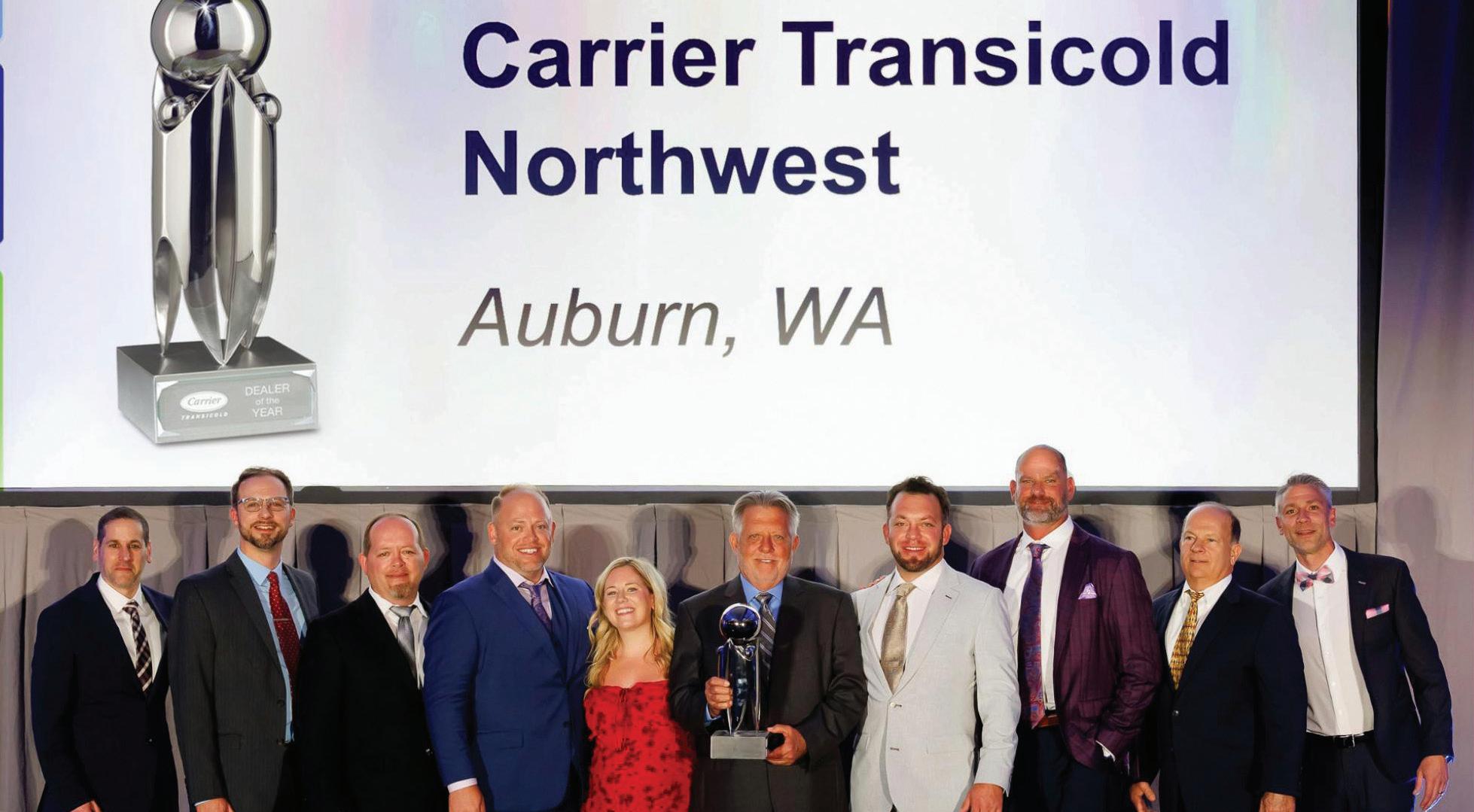
Carrier Transicold recently named its 2025 Dealer of the Year winners, recognizing Carrier Transicold Northwest for the U.S. and Canada and Grupo Refritrans Centroamérica for Latin America. The company, which provides transport refrigeration solutions, selected winners based on sales, service, market penetration, customer satisfaction, business investment, and growth.
Carrier Transicold Northwest, a family-owned dealer with locations in Auburn, Mount Vernon, and Richland, Washington, has built a reputation for serving customers hauling temperature-controlled goods across the Pacific Northwest.
Grupo Refritrans Centroamérica, based in San Pedro Sula, Honduras, was recognized for its long-standing service across Honduras, Guatemala, El Salvador, and Costa Rica, as well as its growth in the region.
Additional dealer and individual awards were also presented, including Extra Mile Awards for customer service, Brick & Mortar Awards for facility investment, and honors for top-performing sales, service, and parts managers.
“This award reflects our entire team’s
Carrier Transicold named Carrier Transicold Northwest, a Northwest Equipment Group company, its 2025 Dealer of the Year. Pictured left to right: Jason Forman, General Manager, Original Equipment-Truck Trailer Americas, Carrier Transicold; Travis Mayhew, Network Development Manager, Carrier Transicold; Brian Kolar, President, Northwest Equipment Group; Aaron Kolar, Chief Operating Officer, Northwest Equipment Group; Sammi Sogura, General Sales Manager, Northwest Equipment Group; Mike Kolar, Chief Executive Officer, Northwest Equipment Group; Brandon Kolar, EVP-Fixed Operations, Northwest Equipment Group; Ryan Morrow, EVP- Sales & Operations, Northwest Equipment Group; Mike Murdock, Western U.S. & Canadian Region Director, Carrier Transicold; Sam Roach, Director of Sales, Carrier Transicold.
dedication to our core values, emphasizing long-term partnership over short-term gains,” Aaron Kolar, COO at Northwest Equipment Group, the parent company of Carrier Transicold Northwest, stated.
“They bring expertise, resourcefulness, and urgency to every customer opportunity and challenge. Being recognized by Carrier Transicold, a brand our customers genuinely trust, is especially meaningful.”
Central Valley-based American Truck Parts joins Power HD network
American Truck Parts LLC, a full-service heavy-duty truck and trailer service and parts provider based in Porterville, California, recently joined the Power Heavy Duty network
American Truck Parts offers comprehensive in-house service capabilities, including a full-service truck and trailer service department, flywheel resurfacing, driveline services, hydraulic hose fabrication, mobile truck repair, and machine shop services.
Strategically positioned near major freeways in California’s Central Valley, the company supports a diverse customer base across on-highway, off-highway, industrial, and agricultural applications, serving fleets and owner-operators in the heart of one of the nation’s most active agricultural regions.
Owner and President Brandon Tharp leads a staff of 12, including technicians, counter staff, and an outside sales rep.
“Our vision is to continue building a strong, reliable parts and service operation that our customers can depend on day in and
day out,” said Tharp. “We’re focused on expanding our parts inventory, growing our service capabilities, and strengthening our presence throughout the Central Valley. At the same time, we want to stay true to our roots providing honest service, building long-term relationships, and continuing the legacy our family has built in this industry.”
Tharp purchased the business in 2025 but is no stranger to the trucking and heavy duty parts industry.
The roots of American Truck Parts are closely tied to a longstanding Central Valley trucking and heavy-duty tradition. The Tharp family’s involvement in trucking dates back to 1935, when E.M. “Gene” Tharp began his career in commercial hauling. Over the decades, the family’s operations expanded into truck sales, service, and parts, ultimately leading to the formation of American Truck Parts in 1979. From there, after a series of acquisitions, American Truck Parts became available as an independent business opportunity. TBB
Wabash sales slip 20% in Q1 amid ‘uncertain’ markets
By Kevin Jones
Wabash reported first-quarter 2026 financial results that reflected a “painful trough” in the highly cyclical transportation equipment market, characterized by cautious customer behavior and uncertain freight dynamics.
While the company missed analyst estimates on both revenue and earnings, management expressed a growing confidence that the first quarter represented the low point for the year, with a recovery path taking shape through sequential quarterly improvements and significant trade policy tailwinds expected in late 2026.
CEO Highlights
inconsistent, and capital decisions across the industry were being evaluated carefully.
“Now as we move into 2026, both our customers and our visibility continue to improve, and it shows an environment that is building to set up for a constructive 2027 as spot rates, contract rates, capacity, and demand all are coming together to drive back to replacement demand for equipment, and possibly beyond as fleets begin to plan more confidently. “
Lower volumes pressure margins
For the quarter ended March 31, Wabash reported consolidated revenue of $303.2 million, a 20.4% decrease compared to the $380.9 million generated in the same period of the previous year. This decline was primarily driven by lower shipment
1 Near term conditions remain challenging, but confidence in the outlook is building.
2 Section 232 tariff calculation changes and AD/CVD rulings set to favorably shift industry dynamics in late 2026 and into 2027.
3 Parts & Services revenue grew >4% year-on-year as we continue to build a counter-cyclical infrastructure that enhances resiliency and profitability across cycles.
4 Q1 GAAP EPS of $(1.11) or Non-GAAP adjusted EPS of $(1.17)1. Non-GAAP EPS excludes plant idling costs and acquisition gains.
5 Q2 outlook improving sequentially with revenue and EPS midpoints of $390M and $(0.50). Q3 and Q4 2026 expected to show continued improvement.
1Q1 EPS is adjusted for gain related to purchase acquisition gain and plant idling costs.
As we entered the first quarter, we did so with a clear-eyed view of the environment in front of us, Wabash President and CEO Brent Yeagy said. “Freight markets were uncertain, and customers continued to act cautiously. Order patterns were uneven, asset utilization
volumes in the Transportation Solutions segment, which saw sales fall 27.9% year-over-year to $250.2 million. New trailer shipments totaled 5,378 units, down 14.5% from the prior year, while new truck body shipments plummeted 49.1% to 1,527 units.
The lower production volumes created operational inefficiencies and overhead pressures, leading to a consolidated GAAP gross margin loss of $11 million, or negative 3.5% of sales.
The company reported an operating loss of $52 million related to the Linq Venture Holdings acquisition and $2.8 million in facility idling costs.
Trucking market: cautious fleets
The primary headwind for Wabash remains the broader freight recession and its impact on carrier capital expenditures.
Despite these near-term challenges, management identified several underlying indicators of a pending recovery Capacity in the trucking market is continuing to contract, improving freight rates and carrier profitability. Furthermore, the ATA for-hire truck tonnage index saw its largest year-overyear increase since late 2022, and the Logistics Managers Index showed the fastest expansion in nearly four years.
Wabash’s order backlog grew 19% to $837 million. This increase, which management called a “historic high rate of growth” for a first quarter, suggests that while carriers remain conservative, they are increasingly engaging in conversations about their 2027 needs.
The company expects the truck body segment to remain soft through 2026, trailing the dry van recovery by approximately six to nine months as it relies more heavily on consumer discretionary spending and housing starts.
Trade
policy and tariffs: A level playing field?
Wabash’s optimistic outlook for late 2026 and 2027 is rooted in a shifting trade landscape.
Wabash
The domestic trailer industry has long contended with what Wabash characterizes as “unfairly traded imports” that threaten the stability of U.S. manufacturing. However, recent changes to tariff calculations and pending antidumping and countervailing duty (AD/CVD) rulings are expected to provide “meaningful relief” for domestic producers.
Management anticipates these trade developments will favorably shift industry dynamics by leveling the playing field against foreign competitors who benefit from home-country subsidization. As these measures take effect, Wabash expects to benefit from greater pricing stability and an enhanced ability to gain market share.
The company is particularly well-positioned to capitalize on this shift due to its significant U.S. manufacturing footprint, including the Lafayette South plant, which provides the capacity to produce approximately 10,000 additional trailers annually compared to previous upcycles.
“I am very proud of our people on the manufacturing floor,” Yeagy said, “and I am eager to have them show what they are truly capable of when they rise to meet the challenges and the opportunities contained within the acceleration of demand at the start of a new industry period of expansion.”
Strategic initiatives
To counter the inherent cyclicality of the trailer market, Wabash is aggressively expanding its Parts & Services segment and digital ecosystem. Parts & Services generated $54.1 million in revenue during Q1, a 4.1% year-over-year increase.
Strategic milestones in Q1 included:
• Linq Venture Holdings Acquisition: Wabash acquired the remaining 51% interest in this digital marketplace entity to enhance its “Trailers as a Service” (TaaS) initiative and recurring revenue streams.
• Upfit Center Expansion: The company is progressing with new upfit sites in Chicago, Atlanta, and Phoenix. At peak utilization, these sites are expected to generate $10 million to $20 million in
incremental revenue each, with gross margins approaching 20%.
• Digital/AI Integration: The company launched SPEC SYNC and PartsPulse, AI-driven tools developed with UP.Labs to reduce friction in the quoting process and elevate the customer experience.
2026 outlook
Looking forward, Wabash provided sequential growth guidance for the second quarter, with revenue expected between $380 million and $400 million.
The company maintains its expectation for positive adjusted EBITDA in the second half of 2026 as shipment volumes ramp and operational efficiencies return.
While Wabash National’s first-quarter results highlight the severity of the current market downturn, the company’s strategic narrative is one of preparedness and resilience.
By rightsizing its cost structure through facility idling while simultaneously investing in digital solutions and domestic capacity, Wabash aims to emerge from this cycle as a more diversified “solution provider” rather than a mere equipment manufacturer.
With a growing backlog and the protective umbrella of new trade policies on the horizon, Wabash is positioning itself to capture significant value when replacement demand returns in force in 2027. TBB
Wabash, UP.Labs launch AI-based tools
Wabash is continuing to collaborate with UP.Labs to accelerate innovation and modernize the customer experience through AI.
Building on the launch of Wabash Venture Lab and its first two startups, SpecSync and PartsPulse, Wabash is advancing capabilities with two new tools, Spec It and Stock It, to simplify made-to-order product quoting and configuration and optimize parts availability for customers and channel partners.
The partnership with UP.Labs, launched in late 2024, supports Wabash’s broader transformation strategy to enhance the customer experience and drive long-term sustainable growth.
“We’re proud to partner with Wabash because they share our commitment to bringing advanced AI and deep industry expertise to solve real challenges for their customers,” said John Kuolt, CEO of UP.Labs. “Together, we’re co-creating ventures that deliver meaningful value for Wabash dealers, partners and customers, reimagining how complex configuration and supply chain problems are solved and unlocking new efficiency across the transportation ecosystem.”
The UP.Labs model brings together Wabash’s industry expertise with startup agility to identify high-impact challenges and develop purpose-built AI solutions.
“Wabash is committed to leading the industry forward by convening partners, customers, suppliers and to build practical, scalable solutions for where the industry is going,” said Mike Pettit, chief growth officer. “Our work with UP.Labs is in the early stages of delivering smarter configuration tools that expedite quoting and specification, and predictive analytics that strengthen aftermarket performance. These technologies will directly improve operational efficiencies, simplify parts management and enhance the overall customer experience working with Wabash.”
PartsPulse
Get it right the first time
Proper spec’ing and up tting pays o down the road, as well as on Day One
By Seth Skydel
Uptime in vocational fleets is rarely determined by what happens a er a truck has been put into service. It is shaped much earlier, during specification and design, and especially during upfitting. Every choice, from material selection and electrical integration to weight distribution and service access, directly a ects how o en a vehicle is available to work and how easily it can be maintained.
Across dealers, upfitters, OEMs, and fleet solution providers, the message is consistent: Uptime is not accidental; it is engineered. When upfits are planned correctly, maintenance becomes predictable, diagnostics are simpler, and trucks stay productive longer. When they are not, downtime is inevitable, and those problems are often in motion long before a technician ever sees the vehicle.
Upfitting expert Leyhan Hansen, who publishes The Uptime Insider, an e-newsletter, says many of the downtime issues fleets struggle with years into a truck’s life are already embedded in the original specifications. “Most maintenance problems don’t start in the shop.
They start at the spec sheet.”
The biggest issues usually trace back to spec’ing decisions made in an effort to cut upfront costs, he added.
Material choice is one of the clearest examples. For example, Hansen pointed to snow removal applications, where corrosion exposure is unavoidable. “If you’re building a snowplow truck and you don’t go stainless, you’re setting that truck up to rot early,” he explained. “Salt doesn’t care about your budget.”
The same pattern shows up when it comes to equipment selection.
Hoist selection is an area where improper upfitting leads directly to reliability and maintenance problems. “Once
Mike Albert Fleet Solutions
you get into heavier dump applications, a scissor hoist starts becoming the wrong tool,” Hansen said. “That’s where you need a telescopic hoist if you want reliability and proper lifting performance.”
And beyond individual components, overall vehicle configuration and weight distribution can make those problems worse.
Hansen warned, for example, that while pairing oversized bodies with undersized chassis may look acceptable on paper, it creates chronic overloading in the field. “A lot of fleets think that putting a three- to four-yard dump body on a 14,000– to 16,000-lb. GVW truck is fine,” he explained. “In reality, you’re setting that operator up to overload the truck every day, and the result is premature wear on suspension, brakes, and the drivetrain.”
These examples illustrate how spec decisions can lead to problems, but they are only part of the picture. The way components are sourced, integrated, and installed ultimately determines if these risks result in real-world failures.
Integration and sourcing concerns
At Mike Albert Fleet Solutions, maintenance impact is evaluated through how well the upfit is engineered into the chassis. Alexa Rubin, manager of truck upfit, explained that maintenance outcomes are driven by interconnected categories, including material integration, component sourcing, installation standards, and chassis integration.
On material integration, Rubin emphasized the importance of understanding how different metals interact over time. “Understanding metallurgical interactions is critical,” she said. “A simple specification like incorporating Mylar insulation behind fasteners when joining aluminum to steel significantly limits electrolysis. That choice prevents long-term structural corrosion and reduces related maintenance interventions over the vehicle’s service life.”
Component sourcing presents another long-term trade-off.
“Brand-name products typically have higher quality,” Rubin said. “While lower-cost alternatives may look attractive,
they often lead to maintenance nightmares, including poor fitment, rattling, and premature corrosion.”
Installation quality may be the most overlooked factor.
“Electrical work, in particular, is a complex task and when done incorrectly can cause issues that may not surface for several years,” Rubin stated.
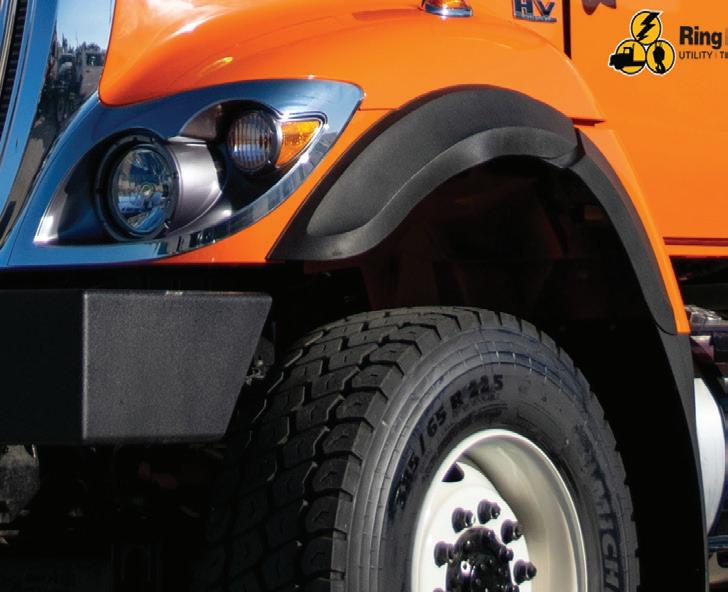
Brian Plawecki, product manager at Ring Power, stressed the importance of chassis specifications. “One of the most important factors affecting long-term maintenance is how the chassis and
body are specified at the beginning of the build,” he said.
When wheelbase or cab-to-axle dimensions are mismatched, fleets often face costly downstream fixes, he continued, adding that “moving axles or extending frames after the fact is expensive and introduces additional complexity that could have been avoided during specification.”
Furthermore, he stressed ordering the right factory provisions up front. “Specifying PTO provisions, auxiliary switch banks, and upfitter interface
Pairing oversized bodies with undersized chassis creates chronic overloading in the field.
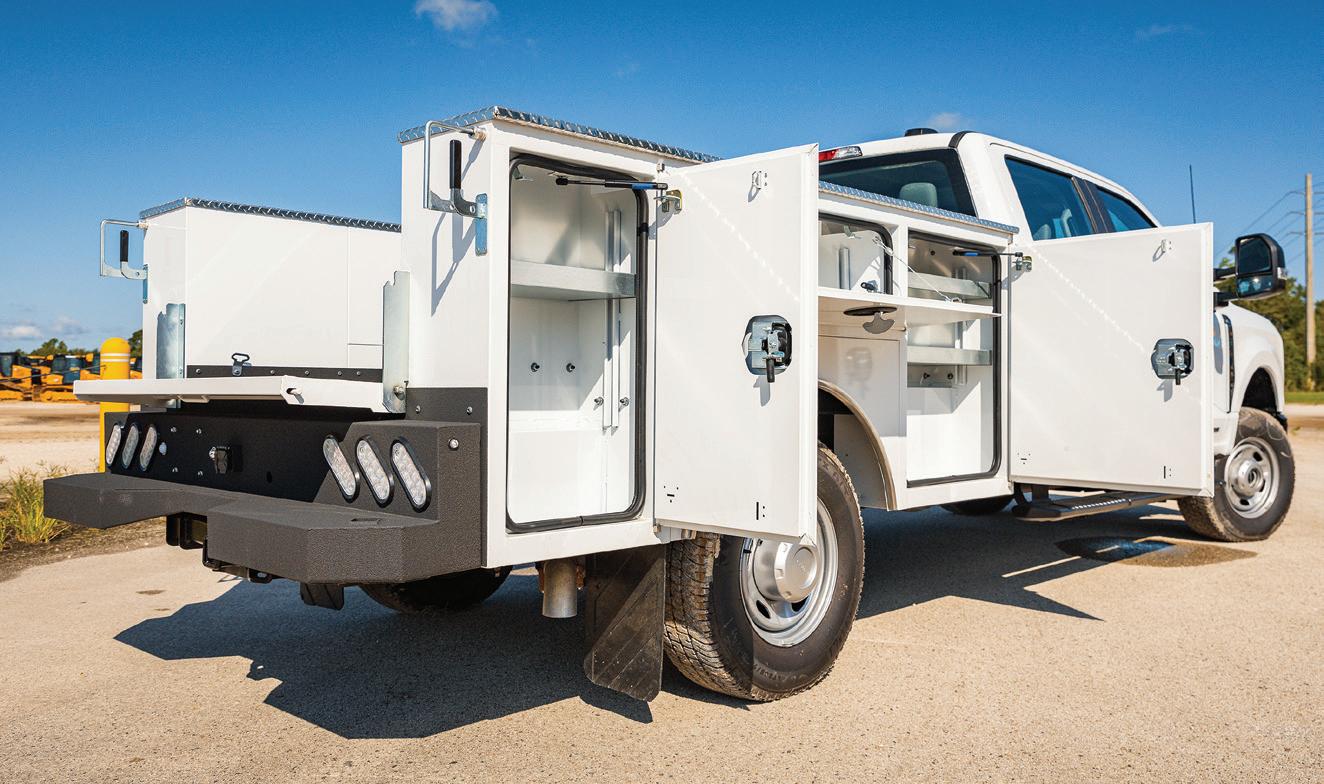
Proper spec’ing upfront makes upfitting and integration much easier over the life of the truck.
UPFIT FOCUS | SPEC’ING
modules during the initial chassis order can significantly simplify adding hydrau lic systems, lighting, or other auxiliary equipment later in the truck’s life cycle.”
Upfitting role in uptime underestimated
“Many fleets underestimate what upfit ting truly represents,” Hansen noted. “Upfitting isn’t just adding a body to a truck. In reality, it’s engineering uptime. Proper decisions start with understand ing the real‑world job the truck will perform and considering application, payload, duty cycle, and operating envi ronment. If the spec matches the work, you win; if it doesn’t, you pay for it later.”
Rubin added that provider choice is a maintenance decision in itself. “A reliable provider must demonstrate technical capability, consistency, and accountability.”
From an installation standpoint, Cody Veal, AVP and production manager at Ring Power, highlighted the impor tance of execution. “Attention to detail during installation has a major impact on long‑term reliability,” he said. “For example, things like improperly routed or unsecured wiring and hoses can lead to failures in the field.”
Veal also emphasized that using standardized wire colors and labeling conventions across builds simplifies diagnostics for technicians and reduces troubleshooting time when vehicles require service.
Eric Bowman, VP of inventory and logistics planning at Ring Power, pointed to serviceability as a critical design factor. “Vehicle uptime is strongly influ enced by how well the chassis and equip ment are integrated,” he explained, as centralized upfitter connection modules make troubleshooting easier by consoli dating electrical inputs and outputs into a single location.
In addition, he emphasized the impor tance of corrosion prevention, adding that “applying rubberized undercoat ing to body structures and ensuring proper routing and securing of wiring and hydraulic lines can significantly extend the service life of the vehicle.”
Hansen identified misalignment between the dealer, upfitter, and end user as a recurring problem. “The end user doesn’t always know what they need,” he said, “and without coordina tion, you end up ordering the wrong chassis for the body. The result is either modification or rework, and both cost time and money.”
Rubin warned that most common failures in upfits occur at the interface between the chassis and the equipment, pointing to errors such as drilling into fuel tanks or cutting filler necks. These
issues may not be immediately visible but can lead to serious safety risks and costly downtime.
At Daimler Truck North America (DTNA), Kevin Otzenberger, medi um duty and vocational product mar keting manager, cautioned against unnecessary cab modifications. “Cutting holes in the cab floor or walls can increase the risk of noise or water intru sion over time,” he said. “Ordering har ness preps with protective wiring caps helps shield connectors from weather exposure.”
Andrew Brown, Ford Pro brand man ager, commercial Super Duty & VIS 2.0, added that modern safety systems raise new concerns. “If an upfit such as a large front bumper or a wide service body can interfere with these sensors, it can affect ADAS functionality.”
“Overall, planning the upfit during the initial vehicle spec’ing phase allows for rightsizing the powertrain and chassis,” Brown added. “That extends the life of the engine and transmission and max imizes resale value.”
Digital tools ensure quality upfits
As vocational trucks become more complex, digital tools are playing an
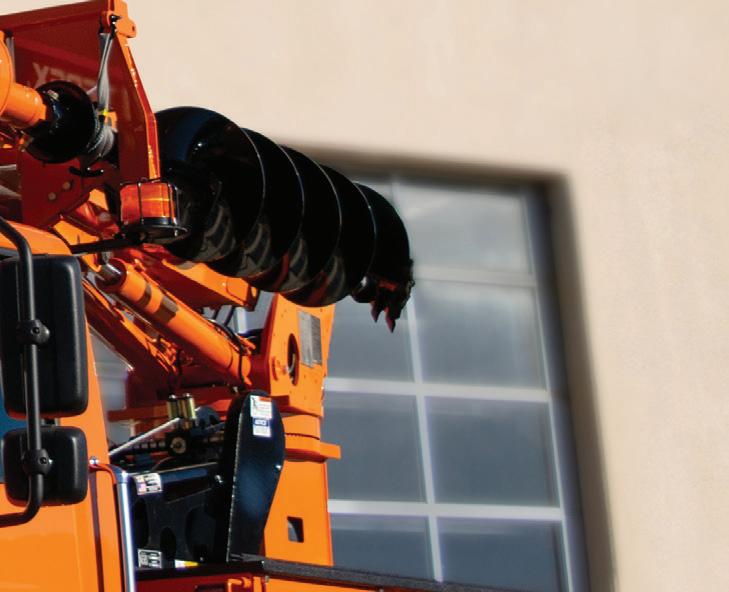
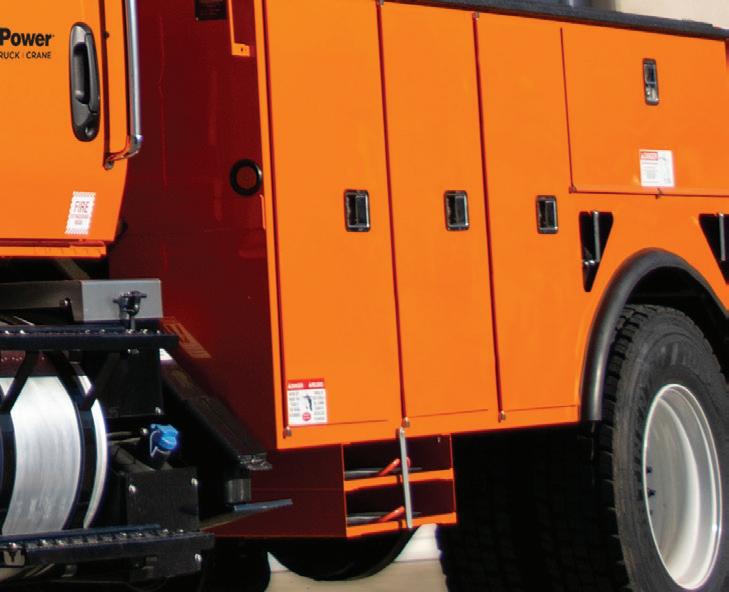
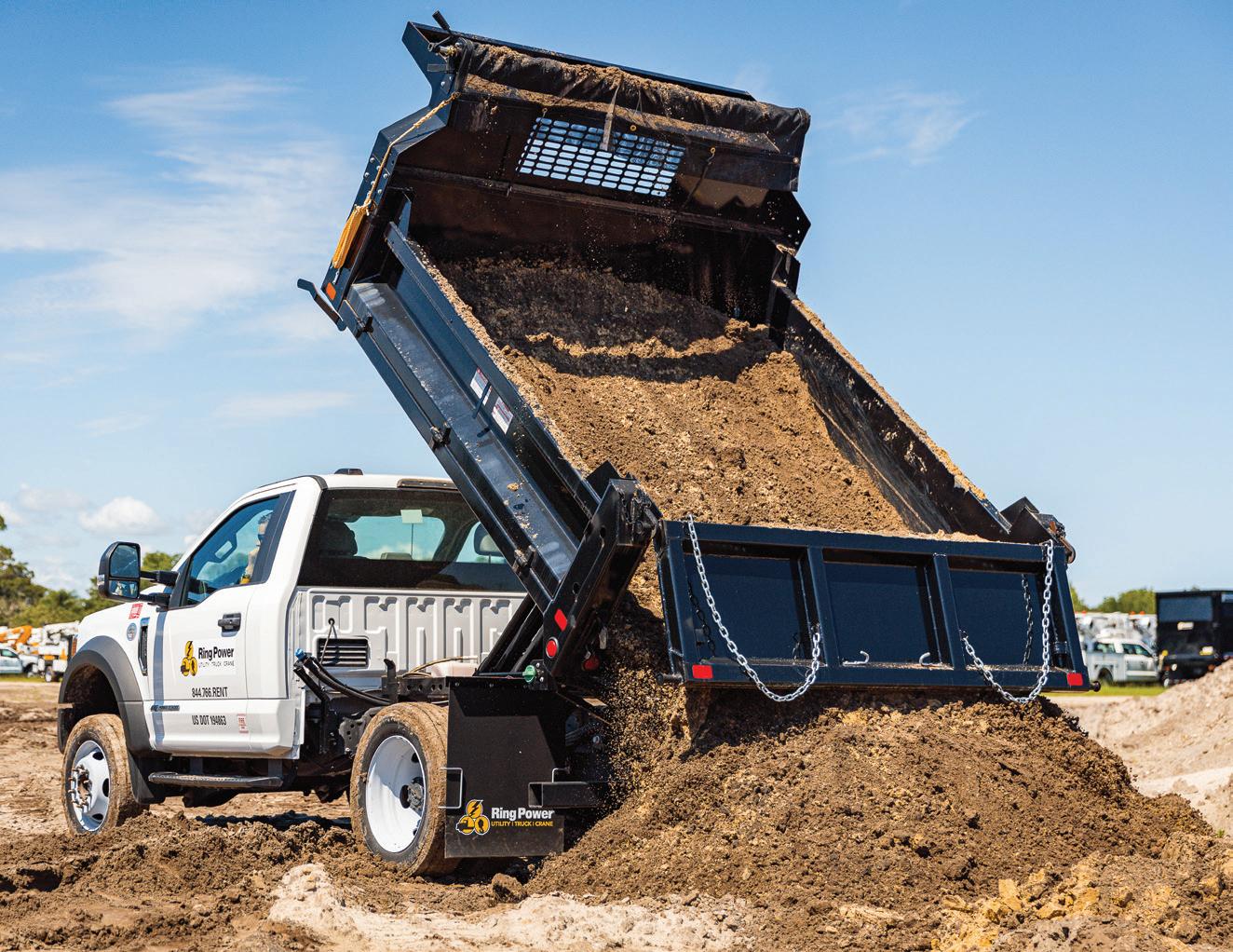
Ring Power Ring Power
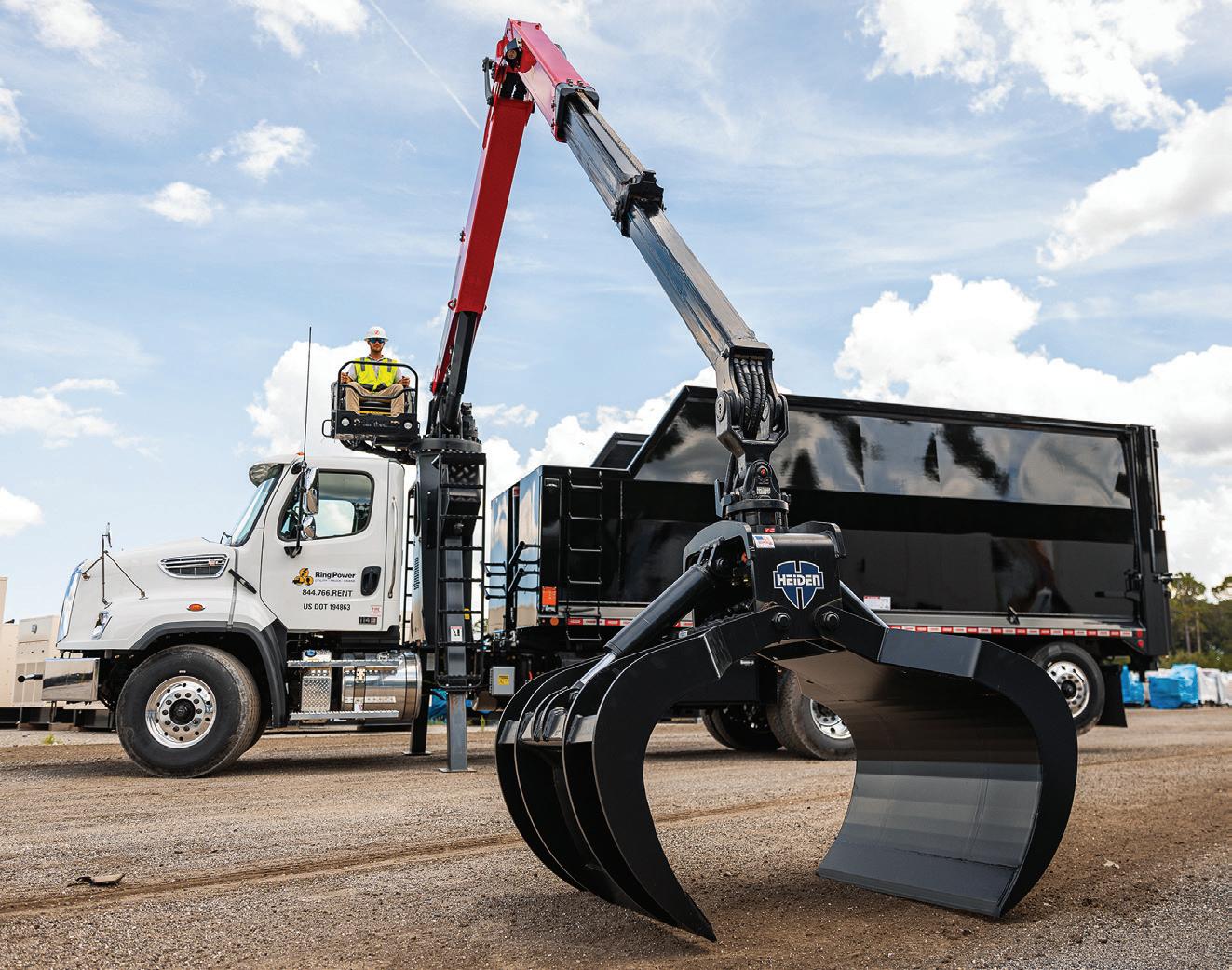
Planning the upfit during the initial vehicle spec’ing phase allows for rightsizing the powertrain and chassis, extending the life of the engine and transmission and maximizing resale value.
Properly upfitted trucks let workers in the field do their jobs, not repairs.
increasingly critical role in reducing upfit errors, improving integration qual ity, and making vehicles easier to main tain over their full life cycle. These tools are reshaping how trucks are specified, built, and serviced, often determining whether uptime is predictable or con stantly disrupted.
“Forward‑thinking companies are investing in vehicle configuration tools that make a big difference in accuracy,” Hansen explained. “These tools help ensure that chassis specifications, equip ment layouts, and integration points are correct before production begins. The companies that adopt these tools will move faster and make fewer mistakes. The ones that don’t will keep running into the same problems.”
OEM‑supported digital integration systems are increasingly designed not just to simplify upfitting but to support maintenance teams long after the vehi cle enters service.
At Mack Trucks, the Mack BodyLink IV system establishes a benchmark for body builder integration on Mack Granite models by delivering custom izable chassis‑to‑body electrical integra tion through prewiring, programmable switches, and flexible connection points. According to Tim Wrinkle, Mack VP of vocational and medium‑duty products, BodyLink IV is designed to make body installation simpler, safer, and faster for body builders and fleet technicians. The system’s features support maintenance by making electrical systems easier to diagnose and service.
For Freightliner Plus and Western Star X‑Series trucks, DTNA supports digital integration through its QuickFit solution powered by CHEC (Custom Hardware and Electronics Configurator). QuickFit connects body equipment directly into the truck’s electrical and pneumatic architecture, reducing opportunities for noise, moisture ingress, and instal lation errors.
From a maintenance standpoint, one of the most important benefits is diag nostic clarity. Service teams can use QuickFit interface connectors to iden tify whether an issue originates on the truck side or the installed equipment
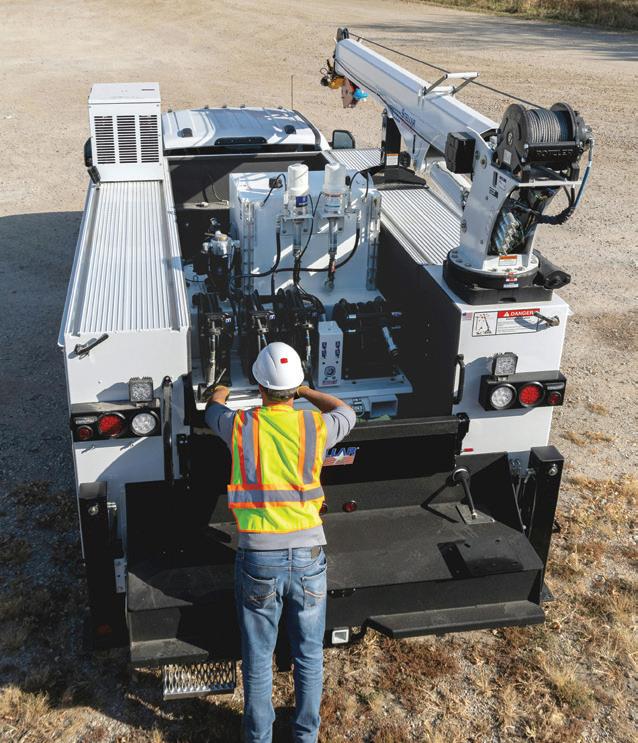
Upfitting is about more than just equipment and parts selection. Proper installation and integration are just as important drivers of long-term value.
side, helping reduce misdiagnosis and unnecessary downtime.
CHEC, the supporting software tool, allows body builders to configure how equipment communicates with factory switches and indicators. By defining this logic digitally rather than through hard‑wired workarounds, CHEC sup ports more consistent builds and sim plifies future troubleshooting.
At Ford Pro, digital integration is cen tered around the Vehicle Integration System 2.0 (VIS 2.0), which replaces physical switches and complex wiring with a digital gateway. VIS 2.0 allows upfitters to program logic directly into the system. For example, logic can be created to prevent a vehicle from shift ing into drive when part of the upfit is deployed, reducing safety risks and component damage.
The Ford Pro Upfitter Portal further supports this ecosystem by providing access to 3D CAD data, technical SVE bulletins, the company’s Body Builder Layout Book (BBLB), and other engineer ing resources. These tools help ensure that upfits are designed with proper clearances, integration points, and ser vice access from the start.
GM Envolve supports proper upfits through a suite of digital and engineer ing resources, including its GM Upfitter Integration website. This platform pro vides access to body builder manuals, bulletins, and current production CAD data.
Tools like the Universal Vehicle Module (UVM) help ensure compatibil ity between upfitted equipment and the chassis electrical system. By supporting standardized integration, UVM reduces the likelihood of electrical conflicts and
long‑term maintenance issues.
At Ring Power, Cole Schreiber, engi neering supervisor, explained that digi tal engineering tools have significantly improved collaboration with customers.
“Our engineering team develops 3D design models for custom builds, allow ing customers to review layouts and con firm specifications before production begins,” he said. “This upfront visual ization helps identify serviceability concerns, clearance issues, and layout conflicts before they become mainte nance problems in the field.”
Schreiber added that chassis‑spe cific programming platforms, such as CHEC and International Diamond Logic, allow auxiliary functions and equip ment controls to be integrated directly into the vehicle’s electrical system. This approach reduces reliance on standalone switches and nonstandard wiring, improving both reliability and diagnostics.
Uptime is built, not repaired From independent upfit experts to OEMs and equipment suppliers, the message is clear: Upfitting decisions directly determine maintenance outcomes and uptime. Material selection, electrical integration, weight distribution, ser vice access, and digital planning tools all shape how a truck performs through out its service life.
When fleets treat upfitting as engi neering rather than procurement and use the right tools and partners, down time becomes predictable, maintenance becomes manageable, and uptime becomes a competitive advantage. As Hansen put it, “Uptime is planned. It doesn’t happen by accident.” TBB
NATM 2026 convention breaks records with industry innovation and engagement
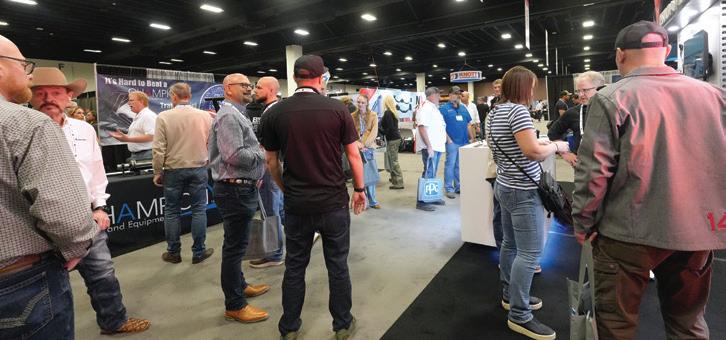
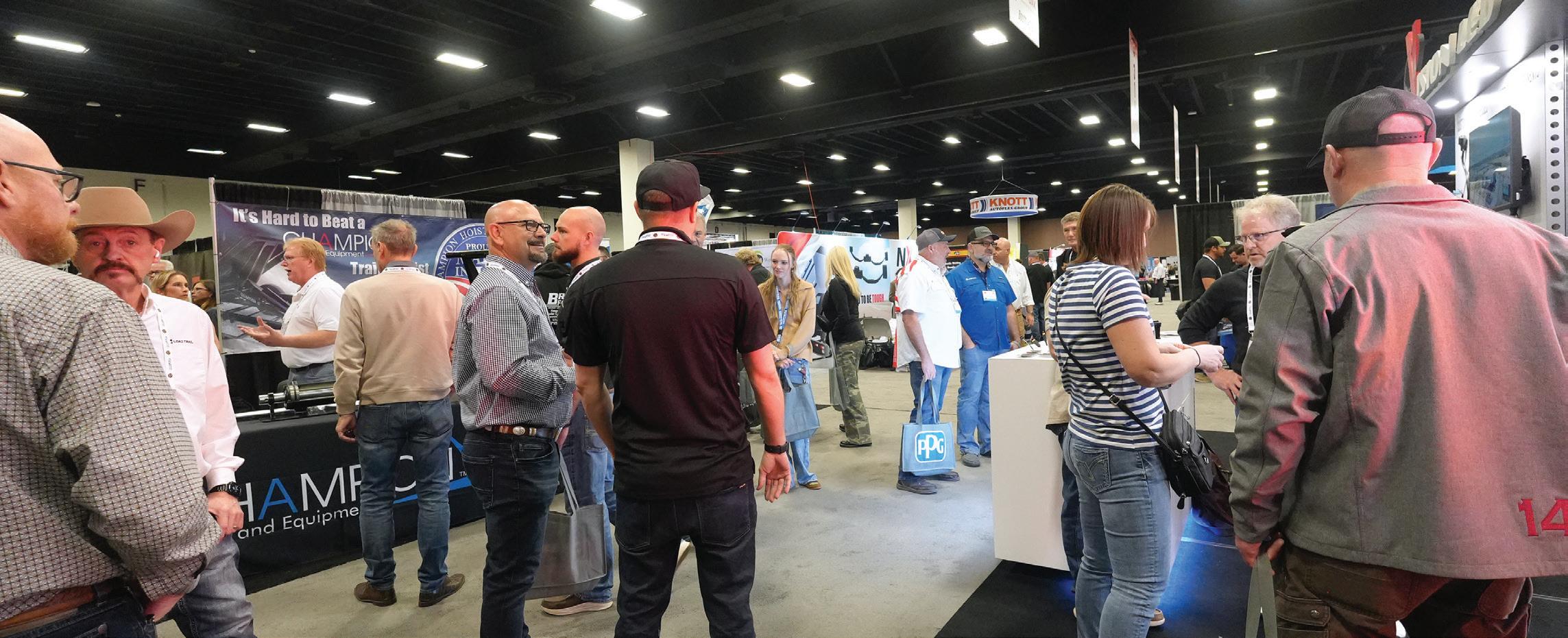
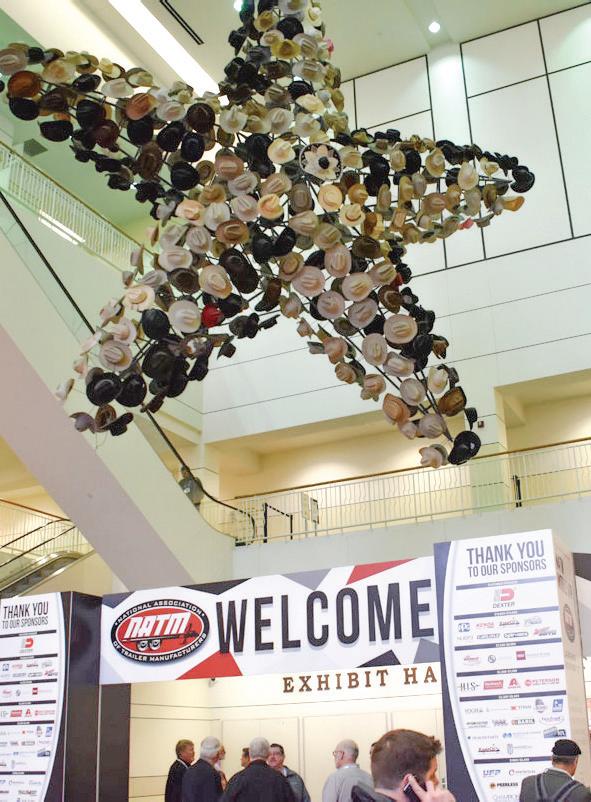
FORT WORTH, Texas— e National Association of Trailer Manufacturers returned to a familiar stomping ground this year, rounding up its most successful Convention & Trade Show to date at the Fort Worth Convention Center here earlier this year.
The event saw record-breaking attendance, a bustling exhibit hall floor, and the expected attendee experience—a product of the cooperation and commitment of NATM’s exhibitors, sponsors, and attendees.
A total of 1,532 individuals attended this year’s show, including 499 representatives from trailer manufacturers, NATM reported, marking a continued upward trend in participation and interest across the industry.
The 2026 NATM exhibit hall was packed with energy and innovation, featuring 355 booth spaces taken up by 242 companies including 31 new member companies.
NATM reported that exhibitors made connections with 1,473 exhibitor leads collected, while attendees exchanged 1,489 private messages through Whova, the official convention app.
Insider discussion
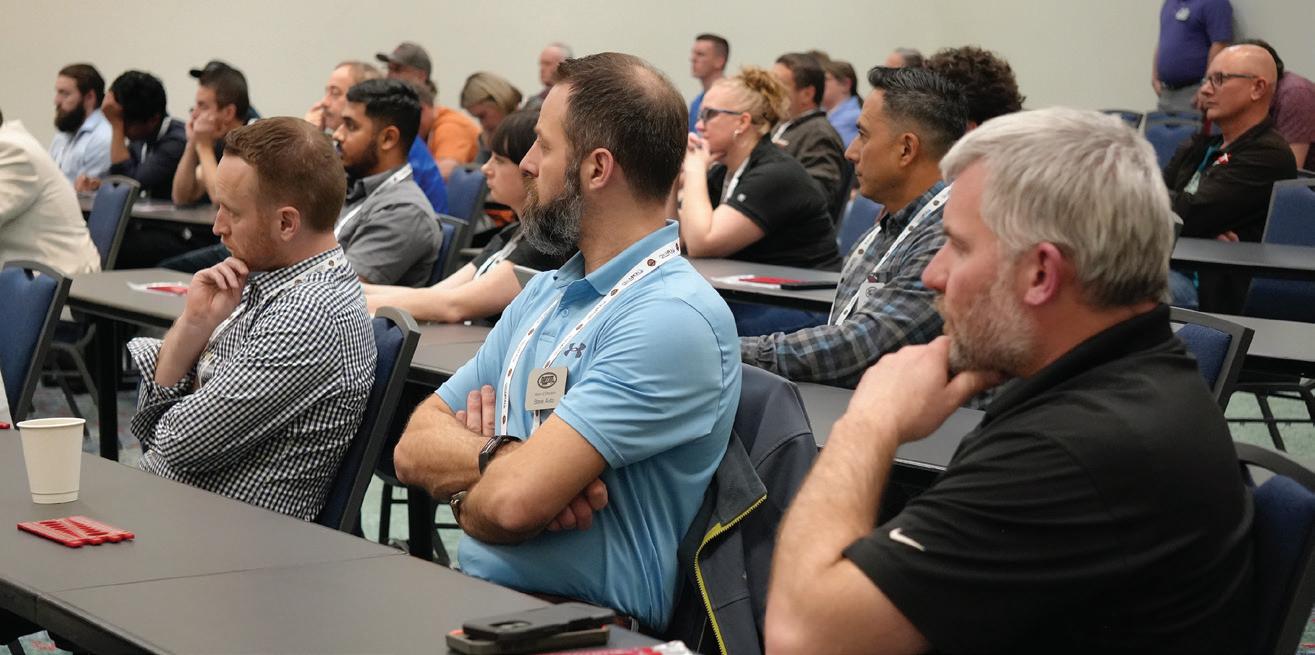
NATM made some programming adjustments this year, and a packed conference
room and active audience participation proved the new concepts to be just what attendees were looking for.
The new Wednesday morning event, Bacon & Brilliance: Association Update and Awards Brunch replaced the traditional early workshops with an NATMfocused experience that brought the community together over great food and updates on the association’s success. On the menu, along with bacon and other brunch favorites, were the State of the Association address; annual membership awards; and video updates on programming such as the NATM Academy, National Safe Trailering Council, and Trailer Safety Week.
The highlight was the panel discussion that ran through the array of various NATM member challenges and
Kevin Jones | TBB
Jones
NATM
The targeted workshops and technical forums packed the breakout rooms.
opportunities, and checked the pulse of the industry in real time with phonebased audience polling. (See page 6)
After brunch, attendees headed straight into the exhibit hall.
Also new for 2026, Tuesday’s traditional awards luncheon and keynote speaker were replaced by the Government Affairs Lunch & Learn, featuring NATM’s government affairs representatives, K&L Gates, who offered insight into the legislative and regulatory developments shaping trailer manufacturing, alongside food and networking. Yes, tariffs were a main topic.
Workshops and education
The NATM Educational Workshops and Technical Forum sessions, covered an array of industry aspects including manufacturing processes, technology, and sales tips.
The workshop, Humanize Before You Monetize—T.I.E. Relationships to Revenue allowed NATM Members to explore how Time, Intention, and Experience (T.I.E.) can transform everyday interactions into business-building opportunities.
This session was voted on by NATM’s education and convention committees as one of the most impactful topics for 2026, reflecting member demand for programming that goes beyond technical skills and speaks to the heart of business success, according to the association.
Dustin E. James, known as “America’s Top Corporate Energizer,” took the stage to challenge attendees to humanize their interactions before trying to monetize them. He also warned against distractions and emphasized the importance of managing one’s attention and energy.
During the technical forum Driving Efficiency in Trailer Manufacturing —The Case for Automation , Tim Hildebrandt and Chris Poole of Acieta showed how automation can solve bottlenecks, boost safety, and deliver measurable ROI, while empowering your workforce instead of replacing it.
Trailer manufacturers want to work smarter, and automation isn’t just for massive manufacturing plants.
The session showed how automation can help reclaim lost time, eliminate bottlenecks, and raise quality standards—even in custom-shop environments. Through data-driven insights and peer-proven examples, attendees learned exactly how to spot when the shop is ready for transformation (floor assembly, riveting, welding, or bending tasks, etc.) and what to expect in terms of return on investment.
These sessions and others—ranging from the hardware-focused Fastener Fundamentals to the marketing session AI in Action —provided attendees with actionable insights and
forward-thinking solutions across the trailer manufacturing landscape.
Back to Nashville
The NATM Convention & Trade Show returns to Nashville for next year’s edition, to be held at the Gaylord Opryland Resort and Convention Center, February 15-18, 2027.
Once again, NATM invites the industry to come together for education, connection, and a look at the latest products and services offered by and for light- and medium-duty trailer manufacturers.
Stay tuned at www.NATM.com/ convention.
NATM Board of Directors
The NATM Convention & Trade Show each year signals a transition in leadership, as o cer and director terms roll over with the event. The board welcomed five new directors this year.
Directors, 2024-2027
• Andy Derr, M.H. Eby
• Rick Huddleston, White River Marine Group
• Deborah Edwards, SteelPoint
• Logan Mesenbrink, LANE Trailer Manufacturing
• Dustin Smith, Optronics International
• Steven Aiuto, General Motors
• Kevin Ten Haken, DEMCO
Directors, 2025-2028
• Andy Gehman, MGS Inc.
• Daniel Luby, BoatMate Trailers Inc.
• Nathan Uphus, Felling Trailers
• Heather Gonzales, Down to Earth Trailers
• Eric Kazmierzak, Laclede Chain Manufacturing Co.
• Richard LaVanture, LaVanture Products Co.
Directors, 2026-2029
• Bill O’Hara, Dexter
• Johnathan Bradley, Liberty Trailers
• Chris Lago, All American Trailer Connection
• Charles Daugherty, Red Fern Dynamics
• Dave McKee, ATW
• Jacob Crabb, Diamond C
• Marcus Hester, EMCO
The NATM Convention & Trade Show returns to Nashville in 2027.
NATM recognizes leadership, innovation
At each NATM convention, the association recognizes outstanding contributions from its members.
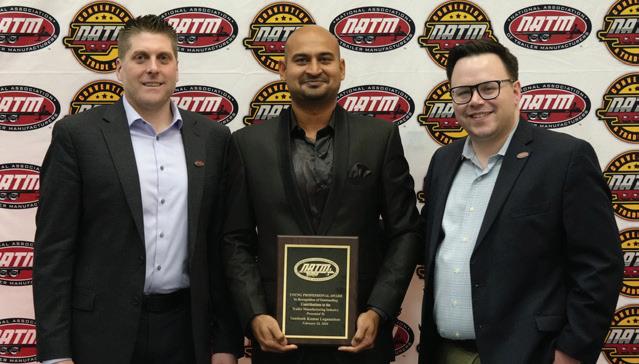
2026 Outstanding Young Professional Award : Santhosh Kumar Loganathan. This award recognizes the remarkable achievements of young professionals in the trailer manufacturing industry and, this year, celebrates Loganathan’s dedication and contributions to the field.
Loganathan is the engineering director at Triple Crown and Down to Earth Trailers. He has played a central role in launching new manufacturing capabilities, scaling production operations, and establishing standardized engineering, quality, and safety frameworks that have been adopted across multiple facilities.
He has led the deployment of automation-driven manufacturing processes, digital work instructions, and compliance-focused engineering standards, resulting in measurable improvements in production efficiency, structural integrity, and safety performance.
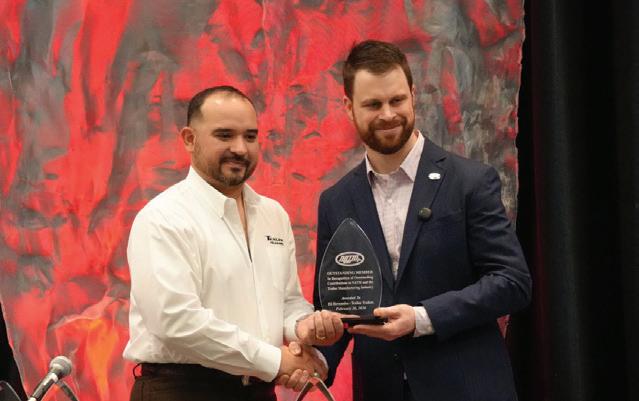
Ed Freel Membership Award : Nathan Uphus, Felling Trailers; and Eli Hernandez, Texline Trailers. Established in 2000 to honor members who demonstrate exceptional commitment to recruiting new members, the award was renamed in 2007 in recognition of Ed Freel’s outstanding contributions to the organization.
Through his work at Felling, Uphus leads market expansion initiatives, develops strategic sales programs, and builds high-value partnerships across
national fleet, dealer, and government segments. He has advanced through a wide range of roles at Felling, from production and logistics to regional territory management, and ultimately to overseeing sales strategy and leadership. Uphus is equally dedicated to serving the industry. In addition to serving as NATM’s Board Vice President and on multiple committees, Nathan was integral in ensuring the success of the inaugural 2025 Trailer Expo.
Hernandez is the CEO of Texline Trailers, a family-owned manufacturer with more than four decades in the trailer industry that is currently transitioning into its third generation with his family.
Since joining NATM, Hernandez has been on a deliberate quest to build a strong internal culture while helping raise standards across the industry as a whole.
Pam O’Toole Trusdale Woman in Manufacturing Award : Mahli Wold, of Central Trailer Sales. This award honors the significant contributions of women in the manufacturing industry, highlighting their achievements and promoting the importance of diversity within the field.
Wold specializes in digital sales and promotions for Central Trailer Sales. Since joining the company, she’s helped grow Central Trailer Sales’ presence online and in their local community.
Wold also made a huge contribution to the industry and trailer safety in her community by organizing and spearheading Central Trailer Sales
first in person Trailer Safety Week event in Minnesota at their company headquarters.
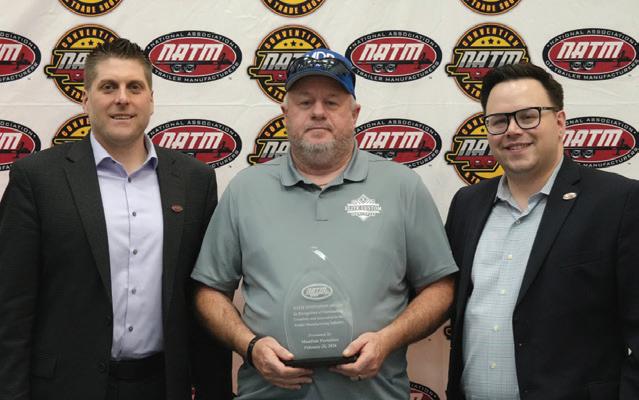
2026 NATM Innovation Award : MonDak Portables. This recognition highlights MonDak’s contributions to technological advancement, green practices, and workforce development within the light- and medium-duty trailer industry.
MonDak builds clean-water trailers designed to provide safe, potable water in remote or emergency situations. Their trailers are equipped with advanced filtration systems, high-capacity tanks, and multiple dispensing points.
Accepting this award on behalf of MonDak was Rick Rogers. He is the general manager of Mondak Portables, a role he has held since 2008. Rogers’s career spans more than three decades across construction, manufacturing, and portable solutions. He has played a critical role in shaping the company’s growth, operational excellence, and reputation for forward-thinking solutions.
Rick Rogers of MonDak Portables with NATM Vice President Nathan Uphus and Executive Director Alex Stowe. NATM
Mahli Wold, of Central Trailer Sales, with NATM President Andy Derr. Kevin Jones | TBB
Eli Hernandez, Texline Trailers, with NATM President Andy Derr. NATM
Santhosh Kumar Loganathan with NATM Vice President Nathan Uphus and Executive Director Alex Stowe. NATM
Trailer Trends & Tech Showcase winners
During the 2026 NATM Convention & Trade Show, trailer manufacturer attendees were encouraged to explore the Trailer Trends & Tech Showcase and cast their votes for their top choices in each category. This year’s showcase featured a variety of innovative products and solutions focused on safety and user experience.
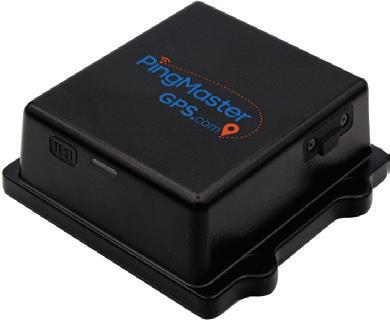
Innovation Breakthrough Award, Cutting-Edge Component of the Year: Matrack PingMaster GPS. The award celebrates a forward-thinking component in the trailer industry. The honor highlights the advancements of components which push the boundaries of innovation to create an improved product.
The OneClick Trailer Alarm is a wireless, GPS-powered security system for all trailer types. Through their mobile app, owners activate the alarm with a
single tap to: 1) receive instant alerts when unauthorized movement occurs, and 2) track location every few minutes, including speed and direction. The alarm offers flexible activation options, including automatic daily scheduling, and intelligently filters out non-threatening movements such as wind gusts and yard repositioning.
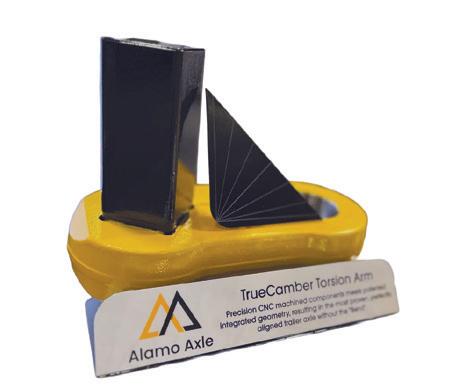
Engineering & Design Excellence Award : Alamo Axle. The award is
designed to honor achievements in product engineering, materials, and design that have redefined the landscape of trailer components and products. From cutting-edge materials to innovative design concepts, this award recognizes those who have pushed the boundaries of what is possible in the trailer industry. Alamo Axle’s TrueCamber Torsion Drop Arm is precision CNC-machined
Continued on p.30
Pingmaster GPS Matrack
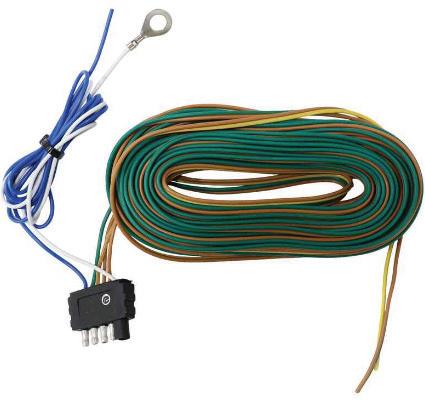
Optronics Wishbone 5-Way Trailer Harness
Alamo Axle’s TrueCamber Torsion Arm Alamo Axle
BOBTAIL R
ENGINEERED TO HOLD. BUILT TO LET GO.
Continued from p.27
components combined with a patented integrated drop-arm geometry that creates consistently perfect axle alignment and long-term performance.
Excellence in Service & Customer Experience Award : Shelby Trailer Service. The award is designed to honor and showcase the efforts and innovations that have elevated the experience for both customers and service providers within the trailer community. This supplier or service provider understands that a seamless, efficient experience is a key differentiator.
Shelby Trailer Service’s new 1.75-inch x 8-inch board with a single cleat for traction. Made of 100% recycled rubber and plastic paired with phenomenal customer experience, made for quite the impression at this year’s Convention & Trade Show. Smooth Operator — Improved Towing Experience Award : Optronics International. The Smooth Operator Award stands as a badge of ingenuity, craftsmanship, and commitment to elevating the towing industry. This award is reserved for the trailblazers in the trailer industry, those who have dedicated themselves to refining and perfecting
the art of towing, creating a smoother, safer, and more enjoyable experience for end-users.
Optronics USA Harness has introduced an extensive line of “plug-n-play” wiring harness kits, harness components, and repair parts for light- to medium-duty trailers. Using harness kits results in decreased labor costs during production, and increased reliability of the power delivery system to the user. Pairing USAH harnessing with Optronics LED lighting offers an integrated, modular power-delivery and lighting solution backed by the Optronics industry-leading warranty.
Trailer Safety Week returns in June
The National Association of Trailer Manufacturers continues to take the lead in trailer safety and once again will organize Trailer Safety Week (TSW) in the first week of June, a program designed for NATM members and the trailer industry to unite in making our roads safer. TSW is dedicated to promoting safe trailering practices and educating end-users, dealers, and manufacturers on trailer safety.
Reaching hundreds of thousands annually and earning federal recognition for the third consecutive year in 2025, TSW is traffic safety initiative for light- and medium-duty trailers. NATM offers extensive resources and materials to support this vital mission, all available on the Trailer Safety Week website.
5 reasons NATM members should celebrate Trailer Safety Week
• NATM Members set the standard in safety-driven products and practices.
• Participation showcases your company’s commitment to safer roadways for all.
• It facilitates collaboration with local government agencies.
• It strengthens unity within the trailer industry.
• It provides media exposure opportunities for involved companies.
Safety made easy
The NATM Team understands the fastpaced nature of spring and summer in the trailer industry, which is why June is the perfect time for TSW. It highlights safety amidst the busy, warm-weather activities that bring millions of trailers to our nation’s roadways.
To support NATM Members during this peak season, the TSW team has developed the official TSW Communications Kit.
This kit includes pre-written social media posts, downloadable TSW graphics, blog posts, email invitations, and more. Updated annually, these resources are easily customizable to fit each company’s branding with minimal effort.
Additionally, the Trailer Safety Ally program offers companies eager to join the safety campaign a great opportunity, even with limited time. As a Trailer Safety Week Ally, NATM provides a Communications Kit that highlights the company’s participation in TSW while promoting safe trailering.
The kit includes ready-to-use social media posts, downloadable graphics, blog posts, and more, customizable to feature specific products and services that enhance trailer safety. Becoming a Trailer Safety Week Ally signals to potential customers that safety is your priority.
This year’s Trailer Safety Week will be held June 7-13.
NATM
The Trailer Safety Week Champion program honors companies that exceed expectations in supporting TSW, offering enhanced promotional opportunities. While Allies span the nation, Champions meet specific criteria and receive benefits detailed on the TSW website.
The Trailer Safety Week Partnership program acknowledges companies, organizations, and agencies that contribute to the TSW mission by creating and sharing educational content and resources.
Partnerships require a significant commitment to developing and sharing educational material and must meet specific standards.
Visit TrailerSafetyWeek.com for more details on becoming a Trailer Safety Ally, Champion, or Partner. NATM is eager to partner with its members to advance safety in the light- and medium-duty trailer industry.
This year’s Trailer Safety Week will be held June 7-13. TBB
Dealer education, new tech define 2026 Trailer Tech Expo
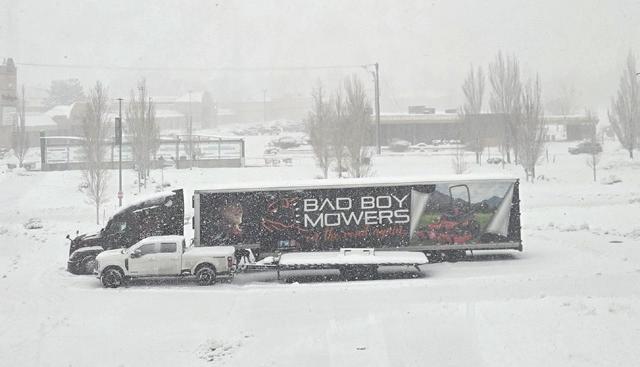
RENO—The North American Trailer Dealers Association once again brought dealers and exhibitors together for several days of learning opportunities, innovation, and face-to-face collaboration at the second Trailer Tech Expo Powered by NATDA. The 2026 edition was made all the more cozy by a foot or so of snow that fell here during the February 17–19 event.
Despite those winter storm conditions, nearly 60 innovation-driven exhibitors made it onsite, bringing their services and products for the light- to medium-duty trailer industry.
Trailer Tech Expo began with two days of instruction and education that provided actionable insights for dealers and hands-on technician training. On Wednesday night, recipients were revealed at NATDA’s Industry Excellence Awards dinner and ceremony. The event concluded on Thursday with a full day of innovations and dealer meetings on the show floor.
“NATDA’s Trailer Tech Expo was designed to equip dealers and trailer industry professionals with the knowledge, innovations and connections needed to navigate the rapidly evolving trailer industry,” said NATDA Executive Director Andria Gibbon. “With
cutting-edge technology, hands-on training, forward-thinking discussions and best-in-class networking, Trailer Tech Expo has set a new benchmark for innovation and education inside the industry.”
Hands on training, education
The highly rated service classes expanded from last year to 11 classes and more than two full days of training and included a new technician happy hour. Technicians praised the Dexter supported hands-on instruction, providing maintenance fundamentals and diagnostic content for newer techs while still offering valuable refreshers for experienced professionals.
The Expo’s education program emphasized immediately applicable fundamentals for dealership leaders, service teams, and marketing staff. Top rated sessions by attendees included two
A foot of snow made for some tough sledding for exhibitors and attendees alike, with major highways closed in the Reno area.
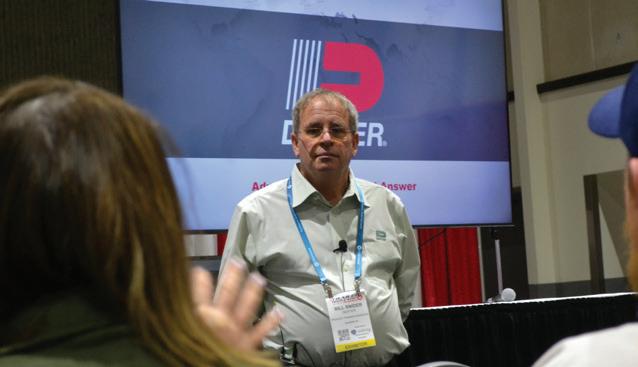
Bill Snyder takes questions during one of the many training sessions Dexter offered at Trailer Tech Expo this year.
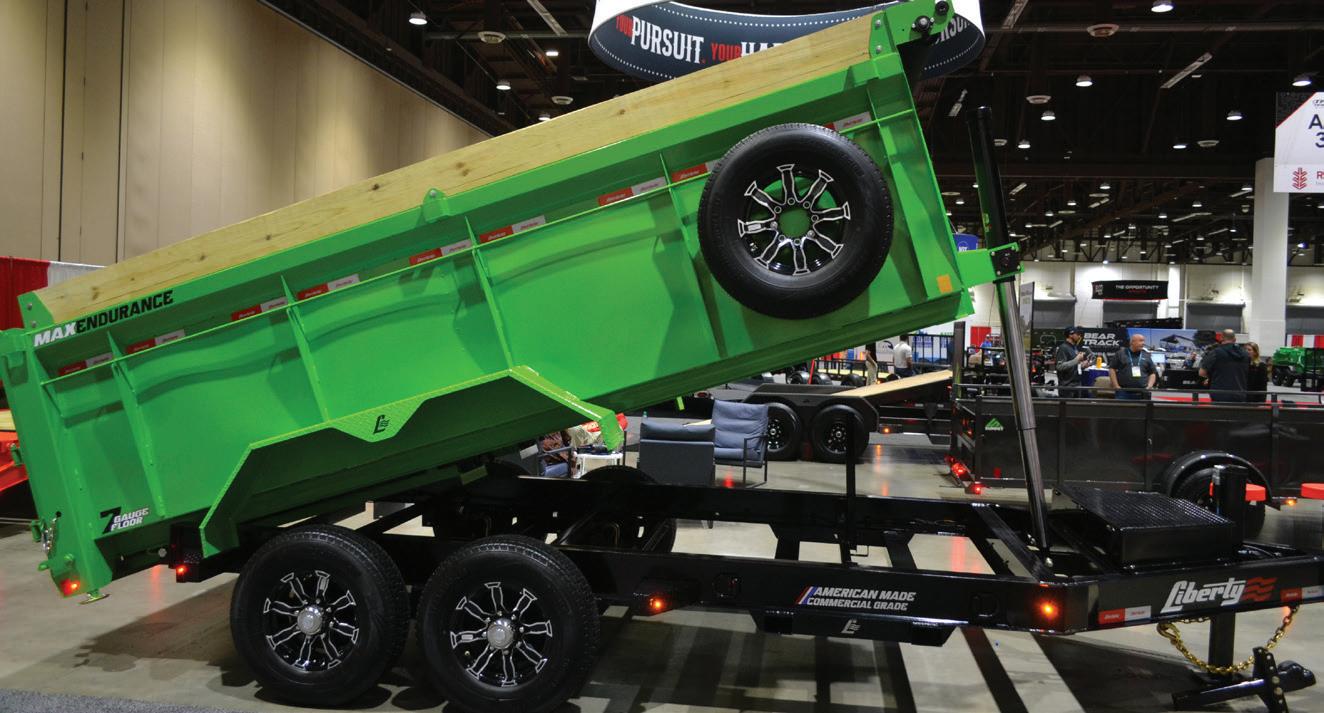
Despite the challenging conditions, Liberty Trailers had wares to display on the show floor.
Kevin Jones | TBB
Kevin Jones | TBB NATDA
Kevin Jones | TBB
TOW TALK panels:
• Tow Talk – Get the Crew on Board: The Science of Making Change
• Simple Step-by-Step Instructions for Additional Lead Generation
• Tow Talk – Driving Profit: Understanding Dealership Revenue Flow and Developing Service Leaders
The curriculum combined leadership, service productivity, revenue flow, and practical marketing tactics.
The day-long, small-format expo encouraged longer, more substantive conversations between dealers,
manufacturers and vendors, many offering hands-on demos as well as sneak peeks at new products and services.
Honoring the industry’s top performers
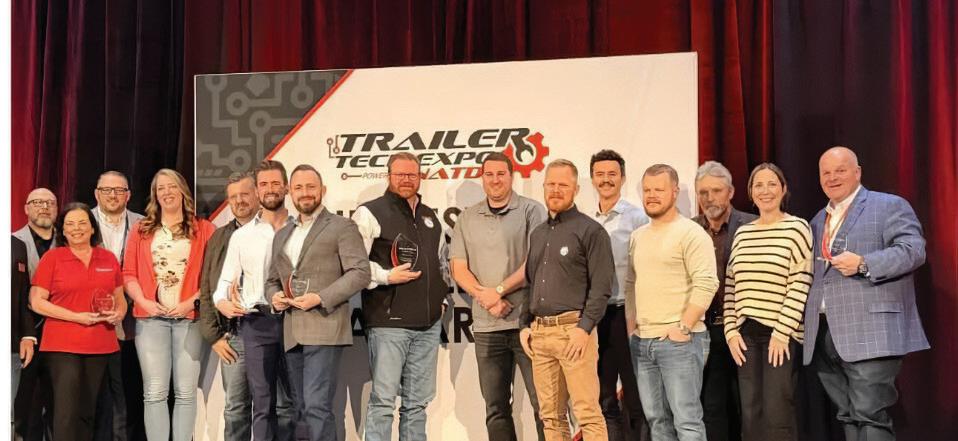
NATDA’s Industry Excellence Awards banquet was one of the key networking opportunities during Trailer Tech Expo. Now in its second year, the awards recognized 11 standouts including Lifetime Achievement recipient George Fehr, owner and founder of Lamar Trailers.
The rise of ‘blue-collar’ AI
The dinner and ceremony brought hundreds of trailer professionals together to recognize business excellence, customer service, and community impact in the industry.
“What matters most is face time that turns into results,” Gibbon said. “Trailer Tech Expo is built around deeper conversations—on the show floor, in the classrooms, and during events—that help dealers align with vendors, sharpen operations and processes, and close real business when they get home.”
Practical tactics for the trailer industry—don’t get left behind
By Kevin Jones
At the 2026 Trailer Tech Expo, a panel of industry experts gathered to demystify one of the most misunderstood forces in modern business: Artificial Intelligence. Titled “Blue-Collar AI: A Practical Breakdown for 2026,” the session moved past the hype of the previous year to provide a “no-fluff” roadmap for dealerships looking to gain a competitive edge
The core message from the panelists—Mike Wyrzykowski and Jonathan Aguero of Blackpurl, Oliver Reelsen of Novae, and Mark Wagner of Aluma Trailers—was clear: AI is no longer a “tropical storm” forming in the distance; it has made landfall, and those who harness it as an extension of their own intelligence will dominate the market.
From replacement to extension
A recurring theme throughout the discussion was the rejection of the “AI will replace us” narrative.
Wyrzykowski emphasized that AI is not a tool for cutting heads but a foundation for growth. In fact, the panelists argued that properly leveraging AI often feels like more work initially because it requires users to engage, hone, and interrogate the technology until it reflects
their specific brand and logic.
The goal is to move mundane tasks to the AI so human staff can focus on high-value activity, elevating the output of the entire dealership.
“We feel it’s important that everybody get involved now, because the wave is going to continue to increase in height and power and influence,” Wyrzykowski said. “The tools are going to get better and better—but it’s important start using it now, because how I use it’s different than each of the panelists. Our brains
work differently, and ultimately it’s an extension of us.”
Industry-specific innovations
Aguero’s presentation highlighted several “true AI” tools already impacting the trailer space:
• Kenect’s Voice AI acts as a 24/7 receptionist for service departments, scheduling appointments and providing multilingual support
• Equipment Trader now utilizes an AI auto-selector to improve
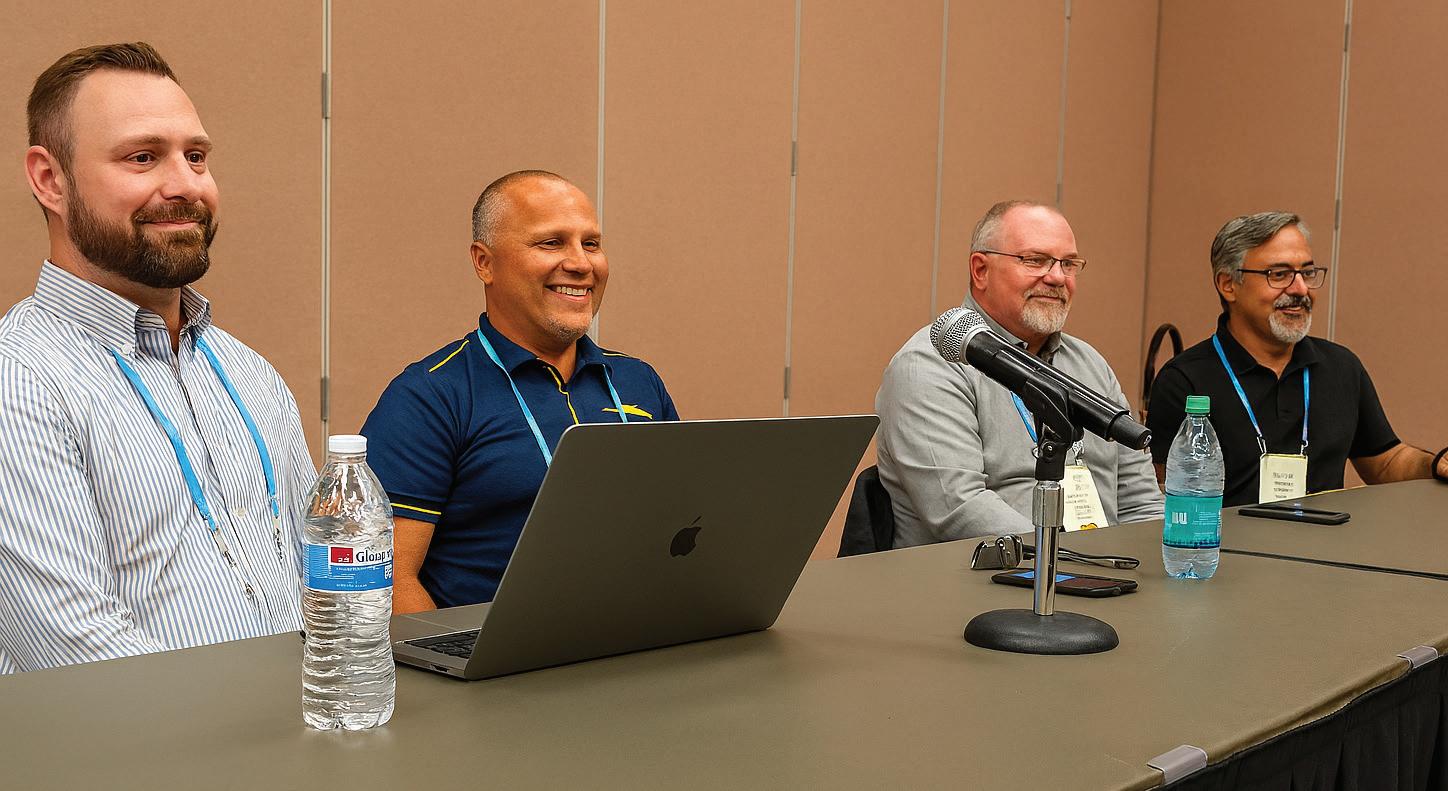
Panelists for the Trailer Tech Expo AI session included, from left, Mike Wyrzykowski and Jonathan Aguero of Blackpurl, Oliver Reelsen of Novae, and Mark Wagner of Aluma Trailers.
Kevin Jones | TBB
merchandising and increase page views
• DP360, Transax and other CRM tools offer AI-driven web lead responses and workflow controls
• Within the back office, Blackpurl’s “Super Receive” feature, released at the show, allows staff to take photos of vendor invoices—even those with handwritten notes—and uses AI to scan and enter parts data automatically, saving hours of manual entry
• QuickBooks has introduced AI-powered cash flow predictors and automated invoice reconciliation
Unlocking ‘hidden gold’ in data
Reelsen, CIO of Novae, provided a compelling demonstration of how AI can turn “mountains of data” into actionable insights.
Using Microsoft Copilot within Excel, he showed how AI can analyze a year’s worth of dealership sales history in under 30 seconds. The AI identified top-performing salespeople, analyzed seasonal revenue trends, and even pinpointed specific product gaps.
This “data analyst in a box” allows dealers to understand why certain units sell at year-end or which customer segments provide the best margins without needing a specialized IT department.
One attendee noted that tasks that previously took a staff member 10 days to complete, such as developing order pattern reports, are now being finished in a single day using these tools
Operational efficiency and marketing
The panel also explored AI’s role in training and marketing. Reelsen described a workflow where a 20-minute video of a technician performing a complex task and describing the work is processed by AI to create a standard operating procedure (SOP) document in minutes.
“I plug the video into this AI engine,” Reelsen said. “We told it what we want the format to look like and, minutes later, I had a document, step by step, on how to operate this welding robot. I can publish it as a PDF. I can quickly put it on the shop floor. We also have computers
3 immediate steps for AI implementation
Upgrade to Paid “Pro” Accounts:
Immediately transition from free versions to paid subscriptions (e.g., ChatGPT Plus, Microsoft Copilot) for all staff handling dealership data. This protects your proprietary information and ensures your customer data isn’t used to train public models
Conduct a “Data Export” Audit: Export your most recent month of sales or parts data into Excel and use Microsoft Copilot
throughout the shop floor.”
This replaces hours of manual documentation by engineers and ensures institutional knowledge is preserved.
On the marketing front, Wagner demonstrated the “Lyra 4D” prompt engineering system—Deconstruct, Diagnose, Develop, and Direct—to create high-quality social media content.
For instance, by using specific prompts, a dealer can generate an entire campaign for an open house, including catchy ad copy and AI-generated images via Canva, in less than five minutes.
“The hard part is you look at prompt engineers—they go to school, get a degree, and do this for a living for big companies,” Wagner said. “Most people aren’t using AI to the full efficiency; they’re just barely scratching the surface. Once you learn that you can open this up, there’s a lot you can do with it—more than just use it for fun, and talking to it.”
Safety, security, and hallucinations
The experts issued a stern warning regarding security: Avoid free versions of AI for business data. Using free tiers can result in proprietary information entering the public search domain.
The panel recommended paying the $20−$30 monthly fee for premium versions of ChatGPT, Claude, or Copilot to ensure data privacy and to avoid “DeepSeek” or other foreign tools that
to “Analyze this sheet.” Ask the AI to identify your most profitable units and your lowest-performing categories to find immediate areas for margin improvement
Automate One Routine
“Paperwork” Task: Identify a repetitive manual process—such as writing service SOPs, generating social media posts, or entering vendor invoices—and use a tool like Blackpurl’s Super Receive or a custom ChatGPT prompt to handle the first draft.
might compromise intellectual property.
Furthermore, users must verify AI outputs. To illustrate this, the panel shared a cautionary tale of a high-end lawyer who used ChatGPT to cite seven case law precedents—all of which were entirely fabricated by the AI.
Dealers were urged to “take responsibility” for AI content and always validate its logic before implementation.
Ultimately, the consensus of the panel was that AI is a surefire way to “elevate your game” without massive capital investment.
As the trailer industry becomes more sophisticated, AI will become the heartbeat of successful operations, allowing dealers to “bend and challenge” their businesses to reach new levels of productivity.
“The trailer industry is leveling-up its game, big time,” Wyrzykowski concluded.” And these AI tools, while some of you are already using them pretty extensively, others are probably playing with them. But there’s a lot of unlocking performance without massively opening up your wallet, without throwing thousands of bucks on the floor.
“The people don’t take this seriously and start applying it, not just to the periphery their business, but at the core of their business, are going to be left behind by the industry. here’s so much gold, so much insight, so many answers in it. So, as a panel, we really encourage you to jump in and really get involved.”
Three pillars of trailer dealership service profitability
By Kevin Jones
Time is money —it’s an aphorism attributed to Ben Franklin, and it makes obvious sense. So obvious, like maybe oxygen or gravity, business managers don’t even think about it (until it’s gone).
A better way to drive the lesson home, for dealership leaders, is to think of time as inventory. If tens of thousands of dollars of trailers routinely disappeared from the lot, that’s a big problem. And so should be the valuable hours lost on the shop floor, virtually every day.
That’s the key takeaway to the Trailer Tech Expo Tow Talk session, “Driving Profit: Understanding Dealership Revenue Flow and Developing Service Leaders.” The panel featured Sara Hey, president of Bob Clements International;
Mark Spader, a 20 Group moderator and trainer with NCM Associates; and Ronnie Enns, owner of Happy Trailers. Together, they explored how dealerships can shift from viewing service as a troublesome necessity to treating it as an engine for financial stability and growth. The discussion provided a roadmap for transforming the service department into a profit center by focusing on people, processes, and productivity.
The three most critical actions a dealership can take to optimize its bottom line, based on the panel discussion:
1. Treat time as your most valuable inventory
The most significant mental shift a
dealership leader can make is to recognize that time is the service department’s primary inventory. Unlike physical trailers on a lot, lost time can never be recovered. Every day, a dealership “buys” eight hours of time from each technician; a manager’s job is to ensure that inventory is sold efficiently. Losing just one hour of billable time per technician each day can be costly. For a dealership with three technicians and a $100 hourly labor rate, this inefficiency translates to a loss of $92,000. To protect this inventory, dealerships must implement rigorous processes for technicians to clock in and out of specific repair orders, treating a “missing hour” with the same urgency as a stolen trailer.
NATDA names Industry Excellence Awards recipients
The North American Trailer Dealers Association named the winners of the NATDA Industry Excellence Awards at Trailer Tech Expo, recognizing outstanding individuals and companies whose leadership, innovation and dedication continue to elevate the trailer industry. These awards celebrate achievements across multiple categories that highlight operational excellence, industry advancement and community impact.
NATDA’s Industry Excellence Awards recipients are:
• Lifetime Achievement Award (Vanguard): George Fehr, Owner & Founder, Lamar Trailers
• Manufacturer of the Year: Delco Trailers
• Dealer of the Year: Happy Trailers
• Vendor of the Year: Taskmaster Components
• Women in Trailer Industry (WITI) Award / Woman of the Year: Megan Swank, Owner, White Spruce Trailer Sales
• Educational Excellence Award: Johnathan Aguero, SVP of revenue, Blackpurl
• Rising Star Award – Company: NXG Truck Bodies, Mount Pleasant, TX
• Rising Star Award – Individual: Nathan Bryant, Sales, Delco Trailers
• Customer Service Excellence Award: Load Trail & Delco Trailers
• Community Impact Award
– Charitable Giveback: Kim Crabb, Co-Owner, Diamond C Trailers
“The 2025 Industry Excellence Awards recipients represent the commitment, forward-thinking leadership and service-driven mindset that continue to strengthen and advance the trailer industry,” said Andria Gibbon, executive director of NATDA.
“Recognizing their accomplishments reinforce NATDA’s mission to support the continued success across all of our member types.”
The awards were presented during the Industry Awards Banquet, where trailer industry professionals gathered to recognize the accomplishments of peers and celebrate the innovation and dedication driving the industry forward.
NATDA
2. Implement flat rating and menu pricing
Many dealerships inadvertently give their customers massive discounts by billing via “time and material.” When an expert technician completes a task quickly, the dealership loses revenue because it only bills for the hours worked. Instead, dealerships should adopt flat rating based on the time a B-level technician requires to complete a job with basic tools.
Sara Hey, president of Bob Clements International, encouraged dealers to protect shop time with the same rigorous accounting controls as trailer inventory and parts.
Efficiency is further enhanced by selling “solutions” through menu pricing. For example, rather than quoting an hourly rate for a toolbox installation, a dealer should offer a flat “out-the-door” price that includes the parts and labor. Dealerships also can use condition multipliers: adding a 50% time buffer for trailers in excellent condition and an additional 30% for those in poor or fair condition. This approach removes guesswork, improves billing accuracy, and rewards technician efficiency.
3. Establish independent profit centers with integrated incentives
Dealerships fail when they treat service and parts as mere extensions of the sales department. To maximize efficiency, each department must be managed as an independent profit center with its own revenue goals and leadership.
True optimization occurs when these departments are integrated through shared incentives. By establishing a “bonus pool,” employees are motivated
to work together rather than in silos. This creates a culture of mutual accountability where team members ensure everyone is pulling their weight. And dealerships should focus on developing service leaders rather than simply promoting top technicians without providing them the management tools and training necessary to succeed in a leadership role.
The bottom line has to be the bottom line. Hey concluded the discussion with an anecdote about a senior technician who just didn’t like the idea of being tracked all day, every day.
“He said, ‘Sara, my wife doesn’t get to know where I am all the time. What makes you think that the service department gets to know where I am all the time?’” she explained. “Okay, point taken. But there was not a long-term career for him at this dealership, because we started treating the service department’s inventory, which is time, with the same dignity and respect that we treated whole goods with and parts with.”
Polar King unveils solar assist electric reefer
Polar King launched its Everest Edition walk-in refrigerated and freezer trailer at Trailer Tech Expo. The unit is billed as the industry’s first solar-assist mobile solution.
The Polar King Everest Edition builds on the company’s all-electric foundation by integrating solar-assist technology designed to extend runtime, improve energy efficiency and enhance operational flexibility.
“Everest Edition represents the next evolution of electric refrigeration,” says Danny Gaviria, national sales manager for Polar King’s trailer division. “By integrating solar assist into our proven electric platform, we’re giving operators longer runtime, reduced charging dependence, and zero on-site emissions, all in a plug-and-play solution ready for real-world use.”
At the core of the Polar King Everest Edition is a hybrid solar-assist and DC charging system engineered to
supplement battery power and extend operational runtime. Solar panels help offset daily energy consumption, while primary DC charging ensures consistent, dependable replenishment.
Key features include:
• Solar assist charging to extend battery runtime
• Intelligent power management designed to prioritize battery health and uptime
• Battery-powered refrigeration for silent, zero on-site emissions operation
• No engine, no fuel and no mechanical generator
In addition to solar assist and DC charging, the trailer supports dual-voltage AC charging:110V AC charging for convenient overnight charging from standard outlet; and 220V AC charging for faster recharge times where higher-capacity power is available.
This flexible charging architecture
The Polar king space at Trailer Tech Expo featured the just-announced Everest Edition walk-in refrigerated and freezer trailer, as well as the Avalanche with ground-level loading technology.
allows operators to recharge at facilities, events, job sites or staging areas, while solar continues to support ongoing energy demands.
The Polar King Everest Edition rests on a 6’x12’ trailer platform. The all-fiberglass interior and exterior keep internal products safe from external conditions. The Everest Edition maintains a 0°F to 50°F temperature range, according to the manufacturer. TBB
Kevin Jones | TBB
Kevin Jones | TBB
New normal: Adapting to chaos
NAFA 2026 OEM panel embraces resilience, suggests customers do the same
By Kevin Jones
CLEVELAND—As the fleet management industry faces a period of “constant flux,” the General Session of the NAFA 2026 Institute & Expo addressed the “black swan” events and charted a course for the future. The April 14 session featured a keynote from Kevin Curran, GM of fleet sales for Toyota North America, followed by an OEM panel discussion featuring executives from GM Fleet, Stellantis, Ford Pro, and Nissan.
The misogi mindset: embrace intimidating goals
Curran opened the session by acknowledging the complexity of modern fleet operations, noting that navigating legislative regulations and energy costs will never be simple.
He introduced the Japanese concept of “misogi,” which refers to purification through discipline and the pursuit of a “big audacious goal” that carries a 50/50
chance of failure. He encouraged fleet professionals to adopt this mindset to drive excellence, urging them to stay proactive in their relationships with OEMs to ensure success.
As to resilience, Curran showed a video of his rescue dog, noting that while the industry often feels like it is “chasing its tail” amidst chaos, people remain steadfast. He emphasized that the current landscape—while confusing due to shifting electrification rules and administrative changes—is more accommodating to customers than ever before.
“From an OEM perspective, man, it is confusing,” Curran said. “But it’s also resilient because of the people in this room. We’re not sure what the future holds in terms of A, what the consumer wants and B, what the government and industry regulators demand—but affordability is still going to be at the top. We want to be where the market is, be respectful to the consumer.”
The new ‘black swan’: geopolitical conflict, cost pressures
The subsequent OEM panel immediately tackled the latest disruption: conflict in the Middle East. Panelists acknowledged
that while sales remain strong, the war is creating “pull-through costs.” But, as Eric Rice of Ford Pro noted, the industry has become “really good at adapting.”
“Think about the last five, six, seven years—from covid, the chip shortage, tariffs, conflict—the good news is the car business in general is really good at adapting and handling all these types of challenges; it’s almost become the nature of business,” Rice said. “It’s going to have material impact on cost moving forward, because everything that we build is going to have something to do with oil and plastic. It’s eventually going to catch up to all of us.
“So everybody in this room now flips the script to how will you be more efficient. How do we not waste that extra mile, that extra gallon, that extra something, to be more efficient in the business—because the pressure is coming, and it doesn’t make any sense for us to put our head in the sand.”
Indeed, as Jeff Hines of Stellantis added, costs are rising when the industry is desperate for them to decrease.
“Tariffs are real. We have global organizations that source from all over the world,” Hines said. “It certainly made the supply chain and how you plan your business much more challenging. From a Stellantis perspective, we have tried to eat the vast majority of those costs, but it looks like tariffs are here to stay for at least a few more years and that is going to impact pricing moving forward.”
The electrification reset: ‘freedom of choice’
Perhaps the most significant shift discussed was the “electrification reset.”
While GM maintains that EVs are their “North Star,” GM Fleet’s Jennifer Costabile emphasized that the timeline is changing, with adoption now being
The NAFA 2026 I&E OEM panel featured, from left to right, Jennifer Costabile, GM Fleet; Jeff Hines, Stellantis; Eric Rice, Ford Pro; and Jerry Zielinski, Nissan. Kevin Jones | TBB
driven by need and organic demand rather than forced mandates.
“We’ve talked to a lot of city managers at events like this that have local mandates that they need to fulfill,” Costabile said. “We have the product portfolio to help them get there again. The TCO for a lot of customers, when they actually look at the particular route a driver is moving in, makes more sense for them to have an EV than a gas vehicle. So it’s really making sure that customers know that there are going to be diversified options for them as they go forward.”
A “portfolio approach” and “freedom of choice” were exactly with Nissan’s Jerry Zielinski emphasized: the importance of letting fleet managers select the powertrain—diesel, gas, hybrid, or electric—that best fits their specific use case.
“Organic demand is a way safer way to go into the future with EVs, and figuring out what the power trends are, versus something that’s mandated and forced, not only upon the OEMs, but also upon the general public,” Zielinski said.
He went to discuss Nissan announcement, the day before, of its Rogue e-Power hybrid.
“It’s going to be an electric vehicle with a range extender so you can pull up to a gas station, fill it up with fuel, and keep going as far as you go you want to,” Zielinski said. “So the range is not going to cause any anxiety, but you will have the dynamic of an electric vehicle when you drive it.”
The technician shortage and technology
Beyond vehicles, the panel addressed the dire shortage of qualified technicians. Jeff Hines noted that the industry is competing with trade sectors like HVAC and plumbing for talent.
To combat this, OEMs are investing in “hyper-local” apprenticeship programs and trade school partnerships to make “blue-collar trades cool” again.
The panel also suggested that fleets use telematics to shift from reactive to preventative maintenance, which can mitigate the impact of the technician shortage by reducing the frequency of major repairs.
Speaking of technology, the rise of artificial intelligence, the panelists insisted that AI is currently an assisting tool, not a replacement for human workers. In manufacturing, robots are used to handle heavy lifting or operate in “dark factories” to save energy, while in fleet management, AI-driven data is being used to provide predictive insights and improve TCO.
Looking toward 2027
The General Session concluded with a look at budgets. While prices are unlikely to decrease due to rising oil and material costs, panelists urged fleet managers to lean on their OEM partners and fleet management companies for price assurance and TCO analysis.
“Making sure that everybody’s well taken care of is our number one priority,” Stellantis’s Zielinski said to the NAFA audience. “Whenever you need something, lean on us. We are here to help. I’m pretty sure that everybody has a team like that. We love doing business with you guys.”
As NAFA CEO Bill Schankel noted, the session provided “vital strategies for fostering partnerships and mastering the shift toward electrification,” ensuring that fleet professionals are equipped to lead in a world defined by chaos.
Getting the jump on 2030
Leveraging AI, integration, predictive maintenance for future success
By Kevin Jones
As fleet leaders and the infrastructure teams that support them look toward the next decade, the traditional “firefighter” mentality—where managers spend their days reacting to the crisis of the moment—is being replaced by a sophisticated, proactive approach rooted in connected operations. The concept isn’t new, but holistic integration of data into forward-looking operations will be essential in the very near future.
That’s the takeaway from a panel discussion, “Is Your Fleet Ready for 2030?” featured at this year’s NAFA Institute & Expo here. Moderated by Dan Franck, head of global partnerships at Samsara, industry leaders from the public and private sectors shared a clear consensus: The future of fleet management lies in transforming vehicles into “data
platforms” where real-time insights drive immediate action.
The catalyst: AI camera systems, behavioral change
Fleet safety is the essential measure for operations, and connectivity is the key from here on out. The “aha moment” for Paul Palmer, senior director of safety for national tree care company SavATree, came when his fleet was piloting AI-based camera systems. Initially skeptical of the data burden, Palmer discovered that in-cab coaching features allowed the technology to manage driver behavior automatically—that is, without intervention from local managers.
Basics such as seatbelt violations, harsh braking, and distracted driving
NAFA CEO Bill Schankel welcomes attendees. Kevin Jones | TBB
EVENT COVERAGE |
dropped significantly as drivers received real-time “nudges.”
“Having the data and not acting on it was a huge risk, in my opinion,” Palmer said. “The technology can manage this on the front end. The old state of affairs, before you had in-cab coaching, a driver could have a violation on a Tuesday and it’d be Wednesday morning before their manager or supervisor is pulling them into the office and saying, ‘hey do you remember this yesterday morning?’
“Well, no, the driver didn’t remember it then, so they’re immediately defensive.”
Jon Malish, public works manager for the City of Akron, echoed this success.
By utilizing AI to track egregious speeding—running 20 mph over the posted limits—his department saw violations drop from 393 events in a 90-day period to zero after turning on in-cab alerts.
“The drivers felt their privacy was being violated; Big Brother was watching them. And what were the effects of that of that violation going to be?” Malish explained. “Fixing the behavior, that’s all that we’re trying to do with AI. And it’s been absolutely fantastic seeing our cases drop.”
Beyond behavior modification, these systems provide a vital shield against liability. Malish cited a case where forward-facing footage from a street sweeper exonerated a driver by proving a parked vehicle’s mirror was already damaged before the crew arrived.
This “exoneration factor” is a gamechanger for fleets with “deep pockets” and “big-name logos” that are often targets for litigation.
Beyond the dashboard: the power of integration
While cameras are a potent tool, the panelists emphasized that the true value is unlocked when the data is integrated into a broader fleet management system.
Steve Jastrow, Element Fleet Management SVP, advisory and analytics, pointed out that having a “pretty dashboard” is not enough to satisfy insurers or drive ROI. To see results, data must be connected to the entire
ecosystem—from maintenance and fuel to payroll and risk management.
“There’s no real standard way of measuring safety statistics across the industry,” Jastrow said. “Don’t get so focused on making sure you have the right piece of data coming that you ignore the other data elements. Fleets implement say telematics but then they don’t coach their drivers, they don’t tie it to incentives or consequences so they’re not integrating it into their operation. They’ll never see ROI, no matter how many data points are coming in, if they’re not actually using the data.
“Make sure you’ve got the right metrics in place and that they’re connected through the ecosystem, so they’re getting back to those who are actually operating the vehicle—that’s the carrot and stick—that’s where you’re going to ROI. Historically, we would just manage the vehicle and not the driver, but the driver is far more impactful on your cost performance than the vehicle itself. Telematics gives you the ability to manage the driver, not just the vehicle. Rather than just waiting for that perfect data to come in and then put it on a pretty chart and pin it on a wall—and hope everybody’s going to understand what to do—that probably will not work.”
SavATree’s results support this integrated approach. By using APIs to link telematics data with their fleet information system, geo-fencing, and payroll, they were able to measure “dispatch and return” times that were previously invisible.
Managing just six minutes of wasted time per day across their thousands of drivers adds up to nearly $1 million in annual savings.
Similarly, the City of Akron integrates its telematics with Esri’s GIS platform to provide public-facing transparency, allowing residents to see exactly when their streets were plowed or their trash was collected.
Shifting from reactive to predictive
This connectivity is also revolutionizing vehicle lifecycles.
Jastrow highlighted the shift from “preventative” to “predictive” maintenance. Instead of relying on lagging data or simple averages, fleets can now use real-time engine diagnostics and odometer readings to better forecast when a vehicle needs service or replacement.
“The best way to avoid downtime events is to make sure that your vehicles are properly maintained,” he said. It also gives visibility to when the vehicle needs to be replaced.”
At SavATree, this data-driven foresight allows them to rebuild sprayer pumps at the one-year mark because they know, statistically, that failure rates spike in year two. While this requires upfront capital, it eliminates the “killer” financial impact of downtime during their busiest seasons.
Furthermore, utilization data is allowing managers to “right-size” their fleets; rather than purchasing new assets for a new contract, they can identify and
The NAFA 2030 panel included, from left to right, moderator Dan Franck, Samsara; Jon Malish, City of Akron Steve; Steve Jastrow, Element Fleet Management; and Paul Palmer, SavATree.
Kevin Jones | TBB
transfer underutilized vehicles from other regions.
“You’re going to where the puck is going rather than constantly chasing it,” Jastrow said. “It’’s really shifting how we think about managing in today’s world.”
The road to 2030
As fleets face increasing pressure to adopt electric vehicles and meet sustainability targets, the panelists advised a “surgical” rather than a blanket approach.
Rushing into electrification without analyzing route data is a path to operational disappointment, Jastrow cautioned, noting that extreme weather and unpredictable long-distance trips can “wreck a business” if not accounted for.
For heavy-duty operations where electrification may not yet be viable, Malish suggested using telematics to enforce anti-idling policies as a more immediate way to lead on sustainability.
The closing advice for managers feeling overwhelmed by “data paralysis”
was simple: start now.
“Don’t wait until the data is perfect,” Palmer urged, noting that waiting only puts a fleet further behind the curve.
Whether the goal is safety, cost reduction, or better utilization, the key is to pick one “North Star” metric—such as cost per risk mile—and build the data ecosystem around it.
By 2030, these connected systems won’t be optional add-ons; they will be the standard for efficient—and cost-effective—fleet operations.
Right to repair: Steps to ensure data access
The operational advantages of data integration and AI-driven analysis were recurring themes here at this year’s NAFA Institute & Expo. But there’s a catch: Whose data is whose?
Again and again in various presentations, fleets were advised to think of their vehicles as data platforms, or “rolling computers,” explained Michael Parr, senior adviser at HillStaffer and NAFA government affairs representative.
“OEMs are looking somewhat enviously at the hotel and airline industries and all the different ways they found to monetize their offerings—to charge you for things that had not had been charged for previously,” Parr said, using baggage fees as an example. “So the OEMs are looking for ways to monetize things that have not been monetized—and data is a pretty easy one.”
The trend has already played out in the ag sector, with John Deere locking down service on its tractors. But the farmers aren’t accustomed to working that way, and the seeds were planted for right-to-repair legislation. Similar issues have impacted electronics products as well.
And so it’s past time for fleets to step up as well.
“This has been a very high priority for the last several years, and we have been moving forward [with] some legislation that would essentially codify in law that the data is ours,” Parr continued. “We generate it with power vehicles, whether owned or leased. It’s ours. We could choose to share with the OEMs and others, but they don’t get to charge for it.”
Action plan
To join the Right to Repair movement within the fleet industry, NAFA advised that companies can take several strategic actions centered on advocacy, legislation, and industry collaboration:
• Support legislative efforts: Companies can align with efforts to pass this legislation. This involves supporting bills that ensure data access is not restricted or monetized by original equipment manufacturers (OEMs).
• Engage through NAFA: Since the movement in the fleet sector is being heavily championed by industry associations, companies can join NAFA. Parr is actively working on Capitol Hill to move forward legislation that protects owners’ rights to their vehicle data.
• Advocate with elected officials: Companies can help educate elected officials on the importance of data sovereignty. The goal is to make officials recognize that requiring a company to pay an OEM just to diagnose why a dashboard light is on is an inefficient and problematic business model.
• Push back against OEM monetization: The industry is encouraged to collectively push back against OEMs that attempt to monetize data or charge subscription fees for built-in hardware features, such as seat heaters. This collective pressure helps ensure that data remains accessible for efficient and safe fleet operations.
• Learn from other sectors: Companies can look to the successful right-to-repair frameworks to understand how to protect their own interests. TBB
Michael Parr, senior adviser at HillStaffer and NAFA government affairs representative, address Right to Repair at this year’s expo. Kevin Jones | TBB
Morgan Olson highlights Kestrel at NAFA
CLEVELAND — Morgan Olson brought its Kestrel Work Truck to the attention of the range of fleet professionals attending the NAFA Institute & Expo here. The new Class 2, four-wheel-drive, commercial-grade work truck is designed to meet the evolving demands of modern fleets and small business owners.
Starting under $60,000, the Kestrel is shooting for a new benchmark for capability, efficiency, and total cost of ownership in the work truck market.
In today’s fleet environment, efficiency, maneuverability, and cost control are not trade-offs—they are requirements. The Morgan Olson Kestrel enters the market as a purpose-built class 2, four-wheel drive solution engineered to deliver all three without compromise.
“The Kestrel isn’t just a smaller class 2 work truck—it’s a smarter platform for modern fleets,” said Joe Thompson, COO of Morgan Olson. “We are a solutions provider that happens to make work trucks. By listening to our customers and partners, we created the Kestrel to proactively meet real-world needs - It is a flexible and nimble work truck—offering limitless upfit solutions and turnkey, jobsite-ready performance.”
Right-sized for modern fleets
As fleets and small businesses continue to right-size their work truck assets, the Kestrel addresses a growing need for capability without excess size. Its compact footprint enhances both rural and urban maneuverability while delivering the durability and functionality expected from a Morgan Olson commercial vehicle.
Built on the Jeep Gladiator platform, the
Kestrel introduces four-wheel drive capability and automotive-grade engineering into the Class 2 commercial work truck segment—allowing fleets to confidently operate in urban, suburban, and off-road environments alike.
Despite its compact size, the Kestrel delivers serious work truck performance:
• Over 1,700 lbs. of payload capacity
• 7,700 lbs. of towing capability
• 150 cubic feet of upfit-friendly cargo space.
• Purpose-built, upfit friendly body optimized for vocational applications.
Powered by the 3.6L Pentastar V6 engine and 8-speed automatic transmission, the Kestrel delivers reliability, uptime, and long-term fleet value.
Upfit-ready versatility
Engineered from the ground up for customization, the Kestrel supports a wide range of applications—from last-mile delivery and telecom to utility and service fleets—making it a flexible asset across multiple roles within a single work truck platform.
And with an ergonomic cab and cargo ease access, intuitive controls, and modern infotainment, the Kestrel enhances driver comfort, usability, and confidence—key actors in improving productivity and driver retention across competitive labor markets.
The Morgan Olson Kestrel Work Truck aims to represent a strategic evolution in fleet vehicles, delivering the agility of a lightduty platform with the purpose-built functionality of a true commercial work truck.
For more information, visit morganolson.com.
Hammerhead Armor highlights bumper systems
Heavy-duty steel bumper manufacturer
Hammerhead Armor is gaining traction among public sector fleets, with the company announcing at NAFA 2026 that the Oklahoma Highway Patrol has standardized its Guardian Series vehicle protection system across its patrol fleet.
The move, shared during a presentation by Hammerhead national sales director Troy Waldrup, reflects a broader push by agencies and fleets for vehicle protection designed to keep units in service and reduce costly downtime.
Hammerhead Armor engineers aftermarket bumper systems for light-, medium-, and heavy-duty vehicles, with a focus on applications where uptime is critical. The company works with fleets to design systems around specific duty cycles and vehicle configurations.
This was put to the test with OHP, which had been dealing with repeated bumper failures during PIT maneuvers.
After the trial, OHP standardized the system across its fleet, pointing to gains in durability, vehicle protection, and repairability. The modular design allows damaged sections to be swapped out instead of replacing the entire bumper, helping cut repair time and control costs.
Hammerhead’s systems are all built from high-strength steel and can be spec’d with features like winch mounts, lighting provisions, and accommodations for the sensors and cameras.
Waldrup also pointed to a fleet project where Hammerhead co-engineered a bumper to meet specific load ratings and equipment needs. The final design exceeded the fleet’s requirements, while integrating components like winches and onboard sensors.
Visit hammerheadarmor.com.
Morgan Olson
Hammerhead
May 31-June 3, 2026
Electric Utility Fleet Managers Conference Williamsburg (VA) Conference Center www.eufmc.com
Morgan Truck Body recently named Vik Shah to be president. Shah succeeds Corby Stover, who is retiring after a successful tenure marked by meaningful contributions to Morgan’s growth, operational strength, and market leadership. Additionally, Kevin Hoban has been named SVP of operations. Shah brings more than 30 years of experience leading complex, global manufacturing organizations, with a proven track record of driving operational excellence, financial discipline, and sustainable growth with Piston Interiors and The Woodbridge Group. Hoban has 34 years of operational leadership experience across both the automotive and office furniture industries. He spent 28 years with Lear Corporation in a variety of executive roles, as well as Vice President of the Chrysler/BMW North America Business Unit.
Truck-Lite recently enlisted Matt Mrakovich as vice president of engineering. Prior to this appointment, Mrakovich spent 19 years at GE Current, where he focused on developing new LED lighting technologies. During his tenure there, he held key leadership roles, including technology leader and strategist. Most recently, Mrakovich served as VP of engineering at Vita-Mix.
Stephen Roy is retiring from Volvo Group after nearly 25 years of service, including leadership roles in Mack Trucks and Group Trucks North America. Wilson Lirmann will succeed him as president of Mack Trucks and head of Group Trucks North America. Lirmann currently leads Volvo Trucks Latin America and has nearly a decade of leadership experience in the region. The leadership transition will take effect on August 1. The change follows Roy’s tenure as president of Mack Trucks, during which the company strengthened its foundation for future growth in North America
Suppliers
Leer Group recently added Randi Carr as its new fleet sales manager to strengthen its fleet sales team. Carr brings more than 20 years of sales leadership experience across fleet, commercial, and aftermarket segments. In her role, Carr will focus on driving growth through new business development and strategic account expansion. She previously served as director of parts, service, and warranty at Capacity Trucks & Mobile Products.
Optronics International recently promoted Erica Matthews to vice president of sales. Matthews will spearhead the company’s sales strategy, fuel revenue growth, and strengthen customer partnerships across key markets. Most recently serving as director of sales, Matthews played a critical role in driving strategic initiatives and elevating the customer experience. In her new position, Matthews will focus on accelerating sales performance, expanding into new markets, and strengthening the company’s position as a trusted partner in the global transportation industry.
Kumho Tire U.S.A. recently appointed Carolina Wagner as VP of marketing. In her new role, Wagner will oversee all marketing functions for Kumho Tire U.S.A., including brand strategy, product marketing, integrated communications, digital marketing, demand generation, and sales support. Wagner brings to the role more than 25 years of executive experience in driving growth, brand leadership, and revenue across the tire, mobility, SaaS and material handling sectors, including roles at global tire organizations Continental Tires the Americas and Goodyear Tire & Rubber Co.
Stoneridge’s Jim Zizelman, president and CEO, will retire effective May 20, following nearly seven years with the company. As part of a planned leadership transition, Natalia Noblet, the current president of Stoneridge Electronics, has assumed the position of president and CEO. Zizelman will serve as a strategic adviser and remain on the board of directors. Noblet brings commercial vehicle experience and has led Stoneridge Electronics to several new business awards, including MirrorEye programs.