• Learning Goal | Examine the parts of a research paper in the Writing Model for Module 4.
• Language Progress | Write about each point in a proof paragraph.
Arc B | When Marian Sang
Prologue to L10
• Learning Goal | Discuss how the audience reacted when Marian Anderson sang as a child.
• Language Progress | Use a subordinating conjunction to expand ideas.
Arc A | Emma’s Rug, Action Jackson
Prologue to L4
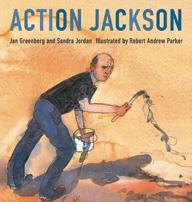
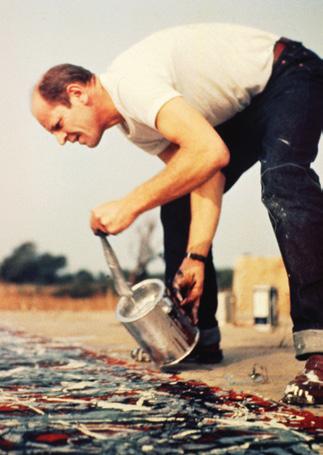
• Learning Goal | Examine Jackson Pollock’s process of painting a canvas.
• Language Progress | Use a subordinating conjunction to expand ideas.
Prologue to L5
• Learning Goal | Examine details describing the differences between Jackson Pollock and other artists.
• Language Progress | Use a coordinating conjunction to combine ideas.
Prologue to L7
• Learning Goal | Use adverbs to describe how Jackson Pollock paints.
• Language Progress | Use adverbs to tell more about verbs.
14
20
26
Prologue to L12
• Learning Goal | Analyze a research paper thesis.
• Language Progress | Use evidence from at least two sources to support the points.
Prologue to L13
• Learning Goal | Describe how audiences react to Marian Anderson’s performances in When Marian Sang.
• Language Progress | Use a subordinating conjunction to expand ideas.
Prologue to L14
• Learning Goal | Use conjunctions to combine sentences about the places where Marian Anderson performed.
• Language Progress | Use a coordinating conjunction to combine ideas.
34
Arc C | Alvin Ailey, Ella Fitzgerald
Prologue to L18
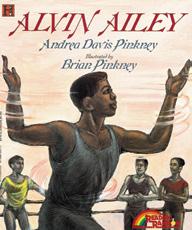
• Learning Goal | Examine Alvin Ailey’s experiences with different types of dance and music when he was young.
• Language Progress | Use a subordinating conjunction to expand ideas.
Prologue to L19
• Learning Goal | Examine details that describe the movements of dancers in Alvin Ailey
• Language Progress | Use adjectives to tell more about nouns.
Prologue to L21
• Learning Goal | Examine descriptions of Ella Fitzgerald singing.
• Language Progress | Expand the discussion by including new ideas.
Prologue to L22
• Learning Goal | Identify relevant information from a book and a video about Ella Fitzgerald’s performances.
• Language Progress | Use evidence from at least two sources to support the points.
Prologue to L24
• Learning Goal | Use adjectives to describe how artists feel when they perform.
• Language Progress | Use adjectives to tell more about nouns.
Arc
D | I Saw the Figure 5 in Gold, “The Great Figure”
Prologue to L27
• Learning Goal | Organize key details from “The Great Figure.”
• Language Progress | Expand the discussion by including new ideas.
66
72
78
84
90
Prologue to L28
• Learning Goal | Describe details from Charles Demuth’s painting I Saw the Figure 5 in Gold.
• Language Progress | Use adjectives to tell more about nouns.
Arc E | Emma’s Rug
Prologue to L30
• Learning Goal | Examine key details in Emma’s Rug
• Language Progress | Share about a topic or text in a detailed way.
Prologue to L31
• Learning Goal | Examine details that describe where Emma gets ideas for her art.
• Language Progress | Use a coordinating conjunction to combine ideas.
102
96
• Learning Goal | Describe what inspires Emma’s art in Emma’s Rug
• Language Progress | Share about a topic or text in a detailed way.
Appendices
114
ESSENTIAL QUESTION
What is an artist?
PROLOGUE MODULE FOCUS
In module 4, Arts & Letters Prologue™ lessons focus on helping students deepen their understanding of artists and their work across disciplines and media including painting, music, dance, and poetry.
• Prologue lessons support reading development by providing opportunities for students to discuss key events and details from module texts. Students explore the lives and work of several pioneering 20th-century American artists including Jackson Pollock and Marian Anderson. Students then read two texts by author-illustrator duo Andrea Davis Pinkney and Brian Pinkney; the texts showcase modern dancer and choreographer Alvin Ailey and jazz singer Ella Fitzgerald. They also examine Charles Demuth’s painting I Saw the Figure 5 in Gold and the poem and poet who inspired it—“The Great Figure” by William Carlos Williams. Finally, students read Emma’s Rug, a story about a young artist who loses and regains her inspiration.
• Prologue lessons support writing development by helping students use evidence from at least two sources to support each point. They also practice writing about each point in a proof paragraph. This support prepares students to write an informative essay for the End-of-Module Task.
• Prologue lessons support speaking and listening development by providing more instruction and practice for the module’s speaking and listening goals: Share about a topic or text in a detailed way and expand the discussion by including new ideas. Use the Module 4 Speaking and Listening Goal Tracker to track progress toward these goals.
• Prologue lessons support language development by providing opportunities for students to use coordinating and subordinating conjunctions to combine and expand ideas. Students also practice using adjectives to describe nouns and adverbs to describe verbs.
PROLOGUE TEXTS
Books
Literary
• Emma’s Rug, Allen Say
Literary Nonfiction
• Action Jackson, Jan Greenberg, Sandra Jordan, and Robert Andrew Parker
• Alvin Ailey, Andrea Davis Pinkney and Brian Pinkney
• Ella Fitzgerald: The Tale of a Vocal Virtuosa, Andrea Davis Pinkney and Brian Pinkney
• When Marian Sang: The True Recital of Marian Anderson, The Voice of a Century, Pam Muñoz Ryan and Brian Selznick
Art
• I Saw the Figure 5 in Gold, Charles Demuth
• Number One, 1950 (Lavender Mist), Jackson Pollock
Poetry
• “The Great Figure,” William Carlos Williams
Video
• “Ella Fitzgerald with Musicians,” Getty Images
KNOWLEDGE THREADS
• Painting, music, dance, and poetry are all forms of art.
• Artists use creativity and imagination to express themselves and their ideas about the world.
• Artists make decisions about the styles, materials, and creative processes that best fit their art.
• Artists find inspiration in different things, including objects, heritage, traditions, nature, and the work of other artists.
• Artists inspire us to see the world in different ways.
PROLOGUE MATERIALS AND PREPARATION
Prepare the following materials for use throughout the module.
• Determine how to access the module texts.
• Determine how to display Prologue reference charts, Prologue student resources, and select Learn book pages. These are listed in the Materials section of each lesson.
• Print or copy student resources from the Prologue Student Resources appendix. These are listed in the Materials section of each lesson.
• Determine how to access the Module 4 Speaking and Listening Goal Tracker from the digital platform.
• Ensure access to the module 4 Knowledge Cards.
• Ensure students have paper for short responses. They can use their journals or other paper.
• For a comprehensive list of all the materials used in the module, see the digital platform.
PROLOGUE ENGLISH LANGUAGE DEVELOPMENT STANDARDS
Arts & Letters Prologue lessons for module 4 provide additional language support to develop the following English Language Development (ELD) standards. Educators should consult their state’s ELD standards and proficiency descriptors to identify the best ways to help multilingual learners reach the module’s learning goals. See the digital platform for a lesson-by-lesson breakdown of ELD standards.
WIDA Standards
ELD-SI.K-3.Narrate: Multilingual learners will
• Share ideas about one’s own and others’ lived experiences and previous learning
• Connect stories with images and representations to add meaning
ELD-SI.K-3.Inform: Multilingual learners will
• Describe characteristics, patterns, or behavior
• Describe parts and wholes
• Sort, clarify, and summarize ideas
ELD-SI.K-3.Explain: Multilingual learners will
• Share initial thinking with others
• Compare and contrast objects or concepts
ELD-SI.K-3.Argue: Multilingual learners will
• Support own opinions with reasons
ELD-LA.2-3.Inform.Interpretive: Multilingual learners will interpret informational texts in language arts by
• Identifying the main idea and key details
• Referring explicitly to descriptions for themes and relationships among meanings
ELP Standards
Standard 1: An ELL can construct meaning from oral presentations and literary and informational text through grade-appropriate listening, reading, and viewing.
Standard 2: An ELL can participate in grade-appropriate oral and written exchanges of information, ideas, and analyses, responding to peer, audience, or reader comments and questions.
Standard 3: An ELL can speak and write about grade-appropriate complex literary and informational texts and topics.
Standard 4: An ELL can construct grade-appropriate oral and written claims and support them with reasoning and evidence.
Standard 5: An ELL can conduct research and evaluate and communicate findings to answer questions or solve problems.
Standard 6: An ELL can analyze and critique the arguments of others orally and in writing.
Standard 7: An ELL can adapt language choices to purpose, task, and audience when speaking and writing.
Standard 8: An ELL can determine the meaning of words and phrases in oral presentations and literary and informational text.
Standard 9: An ELL can create clear and coherent grade-appropriate speech and text.
Standard 10: An ELL can make accurate use of standard English to communicate in grade-appropriate speech and writing.
PROLOGUE LANGUAGE CONNECTIONS
Students’ home languages and cultures are assets that everyone in the school setting should value and celebrate. Teachers can support the strategic use of home languages to facilitate activating background knowledge, acquiring ELA knowledge and world knowledge, and engaging with grade-level content. This can happen individually or in groups. Teachers should encourage students to draw explicit metalinguistic connections between English and their home language through cognates and morphological awareness.
Multilingual learners in the United States speak a variety of languages at home, but an increasing majority speak Spanish at home. In 2019, more than 75 percent of students who were identified as “English learners” spoke Spanish as a home language (National Center for Education Statistics). For this reason, we offer a number of supports for Spanish speakers.
Contrastive Analysis
This module focuses on helping students use coordinating and subordinating conjunctions to combine and expand ideas. Prologue lessons help students practice using adjectives to describe nouns and adverbs to describe verbs. For students who also speak other language(s), the grammatical rules of English may be confusing. Here are some grammatical differences for which students may need extra explanation and modeling of this structure. In addition to Spanish, we compare English to Arabic and Chinese, the second and third most common languages spoken among multilingual learners in the United States (National Center for Education Statistics).
Language Similarity Difference
Spanish Coordinating and subordinating conjunctions are also used in Spanish to combine sentences, with meanings that are similar to those of English.
In Spanish, adjectives are also used to modify nouns.
Adverbs are used to modify verbs, adjectives, or other adverbs.
There is not a 1:1 correspondence between English and Spanish conjunctions. Some, like since, so that, and because, can translate differently into Spanish.
In Spanish, adjectives can come before or after the noun, though, predominantly, they come after it. The placement of the adjectives before or after the noun can have an impact on what the speaker wishes to convey about the noun.
There is more flexibility in the position of adverbs in Spanish.
Language Similarity Difference
Arabic Both English and Arabic employ coordinating conjunctions to join words, phrases, or independent clauses of equal importance.
There are coordinating conjunctions in Arabic with similar meaning to those in English (e.g., wa = and; aww = or; lakin = but).
The role of subordinating conjunctions in linking clauses and establishing relationships between them is quite similar in both Arabic and English.
In both Arabic and English, subordinating conjunctions usually appear at the beginning of the subordinate clause.
Chinese Both coordinating and subordinating conjunctions exist in Chinese to link sentences or phrases.
Arabic has fewer coordinating conjunctions compared to English.
In Arabic, subordinating conjunctions interact with verb tense and negation in complex ways, often requiring specific forms or particles.
Unlike in English where adverbs typically have more flexible placement, Arabic adverbs are more fixed. In general, adverbs of manner and degree follow the verb or come immediately after the object in a sentence.
Some adjectives can be placed in front of the modified noun; however, one can switch the position of adjectives based on the complexity of the sentence. Adverbial placement generally does not vary with English in simplified sentence structures. Literary Chinese can vary with adverbial placement.
Spanish Cognates
Here are Spanish cognates for terms taught in module 4 Prologue lessons. Teacher notes in the lessons draw attention to Spanish cognates. Use an online Spanish dictionary for pronunciation guidance or to play a recording of the Spanish cognate for students.
Term Cognate
adverb (n.)
figurative (adj.)
inspiration (n.)
process (n.)
style (n.)
unique (adj.)
adverbio (s.)
figurado (adj.)
inspiración (s.)
proceso (s.)
estilo (s.)
único (adj.)
MODULE PLAN
Essential Question | What is an artist?
= assessment = Prologue lesson
Arc A | Emma’s Rug, Action Jackson
Lesson 1
Opening Bookend
Lesson 8
Know Action Jackson
Lesson 2 Wonder Emma’s Rug Lavender Mist
Lesson 3 Wonder Action Jackson Organize Lavender Mist
Lesson 4
Organize Action Jackson Reveal Lavender Mist
Lesson 5
Reveal Action Jackson Distill Lavender Mist
Lesson 6
Reveal Action Jackson
Know Blue Poles Lavender Mist
Lesson 7
Distill Action Jackson
Arc B | When Marian Sang
Lesson 9
Wonder When Marian Sang Lesson 10
Organize When Marian Sang Lesson 11
Organize When Marian Sang
12
Reveal When Marian Sang
13
Distill When Marian Sang Lesson 14
Know When Marian Sang Lesson 15
Reading Comprehension Assessment 1
Lesson 16
Responsive Teaching
Arc C | Alvin Ailey, Ella Fitzgerald
Lesson 17
Wonder
Alvin Ailey
Module Task 1
completed
Lesson 18
Organize
Alvin Ailey
Lesson 24
Distill
Alvin Ailey
Ella Fitzgerald
Lesson 25
Know
Alvin Ailey
Ella Fitzgerald
Lesson 19
Reveal
Alvin Ailey
Lesson 20
Wonder
Ella Fitzgerald
Arc D | I Saw the Figure 5 in Gold, “The Great Figure”
Lesson 26
Reveal
I Saw the Figure 5 in Gold
Lesson 27
Reveal
“The Great Figure”
I Saw the Figure 5 in Gold
Lesson 28
Distill I Saw the Figure 5 in Gold
“The Great Figure”
Lesson 29
Know A River of Words
I Saw the Figure 5 in Gold
“The Great Figure”
Lesson 21
Organize
Ella Fitzgerald
Lesson 22
Reveal
Ella Fitzgerald
Lesson 23
Reveal
Alvin Ailey
Ella Fitzgerald
Module Task 2 completed
Arc E | Emma’s Rug
Lesson 30
Organize Emma’s Rug Lesson 31
Reveal Emma’s Rug Lesson 32
Distill Emma’s Rug Lesson 33 Know Emma’s Rug
Step 1 of the End-of-Module Task completed
Lesson 34
Reading Comprehension Assessment 2 Lesson 35
Responsive Teaching
Module Finale
Step 2 of the End-of-Module Task completed Lesson 40
Closing Bookend
Refer to the digital platform for Year in Review, a lesson to reflect on all four module topics.
Prologue to Lesson 4
Essential Question | What is an artist?
OVERVIEW
Preview
Students examine how Jackson Pollock creates his paintings in Action Jackson. As they discuss what Pollock does to paint a canvas, students practice using a subordinating conjunction to expand ideas. This work prepares students to identify the steps in Pollock’s creative process in lesson 4.
Learning Goal
Examine Jackson Pollock’s process of painting a canvas.
LEARNING TASK: Use the subordinating conjunction when to describe how Jackson Pollock uses his hands to paint.
Language Progress
In this lesson, students work on this module language goal: Use a subordinating conjunction to expand ideas.
To support students with beginning English proficiency, model how to use while, if, and when to describe the process of a familiar activity (e.g., while I do homework, I listen to music; if I finish my homework early, I play outside; when I do my homework, I work in my room). To support students with intermediate English proficiency, encourage students to work with a partner to complete these sentence frames: While I do homework, . If I finish my homework early, . When I do my homework, .
Vocabulary process (n.)
Materials
TEACHER
• Action Jackson
• Lavender Mist (digital platform)
STUDENTS
• Action Jackson Preparation
• none
LAUNCH 5 minutes
Build Knowledge About Jackson Pollock’s Painting Process
1. Display Lavender Mist. Instruct students to silently observe the different parts of the painting for at least one minute. Ask these questions:
What do you notice about the painting?
What do you wonder?
Language Support
If possible, pair students who speak the same home language, and instruct them to notice and wonder about the painting.
2. Explain that this Jackson Pollock painting is commonly called Lavender Mist. Instruct students to Think–Pair–Share to answer this question:
What do you remember about how Pollock makes his paintings?
Key Ideas
• He paints on a canvas.
• He climbs on a ladder to reach the painting.
• He listens to music while he paints.
3. Emphasize that Pollock’s painting process is different from other artists.
4. Introduce the vocabulary term process by displaying the term and definition. Engage students in Vocabulary Exploration.
Language Support
The term process has a Spanish cognate: proceso. Share this language connection with students whose home language is Spanish.
5. Tell students that they will discuss what Pollock does to paint a canvas.
Definition process (n.): a series of steps someone follows to do or create something
LEARN
20 minutes
Discuss Pollock’s Painting Process
1. Display and Echo Read these subordinating conjunctions: while, if, when. Remind students that subordinating conjunctions can help them express their knowledge in more interesting ways. Tell students that they will use these words to describe what Pollock does to create his paintings.
2. Direct students to pages 18–19 in Action Jackson. Direct attention to the illustration. Read aloud the portion of page 18 from “Jackson listens to” to “as they play.” Explain that improvise means “to make something without preparation.” Ask these questions:
What does Pollock listen to when he paints the canvas? Why?
Language Support
For students with beginning English proficiency, play an audio recording of jazz to help them understand what the music sounds like.
3. Reinforce the correct responses: He listens to jazz music because he likes how the musicians make up their own sounds.
4. Read aloud the portion of page 18 from “While he paints” to “of the music.” Tell students that “the notes spin over and over in his memory” means the music repeats in his head. Demonstrate the meaning of the phrase “swish and swish” by using a gesture (e.g., moving a paintbrush up and down). Ask this question:
How does Pollock use jazz to affect the way he paints?
5. Reinforce the correct response: He moves the brush to the rhythm of the music. Invite students to act out painting while pretending to listen to music.
6. Display and Echo Read this sentence frame: While Jackson Pollock , he . Explain that the conjunction while introduces something that happens at the same time Pollock paints.
7. Think aloud to model how to use the conjunction while to complete the sentence frame.
8. Instruct students to repeat this sentence: While Jackson Pollock listens to jazz, he paints to the rhythm of the music.
9. Direct attention to page 19. Read aloud the portion of the page from “If a penny” to “of the texture.”
Explain that texture is a word that describes how the canvas feels. Instruct students to answer these questions with a partner:
What objects become part of the canvas?
What does Jackson Pollock do with the objects?
10. Reinforce the correct responses:
• objects—a penny, an insect, nails and tacks
• do with objects—leaves them on the canvas
11. Invite students to act out what Pollock does when an object falls on the painting.
12. Display and Echo Read this sentence frame: If , Jackson Pollock . Explain that the conjunction if can be used to describe the result of something that may happen.
13. Instruct students to use the sentence frame to answer this question with a partner:
How does Pollock use objects to create texture in his painting?
Language Support
For students with beginning English proficiency, provide the first clause: If a penny falls on the canvas, .
Sample Think Aloud
Jackson Pollock listens to jazz music as he paints. He uses the brush to match the rhythm of the music at the same time. I can use the conjunction while to describe this step in Pollock’s process. I can say, “While Jackson Pollock listens to jazz, he paints to the rhythm of the music.”
14. Invite a few students to share their responses.
Key Ideas
• If a penny falls on the canvas, Jackson Pollock leaves it there.
• If an insect lands on the canvas, Jackson Pollock lets it stay there.
• If nails and tacks land on the canvas, Jackson Pollock lets them become part of the canvas.
Language Expansion
For students with intermediate English proficiency, encourage them to use other subordinating conjunctions (e.g., after, while, when) to describe this part of Pollock’s process.
15. Echo Read the portion of page 19 from “He caresses the” to “across the canvas.” Explain that the term caress means “to touch something gently.” Demonstrate the term’s meaning by using a gesture (e.g., stroking the desk with a slow and light touch). Ask this question:
How does the author describe Pollock’s hands?
16. Reinforce the correct responses:
• sticky
• paint-stained
17. Direct attention to Pollock’s hands in the illustration to help demonstrate the meaning of “paint-stained hands.” Invite students to act out how Jackson Pollock touches and adds handprints to the canvas.
18. Ask this question:
How does Pollock use his hands on the canvas when he is painting?
19. Reinforce the correct responses:
• He caresses the surface with his hands.
• He uses both hands to make handprints on the canvas.
20. Tell students that they can use the conjunction when to describe two things happening at the same time. Display and Echo Read this sentence frame: When Jackson Pollock , he .
LAND 5 minutes
Demonstrate Learning
1. Introduce the learning task. Instruct students to work with a partner to complete the sentence frame, describing what Jackson Pollock does with his hands when he paints.
Analyze Student Progress
Monitor: Do students use the conjunction when to describe how Pollock uses his hands when he caresses the canvas?
Offer Immediate Support: If students need additional support describing how Pollock uses his hands, ask students what he does with both of his hands.
2. Invite a few students to share their responses.
Key Ideas
• When Jackson Pollock paints, he caresses the canvas.
• When Jackson Pollock paints, he uses both hands to make handprints.
3. Summarize that using conjunctions such as while, if, and when helps readers explain how an artist creates their art.
Prologue to Lesson 5
Essential Question | What is an artist?
OVERVIEW
Preview
Students examine the differences between Jackson Pollock and other artists. As they discuss their differences, students practice using a coordinating conjunction to combine ideas. This work prepares students to examine connections between sentences in Action Jackson in lesson 5.
Learning Goal
Examine details describing the differences between Jackson Pollock and other artists.
LEARNING TASK: Write a sentence about a difference between Jackson Pollock and other artists.
Language Progress
In this lesson, students work on this module language goal: Use a coordinating conjunction to combine ideas.
To support students with beginning English proficiency, show them a group of similar items with one distinct object (e.g., a group of pencils with one marker). Model how to use the conjunction but to show the contrast (e.g., all the objects can be used to write, but the marker uses color). To support students with intermediate English proficiency, show them the group of items and invite partners to use the conjunction but to describe how one item is different.
Vocabulary
unique (adj.)
Materials
TEACHER
• Action Jackson
• Knowledge Card: unique
• Compare Artists
STUDENTS
• Action Jackson
Preparation
• Make a Compare Artists chart with three columns and two rows. Label the columns Canvas, Paint, and Types of Artwork. Label the rows Other Artists and Jackson Pollock. See the Learn section for details.
LAUNCH 5 minutes
Discuss Prior Knowledge
1. Instruct students to Think–Pair–Share to answer this question:
What do you think of when you imagine someone creating a painting?
2. Display page 29 of Action Jackson, and direct students to their copies. Direct attention to the photograph of Jackson Pollock on the lower right of the page. Explain that this image of him shows his unique style of painting.
3. Introduce the vocabulary term unique by displaying the Knowledge Card. Engage students in Vocabulary Exploration.
Language Support
The term unique has a Spanish cognate: único. Share this language connection with students whose home language is Spanish.
4. Emphasize that Pollock’s unique style of painting makes him different from other artists. Tell students that they will discuss the differences between Pollock and other artists.
LEARN 20 minutes
Discuss Differences Between Artists
1. Display Compare Artists. Read aloud the headings of the columns and rows. Tell students that they will use the chart to examine the differences between Pollock and other artists.
Definitions unique (adj.):
1. unlike anything or anyone else
2. very special or unusual
Compare Artists Other Artists Jackson Pollock
Canvas Paint Types of Artwork
2. Direct attention to pages 6–7. Tell students to use the words and illustrations to examine the details about Pollock and other artists. Read aloud the portion of page 7 from “Some artists put” to “his large hands.” Ask this question:
What do other artists do to get ready to paint on a canvas?
Language Support
For students with beginning English proficiency, show an image of an easel to help them understand what other artists use to paint on a canvas.
3. Reinforce the correct responses:
• put the canvas on the easel
• hang the canvas on a wall
4. Invite students to act out what other artists do with the canvas. Add responses to the Other Artists row of the chart in the Canvas column.
5. Direct attention to the phrase “Not Jackson” on page 7, and instruct students to Choral Read the phrase with emphasis. Explain that these words tell the reader that Pollock is unique by stressing that he does things differently than other artists. Ask this question:
What does Pollock do differently to get ready to paint the canvas?
6. Reinforce the correct response: He spreads it out with his hands to make it flat on the floor. Direct attention to the illustration on pages 6–7 to help students understand what Pollock does with the canvas. Add spreads it flat on the floor to the Jackson Pollock row in the Canvas column.
7. Display and Echo Read this sentence frame: Other artists , but Jackson Pollock .
8. Think aloud to model how to complete the sentence frame that uses the conjunction but to describe the difference between Pollock and other artists.
9. Instruct students to repeat this sentence: Other artists hang a canvas on the wall, but Jackson Pollock spreads it flat on the floor.
Sample Think Aloud
Other artists hang a canvas on the wall. Pollock is different because he spreads the canvas flat on the floor.
I can use the conjunction but to show how he is different from other artists when preparing the canvas. I can say, “Other artists hang a canvas on the wall, but Jackson Pollock spreads it flat on the floor.”
10. Direct attention to page 8. Tell students to listen for what other artists do when painting the canvas and what Pollock does differently. Explain that a hardware store is a store that sells tools and other items for home improvement. Read aloud the portion of page 8 from “Some painters use” to “make this painting.” Ask this question:
What paint do other artists use to make their paintings?
11. Invite students to share their responses, and reinforce the correct responses: oil paint, watercolor. Add responses to the Other Artists row of the chart in the Paint column.
12. Instruct students to repeat the phrase: “Not Jackson.” Ask this question:
What paint does Pollock use to make his painting different?
13. Reinforce the correct response: ordinary house paint from the hardware store. Add the response to the Jackson Pollock row in the Paint column.
14. Read aloud the portion of page 8 from “Some artists paint” to “motion made visible.” Explain that visible means “able to be seen.” Demonstrate the term’s meaning by using a gesture (e.g., putting your hands around both eyes). Instruct students to answer these questions with a partner:
What do other artists paint on a canvas?
What does Pollock do differently when he paints on the canvas?
Language Support
For students with beginning English proficiency, show them an image of a landscape to help them understand what other artists paint.
15. Invite students to share their responses, and reinforce the correct responses:
• other artists—pictures of flowers, people, or landscapes
• Pollock—expresses his thoughts and feelings on the canvas
Language Expansion
For students with intermediate English proficiency, invite them to find another example of the differences between other artists and Pollock on page 8.
16. Add responses to the chart in the column labeled Types of Artwork.
17. Echo Read the responses on the chart. Tell students that they will use the chart to describe a difference between Pollock and other artists.
18. Form two groups. Assign one group Paint and the other group Types of Artwork. Instruct students to orally complete the sentence frame by using the details in their assigned columns to describe the differences between other artists and Pollock.
LAND 5 minutes
Demonstrate Learning
1. Introduce the learning task. Instruct students to write a sentence about a difference between Jackson Pollock and other artists that uses the coordinating conjunction but.
Analyze Student Progress
Monitor: Do students use the conjunction but to describe a difference between Pollock and other artists?
Offer Immediate Support: If students need additional support describing a difference, direct attention to one of the columns and provide this sentence frame: Other artists , but Jackson Pollock
2. Invite a few students to share their responses.
Key Ideas
• Other artists use oil paint, but Jackson Pollock uses ordinary house paint.
• Other artists paint flowers, people, and landscapes, but Jackson Pollock expresses his thoughts and feelings in his art.
3. Summarize that examining the differences between artists helps students understand what makes their styles of painting unique.
Prologue to Lesson 7
Essential Question | What is an artist?
OVERVIEW
Preview
Students describe how Jackson Pollock paints. As they share their descriptions, students practice using adverbs to tell more about verbs. This work prepares students to explain the function of adverbs in lesson 7.
Learning Goal
Use adverbs to describe how Jackson Pollock paints.
LEARNING TASK: Use an adverb to describe how Jackson Pollock paints.
Language Progress
In this lesson, students work on this module language goal: Use adverbs to tell more about verbs.
To support students with beginning English proficiency, display these adverbs: quickly, slowly. Demonstrate the meaning by walking slowly and then walking quickly. Prompt students to decide which adverb describes the action, and provide this sentence frame: You walk. To support students with intermediate English proficiency, invite students to use a thesaurus to add words to the Use Adverbs handout.
Vocabulary
adverb (n.)
Materials TEACHER
• Action Jackson
STUDENTS
• Action Jackson
• Use Adverbs (Prologue Student Resources appendix)
Preparation
• Determine how to display the sample sentence. See the Launch section for details.
LAUNCH 5 minutes
Build Knowledge About Adverbs
1. Display the illustration on pages 14–15 of Action Jackson, and direct students to their copies. Tell students that the man sitting on the beach is Jackson Pollock.
2. Display and Echo Read this sample sentence: Jackson Pollock calmly sits on the beach. Explain that the sentence describes what Jackson is doing in the illustration and how he is doing it. Ask this question: What is Jackson doing?
3. Reinforce the correct response: sitting on the beach.
4. Ask this question:
In this sentence, how does Jackson sit on the beach?
5. Reinforce the correct response: calmly. Annotate calmly, and explain that calmly is an adverb.
6. Introduce the vocabulary term adverb by displaying the term and definition. Engage students in Vocabulary Exploration.
Language Support
The term adverb has a Spanish cognate: adverbio. Share this language connection with students whose home language is Spanish.
7. Emphasize that the adverb calmly describes the verb sits because it tells us how Pollock sits on the beach. Draw an arrow between calmly and sits. Explain that adverbs give us more information about the action—or verb—in a sentence.
8. Tell students that they will use adverbs to describe how Pollock paints.
Definition adverb (n.): a word that describes a verb
LEARN
20 minutes
Describe Actions
1. Remind students that Pollock’s style of painting is unique, or different from that of other artists.
2. Display Use Adverbs, and distribute copies to students. Echo Read the adverbs. Direct attention to the ending of the words. Explain that many adverbs end in the suffix -ly.
Teacher Note
To help students understand the meaning of the adverbs, guide them to identify the word parts and define the adjectives in the root words (e.g., slow, patient, graceful).
3. Tell students that they will use these adverbs to describe how Pollock paints. Clarify that some adverbs may not be used.
4. Direct attention to pages 10–11 in Action Jackson. Tell students that they will use the text and illustration to describe how Pollock paints. Read aloud the portion of page 11 from “An athlete with” to “make the painting.” Direct attention to Pollock in the illustration to show how he uses his body. Ask this question: Why does the author describe Pollock as an athlete when he paints?
5. Reinforce the correct response: He uses his whole body.
6. Read aloud the portion of page 11 from “He swoops and” to “keep it going.” Explain that swoops means “to move through the air” and leap means “to jump.” Demonstrate the terms’ meanings with a gesture (e.g., jumping up quickly off the ground). Ask this question:
Why does the author say Pollock is like a dancer when he paints?
Key Ideas
• He jumps up and down.
• He moves his body quickly.
• He jumps high in the air.
7. Emphasize that Pollock uses his whole body by jumping and throwing paint from the paintbrush when he paints long lines on the canvas. Invite students to act out how Pollock paints.
8. Direct attention to Use Adverbs. Instruct students to Think–Pair–Share to choose an adverb that best describes how Pollock paints, based on the description.
Language Support
For students with beginning English proficiency, act out the meaning of different adverbs and instruct students to choose which action best matches the description of how Pollock paints.
Key Ideas
• excitedly
• creatively
• actively
9. Direct attention to and Echo Read the first sentence frame on the handout. Think aloud to model how to use an adverb to complete the sentence frame.
10. Write actively to complete the sentence, and instruct students to Choral Read the sentence.
11. Direct attention to the text and illustration on pages 12–13 in Action Jackson. Read aloud the portion of page 12 from “Suddenly, he feels” to “his inspiration gone.” Tell students that inspiration means “something that gives someone an idea about what to do or create.”
Language Support
The term inspiration has a Spanish cognate: inspiración. Share this language connection with students whose home language is Spanish.
Sample Think Aloud Pollock uses his whole body to paint the long lines on the canvas. He does this actively. I can say, “Jackson Pollock actively paints long lines on the canvas.”
12. Read aloud the portion of page 12 from “He puts down” to “the studio floor.” Instruct students to answer these questions with a partner:
How does Pollock feel after painting for hours?
What does he do after he puts down his brush?
13. Invite students to share their responses, and reinforce the correct responses:
• feel—exhausted, used up
• do after—puts down his paintbrush and makes supper; thinks about the painting on the floor
14. Invite students to act out what Pollock does when his inspiration is gone. Emphasize that Pollock takes long breaks when he creates his art and that he’s not in a hurry to finish his painting.
15. Echo Read the second sentence frame on the handout. Instruct students to Think–Pair–Share to select an adverb to complete the sentence that describes how Pollock creates his art. Tell students that there can be more than one correct answer. Encourage them to act out the meaning of different adverbs to see which one best fits the description of Pollock’s actions in this part of the text.
16. Reinforce the correct responses:
• Jackson Pollock slowly creates his art.
• Jackson Pollock patiently creates his art.
Language Expansion
For students with intermediate English proficiency, invite them to explain why quickly does not accurately describe how Jackson Pollock creates his art.
17. Explain that Pollock returns to finish his painting after a long break. Tell students to listen for details that describe how Pollock moves around the canvas. Read aloud the portion of page 16 from “he moves around” to “in the painting.” Explain that “coaxing the paint” means he paints in a careful way. Then explain that “at ease” means to feel relaxed. Demonstrate the term’s meaning with a gesture (e.g., sit comfortably with your feet up). Ask these questions:
How does Pollock feel when he paints?
How does he use his body when he paints?
18. Reinforce the correct responses:
• feel—at ease
• use his body—walks around the canvas; works on the four sides
19. Invite students to act out how Pollock moves around the canvas.
20. Instruct students to Think–Pair–Share to answer this question:
Which adverbs best describe how Pollock moves around the canvas?
Tell students that there can be more than one correct answer. Encourage them to act out the meaning of different adverbs to see which one best fits the description of Pollock painting in this part of the text.
Key Ideas
• easily
• gracefully
• actively
LAND 5 minutes
Demonstrate Learning
1. Introduce the learning task. Instruct students to use an adverb to describe how Pollock moves around the canvas.
Analyze Student Progress
Monitor: Do students accurately use an adverb that describes how Pollock moves around the canvas?
Offer Immediate Support: If students need additional support using an adverb in a sentence, provide this sentence frame: Jackson Pollock moves around the canvas.
2. Invite a few students to share their sentences.
Key Ideas
• Jackson Pollock easily moves around the canvas.
• Jackson Pollock gracefully moves around the canvas.
• Jackson Pollock actively moves around the canvas.
3. Summarize that using adverbs to describe actions can make students’ sentences more detailed and interesting.
Prologue to Lesson 8
Essential Question | What is an artist?
OVERVIEW
Preview
Students examine the parts of the Writing Model for Module 4. As they discuss how the author supports the thesis statement, students learn how an author writes about each point in a proof paragraph. This work prepares students to analyze a research paper in lesson 8.
Learning Goal
Examine the parts of a research paper in the Writing Model for Module 4.
LEARNING TASK: Share one detail the author uses to support point 2 in the Writing Model for Module 4.
Language Progress
In this lesson, students work on this expectation for the End-of-Module Task: Write about each point in a proof paragraph.
To support students with beginning English proficiency, annotate details that connect to point 1 in one color and to point 2 in a different color. To support students with intermediate English proficiency, cut out the sentences from the proof paragraphs and invite students to work with a partner to sort the details into two piles that support point 1 or point 2.
• class Writing Model for Module 4 (Learn book, Writing)
• Knowledge Cards: research, inspiration, style
STUDENTS
• Writing Model for Module 4 (Learn book, Writing)
Preparation
• none
LAUNCH 5 minutes
Build Knowledge About Research
1. Ask this question:
How do you find information about a topic?
Key Ideas
• read books and articles
• look at photographs and paintings
• search the internet
• talk to experts
2. Tell students that they will explore research writing so they can learn more about a topic and share knowledge with others.
3. Introduce the vocabulary term research by displaying the Knowledge Card. Engage students in Vocabulary Exploration.
4. Tell students that they will examine a writing model to learn how an author supports the points of a thesis when writing a research paper.
Definitions research (n.): careful study or activity to find and report new knowledge about a subject research (v.): to collect more information about a subject
LEARN 20 minutes
Examine a Writing Model
1. Display the Painted Essay®—Informative, located in the Learn book. Ask this question:
What are the parts of the Painted Essay®?
Key Ideas
• introduction
• thesis
• proof paragraphs
• conclusion
2. Display the class Writing Model for Module 4, and direct students to the page in their Learn book. Explain that the author of the writing model uses the structure of the Painted Essay®.
3. Direct attention to the title and first paragraph of the writing model. Read aloud from “Have you ever” to “from other artists.”
Label the first sentence “Introduction.” Explain that the second sentence, beginning with “Cy Thao’s paintings,” clearly states the essay’s focus, or main idea, that Cy Thao’s art is unique. Direct attention to the sentence beginning with “His inspiration and.”
Ask this question:
What two points does the author use to support the focus of the essay?
4. Reinforce the correct response: point 1—Thao’s inspiration sets him apart from other artists; point 2 Thao’s style sets him apart from other artists. Label the sentence’s first point “Point 1” and the second point “Point 2.”
5. Direct attention to the headings above the paragraphs in the body of the writing model. Ask this question:
What do you notice about the headings and the thesis?
6. Reinforce the correct response: They both use the words inspiration and style. Annotate the headings and the words inspiration and style in the thesis.
7. Introduce the vocabulary terms inspiration and style by displaying the Knowledge Cards. Engage students in Vocabulary Exploration.
Language Support
The terms inspiration and style have Spanish cognates: inspiración and estilo. Share these language connections with students whose home language is Spanish.
8. Direct attention to the heading Inspiration. Label the paragraph “Proof Paragraph 1.”
Then read aloud the first sentence in the paragraph, starting with “Cy Thao’s paintings.” Explain that the details in this paragraph will support the author’s first point, which states that Thao’s paintings are unique because of his inspiration.
9. Read aloud the portion of the paragraph from “In the article” to “life and history.”
Language Support
For students with beginning English proficiency, display the article “Story Painter” and direct attention to the images of Cy Thao’s paintings to help students understand the author’s descriptions in the proof paragraphs.
10. Think aloud to explain how one of the details supports point 1.
Definitions
inspiration (n.): something that makes someone want to do something or that gives someone an idea about what to do or create style (n.):
1. a particular way in which something is done, created, or performed
2. the way in which elements are similar across works of art
Sample Think Aloud
The detail explains that Cy Thao gets ideas for his paintings from his life and history. Thao’s life and history are unique, so this detail supports the point that his inspiration makes his paintings unique.
11. Read aloud the portion of the paragraph from “One of Thao’s” to “brightly colored buses.” Ask this question:
What example does the author use to support point 1?
12. Reinforce the correct response: His memory of leaving the refugee camp in Thailand inspires the idea for a painting. Emphasize that this detail supports the author’s point that Thao’s inspiration for the painting makes the painting unique.
Language Expansion
For students with intermediate English proficiency, invite them to expand on their answers by explaining why the details support point 1.
13. Direct attention to the heading Style. Label the paragraph “Proof Paragraph 2.” Then read aloud the first sentence, starting with “In addition, Cy.” Explain that the details in this paragraph will support the author’s second point, which states that Thao’s paintings are unique because of his style.
14. Echo Read the portion of the paragraph from “The article says” to “pieces of cloth.”
15. Instruct students to work with a partner to annotate details that support point 2.
Sample Annotations
• “His paintings are influenced by the Hmong tradition of paj ntaub.”
• “Thao’s paintings have lots of bright, solid colors and flat shapes.”
• “The people and buildings look like they are made from pieces of cloth.”
LAND 5 minutes
Demonstrate Learning
1. Introduce the learning task. Instruct students to work with a new partner to share a detail that the author uses to support point 2, which states that Cy Thao’s paintings are unique because of his style.
Analyze Student Progress
Monitor: Do students accurately identify details that explain Cy Thao’s unique style?
Offer Immediate Support: If students need additional support sharing details that support the author’s point, provide this sentence frame: The author explains that Cy Thao’s style is unique because .
Key Ideas
• The author explains that Cy Thao’s style is unique because he is influenced by the Hmong tradition of paj ntaub.
• The author explains that Cy Thao’s style is unique because he uses lots of bright, solid colors and flat shapes.
• The author explains that Cy Thao’s style is unique because the people and buildings in his paintings look like they are made from pieces of cloth.
2. Summarize that using details to support an author’s point helps students write an effective research paper.
Prologue to Lesson 10
Essential Question | What is an artist?
OVERVIEW
Preview
Students discuss how the audience reacted when they heard Marian Anderson sing as a child. As they discuss the audience’s reactions, students practice using a subordinating conjunction to expand ideas. This work prepares students to organize important events in Anderson’s life and career in lesson 10.
Learning Goal
Discuss how the audience reacted when Marian Anderson sang as child.
LEARNING TASK: Use a subordinating conjunction to write a sentence describing how the audience reacted when Marian Anderson sang as a child.
Language Progress
In this lesson, students work on this module language goal: Use a subordinating conjunction to expand ideas.
To support students with beginning English proficiency, model how to use the subordinating conjunction when to describe how you feel or what you do when listening to music by using this sentence frame: When I listen to music, I . To support students with intermediate English proficiency, prompt them to describe how they feel or what they do when listening to their favorite music by using this sentence frame: When I listen to music, I .
Vocabulary
none
Materials
TEACHER
• When Marian Sang
• Knowledge Web for When Marian Sang
STUDENTS
• When Marian Sang
Preparation
• When Marian Sang is an unpaginated text. Number your text; begin with the title page as page 1. Pages on the left will be even, and pages on the right will be odd.
• Create the Knowledge Web for When Marian Sang. Write and circle the prompt When Marian sang in the center of the chart paper. See the Learn section for details.
LAUNCH 5 minutes
Build Knowledge About Marian Anderson
1. Instruct students to Think–Pair–Share to answer these questions:
What is an activity or hobby you love doing? What do you love about it?
Language Support
If possible, pair students who speak the same home language, and instruct them to share about an activity they love doing.
2. Display When Marian Sang. Echo Read the title. Ask this question:
What do you think Marian Anderson loves doing?
3. Reinforce the correct response: singing.
4. Emphasize that Anderson had an important singing career. Explain that her love for singing began as a child.
5. Tell students that they will discuss key events in Anderson’s childhood.
LEARN
20 minutes
Discuss Key Events
1. Display the Knowledge Web for When Marian Sang. Direct attention to the words When Marian sang in the center of the web.
Echo Read the phrase. Tell students that they will use the knowledge web to describe how people reacted to Marian when they heard her sing.
2. Explain that the knowledge web will help students use the conjunction when to connect two reactions that occurred at the same time.
Teacher Note
Explain that sang is the past tense of sing. Tell students that they will use the past tense form because the events in Anderson’s childhood happened in the past.
3. Direct attention to pages 2–3 in When Marian Sang. Tell students to listen for what happened when Marian sang. Read aloud the second paragraph, starting with “However, her voice.” Explain that distinct is a synonym for different and that velvety means “soft and smooth.” Ask these questions:
What does Marian’s voice sound like?
What did everyone want when Marian sang?
4. Reinforce the correct responses:
• voice—distinct; strong and velvety
• want—to hear Marian sing
As students share, add these sentences to the knowledge web: Everyone wanted to hear Marian’s distinct voice. Everyone wanted to hear Marian’s strong and velvety voice.
Knowledge Web for When Marian Sang
Add notes about When Marian Sang to your knowledge web.
Marian sang
5. Think aloud to model how to use the subordinating conjunction when to discuss how people reacted when Marian sang. Remind students that they can use information from the knowledge web to form their sentences.
6. Instruct students to repeat this sentence: When Marian sang, everyone wanted to hear her distinct voice.
7. Direct attention to the illustration on pages 4–5. Ask this question:
What do you think Anderson and the other girl are doing?
8. Reinforce the correct response: singing. Emphasize that Anderson and the girl were asked to sing together at a church.
9. Read aloud the portion of page 4 from “Church folks started” to “And people came.” Explain that remarkable means “special or unique.” Ask this question:
What did people at church do when Marian sang?
Language Support
For students with beginning English proficiency, invite them to draw and label an idea to help them share a response. Encourage students to do this for subsequent discussion opportunities.
Key Ideas
• told each other about her voice
• talked about her remarkable gift
• invited her to perform at the church
As students share, add responses to the knowledge web.
Sample Think Aloud I can use the conjunction when in the phrase When Marian sang to describe this key event in Marian Anderson’s childhood. I know that everyone wanted to hear her distinct voice. I can say, “When Marian sang, everyone wanted to hear her distinct voice.”
10. Instruct students to work with a partner to use the phrase When Marian sang to describe how people reacted when Marian sang at her church.
Language Support
For students with beginning English proficiency, help them understand the phrases used to describe what the audience feels (e.g., “spirited worship,” “tender affection,” “nothing short of joy”) by defining the adjectives spirited, tender, and joy with a synonym (e.g., energetic, kind, happy).
Key Ideas
• When Marian sang, church folks told each other about her voice.
• When Marian sang, people talked about her remarkable gift.
• When Marian sang, churches invited her to perform.
Language Expansion
For students with intermediate English proficiency, invite them to use the following sentence frame to add two details: When Marian sang, and .
11. Read aloud the first paragraph on page 6, starting with “When Marian sang.” Direct attention to the words “not only” and “but” in the second sentence. Explain that these words connect two related details in the sentence when the second piece of information is more surprising than the first.
12. Instruct students to Think–Pair–Share to answer this question: What did the audience hear when Marian sang?
13. Reinforce the correct response: her words and feelings. Add this sentence to the knowledge web: The audience heard her words and feelings.
14. Emphasize that hearing feelings when someone sings is more surprising than hearing the words.
LAND 5 minutes
Demonstrate Learning
1. Introduce the learning task. Instruct students to write a sentence that uses the conjunction when to describe how the audience reacted when Marian sang as a child. Remind students to refer to the knowledge web.
Analyze Student Progress
Monitor: Do students use the conjunction when to describe how the audience heard her words and feelings?
Offer Immediate Support: If students need additional support describing what happened to the audience, Echo Read the phrase When Marian sang in the middle circle of the knowledge web. Then ask them what two things the audience heard when Marian sang.
2. Invite a few students to share their sentences, and reinforce the correct response: When Marian sang, the audience heard her words and feelings.
3. Summarize that students can use the conjunction when to connect two events that happened at the same time in Anderson’s childhood.
Prologue to Lesson 12
Essential Question | What is an artist?
OVERVIEW
Preview
Students analyze a thesis in the Writing Model for Module 4. As they examine different theses, students identify what is missing from an incomplete thesis. This work prepares students to draft a thesis in lesson 12.
Learning Goal
Analyze a research paper thesis.
LEARNING TASK: Identify the missing element of a thesis statement.
Language Progress
In this lesson, students work on this expectation for the End-of-Module Task: Use evidence from at least two sources to support the points.
To support students with beginning English proficiency, provide a checklist to help them understand the three parts of a thesis: (1) a sentence that states the focus; (2) point 1 that supports the focus; (3) point 2 that supports the focus. To support students with intermediate English proficiency, encourage partners to work together to write an alternative thesis for the writing model.
• Writing Model for Module 4 (Learn book, Writing)
STUDENTS
• Analyze a Thesis (Prologue Student Resources appendix)
• highlighters
Preparation
• Determine how to display side by side the Painted Essay®—Informative and the Writing Model for Module 4. See the Learn section for details.
LAUNCH 5
minutes
Build Knowledge About a Thesis
1. Display the Painted Essay®—Informative, located in the Learn book. Tell students that they will use the Painted Essay®— Informative to write a research paper.
2. Direct attention to the Thesis box. Ask this question:
What are the parts of a thesis statement?
3. Reinforce the correct response: a clearly stated focus, or main idea, and two points that support the focus.
4. Tell students that they will discuss what they should include in a thesis for their research papers.
LEARN 20 minutes
Analyze a Thesis
1. Direct attention to the Painted Essay®—Informative. Echo Read the names of each component of the Painted Essay®. Explain that the Writing Model for Module 4 follows the structure of the Painted Essay®—Informative.
2. Display the Writing Model for Module 4. Echo Read the thesis. Ask these questions:
What is the focus of the writing model?
What are the two points that support the focus?
Language Support
For students with beginning English proficiency, use the Knowledge Cards for the module terms inspiration, unique, and style to help reinforce the definitions.
Key Ideas
• focus: Cy Thao’s paintings are unique.
• point 1: His inspiration sets him apart from other artists.
• point 2: His style sets him apart from other artists.
3. Annotate the thesis in the writing model by highlighting the introduction sentences and the sentence with point 1 and point 2, using the same colors that appear on the corresponding parts of the Painted Essay®—Informative.
4. Think aloud to model how to explain how the two points support the focus.
5. Direct attention to the headings in the writing model, and remind students that the author gives more information to support points 1 and 2 in proof paragraphs 1 and 2.
6. Tell students that they will analyze other examples of theses to decide which ones have all the parts of a strong thesis.
7. Display Analyze a Thesis, and distribute copies to students. Echo Read Thesis One.
8. Remind students that a strong thesis should include a sentence that clearly states the focus and two points that support the focus. Instruct students to work with a partner to answer these questions:
What is the focus of Thesis One?
What are the two points that support the focus?
Sample Think Aloud
The focus of the essay is that Cy Thao’s paintings are unique. The author supports the focus with two points. They explain that Thao’s inspiration and style are different from other artists’ inspiration and style. These points support the statement that Thao’s paintings are unique.
9. Invite a few students to share their responses, and reinforce the correct responses:
• focus—Cy Thao is creative.
• point 1—He uses inspiration from his life.
• point 2 His style is different from others’ style.
10. Remind students that in a strong thesis the two points should clearly support the focus. Ask this question:
How do the two points support the focus of the first sentence?
11. Reinforce the correct response: Point 1 explains that Cy Thao is creative because of the inspiration he uses for his art; point 2 explains that Cy Thao is creative because his style is different from other artists’ style.
12. Tell students that they will work with a partner to determine whether the other thesis examples have all the parts of a strong thesis.
13. Echo Read Thesis Two. Instruct students to answer these questions with a partner:
What does the first sentence tell you about Cy Thao’s art?
How does the second sentence support the focus of the first sentence?
14. Invite a few students to share their responses, and reinforce the correct responses:
• first sentence—Thao’s art is unique.
• second sentence—It explains two ways in which Thao’s art is unique; he uses memories; his art has a style nobody has seen before.
15. Instruct students to answer these questions with a partner:
Do you think this is a strong thesis? How do you know?
16. Invite a few students to share their responses, and reinforce the correct response: Yes, it is a strong thesis. The first sentence clearly states the focus, and the second sentence includes two points that support the focus. Instruct students to work with a partner to annotate the thesis by highlighting the focus and the two points with the same colors that appear on the corresponding parts of the Painted Essay®— Informative.
17. Direct attention to Part 2. Echo Read Thesis Three. Tell students that they will work with a partner to determine whether the thesis includes a focus and two points. Ask these questions:
What does the first sentence tell you about Cy Thao?
How does the second sentence support the focus of the first sentence?
Language Support
For students with beginning English proficiency, guide them in highlighting the thesis to help them determine whether all the parts are included.
18. Reinforce the correct responses:
• first sentence—Cy Thao is a unique artist.
• second sentence—His art is inspired by life events.
Language Expansion
For students with intermediate English proficiency, invite them to revise the example to include all the parts of a strong thesis.
LAND 5 minutes
Demonstrate Learning
1. Introduce the learning task. Instruct students to work with a partner to share what is missing from Thesis Three in Part 2.
Analyze Student Progress
Monitor: Do students identify that one point is missing from the second sentence?
Offer Immediate Support: If students need additional support to identify what is missing from the thesis, ask these questions: Does the thesis have a focus? Does the thesis include point 1? Does the thesis include point 2?
2. Invite a few students to share their responses, and reinforce the correct response: The thesis is missing the second point about what makes Cy Thao’s art unique.
3. Summarize that developing a thesis with a clearly stated focus and two points helps students write a strong research paper.
Prologue to Lesson 13
Essential Question | What is an artist?
OVERVIEW
Preview
Students describe the audience’s reactions to Marian Anderson’s performances. As they share what the audience does, students practice using a subordinating conjunction to expand ideas. This work prepares students to determine the central idea in lesson 13.
Learning Goal
Describe how audiences react to Marian Anderson’s performances in When Marian Sang.
LEARNING TASK: Share one way the audience reacts to Marian Anderson’s performances.
Language Progress
In this lesson, students work on this module language goal: Use a subordinating conjunction to expand ideas.
To support students with beginning English proficiency, model how to use the conjunction as to describe your reaction while watching an event (e.g., As the singer performed, I cheered loudly). To support students with intermediate English proficiency, encourage them to use the conjunction as to describe your reaction while watching an event.
• When Marian Sang is an unpaginated text. Number your text; begin with the title page as page 1. Pages on the left will be even, and pages on the right will be odd.
• Determine how to add students’ responses to Audience Reactions. See the Learn section for details.
LAUNCH 5 minutes
Discuss Prior Knowledge
1. Display the illustration on pages 32–33 of When Marian Sang. Direct attention to the people on the balcony. Ask this question:
What are the people doing?
2. Reinforce the correct response: watching Marian Anderson sing. Explain that these people are in the audience.
3. Introduce the vocabulary term audience by displaying the term and definition. Engage students in Vocabulary Exploration.
4. Instruct students to discuss these questions with a partner:
When have you been part of an audience?
How did you and others react to the event?
Language Support
If possible, pair students who speak the same home language, and instruct them to share their experience of when they were part of an audience.
5. Invite a few students to share their responses. Reinforce that Anderson performed for many audiences around the world.
6. Tell students that they will discuss how the audience reacts to Anderson’s performances in When Marian Sang.
Definition audience (n.): a group of people who come together to watch and listen to an event
LEARN 20 minutes
Describe Audience Reactions
1. Display Audience Reactions. Explain that students will use this chart to describe how the audience reacts to Anderson’s performances.
2. Direct student to pages 14–15 in their copies of When Marian Sang. Read aloud the portion of page 15 from “When she arrived” to “in the balcony.” Remind students that if people are segregated, they are separated because of race, gender, religion, or ability. Ask this question:
Why does Anderson perform the same program twice?
Key Ideas
• The audiences are segregated.
• She has to perform once for a White audience and once for a Black audience.
• She has to sing to two separate audiences.
Reactions
3. Tell students to listen for how the audience reacts to Anderson’s performance. Read aloud the portion of page 15 from “Her voice left” to “every opulent note.” Explain that weeping means “crying with a strong emotion.” Then explain that “in hushed awe” means that someone is silent because they are amazed.
Language Support
For students with beginning English proficiency, demonstrate weeping and in hushed awe by using gestures (e.g., wiping tears from your eyes; opening eyes wide and placing a hand over your heart).
4. Ask this question:
How does the audience react during Anderson’s performance?
Key Ideas
• cries
• is silent
• tries to remember every note Add responses to the chart.
5. Invite students to act out the audience’s reactions.
6. Display and Echo Read this sentence frame: As Marian Anderson performs, the audience . Explain that the conjunction as describes two events that happen at the same time. Think aloud to model how to complete the sentence frame.
7. Instruct students to work with a partner to use the conjunction as to describe the audience’s reactions. Tell them to include information from the chart to support their thinking.
Key Ideas
• As Marian Anderson performs, the audience cries.
• As Marian Anderson performs, the audience tries to remember every note.
8. Explain that Anderson is invited to perform for audiences in countries in other parts of the world.
9. Direct attention to pages 22–23 in When Marian Sang. Tell students to use the text and illustration to describe how the audience reacts to Anderson’s performance. Read aloud the portion of page 22 from “Audiences applauded in” to “a hundred years.” Explain that an encore is extra music performed when an audience requests it. Instruct students to answer this question with a partner:
How does the audience react as Anderson performs in different countries?
Language Support
For students with beginning English proficiency, direct attention to the terms applauded, cheered, and pounded. Say the terms aloud, and instruct students to repeat them. Demonstrate the terms’ meanings by using gestures (e.g., clapping, shouting with praise, hitting a table).
Sample Think Aloud
The audience is so amazed that it is left in silence, or is in hushed awe. I can use the conjunction as to describe the audience’s reaction to Anderson’s performance. I can say, “As Marian Anderson performs, the audience is silent.”
Key Ideas
• The audience applauds.
• The audience cheers.
• The audience pounds the stage for encores.
Add responses to the chart.
10. Invite students to act out the audience’s different reactions.
11. Instruct students to work with a partner to complete the sentence frame, describing how the audience reacts as Anderson performs.
12. Invite a few students to share their responses.
Key Ideas
• As Marian Anderson performs, the audience cries.
• As Marian Anderson performs, the audience applauds.
• As Marian Anderson performs, the audience cheers.
• As Marian Anderson performs, the audience pounds the stage for encores.
Language Expansion
For students with intermediate English proficiency, invite them to make their responses more descriptive by adding an adverb to describe how audiences react. Ask questions such as this: How does the audience cheer?
13. Direct attention to the people standing below the Lincoln Memorial steps in the illustration on pages 28–29 in When Marian Sang. Remind students that Anderson is not allowed to perform at Constitution Hall in Washington, DC, because she is Black, but the government invites her to perform on the steps of the Lincoln Memorial.
14. Direct attention to page 27. Tell students to listen for how the audience reacts as Anderson performs on the steps of the Lincoln Memorial. Read aloud the portion of page 27 from “A roaring cheer” to “pleaded for more.” Ask this question:
How does the audience react as Anderson performs at the Lincoln Memorial?
15. Reinforce the correct responses: with a roaring cheer; pleads for more. Add responses to the chart.
16. Read aloud the portion of page 27 from “When she began” to “on the multitudes.” Explain that multitudes means “a large number of people.” Ask this question:
How does the audience react as Anderson performs her encore at the Lincoln Memorial?
17. Reinforce the correct response: They become silent. Add the response to the chart.
18. Invite students to take turns with a partner acting out the different audience reactions.
LAND 5
minutes
Demonstrate Learning
1. Introduce the learning task. Instruct students to work with a new partner to describe one way the audience reacts as Marian Anderson performs.
Analyze Student Progress
Monitor: Do students use the conjunction as to accurately describe how the audience reacts to Anderson’s performance on the steps of the Lincoln Memorial?
Offer Immediate Support: If students need additional support describing the audience’s reaction, direct attention to the chart and prompt students to use one of the audience’s reactions to complete the sentence frame.
2. Invite a few students to share their responses.
Key Ideas
• As Marian Anderson performs, the audience cheers.
• As Marian Anderson performs, the audience begs for her to sing more.
• As Marian Anderson performs, the audience becomes silent.
3. Summarize that using a conjunction can help describe audience reactions during Anderson’s historical performances.
Prologue to Lesson 14
Essential Question | What is an artist?
OVERVIEW
Preview
Students examine sentences about different locations where Marian Anderson performed. As they discuss how the sentences are related, students practice using a coordinating conjunction to combine ideas. This work prepares students to express knowledge gained from When Marian Sang in lesson 14.
Learning Goal
Use conjunctions to combine sentences about the places where Marian Anderson performed.
LEARNING TASK: Write two sentences using a conjunction to combine ideas about the places where Marian Anderson performed.
Language Progress
In this lesson, students work on this module language goal: Use a coordinating conjunction to combine ideas.
To support students with beginning English proficiency, model how to use and to accurately combine these two sentences: Jackson Pollock is an artist. Marian Anderson is an artist. Then instruct students to use but to combine these two sentences: Jackson Pollock uses a paintbrush. Marian Anderson uses her voice. To support students with intermediate English proficiency, invite them to determine whether and or but can be used to combine these sentences: Jackson Pollock creates art with a paintbrush. Marian Anderson creates art with her voice.
• When Marian Sang is an unpaginated text. Number your text; begin with the title page as page 1. Pages on the left will be even, and pages on the right will be odd.
• Determine how to display the sample sentences. See the Launch section for details.
• Determine how to cut out the sentences from the Combine Sentences handout. See the Learn section for details.
LAUNCH 5 minutes
Discuss Prior Knowledge
1. Display and Echo Read these sample sentences:
• When Marian Anderson was young, she took voice lessons and performed in the choir.
• Marian Anderson wanted to go to a music school, but she was not allowed to attend because of the color of her skin.
2. Invite students to identify the two ideas in each sentence.
3. Reinforce the correct responses:
• sentence 1 Marian Anderson took voice lessons; she performed in the choir.
• sentence 2 Marian Anderson wanted to go to a music school; she was not allowed to because of the color of her skin.
4. Annotate the two ideas in each sentence by underlining each idea in a different color.
5. Ask this question:
Which words in the sentences are used to combine ideas?
6. Reinforce the correct response: and, but. Annotate and and but.
7. Emphasize that the conjunction and in the first sentence shows that both ideas describe similar things about Anderson’s singing practice. The conjunction but in the second sentence connects two contrasting ideas that describe the difference between what Anderson wanted to happen and what actually happened.
8. Tell students that they will use the conjunctions and and but to describe details about Anderson’s performances at different locations.
LEARN 20 minutes
Combine Sentences
1. Tell students that Anderson began her singing career by performing in nearby churches. Explain that they will use the conjunction and or but to combine sentences about the location of Anderson’s performances. Display and Echo Read these sample sentences:
• Marian Anderson sang at the Union Baptist Church.
• Marian Anderson sang at neighboring churches in Philadelphia.
Teacher Note
Explain that sang is the past tense of sing. Tell students that they will use the past tense form because the events in Anderson’s childhood happened in the past.
2. Direct attention to this sentence: Marian Anderson sang at the Union Baptist Church. Ask this question:
What information does this sentence give you about Anderson?
3. Reinforce the correct response: She sang at the Union Baptist Church.
4. Direct attention to this sentence: Marian Anderson sang at neighboring churches in Philadelphia. Ask these questions:
What makes this sentence related or similar to the first sentence?
Which conjunction do you use to combine related or similar ideas?
5. Reinforce the correct responses:
• sentence—Both sentences describe places where Anderson sang.
• conjunction—and
6. Think aloud to model how to combine two similar ideas about Anderson’s performances. Emphasize how to combine sentences that begin with similar words.
Sample Think Aloud
Both sentences give information about places where Marian Anderson sang. These two sentences describe two related or similar ideas. I notice that both sentences start with “Marian Anderson sang at.” I don’t have to repeat those words. I can say, “Marian Anderson sang at the Union Baptist Church and neighboring churches in Philadelphia.”
7. Instruct students to repeat this sentence: Marian Anderson sang at the Union Baptist Church and neighboring churches in Philadelphia.
8. Remind students that as Anderson’s singing career grew, she traveled to different states to perform. Display and Echo Read these sample sentences:
• Marian Anderson was invited to perform in concert halls all over Europe.
• Marian Anderson was not able to perform at Constitution Hall in Washington, DC.
9. Explain that Marian Anderson was not able to perform at Constitution Hall because a policy, or rule, allowed only White performers to play in the concert hall. Direct attention to the first sentence. Ask this question:
Where was Anderson invited to sing?
10. Reinforce the correct response: concert halls all over Europe.
11. Instruct students to answer these questions with a partner:
How are the ideas in the first and second sentences related?
Which conjunction could you use to combine the ideas in the two sentences? Why?
12. Invite a few students to share their responses, and reinforce the correct responses:
• ideas—The first sentence describes where Anderson could perform; the second sentence describes a place where she could not perform.
• conjunction—The conjunction but could be used; it combines related but contrasting, or different, ideas.
13. Display and Echo Read this sentence frame: Marian Anderson was invited to perform in concert halls all over Europe, . Instruct students to work with a partner to complete the sentence using the conjunction but.
Language Support
For students with beginning English proficiency, ask them to identify the repeated words in both sentences to help them combine the sentences without the repeated words in the second clause.
14. Invite a few students to share their responses, and reinforce the correct response: Marian Anderson was invited to perform in concert halls all over Europe, but she was not able to perform at Constitution Hall in Washington, DC.
15. Explain that as Anderson became well-known, she continued to receive invitations to perform at different locations and even became the first Black singer to perform at the Metropolitan Opera in New York City.
16. Distribute the sentences from Combine Sentences about Anderson’s performances to pairs. Instruct students to work with their partner to identify two sentences that have similar ideas and two sentences that are related but have contrasting ideas.
Language Expansion
For students with intermediate English proficiency, encourage partners to use the conjunction and to combine these three ideas into one sentence: Marian Anderson performed at churches. Marian Anderson performed at the Lincoln Memorial. Marian Anderson performed at the Metropolitan Opera.
LAND 5 minutes
Demonstrate Learning
1. Introduce the learning task. Instruct pairs to work together to use and or but to combine the sentences from the handout to write two new sentences about the places where Anderson performed.
Analyze Student Progress
Monitor: Do students accurately use the conjunction and to combine sentences that have similar ideas and the conjunction but to combine sentences that have contrasting, or different, ideas?
Offer Immediate Support: If students need additional support combining sentences, ask them whether the ideas in each sentence are similar or different.
2. Invite a few students to share their sentences, and reinforce the correct responses:
• Marian Anderson performed for segregated audiences in the United States but for mixed audiences in Europe.
• Marian Anderson performed on the steps of the Lincoln Memorial and at the Metropolitan Opera in New York City.
3. Summarize that conjunctions help express the relationship between ideas.
Prologue to Lesson 18
Essential Question | What is an artist?
OVERVIEW
Preview
Students examine Alvin Ailey’s experiences with different types of dance and music when he was young. As they describe how he was exposed to different types of music and dance at different places, students practice using a subordinating conjunction to expand ideas. This work prepares students to describe the relationship between Alvin Ailey’s life experiences and career in lesson 18.
Learning Goal
Examine Alvin Ailey’s experiences with different types of dance and music when he was young.
LEARNING TASK: Use the conjunction while to describe what type of dance Alvin Ailey watched at the Biltmore Theater in Los Angeles.
Language Progress
In this lesson, students work on this module language goal: Use a subordinating conjunction to expand ideas.
To support students with beginning English proficiency, model how to describe listening to music at a specific place (e.g., while I am in the car, I listen to jazz). To support students with intermediate English proficiency, encourage them to take turns with a partner using the conjunction while to describe where they listen to different types of music.
Vocabulary
none
Materials
TEACHER
• Alvin Ailey
STUDENTS
• Alvin Ailey
• Music and Dance (Prologue Student Resources appendix)
Preparation
• Alvin Ailey is an unpaginated text. Number your text; begin with the title page as page 1. Pages on the left will be even, and pages on the right will be odd.
LAUNCH 5 minutes
Discuss Prior Knowledge
1. Instruct students to Think–Pair–Share to answer these questions:
What types of dance do you like?
What types of music do you listen to?
Language Supports
If possible, pair students who speak the same home language, and instruct them to share their experience with music and dance.
For students with beginning English proficiency, provide a list of different types of dance (e.g., ballet, hip-hop, tap) and music (e.g., rock, hip-hop, pop, country) to support their ideas.
2. Display Alvin Ailey. Emphasize that Alvin Ailey was a famous dancer who listened to different types of music and watched different types of dance when he was younger.
3. Tell students that they will discuss Ailey’s experiences with music and dance when he was younger.
LEARN 20 minutes
Examine Alvin Ailey’s Experiences
1. Display Music and Dance, and distribute copies to students. Explain that students will form sentences by connecting the location and type of music or dance that Ailey experienced when he was young.
2. Display pages 4–5 of Alvin Ailey, and direct students to the pages in their books. Echo Read the chapter title, and explain that the illustration shows Ailey and his mother attending church when he was young. Read aloud the portion of page 5 from “Alvin and Lula” to “the morning hymn.” Tell students that a hymn is a religious song. Ask these questions:
Who did Ailey watch singing at church?
What type of music did Ailey listen to at church?
3. Reinforce the correct responses:
• singing—his mother in the choir
• music—gospel
4. Direct attention to the image of the choir on the handout, and explain that gospel music is the type of music that Ailey heard the choir sing at church. Model how to draw a line from “church” to the choir image. Instruct students to do the same.
5. Display and Echo Read this sentence frame: While Alvin Ailey , he .
6. Think aloud to model how to describe the way Ailey experienced dance and music while at church. Explain that the conjunction while can be used to describe something that is happening at the same time as something else.
7. Instruct students to repeat this sentence: While Alvin Ailey was at church, he listened and danced to gospel music.
8. Direct attention to pages 8–9. Echo Read the chapter title on page 9, and explain that the illustration shows Ailey walking down a street in Los Angeles.
Sample Think Aloud
Alvin Ailey listens to the choir sing gospel music at church. I can use the conjunction while to describe what happens when he is at church. I can say, “While Alvin Ailey was at church, he listened and danced to gospel music.”
9. Tell students to listen for details describing the type of music Ailey heard while he explored the city streets. Read aloud the portion of page 9 from “On Saturdays and” to “the evening show.” Instruct students to answer these questions with a partner:
Where did Ailey hear music while exploring Los Angeles?
What type of music did he hear?
Language Support
For students with beginning English proficiency, tell them that stroll means “to walk slowly in a relaxed way.” Invite students to act out strolling down the street.
10. Reinforce the correct responses:
• where—Central Avenue
• what—big-band jazz
11. Invite students to draw a line from “Central Avenue in Los Angeles” to the corresponding image on the handout. Affirm their responses by drawing a line to the jazz image.
12. Instruct students to work with a partner, using the sentence frame to describe what type of music Ailey heard while exploring the Los Angeles streets.
Language Support
For students with beginning English proficiency, help them describe what type of music Ailey heard by providing this sentence frame: While Alvin Ailey strolled down Central Avenue, he
13. Invite students to share their responses, and reinforce the correct response: While Alvin Ailey explored Central Avenue in Los Angeles, he heard big-band jazz music.
Language Expansion
For students with intermediate English proficiency, invite them to describe Ailey’s experience using the conjunction as and this sentence frame: As Alvin Ailey , he .
14. Direct attention to pages 12–13. Explain that the boys at the door in the illustration on page 13 are Ailey and his friend watching a type of dance that Ailey has never seen before.
15. Tell students to listen for what new type of dance Ailey watched. Read aloud the portions of page 12 from “Alvin and Ted” to “of Tropical Revue” and from “Alvin nudged Ted” to “said. ‘Watch this!’” Explain that the Biltmore is a theater in Los Angeles. Ask these questions:
Where did Ailey watch this new type of dance?
What type of dance did Ailey watch?
Language Support
For students with beginning English proficiency, remind them that modern means “a newer style of art that is different from styles used in the past.”
16. Reinforce the correct responses:
• where—Biltmore Theater
• what—modern dance
17. Invite students to draw a line from “Biltmore Theater in Los Angeles” to the corresponding image on the handout. Affirm their responses by drawing a line to the dancers image.
LAND
5 minutes
Demonstrate Learning
1. Introduce the learning task. Instruct students to use the conjunction while to describe what type of dance Ailey watched at the Biltmore Theater in Los Angeles.
Analyze Student Progress
Monitor: Do students use the conjunction while to describe what Ailey watches at the Biltmore Theater in Los Angeles?
Offer Immediate Support: If students need additional support using the conjunction while to describe Ailey’s experience, provide this sentence frame: While Alvin Ailey was at , he
2. Invite a few students to share their responses, and reinforce the correct response: While Alvin Ailey was at the Biltmore Theater in Los Angeles, he watched modern dancing.
3. Summarize that using the conjunction while can help students describe key events in an artist’s life.
Prologue to Lesson 19
Essential Question | What is an artist?
OVERVIEW
Preview
Students examine details that describe the movements of dancers. As students discuss how dancers move, they practice using adjectives to tell more about nouns. This work prepares students to analyze how descriptions of Alvin Ailey’s movements convey meaning in lesson 19.
Learning Goal
Examine details that describe the movements of dancers in Alvin Ailey.
LEARNING TASK: Use an adjective to describe Alvin Ailey’s movements when he dances.
Language Progress
In this lesson, students work on this module language goal: Use adjectives to tell more about nouns.
To support students with beginning English proficiency, encourage them to add to the handout drawings that represent the adjectives. To support students with intermediate English proficiency, guide them to identify and define root words (e.g., drama, joy, passion) in the adjectives on the handout to help them understand the meanings of the words.
• Alvin Ailey is an unpaginated text. Number your text; begin with the title page as page 1. Pages on the left will be even, and pages on the right will be odd.
• Determine how to display the sentences. See the Launch section for details.
LAUNCH 5 minutes
Build Knowledge About Adjectives
1. Display and Echo Read these sentences:
• The dancer is joyful.
• The dancers are energetic.
2. Ask these questions:
Which word describes the dancer in the first sentence?
Which word describes the dancers in the second sentence?
3. Reinforce the correct responses:
• first—joyful
• second—energetic
4. Circle joyful and energetic. Remind students that an adjective is a word that describes a noun or a pronoun.
5. Explain that sometimes an adjective appears after the linking verb is when the subject of the sentence is singular or are when the subject of the sentence is plural.
6. Underline the linking verbs is and are in the sentences. Emphasize that the first sentence uses the verb is because the adjective describes one dancer, and the second sentence uses are because the adjective describes more than one dancer.
7. Tell students that they will use adjectives to describe the dancers in Alvin Ailey.
LEARN 20 minutes
Describe Dancers’ Movements
1. Display Describe Dancers, and distribute copies to students. Echo Read the adjectives. Explain that students will use these adjectives to describe the movements of dancers in Alvin Ailey.
Teacher Note
Based on your students’ needs, pause to define select adjectives with a synonym.
2. Display pages 6–7 in Alvin Ailey. Explain that the people in the illustration on page 6 are called a congregation. Emphasize that the illustration shows the people’s movements while they listen to gospel music. Read aloud the portion of page 7 from “The congregation made” to “palms in revelation.” Ask this question: What words describe the movements of the congregation?
Language Support
For students with beginning English proficiency, use a gesture to show the movements of the congregation (e.g., moving back and forth with hands raised in the air).
3. Reinforce the correct response: stepped and swayed, raised their palms.
4. Repeat the sentence on page 7 that starts with “The congregation made.” Ask this question: What word describes the noise that the congregation makes as they dance?
5. Reinforce the correct response: joyful.
6. Display and Echo Read this sentence frame: The congregation’s movements are . Emphasize that the subject The congregation’s movements is plural, so the adjective will come after the linking verb are.
Language Support
For students with beginning English proficiency, annotate the subject (e.g., label with an S) and the linking verb are (e.g., label with an LV) as you emphasize the subject-verb agreement.
7. Think aloud to model how to use an adjective to describe the movements of the congregation.
8. Instruct students to repeat this sentence: The congregation’s movements are joyful.
9. Direct attention to pages 12–13. Remind students that Ailey and his friend are watching Katherine Dunham and her dancers in this part of the story. Tell students that they will use adjectives to describe the dancers’ movements.
10. Read aloud the portion of page 12 from “Katherine Dunham and” to “Jive Mixed In.” Demonstrate “swirled and lunged.” Instruct students to answer this question with a partner:
What words describe the dancers’ movements?
11. Reinforce the correct responses: swirled and lunged. Invite students to act out the dancers’ movements.
12. Direct attention to the handout. Instruct students to work with a partner to choose three words that they think best describe the dancers’ movements.
13. Invite a few students to share their responses.
Key Ideas
• lively • passionate • energetic
14. Display and Echo Read this sentence frame: The dancers’ movements are . Instruct students to work with a partner to use an adjective that describes the dancers’ movements.
Sample Think Aloud
The congregation steps and sways and raises their palms when they dance to gospel music. Their movements can be described as joyful. I can say, “The congregation’s movements are joyful.”
15. Invite a few students to share their responses.
Key Ideas
• The dancers’ movements are lively.
• The dancers’ movements are passionate.
• The dancers’ movements are energetic.
Language Expansion
For students with intermediate English proficiency, help them use two adjectives to describe the dancers’ movements by providing this sentence frame: The dancers’ movements are and .
16. Direct attention to pages 20–21. Remind students that Ailey joined Lester Horton’s dance company in 1950 and that he soon started performing for small audiences at the studio. Tell students that they will use adjectives to describe Ailey’s movements. Read aloud the portion of page 21 from “Alvin’s dances told” to “anger and pain.” Tell students that jubilation is a synonym for great joy. Ask this question:
With what movements did Ailey show jubilation?
Language Support
For students with beginning English proficiency, tell them to think of something that makes them very excited and happy. Then invite them to show this expression to help them understand the meaning of jubilation
17. Reinforce the correct response: He flung his arms and shim-shammed his middle; he dipped and slid.
18. Invite students to act out how Ailey’s movements show jubilation when he dances.
19. Direct attention to the handout. Instruct students to work with a partner to select adjectives that describe Ailey’s movements.
LAND 5 minutes
Demonstrate Learning
1. Introduce the learning task. Instruct students to share a sentence using an adjective to describe Ailey’s movements.
Language Support
For students with beginning English proficiency, provide this sentence frame: Alvin Ailey’s movements are
Analyze Student Progress
Monitor: Do students accurately use an adjective to describe Ailey’s movements?
Offer Immediate Support: If students need additional support using an adjective, narrow the word choices by providing two adjectives that describe Ailey’s movements and one that does not. Then prompt students to choose one adjective that best describes his movements.
2. Invite a few students to share their sentences.
Key Ideas
• Alvin Ailey’s movements are expressive.
• Alvin Ailey’s movements are dramatic.
• Alvin Ailey’s movements are imaginative.
3. Summarize that students can improve their writing by using adjectives to describe an artist’s movements or actions.
Prologue to Lesson 21
Essential Question | What is an artist?
OVERVIEW
Preview
Students examine descriptions of Ella Fitzgerald singing. As they discuss the figurative language, students practice expanding the discussion by including new ideas. This work prepares students to recount Fitzgerald’s journey to Carnegie Hall in lesson 21.
Learning Goal
Examine descriptions of Ella Fitzgerald singing.
LEARNING TASK: Explain what the sentence “She took her singing out to play” means.
Language Progress
In this lesson, students work on this module speaking and listening goal: Expand the discussion by including new ideas.
To support students with beginning English proficiency, prompt them to point to an image or images in their partner’s drawing that gave them a new idea. To support students with intermediate English proficiency, encourage them to explain how they could revise their work by using an idea from their partner. Provide this sentence frame: What you said makes me think I can revise my drawing by .
Vocabulary
figurative (adj.)
Materials
TEACHER
• Ella Fitzgerald
• class Examine Figurative Language (Prologue Student Resources Appendix)
STUDENTS
• Ella Fitzgerald
• Examine Figurative Language (Prologue Student Resources appendix)
• Talking Tool (Learn book)
Preparation
• Ella Fitzgerald is an unpaginated text. Number your text; begin with the title page as page 1. Pages on the left will be even, and pages on the right will be odd.
LAUNCH 5 minutes
Build
Knowledge About Figurative Language
1. Display pages 24–25 in Ella Fitzgerald, and direct students to their copies. Direct attention to the illustration, and explain that the two people riding on the trumpet are Ella Fitzgerald and Dizzy Gillespie, another jazz musician.
2. Read aloud the portion of page 24 from “Ella went along” to “drove bebop home.” Ask this question:
How does the illustration relate to the sentence?
3. Reinforce the correct response: The text says, “Ella went along for Dizzy’s ride,” and the illustration shows Fitzgerald and Gillespie riding on his trumpet.
4. Instruct students to Think–Pair–Share to answer these questions:
When Ella performs, do you think she actually goes for a ride?
What do you think “Ella went along for Dizzy’s ride” means?
Key Ideas
• think: No, she doesn’t.
• means: She performs with him.
• means: She joins him.
• means: She sings with him.
5. Tell students that the description and illustration are figurative. Introduce the vocabulary term figurative by displaying the term and definition. Engage students in Vocabulary Exploration.
Language Support
The term figurative has a Spanish cognate: figurado. Share this language connection with students whose home language is Spanish.
Definition figurative (adj.): involving the meaning of a word or phrase that is different from its ordinary or usual meaning
6. Tell students that they will look closely at figurative language used to describe how Fitzgerald sings during a famous performance at Carnegie Hall.
LEARN 20 minutes
Examine Figurative Language
1. Tell students to listen for how the text describes Ella Fitzgerald’s voice when she sings. Read aloud the portion of page 24 from “Ella used her” to “on a breeze.” Remind students that scat is a type of jazz singing that uses sounds or nonsense words.
2. Ask this question: How is Fitzgerald’s singing similar to a runaway leaf?
Language Support
For students with beginning English proficiency, demonstrate the meaning of “a runaway leaf flying high on a breeze” by throwing a small piece of paper into the air and telling students to notice how the paper moves.
Key Ideas
• A leaf changes direction in the wind. Her voice also changes as the music changes.
• A leaf moves in ways you don’t expect. Her voice also changes in ways you don’t expect.
3. Display the class Examine Figurative Language, and distribute copies to students. Explain that students will examine figurative language used to describe how Fitzgerald sings.
4. Read aloud number 1. Model how to draw a sketch representing the description of her voice “like a runaway leaf flying high on a breeze” (e.g., draw musical notes and a leaf flying above a singer). Emphasize that the drawing is a figurative representation of the description.
5. Instruct students to copy or draw a similar sketch of what they think of when they hear that her voice is like “a runaway leaf flying high on a breeze.”
6. Invite a few students to share their sketches.
7. Direct students to the Talking Tool, located in the Learn book. Echo Read this sentence frame: What you said makes me think .
8. Think aloud to model how to use the sentence frame.
9. Tell students to listen for another description that uses figurative language to describe Fitzgerald’s singing. Direct attention to page 24 of the text, and read aloud the portion of the page from “Now, when Ella” to “nine and back.” Tell students that lyrics are the words in a song. Instruct students to answer these questions with a partner: Does Fitzgerald actually let her lyrics go when she performs?
What do you think it means to “let her lyrics go”?
Key Ideas
• think: No, she doesn’t.
• means: She sings what she wants.
• means: She doesn’t hold her voice back.
• means: She sings enthusiastically.
10. Direct attention to the handout, and read aloud number 2. Instruct students to draw a sketch of what they think of when they hear Fitzgerald “let her lyrics go.”
11. Instruct students to discuss their sketches with a partner. Remind students to use the sentence frame to expand the discussion by including new ideas.
Sample Think Aloud
I can say, “What you said makes me think Fitzgerald’s voice is similar to the way a runaway leaf moves in different directions. When she sings, it is not clear how she will sing.”
12. Invite a few students to share their sketches.
13. Repeat this sentence from page 24: “She took her singing out to play.”
14. Direct attention to the handout, and read aloud number 3. Instruct students to draw a sketch of what they think of when they hear that Fitzgerald “took her singing out to play.”
LAND 5 minutes
Demonstrate Learning
1. Introduce the learning task. Instruct students to share with the class their sketch of the phrase “she took her singing out to play” and to explain how it represents what the phrase means. Remind students to use the sentence frame to expand the discussion by adding new ideas.
Analyze Student Progress
Monitor: Do students share that Fitzgerald sings in a way that is joyful and fun?
Offer Immediate Support: If students need additional support explaining the comparison, ask them what they do when they go out to play and what it feels like.
Key Ideas
• She has fun when she sings.
• She has a good time making up lyrics.
• She enjoys playing with lyrics when she sings.
2. Summarize that examining figurative language can help readers picture descriptions in their minds more clearly.
Prologue to Lesson 22
Essential Question | What is an artist?
OVERVIEW
Preview
Students collect evidence from a book and from a video about Ella Fitzgerald. As they take notes about Fitzgerald’s performances, students practice using evidence from at least two sources. This work prepares students to analyze digital and print sources for evidence of what makes Fitzgerald’s art unique in lesson 22.
Learning Goal
Identify relevant information from a book and a video about Ella Fitzgerald’s performances.
LEARNING TASK: Share one detail from the video and one detail from a book about how Ella Fitzgerald sings during her performances.
Language Progress
In this lesson, students work on this expectation for the End-of-Module Task: Use evidence from at least two sources to support the points.
To support students with beginning English proficiency, pause the video of Ella Fitzgerald’s performance and replay the sections as needed. To support students with intermediate English proficiency, encourage them to use details on pages 26–27 of Ella Fitzgerald to take additional notes about Ella Fitzgerald’s performance at Carnegie Hall.
Vocabulary
source (n.)
Materials
TEACHER
• Ella Fitzgerald
• class Ella Fitzgerald Notes (Prologue Student Resources appendix)
• “Ella Fitzgerald with Musicians” (digital platform)
STUDENTS
• Ella Fitzgerald
• Ella Fitzgerald Notes (Prologue Student Resources appendix)
Preparation
• Ella Fitzgerald is an unpaginated text. Number your text; begin with the title page as page 1. Pages on the left will be even, and pages on the right will be odd.
LAUNCH 5 minutes
Build Knowledge About Sources
1. Ask this question:
Where can you find information to learn about a topic?
Key Ideas
• books
• videos
• experts
• internet
2. Explain that people can use different sources to gather information about a topic to use in a research paper.
3. Introduce the vocabulary term source by displaying the term and definition. Engage students in Vocabulary Exploration.
4. Tell students that they will take notes about Ella Fitzgerald from two sources: a section of a book that describes one of her performances and a video that shows one of her performances.
Definition source (n.): a person, text, or video that gives information
LEARN
20 minutes
Use Book and Video Sources
1. Display the class Ella Fitzgerald Notes, and distribute copies to students. Read aloud the directions. Explain that students will take notes about one of Fitzgerald’s performances, using the book as a source.
2. Direct attention to Part 1, and read aloud the question. Explain that Carnegie Hall is a famous location in New York City where many musicians perform.
3. Display pages 26–27 of Ella Fitzgerald. Explain that the illustration shows musician Dizzy Gillespie and Fitzgerald performing at Carnegie Hall. Prompt students to listen closely for details about how Fitzgerald sings during the performance.
4. Read aloud the portion of pages 26–27 from “Dizzy’s trumpet chirped” to “back her scat.” Direct attention to this sentence: “Ella shot him back her scat.” Explain that the phrase “shot him back” describes how Fitzgerald sings after Gillespie plays his trumpet. Ask this question:
What style of singing does Fitzgerald use during her performance?
Language Support
For students with beginning English proficiency, remind them that scatting is a way of singing by using sounds and nonsense words.
5. Reinforce the correct response: She scats. Model writing the note “scats” in Part 1 of the handout. Instruct students to do the same. Emphasize that notes are often key words or phrases, not complete sentences.
6. Read aloud the portion of page 27 from “Man, those two” to “cooler than cool.” Direct attention to the phrase “making up music in the moment.” Explain that making something up in the moment means it isn’t planned. Ask this question:
What do Fitzgerald and Gillespie do during their performance?
Language Support
For students with beginning English proficiency, explain that an invention is something that is made up.
7. Reinforce the correct response: They make up music.
8. Explain that researchers can use direct quotes or they can paraphrase details, or use their own words, when they take notes. Think aloud to model how to paraphrase details from the book.
9. Write “makes up music” in Part 1. Instruct students to do the same or to add a similar note by using direct quotes or paraphrasing. Emphasize that both notes in Part 1 connect to the question by describing how Fitzgerald sings when she performs at Carnegie Hall.
10. Tell students to listen closely to another detail describing how Fitzgerald sings during her performance at Carnegie Hall. Direct attention to page 27 in Ella Fitzgerald, and read aloud this sentence: “Ella put scat on the map.” Explain that the phrase “put scat on the map” means that Ella made scatting famous or well-known.
11. Direct attention to Part 2. Explain that researchers can also use videos as sources. Tell students that they will watch part of a video and will take notes. Play “Ella Fitzgerald with Musicians” from 0:00 to 0:27.
12. Instruct students to work with a partner to write a note using a direct quote or their own words to describe Fitzgerald’s performance at Carnegie Hall.
13. Invite a few students to share their notes, and reinforce the correct responses: sings with a small band; sings using made-up words; sings fast. Emphasize that the notes describe how Fitzgerald sings during her performance.
14. Direct attention to Part 3. Echo Read the question.
Sample Think Aloud
The book says that during the performance Fitzgerald and Gillespie are “making up music in the moment.” I want to remember that Fitzgerald invents, or makes up, the music while she sings. I can write, “makes up music.”
15. Play “Ella Fitzgerald with Musicians” from 0:28 to 1:01 two times. Tell students to pay attention to how Fitzgerald sings.
16. Instruct students to add one note to describe how Ella Fitzgerald sings in the video. Remind students that their notes do not have to be complete sentences.
17. Tell students to share with a partner the note they took from the video. Prompt them to reflect on whether they wrote similar information from the source.
18. Invite a few students to share their notes, and reinforce the correct responses: sings with a small band; sings using real words; sings slow.
LAND 5 minutes
Demonstrate Learning
1. Introduce the learning task. Instruct students to work with a different partner to share one note from the book and one note from the video about Fitzgerald’s performances.
Analyze Student Progress
Monitor: Do students share a relevant note from the book and a relevant note from the video about how Fitzgerald sings during her performance?
Offer Immediate Support: If students need additional support sharing their notes from the book and video, offer these sentence frames: The book says that she . The video shows that she sings .
2. Invite a few students to share their responses.
Key Ideas
Book
• scats
• sings using made-up words
• sings playfully
Video
• sings real words
• sings using made-up words
• sings with a small band
• sings fast
• sings slow
3. Summarize that students can use different types of sources to learn more about artists.
Prologue to Lesson 24
Essential Question | What is an artist?
OVERVIEW
Preview
Students examine details describing how artists feel when they perform. As students describe how Alvin Ailey feels when he dances and how Ella Fitzgerald feels when she sings, they practice using adjectives to tell more about nouns. This work prepares students to determine a shared central idea in Alvin Ailey and Ella Fitzgerald in lesson 24.
Learning Goal
Use adjectives to describe how artists feel when they perform.
LEARNING TASK: Use an adjective to describe how Ella Fitzgerald feels when she sings.
Language Progress
In this lesson, students work on this module language goal: Use adjectives to tell more about nouns.
To support students with beginning English proficiency, use gestures, synonyms, or words in the students’ home language(s), if possible, to help students understand the meaning of the adjectives in the handout. To support students with intermediate English proficiency, encourage them to use a thesaurus to identify additional adjectives to describe how Ailey and Fitzgerald feel when they perform.
Vocabulary
none
Materials
TEACHER
• Alvin Ailey
• Ella Fitzgerald
• class Describe Feelings Using Adjectives (Prologue Student Resources appendix)
STUDENTS
• Describe Feelings Using Adjectives (Prologue Student Resources appendix)
Preparation
• Alvin Ailey is an unpaginated text. Number your text; begin with the title page as page 1. Pages on the left will be even, and pages on the right will be odd.
• Ella Fitzgerald is an unpaginated text. Number your text; begin with the title page as page 1. Pages on the left will be even, and pages on the right will be odd.
LAUNCH 5 minutes
Discuss Prior Knowledge
1. Instruct students to Think–Pair–Share to answer these questions:
Have you ever performed a song or dance in front of an audience?
If so, how did you feel?
If not, how do you think you would feel?
Language Support
If possible, pair students who speak the same home language, and instruct them to share how they felt or how they would feel when performing in front of an audience.
2. Explain that artists experience different feelings when they perform. Remind students that adjectives can describe how someone feels.
3. Tell students that they will use adjectives to describe how Alvin Ailey and Ella Fitzgerald feel when they perform.
LEARN 20
minutes
Describe Feelings
1. Display pages 14–15 in Alvin Ailey. Instruct students to listen for how Ailey feels when he dances. Read aloud the sentence on page 15 that starts with “When he danced.” Echo Read this portion of the sentence: “happiness glowed warm inside him.” Explain that glow means “to shine with a light.” Ask this question:
Does happiness actually glow inside of Ailey when he dances?
2. Reinforce the correct response: No. Explain that the author is using nonliteral language to describe how Ailey feels.
3. Instruct students to discuss this question with a partner: What do you think it means that “happiness glows warm inside him”?
4. Invite a few students to share their responses. Key Ideas
• Ailey feels a sense of joy when he dances.
• Ailey feels satisfied when he dances.
• Ailey feels excited about modern dance.
5. Display the class Describe Feelings Using Adjectives, and distribute copies to students. Explain that students will determine which adjectives describe how Ailey and Fitzgerald feel when they perform.
6. Direct attention to the first sentence. Echo Read the sentence frame and the adjective options. Think aloud to model how to use an adjective to describe how Ailey feels when he dances.
7. Circle satisfied. Instruct students to do the same. Then instruct them to repeat this sentence: When Alvin Ailey dances, he feels satisfied. Underline he in the sentence. Draw an arrow from he to Alvin Ailey. Explain that he in the sentence refers to Alvin Ailey. The writer uses the pronoun he so that they do not need to repeat the name.
8. Direct attention to the illustration on page 26. Explain that it shows Ailey performing at a concert hall in New York. Ask this question: What is Ailey doing?
9. Reinforce the correct response: clapping and dancing.
Sample Think Aloud
The text says that when Ailey dances, happiness glows inside him. A description of someone “glowing” often means that the person feels satisfied. Ailey feels satisfied when he dances. I can say, “When Alvin Ailey dances, he feels satisfied.”
10. Read aloud the portion of page 27 from “On January 31” to “was a boy.” Explain that “in time” means that Ailey was matching the rhythm and speed of the music. Instruct students to answer this question with a partner:
What does Ailey do that is similar to what he did as a boy?
Language Support
For students with beginning English proficiency, direct attention to Ailey in the illustration on page 6 to help them describe the similarity.
11. Reinforce the correct response: He claps to the music. Invite students to act out how Ailey dances onstage at the concert hall.
12. Read aloud the portion of page 27 from “But now, Alvin” to “in Navasota, Texas.” Explain that rejoiced means “to feel great joy.” Instruct students to Think–Pair–Share to answer this question:
What is different about how he dances now?
13. Reinforce the correct response: Now, he rejoices onstage while he performs; he creates his own dances.
14. Direct attention to the second sentence in the handout. Echo Read the sentence frame and the choices. Instruct students to circle the adjective that describes how Ailey feels when he dances.
15. Invite a couple of students to read the completed sentence frame with the appropriate adjective. Reinforce the correct response: When Alvin Ailey dances, he feels free.
Language Expansion
For students with intermediate English proficiency, encourage them to explain their choice of adjective and why they didn’t choose the other adjective.
16. Display pages 24–25 in Ella Fitzgerald. Tell students that they will now use adjectives to describe how Fitzgerald feels when she sings. Read aloud the sentence on page 24 that starts with “Now, when Ella.” Direct attention to the phrases “let her lyrics go” and “took her singing out to play.” Explain that this is figurative, or nonliteral, language that means Fitzgerald makes up her lyrics. Ask this question:
What words or phrases help you understand how Fitzgerald feels when she sings?
Key Ideas
• “let her lyrics go”
• “out to play”
17. Direct attention to the third sentence in the handout. Echo Read the sentence frame and the choices. Explain that she refers to Fitzgerald.
LAND
5 minutes
Demonstrate Learning
1. Introduce the learning task. Instruct students to circle the adjective that best describes how Fitzgerald feels when she sings.
Analyze Student Progress
Monitor: Do students use creative to describe how Fitzgerald feels when she sings?
Offer Immediate Support: If students need additional support selecting an adjective, ask them which adjective best describes Fitzgerald making lyrics up as she sings.
2. Invite a few students to share their sentences, and reinforce the correct response: When Ella Fitzgerald sings, she feels creative.
3. Summarize that students can use adjectives to describe how artists feel when they perform.
Prologue to Lesson 27
Essential Question | What is an artist?
OVERVIEW
Preview
Students examine key details in “The Great Figure.” As they explain how they represent details from the poem in a drawing, students practice expanding the discussion by including new ideas. This work prepares students to analyze the effects of imagery in “The Great Figure” in lesson 27.
Learning Goal
Organize key details from “The Great Figure.”
LEARNING TASK: Explain how a drawing represents details in the poem.
Language Progress
In this lesson, students work on this module speaking and listening goal: Expand the discussion by including new ideas.
To support students with beginning English proficiency, prompt them to describe a detail in their partner’s drawing that helped them expand their thinking. To support students with intermediate English proficiency, invite them to revise their drawings by labeling or adding a new detail they learned from their partner and then prompt them to explain their revision.
Vocabulary
none
Materials
TEACHER
• “The Great Figure” (digital platform)
STUDENTS
• “The Great Figure” (Learn book)
• Talking Tool (Learn book)
Preparation
• none
LAUNCH 5 minutes
Discus Prior Knowledge
1. Instruct students to close their eyes and to think about a time when they saw a firetruck drive by. Tell them to think about what they saw and what they heard.
Language Support
For students with beginning English proficiency, provide an image of a firetruck and a word bank of sensory descriptions for sight and sound (e.g., sight: fast, bright, long; sound: loud, noisy, blaring).
2. Instruct students to discuss these questions with a partner:
What do you remember about the firetruck?
What did it look like?
What sounds did you hear?
3. Invite a few students to share their responses.
4. Display “The Great Figure.” Echo Read the title and the author’s name.
5. Tell students that they will discuss key details related to the firetruck in “The Great Figure.”
LEARN
20 minutes
Organize Key Details
1. Direct students to “The Great Figure,” located in the Learn book. Tell students that they will annotate words and phrases to help them understand key details in the poem.
2. Direct attention to “I” in line 3. Remind students that “I” refers to the speaker in the poem. Read aloud lines 1–6. Instruct students to follow along as you read. Ask these questions:
Where is the speaker?
What are they doing?
How do you know?
Key Ideas
• where: The speaker is outside.
• what: The speaker is looking at a firetruck.
• how you know: The words “rain” and “lights” help the reader understand where the speaker is; “I saw” and “red firetruck” help the reader understand what the speaker is doing.
3. Annotate the words “rain,” “lights,” and “firetruck.”
4. Direct students to the Talking Tool, located in the Learn book. Explain that students can add new ideas about the poem to the discussion by using this sentence frame: What you said makes me think .
5. Think aloud to model how to add a new idea to the discussion.
Sample Think Aloud
I hear you say that the speaker is looking at a firetruck. I can say, “What you said makes me think the speaker is in a city, where firetrucks drive by.”
6. Instruct students to draw what they learn about the setting from just the first three lines of the poem and to share their sketch with a partner. Remind students to use the sentence frame to add ideas to the discussion about how they represented details from the poem.
Language Support
For students with beginning English proficiency, remind them that the setting describes when and where the poem takes place.
7. Direct attention to lines 3–6. Tell students that they will listen again for details about what the speaker sees. Echo Read lines 3–6, starting with “I saw the.” Instruct students to annotate the words that help them visualize what the speaker sees.
Language Support
For students with beginning English proficiency, explain that another word for figure is number.
8. Invite a few students to share the words they annotated. Reinforce that the word “gold” and the phrases “figure 5” and “on a red firetruck” help readers visualize what the speaker sees.
9. Instruct students to add details to their sketch about what the speaker sees and to share their sketch with a partner. Remind students to use the sentence frame to add ideas to the discussion about how they represented details from the poem.
10. Direct attention to lines 6–9 of the poem. Tell students that they will listen for more details that describe the firetruck. Explain that tense describes a nervous feeling and that unheeded means “something noticed but then ignored.” Choral Read lines 6–9. Instruct students to work with a partner to annotate details and to discuss which words describe the firetruck.
Language Support
For students with beginning English proficiency, prompt them to describe how a firetruck moves when responding to an emergency to help them understand the concept of “moving tense.”
11. Invite a few students to share their responses, and reinforce the correct responses: “moving,” “tense,” “unheeded.”
12. Instruct students to add details to their sketch about what the speaker sees and to share their sketch with a partner. Remind students to use the sentence frame to add ideas to the discussion about the poem.
Language Expansion
For students with intermediate English proficiency, reinforce the definition for unheeded. Then encourage them to use but in this sentence frame: The firetruck moves quickly, but
13. Direct attention to lines 10–13. Instruct students to listen for more details about the truck and the setting. Read aloud lines 10–13, starting with “to gong clangs.” Instruct students to annotate the words that help them visualize the truck and the setting.
14. Invite a few students to share the words they annotated, and reinforce the correct responses:
• “gong clangs”
• “siren howls”
• “wheels rumbling”
• “dark city”
15. Instruct students to add details about the firetruck and the setting to their sketch.
LAND 5 minutes
Demonstrate Learning
1. Introduce the learning task. Instruct students to respond to this prompt with a partner:
Explain how your sketch represents details in the poem.
Remind students to use the sentence frame to add new ideas to the discussion about how they represented details from the poem.
Analyze Student Progress
Monitor: Do students explain how their sketch represents key details from the poem?
Offer Immediate Support: If students need additional support explaining how their sketch represents details from the poem, direct attention to a setting detail in the sketch and ask this question: What word or phrase in the poem does this detail represent? Invite a few students to share their responses.
Key Ideas
• What you said makes me think it’s raining outside in the city on a dark night.
• What you said makes me think a person sees a gold figure 5 on a red firetruck.
• What you said makes me think the firetruck moves quickly and loudly on the street.
• What you said makes me think people see the firetruck but then ignore it.
2. Summarize that readers can use a sketch to explain key details in a poem.
Prologue to Lesson 28
Essential Question | What is an artist?
OVERVIEW
Preview
Students describe the painting I Saw the Figure 5 in Gold. As they discuss how details from the painting represent ideas from the poem, students practice using adjectives to tell more about nouns. This work prepares students to determine a central idea in Charles Demuth’s painting I Saw the Figure 5 in Gold in lesson 28.
Learning Goal
Describe details from Charles Demuth’s painting I Saw the Figure 5 in Gold.
LEARNING TASK: Use an adjective to describe what the letters represent in I Saw the Figure 5 in Gold.
Language Progress
In this lesson, students work on this module language goal: Use adjectives to tell more about nouns.
To support students with beginning English proficiency, provide this list of adjectives: large, medium, small. Then prompt students to point to one figure 5 and to describe the size by using this sentence frame: I see a figure 5. To support students with intermediate English proficiency, invite them to generate a list of adjectives to describe what a firetruck looks like and sounds like.
Vocabulary
none
Materials
TEACHER
• I Saw the Figure 5 in Gold (digital platform)
• “Charles Demuth” (digital platform)
• “The Great Figure” (digital platform)
STUDENTS
• “The Great Figure” (Learn book, lesson 27)
Preparation
• Determine how to display “Charles Demuth” and I Saw the Figure 5 in Gold simultaneously. See the Launch section for details.
LAUNCH 5 minutes
Discuss Prior Knowledge
1. Tell students to close their eyes and to imagine what a firetruck looks like. Ask this question:
What words would you use to describe a firetruck?
Language Support
For students with beginning English proficiency, display an image of a firetruck.
Key Ideas
• loud
• red
• fast
2. Explain that the words they used to describe the firetruck are adjectives. Explain that an adjective describes a noun or a pronoun.
3. Display side by side I Saw the Figure 5 in Gold and “Charles Demuth.” Explain that Charles Demuth is the artist who created the painting I Saw the Figure 5 in Gold.
4. Explain that reading the description of the firetruck in “The Great Figure” inspired Demuth to create the painting.
5. Tell students that they will use adjectives to describe details in the painting that represent ideas from William Carlos Williams’s poem.
LEARN
20 minutes
Describe the Painting
1. Direct students to “The Great Figure,” located in the Learn book. Instruct students to follow along to identify details from the poem that are also represented in the painting. Read aloud lines 1–7. Ask this question: What words describe the firetruck?
2. Reinforce the correct responses: “figure 5,” “in gold,” and “on a red firetruck.” Emphasize that the colors gold and red are adjectives that describe details represented in the poem and painting. Instruct students to annotate “figure 5,” “in gold,” and “on a red firetruck.”
3. Direct attention to I Saw the Figure 5 in Gold. Tell students that they will identify details in the painting that represent ideas in the poem. Ask this question: What details from lines 1–7 do you see represented in the painting?
4. Reinforce the correct responses: figure 5 in gold; red firetruck.
5. Think aloud to model how to use adjectives to describe details in the painting.
6. Display and Echo Read these sentences: The red rectangles represent the firetruck. The gold figure 5 represents the number on the firetruck. Circle the adjectives red and gold. Then draw an arrow to the nouns firetruck and figure 5. Emphasize that the adjectives red and gold come before the nouns that they describe.
7. Tell students that they will read the remainder of the poem and annotate details that describe the setting. Explain that they will then use adjectives to describe how the painting represents the details in the poem.
Sample Think Aloud
“Red” and “gold” are two adjectives used in the poem to describe the firetruck. Red and gold are two colors represented in the painting. I can say, “The red rectangles represent the firetruck. The gold figure 5 represents the number on the firetruck.”
8. Echo Read lines 7–13. Instruct students to discuss these questions with a partner:
What words in the poem describe the setting?
What details in the painting do you think represent the setting?
Language Support
For students with beginning English proficiency, direct attention to the gray areas behind the images in the painting and tell students that the area behind the main object is called background.
9. Invite a few students to share their responses. Reinforce the correct responses:
• poem—“rain” and “lights”; “dark city”
• painting—background; the white circles
10. Display these adjectives: dim, bold, bright. Instruct students to work with a partner to use the adjectives to describe details from the painting that represent the poem’s setting.
Teacher Note
To help students understand the list of adjectives, use images or similar words in the students’ home language(s), if possible.
Language Support
For students with beginning English proficiency, provide these sentence frames: The circles represent the city lights. The background represents the dark city.
11. Invite a few students to share their responses.
Key Ideas
• The bright circles represent the city lights.
• The dim background represents the dark city.
• The bold 5 represents the number of the firetruck.
Language Expansion
For students with intermediate English proficiency, invite them to use this sentence frame to explain how the background represents the city setting: The background represents the city setting because .
12. Display and Echo Read these adjectives: small, tiny. Direct attention to the initials at the bottom of the painting. Tell students that they will use these adjectives to describe the size of the letters. Ask these questions:
What letters do you see at the bottom of the painting?
What words can you use to describe the size of the letters?
13. Reinforce the correct responses:
• letters—C.D., W.C.W.
• words—small, tiny
LAND 5 minutes
Demonstrate Learning
1. Introduce the learning task. Instruct students to work with a partner to use an adjective to describe the letters and to explain what they represent.
Analyze Student Progress
Monitor: Do students accurately use an adjective that describes the size of the letters and explain that they represent the initials of William Carlos Williams?
Offer Immediate Support: If students need additional support using an adjective and explaining what the letters represent, ask this question: What is the name of the poet whose work inspired this painting? Then provide this sentence frame: The letters represent
Key Ideas
• The tiny letters represent the poet’s name, William Carlos Williams.
• The small letters represent the initials of William Carlos Williams.
2. Summarize that using adjectives can help students describe what details from an abstract portrait represent.
Prologue to Lesson 30
Essential Question | What is an artist?
OVERVIEW
Preview
Students examine key details in Emma’s Rug. As they discuss the details related to the rug, students practice sharing about a topic or text in a detailed way. This work prepares students to identify key story elements in Emma’s Rug in lesson 30.
Learning Goal
Examine key details in Emma’s Rug.
LEARNING TASK: Explain why Emma throws her rug away.
Language Progress
In this lesson, students work on this module speaking and listening goal: Share about a topic or text in a detailed way.
To support students with beginning English proficiency, model how to explain why you think Emma enjoys painting. Thinking aloud, use this sentence frame: I think Emma enjoys painting because . To support students with intermediate English proficiency, encourage them to explain why they think Emma enjoys painting, and provide this sentence frame: I think Emma enjoys painting because .
Vocabulary none
Materials TEACHER
• Emma’s Rug
STUDENTS
• Emma’s Rug
• Talking Tool (Learn book)
Preparation
• none
LAUNCH 5 minutes
Discuss Prior Knowledge
1. Display Emma’s Rug. Ask this question: Who is this?
2. Reinforce the correct response: Emma. Remind students that Emma is the main character of this text.
3. Ask this question:
What do you notice and wonder about the image on the cover?
4. Use responses to emphasize that the visual elements on the cover suggest that Emma is an artist. Explain that children can be artists, too, like Jackson Pollock or Charles Demuth.
5. Echo Read the title. Tell students that they will discuss key events related to the rug and Emma as an artist.
LEARN 20 minutes
Discuss Key Events
1. Direct students to pages 4–5 in their copies of Emma’s Rug. Instruct students to use the text and illustration to identify the character and setting. Read aloud page 4, starting with “When Emma was.” Ask these questions: Who is in the crib?
Where is she?
2. Reinforce the correct responses:
• who—Emma
• where—in her house
3. Instruct students to point to the rug in the illustration. Ask this question:
Where did the rug come from?
4. Reinforce the correct response: Someone gave it to her.
5. Direct attention to pages 6–7. Tell students to listen for why Emma stares at her rug. Read aloud the portion of page 6 from “When she began” to “‘thing?’ Mother asked.” Ask these questions:
What did Emma do with the rug when she was young?
What does she do with the rug now?
6. Reinforce the correct responses:
• young—carried it everywhere
• now—sits and stares at it
7. Emphasize that Emma’s parents are confused because she is always staring at the rug. Instruct students to discuss this question with a partner:
Why does her father say, “That’s not a blanket. It’s her television”?
Key Ideas
• The rug entertains her like watching television.
• She stares at the rug like she is watching a TV show.
• She spends a long time looking at the rug.
8. Invite a few students to share their responses. Emphasize that Emma stares at the rug for a long time, as if she were watching television or looking at something very interesting.
9. Direct students to the Talking Tool, located in the Learn book. Explain that students will practice sharing about a text in a detailed way. Echo Read this sentence frame: I think because .
10. Model how to share details about why Emma stares at the rug for long periods of time. Think aloud using the sentence frame: I think Emma stares at the rug for a long time because she sees images in the rug.
11. Instruct students to repeat this sentence: I think Emma stares at the rug for a long time because she sees images in the rug.
12. Direct attention to pages 20–21. Instruct students to use the text and illustration on those two pages to determine what happens to the rug. Read aloud the portion of page 20 from “Goodness’ sakes, I” to “the washing machine.” Ask this question:
What happens to the rug?
13. Reinforce the correct response: Emma’s mom washes the rug in the washing machine.
14. Direct attention to Emma in the illustration on page 23. Explain that the illustration shows how Emma feels when she finds out that her mother has washed the rug. Remind students to use the sentence frame to share about the text in a detailed way. Choral Read the sentence frame: I think because . Instruct students to answer these questions with a partner:
How do you think Emma feels when she finds out what happened to her rug?
Why do you think Emma feels that way?
Key Ideas
How
• She is upset.
• She is sad.
Why
• I think Emma is upset because she can’t use her rug anymore.
• I think Emma is upset because the rug doesn’t look or feel the same.
• I think Emma is sad because images no longer appear in her rug.
15. Invite a few students to share their responses. Emphasize that after Emma’s mother washes the rug, Emma stops drawing, painting, and talking.
16. Direct attention to pages 26–27. Read aloud the portion of page 26 from “Emma took down” to “the trash bin.” Ask this question:
What does Emma throw away?
Language Support
For students with beginning English proficiency, direct attention to the illustration to help students understand what Emma throws away.
Language Expansion
For students with intermediate English proficiency, instruct them to explain what Emma throws away first, second, third, and last.
17. Reinforce the correct response: Emma throws away all her paintings, drawings, awards, and art supplies. Remind students to use the sentence frame to share about the text in a detailed way. Instruct students to Think–Pair–Share to discuss this question with a partner:
Why do you think Emma throws away her art supplies?
Key Ideas
• I think Emma throws away her art supplies because she doesn’t want to paint or draw anymore.
• I think Emma throws away her art supplies because she doesn’t think she can produce art anymore.
18. Read aloud the portion of page 26 from “The last thing” to “Kid stuff.” Ask these questions:
What is the last thing Emma throws away?
What does she say when she throws it away?
19. Reinforce the correct responses:
• last thing—her rug
• says—“Kid stuff”
LAND
5 minutes
Demonstrate Learning
1. Introduce the learning task. Instruct students to work with a partner to answer this question:
Why does Emma throw her rug away?
Prompt students to use the sentence frame: I think because .
Analyze Student Progress
Monitor: Do students explain that Emma throws her rug away because it doesn’t give her ideas for her art anymore?
Offer Immediate Support: If students need additional support explaining why Emma throws her rug away, direct attention to the illustration on page 7 and ask students what they think Emma sees in the rug when she stares at it.
2. Invite a few students to share their responses.
Key Ideas
• I think she throws her rug away because it no longer gives her ideas.
• I think she throws her rug away because she can’t see images anymore.
• I think she throws her rug away because she thinks it’s “kid stuff.”
3. Summarize that explaining a character’s actions can help readers discuss key events in a text.
Prologue to Lesson 31
Essential Question | What is an artist?
OVERVIEW
Preview
Students examine details that describe where Emma gets inspiration for her art. As they discuss the source of Emma’s inspiration, students practice using a coordinating conjunction to combine ideas. This work prepares students to analyze a character’s actions, thoughts, and feelings in Emma’s Rug in lesson 31.
Learning Goal
Examine details that describe where Emma gets ideas for her art.
LEARNING TASK: Describe two ideas that Emma gets for her art when she is outside.
Language Progress
In this lesson, students work on this module language goal: Use a coordinating conjunction to combine ideas.
To support students with beginning English proficiency, model how to describe how the classroom inspires two ideas for a painting (e.g., the classroom inspires me to paint students and a teacher). To support students with intermediate English proficiency, prompt them to use the conjunction and to combine two things or events from their lives that could inspire their own art.
Vocabulary
inspiration (n.)
Materials
TEACHER
• Emma’s Rug
• Knowledge Card: inspiration
• Things That Emma Draws
STUDENTS
• Emma’s Rug
• sticky notes
Preparation
• Make a Things That Emma Draws chart. See the Learn section for details.
LAUNCH 5
minutes
Discuss Prior Knowledge
1. Display Emma’s Rug. Direct attention to the paintings hanging on the wall next to Emma. Instruct students to Think–Pair–Share to answer these questions:
What do you notice about the paintings on Emma’s wall?
Where do you think she gets ideas for her paintings?
2. Explain that artists get inspiration to make art from what they see and experience in their lives.
3. Review the vocabulary term inspiration by displaying the Knowledge Card. Engage students in Vocabulary Exploration.
Language Support
The term inspiration has a Spanish cognate: inspiración. Share this language connection with students whose home language is Spanish.
4. Instruct students to discuss with a partner what they would like to draw based on their own experiences.
5. Invite a few students to share their responses.
6. Tell students that they will discuss what inspires Emma to draw and paint in Emma’s Rug.
Definition inspiration (n.): something that makes someone want to do something or that gives someone an idea about what to do or create
LEARN 20 minutes
Examine Emma’s Inspiration
1. Remind students that Emma stares at her rug to get inspiration for what to draw. Direct students to pages 8–9 in their copies of Emma’s Rug. Tell students that they will connect the text to the illustration to describe what the rug inspires Emma to draw. Read aloud the portion of page 8 from “Before long, Emma” to “Mother would ask.” Ask this question:
How do Emma’s parents react to Emma’s art?
2. Reinforce the correct response: They are impressed.
3. Ask this question:
What do Father and Mother notice and wonder about Emma’s art?
Language Support
For students with beginning English proficiency, show them images of a warthog, a pangolin, and a tapir to help them understand what Emma paints.
Key Ideas
• They notice that she draws and paints animals.
• They notice that she draws and paints animals that she has never seen.
• They wonder where Emma has seen the animals that she draws.
4. Display Things That Emma Draws, and read aloud the title. Tell students that they will examine what the rug inspires Emma to draw. Direct attention to page 8. Ask this question:
What does the rug inspire Emma to draw?
Things That Emma Draws
5. Reinforce the correct response: warthog, pangolin, tapir. Model writing the name of each animal on a separate sticky note and adding it to the chart. Echo Read the names of the animals.
6. Display and Echo Read this sentence frame: The rug inspires Emma to draw and .
7. Think aloud to model how to use the conjunction and to combine two items that Emma draws. Emphasize that the conjunction and combines two ideas into one sentence.
8. Instruct students to repeat this sentence: The rug inspires Emma to draw a warthog and a tapir.
Teacher Note
Based on your students’ needs, explain that they need to add an a before singular nouns as they complete the sentence frame.
9. Direct attention to pages 14–15. Read aloud the portion of page 14 from “But Emma only” to “asked every day.” Instruct students to answer these questions with a partner:
Why does Emma look at her rug?
What does she do when she takes the rug out of the chest of drawers?
10. Reinforce the correct responses:
• why—to find inspiration for her art
• what—asks what she should draw next
Sample Think Aloud
The rug inspires Emma to draw different animals. I can use and to combine two animals she draws into one sentence. I can say, “The rug inspires Emma to draw a warthog and a tapir.”
11. Direct attention to the drawings on the wall in the illustration on page 15. Instruct students to discuss this question with a partner:
What does the rug inspire Emma to draw?
Language Support
For students with beginning English proficiency, provide a word bank with words and images to help them name the drawings.
Key Ideas
• fish
• birds • bridge
• owl
• buildings
• people
12. Pair students, and distribute two sticky notes to each pair. Instruct students to work with their partner to write on each sticky note the name of something that Emma draws. Invite volunteers to add a sticky note to the chart.
13. Instruct pairs to work together using the conjunction and to describe two things that the rug inspires Emma to draw. Provide this sentence frame: The rug inspires Emma to draw and .
Key Ideas
• The rug inspires Emma to draw a fish and birds.
• The rug inspires Emma to draw a bridge and a building.
• The rug inspires Emma to draw an owl and people.
Language Expansion
For students with intermediate English proficiency, instruct students to write a sentence using three or more ideas by using commas after each item and the conjunction and before the last idea.
14. Invite a few students to share their sentences. Reinforce that the rug inspires Emma to draw and paint many different things.
15. Direct attention to page 30. Remind students that Emma stops drawing because she loses her inspiration after her mother washes her rug. Explain that at the end of the story Emma sits in her room where the walls are bare because she no longer feels inspired to create art. Read aloud the portion of page 30 from “Emma rushed outside” to “said, breathing faster.” Ask this question:
Where does Emma go?
16. Reinforce the correct response: outside.
17. Read aloud the portion of page 30 from “She saw the” to “cried with joy.” Instruct students to Think–Pair–Share to answer these questions:
What does Emma see when she is outside?
In the sentence “She knew them from before,” who is “them”?
Key Ideas
• outside: the eyes watching her; the faces of creatures; familiar images
• “them”: the images she used to see in the rug; the images the rug inspired her to draw
Language Expansion
For students with intermediate English proficiency, invite them to share why Emma says, “She knew them from before” by using this sentence frame: I think because .
18. Distribute two sticky notes to each pair. Direct attention to the leaves in the illustration on page 31. Instruct students to work with a partner to write on each sticky note the name of an image Emma sees in the trees.
19. Invite a few students to add their sticky notes to the chart. Reinforce that the images Emma sees in the trees are similar to the images she saw on the rug. Explain that the trees will now inspire Emma to draw.
LAND 5 minutes
Demonstrate Learning
1. Introduce the learning task. Instruct students to use the conjunction and to share two ideas that Emma gets for her art when she is outside.
Analyze Student Progress
Monitor: Do students use the conjunction and to share two ideas that inspire Emma when she goes outside?
Offer Immediate Support: If students need additional support describing two ideas, provide this sentence frame: The trees inspire Emma to draw and .
2. Invite a few students to share their responses.
Key Ideas
• The tree inspires Emma to draw creatures and people.
• The tree inspires Emma to draw a bird and a fish.
• The tree inspires Emma to draw a bat and a lion.
3. Summarize that using a conjunction can help readers combine ideas about how an artist finds inspiration.
Prologue to Lesson 32
Essential Question | What is an artist?
OVERVIEW
Preview
Students describe the sources of inspiration for Emma’s art in Emma’s Rug. As they discuss how Emma gets inspiration to create art, students practice sharing about a topic in a detailed way. This work prepares students to determine a central idea in Emma’s Rug in lesson 32.
Learning Goal
Describe what inspires Emma’s art in Emma’s Rug.
LEARNING TASK: Explain why Emma is happy when she sees the creatures in the trees.
Language Progress
In this lesson, students work on this module speaking and listening goal: Share about a topic or text in a detailed way.
To support students with beginning English proficiency, direct attention to the painting of the cat on the cover of Emma’s Rug. Then model how to use this sentence frame to explain how you think Emma got the idea to draw a cat: I think because . To support students with intermediate English proficiency, direct attention to the paintings on the cover of Emma’s Rug. Then invite them to use this sentence frame to explain how they think Emma got the ideas for her drawings: I think because .
Vocabulary
inspiration (n.)
Materials
TEACHER
• Emma’s Rug
• Knowledge Card: inspiration
STUDENTS
• Talking Tool (Learn book)
Preparation
• none
LAUNCH 5 minutes
Discuss Prior Knowledge
1. Instruct students to Think–Pair–Share to answer this question:
Where do artists get ideas for their art?
Key Ideas
• experiences
• other artists
• objects
• nature
2. Emphasize that artists can get inspiration in many ways.
3. Review the vocabulary term inspiration by displaying the Knowledge Card. Engage students in Vocabulary Exploration.
Language Support
The term inspiration has a Spanish cognate: inspiración. Share this language connection with students whose home language is Spanish.
4. Tell students that they will learn more about Emma’s inspiration for art in Emma’s Rug.
Definition inspiration (n.): something that makes someone want to do something or that gives someone an idea about what to do or create
LEARN
20 minutes
Describe Emma’s Inspiration
1. Remind students that someone gives the rug to Emma as a baby. Display pages 6–7 in Emma’s Rug. Read aloud the portion of page 6 from “Emma loved the” to “periods of time.” Ask this question: What does Emma do for a long time?
2. Reinforce the correct response: She stares at the rug for long periods of time. Explain that students will learn more about why Emma stares at her rug.
3. Direct attention to page 12. Read aloud the portion of page 12 from “How do you” to “one believed her.” Facilitate a brief discussion of these questions:
How does Emma say she gets ideas for her art?
Why doesn’t anybody believe her?
Key Ideas
• how: She says she just copies.
• why: She draws some things that she has never seen.
• why: She stares at a rug, not at objects or nature, before she paints.
4. Direct students to the Talking Tool, located in the Learn book. Echo Read this sentence frame: I think because .
5. Think aloud to model how to share details about how Emma gets inspiration for her art.
6. Instruct students to repeat this sentence: I think Emma says, “I just copy” because she gets ideas from seeing images on the rug.
Sample Think Aloud
Emma says, “I just copy,” when someone asks her how she knows what to draw. She gets ideas from seeing images on the rug. I can say, “I think Emma says, ‘I just copy’ because she gets ideas from seeing images on the rug.”
7. Read aloud the portion of page 22 from “She dashed into” to “Emma cried out.” Instruct students to discuss these questions with a partner:
What happened to Emma’s rug?
How does she feel about it? How do you know?
Language Support
For students with beginning English proficiency, direct attention to the illustration to help them describe Emma’s reaction.
8. Invite a few students to share their answers. Reinforce the correct responses:
• happened—Her mom washed her rug.
• feel—She is upset. I know because the text says, “Emma cried out.”
9. Remind students to use the sentence frame from the Talking Tool to share their ideas. Instruct students to Think–Pair–Share to answer this question:
Why do you think Emma is upset when her mom washes the rug?
Language Support
For students with beginning English proficiency, provide this sentence frame: I think Emma is upset because
Key Ideas
• I think Emma is upset because she loses inspiration.
• I think Emma is upset because she cannot get ideas anymore for her drawings.
• I think Emma is upset because she may not be able to draw and paint again.
Language Expansion
For students with intermediate English proficiency, display this sentence frame: I think Emma reacts because . Encourage students to use adverbs (e.g., sadly, unhappily) to describe how Emma reacts when she is upset.
10. Emphasize that once Emma’s mother washes the rug, it stops being the source of inspiration for Emma’s art.
11. Remind students that at the end of the story Emma finds a new source of inspiration. Direct attention to the trees in the illustration on page 31. Ask this question:
What images do you see in the leaves?
Key Ideas
12. Tell students to listen for how Emma reacts when she is among the trees outside. Read aloud the portion of page 30 from “Emma rushed outside” to “cried with joy.” Explain that sometimes people cry for different reasons. When they cry with joy, they cry because they are happy. Instruct students to Think–Pair–Share to answer these questions:
What does Emma see in the trees when she goes outside?
How does she react when she sees the images of the creatures?
Language Support
For students with beginning English proficiency, explain that creatures are animals, or living things that are not human. Direct attention to the images in the trees to reinforce this definition.
13. Reinforce the correct responses:
• see—eyes watching her, faces of creatures
• react—happy, excited, surprised
14. Emphasize that the trees become Emma’s new source of inspiration.
LAND 5 minutes
Demonstrate Learning
1. Introduce the learning task. Instruct students to work with a partner to answer this question:
Why is Emma happy when she sees the creatures in the trees?
Prompt students to use the sentence frame: I think because .
Analyze Student Progress
Monitor: Do students explain that Emma is happy because she realizes that the trees now provide the inspiration that she got from the rug?
Offer Immediate Support: If students need additional support explaining why Emma is happy, direct attention to the trees on page 31 and the rug on page 7. Then ask students how both objects help her create her art.
2. Invite a few students to share their responses.
Key Ideas
• I think Emma is happy because she sees images she thought she would never see again.
• I think Emma is happy because she finds her inspiration to draw and paint again.
• I think Emma is happy because she knows she can draw and paint again.
3. Summarize that readers can use key details to explain how an artist finds inspiration for their art.
Prologue Vocabulary
adverb (n.)
a word that describes a verb to lesson 7
process (n.)
a series of steps someone follows to do or create something to lesson 4
unique (adj.)
1. unlike anything or anyone else
2. very special or unusual to lesson 5 | lesson 5
audience (n.)
a group of people who come together to watch and listen to an event to lesson 13
figurative (adj.)
involving the meaning of a word or phrase that is different from its ordinary or usual meaning to lesson 21
research
1. (n.) careful study or activity to find and report new knowledge about a subject
2. (v.) to collect more information about a subject to lesson 8 | lesson 8
inspiration (n.) something that makes someone want to do something or that gives someone an idea about what to do or create
to lessons 8, 31, and 32 | lesson 9
source (n.)
a person, text, or video that gives information to lesson 22
style (n.)
1. a particular way in which something is done, created, or performed
2. the way in which elements are similar across works of art to lesson 8 | lesson 6
Prologue Reference Charts
Audience Reactions
Prologue Student Resources
L7 | Use Adverbs
Use an adverb to describe how Jackson Pollock paints. excitedly slowly gracefully creatively patiently quickly actively easily poorly
1. Jackson Pollock paints long lines on the canvas.
2. Jackson Pollock creates his art.
Use an adverb to write a sentence describing how Jackson Pollock moves around the canvas.
L12 | Analyze a Thesis
Part 1 Directions: Read the thesis. Determine if the examples include all the parts of a thesis. If it includes all the parts of a thesis, highlight the focus, point 1, and point 2. Use the same colors that appear on the Painted Essay®—Informative.
Thesis One
Cy Thao is a very creative painter. He uses inspiration from his life and has a style different from other artists.
Thesis Two
Cy Thao creates unique art. His paintings are different from the paintings of other artists because he uses his memories and a style that nobody has seen before.
Part 2 Directions: Read the thesis. Determine if the example includes all the parts of a thesis.
Thesis Three
Cy Thao is a unique artist. His art is inspired by life events.
L14 | Combine Sentences
Cut out the sentences. Use the conjunctions and or but to combine the sentences.
Marian Anderson performed for segregated audiences in the United States.
Marian Anderson performed on the steps of the Lincoln Memorial.
Marian Anderson performed for mixed audiences in Europe.
Marian Anderson performed at the Metropolitan Opera in New York City.
L18 | Music and Dance
Draw a line from the location to the image that shows the type of music or dance Alvin Ailey experienced in his early life to help you form sentences.
Location
church
Central Avenue in Los Angeles
Biltmore Theater in Los Angeles
Music and Dance
Use this sentence frame to help you describe Alvin Ailey’s experiences with different types of music and dance.
Sentence Frame: While Alvin Ailey , he .
L19 | Describe Dancers
Select the appropriate adjectives to describe dancers’ movements.
L21 | Examine Figurative Language
Draw a picture to represent the meaning of the descriptions of Ella Fitzgerald singing.
Three boxes for drawing.
1. “like a runaway leaf flying high on a breeze” (24)
2. “she let her lyrics go” (24) 3. “She took her singing out to play.” (24)
Part 1: Book
L22 | Ella Fitzgerald Notes
Use the book and video sources to write notes about Ella Fitzgerald’s performances.
Source: Ella Fitzgerald: The Tale of a Vocal Virtuosa
How does Ella Fitzgerald sing during her performance at Carnegie Hall?
Part 2: Video (0:00–0:27)
Source: “Ella Fitzgerald with Musicians”
How does Ella Fitzgerald sing during her performance?
sings with a small/large band
sings using real/made-up words sings slow/fast
Part 3: Video (0:28–1:01)
Source: “Ella Fitzgerald with Musicians”
How does Ella Fitzgerald sing during her performance?
L24 | Describe Feelings Using Adjectives
Circle the adjectives that describe how Alvin Ailey and Ella Fitzgerald feel when they perform.
1. When Alvin Ailey dances, he feels satisfied/bored .
2. When Alvin Ailey dances, he feels free/sad .
3. When Ella Fitzgerald sings, she feels creative/calm .
Works Cited
Greenberg, Jan, and Sandra Jordan. Action Jackson. 2002. Illustrated by Robert Andrew Parker, Square Fish, 2007.
National Center for Education Statistics. “English Learners in Public Schools.” Condition of Education, US Department of Education, Institute of Education Sciences, 2022, nces.ed.gov/programs/coe /indicator/cgf.
Pinkney, Andrea Davis. Alvin Ailey. 1993. Illustrated by Brian Pinkney, Little, Brown Books for Young Readers, 1995.
———. Ella Fitzgerald: The Tale of a Vocal Virtuosa. 2002. Illustrated by Brian Pinkney, Little, Brown Books for Young Readers, 2007.
Ryan, Pam Muñoz. When Marian Sang: The True Recital of Marian Anderson, The Voice of a Century. Illustrated by Brian Selznick, Scholastic Press, 2002.
“What Is the Painted Essay™?” Vermont Writing Collaborative, www.vermontwritingcollaborative.org/painted-essay/.
WIDA. WIDA English Language Development Standards Framework 2020 Edition: Kindergarten–Grade 12. Board of Regents of the University of Wisconsin System, wida.wisc.edu/sites/default/files/resource/WIDA -ELD-Standards-Framework-2020.pdf.
Williams, William Carlos. “The Great Figure.” Sour Grapes. Kessinger Publishing, 2010.
Credits
Great Minds® has made every effort to obtain permission for the reprinting of all copyrighted material. If any owner of copyrighted material is not acknowledged herein, please contact Great Minds for proper acknowledgment in all future editions and reprints of this module.
Ana Alvarez, Lynne Askin-Roush, Stephanie Bandrowsky, Mariel Bard, Rebecca Blaho, David Blair, Charles Blake, Carolyn Buck, Adam Cardais, Cindy Carlone, Dawn Cavalieri, Tatyana Chapin, Christina Cooper, Lisa Crowe, David Cummings, Tim Delaney, Erin DuRant, Bill Eis, Sandy Engelman, Tamara Estrada Del Campo, Soudea Forbes, Diana Ghazzawi, Laurie Gonsoulin, Kristen Hayes, Tim Heppner, Sary Hernandez, Abbi Hoerst, Sonia Khaleel, Lisa King, Sarah Kopec, Drew Krepp, Jennifer Loomis, Christina Martire, Siena Mazero, Alisha McCarthy, Thomas McNeely, Cindy Medici, Brian Methe, Sara Miller, Christine Myaskovsky, Mary-Lise Nazaire, Tamara Otto, Christine Palmtag, Katie Prince, Neha Priya, Jeff Robinson, Gilbert Rodriguez, Karen Rollhauser, Neela Roy, Gina Schenck, Aaron Shields, Madhu Singh, Leigh Sterten, Mary Sudul, Deanna Thomann, Tracy Vigliotti, Bruce Vogel, Charmaine Whitman, Glenda Wisenburn-Burke, Samantha Wofford, Howard Yaffe
MORE MEANINGFUL ENGLISH FOR ALL
Prologue lessons support students’ vocabulary acquisition, and oral language development. Through this research-based instructional approach, students—including multilingual learners and those with language-based disabilities—gain confidence and are better prepared to build enduring knowledge.
Prologue prepares every student to succeed.
ON THE COVER
Number 1, 1950 (Lavender Mist), 1960
Jackson Pollock (1912–1956)
Oil, enamel and aluminum on canvas, 221 × 299.7 cm