• Learning Goal | Form sentences about the continents.
• Language Progress | Connect ideas using linking words.
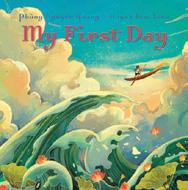
Arc B | My First Day
Prologue to L9
• Learning Goal | Describe major events of My First Day.
• Language Progress | Connect ideas using linking words.
Arc A | Continents and Beginner’s
World Atlas
Prologue to L3
• Learning Goal | Examine text features in Continents
• Language Progress | Support what you say with evidence from a text.
Prologue to L4
• Learning Goal | Use context clues to determine the meaning of new terms in Continents
• Language Progress | Support what you say with evidence from a text.
Prologue to L5
• Learning Goal | Examine Continents to determine what is fascinating about the continents.
• Language Progress | State a clear opinion.
32
12
20
26
Prologue to L10
• Learning Goal | Analyze comparisons in My First Day.
• Language Progress | Support what you say with evidence from a text.
Prologue to L11
• Learning Goal | Determine how An feels during his journey in My First Day
• Language Progress | Connect ideas using linking words.
Prologue to L12
• Learning Goal | Form opinion sentences about the types of transportation students can take to school.
• Language Progress | Connect ideas using linking words.
38
44
50
58
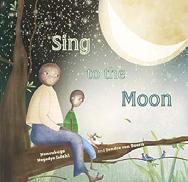
Arc C | Sing to the Moon
Prologue to L17
• Learning Goal | Describe major events in Sing to the Moon
• Language Progress | Connect ideas using linking words.
Prologue to L18
• Learning Goal | Examine what happens at the beginning of Sing to the Moon.
• Language Progress | Support what you say with evidence from a text.
Prologue to L19
• Learning Goal | Analyze how the boy’s feelings change in Sing to the Moon
• Language Progress | Ask questions to understand what others mean.
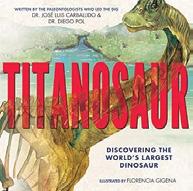
Arc D | Titanosaur
Prologue to L23
• Learning Goal | Examine major events in Titanosaur.
• Language Progress | Connect ideas using linking words.
Prologue to L24
• Learning Goal | Examine text features in Titanosaur.
• Language Progress | Support what you say with evidence from a text.
Prologue to L25
• Learning Goal | Compare the work of team members at the dig site and at the museum in Titanosaur
• Language Progress | Connect ideas using linking words.
64
70
76
Prologue to L26
• Learning Goal | Form an opinion about titanosaurs.
• Language Progress | Connect ideas using linking words.
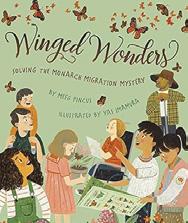
Arc E | Winged Wonders
Prologue to L29
• Learning Goal | Describe how people solved the North American monarch mystery in Winged Wonders
• Language Progress | Support what you say with evidence from a text.
102
82
88
96
Prologue to L30
• Learning Goal | Determine why people in Winged Wonders think monarch butterflies are amazing.
• Language Progress | Connect ideas using linking words.
to L31
• Learning Goal | Discuss how the people and groups in Winged Wonders solve the monarch migration mystery.
• Language Progress | Ask questions to understand what others mean.
108
116
ESSENTIAL QUESTION
What makes the world fascinating?
PROLOGUE MODULE FOCUS
In module 4, Arts & Letters Prologue™ lessons focus on helping students deepen their understanding of fascinating people, places, and discoveries around the world.
• Prologue lessons support reading development by helping students gather important information necessary for retelling stories and supporting their opinions with textual evidence. Students use Continents: What You Need to Know to learn about fascinating locations around the world. They learn how An travels to school along the Mekong River in My First Day. Students explore how a grandfather makes the ordinary fascinating in Sing to the Moon. They learn about the discovery of the titanosaur in Titanosaur. Finally, students develop an understanding of how many people contributed to learning more about the fascinating journey of monarch butterflies in Winged Wonders.
• Prologue lessons support writing development by providing students with opportunities to orally practice sharing opinions and supporting these opinions with textual evidence.
• Prologue lessons support speaking and listening development by providing more instruction and practice for the module’s speaking and listening goals: Support what you say with evidence from a text and ask questions to understand what others mean. Use the Module 4 Speaking and Listening Goal Tracker to track progress toward these goals.
• Prologue lessons support language development by providing opportunities for students to practice using linking words to connect ideas.
PROLOGUE TEXTS
Books
Literary
• My First Day, Phùng Nguyên Quang and Huỳnh Kim Liên
• Sing to the Moon, Nansubuga Nagadya Isdahl and Sandra van Doorn
Literary Nonfiction
• Titanosaur: Discovering the World’s Largest Dinosaur, José Luis Carballido, Diego Pol, and Florencia Gigena
• Winged Wonders: Solving the Monarch Migration Mystery, Meeg Pincus and Yas Imamura
Informational
• Continents: What You Need to Know, Jill Sherman
KNOWLEDGE THREADS
• There are seven continents in the world: Africa, Antarctica, Asia, Australia, Europe, North America, and South America.
• The world has diverse people, animals, landmarks, and physical features.
• People can learn about the world through oral storytelling, books, maps, photographs, and exploration.
• Around the world, people make discoveries together.
PROLOGUE MATERIALS AND PREPARATION
Prepare the following materials for use throughout the module.
• Determine how to access the module texts.
• Determine how to display Prologue reference charts, Prologue student resources, and select Learn book pages. These are listed in the Materials section of each lesson.
• Print or copy student resources from the Prologue Student Resources appendix. These are listed in the Materials section of each lesson.
• Make one set of story stones by cutting out the story element images from the page in the Prologue Reference Charts appendix. Alternatively, cut out the images and paste them onto real stones. Save all story stones for future use.
• Determine how to access the Module 4 Speaking and Listening Goal Tracker from the digital platform.
• Ensure access to the module 4 Knowledge Cards.
• Ensure students have paper for short responses. They can use their journals or other paper.
• For a comprehensive list of all the materials used in the module, see the digital platform.
PROLOGUE ENGLISH LANGUAGE DEVELOPMENT STANDARDS
Arts & Letters Prologue lessons for module 4 provide additional language support to develop the following English Language Development (ELD) standards. Educators should consult their state’s ELD standards and proficiency descriptors to identify the best ways to help multilingual learners reach the module’s learning goals. See the digital platform for a lesson-by-lesson breakdown of ELD standards.
WIDA Standards
ELD-SI.K-3.Narrate: Multilingual learners will
• Share ideas about one’s own and others’ lived experiences and previous learning
• Connect stories with images and representations to add meaning
• Ask questions about what others have shared
• Recount and restate ideas
ELD-SI.K-3.Inform: Multilingual learners will
• Describe characteristics, patterns, or behavior
• Sort, clarify, and summarize ideas
ELD-SI.K-3.Explain: Multilingual learners will
• Share initial thinking with others
• Compare and contrast objects or concepts
ELD-SI.K-3.Argue: Multilingual learners will
• Support own opinions with reasons
• Revise one’s own opinions based on new information
ELD-LA.K.Narrate.Interpretive: Multilingual learners will interpret language arts narratives (with prompting and support) by
• Identifying key details
• Identifying characters, settings, and major events
ELD-LA.K.Inform.Interpretive: Multilingual learners will interpret informational texts in language arts (with prompting and support) by
• Identifying main topic and key details
• Asking and answering questions about descriptions of familiar attributes and characteristics
ELP Standards
Standard 1: An ELL can construct meaning from oral presentations and literary and informational text through grade-appropriate listening, reading, and viewing.
Standard 2: An ELL can participate in grade-appropriate oral and written exchanges of information, ideas, and analyses, responding to peer, audience, or reader comments and questions.
Standard 3: An ELL can speak and write about grade-appropriate complex literary and informational texts and topics.
Standard 4: An ELL can construct grade-appropriate oral and written claims and support them with reasoning and evidence.
Standard 7: An ELL can adapt language choices to purpose, task, and audience when speaking and writing.
Standard 8: An ELL can determine the meaning of words and phrases in oral presentations and literary and informational text.
Standard 9: An ELL can create clear and coherent grade-appropriate speech and text.
Standard 10: An ELL can make accurate use of standard English to communicate in grade-appropriate speech and writing.
PROLOGUE LANGUAGE CONNECTIONS
Students’ home languages and cultures are assets that everyone in the school setting should value and celebrate. Teachers can support the strategic use of home languages to facilitate activating background knowledge, acquiring ELA knowledge and world knowledge, and engaging with grade-level content. This can happen individually or in groups. Teachers should encourage students to draw explicit metalinguistic connections between English and their home language through cognates and morphological awareness.
Multilingual learners in the United States speak a variety of languages at home, but an increasing majority speak Spanish at home. In 2019, more than 75 percent of students who were identified as “English learners” spoke Spanish as a home language (National Center for Education Statistics). For this reason, we offer a number of supports for Spanish speakers.
Contrastive Analysis
This module focuses on helping students practice using linking words to connect ideas. Prologue lessons help students understand how linking words are used to connect ideas. For students who also speak other language(s), the grammatical rules of English may be confusing. Here are some grammatical differences for which students may need extra explanation and modeling of this structure. In addition to Spanish, we compare English to Arabic and Chinese, the second and third most common languages spoken among multilingual learners in the United States (National Center for Education Statistics).
Language Similarity Difference
Spanish Linking words are also used in Spanish between sentences to show result, contrast, similarity, and addition, among other things.
Some linking words and expressions have different grammatical patterns in English and Spanish. For example, in English, you do not use a clause beginning with “that” after “in spite of” or “despite” (In spite of that she said …). In Spanish, a similar linking expression like “a pesar de” is usually followed by a clause starting with “que” (“a pesar de que ella dijo …”).
Arabic In both Arabic and English, linking words can be used to show contrast, cause and effect, and sequence of events. In both languages, linking words help make writing or speech more coherent.
Chinese For simple sentences, linking words align with the English.
The placement of linking words in Arabic is less flexible. They often appear at the beginning of a sentence or clause to indicate the relationship with the previous text.
The position of linking words may change in literary, academic, and archaic Chinese.
Spanish Cognates
Here are Spanish cognates for terms taught in module 4 Prologue lessons. Teacher notes in the lessons draw attention to Spanish cognates. Use an online Spanish dictionary for pronunciation guidance or to play a recording of the Spanish cognate for students.
Term Cognate
continent (n.)
discover (v.)
fascinating (adj.)
migration (n.)
occupy (v.)
paleontologist (n.)
continente (s.)
descubrir (v.)
fascinante (adj.)
migración (s.)
ocupar (v.)
paleontólogo (s.)
MODULE PLAN
Essential Question | What makes the world fascinating?
Arc
A
| Continents and Beginner’s World Atlas
Beginner’s
Arc B | My First Day
Arc B | My First Day
Lesson 15
Responsive
Teaching
Arc C | Sing to the Moon
Lesson 16
Wonder Sing to the Moon
Lesson 17
Organize Sing to the Moon
Arc D | Titanosaur
Lesson 22
Wonder Titanosaur
“Exploring Dinosaur Bones”
Lesson 23
Organize Titanosaur
Lesson 18
Reveal Sing to the Moon
Lesson 19
Distill Sing to the Moon
Lesson 20
Know Sing to the Moon Continents
“You Probably Didn’t Know …”
Lesson 21
Know Sing to the Moon
Beginner’s World Atlas
Module Task 2 completed
Lesson 24
Reveal Titanosaur
“Dana Daring” Lesson 25
Lesson 26
Distill Titanosaur
Know Titanosaur
“New Dino Was an Odd Duck”
Lesson 27
Know Titanosaur
Beginner’s World Atlas
Module Task 3 completed
Arc E | Winged Wonders
Lesson 28
Wonder Winged Wonders Titanosaur Lesson 29 Organize Winged Wonders Beginner’s World Atlas
Lesson 35
Responsive Teaching
Module Finale
End-of-Module
Refer to the digital platform for Year in Review, a lesson to reflect on all four module topics.
Module Task 4 completed Lesson 34
Listening Comprehension Assessment 2
Prologue to Lesson 3
Essential Question | What makes the world fascinating?
OVERVIEW
Preview
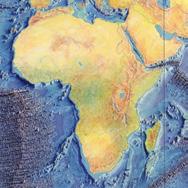
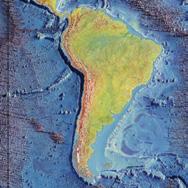
Students examine text features in Continents to learn more about specific continents. As they discuss what they learn about Africa and South America, students practice supporting what they say with evidence from the text. This work prepares students to retell the main topic and key details of Continents in lesson 3.
Learning Goal
Examine text features in Continents.
LEARNING TASK: Use the text, images, and captions to describe a detail about South America.
Language Progress
In this lesson, students work on this module speaking and listening goal: Support what you say with evidence from a text.
To support students with beginning English proficiency, prompt them to identify a specific part of an illustration that supports their thinking before they orally share by completing the sentence frame. To support students with intermediate English proficiency, encourage them to share additional examples of textual evidence to support their thinking.
Vocabulary
continent (n.)
Materials TEACHER
• Continents
• Knowledge Card: continent STUDENTS
• Continents
Preparation
• Determine how to display the sentence frames. See the Learn section for details.
LAUNCH 5 minutes
Practice Vocabulary
1. Display the front cover of Continents. Ask this question:
What do you notice about the front cover of this text?
2. Use responses to explain that the front cover shows water and land. Direct attention to the continents on the front cover. Tell students that these are called continents.
3. Introduce the vocabulary term continent by displaying the Knowledge Card. Engage students in Vocabulary Exploration.
Language Support
The term continent has a Spanish cognate: continente. Share this language connection with students whose home language is Spanish.
4. Tell students that they will examine other parts of the text to help them learn more about some of the continents.
LEARN 20 minutes
Examine Text Features
1. Distribute Continents to students, and direct them to page 3. Tell students that this page is the table of contents. Read aloud page 3, starting with the heading, “Table of Contents.” Ask this question:
What information does the table of contents have?
Key Ideas
• The table of contents tells how the text is organized.
• It shows where you can find the topics in the book.
• It tells that this text gives information about different continents.
Definition
continent (n.): one of Earth’s seven large areas of land
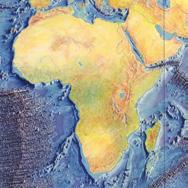
2. Reinforce that the table of contents shows which page provides information about each continent. Tell students that they will first discuss the continent of Africa. Invite students to locate Africa in the table of contents. Model how to use the table of contents to locate the page about Africa.
3. Direct attention to pages 6–7. Instruct students to locate the large word at the top of page 6. Ask this question:
What do you notice about this word?
Key Ideas
• It is at the top of the page.
• It is written in white instead of black.
• It is bigger and thicker than other letters on the page.
4. Tell students that the large word is called the heading. Explain that headings are titles of smaller sections of a text. Echo Read the heading: “Africa.” Ask this question:
What do you think you will learn about in this section?
5. Reinforce that students will learn about Africa in this part of the text. Emphasize that Africa is a continent.
6. Tell students that they will share information about Africa and support what they say with evidence from the text. Display and Echo Read these sentence frames: In the text, . In this image, . Explain that students will use these sentence frames to describe what they learn about Africa.
7. Instruct students to look closely at the images and listen for details about Africa. Read aloud page 6 including the fact box, starting with “Africa is home.” Think aloud to model how to support what you say with evidence from the text.
8. Ask this question: What did you learn about Africa?
Prompt students to use one of the sentence frames to support their idea with textual evidence.
Sample Think Aloud
I learned that many wild animals live in Africa. In this image, I see that a lion is one of the animals that lives in Africa.
Key Ideas
• Africa is home to giraffes. In this image, I see that giraffes live there.
• The largest desert is in Africa. In the text, it says Africa is “home to the Sahara, the world’s largest desert.”
• The first humans lived in Africa. In the text, it says “most scientists agree the first humans lived” on the continent.
Language Expansion
For students with intermediate English proficiency, encourage them to share more than one thing they learned about Africa.
9. Direct attention to the “Fact” heading on page 6 and the “At a Glance” heading on page 7. Tell students that these boxes provide additional information about Africa. Instruct students to listen for additional details about Africa. Read aloud the fact box on page 6 and the at a glance box on page 7. Tell students that countries are areas of land controlled by their own government and that population refers to the people who live in a certain place.
Teacher Note
Display a map that shows the countries of Africa to support students’ understanding of the continent.
10. Instruct students to Think–Pair–Share to answer this question:
What did you learn about Africa?
Remind students to support their idea with textual evidence by using this sentence frame: In the text, .
Key Ideas
• Most of the land in Africa is above sea level. In the text, it says the “land is high above sea level.”
• There are a lot of people in Africa. In the text, it says the population is “more than one billion.”
• Africa is a large continent. In the text, it says Africa is 11.6 million square miles.
11. Tell students that they will discuss a different continent. Direct students to pages 14–15. Instruct students to look closely at the pages. Ask these questions:
What will you learn about in this section? How do you know?
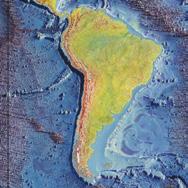
12. Reinforce the correct responses: the continent of South America; the heading says “South America.” Instruct students to look closely at the images and to listen for details about South America. Read aloud pages 14–15, starting with “South America has” and including fact boxes.
Teacher Note
Display a map that shows the countries of South America to support students’ understanding of the continent.
13. Instruct students to discuss with a partner what they learned about South America. Prompt students to use the map and fact boxes during their discussion.
14. Listen for students to address key ideas in their discussions.
Key Ideas
• South America has the world’s largest rain forest. In the text, it says “the Amazon rain forest is the world’s largest.”
• The Andes mountains are in South America. In the image, it shows where the Andes mountains are in South America.
• South America is home to Angel Falls. In the text, it says they are in Venezuela, a country in South America.
• The Atacama Desert is in South America. In this image, it shows the desert is on the coast of the continent.
15. Tell students that they will Mix and Mingle to discuss what they learned about South America. To prepare for the routine, instruct students to select one detail they would like to share during the discussion. Remind students that they should use one of the sentence frames to support their ideas with evidence from the text.
Language Support
For students with beginning English proficiency, reread page 14. Direct attention to the pictures that correspond to each detail, and instruct students to place a sticky note next to the picture they would like to discuss.
LAND 5 minutes
Demonstrate Learning
1. Introduce the learning task. Instruct students to Mix and Mingle to answer this question: What did you learn about South America?
Analyze Student Progress
Monitor: Do students use textual evidence to share what they learned about South America?
Offer Immediate Support: If students need additional support describing what they learned about South America, direct them to the image on page 15. Prompt them to select an image, and read aloud the caption. Instruct them to complete these sentence frames: South America has the . In this image, it shows the
2. Invite a few students to share their responses.
Key Ideas
• South America has the world’s largest rain forest. In the text, it says “the Amazon rain forest is the world’s largest.”
• The Andes mountains are in South America. In the image, it shows where the Andes mountains are in South America.
• South America is home to Angel Falls. In the text, it says they are in Venezuela, a country in South America.
• The Atacama Desert is in South America. In this image, it shows the desert is on the coast of the continent.
3. Summarize that students used evidence from the text to share information about two continents.
Prologue to Lesson 4
Essential Question | What makes the world fascinating?
OVERVIEW
Preview
Students use context clues to determine the meaning of unknown words in Continents. As they discuss the meaning of new terms, students practice supporting what they say with evidence from the text. This work prepares students to determine the meaning of unknown words in lesson 4.
Learning Goal
Use context clues to determine the meaning of new terms in Continents.
LEARNING TASK: Draw a clue that will help others determine the meaning of occupy.
Language Progress
In this lesson, students work on this module speaking and listening goal: Support what you say with evidence from a text.
To support students with beginning English proficiency, model how to locate textual evidence related to a given topic. To support students with intermediate English proficiency, prompt them to identify two pieces of textual evidence related to a given topic.
Vocabulary
continent (n.)
occupy (v.)
poisonous (adj.)
Materials
TEACHER
• Continents
• Knowledge Card: continent
• class Word Clues (Prologue Student Resources appendix)
STUDENTS
• Continents
• Word Clues (Prologue Student Resources appendix)
Preparation
• Determine how to display Word Clues. See the Learn section for details.
LAUNCH 5 minutes
Discuss Prior Knowledge
1. Display the front cover of Continents, and Echo Read the title.
2. Review the vocabulary term continent by displaying the Knowledge Card. Engage students in Vocabulary Exploration.
Language Support
The term continent has a Spanish cognate: continente. Share this language connection with students whose home language is Spanish.
3. Direct attention to the images on the front and back covers of the text. Read aloud the portion of the back cover from “From Africa to” to “our world’s continents.” Instruct students to Think–Pair–Share to answer this question:
How do details on the front and back covers help you understand what a continent is?
Language Support
If possible, pair students who speak the same home language, and instruct them to discuss this question.
Key Ideas
• The images on the front cover show large areas of land that are the continents.
• A picture of Earth and its continents is on the back cover.
• The words say that Africa, Asia, and North America are continents.
4. Emphasize that students can use clues from the images and words on the front and back covers to understand the word continent.
5. Tell students they will now practice using textual evidence to help them determine the meaning of other words in Continents.
Definition
continent (n.): one of Earth’s seven large areas of land
LEARN
20 minutes
Use Context Clues
1. Distribute Continents to students, and direct attention to page 16. Instruct students to use a nonverbal signal (e.g., touch their ear) when they hear a term that they do not yet know the meaning of. Read aloud the fact box on page 16, starting with “Australia is known.”
2. Use responses to reinforce that students may not yet know the meaning of poisonous. Remind students that they can use clues from the images and pictures to figure out the meaning of unknown words. Tell students that they can also use evidence from the text to support their answer as they explain what they think a word means.
3. Think aloud to model how to determine the meaning of poisonous and use evidence from the text to support your answer.
4. Introduce the vocabulary term poisonous by displaying the term. Engage students in Vocabulary Exploration. Emphasize that poisonous describes animals and other items (e.g., plants or liquids) that might harm someone.
5. Explain that students can create charts to help them remember the meaning of new words. Display and distribute Word Clues. Direct attention to the label poisonous on the handout. Model how to draw and label an image (e.g., a snake or person feeling sick) related to poisonous.
6. Instruct students to draw images that might help someone understand the meaning of poisonous. Language Expansion
Sample Think Aloud
I think poisonous means “something that is harmful or dangerous.” In the image, I see a big snake, and I know that some snakes are dangerous. In the text, it says there are poisonous animals like deadly snakes in Australia.
Definition poisonous (adj.): containing a substance that causes sickness or harm to others
For students with intermediate English proficiency, prompt them to add words to their drawings.
7. Invite a few students to share their drawings.
8. Tell students that they will determine the meaning of another word. Direct attention to pages 10–11. Read aloud the portion of page 10 from “Europe is west” to “most of Europe.”
9. Direct attention to population on page 10. Explain that population is a vocabulary word that students might not yet know. Ask this question:
What part of the text can help you determine the meaning of population?
10. Reinforce the correct response: the definition at the bottom of the page. Explain that the author included a definition at the bottom of the page to make sure that the reader understands what the word means. Read aloud the definition.
11. Direct attention to the label population on the handout. Instruct students to draw images on their handout that might help someone understand the meaning of population.
12. Invite a few students to share their drawings.
13. Tell students that they will focus on another word. Remind them that they can use clues from the text and images to determine the meaning of the word.
14. Direct attention to the photograph on pages 10–11. Instruct students to discuss this question with a partner:
What do you notice about the buildings and people in this picture?
Language Support
If possible, pair students who speak the same home language, and instruct them to discuss what they notice.
15. Invite a few students to share their responses. Reinforce that the photograph shows many buildings and people close together.
16. Read aloud this sentence from page 10: “People occupy most of Europe.” Direct attention to the word occupy. Instruct students to Think–Pair–Share to answer this question:
What do you think occupy means?
Prompt students to use evidence from the text or image to support their response.
Language Support
For students with beginning English proficiency, provide these sentence frames: I think occupy means . In the image, I see .
Key Ideas
• I think occupy means “to live there.” In the image, I see houses, cars, and many people showing how people live in Europe.
• I think occupy means “to crowd a place.” In the image, I see a crowd of people.
• I think occupy means “to fill up a space.” In the text, it says that many other continents have space but “people occupy most of Europe.”
17. Use responses to reinforce the correct definition of occupy. Engage students in Vocabulary Exploration.
Language Support
The term occupy has a Spanish cognate: ocupar. Share this language connection with students whose home language is Spanish.
Definition occupy (v.): to fill or be in
LAND 5 minutes
Demonstrate Learning
1. Introduce the learning task. Direct attention to occupy on the handout. Instruct students to draw images that might help someone understand the meaning of occupy.
Language Expansion
For students with intermediate English proficiency, prompt them to add words to their drawings.
Analyze Student Progress
Monitor: Do students draw images related to the meaning of occupy?
Offer Immediate Support: If students need additional support drawing a clue for occupy, direct them to the photographs on pages 10–11 and tell them to describe how the photographs help them know what occupy means. Prompt them to draw a similar image.
2. Invite a few students to share their drawings.
3. Summarize that students used clues to help them determine the meaning of new words in Continents.
Prologue to Lesson 5
Essential Question | What makes the world fascinating?
OVERVIEW
Preview
Students describe what is fascinating about some of the world’s continents. As they discuss what is fascinating about Antarctica, Asia, and Australia, students practice stating a clear opinion. This work prepares students to discuss a central idea of the text in lesson 5.
Learning Goal
Examine Continents to determine what is fascinating about the continents.
LEARNING TASK: Use textual evidence to support an idea about which continent is most fascinating.
Language Progress
In this lesson, students work on this expectation for the End-of-Module Task: State a clear opinion.
To support students with beginning English proficiency, provide two examples (e.g., I think Asia is the most fascinating continent; I would travel to Asia) and prompt them to determine which example states a clear opinion. To support students with intermediate English proficiency, instruct them to state a clear opinion about a given topic.
Vocabulary fascinating (adj.)
Materials
TEACHER
• Continents
• Knowledge Card: fascinating
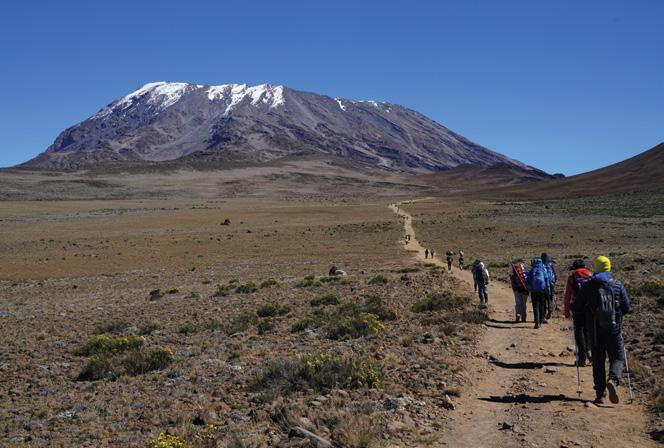
• Mount Kilimanjaro and Vinicunca (Prologue Reference Charts appendix)
• class Fascinating Continents (Prologue Student Resources appendix)
• Determine how to display the linking word because. See the Launch section for details.
• Make a class Fascinating Continents. See the Learn section for details and the Prologue Reference Charts appendix for a sample.
LAUNCH 5 minutes
Practice Vocabulary
1. Remind students that they have been discussing what makes the world fascinating. Review the vocabulary term fascinating by displaying the Knowledge Card. Engage students in Vocabulary Exploration.
Language Support
The term fascinating has a Spanish cognate: fascinante. Share this language connection with students whose home language is Spanish.
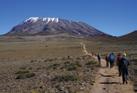
2. Display Mount Kilimanjaro and Vinicunca. Tell students that this image shows mountains from two different continents. Instruct students to Think–Pair–Share to answer these questions:
Which mountain do you think is more fascinating? Why?
3. Tell students that they just used the linking word because to share their opinion about which mountain they think is more fascinating. Display and Choral Read the linking word because. Explain that because is used to provide an explanation or reason.
4. Tell students that they will use because to share their opinion about what is fascinating about some of the continents.
Definition fascinating (adj.): very interesting
Mount Kilimanjaro and Vinicunca
LEARN 20 minutes
Examine Why Continents Are Fascinating
1. Display the class Fascinating Continents, and distribute copies to students. Explain that students will add fascinating facts about Antarctica, Asia, and Australia to their handouts to state an opinion about which continent they think is most fascinating.
2. Distribute Continents to students, and direct attention to pages 18–19. Instruct students to listen for fascinating facts about Antarctica. Read aloud page 18, starting with “Antarctica is the.”
3. Think aloud to model how to share a fascinating fact about Antarctica.
4. Ask this question: Why is Antarctica fascinating?
Language Support
For students with beginning English proficiency, guide their thinking by asking “What makes Antarctica different from other continents?”
Key Ideas
• Antarctica is fascinating because it is the coldest and windiest continent.
• Antarctica is fascinating because no people live there.
• Antarctica is fascinating because it has more than 40 research stations.
5. Instruct students to add one or more fascinating facts about Antarctica to their handout.
Sample Think Aloud
I see that everything is covered in ice in the image. I will draw and label an ice sheet under the Antarctica heading.
6. Direct attention to the second column on the handout. Echo Read the heading. Tell students that they will discuss what is fascinating about Asia. Direct attention to pages 8–9 in the text. Read aloud page 8, starting with “Asia is Earth’s” and including the fact box. Instruct students to Think–Pair–Share to answer this question:
What is fascinating about Asia?
Key Ideas
• Asia is fascinating because it has the tallest mountain.
• Asia is fascinating because more people live there than on any other continent.
• Asia is fascinating because it has forests, jungles, and deserts.
Language Expansion
For students with intermediate English proficiency, encourage them to describe two or three things that are fascinating about Asia during their discussions.
7. Instruct students to add one or more fascinating facts about Asia to their handout.
8. Direct attention to the third column of the handout. Echo Read the heading. Tell students that they will discuss what is fascinating about Australia. Direct attention to pages 16–17. Read aloud page 16, starting with “Australia is the” and including the fact box. Instruct students to Think–Pair–Share to answer this question:
Why is Australia fascinating?
Key Ideas
• Australia is fascinating because it has more deadly snakes than any other place.
• Australia is fascinating because it is the smallest continent.
• Australia is fascinating because it is the largest island in the world.
9. Instruct students to add one or more fascinating facts about Australia to their handout.
10. Tell students that they will discuss which continent they think is most fascinating. Emphasize that students should use evidence from the text to support what they say.
LAND 5 minutes
Demonstrate Learning
1. Introduce the learning task. Facilitate a discussion of these questions: Which continent do you think is most fascinating: Antarctica, Asia, or Australia? Why?
Analyze Student Progress
Monitor: Do students state a clear opinion about which continent they think is most fascinating and why?
Offer Immediate Support: If students need additional support describing what is fascinating about the continent they selected, direct them to their handout and prompt them to describe what they drew. Prompt them to complete this sentence frame by naming the continent in the first blank and describing their drawing in the second blank: is fascinating because
2. Summarize that students stated their opinion as they discussed what is fascinating about some of the world’s continents.
Prologue to Lesson 6
Essential Question | What makes the world fascinating?
OVERVIEW
Preview
Students form sentences about the features of continents. As they discuss the continents, students practice connecting two ideas using the linking word and. This work prepares students to form knowledge statements about the physical features of the continents in lesson 6.
Learning Goal
Form sentences about the continents.
LEARNING TASK: Use the linking word and to form a sentence about two features of a chosen continent.
Language Progress
In this lesson, students work on this module language goal: Connect ideas using linking words.
To support students with beginning English proficiency, prompt them to use and to describe two things they do at school. To support students with intermediate English proficiency, invite them to work with a partner, using the word and to connect their favorite things to do after school.
Vocabulary
feature (n.)
Materials
TEACHER
• Continents
STUDENTS
• Continents
• index cards
Preparation
• Determine how to display the names of the continents. See the Launch section for details.
• Determine how to display the sentence frame. See the Learn section for details.
LAUNCH 5 minutes
Discuss Prior Knowledge
1. Display the front cover of Continents. Echo Read the title. Assess and activate prior knowledge by asking this question:
Which continents have you learned about?
2. Reinforce the correct responses, and display the name of each continent as students share:
• Africa
• Antarctica
• Asia
• Australia
• Europe
• North America
• South America
3. Explain that students can use the linking word and to connect ideas that are about the same topic. Think aloud to model how to use and to describe two continents.
4. Direct attention to the list of continents. Instruct students to Think–Pair–Share to form a sentence about two continents.
Language Support
For students with beginning English proficiency, provide this sentence frame: and are continents.
Key Ideas
• Europe and Asia are continents.
• North America and South America are continents.
• Australia and Africa are continents.
Sample Think Aloud I will select two continents from the list. Then I will use and between the names of the continents. This is my sentence: Asia and Australia are continents.
5. Tell students that they will form additional sentences about the continents using the linking word and.
LEARN
20 minutes
Form Sentences About the Continents
1. Tell students that they will use and to connect ideas about the features of some of the continents. Introduce the vocabulary term feature by displaying the term. Engage students in Vocabulary Exploration. Emphasize that students will describe interesting or important parts of some of the continents.
2. Tell students that they will first form sentences about North America. Distribute Continents to students. Direct students to pages 12–13. Instruct them to look closely at the images to spark their memory. Ask this question and direct attention to each feature in the images as students share: What features does North America have?
Language Support
For students with beginning English proficiency, provide a word bank of the features with simple drawings labeled in students’ home language.
Key Ideas
Definition feature (n.): an interesting or important part or ability
3. Distribute one index card to each student. Instruct students to draw and label a feature found in North America.
4. Explain that students will connect their idea with a partner’s idea to form a sentence about North America. Reinforce that students can use the linking word and to connect their ideas since they are about the same topic.
5. Display and read aloud this sentence frame: has and . Explain that the name of the continent goes in the first blank and that details about the continent’s features go in the other blanks.
6. Invite two students who wrote about different features to share their drawings. Model how to complete the sentence frame with the responses (e.g., North America has forests and rivers).
7. Instruct students to work with a partner who drew a different feature, connecting their ideas using the linking word and. Prompt students to use the sentence frame. Instruct students to form a sentence with another partner as time allows.
8. Invite a few students to share their responses.
Key Ideas
• North America has mountains and forests.
• North America has snow and lakes.
• North America has deserts and mountains.
Language Expansion
For students with intermediate English proficiency, prompt them to form more than one sentence that describes two features found in North America.
9. Direct attention to pages 10–11, and tell students to look closely at the image. Echo Read the heading on page 10. Tell students that they will use the linking word and to form sentences about two features found in Europe. Instruct students to Think–Pair–Share to answer this question: What features does Europe have?
Key Ideas
• Europe has a river and tall buildings.
• Europe has people and buildings.
• Europe has cars and many people.
10. Tell students that they will choose a different continent and draw and write about two of its features. Instruct students to draw and label two features found in the continent they chose. Prompt students to write and between the two features that they draw.
11. Explain that students will Mix and Mingle to share two features of their continent. Display and Choral Read this sentence frame: has and . Remind students that they can use the sentence frame to help them form their response.
LAND 5 minutes
Demonstrate Learning
1. Introduce the learning task. Instruct students to Mix and Mingle to respond to this prompt:
Share two features of the continent you chose.
Lead students through a Mix and Mingle.
Analyze Student Progress
Monitor: Do students use the linking word and to describe two features of the continent they chose?
Offer Immediate Support: If students need additional support using the linking word and to connect ideas about their continent, Choral Read the sentence frame, pausing for students to provide the name of the features that they drew in each blank.
2. Listen for students to address key ideas in their discussions.
Key Ideas
• Africa has lions and giraffes.
• Asia has mountains and trees.
• South America has rivers and waterfalls.
• Australia has snakes and buildings.
• Antarctica has snow and ice.
3. Summarize that students used the linking word and to connect ideas and form sentences about the continents.
Prologue to Lesson 9
Essential Question | What makes the world fascinating?
OVERVIEW
Preview
Students describe what happens during the beginning, middle, and end of My First Day. As they discuss events of the story, students practice connecting two ideas using the linking word and. This work prepares students to retell My First Day in lesson 9.
Learning Goal
Describe major events of My First Day.
LEARNING TASK: Summarize what happens at the end of the story using the linking word and.
Language Progress
In this lesson, students work on this module language goal: Connect ideas using linking words.
To support students with beginning English proficiency, model how to use the linking word and to describe two of their favorite foods. To support students with intermediate English proficiency, encourage them to use the linking word and to connect ideas to describe their favorite food and their partner’s favorite food.
Vocabulary
journey (n.)
Materials
TEACHER
• My First Day
• Knowledge Card: journey
STUDENTS
• index cards
Preparation
• My First Day is an unpaginated text. Number your text; begin with the second title page (where the author’s name appears) as page 1. Pages on the left will be even, and pages on the right will be odd.
LAUNCH 5 minutes
Practice Vocabulary
1. Display the front cover of My First Day. Echo Read the title of the text. Direct attention to the boy in the illustration, and ask this question: Who is this story mostly about?
2. Reinforce the correct response: a boy. Emphasize that the boy is a character in the story.
3. Remind students that they previously learned the term journey, which connects to what happens in the book. Review the vocabulary term journey by displaying the Knowledge Card. Engage students in Vocabulary Exploration. Explain that a person takes a journey or goes on a journey.
4. Instruct students to work with a partner to form a sentence about the book that uses the word journey. Invite a few students to share their sentences.
Key Ideas
• The boy takes a journey to school.
• The boy goes on a journey.
• The boy goes on a journey on the river.
5. Tell students that they will discuss the boy’s journey as they examine events of the story.
LEARN 20 minutes
Describe Major Events
1. Display pages 2–3 of My First Day. Read aloud page 2, starting with “Where the great.” Explain that the boy lives on the Mekong River in Vietnam, which is a country in Asia. Tell students that a river is a large body of water.
Teacher Note
Display a map of Vietnam and show students where the Mekong River is to familiarize students with the story’s setting.
2. Read aloud page 3, starting with “I wake up.” Ask this question: What does the boy do in this part of the story?
Key Ideas
• wakes up
• waits for his boat
• gets ready for his journey
3. Remind students that they can use the linking word and to connect ideas about the same topic. Think aloud to model how to use and to summarize what the boy does during this part of the story.
4. Instruct students to repeat this sentence: The boy wakes up and waits for his boat.
Language Expansion
For students with intermediate English proficiency, prompt them to form different sentences that describe two of the things the boy does during this part of the story (e.g., the boy wakes up and gets ready for his journey).
Sample Think Aloud
I will use the word and in between two things that the boy does during this part of the story. This is my sentence: The boy wakes up and waits for his boat.
5. Display pages 4–5, and read aloud page 5, starting with “This is the.” Ask this question:
What does the boy do in this part of the story?
Key Ideas
• leaves his house
• begins his trip
• paddles onto the water
6. Explain that this is the beginning of the boy’s journey. Instruct students to work with a partner to form sentences to describe two things the boy does at the beginning of his journey.
Language Support
For students with beginning English proficiency, direct their attention to the illustrations on pages 2–3 and instruct them to describe what is happening. Then instruct them to repeat the word and before having them describe what is happening in the illustrations on pages 4–5.
7. Invite a few students to share their sentences.
Key Ideas
• The boy wakes up and gets on his boat.
• The boy gets on his boat and paddles into the river.
• The boy gets on his boat and starts his journey.
8. Tell students that they will use the word and to describe two things the boy does during the middle of his journey. Display pages 10–11. Tell students that the boy enters a mangrove forest during the middle of the story. Explain that mangroves are trees that grow in the water.
9. Instruct students to listen to find out what happens in the mangrove forest. Read aloud pages 12–14, starting with “It’s different when.” Direct attention to the illustrations on pages 12–14, and ask these questions:
What does the boy hear?
What does the boy see?
10. Reinforce the correct response: animals. Emphasize that the boy can hear animal sounds and see some animals’ eyes.
11. Instruct students to work with a partner to form sentences that describe two things the boy does in the middle of his journey. Invite a few students to share their sentences.
Key Ideas
• The boy goes into the mangrove forest and hears animals.
• The boy sees and hears animals.
• The boy paddles his boat and enters the mangrove forest.
12. Display pages 26–27. Explain that the boy passes by water buffalo at the end of his journey. Instruct students to listen to find out what else the boy does at the end of his journey. Read aloud pages 30–32, starting with “Hello, friends!”
LAND 5 minutes
Demonstrate Learning
1. Introduce the learning task. Instruct students to work with a partner to form sentences that describe two things the boy does at the end of his journey.
Analyze Student Progress
Monitor: Do students describe two things the boy does at the end of the story using the linking word and?
Offer Immediate Support: If students need additional support describing the boy’s actions, direct their attention to the illustrations on pages 30–33. To help students form complete sentences about what happens at the end of the story, ask questions such as these: What is the boy doing? What is happening in this picture?
2. Invite a few students to share their sentences.
Key Ideas
• The boy passes the buffalo and sees his friends.
• The boy sees his friends and says hello.
• The boy says hello to his friends and arrives at school.
3. Summarize that students connected ideas using the word and to describe what happens during the beginning, middle, and end of the story.
Prologue to Lesson 10
Essential Question | What makes the world fascinating?
OVERVIEW
Preview
Students analyze comparisons in My First Day. As they discuss how the boy’s journey on the river is like being at school, students practice supporting what they say with evidence from the text. This work prepares students to analyze the figurative language in My First Day in lesson 10.
Learning Goal
Analyze comparisons in My First Day.
LEARNING TASK: Describe how An’s journey on the river is like being at school.
Language Progress
In this lesson, students work on this module speaking and listening goal: Support what you say with evidence from a text.
To support students with beginning English proficiency, prompt them to identify a specific part of an illustration that supports their thinking before orally sharing their idea. To support students with intermediate English proficiency, encourage them to share additional examples of textual evidence to support their thinking.
Vocabulary
none
Materials
TEACHER
• My First Day
STUDENTS
• none
Preparation
• My First Day is an unpaginated text. Number your text; begin with the second title page (where the author’s name appears) as page 1. Pages on the left will be even, and pages on the right will be odd.
• Determine how to display the sentence frames. See the Learn section for details.
LAUNCH 5 minutes
Discuss Prior Knowledge
1. Instruct students to Think–Pair–Share to answer this question:
What do you see and hear at school?
Language Support
If possible, pair students who speak the same home language, and instruct them to discuss the question.
Key Ideas
• see: classrooms, desks, hallways
• hear: teachers, students, bells
2. Display the front cover of My First Day. Echo Read the title. Remind students that this story is about a boy named An and his journey to his first day of school.
3. Tell students that My First Day contains words that are related to school.
4. Tell students that they will revisit the story to find words that relate to things they might see or hear at school.
LEARN
20 minutes
Analyze Comparisons in My First Day
1. Remind students that they can support their ideas with evidence from the text as they discuss parts of a story. Explain that students will use evidence from the words and illustrations to help them determine how An’s journey on the river is like being in school.
2. Display pages 12–13 of My First Day. Remind students that the boy is in the mangrove forest during this part of the story. Tell students that mangroves are trees that grow in water. Instruct students to use a nonverbal signal (e.g., touch their ear) when they hear a word related to something they might see or hear at school.
3. Read aloud the portion of page 12 from “It’s different when” to “of the forest.” Explain that unfamiliar means “new and different.” Ask this question:
What word did you hear that could be related to school?
Language Support
For students with beginning English proficiency, review school-related vocabulary.
4. Reinforce the correct response: hallways.
5. Remind students that they can use sentence frames to support what they say with evidence from the text. Display and read aloud these sentence frames: In the text, . In the illustration, .
6. Instruct students to use details from the illustration to discuss with a partner how the illustration shows that this part of the story is like being at school.
7. Reinforce the correct response: In the illustration, the trees have created walls that might remind someone of a hallway in a school.
8. Explain that An describes the hallways as unfamiliar, which means they are new and unknown. Invite students to imagine going down an unfamiliar hallway. Instruct students to Think–Pair–Share to answer this question:
How is going down an unfamiliar hallway like being at school?
Language Support
For students with beginning English proficiency, prompt them to think about their first day at school.
Language Expansion
For students with intermediate English proficiency, encourage them to share more than one way that going down a new hallway reminds them of going to their first day of school.
9. Use responses to reinforce that being in an unfamiliar hallway may remind students of their first day in a new school.
10. Tell students that they will listen for more details about how the boy’s journey is like school. Remind students to use a nonverbal signal (e.g., touch their ear) when they hear a word related to something they might see or hear at school. Read aloud the portion of page 12 from “I hear the” to “I move by.”
Ask this question:
What word did you hear that could be related to school?
11. Reinforce the correct response: classroom. Tell students that An says he hears “the chatter of a classroom.” Explain that chatter is quick, short talking. Direct attention to the illustrations on pages 12–15, and ask these questions:
Who is making the chatter in the mangrove forest?
How do you know?
Prompt students to use the sentence frame as they support their answer with textual evidence.
12. Reinforce the correct responses:
• Animals are making the chatter.
• In the illustration, it shows a bird, and I think the bird and other animals are making the noise.
• In the text, it says that he hears chatter from a classroom full of animals.
13. Invite students to imagine hearing the chatter. Instruct students to Think–Pair–Share to answer this question:
How is hearing animal chatter like being at school?
Language Support
For students with beginning English proficiency, play a short audio clip of animal noises in the jungle and a clip of students chattering at school. Then prompt students to describe how the sounds are similar.
14. Use responses to reinforce that the animal chatter is like the chatter of kids at school.
15. Direct attention to the illustration. Emphasize that An experiences many things that are like being in school but he is still in the mangrove forest during this part of the story.
LAND
5 minutes
Demonstrate Learning
1. Introduce the learning task. Form small groups. Instruct students to discuss this question with their small group:
How is An’s journey like being at school?
Prompt students to use the sentence frames to support their ideas with evidence from the text.
Language Support
For students with beginning English proficiency, prompt them to identify a specific part of the text or illustration on pages 12–13 that supports their thinking before sharing their response.
Analyze Student Progress
Monitor: Do students describe how the boy imagines things that he might see and hear at school while he is on his journey?
Offer Immediate Support: If students need additional support describing how the boy’s journey is like being in school, invite them to write their name across a dark surface. Prompt them to describe how their name is like the lines the boy’s boat is making in the illustration on pages 20–21.
2. Listen for students to address key ideas in their responses.
Key Ideas
• The river reminds An of going down a hallway of a school. In the illustrations, the trees appear to make walls similar to a hallway.
• The noises the animals make sound like students chattering in classrooms at school. In the text, it says An hears noise from a classroom full of animals.
• An’s journey reminds him of things he might see and hear at school. In the text, it says that he sees hallways and hears noisy animals.
3. Summarize that students used textual evidence to compare An’s journey on the river to the first day of school. Emphasize that analyzing comparisons helps readers gain a deeper understanding of the story.
Prologue to Lesson 11
Essential Question | What makes the world fascinating?
OVERVIEW
Preview
Students identify the feelings that An experiences during his journey in My First Day. As they discuss An’s feelings, students practice connecting two ideas by using the linking word and. This work prepares students to determine a central idea of My First Day in lesson 11.
Learning Goal
Determine how An feels during his journey in My First Day.
LEARNING TASK: Describe two different feelings that An experiences at the end of his adventure.
Language Progress
In this lesson, students work on this module language goal: Connect ideas using linking words.
To support students with beginning English proficiency, prompt them to use the linking word and to describe two things they do at school. To support students with intermediate English proficiency, invite them to work with a partner to connect their favorite things to do after school by using the linking word and.
Vocabulary
none
Materials
TEACHER
• My First Day
• Feeling Words
(Prologue Reference Charts appendix)
• class An’s Feelings Chart
(Prologue Student Resources appendix)
STUDENTS
• My First Day
• An’s Feelings Chart
(Prologue Student Resources appendix)
Preparation
• My First Day is an unpaginated text. Number your text; begin with the second title page (where the author’s name appears) as page 1. Pages on the left will be even, and pages on the right will be odd.
• Determine how to display the class An’s Feelings Chart. See the Learn section for details.
LAUNCH 5 minutes
Discuss Prior Knowledge
1. Display Feeling Words. Review a few feeling words, including curious, excited, nervous, and proud. Invite students to match their facial expressions to the expressions on the chart.
Language Support
For students with beginning English proficiency, emphasize that the word feeling, as used in this instance, refers to emotion, not the physical sense of touch.
2. Ask this question: How did you feel on the first day of school?
Key Ideas
• nervous
• excited
• scared
3. Emphasize that people often experience more than one feeling at the same time. Remind students that they can use the linking word and to connect two or more ideas that are about the same topic. Think aloud to model how to use and to describe feeling two different emotions on the first day of school.
4. Instruct students to Think–Pair–Share to use and to form a sentence describing two feelings they felt on the first day of school.
Key Ideas
• I felt curious and scared.
• I felt happy and proud.
• I felt nervous and curious.
Sample Think Aloud
I will think about two feelings I felt on the first day of school. Then I will use and to connect them. This is my sentence: On the first day of school, I felt excited and nervous.
5. Tell students that they will describe the different feelings that An experiences during his journey in My First Day.
LEARN 20 minutes
Describe An’s Feelings
1. Display pages 6–7, and read aloud page 7, starting with “I set out.” Explain that an adventure is an exciting or dangerous experience. Ask this question:
Where is the boy, An, going on his adventure?
2. Reinforce the correct response: school.
3. Display and distribute An’s Feelings Chart. Explain that students will use this chart to help them form sentences about the different feelings that An experiences. Tell students that they can think about their own experiences and use evidence from the text to determine how An feels about going on his adventure. Ask this question:
How do you think An feels as he starts his adventure?
During the remainder of the lesson, encourage students to refer to Feeling Words, as needed, to identify emotions or to draw faces to show feelings.
4. Think aloud to model how to add details to the two faces on the chart to show how An feels in this part of the story. Use the linking word and to describe these feelings.
5. Instruct students to add details to the faces on their charts to show two feelings that An might be experiencing during this part of the story. Then instruct students to work with a partner to form a sentence about these two feelings. Remind students to use the linking word and to connect these two ideas. Invite a few students to share their sentences.
Key Ideas
• An feels nervous and excited.
• An feels proud and worried.
• An feels excited and proud.
6. Tell students that they will now discuss how An feels during a different part of the story. Distribute My First Day to students. Direct students to pages 12–16. Assess and activate prior knowledge by asking this question:
What is happening in this part of the story?
7. Reinforce the correct response: An is going through the mangrove forest, and he hears and sees different animals. Ask this question:
How do you think An feels about going through the mangrove forest?
Language Support
For students with beginning English proficiency, direct their attention to An’s face in the illustrations and prompt them to match his face to those on Feeling Words.
Sample Think Aloud I think that An feels excited and worried. I will draw a big, happy smile and wide eyes on this face to show that An is excited. I will draw a wiggly mouth and small eyes on this face to show that An is worried. Then I can say, “An feels excited and worried.”
Key Ideas
• scared
• nervous
• worried
• curious
Language Expansion
For students with intermediate English proficiency, encourage them to expand their responses by using textual evidence to describe why An feels that way.
8. Instruct students to add details to the faces on their charts to show two feelings that An might be experiencing during this part of the story. Instruct students to then work with a partner to form a sentence about these feelings. Invite a few students to share their drawings and sentences.
Key Ideas
• An feels nervous and curious.
• An feels scared and worried.
• An feels curious and scared.
9. Direct attention to pages 22–25. Ask this question: What is happening in this part of the story?
10. Reinforce the correct response: An leaves the mangrove forest and sees and hears more animals.
11. Instruct students to add details to the faces on their charts to show two feelings that An might be experiencing during this part of the story. Then instruct students to work with a partner to form a sentence about these feelings. Invite a few students to share their drawings and sentences.
Key Ideas
• An feels happy and proud.
• An feels curious and excited.
12. Direct attention to pages 30–33. Ask this question:
What is happening in this part of the story?
13. Reinforce the correct response: An sees the water buffalo and his friends as he arrives at school.
LAND 5 minutes
Demonstrate Learning
1. Introduce the learning task. Tell students that they will Mix and Mingle to discuss how An might feel during this part of the story. To prepare for the routine, instruct students to add details to the faces to show two feelings that An might be experiencing during this part of the story. Lead students through a Mix and Mingle.
Language Support
For students with beginning English proficiency, instruct them to orally practice their sentence prior to the Mix and Mingle.
Analyze Student Progress
Monitor: Do students describe at least two different feelings that An experiences at the end of his journey?
Offer Immediate Support: If students need additional support describing two of An’s feelings during this part of the story, direct them to orally describe the faces they drew on their chart. Then read aloud this sentence frame: An feels and . Pause for students to name the feelings they drew.
2. Reinforce key ideas.
Key Ideas
• An feels happy and excited.
• An feels proud and happy.
3. Summarize that students used the linking word and to describe how An feels different emotions during his adventure.
Prologue to Lesson 12
Essential Question | What makes the world fascinating?
OVERVIEW
Preview
Students use the linking word or to form opinions about how they would like to travel to school. As they discuss types of transportation to take to school, students practice connecting two ideas by using the linking word or. This work prepares students to form knowledge statements about Asia in lesson 12.
Learning Goal
Form opinion sentences about the types of transportation students can take to school.
LEARNING TASK: Use the linking word or to share opinions about ways to travel to school.
Language Progress
In this lesson, students work on this module language goal: Connect ideas using linking words.
To support students with beginning English proficiency, prompt them to use or to describe two things they do at school. To support students with intermediate English proficiency, invite them to work with a partner to connect their favorite things to do after school by using the linking word or.
Vocabulary
none
Materials
TEACHER
• My First Day
• class Going to School (Prologue Student Resources appendix)
STUDENTS
• Going to School
(Prologue Student Resources appendix)
• scissors
Preparation
• My First Day is an unpaginated text. Number your text; begin with the second title page (where the author’s name appears) as page 1. Pages on the left will be even, and pages on the right will be odd.
• Determine how to display the linking word or. See the Launch section for details.
• Determine how to display Going to School. See the Launch section for details.
• Determine how to display the sentence frames. See the Learn section for details.
• Cut apart the images from one copy of Going to School to model how to play the game. See the Learn section for details.
LAUNCH 5 minutes
Discuss Prior Knowledge
1. Remind students that they have been practicing connecting ideas by using linking words. Display and Echo Read the linking word or. Reinforce that we use or to show choices.
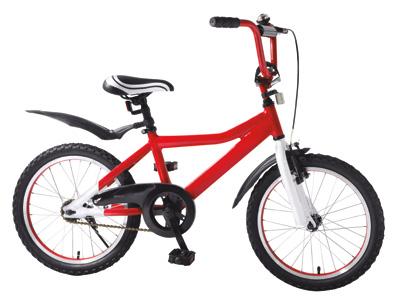
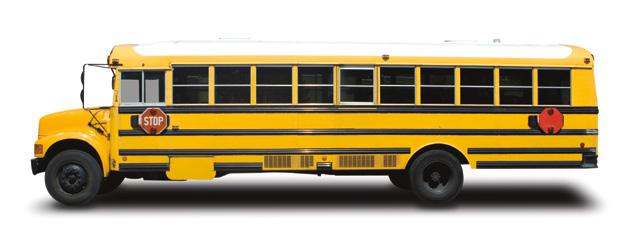
2. Tell students that they can use the linking word or to ask a question about the type of transportation people used to get to school today. Explain that transportation is a way to get from one place to another. Display Going to School. Tell students that these images show different types of transportation. Echo Read each label.
3. Think aloud to model how to use the linking word or to ask how someone got to school today.
4. Instruct students to use the linking word or to ask a partner how they got to school today. Invite a few students to share their questions.
Language Support
For students with beginning English proficiency, provide this sentence frame: Did you ride a or a today?
Key Ideas
• Did you ride a boat or a bus today?
• Did you ride a car or a bike today?
• Did you ride a bus or a bike today?
• Did you ride a car or a boat today?
5. Tell students that they will practice using the linking word or to continue discussing types of transportation.
Sample Think Aloud I want to give two options. I see a bus and a car. I will ask, “Did you ride a bus or a car to school today?”
LEARN 20 minutes
Form Opinions About How to Travel to School
1. Display the front cover of My First Day and remind students that An takes a boat to school in the story. Emphasize that children all over the world use different types of transportation to get to school. Tell students that they will now play a game called Would You Rather? with a partner to form opinions about how they would like to travel to school.
2. Display and Echo Read this sentence frame: Would you rather take a or a to school? Explain that this question is asking someone to decide between two options about how they would like to get to school.
Language Support
For students with beginning English proficiency, provide student-friendly synonyms for rather, such as prefer or want to.
3. Tell students that they will cut out the cards from the Going to School handout and place them facedown in a pile. Then one partner will select two cards from the pile and use the cards to ask their partner how they prefer to get to school. The partner will respond and provide a reason for their opinion. Then partners will switch roles asking and answering questions.
4. Model how to use the cards to form a question. Invite a volunteer to respond. Prompt the student to provide their reasoning as needed. Invite a few other volunteers to model how to form and respond to questions.
Language Expansion
For students with intermediate English proficiency, invite them to share their responses in a complete sentence. Encourage students to connect their opinions and the reasons for their thinking by using the linking word because.
5. Distribute Going to School to pairs. Instruct students to cut out the cards and place them in a pile with the image side facedown.
Teacher Note
Pre-cut the cards for students who may need this type of support.
6. Instruct students to play Would You Rather? until they have used all the cards from their piles.
Language Support
For students with beginning English proficiency, provide this sentence frame: I would rather take a because .
7. Tell students that they will now share their opinion about which types of transportation they do not want to take to school. Instruct students to review the cards and to select the two types of transportation they like the least.
8. Explain that students can also use the linking word or to connect their ideas about the two types of transportation they do not want to take to school. Display and Echo Read this sentence frame: I do not want to ride a or a to school.
9. Think aloud to model how to use the sentence frame to share an opinion about which types of transportation you would rather not take to get to school.
Sample Think Aloud I do not like riding in buses or cars, so I can say, “I do not want to ride a bus or a car to school.”
LAND 5
minutes
Demonstrate Learning
1. Introduce the learning task. Instruct students to Think–Pair–Share to respond to this prompt:
Describe two types of transportation that you do not want to take to school.
Analyze Student Progress
Monitor: Do students describe two types of transportation that they do not want to take to school?
Offer Immediate Support: If students need additional support describing two types of transportation, direct them to the images of the types of transportation they selected, and prompt them to describe how people use each image. Echo Read the sentence frame, pausing to allow them to fill in the blanks with their responses.
Key Ideas
• I do not want to ride a bike or a bus to school.
• I do not want to ride a boat or a car to school.
• I do not want to ride a bike or a boat to school.
• I do not want to ride a bike or a car to school.
2. Summarize that students used the linking word or to ask questions and share their opinions about traveling to school.
Prologue to Lesson 17
Essential Question | What makes the world fascinating?
OVERVIEW
Preview
Students describe what happens during the beginning, middle, and end of Sing to the Moon. As they discuss events in the story, students practice connecting two ideas by using the linking word and. This work prepares students to retell Sing to the Moon in lesson 17.
Learning Goal
Describe major events in Sing to the Moon.
LEARNING TASK: Describe two things that the boy and Jjajja do in Sing to the Moon by using the linking word and.
Language Progress
In this lesson, students work on this module language goal: Connect ideas using linking words.
To support students with beginning English proficiency, model how to use the linking word and to describe two of their favorite books. To support students with intermediate English proficiency, encourage them to use the linking word and to connect ideas by sharing their favorite book and a partner’s favorite book.
Vocabulary
none
Materials TEACHER
• Sing to the Moon
• character and setting story stones (Prologue Reference Charts appendix)
STUDENTS
• Sing to the Moon
Preparation
• Sing to the Moon is an unpaginated text. Number your text; begin with the title page as page 1. Pages on the left will be even, and pages on the right will be odd.
• Determine how to display the sentence frame. See the Learn section for details.
LAUNCH 5 minutes
Discuss Prior Knowledge
1. Display the character and setting story stones. Assess and activate prior knowledge by asking these questions:
What is a character?
What is a setting?
2. Reinforce the correct responses:
• character—a person or creature in a story
• setting—where and when a story takes place
3. Display pages 10–11 of Sing to the Moon. Ask these questions:
Who are the characters in this story?
What is the setting?
4. Reinforce the correct responses:
• characters—the boy and his grandfather, Jjajja
• setting—Jjajja’s house
Teacher Note
If time allows, explain that Jjajja lives in the country of Uganda, on the continent of Africa. Display a world map and locate Uganda on the map to help orient students to the setting of the story.
5. Tell students that they will now examine what the boy and Jjajja do during the story.
LEARN 20 minutes
Describe Major Events
1. Display pages 2–3 of Sing to the Moon. Direct attention to the boy in the illustrations. Tell students that the boy is a character in the story, and he is the person telling this story. Instruct students to listen to find out what the boy is doing during the beginning of the story. Read aloud pages 2–3, starting with “If I had.” Ask this question:
What is the boy doing?
2. Reinforce the correct response: He is wishing to go to space.
3. Emphasize that the boy is the main character, and he is telling about his wishes, or dreams, at the beginning of the story. Instruct students to listen closely for details about the boy’s wishes. Read aloud pages 4–7, starting with “With another wish.” Instruct students to Think–Pair–Share to answer this question:
What else does the boy wish to do?
Language Support
For students with beginning English proficiency, direct their attention to the illustrations and review the accompanying vocabulary before asking students questions about the illustrations.
Key Ideas
• sail across the ocean
• visit a spice market
• fly on a crane
• see a mythical beast
• go to a big feast
4. Remind students that they can use the linking word and to connect ideas about the same topic. Think aloud to model how to use and to summarize what the boy does during this part of the story. Ask this question:
What else does the boy wish for during this part of the story?
Prompt students to use the linking word and to form their sentences.
Language Support
For students with beginning English proficiency, provide this sentence frame: The boy wishes to and .
Key Ideas
• The boy wishes to see a mythical beast and go to a feast.
• The boy wishes to sail across the ocean and visit a spice market.
• The boy wishes to fly on a crane and go to a feast.
5. Display pages 14–15. Explain that the boy is now awake and spending the day with Jjajja. Tell students that they will now discuss what the boy does as he spends the day with his grandfather.
6. Emphasize that students will use the linking word and to form sentences about both the boy and Jjajja. Display and Echo Read this sentence frame: Jjajja and the boy and .
Sample Think Aloud I will use the word and between two things to tell what the boy wishes for during his dream. This is my sentence: The boy wishes to sail across the ocean and fly on a crane.
7. Instruct students to listen to find out what the boy and Jjajja do during this part of the story. Read aloud pages 14–17, starting with “We start in.” Ask this question:
What do Jjajja and the boy do during this part of the story?
Key Ideas
• Jjajja and the boy pack away peas and clear leaves.
• Jjajja and the boy start in the storeroom and pack away peas.
• Jjajja and the boy clear leaves and share stories.
Language Expansion
For students with intermediate English proficiency, invite them to expand their sentences by answering a where or when question. Encourage them to use textual evidence to respond to the questions to add details to their sentences.
8. Display pages 22–23. Tell students that it is now the end of the day in this part of the story. Instruct students to listen to find out what the boy and Jjajja do during this part of the story. Read aloud pages 22–27, starting with “By light of.” Instruct students to Think–Pair–Share to answer this question:
What do Jjajja and the boy do during this part of the story?
Language Support
For students with beginning English proficiency, invite them to act out this part of the story with their partner prior to discussing what each character does.
Key Ideas
• Jjajja and the boy read books together and act out stories.
• Jjajja and the boy read books together and look at the stars.
• Jjajja and the boy look at the stars and listen to the sounds of the nighttime.
9. Tell students that they will now form sentences to describe two things that the boy and Jjajja do together in the story.
LAND 5 minutes
Demonstrate Learning
1. Introduce the learning task. Instruct students to use the linking word and to describe two things that the boy and Jjajja do in Sing to the Moon.
Analyze Student Progress
Monitor: Do students use the linking word and to explain two things that the boy and Jjajja do together?
Offer Immediate Support: If students need additional support describing what the boy and Jjajja do together, prompt them to identify two illustrations that they want to discuss. Then instruct them to use the previously provided sentence frame to describe what is happening on each page.
2. Invite a few volunteers to share their responses.
Key Ideas
• Jjajja and the boy read books and cook together.
• Jjajja and the boy clean the storeroom and look at the stars.
• Jjajja and the boy tell stories and love each other.
3. Summarize that students connected ideas by using the word and to describe what happens during the beginning, middle, and end of the story.
Prologue to Lesson 18
Essential Question | What makes the world fascinating?
OVERVIEW
Preview
Students examine what happens at the beginning of Sing to the Moon. As they discuss what the boy does at the beginning of the story, students practice supporting what they say with evidence from the text. This work prepares students to distinguish between imaginary events and real events in Sing to the Moon in lesson 18.
Learning Goal
Examine what happens at the beginning of Sing to the Moon.
LEARNING TASK: Describe two things the boy imagines doing.
Language Progress
In this lesson, students work on this module speaking and listening goal: Support what you say with evidence from a text.
To support students with beginning English proficiency, model how to use details from an illustration to support what you say. To support students with intermediate English proficiency, encourage them to use these sentence frames to support what they say with textual evidence: In the text, . In the illustration, .
Vocabulary
none
Materials TEACHER
• Sing to the Moon
• class Beginning of Sing to the Moon (Prologue Student Resources appendix)
STUDENTS
• Beginning of Sing to the Moon (Prologue Student Resources appendix)
Preparation
• Sing to the Moon is an unpaginated text. Number your text; begin with the title page as page 1. Pages on the left will be even, and pages on the right will be odd.
• Determine how to display Beginning of Sing to the Moon. See the Learn section for details.
LAUNCH
5 minutes
Discuss Prior Knowledge
1. Direct attention to pages 16–17 of Sing to the Moon. Instruct students to examine the illustrations and answer this question: What is the boy doing?
2. Reinforce the correct response: hanging on the tree.
3. Ask this question: How do you know?
4. Use responses to reinforce that students can use details in the illustration to support their answer. Remind students that they have been working on supporting what they say with evidence from the text.
5. Tell students that they will now support what they say with evidence from the text as they discuss what the boy does during the beginning of Sing to the Moon
LEARN 20 minutes
Examine the Beginning of the Story
1. Display and distribute Beginning of Sing to the Moon. Explain that students will use this handout to record evidence from the text about what the boy does during the beginning of the story. Tell students that they will draw and label details that will help them form sentences about the boy’s actions.
2. Display pages 2–3 of Sing to the Moon. Instruct students to listen closely for details about what the boy is doing on these pages. Read aloud pages 2–3, starting with “If I had.” Explain that a supernova is a star explosion and that Mars is a planet.
3. Think aloud to model how to draw and label important details from these pages.
4. Tell students that they will use their drawings to explain what the boy is doing in this part of the story. Display and read aloud this sentence frame: In this part of the text, the boy and .
5. Think aloud to model how to use the handout to complete the sentence frame.
6. Display and Choral Read the sentence: In this part of the text, the boy rides a supernova and goes to Mars. Emphasize that the boy is in space during this part of the story.
7. Tell students that they will now draw and label what else the boy does in the beginning of the story. Read aloud pages 4–5, starting with “With another wish.” Direct attention to the boat in the illustration and explain that a dhow is a special type of boat. Ask this question:
What does the boy do during this part of the text?
Key Ideas
• rides a dhow
• rides a boat
• goes across the ocean
• goes to Zanzibar
• goes to a spice market
Sample Think Aloud
The text says the boy rides a supernova and goes to Mars. I will draw the boy holding onto a bright star and label it with the word supernova. Then I will draw an arrow and a planet that I will label with the word Mars to show that the boy is going to the planet Mars.
Sample Think Aloud
I drew the boy riding a supernova to Mars. My sentence is: In this part of the text, the boy rides a supernova and goes to Mars.
8. Instruct students to draw and label two details about what the boy does during this part of the text on their handouts. Then instruct students to form a sentence about the boy’s actions with a partner. Invite a few students to share their responses.
Key Ideas
• In this part of the text, the boy rides a dhow and goes across the ocean.
• In this part of the text, the boy rides a boat and goes to a spice market.
9. Display pages 6–7. Instruct students to listen closely for details about what the boy does on these pages. Read aloud pages 6–7, starting with “If I had.” Direct attention to the bird in the illustration and explain that a crane is a very large bird.
Language Support
For students with beginning English proficiency, direct their attention to the illustrations on pages 6–7 and invite them to act out this part of the story to prepare them to discuss what the boy is doing.
10. Instruct students to draw and label two details about what the boy does during this part of the text. Then instruct them to work with a partner to form a sentence about the boy’s actions. Invite a few students to share.
Key Ideas
• In this part of the text, the boy rides a crane and goes to a forest.
• In this part of the text, the boy rides a crane and goes to a feast.
Language Expansion
For students with intermediate English proficiency, encourage them to add details to their sentences using textual evidence. For example, prompt them to describe the crane, forest, or feast.
11. Tell students that they will now analyze the events at the beginning of the story. Direct students to their completed handouts. Review what the boy does during the beginning of the story. Ask this question:
Do you think the boy is really doing these things?
12. Reinforce the correct response: No. Emphasize that a child would not really go to space, travel across the ocean, or ride a crane.
13. Explain that the boy imagines doing these things. Remind students that imagine means “to create something in your mind.” Tell students that they will now describe two things that the boy imagines at the beginning of the story.
LAND 5 minutes
Demonstrate Learning
1. Introduce the learning task. Instruct students to Think–Pair–Share to describe two things the boy imagines doing at the beginning of Sing to the Moon. Remind students to refer to their handouts to use evidence from the text to describe what the boy imagines doing.
Language Support
For students with beginning English proficiency, provide this sentence frame: The boy imagines and . Analyze Student Progress
Monitor: Do students describe two things the boy imagines at the beginning of the story using evidence from the text?
Offer Immediate Support: If students need additional support describing what the boy imagines, direct their attention to a section of their handout. Ask them to respond to this prompt: Describe your drawing by forming a complete sentence that describes two things the boy imagines doing at the beginning of the story.
Key Ideas
• The boy imagines riding a boat and a crane.
• The boy imagines going to a spice market and a monstrous feast.
• The boy imagines riding a crane and seeing a mythical beast.
2. Summarize that using evidence from the text helps describe important details in a story.
Prologue to Lesson 19
Essential Question | What makes the world fascinating?
OVERVIEW
Preview
Students analyze how the boy’s feelings change in Sing to the Moon. As they discuss the boy’s emotions, students practice asking questions to understand what others mean. This work prepares students to discuss a central idea of the story in lesson 19.
Learning Goal
Analyze how the boy’s feelings change in Sing to the Moon.
LEARNING TASK: Describe at least one reason why the boy feels better during the story.
Language Progress
In this lesson, students work on this module speaking and listening goal: Ask questions to understand what others mean.
To support students with beginning English proficiency, prompt them to describe their favorite food, and then model how to ask questions to better understand (e.g., What do you mean? Can you say more? Can you say that again?). To support students with intermediate English proficiency, prompt them to ask questions as they work with a partner to describe their favorite food.
Vocabulary
none
Materials
TEACHER
• Sing to the Moon
• Feeling Words (Prologue Reference Charts appendix)
STUDENTS
• none
Preparation
• Sing to the Moon is an unpaginated text. Number your text; begin with the title page as page 1. Pages on the left will be even, and pages on the right will be odd.
• Determine how to display the sentence frame. See the Learn section for details.
LAUNCH 5 minutes
Discuss Prior Knowledge
1. Display the front cover of Sing to the Moon. Direct attention to the boy on the front cover. Activate prior knowledge by asking this question:
What is the boy doing in this illustration?
Key Ideas
• dreaming about flying in space
• wishing to ride a supernova
2. Remind students that the boy experiences different feelings during the story. Display Feeling Words. Review a few feeling words, including curious, disappointed, and excited. Invite students to match their facial expression to the expressions on the chart.
3. Direct attention to the front cover. Ask this question:
How do you think the boy is feeling during this part of the story?
Key Ideas
• curious
• happy
• excited
4. Tell students that they will examine the boy’s actions and facial expressions during other parts of the story to determine how he is feeling.
LEARN
20 minutes
Analyze the Boy’s Feelings
1. Display pages 8–9 of Sing to the Moon. Instruct students to listen closely for details about what the boy is doing and how he is feeling. Read aloud page 8, starting with “Instead, I awake.” Ask this question:
What is the boy doing during this part of the story?
2. Reinforce the correct responses:
• waking up from his dream
• watching the clouds and rain
3. Ask this question:
How do you think the boy is feeling during this part of the story?
4. Think aloud to model how to describe how the boy feels during this part of the story.
5. Invite students to use a nonverbal signal (e.g., a thumbs-up or a thumbs-down) to respond to this question: Did I share enough information to explain my thinking?
6. Reinforce the correct response: No.
7. Tell students that they can ask questions to help them better understand what others mean. Display and Echo Read this question: Can you say more? Explain that students can ask this question when they do not understand what others mean.
8. Invite students to ask this question: Can you say more? Think aloud to model how to respond to the question.
Sample Think Aloud
I think the boy is disappointed during this part of the story.
Sample Think Aloud
When someone asks if I can say more, I can explain my thinking by using evidence from the text. I can respond to the question by saying:
In the text, it says it is cloudy and rainy and the boy has nothing to do. In the illustration, the boy’s face looks disappointed. I think the boy is feeling disappointed that he woke up to a rainy day.
9. Remind students that the boy’s feelings change as he and his grandfather do different activities during the day. Tell students that they will now examine another part of the story to see how the boy’s feelings change.
10. Distribute the text to students, and direct them to pages 16–17. Instruct students to listen for details about how the boy is feeling. Read aloud pages 16–17, starting with “We clear the.” Facilitate a discussion of this question:
How do you think the boy is feeling during this part of the story?
Prompt students to ask “Can you say more?” during the discussion. Encourage them to refer to Feeling Words to identify the boy’s feelings and to use evidence from the text and illustrations to support their answers.
Key Ideas
• happy
• curious
• interested
• silly
Language Expansion
For students with intermediate English proficiency, encourage them to share feeling words beyond those that are displayed on Feeling Words. Invite students to share more than one feeling that the boy might be experiencing during this part of the story.
11. Direct students to pages 26–29. Instruct them to listen for details about how the boy feels during this part of the story. Read aloud pages 26–29, starting with “We hear fires.” Facilitate a discussion of these questions:
How do you think the boy is feeling during this part of the story?
Why do you think he feels that way?
Prompt students to support their responses with textual evidence and ask each other to say more, as needed.
Language Support
For students with beginning English proficiency, provide this sentence frame: The boy feels because .
Key Ideas
• The boy feels happy because Jjajja sits with him.
• The boy feels curious because Jjajja teaches him about the stars.
• The boy feels loving because Jjajja gives him a hug.
12. Emphasize that the boy’s feelings change during the story. Summarize that when the boy wakes up, he feels disappointed, but as the day goes on, he feels better. Tell students that they will now discuss what helps the boy feel better.
13. Display and Echo Read this sentence frame: The boy feels better because . Explain that students can use this sentence frame to describe why the boy’s feelings change.
LAND 5 minutes
Demonstrate Learning
1. Introduce the learning task. Facilitate a discussion of this question:
Why does the boy feel better during the story?
Prompt students to support their responses with textual evidence and ask each other to say more, as needed.
Analyze Student Progress
Monitor: Do students describe at least one reason the boy feels better during the story?
Offer Immediate Support: If students need additional support describing why the boy’s feelings improve, direct them to the illustration on page 29 and ask them guiding questions (e.g., Who helps the boy feel better? What is he doing that changes how the boy feels?) to help them complete the sentence frame during their discussions.
2. Invite a few students to share their responses.
Key Ideas
• The boy feels better because Jjajja gives him fun jobs to do.
• The boy feels better because Jjajja tells him stories.
• The boy feels better because Jjajja gives him a hug.
• The boy feels better because he spends the day with Jjajja.
3. Summarize that examining characters’ feelings helps readers understand how characters change during the story.
Prologue to Lesson 23
Essential Question | What makes the world fascinating?
OVERVIEW
Preview
Students examine key events in the discovery of the titanosaur’s fossil in Titanosaur. As they discuss important events in the story, students practice connecting ideas by using a linking word. This work prepares students to retell Titanosaur in lesson 23.
Learning Goal
Examine major events in Titanosaur.
LEARNING TASK: Describe what happens at the end of the story.
Language Progress
In this lesson, students work on this module language goal: Connect ideas using linking words.
To support students with beginning English proficiency, model how to use the linking word because to connect ideas by telling something you do and explaining why you do it. To support students with intermediate English proficiency, encourage them to use the linking word because to connect ideas by describing their favorite activity and giving a reason they enjoy doing it.
Vocabulary
discover (v.)
Materials
TEACHER
• Titanosaur
• module 1 Knowledge Card: discover
STUDENTS
• Titanosaur
Preparation
• Titanosaur is an unpaginated text.
Number your text; begin with the title page as page 1. Pages on the left will be even, and pages on the right will be odd.
LAUNCH
5 minutes
Discuss Prior Knowledge
1. Display the front cover of Titanosaur. Echo Read the title. Ask this question:
What do you think a titanosaur is?
2. Reinforce the correct response: a dinosaur.
3. Direct attention to and read aloud the subtitle: Discovering the World’s Largest Dinosaur. Emphasize that this text tells a real story about how a gaucho discovered a titanosaur.
4. Display pages 32–33. Ask this question:
What do you think discover means?
5. Invite a few students to share their responses, and use their responses to reinforce the correct definition of discover. Display the Knowledge Card to help students understand the term’s meaning.
Language Support
The term discover has a Spanish cognate: descubrir. Share this language connection with students whose home language is Spanish.
6. Tell students that they will revisit events of the real story to discuss how a gaucho first discovered the titanosaur.
Definition discover (v.): to find or become aware of something for the first time
LEARN
20 minutes
Describe How the Titanosaur Was Discovered
1. Display pages 28–29 and pages 30–31 of the text side by side. Ask these questions:
How are the images on these pages of the text similar?
How are they different?
2. Reinforce the correct responses:
• similar—They both show scientists working to put fossils together to build a titanosaur.
• different—The images on one page spread are illustrations, and on the other the images are photographs.
3. Emphasize that this text uses illustrations and photographs to show how the gaucho and the scientists discovered the titanosaur because the authors are telling a story about a real event. Direct attention to the men on pages 28–29 and page 32. Explain that the men pictured in the illustration and the photographs are the authors of the text.
4. Tell students that they will now revisit some parts of the story to learn how the authors first discovered the titanosaur. Direct attention to pages 2–3. Read aloud the portion of page 2 from “Early one summer” to “a lost sheep.” Direct attention to the term gaucho on page 3. Read aloud the term and its definition. Emphasize that this story includes text features, such as the meanings of important terms, because it is a literary nonfiction text.
5. Summarize that the gaucho and his dog leave their farm to go find a lost sheep. Instruct students to listen for details about what happens next. Read aloud the remainder of page 2, starting with “After hours of.” Direct attention to the gaucho and ask this question:
What does the gaucho do next?
6. Reinforce the correct responses:
• The gaucho stops searching for his sheep.
• He sees something in the dirt.
7. Remind students that they have been practicing connecting ideas by using linking words. Display and Echo Read the linking word because. Explain that students can summarize events of the story by using because to connect what a character does and why they do it. Think aloud to model how to use the linking word because to summarize this part of the story.
8. Invite students to repeat the sentence: The gaucho stops searching for his sheep because he sees something in the dirt. Tell students that they will continue reading to learn what happens next.
9. Display pages 4–5. Instruct students to listen closely for details about what the gaucho does and why he does it. Read aloud the portion of page 4 from “A few months” to “than that one.” Ask these questions:
What does the gaucho do next?
Why does he do it?
Language Support
For students with beginning English proficiency, provide a student-friendly definition for museum Students will explore this term in depth during the writing lessons of this arc.
10. Reinforce the correct responses:
• what—visits a museum
• why—He thinks he found a fossil.
11. Instruct students to summarize this part of the story with a partner by using the linking word because to connect what the gaucho does and why he does it. Invite a few students to share their sentences.
Language Expansion
For students with intermediate English proficiency, encourage them to add details to their sentences using textual evidence. Prompt them to expand their ideas by answering questions such as what or where
Sample Think Aloud
I can use because to connect what the gaucho does during this part of the story and explain why he does it. I can say, “The gaucho stops searching for his sheep because he sees something in the dirt.”
12. Reinforce the correct response: The gaucho visits a museum because he thinks he found a fossil.
13. Direct attention to page 4 and invite students to locate the text feature on this page. Reinforce that the authors define paleontologist because it is an important term. Review the meaning of paleontologist by reading aloud the definition.
Language Support
The term paleontologist has a Spanish cognate: paleontólogo. Share this language connection with students whose home language is Spanish.
14. Instruct students to listen for details about the paleontologists. Read aloud the remainder of pages 4–5, starting with “Moments later, the.” Reinforce that the paleontologists in the story are the authors of the text. Invite students to discuss these questions with a partner:
What do the paleontologists do?
Why do they do it?
Language Support
For students with beginning English proficiency, direct them to the illustrations on pages 4–7. Invite them to look closely at the illustrations and describe what is happening prior to discussing the questions.
15. Listen for students to determine the correct responses:
• what—ask the gaucho about the object; ask the gaucho to go to his ranch
• why—They want to study the fossil; they want to look for more fossils.
16. Tell students that they will now summarize what happens during this part of the story by using the linking word because. Remind students they can use because to connect what the paleontologists do and explain why they do it.
LAND 5 minutes
Demonstrate Learning
1. Introduce the learning task. Instruct students to Think–Pair–Share to use the linking word because to summarize this part of the story.
Analyze Student Progress
Monitor: Do students summarize this part of the story by using the linking word because?
Offer Immediate Support: If students need additional support summarizing this part of the story, provide this sentence frame: The paleontologists because they
Key Ideas
• The paleontologists ask the gaucho about the object because they want to study the fossil.
• The paleontologists ask the gaucho to go to his ranch because they want to look for more fossils.
2. Summarize that students used the linking word because to describe how a gaucho and paleontologists first discovered the titanosaur.
Prologue to Lesson 24
Essential Question | What makes the world fascinating?
OVERVIEW
Preview
Students examine the text features in Titanosaur to learn more about paleontologists. As they discuss what they learn about paleontologists, students practice supporting what they say with evidence from the text. This work prepares students to apply information from the sidebars to deepen their understanding of the story in lesson 24.
Learning Goal
Examine text features in Titanosaur.
LEARNING TASK: Explain what information is provided in a diagram and sidebar.
Language Progress
In this lesson, students work on this module speaking and listening goal: Support what you say with evidence from a text.
To support students with beginning English proficiency, prompt them to identify a specific part of the sidebar that supports their thinking prior to orally sharing their idea. To support students with intermediate English proficiency, encourage them to share additional examples of textual evidence to support their thinking.
Vocabulary
paleontologist (n.)
Materials
TEACHER
• Titanosaur
• Text Features chart
STUDENTS
• Titanosaur
Preparation
• Titanosaur is an unpaginated text. Number your text; begin with the title page as page 1. Pages on the left will be even, and pages on the right will be odd.
• Create a Text Features chart by drawing a three-column chart and labeling the first column “Text Feature,” the second column “What I Learned,” and the last column “Textual Evidence.” Determine how to display the chart. See the Learn section for details.
• Determine how to display the sentence frame. See the Learn section for details.
LAUNCH 5
minutes
Discuss Prior Knowledge
1. Display the front cover of Titanosaur. Echo Read the title, including the subtitle. Assess and activate prior knowledge by asking these questions:
What is a titanosaur?
Who discovers, or finds, the titanosaur bones in the text?
2. Reinforce the correct responses:
• what—a very large dinosaur
• who—the gaucho and scientists
3. Display pages 14–15. Ask this question:
What do you notice about how the words and images are organized on this page?
Key Ideas
• In the middle, the words and illustrations tell the story of a titanosaur being discovered.
• On the edges, the words and images give information about a titanosaur being discovered.
4. Remind students that this text tells a real story of how scientists discover a new dinosaur called the titanosaur. Direct attention to, and provide the names of, the text features on pages 14–15, including the sidebars, diagram, and photographs. Explain that the sidebars include words, photographs, and diagrams to provide more information about the discovery of the titanosaur.
5. Tell students they will examine the text features in Titanosaur to learn more about how the dinosaur was discovered.
LEARN 20
minutes
Examine Text Features
1. Display the Text Features chart. Read aloud the headings. Tell students they will use this chart to explain what they learn from the text features in Titanosaur.
2. Distribute Titanosaur to students. Direct attention to pages 4–5. Invite students to locate the term written in a different color. Explain that the authors use different colors and types of texts to show different text features. Tell students that the text feature on page 4 is a definition. Add definition to the Text Feature column of the chart. Instruct students to repeat the word definition.
3. Direct attention to a few other definitions in the text. Then invite students to locate other definitions in their copies.
4. Tell students that they will determine what they learn from the definition. Echo Read paleontologist on page 4. Reinforce the meaning of paleontologist by reading aloud the definition, starting with “A paleontologist is.” Ask this question:
What did you learn from the definition?
Language Support
The term paleontologist has a Spanish cognate: paleontólogo. Share this language connection with students whose home language is Spanish.
5. Reinforce the correct response: I learned what a paleontologist does. Add this detail to the What I Learned column of the chart.
6. Ask this question:
What did you learn about paleontologists from the definition?
Key Ideas
• They are scientists.
• They study plants from the past.
• They study animals from the past.
Add responses in short phrases (e.g., scientists, study plants and animals from the past) to the Textual Evidence column of the chart.
7. Tell students that they can use evidence from the text to support what they say about what they learn from each text feature. Display and Echo Read this sentence frame: From the , I learned .
8. Think aloud to model how to use the sentence frame and details from the chart to support what you say with evidence from the text.
9. Tell students that they will now examine additional text features. Direct attention to pages 8–9. Invite students to locate the large words on page 9. Ask this question:
What do you notice about these words?
Key Ideas
• They are at the bottom of the page.
• They are written in white instead of black.
• They are thicker than other letters on the page.
• They are written with all capital letters.
10. Tell students that these large words are called a heading. Explain that “Digging up” is the heading of a text feature called a sidebar. Add sidebar to the Text Feature column of the chart. Instruct students to repeat the word sidebar.
Sample Think Aloud
The text feature I looked at was the definition of paleontologists From the definition, I learned that paleontologists are scientists who study plants and animals from the past.
11. Direct attention to the location of the sidebar and explain that it is called a sidebar because it is located on the side of the information. Invite students to locate other sidebars in their copies of the text.
12. Remind students that a heading tells what a section of the text is mostly about. Echo Read the heading, and ask this question:
What do you think this section of text is mostly about?
Language Support
For students with beginning English proficiency, prompt them look at the illustrations to think about who might be digging something up and what they might be digging up.
13. Reinforce the correct response: how scientists dig up dinosaur bones. Add this detail to the What I Learned column of the chart.
14. Instruct students to examine the photographs and to listen closely for details about how paleontologists dig up bones. Read aloud the sidebar at the bottom of page 9, starting with “Digging up dinosaur.” Instruct students to Think–Pair–Share to answer this question:
What did you learn about how paleontologists dig up bones?
Key Ideas
• work together
• remove big rocks
• use many different tools
• work carefully and gently
• take a long time to dig up bones
As students share, add their responses to the Textual Evidence column of the chart.
15. Instruct students to work with a partner to use the sentence frame to describe what they learned from the sidebar. Listen for students to share key ideas during their discussions.
Key Ideas
• From the sidebar, I learned paleontologists work together to dig up dinosaur bones.
• From the sidebar, I learned paleontologists use many different tools to dig up dinosaur bones.
• From the sidebar, I learned it takes a long time to dig up dinosaur bones.
Language Expansion
For students with intermediate English proficiency, prompt them to share two things they learned about paleontologists. Encourage them to combine their ideas using the linking word and (e.g., in this text feature, I learned paleontologists use many different tools and work carefully to dig up bones).
16. Direct attention to page 13, and instruct students to locate the illustration of a titanosaur. Tell students that this text feature is called a diagram. Add diagram to the Text Feature column of the chart. Instruct students to repeat the word diagram.
17. Invite students to locate additional diagrams in their copies of the text.
18. Instruct students to closely examine the diagram. Ask this question:
What do you think you will learn from the diagram?
19. Reinforce the correct response: I think I will learn about the titanosaur’s bones. Add this detail to the What I Learned column of the chart.
20. Instruct students to listen for textual evidence about the titanosaur’s bones. Read aloud the portion of the sidebar on page 13 from “For the scientists” to “to the other.”
LAND 5 minutes
Demonstrate Learning
1. Introduce the learning task. Instruct students to Think–Pair–Share to answer this question: What did you learn about the titanosaur’s bones from the diagram and sidebar?
Prompt students to respond using the sentence frame.
Analyze Student Progress
Monitor: Do students use evidence from the text feature to describe what they learned from the diagram and sidebar?
Offer Immediate Support: If students need additional support describing something they learned from the diagram and sidebar, ask them: How did the titanosaur’s bones fit together?
Key Ideas
• From the diagram and sidebar, I learned how the scientists put the titanosaur’s bones together like a puzzle.
• From the diagram and sidebar, I learned that the titanosaur’s tailbone has a ball shape on one end and a socket on the other.
• From the diagram and sidebar, I learned how a titanosaur’s skeleton fits together.
2. Summarize that students used evidence from text features to describe information about paleontologists and how they discovered a titanosaur.
Prologue to Lesson 25
Essential Question | What makes the world fascinating?
OVERVIEW
Preview
Students compare the work of the different teams of scientists in Titanosaur. As they discuss the differences and similarities between teams working on-site and those working at the museum, students practice connecting ideas using linking words. This work prepares students to discuss a central idea of Titanosaur in lesson 25.
Learning Goal
Compare the work of team members at the dig site and at the museum in Titanosaur.
LEARNING TASK: Describe the different ways teams of scientists help discover the titanosaur using the linking word or.
Language Progress
In this lesson, students work on this module language goal: Connect ideas using linking words.
To support students with beginning English proficiency, direct them to an illustration in the text and instruct them to use or to form a sentence about two things in the image. To support students with intermediate English proficiency, invite them to use or to connect ideas with a partner by describing two things scientists can do to study the titanosaur.
Vocabulary
none
Materials
TEACHER
• Titanosaur
• Scientists at a Dig Site (digital platform)
• Scientists in a Museum (digital platform)
• class Titanosaur Venn Diagram
(Prologue Student Resources appendix)
STUDENTS
• Titanosaur
• Titanosaur Venn Diagram
(Prologue Student Resources appendix)
• scissors
• glue
Preparation
• Titanosaur is an unpaginated text. Number your text; begin with the title page as page 1. Pages on the left will be even, and pages on the right will be odd.
• Determine how to display the linking words and and or. See the Launch section for details.
• Determine how to display Scientists at a Dig Site and Scientists in a Museum. See the Launch section for details.
• Determine how to display the class Titanosaur Venn Diagram. See the Learn section for details.
• Cut apart the statements on the second page of the class Titanosaur Venn Diagram. See the Learn section for details.
• Determine how to display the sentence frame. See the Learn section for details.
LAUNCH
5 minutes
Practice Vocabulary
1. Remind students that they have practiced connecting ideas using linking words. Display the linking word or. Reinforce that or is used to show two different options.
2. Display Scientists at a Dig Site and Scientists in a Museum. Tell students that they can use or to describe two different ways that scientists work with bones. Think aloud to model how to use or to describe two different ways that scientists work with bones.
3. Invite a few students to use or to describe two different ways that scientists work with bones.
Key Ideas
• Scientists work outside or inside.
• Scientists wear lab coats or hats.
• Scientists collect bones or put them together.
4. Tell students they will practice using linking words to compare the work of scientists at dig sites and scientists in museums.
LEARN 20 minutes
Compare the Scientists in Titanosaur
1. Distribute Titanosaur to students. Remind students that this text tells how a team of scientists work together to discover the largest dinosaur in the world. Explain that some of the scientists work at the dig site where they dig up the bones, and other scientists work in a museum where they put the bones together. Emphasize that each group is responsible for certain jobs.
Sample Think Aloud
In one picture the scientists are working outside, and in the other the scientists are working in a museum. I will say, “Scientists work outside or in a museum.”
2. Display the class Titanosaur Venn Diagram, and distribute copies to students. Read aloud the headings at the top of the diagram. Tell students they will use this chart to compare the jobs of the scientists at the dig site with the jobs of the scientists at the museum. Explain that compare means “to describe how two or more things are similar and different.”
3. Direct attention to the statements on the second page. Tell students they will first read each statement and then determine if it describes scientists who work at the dig site, scientists who work at the museum, or both.
4. Explain that students will place statements that only describe scientists who work at the dig site on the left side of the Venn diagram and statements that only describe scientists who work at the museum on the right side. Students will place statements that describe both scientists who work at the dig site and those who work at the museum in the middle.
5. Display and read aloud the previously cut statement that says, “discover that the bones belong to the titanosaur.” Tell students they can determine who this statement describes by examining the illustrations in the text. Direct attention to pages 10–11, and think aloud to model how to determine which group this statement describes.
6. Direct attention to the statements on the handout, and read them aloud. Instruct students to cut them apart. Instruct them to locate the statement that says, “discover that the bones belong to the titanosaur” and place it in the middle of their diagram.
7. Display the statement that says, “study bones.” Tell students to locate the statement and Echo Read it. Instruct students to work with a partner and to examine the illustrations to determine which group the statement describes. Ask this question:
Does this statement describe scientists who work at the dig site, those who work at the museum, or both?
Sample Think Aloud Pages 10 and 11 show the scientists at the dig site and the museum trying to discover which dinosaur the bones belong to. I know that they later discover that the bones belong to the titanosaur.
I will place this detail in the middle section because it describes something both the scientists at the dig site and the museum did.
Language Support
For students with beginning English proficiency, direct their attention to the illustrations on pages 10–13 and ask guiding questions (e.g., What are all the scientists doing? What’s happening in both illustrations?).
8. Reinforce the correct response: both. Add the statement to the middle section of the class diagram, and instruct students to do the same.
Language Expansion
For students with intermediate English proficiency, prompt them to support what they say with evidence from the text. Encourage them to display the illustration that supports their response and share details that support their thinking.
9. Tell students that the remaining statements describe either scientists who work at the dig site or those who work in the museum. Echo Read each remaining statement.
10. Instruct students to examine the illustrations with a partner and determine which group each statement describes. Invite a few students to share their responses.
Teacher Note
Prompt students to use their phonemic knowledge to recall what each statement says as they work with their partner. Echo Read statements as needed.
11. Reinforce the correct responses:
• dig site—work outside, dig up bones
• museum—work inside, put bones together
12. Tell students they will now use the linking word or to describe how the scientists at the dig site and at the museum do different jobs. Display and Echo Read this sentence frame: Scientists or .
13. Reinforce that students can use details from their Venn diagram to complete the sentence frame. Instruct students to select two details about the scientists. Emphasize that students should select one detail from each side of the Venn diagram.
LAND
5 minutes
Demonstrate Learning
1. Introduce the learning task. Instruct students to Think–Pair–Share to use the linking word or to describe how the scientists at the dig site and the scientists at the museum do different things.
Analyze Student Progress
Monitor: Do students use the linking word or to describe how the scientists at the dig site and the scientists at the museum are different?
Offer Immediate Support: If students need additional support describing how the scientists are different, direct their attention to their Venn diagram. Instruct them to circle a detail from each outside section. Read aloud the sentence frame, instructing students to share the details they circled during each pause.
Key Ideas
• The scientists work inside or work outside.
• The scientists dig up bones or put bones together.
Language Expansion
For students with intermediate English proficiency, prompt them to describe the work unique to the scientists by connecting the ideas within each outside section using the linking word and (e.g., the scientists at the dig site work outside and dig up bones; the scientists at the museum work inside and put bones together).
2. Summarize that students compared the work of the scientists who discovered the titanosaur. Emphasize that they used linking words to describe the similar and different work that the two types of scientists do.
Prologue to Lesson 26
Essential Question | What makes the world fascinating?
OVERVIEW
Preview
Students collect evidence and form opinions about titanosaurs. As they discuss their opinions, students practice connecting ideas using the linking word because. This work prepares students to form knowledge statements about dinosaurs in lesson 26.
Learning Goal
Form an opinion about titanosaurs.
LEARNING TASK: Share an opinion about titanosaurs and give a reason using the linking word because.
Language Progress
In this lesson, students work on this module language goal: Connect ideas using linking words.
To support students with beginning English proficiency, encourage them to complete this sentence frame: I feel happy because . To support students with intermediate English proficiency, prompt them to use the linking word because to describe a reason they might feel happy.
Vocabulary
fascinating (adj.)
Materials
TEACHER
• Titanosaur
• Knowledge Card: fascinating
• Titanosaur Evidence Notes
STUDENTS
• coloring utensils
Preparation
• Titanosaur is an unpaginated text. Number your text; begin with the title page as page 1. Pages on the left will be even, and pages on the right will be odd.
• Determine how to display the linking word because. See the Launch section for details.
• Create Titanosaur Evidence Notes by writing the title Titanosaur Is Fascinating at the top of the blank chart. Determine how to display the chart. See the Learn section for details.
• Determine how to display the sentence frames. See the Learn section for details.
LAUNCH
5 minutes
Discuss Prior Knowledge
1. Display Titanosaur and Echo Read the title. Remind students that this text tells the story of how the titanosaur was discovered. Instruct students to answer these questions with a partner:
Did you like the story Titanosaur? Why or why not?
2. Reinforce that students just shared their opinion about Titanosaur. Emphasize that some students used the linking word because to share a reason for their opinion.
3. Display and Echo Read the linking word because. Remind students that they have been using linking words to connect ideas. Explain that students can use because to connect an opinion and a reason.
4. Think aloud to model how to use the linking word because to express an opinion about the story and share a reason.
5. Tell students they will now practice using because to form opinions about titanosaurs and to share the reason for their opinion.
LEARN 20 minutes
Form an Opinion About Titanosaurs
1. Tell students that they will form opinions about what makes titanosaurs fascinating. Review the vocabulary term fascinating by displaying the Knowledge Card. Engage students in Vocabulary Exploration.
Sample Think Aloud I liked the story about the titanosaur because I think dinosaurs are fascinating. Definition fascinating (adj.): very interesting
2. Remind students that they should support their opinions with reasons that include evidence from the text. Display Titanosaur Evidence Notes. Explain that students will add evidence notes to the chart to help them form an opinion and give a reason about what makes titanosaurs fascinating.
3. Instruct students to listen closely for details about titanosaurs. Read aloud the portion of the sidebar on page 13 from “Titanosaurs were sauropods” to “million years ago.” Ask this question:
What did you learn about titanosaurs?
Language Support
For students with beginning English proficiency, invite them to act out a detail about titanosaurs before describing it (e.g., walking on four legs, eating plants, etc.).
As students share, add responses to the chart.
Key Ideas
• were very large
• walked on four legs
• ate plants
• lived long ago
4. Explain that students can use these evidence notes to help them form their opinions. Remind them that they can use the linking word because to connect their opinions and reasons. Display and Echo Read this sentence frame: I think titanosaurs are fascinating because .
5. Think aloud to model how to form an opinion and share a reason using the sentence frame.
Sample Think Aloud
I think it is interesting that titanosaurs were plant eaters. I can say, “I think titanosaurs are fascinating because they ate plants.”
Titanosaur Evidence Notes
Titanosaur Is Fascinating
6. Review the evidence notes and instruct students to select a reason they think titanosaurs are fascinating. Instruct students to share their reason with a partner by completing the sentence frame. Listen for students to address key ideas during their discussions.
Key Ideas
• I think titanosaurs are fascinating because they were very large.
• I think titanosaurs are fascinating because they walked on four legs.
• I think titanosaurs are fascinating because they lived long ago.
7. Tell students they will now collect more evidence about titanosaurs. Instruct students to listen closely for more details about titanosaurs. Read aloud the following excerpts:
• the portion of the sidebar on pages 16–17 from “If you know” to “7-ton elephants together.”
• the portion of the sidebar on pages 18–19 from “The team uncovered” to “a volcanic eruption.”
• the portion of the sidebar on page 21 from “But today, they” to “forty feet long.”
8. Ask this question:
What else did you learn about titanosaurs?
As students share, add responses to the chart.
Key Ideas
• largest dinosaurs ever found
• the size of 10 elephants
• lived in groups
• had very long necks
• ate from lots of trees
Language Expansion
For students with intermediate English proficiency, prompt them to support their response by providing textual evidence.
9. Review the completed chart. Invite students to consider the evidence they collected about titanosaurs to determine if the reason for their opinions about why titanosaurs are fascinating have changed.
10. Distribute drawing materials to students. Instruct students to draw and label one detail that they think makes titanosaurs fascinating.
11. Tell students they will now share their drawing and discuss their opinion about titanosaurs with a partner. Remind students that they can use the following sentence frame to share the reason they think titanosaurs are fascinating: I think titanosaurs are fascinating because .
LAND
5 minutes
Demonstrate Learning
1. Introduce the learning task. Instruct students to answer this question with a partner: Why do you think titanosaurs are fascinating?
Analyze Student Progress
Monitor: Do students share their opinion about titanosaurs by giving a reason using the linking word because?
Offer Immediate Support: If students need additional support sharing their opinion and reason about titanosaurs, read aloud the evidence notes from the chart and invite them to use a nonverbal signal (e.g., a thumbs-up or a thumbs-down) to indicate which evidence note matches their thinking. Model completing the sentence frame with the detail, and invite students to repeat the sentence.
2. Invite a few students to share their responses.
Key Ideas
• I think titanosaurs are fascinating because they lived long ago.
• I think titanosaurs are fascinating because they ate plants.
• I think titanosaurs are fascinating because they are the largest dinosaurs ever found.
• I think titanosaurs are fascinating because they lived in groups.
• I think titanosaurs are fascinating because they had very long necks.
3. Summarize that students collected evidence to determine why titanosaurs are fascinating. Emphasize that they used the linking word because to connect their opinions and reasons.
Prologue to Lesson 29
Essential Question | What makes the world fascinating?
OVERVIEW
Preview
Students describe how people in different places in North America contributed to solving the monarch mystery in Winged Wonders. As they discuss how and where people helped solve the mystery, students practice supporting what they say with evidence from the text. This work prepares students to explain how people came together to solve the migration mystery in lesson 29.
Learning Goal
Describe how people solved the North American monarch mystery in Winged Wonders.
LEARNING TASK: Use textual evidence to explain how people solved the monarch mystery.
Language Progress
In this lesson, students work on this module speaking and listening goal: Support what you say with evidence from a text.
To support students with beginning English proficiency, invite them to identify a specific part of an illustration that supports their thinking before they orally share their responses. To support students with intermediate English proficiency, encourage them to share additional examples of textual evidence to support their thinking.
Vocabulary
none
Materials TEACHER
• Winged Wonders
• class Monarch Migration Mystery Map (Prologue Student Resources appendix)
• Winged Wonders is an unpaginated text. Number your text; begin with the title page as page 1. Pages on the left will be even, and pages on the right will be odd.
• Determine how to display the class Monarch Migration Mystery Map. See the Learn section for details.
LAUNCH 5
minutes
Discuss Prior Knowledge
1. Display the front cover of Winged Wonders. Echo Read the title. Direct attention to the butterflies, and activate prior knowledge by asking this question:
Who are the winged wonders in this text?
2. Reinforce the correct response: monarch butterflies.
3. Read aloud the subtitle. Ask this question:
What does it mean to solve a mystery?
Key Ideas
• to answer a question
• to figure out something
• to be a detective
• to make a discovery
4. Tell students that they will now explore how people worked together to solve the monarch butterfly mystery.
LEARN 20 minutes
Discuss
Who
Solved the Monarch Migration Mystery
1. Display the Monarch Migration Mystery Map, and distribute copies to students. Tell students that this is a map of North America and that it includes the countries of Canada, the United States, and Mexico. Tell students that they will use textual evidence to complete the map with details about how people helped solve the monarch mystery in each country.
Teacher Note
Display a world map and direct attention to North America to help orient students to where the monarch migration takes place.
2. Distribute Winged Wonders to students. Direct attention to pages 10–11. Tell students that these pages are about how someone helped solve the monarch mystery in Canada. Invite students to locate Canada on their maps. Choral Read the name of the country.
3. Instruct students to listen for details about who helped in Canada and what they did to help. Read aloud page 10, starting with “Was it Fred.” Explain that track means “to follow.” Ask these questions: Who helped solve the monarch mystery in Canada?
What did they do?
4. Reinforce the correct responses:
• who—Fred and Norah helped solve the monarch mystery in Canada.
• what—They studied and followed the monarchs.
5. Add Fred and Norah to the first blank on the class mystery map. Instruct students to add this information to their maps.
6. Tell students that they will support what they say with evidence from the text as they describe how people helped solve the monarch mystery in different places. Remind students that they can support their ideas by telling where they found evidence in the text. Think aloud to model how to support a statement with evidence from the text.
7. Instruct students to repeat this sentence: In the text, it says Fred and Norah studied and tracked the monarchs from Canada.
8. Direct attention to pages 14–15. Tell students that these pages are about who from the United States helped solve the monarch mystery. Invite students to locate the United States on their maps. Choral Read the name of the country. Direct attention to the sentence frame for the United States on the map, and read it aloud. Explain that tagged means “to put a label on something.”
9. Instruct students to listen to find out who caught and tagged the butterflies. Read aloud page 14, starting with “Was it those.” Ask this question:
Who helped solve the monarch mystery in the United States?
Language Support
For students with beginning English proficiency, invite them to act out the events on these pages with a partner to help them better understand what is happening in the text.
10. Reinforce the correct response: citizens. Instruct students to add citizens to the sentence frame for the United States. Explain that citizens are people who live in a particular place.
Sample Think Aloud I will start by telling where I found my evidence. I will say, “In the text, it says Fred and Norah studied and tracked the monarchs from Canada.”
11. Instruct students to discuss with a partner the people who helped solve the mystery in the United States and how they helped. Remind students to support what they say by telling where they found evidence in the text. Listen for students to address key ideas in their discussions.
Language Support
For students with beginning English proficiency, provide these sentence frames: In the text, . In this illustration, .
Key Ideas
• In the text, it says citizen scientists caught and tagged the monarchs in the United States.
• In the illustration, it shows how citizens caught and tagged the monarchs in the United States.
12. Direct attention to pages 16–19. Tell students that this part of the text tells who helped solve the monarch mystery in Mexico. Invite students to locate Mexico on their maps. Choral Read the name of the country. Direct attention to the sentence frame for Mexico on the map, and read it aloud.
13. Instruct students to listen to find out who helped in Mexico and how they helped. Read aloud pages 16–17, starting with “Was it Ken.” Ask this question:
Who helped solve the monarch mystery in Mexico?
14. Reinforce the correct response: Ken and Catalina. Instruct students to add Ken and Catalina to the sentence frame for Mexico on the map.
15. Instruct students to discuss with a partner the people who helped in Mexico and how they helped. Remind students to support what they say by telling where they found evidence in the text. Listen for students to address key ideas in their discussions.
Key Ideas
• In the text, it says Ken and Catalina followed the monarchs in Mexico.
• In the illustration, it shows how Ken and Catalina followed the monarchs and found them in Mexico.
Language Expansion
For students with intermediate English proficiency, prompt them to add details to their responses by answering questions such as why and how (e.g., Why did they follow the monarchs? How did they find the monarchs?). Encourage them to support their ideas by showing where they found evidence in the text.
16. Tell students that they will now discuss what people discovered about the monarchs. Read aloud the portion of pages 24–26 from “All of them” to “central Mexico’s mountains.” Ask this question:
What did people discover about the monarchs?
17. Reinforce the correct response: Monarchs fly the same path every year.
LAND 5 minutes
Demonstrate Learning
1. Introduce the learning task. Tell students that they will now use textual evidence to explain how the monarch mystery was solved. Instruct students to Think–Pair–Share to answer this question:
How did people help solve the monarch mystery?
Prompt students to mention places from their maps in their response.
Analyze Student Progress
Monitor: Do students use textual evidence to describe how at least one of the groups on their maps helped solve the monarch mystery?
Offer Immediate Support: If students need additional support using textual evidence to describe how one of the groups helped solve the mystery, direct students to page 10 and prompt them to identify the people in the illustration and to describe what they are doing.
Key Ideas
• In the illustration, it shows how Fred and Norah in Canada helped solve the mystery by following the monarchs.
• In the illustration, it shows citizen scientists catching and tagging monarchs in the United States to help solve the mystery.
• In the text, it says Ken and Catalina helped solve the monarch mystery by following the butterflies through Mexico.
Language Expansion
For students with intermediate English proficiency, encourage them to form an opinion about which person or group they think helped the most in making the discovery. Prompt them to share their opinion and to give a reason using the linking word because.
2. Summarize that students used textual evidence to describe how many different people across North America helped solve the monarch migration mystery.
Prologue to Lesson 30
Essential Question | What makes the world fascinating?
OVERVIEW
Preview
Students revisit Winged Wonders to determine why people think monarch butterflies are amazing. As students discuss why monarch butterflies are amazing, they practice connecting ideas using the linking word because. This work prepares students to determine why monarchs are winged wonders in lesson 30.
Learning Goal
Determine why people in Winged Wonders think monarch butterflies are amazing.
LEARNING TASK: Share an opinion about why monarch butterflies are amazing using the linking word because.
Language Progress
In this lesson, students work on this module language goal: Connect ideas using linking words.
To support students with beginning English proficiency, encourage them to complete this sentence frame: I felt surprised because . To support students with intermediate English proficiency, prompt them to use the linking word because to describe a time when they felt surprised and what surprised them.
Vocabulary
amazing (adj.)
Materials
TEACHER
• Winged Wonders
• Amazing Butterfly chart
STUDENTS
• Winged Wonders
• coloring utensils
Preparation
• Winged Wonders is an unpaginated text. Number your text; begin with the title page as page 1. Pages on the left will be even, and pages on the right will be odd.
• Determine how to display the sentence frames. See the Learn section for details.
• Create an Amazing Butterfly chart, and determine how to display and add to the chart during instruction. See the Learn section for details.
LAUNCH 5
minutes
Practice Vocabulary
1. Display Winged Wonders, and Echo Read the title. Direct attention to the illustration on the front cover. Ask this question:
What do you notice about the people in the illustration?
Key Ideas
• They are studying the butterflies.
• They think monarchs are fascinating.
• They look like they are very interested in monarch butterflies.
2. Use responses to emphasize that the people may think the monarch butterflies are amazing. Introduce the vocabulary term amazing by displaying the term. Engage students in Vocabulary Exploration.
3. Instruct students to repeat this sentence: People think monarch butterflies are amazing. Invite students to use a nonverbal signal (e.g., a thumbs-up or a thumbs-down) to answer this question: Is this sentence an opinion?
4. Reinforce the correct response: Yes (e.g., a thumbs-up). Emphasize that the sentence is an opinion because it describes what people think or feel about monarch butterflies.
5. Tell students they will now revisit the text to determine reasons people might think monarchs are amazing.
Definition amazing (adj.): causing surprise and interest
LEARN 20 minutes
Discuss the Monarch Migration Mystery
1. Remind students that they have been using linking words to connect ideas. Explain that they will use the linking word because to explain why the people in the text might think monarchs are amazing. Display and Echo Read this sentence frame: People think monarch butterflies are amazing because .
2. Emphasize that students will use textual evidence to determine reasons people might think the monarch butterflies are amazing. Display the Amazing Butterfly chart. Tell students that they will revisit the text and record evidence notes on this chart to help them explain why monarch butterflies are amazing.
3. Remind students that amazing means “causing surprise or interest.” Instruct students to act out looking surprised and interested.
4. Tell students to listen for details about why monarchs cause the people to feel surprised or interested. Display and read aloud pages 2–3, starting with “For centuries, up.” Tell students that swooped in for a spell means that the butterflies came for a short period of time. Ask this question: What is surprising or interesting about the monarch butterflies?
Key Ideas
• They come for a short time.
• They disappear each year.
• They always come at the same time each year.
As students share, add responses to the chart using short phrases (e.g., come for a short time).
5. Tell students that they can use these evidence notes to explain why the people think the monarch butterflies are amazing. Think aloud to model how to use a note from the chart to complete the sentence frame.
6. Instruct students to share another reason people might find the monarch butterflies amazing. Tell students to use the sentence frame and evidence notes as they share with a partner.
Key Ideas
• People think monarch butterflies are amazing because the butterflies come for a short time.
• People think monarch butterflies are amazing because the butterflies disappear each year.
7. Display pages 26–27. Instruct students to listen for details about why people might think the monarch butterflies are amazing. Read aloud page 26, starting with “Each year, millions.” Emphasize that the butterflies do the same thing each year. Instruct students to Think–Pair–Share to answer this question:
What is surprising or interesting about the monarch butterflies?
Key Ideas
• Millions of them fly the same path.
• They fly from Canada to Mexico.
• They migrate every year.
As students share, add responses to the chart using short phrases.
8. Instruct students to discuss this question with a partner:
Why do people think monarch butterflies are amazing?
Sample Think Aloud
This page says that the butterflies arrived each year like “clockwork” and I think people might find this interesting. I will say, “People think monarch butterflies are amazing because the butterflies always come at the same time each year.”
9. Listen for students to address key ideas in their discussions. Invite a few students to share their responses.
Key Ideas
• People think monarch butterflies are amazing because millions of the butterflies fly the same path each year.
• People think monarch butterflies are amazing because the butterflies fly from Canada to Mexico each year.
• People think monarch butterflies are amazing because they migrate every year.
10. Emphasize that students used textual evidence to explain why people think monarch butterflies are amazing. Explain that students will now use the evidence notes to form their opinion about what they think makes monarch butterflies amazing. Review the evidence notes on the chart.
11. Distribute coloring utensils to students. Instruct students to draw and label one detail that they think makes the monarch butterflies amazing.
Language Expansion
For students with intermediate English proficiency, encourage them to write a complete sentence using this sentence frame: Monarch butterflies are amazing because
12. Tell students they will now Mix and Mingle to share their opinions. Remind them that they can form opinion sentences using the linking word because. Display and Echo Read this sentence frame: I think monarch butterflies are amazing because .
Language Support
For students with beginning English proficiency, invite them to orally rehearse their response prior to participating in the Mix and Mingle.
LAND 5 minutes
Demonstrate Learning
1. Introduce the learning task. Instruct students to Mix and Mingle to answer this question:
Why do you think monarch butterflies are amazing?
Analyze Student Progress
Monitor: Do students share at least one reason they think monarch butterflies are amazing using the linking word because?
Offer Immediate Support: If students need additional support describing why the monarch butterflies are amazing, prompt them to complete the sentence frame by asking guiding questions (e.g., What about monarchs makes you feel surprised? Why do you think monarchs are interesting?).
2. Invite a few students to share their responses. Reinforce key ideas.
Key Ideas
• I think the monarch butterflies are amazing because millions of monarchs follow the same path each year.
• I think the monarch butterflies are amazing because they always arrive somewhere at the same time.
• I think the monarch butterflies are amazing because monarchs migrate across North America.
3. Summarize that students discussed why monarch butterflies are amazing using the linking word because.
Prologue to Lesson 31
Essential Question | What makes the world fascinating?
OVERVIEW
Preview
Students determine how people and groups in Winged Wonders solve the monarch migration mystery. As they discuss everyone’s contributions, students practice asking questions to understand what others mean. This work prepares students to discuss a central idea of the text in lesson 31.
Learning Goal
Discuss how the people and groups in Winged Wonders solve the monarch migration mystery.
LEARNING TASK: Share at least one way a selected person or group from the text contributes to solving the monarch migration mystery.
Language Progress
In this lesson, students work on this module speaking and listening goal: Ask questions to understand what others mean.
To support students with beginning English proficiency, prompt them to describe their favorite animal and then model how to ask questions to better understand what they mean (e.g., What do you mean? Can you say more? Can you say that again?). To support students with intermediate English proficiency, prompt them to ask questions as they work with a partner to describe their favorite animal.
Vocabulary
migration (n.)
Materials
TEACHER
• Winged Wonders
• Knowledge Card: migration
STUDENTS
• Winged Wonders
Preparation
• Winged Wonders is an unpaginated text. Number your text; begin with the title page as page 1. Pages on the left will be even, and pages on the right will be odd.
• Create stations to represent the people and groups from the text. At each station, place a sign with the person’s or group’s name and a text opened to the pages that describe their contributions (villagers and farmers: pages 18–19; Catalina: pages 20–21; Jim: pages 22–23). See the Learn section for details.
LAUNCH 5
minutes
Discuss Prior Knowledge
1. Display the front cover of Winged Wonders. Echo Read the title, including the subtitle. Assess and activate prior knowledge by asking this question:
What is a migration?
2. Use responses to reinforce the correct definition of migration. Display the Knowledge Card, and direct attention to the image to help students understand the term’s meaning.
Language Support
The term migration has a Spanish cognate: migración. Share this language connection with students whose home language is Spanish.
3. Ask this question:
Where do the monarchs migrate to?
Key Ideas
• the United States
• Canada
• Mexico
4. Tell students that they will discuss people’s contributions to the understanding of the monarch migration.
Definition migration (n.): the act of moving from one place to another during different times of the year
LEARN 20 minutes
Determine Contributions to the
Migration Discovery
1. Display pages 10–11 of Winged Wonders. Explain that students will use their prior knowledge and details from the illustration to explain what people do to help solve the monarch mystery. Instruct students to closely examine the illustration to recall who helps during this part of the story.
2. Display and read aloud these questions: Who helps during this part of the story? Can you say more? Tell students that the second question is used to ask for more details. Instruct students to chorally ask this question.
3. Tell students that they will practice describing other people’s contributions with a partner. Display pages 14–15. Invite students to look closely at the illustration for details about who helps and how they contribute.
4. Instruct students to discuss these questions with a partner: Who helps solve the monarch mystery during this part of the text?
Can you say more?
Language Support
For students with beginning English proficiency, provide a word bank of actions that describe different contributions (e.g., follow, tag, travel). Act out the meaning of each action to facilitate comprehension.
5. Invite a few students to share their responses. Tell students to ask questions to better understand what others mean.
6. Reinforce the correct response: Citizen scientists help solve the mystery by catching and tagging the butterflies.
7. Tell students that they will discuss in small groups how other people and groups contribute to solving the mystery. Direct attention to the stations around the room. Echo Read the names posted at each station. Invite each student to select which person or group from the text they would like to discuss and then to move to the corresponding station.
8. Instruct students to use the illustrations at their station to discuss these questions with their group:
Who helps solve the monarch mystery during this part of the text?
Can you say more?
9. Remind students to ask questions to make sure they understand what others mean. Listen for students to address key ideas in their discussions.
Key Ideas
• pages 18–19: The villagers and farmers tell Ken and Catalina where to look for the monarchs; the villagers and farmers keep the monarchs safe during their winters in Mexico.
• pages 20–21: Catalina travels with Ken to follow the monarchs; Catalina communicates with the villagers and farmers who know where to find the monarchs; Catalina keeps notebooks filled with information about the monarchs; Catalina finds the monarchs in the oyamel trees.
• pages 22–23: Jim tags butterflies with his students; Jim proves that butterflies travel from the United States to Mexico.
Language Expansion
For students with intermediate English proficiency, prompt them to add details to their responses by answering questions such as these: Where did they help? Why did their contribution help solve the mystery?
LAND 5 minutes
Demonstrate Learning
1. Introduce the learning task. Form new groups of students with one student from each station. Instruct students to take turns sharing how their person or group helps solve the monarch migration mystery. Prompt students to ask questions to make sure they understand what others mean.
Language Support
For students with beginning English proficiency, provide this sentence frame: help or helps solve the mystery by .
Analyze Student Progress
Monitor: Do students describe at least one way their selected person or group contributes to solving the monarch migration mystery?
Offer Immediate Support: If students need additional support describing how their person or group contributes to solving the mystery, direct them to the pages about their person or group and invite them to look closely at the illustrations. Ask students the following guiding questions to help them complete the sentence frame: Who helped solve the mystery? What did they do to help?
2. Listen for students to address key ideas in their discussions.
Key Ideas
• The villagers and farmers help solve the mystery by telling Ken and Catalina where to look for the monarchs.
• Catalina helps solve the mystery by finding the monarchs in the oyamel trees in Mexico.
• Jim helps solve the mystery by putting a tag on a monarch that shows how the monarchs migrate.
3. Summarize that students determined how people worked together to solve the monarch migration mystery by discussing how each person or group helped.
Prologue Vocabulary
amazing (adj.)
causing surprise and interest
to lesson 30
continent (n.)
one of Earth’s seven large areas of land
to lessons 3 and 4 | lesson 3
discover (v.) to find or become aware of something for the first time to lesson 23
journey (n.)
a very long trip
to lesson 9 | lesson 8
migration (n.)
the act of moving from one place to another during different times of the year to lesson 31 | lesson 29
fascinating (adj.) very interesting to lessons 5 and 26 | lesson 1
feature (n.) an interesting or important part or ability to lesson 6
occupy (v.) to fill or be in
to lesson 4
poisonous (adj.) containing a substance that causes sickness or harm to others to lesson 4
Prologue Reference Charts
Mount Kilimanjaro and Vinicunca
Feeling Words
Story Stones
Prologue Student Resources
L4 | Word Clues
Draw an image to help someone understand the meaning of each word. Whole Page Caption: A two-column chart with headings labeled Word and Image.
L5 | Fascinating Continents
Draw and label something that is fascinating about each continent.
A three-column chart with headings labeled Antarctica, Asia, and Australia. Under each heading is a box for drawing and lines for writing.
Antarctica Asia Australia
L11 | An’s Feelings Chart
Add faces to show two feelings that An experiences during each part of the story. Then use the linking word and to describe how he feels in My First Day.
Part of the Story How An Feels
pages 6–7
pages 12–16
pages 22–25
pages 30–33
L12 | Going to School
Cut out each card. Use cards to form opinions.
boat
L18 | Beginning of Sing to the Moon
Use evidence from the text to draw and label details from each part of the story.
A two-column chart with headings labeled Part of the Text and What the Boy Does.
Part of the Text
What the Boy Does
pages 2–3
pages 4–5
pages 6–7
L25 | Titanosaur Venn Diagram
Place the statements on the correct part of the Venn diagram to show which group of scientists each statement best describes.
discover that the bones belong to the titanosaur
work outside put bones together
work inside
study bones
dig up bones
L29 | Monarch Migration
Mystery Map
Use the map to discover who helped solve the mystery. A map of
studied and tracked the monarchs from Canada caught and tagged the monarchs in the United States followed and found the monarchs in Mexico
Works Cited
Carballido, José Luis, and Diego Pol. Titanosaur: Discovering the World’s Largest Dinosaur. Illustrated by Florencia Gigena, Orchard Books, 2019.
Isdahl, Nansubuga Nagadya. Sing to the Moon. Illustrated by Sandra van Doorn, Lantana Publishing, 2019.
National Center for Education Statistics. “English Learners in Public Schools.” Condition of Education, US Department of Education, Institute of Education Sciences, 2022, nces.ed.gov/programs/coe /indicator/cgf.
Pincus, Meeg. Winged Wonders: Solving the Monarch Migration Mystery Illustrated by Yas Imamura, Sleeping Bear Press, 2020.
Quang, Phùng Nguyên, and Huỳnh Kim Liên. My First Day. Make Me a World, 2021.
Sherman, Jill. Continents: What You Need to Know. Capstone Press, 2018.
WIDA. WIDA English Language Development Standards Framework 2020 Edition: Kindergarten–Grade 12. Board of Regents of the University of Wisconsin System, wida.wisc.edu/sites/default/files/resource/WIDA -ELD-Standards-Framework-2020.pdf.
Credits
Great Minds® has made every effort to obtain permission for the reprinting of all copyrighted material. If any owner of copyrighted material is not acknowledged herein, please contact Great Minds for proper acknowledgment in all future editions and reprints of this module.
Tysha Vulcain-Murrell, Keenan Walsh, Katie Waters, Dr. Heather Waymouth, Sarah Webb, Ashley Williams, Margaret Wilson, Eleanor Wolf
Ana Alvarez, Lynne Askin-Roush, Stephanie Bandrowsky, Mariel Bard, Rebecca Blaho, David Blair, Charles Blake, Carolyn Buck, Adam Cardais, Cindy Carlone, Dawn Cavalieri, Tatyana Chapin, Christina Cooper, Lisa Crowe, David Cummings, Tim Delaney, Erin DuRant, Bill Eis, Sandy Engelman, Tamara Estrada Del Campo, Soudea Forbes, Diana Ghazzawi, Laurie Gonsoulin, Kristen Hayes, Tim Heppner, Sary Hernandez, Abbi Hoerst, Sonia Khaleel, Lisa King, Sarah Kopec, Drew Krepp, Jennifer Loomis, Christina Martire, Siena Mazero, Alisha McCarthy, Thomas McNeely, Cindy Medici, Brian Methe, Sara Miller, Christine Myaskovsky, Mary-Lise Nazaire, Tamara Otto, Christine Palmtag, Katie Prince, Neha Priya, Jeff Robinson, Gilbert Rodriguez, Karen Rollhauser, Neela Roy, Gina Schenck, Aaron Shields, Madhu Singh, Leigh Sterten, Mary Sudul, Deanna Thomann, Tracy Vigliotti, Bruce Vogel, Charmaine Whitman, Glenda Wisenburn-Burke, Samantha Wofford, Howard Yaffe
MORE MEANINGFUL ENGLISH FOR ALL
Prologue lessons support students’ vocabulary acquisition, and oral language development. Through this research-based instructional approach, students—including multilingual learners and those with language-based disabilities—gain confidence and are better prepared to build enduring knowledge.