










































Penske’s industr y-firs t C ITM uses advanced algorithms and billions of data point s to compare your fleet to similar fleet s. This provides your business with unique benchmark s across key metrics, like fuel efficienc y, fleet utilization and maintenance, giving you a personalized game plan for improvement


Three stellar private fleets are honored by FleetOwner for their transportation systems, executive leadership, and driver performance.

















Lower-viscosity engine oils o er potential fuel savings and longer drain intervals, but adoption remains limited due to higher cost. 34
The key to e cient transportation is synchronized data, not just collection. Fragmented, siloed data undermines AI and back-o ce orchestration. Unify data across vehicles, shops, and customers for true optimization.


Where do you stand: Survey reveals top fleet concerns for 2026
Ask any fleet manager how easy their job is, and they’ll likely scratch their head. Fleet management is anything but easy. Yet, the fleet manager is expected to handle it all: from a COVID trucking boom to a years-long bust, from regulatory uncertainty to the sky-high prices of fuel. When a fleet manager goes from feeling on top of the world to feeling like they’re drowning, they likely don’t feel alone. Trucking consultant J.J. Keller released its annual State of Fleet Management survey. Read the results to determine where you stand among your peers at FleetOwner.com/fleetmanagersurvey

Modern fleets generate more data than ever, but many organizations still struggle to turn it into action. This white paper from Geotab explores how organizations are turning connected fleet data into actionable operational insights. Learn how leading companies use connected vehicle technology to improve safety, reduce downtime, optimize maintenance, control fuel and rental costs, and make more proactive business decisions. Download the report at FleetOwner.com/datatoaction.
Independence Day has passed, but the history of our industry can be celebrated year-round. The crews from FleetOwner and Fleet Maintenance teamed up to do just that. They take an epic look at the trucking industry’s deep historical roots and its tech-driven future. Listen to discover how early trade routes and legacy infrastructure laid the groundwork for a global economic powerhouse. Listen at FleetOwner.com/america250pod.
Delivered to your inbox, FleetOwner newsletters provide regular industry news, event updates, and breaking news alerts. Manage your email subscriptions at FleetOwner.com/subscribe.

linkedin.com/fleetowner

Access comprehensive reports, engaging industry topics, and exclusive multimedia content...and best of all...it’s FREE. Register at FleetOwner.com/members.
Market Leader
Commercial Vehicle Group
Dyanna Hurley dhurley@endeavorb2b.com
Editorial Director
Kevin Jones kevin@fleetowner.com @KevinJonesTBB
Editor in Chief
Josh Fisher
josh@fleetowner.com @TrucksAtWork
Executive Editor
Jade Brasher jade@fleetowner.com
Editor Jeremy Wolfe jeremy@fleetowner.com
Digital Editor
Jenna Hume jenna@fleetowner.com
Art Director
Eric Van Egeren
VP Corporate and Customer Marketing
Angie Gates angie@fleetowner.com
Production Manager
Patricia Brown patti@fleetowner.com
Ad Services Manager
Karen Runion
Contributors
Geert De Lombaerde
David Heller
Gary Petty, Private Fleets Editor Gregg Wartgow Kevin Rohlwing Seth Skydel
Endeavor Business Media, LLC
CEO Chris Ferrell
COO Patrick Rains
CDO Jacquie Niemiec
CALO Tracy Kane
CMO Amanda Landsaw
EVP Transportation Group
Chris Messer
VP Content Strategy, Transportation Group
Josh Fisher


STOP SMALL LEAKS FROM BECOMING BIG PROBLEMS WITH HALO.
Halo is the only Automatic Tire Inflation System engineered specifically for tractor drive tires, helping fleets maximize uptime, improve safety, and reduce operating costs. By maintaining optimal tire pressure mile after mile, Halo minimizes tire-related breakdowns, extends tire life, and reduces maintenance expenses.
The result is fewer roadside interruptions, greater driver confidence, and more reliable deliveries from every tractor in your fleet.


by Josh Fisher Editor in Chief
@TrucksAtWork
Providing drivers with premium equipment, maximizing asset productivity, and delivering true schedule predictability does more than weather the driver market correction.
IF THERE HAS BEEN ANY benefit to the tumultuous uncertainty that has defined trucking over recent years, it’s that it’s been easier for high-performing fleets to find and retain the best drivers. But that silver lining is creating a dangerous illusion.
While private operations leveraged higher wages and new equipment to stockpile talent and market share, the regulatory and economic shakeout threatens to pull thousands of commercial drivers off U.S. roads abruptly.
The view from the for-hire side of the fence makes this looming capacity correction clear. At recent investor conferences, mega-fleet leaders warned that the ongoing regulatory crackdown on cabotage, English-language proficiency, and drug-and-alcohol compliance is creating a driver drainage.
When economic upcycles begin and macro capacity shrinks, for-hire fleets face cost shocks to rebuild their workforce. In 2025, mega-carriers spent nearly 30% of operating revenues on compensation—up from 25% during the 2021-22 boom. When the capacity crunch snaps back, the operations left strong won’t be trying to outspend other fleets; they will be those that built operational fortresses.
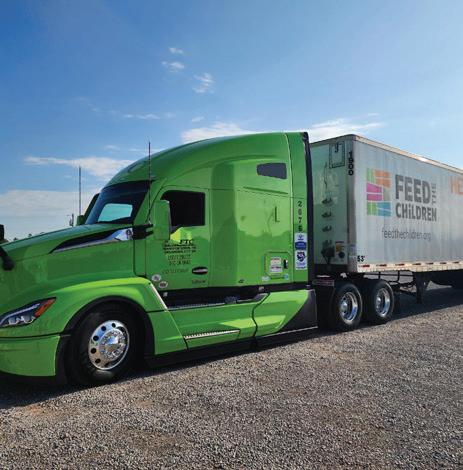
The 2026 FleetOwner Private Fleet of the Year winners—Ross Transportation Services, ProVia Logistics, and Fuel South Express— demonstrate that a driver-first blueprint doesn’t just insulate an operation from turnover. It is the exact engine that powers asset efficiency and creates an elite safety culture.
Private operations are creating a powerful structural advantage: Some two-thirds of drivers return home on a regular schedule because their network is built around it.
ProVia designs routes to get drivers home on weekends. It treats work-life balance as seriously. While the broader market prepares for a volatile driver drain, specialized hazmat carrier Ross boasts an incredible average driver tenure. Drivers don’t leave when the operational model respects their home life.
For-hire leaders rightly note that the best way to satisfy drivers is to keep them moving and earning. For private fleets, maximizing productivity means pairing premium equipment with data-driven support.
Fuel South Express invests in premium, modern equipment and advanced telematics. It leverages technology for proactive maintenance and routing to slash driver downtime and eliminate empty miles. Utilizing data for constructive coaching rather than punishment makes drivers feel supported, while modern equipment explicitly communicates that their workforce is valued.
As enforcement on noncompliant operators grows, private fleets that prioritize safety are naturally insulated from capacity shocks. If a fleet isn’t safe, customer service and corporate reputation ultimately suffer.
Ross built its impeccable record by treating safety as an absolute, uncompromising priority. Fuel South backs this up with strict severe-weather protocols that empower drivers to make safe operational decisions without fear of dispatch retaliation. ProVia directly links safe driving performance to mileage bonuses.
Historically, corporate parents viewed private fleets as an expensive necessity. But as private fleets have overtaken for-hire options to command roughly 55% of the market share, they’ve proven how controlling capacity insulates operations.
Shifting transportation from cost center to strategic asset is a recipe for success in these uncertain times. Providing drivers with the best equipment, maximizing asset productivity, and offering them schedule predictability does more than just insulate a fleet from driver shortages. It builds high-utilization, low-incident operations that shield the parent company from macro volatility and sets the benchmark for modern logistics networks. FO

Amazon recently expanded its less-than-truckload (LTL) U.S. freight service beyond inbound-to-Amazon shipments to include any destination, such as third-party warehouses, distribution centers, and retail partners.
The expanded LTL service allows shippers to move palletized freight ranging from one to six pallets, or between 150 and 15,000 lb., using shared trailer capacity instead of booking full truckloads. It is supported by Amazon’s broader logistics network, which includes more than 80,000 trailers, 24,000 intermodal containers, and terminals across major U.S. metros.
“The feedback from Amazon selling partners using our LTL service was clear: The technology, visibility, and reliability were exactly what they needed—and they wanted to use it more broadly,” Jim Ruiz, director of Amazon Freight, explained. “Now Amazon LTL can move your freight wherever it needs to go, servicing destinations nationwide for businesses of all sizes. With LTL, shippers get cost-effective freight shipping while still benefiting from the realtime tracking and dependability they expect from Amazon.”
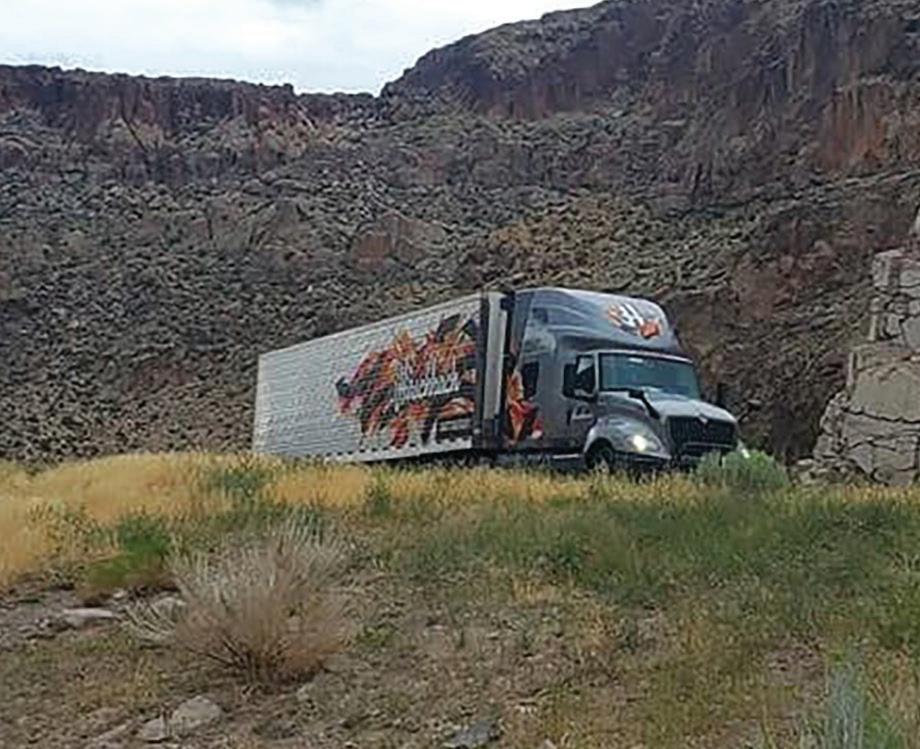
Hirschbach recently launched a driver pay increase across multiple operating segments as part of its efforts to invest in its driver
workforce. The company, which provides transportation services through over-the-road, regional, local, dedicated, and refrigerated operations, said the changes are designed to support driver recruitment, retention, and recognition.
Under the plan, OTR company and OTR lease drivers will receive a total pay increase of $0.10 per mile over the coming months. A number of additional compensation adjustments will also be implemented across Hirschbach’s regional, local, and dedicated operations.
Hirschbach noted that the pay increase is part of a broader commitment to drivers that includes competitive compensation, modern equipment, technology investments, safety programs, and support for long-term career growth.
Netradyne recently launched Netradyne Intelligence, a platform designed to support fleet safety and operations through AI-powered workflow automation. The company, which develops AI-powered fleet safety and management technology, said the platform is built on more than 30 billion miles and 150 billion minutes of real-world driving data.
For drivers, Netradyne Intelligence expands the range of risky and inefficient behaviors identified by the company’s edge AI system. Netradyne said the technology processes all drive time on the device and is designed to provide in-cab feedback at the point of risk.
For fleet managers, the platform includes full-context driver scoring, AI-recommended coaching, and Video LiveSearch capabilities for locating video footage. Netradyne said the platform now also powers AI agents that automate operational tasks and reduce manual workload for safety teams.
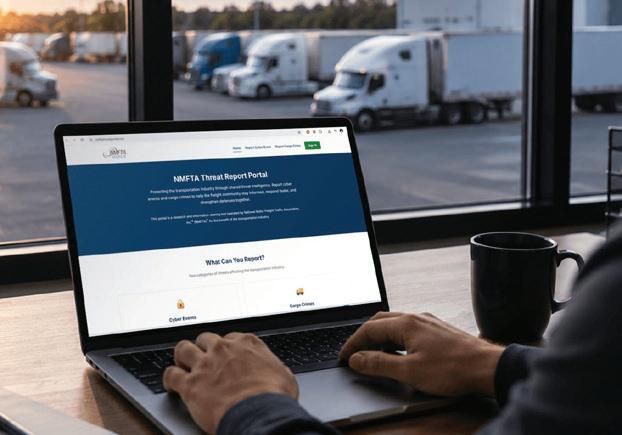
The National Motor Freight Traffic Association (NMFTA) recently launched its Threat Report Portal, a free tool to report cyberthreats, cargo crime, and freight fraud anonymously. The association said the portal is intended to improve threat intelligence sharing and help organizations better understand risks affecting the sector.
The Threat Report Portal is available to carriers, shippers, third-party logistics providers (3PLs), and brokers. NMFTA is encouraging participation from organizations that have experienced cyber incidents, including ransomware, phishing attacks, and network intrusions, as well as cargo crimes such as cargo theft and fictitious pickups. Participation in the portal is free.
NMFTA states the portal's value increases as more organizations contribute information, helping to create a broader picture of threats facing transportation and logistics operations. The portal also complements the association’s Freight Fraud Prevention Hub, which focuses on fraud and cargo theft prevention.
Trucker Path recently expanded its truck parking solutions to include more than 50,000 reservable truck parking spots within its app. The company, which provides a mobile app for North American truck drivers, now offers users access to
both free parking availability and reservable overnight and longerterm parking across the U.S.
The expanded network is designed to give drivers access to secure, professionally managed locations while improving parking availability options across North America. The platform leverages realtime usergenerated data and predictive analytics to support parking discovery and reservations.
Relay Payments recently launched an integration with Platform Science that connects its digital payments platform to the Platform Science Virtual Vehicle Marketplace and incab ecosystem. Relay Payments now extends its network through more than 300 TMS, ELD, and thirdparty system integrations used by fleets.
The integration lets fleets deploy the Relay app via the Platform Science marketplace and enable driver login with Platform Science Single SignOn (SSO), reducing multiple logins and simplifying onboarding. It also synchronizes driver and vehicle data in real time, including truck numbers and odometer readings, to provide fleets with a unified view of operations.
In addition, the integration includes Relay Pulse, a fraud prevention tool designed to help carriers reduce firstparty fuel fraud by verifying transaction data before authorizing fuel purchases.
The American Transportation Research Institute (ATRI) recently released followup surveys targeting motor carriers and truck drivers to assess adoption levels and perspectives on
onboard safety technologies. The company is conducting the research through its TechCelerate program; its research team includes ATRI, American Trucking Associations’ Technology & Maintenance Council, and the OwnerOperator Independent Drivers Association Foundation.
The surveys are designed to compare and contrast updated findings with results from ATRI’s original 2023 TechCelerate survey. Additionally, they will help the research team refine messaging and address implementation challenges.
The motor carrier survey examines technology preferences, acceptance among drivers, and issues related to repair, maintenance, and safety benefits. The truck driver survey focuses on driver familiarity and realworld experience with onboard safety technologies, including perceived safety benefits. Both surveys are currently available via ATRI’s website. FO

Can FedEx Freight hit its 15%
by Geert De Lombaerde
Shares of newly standalone FedEx Freight Holding Corp. are likely to remain relatively flat in the coming months as investors watch for signs that the largest less-than-truckload carrier can improve its margins, which executives are aiming to do, several analysts said last month.
FedEx Freight completed its separation from the larger FedEx Corp. organization on June 1. With more than 30,000 vehicles in its fleet and a national network of some 365 facilities, the company has an LTL market share of about 17%. In the wake of its landmark move, which started with a mid-2024 review of strategic options, several investment banks issued their first formal recommendations of FedEx Freight stock.
Analysts at Bank of America were among the most upbeat, suggesting that investors buy the shares and giving them a $185 price target. (Shares of FedEx Freight finished on a positive note, climbing nearly 5% to $165 and change on June 5, even as the broader market registered a very red Friday.)
The BofA team said the operating targets laid out by President and CEO John Smith and his team—growing operating margins to about 15% from today’s roughly 11%—give FedEx Freight the chance to grow profits by more than 20% annually through the end of 2028.
But two other investment banks are being a bit more cautious about FedEx Freight’s mid-term prospects. At Truist Securities, analyst Lucas Servera said investors should hold the FedEx Freight shares they received from their FedEx Corp. holdings and set a $155 price target on them. Servera stated that one key to that recommendation was Smith et al. delivering “a more measured earnings and margin expansion story” than had been expected at their investor day

“Scale, density, and a [roughly] 40% transit-time advantage are already in place. The multiple and margin gap to peers from here is execution, not infrastructure.”
– Stifel analyst group
nearly two months ago. Those comments came a few weeks after they reported a 6% drop in daily shipments during the quarter that ended Feb. 28 and added that their outlook was for even more negative numbers this spring.
Servera said the FedEx Freight story early on will be more about yield growth, driven by the company’s emphasis on growing its business with small and midsize customers and pushing further into the health care and grocery sectors, among other things. Because of that, he said investors should stay on the sidelines until executives can show they can substantively move the needle on profitability.
Analysts at Stifel are looking at things in a similar light. Led by Bruce Chan, they agree that the newly independent FedEx Freight can improve its numbers in the coming quarters as it lets go of legacy FedEx processes and spending it no longer needs and focuses on profitable growth over mere volumes. But they added that the company’s size and “significant structural changes, commercially and operationally,” bring with them their own set of risks, costs, and challenges.
“Scale, density, and a [roughly] 40% transit-time advantage are already in place,” the Stifel team wrote to investors June 4. “The multiple and margin gap to peers from here is execution, not infrastructure.”
Stifel also has a “hold” rating on FedEx Freight shares as well as a $160 price target.
At their June 5 closing price, FedEx Freight’s market capitalization was close to $26 billion. That’s roughly the same as the equity values of J.B. Hunt and XPO and a little more than half the market cap of Old Dominion Freight Line, which investors have long given a higher valuation. FO

Cenex® premium fuels and lubricants deliver proven quality, performance, and reliability backedbynearly100yearsoftrustedexpertise.
Scan to learn how to protect your fleet cenex.com

With a focus on safety, culture, and TCO, these private carriers define modern fleet excellence
by Josh Fisher
As trucking increasingly looks to optimize with artificial intelligence and automation, the most successful private fleets prove that transportation remains a people business. Technology upgrades and algorithm-driven routing are proving powerful tools, but they matter more when you have a fleet culture built around humans behind the wheel and in the office with a shared purpose.
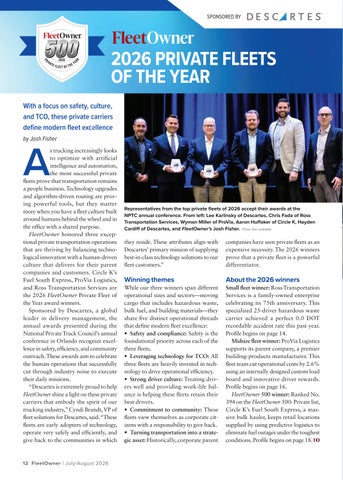
FleetOwner honored three exceptional private transportation operations that are thriving by balancing technological innovation with a human-driven culture that delivers for their parent companies and customers. Circle K’s Fuel South Express, ProVia Logistics, and Ross Transportation Services are the 2026 FleetOwner Private Fleet of the Year award winners.
Sponsored by Descartes, a global leader in delivery management, the annual awards presented during the National Private Truck Council’s annual conference in Orlando recognize excellence in safety, efficiency, and community outreach. These awards aim to celebrate the human operations that successfully cut through industry noise to execute their daily missions.
“Descartes is extremely proud to help FleetOwner shine a light on these private carriers that embody the spirit of our trucking industry,” Cyndi Brandt, VP of fleet solutions for Descartes, said. “These fleets are early adopters of technology, operate very safely and efficiently, and give back to the communities in which


they reside. These attributes align with Descartes’ primary mission of supplying best-in-class technology solutions to our fleet customers.”
While our three winners span different operational sizes and sectors—moving cargo that includes hazardous waste, bulk fuel, and building materials—they share five distinct operational threads that define modern fleet excellence:
• Safety and compliance: Safety is the foundational priority across each of the three fleets.
• Leveraging technology for TCO: All three fleets are heavily invested in technology to drive operational efficiency.
• Strong driver culture: Treating drivers well and providing work-life balance is helping these fleets retain their best drivers.
• Commitment to community: These fleets view themselves as corporate citizens with a responsibility to give back.
• Turning transportation into a strategic asset: Historically, corporate parent
companies have seen private fleets as an expensive necessity. The 2026 winners prove that a private fleet is a powerful differentiator.
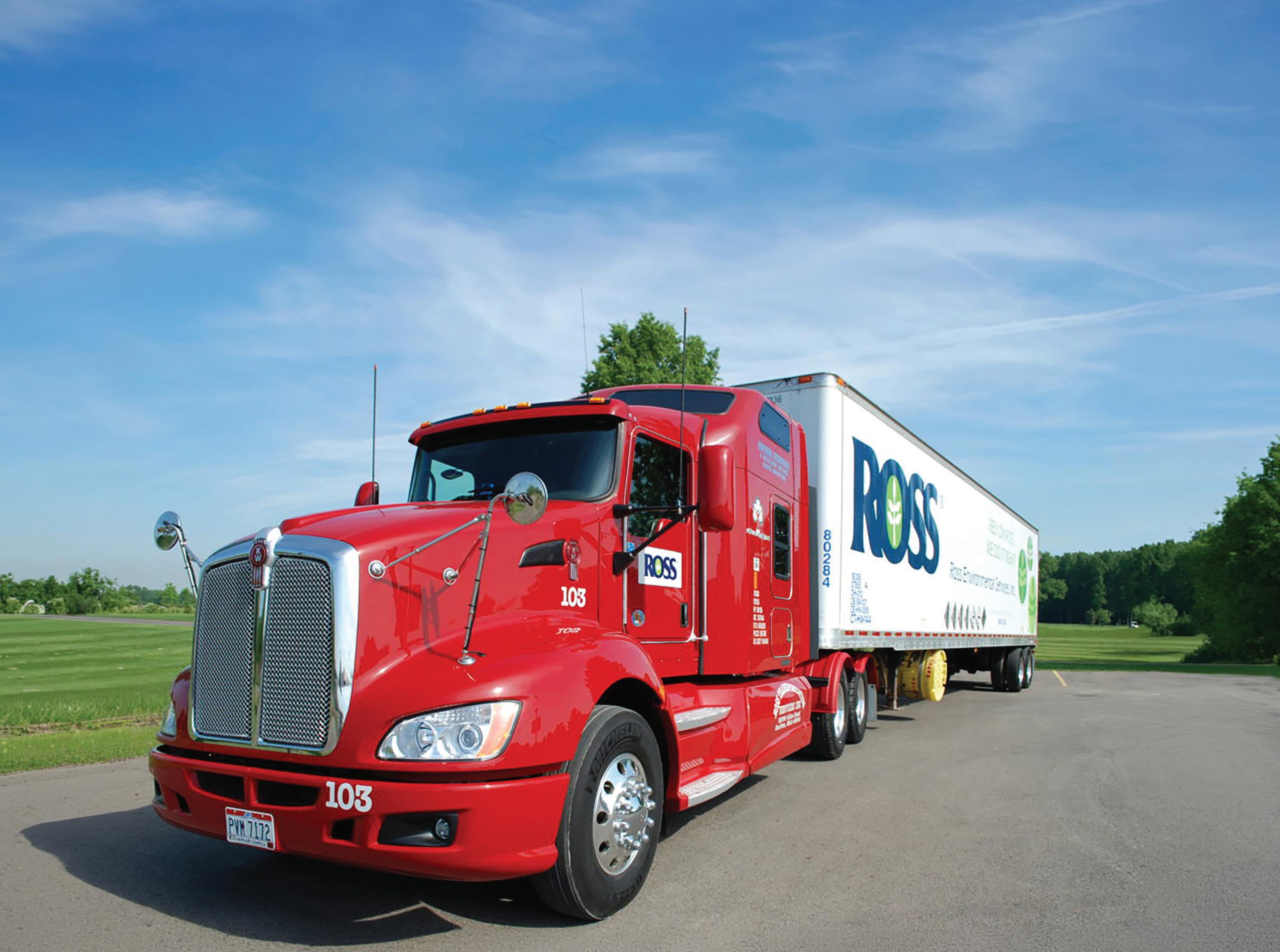
Small fleet winner: Ross Transportation Services is a family-owned enterprise celebrating its 75th anniversary. This specialized 25-driver hazardous waste carrier achieved a perfect 0.0 DOT recordable accident rate this past year. Profile begins on page 14.
Midsize fleet winner: ProVia Logistics supports its parent company, a premier building-products manufacturer. This fleet team cut operational costs by 2.6% using an internally designed custom load board and innovative driver rewards. Profile begins on page 16.
FleetOwner 500 winner: Ranked No. 394 on the FleetOwner 500: Private list, Circle K’s Fuel South Express, a massive bulk hauler, keeps retail locations supplied by using predictive logistics to eliminate fuel outages under the toughest conditions. Profile begins on page 18. FO


For Ross Transportation Services, keeping an elite safety record in the hazardous logistics sector isn’t just about rules; it’s about treating a highly specialized fleet like family.
by Josh Fisher
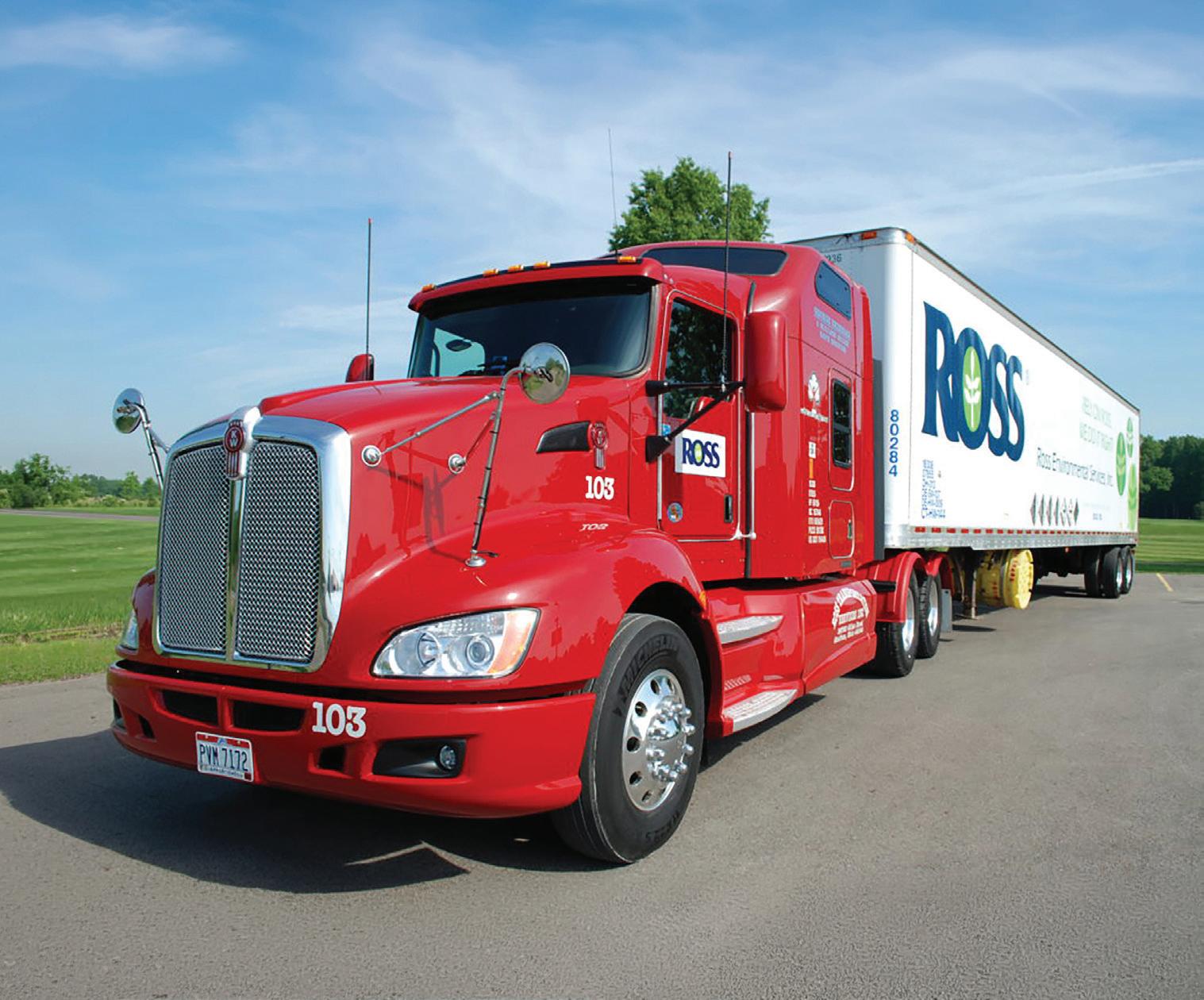
Moving freight from point A to point B requires careful execution, but moving hazardous waste leaves absolutely zero margin for error. For the team at Ross Transportation Services, the trucking arm of family-owned Ross Environmental Services, operating safely in a high-stakes segment isn’t just a regulatory baseline—it is a deeply ingrained operational philosophy.
That unyielding discipline is why the 25-driver private fleet took home the 2026 FleetOwner Small Carrier Private Fleet of the Year award after logging a flawless 0.0 DOT recordable accident rate over the past year.
“We have a firm belief in safety and compliance being our number one priority,” Chris Fada, VP of Ross Transportation Services, told FleetOwner. “We have this equilateral triangle that we talk about a lot, whether it’s with new hires or 40-year associates. It’s compliance and production, but it all sits on a bedrock of safety. That’s the third leg of the triangle: If we’re not safe, we don’t get to any of those other goals.”
While most fleets specialize in outbound distribution or tight regional routing, Ross operates what Fada describes as a “backward model” compared to
Company heritage: Ross Environmental Services is celebrating its 75th anniversary as a family-owned enterprise supporting hazardous waste management and environmental solutions.
Headquarters: Grafton, Ohio
Fleet profile: 25 company drivers operating a highly diverse mix of dry vans, liquid bulk tankers, vacuum tankers, and roll-off units.
Safety record: 0.0 DOT recordable accident rate over the past year; 100% compliance utilizing Smith System defensive driving training.
Driver longevity: Average driver tenure exceeds eight years, with multiple drivers exceeding 20 years of service.
Compensation strategy:
Competitive hourly pay, robust health benefits, and a universal corporate profit-sharing program extended to every employee.
Community footprint: Administered via the Ross Foundation, key initiatives include building the county fairgrounds event center and completely funding the Midview High School athletic complex expansion.

traditional trucking. The fleet’s core mission is to support its parent organization’s hazardous waste incinerator.
“We are essentially a truckload hauler making roughly one stop a day, but we operate backwards from most people,” Fada explains. “We leave our base of operations empty, pick up a load of waste, and bring it back home where we manage it on-site.”
A one-stop-per-day operation sounds simple on paper, but the variety of needed equipment creates logistical complexity. Depending on the day’s duties, Ross drivers might pull standard dry vans loaded with containerized waste, specialized bulk-liquid tankers, vacuum-loaded tankers, or roll-off trailers carrying bulk solids.
Matching the right driver with the right equipment for the right job, while maintaining strict hours-of-service compliance, creates a daily multi-variable puzzle for the dispatch team. “Our drivers work a lot of hours, and managing that home time with their work time is something we constantly try to optimize,” Fada says. “Our logistics department does a fantastic job of managing our customer needs while meeting our drivers’ personal requirements.”
As a historical early adopter of in-cab technology, Ross began deploying electronic logging devices (ELDs) long before the federal mandate took effect a decade ago. That early experience taught the leadership team that introducing technology requires transparency rather than top-down enforcement.
When the fleet recently transitioned to onboard cameras, management used lessons learned from the ELD rollout to reduce friction. “With any new technology, there are going to be some curveballs thrown at you,” Fada says. “We wanted to deal with those curveballs early to soften the concept of cameras in the trucks—explaining what we can see, when we can see it, and how we use it.”
Instead of using telematics data as a punitive tool, Ross uses metrics such as harsh braking, idle time, and fuel efficiency to foster constructive coaching and open dialogue.
“One of the biggest benefits is that our drivers understand why we look at these things,” Fada says. “They understand we aren’t looking to discipline people or beat heads. It’s all for the sake of safety, compliance, and efficiency. We don’t hide behind the books. We involve them in the decisions we make and explain what’s behind it all. It makes them better, which in turn helps the organization.”
In the hazardous waste sector, the private fleet driver is the primary face-to-face contact a customer has with the parent company. Ross treats its drivers as critical customer service representatives who do far more than drop a trailer. Ross drivers are extensively trained to assist site managers with complex compliance tasks, such as completing shipping manifests and verifying compliance with strict labeling requirements imposed by the U.S. Environmental Protection Agency.
“Our external customers see that driver in the red shirt pull up with the red truck, and that’s their point of contact,” Fada says. “When a driver is ready and willing to get out of the seat and do whatever they can to help a customer, they don’t lose sight of that. At the same time, our drivers are trained to know when to raise their hand and call back to our team if a question is beyond their capacity.”
As demographic shifts and market pressures cause driver turnover to tick upward across the industry, Ross maintains stability through an intentional onboarding and retention strategy. The carrier’s overall transportation division consists of just 35 people, which creates a close-knit, direct-line environment.
“It is dysfunctional at times, but it’s a family, and we treat it that way,” Fada says.
When onboarding new hires, Ross implements a highly intensive, monthlong training program before a driver ever takes a truck out alone. A large portion of that time is spent paired with veteran driver mentors. According to Fada, the first 24 months are the critical threshold for long-term retention.
“We feel like if we can get them to Year Two, we’re in good shape with hanging onto them long term,” Fada highlights. “Through checking in at 30, 60, and 90 days, we ask a lot of questions. We reach out to them at random times just to talk. Once they get past a year, they start becoming a part of that culture. When we see that turn happen, we know we’re in a good position.”
The proof is in the data: The average driver tenure at Ross is an impressive eight years, bolstered by a veteran core of four drivers who have been with the company for more than two decades.
Ross also takes pride in giving back to its local community of Grafton, Ohio. Operating through the philanthropic Ross Foundation, the company acts as a vital pillar for the rural township where it operates.
Over the years, the foundation and the Cromling family (now in its third generation of family leadership since it was founded 75 years ago) have poured substantial resources into local civic infrastructure. Recent efforts include funding and building a brand-new community event center at the local county fairgrounds to support agricultural programs, as well as a massive financial contribution to Midview High School to construct a fully modernized athletic facility.
“It’s just one of our core values as a company,” Fada says of the community investments. “We want to take care of our associates and our customers, but it’s also our responsibility to take care of our neighbors and be a good community member. There is no quid pro quo. It is simply the right thing to do.” FO

By rejecting punitive metrics and prioritizing employee well-being, ProVia Logistics turned its 170-driver private fleet into an automated, cost-slashing strategic asset.
by Josh Fisher
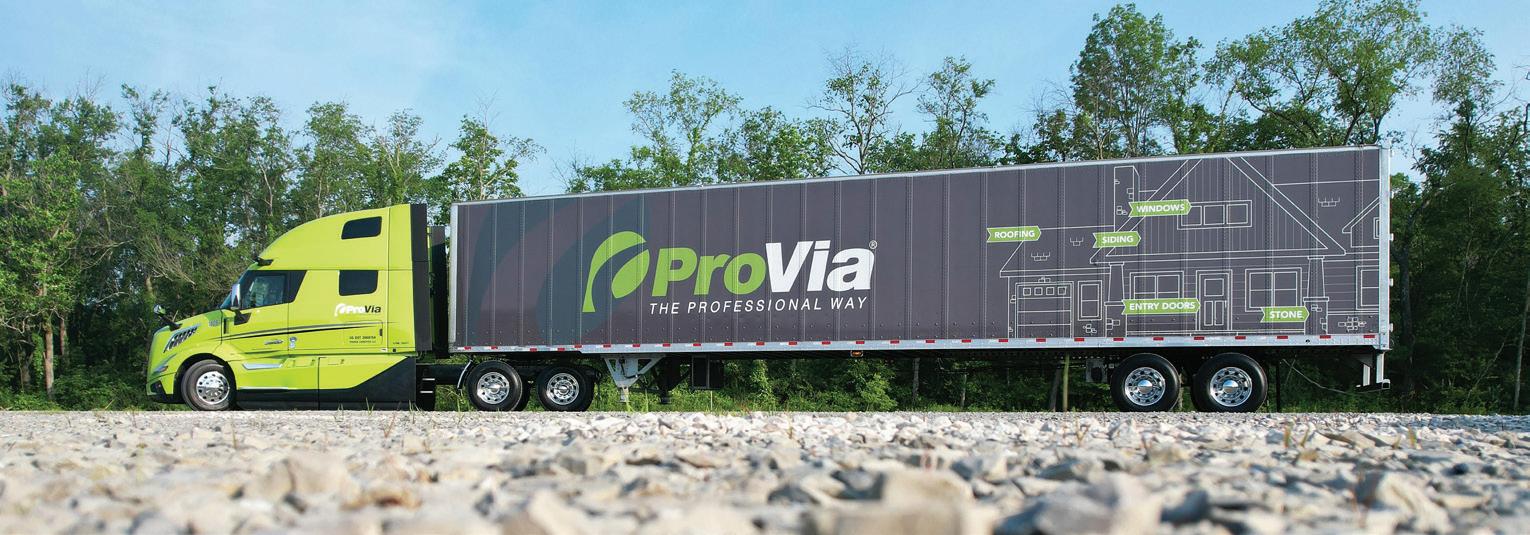
While more trucking companies lean on granular camera data and rigid telematics scoring to correct driving behaviors under a cloud of compliance penalties, Ohio-based manufacturer ProVia’s private fleet is taking a different path. Its logistics team leads with trust.
As the dedicated transportation arm behind a premier American manufacturer of high-quality exterior doors, vinyl windows, siding, manufactured stone, and metal roofing, ProVia Logistics supports an operation with zero margin for product damage or delivery delays. Moving highly customized building products directly to job sites and distributors requires a workforce that views itself as brand ambassadors—not monitored machine operators.
That human-centric approach is precisely why ProVia Logistics was named the 2026 FleetOwner Midsize Carrier Private Fleet of the Year. In a challenging economic climate marked by stubborn supply chain headwinds, the fleet managed to slash overall operational
costs by 2.6% while supporting a massive 14% year-over-year surge in outbound freight capacity.
“I just feel like we have, in the last nine years, brought on people who have added a skill set of exactly what we needed at the right time,” Wyman Miller, ProVia’s director of logistics, told FleetOwner. “That has helped us scale up from 27 drivers in 2017 to 170 drivers today. And that growth has not come without challenges.”
The centerpiece of ProVia’s operational excellence is its in-house Speed 2.0 safety program, which relies on positive reinforcement rather than punitive discipline. While many fleets use advanced telematics exclusively to flag speed violations and issue reprimands, ProVia rewards compliant behavior directly on the driver’s paycheck.
The carrier introduced a 2.5% mileage incentive bonus directly tied to non-speeding compliance. The result was immediate and profound: by offering a financial reward for legal, safe
Parent organization: ProVia is a premier vertically integrated U.S. manufacturer of durable exterior building products, including steel entry doors, vinyl windows, siding, manufactured stone, and metal roofing systems.
Corporate headquarters: Sugarcreek, Ohio
Private fleet size: 170 company drivers operating an owned asset mix of heavy-duty tractors and specialized delivery trailers.
Network footprint: Continuous regional distribution out of manufacturing sites to regional delivery hubs located in South Carolina, Mississippi, Kansas, and Connecticut.
Safety excellence: 0.35 DOT recordable accident rate per million miles; managed via “Speed 2.0” tribal team safety incentive models.
Operational efficiency: Cut total logistics costs by 2.6% over the past 12 months; expanded inbound raw materials backhaul freight capacity by 102% using proprietary custom load boards.
Talent retention: Maintained a stable 14% driver turnover rate through weekend-off “bread route” scheduling and embedded fleet care ambassadors.
Community outreach: Distributed 1,200 fully equipped backpacks to local students through the “Prepare for Success” campaign; provides full paid leave for corporate volunteer service.
driving speeds, the fleet observed a dramatic drop in speeding events, which naturally trickled down to a massive reduction in harsh braking and unsafe following-distance triggers.
“We don’t force them to do this. We try to draw them in so that they want to do that,” Chris Carter, manager of safety and compliance, explains. “Incentivizing good behavior aligns much better with our core culture than being reactive and correcting bad behavior after the fact. What we discovered exceeded our expectations. Our speeding time as an entire fleet is down to just 11% to 12%, with many drivers sitting well below 10%—and that includes minor instances of just one mile per hour over the limit.”
To drive the message home, ProVia grouped drivers into competitive teams dubbed “tribes.” The tribes compete against each other for the lowest speeding percentages, with the winning group taking home an additional team bonus on top of their individual monthly mileage payouts.
“It creates peer accountability, but it’s done constructively,” Carter adds. “Even the data outliers aren’t pulling the tribes down because the team synergy is so strong. We also don’t blast or publish individual speed data. We aren’t here to make anyone feel called out or single anyone out. They know we operate with a baseline of trust, so when we roll out safety technology, they approach it with patience.”
That same cultural buy-in enabled ProVia to tackle its cost management targets. Instead of sourcing off-the-shelf software, ProVia leaned on its internal IT department to engineer a proprietary load board tailored specifically to the manufacturer’s supply network.
The custom software gives the logistics team visibility into raw material lanes, turning what used to be empty outbound return miles into high-value backhaul freight. Driven by this internal
tech deployment, ProVia increased its raw materials backhaul capacity by 102% over the past year, serving as the leading factor in the fleet’s 2.6% total cost reduction.
“Our load board has been an enormous win for us,” Tim Elliott, logistics manager, points out. “It allows us to coordinate closely with our suppliers so our private fleet can handle the freight rather than relying on outside third parties. It was a massive project that required a year and a half of beta testing to ensure it was completely user-friendly for everyone involved, but the return on investment has been exceptional.”
Beyond freight optimization, ProVia has insulated its drivers from the headache of breakdown stress. The fleet maintains an exceptionally low asset age by specs-matching equipment at a premium level, refreshing power units via predictive trade cycles, and employing an emergency on-call driver pool alongside custom-engineered proprietary liftgates to ensure independent, hassle-free unloading at delivery points.
ProVia’s driver retention strategy focuses heavily on protecting the driver’s home life, resulting in a 14% turnover rate— miles below the industry average. The operation accomplishes this by structuring its distribution network around fixed regional “bread routes.”
“ProVia drivers cover an expansive footprint extending to Arizona, Colorado, Utah, and every state east of them, but our routes are designed in a predictable, weekly recurring pattern,” Miller explains. “Routes are typically set up Sunday through Thursday or Monday through Friday. Even on our longer multiday runs—with touchpoints at our hubs in South Carolina, Mississippi, Kansas, and Connecticut—the scheduling is locked so that every driver is home by a respectable hour on Friday. They get the entire weekend off, period.”
Comprehensive corporate care programs support this structured work-life
balance. Through ProVia’s dedicated Corporate Care team, an embedded corporate ambassador is assigned specifically to the driving fleet. This advocate focuses entirely on the emotional, mental, and spiritual health of the drivers, providing a direct avenue of support during family celebrations or personal life crises.
“We want to build a culture based on values that places employee needs ahead of the customer,” Miller says. “We believe that by taking care of our employees first, they will naturally take care of our customers out on the road. When one of our recent hires went through our onboarding process, he told us, ‘This is so different—I wish I had found you sooner.’ That’s the standard we strive for.”
The final pillar of ProVia’s winning blueprint is an open commitment to corporate citizenship and faith-based community service. At the beginning of every August, the logistics division anchors the company’s annual “Prepare for Success” outreach program. In the past year alone, the company funded, packed, and distributed 1,200 backpacks loaded with school supplies to local students to kick off the academic year.
Furthermore, ProVia pays its employees regular hourly wages to step away from their regular duties and volunteer directly in local community outreach projects, including serving meals at food banks and working in regional nonprofit thrift stores.
“ProVia is a faith-based company, which is something we share openly right from the initial interview process,” Miller reflects. “It gives complete context to who we are, how we treat our relationships, and how we manage our business. Our ultimate mission is adapted directly from Matthew 5:16: To let our light shine before others so that they may see our good works and give glory to our Father in heaven. We don’t just say it—we try to live it every day.” FO
Armed with predictive logistics and advanced winter protocols, Circle K’s Fuel South Express took home FleetOwner 500 honors by treating bulk energy transport as a mission-critical line of public service.
by Josh Fisher

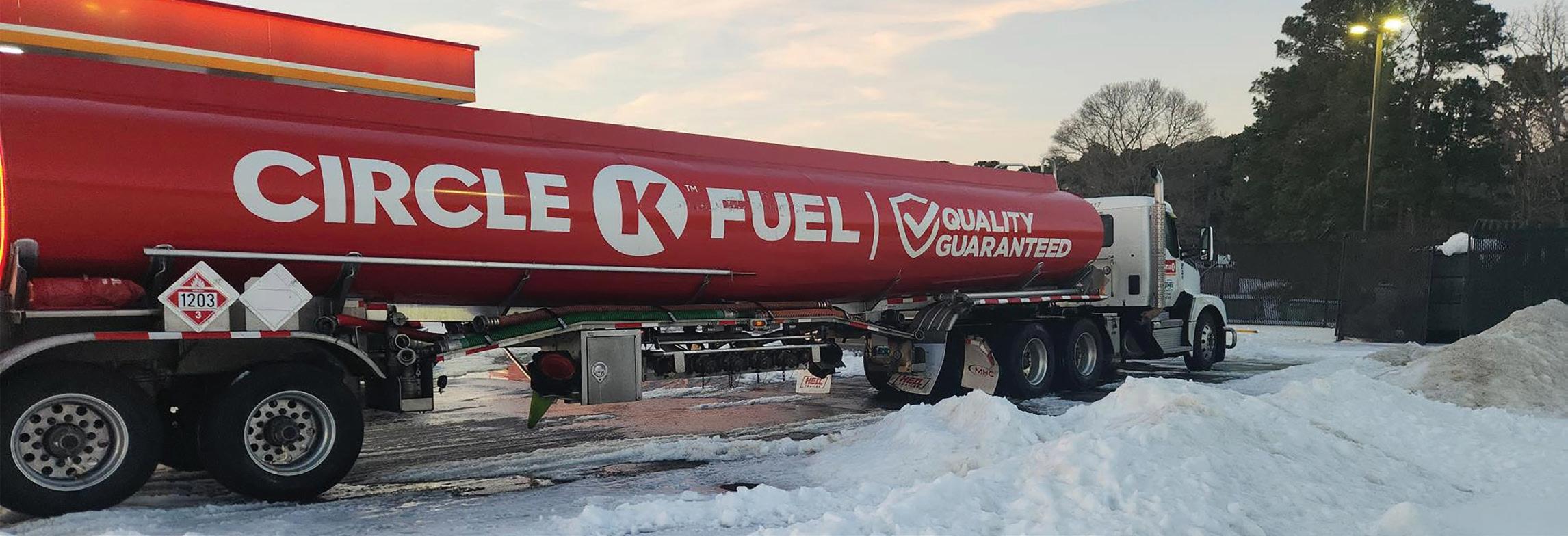
In the world of convenience store retail, fuel delivery is often treated as a back-office logistical necessity.
But when you are balancing supply lines across a national retail footprint, an empty fuel tank doesn’t just mean a lost transaction. It represents a complete breakdown of the customer experience, brand trust, and community resilience.
For the bulk transportation team at Fuel South Express, the proprietary fuel-hauling fleet for retail giant Circle K Stores, avoiding that breakdown is an obsession. Operating a massive bulk energy network that navigates shifting market demands, terminal delays, and volatile weather patterns, the carrier has elevated last-mile fuel distribution from a cost center to a core strategic shield.
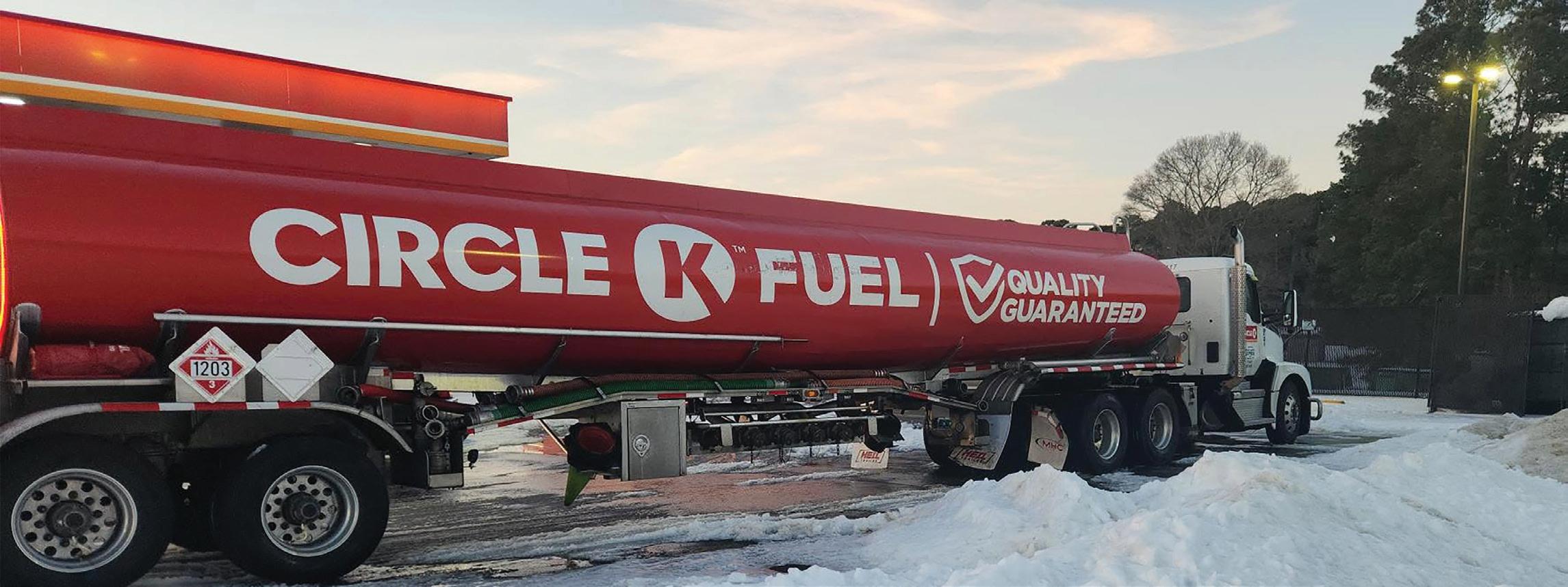
That unwavering commitment to network continuity is why Fuel South Express took home the 2026 FleetOwner 500 Private Fleet of the Year award. Managing a footprint encompassing
over 1,000 company drivers and over 500 specialized power units, the fleet has established itself as the gold standard for high-volume hazardous material hauling.
Accepting the award at the National Private Truck Council’s annual spring conference in Orlando, Aaron Huffaker, speaking on behalf of the fleet and Circle K, made it clear that the ultimate credit belongs on the front lines.
“This really is a tribute to our over 1,000 drivers that safely load and deliver fuel each and every day—regardless of the extreme heat, extreme cold, ice, snow, and even in disaster recovery situations,” Huffaker, director of development and optimization in the U.S. for Circle K, said. He also heavily credited “the support team members that set them up for success each and every day.”
Proprietary capacity wins
Historically, major retailers relied significantly on volatile for-hire third-party
carrier networks to manage bulk fuel logistics. However, as the energy supply chain has grown increasingly dynamic— disrupted by flash refinery outages, short allocations, and severe-weather bottlenecks—Circle K has leaned on its proprietary capacity to dictate its own destiny.
“Fuel outages directly impact store sales, customer experience, and brand trust,” Mark Pauli, head of internal fleet in North America for Circle K, told FleetOwner. “Operating a proprietary private fleet allows us to prioritize Circle K locations without competing for capacity with other shippers in an open market. It gives us the agility to maintain consistent delivery schedules, even during severe weather disruptions, pipeline shutdowns, or holiday demand surges, and adapt quickly to real-time changes in store demand and terminal availability.”
This corporate structure provides a level of network resilience that

third-party contracts simply cannot guarantee. When terminal infrastructure shifts or a rack suddenly runs dry, Fuel South Express dispatchers can instantly reroute proprietary assets without waiting on outside approval, preserving store-level readiness under the tightest operational constraints.
The true mettle of a bulk private fleet is tested when nature closes the road networks. Over the past year, as back-toback winter freezes and severe weather fronts paralyzed major regional corridors, Fuel South Express deployed a highly advanced, preplanned winter operations protocol that kept Circle K stores supplied even when external networks halted.
The fleet implemented localized, storm-specific routing logic and automated alternate terminal mapping, ensuring drivers were pre-staged away from gridlocked or supply-starved regions. On the ground, the fleet enforced strict, mandatory “stop-andassess” site-hazard checks and updated real-time traction and speed guidelines tailored to shifting freeze parameters.
This strict preparation meant that while regional supply lines experienced historic disruptions, Circle K retail pumps remained operational. The drivers flexed across zones, navigating hazardous ice, subzero cold, and emergency recovery situations to ensure critical infrastructure and local communities had uninterrupted access to fuel.
To keep a massive Class 7 and 8 fleet running safely across continuous 24/7 slip-seated schedules, Fuel South Express transitioned from a reactive maintenance structure to a fully digital, predictive system. By tracking realtime diagnostic engine fault codes via modern telematics, fleet managers can catch component wear before a failure occurs on a terminal rack or an interstate shoulder.
This proactive maintenance shift has drastically reduced unplanned roadside downtime, eliminated emergency thirdparty service calls, and stabilized longterm maintenance expenses. And by heavily pairing automated routing tools with load optimization algorithms, the fleet has maximized multistop compartment loading and minimized empty miles.
By reducing total miles driven, optimizing terminal selection sequences, and continually refreshing power units with newer, more fuel-efficient tractors, the carrier achieved substantial year-overyear reductions in total fuel burn and carbon emissions per delivered gallon.
Hauling flammable bulk liquids leaves no room for careless habits. Fuel South Express uses its advanced telematics platform as a core driver-development asset rather than a punitive surveillance tool. Fleet managers run comprehensive monthly data-driven coaching sessions with every driver, walking through engine data to review speed control, following distances, curve handling, and weather-adjusted deceleration trends.
This constructive approach has fostered an environment centered on shared safety targets, resulting in a steady downward trend in critical safety events. In addition to standard over-the-road safety, the fleet has automated product-integrity controls. By deploying automated seal tracking, electronic bills of lading, and electronic tank ullage confirmation tools, Fuel South Express has virtually eliminated the risk of misdeliveries or mixed-fuel exceptions, preserving environmental safety and delivery accuracy across the network.
Because Fuel South Express drivers are deeply visible symbols of the Circle K brand on regional highways and in local communities, the company views them as frontline corporate ambassadors. Off the highway, the carrier’s
Parent Organization: Circle K Stores, a global leader in convenience and fuel retail, operating thousands of high-volume storefronts across North America.
FleetOwner 500 rank: No. 394
Fleet size & profile: A massive proprietary energy distribution fleet consisting of 1,026 professional company drivers operating more than 500 leased power units and a specialized tanker trailer network.
Core mission: Ensuring 100% outage prevention and service continuity across regional retail locations via real-time capacity control and predictive last-mile fuel logistics.
Safety profile: Maintained high bulk transport standards utilizing advanced telematics-driven driver coaching, electronic product integrity controls, and automated seal.
workforce actively participates in local fundraisers, community charity drives, and holiday supply collections. During severe weather emergencies and public infrastructure crises, Fuel South Express coordinates directly with emergency management, delivering fuel reliably to first responders, critical public infrastructure, and essential support services when the open public fuel supply chain is severely strained.
By executing a complex, round-theclock hazardous materials mission with discipline, predictive technology, and an unyielding commitment to the humans behind the wheel, Fuel South Express has proven that a modern private fleet is much more than a collection of trucks. It is a lifeline for the brand and the public it serves. FO









































































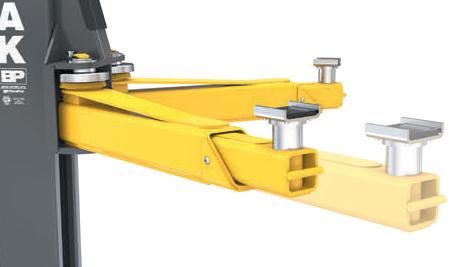



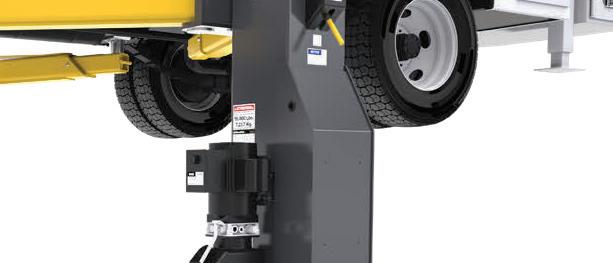










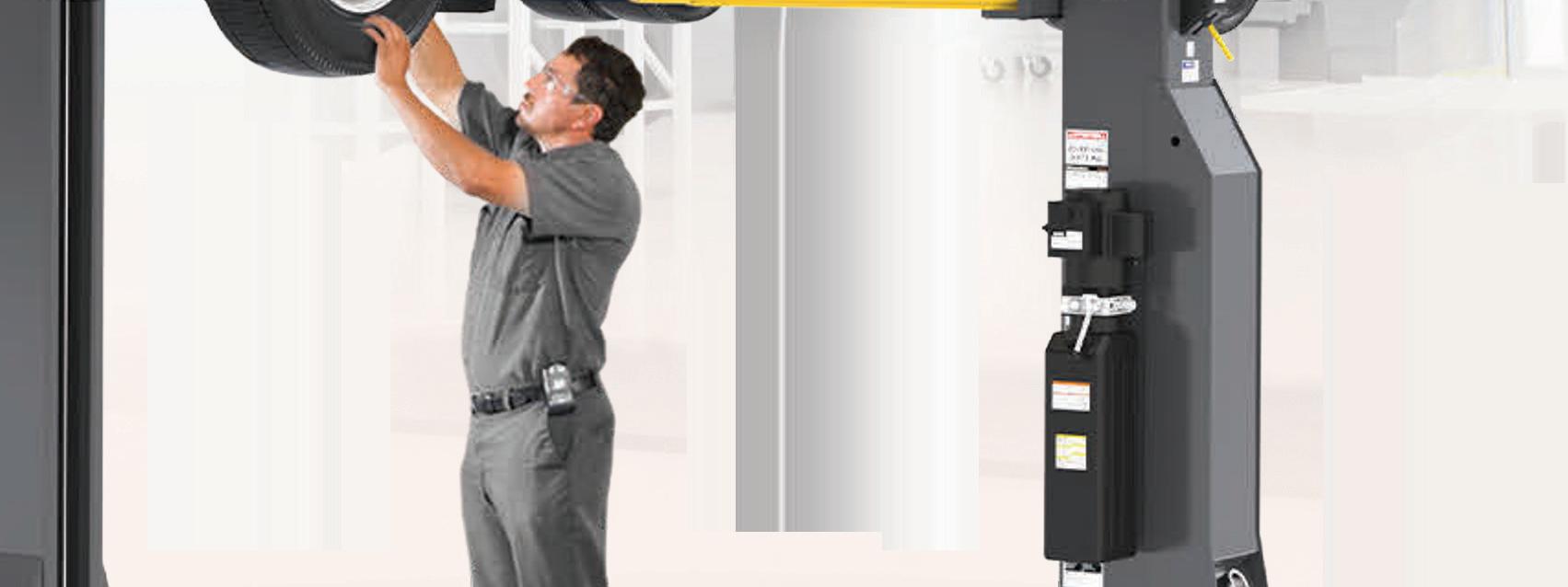
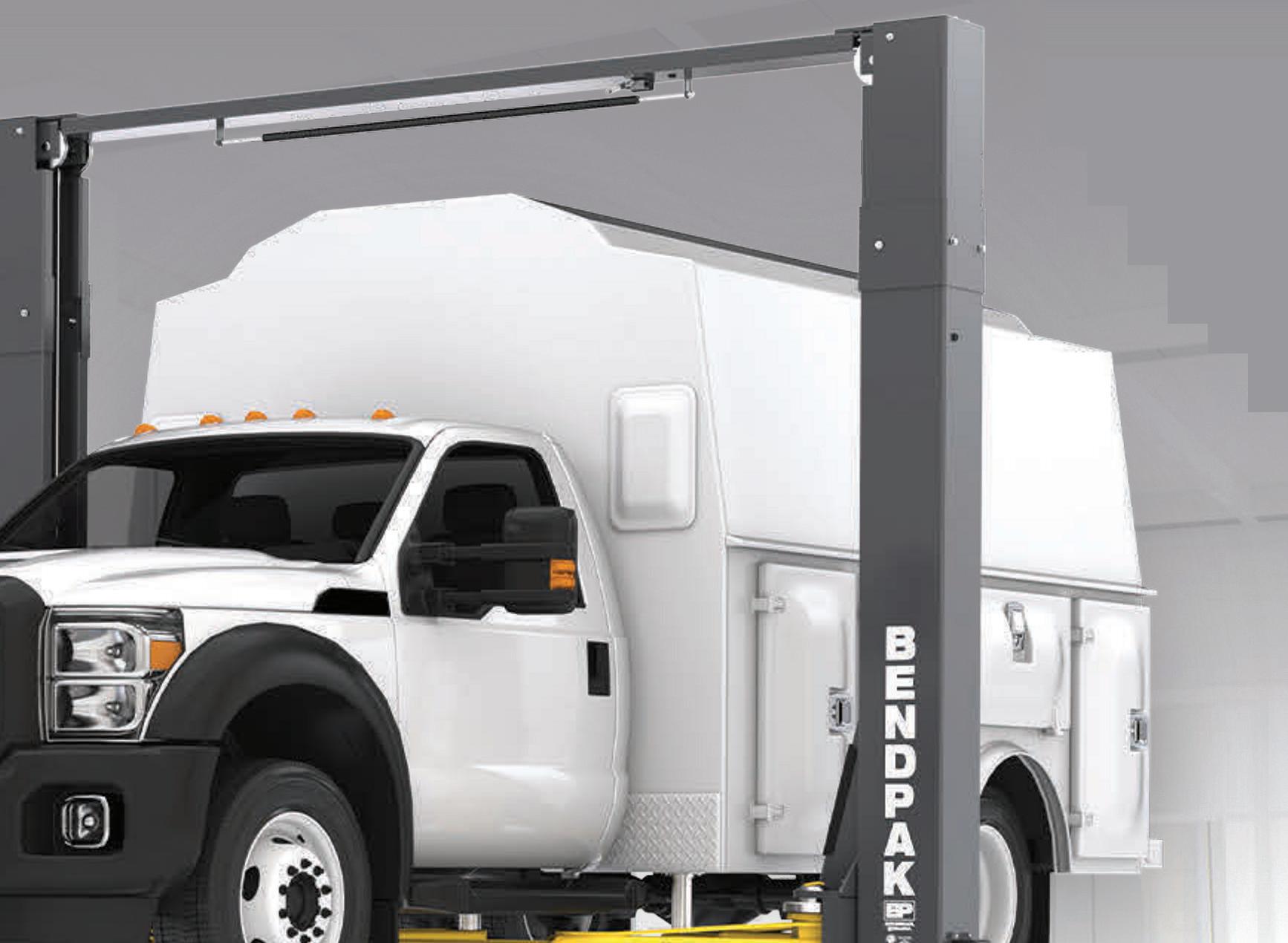




























































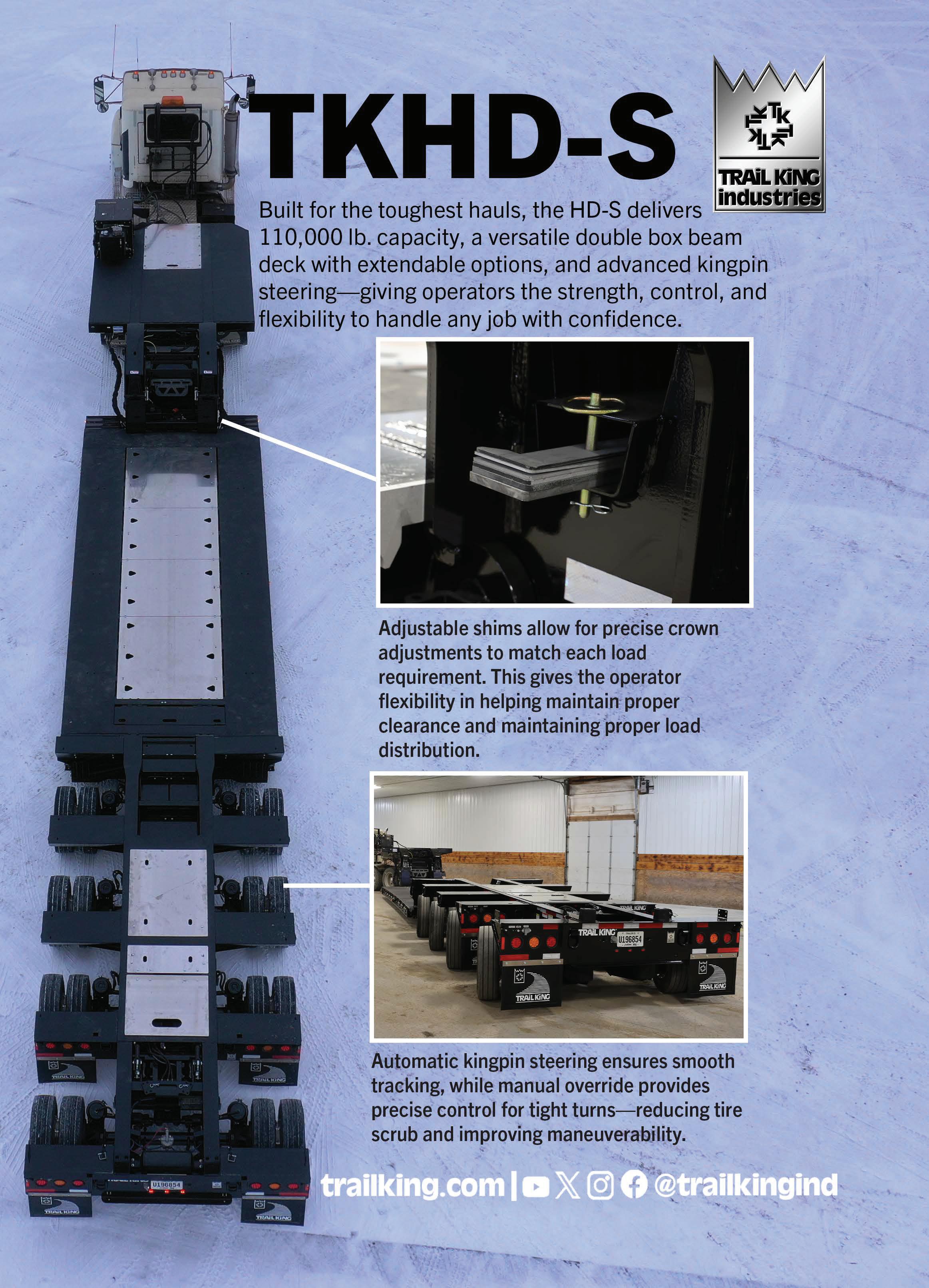
A versatile choice for mixed fleets, BendPak’s new 16AP and 20AP Series heavy-duty two-post lifts easily take on Class 1 through 5 vehicles, from passenger cars to commercial trucks and vans. They reach further, lift higher and deliver greater stability than other lifts, all while protecting technicians with unmatched safety systems and ergonomics. With fewer moving parts, they’re easier to maintain, less prone to wear, and more cost-effective to operate. Maximize your uptime and efficiency with BendPak’s heavy-duty lifts — delivering superior performance and unmatched value. To learn more or to shop now, visit bendpak.com or call us at 1-800-253-2363.




by David Heller
Heavier-weight restriction pilot programs threaten fleet cost structures
I COULD BENEFIT from losing a few pounds, and after logging miles on my treadmill, it seems to wear my shoes down rather than reduce my waistline.
Just watch television, and you are bound to see weight loss commercials offering various methods to shed pounds. The obsession with weight loss has persisted for decades; however, the recent highway bill approved by the House Transportation and Infrastructure Committee appears to go in the opposite direction, allowing a 91,000-lb., six-axle configuration for the trucking industry to accommodate additional weight.

Increasing truck weight by more than 10,000 lb. accelerates infrastructure wear and tear, especially on secondary routes not designed for those loads.
The proposal to allow a 91,000-lb., six-axle truck pilot program is a step in the wrong direction for America’s roadways. While supporters frame it as a productivity gain for freight movement, the reality is far less attractive: greater risks to public safety, accelerated damage to infrastructure already in poor condition,
and a troubling shift of costs onto an industry that can ill afford them.
The current federal maximum of 80,000 lb. reflects a balance between economic efficiency and the structural limits of our roads and bridges. Increasing that weight by more than 10,000 lb. is a major change with real consequences.
Our nation faces aging bridges and maintenance-heavy roads funded by an inadequate mechanism. Heavier trucks will accelerate wear and tear, especially on secondary routes and local roads not designed for them. Let’s face it. These heavier trucks will exit the interstates, not travel exclusively on them.
While proponents often emphasize that six axles distribute weight more evenly, the total load still increases stress across infrastructure systems. Inevitably, pavement deterioration, bridge fatigue, and maintenance costs will increase.
Taxpayers will shoulder much of the cost burden through increased repair and rehabilitation costs, effectively making the pilot program a subsidy for heavier freight at the public’s expense.
Safety must be part of the equation. Heavier trucks take longer to stop, are harder to maneuver, and generate more force in crashes. Even with an extra axle to distribute weight, physics doesn’t change. A heavier vehicle has more energy in motion, leading to more severe outcomes when something goes wrong.
The term “pilot program” suggests a temporary, controlled experiment, but history shows these initiatives rarely remain confined. Once heavier trucks are allowed on certain corridors, the pressure to expand those allowances grows, state by state, region by region, until what was once limited becomes the new norm. Basically, this pilot program represents “gateway” legislation toward increasing weight across the country.
Before taking that step, policymakers must ask a simple question: What problem are we actually trying to solve? This solution is looking for a problem, and the unintended consequences are too serious to ignore. The answer is not simply to load more onto each truck. Proponents would argue that additional weight measures will take more trucks off the road; however, the exact opposite is true.
Trucking is the most flexible form of freight transportation in the U.S. If trucks are allowed to carry more weight, freight will shift from railroads to trucks. That’s not a recipe for improving infrastructure as we know it. The very fact that grocery stores are not serviced by the railroad proves this point.
The trucking industry plays a vital role in our economy. Instead of expanding truck weight limits, policymakers should focus on strengthening enforcement of existing safety regulations, investing in infrastructure repair and modernization, and supporting innovation in fleet safety technology. These solutions improve efficiency without compromising public safety or infrastructure integrity.
The 91,000-lb. truck pilot program represents a significant shift in how we balance economic priorities with public well-being. The risks, higher crash severity, increased infrastructure damage, and greater costs far outweigh the promised benefits. We should not gamble with safety or infrastructure resilience. Our nation needs to reject any proposal that increases overall truck weight and keep America’s roads and the people who rely on them safe. FO
David Heller | Dheller@truckload.org
David Heller, CDS, is senior VP of safety and governmental affairs for the Truckload Carriers Association. He is responsible for interpreting and communicating industry-related legislation to TCA members.
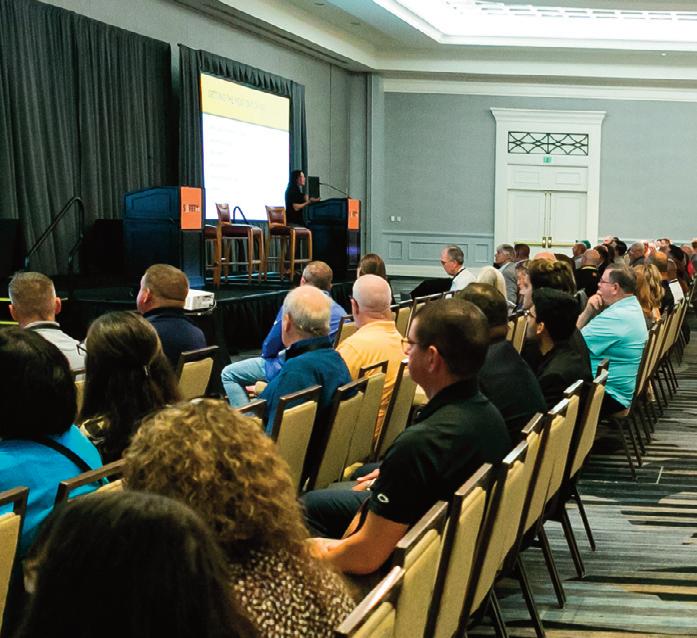
An intense 2 day program focusing on key issues vital to enhancing safety performance in private fleet operations. Save the Date and Plan to Attend.




Lower-viscosity engine oils o er potential fuel savings and longer drain intervals, but adoption remains limited due to higher costs.
by Gregg Wartgow

Every time a new class of diesel engine oil comes out, prices seem to creep up a little. But formulations also improve, providing enhanced engine protection, which can sometimes lead to longer drain intervals and reduced engine maintenance. Oil viscosity also tends to creep down a notch, which can lead to improvements in fuel economy.
Research from the North American Council for Freight Efficiency (NACFE) shows that lower-viscosity oils with less internal resistance to flow will reduce mechanical losses, thereby reducing fuel use. In fact, switching from 15W-40 to 10W-30 often results in a 0.5-1.5% fuel economy gain, on average. When switching to an FA-4 10W-30, fleets could pick up another 0.4-0.7%.
Still, after nearly a decade on the market, adoption of lower-viscosity engine oils is only around 20% industrywide, according to NACFE. The price
premium is one reason, as lower-viscosity synthetics and synthetic blends often cost 30-40% more than conventional 15W-40s.
But what is the total impact on cost per mile (CPM)? When considering the price of the oil, the oil drain interval, and fuel economy, could lower-viscosity synthetics actually provide a financial advantage over the less-expensive conventional 15W-40s?
Let’s look at the numbers using the following hypothetical scenario:
• $115 for 40 quarts of conventional 15W-40, $150 for a CK-4 10W-30 synthetic, and $225 for an FA-4 10W-30 synthetic.
• Oil drains are 40,000, 60,000, and 75,000 miles.
• Engine oil CPM comes out to $0.0029, $0.0025, and $0.003.
• Base fuel economy with a conventional 15W-40 is 8 mpg, 1% improvement for a CK-4 10W-30 synthetic bumps
mpg to 8.08, then another 0.55% improvement when using an FA-4 10W-30 synthetic bumps mpg to 8.12.
• Diesel fuel is $5.65 per gallon (as of May).
• Fuel CPM using conventional 15W-40 is $0.706, CK-4 10W-30 synthetic is $0.699, and FA-4 10W-30 synthetic is $0.696.
• Total CPM (oil + fuel) is $0.7091, $0.7018, and $0.6988.
Given all of that math, and assuming a truck puts on 90,000 miles over the course of a year, using a CK-4 10W-30 synthetic could save around $657 a year. Using an FA-4 10W-30 synthetic could save another $270—even though those oils will likely cost more up front to purchase.
Another thing to consider is the possibility of further reducing repair and maintenance (R&M) cost by extending out































































drain intervals with the synthetic 10W30s, especially an FA-4. Eliminating an oil change each year will reduce technician labor, which helps drive R&M even lower. There’s also the financial impact of increased uptime to consider.
As an example, Valvoline’s Premium Blue One Solution Gen 2, a CK-4 oil suitable for diesel, gas, and natural gas, was approved by Cummins for 100,000mile oil drain intervals in the current X15 engine. “This milestone means equipment can spend more time on the job and less time being serviced,” John Walters, Valvoline’s GM and VP for the Heavy Duty Americas channel, said.
Ken Eggen, an industry veteran who now has a maintenance consulting business, K.M.E. Services, said ROI will largely hinge on a fleet’s ability to achieve its desired drain cycle. That’s not always a guarantee.
“If a fleet cannot execute PMs (preventive maintenance) on time and use oil analysis consistently, I would be very cautious about assuming something like a 75,000-mile drain interval,” Eggen said. “The risk is that the fleet buys premium oil but still operates with ordinary maintenance discipline.”
Bulk hauler has the discipline
Kyle Neumann started running FA-4 10W-30 oils as soon as they became available in December 2016. His long relationship with Citgo gave him the confidence to make the switch to Citgard 700 MFE Synthetic Blend.
As the vice president of maintenance for McCoy Group’s Foodliner and Quest Liner brands, Neumann wasn’t motivated by fuel economy because his fleet of tanker trucks racks up a lot of idle and PTO time. The driving force behind Neumann’s decision was the potential cost savings associated with more than tripling his current oil drain interval (ODI).
“When we went from a 24,000mile (90-day) oil drain to 48,000 (180 days), we cut costs by more than $300 per truck,” Neumann explained. “Then
when we extended to 72,000 miles, the savings doubled.”
The savings continued to grow once Neumann’s team extended out to 90,000 miles. And it’s not just about getting significantly longer life out of 40 quarts of oil.
“With the tight technician workforce we have today, I have to take a look at anything I can do to drive efficiency and capacity in our shops,” Neumann said. “We’re essentially doing one wet PM a year now. That has had a huge impact on our shop throughput because technicians have more time for other services.”
Trucks still come in for dry PMs at 45,000 miles (170 days) to make sure everything is getting inspected and greased as required. Oil sampling has also become a key task during those dry PMs, as well as the 90,000-mile wet PM.
“One of the keys to extending ODIs like we have is that we watch oil samples like a hawk,” Neumann related. “We’ve actually set up a specific PM code in our maintenance software just for pulling oil samples. That way it’s easier to track them and make sure they’re getting done.”
“When we went from a 24,000-mile oil drain to 48,000, we cut costs by more than $300 per truck. Then when we extended to 72,000 miles, the savings doubled.”
– Kyle Neumann, Foodliner VP of maintenance
Will the new PC-12 oils help lower CPM?
Now the question is whether the new PC-12 oils (CL-4 and FB-4) that will be arriving next year will be capable of further reducing CPM.
Like the CK-4 oils they are replacing, CL-4 will be offered in 10W-30 formulations. A new CL-4 might not improve fuel efficiency but could still help lower CPM.
“Many factors contribute to reducing cost per mile,” Karin Haumann, OEM technical manager at Shell Global Solutions, explained. “PC-12 oils are being developed to extend oil drain intervals and increase the durability of aftertreatment systems, which can help reduce cost per mile.”
Fuel economy gains are expected with the new FB-4 oils. They will be available not only as 10W-30s but also lower viscosities like 0W-20 and 5W-20. Some estimates suggest fuel economy gains in the 0.5-1% range when using a 20-weight, as compared to FA-4 10W-30s. Exact oil drain intervals remain to be seen.
The price of these new CL-4 and FB-4 oils also remains to be seen. They won’t be commercially available for several more months, so oil marketers are understandably reluctant to talk about pricing. Due to the advanced formulations of these new oils, conventional wisdom suggests they will carry a price premium over the CK-4s and FA-4s they replace.
The question for fleets is whether any price premium could be offset by the benefits of using a more advanced engine oil.
Let’s use the same formula from earlier to draw a hypothetical comparison between an existing FA-4 10W-30 and a looming FB-4 20-weight. We’ll assume the FB-4 costs 35% more, gets 0.75% better fuel economy, and has a 10% longer drain interval. In that scenario, a 20-weight FB-4 could help a fleet lower CPM by 0.45 cents per mile. Over the course of a year and 90,000 miles, that could help a fleet save a little more than $400 per truck.
Keep in mind that the $400 pertruck savings isn’t counting any potential reduction in technician labor cost by extending drain intervals nor any
potential engine and aftertreatment maintenance savings resulting from increased system performance. If a fleet saw some gains in those areas, CPM could still come down if the price of a looming FB-4 oil was triple an FA-4.
At the end of the day, it’s important to remember that certain engine oils can
help improve fuel economy and extend oil drains, but their primary job is to protect the engine. That’s another check in the column for advanced engine oils, despite their higher upfront cost.
“The correct viscosity grade will depend on the engine design, duty cycle, and OEM approval language,”
Bill O’Ryan, EOLCS/DEF director at the American Petroleum Institute, said. “The cost-per-mile advantage comes when a lower-viscosity oil is matched to an engine designed to use it while still delivering the wear protection, oxidation control, and aftertreatment compatibility that’s required.” FO
by Kevin Rohlwing
IT’S NO SECRET that proper inflation is the key to controlling tire costs. Overinflation accelerates tread wear and increases the risk of an impact break, while prolonged underinflation typically leads to a belt separation and the need for emergency roadside service. Insufficient inflation pressure for the load is also a leading cause of casing fatigue that prohibits retreading. There’s no shortage of information on the negative effects of improper inflation pressure in truck tires.

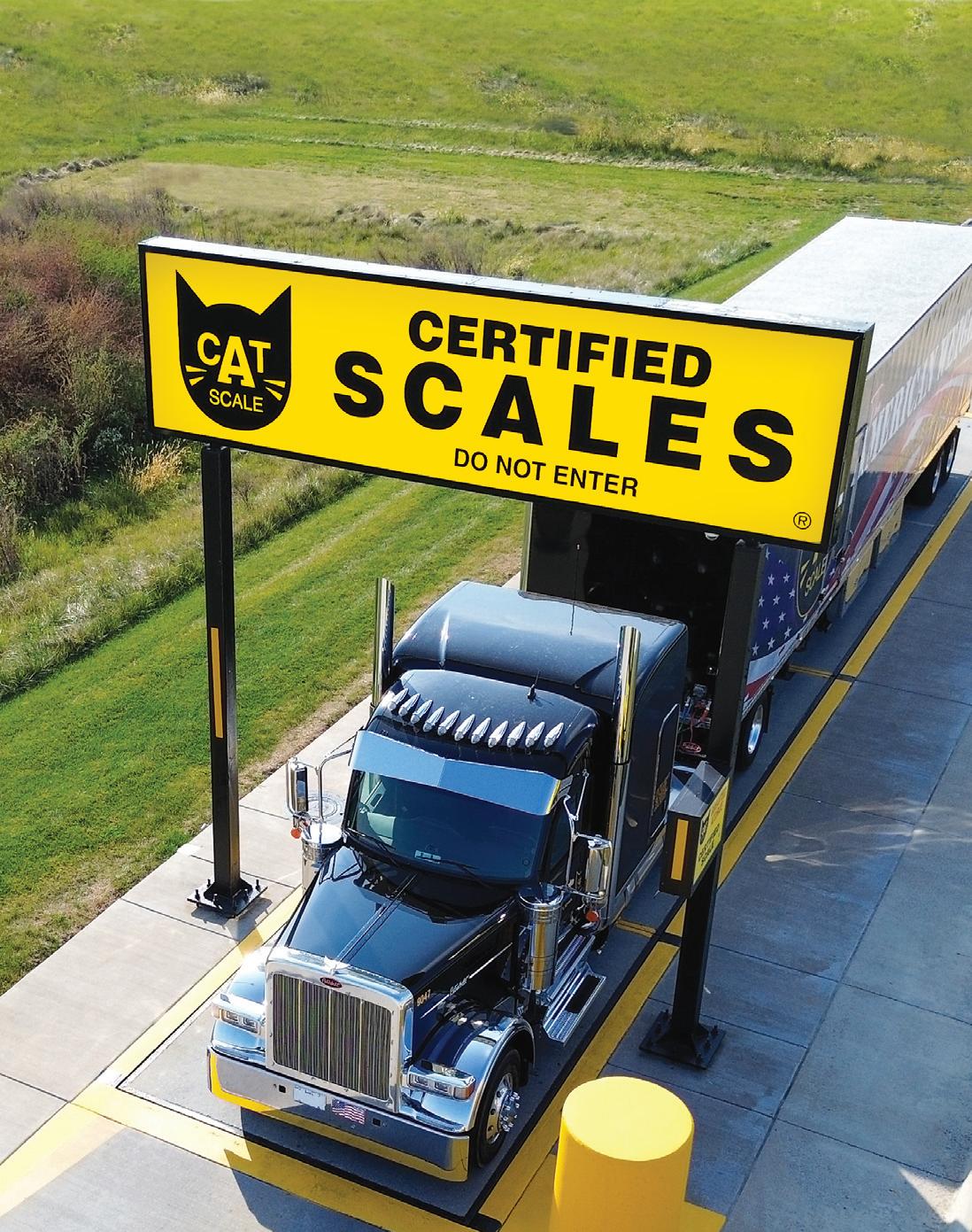
Failing to utilize automatic tire inflation systems on new trailers is simply asking for higher operating costs and premature casing fatigue.
Automatic tire inflation systems (ATIS) have significantly reduced inflation-related issues in trailer applications by providing a constant supply of air to the tires through the hollow axle. In my opinion, a fleet that doesn’t specify ATIS on new trailers is asking for higher tire costs. The lack of inflation pressure maintenance on trailer tires is well known, so failing to utilize this technology is difficult for me to comprehend.
Steer and drive tires are a completely different story. Tire pressure monitoring systems and hub-mounted inflators help prevent issues, but there are still times when someone must physically check and adjust the inflation pressure. While it should be the drivers who check and adjust air pressure, that task often falls on maintenance technicians. As a result, many steer and drive tires are operating at improper inflation pressure.
For fleets to even hope for any type of inflation-pressure maintenance program, several key pieces of equipment must be in place. First, every tire must have an inflate-thru valve cap. This allows the driver or technician to check and adjust the inflation pressure without removing and reinstalling the valve cap.
If the tire doesn’t have an inflate-thru valve cap, then it shouldn’t be a surprise if the pressure is checked with a boot-ometer, hammer, or wooden club. Fleets that want any level of accountability must take the necessary steps to make it as easy as possible, and inflate-thru valve caps are critical components.
A quality air gauge is also essential. Fleets don’t have to spend a fortune on pressure gauges, but performance varies by manufacturer. When gauges fail, they can read either low or high. Fleets that expect inflation-pressure maintenance must have a verification system to ensure gauges read correctly. The best tool to use is an inflation gauge check station with a dial gauge so the pressure on the handheld gauge can be verified quickly and easily; without that verification, the effort to check inflation pressure could be for naught.
When inflation pressure needs to be adjusted, the Occupational Safety and Health Administration (OSHA) regulates the equipment requirements. First, the inflation device must have a clip-on air
chuck. A clip-on air chuck temporarily attaches to the valve stem via threads, so the technician does not have to hold it on the end of the valve stem. It doesn’t need to have a “clip,” but it cannot be threaded onto the valve. Dual foot inflators that lock into place without threading are considered clip-on air chucks by OSHA.
Next, the inflation device must have an in-line valve with a pressure gauge or a presettable pressure regulator. The in-line valve allows the driver/technician to control airflow, while the pressure gauge allows a pressure check without removing the clip-on air chuck. A regulated air line is acceptable because it can also prevent overinflation, which is the purpose of this OSHA requirement.
Finally, there must be a sufficient length of hose between the clip-on chuck, the in-line valve, or the regulator to keep the driver/technician outside the sidewall’s trajectory during inflation. OSHA doesn’t specify a specific length of hose that is “sufficient,” but most devices have a hose that is 6 or 10 feet. The key is to stand even with the tread and away from the sidewall during inflation.
Inflation pressure equipment is necessary based on best practices and OSHA regulations. Inflate-thru valve caps, high-quality inflation gauges, and a verification system are crucial components of inflation pressure maintenance. Likewise, the equipment specified by OSHA is critical for safety (and required by law) because it allows the driver or technician to adjust inflation pressure without standing in the sidewall’s trajectory and prevents accidental overinflation. FO
Kevin
Rohlwing | krohlwing@tireindustry.org
Kevin Rohlwing is the chief technical officer for the Tire Industry Association. He has more than 40 years of experience in the tire industry and has created programs to help train more than 220,000 technicians.


































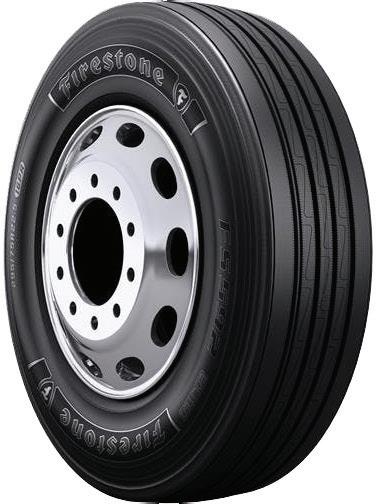
Photo: Bridgestone
Bridgestone’s Firestone FS592 steer tire, suitable for long-haul and regional eet operations, brings the company’s Enliten technology to Firestone’s commercial lineup for the rst time. The “set-it-and-forget-it” workhorse tire features a durable casing, an extra 32nd of tread depth, and a broader footprint, delivering 17% more tread life than its predecessor, which equates to an average of 18,000 additional miles.
The FS592 is available in four sizes and is EPA SmartWay certi ed. Built on the proven foundation of its predecessor, the FS592 is engineered to deliver greater performance while enhancing sustainability.
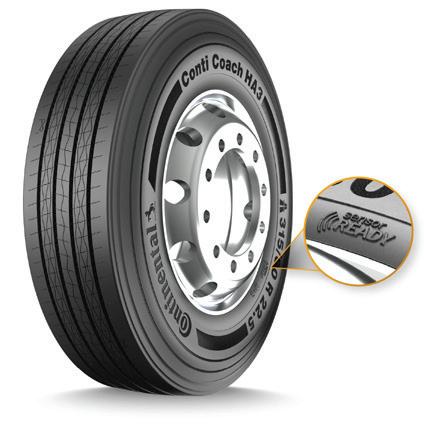
Continental Continental Tire has introduced Sensor Ready tires, a new generation of commercial tires designed to simplify and accelerate digital tire monitoring for eets. Built with an integrated sensor pocket during the curing process, these tires eliminate the need for manual installation steps like gluing, reducing installation time from up to 14 minutes to just minutes. Clearly marked with a Sensor Ready logo, the tires allow eets and service partners to quickly identify compatibility and streamline operations across the tire life cycle. The embedded pocket securely houses Continental’s tire sensor, enabling seamless integration with the ContiConnect ecosystem to track critical data such as pressure, temperature, and mileage.
Launching with the Conti Coach HA3 line, the manufacturer says its sensor-ready tires create more installation consistency, improve uptime, and support more ef cient retreading.
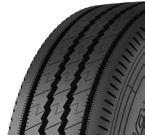

continue to evolve, bridging the gap between traditional regional and long-haul operations.
Built for eets running regional and super-regional routes, the Endurance SRS focuses on steer-axle durability and consistent performance in environments where frequent turns, stops, and varied road conditions can accelerate wear. The tire features a casing for multiple retreads and is backed by Goodyear’s seven-year limited retread warranty.

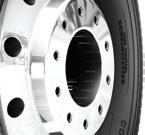

The re-engineered Double Coin RT600+ in the 225/70R19.5 size is an EPA SmartWay-veri ed tire that is suitable for P&D, regional, and light truck applications. Built with protective sidewall ribs to withstand curbing, cuts, and abrasions, this all-position tire features a ve-rib design for precise handling, lateral stability, and traction. The feature of a Load Range G weight carrying capacity coupled with an N speed rating (87 mph) allows the tire to deliver mileage, even wear, and durability in any application on any surface. Its extensive tread siping promotes water evacuation and enhanced surface grip, helping maintain stability and control in wet conditions. A seven-year/ three-retread warranty provides users with a longer service life and lower maintenance costs.
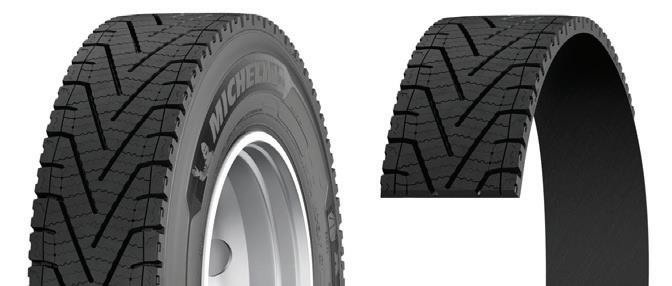
Michelin North America is expanding its X Line Grip D commercial truck tire lineup. According to Michelin, since its 2025 launch, the tire has shown strong traction, extended mileage, and improved operational ef ciency. A pre-mold retread and more sizing options for long-haul and regional applications across North America have been introduced.


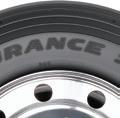
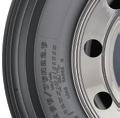


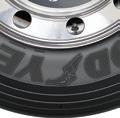

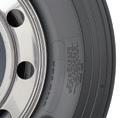

Goodyear Tire & Rubber is preparing to launch the Endurance SRS, its rst super-regional steer tire designed to deliver a balanced combination of long mileage, even wear, and scrub resistance for higher-mileage regional applications. The Endurance SRS is engineered to help fleets operate more efficiently as duty cycles
These additions build on the existing lineup to deliver a fully integrated tire and retread solution designed for consistent performance. At the core is the Michelin Duracore casing, engineered for durability and retreadability. Designed to deliver up to one million miles with up to four retreads, it helps eets extend tire life while lowering total cost of ownership.
The X Line Grip D pre-mold retread features the same tread design and compound technology as the original tire, ensuring consistent traction, wear performance, and operational ef ciency throughout the casing life cycle.
The new RSL51 line haul steer tire from Ralson Tire North America delivers long mileage and low rolling resistance,


































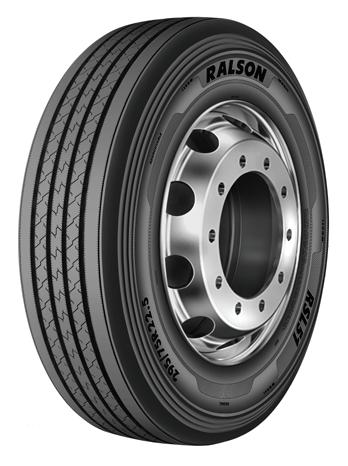
thanks to advanced material engineering, fourth-generation polymers, and specialized bonding chemicals. A reinforced belt package and high-strength bead architecture
extend casing life for retreading. A decoupling groove absorbs impacts, protecting the shoulder and preventing irregular wear. The RSL51 is backed by a seven-year/three-retread warranty.
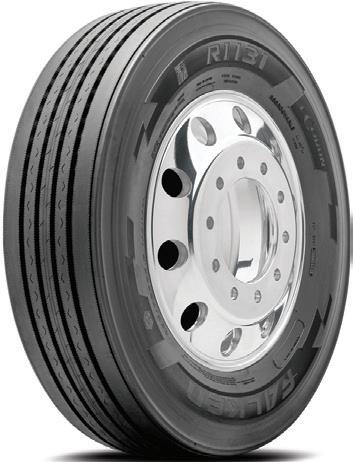
Created for long-haul steer position use, the RI131 Ecorun from Falken
Tires is equipped with the latest in line haul tire technology. Designed to provide long removal mileage, the RI131EC is built with a new tread cap compound and an optimized tire footprint that redistributes the stresses that cause irregular wear, increasing usable tire life. An all-new defense groove increases shoulder durability while maintaining irregular wear resistance. The RI131EC boasts improved uniformity, an optimized footprint shape, and advanced features to combat irregular wear coupled with traditional Falken casing durability.
Yokohama’s 716U ultra-wide-base tire now comes in a new size: 445/50R22.5.
The weight-saving drive tire is also available in size 455/55R22.5.
The 716U UWB is designed for waste, recycle, and on/offroad severe service operations where maximizing payload capacity is essential.





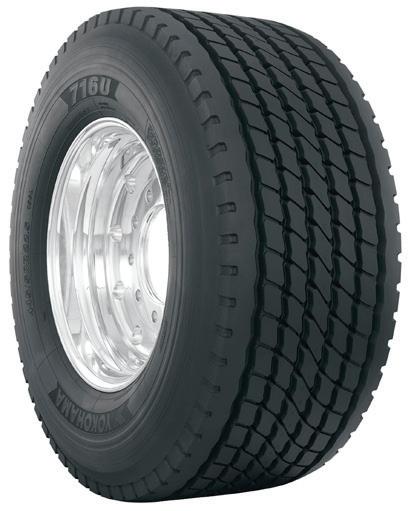
The 716U UWB 445/50R22.5 has a Load Range LR (20 PR), while the 716U UWB 455/55R22.5 has a Load Range LM (22 PR). According to Yokohama, replacing traditional duals with its four UWB tires reduces unsprung weight without compromising carrying capacity, allowing for a larger payload per trip. Powerful zig-zag grooves improve traction and wet-weather grip by ef ciently evacuating water away from the tread. An advanced compound resists scrubbing, cutting, and chipping for long, original tread life. FO
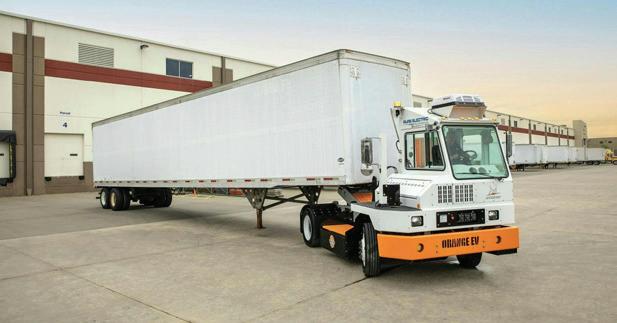
Orange EV recently reported record order volume for electric terminal trucks, including a 600-truck order marking the largest single order in company history. The company, which manufactures electric terminal trucks, said the scale of investment reflects a shift toward standardized electric yard operations across logistics networks.
The company said more than 1,900 Orange EV trucks are in service, including an initial deployment with DHL in 2015. In addition, it reported that leasing activity increased, with a 272% rise over the last 12 months, as fleets expand adoption without having to make large capital investments up front.
Stellantis announced the official union of its product, upfitting, logistics, and data service all in one. The fleet business unit in North America is now officially Stellantis Pro One.
While it is a standalone business unit within Stellantis brands, along with Ram, Jeep, and Chrysler, Pro One connects each business unit for the convenience of the fleet customer. Think of it as a one-stop shop for all things Stellantis fleet, prioritizing the fleet customer and their needs.
In addition, Stellantis Pro One Next is an extension of Pro One, adding Mopar vehicle data—and the Stellantis agents behind it—to help fleet owners make intelligent business and fleet decisions.
U.S. truck tire retreaders are navigating rising operating costs, labor shortages, and sustained pricing pressure from low-cost imported new tires. Tire industry executives report that retread demand remained steady in many regions as fleets focused on controlling
costs and extending casing life.
To offset cost increases, companies consolidated operations, improved process efficiency, and invested in larger, more productive facilities. At the same time, competition from lower-priced imported tires continued to influence buying decisions among smaller and more price-sensitive fleets. FO









Fleet







by Jeremy Wolfe
Transportation ef ciency today is largely driven by improvements in information technology. From GPS tracking and vehicle diagnostics to driver monitoring, backhaul optimization, and, lately, arti cial intelligence (AI) chatbots, the industry is heavily vested in data management. Many eets, if not most, already use these tools.
Fleets may have high technology adoption rates, but full implementation is a different story. New technology is only as good as the data infrastructure supporting it, and fragmented



data remains a major industry issue. The next generation of information technology requires a shift from data collection to synchronization.

Like the Tower of Babel in its downfall, a carrier may aspire to great heights, but its vendors speak several different languages.
Successful operations demand smooth data orchestration across back of ces, shops, customer locations, and, of course, the vehicles themselves. The greatest enemies of that



orchestration today are fragmented, inaccurate, and siloed data.
According to Teletrac Navman’s recent uptime survey of 600 global companies, 84% of organizations with vehicle eets use telematics, asset tracking, or integrated equipment management systems. Beyond basic monitoring, 69% report using more advanced, integrated technology platforms.
Yet only 28% of those surveyed companies report that those digital solutions are fully implemented across their eets. Less than half (ranging from 40% to 46%) receive live utilization data for the majority of their assets.
For Teletrac Navman’s uptime survey, the greatest common barrier to optimizing equipment utilization is data accessibility: 74% of surveyed eets identify it as a major obstacle.
A 2026 Use of AI in Fleets survey, conducted by Fleet Advantage, nds a similar problem, although its data raises some questions. Around 7% of eets report full integration of AI in their operations, while 58% have partial AI adoption and 36% are undergoing limited experimentation. By far the greatest selected challenges to adopting AI are data integration (71%, up from 38% in 2025) and inaccurate data (65%, up from 24% last year).
Some other noteworthy quirks in the Fleet Advantage survey suggest that the world’s most popular buzzword is less popular than a year prior:
• The portion of eets using AI-powered predictive analytics fell from 57% in 2025 to 39% in 2026.
• Reported use of agentic AI for procurement, asset life cycle management, and maintenance scheduling all fell by around 40% from last year.
• Fleets that report not using any agentic AI for data decisions grew from 19% to 39%.
Not every metric was as un attering. The data from the latest survey, however, con ictingly reported that 87% of respondents identi ed using generative AI in eet operations.
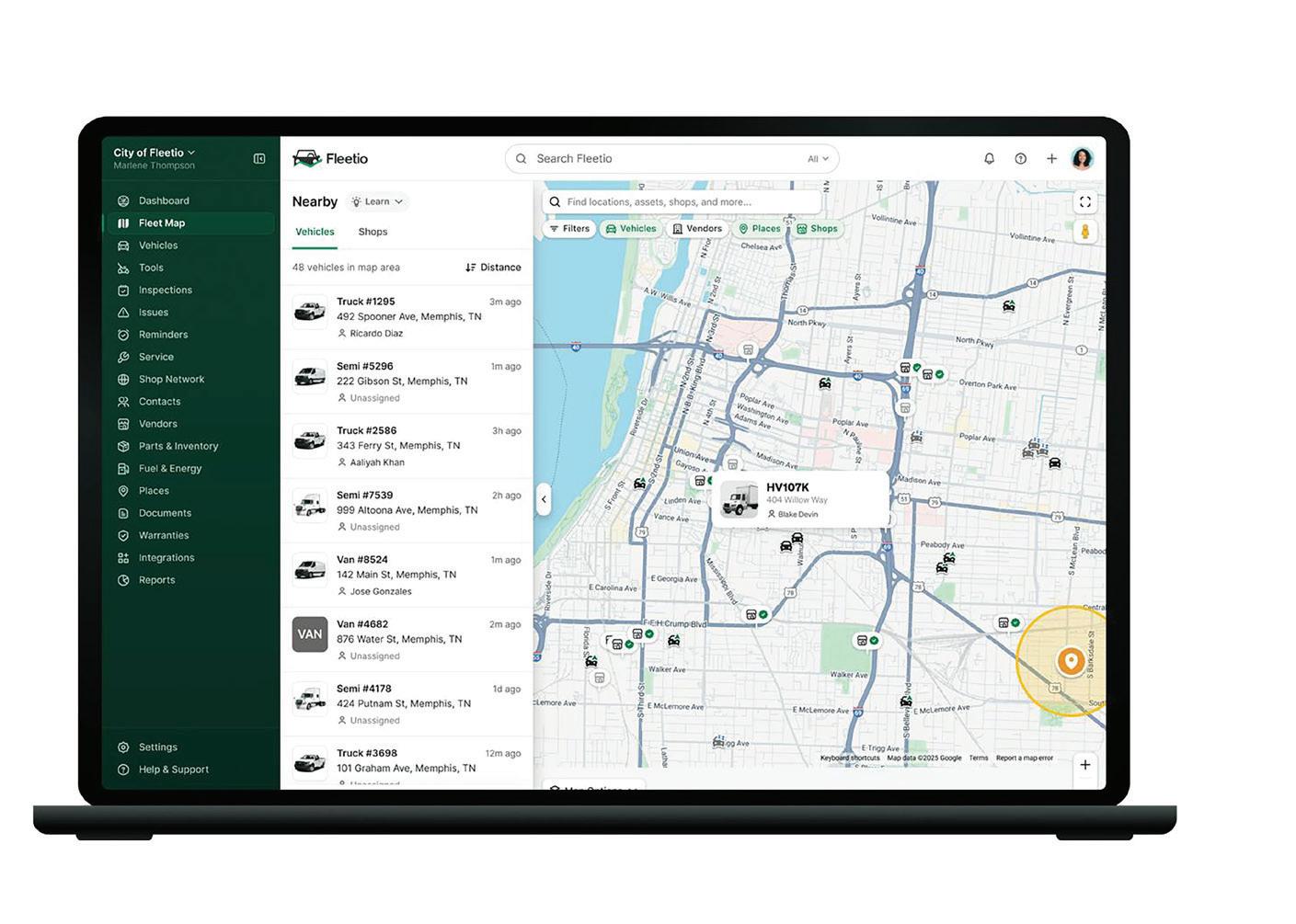
Photo: Fleetio
The main takeaway from these studies is a disconnect between technology procurement and eld deployment. Carriers have an abundance of vehicle and operational data but often struggle to integrate and access all that data ef ciently.
The good news, though, is that several industry vendors are working to resolve that problem. Major technology providers are undertaking the meticulous work of building out integrations and shortcuts to sync disparate systems.
In transportation, those obstacles look like data silos and data overload.
At a panel on AI during the Advanced Clean Transportation (ACT) Expo, the panelists agreed that fragmented data is one of the biggest barriers to new technology adoption. Jake Fields, co-founder and CTO of Platform Science, called this “silo fatigue”
“I think the problem we have right now is silo fatigue,” Fields said. “I think we have eight different systems that are proactively talking to the driver like we’re all talking about each other here, [and] that needs to get solved. That’s an industry initiative that everybody has to come together for.”
Fleets have dozens of disconnected systems—maintenance platforms, telematics systems, dispatch software, fuels systems, OEM platforms, dealer networks—that, more often than not, speak different languages. The goal for the industry’s vendors now is to deploy technology that automatically acts on this data.
“If you don’t have the data cleanly put together, and if you have seven different systems calling the same asset in 20 different ways, you’re not going to have a clean system,” Codrin Cobzaru, co-founder of vehicle data tech startup Sparq, said during the ACT Expo AI panel discussion.
Arti cial intelligence solutions often get more coverage than they may deserve, but the technology is actively helping eets with the data problem. Two ways that AI solutions are helping break down data silos are through in-cab coaching and natural language interfaces.
Orchestrated dashcam and telematics systems are helping manage driver behavior. By using real-time in-cab
nudges for speeding or distracted-driving violations, eets can correct driver behavior in the moment rather than a day later in a manager’s of ce.
For data management, in-cab coaching is simplifying the driver coaching work ow. Records of driver violations and the eet’s response processes for those violations are being consolidated into fewer documents, handled by fewer individuals. This streamlined method is reducing data overload and earning results.
For example, at a panel discussion from this year’s NAFA Institute & Expo, carriers shared their experiences with budding technology. In-cab coaching was making a noticeable difference.
Paul Palmer, senior director of safety for national tree care company SavATree, discovered how an in-cab coaching program could improve his company’s eet operations. Originally skeptical, Palmer ran pilot programs with multiple camera companies.
“The technology can manage this on the front end,” Palmer said. “The old state of affairs, before you had in-cab coaching, was that a driver could have a violation on a Tuesday and it would be Wednesday morning before their manager or supervisor pulled them into the of ce and said, ‘Hey, do you remember this yesterday morning?’ Well, no, the driver didn’t remember it then, so they’re immediately defensive.”
When SavATree turned on the coaching features in its pilots, “we watched




Implementing AI poses challenges


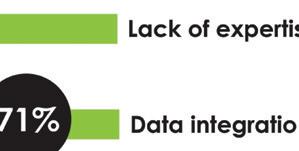
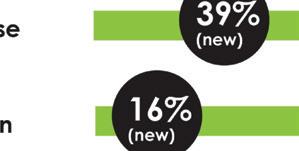









how drastically those safety violations— the seat belt violations, harsh braking, distracted driving—just dropped by themselves. With no input from local management,” Palmer said. “That was really my ‘aha’ moment.”
Jon Malish, public works manager for the City of Akron, Ohio, had a similar experience. The city rst tested in-cab coaching by using it to immediately nudge drivers who were speeding by 20 miles an hour or faster. In a 90-day period preceding the in-cab coaching, the city logged 393 speeding incidents.
“Since we’ve turned those in-cab nudges on, we’re down to zero. It is xing behavior,” Malish emphasized. “That’s all that we’re trying to do with AI, and it’s been absolutely fantastic seeing our cases drop.”
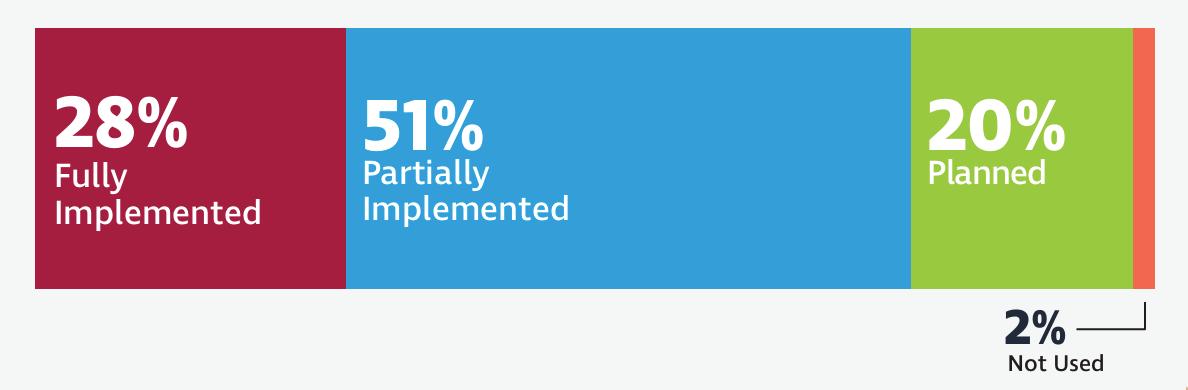
The small eet winner of this year’s FleetOwner Private Fleet of The Year, Ross Transportation Services, also used coaching to boost safety. Over the past year, the private eet has achieved a perfect 0.0 DOT recordable accident rate. The hazardous waste carrier attributed its stellar record, in part, to early adoption of telematics coaching.
In the spirit of disparate data ecosystems, video telematics suppliers are launching several of their own versions of these programs.
Motive’s AI Coach, which was launched last year, offers automated coaching sessions tailored to speci c drivers and their performance. In addition, a new feature from Motive’s program this year is the option to show drivers recognition for good driving. Samsara has Samsara Coach. Isaac has in-cab coaching. Lytx has Coach Assist. The list goes on.
As the domain of databases expands, eet managers also need to nd more ef cient ways of interacting with that data. The ability to query data in natural language is rapidly becoming essential for data accessibility.
Tools like Motive’s AI Answers, Collective Data’s Ask Anything, and Fleetrock’s AI assistants allow managers to
type natural language questions and instantly receive contextual answers, charts, and graphs.
Some industry players are also using large language models (LLMs) to interface with business partners. McLeod’s RespondAI tool, for example, reads incoming messages, determines the intent, and drafts a response for human review. The company has said that the solution cuts time spent crafting messages by 50%.
Backend integrations and workflow automation
The real heavy lifting for data management is in automating document management and centralizing workflows.
Fleets can perform some of their data integrations in-house. But this is slow, technical work that requires constant collaboration with multiple parties: maintaining a heap of application programming interface (API) calls
whenever a data supplier makes an update; consolidating disparate databases that often have ever-so-slightly shifting methodologies and definitions for the same thing; troubleshooting endless communication protocol errors … not to mention the work of scoping and building the initial integration. The work load quickly piles up.
Thankfully, data integration is hardly a lone venture. Vendors are already putting in the hours to keep up with that pile of tasks. But fleets should be suspicious of any vendor that describes these data integration solutions as merely “AI” secret sauce. It is slow, technical work to build a cohesive system, with machine learning as a very small (and often unnecessary) component. Data integration is executed brick by brick and step by step.
Cloud-based computer maintenance management system (CMMS) and service relationship management (SRM)




platforms, for example, can digitize and coordinate Vehicle Maintenance Reporting Standard (VMRS) code workflows across suppliers, dealers, and manufacturers. Companies like Decisiv are offering systems that can automatically integrate VMRS workflows into warranty claim documentation.
A number of vendors are actively working toward the development of unified fleet systems.
Fleetio’s Fleet Map integrates location tracking with maintenance workflows, letting managers see nearby service vendors and asset statuses via geofencing without jumping between external directories and platforms. The map can connect source-agnostic asset tracking data into the Fleetio ecosystem. Managers can even set up automated service approvals for certain errors and preferred vendors.
Trimble’s fleet maintenance software TMT recently partnered with Corcentric






















to incorporate automated billing around payments, purchasing, and procurement. With invoice integration enabled on TMT, the system can automatically populate about 30 different elds for invoices and repair orders. The system also uses that data to offer a detailed view of maintenance costs.
“We’ll get it down to what it costs you per mile to operate that truck by system group, [such as] tires, air conditioning, brakes,” said Brian Mulshine, senior director of TMT product management at Trimble, at this year’s Technology & Maintenance Conference. “And now you could look at where you’ve got to focus training and cost improvements and what’s driving those.”
Motive recently introduced a feature that enables automated work ows following certain conditions. Fittingly named Motive Automation, the feature can, for example, provide a eet manager with a plain language description of a fault code, automatically tell a driver to pull over under certain fault codes, or notify a driver when they enter a geofenced area.
Truck manufacturers and transportation technology companies are also deeply embedding these capabilities into their systems. In just this year, the following have been implemented:
• Isuzu expanded its collaboration with Decisiv to enhance its SRM, Isuzu Connect. The Isuzu SRM now integrates with Isuzu360 telematics and offers enhanced appointment scheduling.
• Daimler Truck North America has several partnerships to integrate with third-party applications. The Freightliner Cascadia has an open telematics platform developed with Platform Science and telematics integrations with Geotab and, as of this year, Isaac.
• Trucker Path integrated Truckstop’s load feed into its digital freight exchange, TruckLoads.
• Motive became the rst telematics partner to join Holman’s Telematics
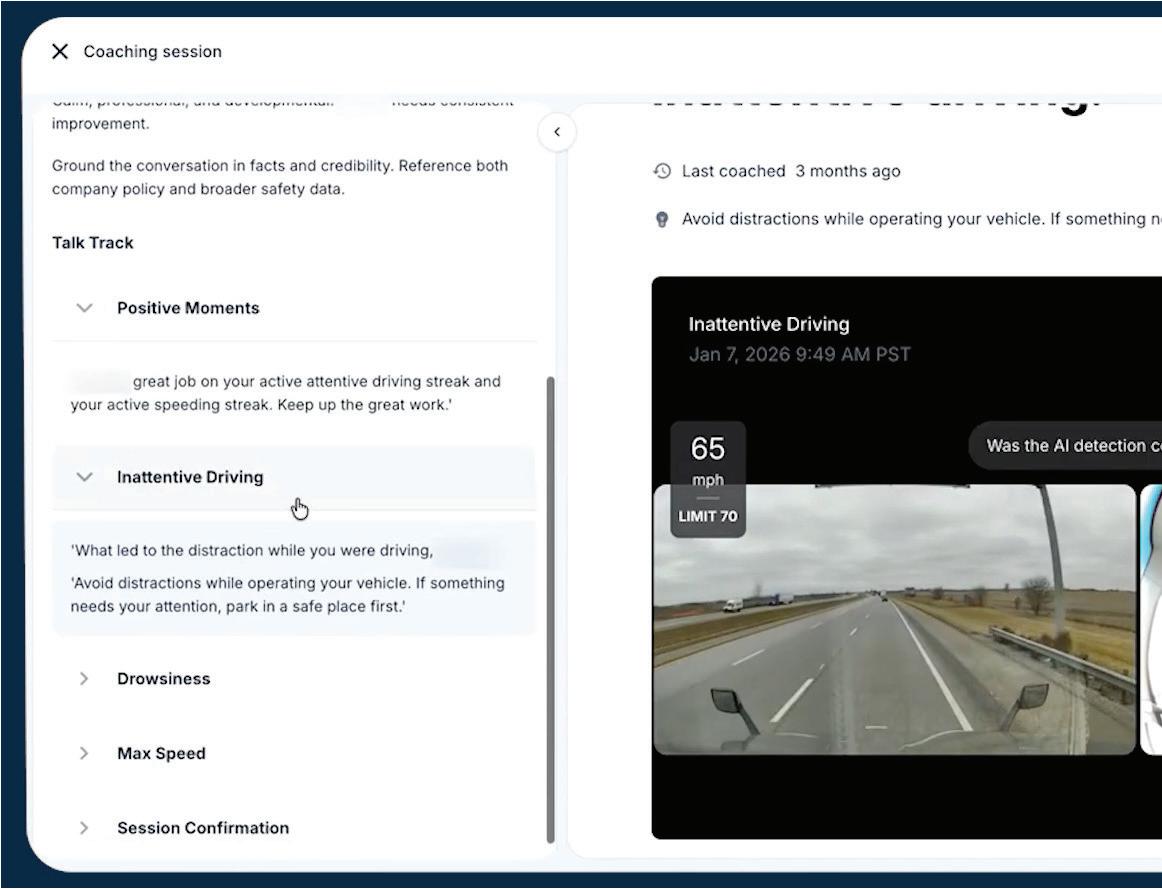
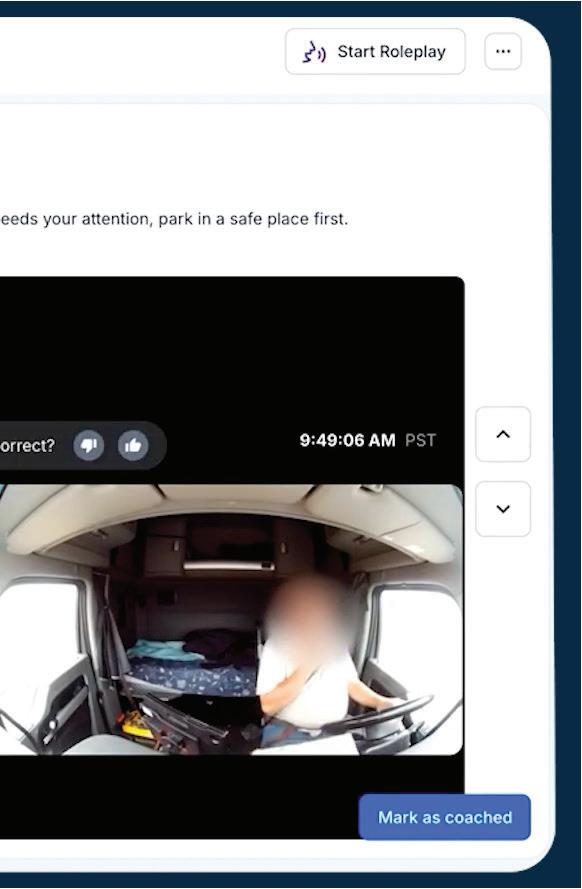
Preferred Integration Network to centralize operational data.
• Hyundai Translead’s LinkVue trailer camera system allowed integrations with Netradyne and Lytx.
Edge vs. cloud processing Camera and sensor data can be large, and truck connectivity can be limited. Vendors are nding that one shortcut to minimize data managed is to keep some of that information in the truck.
As Patrick Barragán, VP of AI at Samsara, said during the ACT Expo AI panel: “Once you get to gigantic data volumes, it becomes entirely prohibitive to try to upload everything. ... But it’s actually really interesting because then if you put yourself in a position to run arti cial intelligence at the edge effectively, then you can actually start to focus on what insights can you derive from those situations.”
In order to cope with massive amounts of data, eets are utilizing edge AI directly on vehicles for instantaneous, reactive decisions while reserving the cloud for broader AI coaching and demand forecasting.
In a breakout panel on AI during Motive’s Vision 26 conference, Michael Benisch, VP of arti cial intelligence at Motive, split the approaches into edge processing and cloud AI.
“Everything that we want to do that’s very instantaneous or reactive has to be on that edge device ... then there are things that can happen after the fact like AI coaching, right?” Benisch said. “That doesn’t need to be in the moment ... that can happen in the cloud, and that’s what we call cloud AI.”
Depending on the urgency of the task, edge computation can be tech providers’ answer for immediate computer-vision driven tasks such as driver monitoring and collision detection.
Traditional cloud computation, on the other hand, remains convenient for reporting, database management, trend analysis, coaching, and similar tasks.
New technology solutions promise unprecedented visibility, but they cannot function in isolation. The next task for the industry is to clean up the data pathways they already have in order to realize a return on investment (ROI): data accessibility, data integration, and data validity.
Whether that’s using AI to nd data shortcuts through automated coaching and edge computing, or nding partners with established integrations, ef ciency belongs to the operations that keep their data on a clean, uni ed foundation—all speaking the same language. FO
by Gary Petty
FMCSA leadership and benchmarking data take center stage at Orlando summit
THE NPTC NATIONAL Safety Conference, scheduled for Sept. 9-11 at the Omni Orlando Resort at ChampionsGate is a value-packed two-day forum that offers expert fleet presentations, problem-solving case studies, safety-in-the-round breakout sessions, National Driver All-Star recognition, a premium-grade exhibit hall of new top products and services, and exceptional networking opportunities.
“This is the premier annual safety summit of the private fleet industry. We learn the latest, best-proven safety management protocols, benchmarking standards, and innovative technologies. Our best takeaways from the experience are the most successful overall safety management strategies that have been put into actual practice,” said Kate Mirise, CTP, NPTC board member and Safety Committee chair, as well as transportation manager of the Royal Group.
Cathy Gautreaux, deputy assistant secretary, Office of Multimodal Freight Infrastructure and Policy, Office of the Secretary, U.S. Department of Transportation, is the keynote speaker at the conference, addressing the latest federal motor carrier safety laws and significant regulatory changes affecting compliance enforcement with drivers and carriers. Gautreaux formerly served over 30 years as executive director of the Louisiana Motor Transport Association, deputy administrator of FMCSA, and a fully commissioned detective for the Ascension Parish Sheriff’s Office in Louisiana.
Topics and speakers at the show provide the most relevant, up-to-date safety information available in the industry. In the opening session of the event, an expert panel will discuss the private fleet industry’s major safety priorities and how to build a culture of safety excellence, focusing on effective driver
coaching strategies, scorecarding driver safety performance, and maintaining high safety standards.
Safety-in-the-round breakout sessions are highly popular, covering topics such as driver reward and recognition, data integration strategies, building driver acceptance of active safety technologies, the ROI case for premium spec’ing of safety equipment, alternative-energy vehicles, and the advantages of recruiting drivers from within the company.
Data presented in NPTC’s 2026 Benchmarking Survey Report by NPTC EVP Tom Moore, CTP, analyzes key performance metrics related to private safety, as reported by a broad cross-section of private fleet companies across a wide range of industries and markets.
Rick Schweitzer, NPTC general counsel and government affairs representative, will present a live edition of the Washington Report, sponsored by Centerline Drivers. This legislative and regulatory update highlights safety-related issues of importance to private fleets.
A unique feature of this year’s conference is a mock trial of a commercial vehicle accident conducted by NPTC Institute board member Doug Marcello, shareholder of Saxton & Stump (an NPTC Five-Star member company), a leading law firm representing trucking companies in major litigation cases.
NPTC’s National Driver All-Star recognition program, sponsored by International, will take place on Sept. 10. More than 25 drivers from a wide range of private fleet member companies will be honored this year. The awards are presented to drivers who have demonstrated exemplary performance compared to their peers throughout the country. Driver performance is assessed in customer service, safety records, adherence to company
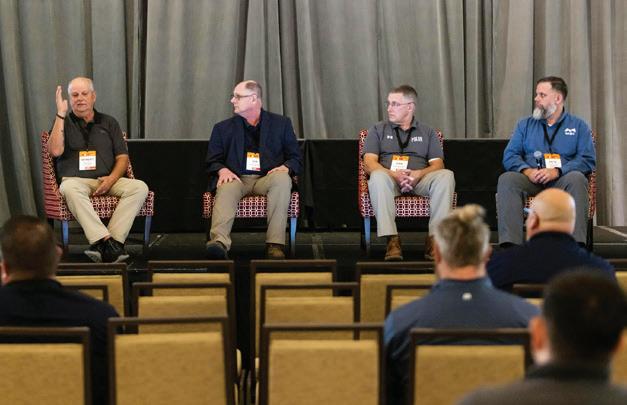
Private fleets consistently achieve a safety record three times safer than the overall trucking industry by strictly utilizing proven operational benchmarks.
policies, regulatory compliance, and community service.
Rave reviews were typical of last year’s safety conference: “The show had exceptionally strong speakers and breakout sessions.” “It was awesome hearing people share their stories of safety excellence.”
“This is one of the best safety-related exhibit halls in the industry.” “Member contacts and networking are just amazing. Can’t wait to come back in 2026!” Register today. The National Safety Conference is designed to help your fleet stay on a winning safety path for the long haul. FO
Gary Petty | gpetty@nptc.org
Gary Petty has more than 30 years of experience as CEO of national trade associations in the trucking industry. He has been the president and CEO of the National Private Truck Council since 2001.
by Seth Skydel
In an industry defined by demand for carrying capacity, FTC Transportation stands apart with a purpose that extends beyond freight. Based in Oklahoma City, the carrier operates as a wholly owned subsidiary of Feed the Children. Across every mile it travels, the company’s mission is to help address child hunger.
Founded in 1986, FTC Transportation is a full-service truckload operation that hauls donated goods and products purchased through charitable contributions to three Feed the Children warehouses. There, goods are sorted and distributed throughout communities nationwide.
FTC Transportation has a balanced freight strategy, explained Emory Mills, SVP of FTC Transportation. “Our No. 1 priority is to position capacity to meet Feed the Children’s needs,” she said. “To minimize empty miles and help keep costs in check, we also leverage backhaul opportunities on the spot market by hauling dedicated freight and brokered loads for customers nationwide.”
FTC Transportation operates a fleet of about 25 company-owned tractors, primarily driven by solo operators, and is supported by a trailer pool of around 60 dry vans. Trailers are strategically staged at donor locations to improve efficiency and reduce pickup and delivery delays.
Equipment purchasing at FTC Transportation typically involves soliciting bids for new tractors and trailers, often through partnerships with manufacturers such as Freightliner and, more recently, Kenworth. The fleet’s appearance has evolved over the years, with tractors now sporting a green color scheme to reflect a vibrant brand identity.
A centralized maintenance program supports equipment operations at FTC Transportation. The company operates with a full-service shop staffed by three full-time technicians. They handle
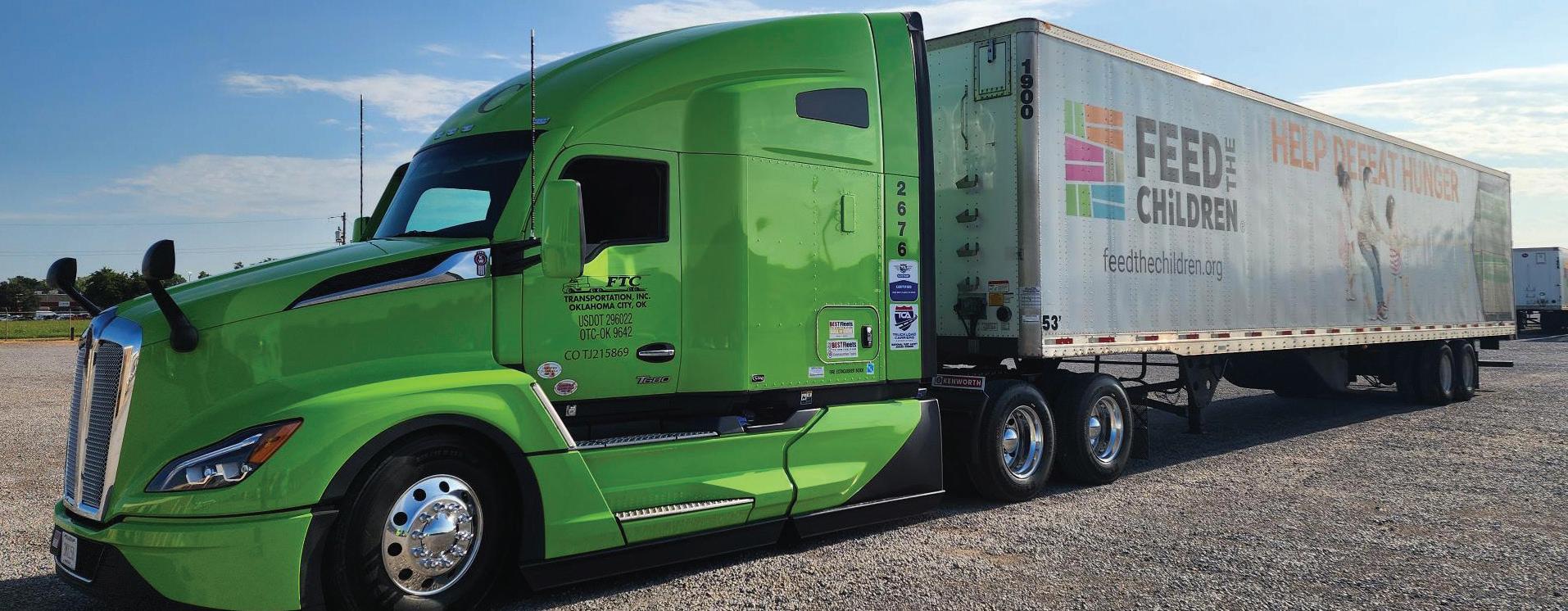
Fueled by a mission beyond freight, Oklahoma City-based FTC Transportation delivers donated goods nationwide to fight child hunger.
internal fleet needs and provide light repair services for outside carriers.
Safety, a cornerstone of FTC Transportation’s culture, is reflected in the technology that has transformed how the company manages driver performance.
“Two years ago, we implemented Motive forward-facing dash cameras and electronic logging devices,” Julia Williams, safety and driver manager, said. “The cameras changed the game with in-cab coaching.”
The Motive system captures video clips of safety-related events, giving FTC Transportation a clear view of realworld situations. These insights allow for more effective coaching and provide context when incidents are flagged.
According to Williams, “the technology has also increased driver awareness and uncovered behaviors that previously went unnoticed. It shows us some things we didn’t know were happening and makes our drivers more aware of the driving practices.”
The benefits extend beyond operations. Improved safety performance at FTC Transportation, for example, has strengthened relationships with insurance underwriters, potentially resulting in reduced premiums at renewal.
The company has earned significant industry recognition for its
commitment to drivers. This year, the carrier was named a Best Fleets to Drive For honoree for the 14th consecutive year and celebrated its fifth year in the program’s Hall of Fame. It received the Best Fleets to Drive For Hall of Fame Stratosphere Award, reflecting consistent excellence in driver satisfaction, workplace culture, and operational performance.
FTC Transportation was also designated a TCA Elite Fleet, a newer program developed in collaboration with the University of Denver. Based on driver surveys and comprehensive evaluation criteria, Williams said the program provides valuable feedback while boosting morale across the organization.
“FTC Transportation exists to provide safe and reliable transportation resources with a dedication to operational service excellence while helping those in need,” Mills said. “That dual mission of commercial viability and social responsibility shapes our business approach. We’re not just moving freight. We’re ensuring that essential goods reach families and children who depend on them.”
FTC Transportation is proving that success is measured not solely by miles or revenue, but by the difference those miles make. FO
30 Burton Hills Blvd., Suite 185 Nashville, TN 37215 800-547-7377 fleetowner.com
Chris Messer EVP Transportation Group cmesser@endeavorb2b.com
Dyanna Hurley
Market Leader/Commercial Vehicle Group 248-705-3505 dhurley@endeavorb2b.com
Peter Lovato Associate Publisher 231-233-2660 peter@fleetowner.com AL, GA, FL, LA, MS, NC, OK, SC, TX
Michael Simone Western Territory 973-713-0094 michael-s@fleetowner.com AR, AZ, CA, CO, IA, ID, IL, KS MN, MO, ND, NE, NM, NV, OR, SD, UT, WA, WI, WY
Larry Schlagheck Northeastern Territory 248-444-1320 larry@fleetowner.com CT, DE, IN, KY, MA, MD, ME, MI, NH, NJ, NY, OH, PA, RI, TN, VA, VT, WV
Richard A. White Business Operations Manager richard@fleetowner.com
Laura Moulton Audience Development Manager lmoulton@endeavorb2b.com
FleetOwner, (USPS Permit 200040, ISSN 1070-194X print, ISSN 2771-5205 online) is published nine times a year in January/February, March, April, May, June, July/ August, September, October, and November/December by Endeavor Business Media, LLC. 201 N Main St 5th Floor, Fort Atkinson, WI 53538. Periodicals postage paid at Fort Atkinson, WI, and additional mailing o ces. POSTMASTER: Send address changes to FleetOwner, P.O. Box 3257, Northbrook, IL 60065-3257.
SUBSCRIPTIONS: Publisher reserves the right to reject non-qualified subscriptions. Subscription prices: U.S. $121.54 per year; Canada/Mexico $142.14 per year; All other countries $180.25 per year. All subscriptions are payable in U.S. funds. Send subscription inquiries to FleetOwner, PO Box 3257, Northbrook, IL 60065-3257. Customer service can be reached toll-free at 877-382-9187 or at fleetowner@omeda.com for magazine subscription assistance or questions.
Printed in the USA. Copyright 2026 Endeavor Business Media, LLC. All rights reserved. No part of this publication may be reproduced or transmitted in any form or by any means, electronic or mechanical, including photocopies, recordings, or any information storage or retrieval system without permission from the publisher. Endeavor Business Media, LLC does not assume and hereby disclaims any liability to any person or company for any loss or damage caused by errors or omissions in the material herein, regardless of whether such errors result from negligence, accident, or any other cause whatsoever. The views and opinions in the articles herein are not to be taken as o cial expressions of the publishers, unless so stated. The publishers do not warrant either expressly or by implication, the factual accuracy of the articles herein, nor do they so warrant any views or opinions by the authors of said articles. Volume 123, Issue 6
Article Reprints — For reprints and licensing, please contact reprints@endeavorb2b.com.
Photocopies: Authorization to photocopy articles for internal corporate, personal or instructional use may be obtained from the Copyright Clearance Center (CCC) at 978-750-8400. Obtain further information at copyright.com.
Archives and Microform: This magazine is available for research and retrieval of selected archived articles from leading electronic databases and online search services, including Factiva, LexisNexis and Proquest.
Mailing Lists: Endeavor makes portions of our magazine subscriber lists available to carefully selected companies
that o er products and services directly related to the industries we cover. Subscribers who do not wish to receive such mailings should contact the Endeavor Business Media subscriber services at 800-547-7377, ext. 1500.
Privacy Policy: Your privacy is a priority to us. For a detailed policy statement about privacy and information dissemination practices related to Endeavor Business Media products, please visit our website at www.endeavorbusinessmedia.com.
This index is a service to readers. Every e ort is made to maintain accuracy, but FleetOwner cannot assume responsibility for errors or omissions.












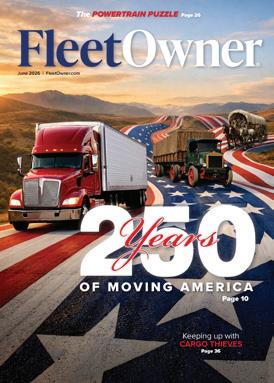









These chargers are near everything from historic cities to scenic landscapes. by Jade Brasher













General Motors compiled some of the “coolest” electric vehicle charging destinations in the U.S. If you’re on the job in a medium- or light-duty EV in any of these areas, consider stopping. See the full list at fleetowner.com.
Our nation’s capital is home to an Electrify America charging station in Georgetown, walking distance from cobblestone streets and historic architecture. Drivers can also take a stroll along the Potomac River while their car charges. 1080 Wisconsin Ave NW, Washington, DC


EVgo has placed several chargers in Portland just three blocks from the water and surrounded by historic buildings. Drivers who stop here are steps away from a museum, theatre, historical markers, and the art district. Walk toward the water to a local co ee shop and diner. Lobster rolls, anyone? 98 High St, Portland, ME
Navigate to Electric Drive to find this cool charging destination in Austin. Once you’re there, take a walk to the nearby Congress Avenue Bridge, home to the largest urban bat colony in the U.S. You can also stroll downtown and enjoy art, food, and all the “weird” Austin has to o er. 811 1/2 Electric Drive, Austin, TX

Top left: Stop to charge in Jackson Hole and enjoy a summertime rodeo. Top right: You’ll have to hike to see this view, but many charging stations in Moab allow drivers to see rock formations of the desert’s beautiful red rocks. Bottom right: The charging station located in Georgetown Park Parking is right near the downtown area, which features colonial architecture, like the homes seen here.






Folks traveling through Jackson Hole can charge their vehicles at a ChargePoint station located within walking distance of Wyoming’s summertime rodeo, and in the winter, in proximity to the town’s famous ski slopes.
160 S Millward St and 25 E Broadway Ave, Jackson Hole, WY
California


The Rove in Santa Ana is the upscale charging center you’ve been looking for. It features multiple chargers and a car wash. Inside features a lounge, restrooms, vending machines, free Wi-Fi, and a “market.” Rove also has options for fleet charging.
1008 17th St, Santa Ana, CA
Utah
Electrify America has placed several electric vehicle charging stations along popular routes in Moab. Chargers can be found along mountain routes linking to trailheads, boat launches, and camping. But just driving through with a few minutes to spare will give you plenty of beauty to look at.
1850 N Main St, Moab, UT














The Model 5 7 9 combines st yling best-in-class driver
The Model 579 combines aerodynamic styling with best-in-class driver comfort. The 579 comes standard with the powerful and fuel-efficient PACCAR MX-13 engine, which is an industry leader in reliability with over 99% uptime proven through multi-million-mile fleet endurance testing. Customers also benefit from the MX-13 technology-driven approach to uptime with standard remote diagnostics and prognostics technology.
Every Model 579 and every MX engine is proudly made in the United States of America.