


















ACE THE GREETING LINE PAGE 36 UNDERSTAND EV CUSTOMERS PAGE 33 ASSESS YOUR COMPETITION PAGE 34
The 2023 Best Workplaces build team culture with effective leadership. PAGE 21 Goal-Getter Nestor Gutierrez started at Rancho Express Lube as a technician, and now he runs the whole operation with a staff that is motivated to learn and grow. MARCH 2023 � NOLN.NET
SOLID FOUNDATIONS


havoline.com/renewable Peak performance 25% 100% Plant-based Performance1 Made with 25% sustainably sourced plant-based oils Exceeds the latest industry standards2 Maintains the oil’s original fuel economy retention benefit longer than typical full synthetics3 Up to 37% lower carbon intensity than similar full synthetic oils4 Scan to learn more about Havoline® PRO-RS™ or visit havoline.com/renewable Better for cars and better for the environment5 1 Equivalent performance to other full synthetic motor oils. 2 Including ILSAC GF-6/API SP and GM’s dexos™ Gen 2 spec. 3 Based on Modified Sequence VIF Fuel Economy Retention Test @ 340 hours using SAE 0W-16; compared against Havoline PRO-DS SAE 0W-16. 4 Lower carbon intensity on a lifecycle basis compared to PRO-DS SAE 0W-20 viscosity grade; lifecycle analysis based only on cradle-to-gate analysis and doesn’t include carbon intensity for end-of-life or any in-use aspects of the lifecycle analysis. 5 Environmental attributes include excellent fuel economy retention, outstanding emission control, lower lifecycle carbon emissions, and is a USDA Certified Biobased Product. © 2022 Chevron. All rights reserved. All trademarks are property of Chevron Intellectual Property LLC or their respective owners. comes naturally. %27 Set your business ahead of the curve in both performance and sustainability with the top-tier NEW Havoline® PRO-RS™ Renewable Full Synthetic Motor Oil.

CALL TODAY FOR YOUR FREE SAMPLE! • Increases Torque and Horsepower. • Cleans and Lubricates Fuel System. • Raises Cetane Number. • Improves Rapid Starting and Power. • Reduces Exhaust Smoke and Knock. • Provides Rust and Corrosion Protection. • Safe For ALL Diesel Engines. TRUE BRAND DIESEL MAX: (without having to bring your own horses) KEEP YOUR CUSTOMER’S DIESEL RUNNING STRONG! Contact your local Solid Start Distributor to get True Brand in your shop. Call Today: 877-290-3950 | www.solidstart.com | #TrueBrandTough “With Great Power Comes Great Responsibility” - Stan Lee Truth: Diesel owners trust True Brand Diesel Products to keep their diesel engine running strong and their vehicle on the road. Call us TODAY to find out more about our complete line of True Brand Diesel Products. T2102
































HELP YOUR CUSTOMERS REVIVE THEIR DRIVE WITH ROYALPURPLE.COM /royalpurplefans @royal_purple royal_purple royalpurple To Order or to Find a Distributor, Contact: Distributors@royalpurple.com HIGH MILEAGE PRODUCTS PRODUCT BENEFITS +Restores lost engine performance and minimizes wear +Reduces engine deposits +Superior corrosion protection +Fortified with Zinc/Phosphorus anti-wear additive +Exceptional oxidation stability + +
HANNA BUBSER AND MATT HUDSON
QUICK HITS
MARCH 2023 5 06 ONLINE Voice activation technology hits shops 08 EDITOR’S LETTER Building success from within 09 BY THE NUMBERS What’s on the horizon?
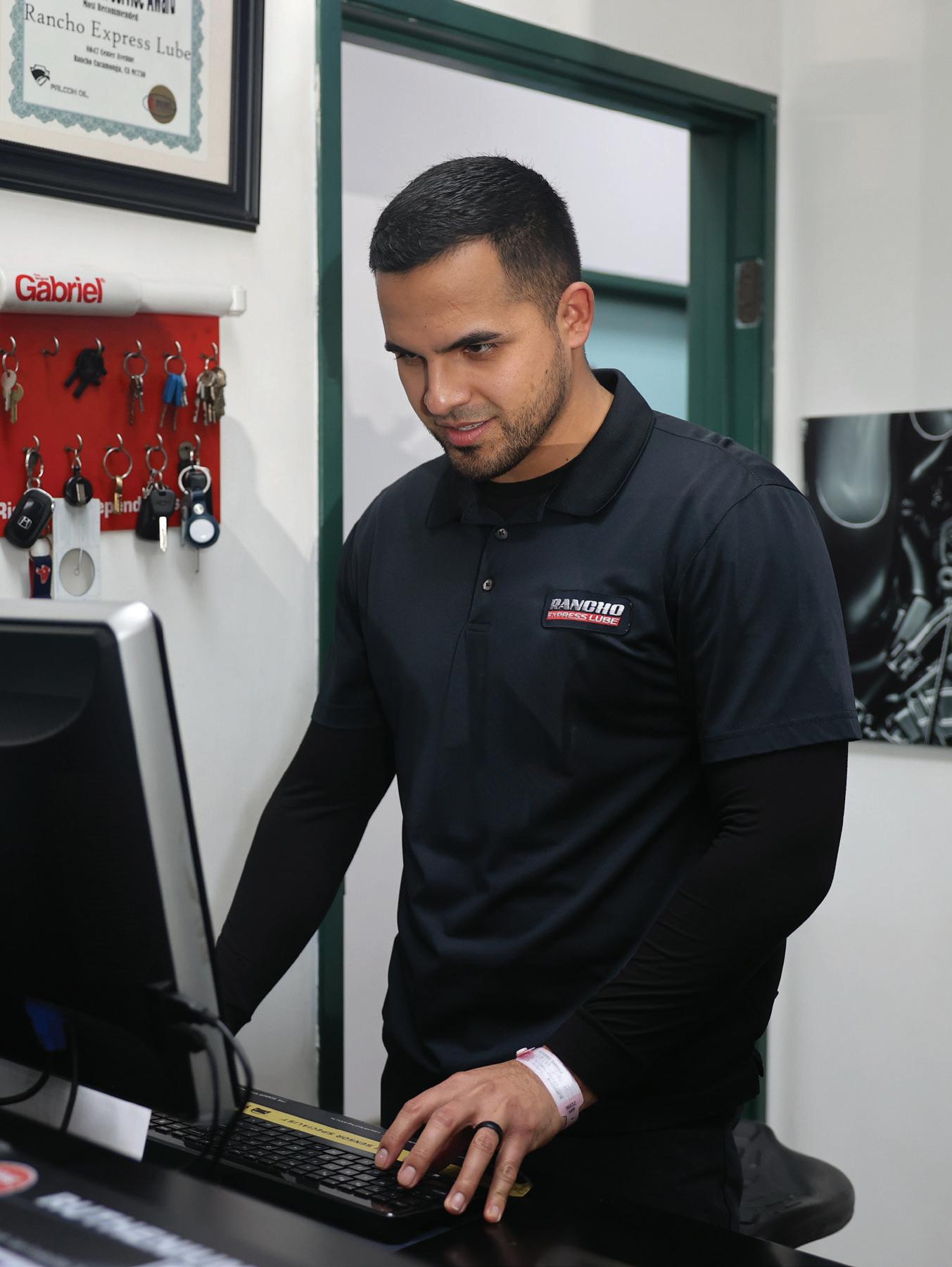
10 INDUSTRY INSIGHT A century in the business 12 AROUND THE INDUSTRY A growing car wash/quick lube combo 16 SHOP LOOK Refurbishing the family shop SERVICE 33 PIT STOP A new type of service customer 34 SALES+MARKETING What to look for with cross-town competition 36 CASE STUDY The queue and you 38 ADAPT The nomenclature of ADAS COLUMNS 19 FROM THE SHOP The principles of a best workplace BY ADAM TATUM 42 LEADING EDGE Keeping your eyes on the prize BY LENNY SAUCIER Encouraging Education At Rancho Express Lube, Nestor Gutierrez has developed a winning workplace by prioritizing learning opportunities for his staff. PHOTO BY EMILY DIAZ
21 LEAD STORY
year’s award winners demonstrate serious investment and successful cultures within their shops. BY
NOLN (USPS PERMIT 23608), (ISSN 1071-1260 PRINT) IS PUBLISHED MONTHLY BY ENDEAVOR BUSINESS MEDIA, LLC. 1233 JANESVILLE AVE., FORT ATKINSON, WI 53538. PERIODICAL POSTAGE PAID AT FORT ATKINSON, WI, AND ADDITIONAL MAILING OFFICES. POSTMASTER: SEND ADDRESS CHANGES TO NOLN, PO BOX 3257, NORTHBROOK, IL 60065-3257. SUBSCRIPTIONS: PUBLISHER RESERVES THE RIGHT TO REJECT NON-QUALIFIED SUBSCRIPTIONS. SUBSCRIPTION PRICES: U.S. ($90 PER YEAR). ALL SUBSCRIPTIONS ARE PAYABLE IN U.S. FUNDS. SEND SUBSCRIPTION INQUIRIES TO NOLN, 571 SNELLING AVE N, ST PAUL, MN 55104. CUSTOMER SERVICE CAN BE REACHED TOLL-FREE AT 800-260-0562 OR AT SUBSCRIPTIONS@NOLN.NET FOR MAGAZINE SUBSCRIPTION ASSISTANCE OR QUESTIONS. PRINTED IN THE USA. COPYRIGHT 2023 ENDEAVOR BUSINESS MEDIA, LLC. ALL RIGHTS RESERVED. NO PART OF THIS PUBLICATION MAY BE REPRODUCED OR TRANSMITTED IN ANY FORM OR BY ANY MEANS, ELECTRONIC OR MECHANICAL, INCLUDING PHOTOCOPIES, RECORDINGS, OR ANY INFORMATION STORAGE OR RETRIEVAL SYSTEM WITHOUT PERMISSION FROM THE PUBLISHER. ENDEAVOR BUSINESS MEDIA, LLC DOES NOT ASSUME AND HEREBY DISCLAIMS ANY LIABILITY TO ANY PERSON OR COMPANY FOR ANY LOSS OR DAMAGE CAUSED BY ERRORS OR OMISSIONS IN THE MATERIAL HEREIN, REGARDLESS OF WHETHER SUCH ERRORS RESULT FROM NEGLIGENCE, ACCIDENT, OR ANY OTHER CAUSE WHATSOEVER. THE VIEWS AND OPINIONS IN THE ARTICLES HEREIN ARE NOT TO BE TAKEN AS OFFICIAL EXPRESSIONS OF THE PUBLISHERS, UNLESS SO STATED. THE PUBLISHERS DO NOT WARRANT EITHER EXPRESSLY OR BY IMPLICATION, THE FACTUAL ACCURACY OF THE ARTICLES HEREIN, NOR DO THEY SO WARRANT ANY VIEWS OR OPINIONS BY THE AUTHORS OF SAID ARTICLES. CONTENTS 03.23
FEATURE
2023 Best Workplaces This
ORTHO VOICE ASSISTANT EXPANDS TO QUICK LUBES

The creator of a voice assistant for automotive shops is looking to enter the quick lube market. Ortho will be sold to tire dealers, service franchises, and quick lube markets, according to a press release.

The device, housed inside a tablet, will offer technicians information on the vehicle being worked on. The user says, “Hey Ortho,” and may then ask for information like torques, measurements, fluid capacities, diagrams, OEM maintenance intervals, and technical service bulletins. The answers will be both displayed on a screen as well as read aloud.
RAIN Technology, Inc. is the parent company of Ortho and specializes in voice technology and conversational AI. Nithya Thadani, CEO of RAIN, hopes that Ortho will help to save technicians time while working.
“We built Ortho with a laser focus on saving meaningful time at a wide range of service centers, tapping into voice technology’s inherent advantages - speed of input, handsfree use, and a distraction-free interface,” Thadani said. “With an aging fleet of vehicles on the road and an enduring technician shortage across all segments of the aftermarket, auto repair pros are some of the most in-demand professionals in any industry—they deserve well-designed, tech-forward solutions to maximize their productivity on the job.”
Visit

THE NOLN PODCAST
Head online to check out NOLN’s library of podcast interviews. Hear from quick lube leaders about new strategies, service stories, and innovative operations that push the industry forward.
Listen to all the episodes and subscribe at: noln.net/podcasts
Have you subscribed to the newsletter? NOLN will send the latest industry news, strategies and profiles straight to your inbox. Sign


6 NOLN.NET 03.23 NOLN.NET/PODCASTS NOLN.NET/BLOG NOLN.NET/VIDEOS NOLN.NET/TWITTER NOLN.NET/FACEBOOK NOLN.NET/LINKEDIN GETTY
NEWS
NOLN
up at noln.net/subscribe PODCAST VISIT NOLN.NET TODAY
noln.net to stay up to date on the latest industry news.
EDITORIAL
CONTENT DIRECTOR
Matt Hudson
ASSOCIATE EDITOR
Hanna Bubser
CONTRIBUTING WRITERS
Lenny Saucier, Adam Tatum, Enid Burns, Peter Suciu, Melissa Steinken, Maraya King
EDITORIAL ADVISORY BOARD
Lenny Saucier, Director of Retail Training, FullSpeed Automotive
Pete Frey, Operator, Take 5 Oil Change
Adam Tatum, Director of Operations, Virginia Group
Bill Floyd, Operator, Lucas Oil Centers
SALES
VP AND PUBLISHER
Chris Messer, cmesser@endeavorb2b.com
ASSOCIATE PUBLISHER
Andrew Johnson, ajohnson@endeavorb2b.com
MARKETING STRATEGISTS
Marianne Dyal, mdyal@endeavorb2b.com
Chad Hjellming, chjellming@endeavorb2b.com
Bob Marinez, bmarinez@endeavorb2b.com
Martha Severson, mseverson@endeavorb2b.com
Kyle Shaw, kshaw@endeavorb2b.com
Dan Thornton, dthornton@endeavorb2b.com
Sean Thornton, sthornton@endeavorb2b.com
ASSOCIATE MARKETING STRATEGIST

Kenzie Verschoor, kverschoor@endeavorb2b.com
CLIENT SERVICE SPECIALIST
Jen George, jgeorge@endeavorb2b.com
ART AND PRODUCTION
SENIOR ART DIRECTOR
Jonathan Ricketts
ART DIRECTOR
Emme Osmonson
NOLN
GENERAL MANAGER AND PRODUCTION MANAGER
Mariah Straub
SENIOR DIGITAL MEDIA STRATEGIST
Tiffany Fowler
BOOKKEEPER AND CLIENT SERVICE SPECIALIST
Meghann Moore
HOW TO REACH US
571 Snelling Avenue North, St. Paul, MN 55104 tel 651.224.6207 fax 651.224.6212 web endeavorbusinessmedia.com
The annual subscription rate is $90 (U.S.A. only) for companies not qualified to receive complimentary copies of NOLN. Past issue single copies are $8.
Go to noln.net/backissues
Send letters to news@noln.net.
For high-quality reprints or e-prints of articles in this issue, call 651.846.9488 or email reprints@noln.net. Opinions expressed in NOLN are not necessarily those of Endeavor Business Media, and Endeavor Business Media does not accept responsibility for advertising content.
For
all your automotive oil and


• Designed to store diesel and bio fuels, motor oil, used oil, ATF, DEF and heating oil, class II and class III combustible fluids
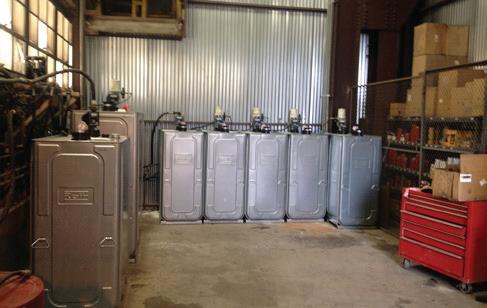

• Outer tank holds 110 percent of inner tank for maximum protection
• Up to 50 percent lighter than conventional steel tanks
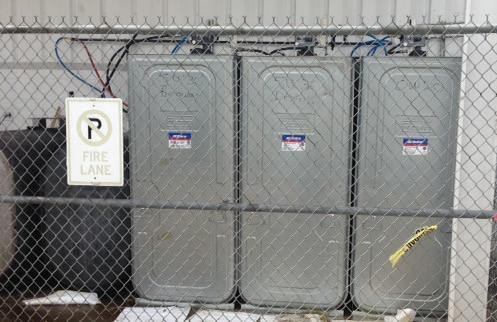
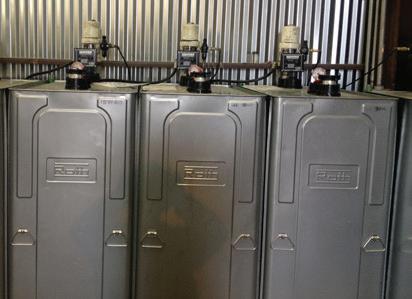


• Easy to install and compact design
• Exceeds industry standards
• UL2258 Certified

• Compliant with NFPA 30/30A


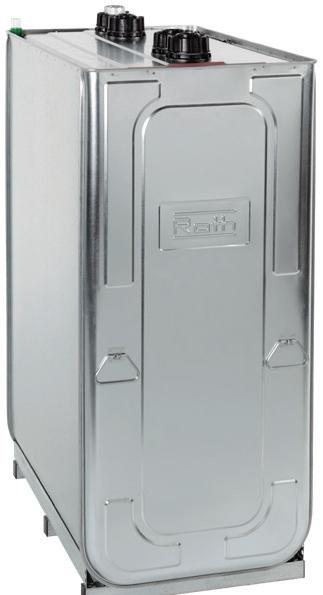
• Low-cost
• 30-Year warranty
MARCH 2023 7
ADVERTISERS/PRODUCT INDEX March 2023 American Petroleum Institute (31) AutoCenter Sales (39) 800.874.5793 BendPak (14, 40) 800.261.7729 Chevron (2) 866.354.4476 Corporate Consultants (39) 518.469.0983 Factory Motor Parts (43) ISI Software (44) 800.922.3099 Jiffy Lube International (32) 346.325.9987 Kafko International Ltd. Oil Eater/Degreaser (13, 40) 800.528.0334 Mighty Distributing Systems (20) North American Bancard (15) 866.481.4604 Roth Industries (7) 888.266.7684 Royal Purple (4) Solid Start (3, 41) 877.290.3950 Valvoline (18, 41) 859.357.7303
lubricant
• Leak-proof and will not corrode needs. DOUBLE-WALL CONTAINMENT www.RothLubeTanks.com 1.888.266.7684 2302NOLN_RothNorthAmerica.indd 1 1/11/23 9:09 AM
storage
BUILDING FROM WITHIN
This year’s Best Workplaces Award winners show the results of culture-building
IT’S NOT OFTEN THAT YOU SEE A technician graduate up to CEO in the same operation, but that’s what Nestor Gutierrez did at Rancho Express Lube.
Gutierrez put in a lot of hard work to get to that spot, but the formula is relatively straightforward: He took lessons from managers that he had and applied the best practices in his own role as a manager and owner.
“I know what it’s like,” he said in this month’s story. “I like treating my people right and I want them to achieve their goals and dreams, just like [how] mine have become true.”
Gutierrez shares this outlook with another one of this month’s featured shop
owners. That’s Steve Sarrantonio, who runs some wildly successful SpeeDee locations with his wife, Kris. Sarrantonio spent years in the quick maintenance business before opening his own franchise, and he says that his leadership style comes largely from the lessons learned under previous managers.
Both of these operators are winners of the Best Workplaces Awards in 2023. Sorry to spill the beans at this point in the magazine, but I hope you’re still interested enough to read the stories (page 21).
Most of our page space in this magazine is spent talking about strategies that help ease the customer, whether it’s in the perks you offer, the marketing you choose, or the customer service skills you display. The Best Workplaces Award is an opportunity to showcase the ways in which operators do right by their own colleagues. Our editorial team looks for operators who know the value of their staff members and try to offer perks, training, and compensation that matches that value.
In almost every Best Workplaces interview I’ve had, operators view the strategy as an investment. Payroll is a major expense, of course, but that’s what it takes to get people in the door. And if your shop has a healthy in-house culture, that’s what it takes to get them to stay. When employees stick around, they develop the skill of experience, which is worth a lot in the long run. When employees stick around for the long run, you’ve got an excellent bench of potential shop leaders to succeed a manager or grow into a new location.
Another story in this month’s magazine came from an experience I had as a quick lube customer a few years ago.
I was in a long lunchtime queue, and it was not the most action-packed experience. But the shop I was at (I won’t name names!) had enough staff on hand that someone came out, greeted me, and performed some light bulb checks while in line.
I thought about that strategy, because not all shops are able to do this. It made a big difference for me, even though the wait time didn’t change. The greeting was just a small acknowledgment that I was not an afterthought for the shop. It made the line feel a bit more productive, and it got me into the mindset to engage with the staff rather than slip off into distractions on my phone.
That’s a long way of saying that this month’s case study (page 36) talks about one operator’s approach to the queue. I’m sure there are many ways to do it, but I encourage all shops to do something other than just let drivers sit there.
I have one final announcement for March. In the middle of the month, we are launching the nomination forms for the 2023 NOLN Operator of the Year. It’s one of the biggest projects of the year, and we are truly grateful for all of the nominations. I encourage you to nominate a deserving colleague—or yourself, which is just fine by me.
Thank you and have a great month.
MATT HUDSON CONTENT DIRECTOR, 10 MISSIONS MEDIA
8 NOLN.NET 03.23 EDIT LETTER
PRIORITIZING PLANNED INVESTMENTS
Depending upon the shop, investment plans can look drastically different. But usually, in-depth planning and preparation is required. When it comes to the goals you may have for your shop, figuring out a strategy and developing a plan of action is a surefire formula for impact.
In the 2022 NOLN Operator Survey, respondents were asked about their highest priority for planned investments. Some saw staff and training as priorities, and others had nothing significant planned. Wherever you find yourself on this scale, it is never a bad idea to consider what could be implemented to improve your shop.
NOTHING PLANNED
TRAINING 12% EQUIPMENT 12%
11% CURRENT SHOP EXPANSION OR REMODEL
21%
ADDITIONAL STAFF
19% NEW LOCATION 25%
Most respondents noted a desire to invest in a new location. If you resonate with this goal, search for “The Perfect Site” on noln.net to learn about a Jiffy Lube franchise’s strategy for finding the right location.
MARCH 2023 9 FIND OUT MORE
EDIT LETTER 03.23
MAINTAINING A MILESTONE
PUROLATOR CELEBRATES ITS 100-YEAR ANNIVERSARY AND PLANS FOR THE NEXT CENTURY TO COME
BY HANNA BUBSER
BRAND LONGEVITY IS AN ADMIRABLE trait. There is something to be said of name recognition that spans generations. It’s powerful to see a grandson pick up the same product for his shop that his grandfather used before him.
But for companies and brands that have served the automotive aftermarket for many years, the element of longevity is not the only thing to consider. There is also the concept of change, which perseveres as time passes. For the aftermarket, navigating change takes dedication, innovation and the promise of continuing to deliver.
Purolator Filters is celebrating a major milestone this year: The brand is turning 100 years old. Daryl Benton is the vice president of sales and marketing for the automotive aftermarket at MANN+HUMMEL, the parent company of the Purolator brand.
“Anytime a brand reaches a milestone like 100 years, it is definitely something to celebrate,” says Benton. “It puts you into some pretty exclusive company.”
Remain Relevant
To acknowledge this anniversary, Benton says Purolator will continue to showcase its value as a brand that has been around for a century. But Purolator isn’t going to shy away from innovation, either.
“When I look at the role that this is going to play for us in terms of marketing and building our business overtime, there are quite a few things we can do,” Benton says. “Certainly [we] can help to reinforce that Purolator is a brand that has innovated and been a technology leader for 100 years, and also one that
will continue to innovate and continue to build on that capability for at least the next 100 years.”
Benton explains that one of the goals for Purolator is to help “Purify Your World.”
Thanks to the COVID-19 pandemic, the quality of the air that people breathe has been top-of-mind. Purolator has sought partnerships with other brands such as Febreze to develop a cabin air filter, which Benton explains is mutually beneficial.
“We think that’s a way to really talk about how Purolator will continue to purify your world,” Benton says. “We see it as a way to really enhance the partnerships within the channel, our customers and trade partners, and how we can help them to leverage it as a way to grow their sales and grow their business.”
Benton says Purolator is also focusing on what’s to come for this industry with vehicle technology and electrification on the rise. Benton says Purolator will provide continued dedication to its filtration products while also working to develop technology that can be used now and further down the road.
“There are lots of pieces that are in the works that are going to help us continue to extend this brand into the future,” Benton says.
Know Your Value
Purolator is confident in the value that it can add to vehicles, Benton explains. He says that regardless of vehicle type, the filters play an important role.
“For us at Purolator, the idea of whether you’re in an electric vehicle or a gas-powered vehicle … filtering
10 NOLN.NET INDUSTRY INSIGHT QH
the air that’s on the inside is going to matter because that’s where the people and the pets are and where we think that we can add a lot of value,” Benton says.
Over the years, Benton says drivers have become more aware of the filters in their vehicles and the need to change them out. This has allowed Purolator to remain relevant throughout its 100 years, as the need for filters is constant. But there is still a disconnect for some drivers, causing them to put off replacing components such as cabin filters. Benton sees this as another opportunity for Purolator to make a lasting impact.
“Based on our data, currently the average vehicle only changes its cabin air filter once every five years. If you think about your heating and air conditioning filter, if you change it once every five years it would be a pretty disgusting thing by the time you pulled it out,” Benton says. “The same is true of the cabin air filters. So, increasing the frequency of when it gets changed and the awareness that it even exists, this is something that we see as a huge part of what’s going to allow this continued growth and importance in the future.”
All in all, Benton says innovation is a necessary part of existing in this industry. It’s about knowing the value that can be provided and committing to continuing that service in relevant ways. Over the next 100 years, there is certain to be more change to come. But Benton says it’s all about the approach, and Purolator is up to the task.
“One thing that I feel very confident about going forward is that vehicles are going to exist and the need for aftermarket service of those vehicles is going to exist well into the future,” Benton says. “So, we have to adapt and innovate how we serve the market and what we do to make that future bright for us because there’s going to be vehicles on the road for a very, very long time into the future.”
MARCH 2023 11 INDUSTRY INSIGHT QH GETTY
DRIVEN BRANDS OPENS 10TH TAKE 5 OIL CHANGE/CAR WASH LOCATION
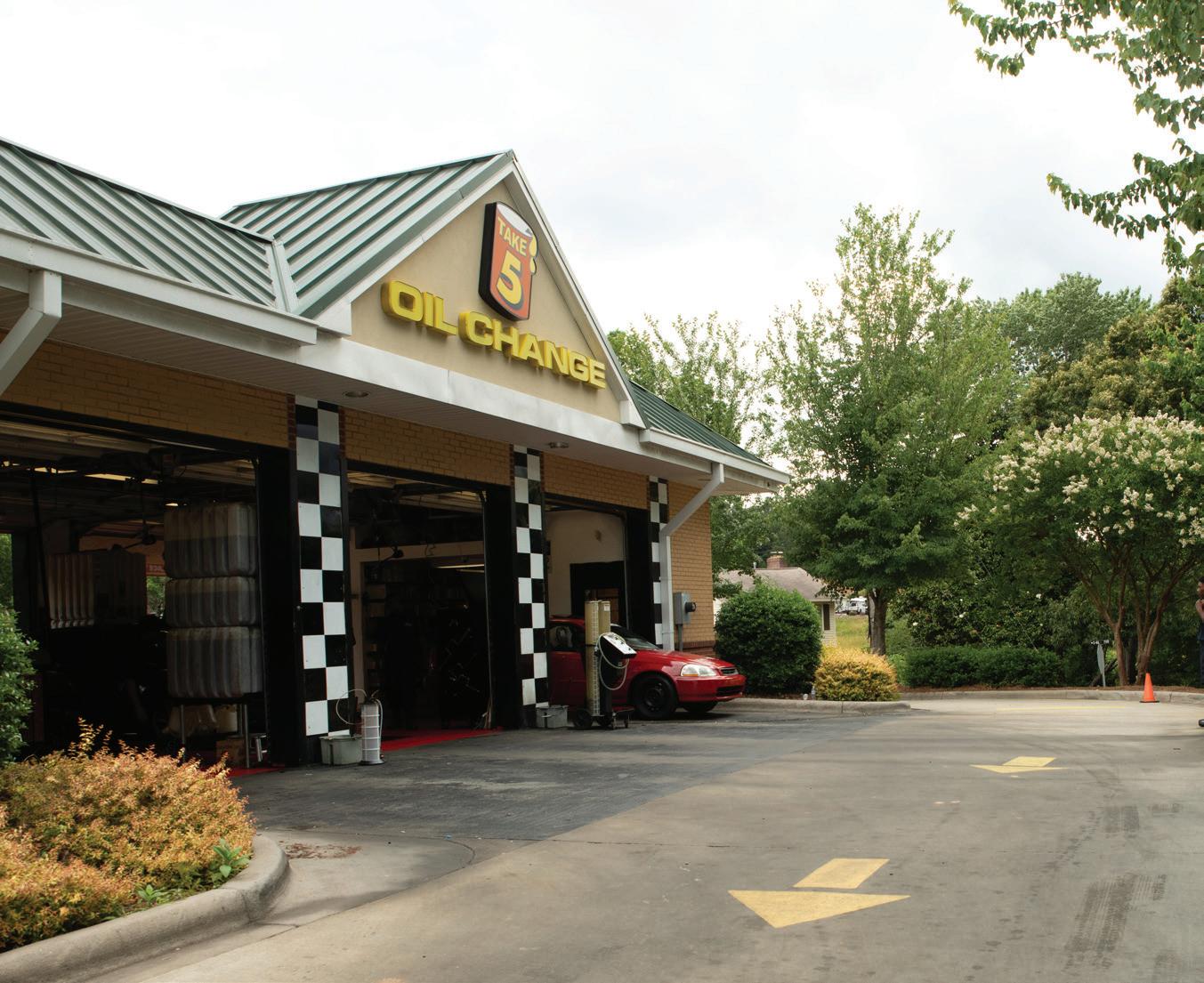
On the path to rebranding Take 5 as both a car wash and quick lube service, Driven Brands has announced the opening of its 10th Take 5 co-development in Concord, N.C. according to PR Newswire.
The co-development will be combining Take 5 Oil Change and Take 5 Car Wash into one location at 1015 Concord Pkwy N. in Concord. Driven Brands plans on constructing 50 more locations like this in the next two years.
“As the car wash business benefits from the strong and growing brand awareness of Take 5,” said COO Danny Rivera. “Its high-volume locations provide a lower cost of customer acquisition for the quick lube business.”
The opening of this location also follows the company’s announcement to convert all of its car washes to being under the Take 5 brand.
EVP and President of Take 5 Car Wash, John Teddy, said he believes the fusion of Take 5 with car wash services will bring, “superior brand recognition and cross-selling capabilities.”
Over 200 of Driven Brand’s car washes now operate under the Take 5 brand, and they plan to fully rebrand all of them by the end of the year.
MISSISSIPPI AUTO SHOPS STRUGGLE TO OBTAIN PARTS
Supply chain issues have been plaguing several different industries, but recently auto repair shops in the Jackson metro area have been having an especially hard time obtaining parts for vehicles, WTOK-TV reports.
Technicians in the area have been struggling to have parts come in, saying that most shipments have been taking weeks and even months to arrive, causing a disruption in business.
“It could be just a little bracket that you need (that) might take two-three weeks,” Bolden Body Shop technician Gregory Holliday said.
Josh Malone, a technician with Freeman’s Auto Repair, said that it typically doesn’t matter what type of parts are being ordered; whether it will arrive in a timely manner has been hit-or-miss.
“You can’t really pin it down to one specific type of part or one specific type of vehicle,” Malone said. “It just comes and goes.”
The consensus among technicians in the area is that obtaining parts directly from manufacturers has been more of a struggle than finding aftermarket parts.
Shops have had to push appointments out far enough in advance to assure parts will arrive in time.
“We had to turn work away today and push it out to a week or a month or two weeks down the road,” Malone said. “If we could have got the stuff at that point in time, you know, it would be done and (we’d be) moving on to brighter, greener pastures.”
STRICKLAND BROTHERS TO OPEN NEW LOCATION IN INDIANA
Strickland Brothers 10 Minute Oil Change will be opening a new location in Kokomo, Indiana, according to the Kokomo Tribune.
It will be located at 1816 E. Wheeler St., off of Indiana 931, and will feature two bays and a lobby. Before construction may begin, the company must first gain approval from the Kokomo Plan Commission.
Assuming the project is approved, project developer Justin Furr says construction will begin this spring and finish later this year. After it is built it will be another of several quick oil change services in Kokomo, including Valvoline Instant Oil, Take 5, and two Jiffy Lube locations.
Furr said the Strickland Brothers’ Kokomo location will be corporate-owned as opposed to being a franchise. Thanks to funding from private equity firm Princeton Equity Group, the company currently has over 100 locations in the U.S. with plans to
12 NOLN.NET AROUND THE INDUSTRY
QH
PHOTO BY LORETTA HUGHBANKS
expand to as many as 242 by the end of 2024.

W.V. BILL REDUCES MANDATORY VEHICLE INSPECTIONS

A bill presented in the West Virginia senate to change vehicle inspections to every two years instead of annually sparked some debate on the floor, Williamson Daily News reports.
Senator Mike Stuart, a Republican from Kanawha county, spoke in favor of the bill, saying that it would “West Virginians safe while adding to the convenience of being a citizen of the state.”

Opposition was voiced by minority leader Mike Woelfel, a Democrat from Cabell county. He pointed to Ohio, where there are no vehicle inspections
MORE ACTIVE 3X THAN OTHER BRANDS TO CLEAN TOUGH STAINS





MARCH 2023 13 GETTY IMAGES
Email for FREE SAMPLE* Sales@OilEater.com
*Qualified customers only, limitted based on availability of inventory 2302NOLN_Kafko.indd 1 1/17/23 10:04 AM
and, as he said, “people have the vehicles tied together with baling wire and twine,” as an example of how dangerous vehicles can become when they are not inspected.

“If we see there is some substantial issue at some point in the future we can change this law and move it back to a one-year requirement,” Stuart said.
Woelfel asked how reducing the frequency of having vehicles tested could result in people being any safer. But according to Stuart, “the question should be will it make people less safe.”
“I don’t see the net gain, other than to say ‘freedom’ from the government burden for that year,” Woelfel countered. “We are a leader in this and we want our people to be safe.”











If passed into law, the bill will take effect on Jan. 1, 2024.


HYUNDAI AND KIA HYBRID VEHICLES RECALLED FOR FUEL LEAKS
Hyundai and Kia are recalling some of their new plug-in hybrid vehicles due to a fuel leak issue, Autoblog reports.
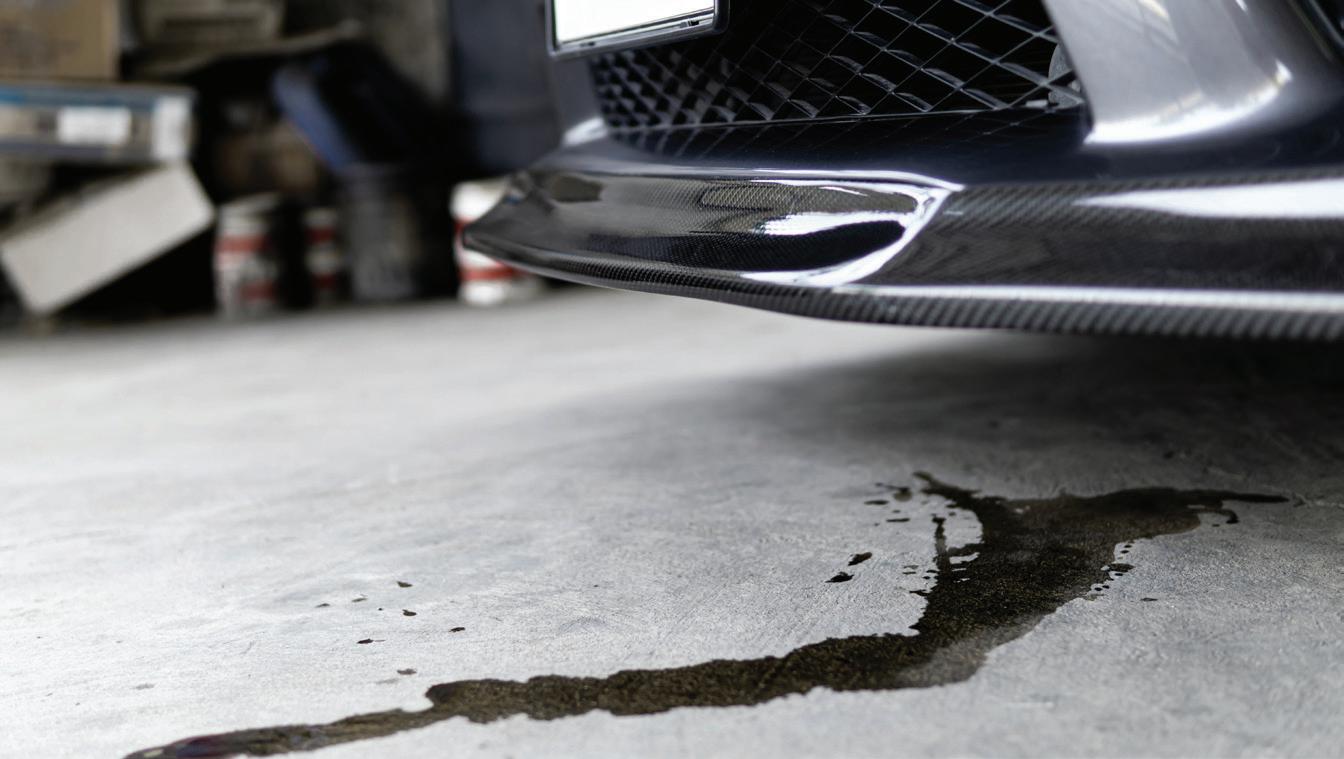
In a defect report to the National Highway Traffic Safety Administration, Hyundai states that a manufacturing issue at one of their suppliers, the fuel tank was not properly molded at the seam, which can cause a fuel leak.
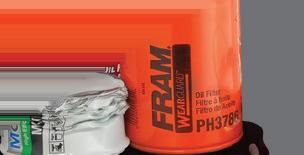

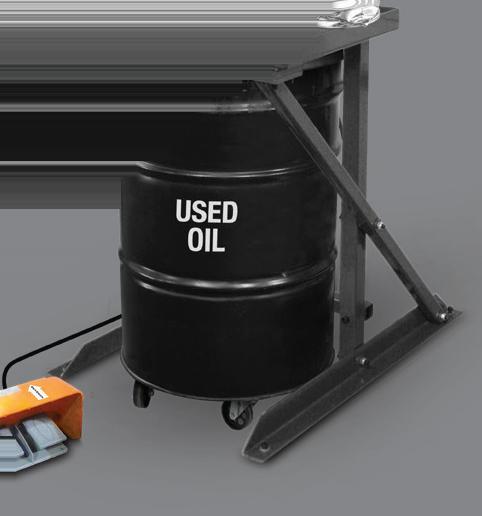
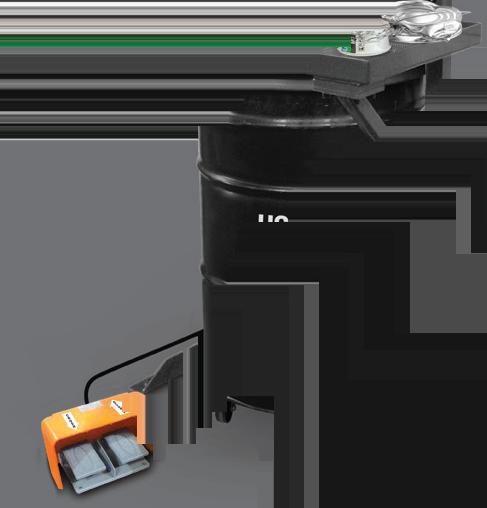
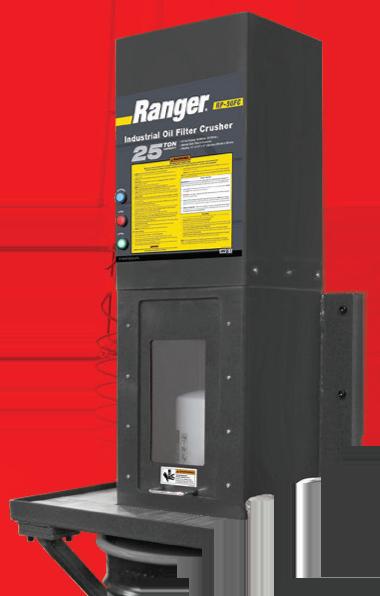

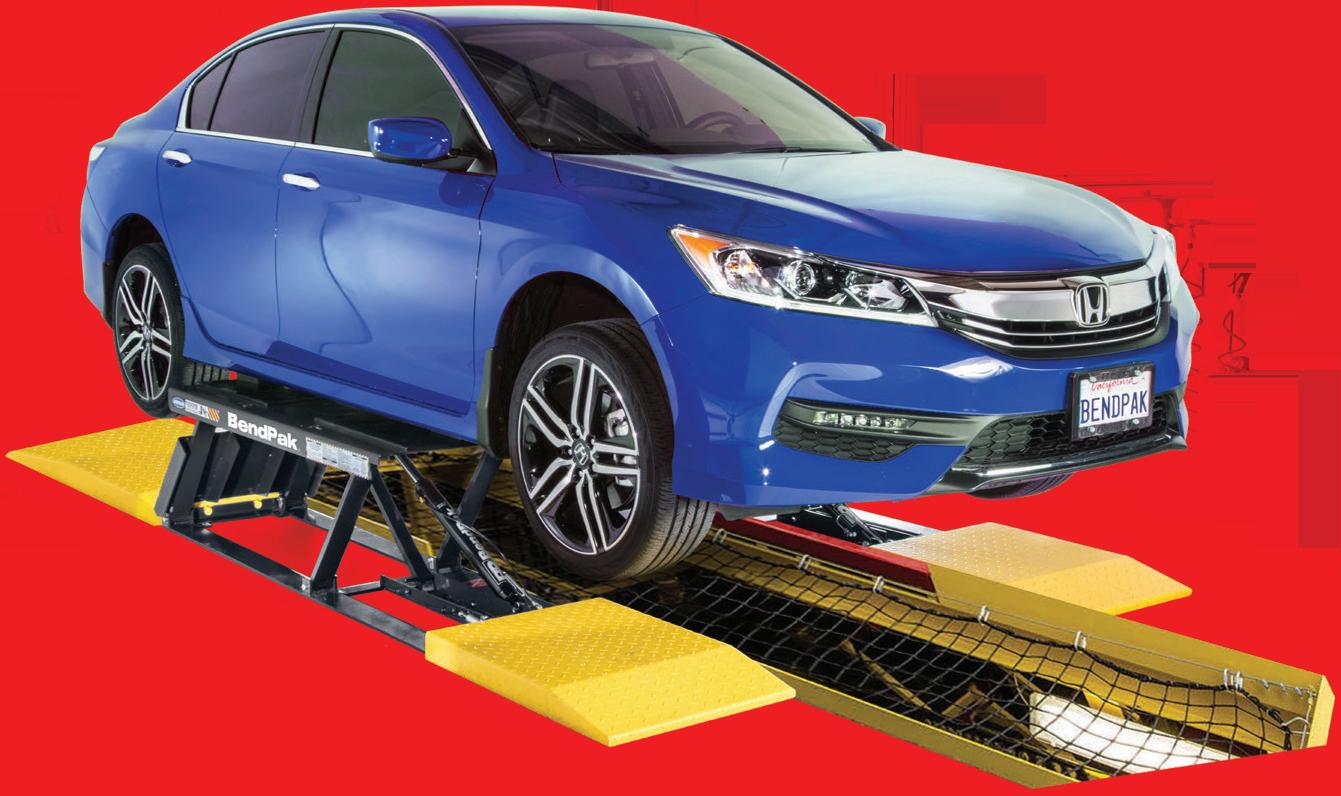
14 NOLN.NET 1-800-261-7729 LIFT. CRUSH. SAVE! FEATURED PRODUCTS BendPak P9000LT Low-Ris Pit Lift Ranger RP-50FC Automatic Oil Filter Crusher with Stand Call now for instant savings! ALL-IN-1 SHOPPING Shop Equipment | Automotive Tools | Car Lifts | Wheel Service © 2023 Wrenchers LLC. All Rights Reserved. 2303NOLN_Bendpak_Wrenchers.indd 1 2/8/23 10:59 AM
GETTY IMAGES
Hyundai says the defective tanks were manufactured from April 7, 2022, through April 9, 2022, and that the issue was remedied on April 10, 2022. Hyundai reports they have received “no confirmed crashes, injuries, or fire related to this condition” within the United States. The recall was issued because of three incidents in Europe.


Due to the mistake being caught and corrected, only 326 Santa Fes and 34 Sorentos were affected by the recall. Owners of recalled vehicles may expect to hear from Hyundai by the end of March with steps to obtaining a tank inspection and replacement.





Jason Bonikowske as general counsel, Nicole York as vice president of finance, and Megan Burakiewicz as vice president of human resources.
York and Burakiewicz are being promoted from previous positions within the company, while Bonikowske has just started his time at Lucas Oil.
Bonikowske previously worked at CSM Sport and Entertainment for 16 years, where he “oversaw the legal operations, developed internal governance policies, advised executives on risk mitigation, and routinely negotiated high- quality sport and entertainment agreements.”
York previously served as an accounting specialist and was given the Emerging Leader Award from the CPA in 2021. Now as vice president of finance, she will advise and supervise the executive team on financial matters.
Burakiewicz has a background in human resources and will be leaving the role of director of people operations to fill the vice president of human resources position.
“Our employees are everything to us, so having an effective and empathetic human resources leader is incredibly important,” Lucas said.
Lucas Oil has announced three additions to its leadership team:
Katie Lucas, chief administrative officer at Lucas Oil, believes Boniowske has “the ideal track record in legal strategy and business operations to help strengthen our executive leadership team and enhance company procedures and initiatives overall.”

MARCH 2023 15
3 NEW LEADERSHIP POSITIONS FILLED AT LUCAS OIL
Get more industry news at noln.net 2303NOLN_NorthAmericanBancard.indd 1 2/8/23 11:49 AM
BRENT’S SPEEDYLUBE
OWNER
BRENT L. TOMMAN
LOCATION: CLINTON, IOWA
AVERAGE DAILY CAR COUNT: 40-50
STAFF SIZE: 6
NUMBER OF BAYS: 2
AVERAGE TICKET $65
BY HANNA BUBSER PHOTOS BY AMANDA SMITH
NO VACANCIES
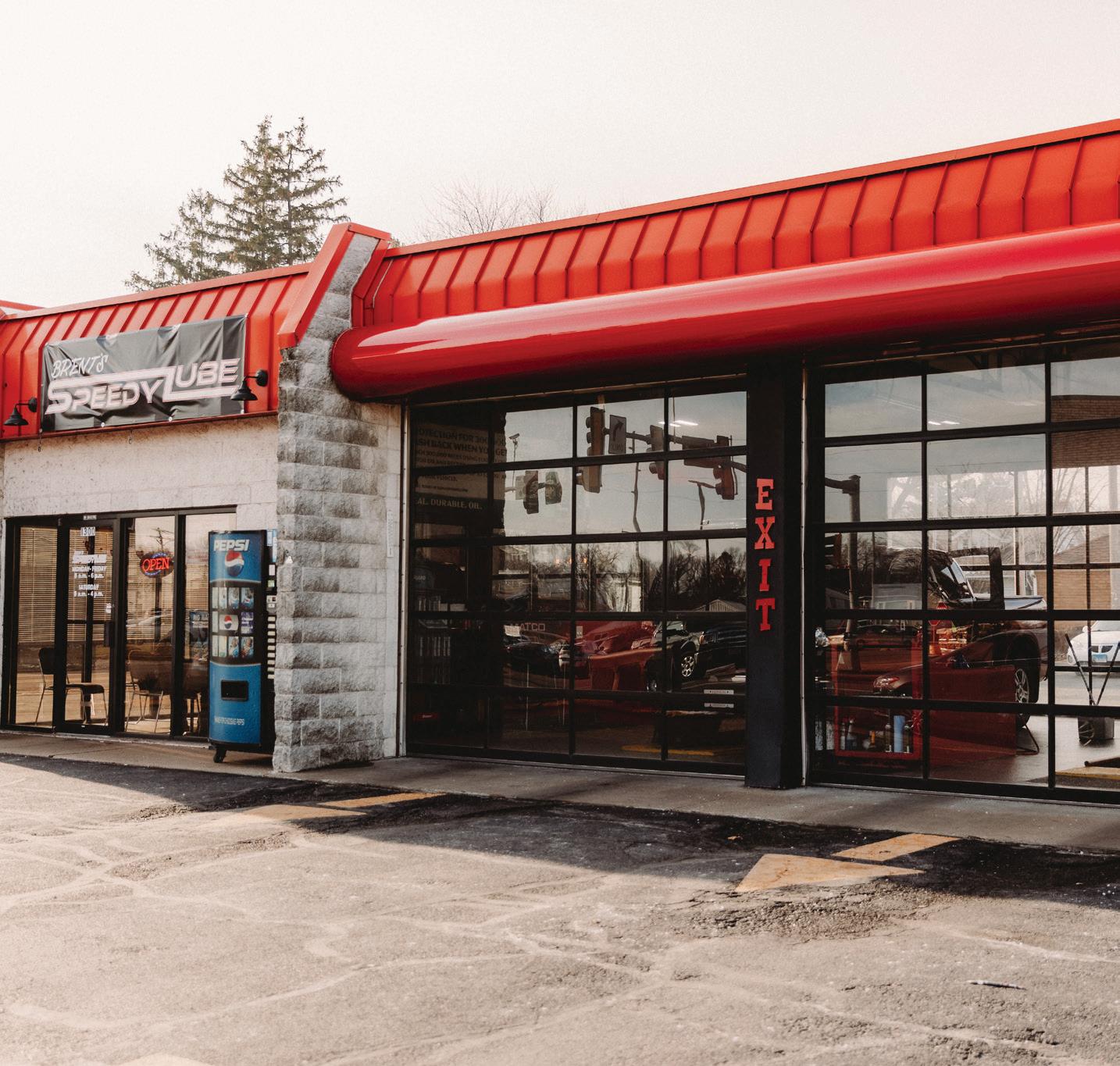
Brent L. Tomman opened his quick lube business in July 2021, but his connection to the building began long before then. Tomman ran a shop called Speed Lube with his dad during the early 2000s at the same location Brent’s SpeedyLube calls home today.
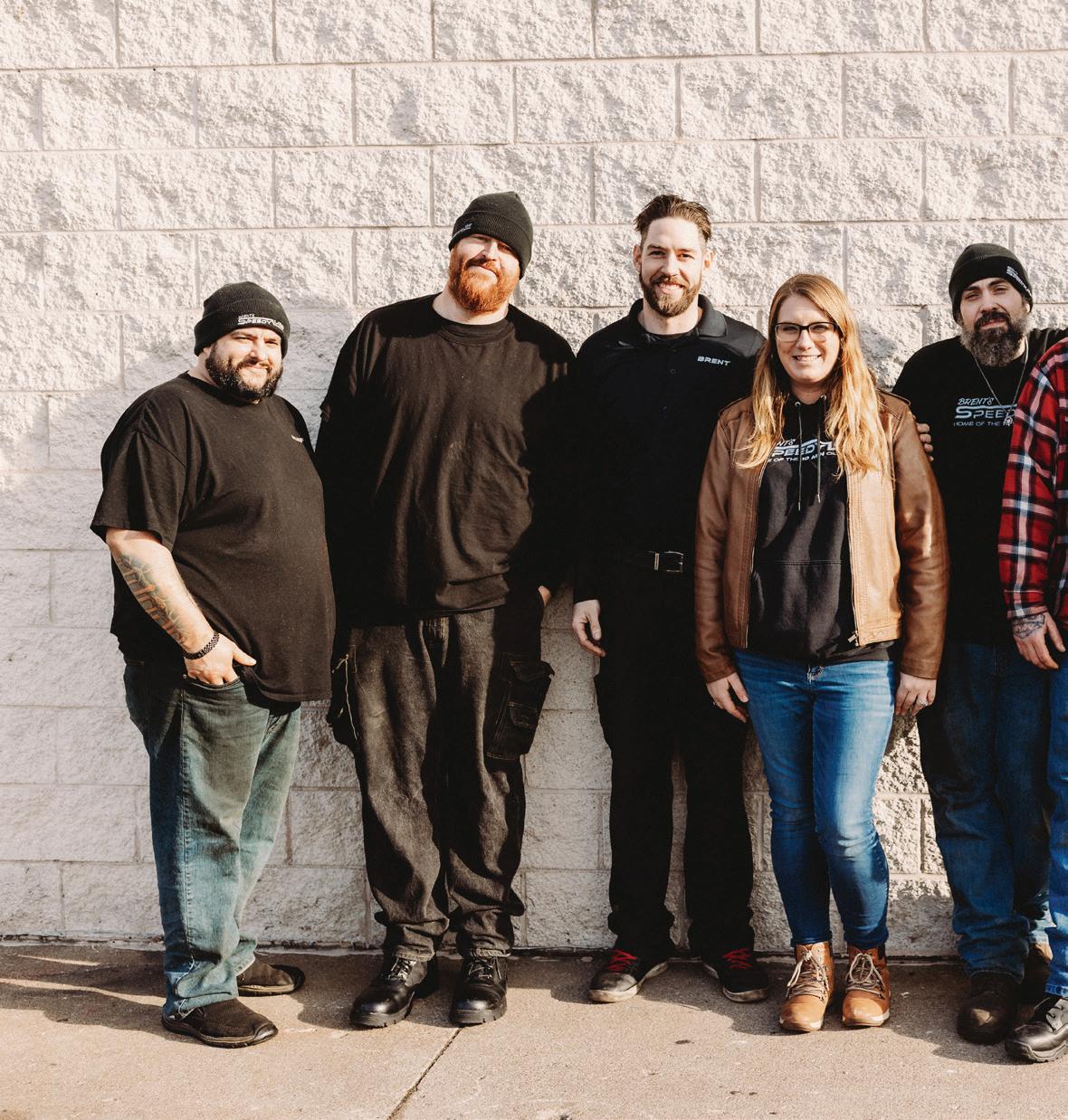
Speed Lube went out of business in 2008. The building was vacant until Tomman decided to purchase it in March 2021.
“The place sat empty for 13 years with no heat and air conditioning,” Tomman says. “It was just coming undone at the seams, so I had to do everything.”
A massive renovation was required to bring the shop,
which was originally built in 1991, up to date. Tomman put in a new roof, new ceilings, fixtures, heating and LED lighting.
Concrete chip floors were installed, and the parking lot and signage were both redone. The shop has five 1,500-gallon oil tanks downstairs, and everything is brand new from the compressors and lines to the pumps.
LOBBYING FOR MORE
Tomman says that even though most customers only wait for a short time, he wants to make their lobby experience enjoyable.
A flat screen television is mounted above a fire-
16 NOLN.NET SHOP LOOK QH
place next to a selection of shop merchandise. There’s popcorn, hot dogs, coffee and oftentimes homemade goodies from Tomman’s mom including brownies and holiday wreaths. Tomman’s dad is retired, but he can still be found at the shop chatting with customers.
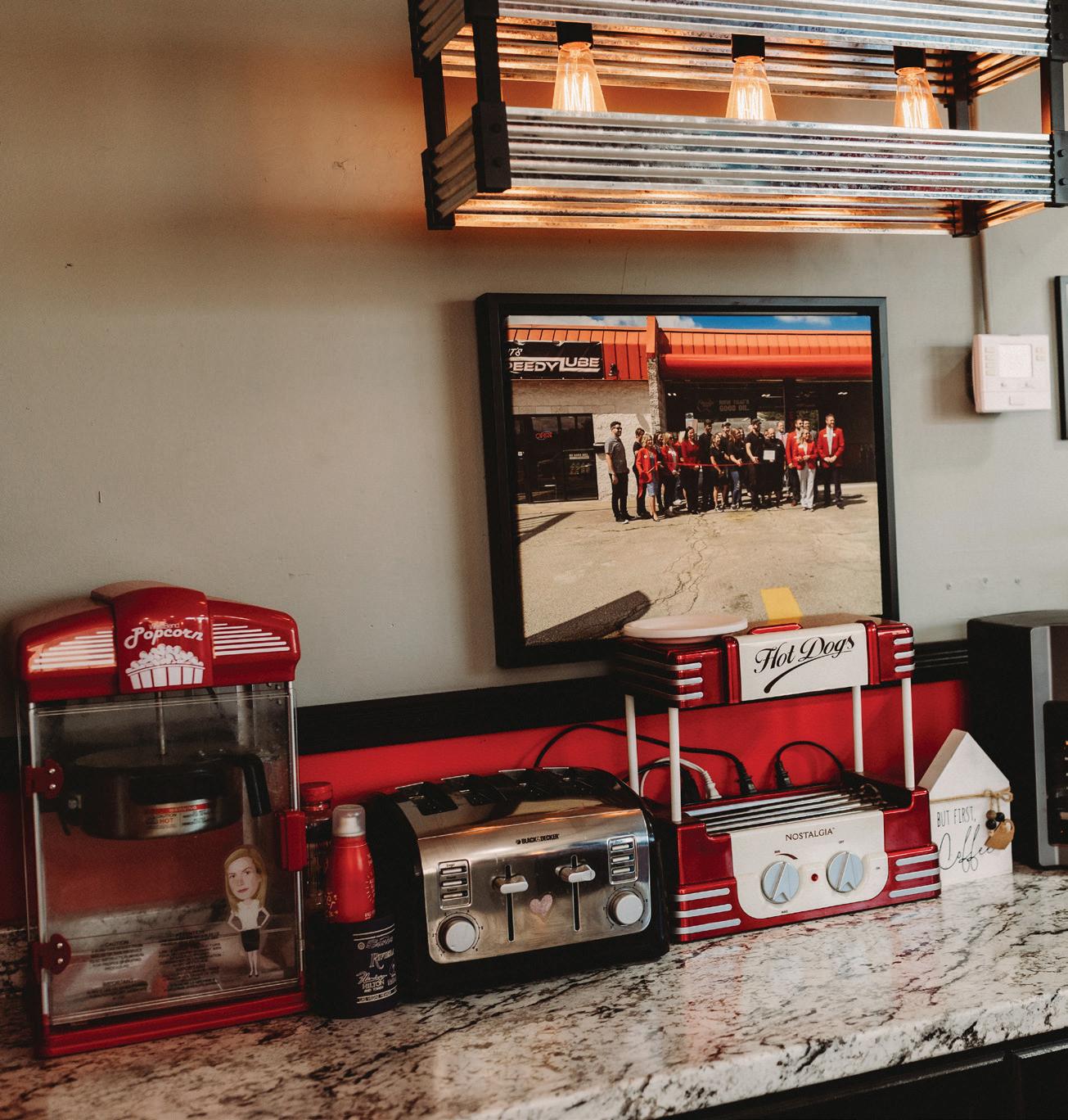
“That’s why we tell people to come in and have a cup of hot cocoa by the fire while we watch a movie,” Tomman says. “You’re only here for five to 10 minutes, but for the five to 10 minutes you’re here we want it to be an escape from the outside world.”
A CLEAN SWEEP
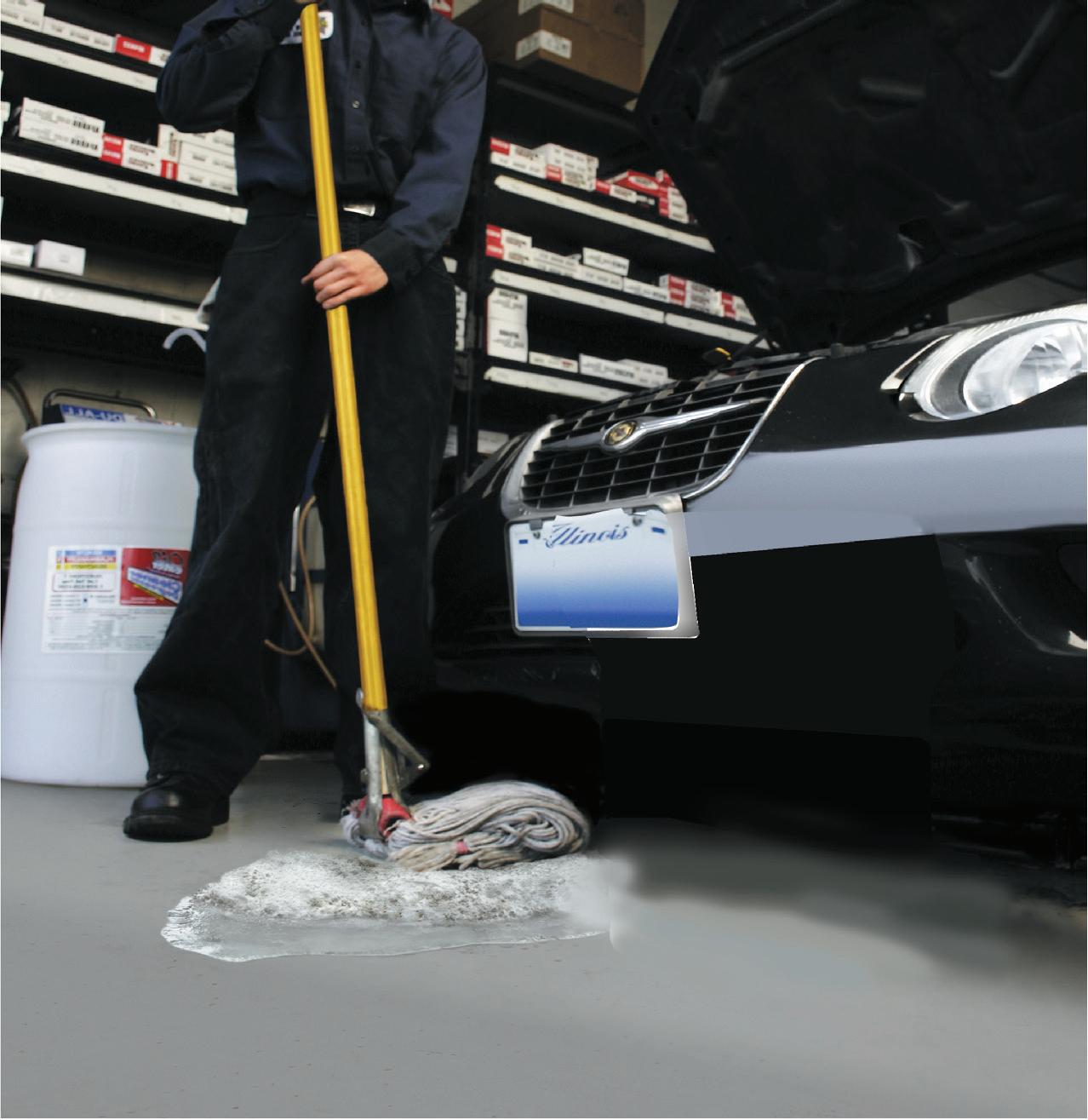
The team is meticulous about keeping the floor clean and Tomman uses specialized chemical cleaning agents for added protection. But keeping a tidy shop isn’t only about maintenance.
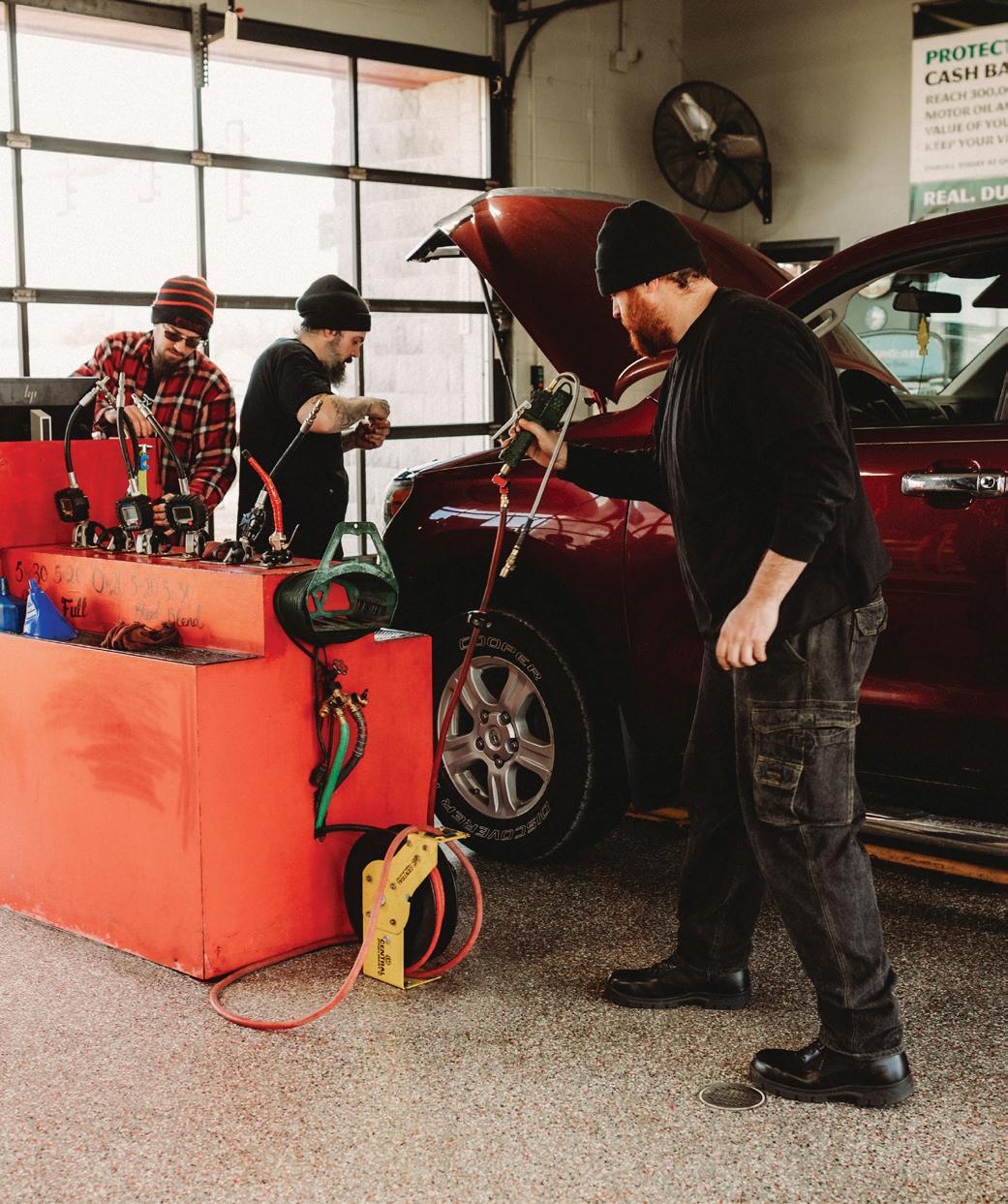
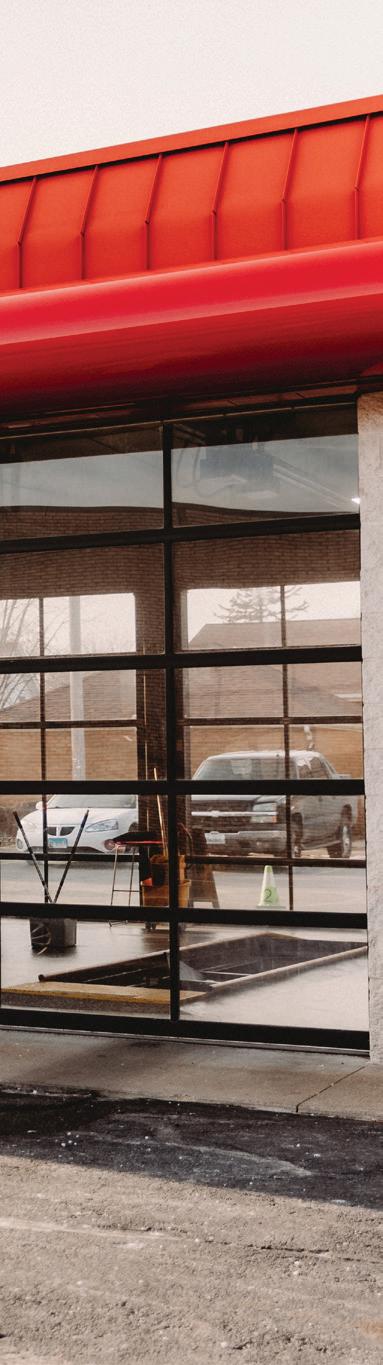
“[Customers] want to be able to trust you, and a lot of the time it’s image,” Tomman says. “We take care of our building so we can take care of you better.”
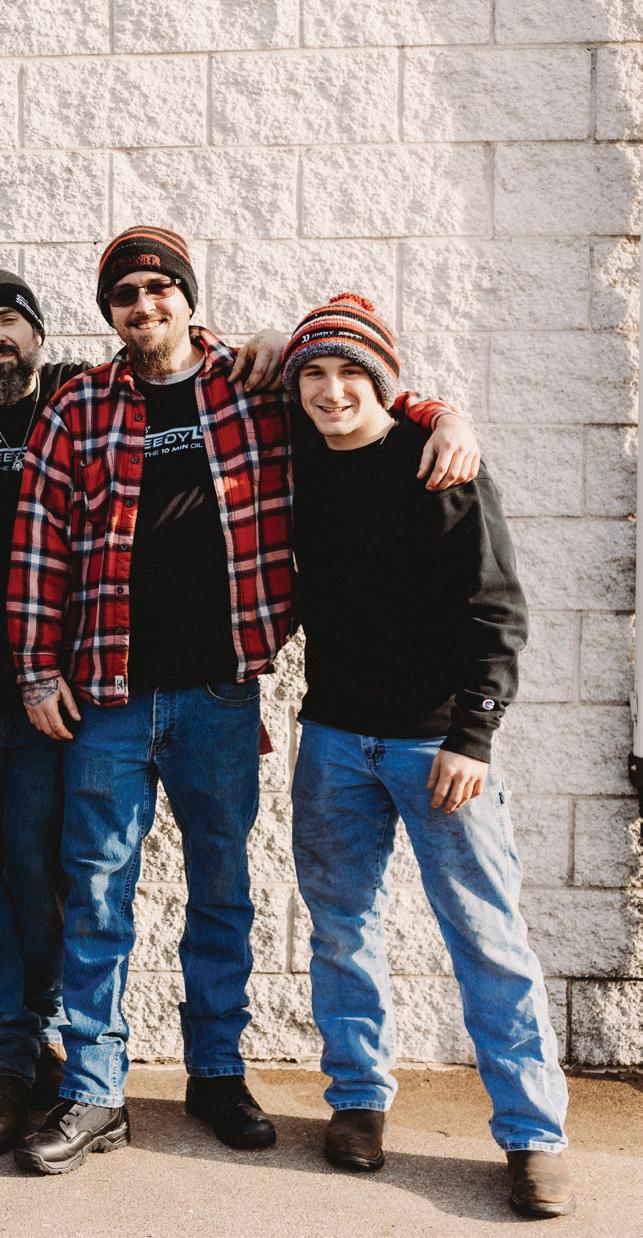
The time and money spent investing in the shop has been well worth it for Tomman, who says the attention to detail makes a difference.
“That’s why I went out and got everything brand new, so I didn’t have to service things haphazardly,” Tomman says. “I can really give the very best service because I have the very best materials and the very best quality items at my disposal.”
MARCH 2023 17 HAVE AN OUTSTANDING SHOP TO SHARE? EMAIL NEWS@NOLN.NET











US-DIG-2541-EN ©2022 Valvoline 10/22 ™Trademark, Valvoline or its subsidiaries, registered in various countries EXPRESS CARE Is it time to grow or sell your business? Deciding when to make a change – and what kind of change to make - is difficult. Valvoline offers two exceptional solutions for the future of your quick lube: When the time is right to make a change, call Gayle McMillin at (859) 357-7303 or visit www.valvolinequicklubes.com. Grow your business with a powerful partner Sell your business to a trusted industry leader Join the hundreds of quick lube owners who benefit from our industry leading program, Express Care. Receive hands-on expertise and proven tools that drive business growth. Valvoline has acquired more than 700 quick lubes since 2014 and offers owners a straight-forward valuation. Our ownership transition aims to protect your legacy by focusing on you, your employees and your customers. or
He has over a decade of experience in the industry with a proven track record of building customer counts and sales, as well as using innovative ways to bring a new look to the automotive field for both the customer and the employee. Performance comes from growing your business through people.


ATATUM @VALUBE.COM
What makes a great workplace?
How to look within to build the right culture
ARE YOU ON THE PATH? As you sit and read the articles in this month’s issue, you are learning about operators that went above and beyond for their customers and their business. A er checking them out, look around at your own business now. Are there areas that you can implement into your business to take the next step forward? Do you have the right core values in place to bring in the best people? Just check out this segment below on some of the things that create a great workplace and make them yours.
Are You Engaged?
When leaders show they understand what’s going on in their business and hold themselves at a standard like everyone else, it’s easier for employees to get behind the company’s goals and values. It’s also a sign of a great workplace.
Great leaders practice what they preach and are passionate supporters who take a stand on the issues impacting the environment around them. In the organization, leadership must be commi ed to boosting engagement from employees and management, responding to issues that arise, and creating an a ractive company culture.
No one wants to come to work each day and be trampled on or feel as if there is no way to move upward. Se ing a tone in your business is a great way to develop exceptional employees and recruit higher level leaders in your locations. If you want to be a great workplace, it starts with you.
Don’t Stop Learning
Continuous improvement is at the forefront of any successful company. Adaptation to new ideas keeps your business at the top of their game, allowing your people to maximize their abilities and set a new standard of excellence. If you are not making changes to keep up with the auto market, you will soon find yourself digging out of a hole that can put you behind your competition.
Learning new ideas and concepts also inspires employees to do great work and contribute towards making your company the best in the market. Make sure your employees feel safe sharing their ideas with managers and yourself. Employees know the day-today operations best a er all, since they are the ones that are on the frontlines of your business, and they might just be the source of your next great breakthrough, service, or opportunity.
Win with Your People
The companies in this issue do a number of things right, but it’s not always about the what as much as the how they do what they do. A top-tier business shi s their focus from ge ing the most out of their employees to giving back to their employees to ensure their needs are met. This can translate into more engaged employees and people that want to stay with your organization.
When you invest in your people, you build a workplace that people want to be a part of. If you are doing advanced work beyond just oil changes, do you have a training program to advance your techs skill sets? If you are looking to develop be er sales representatives, have you thought of sending some to a community college to take some courses? There are several ideas like this that can make your locations the place to come to as an entry into our business.
Balance Is Key
Great workplaces are flexible to employees’ work and life needs and encourage a great work/life balance by offering flexible schedules, providing paid time off, accommodating requests and needs, if possible, and creating a supportive work environment that is understanding of personal and family obligations.
When you just drive your leaders into the ground, they will burn out and become complacent. They will go from being excited for your opportunity and then start looking for something else. Set max hours each week, giving time off weekly and allow some flexibility in weekend work, as well.
The same goes for employees. Allowing them to go back to school, take time off for family events and more will give them a less stressful employment. I am not saying go extreme on flexibility, but making someone work six out of seven days days or no days off does not allow for life. Sometimes it’s just easier to hire another employee versus overworking your current ones.
As always, there are a lot of things that are out there to improve your business. But these are some of the key ones that can take you from good to great. Communicate with your teams. Learn what drives them and use that to make positive culture changes. In our game, it’s people and operations. Don’t reinvent the wheel. Decide what it is that you want in a company culture and set your ideas in motion.
MARCH 2023 19
ADAM TATUM
LUCAS MOORE
Adam Tatum is director of operations for the Virginia Group, a Jiff y Lube franchisee with 11 locations.
FROM THE SHOP c

SEIZE THE BAY The right product mix made a huge difference for our stock room – and our profits.
Car Care Manager At Mighty, we’re here to help your business make the most of every day and every bay. That includes in-person inventory management customized to your service needs. Have the right products, at the right time, without having money sitting on the shelf. We’ll be there to help make it happen and to make sure you’re thrilled with the results. MightyAutoParts.com
–








MARCH 2023 21 NOLN BEST WORKPLACES 2023
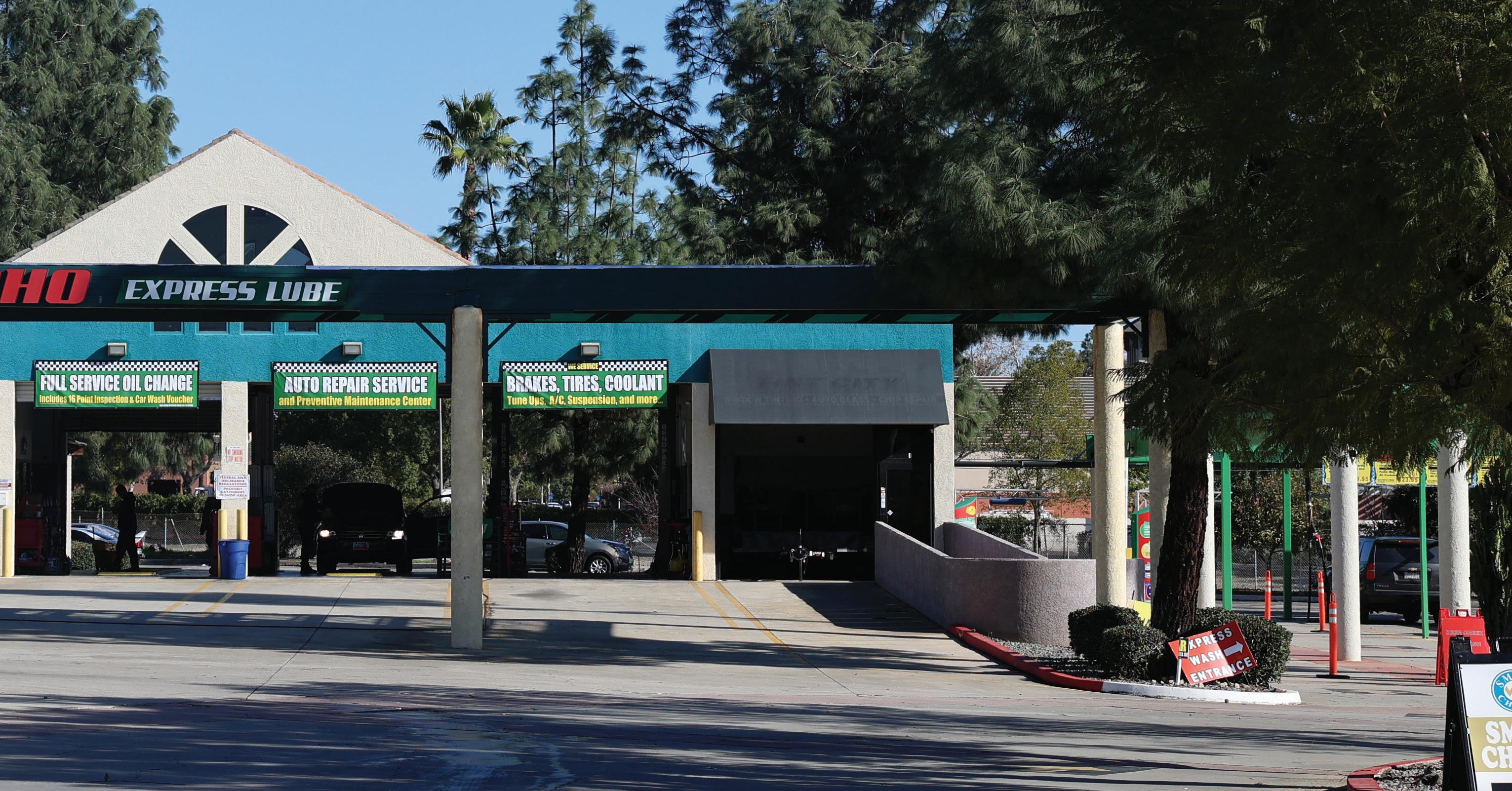
Rancho Express Lube
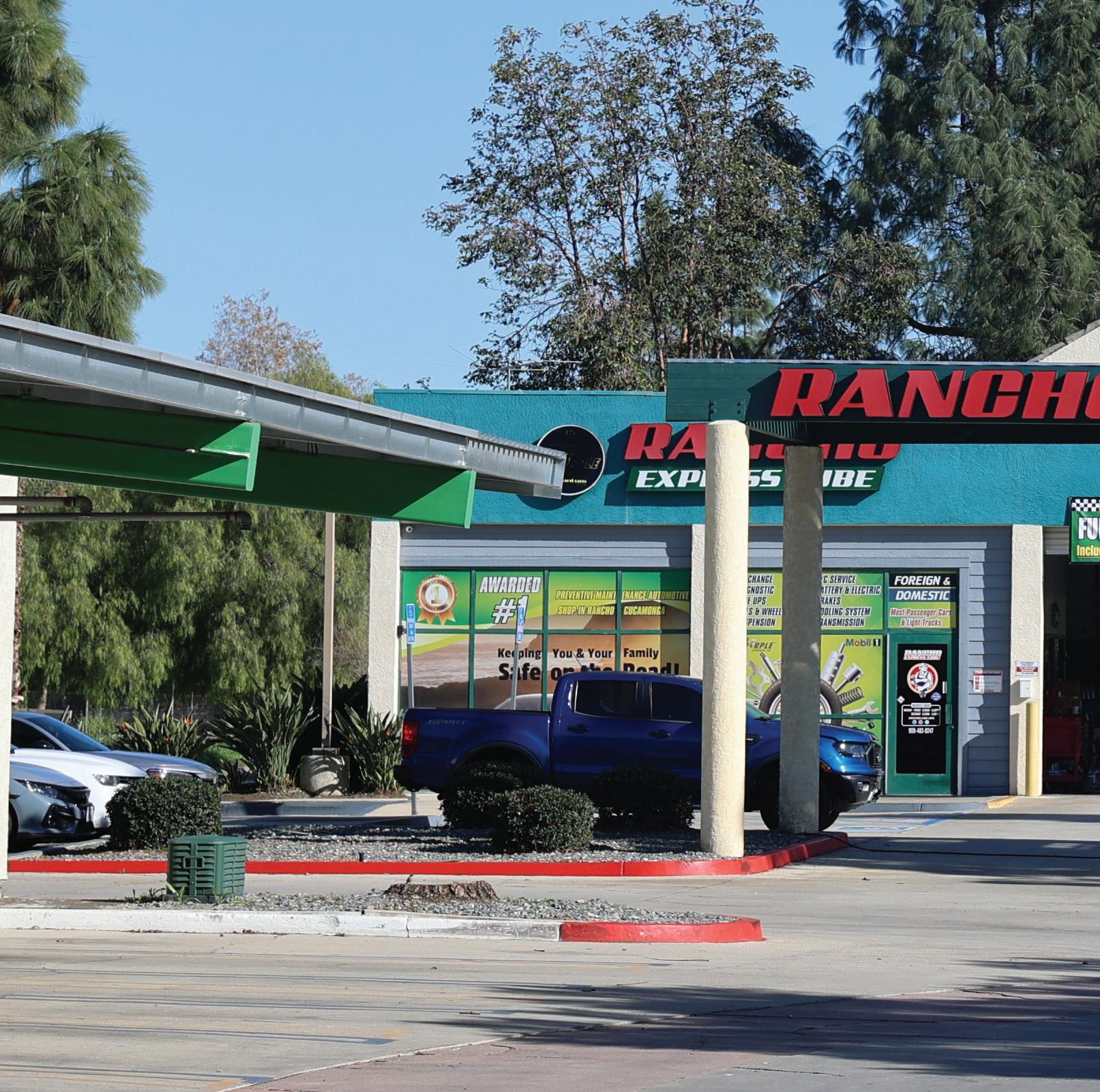
The Energy Behind the Execution
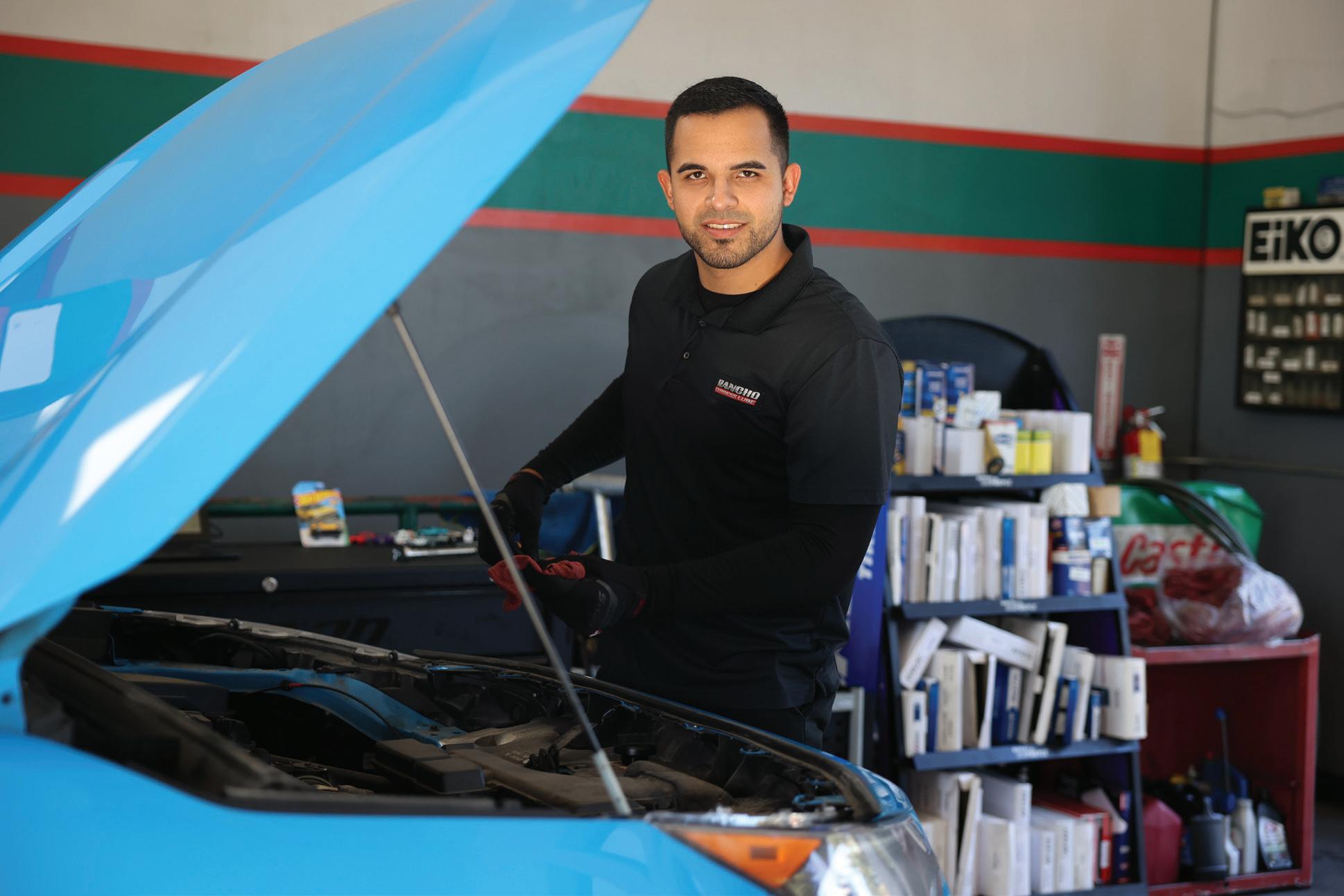
Feel-Good Energy Gutierrez says customers have commented about the positive atmosphere created by his staff at Rancho Express Lube.
Headquarters:
Rancho Cucamonga, CA
Operator:
Nestor Gutierrez
Car count per week: 270 (average of 45 cars per day)
Staff size: 6
22 NOLN.NET
Paid Vacation Time Off Commission Weekly goal rewards Quarterly goal rewards 401K Medical, vision & dental insurance
include:
Benefits
estor Gutierrez began his journey with Rancho Express Lube about seven years ago as a lube technician, but he had leadership on his mind from the start. Gutierrez says at the time, the managers weren’t running the shop effectively. He says they were tough on him, and they left him with a workload that wasn’t distributed fairly without proper compensation.
Gutierrez wanted better for the shop. His boss eventually noticed the poor leadership, got rid of those managers, and passed the store manager title on to Gutierrez.
“Since that day, my main focus was to improve on the culture of the
By Hanna Bubser Photos By SweetEmms Photography
business and retaining employees because people were coming and going and I didn’t think that was okay,” Gutierrez says. “In order to be successful, the team has to be on the same page and looking to stay in the long run.”
Gutierrez says it took several months to build a solid team and start establishing the positive work culture that he wanted to achieve. But it all paid off in 2019 when he got the opportunity to take over the business. These days, Gutierrez is the CEO at Rancho Express Lube, which is in Rancho Cucamonga, California.
“Ever since I was a manager, I always like to lead by example and take care of my employees because I’ve been on
both sides,” Gutierrez says. “I know what it’s like. I like treating my people right and I want them to achieve their goals and dreams, just like [how] mine have become true.”
Through dedicated leadership, care for his employees, passion for the business and commitment to workplace development, Gutierrez has established a Best Workplace.
Incorporate Learning Opportunities
The Rancho Express Lube team is motivated to learn, and Gutierrez encourages this by bringing opportunities directly to his employees. He takes them to car and trade shows like SEMA and he offers them
MARCH 2023 23
Independent
Multiple Benefits
access to ASE training, all of which help the team stay up to date on new car models and information.
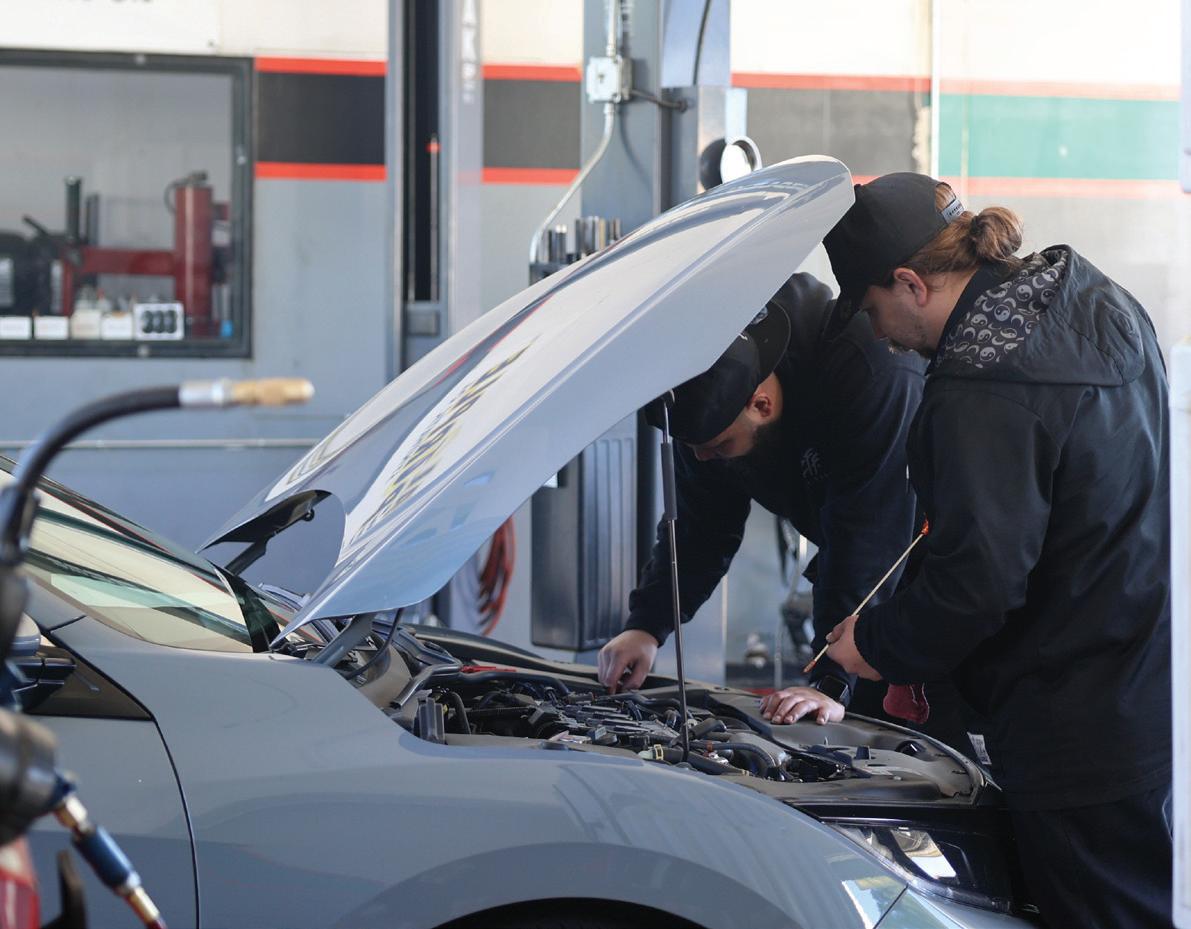
But the educational aspect goes beyond the automotive industry as well. Gutierrez is subscribed to the Rob Luna Wealth Academy to help his employees learn how to invest their money. Additionally, he offers sales training through a program with Andy Elliot, which is conducted via Zoom. Gutierrez says enlisting the help of these coaches is a worthwhile investment because it provides valuable insights to his employees.
“I’m willing to spend the money just so my technicians are improving every single day in a way that gives them the opportunity to make more money in the long run,” Gutierrez says.
Gutierrez says giving his team these learning opportunities helps keep everyone consistent when it comes to their approach to service. Jorge Puerto is an assistant manager and service writer at Rancho Express Lube, and he agrees with this sentiment. Puerto says their workplace is built on trust in one another and leaning on each other’s expertise to help the greater group. Learning from one another is encouraged and can be done in a productive way.
“These guys are problem solvers. They’re always looking to learn,” Puerto says. “Something comes up and they have like three or four different solutions and if not, they can always take a step back, have somebody else take the lead, and they’ll learn … they’re always trying to be er themselves as people and as technicians.”
Puerto says the whole team accepts constructive criticism well because it allows them a chance to grow. The team is
BW scorecard
willing to put in the work and consistently aim to be be er due in part to Gutierrez leading by example.
“I just taught the team that nothing in this world is easy and the challenges that we overcome every day only make us stronger in the long run,” Gutierrez says. “So that’s their mentality.”
Establish a Bond
Positivity is important to Gutierrez. He says the shop’s energetic environment is palpable enough to be felt by people outside of the team.
“I say that because even our customers when they come in the door, they feel the positive energy that we generate,” Gutierrez says. “Everyone is always acknowledging that we always look so happy and that’s just a good face for the company. That makes the customer keep
coming back, because we also provide great customer service just showing that everyone is happy to be here.”
He credits much of this happiness to the bond that his team has cultivated. The relationship building started before COVID during his early days of ownership. Having time together before the pandemic to establish a foundation of a family-like culture helped them effectively weather those tough times.
“Being here together … before COVID, it made our bond even stronger,” Gutierrez says. “Because before COVID, it was just four of us. Everything worked out [and] we didn’t have to get rid of anyone.”
This focus on togetherness has carried on from the beginning of the pandemic into the present times.
Rancho Express Lube isn’t just a workplace for this team, it’s a supportive
Energetic Team Culture Goal Oriented Forward-Thinking
24 NOLN.NET
Gutierrez mixes traditional automotive training through ASE with lifestyle options like financial training to round out the employee experience.
environment. This team cares about one another, which is something that can pay off for many reasons.
In fact, Gutierrez plans to see the impact of the foundation his team has created well into the future, as some of his goals include opening additional locations and bringing in more employees.
“I wanted to have a nice strong team, my base team,” Gutierrez says. “That way, when we bring in more technicians, they’re coaching every single one of them and we’re just adding to our army.”
Adding new employees is a process that
the entire team takes seriously. Once an interview is conducted, everyone’s feedback is considered to make the final decision.
“Everyone has a decision in this …. whatever everyone thinks, we have opinions, and if we think it’s a good fit we move forward,” Gutierrez says.
Gutierrez says he always considers the workplace mentality that he has already established when hiring new people. He wants to maintain the energy and motivation that is currently felt at Rancho Express Lube. People need to be a good fit for the culture in order for the shop to function.
Attitude is a crucial element of employment at Rancho Express Lube. Puerto says that the employees aren’t dragging their feet about reporting for a shift. Their commitment to the shop and to one another is genuine.
“These guys are hungry, and everybody wants to come in and work these days. That’s what I love,” Puerto says. “They wake up and it’s not like they’re upset about coming to work. They look forward to waking up [and] getting to come to work.”
Lead with Integrity
To maintain momentum as a leader, Gutierrez stays sharp for the sake of his team. He seeks out encouraging resources such as podcasts, which he listens to regularly. He cites Grant Cardone, Brad Lea, Andy Elliott and Patrick
Bet-David as some of the podcasters he keeps on heavy rotation. Gutierrez says that by listening and learning from others, he can bring a strong mentality of leadership into the workplace.
“These guys are so inspirational to me and that helps me stay motivated and I pass that energy right over to my team,” Gutierrez says.
In addition to being an encouraging force in his team’s lives, Gutierrez also offers practical benefits. The list of offerings includes paid vacation time off, medical, dental and vision insurance, 401K and commission opportunities.
He also incentivizes his team by offering group goal rewards like team dinners, attending sports games and free lunches on Saturdays. These rewards also serve as team bonding opportunities, and sometimes take place at popular spots like Top Golf.
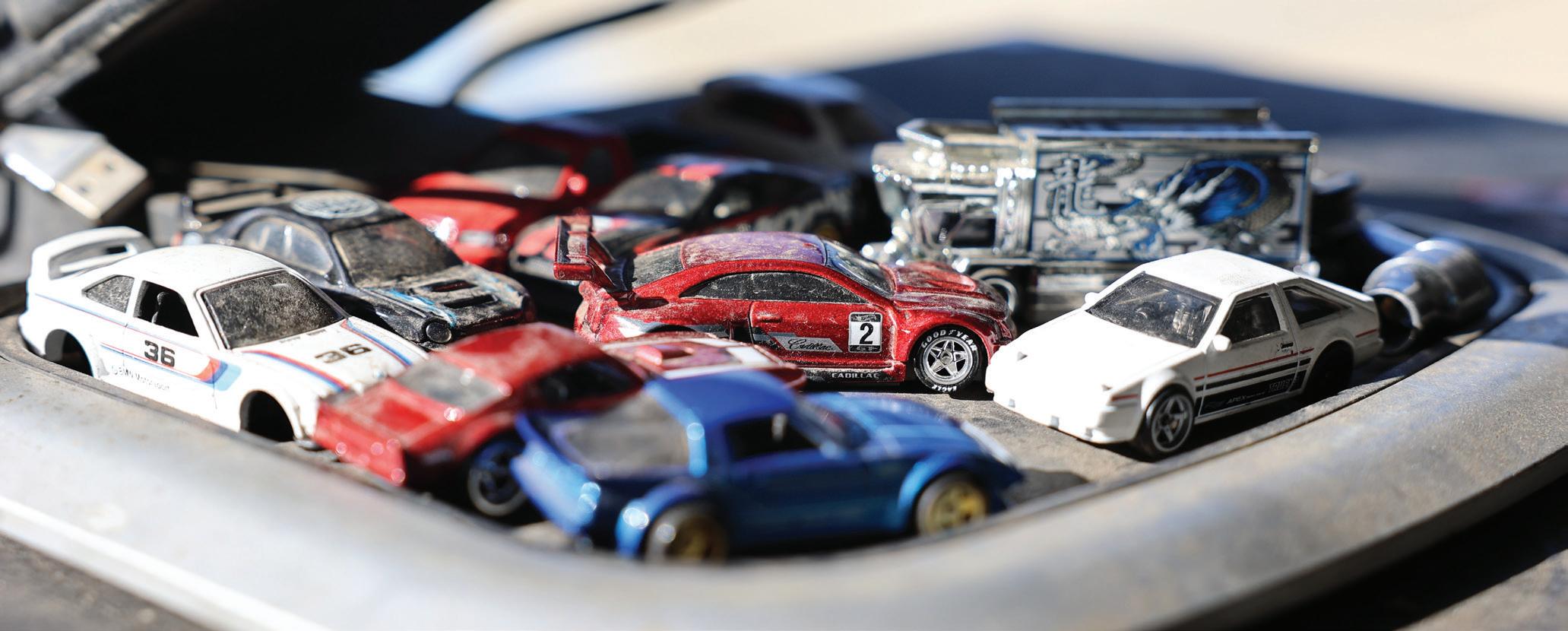
Gutierrez knows the difference that effective leadership can make in the workplace. He leads with direction and forges an intentional path for his employees to help them not only perform better in the workplace, but better in the long run of their career as well.
“The leadership at the end of the day, it comes easy just because these guys are willing to learn and are following in my footsteps, and that’s my goal,” Gutierrez says.
MARCH 2023 25
Indepent
SpeeDee Oil Change and Auto Service
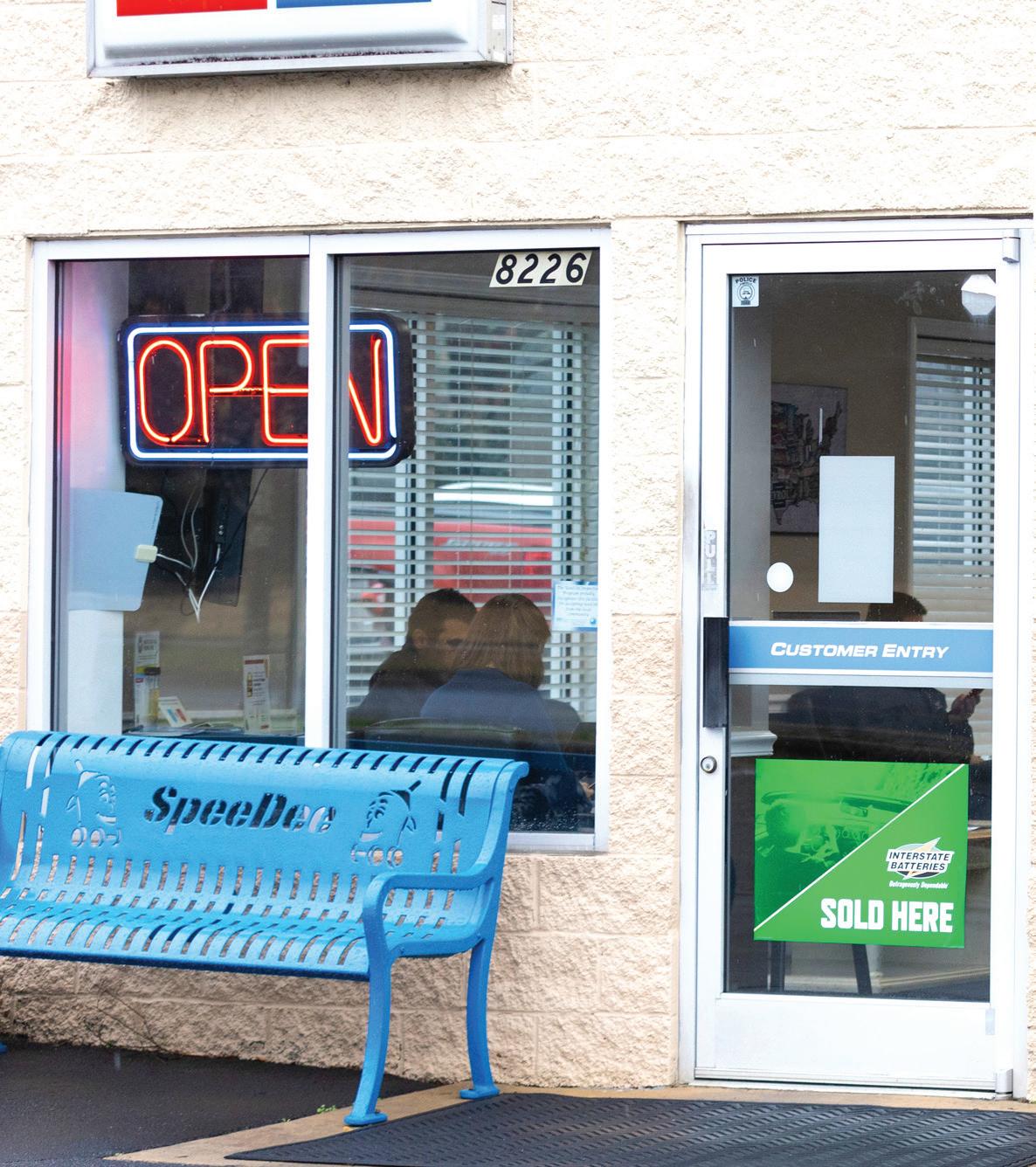
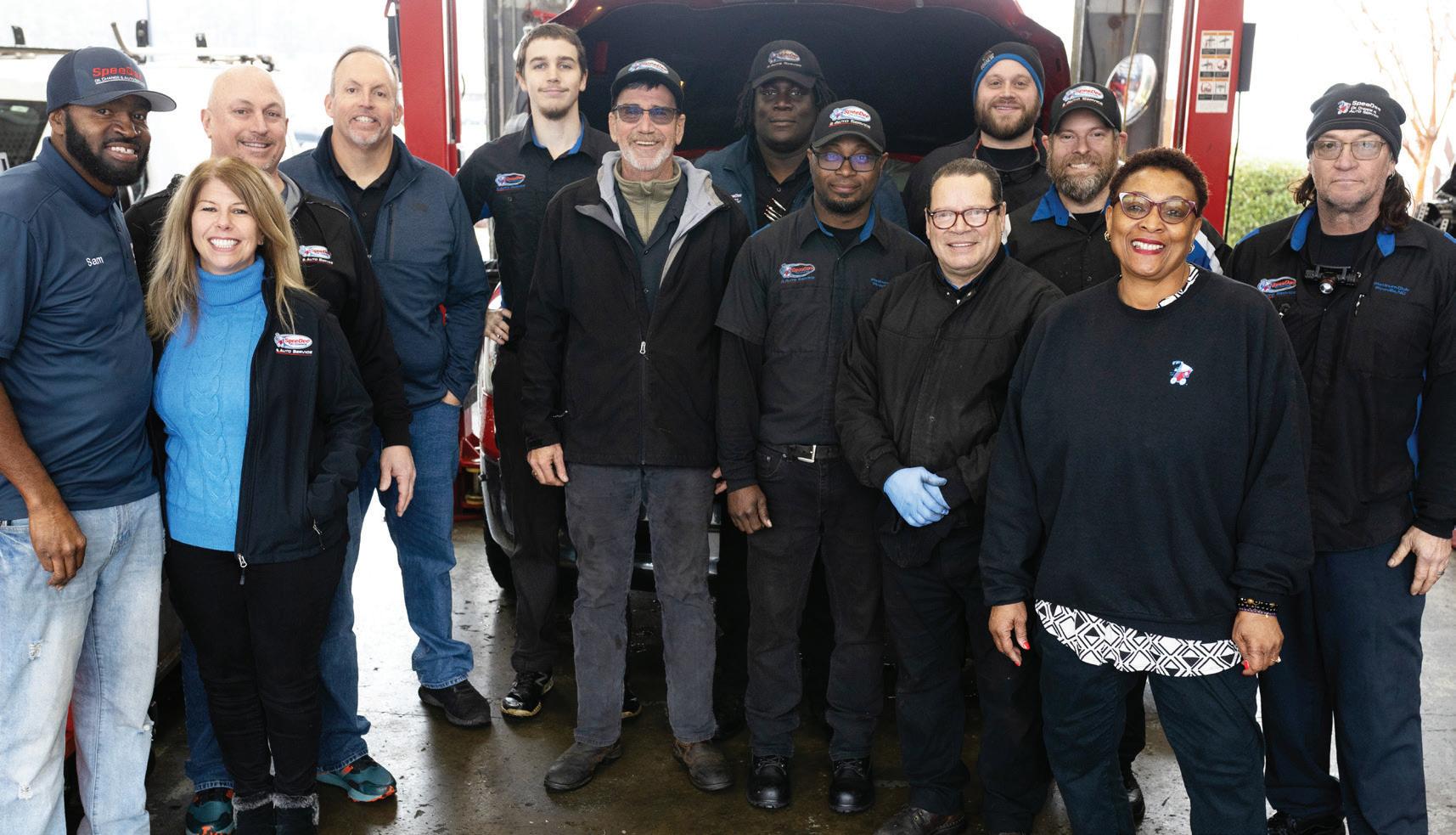
Professional respect drives solid culture at this franchise
Headquarters: Charlotte, N.C.
Locations: 5
Car count: 195 (network-wide)
Staff size: 62
Avg employee tenure: 3 years
Benefits include:
Paid Time Off Career Development and training Medical Insurance
Tool Reimbursement
Uniforms Salary pay structures
26 NOLN.NET
True to Form Franchise co-owner Steve Sarrantonio says that he leads from experience, drawing from decades in quick maintenance.
By Matt Hudson
good many factors must come together in order to run a top-performing shop network. It takes the right people, a healthy market, and the right leader to make it in the quick maintenance business.
Those factors came together for Steve and Kris Sarrantonio, owners of SpeeDee Oil Change and Auto Service of Charlotte/ Charleston. Today, their network of five stores in the Carolinas includes some leading locations in the FullSpeed system.
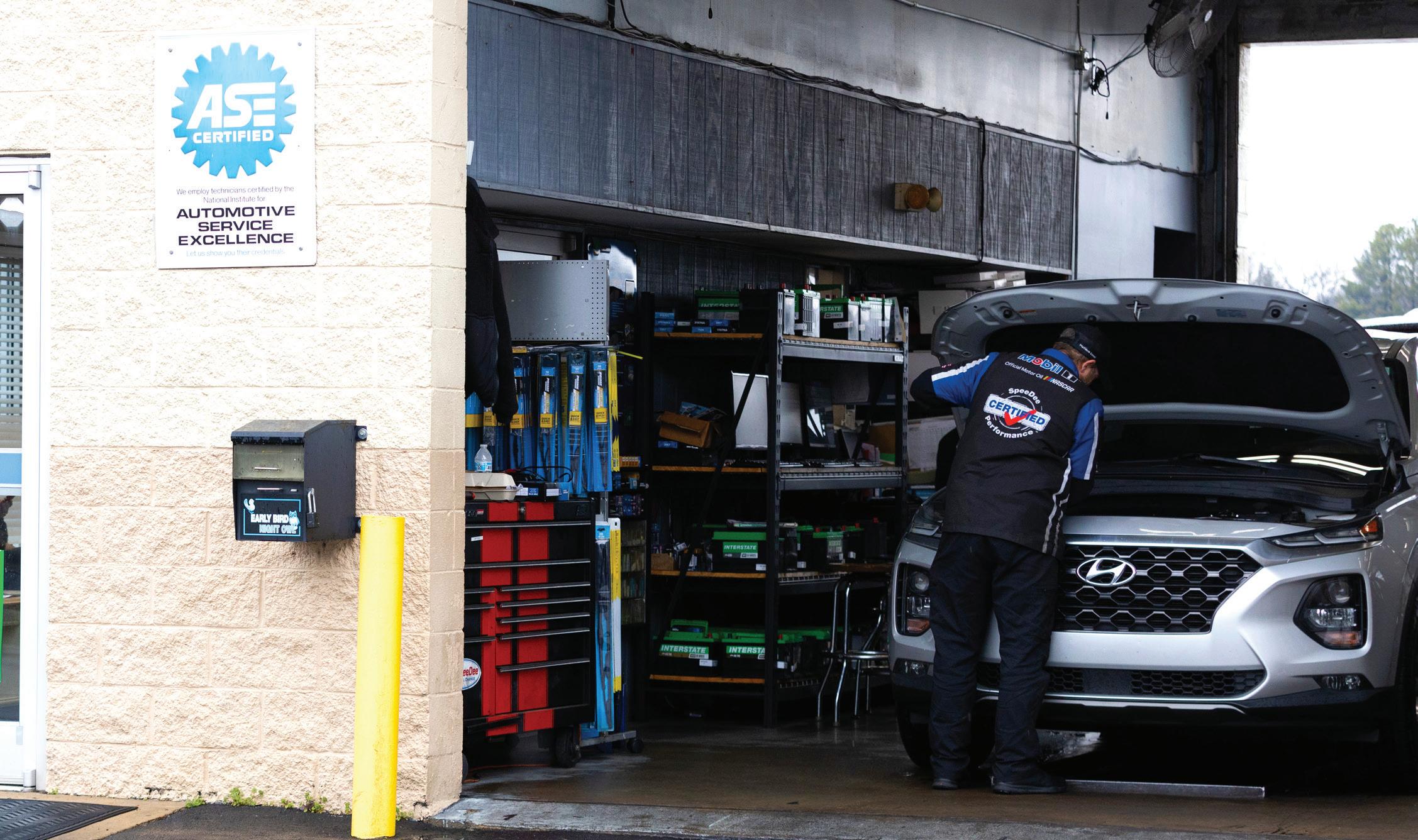
It took a lot of work to get there, and Steve Sarrantonio knows how he led his staff to that point. While he was growing a quick lube business, he also grew a
culture of teamwork that extended to the top of the organizational chart. Through experience, Sarrantonio knew how his leadership would affect his staff.
“Slowly but surely, you got people who would follow you,” he says. “When I started in Jiffy Lube when I was 19, I was a lube tech. I started in the pit. I understood what it was to work in the pit when I was 100 degrees outside, and the cars are coming in hot and you burn your arm. I've been there.”
What’s special about this franchise is that Sarrantonio’s team mentality shows in the way the company supports staff. And as the franchise saw revenues grow, the Sarrantonios boosted the benefits and
programs that would help build retention for long-term stability.
“You make that investment. That’s how I see it,” he says. “I don’t see that as an expense, even though it’s on the P and L. It’s a benefit that you have to offer them because you have to invest in it.”
This network is a great example of how building a Best Workplace can provide returns and growth for shop owners.
Starting Out
Sarrantonio started in the quick lube business in college. He spent years with Jiffy Lube and then worked for a Valvoline Instant Oil Change franchisee. He learned
MARCH 2023 27
Franchise
Photos By Charlotte Vibe Photography
many of his leadership lessons from strong mentors in those days.
“Probably 80 percent of how I treat my people is from previous owners who I’ve worked for,” he says.
He learned the importance of a team atmosphere, giving everyone a role and a stake in the success of the company. The Sarrantonios took those lessons with them about 10 years ago when they decided to purchase their first store in Concord, North Carolina.
One of the first big adjustments was to learn the repair side of the business. Much of Sarrantonio’s experience was in quick maintenance, but he found that there are different expectations on the repair side, both from customers and staff.
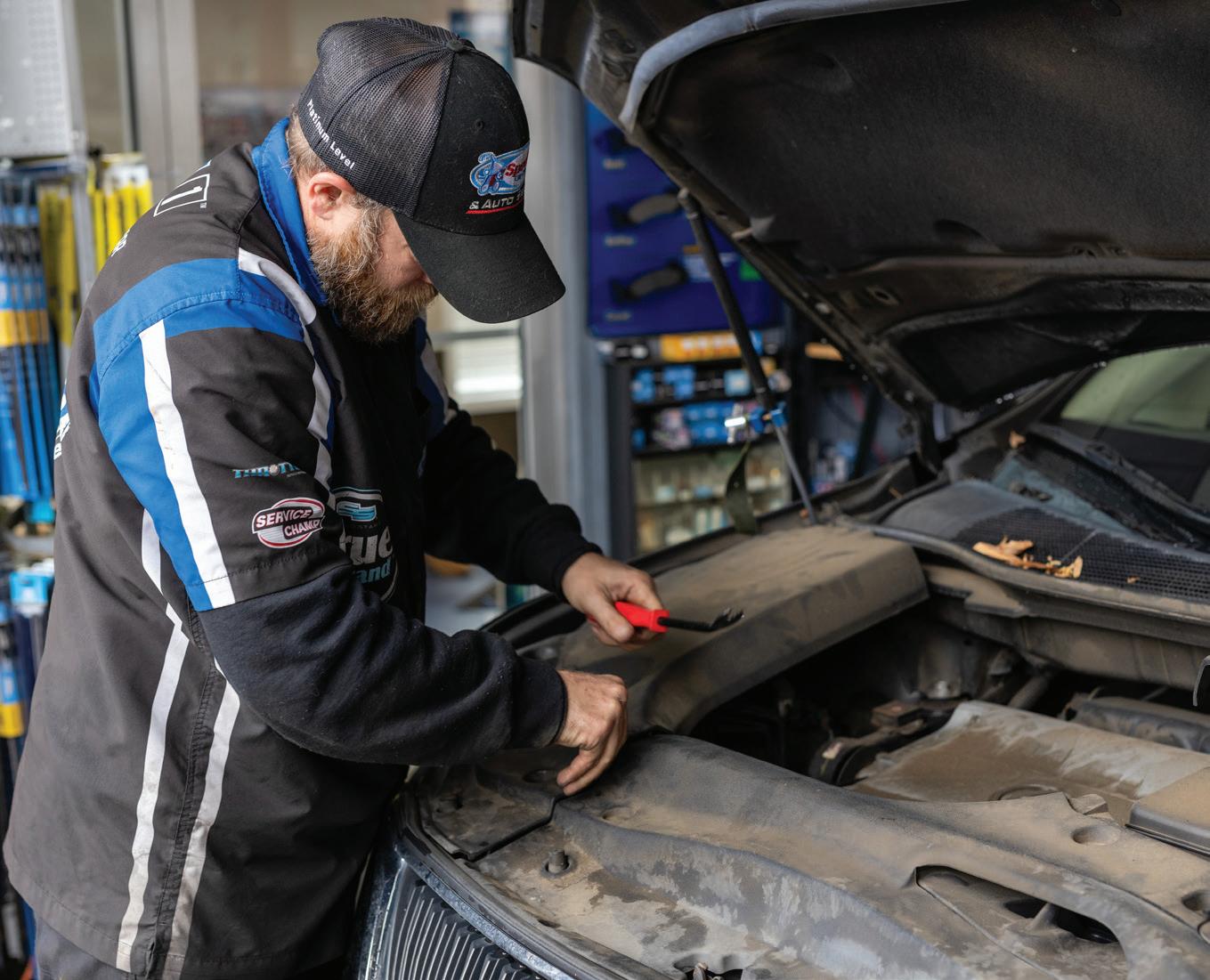
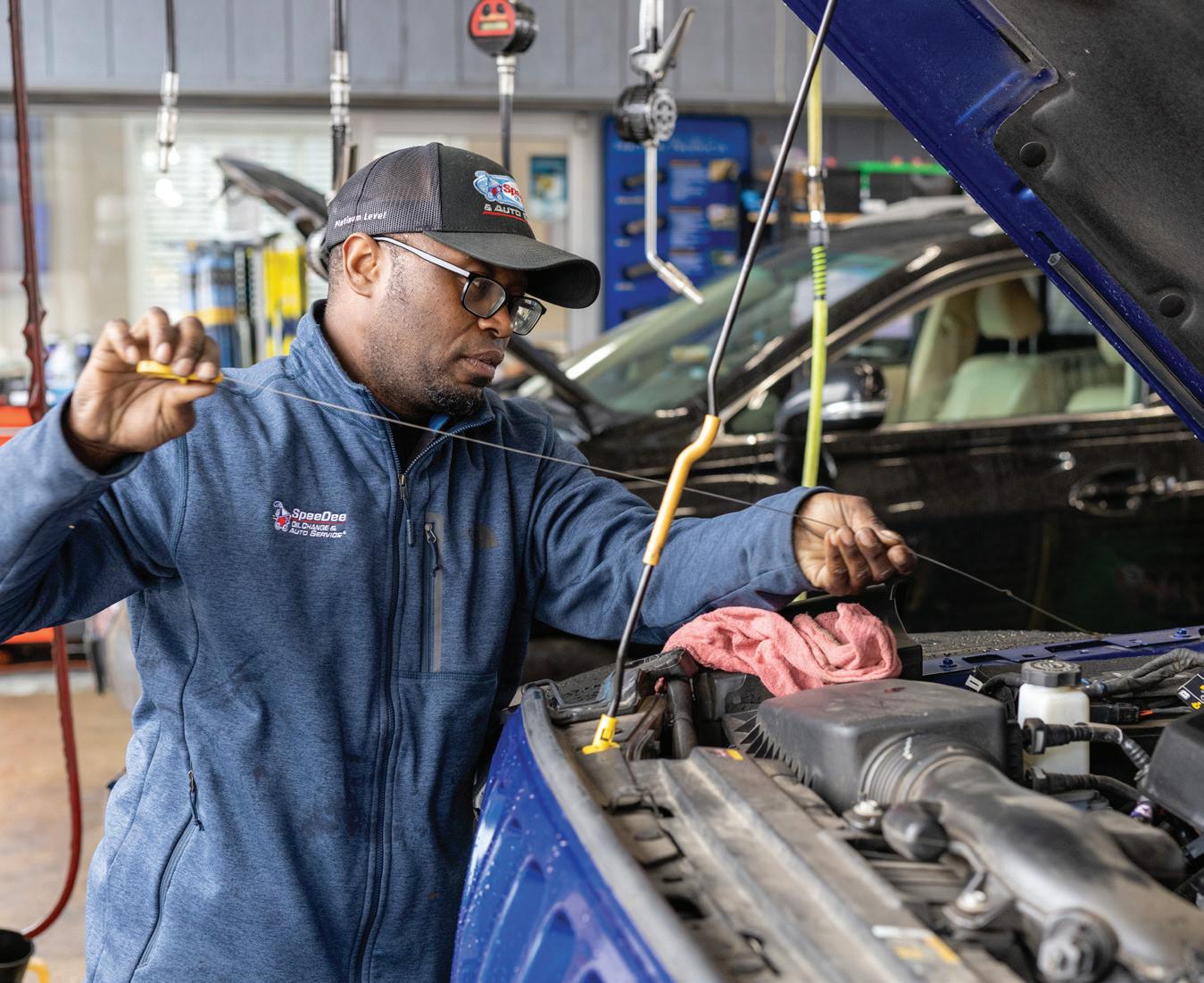
“I knew how to run the quick lube side very well,” Sarrantonio says. “And when I went to purchase SpeeDee, it was a li le bit of an adjustment for me as an owner.”
Sarrantonio was in the shop every day, working the pit, the lobby, or cleaning areas of the building. His wife, Kris, worked a separate full-time job and came in on the weekends to help customers. It was a grind, but Sarrantonio says that he knew they were in the salad days.
The shop network grew steadily. A er a couple years, they bought a second location. A couple years later, they acquired two more. The most recent location was added a couple years ago. The franchise network includes some of the highest-performing units in SpeeDee.
“The second store I purchased, it’s a great store,” Sarrantonio says. “We got it past $2 million this year, and this year it will be No. 1 in FullSpeed Automotive among all the SpeeDees.”
Providing for the Team
Payroll and benefits are expensive. There’s no way around that.
At the start, Sarrantonio wasn’t able to provide much in that department. But he had a manager who wanted to follow him to the new franchise, and he turned out to be a key asset.
“I was thankful that I was able to pay him $10 an hour. I did a very small bonus plan. Didn't offer any health or dental, life insurance,” he says. “Now he runs all three stores up in the Charlo e area.”
As revenues grew over the years, the Sarrantonios added be er benefits when possible. When they acquired a third location, they inherited a staff that had a
28 NOLN.NET
Team Culture Forward-Thinking BW scorecard Patient Investors Quality Minded
healthcare plan as part of their compensation. That’s when they started to take a hard look at what it takes to build a longterm team.
“You started to realize that it matters to a lot of people,” Sarrantonio says. “And I found now that we get much better quality employees over the last five years since we started offering those benefits."
Healthcare is a significant monthly expense, says Kris Sarrantonio, who oversees the bookkeeping. But when plan premiums go up each year, she says that the company picks up the added cost. These days, she says that employees pay about 30 percent of the healthcare plan cost, while the company handles the rest.
Sarrantonio sees a return on that investment, both on the books and in the quality of work he sees in the shops.
“In-house you can see it, even with ourselves and other employees,” he says. “I guess once you get to a certain income in your stores, you have to bite the bullet and do it. Your growth of sales will come, you just have to offer it.”
Going Further
Now a decade into franchise ownership, the Sarrantonios have built a solid culture within their network, and the employee support goes well beyond the paycheck and healthcare.
There are holiday parties and group outings, which often include prizes and giveaways to help build team culture. The company pays for uniforms, inspection training, and a couple company vehicles for leadership.
In multiple cases, the company helped make a big difference in employee confidence.
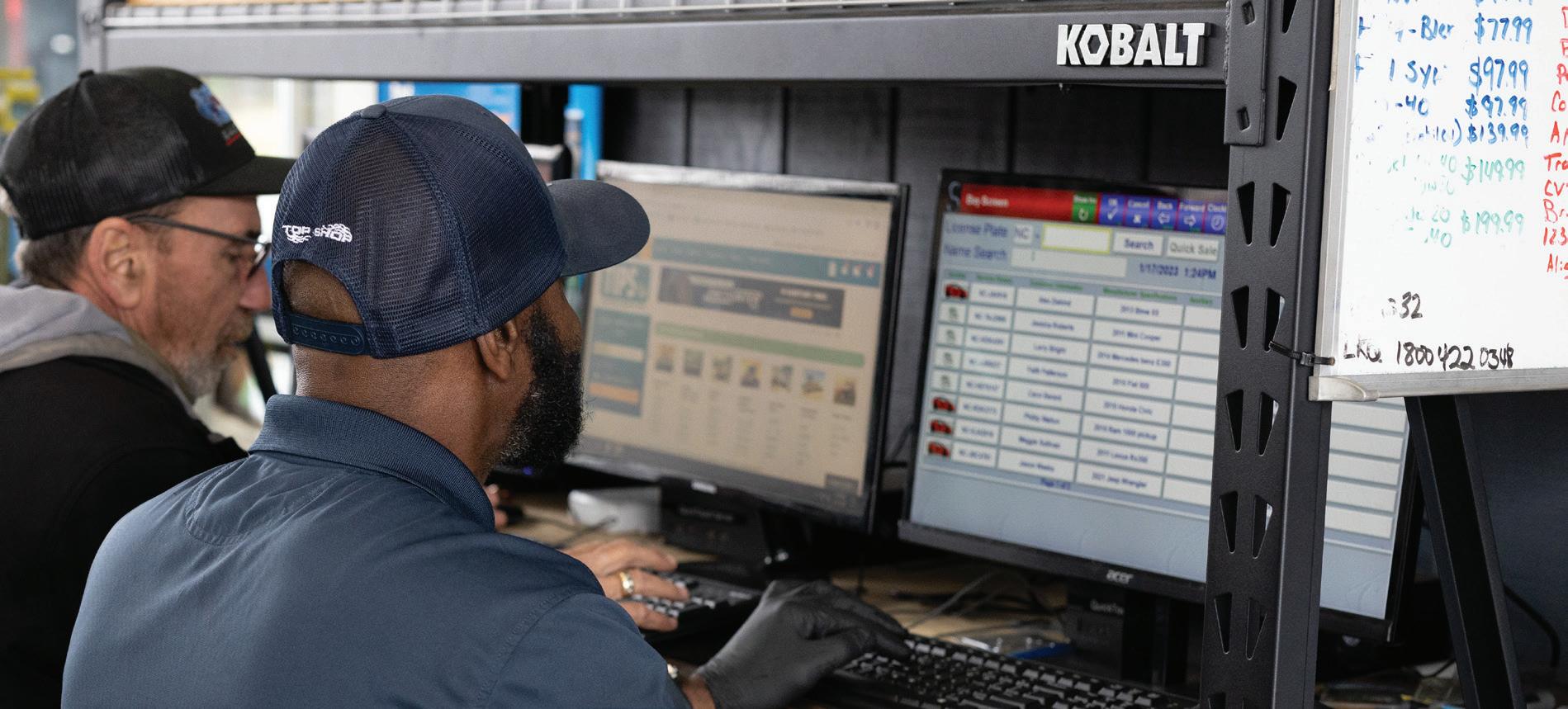
“I’ve had, I think now three employees, whose dental work we paid for,” Sarrantonio says. “And the confidence switch that went off, it was money well spent.”
And the Sarrantonios have been adaptable with other perks provided to employees. One change in recent years has been to make more employees salaried. Sarrantonio says simply that more employees are interested in that payroll setup, and in turn they feel more secure with the same pay coming in with each check.
Their shops had around six salaried employees a few years ago. Now it’s up to 20.
Another change happened to recruitment practices, and the inclusion of a referral bonus helped improve hiring. Sarrantonio says that some of the best new recruits have come through referrals.
“If you didn’t adjust the way you hire and the way you recruit your people, you’d probably change your hours due to the fact that you can’t get staff,” he says.
Takeaways
Years ago, when Sarrantonio was putting together a business plan to purchase his first shop, he put a random goal out there. He wrote that he wanted to reach five locations.
“I remember in it I said I had a goal of having five stores one day,” he says. “And I didn’t even plan it. I just said I’d like to have up to five stores in a small market.”
After growing the franchise for more than 10 years, Sarrantonio has five successful locations and strong operational leadership in place to handle day-to-day duties. Sarrantonio is often advising company leadership, helping out with tough decisions, and coaching other potential FullSpeed franchisees.
But anytime Sarrantonio sets foot in one of his stores, his fundamental leadership style carries through—meeting eye to eye, speaking from experience, and recognizing the value in each staff member.
“I had more empathy for the positions and the situations that I put them in, because I was once in that position,” he says. “I didn’t come in with a pocket full of money and bought stores.”
Through the growth and adaptations, Sarrantonio says this leadership style is what carried the business through challenges. And the Sarrantonio operation isn’t done growing just yet.
MARCH 2023 29
Franchise
Service with a Smile Steve Sarrantonio says that after paying for dental work for some employees, customer service confidence went through the roof.
We wanted to say...
THANK YOU
to everyone who nominated operators for the 2023 Best Workplaces Award!
30 NOLN.NET NOLN BEST WORKPLACES 2023

© 2022 – American Petroleum Institute, all rights reserved. API, the API logo, the API Certification Mark (“Starburst”), the API Service Symbol (“Donut”), and the API Certification Mark (“Shield”) are either trademarks or registered trademarks of API in the United States and/or other countries. API Marketing & Communications: 2022-036 | PDF API.org/EOLCS | MotorOilMatters.org | DieselOilMatters.com AUTOMOTIVE MAINTENANCE SHOP OWNERS AND THEIR CUSTOMERS CHOOSE API’S LICENSED OILS TO IMPROVE ENGINE PERFORMANCE AND FUEL ECONOMY, FIGHT EVERYDAY WEAR AND TEAR AND HELP REDUCE EMISSIONS. APISERVICESP RESOURCE SAE 5W-30SNPLUS CONSERVING 0W-16 SAE AMERICAN PETROLEUM INSTITUTE CERTIFIED FOR GASOLINE ENGINES ª API-LICENSED ENGINE OILS DRIVE PERFORMANCE API-licensed oils display an API certification mark to signify the highest performing oils. To search the complete list of licensed companies and products, visit our licensee directory at: API.org/EOLCS

jiffylube.com/sell WE’RE LOOKING TO GROW. ARE YOU LOOKING TO SELL? (346)325-9987
ATTRACTING EV CUSTOMERS
BY ENID BURNS
IN THE FIRST HALF OF 2022, A TOTAL OF 4.3 MILLION NEW BATTERY ELECTRIC VEHICLES (BEV) AND plug-in hybrid electric vehicles were delivered worldwide. The number of EVs purchased by American consumers is on the rise even ahead of the push from Washington to transition Americans to electric vehicles. In the U.S. and Canada, EV sales increased by 61 percent, according to a report by EV consultancy group EV-volumes.com. In the same timeframe, sales of combustion engine vehicles decreased by 9 percent year-over-year.
EVALUATING THE MARKET – CHANGE IS COMING
By fall of 2022 U.S. consumers had 32 EV models to choose from, a number projected to see a fourfold increase in the next two years. While Tesla’s website and other company information states, “Your Tesla vehicle does not require annual maintenance or regular fluid changes,” the advice is followed up with the stipulation: “Check your owner’s manual for latest maintenance recommendations for your vehicle.”
Such sage counsel to consumers may be an overstatement.
“If you look at some of the materials they have produced from the company, Tesla says there is no maintenance required,” says Craig Van Batenberg, owner of the EV educational company Automotive Career Development Center. “It’s a big lie.”
While there are few fluids required by EVs, and certainly no need for oil changes, there are still many regular maintenance tasks that quick lube shops can offer to “future-proof” the business. Many of these tasks are the same for traditional vehicles, such as filter replacement, suspension checks, and tire rotation. The tasks may be the same, but it is a good idea for the staff to receive the proper training to address the needs of EV vehicles and their owners.
Training Your Team
Though some of the services are the same, EVs should be handled differently, which requires specific training. Safety is, of course, paramount to any training program. The Automotive Career Development Center (ACDC) run by Van
Batenberg starts with an evaluation to gauge interest and skill level, then moves on to safety.
“Seeing as we have no licensing or regulation in the U.S., my major concern is safety training. We get that done first,” Van Batenberg tells NOLN.
The training center, which offers in-person and online classes, awards safety certificates to technicians who complete the training.
Before any quick lube shop sends a technician off to learn how to service EVs, it is important to make sure that employee has an interest. There is a certain allegiance to the gas-powered automobile, and those who are resistant to broaden their skills to include EVs may drag their feet during training.
Those employees who are more motivated can lead the charge to servicing EVs in the shop. It is also advised to set up training during shop hours, even if it means the employee is not available during service hours.
“I coach the owners to pay them for this,” says Van Batenberg, referring to the time a tech spends on classes whether they are virtual or in-person. “If they like it, they can spend more time at home learning.”
Investing in the Future of Automotive
As more EVs hit the road, the need for skilled shops will quickly emerge. Investment includes training as well as equipment. Initial investment starts at about $500 to $1,000 to get equipment, plus the requisite training. While some of the tools may be the same as those the
shop already has, a pair of high voltage gloves is just one of the necessary additions a shop can expect to invest in.
The timeline to get up and running is also somewhat fast.
“If it’s a small business, they can get this done in six months, they get things done faster,” explains Van Batenberg. “Because there’s not a huge expense on their part, they’ll probably get their money back within a year.”
Getting the Message Out
Training is essential for technicians, but also crucial for employees at the front who work with the customer.
“The service adviser has to be fully trained in the language,” Van Batenberg says. “The customer-facing is the most important, get all that done before you advertise.”
The race is to get a program in place before the EV customer realizes there is a need. Then start a marketing campaign whether that is signage, advertising, updating the shop’s website or contacting customers directly.
One of the best ways to advertise service to the EV market may be simply to install a charging station out front.
“To attract the business, you need to have a charging station out front,” states Van Batenberg.
A finishing touch that offers a positive experience is charging the car before it’s returned to the customer.
“When people bring in their EVs, they want the battery topped off for free,” Van Batenberg says. “Clearly EV owners expect you to plug in the car when it shows up, and have it full when they pick it up.”
Shops should also expect a learning curve. However, the sooner a shop expands to servicing EVs the better footing they will be on.
“You have to be in the business,” says Van Batenberg. “Every day you’re not in the business you’re going out of business.”
MARCH 2023 33
PIT STOP
S
KNOW YOUR COMPETITION
Use what they’re doing right, but don’t merely copy
BY PETER SUCIU
BUSINESS EXPERTS KNOW THAT competition is a good thing. It gives the consumer a choice, but also ensures that businesses must truly strive to do their best to stand out in the marketplace. Almost any quick lube operator is going to have some competition, from dealerships to small “mom and pop” repair shops to other quick lube operations.
These shouldn’t be looked at just as rivals—friendly or otherwise—but as a potential source of insight, and an opportunity to learn how to run your shop better. Unless the competitor down the street has an empty lot and a going out of business sign on the front door, there is something you can learn from them. Even if they are going out of business, there is an opportunity to learn
what they did wrong and to avoid their mistakes and missteps.
The first thing to understand is that America is built on competition.
“We’re always looking to reinvent the mouse trap, but perhaps someone has already discovered how to do it better,” explains Joe Marconi, executive council member and industry consultant at Elite Worldwide, Inc.

34 NOLN.NET
LEADERSHIP GETTY S
Marconi tells NOLN that we can look at the basics, such as how fast a rival shop gets customers in and out, how they advertise to draw in new business and even how their shop looks from the street. It would be unwise not to check out the competition.
“Whether it is Coca-Cola looking at Pepsi-Cola, or Ford looking at General Motors, companies do pay attention to what their rivals are doing,” says Marconi. “You should see what your competition is doing, and pay attention to it. But, the key to this is to be careful not become just like the competition.”
Coca-Cola famously did that in the 1980s when they launched “New Coke,” which was closer in taste to Pepsi-Cola, and almost lost their top position in the process. Mirroring the competition isn’t going to help you stand out.
Visual Recon of Quick Lube Rivals
It doesn’t take a major reconnaissance effort to determine what the operator down the street is doing, as even a quick visit can help you determine if they run a tight ship.
“I look at everything,” said John Wall, owner of Checkered Flag Express Marysville in Marysville, Ohio.
He tells NOLN that then he goes through his checklist to see how the competition stacks up.
“Is the shop clean and inviting? How do you wait on you service (in car or a waiting room)? When they have no cars, are their people outside smoking? Is the restroom clean? Turnaround time is important too,” Wall continues. “I try to follow their advertising and social media. I definitely keep track of their pricing.”
In some cases, this information may not require a covert operation.
“I had no qualms of calling up the shop and talking to the owner or manager when I was running my shop,” says Marconi. “I would ask how do they
bring in customers, and what services they offered.”
In some cases, knowing the competition can mean referring customers you can’t serve, and perhaps getting those referrals down the line.
Different Types of Competition
Another consideration is that there are different types of competitors in the market today. The way a dealership does things is going to be vastly different from the small family-owned repair shop. This isn’t to say that lessons can’t be learned from them.
“Dealerships are slow, and have you wait in a waiting room,” says Wall. “Walmart takes your car and has you wait or better yet, shop. We are a quick lube and I especially compare our setup to other quick lubes. I also look at tire shops too. They take your car and have to lift it. So again, it’s slower.”
At the same time, it is wise to consider what dealers can do that you likely can’t.
“You can learn from dealership, but you can’t be anywhere close to what they can do,” suggests Marconi. “The Lexus dealer can loan out 20 cars, and the BMW can wash every car they service. But it is important to understand that the dealers represent these brands, not the community.”
In fact, that is often where the local mom and pop is able to stand out. They’re the local guys that know every customer’s name. Quick lube operators can thrive by being more like the local repair shop than the dealer—but perhaps with a better waiting room.
“Being the local guy has a lot of advantages,” says Marconi. “That is a tremendous plus in the market to be a local brand that everyone in town knows. Local shops can also capitalize on being part of the community.”
Learn But Stand Out
It all comes back to knowing what
the competition is doing right, what they might be doing wrong and then to determine how to stand out, not emulate. Again, it is much like how Coca-Cola made a misstep in trying to fix what really wasn’t broken in the first place.
Likewise, it is important to remember that McDonald’s may be the top fast food franchise in the world, but it isn’t because it has the best hamburgers.
“They never say they have the best burgers,” says Marconi. “They are about offering a quick service at a reasonable price that feeds you and gets you out the door.”
Brands have tried to copy it, and emulate it. It could be argued that Taco Bell is basically a McDonald’s clone that serves tacos, while Chipotle now stands out because it is about making custom burritos.
“This about bringing something different to the table,” Marconi continues. “You have to do something more than the guy down the street. Once you simply copy them, you will lose credibility and customers aren’t going to come back.”
Thus if you see a shop with a line of cars, and you’re struggling to get people to pull in, it likely isn’t because of the guy in the gorilla suit twirling a sign outside of the shop across the street.
“To attract more customers when the competition is doing better, you need to recognize and ‘fill in the blanks’ what you are missing,” says Marconi.
Wall adds that it could be simple things as well, such as their “Pricing and customer service skills. What do they sell, such as types of oil?”
Once you hit upon what they’re doing right, make it your own.
“As I said, it is important to study the competition and what they bring to the table,” Marconi says. “But in the end it is about the customer experience that will make you stand out.”
MARCH 2023 35
MAKE THE MOST OF THE GREETING LINE UPDATE
A long line of customers isn’t always a “happy problem”
BY PETER SUCIU
THERE IS AN OLD JOKE ABOUT THE unemployment line: If it was actually moving, it wouldn’t be a line, it would be a parade! Depending on the time of the year, and even time of the day, chances are the shop is going to have a line and it could even be a long line. It would be easy to say the line of customers is a good thing, as it means business is strong and customers are even willing to wait for service.
However, a long line of customers shouldn’t simply be seen as a “happy problem,” it could be an opportunity that results in happy customers and return business. To ensure customers are made to feel welcome, have their vehicles serviced quickly and back on the road could be the first step in what could be a customer that will be back again in the future.
The Challenge
As more customers do their shopping from their phones, and are used to self-checkout at many retailers, they’re increasingly less patient while waiting in lines. Simply put, post pandemic, regardless of the time of year, no one likes waiting in line, and while customers lined up out of the door at lunch time at Chipotle is almost expected, quick lube shops are based around fast service. Long lines could actually
make customers decide to come back another time, which can translate into them not actually coming back at all. Failing to address this problem is simply bad for the bottom line.
The business model of the quick lube industry is built around fast service, so a line of customers is actually counterintuitive. It isn’t what many customers expect, especially for those trying to run a few errands during lunchtime—and still plan to grab a burrito before heading back to the office. When hunger is involved, and there is just an hour break at lunch time, one line is going to take a priority and it isn’t the oil change.
Therefore, it is very important to keep the line moving and the customer happy, says Jeffrey Crafton, director of quick lube operations for the Sayle Oil Company.
“That’s what sets us apart from dealerships and other business models,” Crafton tells NOLN. “Customers come to us so that they can get their oil changed quickly and get back on the road. If you’re unable to provide that to them, they will go on down the road to someone who will!”
The Solution
Long lines can be a headache for any business model that relies on quick
service, yet there are a number of ways to make the most out of the time the customer spends waiting. This can include assigning someone to walk out, greet the client, and even perform some tasks. That’s something no fast food restaurant could ever hope to do.
Whatever services can be done before the car reaches the bay will reduce the time it spends inside the shop, and therefore the time the customer spends waiting. It will in-turn make the lines move faster.
“This does happen at our shops,” explains Crafton. “We try to greet every customer within 30 seconds of them hitting the lot so that we can figure out what service they are looking for and so that we can direct them to the correct bay. We feel like acknowledging the customer as soon as possible is important. They are more likely to stay if you get to them right away.”
Ideally, this could be the manager who does the greeting, which can help show customers that their needs are being taken seriously. The manager is also the best person to offer apologies that there is a line, and that service will be done as quickly as possible. That can instill satisfaction with a customer, especially as any apology for delays comes even before they’re forced to
36 NOLN.NET CASE STUDY S
GETTY
wait. If possible, the client can be told how long they might be waiting.
“We typically like for our store managers to greet each customer, but that doesn’t always work,” Crafton says. “When the store manager is unable to, one of our techs will greet the customer to find out what service they are in for. We will also go ahead and start checking tires and fluids so that the customer feels like we are taking care of them from the time they get there, until the time they leave.”
The Aftermath
Handling some of the tasks while the customer is in line won’t speed it up enough that it will actually resemble a parade, but it could help reduce the time once the customer’s car is being serviced. It also conveys the urgency

the shop sees to address the customer’s service.
“This also helps for speeding up the process once the customer is in the bay,” says Crafton.
That could actually make the customer feel like the team was able to speed up the service, yet without cutting any services. Moreover, many customers may not count the waiting time as “service time,” so the time in the bay may come as a happy surprise. Crafton suggested it can also make the customer feel like they’re important, because their needs are being attended to so promptly.
The Takeaway
Determining what works best—such as what services can be addressed and who is able to greet the
customers—could require some trial and error. The last thing that any solution should bring is a new problem.
“I can’t think of any issues in the greeting line other than one customer getting pulled into a bay before someone that was there before them,” suggests Crafton. “In instances like this, the greeter has to be paying attention to who was there first, so that they can maneuver the customers around.”
However, even issues like this can be addressed once a system is established and the process becomes second nature. In the end, by making the most out of the greeting line can make it move faster.
“It helps speed up the process,” he continues. “In our line of work, speed is everything.”
MARCH 2023 37
ETYMOLOGY OF ADAS
In this new technology area, one feature might have multiple names
BY MARAYA KING AND MELISSA STEINKEN
KELLY FUNKHOUSER, PROGRAM FOR vehicle interface and head of connected and automated vehicles at Consumer Reports says trying to talk about advanced driver assistance systems across multiple automakers is nearly impossible at its current state.

Due to the ongoing confusion when it comes to naming conventions in the ADAS realm, Partners for Automated Vehicle Education hosted a webinar last week that not only pointed out the lack of uniformity in naming conventions, but offered the industry’s first stepping stone for standardization.
Let’s say we’re making brownies, Funkhouser poses.
“You have your own recipe to make brownies and I have my own recipe. Mine might be different than yours, but eggs are eggs and sugar is sugar and there is no confusion on either end about this.”
When talking about ADAS, it is not nearly that simple because each OE has its own naming convention. What Funkhouser found is that even when technicians were using the same terminology, they meant two different things.
When it comes to baking brownies, even if the recipes differ, the final product is still the same—freshly baked brownies.
By standardizing the lexicon surrounding ADAS, the hope is that even
though repairs may be done in a variety of ways, the final product is still the same: an accurately fixed vehicle.
Greg Brannon, AAA’s Director of Automotive Engineering and Industry Relations, says cruise control has 20 different names across the industry, despite being around since 1948.
“It is very easy for consumers to get confused, especially in higher levels of automation,” Brannon says.
It is precisely this lack of communication that could result in an ineffective, and potentially dangerous adjustment of your car’s ADAS capabilities. For the consumer, it is not only about being able to identify various parts of their vehicle, but also knowing how they should be functioning on a regular basis.
Kelly Nantel, vice president, communications and advocacy for the National Safety Council says, “Uniform speech is the first step in helping the consumer understand how the technology works so they know how they can best use it.”
Brannon fears that car owners are unaware of the scope of features their vehicles have, let alone how to identify them.
“We cannot have these conversations if we don’t even know what we are talking about,” he laments. “If we cannot decide what to call these individualized systems, how do we ever work on them beyond that?”
Nantel says this is precisely the question that is driving the innovation.
“First we have to create a common narrative, then we can dive into how they are supposed to perform,” Nantel says. But creating a common narrative is easier said than done when working across a plethora of vendors, parts manufacturers, and automakers.
Unifying the Narrative
The first step is to normalize the diction, says Funkhouser.
“We want to describe these systems in a convenient way so that the customer can adopt it into their own vernacular and feel comfortable using it,” she says.
The hope is that as individual consumers begin adopting the narrative, more will follow.
Brannon also emphasizes the importance of adopting the terminology throughout your entire company. He says the power of individual organizations talking with the media and the industry in general, gets the ball rolling towards uniformization.
As of now, there is only a preliminary list of industry-wide terms but it could not have come sooner. Given today’s technological capabilities coupled with the rapidly-evolving industry, Funkhouser says there is no time to waste.
38 NOLN.NET
GETTY ADAPT S
The ADAPT: Automotive Technology Summit is a three-day event covering the most progressive and pressing trends disrupting the industry. Learn more at adaptsummit.com
“Everything is moving so quickly and we do not have the luxury to wait for everyone to catch up, we all have to get on the same page as early as possible while we are developing the technology,” she says.
The Right Space

For Mark Kipfer, co-owner of Auto Glass Express in Berkeley, Calif., setting up a space for cars with ADAS repairs, involves essentially building a virtual box around the vehicle.

He has an interface with the vehicle’s computer and a pad that has the software on it. When the operator runs through the system, it will inform him or her, how to place the targets and which targets are required, including the sequence of where to place those targets. Once the vehicle sees the targets, it can calibrate the camera.
In the designated shop space, the


vehicle has to be level, the frame has to be on square with the vehicle and the targets need to be placed correctly.So, there’s no physical adjustment of the camera but there is physical adjustment of the camera.
For Jacques Navant, technical director for Don’s Mobile Glass and The Calibration Station in Modesto, Calif., the process involves a tightly controlled environment. One example is a controlled light source, which includes an enclosed, open work area without natural light so the technician has complete control of every aspect of the light source.
“You have to have a controlled light source, direct sunlight or refractions from other surfaces can give you the false impression of a job done complete and accurate, or a failed calibration,” Navant says. “If your light source is distorting the target that your camera is trying to pick up and
calibrate to then you’re not doing a true, accurate calibration.”

He says the layout for these has to be a large, open area. For shops performing repairs on more American vehicles, they might need a bigger area because they require larger sized targets to complete the calibration.
Breaking down what you need for your space:
• Designate one stall or bay for only calibrations.


• Set up off-white curtains around the bay that can be pulled across the whole area so that nothing visually can confuse the camera.
• Make sure you have a designated space that is at least about 30 feet deep and 15 feet wide.





• Have a controlled light source.
• The space needs to have blank walls and blank floors with no distinct lines or patterns.

MARCH 2023 39 Over 2,000 Quick Lubes Sold! O ver 2,000 Quick Lubes Sold! ACS is pleased to announce the successful sale of another
With total sales of
1 billion dollars, we are proud to have been a part of so many successful transactions. 1 Quick Lube Wisconsin SOLD! Exit Planning | Growth Planning | Reorganization Financing & Loan Placement | Evaluation AutoCenter Sales 800.874.5793 info@AutoCenter-Sales.com OLD! 2303NOLN_AutoCenterSales.indd 1 2/7/23 2:31 PM 2302NOLN_CorporateConsultants.indd 1 1/18/23 3:12 PM
business.
nearly
AP SERIES: A STEP FORWARD IN TWO-POST DESIGN
Delivering more versatility, safety, and power – allowing you to push the boundaries of what’s possible.
The all-new BendPak 10AP two-post lift features a revolutionary design that factors the best qualities of today’s two-post lift types into a completely new concept in car lift engineering. What you get is a 10,000 lb. capacity lift that has been designed for extreme use, high loads, enhanced safety and efficiency.
Like the rest of the AP Series, the 10AP offers the convenience of wide or narrow installation in one configurable package thanks to our newly designed Bi-Metric™ arms. These arms are triple telescoping both in the front and rear allowing real, practical symmetric or asymmetric loading. The front arms sport a dogleg design which means that they nest to a much shorter length than traditional arm designs. Innovation like this lets you easily get the arms in place no matter the loading configuration. With unibody vehicles dominating the market and EVs quickly becoming more and more common, vehicle lift points have been moving further outward, leaving little room for error. You need a lift which lets you place the pads at an exact point, like the 10AP.
This ALI certified lift has been third party tested and approved to meet or exceed a number of standards for lift safety, such as load capacity, arm strength, and fail-safe features.
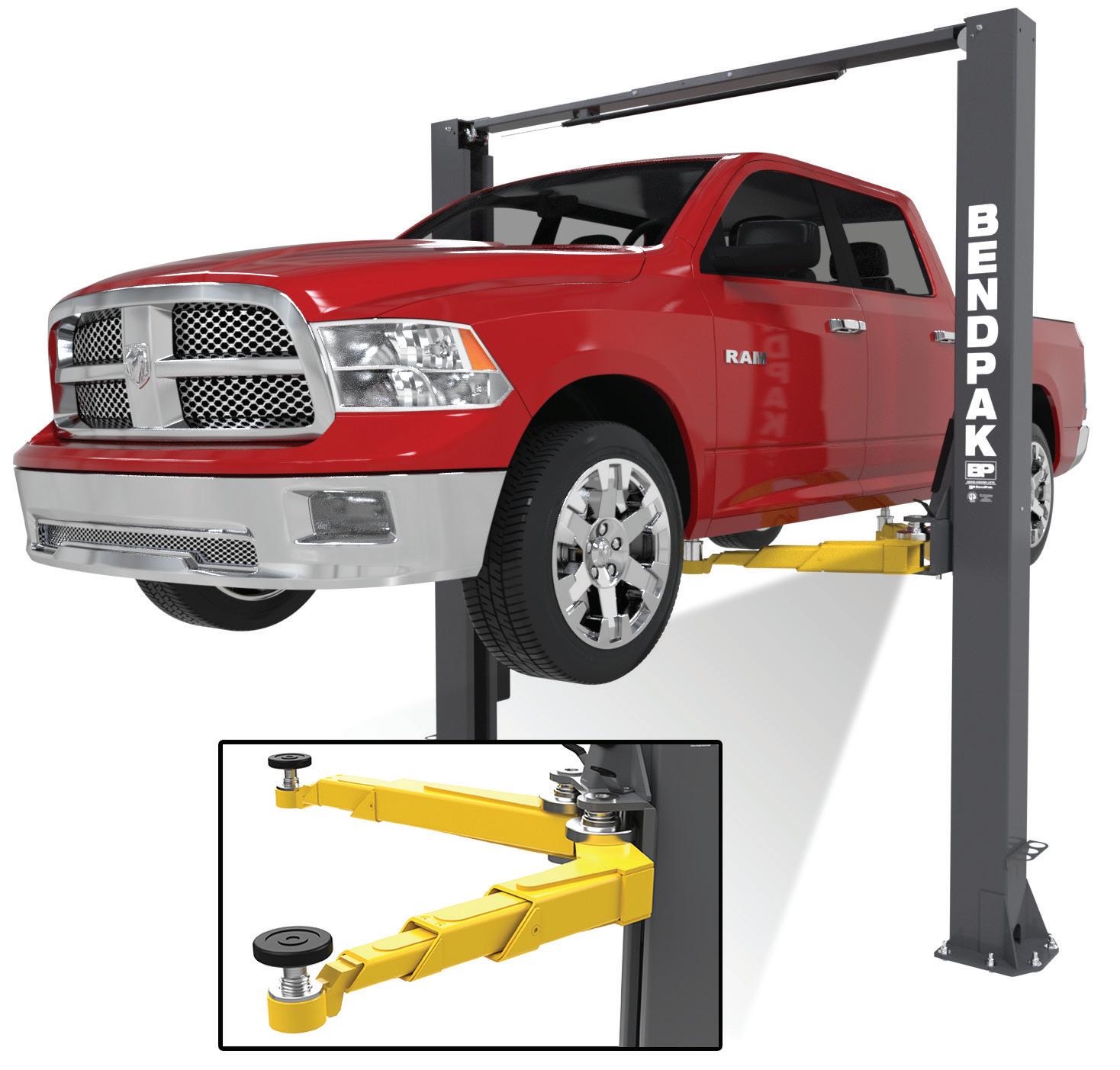
For more information, visit https://www.bendpak.com/car-lifts/two-post-lifts/10ap
OIL EATER© LAUNCHES AWARD-WINNING OVERNIGHT STAIN REMOVER
Chicago, IL KAFKO International, Ltd., manufacturers
of
Oil
Eater© Cleaner/Degreaser announces OIL EATER© OVERNIGHT STAIN REMOVER. With 30+ years’ experience marketing cleaning products to heavy duty users, Kafko has unique insight into the toughest problems these customers face at home and at work. By listening to these customers, we discovered a gap in the market for products that can effectively treat oil & grease stains on porous surfaces like concrete, asphalt and brick. Traditional cleaners struggle with these types of surfaces, which is why so many driveways and garages are covered with unsightly oil stains from a leaky vehicle. Using Kafko’s expertise in oil cleaning technology, Oil Eater is introducing the first concrete cleaner that uses oil-eating microbes to clean deep beneath the surface and effortlessly restore driveways & garages to a like-new appearance. This product has made an early splash with industry professionals who voted Overnight Stain Removal a winner of the 2022 AAPEX New Product Showcase.
Quick Facts:
• 2022 AAPEX New Product Showcase Winner
• Oil-eating microbes clean beneath the surface
• Pulls out oil stains in 3 effortless steps: apply, dry & sweep away
• Helps restore concrete, brick, asphalt & more
• Restores fuel pads, parking garages & driveways in 12 hours
• Designed to Protect Our Environment
40 NOLN.NET PROMOTION
call
253-2363 Call 1-800-528-0334 or Visit www.oileater.com NEW PRODUCT SHOWCASE
or
(800)
TRUE BRAND® GDI EMISSIONS & CRANKCASE SYSTEM CLEANER
Modern Problems Require Modern Solutions…
True Brand GDI EMISSIONS & CRANKCASE SYSTEM CLEANER is engineered to safely address deposit issues associated with today’s complex, expensive, deposit-sensitive engines.
The unique formula of True Brand GDI EMISSIONS & CRANKCASE SYSTEM vaporizes at crankcase temperature. It is then drawn through the PCV system and past the intake valves, effectively cleaning the induction system and the crankcase by dissolving the varnish, sludge, and carbon deposits that pollute and degrade engine oil and increase deposit accumulation. It is then harmlessly burned off in the combustion chamber, and the dissolved contaminants drain away when the oil is changed, helping improve oil drain so the engine runs smoother and more efficiently and helps maintain engine power.
True Brand GDI EMISSIONS & CRANKCASE SYSTEM CLEANER
• Cleans Oily Deposits and Debris from the PCV System
• Helps Clean Intake Valve Deposits
• Dissolves Crankcase Varnish, Sludge, and Carbon Deposits
• Helps Improve Oil Drain
• Safe and Effective for ALL Gasoline and Diesel Engines
For more details on this or any of the True Brand complete product line, visit us at www.SolidStart.com or call
ALL ENGINE CLEAN FIRST DEFENSE KIT
The Latest in Fuel System Cleaning Technology from Valvoline
Valvoline’s powerful “All Engine Clean” system is a professional cleaning treatment designed to remove hard to-reach engine deposits in gasoline engines. These innovative cleaners were formulated strong enough to attack the baked-on carbon build-up in modern GDI engines, but safe enough for use in all gasoline engines.
The First Defense 2-Part Kit helps prevent and address drivability issues caused by deposit build-up, especially in modern engines. The Intake Cleaner is a proprietary formula made with organic-based molecules that safely attack intake valve and combustion chamber deposits, including those on the face of an injector. Designed for use with Valvoline’s Complete Intake/Fuel Rail Device to create a mist into the air stream to prevent puddling and to find the toughest-to-reach deposits in an engine.
To learn more about what Valvoline has to offer, visit partner.valvoline.com/quick-lube
MARCH 2022 41 PROMOTION
877-290-3950
NEW PRODUCT SHOWCASE
LSAUCIER @FULLSPEEDAUTOMOTIVE.COM
Shiny Object Syndrome
Figuring out which distractions represent worthwhile objectives


YOU HAVE SEEN THE LINES OF PEOPLE AT THE STORE to grab the latest version of the iPhone they are using to post their status update on social media. The person who trades in their vehicle yearly for the latest version of the vehicle they already have. People rummaging through Amazon or shopping channels to find something not in their house now, excited to complete their kitchen tools (guilty as charged on that one). These people who happily keep us out of recession suffer from Shiny Object Syndrome (S.O.S.). It is a fascination of getting the next big thing, the new, updated color but same old object as last year.
S.O.S. is not all that bad. When we purchase the new versions of our products, it can help stimulate the economy and local jobs. The pop-up of a new product or place sparks the S.O.S. activation, driving consumers to the register cards in hand. Recently a buzz grocery store “ALDI” opened up in my hometown close to strong store brands that have a long history in our community. While I am not a fan of bringing change with me to get a buggy, the newness filled the parking lot with people who have been waiting to get in.
It doesn’t have to be new; it can just be reborn. Disney is famous for pulling back products to release it again as an anniversary addition, McDonald’s calls out to the crowd, “The McRib is back!” And how many times will Taco Bell bring back the fries? The excitement of new or renewed can be utilized in your marketing and growth strategy. Look at your services, can you point out something that is seasonalized, something attached to a local event, something that is often forgotten that can bring back attention and dollars to your store?
Positives and Negatives
Utilizing S.O.S. can help motivate your team as well. Keeping up with the latest trends and incorporating them into your rewards program can be a great way to motivate your team, drive performance and reduce turnover. It doesn’t necessarily have to be expensive; it just needs to be fresh. How hard would it be to search for entertainment coming to your area and grab two tickets to throw a quick contest together? Many studies show that
experiences as a reward far outweigh money when it comes to happiness. My brain goes back to a time of giving away a pair of music festival tickets instead of cash and hearing of the great weekend from the recipient that wouldn’t have happened if they had to pay for it.
S.O.S. can wreak havoc in the workplace when it comes to operational planning and execution. Your business strategy should have a small window for adjustments. Things do happen that are not always in your control. Constantly switching your plans and programs to feed your S.O.S. can create confusion in the workplace. The idea of flexible operations can be construed as the leader not knowing where they are going. This confusion leads to your team not being confident in their objectives or your ability to lead. When your team encounters these feelings, they will start the search to find them again—it just might not be with you.


Managing By Objective (MBO) is a great way to keep your team and location on track for the vision set forth for the company’s success. This will help you keep focused and decide if your new shiny object is noise, such as distraction or excuses, or is a legitimate reason for your attention. When the new distraction comes into play, you must decide if this is relevant to your current objectives. If not, you can still plan for it down the line. If this is relevant, is this a reason why you can’t succeed in your objective, or is this just an excuse for why someone doesn’t want to change? This can be identified by looking at your progress so far and determining if you can find someone doing it right and succeeding. Those who do not like to be led or are stuck in their ways love to toss up shiny objects to distract you from their shortcomings.

While the words Shiny Object Syndrome can point to a weakness in someone’s leadership compass, it does not necessarily mean leadership is weak. After all, tunnel vision is not the strongest of traits for leadership. If seen and categorized efficiently it can drive success. It can also be a wonderful asset to your team’s morale with up-to-date rewards and keeping your customers excited about services, events and products otherwise out of sight, out of mind.



42 NOLN.NET
Lenny Saucier has been serving the automotive aftermarket and its future leaders since 2000. He serves as the director of retail training for Fullspeed Automotive.
LEADING EDGE c COURTESY LENNY SUACIER
LENNY SAUCIER




s
ISIPAY ™ FLEET CARD INTEGRATION
Fully-Integrated Fleet Card Payment Processing
Quickly and seamlessly accept fleet cards with an EMV certified payments solution from ISIPay ™
ACCEPTED FLEET CARDS
` Wex/Wright Express
` Voyager
` Fuel Man (only non-fuel)
` Visa Fleet
` Mastercard Fleet
` FleetOne
` FleetCOR
44 NOLN.NET © 2022 ISI SOFTWARE LLC.