
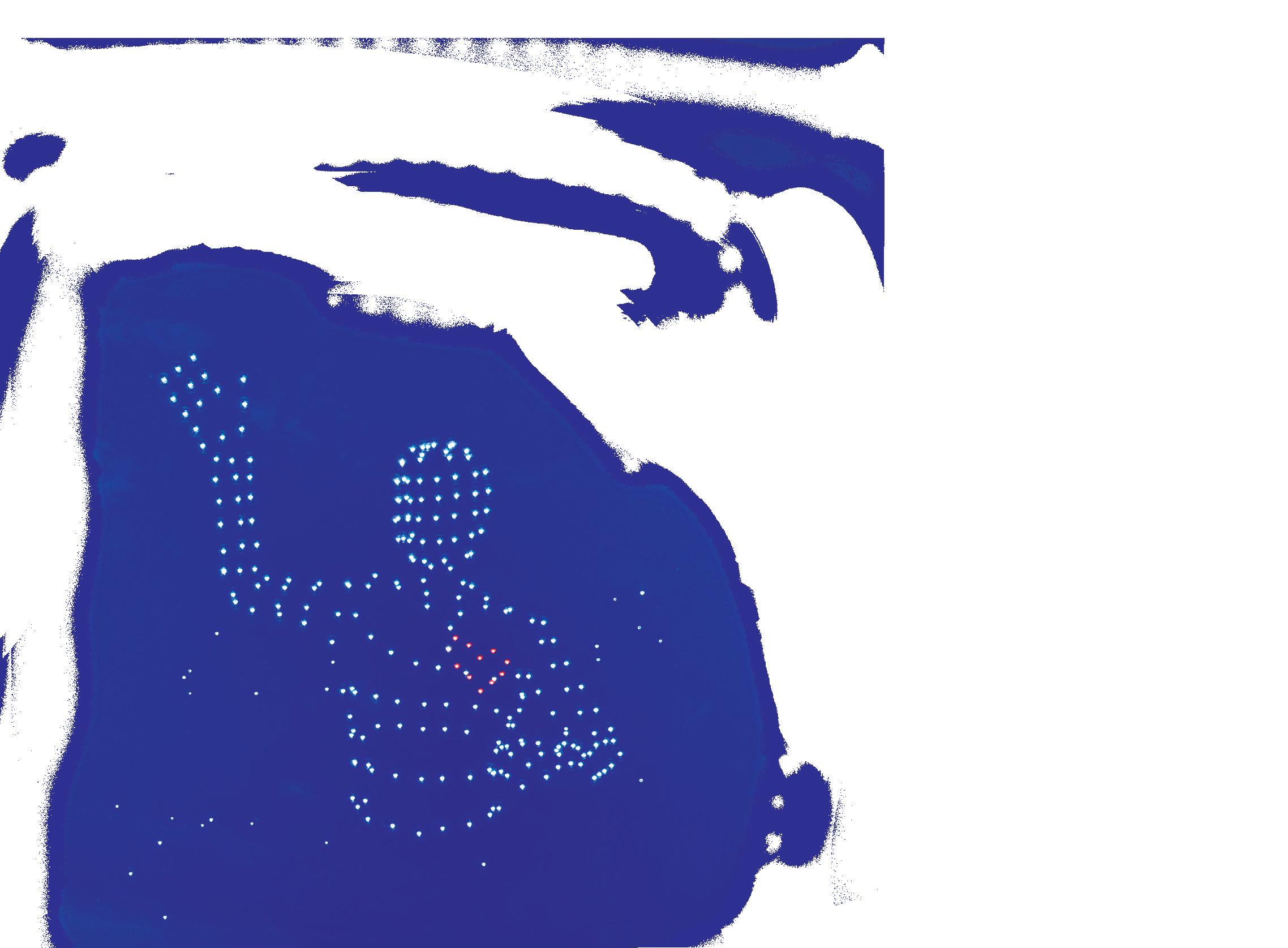
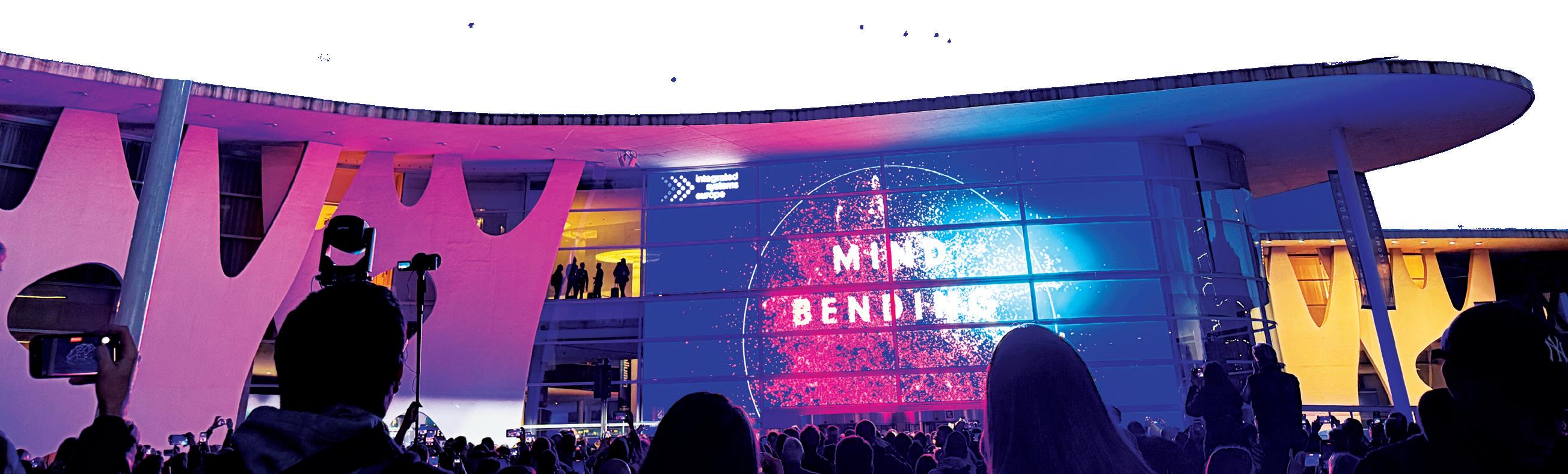
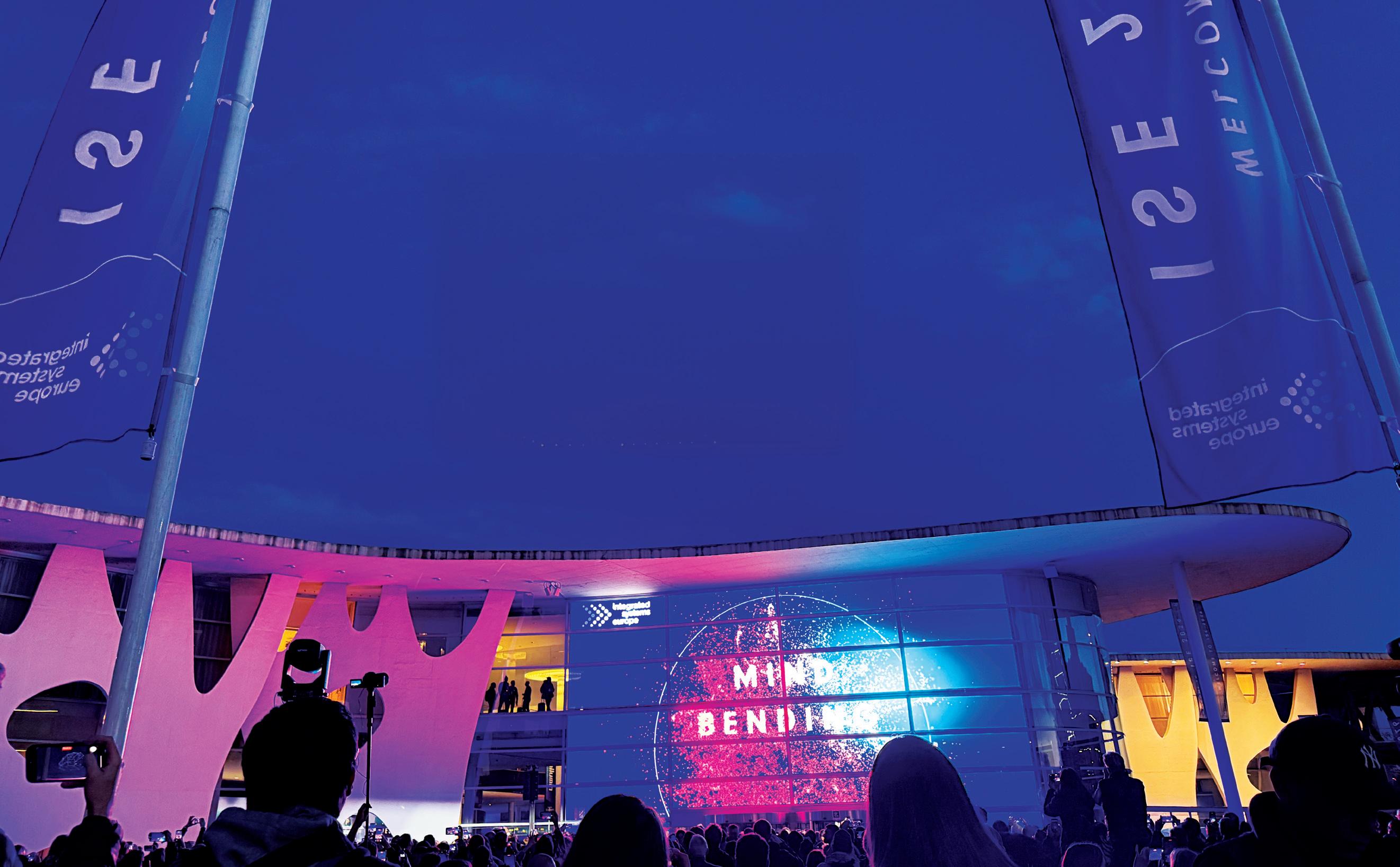
Dazzling daily drone show draws crowds with its mix of creativity and technology. Last chance to

Don’t miss these sessions, meet-ups and mixers today!
THURSDAY 5 FEBRUARY
Xchange LIVE – 3Q150 – Hall 3
11:15 – 12:00
12:15 – 13:00
15:00 – 16:00

AVIXA Xchange 101
Accessible AV Designs for Classrooms
Level Up: How AVIXA Xchange Empowers You to Connect, Grow, and Lead
CC 4.1
14:30 – 16:30 AVIXA Women in AV Collective at ISE 2026
AVIXA TV Studio – EA900 – Hall 3
10:00 – 12:00
13:00 – 14:00
15:00 – 16:30
16:30 – 17:00 Podcast recordings
Bites and Insights: Ross Workshop
AVIXA TV live broadcast Tech Effect Podcast
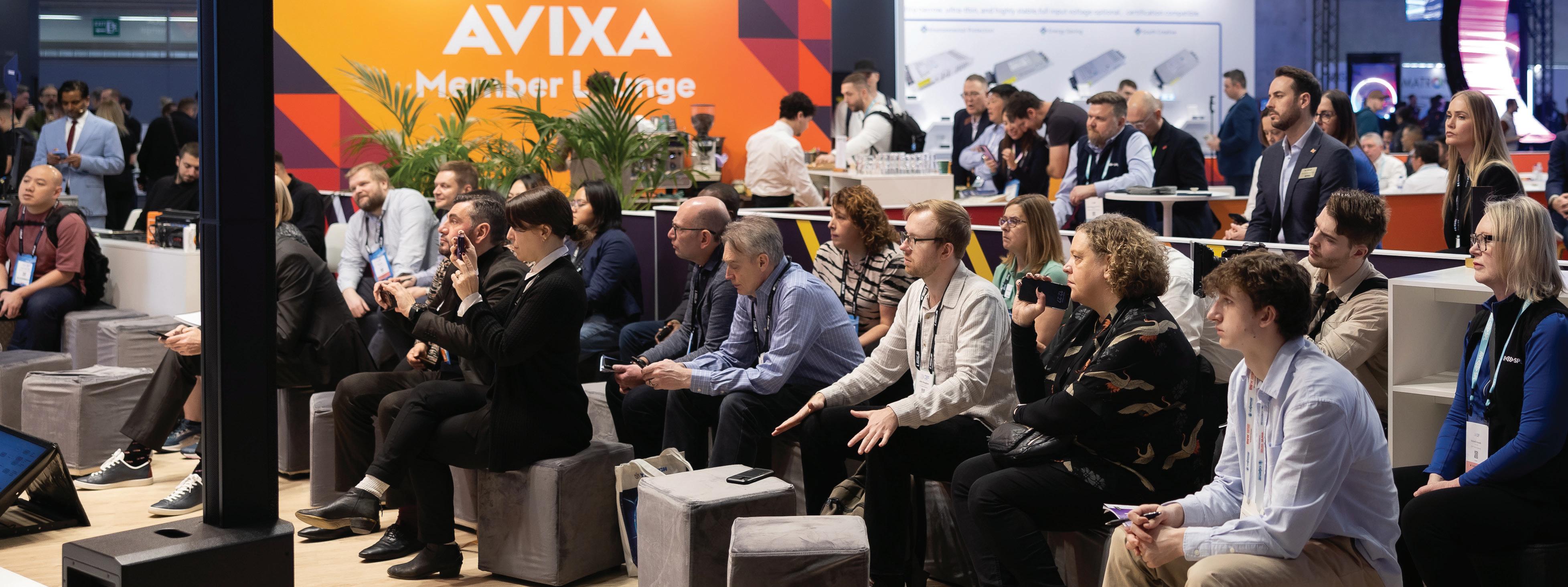
Connect with the AV-Community to discuss, learn and be inspired! Explore the schedule, find your favorite sessions, and block your calendar now.

Lounge
Meet our team, learn more about membership benefits, education and the CTS and ANP certifications. Or, simply meet our team from all over the world and enjoy our hospitality.

Find the complete programme and ISE-related membership benefits on avixa.org/ise or scan

Join AVIXA TV for an unforgettable journey into the heart of AV with a range of interactive experiences that you won’t want to miss.

By Adrian Pennington
Promising to cut through the AI hype, ISE Keynote speaker Sol Rashidi said that the vast majority of AI investments fail.
“Enterprises are experimenting with AI, but the reality is that 74-88% of AI projects are paused, stopped or cancelled at the proofof-concept stage. I call this being stuck in perpetual POC purgatory.”
The former leader of AI strategy at Sony Music, Merck, Estée Lauder and Amazon is known for her focus on human-centric frameworks and responsible AI.
Her ISE Keynote, ‘The AI Reality Check: What it takes to scale and the future of leadership’, gave practical insight for senior executives looking to formulate enterprise-wide AI strategies.
“I’m allergic to the prevailing narrative that employing AI means making people redundant,” she said. “That’s not why we developed artificial intelligence. AI was created to amplify us, not replace or erase us.
“Fundamentally, businesses are under massive pressure to increase margins, cut costs and innovate. At the same time, morale is declining, productivity is stagnant and access to skilled talent is shrinking as technology
By Michael Burns
Alex Boateng’s core message at his Spark keynote was clear: Culture doesn’t sit alongside technology; it moves through it. Organisations that treat creativity, technology and business as separate silos, he argued, are already behind.
“Culture fuels everything,” said Boateng, co-president of Universal Music’s 0207 Def Jam label. “But, in terms of business, tech and music, it’s the backbone. If we understand how it moves, we can drive activity across all of our industries.”
He likened ISE to Glastonbury
Festival. “You can get lost in it; there’s so much energy. But it doesn’t feel like a trade show. It feels like a signal that culture, creativity and technology are finally being designed in the same room.”
Rather than framing leadership as control, Boateng described his role as curatorial.
“I see myself as a gardener. You can create the conditions, the space, the tools, the technology, but you don’t control what comes out.”
Throughout the keynote, Boateng returned to a framework he believes underpins sustainable cultural ecosystems, illustrated
becomes more advanced. That tension is real.”
Studies from consulting firm McKinsey & Company show that 95% of generative AI projects are not delivering expected value. Impatience is building and 2026 will be pivotal.
“So when we hear ‘AI is amazing’, yes, it is. But we’re still figuring out what it means. The spectrum is vast and that’s why it’s confusing. Different industries, roles, generations and functions will adopt AI differently.”
She advises companies to start with the business problem, and then ask whether AI is the right solution. “If your goal is to cut a piece of paper in half, do you want scissors or a chainsaw? Not everything requires artificial intelligence,” she said.
In the near future AI will be “fully integrated” into the workplace, she envisioned, and as a result, leadership will change. “It won’t be about managing people but about managing cognitive individuals and agents. Teams will pivot into pods.
“Here’s where I push back. We say governance requires a ‘human in the loop’ because humans have experience. But if we’re not giving the next generation opportunities to gain that experience, where will it come from and how will they oversee these agents in the future?
“This comes down to your children and the people you lead – now more than ever. Experience matters. We cannot short-circuit that process.”

through examples ranging from Stormzy and Arsenal FC to wellness brand Ancient + Brave and restaurant chain Nando’s.
“The systems that actually last
all have the same four forces,” he said. “Signal, community, flow and ownership.”
Signal, he explained, is about recognising what is genuinely happening in the real world, the cultural truth people can feel. Community is identifying who already cares before anything is sold. Flow describes how ideas move naturally across platforms and spaces. Ownership is the point at which audiences stop consuming and start shaping.
“It’s not a marketing funnel,” Boateng said. “It’s a living system.”
He closed with a warning against centralised control.
“Culture doesn’t have a headquarters,” he said. “It doesn’t scale like a business. It spreads like a story.”
By Monica Heck
When it comes to digital signage there is one clear focus for manufacturers. “When you talk to vendors, most of them are planning AI-driven features,” said Florian Rotberg, managing director of invidis consulting, as he opened this year’s Digital Signage Summit. “Digital signage is business critical in 2026, but this year is the year of changes.”
AI has been changing user interfaces and coding, of course, but it is also impacting the way we work, according to invidis senior partner Stefan Schieker. “AI is
changing the role of spaces, the way consumers shop and how we use both ecommerce and physical retail,” he said. “It is also changing pricing models. This is both an opportunity and a threat to this industry.”
Invidis identified a number of other major drivers of change across the industry, including the impact of geopolitics on supply chains. “Veteran industry leaders have told us that uncertainty has never been bigger, making it challenging for our industry to make predictions three to 12 months out,” Rotberg added. “In Europe, we are seeing Chinese displays flooding
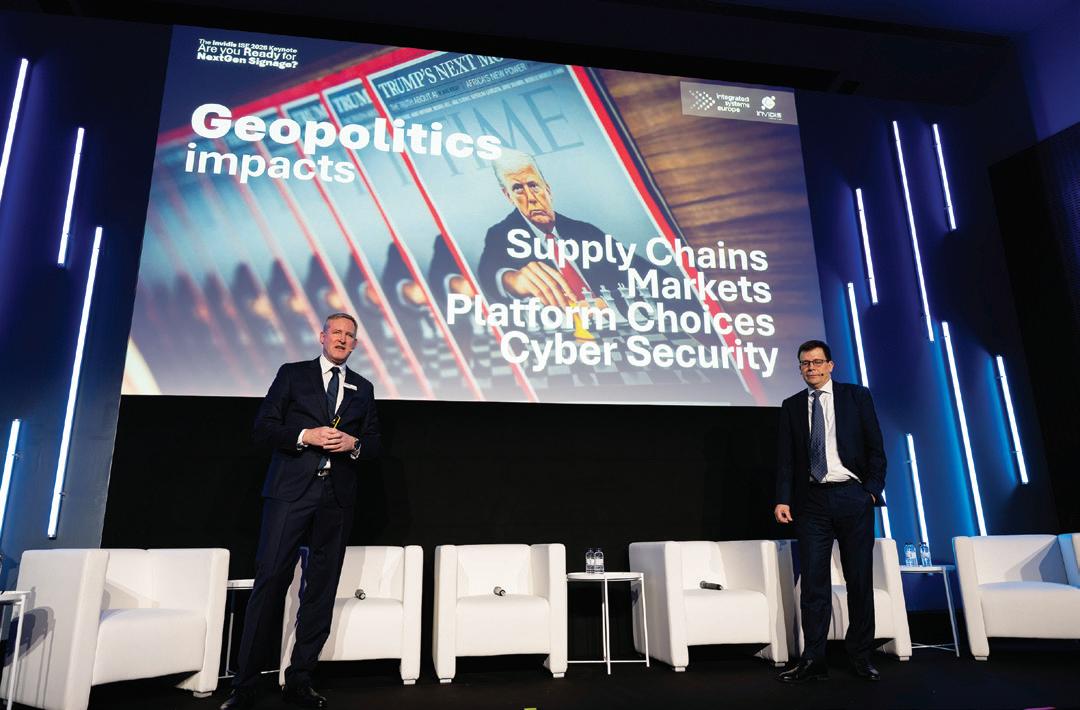
the market as they re-route their material from North America, with very aggressive new players joining the fray.”
Overall, customers have been paying more attention to the provenance of digital signage platforms, and cybersecurity remains a critical topic for 2026.
While 2025 was a disappointing year, the digital signage industry is maturing, which changes the competitive landscape and the value chain, according to Rotberg. Preliminary data from invidis shows a global market value, including LED, of €22.5 billion, with 4% year-on-year growth.







shure.com/IntelliMixRoomKits
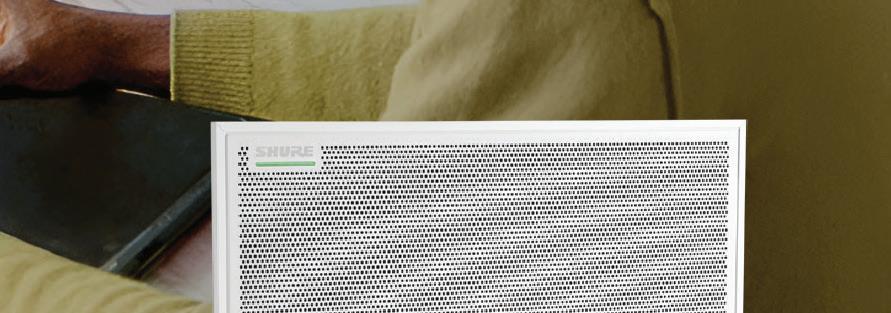
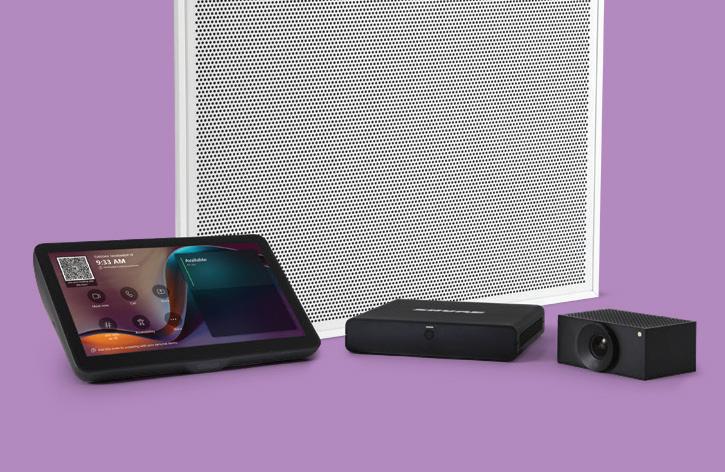
Transform your Microsoft Teams Rooms with Shure IntelliMix Room Kits. No matter your room size, now you can experience the future of collaboration with best-in-class audio, auto-configuring compute, and exceptional video experiences. Simply connect, power up, and log in. Cloud-managed and fully secure, now it’s time to get your team together.
By Adrian Pennington
“We may never see another smart building because the system is broken,” declared Pete Coman, principal, NV5, at the Smart Building Summit.
“The system is wrecked,” added Kevin Brownell, director, Nu Xform, who was among the panel of experts discussing how integration enables value in smart buildings.
They agreed that the array of data gathered from smart building systems is not being utilised anywhere near its maximum impact.
“The biggest benefit of intelligent integration is to break down silos of data; silos still mean someone is losing out,” said Brownell. “I’ve been coming to the ISE Smart Building Summit for a decade and we continue to talk about silos. Nothing’s changed.”
Antiquated facilities management contracts are part of the problem. “The contracts themselves don’t have flexibility to allow for data sharing or for innovation,” said Tomas Mac Eoin, CEO at contractor Hereworks. “A client will say they are open to promoting the wellbeing of occupants and improving the human experience but in reality, outmoded contracts are designed to squeeze the most efficiencies. Change is fundamental if we’re to derive real value from the work that we all do.”
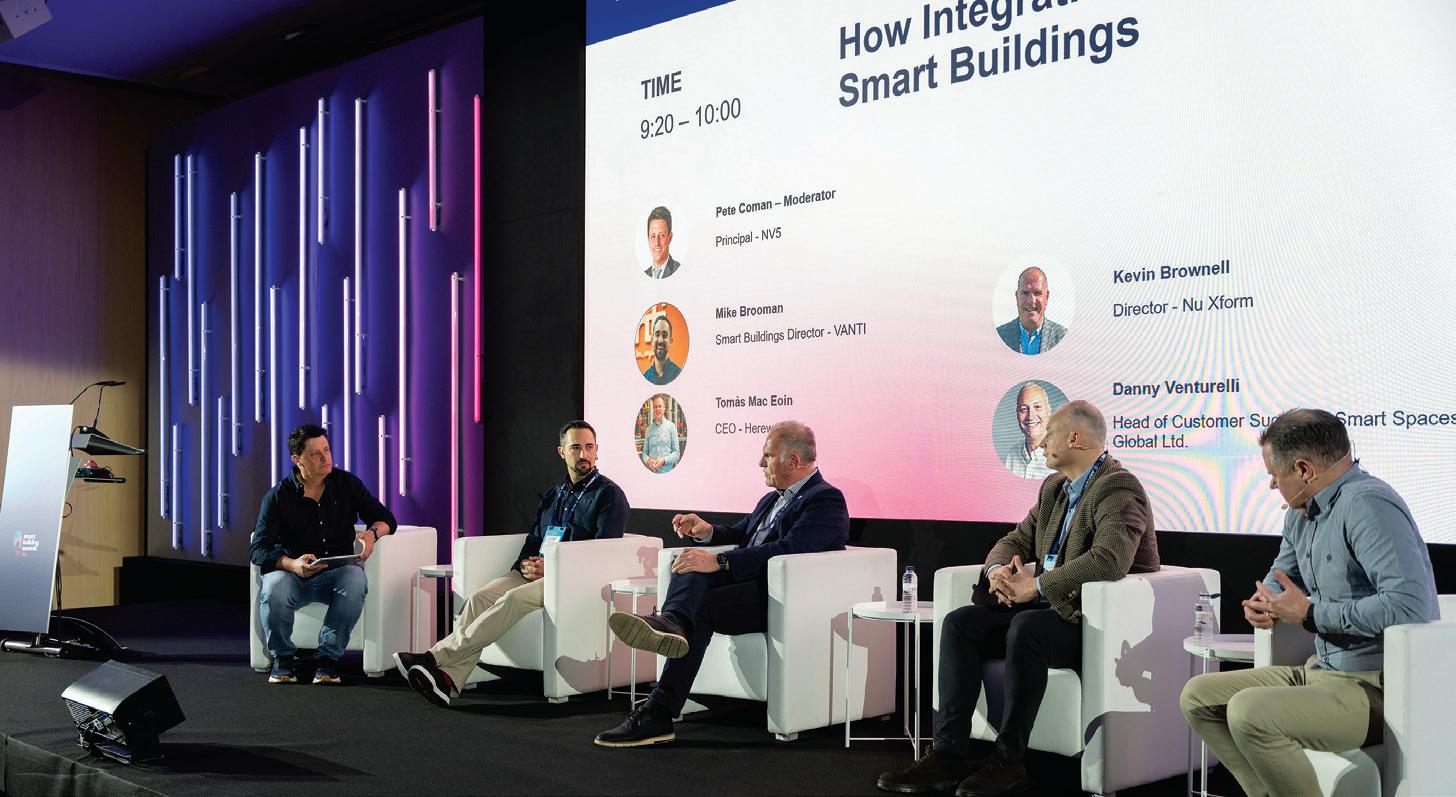
“Facilities teams might have 12,000 data points and no idea what it means,” said Mike Brooman, smart buildings director at Vanti. “Integration is always greater than individual parts, but unless you have someone driving the vision you will have an entire supply chain of people watering it down.”
The panel urged customers to begin smart building design before there’s even a hole in the ground.
“A lot of the time clients want a smart building developed but they don’t have a clue what a smart building is,” said Danny Venturelli, head of customer success, Smart Spaces Global. “They just want to say they’ve got a smart building but there’s no specification, no scope. If you want to halve your energy costs post-occupancy then you need someone like a Master Systems Integrator at the very start of the design process.”
By Monica Heck
Those who assume there is not much happening in the control room space would be gravely mistaken, according to Mike Sullivan-Trainor, senior industry analyst at AVIXA. Speaking at the Control Rooms Summit, he noted that the sector is expected to show fairly strong growth over the next five years.
“The command and control market is expected to reach $22 billion in 2030, growing from $18 billion in 2018,” he shared. “There are a number of factors responsible for this, including the data deluge that we are currently experiencing. There are more endpoints to be brought in no matter the type of control room. The advent of IoT means more end devices supplying data, and more
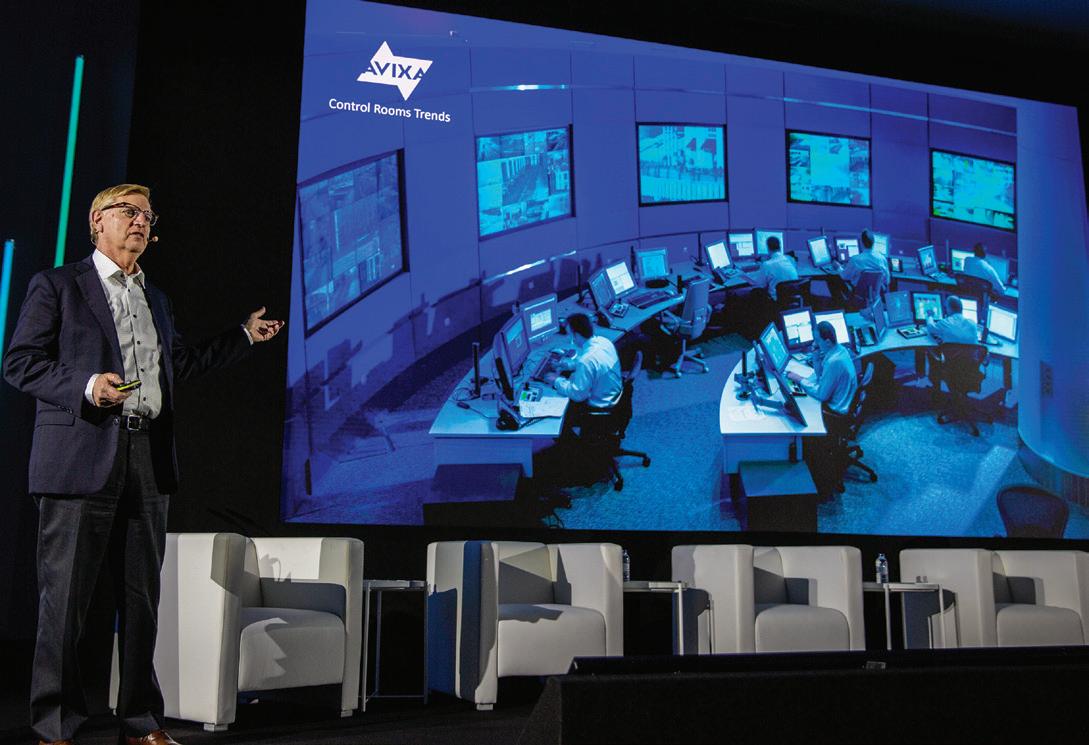
richness to the data and analytics being applied to it. A layer of AI processing adds to the challenge.”
There has never been more data for the control room to parse,
analyse and manage, according to Sullivan-Trainor. “This has implications on how you kit the control room out."
Endpoint vulnerability, lack
of operator training and AI automation also mean that cybersecurity is a hot topic in this space. AI automation in particular raises questions, such as how much freedom to give AI in terms of taking or recommending actions, he said.
Worldwide, APAC remains the largest investor in this space, ahead of the Americas, with an expected spend of $9 billion by 2030, driven by China. “There has been a recent strong push in the Middle East and Africa, driven by Gulf Cooperation Council countries as they implement more digital infrastructure and see control rooms as a valuable part of their investment,” said SullivanTrainor. “Investment in military developments in Europe are going to increase the importance of control rooms in the region, too.”
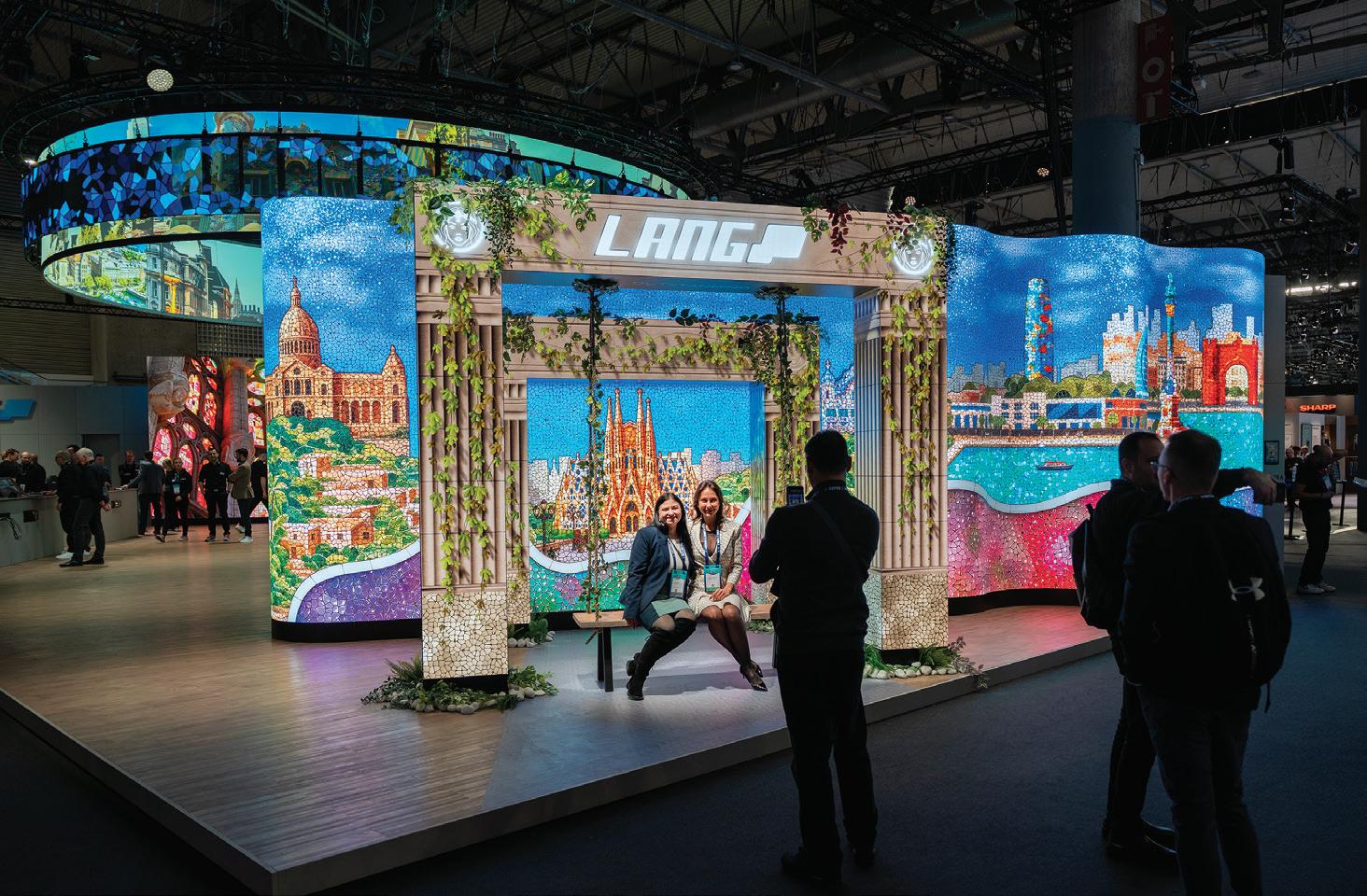
The finalists in the ninth ISE Stand Design Awards competition, independently organised by EXHIBITOR magazine, have been revealed.
Developed to acknowledge ISE exhibitors and their exhibit-design efforts, entries are judged in four size-based categories: Small (32sqm or less), Medium (33-69sqm), Large (70-249sqm) and XL (250sqm or more).
Shortlisted in the Small category are Framery (2V885); Vicoustic (2E110); Magna Audio (2A900); Humly Solutions (2W300); Outline (2E350); Intuiface (4M600); SchnickSchnack-Systems (5H300); Void Acoustics (7B750); Zotac (4C700); and Profactor (7J800).
Architettura Sonora (2F100); beMatrix (3R400); Devialet (1D500); Genelec (2F600); Moorgen Deutschland (2B400); Wygwam International (2C500); Owl Labs (2W680); Acustica Beyma (7J900); Coda Audio (7A100); and Hive Media Control (5G700) are finalists in the Medium Stand category.
The Large category will be contested by Bang & Olufsen (2C300); Basalte (2G150); Focal (2G420); Lutron (2G700); Ricoh (2V130); Simon Holding (1F800); Ayrton (6R700); ETC (6G100); GLP German Light Products (6M900); and Empower Tribe (7M500).
Finally, Epson Europe (3J100); LANG
AG (3H500); LG Electronics (3K100); Shure Europe (3M300); Sony Europe (3E300); Hunan YesTech Optoelectronic (3R300); AV Stumpfl (3A500); Shenzhen Dicolor Group (3A300); Sonos Europe (1E500); and Panasonic Connect Europe (3J500) are finalists in the XL category.
A group of highly esteemed designers and marketers will further evaluate each of the 40 finalists, considering how well each stand delivers cohesive and effective graphics, demonstrates effective design realisation/ fabrication, offers clear organisation/ wayfinding, presents an effective lighting design, employs the allotted space and more.
"EXHIBITOR is thrilled to be back at ISE, and the work on the show floor in Barcelona sets a high standard for the industry," said Emily Olson, editor of EXHIBITOR magazine. "Disciplined design thinking and confident experimentation were equally represented by ISE exhibitors, and I’m sure our jury pool will find it challenging to select just one winner in each category."
One winner and two runners up in each category will be named during the Stand Design Awards ceremony starting at 16:30 today on the Smart Home Technology Stage in Hall 2. It is free to attend,
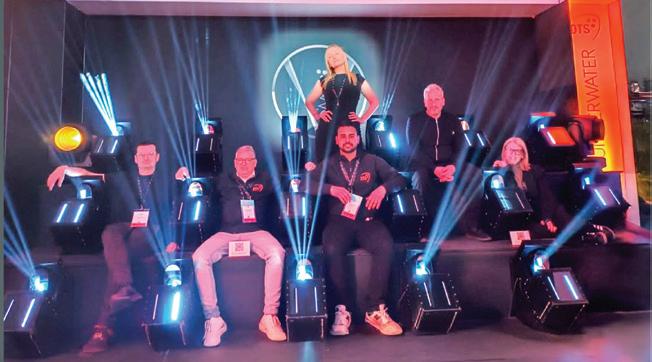
DTS Lighting @Dtslighting (8C700)
Day two at ISE 2026 – we're back at the show, pumped for another busy day! Join us at Hall 8.1 – Stand 8C700 to discover V-SNAP CS. @ise_show #ISE2026 #Barcelona #DTSLighting #LightingDesign #MadeInItaly #ProfessionalLighting #LightingSolutions
LianTronics @liantronics (3B100)
Great energy on Day 1 at ISE 2026, our booth has been buzzing with visitors all day. Thank you to everyone who stopped by to explore our latest display technologies in action. We welcome more partners and friends to visit and experience the solutions firsthand – see you at booth 3B100! Special thanks to Macroblock Inc. for the strong support behind our showcase. #ISE2026 #ISEBarcelona #ProAV #LEDdisplay #DisplayTechnology #AVIndustry #Esdlumen #LianTronics
WolfVision
@wolfvision-av.bsky.social (3M500) Busy scenes on our Booth 3M500 at #ISE2026 today! Be sure to drop by our booth this week to see our latest systems and solutions. See the new tech, grab a drink and be part of the conversation. We look forward to welcoming you to our booth!
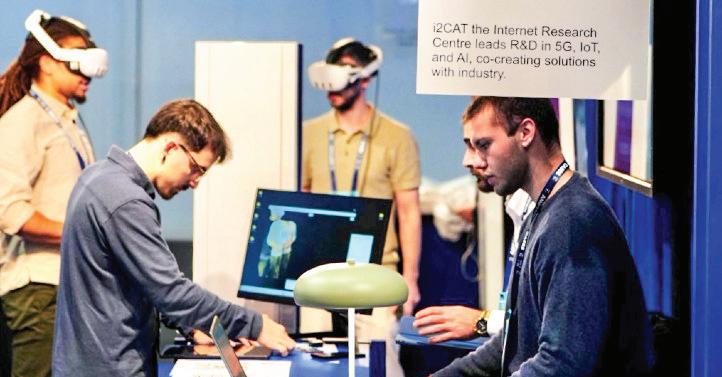
i2CAT Research Centre @i2cat.net (CS100 – Catalonia Pavilion)
Come experience the future of communication at #ISE2026! Visit us to step into #HoloTotem, our latest innovation in holographic presence. We are syncing the digital future to bring you an experience as authentic as reality itself. Don't miss the chance to explore it!
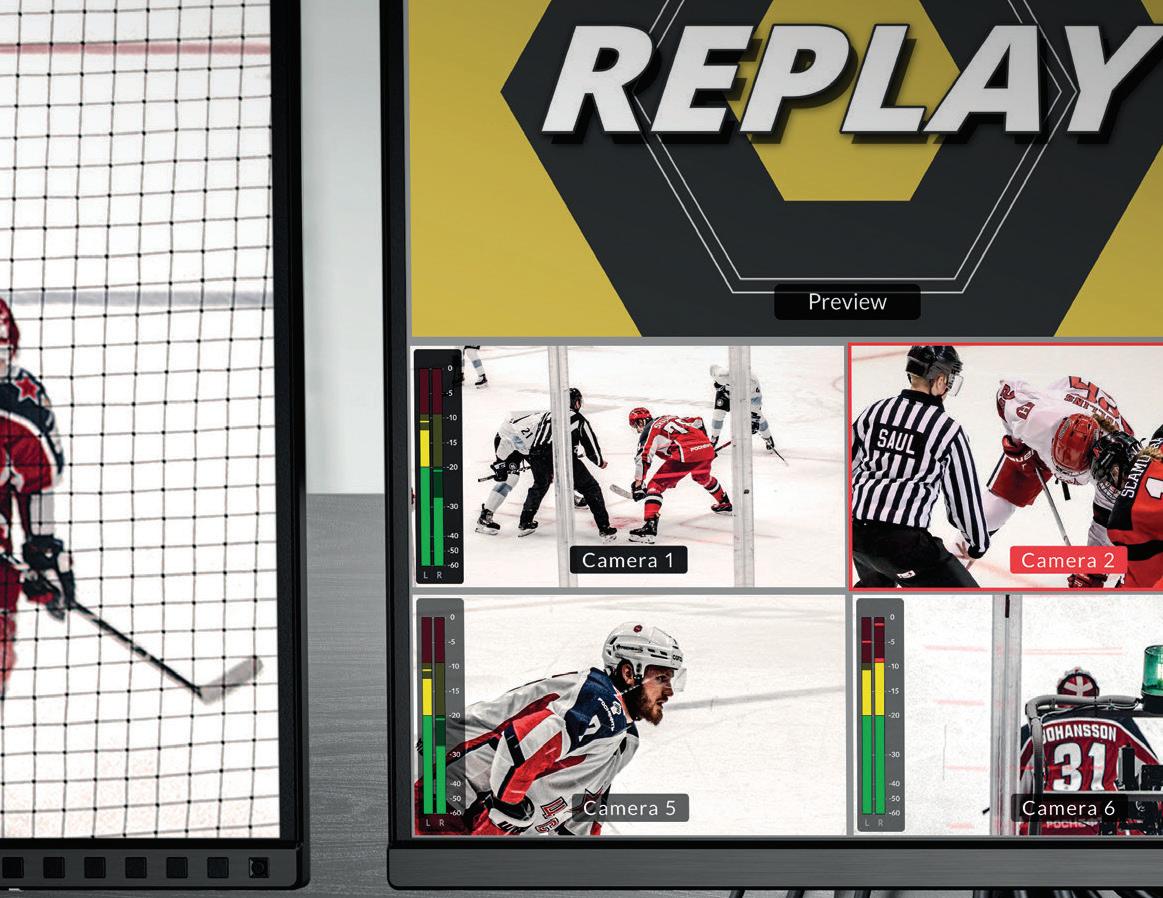
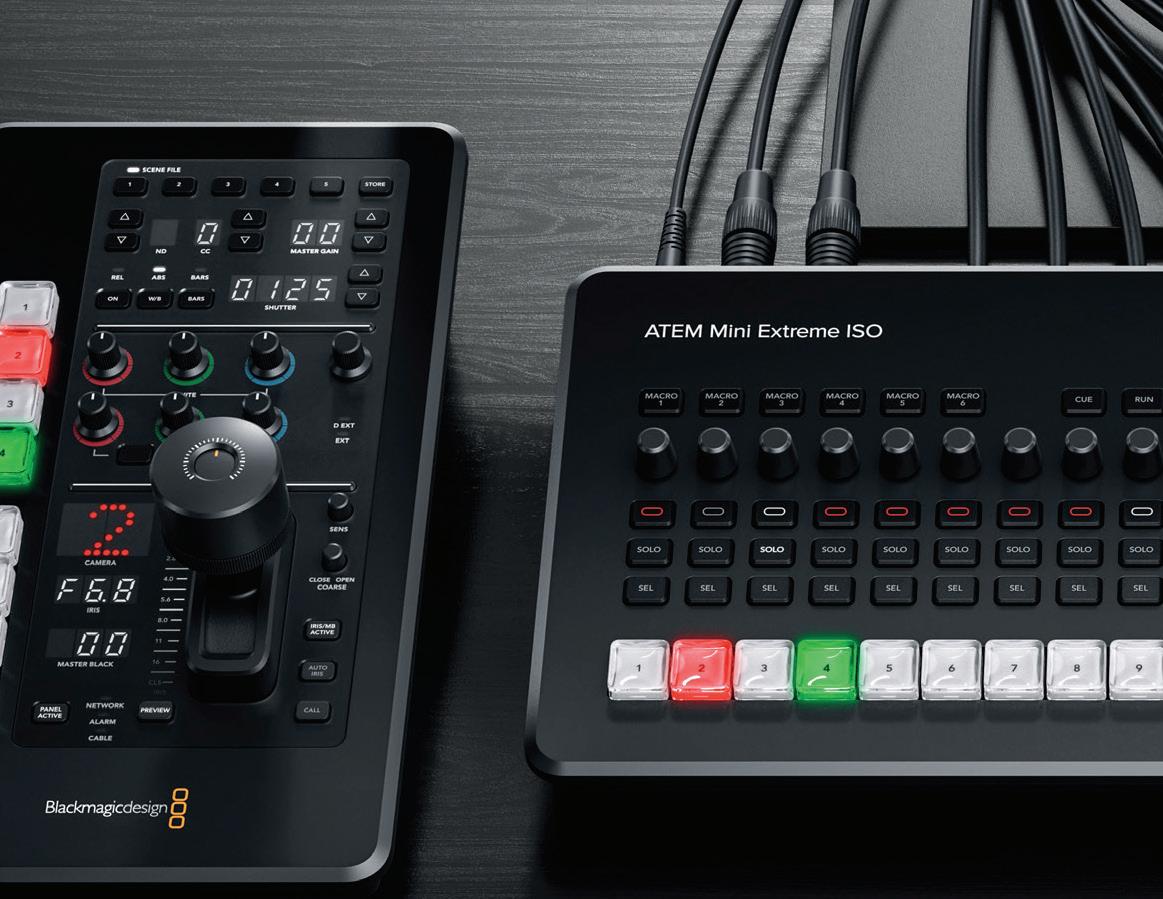
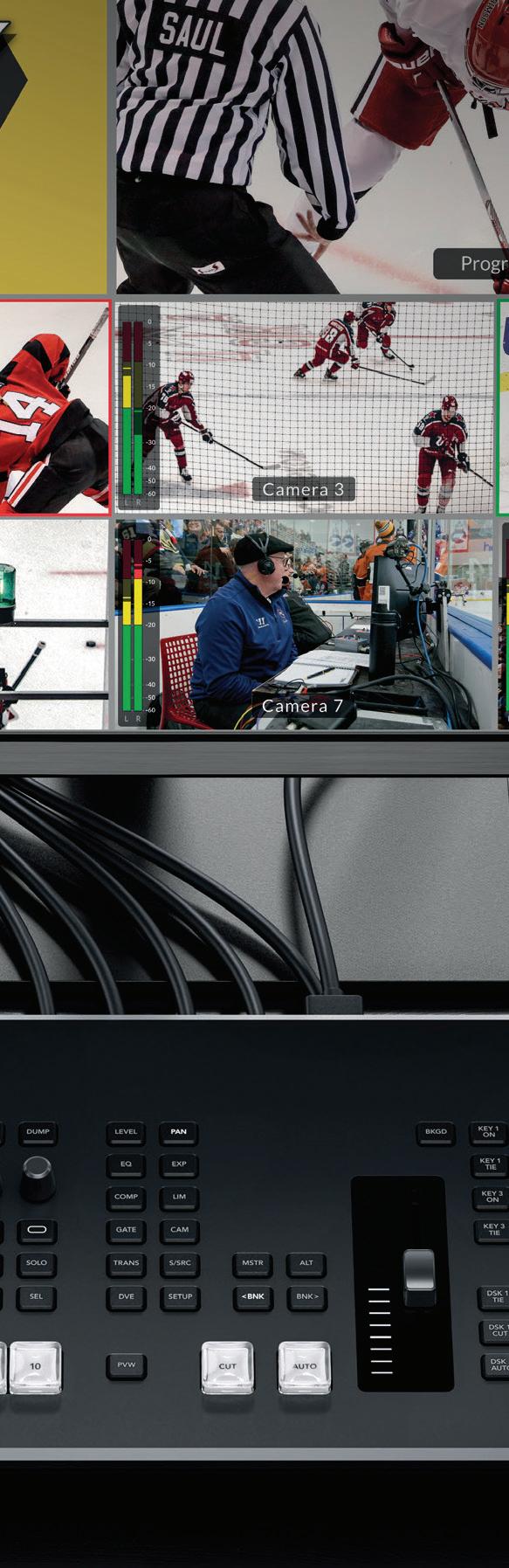
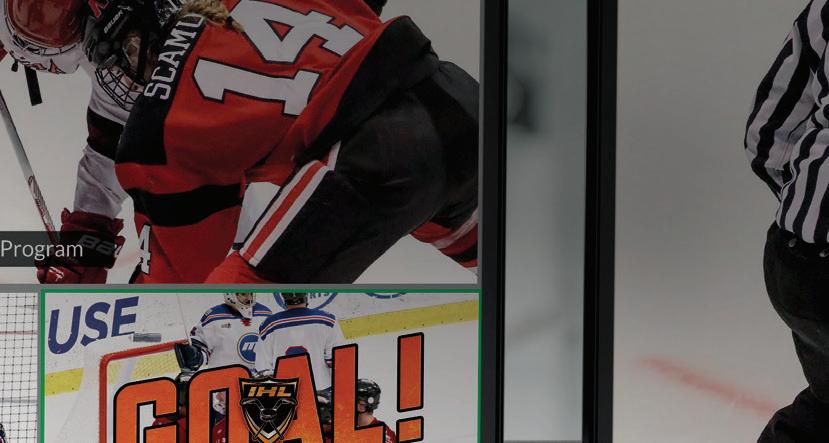

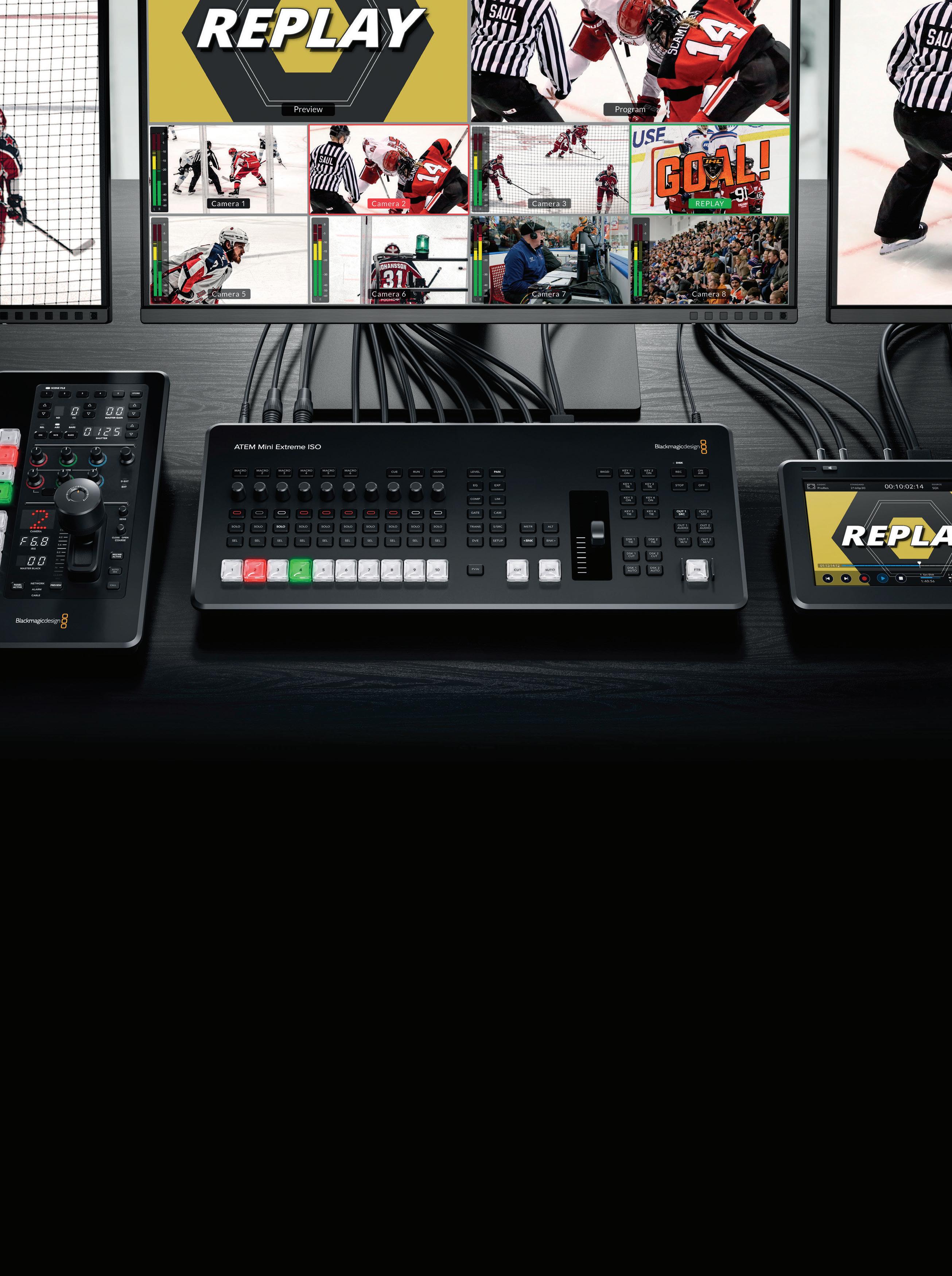
ATEM Mini Extreme ISO G2 makes it easy to create professional multi camera productions for live streaming! Simply connect ATEM Mini Extreme and you can live switch up to 8 high quality video camera inputs for dramatically better quality images. You can even sync your recording to Blackmagic Cloud, so you can edit your live production with DaVinci Resolve anywhere in the world!
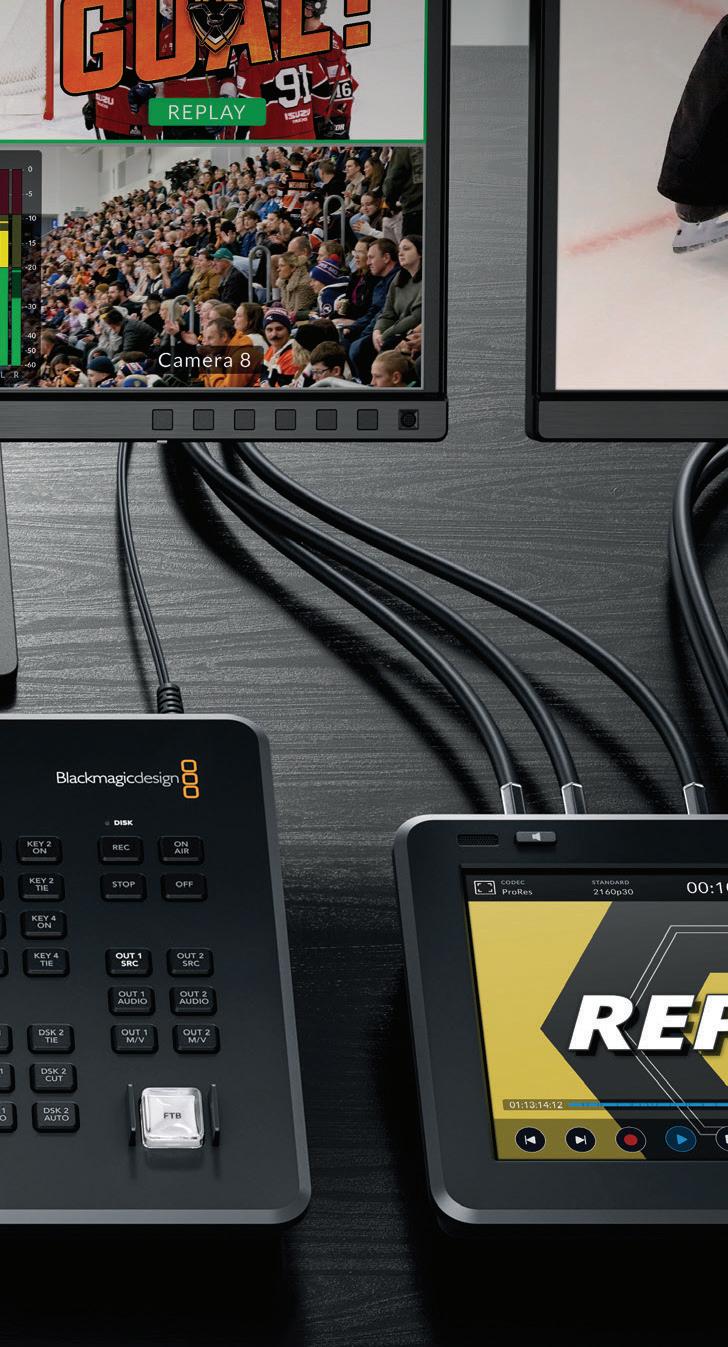
The ATEM Mini Extreme ISO G2 is ideal for building a high-end broadcast studio as it offers all the ATEM Mini features plus extra features! It has a professional style control panel with amazing input buttons. It has 3 independent video outputs that can be routed. The built-in Thunderbolt offers live video capture and playback, enabling real-time effects software or live action replay.
Get Powerful Broadcast Replay with DaVinci Resolve
Blackmagic Replay uses the ISO files recorded by ATEM Mini Extreme ISO G2 to do replay in DaVinci Resolve. The ISO files are recorded to a CFexpress card which DaVinci can access via Ethernet. You can use multi-view in the cut page to view all cameras in DaVinci Resolve at the same time. The files will even continuously upload as you’re recording so you can edit live!

Share Internal Storage with Multiple Users
ATEM Mini Extreme ISO G2 is not just a switcher, it’s also a shared network disk using the 10G Ethernet port to the internal CFexpress memory card or external USB disk! CFexpress cards are extremely fast so they can keep up with recording multiple ISO video files while external network users all work on separate computers for editing, color correction, VFX and audio post production.
Most

The front panel has buttons for selecting sources, triggering transitions, and setting video effects. It also features an innovative audio mixer control area with live metering on a Fairlight style HDMI status output. You get buttons for recording, streaming, and dedicated output buttons for changing outputs between the 8 cameras, program, preview, multi-view, or Fairlight status.
By Monica Heck
To be sustainable, don’t move things, people or even electrons around. That is how Neal Romanek, managing director of ¡AU!, opened the Megatrends panel he was chairing on the topic of achieving a zero-flights business. “Moving stuff requires energy and energy usually means carbon in our current system. So how do you create a business where you don’t move stuff around? Sustainability requires us to be creative.”
Bematrix, a company that manufactures a modular frame system for events, used to only sell its product. However it has changed its business model to rental for sustainability reasons. “Instead of only trying to tweak the product to lower its footprint, we set up rental centres close to venues to cut down on unnecessary shipping and travel,” explained
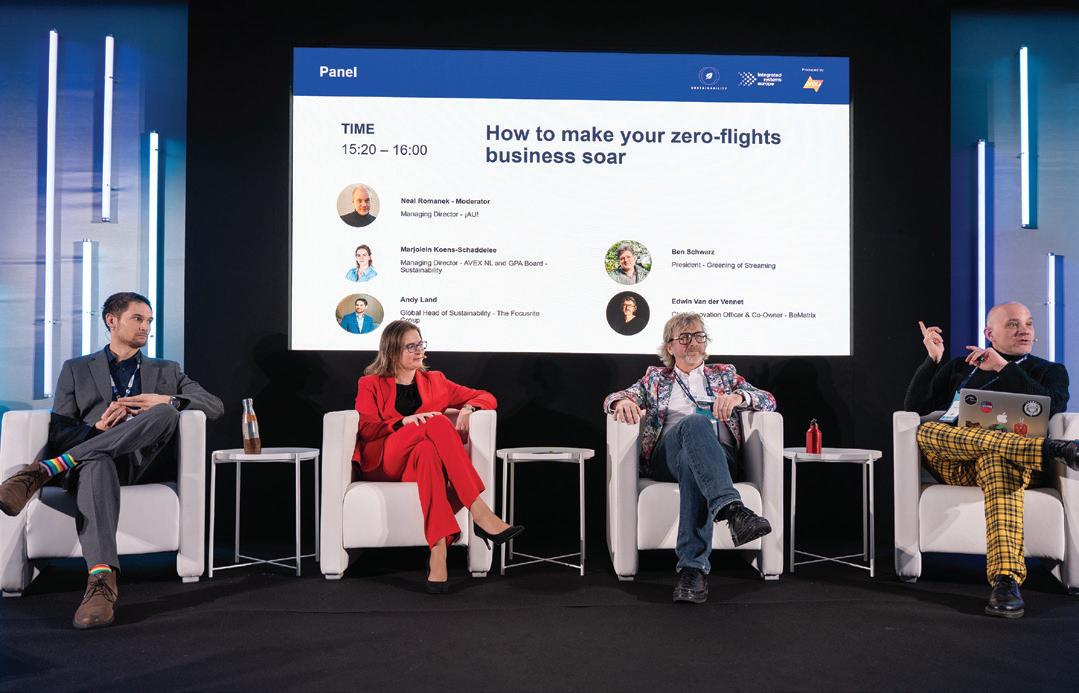
Edwin Van der Vennet, chief innovation officer and co-owner of bematrix. “We also set up a group that allows customers to collaborate on-location instead of flying multitudes of people in. Customers have reacted well to our sustainability efforts, as the ROI for customers is bigger, and money talks.”
By Adrian Pennington
Home cinema designers are praising new standards that they say help them to do their job better.
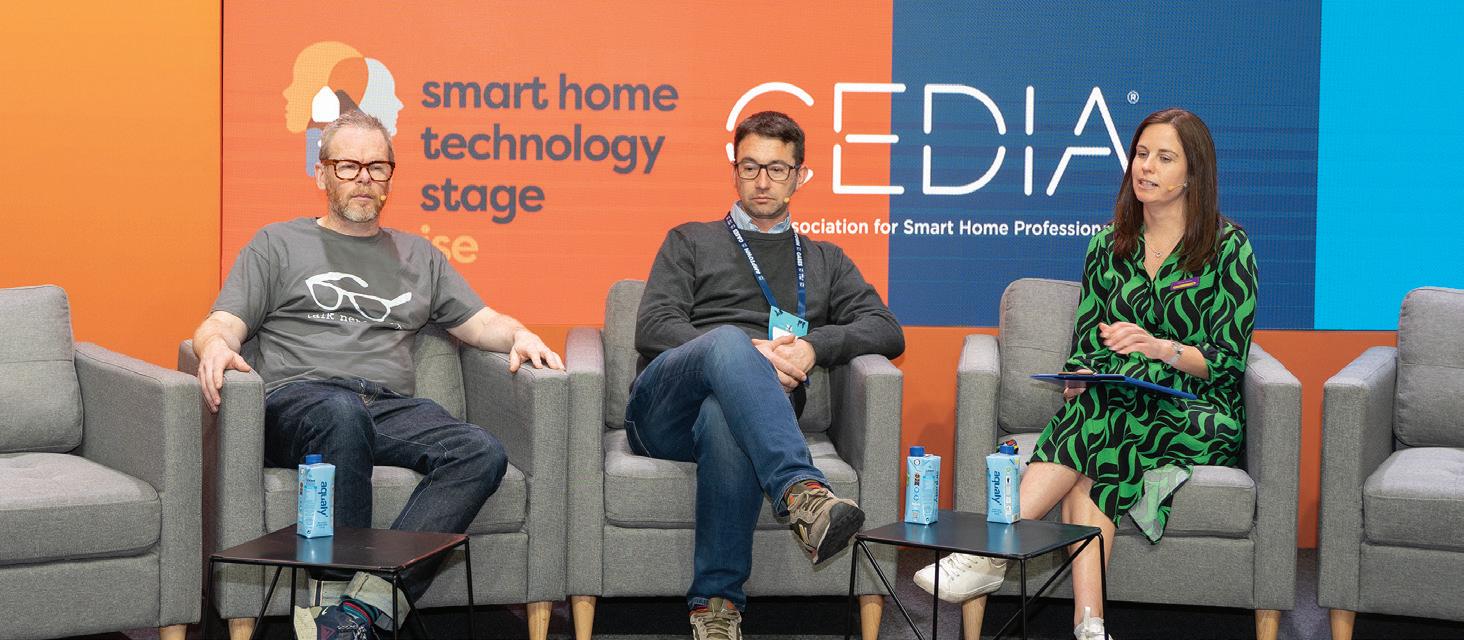
“Without understanding the full specifications of an amp or speaker or how the signal moves around, you won’t deliver a consistent product or known performance. RP1 data allows us to design with consistency,” explained Tom Dellicompagni, director at interior installations firm Dellicompagni, during a discussion on the CEDIA Smart Home Technology Stage in Hall 2.
RP1, colloquially referred to as “performance facts”, is a new recommended practice on the verge of release by the CEDIA Standards Committee. It is the building block for RP22, which is a suite of metrics for measuring performance.
“Broadly speaking, RP22 is about how we measure what we promised we were going to deliver and how we can provide proper evidence that we’ve done so,” said Owen Maddock, founder of Cinemaworks. “This is
“As a part of GPA, we are a global systems integrator covering over 160 countries with almost zero flights, because we leverage local offices and workforce across the world,” said Marjolein KoensSchaddelee, managing director of AVEX NL and GPA Board –Sustainability. “There shouldn’t be a conflict between generating a
product and making a sustainable business model. If you’re creative enough and find the right business model it should be reinforcing instead of conflicting.”
Sustainability is not yet front of mind for all customers, some of whom focus on the lowest price, she added. “If you look at the cost over the lifecycle of a product, if you can extend the lifecycle by buying a more sustainable product, it makes sense to look at those KPIs instead of lowest price from the start.”
Over the next year, Andy Land, global head of sustainability, The Focusrite Group, expects sales orders to increasingly include questions about the carbon footprint of systems being purchased. “Across our 13 brands that cover a multitude of industries, I’ve noticed that the AV installs are the ones that most ask us for that data. I think companies should be prepared to provide that information.”
all quite dry, but you have to do the boring stuff to get the thrilling emotional impact of the end result. It will improve the experience for the client and generate more referrals for residential cinema designers.”
SPL capability, which refers to the maximum sound pressure level a system can achieve, is a key performance parameter in RP22. Other metrics include frequency response, spatial cues and level of room noise.
Said Dellicompagni: “Home cinemas are expensive toys and likely the person who has
bought it is a very busy person who wants a room to unwind, to read, to be entirely still and quiet. That doesn’t happen by accident. It takes a lot of understanding of room acoustics.”
Maddock added: “The audio experience in a room should be similar for each listener, but unless you design for this, it won’t be. The magic happens through doing engineering, but that doesn’t make it non-magical. If you design with emotion you will get it wrong. Do it well and home cinema will change your client’s life.”
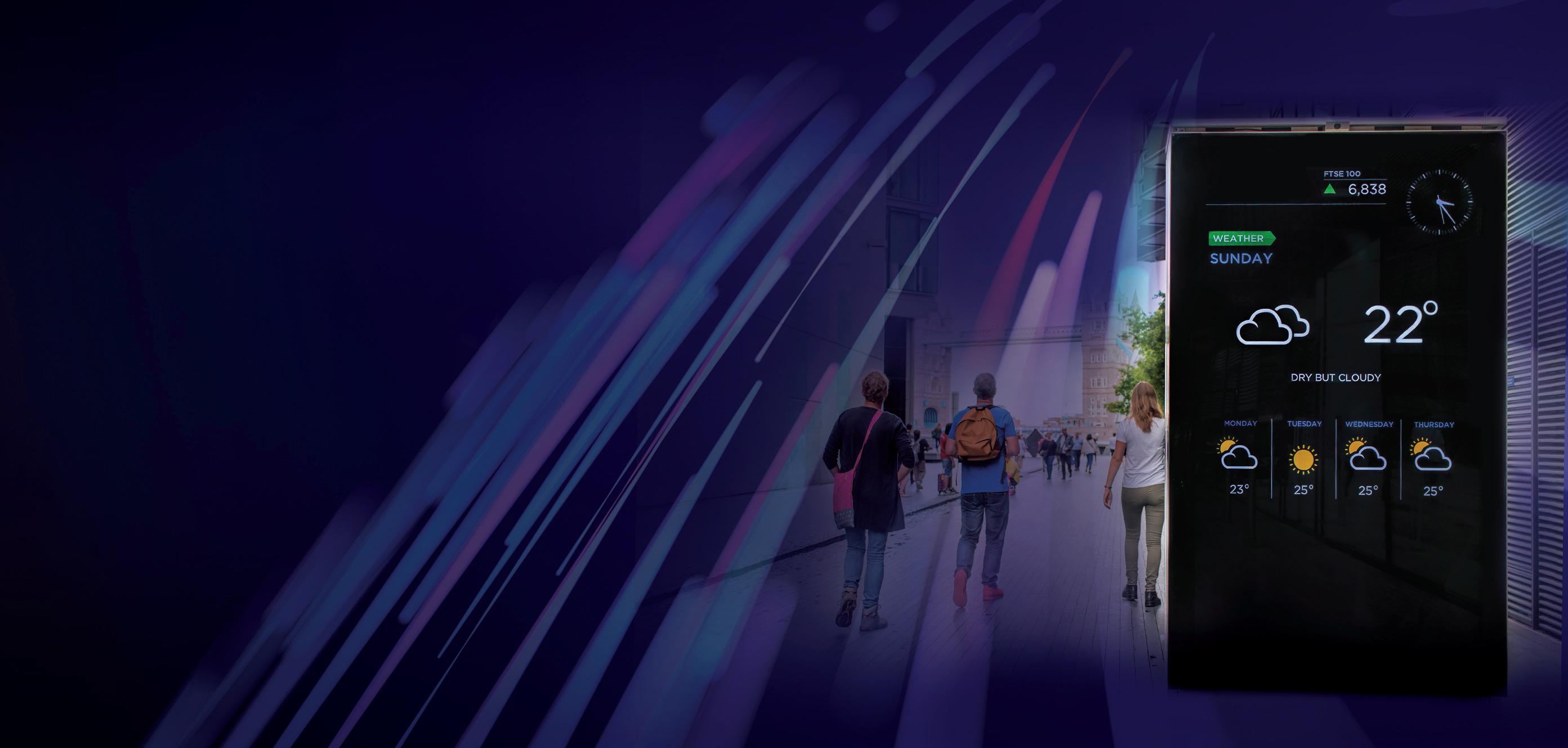

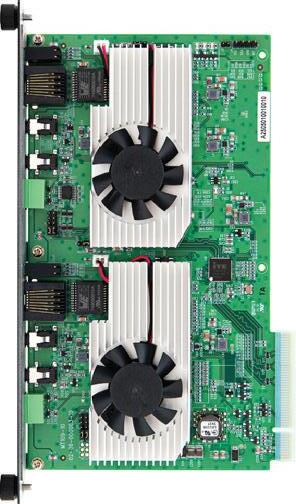
Experience unmatched flexibility with Apantac’s newest SDM-HDBT-R-UHD-Dual card – engineered for highperformance digital signage applications. Supporting dual HDBaseT inputs and dual 4K outputs, this SDM card integrates seamlessly with dual-sided LCD displays for maximum visibility and efficiency.
KEY FEATURES
SDM-HDBT-R-UHD-Dual
Dual UHD HDBaseT Receiver for SDM-L
HDMI & DP output via SDM connector
HDMI 2.0 / HDCP 2.2 / 1.4 compliant
1080p@12bit up to 330 ft (100m)
4K@60Hz (4:4:4) up to 230 ft (70m)
Supports HDMI 3D pass-through
EDID copy via SDM HDMI/DP port
Bi-directional RS-232 control IR control (all frequencies)
Supports LPCM, Dolby TrueHD & Digital
HDBaseT Transmitters
HDBT-1E-UHD
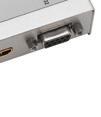
SDM HDBaseT Receiver with 2x2 I/O
SDM-HDBT-R-UHD-Dual
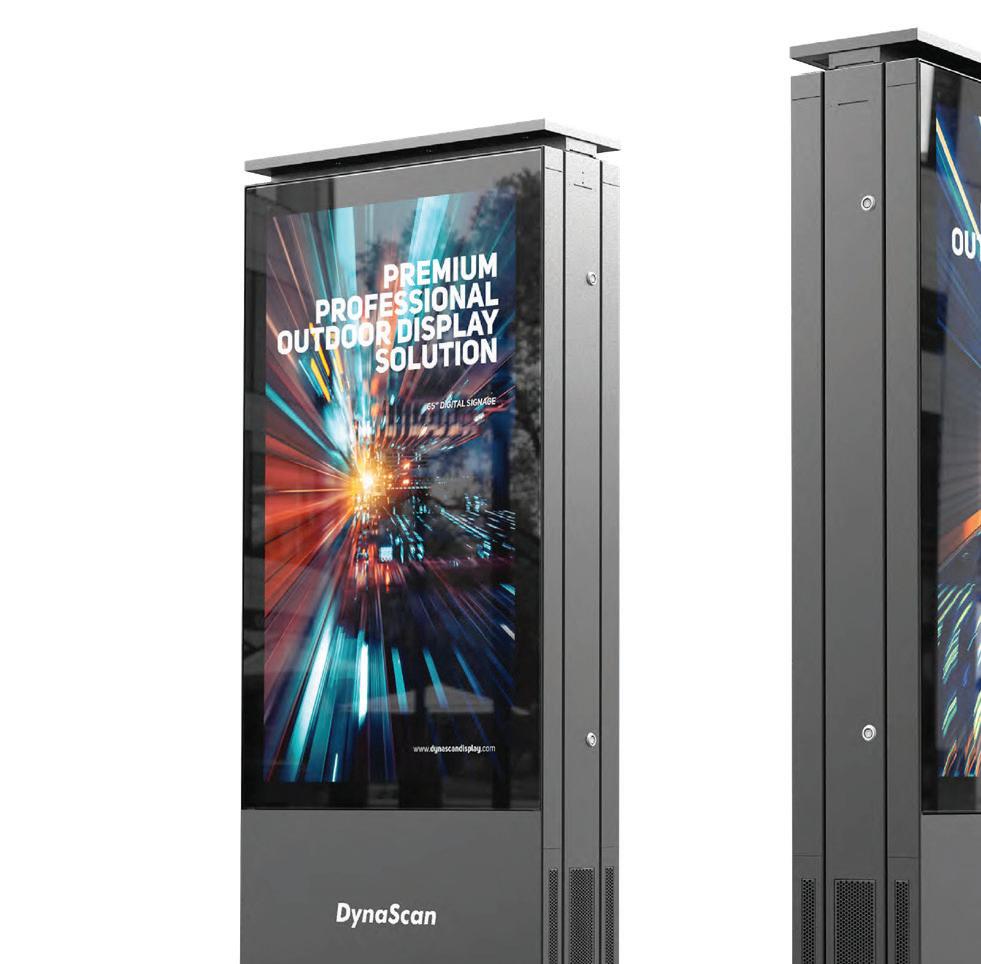
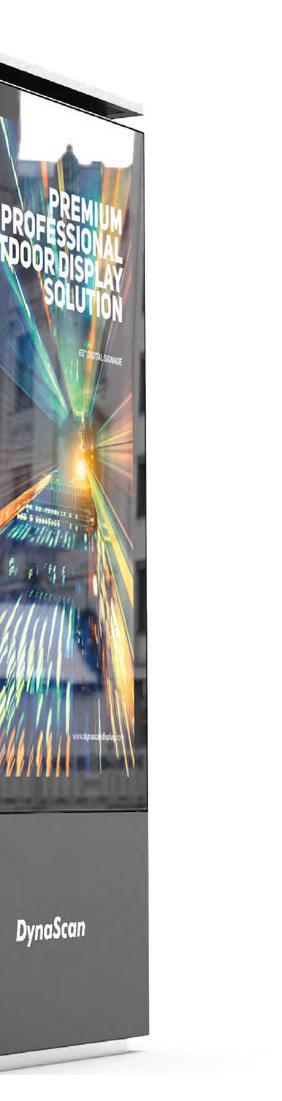
DynaScan Dual SideDisplay*
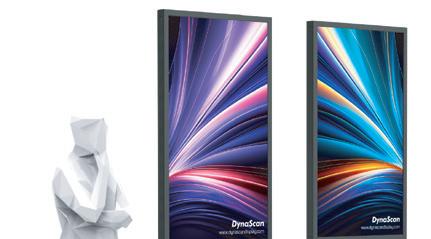
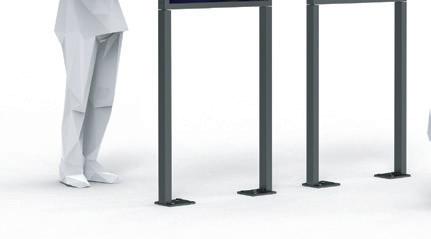

*Dual-Sided Design for Maximum Impact. The DW Series features a double-sided display that enables businesses to deliver targeted messages to both indoor and outdoor audiences. One side offers ultra-bright visibility for street-facing windows, while the other is tuned for comfortable indoor viewing, maximizing reach and relevance.
IT


By Monica Heck
Fans attending the FIFA World Cup 2026 can expect the prematch ceremonies to be “a monster”, according to Julien Pateau, executive producer for the ceremonies, whose company Lab 2580 delivered 64 ceremonies across eight stadiums in a single city for Qatar 2022.
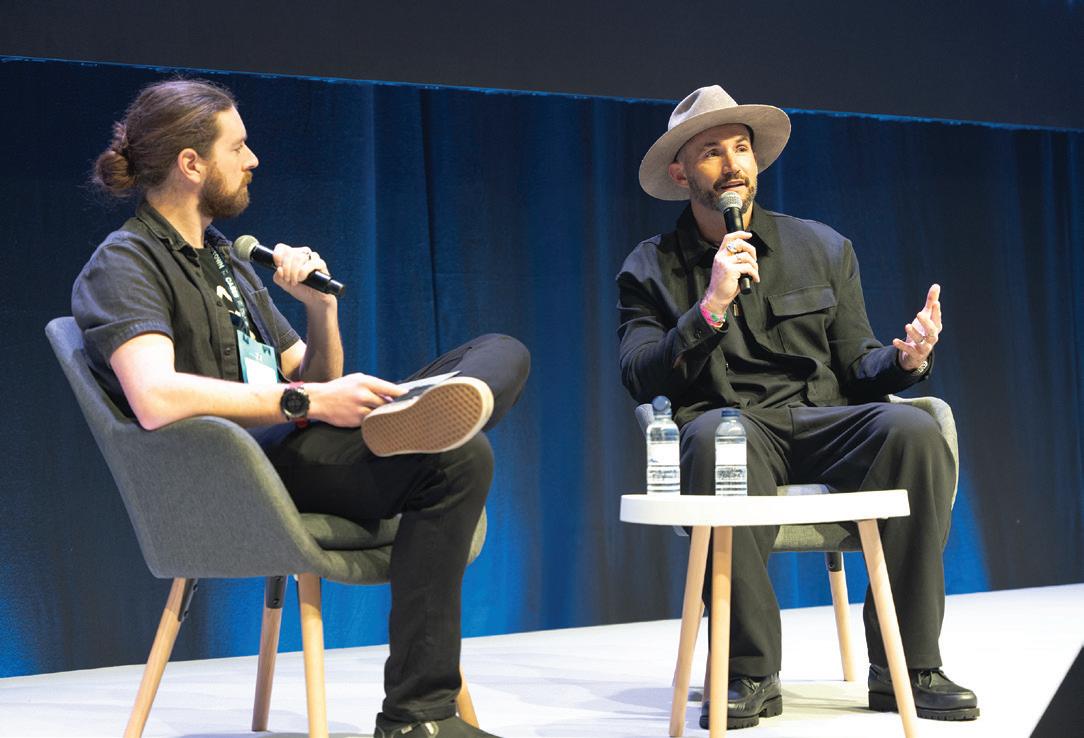
Damaging the grass is prohibited, so opening ceremonies cannot involve many people trampling the pitch or heavy stages. “The match is the priority," he added. "You have a 15-minute slot to strike in, play your show and strike out. You cannot delay a kick off. It’s a lot of pressure.”
Speaking on the Live Events Stage, Pateau said the upcoming World Cup is different for many reasons: “Our next mission involves 104 ceremonies to plan, produce and organise, across three countries and 16 NFL-sized stadiums. The biggest challenge is that while in Qatar the ceremonies mostly took place at night, when you can control the light and the environment, this year’s World Cup will be the opposite, with 80% of matches taking place in daylight, so we need to think differently.”
Opening ceremonies for FIFA or UEFA come with many constraints. “You have 7,000sqm
to fill with something, so you need to find ideas that work in daylight and that can deliver that wow moment to the audience,” said Pateau.
This year, FIFA wants to deliver a show that prioritises the experience of the fans present in the stadium over those watching from afar. “This is a big shift. We want the fans to see their colours and get passionate about their team’s entrance. It’s our responsibility to ensure that if their team loses, they leave the stadium having had a great experience and a return on their investment. We don’t control the sport, but we can control the rest.”
By Adrian Pennington
Strengthening the connections between Europe and Latin America has arguably never been more important, a series of speakers from government and industry stressed at the European Latin American AV Forum (ELAF).
“What began as a bold initiative at ISE 2024 has grown into a key platform for dialogue, building partnerships and aligning to the world’s most dynamic regions in the audio, visual and digital sectors,” said Mike Blackman, managing director, Integrated Systems Events.
Presenting key market data Mike SullivanTrainor, senior industry analyst at AVIXA, said: “Europe and Latin America are diverse, resilient regions with enormous market potential. Cooperation between them is essential, not only to capture economic opportunity, but also to foster creativity and innovation. This collaboration is at the heart of the forum.”
In Europe, growth remains “slow but consistent”, with opportunities in broadcast AV, enterprise applications and the convergence of broadcast and corporate technologies.
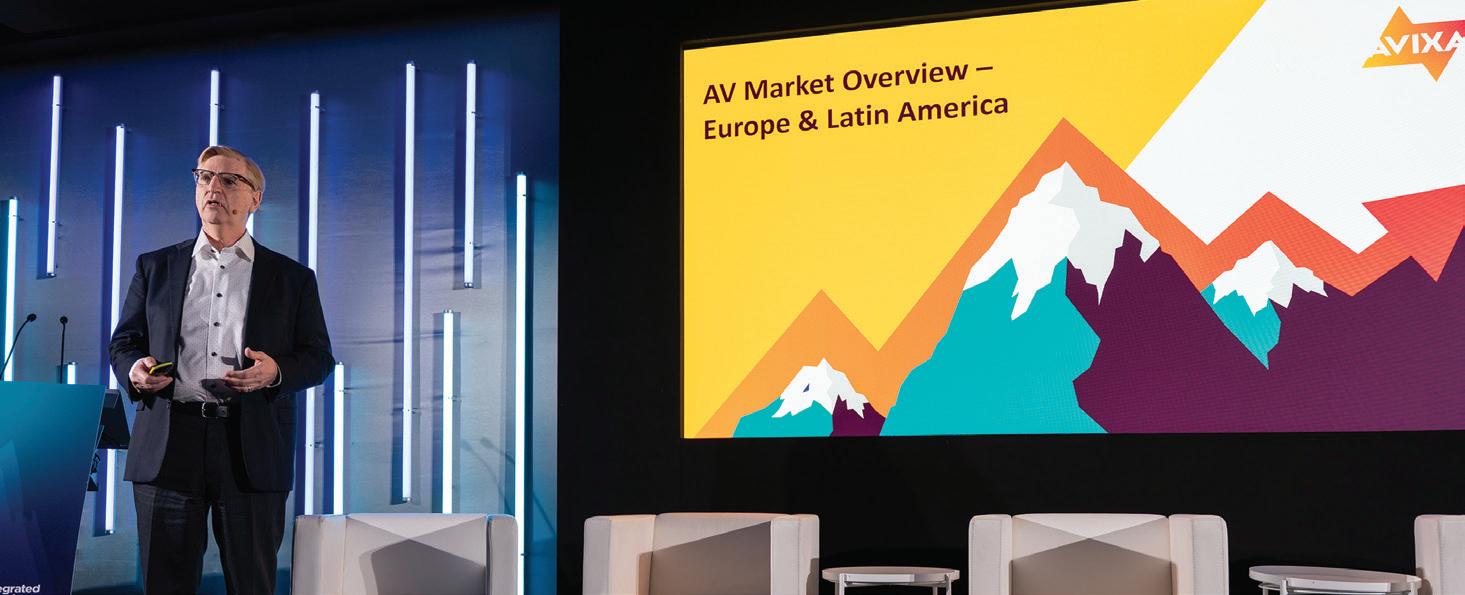
Increased military and security spending is driving demand for control rooms and infrastructure across the EU. Europe’s expected market size of $87 billion, growing at 3.4%, suggests a “cautious but steady approach to pro AV,” he said.
By contrast, Latin America exhibits “strong momentum”, with the market projected to reach $18 billion by 2030, growing faster (4.4%) than the global industry average. “Growth is driven by corporate investment,
M&E, government infrastructure projects and digital transformation, even amid geopolitical challenges,” noted Sullivan-Trainor.
Albert Tort, telecommunications and digital secretary of the government of Catalonia, said: “The AV sector is not only an economic or a technological engine, it is also a cultural engine that strengthens understanding between Europe and Latin America. ELAF stands out as a unique platform to foster new collaboration opportunities.”
Offering hands-on experiences and demos, including an immersive tunnel powered by its GX 3+ media server and an interactive basketball competition, the Disguise stand encourages visitors to step in and interact with its products in real time.
Alexandra Coulson, VP of marketing, Disguise, explained: “We’re excited to launch two major initiatives here at ISE, both really focusing on our community of users. Community is a core thread of our business, so we want to bring the focus back to that. Creator’s Circle is a new ambassador programme that aims to amplify community voices and help connect creators with job opportunities.
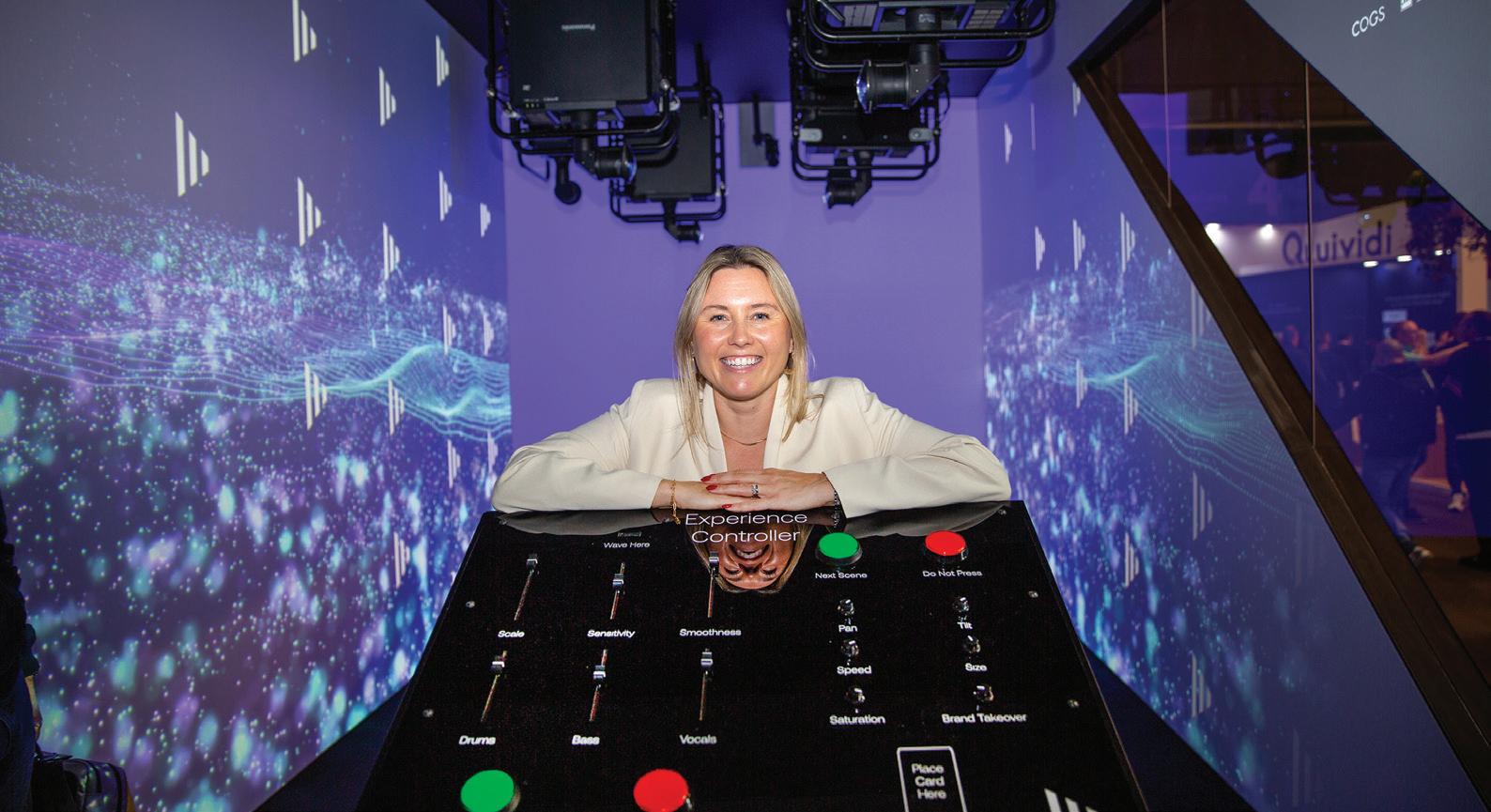
“Our second initiative focuses on the industry’s talent pipeline, we know there is an industry gap with too steep a transition for many newcomers. Disguise aims to smooth that step
through education, training and community engagement, while retaining the energy and passion that drive the sector.”
She added: “At ISE we are really leaning into showing what

our tech can do rather than telling – we want visitors to feel in control and to make it their own experience.”
— kirsty hazlewood www.disguise.one


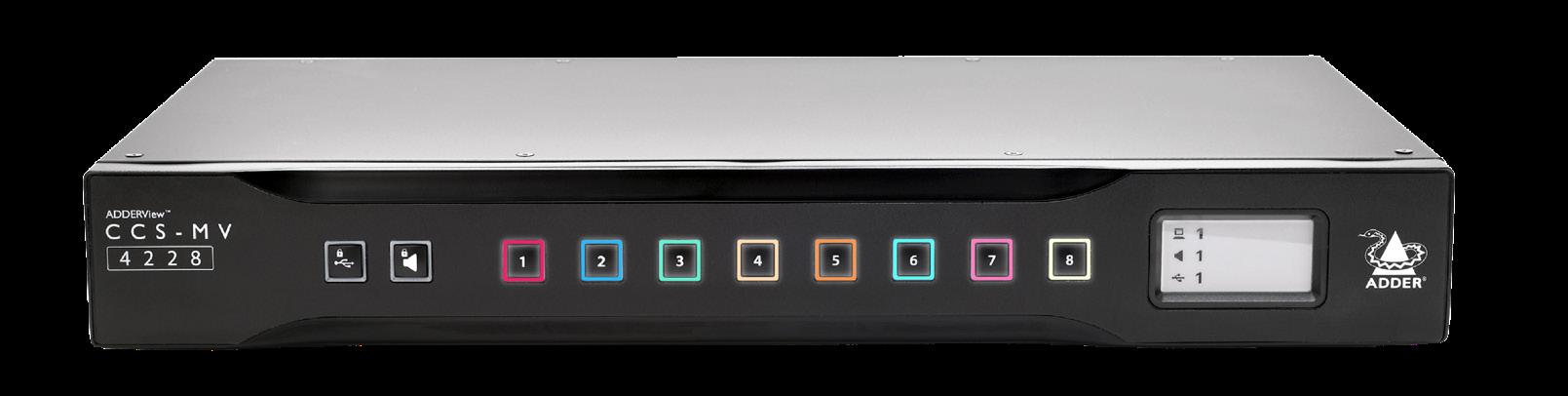
Connect, manage and control everything you need with the latest KVM multi-viewer switches. With the ADDERView® CCS-MV range you can access up to eight different video, audio and USB signals from a single workstation, in a user customizable window layout, across one or two monitors.
Improve situational awareness and access the right information, at the right time, for fast decision making and smooth workflows.
A new family of Color E-Paper displays is being introduced by Samsung. The 13in and 32in models are now available, while the 10in and 20in versions arrive later this year.
Their paper-thin design means the 32in weighs about 2kg, “making it very light and very versatile in terms of placement, handling and ease of use”, according to Adam Brooks, Samsung’s head of QSR (quick-service restaurants). As they only use power when users change the content, the “embedded USB-C chargeable battery can last two months where content changes daily”.
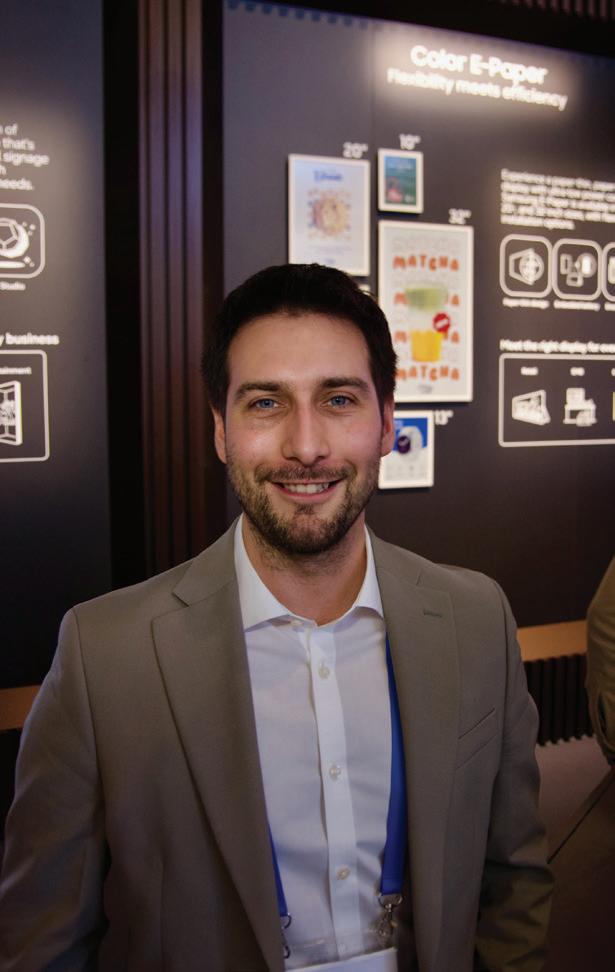
The units can be controlled via a new Samsung app for creating and uploading content on the fly – ideal for smaller users – but they are also integrated with Samsung’s VXT CMS for multi-site applications.
VXT can control a wide range of different displays, including Samsung’s new Micro RGB. Claimed as a world first, it uses tiny RGB backlights with local dimming to deliver greater detail and trueto-life colours. Brooks feels it would be ideal for retailers “to create that wow moment in store”. — david fox www.samsung.com
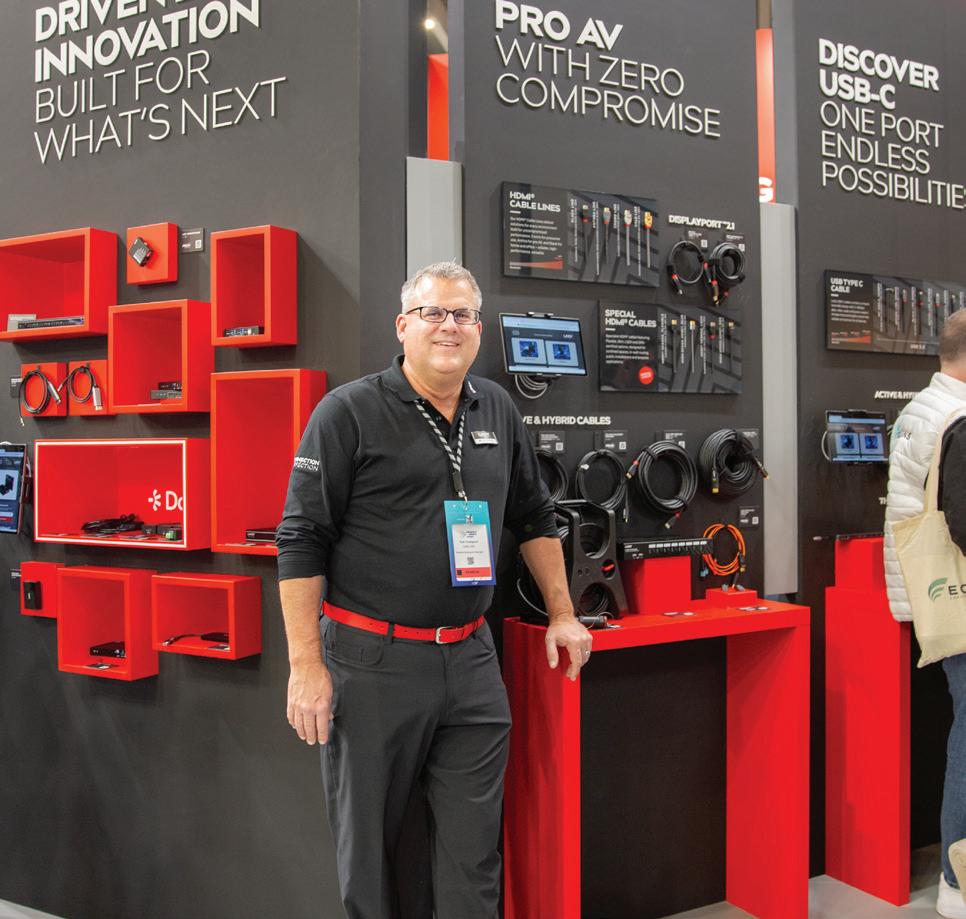
AV and IT connectivity specialist Lindy has announced that it has just set up operations in North America.
The opening of an office in Chicago also coincided with the recent appointment of Rick Thompson as business development manager, with responsibility for US sales.
Thompson previously served as head of sales for North America at i3Connect. His role is to bring Lindy’s cabling and conversion, extension, distribution, power and control technology to the US market.
A range of Bravia professional displays has been launched by Sony that are brighter, more sustainable and offer reduced reflections within a new, slimmer chassis design.
“They all now have haze anti-glare so they can be used next to a large window, even on our entry-level BZ30P,” said Chris Mullins, head of product marketing for professional displays and solutions, Sony.
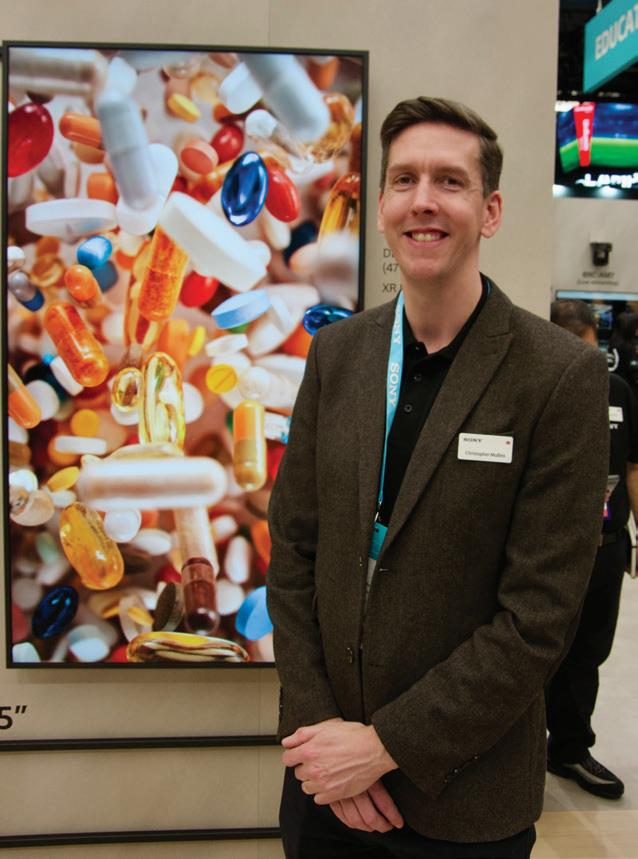
Their construction uses more than double the recycled plastic of previous displays, with up to 43% recycled material depending on the model (of which 99% is fully recycled plastic, compared to about 30% usually). They are also more energy efficient.
The BZ30P offers 400-nits brightness, the IP5X (dust protected for signage in public spaces) BZ35P offers 500 nits and the BZ40P, which has double the haze for hardly any reflection, 700 nits.
Also new is the mid-range S Series for corporate lobby and reception spaces. The 108in, 135in and 162in LEDs are slim, 800-nit anti-reflection displays. — david fox www.pro.sony
Lindy is showcasing around 27 new products during ISE. Thomson notes that one of the biggest sellers is its USB-C active cable – a hybrid fibre optic design delivering high speeds over runs of more than 10m.
Also on display are products for digital signage, collaboration, control and diagnostics, and meeting rooms.
“Whether you specialise in signage, enterprise collaboration, entertainment systems, or control environments, Lindy’s connectivity technologies are designed to be the silent force driving your most reliable installations,” Thompson said.
— anne morris
www.lindy.com
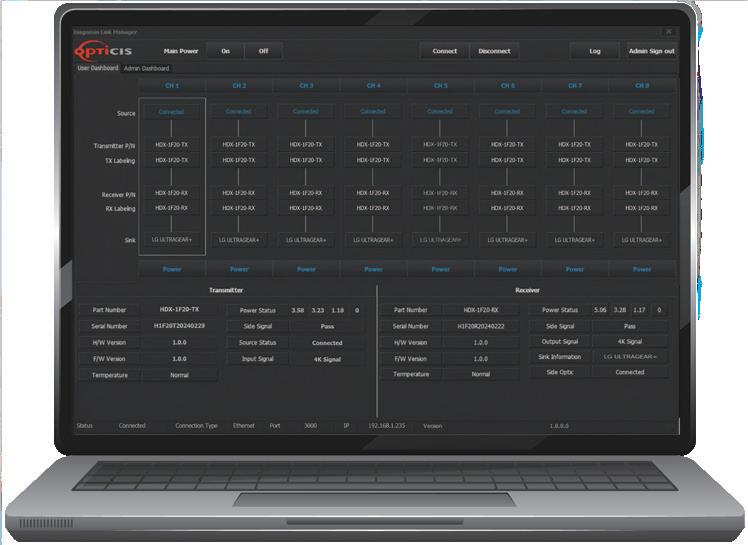
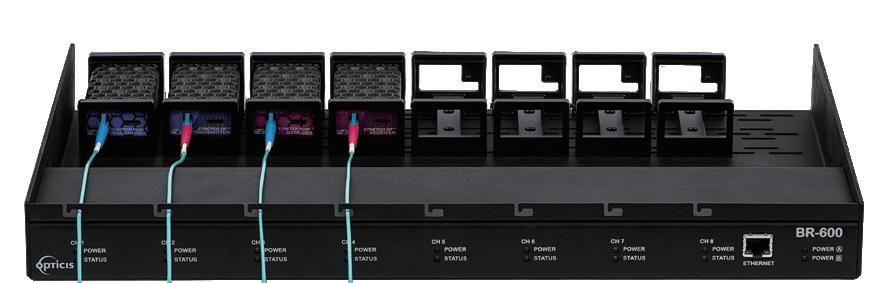
The AdderLink Infinity 4000 series now works with large, ultra-wide displays, linked using proprietary video cables, which means they are pixel perfect. “It’s mathematically accurate and ultra-low latency so you can accurately manipulate what you are linked to in real time,” said Jamie Adkin, VP sales, Adder Technology.
The KVM systems are also designed to work in command and control applications, so can fit multiple resizable displays on its canvas, with programmable scenarios for rapid movement between set ups.
Adder is opening more of its APIs to work with other control systems, such as newly
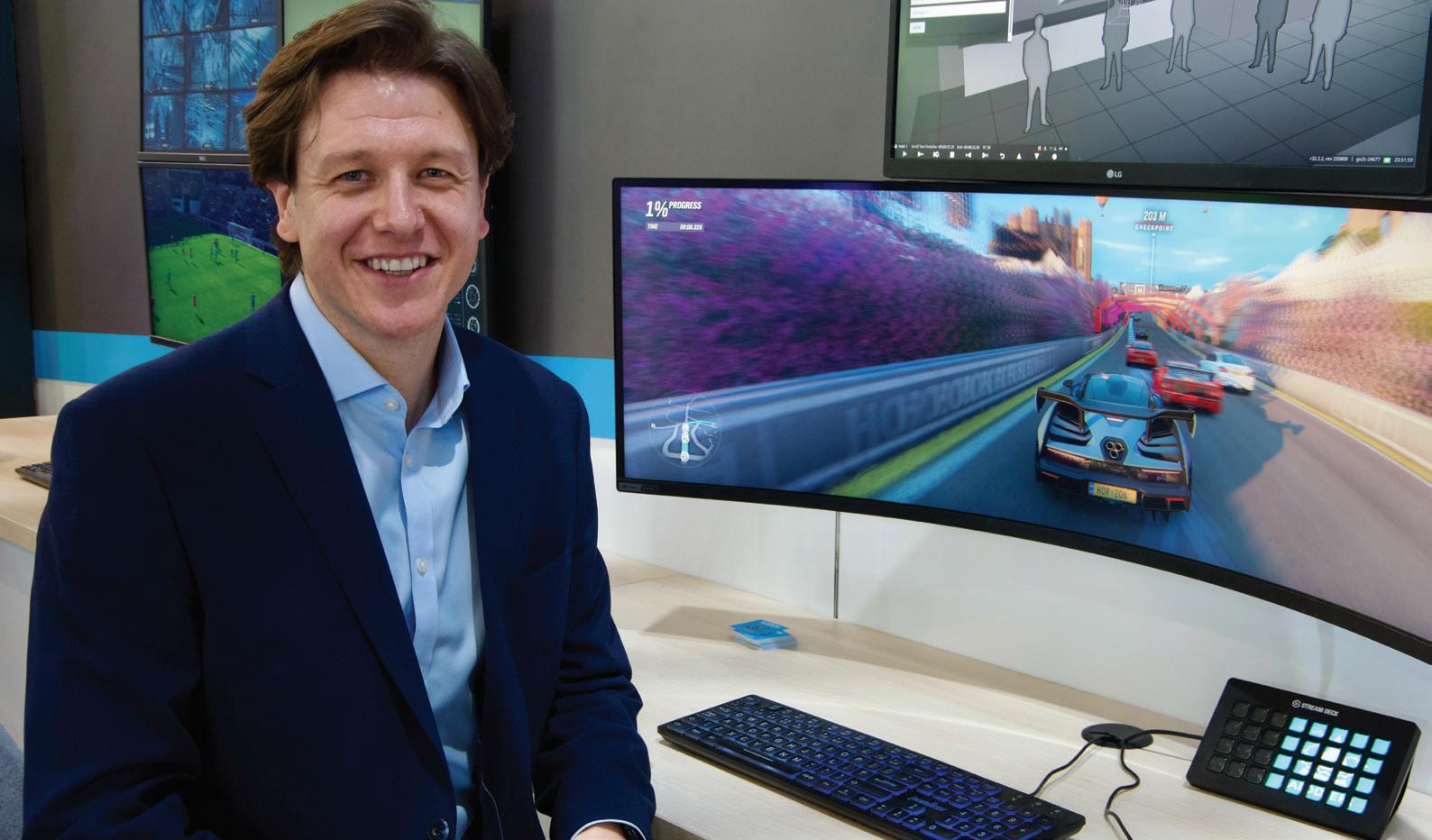
announced link ups with Stream Deck by Elgato and Buttons by Bitfocus.
It has also updated its ARDx remote access technology with
more open APIs for external integration. Unlike many other remote access systems, ARDx only connects to the remote PC via its graphics card, maintaining security as the PC remains solely in its own secure domain.
www.adder.com

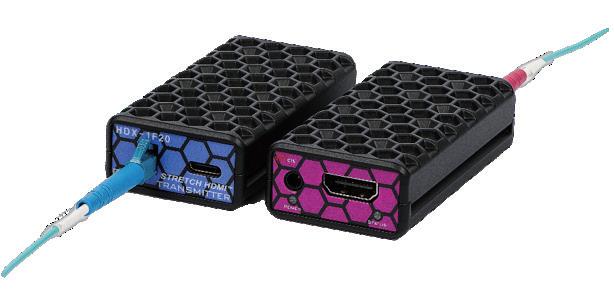
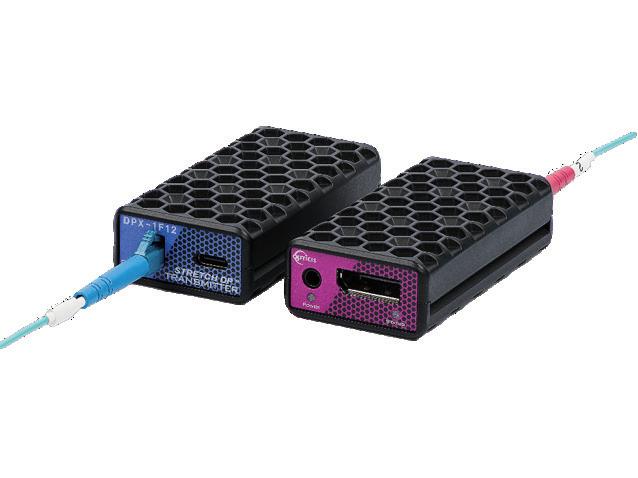
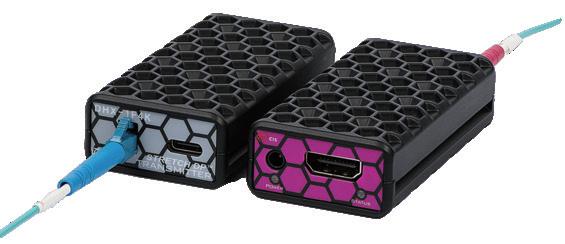




Outdoor-rated LED, retail-focused display formats and interactive transparent screens are among the display technologies being highlighted at ISE this year. Exhibitors are showing solutions aimed at high-brightness outdoor use, eye-catching point-of-sale applications and multiuser interactivity, with a focus on robustness, flexibility and integrated control.
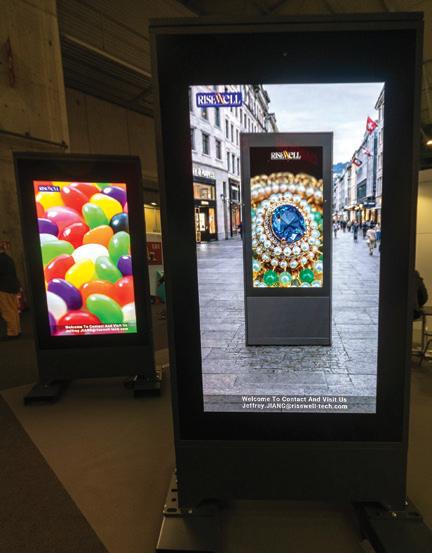
Risewell Electronic Technology is presenting its ROF Series of outdoor fine-pitch LED displays, designed for high ambient light environments and totemstyle installations. Using customised flip-chip highbrightness black LEDs and advanced RGB technology, the displays offer up to 7,500-nits brightness, wide viewing angles and improved clarity. The diecast aluminium modules are fully sealed with IP68 protection on both front and rear, and the modular design supports single- or double-sided configurations in formats such as 75in and 85in, with 1.5mm or 1.95mm pixel pitch. Smart monitoring and control are handled through Risewell’s proprietary RISE system, enabling remote device management, fan control and real-time monitoring of temperature, current and voltage.
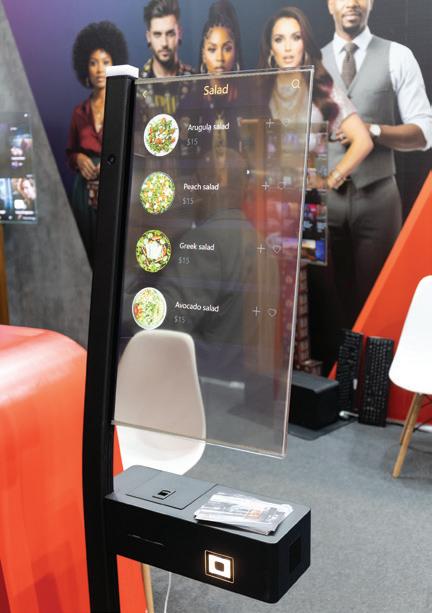
First-time exhibitor Faytech is debuting a range of transparent displays and touchscreen tables. New transparent LCD models join the company’s existing OLED transparent touchscreens, alongside transparent lightbox solutions. The OLED range includes a 30in kiosk, monitors and a 55in sunroof display, while Faytech’s LCD Cooler range integrates interactive displays into glass-fronted refrigeration units, including frosters, bottle coolers, countertop units and upright coolers operating between -14°C and +10°C. The 86in Interactive Transparent LCD Lightbox features a UHD resolution display, integrated 10W loudspeakers and 10-point infrared multitouch.
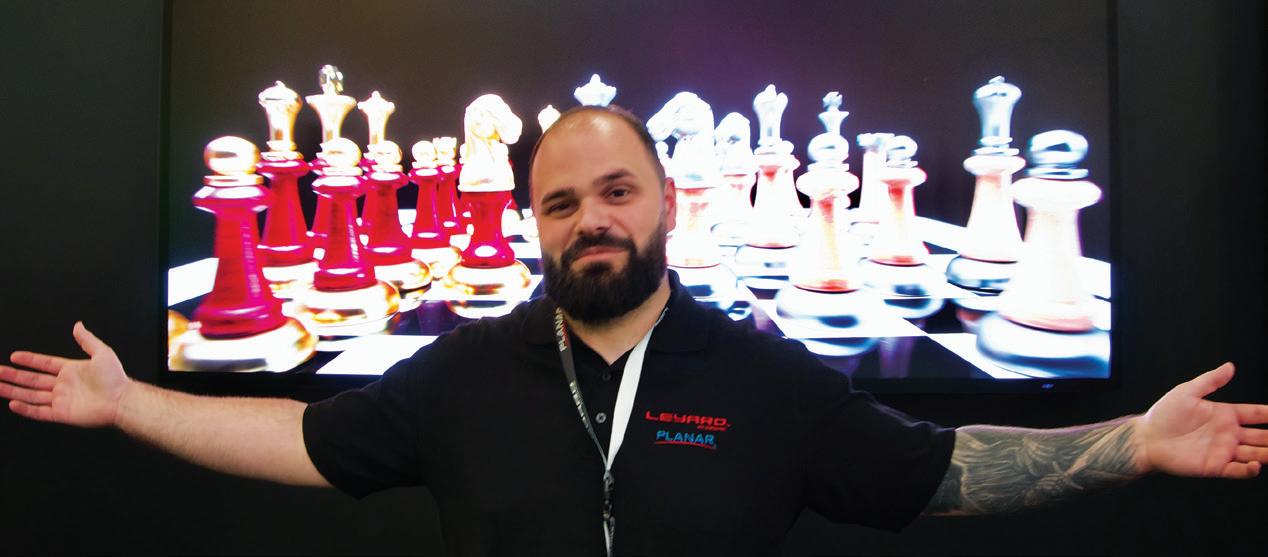
A new range of highly colour accurate 21:9 widescreen displays has been launched by Planar. The premium LCDs are available in 81in, 94in and 105in versions.
They are joined by the new Komodo series, a premium chipon-board MicroLED that comes in 22in and 27in cabinets – the 22in version is said to be ideal for building HD resolution walls.
“We hand select the LEDs to ensure that everything matches for much higher uniformity across the displays,” said Matthias Aubermann, technical sales manager, Planar.
The company also has new 0.6mm screens using proprietary MicroLED in Package technology, which offers colour uniformity, even from off angles. “It is ideal for control rooms and high-end corporate where you need high resolution,” added Aubermann.
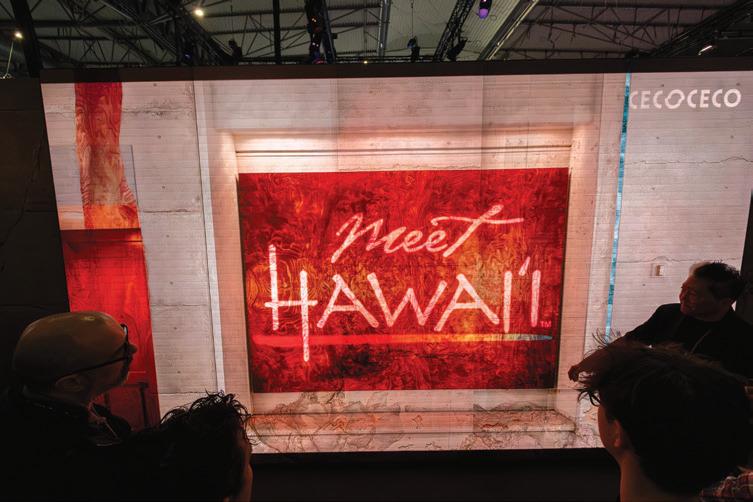
ArtMorph, a textured surface concept that blends animated digital content with physical, architectural finishes, is a new vision for LED on the ROE Visual stand. Developed by CECOCECO, the creative studio founded by ROE Visual’s Jason Lu and Grace Kuo, the system combines highresolution LED displays with customisable textured surfaces designed to integrate naturally into built environments.
ArtMorph is being demonstrated alongside Gensler’s ImmersiveMode platform, the architecture firm’s first software-as-a-service content delivery system, developed in collaboration with CECOCECO. Using AI-driven content generation, the platform adapts visuals to the texture, tone and character of the display surface, allowing environments to evolve over time without constant manual content updates.
The combined hardware and software approach is aimed at architectural applications including corporate, retail and hospitality spaces, and forms part of Gensler’s wider Digital Experience Design initiative to integrate digital media more seamlessly into physical environments.











SESSION HIGHLIGHTS
From Policy to Practice: Key compliance insights for the AV industry
5 February
09:30-10:10
Room CC5.1
The Invisible Shield: Securing corporate communications
5 February 10:40-11:10
Room CC5.1
Securing Critical Environments: AV cybersecurity challenges and best practices
5 February 11:00-11:30
Room CC5.1
The first CyberSecurity Summit, sponsored by Barco, takes place today in Room CC5.1. Presenting the key topics and issues impacting the industry, it will enable delegates to understand the priorities and develop a roadmap that can be adapted for individual business and strategy decisions.
Hosted by summit chair Pere Ferrer, a senior public executive and former director general of the Catalan Police with more than 15 years of experience in leadership roles across public safety, digital transformation and critical infrastructure governance, the event will bring together a diverse range of professionals integral to advancing cybersecurity within the AV ecosystem.
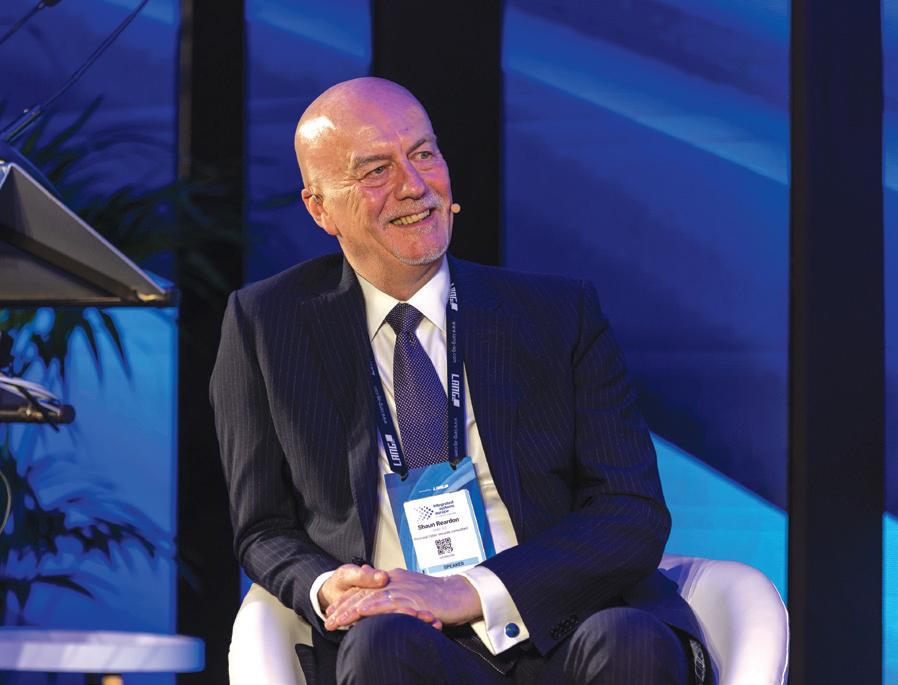
This includes Shaun Reardon, principal cyber security consultant, DNV Cyber, who will explore applying resilience frameworks and security-by-design to safeguard connected AV environments, and Pedro Pablo, general manager, TRC, who will discuss how enterprises can protect data centres and ensure AV and IT integrity.
In addition, Farell Folly, senior expert for industrial cybersecurity, TÜV SÜD, and Laura Caballero, director, Cybersecurity Agency of Catalonia, will share how new regulations are reshaping cybersecurity requirements for AV systems. Susana Escarabajal Martínez, global head of prospects and technical advisory for global security at Telefónica; Sergi Carmona, CISO, Veolia España; and Angel Luis Lopez, cyber security manager, Airbus Public Safety and Security, will address the key cybersecurity challenges in mission-critical environments and offer practical insights
cyber security summit
into protecting data and services while securely integrating AV technologies into critical infrastructure.
The day ends with a closing keynote from Roman Vargas, cybersecurity specialist at Cisco. Summarising key insights from the summit, he will address major challenges and highlight opportunities shaped by innovation, regulation and collaboration, outlining a path towards secure, resilient AV ecosystems.
CyberSecurity Summit takes place today from 09:00-12:00 in Room CC5.1.
Today’s Broadcast AV Summit, presented in association with IABM, will explore the exciting new worlds of the creator, experience and streaming economies.
Sessions begin with ‘The Convergence of Broadcast and AV is no Longer a Trend - It’s a reality’, during which David Ross, CEO, Ross Video, will explore the cultural and technical shift driving professional live content anywhere. This is followed by Samantha Bacon, strategic development manager, Adobe, sharing the processes that enable high-quality, costeffective video at scale, highlighting innovations in ideation, post-production, content variation and delivery within a unified, collaborative environment.
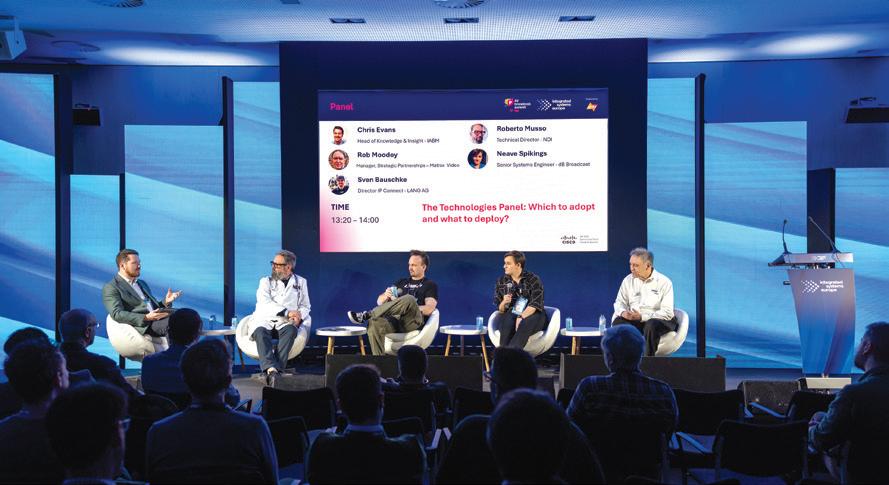
Chris Evans, head of business intelligence, IABM, will present research insights to guide market strategy, after which a panel of experts will share their perspectives on the findings, offering valuable industry insights.
Maria Ingold, former streaming CTO and AI strategist, will then discuss how AI is revolutionising the creator, experience and streaming economies, making processes faster and more cost-effective. She will introduce an AI in Media Taxonomy, a comprehensive framework of over 150 use
cases designed to help industries understand and leverage AI for responsible innovation and rapid content creation.
In the final session of the day, Callum Hewitt, a YouTuber, film and video producer, will explain how the platform has redefined traditional broadcasting by enabling anyone to be a broadcaster, transforming viewing habits worldwide.
Broadcast AV Summit takes place today from 14:00-18:00 in Room CC5.1.
SESSION HIGHLIGHTS
The Future of Creativity in the Era of AI
5 February 14:40-15:10
Room CC5.1
Market Insights from IABM to Inform Your Broadcast AV Strategy 5 February 15:10-15:50
Room CC5.1
From Broadcast Titan to Digital Giant 5 February 17:20-17:50
Room CC5.1
The final day of the Smart Home Technology Conference sees a number of sessions designed to challenge, inspire and equip attendees for the future. Consisting of 90-minute sessions that address real-world challenges and deliver practical takeaways, the conference features a whole host of industry leaders sharing their knowledge and experiences.
This includes Leslie Shiner, owner of The ShinerGroup, who today is helping attendees better understand and utilise basic financial concepts to improve profitability in a session entitled ‘The Owner/PM’s Financial Playbook: Master the money side of smart home integration’.
This is followed by ‘Wellness: Fad, or business opportunity?’, a panel discussion that will take a practical, science-informed look at the wellness opportunity for the home integration sector. Peter Aylett, partner, Officina Acustica; Durgesh Sinh, founding director, Nucleus AV; Neil Davidson, director, SRND Group; and Andy Bull, director of design, Lighting Audio Video Projects, are the speakers here.
Also not to be missed, ‘AI & Ethics for Integrators: Safeguarding your business and your clients’ will explore the ethical and practical challenges integrators now face as AI continues to transform how they work. Issues such as copyright infringement, privacy, data security and the implications of always-on cameras and microphones will be discussed by Rich Green, founder of Rich Green Design.
Other sessions taking place today include ‘Smarter,
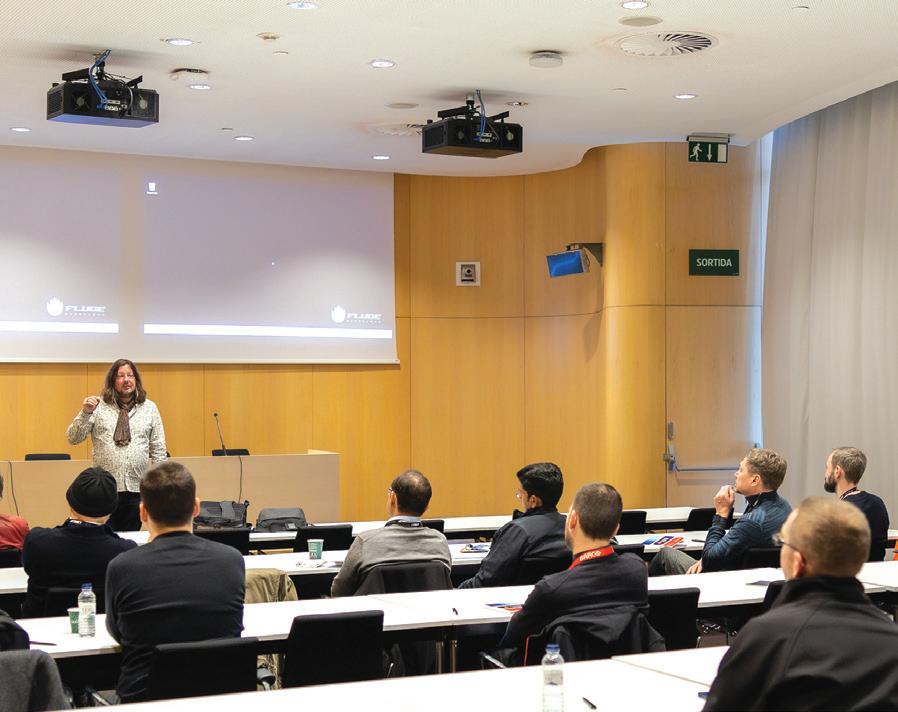
Faster, Better: Building efficiency into every stage of your business’ with Doug Greenwald, founder and CEO, Project 360, and Jason Knott, data solutions architect & evangelist, D-Tools, and ‘Next-Generation Acoustic Simulation: Streamlining low-frequency design with integrated ray tracing and FEM analysis’ with Donato Masci, CEO & technical director, Studio Sound Service.
Smart Home Technology Conference takes place today from 10:00-18:00 in Rooms CC1.1, CC1.2 and CC1.4.
smart home technology conference
SESSION HIGHLIGHTS
Empowering Independence: Smart technology for living well 5 February 10:00-11:30 Room CC1.2
Finding Your Next Client: Strategies for growth in a crowded market 5 February 12:00-13:30 Room CC1.4
AI & Ethics for Integrators: Safeguarding your business and your clients 5 February 16:30-18:00 Room CC1.1
SESSION HIGHLIGHTS
Emerging Markets
5 February
11:15-11:55
Live Events Stage
Surfing the
5 February
15:30-16:10
Live
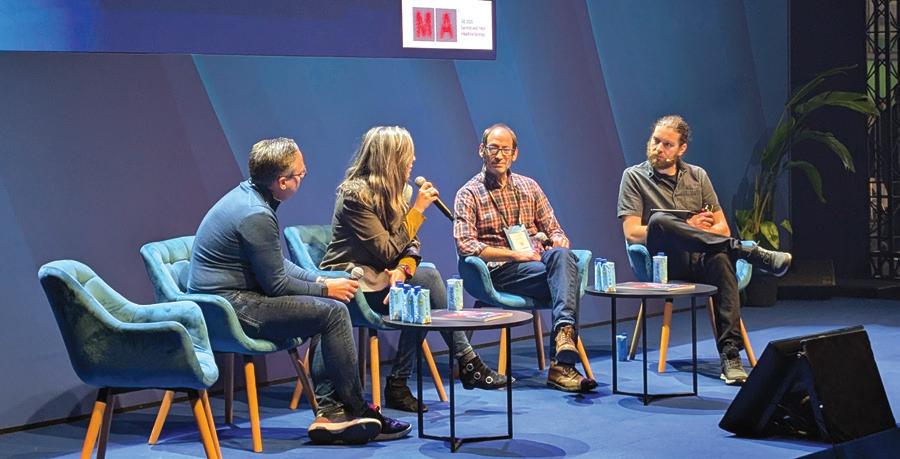
The Live Events Stage (6B100), supported by headline sponsor MA Lighting, is once again offering attendees a behind-the-scenes look at some of the world’s most incredible live events, large-scale ceremonies, architainment and installations as the programme continues in Hall 6. Today kicks off with an in-depth look at the advancing world of AV on high-end cruise ships, before Duncan Riley, managing director, DWR Distribution, and Andy Reardon, managing director, Creative Technology, are among
those sharing their insights on the growth, challenges and opportunities shaping the next wave of global entertainment.
In ‘A Quest for a Greener Future’, panellists including Axelle Meunier, a talent development specialist at L-Acoustics, will discuss how the events industry is tackling the topic of sustainability in 2026 before the focus shifts to the visual element of putting on a live event. In ‘Camera, Screens and the Expanding Visual Stage’, Tito Sabatini, creative director at Duo2, will explore how directors and designers ensure that the performer remains at the centre of the story as video landscapes grow larger and more immersive. This is followed by ‘The Sky becomes a Stage –The art and technology of drone spectacles’, led by Pawel ‘Spider’ Pajak, creative director/producer, Percepto.
The final session of the day sees director and photographer Ant Barrett and Joshua Koffman, co-founder, Design Partners of Canada, step inside the touring video world to explore the art of capturing the action in real time and bringing live moments to life.
Sessions on the Live Events Stage in Hall 6 run today from 10:30-17:00. They are free to attend.
The winners of the 2026 Stand Design Awards will be recognised at a ceremony on the Smart Home Technology Stage in Hall 2 this evening.
Every stand on the ISE show floor has been automatically entered into the free competition and has been judged on site during the show.
Emily Olson, editor of organiser EXHIBITOR magazine, along with freelance associate editor, Ben Barclay, completed the initial round of on-site judging to select the finalists. A group of worldrenowned designers and marketers then judge the finalists based on criteria including how well the stand communicates the name and purpose of the exhibiting company, how it demonstrates effective design realisation/fabrication, and how it employs the allotted space and scale to convey key messages. The stand with the highest points total in each category will be declared the winner.
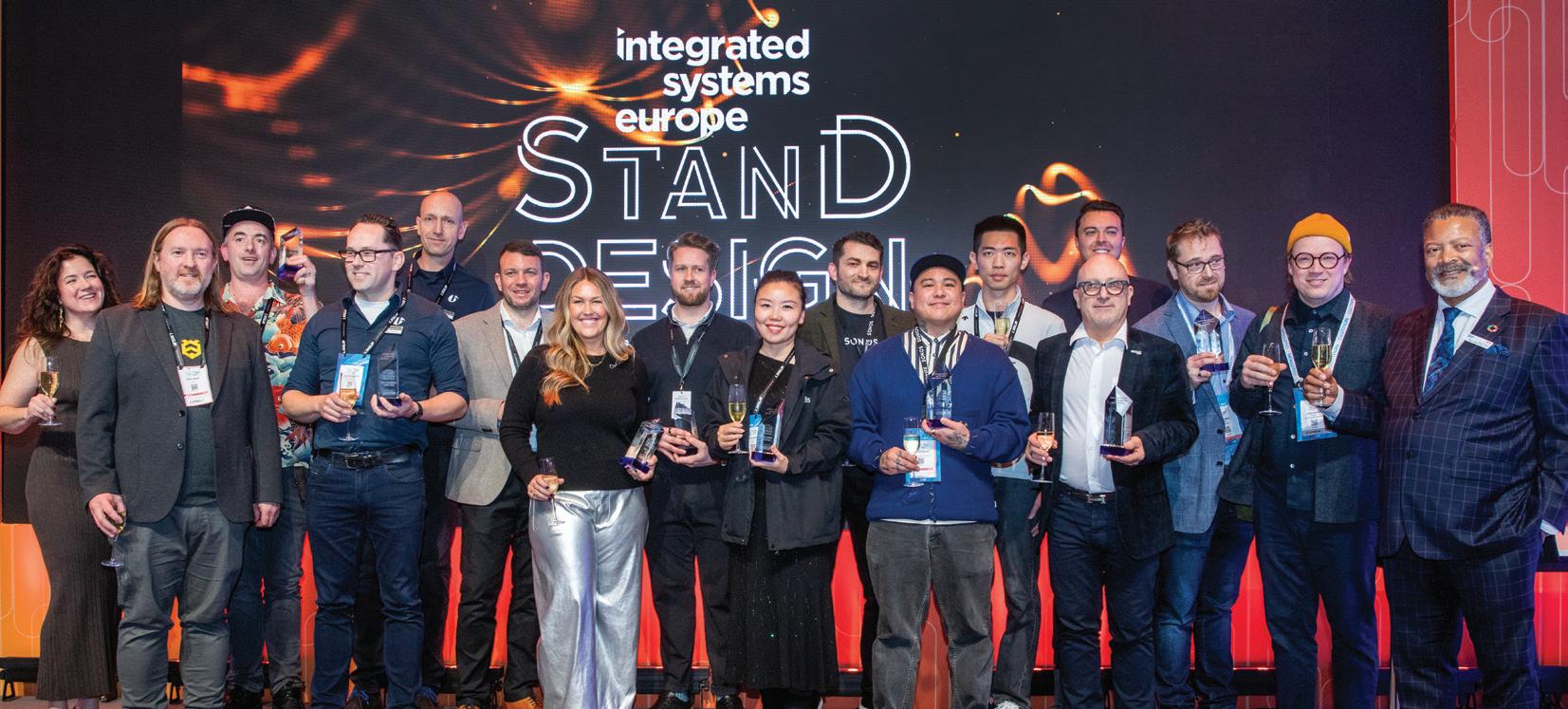
Awards will be presented across four categories, best Small, Medium, Large and Extra-Large stand. At today’s ceremony, one winner and two runners-up in each category will be announced and presented with a trophy. Category winners also receive a scholarship to EXHIBITORLIVE 2026.
Judges this year include Cristina Garcia, architect and partner, Indissoluble, Barcelona, Spain; Cathleen Bank, head of client relation and market development, Holtman GmbH & Co, Langenhagen, Germany; Marko Rašić, creative director and partner, Rašić+Vrabec, Zagreb,
SESSION HIGHLIGHTS
AI: What’s happening now and where next?
5 February
10:00-10:45
Smart Home Technology Stage
The Party Room
5 February
12:00-12:45
Smart Home Technology Stage
The Stand Design Awards take place today at 16:00 on the Smart Home Technology Stage in Hall 2. They are free to attend.
smart home technology stage

Among the sessions on the Smart Home Technology Stage (2D350) today, ‘The Party Room’ is one not to be missed. As entertainment rooms evolve, with more and more clients looking for versatile and immersive spaces, this session takes a deep dive into the party room trend with a look at the reasons behind this move and the technologies and systems that can wow clients and guests while maximising functionality. Katie Sparrevohn, owner, London AV Solutions, and Chris Knight, managing director, Perfect Integration, will be sharing their insights. Also today, Rich Green, founder, Rich Green Design,
will lead a session entitled ‘ AI: What’s happening now and where next?’, examining the current state of AI and its future trajectory for home integration. In addition, the first panel of the day will feature Nicolai Landschultz, managing director, IndigoZest; Paul Laventure, client director, IndigoZest; and Darren Barker, design director, Cinema Luxe. They will discuss their CEDIA Award-winning Buzzards Road home cinema project, sharing the ideas that shaped the space, the challenges they ran into, and the practical decisions that helped bring the cinema to life.
Finally, Steve Moore, founder, SMC, will explain the CEDIA Assured scheme, why it matters and how it benefits housebuilders, homebuyers and integrators. Attendees will learn how the programme ensures compliance, protects investments and enhances client satisfaction, and why supporting CEDIA Assured can differentiate your business for property developers.
Sessions on the Smart Home Technology Stage in Hall 2 run today from 10:00-14:45. They are free to attend.
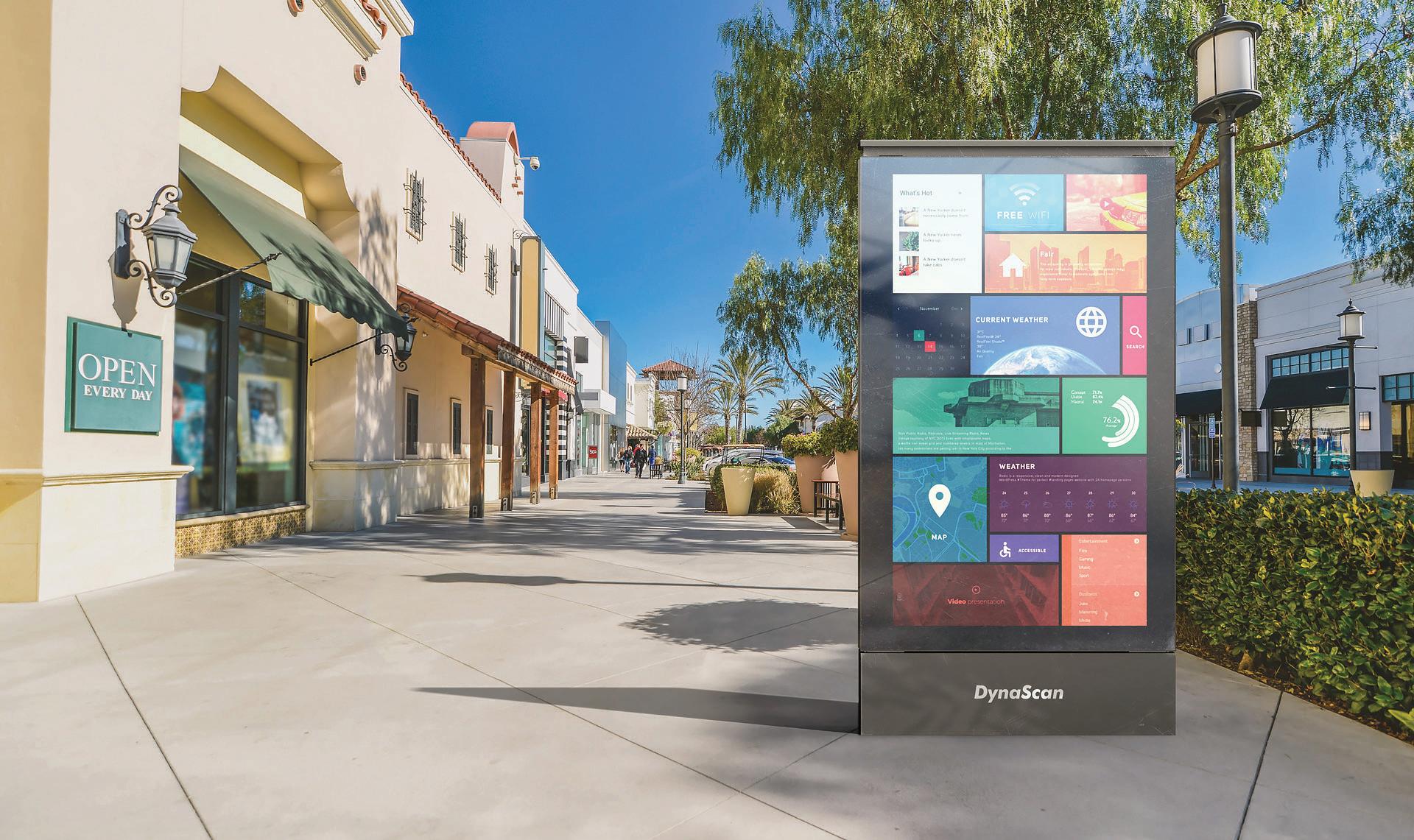

DynaScan continues its mission of Unifying Visions by delivering visually stunning solutions designed to captivate and inspire. We are taking this mission to the next level by showcasing a range of advanced display technologies, including LCD, direct-view LED, light boxes, and ultra-low power ePaper displays.


Our team of experts from Europe, North America, and Asia are available at stand 3C700 to provide personalized guidance and support for your projects. Visit us to explore our offerings and enjoy a freshly brewed cup of coffee. We look forward to seeing you!


Designed to offer deep insights into the trends transforming AV and systems integration, the Megatrends programme concludes today, with sessions exploring AI, sponsored by Microsoft, Smart Spaces, sponsored by Shure, Robotics, sponsored by LANG, and Sustainability.
Sessions begin with a panel discussion exploring how immersive digital experiences and retail media networks amplify each other’s impact, featuring Michael Schneider, CEO and director of media architecture, Volvox Labs, and Monika Lindquist, group CMO, Vertiseit.

AI and Robotics come to the fore this afternoon when Karsten Marijnissen, field CTO, Incentro, will share valuable insights around building agentic AI systems in enterprises.
In addition, Jordi Cabau, CTIO, Group Saltó, will discuss how large-scale social robotics projects are translating vision into real-world impact by integrating technology, innovation systems and human-centred design to transform care environments and enhance quality of life.
The final session of the day will ask why robots look human? Francesco Elsing, director emerging technologies, LANG, and Rebekka Gingell, manager event technology, LANG, will explore the cultural and historical roots of humanoid design – and why we continue to anthropomorphise technology.
Megatrends sessions run today from 10:55-17:00 in Room CC5.3.

SESSION HIGHLIGHTS
Accessible AV Designs for Classrooms
5 February
12:15-13:00
AVIXA Xchange LIVE
Level Up: How AVIXA Xchange empowers you to connect, grow, and lead
5 February
15:00-15:45
AVIXA Xchange LIVE
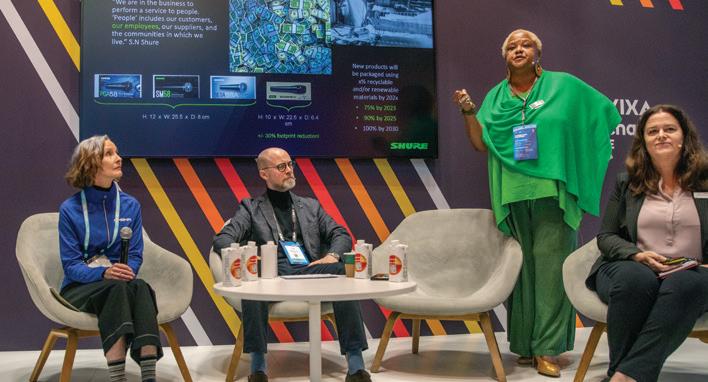
A series of dynamic, inspiring and collaborative sessions will take place on the AVIXA Xchange LIVE stage (3Q150) today, including ‘Accessible AV Designs for Classrooms’. Experienced technology managers including Syed Hussain Kamal, general manager AV, Blue Rhine; Kaz Pearman, client development specialist, DCE Agency; and Sanj Surati, digital atelier & founder, Tiger Heart, will share their experiences of creating accessible learning environments.
Xchange into a personal hub for opportunities, insights and yearround networking.
The role of AVIXA Xchange will also be discussed during two sessions. First up, Justin Bolger, senior specialist, digital community, AVIXA, will host ‘AVIXA Xchange 101’, which will teach attendees how to turn
The final session of the day, ‘Level Up: How AVIXA Xchange empowers you to connect, grow, and lead’, will explain how to turn Xchange into a powerful engine for visibility, leadership and real opportunities in the pro-AV industry. Xchange advocates will share their experiences.
AVIXA Xchange LIVE sessions run today from 11:10-17:00 in Hall 3.
SESSION HIGHLIGHTS
Activating Smart Retail Spaces: The fusion of immersion and retail media 5 February 11:00-11:40
Room CC5.3
Beyond the Bulsh*t: Lessons learned on adopting agentic AI at enterprises 5 February 14:00-14:30 Room CC5.3
Why Robots Look Human: From culture to AV 5 February 16:00-17:00
Room CC5.3
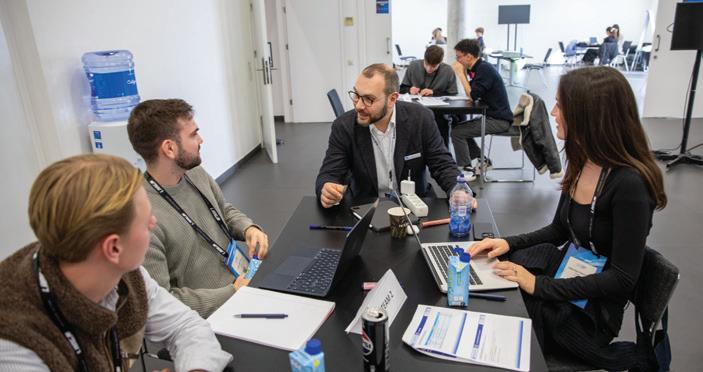
The ISE 2026 Hackathon, sponsored by SETT, began at 08:00 this morning, with elite students taking on challenges identified by companies looking for innovative solutions to real-life business problems. Working alongside professionals from across education and a range of industries, the students will engage in rapid networking, collaboration, brainstorming and innovation engineering to solve challenges across the three tracks of Cybersecurity, Sustainability and Innovation. All work must be completed by midday tomorrow, after which there will be a series of project presentations on the Pitching Stage in Congress Square. This will be followed by an Awards Ceremony at 15:00 where the winning projects and teams will be announced.




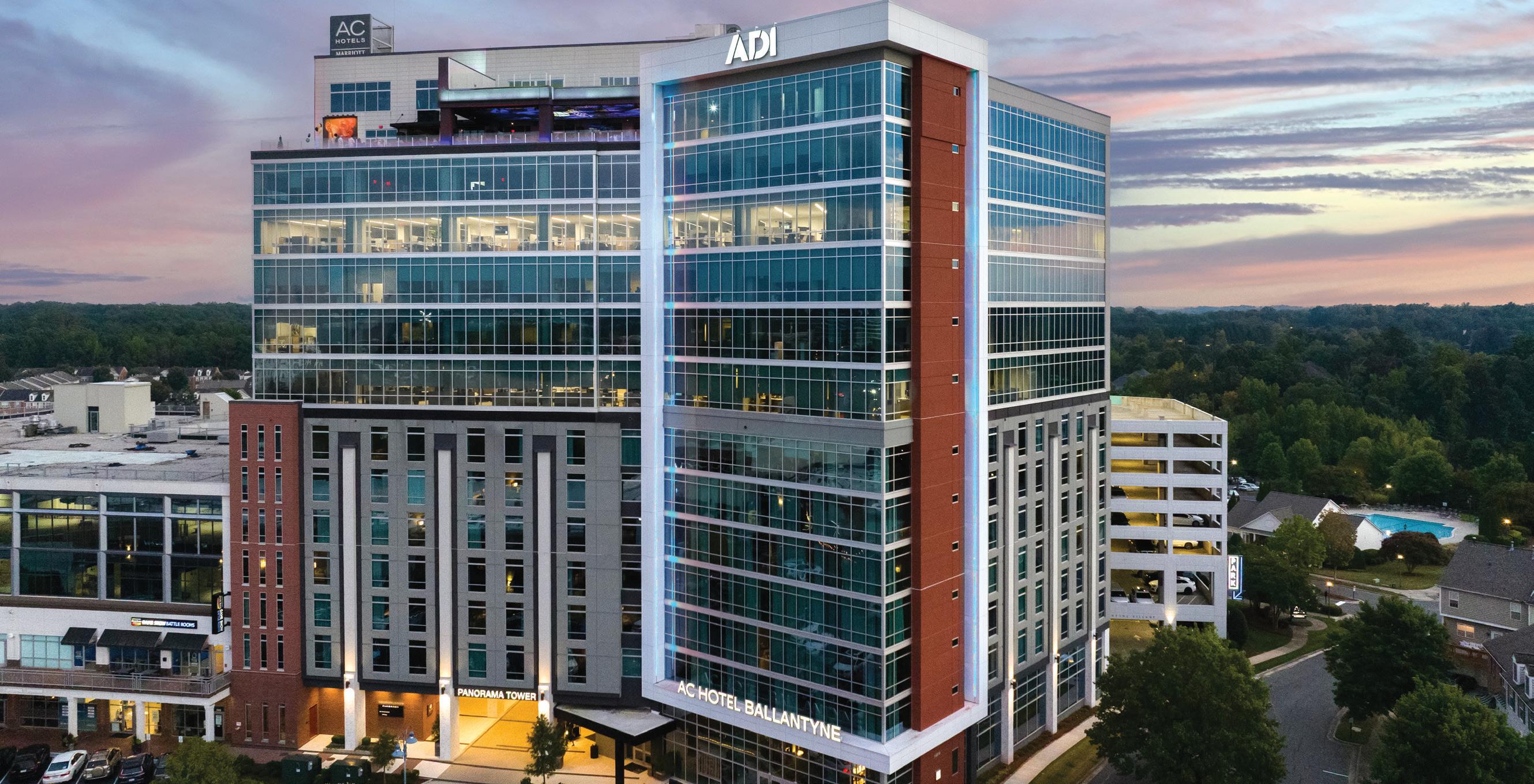
ADI is redefining what “more” means for integrators by delivering more innovation, more integration, and more opportunities to grow.
Our focus is simple: listen to our customers, invest in solutions that drive innovation, and empower longterm success. At the core of ADI is a commitment to stronger partnerships and relationships built to last.
ADI is a leading distributor and solution provider of security, AV, and smart living products, serving over 110,000 customers worldwide. We offer access to an extensive portfolio of more than 500,000 products from over 1,000 distributed brands, along with our own exclusive brands featuring award-winning names like Control4, WattBox, OvrC, Triad, and more. With a seamless omnichannel shopping experience, customers can shop ADI online, through our mobile app, or at one of our 200+ stocking locations globally.
At ADI, we deliver more – more products, more services, more shopping convenience, more local expertise, and more investment in innovation – empowering professionals to design and deliver complete solutions.
In today’s audiovisual industry, AV systems are increasingly dependent on network connectivity. With the need to share network resources, AV and IT professionals are seeking to enhance their skillset to overcome the challenges this convergence presents.
To address this growing demand, AVIXA offers on-demand classes in Network Technology. AVIXA has long offered courses on traditional AV systems and signals, but there has been an increasing need for courses on networking technology from an AV perspective.
Network Technology training introduces you to the basics of Ethernet and IP networking. Now in its second iteration, the course includes more in-depth discussions of AV transport protocols and common networking configurations for AV purposes. Starting with defining
the network and then spotlighting each layer of the Open Systems Interconnection model, this training provides a valuable learning model for understanding how networking works. You’ll walk away with the knowledge and vocabulary to speak intelligently about AV network requirements with your IT stakeholders.
“Our catalogue of training, certifications and on-demand classes benefit both AV and IT professionals looking to design and manage seamless collaboration experiences,” said Zachary Fisher, director of training, AVIXA. “Whether they’re supporting remote work or in-office meeting spaces, our product-specific education and topic-focused
training equips them for a major role in creating connected environments and high-level communication and collaboration experiences.”
AVIXA also offers the Audiovisual Network Professional (ANP) certification for any professionals who want to prove their AV networking skills. Whether

you’re an AV expert learning networking or an IT pro integrating AV systems, this key credential is a valuable tool.
For AV professionals and IT professionals looking to get ready for the ANP exam, the ANP Prep course is designed to help you feel confident and well-prepared before sitting the exam. This course focuses on reviewing the fundamental information about networking that might appear on the exam to help you focus your attention on areas that need it. By signing up, you can familiarise yourself with the ANP exam format, review key networking and AV project management concepts, and learn effective test-taking strategies and study techniques.
AVIXA also offers Microsoft AI-Powered Workforce training for those aiming to supercharge workplace productivity with the latest Microsoft training tools. Free to the AV community and new to AVIXA’s Training Portal, this updated online training programme offers in-depth guidance on integrating powerful solutions such as Teams, Teams Rooms and Teams Phone with enhancements from Copilot and Microsoft Places into your workflows.
You’ll learn deployment strategies, AI enhancements and intelligent AV, meeting room management, analytics and insights for planning, as well as industry insights for collaboration. As AI rapidly becomes a key solution to the challenges of flexible work, it’s important to ensure that your organisation has the tools to create intelligent meeting spaces and support the new world of work.
To learn more about AVIXA’s training courses, visit www. avixa.org/trainingcatalog.
CEDIA has released a report on its first-ever market research study focused on Europe, providing real data on trends, opportunities and challenges throughout the region. The inaugural report marks a significant step in mapping the
European landscape and offering industry professionals actionable intelligence.
“We all know the value of market intelligence, so I’m pleased that we have completed our firstever European market research project,” comments Matt Nimmons, managing director of CEDIA EMEA and head of CEDIA’s global research division.

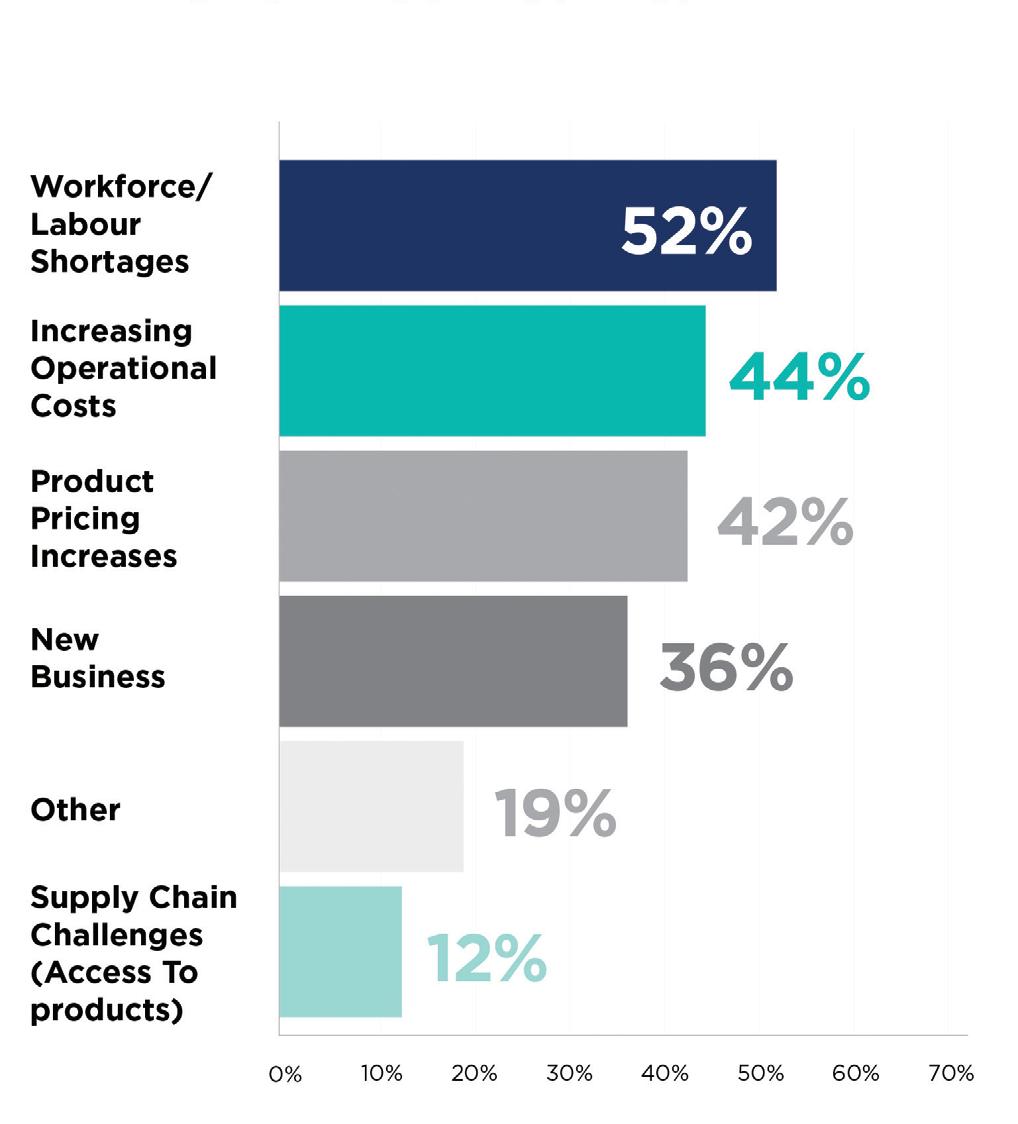
“We’ve delivered market intelligence studies in the USA and the UK for several years, and more recently in India, Australia/ New Zealand and Canada. Yet the European landscape has remained largely unmapped. We are pleased with the engagement we received for this research project and look forward to expanding on it in the coming years.”
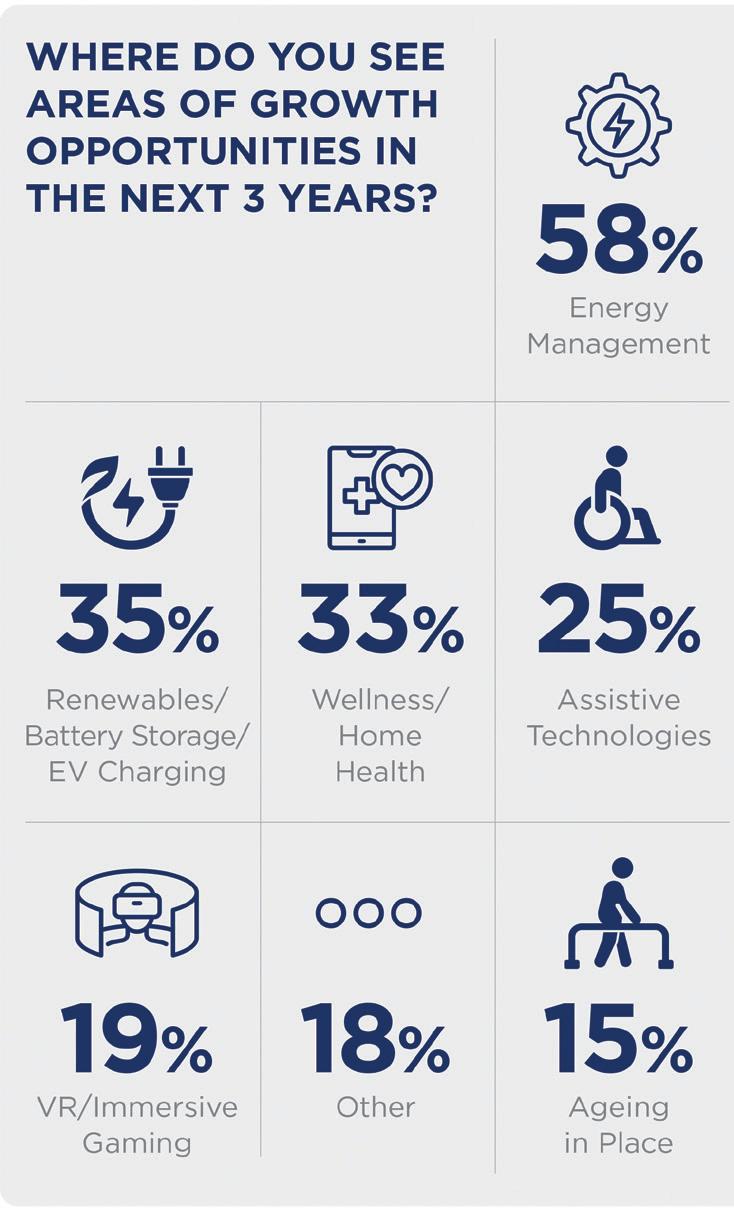
The European smart home market is well established, with the majority of businesses having operated for more than 10 years. The study highlights a notable diversity in annual revenues among market participants, reflecting a wide range of business scales and client bases. A strong emphasis on high-end projects is evident, with many firms specialising in premium installations and bespoke solutions for discerning clients.
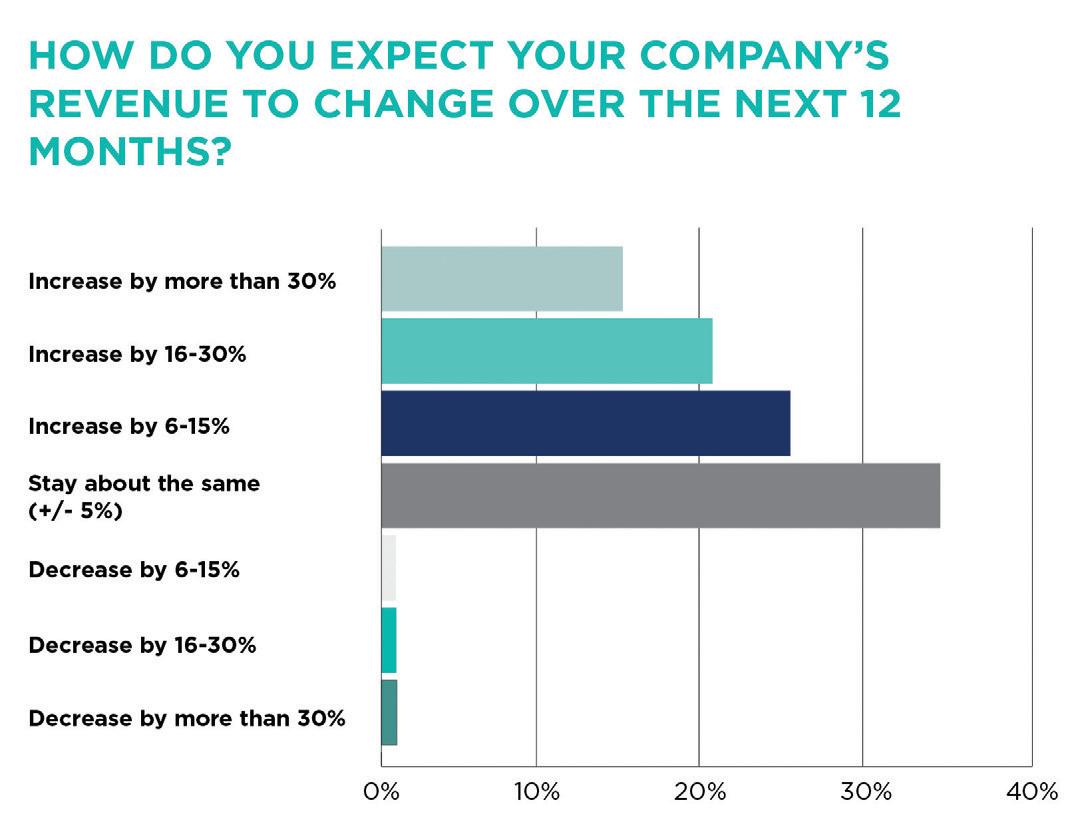
Industry sentiment remains optimistic, with professionals anticipating continued growth and innovation. The research also identifies key business obstacles, including workforce challenges and product pricing.
This research project is CEDIA’s latest step in supporting members across the region.
The association's International Ambassador programme empowers trusted volunteers to act as local advocates for the smart home industry, building awareness of CEDIA standards and education, strengthening member communities, and supporting regional initiatives through events and partner outreach.
While ambassadors can connect employers and talent where helpful, their primary focus is on market development, member engagement and industry credibility across Europe.
To download the European market research insights report, visit www.cedia. org/advocacy/marketintelligence.
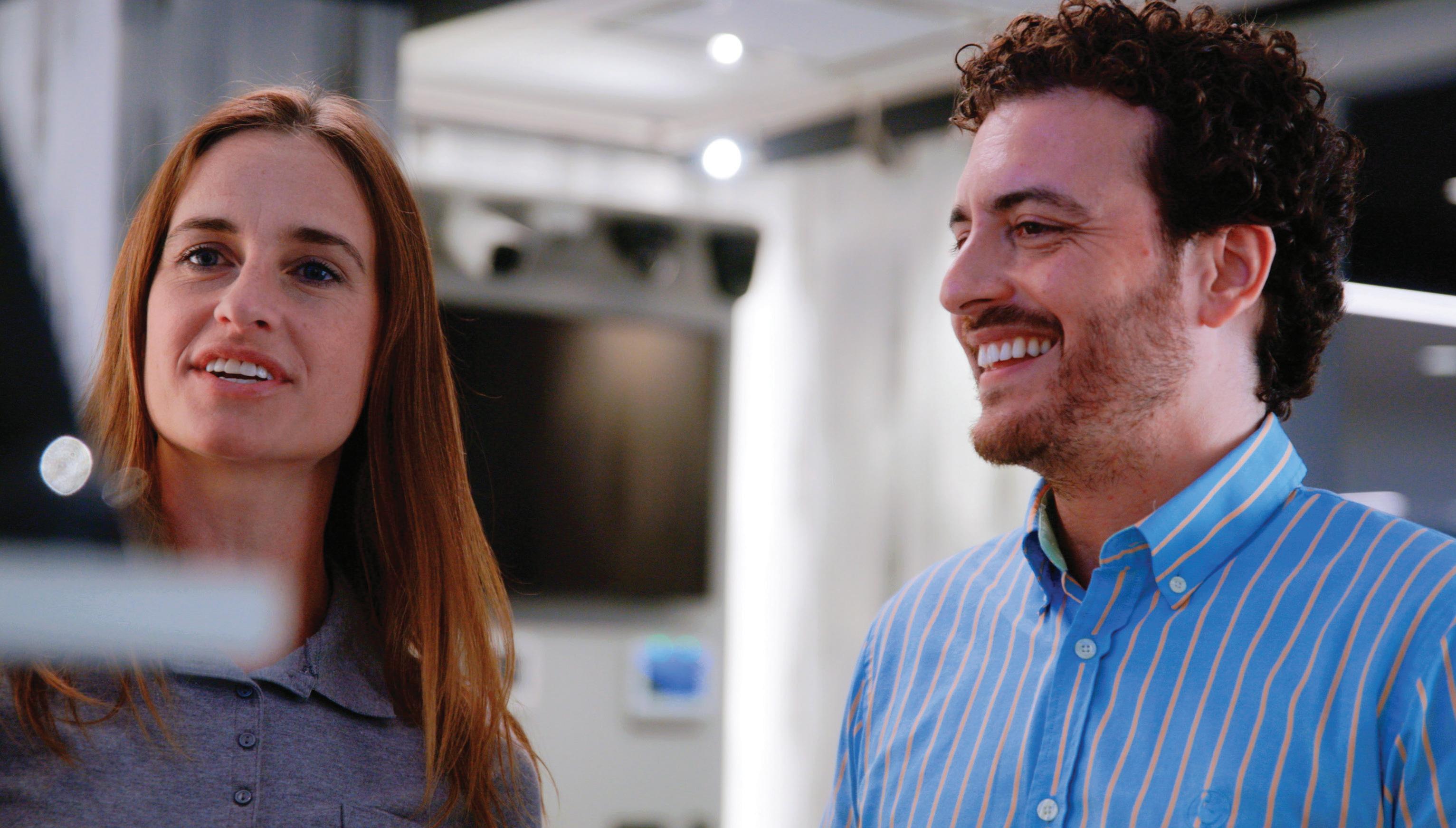




AVIXA Xchange LIVE (3Q150) is presenting free, interactive, dynamic sessions covering accessible learning environments and how to use the digital community Xchange for professional opportunities year-round.
11:10-11:15
Welcome to AVIXA Xchange LIVE
Speaker: Sanj Surati, digital atelier & founder, Tiger Heart
11:15-12:00
AVIXA Xchange 101
Speaker: Justin Bolger, senior specialist, digital community, AVIXA
Discover Xchange, AVIXA’s always-on community where AV professionals connect, share expertise and stay visible long after the show floor closes.
12:15-13:00
Accessible AV Designs for Classrooms
Speakers: Sanj Surati, digital atelier & founder, Tiger Heart; Syed Hussain Kamal, general manager AV, Blue Rhine; Kaz Pearman, client development specialist, DCE Agency
Join us as experienced technology managers share their insights and experiences in creating accessible learning environments. Discover how emerging technologies can enhance accessibility and inclusivity, ensuring that inclusive design remains a fundamental focus in AV development.
15:00-15:45
Level Up: How AVIXA Xchange empowers you to connect, grow, and lead
Speaker: Justin Bolger, senior specialist, digital community, AVIXA
Ready to do more with AVIXA Xchange than just scroll? This panel session shows you how to turn Xchange into a powerful engine for visibility, leadership and real opportunities in the pro-AV industry.
16:00-17:00
AVIXA Data Partner Meetup
Speaker: Mike Sullivan-Trainor, senior industry analyst, AVIXA
Look towards the future and meet old and new acquaintances from across the pro AV industry.

This free congress in CC5.2 features specialised sessions, all in Spanish, covering topics including broadcast AV, XR, immersive technologies and sustainability.
15:00-15:40
Diseñando ecosistemas, no productos Speaker: Ben Díaz, head of product management, Astera; CPO, Planeta Namec En un mundo tecnológico de cambio constante y ciclos de vida cada vez más reducidos, urge la necesidad de reflexionar qué hace a un producto convertirse en un icono capaz de resistir al paso del tiempo.
15:50-16:30
El Poder de la Tecnología Generando Emociones y Comportamientos Intencionales Speaker: Francisco Gaytan, director de estrategia y exploración, Foto Commo La plática va enfocada a personas que buscan ir más allá de lo estético o lo técnico; es lograr realmente el bienestar, mejorar estados de ánimo y la forma en que las personas interactúan con el entorno.
16:40-17:20
Presentación del primer Informe de Robótica Audiovisual 2026 del Clúster Audiovisual de Catalunya Speaker: Joan Roses, editor, Switch Observatory
El Clúster Audiovisual de Catalunya presenta el primer Informe de Robótica Audiovisual 2026, un análisis exhaustivo del estado actual y de las tendencias de robótica aplicada al mundo audiovisual.
17:30-18:00
De Proyecto a P&L – Smart spaces que entregan ROI en campus y oficinas de LATAM
Speaker: Cristiano Soares, vicepresidente de desarrollo de negocios, Convergint Mostraremos cómo el enfoque de PreSales convierte proyectos de espacios inteligentes en resultados de negocio medibles. El asistente saldrá con un marco práctico para conectar CapEx y OpEx con KPIs claros de valor, acelerando el payback y creando base para servicios recurrentes.
AVIXA TV
AVIXA TV (EA900) is hosting daily live stream and podcast recordings.
10:00-12:00
Podcast Recording
Tune in as we record engaging podcast episodes featuring key topics in our industry.
13:00-14:00
Bites and Insights: Ross Workshop
15:00-18:00
Live Streaming from Booth EA900
Step behind the scenes and see how highquality productions come to life. Learn the ins and outs of live broadcasting from our experts from AVIXA and Ross Video.
smart home technology conference
The Smart Home Technology Conference shares peer-driven insights into the biggest businessand technology-related issues impacting the sector. Sessions may be purchased individually or via a CEDIA Pass or All-Conference Pass..
10:00-11:30
The Owner/PM’s Financial Playbook: Master the money side of smart home integration
Speaker: Leslie Shiner, The ShinerGroup Room CC1.1
This session will help participants better understand and utilise basic financial concepts to improve profitability. The business owner who understands key financial data and reports will be more likely to generate higher profits, avoid boom and bust times, and make better financial and business decisions.
10:00-11:30
Empowering Independence: Smart technology for living well
Speaker: Alan Matthews, Automated Spaces Room CC1.2
There are significant opportunities for companies that can provide independent living technology solutions. Come and learn how easily you can add these to the portfolio of solutions that your business provides.
10:00-11:30
Next-Generation Acoustic Simulation: Streamlining low-frequency design with integrated ray tracing and FEM analysis
Speaker: Donato Masci, Studio Sound Service Room CC1.4
Building upon previous research in lowfrequency optimisation using traditional FEM approaches, this session explores nextgeneration acoustic simulation that integrates ray tracing with finite element analysis.
12:00-13:30
Go Viral! On social media
Speakers: Amanda Wildman, TruMedia; Krissy Rushing Tomlin, RISE Media Strategy; Robert Cashin, Concept Installations; Jeff Hayward, Wildwood Plus (Moderator) Room CC1.1
Whether you’re just getting started or looking to refine your social media strategy, this session will equip you with practical, real-world tips to make your business stand out online.
12:00-13:30
Wellness: Fad, or business opportunity?
Speakers: Peter Aylett, Officina Acustica; Durgesh Sinh, Nucleus AV; Neil Davidson, SRND Group; Andy Bull, Lighting Audio Video Projects (Moderator) Room CC1.2
This session takes a practical, science-informed look at the wellness opportunity for the home integration sector. It will help you understand the science and language of wellbeing to improve dialogue and system delivery for your clients.
12:00-13:30
Finding Your Next Client: Strategies for growth in a crowded market
Speaker: Steve Moore, SMC Room CC1.4
This session is designed to help home technology integrators uncover new opportunities and develop a proactive approach to business growth.
14:30-16:00
Service That Sells: Creating recurring revenue and happier clients
Speakers: Katie Sparrevohn, London AV Solutions; Sarah Bradsell, SMC; Kevin Wilton, SMC; Sawan Nichani, MCBEE; Amanda Wildman, TruMedia (Moderator) Room CC1.1
This course focuses on building a successful programme for service and maintenance after the sale that builds profitable recurring revenue and keeps the customer’s systems in top operating condition.
14:30-16:00
Growing Your Lighting Design Business
Speakers: James Ratcliffe, Homeplay; Ken Erdmann, CEDIA; Dennis Lundell, Aloud; Jeff Hayward, Wildwood Plus (Moderator) Room CC1.2
Find out how to grow your lighting design business by hearing from an informed panel of integrators and brands who can set you on the right path to success.
14:30-16:00
Loud and Clear: The math behind SPL metrics in RP22
Speaker: Ben Goff, Cinema Lusso Room CC1.4
In this advanced 90-minute course, attendees will learn how to determine the SPL a loudspeaker needs to produce – based on bandwidth, bass management strategies and propagation loss – and how to assess whether a given system design will hit the required targets.
16:30-18:00
AI & Ethics for Integrators: Safeguarding your business and your clients
Speaker: Rich Green, Rich Green Design; Richard Reid, SCCI Group Room CC1.1
Artificial intelligence is transforming both the way integrators work and the technologies they deploy in homes. But with innovation comes responsibility. This session explores the ethical and practical challenges integrators now face, examining key issues such as copyright infringement, privacy and data security.
16:30-18:00
Smarter, Faster, Better: Building efficiency into every stage of your business
Speakers: Doug Greenwald, ProjX360; Jason Knott, D-Tools Room CC1.2
Efficiency isn’t just a goal; it’s a competitive advantage. In this panel discussion, experienced integrators and industry professionals will share how implementing smart processes and the right tools has transformed their businesses.
16:30-18:00
Securing the Human Link: Using CEDIA’s Cybersecurity Guide to help protect your clients
Speakers: Jeff Sonnleitner, Moraine Park Technical College; Peter Aylett, Officina Acustica Room CC1.4
CEDIA’s new consumer-facing Home Cybersecurity Guide, launching at ISE 2026, helps homeowners and their families understand online safety and privacy in clear,
relatable terms – from smart devices to daily digital habits. This 90-minute workshop equips integrators to confidently use and discuss the guide with clients.
Step into the future of connected living at the CEDIA Smart Home Technology Stage (2D350). Free to attend, the programme offers futureshaping conversations and fresh thinking alongside networking opportunities.
10:00-10:45
AI: What’s happening now and where next?
Speaker: Rich Green, Rich Green Design
This session will examine the current state of AI and its future trajectory for home integration. Learn how AI-powered tools are streamlining workflows and enabling predictive systems that adapt to client needs.
11:00-11:45
Buzzards Road: The story behind a multi CEDIA Award winning home cinema
Speakers: Nicolai Landschultz, IndigoZest; Paul Laventure, IndigoZest; Darren Barker, Cinema Luxe; Paul Skelton, CEDIA (Moderator)
Join IndigoZest for an insightful discussion about their CEDIA Award-winning Buzzards Road home cinema project. Discover the challenges they ran into and the practical decisions that helped bring the cinema to life.
12:00-12:45
The Party Room
Speakers: Chris Knight, Perfect Integration; Katie Sparrevohn, London AV Solutions; Owen Maddock, Cinemaworks (Moderator)
Take a deep dive into the party room trend with a look at the reasons behind this move and the technologies and systems that can wow clients and guests while maximising functionality.
14:00-14:45
CEDIA Smart Home Assurance Scheme
Speaker: Steve Moore, SMC
This session explains what CEDIA Assured is, why it matters and how it benefits housebuilders, homebuyers and integrators. Learn how the programme ensures compliance, protects investments and enhances client satisfaction.
16:00
Stand Design Awards
Pere Ferrer, senior public executive and strategic advisor
By Adrian Pennington
There are an estimated 600 million cyberattacks around the world every day. Multinational car manufacturers, European airports, Japanese weather forecasters and Australian pension funds are among those to have been hacked in the past 12 months, with potentially disastrous reputational, financial – and even fatal – consequences.
According to the UK National Cyber Security Centre, advanced persistent threat (APT) attacks have increased by more than 200% in the past year, a clear signal that the external threat landscape is intensifying.
With cybercrime surging, the timing of today's CyberSecurity Summit couldn’t be more fitting, explains summit chair Pere Ferrer, a former director general of the Catalan Police who has over 15 years of experience in leadership roles across public safety, digital transformation and critical infrastructure governance.
“Cybersecurity has long been a concern in the AV industry, but principally for critical infrastructure. Now every organisation is part of the global digital ecosystem. From control rooms and conferencing platforms to digital signage, smart buildings and event venues, AV solutions are high-value targets for ransomware, data breaches, social engineering and denial-ofservice attacks,” he says.
“Video conferencing and webcams, ubiquitous across industry, is one example. Could it be the weakest link making your company vulnerable to attack?”
A key message is that cyber resilience cannot be achieved internally. A robust defence to
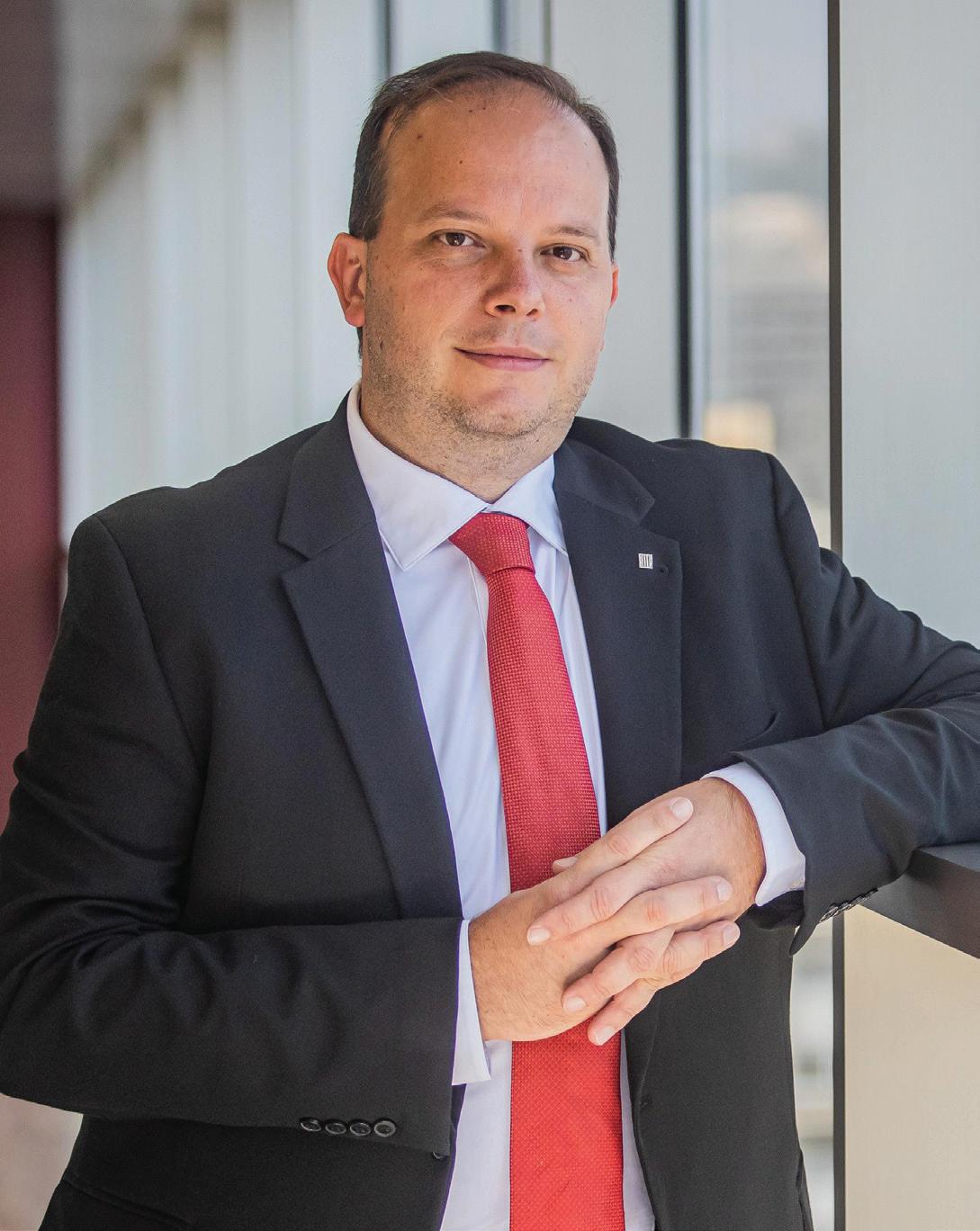
‘Cybersecurity needs to be embedded at the heart of every AV innovation’
current and future threats needs the coordinated response of vendors and end users together with regulators and certification agencies.
“The summit will bring everyone together in the same room to understand the risks, what to do about it and what’s coming next,” says Ferrer. “We will share best practices for cybersecurity control rooms, best practices for cybersecurity conferencing systems and for smart buildings and integration.”
At the summit, AV professionals will learn about safeguarding critical systems, navigate evolving
regulations such as NIS2 and ISO 27001, and discover how to transform cybersecurity from a vulnerability into a strategic advantage, before it’s too late.
Attendees will hear from Spanish water and energy provider Veolia, which has installed a control room specifically designed to combat cybercrime; and from TRC, which provides the video conferencing system for the Spanish government and NATO.
“It is important to emphasise that investment in cybersecurity should not be seen as an expense but as a critical investment to safeguard both operations
and reputation. This makes the summit a must-attend for ISE visitors who want to stay ahead in cybersecurity practices, with leading experts presenting practical insights and futurefocused strategies," he adds.
The summit will feature sessions on building cyber resilience, ensuring secure control room operations, and compliance and governance for securing critical AV environments.
Finally, a closing keynote from Roman Vargas, a cybersecurity specialist at Cisco, will focus on what’s coming next in cybersecurity and emerging digital threats to the AV and systems integration sectors. “How does artificial intelligence multiply the cyber threat or provide us with new tools to repel criminals? Quantum computation could be with us within the decade but are we ready for it? These are some topics we will discuss,” he adds.
There will also be an opportunity to visit the brand-new command control room of the Port Police in Barcelona, which has been provided by summit sponsor Barco.
For AV manufacturers, integrators and technology users, cybersecurity is no longer a technical afterthought. It’s essential for accessing public tenders, ensuring regulatory compliance and building longterm trust with clients.
“AV solutions are not just providing nice videowalls with great screens, it is also about protection from attack. Cybersecurity needs to be embedded at the heart of every AV innovation,” he concludes.
CyberSecurity Summit runs today from 09:00-12:00 in Room CC5.1.



AIM, which stands for Audio Insertion Manager, although it now goes beyond just audio, is Enco’s significantly enhanced platform for automated AI voice announcing and visual messaging.
It combines AI speech synthesis and generative AI tools with automatic captioning and translation, while its streamlined platform allows simple integration through industry-standard audio file formats and APIs.
Designed for public address and digital signage applications, the updated platform uses a comprehensive, multilingual AI-powered system to generate and serve audio and visual announcements for venues of any scale – wherever accessible, efficient, automated voice and visual messages are needed.
AIM can perform a variety of functions simultaneously, whether creating AI voiced announcements from text entered by venue staff or automated data sources, or converting human-voiced announcements
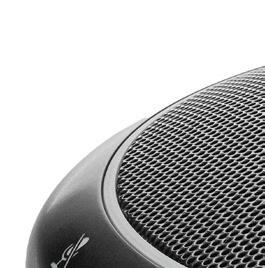
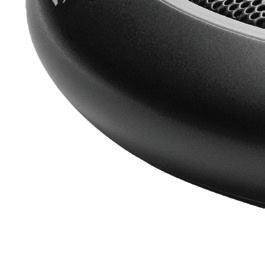
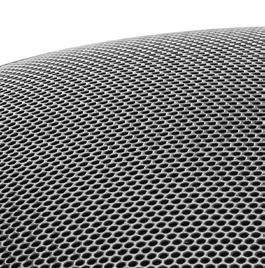
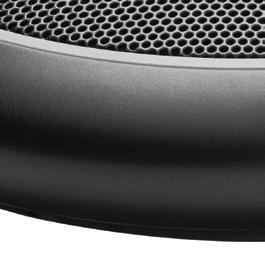
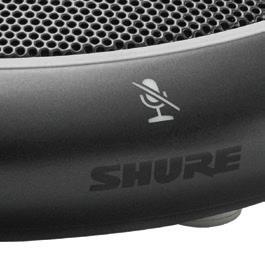
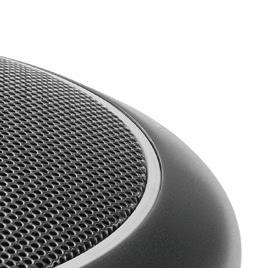
After a decade of innovating in the field of array microphone technology, Shure continues to lead the way in the collaboration and conferencing space. This year at ISE 2026 the company is announcing the new Microflex Advance MXA320 table array microphone, aimed at making life easier for IT teams and AV professionals.
The new table array microphone is said to be easy to configure, connect and scale. It reduces complex setups and allows IT departments to standardise solutions across small and mediumsized spaces with minimum effort.
With Steerable Coverage Technology and onboard IntelliMix processing, the MXA320 guarantees clear consistent audio for efficient communication, so users can focus on collaboration instead of technical issues. IT teams can configure it with Shure’s Designer Software and the MXA320 is compatible with ShureCloud for remote management.
The MXA320 is said to be compact, discreet, and easy to use and to deploy, making it perfect for the modern workplace.
www.shure.com
— JO RUDDOCK
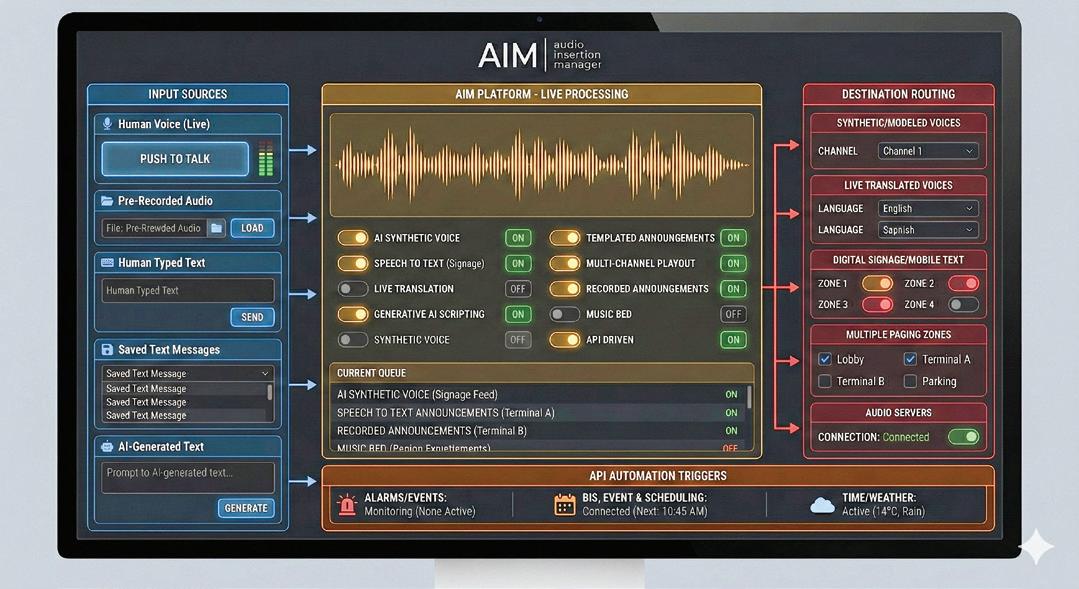
into other languages. It can also generate multilingual text for digital signage in near-real-time.
www.enco.com
In addition to new products, including the U-Series family of compact multipurpose point-source loudspeakers and multiple additions to the Milan-AVB range, d&b audiotechnik is highlighting a range of solutions tailored to the needs of fixed installations.
Products being showcased include CCLi, the installation version of the CCL compact cardioid line array, as well as a selection of the company’s Custom Solutions offering, which spans colour options, custom rigging and weather-resistant variants.
Jaakko Kaivonen, CEO, d&b group, said: “ISE is a fantastic opportunity to showcase how innovation can strengthen our clients’ businesses, and I’m proud of our team for bringing such an extensive range of new products to Barcelona. I’m looking forward to meeting partners, customers and industry peers, and to continue fostering the relationships that make this industry so special.”
In addition to its stand in Hall 7, d&b once again has a dedicated Audio Demo Room in Hall 8. — DAVID DAVIES www.dbaudio.com
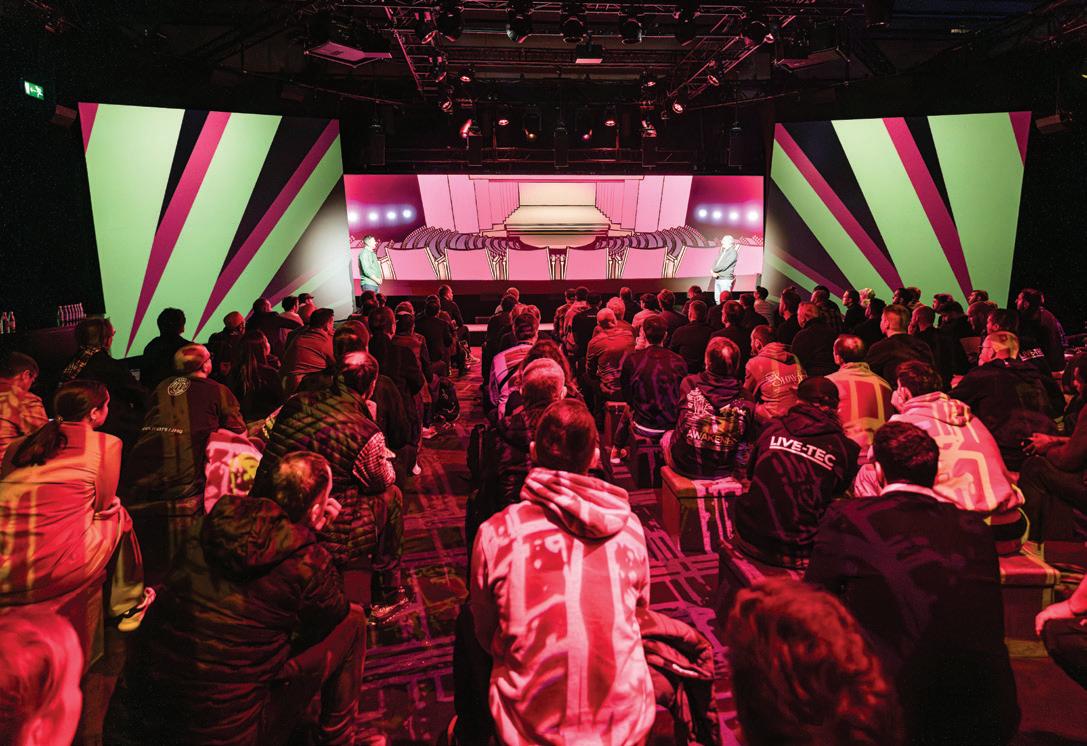
By Joyce Wang, lead analyst, Futuresource
The boundary between broadcast and pro AV is dissolving. Cameras, switchers and virtual sets that once lived only in OB trucks and TV studios are now turning up in lecture theatres, corporate town halls and houses of worship.

This isn’t a side story to the broadcast market; it’s one of the main growth narratives for professional video.
WHY BROADCAST TECH IS MOVING INTO AV
The first driver is demand for a more sophisticated ‘broadcast look’. Large corporates want investor days, CEO town halls and launches to resemble TV shows rather than web meetings.
The second driver is latency and synchronisation. Broadcast solutions are built to keep multi-camera productions in time and stable, which is essential for smooth live streaming, panel discussions and real-time collaboration.
As enterprises and universities produce more live content, those strengths suddenly

matter to AV buyers as much as they have always mattered to broadcasters.
The third driver is cost. High-end technology has become far more affordable and accessible and low-cost or even free software tools give non-broadcast users a route to professional post-production without a big software bill.
Certain technologies illustrate the convergence particularly clearly. The production switcher is one.
Hardware switchers that started life in live TV now have compact, entry-level versions, alongside software-based switchers that run on standard PCs. These devices sit happily on a desk in a church gallery or university control room and give non-traditional users the ability to cut between multiple cameras, add graphics and picture-in-picture, and generally make their streams look like real programmes rather than static webcam shots.
Cloud-based tools are following the same path, with cloud media asset management and cloud production platforms bringing broadcast discipline into these AV-heavy environments without the need for a traditional MCR.
Underpinning all of this is IP. New transport formats inspired by broadcast standards but tailored for pro AV make it easier for nonbroadcast users to move to IP-based production and distribution. They can transport high quality video over standard networks and integrate broadcast-grade devices into AV



infrastructures without needing a full-scale engineering team.
MUST LEARN FROM AV
The convergence is not a simple one-way flow. To succeed in AV, broadcast vendors have had to adapt their thinking.
Most AV buyers are not broadcast engineers so interfaces need to be simple, set-up needs to be forgiving and workflows must fit around existing skills. This has already driven a wave of products that package broadcast technology in a more approachable way: compact switchers with clear labelling, cameras with strong presets, and software that hides complex routing or colour management behind sensible defaults.
Price sensitivity is also far higher than in traditional broadcast. Successful vendors are those that offer clear, tangible benefits in image quality, reliability or workflow while staying within realistic budgets.
For vendors, the implication is clear. Future product roadmaps cannot focus only on the needs of television channels and cine productions. Growth will increasingly come from hybrid workflows that live comfortably in both pro AV and broadcast, and from tailored solutions that address the specific pain points of corporate, education and house of worship users.
Those who design for this converged ecosystem, rather than treating AV as an afterthought, will be best placed to capture the next wave of professional video demand.


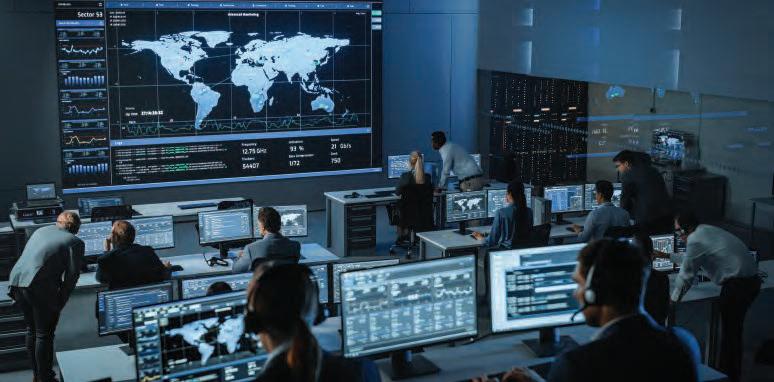







CHRISTIE DIGITAL | STAND: 3K500
A mixture of laser, RGB pure laser and hybrid illumination technologies powers Christie’s latest Sapphire, Griffyn and Jazz models.
The Sapphire 4K40-RGBH combines hybrid RGB pure laser and laser phosphor technologies to deliver improved image quality and P3 colour reproduction. Engineered for any 2D application, all active and passive 3D formats, and any screen type, Sapphire offers flexibility for demanding applications, including live events, theme parks and attractions, and projection mapping.
Christie’s flagship Griffyn 4K50-RGB demonstrates RGB pure laser technology, achieving 98% of the Rec.2020 colour space. Designed for projection mapping, themed entertainment and live events, Griffyn promises rich, bright colour and top-level performance.
Also on show, the compact Jazz 4K2100-JS offers premium 1DLP performance in a chassis weighing less than 30kg, making it suitable for installations where space and portability matter. — DAVID FOX www.christiedigital.com
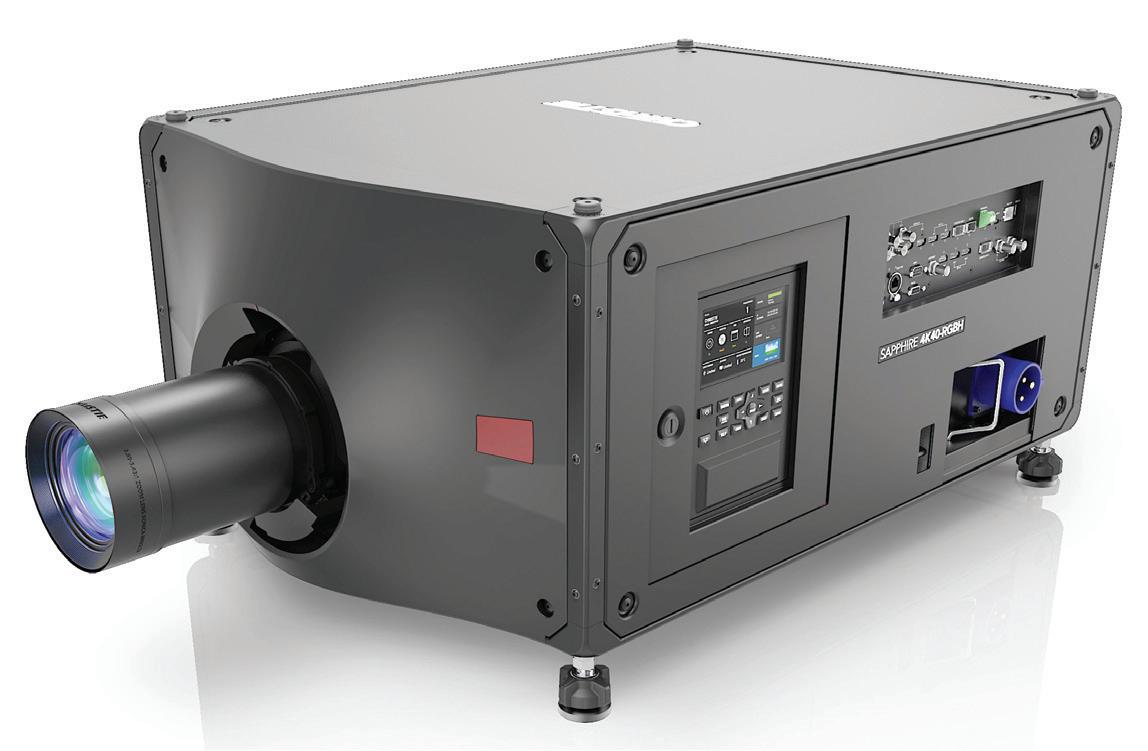
Bluesound, part of the Lenbrook Group, is showing the latest version of Pulse Flex, a compact all-in-one wireless speaker engineered for placement and integration in a wide range of installations.
According to the company, Pulse Flex combines minimalist aesthetics with high-performance features, designed for installers looking to provide wireless audio in kitchens, bedrooms, offices and other residential spaces.
Also on display is the BluOS configuration utility, a dedicated application designed to simplify the setup, monitoring and maintenance of BluOS systems in residential and commercial environments.
The utility helps integrators and installers to configure and manage BluOS products across projects of any size. While designed for integrators, end users benefit indirectly from improved remote productivity and smoother installations, ensuring BluOS systems are up and running with minimal disruption, according to Bluesound.
— ANNE MORRIS
EKAA TECHNOLOGY | STAND: 4H400
An IP67-rated outdoor LCD signage display, designed for high-brightness use in transport hubs, retail, hospitality and smart cities, is being introduced by Ekaa.
The display series features 4,000-nit sunlight-readable brightness for clear, vivid visuals even under direct daylight. The sealed fanless thermal system enables silent operation, reduced maintenance and enhanced durability in harsh environments.
According to Ekaa, “outdoor display technology must deliver not only brightness, but also reliability and environmental integrity”.
The display complies with IP67 ingress protection, making it fully resistant to water, dust and outdoor contaminants. This ensures year-round performance in locations exposed to heavy rain, humidity and airborne particles.
— KIRSTY HAZLEWOOD www.ekaa.net


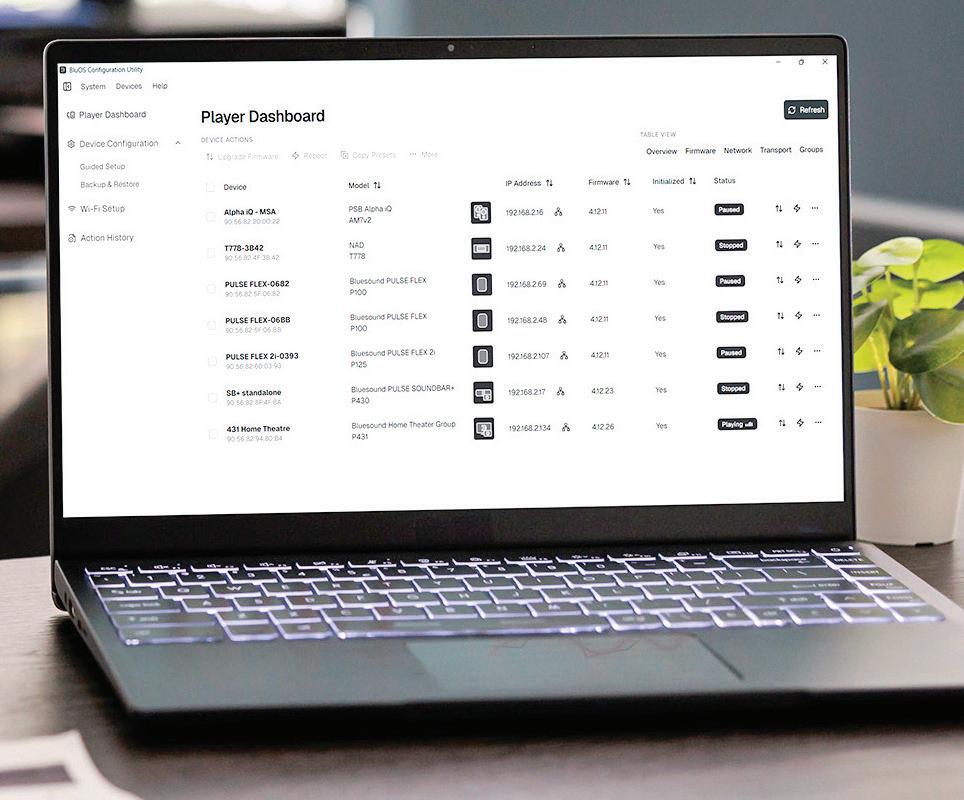
www.bluesoundprofessional.com / www.lenbrook.com







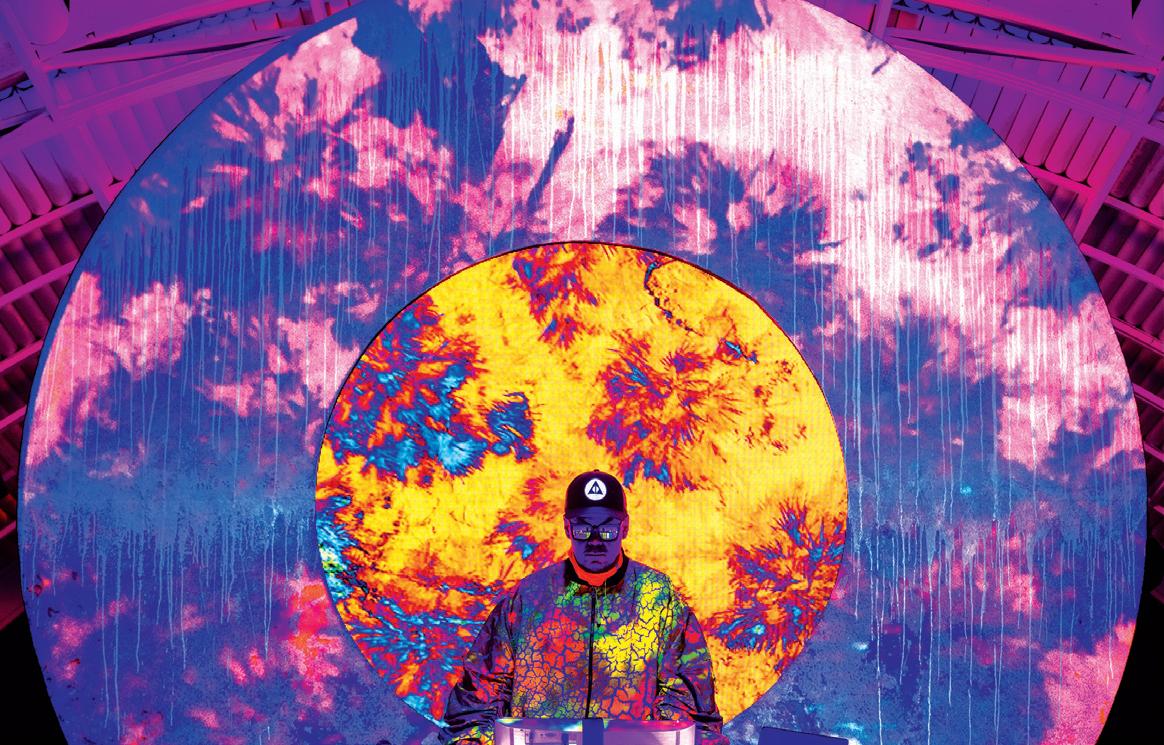





































Fira de Barcelona | Gran Via 3 - 6 Feb 2026
Press Room South
CEDIA Smart Home Technology Conference
AVIXA TV Studio
Connected Classroom powered by Logitech
CC2 - Listening Suites
CEDIA Smart Home Technology Stage
CEDIA Booth: The Association for Smart Home Professionals.
CEDIA Distributors Lounge
Organiser's Office
CC3 - Rebooking Lounge
International Media Library
The Show Shoe presented by LODRESSO powered by Aluvision
CC4.1 - ISE Keynotes & ISE Content Programme
CC5 - ISE Content Programme
Catalonia Pavilion
Barcelona Turisme
Barcelona City Council
Outdoor Audio Demos
AVIXA Lounge / AVIXA Xchange LIVE - Show Floor Tours Meeting Point
Innovation Park
Innovation Park - Pitching Stage & Networking
Live Events Stage
Spark
Press Room North
Audio Demo Rooms
Tech Tour Meeting Point
ASCENDO
Bang & Olufsen a/s 2C300
Barcelona & Madrid Health Hub NEW CS373, CS377, CS371, CS375, CS355, CS353
Barcelona City Council CS410, CS412, CS416, CS404, CS406, CS414, CS408, CS402, CS240
Barcelona Turisme CS203
Barco 2K300
Barco Residential 2G300, 2J500
Barnfind Technologies 5K620
Basalte 2G150
BBS NEW 8C350
beamZ / Power Dynamics / Vonyx 6J300, 6J400
BEC Akustik 5F880
Beckhoff Automation 5H390
Bedrock Audio NEW CS591
BEGLEC + HIT MUSIC 6D100
Beijing EnlightV Technology Co.,Ltd. 3R700
Beijing Kystar Technology Co., Ltd. 5M100
Beijing Titlis Technology Co.,
Dongguan Maitejinqi Electromechanical Technology Co.Ltd. 4G400
Dongguan Microsky Tech Co., Ltd NEW 8B310
Dongguan Topo Electronics Co., Ltd. 8F260
Dongguan U-MOTION Precision
Die-casting Technology NEW 4G130
DoorBird 2C330
dot Audio AB CS812
Dot Group NEW CS531
DOTCOM CO.,LTD 4C800
Doughty engineering ltd 8B510
DPA Microphones 7P800
Dreamvision/Cineversum 2C200
Driving Studios CS100
drotek 8G640
DS Templates NEW 4M105
DSBJ 4D100
DSeeLab Hologram 5P500
DSIPC 4B500
DSM PROAUDIO CO.,LTD 8D420
DSpecialists GmbH 7H280
DSPPA Audio 7A900
DSTAR INTELLIGENT TECHNOLOGY
(GUANGDONG) CO., LTD NEW 1D100
DTECH AUDIO COMPANY LIMITED 8E420
D-Tools, Inc. 2J500
DTS 8C700
DUOMONDI INTERNATIONAL GmbH 5L100
DVDO 5G900
DVIGear, Inc. 5E900
DVOX NEW CS357
DY Intelligent Lifting Co., Ltd. 8B150
Dynacord 3B300
DynaScan 3C700
Dynaudio NEW 2E800
DZS EUROPE S.R.L NEW EA110
E EACOME Electronics Co., Ltd. 1C100
Eap Sardenya CS371
Easy Multi Display SAS NEW CS442
EASYTOOLS EA720
EAW 7E900
Ebantic Systems SL CS100
ECEN ELECTRONICS CO., LTD. 8D200
ECLER 7B300
EDBAK 3N200
EDC Acoustics 7M880
EditShare 4N750
Eelectron SpA 1D700
EFESTO PRODUCTION SRL 5N860
EGM STUDIO CS100
EIBOARD 1A220
EIT Culture and Creativity NEW CS319, CS317, CS351, CS339, CS333, CS331, CS337, CS335
EKAA Technology Co., Ltd 4H400
ekey biometric systems 2H200
Elation Professional Europe B.V. 6Q300
ELAUSYS 2J300
Electronic Pixel Orchestra NEW CS810
Electro-Voice 3B300
ELETTROAPPARECCHIATURE FRIGGERI SRL 8A130
Elgato 4P880
Elitegroup Computer Systems Co., Ltd. 4P200
Elo 2Q800
Eltako 2E200
Elytone / Peak Amplification 5Q500
EM Acoustics 7H350
Emelec VíasCom 7H400
EMKO Case a.s. 4M500
EMOGG CS240
Enbon Group NEW 5M900
ENCO SYSTEMS, INC. EA780
EnGenius NEW 1A500
Enova Solutions AG CS557
Enping Auway Audio Equipment Co., Ltd NEW 8E240
ENPING CITY LICHUANG TECHNOLOGY CO., LTD 8D480
Enping City Mengcart audio Co., Ltd NEW 8H900
ENPING FEDYCO AUDIO Co.,Ltd 8B130
ENPING JES AUDIO CO.,LTD. NEW 8D110
ENPING MCDYESS ELECTRONIC AND TECHNOLOGY CO.,LTD NEW 8C315
ENPING MEIBAISI ELECTRONIC TECHNOLOGY CO.,LTD 5M300
Enping Sange Electronic Co.,Ltd 6A530
ENPING XIEHE AUDIO EQUIPMENT FACTORY NEW 8J550
Epaint NEW 5L800
Epiphan Video 4R660
Epson Europe 3J100
Equipson Group 7B500, 6R300
ERARD PRO 3M730
Ergonomic Solutions 4H300
ES Visual 5E300
Escena 4.0 CS100
ESOTERIC PRO AUDIO NEW CS818
ESTUDIO GURUGÚ CS240
ETC 6G100
eten Technologies Inc. 5K100
EUNO DISPLAY 5H880
EURECAT CS100
EURO SEATING INTERNATIONAL S.A. 5C880
As of 13 January 2026
Glensound (UK) 7H800
Great Britain and Northern Ireland Pavilion 5C460
Great Hon. Enterprise Co., Ltd. NEW 8E400 GRECKO LED DISPLAYS 5G880
Green-GO / ELC / Frenetik https://www.elclighting.com 6P700
Grenton Smart Home NEW 2C150
GROUPE NOVELTY 6R100
GRUP MEDIAPRO 4L900
GSF 5F700
GTD 8F460
Gtek Electronics Inc 4F700
Guangdong Aoma Lighting Equipment Co.,Ltd. NEW 8E700
Guangdong BaoLun Electronics Co, Ltd. 3A860
Guangdong HaiNa Audio Technology Equipment Factory 8A100
Guangdong Nightjar Lighting Co., Ltd. NEW 8H640
Guangdong The One Studio Co., Limited 6A550
GUANGSHU ELECTRICAL 1E200
Guangzhou Aolait Eletronic Co., Ltd. NEW 8G550
GUANGZHOU BLUEMOON STAGE
LIGHT EQUIPMENT CO.,LTD. NEW 8F620
Guangzhou Color Imagination LED Lighting Limited 6C350
Guangzhou Dolsi Audio Equipment Co. Ltd 5Q190
Guangzhou FTD Audio Electronics Limited 5R280
Guangzhou Gisen Electronic Equipment Co., Ltd NEW 8J510
GUANGZHOU HANDS LITE 8F110
GuangZhou Harmonic Electronic Co., Ltd. 7N100
Guangzhou Hongcheng Stage Lighting Co.,LTD. 6A950
Guangzhou Huiliheng Electronic Technology Co., Ltd. 8C280
Guangzhou ILightings Equipment Co.,Ltd 8E800
Guangzhou KingBird Lighting Equipment Co., Ltd. NEW 8H800
Guangzhou Kingray Information Technology Co., Ltd. 8C310
Guangzhou SeaWin Electrical Technologies Co.,Ltd. 2J300
Guangzhou Sinojoint Electronics Co.,Ltd. 7L800
GUANGZHOU SUPERSHOW LIGHT CO LIMITED NEW 8E550
GUANGZHOU YUESHENG STAGE LIGHTING CO.,LTD. NEW 8E590
Guangzhou Yuing (popular)Stage
Lighting Equipment Co., Ltd NEW 8G530
Guangzhou ZSOUND Proaudio
Co., Ltd. NEW 8D350 GUDE 2P550 Guestbook TV CS100
SMART CO., LTD. 2J300
Haivision Systems Inc. 5L300
Hangzhou Risun Cable Co.,Ltd 5R110
Hangzhou Shunlian NEW 8F220
Hangzhou Xianrui Digital Technology Co.,Ltd. 5A170
HANGZHOU
3Q300 Haitian Electronic Technology Co., Ltd 7C900
MAIOR 2D400
make sense media Trading Ltd NEW CS426
Mapcargo Global Logistics NEW CS666
Maquinas FX 6J680
MARANI PROAUDIO SRL 8A170
Marshall Electronics NEW 4N900
Marslite NEW 8F400
Martin Audio 7A300
Martin Professional 6Q900, 3F300
Marvel Technology (China) Co., Ltd 4F300
MAS ACOUSTICS BARCELONA S.L. CS100
MASCOT 5K150
MATIERE LUMIERE 2D190
Matrox Video 5E390
Maverick 2P300
MAXHUB 2N130
Maxtang 4M100
Maytel 5L880
McLELLAND 7G900, 7G950
Mction Tech NEW 1C460
MD microelectronics NEW CS509
MDG Fog Generators 6S100
MDT 2J300
MeanReal Lighting NEW 8H600
MEBIKON 1F100
MEDIA FACADE 5R500
Media Resources NEW 3E100
Medicare System CS373
Meeting Doctors CS375
MEGA-LITE 8A680
Melexio CHINA Leading Eco-Friendly
Melamine Foam Tech Company NEW 2A228
Merry Audio NEW 8H910
MESH NEW 2D750
Meyer Sound 3P900
Micron 2B500
Microsoft 2Q400
Midas Consoles, Turbosound, Tannoy & Behringer 7M500, 8A350
Middle Atlantic 3L500
Midwich Group 3P700
Milan by Avnu Alliance 8C330
MILOS 6P500
Mimo 2M900
Minghao Opto NEW 8H680
MINGTU PHOTOELECTRIC NEW 8G710
Minrray 2W600
MIPRO 7J400
MITEK - PULSE LIGHTING NEW 8E680
MLS NEW 4R100
MODE China NEW 8D330
Modulo Pi 5F220
MOJO Rental NEW 8A900
MojoSteel 1B390
MOKA SFX 8A710
Moka Technology 2W500
Mondiale
Multibrackets
MultiCAM
MultiDyne
MultiTaction,
Multivision
NAVORI LABS 4J300
NDI 4K700
Neat 2U300
NEEC IBERIA DISTRIBUCIÓN 7B300
Neomounts 3N700
Neoscreen by Iagona Group NEW 4G620
NETGEAR AV 2U240
NETIO products 5N500
NetOn.Live NEW 4M510
NetSpeek 2T200
Netvio Ltd 2A350
Neumann & Müller Event Technology 5D200
Neutrik Group 5D170
Newline Interactive Europe, SL 2N300, 2R300
NEWSMAY NEW 2A820
NewTec Design Audio 7L620
NewtonLab Space CS488
Nexmosphere 4J400
NEXNOVO TECHNOLOGY 5C190
NEXO 7E800
NEXT Audiogroup 7J500
Nexus Cloud NEW 4A155
Nice 2H300
NicLen 6L390
Nicolaudie Group / Wolfmix 6K620
Nightsun lighting NEW 8E300
Niko 2C500
NimbleTech Digital Inc. 5G550
NINGBO AIYINMEI ELECTROACOUSTIC TECHNOLOGY CO.,LTD 7N820
NINGBO CENTRAL STAR 8C170
NINGBO DESOUND ELECTRONIC CO.,LTD NEW 8J570
NINGBO HAISHU LONGSHENG
ELECTRONIC CO.,LTD NEW 8H950
NINGBO HAISHU PENGXING ELECTRONIC CO.,LTD. NEW 8E530
NINGBO HYSOUND ELECTRONIC CO.,LTD NEW 8J530
Ningbo Mellisong Electronic Co.,Ltd NEW 8D315
NINGBO MR audio tech co., Ltd. NEW 8F550
Ningbo Peaceport Imp.&.Exp. Co. Ltd. NEW 5R660
NINGBO RIXING ELECTRONICS CO., LTD. 7L280
NINGBO XINXIANG AUDIO ELECTRONICAL.CO.,LTD NEW 8E510
NINGBO YINZHOU AIKA ELECTRONIC CO.,LTD NEW 8A150
Ningbo Yinzhou Shengke Electronics Co., Ltd 7M990
NINGBO YXSOUND CO.,LTD 7N900, 7M600
Niveo Professional 5A175
Nixer 4K800
N-Labs NEW 8N900
nnounce by Simpleway 5P400
Noise Comunicación CS220
nomos
2D220
Ricoh 2V130
RIEDEL Communications 5E100
RIG UP 8B500
Rise AV and Rise Women in Broadcast EA315
Risewell Electronic Techonlogy NEW 3P800
RISINGSTAR 4C880
Riwit NEW 4G550
RJS Electronics Ltd 5B350
RME 7M400
ROBE / Avolites / LSC / Anolis/ Artistic Licence 6L700, 6K700, 6L680
ROBERT JULIAT 6C300
ROCWARE Corporation 2S150
ROE Visual 3C500 Roland 4J880
ROOMDIMENSIONS 5K500
Ross Video 4K500
ROVER Laboratories NEW EA770
Roxtone Audio Tech Co.,Ltd NEW 8D130
ROXX GmbH 6J100
RPG 5N390
RTS Intercom Systems 3B300
RTW Audio 4M530
RUIPRO NEW CS593
S SABLE CORPORATION NEW 4M300
Samplex NEW 8J640
Samsung Electronics 3F500, 8K100
Sannova E-paper NEW 4A240
Santosom - Professional Cases NEW 5G800
SANUS – a brand of Legrand 2A885 Savant 2J500
SAVe
SCAI
Schnick-Schnack-Systems
Scoreboard-system.com
Screenage
ScreenBeam
ScreenCloud
Screencom
Screenint
Screen-LED
ScreenLine
SCT
SDIP
SDVoE
SE Audiotechnik
SEADA
SECO-Beijing AnHengWeiYe System
Engineering Technology Co., Ltd. NEW 4A260
SEEBURG 7N800
SEEKINK 4D750
SEETRONIC 8A500
Seikaku Technical Group Ltd 7C700
Sennheiser 3B500, 3B700
SES Ltd. 6D400
SFAT 6F900
SGM Lighting Aps 6G300
Shanghai Sansi 4K300
SHANGHAI SEIWIN ELECTRONIC CO.,LTD 7N700
SHANGHAI SIXUNITED NEW 2W420
SHAOXING BAJIULING ELECTRONIC TECHNOLOGY CO.,LTD. NEW CS359
Sharp Display Solutions Europe 3E500
Shenzhen 8k-link Optoelectronics Technology Co., Ltd 5J880
SHENZHEN AIDISEN OPTOELECTRONIC CO., LTD NEW 8G480
Shenzhen Aiostar Electronics Co.,Ltd 4A220
Shenzhen Apexls Optoelectronic Co., Ltd 3R820
Shenzhen Avlink Technology Company 5R130
Shenzhen Bigstar 3T800
Shenzhen Boegam Technology Co.,Ltd 1B155
Shenzhen Chip Optech Co., Ltd. 3S350
Shenzhen Clen Optoelectronic Co., Ltd 6H700
Shenzhen Damoda NEW 8B300
Shenzhen Decenta Technology Co.,LTD 5K750
SHENZHEN DEVOPS TECHNOLOGY CO.,LTD 1B150
ShenZhen Electron Technology Co., Ltd 4S220
Shenzhen Fabulux Technology Co.,Ltd 3N100
Shenzhen Fionexx Technologies Ltd 4L150
Shenzhen Friday Originality Technology Co.,LTD 5J840
Shenzhen GCL Electronics Co., Ltd 3S300
Shenzhen Hi-Net Technology Co., Ltd 3A880
Shenzhen Horion Intelligent Technology CO., LTD 2A100
Shenzhen Huaqun Century Photoelectricity Co.,Ltd. 1F900
Shenzhen Huarong Electronic Technology Co.,ltd 4G100
Shenzhen Huikeyuan Co., Ltd 1A100
Shenzhen Hummax Display Systems Co.,Ltd 4B400
Shenzhen iBoard Technology Co., Ltd. 2P100
ShenZhen iDste Information
Technology Co.Ltd. NEW 1B200
Shenzhen KATO Vision Co.,Ltd. 2Q200
Shenzhen Kinan Technology Co., Ltd NEW 5Q750
Shenzhen KMTEKLED
Photoelectricity Co.,Ltd NEW 1B420
Shenzhen Lan Display Photoelectric Co., Ltd 4B900
Shenzhen LEDadvices Technology Co., Ltd. 8F860
Shenzhen Lenkeng Technology Co., Ltd. 5J500
Shenzhen Letine Technology Co.,Ltd. 4A400
Shenzhen Lightlink Display Technology Co., Ltd 3A700
Shenzhen likeled technology Co.,Ltd. NEW 4A300
Shenzhen Link Technology Co.,Ltd 4F200
Shenzhen LSL Technology Co., Ltd NEW 8E570
Shenzhen Meiyad Optoelectronics Co. Ltd 5N100
Shenzhen Moertek Technology Co.,Ltd 1C220
Shenzhen Okview Technology Co., Ltd 2V900
Shenzhen OneKing Technologies Co., ltd. NEW 1B220
Shenzhen PUAS Industrial Co., LTD 5C600
Shenzhen QDE Technology Co., Ltd. NEW 1B800
Shenzhen Qualshine Technology Co., Ltd. 4E100
Shenzhen Royal Display Technology Co.,Ltd 5F200
SHENZHEN S TRACK SCIENCE
TECHNOLOGY CO., LTD 7M240
Shenzhen Scenico 3T500
Shenzhen Screentek Technologies Co., Ltd NEW 5A550
Shenzhen SH LED Technology Co.,
SHENZHEN SHANGWEN ELECTRONIC NEW 5Q820
SHENZHEN SHUNDARONG
CO.,LTD. 4A100
Studio Technologies 4K800
Studiobricks S.L. 7K300
Studiomaster 7F680
Sumitomo Electric Industries, Ltd. 5E600
Sun Rise Exact Industrial Co. 7H900
Superlux 8A310
Swisson AG NEW CS573
SWIT ELECTRONICS EUROPE GmbH NEW CS816
SY Electronics Ltd. 2T300
SYLVA ACOUSTIKA NEW CS397
SYLVOX VISION INC NEW 2A500
Symbicon Ltd. 5B190
Symetrix 5M390
SYNCO 4D220
Syncronorm 8C530
SYNETECH 5C100
syscomtec Distribution AG / easescreen - Digital Signage Solution 3G100
Sysolution 5L900
SZ Tenveo Video Technology Co., Ltd 1D110
T TAIDEN INDUSTRIAL CO., LTD 3P100 TAIT NEW 8D900
Taiwan Carol
Taska
tasker 5G600
Tau Audio Solutions 7A500
Taylorleds 3H100
TCL 1C500
TeamMate 2V300
TECHNOLOGY INTEGRATION PARTNERS 2J500
Tecnare Sound Systems 7B150
TELEFUNKEN Elektroakustik CS642
Telelogos 4N500
Televes 5F900
Televic Conference 3M900
TELON SCREEN 5J860
Telos Alliance 4H550
TELTONIKA NEW 2B800
The
Theatrixx
Theben
Tianjin
TiMax
Toong
Total Solutions Group 6H900 TouchWo 4F550
TP-Link 5B400
TR90 NEW
Airtame 3 is being debuted by screen connectivity and collaboration specialist Airtame. It is said to be the company’s most powerful device yet.
Airtame 3 is designed to transform any commercial display into an active, intelligent screen, bringing together screen sharing, video conferencing and digital signage in a single platform suitable for education and business.
The product integrates with Microsoft Teams, Zoom, Google Meet and Webex and comes with 4K screen sharing, dual-screen capability, PoE+, zero-touch deployment and QR-based registration. Devices can be managed through Airtame Cloud, enabling remote updates, monitoring and troubleshooting.
Airtame 3 also supports USB peripherals for hybrid teaching and conferencing and works alongside Virtual Airtame and partner solutions from Smart, Neat and Amazon.
Virtual Airtame is software that turns any compatible Windows or Android display, videobar or room PC into a fully functional Airtame screen.
— aNNe Morris www.airtame.com
ATLASIED | STAND: 2R170
Audio specialist AtlasIED is unveiling the Atlas+Fyne FC-D (ceiling) and FS-D (surface) Dante-enabled PoE++ loudspeakers with Isoflare point-source transducer technology.
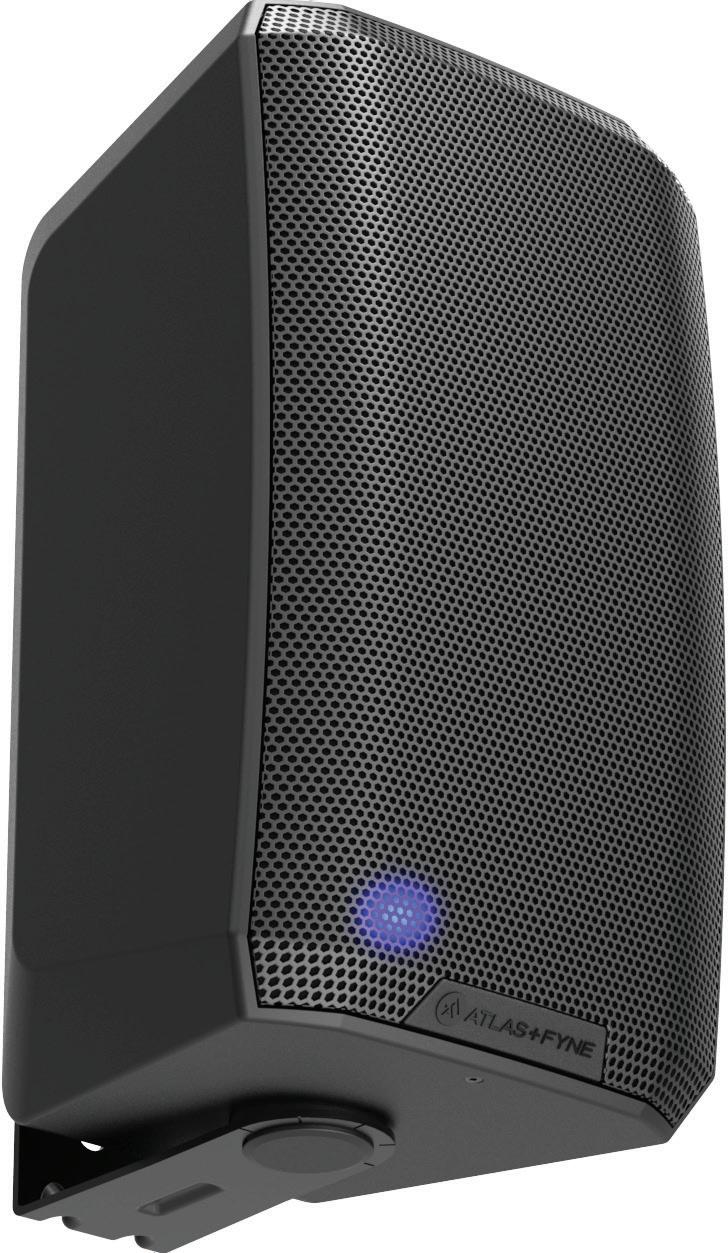
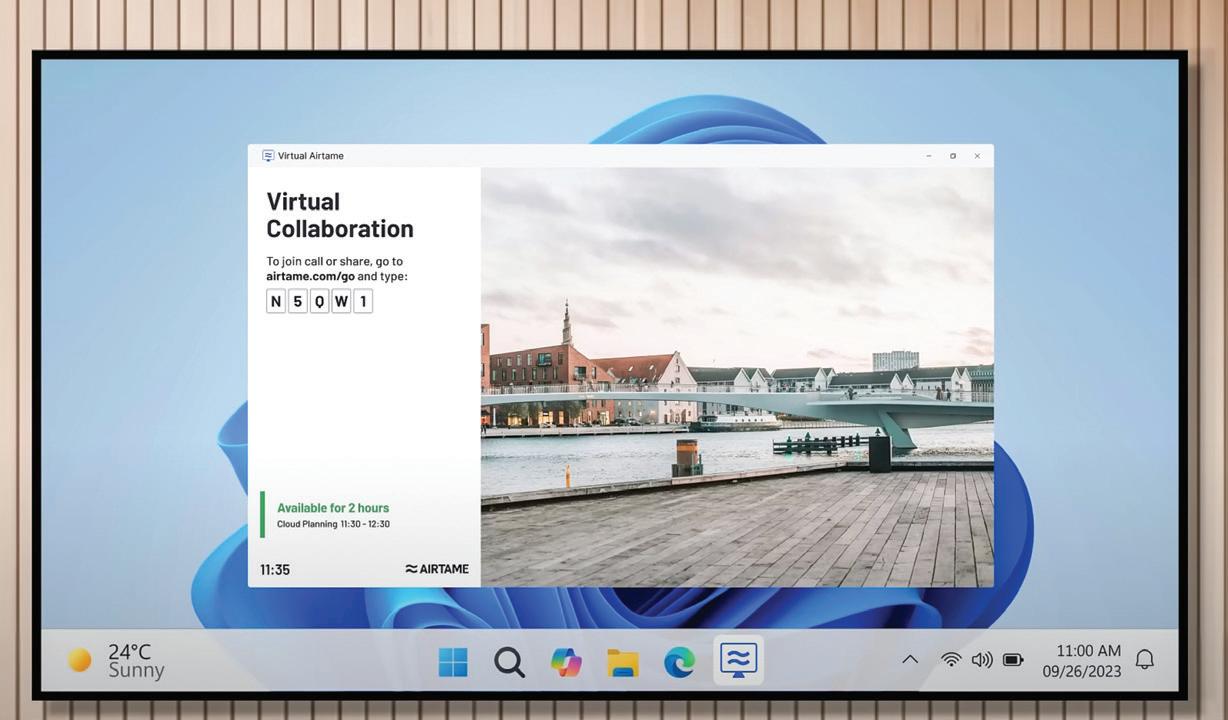

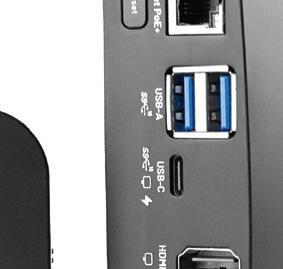
The company claims that traditional PoE loudspeakers compromise on headroom and dynamic range owing to power limitations. However, the use of PoE++ “unlocks the loudspeaker’s full performance potential via a single network cable”.
According to AtlasIED, the Isoflare driver is engineered for phasecoherent summation across the entire passband, adding that its integrated waveguide geometry “ensures constant directivity, reduced off-axis colouration, and improved time-domain accuracy, resulting in highly predictable coverage”. The mechanically aligned HF/LF centres negate inter-driver latency, delivering lobe-free dispersion.
— aNNe Morris www.atlasied.com
In Hall 1, Hangzhou Gaoke is showing its latest AI-based audiovisual products as it seeks to boost its global presence.
The flagship GAOKEview conference tablet features an AI camera with sound source localisation and facial recognition, as well as real-time multilingual translation.
In addition, the company’s digital frame screen uses AI algorithms to animate static artworks. Also on display are an interactive flat panel and digital signage, among other products.
Julia Zhou, CEO of Hangzhou Gaoke, said: “AI drastically cuts management costs and meets next-gen user needs, embracing ‘laziness’ where smarter tools win.”
— aNNe Morris www.hzgaokegroup.com

Blockchain Life Week has grown into one of the most significant international gatherings for the blockchain, crypto and Web3 sectors. The 2025 edition combined a large exhibition with two parallel live productions: a structured conference programme on the main stage and the World Series of Crypto Trading (WSCT), a fast-paced competitive tournament staged on the show floor.
Delivering two very different formats from the same venue demanded a centralised yet adaptable workflow. The project was entrusted to Dubai-based Oasis Studio, specialists in live streams and large-scale events. “This project required a workflow that would allow us to build redundancy into every stage,” explained Eugene Solovev, general producer at Oasis Studio. “That’s why we relied on Blackmagic Design broadcast AV systems.”
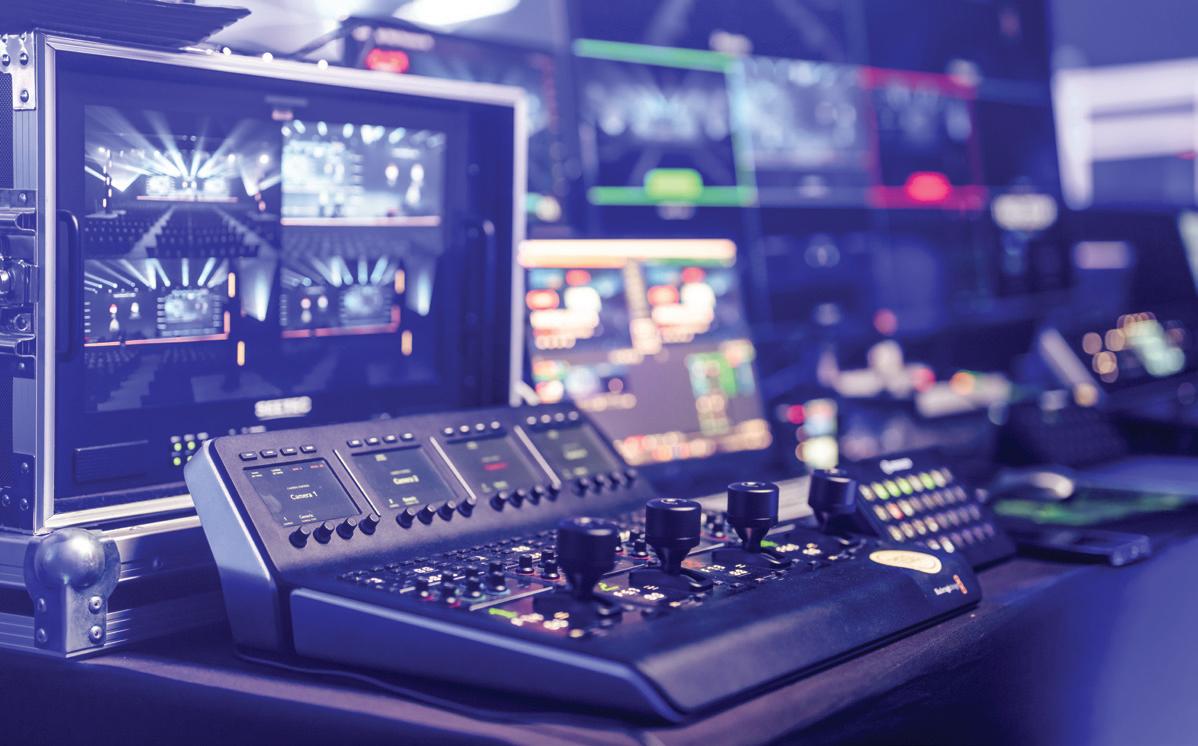
The main stage production was built around Blackmagic URSA Broadcast G2 cameras with Camera Fiber Converters, an ATEM Television Studio HD8 ISO for programme mixing and ISO recording, and an ATEM 2 M/E Advanced Panel 20 for live shading. Streaming was handled via a Web Presenter 4K, with backup recording on a HyperDeck Studio 4K Pro.
Trading tournament WSCT was produced using an ATEM 4 M/E Constellation 4K with an ATEM 2 M/E Advanced Panel, while a Smart Video Hub 40×40 12G-SDI managed signal routing across both environments.
“With this infrastructure, we were able to deliver a broadcast-style conference and a dynamic live competition at the same time,” Solovev concluded. — jo ruddock www.blackmagicdesign.com
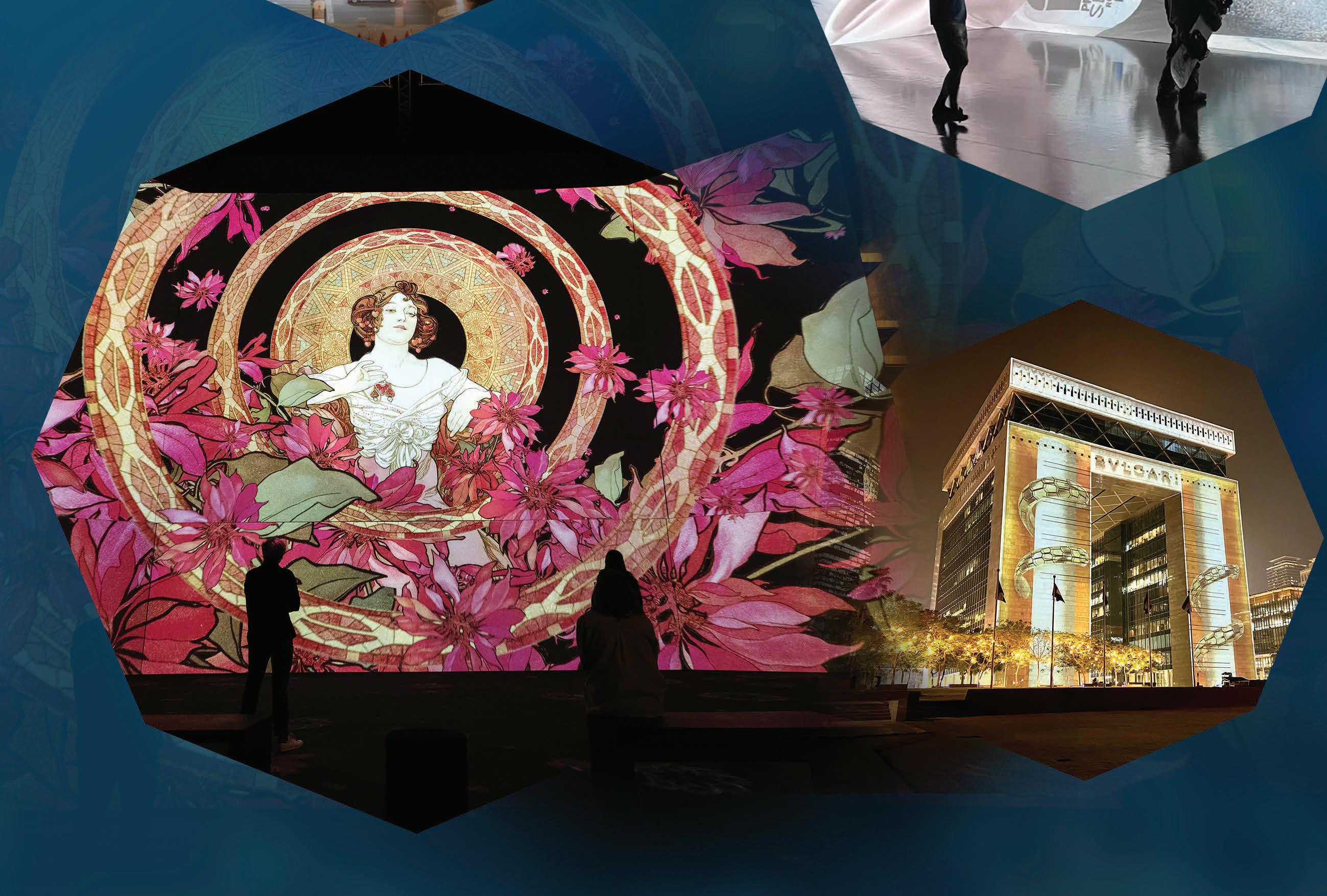





The new Mac Encore Two is an LED moving head producing a 21,000lumen output from a 760W white light engine with a 5,600K neutral white colour temperature.
Martin Professional is introducing the fixture to support accurate skin tones and detailed scenic rendering for stage and broadcast use.
A 150mm front lens combined with a 1:10 zoom (5°-54°) provides control and long-throw capability. The effects package includes dual gobo wheels, CMY colour mixing, dual frost filters and a light-recycling optical system.
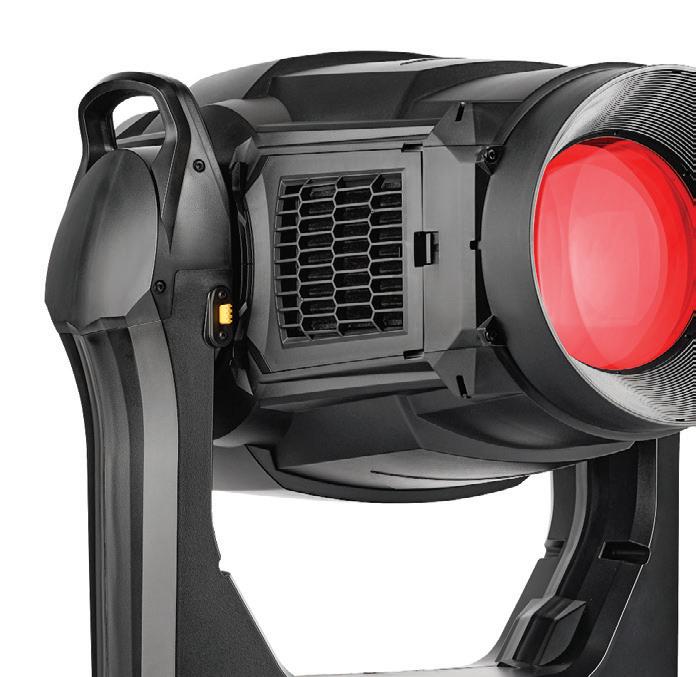
The recently introduced HCS-4895 Fully Digital Conference Unit is a software-defined hardware platform that Taiden claims offers “exceptional value and flexibility”, allowing features such as multi-language interpretation and voting to be enabled on demand. A single device can function as a chairperson, delegate, or cost-effective dual delegate unit for two users.

Compared with its predecessor, the Mac Encore Two operates more quietly and supports smooth pan and tilt movement with high-resolution dimming.











Control is available via DMX, Art-Net, sACN and Martin P3, allowing integration into a wide range of lighting and media networks. The fixture is positioned for touring, theatre and broadcast environments where consistency, flexibility and precise control are required.
It has customisable key panels, allowing users to tailor the units to their specific needs, and its capabilities can be expanded through optional software licences so it can adapt as conference requirements evolve. Other options include a wired gooseneck microphone, offering enhanced audio pickup, or the ability to connect Taiden’s E-ink nameplates or other devices via its USB-C port. It also comes with braille indicators for visually impaired users.
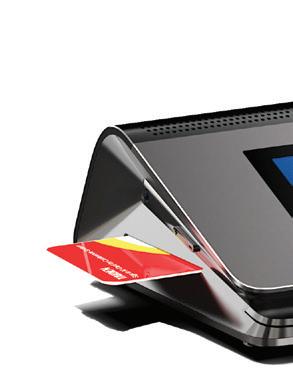






— kirsty hazlewood www.martin.com
Acoustics and AV technology consulting and design firm WSDG is exhibiting at ISE for the first time, showcasing a suite of services that help organisations translate complex performance requirements into optimal technical solutions.
Active across a range of sectors, WSDG specialises in analysing how spaces need to perform and engineering the environments and systems that make that performance possible. The company claims it can cover every aspect of sound and media technology in a project, from the definition of requirements to advanced simulation, system design, procurement support, commissioning and long-term lifecycle planning.
This comprehensive approach
The unit has already been used in large-scale deployments at major global forums, such as the 28th Universal Postal Union Congress (700 units) and the ITU’s World Telecommunication Development Conference (500 units).
— david fox www.taiden.com
is reflected in projects such as the reconstructed concert hall that houses the Lithuanian State Symphony Orchestra, and a renovation of the Olympiastadion Berlin. The same methodologies are said to underpin the firm’s work across stadiums, theatres, universities, corporate hubs, broadcast facilities and high-performance media creation studios, where precision sound control and robust AV infrastructure are critical to success. — david davies www.wsdg.com
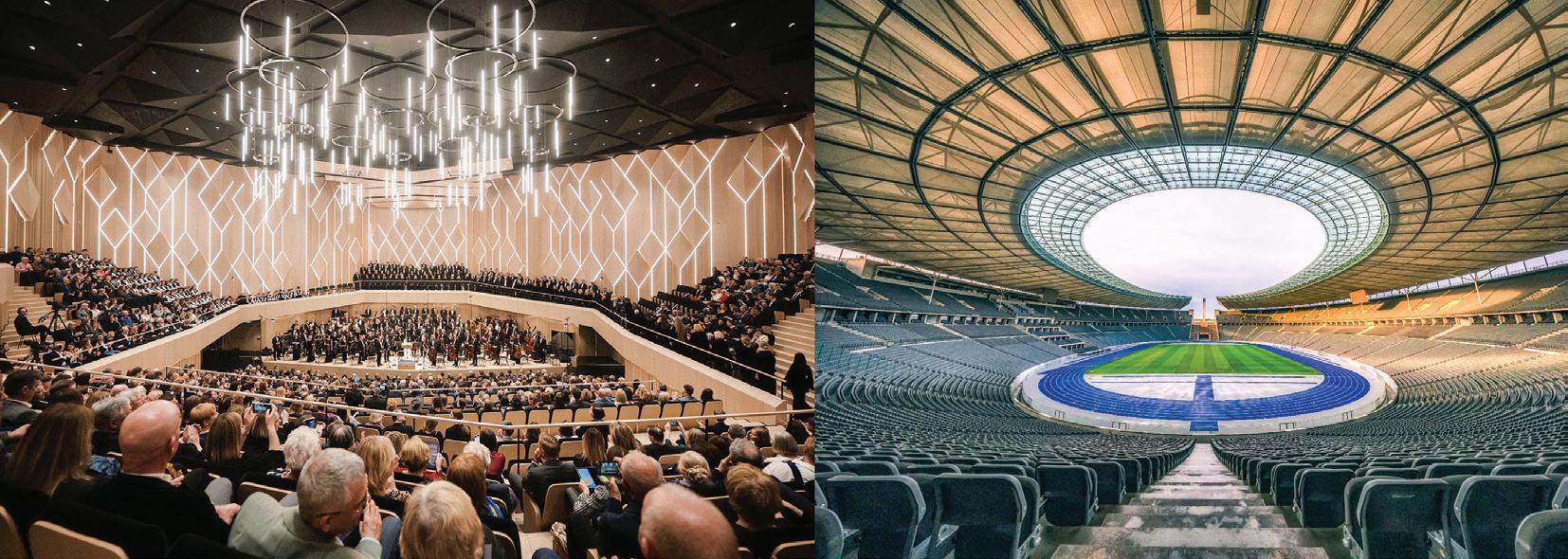
AutoMeasure is a new AI-powered configuration feature from Crestron that simplifies and accelerates the deployment of its Automate VX multi-camera systems.
An addition to Crestron’s Intelligent Video Room Designer tool, it uses advanced computer vision and spatial intelligence to automatically detect and calculate precise placement for cameras and microphones, ensuring optimal alignment for high-quality collaboration.
It eliminates manual measurements to reduce setup time significantly, enabling integrators to deliver accurate, consistent installations that enhance meetings for both in-room and remote participants.
By combining AI-powered precision, real-time updates and verification tools, AutoMeasure is said to guarantee accuracy, reduce costs and support sustainability through reusable kits.
Crestron is also bringing faster configuration to residential projects with Configure Pro software, which streamlines setups, thanks to enhancements such as native keypad programming, advanced logic
AV-over-IP specialist Just Add Power is showing the MC-TX1-RACK
MaxColor rack-mounted encoder that combines three 4K60 4:4:4 HDMI encoders into a single rackmount chassis.
The product supports all audio formats and features audio return channel functionality for two-way audio integration. Also on display for the first time is the MaxColor USB 2.0 over IP device (MC-USB), which provides local and remote access to all computers on a system with a built-in KVM touchscreen and webcam interface.
In addition, Just Add Power is showcasing the MC-QX MaxColor 4K60 tiling and warping encoder that combines MaxColor with the company’s tiling and warping technology in one product.
It allows 4K60 source devices to be displayed on a single screen, along with source rotation capabilities. The company claims that users can simultaneously watch up to four 4K60 video sources in multiple formats, including single-screen, videowall or tiled video.
www.justaddpower.com
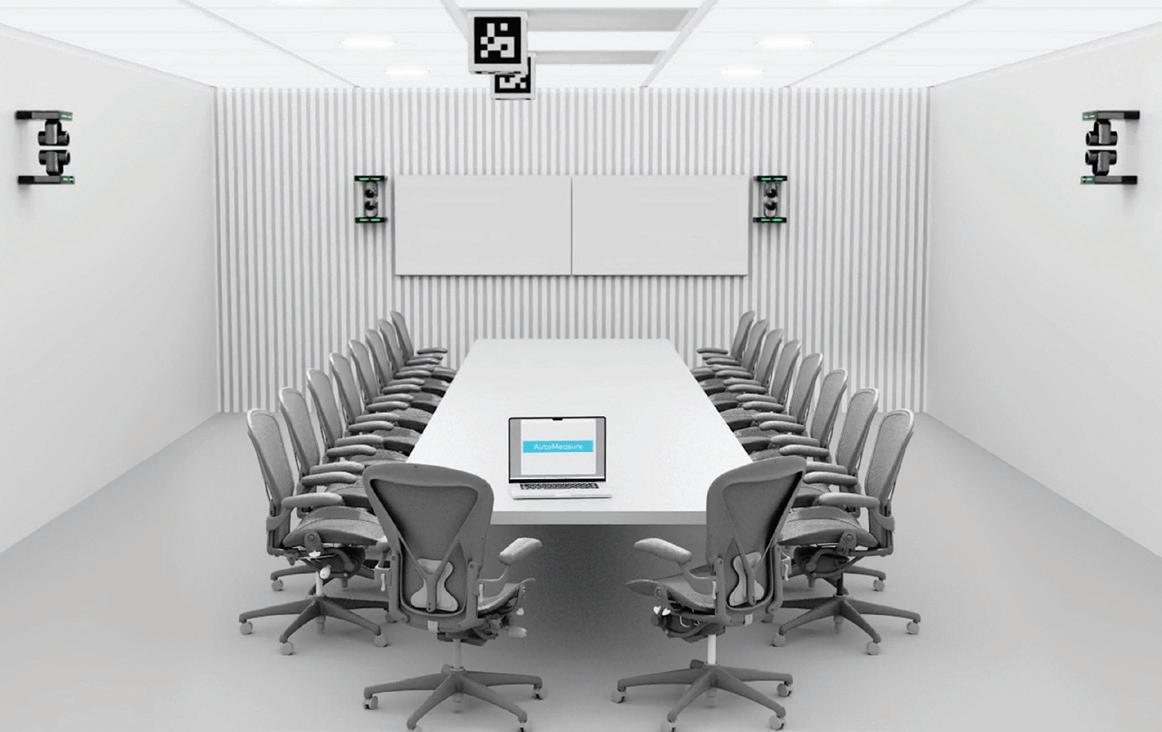
— aNNe Morris
capabilities and real-time control over lighting and media. Audio and video configurations are simplified through intuitive source routing, while keypad configuration is equally user-friendly. In addition, dealers can quickly build feature-rich systems using the no-programming system creation tool.
www.crestron.com
— david fox
Firmware v3.2 for RF Venue's Spectrum Recorder RF environment monitoring and logging device is now available for immediate free download for existing users.
The new additions improve the portable device’s ability to scan and monitor RF environments for new system configuration and existing system interference analysis. Scan results can be reviewed in 10 seconds via a web-browser-based graphical interface, and scan data can be downloaded directly without a USB drive. Customisable start, stop and step sizes provide more precise and targeted sweeps across an expanded scan range of 15MHz to 2700MHz.
A published API is included, allowing data integration with third-party tools such as SoundBase, and Spectrum Recorder’s native file compatibility with RF Venue’s free web-based Wireless System Builder tool for system design and frequency coordination worldwide, as well as with wireless system manufacturers’ software. This includes Shure’s Wireless Workbench, Sennheiser’s Wireless System Manager and AudioTechnica’s Wireless Manager.
www.rfvenue.com
HUMLY | STAND: 2W300
Head to the Hall 2 stand of workplace technology specialist Humly for a live QR code booking demo.
Built into its Humly Reservations software, Humly QR Booking connects physical spaces to the company’s digital booking ecosystem. The hardware-free and app-free service is designed to streamline room, desk and parking space bookings as well as other shared resources. Each unique code connects to a specific resource from the booker’s personal device, showing live availability and allowing instant booking.
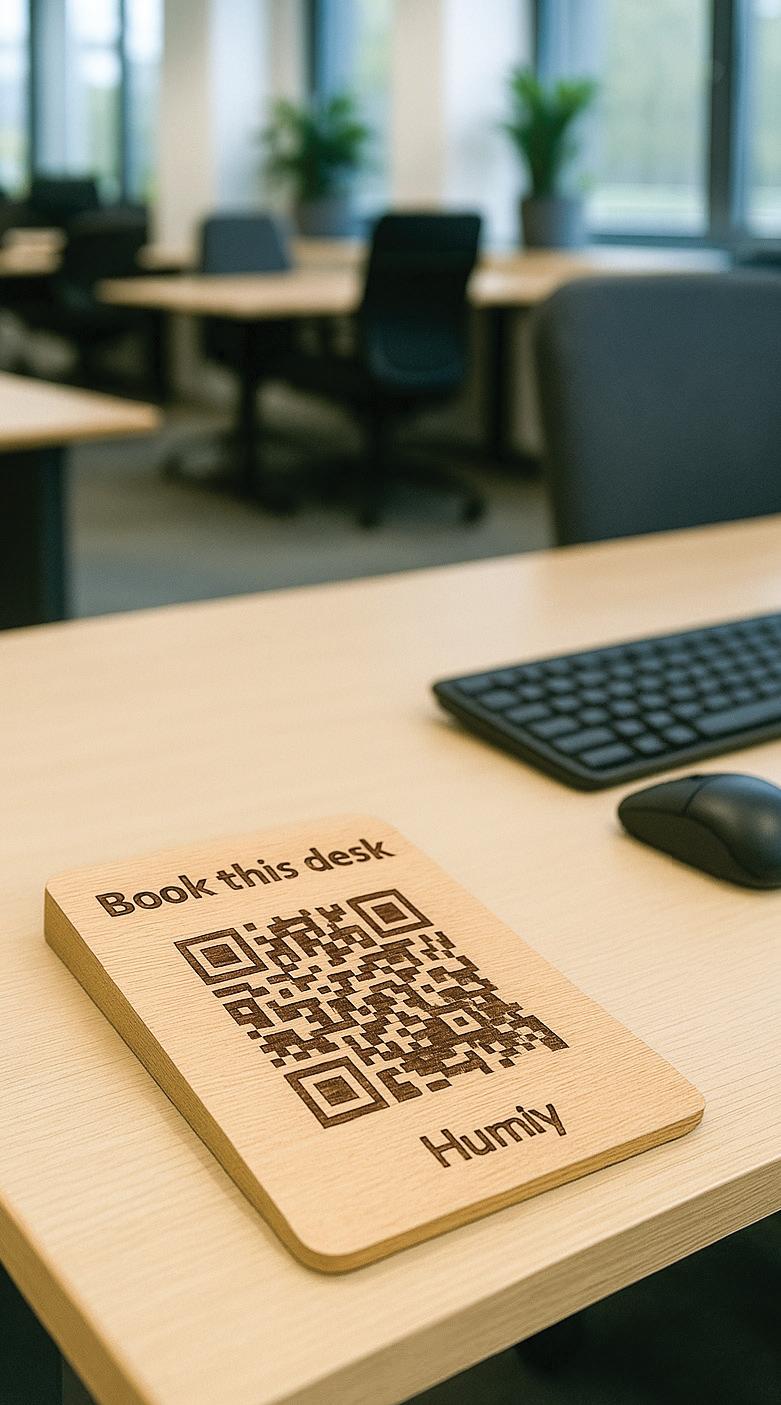
Administrators can create, download and manage QR codes directly from the Humly Control Panel. Codes can be generated as static (for fixed resources) or dynamic (for flexible or changing setups).
The result is a lightweight, reliable and secure booking option that extends the Humly ecosystem “without burdening users with apps to download and manage, and without additional hardware or integration costs”, according to the company.
— aNNe Morris www.humly.com
Featuring built-in RGB LED illumination, Adapt LBI, a commercial-grade tablet that has evolved from the Adapt LTS platform, is on show from Mimo.
With redesigned industrial housing and a low-profile mounting system, Adapt LBI has been optimised for room signage, space management and other 24/7 digital communication environments where reliability, signalling and installation efficiency are critical.
David Anderson, Mimo founder and CEO, says that Adapt LBI “represents a major step forward in mechanical engineering and installation efficiency. By integrating LEDs directly into the enclosure and redesigning the mount from the ground up, we’ve created a device that streamlines setup, improves cable management and provides more advanced signalling capabilities without additional hardware.”
Adapt LBI can be used with Mimo’s cloud-based MService which is built to manage fleets of devices. The MLock pre-installed kiosk software also enables remote updates.
— aNNe Morris www.mimomonitors.com
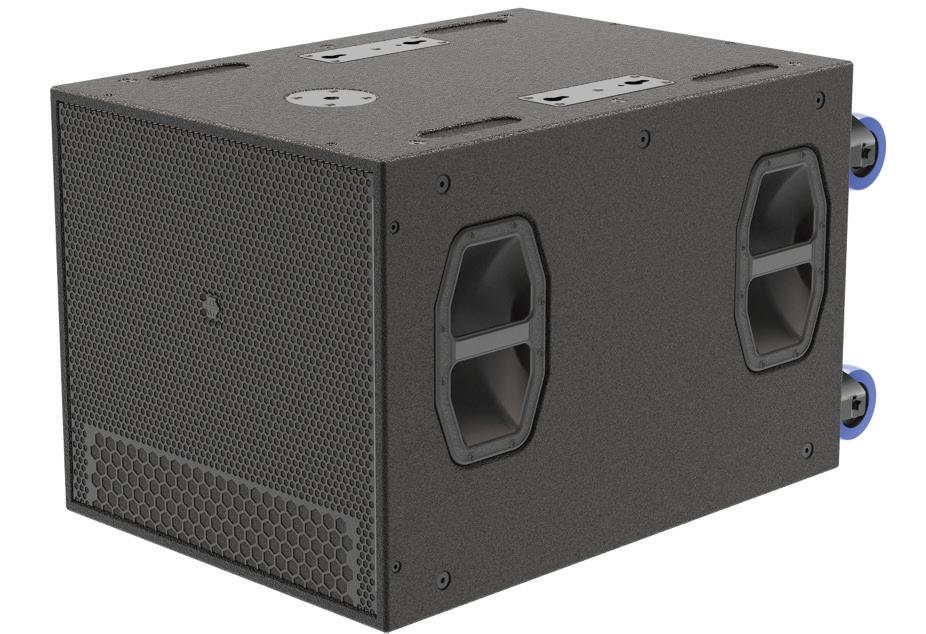
The CS15 and CS18 cardioid subwoofers are new from EM Acoustics, born from requests for products that meet the demands of today’s live event and theatre markets.
Available with both standard and touring flypack options, the two new CS subwoofers provide high-performance clarity and low frequency control in a passive package. The rear rejection prevents unwanted low frequencies from spilling onto the stage in performance venues or interfering with the work of orchestras.
Mike Wheeler, operations director, EM Acoustics, said: “Each CS subwoofer only requires a single amplifier channel – which in itself is not entirely unique. What stands out about our solution is that the cardioid performance is generated by a highly advanced passive crossover network, rather than relying on bandpass group delay. Our benchmark was that the performance must be as good as a two-channel actively driven solution, and we have achieved that as the CS subwoofers maintain a uniform performance right across their operating band. Our approach makes the CS subwoofers a unique offering in a market where cardioid products are becoming increasingly popular.” — david davies www.emacoustics.co.uk
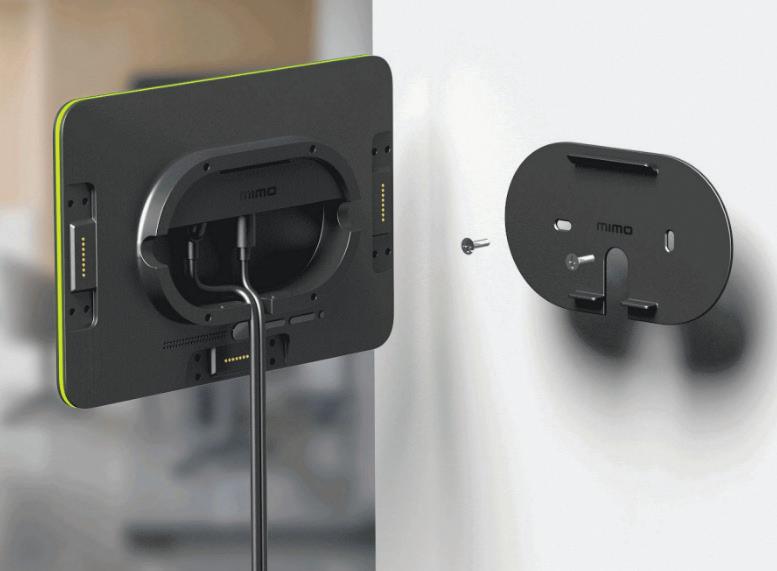
PPDS has unveiled its most powerful and intelligent digital signage line, boasting a new Android SoC and strong AI support.
The UHD Philips Signage 5000 Series (D-Line) has been designed for greater versatility, reliability and usability, with an energy-efficient design and increased processing power for improved picture quality and performance. It also supports businesses using AI as its new Android SoC includes a six trillion operations per second (TOPS) neural processing unit, allowing AI tasks to run faster and deliver smoother processing.
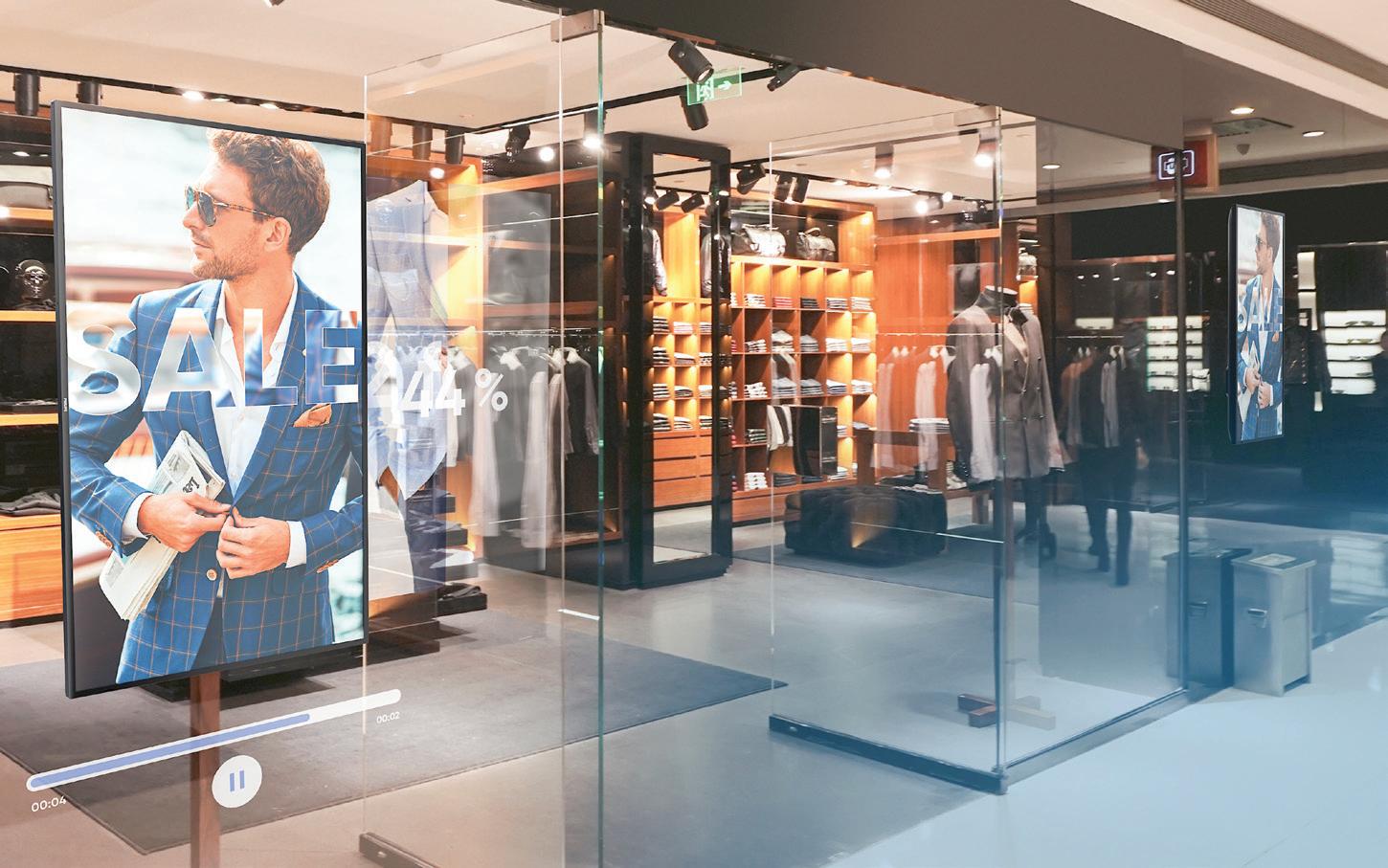
Other upgrades from its predecessor include an integrated HTML5 Chromiumbased browser, a plush even bezel design, and a 600-nits brightness display.
It is also Philips Wave ready, so it can be controlled and managed entirely remotely, while FailOver ensures screens never go blank.
The series has been designed for lower power consumption, while its modular design means components can be replaced easily, for a longer product lifetime. — david fox www.ppds.com






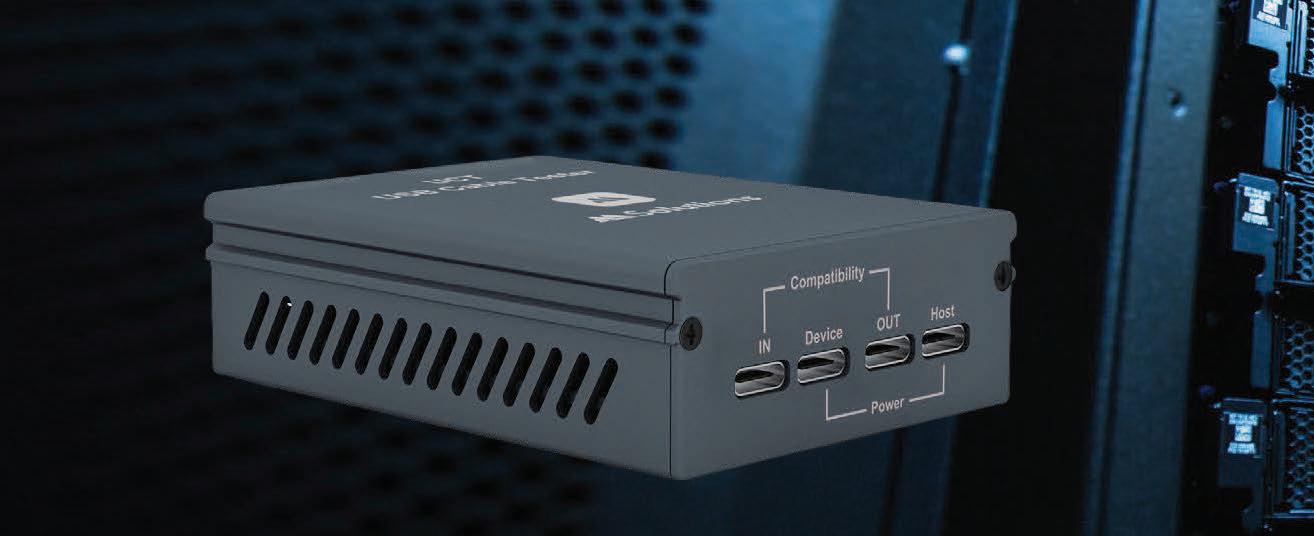








By Ted Romanowitz, principal consultant, Futuresource Consulting
Direct View LED (DV-LED) displays have been one of the fastest categories across professional AV over the past two decades. Yet, adoption of LED videowalls has been hampered for two key reasons: pixel density and pricing. Today, manufacturing an LED display below 1.0mm pixel pitch is both technically difficult and expensive. Currently, a 130in diagonal 4K UHD display has an average selling price of over €130,000, a very premium target market even for pro-AV end customers.

and Chip on Glass (COG with TFT backplane and active driver) technologies are currently produced by transferring several thousand pixels at a time and encapsulated rather than packaged. Manufacturing innovations are driving the prices down quickly, and Futuresource Consulting predicts that COG LED will be similarly priced to flat panel displays (FPD) today by the middle of the 2030s, spurring broad adoption and cannibalising adjacent display technologies.
In addition to LED’s visual advantages (broad colour space, brightness, contrast, wide viewing angles, etc), package-less LED variants enable much higher pixel density delivering three key benefits.
Second, demand for 4K UHD FPD and interactive FPD (IFPD) has substantially grown in the past several years. However, comparatively few DV-LED displays are integrated at 4K UHD today due to dimensional size and cost constraints. At popular pixel pitches such as 1.25mm and 1.5mm, the 4K UHD dimensional size is 217in and 260in, respectively. In comparison, diagonals for 4K UHD resolution enabled by package-less COB and COG are 87in with 0.5mm and even 65in with 0.375mm.
But the advent of package-less MicroLED technology is upon us, where individual red, blue and green sub-pixels are mass transferred onto a backplane substrate eliminating the time and costs associated with packaging RGB pixels and then pick-and-placed onto a printed circuit board (almost 8.3 million operations for a 4K UHD display). Comparatively, Chip on Board (COB with PCB backplane and passive driver)
First, optimal viewing distance is directly proportional to pixel pitch. For example, 1.5mm requires the viewer to be a full 12ft from the display so they cannot distinguish individual pixels. Comparatively, 0.5mm is only 4ft or arm’s distance. The close-up viewing experience enabled matters because of its market expansion possibilities. This expands the applicable deployments to include medium and eventually small meeting rooms and classrooms. It also grows digital signage deployments to close-up eye-level as well as benefitting from wide viewing angles which lengthens impression time, a key media and advertising metric.
A dedicated display of weather-resistant models, including the XT850, CB5 and Rockustics landscape and planter speakers, is on SoundTube Entertainment’s Hall 7 stand. These full-range, high-efficiency designs offer wide coverage and long throw, suitable for retail, hospitality, leisure facilities and themed outdoor environments. For integrators, the benefit is consistent performance with minimal maintenance, even in demanding climates.
A second display highlights SoundTube’s expanding family of IPD PoE speakers, offering streamlined installation using a single network cable. With built-in DSP, simple configuration and compatibility with major DSP and control platforms, the IPD series helps integrators scale projects efficiently and make on-site adjustments from anywhere on the network.
These solutions are part of SoundTube’s end-to-end IPD ecosystem, which includes the DSM16 Dante System Controller, PoE loudspeakers, the IPD-HUB2 DSP amplifier, networked Dante amplifiers with DSP and system design support. — david davies www.soundtube.mseaudio.com
The third factor is dimensional size, with LED display height being the most critical factor in most cases. Ceiling heights typically range from 8-12ft, but 10ft is the most common; 30in or 2.5ft is a frequent dimension for table and desk height. Further, local regulations may vary but a typical clearance requirement mandated is 18in or 1.5ft. Therefore, this leaves just 6ft or 72in for an LED to be mounted. Thus, if the end customer requirement is 4K UHD in a meeting room or classroom with 10ft ceilings, then only pixel pitches under 0.5mm meet the fit-to-space and resolution specifications.
These three parameters are paramount to expanding the total available market for DV-LED across all pro-AV vertical markets, spurring a technology transition and driving a strategic inflection point.
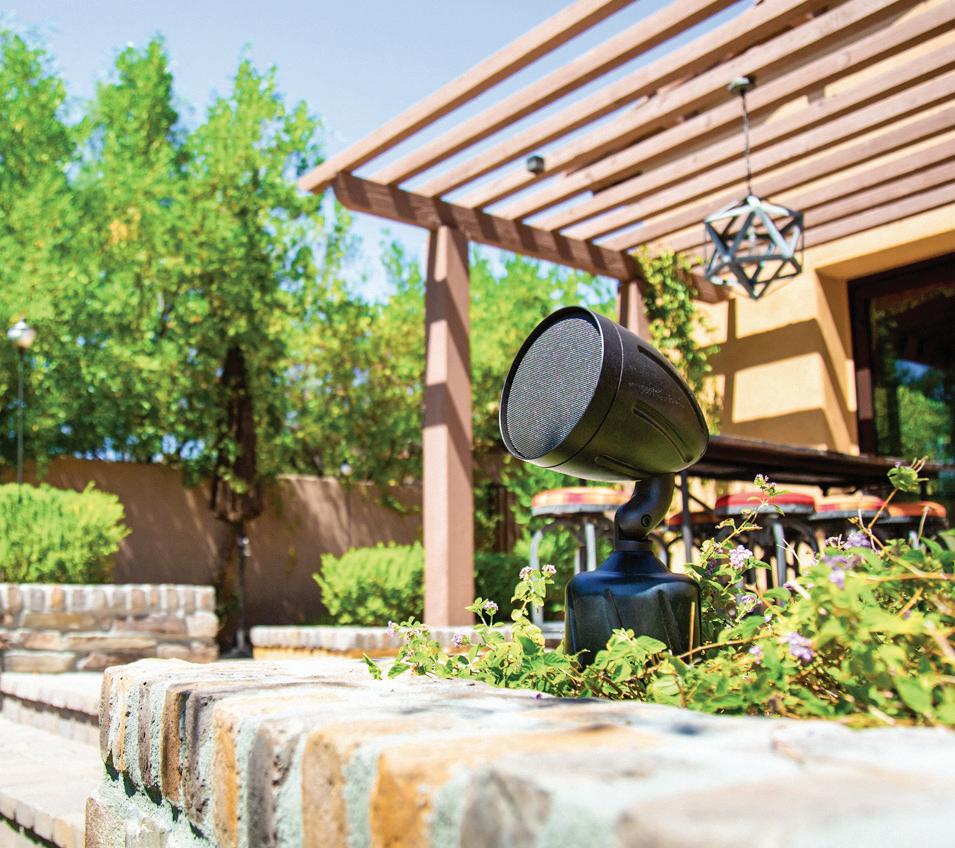
AISPEECH | STAND: 5M110
Two intelligent audio systems have been unveiled by AISpeech: the Matrix Array Microphone MA600D; and the Ceiling Mic-Speaker MCS06. They are based on AISpeech’s AI audio algorithms which promise highclarity, low-latency audio for meeting spaces.
The MA600D can deliver full-area coverage with a single device, effectively replacing ten daisy-chained handheld microphones, says the company.
Equipped with a 64-element microphone array, it delivers a 3m sound reinforcement radius and a sound reinforcement gain of 18dB or higher. It supports multiple mounting methods, including cable suspension, desktop placement, flush mounting, wall mounting and floor stand mounting.
The MCS06 is an all-in-one ceiling mic-speaker for remote collaboration in medium to large conference rooms. What makes it different is how it tackles a classic ceiling-audio problem: pickup and amplification circuits interfering with each other.
The device is designed to break that bottleneck, so conversations
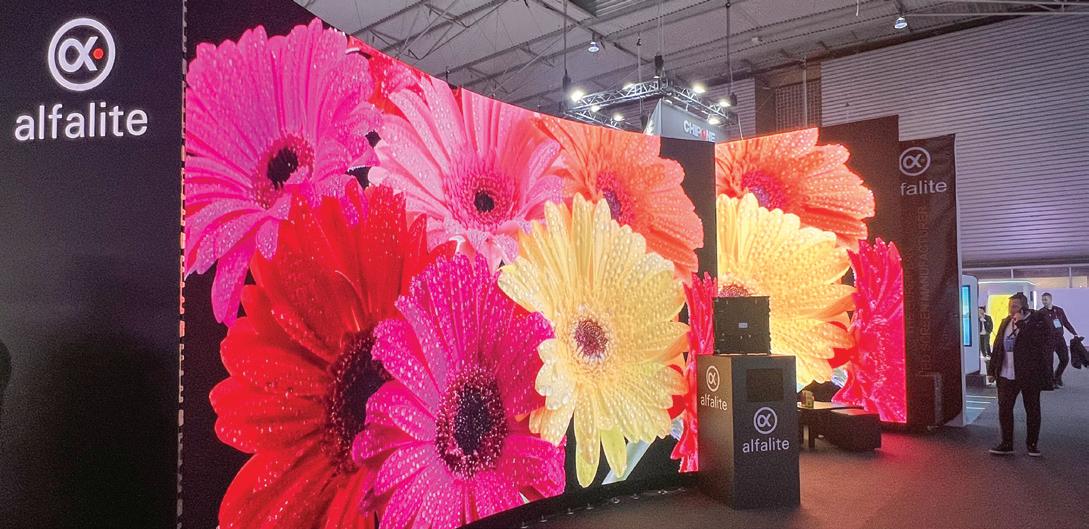
ALFALITE | STANDS: 4Q300, 4Q400
Marking its 20th anniversary at ISE 2026, European LED manufacturer Alfalite is highlighting the development of its proprietary LED display technologies and their application in critical professional environments. A key highlight of the main stand (4Q300) is the UHD Finepix Matix AlfaCOB and AlfaMIP range, designed for ultra-high-resolution fixed installations in corporate, broadcast and mission-critical environments.
Also on show is Neopix Matix AlfaCOB, the latest evolution of Alfalite’s rental range for live events and virtual production applications. The range combines a lightweight structure with fast installation and consistent visual performance. Additional products include Litepix, aimed at rental use, and Modularpix Pro for fixed corporate, retail and entertainment installations.
A second stand (4Q400) presents a control room demonstration based on UHD Finepix Matix AlfaCOB, recreating a control room environment focused on defence, security and broadcast monitoring. The installation features real-time 3D graphics and encrypted signal workflows, integrated within the Connectivity Ecosystem formed with partners including Brainstorm, Domo, Eutelsat, One Way, FOR.A, Dejero, Ontario Solutions and RGB Spectrum. — kirsty hazlewood www.alfalite.com
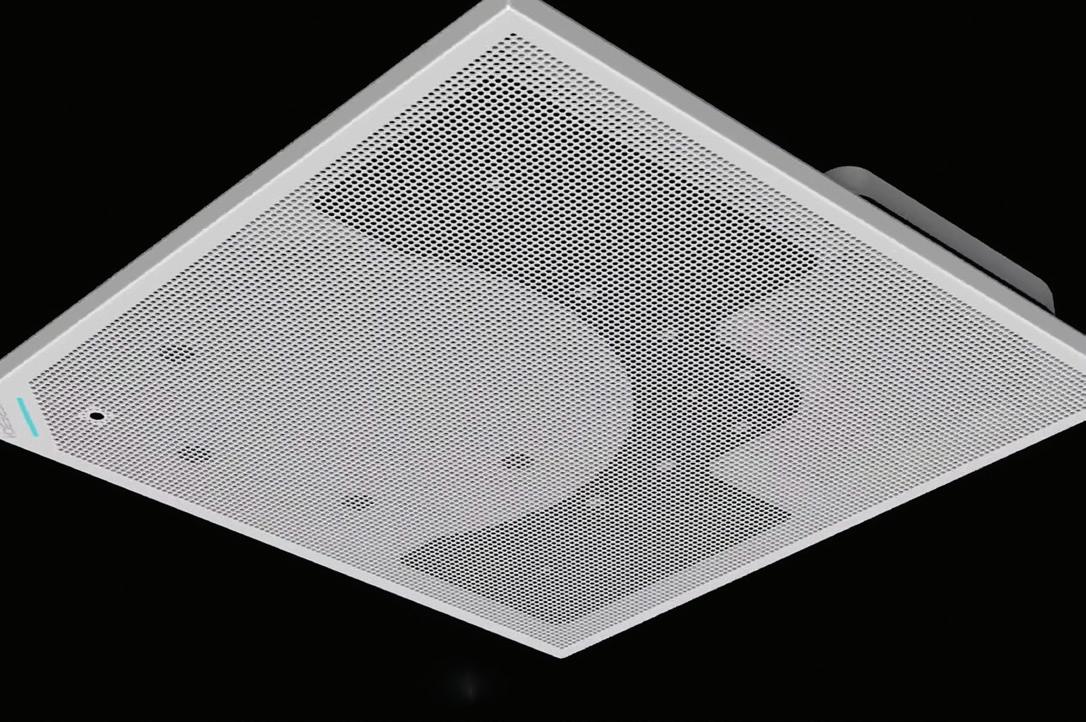
stay natural, two-way and clear. Its features include a 32-unit microphone array, a 6m pickup distance, 1,000 beams, four configurable pickup zones and two 15W two-way dual speakers. — david fox www.aispeech.com
EPSON EUROPE | STAND: 3J100
The Lifestudio Grand EH-LS970 is a 4K ultra-short-throw projector boasting 4,000 lumens and Google TV. It slots in as Epson’s flagship UST, with 3840x2160 resolution, Dolby Audio and AI-powered image optimisation for premium home cinema use. It replaces the EH-LS800 model, combining enhanced picture performance with an elegant UST form factor that sits just centimetres from the wall while delivering up to a 150in image.
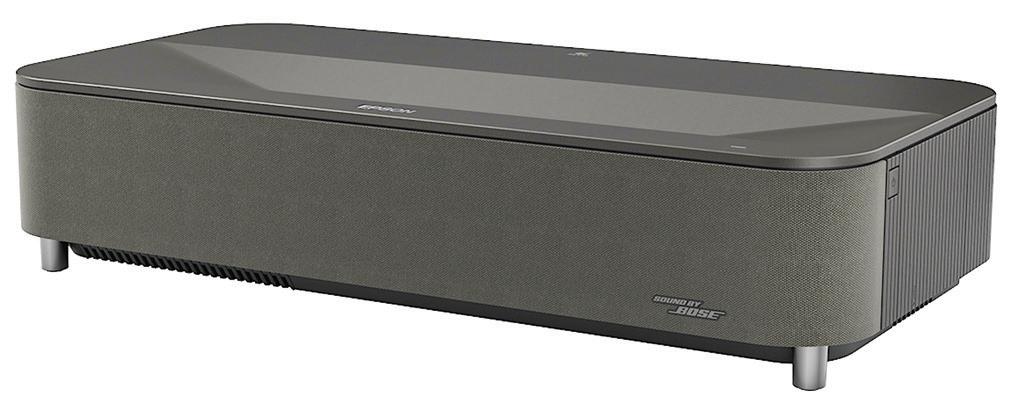
The grand life: The EH‑LS970 ‘raises the bar’ for cinematic experiences
Kiran Sanghera, manager of product management, Epson Europe, said: “EH-LS970 raises the bar for shared cinematic experiences at home. You get real 4K detail, 4,000-lumens brightness and Bose-engineered sound in a system that’s easy to live with, all with Google TV built in, intelligent setup and whisperquiet operation.”
Features include 3LCD laser technology with no rainbow effect; ALLM gaming mode with input lag under 20ms; quiet operation at 29dB standard or 18dB in quiet mode; 5,000,000:1 dynamic contrast ratio; as well as a 20,000-hour laser light source.
— david fox www.epson.eu/proav
Designed to simplify audio set-up and operation for installations and production events, the NT206L compact self-powered line array loudspeaker is part of EAW’s latest Newport Series.
The NT206L features two 6.5in low-frequency drivers with 2in voice coils and a 1.75in high-frequency driver, brought to life by 1500W of onboard power. A newly patented EAW waveguide leverages the company’s Focusing technology to provide exceptional high-frequency response.
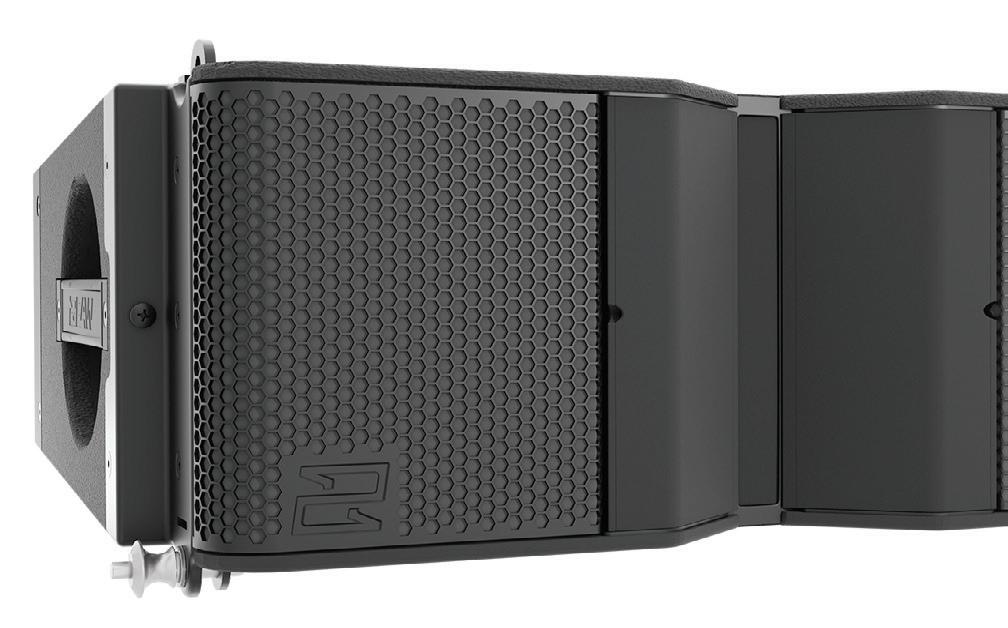
The loudspeaker also debuts a new EAW core technology called Adjustable Horizontal Directivity (AHD). With AHD, users can quickly choose between four horizontal coverage profiles through simple tool-less adjustments in the field. The NT206L plays loud (139dB) and goes low (65Hz-20kHz), all in a premium Baltic birch, steel and
New announcer consoles from Studio Technologies are on show, offering compatibility with widely used AoIP protocols.
The latest units, now available for shipping, differ primarily in their talkback-sender capacity: the Model 5536 provides six channels, the Model 5534 provides four, and the Model 5532 provides two.
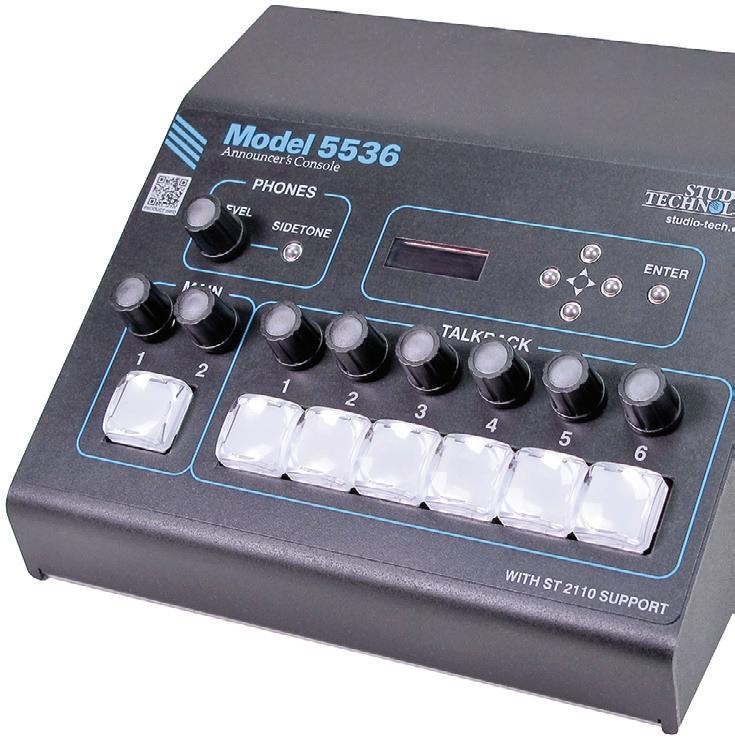
Each console combines high-performance analogue and digital audio capabilities with a comprehensive set of user features and configurable options for broadcast, sports, esports, live event, AV and streaming applications. Requiring only minimal connections, the units provide all the resources needed for a single on-air position. With a PoE Gigabit Ethernet connection, a microphone and headphones, a complete broadcast on-air position can be created.
aluminium enclosure.
EAW plans to broaden the Newport Series this year. The forthcoming NT208L loudspeaker and NT116S subwoofer prototypes are on display in EAW's Audio Demo Room, while two additional subwoofers are being developed for the full release later in the year. — david davies www.eaw.com
Control simplified is the promise of WyreStorm’s Syn-Touch10 v2, an all-in-one touchpad for room control, offering one place to manage everything: displays, inputs, lighting and audio.
The interface is fully customisable, so the experience fits the room. Layout, colours and workflow can be tailored to match the space and brand.
Setup is template-based, making it easy to build clean, polished control pages in minutes. Users can see real-time device status, such as active inputs or microphone muting.
Another new addition is the CAM-210-NDI-PTZ for conferencing. NDI support allows ultra-low latency video integration with professional AV systems. Key features include 1080p resolution, a 12x zoom lens, simultaneous USB HDMI and network outputs, and control and thirdparty integration via web, the WyreStorm management suite, VISCA over RS-232, or IP.





The consoles support AES67, SMPTE ST 2110 and Ravenna for audio-over-Ethernet connectivity. Redundant streaming in accordance with ST 2022-7 is also available for enhanced reliability. Housed in compact steel enclosures, the units are intended for tabletop use and are suitable for courtside, booth or remote production environments.
— kirsty hazlewood www.studio-tech.com
WyreStorm’s SW-640LTX-W Kit with APO-DG2 casting dongle combines native wireless casting, BYOM and Multi-Stream Transport over USB-C, to deliver multi-display workflows. Dual HDMI outputs and USB switching simplify collaboration, while Sygma Cloud Device Management enables integrators to support systems remotely.
— david fox www.wyrestorm.com
Conferencing without complexity: WyreStorm’s CAM‑210‑NDI‑PTZ
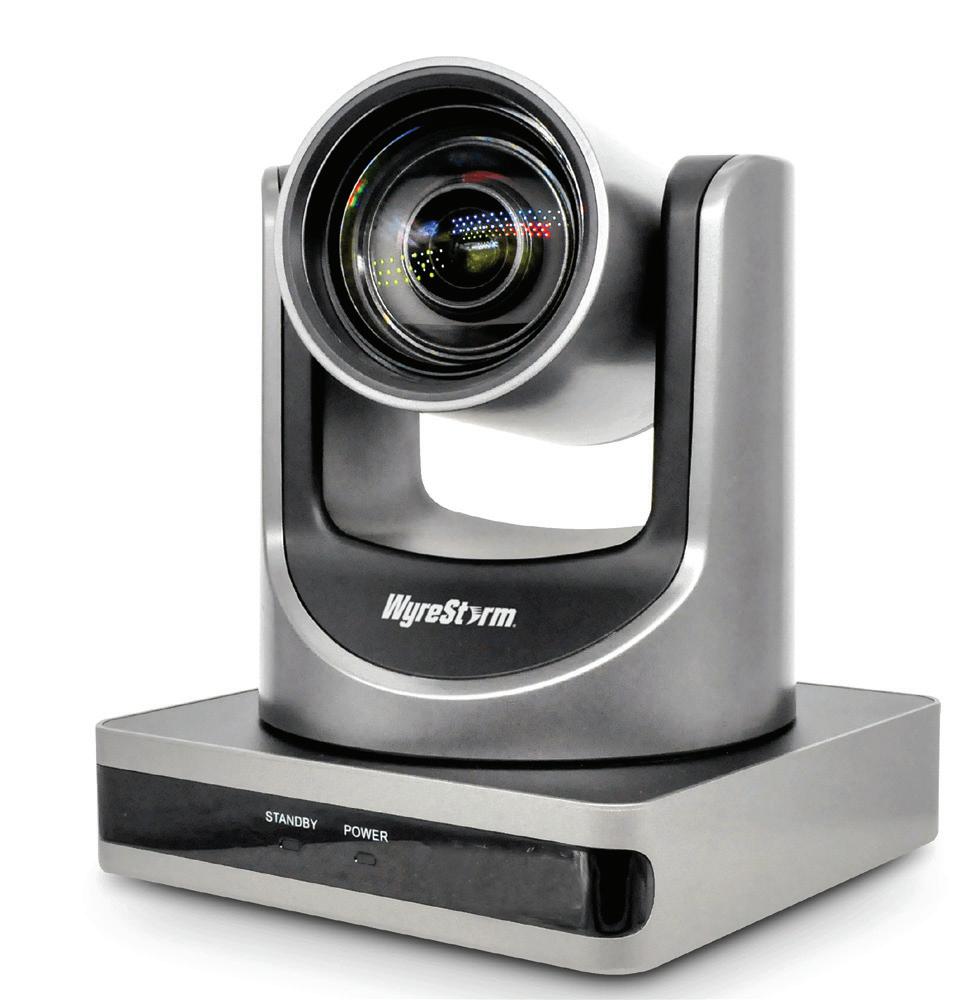
Dante specialist Radio Design Labs (RDL) is launching a range of interfaces specifically designed for EU-based installations and engineered to meet European standards and installation practices. These compact modules fit standard 45x45mm wall plates and 60mm-deep EU junction boxes.
The EU-BTN21 and EU-BT1A wall-mounted Bluetooth audio interfaces are the first in a comprehensive series of European-format interfaces.
The EU-BTN21 provides bidirectional Bluetooth audio transmission over Dante or AES67 networks, with Bluetooth stereo or mono sum feeds on two network channels and return audio talk channel from Dante to the Bluetooth-connected device.
The BT1A is designed for RDL’s Format-A system, which enables simple, cost-effective transmission of multiple channels of analogue audio over standard CatX cable.
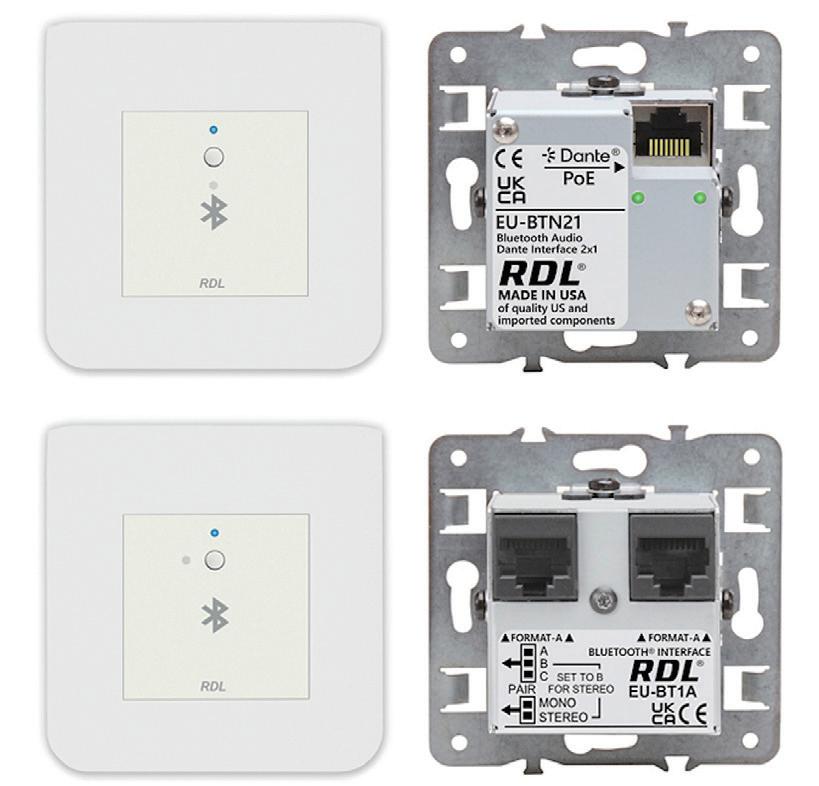
NEOSCREEN BY
IAGONA GROUP | STAND: 4G620
RDL is also showing a range of EU spec wallmounted XLR mic/line Dante interfaces, including bidirectional versions (with and without mini-jack ports), an input interface and separate line output and mic output models.
— david fox www.rdlnet.com
Built on a reinforced PaaS architecture, Iagona is unveiling a major new version of its Neoscreen digital signage platform in Hall 4. It integrates a complete ecosystem backed by strong compliance guarantees, including SSL Labs A+, ISO 27001 and SOC2 certifications.
Iagona has also expanded multi-device and multi-OS compatibility, enabling content distribution across LED walls, screens, totems, e-paper devices, tablets, kiosks, robots, players and connected lockers.
It runs on Windows, Android, Linux, Tizen and ChromeOS, while Europe-based hosting ensures full data sovereignty.
A key upgrade is an AI-driven creative studio designed to streamline and speed up content production. Together with the platform’s API-first architecture, it allows easier integration with business systems and third-party applications.
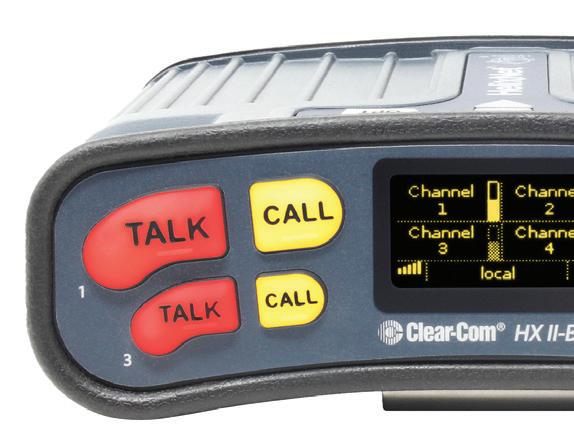
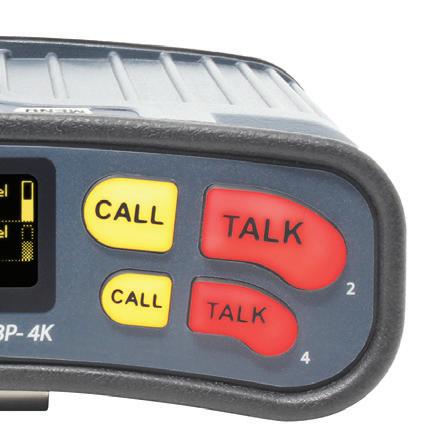
Introducing expanded channel capacity and an improved user interface, the four-channel HelixNet beltpack builds on Clear-Com’s established two-channel model.
The beltpack enables communication across four distinct channels simultaneously, supporting multi-team coordination in complex production environments.
It is fully compatible with the latest Arcadia Central Station updates, while retaining two-channel operation on legacy HMS stations and earlier Arcadia versions to maintain continuity for existing users.
Powered by Clear-Com’s I.V.Core technology, the system manages audio mixing across up to 24 channels and supports a wide range of live performance, broadcast, themed attraction and public safety applications.
Frank Linton, product manager, Clear-Com, said: “Building on the legacy of the two-channel HelixNet beltpack, this new fourchannel version empowers production teams with greater control, communication efficiency and versatility. It’s a sustaining project that not only improves our existing portfolio but also meets the real-world demands of our customers.” — kirsty hazlewood www.clearcom.com
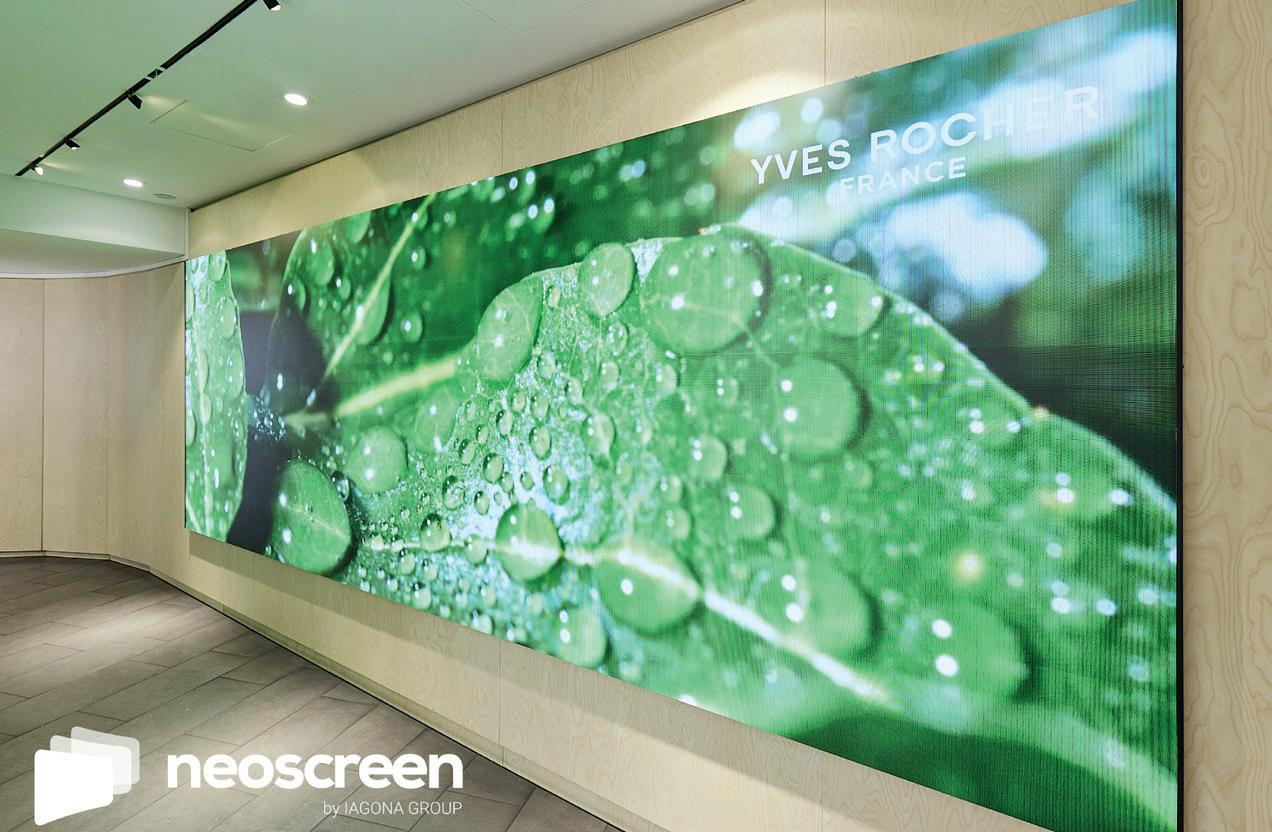
Neoscreen now includes advanced programmatic features, while the UI benefits from major accessibility improvements, including RGAA compliance, colour-blind modes, high-visibility layouts and responsive
design. There are also agentic AI tools for automated, personalised and scalable content management. — kirsty hazlewood www.iagona.com
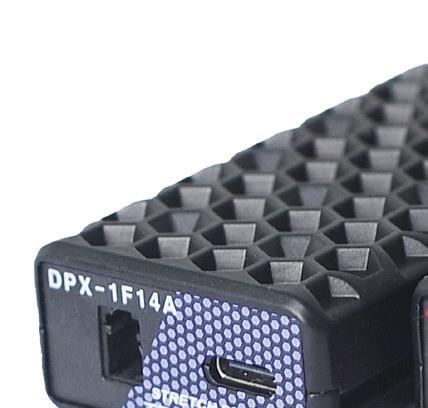
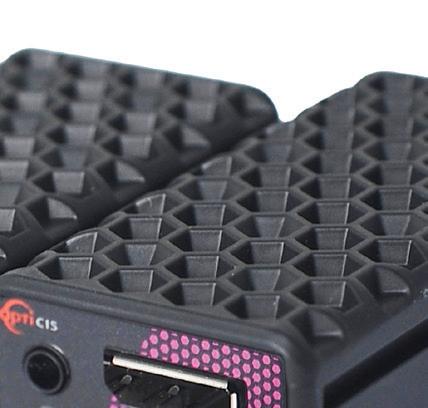

OPTICIS | STAND: 5A190


A new smart DisplayPort 1.4 optical extender for high-resolution environments has been introduced by Opticis. The DPX-1F14A-TR delivers 8K@60Hz, and 4K@144Hz (DSC) video transmission over 300m using a 1LC multi-mode fibre.
It is powered by Opticis’ Smart Aux technology, so that when unexpected events occur, such as a faulty monitor, broken fibre link, or repeated device reconnections, it can automatically restore the video link, as Smart Aux preserves EDID and DPCD configurations. This should prevent disruptions and eliminate the need for manual system resets.
It also has a dedicated control tool that allows users to set preferred EDID and DPCD settings and manage firmware updates in the field. This enables precise configuration control and faster recovery in mission-critical installations.
The DPX-1F14A-TR is designed to minimise EMI-related issues and provide reliable long-distance transmission, making it suitable for control rooms, flight simulation and government applications. — david fox www.opticis.com
CONNECTSIGNAGE | STAND: 4E880
A digital signage system being demonstrated at ISE 2026 allows organisations to automate screens across corporate, retail and mobile environments with GDPR-compliant, climate-neutral infrastructure.
Developed and hosted in Germany, connectSignage offers an intuitive HTML5 editor, a wide range of customisable templates, realtime updates and monitoring for multiple player types. It allows organisations to centrally manage display networks, and can scale from single sites to international deployments.
MARSHALL ELECTRONICS | STAND: 4N900
Designed for presentation systems, control rooms and remote productions, Marshall Electronics is showing its VMV-402-3GSH four-input 3G-SDI switcher.
The VMV-402-3GSH switches between four selectable inputs with built-in scaling and a full suite of professional features for AV and broadcast use. Its 1RU design makes it easy to integrate into rackmount or portable throw-down setups.
The unit accepts four 3G/HD/SD-SDI inputs, with inputs one and two also supporting HDMI. It also provides simultaneous SDI and HDMI outputs.
Dual programme outputs allow users to employ HDMI for local monitoring while the SDI output transmits images up to 100m away. The SDI output supports up to 1080p60, while the HDMI output can be scaled to UHD (3840x2160).
A built-in internal scaler accepts mixed input formats and frame rates, conforming them to a single output format/frame rate. The switch also includes a full-time quadview via HDMI, enabling users to monitor all four sources at once. Further flexibility is offered by a waveform overlay, up and down resolution/frame rate scaling, and Ethernet browser-based setup. — kirsty hazlewood www.marshall-usa.com
The platform is built for integration with existing workflows. More than 500 interfaces – including OneDrive, SharePoint, Microsoft Teams, Power BI, Exchange, various databases, and social media platforms such as LinkedIn and Instagram –enable automated content control across channels.
The platform is supported by a dedicated development and security
team “focused on IT robustness and customer support”, and enables targeted communication and improved engagement for both customers and employees.
— kirsty hazlewood www.connectsignage.com
GPRO | STAND: CS668
An 8K-capable videowall controller is being shown at ISE as a budgetfriendly option.
Developed by Shenzhen-based ODM manufacturer GPro, the VW14HH-F8K mosaic splicer LED controller accepts HDMI, DisplayPort and USB-C inputs and provides four HDMI outputs. It supports custom resolution configurations within an overall 8K pixel canvas, along with splicing layouts including 1×2 and 2×2 arrangements.
Control options include RS-232, IP and a graphical user interface. The VW14HH-F8K is designed to deliver stable, lag-free images and is said to combine robust custom functionality with a competitive price point, delivering a cost-effective videowall solution to the market.
GPro has more than 20 years’ experience in professional AV manufacturing and offers ODM customisation services to adapt the platform for specific application requirements. — kirsty hazlewood www.greatproav.com
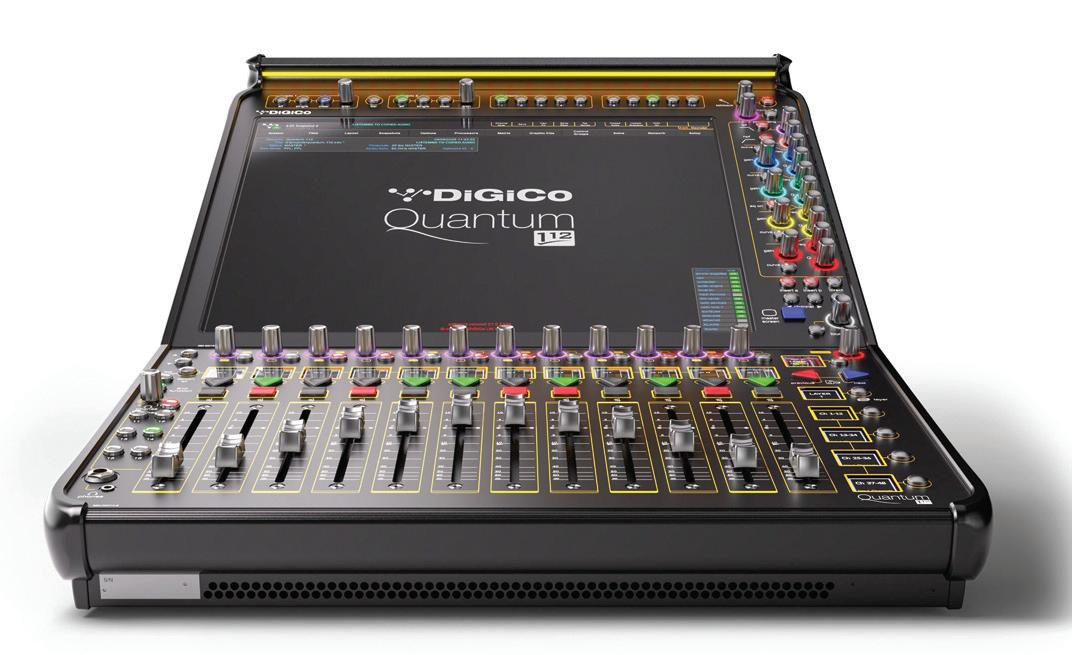
ISE 2026 marks the first time in Europe that DiGiCo is displaying the new Quantum112, which the company describes as the “world’s first true flypack console”.
Underpinned by the same FPGA platforms as larger Quantum consoles, this featherweight solution has a comprehensive range of features provided in a package that, says DiGiCo, can be booked onto most commercial airlines.
Weighing in at only 23kg in its custom 1647 Peli Case, the DiGiCo Quantum112 is said to “out-shine others in its class” with expanded channel counts, two DMI slots, full processing capability and arenascale networking capacity.
The Quantum112 has already seen active service for several live events involving Ed Sheeran. The singer/songwriter’s FOH engineer, Simon Kemp, and production manager, Chris Marsh, utilised the desk for Sheeran’s appearance on the NPR Tiny Desk Concerts video series in Washington, DC, followed by an exclusive TikTok Live performance in Brooklyn, New York, to promote new album Play
— david davies www.digico.biz
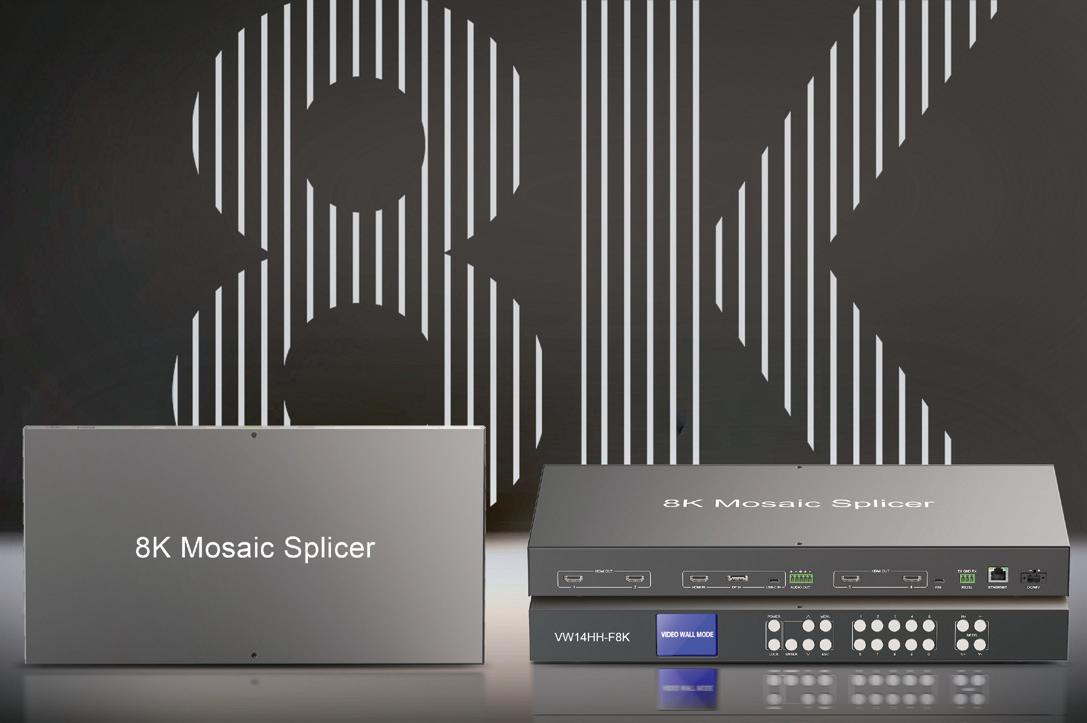
New developments in commercial display technology, with demonstrations focused on energy efficiency, intelligent control and contemporary design, are on show from Refee.
Updates across several key product families include the outdoor battery-powered digital A-board series, intended for flexible, lowenergy advertising in external environments. The high-bright window display series is aimed at retail applications that require strong visual performance with improved energy efficiency. A new low-energy e-paper line provides glare-free displays for both indoor and outdoor use, while maintaining very low power consumption.
Refee is also introducing a mini-LED high-brightness series, offering enhanced contrast and durability for demanding installations. A corresponding mini-LED outdoor floor-standing series provides weather-resistant performance for public spaces and is designed for straightforward maintenance.
Finally, the company is presenting a commercial display integrated with an AI-driven digital human, designed to support new forms of interactive communication. — kirsty hazlewood www.refeedigital.com
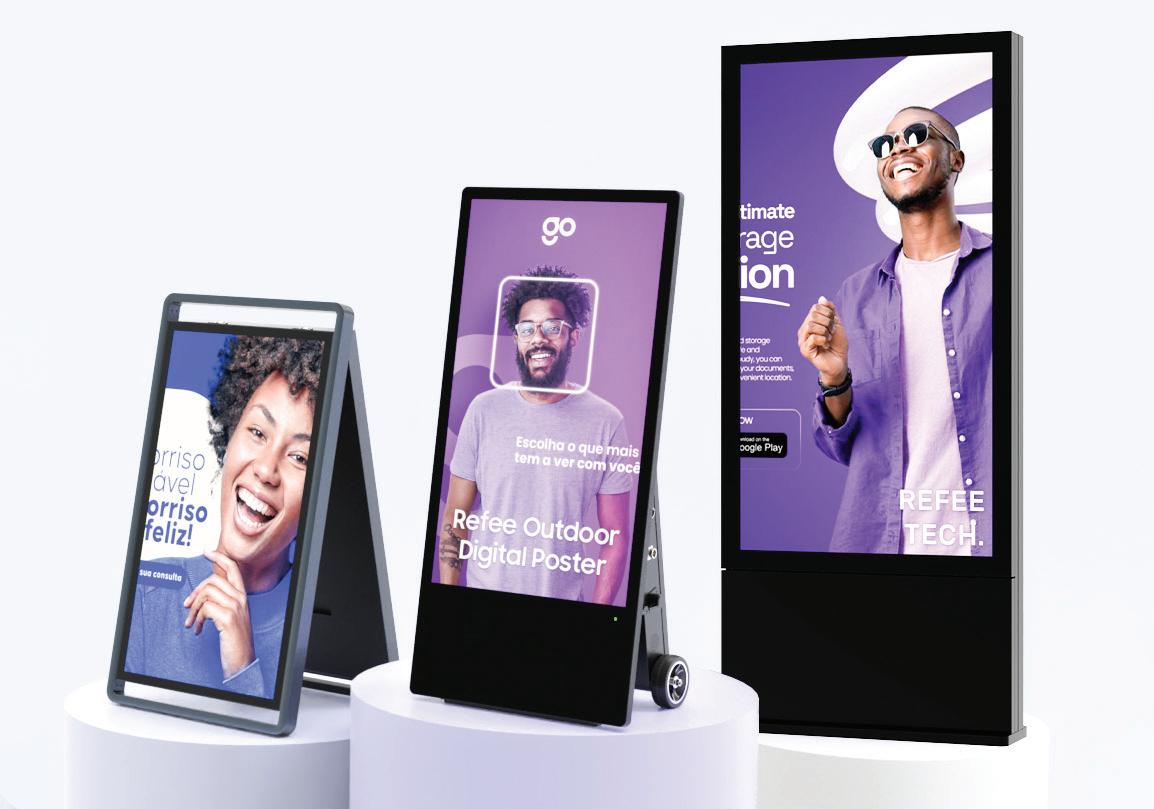
In addition to new features for its Harvey programmable audio DSP, Dspecialists is showcasing the latest iteration of the Harvey control system, named Harvey Touch, available via web interface and mobile app.
A framework with which to build user-specific apps to control Harvey installations, Harvey Touch is initially available with two templates for creating apps to be deployed as web interfaces that can run on any device with a web browser.
The templates include a mixer application, developed for use in churches and allowing, for example, acoustic settings to be configured for specific individuals and switched by tapping their names in the app. The other is a multi-zone control template, which is geared towards restaurants and bars, and allows background music volume
and lighting to be controlled flexibly for terraces, bar areas, separate rooms and more.
All templates are optimised to provide a high-quality user experience even on small screen sizes, such as smartphones. — david davies www.dspecialists.com
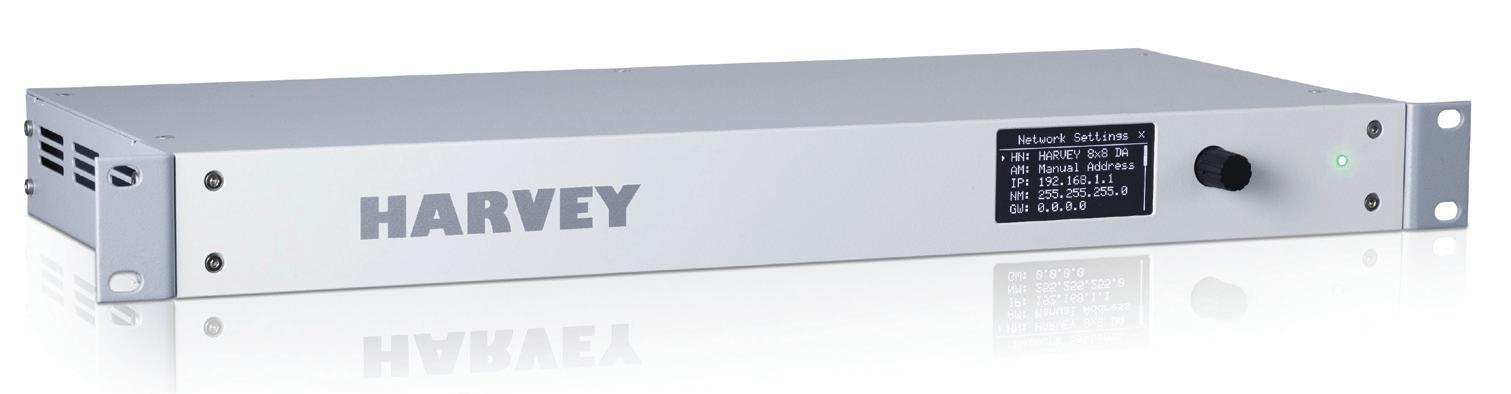


Professional audio specialist K-array is presenting the latest addition to its portfolio of residential products: the Koral KO102 column loudspeaker.
According to the company, Koral is designed to deliver professional performance in visually sensitive spaces, including luxury homes. Combining controlled directivity with a minimal footprint, Koral provides the output of a larger system while remaining visually discreet, notes K-array.
The KO102 employs six 3in mid-frequency drivers and a dedicated high-frequency unit in a compact frame. An onboard switch lets integrators choose between two operating modes: pure array or point source.
The MPR60 wideband IEM receiver is new from Wisycom. It has been developed to meet the changing needs of live production, high-end theatre and large-scale house of worship applications.
The MPR60 introduces automatic audio power limitation by measuring the headphone impedance, which intelligently adjusts the output level to the in-ear headphones used by the talent. The receiver also includes enhanced RF channel selectivity and stereo channel separation of more than 60dB.
In addition, the product’s RF efficiency allows engineers to stack multiple IEM channels with equidistance, one channel per every 400kHz, thereby maximising frequency utilisation in congested RF environments.
Gerrit Buhe, CTO, Wisycom, said: “With the MPR60, you hold the most professional in-ear monitoring tool in your hands. We provide one receiver for the entire range of frequencies assigned around the world, with superior RF robustness and frequency efficiency – delivering flawless performance under any condition. We’re very eager to share it with engineers and artists who rely on Wisycom for precision and reliability.” — david davies www.wisycom.com New features for Harvey are being
In residential settings, such as home cinemas, Koral can serve as a centre channel when configured in horizontal mode, or be used as left, right and surround channels in multichannel setups. It comes with a range of fully weather-rated finishes, including customisable RAL colours or premium metal treatments.
Alongside Koral, other highlights include the Dolomite full-range loudspeaker system, the Lyzard range and the ultra-flat Vyper series.
— aNNe Morris www.k-array.com
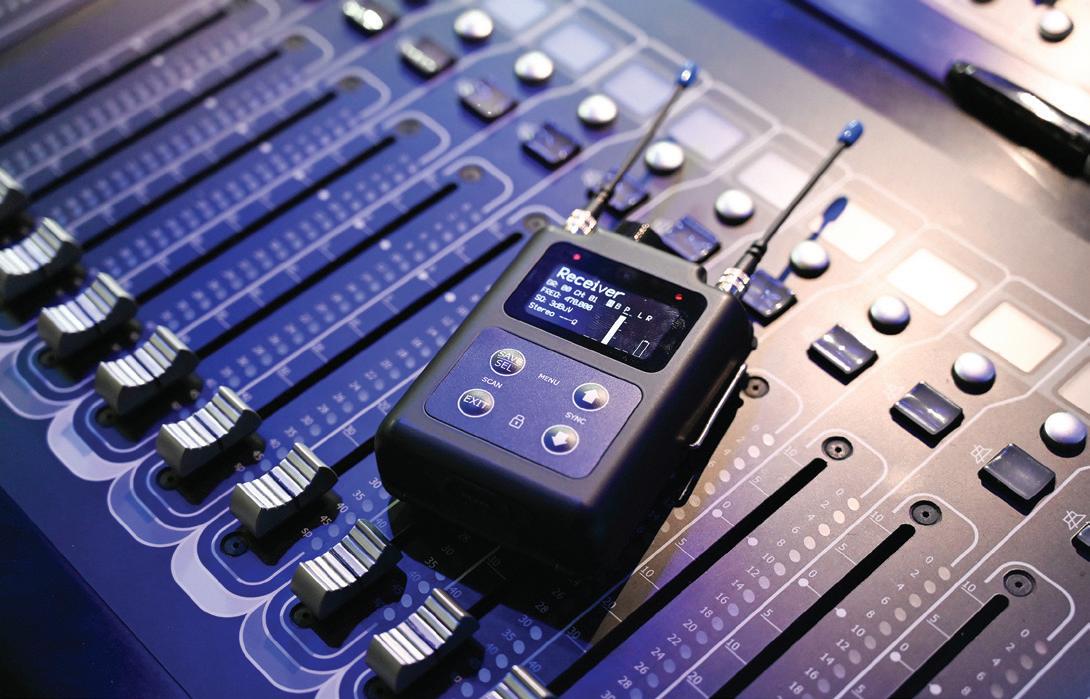
ATEN | STAND: 5E500
New KVM and pro AV products from Aten include the USB True 4K HDMI Cat6 KVM extender. It extends HDMI video, USB keyboard/mouse control, embedded audio and RS 232 control signals across 70m over Cat6. It can also extend 1080p up to 100m and supports resolutions up to 3840x2160@60Hz (4:4:4) with HDR10.
Also new is the VE8962R/T True 4K HDMI over IP receiver and transmitter, both with PoE. They deliver 4K@60Hz video with ultra low latency over a single Cat5e/6 cable.
They have power and network redundancy, auto switching between DC jack and PoE, plus copper and fibre cable support, with multiple control options via web, buttons, IR, RS 232, Telnet and USB. There is videowall support for up to 80 displays.
Aten is also showcasing the VK101 tabletop kit, which tilts devices at an ergonomic angle for easier operation and cable connection (also wall mountable). It supports various Aten keypads, touchpanels, remote control pads and third party devices. — david fox www.aten.com
| SNAP ONE + CONTROL4 | STAND: 2J150
ADI is showcasing Allsee’s next‑generation High Brightness Outdoor Digital Battery A‑Boards, highlighting the integration of products within the ADI ecosystem.
Designed for maximum outdoor impact, this fully portable, weatherproof signage solution delivers exceptional performance wherever it’s deployed.
The A‑Boards feature a 1,500cd/sqm high‑brightness panel for clear visibility, even in direct sunlight, while tempered anti‑glare glass reduces reflections without compromising image quality.
Portability is a standout advantage: a lightweight yet durable enclosure and rugged castors allow effortless repositioning. An integrated commercial‑grade battery delivers up to 27 hours of runtime on a single charge for dependable, all‑day use.
Built for the elements, the IP65‑rated casing protects against rain, dust and debris, supported by an intelligent temperature control system that maintains stable performance.
A built‑in Android 14 media player enhances security, boosts app compatibility and improves overall speed, ensuring the display remains future‑ready as project requirements evolve.
— jo ruddock www.adiglobal.com
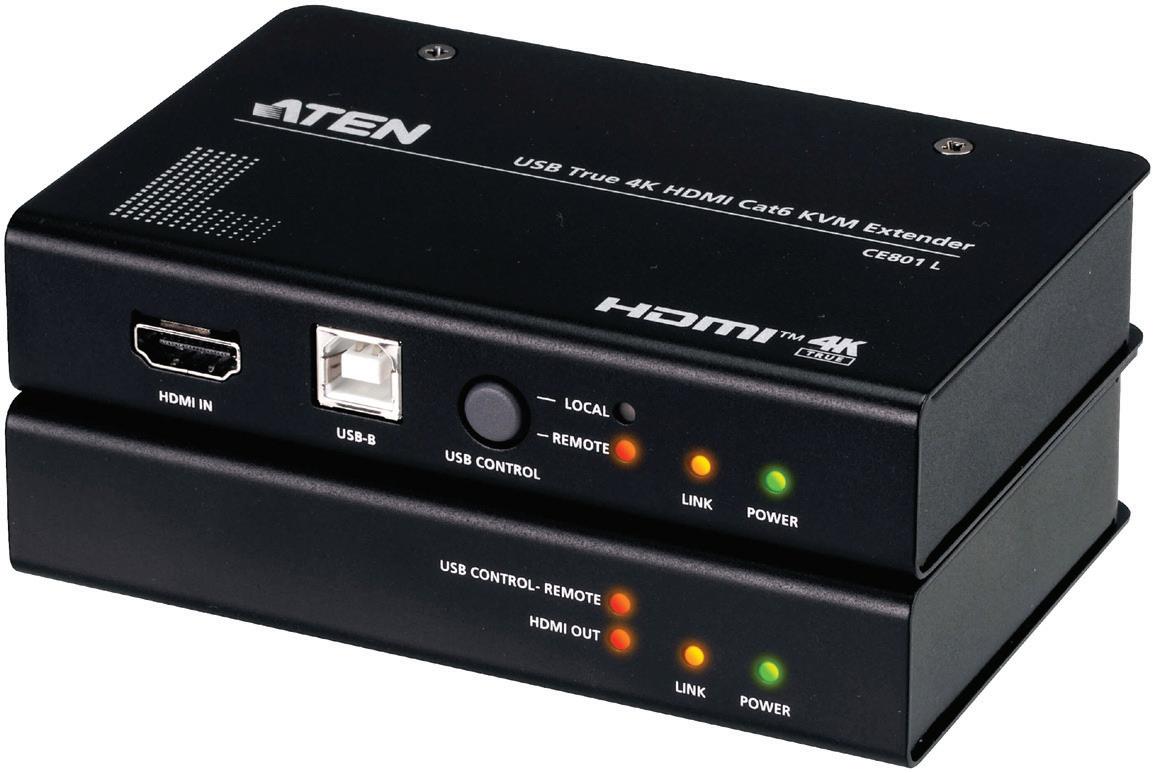
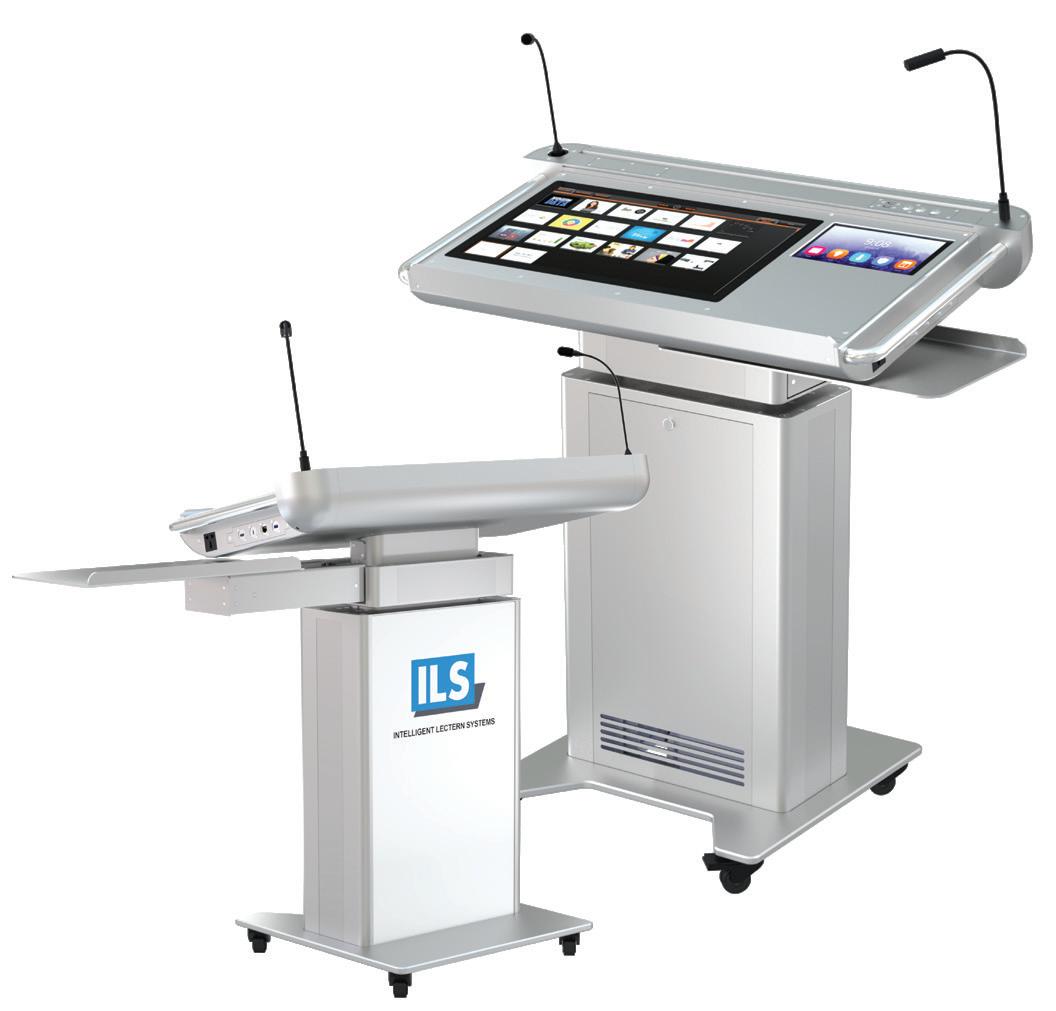
INTELLIGENT LECTERN SYSTEMS | STAND: 2R100
Lectern and e podium solutions provider Intelligent Lectern Solutions (ILS) is showcasing its new Synergy Plus line, consisting of the ILS Synergy+ GW32IC, ILS Synergy+ GW FD or QW FD, and ILS Synergy+ GW27T.
Features of the range include immersive touch control for up to seven PC sources and an integrated 32in front monitor with media control.
As with the rest of the ILS family, the new systems are made from thick aluminium blocks and plates and are designed to last for many decades. Every part can be removed and replaced as technology changes, while ILS has a buyback programme for replaced aluminium parts.
— anne morris www.intelligentlecterns.com
The latest Emerald updates from Black Box span the Deskvue Multi-System Command Workspace and the broader Emerald Control ecosystem, aiming to improve operator efficiency and reduce decision latency across mission-critical environments.
Deskvue-Canvas is a new videowall processing and visualisation engine that lets operators create wall-scale canvases of up to 16 screens using multiple Deskvue units. It includes advanced display orientation combining bezel compensation and full 180° rotation.
Emerald UltraStream delivers UHD performance across both 1GbE and 10GbE networks on Emerald 4K units, for low latency, pixel-perfect 4K on 10G and visually lossless 4K on 1G.


FailSafe is a four-node redundancy engine that keeps KVM/AV manager Boxilla continuously available through system faults or network disruptions.
Deskvue-WebLink expands unified control beyond traditional systems, for secure, browser-based access to HMI and SCADA applications.
Users can also create secured connections by combining Emerald with the NIAP4 Certified Secure Defender – acting as a hardware barrier enforcing one-directional data flow. — david fox www.blackbox.com
The ImPulseV virtualised audio mixing engine runs in a cloud-native AWS environment and supports low-latency processing, flexible routing and real-time mixing. Able to be accessed globally, it uses a familiar Calrec interface and can be controlled via the Assist web UI or any Argo or True Control 2.0-enabled console.
The company claims a cost-effective OpEx model also opens opportunities for smaller productions previously limited by hardware requirements.
Calrec says True Control 2.0 allows users to embrace distributed production, minimise costs and scale resources on the fly. Users can control any Calrec system from any location, accessing additional cores, faders, surfaces and control to meet production needs.
The system provides full control over EQ, dynamics, routing, direct outputs and delay. A single controller can manage up to five consoles or processing cores simultaneously, expanding functionality without extra hardware.
— kirsty hazlewood www.calrec.com
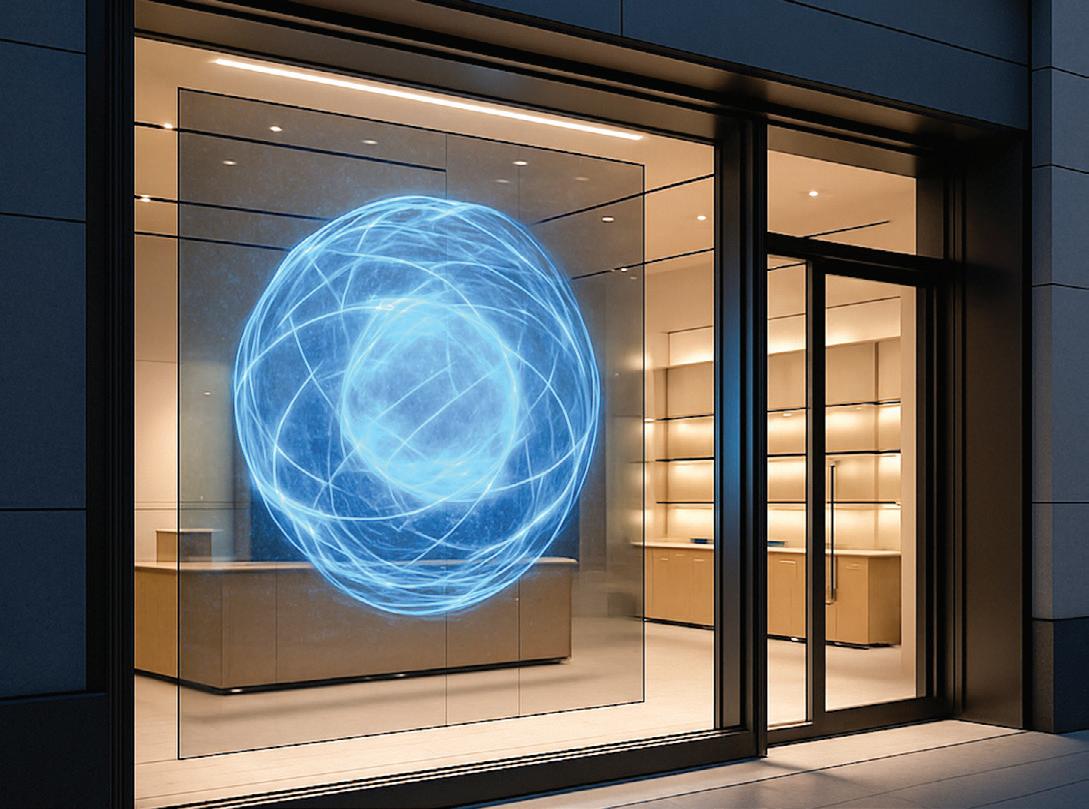
Traulux Holofix is a holographic and ultra-transparent LED screen that is designed to create high-impact floating images. It generates an authentic holographic effect, without the need for projectors or glasses, thanks to its advanced high-transparency LED technology.
Its modular, lightweight design means it’s suitable for sectors where visual impact must coexist with the aesthetic of the space. According to Charmex: “It’s about creating immersive experiences where the technology disappears visually and only the message remains.”
Traulux Holofix uses an external IC driver developed in-house, mounted on the rear of the metal mesh that makes up the 120x75cm cabinet. This allows the front to be reserved exclusively for the LED lamp, optimising heat dissipation and significantly reducing the risk of overheating.
This, in turn, allows the use of conventional encapsulated LEDs, which simplifies maintenance, improves reliability and offers a more uniform image. — david fox
www.charmex.net
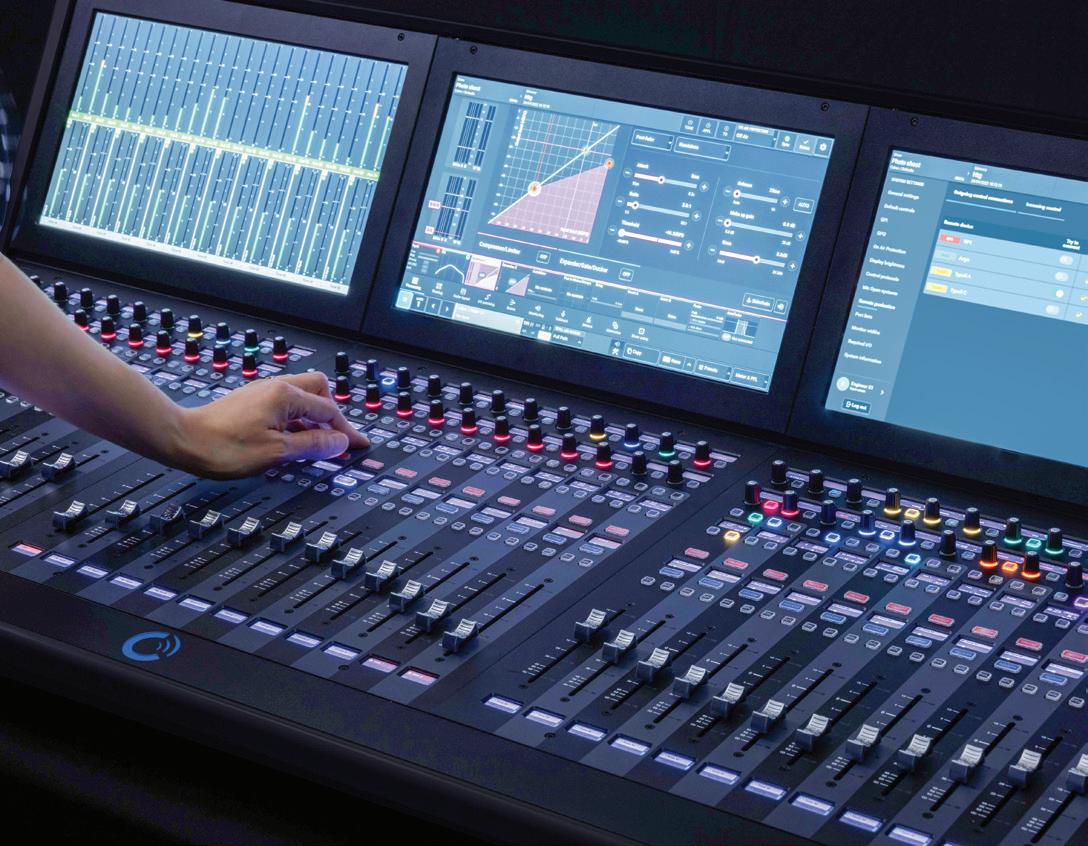
Beckhoff is showing the latest additions to its scalable industrial PC portfolio, a range of powerful devices equipped with the latest generation processors.
Its C6015, C6017 and C6025 ultracompact industrial PCs use the new Intel Atom x7 CPU series, with up to eight processor cores and a 3.0GHz clock frequency, which can be used for more demanding computing tasks than previously at comparable costs, while retaining their compact form factor.
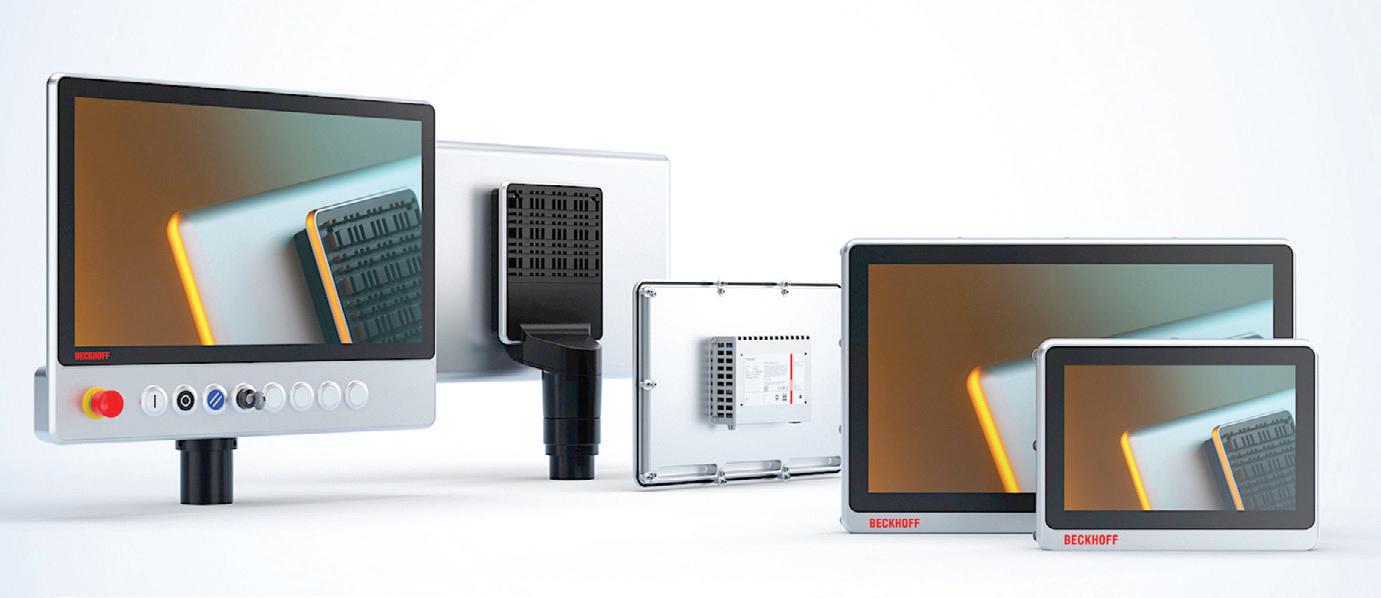
The new Next multitouch panel PCs, the CP46xx and CP47xx (built-in versions) and CP56xx and CP57xx (mounting arm versions), also use the latest chip generations, guaranteeing high performance,
Visitors to the Macnica stand can see demonstrations of its expanding SmartNIC portfolio for ST 2110 systems, alongside cross-domain demonstrations supporting IPMX workflows.
The demonstrations are powered by the MEP100 SmartNIC, a 100Gb PCIe card that handles ST 2110 media processing, stream protection and bandwidth management in hardware designed for demanding production environments. Macnica is also previewing the MEP25 SmartNIC for 25Gb networks; both SmartNICs will be offered in two fancooled variants for servers (passive) and workstations (active).
The MEP100 integrates with Macnica’s M2S SDK to extend ST 2110 and IPMX workflows to streaming media networks.
The M2S SDK uses the MEP100’s hardware acceleration and the host OS to deliver ultra-lowlatency video processing, with integration simplified through a frame- and sub-frame-based API. Built-in support for common media frameworks, including GStreamer and FFmpeg, enables rapid prototyping and deployment of IP media applications.
The MEP100 supports a full ST 2110 stack, transferring video, audio and data directly into application memory via kernel bypass, and handling up to 32×32 HD or 8×8 UHD flows. Additional features include PTP acceleration, network path redundancy, optional JPEG-XS compression and integrated NMOS support.
— kirsty hazlewood www.macnica.com
energy efficiency and long-term availability. The x86-based CP47xx and CP57xx use Atom x7 CPUs with up to four cores, while the CP46xx and CP56xx models use Arm-based multi-core CPUs.
The Smart In speaker from ArtSound has a built-in amplifier and access to streaming services such as Spotify Connect and Apple AirPlay.
The integrated smart technology allows Smart In to be incorporated into multiroom setups and home automation systems, reducing the need for separate components and simplifying installation in residential and commercial projects.
Smart In is available as a single unit or a double set version. A mono/ stereo switch lets users select the appropriate mode, with the second speaker automatically controlled by the active main unit.
Connectivity options include wireless WiFi or a wired connection via the built-in network switch. Dual network ports allow users to loop through to additional Smart In units, supporting stable and expandable audio systems.
All Smart family products integrate with home automation systems, including Qbus, Teletask, Velbus, Dobiss and KNX, enabling system control from a central smart home interface.
Smart In supports direct streaming from online providers, delivering highquality audio without the limitations of Bluetooth, claims the company.
— kirsty hazlewood www.artsound.be














A cloud-based project management platform developed for the AV sector, ProjX360 is being shown in ISE’s Innovation Park. The platform supports workflows from initial client engagement through to project completion, and incorporates proposal creation, project scheduling, labour tracking and team communication in a single environment. ProjX360 includes tools for inventory management, invoicing and cross-department visibility, with multi-currency support for international operations. Proposal tools allow sales teams to produce detailed quotations, while completed jobs transition directly into project management workflows for the operations team.
The platform is intended for AV consultancies and integration businesses seeking to manage projects, resources and communication in a purpose-built system.
— kirsty hazlewood www.projx360.com
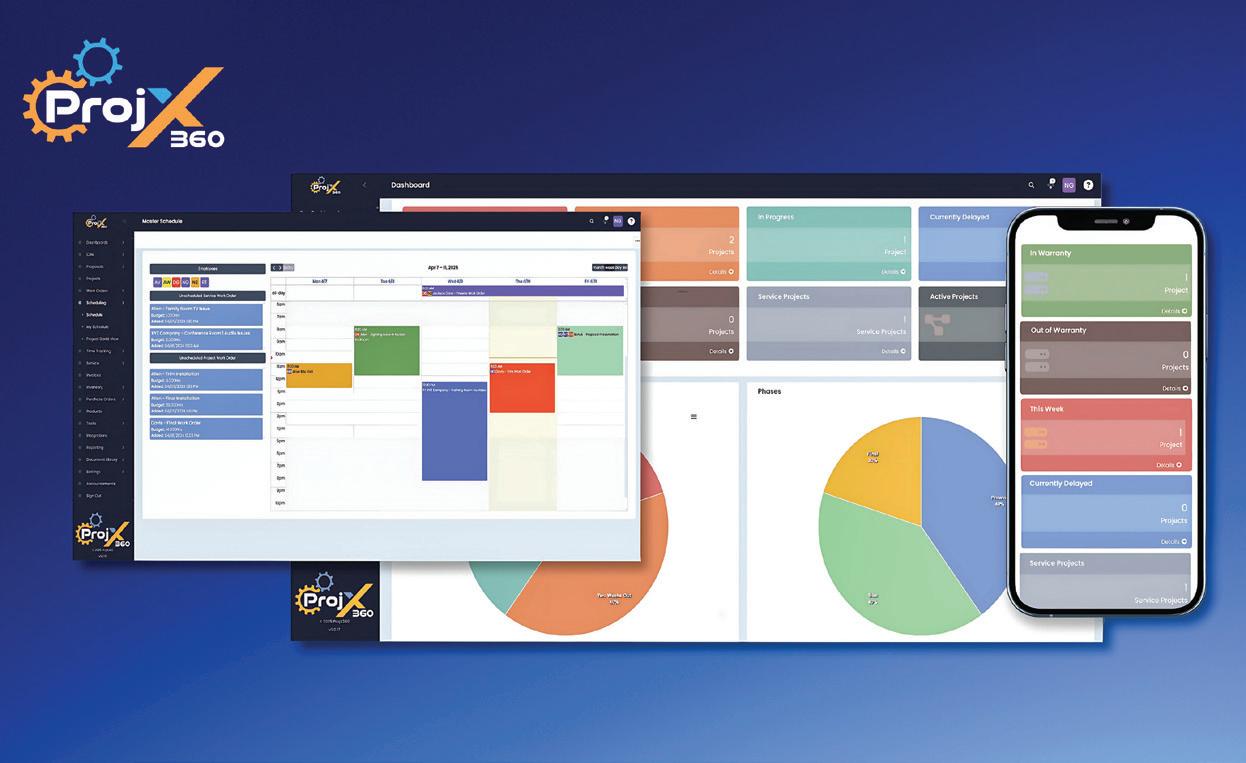
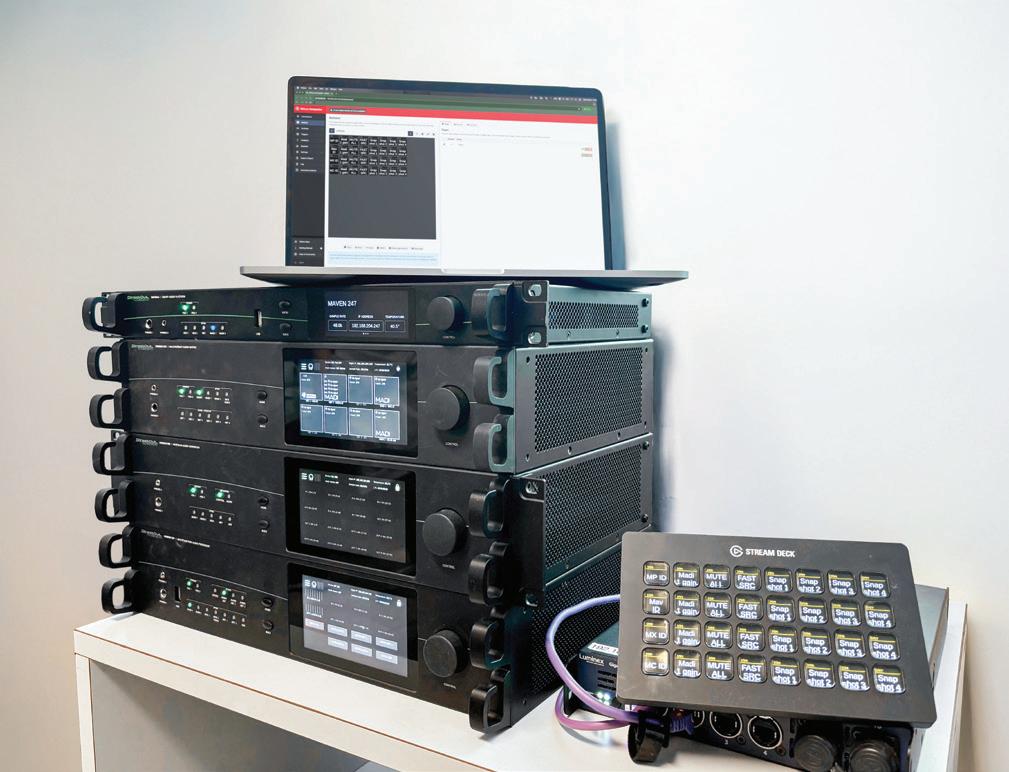
A native plug-in for Bitfocus’ Companion open-source control surface software is new from DirectOut.
The result of a collaboration between DirectOut, its German distributor Sphereo, and experienced Companion module programmer Dorian Meid, the plug-in is compatible with Companion 4.0.0 or later. Automatically detecting and allowing access to the majority of functions included with Prodigy and Maven Series devices, it can be used with any Stream Deck hardware interface to enable greater control with fully programmable presets and parameters.
DirectOut also invites ISE attendees to visit its stand to find out more about how third-party collaborations are “creating seamless integration experiences for end-users with streamlined control features – taking the guesswork out of complex device management across a range of applications”.
— david davies www.directout.eu
ART::IP (Immersive Performance), an advanced tool for immersive sound that is engineered to overcome architectural limitations, is being unveiled. According to Amadeus Acoustics, it delivers a uniform spatial experience with varied listening zones, from stalls to under-balcony areas. ART::IP sits within the ART platform, a modular ecosystem of hardware, software, services and content for multichannel audio applications. The highest-performing module, ART::IP brings a fully integrated 3D workflow, both visually and acoustically, while loudspeakers and spatial behaviours can be edited in true three-dimensional space.
Venue models from EASE or other 3D CAD formats can be imported directly, creating a seamless design environment. Meanwhile, all control is handled through ART::Director, which enables simple source creation.
Critically, ART::IP differentiates between performer (stage) and spatial loudspeaker systems. Each loudspeaker can serve either role, or both, depending on the design. Behind all of this is Amadeus’ new advanced immersive engine, enabling full classification of speakers and sources, independent delay lines, and highly granular control for detailed system optimisation.
— david davies www.amadeus-acoustics.com
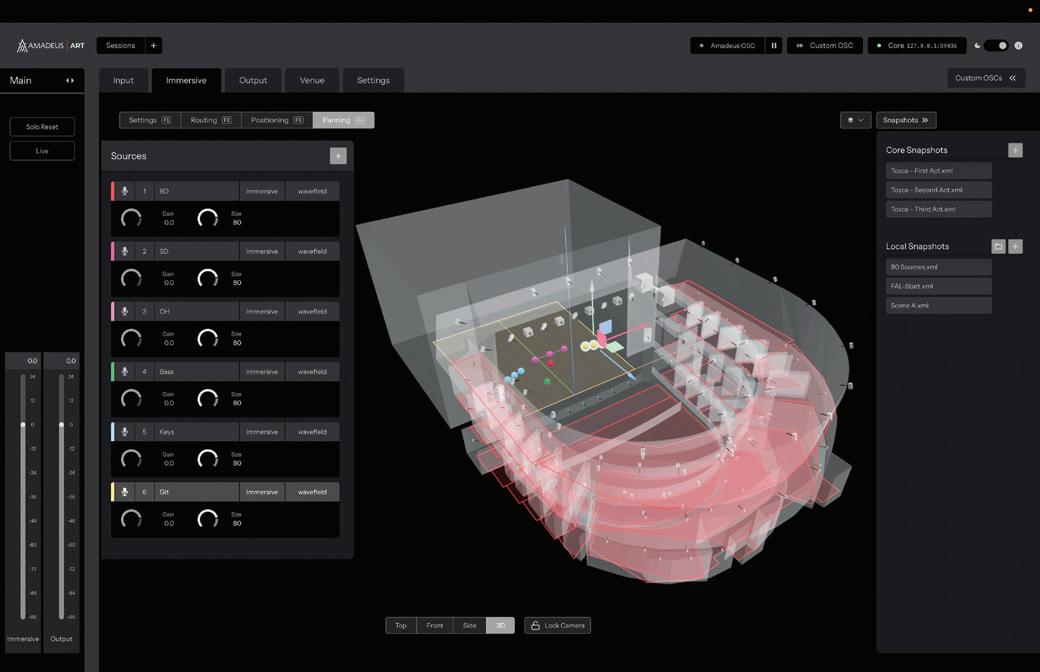










The new M Pro Series Enclosure 115in Wall Slim Large Black is a minimalistic security enclosure engineered to protect large-format displays in public and commercial environments. Built around a reinforced steel-cage design, it is designed to provide robust theft protection while maintaining a sleek, slim profile suited for modern architectural spaces.
The enclosure supports VESA 1000x800 and 800x1000, making it suitable for most major display brands, in portrait or landscape mounting. It has a depth-adjustable exterior frame, offering a stable fit even on uneven surfaces.
The enclosure has passive cooling and optional thermal management components, so it can be used in high-demand environments, such as transportation hubs, retail flagships and high-visibility public installations.
Delivered partially pre-assembled for fast deployment, the M Pro Series Enclosure 115in includes reversible hinges for easy service access and smart post-installation adjustment features that allow precise fine-tuning on site. — david fox www.multibrackets.com
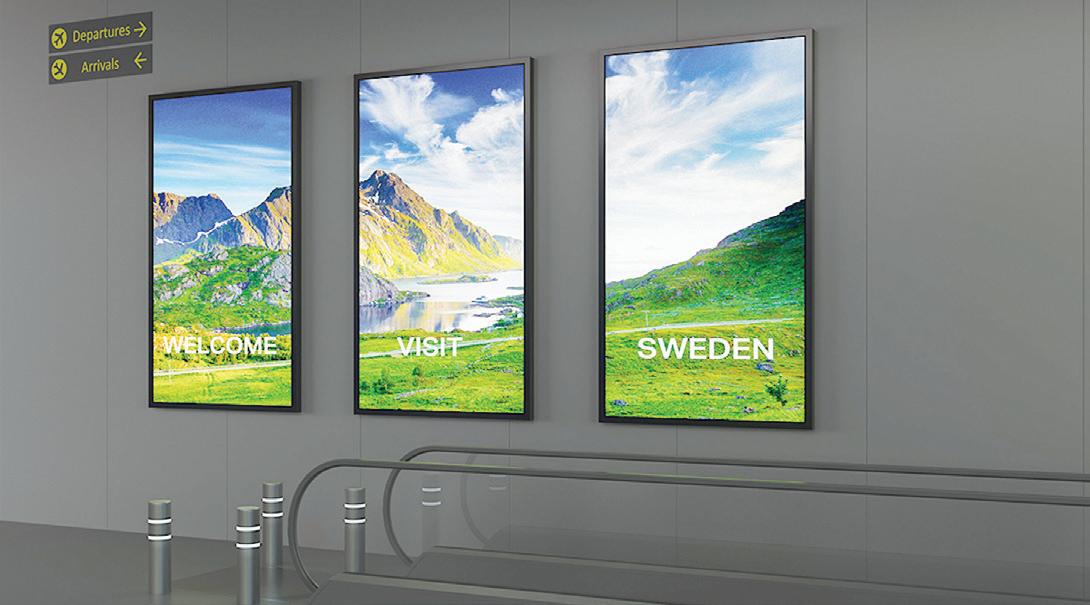
Last year, VuWall and G&D came together under shared ownership. One result of this combination is the latest release of VuWall’s flagship TRx centralised management software, which is now fully integrated with G&D’s hardware.
TRx software now offers native integration with G&D matrix switches, including the ControlCenter-Compact, ControlCenterDigital, ControlCenter-IP and ControlCenter-IP-XS. It also adds full support for G&D’s PersonalWorkplace-Controller standalone multiviewing tool.
This will allow operators to manage videowalls, sources and KVM systems from a single interface, simplifying day-to-day control room operations. TRx can be used to configure, manage and distribute virtually any source type to any display with an easy drag-and-drop and no programming.
The new release also adds a deeper integration with VuWall’s own Application Server G2, providing a unified workflow that allows operators to manage sources and services without switching between platforms. — david fox www.vuwall.com
AVPRO: AUDIOCONTROL | STANDS: 2H150, 5A700
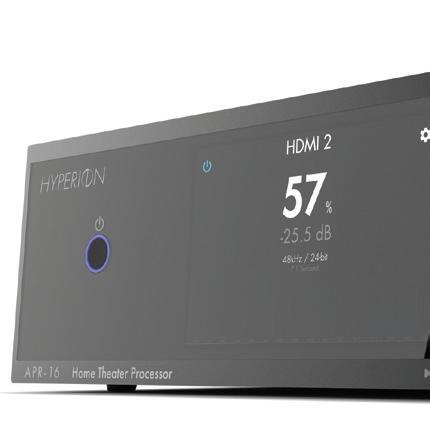
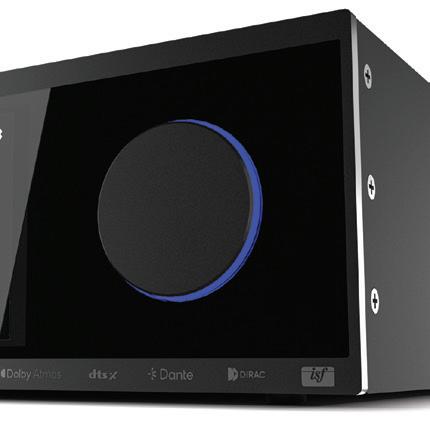

The new Hyperion series of home theatre processors makes its debut in the form of the APR-16 16-channel immersive surround processor. The device merges AudioControl’s audio expertise with advanced video and networking technologies from AVPro Edge. The result is an immersive processor that AV pros can calibrate to suit any space.
Rather than relying on generic off-the-shelf parts, every component of the APR-16, from power supplies and amplifiers to DSP and the most advanced HDMI processing, has been designed by AVPro engineers for optimal performance and versatility. The result is claimed to “truly meet the complex needs of today’s AV installers and home theatre specialists seeking the ultimate in performance, scalability and flexibility”.
The Hyperion APR-16 features 24-bit/192k Sabre DACs, 48Gbps HDMI processing, and a vast array of analogue outputs with extensive routing capabilities. Its API is compatible with any control system. It is also Dirac-ready and compatible with the latest Dirac ART room correction. — david fox www.avproglobal.com / www.audiocontrolpro.com
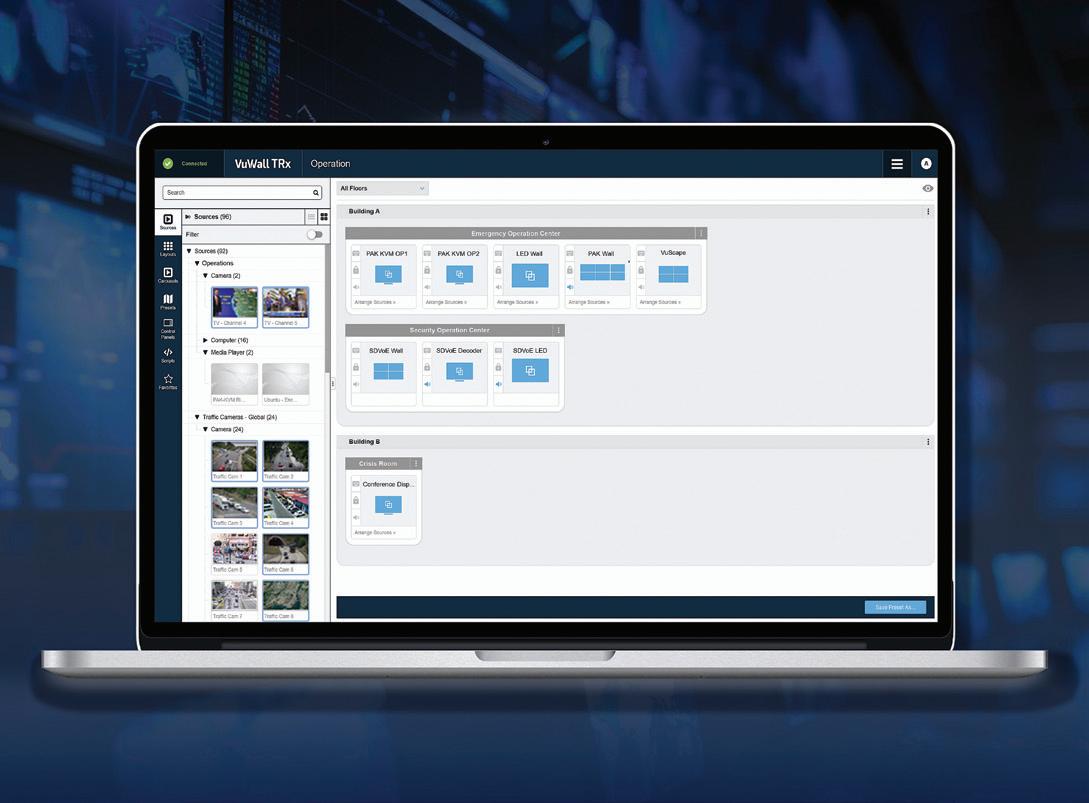
TRx now offers enhanced integration and unified control
ISE marks the AV market debut of the CV1 AoIP monitor, designed for control rooms, operations centres, event venues and studios.
Nick Fletcher, founder & CEO, Nixer Pro Audio, said: “CV1 consolidates clear metering, speaker and headphone monitoring into a single compact unit, reducing hardware clutter and simplifying what can be stressful tasks for the operator.”
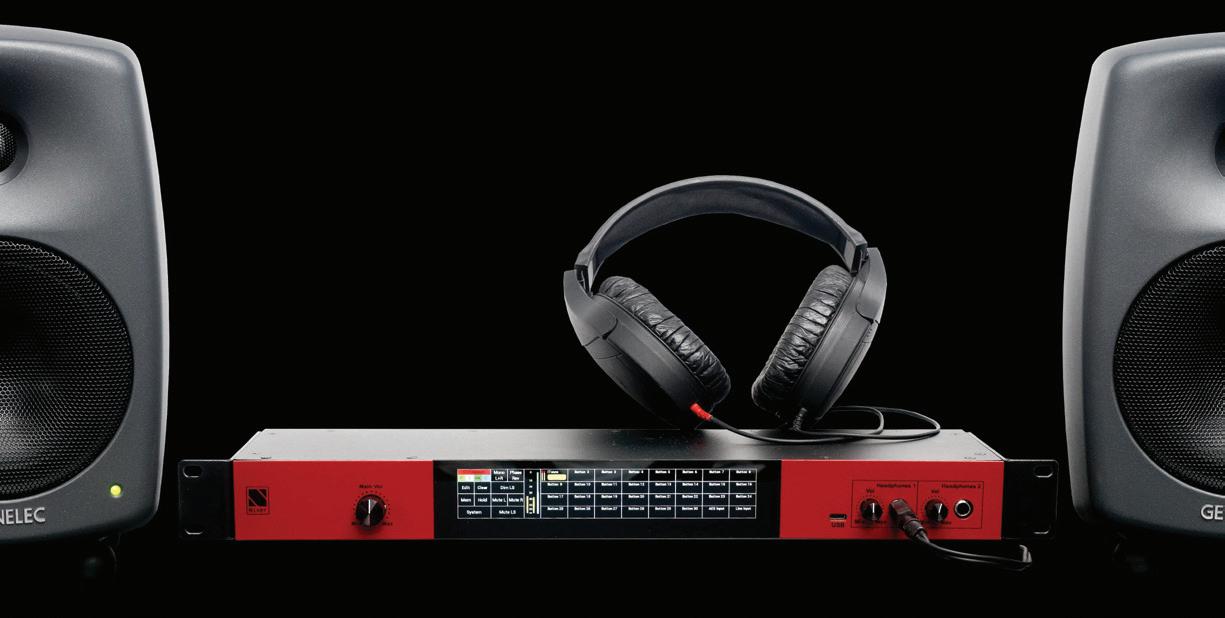
The unit uses a speaker-free architecture to integrate with external loudspeakers and loudness meters via AES and line outputs. It supports Dante, Ravenna/AES67 and ST 2110, with AVB-Milan planned. Functions such as phase reverse, mono sum, dim, channel mute and configurable trims support fast, precise checks in mission-critical workflows.
A new CV1 submodule enables audio-level monitoring via a standard web browser and will integrate with Nixer’s iPad app, giving AV teams a flexible way to monitor networked audio across campuses
| STANDS: 3B500, 3B700
DeviceHub is a new cloud-based platform that offers AV and IT teams a secure, scalable and unified way to configure, monitor and manage Sennheiser devices across locations.
The platform is initially available for Sennheiser’s TeamConnect Bar all-in-one conferencing systems, with additional Sennheiser products gaining compatibility throughout 2026.
By centralising device visibility and remote management, the platform should simplify daily workflows for system integrators and IT/AV teams managing meeting spaces, classrooms and collaboration environments. With real-time insights and streamlined setup, it allows organisations to create better spaces for communication, learning and teamwork.
DeviceHub is also designed to make collaboration and learning easier, giving organisations a more consistent and reliable foundation for modern meeting and teaching environments. Following a successful private beta phase with selected customers, ISE marks the transition towards public availability. — david fox www.sennheiser.com
or large venues.
As AV networks demand lower latency and tighter synchronisation, the handheld PD Milan, also on show, provides monitoring of up to 64 Milan channels. Nixer is also previewing the Evie64 AVB networking module and highlighting WL64-4, its wireless iPad-based AoIP monitoring system for mobile diagnostics. — kirsty hazlewood www.nixerproaudio.com
TVONE | STAND: 5D300
Green Hippo’s updated Hippotizer MX Series of media servers are being presented on the tvONE stand. The series now comprises five customisable systems offering 10-bit video playback, SMPTE ST 2110 and IPMX workflow support. They also boast improved workflow efficiency for designers, touring professionals and integrators. Each unit features customisable output configurations, rear-chassis illumination, swappable media drives and an integrated OLED display for streamlined operation.
tvONE is also showing the latest Hippotizer 4.9 software, which introduces a 10-bit end-to-end workflow along with notable improvements to DMX and multichannel audio performance.
Also new is the Hippotizer Effect Editor, which gives users the power to build and customise their own effects and generators. Whether adjusting parameters on existing effects, creating custom CMY colourmixing tools, or transforming IMAG into stylised sketchbook visuals, the new editor opens the door to greater creative control.
Nick Spencer, technical product manager for Hippotizer Media Servers, said: “These updates streamline workflows while pushing creative boundaries.” — david fox www.tvone.com / www.green-hippo.com
Designed for creative displays of varying sizes, the flexible Fx4-Series videowall controllers enable highquality 4K videowalls with HDMI, DisplayPort and SDI input/output options. Multiple units can be connected for larger, more complex configurations.
These compact, stand-alone 4K display controllers are capable of delivering visually demanding applications while ensuring easy configuration and streamlined content visualisation.
Combined with Vitec’s intuitive Wall Designer software, users can select displays from an extensive monitor database, map and adjust regions, add inputs, preview layouts and instantly programme all Fx4 units via USB or network, accelerating setup and simplifying workflows for integrators and AV professionals.
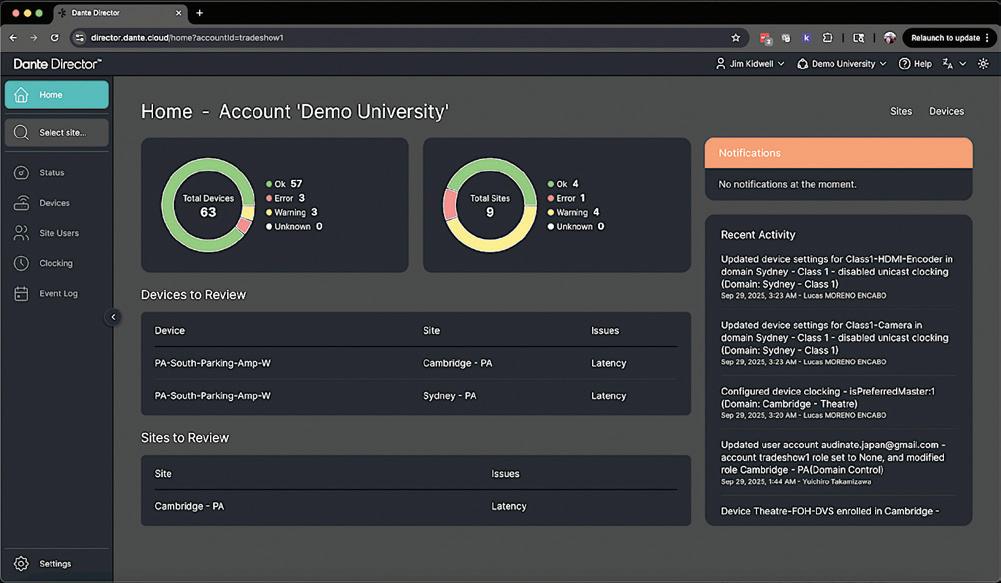
Dante AV has taken the Dante ecosystem into the realm of video, aiming to eliminate the hurdles of disjointed workflows and hardware silos, and Audinate is highlighting its simplicity and power in a lecture theatre experience.
This reveals how synchronised audio-video workflows can be achieved without complex protocols or wrestling with incompatibility. By routing video and audio across a single network, Dante AV is claimed to help users deliver smarter, more connected results for lecture capture or meeting rooms.
Dante Studio endpoints offer intuitive control for users to easily switch, route and monitor AV sources. This allows for perfectly synced audio and video and streamlines lecture capture.
Audinate is also showing how users can add security, management and monitoring to Dante networks. Dante Domain Manager provides secure, on-prem oversight for environments requiring strict authentication, encrypted communication and multi-subnet support. Dante Director extends these capabilities into the cloud, so integrators and support teams can monitor, manage and troubleshoot distributed sites remotely.
www.getdante.com
— david fox
Bryan Reksten, VP global marketing, Vitec, said: "The Fx4-Series brings integrators a powerful solution for creating dynamic, large-scale videowalls with flexibility and performance. Its fast transmission speeds and the ability to daisy-chain multiple units make even the largest, most complex videowalls possible.” — david fox www.vitec.com
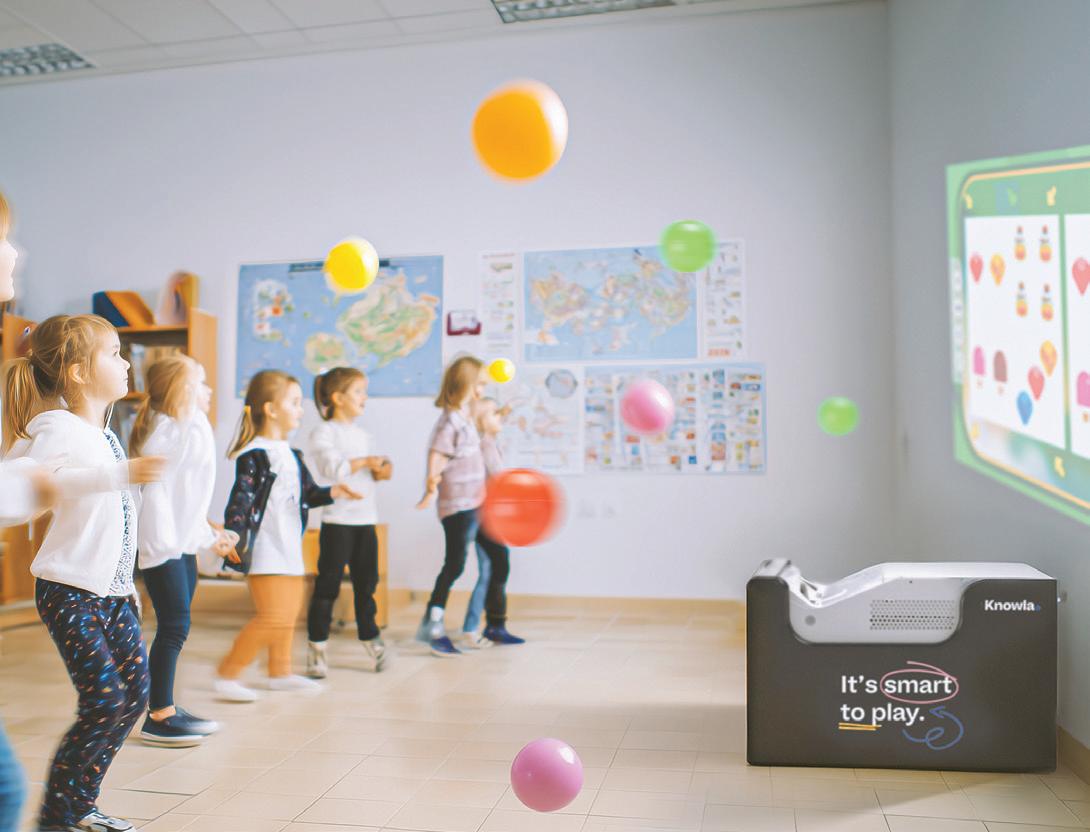
Focusing on edutainment, children’s agency, collaboration and problemsolving, Knowla is presenting a modern teaching model that draws on specialist experience and research.
Its offer includes three products, Knowla Box, Knowla Wall and Knowla Web, each with dedicated applications and games.
Knowla Box is a mobile device that uses an Epson projector to display images vertically or horizontally on any surface. Users can interact with the projected image by throwing balls, drawing with pens, using a keyboard, or controlling it remotely via a mobile or computer app.
Knowla Box enables users to adjust the image size, from 85in to 150in, while maintaining precise interaction. It also offers Microsoft Windows for open operation and is eligible to carry the Powered by Epson mark.
Knowla Web gives access to the entire Knowla Educational Universe on a whiteboard or interactive monitor. This is a collection of applications for children aged 3 to 10-plus that supports learning through play.
—
kirsty
hazlewood www.knowla.eu
The CR-N400 and CR-N350 are two UHD-native pan/tilt/zoom (PTZ) cameras designed to fill the gap in Canon’s PTZ range between the CR-N300 and CR-N500.
The broadcast-ready N400 delivers up to 60p UHD over 12G-SDI or HDMI outputs and has dual XLR mic inputs, plus Genlock and Timecode. The N350 is limited to UHD 30p in 3G-SDI but does 60p over HDMI. Both also have IP and USB outputs, plus mini jack mic input, and use 1/2.3in CMOS HDR sensors with a 20x optical zoom that extends to 40x in HD.
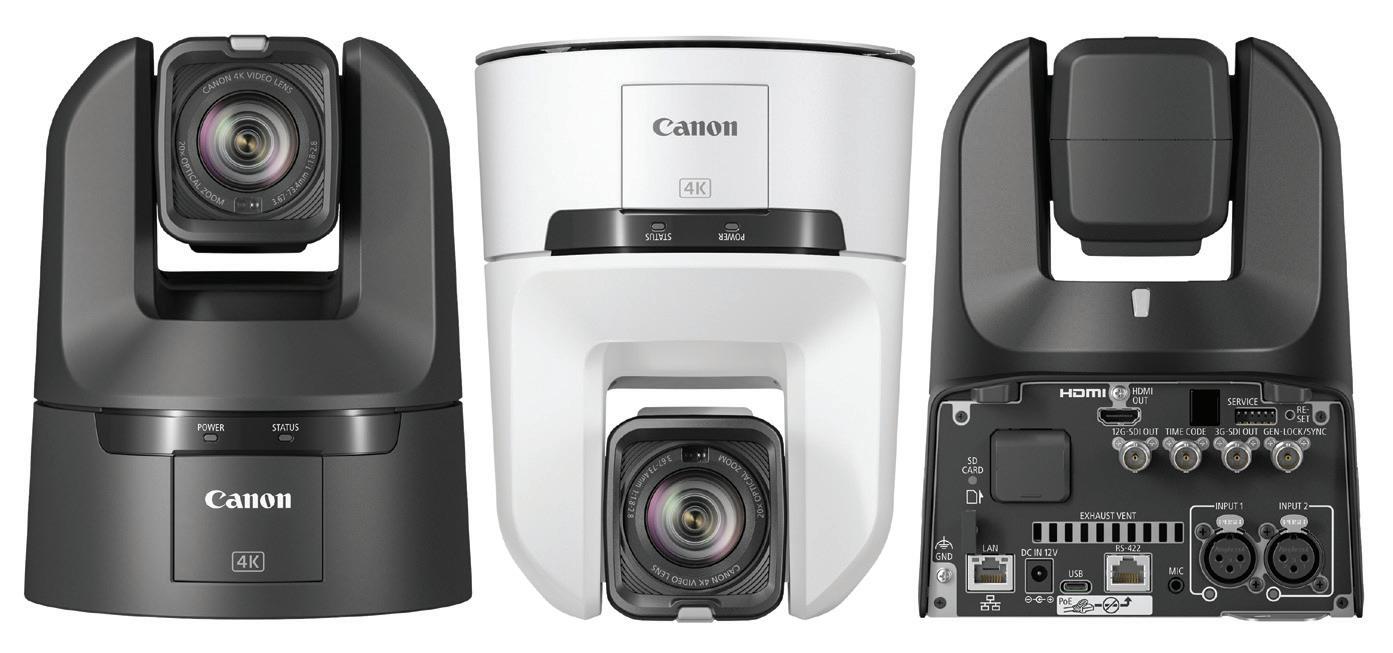
The cameras offer portrait format support with simultaneous output of both a vertical 9:16 crop of the image alongside the landscape original, making them ideal for hybrid events, social platforms and live commerce.
Videowall controller slots in
The latest addition to Datapath’s VSN videowall controller range, the VSN V3-5, is a high-end processor designed for demanding yet compact videowall projects.
The five-slot VSN V3-5 offers a cost-effective, high-performance alternative to the larger 11-slot VSN V3, delivering flexibility and scalability for control rooms and multisource environments.
Replacing the VSN400N, the VSN V3-5 complements Datapath’s Aetria for integrated videowall and workstation management. It has an improved chassis design for optimal cooling and hot-swappable fans for 24/7 uptime.
The VSN Series now also offers full Microsoft Windows 11 compatibility at no extra cost, providing enhanced security features such as Secure Boot and TPM 2.0, alongside improved performance for complex web and 3D applications.
Mark Slinger, VP product management, Datapath, said: “Our
They offer advanced auto tracking with face and head detection and precision motion tracking, while IP support includes integration with NDI|HX2, SRT, FreeD, RTP/RTSP, RTMP/RTMPS and Canon’s XC Protocol.
www.canon-europe.com
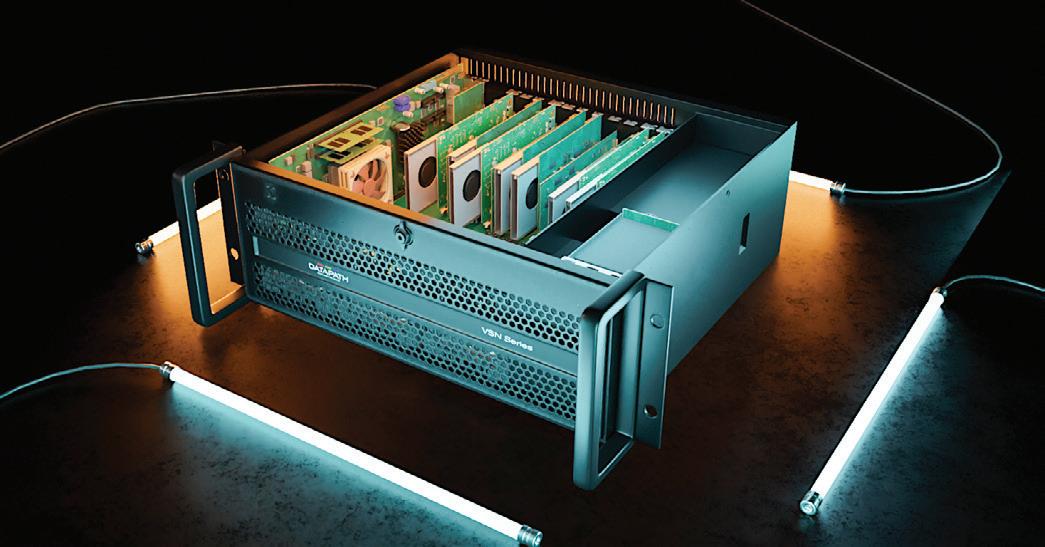
range of VSN videowall controllers are used and trusted to power multicontent videowalls across the globe. The introduction of the VSN V3-5 allows our customers to further specify Datapath hardware and software that is perfectly fitted to their requirements.” — david fox www.datapath.co.uk
The C16-AM-12G audio monitor is the first of MultiDyne’s Crescendo Series of high-performance audio and signal processing tools. While engineered for broadcast precision, the unit answers growing demand in pro-AV environments, from corporate production suites to large-venue


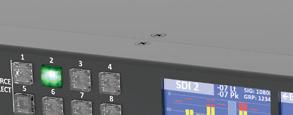
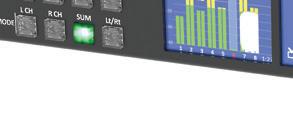




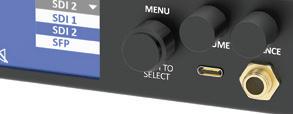


control rooms, where hybrid SDI/IP workflows are rapidly expanding. The base unit comes standard with 12G-SDI support, with optional add-ons for Dante or ST 2110-30 to support AoIP workflows. Its compact 1RU form factor delivers full dynamic range and clarity, designed to provide confidence monitoring even in challenging acoustic spaces or high-noise machine rooms. It has an intuitive user interface to allow easy access to signals to be monitored. Twelve illuminated pushbuttons provide audio channel source selection and L/R solo, Sum, and Lt/Rt downmix modes directly from the front panel. It includes redundant power supplies and expanded Ross Dashboard integration, as will all future Crescendo Series monitors. — david fox www.multidyne.com
1 SOUND is
for
The Sona 35 is a high-fidelity, 3-way architectural point source for indoor and outdoor applications. This compact single-channel loudspeaker delivers extended bass down to 58 Hz and impressive SPL. Measuring just 80cm long and 10cm deep, it can be flush-mounted, recessed, or aimed, ideal for distributed audio installations.
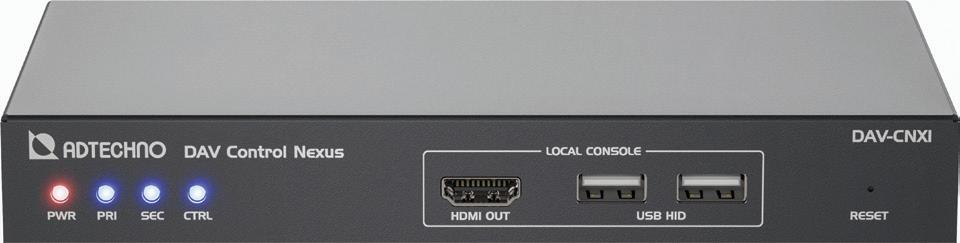
Browser based Routing. Seamless API Integration
DAV Control Nexus (DAV-CNX1) is a dedicated control device designed to centrally manage Dante AV systems. DAV-CNX1 provides intuitive routing and device management via a web-based GUI, supports open API integration with third-party control systems, and includes preset-based one-touch switching, along with secure user management and access control.
www.ad-techno.com/en/products/dante/SP/
AtlasIED Showcases New Mixer-Amplifier Series at ISE 2026 AtlasIED is launching two new amplifier series: the DMA digital mixer-amp and the LMA mono amplifier. They are ideally suited for smaller venues, such as cafes and shops, looking to incorporate


or live music in smaller retail environments.
The Auri™️ family is growing.
Auri™️, powered by Ampetronic and Listen Technologies, is the first Auracast™️ broadcast audio–based solution designed specifically for assistive listening. Built to transform the way venues deliver inclusive audio, Auri™️ represents a new era of clarity, accessibility, and simplicity for end users.
Secure Defender
The Secure KVM Defender provides true air-gap isolation between classified and unclassified systems, preventing data leakage and unauthorized access. NIAP 4.0–certified hardware enforces unidirectional data flow to peripherals, safeguarding sensitive environments like defense, government, and critical infrastructure from cyber threats.
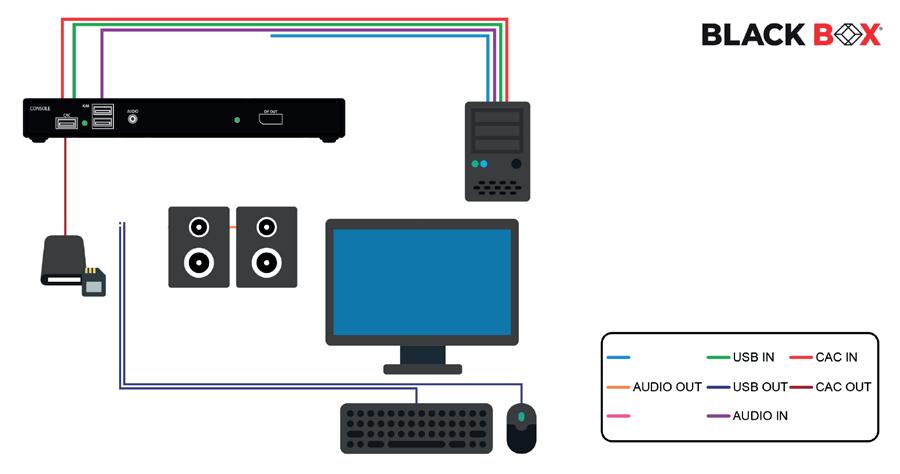


Versatile tools for IP infrastructure and Streaming, Ultra Encode family bridges AV signals into a broad range of IP streams that fit into workflows from video distribution, production, live streaming and more.
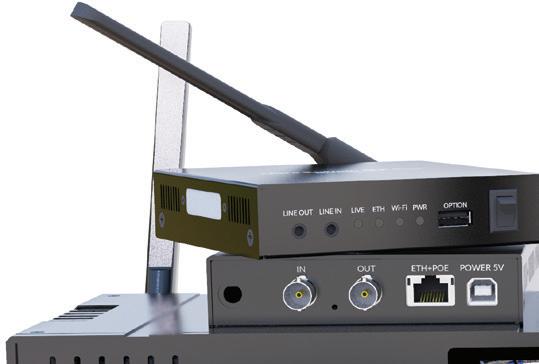
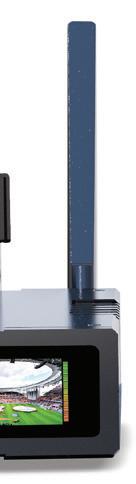
ISE26 - DAY 3
The GR20 2-way high performance point-source sound system, bridges the gap between compact point-source monitors and larger array solutions, offering an intuitive sound reinforcement option before the need for multicabinet arrays. It delivers the signature Alcons sound: natural, dynamic, and ultra-low distortion, all in a compact and powerful package with a deceptively small footprint.
The system features Alcons’ proprietary RBN602rs 6” pro-ribbon driver, mounted in a tight-packed, vertically symmetrical configuration with two 10” Alcons-custom Active Coil™ technology woofers.
This results in a non-compressed, fully linear sound reproduction at any SPL, with industry-leading ultra-low system distortion.

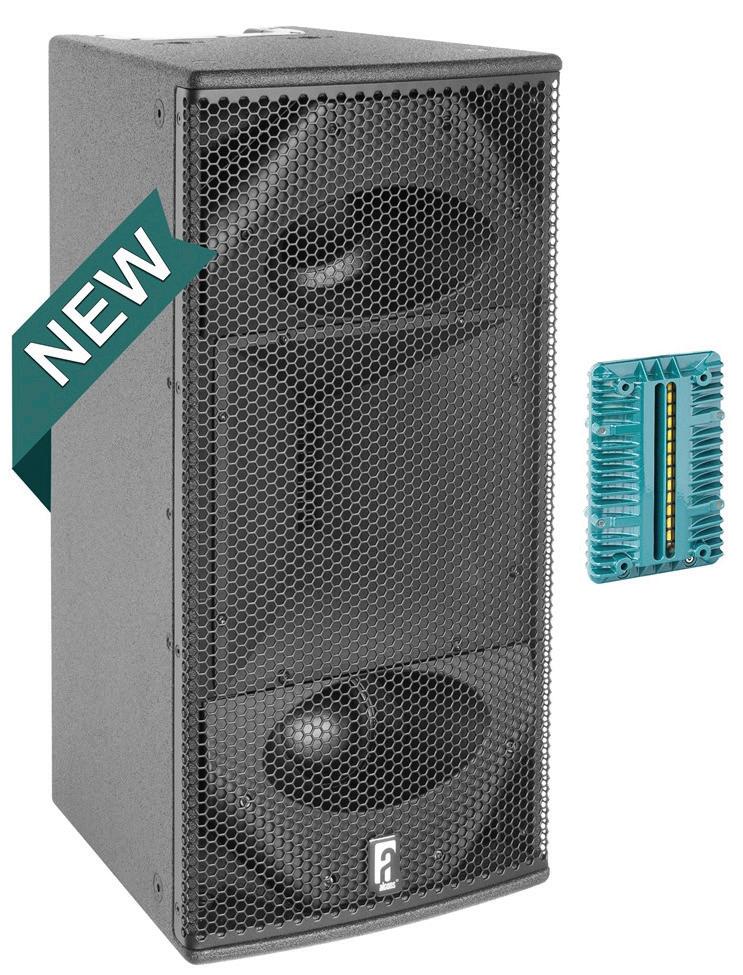
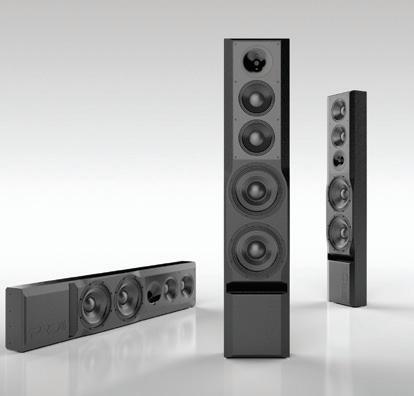
The SR-28212ai v2 full-range loudspeaker is the most refined speaker PRO has ever produced, which sets a new standard for bandwidth (22Hz-23kHz), resolution and timbral accuracy from loudspeakers of any category. The SR-28212ai serves as three loudspeakers in one: a high-output, full-range loudspeaker for LCR or surround applications, an LFE (main) subwoofer, and a subwoofer for surround and Atmos speaker bass management – all at the same time, and all within a shockingly shallow 6-inch-deep aimable enclosure. www.proaudiotechnology.com
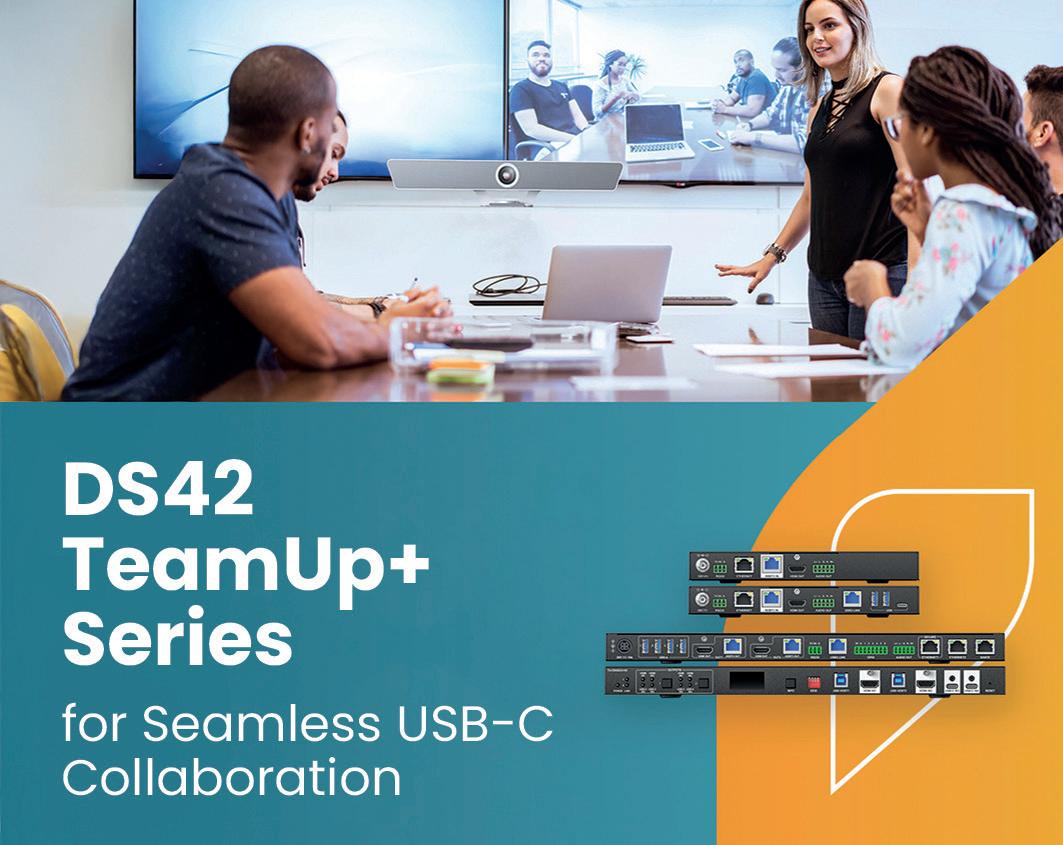
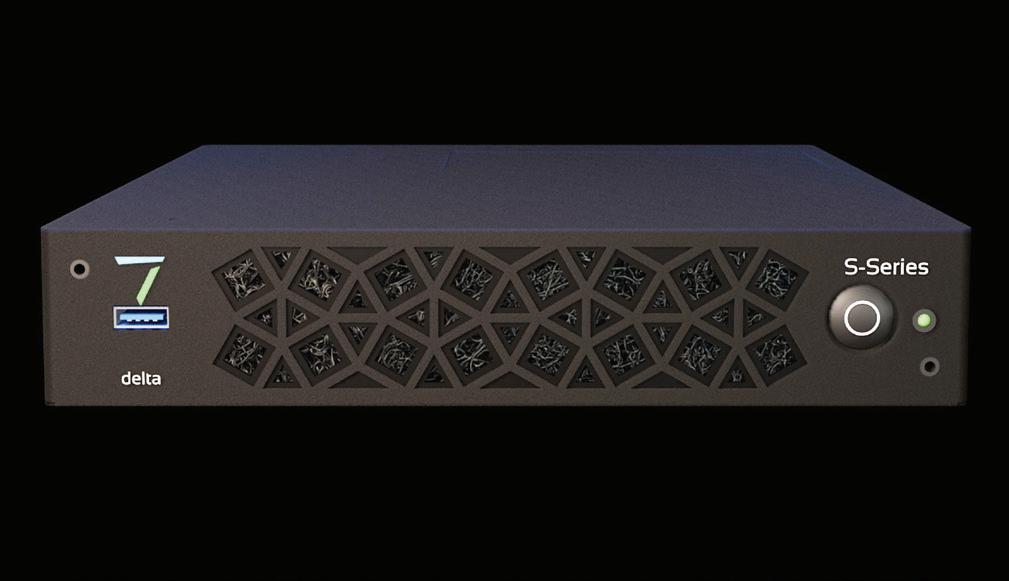
Claimed to be “the world’s smallest uncompressed 8K media server” 7thSense’s S-Series is designed for installations where space, power consumption, weight and noise must be minimised without compromising performance.
The paperback book-sized S-Series delivers 8K, multichannel 4K and WUXGA playback from a device small enough to mount behind displays, inside kiosks or within exhibits.
It consumes less than 83W of power and can combine movie playback, live capture, generative content and effects, with built-in warp and blend, multiserver synchronised playback, NDI preview and comprehensive external control.
John Higgins, engineering director, 7thSense, said: “With S-Series, the objective was to bring the quality of uncompressed media to a wider audience. It is powerful enough for sophisticated projection mapped installations and LED displays, yet compact enough to integrate into projects where traditional servers cannot. It provides a level of power and capability that far exceeds what its compact footprint suggests.” — david fox www.7thsense.one
ANALOG WAY | STAND: 3F800
The new Aquilon Cmini is the latest addition to Analog Way’s LivePremier family and the most compact presentation system in the lineup.
It delivers the same high-end capabilities as its larger counterparts, including ultra-low-latency, 10-bit uncompressed image processing, ease of use, dozens of smart functionalities, and the powerful Link feature, which allows any LivePremier live presentation switcher to link with any other Aquilon also equipped with this card. It also supports a range of modular input and output cards, covering all major baseband formats, including DisplayPort 1.4, ST 2110, NDI, SDVoE and Dante.
With up to 16 inputs, 12 outputs, two dedicated multiviewers and eight 4K layers, Aquilon Cmini promises robust performance and scalable configuration options (where two to four Aquilon units can be linked) for applications where reliability, compactness and workflow agility are critical.
Also joining the LivePremier range is a new eight-plug SDI input card, with eight 3G-SDI or four 12G-SDI ports, all freely configurable. It is
Alcons Audio has introduced the first system in its new G-series of point-source solutions. The GR20 is a compact, high-output two-way loudspeaker engineered for portable use and permanent installations.
Integral to the GR20’s performance is the proprietary RBN602rs 6in pro-ribbon driver. This compressionless transducer provides fully linear sound reproduction at any sound pressure level, with up to 90% lower distortion than conventional driver technologies.
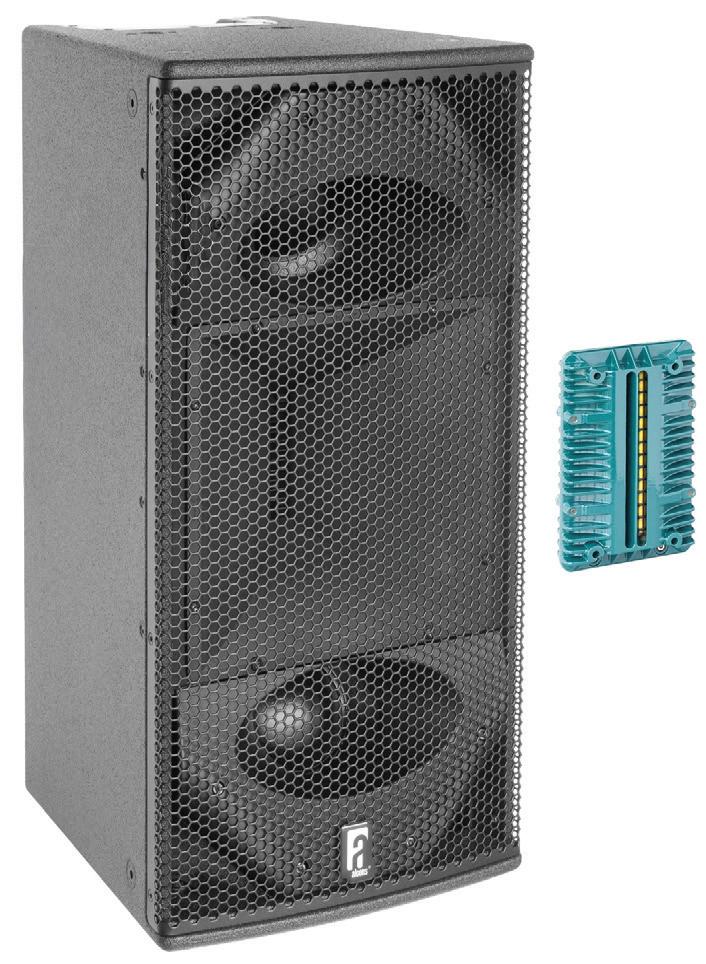
According to Alcons, the pro-ribbon’s ultra-fast impulse response and inherently flat frequency response up to and beyond 20kHz deliver a 3dB to 6dB improvement in gain-before-feedback compared to traditional point-source systems. This makes the GR20 particularly suitable for applications where intelligibility and control are essential.
With a peak power handling of 1250W (200ms, ten times the industrystandard), the RBN602rs offers a 1:15 RMS-to-peak dynamic range. Combined with its patented 80°×50° directivity, the GR20 provides consistent coverage up to the highest frequencies, a wide stereo sweet spot and excellent projection in elevated listening areas.
As part of the Alcons ecosystem, the GR20 is powered by an ALC amplified loudspeaker controller. — david davies www.alconsaudio.com
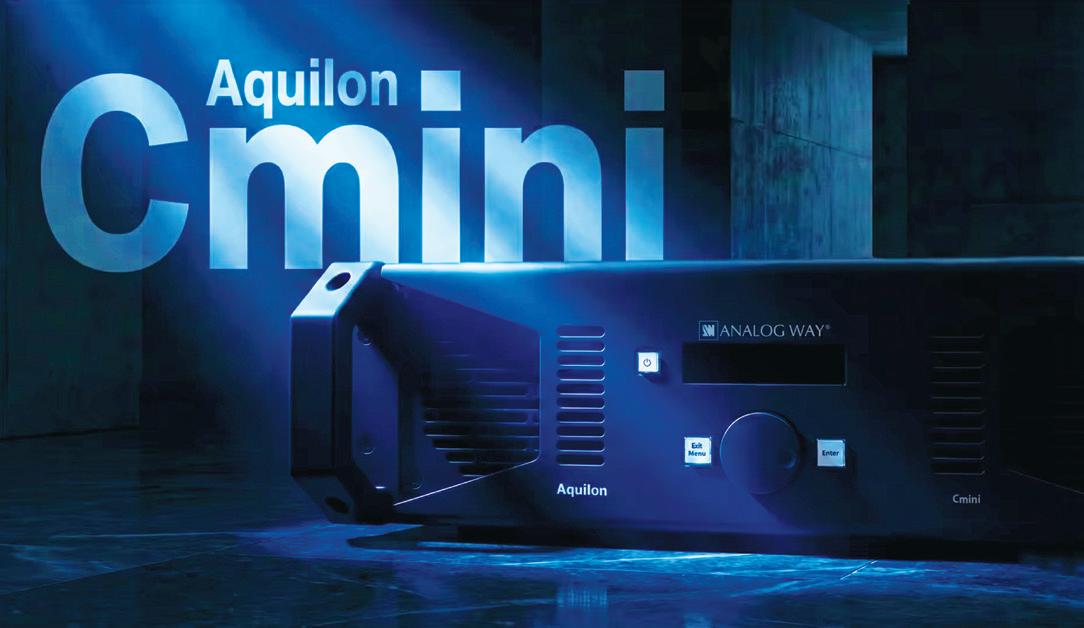
Joining the LivePremier league: Analog Way’s Aquilon Cmini
particularly suitable for applications where workflows mix 3G-SDI and 12G-SDI, says the company. — david fox www.analogway.com
The international launch of Control4 X4 and Connect is taking place on ADI’s Hall 2 stand.
According to ADI, Control4 X4 introduces a completely redesigned user experience featuring a modern interface, powerful home screen and interchangeable widgets for personalisation and controlling homes and businesses. With Connect, an optional subscription designed to enhance the X4 experience, dealers gain a new gateway to recurring revenue while customers receive added premium features and ongoing value, claims the company.
ADI is also showcasing the new Control4 T5 in-wall touchscreen, a premium interface device that comes with toolfree magnetic mounting, a minimal bezel, Lux-matching trims, a new proximity sensor, a dynamic screensaver and dark mode.
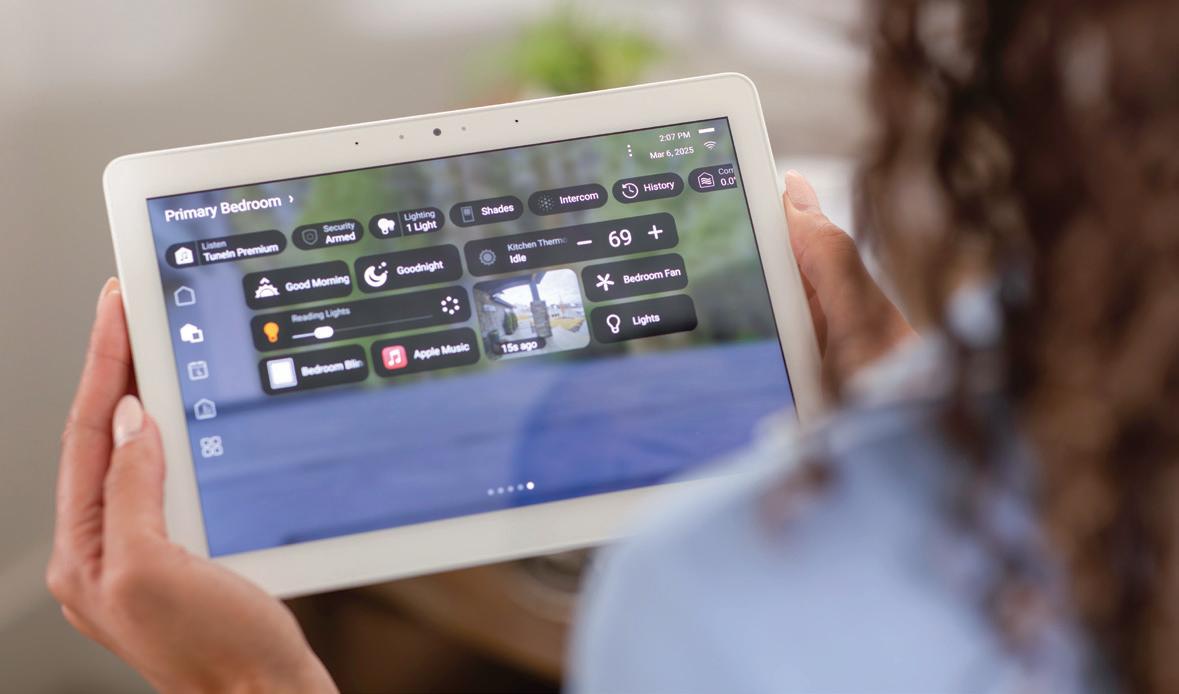
Hands-on: Control4 X4 offers a redesigned user experience
In addition, attendees can explore the expanded Lux Lighting line-up, including wired and wireless keypads, dimmers and switches aimed at converting lighting leads and capturing share from other premium solutions. Also on the stand is a dedicated demonstration of Zigbee
New KVM and pro-AV products from Aten include the USB True 4K HDMI Cat6 KVM extender. It extends HDMI video, USB keyboard/ mouse control, embedded audio and RS-232 control signals across 70m over Cat6. It can also extend 1080p up to 100m and supports resolutions up to 3840x2160@60Hz (4:4:4) with HDR10.
Also new is the VE8962R/T True 4K HDMI over IP receiver and transmitter, both with PoE. They deliver 4K@60Hz video with ultralow latency over a single Cat5e/6 cable.
They have power and network redundancy, auto-switching between DC jack and PoE, plus copper and fibre cable support, with multiple control options via web, buttons, IR, RS-232, Telnet and USB. There is videowall support for up to 80 displays.
Aten is also showcasing the VK101 tabletop kit, which tilts devices at an ergonomic angle for easier operation and cable connection (also wall mountable). It supports various Aten keypads, touchpanels, remote control pads and third-party devices. — DAVID FOX www.aten.com
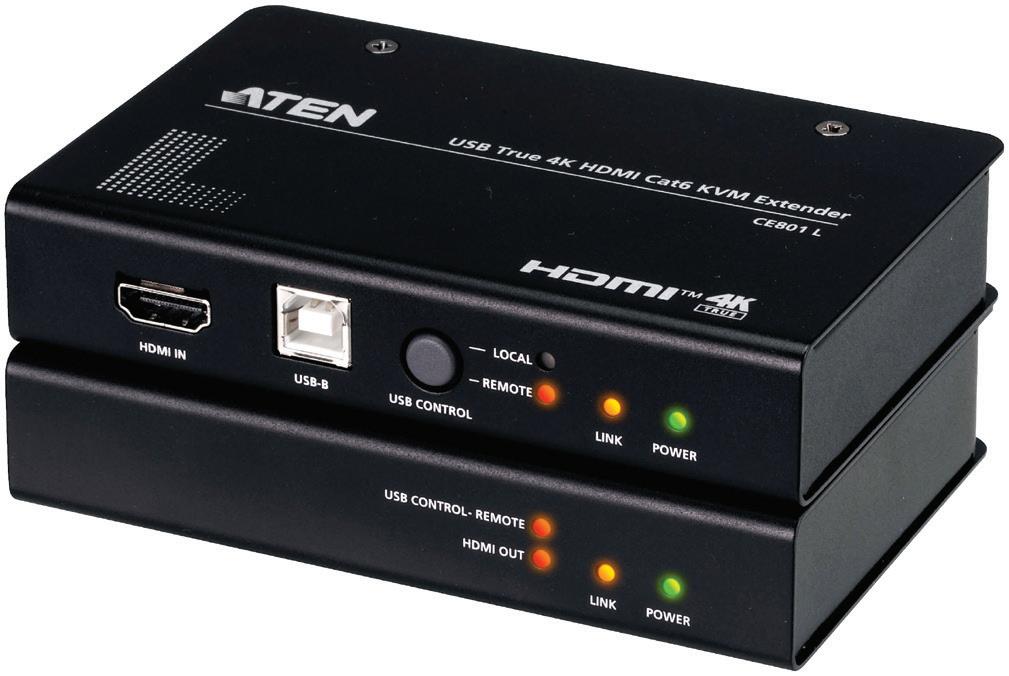
3.0 interoperability with Control4-supported devices spanning lighting, audio, comfort, shades, security, sensors and surveillance systems.
www.adiglobal.com


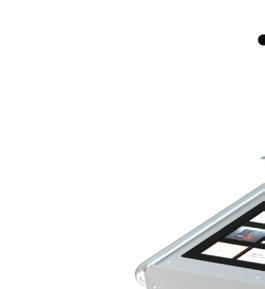
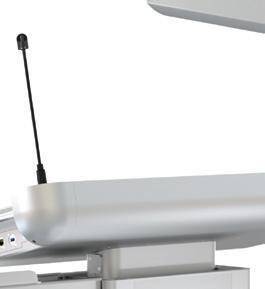
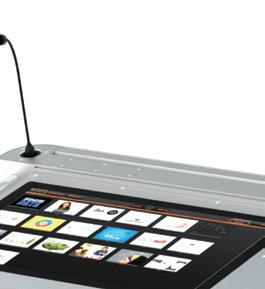
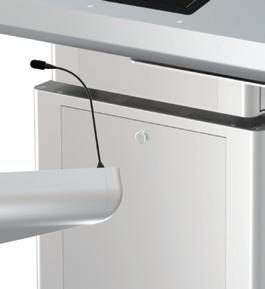
— ANNE MORRIS
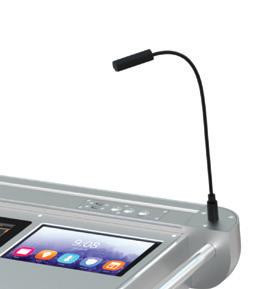

Standing room only: ILS is showing off its Synergy Plus line with immersive touch control INTELLIGENT LECTERN SYSTEMS | STAND: 2R100
Lectern and e-podium solutions provider Intelligent Lectern Solutions (ILS) is showcasing its new Synergy Plus line, consisting of the ILS Synergy+ GW32IC, ILS Synergy+ GW-FD or QW-FD, and ILS Synergy+ GW27T.
Features of the range include immersive touch control for up to seven PC sources and an integrated 32in front monitor with media control.
As with the rest of the ILS family, the new systems are made from thick aluminium blocks and plates and are designed to last for many decades. Every part can be removed and replaced as technology changes, while ILS has a buyback programme for replaced aluminium parts.
www.intelligentlecterns.com
— ANNE MORRIS
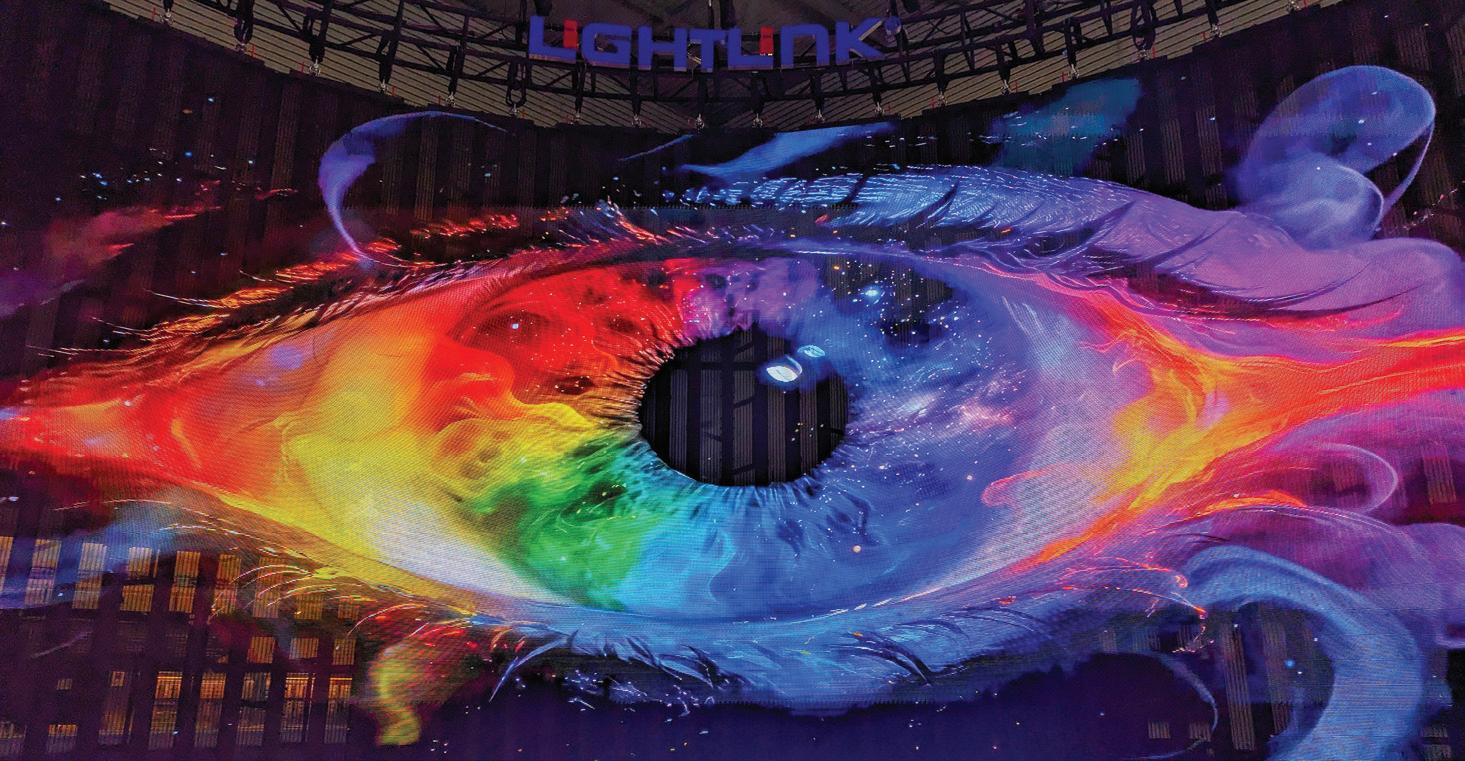
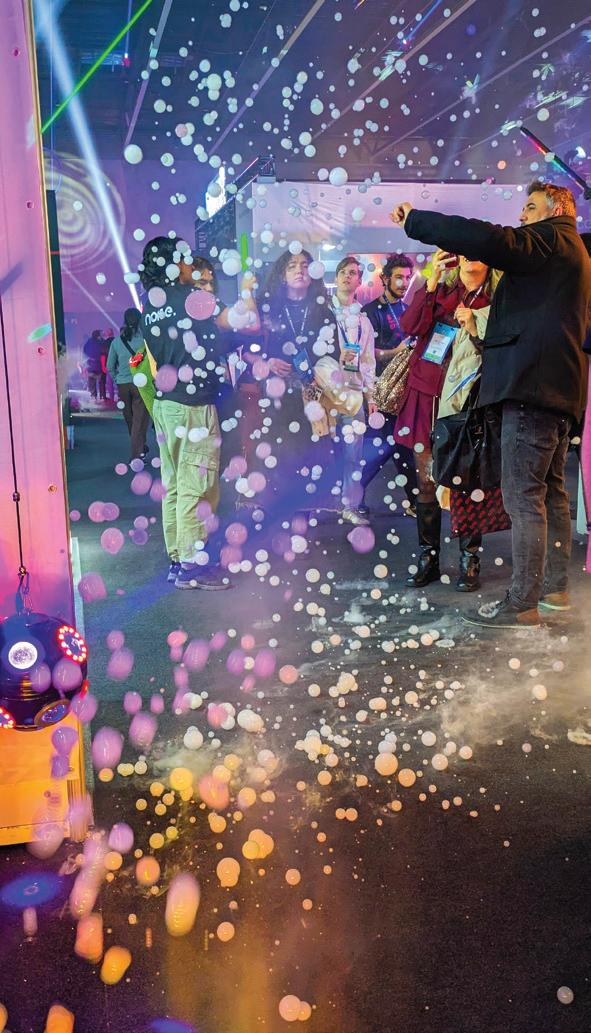
A Eye – it’s the theme of ISE 2026 after all. This eye-catching display from Chinese LED rental specialist Lightlink (3A700) features the company’s self-developed Black Panther transparent LED panels. They have a high-transparency hollow structure capable of delivering a three-dimensional, floating visual effect for live stadium tours.
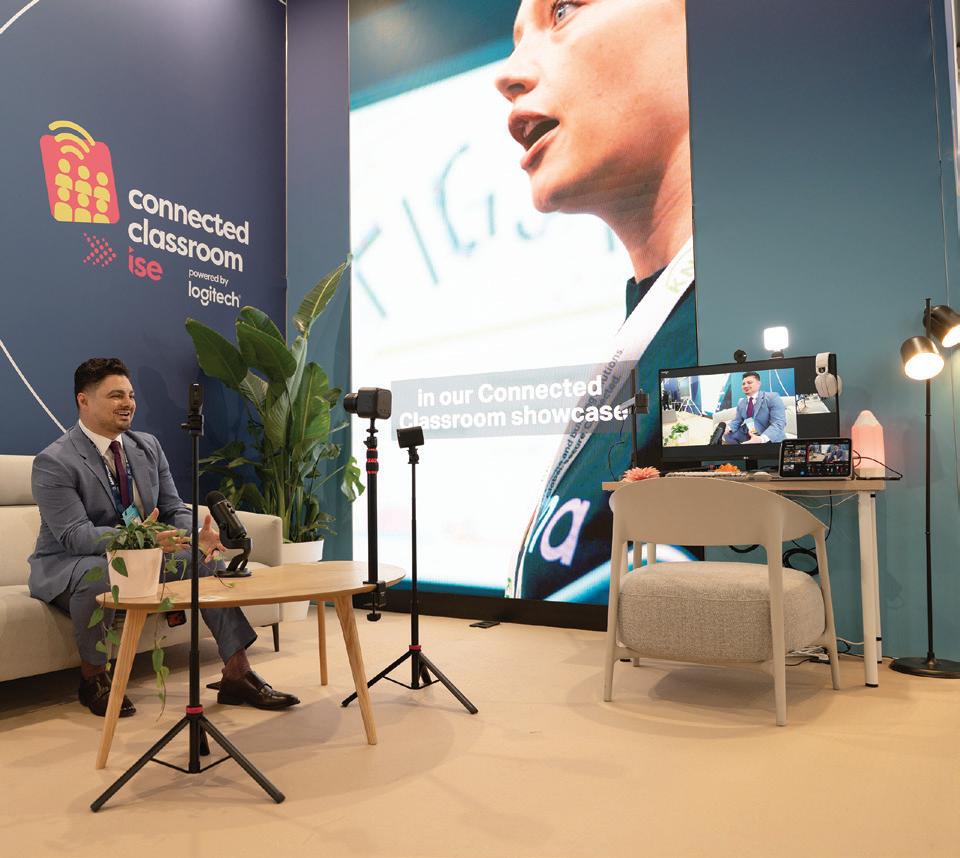
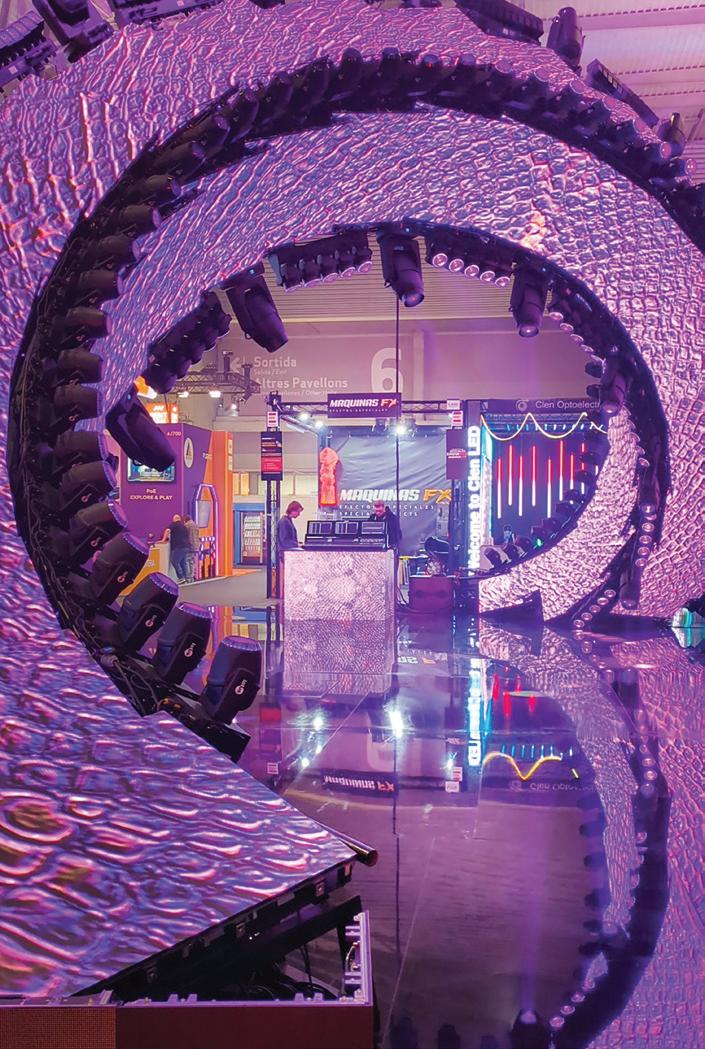
Above: This modern art-styled AV installation called ESSE combines the latest technologies from Solid, lighting device manufacturer Lotus and LED screen manufacturer AVA LED, according to Solid project manager Batuhan Ozbekozan. Solid provided the metalwork, fixtures, LED screens and production. The installation was designed by 4x10.dev, which also provided content and lighting design.
Left: Head to Hall 2 to discover the Connected Classroom powered by Logitech (2W100). Attendees can get hands on with the latest advancements in education technology, including AI, gaming, virtual reality and collaboration solutions, all designed to inspire and transform learning environments.
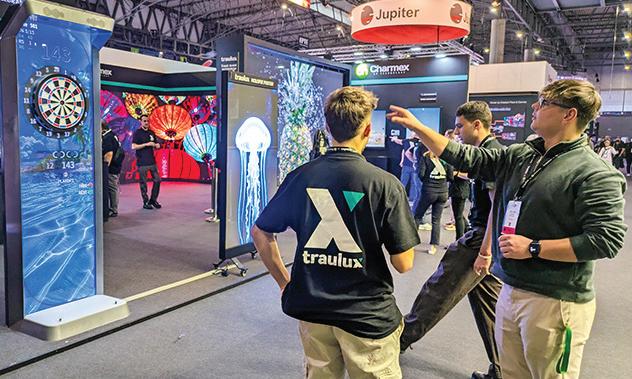
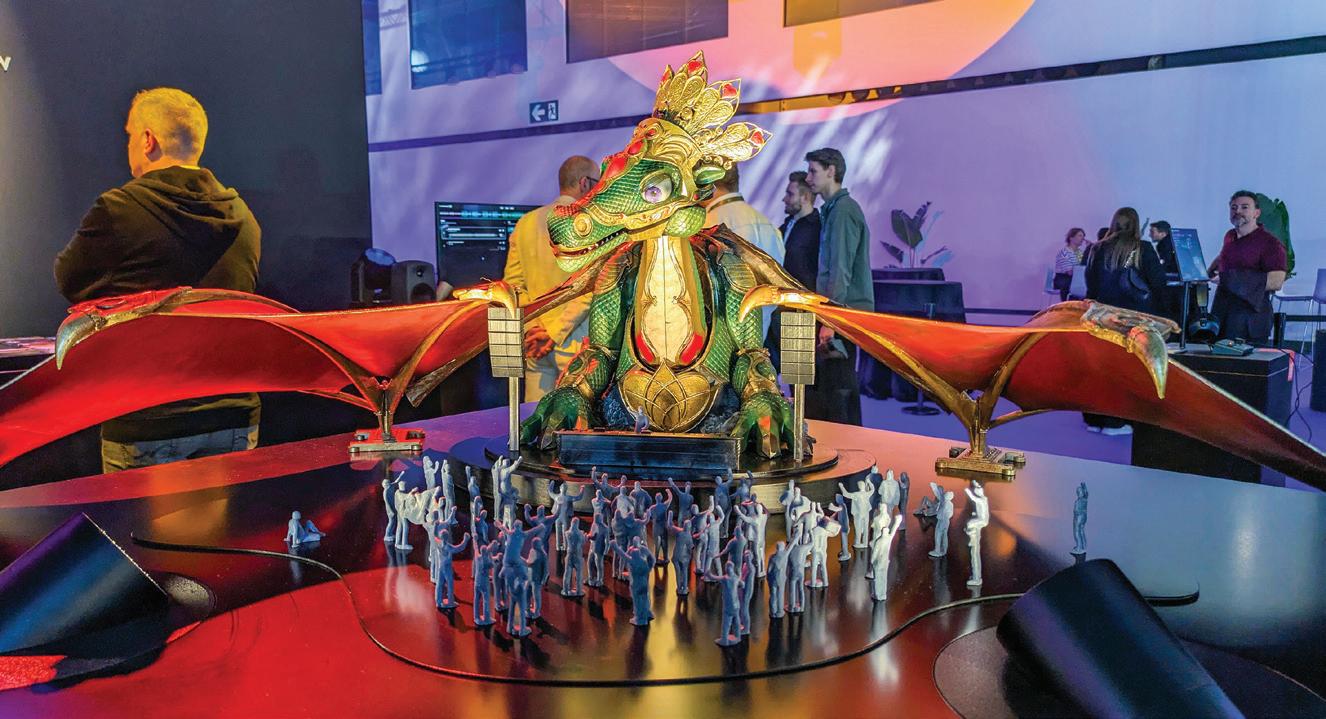
There be dragons: At the Lab of Tomorrow (8K100) a range of immersive innovations blur the line between physical and digital environments. The Belgian research and accelerator programme is founded by Tomorrowland, creator of worlds where music, light and imagination unite.








CLEMENS WANNEMACHER HEAD OF SOUND www.festspielhausbregenz.com
Behind the scenes, reliable communication is everything. With Riedel’s Artist Intercom, every connection is clear and dependable. For my team, intercom is more than just a tool – it’s the foundation that lets us safely transport our audience into other worlds.“
Professional and reliable live communications. Seamless integration of Riedel‘s SmartPanel and Bolero wireless intercom. Easily scaling from 16 to 1024 ports with flexible licensing.