FEATURING
• Sh owroom Showcase 2026
• Fi ve Practical Tips for Designing a HighPerformance Theater
• El evating Outdoor Lighting

• Sh owroom Showcase 2026
• Fi ve Practical Tips for Designing a HighPerformance Theater
• El evating Outdoor Lighting
The New Five Smooth Stones Experience Center Demonstrates the Company’s Latest Business Pivot
Review: Magnetar UDP900mkII
Reference Universal Disc Player
The Difference Between Being Included and Being Recommended
In today’s design-led projects, access may open the door, but trust is what turns a one-time inclusion into a lasting recommendation.
By Katye McGregor Bennett, Founder & CEO, KMB Communications
The Art of Stopping on Purpose
Quiet times don’t mean disaster; they provide an opportunity for integrators to better their businesses. By
Moving
The
What
By Arlen Schweiger, Sr. Content & Copywriter, Coastal Source
24 Tech Showcase: Architectural Speakers and Subwoofers
Today’s luxury clients and architects are looking for audio systems that respect a minimalist aesthetic while delivering the immersive power required for Dolby Atmos and immersive audio. Here, we look at the latest innovations that can solve many of the conflicts between the interior designer and the integrator.
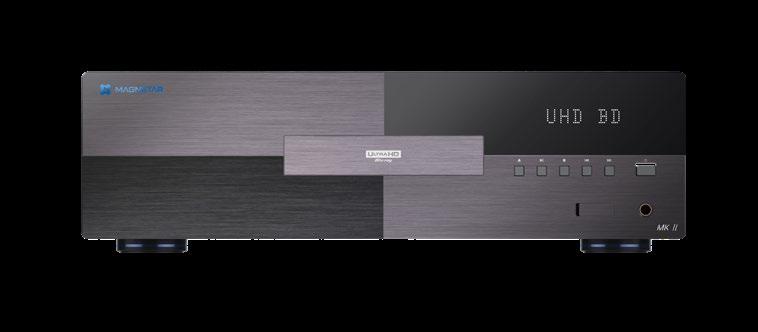
30 Review Magnetar UDP900mkII Reference Universal Disc Player
While physical media sales may be declining, many out there have large collections they would like to keep enjoying. With the UDP900mkII, Magnetar has firmly sunk its flag atop the “best universal disc player” hill, delivering a unit that provides no compromise, no-excuse build quality and performance.
By John Sciacca
16 Smooth Operator
Jacksonville, Florida’s Five Smooth Stones uses its new experience center to let clients and design-build partners see them in a different light.
By Anthony Savona
Photos by Kendall Olberding
20 Showroom Showcase 2026
Our annual look at the creative ways dealers around the world show off their capabilities and product lineups.
26 Integration Guide to 2-Channel Audio
Though it has been around for decades, high-end 2-channel audio remains an integral part of the industry — and is experiencing a rediscovery.
By Karen Mitchell


BY ANTHONY SAVONA
Yes, another editorial with a Beatles lyric for a headline. What can I say? The lads cover a lot of ground. Although the topic for this column is inspired by a different visionary, Tom Doherty, who just a few pages from here reflects on five years of Lightapalooza and what it represents for the industry.
While Tom’s piece exclusively focuses on Lightapalooza, the need for — and the benefits of — industry-centric get-togethers are undeniable. I have seen it time and again at buying group events, manufacturer roadshows, and CEDIA Expos. When integrators, service providers, and manufacturers are all focused on the success of the custom installation industry, anything is possible.
Last year around this time I wrote about trying to attempt the “perfect tradeshow,” creating the right mix of meetings, education, and networking. And while I don’t think I have done it, it is important to keep on trying because events are key to a successful industry.
Of course, there is only so much time for events in our schedules, so I get being strategic about the ones you attend. As the industry takes on more and more categories, so, too, do the number of conferences and expos that relate to them. It can be difficult to determine which ones are the right fit for your business; which are the “musts” and which are the “maybes.”
One “must” for me is CEDIA Expo. I am writing this in early April, but CEDIA Expo is already working its way top-of-mind with registration recently opening and CEDIA revealing the educational sessions.
There are quite a few reasons I am excited for Expo two seasons before it even takes place. For one thing, at Lightapalooza, I saw a few things that were teased to be available at CEDIA Expo, and I am certain that more hints and previews will be coming soon (Sony’s True RGB, anyone?).
I have written about my love of demos many times, and the row of audio and home theater demos at Expo already has my number! It is too early to predict what I think the mostplayed demo scenes will be, but I would not be disappointed to see an appearance from Project Hail Mary’s Rocky…
Of course, the show would be nothing without the array of industry pros in attendance. For

many, this is the one chance we will have to connect in person this year, and I would not pass up the opportunity, no matter how brief some of those encounters may be.
Finally, this is CEDIA Expo’s last time in Denver — at least for a few years, anyway. As someone who attends a lot of tradeshows, I like the Mile High City as a convention town, especially because it is well-designed for it. There are not many places where you can have a show the size of Expo and not need to have buses going back and forth to the convention center. Oh, and I have not one, but two excellent breakfast places to choose from that I will have to say suitable goodbyes to this trip!
I hope you are looking forward to it as much as I am, and that I will see you there.


May 2026
Volume 27, Number 5
KATYE MCGREGOR BENNETT
Katye McGregor Bennett is chief strategist and CEO of KMB Communications and an avid podcaster. Podcasts include Connecting Tech + Design and AV Trade Talk.
MATT BERNATH
Matt Bernath is a CE veteran with more than two decades in retail, wholesale, CI, and business coaching. In 2021, Matt and a group of partners acquired VITAL, and Matt now serves as the company’s president/CEO.
ANTHONY GRIMANI
Anthony Grimani is president of Performance Media Industries, an acoustical engineering firm specializing in home theater design and calibration with offices in San Francisco, Los Angeles, and Paris, France.
CHRISTIAAN BEUKES
Cinema designer Christiaan Beukes is celebrated for blending rigorous engineering with creative innovation. With more than two decades of experience, he has helped redefined the standard for what is possible in private cinema.
JOHN SCIACCA
John Sciacca is a principal with Custom Theater and Audio, in Myrtle Beach, South Carolina. In his free time, he blogs prolifically about the CE industry. cineluxe.com
ARLEN SCHWEIGER
Arlen Schweiger is a content leader in the AV and smart home industry, serving as senior content & copywriter at Coastal Source where he leads the development of brand messaging and content strategy.








Residential Systems (ISSN 1528-7858) is
by Future B2B. 130 W. 42nd St, 7th Floor, NY NY 10036. Periodicals postage paid at New York, NY and at additional mailing offices. POSTMASTER: Send address changes to PO Box 254 Lowell MA 01853. PRINTED IN THE USA.


By Tom Doherty, Founder and Conference Producer, Lightapalooza
A founder looks back on building the custom integration industry’s lighting conference.
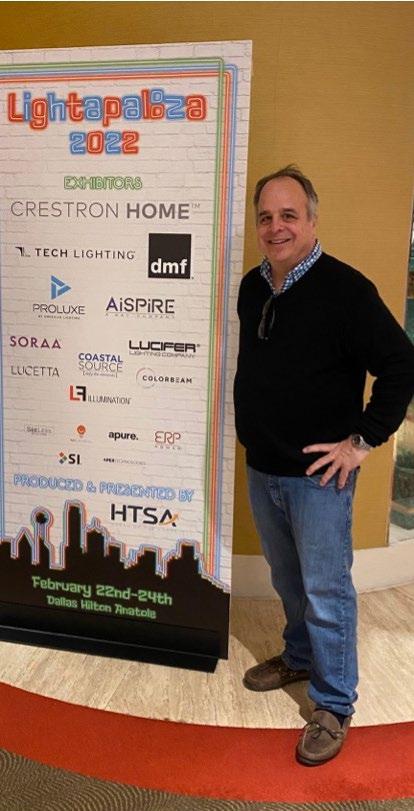
Five years ago, I signed a contract with the Hilton Anatole in Dallas to host a conference that didn’t exist yet. There was no track record, no ticket sales, no guarantee that anyone would show up. What I had was a conviction, built over four decades in the custom integration channel, that lighting was about to become the next major category for progressive integrators, and that someone needed to create the place where that transformation could happen.
What made it possible was the HTSA board of directors having the vision to support it and, critically, to open it to the entire industry, not just HTSA members, but every integrator serious about lighting. And it came from a small group of manufacturers who committed early, before there was any proof this would work. Seventeen exhibitors signed on for that first year. They took a chance on us, and I will never forget that.
Lightapalooza launched in January 2022 with 243 attendees. It was intentionally small. We wanted to get it right before we tried to get it big. By 2023, we had 694 attendees and 35 exhibitors. By 2024, over 1200 attendees, 53 exhibitors, and more than 6000 individual seats of education registered, over 9000 seat-hours consumed. By 2025, we crossed 1400 attendees and 59 exhibitors. This year, our fifth, we welcomed over 1500 attendees with 110 educational sessions delivering more than 8000 seathours of learning.
Those numbers matter. But what matters more is what happened inside those rooms.
From the beginning, every stakeholder in this event — from the integrators who attend, the manufacturers who exhibit, the independent reps who support them, and the educators who teach — has given feedback that I could tell was sincere and constructive. Not because they were being polite, but because they cared that this succeeded. They saw what I saw: that this channel needs a gathering place built specifically for the people doing this work.
That feedback is what has driven every decision over five years. It’s why we’ve raised the bar on education every single year. It’s why Lightapalooza became the home of the SHINE certification program, the only certification in the custom integration industry that addresses lighting fundamentals, lighting control protocols, power systems, and natural light control. It’s why we welcomed the smart power exhibitors who participate in this space to come together and create a vendor-agnostic Smart Power Education Series, because power is the next frontier and progressive integrators need to be ready. And it’s why we pursued academia.
When I reached out to Dr. Mariana Figueiro at the Icahn School of Medicine Light and Health Research Center, Dr. Craig Bernecker at the Parsons School of Design, and Dr. Kevin Houser at Oregon State University and Pacific Northwest National Laboratory, I wasn’t sure what the response would be. These are world-class researchers and educators. What I found was that they were as excited about what integrators
are doing as we were about what they could teach us. They came. They experienced the engagement of the audience. And they confirmed that they wanted to return. That validation, from the academic world, told me we were building something real.
Curated by Design
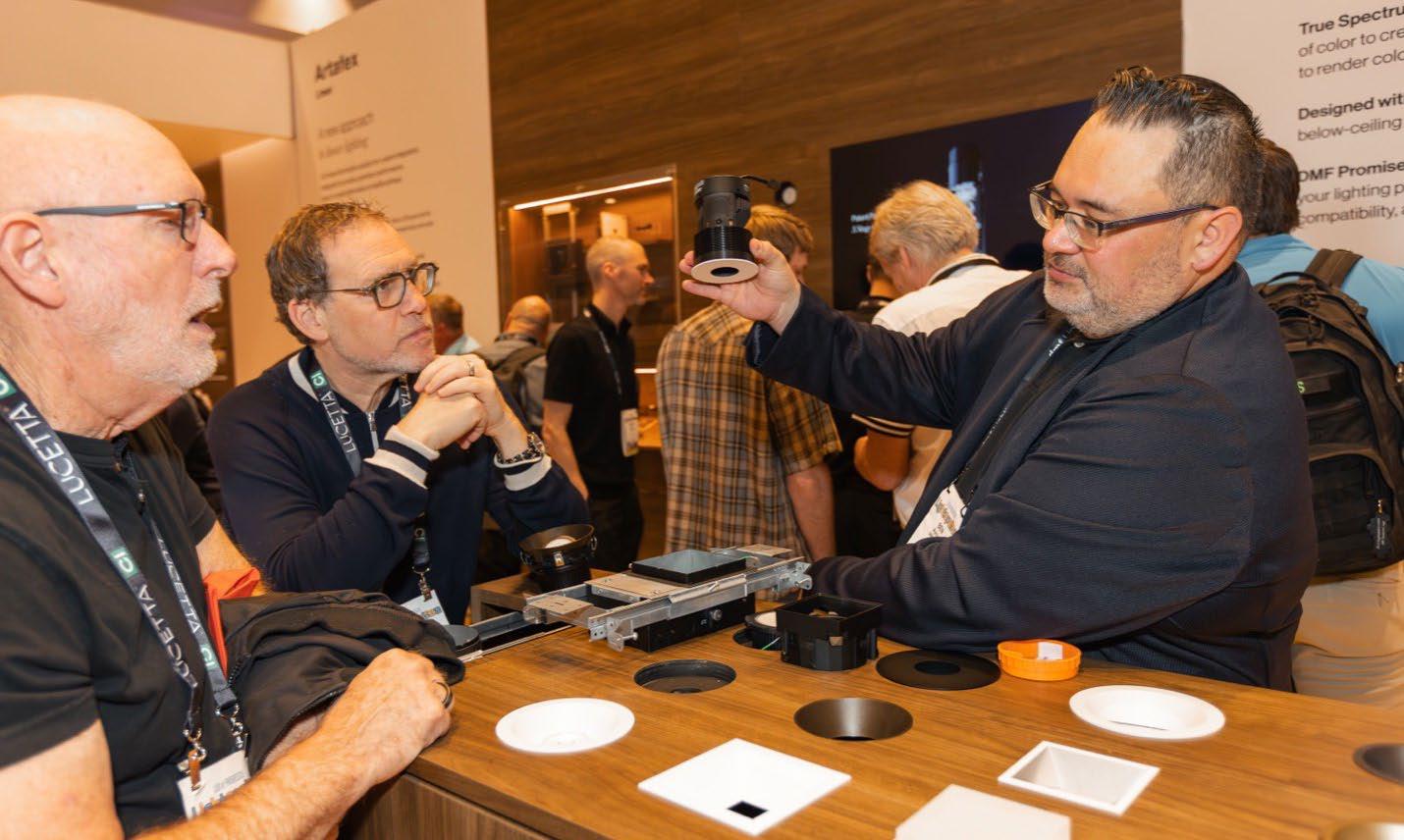
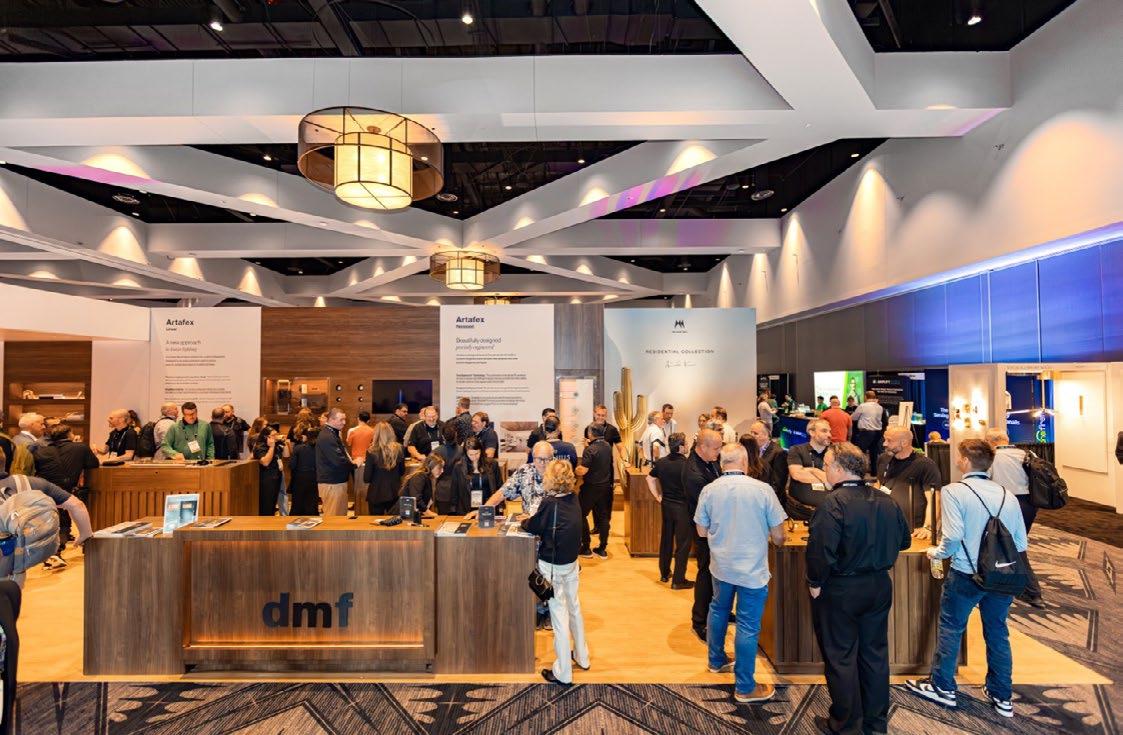
I’ve been intentional about one thing above all else: keeping the show floor curated. This year, we turned away interested exhibitors. Not because we ran out of space, but because I didn’t believe they fit, or that they were prepared, or that they were serious about serving the custom integration channel — a channel I’ve been a champion of for over four decades. Even at 71 exhibitors this year, our largest floor to date, the show floor remains deliberately curated. We’re not building a trade show. We’re building a conference where every exhibitor is a performance specification fixture manufacturer who understands the difference between working with custom integrators and working through traditional distribution. The manufacturers on our floor have adapted to how we work by providing direct access, responsive technical support, and the kind of education that integrators consume and then put to work on every project. They’ve learned that this channel doesn’t work like their traditional verticals, and they’ve chosen to invest in it anyway. That investment has been mutual, and it has been one of the most rewarding things I’ve witnessed over these five years.
I need to acknowledge the people who have been on this journey from the start. Jon Robbins and the HTSA team believed in this before there was anything to believe in. Their support gave Lightapalooza its foundation and its credibility. In our second year, ProSource stepped in to support the conference as well, further validating the vision and broadening our reach across the channel. The founding exhibitors, the manufacturers who have been on our floor every year since 2022, took a bet on an unproven conference and have come back year after year, because they saw the value in this channel. We honored them this year with a reception that was long overdue. David Warfel stood on our keynote stage this year and gave voice to something important. He talked about what could happen when you gather the leading integrators and the leading manufacturers in one place. He challenged the room by asking the question, “What if the vendors here came together and agreed on a platform, a protocol, a way to make their products work together seamlessly?” He pointed to the theatrical lighting industry, which did exactly that 35 years ago with DMX. Every console, every fixture, every dimmer speaking the same language, no matter who
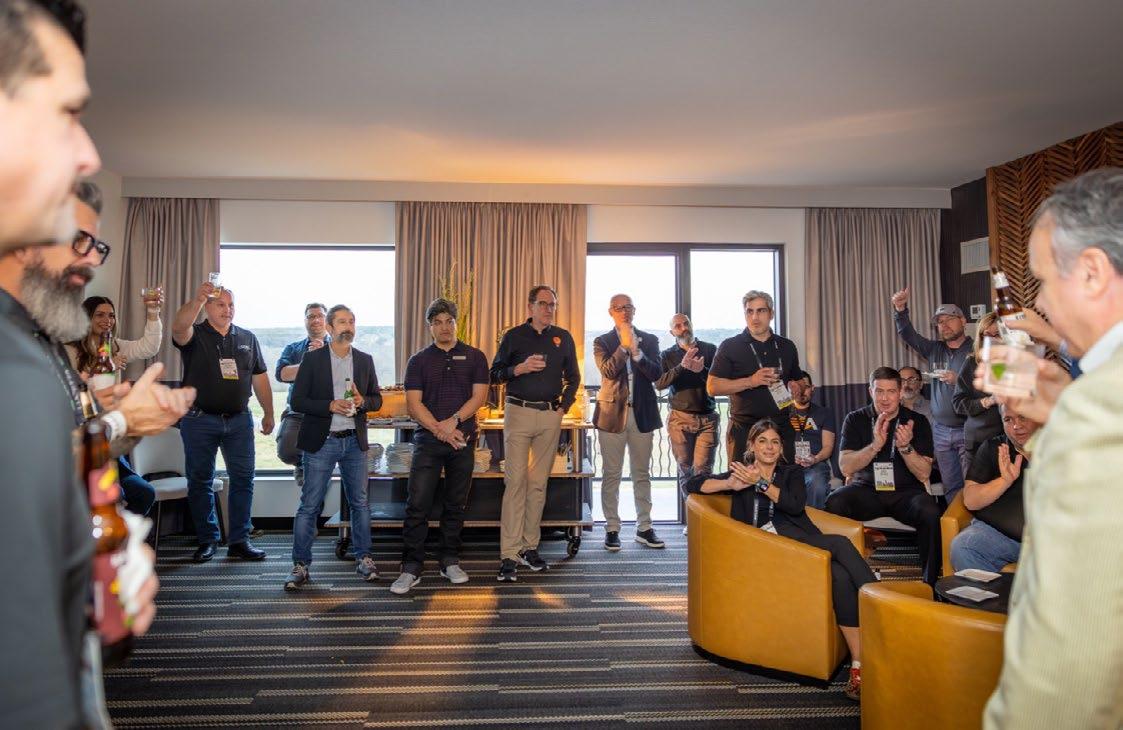
made it. He looked over the room and said: “You can do that, too.”
That message resonated deeply because I’ve seen this moment before. This conference has brought the integration channel to an inflection point. It reminds me of the early to mid-1990s during the rise of CEDIA, when the category of custom installation became real. We watched the industry transition from specialty audio/video retailers being the leaders to the custom integration channel being the leaders. That transition made it clear to the manufacturers to recognize that’s where the growth was. That’s what’s happening now with lighting. The progressive integrators who have taken this category seriously are gathering in numbers with real power, and what they want is interoperability. Open standards. The flexibility to design the best solution for the client, the project, the application, using products from multiple manufacturers that all work together.
The Next Chapter
I started Lightapalooza because I believed the custom integration channel deserved better lighting. Not just better products — better knowledge, better relationships, better business models, and the confidence to claim lighting as their own.
Five years later, I can say this: The integrators who attend this conference are transforming the way residential lighting is delivered. They’re displacing the old model — where homeowners made lighting decisions through their builder or electrician and ended up with contractor-grade fixtures. They’re bringing specification-grade performance to luxury homes that deserve it. They’re earning design fees. They’re sitting at the table with architects and interior designers as peers.
And we’re just getting started.
Lightapalooza is about what’s next. It always has been. This industry has evolved from stereo systems to home theater, from automation to lighting control, from networks to motorized shades, from lighting to intelligent power. Two years ago, people asked whether Lightapalooza would become just another broad trade show. Our commitment remains to serve the most progressive integrators and the best-of-breed manufacturers who partner with them. To identify what's next and provide the education, the relationships, and the certification to lead it. To keep the bar high and the floor curated.
To everyone who has been part of this journey — the integrators, the manufacturers, the reps, the educators, the HTSA team, and the founding exhibitors who believed before there was reason to — thank you. What you’ve helped build is something I’m deeply proud of.
Learn more at lightapalooza.com.
In today’s design-led projects, access may open the door, but trust is what turns a one-time inclusion into a lasting recommendation.
BY KATYE MCGREGOR BENNETT
There is a big difference between being included in a project and being recommended for one.
Included is easy enough to explain. Your category is required. Somebody needs numbers. The builder has a list. Your firm got looped in because, at some point in the past, you existed in the right person’s inbox at the right time.
Recommended is something else entirely.
Recommended means someone in the room is willing to spend a little of their own credibility on you. It means a designer, architect, builder, or project lead says, “Bring them in. They’ll be helpful. They’ll make this easier.” That kind of confidence does not come from your line card, your logo wall, or your ability to say “we do lighting now” with a straight face. It comes from trust.
That distinction sat at the heart of Lynne Stambouly’s Lightapalooza 2026 session, “Understanding the Interior Designer and Best Practices for Creating Your Best Technology Cheerleader.” And honestly, it is a conversation our industry needs to keep having, because too many firms still mistake access for achievement.
It is not. Access is the opportunity. Trust is the win.
That may sound obvious, but if it were truly obvious, more integrators would stop showing up to design-led projects as if the goal were simply to get in the room and say the right smart-sounding things. The design community is not waiting around hoping for more jargon, more chestthumping, or one more “solutions-based partner” who creates three new problems before lunch.
They are looking for people who help. They are looking for collaborators who communicate clearly, anticipate issues early, protect the design intent, and reduce the number of unpleasant surprises that have a nasty habit of surfacing right around trim-out. They are looking for partners who understand that every careless spec, every poorly timed question, every “we’ll figure it out later” moment has a ripple effect for everybody else on the project.
That is what separates the firms that are merely included from the ones that get recommended.
What I appreciated about the perspective shared in Stambouly’s session is that it was grounded in reality, not theater. It was not about pretending everyone should already know everything. It was about clarity, humility, expertise, and a willingness to support the learning curve without making people feel small for having one.
As Stambouly put it, “We know many integrators are curious about

lighting design but hesitant to take the next step. They don’t want to risk their reputation, their margins, or their confidence.”
That is honest. And useful.
Let’s be honest ourselves: There are plenty of firms in this channel tiptoeing into categories they know matter, while privately hoping no one asks a follow-up question hard enough to expose the gaps. Lighting is one of the clearest examples. It is no longer a decorative afterthought or a value-add flourish you save for the end of the conversation. It is increasingly central to how clients experience comfort, wellness, beauty, mood, and function in a luxury home.
Which means it also happens to be one of the fastest ways to reveal whether a technology partner actually understands collaboration or just likes being associated with important-sounding categories.
If you want to be recommended by the design community, you have to become the kind of partner they can trust when the stakes are real. That means asking better questions. It means caring about the reflected ceiling plan, sightlines, dimming behavior, visual comfort, finish coordination, and the way technology choices affect the integrity of the space. It also means getting comfortable with the fact that you do not need to know everything before you engage. In fact, pretending you do is often the fastest route to losing credibility.
As Stambouly noted, “The best partners are curious, self-aware, and motivated to grow. We prefer working with integrators who ask thoughtful questions over those who pretend to have all the answers. Lighting design is a craft, and we genuinely enjoy helping others learn it.”
There it is.
The firms that will earn more trust over the next few years will not be the ones trying hardest to appear indispensable. They will be the ones most committed to being coordinated, communicative, and genuinely useful. The ones who understand that protecting someone else’s vision does not diminish their value; it proves it. The ones who can walk into a project without turning every conversation into a subtle audition for ego validation.
Here is the uncomfortable truth: Plenty of firms get included. Very few get recommended with enthusiasm. Being included means your name made the list. Being recommended means your reputation made the room.
And in this market, where relationships matter, margins are pressured, and everybody is tired of preventable drama, that is not a small distinction. That is the whole game.
Need help putting this into action? That’s my specialty. Drop me a line at katye@ kmbcomm.com to start that conversation.

Quiet times don’t mean disaster.
BY MATT BERNATH
A little while ago, on The Flywheel Effect podcast, my co-host Brent introduced me to a book that turned out to be one of the more unexpectedly useful things I’ve encountered in a while. And it is not a business book, but a sailing memoir. The Long Way was written by Bernard Moitessier, who sailed single-handedly around the world in 1968. And while the book wasn’t my style and moved too slow to keep my attention, the lessons I pulled from the pages have stayed with me.
The one that hit hardest wasn’t about strategy or systems or leadership frameworks. It was a simple line: Calms and light airs are needed.
Most of us who run custom integration businesses wear our busyness like a badge: the full calendar, the stack of unread messages, the half-eaten lunch at your desk. Staying in motion feels productive. It feels like control. And it feels good in the moment. There’s a real dopamine hit to the act of doing. But the doing isn’t always what moves the business forward.
I’ve deliberately slowed down more in the last year than at any previous point in my career. I’ve created more margin in my schedule, said no to more things, and stopped treating every quiet moment as a problem to be solved. And you know what happened? Business kept flowing. Projects got done. The team kept performing. What didn’t happen was the chaos I feared would arrive the moment I stopped running at full sprint.
That realization that the business doesn’t need my constant motion was uncomfortable at first, because if the machine keeps running when I slow down, that raises a question I wasn’t totally prepared to sit with: What was all that busyness actually for?
There’s a phrase I keep coming back to: “the illusion of control.” As business owners, we spend enormous energy on activity because activity feels like control. If I’m doing, I’m steering. If I’m moving, nothing can go wrong. The problem is that we truly control very little. Markets shift. Clients change their minds. Installations hit snags. Team members have bad weeks. And no amount of calendar-filling or email-answering changes that reality.
Moitessier understood this in a way that most of us take years to learn. Sailing a small boat alone through the Southern Ocean, through 60-foot swells and gale-force winds, you learn quickly that you can’t muscle your way through every condition. Sometimes the smartest move is to stop fighting the sea and simply find a calm place to let the boat sit.
That technique is called heaving to. It’s a specific way of setting the sails and the rudder so the boat holds its position in the water. The sailor isn’t going anywhere. And that’s exactly the point.

He’d heave to for a few reasons: sometimes to make repairs, sometimes to navigate, and sometimes simply because he needed to sleep. It wasn’t giving up or falling behind. It was the most strategic thing he could do.
For us, heaving to isn’t a sailing maneuver, but the concept translates remarkably well. It’s the afternoon you block off to actually think about your business rather than just work in it. It’s the quarterly offsite where you pull your leadership team away from daily operations to look at where you’re headed. It’s the morning walk you take without your phone, where somehow the answer to the problem you’ve been wrestling with for three weeks suddenly shows up. These aren’t luxuries. They’re the work.
Most of us are so addicted to forward motion that we’ve engineered the spaces right out of our lives. And then we wonder why we feel stuck.
One of the most common things I hear from integrators is a sense of anxiety when things slow down. For most of us, slow periods early in our careers were dangerous. Cash flow was tighter, the client base was thinner, every open slot in the schedule was a real problem. But many of you reading this are running mature businesses with real revenue, real teams, and real momentum. In that context, a calm period is something entirely different. It’s an invitation.
When the seas went calm on Moitessier’s voyage, he didn’t panic. He used it: He repaired the boat, rested, and thought ahead about what was coming and set himself up for it. When the wind returned, he was ready.
The business equivalent is the slow January after a big Q4. Or the midsummer lull when construction timelines push projects back. These moments aren’t problems to fix. They’re windows to do the work that’s impossible to do when you’re in the middle of the storm.
I want to be clear about something, because I know how this can land with certain personality types, myself included: Deliberately slowing down is not the same as losing your edge. Heaving to is not giving up. Creating space in your schedule is not being lazy. The most successful entrepreneurs I know have learned to move with intention. They push hard when the conditions call for it, and they pull back when pulling back is the right call. They’ve stopped confusing motion with progress.
There is enormous strength in the deliberate pause. Your nervous system needs recovery just like your body does after a hard workout. Your creative capacity is a resource that gets depleted and needs to be refilled. Your best strategic thinking doesn’t happen when you’re exhausted and overscheduled. It happens in the margins. Build some margins.
This is the first in a three-part series drawn from a recent conversation on The Flywheel Effect podcast, with business lessons from this not-so-business-y book. If you’re curious where this is headed, you can find the podcast at growwithvital.com/podcast.
BY JASON GRIFFING
It’s become a predictable pattern. Every few weeks, a new AI headline drops and the breathless commentary ensues. Human workers outperformed. Knowledge work is dead.
It’s understandable enough. Anyone who has spent any time working with modern AI systems knows that the capability of these tools is unprecedented. But extrapolating out to the end of all knowledge is a big leap; in spite of the click-bait headlines, an imminent job apocalypse is not a foregone conclusion.
Perhaps this is just “cope,” or a lack of imagination on my part. But even if we take the end of all human knowledge work as a given, it’s still worth having a detailed mental model of what the path between here and there might look like.
Consider OpenAI’s release of GPT 5.4 in March of this year. The company, with plenty of help from the press and online influencers eager for clicks, touted that the model outperforms 83% of knowledge workers. If you stopped reading there, you could be forgiven for throwing your hands up in despair. But what’s behind this number? How do they define knowledge work? And what is their method for measuring performance?
The benchmark used in this case is GDPval, and its stated goal is to “evaluate AI model capabilities on real-world economically valuable tasks.” It’s a rigorous evaluation, and the methodology behind it is available online for anyone to review. I’ve spent some time doing just that and concluded that it’s worth taking seriously, but only with caveats.
The most important thing to understand about OpenAI’s claim is the specific types of tasks they’re evaluating. Quoting from the white paper, “For GDPval, we provide the full context of the task in the prompt.” Essentially, the eval is based strictly on well-defined, well-understood, and perfectly documented tasks. Actual examples from the dataset include:
• Concierge: Create a week-long luxury Bahamas itinerary for a family of four
• Order Clerk: Audit pricing inconsistencies in a given set of purchase orders
• Real Estate Agent: Design a sales brochure for a specific property
Real work is about more than executing isolated tasks. It’s about navigating ambiguity, building and leveraging relationships, exercising discretion, and using judgment to fill in gaps, all skills… that large language models will struggle to replicate.


The prompts provided to the models to assist them in these tasks are highly detailed, providing thorough instructions along with examples and supporting resources.
The paper goes on to acknowledge the limits of the methodology: “… in real life, it often takes effort to figure out the full context of a task and understand what to work on.” They even provide a section on performance in “under-contextualized” domains, showing that the win rate of the models over humans drops from 83% to 43% when the model is given a little less than half of the context.
The bottom line, at least for now, is that AI models do outperform humans, but only under certain conditions, namely where the scope of the tasks are well-defined, the desired outcomes are perfectly understood, and all the necessary context is thoroughly documented. In other words, conditions that look nothing like the reality that most knowledge workers actually operate in. Real work is about more than executing isolated tasks. It’s about navigating ambiguity, building and leveraging relationships, exercising discretion, and using judgment to fill in gaps, all skills that evaluations like GDPval cannot easily measure and that large language models will struggle to replicate.
The point of this isn’t to dismiss the potential for job disruption that AI presents; it’s to build your own intuition for how exactly it will play out in your specific domain. Exercising concern about your potential to stay relevant and provide for yourself and your family in the age of AI isn’t just understandable, it’s morally responsible. But if you really want to grasp the implications of this technology, you have to go beyond cherry-picked statistics and click-bait headlines.
Only by appreciating the nuances can you more effectively leverage AI as a force multiplier where it makes sense, while increasingly pushing your personal value delivery into the kinds of work that humans are still uniquely positioned to deliver.
BY CHRISTIAAN BEUKES
A really great private cinema is never the work of one person. It’s the outcome of a proper collaboration between architect, interior designer, and a dedicated cinema designer. When all three disciplines pull together, the result is a room that works in every mode: full-on immersive film night, casual family hangout, or even a kid's birthday party — all in a space that’s engineered, elegant, and distraction-free.
The trick is to get the cinema designer involved early — ideally by RIBA Stage 2/AIA schematic design. Leave it too late, and compromises creep in.
Here are five things that make all the difference.
1. Nail the space planning early
Cinemas don’t work as afterthoughts. A poorly shaped or sized room can never be fixed later.
• Seating: Keep seats away from walls if you want decent sound.
• Sightlines: Make sure ceiling height and viewing angles are right for both image size and comfort.
• Tech space: Wherever possible, allow a small room behind for projectors and racks. Ceiling-hung projectors in “real” cinemas don’t exist for good reason — they’re hot and noisy.
• Acoustic isolation: High-performance spaces may need up to 400mm per surface for isolation — though smart design can often reduce that.
• Speakers and subs: They’re big, and they need to sit in exact positions. Even door placement might need to shift to make the acoustics work.
• Seat count: Don’t cram. More rows usually means worse performance for everyone. Start by asking, “How many seats will actually get used most of the time?”
2. Respect the acoustics
Acoustics are make-or-break. Bad treatment or inappropriate materials can ruin a room.
• Fabrics: Any fabric in front of a speaker or treatment must be acoustically transparent (and testable).
• Absorption balance: Carpets only absorb high frequencies. Overcarpet and you get a dull, “boomy” sound.
• Integration: The interior design has to work with the acoustic plan, not against it.
• Silence: HVAC noise is the enemy. Don’t put cinemas next to plant rooms, and design air paths properly.
• Skip the foam: Cheap foam panels everywhere are a disaster.

3. Treat the room as part of the image
The room itself contributes to picture quality.
• Dark zone: Keep the wall and ceiling at least a meter or two around the screen as dark, matte, and non-reflective as possible — ideally black.
• Neutral palette: Stop reflected light from tinting the image.
• Lighting: Low-level lighting is fine, but keep it neutral in color and directed away from the screen.
4. Build it like a cinema, not a lounge
The detailing matters. Purpose matters. Nothing screams sophistication and professionalism more than simplicity in design and purpose; this isn’t a one-size-fits-all solution, it’s tailored, it’s niche, and it’s special.
• Construction: Acoustic treatments need to be built in, not retro-fitted.
• Speaker mounting: How they’re fixed and angled really affects performance. Plan this from day one.
• Low-frequency control: Cinemas push out huge bass energy; without solid construction, the rattles and buzzes will wreck the experience.
• Joinery: Bars, cabinets, and paneling all need to be engineered to avoid vibration issues.
5. Equipment comes last
Don’t start with a shopping list of kit. Start with design.
• Design first: Define goals and performance standards before picking hardware.
• Cinema designer = chef: They work to recipes (industry standards) with ingredients (equipment).
• Value expertise: Good cinema designers charge properly, provide detailed documentation, and back choices with engineering standards. That fee pays for itself many times over.
• No shortcuts: Even the priciest kit can’t fix a bad room.
summary
The best private cinemas come from defined vision, early collaboration, proper respect for standards, and a clear understanding of the order of operations: space → acoustics → construction → equipment.
Get those in balance, and you end up with a room that’s not just technically impressive, but also beautiful, comfortable, and a joy to use.

BY ANTHONY GRIMANI
Last week, I was coordinating an A/B audio system demonstration for a major Hollywood studio client. We ended up routing all the audio feeds through a Dante AoIP network, and this allowed fantastic flexibility and speed in the system setup and switching options. That’s when I realized that the audio integration industry is at an inflection point.
For decades, we’ve relied on analog distribution, matrix switchers, and point-to-point wiring schemes that made sense in a world of fixed sources and predictable system layouts. But that world is gone. Today’s residential projects and clients expect flexibility, scalability, and performance that rivals professional environments. That’s exactly why Audio over IP, particularly protocols like Dante and AES67, is not just a good idea for residential systems integrators, it’s the right one.
Let’s start with the core issue: signal distribution. Traditional analog or even digital (SPDIF/HDMI) routing ties you to physical inputs and outputs. Every time you want to expand a system — add a new zone, upgrade amplification, or reconfigure a room — you’re dealing with cable limitations, switcher capacity, and often invasive rework. That’s friction. And friction is the enemy of both profitability and client satisfaction.
Audio over IP removes that friction entirely.
With Dante or AES67, audio signals are packetized and distributed over standard Ethernet networks. That means your “wiring” becomes a network infrastructure — something we already understand, already deploy, and already trust. Once audio is on the network, it’s no longer tied to a specific physical path. It becomes a resource that can be routed anywhere, instantly, with software.
From a design perspective, this is liberating. Instead of thinking in terms of “inputs and outputs,” you start thinking in terms of “sources and destinations.” A media server, a streaming endpoint, a DSP processor — these become network nodes. Amplifiers, powered speakers, and even subwoofers become endpoints that subscribe to whatever signal they need. The topology becomes fluid rather than fixed.
And here’s where it really matters for AV integrators: scalability.
In a traditional system, you have to design for the maximum foreseeable configuration on day one. That leads to overbuilt infrastructure, unused capacity, and higher upfront costs. With AoIP, you design a network with headroom, and expansion becomes trivial. Add another switch, extend the VLAN, and you’re done. No ripping walls open. No re-pulling analog lines. No rethinking your entire signal flow. No signal noise, ground loops, polarity errors, etc.
Imagine a flexible demo room used for immersive audio presentations. Today, it might be configured as a 7.2.4 system. Tomorrow, you want to demonstrate 9.4.6 with a video wall and a center channel using a Reflectance scheme. Next week, maybe a 2-channel audiophile setup with distributed subwoofers. In a traditional analog world, this is a wiring nightmare. Every new speaker requires a corresponding

amplifier channel or two, which requires a physical input from a processor or matrix. You quickly run out of outputs, or you end up with massive patch bays and labeling schemes that only one person in the building understands.
Now, take that same room and build it on Dante. Your processor feeds audio channels directly onto the network. Each amplifier — whether it’s a 2-channel unit or a high-power multichannel amp for LCR and subs — is simply another Dante device. When you add a new speaker or subwoofer, you don’t ask, “Do I have an available output?” You ask, “Where on the network do I want to subscribe this channel?” You roll in a new amplifier, connect it to the network switch, assign it an IP address (or let DHCP handle it), and open Dante Controller. Within seconds, you’re routing the appropriate signal to that amplifier’s inputs. No new home runs. No re-termination. No hardware constraints. Want to reconfigure the room from Dolby Atmos to a custom layout for a specific immersive audio demo? It’s a software change. Save presets. Recall them instantly. The physical system remains untouched. This level of flexibility is transformative — not just for demo rooms, but for real client installations.
Think about a high-end residence with multiple listening spaces: a theater, a media lounge, outdoor zones, and a distributed audio system. With AoIP, you can centralize sources and signal processing, distribute signals anywhere, and dynamically allocate resources. A high-power amp driving the theater today could be reassigned to an outdoor event tomorrow, all through software. You’re no longer locked into static configurations.
There’s also a performance argument to be made. Dante and AES67 operate with high-resolution audio, low latency, and excellent clocking. In many cases, you’re actually improving signal integrity compared to long analog runs susceptible to noise and ground loops. Properly implemented, an AoIP system can be quieter, cleaner, and more consistent.
And let’s not ignore the operational benefits. Troubleshooting becomes more intuitive. You can see signal presence, routing, and device status in real time. You’re not chasing cables through walls — you’re looking at a network map. Firmware updates, device management, and system monitoring all happen within a unified framework.
Of course, this does require a shift in mindset. Integrators need to become comfortable with network design — managed switches, QoS, and VLANs. But this is not a disadvantage; it’s an evolution. The integrators who embrace this are the ones who will lead the industry forward.
In my view, adopting Audio over IP is about aligning residential systems with the realities of modern technology. At the end of the day, our job isn’t just to make systems work today. It’s to make sure they continue to work — and evolve — tomorrow. In that context, AoIP isn’t just the right choice; it’s the inevitable one.
Anthony Grimani is co-founder of Grimani Systems loudspeakers, and president of PMI Engineering and MSR Acoustics. Chase Walton contributed to this column.

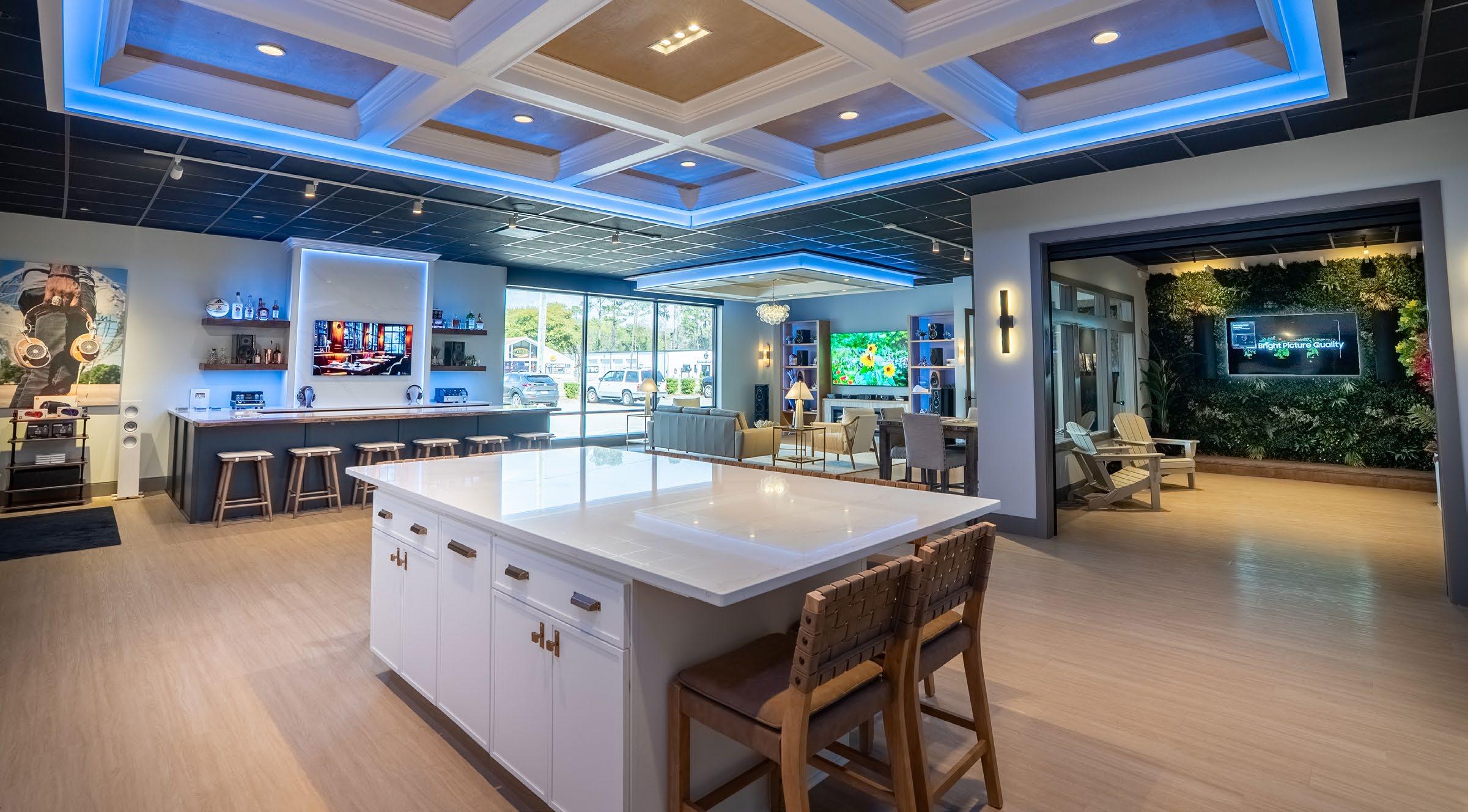
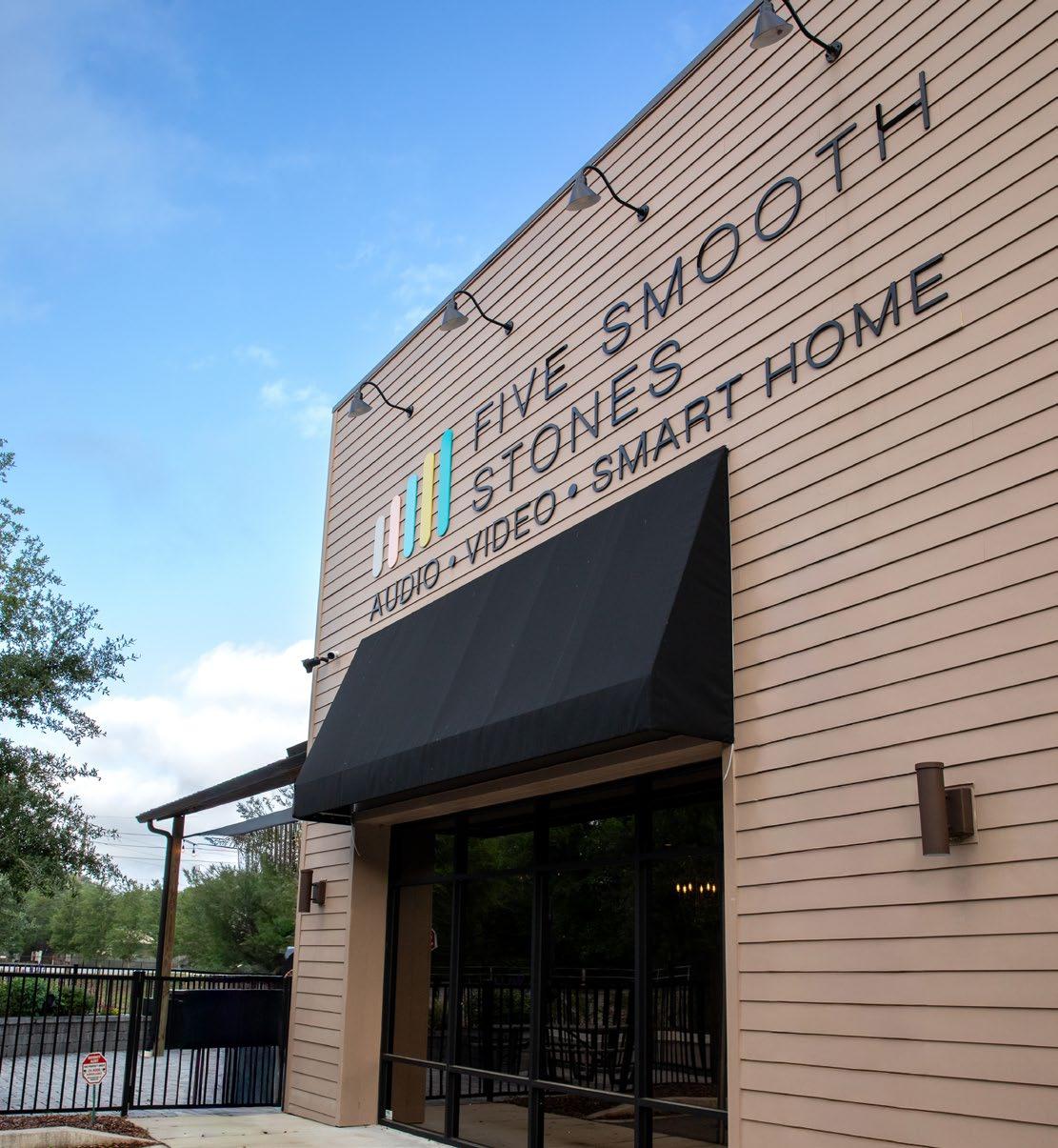
Jacksonville, Florida’s Five Smooth Stones uses its new experience center to let clients and design-build partners see them in a different light.
By Anthony Savona Photos by Kendall Olberding
Atlantic Home Technologies has been in business for more than 23 years, but nearly four years ago, when owner John Prince decided to build a new facility from scratch, the location was not the only change he was interested in.
“We primarily did a mix of production and custom home projects, but about three and a half years ago, we made the move away from the production builder work,” says Prince. “We made an intentional switch to focus on the ultra-high-end custom luxury customer, and it’s been successful for us.”
For the seven years before the move, Atlantic Home Technologies had two locations — a modest showroom and, seven miles away, their warehouse and offices. “It was never conducive to good communication, even with Zoom calls,” explains Prince. “We were losing out not having sales, design, operations, installations, fulfillment, and customer service under the same roof.”
The new space was built completely from the ground up, resulting in a 9000-square-foot building that is divided into thirds; one each for offices, warehouse, and an experience center. The new space and new purview were right in line with the new name the company adopted just a few years earlier.
“I didn’t like the name ‘Atlantic Home Technologies’ over the marquee of a retail space,” says Prince. “Somehow, I landed on ‘Five Smooth Stones’ because it didn’t have anything to do with audio/video or the smart home business. We wanted something that was completely different, had nothing to do with technology, and was memorable. And if it could have a nod to our faith and open some conversations, that was a plus, too.”
The titular stones come from the Biblical tale of David and Goliath, where David found five smooth stones to use against Goliath — and his four brothers if need be. He only needed the one, but he was prepared just in case.
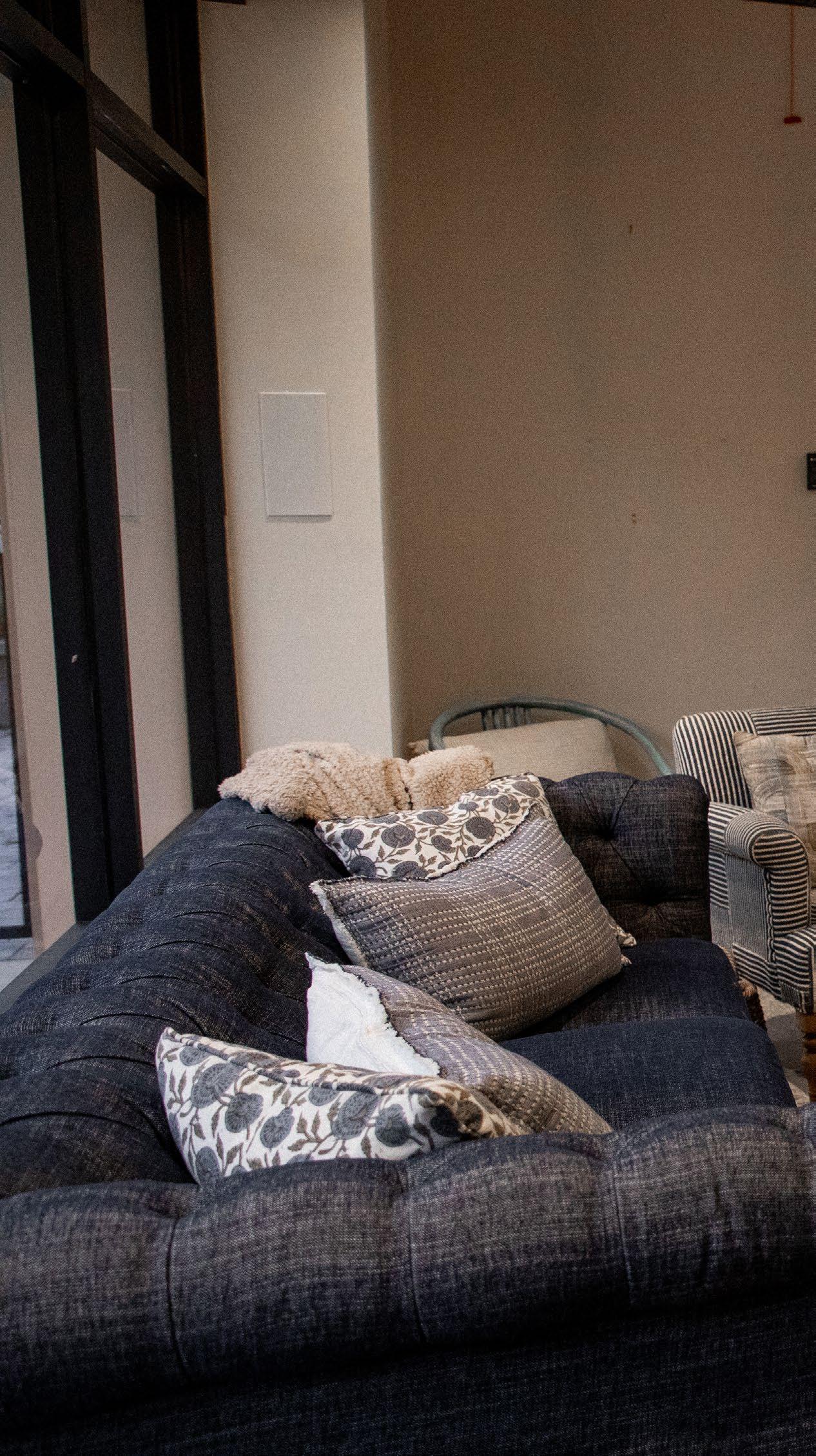
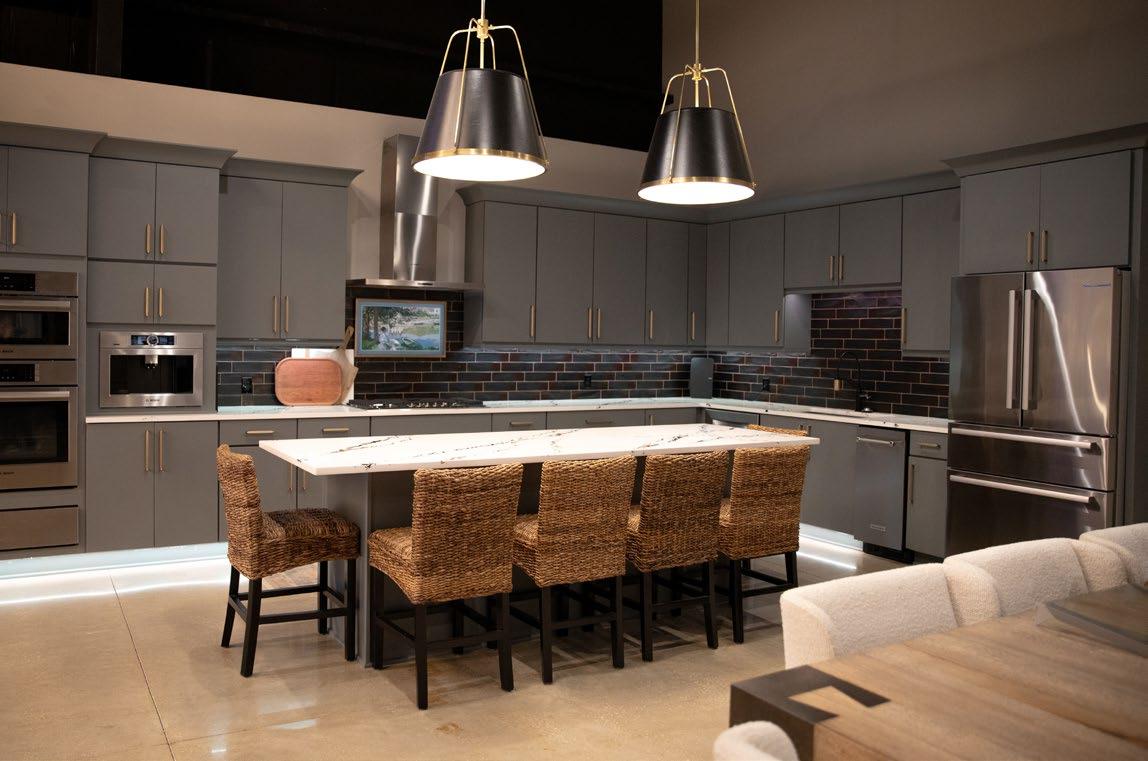
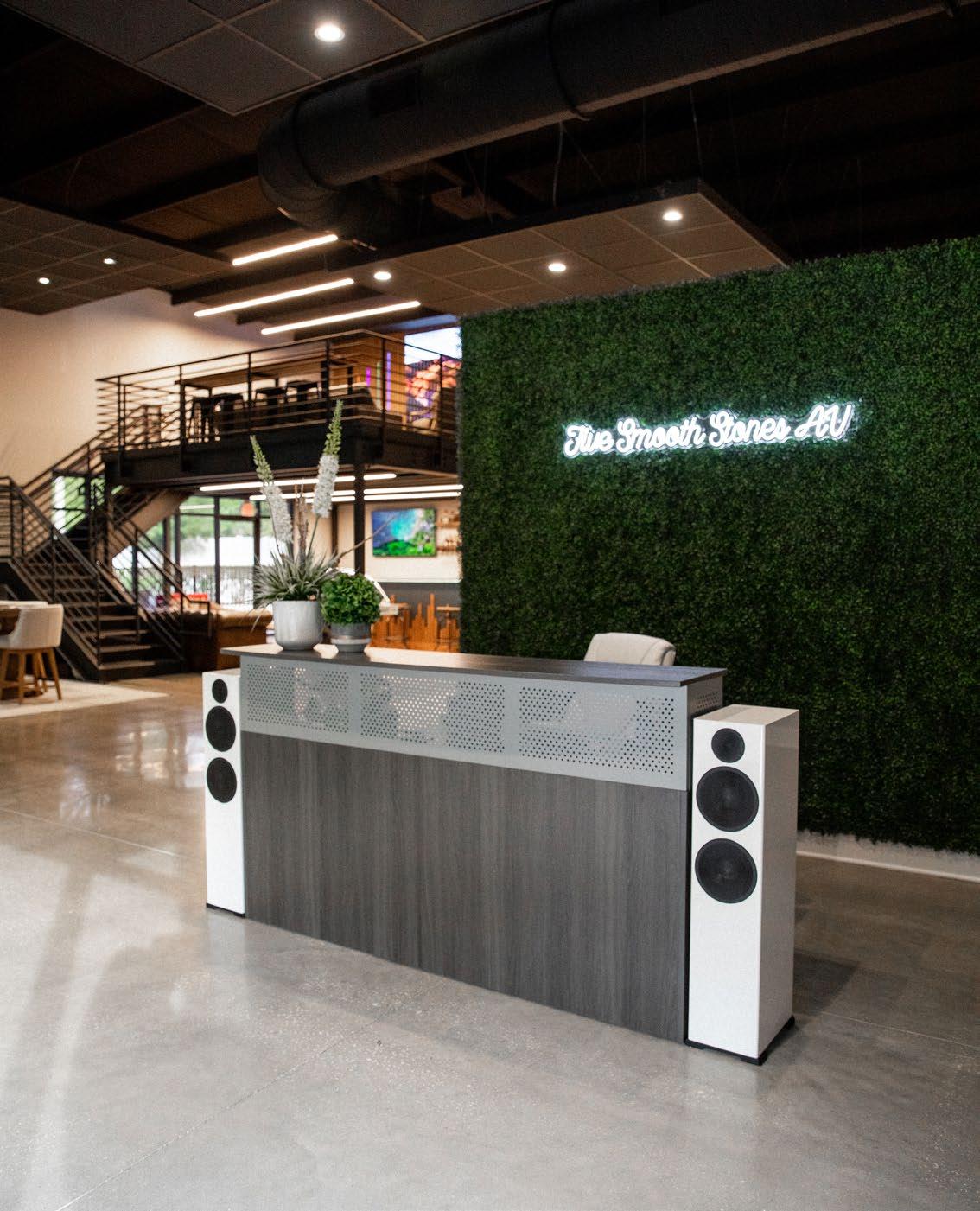
When visitors walk through the front door, they are greeted by an Instagramworthy grass wall with “Five Smooth Stones” lit up in neon. From that spot, you can see several of the showroom’s stations, including a dining area, a fully working kitchen, a bar, a game room, and, up an open staircase, a mezzaninebased media room that houses a 163-inch Lunar Walls video wall that catches your eye from down below.
“My son, John Jr., is our director of sales and COO, and he had the idea of putting in this little loft area, which has worked out great,” says Prince. “The 16x9 Lunar Wall serves a dual purpose: If people bring their kids with them for the consult, we’ll put them up there with an Xbox and let them play video
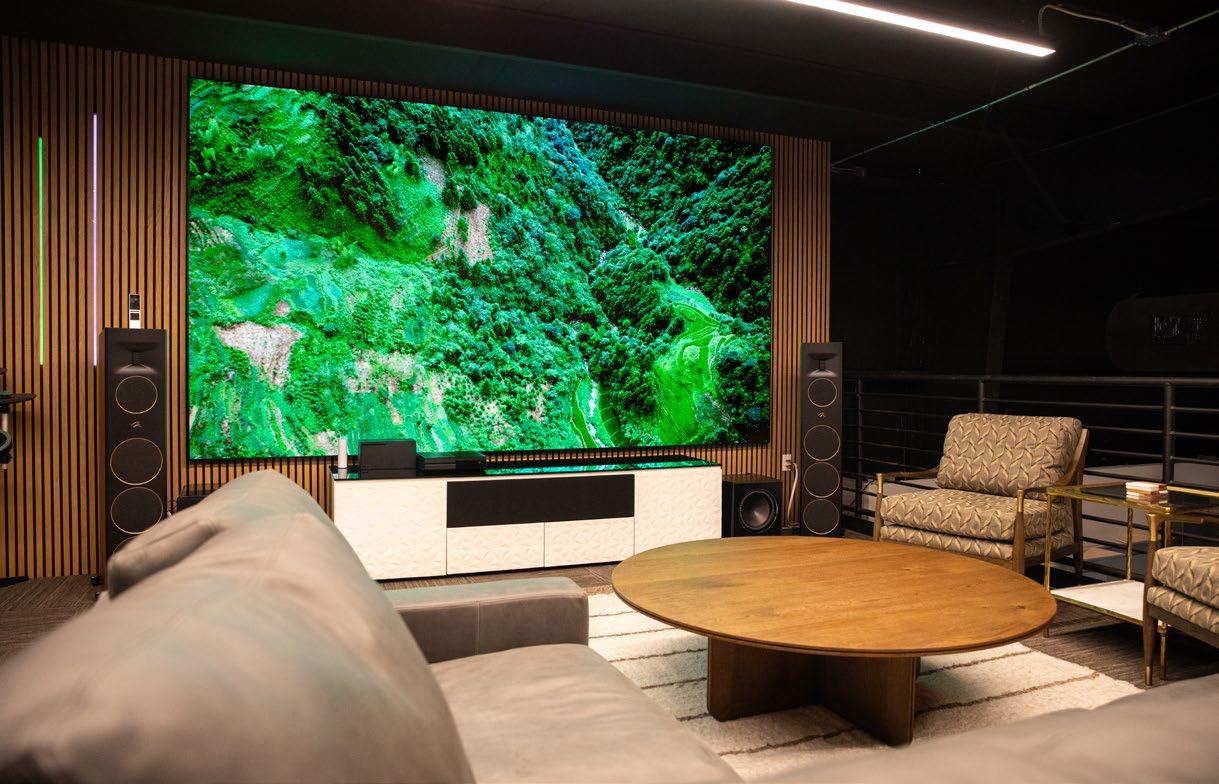
games while we’re meeting with the parents. And if they don’t bring kids, we can put blueprints up on the Lunar Wall and, while they’re sitting on a nice leather sofa, we’ll go through the design and change it in real time right in front of them. When they see their plans up on a 163-inch video wall, it’s powerful. On top of all that, it also shows what a video wall can do for them if they have the space.”
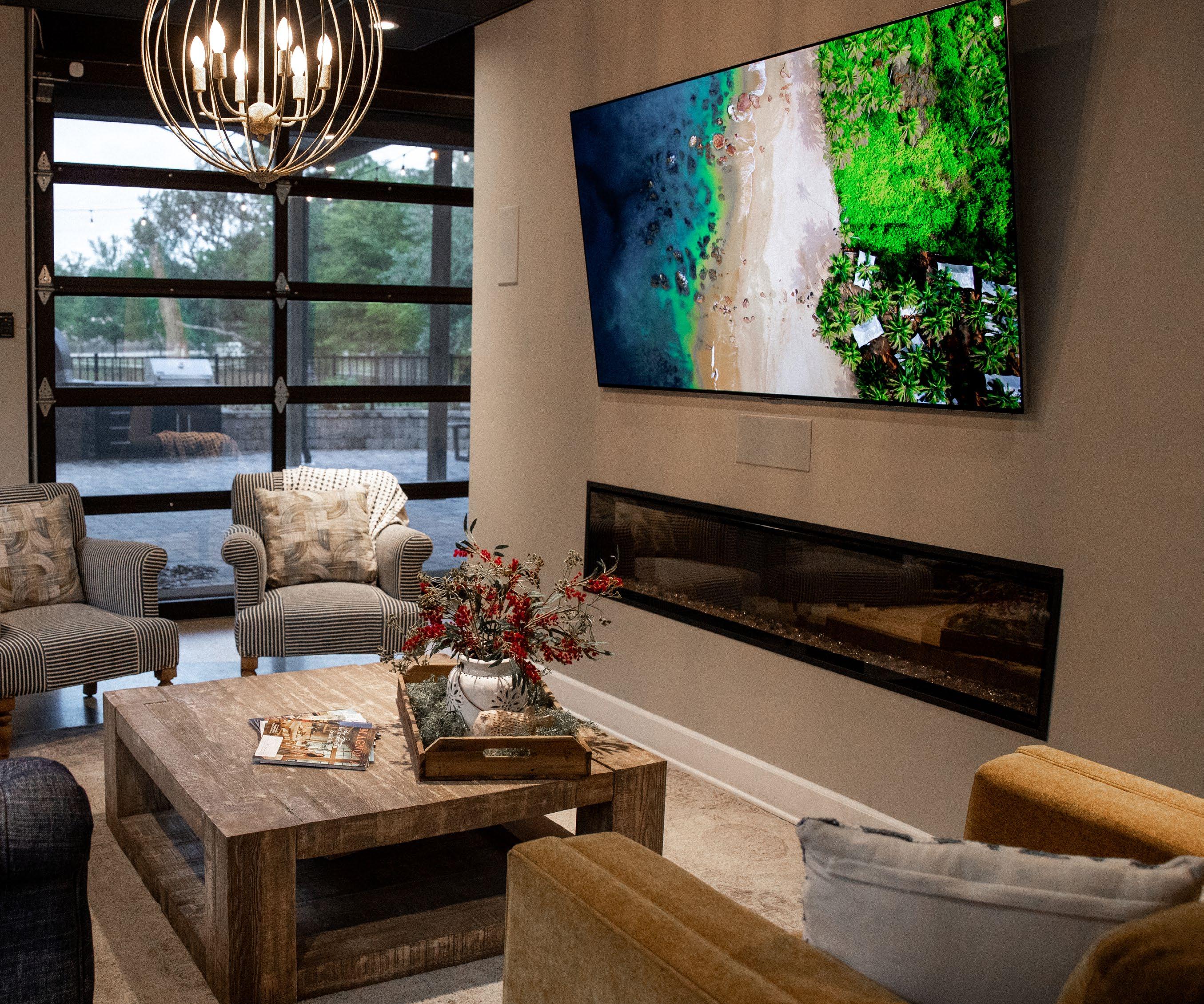
That area also features creative linear lighting, both next to the video wall and above the space. Creative lighting solutions from DMF Lighting, ProLuxe, and Lucetta CI also come into play in the dining room and kitchen areas, which, otherwise, do not have a ton of tech in them, the exception being a Samsung The Frame TV installed right above the stove top.
“That was my wife’s idea,” recalls Prince. “Julie and I have been married 41 years, and we did a kitchen remodel. She loves to cook, and so she’s always got her iPad or iPhone out. We put a 32-inch Frame up over the stove that you can screen mirror with. She thought that was the coolest thing in the world. We didn’t don’t get into, ‘Are they designed for that?’ I can tell you that we’ve had ours up for a couple of years at home and have never had an issue with it. Not only is it a conversation piece, but it’s also a very utilitarian piece. It’s useful in real life, so we put one in the studio.”
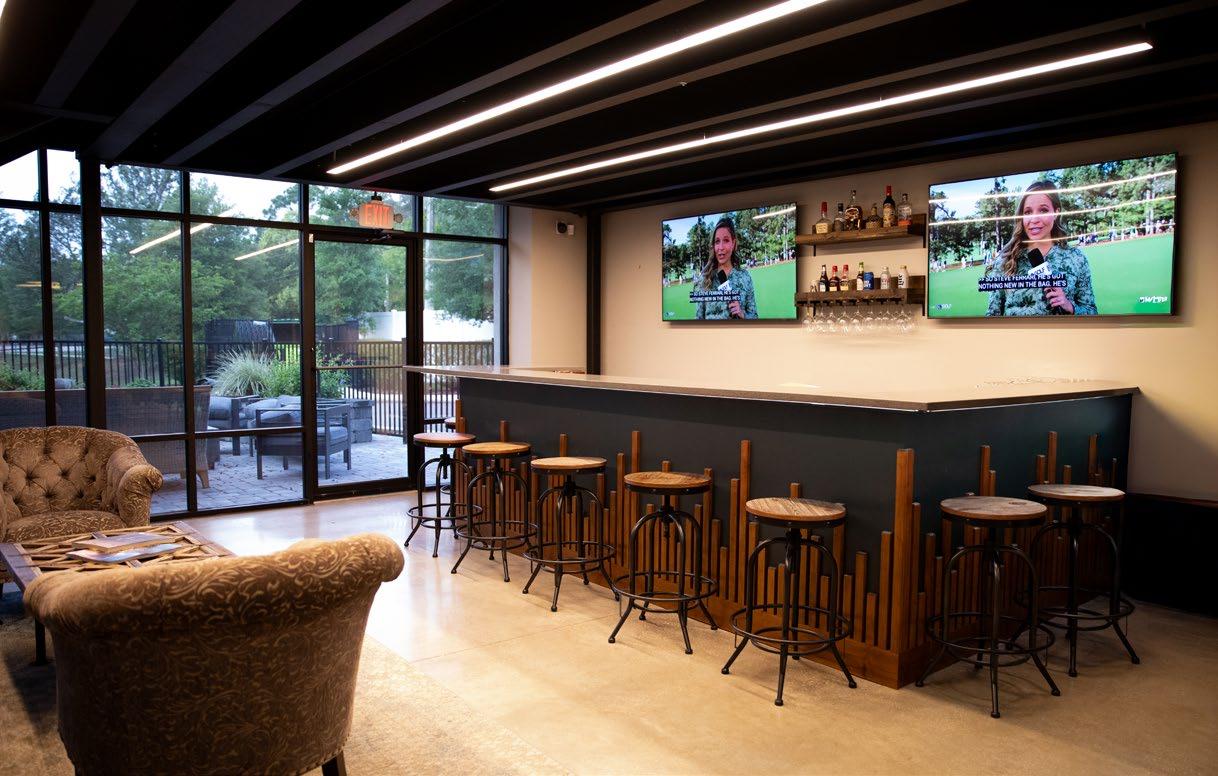
Across the way from the kitchen and dining room area is the bar and the game room space, which features two 65-inch televisions above the bar. While it is tempting to pause at the video games and foosball table, those who do miss the door that leads to the massive outdoor deck.
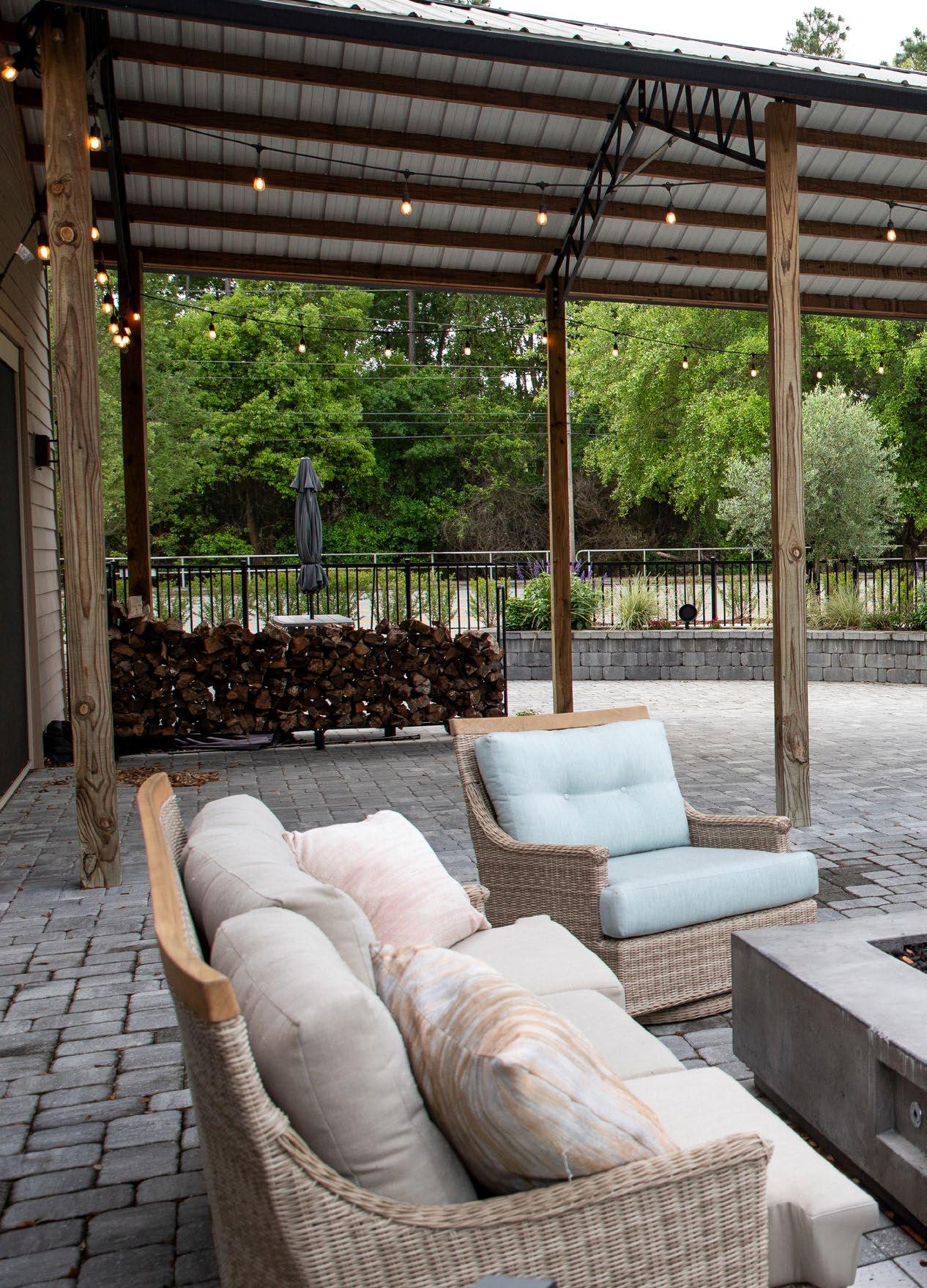
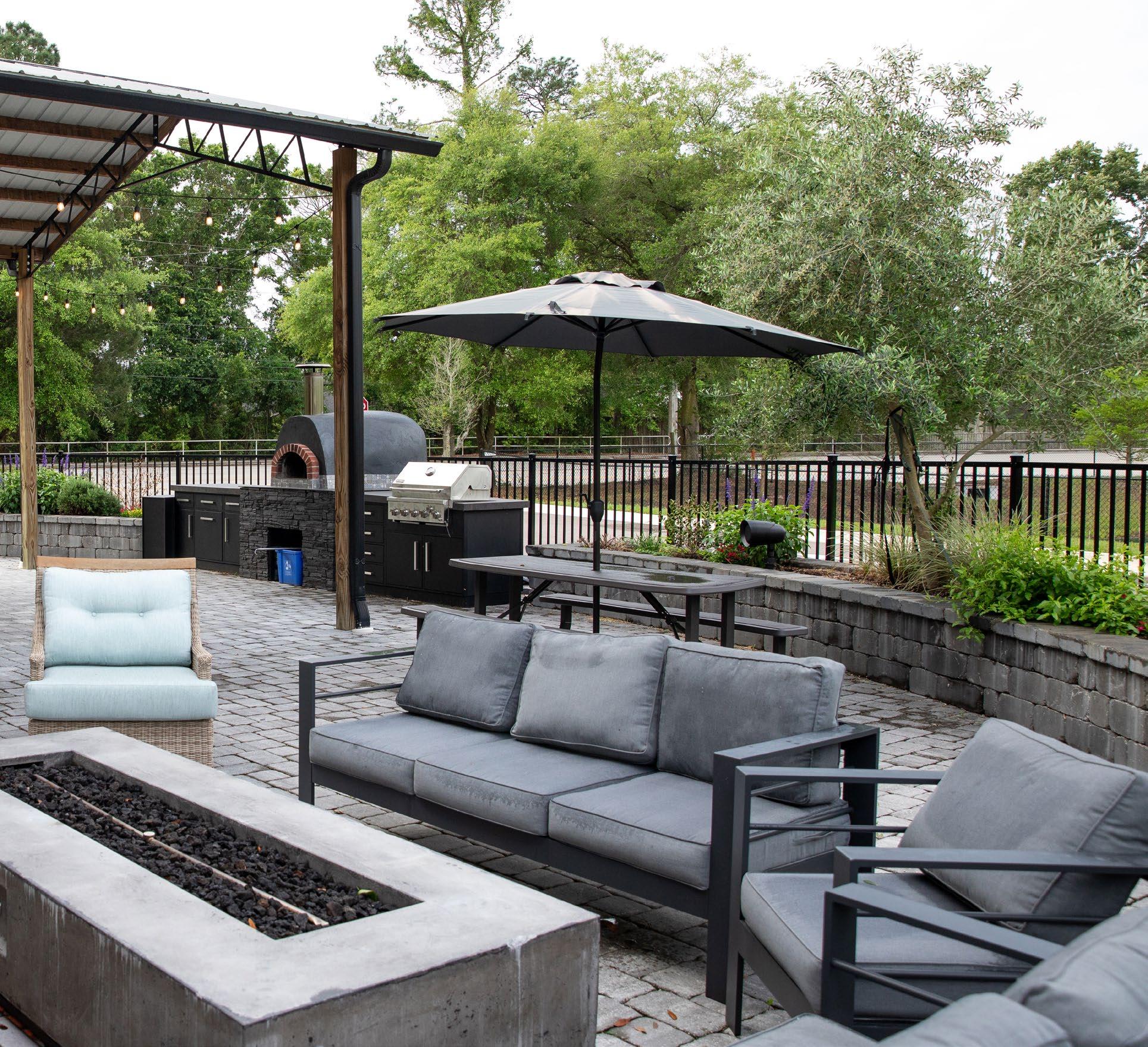
“Being in Florida, outdoors is huge, so we’re big on landscape audio,” explains Prince. “We have Origin Acoustics’ Ambisonic system out there, which is a powerful, punch-you-in-the-face audio system. We built a woodburning pizza oven on the deck, as well. We don’t sell outdoor kitchens or anything like that, but the Italians have figured out how to blend family, fellowship, fun, and food. So much happens around the table, and we’ve had some great events where, like our Super Bowl party, we sling 40 or 50 pizzas, and we cook everything from scratch. It’s a lot of fun, and it’s just a great place to gather and have a good time with friends — and if they’re customers, all the better, right?
“We haven’t done any video outside yet, although we’re considering that, but we definitely kick up the audio out there.”
There are two separate, enclosed rooms on the other side of the showroom, with technology vignettes throughout the space on the way to them. Highlighted technologies include a Séura mirror TV with Origin Acoustics Blends invisible speakers around it; a small family room with a 95-inch Sony TV; and a new Samsung 115-inch dvLED beneath the stairs on the way up to
the mezzanine. Whole-home audio is featured throughout the space using Origin Acoustics acoustical speakers. The entire showroom is automated using Control4.
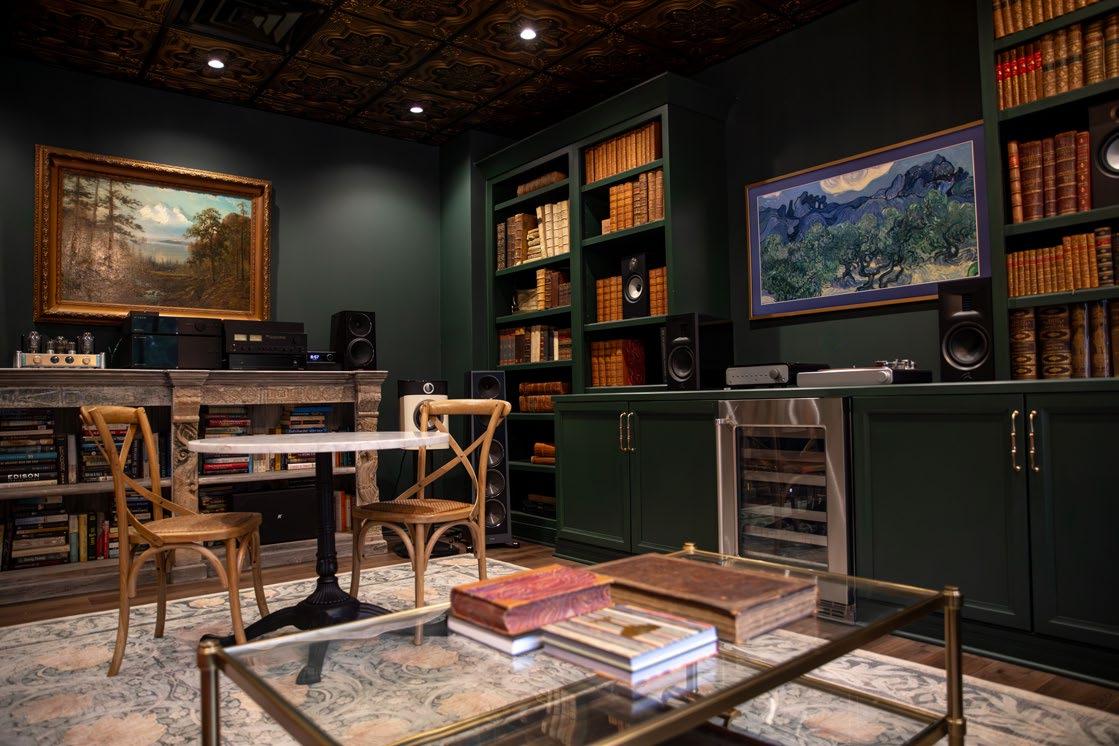
The two dedicated rooms are the home theater and the library. The home theater features a 156-inch, 0.9 pixel-pitch Just Video Walls screen, with a 2.1:3 ratio. “It is a little bit wider than 16x9, and we build those as digital canvases, not just as big TVs, because with AV Pro Edge, you can format the screen formats and have different looks,” says Prince. “So, we’re showing the Lunar Wall upstairs in the loft and the Just Video Wall in the theater. We figured if we’re going to do it, we’re going to go all in and make a big investment. It’s been really good for us.”
The theater includes Ambisonic Marquee speakers around the screen, Origin Acoustics architectural speakers in the surrounds and ceiling, and subwoofers from Origin. Video processing is handled by madVR, with Kaleidescape and Apple TV acting as sources.
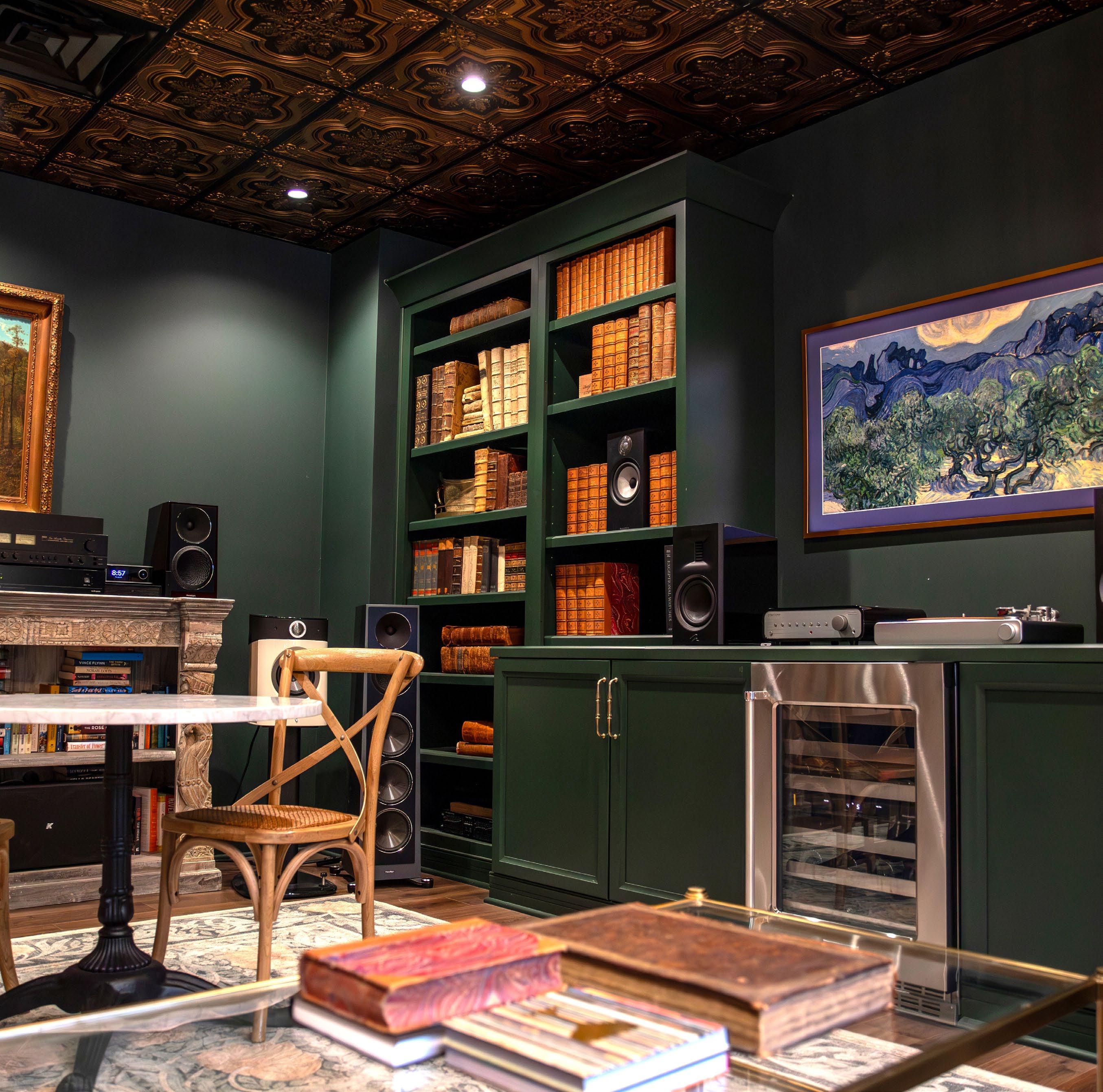
The final room on the tour is the library, which is the Five Smooth Stones 2-channel listening room that looks as good as it sounds. “Julie had a vision for that room, and it turned out beautifully,” says Prince. “We wanted it to have a club room/cigar bar-type feel with the dark green paint. And we lucked out because my brother-in-law had an antique book collection that fit perfectly in there.”
Along with the vintage décor, there are speakers from Paradigm, Focal, MartinLogan, Anthem, Sonos, and NAD. An Anthem stack provides amplifier
power and processing.
“We’re going to probably be bringing in a couple other ‘boutiquey’ pieces for people that want to just sit down, grab a glass of cab, and listen to some good 2-channel music. That’s our vision for that room.”
With events, appointments, and walk-ins, the space is kept busy, showing that Prince’s instincts to build the facility and change the company’s focus were right on the mark.
“The primary purpose in building the space was so that we could begin and grow relationships with customers,” he concludes. “When people come in, they know what they’re interested in, but they don’t know what they don’t know. We let the conversations and the visits flow as
they go. For the custom builders that we work with, every one of their customers is going to come through our space. And the builders want that because we want them to know these things, because it makes the builders look good.
“We’ve been working hard to find ways to expand our scope of work — getting into lighting fixtures and linear lighting, as well as lighting design. While we’re still trying to do more outreach to builders that we’re not presently working with, at the same time, we want to work harder at expanding our scope and offering more in the technology and entertainment space to the builders we’re currently partnered with, because they already trust us. They know us.
“They know we’re going to show up on time and do good work.” For more information, visit https://fivesmoothstonesav.com/.
Our annual look at the creative ways dealers show off their capabilities and product lineups.
Welcome to the sixth annual Showroom Showcase, where we present some of the newest — or most renovated — experience centers in the industry. With facilities ranging from 5600 square feet all the way down to 247 square feet, there is no shortage of innovation and inspiration in these spaces.
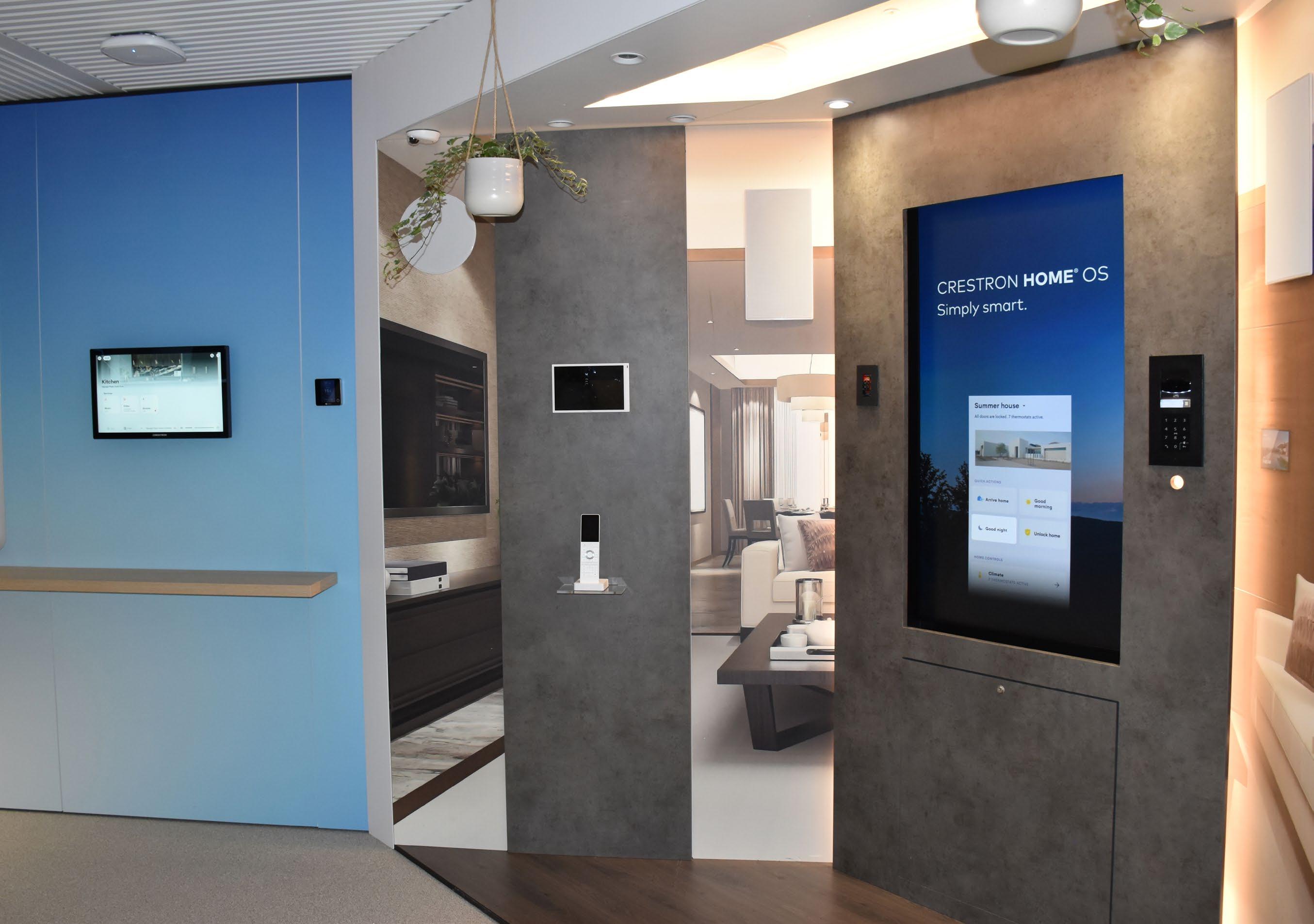
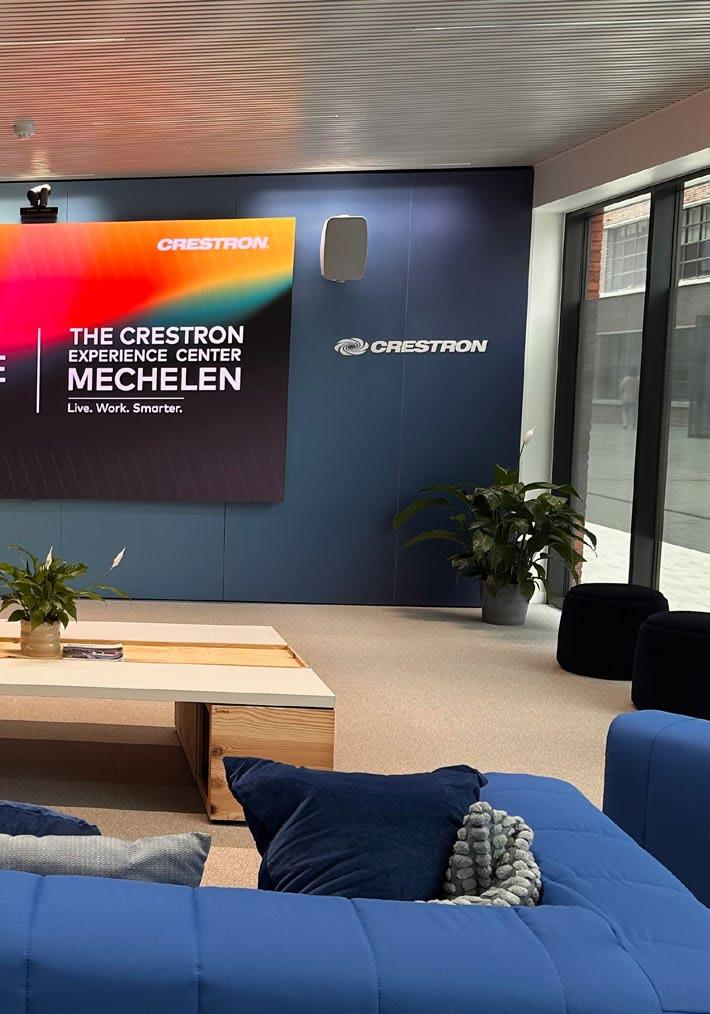
Crestron Experience Center Mechelen
Website: www.crestron.com/How-To-Buy/experience-centers-and-showrooms/Mechelen
Location: Mechelen, Belgium
Showroom Dimensions: 3000 square feet
Brands Featured: Crestron Electronics
Fun Fact: On May 5, 1835, Mechelen became the destination of a milestone in European transport history: the first public steam-powered railway journey on the European mainland, running from Brussels to Mechelen. Belgium had envisioned Mechelen as the central hub of its newly planned national railway network, making this site a strategic focal point during the rapid expansion of the country’s rail infrastructure.
Today, the Crestron EMEA Headquarters stands on this historically significant location: a place where Belgium’s pioneering spirit in mobility and innovation first took shape. The building anchors Crestron’s forward-looking technology in a setting defined by transformation, progress, and continental firsts. It is a modern experience center built on ground that helped launch Europe’s railway era.
ShowKase by LK & Associates Inc.
Website: www.lka-fl.com
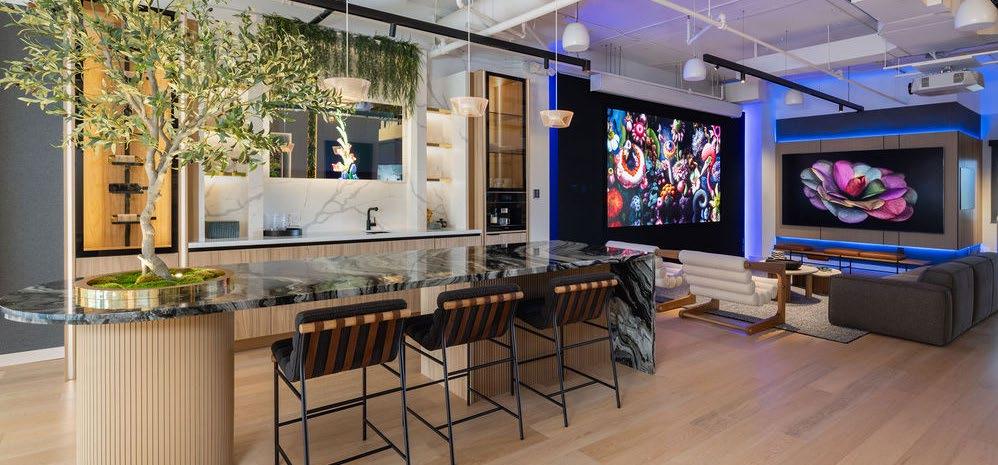
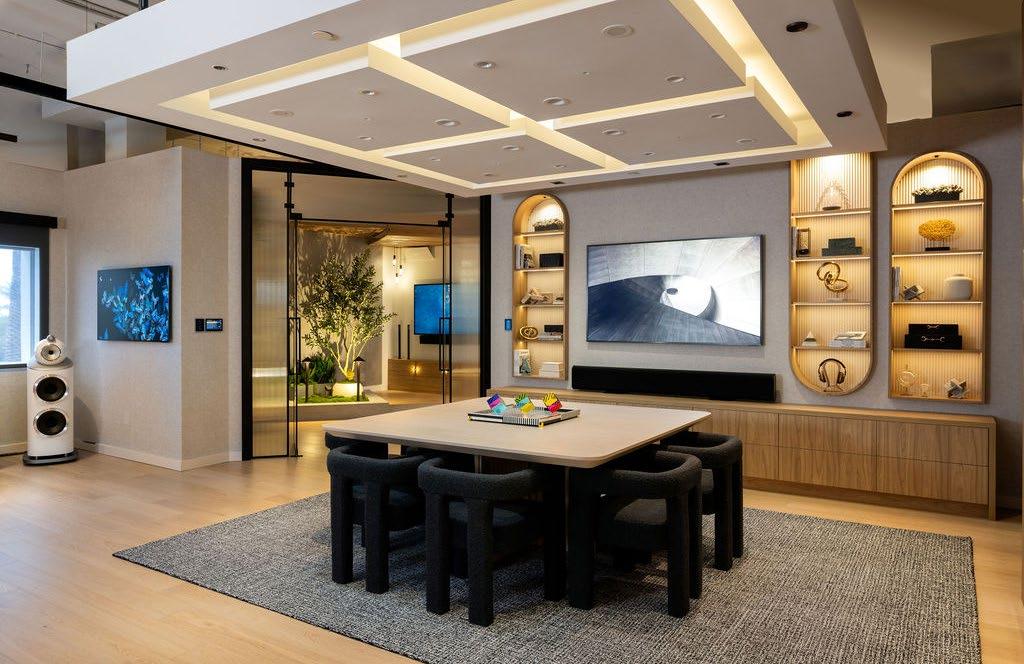
Location: DCOTA – Design Center Of The Americas, Dania Beach, Florida
Showroom Dimensions: 2000 square feet
Brands Featured: Samsung, Coastal Source, Vantage, Proluxe by American Lighting, AiSPRIE by WAC, Acousticsmart, Amina Technologies, Apex Technologies (Apex Power, Meridian, Protopixel, HD Anywhere), Blackdove, Bowers & Wilkins, Deco TV Frames, Draper at Home, Epson, Future Automation, Heos, IC Realtime, Lucifer Lighting, Marantz, Modular Lighting Instruments, Optique, Revelite, Rosewater Energy, Salamander Designs, Séura, Storm Audio, SurgeX, Theory, WhyReboot
Fun Fact: ShowKase is located inside Design Center of the Americas — one of the largest design campuses in the United States — placing luxury residential technology directly alongside top interior design and architectural brands. ShowKase features more than $1 million in luxury residential technology from over 20 manufacturers, all curated into real-world lifestyle environments for integrators, architects, and designers.
Hanson Audio Video
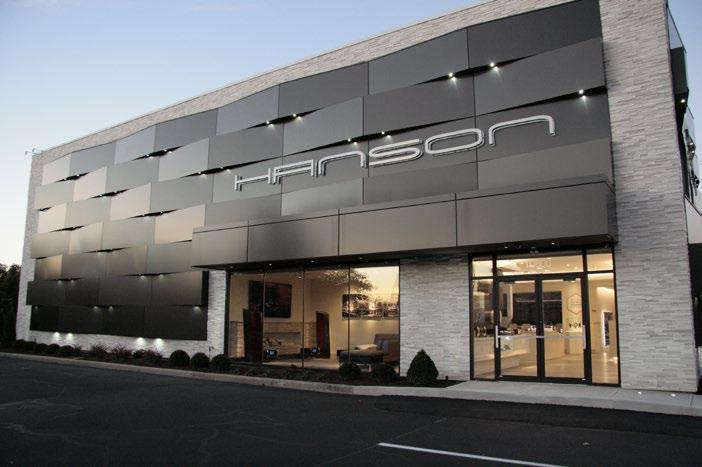
Website: www.hansonav.com
Location: Cincinnati, Ohio
Showroom Dimensions: 5600 square feet
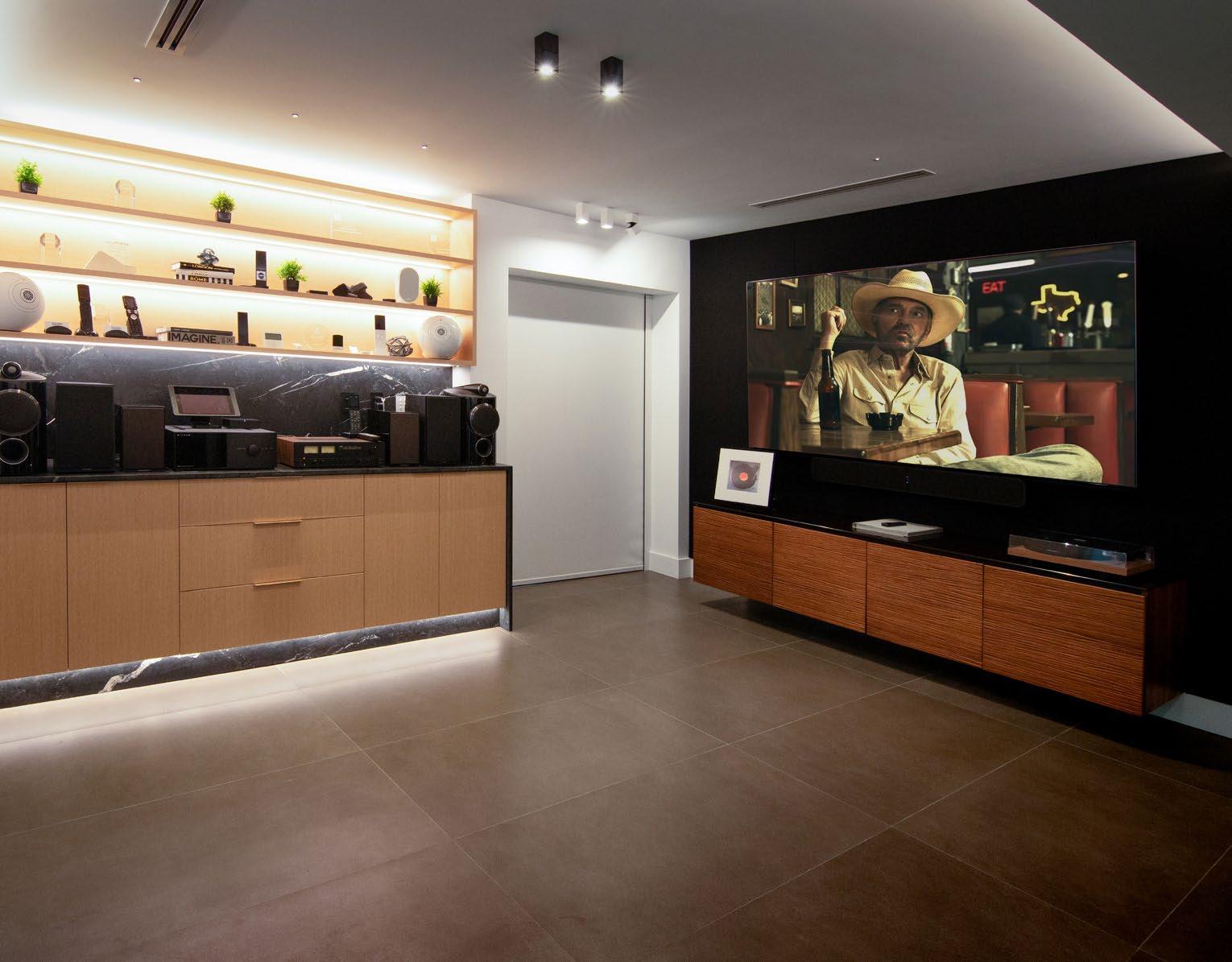
Brands Featured: Hi-Fi Audio/Home Theater: McIntosh, Sonus Faber, B&W, Magico, Theory, Moon, Marantz, Stewart, Screen Innovation, Sony, JVC, Epson, MadVR, Trinnov. Home Technology/Lighting: Control4, Lutron, DMF, American Lighting, Tech Lighting, Diode LED, Full Swing Golf. Outdoor Entertainment: Samsung, Coastal Source, Sonance, Seura, Fx Luminaire
Fun Fact: The Cincinnati Experience Center is half of the Hanson experience. There is also a more expansive Dayton Experience Center on two-plus acres with a completely different look and feel. The combination provides 11,000+ square feet of installed product displays and outdoor entertainment, where potential customers can experience what is possible and expand their purchase decisions by trying before they buy.
Immersive Installs LLC
Website: immersiveinstalls.com
Location: San Francisco, California
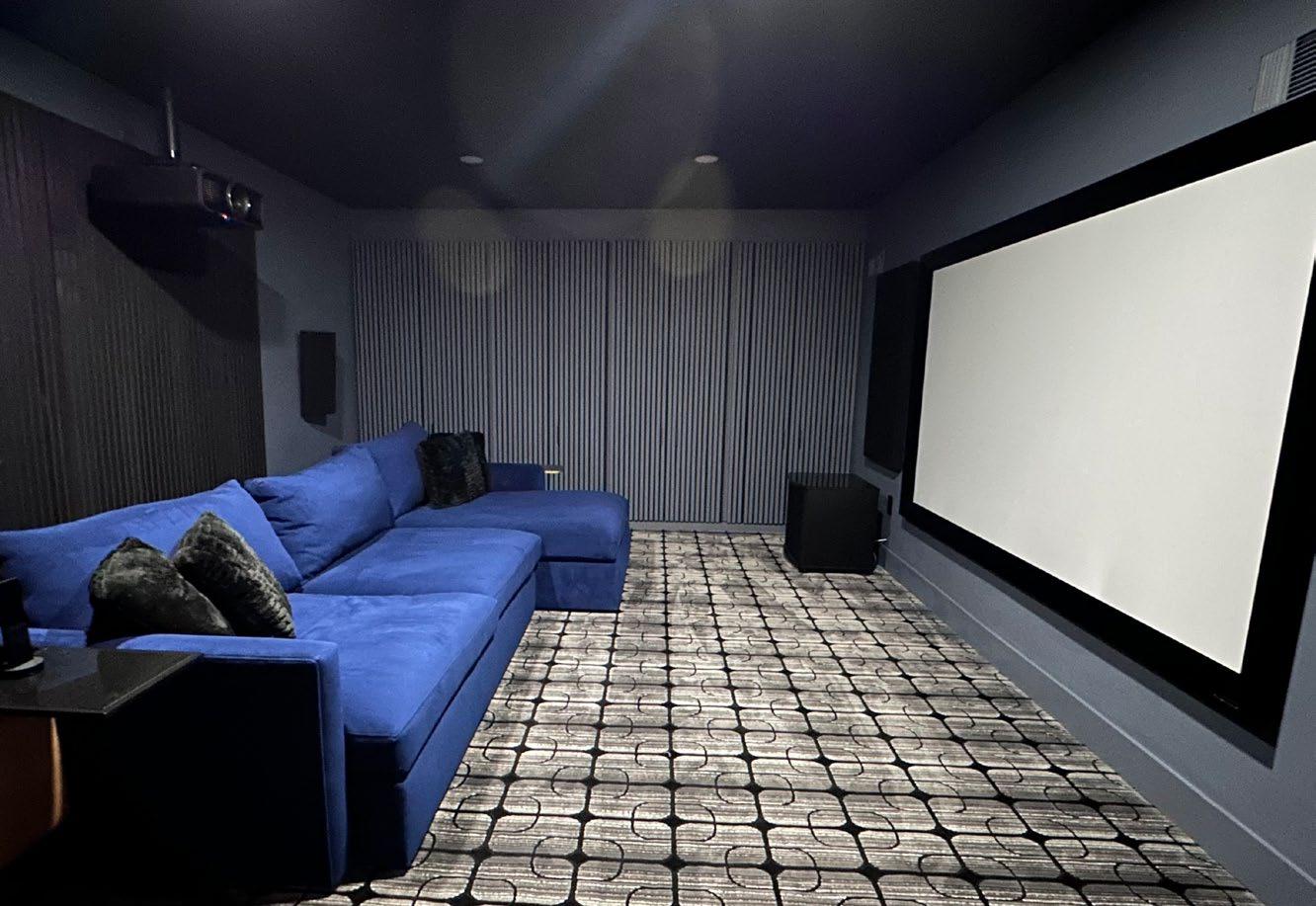
Showroom Dimensions: 247 square feet
Brands Featured: Theory Audio Design, Storm Audio, JVC, Seymour Screen Excellence, Kaleidescape, AVA
Fun Fact: We recently overhauled our private showroom to prove you can install a dedicated theater experience in an authentic San Francisco-sized living space. Special care was placed into aesthetics and retaining storage by disappearing a wall of closets behind a series of acoustic panels. Placing Theory’s in-wall speakers behind Screen Excellence Enlightor-Neo fabric significantly improved the sound. Across the 125-inch sofa, seat-to-seat consistency and clarity are stunning. To smooth and balance LFE, we leveraged Storm Audio’s deep integration with Dirac Active Room Treatment.
Sound Components
Website: www.soundcomponents.com
Location: Miami, Florida
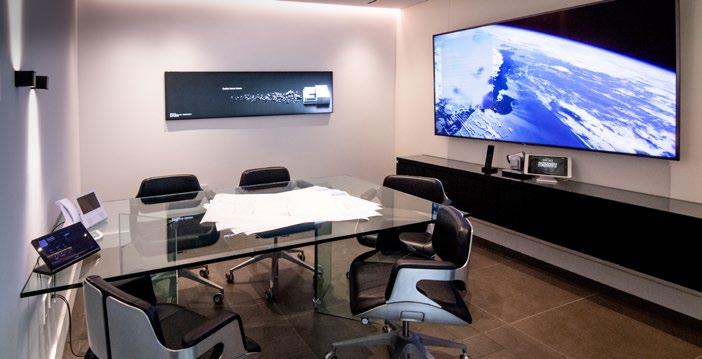
Showroom Dimensions: 4000 square feet
Brands Featured: Wisdom Audio, Theory Audio Design, Pro Audio Technology, Bowers & Wilkins, Marantz, Classe, Devialet, Martin Logan, Mark Levinson, McIntosh, Paradigm, Stealth Acoustics, Focal, NAD, Magnepan, Bluesound, Trinnov, Kaleidescape, Roon, Crestron, Lutron, JoshAi, URC, Sony, Stewart, Cinematech, Coastal Source, Apure
Fun Fact: Sound Components is the second oldest residential audio company in the state of Florida by three years.
(The oldest is in Miami.)
Audio Video
Website: www.epicudiovideo.com
Location: Warm, sunny Naples, Florida
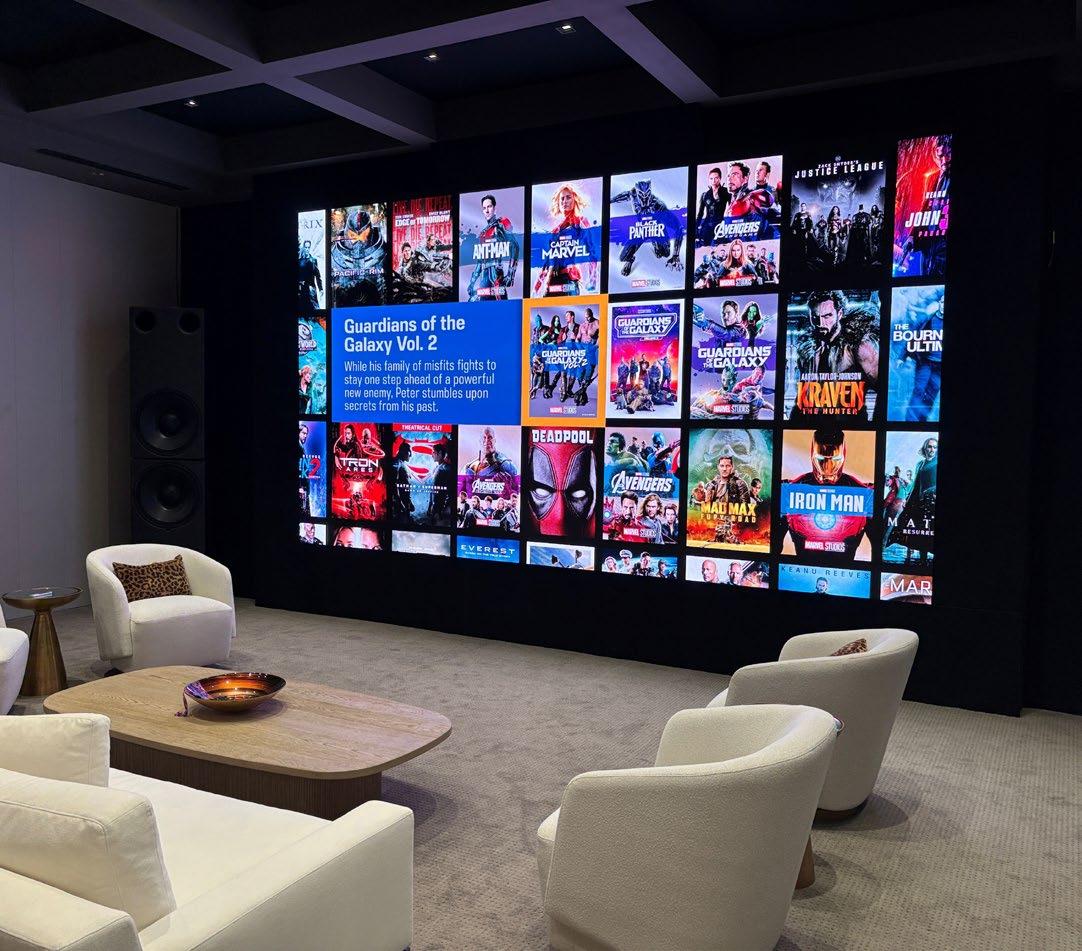
Showroom Dimensions: 3000 square feet
Brands Featured: Pro Audio Technology (PRO), Theory Audio Design, Mcintosh, Wilson Audio, Sonos Faber, Anthem, Paradigm, B&W, Sony, Samsung
Fun Fact: Epic AV offers tremendous build capabilities. We built our entire showroom and can do the same for our customers.
Audio Advice Wilmington
Website: www.audioadvice.com/pages/ wilmington
Location: Wilmington, North Carolina
Showroom Dimensions: 3200 square feet
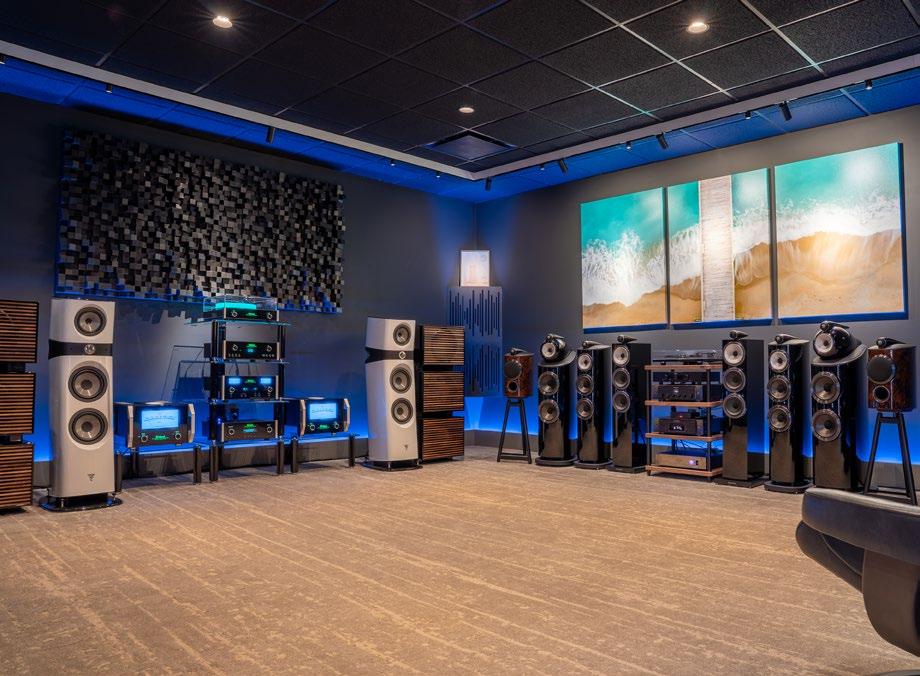
Brands Featured: Alarm.com, AVPro Edge, Araknis Networks, Denon, Chief, Lutron Electronics, Control4, JVC, LG, Epson, JBL Professional, KEF, Samsung, Snap, Sony, Sonos, Strong, WattBox, Coastal Source, McIntosh, Sonus Faber, Bowers & Wilkins, Paradigm, KEF, REL. 9.4.4 Certified JBL Theater: JBL, madVR, Kaleidescape, Audio Quest, Acoustic Innovations, Control4 Fun Fact: With the launch of our Wilmington, N.C., location, we set out to reimagine what a 21st-century smart living AV showroom should deliver: immersive, lifestyle-driven demonstrations that go beyond showcasing products to illustrate how thoughtful design and integrated technology can elevate everyday living without compromise.
The space has an open, lifestyle-first concept, designed to show how lighting, audio, video, and automation work together in everyday spaces. From the moment you walk in, you’re welcomed to an open concept living room, working kitchen, and full bar where high-performance technology disappears into the architecture rather than competing with it. Layered lighting flows effortlessly from room to room, while audio follows you around every corner. With thoughtfully programmed scenes, the entire space can shift moods, instantly creating a
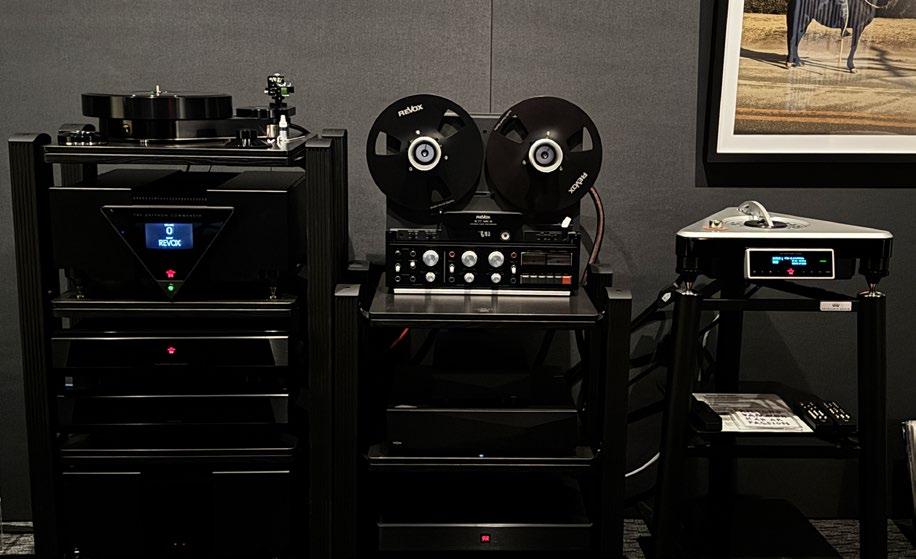
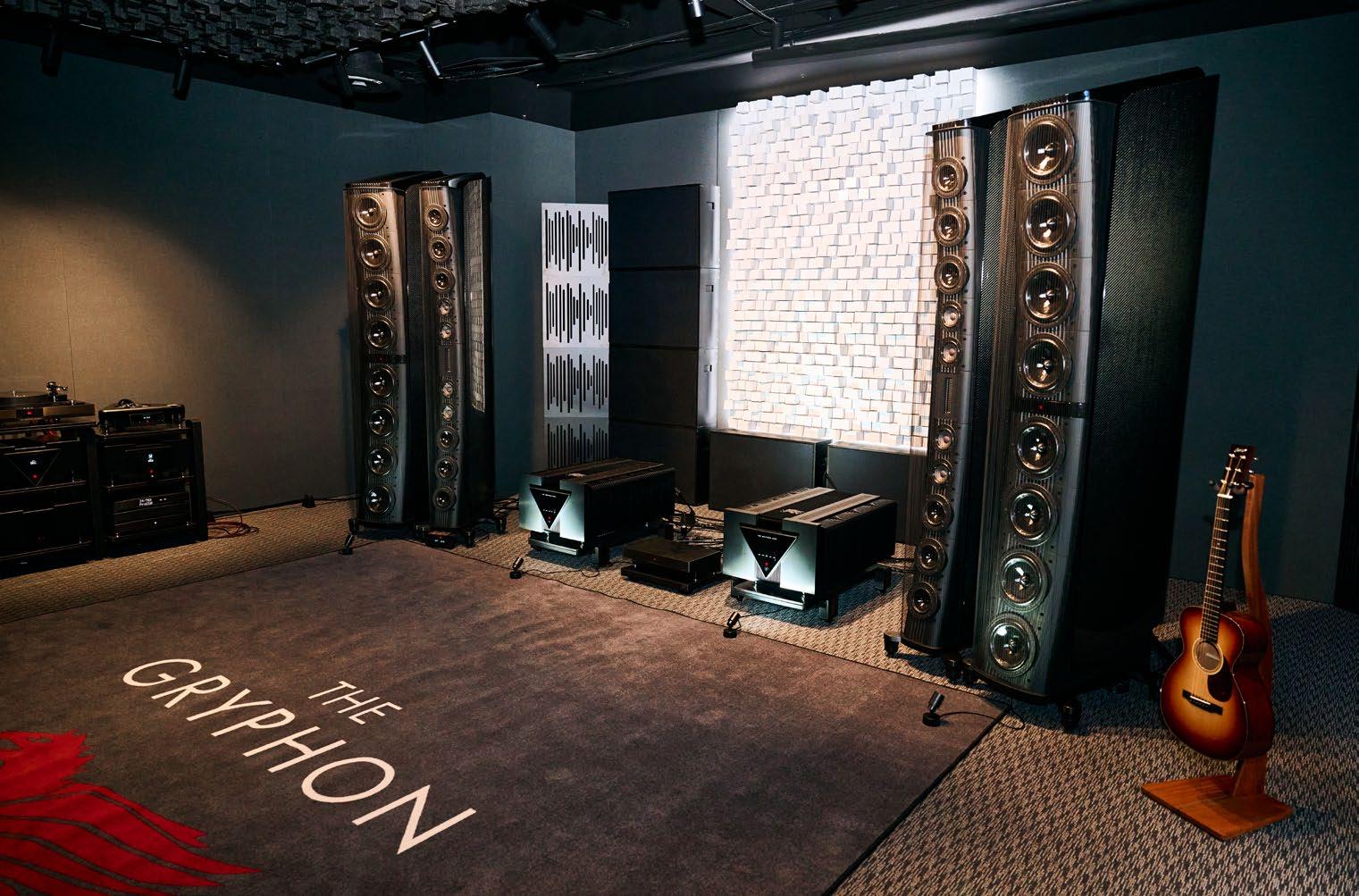
Gryphon Audio Los Angeles
Website: www.gryphonaudiola.com
Location: Pacific Design Center, West Hollywood, California
Showroom Dimensions: 3200 square feet
Brands Featured: Gryphon, Innuos, Revox Fun Fact: Gryphon Audio Los Angeles started out of a small 17- x 22-foot space at the Pacific Design center suite M60 where we squeezed in demos for all of the systems except the Kodo speakers, which we demonstrated out of our home, and it grew into what we have now — a full 3200-square-foot mono-brand showroom.
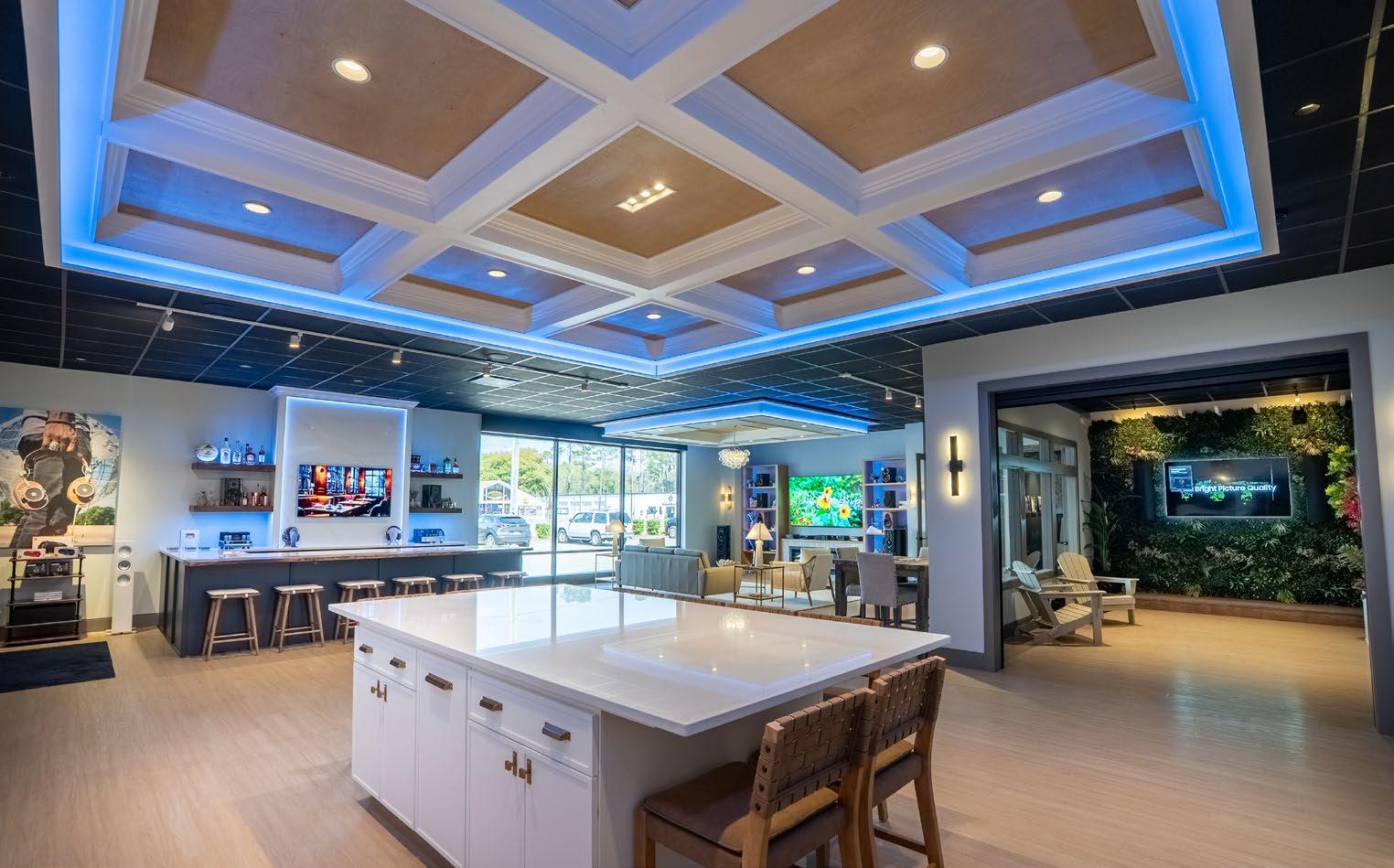
cohesive, whole-home experience.
The flagship 9.4.4 JBL Synthesis certified home theater features SCL Series speakers, dual amplification, and four SSW-3 subwoofers, all driven by the JBL SDP-58 processor for truly uncompromising performance.
In partnership with ADI’s curated brand portfolio, the space brings together a mix of solutions ranging from accessible upgrades to high-performance, luxury components. Audio Advice Wilmington sets a new standard for what a showroom can be — an immersive environment that inspires, educates, and defines the future of connected living.
A solution for space concerns and designer anxieties, this category continues to grow in popularity.
Today’s luxury clients and architects are looking for audio systems that respect a minimalist aesthetic while delivering the immersive power required for Dolby Atmos and immersive audio. Here, we look at the latest innovations that can solve many of the conflicts between the interior designer and the integrator.
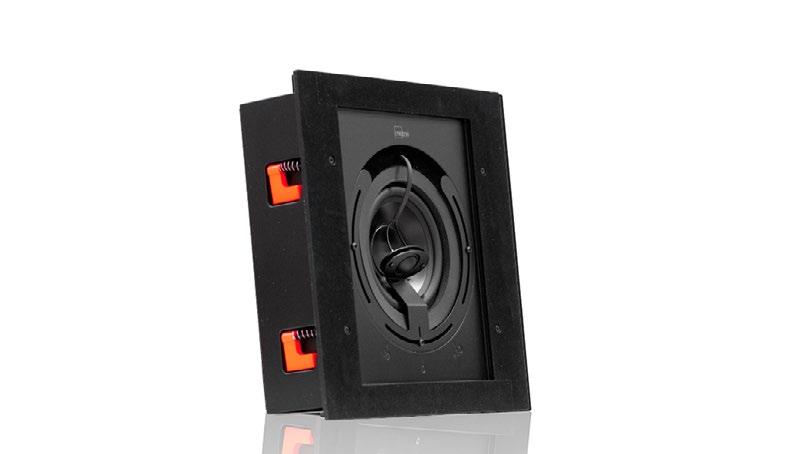
Triad’s InWall/InCeiling LCRs and Satellite Speakers bring high-performance sound and simplified installation to any project with the patent-pending spring dog installation feature. With extended bass response, these speakers are designed for multiroom audio, home theaters, media rooms, and surround sound systems. Custom color grilles are included in the price of the product.
Triad OnWall and InWall Surrounds are core to the updated Triad product line and can switch between bi-pole and mono-pole operation, tailoring performance to the room’s layout and acoustics. OnWall Surrounds feature gravity-locking cleat mounts to provide secure, clean, and adjustable wall installation, ideal for heavier speakers. InWall Surrounds feature ADI’s patent-pending spring dog system, which holds the speaker securely in place, frees installers’ hands, and can rotate 90 degrees to avoid studs or joists.
The 2026 Editions of the Meridian Audio DSP750 and DSP730 inwall loudspeakers feature enhanced driver design, advanced DSP processing, and refined acoustic engineering. At the heart of both models is Meridian’s Atlas software core, a platform that increases DSP capability and a foundation designed to evolve. A sealed aluminum enclosure and dou-
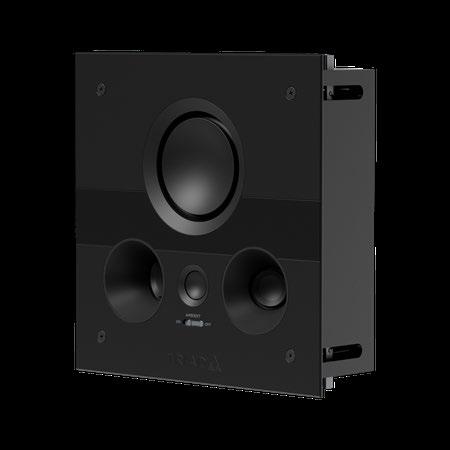
ble-baffle design minimizes unwanted resonances, ensuring consistent sound quality regardless of wall type or room conditions. Both models feature an array of proprietary Meridian technologies, including Image Focus +. For under-screen installations, the DSP750 and DSP730 support Meridian’s Image Elevation, helping to anchor dialog and key sound elements to the picture and solving a long-standing challenge in home cinema design. The 2026 Editions also introduce Pro-TEC, a new technology that extracts higher output levels while maintaining sound quality and system balance.
The Grimani Systems Epsilon-S Slimline in-wall subwoofer with external DSP amplifier is designed for projects where aesthetics matter as much as performance. The Epsilon-S provides deep, “punchy” bass and the detail expected from Grimani Systems. Designed for luxury cinemas and media spaces, it blends invisibly into the architecture while delivering thunderous audio.
The KEF Ci5120QLM-THX and Ci3120QLM-THX architectural speakers, part of the Extreme Home Theater range, feature advanced technology from KEF’s premium ranges to deliver sound with detail and depth. At the heart of Ci5120QLM-THX and Ci3120QLM-THX sits KEF’s signature driver array – Uni-Q. Now in its 12th generation, this feat of engineering acts as a point source, dispersing sound more evenly, allowing everyone to experience the same natural, detailed sound, wherever they are in the room.
These speakers benefit from another KEF acoustic innovation: Metamaterial Absorption Technology (MAT). MAT is a highly complex maze-like structure that absorbs 99% of the unwanted sound from the rear of the tweeter, delivering a crisper, more natural treble performance.
The PSB Speakers PWM Sat on-wall speaker is available in satin black or satin white finishes, the PWM Sat delivers audiophile performance in a slim, décor-friendly design that integrates into any room. Compact in size yet full of capability, the PWM Sat brings PSB’s Synchrony-based driver technology to a streamlined design. Its 1-inch titanium dome tweeter and 4-inch woven carbon fiber woofer produce lifelike clarity and natural detail
across music, movies, and surround sound. The PWM Sat’s two-piece locking bracket system supports secure installation in horizontal, vertical, or ceiling orientations. This flexibility makes it ideal as a main left/right channel, side or rear surround, height channel in an immersive Dolby Atmos system, or as a compact 2-channel solution paired with a subwoofer.
The D-5 IC N is part of Lyngdorf Audio’s Discreet Series, designed for custom installations in home cinemas, media rooms, and living rooms. Its key features are a low-resonance MDF enclosure to ensure the best sound quality and an angled, adjustable tweeter, which allows the sound to beam from the ceiling toward the listening area. The Lyngdorf Discreet models are designed as installation speakers for in-wall or in-ceiling integration. As with other models in the range, the D-5 IC N comes with its own MDF speaker enclosure, so no aftermarket backbox or closed-wall cavity is required. This also ensures that the sound performance is always defined and consistent, depending less on the wall construction and the available space behind the wall, and prevents resonances and sound leakage.
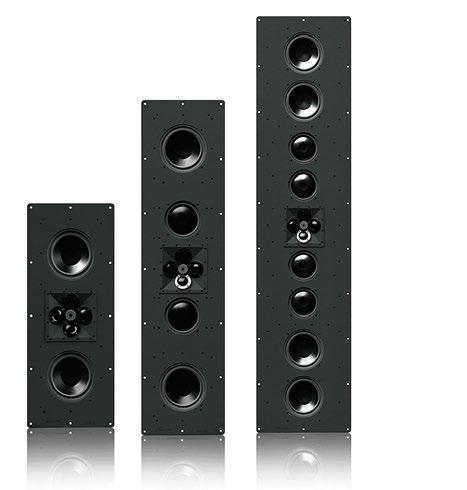
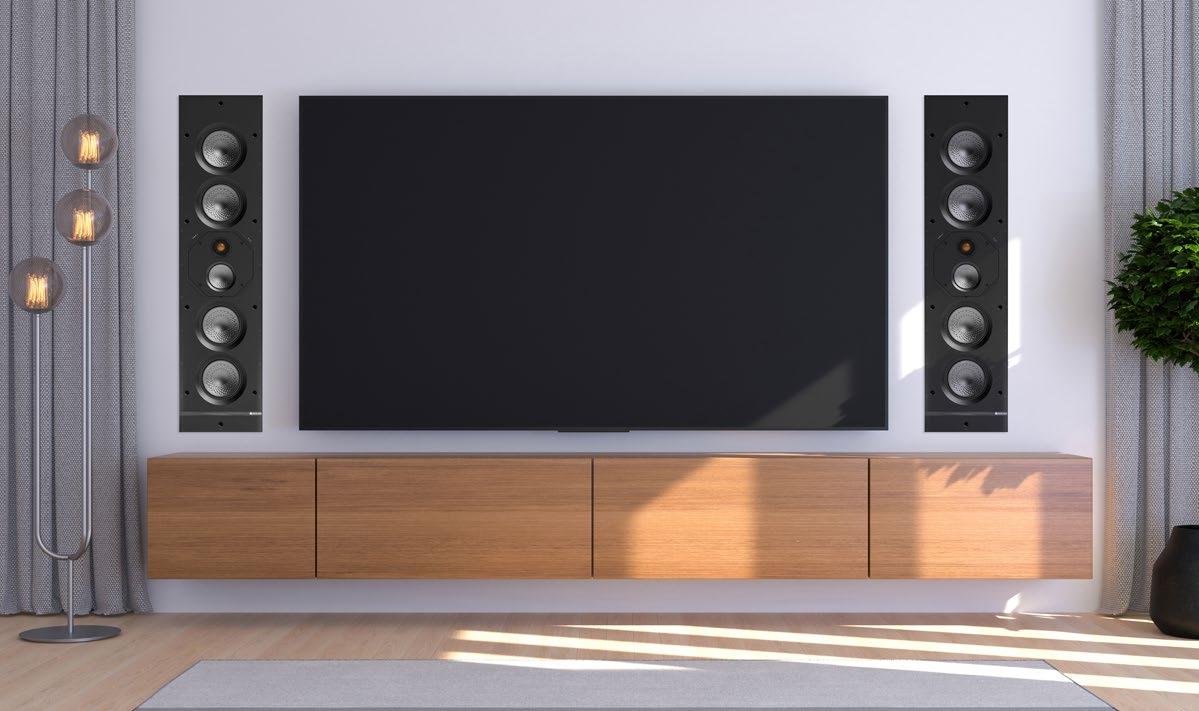
The Monitor Audio Creator Series In-Wall Large speakers extend the portfolio and performance envelope of Creator Series with three highly distinctive models, covering Tier 1, Tier 2, and Tier 3 levels. The W1L is a large in-wall speaker featuring C-CAM drivers that is ideal for entry-level installations where product simplicity and solid acoustic performance are required. The W2L is a large in-wall speaker featuring Rigid Surface Technology and C-CAM drivers, offering improved acoustic performance and better power handling. Contains additional features for easy placement. The W3L — the best Creator Large in-wall speaker — features the same driver technology found the flagship Platinum and Cinergy Series. It offers high SPL capabilities with outstanding control, making the W3L the ideal speaker for high-performance installations.
The Procella Audio P5oCW On-Wall and On-Ceiling Speaker introduces a rotatable/aimable front baffle, a solution that solves real-world installation challenges.
The James BE MKII in-wall theater speaker series brings significant acoustic improvements designed to simplify installation while delivering exceptional home theater performance. The new lineup includes the BE806 MKII, QX-BE806 MKII, BE808 MKII, and BE812 MKII models. The BE MKII series features enhanced CDX crossover technology that delivers smooth frequency response and consistent coverage both on and off-axis. A key advantage of the BE MKII series is its neutral voicing, which streamlines setup and calibration processes for integrators. Rather than requiring extensive speaker correction, the neutral voicing allows installers to focus their EQ work on room tuning, significantly reducing installation time while improving final system performance.
The JBL Professional Control 400 Standard Coverage Series and Control 400 Premium Coverage Series ceiling speakers are comprised of 15
models. Building on the legacy of the JBL Control 10, Control 20, and Control 40 ceiling speaker families, the Control 400 Standard Coverage Series, Enhanced Coverage Series, and Premium Coverage Series share many core features, including superior sonic performance, reliability, helpful installation features, and a contemporary design aesthetic.
The Enhanced Coverage Series includes JBL’s Coplanar Radiation Boundary Integrator (CRBI) to provide a more even frequency response throughout the coverage area and strikes an elegant performance-to-cost balance between the Standard and Premium models.
Focal’s 100 IC8-T UL and 100 ICS6-T UL in-ceiling speakers enhance its 100-T Series range, designed for large public spaces such as luxury hotels and high-end restaurants. These fire-resistant in-ceiling loudspeakers feature two coaxial drivers, a medium/woofer, and a tweeter, as well as UL 1480 and UL 2043 certification. For increased robustness and optimum protection, the flush-mounted enclosure of the loudspeakers is designed using materials specially adapted to very high temperatures. It ensures the safety of the installation and provides sound insulation.
The new Episode Extreme Series has undergone rigorous environmental testing, including accelerated salt spray, wind exposure, and high-heat endurance trials, ensuring these products meet the expectations of today’s most demanding commercial and residential audio applications. Episode Extreme Series outdoor speakers are engineered to thrive where other architectural solutions fail — withstanding temperatures up to 90 degrees C, IP67-rated water intrusion, and hurricane force winds.
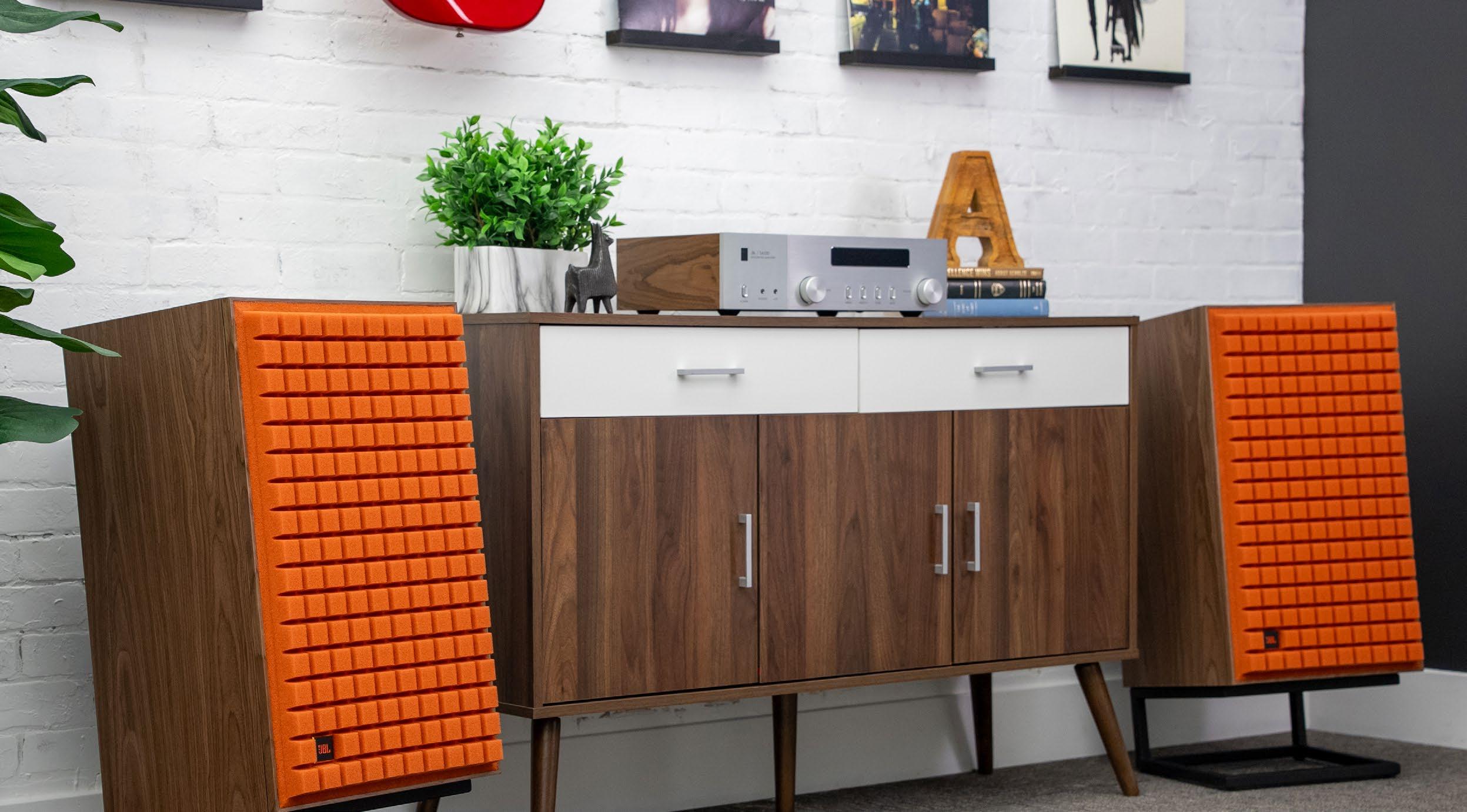
Though it has been around for decades, high-end 2-channel audio remains an integral part of the industry — and is experiencing a rediscovery.
By Karen Mitchell
Although it has been around since the beginnings of the CI industry, 2-channel audio still brings in clients.
Scott Newman, CEO, Audio Advice, a Harman Luxury Audio dealer, says over the past few years, he’s seen a surge in consumer interest around a new category of home audio components: the all-inone streamer/amp. “While earlier versions existed in the whole-home audio space through platforms like Denon HEOS and Sonos, the latest generation has evolved significantly, delivering true audiophile-level performance in full-size components like the Marantz Stereo 70s,” he says. “This new breed of high-performance, all-in-one pieces means a music lover no longer needs a huge stack of components to get great sound.”
At Maximum Audio Video, a Paradigm dealer, there is a shift back toward dedicated 2-channel listening, even in homes that already have full automation and dedicated theater systems. “Clients are realizing that, while distributed audio is great for convenience, nothing replaces a properly designed stereo setup when it comes to pure music enjoyment,” says COO Gabe Martinez. “Once you hear a properly set up 2-channel system, you quickly realize how magical it can be. We have many clients who choose a hybrid solution where the space is shared between both system types, theater and 2-channel, and the results are still incredible!”
One of the biggest trends right now is the integration of high-end stream-
ing platforms and visually engaging components like HiFi Rose. “Products like this are changing the game, especially with features like RoseTube, which gives you access to high-resolution music videos in a really clean, immersive interface,” says Martinez. “We’re also seeing a resurgence in vinyl, paired with modern DSP, room correction, and high-performance amplification. The combination of analog warmth with digital precision is where things are heading. And aesthetically, these systems are becoming statement pieces as clients want performance, but also want something that looks incredible in their spaces.”
The history of 2-channel audio can be viewed as a continuous quest to elevate the listening experience in both accuracy and fidelity, says Kevin Learmann, L-Acoustics sales manager, Home & Yacht. “Traditionally, this has been pursued through the development of higher-quality speakers and amplification, along with ongoing experimentation in design and materials,” he says. “On the speaker side, innovations include planar versus cone drivers, alternative diaphragm and enclosure materials, varied crossover and driver configurations, omni-polar versus bi- or dipolar designs, and active versus passive systems. In amplification, comparisons such as tube versus solid-state and Class A through Class D architectures illustrate the breadth of technological exploration. The list goes on.
“It is important to remember, however, that a 2-channel system is only as

strong as its weakest link. For roughly the past 30 years, that weak link has often been the source material itself, specifically the tradeoff of convenience over quality as the industry shifted from analog to digital formats. This trend can be traced back to early platforms like Napster, which offered vast libraries of highly compressed MP3 files, often of inconsistent quality, at a time when storage capacity was limited. The ability to carry hundreds of songs on a single CD or a 64 to 128 MB portable player outweighed concerns about fidelity for most listeners compared to the inconvenience of physical media. This compromise persisted into the early era of streaming, where bandwidth limitations on both cellular networks and home internet still necessitated compression. As a result, listeners gained unprecedented access to music libraries, but still at the expense of sound quality.
“Fortunately, this constraint has largely been resolved. Advances in storage, portability, and network bandwidth now allow streaming platforms such as Tidal, Spotify, and Deezer to offer high-resolution, lossless or near-lossless audio. This shift has helped renew appreciation among listeners for the importance of high-quality source content. Ultimately, even as source quality has improved, the pursuit of superior playback returns to speaker and amplification design. Today, professional audio companies such as L-Acoustics, backed by decades of innovation and trusted by leading artists and venues worldwide, are bringing concert-grade playback solutions into the home, enabling a new standard for high-fidelity listening.”
With the resurgence of the turntable and the addition of high-resolution music services such as Amazon, Spotify, Tidal, and Qobuz, accessibility to material is producing a renaissance in music listening. “What we see changing, however, are the listening systems,” notes David Kroll, vice president, KEF America. “With today’s flat TVs, deep cabinets with room for large stereo components have become fewer and farther between. To address this, KEF has put significant resources into developing a family of loudspeakers where all the electronics are contained inside the speaker cabinet. Whether connected to a turntable, a TV via HDMI-ARC, your phone via Bluetooth, or streaming highresolution (24-bit/192 kHz) audio from the internet, all you see in the room are the speakers themselves. From the small bookshelf LSX II to the floorstanding LS60, all you now need is the speaker and your phone to control it.”
“The goal of a 2-channel system is to deliver the music as you would hear live in concert,” Kroll says. “This includes an element called ‘imaging,’ where when you close your eyes you can hear the 3-dimensional positions of the musicians on stage. Speakers capable of this level of detail and accuracy are also ideal for a surround/Atmos system to let you pick out the precise positioning of a sound object as it moves about the room.
“Since the early ’60s, when KEF was the first audio company to test on computers to measure loudspeakers, the singular engineering focus has been to deliver loudspeakers able to reproduce the finest detail so that the stereo image or the surround sound positioning can be heard with pinpoint accuracy. Our Uni-Q technology, with its wide off-axis response, means that the entire seating area between left and right speakers is in the sweet spot where the image can be heard. Additionally, no matter the form factor — bookshelf, floorstander, on-wall, or in-ceiling — they are engineered to deliver this same experience. You do not have to worry about where the speakers must go; you only must enjoy the experience. This is why we make a Reference in-wall that is sonically indistinguishable from our Reference floorstanding speakers.”
Audio Advice offers a wide range of 2-channel audio systems across its show-
rooms, spanning from approachable, entry-level setups to reference-grade, ultimate high-performance solutions. “On the speaker side, clients can experience everything from flagship models like Bowers & Wilkins 800 Series or JBL Summit down to more accessible options, allowing them to clearly hear how performance scales as you move up the line,” Newman says.
“With the rise of high-performance all-in-one streaming amps, great sound is no longer intimidating,” he adds. “We help customers see that achieving high-quality audio can be as simple as pairing a single component with the right set of speakers; no racks of gear or complicated setup required. Once they experience the impact of truly great sound, the idea of adding a system to their home becomes a natural next step. That’s where our investment in worldclass showrooms and our expert team comes in. By delivering a best-in-class demo experience featuring a thoughtfully curated selection of systems that reflect real living spaces and are always ready to play, we make it easy for customers to connect with the experience and envision it in their own home.”
There’s no one-size-fits-all system, Martinez notes. “At Maximum, we take a very tailored approach to 2-channel,” he explains. “We design everything around how the client listens to music, what they value, and how the system integrates into their home. We offer a wide range of solutions from brands like Paradigm, Anthem, and McIntosh, along with other high-performance options depending on the project. Whether it’s a clean, minimalist streaming system or a full analog/digital hybrid setup, we build it with intention.
“The Maximum process usually starts with a conversation — not about gear, but about experience,” he says. “What do you listen to? Where do you listen? What do you want to feel when you hit play? From there, we guide clients through speaker selection, amplification, source components, and proper placement. We also factor in room acoustics, because that’s just as important as the equipment itself. And if it makes sense, we integrate it into their larger system so that it works seamlessly with their automation platform but still performs as a true audiophile setup when it needs to.”
L-Acoustics offers a breadth of 2-channel solutions for residential and pri-
vate marine customers, ranging from approximately $11k to $66k MSRP. “This puts us on par or even at a lower price point than many of today’s consumer-grade ‘premium’ residential offerings,” Learmann says. “Yet we are delivering science-backed, concert-grade solutions, with meaningful differences in sonic clarity, performance, and emotional response; engineered and refined by an international team of dedicated audio engineers and specialists who have worked diligently for more than four decades to satisfy the most exacting artists, sound engineers, and their audiences.
Newman suggests, when explaining the benefits of 2-channel audio to customers, to start with the data to understand how people consume music today. “Listeners are spending more time than ever with music, averaging 20-plus hours per week,” he says. “The days of waiting for a CD release are over; music has been made instantly available through streaming services. That’s exactly why 2-channel audio is so important and has become the foundation for delivering the highest-quality music experience in the home. From improving the whole-home audio experience with upgraded architectural products to installing a dedicated but simple system in another room, it’s pretty easy when you just ask customers how much music they listen to in a week. If you have the right gear on demo to show them, it’s a win for everyone.”
“KEF customers and integrators know that any system capable of accurate sound reproduction should deliver the finest performance, whether you are playing a 2-channel stereo track or a movie in Atmos,” Kroll notes. “The latest trend in music is immersive audio. While it is still early for the format, we see musicians and mix engineers experimenting and learning how to best use these new tools. The results are quickly maturing from cool party effects to subtle enhancements to the stereo track that help the music engulf you emotionally. Ironically, this is bringing about a convergence of 2-channel and surround systems so that they are becoming one and the same. To this end, our new XIO streaming soundbar was engineered to be equally at home playing
2-channel stereo, a blockbuster movie, and multichannel immersive audio.”
“L-Acoustics is constantly on the move these days,” Learmann says, “We’re often pairing audio with video, so headphones and spatial audio tend to dominate. I am a genuine fan of that space; innovations like L-Acoustics Hyperreal Immersive Sound Space (HYRISS) technology are truly next-level. That said, it is important to carve out time to slow down and recharge, and this is where a dedicated 2-channel system offers something special. It encourages you to stay in one place, settle into the sweet spot, and experience music for its own sake, free from distraction. ”
“There are also natural opportunities within the home to enjoy this kind of listening,” he adds. “A kitchen prep area, for example, can align surprisingly well with a stereo sweet spot. For someone who loves to cook, the kitchen can be an ideal zone in which to invest in elevated sound quality. A home office desk position is another natural fit, and I am sure many more come to mind. For those looking to take that experience even further, high-performance solutions from companies like L-Acoustics can bring a refined, immersive listening experience into the everyday spaces where life actually happens.”
“At the end of the day, music is emotional,” Martinez says. “It’s one of the few things that can instantly take you back, whether to a memory, a moment, or a feeling. A properly designed 2-channel system lets you experience that in a way that distributed or background audio just can’t replicate. For most of our clients, this becomes the space where they actually sit down and listen. It’s not just about having music throughout the home; it’s about having a place where music matters.”’
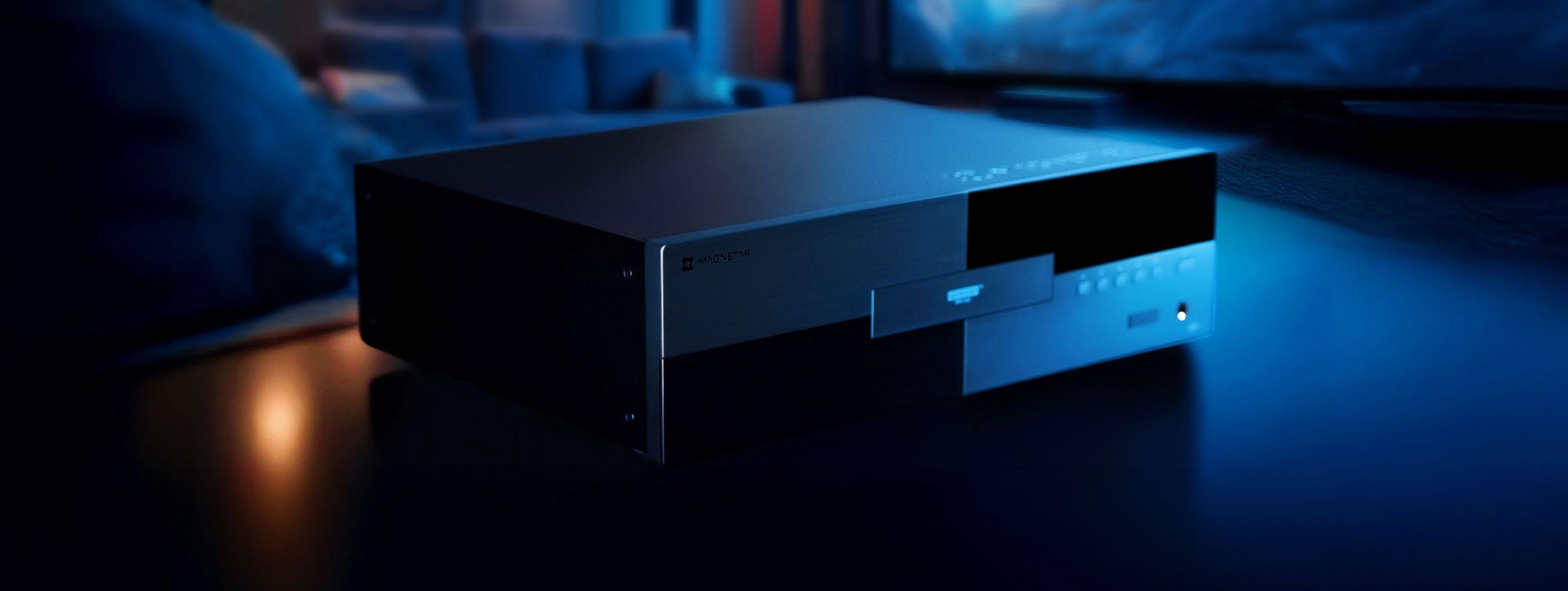
People have been proclaiming physical media’s death for a while, yet it persists. (Just think if Taylor Swift released 4K Blu-rays in addition to vinyl!)
However, when it comes to shiny, round discs, even though people might not be purchasing as much new content as they did in the past, they likely have a large, existing library of titles they still want to play and enjoy. And if you’ve got a client that has been a years’ long collector, they could have a thousand or more combined CDs, SACDs, DVDs, Blu-rays, and 4K discs.
Even if they have already digitized this content and stream it over the network via a NAS or use a large USB drive for playback of these various files and formats, they likely want to experience it in the highest quality possible.
What if instead of using multiple players or devices that offer varied user, performance, and integration experiences, you could have a singular, premium, purpose-built player designed with reference audio and video playback performance in mind? A single deck capable of playing all this content in the highest quality possible, while also integrating into your control systems? A product that could also sit confident and proud in your rack next to other high-end components, and that comes from a company dedicated to building strong relationships with boutique dealers who understand the value of performance and service?
If all that sounds like something you could sell, then you’ll be very interested in learning more about Magnetar’s second-generation UDP900mkII universal 4K disc player. And if you have been looking for that white whale to replace your Oppo UDP-205 sales, your hunt is over, Ahab!
Who is Magnetar?
Other than a brief stop at the company’s booth at CEDIA, I knew almost nothing about Magnetar, and it turns out some of what I thought I knew was totally incorrect. I was able to chat with Rob Jones, president of Magnetar, USA, to get a little background on the company, and how they seemingly came out of nowhere to commandeer the flagship disc player market.
Jones said that Magnetar’s parent company is one of the largest physical media hardware manufacturers on the planet, and has been around for almost 30 years. (To maintain brand identity and separation, he did not mention the parent company’s name.) They noticed that there wasn’t a high-end solution in the premium market once Oppo left, and Magnetar’s creation was borne from the thought process of filling that hole in market.
Based on that, they looked to build a premium product that was designed in-house from the ground up, and they wanted to position themselves — and the UDP900mkII specifically — as a reference source device that supports a ton of content via universal disc playback, as well
as NAS and USB streaming.
The company’s first product, the UDP800, was launched in 2022, with the UDP900 following in 2023. Both models received mkII upgrades last year.
At $3000, it isn’t like the original UDP900 player was lacking in build quality or performance, but it did leave some room for some performance upgrades in the new mkII version.
Under the hood, the new player sees internal electrical upgrades, with all PCB connectors upgraded to JST and Ampenol brands to enhance stability and reliability, and further reduce distortion and noise. Additionally, all internal wiring has been upgraded to higher-grade copper-core to optimize signal transmission performance, reduce signal loss, and preserve more audio detail, with additional antiinterference capabilities.
On the hardware side, the mkII adds a Texas Instruments TMDS (Transition-Minimized Differential Signaling) retiming chip on the HDMI Audio 2 output to compensate for random jitter to improve signal and HDMI audio quality. A new USB power supply improves compatibility of the USB 3.0 port and better supports for a larger variety of USB flash and hard drives (up to 16 TB). USB Audio via an XMOS processor now supports audio up to 768 kHz PCM and 512 DSD, significantly improving audio data
By John Sciacca
Incredible build quality results in reference performance; fantastic picture and sound
Price; buying Control4/Nice driver
Improved mkII design upgrades performance and build quality for reference-level playback
Universal disc player supports 4K UHD Blu-ray, Blu-ray, BD-R/RE, DVDVideo, DVD-R/RW, DVD+R/RW, DVDAudio, AVCHD, SACD, CD, and CD-R/ RW
Network audio playback through DLNA, SMB, and NFS including MKV, AVI, MP4, WAV, FLAC, APE, DSD, M4A, MP3, OGG, AIFF, DSF, AAC, and ALAC
Dual ESS9038PRO DACs (one for 2-channel XLR/RCA, one for 7.1 RCA)
USB DAC via XMOS supports files up to PCM768 and DSD512
Third-party control drivers for Control4, Nice, Crestron, and RTI; Roon Ready
Inputs: 1000 Mbps LAN, RS-232, USB DAC, USB 3.0, USB 2.0 (front); Outputs: 1/4-inch headphone (front), RCA stereo, XLR stereo, RCA 7.1, Coaxial digital, Toslink optical, HDMI x2 (1 audio only), Power
Dimensions and Weight:
17.51 x 5.23 x 12.64-inches (WxHxD); 34.17 pounds
transmission and processing capabilities. The mkII also upgrades to dual SABRE ESS 9038PRO DACs (versus 9028PRO in the Gen 1), which improves audio decoding capability, lowers noise, and offers enhanced surround sound (on 7.1-channel output).
Magnetar also made improvements to the optical drive structure to deliver better durability and quieter performance, with sound absorbing cotton on the outer casing and a spraypainted frame. The company also improved its proprietary video image processing algorithms, said to deliver more detail, richer and deeper
color output, and improved upscaling.
All told, a fair amount of improvements for the mkII’s additional $300 asking price of $3300.
The UDP900mkII makes a huge impression from the moment you lift the box. To be fair, sheer weight alone doesn’t necessarily correlate to quality, but it is historically a good indicator.
The player arrives double-boxed, and unboxing it definitely feels like a premium experience. Inside the packaging is a power cord, owner’s manual, and remote control, with the player itself carefully wrapped in a black, velour-feeling cover. Customers unboxing their own units will feel like they are getting something special.
Once removed, you have your first opportunity to lay eyes and hands on the player itself, and, again, I was astonished by its weight. By the scales, the player weighs 34.17 pounds. To put that in perspective, my Marantz AV8077 7x150-watt amplifiers weigh 45.41 and my Trinnov Altitude 16 weighs 24.9, making the Magnetar the second heaviest component in my rack. In contrast, my Samsung 4K Blu-ray player weighs 4, and the Kaleidescape Strato E player weighs 1.6.
The deck is carved from an all-aluminum alloy body with a reinforced dual-layer chassis, all designed to eliminate any vibrations or resonance. The thick front-panel faceplate is visually divided into four sections with contrasting gray and charcoal aluminum and the dark plastic of the display area, along with the disc tray door in the center. One friend describes this as being akin to “a red Honda with a black carbon fiber hood and a chrome fuel door,” which is extreme, but it is a different look compared to traditional electronics. For the record, I thought it looked cool and added a bit of flair.
A look under the hood reveals meticulous design and layout, with purposeful attention to detail. Internally, the unit is divided into three, metal-shielded enclosures to keep everything isolated and reduce any possible interference or cross contamination. Magnetar describes this as “isolated metal chambers [that] suppress vibration and improve thermal behavior, ensuring quiet operation and unwavering fidelity across every format.”
Power delivery is split for maximum stability, with a custom-designed, high-power switching supply driving the digital mainboard, and a massive, dedicated two-stage 60-watt toroidal transformer feeding the analog audio stage.
Does all of that necessarily guarantee better performance? No. But it sure indicates that
Magnetar put a lot of thought into the design and points to a product that should deliver long-term reliability. Jones commented that one real-world benefit of this over-building is that because of the 900’s better components, better clocks, and better power supplies, it supports full 18 Gbps transmission over longer HDMI cable runs.
The front panel has six buttons for basic control (power, open/close, play/pause, stop, skip +/-), a USB connection behind a covered panel, and a 1/4-inch headphone plug. The buttons have a nice, firm feel to them, with good resistance.
Around back you’ll find a full suite of connections that include dual HDMI (output 2 is audio-only), Toslink and Coaxial digital audio, RCA and XLR analog stereo, and a 7.1-channel RCA analog audio suite. Other connections include a USB DAC, USB 3.0, Gigabit LAN connection, and RS232C.
There’s no Wi-Fi antenna because there’s no Wi-Fi. This is to avoid any possible RF interference. If a network connection isn’t possible, player firmware can be updated via USB.
Unlike the Oppo 205, the UDP900 doesn’t offer any HDMI or digital audio inputs that would allow you to use it as a DAC or video processor for external sources. For Oppo owners migrating over to the Magnetar, I imagine this will be a feature that is sorely missed. Also, the UDP900 lacks a rear panel IR input for those that need it. Clearly not a deal-breaker, but at this price, that feels like a small miss.
Like the unit itself, the remote control is hefty and substantial. The remote is fully backlit, but I found it a bit of a challenge to read the button labels even in regular room lighting. Chalk some of that up to old eyes, but the remote’s color and finish produce some glare that made it difficult to read, and I often found myself adjusting its angle and position until I could get it correctly positioned for me to read. Most users will likely incorporate it with a control system, so this is likely not a real-world issue.
Should you need to rackmount the player, Magnetar offers a kit.
I connected the main HDMI output to my Trinnov, which will likely be the most common connection providing both 4K video and bitstream audio for external Dolby and DTS decoding. However, since this output bypasses the upgraded DAC set of the player, I also connected the XLR outputs so I could experience them. For users wanting a premium 2-channel

Vol. 27 No. 5 May 2026
residentialsystems.com


FOLLOW US twitter.com/resisys facebook/resisys
CONTENT
MD, Content, AV Anthony Savona anthony.savona@futurenet.com
Contributors: Katye McGregor Bennett, Matt Bernath, Sam Cavitt, Henry Clifford, Dave Donald, Tim Fitzpatrick, Jason Griffing, Anthony Grimani, Karen Mitchell, Lisa Montgomery, Todd Anthony Puma, John Sciacca, Lisa Slayman, Gordon van Zuiden
Production Manager Heather Tatrow
Art Editors Matt Lochrie & Rosie Webber
ADVERTISING SALES
Managing Vice President of Sales, B2B Tech Adam Goldstein, adam.goldstein@futurenet.com 212-378-0465
SUBSCRIBER CUSTOMER SERVICE
To subscribe, change your address, or check on your current account status, go to residentialsystems.com and click on About Us, email futureplc@computerfulfillment.com, call 888-266-5828, or write P.O. Box 254, Lowell, MA 01853.
LICENSING/REPRINTS/PERMISSIONS
Residential Systems is available for licensing. Contact the Licensing team to discuss partnership opportunities. Head of Print Licensing: Rachel Shaw, licensing@futurenet.com
MANAGEMENT
SVP, MD, B2B Amanda Darman-Allen VP, Market Lead Carmel King MD, Content, AV Anthony Savona
Global Head of Sales, Future B2B Tom Sikes
Managing VP of Sales, B2B Tech Adam Goldstein VP, Global Head of Strategy & Ops, B2B Allison Markert VP, Product & Marketing, B2B Andrew Buchholz Head of Production US & UK Mark Constance Head of Design, B2B Nicole Cobban FUTURE US, INC.
130 West 42nd Street7th Floor New York, NY 10036

experience, this would be a likely install. Audio is simultaneously output from all outputs. Configuring the player is similar to any Blu-ray setup, with sections for Display, Audio, Playback, Network, Security, Language, and Option.
The Display options let you select TV shape, resolution, Color Space, Deep Color, HDR, and Dolby Vision settings. Resolution offers a variety of choices, including 4K2K and 4K2K 24 Hz, as well as Source Direct, which outputs whatever is on the disc without any upscaling. Source Direct would be the preferred setting for those using an external processor like madVR or Lumagen, allowing the player to serve as a transport feeding a native, untouched image to the processor.
While I didn’t use it, the player is said to do a terrific job of handling HDR to SDR conversion, so if you have a projector that struggles with delivering enough light for engaging HDR, this is a great feature. Note that while there is a button on the remote for HDR adjusting, the change doesn’t take affect while a movie is playing. You need to stop the video, make the change, and then restart it.
Audio lets you choose whether to output bitstream or PCM, select the max sampling frequency, set DRC, select SACD Output (PCM or DSD), and choose which layer (multi-channel, 2-channel, or CD) to prioritize on SACDs.
If you are using the 7.1-channel output — and, if you are, please let me know why; I’m genuinely curious why you haven’t upgraded to HDMI — then you have a full host of speaker settings, including size, distance, and level adjustment.
Other notable adjustments include the ability to set a static IP, whether to have CEC on or off for the HDMI outputs, the ability to export/import player settings, and check for firmware updates.
For those using a control driver, you’ll want to have Standby Mode set to “Network Standby,” and you’ll need to grab the MAC address from the About Player screen.
Speaking of control, there are drivers for Crestron, RTI, Control4, and Nice, however the Control4 and Nice drivers were developed by Chowmain and sell for $100. I don’t love that I have to tell my client that just dropped $3300 on a player that they need to spend another $100 to integrate it, but here we are. The player can also be a Roon endpoint.
Another mkII upgrade is the addition of wake-on-LAN (WoL), which was missing
from the Gen 1 unit. This meant that the Gen 1 player was limited to using one-way RS232 control versus the full two-way IP driver. And while I don’t love the idea of having to pay $100 for the driver, I have to commend Chowmain for doing a great job. Adding to my Control4 system was simple, requiring just entering the player’s IP and MAC address. Beyond just basic control, there are lots of cool ways you can integrate the player into your system, such as triggering lighting events when the movie starts or when the player is in the home menu. I programmed my system to turn on, select the Trinnov’s XLR input, set the volume and audio processing settings, and start playing the disc whenever the UDP900mkII recognized that a CD had been inserted.
Magnetar does offer a free iOS and Android control app, and when it connected, it provided a complete replication of the handheld remote control. However, it frequently wouldn’t connect for me — just saying “Connection failed!” — and never connected after I integrated the player with my Control4 system.
Another cool feature is the ability to adjust the vertical position of subtitles on discs. For people who have a cinema-wide (2.35+ aspect), this is very helpful for films that embed the subtitles in the black bars who would otherwise be lost off screen. Users that have ripped their own libraries can also adjust the size, color, font, and display timing of the subtitles.
I had expected the player to offer a host of video adjustments in order to fine-tune and tweak the picture quality, as well as provide HDR tone-mapping settings and vertical stretch for anamorphic lenses. However, it has only the most basic brightness, contrast, hue, saturation, and sharpness adjustments which are savable in three presets. And when you pull up the player’s video adjustments, the large video overlay takes up a large part of the screen, making it difficult to see the impact on the entire picture area.
I asked Jones about the lack of these settings and he commented, “This is intentional. Any adjustments made within the player, like HDR tone mapping or image scaling, inherently require altering the video signal, whereas Magnetar’s goal is to reproduce the content as faithfully as possible to the original master, allowing viewers to see what the filmmaker or producer intended without reinterpretation inside the playback device. Magnetar is designed to function as a reference-grade transport focused on delivering the cleanest
possible signal from the disc, feeding the display the cleanest signal possible.”
On the audio side, there are seven filters you can use on the DAC — Brick Wall, Hybrid Fast Roll-off Minimum Phase, Apodizing Fast Roll-off Linear Phase, Slow Roll-off Minimum Phase, Fast Roll-off Minimum Phase, Slow Roll-off Linear Phase, and Fast Roll-off Linear Phase. I honestly couldn’t hear any real differences between them and went with the Fast Roll-off Linear Phase Filter, which is Magnetar’s recommendation for the most neutral and accurate playback.
Of course, all of the above is for naught if the UDP900mkII doesn’t deliver when the tray closes and the disc starts playing. Regarding that, I found the 900 speedy when it came to reading and loading discs of all types, and that the transport tray was solid and stable. And while I can’t comment on the sound dampening upgrades of the mkII over the Gen 1, the drive noise was never noticeable when watching or listening, even with the player sitting on top of my rack about 10 feet from me. For those especially light-sensitive, the front-panel display can be dimmed or turned off, however, the white power LED cannot.
The recent 4K release of the original Hollywood epic Ben Hur had just dropped when the Magnetar arrived at my home, so that happened to be the first movie we watched. (I was going to say “first disc we watched,” however the near-four-hour runtime has the movie spread over two discs!) I have to say, it is stunning just how good a movie made almost 70 years ago (1959) can look and just how good this restoration is! Even my somewhat jaded 19-year-old commented on just how beautiful the film looked. (She was less kind about its overall length and pacing.)
The movie was filmed using a combination of MGM Camera 65 and Panavision APO Panatar 75mm lens with anamorphic 65mm film that allowed for a wider 2.76:1 aspect, capturing more detail, depth, and light than previous films, and this transfer along with the Magnetar gives you all of it.
The film’s highlight is the chariot race, which captures up to nine chariots in frame at once. What really struck me was that the production crew clearly had to go through and sweep the Circus arena after every take, and just the shear grandeur of the crowds with up to 6000 extras being used in the scene, along with the scale of the statues in the center of the arena.
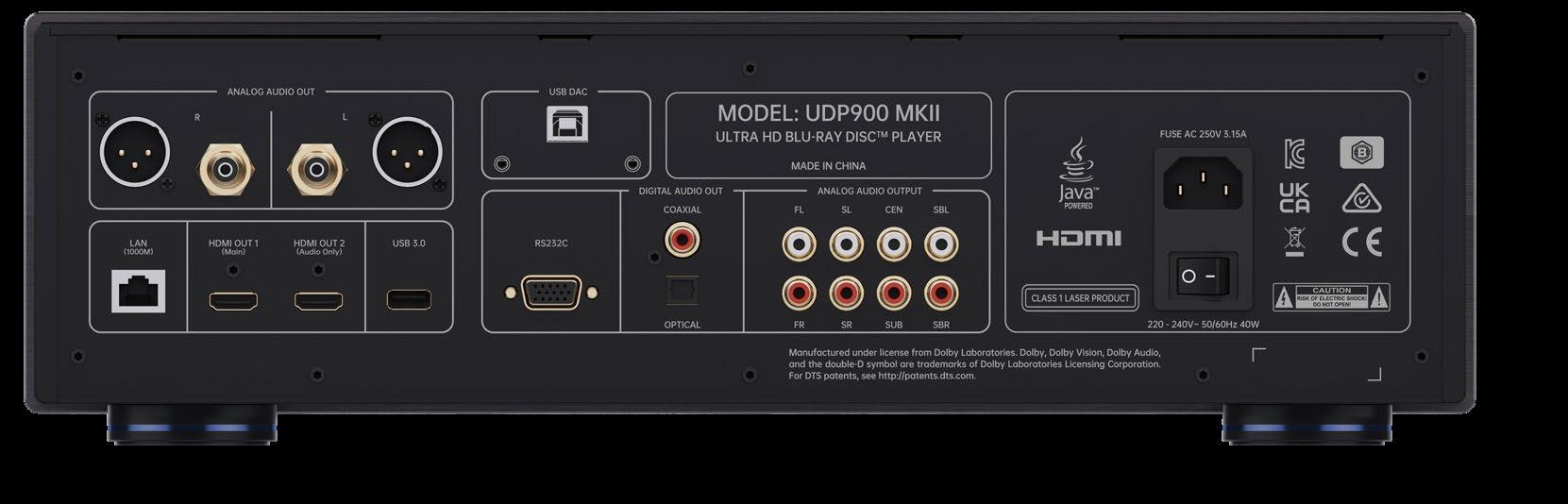
While close-ups have focus and detail rivaling modern films, it is the depth and focus across wide shots that are so amazing. Grand outdoor scenes like the crowds listening to Jesus speak have lifelike focus and depth. Throughout the film you can appreciate the incredible work that went into the costumes and set design, from the deep, richly saturated reds of Roman cloaks/capes fine, to the gold fabric sparkle in Messala’s racing vest, to the texture and scratches on tunics and helmets. This is a reference disc that represents the best of what physical media can deliver and certainly belongs in your collection.
Another film that I kind of hate-watch for video quality is Ang Lee’s Billy Lynn’s Long Halftime Walk. This 4K disc, shot and presented in 4K at 60 fps, looks absolutely stunning, however, it comes at the expense of enduring bad dialog and acting. Once you get past that, and almost watch while clinically detached, you can appreciate just how good it looks and what 60 fps does for video motion and depth capture. A fantastic scene for this is the cemetery service where the camera slowly pans along rows of graves allowing you to read the engraving on headstones several rows back even while the camera moves. The football shots inside the stadium also show off the motion handling, and throughout there is incredible fine detail, from the tight patterns in Chris Tucker’s blazer to the texture in ribbons worn on the soldier’s uniforms.
To be fair, I’ve never seen a 4K Blu-ray player that looks bad, so I watched multiple Blu-ray discs to see how the Magnetar’s upscaling compared. For many discs in my collection, I was able to directly compare the UDP900mkII playing a Blu-ray upscaled to 4K/24 versus my Kaleidescape Strato playing downloaded native 4K content.
On the opening scene of The Dark Knight, where the camera slowly zooms into the buildings before the bank heist, the Magnetar does a fantastic job reducing line twitter in the
fine patterns in the buildings and windows. Again, comparing the BD to the Kaleidescape 4K, the differences are often far more subtle than you’d expect. When viewing images with a lot of depth, like the cityscape in Hong Kong when Lucius Fox goes to meet with Lau, you see more fine sharpness and micro-detail in the distant buildings and windows, but this often required pausing and then A/B-ing back and forth to hunt for differences. In realworld, full-motion viewing, the differences are far less apparent.
Does the true, native 4K content ultimately look better? Yes. And this is more apparent with some material than others. Is it night-and-day? No. Long story short, the Magnetar will make your Blu-rays look as good as they possibly can.
Users who like to analyze F/X shots will love the Magnetar’s ability to slow-play forward and reverse at 1/16, 1/8, 1/4, and 1/2 speed, or frameby-frame with perfect clarity. (Note that reverse play doesn’t work with UHD discs.)
Another thing that I was able to really rediscover with the player was my CD collection. With the Magnetar in the system, I was inspired to go back and enjoy treasured CDs. Pink Floyd’s Dark Side of the Moon, John Mayer’s Continuum, Diana Krall’s Live in Paris, George Michael’s Ladies & Gentlemen, Cowboy Junkies’ The Trinity Session, Miles Davis’ Kind of Blue, and more. I’d say that the Magnetar gave me an excuse to listen to these, but that’s not true. What it did was give me a chance to enjoy them again.
While physical media sales may be declining, many out there have large collections they would like to enjoy. With the UDP900mkII, Magnetar has firmly sunk its flag atop the “best universal disc player” hill, delivering a unit that provides no compromise, no-excuse build quality and performance. In short, for audio and videophiles who want to simply insert any disc and know it will play and that they are enjoying it in the highest quality available, the Magnetar UDP900mkII is the last place they need to look.
What integrators can learn from lighting designers for outdoor spaces.
BY ARLEN SCHWEIGER, SR. CONTENT & COPYWRITER, COASTAL SOURCE
Custom integrators routinely collaborate with architects, interior designers, and builders — partnerships that often improve both project outcomes and profitability. But beyond collaboration, integrators can also borrow valuable perspective from adjacent trades.
Lighting design is a prime example.
While the surge in indoor lighting solutions has created new opportunities for the CI channel, many dealers still find lighting challenging. Outdoor lighting raises the complexity further, requiring careful consideration of fixture types, placement, beam spread, color temperature, intensity, and environmental conditions.
During a recent Coastal Source webcast, Joe Palimeno, owner of New Jersey-based landscape design/build firm Ledden Palimeno Design, shared insights from a project that transformed a compact — roughly 250-square-foot — urban outdoor space into a luxurious retreat.
Despite its modest footprint, the design incorporated an Ipe wood deck, louvered slat wall, Vistafolia artificial green wall, mosaic tile feature wall, pergola ceiling with fan, L-shaped seating, flower bed, pizza oven, grill, refrigerator, fire pit, dining area, and integrated audio and video.
The standout element: a thoughtfully layered lighting scheme that unified the space and elevated its visual impact.
For integrators, the project underscores several lessons worth applying to future outdoor designs.
Just as dedicated home theaters often reflect a homeowner’s passions and aesthetic preferences, outdoor environments should align with how clients live and what inspires them. That requires more than a cursory walkthrough.
For this Philadelphia row house project, Palimeno looked beyond the home’s architecture. “A lot of times you take cues from the architecture,” he explains. “That wasn’t the case here. The inspiration came from understanding her love of travel and her appreciation for luxury hotels and resorts.”
The result was an outdoor space that evokes the atmosphere of a boutique retreat rather than a typical backyard. For integrators, the takeaway is clear: deeper discovery leads to more personalized — and more compelling — designs.
Outdoor lighting design is inherently detailed. It’s one reason manufacturers such as Coastal Source offer design support services to dealers. For design/build firms like Ledden Palimeno, the planning phase is both extensive and billable.

This project required addressing drainage, structural reinforcement, wall modifications, excavation for added height, and the integration of plumbing, irrigation, gas lines, and line voltage for ceiling and wall elements.
“If you’re entering a design/build project, you have to charge for the design,” Palimeno says. “You’re investing significant time to ensure everything is right — sometimes down to the inch.”
Integrators can apply the same discipline. Charging for design time not only protects margins but also reinforces the value of expertise.
Palimeno notes that five different clients could yield five entirely different designs for the same space. One constant, however, would remain: the importance of lighting.
Rather than relying on basic overhead floods, the design employed multiple fixture types to create depth, drama, and functional illumination. The scheme incorporated three Coastal Source fixtures: Niche Director lights, Nose lights for downlighting, and Niche 90-degree marker lights for subtle accent and task lighting.
The downlighting enhanced the green wall and mosaic feature wall while producing dramatic shadow effects. Marker lights under counters and planter overhangs added balance and visual continuity.
“The versatility and quality of the lighting just fit,” Palimeno says. “We used warm 2700K so the color temperature stayed consistent. Even spacing created depth and visual harmony.”
For integrators, the lesson mirrors audio system design: layered solutions deliver superior results.
Thoughtful outdoor lighting is not simply about visibility. It is about shaping mood, guiding movement, highlighting architecture, and enhancing usability after dark.
Lighting designers instinctively approach projects with patience, restraint, and a layered visual strategy. Integrators who adopt that mindset can reposition outdoor lighting from a product sale to a design-driven service.
The payoff extends beyond aesthetics. Stronger visual outcomes lead to higher client satisfaction, increased perceived value, and improved margins. In a competitive market, integrators who think like lighting designers won’t just illuminate outdoor spaces — they’ll elevate their entire offering.
Arlen Schweiger is senior content and copywriter at Coastal Source.